Page 859

‘Potential for harm’: Microsoft to make US$22 billion worth of augmented reality headsets for US Army

Source: The Conversation (Au and NZ) – By Ben Egliston, Postdoctoral research fellow, Digital Media Research Centre, Queensland University of Technology

Microsoft has reportedly been awarded a ten year contract worth close to US$22 billion, to provide 120,000 military-grade augmented reality (AR) headsets to the US Army.

Popularised through mobile apps such as Pokémon Go and face filters on social media, AR technology is fundamentally about superimposing digital images over real-world environments.

The AR interface commissioned by the US military is referred to as an “Integrated Visual Augmentation System” (IVAS). It will use Microsoft’s HoloLens headset technology as its base hardware.

As the Army’s press release notes, the device will be used to coordinate soldiers and implement sensing technologies on the battlefield.

Features will supposedly include thermal sensors, machine learning (to create realistic training simulations) and a digital heads up display to enhance soldiers’ “situational awareness”.

The news follows Microsoft’s previous announcement of a US$480 million military contract to develop and supply IVAS prototypes to the army in 2018.

Between this older contract, the new one, and Microsoft’s $10b JEDI cloud computing contract for Azure, Microsoft is set to fortify its position as one of the highest value US defence contractors (alongside Amazon).

AR and warfare’s relationship isn’t new

AR interfaces first emerged in the 1960s with Ivan Sutherland’s demonstration of the Sword of Damocles tracking system. This was developed in the Massachusetts Institute of Technology’s Lincoln Laboratory, funded by the US Department of Defence.

The head-mounted display – the first of its kind – was pitched for use in simulating flight instruments and conditions.

American computer scientists Ivan Sutherland’s Sword of Damocles was the first example of a head-mounted display (HMD).

Fast forward to the mid-80s and the Lincoln Lab produced American AR manufacturer Kopin. In 1990 this commercial company received a US$50 million contract from the Department of Defence to develop micro LCDs to be used in wearable computers for the infantry.

AR continues to see uptake today, in a trend which geographer Stephen Graham refers to as the “militarisation” of everyday life. And this is especially noticeable with technologies governing urban societies.

Technology firm Vuzix is one major player in the security and enterprise sector. As its annual report states, the company develops products for “governmental entity customers that primarily provide security and defence services, including police, fire fighters, EMTs, other first responders, and homeland and border security”.

In one particularly troubling development, last year it was reported that ClearView AI’s facial recognition software was being tested to run on Vuzix hardware.

This controversial company trains its artificial intelligence software on a dataset of more than three billion images from websites including YouTube, Facebook and Instagram. Its marriage with Vuzix points to a future where law enforcement officers use wearable AR with built-in facial recognition capbilites.

The use of AR to govern everyday life has also emerged during the COVID-19 pandemic (which we’ve detailed in this report). For example, companies such as Rokid and KC Wearables have developed wearable devices that purport to track the body temperatures of people in the view of the device’s wearer.

What’s so bad about Microsoft’s AR?

We know little about the current prototyping and field testing of Microsoft’s IVAS. But the interface raises the same concerns that surround other technologies designed to preemptively target and classify potential “threats” – such as drones.

This is what the current IVAS prototype looks like. Microsoft

As the US Army’s IVAS objectives read, key outcomes are to increase mobility, situational awareness and lethality – that is, deadliness on the battlefield. The document states:

Soldier lethality will be vastly improved through cognitive training and advanced sensors, enabling squads to be the first to detect, decide and engage. Accelerated development of these capabilities is necessary to recover and maintain overmatch.

The objectives are framed around soldiers’ efficiency, coordination and safety. This is similar to the usual framing of other predictive sensing technologies, including facial recognition.

The reality, however, is there would be potentially disastrous outcomes if such a system were to misidentify a target. In a 2019 CNN interview, Microsoft CEO Satya Nadella tried to play down concerns.

“We made a principled decision that we’re not going to withhold technology from institutions that we have elected in democracies to protect the freedoms we enjoy,” he said. His statement failed to acknowledge the potential risk which may result from the military’s use of AR.


Read more: What you see is not always what you get: how virtual reality can manipulate our minds


Not child’s play

Following Microsoft’s initial IVAS contract in 2018, Microsoft employees wrote a letter to company executives opposing the use of AR for warfare.

While the letter itself was ineffectual, the recent rise of collective worker resistance in Silicon Valley shows promise. More strikes and walkouts in response to unethical developments could help push back against big tech’s self-serving visions of the future.

Similar to virtual reality, AR has so far enjoyed cover from critique by being taken as a benign gaming or entertainment technology.

The latest IVAS contract is an urgent reminder that developments in this technology should be taken seriously. And its potential for harm must not be downplayed.


Read more: Facebook’s virtual reality push is about data, not gaming


ref. ‘Potential for harm’: Microsoft to make US$22 billion worth of augmented reality headsets for US Army – https://theconversation.com/potential-for-harm-microsoft-to-make-us-22-billion-worth-of-augmented-reality-headsets-for-us-army-158308

The successor to JobKeeper can’t do its job. There’s an urgent need for JobMaker II

Source: The Conversation (Au and NZ) – By Renee Fry-McKibbin, Professor of Economics, Crawford School of Public Policy, Australian National University

Until the end of last month one million workers were paid by JobKeeper.

This month there are none. Treasury thinks up to 150,000 will lose their jobs.

Credible estimates put the number higher, at as much as one quarter of a million.

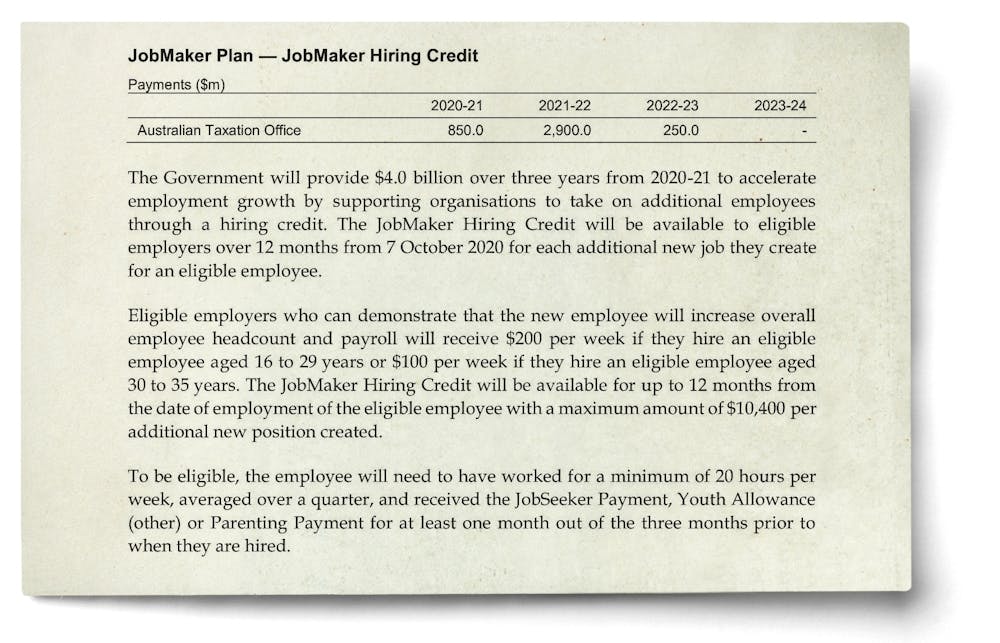
In its place, the government introduced a A$4 billion JobMaker Hiring Credit. It will give employers who can demonstrate that a new employee will increase overall headcount (and payroll) $200 per week if the new hire is aged 16-29, or $100 if the new hire is aged 30-35.

Billions on offer, little takeup

Employers will get nothing for new hires aged 36 and over — no matter how disadvantaged and no matter how suitable.

The scheme hasn’t got off to a good start. It is reported to have had only 609 applications in its first seven weeks.

The October budget said it would attract 450,000 applications, creating 45,000 jobs.

The low takeup isn’t surprising.

Evidence shows when unemployment is high, the best way to target disadvantaged groups (such as young jobseekers) is not to target them, but to target high employment growth more broadly.

High employment growth disproportionately helps less-advantaged workers because they are further down the hiring queue.

The $4 billion appropriated for JobMaker is still available to be spent. If spent well, it would help consolidate what so far has been a very solid recovery.


Read more: JobMaker is nowhere near bold enough. Here are four ways to expand it


But it needs to be simplified. JobMaker II could be set up as a tax rebate on the quarterly increase in firms’ payrolls, say 60% on any increment above 6%.

Firms that were on JobKeeper in the March quarter (its final quarter) would be allowed to deduct their JobKeeper receipts from their payroll in estimating the starting point for the calculation.

JobMaker II could save 100,000 jobs

If those firms retained their workers (and the rebate was set at 60% on any increase in payroll beyond 6%) they would receive a little over half their March quarter JobKeeper payment in the June quarter.

Most of the money would go to firms and disadvantaged workers who still need it.

The ordinary job matching process would be allowed to work, without some jobseekers being given preference over others because of factors such as their age.

And firms already thriving would have an incentive to increase their employment by even more.

But it should be announced this week

The proposal would have to be implemented quickly to maintain the momentum established by JobKeeper. With JobMaker as it is, it will slip away.

The main thing required is for the treasurer to make an announcement setting out the broad outlines.

JobMaker II could help older women. Anderson Guerra/Pexels

The week after Easter is a time when business owners will be taking stock – working out whether they can afford to continue to carry workers who until the end of Mach were supported by JobKeeper.

Our modelling suggests that refashioning JobMaker along the lines we have suggested could save and generate 100,000 to 130,000 jobs over the next six months.

It would keep employment 1% higher than it would have been, generating higher wage growth and higher tax revenue leading to a lower budget deficit.

With interest rates close to zero, the employment effect would be sustained.

The impacts would be greatest for young and for low-skilled workers, with the bulk of the benefits flowing to wages rather than profits (as regrettably happened in high profile cases as a result of JobKeeper).

And without the discrimination implicit in age targeting, other genuinely disadvantaged groups, including low-income women over 35, would be better off.

Those women would be in a better position to build their superannuation balances and be less exposed to homelessness.


Read more: In defence of JobMaker: not perfect, but much to like


The economy seems on track for a rapid recovery. But with the pandemic continuing and the outlook uncertain, it’d be wise to take out insurance.

With interest rates low, even a more expensive JobMaker II would pay for itself.

ref. The successor to JobKeeper can’t do its job. There’s an urgent need for JobMaker II – https://theconversation.com/the-successor-to-jobkeeper-cant-do-its-job-theres-an-urgent-need-for-jobmaker-ii-158391

Tenderness, desire and politics: William Yang’s work is a portrait of a life well lived

Source: The Conversation (Au and NZ) – By Chari Larsson, Lecturer of art history, Griffith University

Review: William Yang: Seeing and Being Seen, Queensland Art Gallery, Brisbane.

How does an image become an icon? Moreover, how does a photographer become iconic? A major survey exhibition of the work of Queensland-born, Sydney-based photographer William Yang goes a long way towards answering these questions.

Yang is a much loved photographer, performer and storyteller. This show at the Queensland Art Gallery is a celebration of Yang’s multifaceted practice that has steadily unfolded over the past five decades.

The act of seeing can be predatory and voyeuristic. In her classic 1973 book On Photography, Susan Sontag observed that the photographer’s camera “may presume, intrude, trespass, distort, exploit”. The camera, however, can also be joyful and playful. Much of Yang’s work falls into the latter category. Operating in a highly intimate register, Yang’s ability to disarm his subjects is striking.

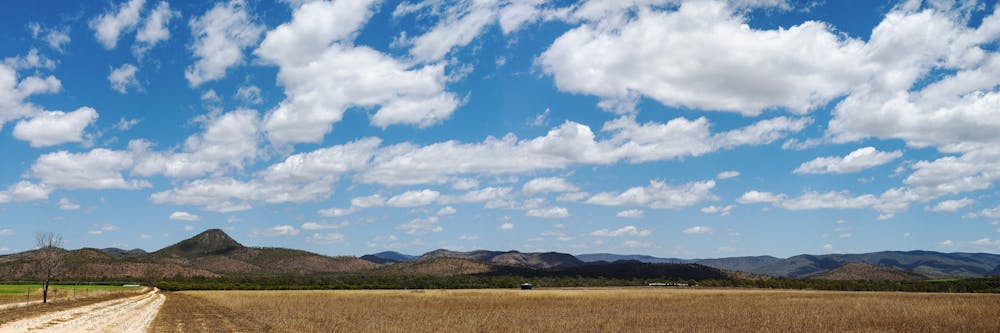
Organised roughly chronologically, the exhibition moves through the various phases of Yang’s life. Born in North Queensland in 1943, he is a third generation Chinese-Australian. Growing up in the town of Dimbulah, the experience of being an outsider features prominently throughout his body of work.

Yang’s family disavowed their Chinese heritage, preferring their children to assimilate. In his floor talk at the media preview, Yang described the experience of having to “come out” twice: first as a gay man, and second in search of his Chinese identity in his 30s.

In one of his most iconic images, Life Lines #3 – Self-portrait #3, Yang rephotographs a vintage image of himself at age three and recounts in handwritten text the racist taunts he experienced at primary school.

William Yang. Australia, 1943, Life Lines #3 – Self portrait #2 (1947) 1947/2008 photographer: Unknown. image 100.0 x 70.0 cm. Collection of The University of Queensland, purchased 2010. Photo: Carl Warner Reproduced courtesy of the artist and Andrew Baker Art Dealer, Brisbane.

This strategy features prominently throughout the exhibition. Yang will frequently rework his photographs, handwriting text onto the images. Through the repeated use of first person, Yang creates a sense of closeness with the viewer akin to sharing a diary or confession.

In his catalogue essay accompanying the exhibition, author and broadcaster Benjamin Law observes Yang possesses a “superpower”: an ability to create a sense of ease with his sitting subjects. Like a Möbius strip, Yang has traced his observations directly onto Law’s image, tracing the contours of his body and reinforcing the connection between photographer and subject.

William Yang, Australia, b. 1943, Ben Law. Arncliffe 2016, Inkjet print on Ilford Galerie Smooth Cotton Rag. Image courtesy the artist. © William Yang

Yang moved to Sydney via Brisbane in 1969, and found paid work as a social photographer. Working in a photojournalist tradition, which reaches back to New York-based photographers such as Nan Goldin and Diane Arbus, there was a complex duality at play.

On the one hand there is a warm exuberance characterising much of his social photography.

On the other, there is an urgent political undercurrent. What emerges is an important photographic archive of Australia’s emerging gay and lesbian communities in the 1970s and 1980s.

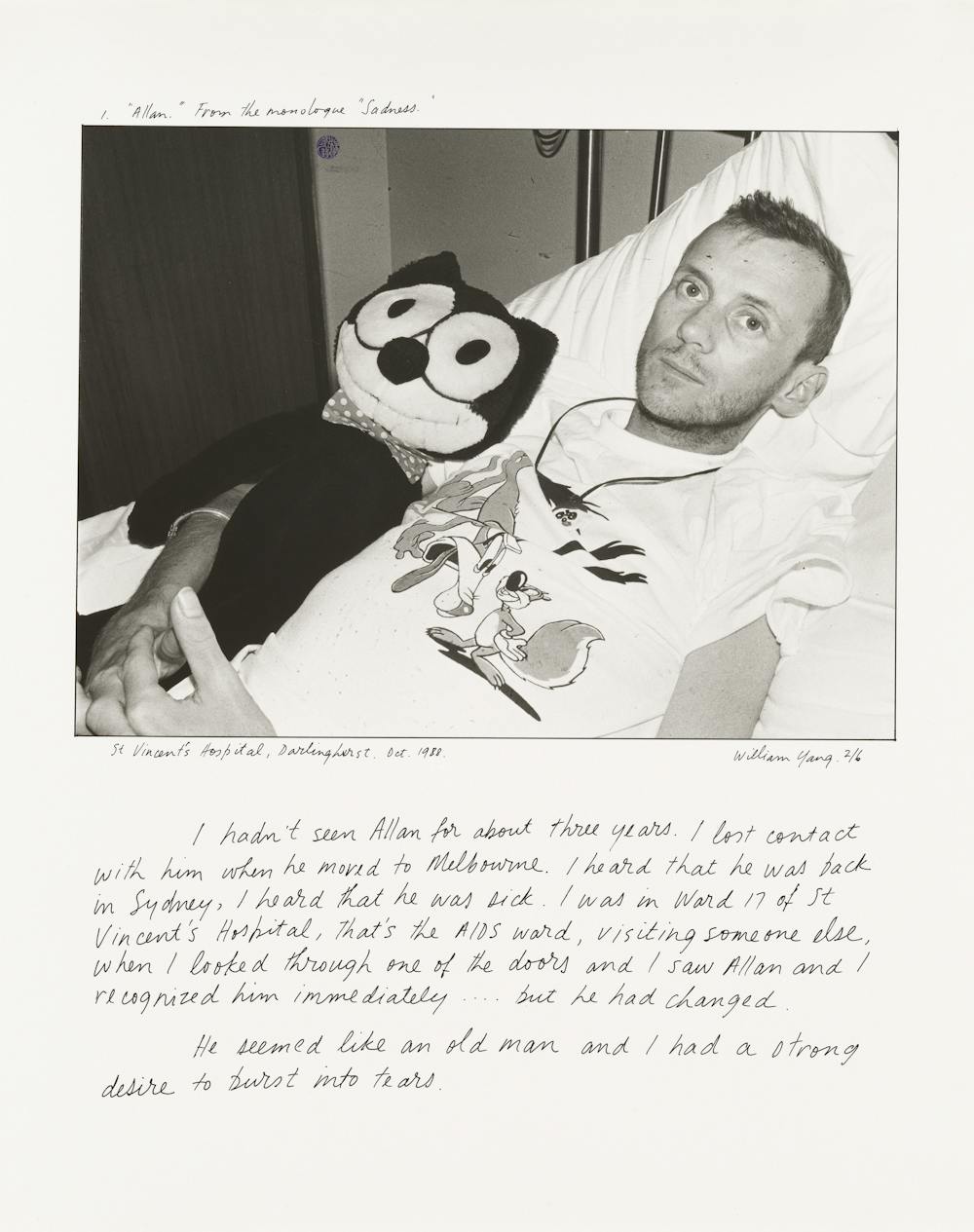
Visibility as a political strategy comes to the fore in the powerful sequence “Allan” from the 1990s Sadness project. Allan’s life is memorialised as Yang traces his friend and ex-lover’s physical decline from a HIV-related illness, poignantly reminding us of the terrifying devastation wreaked by AIDS on Sydney’s gay community during this time.

The viewer is allowed into the intensely private world of death and dying as Yang chronicles the final 12 months of Allan’s life with dignity and tenderness.

William Yang, Allan, no.1 (from the ‘Sadness’ series) 1990. Gelatin silver photographs, ink / 21 photographs, 51 x 41cm (sheet, each). Purchased 2000. Collection: National Gallery of Australia, Canberra. © William Yang.

Yang is at his playful best when he disrupts stereotypical ideas of nationhood. For generations, the beach and its lifesavers have occupied a symbolic position in Australian’s national consciousness.

In one of the key images of the exhibition, lifeguards from Sydney’s Tamarama beach are captured by Yang’s desirous gaze, forcing the viewer to consider the heterosexual framing of national identity.

William Yang, Tamarama Lifesavers 1981. Inkjet print on Hahnemühle Fine Art Pearl. Image courtesy the artist. © William Yang

Family history has also preoccupied Yang over the decades. The series “About my mother” is both affectionate and loving as he retrospectively documents the relationship with his mother Emma after her death.

William Yang, 1943, Mother. Graceville. 1989. (from About my mother portfolio) 2003, Gelatin silver photograph ed. 2/10. 51.3 x 61.1cm. Purchased 2004. Queensland Art Gallery Foundation Grant. © William Yang. Collection: Queensland Art Gallery | Gallery of Modern Art

Again, text is important as Yang records his memories and observations. Some are candid and fun; others record Emma’s unwillingness to acknowledge Yang’s sexual identity. Yang reflects:

My mother had a dignity that came, I think, from a position of humility: I never noticed this when she was alive (heavens! there was the whole relationship between me and my mother to obscure it), but eleven years after she died, as I print up these photos in the dark room, I notice it.

One of the surprising aspects of the exhibition is Yang’s landscape photography.

Frequently, Yang will insert himself into these landscapes. Working in a large-scale format, these images suggest Yang is still trying to make sense of his identity and his relationship with the physical environment of far north Queensland that shaped his childhood.

William Yang, Australia, 1943, Return to the place of childhood. Dimbulah 2016. Inkjet print on Ilford Galerie Smooth Cotton. Rag. Image courtesy: The artist © William Yang.

William Yang: Seeing and Being Seen is showing at the Queensland Art Gallery until August 22.

ref. Tenderness, desire and politics: William Yang’s work is a portrait of a life well lived – https://theconversation.com/tenderness-desire-and-politics-william-yangs-work-is-a-portrait-of-a-life-well-lived-158413

Is Malcolm Turnbull the only Liberal who understands economics and climate science – or the only one who’ll talk about it?

Source: The Conversation (Au and NZ) – By Richard Denniss, Adjunct Professor, Crawford School of Public Policy, Australian National University

Yesterday, former Liberal prime minister Malcolm Turnbull was unceremoniously dumped as chair of the New South Wales government’s climate advisory board, just a week after being offered the role. His crime? He questioned the wisdom of building new coal mines when the existing ones are already floundering.

No-one would suggest building new hotels in Cairns to help that city’s struggling tourism industry. But among modern Liberals it’s patently heresy to ask how rushing to green light 11 proposed coal mines in the Hunter Valley helps the struggling coal industry.

Coal mines in the Hunter are already operating well below capacity and have been laying off workers in the face of declining world demand for coal, plummeting renewable energy prices and trade sanctions imposed by China. The problem isn’t a shortage of supply, but an abundance.

The simple truth is building new coal mines will simply make matters worse, especially for workers in existing coal mines that have already been mothballed or had their output scaled back.

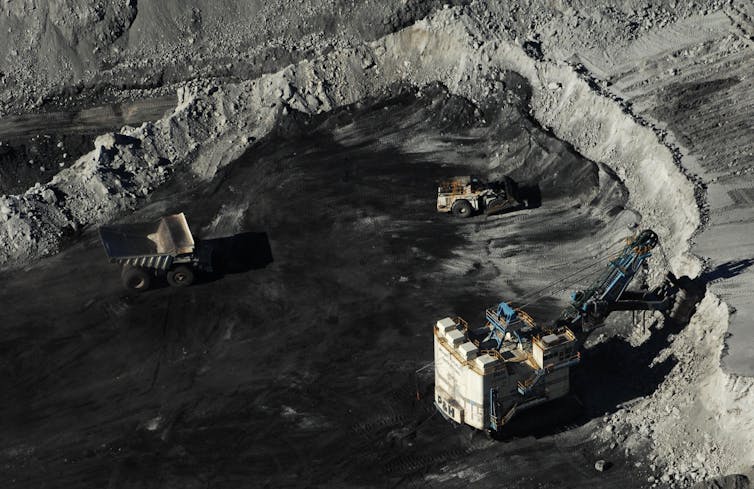
coal mine in the Hunter Valley
Turnbull has called for a moratorium on new coal mines in the Hunter Valley, such as the one pictured above. Dean Lewins/AAP

It gets worse. Once an enormous, dusty, noisy open cut coal mine is approved, the agriculture, wine, tourism and horse breeding industries – all major employers in the Hunter Valley – are reluctant to invest nearby. While building new coal mines hurts workers in existing coal mines, the mere act of approving new coal mines harms investment in job creation in the industries that offer the Hunter a smooth transition from coal.

The NSW planning department doesn’t have a plan for how many new coal mines are needed to meet world demand. Nor does it have a plan for how much expansion of rail and port infrastructure is required to meet the output of all the new mines being proposed.


Read more: Forget about the trade spat – coal is passé in much of China, and that’s a bigger problem for Australia


That’s why my colleagues and I recently called for a moratorium on new coal mines in the Hunter until such plans were made explicit. Just as you wouldn’t approve 1,000 new homes in a town where the sewerage system was already at capacity, it makes no sense to approve 11 new coal mines in a region that couldn’t export that much coal if it tried.

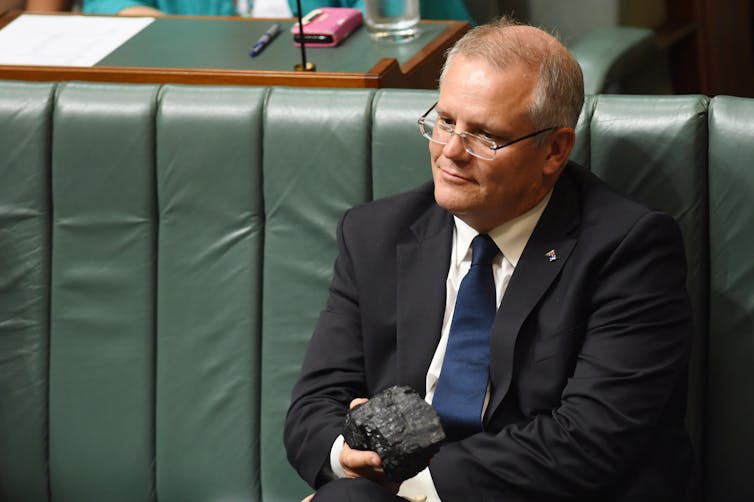
But if there’s one thing that defines the debate about coal in Australia, its that it makes no sense. Just as it made no sense for then-treasurer Scott Morrison to wave a lump of coal around in parliament in 2017, it makes no sense for right-wing commentators to pretend approving new mines will help create jobs in coal mining. And it makes no sense for the National Party to ignore the pleas of farmers to protect their land from the damage coal mines do.

Scott Morrison with a lump of coal to Question Time in 2017.
Scott Morrison took a lump of coal to Question Time in 2017. Lukas Coch/AAP

On the surface, Turnbull’s support for a pause on approving new mines while a plan is developed is old-fashioned centrism. It protects existing coal workers from new, highly automated mines, it protects farmers and it should make those concerned with climate change at least a bit happy. Win. Win. Win.

But there’s no room for a sensible centre in the Australian coal debate. And when someone even suggests the industry might not be set to grow, its army of loyal parliamentary and media supporters swing into action.

Labor’s Joel Fitzgibbon said Turnbull “wants to make the Upper Hunter a coal-mine-free zone”. The Nationals’ Matt Canavan suggested stopping coal exports was “an inhumane policy to keep people in poverty”. The head of the NSW Minerals Council suggested 12,000 jobs were at risk.

But of course, the opposite is true. Turnbull’s proposal to protect existing coal workers from competition from new mines would save jobs, not threaten them. He didn’t suggest coal mines be shut down tomorrow, or even early. And, given existing coal mines are running so far below capacity, his call has no potential to impact coal exports.


Read more: Labor politicians need not fear: Queenslanders are no more attached to coal than the rest of Australia


Coal workers
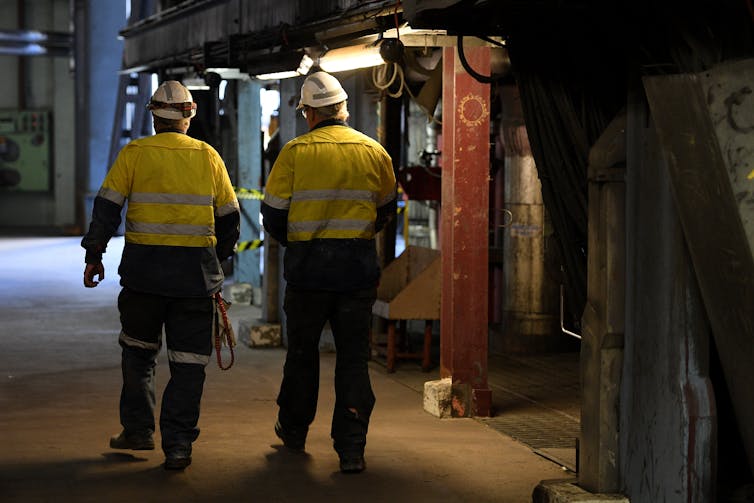
Opening new coal mines won’t help save the jobs of existing coal workers. Dan Himbrechts/AAP

Predictably, the Murdoch press ran a relentlessly misleading campaign in support of the coal industry and in opposition to their least favourite Liberal PM. But surprisingly, the NSW government rolled over in record time.

While the government might think appeasing the coal industry will play well among some older regional voters, they must know such kowtowing is a gift to independents such as Zali Steggall, and a fundamental threat to inner-city Liberals such as Dave Sharma, Jason Falinski and Trent Zimmerman.

The decision to dump Turnbull might have bought NSW Premier Gladys Berejiklian some respite from attacks from the Daily Telegraph. But such denial of economics and climate science will provide no respite for existing coal workers in shuttered coal mines or the agriculture and tourism industry that is looking to expand.

No doubt the National Party are pleased with their latest scalp. But it must be remembered this is the party that last year wanted to wage a war against koalas on behalf of property developers. Such political instincts might help the Nationals fend off the threat from One Nation in regional areas but it does nothing to retain votes in leafy Liberal strongholds that deliver most Liberal seats.


Read more: Aren’t we in a drought? The Australian black coal industry uses enough water for over 5 million people


ref. Is Malcolm Turnbull the only Liberal who understands economics and climate science – or the only one who’ll talk about it? – https://theconversation.com/is-malcolm-turnbull-the-only-liberal-who-understands-economics-and-climate-science-or-the-only-one-wholl-talk-about-it-158448

Drug checking and an early warning network in Victoria could save lives: new coroner’s report

Source: The Conversation (Au and NZ) – By Monica Barratt, Vice Chancellor’s Senior Research Fellow, Social and Global Studies Centre and Digital Ethnography Research Centre, RMIT University

Today the Coroners Court of Victoria released its findings into a cluster of five drug-related deaths across Melbourne between July 2016 and January 2017.

The five young males, aged between 17 and 32, were all found to have consumed an unusual combination of two new psychoactive substances. Most of the deceased thought they were taking MDMA.

Coroner Paresa Spanos has recommended the Victorian government implement a drug checking service as a matter of urgency. This is a service where people could find out the content and purity of drugs alongside a meeting with a health-care worker to talk about their drug use and test results.

She also recommended Victoria implement a drug early warning network. Data from the drug checking service could be cross-checked with other information we have about what drugs are out there, triggering alerts to warn people if an unusually dangerous substance is circulating.

As an expert witness to the coronial inquest, I argued more timely communication to the public about the dangers of this drug combination may prevent tragedies like these in future.

What happened?

The drugs in this novel combination are known as “25C-NBOMe” and “4-FA”. 25C-NBOMe is highly potent — taking less than 1mg can produce strong psychedelic effects, and it can be fatal.

4-FA is an amphetamine-type stimulant which has similar effects to amphetamine and MDMA, and can cause severe harm and death.


Read more: Explainer: what is NBOMe?


All of the young men in this inquest snorted the crystalline powder, which dramatically increases the risk of harm.

While each substance carries substantial risks consumed on its own, the interaction between amphetamines and drugs from the NBOMe series increases the risk of heart failure and seizures.

While this combination is unusual, as recently as last year it was also detected in other parts of Australia, including the Gold Coast, Brisbane, Perth and Canberra.

How can further deaths be prevented?

In my report to the coroner, I argued if the deceased had known their drugs contained 25C-NBOMe combined with 4-FA, it’s reasonable to presume they either wouldn’t have taken them, or may have avoided snorting them in favour of a less risky route, such as swallowing.

It’s important to acknowledge that if we had a legalised and regulated supply of MDMA, we wouldn’t need to analyse samples to work out what’s in them.

While globally there has been recent work done on how best to regulate stimulants like MDMA, Australia isn’t yet considering this option.


Read more: When to seek help after taking a pill


In the current context of drug prohibition, the most promising pathway to reduce harm among people who use drugs is to help them understand the content and purity of the drugs they may consume.

We can also monitor our illegal drug market more closely so all agencies involved in responding to drug problems are armed with the most current information and can tailor their responses accordingly.

What’s Victoria already doing?

The Victorian government and its agencies already generate useful data on drug markets. For example, Victoria Police runs a forensic analysis service for all seized drug samples, which is unique in Australia for its size and coverage. While this information hasn’t historically been used to inform public health, ways of translating this data into useful clinical alerts are currently being explored.

In 2020, the Victorian health department released two public drug alerts. It has also recently piloted a new drug surveillance approach including analyses of drug residue found in discarded drug paraphernalia, wastewater, and blood samples from emergency department patients.

However, Victoria doesn’t currently have a service where members of the public can submit drugs for testing and receive tailored health advice, nor does it provide access to rapid forensic analysis outside the law enforcement context.

What’s more, Victoria doesn’t currently have a formal drug early warning network.

What’s happening elsewhere?

There are some excellent examples globally of agencies that run drug-checking services and collate, synthesise and assess new information about drug markets and issue public alerts.

The Dutch “Drugs Information and Monitoring System”, established in 1992, supports a network of walk-in offices where people can submit drugs for analysis. In the event of unexpected findings, the government can act quickly by alerting people to higher risk substances circulating in the community.

For example, in late 2014, the Dutch system detected a lethal dose of a substance known as “PMMA” in a tablet presumed to be MDMA. Combined with further intelligence about the existence of a larger batch of this tablet, the Dutch government issued a “red alert”. This involved a mass media campaign with the message “please don’t take this tablet” pushed out via television, radio, newspapers, the internet and mobile devices. No deaths were recorded in the Netherlands from this tablet. In contrast, no such alert was issued in the UK, which went on to record several deaths from these tablets.

Victoria could also learn from the system in Toronto, Canada. Similar to the Dutch service, Toronto has multiple drop-off sites where people can submit samples for testing. The service is anonymous and free. The agency publishes fortnightly online reports on the state of the local drugs market, and also issues public drug alerts where warranted.

New Zealand also has an early warning system for drugs, which launched last year.

Next steps

This isn’t the first time drug checking has been recommended in Victoria. But this time, there are reasons to be hopeful government agencies will adopt some or all of these recommendations.

The Andrews Labor government has a record of acting on advice from the coroner. Examples include the establishment of Melbourne’s first medically supervised injecting room, the introduction of a real-time prescription medication monitoring system called SafeScript, and the decriminalisation of public drunkenness after the death of Yorta Yorta woman Tanya Day.

Victoria Police recently released their new drug strategy, which highlights their commitment to supporting harm-reduction initiatives and working more closely with the health department and community organisations. Supporting the coroner’s recommendations would be one way to demonstrate their commitment to these aspects of the new strategy.

This government has presided over a period of increased innovation in drugs policy. This report offers a further opportunity to demonstrate their commitment to reducing drug-related deaths in Victoria.

ref. Drug checking and an early warning network in Victoria could save lives: new coroner’s report – https://theconversation.com/drug-checking-and-an-early-warning-network-in-victoria-could-save-lives-new-coroners-report-157684

Bryce Edwards’ Political Roundup: An overwhelming vote of no confidence in Labour’s mental health reforms

Political scientist, Dr Bryce Edwards.

Analysis by Bryce Edwards

Political scientist, Dr Bryce Edwards.

The area of mental health has been a key strength for Jacinda Ardern and her Labour Government over the last few years. They campaigned strongly in 2017 on fixing up the dysfunctional system, and initially they made some vital strides forward in reforming the sector.

An in-depth inquiry was instigated and the Wellbeing Budget of 2019 pledged nearly $2bn. For a while, it looked like the one area in which the Government was achieving true transformation. This has all changed lately. An explosion of bad stories and complaints from the sector suggests that the Government has failed to deliver on this, and that the mental health system is now getting worse under Labour.

Over the last week, in particular, there have been a string of scathing media articles and comments, that together amount to an overwhelming vote of “no confidence” in the Labour Party, the Prime Minister, and the Minister of Health. The latest, published yesterday in the Guardian, is from journalist Oliver Lewis, who has been investigating Labour’s reforms. He argues the Government appears to be more concerned with image management on mental health than making progress to deal with the crisis – see: The gap between NZ Labour’s soaring rhetoric on mental health and the reality is galling.

On the one hand, Lewis says, “the soaring rhetoric and initial investment – which has often been slow rolling out – has failed to translate into substantive change, and people are rightfully frustrated.” But to make matters worse, and what he finds particularly galling, the government is trying to hide the crisis: “in a bid to paper over failings and push a particular narrative – crucial information seems to be being buried or obfuscated.”

Lewis’ concern was prompted by journalist Henry Cooke’s detailing of how the Government has omitted various mental health metrics in the Ministry of Health’s annual monitoring report on mental health released last week. You can see Cooke’s article here: ‘A lot of data and negative statistics’: Inside the battle behind dramatic edits and huge delays to a Government mental health report.

Cooke’s investigation reveals the quite extraordinary story of how Ministry of Health senior officials battled for two years to remove data from this report, seemingly because it made the government look bad. What’s more, the report was released two years late, and “still showed a very distressing picture of New Zealand’s mental health system – with a spike in the use of seclusion, a practice some liken to torture.”

Cooke reports that “Shaun Robinson of the Mental Health Foundation said it was ‘gobsmacking’ and ‘not acceptable’ that so much information had been removed from the ‘scathing’ report.”

And Cooke follows this up, with further political reaction, including the National Party’s mental health spokesman Matt Doocey claiming “there appeared to be some ‘politicisation’ of the ministry”, and Health Minister Andrew Little being “totally comfortable with the process of the report’s release” – see: Judith Collins says heads should roll over ‘sanitised’ Government mental health report.

For more details of the contents of the “scathing” mental health report, it’s worth reading Tess McClure’s Guardian article: New Zealand mental health crisis has worsened under Labour, data shows. Here’s the article’s introduction: “New Zealand’s mental health system is ‘in crisis’ and in worse shape now than four years ago, practitioners say – despite much-heralded government efforts to reform it and prioritise national wellbeing.”

This followed on from another Henry Cooke piece last week, which covered the “huge growth in mental health patients being locked in rooms alone”, otherwise known as “seclusion”, which the Government was supposed to phase out – see: Huge growth in use of ‘last resort’ seclusion indicates mental health system in crisis, and in worse shape than when Labour elected in 2017.

The fact that the Labour Government aren’t delivering, led prominent psychologist Kyle MacDonald to write a condemning opinion piece for the Herald on Sunday, in which he lays the blame at the Prime Minister’s door, recounting when a tearful Jacinda Ardern spoke to a mental health rally during the 2017 election campaign and promised to fix the problems: “Standing there that day, in the sunshine among the crowd, I believed her. I believed she was going to bring transformative change to our crippled and broken services. We all did, because we wanted to believe our work had come to something. We were wrong” – see: Jacinda Ardern has failed us on mental health – and it’s only going to get worse (paywalled).

MacDonald details how the most recent findings on mental health show Ardern’s promises to have been rather hollow, and calls for the government to stop with the endless reviews and consultations and just take action, especially when it comes to funding service delivery: “It would mean providing fully funded training for psychotherapists, psychologists, nurses, social workers, counsellors and peer support workers – and bonding them to work in the mental health system. It would also mean increasing staffing levels in all front line DHB mental health and addiction services by creating new positions and improving pay and conditions.”

A big part of the problem appears to be underfunding from the Government, and in February clinical psychologist Dr Marthinus Bekker spoke out publicly about the “chronically underfunded” public health sector, being reported as believing “Budget 2019’s headline-grabbing $1.9 billion for a Mental Health Package had in reality made no difference for those working on the front line” – see Nick Truebridge’s Ex-DHB psychologist claims chronic failings in mental health services.

According to Bekker, “Getting into public services has gotten to the point where, at times our waitlist has been in excess of four to five months.” He declares: “The situation is absolutely dire and remains in crisis.” The Minister of Health, Andrew Little, is quoted in contrast, saying: “the message I’m getting is actually things are improving”.

According to Victoria University of Wellington’s Dougal Sutherland, who trains psychologists, the Government simply hasn’t been willing to invest in training enough workforce to deal with the size of the problem, and there appear to be no plans for them to do so – see: No time to waste on mental suffering. What reforms that are taking place, he says, are simply “a reshuffling of proverbial deckchairs”.

Further evidence that the promised changes from Government aren’t actually occurring came out in February via the release of interviews that the new Mental Health Commission carried out last year – see Laura Walters’ Mental health: A top priority stalls.

This article also reports that the former Mental Health Commissioner Kevin Allan recently wrote to the Minister of Health “laying out his concerns about the pace of change, and lack of a long-term action plan for the sector’s transformation.” Furthermore, “In July last year, Allan called on former health minister Chris Hipkins to have a plan ready by the end of the year. There is still no plan.”

The Mental Health Foundation is also growing increasingly frustrated with this lack of action, and have started to speak out much more strongly. Two weeks ago, the Chief Executive of the Foundation, Shaun Robinson, asked: Has the Government lost its vision on mental health?. In this, he argues that the Government is missing out on a once in a generation chance to transform mental health.

The Foundation’s main problem is that, although the Government initiated a wide scale inquiry into mental health, it appears to have ignored the need to implement its recommendations, taking a “piecemeal” approach, and just looking for “obvious wins without making a plan”. Robinson points out that the Government’s own Mental Health Commission report on how progress is going on implementing the recommendations says that 23 of the 36 recommendations receive a 1 or 2 out of six – meaning very poor progress.

So, has Labour given up on real mental health reform? According to campaigner and advocate Dave Macpherson, it’s possible that the system has got worse under the current government – see: Is Labour on top of mental health issues?. Not only is Macpherson is disappointed in Andrew Little, but says that new Chair of the Mental Health Commission has “seemed more concerned with patch and boss protection, than in outlining how they would hold the Government to account on behalf of the community.” Overall, Macpherson believes that a lot of Labour’s problems stem from leaving all the same officials in charge of mental health.

The Minister of Health says the Government will “ramp up” progress to reform the sector, saying, “I’ll keep putting the pressure on officials to do that” – see 1News’ Andrew Little says mental health reforms ‘largely on track’, following criticism.

The Government has also been under pressure from advocates this week, who say they have been fobbed off by the various health ministers – see Ireland Hendry-Tennent’s Nicky Stevens’ mother accused Labour MPs Andrew Little, David Clark of fobbing her off.

There are other signs things are getting much worse. In the weekend, Cherie Howie wrote about how “Mental health conditions among Aotearoa youth have already doubled in the past decade, with experts sounding a call to action in September over what they call ‘a silent pandemic of psychological distress’ already escalating among young people” due to Covid – see: The parallel pandemic: Covid-19 and the mental health impacts on New Zealand young people (paywalled).

An example of this is the skyrocketing of eating disorders amongst youth – see Anna Leask’s ‘Tsunami’ of child eating disorders emerging after lockdowns in New Zealand (paywalled). In this, one psychotherapist, Kellie Lavender, complains that her profession is being treated as “an ambulance at the bottom of the cliff”.

And in Christchurch, there are serious problems at the new hospital: “There are growing fears mental health patients in Christchurch are not getting adequate treatment due to an understaffed and underfunded emergency department” – see 1News’ Christchurch Hospital’s new acute unit still without key services, nurses say (https://bit.ly/3uoqsWH).

The same crisis continues at the University, where a six-month waiting list for mental health help has meant the Psychology Centre has had to close their books – see Chris Lynch’s Where has all the mental health funding gone?. And the same article reports the New Zealand Association of Counsellors asking questions about where all the government funding is actually going.

The problem of all psychological services is well surveyed in Helen Harvey’s January article, New Zealand’s psychological crisis putting lives at risk. According to this, “New Zealand is in a psychological crisis. More people than ever are seeking help but a shortage of psychologists is making it harder for them to get it. And in some cases that can be fatal. Access to mental health and addiction services has increased 73 per cent in the past decade, while funding has only gone up by 40 per cent.”

Finally, is the pressure from mental health advocates leading to a crackdown from the Minister of Health? The Mental Health Foundation claim that in February the government tried to gag them for speaking out about the failures to produce their promised reforms – see Jessica McAllen’s Ministry of Health accused of ‘gagging’ Mental Health Foundation.

New research documents the severity of LGBTQA+ conversion practices — and why faith matters in recovery

Source: The Conversation (Au and NZ) – By Timothy W. Jones, Senior Lecturer in History, La Trobe University

New research reveals the harms of religion-based LGBTQA+ conversion practices are more severe than previously thought. People who have been harmed by attempts to change or suppress their sexuality or gender identity are often left with chronic, complex trauma and face a long journey of recovery.

This is also believed to be the first study anywhere in the world to include mental health practitioners and consider the effects of a wider range of conversion practices beyond formal “therapies”.

It’s been a long time since Australian and international health authorities regarded LGBTQA+ identities as mental illness needing a “cure”.

Yet, at least one in ten LGBTQA+ Australians is still vulnerable to religion-based pressures to attempt to change or suppress their sexuality or gender identity. Such conversion practices have been reported in communities of almost all religious and cultural backgrounds.

This is why Australian states are gradually moving towards banning the practice. In February, Victoria passed a comprehensive law that would prohibit LGBTQA+ conversion practices in both healthcare and religious settings.

Other state laws are not going far enough. Last year, Queensland passed a narrowly focused law that prohibited health service providers from performing so-called conversion therapy.

However, research has shown formal “therapies” with registered health practitioners are only a small part of the harmful conversion practices experienced by LGBTQA+ people in Australia, and elsewhere.

What conversion practices include

Such conversion practices can include formal programs or therapies in both religious and healthcare environments. However, they more often involve informal processes, including pastoral care, interactions with religious or community leaders, and spiritual or cultural rituals.

In all of these practices, LGBTQA+ people are told they are “broken”, “unacceptable” to God(s) and need to change or suppress their identities in order to be accepted.


Read more: ‘Treatments’ as torture: gay conversion therapy’s deep roots in Australia


Many LGBTQA+ people live in fear of the spiritual, emotional and social consequences of not being able to “heal” or “fix” themselves, which may include loss of faith, family and community.

Research to date has proven that conversion practices are ineffective and unethical. These practices do not reorient a person’s sexuality or gender identity.

Further, they are in breach of professional medical ethics.

How conversion therapies affect people

Until now, however, we have had only a limited understanding of the harms of conversion practices on LGBTQA+ people and what survivors need to recover and heal from these programs.

In research conducted in 2016 and 2020, we interviewed 35 survivors of conversion practices and 18 mental health practitioners. Our study had a significantly more diverse cohort of survivor participants than previous studies, including people from cultural and gender minority groups.

We found the harms experienced by survivors of both formal and informal conversion practices can be severe. Health practitioners described it as “chronic trauma” or a “complex trauma experience”, with survivors having “the symptoms of PTSD [post-traumatic stress disorder]”.

Many survivors described struggling with suicidal thoughts, major mental health issues, grief and loss, self-hatred and shame. As one cisgender gay man, aged 40, recalled:

I nearly had a breakdown trying to keep repressing my sexuality […] I was very, very mentally unwell for a significant time […] I had been spiritually abused.

One counsellor described the experience of conversion therapies as:

a life of being constantly bombarded with the message that you’re not right or that you’re broken or that you’re flawed. And it has all the hallmarks of someone who’s been to a war zone.

What type of support survivors need

After LGBTQA+ people undergo these types of conversion therapies, we found they have complex needs in recovery, dealing with such things as

  • grief, loss and religious trauma

  • improving self care

  • correcting misinformation about LGBTQA+ people and communities

  • repairing and rebuilding their social support and community networks

  • navigating their relationships with faith.

Professional mental health support is essential, participants explained. As one cisgender lesbian, age 50, told us,

if it hadn’t been for my ability to access really good quality, professional counselling, I would have killed myself several times over by now.

Why recovery must include discussions of faith

Unfortunately, the LGBTQA+ people in our study experienced numerous barriers to seeking and accessing mental health support, including:

  • not being able to afford it

  • mistrust of health professionals due to their experiences with conversion practices

  • reluctance to disclose their involvement in conversion practices because of shame

  • a lack of confidence in health practitioners’ ability to deal with trauma at the intersection of religion, culture, sexuality and/or gender identity.

Strikingly, both survivors and health practitioners reported a reluctance to raise faith and spirituality in their recovery therapy. For example, one psychologist reflected,

A lot of the time, we don’t ask about spirituality. They come in because they’ve got anxiety, depression. And we might ask […] about suicidality, we ask about substance use, but we need to take it further and ask about their spirituality

We ask about sex, which is really quite personal, and yet, a lot of time, I don’t know, we’re reluctant to ask about spirituality.

For some survivors of conversion practices, faith remains an important component of their lives. Shutterstock

Many survivors reported negative experiences in recovery of counsellors assuming that being LGBTQA+ and having religious faith were incompatible. One cisgender, 35-year-old gay man told us,

It’s like, ‘Oh, great, you’re out of that […] You don’t want any of that religious stuff. Let’s help you to be a balanced secular person’, rather than embracing the whole spectrum of faith and where you are.

And another transgender bisexual woman, aged 26, said,

My first psychiatrist […] tried to convince me that being religious was delusional. I never went back to see her.

Such comments unhelpfully reinforce the false messages that LGBTQA+ people are told in conversion practices — that being LGBTQA+ and having faith are incompatible.

All survivors needed help balancing the relationship between their LGBTQA+ identity and their faith, family and culture.

For some, healing did mean leaving faith. For others, it was finding a faith community that accepted their LGBTQA+ identity. And for others, it was about learning how to develop healthy boundaries that enabled them to navigate the different communities they belonged to.


Read more: Some Christian groups still promote ‘gay conversion therapy’ – but their influence is waning


How this research can help people

Our study has two main implications for supporting the recovery of people who have been harmed by LGBTQA+ conversion practices.

First, because our report details the severity and complexity of the trauma experienced by survivors, this can inform the very specific type of long-term care they will need in recovery.

Second, cultural and religious awareness are vital factors in supporting survivors’ healing and recovery. Most survivors struggle to find mental health practitioners who appreciate their continuing connections to culture, faith and spirituality.

We recommend more training for health practitioners to be able to support survivors’ recovery, including the integration of their spirituality and LGBTQA+ identity.


This research was conducted in partnership with the Brave Network, the Australian GLBTIQ Multicultural Council and the Victorian government.


If this article has raised issues for you or you’re concerned about someone you know, call Lifeline on 13 11 14.

ref. New research documents the severity of LGBTQA+ conversion practices — and why faith matters in recovery – https://theconversation.com/new-research-documents-the-severity-of-lgbtqa-conversion-practices-and-why-faith-matters-in-recovery-154740

Targeted texts and peer support: how smarter health care can cut costs and help Australians with chronic conditions

Source: The Conversation (Au and NZ) – By Stephen King, Adjunct professor, Monash University

Australia has a health problem. Our health system works well for acute conditions that require short-term treatment such as fractures, pneumonia and appendicitis.

But almost 40% of us have at least one long-term (chronic) physical health condition, such as diabetes, arthritis, a respiratory condition, or kidney disease.

Chronic health conditions need to be managed over time. However, this can be difficult in a health system where payments to health professionals are built around “patient activity”, such as surgeries and consultations. There are few dollars for initiatives that keep people out of hospital or help them to manage their own care.

The result is a high cost — more than A$38 billion per year spent on care for people with chronic health conditions — and too much time spent in hospital.

Our health system can do better. A recent report from the Productivity Commission, of which I am one of the commissioners, looked at innovations in health care for chronic conditions around Australia. We found many examples of innovative programs in local communities.

17 innovations

The Productivity Commission presented case studies of 17 initiatives that have delivered, or are on track to deliver, sustainable outcomes for people living with chronic health conditions and the health system.

Some of these focused on helping people manage their own health. For example, Nellie is an automated SMS-based persona that sends patients text message reminders about medication, exercise or testing.

Others focused on innovative work practices. For example, on the Sunshine Coast, general practitioners with special interests assist specialists by dealing with less complex episodes of care at hospital outpatient clinics. This helps reduce waiting times.

In Perth, peer workers provide support for people with social needs, such as housing, who are at risk of unplanned presentations to emergency departments. For example, the peer workers might offer emotional support and help to navigate community services.

A woman tests her blood sugar by pricking her finger.
Around 40% of Australians have at least one chronic physical health condition, such as diabetes. Shutterstock

Meanwhile, certain innovations involved the use of health data. For example, Primary Sense software helps GPs on the Gold Coast better identify people who are at risk of hospitalisation from a chronic health condition in the next 12 months. This helps GPs proactively provide preventative care.

Health data can also improve system coordination and design. Lumos, in New South Wales, uses anonymised data to help GPs better understand their client population, and to identify gaps in health care.


Read more: More Australians can stay healthier and out of hospital – here’s how


Innovations that have been evaluated often show significant benefits. For example, Monash Watch, run by Monash Health in Melbourne, is a simple telephone-based outreach service for people likely to have three or more unplanned hospital admissions in a year.

When it started, Monash Watch aimed to reduce days spent in acute hospital care for these people by 10%. In practice, it’s reducing bed days by about 20%-25% compared to care as usual.

Benefits for everyone

The report shows our health system can deliver better care for people with chronic conditions. In many cases we need funding reform, but this doesn’t have to be large in dollar terms.

For example, HealthLinks, a program in Victoria, allows hospitals to use existing funds for chronic care innovation. An algorithm identifies people at high risk of multiple unplanned hospitalisations in one year. If the hospital chooses to, it can use the expected funds it would receive from that patient being in hospital for alternative community-based care.

Monash Watch is one of the innovations funded under HealthLinks, while other hospitals have used HealthLinks to fund alternative approaches to chronic health care. But despite underpinning a range of programs, the total funds involved in HealthLinks are small, around A$40 million in 2016-17, or roughly one-quarter of 1% of Victoria’s annual expenditure on public hospitals.

A hospital corridor.
Innovations which help people manage their chronic medical conditions can free up hospital resources. Shutterstock

Improving care to help people with chronic conditions maintain their health and avoid hospitalisation benefits everyone.

It benefits the individual. I have yet to meet someone who wanted to spend more time in hospital rather than out in the community.

It benefits the community by freeing up hospital beds and shortening waiting times for care.

And it benefits taxpayers, by reducing the need for new hospitals as the population both grows and ages.

So, how can more Australians benefit from these and other health innovations? Our report highlights three key factors.

Support, evaluation and communication

First, our health system needs to better support innovation. Currently, innovations are usually led by a few inspired people. But they face barriers in terms of funding, time and information about what works. They need a “license to innovate” — to try new approaches based on the best available evidence.

If we establish this figurative “license to innovate”, then some failure is inevitable. So second, we need a health system that evaluates innovations, working out which are the best and which were simply a good idea at the time.

Finally, when successful innovations are identified, this must be communicated so they can be scaled up. Sometimes this will involve local adjustments, to allow for population or geographical differences that can affect service delivery. But the key is information — identifying success and letting people know about it.

Creating a culture of innovation and sharing best practice throughout our health system will benefit the growing number of Australians living with chronic health conditions.


Read more: Balancing the health budget: chronic disease investment pays big dividends


ref. Targeted texts and peer support: how smarter health care can cut costs and help Australians with chronic conditions – https://theconversation.com/targeted-texts-and-peer-support-how-smarter-health-care-can-cut-costs-and-help-australians-with-chronic-conditions-158415

On the road again: here’s how the states can accelerate Australia’s sputtering electric vehicle transition

Source: The Conversation (Au and NZ) – By Rupert Posner, Systems Lead – Sustainable Economies, ClimateWorks Australia

Last month, Volkswagen Australia chief Michael Bartsch revealed Australia’s clean technology laws were so weak, his German head office would not supply Australians with the company’s top selling mid-range electric vehicles.

Without a clear policy to signal the market for electric vehicles would grow, Bartsch said, Volkswagen would instead supply popular models, such as the ID.3 hatchback and the ID.4 SUV, to more welcoming markets such as North America and Europe.

Undoubtedly, the Morrison government remains in the slow lane on electric vehicle policy. Its Future Fuels Strategy discussion paper rules out subsidies for electric vehicles, and the government has failed to implement fuel efficiency standards to encourage the transition away from traditional cars.

But as history shows, in the absence of federal leadership, states and territories can work together and step into a policy breach. Now’s the time for them to band together on electric vehicles. Here’s how they can do it.

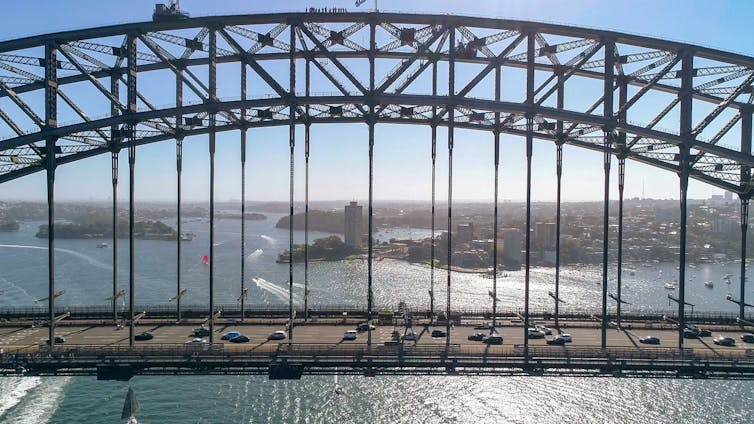
cars driving across Sydney Harbour Bridge
The states can step into the federal policy breach to promote the uptake of electric vehicles. PLUG ME IN

A history of collaboration

Businesses largely want to act on climate change. But without strong, consistent, legally binding policy in place many businesses worry about damage to their investments, competitiveness and profits.

The situation right now is reminiscent of that in the early 2000s. Then, industry called on the Howard government to provide a clear signal on emissions reduction. The pressure culminated in 2006, when businesses – including BP, IAG and Origin Energy – declared climate change was a major business risk and “the longer we delay acting, the more expensive it becomes for business and for the wider Australian economy”.

In the years prior, Australian states and territories had already recognised the need to act. In a remarkable collaboration in 2004, they released a discussion paper on a possible National Emissions Trading Scheme (NETS). It aimed to “provide a framework for emissions reduction that gives business and the community certainty and predictability”.

This collaboration, together with industry pressure, forced the federal government to respond. In December 2006, then prime minister John Howard established a joint government-business group to advise on an emissions trading system.

As history shows, this policy didn’t eventuate. Howard lost the 2007 election and, following disappointing global climate talks in Copenhagen, the Rudd government abandoned emission trading.

But it demonstrates the opportunity for states to lead by acting collectively – and electric vehicle policy presents another such chance.


Read more: On an electric car road trip around NSW, we found range anxiety (and the need for more chargers) is real


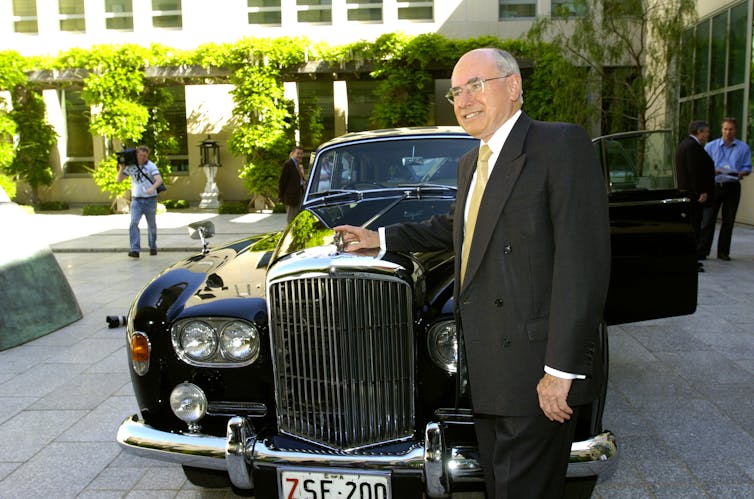
John Howard in front of a Bentley
Industry concern prompted then prime minister John Howard to investigate an emissions trading scheme in 2006. Alan Porritt/AAP

Power to the states

Australian states and territories are already leading on climate policy. All have targets or aspirations to reach net-zero emissions by 2050, and some have ambitious renewable energy targets.

Some jurisdictions are also starting to decarbonise their transport sector. For example, the ACT government offers financial incentives, stamp duty exemptions and a bold fleet purchasing commitment.

Norway provides a stunning example of policies that can support electric vehicle uptake. In under a decade, electric vehicle purchases have increased from virtually nothing to more than half of all new car sales in 2020. It has a national goal that all new cars sold by 2025 should be zero emissions.

In contrast, in Australia in 2020, electric vehicles comprised just 0.6% of new vehicle sales.

Electric vehicle incentives deployed in Norway include:

  • exemption on 25% consumption tax normally applied to new vehicles
  • road tax exemptions
  • lower registration fees
  • parking fee and tolls discounts
  • no import tax
  • permission to drive in bus lanes
  • reduced company car tax.
EVs in snow in Norway
Norway’s electric vehicle policies offer a model for Australian states to follow. Shutterstock

Many of these policies are within the remit of Australia’s states. But the efforts must be coordinated, or unintended consequences may result. For example, a large rebate offered in one state might mean consumers flock to purchase their electric vehicles outside their home state. That outcome would not be fair to taxpayers in the state offering the rebate.

Coordinated fleet purchasing is another way states could encourage electric vehicle uptake in Australia. At the moment, electric vehicle prices are out of reach for many consumers. Few low-cost options exist and the range of mid-range models – those priced about A$50,000 or $60,000 – is limited.

But our analysis shows some electric vehicles are already cost-competitive for government fleets. So if states banded together to buy a large number of a particular model of electric vehicles, this could be the incentive needed for manufacturers to offer the model for general purchase in Australia. Some manufacturers may even consider local assembly or manufacture if sales volumes were high enough.

And due to the relatively high turnover in government fleet cars, the second-hand market would soon see an influx of electric vehicles. This would quicken the transition across the economy.

It should be noted, the Morrison government plans to encourage business fleets to transition to electric vehicles. It is also trialling the Tesla Model 3 and Hyundai Ioniq EVas in its Comcar fleet.

States could also use their collective clout to have more electric vehicle charging infrastructure built. If all states act together to expand the charging network, it could be done more cheaply and efficiently.


Read more: The US jumps on board the electric vehicle revolution, leaving Australia in the dust


row of new cars
Government fleet cars offer an opportunity to increase electric vehicle uptake. Shutterstock

On the road again

Working together, the states could send the signal manufacturers require before they commit to selling a wider range of electric vehicles in Australia.

Our research has shown 50-76% of new car sales in Australia must be electric by 2030 to ensure we reach net-zero emissions by 2050.

We don’t have much time. The states can jumpstart this transition – and with any luck, the Commonwealth might get on board.


Read more: Scott Morrison has embraced net-zero emissions – now it’s time to walk the talk


ref. On the road again: here’s how the states can accelerate Australia’s sputtering electric vehicle transition – https://theconversation.com/on-the-road-again-heres-how-the-states-can-accelerate-australias-sputtering-electric-vehicle-transition-158218

She-Oak and sunlight: ‘the best feelgood show I have seen since COVID’

Source: The Conversation (Au and NZ) – By Sasha Grishin, Adjunct Professor of Art History, Australian National University

Review: She-Oak and sunlight: Australian Impressionism, NGV Australia, Federation Square, Melbourne

She-Oak and sunlight is a visually stunning exhibition that brings together some of Australia’s most famous and much-loved paintings and presents them within a radically different context.

Dr Anne Gray, the curator of this exhibition, dismisses the traditional title for these painters, “The Heidelberg School”, as a misnomer — they worked in Eaglemont, not Heidelberg, and it was never a school.

She also argues in her exhibition the idea this was a purely “blokey” orientation in art, with Tom Roberts, Arthur Streeton, Charles Conder and Frederick McCubbin as the only serious members, needs to be revised.

They shared the limelight with a number of talented women artists including Jane Sutherland, Clara Southern, Iso Rae, May Vale, Jane Price and Ina Gregory, all of whom are present in considerable numbers in this exhibition.

Ethel Carrick, Australia, 1872-1952, Flower market, 1907. Oil on wood panel. National Gallery of Victoria, Melbourne. Presented through The Art Foundation of Victoria by the late Major B. R. F. MacNay, and Mrs D. Mac`Nay, Fellow 1994

Finally, Gray contextualises the narratives presented by these painters with older co-existing narratives by contemporary Australian Indigenous artists, especially William Barak.


Read more: Explainer: the importance of William Barak’s Ceremony


The title of the show, She-oak and sunlight, is derived from the title of a small painting by Tom Roberts, recently acquired by the NGV, exhibited in one of Australia’s most famous/notorious exhibitions of all time, the 9 by 5 Impression Exhibition that opened August 17, 1889 at Buxton’s Art Gallery, Swanston Street, Melbourne.

Painting: a dusky tree against a dry landscape and blue sky.
Tom Roberts, Australia 1856–1931, She-oak and sunlight, 1889. Oil on wood panel, 30.4 × 30.1 cm. National Gallery of Victoria, Melbourne. Jean Margaret Williams Bequest, K. M. Christensen and A. E. Bond Bequest, Eleanor M. Borrow Bequest, The Thomas Rubie Purcell and Olive Esma Purcell Trust and Warren Clark Bequest, 2019

Roberts’s She-oak and sunlight appeared as no. 19 in the catalogue and perfectly epitomises the mood of the exhibition. The she-oak, or Casuarina, is native to Australia. The show celebrates the “Australianness” of the vegetation and topography, and stresses the quality of the intense, bleaching light in this country.

This is the best feelgood show I have seen since COVID, glowing and basking in nationalism and optimism.

The French and the Australians

The extent to which these painters could be described as “impressionists” depends a little bit on definitions.

Like the French Impressionists, these Australian painters worked outside en plein air, they made rapid, sketchy paintings that favoured landscapes and everyday subjects, they employed compositional structures influenced by photography and they were aware — even if in some cases indirectly — of the work of the French artists.

Three children outdoors
Jane Sutherland, United States, 1853-1928, Field naturalists c.1896. Oil on canvas, 80.9 × 121.3 cm. National Gallery of Victoria, Melbourne. Gift of Mrs E. H. Shackell,1962

In the 9 by 5 catalogue (the name derived from the fact many of the paintings in the show were painted on nine by five inch cedar cigar box lids), the artists stated:

An effect is only momentary; so an impressionist tries to find his place. Two half hours are never alike […] So in these works, it has been the object of the artist to render faithfully, and thus obtain first records of effects widely differing, and often of very fleeting character.

The French Impressionists’ use of “colour theory”, with paint applied in small adjacent dabs of colour and the whole colour palette moved to the ultraviolet end of the spectrum, was in little evidence in the 1889 Melbourne exhibition. Most of the Australian paintings had colour applied traditionally in tonal gradations.

Some Australian artists who lived primarily in France, especially John Peter Russell, were much closer to the French Impressionists in mood, spirit and technique, but these were essentially expats.


Read more: From Monet to Rodin, John Russell: Australia’s French Impressionist maps artistic connections


Outstanding visual intelligence

Prior to this show, the benchmark exhibition of Australian impressionists was Jane Clark’s Golden Summers: Heidelberg and beyond held at the NGV in 1985 that broke all records for attendances. A less successful exhibition covering similar ground was held at the same gallery in 2007.

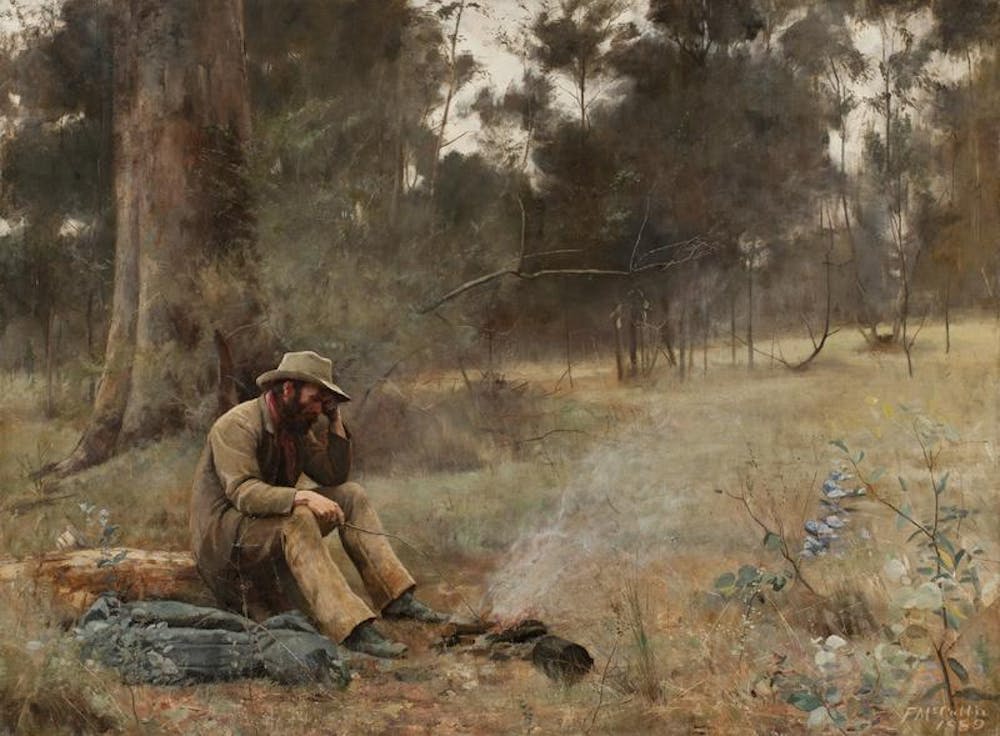
Gray’s exhibition, with over 250 artworks, is outstanding for its scope, scale and visual intelligence in the way it has been presented. Not only have all of the key works been assembled from around Australia, which is no mean feat — for example, to prise out of the Art Gallery of Western Australia, McCubbin’s Down on his luck, 1889, a destination painting — but new visual connections are created throughout the show.

A swag man sits, dejected.
Frederick McCubbin, Australia, 1855-1917, Down on his luck c.1889. Oil on canvas. Purchased 1896, State Art Collection, Art Gallery of Western Australia

A painting by the French Impressionist, Alfred Sisley in the collection of the NGV is juxtaposed with Russell’s painting of Madame Sisley in the collection of the Art Gallery of NSW. Gray has realised both were painted on the same spot in Moret-sur-Loing with the same white chalk cliff in the background.

Édouard Manet, Claude Monet and James Abbott McNeill Whistler all feature in this exhibition to demonstrate the international artistic milieu in which these artists operated.

The 9 by 5 exhibition has been recreated with 55 of the original works reassembled in a separate room with Handel’s music filling the chamber, as was celebrated in the original display.


Read more: How our art museums finally opened their eyes to Australian women artists


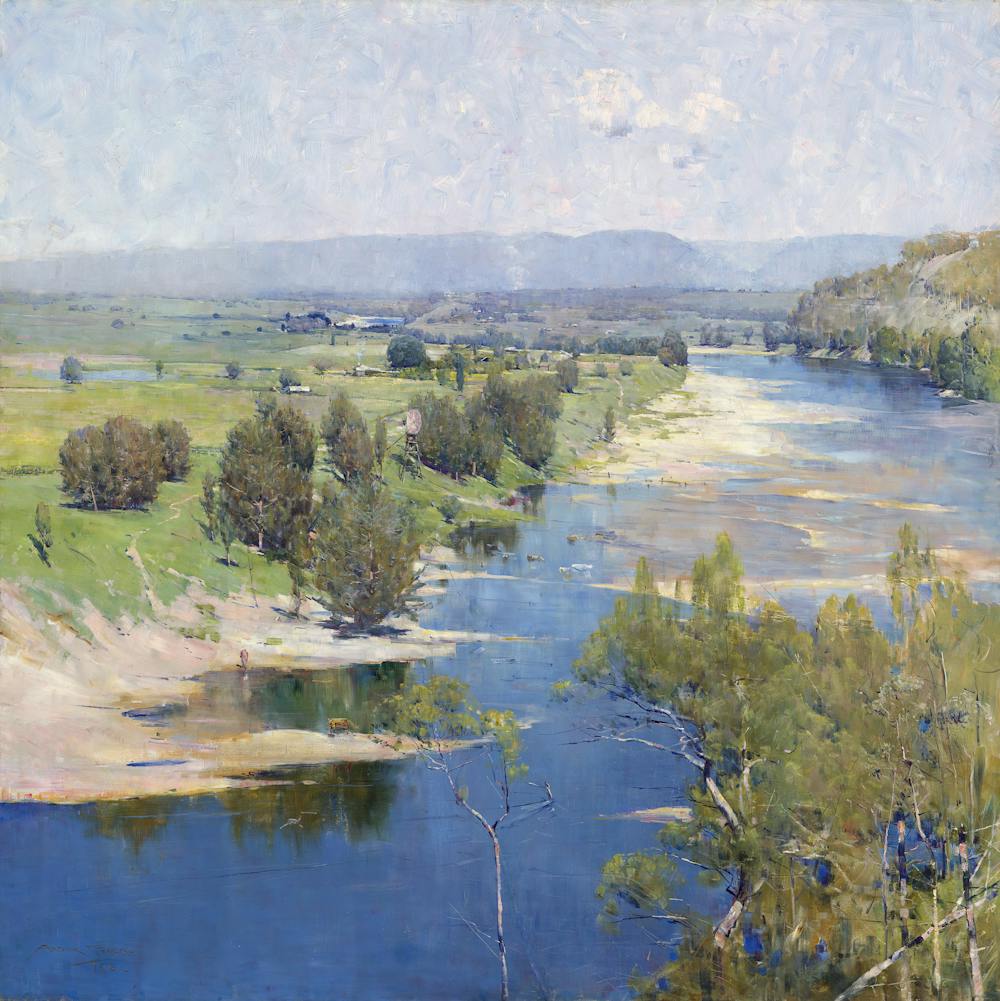
A startling surprise is seeing one of Australia’s most famous paintings, Arthur Streeton’s The purple noon’s transparent might c.1896, as one has never seen it before. It has been cleaned of its dirty varnish during the COVID lockdown and now radiates with light and warmth – the glowing mystique of the Hawkesbury River near Richmond.

A brilliant blue river.
Arthur Streeton, Australia 1867–1943, The purple noon’s transparent might c.1896. Oil on canvas, 123.0 × 123.0 cm. National Gallery of Victoria, Melbourne. Purchased1896

Many of the icons of Australian art, including Roberts’s Shearing the rams, Streeton’s Fire’s on, Roberts’s Break away and McCubbin’s The pioneer, share the space with William Barak’s images of the Rainbow serpent and sacred ceremonies.

I suspect this will become the definitive exhibition of our evergreen favourite national artists who created quintessential images of Australia that have ever since haunted our collective imagination.

She-Oak and sunlight: Australian Impressionism, is at NGV Australia until August 22.

ref. She-Oak and sunlight: ‘the best feelgood show I have seen since COVID’ – https://theconversation.com/she-oak-and-sunlight-the-best-feelgood-show-i-have-seen-since-covid-158311

Managing retreat: why New Zealand is drafting a new law to enable communities to move away from climate risks

Source: The Conversation (Au and NZ) – By Catherine Iorns, Professor of Law, Te Herenga Waka — Victoria University of Wellington

The government’s recently announced overhaul of major environmental legislation will result in a new law focused solely on climate change adaptation.

The 30-year-old Resource Management Act (RMA) was groundbreaking when it was passed in 1991 — the first in the world to be based on the concept of sustainable management. But it has been subject to many criticisms, and amendments, from all angles.

On one hand, it hasn’t protected the environment enough, allowing the degradation of waterways and loss of indigenous biodiversity. On the other hand, its procedures are slow and cumbersome, making development difficult. It has also been partly blamed for the current housing shortage in New Zealand.

In this documentary, directed by Magnolia Lowe, the author covers legal issues around water, from climate change to pollution.

An extensive independent review of the legislation recommended replacing the RMA with three separate pieces of new legislation, with one focused on climate adaptation.

Perhaps most significantly, the review recommended a new government fund to pay for managed retreat, to better ensure change happens fairly and consistently across the whole of Aotearoa New Zealand.

Sued if you do and sued if you don’t

Current laws in both Australia and New Zealand are hindering adaptation to the effects of climate change.

The Australian Productivity Commission found as far back as 2012 that the law was a barrier to effective climate change adaptation. Significantly, local governments are responsible for adaptation measures, but their precise abilities and responsibilities are not clear enough.

Therefore, they face a “liability dilemma” where they are sued if they take action and sued if they don’t. The fear of being sued has stopped them from taking action and, for some local councils, concern about liability has been described as the single most important issue to resolve.


Read more: When climate change and other emergencies threaten where we live, how will we manage our retreat?


Research in New Zealand has found the same thing: New Zealand’s local authorities have been sued when they take action to adapt to climate change, and sued when they haven’t acted boldly enough. Fear of liability has also prevented New Zealand’s local government from taking measures they know are necessary.

Coastal hazard adaptation guidelines issued by the Ministry for the Environment have helped but are not enough.

Road running along coast
The devolution of climate change measures to local government has inhibited national strategic land use planning. Shutterstock/Krug

Barriers and gaps to effective adaptation

It isn’t just fear of liability, there are many legal barriers that leave local authorities unsure of what they can or cannot do. In some cases, they are legally prevented from doing what they need to do.

In 2019, an extensive New Zealand study identified numerous barriers and gaps in the law and recommended many changes to the relevant legislation, mostly the RMA.

The RMA includes several barriers to adaptation generally as well as managed retreat in particular. For example, it is not always clear who is responsible for taking particular climate adaptation measures — whether that involves building hard seawalls, imposing conditions on building permits to ensure future resilience, or simply revising where housing and other structures may be built in the face of increasing risks from sea level rise.


Read more: If warming exceeds 2°C, Antarctica’s melting ice sheets could raise seas 20 metres in coming centuries


Even where the responsibility is clear, the extent of the powers may be unclear, or the most appropriate measure may not be defined or leave too much flexibility about what needs to be done.

There are also strong barriers to adaptation measures that involve interference with existing, permitted land uses. In some cases it does not appear possible to force landowners to move to retreat from the coast in the face of rising sea levels. If they do move, it’s unclear if they are entitled to compensation, and if so, who should pay.

Other research focused solely on managing existing uses (particularly retreat) has also found the law needs to change if we are to enable government to take the measures necessary for communities to adapt to climate change.

The law also needs to change if we are to do this fairly and with dignity, and without transferring the risks and burdens to the most vulnerable.

Law reform

The RMA is a huge statute of 836 pages. It governs most uses of land, natural resources and the coastal marine area in New Zealand. It provides for national policies and standards, as well as regional and local ones.

But the devolution to local government has inhibited national strategic planning for land uses. For example, cities have sacrificed the best food-producing land for housing on urban fringes. Importantly, the RMA has not provided for the growing risks of climate change.

The RMA reform panel made several recommendations to fix barriers to climate adaptation, including:

  • Mandatory national direction on climate adaptation measures

  • spatial plans including provision for adaptation

  • funding to enable managed retreat

  • flexible planning regimes

  • and the power to modify existing land uses and permits.

There is not enough detail yet to assess how this will be achieved. The Ministry for the Environment is currently figuring out precisely how these new statutes should be drafted.

But this could be another world first: laws to provide for climate adaptation, including a fund to enable communities to manage their retreat from climate risks. New Zealand is small and it often experiments with new ideas and initiatives. This may well be one Australia should be watching.

ref. Managing retreat: why New Zealand is drafting a new law to enable communities to move away from climate risks – https://theconversation.com/managing-retreat-why-new-zealand-is-drafting-a-new-law-to-enable-communities-to-move-away-from-climate-risks-157394

View from The Hill: Morrison to ministers: don’t stir the states

Source: The Conversation (Au and NZ) – By Michelle Grattan, Professorial Fellow, University of Canberra

When your back’s against the wall, attack is not necessarily the best means of defence. With this in mind, the word from Scott Morrison to his ministers is, lay off the states.

The federal government’s instinct is to avoid acknowledging its failures; when things are not going as promised, the reaction of some ministers is to kick the states if they are in line of sight.

The most egregious example was last week, when a story was planted to discredit states’ performance on vaccination. Premiers immediately saw the hand of Health Minister Greg Hunt.

Nationals Minister David Littleproud took his cue from the story, and piled on.

NSW and Queensland hit back.

Peter Dutton didn’t receive the smoke signal from Morrison that he was annoyed at his ministers, and on Sunday put the boot into Queensland over its lockdown. This was followed by a whack back from Queensland deputy premier, Steven Miles. The PM had to reinforce his message.

Morrison would understand that while the rollout involves both federal and (to a considerably lesser extent) state governments, his government has – and is seen as having – the major responsibility.

Rollout failures will be sheeted home to the feds, and the public will be angrier if there’s a blame game.

With the rollout struggling on several fronts – as of Monday only 855,000 doses had been administered – and national cabinet meeting on Friday, Morrison needs a semblance of public harmony and maximum co-operation from other governments.

Each day a fresh issue arises. On Tuesday, for example, the pharmacists, declaring they were already prepared for their role, were complaining the details for their involvement were being vagued up and possibly their participation would be delayed.

The pharmacists are due to come into the program as part of phase 2a (covering 50-69 year olds, Aboriginal and Torres Strait Islander people aged 18-54, and some others).

Pharmacy Guild national president Trent Twomey says the language on the timing of their involvement had changed from “June” to “the middle of the year”. This followed a slippage from the original timing of May for the 2a phase, and the pharmacies’ participation, to start.

Twomey says that earlier, the date set for individual pharmacies to know whether they were accepted for the program was March 19. Now they were being told they would be notified between April 12 and the end of the month. “Now there is a range, not a date,” he says.

Given many pharmacies are small businesses, this complicates their planning.

“I’m getting questions [from pharmacists] as to why Joe Biden and Boris Johnson have brought forward community pharmacy [participation] but we’re being delayed,” Twomey says.

Morrison at a Tuesday news conference denied a delay – “We were always working to mid-year.”

Much – though by no means all – of the difficulty with the rollout is on the supply side.

The EU blocked (actually or effectively) more than 3 million vaccine doses coming to Australia which put a major spanner in the works. Also, many of the vaccines already produced by CSL are still in the pipelines for checks and approval.

A CSL statement said on Monday: “In the first week of the local rollout, 832,000 doses were released ahead of schedule to the Australian government.

“Further batches of finished doses are now being released on a rolling basis every week. When approved by the [Therapeutic Goods Administration] they are delivered to the national network of vaccination centres and GP clinics. CSL hopes to reach a rolling output of 1 million doses a week as soon as possible.”

Like much else in the rollout these days, “as soon as possible” is vague.

The government is noticeably unwilling to be precise about CSL weekly production figures.

Asked on Monday how many doses CSL was providing a week, Acting Chief Medical Officer Michael Kidd said, “I don’t have the figures available here right now”. On Tuesday morning he said CSL had already produced 2.5 million doses of the AstraZeneca vaccine. “As each batch has finished its checking, they’re being distributed … CSL production capacity is continuing to increase.”

Asked a similar question on Tuesday, Morrison had this unforthcoming and convoluted answer: “Well, it varies from week to week. And we are still in the early phases so it would be misleading, I think, to give you an average at this point.

“We know what we are hoping to achieve. But at this point, we are hoping to achieve the figures that have already been realised to some extent and that’s around the 800,000 mark. That is achievable and we want to be able to try and keep achieving that, and if we can do better than that, then we will.”

Health Department Secretary Brendan Murphy was blunt on Tuesday night, telling the ABC, “we’re not going to give you an absolute average yet”.

As for other numbers, Morrison will urge national cabinet to approve more timely release of vaccination data.

Anxious to stress the positives, the federal government predicts that this week the number of GP clinics in the rollout will ramp up to more than 3000.

And responding to calls for mass vaccination clinics (the states already have some hubs), the government says that is planned for phase 2a. Why not now? It declares it doesn’t want to be bussing the elderly (who are eligible for shots in the current stage) to football stadiums. One would think some of the elderly might be quite happy to go to a stadium, if it meant earlier access to the vaccine.

As winter approaches, it’s vital Friday’s national cabinet eschews squabbling and brings a united approach to doing whatever politicians and bureaucrats can to accelerate the rollout.

Which is why Morrison plans to be wearing his nice face to the meeting.

ref. View from The Hill: Morrison to ministers: don’t stir the states – https://theconversation.com/view-from-the-hill-morrison-to-ministers-dont-stir-the-states-158460

A quarantine-free trans-Tasman bubble opens on April 19, but ‘flyer beware’ remains the reality of pandemic travel

Source: The Conversation (Au and NZ) – By Michael Plank, Professor in Applied Mathematics, University of Canterbury

New Zealand’s government today announced a long-awaited quarantine-free travel bubble between New Zealand and Australia, beginning on April 19.

Provided there is no significant community outbreak in Australia, the risk of New Zealand importing cases of COVID-19 is very low. But should there be a community outbreak across the Tasman, the risk of bringing the virus into New Zealand could escalate rapidly, if travel numbers return to pre-COVID volumes.

This is why it will be critical to act swiftly if this happens.

Responding to a community outbreak

New Zealand and Australia have both had numerous outbreaks of COVID-19 originating from managed isolation facility or other border workers. Frontline border workers are being prioritised for vaccination in both countries, which will reduce the risk of this happening again. But it is still possible — and it’s therefore crucial we have a solid resurgence plan.

The New Zealand response to a new community case in Australia will be based on the same decision making we have seen used in response to community cases here. A new case with a clear link to the border poses a relatively low risk and can usually be managed by contact tracing without the need for restrictions. In this situation, travel could safely continue.

But, as our modelling has shown, a new case with no clear link to the border indicates a higher risk of community transmission and undetected cases. In this scenario, travel from that state would be suspended until the risk diminishes.

graphic to explain how trans-Tasman travel will be managed
Unite Against COVID-19 website, CC BY-ND

Once travel resumes, travellers may be asked to take a test, to self-isolate at home on return, or to go into managed isolation.

New Zealand wouldn’t have sufficient managed isolation and quarantine (MIQ) capacity for everyone returning from even a single Australian state. Home isolation is the most likely option under most circumstances. But as long as people do what is asked of them, this will keep the risk of importing COVID-19 from Australia into New Zealand very low.


Read more: A year on from the arrival of COVID-19 in NZ: 5 lessons for 2021 and beyond


Flyer beware

People planning a trip across the Tasman should factor in the possibility of travel disruption before buying tickets. They should have contingency plans if they have to delay travel or self-isolate on return. Unfortunately, “flyer beware” is a reality of international travel during a pandemic.

It will also be important that New Zealand and Australian authorities share contact tracing information efficiently if needed and get in touch with people who were potentially exposed prior to travelling.

Australian visitors will be asked to install and use the NZ COVID Tracer app while in New Zealand. This will help our health officials trace their contacts should they become infected either before travelling or while in the country.

Passengers travelling in the quarantine-free bubble will also use segregated “green-zone” airport facilities and be on separate flights from passengers travelling from the rest of the world. This will prevent exposure to potentially infected travellers in the air and in the airport.

Border controls with other countries

Crucially, a safe travel bubble relies on both New Zealand and Australia continuing strict border control with other countries that still have community transmission of COVID-19. This will be necessary until we reach high levels of vaccine coverage in New Zealand and the threat from COVID-19 in our community starts to lessen.

Removing the requirement for travellers from Australia to quarantine will free up significant capacity in our MIQ facilities. If this capacity were to be filled with people from countries with high rates of COVID-19, it would increase the risk of border-related outbreaks in New Zealand. Vaccinating our MIQ workers mitigates this risk to some extent but doesn’t remove it completely.

We therefore welcome the announcement that some of that MIQ capacity will be reserved for relatively low-risk countries or as contingency for people needing to return from a hotspot in Australia.

The government should also take this opportunity to consider retiring some facilities, including those that have no exercise space on site or that have proved difficult to manage.

These measures would help us manage the overall risk at the border, and could still bring a slight increase in the number of MIQ rooms available to returning New Zealanders.


Read more: Eliminating coronavirus will be expensive and difficult – but here’s why it’s preferable to suppression


The opening up of a travel bubble with Australia is a significant milestone in both countries’ pandemic responses. It brings to fruition one of the benefits of the elimination strategy both New Zealand and Australia have successfully pursued.

This is possibly the first example in the world of quarantine-free travel between two countries that have eliminated community transmission of COVID-19. It could act as a blueprint for a wider safe travel zone, which other countries that have eliminated COVID-19 may eventually be able to join.

ref. A quarantine-free trans-Tasman bubble opens on April 19, but ‘flyer beware’ remains the reality of pandemic travel – https://theconversation.com/a-quarantine-free-trans-tasman-bubble-opens-on-april-19-but-flyer-beware-remains-the-reality-of-pandemic-travel-158423

Facebook data breach: what happened — and why it’s hard to know if your data was leaked

Source: The Conversation (Au and NZ) – By Paul Haskell-Dowland, Associate Dean (Computing and Security), Edith Cowan University

Over the long weekend reports emerged of an alleged data breach, impacting half a billion Facebook users from 106 countries.

And while this figure is staggering, there’s more to the story than 533 million sets of data. This breach once again highlights how many of the systems we use aren’t designed to adequately protect our information from cyber criminals.

Nor is it always straightforward to figure out whether your data has been comprised in a breach or not.

What happened?

More than 500 million Facebook users’ details were published online on an underground website used by cyber criminals.

It quickly became clear this was not a new data breach, but an older one which had come back to haunt Facebook and the millions of users whose data was now available to purchase online.

The data breach is believed to relate to a vulnerability which Facebook reportedly fixed in August of 2019. While the exact source of the data can’t be verified, it was likely acquired through the misuse of legitimate functions in the Facebook systems.

Such misuses can occur when a seemingly innocent feature of a website is used for an unexpected purpose by attackers, as was the case with a PayID attack in 2019.

Chief technology officer of cybercrime intelligence firm Hudson Rock, Alon Gal, discovered the leaked database, posting screenshots on Twitter. Twitter

Read more: PayID data breaches show Australia’s banks need to be more vigilant to hacking


In the case of Facebook, criminals can mine Facebook’s systems for users’ personal information by using techniques which automate the process of harvesting data.

This may sound familiar. In 2018 Facebook was reeling from the Cambridge Analytica scandal. This too was not a hacking incident, but a misuse of a perfectly legitimate function of the Facebook platform.

While the data was initially obtained legitimately — as least, as far as Facebook’s rules were concerned — it was then passed on to a third party without the appropriate consent from users.


Read more: We need to talk about the data we give freely of ourselves online and why it’s useful


Were you targeted?

There’s no easy way to determine if your data was breached in the recent leak. If the website concerned is acting in your best interest, you should at least receive a notification. But this isn’t guaranteed.

Even a tech-savvy user would be limited to hunting for the leaked data themselves on underground websites.

The data being sold online contains plenty of key information. According to haveibeenpwned.com, most of the records include names and genders, with many also including dates of birth, location, relationship status and employer.

Although, it has been reported only a small proportion of the stolen data contained a valid email address (about 2.5 million records).

This is important since a user’s data is less valuable without the corresponding email address. It’s the combination of date of birth, name, phone number and email which provides a useful starting point for identity theft and exploitation.

If you’re not sure why these details would be valuable to a criminal, think about how you confirm your identity over the phone with your bank, or how you last reset a password on a website.

Haveibeenpwned.com creator and web security expert Troy Hunt has said a secondary use for the data could be to enhance phishing and SMS-based spam attacks.

How to protect yourself

Given the nature of the leak, there is very little Facebook users could have done proactively to protect themselves from this breach. As the attack targeted Facebook’s systems, the responsibility for securing the data lies entirely with Facebook.

On an individual level, while you can opt to withdraw from the platform, for many this isn’t a simple option. That said, there are certain changes you can make to your social media behaviours to help reduce your risk from data breaches.

1) Ask yourself if you need to share all your information with Facebook

There are some bits of information we inevitably have to forfeit in exchange for using Facebook, including mobile numbers for new accounts (as a security measure, ironically). But there are plenty of details you can withhold to retain a modicum of control over your data.

2) Think about what you share

Apart from the leak being reported, there are plenty of other ways to harvest user data from Facebook. If you use a fake birth date on your account, you should also avoid posting birthday party photos on the real day. Even our seemingly innocent photos can reveal sensitive information.

3) Avoid using Facebook to sign in to other websites

Although the “sign-in with Facebook” feature is potentially time-saving (and reduces the number of accounts you have to maintain), it also increases potential risk to you — especially if the site you’re signing into isn’t a trusted one. If your Facebook account is compromised, the attacker will have automatic access to all the linked websites.

4) Use unique passwords

Always use a different password for each online account, even if it is a pain. Installing a password manager will help with this (and this is how I have more than 400 different passwords). While it won’t stop your data from ever being stolen, if your password for a site is leaked it will only work for that one site.

If you really want a scare, you can always download a copy of all the data Facebook has on you. This is useful if you’re considering leaving the platform and want a copy of your data before closing your account.


Read more: New evidence shows half of Australians have ditched social media at some point, but millennials lag behind


ref. Facebook data breach: what happened — and why it’s hard to know if your data was leaked – https://theconversation.com/facebook-data-breach-what-happened-and-why-its-hard-to-know-if-your-data-was-leaked-158417

Drugs could soon be decriminalised in the ACT. Here’s why that would be a positive step

Source: The Conversation (Au and NZ) – By Nicole Lee, Professor at the National Drug Research Institute (Melbourne), Curtin University

In February this year, Labor backbencher Michael Pettersson introduced a private members bill to remove criminal penalties for possession of small amounts of some illicit drugs in the Australian Capital Territory.

This might seem like a radical step to some, but researchers and health professionals have been calling for this reform for some time.

Most Australians support decriminalisation and a less punitive approach to drug use.

The bill is currently before a parliamentary committee that will look at the evidence and submissions from professionals, people who use drugs and the general public, and will report back in October this year.

How will decriminalisation work?

Drug decriminalisation is not the same as legalisation. Decriminalisation means it’s still illegal, but you may get a fine, rather than a criminal charge. In this case, the proposal is for decriminalisation of use and possession only. Manufacturing and selling will still be a criminal offence.

Possession of cannabis has already been decriminalised in the ACT since 1992. Pettersson also introduced a bill that came into effect in 2020, which went one step further. It allowed adult residents in the ACT to legally grow and possess small amounts of cannabis for personal use.

Possession of cannabis has also been decriminalised in South Australia and the Northern Territory for nearly 30 years.


Read more: More Australians back legalising cannabis and 57% support pill testing, national survey shows


If the new legislation passes, possession of small amounts of a limited number of illicit drugs will no longer be a criminal offence. They will be decriminalised, like cannabis was between 1992 and 2020 in the ACT.

If someone is found in possession of illicit drugs, and the amount is under the “personal possession limit”, they risk a civil fine of 1 penalty unit ($160). The current criminal penalty is a maximum fine of 50 penalty units ($8,000) or two years of imprisonment or both.

This means people who use drugs can avoid a criminal record if they pay the civil penalty within prescribed time period — a little like a speeding fine.

The proposed personal limit for possession is 0.5 grams of MDMA, 0.002 grams of LSD, and two grams of cocaine, amphetamines, psylocibin and heroin. These are much lower levels than the current definitions of “personal use” in the ACT.

Why decriminalise drugs?

Australia’s official national drug policy includes reducing harms from legal and illegal drugs. Efforts to reduce harms from illicit drugs are severely hindered because possession and use is a criminal offence.

The legal status of some drugs has more to do with history than risk of harm. In fact, some of the major harms from using illicit drugs are because they are illegal.


Read more: History, not harm, dictates why some drugs are legal and others aren’t


One of the biggest harms from illicit drug use is having a criminal record for possessing small amounts of a drug for personal use. Most people who use illicit drugs do so very occasionally and only in small amounts, and are not dependent nor do they need treatment. A criminal record can have a long-lasting negative impact on a person’s future, including on their career and their ability to travel.

Making them a criminal offence also means there is a lot of stigma attached to using these drugs. We know stigma makes it harder for people to seek help when they need it.

There are no clear benefits from criminalisation of illicit drugs. In the justice system, a large amount of time and money is spent on addressing drug-related offences. Former Australian Federal Police Commissioner Mick Palmer has noted: “drug law enforcement has had little impact on the Australian drug market”. There’s no evidence criminalisation has reduced use of illicit drugs.

Decriminalisation significantly reduces the involvement of the justice system and allows existing resources to be better used to support treatment for people who need it, or to focus justice system efforts elsewhere.

Evaluation of drug decriminalisation in other countries, such as Portugal, has found it increases the number of people accessing alcohol and drug treatment and does not result in increased drug use.

In the Northern Territory, South Australia and ACT, cannabis use did not increase when decriminalisation was introduced 30 years ago. Rates of use are no higher than other states. This suggests there are more benefits than risks to decriminalisation.

Recently, the state of Oregon in the United States decriminalised all drugs for personal use following a vote by residents.


Read more: Oregon just decriminalized all drugs – here’s why voters passed this groundbreaking reform


More and more jurisdictions are moving towards this approach. Decriminalisation of illicit drugs is the natural conclusion to decades of research on drug-related harms.

ref. Drugs could soon be decriminalised in the ACT. Here’s why that would be a positive step – https://theconversation.com/drugs-could-soon-be-decriminalised-in-the-act-heres-why-that-would-be-a-positive-step-157709

Wakefield — new ABC series looks at mental health and treatment from the inside out

Source: The Conversation (Au and NZ) – By Fincina Hopgood, Lecturer in Screen Studies, University of New England

Review: Wakefield, ABC TV

From the comedy-drama of Josh Thomas’ Please Like Me, to the documentary series Changing Minds filmed inside a psychiatric hospital, the ABC has a track record of collaborating with mental health organisations and people with lived experience to create compelling, compassionate stories about mental health.

Created by Kristen Dunphy and inspired by her own experiences as a patient, new series Wakefield is a fictional drama mystery set in a psychiatric hospital in the Blue Mountains.

Wakefield presents a nuanced, multi-layered story about mental health through its ensemble cast. This eight-part series demonstrates the advantages of television’s long-form narrative over feature film. It provides greater scope to explore a range of mental health stories without resorting to caricatures and stereotypes.


Read more: Friday essay: TV’s troubling storylines for characters with a mental illness


Characters on a spectrum of mental health

Wakefield’s first episode focuses on four characters: two patients and two staff members. Each is at a different stage in their mental health journey, from recognising their needs and seeking support, to taking the first steps towards recovery.

We first meet James (Dan Wyllie), dressed in a suit jacket and tie, talking on the phone with his business partners. The camera pulls back from a tight closeup on James’ face to reveal he is wearing pyjama pants – his office is actually a room in a psychiatric hospital.

This visual conceit suggests a man desperately keeping up appearances and living in denial of his mental health needs, which has led to him being hospitalised following an overdose. James is constantly negotiating with hospital staff for access to his phone and laptop, as he tries to keep up the pretence of a man still in control.

‘We’re all mad.’ Wakefield shows patients and clinicians on a sliding spectrum of mental health.

We next meet Ivy, a young mother of a newborn baby, returning to the hospital from a walk to the shops. As played by Megan Smart, her anxiety and fear about caring for this fragile new life are palpable.

By introducing James and Ivy doing everyday activities, Wakefield challenges preconceived ideas about the spectacle of madness. These characters do not look unwell, but their struggles become evident in their interactions with others.

Connecting these two characters is Nik (British actor Rudi Dharmalingam), a psychiatric nurse who responds to James’ demands and Ivy’s anxiety with care and compassion.

Nik is clearly good at his job. In the first episode he deescalates a potentially violent situation using a range of strategies (throwing and catching a ball, one-word answers) to help another patient Trevor (Harry Greenwood) calm down and articulate his feelings.

Nik’s empathetic approach to Wakefield’s patients is in stark contrast to the officious and socially awkward head nurse Linda (Mandy McElhinney). There are echoes of Nurse Ratched, the villain in One Flew Over the Cuckoo’s Nest, in Linda’s characterisation and her adversarial relationship with Nik. This cliche is tempered by the revelation of her own family situation and the way McElhinney conveys Linda’s desperation and vulnerability.

Woman smokes on balcony.
Mental health and inpatient care is presented in a more nuanced way than ‘us versus them’. Carers also have their struggles. ABC TV

Read more: You may not like reality TV but How ‘Mad’ Are You? rightly tests our assumptions about mental illness


Initially, Nik is presented as a stabilising influence but he is struggling with his own mental health. He can’t sleep and an 80s pop song is increasingly intruding into his thoughts.

Flashbacks to Nik’s childhood suggest a repressed trauma; the repeated image of him standing perilously close to a cliff edge implies suicidal thoughts. His story reminds us mental illness does not discriminate.

Two men in intense emotional embrace
Nik (Rudi Dharmalingam) and Trevor (Harry Greenwood). ABC TV

Complex stories, real and imagined

In Wakefield’s second episode we meet patients Genevieve (Harriet Dyer) and Tessa (Bessie Holland) and psychiatrist Dr Kareena Wells (Geraldine Hakewill) who is struggling with anxiety and feelings of guilt about a patient’s death.

This episode includes the experiences of carers through Genevieve’s partner, Raff (Ryan Corr) and Tessa’s mother, Belle (Heather Mitchell). The diversity of perspectives is emphasised by repeating key scenes shot from different camera angles, which present another character’s perspective on the same event.

Wakefield’s multiple stories of mental health issues are told through a mix of realist and non-realist techniques, including vibrant musical performance numbers that put the viewer inside the character’s mind, showing the world as they perceive it.


Read more: Teenage mental health: how growing brains could explain emerging disorders


Wakefield credits Dr Mark Cross, who featured in Changing Minds, as consultant psychiatrist. Several mental health organisations are also acknowledged, including Mindframe, Headspace, Lifeline, Black Dog Institute, Beyond Blue, Mind Australia and SANE Australia.

It is encouraging to see Australian screen producers collaborating with mental health experts to create authentic stories about mental health issues. This expertise encompasses many voices.

With Wakefield, Kristen Dunphy has brought to the screen a fictional story inspired by her own experience as a patient and realised by her creativity as a screenwriter and showrunner. The result is an original and complex portrayal of mental health.


Wakefield is available now for streaming on iView and premieres on ABC TV on April 18.


If this article has raised issues for you, or if you’re concerned about someone you know, please call Lifeline on 13 11 14 or Beyond Blue on 1300 22 4636. If life is in danger, phone 000.

ref. Wakefield — new ABC series looks at mental health and treatment from the inside out – https://theconversation.com/wakefield-new-abc-series-looks-at-mental-health-and-treatment-from-the-inside-out-157414

Climate explained: rising carbon emissions (probably) won’t make the Earth uninhabitable

Source: The Conversation (Au and NZ) – By Laura Revell, Senior Lecturer in Environmental Physics, University of Canterbury

CC BY-ND

Climate Explained is a collaboration between The Conversation, Stuff and the New Zealand Science Media Centre to answer your questions about climate change.

If you have a question you’d like an expert to answer, please send it to climate.change@stuff.co.nz


Even with all humanity’s carbon emissions to date, there’s a lot less carbon dioxide in Earth’s atmosphere than Venus, and Earth is further away from the Sun. But if carbon emissions continue at the current rate, is there any risk of reaching a tipping point at which a runaway greenhouse effect takes over, making Earth uninhabitable for any form of life?

When sunlight enters the Earth’s atmosphere, some is reflected back to space by clouds, some is reflected by bright surfaces such as ice and snow and some is absorbed by the land surface and ocean.

To maintain a balance, the Earth emits energy back to space in the form of infrared, or longwave, radiation. Some longwave radiation is absorbed in the atmosphere by heat-trapping gases, such as carbon dioxide.

This is the well-known greenhouse effect.


Read more: Climate Explained: what Earth would be like if we hadn’t pumped greenhouse gases into the atmosphere


As is already well established, concentrations of carbon dioxide have increased over the past 250 years, causing the average surface temperature to increase.

One consequence of increasing atmospheric carbon dioxide concentrations is that, as the atmosphere warms, it can contain more water vapour. Since water vapour is itself a greenhouse gas, this can create an amplifying effect.

In general, as surface temperature increases, the Earth emits more longwave radiation to space to maintain the energy balance. But there is a limit to how much longwave radiation can be emitted.

If the atmosphere becomes completely saturated with water vapour, the Earth’s surface and lower atmosphere warm up, but further increases in emission of longwave radiation are not possible.

The runaway greenhouse

This is termed a runaway greenhouse and would mean the Earth would become lethally hot and unable to cool itself by emitting heat to space.

Ultimately, this is the fate of the Earth. In billions of years from now the Sun will become brighter and grow into a Red Dwarf. As the Sun’s luminosity increases, the Earth will become hotter and its oceans will evaporate.

We’re doomed … but not for billions of years.

The hot and steamy atmosphere will ensure the Earth is just as uninhabitable to current life-forms as Venus is today.

But could we bring such a situation about on a shorter timeframe through continued carbon dioxide emissions? The good news is, probably not.

We’re safe, for now

Previous research has found that, due to differences in the properties of water vapour and carbon dioxide as greenhouse gases, adding carbon dioxide to the atmosphere is likely insufficient to trigger a runaway greenhouse.

Atmospheric carbon dioxide is currently around 416 parts per million (ppm) – up from approximately 280 ppm since the first industrial revolution began, some 250 years ago.

In geological terms, this is a very large increase to take place over a short period of time. Yet human emissions of carbon dioxide are considered insufficient to trigger a runaway greenhouse, given the fossil fuel reserves available.

The Earth should be safe from a runaway greenhouse developing for at least another 1.5 billion years.

But then …

The caveat to all the above is that the models scientists use to study future climate are built based on past, known conditions. It is therefore difficult to predict how certain parts of the climate system might operate under extremely high greenhouse gas emissions scenarios.

Clouds hiding the Sun but with rays of light emerging from behind top.
Clouds can reflect sunlight back to space. Flickr/scheendijk, CC BY

For example, clouds can reflect sunlight back to space, or they can trap heat emitted by the Earth. In a warming world, scientists are still unclear on the role clouds will play.


Read more: Expect the new normal for NZ’s temperature to get warmer


While a runaway greenhouse would make Earth completely uninhabitable to life as we know it, the losses that may accrue from just a few degrees Celsius of global warming are serious and must not be discounted.

Sea level rise, increased frequency and intensity of extreme weather events, threats to endangered species and unique ecosystems are just a few of the many reasons we have to be concerned.

The silver lining is we (probably) don’t need to worry about becoming like our neighbour Venus any time soon.

We’re not heading this way just yet.

ref. Climate explained: rising carbon emissions (probably) won’t make the Earth uninhabitable – https://theconversation.com/climate-explained-rising-carbon-emissions-probably-wont-make-the-earth-uninhabitable-155447

What’s the new coronavirus variant in India and how should it change their COVID response?

Source: The Conversation (Au and NZ) – By Prafulla Shriyan, Research Fellow, Public Health Foundation of India, Indian Institute of Public Health, Gandhinagar., Indian Institute of Public Health, Gandhinagar

After genome sequencing of over 10,000 COVID-19 cases in India, researchers have discovered a new variant with two new mutations which may be better at evading the immune system.

In 15-20% of samples from the Indian state of Maharashtra (the state accounting for 62% of cases in the country) a new, double mutation in key areas of the virus has been detected. These are now known as the E484Q and L452R mutations.

What makes the variant different?

Both these mutations are concerning because they are located in a key portion of the virus – the spike protein – that it uses to penetrate human cells. Spike proteins attach via a “receptor binding domain”, meaning the virus can attach to receptors in our cells.

These new mutations include changes to the spike protein that make it a “better fit” for human cells. This means the virus can gain entry more easily and multiply faster. Given what we have seen with other similar mutations, it might also make it harder for our immune system to recognise the virus due to its slightly different shape. This means our immune system may not be able to recognise the virus as something it has to produce antibodies against.

The emergence of these new variants has only been possible because of the continued viral replication in areas with high circulation.

Man being swabbed.
Cases are surging again in India after a drop in February. Channi Anand, AP

Though the Indian government has said the data on the variants circulating in India (including this new Indian variant and others including the UK strain) are not sufficient to link them to the rapid increase in the number of cases in the country, we think it’s the most likely explanation. The country had managed to bring down the rate in February, but a sudden increase in the number of reported cases is now being reported.


Read more: What’s the difference between mutations, variants and strains? A guide to COVID terminology


Implications

The implications of these developments are greatly concerning – not just for India, but for the rest of the world. Mutations can result in 20% more in-hospital deaths, as we witnessed during the second wave in South Africa. This is because some mutant variants have the ability to spread faster, resulting in sudden surges and, therefore, an overburdened health system.

But there’s hope. Places around the world with higher vaccination coverage such as the UK and Israel are witnessing a steady decrease in cases.

Regions with vaccine coverage are seeing a decrease in cases. SANJEEV GUPTA, EPA/AAP

Most of the currently approved vaccines around the world have been found to evoke an immune response to some extent against multiple variants. But no trials have yet been undertaken on the effectiveness of vaccines against these new Indian mutations.

To make it difficult for the mutant strains to develop vaccine resistance, we have to ensure wider and faster vaccine coverage across the world.

What has to happen now?

Apart from vaccine manufacturers’ efforts to update the composition of vaccines to better deal with new strains, it is important to contain transmission across the world. Countries can use the World Health Organisation’s SARS-CoV-2 Risk Monitoring and Evaluation Framework to help identify, monitor and assess variants of concern, swiftly.


Read more: Yes, the coronavirus mutates. But that shouldn’t affect the current crop of vaccines


To establish a direct link between a variant and a steep rise in cases in a short time, it is important to use genomic sequencing to link clusters together. But unless contact tracing is done meticulously, it isn’t easy to do so.

It is also important to understand the mechanisms involved in the infectiousness and virulence of the newer variants. For this, lab models are needed to mimic spread and virulence mechanisms efficiently.

To combat the consequences of mutations in India, its pandemic response will have to incorporate several measures. Genomic surveillance will have to be proactive and coincide with the epidemiological investigation of the cluster of cases for early identification and swift action.

As some variants can escape naturally induced immunity, vaccine manufacturers in India will need to develop better vaccines to cover these new variants. Ongoing surveillance and containment measures need to be strengthened to prevent the emergence of new variants by minimising viral replication.

And finally, swift and rapid vaccine coverage is not only necessary but essential for ensuring any modest levels of success in tackling this pandemic.


Read more: The UK variant is likely deadlier, more infectious and becoming dominant. But the vaccines still work well against it


ref. What’s the new coronavirus variant in India and how should it change their COVID response? – https://theconversation.com/whats-the-new-coronavirus-variant-in-india-and-how-should-it-change-their-covid-response-157957

75 years after nuclear testing in the Pacific began, the fallout continues to wreak havoc

Source: The Conversation (Au and NZ) – By Patricia A. O’Brien, Historian, Visiting Fellow in the School of History, Australian National University and Adjunct Professor in the Asian Studies Program, Georgetown University

This year marks 75 years since the United States launched its immense atomic testing program in the Pacific. The historical fallout from tests carried out over 12 years in the Marshall Islands, then a UN Trust Territory governed by the US, have framed seven decades of US relations with the Pacific nation.

Due to the dramatic effects of climate change, the legacies of this history are shaping the present in myriad ways.

This history has Australian dimensions too, though decades of diplomatic distance between Australia and the Marshall Islands have hidden an entangled atomic past.


Read more: 315 nuclear bombs and ongoing suffering: the shameful history of nuclear testing in Australia and the Pacific


In 1946, the Marshall Islands seemed very close for many Australians. They feared the imminent launch of the US’s atomic testing program on Bikini Atoll might split the earth in two, catastrophically change the earth’s climate, or produce earthquakes and deadly tidal waves.

A map accompanying one report noted Sydney was only 3,100 miles from ground zero. Residents as far away as Perth were warned if their houses shook on July 1, “it may be the atom bomb test”.

Observers on the USS Mount McKinley watch a huge cloud mushroom over Bikini atoll in the Marshall Islands July 1 1946. AAP/AP/Jack Rice

Australia was “included in the tests” as a site for recording blast effects and monitoring for atom bombs detonated anywhere in the world by hostile nations. This Australian site served to keep enemies in check and achieve one of the Pacific testing program’s objectives: to deter future war. The other justification was the advancement of science.

The earth did not split in two after the initial test (unless you were Marshallese) so they continued; 66 others followed over the next 12 years. But the insidious and multiple harms to people and place, regularly covered up or denied publicly, became increasingly hard to hide.

Radiation poisoning, birth defects, leukaemia, thyroid and other cancers became prevalent in exposed Marshallese, at least four islands were “partially or completely vapourised”, the exposed Marshallese “became subjects of a medical research program” and atomic refugees. (Bikinians were allowed to return to their atoll for a decade before the US government removed them again when it was realised a careless error falsely claimed radiation levels were safe in 1968.)

In late 1947, the US moved its operations to Eniwetok Atoll, a decision, it was argued, to ensure additional safety. Eniwetok was more isolated and winds were less likely to carry radioactive particles to populated areas.

Australian reports noted this site was only 3,200 miles from Sydney. Troubling reports of radioactive clouds as far away as the French Alps and the known shocking health effects appeared.

Dissenting voices were initially muted due to the steep escalation of the Cold War and Soviet atomic weapon tests beginning in 1949.

Sir Robert Menzies, who became prime minister again in 1949, kept Australia in lock-step with the US. AAP/AP

Opinion in Australia split along political lines. Conservative Cold War warriors, chief among them Robert Menzies who became prime minister again in 1949, kept Australia in lockstep with the US, and downplayed the ill-effects of testing. Left-wing elements in Australia continued to draw attention to the “horrors” it unleashed.

The atomic question came home in 1952, when the first of 12 British atomic tests began on the Montebello Islands, off Western Australia.

Australia’s involvement in atomic testing expanded again in 1954, when it began supplying South Australian-mined uranium to the US and UK’s joint defence purchasing authority, the Combined Development Agency.

Australia’s economic stake in the atomic age from 1954 collided with the galvanisation of global public opinion against US testing in Eniwetok. The massive “Castle Bravo” hydrogen bomb test in March exposed Marshall Islanders and a Japanese fishing crew on The Lucky Dragon to catastrophic radiation levels “equal to that received by Japanese people less than two miles from ground zero” in the 1945 Hiroshima and Nagasaki atomic blasts. Graphic details of the fishermen’s suffering and deaths and a Marshallese petition to the United Nations followed.

When a UN resolution to halt US testing was voted on in July, Australia voted for its continuation. But the tide of public opinion was turning against testing. The events of 1954 dispelled the notion atomic waste was safe and could be contained. The problem of radioactive fish travelling into Australian waters highlighted these new dangers, which spurred increasing world wide protests until the US finally ceased testing in the Marshalls in 1958.


Read more: Sixty years on, two TV programs revisit Australia’s nuclear history at Maralinga


In the 1970s, US atomic waste was concentrated under the Runit Island dome, part of Enewetak Atoll (about 3,200 miles from Sydney). Recent alarming descriptions of how precarious and dangerous this structure is due to age, sea water inundation and storm damage exacerbated by climate change were contested in a 2020 Trump-era report.

The Biden administration’s current renegotiation of the Compact of Free Association with the Republic of the Marshall Islands, and its prioritisation of action on climate change, will put Runit Island high on the agenda. There is an opportunity for historical redress for the US that is even more urgent given the upsurge in discrimination against US-based Pacific Islander communities devastated by the COVID-19 pandemic. Some are peoples displaced by the tests.

Australia is also embarking on a new level of engagement with the Marshall Islands: it is due to open its first embassy in the capital Majuro in 2021.

It should be remembered this bilateral relationship has an atomic history too. Australia supported the US testing program, assisted with data collection and voted in the UN for its continuation when Marshallese pleaded for it to be stopped. It is also likely Australian-sourced atomic waste lies within Runit Island, cementing Australia in this history.

ref. 75 years after nuclear testing in the Pacific began, the fallout continues to wreak havoc – https://theconversation.com/75-years-after-nuclear-testing-in-the-pacific-began-the-fallout-continues-to-wreak-havoc-158208

The paradox of going contactless is that we’re more in love with cash than ever

Source: The Conversation (Au and NZ) – By Peter Martin, Visiting Fellow, Crawford School of Public Policy, Australian National University

COVID has changed you, right? You use less cash, perhaps a lot less.

In the first two months of the pandemic, cash withdrawals from automatic teller machines halved. Even now they are down 20%.

So little-used were the main notes traditionally used for small transactions – $5 and $10 notes – that authorities stopped issuing them in the first half of 2020.

The amount of cash banked by retailers dropped by a third between February and May, and according to a new Reserve Bank study is still much lower than it was.

Only 23% of Australians surveyed in October said they had used cash for their most recent face-to-face purchase, down from more than 30% before.

Of those who said they avoided using cash, 28% said it was unhygienic; 45% had come across a business that wouldn’t take it.

The bank estimates only 4% of businesses refused to accept cash outright, although many more did what they could to discourage it.


ATM cash withdrawals using debit cards

Total number each month, seasonally adjusted. Reserve Bank of Australia

Cafes and pubs offered contact-free ordering via QR codes, shops were given permission to lift the PayWave limit for transactions without a PIN, and banks were given permission to mail out cards to customers who didn’t ask for them.

One in five of us holds no cash

If the switch away from using cash seems like something we took in our stride, it’s because we’ve been slinking away from it for years.

Contactless card transactions accounted for a record 50% of in-person sales in 2019, up from 10% in 2013. More than one in five Australians reported they held no cash in their purses and wallets in 2019, up from one in ten in 2013.

Contactless has become ubiquitous. Square

An even bigger 40% said they held no cash outside their wallets.

Toll roads haven’t accepted cash for years. Transport cards such as Myki, Opal and MyWay have grown to the point where they account for 2% of all transactions. Now 5% of face-to-face transactions are done with mobile phones.

The “threshold” below which cash remains the most common means of payment has been falling for decades. In 2019 it was just $4, down from $41 in 2007.

It means you would be entitled to think (and entitled to be certain) that we are falling out of love with cash. We need it less than ever.

Yet bizarrely (and this is something even the experts can’t make sense of) we are amassing more of it than ever, even more so during the pandemic.

Yet in aggregate, we are holding more than ever

The value of cash out there somewhere (notes issued in excess of those returned) soared 17% during 2020. In each of the previous ten years, while our use of cash dwindled, our holdings climbed by an average of 5%.

So big was demand for cash during the pandemic that the Reserve Bank opened its “contingency” distribution site twice, in March and in July, to get $50 and $100 notes out to banks being asked for them. At the same time the banks held back on returning poor-quality notes in case they needed them.


Read more: Depending on who you are, the benefits of a cashless society are overrated


The paradox is that while many of us are holding absolutely no cash, and many more are holding none outside of their pockets, some are holding bewilderingly large and growing amounts, which they fortified during the recession.

When asked, only one in 200 owns up to holding more than $5,000 in cash, but the amounts some of those people are holding must be staggering.

The latest figures show there were 186 million $20 notes out there in circulation at the end of March — about seven for each woman, man and child in the country.

A clutch of 20s, far more 50s and 100s

Chingfoto/Shutterstock

The count of $20 notes seems about right. Some are in tills, some in wallets.

But for $50 notes (the ones many of us don’t hold as often) there are an improbable 37 per person in circulation — 947 million. For $100 notes – the ones some of us never see – it is 17 per person.

There are far more $50 and $100 notes than there used to be. Twenty years ago we had just six $100 notes per person, alongside about as many $20 notes as now.

Our neighbour across the Tasman Sea is like we used to be. New Zealand still has only five $100 notes per person in circulation.

For Australia, “circulation” is scarcely the right word.

Our high-value notes are exchanged so rarely the Reserve Bank’s best guess is that, on average, each $100 note will last 200 years before being returned damaged or worn out; $20 notes are returned every eight years.


Banknotes in circulation per person

Reserve Bank of Australia, ABS

So big is the mystery about where all the notes are that the Reserve Bank has published a study, Where’s the Money? An Investigation into the Whereabouts and Uses of Australian Banknotes.

Crime, tax and means tests

It finds 5-10% are lost. It gets the estimate from the number of paper notes that were never converted to plastic when we switched over in the 1990s.

Up to 15% are kept overseas. The RBA can tell by the way demand for notes changes with the value of the Australian dollar.

Only a few percent are used to store the proceeds of crime. Criminals “convert a large share of their cash profits into other assets”.


Read more: Limiting cash to $10,000 is more dangerous than you might think


Interestingly, where criminals do store cash, the chemical residues left at the site of drug busts suggests it is as $50 rather than $100 notes.

The rest is hoarding, both in case something goes wrong with the banking system (which explains the spike during COVID) and what appears to be an especially Australian desire to avoid tax and things such as the age pension assets test.

New Zealand doesn’t have a pension asset test.

ref. The paradox of going contactless is that we’re more in love with cash than ever – https://theconversation.com/the-paradox-of-going-contactless-is-that-were-more-in-love-with-cash-than-ever-158383

Hostage to fortune: why Westpac could struggle to find the right buyer for its NZ subsidiary

Source: The Conversation (Au and NZ) – By David Tripe, Associate Professor in School of Economics and Finance, specialising in Banking, Massey University

The recent announcement that Westpac is “reviewing” ownership of its New Zealand business caused some speculation the decision might be due to the bank’s lower profitability. But this would be unlikely grounds for a sale, and was more a consequence of COVID-19’s impact than anything.

In fact, Westpac’s New Zealand profits should be considerably higher this year — close to NZ$1 billion, as opposed to the $550 million in the previous year (to September 30 2020). Based on past experience, a sale price of $10 billion (AU$9 billion) would not be unreasonable, possibly even higher.

More likely, the proposed sale is due to the complex and conflicting regulatory requirements of the Australian and New Zealand banking supervisors. We saw this in the decision of the New Zealand supervisor, the Reserve Bank of New Zealand (RBNZ), to require banks to be positioned for “open bank resolution” (OBR).

OBR, as the RBNZ explains, is “a long-standing Reserve Bank policy aimed at allowing a distressed bank to be kept open for business, while placing the cost of a bank failure primarily on the bank’s shareholders and creditors, rather than the taxpayer.”

In practice, this means a proportion of all the funds lodged with the failing bank would be frozen immediately. These could only be repaid to depositors after the bank was liquidated, if there were sufficient funds.

This could be a real problem for a bank owner, which would likely have substantial amounts outstanding.

Protecting NZ’s financial system

A major reason for the Reserve Bank’s move was to protect the New Zealand financial system from possibly adverse decisions by Australian regulators (the Reserve Bank of Australia and the Australian Prudential Regulatory Authority) in case a major Australian bank got into difficulty.

The Reserve Bank further upset the Australian banks in late 2019 by introducing higher capital ratio requirements for trading banks (to better position them in the rare case of extremely large losses).

Meanwhile, Australian regulatory action has been aimed at countering some of the potential adverse consequences of New Zealand regulation. This included decreasing the amount relative to their own capital that Australian banks were allowed to provide to their offshore (principally New Zealand) subsidiaries.

This would reduce the exposure of Australian banks to their New Zealand subsidiaries in the event of an open bank resolution, protecting the Australian banking system from the risk of illiquidity.

The Reserve Bank’s capital proposals for New Zealand banks were higher for banks classed as systemically important — which happen to be the New Zealand subsidiaries of the major Australian major banks. The Australian banks were worried their exposure to their New Zealand subsidiaries might very easily exceed the 25% threshold for exposure to their offshore subsdiaries.


Read more: It’s not only Westpac. What’s behind the biggest fine in Australian corporate history


The cost of NZ subsidiaries

Those concerns seem to have abated, due to the Reserve Bank agreeing to modify its capital requirements, a longer phasing-in period for the new rules, and continuing action by the Australian banks to increase their levels of equity capital (in response to encouragement from the Australian regulators).

Bank capital has also been increasing in both countries due to the pandemic preventing profits being paid out to shareholders in the form of dividends.

Recent proposals in Australia would, however, exacerbate the parent banks’ problems. Their investments in their New Zealand subsidiaries would be treated as very high risk.

Investment in subsidiaries exceeding 10% would need to be deducted from the parent bank’s capital to comply with regulatory requirements. This substantially increases the relative costs for Australian banks of having a large New Zealand subsidiary.

It may be that all these factors have ultimately led Westpac to conclude it will be better off by selling its New Zealand operation.


Read more: Are banks gouging by not passing on interest rate cut?


Where are the buyers?

Given all this, who might be the prospective buyers for Westpac’s New Zealand division? It is unlikely to be any of the other three major banks, as the resulting merged bank would have an excessively strong position in the New Zealand market. We would expect New Zealand’s Commerce Commission (as the competition regulator) to prevent such a purchase.

Another possibility is a transaction backed by private equity. But because of the generally riskier conduct of private equity owners, the Reserve Bank (as the regulator whose approval would be required) might not be comfortable with this.

The Reserve Bank might also be concerned at a purchase by one of the other Australian majors, which would create a very large bank and expose the financial system to potential risk.

Another prospective buyer might be a large investor such as the New Zealand Superannuation Fund or Accident Compensation Corporation, which in 2016 together bought a shareholding in the formerly wholly government-owned Kiwibank.

Could these two entities combine to buy the bank, and then look to sell down their holding by listing it on the New Zealand Stock Exchange? Their investment in Kiwibank, although originally for less, would be worth around $500 million, whereas a purchase of Westpac might entail an outlay of $10 billion or more.

This would be large compared to those institutions’ balance sheets (with combined total assets of around $100 billion). There would also be concern about an aggregation of risk to the banking sector.

But the Reserve Bank would likely be comfortable with interest from international banks, given Westpac’s New Zealand business would be too big for acquisition by any of the remaining non-Australian, New Zealand-owned banks.

Bank of China building
The Bank of China headquarters on Beijing: already in New Zealand and a possible Westpac buyer.

Value for money

Potentially the most plausible potential purchasers are the four largest formerly state-owned banks in China (also the largest banks in the world), three of which already have operations in New Zealand: Bank of China, China Construction Bank and the Industrial and Commercial Bank of China.

But because of the size of the prospective purchase, and because of the distance of New Zealand from other countries where suitable banks are based, the number of prospective buyers remains relatively small.

This brings us back to a challenge that arose when ANZ bought the National Bank of New Zealand in 2003, and which has persisted since: because of the limited pool of potential acceptable buyers, it will be difficult for any Australian bank to sell out of its New Zealand business for anything like the value reflected in the profitability of its ongoing operations.

It is almost as if the New Zealand subsidiaries of the Australian major banks are hostages, unable to be sold for a reasonable price and thus captives in the New Zealand market.

So it may be the New Zealand and Australian regulators will engage with each other to mitigate the difficulties faced by the Australian banks, or no sale proceeds at all, or Westpac is forced to sell its New Zealand business at a significantly discounted price.

We’re not sure how Westpac’s shareholders would respond to that last option!

ref. Hostage to fortune: why Westpac could struggle to find the right buyer for its NZ subsidiary – https://theconversation.com/hostage-to-fortune-why-westpac-could-struggle-to-find-the-right-buyer-for-its-nz-subsidiary-158224

A batshit experiment: bones cooked in bat poo lift the lid on how archaeological sites are formed

Source: The Conversation (Au and NZ) – By Conor McAdams, Ph.D. candidate, University of Wollongong

Archaeologists in the guano layer at Con Moong Cave in North Vietnam. Conor McAdams, Author provided

Many caves are filled with sediments containing the excrement of birds and bats. This forms phosphate-enriched deposits known as guano — essentially, piles of ancient poo.

At Con Moong Cave in northern Vietnam, we wanted to discover more about the first modern humans (Homo sapiens) to arrive in Southeast Asia. The cave was full of surprises, including a thick layer of soaking wet guano.

We designed a laboratory experiment to better understand whether waterlogged guano destroys bones, stones, charcoal and other organic remains. This has helped us interpret the material we dig out of archaeological sites and to reconstruct what those sites were like in the past.

Archaeology in acidic environments

We’re not sure when people first arrived in Southeast Asia. Because of the region’s hot and humid climate, materials discarded in the landscape rapidly weather away and we are left with very little evidence of past human activity.

In Southeast Asia, caves are the best places to look for evidence of what humans were doing tens of thousands of years ago. Fragmentary remains of modern humans found in caves in Indonesia and Laos have been dated to 63,000 years or older, which is long before people settled in Europe.

Caves provided shelter to people in the past and they also slowed the destruction of the materials left behind. But caves are wet and dynamic spaces, and the sediments they contain often get moved around.

Bats are a further complication. When humans abandon a cave, bats may move in and shower everything on the cave floor with excrement.


Read more: Bat and bird poo can tell you a lot about ancient landscapes in Southeast Asia


Fish bone after burial in warm and wet guano. Conor McAdams, Author provided

Guano breaks down, becoming very acidic and dissolving bones, stones, ashes and clays. But guano is also loaded with phosphates that interact with dissolving materials to form new minerals. In areas where we detect these new minerals, we know any archaeological materials that were there would have been destroyed.

At Con Moong Cave, we found soaking wet guano in sediments deposited more than 50,000 years ago. Its chemical signature was unusual, because waterlogging had prevented the guano from becoming acidic.

We wanted to understand whether the guano layer had always been wet and how this might have affected the preservation of bones, stones, ashes and charcoal. So we made our own guano-filled tropical cave in the laboratory.

archaeological materials laid out on sand in a takeaway container, then buried in wet guano
Before and after: we made experimental samples to recreate the destruction of archaeological materials in a wet guano deposit. Conor McAdams, Author provided

Playing with wet poo

We began our experiment by collecting bags of poo from a cave with a large population of insectivorous bats. We also collected materials similar to what prehistoric humans left in caves, including bones, stones and charcoal.

Two sets of these materials were then placed in 24 takeaway containers. We then piled on top a thick layer of wet guano and put the containers in an oven set at 30℃ to simulate tropical conditions. Now we had 24 hot, wet and smelly analogues of what we thought Con Moong Cave was like tens of thousands of years ago.

Over the course of two years, we excavated the contents of one container every month and recorded the changes that had taken place. Two years is a lot shorter than the many millennia archaeological materials have been buried in Con Moong Cave.

But the processes observed in our experimental samples give an indication of what happens in the early stages of burial, with the changes becoming more pronounced over time. So our findings can help predict what these features might look like in archaeological deposits.

Bone dissolved rapidly. Microscopic techniques helped us understand why. Conor McAdams, Author provided

Surprisingly, the guano did not become acidic, but the buried materials were nonetheless rapidly altered and destroyed. To understand why this was happening, we studied the structure of the guano at very small scales (known as its “micromorphology”).

In our experiment, only half of each container was excavated, with the remaining half soaked in fibreglass to stabilise and solidify the contents. When the fibreglass had set hard, we cut a sliver — just 30 thousandths of a millimetre thick — through all of the buried materials.


Read more: Dishing the dirt: sediments reveal a famous early human cave site was also home to hyenas and wolves


This “thin-section” sample allowed us to examine the materials in detail, using geological light microscopes, to understand how they had changed chemically and been replaced by different kinds of phosphate minerals.

The chemical changes were extremely complex, so we analysed the thin-section samples in a scanning electron microscope to get a better idea of the processes driving these changes.

The images we collected suggested bacteria from the guano were heavily involved, with possible outlines of bacterial cells observed in the newly formed minerals.

Possible outlines of bacteria, preserved in chemically altered limestone. Conor McAdams, Author provided

The minerals detected in our experimental samples are very similar to those we found in the ancient sediment samples from Con Moong Cave. The fact such chemicals can form in very wet guano layers makes them useful markers for identifying periods when archaeological caves were very wet in the past. This provides an important source of environmental information in tropical regions.

These minerals can also help us understand the distribution of archaeological materials at a site. Where we find them, we know the extreme chemical environment would likely have destroyed any ancient bones or ashes.

By providing clues to the missing parts of the archaeological record, these minerals can help us better understand the limitations on reconstructions of the human past based solely on those materials that have survived.

Improving our knowledge of when humans were, or were not, living in the cave is important for understanding when humans first arrived in Southeast Asia, how long they occupied various sites, and what types of activities they engaged in.

Our experiment demonstrates the chemical cocktail formed in waterlogged guano would have destroyed the traces of any human activity in the oldest deposits at Con Moong Cave. To establish the initial time of arrival of people in this region will require further digging in other caves.

Our bat poo experiment might seem like mad science. But it is helping to fill gaps in the story of the peopling of Southeast Asia over the last tens of thousands of years.

ref. A batshit experiment: bones cooked in bat poo lift the lid on how archaeological sites are formed – https://theconversation.com/a-batshit-experiment-bones-cooked-in-bat-poo-lift-the-lid-on-how-archaeological-sites-are-formed-156865

Snooze blues? How using your favourite song as an alarm can help you wake up more alert

Source: The Conversation (Au and NZ) – By Stuart McFarlane, Researcher, Auditory Perception and Cognition, RMIT University

This morning after awakening when the alarm went off, you may have experienced a feeling of grogginess and lack of alertness. This is a physiological phenomenon termed “sleep inertia”. If you experience this, you are not alone. Aboard the International Space Station a NASA astronaut reported:

The morning started disastrously. I slept through two alarms, one set for 0600 and another a half-hour later to remind me to take some CEO (Crew Earth Observation) pictures. My body apparently went on strike for better working conditions.

Astronauts must perform at a high level after waking on the International Space Station.

Good-quality sleep — and feeling alert when we wake up — is vitally important. In Australia, lost productivity due to inadequate sleep has been estimated to cost A$17.9 billion a year. Sleep inertia can last up to four hours, although it can potentially be remedied by caffeine, light, or a nice hot shower.

But here’s another potential tactic to combat morning grogginess. Our new research shows how choosing the right sound to wake up to can reduce sleep inertia.

In an initial study, we found that alarm sounds perceived as “melodic”, irrespective of the specific type or genre, lead to significantly reduced feelings of sleep inertia, when compared with alternative musical variations such as “unmelodic” beeping alarms.

“Melodic” music can be defined as a tune that’s easy to sing or hum along to, such as Madonna’s song Borderline, Midnight Oil’s Wedding Cake Island, or Happy by Pharrell Williams.

Relative frequency of alarm sound type and perceived sleep inertia.

To study this intriguing effect in more depth, we carried out a second study to evaluate the effect of wake-up music on factors such as mental alertness.

We used a custom-designed app to allow participants to wake in their own bed to different alarm sounds on their smart-phone, then immediately perform a game-like task to assess their state of alertness. Similar to the test performed by astronauts on the International Space Station to monitor changes in sustained attention, our participants were required to touch their mobile phone screen as quickly as possible when the colour of a shape changed.

Melodic alarm sounds resulted in participants having faster and more accurate responses, compared with a control group who woke up using classic alarm sounds without melody.


Read more: Morning haze: why it’s time to stop hitting the snooze button


Do other alarm sounds influence how well we wake up?

We don’t always awaken to a preset alarm. Sometimes we have to wake up quickly, perhaps to a smoke alarm, for instance. Some people, such as members of the military or emergency services, have to wake promptly and immediately respond to urgent situations.

To look at these cases, we reviewed all the available research on both sound alarm design and awakening in different age groups. This revealed that in emergency scenarios, children are also receptive to how alarm sound design affects their waking state.

When children awaken in emergency conditions, a low-pitched alarm or even the sound of a human voice seem to be much more effective than conventional higher-frequency alarms at combating the effects of sleep inertia. With the right type of alarm, children demonstrated better response time and memory of events, which is likely to be important in following instructions or action plans in an emergency such as a fire.

Why are these lower-pitched sounds more effective? It might be because there are crucial frequency bandwidths and how sound is processed by the inner ear and then the brain. For example, it has been shown that music does activate certain areas of the brain that control attention, although the exact mechanisms of this effect are still being investigated.

In an emergency, lower-pitched sounds might actually be more useful than traditional high-pitched alarms.

Efficiencies of sound and waking

Given we now know that different alarm sound types can influence how humans wake in normal, residential and emergency scenarios, it is interesting to consider the possibilities presented by modern technology.

Digital audio is now readily accessible and easy to share, meaning that when we go to bed we can set ourselves an alarm consisting of almost any conceivable sound.

What’s more, wearable technology and health monitoring apps are improving so rapidly that they might be able to help us choose the exact best alarm for us. You could even tailor it to different situations: if you have to wake up early and drive kids to school, you might choose a wake-up alarm that leaves you as alert as possible, whereas you might choose something different to wake up for your Saturday morning yoga class.

Vehicles could be fitted with personalised alarms to help drivers stay focused and avoid falling asleep at the wheel. Human space exploration may one day use these types of sound treatments to maximise astronaut well-being and performance.


Read more: Health Check: how can I make it easier to wake up in the morning?


Like the astronauts orbiting above Earth, we all have to live and work in a complex world. Almost all of us sometimes have to wake up before we’re ready, and feel groggy as a result.

But next time you’re setting your alarm, why not try something you can sing or hum along to, or just a favourite melodic song? You might experience a refreshing change.

ref. Snooze blues? How using your favourite song as an alarm can help you wake up more alert – https://theconversation.com/snooze-blues-how-using-your-favourite-song-as-an-alarm-can-help-you-wake-up-more-alert-158233

‘It’s not about you’: how to be a male ally

Source: The Conversation (Au and NZ) – By Meredith Nash, Associate Professor in Sociology, University of Tasmania

As women take to the streets and make their claims of abuse and harassment public, this could be a watershed moment for Australian society and gender equality.

But it is not just women who need to use this moment. We need men on board as well.

White men in particular, have been the focus of these calls because they occupy significant positions of power. Other people (especially other men) are more inclined to pay closer attention to demands for gender equality when they are delivered by men.

Many men may be willing to help or change for the better, but are unsure of where to start.

What is an ally?

The term “ally” is increasingly used in relation to social and political movements. What does it mean?


Read more: Andrew Laming: why empathy training is unlikely to work


Allies are people who work for social justice from positions of dominance. For example, white men working for gender equity.

Effective allies work in solidarity with people from marginalised groups, such as women, LGBTIQ+ people, First Nations people and people with disabilities.

Types of allies

Being an ally takes different forms, and some are more effective than others.

  • Allies for self-interest. This type focuses on the injustice experienced by people they know, such as men who attribute their interest in gender equality to their daughters or wives, as noted by Prime Minister Scott Morrison. Their advocacy is personal rather than systemic.

  • Allies for altruism. This form of ally is aware of injustices experienced by some groups but not necessarily their own role in perpetuating inequality. They see themselves as heroes who want to save others and become defensive if their own behaviours are called out. For example, a white woman working to end racism may understand racism intellectually, but become defensive when a person of colour points out an inappropriate term she used in a meeting.

  • Allies for social justice. This type of ally moves beyond individual action to direct attention to oppressive social systems (like sexism). They work together with people in marginalised groups and don’t need to be in the spotlight. They consistently learn how to do better. For example, a university lecturer actively seeks feedback from his students about his socialisation as a heterosexual white man. He sees this feedback as positive, as it challenges his worldview, makes him less likely to perpetuate racism and sexism in the classroom, and holds him accountable to students from marginalised groups.

Many people who aspire to be allies find it hard to move beyond working on an individual level, as in the first two types, because it is easier and brings more immediate rewards than structural change. It also less risky as it does not disrupt the ally’s position of dominance.

If we are genuinely going to seize this moment to change gender relations for the better, we need more men to become the third type — allies for social justice.

What do men say about being an ally?

We have recently conducted a study on engaging men as gender equity allies in universities. The men in our study wanted to become allies because they noticed gender inequity in their own environment and saw it as the “right thing to do”.

But, they also noticed becoming an ally was confronting for other men who were threatened by the idea of gender equity:

I have a feeling there is still some ice to break […] some older male colleagues are […] maybe feeling “Is it going too far? […] is it all of a sudden discriminating against males?”

At the start of our study, men predominantly saw their ally status through their individual experiences (as self-interested or altruistic allies). Two years later, they had much more nuanced views.

The more time has gone on, the more I’ve realised it is important, as I said, to not just say things, but to actually do things.

By this stage, men did not want to be put on pedestals or congratulated for being allies. Instead, they were actively working to challenge inequities in their universities and experiencing frustration when their efforts were not always successful.

I was asked by my manager to help coordinate the implementation of a strategy for [a marginalised group], so […] I’ve been very active in promoting that, and nothing has changed

I am just embarrassed, because I have tried to push and push this strategy and it’s on the bottom of the list. It’s not even in their consciousness

[I hear] “Oh, it’s up to the Aboriginal people to do it.” “Oh, it’s up to the gay people to do it.” What about the privileged academics, the privileged whites? We just sit here twiddling our thumbs.

Top tips for being a male ally

Being an ally takes work. But there are simple things you can start doing today in your everyday life that will make a difference.

  • Listen to people from marginalised groups and hear their stories — it’s not about you. For example, look for opportunities to hear about women’s experiences in your workplace and seek feedback about how you can “show up” for them as an ally.

  • Recognise there is more than one experience. Transgender women or women of colour, for example, may have different needs.

  • Move beyond helping individuals. Act to disrupt oppressive structures in your environment and the status quo. For instance, if you witness inappropriate language by other men in the room, actively call out the inappropriate language. Don’t just dismiss sexist, ableist, racist, homophobic or transphobic comments or acts as “banter” or jokes.

  • See your situation clearly. This means educating yourself about your privilege, biases and role in (unintentionally) perpetuating systems of discrimination and inequality. Start by doing your homework — read relevant books and articles (like this one!) and attend diversity and inclusion events. Do not rely on people in marginalised groups to educate you.

  • Be prepared to be uncomfortable and learn from your mistakes.

Becoming an effective ally doesn’t happen overnight. But Australia needs more of its men to start the work.

It needs to be done purposefully and people need to be open to thinking about themselves critically. But it has the potential to make a real difference to gender relations and equality.


Read more: How men can be allies to women right now


ref. ‘It’s not about you’: how to be a male ally – https://theconversation.com/its-not-about-you-how-to-be-a-male-ally-158134

The media is overhyping early detection tests, and this may be harming the healthy

Source: The Conversation (Au and NZ) – By Mary O’Keeffe, Postdoctoral Research Fellow, University of Sydney

Do you remember hearing about the simple blood test that could tell if you had any of several different cancers? What about the Apple Watch that promised to catch your hidden heart problems before it was too late? Or the artificial intelligence test to diagnose your dementia years before symptoms appear?

These are not tests for sick people. But the trouble is, testing the healthy can too often wrongly classify them as sick.

Today, in the journal JAMA Internal Medicine, we’ve published the results of a large global study looking at media coverage of these tests.

We found a disturbing pattern of stories hyping benefits, failing to mention potential harms, and ignoring the conflicts of interest of those promoting the new technologies.

Turning people into patients

The idea of catching something early makes a lot of sense, and in some cases can prevent great suffering and extend lives. But the ever earlier detection of disease is causing too much unnecessary diagnosis of many healthy people.

The problem is called overdiagnosis, and it’s increasingly recognised as a threat to both human health and health system sustainability.

Overdiagnosis means making people into patients unnecessarily, by identifying and treating problems that were never destined to cause them harm. It causes anxiety, brings side-effects of unnecessary treatments, and wastes resources that could be better spent on genuine need.

Overdiagnosis is driven by many factors — cultural and commercial — but also by the increasing availability of sensitive new tests that can detect minor “abnormalities” of sometimes uncertain importance.

Often these tests are aggressively promoted before there’s strong evidence of their benefits, sometimes by companies with obvious interests in maximising markets for their products.


Read more: Five warning signs of overdiagnosis


Cancer is an important example of overdiagnosis. Recent estimates suggest around 29,000 cancers may be overdiagnosed in Australia in a single year. These are cancers that either never grow or grow very slowly, and wouldn’t have spread or caused any problems if left untreated.

Perhaps the most powerful example is the popular PSA (prostate-specific antigen) test used to screen healthy men for prostate cancer, with evidence suggesting 40% of prostate cancer may be overdiagnosed.

A man consults with a doctor in a bright office.
Early detection tests can be beneficial — but there are also risks that can lead to overdiagnosis. Shutterstock

Putting the media to the test

We’ve known for some time that media stories tend to overhype the benefits of medical treatments. But until our study today, there was no published, peer-reviewed data about how the media globally is covering early detection tests for healthy people.

Our team of researchers from Bond University and the University of Sydney searched three years’ worth of global English language news media coverage, including print, broadcast, and online. We focused on five early detection tests for healthy people:

  1. liquid biopsy blood tests for multiple cancers

  2. Apple Watch for atrial fibrillation (abnormal heart rhythm)

  3. 3D mammography for breast cancer

  4. blood tests for dementia

  5. artificial intelligence for dementia.

In particular, we wanted to know whether stories reported on the potential benefits of these tests, such as saving lives, and whether there were any mentions of potential harms, such as overdiagnosis.

We also wanted to know whether these stories featured the views of commentators with financial ties to companies that might benefit from widespread use of the test, and if so, how often the media stories disclosed these conflicts of interest.

We established conflicts of interests using resources including the Open Payments database in the United States, DisclosureAustralia, and Disclosure UK.


Read more: Your Apple Watch can now record your ECG – but what does that mean and can you trust it?


Unhealthy reporting

In total we analysed more than 1,100 news stories, most published in the US, Australia, and the United Kingdom. We found 97% of all stories reported on benefits, while only 37% reported any harms, and 27% downplayed harms, for example by describing them as negligible.

In other words, while almost all covered benefits, almost two-thirds of stories failed to make any mention of potential harms, and stories that did mention harms tended to downplay them. Further, only one in 20 stories mentioned overdiagnosis.

A woman controls her Apple watch.
The Apple watch can take an electrocardiogram (ECG) to detect atrial fibrillation. Shutterstock

Hyped headlines raised hopes, with no hint of possible harms. The dementia blood test was described as detecting disease “decades before symptoms”, and the Apple Watch “could save your life”.

We also found more than half (55%) of all stories included the views of commentators with important financial conflicts of interest, but these conflicts were only disclosed in 12% of stories.

The most striking example concerns the Apple Watch. Some 19 of the 22 authors of the trial examining the watch’s ability to detect atrial fibrillation reported grants or personal fees from Apple. While Apple’s funding of the study was mentioned in 30% of the 273 stories we examined on the Apple Watch, no stories mentioned the conflicts of interest of the individual researchers.


Read more: For routine breast screening, you may not need a 3D mammogram


So what can we do?

Clearly, there are many great reporters, and much good-quality coverage, often produced under difficult circumstances. But our findings of misleading media promotion of early detection testing — overstating benefits, downplaying harms, and failing to disclose financial interests — risks harming the healthy through causing more overdiagnosis and unnecessary treatment.

We urgently need strategies to improve reporting on early detection tests that target healthy people. Last year we conducted interviews with 22 Australian journalists, including members of the team of health editors at The Conversation, finding an enthusiasm for enhanced training opportunities.

This year, with colleagues from the National Health and Medical Research Council-funded Wiser Healthcare research collaboration, we’re planning to pilot a suite of interventions including training and tipsheets, which we hope might improve coverage and better inform the public. But perhaps we shouldn’t overstate the potential benefits of our plans.

ref. The media is overhyping early detection tests, and this may be harming the healthy – https://theconversation.com/the-media-is-overhyping-early-detection-tests-and-this-may-be-harming-the-healthy-158229

New COVID variants have changed the game, and vaccines will not be enough. We need global ‘maximum suppression’

Source: The Conversation (Au and NZ) – By Susan Michie, Professor of Health Psychology and Director of the UCL Centre for Behaviour Change, UCL

At the end of 2020, there was a strong hope that high levels of vaccination would see humanity finally gain the upper hand over SARS-CoV-2, the virus that causes COVID-19. In an ideal scenario, the virus would then be contained at very low levels without further societal disruption or significant numbers of deaths.

But since then, new “variants of concern” have emerged and spread worldwide, putting current pandemic control efforts, including vaccination, at risk of being derailed.

Put simply, the game has changed, and a successful global rollout of current vaccines by itself is no longer a guarantee of victory.

No one is truly safe from COVID-19 until everyone is safe. We are in a race against time to get global transmission rates low enough to prevent the emergence and spread of new variants. The danger is that variants will arise that can overcome the immunity conferred by vaccinations or prior infection.

What’s more, many countries lack the capacity to track emerging variants via genomic surveillance. This means the situation may be even more serious than it appears.

As members of the Lancet COVID-19 Commission Taskforce on Public Health, we call for urgent action in response to the new variants. These new variants mean we cannot rely on the vaccines alone to provide protection but must maintain strong public health measures to reduce the risk from these variants. At the same time, we need to accelerate the vaccine program in all countries in an equitable way.

Together, these strategies will deliver “maximum suppression” of the virus.

What are ‘variants of concern’?

Genetic mutations of viruses like SARS-CoV-2 emerge frequently, but some variants are labelled “variants of concern”, because they can reinfect people who have had a previous infection or vaccination, or are more transmissible or can lead to more severe disease.


Read more: UK, South African, Brazilian: a virologist explains each COVID variant and what they mean for the pandemic


There are currently at least three documented SARS-CoV-2 variants of concern:

  • B.1.351, first reported in South Africa in December 2020

  • B.1.1.7, first reported in the United Kingdom in December 2020

  • P.1, first identified in Japan among travellers from Brazil in January 2021.

Similar mutations are arising in different countries simultaneously, meaning not even border controls and high vaccination rates can necessarily protect countries from home-grown variants, including variants of concern, where there is substantial community transmission.

If there are high transmission levels, and hence extensive replication of SARS-CoV-2, anywhere in the world, more variants of concern will inevitably arise and the more infectious variants will dominate. With international mobility, these variants will spread.

Man in Brazil flag cape walks past billboard showing a running total of Brazil's vaccine rollout.
Brazil has vaccinated millions of people, but is also the birthplace of one of the main current variants of concern. Eraldo Peres/AP

South Africa’s experience suggests that past infection with SARS-CoV-2 offers only partial protection against the B.1.351 variant, and it is about 50% more transmissible than pre-existing variants. The B.1.351 variant has already been detected in at least 48 countries as of March 2021.

The impact of the new variants on the effectiveness of vaccines is still not clear. Recent real-world evidence from the UK suggests both the Pfizer and AstraZeneca vaccines provide significant protection against severe disease and hospitalisations from the B.1.1.7 variant.

On the other hand, the B.1.351 variant seems to reduce the efficacy of the AstraZeneca vaccine against mild to moderate illness. We do not yet have clear evidence on whether it also reduces effectiveness against severe disease.

For these reasons, reducing community transmission is vital. No single action is sufficient to prevent the virus’s spread; we must maintain strong public health measures in tandem with vaccination programs in every country.

Why we need maximum suppression

Each time the virus replicates, there is an opportunity for a mutation to occur. And as we are already seeing around the world, some of the resulting variants risk eroding the effectiveness of vaccines.

That’s why we have called for a global strategy of “maximum suppression”.

Public health leaders should focus on efforts that maximally suppress viral infection rates, thus helping to prevent the emergence of mutations that can become new variants of concern.

Prompt vaccine rollouts alone will not be enough to achieve this; continued public health measures, such as face masks and physical distancing, will be vital too. Ventilation of indoor spaces is important, some of which is under people’s control, some of which will require adjustments to buildings.

Fair access to vaccines

Global equity in vaccine access is vital too. High-income countries should support multilateral mechanisms such as the COVAX facility, donate excess vaccines to low- and middle- income countries, and support increased vaccine production.

However, to prevent the emergence of viral variants of concern, it may be necessary to prioritise countries or regions with the highest disease prevalence and transmission levels, where the risk of such variants emerging is greatest.


Read more: 3 ways to vaccinate the world and make sure everyone benefits, rich and poor


Those with control over health-care resources, services and systems should ensure support is available for health professionals to manage increased hospitalisations over shorter periods during surges without reducing care for non-COVID-19 patients.

Health systems must be better prepared against future variants. Suppression efforts should be accompanied by:

  • genomic surveillance programs to identify and quickly characterise emerging variants in as many countries as possible around the world

  • rapid large-scale “second-generation” vaccine programs and increased production capacity that can support equity in vaccine distribution

  • studies of vaccine effectiveness on existing and new variants of concern

  • adapting public health measures (such as double masking) and re-committing to health system arrangements (such as ensuring personal protective equipment for health staff)

  • behavioural, environmental, social and systems interventions, such as enabling ventilation, distancing between people, and an effective find, test, trace, isolate and support system.


Read more: Global weekly COVID cases are falling, WHO says — but ‘if we stop fighting it on any front, it will come roaring back’


COVID-19 variants of concern have changed the game. We need to recognise and act on this if we as a global society are to avoid future waves of infections, yet more lockdowns and restrictions, and avoidable illness and death.

ref. New COVID variants have changed the game, and vaccines will not be enough. We need global ‘maximum suppression’ – https://theconversation.com/new-covid-variants-have-changed-the-game-and-vaccines-will-not-be-enough-we-need-global-maximum-suppression-157870

Doritos, duckies and disembodied feet: how tragedy and luck reveals the ocean’s hidden highways

Source: The Conversation (Au and NZ) – By Shane Keating, Senior Lecturer in Mathematics and Oceanography, UNSW

The grisly discovery in February of a disembodied foot on a New South Wales beach was a tragic twist in the mystery of missing Sydney woman Melissa Caddick.

DNA testing has shown the remains belong to Caddick, who vanished from her Dover Heights home in November 2020 after allegedly stealing more than A$25 million from investors. Corporate regulator ASIC last week withdrew charges against her and will pursue a civil case. In the meantime, broader questions about her fate remain.

Did Caddick take her own life from the cliffs near her home? How did her remains wash up on a remote beach 400 kilometres away? And why was her foot, still clad in a running shoe, the only trace found after more than three months?

We are oceanographers, and cannot speculate about what happened in Caddick’s final hours. However, our experience shows how tragedy – and sometimes luck – can reveal hidden ocean highways that connect every part of the planet.

Homes atop ocean cliff face
The cliffs at Dover Heights, near where Melissa Caddick was last seen. Shutterstock

What is an ocean current?

Ocean currents are found at both the ocean’s surface and in deep water. They are driven by a combination of wind, tides, water density differences and Earth’s rotation. Currents move water horizontally and vertically and occur on both local and global scales.

Monitoring currents is important for understanding how floating objects, marine life, pollutants, and nutrients travel through the ocean. It can also help determine the most efficient shipping routes.

And, as climate change worsens, tracking currents can tell us how heat energy in the ocean is moving around the planet.


Read more: A current affair: the movement of ocean waters around Australia


Ocean whirlpool
It’s important for scientists to understand ocean currents. Shutterstock

The fickle sea

Ocean currents are unpredictable. When someone falls into the water, by accident or otherwise, it can be hard to predict where the current will take them.

This is illustrated by an experiment which, by coincidence, we conducted along the same stretch of coast around the time Caddick is thought to have entered the water. Our research group deployed several satellite-tracked floating buoys, or drifters, off Port Stephens, about 150km north of Sydney. We wanted to study the effects of currents, wind and waves on objects drifting on the ocean surface.

On November 10 – the day before Caddick was last seen alive – we deployed two biodegradable drifters about 40km offshore. We released a third drifter on December 2, in the same patch of ocean.

We then tracked the drifters’ positions until they beached more than a month later – and discovered they took very different paths. One drifter was carried as far as Jervis Bay, 250km southwest. The second travelled 180km southwest to Wollongong. And the third drifter moved north, eventually washing up in Worimi National Park near Newcastle, not far from where it was deployed.

So it’s certainly possible a buoyant object such as a shoe could float several hundred kilometres over several months. And as our experiment shows, it’s hard to predict where it will end up.

Map showing the routes three
Authors supplied, Author provided

The tale of Moby-Duck

Drifting buoys are a rough approximation of a detached foot in a running shoe – often the most buoyant and well-preserved part of a decomposing body.

In one well-publicised case, 21 feet – mostly in running shoes – washed up over a decade on the coasts of British Columbia, in Canada, and the neighbouring US state of Washington. A 2017 inquest ruled out foul play, noting the most likely cause of death in each case was suicide or accident.

Thankfully, drifting objects are not always so gruesome. Bottles (containing messages), adrift sailors, and even thousands of unopened packets of Doritos have washed ashore, sometimes after years at sea.


Read more: For decades, scientists puzzled over the plastic ‘missing’ from our oceans – but now it’s been found


Another famous incident happened in 1992, when a cargo ship in the North Pacific lost a container holding 28,800 yellow rubber ducks and other bath toys. As the map below shows, the colourful toys made their way around the world.

The story, recounted by journalist Donovan Hohn in his book Moby-Duck, has a dark side. The toys form part of an endless river of plastic that flows into our oceans, collecting in giant floating “garbage patches” where currents and winds converge. Much of this plastic persists for decades, making its way into the food chain and ultimately the stomachs of birds, fish, and mammals.

Map showing path taken by floating bath toys
Map showing path taken by floating bath toys. Wikimedia

A surprising ocean odyssey

Our experiment demonstrates another feature of the ocean off Australia’s east coast: the gradual southward drift known as the East Australian Current. The EAC, as it is fondly known, brings warm, tropical water southwards along the coast of Queensland and NSW into the Tasman Sea.

Despite its reputation as a swift, smoothly flowing river of seawater – as depicted in the movie Finding Nemo – the EAC is actually highly variable. It meanders, loops, and sometimes pinches off to form swirling vortices called eddies, hundreds of kilometres across. At times it can flow northwards, or move well offshore. This video shows how variable the EAC can be:

Eastern Australian current over 22 years, sea surface temperature (SST) vs sea level anomaly (SLA).

The combination of current, winds and waves can carry floating debris on surprising voyages. In one recent example, a surfboard lost off the south coast of Tasmania spent nearly two years at sea before being recovered, encrusted with barnacles, by fishermen 2,700km away in northern Queensland.

The surfboard’s journey northward is puzzling because the EAC generally flows in the opposite direction. One theory is the surfboard went “the long way” around New Zealand before drifting back towards Queensland. Alternatively, it could have been carried by winds and waves, which often blow from the south in this region. It could even have been passed from one ocean eddy to another in a sort of oceanic game of pass-the-parcel.

The fishermen were eventually able to reunite the surfboard with its grateful owner after cleaning off the barnacles. That’s slightly unfortunate, because those barnacles were a kind of biological message-in-a-bottle. Analysis of the different species on the board might have enabled scientists to retrace the surfboard’s ocean odyssey.

For now, that too remains a mystery.


If you are having suicidal thoughts, call Lifeline at 13 11 14. If you are worried about a loved one or have lost someone to suicide, find support and information at Beyond Blue.

ref. Doritos, duckies and disembodied feet: how tragedy and luck reveals the ocean’s hidden highways – https://theconversation.com/doritos-duckies-and-disembodied-feet-how-tragedy-and-luck-reveals-the-oceans-hidden-highways-158219

Half of global methane emissions come from aquatic ecosystems – much of this is human-made

Source: The Conversation (Au and NZ) – By Judith Rosentreter, Postdoctoral Research Fellow, Yale University

Methane — a greenhouse gas far more potent than carbon dioxide — plays a major role in controlling the Earth’s climate. But methane concentrations in the atmosphere today are 150% higher than before the industrial revolution.

In our paper published today in Nature Geoscience, we show as much as half of global methane emissions come from aquatic ecosystems. This includes natural, human-created and human-impacted aquatic ecosystems — from flooded rice paddies and aquaculture ponds to wetlands, lakes and salt marshes.

Our findings are significant. Scientists had previously underestimated this global methane contribution due to underaccounting human-created and human-impacted aquatic ecosystems.

It’s critical we use this new information to stop rising methane concentrations derailing our attempts to stabilise the Earth’s temperature.

From underwater sediment to the atmosphere

Most of the methane emitted from aquatic ecosystems is produced by micro-organisms living in deep, oxygen-free sediments. These tiny organisms break down organic matter such as dead algae in a process called “methanogenesis”.

Flooded rice paddies
Rice farming releases more methane per year than the entire open ocean. Shutterstock

This releases methane to the water, where some is consumed by other types of micro-organisms. Some of it also reaches the atmosphere.

Natural systems have always released methane (known as “background” methane). And freshwater ecosystems, such as lakes and wetlands, naturally release more methane than coastal and ocean environments.

Human-made or human-impacted aquatic ecosystems, on the other hand, increase the amount of organic matter available to produce methane, which causes emissions to rise.


Read more: Emissions of methane – a greenhouse gas far more potent than carbon dioxide – are rising dangerously


Significant global contribution

Between 2000 and 2006, global methane emissions stabilised, and scientists are still unsure why. Emissions began steadily rising again in 2007.

There’s active debate in the scientific community about how much of the renewed increase is caused by emissions or by a decline of “methane sinks” (when methane is eliminated, such as from bacteria in soil, or from chemical reactions in the atmosphere).

We looked at inland, coastal and oceanic ecosystems around the world. While we cannot resolve the debate about what causes the renewed increase of atmospheric methane, we found the combined emissions of natural, impacted and human-made aquatic ecosystems are highly variable, but may contribute 41% to 53% of total methane emissions globally.


Read more: Feeding cows a few ounces of seaweed daily could sharply reduce their contribution to climate change


In fact, these combined emissions are a larger source of methane than direct anthropogenic methane sources, such as cows, landfill and waste, and coal mining. This knowledge is important because it can help inform new monitoring and measurements to distinguish where and how methane emissions are produced.

Water is a big part of much of our landscape, from mountain rivers to the coastal ocean. This aerial image shows Himalaya rivers, wetlands, lakes and ponds, and the world’s largest mangrove forest (the Sundarbans) at the coast of the tropical Bay of Bengal. George Allen, Author provided

The alarming human impact

There is an increasing pressure from humans on aquatic ecosystems. This includes increased nutrients (like fertilisers) getting dumped into rivers and lakes, and farm dam building as the climate dries in many places.

In general, we found methane emissions from impacted, polluted and human-made aquatic ecosystems are higher than from more natural sites.

For example, fertiliser runoff from agriculture creates nutrient-rich lakes and reservoirs, which releases more methane than nutrient-poor (oligotrophic) lakes and reservoirs. Similarly, rivers polluted with nutrients also have increased methane emissions.

An aquaculture farm
Coastal aquaculture farms emit up to 430 times more methane per area than coastal habitats. Shutterstock

What’s particularly alarming is the strong methane release from rice cultivation, reservoirs and aquaculture farms.

Globally, rice cultivation releases more methane per year than all coastal wetlands, the continental shelf and open ocean together.

The fluxes in methane emissions per area of coastal aquaculture farms are 7-430 times higher than from coastal habitats such as mangrove forests, salt marshes or seagrasses. And highly disturbed mangroves and salt marsh sites have significantly higher methane fluxes than more natural sites.

So how do we reduce methane emissions?

For aquatic ecosystems, we can effectively reduce methane emissions and help mitigate climate change with the right land use and management choices.

For example, managing aquaculture farms and rice paddies so they alternate between wet and dry conditions can reduce methane emissions.


Read more: Climate explained: methane is short-lived in the atmosphere but leaves long-term damage


Restoring salt marsh and mangrove habitats and the flow of seawater from tides is another promising strategy to further reduce methane emissions from degraded coastal wetlands.

We should also reduce the amount of nutrients coming from fertilisers washing into freshwater wetlands, lakes, reservoirs and rivers as it leads to organic matter production, such as toxic algal blooms. This will help curtail methane emissions from inland waters.

These actions will be most effective if we apply them in the aquatic ecosystems that have the greatest contribution of aquatic methane: freshwater wetlands, lakes, reservoirs, rice paddies and aquaculture farms.

This will be no small effort, and will require knowledge across many disciplines. But with the right choices we can create conditions that bring methane fluxes down while also preserving ecosystems and biodiversity.

ref. Half of global methane emissions come from aquatic ecosystems – much of this is human-made – https://theconversation.com/half-of-global-methane-emissions-come-from-aquatic-ecosystems-much-of-this-is-human-made-156960

Why cities planning to spend billions on light rail should look again at what buses can do

Source: The Conversation (Au and NZ) – By Michael McGreevy, Research Associate, Flinders University

Many cities in Australia and around the world have recently made or proposed investments in new light rail systems. They often do so in the belief this will not only increase public transport use, but also lead urban renewal and improve a city’s global image. However, compared to light rail, my research shows a system of buses running along dedicated corridors, known as bus rapid transit, has many advantages for Adelaide (the focus of my research) and cities like it.

The advantages include:

  • a bus rapid transit system is cheaper to construct and run

  • it takes less time to introduce with less disruption

  • being able to leave designated lanes offers greater flexibility to pick up passengers where and when needed.

In contrast, retrofitting light rail onto arterial roads has proven expensive, slow and highly disruptive. For example, 12.5km of arterial-based light rail in Sydney cost over A$150 million per kilometre and took more than five years to complete. Given these inherent problems, Australian cities such as Adelaide with new light rail systems on the drawing board should first take another look at bus rapid transit.


Read more: Trackless trams v light rail? It’s not a contest – both can improve our cities


Australian cities face hurdles to public transport use

Most Australian state and territory governments have similar transport-related goals. These include to become more environmentally sustainable and reduce traffic congestion, which saps productivity. They typically aim to achieve these goals by increasing public transport use at the expense of cars.

Globally, affluent cities with high levels of public transport use have comprehensive public transport networks. These systems allow people to travel from one place to another anywhere in the city quickly, cheaply and conveniently with minimal interchanges.


Read more: Our new PM wants to ‘bust congestion’ – here are four ways he could do that


In contrast, Australian cities are car-oriented. Their radial “hub and spoke” public transport systems primarily allow people to get to central business districts and occasionally major regional centres quickly, cheaply and conveniently. They struggle to do so for suburb-to-suburb trips.

In Australian cities, 75-90% of jobs and commerce are located in their suburbs. This means the structure of public transport is a major challenge for increasing patronage at the expense of cars. But what if existing arterial roads can be converted for use by rapid bus transit?

Adelaide: a case study

My research looked at the alternative of bus rapid transit along a corridor in metropolitan Adelaide where a new light rail track is proposed. From the CBD, this corridor runs about 7km east to the hills and 9km west to the sea. As an indication of the likely cost, a 1km extension along North Terrace of an existing line cost more than $A120 million in 2018.

The area within 3km of the corridor contains around 40% of metropolitan Adelaide’s jobs, major recreation and shopping facilities, most of its universities, and the airport. Buses running in often highly congested and slow traffic provide the only public transport in the area. As a result, public transport use is very low compared to similar areas in other Australian cities.


Read more: How to avoid cars clogging our cities during coronavirus recovery


Bus rapid transit services run along designated lanes down the centre of arterial roads, as would an arterial-based light rail.

an Adelaide tram travels down the middle of the road
Like Adelaide’s existing tram lines, a bus rapid transit service would run along the middle of existing arterial roads. Morgan Sette/AAP

Stops are spaced at similar intervals to light rail and resemble stations rather than a typical bus stop. Such systems are in place around the globe, one of the most famous being in Curitiba, Brazil.

The advantages of buses add up

The great advantage a bus-based system has over light rail is cost. They can run along existing roads and don’t need expensive tracks and overhead wires.

As a result, bus rapid transit can be built for less than 10% of the cost of light rail. The buses are also cheaper to run per passenger journey and have similar journey speeds to light rail. Bus rapid transit can be established in months rather than years with minimal disruption to surrounding businesses and residents.


Read more: Trees versus light rail: we need to rethink skewed urban planning values


Buses do have some disadvantages compared to light rail. For a start, when diesel buses are used, they cause significant noise and air pollution. Using electric buses can overcome these problems.

Electric bus being charged on a road
Using electric buses overcomes the problems of noise and air pollution. Shutterstock

Read more: Don’t forget buses: six rules for improving city bus services


In addition, individual vehicles normally carry fewer passengers than light rail. However, my research shows low passenger capacity per vehicle is an advantage in low-density suburban areas, such as those along the proposed corridor in Adelaide. That’s because it means the buses have to run more often, making the service more regular, convenient and reliable.

Another advantage over light rail is that in low-density areas, vehicles can leave designated lanes and venture for 2-4km into suburbs to pick up and drop off passengers. This vastly expands the number of households in the system’s catchment and means passengers can get to their destinations with no interchange or just one.


Read more: 1 million rides and counting: on-demand services bring public transport to the suburbs


Finally, the inner and middle suburbs of Adelaide, where most residents live and work, have many wide straight roads suitable for bus rapid transit services. It would be possible to develop around 100km of BRT lanes connecting existing light rail, heavy rail and busway infrastructure. I estimate a comprehensive network could be built for well under a billion dollars in a few years.

A similarly sized light rail network would cost tens of billions of dollars and take decades to complete, if it was to happen at all.

Therefore, if cities want people to switch from cars to public transport, bus rapid transit is the superior option in metropolitan Adelaide and potentially other cities with arterial road networks and low suburban densities.

ref. Why cities planning to spend billions on light rail should look again at what buses can do – https://theconversation.com/why-cities-planning-to-spend-billions-on-light-rail-should-look-again-at-what-buses-can-do-156844

Please, no more questions about how we are going to pay off the COVID debt

Source: The Conversation (Au and NZ) – By Steven Hail, Lecturer in Economics, University of Adelaide

There are many uncertainties about the next federal election, but there is one thing about which you can be almost completely certain. It is the response that both the Prime Minister and the Leader of the Opposition will give when asked this question:

How are we going to pay off our COVID-19 debt?

Scott Morrison and Anthony Albanese disagree on a great many things, but in their answer they will be in perfect harmony.

It will be: “we will need to pay it back in the future by spending less or taxing more — otherwise, we might lack the means to deal with a future crisis”.

They might even talk about “fiscal firepower” — the need to up a budget surplus in order to have something to spend the next time there’s an emergency.

The strange thing is that although this is for them the safest answer to give, and although it is the conventional wisdom, it simply isn’t true.

Consider the following chart. It shows the general government debt as a share of gross domestic product in six countries with similar monetary systems to Australia’s, just prior to the pandemic, and then a year later.


Bank for International Settlements

You cannot help but notice that four of the other five countries had more general government debt than Australia before the COVID crisis, and Japan’s national government had four times as much government debt as Australia.

It made no difference to their ability to spend as needed to support their economies during the pandemic, none whatsoever.

Debt hasn’t hamstrung responses to the crisis

This means it’s wrong to suggest that our government wouldn’t be able to support its economy, even if it didn’t pay back its COVID-related debt.

You might imagine (it’s been said) that more government debt would drive up interest rates, but of late that hasn’t been the case either.

Indeed, the rate of interest on 10-year Japanese government bonds has been close to zero for five years, because it has been held there by the Bank of Japan.

Or perhaps you think that more government debt will lead to higher inflation. In Japan and elsewhere that hasn’t happened either. Japan has had the lowest average inflation rate of these six countries.

And so far it hasn’t stoked inflation

So many myths.

The pivot the Coalition is taking to winding back spending with the end of JobKeeper and the withdrawal of a liveable JobSeeker payment isn’t needed, and is also unwise.

The reluctance of the Labor Party to support a non-poverty unemployment benefit, and its promise to avoid net spending commitments in its election platform, are also unjustified.

Especially in an economy where labour force underutilisation (unemployment plus underemployment) remains over 14%. Nearly two million people are either unemployed or underemployed.


Read more: Josh Frydenberg has the opportunity to transform Australia, permanently lowering unemployment


Many more are in insecure employment, including hundreds of thousands whose jobs are now at risk because of the failure to replace JobKeeper with something such as with a federal job guarantee.

It isn’t as though the Australian Greens are speaking from a fiscal script which is that different. The Greens obsess over costing their policies and finding extra tax from resource companies and billionaires to “pay for” their commitments to full employment, social security, education, healthcare, and investment in renewables.

They may not talk so much about repaying the debt, but they do not want to be accused of adding to it.

The Greens worry like the others

Like the bigger parties, the Greens are reluctant to challenge the narrative of the federal government as a household, with a budget it must manage in order to avoid insolvency.

But the household metaphor is another myth, and it needs to be challenged.

The federal government’s finances have nothing in common with those of a household, however wealthy that household might be, and nothing in common with any business, big or small, or even state and territory governments.

None of these are currency issuers. They have to generate income or borrow before they can spend, and their borrowing puts them at risk of insolvency.


Read more: Australia’s credit rating is irrelevant. Ignore it


Our federal government is different, like the national governments of Japan and the United States. It is the monopoly issuer of the Australian-dollar-denominated currency.

The government does not need to increase taxes in order to increase spending, and it doesn’t even need to borrow. Its Reserve Bank issues currency for it all of the time, every day.

Federal government spending is funded when it is authorised, usually by parliament.

Having spent its currency into existence, the government usually offers savers the opportunity to convert that currency into treasury bonds, which usually offer a better rate of interest than transaction accounts with a bank.


Read more: We’ve just sold $15 billion 31-year bonds. What’s a bond?


Our government chooses to sell treasury bonds – it doesn’t need to.

This means it can’t be held hostage by the bond market. It can’t be forced into insolvency or austerity. The selling of bonds doesn’t constitute borrowing in the normal sense of the term. It is better described as a way of winding back the money supply.

At the end of the life of the bond (when the “loan” comes due) it can pay it off (swapping cash for the bond). Or it can issue a replacement bond if it doesn’t want to inject more money into the economy.

It’s not just me saying that. It is also a senior economist with the US Federal Reserve, David Andolfatto, in December in a paper published by the St Louis Fed.

Together these considerations suggest we might want to look at the national debt from a different perspective. In particular, it seems more accurate to view the national debt less as a form of debt and more as a form of money in circulation.

President Biden is listening to voices like Andolfatto’s. Australian politicians are not. Ours continue to see federal deficits as a burden on future generations, when they are not that at all – they supply financial resources to the present generation.

The national debt is nothing more than the dollars the government has put into the economy and not yet taxed back out. Deficits matter, but not the way Albanese and Morrison seem to imagine. They matter because if they get too big, they might stoke too much inflation.

What if our leaders spoke the truth

In an economy with spare capacity (unemployment and underemployment) and with wage setting institutions that make it difficult to argue that there will be significant persistent inflation in the foreseeable future, there is no reason at the moment to wind back spending, not until unemployment and underemployment are much lower.

For the Greens, there is no need for them to tie themselves in knots, arguing on the one hand that they need to shrink coal mining to address climate change and on the other that they need to raise taxes from the mining industry to pay for government services.

Taxes collected from the mining and other industries (and form individuals) don’t fund federal government spending. It is self-funded. And the limits on spending are not imposed by tax receipts and the ability of the government to borrow. They are imposed by the availability of productive capacity in our economy and our ability to use that capacity without stoking inflation.


Read more: Bernie Sanders’ economic adviser has a message we might just need


When our leaders are next asked, “how are we going to pay off our COVID-19 debt”, they ought to take a deep breath, look the interviewer in the eyes, and say “we don’t need to, because it is not debt in the conventional sense of the term”.

They ought to tell the public the truth. It’s a novel idea, perhaps, but it would lead to a better educated public and a fairer and better-managed economy.

ref. Please, no more questions about how we are going to pay off the COVID debt – https://theconversation.com/please-no-more-questions-about-how-we-are-going-to-pay-off-the-covid-debt-158056

We asked two experts to watch The Father and Supernova. These new films show the fear and loss that come with dementia

Source: The Conversation (Au and NZ) – By Lila Landowski, Neuroscientist, Lecturer, University of Tasmania

Two new films explore the fear of forgetting, loss of control, and other complexities that accompany a dementia diagnosis. The Father and Supernova, both released this month, grapple with the challenges confronting people living with dementia and those who love them.

Dementia is the seventh leading cause of death worldwide, and the second leading cause of death in Australia. The media has an important role in shaping public understanding of poorly understood conditions such as dementia, and it is pleasing to see it considered thoughtfully in both films.

We watched these films through our lenses as a clinician and a neuroscientist. The different causes and conditions that make up the umbrella term of dementia mean the experiences of people living with it — and their loved ones — can differ widely. These films illustrate this well.


Read more: Why people with dementia don’t all behave the same


Marching through the brain

Because different parts of the brain control different functions, the type of dementia is defined by its pathology, origin in the brain and progression.

In Supernova, directed by British filmmaker Harry Macqueen and starring Colin Firth and Stanley Tucci, we see a fairly accurate representation of frontotemporal dementia. Specifically, this is the type where certain language skills are impaired, known as semantic dementia.

The Father, meanwhile, directed by French playwright Florian Zeller and based on his play of the same name, centres on a protagonist, Anthony (played by Anthony Hopkins), with Alzheimer’s disease, the most common cause of dementia.

Owing to the neurodegenerative nature of dementia, people with this diagnosis experience a progressive deterioration of memory, thinking and behaviour, and gradually lose the ability to perform daily tasks and other physical functions, ultimately leading to death.

‘I don’t need her or anyone else. I can manage very well on my own.’

Both films accurately reflect many of the key early features of these forms of dementia and provide insight into the varied presentations and issues associated with the conditions.

Whereas The Father focuses more heavily on the experience of the individual living with dementia, Supernova gives more attention to shared grief and loss.


Read more: Alzheimer’s could be diagnosed and treated before symptoms occur


Caring and sharing

In Supernova, Tusker (Tucci) and Sam (Firth) take a roadtrip through stunning northern England. We soon learn the journey is as much an adventure to visit Sam’s family, as it is an exploration of their own mortality.

“You’re still the same person, Tusker,” says Sam. “No I’m not, I just look like him,” his partner responds.

Unlike many other illnesses, those living with dementia frequently show no outward physical signs of their condition until late in its course, and Tusker appears in good physical health.

We witness Sam’s panic when Tusker and their dog Ruby go missing. Impulsivity and spatial disorientation are common phenomena experienced in dementia. Later, Sam masks his distress (as carers often do), attributing his tears to cutting an onion while preparing dinner.

‘Can you tell? That it’s gotten worse?’

Dementia is a condition that affects the person progressively and globally; we initially only see subtle symptoms of Tusker’s language loss, for example, when he can’t find the word “triangle”. Later we note his loss of instrumental function: needing two hands to guide a glass to his mouth, negotiating which arm goes into which sleeve while dressing. Sam tenderly maintains Tusker’s dignity while helping him dress.

When Sam finds Tusker’s notebook, the writing in it has deteriorated across the pages to an indecipherable scrawl. The last pages are blank.

Tusker declares he is dying — dementia is a terminal illness — but how long he has left is unknown. The median time from dementia diagnosis to death is five years. For a previously high-achieving person like Tusker, the loss of his cognitive ability feels more profound to the viewer.

Frightening experience

While The Father may appear to be an imagined horror story, it masterfully presents the disorientating and frightening reality for a person living with dementia.

Anthony is a powerful and compelling character who draws us into his internal chaos – unaware that he is losing his sense of self in place and time. We learn he has been an engineer and father of two daughters, and lives in a comfortable dwelling in a leafy London suburb. He is by turns irascible and charming. Like Tusker, he appears physically fit, well-groomed and fed.

The early narrative tension revolves around Anthony refusing home help. He denies verbally abusing a recent carer and accuses her of stealing his watch; when this is shown to be false he shows no insight or remorse. Those living with dementia may strive to make sense of things they cannot remember by imaginatively filling in the gaps.

Older man
People with dementia are altered by the disease, but it’s important to remember that who they are as a person still endures. IMDB

Seeing the world through Anthony’s eyes is a masterful plot device as we the viewers are not quite sure of what is “real”. At some early points we wonder if Anthony is being abused or gaslighted as we are drawn into his perceptions; later we learn that the lens through which we see Anthony’s world is distorted, but a terrifying reality to him.

Like all of us, Anthony is capable of harshness and tenderness, of charm and cruelty. Those experiencing dementia often have diminished control over their emotions and behaviours and this can be exacerbated by stress.
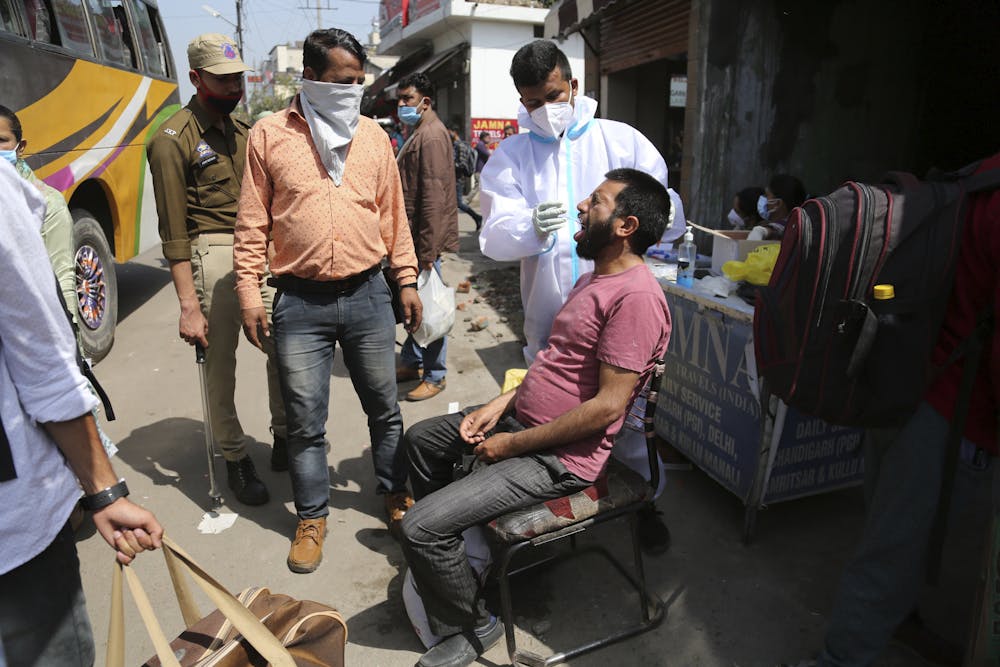
A small weakness of the film is that we gain no real sense of Anthony’s earlier life. Anthony’s temper may indeed be an enduring part of his personality, though it’s more likely a consequence of his serious disease. This is an important point for carers to understand. When his son-in-law challenges him to stop “getting on everyone’s tits” we have some sympathy for Anthony, who we begin to realise is behaving fearfully rather than deliberately.

Eventually Anthony is reduced to sobs: “Lost all my leaves. Branches. Wind. Rain”. As he moves from the moderate to advanced stage of dementia, the need for tender and humane care is clear.

Two men stand by lake with campervan.
Dementia means a shared loss for couples like Supernova’s Tusker and Sam. IMDB

Read more: We all hope for a ‘good death’. But many aged-care residents are denied proper end-of-life care


Still inside

A key theme with many films exploring dementia, is the end — not just the end of the story, but the end of life.

In The Father we are drawn into Anthony’s agonising reality, the quiet chaos of tomorrow. In Supernova, we understand that Tusker chooses to write the end of his own story. Individuals living with dementia may be altered by the disease process, but it’s important to remember that who they are as a person endures.

The nihilistic vision of these films, while powerful and thought-provoking, is not the only possible construction of dementia. Though we must come to terms with the fact that dementia is a terminal disease, the end point does not negate the imperative to respond to the needs of the person; indeed, it highlights the need for empathy.


The Father is in cinemas now. Supernova opens in Australian cinemas from 15 April.

ref. We asked two experts to watch The Father and Supernova. These new films show the fear and loss that come with dementia – https://theconversation.com/we-asked-two-experts-to-watch-the-father-and-supernova-these-new-films-show-the-fear-and-loss-that-come-with-dementia-156131

Curious Kids: why do people like to kiss? Do other animals kiss?

Source: The Conversation (Au and NZ) – By Rob Brooks, Scientia Professor of Evolutionary Ecology; Academic Lead of UNSW’s Grand Challenges Program, UNSW

Why do people like to kiss? Do other animals kiss? Why are kisses so gross? — Gracie, age 5.

Gracie, you ask a question that puzzled me too when I was about your age. Why would two people want to smoosh their mouths together?

And I don’t just mean: “why does Aunty insist on kissing me to say hello when we visit for Easter lunch?”

I mean teenagers and adult couples — in real life and on TV — all of whom seemed to love long, sloppy kisses. That must be especially confusing for you now, after everything we’ve been told about social distancing because of the coronavirus.

Romance was definitely different during the pandemic. Shutterstock

For people who enjoy kissing, however, the answer is simple: “it feels good”. And they’re not lying, it often does. But that’s not a very good answer to your question.

If you have a younger sister or brother, you will know what’s coming next: “but why does kissing feel good?”

Well, that’s a question even scientists have found tricky to answer. And I’m not sure the answers so far are very satisfying. But let’s see what you think.

Kissing brings people together

Kissing seems to be important when people are first attracted to one another, like when they’ve got a crush on each other. To get close enough to kiss someone, you have to trust that person a lot and let them into your personal space.

If you don’t like somebody enough to kiss them, that’s a sign to them that they should look somewhere else for a girlfriend or boyfriend.

And, kissing aside, sometimes it might feel wrong just to touch another person’s skin. Or you may not like how they smell.

These are examples of our bodies telling us what we can’t put into words. In this case, they’re telling us we aren’t a good match with that person.

As adults, kissing can help us decide if another person is the right person to start a family with (if this is something both people want). Chances are if two people don’t enjoy kissing, they aren’t attracted enough to stay together long enough to raise a child.


Read more: Curious Kids: how did the first person evolve?


If both people do like and trust each other enough to kiss, they’ll probably kiss quite often. The good shared feelings they get from this makes them like and trust each other even more, and eventually that might lead to starting a family.

Some research has shown that couples benefit from kissing even after they’ve been together for many years. In one study, couples who agreed to kiss each other more often were happier with each another and with their lives than couples who carried on as normal.

Two older men touch foreheads
Kissing is one way people can build trust and closeness, which helps them stay together for a long time. Shutterstock

Back to those germs

When I was in primary school, my friends referred to kissing as “swapping germs”. It’s true that kissing a person exposes you to their germs. But that might actually help explain why we do it.

If you’re going to spend time in a relationship, you’re going to be exposed to another person’s germs. So if we aren’t prepared to kiss somebody because they might make us sick, we surely won’t want to live with them.

And if we do decide to kiss someone we like, the nice feelings we get help us worry less about catching their germs.

Not everybody kisses

Other animals in nature appear to kiss sometimes. Common and bonobo chimpanzees give each other big wet kisses quite often, which look like human romantic kissing.

Chimpanzees kiss in a tree
Aww, isn’t that cute? Shutterstock

But, surprisingly, kissing isn’t something all humans do. Nearly everywhere in the world, there is some kind of loving kiss between parents and children. This is not “romantic”. And not all people kiss romantically.

One big scientific study looked at 168 different groups of people, from small communities that gather and hunt their own food, to bigger and busier cities. These experts found romantic kissing was common in less than half (46%) of the groups.

People from non-kissing cultures who live in sub-Saharan Africa, New Guinea, or the Amazon rainforest find it either funny or disgusting when shown photos of kissing. Then again, they have other ways of touching one another that probably help them build trust and keeps them feeling close.

Romantic kissing is more common in big, complex places where there are many different people living many different lives.

Being able to find and keep a partner is less simple in these settings, which may be why kissing becomes an important part of trying to find a romantic partner.

There are plenty of mysteries wrapped up in a romantic kiss, both for scientists to unravel and for the people doing the kissing to find out. So, if it sounds like I don’t know the exact answer — that’s why.

ref. Curious Kids: why do people like to kiss? Do other animals kiss? – https://theconversation.com/curious-kids-why-do-people-like-to-kiss-do-other-animals-kiss-157322

Why are Australians so accepting of hotel quarantine? A long history of confining threats to the state

Source: The Conversation (Au and NZ) – By Amy Nethery, Senior Lecturer in Politics and Policy Studies, Deakin University

It’s been a year since Australia introduced its policy of mandatory hotel quarantine for returning travellers. In the past year, some 211,000 travellers have been confined for two weeks in hotel rooms, in conditions many have found difficult to endure.

The policy remains one of the main reasons the Australian community has managed to escape the worst of the COVID-19 pandemic. For the most part, it has been accepted without question by the public.

This isn’t to say it’s been perfectly executed. The program has been the focus of much criticism and investigation over the past year — particularly in Victoria, where it has been twice suspended when the virus “leaked” into the community. The state’s program is again about to begin accepting international arrivals, starting on April 8.

Experts continue to advocate for a stronger system, including moving quarantine hotels to regional locations and considering some form of home quarantine.

Quarantining hotel guest near the Melbourne airport earlier this year. LUIS ASCUI/AAP

But the fundamental idea of quarantine – the mandatory removal of a person’s liberties for the benefit of the whole community – remains uncontroversial.

The reaction in other countries has been very different. When the UK introduced an Australian-style quarantine system in February, it was deeply unpopular with travellers. And let’s not forget how tennis players complained bitterly about Australia’s quarantine system in the lead-up to the Australian Open.

So, why is the feeling so different among Australians? We argue that one reason may be Australia’s long history of incarceration of migrants, Indigenous people and anyone considered an “enemy” of the state. Since the early days of colonial settlement, different forms of confinement have been used not only to control the spread of illness, but also to respond to a wide range of perceived social and political problems.

These policies reinforced the imaginary idea of Australia as a clean, strong and healthy nation, a united federation in control of its borders.

As a result, Australians have become somewhat conditioned to accept the idea that liberty — at least the liberty of outsiders — should at times take second priority to the national interest.


Read more: Another day, another hotel quarantine fail. So what can Australia learn from other countries?


Australia as a quarantine nation

Australia’s history of quarantine began in the 1830s, when authorities in NSW first confined all international arrivals to their ships in harbour to prevent the spread of disease.

Soon afterwards, these arrivals were held for an “incubation period” of 14 days (and sometimes, longer) in a system of purpose-built quarantine stations. The program began only to wind down in the 1950s after air travel became popular.

As such, it was the longest-running quarantine program in the modern world, lasting nearly a century after England, France, and other parts of Europe abandoned the practice for overseas arrivals.

Passengers disembark from a Sydney ferry at a quarantine wharf in 1919. Wikimedia Commons

One explanation for the early enthusiasm for quarantine was it allowed the authorities to manage who could enter the colonies. The policy quickly took on a racialised tone and played into the anti-Chinese sentiment brewing in the goldfields.

Australia’s quarantine system ramped up in the 1880s after an outbreak of smallpox in Sydney. While evidence suggests the disease arrived from Britain (where smallpox was endemic), authorities used the opportunity to raid the homes of Sydney’s Chinese community and force them into quarantine. From that time, regardless of the evidence, Chinese people were regarded as the most potent vectors of disease.


Read more: Before coronavirus, China was falsely blamed for spreading smallpox. Racism played a role then, too


According to historians, the Quarantine Act of 1908 is best understood as part of a suite of laws designed to control entry to Australia and entrench a racialised notion of “membership” in society.

Well into the 20th century, returning travellers had very different quarantine experiences, depending on their race and class.

White, first-class arrivals were serviced with good accommodation, food and entertainment, and many enjoyed their time in confinement. Lower-class and non-white passengers suffered poorer conditions, and could be detained far longer than the mandatory 14 days.

Confinement of Indigenous people and refugees

Quarantine was not the only form of confinement practised by colonial — and later, state and federal — governments.

A range of institutions were implemented to respond to perceived social and political problems, creating what we call an “institutional memory” — or template — for administrative confinement.

For each successive challenge over the years, Australian policymakers have reached for the same toolkit.

From the mid-1800s until well into the second half of the 20th century, for instance, governments established a network of protectorates, reserves and missions to confine and isolate First Nations people.


Read more: Enforcing assimilation, dismantling Aboriginal families: a history of police violence in Australia


Their purpose shifted over time, from protecting Indigenous people from frontier violence to “smoothing the dying pillow” (placing First Nations people on reserves where it was believed the elderly would gradually die off and the younger generations would be assimilated into the larger population).

As part of this network, islands became particular sites of horror. Palm Island in Queensland, for example, became known as a place for extra-judicial punishment. Nearby Fantome Island was used for the compulsory isolation of Indigenous leprosy patients at a time when other countries had long abandoned this practice.

Australian policymakers drew on the same confinement toolkit during the two world wars. Australia’s enemy alien internment camps were the most extensive of all allied nations. They were also used, uniquely, to detain prisoners of war on behalf of Australia’s allies.

We would argue that Australian policymakers also relied on this institutional memory when devising a plan to respond to the arrival by boat of 26 Cambodian asylum seekers in 1989. The government fenced in an abandoned mining camp in Port Hedland, Western Australia, and detained the refugees there while their applications for protection were processed.

Australia’s punitive and damaging immigration detention system was introduced soon after. Over the past three decades, refugees have been detained across the breath of the continent (including remote Christmas Island) and in Nauru, Papua New Guinea and Indonesia.

Refugees protesting from hotel detention in Melbourne earlier this year. Erik Anderson/AAP

Hotels have recently been repurposed as “alternative places of detention” for some refugees and asylum seekers in Melbourne and Brisbane, as well.

Though many Australians have protested the mistreatment and lengthy detention of refugees in both onshore and offshore centres, the government has refused to bend to pressure to end the controversial program, despite the cost of over A$1 billion per year.

For now, quarantine hotels are also here to stay. While Australians have enjoyed the freedoms and safety from COVID-19 that they provide, we should remember these hotels are the latest in a long history of administrative confinement, many of which have been sites of pain and despair.

ref. Why are Australians so accepting of hotel quarantine? A long history of confining threats to the state – https://theconversation.com/why-are-australians-so-accepting-of-hotel-quarantine-a-long-history-of-confining-threats-to-the-state-155747

How your doctor describes your medical condition can encourage you to say ‘yes’ to surgery when there are other options

Source: The Conversation (Au and NZ) – By Joshua Zadro, NHMRC Emerging Leader Research Fellow, University of Sydney

There are many factors that influence whether you choose to have surgery for a health condition.

But one you might not have considered is the very name your doctor uses to describe your condition can make you more or less likely to go under the knife, according to a growing body of research.

This is concerning because there are often less invasive options than surgery that are equally effective and safer.

What’s in a name?

Let’s take shoulder pain as an example.

Three of us (Joshua, Mary and Giovanni) published new research last week finding health professionals’ use of certain medical terms might be encouraging patients to say yes to unnecessary shoulder surgery.

Our world-first trial involved 1,308 people from five countries, some with and without shoulder pain, who were randomly allocated to read one of six hypothetical scenarios. The only difference between the scenarios was the medical term used by the health professional to describe the person’s shoulder pain.

In our study, we used the most common type of shoulder pain where people feel pain at the front of one of their shoulders which is made worse by lifting the arm and lying on it.

Man holding is shoulder in pain at the gym
There’s an abundance of terms for common shoulder pain, and it’s often difficult to determine what the specific cause is. Shutterstock

Health professionals use a variety of terms for this pain, including “subacromial impingement syndrome”, “rotator cuff tear”, “bursitis”, and “rotator cuff related shoulder pain”.

The terms doctors use vary so widely because it’s currently impossible to pinpoint the exact cause of most shoulder pain, even with the help of sophisticated technology such as magnetic resonance imaging (MRI).

We found people told they had a “rotator cuff tear” wanted shoulder surgery the most. Those told they had “bursitis” (inflammation of a fluid-filled sac in the shoulder) wanted surgery the least. People told they had a rotator cuff tear had 24% higher perceived need for surgery than those told they had bursitis.

Unnecessary shoulder surgery is a growing problem

The use of surgery for common types of shoulder pain is increasing worldwide, including in Australia.

Yet some shoulder surgery provides limited benefit to patients. One such example is a type of surgery called “subacromial decompression”, which involves reducing pressure on a tendon by removing surrounding tissue. This procedure is no better than placebo surgery (where patients were put to sleep and researchers only conducted a joint examination, rather than surgery).

Other surgeries to repair torn tendons provide little or no benefit compared with non-surgical treatments such as exercise.

Also, there’s no reliable way to determine that a rotator cuff tear is the cause of a patient’s symptoms. Up to 21% of people aged 30-39 years who don’t have any shoulder symptoms have rotator cuff tears when they are scanned.

More than 20,000 potentially unnecessary shoulder surgeries are performed in Australia each year, which we estimate to cost over A$200 million per year.

Use of surgery is also increasing across many other conditions. For example, knee reconstructions for anterior cruciate ligament (ACL) ruptures, and spinal fusions for some spinal conditions. However, evidence suggests surgery is not superior to non-surgical management for either of these surgeries.


Read more: Australians are undergoing unnecessary surgery – here’s what we can do about it


What about other conditions?

Our study adds to increasing evidence showing the name your doctor uses to describe your condition can encourage you to consider unnecessary treatments.

Low-risk “cancer”

There’s a type of abnormal breast cells that can build up in the milk ducts called “ductal carcinoma in situ”. For many people, these cells are low-risk and won’t grow, or grow so slowly they’ll never cause harm.

Using the terms “cancer” or “carcinoma” to describe this condition elicits strong negative reactions from patients, and increases their desire for more aggressive treatments, including surgery.

For patients with these low-risk cells, surgery, radiotherapy and/or hormonal treatments may not improve overall survival. Instead, these interventions may cause harm through surgical complications such as persistent pain or skin burns, as well as financial costs and the psychological impact of being diagnosed with “cancer”.

Acid reflux

One study asked parents to consider a hypothetical scenario in which their otherwise healthy infant cries a lot and “spits up excessively”.

It found parents who were told their child had gastroesophageal reflux disease (commonly known as “acid reflux”) were more interested in medication compared to parents who didn’t receive a diagnosis at all. This was true even when parents were told medication wasn’t beneficial. Medication in babies shows no difference to placebo in reducing these symptoms.

Baby in bed crying
Hearing your baby might have a scary-sounding reflux disease can increase the likelihood you request medication. Shutterstock

‘Pink-eye’

A similar study presented a hypothetical scenario to parents about viral conjunctivitis. One group of parents were told their kids had “pink-eye”, and another were told their kids had an “eye infection”.

Parents told their children had “pink-eye” remained interested in antibiotics despite being told the medications were ineffective. Conversely, parents told their children had an “eye infection” became significantly less interested in antibiotics when told they were ineffective.

Parents given the “pink-eye” label perceived the infection as more contagious than those given the “eye infection” label, even though both are simply other ways of saying conjunctivitis.

Polycystic ovary syndrome

This is a common hormonal condition affecting many women. But symptoms are on a spectrum of severity, with no clear line separating normal from abnormal.

One study found young women told their symptoms indicated “polycystic ovary syndrome” — in a hypothetical scenario of a doctor’s visit — were more likely to want further medical testing than those given the term “hormonal imbalance”. These women also perceived their condition to be more severe and had lower self-esteem.

What should health professionals do?

It’s vital health professionals consider whether the terms they use to describe a condition might be causing unnecessary fear and anxiety, and leading patients to consider unnecessary tests and treatments.

Health professionals may find it challenging to avoid terms they’ve been using for many years. But the potential cost of increasing patient’s fear and anxiety, and making people feel they need surgery when they don’t, cannot be ignored.

Changing how health professionals describe conditions to their patients is a simple strategy that could curb the rise of unnecessary health care.

For patients with shoulder pain not caused by severe trauma, we suggest health professionals avoid telling patients they have rotator cuff tears as this may make some patients think shoulder surgery is needed (which it isn’t).

Health professionals could instead label people with this type of shoulder pain as having bursitis (inflammation), as this was the label that mostly made people think surgery was unnecessary.

ref. How your doctor describes your medical condition can encourage you to say ‘yes’ to surgery when there are other options – https://theconversation.com/how-your-doctor-describes-your-medical-condition-can-encourage-you-to-say-yes-to-surgery-when-there-are-other-options-157958

Floodplains aren’t separate to a river — they’re an extension of it. It’s time to change how we connect with them

Source: The Conversation (Au and NZ) – By Melissa Parsons, Senior Lecturer, Geography and Planning, University of New England

Dramatic scenes of flood damage to homes, infrastructure and livelihoods have been with us on the nightly news in recent weeks. Many will be feeling the pain for years to come, as they contend with property damage, financial catastrophe and trauma.

But what if, for a moment, we removed the humans and their structures from these tragic images — what would we see?

We would see a natural process of river expansion and contraction, of rivers doing exactly what they’re supposed to do from time to time. We’d see them exceeding what we humans have deemed to be their boundaries and depositing sediment across their floodplains. We’d see reproductive opportunities for fish, frogs, birds and trees. The floods would also enrich the soils. Floods can be catastrophic for humans, but they are a natural part of an ecosystem from which we benefit.

These scenes clearly depict the intersection of humans and nature, and it’s not working out well for either side.


Read more: 5 ways the government can clean up the Murray-Darling Basin Plan


We must envision a new way of interacting with floodplains – these brilliant social-ecological systems that are not separate to rivers but rather part of the riverine landscape.

Humans can live on and with floodplains — but the way we do that has to change.

People look at flooded floodplains in NSW.
Humans can live on and with floodplains — but the way we do that has to change. AAP Image/James Gourley

What is a floodplain?

Floodplains are relatively flat stretches of land located next to rivers. It helps to think of them as an extension of the river; it is natural and normal for a river to flood their adjacent plains.

Floodplains are composed of sediment the river has transported and then deposited, which makes them incredibly fertile. Flow and sediment regimes interacting over decades — or millennia — determine the physical and ecological character of floodplains, and the way they flood.

There are more than 15 generic floodplain types in Australia. Each harbours a unique set of evolutionary properties, physical features and ecosystems.

These influence the way floodwaters traverse floodplains, how long water remains on a floodplain, the velocity, turbulence and depth of floodwaters, and ecosystem responses to flooding. Floodplains are complex and highly variable.

Floodplains are also dynamic and ever-changing — and we should expect them to change even more in the coming years. Australian rivers have experienced regular periods of increased flood activity in the past 100 years.

And climate change is predicted to increase flood activity.


Read more: 5 ways the government can clean up the Murray-Darling Basin Plan


A flooded floodplain in NSW
And climate change is predicted to increase flood activity. AAP Image/James Gourley

Humans benefit from floodplains

Floodplains are among the most productive ecosystems on the planet – they are biodiversity hotspots.

That’s in large part due to periodic flooding between different parts of a river-floodplain system; flooding is crucial to the function of floodplains. Without floods, these floodplains wouldn’t “work” — they would not be able to deliver the ecosystem services we benefit from. Those benefits include, but are not limited to:

  • food grown in these fertile soils

  • regulation of a balanced ecosystem

  • cultural heritage

  • transportation (as floodplains are easy to build roads on)

  • the supply of good quality drinking water

  • recreation.

The economic value of floodplain ecosystem services exceed US$25,681 per hectare. Roughly 25% of global terrestrial ecosystem services come from floodplains.

Humans are drawn to live on floodplains because of their productivity. In Australia, the floodplains of the Murray Darling Basin, heavily developed for agriculture, yield more than A$10 billion annually. These floodplain ecosystems provide an estimated A$187 billion per annum from their various ecosystem services.

However, the more we interrupt floodplain processes with development, the more we diminish the supply of ecosystem services.

A flooded floodplain in NSW
The more we interrupt floodplain processes with development, the more we diminish the supply of ecosystem services. AAP/AUSTRALIAN DEFENCE FORCE

The perils of living on floodplains

Putting the people back into the news footage reveals a social picture that is costly, traumatic and disruptive. The events of the past weeks have now brought into focus the perils of living on floodplains.

Humans have come up with ways to contend with this peril. Dams and levees. Land use planning. Building codes. Engineered floodscapes. Insurance. Emergency preparation systems and community engagement.

But if floodplains are a social-ecological system, where society gains great benefits but is also periodically placed at risk, which side should get the greatest policy attention? The humans or the ecosystem?

The answer is: both. But they also need to be better integrated.

Balancing the social with the ecological

Balancing the social and ecological aspects of floodplains requires a mindset change. We must combine community participation with research, resilience and adaptation to make long-term decisions about the future of these complex social-ecological systems.

If society wants to continue to derive the billions of dollars of benefits from floodplains, we need to ensure that flooding continues to occur on floodplains, and adapt to risk in imaginative and innovative ways that also protect the benefits.

Business as usual is not an option. The limitations of technocratic controls such as dams and levees should now be obvious. Time and time again, these have increased flood risk and failed to flood-proof the floodplain.

Rarely do such linear solutions solve complex problems in social-ecological systems. Linear solutions often exacerbate a problem or simply move it on to other parts of the system, creating social inequality, environmental decline and future risk.

The Australian government’s 2018 National Disaster Risk Reduction Framework sets the challenge to join up the built, social, economic and natural environments to address disaster risk in Australia.

Accepting the challenge requires a broader focus on balancing the social-ecological sides of Australia’s vast floodplains. Complexity, not linear thinking, must be embedded in the way we reimagine policy about floodplains and floods.

This requires transformative collaborations between government departments, researchers, business, and community stakeholders.


If this article has raised issues for you, or if you’re concerned about someone you know, call Lifeline on 13 11 14. This story is part of a series The Conversation is running on the nexus between disaster, disadvantage and resilience. You can read the rest of the stories here.

ref. Floodplains aren’t separate to a river — they’re an extension of it. It’s time to change how we connect with them – https://theconversation.com/floodplains-arent-separate-to-a-river-theyre-an-extension-of-it-its-time-to-change-how-we-connect-with-them-157890

As unis eye more ‘Instagram-worthy’ campus experiences, they shouldn’t treat online teaching as a cheap and easy option

Source: The Conversation (Au and NZ) – By Elisa Bone, Senior Lecturer in Higher Education, The University of Melbourne

The times they are a-changin’ for higher education. Or so say a growing number of commentators. They see COVID-19 disruptions as a tipping point for universities, accelerating sweeping changes across institutions. These include not just a shift to online teaching and learning, but also a greater focus on industry links and employability skills, and accompanying campus design upgrades.

Many of these changes are arguably necessary in a world in which digital connectivity is the expected norm. It is crucial to understand what these changes involve for universities themselves, and what they mean for the next generation of students. For instance, online education, if done properly, isn’t necessarily cheaper or easier.

With many still in crisis mode, universities might not be ready for these predicted changes. Despite a touted recovery in Australia as COVID vaccines roll out across the globe, the higher education sector isn’t out of the woods. Some expect the impacts will be even greater in 2021 as job losses persist and international students stay away.


Read more: 2021 is the year Australia’s international student crisis really bites


Universities suffered the double whammy of a huge decrease in international student revenue as borders closed, and a federal government that stubbornly refused to support the higher education sector and its workers. COVID restrictions have forced university teachers to make often radical shifts in their curriculum and teaching practices while implementing broader changes, all with reduced budgets. And that’s if they are lucky enough to keep their jobs.

Collaborative, evidence-based approach is vital

Proposed “Instagram-worthy” campus infrastructure projects aim to provide more flexible learning and study spaces, immersive classrooms equipped for virtual reality experiences and remote teaching, and “industry precincts” that encourage collaborations. These are worthwhile, forward-looking innovations. But these goals cannot be achieved without a deeper, evidence-based conversation about how this will be done in practice.

And this transformative work must be done in partnership with teaching academics. The very real challenges they face must be taken into account.

Some assume online learning and teaching are easier or cheaper, but that isn’t always the case. Teaching well online requires at least as much effort as face-to-face, and potentially more.

Academics require both initial and ongoing support to build their capacity in using online tools and adjusting their teaching practices. If this isn’t done, universities risk students disengaging.

student yawns during an online learning session
Those declaring the death of the in-person lecture need to be aware of the challenges of engaging students online. Shutterstock

Read more: Universities need to train lecturers in online delivery, or they risk students dropping out


Not everything works well online

The online/digital space can adequately replicate only some face-to-face interactions. Others can be difficult to reproduce. These include activities that develop manual and psychomotor skills, such as laboratory and field work in the sciences, and kinesthetic skills in the performing arts.

Even the robustness of tutorial debates might be altered as students move from a shared physical space to one dominated by the “Zoom gaze”.

Teaching academics will likely need extra support to implement such activities online or to find creative solutions. For either approach to be successful, institutions will have to invest more in appropriate technologies.

We are seeing an increase in the use of technology in teaching and learning at Australian universities. By necessity, the pandemic rapidly accelerated this trend. But an increase in online learning does not necessarily equate to a decrease in costs, or in the need for specialist staff.

Staff and students will likely appreciate the flexible learning offered by the predicted digitised future campus. But it is important to remember the benefits of in-person and on-campus interactions.

For students, these include fostering a sense of belonging to the university, which can increase resilience and retention. And the benefits for academic teaching staff include, for example, the fruitful conversations about teaching and learning that so often take place in informal settings.

With universities welcoming staff and students back to campus as COVID restrictions ease, many are seeing the value of the on-campus experience.

group of young academics laughing and chatting
Teaching and learning both benefit from the many informal interactions that come from being on campus together. Shutterstock

Transition will take a lot of time and effort

Digitisation and flexible learning models can help both students and academics collaborate with others across the sector. However, these changes won’t be instantaneous. Nor can they be driven solely by upgrades to campus infrastructure.

We also won’t see, in the near future, a complete shift in academics’ teaching and curriculum design practice. They are already stretched to their capacity in a sector under fire.


Read more: COVID hit casual academics hard. Here are 5 ways to produce a better deal for unis and staff


The continuing destabilisation of budget cuts, workload demands and an uncertain COVID situation mean the transformation of teaching practices may come in fits and starts. It will be an incremental process driven at first more by necessity and opportunity than by long-term strategy.

The challenge then for universities, and for their academic development and engagement units, is to define, validate and advocate for best practice in both online and face-to-face modes. Only then can they expect to meet the immediate, pressing challenges instructors face while building their future capacity to deliver collaborative, flexible and engaging online and blended learning.

ref. As unis eye more ‘Instagram-worthy’ campus experiences, they shouldn’t treat online teaching as a cheap and easy option – https://theconversation.com/as-unis-eye-more-instagram-worthy-campus-experiences-they-shouldnt-treat-online-teaching-as-a-cheap-and-easy-option-156585

Curbs on press freedom come with a cost, new research reveals

Source: The Conversation (Au and NZ) – By Alexandra Wake, Program Manager, Journalism, RMIT University

The importance of a free press to a thriving democracy is well-known. But what is its importance to a thriving economy?

We have found evidence attacks on press freedom – such as jailing journalists, raiding their homes, shutting down printing presses, and using libel laws to thwart reporters – have measurable effects on economic growth.

Our research team – spanning economics, journalism and media – used rankings on press freedom from the US-based Freedom House and data on economic growth to examine 97 countries from 1972 to 2014.

We found countries that recorded a decrease in press freedom also experienced a 1%-2% drop in real gross domestic product (GDP) growth.

Economies may not bounce back

Our findings affirm other economic studies showing the institutions that uphold a “rule of law” are strongly associated with stronger economic performance. Our work took into account education, labour force and physical capital.

Perhaps our most significant – and unexpected – finding is the long-term economic impost of undermining a free press.

Freedom House’s own research suggests “press freedom can rebound from even lengthy stints of repression when given the opportunity”:

The basic desire for democratic liberties, including access to honest and fact-based journalism, can never be extinguished.

But this rebound does not translate to the economy. In nations where freedoms were removed, and then restored, economic growth did not fully recover.

That’s a significant point at a time when economic frustration is contributing to waning enthusiasm for democracy, increasing distrust of legacy media, and the rise of populist and authoritarian governments taking action to control the news media.

Throughout Asia there has been a tightening of press freedoms.

In Hong Kong, new security laws threaten to snuff out independent media. In Myanmar, publications have been silenced and journalists arrested. In Malaysia, journalists have been harassed and jailed for criticising the government. In the Philippines, respected investigative journalist Maria Ressa has been detained ten times in two years and convicted of “cyberlibel” under controversial laws. In India, the world’s largest democracy, the Modi government has curbed press freedoms.


Read more: Press freedom under attack: why Filipino journalist Maria Ressa’s arrest should matter to all of us


Map of press freedom around around the world, rated by Freedom House
Press freedom around around the world, rated by Freedom House. Freedom House

These aren’t just issues for other countries.

Australia might look relatively free, particularly compared with near neighbours. But recent years has seen Australian Federal Police raids on journalists homes and the new restrictive national security laws. The journalists’ union, the Media Entertainment and Arts Alliance, has called the federal government’s actions a “war on journalism”.

Acknowledging limitations

We acknowledge our work is a macro-level study, examining broad statistical associations, finding many relationships that are notable at the 1% level of significance. These cannot, and should not, be a replacement for nuanced analyses of specific contexts, cultures and media models.

We also acknowledge that Freedom House is just one of a number of international bodies that keeps track of people’s access to political rights and civil liberties. The organisation uses a specific US-centred view to look at individual freedoms —including the right to vote, freedom of expression, equality before the law — that can be affected by state or nonstate actors.

But it does factor in the ability of journalists to report freely on matters of public interest, and show the connection with economic prosperity:

A free press can inform citizens of their leaders’ successes or failures, convey the people’s needs and desires to government bodies, and provide a platform for the open exchange of information and ideas. When media freedom is restricted, these vital functions break down, leading to poor decision-making and harmful outcomes for leaders and citizens alike.


Read more: Journalists and security agencies don’t need to be friends. But can they at least talk to each other?


There is more statistical work to be done, but our analysis shows strong evidence press freedom, along with better education, is a key to improving economic performance.

Perhaps this might be motivation enough for the government in Australia – and other countries – to reconsider their approach to press freedom, and provide more financial support for public-service journalism, such as that offered by the ABC and SBS.

ref. Curbs on press freedom come with a cost, new research reveals – https://theconversation.com/curbs-on-press-freedom-come-with-a-cost-new-research-reveals-156297