Page 854

How intimate partner violence affects children’s health

Source: The Conversation (Au and NZ) – By Stephanie Brown, Senior Principal Research Fellow, Murdoch Children’s Research Institute

Childhood should be a happy and carefree time, but often it doesn’t work out that way. Children are exposed to all the stresses and strains that affect the families and communities in which they grow up. Recent research shows this can have lifelong implications for health.

In a study conducted by our research group at the Murdoch Children’s Research Institute, we found one in three children (and their mothers) in the study had experienced intimate partner violence or domestic abuse by the time the children in the study turned ten.

Findings from the same study, published today in the British Medical Journal’s Archives of Childhood Disorders, show children exposed to intimate partner violence by age ten are two to three times more likely to have a psychiatric diagnosis and/or emotional and behavioural difficulties.

And it isn’t just children’s mental health affected, but their physical health and development too. We found children exposed to intimate partner violence were also two to three times more likely to have impaired language skills, sleep problems, elevated blood pressure and asthma.

Mothers in the study completed questionnaires three, six and 12 months after giving birth, and in the fourth and tenth years after having their first child.

At age ten, we studied a smaller group of the children via face-to-face activities designed to assess their cognitive and language development. We also interviewed mothers to assess their child’s mental health.

How can services and schools help?

Our findings have important implications for policy. Up to half of all children in our study who had language difficulties and mental and physical health problems had been exposed to intimate partner violence before age ten.

The findings highlight the need for health services and schools to be very attentive to the role intimate partner violence might be playing in children’s health, behaviour and language development.

If child health services and schools don’t recognise and respond to intimate partner violence, interventions to support children with health and developmental problems are likely to be less effective.

Given one in three families are affected, and an even higher proportion of children experience health and language difficulties, this shouldn’t be something health services and schools put in the “too hard basket”.

Mothers’ and children’s health are linked

Our research highlights the extent to which the health and well-being of mothers and their children are inextricably linked. In our paper published in BMJ Open earlier this year, we showed mothers who had experienced intimate partner violence in the ten years after the birth of their first child were three to five times more likely to experience anxiety, depression and post-traumatic stress (PTSD) symptoms. And they were around twice as likely to experience back pain and incontinence.

Mother giving a piggyback to child
The health of mothers and their children are tightly connected. Shutterstock

This extra burden of ill health experienced by both women and children exposed to intimate partner violence compounds other social and economic challenges women face in trying to achieve safety for themselves and their children. It’s critical women and children in need of support to heal and recover from the impact of intimate partner violence are able to access affordable and culturally appropriate health care.

Studies consistently show there are many barriers women have to overcome, including shame, fear of judgement, and cost and availability of health care and other support services in regional communities. For women whose first language isn’t English, and Aboriginal women, there are extra cultural, language and systems-level barriers. Systems-level barriers include the persistence of cultural stereotypes, limited availability of language services, and experiences of discrimination when seeking care and support.


Read more: Tackling economic abuse of women must be part of our domestic violence response


Achieving the best possible outcomes

While the type and severity of adversity may overwhelm some children, there’s evidence individual skills (such as the ability to regulate emotions), relationships with extended family, and supportive school environments that foster a sense of belonging do support children’s resilience.

Communities, schools and health services all have important roles to play in fostering children’s resilience and supporting mothers to access care for their children when needed.


Read more: Acting on family violence: how the health system can step up


Anyone at risk of family and domestic violence and/or sexual assault can seek help 24 hours a day, seven days a week, either online or by calling 1800 RESPECT (1800 737 732). Information is also available in 28 languages other than English.

If this article has raised issues for you or if you’re concerned about someone you know, call Lifeline on 13 11 14 or beyondblue on 1300 22 4636.

ref. How intimate partner violence affects children’s health – https://theconversation.com/how-intimate-partner-violence-affects-childrens-health-159132

Scott Morrison can’t spin this one: Australia’s climate pledges at this week’s summit won’t convince the world we’re serious

Source: The Conversation (Au and NZ) – By Matt McDonald, Associate Professor of International Relations, The University of Queensland

Days out from a much-anticipated climate summit convened by US President Joe Biden, the federal government has moved to position itself as serious about emissions reduction.

On Wednesday Prime Minister Scott Morrison pledged A$539 million to advance two emerging technologies: clean hydrogen and carbon-capture and storage (CCS).

When Morrison takes the virtual global stage this week, we can expect he’ll point to this investment and other dubious climate policies, as well as roll out carefully chosen facts to paint the government in the best possible light.

Such an approach may appease the Coalition party room, and perhaps some voters. But most Australians want real action on climate change. And the rest of the world, accustomed to Australia’s shifty climate stance, is unlikely to fall for Morrison’s diversion tactics.

Person in Scott Morrison mask leans over burning globe, holding tongs
The world is watching Australia’s climate policies closely. Pictured: a protestor wearing a face mask depicting Morrison during a protest in March. Darren England/AAP

A perfect storm

Biden has invited 40 world leaders to the virtual summit, which begins on Thursday night our time. He is expected to announce a significant new emissions reduction commitment for the US, and call on other nations to ramp up climate action.

Australia goes into the meeting firmly on the back foot. It’s widely viewed as a laggard on emissions reduction and in 2020 ranked last on climate policy among 57 countries and the European Union.

Australia’s key coal export markets in China, South Korea and Japan have all recently outlined a timetable for net zero emissions, while the European Union committed to this target long ago.

Morrison says a net-zero goal is his preference but has not yet committed to it.

Australia will also face pressure to up its climate game while negotiating post-Brexit trade deals with the UK and EU. The EU has already announced plans to introduce a carbon levy on all imports.


Read more: Scott Morrison has embraced net-zero emissions – now it’s time to walk the talk


Pacific leaders in a line
Pacific leaders want Australia to transition away from fossil fuels. Mick Tsikas/AAP

Closer to home, Australia’s Pacific neighbours – for whom climate change is an issue of survival – have demanded Australia transition away from fossil fuels. Australia committed to increase its diplomatic engagement with the region through the so-called Pacific Step-Up, but there are clear signs our poor climate action performance is undermining this pledge.

Ahead of the summit, the Morrison government also faces domestic pressure on climate policy. Even before the devastating Black Summer bushfires, a survey found Australians considered climate change as the most serious threat to the national interest. And Lowy polls consistently point to public support for strong climate action.

Even Australian-based industry groups and businesses have called for a transition away from fossil fuels. This includes the traditionally conservative National Farmers Federation, which is calling for a net-zero commitment.

But any attempt by Morrison to embrace a stronger climate stance will be met with opposition from some in the Coalition party room. Queensland Nationals senator Matt Canavan sent a public warning to the Prime Minister on Tuesday, tweeting:

Morrison’s smoke screen

So where does this leave Morrison as he prepares to address the leaders summit? As US climate scientist Michael Mann pointed out in The Guardian, the Morrison government appears to be deploying a smoke-and-mirrors approach – loudly promoting policies such as its low-emissions technology roadmap “to distract from their clear record of inaction on climate”.

The announcement of A$539 million for clean hydrogen and carbon-capture and storage (CCS) seems proof of that. And there are plenty of reasons to be concerned if the government sees this spending as a core pillar of its response to the climate emergency.

Carbon capture and storage requires significant amounts of water for cooling. It’s extremely expensive to establish and run, and only applies to electricity generation. The method is unproven at scale, and still releases substantial CO₂. CCS also involves subsidising the fossil fuel sector, rather than investing funds into new forms of renewable energy.


Read more: Climate change is a security threat the government keeps ignoring. We’ll show up empty handed to yet another global summit


Hydrogen is potentially a clean energy source, but only when produced using renewable electricity. The government has left the door open to supporting hydrogen produced using fossil fuels, where the carbon is captured and stored.

There are also concerns Australia has radically overestimated the likely extent of the export market for hydrogen.

We can expect Australia to trot out other dubious claims to climate action at this week’s summit. Morrison this week told a business dinner that “domestic emissions have already fallen by 36% from 2005 levels” – a figure that conveniently omits fugitive emissions from coal and gas produced for export.

And Morrison is sure to spruik the decline in Australia’s per capita emissions. But as I’ve pointed out before, our emissions per capita remain disproportionately high, even among key trading partners.

The world is watching

The technology funding is Morrison’s attempt to walk the line between competing pressures. It throws a lifeline to the fossil fuel industry and placates internal party dissent, while attempting to appear to the rest of the world that Australia is acting on climate change.

But the announcement is telling for what it isn’t: a clear commitment to achieving net zero emissions by the middle of the century, or an increase in its Paris Agreement targets – currently set at a 26-28% emission cut between 2005 and 2030. Reports suggest Morrison is not expected to make a concrete pledge on either policy at the summit.

But public concern, international action and market forces are all pushing in the opposite direction to the Morrison government. This creates a sense the government’s position on climate change simply isn’t sustainable.

And this week’s summit puts Australia under global scrutiny like never before. As US Secretary of State Antony Blinken warned this week:

Our diplomats will challenge the practices of countries whose action – or inaction – is setting the world back […] When countries continue to rely on coal for a significant amount of their energy, or invest in new coal factories, or allow for massive deforestation, they will hear from the United States and our partners about how harmful these actions are.

It appears the US, at least, won’t be convinced on the sincerity of the Morrison government’s climate concern, or the adequacy of its actions.


Read more: ‘Failure is not an option’: after a lost decade on climate action, the 2020s offer one last chance


ref. Scott Morrison can’t spin this one: Australia’s climate pledges at this week’s summit won’t convince the world we’re serious – https://theconversation.com/scott-morrison-cant-spin-this-one-australias-climate-pledges-at-this-weeks-summit-wont-convince-the-world-were-serious-159381

If we want to improve NZ’s freshwater quality, first we need to improve the quality of our democracy

Source: The Conversation (Au and NZ) – By Nicolas Pirsoul, Policy Analyst and Research Assistant, University of Auckland

Since the fatal Havelock North campylobacter outbreak in 2016, freshwater quality has rightfully been a major political issue in Aotearoa New Zealand.

Pipes bursting in Wellington, lead contamination in Otago and concerns about tolerable levels of nitrates in the country’s drinking water are all signs of a system in crisis.

Ultimately, our use of and access to freshwater resources come down to how they are managed. To that end, the government is working on big changes to freshwater governance structures.

The so-called Three Waters initiative includes a controversial proposal to shift control of water services from local authorities to publicly owned multi-regional agencies.

But while local control has clearly not been ideal, water policies developed by central government have also been inadequate. As was recently reported, the working group studying nitrates in freshwater met only twice in 18 months and was recently disbanded.

The Ministry for Primary Industries opposed the introduction of stricter nitrogen levels in rivers because of the potential economic impact on agriculture and horticulture.

Given access to clean water is a fundamental human right and the majority of New Zealanders would benefit from cleaner water, we have to ask: how democratic are New Zealand’s water policies?

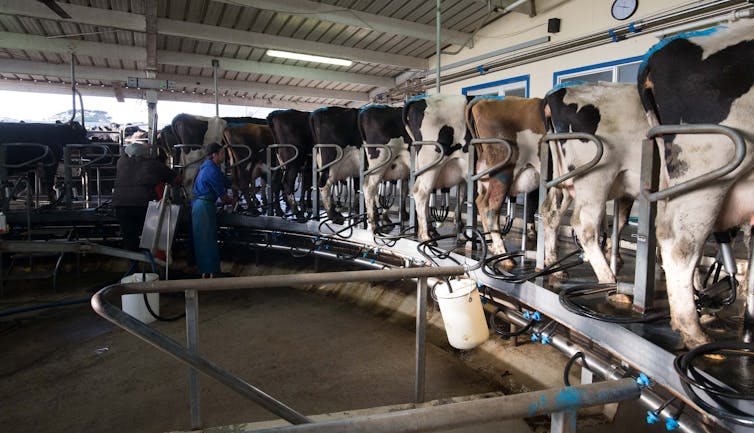
cows being milked in a modern shed
Agriculture such as dairy farming has an impact on water quality but the public has little say in environmental policy-making. GettyImages

The democratic deficit

While the primary industry sector undeniably plays a key role in New Zealand’s economy (5-7% of GDP for agriculture), its true contribution might look quite different if environmental impacts – and freshwater quality in particular – were taken into account.

Currently, New Zealand taxpayers shoulder the heavy cost of lax oversight and regulation of freshwater. While the public is aware of the issue of freshwater quality, arguably there is less awareness of the democratic deficit contributing to the problem.


Read more: New Zealand government ignores expert advice in its plan to improve water quality in rivers and lakes


In a liberal representative democracy such as New Zealand’s, political decisions result from elections. The three-yearly electoral cycle, however, tends to encourage symbolic politics geared towards winning votes rather than generating long-term solutions to complex problems like freshwater quality.

In 2017, for example, Labour campaigned on cleaning up our waterways. Its eventual plan, “Essential Freshwater: Healthy Water, Fairly Allocated”, appeared promising but is ambiguous and short on detail or substance. Some of the promised reforms have since been delayed.

Elections won’t help

With no real mechanism for public participation beyond the next general election or non-binding public consultation and submission processes, New Zealanders are left largely powerless.

A vote for the National opposition would only exacerbate the problem, given the party has said Labour’s proposed freshwater standards would be “gone by lunchtime” if it was elected.

So far, the Three Waters proposal to centralise responsibility for water services seems unlikely to increase opportunities for public participation in policy formation.

For all these reasons, we argue that by first improving our democratic system we can then begin to solve environmental problems such as freshwater quality.

Fresh water requires fresh ideas

Effective alternatives already exist but these require challenging the assumption that democracy is synonymous with elections.

The first step would be to reinvigorate democracy at the local level. Although many important environmental decisions are made locally, public participation in local body elections remains very low in Aotearoa New Zealand.

Perceived council failures, infighting and financial strife have eroded public confidence and led to calls to radically reform the current system.


Read more: Report shows New Zealand’s ‘fragmented’ environmental research funding doesn’t match most urgent needs


Enabling the public to play a key role in a real, participatory process could change this. It might also counter the tendency for local government to be captured by vocal, self-selecting, minority interest groups.

One way of achieving that is through a system known as “sortition”. This involves selecting representative assemblies by lottery instead of election or appointment. This model has two main goals: genuine representation and informed public input.

Assemblies are randomly selected from the population and then filtered to create a microcosm of the community in terms of age, gender, ethnicity, location, socio-economic status and even attitudinal bias.

The case for ‘sortition’

Unlike referendums, sortition emphasises quality over quantity. The selected citizens deliberate with experts to reach informed conclusions. The outcome of this deliberative process is then used to guide policy-making.

These deliberative assemblies can be temporary and focused on specific issues, or they can be embedded as permanent mechanisms within the institutions of a territorial or state authority. Remuneration is sometimes offered as an incentive to participate.


Read more: Drinking water study raises health concerns for New Zealanders


Sortition is becoming increasingly popular around the world as a potential remedy for “democratic fatigue” and populist politics. In Utrecht in the Netherlands, for example, sortition was used to design the city’s energy plan.

Reinvigorating local democracy with sortition-based citizen assemblies might not only prevent policy capture by vested interests but also help keep central government accountable.

Improved local democracy would increase public trust in political institutions in general. But it might also lead to more practical, equitable solutions to problems that directly affect citizens — such as the quality of their water.

ref. If we want to improve NZ’s freshwater quality, first we need to improve the quality of our democracy – https://theconversation.com/if-we-want-to-improve-nzs-freshwater-quality-first-we-need-to-improve-the-quality-of-our-democracy-159322

Want to improve your chances of getting a full-time job? A double degree can do that

Source: The Conversation (Au and NZ) – By David Carroll, Researcher and Senior Manager, Strategic Information, Monash University

Career-related motivations are among the most important factors in Australian students’ decision to undertake higher education. This means universities must demonstrate their graduates’ ability to find work when seeking to recruit students in an increasingly competitive tertiary education marketplace. Our research shows double degrees (students study for two degrees at once) can greatly improve new graduates’ prospects of finding full-time work.

Some combinations increased the success rate by as much as 40% compared to students with a single “generalist” degree. The gains were biggest for students in the arts and sciences.

Yet double degrees are often overlooked as a way to improve graduates’ employability. Universities’ efforts to improve graduates’ employment outcomes generally focus on curricular and extracurricular programs such as work-integrated learning, internships and workshops. These will continue to grow in importance, as graduates are increasingly competing in a labour market where the supply of high-quality graduate jobs is failing to keep up with the production of graduates.


Read more: 1 in 4 unemployed Australians has a degree. How did we get to this point?


However, recent Monash University research, as yet unpublished, shows something even more fundamental to universities — the structure of our educational offerings – can have a major impact on graduates’ employment outcomes. In particular, offering double degrees for undergraduates can make a significant difference.

Why offer double degrees?

Monash University has had a long-term focus on strengthening its double-degree offerings. The aim is to give students a more versatile skill set that increases their career flexibility and opportunities.

This focus on double degrees involves a huge resource commitment. It shapes many facets of Monash’s operations, from the design of our courses to the physical layout of our campuses.

Table showing numbers of Monash University graduates with single and double degrees in various disciplines

Our approach is designed to prepare graduates to adapt to varying labour market demand for skills across different academic disciplines. The demand for specific disciplines expands and contracts based on economic forces that are often hard to predict.

A problem graduates then face is that the skills acquired in one academic discipline are not universally transferable. A student completing a law degree, for example, might be highly capable, but would struggle to leverage their skills (at least without substantial retraining) to become an engineer if that discipline was in greater demand. To improve employment outcomes, then, graduates need a broad skill set that allows them to be productive across different sectors.


Read more: Cheaper courses won’t help graduates get jobs – they need good careers advice and links with employers


What did the research find?

When the results of the most recent national Graduate Outcomes Survey were released, a key question for Monash was whether our investment in double degrees had helped graduates weather the labour market shocks of the pandemic. The national employment rate for new graduates fell from 72.5% in 2019 to 69.1% in 2020.

We examined undergraduate employment rates across Monash’s faculties based on whether students had undertaken double degrees. This yielded a number of interesting findings.

Chart showing percentages of graduates in full-time work by degree or double-degree category

First, double-degree students have significantly higher full-time (FT) employment rates around six months after course completion for second degrees in humanities and social sciences (HASS) and in science, technology, engineering and mathematics (STEM).

Second, we found this effect is greatest for so-called “generalist” degrees. These do not have career pathways as clearly defined as other disciplines. Specifically, graduates from courses in science and in arts/art, design and architecture were much more likely to find full-time work if they completed a double degree.

The effect is less pronounced for more vocationally oriented courses, such as education, engineering (paired with STEM) and law (paired with HASS). This is not to suggest double degrees are not valuable for students in these disciplines. Double degrees allow students to keep their options open, insulating them somewhat from the notoriously unpredictable supply and demand for graduate skills.


Read more: Humanities graduates earn more than those who study science and maths


Isn’t it just the kind of person who does double degrees?

These results prompted the question: are double degrees responsible for these strong employment outcomes, or are the people who study double degrees inherently more employable to begin with? In other words, do double degrees improve graduate employability, or do they merely reflect graduate employability?

To investigate this, we modelled graduate employment based on double-degree completion and students’ background characteristics. The effect held — the advantage associated with double degrees does not appear to be simply an artefact of the type of individual who chose to enrol in one.

Ultimately, Monash’s commitment to double degrees played a substantial role in achieving the highest full-time undergraduate employment rate of Victorian-based universities in 2020.

What explains the employability benefit?

So, why do double degrees give graduates such an advantage in the labour market? This is a much harder question to answer.

There is likely to be a human capital benefit, in that double-degree holders have gained a greater depth and breadth of skills than those with single degrees. The labour market recognises this through a greater likelihood of receiving a job offer.

There is likely also to be a signalling benefit as employers, faced with very little information on the productivity of the graduates sitting opposite them in job interviews, use the double degree as a sign of their productivity. It’s likely they make offers to graduates on this basis.

In a practical sense, the mechanism behind the effect of double degrees on employability is less important than the existence of the effect itself. Whether the effect is due to human capital factors, signalling or their combined effect, double degrees offer a significant employment benefit to the students who complete them and to the universities that develop and promote them.

ref. Want to improve your chances of getting a full-time job? A double degree can do that – https://theconversation.com/want-to-improve-your-chances-of-getting-a-full-time-job-a-double-degree-can-do-that-157306

The Stella shortlist: your guide to 2021’s powerful, emotional books

Source: The Conversation (Au and NZ) – By Julia Prendergast, Senior Lecturer, Writing and Literature, Swinburne University of Technology

Each year, The Stella Prize honours writing by women. Good. We’ve come a long way. We’ve a long way to go.

The 2021 shortlist encompasses contemporary fiction, historical fiction, and non-fiction, and undertakes impressive trapeze acts across genre boundaries.

The books investigate the riddle of familial duty and the cost of patriarchy; Australia’s racist colonial history; species-ism and humanity as it exists within the natural world; the devastating impact of sexual violence for victims as well as criminal justice professionals; the trauma associated with physical violence inflicted upon women.

The authors write about sacrifice, grief, mental illness, power, privilege and connectivity.

Collectively, the books are testament to the minds of thinking, writing women mapping the architecture of social and cultural change.

Fathoms: The World in the Whale by Rebecca Gibbs

Many of us enjoy venturing a few metres out into the sea to swim, surf or just cool off. Rebecca Gibbs’ enthralling Fathoms: The World in the Whale presents whales as immense, enigmatic, intelligent and majestic sea creatures, but also vividly describes the intricate ecosystem of the vast oceans in which they live and die.

Fathoms cover

Drawing from science, history, literature, art and mythology, Fathoms is both epic in scale and rich in detail about the life cycle of whales, their behaviours and sociality.

This sweeping research is interspersed with Gibbs’ own quest for understanding, which begins at a whale stranding and continues through experiences of eating whale meat and closely observing these mammals on a whale watching tour.

This makes Fathoms filled with information but also personal, as Gibbs weaves her own insights and feelings about whales and the natural world into the narrative.

Arguing passionately for whales’ right to survive, many of her stories of our treatment of these creatures are heartbreaking and haunting. Whether it is humans hunting and killing whales and overfishing their food sources, or our polluting the oceans and destroying their habitats, whales remain highly vulnerable.

This could make for profoundly depressing reading. Instead, Fathoms is optimistic. We can address over-fishing, stop polluting the seas and start working seriously on restorative remediation.

This message is especially important in a year in which concern for the environment has fallen behind the issues raised by the COVID-19 pandemic.

Fathoms calls for a new “Save the Whales” campaign. Public activism has stopped most whaling and we can rise to this new challenge, in the process also safeguarding countless numbers of no less important sea creatures.

–Donna Lee Brien

Revenge: Murder in Three Parts by S. L. Lim

Revenge cover

Revenge: Murder in Three Parts has a vortex-like rhythm, with its gut-wrenching tale about the cost of fortitude and self-sufficiency.

If you break between sittings, you are likely to dream in the way narrative wires us to dream: circling standalone memories that never stand alone in the mind’s eye, turning time inside out.

Yannie lives in Malaysia, her life largely devoted to caring for her parents.

Despite her intellectual feats, which exceed her brother’s exponentially, her parents tell her they can’t afford to send her to university. They have agreed to provide additional support for Yannie’s brother to undertake further study. He, too, betrays Yannie.

The reader falls for Yannie, wanting to know and unknow her in the way we want to unknow all of those things we know innately and immediately yet incompletely.

Yannie is highly emotionally intelligent, artistic and thoughtful. Her everyday practice is self-denial. The word “entropy” emerges literally and metaphorically throughout the novel. Lim invites us to consider the ramifications of the slow seep of unused energy, the cost of duty and sacrifice, deep inequity, unrequited longing.

Revenge is an unflinching investigation of how a life cultivates a mind. Lim pushes us to consider the enduring and sometimes devastating impact of missed moments and our thinking upon them.

Books that do not end, and will never end, leave us with questions. At the heart of this book is the following question: “What does it take, to see and not see […] at the same time?”

–Julia Prendergast

The Animals in that Country by Laura Jean McKay

The Animals in that Country is that rare thing: an intellectually ambitious, formally innovative Australian novel that is accessible to a broad readership. It’s also wonderfully macabre.

The Animals in That Country cover

The central character is Jean, a mature-aged alcoholic working her way up at a remote wildlife park. She used to clean the dunnies, now she drives the little tourist train.

Jean’s ambition is to become a ranger, but anyone can see she’s incapable of completing the required certificate. Her boss changes the subject whenever it comes up.

Jean has one sober day per week: it’s a massive effort, but it’s a service in aid of maintaining her primary human relationship with her six-year-old granddaughter, Kimberly.

Kimberly and Jean love animals. They work tirelessly together on a scrapbook filled with plans for their own animal park. The relationship between these two is precious, refreshingly full and beautifully rendered by McKay: cementing Jean, despite all her faults, as a heroine with true heart.

I was surprised at how bloody funny this book is. The first 50 pages move a little slowly, and at times the Aussie vernacular is too over-cooked, even for comic effect, but once Jean hits the road in pursuit of Kimberly, who has been stolen by her mother’s ex, the narrative takes a sophisticated turn and the book’s extraordinary, slightly surreal central project, takes off. Down the highway, we’re in the realm of horror.

This is a work of fiction utterly capable of swaying the cultural imaginary.

McKay completed this novel as part of a creative writing PhD at the University of Melbourne, and it is a testament to the quality of writing coming out of Australia’s higher-degree writing programs: well-researched, impeccably crafted, and, above all, intelligent.

–Julienne van Loon

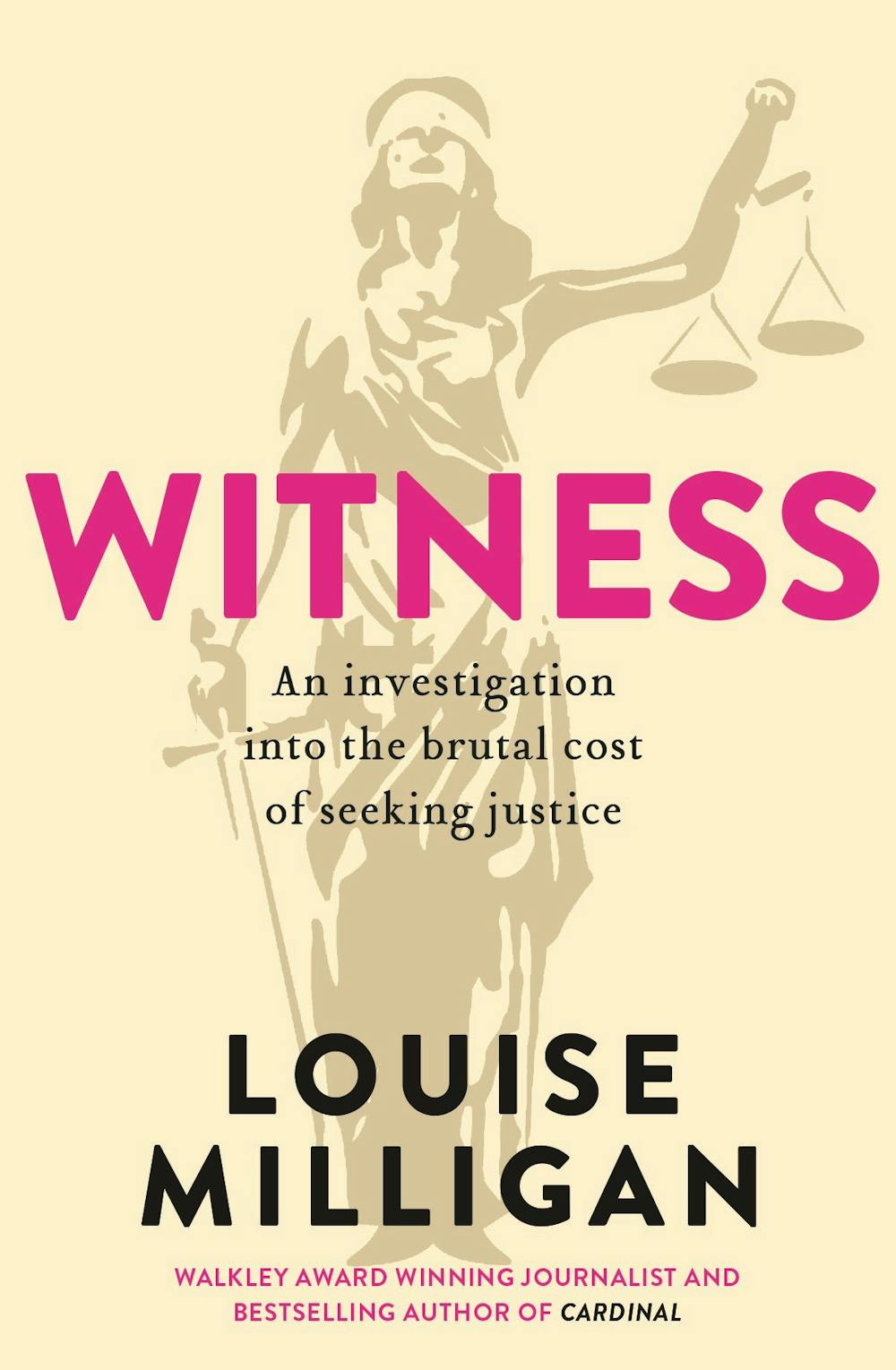
Witness by Louise Milligan

Sexual assault and murder carry high maximum sentences for good reason. They cause damage, havoc and lifelong pain and can rip society apart. None of us want perpetrators to stay hidden and unjudged. We want the criminal justice system to do its work.

And so, when victims of sexual assault envy murder victims “because they don’t have to relive being killed, over and over”, when what finally breaks them is not the crime but what happens next, we all have a stake in making justice work better.

Witness cover

In Witness, Louise Milligan asks where is the balance to be struck between the rights of defendants and the rights of witnesses – and of complainants in particular.

Can we presume an accused person to be innocent – as she agrees we should – without irreparably damaging the lives of those who report sexual crimes and give evidence?

Milligan has the credentials: court reporter; investigative journalist; witness in the trial of Cardinal George Pell; and the victim of the crime committed by an invisible stranger who repeatedly threatened to kill her.

Milligan has clearly earned the trust not only of victims, but also of judges and senior barristers who speak candidly about the impact of vicarious trauma on them and their colleagues, and who know they are working in an imperfect system.

She writes about the “cognitive dissonance” required for a barrister to be able to belittle a child witness, ultimately proved to be telling the truth about sexual abuse, and then go home to their own children.

Witness is a harrowing read. Not because Milligan has sensationalised the experiences described to her: the court transcripts speak for themselves. But because she exposes the damage done, not only to complainants, but to everyone involved in the criminal justice system, and makes it our concern.

-Julia Prendergast

Stone Sky Gold Mountain by Mirandi Riwoe

Stone Sky Gold Mountain is a bellwether novel, acknowledging Australia’s racist colonial history, suggesting that settlers from many countries were complicit in the worst outrages against Indigenous people, and underlining centuries of attack and control of women by men.

Stone Sky Gold Mountain cover

Set in 1877 in Queensland’s Palmer River goldfields the novel imagines a gap in Australian history, bringing to the foreground young working women, shackled by class, gender and race, seeking freedom and tenderness in a violent shanty town.

The story begins with the exiled Lai Yue and his sister Ying questing for gold to free their siblings, sold into slavery to pay their father’s gambling debts; and with the grieving and myopic Meriem, a single mother keeping house for a whore.

Ying dresses as a boy to survive. Meriem and her employer Sophie ply traditional women’s trades – housekeeping and sex work – and the three defend each other.

We fear for Lai Yue, burdened with filial duty, paying the price of men’s brutality to each other. Chinese speculators outnumber Europeans yet remain vulnerable to racism, their homeland criminal gangs, known as tongs, and starvation. Is Ying’s brother enlivened only by conscience, or is his inner voice darker, more unsettling than that? Who is responsible when an explosion of frontier violence subsumes him?

Taken deep into each character’s consciousness, we absorb their trauma and resilience.

The bush and riverscape seethe with heat and humidity. Riwoe’s language is assured, lyric and lush with vivid imagery of transplanted Chinese culture.

Historical detail is always immediate and visceral. As befits a good crime novel, each chapter cranks up tension, escalates action, and coded objects – a green ribbon tied around a tree, blackbirds, snakes’ eyes and sour plums, talismanic wood carvings – lead readers towards inevitable climaxes.

Ghosts and opium memes bring foreboding. How does one tell white men apart when they all look the same? Ever ironic, Riwoe. Read in two sittings. Twice.

–Gay Lynch

Bass Rock by Evie Wyld

The Bass Rock cover

At the opening of Evie Wyld’s The Bass Rock a young girl discovers a suitcase washed up on the beach: a dead woman’s fingers inching out, and between them, an eye that blinks.

At the novel’s closing, a woman is hurriedly packing a suitcase for her and her daughter, intending to leave an abusive marriage. She is waiting for a taxi when the front door quietly closes.

These two short scenes frame a novel that dwells on the violence inflicted on three women by manipulating and aggressive men. Set on the coast of Scotland, the dark volcanic Bass Rock looms over North Berwick as a dark presence around which the stories are fashioned.

In the 21st century, Viviane is living an unpredictable existence in London, when her Uncle Christopher requests she look after the family home in North Berwick until it is sold.

Shortly after the second world war, Ruth is living in the same North Berwick house with new husband Peter and his two sons.

In the 18th century, Joseph recounts how Sarah, accused of being a witch and brutally raped by village boys, is saved from being burned by his father. But when the thugs rally support, the girl and family must run, or they could all burn.

The Bass Rock has seven sections, each containing five chapters that move from the present through to the past and back again. Themes of mental illness and grief are braided into the novel, and the young children in Ruth’s story, become the older characters in Viviane’s.

At the end of each section a short tale is recounted about a nameless woman; each woman suffering maltreatment.

This is a deeply disturbing novel, yet one also revelling in grace and the small wonders of life: new and fragile friendships, tender moments of love and unearthly happenings.

–Catherine McKinnon


The 2021 Stella Prize winner will be announced at 8pm AEST tonight, April 22.

ref. The Stella shortlist: your guide to 2021’s powerful, emotional books – https://theconversation.com/the-stella-shortlist-your-guide-to-2021s-powerful-emotional-books-158782

Morrison government quashes Victoria’s belt and road deal with China.

Source: The Conversation (Au and NZ) – By Michelle Grattan, Professorial Fellow, University of Canberra

The Morrison government has cancelled the belt and road agreements Victoria has with China.

In the first decisions under the government’s new foreign arrangements scheme allowing it to quash arrangements states, territories and public universities have with foreign governments, Foreign Minister Marise Payne announced four Victorian agreements would end.

Two are with China, and the others are with Iran and Syria.

The agreements with China are the memorandum of understanding on the belt and road initiative signed in October 2018, and a subsequent more detailed framework agreement signed in October 2019.

The agreement with Iran related to student exchanges and dates from 2004. The protocol with Syria was for scientific co-operation, and goes back to 1999.

Payne, who makes the determinations under the law, said the agreements were “inconsistent with Australia’s foreign policy or adverse to our foreign relations” under the scheme’s test.

The action is likely to elicit another sharp response from China, which is extensively targeting Australian trade and regularly delivers rhetorical attacks.

The Victorian buy-in to the belt and road network – China’s global infrastructure and development strategy – was seen as a prime target when the government first announced its plan to overhaul agreements with foreign governments and their entities.

Scott Morrison said last year about belt and road that it was a program Australia’s foreign policy did not recognise “because we don’t believe it is consistent with Australia’s national interest”.

The foreign arrangements scheme, operating since December, was driven substantially by concern about foreign interference in Australia, in particular from China.

It also reflects the broader principle that foreign relations are a national matter and agreements by states and territories with foreign governments should not be at odds with the federal government’s policies.

Federal sources say the Victorian agreements with China have not yielded any tangible outcomes for the state.

The other two agreements have been overtaken by major changes in relations with those countries.

Payne said under the audits of existing and proposed foreign arrangements required by the new law, she had been notified of more than 1000 arrangements.

“States and territories have now completed their initial audit of existing arrangements with foreign national governments.

“The more than 1,000 notified so far reflect the richness and breadth of Australia’s international interests and demonstrate the important role played by Australia’s states, territories, universities and local governments in advancing Australia’s interests abroad.”

Payne has approved a proposed Memorandum of Understanding on Cooperation on Human Resources Development in Energy and Mineral Resources Sector between the Western Australian and Indonesian governments.

A spokesperson for the Victorian government said the law was “entirely a matter for the Commonwealth government”.

ref. Morrison government quashes Victoria’s belt and road deal with China. – https://theconversation.com/morrison-government-quashes-victorias-belt-and-road-deal-with-china-159480

Morrison wants to focus on the ‘how’ rather than the ‘when’ in climate debate

Source: The Conversation (Au and NZ) – By Michelle Grattan, Professorial Fellow, University of Canberra

Scott Morrison says he hopes to focus the conversation at this week’s Biden climate summit on the question of how to achieve net-zero emissions, declaring there has been enough conversation about the timing.

Ahead of his speech to the virtual summit overnight Thursday (AET), Morrison has announced next month’s budget will contain a new $565.8 million for backing low emissions international technological partnerships by co-funding research and demonstration projects.

The partnerships will leverage $3 to $5 in co-investment for every dollar the government puts in.

Referring to joining President Biden and other leaders Morrison told a Wednesday news conference, “I’m seeking to focus that conversation, it’s now about the ‘how’ – there [have] been enough conversations about the ‘when’, it’s about the how, now”.

Morrison’s emphasis on the “how” in getting to net zero comes as the British government focused this week on speeding up its efforts, announcing it would legislate to “reduce emissions by 78% by 2035 compared to 1990 levels”.

The UK statement said that in addressing the summit, British Prime Minister Boris Johnson “will urge countries to raise ambition on tackling climate change and join the UK in setting stretching targets for reducing emissions by 2030 to align with net zero”.

Biden is set to announce a new target for the United States.

Morrison is pivoting his government’s policy towards formally embracing later this year the widely-accepted 2050 net-zero target but, mindful of some naysayers in Coalition ranks, he has not signed up yet.

For the international partnership program, Australia is having discussions with potential partners including the United States, the UK, Japan, Korea and Germany.

The government wants to get international collaboration on technologies through projects in Australia and technology transfer, and is tying the effort into its emphasis on jobs.

“The world is changing and we want to stay ahead of the curve by working with international partners to protect the jobs we have in energy-reliant businesses, and create new jobs in the low emissions technology sector,” Morrison said in a statement.

“These partnerships mean Australia will keep leading the way in low emissions technology that also means more jobs here at home.”

Energy Minister Angus Taylor said the technologies prioritised under the government’s technology investment roadmap “have the potential to substantially reduce or eliminate emissions from sectors that account for 90% of global emissions”.

But Australia couldn’t on its own make these technologies globally scalable and commercially viable.

The government money for the partnerships investment is over eight years.

This week Morrison also announced $539.2 million for hydrogen and carbon capture hubs and technologies.

“I want Australia and hydrogen technology to be synonymous around the world,” he told reporters on Wednesday. “And it’s a key point I’ll be making at the climate summit over the next few days – that Australia is really putting the flag right out there when it comes to ensuring that we lead the world in hydrogen technology.

“The hydrogen that can fire up furnaces that used to be done by other forms of fossil fuels, that can run those trucks, that can run long-distance transport, and do all of the things we need it to do, solving these problems.”

He again stressed his government’s approach to emissions reduction was based on “technology not taxes”.

ref. Morrison wants to focus on the ‘how’ rather than the ‘when’ in climate debate – https://theconversation.com/morrison-wants-to-focus-on-the-how-rather-than-the-when-in-climate-debate-159442

Politics with Michelle Grattan: military ‘watch-dog’ Neil James on Afghanistan, China, and Peter Dutton

Source: The Conversation (Au and NZ) – By Michelle Grattan, Professorial Fellow, University of Canberra

Sunday is ANZAC day – and this year it comes at a particularly important time for Australia’s military image.

Last week, Scott Morrison announced Australia’s remaining troops will leave Afghanistan by September, following President Biden’s announcement of the United States withdrawal.

One negative legacy of Australia’s participation in this conflict is documented in the Brereton report on Australia war crimes, which detailed alleged incidents of unlawful killing and cruelty by some special forces troops.

Among the report’s recommendations was the revocation of the Meritorious Unit Citation that had been awarded to some 3,000 soldiers.

The Chief of the Australian Defence Force, Angus Campbell, agreed with the recommendation. But critics were fierce and this week the new Defence Minister Peter Dutton said the award would not be revoked.

Executive Director of the Australia Defence Association Neil James joins the podcast, to discuss the withdrawal from Afghanistan, the strategic risk China poses, and the high profile new minister in the portfolio.

James is concerned the departure of international forces from Afghanistan will lead to more instability.

“By withdrawing and without a peace agreement with the Taliban, it’s going to be a reasonable problem. The simple thing about all wars is they always end when one side gives up or both sides get tired. And in this case, unfortunately, the message being sent to the Taliban is that the international community has given up.”

On China, James is concerned about any “number of flash points that could easily cause a war, even if only accidentally”.

Taiwan “is the big flash point.”

“President Xi will seek to legitimise his presidency by, in his words, absorbing Taiwan back into the motherland. That will automatically cause a war for the simple reason that Taiwan is a functioning democracy and a lot of the world’s democracies will probably object to that. That’s the biggest flash point.”

On the controversial Dutton decision to override Campbell over the citation, James believes the minister did the wrong thing.

“I think probably, to be brutally frank, he was ill advised. And I think if he [had] bothered to consult a bit more broadly and understood the implications of what he was doing, he may not have done it.”

“[The revocation] needs to be done for the simple reason that the revocation of the citation isn’t an Australian issue – it’s an international issue. We’re showing the world that we’re taking the Brereton report seriously.

“We admit the war crimes occurred even if we have difficulty convicting anyone of it, eventually. They certainly definitely occurred. And therefore, we have to be seen to be doing something about it.

“And by cancelling the revocation, we’re actually sending the wrong message internationally about Australia’s commitment to international law. But we’re also sending the wrong message internally within the defence force about unprofessional behaviour.”

While James thinks Dutton was “the only bloke who could have taken over the ministry after [Linda] Reynolds” was moved, he remains a strong defender of Reynolds.

Even before the Brittany Higgins matter, Reynolds faced considerable criticism from commentators. James believes there was a sexist element in some of the attacks on her performance in the portfolio, and he condemns those who thought Australia couldn’t be “taken seriously as a country when both the foreign minister and the defence minister were female”.

“I mean, that’s just absurd in the 21st century. It was actually absurd for most the late 20th century.”

Listen on Apple Podcasts

Stitcher Listen on TuneIn

Listen on RadioPublic

Additional audio

A List of Ways to Die, Lee Rosevere, from Free Music Archive.

ref. Politics with Michelle Grattan: military ‘watch-dog’ Neil James on Afghanistan, China, and Peter Dutton – https://theconversation.com/politics-with-michelle-grattan-military-watch-dog-neil-james-on-afghanistan-china-and-peter-dutton-159444

Fat-footed tyrannosaur parents couldn’t keep up with their skinnier offspring, fossil footprints reveal

Source: The Conversation (Au and NZ) – By Nathan James Enriquez, PhD Student, University of New England

Tyrannosaurus rex is perhaps the most famous of all dinosaurs. It and its closest kin, a group referred to as “tyrannosaurs”, have been embedded in popular culture as powerful and mobile predators.

Consider the below scene from the 1993 blockbuster Jurassic Park; an adult T. rex chases down a speeding Jeep — much to the thrill of the audience.

The 1993 Jeep chase scene from Jurassic Park remains an iconic movie moment.

But Jeeps and fanciful theme parks aside, are these depictions realistic?

Our research, published today in the Journal of Vertebrate Paleontology, shows while young tyrannosaurs may have indeed been the vision of wrath depicted above, they likely became broader-footed, bulky and less mobile in adulthood.

A new perspective

Previous arguments about the way tyrannosaurs did (or didn’t) run either focused on their bones, or relied on computer models to simulate their running abilities.

Apart from being smaller, the skeletons of young tyrannosaurs are also more lightly built than their bulkier parents, which suggests they were probably faster and more nimble for their body size. Juveniles tended to have relatively longer legs and smaller skulls, and weighed much less than a fully grown adult.

In fact, the volume of leg muscles needed to sustain a fast running pace in a six-tonne adult T. rex would have probably been biologically impossible. This would require the dinosaur having as much as 86% of its total body weight just as leg muscle!

However, skeletons only represent part of the story. Fossilised footprints provide a unique snapshot in time of how an animal (or species) moved about its environment — one not provided by skeletons.

Fossilised footprints are a fleshed-out image of the feet as they once appeared in real life, with the soft parts still intact.

In 2015 and 2018, our team discovered a new collection of tyrannosaur footprints in rocks at a lonely outpost in western Canada, which we introduce for the first time in our new paper.

These footprints presented a unique opportunity to study how tyrannosaurs’ foot shapes changed from youth to adulthood. If their relative mobility decreased as they grew — as was previously hypothesised from studying their skeletons — then we’d expect this to be expressed in foot shape, too.

Younger and swifter animals would have more slender feet, whereas older individuals would have bulkier feet, less suited for speed and agility.


Read more: How many _Tyrannosaurus rex_ walked the Earth?


Tracking ancient footprints through bear country

The tyrannosaur tracks we found remain preserved in a wilderness area near Grande Prairie in Northwestern Alberta, Canada. The region is known for its bitter cold winters, which causes the rivers to flood in spring as snow-melt rolls off the nearby Rocky Mountains.

The footprints themselves are preserved along a bank of the Redwillow River, surrounded by Boreal forest, which today is home to wildlife including brown bears, black bears and wolves.

Tracksite in Albert, Canada
Lush forest surrounded the track site where the tyrannosaur footprints were found in Alberta. Author provided

Thankfully our close encounters were largely with deer, although swarms of mosquitoes were a constant nuisance.

Tyrannosaur footprints in this area can be identified by the presence of three long and narrow toes, often with sharp, pointed claw marks. We found up to ten footprints, all about 72 million years old, ranging from 30 to 62 centimetres in length.

Although no bones were discovered, the footprints may have belonged to Albertosaurus. This tyrannosaur lived in Alberta at that time and was an earlier and smaller relative of T. rex.

My, what big heels you have!

Using a method called geometric morphometrics, we analysed the best tyrannosaur footprints from our collection of tracks, along with previously discovered footprints.

This method mathematically removes the effect of overall size difference between each footprint while examining important differences in footprint shape.

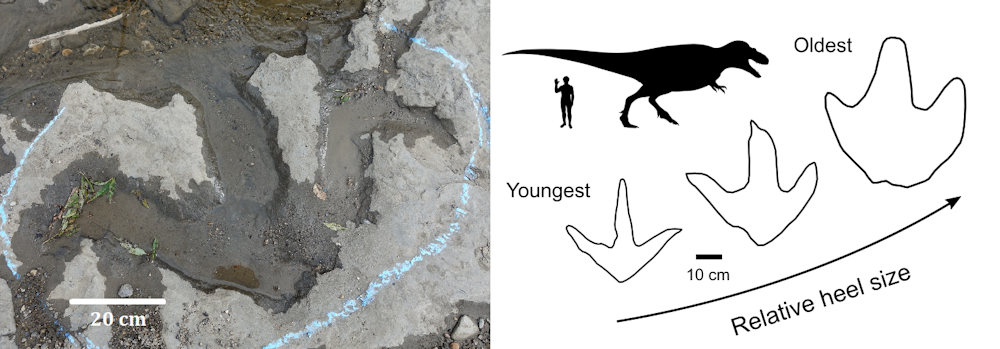
Applied to our samples, we found the main difference across all footprints was the surface area and width of the heel relative to the footprint’s length.

Larger prints had proportionally larger heels while smaller tracks had narrower, smaller heels.

This difference likely relates to the imposing size of an adult tyrannosaur, or specifically an adult Albertosaurus, which may have weighed between 1,300 and 2,200 kg.

Tyrannosaur track growth photo and diagram.
On the left is a photo of a tyrannosaur track likely made by a middle-aged Albertosaurus. The diagram on the right shows how tyrannosaur feet may have changed in both shape and size as they aged. Author provided

A wider and more fleshy heel probably helped adults maintain balance and support increased weight, but likely came at the expense of speed and agility.

Our work on footprints serves to support the hypothesis that as tyrannosaurs grew they underwent a shift from quick, sprightly juveniles to slower, heavy-set adults.

Slowed down by old age

Would this have been a problem for catching food as an adult tyrannosaur? Probably not. The large four-legged herbivores they hunted, such as Edmontosaurus regalis (which weighed about 4,000kg), were probably even slower.

So what about that chase scene from Jurassic Park?

Well, we still can’t be certain exactly how fast an adult T. rex could run. But we can say heavier and bulkier adults were probably slower for their body size than more slender juveniles.

Perhaps it should have been a juvenile tyrannosaur chasing that Jeep instead. Although, this wouldn’t have been quite as scary.


Read more: Curious Kids: could dinosaurs evolve back into existence?


ref. Fat-footed tyrannosaur parents couldn’t keep up with their skinnier offspring, fossil footprints reveal – https://theconversation.com/fat-footed-tyrannosaur-parents-couldnt-keep-up-with-their-skinnier-offspring-fossil-footprints-reveal-154188

Video: Buchanan and Manning on NZ Govt’s Commitment to Foreign Policy Independence – Is it an Achievable Quest?

A View from Afar: In this week’s podcast Selwyn Manning and Paul Buchanan debate: How this week, New Zealand’s minister of foreign affairs, Nanaia Mahuta, delivered a significant speech detailing how this Labour-led Government defines its foreign policy.

BACKGROUND: In short, Mahuta anchored New Zealand within the Asia Pacific region as an independent Pacific Island state, with independence being the foundation of how it will engage with the outside world, and with multilateralism being the thread that knits this foreign policy together.
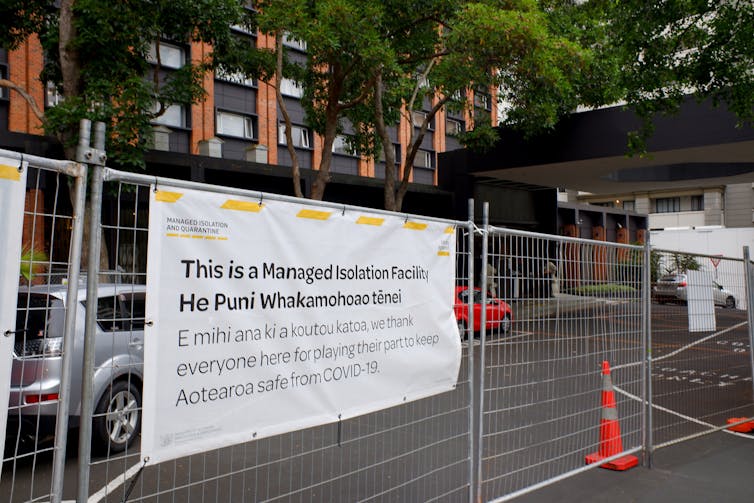
If we look back over the three years since 2017 when Jacinda Ardern first became Prime Minister, to 2020 when her Labour Party had a landslide election victory, we can see the incremental steps (albeit small) that transported this Government along this journey.

If we can define this trajectory, can we predict where will it lead? To true independence away from the hegemonic grip of global powers? Toward a true honest-broker-state that engages via multilateral relationships and bodies to play its part in global affairs?

Or is New Zealand Government setting itself up to fail in a role too serious to contemplate misfiring?

WE INVITE YOU TO PARTICIPATE WITH COMMENTS AND QUESTIONS IN THE RECORDING OF THIS PODCAST:

You can comment on this debate by clicking on one of these social media channels and interacting in the social media’s comment area. Here are the links:

If you miss the LIVE Episode, you can see it as video-on-demand, and earlier episodes too, by checking out EveningReport.nz or, subscribe to the Evening Report podcast here.

Safe space or shirking accountability? A new Journal of Controversial Ideas will allow academics to write under pseudonyms

Source: The Conversation (Au and NZ) – By Patrick Stokes, Associate Professor of Philosophy, Deakin University

In the 1840s, a series of strange books started to appear in Copenhagen. The books were credited to outlandish pseudonyms: Victor Eremita (“victorious hermit”), Hilarious Bookbinder, Vigilius Haufniensis (“the watcher in the marketplace”), and more.

The author of these books was a theology graduate named Søren Kierkegaard. He wasn’t using pseudonyms to hide his authorship, however, but to make a point about what it is to truly inhabit a view of life. That, he complained, was precisely the problem with the other philosophers of his era. They published under their real names, but wrote as if they weren’t living, breathing, mortal people at all, but mere abstract conduits for pure reason.

Cut to 180 years later, and philosophers are again asserting the right to publish under made-up names. But these philosophers, it seems, want to use pseudonyms to do the very thing Kierkegaard accused his contemporaries of doing: abstracting authors out of ethical reality.

Philosophers Peter Singer, Jeff McMahan, and Francesca Minerva have announced a new academic outlet, the Journal of Controversial Ideas, as a safe space for unpopular views.

An “open access, peer-reviewed, interdisciplinary journal specifically created to promote free inquiry on controversial topics,” it will give authors the option to publish their work under a pseudonym “in order to protect themselves from threats to their careers or physical safety.”


Read more: Is cancel culture silencing open debate? There are risks to shutting down opinions we disagree with


Singer certainly knows first-hand the personal cost of taking unpopular philosophical positions. Few philosophers have aroused such sustained outrage.

Equally, few philosophers have had the sort of practical impact that Singer has through his work on animal ethics in particular. I don’t share Singer’s utilitarianism, but I’ve long admired the determination with which he follows through a line of argument.

Peter Singer photographed in Princeton in 2001. Brian Branch-Price/AP

Apart from wanting to ensure people’s safety, it’s unsurprising to see philosophers defending the value of rigorous open inquiry in this way. It also comes at a time when philosophy as a profession is wrestling with difficult issues about the ethics of its own practice. The status of trans women in particular has been the site of incredibly painful recent arguments within the discipline.

Research and responsibility

The new journal is not meant to be entirely pseudonymous. Real-name submissions are encouraged, and pseudonymous authors can claim authorship of their work at a later time or reveal it to selected people (such as employers).

Pseudonymity is not an inherently bad thing. Apart from focusing the reader on the argument rather than the author, it can, in many cases, give a say to people who could otherwise not participate in public discourse. On the other hand, pseudonymity in academic publishing has already been abused to sneak pseudoscientific claims into the scholarly literature.

The bigger issue here is that academic inquiry does not take place in a vacuum. Speaking, writing, and publishing are actions, and therefore subject to moral evaluation like any other action. Research is something we do – and as such, something we are ethically responsible for. We’re agents, not mere conduits.

Few people, perhaps, pay attention to academic publishing. Yet to push a finding through the brutal gamut of peer review grants it authority. And that has downstream consequences. It can feed, for instance, into the ways issues of race and gender are discussed in broader society.

It is entirely reasonable to point out that the practice of research, however innocently it might be intended, has effects that researchers cannot simply shrug off. Using a pseudonym might protect you from being blamed for those effects. But it does not change your responsibility for them.

The Journal of Controversial Ideas has been described as a response to so-called “cancel culture”. “Clearly there has been an increase in various forms of behaviour that can intimidate people from writing on controversial topics,” Singer told The Australian. There are indeed genuine problems with the scale on which people get called out for problematic comments or behaviour on social media.

But that doesn’t make us less answerable for what we write and publish. We cannot and must not avoid difficult topics. The challenge for researchers, then, is to work on these topics in a way that doesn’t implicitly suspend responsibility for what we say and do. We cannot pretend that academic inquiry is somehow quarantined from the rest of the ethical universe, and claim a right to evade accountability for our work.

If a certain way of talking about race, for example, has historically served detestable ends, are you implicating yourself in those ends by taking that approach or using that language?

If your way of approaching a topic calls the validity of a marginalised person’s very existence into question — or when such people tell you that’s what you’re doing, whatever you might have assumed — are you prepared to face up to the moral liability you’re taking on?


Read more: Friday essay: a new front in the culture wars, Cynical Theories takes unfair aim at the humanities


Are you, in the end, making life better for other people, or worse?

In light of that standard, a pseudonymous journal devoted entirely to “controversial” ideas starts to look less like a way to protect researchers from cancel culture, and more like a safe-house for ideas that couldn’t withstand moral scrutiny the first time around.

ref. Safe space or shirking accountability? A new Journal of Controversial Ideas will allow academics to write under pseudonyms – https://theconversation.com/safe-space-or-shirking-accountability-a-new-journal-of-controversial-ideas-will-allow-academics-to-write-under-pseudonyms-159433

What to drink with dinner to get the most iron from your food (and what to avoid)

Source: The Conversation (Au and NZ) – By Evangeline Mantzioris, Program Director of Nutrition and Food Sciences, University of South Australia

A drink with your breakfast, lunch or dinner can make your meal more enjoyable. But have you considered whether your drink of choice may affect the way your body absorbs the nutrients in your food?

Dietary factors that can increase the uptake of other nutrients are called enhancers, while those that can reduce the uptake of other nutrients are called inhibitors, or anti-nutrients.

One of the most common nutrient deficiencies worldwide is iron, and can result in a condition called iron deficiency anaemia.

So if you’re looking to increase your iron levels, it’s worth thinking not just about what you’re eating — but what you’re drinking too.

A bit about iron

Iron deficiency can develop when we don’t get enough iron, or don’t absorb iron to the extent our body needs. It’s more common in women, and can cause weakness and fatigue, among other symptoms.

If you’re worried you may be iron deficient, you can get a blood test from your general practitioner.

There are two forms of iron in our diets; haem iron and non-haem iron. Haem is an iron-containing protein that forms part of the haemoglobin, a protein in your red blood cells that transports oxygen around your body.

Haem iron is found in animal sources of food, like meat, and is more easily absorbed into the body.

Non-haem iron is found in plant foods, like grains, beans and nuts, and is less easily absorbed.


Read more: I’ve been diagnosed with iron deficiency, now what?


Some enhancers

Choosing a drink that contains vitamin C — such as orange, tomato or grapefruit juice — around the time of your meal will increase the amount of the non-haem iron you can absorb.

In one study, 100mg of vitamin C increased iron absorption four-fold. This is roughly equivalent to what you’d get from one glass of orange juice.

Keeping this in mind is particularly important for people who don’t eat meat, as all of their dietary iron will be non-haem iron.

Some inhibitors

Tea is a popular drink with meals and is often enjoyed with Asian cuisine. But tea contains a bioactive compound called tannin, which is an inhibitor of non-haem iron absorption.

Tannin is classed as an organic compound called a polyphenol. It’s also found in many foods including cocoa, almonds, grapes, berries, pomegranates, and spices (for example, vanilla and cinnamon), which may find their way into drinks like smoothies.

Kombucha, a popular fermented tea drink, still contains some tannins.

Unfortunately the news is no better for coffee drinkers — coffee contains tannins too. And the chlorogenic acid in coffee is also an important inhibitor of iron absorption.

A woman in a striped jumper holds a mug.
Tea and coffee contain tannins, which inhibit iron absorption. Shutterstock

Tea and coffee are considered the strongest inhibitors of iron. A cup of tea reduces iron absorption by about 75%-80%, and a cup of coffee by about 60%. The stronger you make them, the greater the effect will be.

So it’s best to avoid tea and coffee while eating and for two hours before and after the meal. This is roughly the length of time food and drinks sit in your stomach before they’re fully absorbed.

This includes breakfast, a meal at which many people most commonly consume tea and coffee. For most of us breakfast normally consists of cereal and/or bread. Both of these naturally contain significant levels of iron and sometimes these products have iron added.

So if you’re iron deficient, it may be time to consider opting for a small glass of orange juice at breakfast, or preferably the whole orange (as you get fibre with it too), and saving the tea or coffee for a little later.


Read more: What is kombucha and how do the health claims stack up?


A little from column A, a little from column B

There has always been speculation dairy may inhibit iron absorption, but to date the evidence seems to suggest it has no effect.

However plant-based milks, such as soy milk, contain phytates, a compound that stores phosphorus in plants, which inhibit iron absorption.

A group of people drinking beers with a meal.
Beer increases iron absorption. But that doesn’t mean you should have it with every meal. Shutterstock

Meanwhile, alcohol increases the absorption of iron, so a beer would be classed as an enhancer.

If you favour a glass of wine, you should select a white over a red. Red wine contains more tannins and other polyphenols, so overall red wine inhibits iron absorption.

But as we know drinking alcohol increases the risk of cancer and is linked to other health concerns, you shouldn’t start drinking alcohol to increase iron absorption.


Read more: Should I let my kids drink juice? We asked five experts


So what’s the take-home message?

The bioactives I’ve mentioned also provide many nutritional and health benefits, and they’re all found in plant products. It would be virtually impossible to avoid tannins in your diet and still be consuming the healthy number of serves of fruit and vegetables.

This advice is mostly relevant if you’ve been diagnosed as iron deficient or with iron deficiency anaemia. And even if this is the case, you can still enjoy these drinks outside of meal times.

If your iron levels are within the normal range there’s no need to be concerned as your body is absorbing enough to meet your needs with what you’re drinking and eating.

ref. What to drink with dinner to get the most iron from your food (and what to avoid) – https://theconversation.com/what-to-drink-with-dinner-to-get-the-most-iron-from-your-food-and-what-to-avoid-156579

Migration is a quick fix for skills shortages. Building on Australians’ skills is better

Source: The Conversation (Au and NZ) – By Pi-Shen Seet, Professor of Entrepreneurship and Innovation, Edith Cowan University

Prime Minister Scott Morrison has highlighted workforce skills as the “single biggest challenge facing the Australian economy” in recovering from the COVID-19 pandemic. Employer surveys also show it’s a top concern.

Adding to these concerns is an expected 85% fall in net overseas migration in 2020-21 from 2018-19 levels because of COVID-related border closures. The Committee for Economic Development of Australia (CEDA) has stressed the urgency of increased and more flexible temporary and permanent migration as global competition for skills and talent intensifies in the post-pandemic recovery. Australia also risks losing talented individuals to more attractive destinations.


Read more: There may not be enough skilled workers in Australia’s pipeline for a post-COVID-19 recovery


Federal Immigration Minister Alex Hawke is more optimistic. He says the pandemic hasn’t harmed Australia’s reputation as a migrant destination. At a CEDA livestream discussion yesterday, Hawke said migration would be crucial for Australia’s recovery from the pandemic.

What is being overlooked in this debate is that, as a recent Productivity Commission report notes, Australia might not really have a skills shortage. Rather, the problem is a skills mismatch.

Why migration matters now

Australia typically relies on immigration for almost two-thirds of its population growth, and skilled migrants are an important source of talent.

COVID-related closures of national and state borders added to the problems of industry sectors that rely on temporary and permanent migrants to overcome skills shortages. Many have had trouble finding workers (e.g. fruit-picking) or will have trouble as the economy recovers (e.g. hospitality, digital and data opportunities).

CEDA recently launched a report calling for an increase in permanent skilled migration. This report and a 2019 CEDA report aim to show recent waves of migrants have not reduced wages or jobs of Australian-born workers.

CEDA’s latest report calls on the federal government to:

  1. set up a government-regulated online platform for matching skills to jobs

  2. update the Australian and New Zealand Standard Classification of Occupations Codes to ensure people with essential or cutting-edge skills can immigrate

  3. be more transparent about how it assesses what occupations are in demand and included on the skilled occupation lists.
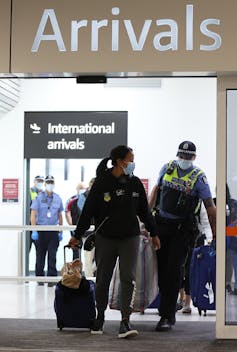
CEDA describes the Global Talent Scheme (GTS) as “very restrictive”. Minister Hawke acknowledged post-COVID Australia’s migration policies have to be more flexible and responsive. He pointed to the increased GTS intake of 15,000 spots in 2020-21, a tripling of last year’s allocation.

Yet the shape and make-up of the migration program remain unclear. Questions during yesterday’s discussion elicited few new details.

What are the issues with this approach?

According to the Productivity Commission, the way to modernise and grow the economy is via the three Ps: population, participation and productivity. As well as the population impacts of migration, CEDA claims to be offering solutions for both participation, as skilled migrants have “lower unemployment rates and higher labour-force participation rates”, and productivity, as skilled migrants are younger and contribute to human capital accumulation.

In practice, increased migration works by growing the population, increasing numbers of taxpayers and producing so-called spillover effects in housing, retail and domestic tourism etc.

CEDA cites an Australian National University study that found migrants account for 7% of the average rate of labour productivity growth between 1994–95 and 2007–08. However, the Productivity Commission reports productivity has slowed since the mid-2000s despite high migration.

Evidence indicates employers are not nurturing talent from migration to its full potential. Nearly one in four permanent skilled migrants work in a job beneath their skill level. Research also highlights the need to tackle the disconnect between identified skills shortages and the unwillingness of employers to employ new migrants.


Read more: There’s one big problem with Australia’s skilled migration program: many employers don’t want new migrants


How to fix these problems

The solutions CEDA proposes are largely quick fixes and echo previous recommendations from CEDA and employer groups like the Australian Chamber of Commerce. Stop-gap government measures to help employers fill shortfalls include a 50% wage subsidy for apprentices or trainees and tailored quarantine arrangements for seasonal workers. But the systemic problem of skills matching, leading to underemployment and unemployment, has been neglected.

This problem is not unique to Australia. Migrants do essential work in many countries. Research has found many countries have designated these migrants – including those typically considered “low-skilled” such as crop pickers, care assistants and hospital cleaners – as “key” or “essential” workers whose supply needs to be protected and even expanded during the health emergency.

In Australia, some analysts have pointed to the skills shortage as a policy ruse to distract attention from the lack of infrastructure investment to cope with rapid population growth as well as employers wishing to restrict wages growth.

One in four unemployed Australians are graduates. But Australian employers might not want to employ and train them if they can get similarly skilled employees from overseas who are willing to work for lower pay.


Read more: 1 in 4 unemployed Australians has a degree. How did we get to this point?


The problem is worse among international graduates and students – 60% of the latter lost their jobs during the pandemic. Yet they studied in universities and through VET providers that were supposedly providing them with the skills Australian employers need.

The Business Council of Australia (BCA) has recognised the need to improve skills matching and development. It has called for a more flexible vocational education and training (VET) system that emphasises life-long learning with innovations like micro-apprenticeships. This allows for employees and apprentices to be rapidly trained and regularly upskilled in response to technology and market changes.

This is similar to micro-credentials – qualifications based on smaller blocks of learning. These can formalise soft and hard skills attained at work, such as teamwork, critical thinking and problem solving. They can also help fill skill gaps such as working with big data.

man and woman working in robotics laboratory
Vocational education and training should focus on skills needed to capitalise on the opportunities of the Fourth Industrial Revolution. Shutterstock

There are other gaps in the CEDA proposals. For example, when the federal government announced its Modern Manufacturing Strategy in October 2020, it recognised that not enough manufacturers have experience in scaling up in areas that provide good returns. Despite a brief mention of data scientists in regard to skilled occupation lists not being updated since 2013, the CEDA report largely focuses on traditional industries.

Our research shows Australia needs to develop new skills in disruptive technologies to capitalise on the opportunities of the Fourth Industrial Revolution.


Read more: Jobs are changing, and fast. Here’s what the VET sector (and employers) need to do to keep up


The pandemic has simply added to the urgency of increased collaboration between the higher education and VET sectors, employer organisations, industry and government to deliver more targeted and flexible skills development programs.

ref. Migration is a quick fix for skills shortages. Building on Australians’ skills is better – https://theconversation.com/migration-is-a-quick-fix-for-skills-shortages-building-on-australians-skills-is-better-159207

Relief at Derek Chauvin conviction a sign of long history of police brutality

Source: The Conversation (Au and NZ) – By Clare Corbould, Associate Professor, Contemporary Histories Research Group, Deakin University

The unprecedented conviction of police officer Derek Chauvin for the murder and manslaughter of George Floyd is testament to the hard work of Black Lives Matter organisers and protesters.

It might seem as though someone who spent nine minutes and 29 seconds pressing his weight through his knee into another man’s neck – all captured on video – would be a slam dunk for a conviction. But history shows us otherwise.

Thirty years ago, blurry footage taken with a home camcorder from an apartment balcony showed the world four white police officers beating Rodney King, an African American man on his knees. The police used batons, between 53 and 56 times.

Those officers were charged with excessive force and assault. Their lawyers argued they could not get a fair hearing in Los Angeles, so the trial was moved to a conservative county with a higher proportion of white residents – reflected in the makeup of the jury.


Read more: The racist roots of American policing: From slave patrols to traffic stops


Their lawyers also argued, successfully, that the audio on the recording be omitted because it would prejudice the jury. Instead, they screened it frame by frame. Without the sounds of the blows striking King and the screams of bystanders urging the police to stop, the video persuaded jurors of the defence lawyers’ arguments that the officers were acting in self-defence.
One juror later told reporters she believed King was in “total control” of the event. That juror believed one of the defence lawyers, who said “there’s only one person who’s in charge of this situation and that’s Rodney Glenn King”. She was sure a Black American man presented a violent threat, even while on his knees and clearly injured.

People react to the news of a guilt verdict in front of a mural to George Floyd in Atlanta. AAP/EPA/Eric S. Lesser

This idea – that Black bodies somehow contain coiled violence ready to be unleashed at any moment – has justified police violence for years. This is true for police perceptions of African American women, such as Breonna Taylor in her own home, as well as for African American men.

It has meant the legal test of whether the use of force is “excessive” has fallen further along the spectrum of violence when it comes to cases in which the victim is Black. This is true in Australia, too, where more than 400 Indigenous people have died in custody since the 1991 Royal Commission into Aboriginal Deaths in Custody, and not one person has been convicted of a crime.

This belief means that even when police killings are captured on video, as in the cases of Eric Garner, Philando Castile and Alton Sterling, prosecutors find reasons not to indict and juries find reasons not to convict.

This belief also means that even when the victim of a police shooting is a child, like 12-year-old Tamir Rice, shot by an officer previously deemed unfit for the job, no police officer was charged with a crime.

Of course, police violence that disproportionately targets African Americans long predates portable video cameras. As many have noted since Floyd’s murder, the origins of US policing lie in the control of supposedly disorderly populations –whether of enslaved people or, after the end of slavery, an impoverished class of labourers including Black people and immigrants.

George Floyd’s brother Philonise Floyd wipes his eyes during a press conference after the verdict was handed down. AAP/AP/Julio Cortez

As African Americans migrated from the agricultural southern states to cities in the US South and North, police forces adapted accordingly. Ever since, at every stage of the “law enforcement” process, Black people are disproportionately the target.

This includes in law-writing; neighbourhood patrols; the exercise of discretion over arrest, indictment, and plea bargains at trial; jury decisions; and judges’ decisions regarding fines and sentences.

Whether it’s the so-called 1960s War on Crime or the 1980s War on Drugs, the whole of policing in the US rests on anti-black racism.

As historian Khalil Gibran Muhammad argues in his excellent book, The Condemnation of Blackness, the entire justice system itself rests on the criminalisation of Black Americans. For many, the apparent criminality of Black people is evident in the proportion of them in prison or on bail or remand or parole. It’s a vicious circle.

Reports and commissions by government, not-for-profit organisations and academics have long identified racism as the cause of the problem. This started in the 1920s with the report into the 1919 Chicago Race Riot. The 1968 Kerner Commission Report made recommendations that have been repeated reports since.

So why is the problem so intractable?

In short, profit. The “justice system” in the United States generates enormous revenue. Where African-descended people were once enslaved to provide cheap labour, they are now policed, charged, indicted and incarcerated at staggering rates.

It cannot be left to police departments to reform themselves. The only reason Chauvin has been convicted is because of the extraordinary labour of activists, which has focused attention on this case. Almost simultaneous with the verdict on the charges being read out, another African American child — this time a 15-year-old girl called Ma’Khia Bryant — was shot dead by Ohio police.

It is time, rather, that calls to abolish police be taken more seriously. To many, this campaign seems outlandish. But as the work of Ruth Wilson Gilmore and others points out, democracies elsewhere in the world flourish with only a small fraction of the proportion of incarcerated people as in the United States. “Where life is precious, life is precious,” Gilmore says.


Read more: Justice for George Floyd: Derek Chauvin’s guilty verdicts must result in fundamental changes to policing


Achieving a society in which police and prisons are not necessary is no easy task, especially when those profiting from current arrangements hold so much sway. We need, as writer, Mellon Foundation president, and inaugural poet Elizabeth Alexander says, the imagination and courage of Black artists.

Alexander points to Pat Ward Williams, who asked in 1986 of photographs of lynched Black people, “Can you be Black and look at this?

In his closing statement to the jury, prosecutor Jerry Blackwell said with anguish:

You were told, for example, that Mr. Floyd died because his heart was too big […] [but] the truth of the matter is – that the reason George Floyd is dead is because Mr Chauvin’s heart was too small.

ref. Relief at Derek Chauvin conviction a sign of long history of police brutality – https://theconversation.com/relief-at-derek-chauvin-conviction-a-sign-of-long-history-of-police-brutality-159212

How the water and sewage under your feet could end up flooding your home (and what to do about it)

Source: The Conversation (Au and NZ) – By Ana Manero, Research Fellow, Australian National University

Recent flooding in the Sydney Basin pushed thousands from their homes and left others facing enormous insurance costs.

These events show how traumatic and costly it can be to live in areas vulnerable to disaster. Too often, socio-economically disadvantaged populations are disproportionately affected.

Some flood dangers, however, can be far less visible – to planners, developers and home-buyers. Sometimes, the danger comes from groundwater beneath the surface.

Earlier this year, for example, residents of the New South Wales town of Stuarts Point were evacuated and decontaminated after sewage spilled into their streets, as septic tanks filled with shallow groundwater.

And across Perth’s Swan Coastal Plain, groundwater damage to buildings, parks, roads and piping has cost local residents millions of dollars in remedial works.

These problems are not inevitable. Our recent report shows how changes to urban planning, building design and construction practices could reduce groundwater risks. That means better outcomes for residents, developers, governments and the environment.

Urbanisation can cause the water table to rise

In many cities around the world, the water table is only a few metres or less below the ground. Groundwater levels tend to naturally rise and fall with winter rains and summer drying, as this UK video demonstrates:

However, urbanisation can cause the water table to rise above its “natural” level.

When we clear bush or farmland for housing, we reduce opportunities for plants to intercept and soak up rainwater. More rain then infiltrates through the soil and causes aquifers to fill up more quickly.

Balancing the short and long-term costs

The urban suburbs most affected by high groundwater are typically newer and cheaper. To attract buyers, developers must keep prices low, but mitigating the risk of groundwater flooding is expensive.

The streaks of iron staining on the pavement in this Perth suburb show groundwater continues to seep above ground level, even after remediation works. Authors’ own image

Developers sometimes import and install sand as “construction fill” to elevate the ground level. They may also install drainage to control groundwater levels. These sorts of measures can represent one-third of the price of developing a housing lot.

Such measures on their own, however, don’t solve the problem.

Our recent report for the Cooperative Research Centre for Water Sensitive Cities suggested ways to improve groundwater management on Perth’s Swan Coastal Plain. These findings may help people in other areas dealing with similar problems.

Developers sometimes import and install sand as ‘construction fill’ to elevate the ground level. They may also install drainage to control groundwater levels. Created by the authors

Obstacles and opportunities for change

First, we identified three key obstacles:

  • the data needed to predict how groundwater will respond to new developments is not always available

  • local authorities may struggle to find the human and technical resources to fully assess proposals for managing groundwater

  • business-as-usual designs for new developments are not usually resilient enough to cope when water tables rise.

Deeper problems are generated by the planning process. In Western Australia, high groundwater and waterlogging does not preclude land from being zoned for urban development.

Developers are also not required to address water management in detail until later stages of planning, by which time they may have already made substantial investments. This creates its own risks.

Water management plans at the subdivision level are addressed on a case-by-case basis by local authorities. That makes it difficult to determine and reduce cumulative impacts on flood risk at regional scales.

We also identified ways to improve housing development in high groundwater areas. For example, groundwater could be drained, diverted and used for direct irrigation in the drier months.

“Lightweight” or “highset” homes and floodable public open spaces could also help reduce groundwater risks. Incentivising such improvements would benefit the public and the environment.

Parts of Perth are affected by high groundwater. Shutterstock

Policy change is needed — and, in some places, already underway

There’s also an urgent need to update planning policies to consider groundwater flood risk and how the cumulative impacts of development affect that risk. Fortunately, change is already underway in many places.

Such policies are being proposed in Sydney (via updates to a NSW government planning document called the Flood Prone Land Package).

In Britain, the UK Environment Agency requires mapping of groundwater-flooding regions, and discourages development in these areas.

In the United States, cities in the San Francisco Bay area are developing metrics to assess vulnerability to groundwater flooding as sea levels rise. Pierce County in Washington state is updating its flood management plan to address persistent groundwater flooding.

Planning policies to better consider flood risk are being proposed in Sydney. Shutterstock

A legacy of liveable, resilient and equitable cities

Expanding our cities into environmentally vulnerable areas will only aggravate environmental injustice, as disadvantaged populations are forced to pay the price of poor planning policies.

Preventing such structural injustice requires planners be aware of all forms of environmental risk, including from groundwater.

We must address flooding risks early in the development process, and apply best practices from design to construction when high groundwater land is being developed.

This will require boldness from governments, consultancies, developers and financiers. The payoff will be a legacy of liveable, resilient and equitable cities.


Greg Claydon, a member of the Board of Directors at CRC for Water Sensitive Cities, contributed to this article. This story is part of a series The Conversation is running on the nexus between disaster, disadvantage and resilience. You can read the rest of the stories here.

ref. How the water and sewage under your feet could end up flooding your home (and what to do about it) – https://theconversation.com/how-the-water-and-sewage-under-your-feet-could-end-up-flooding-your-home-and-what-to-do-about-it-158527

Fiji drops three places in RSF press freedom index over gagging critics

Pacific Media Watch newsdesk

Fiji has dropped three places in the latest Reporters Without Borders World Press Freedom Index and been condemned for its treatment of “overly critical” journalists who are often subjected to intimidation or even imprisonment.

The Paris-based global media freedom watchdog has criticised many governments in the Asia-Pacific region for censorship and disinformation that has worsened since the start of the covid-19 coronavirus pandemic last year.

“On the one hand, governments use innovative practices often derived from marketing to impose their own narrative within the mainstream media, whose publishers are from the same elite as the politicians,” says RSF.

“On the other, politicians and activists wage a merciless war on several fronts against reporters and media outlets that don’t toe the official line.”

Malaysia, Myanmar, Pakistan and Philippines are among the regional countries condemned for draconian measures against freedom of information. China was given a special panel for condemnation in a summary report.

“Thanks to its massive use of new technology and an army of censors and trolls, Beijing manages to monitor and control the flow of information, spy on and censor citizens online, and spread its propaganda on social media,” says RSF.

Independent journalism was also being fiercely suppressed in Bangladesh, Sri Lanka and and Nepal.

‘Less violent repression’
“A somewhat less violent increase in repression has also been seen in Papua New Guinea (down 1 at 47th), Fiji (down 3 at 55th) and Tonga (up 4 at 46th).” The Tongan “improvement” was due to the fall in other countries.

In the country report for Fiji, reference is made to the “draconian 2010 Media Industry Development Decree, which was turned into a law in 2018, and under the regulator it created, the Media Industry Development Authority”, which is under direct government oversight.

“Those who violate this law’s vaguely-worded provisions face up to two years in prison. The sedition laws, with penalties of up to seven years in prison, are also used to foster a climate of fear and self-censorship.

“Sedition charges poisoned the lives of three journalists with The Fiji Times, the leading daily, until they were finally acquitted in 2018. It was the price the newspaper paid for its independence, many observers thought.”

RSF also referred to the banning of Fiji Times distribution in several parts of the archipelago at the start of the covid-19 pandemic in March 2020.

A year ago, RSF condemned an op-ed by a pro-government Fiji military commander in Fiji defending curbs on freedom of expression and freedom of the press in order to enforce the lockdown imposed by the government to combat covid-19.

“In times of such national emergency such as this […] war against covid-19, our leaders have good reasons to stifle criticism of their policies by curtailing freedom of speech and freedom of the press,” Brigadier-General Jone Kalouniwai wrote in an op-ed in the pro-government Fiji Sun newspaper on 22 April 2020.

‘Enemy within’
General Kalouniwai, the Republic of Fiji Military Forces chief-of-staff and who is regarded as close to Prime Minister Bainimarama, went on to voice “deep concerns about this enemy within, which have been fuelled by irresponsible citizens selfishly […] questioning the rationale of our leader’s decision to impose such restrictions.”

“No authority, and certainly not a military officer, should be arguing in favour of placing any kind of curb on press freedom,” declared Daniel Bastard, the head of RSF’s Asia-Pacific desk at the time.

“These comments recall the worst time of the Fijian military dictatorship from 2006 to 2014. We urge the Fijian government to do what is necessary to guarantee the right of its citizens to inform and be informed, which is an essential ally in combating the spread of the virus.”

In late March, after the first coronavirus case was confirmed in the western city of Lautoka, police manning a roadblock outside the city prevented delivery of the Fiji Times, the country’s only independent daily.

Its pro-government rival, the Fiji Sun, was meanwhile distributed without any problem.

RSF noted “two other significant media actors that sustain press freedom” in the country – the Fiji Village news website and associated radio stations, and the Mai TV media group.

PNG journalists ‘disillusioned’
In Papua New Guinea, the ousting of Peter O’Neill by James Marape as prime minister in May 2019 was seen as an encouraging development for the prospects of greater media independence.

However, “journalists were disillusioned” in April 2020 when the police minister called for two reporters to be fired for their ‘misleading’ coverage of the covid-19 crisis.

“In addition to political pressure, journalists continue to be dependent on the concerns of those who own their media. This is particularly so at the two main dailies, the PNG Post -Courier, owned by US-Australian media tycoon Rupert Murdoch’s News Corp, which is above all focused on commercial and financial concerns, and The National, owned by the Malaysian logging multinational Rimbunan Hijau.”

In contrast to the Pacific drops in the index, Timor-Leste rose seven places to 78th.

“In 2020, journalists came under attack from the Catholic clergy, which is very powerful in Timor-Leste. A bishop [attacked] two media outlets that published an investigative article about a US priest accused of a sexual attack on a minor.

“The Press Council that was created in 2015 plays an active role in defusing any conflicts involving journalists, and works closely with university centres to provide aspiring journalists with sound ethical training.

“But the media law adopted in 2014, in defiance of the international community’s warnings, poses a permanent threat to journalists and encourages self-censorship.”

‘Press freedom models’
In other regional developments, RSF said that the “regional press freedom models – New Zealand (up 1 at 8th), Australia (up 1 at 25th), South Korea (42nd) and Taiwan (43rd) – have on the whole allowed journalists to do their job and to inform the public without any attempt by the authorities to impose their own narrative”.

In Australia, “it was Facebook that introduced the censorship virus.

“In response to proposed Australian legislation requiring tech companies to reimburse the media for content posted on their social media platforms, Facebook decided to ban Australian media from publishing or sharing journalistic content on their Facebook pages.”

Pacific Media Watch collaborates with Reporters Without Borders.

Print Friendly, PDF & Email

Article by AsiaPacificReport.nz

RSF 2021 Index: Censorship and the disinformation virus hits Asia-Pacific

Reporters Without Borders

The Asia-Pacific region’s authoritarian regimes have used the covid-19 pandemic to perfect their methods of totalitarian control of information, while the “dictatorial democracies” have used it as a pretext for imposing especially repressive legislation with provisions combining propaganda and suppression of dissent.

The behaviour of the region’s few real democracies have, meanwhile, shown that journalistic freedom is the best antidote to disinformation, reports the RSF World Press Freedom Index.

Just as covid-19 emerged in China (177th) before spreading throughout the world, the censorship virus – at which China is the world’s undisputed specialist (see panel) – spread through Asia and Oceania and gradually took hold in much of the region.

This began in the semi-autonomous “special administrative region” of Hong Kong (80th), where Beijing can now interfere directly under the national security law it imposed in June 2020, and which poses a grave threat to journalism.

Vietnam (175th) also reinforced its control of social media content, while conducting a wave of arrests of leading independent journalists in the run-up to the Communist Party’s five-yearly congress in January 2021. They included Pham Doan Trang, who was awarded RSF’s Press Freedom Prize for Impact in 2019.

North Korea (up 1 at 179th), which has no need to take lessons in censorship from its Chinese neighbour, continues to rank among the Index’s worst performers because of its totalitarian control over information and its population. A North Korean citizen can still end up in a concentration camp just for looking at the website of a media outlet based abroad.


China (177th)

In censorship’s grip

Since he became China’s leader in 2013, President Xi Jinping has taken online censorship, surveillance and propaganda to unprecedented levels. The Cyberspace Administration of China (CAC), an agency personally supervised by Xi, has deployed a wide range of measures aimed at controlling the information accessible to China’s 989 million Internet users. Thanks to its massive use of new technology and an army of censors and trolls, Beijing manages to monitor and control the flow of information, spy on and censor citizens online, and spread its propaganda on social media. The regime is also expanding its influence abroad with the aim of imposing its narrative on international audiences and promoting its perverse equation of journalism with state propaganda. And Beijing has taken advantage of the Covid-19 pandemic to enhance its control over online information even more.


Countries that block journalism
At least 10 other countries – all marked red or black on the World Press Freedom map, meaning their press freedom situation is classified as bad or very bad – used the pandemic to reinforce obstacles to the free flow of information.

Thailand (up 3 at 137th), Philippines (down 2 at 138th), Indonesia (up 6 at 113th) and Cambodia (144th) adopted extremely draconian laws or decrees in the spring of 2020 criminalising any criticism of the government’s actions and, in some cases, making the publication or broadcasting of “false” information punishable by several years in prison.

Malaysia (down 18 at 119th) embodies the desire for absolute control over information. Its astonishing 18-place fall, the biggest of any country in the Index, is directly linked to the formation of a new coalition government in March 2020.

It led to the adoption of a so-called “anti-fake news” decree enabling the authorities to impose their own version of the truth – a power that the neighbouring city-state of Singapore (down 2 at 160th) has already been using for the past two years thanks to a law allowing the government to “correct” any information it deems to be false and to prosecute those responsible.

In Myanmar (down 1 at 140th), Aung San Suu Kyi’s civilian government used the pretext of combatting “fake news” during the pandemic to suddenly block 221 websites, including many leading news sites, in April 2020. The military’s constant harassment of journalists trying to cover the various ethnic conflicts also contributed to the country’s fall in the Index.

The press freedom situation has worsened dramatically since the military coup in February 2021. By resuming the grim practices of the junta that ruled until February 2011 – including media closures, mass arrests of journalists and prior censorship – Myanmar has suddenly gone back 10 years.

Pakistan (145th) is the other country in the region where the military control journalists. The all-powerful military intelligence agency, Inter-Services Intelligence (ISI), continues to make extensive use of judicial harassment, intimidation, abduction and torture to silence critics both domestically and abroad, where many journalists and bloggers living in self-imposed exile have been subjected to threats designed to rein them in.

Although the vast majority of media outlets reluctantly comply with the red lines imposed by the military, the Pakistani censorship apparatus is still struggling to control social media, the only space where a few critical voices can be heard.

Pretexts, methods for throttling information
Instead of drafting new repressive laws in order to impose censorship, several of the region’s countries have contented themselves with strictly applying existing legislation that was already very draconian – laws on “sedition,” “state secrets” and “national security”. There is no shortage of pretexts. The strategy for suppressing information is often two-fold.

On the one hand, governments use innovative practices often derived from marketing to impose their own narrative within the mainstream media, whose publishers are from the same elite as the politicians. On the other, politicians and activists wage a merciless war on several fronts against reporters and media outlets that don’t toe the official line.

The way India (142nd) applies these methods is particularly instructive. While the pro-government media pump out a form of propaganda, journalists who dare to criticise the government are branded as “anti-state,” “anti-national” or even “pro-terrorist” by supporters of the ruling Bharatiya Janata Party (BJP).

This exposes them to public condemnation in the form of extremely violent social media hate campaigns that include calls for them to be killed, especially if they are women. When out reporting in the field, they are physically attacked by BJP activists, often with the complicity of the police.

And finally, they are also subjected to criminal prosecutions.

Independent journalism is also being fiercely suppressed in Bangladesh (down 1 at 152nd), Sri Lanka (127th) and Nepal (up 6 at 106th) – the latter’s rise in the Index being due more to falls by other countries than to any real improvement in media freedom.

A somewhat less violent increase in repression has also been seen in Papua New Guinea (down 1 at 47th), Fiji (down 3 at 55th) and Tonga (up 4 at 46th).

Other threats
In Australia (up 1 at 25th), it was Facebook that introduced the censorship virus. In response to proposed Australian legislation requiring tech companies to reimburse the media for content posted on their social media platforms, Facebook decided to ban Australian media from publishing or sharing journalistic content on their Facebook pages.

In India, the arbitrary nature of Twitter’s algorithms also resulted in brutal censorship. After being bombarded with complaints generated by troll armies about The Kashmir Walla magazine, Twitter suddenly suspended its account without any possibility of appeal.

Afghanistan (122nd) is being attacked by another virus, the virus of intolerance and extreme violence against journalists, especially women journalists. With no fewer than six journalists and media workers killed in 2020 and at least four more killed since the start of 2021, Afghanistan continues to be one of the world’s deadliest countries for the media.
Antidote to disinformation

A new prime minister in Japan (down 1 at 67th) has not changed the climate of mistrust towards journalists that is encouraged by the nationalist right, nor has it ended the self-censorship that is still widespread in the media.

The Asia-Pacific region’s young democracies, such as Bhutan (up 2 at 65th), Mongolia (up 5 at 68th) and Timor-Leste (up 7 at 71st), have resisted the temptations of pandemic-linked absolute information control fairly well, thanks to media that have been able to assert their independence vis-à-vis the executive, legislature and judiciary.

Although imperfect, the regional press freedom models – New Zealand (up 1 at 8th), Australia, South Korea (42nd) and Taiwan (43rd) – have on the whole allowed journalists to do their job and to inform the public without any attempt by the authorities to impose their own narrative.

Their good behaviour has shown that censorship is not inevitable in times of crisis and that journalism can be the best antidote to disinformation.

Print Friendly, PDF & Email

Article by AsiaPacificReport.nz

Xi Jinping sends message to US on China’s rising power in Boao address

Source: The Conversation (Au and NZ) – By Tony Walker, Vice-chancellor’s fellow, La Trobe University

Chinese President Xi Jinping’s muscular speech to the Boao Forum Asia annual conference was clearly designed to send a signal to the United States that China regarded the change of administration as an opportunity for a renewed dialogue on contentious issues.

Xi did not take a backward step in his remarks, which emphasised a shifting international power balance. He avoided directly naming the US in his relatively brief address opening the forum, but America was clearly in his sights.

He wants the Biden administration, and the international community for that matter, to accept China not only as an emerging superpower but also as an equal in addressing global challenges.

In a telling statement, Xi said:

Global governance should reflect the evolving political and economic landscape.

This is shorthand for saying that because of its growing weight economically and militarily, China expects to be given its due.

The title of Xi’s speech, Pulling Together Through Adversity and Toward a Shared Future for All, was clearly designed to emphasise China’s global leadership aspirations.

Xi did not make specific reference to widening criticism of China’s human rights abuses in its Xinjiang region, its interference in Hong Kong in contravention of its undertakings to the UK, its pressure on Taiwan, and its assertiveness in the South China Sea.

However, building international displeasure on all these issues formed a backdrop for a speech that warned against countries “bossing others around”. This was a clear reference to the US at the head of a global coalition increasingly exercised about China’s provocative behaviour.


Read more: Why China’s attempts to stifle foreign media criticism are likely to fail


Xi also spoke of the dangers of “decoupling” global economies. He called for greater global integration.

His speech to the Boao forum is more than usually significant this year. It marks an important statement by a Chinese leader early in a US administration, and also comes just days before a climate summit to be hosted by US President Joe Biden.

Xi will participate in the summit along with other world leaders, including Russia’s Vladimir Putin.

The Biden multilateral climate summit could hardly represent a sharper contrast with the “America First” policies of the previous Trump administration.

On the face of it, this is a positive development.

Significantly, Xi devoted a section of his speech to climate issues.

We will build a closer partnership for green development. We will strengthen cooperation on green infrastructure, green energy, and green finance.

Xi’s reference to a green agenda comes days after the US and China resolved to fight climate change “with the seriousness and urgency that it demands.’’

America’s climate czar, John Kerry, and his Chinese counterpart resolved to strengthen cooperation in combating global warming in three days of talks in Shanghai.

The Shanghai climate accord, ill-defined though it might be, represents the most positive development in Sino-US relations since the Obama administration left office in 2017. At the very least, it indicates a willingness by Beijing and Washington to work together on issues that require global coordination.

Biden has made it clear he will press for more ambitious greenhouse gas emission targets. He is expected to allude to these at the climate summit that will be held virtually.

US President Joe Biden has made action on climate change a central policy of his administration. Xi has indicated he wants China to be equal partners in that. AAP/AP/Andrew Harnik

Xi’s choice of the Boao Forum for a keynote enabled him to set the stage, from China’s perspective, for his participation in the Biden event, given expectations the US will seek to reassert a global leadership role.

The Boao forum has evolved since it was first held on Hainan Island 20 years ago, to the point now where it is described as the “Asian Davos”.

This is a reference to the World Economic Forum gathering held in the Swiss town of Davos each year, to which political and business leaders gravitate.

The Chinese version is important in the sense Beijing regards it as a counterweight to Davos, which is dominated by Americans and Europeans.

The forum this year has some 2,000 participants. The heads of the International Monetary Fund and the United Nations addressed it by video link.


Read more: Australia has a great chance to engage in trade diplomacy with China, and it must take it


Prominent American business figures in attendance include Apple’s Tim Cook, Tesla’s Elon Musk, Blackstone’s Steven Schwarzman, and Bridgewater Associates’ Ray Dalio.

The convening of the forum, after it was cancelled last year due to the pandemic, and amid tensions surrounding the US-China relationship, give the event added significance. The number of high-level attendees underscores the complexities of China’s fractious relationship with the rest of the world.

The world might want to distance itself, given disquiet about China’s various provocations. But the international community can hardly ignore economic realities. China, whose economy is on fire with growth rates in double digits, is contributing about one-third to global growth.

ref. Xi Jinping sends message to US on China’s rising power in Boao address – https://theconversation.com/xi-jinping-sends-message-to-us-on-chinas-rising-power-in-boao-address-159324

Why strict border control remains crucial if we want to keep the travel bubble safe

Source: The Conversation (Au and NZ) – By Nicholas Steyn, Research assistant, University of Auckland

With the opening of a quarantine-free travel corridor between New Zealand and Australia this week, it’s easy to forget COVID-19 is still spreading globally, faster than ever, with more than three million deaths recorded worldwide.

Within a day of the travel bubble opening, a fully vaccinated border worker who cleans planes coming from countries with high rates of COVID-19, tested positive and was transferred to a quarantine facility.

Such cases show why it remains absolutely essential to maintain strict border measures to keep the virus out of the trans-Tasman bubble.

Since January 1 2021, 397 international arrivals in New Zealand have tested positive for the virus. Most have been contained in managed isolation and quarantine (MIQ) facilities.

Cases detected at the border
ESR, CC BY-SA

But we have seen some cases leak out from the border. These fall into two main categories: returnees leaving managed isolation while still infectious and frontline border workers becoming infected with the virus.

To consider the effectiveness of various border policies, we pulled together data on transmission of COVID-19 and rates of false negative test results into a mathematical model. The research, published today, allowed us to quantify the risk of community outbreaks under different quarantine and testing regimes.

Outside a quarantine hotel
People returning from countries other than Australia have to spend 14 days in isolation. Getty Images/Phil Walter

Managing risk from international arrivals

Our research shows that a 14-day stay in managed isolation, with tests on day three and day 12, is highly effective in stopping international arrivals from re-introducing COVID-19 into the community. Under this regime, most border cases are either detected and isolated until recovery, or are no longer infectious by the end of their 14-day stay.

By comparison, reducing the time spent in managed isolation would greatly increase the risk. We found that with a five-day stay, around 25% of cases would still be infectious when they entered the community.

Given recent arrival numbers, this would mean multiple border-related cases in the community every week. Sooner or later a major outbreak like Auckland’s August cluster would be inevitable.


Read more: Genome sequencing tells us the Auckland outbreak is a single cluster — except for one case


Managing risk from frontline border workers

Border workers in the arrival hall.
The virus can leak into the community if border workers become infected. Getty Images/Paul Kane

The research also looked at various testing regimes for frontline border workers. We found that weekly routine testing roughly doubles the chance an infection will be detected while it still has a clear link to the border.

The recent case of a worker at the Grand Millenium MIQ facility was an example of this.

When we find a case with a clear link to the border, typically only a small number of people are infected. The outbreak can usually be contained through contact tracing without the need to raise the alert level.

On the other hand, if border workers are not tested regularly, it increases the chance the outbreak could spread into the community. This means a large number of people could be infected by the time the outbreak is detected. This is why, when we find a new case with no clear link to the border, it tends to prompt a more serious response.

Overall, our results show regular routine testing of border workers is essential in minimising the risk of community outbreaks and reducing the need for lockdowns to control them.

Stopping spread within managed isolation facilities

Transmission of the virus between people staying in managed isolation creates a risk that returnees could catch the virus there and remain infectious when they complete their stay. An example of this happened at the Pullman Hotel in January, when a woman who had recently left the facility tested positive.

Genome sequencing then showed she had been infected by another guest at the Pullman sometime during their stay.

To minimise transmission within managed isolation, it’s important we detect cases as early as possible. The data we analysed showed that prior to November, we were picking up around 70% of cases in the first week after arrival. Since January, this has increased to around 85%, helped by the introduction of day 0/1 tests.

But our systems are still not perfect, as recent cases in two MIQ facilities have shown. Emptying out these facilities to allow a thorough check of the ventilation systems is a good move. We know that poorly ventilated corridors allow the virus to linger in the air, which has led to transmission between guests in adjacent rooms in the past.

Border staff getting ready to be vaccinated.
Most border workers have now received the vaccine. Getty Images/Ministry of Health, CC BY-SA

Vaccination of border workers

Most border staff have now been vaccinated. This will reduce the health risks for this group, which has the highest exposure to COVID-19 of anyone in New Zealand.

The Pfizer/BioNTech vaccine being used in New Zealand looks to be highly effective in reducing transmission as well as disease. Vaccinating frontline workers will therefore also provide an additional layer of defence at the border.

But since the rest of the population is mostly unvaccinated, we still need to guard against the real risk of a major outbreak if the virus does get out into the community.


Read more: Vaccination alone will not provide full protection. When borders open, NZ will still be managing COVID-19


Our other (not yet peer reviewed) research shows that regular testing remains crucial even after border workers are vaccinated. This is because even the best vaccines aren’t perfect.

There is a risk vaccinated workers could be asymptomatic but still transmit the virus to others. And the only way to pick up asymptomatic infections is routine testing.

The virus that causes COVID-19 is tricky and evolving. We are still learning about new transmission routes and need to constantly evaluate and improve our border systems to minimise the risks of returnees spreading the virus to others.

Until the majority of New Zealand’s population is vaccinated, the border will continue to be our main line of defence. Effective border processes will allow New Zealanders to return home safely while minimising the risk of COVID-19 to our communities.

ref. Why strict border control remains crucial if we want to keep the travel bubble safe – https://theconversation.com/why-strict-border-control-remains-crucial-if-we-want-to-keep-the-travel-bubble-safe-159325

We studied 50 years of royal commissions — here’s how they make a difference

Source: The Conversation (Au and NZ) – By Michael Mintrom, Professor, Monash University

On Monday, Scott Morrison announced a royal commission into veteran suicides — the fourth royal commission set up under his prime ministership.

But while Morrison says he hopes this will be a “healing process” and it comes after sustained community lobbying, we know royal commissions don’t always fix problems.

Only last week, we marked 30 years since the 1991 Royal Commission into Aboriginal Deaths in Custody. Far from a celebration, much of the commentary about the anniversary has emphasised the lack of progress since the commission’s final report.

We have a long tradition of royal commissions in Australia — dating back before federation. And their powers and capabilities for scrutinising evidence mean they can have an impact for decades to come. But royal commissions can also fail to generate policy change.

In a recent study, we reviewed royal commissions from January 1970 to December 2019 to identify the factors that can increase policy influence.

We found royal commissions that had major influence used three key strategies: a clear and useful definition of the problem, working together with advocates, and making recommendations that can work in the real world.

Framing the problem

Policy problems — such as the quality of aged care or responses to disasters — are often extremely complex, with many different attributes. So framing exactly what the problem is and how the royal commission looks at it is important.

Another component here is the royal commission also needs to develop a compelling narrative around how to address the problem.

Prime Minister Scott Morrison holding a copy of the aged care royal commission report.
Royal commissions need to tell a story, both in terms of the problem it is addressing and how to fix it. Dean Lewins/AAP

For example, the Aboriginal Land Rights Commission was established by the Whitlam government in 1973. In the final report, commissioner Edward Woodward framed his land rights recommendations as the natural progression of an earlier commitment that needed to be honoured by Australia — rather than a radical break from existing policy. The historic Aboriginal Land Rights (NT) Bill 1976 followed on from these recommendations.

Here, Woodward successfully defined a potentially political problem as a practical issue with a natural fix.

Building a support base

Although members of royal commissions cannot be expected to establish or lead social movements, they do have opportunities to engage with stakeholders, advocates and policymakers. If they do this well, they will have a ready-made coalition of experts and interested parties to support the implementation of the report recommendations.

This also makes it much harder for governments to ignore important recommendations.


Read more: Next month’s federal budget is the time to stop talking about aged care and start fixing it


An example is provided by the 2009 Victorian Bushfires Royal Commission. Here, the royal commission kept the affected communities and broader public engaged and involved, holding 26 community consultations and 55 days of hearings that were live-streamed and open to the public and media. It then developed its recommendations reflecting the theme of ongoing shared responsibility. Among the commissioners, there was similar importance placed on cohesion.

As a result, the government of Victoria accepted all but one of the recommendations and committed more than A$900 million to implement them.

Looking ahead to implementation

Policy change needs recommendations that are feasible and politically acceptable.

The final report of the child abuse royal commission made 409 recommendations in 2017. These recommendations were directed at Commonwealth and state governments, but also at institutions such as churches, schools, local governments, and the criminal justice system.

Since then, the commission has been regarded as having a strong and ongoing impact — for example, the National Redress Scheme is securing compensation for victim-survivors. The federal government also reports annually on progress.

Commissioners at the final hearing of the child abuse royal commission.
Australia has seen more than 130 royal commissions since 1970. Royal commission/ AAP

This can be attributed to the commissioners’ careful planning and their efforts to strike a balance between what needed to be done and what was politically feasible. For example, they held a series of review hearings that followed up with institutions to assess what, if any, measures had been taken since the initial hearings. This allowed them to avoid duplicating recommendations and provided a chance to reflect on previous suggestions.

In an example of what to avoid, the aged care royal commission made 148 wide-ranging recommendations for the fundamental reform of the aged care system. However, the commissioners disagreed on a number of recommendations and this undermines their influence. It also gives governments far more leeway to adopt policies that suit them, and ignore those that don’t.

No guarantees

As the federal government moves to set up a new royal commission, our research shows royal commissions can have significant policy influence. But this is not guaranteed.

Royal commissions have long served as vital contributors to policy-making and continue to serve a significant role. So it is extremely important those who lead them and those who observe them appreciate the strategies they can use to raise the odds they will leave enduring legacies of public value.


Read more: One veteran on average dies by suicide every 2 weeks. This is what a royal commission needs to look at


ref. We studied 50 years of royal commissions — here’s how they make a difference – https://theconversation.com/we-studied-50-years-of-royal-commissions-heres-how-they-make-a-difference-159231

Victorian gastro outbreak: how does it spread, and how can we stop it? A gastroenterologist explains

Source: The Conversation (Au and NZ) – By Vincent Ho, Senior Lecturer and clinical academic gastroenterologist, Western Sydney University

On Monday, Victorian health authorities released figures showing they’d received 389 reports of “gastro” outbreaks so far in 2021.

The health department said this was four times higher than the average.

There are many different types of bacteria and viruses that can cause gastroenteritis. But in this instance it’s most likely to be a virus called “norovirus”.

It’s a very contagious virus that passes between people quite easily. Studies estimate the reproduction number (or R₀) for norovirus in the population to be around 2, but this can go as high as 14 in an outbreak with no intervention. In other words, during an outbreak at a childcare centre without any control measures, one child can potentially infect an average of 14 other children. By contrast, the R₀ for COVID-19 is estimated to be between 2 and 4.


Read more: Explainer: what is gastroenteritis and why can’t I get rid of it?


How does it spread?

Over the course of the COVID-19 pandemic, we’ve learned a lot about how the coronavirus spreads. We’ve learned it transmits mostly by respiratory droplets, smaller aerosols that can hang in the air that you can then breathe in, and less commonly via surfaces.

But what about gastro? Gastro caused by norovirus spreads primarily via the “foecal-oral route” — basically, when particles from someone’s poo end up in someone else’s mouth. You can also pick up the virus by coming into contact with someone’s vomit.

Most commonly this happens because you touch a surface or a person contaminated with this virus and then touch your mouth. It can spread rapidly in childcare centres because kids often play very physically, and they might not understand proper physical distancing and handwashing in the way adults do.

It can also spread very easily in places like cruise ships.


Read more: Cruise ships can be floating petri dishes of gastro bugs. 6 ways to stay healthy at sea this summer


It can take between 12 and 72 hours to develop symptoms after coming into contact with norovirus. Symptoms include vomiting, diarrhoea, stomach pains, and nausea. It generally takes a few days to recover, and isn’t doesn’t usually require serious medical attention. But it might be worth contacting your GP if your symptoms haven’t resolved in three days. Make sure to drink as much water as you can so you don’t get dehydrated.

If you have these symptoms make sure you stay home, and don’t return to work, school or childcare until 48 hours after your symptoms resolve. Returning earlier can mean you spread the virus.

Children at a childcare facility
Gastro caused by norovirus can spread very easily in childcare centres. Thorough handwashing and disinfecting are our best defences against it. Shutterstock

Norovirus is very resistant

Some of you might be wondering how a virus survives in a state that endured such a long COVID-19 lockdown last year.

Well — norovirus is a very hardy virus. Research suggests it’s able to survive long periods on different surfaces and across varied temperatures. It’s often present at low levels across different environments, and in many types of food, for example oysters. It can survive in water for many months.

We can’t really eliminate this virus, but we can mitigate it’s spread.

How can we stop it?

The gold standard method is washing your hands thoroughly for 20 seconds with soap and water.

I suspect many of us have become a bit complacent with handwashing and instead are slapping on alcohol-based hand sanitiser when we can, although this is anecdotal.

However, even though hand sanitiser is convenient, it doesn’t work as well against norovirus as thorough handwashing does.

One study even suggests that using both methods simultaneously — washing your hands with soap and water and also applying hand sanitiser — actually increases the number of bacteria on your hands, though the exact way this occurs is unknown.

It’s best to simply wash your hands for 20 seconds. But disinfecting surfaces is also important. If someone in your home or workplace is vomiting due to a gastro type illness, make sure you very quickly disinfect the nearby surfaces. You want to wear gloves and properly disinfect surfaces using hot water with a detergent, or even bleach, both of which can kill norovirus.

Parents, childcare workers and teachers should also teach kids good hygiene and handwashing skills. And, for us grownups, we should follow our own advice.


Read more: Why hand-washing really is as important as doctors say


ref. Victorian gastro outbreak: how does it spread, and how can we stop it? A gastroenterologist explains – https://theconversation.com/victorian-gastro-outbreak-how-does-it-spread-and-how-can-we-stop-it-a-gastroenterologist-explains-159329

Tiny Game of Thrones: the workers of yellow crazy ants can act like lazy wannabe queens. So we watched them fight

Source: The Conversation (Au and NZ) – By Pauline Lenancker, Research scientist, James Cook University

The invasive ant world is a competitive one, rife with territorial battles and colony raids. And yellow crazy ants (Anoplolepis gracilipes), one of the world’s worst invasive species, have an especially interesting trait: they’re the only invasive ant known to have workers who can reproduce.

Worker reproduction has big implications for a colony’s social dynamic. So we observed and experimented with more than 200 captive colonies of yellow crazy ants to understand what triggers worker reproduction and the potential costs and benefits for the colony.

We used a range of techniques, including removing queens and observing worker behaviour, and setting up ant gladiator rings to test how well reproductive workers fought other ants.

It wasn’t just for fun — learning about ants’ basic biology, including reproduction, may allow us to better understand their success and tailor management programs to help save the ecosystems they threaten.

Life in the queendom

Yellow crazy ants are thought to originate in southern or southeastern Asia but have spread across much of the Indo-Pacific, including several locations in Australia. They’re most well known for the cascade of ecological effects they’ve caused on Christmas Island by killing red land crabs and contributing to the damage, such as tree die-back, caused by scale insects.

Attempts to control or locally eradicate them are ongoing on Christmas Island, in Arnhem Land, and several locations in Queensland, including in and around the Wet Tropics World Heritage Area.

Yellow crazy ants, accidentally introduced by cargo ships, and subsequently multiplying to number in the billions, threaten the yearly crab migration on Christmas Island.

Like honey bees and wasps, yellow crazy ants are social insects. In these colonies, queens, workers and males all play distinct roles.

Queens and workers are all females. The queens reproduce, while the aptly named workers are the colony’s labourers, primarily responsible for bringing in food, caring for the queens’ offspring and defending the colony. The sole role of males is to mate with a queen before dying.

This elaborate task division is thought key to the success of social insects. However, in yellow crazy ant colonies, workers challenge the reproductive monopoly of the queen and produce males.

We could differentiate workers with active ovaries from regular workers by looking at their abdomen, which would be oversized as eggs take up space in the larger workers’ abdomen.

Five yellow crazy ants, four of which have large abdomens
In this picture, the worker ant on the far right has a regular-sized abdomen while the other workers have abdomen that looks swollen. Dr Peter Yeeles, Author provided

When the queen was present, typically less than 20% of workers in our captive colonies had oversized abdomens. When we removed the queen, as much as half of the workers became oversized. We returned the queen after two months, and found the number of oversized workers decreased.

Our findings are consistent with the idea queens inhibit worker reproduction through pheromones, one of many chemical signals in ant colonies influencing ant worker behaviour and colony dynamics. Indeed, an ant queen’s failure to “smell” fertile may leave her subject to eviction or execution.

More lazy than crazy

So, did our yellow crazy ant queen wannabes behave more like workers or royalty? Our observations of oversized and normal workers revealed stark differences in behaviour.

Regular workers foraged during 85% of observations, whereas oversized workers were seen looking for food in only 5% of observations. Most of the time, oversized workers were immobile and remained sheltered inside their nests.

Three yellow crazy ants
Regular-sized workers are territorial and aggressive. Peter Yeeles, Author provided

These oversized workers are slow to move when the nests are disturbed, not displaying the fast, erratic movement for which the species is named. Their behaviour was more similar to queens than workers.

Colony and resource defence is another important task for workers, as yellow crazy ant colonies often compete with native ants.

To test how these sluggish workers compare to normal workers in colony defence, we placed three oversized workers in one container, three regular workers in another, and paired each group with one gladiator, the charismatic green tree ant.

Green tree ants (Oecophylla smaragdina) are native and known for being very aggressive and territorial.

Our two videos show the typical response of oversized and regular workers.

In the first video, each encounter between a yellow crazy ant and green tree ant ends with the green tree ant rapidly retreating, often after having her legs bitten and pulled by the yellow crazy ant.

In the second video, you can see how oversized workers were more sedentary, less aggressive and less likely to start fighting with the green tree ant than normal workers in the first video. They were also less likely to kill their oppon-ant.

It seems oversized workers are lazy and would be ineffective at defending the colony. So why do they occur at all?

Like walking vending machines

Generally, ant colonies need workers to function and only the queen can produce this caste. In the ant world, the death of the queen signifies the death of the colony.

However, if the queen dies after laying eggs, including one destined to become a queen, then the virgin queen who eventually emerges can mate with a worker-produced male. This is important because males are unlikely to be present unless the colony is very large.

So while workers lack organs for receiving and storing sperm, their ability to produce males asexually may extend the life of the colony.

What’s more, oversized workers can produce sterile eggs as well, which serve as food for the queen and other colony members. We believe these workers may be like walking vending machines within the colony, providing food when conditions aren’t suitable for foraging.

A male yellow crazy ant with one female eye and one male eye.
A male yellow crazy ant with one female eye and one male eye. Pauline Lenancker, Author provided

We also found males with mismatched eyes. These odd-looking individuals may possess a female eye on one side and a smaller male eye on the other side.

Such individuals are potentially sex mosaics, with male and female genes spread across their body in patches. Whether these individuals function as normal males is a question for further research.

What’s next?

Researchers don’t know the full story of yellow crazy ant reproduction, but it’s likely to be highly complex and potentially unique. Our study contributes to solving this mystery.

Eradication and control programs for yellow crazy ants will benefit from understanding their reproductive system and behaviour. It can shed light on how even a few workers and eggs — who may be inadvertently moved around by humans or persist after control treatment — could eventually build into large numbers.

Likewise, understanding foraging behaviour is useful for planning insecticidal baiting, because effective baiting relies on foraging ants bringing bait back to the colony to share with queens and larvae.

We have no doubt future genetic work and experiments will shed further light on the fascinating reproductive biology of yellow crazy ants.


Read more: Bridges, highways, scaffolds: how the amazing engineering of army ants can make us smarter creators


ref. Tiny Game of Thrones: the workers of yellow crazy ants can act like lazy wannabe queens. So we watched them fight – https://theconversation.com/tiny-game-of-thrones-the-workers-of-yellow-crazy-ants-can-act-like-lazy-wannabe-queens-so-we-watched-them-fight-158426

Crowds at dawn services have plummeted in recent years. It’s time to reinvent Anzac Day

Source: The Conversation (Au and NZ) – By Romain Fathi, Senior Lecturer, History, Flinders University

The number of Australians attending Anzac Day dawn services has fallen by about 70% between 2015 — the centenary of the Anzacs’ landing at Gallipoli — and 2019.

Last year, Anzac Day dawn services were cancelled due to COVID-19, but attendance had started to erode well before the pandemic. Is this collapse simply the product of commemorative fatigue? Or is it symptomatic of a broader and growing disinterest in the day and what it represents?

My research looked at changing patterns in the commemoration of Anzac Day overseas and, more recently, at data on attendance at Australian dawn services. The biggest decline in crowd numbers was at Gallipoli itself, where numbers fell from 10,000 in 2015 to 1,434 in 2019.

Former Prime Minister Tony Abbott meets Australians and New Zealanders at the centenary dawn service at Anzac Cove, Gallipoli, in 2015. Dean Lewins/AAP

In Canberra, 120,000 attended the dawn service in 2015 compared to just 35,000 in 2019. This is despite it being home to the lavishly funded Australian War Memorial, where a proposed $500 million extension faces increasing community opposition .

In Melbourne, dawn service attendance fell from 85,000 to 25,000 in the same period. In Perth, it fell from 75,000 to 20,000, and in Adelaide from 20,000 to just 5,000.


Consistent data for regional and rural areas is harder to obtain, but they too have witnessed a significant fall over the same period.

This waning interest is even more striking given the amount the federal government has spent on ways of engaging with the Anzac tradition.

In 2018, the Department of Veterans’ Affairs opened the Western Front’s most expensive interpretative centre, the $100 million John Monash Centre in northern France. The Department forecast at least 110,000 visitors annually but in 2019, the Monash Centre barely met half of this target, with just 54,000 visitors.

The new John Monash Centre attracts far fewer visitors than the Australian government anticipated. Author provided

Additionally, Australia’s first-world-war centenary commemorative program, is reported to have cost over $600 million — the largest commemorative budget worldwide for the centenary — even though Australians only represented about 0.6% of all troops in the war.

Has such a commemorative extravaganza, with its nationalistic overtones, turned many Australians off dawn services?

Last Anzac Day, Prime Minister Scott Morrison declared it “our most sacred day”. He was speaking from the Australian War Memorial, “our most sacred place”.

Prime Minister Scott Morrison lays a wreath at the Australian War Memorial on Anzac Day last year. Australian War Memorial

As fewer attend ceremonies across the nation, one wonders if such words still resonate with the public. Indeed former PM John Howard’s efforts to make Anzac a touchstone in the culture wars are starting to stall.


Read more: Friday essay: do ‘the French’ care about Anzac?


A fading relevance?

Like other commemorative days, Anzac Day has seen several memory cycles in Australian history. There were larger crowds of parade attendees in the interwar period, and exceptionally small numbers in the 1970s as Australians contested the Vietnam war and the Anzac tradition. Crowds grew again in the years leading up to the centenary, but this lavish, government-sponsored commemorative wave has been followed by an enormous fall.

The crowd at Anzac Cove, Gallipoli in 2015. Tolga Bozoglu

Covid-19 has further estranged Australians from Anzac Day: few took up the call last year to commemorate it in their driveways following the cancellation of official services.

Still, more than just commemorative fatigue or the pandemic, it seems what is really eroding Australians’ participation in dawn services is the fading relevance of past wars to younger, more diverse demographics.

In recent years, many young Australians have contested what some consider a whitewashed national narrative. On Australia Day 2018 in Melbourne, more took part in Invasion Day / Day of Mourning rallies than in official Australia Day events, with a “Change the Date” campaign gaining popular traction.

Protesters during the ceremony at the Australian War Memorial in Canberra on April 25, 2018. Rohan Thomson/AAP

Anzac Day has not evaded this mood, with some calling for a greater Indigenous voice in its commemoration. The meaning of Anzac is increasingly contested space as a result of generational change and evolving values.


Read more: On Anzac Day, we remember the Great War but forget our first war


Marches for climate action, women’s rights and Black Lives Matter have also recently attracted larger turnouts than Anzac Day dawn services. Tackling global issues such as climate change, racism and violence against women gets more Australians in the streets than commemorating war.

The great diversification brought about by post-war migration programs has made the genealogical connection to the Anzacs more tenuous. Additionally, more recent wars have required fewer Australian troops than the two world wars and Vietnam, meaning the number of living veterans is shrinking. If fewer people embody the Anzac Spirit, this represents another challenge to its longevity.

Traditions are regularly reinvented; they are not set in stone. As Empire Day and God Save the Queen lost their relevance, Australians replaced them.

If Anzac Day dawn services are to draw large crowds again, they will need to become more relevant.

To do so, they could become more inclusive of other demographics and narratives, be less militaristic, and focus on peacekeeping. Recognising the Frontier Wars as part of Australia’s military tradition would also go a long way towards reconciling the nation’s complex past.

ref. Crowds at dawn services have plummeted in recent years. It’s time to reinvent Anzac Day – https://theconversation.com/crowds-at-dawn-services-have-plummeted-in-recent-years-its-time-to-reinvent-anzac-day-157313

Hydrogen and carbon capture receive extra funding, as Morrison prepares for Biden summit

Source: The Conversation (Au and NZ) – By Michelle Grattan, Professorial Fellow, University of Canberra

Prime Minister Scott Morrison has announced next month’s budget will include a further $539.2 million government investment in new clean hydrogen and carbon capture, use and storage projects.

This comes ahead of this week’s summit on climate convened by US President Joe Biden, which Morrison will address overnight Thursday (AET). The virtual summit of some 40 leaders will have two sessions of two hours, spread over two days.

Morrison said in a Tuesday night statement that given a fast-changing world “Australia will need to be competitive in a new energy economy to support the jobs of Australians, especially in our heavy industries and regional areas that depend on affordable and reliable energy”.

“We cannot pretend the world is not changing. If we do, we run the risk of stranding jobs in this country, especially in regional areas”.

The breakdown of the funding is:

  • $275.5 million to accelerate the development of four additional clean hydrogen “hubs” in regional areas and implement a clean hydrogen certification scheme

  • $263.7 million to support the development of carbon capture, use and storage projects and “hubs”.

Hydrogen hubs are where users, producers and exporters are located in the same region, aimed at maximising the use of and investment in hydrogen. Potential areas for the hubs include the Latrobe Valley (Victoria), Darwin (Northern Territory), the Pilbara (Western Australia), Gladstone (Queensland), the Hunter Valley (NSW), Bell Bay (Tasmania) and the Eyre Peninsula (South Australia).

Potential CCS hub areas include Moomba (SA), Gladstone, the Darling Basin (NSW), the North West Shelf and Bonaparte Basin (WA), Darwin, and south-western WA.

The hydrogen funding is over five years; the CCS component is over a decade. CCS is a controversial technology.

As Morrison seeks to pivot towards embracing a 2050 target of net-zero emissions, ahead of the Glasgow climate conference late this year, he is caught between the pressure from the United States administration, and some resistance in Coalition ranks.

Queensland Nationals senator Matt Canavan tweeted on Tuesday, “Australia trying to go for net zero emissions is like the 10 year old boy who thinks he is superman and jumps off his parent’s roof. He doesn’t have the technology, and he is going to fall flat on his face”.

A speech this week from US Secretary of State Antony Blinken underlined the determination of the Biden administration to push other countries hard on the climate issue.

“Our diplomats will challenge the practices of countries whose action – or inaction – is setting the world back,” Blinken said.

“When countries continue to rely on coal for a significant amount of their energy, or invest in new coal factories, or allow for massive deforestation, they will hear from the United States and our partners about how harmful these actions are.”

Blinken said the US would “seize every chance we get” to raise climate issues “with our allies and partners, and through multilateral institutions”.

“We will convey a strong message to the meeting of the G7 next month, whose members produce a quarter of the world’s emissions.”

Australia has been invited to attend the G7 meeting, although it is not a member.

Morrison said in his announcement, “It is essential we position Australia to succeed by investing now in the technologies that will support our industries into the future, with lower emissions energy that can support Australian jobs.

“There is a strong appetite from business for the new emissions reduction technologies that they know will be needed to run their operations and keep employing Australians and grow jobs for the future.”

Meanwhile Labor leader Anthony Albanese attacked Morrison’s Monday comment that “we’re not going to achieve net zero in the cafes, dinner parties and wine bars of our inner cities”, saying it showed “his heart isn’t in this”.

“He couldn’t resist have a snipe at people who are concerned about climate change as being all somehow inner city latte sippers,” Albanese said.

“He still just doesn’t get it.”

He said Morrison was “crab-walking towards announcing net zero by 2050”.

Asked whether there should be a ban on new coal mines, Albanese said, “As a general principle, I’m not into banning things. But what is of course happening is that the markets are speaking, and the markets are all headed in one direction”.

Albanese denied it was contradictory to support both net zero by 2050 and continued coal exports. “The international system that we’ll participate in counts emissions where they occur.”

ref. Hydrogen and carbon capture receive extra funding, as Morrison prepares for Biden summit – https://theconversation.com/hydrogen-and-carbon-capture-receive-extra-funding-as-morrison-prepares-for-biden-summit-159361

Fiji breach at quarantine ‘an incident waiting to happen’ as new cases cited

Asia Pacific Report newsdesk

Fiji Health Ministry’s Permanent Secretary Dr James Fong says the breach at the quarantine facility in Nadi was an incident waiting to happen.

He was reported saying this by Fiji Village News as reports of random announcements of new cases were being made with journalists citing 10 active cases in Fiji.

The quarantine facility was an operation run by human beings and no quarantine process in the world had been 100 percent full proof, Dr Fong said.

He said that every single quarantine system in the world had been breached.

He added that the ministry had got a lot of community support on the first night of operations when officials were looking for 310 people that were now in quarantine.

Dr Fong said Rosie Holidays gave them vehicles and told them to use them while Pacific Destinations told them they would go anywhere to help the ministry reach those people.

He said there were other people who came forward with help and this assistance allowed them to secure the 310 people in 12 hours which was a “huge achievement”.

Containment plan
The ministry’s biggest priority at the moment was getting the containment plan working and the exercise of going through the whole of Lautoka and Nadi was a huge logistical exercise.

He also said there would be 19 screening locations in the Central Division by tomorrow and locations were also being set up in the Northern Division.

Print Friendly, PDF & Email

Article by AsiaPacificReport.nz

Not criminals or passive victims: media need to reframe their representation of Aboriginal deaths in custody

Source: The Conversation (Au and NZ) – By Amanda Porter, Senior Fellow (Indigenous Programs), The University of Melbourne

Cultural warning: This article contains names and images of deceased Aboriginal and Torres Strait Islander people. This article also contains links to graphic footage of police violence.

This month marks 30 years since the final report of the Royal Commission into Aboriginal Deaths in Custody. The report consists of five volumes, several regional reports and 339 recommendations. It included 99 individual death reports of Aboriginal deaths in custody that occurred between January 1 1980 and May 31 1989.

Numbers 205-208 of these recommendations address ethical ways the media should report on Aboriginal affairs. The way Aboriginal deaths in custody are reported can cause distress for affected families and communities, and fuel racial biases and prejudices among non-Indigenous Australians.

The Black Lives Matter movement has highlighted the media’s tendency to frame Indigenous stories through a deficit lens. However, misrepresentation of Indigenous people in the media also has potential to influence acts of harm. As the National Inquiry into Racist Violence in Australia was told three decades ago,

the media may generate a climate which provides legitimacy for racist violence.

Earlier this month, the Sydney Morning Herald published an article by commentator Anthony Dillon. It illustrated how prevalent misinformation and inaccuracies still are in the way the media discuss Aboriginal deaths in custody.

A drone shot of the numbers '474' to symbolise the number of deaths in custody since the royal commission.
474 Aboriginal deaths in custody have occurred since the royal commission tabled its report in 1991. Supplied by author, Author provided (No reuse)

Myth: Aboriginal deaths in custody rates are not high

Some in the media tend to downplay the rate at which Indigenous people are dying in custody. Examples of this include Dillon taking issue with Senator Pat Dodson’s characterisation of Aboriginal deaths in custody as a “festering crisis.” Another is Herald Sun columnist Andrew Bolt stating Aboriginal deaths in custody claims are “wildly exaggerated”.

The reality is the rate of Aboriginal deaths in custody remains a source of national shame, with 474 deaths since the Royal Commission into Aboriginal Deaths in Custody handed down its final report in 1991.

Aboriginal and Torres Strait Islander people are also among the most incarcerated people in the world.

This is especially true for Aboriginal people in Western Australia and the Northern Territory. Aboriginal people make up over 85% of the NT’s prison population and 90% of police detention.


Read more: Indigenous deaths in custody: inquests can be sites of justice or administrative violence


Myth: Aboriginal people die in custody ‘due to natural causes’

In his piece, Dillon argues the majority of Aboriginal deaths in custody are “due to natural causes”.

The term “natural causes” is deeply political. It is a term used to mitigate the responsibility of police and corrections staff for deaths in custody.

Some prominent examples of this:


Read more: Four Aboriginal deaths in custody in three weeks: is defunding police the answer?


Myth: Aboriginal people are less likely to die in custody than non-Indigenous people

The royal commission found Aboriginal people do not die at a greater overall rate than non-Indigenous people in custody.

However, it makes an important distinction, saying Aboriginal people die in custody at a significant rate comparable to their proportion of the whole population.

The report goes on to say this occurs not because Aboriginal people in custody are more likely to die, but because they are incarcerated more frequently.

Vanessa Turnbull-Roberts is interviewed after being detained by police
The Royal Commission recommends that all media organisations should be encouraged to develop codes and policies relating to the presentation of Aboriginal issues. Joel Carrett/AAP

Myth: there is no evidence of mistreatment or racism towards Aboriginal people by police or corrections staff

There is plenty of video evidence to demonstrate a pattern of excessive violence and unnecessary force when police arrest Aboriginal people. For example:

There have been numerous investigations into mistreatment and racism towards Indigenous people, such as national inquest on racist violence and a coronial inquest into unconscious racism playing a role in the death of Aunty Tanya Day.

And many other reports and studies such as:

These myths and further misinformation cause harm

Misinformation about deaths in custody has the potential to retraumatise the families and communities of people who have died in custody. Bereaved families often have to live through the pain of losing loved ones knowing they were innocent, did nothing wrong and in some cases should never have been arrested.

This grief is compounded by the knowledge that many of these deaths were preventable, and there is little chance anyone will be held accountable for them.


Read more: Kumanjayi Walker murder trial will be a first in NT for an Indigenous death in custody. Why has it taken so long?


Families and communities are also expected to carry the grief of losing someone in horrific circumstances. Examples include a baby dying after her mother was arrested and the baby separated from her, and an Elder dying of heat stroke after travelling in a prison van for four hours in 56 degree heat.

Recommendation 208 of the Royal Commission into Aboriginal Deaths in Custody says because Aboriginal people have been disappointed by the portrayal of Indigenous people in the media, media outlets should form relationships with Aboriginal organisations. The recommendation states,

The purpose of such contact should be the creation of a better understanding, on all sides, of issues relating to media treatment of Aboriginal affairs.

Honest and ethical reporting on Aboriginal people is not being undertaken with claims such as this one by Dillon:

simply diverting Aboriginal people from prison will only likely change where they die, given their poorer health status.

And this statement, by Sky News’ Alan Jones:

Aboriginal Australians were far more likely to die at the hands of other Aboriginal Australians than at the hands of white people.

These statement are plainly false and deeply unethical. There are countless examples of Indigenous women and children who have been the victim of violent crimes at the hands of non-Indigenous people.

33-year old Aboriginal woman Lynette Daley was brutally murdered by non-Indigenous men Adrian Attwater and Paul Maris. A non-Indigenous man was under investigation for the death and molestation of Mona-Lisa and Cindy Smith

Misinformed and insensitive reporting can cause additional pain for families and communities. It also spreads misinformation about Aboriginal people, fuelling racial prejudices, stereotypes and hatred towards Black people.

Rather than allowing victim and criminal narratives to dominate media representation of Aboriginal people, mainstream media outlets need to centre the work of families and communities who are doing the work to end Black deaths in custody.

The royal commission recommendations 205-208 were written for Australian media outlets. They require action and leadership from editors, journalists and managers. Journalists and editors would do well to read the recommendations and to act on them.

ref. Not criminals or passive victims: media need to reframe their representation of Aboriginal deaths in custody – https://theconversation.com/not-criminals-or-passive-victims-media-need-to-reframe-their-representation-of-aboriginal-deaths-in-custody-158561

The education minister wants graduating teachers to be ‘classroom-ready’. But the classroom is not what it used to be

Source: The Conversation (Au and NZ) – By Terri Seddon, Professor of Education, La Trobe University

Federal Education Minister Alan Tudge has launched a six-month review into teacher education. The aim is to return Australian students to the top of international rankings in reading, maths and science by 2030.

In the 2019 round of the OECD’s Programme for International Student Assessment (PISA), 41% of Australian 15 year olds failed to meet the minimum national standards in reading – up from 31% in 2000. In maths and science, Australian students trailed students in 23 and 12 countries respectively, including Singapore, Poland and Canada.


Read more: Aussie students are a year behind students 10 years ago in science, maths and reading


The ministerial press release for the initial teacher review said teacher education was the most critical element towards lifting our international standards. The review will address two key questions: how to attract and select high-quality candidates into teaching, and how to prepare them to become effective teachers.

The education minister said “many teachers are still graduating from their courses insufficiently prepared to teach in a classroom”.

But what do we mean by classroom readiness? Our education system, and those who work in it, need to be ready not just for classroom teaching, but also for disruption.

The changing classroom

The currently announced review echoes a 2014 report from the the Teacher Education Ministerial Advisory Group, Action Now: Classroom Ready Teachers. This recommended for schools, universities and education systems to work together as partners to prepare “classroom-ready” teachers.

We investigated the effects of the implementation of these 2014 reforms. We interviewed teachers, academics and leaders in schools and universities to help us understand the partnerships recommended in the report.

Our data shows teachers and leaders in education need to be ready not only for classrooms, but also for disruption and catastrophe.

In announcing the launch of the current review, Minister Tudge acknowledged that last year, in particular, had shown us the importance of teachers.

Teachers were challenged to make informed decisions and be as effective as possible during a period of disruption.

A 'school closed' sign hangs on school gates.
The traditional classroom all but disappeared in 2020. Shutterstock

Teachers stepped up to the challenges of supporting school students learning from home. But pre-service teachers — those undertaking the initial education courses Tudge wants to review – couldn’t demonstrate how “classroom-ready” they were. That’s because no classrooms operated and, as the university deans noticed, school leaders and teachers did not count pre-service teachers as “priority work”.

The work that had been done to build partnerships between schools, universities and education systems to prepare pre-service teachers for the classroom – as recommended by the 2014 report – fell over when schools had to deny them professional placements.

This created a crisis of teacher supply. Every year Victoria requires around 5,000 teaching graduates to move into the teaching profession to meet workforce needs across the state, Catholic and independent school systems. But internal university data in 2020 suggested Victoria would be lucky to have even 1,500 graduates.


Read more: ‘Exhausted beyond measure’: what teachers are saying about COVID-19 and the disruption to education


The 2014 reports’ recommendations were implemented, but they became impossible to operate when catastrophe struck. This example shows school closures didn’t just affect classrooms but all parts of the education system — teacher education programs, teacher recruitment and supply of teachers to schools in 2021.

It’s an uncertain world

The start of a global pandemic may never happen again in the same way as it did in 2020. But last year also presented mega fires and floods — environmental as well as health scares — and the world is still struggling for control in 2021. Those events affected industries, driving unemployment up and increasing government welfare spending.

In a world that is integrated globally, with continuing evidence of climate consequences, it seems risky to revert to business as usual.

For kids to have jobs of the future, teachers and leaders working in schools and university need to problem-solve when disruption hits. When routine work is impossible, professionals must be confident they can adapt.

Australians need to know how to live in uncertain times, which means teachers must also learn to teach and lead in unexpected circumstances.

ref. The education minister wants graduating teachers to be ‘classroom-ready’. But the classroom is not what it used to be – https://theconversation.com/the-education-minister-wants-graduating-teachers-to-be-classroom-ready-but-the-classroom-is-not-what-it-used-to-be-159051

What is suffragette white? The colour has a 110-year history as a protest tool

Source: The Conversation (Au and NZ) – By Michelle Staff, PhD Candidate, Australian National University

“Suffragette white” is proving to be a popular fashion choice for women who want to make a statement. Most recently, former Australia Post CEO Christine Holgate donned a white jacket in her appearance before a Senate inquiry into her controversial departure from the organisation.

Christine Holgate in a white suit
Christine Holgate appears in white. AAP Image/Mick Tsikas

Her sartorial choice formed part of the “Wear White 2 Unite” campaign, which encouraged people to sport the colour in support of Holgate and call for an end to workplace bullying.

In doing this, Holgate, like Brittany Higgins last month at the Canberra March4Justice, is building on a trend in which women are wearing white clothing — and often referencing suffrage history — to draw attention to gender inequity today.

Deeds not words

The term “suffragette” is sometimes mistakenly used to refer to all those who campaigned for women’s voting rights. But it was actually a label applied to a specific group of women — initially in a derogatory sense.

The women’s suffrage movement in Britain took off during the 1860s. By the turn of the 20th century, women still did not have the vote.

Four white women in brilliant white dresses
Emmeline Pankhurst, Christabel Pankhurst, Mabel Tuke and Emmeline Pethick-Lawrence, 17th June 1911, marching at the head of the Prisoners’ Pageant at the Coronation Procession. Digital image copyright Museum of London

This led Emmeline Pankhurst to establish the Women’s Social and Political Union (WSPU) in 1903. Her group of primarily white women believed militancy was the only way they could achieve change, living by the motto “deeds not words”.

The British press mockingly labelled these women “suffragettes”, adding the diminutive suffix “-ette” in an attempt to de-legitimise them. But Pankhurst’s group was not deterred. It reclaimed the term, eliminating the element of ridicule and rebranding it as “a name of highest honour”.

One of the WSPU teams that drew the carriage of released prisoners away from Holloway in 1908. Library of the London School of Economics and Political Science

Her group’s dramatic actions – from disrupting meetings to damaging public property – cemented their place in the history of women’s suffrage.

Purity, dignity and hope

Early 20th century suffrage campaigns relied heavily on spectacle and pageantry, using striking visual imagery and mass gatherings to garner the attention of the press and the wider public.

Many suffrage organisations adopted colours to symbolise their agenda. In Britain, the National Union of Women’s Suffrage Societies used red and white in their banners, later adding green. The WSPU chose white, purple and green: white for purity, purple for dignity and green for hope.

An original Women’s Social and Political Union postcard album, with the circular purple, white and green WSPU motif printed on the front. Library of the London School of Economics and Political Science

Suffragette white was first donned en masse in June 1908 on Women’s Sunday, the first “monster meeting” hosted by the WSPU in London’s Hyde Park. The 30,000 participants were encouraged to wear white, accessorised with touches of purple and green.

Ahead of the march, Emmeline Pethick-Lawrence’s newspaper Votes for Women explained:

the effect will be a magnificent moving colour scheme never before seen in London’s streets.

White fabric was relatively affordable, which meant women of different backgrounds could participate. The colour’s association with purity also helped those involved present themselves as respectable, dignified women.

A stream of women in white between crowds of men in black.
The Suffragette Coronation Procession through central London, 17 June, 1911. Digital image copyright Museum of London

Suffragette white became a mainstay of the WSPU’s demonstrations. In 1911, women who had been imprisoned for militancy were among those who marched in white in the Women’s Coronation Procession.

The Australian suffragist Vida Goldstein, wearing a white dress, famously headed the Australian contingent.

Goldstein later brought the WSPU’s colours to Australia in her campaigns for a parliamentary seat.


Read more: Friday essay: Sex, power and anger — a history of feminist protests in Australia


Two years later in 1913, members of the WSPU wore white in a funeral procession for their colleague Emily Wilding Davison, who died under the hooves of the King’s horse at the Epsom Derby.

American suffragists soon picked up this tactic, influenced by the British suffragettes as well as by the temperance movement’s use of white ribbons.

Cities like Washington D.C. witnessed similar scenes of women in white dresses marching through the streets, making striking material for photographers. Contemporary black women — who were excluded from the suffrage movement in many ways — used the colour in their protests against racial violence, too.

Poster: Bring U.S. together. Vote Chisholm, 1972. Unbought and unbossed.
Fifty years after Black American women wore white in protest marches, white suits became a calling card of Congresswoman Shirley Chisholm. Library of Congress

Feminist solidarity

The modern trend towards white has had particular traction in the US.

In 2019, Donald Trump faced a sea of suffragette white at his State of the Union address. Last year, Kamala Harris wore a white pantsuit to deliver her remarks as vice president-elect.

Closer to home, at the March4Justice rally in Canberra, Brittany Higgins made a surprise appearance in a white outfit, standing in contrast to the funereal black worn by attendees.

Higgins in white against a sea of black.
Brittany Higgins arrives to address the Women’s March 4 Justice in Canberra, Monday, March 15, 2021. AAP Image/Lukas Coch

By wearing white, these women — either consciously or not — are building connections with their feminist forebears across the Anglosphere. At times this can flatten the complex history of women’s suffrage. It is important to remember it was primarily white, middle-class women who led these suffrage movements, often to the exclusion of women of colour and others.

In drawing on their feminist genealogy, women today need to acknowledge the limitations of feminisms past and present — and not simply celebrate and reproduce the attitudes of over a hundred years ago.

At the same time, wearing suffragette white is a powerful and highly symbolic gesture that reminds us just how long women have been fighting.

By establishing a sense of feminist solidarity across time and space, this move can also generate inspiration and energy and attract media attention. Women of colour’s choice to wear white can be read as a way of asserting their place within a movement from which they have historically been (and continue to be) excluded — and honouring women of colour who have come before them.

Democratic members of Congress, including Rep. Alexandria Ocasio-Cortez, wore white to Donald Trump’s 2019 State of the Union. AP Photo/J. Scott Applewhite

Like the suffragettes of the early 20th century, women today are showing the power of visual spectacle to grab the public’s attention. Whether this will, in turn, lead to real change remains to be seen.

ref. What is suffragette white? The colour has a 110-year history as a protest tool – https://theconversation.com/what-is-suffragette-white-the-colour-has-a-110-year-history-as-a-protest-tool-158957

We’re gathering data on COVID vaccine side effects in real time. Here’s what you can expect

Source: The Conversation (Au and NZ) – By Natasha Yates, Assistant Professor, General Practice, Bond University

Although the country’s vaccine rollout is not progressing entirely as planned, thousands of Australians continue to receive their COVID vaccines every week.

As a general practitioner administering the AstraZeneca vaccine, I find it strange that my patients all know about the very rare potential complications — such as blood clots — yet often don’t know what side effects they can realistically expect.

Side effects show the vaccine is working

Vaccines work by training our immune system to fight disease.

Many of the side effects we experience after a vaccination (of any sort, not just against COVID-19) are actually because our immune system is doing its thing. If we train for a sport we expect to get sore muscles from training, as well as when we actually compete. Training our immune system is no different.

Possible reactions to vaccines include headache, fever, injection site pain, muscle and joint pain, and fatigue.

Side effects tend to vary slightly between different vaccines, and different people will experience them differently.


Read more: How do we know the COVID vaccine won’t have long-term side-effects?


Reporting side effects generates information

Because COVID vaccines are so new, Australia’s Therapeutic Goods Administration (TGA) has requested every reaction suspected to be from a COVID vaccine be reported. This is happening in a number of ways.

For doctors and nurses administering COVID vaccines, reporting adverse events is mandatory. Of course, many adverse events only occur after a person has left the clinic, so patients are advised to self-report any symptoms or side effects that concern them.

A senior woman uses an iPad on the couch.
Even if what you’re experiencing is a known side effect, it’s worth reporting. Shutterstock

You can report any side effects via the health-care setting where you had your vaccination (if they have a system for this), via the NPS MedicineWise Adverse Medicine Events line on 1300 134 237, or through the TGA.

Many vaccination centres also send out SMS questionnaires after your vaccine. Innovative software including Vaxtracker and Smartvax are facilitating this.

As a result, we’ve been able to gather a large amount of data about both the Pfizer and the AstraZeneca vaccines since their rollout began in Australia. We no longer need to rely on drug company trial results.

A government-funded research organisation collates the data from these reporting mechanisms, and weekly updates on COVID-19 vaccine safety are freely available.


Read more: Do I still need to get a COVID vaccine if I’ve had coronavirus?


A snapshot of the current data

More than 200,000 Australians — over two-thirds of people surveyed through these mechanisms so far — have participated in feeding back data.

Some 51.8% of respondents have reported some kind of adverse event, but only 1.2% experienced events serious enough for them to seek medical attention.

The types of events people have reported for both the Pfizer and AstraZeneca vaccines are similar to those reported in clinical trials, and what we’re seeing in other countries. They include fatigue, headaches, pain/swelling at the injection site, muscle aches, chills, fever and joint pain.

Symptoms appear to be more pronounced after the second dose, which fits with our understanding that they generally indicate a natural immune response rather than anything more sinister (we have a more developed immune response after the second dose). Symptoms usually resolve within three days of vaccination.

How does this compare to other vaccines?

According to Australian data collected on the influenza vaccine in 2020, only 5.5% of people reported any adverse event, with just 0.3% being serious enough to see a doctor about.

You could therefore say the COVID-19 vaccine is causing side effects much more often. It’s possible there’s a biological reason for this — our immune systems may be fighting harder than they do when faced with influenza vaccines.

But there may be a behavioural reason for higher reports too. Perhaps people are being hyper-vigilant about any apparent reaction they’re experiencing to COVID vaccines, possibly inducing what we call a “nocebo” response. This is when negative expectations around a treatment cause patients to report more negative effects than they would have otherwise.

It’s fair to say no vaccine has been as highly scrutinised by the public as the COVID vaccines.

A young man looks at a thermometer.
Some people will develop a fever following a COVID vaccine. Shutterstock

Certain groups may be more likely to get side effects

Are women more likely to have an adverse reaction to a COVID vaccine? While this may seem fairly simple to answer from the data, confounding features make it more complex.

While women do report minor reactions more often, is that partly because they’re more conscientious at reporting? We know women are more likely to seek help for their health in general. The answer to this question continues to be debated.

One group that clearly does have more pronounced reactions is younger people. This is probably because their immune systems mount a stronger response to the vaccine.

Managing side effects

Whichever vaccine you receive, remember side effects are common and expected.

If you’re concerned, the government’s side effect checker asks questions which can help you ascertain whether your reaction is normal, or whether it’s more serious and you should seek medical attention.

It’s fine to take paracetamol or ibuprofen for symptom relief, but taking these pre-emptively is not recommended for COVID-19 vaccines.

Notably, between 4.7% and 23.2% of people are reporting missing work or routine duties for a short period (generally up to one day) following the vaccine. I suggest my patients have their vaccine — especially the second dose — just before a day off work, if possible.


Read more: 5 ways our immune responses to COVID vaccines are unique


There’s excellent ongoing research happening to define the “real world” side effects from COVID-19 vaccines. Many of us can play a part, and this information can inform us as a community about what to expect.

While serious but rare side effects are making the headlines, the realistic expectation for most of us is that we may feel mildly unwell, and may need to take a day off our regular commitments, especially after our second dose.

ref. We’re gathering data on COVID vaccine side effects in real time. Here’s what you can expect – https://theconversation.com/were-gathering-data-on-covid-vaccine-side-effects-in-real-time-heres-what-you-can-expect-158945

So a helicopter flew on Mars for the first time. A space physicist explains why that’s such a big deal

Source: The Conversation (Au and NZ) – By Gail Iles, Senior Lecturer in Physics, RMIT University

Yesterday at 9pm Australian Eastern standard time, the Ingenuity helicopter — which landed on Mars with the Perseverance rover in February — took off from the Martian surface. More importantly, it hovered for about 30 seconds, three metres above the surface and came right back down again.

It may not sound like a huge feat, but it is. Ingenuity’s flight is the first powered flight of an aircraft on another planet. It marks a milestone in the story of human space exploration.

While the Apollo 11 spacecraft famously touched down on the Moon, upon re-launch it simply had to exit the Moon’s gravity and return to Earth. To sustain flight within the environment of a world with no atmosphere, however, is a different story.

The now historic Ingenuity helicopter took six years to make. We can understand why, once we understand the complexities of what was required.

Why local flight on Mars is a big deal

There are several technological challenges to conducting a helicopter flight on another world. First, and most significantly, helicopters need an atmosphere to fly.

The blades, or “rotors” of a helicopter must spin fast enough to generate a force called “lift”. But lift can only be generated in the presence of some kind of atmosphere. While Mars does have an atmosphere, it’s much, much thinner than Earth’s — about 100 times thinner, in fact.

Flying Ingenuity in Mars’s atmosphere is therefore the equivalent of flying a helicopter on Earth at a height of 100,000 feet. For reference, commercial aircraft fly between 30,000-40,000 feet above the Earth’s surface and the highest we’ve ever been in a helicopter on Earth is 42,000 feet.

Testing the craft on Earth required a pressurised room, from which a lot of air would have been extracted to emulate Mars’s atmosphere.

Then there’s the Martian gravity to consider, which is about one-third the strength of gravity on Earth. This actually gives us a slight advantage. If Mars had the same atmosphere as Earth, it’s lesser gravity means we’d be able to lift Ingenuity with less power than would be required here.

But while Mars’s gravity works to our advantage, this is offset by the lack of atmosphere.

Ingenuity’s success marks the first time such a flight has even been attempted outside of Earth. And the reason for this may simply be that, as laid out above, this task is very, very difficult.


Read more: ‘7 minutes of terror’: a look at the technology Perseverance will need to survive landing on Mars


Advanced manufacturing

There are two main ways Ingenuity was able to overcome the hurdles presented in Mars’s atmosphere. Firstly, to generate lift, the two rotors (made from carbon fibre) had to spin much faster than any helicopter’s on Earth.

On Earth, most helicopters and drones have rotors that spin at about 400-500 revolutions per minute. The Ingenuity’s rotor spun at about 2,400 revolutions per minute.

It also has a distinct aircraft-to-wingspan ratio. While Ingenuity’s body is about the size of a tissue box, its blades are 1.2m from tip to tip.

Even transmitting the signal for the flight to begin required an array of advanced technology. Whilst it only requires minutes for radio signals to travel between Earth and Mars, there was still a delay of hours for those signals to reach the helicopter.

This makes sense when you consider the journey those signals have to take – from a computer on Earth, to a satellite dish, to the Mars Reconnaissance Orbiter, to the Perseverance rover and then, finally, to the helicopter.

This image shows the Perseverance Mars rover with the Ingenuity helicopter about 4m behind it. NASA/AP

Remote controlled flight on Mars

Ingenuity is what we call a “technology demonstrator”. Simply, its only purpose is to prove it can complete a series of simple missions. Over the next few weeks, the helicopter will undertake three or four more flights, the most adventurous of which will involve taking off and travelling about 300m away from Perseverance.

Data retrieved from the flights will be analysed and used as crucial input for future designs of more sophisticated aircraft. Once this technology is applied, its potential will be vast.

Drones and helicopters operating on Mars could act as scouts, checking the land ahead of a rover to confirm whether it’s safe to travel there. Such aircraft could even assist in the search for water and life on the Martian surface.

And in 2035, it’s expected the first humans will land on Mars. There’s a good chance these crews will be trained in operating aircraft locally and in real-time, surveying the land for obstacles and dangerous terrain that could harm humans, or damage suits, aircraft or rovers.

Homage to the past, with the future in sight

As a touching tribute to the first powered flight on Earth, scientists at the NASA Jet Propulsion Laboratory added a historic artefact to the Mars helicopter. Attached to a cable underneath one of its solar panels is a small piece of the wing from the Wright brothers’ 1903 Wright flyer.

This item of flight history is the second piece of an Earth aircraft to go into space; a similar piece of the wing was taken to the Moon during the Apollo missions.

Missions are already in work to push the barriers of powered flight on other worlds. In particular, the Dragonfly helicopter is planned to fly above the surface of Titan, one of Saturn’s moons, with arrival scheduled for 2034.

Maybe it too will take a piece of Earth’s history along for the ride as we continue our exploration of other planetary bodies, one world at a time.

ref. So a helicopter flew on Mars for the first time. A space physicist explains why that’s such a big deal – https://theconversation.com/so-a-helicopter-flew-on-mars-for-the-first-time-a-space-physicist-explains-why-thats-such-a-big-deal-159334

Sometimes people can do with a break: 3 ways tax debt relief rules are too tough

Source: The Conversation (Au and NZ) – By Ann Kayis-Kumar, Associate Professor, UNSW

When Debbie (not her real name) lost her main client and was left without a reliable income, the sole trader sold her home and adjoining investment unit to pay off her debts and ensure she had the means to support her daughter and herself.

But things didn’t work out as she had hoped.

A year later she was still mired in debt – only now to the Australian Tax Office, owing more than A$70,000 in capital gains tax from the sale of the investment property. By the time the payment deadline came, she still owed about A$61,000 plus A$13,500 in ATO-charged interest.

So she applied for tax relief under the “serious hardship” relief provisions that have been part of Australian tax law since 1915.

Her case might seem exactly the sort of reason why Australia’s Taxation Administration Act gives the Commissioner of Taxation discretion to release individuals “in whole or in part” from tax debts, if they will “suffer serious hardship” by being required to pay.

Debbie had always paid her taxes on time. A single mother, she had never drawn child-support payments. She was not in good health, having had breast cancer and depression. But her application was rejected. Twice.

Because Debbie’s claim had a fatal flaw, according to the rules governing the tax commissioner’s discretion. She couldn’t show that having her tax debt waived would, on its own, save her from serious financial hardship.

That is, the rules effectively say a tax debt can only be waived if it is the only debt pushing a person into serious hardship. But even without the tax debt, Debbie couldn’t meet her living expenses. Her application was therefore rejected.

So, perversely, the greater the financial hardship a person finds themselves in, the less likely a tax debt will be waived.

This, and a few other significant quirks, is why the ATO’s tax relief rules need reform.

No published data since 2013

We know Debbie’s story because she is one of a very small number that have appealed the tax Commissioner’s decision to the federal Administrative Appeals Tribunal.

Just 34 appeals have been made in the past 50 years, according to our analysis. All but four lost those appeals.

One interpretation of these numbers is the tax office almost always makes the right decision – granting relief when appropriate and denying it when not. We’re not convinced.

How many people apply and are granted relief in any year? We don’t know.

The Australian Tax Office hasn’t published those figures since 2013. The numbers for that year show about 15,000 people applied. About 2,500 were granted full or partial tax debt forgiveness.

We can only speculate about why this data is no longer published. But one effect is to minimise awareness that people in financial hardship can apply for tax debt relief. Our research suggests many more than 15,000 people could potentially qualify.

Commissioner of Taxation Chris Jordan before a Senate inquiry on June 9 2020.
Commissioner of Taxation Chris Jordan before a Senate inquiry on June 9 2020. The rules give him limited discretion to waive tax debts. Lukas Coch/AAP

Perverse rules

But the perversities of the rules mean those most needing help don’t necessarily get it, as shown by the 34 cases we have examined.

The median tax debt in those cases was about A$80,000. A majority (19 of the 34) represented themselves, while the tax office was represented by lawyers. The reasons they found themselves in debt were generally complex – involving serious mental and physical health problems, relationship breakdowns, carer responsibilities preventing full-time return to work, and so on. Seven were self-employed.


Read more: Hard bump ahead? Drop in insolvencies and bankruptcies is a ticking time bomb


Looking at the reasons most these claims were rejected, we see the need for three key reforms.

1. The greater the hardship, the less relief offered

As outlined above, the tax commissioner can release someone from a tax debt only when it is “solely” the payment of that tax debt that will cause “serious hardship”.

This was the case in the two appeals that succeeded. In cases such as Debbie’s, no relief was granted because waiving the tax debt would not resolve all the person’s financial troubles.

This causal link should be removed.

2. Penalised for paying other debts

This leads to the second reform. Evidence of a person paying off other debts is grounds to disqualify them from tax debt relief.

The rationale is that tax obligations shouldn’t be treated as less important than other debts. But it has the perverse outcome that someone who pays off a credit card debt before their tax is effectively barred from serious hardship relief.

Rather than a “one strike and you’re out” approach, the law should recognise degrees of culpability – distinguishing between someone who deliberately and intentionally disregards their obligations and someone who gets in financial trouble due to losing their job, sickness, business failure, relationship breakdown and so on.

3. GST-related debts are excluded

Arguably the most problematic aspect of the rules is they make no provision for financial difficulties arising from being a sole trader or running a small business. In particular, the rules exclude forgiving GST debts.

On one level this makes sense. GST is meant to be collected with every invoice, then forwarded to the tax office with quarterly Business Activity Statements. A GST debt is therefore pocketing other people’s tax.

But these days many people are forced into being small business people, such as through working as contractors. They can be overwhelmed by the paper work, and not have the cash to pay a bookkeeper to do it for them. In our experience from running a tax clinic, people who come to us for help on average are eight years behind on tax returns and seven years on business activity statements.

The rules should recognise this reality and allow GST-related tax liabilities to be forgiven in some circumstances.


Read more: Performers and sole traders find it hard to get JobKeeper in part because they get behind on their paperwork


Time for a serious rethink

When someone is genuinely experiencing serious financial hardship, it is futile to chase them for money they cannot pay. Forcing them into bankruptcy doesn’t help anyone.

We need more compassionate rules that reflect the reality of why people find themselves in debt.

Such reform has been made even more urgent by the COVID economic crisis. Federal government subsidies and relaxation of normal rules have enabled many small businesses to stay afloat during the COVID crisis.

It hardly makes sense, given all the public money spent in other ways, for outdated tax-relief laws to force people into insolvency and bankruptcy now.

ref. Sometimes people can do with a break: 3 ways tax debt relief rules are too tough – https://theconversation.com/sometimes-people-can-do-with-a-break-3-ways-tax-debt-relief-rules-are-too-tough-156948

A helicopter flew on Mars for the first time. A space physicist explains why that’s such a big deal

Source: The Conversation (Au and NZ) – By Gail Iles, Senior Lecturer in Physics, RMIT University

Yesterday at 9pm Australian Eastern standard time, the Ingenuity helicopter — which landed on Mars with the Perseverance rover in February — took off from the Martian surface. More importantly, it hovered for about 30 seconds, 3 metres above the surface and came right back down again.

It may not sound like a huge feat, but it is. Ingenuity’s flight is the first powered flight of an aircraft on another planet. It marks a milestone in the story of human space exploration.

While the Apollo 11 spacecraft famously touched down on the Moon, upon re-launch it simply had to exit the Moon’s gravity and return to Earth. To sustain flight within the environment of a world with no atmosphere, however, is a different story.

The now historic Ingenuity helicopter took six years to make. We can understand why, once we understand the complexities of what was required.

Why local flight on Mars is a big deal

There are several technological challenges to conducting a helicopter flight on another world. First, and most significantly, helicopters need an atmosphere to fly.

The blades, or “rotors” of a helicopter must spin fast enough to generate a force called “lift”. But lift can only be generated in the presence of some kind of atmosphere. While Mars does have an atmosphere, it’s much, much thinner than Earth’s — about 100 times thinner, in fact.

Flying Ingenuity in Mars’ atmosphere is therefore the equivalent of flying a helicopter on Earth at a height of 100,000 feet. For reference, commercial aircraft fly between 30,000-40,000 feet above the Earth’s surface and the highest we’ve ever been in a helicopter on Earth is 42,000 feet.

Testing the craft on Earth required a pressurised room, from which a lot of air would have been extracted to emulate Mars’ atmosphere.

Then there’s the Martian gravity to consider, which is about one-third the strength of gravity on Earth. This actually gives us a slight advantage. If Mars had the same atmosphere as Earth, it’s lesser gravity means we’d be able to lift Ingenuity with less power than would be required here.

But while Mars’ gravity works to our advantage, this is offset by the lack of atmosphere.

Ingenuity’s success marks the first time such a flight has even been attempted outside of Earth. And the reason for this may simply be that, as laid out above, this task is very, very difficult.


Read more: ‘7 minutes of terror’: a look at the technology Perseverance will need to survive landing on Mars


Advanced manufacturing

There are two main ways Ingenuity was able to overcome the hurdles presented in Mars’s atmosphere. Firstly, to generate lift, the two rotors (made from carbon fibre) had to spin much faster than any helicopter’s on Earth.

On Earth, most helicopters and drones have rotors that spin at about 400-500 revolutions per minute. The Ingenuity’s rotor spun at about 2,400 revolutions per minute.

It also has a distinct aircraft-to-wingspan ratio. While Ingenuity’s body is about the size of a tissue box, its blades are 1.2 metres from tip to tip.

Even transmitting the signal for the flight to begin required an array of advanced technology. Whilst it only requires minutes for radio signals to travel between Earth and Mars, there was still a delay of hours for those signals to reach the helicopter.

This makes sense when you consider the journey those signals have to take – from a computer on Earth, to a satellite dish, to the Mars Reconnaissance Orbiter, to the Perseverance rover and then, finally, to the helicopter.

This image shows the Perseverance Mars rover with the Ingenuity helicopter about 4m behind it. NASA/AP

Remote controlled flight on Mars

Ingenuity is what we call a “technology demonstrator”. Simply, its only purpose is to prove it can complete a series of simple missions. Over the next few weeks, the helicopter will undertake three or four more flights, the most adventurous of which will involve taking off and travelling about 300m away from Perseverance.

Data retrieved from the flights will be analysed and used as crucial input for future designs of more sophisticated aircraft. Once this technology is applied, its potential will be vast.

Drones and helicopters operating on Mars could act as scouts, checking the land ahead of a rover to confirm whether it’s safe to travel there. Such aircraft could even assist in the search for water and life on the Martian surface.

And in 2035, it’s expected the first humans will land on Mars. There’s a good chance these crews will be trained in operating aircraft locally and in real-time, surveying the land for obstacles and dangerous terrain that could harm humans, or damage suits, aircraft or rovers.

Homage to the past, with the future in sight

As a touching tribute to the first powered flight on Earth, scientists at the NASA Jet Propulsion Laboratory added a historic artefact to the Mars helicopter.

Attached to a cable underneath one of its solar panels is a small piece of the wing from the Wright brothers’ 1903 Wright flyer.

This item of flight history is the second piece of an Earth aircraft to go into space; a similar piece of the wing was taken to the Moon during the Apollo missions.

Missions are already in work to push the barriers of powered flight on other worlds. In particular, the Dragonfly helicopter is planned to fly above the surface of Titan, one of Saturn’s moons, with arrival scheduled for 2034.

Maybe it too will take a piece of Earth’s history along for the ride as we continue our exploration of other planetary bodies, one world at a time.

ref. A helicopter flew on Mars for the first time. A space physicist explains why that’s such a big deal – https://theconversation.com/a-helicopter-flew-on-mars-for-the-first-time-a-space-physicist-explains-why-thats-such-a-big-deal-159334

Climate explained: what was the Medieval warm period?

Source: The Conversation (Au and NZ) – By Frédérik Saltré, Research Fellow in Ecology for the ARC Centre of Excellence for Australian Biodiversity and Heritage, Flinders University

CC BY-ND

Climate Explained is a collaboration between The Conversation, Stuff and the New Zealand Science Media Centre to answer your questions about climate change.

If you have a question you’d like an expert to answer, please send it to climate.change@stuff.co.nz


What was the Medieval warm period? What caused it, and did carbon dioxide play a role?

We are living in a world that is getting warmer year by year, threatening our environment and way of life.

But what if these climate conditions were not exceptional? What if it had already happened in the past when human influences were not part of the picture?

The often mentioned Medieval warm period seems to fit the bill. This evokes the idea that if natural global warming and all its effects occurred in the past without humans causing them, then perhaps we are not responsible for this one. And it does not really matter because if we survived one in the past, then we can surely survive one now.

But it’s just not that simple.


Read more: 2,000 years of records show it’s getting hotter, faster


The Medieval climate anomaly

This Medieval period of warming, also known as the Medieval climate anomaly, was associated with an unusual temperature rise roughly between 750 and 1350 AD (the European Middle Ages). The available evidence suggests that at times, some regions experienced temperatures exceeding those recorded during the period between 1960 and 1990.

Despite being predominantly recorded in Europe, south-western North America and in some tropical regions, the Medieval warm period affected both the northern and southern hemispheres. But the temperature increase was not universal, varying across regions of the world, and did not happen simultaneously everywhere.

While the northern hemisphere, South America, China and Australasia, and even New Zealand, recorded temperatures of 0.3-1.0 ℃ higher than those of 1960-1990 between the early ninth and late 14th centuries, in other areas such as the eastern tropical Pacific Ocean, it was much cooler than today.

Mechanisms driving the Medieval warm period

The Medieval warm period was by and large a regional event. Its presence or absence reflects a redistribution of heat around the planet, and this suggests drivers other than a global increase in atmospheric greenhouse gases such as carbon dioxide.

The most likely cause of the regional changes in temperature was related to a modification of the El Niño–Southern Oscillation.


Read more: Explainer: El Niño and La Niña


This recurring climate pattern of winds and sea-surface temperatures over the tropical eastern Pacific affects the climate and weather of much of the tropics and subtropics. It usually brings clouds and rain in the western tropical Pacific while making regions in the eastern tropical Pacific relatively drier and cooler.

During the Medieval warm period, an increase in solar radiation and decrease in volcanic eruptions created a La Niña-like event that changed the usual patterns. Stronger trade winds pushing more warm water towards Asia created wetter conditions in Australasia, droughts in the southern US and South and Central America, and heavy rains and flooding in the Pacific Northwest and Canada.

The increase in solar radiation also modified the atmospheric pressure system over the north Atlantic Ocean (North Atlantic Oscillation), which brought warmer winters and wetter conditions over northern Europe and most of north-eastern part of the North American continent. These conditions also affected the winter weather in Greenland, north Africa and northern Asia.

Unequal consequences for people and environments

For about 300 years, these new climate conditions changed ecosystems and radically altered human societies.

As northern Europe became warmer, agriculture spread and generated food surpluses. At the time, England was warm enough to support vineyards, centralised governments in Europe were becoming stronger, people no longer needed fortifications to protect their once limited arable lands, and many people left seeking new lands.

Similar agricultural expansion occurred in some parts of North America, but also in central Asia where farmers spread into the northern region of Russia, into Manchuria, the Amur Valley, and northern Japan. The early 13th Century marked the beginning of the conquests of Genghis Khan and his Mongol hordes.


Read more: Wet climate helped Genghis Khan conquer Asia


With sea ice and land ice in the Arctic shrinking with the rising temperatures, new lands became accessible and Vikings travelled farther north than before. They eventually reached a “green” Greenland and Iceland where they (temporarily) settled.

A ruined church of Vikings who travelled to Greenland.
The last written records of the Norse Greenlanders are from an Icelandic marriage in 1408, which was recorded later in Iceland, at Hvalsey Church, the best-preserved of the Norse ruins. Wikimedia, CC BY-SA

Such long-distance voyages also happened in the southern hemisphere. The Medieval warm period coincided with the settlement of New Zealand and the development of new trade routes across the Pacific basin.

The warm conditions during this period brought many benefits to Earth’s plant and animal life, but in some other parts of the world, people’s lives were instead made worse by intense droughts. Parts of western America and the great Mayan cities of Central America were hit by mega droughts, and Andean civilisations wilted in the face of an emptied Lake Titicaca and faltering freshwater runoff in coastal river valleys.

Graph showing temperature changes over the past 2000 years.
Wikimedia, CC BY-SA

Small, scattered communities of the Pacific basin were forced to gather into bigger and more complex societies, concentrated in coastal areas. They harvested seafood and complemented it with products from new types of agriculture (construction of canals and sunken food gardens, agricultural terraces in steep areas, and the irrigation of lowland crops).

In contrast, La Niña brought intense monsoonal flow into northern, central and western Australia’s arid lands, increasing floods and storms that likely disrupted hunter-gatherer settlement patterns in these regions.

What this means for the future

The fact that some areas of the world actually prospered during the Medieval warm period gives ammunition to the global warming sceptics’ position. But there are two fundamental differences that make the Medieval warm period different from what we are experiencing now.

  1. The present-day baseline used for comparison to the temperatures in the Medieval warm period is 1960-1990. Although it is true that in some regions the temperatures equalled or exceeded this baseline, globally the planet was still cooler on average than today. Temperatures experienced since 2000 in the northern hemisphere are already hotter than any time during the Medieval warm period.

  2. The Medieval warm period is an asynchronous regional warming caused by natural (not human-driven) climatic variation, whereas we are facing a homogeneous and global warming caused by human activity releasing too much greenhouse gas into the atmosphere.

Despite the uncertainties, the climate characteristics of the Medieval warm period make it an irrelevant analogue for the magnitude of climate change we are facing.

ref. Climate explained: what was the Medieval warm period? – https://theconversation.com/climate-explained-what-was-the-medieval-warm-period-155294

Men have been hit harder by the COVID recession than women. What matters now is what we do about it

Source: The Conversation (Au and NZ) – By Peter Martin, Visiting Fellow, Crawford School of Public Policy, Australian National University

Of all the weak targets ever adopted by Australian governments, one of the weakest has to have been an unemployment rate “comfortably below six per cent” in last year’s budget.

At the time the budget was delivered on October 6, the published unemployment rate had already fallen to 6.8%.

“Comfortably below six per cent” mattered because it formed part of the “fiscal strategy” required in each year’s budget as part of the Charter of Budget Honesty.

The strategy sets out the circumstances in which the government will tighten or loosen its purse strings.

The October 2020 strategy had two phases. The first required loose purse stings in order to “quickly drive down the unemployment rate”.

It would remain in place until the unemployment rate was comfortably below 6%. In the second phase the government would “shift its focus towards stabilising and then reducing debt as a share of the economy”.

The budget jobs target is comfortably weak

On the very harshest reading, the strategy requires Treasurer Josh Frydenberg to start winding back support for the economy when the unemployment rate falls to comfortably below 6%, as it arguably already has — last week’s reading was 5.6% and heading down.

But that’s probably too harsh. The words “comfortably below” might mean “way below”, and the figure of 6% mightn’t have meant much at all.

As the pandemic gathered pace the treasury was predicting an unemployment rate of 15% – the worst since the Great Depression.

It might have picked 6% as a pseudo target merely because it was something to aim for, and it might not have put much store in what was at the time a one-off result of 5.8% because unemployment rates can bounce around.

We’re about to get an update

Frydenberg says he’ll update the target in a speech to be delivered soon.

Disturbingly, he has defined the present strategy of comfortably below 6% as meaning “around 5.25% or around 5.5%”, which is pretty close to where we are. If he wants to go further, he’ll have to adopt a more ambitious target.

The difference between 6% and 5% is 138,000 unemployed Australians. The difference between 6% and 4% is 277,000 unemployed Australians.


Read more: Josh Frydenberg has the opportunity to transform Australia, permanently lowering unemployment


That’s an extra 138,000 to 277,000 Australians working for us and paying tax; and 138,000 to 277,000 fewer people claiming JobSeeker.

The Reserve Bank governor believes Australia can “achieve and sustain an unemployment rate in the low 4s”.

A good target would approach 4%

The governor makes the point that over the past decade, the estimate of the unemployment rate associated with full employment has been “repeatedly lowered”. The target Frydenberg adopts will tell us a lot.

Because it’s been a year since COVID-19 took off in Australia, it’s possible to get an idea of who’s suffered the most in terms of jobs by comparing March 2021 with March 2020.

The broad-brush Australian Bureau of Statistics labour force survey turns up the surprising result that, in terms of jobs, women have done better than men.

So far, the recovery has been pink-tinged

It’s a surprising outcome because of what was said midway through last year about a pink-tinged recession.

At the time women had indeed suffered more than men. In May, in the depths of the downturn, women were down 471,000 jobs and men down 401,000. But from then on, as things improved, the gap narrowed.

By August women were no worse off than men. By March this year women were 74,940 jobs better off than before the recession, men 650 jobs worse off.


Male versus female employment, March 2020 to March 2021

Index numbers, March 2020 = 100. ABS Labour Force, Australia

For full-time jobs, the divide is starker. Men are 47,420 full-time jobs worse off, and women 44,870 full-time jobs better off.

We can get much more detail (than ever before) by examining the newly available payroll data extracted from real-time records of more than 10 million Australians, as opposed to the answers of the 50,000 who take part in the labour force survey.

Women have proved more adaptable

Amongst women, the biggest gains are in the “public administration and safety” industries, where the number of women employed is 13% higher than before the pandemic.

Women have moved out of hospitality into public administration. fizkes/Shutterstock

The biggest losses for women are in “accommodation and food services” (which means hospitality and tourism) where female employment remains down 14% on the start of the pandemic.

For men, the biggest — although much smaller — gains have also been in “public administration and safety”, where male employment is up 8% since the start of the pandemic, and in “financial and insurance services”, where male employment is up 6%.

For men, employment in “accommodation and food services” remains down 15%.

The data paint a picture of women being more adaptable than men — having suffered worse than men in the early months of the recession and then refashioning themselves into different types of workers.

Among women it is only the youngest ten-year age bands that remain worse off.

Every age band above the age of 30 is ahead.


Read more: The successor to JobKeeper can’t do its job. We’ll need JobMaker II


For men the damage is more widespread, and perhaps longer lasting. Only in the age bands above 50 are men better rather than worse off.

There’s an awful lot we need to do, and we have discovered during the pandemic we are more than capable of doing it.

We’ll know soon whether the government’s ambition is high or low.

ref. Men have been hit harder by the COVID recession than women. What matters now is what we do about it – https://theconversation.com/men-have-been-hit-harder-by-the-covid-recession-than-women-what-matters-now-is-what-we-do-about-it-159202

Not criminals or passive victims: Reframing the media’s representation of Aboriginal deaths in custody

Source: The Conversation (Au and NZ) – By Amanda Porter, Senior Fellow (Indigenous Programs), The University of Melbourne

Cultural warning: This article contains names and images of deceased Aboriginal and Torres Strait Islander people. This article also contains links to graphic footage of police violence.

This month marks 30 years since the final report of the Royal Commission into Aboriginal Deaths in Custody. The report consists of five volumes, several regional reports and 339 recommendations. It included 99 individual death reports of Aboriginal deaths in custody that occurred between January 1 1980 and May 31 1989.

Numbers 205-208 of these recommendations address ethical ways the media should report on Aboriginal affairs. The way Aboriginal deaths in custody are reported can cause distress for affected families and communities, and fuel racial biases and prejudices among non-Indigenous Australians.

The Black Lives Matter movement has highlighted the media’s tendency to frame Indigenous stories through a deficit lens. However, misrepresentation of Indigenous people in the media also has potential to influence acts of harm. As the National Inquiry into Racist Violence in Australia was told three decades ago,

the media may generate a climate which provides legitimacy for racist violence.

Earlier this month, the Sydney Morning Herald published an article by commentator Anthony Dillon. It illustrated how prevalent misinformation and inaccuracies still are in the way the media discuss Aboriginal deaths in custody.

A drone shot of the numbers '474' to symbolise the number of deaths in custody since the royal commission.
474 Aboriginal deaths in custody have occurred since the royal commission tabled its report in 1991. Supplied by author, Author provided (No reuse)

Myth: Aboriginal deaths in custody rates are not high

Some in the media tend to downplay the rate at which Indigenous people are dying in custody. Examples of this include Dillon taking issue with Senator Pat Dodson’s characterisation of Aboriginal deaths in custody as a “festering crisis.” Another is Herald Sun columnist Andrew Bolt stating Aboriginal deaths in custody claims are “wildly exaggerated”.

The reality is the rate of Aboriginal deaths in custody remains a source of national shame, with 474 deaths since the Royal Commission into Aboriginal Deaths in Custody handed down its final report in 1991.

Aboriginal and Torres Strait Islander people are also among the most incarcerated people in the world.

This is especially true for Aboriginal people in Western Australia and the Northern Territory. Aboriginal people make up over 85% of the NT’s prison population and 90% of police detention.


Read more: Indigenous deaths in custody: inquests can be sites of justice or administrative violence


Myth: Aboriginal people die in custody ‘due to natural causes’

In his piece, Dillon argues the majority of Aboriginal deaths in custody are “due to natural causes”.

The term “natural causes” is deeply political. It is a term used to mitigate the responsibility of police and corrections staff for deaths in custody.

Some prominent examples of this:


Read more: Four Aboriginal deaths in custody in three weeks: is defunding police the answer?


Myth: Aboriginal people are less likely to die in custody than non-Indigenous people

The royal commission found Aboriginal people do not die at a greater overall rate than non-Indigenous people in custody.

However, it makes an important distinction, saying Aboriginal people die in custody at a significant rate comparable to their proportion of the whole population.

The report goes on to say this occurs not because Aboriginal people in custody are more likely to die, but because they are incarcerated more frequently.

Vanessa Turnbull-Roberts is interviewed after being detained by police
The Royal Commission recommends that all media organisations should be encouraged to develop codes and policies relating to the presentation of Aboriginal issues. Joel Carrett/AAP

Myth: there is no evidence of mistreatment or racism towards Aboriginal people by police or corrections staff

There is plenty of video evidence to demonstrate a pattern of excessive violence and unnecessary force when police arrest Aboriginal people. For example:

There have been numerous investigations into mistreatment and racism towards Indigenous people, such as national inquest on racist violence and a coronial inquest into unconscious racism playing a role in the death of Aunty Tanya Day.

And many other reports and studies such as:

These myths and further misinformation cause harm

Misinformation about deaths in custody has the potential to retraumatise the families and communities of people who have died in custody. Bereaved families often have to live through the pain of losing loved ones knowing they were innocent, did nothing wrong and in some cases should never have been arrested.

This grief is compounded by the knowledge that many of these deaths were preventable, and there is little chance anyone will be held accountable for them.


Read more: Kumanjayi Walker murder trial will be a first in NT for an Indigenous death in custody. Why has it taken so long?


Families and communities are also expected to carry the grief of losing someone in horrific circumstances. Examples include a baby dying after her mother was arrested and the baby separated from her, and an Elder dying of heat stroke after travelling in a prison van for four hours in 56 degree heat.

Recommendation 208 of the Royal Commission into Aboriginal Deaths in Custody says because Aboriginal people have been disappointed by the portrayal of Indigenous people in the media, media outlets should form relationships with Aboriginal organisations. The recommendation states,

The purpose of such contact should be the creation of a better understanding, on all sides, of issues relating to media treatment of Aboriginal affairs.

Honest and ethical reporting on Aboriginal people is not being undertaken with claims such as this one by Dillon:

simply diverting Aboriginal people from prison will only likely change where they die, given their poorer health status.

And this statement, by Sky News’ Alan Jones:

Aboriginal Australians were far more likely to die at the hands of other Aboriginal Australians than at the hands of white people.

These statement are plainly false and deeply unethical. There are countless examples of Indigenous women and children who have been the victim of violent crimes at the hands of non-Indigenous people.

33-year old Aboriginal woman Lynette Daley was brutally murdered by non-Indigenous men Adrian Attwater and Paul Maris. A non-Indigenous man was under investigation for the death and molestation of Mona-Lisa and Cindy Smith

Misinformed and insensitive reporting can cause additional pain for families and communities. It also spreads misinformation about Aboriginal people, fuelling racial prejudices, stereotypes and hatred towards Black people.

Rather than allowing victim and criminal narratives to dominate media representation of Aboriginal people, mainstream media outlets need to centre the work of families and communities who are doing the work to end Black deaths in custody.

The royal commission recommendations 205-208 were written for Australian media outlets. They require action and leadership from editors, journalists and managers. Journalists and editors would do well to read the recommendations and to act on them.

ref. Not criminals or passive victims: Reframing the media’s representation of Aboriginal deaths in custody – https://theconversation.com/not-criminals-or-passive-victims-reframing-the-medias-representation-of-aboriginal-deaths-in-custody-158561

NZ’s next large Alpine Fault quake is likely coming sooner than we thought, study shows

Source: The Conversation (Au and NZ) – By Jamie Howarth, Senior lecturer, Te Herenga Waka — Victoria University of Wellington

Graphic of Alpine Fault
The Alpine Fault marks the boundary between the Pacific and Australian plates in the South Island of New Zealand. Author provided

The chances of New Zealand’s Alpine Fault rupturing in a damaging earthquake in the next 50 years are much higher than previously thought, according to our research, published today.

The 850km Alpine Fault runs along the mountainous spine of the South Island, marking the boundary where the Australian and Pacific tectonic plates meet and grind against each other, forcing up the Southern Alps. Over the past 4,000 years, it has ruptured more than 20 times, on average around every 250 years.

Alpine Fault earthquakes are recorded in lake sediment deposits.

The last major earthquake on the Alpine Fault was in 1717. It shunted land horizontally by eight metres and uplifted the mountains a couple of metres. Large earthquakes on the fault tend to propagate uninhibited for hundreds of kilometres.

Until now, scientists thought the risk of a major earthquake in the next 50 years was about 30%. But our analysis of data from 20 previous earthquakes along 350 kilometres of the fault shows the probability of that earthquake occurring before 2068 is about 75%. We also calculated an 82% chance the earthquake will be of magnitude 8 or higher.

Alpine Fault earthquakes in space and time

From space, the fault appears like a straight line on the western side of the Southern Alps. But there are variations in the fault’s geometry (its orientation and the angle it dips into Earth’s crust) and the rate at which the two plates slip past each other.

These differences separate the fault into different segments. We thought the boundaries between these segments might be important for stopping earthquake ruptures, but we didn’t appreciate how important until now.

Graphic of Alpine Fault
Differences in geometry and the rate of slip between the tectonic plates create sections along the Alpine Fault. Author provided

We examined evidence from 20 previous Alpine Fault ruptures recorded in sediments in four lakes and two swamps on the west coast of the South Island over the past 4,000 years. From this evidence, we built one of the most complete earthquake records of its kind.

Once we analysed and dated the sediments from lakes near the Alpine Fault, we were able to see new patterns in the distribution of earthquakes along the fault. One of our findings is a curious “earthquake gate” at the boundary between the fault’s south western and central segments. It appears to determine how large an Alpine Fault earthquake gets.

Some ruptures stop at the gate and produce major earthquakes in the magnitude 7 range. Ruptures that pass through the gate grow into great earthquakes of magnitude 8 or more. This pattern of stopping or letting ruptures pass through tends to occur in sequences, producing phases of major or great earthquakes through time.


Read more: New Zealand’s Alpine Fault reveals extreme underground heat and fluid pressure


Forecasting the next Alpine Fault earthquake

From the record of past earthquakes it is possible to forecast the likelihood of a future earthquake (i.e. a 75% chance the fault will rupture in the next 50 years). But from these data alone it is not possible to estimate the magnitude of the next event.

For this we used a physics-based model of how earthquakes behave and applied it to the Alpine Fault, testing it against data from earlier earthquake sequences. This is the first time we have been able to use past earthquake data that span multiple large earthquakes and are of sufficient quality to allow us to evaluate how such models could be used in forecasting.

The physics-based model simulated Alpine Fault earthquake behaviour when we included the variations in fault geometry that define the different fault segments. When the simulation is combined with our record of past behaviour it is possible to estimate the magnitude of the next earthquake.


Read more: Rocky icebergs and deep anchors – new research on how planetary forces shape the Earth’s surface


The Alpine Fault earthquake record shows the past three earthquakes ruptured through the earthquake gate and produced great (magnitude 8 or higher) earthquakes. Our simulations show that if three earthquakes passed through the gate, the next one is also likely to go through.

This means we’d expect the next earthquake to be similar to the last one in 1717, which ruptured along about 380km of the fault and had an estimated magnitude 8.1.

Our findings do not change the fact the Alpine Fault has always been and will continue to be hazardous. But now we can say the next earthquake will likely happen in the next 50 years.

We need to move beyond planning the immediate response to the next event, which has been done well through the Alpine Fault Magnitude 8 (AF8) programme, to thinking about how we make decisions about future investment to improve infrastructure and community preparedness.

ref. NZ’s next large Alpine Fault quake is likely coming sooner than we thought, study shows – https://theconversation.com/nzs-next-large-alpine-fault-quake-is-likely-coming-sooner-than-we-thought-study-shows-159223