As the delta variant of covid-19 spreads to more than 96 countries, Papua New Guinea has put in tighter measures that include all incoming passengers and crew to be vaccinated before boarding any international flight entering the country.
Police Commissioner David Manning, who is also Controller of the PNG COVID-19 National Pandemic Response, released the new control measures yesterday.
Under the updated measures, all incoming passengers and crew should be vaccinated before boarding an international flight coming into PNG.
And the mandatory quarantine period has been extended to 21 days for all incoming travellers, with covid-19 tests to be undertaken on the first, seventh and final day of quarantine.
Scheduled flights can continue as normal, while unscheduled flights require approval from the Controller.
Manning said the new measures were aimed at preventing the spread of the covid-19 delta mutation.
‘Serious threat’ “The delta strain of covid-19 poses a serious threat to our country, and we will do everything we can to prevent or delay its arrival and spread,” Manning said.
Institute of the National Affairs executive director Paul Barker has welcomed the new measures, saying that the restrictions on international flights are really wise — but they also needs to apply to the West Papua border with Indonesia.
“The variant is dominant in India and has become dominant in a short time in Fiji, UK, and South Africa, and is spreading fast in US, and lately has slipped into UK,” he said.
“It’s 60 percent more infectious than the UK variant, which was 60 percent more infectious than the original virus we have here.”
“It’s good to keep it out as long as we can, but it’s already spreading fast in Indonesia, so it will be challenging.”
Overseas destinations Meanwhile, Air Niugini has also released a statement advising passengers on Air Niugini international flights departing from overseas destinations on or after Friday, July 2, 2021, and entering PNG, must now :
Be fully vaccinated against covid-19, and provide evidence in the form of a vaccination certificate at check-in;
Quarantine for 21 days on arrival in PNG at the individual’s expense;
All previous approvals for home quarantine, or shorter quarantine period, have been revoked by the Controller; and
All previous Controller approvals for a person to enter PNG as required under previous Measure 2 remain effective, but are now subject to the new direction.
There are no changes to the requirements for international passengers departing from PNG.
Air Niugini continues to operate six flights a week to Brisbane, one flight to Sydney, four flights per week to Singapore, and twice weekly flights each to Manila and Hong Kong.
Rebecca Kukuis a senior journalist with the PNG Post-Courier. This article is republished with permission.
Opposition National Federation Party leader Professor Biman Prasad has accused the Fiji government of “losing the plot” and “meekly surrendering’ its citizens to suffer from the impact of the deadly covid-19 pandemic.
His stinging criticism came after health authorities reported this afternoon a record 431 confirmed cases of covid-19 and two deaths related to the coronavirus in the 24-hour reporting period that ended at 8am today.
Health Secretary Dr James Fong said in his daily briefing that the new cases were from the Central and Western Divisions.
Dr Fong said a full breakdown of areas of interest had been published online on the ministry’s covid-19 dashboard and on the Fiji government Facebook page, The Fiji Times reports.
The approximate locations of the new cases are at this link.
“There have now been 24 deaths due to covid-19 in Fiji, with 22 of these deaths during the outbreak that started in April this year,” Dr Fong said.
“We also have recorded 11 covid-19 positive patients who [have] died from conditions that they had before they contracted covid-19.”
‘Care and compassion’ needed Dr Prasad said in a statement to Asia Pacific Report that the Fiji people needed “care and compassion” at this most critical time in the country’s independent history.
“Instead, this government believes it is okay that people suffer as long as it is able to rake in taxpayers funds through direct and indirect taxes by reopening the economy,” he said.
“It is a matter of wonderment that two different ministries of government totally contradict each other in terms of the so-called mitigation strategy to tackle covid-19.
“The Permanent Secretary for Health [Dr Fong] has repeatedly emphasised the need for people to stay at home and only move around for essential services like purchasing food, medicine, seeking medical treatment or exercise.
“But Trade Minister Faiyaz Koya has revealed they are looking at reopening not only retail business but allowing restaurants, food courts and gymnasiums to be fully operational under ‘covid-safe’ measures.
“This is the height of incompetency in a government whose leader has said in Parliament that ‘nobody gives a damn’ when asked by a NFP parliamentarian to reset their moral compass and show leadership.
“It is clear that this government is shredding the livelihoods of thousands of people, forced the closure of hundreds of small and medium enterprises, brought tragedy and ruin to hundreds of families and cause[d] irreparable damage to the economy, by completely abandoning its moral obligation and responsibility for the health, wellbeing and safety of the citizens.”
‘Worst fears’ confirmed On Wednesday night, the Health Permanent Secretary’s statement that people who believed they had covid symptoms should find their way to the hospital or covid care facility for testing because health teams were stretched, “confirms our worst fears of collapse of delivery of health and medical services”.
“How does the government expect people, struggling to put food on the table, find their own way to the nearest medical facility?” Dr Prasad asked.
“Worse, what happens during curfew hours when public transport is not available?
“The so–called mitigation strategies will not work. If anything, it is a concession of astronomical rise in the number of cases, tragically resulting in more deaths.
“We know the government is cash-strapped. It has been so for a while. But it has to blame itself for being in this position due to economic mismanagement, waste and pilferage of funds, lack of transparency and accountability and bad governance.
“But the government must not sacrifice its citizens for its own failures. If it doesn’t change course and change its strategy from mitigation to elimination, Fiji is headed for disaster,” dr Prasad said.
“It will be the most painful and tragic legacy left behind by any government since independence. Despite this tragic situation, we urge people to take extra care, observe all covid-safe protocols, get vaccinated and help each other.
Pacific regional civil society groups claim that DeepGreen, a venture capitalist company, has started “the clock ticking” with little regard for potential wide-ranging environmental damage from seabed mining in two years’ time.
An aggressive push by any industry player to fast-track the conclusion of seven years of ongoing global negotiations on the mining code was a “naked attempt to hijack and undermine” a process seeking stringent standards and regulations for the extremely risky activity, the groups say.
The company is the real beneficiary of the Nauru government’s decision to trigger the start of a process which could lead to potential widespread seabed mining, said the Pacific Civil Society Organisations Collective (CSOC) today in a statement.
The trigger, a clause within a 1994 Agreement on implementing Part XI of the UN Convention on the Law of the Sea (UNCLOS) allows sponsor states such as Nauru to jump-start the mining process, by invoking a rule that sets a deadline for finalising and adopting of globally negotiated mining laws and regulations.
In the event that the global community failed to agree to mining laws and regulations, DeepGreen or its Nauru subsidiary NORI could proceed to mine based on work plans submitted.
“The Pacific Blue Line collective recognises that under the Sponsorship Agreement, Nauru believes it is required, pursuant to Clause 2.1, to ‘do all things reasonably necessary to give effect to DeepGreen and its subsidiary having the full benefits of the sponsorship’.
“This would include pulling the trigger to ensure full benefits of the sponsorship,” the statement said.
Sovereign decision “The decision to start the two-year clock ticking is a sovereign decision. However, the Pacific collective believes the Nauru government has been persuaded by DeepGreen to take this action on the pretext that the urgency of the climate crisis demands the commencement of mining in two years, without regard for the potentially wide-ranging environmental damage arising from deep sea mining (DSM).
“The damage could see the Nauru government, future administrations, and Nauruan people face liability for environmental consequences that cannot be foreseen or appreciated at this stage.”
The collective said that last week in media interviews pushing for a rapid opening of the seabed through pulling a trigger, DeepGreen had dismissed the increasing scientific knowledge about the deep sea and its biodiversity, as well as the risks to ocean health from seabed mining.
“In the same week, over 300 scientists voiced their support for a moratorium on DSM. Prior to this, major brands BMW Group, Google, Volvo Group and Samsung SDI signed a pledge not to source deep seabed minerals.
“The European Parliament also called for a moratorium on DSM. Here in the Pacific, the collective has called for a total ban on DSM.”
The collective said that in the Pacific, “one of the major concerns is the impact of mining upon coastal communities”.
“Deep seabed mining would likely cause massive sediment plumes that could affect crucial tuna and other fish stocks, thus further destabilising livelihoods for hundreds of thousands of ocean dependent people and communities,” the collective said.
Mounting pressure “The Pacific Ocean is already under mounting pressure from human activities and the impacts of climate change, and there is substantial evidence that we need to now be embarking on an era of restoration, not further reckless exploitation.
“Those who are swayed by the false promise that deep seabed mining is a ‘green’ and attractive investment proposition need to think again and listen to the science. It is simply not the case.
“Based on the best scientific knowledge available, scientists predict deep sea mining will cause irreversible harm to the environment, including to species, habitats, ecosystems and critical ecosystem functions and services.”
While the economic gains promised by DeepGreen and other potential investors remained highly speculative and unsubstantiated there was real danger of a domino effect occurring, in which other states would follow Nauru’s lead, with potential Oceania-wide impacts on the people, nature and economies of the region.
Signatories to the civil society collective statement include the Pacific Conference of Churches, Pacific Islands Association of NGOs, and the Pacific Network on Globalisation.
Health authorities in Fiji have confirmed 274 infections of covid-19 in the 24-hour period ending at 8am today as they have warned people to take the pandemic more seriously.
Health Secretary Dr James Fong told a media conference last night he was back in quarantine after coming into contact with a positive patient.
Earlier this month, Dr Fong was in isolation as a potential primary contact for another medical team member.
Making reference to the ministry’s online map, he said Viti Levu was now in a situation of community transmission where there are cases throughout the Central Division.
“As we’ve made clear throughout the week, our cases are climbing and we are expecting that the daily case average will continue to rise, including an increase in individuals suffering severe covid-19,” Dr Fong said.
He said they had also identified a new area of concern in Rifle Range, Lautoka. This had followed a cluster of new cases stemming from a birthday party with more than 14 people in attendance from various locations in Lautoka.
No new deaths Dr Fong said while there were no new deaths to be reported, there had been three tragic deaths during this latest outbreak which started in April.
He said the deaths had occurred before the medical teams could offer any treatment. One patient died at home and two others were declared dead-on-arrival at the hospital.
Dr Fong urged anyone experiencing flu-like symptoms to “please report to your nearest screening clinic now.”
The health ministry’s highest priority is to provide life-saving treatment, he said.
“Over the next few weeks as the case numbers increase, the isolation facilities will get tested. Only severe cases will be at the isolation facilities, others will be in-home isolation.”
Provided groceries Those in-home isolation will be provided groceries and other essentials, Dr Fong said.
“165 is the number to call if you need to be taken to a Covid-19 Care Centre. A new intermediate facility is being set up at the National Gymnasium in Suva.”
Dr Fong said they are bracing for a wave of new cases in the next four to five days.
“The ideal place to get swabbed if you believe you have symptoms is the screening clinics.”
While 50 percent of the target population had received their first jab, Dr Fong said he was concerned at those still opposing the vaccine.
“This is a new vaccine because this is a new disease and it can defeat this virus.”
Official announcements Meanwhile, all official announcements regarding the government’s covid-19 response efforts will only be made by the Health Ministry.
This comes amid wide circulation of a fake advisory of the change in curfew hours via social media.
In a statement, the National Disasters Management Office (NDMO) urged the public to disregard all false and misleading posts as such.
“Stop spreading misinformation and continue to adhere to all covid-19 safety measures and protocols in place,” the NDMO said.
Earlier, police issued a statement saying any changes made would be announced to the public.
As for now, the curfew from 10pm to 4am (local time) for containment zones and some parts of the country remains unchanged, police chief Rusiate Tudravu said.
Plea to follow rules He pleaded with the public to continue to adhere to the health restrictions in place.
More than 1,000 people, mostly intoxicated, have been arrested for breach of curfew and health-related restrictions.
Tudravu said some people were arrested for drinking kava.
Police will continue to monitor and enforce these restrictions, he said.
Fiji now has 3,503 positive people in isolation with 19 deaths reported since this latest outbreak started in mid-April.
This article is republished under a community partnership agreement with RNZ.
While a Paris roundtable about the legacy of nuclear tests at Moruroa and Fangataufa atolls is eagerly awaited by the French Polynesian government, the nuclear veterans organisations wonder whether the victims are really represented at the talks. Like every year, they will instead mark tomorrow — July 2 — as the day in 1966 when France detonated its first nuclear bomb in the South Pacific. Walter Zweifel reports.
A high-level roundtable on France’s nuclear legacy in French Polynesia is being held in Paris this week, aimed at “turning the page” on the aftermath of the weapons tests.
Between 1966 to 1996, France carried out 193 tests in the South Pacific, yet 25 years later there are still outstanding claims for compensation and the test sites remain no-go zones monitored by France.
Analysing declassified French documents, the study Toxique by the news website Disclose concluded that the fallout affected the entire population and not only the immediate testing zone around Moruroa as the public had been led to believe.
Macron’s initiative to put the recent history on the table has been welcomed by French Polynesia’s president Edouard Fritch, but has been dismissed by the opposition, nuclear veteran groups and the dominant Maohi Protestant Church, which will stay away, saying the delegation from Tahiti lacks credibility and legitimacy.
For Fritch, the problems thrown up by the nuclear test era have been discussed with French politicians for the past 25 years but he says it is Macron who at last wants to deal with this “pebble in the shoe” in the relationship with Tahiti.
This harks back to Macron’s 2017 presidential election campaign when his team promised Tahitians that Paris would assume key responsibility for health care and to pay in full for the medical costs incurred by those suffering from radiation-induced illnesses.
Tests’ impact on health, environment Fritch told media that the upcoming talks should bring ‘truth and justice’, with an agenda looking at the tests’ impact on health and the environment, and the financial costs.
The Tahitian delegation also wants France to acknowledge its nuclear legacy in the constitution.
French President Emmanuel Macron and French Polynesian President Edouard Fritch … the initiative to put the recent history on the table has been welcomed – and dismissed. Image: RNZ
Fritch said he would “ask the President of the Republic to give us a precise timetable and above all to send us competent people in the matters that will be discussed”.
Accompanying Fritch is a representative of the Territorial Assembly and the territory’s members of the French legislature, such as Lana Tetuanui, as well as employer and union delegates.
Among the French participants will be the health minister but the defence minister is not certain to attend.
French Polynesia’s former president Gaston Flosse, who for decades defended France’s testing regime, was not invited.
Reflecting the simmering dissonance in Tahiti, the pro-independence Tavini Huiraatira party of Oscar Temaru rejected the invitation to Paris outright, labelling the planned talks a sham.
Temaru said any such talks should not be held in the capital of the colonising power, but rather in New York under the auspices of the United Nations.
While France refuses to acknowledge the 2013 UN decision to reinscribe French Polynesia on the decolonisation list, Temaru insists that “the right of peoples to self-determination is a sacred right, and there is no mixing the sacred and the vile, that is money. Our people are not for sale, Mā’ohi Nui is not for sale.”
The main nuclear test veterans organisation, Moruroa e tatou, decided to boycott the talks.
Its leader Hiro Tefaarere said that after 50 years of people suffering from the test legacy, those going to Paris put money at the forefront of their demands and not ethics.
He said Fritch would not have joined the roundtable had not it been for the release of Toxique which identified the French state’s “secrecy, lies and negligence”.
‘Crime against humanity’ Rejecting the French invitation, the Māohi Protestant Church, which is the main denomination in Tahiti, has in turn invited Macron to attend its synod when he is expected to visit Tahiti in the next few weeks.
The head of the church, Francois Pihaatae, said that by going to Paris, they would have the “wool pulled over their eyes”, but once Macron was in Tahiti the presence of the local people would create a counterweight.
The church has been critical of the French state, saying it proceeded with the tests in full knowledge of the impact of nuclear testing since before 1963.
Both the church and Temaru’s Tavini Huiraatira Party alleged that this amounted to a crime against humanity.
Three years ago, they announced that they had taken their case to the International Criminal Court (ICC), but it is not known if the court has accepted jurisdiction for their complaint.
Paris roundly rejected the claims, condemning what it called the misuse of the court’s international jurisdiction for local political purposes.
The French High Commissioner Rene Bidal said at the time the definition of a crime against humanity centred on the Nuremburg trials after the Second World War and referred to killings, exterminations, and deportations.
Soon after making his charge, Temaru was forced out of office over an election campaign irregularity, which his Tavini Huiraatira party said was orchestrated by France to “politically assassinate” him in retribution for the ICC case.
Until 2009, France claimed that its tests were clean and caused no harm, but in 2010, under the stewardship of Defence Minister Herve Morin, a compensation law was passed.
Over a decade, it proved to be a source of frustration because most claimants, who suffered from any of the 23 recognised types of cancer, failed with their applications.
This prompted a loosening of the eligibility criteria and then again a tightening, leaving it still open for further amendments.
French Polynesia’s social security agency CPS has repeatedly called on the French state to reimburse it for the medical costs caused by its tests.
It said that since 1995 it had paid out US$800 million to treat a total of 10,000 people suffering from cancer as the result of radiation.
Temaru said the money was a debt, pointing out that if a crime was committed it was not up to the victims to have to pay.
Remnants of the French nuclear testing infrastructure on Moruroa atoll where tests were staged until the ended in 1996. Image: RNZ/AFP
Risks around Moruroa The question of the tests’ lasting intergenerational effects remains unanswered.
In 2018, a study was planned after the former head of child psychiatry in Tahiti, Dr Christian Sueur, reported pervasive developmental disorders in zones close to the Moruroa weapons test site.
The findings — reported in the Le Parisien newspaper — caused an uproar in Tahiti and Fritch accused Dr Sueur of causing panic.
The psychiatrist had reported that a quarter of children he treated for pervasive developmental disorders had intellectual disabilities or deformities which he attributed to genetic mutations.
However, three years on a study by a geneticist is yet to be commissioned.
Calls for a clean-up of the Moruroa test site continue.
Although France stopped its weapons tests in 1996, it has refused to return the excised atoll to French Polynesia and declared it a no-go zone.
The Tavini’s Moetai Brotherson, who is also a member of the French National Assembly, said France might lack either the technology or the financial means to remove radioactive sediments.
He also said the cracks on Moruroa were a concern which might explain why France’s biggest investment in the region is the US$100 million Telsite monitoring system against a possible tsunami.
There are fears the atoll could collapse as result of the more than 140 underground nuclear blasts.
Plans for a memorial to be built in Pape’ete have had lacklustre support from those who keep mistrusting France.
While the roundtable is eagerly awaited by the French Polynesian government, the nuclear veterans organisations wonder whether the victims are really represented at the talks.
Like every year, they will instead mark tomorrow — July 2 — as the day in 1966 when France detonated its first nuclear bomb in the South Pacific.
This article is republished under a community partnership agreement with RNZ.
As the health of Australia’s environment continues to decline, the federal government is wagering on the ability of private markets to help solve the problem. So is this a wise move? The evidence is not at all encouraging.
This year’s federal budget included A$32.1 million to promote so-called “biodiversity stewardship”, in which farmers who adopt more sustainable practices can earn money on private markets. The funding will be used to trial new programs to protect existing native vegetation, implement a certification scheme and set up a trading platform.
It all sounds very promising. But sadly, the experience of environmental markets and certification schemes to date suggests farmers may not embrace the opportunities. In fact, preliminary research funded by the government suggests the odds are well and truly stacked against this approach succeeding.
Environmental markets cannot adequately compensate for decades of diminished government funding for long term, reliable measures to promote better land management.
Environmental markets are not a replacement for sustained public funding of environmental protection. Shutterstock
What’s the plan all about?
Agriculture covers 58% of Australia’s land mass. This means farmers are crucial to maintaining a healthy environment upon which production, communities and the economy depend.
Federal Agriculture Minister David Littleproud said the new funding means farmers will be paid to undertake biodiversity projects – “a win-win for farmers and the environment”. In an interview with the ABC, Littleproud said “we want the market to come and pay our farmers for this, not the Australian taxpayer”.
The new funding will pay for:
a “carbon + biodiversity” pilot project to develop a market-based mechanism to reward farmers for increasing biodiversity
an “enhanced remnant vegetation” pilot that will pay farmers to protect remnant native vegetation with high conservation value
a proposed “Australian Farm Biodiversity Certification Scheme” to identify best-practice ways to sustain and build biodiversity.
So how do these markets work? Farmers and other land managers undertake environmental projects such as protecting endangered native species, increasing tree cover or reducing competition from invasive pest species. These projects have been assessed and accredited – usually by a government entity or independent third party – to ensure their integrity.
Farmers earn “credits” in exchange for the activity they undertake, which are then sold to “funders” such as corporations that want to improve their environmental credentials, philanthropic organisations and others.
The government has previously committed A$34 million to develop and trial biodiversity stewardship approaches. This included A$4 million to the National Farmers Federation (NFF) to start developing a certification scheme.
Biodiversity stewardship schemes reward farmers who change their practices, such as retaining existing native vegetation. Shutterstock
‘Workability’ problems
In 2020, the NFF engaged the Australian Farm Institute (AFI) to evaluate the literature on existing certification schemes and to gauge landholders’ views. The report identified myriad problems.
The AFI noted several issues surrounding data collection and reporting. Certification schemes are data-hungry: they require baseline data (information collected before a project starts), measurable outcomes and a way to monitor progress and verify results. But diminished public spending means such data are often not readily available.
Also, biodiversity conservation can take decades. This can conflict with the interests of farmers, and of project funders that often operate within shorter planning horizons. This may limit the type, credibility and longevity of projects accredited for funding.
And many existing schemes are yet to demonstrate, on a cost-benefit analysis, any appreciable economic advantage to farmers. Under the Queensland Land Restoration Fund scheme, for example, the AFI said “farmers generally want more money than is offered for the carbon credits produced”. If that remains the case, widespread uptake seems unlikely.
Certification schemes require solid environmental data and ongoing monitoring, which is often lacking in Australia. Shutterstock
Barriers to participation
The time, energy and costs of applying to participate in a biodiversity stewardship scheme can limit participation. For instance, the AFI’s review of stakeholder views noted it took one Queensland farmer 18 months to navigate the application process under the state’s Land Restoration Fund. And the fund involves hefty startup costs, including A$15,000-20,000 for a baseline biodiversity report and A$10,000 for initial certification.
Some schemes have attempted to get around this. For example, the Land Restoration Fund now offers to pay the costs of third-party agents employed to prepare applications. But overall administrative costs remain substantial and are likely to remain a deterrent to smaller operators.
Rules governing certification schemes can also penalise early adopters of sustainable farming methods. The schemes often require “additionality”, which means farmers cannot be rewarded for undertaking activity that would have occurred had the scheme not existed. So those already using best-practice methods – such as minimum tillage, organic farming or retaining native vegetation – often cannot take part. This is a particularly sore point for many farmers.
And almost inevitably in environmental stewardship schemes, ongoing funding to farmers is premised on progress against pre-determined benchmarks, such as storing a specified amount of carbon in landscapes by planting trees. Unfortunately, life in the bush is far from pre-determined. Disruptive events – such as drought, fire, falling commodity prices or new trade barriers – are run of the mill.
It’s a big stretch for corporate funders and contract negotiators to accommodate these unknown variables in their benchmarks. This means farmers must insure themselves against natural events (to the extent available) adding again to the costs of participation.
Time, energy and cost burdens can act as a barrier for some farmers to participate in stewardship schemes.
Nature belongs to all of us
Land managers are the primary stewards of Australia’s unique environment. Yet they receive the least government funding of any OECD country aside from New Zealand.
The environment needs immediate and sustained support. Whatever the lure and potential of environmental markets and certification schemes, the evidence strongly suggests private funding should not be relied on to preserve, restore and sustain our natural landscapes.
The environment is a public good, and requires adequate and substantial public funding.
Philippa England does not work for, consult, own shares in or receive funding from any company or organization that would benefit from this article, and has disclosed no relevant affiliations beyond their academic appointment.
Is light a wave or particle? — Ishan, age 15, Dubai
Hi Ishan! Thanks for your great question.
Light can be described both as a wave and as a particle. There are two experiments in particular that have revealed the dual nature of light.
When we’re thinking of light as being made of of particles, these particles are called “photons”. Photons have no mass, and each one carries a specific amount of energy. Meanwhile, when we think about light propagating as waves, these are waves of electromagnetic radiation. Other examples of electromagnetic radiation include X-rays and ultraviolet radiation.
It’s worth remembering light — regardless of whether it’s behaving like a wave or particles — will always travel at roughly 300,000 kilometres per second. The speed of light as it travels through space (or another vacuum) is the fastest phenomenon in the universe, as far as we know.
The double-slit experiment
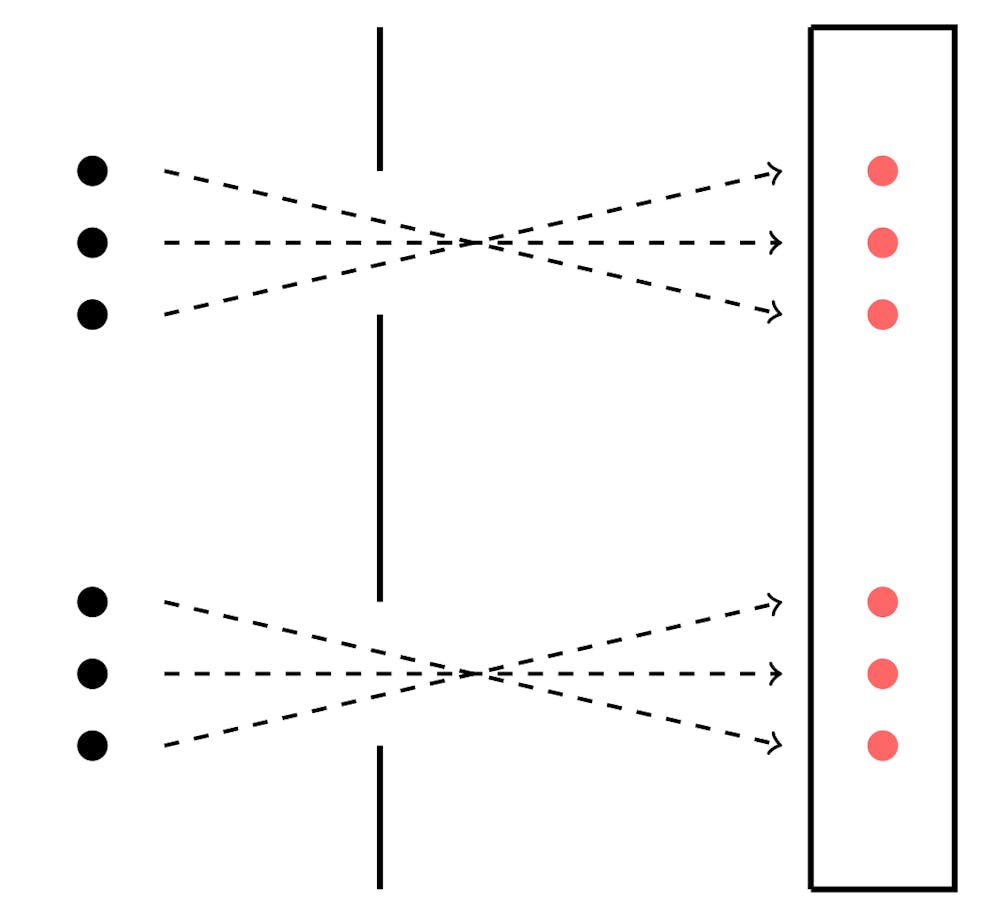
Imagine you have a bucket of tennis balls. Two metres in front of you is a solid panel with two holes in it. A metre behind that panel is a wall. You dip each ball in red paint and throw it at one hole, and then the other. A successful throw will leave a red mark on the wall behind, leaving a specific pattern of roundish dots.
Throw balls at a wall and, if your aim is good, you’ll get a pattern of dots. Provided by author
Now, suppose you shoot a single beam of light at the same panel with holes in it, on the same trajectory as the tennis balls. If light is a beam of particles, or in other words a beam of photons, you would expect to see a similar pattern to that made by the tennis balls where the light particles strike the wall.
That, however, isn’t what you see. Instead, you see a complex pattern of stripes. Why?
This is because light, in this situation, acts like a wave. When we shoot a beam of light through the holes, it breaks into two beams. The two resulting waves then interfere with each other to become either stronger (constructive interference) or weaker (destructive interference).
A single wave of light breaks into two, generating what’s called an ‘interference pattern’. Provided by author
The waves create a lattice pattern, which results in a series of stripes on the wall. In the above image, the stripes are larger and brighter at places where the waves join. The gaps between the stripes are the result of destructive interference, and the stripes are the result of constructive interference.
The photoelectric effect
The above experiment shows light behaving as a wave. But Albert Einstein showed us we can also describe light as being made up of individual particles of energy: photons. This is necessary to account for something called the “photoelectric effect”.
When you shoot light at a sheet of metal, the metal emits electrons: particles that are electrically charged. This is the photoelectric effect.
Prior to Einstein, scientists tried to explain the photoelectric effect by assuming light only takes the form of a wave. To understand their reasoning, imagine ripples in a pond. The ripples have peaks where the wave rises up, and troughs where it dips down.
Now imagine there’s also a boat in the pond with Lego soldiers aboard. As the ripples reach the boat, they have the potential to throw the soldiers off. The more energy the ripples carry, the greater the force with which the soldiers will be thrown off.
And since each ripple can potentially throw off a soldier, the more ripples that reach the boat within a certain time limit, the more soldiers we can expect will be thrown off during that time.
Light waves also have peaks and troughs and therefore ripple in a similar manner. In the wave theory of light, these oscillations are linked to two properties of light: intensity and frequency.
Simply put, the frequency of a light wave is the number of peaks that pass a point in space in a given period (like when a certain number of ripples strike the boat within a specific time). The intensity corresponds to the energy of the wave (like the energy carried by each ripple in our pond).
Scientists in the 19th century pictured electrons on a sheet of metal as behaving similarly to the Lego soldiers on our raft. When light strikes the metal, the ripples should throw the electrons off.
The greater the intensity (the energy of the ripples) the faster the electrons will fly off, they thought. The higher the frequency within a specific time period, the greater the number of electrons that will get thrown off during that time — right?
What we actually see is the complete opposite! It’s the frequency of the light hitting the metal which determines the speed of the electrons as they shoot off. Meanwhile the intensity of the light, or how much energy it carries, actually determines the number of electrons flying away.
Einstein’s explanation
Einstein had a great explanation for this peculiar observation. He hypothesised light is made of particles, and is in fact not a wave. He then linked the intensity of light to the number of photons in a beam, and the frequency of light to how much energy each photon carries.
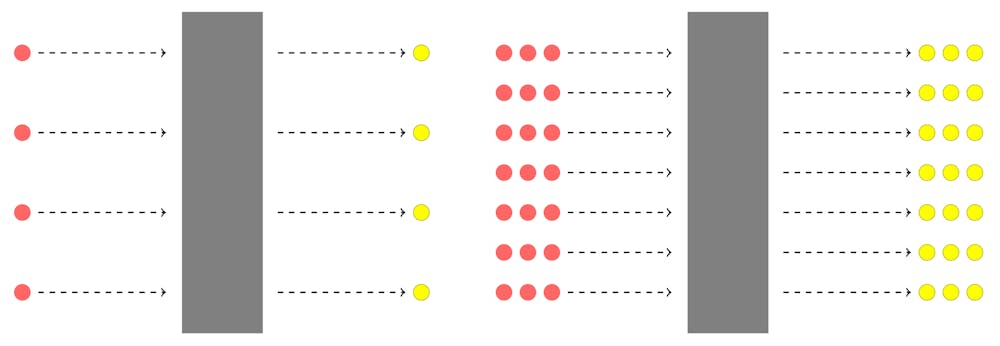
When more photons are shot at the metal (greater intensity), there are more collisions between the photons and electrons, so a greater number of electrons are emitted. Thus, the intensity of the light determines the number of electrons emitted, rather than the speed with which they fly off.
Increase the intensity of light, and therefore the number of photons bombarding a sheet of metal, and you’ll also see a greater number of electrons being shot off. Provided by author
When light’s frequency is increased and each photon carries more energy, then each electron also takes more energy from the collision — and will therefore fly off with more speed.
This explanation earned Einstein a Nobel Prize in 1921.
Wave or particle?
Considering all of the above, one question remains: is light a wave that sometimes looks like a particle, or a particle that sometimes looks like a wave? There is disagreement about this.
My money is on light being a wave that displays particle-like properties under certain conditions. But this remains a controversial issue — one that takes us into the exciting realm of quantum mechanics. I encourage you to dig deeper and make up your own mind!
Phones are ringing off the hook at GP clinicswith people desperate to know when and how they can be vaccinated against COVID-19.
Every time there is a change in recommendations or advice, medical receptions field calls from concerned people trying to book in to talk to a GP or to cancel bookings. This is on top of supporting patients and juggling the extra workload required to perform COVID-19 triage, screening and telehealth.
GPs and practice nurses are considered central and front line in Australia’s primary care COVID-19 response. However, GP receptionists are one step in front.
Their role has changed considerably during the pandemic, taking on functions and learning new skills no-one planned for. We must not forget them and the stressful work they do.
All in a day’s work
Medical receptionists are an integral part of general practice teams and GP clinics would be challenged to exist without them. Doctors, nurses and other staff rely on medical receptionists to create a friendly, welcoming and well-organised front-of-clinic for patients.
Some people assume medical receptionists “just” answer phone calls, notify doctors when patients have arrived and make follow-up appointments. But this not only understates their true impact and influence on our health system, it does not acknowledge the challenges and pressures of their work.
Long before the pandemic, medical receptionists were increasingly undertaking clinical duties, performing tasks involving direct patient assessment, monitoring and therapy.
Medical receptionists were typically in this situation because of a lack of financial support for practice nurses. But, given receptionists are not trained health professionals and are continuously handling confidential information about patients, there’s the risk they may be held legally liable for making a mistake.
Then came the pandemic
The role of medical receptionists has profoundly changed due to the pandemic, though they have not being included in pandemic planning.
The Royal Australian College of General Practitioners has said many receptionists have been providing health and safety advice to patients and the wider community.
They are routinely asking patients questions about their travel history and symptoms, and monitoring body temperature to assess the risk of a patient being infected with COVID-19, despite not being trained to make clinical decisions.
They are increasingly performing basic triage over the phone and at the front desk, essentially assessing “how sick” a patient is and how timely their care needs to be.
Particularly during the pandemic, it is usually their decision whether a patient is granted a face-to-face appointment, seen in their car, placed in an isolation room for their consultation, or asked to go to the hospital instead.
Medical receptionists are also relied on for technical support for telehealth and to train clinicians and patients to use it.
Deciding if a patient is suitable for telehealth alone requires a basic understanding of what the doctor might need. We wouldn’t expect any medically untrained person to make these decisions, yet we expect our receptionists to.
Medical receptionists are rightly concerned about contracting COVID-19 as they are so close to unwell patients in the waiting room.
Threats of violence from frightened patients are also now a reality. And when a patient has not been booked in correctly, or worse, when a patient enters a consultation room showing COVID-19 symptoms, they cop dissatisfaction from clinicians and patients alike.
The emotional demand on medical receptionists is also very high. Supporting clinical teams and their personal feelings and expressions is now part of the job, as well as advocating for, and empathising with patients.
They do all this for an average A$23.96 an hour, much less than administrative or secretary work outside the health-care sector.
Training and support are critical
There is no required qualification to become a medical receptionist. However, courses such as a Certificate III in Business Administration or Certificate IV in Health Administration are recommended. Truthfully, no training exists to equip medical receptionists for the additional pressures of the coronavirus pandemic.
Unfortunately, current tips and training do not address the fundamental problem of medical receptionists not being recognised, trained or paid accordingly for their growing clinical, management and administrative work.
Get vaccinated, be kind
GP clinics still play a vital role in getting Australians vaccinated and helping us emerge from the pandemic. That’s on top of their existing role.
Receptionists are at the front line of this pandemic, changing what they do at a moment’s notice to keep the rest of their teams and community safe. Their many hardships are well overdue for our respect and recognition.
Tracey Johnson, CEO of Inala Primary Care, a large GP clinic and charity in Queensland, contributed to this article.
Lauren Ball receives funding from the National Health and Medical Research Council, RACGP Foundation, VicHealth and Queensland Health. Lauren is an Executive Committee member of the Australasian Association of Academic Primary Care and on the Editorial Advisory Committee of the Australian Journal of General Practice.
David is an Executive Committee member of the Australasian Association of Academic Primary Care.
Katelyn Barnes is an Executive Committee member of the Australasian Association of Academic Primary Care.
Earlier this week, online influencer Oli London responded to criticism after saying they identify as Korean. Having undergone surgeries to change their appearance, they equated being “transracial” with the experiences of transgender people who affirm their gender.
The same reasoning behind London’s Korean identity (they have asked to be called Jimin after a K-Pop star) can be compared to that of Rachel Dolezal, a white woman who identifies as Black and made headlines in 2015. Debates about “transracialism” followed. Unfortunately, it seems we haven’t learned much in this space.
At their core, London’s words and actions are a prime example of racism, cultural appropriation, and transphobia, enacted from a perspective of considerable privilege. Trans and gender diverse experiences don’t equate with someone deciding to change their appearance to be part of a group whose experiences, community and struggles they can’t fully understand.
Race and gender are not built the same
Gender is our internal sense of self, whether that be man, woman, neither or both.
Most people have an idea about their gender at two to three years old — this may not align with the sex assigned to them at birth.
Unlike gender, race presents as categorised (often physical) traits that are socially constructed and understood. You can’t inherit your gender, this is internal and something individual to you — but you do inherit the social construct of race. There is also much more to one’s racial identity than physical appearance — it’s also about culture, community, connection and even trauma.
In 2015, activist Rachel Dolezal faced questions about whether she lied about her racial identity, with her family saying she is white but has portrayed herself as Black. Colin Mulvany/The Spokesman-Review via AP
While multicultural communities and LGBTQ+ experiences of discrimination are sometimes compared, it is important to understand these experiences are different and complex. This is particularly the case, for example, in considering trans people of colour and their experiences of both racism and transphobia.
People who face discrimination based on their race or cultural background can usually go home to members of their family who understand them. This is often not the case for trans and gender diverse people.
Race and gender have very different histories, understandings, experiences, and implications in the face of discrimination. The very idea of being able to transition to a difference race discredits trans and gender diverse people’s experiences of gender affirmation. It also undermines the importance of cultural connections for many communities.
London, who is non-binary and uses they/them pronouns, has actively chosen a “transracial” identity. But trans and gender diverse people’s decision to transition (whether that be social, medical and/or legal) is almost always involuntary and out of necessity to live their lives authentically.
This is not because there is anything inherently wrong with trans people, but because of how trans people are treated by others. Conflating racial identity with gender identity implies that being trans is a choice, and therefore so is race. The reality is that transitioning as a trans person is a difficult and taxing process, one that can be dangerous but also lifesaving and celebrated.
It is racist to think someone can pick and choose parts of a race or culture they like, then distance themselves from that culture when it suits them. They avoid the burden of discrimination while reaping the rewards of white privilege, taking the necessary resources and voices from the communities who need it.
There is a difference between affirming your gender as a trans person, which doesn’t harm anyone else, and choosing to live and appropriate another culture.
What’s more, the word “transracial” is already in use, usually referring to adoption practices in which white parents adopt children of colour. So it’s misleading when used to talk about someone changing their appearance.
Gender understandings can also be different based on their cultural context.
The gender binary we’ve come to think of as usual — male and female — has previously been enforced upon people, cultures and countries through colonisation. Rigid understandings of gender are imposed upon cultures where gender fluidity was previously more accepted.
Trans and gender diverse experiences have existed in many Indigenous cultures around the world for thousands of years, including in Australia.
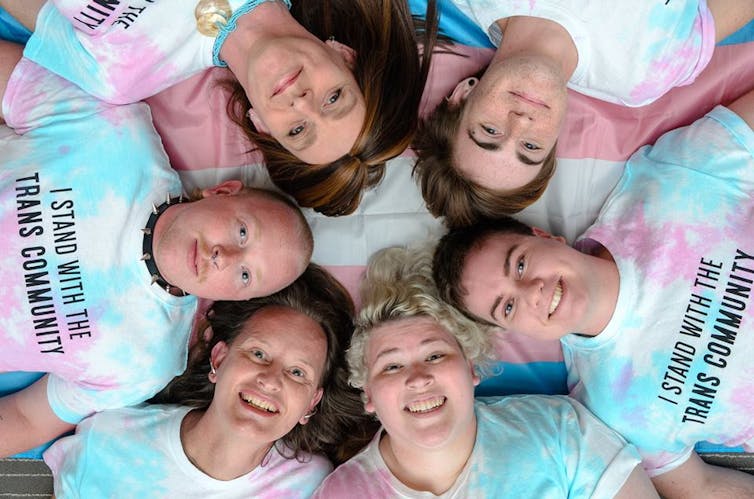
Members of TransFolk of WA, a peer support service for trans and gender diverse people and their loved ones in Western Australia. TransFolk of WA
It’s important for us to acknowledge that talking about “transracial” identities as something you can be for or against only further marginalises and harms people of colour and trans and gender diverse people. This marginalisation is compounded for trans people of colour.
Instead of the pursuit of fame and followers, we need to prioritise amplifying the experiences of diverse peoples in ways that not only focus on discrimination and abuse, but also celebrate people being their authentic selves.
ECU Staff and students hold up LGBTIQA+ pride flags, including the trans flag, and the progress pride flag which acknowledges POC and trans communities. ECU
s.lane@ecu.edu.au was previously a board member with TransFolk of WA and still sometimes volunteers with this organisation at events and through community initiatives, though not often.
Braden Hill does not work for, consult, own shares in or receive funding from any company or organisation that would benefit from this article, and has disclosed no relevant affiliations beyond their academic appointment.
The Australian government introduced new regulations last week that could have a major chilling effect across Australia’s diverse charities sector.
The government’s aim was clear: the regulations are intended to target “activist organisations”, and specifically crack down on “unlawful behaviour”.
Despite this rhetoric, there is no evidence unlawful behaviour by charities is a problem of any significance. By clamping down on charities in this way, the government is not only curtailing their ability to organise peaceful protests, it is imposing more unnecessary red tape on an already highly-regulated sector.
These are generally a less serious type of criminal offence, and can include acts such as trespassing, unlawful entry, malicious damage or vandalism.
If the ACNC commissioner believes a charity is not complying with the regulations, they would be able to take enforcement action, which may include deregistering the charity. This would lead to the charity losing tax concessions — one of the incentives for people to donate to them.
In effect, the regulations mean that if a charity organised a protest in front of a government department and initially refused to leave, this could be considered trespassing. And this could then be grounds to have the charity deregistered.
Are these regulations necessary?
There is little, if any, evidence of a need for the regulations.
First, a comprehensive review of the ACNC legislation commissioned by the government in 2018 did not identify any issues with unlawful behaviour by charities.
In fact, the review recommended removing the ACNC’s existing power to take action against charities that commit serious breaches of the law. It pointed out that charities must already comply with all laws that they are subject to, and it is not the ACNC’s responsibility to monitor compliance or impose sanctions for breaches.
Despite this, the new regulations would extend the reach of the ACNC and expand its existing powers even further.
And importantly, there is no evidence charities — or their staffs or volunteers — are engaging in widespread unlawful activity. When questioned at a recent Senate Estimates hearing, ACNC Commissioner Gary Johns said the commission’s data did not indicate this was a problem.
Even the government’s own regulatory impact assessment asserts only a “small number” of charities have engaged in unlawful behaviour. However, even this claim is not backed up by solid evidence, with the assessment saying it is based on
media coverage in recent years in relation to protests on forestry, mining and farming lands.
Charities are already highly regulated
Charities in Australia are already highly regulated and subject to a broad range of obligations. They must also abide by any number of laws, for example, occupational health and safety and criminal laws.
And the ACNC already has extensive investigation and compliance powers. If charities breach any of the laws they are subject to, they can be sanctioned just like other organisations — and the same applies to their staff.
In addition, charities are already required to take steps to ensure their directors comply with duties, such as acting with reasonable care and diligence. This includes monitoring and managing risks arising from a charity’s activities.
Drafted in a vague way
Perhaps most concerningly, the proposed regulations are worded in a very vague manner, and although improvements were made in response to public consultation on a draft version, major problems remain.
First, they require a charity to “maintain reasonable internal control procedures” to prevent its resources from being used to promote unlawful activities.
According to the regulations, this could cover things such as who can access or use a charity’s funds, premises or social media accounts, and what kind of training charity directors and employees must undertake.
What is “reasonable” in this context involves making very subjective judgements. While the ACNC will provide guidance to charities on this, many organisations will still face considerable uncertainty.
Further, the regulations would not require a conviction, the laying of charges, or even a formal allegation of an offence being committed before the ACNC can take action. The wording only refers to “acts or omissions that may be dealt with” as a summary offence.
This is very open-ended language, but the crux of it is that a charity could be deregistered because it did something the ACNC commissioner thinks is a summary offence. The action itself, however, may not actually meet the criteria for a summary offence because that’s something only a court can determine.
The ACNC commissioner is the ultimate decision maker on these matters. The regulations do not include any factors or criteria that need to be considered when making a decision, other than saying the ACNC “may” (there’s that word again) consult with law enforcement or other relevant authorities.
The chilling effect of the regulations
Even if a charity is deregistered but then successfully appeals a decision, it may no longer have access to tax concessions, it may lose its donors and other supporters, and it may have its reputation tarnished within the community.
The ACNC seeks to implement the law as it understands it. Its focus is on providing guidance to charities rather than using strong enforcement powers straight away. But the vagueness and breadth of the regulations may lead to misunderstandings or regulatory overreach, and create a more uncertain environment for charities.
They will also impose yet another requirement that charity boards and management must consider. Given charities are already well-regulated, if anything, they need unnecessary red tape removed rather than having more of it imposed on them.
And the regulations will likely have a chilling effect. Charities will be more cautious when it comes to organising public advocacy activities such as peaceful protests — or steer clear of them altogether — in order to avoid falling afoul of the regulations. Such activities are an important part of Australia’s democracy.
Protesters with the environmental group Friends of the Earth take to the water in an attempt to blockade a coal ship in Brisbane. Six Degrees/PR Handout Image/AAP
Can the regulations be stopped?
Although the regulations have been made, they cannot come into force until they have been tabled in both chambers of parliament, and the disallowance period has passed.
If a disallowance motion is successful in the House or Senate, then the regulations will be invalid and will not take effect. Given the government does not have a majority in the Senate, this is a possibility.
Much is riding on the crossbenchers — not just the impact the regulations would have on individual charities, but also the kind of society we want Australia to be.
Krystian Seibert was an adviser to a former Australian Assistant Treasurer, and in this role he was responsible for overseeing the establishment of the Australian Charities and Not-for-profits Commission and its regulatory framework. He is currently a Member of the Australian Charities and Not-for-profits Commission’s ‘Sector Forum’ which is a consultative body comprising charity sector representatives. He also works for Philanthropy Australia, the peak body for philanthropy in Australia, which made a submission opposing the draft regulations.
Michelle Grattan discusses the week in politics with University of Canberra Associate Professor Caroline Fisher.
This week the pair discuss the vaccine rollout, and the ongoing debate between the nation’s health experts about who should get what jab.
The government has introduced a new indemnity scheme for GPs administering the AstraZeneca vaccine, but many state health officers are adamant the vaccine is not suitable for younger people.
The pair also discuss the winners and losers of the new Nationals frontbench.
Michelle Grattan does not work for, consult, own shares in or receive funding from any company or organisation that would benefit from this article, and has disclosed no relevant affiliations beyond their academic appointment.
It has been a wild week for public messaging about the AstraZeneca COVID-19 vaccine — baffling both for the public and for general practitioners like me.
Just over two weeks ago, the Australian Technical Advisory Group on Immunisation (ATAGI) advised the AstraZeneca vaccine was now preferred only for people over 60. The Pfizer vaccine was encouraged in those under 60, but this isn’t yet widely available.
Prime Minister Scott Morrison sparked a controversy on Monday, saying ATAGI’s advice did not prohibit the vaccine in younger people. He invited people under 60 to chat to their GPs about it. This was reported as a “massive change” to the vaccine program.
Hunt is right, though: the ATAGI advice has remained the same since mid-June. The advice is careful and nuanced:
COVID-19 Vaccine AstraZeneca can be used in adults aged under 60 years for whom Comirnaty [Pfizer] is not available, the benefits are likely to outweigh the risks for that individual and the person has made an informed decision based on an understanding of the risks and benefits.
Let’s dig into this sentence’s subtleties, and try to shed light rather than heat on the issue.
Three principles for decision-making
ATAGI’s sentence above contains three principles, all of which should be true if the AstraZeneca vaccine is to be used in a person under 60.
First, the Pfizer vaccine should be unavailable. This is the case for many people at the moment. Anecdotally, I’m told of waits of about three months for the Pfizer, if you can get an appointment at all. A surge in availability is promised, but not until October.
Second, the benefits of the AstraZeneca vaccine should outweigh the risks. This is tough, as risks and benefits can be hard to estimate.
The balance between risks and benefits depends on the person’s risk of being exposed to COVID (which might vary based on travel or occupation) and on their risk of bad outcomes (like death) should they get COVID.
Age seems the most important risk factor for these terrible outcomes, but other conditions appear important too, including heart disease, lung disease, high blood pressure, diabetes and cancer. (Though people under 60 with these conditions are eligible for Pfizer, at present they may be kept waiting.)
The risk of virus exposure depends greatly on how much COVID is present in our community. The less there is about, the less likely you’ll catch it. But this can change quickly and unpredictably, adding difficulty to decisions.
Third, the person receiving the vaccine needs to give their informed consent based on an understanding of these risks and benefits.
To give informed consent, you need to understand the risks and benefits. CDC/Unsplash
Informed consent
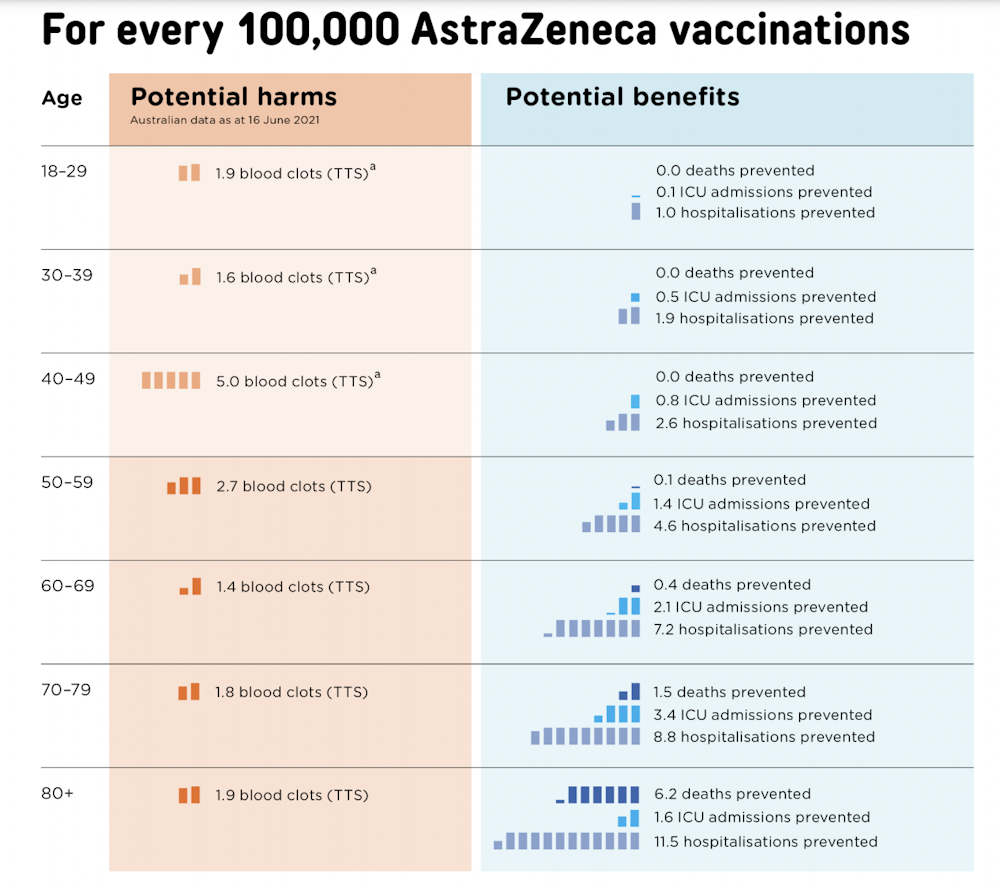
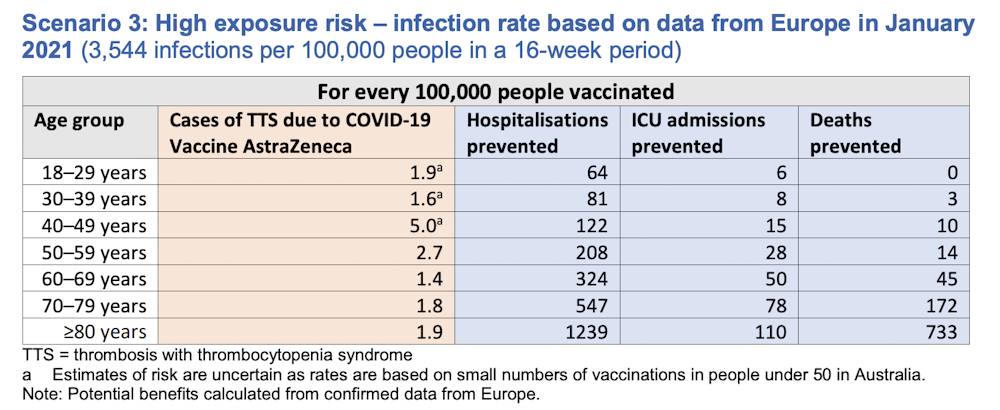
Handy decision aids help visualise some, but not all, of these risks. For example, this figure shows the trade-off between risks and benefits during a relatively mild outbreak, equivalent to Australia’s first COVID wave.
In this setting, the benefits of vaccination don’t clearly outweigh the risks until people are over the age of 60. This is why ATAGI has used 60 as an age threshold for using the AstraZeneca vaccine.
But if we had a severe outbreak, like in Europe last winter, the benefits of the vaccine would easily outweigh the risks, even in people from the age of 30.
These charts are helpful for thinking about how age and disease prevalence affect decisions. But they don’t include all relevant facts. For this, a discussion with a GP could be helpful — ideally a GP who knows you well.
ATAGI’s co-chair Christopher Blyth has recently clarified the AstraZeneca vaccine should only be used under 60 in “pressing” circumstances.
I can imagine such circumstances. For example, consider a 59 year-old with diabetes and heart disease who plans to travel to a country with many COVID cases. Here, I’d feel confident the benefits outweigh the risks.
However, imagine a 25 year-old with no underlying medical conditions, not travelling, and not working in a high-risk profession. Compared to the previous example, risks are similar, but benefits are fewer. It’d be hard to convince myself the benefits would outweigh the harms here — at least not while our COVID case numbers remain low.
However, our case numbers are unlikely to stay low forever and if we wait for a big outbreak before vaccinating, immunity may arrive too late.
These are fraught decisions, full of ethical tensions. I want to respect my patient’s autonomy — and there’s a part of me that feels I should be able to vaccinate anyone if they are informed and want the vaccine. After all, many people take other, bigger risks elsewhere in their life.
And it’s admirable many younger Australians seeking vaccination are doing so not just for themselves but also to protect their community. But balanced with this, we need to try to minimise harm.
The risks are small but real, and need to be balanced with the benefits. Shutterstock
Under 60 and still keen for a vaccine?
If you want to be vaccinated and are under 60, and Pfizer is unavailable, you could speak to your GP — especially if your circumstances put you at special risk.
I think it is best to do this in a special consultation rather than squeezing it into an immunisation clinic time slot. Because our vaccines come in multidose vials, most practices run quite rapid-fire vaccination clinics, allowing only a few minutes for each person. Such clinics are workable for uncontroversial vaccine decisions in people over 60, but mightn’t allow enough time for complex decisions with younger people.
By working with your GP, I hope you’ll feel you can arrive at the decision best suited to your circumstances and values.
Brett Montgomery works as a general practitioner, mostly academically but also clinically. In his clinical role he, like many Australian GPs, discusses and provides COVID-19 vaccination as part of his paid work. At present the practice he works at offers the AstraZeneca vaccine, but not the Pfizer vaccine. He has personally had two doses of the AstraZeneca vaccine, despite being under the age of 50; he had his first dose before the link to a clotting disorder was apparent. He is affiliated with several organisations with health policy interests, including the Royal Australian College of General Practitioners, the Doctors Reform Society and the Australian Greens. However, he writes this article in a personal capacity.
Four hundred years ago, on July 2 1621, a remarkable Englishman named Thomas Harriot died in London. He left behind some 8,000 pages of scientific research, but it is only in recent decades that scholars have uncovered their treasures.
And what they show is that Harriot independently made many significant discoveries now attributed to other, more famous scientists. Some scholars have called him “the English Galileo” and “the greatest British mathematical scientist before Newton”.
Yet Harriot died without publishing a single word of this extraordinary output. His tale reminds us that, while we may sometimes think science progresses through a series of famous pioneers who single-handedly overturn entrenched beliefs, the story is rarely so simple.
What did Harriot discover?
For instance, we learn in school that Galileo Galilei initiated telescopic astronomy and discovered the law of falling motion. But Harriot independently did both of these things.
Thomas Harriot’s 1609 map of the Moon, drawn by observing through a telescope. Wikimedia
He also deduced fledgling general laws governing the motion of everyday objects, again independently of Galileo, and before René Descartes. (Half a century later, Isaac Newton developed the definitive laws of motion.)
Harriot studied light, too, discovering the secret of colour and the nature of the rainbow before Newton, and finding the law of refraction (which we know today as Snell’s law) before the Dutch astronomer Willebrord Snell.
He also made a mathematical study of population growth before Thomas Malthus, developed a completely symbolic form of sophisticated algebra before Descartes, discovered binary arithmetic before Gottfried Leibniz, and took
steps on the road to calculus with his work on infinite series.
The law of falling bodies
It wasn’t until 2008 that Harriot’s work on gravity was fully reconstructed, by the German scholar Matthias Schemmel.
As Schemmel pointed out, Harriot and his contemporary Galileo were heirs to essentially the same body of knowledge. It’s perhaps not so surprising, then, that they made some of the same breakthroughs. There are plenty of examples of independent co-discoveries in history, most famously that of calculus by Newton and Leibniz.
The law of falling motion says that without air resistance all objects, no matter their size or mass, fall from the same height at the same rate.
Legend has it Galileo dropped balls from the Leaning Tower of Pisa to study how they fell. Nobody knows if this is true, but Harriot had the same idea: he recorded the time, in pulse beats, that it took for different objects falling from as high as 55½ feet (about 17 metres) to reach the ground.
Both Harriot and Galileo devised more accurate experiments, however, from which they derived a mathematical understanding of how things fall.
This combination of experiment and mathematics is now the accepted way to derive a law of nature. Quantifying observations means others can test the results, and use them to make useful predictions.
Harriot and Galileo were not the first to understand the role of observation and mathematics in this context, of course. But they were among the most successful of the pre-Newtonian pioneers.
Galileo didn’t publish his work on gravity until after Harriot had died, and there’s no evidence that the two men ever met or corresponded.
The law of refraction and the shape of the rainbow
The German astronomer Johannes Kepler, however, did correspond briefly with Harriot. Kepler had been working on the nature of light and vision when word reached him that Harriot had unravelled two mysteries: the law of refraction, and why the rainbow has its magical colours and its unique shape.
The law of refraction describes how light bends when it passes from one medium into another, which explains how an image can be focused by a glass lens or why your leg looks wobbly when you dip it in a swimming pool.
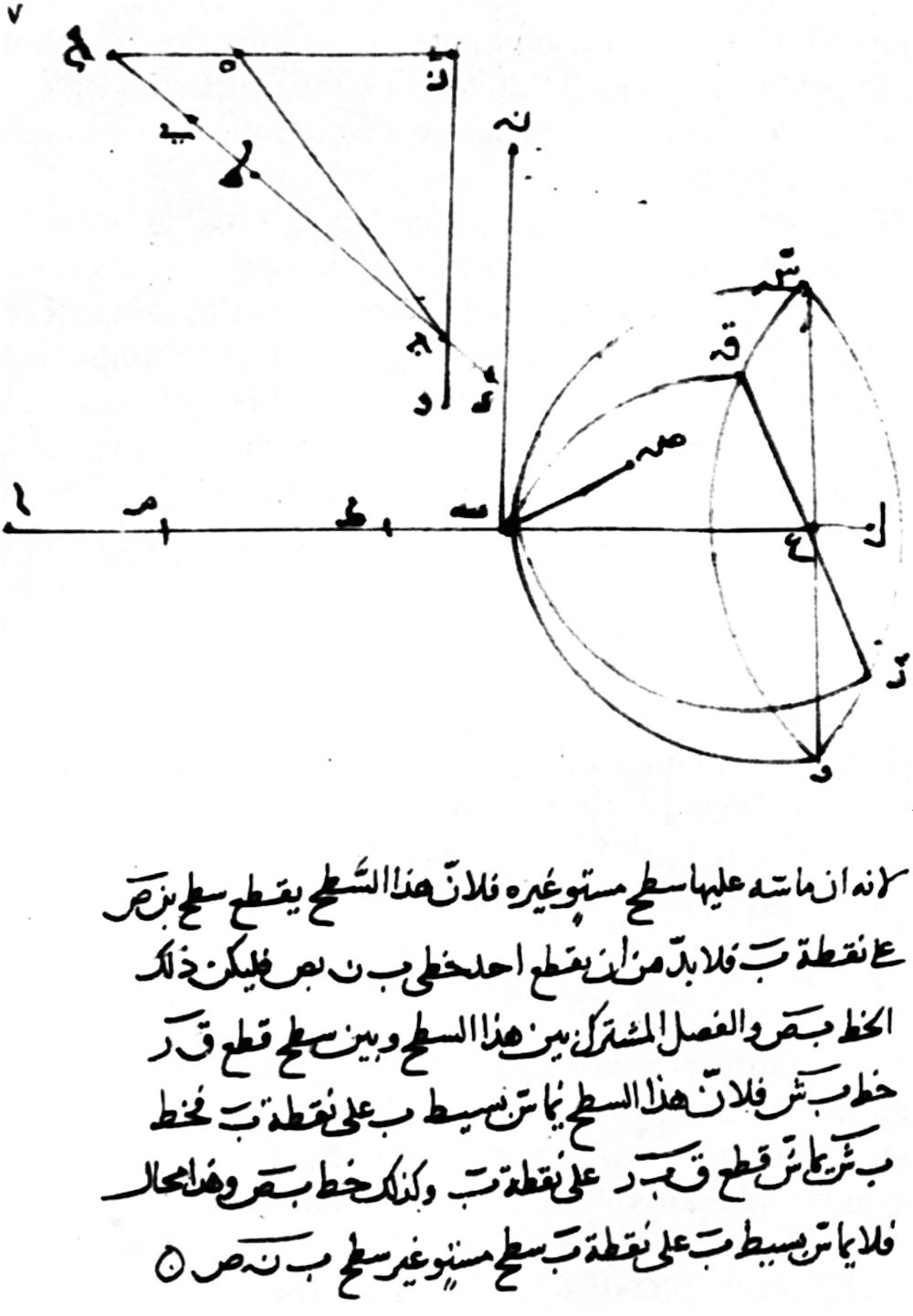
A diagram from Ibn Sahl’s 10th-century treatise on optics showing the path of light refracted by a lens. Wikimedia
Harriot derived this law 20 years before Snell, but there’s a popular belief that the 10th-century Baghdad-based scholar Abū Saʿd al-ʿAlāʾ ibn Sahl beat even Harriot. This is not quite right: Ibn Sahl is a notable pioneer whose geometrical diagram of light focussed by a lens gives, in hindsight, the correct refractive path. But there’s no evidence he deduced his result from experiment, or that he understood the general properties of refraction.
Judging from his surviving papers even Snell failed to generalise his result, which he, like Ibn Sahl, never wrote as the neat trigonometric equation we use today. Harriot, by contrast, did: his derivation of the general law of refraction is another example of his rigorous blend of experiment and mathematics.
If only Harriot had published! In the early stage of his career, though, he was bound by commercial secrecy, for his first patron was the controversial statesman and entrepreneur Sir Walter Raleigh. Harriot was also busy dodging heretic hunters and sailing the high seas as Raleigh’s navigational advisor.
Thomas Harriot published only one work in his lifetime: a report on his stay in North America in the 1580s. Wikimedia
Raleigh had delusions of empire and glory, and wanted to establish a trading colony in today’s USA before the Spanish beat him to it. The one work Harriot did publish in his lifetime was “a brief and true report” on the economic potential of Raleigh’s chosen American site.
Harriot’s contribution to colonialism has justly attracted its share of criticism. Nonetheless, his report is still widely praised for its sympathetic depiction of the way of life of the North Carolina Algonquian people, as it was when Europeans first set foot on their land. Harriot learned the local language, and enjoyed much about the year he spent living with the Algonquians.
What he loved doing most, though, was mathematics and physics. He was neither flamboyant nor ambitious, and when he was wrongfully imprisoned through an unlucky connection with the Gunpowder Plot (a failed attempt to assassinate King James I), he told his jailers he just wanted
to live a private life for the love of learning that I might study freely.
Conclusion
In the late 1590s Harriot had found a second patron, Henry Percy, the ninth earl of Northumberland. It was then that he was able to study the mysteries of nature and the marvels of mathematics for their own sakes, rather than the “applied” work he had done for Raleigh.
Having two generous patrons meant Harriot did not need to publicise his discoveries to attract funding, the way Galileo did. Nor did he care about fame, despite being urged by friends to claim his priority. His manuscripts do contain several almost finished treatises, but it seems he was so busy doing science that he never managed to put his results together for the printer.
After his death, well-meaning scholars carved up his manuscripts in an attempt to study and publish them. In the process, however, all the papers disappeared, seemingly lost forever. Then, 150 years later, the Hungarian astronomer Franz Xaver Zach discovered them, locked safely away in Northumberland’s castle.
Most of the papers were then given to the British Museum. They are now in the British Library, where I had the privilege of studying them. (They’re also available online.)
As for Harriot, no-one knows much about him as a person – not even his birthday. Nevertheless, he has fascinated scholars for the past half century (as I discovered some years ago when I set out to bring his story to a wider, non-specialist readership).
That’s because despite the lack of biographical data, those precious manuscripts show that what mattered most to Harriot himself was mathematics and science. Four hundred years on, his mix of genius and dedication is something to honour.
Robyn Arianrhod does not work for, consult, own shares in or receive funding from any company or organisation that would benefit from this article, and has disclosed no relevant affiliations beyond their academic appointment.
Many Australians will be weighing up whether to be vaccinated with the AstraZeneca vaccine, which is widely available, or to wait for Pfizer later in the year.
There are many factors to consider. One is how well these COVID-19 vaccines work in the “real world” of those getting vaccines now.
Real-world data data can tell us how well vaccines protect against currently circulating variants — including the Delta variant, which is dominant in the UK and the subject of lockdowns in Australia. Though less reliable than clinical trials, real-world data can tell us how well vaccines work in some parts of the population excluded from clinical trials. They can also tell us whether we can effectively mix vaccines and what the main side-effects are, almost in real time.
You might be surprised by the results.
Where did these data come from?
Results of the crucial randomised clinical trials, which led to COVID vaccines being approved around the world, led to extraordinary media coverage. The vaccines have since become household names. But those trials were only the beginning.
Data collected during health-care delivery including medical consultations, hospital admissions, vaccine registers, laboratory tests and death records give us more, and different information about the vaccines.
These are data about millions of individual people, which are de-identified before analysis. Analysed properly, they tell us how well vaccines work, and their side-effects, in the real world.
How well do COVID vaccines protect you from serious disease?
The most important finding from analysing these data is vaccines from AstraZeneca, Pfizer and Moderna appear equivalent in reducing your chance of serious illness from COVID-19. As we show in our recent review, they do this by more than 80%.
These results extend the findings of the randomised trials by showing all ages benefit from the vaccines, and people with underlying chronic diseases experience reduced, but still worthwhile, protection from serious illness.
The next question is how well these vaccines reduce transmission of the virus from person to person, which the randomised clinical trials were not designed to measure directly.
Researchers in the UK linked data from the vaccination register with laboratory results and residential addresses. They showed a vaccinated household member who then developed COVID-19 was half as likely to transmit the virus to another household member as someone who had not been vaccinated.
However, researchers did not measure the impact of vaccination on transmissibility of the Delta variant in this study as it was conducted before this became dominant in the UK.
Researchers in the UK have released estimates of vaccine effectiveness against coronavirus variants.
The most recent report from England found a single dose of the AstraZeneca or Pfizer vaccines provides only modest protection (30-40%) against infection with the Delta variant. Full vaccination with two doses of Pfizer offers greater protection (88%) than two doses of AstraZeneca (67%).
However, the same report found full vaccination with either vaccine provides more than 90% protection against hospitalisation from COVID-19.
Common side-effects of vaccines are tracked by the Zoe COVID Symptom Study. This allows over four million people, mainly in the UK, to report any side-effects via an app.
Reported side-effects are generally mild (headache and fatigue). About 13% report common side-effects after the first dose of the Pfizer vaccine, 22% after the second dose. With AstraZeneca, it’s more than 33% after the first dose. Data from the second AstraZeneca dose were not available for this study.
Millions of people can report any suspected side-effects of COVID vaccines via an app. from www.shutterstock.com
The Zoe app has not quantified the risk of rare severe complications of vaccination. However, real-world data have provided early estimates of the risk of a blood clot (thrombosis) after receiving the AstraZeneca vaccine in Norway and Denmark.
The overall rate of a blood clot in the veins anywhere in the body was approximately doubled compared to the general population. This included an extra risk of cerebral venous thrombosis (a type of brain blood clot) of 2.5 out of every 100,000 who received a first vaccination (compared with the general population). Although elevated, this is a very low risk.
The researchers did not have access to appropriate control groups receiving other COVID-19 vaccines to compare the levels of risk. This will likely be a priority in future studies.
The science of analysing and interpreting real-world data from vaccine and other treatments has developed over the past 20 years.
In clinical trials randomisation of participants to treatment or control results in very similar comparison groups. This means any differences in trial outcomes should be due to the treatment, not some other factor. Real-world comparisons do not provide this guarantee.
If elderly people, with underlying disease, receive their vaccine early in the rollout, this may create a sicker group of people (or cohort) to follow and analyse. This may make the vaccine appear less-effective than it really is.
Conversely, a more open rollout may lead to more healthy people getting vaccinated. So, the vaccine will appear better (more effective) than it really is.
This complex interplay of biases makes it difficult for researchers to tease out the true effects of vaccines; hence real-world studies require more sophisticated designs and analyses than randomised trials.
However, it’s not so simple. Randomised trials can also be “real world” when they include broad criteria of who to include. While we need more randomised trials, they will never answer all the emerging questions soon enough. That’s why real-world data are so powerful in the middle of a pandemic.
Where to next?
Despite some limitations, analyses of real-world data have become increasingly important with the emergence of new, more infectious strains of SARS-CoV-2 as they can provide answers to important questions more quickly than randomised trials.
However, not all governments provide secure access to de-identified population-scale data to allow researchers to do this. So it’s essential suitably qualified researchers have this access to perform this important work.
David Henry also has an affiliation with Gold Coast University Hospital, Queensland, Australia
Paul Glasziou does not work for, consult, own shares in or receive funding from any company or organisation that would benefit from this article, and has disclosed no relevant affiliations beyond their academic appointment.
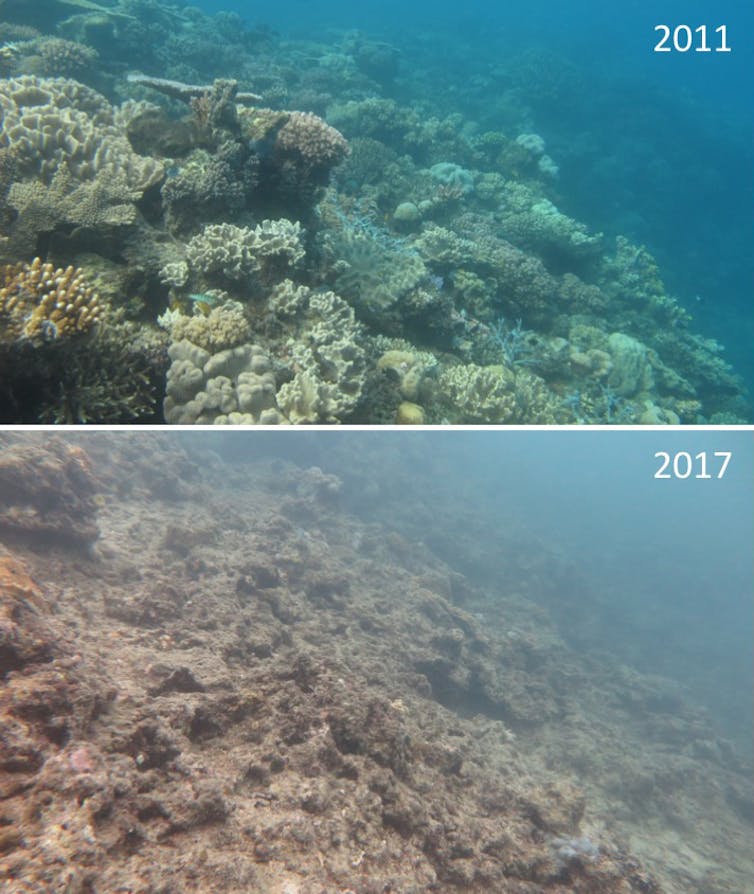
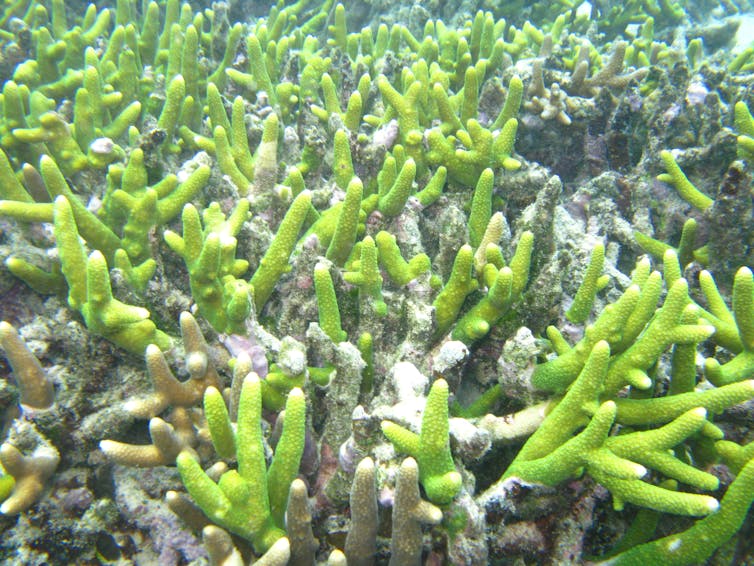
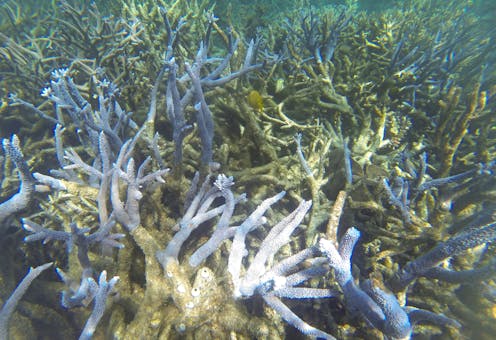
The federal government has opposed a recommendation by a United Nations body that the Great Barrier Reef be listed as “in danger”. But there’s no doubt the natural wonder is in dire trouble. In new research, my colleagues and I provide fresh insight into the plight of many coral species.
Worsening climate change, and subsequent marine heatwaves, have led to mass coral deaths on tropical reefs. However, there are few estimates of how reduced overall coral cover is linked to declines in particular coral species.
Our research examined 44 years of coral distribution records around Lizard Island, at the northern end of the Great Barrier Reef. We found 16% of coral species have not been seen for many years and are at risk of either local extinction, or disappearing from parts of their local range.
This is alarming, because local extinctions often signal wider regional – and ultimately global – species extinction events.
Healthy coral near Lizard Island in 2011, top, then six years later after two bleaching events, bottom. Zoe Richards
Sobering findings
The Lizard Island reef system is 270 kilometres north of Cairns. It has suffered major disturbances over the past four decades: repeated outbreaks of crown-of-thorns seastars, category 4 cyclones in 2014 and 2015, and coral bleaching events in 2016, 2017 and 2020.
Our research focused on “hermatypic” corals around Lizard Island. These corals deposit calcium carbonate and form the hard framework of the reef.
We undertook hard coral biodiversity surveys four times between 2011 and 2020, across 14 sites. We combined the results with published and photographic species records from 1976 to 2020.
Micromussa lordhowensis is popular in the aquarium trade. Zoe Richards
Of 368 hard coral species recorded around Lizard Island, 28 (7.6%) have not been reliably recorded since before 2011 and may be at risk of local extinction. A further 31 species (8.4%) have not been recorded since 2015 and may be at risk of range reduction (disappearance from parts of its local range).
The “missing” coral species include:
Acropora abrotanoides, a robust branching shallow water coral that lives on the reef crest and reef flat has not been since since 2009
Micromussa lordhowensis, a low-growing coral with colourful fleshy polyps. Popular in the aquarium trade, it often grows on reef slopes but has not been seen since 2005
Acropora aspera, a branching coral which prefers very shallow water and has been recorded just once, at a single site, since 2011.
The finding that 59 coral species are at risk of local extinction or range reduction is significant. Local range reductions are often precursors to local species extinctions. And local species extinctions are often precursors to regional, and ultimately global, extinction events.
Each coral species on the reef has numerous vital functions. It might provide habitat or food to other reef species, or biochemicals which may benefit human health. One thing is clear: every coral species matters.
Acropa abrotanoides, one of the corals ‘missing’ from around Lizard Island. Zoe Richards
A broader extinction crisis?
As human impacts and climate threats mount, there is growing concern about the resilience of coral biodiversity. Our research suggests such concerns are well-founded at Lizard Island.
Coral reef communities are dynamic, and so detecting species loss can be difficult. Our research found around Lizard Island, the diversity of coral species fluctuated over the past decade. Significant declines were recorded from 2011 to 2017, but diversity recovered somewhat in the three following years.
Local extinctions often happen incrementally and can therefore be “invisible”. To detect them, and to account for natural variability in coral communities, long-term biodiversity monitoring across multiple locations and time frames is needed.
Acropora aspera has been recorded just once, at a single location, since 2011. Anne Hoggett
In most locations however, data on the distribution and abundance of all coral species in a community is lacking. This means it can be hard to assess changes, and to understand the damage that climate change and other human-caused stressors are having on each species.
Only with this extra information can scientists conclusively say if the level of local extinction risk at Lizard Island indicates a risk that coral species may become extinct elsewhere – across the Great Barrier Reef and beyond.
In recent years, Australian academics have been accused of many forms of wrongful expression including racism, transphobia and anti-Semitism.
Earlier this year an African-Australian researcher’s paper was accused of being racist. The research found the over-representation in crime statistics of Sudanese-born young people is not due to racial profiling.
More recently a queer political action group at the University of Melbourne called for a review of a philosophy subject on feminism over concerns the course materials contain “transphobic rhetoric”.
The university also drafted a new “gender affirmation policy”, which considers prohibiting public speeches or events it deems an attack on gender diversity. Critics of the draft policy argue it expands the relevant notion of “harm” and represents a major potential constraint on academic freedom.
These examples raise questions about the limits of academic freedom, and about what makes constraint of academic speech legitimate.
Political convictions underlie interpretations of such incidents. Some are more likely to emphasise concerns about purportedly harmful speech, and to interpret constraints on academic expression as an essential part of protecting marginalised members of society.
Others emphasise concerns about the negative effects of limiting academic freedom. They may interpret their stance as an essential part of larger efforts to resist illiberal cultural trends.
To evaluate these challenging issues, we need to understand the value of the university in a liberal society. We must also appreciate the many roles of academics in the university and in the wider democratic ecosystem.
The pursuit of truth
It is common to claim universities have the special function of facilitating the pursuit of truth. This pursuit requires open and fearless discussion of ideas, including ones that are controversial, false and even sometimes immoral. According to this view, censoring academics for their speech is incompatible with the rigorous pursuit of truth, and hence with the foundational purpose of the university.
The pursuit of truth is a foundational purpose of universities. Shutterstock
But this can’t be the end of the story. First, the university has other important functions. For example, educating students, preparing students for life after university and improving public debate.
Second, some campus speech constitutes unjustifiable harm. Such harmful speech can be constrained when its exercise violates the rights of others, for instance their right to non-discrimination.
To better assess the limits of academic freedom, it is useful to distinguish between two aspects of academic work: teaching and research.
As teachers, academics are tasked with facilitating the pursuit of truth. But they are also responsible for cultivating a respectful environment, which gives students fair opportunities to grow intellectually. This requires presenting material in ways that don’t demean, subordinate or intimidate any one group or person.
In a United States case that went to court, a philosophy professor refused to address a transgender student with her preferred pronouns. Such behaviour singles out the relevant student and jeopardises their equal status in the classroom. It should not be protected under the guise of academic freedom.
Academic freedom doesn’t justify singling out a student and demeaning them. Shutterstock
But as researchers, academics should primarily be interested in pursuing the truth. They should not, for example, minimise findings that challenge their political views, the views of their students or their employers.
Similarly, research should not be constrained merely on the grounds it might have bad effects. Valuable research often has some bad effects. A prominent US economist published surprising findings which challenge the common assumption black Americans are disproportionately likely to encounter lethal force from the police. These findings have, predictably, been used inappropriately. Some have used them to argue there is no racism in policing.
We are very sceptical about arguments that assume bad political consequences like this are sufficient to limit the freedom of academics to pursue the research that interests them.
It is important to distinguish the first critique from the second. The idea of the first is not that the speech might cause later harm, but that it constitutes harm on its own. Demeaning students is harmful in itself. And it violates principles of fairness in education.
So the relevant question is: when does academic speech constitute harm in this way?
Robust debate in the classroom
It is our view that causing distress, hurt feelings or discomfort in students cannot be sufficient on its own to limit academic speech — even if this distress is significant.
Socialists may feel discomfort in a class on macroeconomics. Indigenous students may feel confronted in a class on Australian literature. Students committed to the literal truth of the bible may feel distress in a class on evolutionary biology. Sexual assault survivors may feel disrespected in a class on criminal law. These reactions deserve to be taken seriously. But taking them seriously does not mean ensuring they never arise.
Students committed to the literal truth of the bible may feel distressed in a class on evolutionary biology. Shutterstock
It is unavoidable some students will be offended and distressed by material they encounter at university — just as they will be offended and distressed by material they encounter in society more broadly.
Student distress can sometimes also be a sign instructors are engaging in unacceptable classroom behaviour. An economics professor should not mock their anti-capitalist student, even if that student were to exhibit poor reasoning. Similarly, professors teaching gender critical views — which distinguish between gender and biological sex and maintain biological sex is politically important — should not insult, intimidate or silence students who passionately disagree with them.
Academics can be appropriately censured for violating their professional duties if they behave sufficiently disrespectfully.
However, we should err on the side of preserving academic freedom when the cause of distress is the mere discussion of academic material. Outside of the case of clearly demeaning, subordinating, or intimidating speech, hurt feelings or distress are insufficient grounds on their own for limiting the speech in question.
The authors do not work for, consult, own shares in or receive funding from any company or organisation that would benefit from this article, and have disclosed no relevant affiliations beyond their academic appointment.
You might have thought the “lockdown wars” in Australia were over.
After all, Australia navigated the pandemic better than essentially any other country in 2020.
We closed our international border in March, used an early and relative light lockdown in NSW to get contact testing and tracing up and running, squelched costly hotel quarantine leaks in Victoria with more dramatic measures, and generally kept Australia as COVID-free as possible.
We adopted the wise principle, borne out by so much tragic international experience, that we could not have a functioning economy with a pandemic raging.
The overwhelming focus of public policy has now shifted to getting people vaccinated. But some of the anti-lockdown tribe are battling on, suggesting our border controls and lockdown didn’t save lives.
Are they right? No.
Their latest argument uses a US National Bureau of Economic Research working paper by academics from the University of Southern California and the RAND Corporation that looks at “excess deaths”. That is, it compares total deaths from all causes in a particular jurisdiction with an estimate of “expected” deaths in that jurisdiction based on historical data.
Their data covers all 50 US states and 43 nations, including Australia. Their conclusion is that “shelter-in-place” policies were associated with an increase in excess mortality, with the exception of three countries: Australia, Malta and New Zealand.
So this isn’t a good argument against our approach. Nor did the authors find any statistical significant result covering more than the immediate weeks following shelter-in-place implementation in the more internally comparable US data.
Nonetheless it’s worth examining this paper, and also looking at what Australian data on excess deaths is showing.
The National Bureau of Economic Research is a distinguished organisation. It has published nine of my working papers. But this does not bestow some kind of magical status on them. It doesn’t mean they are peer-reviewed. Rather, it is an automatic privilege accompanying bureau affiliation.
Thus every paper comes with the disclaimer that “working papers are circulated for discussion and comment purposes” and “have not been peer-reviewed”.
The paper latched on to by the anti-lockdown tribe uses an empirical method known as an “event study”. Such studies were popularised in financial economics thanks to an influential 1969 paper on stock prices by American economist Gene Fama and colleagues.
Eugene Fama 1969 paper ‘The Adjustment of Stock Prices to New Information’. CC BY-SA
Fama has been called “father of modern finance” for his work on the “efficient markets hypothesis” – the idea that asset prices reflect all available information, so it is impossible in the long run to “beat” the market.
The efficient markets hypothesis is a big and important idea in financial economics. It rightly led to the 2013 Nobel prize for economics, which Fama shared with University of Chicago colleague Lars Peter Hansen
and Yale University’s Robert Shiller, who built on Fama’s work and concluded that markets are often very far from efficient.
Whatever one’s view about the rationality of asset prices, it is important to understand the “event study” method relies crucially on rationality in financial markets and the efficiency of securities prices. As one survey article of event studies notes:
The usefulness of such a study comes from the fact that, given rationality in the marketplace, the effects of an event will be reflected immediately in security prices. Thus a measure of the event’s economic impact can be constructed using security prices observed over a relatively short time period.
Using an event study to assess a noisy measure of mortality in decidedly inefficient political markets (if one can even call them that in this case) is a million miles away from the purpose and internal logic of event studies in securities markets.
The nice way to describe using an event study to assess pandemic policy is that it’s “brave”.
Australian data on deaths
The Australian Bureau of Statistic collates definitive statistics about deaths after reports from state coroners are finalised. It usually publishes these annually, in September.
Due to the interest in deaths due to the pandemic, however, the bureau has been publishing monthly “provisional mortality statistics” based on doctor-certified deaths. (About 80-85% of all deaths are certified by doctors, without a coroner determining the cause.)
The provisional statistics show Australia had slightly fewer non-COVID-related deaths in 2020 than normally the case (an average of 385.6 deaths per day, compared to the baseline average of 385.8.)
In 2020 and so far in 2021 Australians have been less likely than normal to die of heart disease and strokes, and dramatically less likely to die from flu.
There’s a good reason for this. As Simon Swanson, the chief executive of ClearView Life Assurance, told the House Standing Committee on Economics on June 25:
If you read our annual report last year you would have seen we increased assumptions for suicide. That did not actually happen — suicide actually went down —and in our research part of that was because people were participating in a global pandemic and everyone was in this together. The second impact was there was an incredible increase in telehealth, which was an interesting part of technology actually delivering to consumers.
Everyone was in this together.
There may, of course, be other mental health impacts from lockdowns. But there are no perfect options. We will have a greater array of policy options when at least 80% of the population are vaccinated.
With apologies to John Keating (played by Robin Williams) in Dead Poets Society: “‘Twas always thus, and always thus will be.”
Richard Holden is president-elect of the Academy of the Social Sciences in Australia.
As tree scientist, I am fascinated by the magnificent biology of trees. I also find it enthralling and encouraging that trees are being appreciated by writers around the world right now.
Three fresh books (chosen from a wider field of titles on the topic) exemplify how trees can be written about as more than just background or an incidental part of a landscape, but as integral to meaning.
My Forests: Travel with Trees by Janine Burke, The Heartbeat of Trees by Peter Wohlleben, and Tree Story, a collection curated by Charlotte Day and Brian Martin — are mixed in style and content. But all make clear the close relationships between people and trees and the vital importance of those connections.
It is not surprising that at a time of significant climate change, where natural ecosystems around the world are being devastated and after 18 months of a global pandemic, books on trees are proving popular.
There is an air of desperation in these three titles. Things are changing fast, trees and forests grow slowly, we are wasting time.
Books about trees are published every year. Some are beautifully illustrated with photos or hand-drawn images of special trees in large coffee table formats. Some, like J. R. R. Tolkien’s Lord of the Rings, have trees and forests as characters. Tolkien told a fan that his magnificent Ents were “either souls sent to inhabit trees, or else were folk who slowly took the likeness of trees owing to their inborn love of trees”.
Tolkien’s writing, including a story collection called Tree and Leaf, reminds us of the differences between tree time and human time — we humans are hasty folk. This is something I dwell upon often.
The Magic Faraway Tree by Enid Blyton was one of the first books I can recall reading where a tree played a major role and it helped set me on a path of lifelong reading and interest in botany.
That childhood favourite connects to Richard Powers’ The Overstory, which draws together a disparate fictional band of tree protectors. After his book became a hit, Powers recommended 26 other titles for tree-loving readers.
This library of tree books has served a wide and varied readership well and sustained those of us who despair at the wholesale clearing of forests and trees in our cities and suburbs.
In most Australian cities we are losing trees and canopy cover at a rate of about 1-1.5% per year. I’m still saddened by the loss of a lemon scented gum (Corymbia citriodora) that grew at the city end of the Tullamarine Freeway in Melbourne. I miss its shade in summer but also the delicious scent that wafted through the car window at certain times of the year.
In October last year, protesters mourned a sacred 350-year-old Djab Wurrung Directions Tree, cut down along Victoria’s Western Highway.
There has been a growing disconnect between people and trees and vegetated spaces, particularly for those living in cities. Many people have become so focused on urban survival they have become distanced from the essential and intimate dependence that human beings have on plant life.
Earth as we know it, and the lifeforms it sustains, depend upon and have been shaped by plants and their evolution. Human beings can only survive on our planet because of the ecosystems made possible by plants and trees. If these systems are put in jeopardy because people fail to appreciate the importance of plants, then entire ecosystems are put in peril with profound consequences for humankind.
Climate change is giving us a glimpse of how these important relationships are affected by bushfires, stronger winds from unusual directions and more frequent storms with heavy rainfall that can lead of the loss of grand old trees that have stood as silent sentinels for decades and centuries.
All plants in an ecosystem are important to its function, but the large size and long lives of trees explain why they are often focused upon as representatives of their communities. Their size makes them obvious and contributes to the ambience of any landscape, but can also inspire a sense of awe and in some urban-dwellers, fear.
Their long life spans provide a sense of certainly and continuity in uncertain times of rapid change — their presence can link several human generations, when other connections have been lost. They also provide a tangible prospect, if they are left alone or are properly managed, for links to future generations. All of this can be very reassuring for people who feel vulnerable and oppressed by rapid change.
All three of the new books selected tend to anthropomorphise trees and aspects of their biology, attributing to them distinctly human qualities. Sometimes they are described by a mood, such as an upbeat growth in spring or by a willingness to share resources with other species. While this may be annoying to some scientists, it allows many people to relate or even identify more closely with trees, especially when there is complex biology and ecology involved.
Peter Wohlleben’s bestselling 2016 book The Hidden life of Trees, took readers on a voyage of discovery with a blend of science, philosophy and spiritualism.
Like that first book, his latest — The Heartbeat of Trees — can be enthralling and annoying almost in equal measure. But the author clearly relates the importance of using our senses when we are in forests to explore the complexity of tree biology. By doing so not only will we achieve a better understanding of trees, but also of ourselves and the importance of trees and vegetated places for human development, our physical and mental health and the sustainability of our societies. It will surely resonate strongly with readers after the pandemic lockdowns of the past year, which saw people flocking to parks, gardens and forests.
A personal and professional travelogue woven together by trees is the framework of My Forests: Travel with Trees, by Janine Burke. As an art historian Burke weaves her own experiences with trees with those depicted in paintings, ancient mythology and historic and literary texts.
It is a set of idiosyncratic connections that may not resonate with all readers, but the strong cultural links between trees and ancient human history are undeniable. The reader can learn a great deal about people but relatively little about trees themselves — they remain illusory, almost furtive.
Tree Story, curated by Charlotte Day and Brian Martin catalogues a recent exhibition at Monash University Museum of Art. It is an eclectic mix of style, content, form and media. Some of the images and text do not do justice to the works, but the book does provide a permanent and curated record of what was offered.
The book makes it clear that people see and connect with trees in different, varied and curious ways. While the works may look at the past, there are clear implications, messages and lessons for the present and importantly for the future. Indigenous voices and perspectives speak loudly, longingly and desperately. The works plead that we cannot go on treating trees in this way: for our own health and sustainable futures we must recognise that ultimately all earthly life is essentially one.
Strengthening the bond
The three books, in their own and different ways, challenge how we think about and interact with trees. They broaden the relationship that exists between trees and people and encourage an active and positive interaction. There is a unifying theme that healthy relationships will benefit both people and trees.
Authors and artists recount their personal stories of trees benefiting their own physical and mental well-being. Research shows that trees along streets and roadways have a traffic calming effect that results in slower speeds and more courteous driver behaviour. In a huge study of women’s health in the United States it was shown that green spaces (parks, gardens and trees) significantly correlated with many aspects of improved health.
Plants and trees are not passive participants in ecosystems. They actively contribute to the complexity, resilience and survival of these systems and while the environment affects and changes them, they also modify the environment. Shade from trees cools the understorey and soils, making it possible for a more diverse range of species to thrive. Shade on creeks and rivers helps native fish survive and breed.
These books highlight the complexity of the relationships that many of us have with trees – relationships that can bring change to both us and the trees.
Wohlleben asks that we use all our senses when we interact with trees and forests. There is more going on than meets the eye. Burke reminds us that culture and tradition influence our perception of trees and forests. The works exhibited in Tree Story help us to explore these influences and their meaning.
We are far from knowing all there is to know about plants, trees, forests and ecosystems. The scientific approach is but one method of questing for truth. The open-minded approaches explored in these books could stimulate new discoveries.
The books remind us of the pace of change being wrought on trees and forests by climate change and that the stakes, if we don’t reverse this decline, are very high.
Scientists should never dismiss what they don’t understand. Neither should readers. As climates change, the presence of trees and green space will be recognised as a priority. Trees will be a part of our futures no matter where we live because we cannot have economically viable, environmentally sustainable or liveable places without them.
Books can remind us what we have, and what’s at stake. Shutterstock
Gregory Moore does not work for, consult, own shares in or receive funding from any company or organisation that would benefit from this article, and has disclosed no relevant affiliations beyond their academic appointment.
Jeannette Young sounded at the end of her tether on Thursday
Queensland’s chief health officer attracted a storm of criticism, including the accusation she was fuelling the anti-vaxxer movement, after she challenged Scott Morrison’s opening the door for younger people to get the AstraZeneca vaccine.
“No, I do not want under 40s to get AstraZeneca,” she said on Wednesday. “I don’t want an 18-year-old in Queensland dying from a clotting illness who, if they got COVID, probably wouldn’t die.”
Fellow experts turned on her, as well as political figures and commentators. But Young, though sounding frazzled, stuck to her position.
Asked whether she was not undermining the vaccination program, she said on Thursday: “I’m giving my advice. I’m a doctor. I’ve been involved in Australia’s vaccination programme now for 16 years.
“People need to work out where they want to get advice from […] But my advice is very, very clear.”
At the pandemic’s beginning experts (at least in Australia) were hailed as heroes and saviours, notwithstanding some differences among them. The politicians embraced them; the public asked why the leaders didn’t always listen to them as they were doing now.
That gradually changed, and some – notably Victoria’s chief health officer Brett Sutton – were singled out as the political warfare over handling the pandemic ramped up.
Young has long had a target on her back, not least because of controversy over some compassionate cases but mostly because of her power and hard line.
This week’s furore raised wider questions about the nature of expertise and the proper balance between expert advice and political decisions.
One obvious takeout is, just because you are an expert doesn’t mean you have the definitive answer when the question is on AstraZeneca. There are many unknowns about a new vaccine.
A 20-somethings listening to Young would shy away from AstraZeneca. If she listened to former deputy chief medical officer Nick Coatsworth, however, she’d reckon the doomsayers were being paternalistic and an AZ jab was probably worth the risk.
At the centre of the argument is the Australian Technical Advisory Group on Immunisation’s advice, which prefers Pfizer for people under 60 but doesn’t rule out AstraZeneca for them.
ATAGI’s co-chair, Chris Blyth, on Thursday told the ABC he did not believe “young people should be receiving AstraZeneca at this stage unless their circumstances press for that. There are some situations where that would be warranted, but they are quite small.”
That seemed to give broad support for Young’s position but with a deal more nuance.
Chris Moy, a member of the ATAGI COVID-19 working group, suggested the tone of the message is important. “Opinion is fine […] but you should be unemotional like the ATAGI guidelines”.
Moy said Young’s words extended beyond the advisory role of a doctor, being so emphatic as to sound like an edict overriding patient choice, and applying to a vaccine which continues to be approved by the Therapeutic Goods Administration for all those over 18.
All the experts urge people to talk to their doctors – who can feel less constrained now they’ll have a new government indemnity scheme. But while a doctor knows a patient’s situation, picking through the official advice won’t be straightforward.
Morrison on Monday seized on the “let-out” in ATAGI’s position for practical and political reasons. He’s desperate to speed the rollout. The country has a lot riding on this – lockdowns and shut borders will continue while we’re not adequately vaccinated, and an outbreak could easily go wild.
The Prime Minister’s own fortunes are tied to getting the wheels moving faster. Added to this is the excess supply of AstraZeneca.
Young is not the only embattled health official.
Brendan Murphy, secretary of the health department, this week came under strong and personal attack from the head of the Pharmacy Guild, Trent Twomey.
The pharmacists have been frustrated the government is so late in bringing them into the rollout, despite their efficiency in handling flu shots. They are just now starting to be used. Twomey said Murphy should “take responsibility for this bungled rollout.”
He complained about “the amount of times that I personally have extended my hand of cooperation to the secretary of the Department of Health and it has gone unanswered”, although this is disputed.
Early last year Morrison had Murphy on the highest of pedestals, when he was chief medical officer and in waiting to be departmental secretary. Now Murphy finds the department’s role in charge of the rollout has been given to a military supremo.
The government’s new “fave”, Lieutenant General JJ Frewen, is not just top dog running the vaccination operation, but has an increasing public profile (probably being tested in the focus groups, where the medicos did well).
On Wednesday, following Monday’s national cabinet meeting and Morrison’s statement, Frewen sent a message to the states. In it he said “the Commonwealth will be opening access at primary care sites to people aged 18 to 39 who are interested in receiving AstraZenica”.
On Thursday Frewen appeared on two breakfast TV shows, where he apoke about AstraZeneca and said “in the last two days since the Prime Minister made this announcement, 2,616 Australians under 40 have chosen, with informed consent, to have AstraZeneca”.
In an interview with Nine media published on Thursday Frewen said Morrison saw what “military-style command and control structure can deliver in the way it can cut through” the process.
What even the military man can’t do, however, is get enough of the Pfizer vaccine quickly. This dilemma goes back to 2020, when there was misplaced hope in the UQ vaccine, and priority given to “sovereignty” – Australia’s ability to locally produce AstraZeneca. This became a serious problem when the medical issues arose around AZ.
Malcolm Turnbull is a professional critic of the government but his assessment of the rollout is widely shared. “I can’t think of a bigger black-and-white failure of public administration than this” he told the ABC.
“The reason we are so far behind is because the government last year didn’t buy enough vaccines, they didn’t buy nearly enough Pfizer and they didn’t buy any Moderna.[…] It is a comprehensive failure of administration […] you can’t put a gloss on it.”
Morrison goes into Friday’s national cabinet with some states demanding a lowering of arrival caps and complaints about Pfizer shortages. There’s deep irritation about the shambles flowing from his AstraZeneca remarks. Meanwhile nearly half the country has been in lockdown.
The default position of the PM – who lay low all week after Monday night’s appearance – is gloss. But it will be hard for him to apply any shine that doesn’t immediately rub off.
Michelle Grattan does not work for, consult, own shares in or receive funding from any company or organisation that would benefit from this article, and has disclosed no relevant affiliations beyond their academic appointment.
We’ve been living in a COVID world for more than 18 months now. At the outset of the pandemic, government agencies and health authorities scrambled to inform people on how to identify symptoms of the virus.
But as the virus has evolved, it seems the most common symptoms have changed too.
Emerging data suggest people infected with the Delta variant — the variant behind most of Australia’s current cases and highly prevalent around the world — are experiencing symptoms different to those we commonly associated with COVID earlier in the pandemic.
Humans are dynamic. With our differences come different immune systems. This means the same virus can produce different signs and symptoms in different ways.
A sign is something that’s seen, such as a rash. A symptom is something that’s felt, like a sore throat.
The way a virus causes illness is dependent on two key factors:
viral factors include things like speed of replication, modes of transmission, and so on. Viral factors change as the virus evolves.
host factors are specific to the individual. Age, gender, medications, diet, exercise, health and stress can all affect host factors.
So when we talk about the signs and symptoms of a virus, we’re referring to what is most common. To ascertain this, we have to collect information from individual cases.
It’s important to note this data is not always easy to collect or analyse to ensure there’s no bias. For example, older people may have different symptoms to younger people, and collecting data from patients in a hospital may be different to patients at a GP clinic.
So what are the common signs and symptoms of the Delta variant?
Using a self-reporting system through a mobile app, data from the United Kingdom suggest the most common COVID symptoms may have changed from those we traditionally associated with the virus.
The reports don’t take into account which COVID variant participants are infected with. But given Delta is predominating in the UK at present, it’s a safe bet the symptoms we see here reflect the Delta variant.
While fever and cough have always been common COVID symptoms, and headache and sore throat have traditionally presented for some people, a runny nose was rarely reported in earlier data. Meanwhile, loss of smell, which was originally quite common, now ranks ninth.
There are a few reasons we could be seeing the symptoms evolving in this way. It may be because data were originally coming mainly from patients presenting to hospital who were therefore likely to be sicker. And given the higher rates of vaccination coverage in older age groups, younger people are now accounting for a greater proportion of COVID cases, and they tend to experience milder symptoms.
It could also be because of the evolution of the virus, and the different characteristics (viral factors) of the Delta variant. But why exactly symptoms could be changing remains uncertain.
While we still have more to learn about the Delta variant, this emerging data is important because it shows us that what we might think of as just a mild winter cold — a runny nose and a sore throat — could be a case of COVID-19.
This data highlight the power of public science. At the same time, we need to remember the results haven’t yet been fully analysed or stratified. That is, “host factors” such as age, gender, other illnesses, medications and so on haven’t been accounted for, as they would in a rigorous clinical trial.
And as is the case with all self-reported data, we have to acknowledge there may be some flaws in the results.
Does vaccination affect the symptoms?
Although new viral variants can compromise the effectiveness of vaccines, for Delta, the vaccines available in Australia (Pfizer and AstraZeneca) still appear to offer good protection against symptomatic COVID-19 after two doses.
Importantly, both vaccines have been shown to offer greater than 90% protection from severe disease requiring hospital treatment.
A recent “superspreader” event in New South Wales highlighted the importance of vaccination. Of 30 people who attended this birthday party, reports indicated none of the 24 people who became infected with the Delta variant had been vaccinated. The six vaccinated people at the party did not contract COVID-19.
In some cases infection may still possible after vaccination, but it’s highly likely the viral load will be lower and symptoms much milder than they would without vaccination.
We all have a role to play
Evidence indicating Delta is more infectious compared to the original SARS-CoV-2 and other variants of the virus is building.
It’s important to understand the environment is also changing. People have become more complacent with social distancing, seasons change, vaccination rates vary — all these factors affect the data.
But scientists are becoming more confident the Delta variant represents a more transmissible SARS-CoV-2 strain.
As we face another COVID battle in Australia we’re reminded the war against COVID is not over and we all have a role to play. Get tested if you have any symptoms, even if it’s “just a sniffle”. Get vaccinated as soon as you can and follow public health advice.
Lara Herrero does not work for, consult, own shares in or receive funding from any company or organisation that would benefit from this article, and has disclosed no relevant affiliations beyond their academic appointment.
Source: The Conversation (Au and NZ) – By Bill Madden, Adjunct Professor, Australian Centre for Health Law Research, School of Law, Queensland University of Technology
Hau Dinh/AP/AAP
On Monday night, Prime Minister Scott Morrison announced a new vaccine indemnity scheme.
An indemnity scheme would mean health practitioners who are found liable to pay compensation for any serious adverse events suffered by people receiving COVID vaccines, will have the compensation paid for them by the Commonwealth of Australia.
Morrison also said if people under 60 wish to access to the AstraZeneca vaccine, they can “go and speak to their doctor”.
The media reporting that followed suggests there’s some confusion as to what all this means, for people and health practitioners.
So how does an indemnity scheme work, and does it provide any benefits to people in the very rare event they get a serious adverse reaction to a COVID vaccine?
Wait, what was announced?
Currently, Pfizer is the preferred vaccine for under-60s in Australia.
But the national cabinet media release said “GPs can continue to administer AstraZeneca to Australians under 60 years of age with informed consent”.
The expert panel of immunisation experts which advises the federal government has always said people under 60 can get AstraZeneca if the benefits are likely to outweigh the risks, and if they make an informed decision to consent.
The prime minister also said the new COVID-19 vaccine indemnity scheme “will provide confidence to medical practitioners to administer both AstraZeneca and Pfizer vaccines to Australians”.
The proposed indemnity scheme is designed to support health practitioners, and reduce real or perceived barriers to them administering the AstraZeneca vaccine to under-60s.
However most, if not all, relevant health practitioners already have indemnity insurance in place, either through private medical indemnity insurers or through their employers.
The proposed new vaccine indemnity scheme therefore appears to shift exposure to claims for compensation from the existing insurers to the Commonwealth of Australia. It’s unlikely to prohibit health practitioners being sued, for example, for negligent advice in relation to the risks and benefits of a particular vaccine.
It’s also worth noting this doesn’t just apply to GPs, but other health practitioners too, such as nurses.
What does the new vaccine indemnity not do?
The new vaccine indemnity doesn’t provide automatic access to the AstraZeneca vaccine for anyone who simply asks for it.
A health practitioner will use their professional judgement as to whether the AstraZeneca vaccine is suitable for a particular patient.
Some patients may have pre-existing conditions which make them unsuitable, and in those circumstances a health practitioner may well refuse to provide that vaccine.
It’s also worth noting individual health-care practitioners aren’t protected from facing complaints or disciplinary action if they engage in any unsatisfactory professional conduct. Perhaps seriously inappropriate advice or treatment could give rise to disciplinary action.
Are there new benefits for you?
Australia doesn’t have a no-fault vaccine injury compensation scheme or bespoke COVID-19 vaccine compensation scheme. Countries such as the United States and United Kingdom do have such schemes, even if they are perhaps imperfect.
In these countries and some others, in the very rare instance you have a really bad reaction to a COVID vaccine and, for example suffer a prolonged or permanent disability, you can access compensation.
Some media reports interpreted Australia’s new vaccine indemnity announcement as including such a “no-fault” injury compensation scheme to compensate Australian patients who suffer adverse reactions to COVID-19 vaccines.
Adding to the confusion was that on Tuesday federal Chief Medical Officer Paul Kelly mentioned such a scheme was coming.
Details of the proposed indemnity scheme have not been released. But the prime minister’s announcement made no direct reference to no-fault compensation.
Without a special vaccine compensation scheme, patients may only get compensation if a health practitioner fails to exercise reasonable care or acts in breach of Australian Consumer Law. Sometimes actions against vaccine manufacturers are also possible.
One exception might be an injury flowing from a vaccination related to someone’s employment.
In other words, compensation almost always requires fault on the part of the health practitioner or the vaccine manufacturer.
Could I get compensation without a vaccine injury compensation scheme in place?
There are existing pathways for people to obtain financial assistance when there’s been no fault on the part of the health practitioner advising or administering a vaccine.
Subject to meeting eligibility requirements, people may obtain sickness benefits from Centrelink, or in cases of persisting disability, a disability support person.
Financial supports under the National Disability Insurance Scheme are also available, but only for people under 65 who suffer significant permanent disabilities.
In the very rare event a vaccine causes someone to die, accessing assistance for their dependants is somewhat more complex.
What should happen next?
The new vaccine indemnity may encourage health practitioners to provide the AstraZeneca vaccine more broadly, by reducing financial risks to them and their insurers.
Most people seeking vaccination will be purely motivated by the health benefits. But some people might like the idea of being compensated in the very rare instance something goes badly wrong. One group of researchers from the UK argue that a better financial safety net for patients would encourage more people to seek vaccination, more quickly. Whether this will happen in Australia is a question the national cabinet could consider.
We will know more when the details of the new vaccine indemnity scheme are released. It seems unlikely at this stage but perhaps we’ll be pleasantly surprised by the inclusion of a benefit scheme for anyone who suffers a serious adverse event from a COVID vaccine.
Bill Madden is also a lawyer in private practice based in Sydney.
Tina Cockburn does not work for, consult, own shares in or receive funding from any company or organisation that would benefit from this article, and has disclosed no relevant affiliations beyond their academic appointment.
With outbreaks of COVID-19 in most states and territories, and low rates of vaccination, concerns have arisen again about who is being permitted to exit (and re-enter) the country.
Western Australia Premier Mark McGowan, for instance, said there should be stricter measures for people wanting to leave Australia “while there’s a pandemic running wild around the world because inevitably they want to come back”, posing a health risk to the community.
Questions have also been raised about where travellers are being permitted to go, and for what reasons.
Even though we are more than a year into the pandemic, the Commonwealth’s general prohibition on citizens and permanent residents leaving Australia remains in effect. Despite the passage of time and the increasingly widespread availability of vaccines, Australia is among a small number of countries that continues to rely on border restrictions as the primary pandemic response.
What statistics from Home Affairs show
We recently obtaineddetailed data from the Department of Home Affairs through a Freedom of Information request that answer these questions. The statistics show who has been allowed to leave Australia, which countries they are going to, and why.
The data cover the period from August 1 2020 to April 25 2021, and reveal some concerning trends.
In particular, the figures show that while the top countries of intended destination were India (25,443 requests), followed by China (21,547) and the UK (15,703), approval rates to the UK (68%) were 22 percentage points higher than India (46%), and 11 points higher than China (59%).
This was at a time when the UK was experiencing a drastic second wave of COVID-19 — but India’s second wave had only just begun.
The figures are reminiscent of approval rates for travel exemptions to enter Australia, which precipitated allegations of racial bias earlier this year. Those numbers were even more stark: only 7.17% of requests from India were approved, compared to 23.48% from the UK and 30.73% from South Africa.
Who can leave Australia?
Some people don’t require permission to leave Australia (and are not counted in the numbers above).
These include people who usually live overseas (as well as New Zealanders who ordinarily live here), aircraft crew or maintenance staff, freight workers, those who have “essential work at an offshore facility in Australian waters”, those travelling on official government business, and those travelling directly to New Zealand (who are not transiting from another country).
it’s part of the response to the COVID-19 outbreak (including the provision of aid)
business-related
necessary to receive urgent medical treatment that is not available in Australia
for a compelling reason for three months or longer
for compelling or compassionate reasons
or in the national interest.
Many of these concepts are very murky, and it is up to the decision-maker to determine the appropriate level of evidence required.
The data show that travelling overseas for a compelling reason for at least three months made up the vast majority of exemption approvals (71,249), while comparatively fewer requests were approved on compassionate and compelling grounds (28,391). By contrast, only 4,797 requests were approved for urgent and unavoidable personal business.
Some of these numbers are still fuzzy due to category adjustments. For example, “travelling overseas for at least three months” was included in the “urgent and unavoidable personal business” category prior to September 30, 2020.
Similarly, on January 8, 2021, “travelling overseas for at least three months” became “travelling overseas for a compelling reason for at least three months”.
We were unable to calculate the percentage of approvals from this data because no reason was available for a sizeable number of requests (25,966).
Although the Australian Border Force has released an operational directive to clarify how departure exemptions are granted, the data we obtained suggest the thresholds for decision-making are not as systematic (or objective) as desired.
In the period we examined, officials assessed 208,791 exemption requests and approved 119,922 applications. A further 17,017 requests were deemed not to require an individual exemption.
This means roughly 65% of requests were either approved or deemed not to require an exemption.
However, anyone granted an exemption to travel to India who had not yet left by early May had it revoked, following “expert health advice” that considered India a high-risk COVID-19 country.
Similar travel bans were not enacted for other countries — including the UK and US — despite the fact that, as of October 16 2020, the Department of Health has considered travellers arriving from any country besides New Zealand to be high risk.
Policy being made behind closed doors
In short, these data reveal the arbitrary nature of exit requests being granted or denied. It rings true with the anecdotal evidence we have heard from lawyers trying to assist people to leave, as well as would-be travellers themselves.
Much depends on who the decision-maker is in Home Affairs or the Australian Border Force, how they choose to exercise their discretion, and — based on these figures — where the person wants to go and for how long.
Without the opportunity for appeal, there is no independent review of how the factors are weighed, and little, if any oversight of the decisions being reached.
When viewed alongside the barriers preventing the return home of thousands of Australian citizens and permanent residents, the highly variable rates of exit permissions suggest an arbitrariness stemming, in part, from the fact that both individual and policy decisions are being made behind closed doors.
While the Commonwealth, state and territory governments consistently premise their decisions on “the medical advice”, there is not always uniform consensus among medical experts.
Indeed, we have seen in the past week how slippery that notion can be — especially when the prime minister decides to make a unilateral decision about access to vaccines. Governments are effectively making political decisions dressed up as scientific ones, without any oversight from parliament or the public.
Regina Jefferies is affiliated with the Andrew & Renata Kaldor Centre for International Refugee Law.
Jane McAdam receives funding from the Australian Research Council, including for a project examining internal border controls during epidemics.
Selwyn Manning and Paul G Buchanan present A View from Afar podcast.
A View from Afar
PODCAST - Buchanan and Manning on Afghanistan - What Will Happen Once the USA Withdraws
/
RSS Feed
Share
Link
Embed
A View from Afar: Selwyn Manning and Paul Buchanan present this week’s podcast, A View from Afar, where they analyse: How United States President Joe Biden has confirmed that US troops will be withdrawn from Afghanistan before the 20th anniversary of the 9-11 attacks.
Questions to consider are:
With Afghanistan being far from stable, and with large sectors of Afghanistan once again in Taliban control, will this historically war-torn country, of great strategic importance, descend into civil war?
And what are the competing interest vying for a piece of Afghanistan?
There appears two significant blocs:
There’s the China-India-Pakistan axis. And, there’s the Iran-Russia axis. What are the motivations here? What are the risks and opportunities that await them?
What about all those nations that took part in the US-led occupation forces in Afghanistan? Do they all simply walk away from their geopolitical ‘investment’, to forget that chapter in their history, forget the casualties, the deaths, the alleged war crimes, the economic investment?
And what of the Taliban in 2021. Is this new generation of Taliban aware of the mistakes made by their most recent forefathers?
WE INVITE YOU TO PARTICIPATE WHILE WE ARE LIVE WITH COMMENTS AND QUESTIONS IN THE RECORDING OF THIS PODCAST:
You can comment on this debate by clicking on one of these social media channels and interacting in the social media’s comment area. Here are the links:
Threat.Technology placed A View from Afar at 9th in its 20 Best Defence Security Podcasts of 2021 category. You can follow A View from Afar via our affiliate syndicators.
In case you missed it, last week the World Heritage Centre of UNESCO revealed its draft decision to list the Great Barrier Reef as “in danger” — a decision that appeared to shock the Australian government.
In an opinion piece published yesterday in The Australian newspaper, Environment Minister Sussan Ley acknowledged climate change is the biggest threat to the Great Barrier Reef, and that it “has been through a few rough years”.
She has also suggested, however, UNESCO’s draft in-danger decision is a surprise and was politically motivated. Neither of these claims is credible.
So let’s look at Australia’s reaction so far, and why criticisms of UNESCO’s draft decision don’t stack up.
The poster child for climate change
An in-danger listing of a World Heritage property recognises a decline in the “outstanding universal value” that makes the site internationally significant. It sets off alarm bells to identify the underlying causes of decline, and triggers stronger interventions to prevent further damage.
Ley foresees a negative effect of the proposed in-danger listing on reef tourism. However, there’s no evidence from the Galapagos Islands, the Belize Barrier Reef or the Everglades National Park — all World Heritage properties and tourism hotspots — that an in-danger listing led to any discernible impacts on tourist numbers.
Most tourists, international or domestic, are already well aware of the pressures facing the Great Barrier Reef, but they are still keen to see it. From 2015–2018, more than two million visitors each year used a tourism operator to visit the reef. During 2020, COVID led to significant decline in visitor numbers so this period has been particularly difficult for the tourism industry.
Ley also claimed Australia, and the reef, didn’t deserve to be the poster child for climate change perils. But why can’t they be? The Great Barrier Reef is one of the most obvious examples of the costs of inaction on anthropogenic climate change.
The Great Barrier Reef was inscribed as a World Heritage Area in 1981. And for the past two decades Australia has meticulously documented its ongoing deterioration.
According to Australia’s regular reporting to UNESCO, the major causes of the reef’s decline in outstanding universal value is pollution from agricultural runoff, which has now been eclipsed by heat stress from climate change.
Extreme summer temperatures in 1998, 2002, 2016, 2017 and 2020 have reduced coral cover and changed the mix of species, altering the biodiversity and other World Heritage attributes of the reef for many decades to come.
Unless global warming is stabilised soon, the reef will become unrecognisable. Indeed, in 2019, Australia’s latest five-yearly Great Barrier Reef Outlook Report projected the future of the reef as “very poor”.
Is Australia doing enough?
Ley also suggests Australia is doing everything it can to protect the reef — but is it really?
UNESCO certainty doesn’t think so. The draft decision from UNESCO, which will be considered next month by the World Heritage Committee, noted that interventions to reduce inshore pollution over the past five years have been “largely deficient”.
There has been slow progress in meeting reef water quality targets. Shutterstock
There have been some positive achievements in reducing water pollution levels. But the slow progress in meeting many of the water quality targets is documented clearly in the 2017–2018 and 2019 reef Water Quality Report Cards, produced jointly by the federal and Queensland governments.
UNESCO cites Australia’s poor progress on reducing emissions as an additional area requiring considerable improvement, to meet the objectives of the Paris Agreement and Australia’s responsibilities under the World Heritage Convention.
UNESCO has also asked Australia to work with it to develop corrective measures and to ensure the revised Reef 2050 Plan — the overarching framework for protecting the reef to 2050 — addresses the threats.
An in-danger listing is a call to arms to all countries to work together to save the reef from human-caused heating. So the ongoing collaboration between Australia and UNESCO could then enable the Great Barrier Reef’s removal from the in-danger list.
Is Australia suddenly being singled out?
Ley wrote that the Great Barrier Reef was suddenly and unexpectedly “singled out” for an in-danger listing, which she interpreted as a suggestion that “Australia can single-handedly change the emissions trajectory of the whole world”.
However, the dialogue between UNESCO and Australia on the Great Barrier Reef’s protection has a long history. And in making its in-danger recommendation, UNESCO acknowledged Australia “on its own cannot address the threats of climate change”. But UNESCO does appear to have concerns about Australia’s record on emissions reduction.
For example, in 2011 the World Heritage Committee expressed “extreme concern” over the approval for liquefied natural gas facilities on Curtis Island within the boundary of the Great Barrier Reef World Heritage area. A year later, it asked Australia to ensure coastal development isn’t permitted if it effects the outstanding universal value of the property.
In 2012, 2013 and 2014, prior to the annual meetings of the World Heritage Committee, UNESCO raised the possible inscription of the Great Barrier Reef on the in-danger list.
Significantly, in 2017, the World Heritage Committee emphasised the importance of state parties (countries adhering to the world heritage convention, such as Australia) undertaking the most ambitious implementation of the Paris Agreement. This is an important pathway to reduce the risks and impacts of climate change on World Heritage properties.
UNESCO invited all state parties to act on climate change under the Paris Agreement “consistent with their common but differentiated responsibilities and respective capabilities”.
So what are Australia’s responsibilities?
Ley is correct to point out that all 29 World Heritage listed coral reefs, scattered throughout the tropics, are extremely vulnerable to human-caused climate change.
However, Australia is responsible for the world’s largest coral reef system, and has far higher capabilities to reduce greenhouse gas emissions than other, less wealthy countries.
But Australia’s record on protecting ecosystems and people from climate change is comparatively very poor. And despite being responsible for 20 World Heritage Areas, we have one of the highest per capita emission rates in the world.
The federal government continues to spruik a fossil-fuelled, gas-led COVID recovery, with ongoing subsidies for new coal mines. This support for coal and fossil gas is inconsistent with Australia’s commitments to the World Heritage Convention.
Rejecting the science-based assessments by UNESCO is further damaging Australia’s reputation as a laggard on addressing climate change. Surely, Australia can do better.
Terry Hughes receives competitive research funding from the Australian Research Council.
Jon Day previously worked for the Great Barrier Reef Marine Park Authority between 1986 and 2014, and was one of the Directors at GBRMPA between 1998 and 2014. He represented Australia as one of the formal delegates to the World Heritage Committee between 2007-2011.
Ove Hoegh-Guldberg is affiliated with the Great Barrier Reef Foundation and the ARC Centre for Excellence for Coral Reef Studies.
Source: The Conversation (Au and NZ) – By John Hawkins, Senior Lecturer, Canberra School of Politics, Economics and Society and NATSEM, University of Canberra
Phillip Lowe, the governor of the Reserve Bank of Australia, gets many letters and emails from retirees complaining they can’t live on the interest from their savings when interest rates are so low.
“I read these letters, many of them are very heartfelt and I feel very bad for the people who are in this situation,” he told the House of Representatives standing committee on economics in February. “So I try and say we understand. The second thing I do is explain why we’re in this situation.”
Low interest rates have other critics.
The idea that central banks have increased wealth inequality by keeping interest rates so low is so widespread that the central bank for central banks, the Bank for International Settlements (BIS), has addressed the issue in its 2021 annual economic report.
The argument goes like this.
Low interest rates means potential buyers can afford to borrow more. This pushes up the price of houses. Low interest rates also encourage spending rather than saving, which contributes more to company profits and thus more dividends for shareholders. This increases the value of shares.
These factors benefit those who can afford to own property and shares. So the rich get richer.
Some studies support this argument. The Netherlands’ central bank, for example, published a report in 2019 analysing almost a century of data for 12 advanced economies. It concluded low interest rates increased the income share of the top 1%.
RBA research published in February 2020 also found low interest rates increase housing wealth inequality, by bumping up the value of more expensive homes. Lowe’s deputy, Guy Debelle, acknowledged the “distributional consequences” of rising house prices in a speech in May, though said this wasn’t the RBA’s problem to fix.
So what is the the view of the BIS, the global expert on monetary policy?
It agrees the gap between the rich and the poor within countries has indeed widened since about the 1980s, and the COVID recession has made things worse. But it concludes low interest rates are not the real culprit.
The BIS report instead emphasises the impact of technological progress and globalisation.
Technological progress, particularly in information technology, has increased the productivity and incomes of the wealthy (such as top lawyers and tech company executives). It has done little for many low income earners (such as aged care workers and restaurant staff).
Globalisation refers to the increased international trade of goods, and increasingly services. An example is corporations moving their call centres to countries where wages are lower. This has increased profitability for shareholders but eroded the bargaining power of lower skilled workers and small businesses.
A central bank can only do so much to mitigate these factors.
Interest rates and jobs
The main thing it can do is to help minimise unemployment, perhaps the most important driver of income inequality. Its tool to stimulate the economy is lower interest rates.
Lower rates means consumers have less reason to save, so they spend more. Businesses are more likely to borrow to invest. All this helps create more jobs. So higher rates would likely mean higher unemployment, making income inequality worse.
As Lowe explains to retirees: “Those people who have a job might be a child or your grandchild and the society, in the end, as a collective, is going to be better off if more people have jobs.”
Tweaking monetary policy
Concerns about inequality may be one reason some central banks have altered their monetary policy framework. They are giving more priority to reducing unemployment and showing a willingness to tolerate temporarily higher inflation (which central banks control by raising interest rates).
Lowe has said Austrlia’s central bank will not increase interest rates until actual inflation is back within the target range. Previously it would have acted pre-emptively based on forecast inflation, given the lags between its actions and the impact on economic behaviour.
Waiting does carry some risk that inflation will temporarily overshoot its target in 2024 or 2025. But with inflation having been below its target for an extended period, it is willing to accept this.
Other ways to reduce inequality
Central banks may be able to help reduce inequality through some of their other roles, however.
They can use their profile to advocate for policies that will help lower unemployment. Indeed the Bank for International Settlements’ report notes the proportion of speeches by central bankers that mention inequality and the “distributional consequences” of monetary policy have risen significantly over the past decade.
Proportion of speeches by central bankers mentioning ‘inequality’ and ‘distributional consequences/impact of monetary policy’. Bank for International Settlements, CC BY-SA
The RBA has argued strongly that expansionary fiscal policy – that is, government spending – is important to keep the economy on track. Public investment will encourage rather than “crowd out” private investment. This is a rejection of those who argue for a rapid return to fiscal austerity.
Central banks can also encourage governments to adopt policies that tend to reduce inequality over time. For example, in February Lowe supported the “wide consensus in the community” for higher unemployment payments.
Central banks can also reduce inequality by promoting financial inclusion, including for Indigenous citizens. They can help develop a more efficient payments system. All these sorts of measures help the poor. Again the RBA has been acting on these fronts.
Inequality of incomes is an important issue. But on balance low interest rates are moderating rather than exacerbating it.
John Hawkins formerly worked for the Reserve Bank and the Bank for International Settlements.
Last year, Australian kids hounded parents for Ooshies — character-based plastic collectibles distributed by supermarket chain Woolworths. But like the attention span of a five year old, the contentious marketing campaign quickly faded. This year, the similarly named Oodies are gaining viral attention — and presenting their own plastic problem.
The Oodie is essentially a wearable blanket comprising an oversized hooded sweatshirt and an equally oversized kangaroo pocket. Lined with light, ultra-soft and heat-retentive fabrics, Oodies are billed as the ultimate comfort-wear for those wanting to snuggle down in front of the TV — especially during a winter lockdown.
But what makes Oodies (and other hooded blanket brands) soft and warm is a wool-like material called fleece. While it can sometimes be made of cotton or acrylic, fleece is most often made of polyester. This synthetic fibre commonly derived from polyethylene terephthalate (PET) — the same plastic used to make water bottles — makes Oodies bad news for oceans.
Environmental concerns about Oodies extend beyond the amount of water such bulky items require to wash them. As most PET plastics still originate from fossil fuels, concern regarding the environmental impact of polyester-based garments is justified.
Not only does its production contribute to enhanced carbon emissions and global warming, synthetic fibres like polyester and acrylic are the dominant form of microplastic pollution in marine (and freshwater) environments. The main pollution source is microplastic fibres released from the washing of synthetic fabrics. Fleece-type garments (including Oodies) are likely major culprits.
Numerous studies have documented the detrimental effects of microplastic ingestion on various aquatic organisms (such as fish, mussels and crustaceans), ranging from impaired physiology to lowered reproduction and survival. According to marine biologists at the Plymouth Marine Laboratory, these effects may transfer up the food chain to reach humans.
Studies have also shown potential direct impacts of prolonged exposure to polyester microfibres on humans, including allergies, lung inflammation, disrupted hormonal function and even carcinogenic effects. This is allegedly due to harmful chemical additives (such as phthalates) that are commonly used in the manufacture of synthetic fabrics.
Polyester fabrics can shed microplastics during washing that end up in the ocean. They might even wind up in fish we eat. Shutterstock
Natural vs synthetic fibres
The apparel industry is working to become more sustainable, be it the fabrics used, or the manufacturing process involved. However, information about how and where Oodies are made is limited on their website. The garments are spruiked as vegan, which provides a positive spin.
Fleece can be made from cotton — some hooded blankets are of a flannel fleece exterior (made of cotton). This natural fibre — provided it’s been organically and sustainably farmed — is arguably more sustainable than polyester. It is a renewable resource that can biodegrade under favourable conditions.
However, polyester-made fleece remains the preferred fabric for most hooded blanket brands available (including the Oodie with its 100% polyester interior), presumably due to its relatively light weight, durability, better heat retention, moisture resistance and recyclability — and yes, polyester can be recycled!
According to a 2017 study by the Swiss Federal Office for the Environment, production of recycled polyester uses 59% less energy than virgin polyester. It is also ostensibly less environmentally harmful than growing organic cotton, given the latter leaches nutrients from the soil and requires large open spaces to grow.
Of the hooded blankets brands we looked at (including the Oodie, Cotton On’s Snuggets, Bed Bath N, Table’s Hooded Sherpa and others) only BONDS’ Super Softies Reversible Hoodie indicates the use of recycled polyester. But that doesn’t necessarily make it a significantly “greener” choice. The relative proportion of the garment made of recycled polyester is not specified — it could be 90%, 50% or even 5%!
With any polyester-based fabric, recycled or not, the release of synthetic microfibres into wastewater systems and subsequently into natural waterways is inevitable.
Installing a decent microfibre filter in your laundry machine could help reduce the amount of microplastics entering the environment, but the efficiency of such filtering devices is still in need of urgent improvement.
Some heroes wear capes … ones made of natural fibres!
Given we could not find fully cotton-based hooded blankets for sale, the current best alternative may well be to stick with standard, natural fibre-based blankets, throws or hoodies.
Natural fibres, including wool, mean you can be cosy without synthetics. Shutterstock
These are typically made from organic cotton, hemp, Tencel or recycled wool and offered by eco-friendly brands like Bhumi and Seljak Brand.
As winter warmers, they are equally functional and do not generate microplastics. This makes them a much safer bet for the environment and health-wise.
Alternatively, you could sew your own hooded blanket. This would allow a choice of non-synthetic fabrics as well as personalised designs.
Sure, the Oodie is new and exciting with cute fabrics. But you get to wear conventional, non-synthetic blankets like a superhero cape and, quite literally, save the planet.
Jennifer Lavers receives funding from the Pure Oceans Fund and Australian Academy of Science.
Vincent H.S. Yap does not work for, consult, own shares in or receive funding from any company or organisation that would benefit from this article, and has disclosed no relevant affiliations beyond their academic appointment.
Yet another rorts scandal is swirling around the federal government. The Auditor-General has reported that a $389 million car park construction fund has been administered ineffectively. The minister had distributed the grants with “inadequate assessment” for eligibility.
The auditor-general’s report found 77% of the commuter car park sites selected were in Coalition electorates, rather than in areas of real need with congestion issues.
Damningly, none of the 47 project sites selected for funding commitment were proposed by the department. This suggests there has been extensive ministerial interference in the funding decision-making.
The fact this questionable allocation of funding occurred the day before Prime Minister Scott Morrison called the 2019 federal election suggests an element of “pork barrelling”: the channelling of public funds to government electorates for political purposes, rather than proper allocation according to merit.
The car park rorts is the latest in a series of rorts scandals in recent years. This includes the “sports rorts” scandal, in which the biased distribution of funds and a conflict of interest prompted the resignation of minister Bridget McKenzie.
Home Affairs Minister Peter Dutton was also accused of reducing funding to the highest ranked community safety projects and redirecting the funding to projects of his choice, including those not recommended by his department.
At the state level, NSW Premier Gladys Berejiklian was accused of pork-barrelling with the Stronger Communities fund, as she approved $252 million funding before the state election, with 95% of funds going to Coalition electorates.
Rorting isn’t new in Australian politics. More than a decade ago, we had a previous “sports rorts” incident under the Labor Government, in which grants were distributed in favour of the Labor Party. Famously, minister Ros Kelly claimed that decisions on short-listed applications were made on a “great big whiteboard” that was erased without permanent record.
A number of empirical studies over the years have confirmed a strong partisan component to allocating grant money towards the party in power.
Why all the rorts?
Given we have had so many rorts scandals over the years, the question is why they are still happening unabated? Why hasn’t the problem been fixed?
To answer this question, it is necessary to understand the legal and political regulation of grant programs in Australia.
First, the political regulation of grant programs is generally working well. The auditor-general, an independent officer of parliament, has been vigilant in reporting on maladministration of grants in government. Many of the rorts scandals have been brought to light through auditor-general reports.
Parliamentary committees have also been vigilant in investigating grants rorts, and reporting on these incidents.
Sometimes the relevant minister resigns, sometimes they tough it out, depending on the political circumstances and the support of the prime minister or premier.
However, the legal regulation of grant programs is problematic.
Although at the federal level we have sophisticated financial management legislation that provides a framework for grant rules, there are significant loopholes in it.
For one, the government cannot make grant rules for government statutory corporations, or for grants administered under intergovernmental agreements with the states. This is problematic because many grants programs are administered by independent statutory corporations or through the states.
As I have written, there are good reasons to set up independent statutory bodies to administer government policies, rather than leave it to the politicians. This would avoid the partisan interference and short-termism that characterises modern politics. An example of the benefits of this is letting the Reserve Bank set interest rates, rather than politicians.
However, these goals are undermined if ministers interfere with the merit-based decisions of the independent bodies in favour of partisan considerations.
Another issue is that breaches of these grant rules do not result in any legal penalty. There is no penalty for breaching the Commonwealth grant rules in the financial management legislation. So there are no repercussions for breaching the rules, which may be why politicians do it with impunity.
A further problem is the limited opportunity for grant applicants to challenge partisan decisions. Courts in judicial review will confine themselves to the legality of the decisions. They will not intrude into public policy considerations by ministers, such as which applicants deserve the grants.
In light of the pervasive and repeated rorts scandals that have plagued Australian politics, it is time to reform the rules.
First, the loopholes need to be closed. The Commonwealth grant rules provide a detailed set of guidelines that ministers and government officials must follow on grant application and selection processes. This should be broadened to include situations where the Commonwealth distributes grants through an independent statutory corporation or through the states.
Second, there needs to be legal enforcement of the grant rules. This may lead to more effective legal challenges of partisan grant decisions in the courts.
With no legal repercussions for breaches, politicians will continue to flout the rules.
It is clear the probity of the use of public funds is essential to maintaining public trust in the Australian political system. The repeated rorts scandals in Australia undermines a basic tenet of our democracy: that allocation of public money should be administered responsibly by our elected officials.
We need to reform the regulation of grant programs in Australia to enhance the probity, transparency and integrity of the use of public funds.
Yee-Fui Ng does not work for, consult, own shares in or receive funding from any company or organisation that would benefit from this article, and has disclosed no relevant affiliations beyond their academic appointment.
Our attention is a powerful lens, allowing our brains to pick out the relevant details out of the overwhelming flow of information reaching us every second.
However, scientists estimate we spend up to half our waking lives thinking about something other than the task at hand: our minds are wandering. This is striking considering the potential negative consequences, from decreased school or work performance to tragic traffic accidents.
We also know that mind-wandering and lapses of attention are more common when we are sleep-deprived, which suggests they may happen when the neurons in our brain start behaving in a way that resembles sleep. We tested the relationship between sleep and lapses of attention in new research published in Nature Communications.
By monitoring people’s brainwaves against their self-reported states of attention, we found that mind-wandering seems to happen when parts of the brain fall asleep while most of it remains awake.
Parts of the brain can sleep while you’re awake
Directing our attention inwards can be very useful. It can let us focus on our inner thoughts, manipulate abstract concepts, retrieve memories, or discover creative solutions. But the ideal balance between focusing on the outer and inner worlds is hard to strike, and our ability to stay focused on a given task is surprisingly limited.
When we get tired, our control of attention goes awry. At the same time, our brains starts showing local activity that resembles sleep while most of the brain appears clearly awake. This phenomenon, known as “local sleep”, was first seen in sleep-deprived animals and then in humans.
We wanted to investigate whether local sleep might also happen in well-rested people, and whether it could trigger shifts in attention.
The Sustained Attention to Response Tasks (SARTs) in the experiment asked participants to view a stream of either faces or digits, and press a button if the face was smiling or the digit was a 3. At the same time, their brainwaves were recorded and they were asked at random intervals about whether they were paying attention. Andrillon et al, Nature Communications (2021), Author provided
To better understand the relationship between brain activity and lapses of attention, we asked healthy young volunteers to perform a rather boring task requiring continuous attention. As anticipated, their attention frequently shifted away from the task. And when their attention lapsed, their performance decreased.
But we also wanted to know what exactly was going through their minds when their attention was not on the task. So we interrupted them at random intervals and asked them what they were thinking about at that moment.
Participants could indicate whether they were focusing on the task, their mind was wandering (thinking about something other than the task), or their mind was blank (not thinking about anything at all).
In parallel, we recorded their brain activity with an electroencephalogram, which consists of a set of sensors placed on the head that can monitor the rhythms of the brain. Thanks to this non-invasive brain imaging technique, we could search for signs of sleep within wakefulness during the entire task.
In particular we focused on “slow waves”, a hallmark of sleep involving brief silences from assemblies of neurons. Our hypothesis was that these lapses in neuron activity could explain lapses in attention.
We found local slow waves could predict episodes of mind wandering and mind blanking as well as changes in participants’ behaviour during these lapses of attention.
Importantly, the location of slow waves distinguished whether participants were mind wandering or blanking. When slow waves occurred in the front of the brain, participants had the tendency to be more impulsive and to mind wander. When slow waves occurred in the back of the brain, participants were more sluggish, missed responses and mind blanked.
Sleep-like brainwaves predicts failure of attention
These results can easily be understood through the concept of local sleep. If sleep-like slow waves really do correspond to local bouts of sleep in people who are otherwise awake, the effect of the slow waves should depend on where they occur in the brain and the function of those brain regions as we have found.
This suggests that a single phenomenon – local sleep intrusions during waking hours – could explain a broad range of attentional lapses, from mind-wandering and impulsivity to “going blank” and sluggishness.
Furthermore, our results suggest that local sleep might represent an everyday phenomenon that can affect us all, even if we are not particularly sleep-deprived. Our participants were simply going about the task at hand. Yet, without realising it, parts of their brains seemed to go offline repeatedly throughout the experiment.
Local sleep and attentional deficits
We are currently exploring whether this phenomenon of local sleep could be exacerbated in some individuals. For example, most people suffering from attentional deficits and/or hyperactivity disorders (ADHD) also report disrupted sleep. This may result in an increase in local sleep episodes during the day and could explain part of their attentional problems.
Finally, this new study reaffirms how sleep and wakefulness can be intermingled in the human brain. It parallels studies in sleep showing how the brain can locally “wake up” in order to process sensory information coming from the environment. Here, we show the opposite phenomenon and how sleep intrusions during wakefulness can make our minds wander somewhere or nowhere.
Thomas Andrillon receives funding from the Human Frontier Science Program and the National Health and Medical Research Council.
Jennifer Windt receives funding from the Australian Research Council and the National Health and Medical Research Council.
Naotsugu Tsuchiya receives funding from the Australian Research Council, the National Health Medical Research Council, the Fundamental Question Institute and Fetzer Franklin Fund, a donor advised fund of Silicon Valley Community Foundation, and the Japan Society for Promotion of Science.
Since the British invasion of Gadigal land at Sydney Cove in 1788, race relations in Australia have been underscored by what Wiradjuri writer Jack Gibson describes as the “supremeness of whiteness”.
Narratives of Indigenous inferiority and deficiency, combined with paternalistic policies, have produced a cultural climate where non-Indigenous voices have often dominated debate on matters of concern and importance to Indigenous communities.
However, in recent years, Indigenous journalists and storytellers have sought to change this.
The Uluru Statement From the Heart calls for a process of truth-telling. And as the Black Lives Matter movement has grown, some media organisations are recognising the need to deal with their histories of racist representations. In 2020, for example, the Stuff Group in New Zealand apologised for its racist and exclusionary depictions of Māori over decades.
Our new research, published as a joint report from All Together Now, University of Technology Sydney, Deakin University and Cultural and Indigenous Research Australia, examines the ways in which the mainstream media use language, voices, and other features (such as sources and points of view) to represent and frame Indigenous communities and issues.
Our research revealed the media is increasingly depicting Indigenous people and communities in “inclusive” ways. In a survey of 288 opinion pieces about Indigenous communities across mainstream newspapers and television networks in Australia, we found that 151 had inclusive depictions of Indigenous people.
Articles were considered inclusive if their language defied racial stereotypes, condemned racism, or gave a voice to Indigenous people.
However, when we delved more deeply into a smaller sample of these inclusive pieces using discourse analysis, we found that inclusive commentary can still deny agency to Indigenous people through marginalising Indigenous voices.
Exploring surface level inclusion
Focusing on 20 opinion articles published between 2019 and 2020 in five leading newspapers – The Sydney Morning Herald, The Australian, The Daily Telegraph, Herald Sun and The Courier Mail – we found that Indigenous voices, points of view and sources were routinely under-represented, while relevant historical and cultural context was regularly overlooked.
This obscures the actions and views of Indigenous people in the political debates that matter to their communities.
Our research found what we called surface level inclusion: inclusion of Indigenous people through the absence of negative stereotypes, but excluding Indigenous authors, perspectives, historical and cultural contexts, and voices.
Non-Indigenous voices dominated discussion of Indigenous matters. Only 20% of authors had an Indigenous background, while 50% were written by authors of an Anglo-Celtic background.
One example was the opinion piece, “Time to deal with dysfunction so First Australians can heal”, published by The Courier Mail. This almost exclusively recounted the issue of police brutality towards Indigenous people from the white author’s perspective, when it could have also drawn on the accounts of Indigenous people and their families.
We also found the majority of the articles we studied reflected the views of elites — a category we defined as members of government, police or academia. More than half (55%) of articles were written from this perspective.
By contrast, only 35% of opinion pieces contained an Indigenous point of view. We often found the authors’ white standpoint was prominent. This included white authors presenting an “us” and “them” dialogue, or focusing on coming to terms with their responsibility to provide support and allyship for Indigenous people.
This prevalence of white points of view was combined with a lack of Indigenous historical context and sources in social commentary discussing Indigenous issues. Just over a third of the articles did not make reference to historical and cultural context of invasion and/or subsequent policies of assimilation and discrimination.
As Darambul and South Sea Islander scholar Amy McQuire powerfully argues, inattention to Indigenous historical and cultural context in even sympathetic contexts can unwittingly assign blame for Indigenous disadvantage on individuals and communities rather than histories of racism and discrimination.
Sixty-five percent of the opinion pieces used Indigenous sources. While this number looks promising, considering we looked exclusively at inclusive social commentary, there is much room for improvement. A dominant white lens distorts public perceptions of Indigenous people and politics.
The role of media to challenge and change
Our research shows that a substantial shift in media commitment to highlighting Indigenous voices and perspectives is required to challenge the negative patterns of deficit-based reporting. Even “inclusive” coverage has not always been paired with centring Indigenous voices and prioritising Indigenous perspectives on Indigenous issues.
In her foreword to our report, award-winning Warlpiri journalist and creative Rachael Hocking argues that our findings speak to “the power imbalance of whose knowledge is valued in Australian society.”
Hocking argues that mainstream media journalists must deliberately engage with and learn from Indigenous-run media, which prioritise Indigenous knowledge and expertise. This is just one of five key recommendations our report makes for ways the media can engage in a process of reflection and seek to change or challenge the status quo.
As Stuff’s chief executive, Sinead Boucher, recognised in 2020, media has “an enormous impact in shaping public thought”. Rather than imagine its role as a passive reflection of public opinion, the media can acknowledge and take responsibility for the way it shapes the conversation around Indigenous issues.
Deliana Iacoban and Umesha Weerakkoddy from All Together Now also contributed to this article.
Amy Thomas has consulted for All Together Now, and has received research funding from Aboriginal Affairs NSW.
Yin Paradies is a board member of All Together Now.
A View from Afar: Selwyn Manning and Paul Buchanan present this week’s podcast, A View from Afar, where they analyse: How United States President Joe Biden has confirmed that US troops will be withdrawn from Afghanistan before the 20th anniversary of the 9-11 attacks.
Questions to consider are:
With Afghanistan being far from stable, and with large sectors of Afghanistan once again in Taliban control, will this historically war-torn country, of great strategic importance, descend into civil war?
And what are the competing interest vying for a piece of Afghanistan?
There appears two significant blocs:
There’s the China-India-Pakistan axis. And, there’s the Iran-Russia axis. What are the motivations here? What are the risks and opportunities that await them?
What about all those nations that took part in the US-led occupation forces in Afghanistan? Do they all simply walk away from their geopolitical ‘investment’, to forget that chapter in their history, forget the casualties, the deaths, the alleged war crimes, the economic investment?
And what of the Taliban in 2021. Is this new generation of Taliban aware of the mistakes made by their most recent forefathers?
WE INVITE YOU TO PARTICIPATE WHILE WE ARE LIVE WITH COMMENTS AND QUESTIONS IN THE RECORDING OF THIS PODCAST:
You can comment on this debate by clicking on one of these social media channels and interacting in the social media’s comment area. Here are the links:
Threat.Technology placed A View from Afar at 9th in its 20 Best Defence Security Podcasts of 2021 category. You can follow A View from Afar via our affiliate syndicators.
The Chinese Communist Party (CCP) is in full swing to prepare for the 100th anniversary of its founding this week, with an intense publicity push to crow about its achievements.
However, the CCP has little to celebrate in terms of what it has done for China. Its chief achievement has been how it has managed to survive and stay in power for so long.
So, what exactly does the CCP lay claim to, and where does the truth lie?
1. Chinese sovereignty
The top claim on the list is that the CCP unified the country and secured its independence through the founding of the People’s Republic of China in 1949. The CCP had accused the previous government, led by the Chinese Nationalist Party (KMT), of being a puppet of the imperialist US.
But China had been a completely independent country on all counts before the CCP seized power by force from the Nationalists.
With the surrender of occupying Japanese troops at the end of the second world war, China was a country that enjoyed full sovereignty. It had abolished the unequal treaties signed with western powers over the previous century and retaken most of the concessions and territories claimed by foreign powers (with the exception of Hong Kong and Macau). China was also exercising independent tariff rights.
When the United Nations was established in 1945, China even became a permanent member state of the UN Security Council and was recognised by the international community as one of the five great global powers.
2. Economic prosperity
The CCP also boasts of its economic achievements, claiming it unleashed China’s potential and turned it into an economic superpower.
But industrialisation and urbanisation had been well underway before the CCP took power. Despite successive wars, the infrastructure for modern cities, transport, industries, commerce and finance was being established across much of the country. Shanghai, for instance, was already a sophisticated metropolis in the 1930s, known as the “Paris of the Orient”.
Panorama of the Shanghai Bund, 1930. US Signal Corps/Wikimedia Commons
Chinese citizens, including peasants, also enjoyed full property rights under the modern legal system created by the government of the Republic of China, as well as the right to establish and operate free enterprises.
All of these accomplishments were destroyed by the CCP, which confiscated private property, eliminated entire classes of urban capitalists and rural landlords, and wasted opportunities for economic growth for three lost decades before returning China to a semi-market economy in the 1980s.
The CCP and its supporters take particular delight in their claim the party “lifted” hundreds of millions of Chinese out of poverty. Earlier this year, in fact, President Xi Jinping trumpeted a “complete victory” in the CCP’s goal of eradicating rural poverty — a drive some analysts say was not cost-effective or sustainable.
While it is true abject poverty has declined sharply in recent decades, it must be remembered that failed CCP policies condemned millions of people to poverty in the first place.
The CCP should never be forgiven for its crime of killing up to 45 million people through the Great Leap Forward campaign, which led to the worst man-made famine in Chinese history.
And according to different poverty measurements now used by the World Bank, there are still potentially hundreds of millions of Chinese still living beneath the poverty line.
4. Instituting a ‘people’s democracy’
The CCP lays claim to the establishment of a “people’s democracy” in China, or what Mao Zedong once described as a “democracy for the people” and “dictatorship for the enemy”.
But in reality, the party established a totalitarian state that interrupted China’s march toward constitutional democracy.
The Republic of China had been founded in 1912, and is frequently referred to as the first democratic republic in Asia. It had a modern legal system, vibrant civil society, largely free press, and autonomous schools and universities.
In 1928, the KMT united China by force and replaced the unstable multi-party democracy with a “tutelage democracy”, in which the KMT monopolised political power on the promise it would provide guidance to the population to establish a full democracy.
The authoritarian party-state of the KMT started the process of democratisation after 1946. A constitution was enacted the following year, and multi-party elections for the national parliament and presidency were carried out in 1947 and 1948.
The CCP put an end to these political developments. Under Xi, the current hard-line leadership maintains its grasp on power by waging an all-out war against universal values, suffocating Chinese civil society and eliminating any opportunity of a peaceful transformation toward constitutional democracy.
The recent crackdown on democratic institutions in Hong Kong are a clear example of the way the country is headed.
A reporter is sprayed by police with pepper spray during a protest to mark the anniversary of Hong Kong’s handover from the UK to China. Vincent Yu/AP
5. Socialism and greater equality
The CCP also talks about bringing socialism and greater equality to China, but it created the most brutal caste system against the “Five Black Categories” during the Cultural Revolution, which resulted in the most appalling inequality.
For three decades from the 1950s to the 1970s, millions of people were classified by the communist regime as “landlords”, “rich farmers”, “counter-revolutionaries”, “bad elements” and “rightists”. These people were routinely separated out for struggle sessions (a form of public humiliation), re-education through labour, beatings and even execution. Many of their children were denied education and state employment.
Furthermore, through a special household registration system during the Mao years, peasants and their children were registered as rural residents. They were permanently excluded from state welfare, employment and schools in urban areas.
This household registration system and the rural-urban divide still have serious consequences for rural residents and migrants to major cities today.
The communist regime is also still using “re-education camps” in the Xinjiang region today as a method of rooting out what it considers threats to its power.
6. Protecting Chinese culture
Lastly, the CCP pretends to represent Chinese culture nowadays, but it rooted out traditional Chinese culture long ago.
During the Mao years, the rural gentry and urban intelligentsia – the main defenders of Chinese traditional culture – were either eliminated or remoulded in accordance with communist party-state ideology.
Campaigns were launched during the Cultural Revolution to systematically destroy “the Four Olds” deemed undesirable — namely old ideas, old culture, old habits and old customs.
The current promotion of Chinese culture by the communist party-state is nothing more than a cynical move to exploit any opportunity to boost Chinese nationalism as a tool to provide legitimacy to the regime.
Chongyi Feng does not work for, consult, own shares in or receive funding from any company or organisation that would benefit from this article, and has disclosed no relevant affiliations beyond their academic appointment.
Australia’s vaccine rollout started just over four months ago. It has not gone well, to put it mildly. To date, only 24% of the population have had at least one dose of a vaccine, and nearly 5% – 1.2 million people – have been fully vaccinated.
This rate is far too slow. The United Kingdom and the United States are showing that effective mass vaccination programs can work, with more than 80% of Brits and 54% of Americans having received their first dose. Australia should be just as ambitious.
The federal government should press the reset button and shift to Rollout 2.0.
Rollout 1.0 was plagued with supply problems – there just wasn’t enough of either vaccine available. But from July, there will be more supply, with about two million Pfizer doses, and half a million Moderna doses available per week from October – more than enough to cover the whole adult population.
With supply looking sorted, the federal government should set a new goal for when all adults will be able to receive full vaccination by.
The government – and its army of rollout consultants – has had months to learn from its mistakes. The actual army has also been called in.
The government has no excuse not to have all arrangements in place for an efficient vaccination program when the vaccines begin rolling in.
Three key things need to be done differently to achieve this goal.
1. Fix the logistics
The supply side of Rollout 1.0 was a shemozzle. GPs and state governments had no idea how many doses were going to arrive and when. This was partly due to slow supply of doses from overseas, but mainly due to slow supply from the local producer, CSL.
That should not be a worry under Rollout 2.0.
But Rollout 1.0 was also a distribution nightmare. It was seemingly impossible for anyone to organise to get doses from place A to place B.
There are now fewer anecdotes about distribution disasters than a few months ago, but the government needs to assure the public that the supply chain and distribution networks are working efficiently.
If I can be notified when my book or beer is due to arrive – and even the driver’s name – then GPs and state vaccine hubs should be able to be notified when their doses are due to arrive.
And it should be as easy for me to book my vaccination online as it is to book a restaurant table or parcel pick-up online, with advance bookings helping to guide where extra doses should be allocated.
2. Widen the channels
Of the Australians who are getting vaccinated, just over half are doing so through GPs and primary care clinics.
If Rollout 2.0 is to make use of the millions of new doses arriving every week, it will need to deliver at least three times as many doses every week as it has been able to achieve so far.
Government planning seems to be putting GPs front and centre of Rollout 2.0 – the same strategy that failed in Rollout 1.0.
Sure, GPs should be invited to step up, but governments should continue to put a focus on mass state-run vaccination hubs that can vaccinate up to 1,400 people every eight hours, compared to GP clinics that can vaccinate only 100 to 300 people in the same time.
Rollout 2.0 needs to increase both the hours existing outlets are available and expand the number of large vaccination hubs. It should also introduce new outlets such as pharmacies.
States should bring vaccines to people, by providing on-site pop-up vaccination centres at major sports events, workplace hubs, universities, major public transport stations, housing commissions, and regional town centres.
When the Pfizer vaccine is approved for people under 16, states should also arrange for vaccinations to be done in schools.
Because more doses will be available within one month, states should no longer stockpile doses to ensure second-dose availability but rely on fewer supplies for this purpose.
A faster rollout will need a bigger workforce. Planning needs to start now on how we should draw on medical, nursing, and pharmacy students to contribute to Rollout 2.0.
3. Tackle vaccine hesitancy
As the government fixes the supply side, it also needs to tackle the demand side – vaccine hesitancy. About 25% of Australian adults say they may not get the jab. The aim should be to change the minds of those who are unsure, rather than focusing on those who are much less willing.
There is not one slick answer, and no one campaign. Different demographics will respond to different messaging. Different reasons for hesitancy will need to be addressed differently.
A text message campaign could be used, sent to all Australian adults, regardless of their vaccination status, encouraging them to get vaccinated and telling them how, as is done in the UK.
Some campaigns could start now, promoting the benefits of vaccines to individuals and their efficacy. Messaging should also emphasise the collective benefits of high vaccination rates, including protecting the vulnerable and bringing stranded Australians home, just as our collective effort saved lives to date.
Better real-time tracking of vaccine uptake by demographics can be used to develop different messages for different audiences.
The campaigns should go beyond simply pronouncing that all the vaccines are safe and effective. The communication should be ongoing, clear and actionable, address concerns, and de-bunk misunderstandings, without over-reassuring.
Younger people, women, and people who live beyond the inner-city are more likely to be hesitant. Communications should build trust and confidence in government, and not pit groups against each other, which would only increase hesitancy.
The government has over-promised and under-delivered on Rollout 1.0. It needs to push the reset button so that Rollout 2.0 takes Australians to a vaccine-protected future as soon as possible.
Grattan Institute began with contributions to its endowment of $15 million from each of the Federal and Victorian Governments, $4 million from BHP Billiton, and $1 million from NAB. In order to safeguard its independence, Grattan Institute’s board controls this endowment. The funds are invested and contribute to funding Grattan Institute’s activities. Grattan Institute also receives funding from corporates, foundations, and individuals to support its general activities, as disclosed on its website. Stephen Duckett has been partially vaccinated with AstraZeneca.
Anika Stobart does not work for, consult, own shares in or receive funding from any company or organization that would benefit from this article, and has disclosed no relevant affiliations beyond their academic appointment.
People can access their superannuation early to pay for expensive fertility treatments such as IVF.
They can claim “mental disturbance” if they want part of their funds released early on compassionate grounds.
However, in our recent paper in the UNSW Law Journal, we question whether the rules are tight enough to protect future retirement incomes. We also consider whether involvement of fertility clinics and other companies in the process is a conflict of interest.
Here’s how it all works and what needs to change.
Here’s what happens
People can apply to the Australian Tax Office to legally access their super funds early on compassionate grounds for a range of medical procedures, including IVF. Last year, tax figures show almost 34,000 people did this, accessing a total of more than A$513 million. That figure has grown considerably since 2015, where 14,000 people accessed $184 million.
If that medical procedure is dentistry or surgery, people need to show the procedure is needed to alleviate pain or to treat a life-threatening injury or illness.
But to access IVF or other fertility treatments, these criteria don’t apply. So the only avenue is for people to claim they are experiencing “acute, or chronic, mental disturbance” that can only be alleviated by the fertility treatment.
The Australian Tax Office did not provide a breakdown of how many people accessed super funds for IVF this way when we requested detailed figures. However, we understand accessing super for IVF is one of the main medicalreasons.
We do not advocate a blanket ban on the process. For many people, having a baby is more important than the amount of money they retire with. But to protect individuals and couples seeking fertility treatment, we need to reform the rules surrounding early release of super for IVF.
This is needed so people are aware of the implications of accessing their super early, have enough money to retire on, and that this option is only available after a rigorous assessment process independent of private fertility clinics.
Superannuation legislation does not define the term “mental disturbance”. It’s not a term used to diagnose mental illness. So it can be interpreted in many ways.
This might mean someone may have an “acute, or chronic, mental disturbance”, such as a diagnosis of severe depression. Or they may not have a diagnosed mental health condition, but nevertheless may be extremely distressed about wanting a baby and not being able to afford IVF.
A 2018 parliamentary paper suggested the term “diagnosed mental illness or behavioural disorder” instead; we agree. These words are consistent with the language psychiatrists and psychologists use and understand; are more specific and clearer; and people would have to meet clearly defined criteria before being diagnosed.
Who are these medical practitioners?
The legislation is vague about the qualifications a certifying medical practitioner needs to have, a topic considered in a case that went to the Federal Court.
So theoretically, it might be possible for a fertility doctor from an IVF clinic to be one of the certifying doctors, which may be a conflict of interest.
If that fertility doctor doesn’t also have psychiatric expertise, this also means the doctor doesn’t have the expertise to certify someone has a “mental disturbance”.
This situation might lead people to think the doctor might not be impartial or objective, whether or not that’s the case. This is because the fertility clinic ultimately profits from the release of any super funds.
A doctor with mental health expertise needs to get involved, not just a fertility doctor. from www.shutterstock.com
To prevent any perceived or actual conflict of interest, we strongly recommend one of the certifying medical practitioners have clinical expertise in mental health, such as psychiatry, who would then evaluate the person wishing to access their super for IVF.
We recommend this person be independent of the fertility clinic, to be further removed from any actual or perceived conflict of interest.
An appropriately trained mental health practitioner would also ensure the person gets mental health care (in addition to medical advice) before IVF is prescribed and administered.
Some of these third-party intermediaries charge a fee to help people prepare and submit their applications to the Australian Tax Office. In some cases, fertility clinics refer people to them.
And a 2018 parliamentary paper noted a greater awareness of third-party intermediaries may have contributed to an increase in applications for early release of super on medical grounds.
The practice also raises ethical concerns about companies that have built their business model on taking a cut of people’s super at a time where they may be vulnerable or their mental health fragile.
This has led some consumer groups and financial planners to call for more stringent controls on third-party intermediaries and their involvement in early access to super on medical grounds, especially when medical practitioners are likely to financially benefit.
We recommend people be required to undertake affordable financial counselling before starting IVF or other fertility treatment, whether or not they’re accessing their super early to pay for it. This should be impartial and independent of any fertility clinic to avoid any potential or perceived conflict of interest.
This should allow people to make informed financial decisions based on their assets and liabilities, and the most effective and equitable funding avenues for treatment. This may or may not involve early access to super. If people do go ahead, they need to understand the short- and long-term costs of doing so.
This is especially important for women, who generally have lower super balances than men due to lower life-long earnings, gendered pay gaps and career breaks. And it’s women who are more likely to access their super early for IVF or other reasons.
For some people, accessing their super early for fertility treatments is their only chance to start or extend their family. So they need better protection to make sure their interests are not compromised by any financial motivations of fertility treatment providers — whether perceived or actual.
We also need to reduce the need for people to rely on their super to pay for IVF in the first place. That’s why we also recommend greater availability of public funding for fertility technologies, such as IVF.
This would mean people would still be able to access IVF, regardless of whether they are in genuine distress, have a mental health diagnosis, or just want to start or extend their family.
Changes such as these might go some way in providing better security in retirement, greater faith in the fertility industry and fairer provision of treatment.
Lily Porceddu, a lawyer in private practice in Victoria, co-authored this article.
Neera Bhatia does not work for, consult, own shares in or receive funding from any company or organization that would benefit from this article, and has disclosed no relevant affiliations beyond their academic appointment.
Source: The Conversation (Au and NZ) – By Euan Ritchie, Professor in Wildlife Ecology and Conservation, Centre for Integrative Ecology, School of Life & Environmental Sciences, Deakin University
Australia is globally renowned for its abysmal conservation record – in roughly 230 years we’ve overseen the extinction of more mammal species than any other nation. The federal government’s Threatened Species Strategy was meant to address this confronting situation.
The final report on the five-year strategy has just been published. In it, Threatened Species Commissioner Dr Sally Box acknowledges while the plan had some important wins, it fell short in several areas, writing:
…there is much more work to do to ensure our native plants and animals thrive into the future, and this will require an ongoing collective effort.
Clearly, Australia must urgently chart a course towards better environmental and biodiversity outcomes. That means reflecting honestly on our successes and failures so far.
How did the strategy perform?
The strategy, announced in 2015, set 13 targets linked to three focus areas:
feral cat management
improving the population trajectories of 20 mammal, 21 bird and 30 plant species
improving practices to recover threatened species populations.
Given the scale of the problem, five years was never enough time to turn things around. Indeed, as the chart below shows, the report card indicates five “red lights” (targets not met) and three “orange lights” (targets only partially met). It gave just five “green lights” for targets met.
Summary of the Threatened Species Strategy’s targets and outcomes. Department of Agriculture, Water and the Environment
Falling short on feral cats
Feral cats were arguably the most prominent focus of the strategy, despite other threats requiring as much or more attention, such as habitat destruction via land clearing.
However, the strategy did help start a national conversation about the damage cats wreak on wildlife and ecosystems, and how this can be better managed.
In the five years to the end of 2020, an estimated 1.5 million feral cats were killed under the strategy – 500,000 short of the 2 million goal. But this estimate is uncertain due to a lack of systematic data collection. In particular, the number of cats culled by farmers, amateur hunters and shooters is under-reported. And more broadly, information is scattered across local councils, non-government conservation agencies and other sources.
Australia’s feral cat population fluctuates according to rainfall, which determines the availability of prey – numbering between 2.1 million and 6.3 million. Limited investment in monitoring makes it impossible to know whether the average of 300,000 cats killed each year over the past five years will be enough for native wildlife to recover.
The government also failed in its goal to eradicate cats from five islands, only achieving this on Dirk Hartog Island off Western Australia. Importantly, that effort began in 2014, before the strategy was launched. And it was primarily funded by the WA government and an industryoffset scheme, so the federal government can’t really claim this success.
On a positive note, ten mainland areas excluding feral cats have been established or are nearly complete. Such areas are a vital lifeline for some wildlife species and can enable native species reintroductions in the future.
Feral cats were eradicated from just one island under the strategy. Mark Marathon/Threatened Species Recovery Hub
Priority species: how did we do?
The strategy met its target of ensuring recovery actions were underway for at least 50 threatened plant species and 60 ecological communities. It also made good headway into storing all Australia’s 1,400 threatened plant species in seed banks. This is good news.
The bad news is that, even with recovery actions, the population trajectories of most priority species failed to improve. For the 24 out of about 70 priority species where population numbers were deemed to have “improved” over five years, about 30% simply got worse at a slower rate than in the decade prior. This can hardly be deemed a success.
Populations of the mala, or Rufous Hare-wallaby, were improving before the strategy. Wayne Lawler/Australian Wildlife Conservancy
What’s more, the populations of at least eight priority species, including the eastern barred bandicoot, eastern bettong, Gilbert’s potoroo, mala, woylie, numbat and helmeted honeyeater, were increasing before the strategy began – and five of these deteriorated under the strategy.
The finding that more priority species recovery efforts failed than succeeded means either:
the wrong actions were implemented
the right actions were implemented but insufficient effort and funding were dedicated to recovery
the trajectories of the species selected for action simply couldn’t be improved in a 5-year window.
All these problems are alarming but can be rectified. For example, the government’s new Threatened Species Strategy, released in May, contains a more evidence-based process for determining priority species.
For some species, it’s unclear whether success can be attributed to the strategy. Some species with improved trajectories, such as the helmeted honeyeater, would likely have improved regardless, thanks to many years of community and other organisation’s conservation efforts before the strategy began.
The improved outlook for some species is due to conservation efforts before the federal strategy. WA Department of Environment and Conservation
According to the report, habitat loss is a key threat to more than half the 71 priority species in the strategy. But the strategy does not directly address habitat loss or climate change, saying other government policies are addressing those threats.
Of the priority bird species threatened by land clearing and fragmentation, the trajectory of most – including the swift parrot and malleefowl – did not improve under the five years of the strategy. For several, such as the Australasian bittern and regent honeyeater, the trajectory worsened.
Preventing and reversing habitat loss will take years of dedicated restoration, stronger legislation and enforcement. It also requires community engagement, because much threatened species habitat is on private properties.
Effective conservation also requires raising public awareness of the dire predicament of Australia’s 1,900-plus threatened species and ecological communities. But successive governments have sought to sugarcoat our failings over many decades.
Bushfires and other extreme events hampered the strategy’s recovery efforts. But climate change means such events are likely to worsen. The risks of failure should form part of conservation planning – and of course, Australia requires an effective plan for emissions reduction.
The strategy helped increase awareness of the plight our unique species face. Dedicated community groups had already spent years volunteering to monitor and recover populations, and the strategy helped fund some of these actions.
However, proper investment in conservation – such as actions to reduce threats, and establish and maintain protected areas – is urgently needed. The strategy is merely one step on the long and challenging road to conserving Australia’s precious species and ecosystems.
Euan Ritchie receives funding from the Australian Research Council, Australian Government Bushfire Recovery program, Australian Geographic, Parks Victoria, Department of Environment, Land, Water and Planning, WWF, and the Bushfire and Natural Hazards CRC. Euan Ritchie is a Director (Media Working Group) of the Ecological Society of Australia, and a member of the Australian Mammal Society.
Ayesha Tulloch receives funding from the Australian Research Council and the NSW Government’s Department of Planning, Industry and Environment. She is the Vice President of Public Policy and Outreach and co-convenes the Science Communication Chapter for the Ecological Society of Australia, and sits on Birdlife Australia’s Research and Conservation Committee. She is a member of eBird Australia, the Society for Conservation Biology and the University of Sydney’s Charles Perkins Centre Citizen Science Node.
Lockdowns are costly. They damage businesses and livelihoods.
Victoria’s recent lockdown cost about $100 million a day in lost economic activity, according to Victorian Treasury. NSW’s current lockdown will cost about $140 million a day, according to AMP. The total cost of current lockdowns affecting Sydney, Darwin, Brisbane and Perth will therefore be in the billions.
Is there another way?
There is broad consensus among epidemiologists that Australia’s strategy of elimination, with hard and early lockdowns, is the best response until the population is vaccinated. But some economists disagree.
“Imagine if lockdowns caused more harm than good,” mused The Australian’s economic correspondent Adam Creighton this week, citing US research that “fails to find evidence that lockdowns saved lives in net terms”. The study has also impressed University of NSW economist Gigi Foster. “We need to stop this madness,” she wrote in The Sydney Morning Herald.
We too have been considering the costs of lockdowns, but have come to a very different conclusion – that “living with the virus” would mean both higher health and economic costs than our strategy of elimination, achieved through border controls and sporadic lockdowns.
How we did our research
Our research (in press at an international peer reviewed journal, but available as a pre-print) has involved modelling four scenarios using data from Victoria’s experience.
Two of those scenarios are elimination strategies – aggressive or moderate. The aggressive approach means implementing a lockdown when COVID cases reach about eight a day, the moderate approach at 30 cases a day.
The other two scenarios are suppression strategies, limiting cases to a given threshold. The tight suppression scenario involves locking down when cases hit about 120 a day, while the loose scenario at about 700 cases a day.
All four scenarios involve some form of lockdown, just as these strategies have in the real world. In countries pursuing suppression, such as the US and Britain, lockdowns have been deployed to regain control of infection rates that have gotten so high that cases requiring hospitalisation threaten to overwhelm the health system.
As the experience of nations such as Britain have shown, getting a workable suppression strategy has been extremely difficult. Measures to beat back the virus have always been temporary. Once restrictions are relaxed the virus has bounced back, meaning more lockdowns.
It shouldn’t be surprising that this approach tends to cost more, as our modelling suggests.
We ran the model a hundred times for each of these scenarios, to capture some of the randomness inherent in the spread of the virus in real life as well as uncertainty about inputs like costs per week of lockdown.
The costs of treating COVID-19 in hospitals were always greater for our two suppression strategies than the two elimination strategies.
Economic costs – measured by effect on GDP – were less clear-cut. However, in 77% of model runs GDP losses were greatest for either of the two suppression strategies.
Other research supports elimination
Our findings are consistent with other new studies, both for Australia and globally.
In a study published last month, researchers from the University of Melbourne and ANU have calculated the total economic costs of unmitigated spread would have been about four to eight times larger than quashing the virus early.
Another study published last month, in the Lancet, compares health and economic outcomes for Australia and four other OECD countries opting for elimination (Iceland, Japan, New Zealand and South Korea) with the 35 OECD nations that have opted for suppression.
Though the authors acknowledge their analysis does not prove causal connection between response strategies and outcomes, all indicators favour elimination. The elimination nations have had a COVID-19 death rate (per million) 25 times lower than the suppression nations, and higher GDP growth through almost every weekly period through to early 2021.
So what of the study cited by Creighton and Foster as evidence that lockdowns are not only ineffective but actually may be causing more deaths?
This study measures changes in excess deaths following the implementation of stay-in-place policies in all US states and 42 other countries. It finds extending lockdowns by a week has been associated with a 2.7% increase in excess deaths.
However, since many of these countries implemented suppression strategies, lockdowns were implemented in the presence of high and increasing COVID-19 cases. These high cases flowed on to high mortality in coming weeks. Essentially, correlation does not imply causation.
Significantly, the study notes Australia and New Zealand, two countries that used early lockdowns to eliminate COVID-19, had fewer deaths (allowing for both SARS-CoV-2 and other causes). This is also what you will usually find at our COVID-19 Pandemic Tradeoffs tool, which examines health impacts of different strategies allowing for unintended health impacts of lockdowns.
To put it simply, the costs of lockdowns can’t be calculated in isolation from their role in the strategy chosen to control COVID-19. Both elimination and suppression have lockdowns, but elimination requires fewer lockdowns with better health and economic outcomes.
Australia is having less economic scarring, and a stronger recovery than any other OECD country apart from South Korea. We can thank, in part, high iron-ore prices, but also the relative success of the elimination strategy, which has allowed economic activity to recover strongly following lockdowns.
The lesson is “go hard, go early” – at least in 2020 and until we have higher vaccination coverage. But we’re still a long way from that. Until then the elimination strategy, including early, sharp lockdowns where necessary when contact tracing is unable to “do the job”, remain our best policy.
Laxman Bablani has received funding from the Health Research Council of NZ.
Natalie Carvalho receives funding from NHMRC and previously from Asian Development Bank (ADB).
Tony Blakely receives funding from the Health Research Council of New Zealand, NHMRC, and Asia Development Bank
Patrick Abraham does not work for, consult, own shares in or receive funding from any company or organization that would benefit from this article, and has disclosed no relevant affiliations beyond their academic appointment.
In 2020, Australia’s first non-alcoholic bar opened in Brunswick. Sydney quickly followed suit. Major liquor retailers are dedicating more and more shelf space for the growing range of no-alcohol and low-alcohol drinks.
Alcohol-free wines, beers and spirits are increasingly sophisticated, driven by consumers taking more care in what they drink — and how they choose to drink.
Over the past 15 years, alcohol consumption has decreased in Australia, from 10.8 litres per capita per year down to 9.4 litres, the lowest seen in 50 years. Similar trends have been seen globally.
The reduction has been particularly stark for the younger age groups: the number of people in their 20s abstaining from alcohol increased from 8.9% in 2001 to 22% in 2019.
Saying no to excessive drinking is the new act of youth rebellion.
‘Sober curious’ and ‘mindful drinking’
Drinking or not drinking was once seen as binary: you were a drinker, or you were sober. But recent years has seen a rise of the “sober curious”, or the “mindful drinking” movement.
This might mean pausing to consider your need to drink, or how much you will drink. Maybe replacing your midweek glass of wine or beers with a non-alcoholic alternative. It’s about stopping to ask yourself why you want to have a drink, and if each and every drink needs to be alcoholic.
This moves away from the extremes of teetotallers vs binge drinkers and opens up the idea of drinking – or not – on any given occasion.
We could also call these people moderate drinkers: they embrace mindful drinking as a lifestyle, using social media hashtags such as #soberissexy#sobercurious and #hangoverfree. These hashtags show images of health, happiness, empowerment, and success — people living life to the full.
This idea of conscious or controlled drinking has generated a new culture of consumers who celebrate, share and hashtag their non- or low-alcohol drinking.
It’s not grape juice
This shift in consumer attitudes has driven product innovation. Global alcohol brands are exploring alternatives, and several new brands have emerged with a focus on producing high-quality alcohol-free drinks that feel at home on any fashionable cocktail list.
Fermentable sugars can be reduced by harvesting fruits early, creating wines naturally lower in alcohol, or alcohol can be removed from a finished wine product after fermentation.
Alcohol-free wines have been around for a while — the first non-alcoholic wines were produced more than 100 years ago, but the technological methods for “dealcoholisation” have seen drastic improvements.
Dealcholisation once resulted in drinks lacking aroma, flavour quality and the characteristics we associate with drinking a glass of wine. But alcohol can now be removed without destroying the flavour compounds of the wine — and in a cost-effective way at large scale.
Even with the rise of the sober curious, consumers think these drinks are of lower value. There is a belief because these drinks do not contain alcohol they should cost less. In practice, the production of high-quality alcohol-free wine and beer is more expensive and the potential savings on alcohol taxes are not making up for the increased costs.
Non-alcoholic wines are reported to be one of Australia’s fastest growing drink categories, valued at more than A$4.5 million last year, predicted to be worth $15 million by the end of this year. Despite the growth, they still account for less than 1% of Australia’s total wine consumption.
But … what is the point?
So, why not just drink water, or a soft drink? Drinking is not just about quenching your thirst, or just about intoxication. Drinking is a social event, a ritual, a reward and an experience. Drinks are paired with food and are to be enjoyed.
Wine drinkers know it is more than just a drink or source of alcohol. A particular pour may be chosen for reasons such as health (think resveratrol in red wine), food pairings (a dry Chardonnay with crispy-skinned Barramundi), style (sipping an award-winning wine), intellectual challenge (sampling different grape varieties and regions) or tradition and fun (popping the cork of a sparkling white).
Many of these needs can be fulfilled by non-alcoholic wine.
Alcohol does contribute to the flavour profile of alcoholic drinks, and removing alcohol does change the taste. But today’s makers are creative.
Wine does contain antioxidants, and moderate consumption has been linked with good health. But alcohol removal can give consumers the benefits of the antioxidants without risking adverse effects.
And while you’re unlikely to think of beer as a sports drink, savvy marketers are thinking differently: Australians can now buy non-alcoholic “sports beers”. ZERO+ Sports Beer claims these beers contain similar minerals and isotonic properties as sports drinks.
The future is mindful
Drinking alcohol is seen as a way to relax, socialise and gain a sense of pleasure.
But the mindful drinker gains their sense of pleasure and enjoyment through abstaining or moderating their drinking.
Consumers want alternatives and are excited by new products and innovation.
Some dealcoholised beers and wines have even won awards against standard strength wines — so the mindful drinker may be getting the pick of the shelf.
Tamara Bucher is affiliated with the Priority Research Centre (PRC) for Physical Activity and Nutrition and PRC for Health Behaviour, the University of Newcastle, NSW. She has received research grants from the Australian Research Council, the Swiss National Science Foundation, the Swiss Foundation for Nutrition Research, The European Union, Universities Australia and food industry including Rijk Zwaan, Nestec Ltd and Goodman fielder, Mars Australia, Tamburlaine Organic Wines, Fist Creek Wines, MCC label. She is a member of the International Society for Behavioural Nutrition and Physical Activity (ISBNPA), the Nutrition Society Australia (NSA) and the Australian Institute of Food Science and Technology (AIFST).
Melanie Pirinen is affiliated with the Doctoral Training Centre for Food & Agribusiness, University of Newcastle. She is a PhD Candidate and is supported by a University of Newcastle Women in STEM Post-Graduate Research Scholarship. She is a member of the Nutrition Society Australia (NSA) and the Australian Institute of Food Science and Technology (AIFST).
The debate about the vexed vaccination rollout on Wednesday exploded into an extraordinary free-for-all, with Prime Minister Scott Morrison under fire and health experts arguing among themselves.
Morrison had hoped by easing the way for younger people to get AstraZeneca he’d give a push to the program’s slow pace; equally, he wanted to put to use the excess supply of a vaccine that’s become unpopular in the public marketplace.
But his Monday night comments after national cabinet did not sit easily with the advice of the Australian Technical Advisory Group on Immunisation.
ATAGI says Pfizer is the preferred vaccine for people under 60. When it comes to AstraZeneca, it has not given an actual no-no for younger people – seeing it as an alternative when Pfizer’s not available and there’s informed consent – but has discouraged its use.
Former health department secretary Jane Halton makes the distinction between population-wide advice – about those over and under 60 – and what may be best for individuals based on their own circumstances. AstraZeneca has been registered in Australia to be given to anyone over 18, she points out.
Instead of advancing the rollout, Morrison’s intervention triggered one of the worst days he’s had among many bad ones on vaccine issues.
There’s confusion and anger, when what’s required is order and calm. We heard the sort of cacophony more usual in the middle of an election campaign.
The government insists Morrison’s words did not contradict ATAGI.
Phil Gaetjens, secretary of the Department of Prime Minister and Cabinet, told his state counterparts on Tuesday there was no inconsistency between what the PM had said and the clinical advice (and blamed some media coverage).
But the critics saw considerable inconsistency.
First to Morrison’s Monday words.
He said: “The ATAGI advice talks about a preference for AstraZeneca […] for those over 60. But the advice does not preclude persons under 60 from getting the AstraZeneca vaccine.
“And so if you wish to get the AstraZeneca vaccine, then we would encourage you to go and have that discussion with your GP.” The government would establish an indemnity scheme to protect the doctors.
In its formal statement, national cabinet “noted” the indemnity scheme and also “noted that GPs can continue to administer AstraZeneca to Australians under 60 years of age with informed consent”.
Queensland Premier Annastacia Palaszczuk on Wednesday was adamant there had been “no national cabinet decision about AstraZeneca being given to under 40s.” (They are the ones not being vaccinated at the moment.)
She wanted to know if the federal cabinet had made the decision.
Her “message to Queenslanders” was to listen to the Queensland Chief Health Officer Jeannette Young and other health experts on the vaccine.
Young – who is Queensland’s governor-in-waiting – absolutely let fly.
“No, I do not want under 40s to get AstraZeneca,” she said. “It is rare, but they are at increased risk of getting the rare clotting syndrome.
“We’ve seen up to 49 deaths in the UK from that syndrome. I don’t want an 18-year-old in Queensland dying from a clotting illness who, if they got Covid, probably wouldn’t die.”
Former federal deputy chief medical officer Nick Coatsworth had earlier tweeted: “Critical ethical principle of autonomy at stake here. Should not be paternalistic. Adults should be allowed to consent to an intervention with a 3 in 100,000 risk of thrombosis with thrombocytopenia syndrome and less than 1 in 1,000,000 of death”.
Coatsworth – the guy you see in those Commonwealth vaccination advertisements – added after Young’s comments, “Well, I guess that puts me at odds with the QLD CHO”.
Charlotte Hespe, from the Royal Australian College of General Practitioners, described Young’s comments as scaremongering.
Western Australia Premier Mark McGowan said the Commonwealth had made a decision to allow younger people to be able to receive AstraZeneca and “provided an indemnity for GPs who do that. The health advice we have is that they shouldn’t”.
As McGowan observed, “with health advice, lots of doctors give you different advice at different points in time”.
And, indeed, see things differently from day to day.
Australian Medical Association President Omar Khorshid on Tuesday declared Morrison’s announcement “a really significant change in the vaccine program”.
On Wednesday, he said: “The PM simply removed the age restrictions on AZ.”
But Khorshid did say Morrison had thrown a “hand grenade” into the rollout. “Today shows why we need to keep the politicians out of health discussions, and leave them between patients and their doctors.”
While the argument raged about AstraZeneca, problems just deepened over the shortage of Pfizer.
Queensland Health Minister Yvette D’Ath said the state had written to Lieutenant General JJ Frewen, who is in charge of the rollout, to ask for further supplies.
“The reason we gave is that we are at a critical level and that at some of our sites we are projected to run out of Pfizer by as soon as … next Monday.
“We sent that letter yesterday. We got a response this morning. From the lieutenant general. We’ve been advised that we will not be provided additional vaccines of Pfizer.”
Queensland did not suggest which state or territory should get less Pfizer to meet its request for more.
National cabinet meets again on Friday. With frustrations high, tempers frayed, and some states struggling with their own shortcomings, its effectiveness will be tested to the limit.
Michelle Grattan does not work for, consult, own shares in or receive funding from any company or organization that would benefit from this article, and has disclosed no relevant affiliations beyond their academic appointment.
Source: The Conversation (Au and NZ) – By Russell Dean Christopher Bicknell, Post-doctoral researcher in Palaeobiology, University of New England
Katrina Kenny, Author provided
There are only four known species of horseshoe crabs alive today. But the fossil record shows that hundreds of millions of years ago they came in a huge range of shapes and sizes.
In our research, published today in the open-access journal PeerJ, we describe one of these extinct species — Attenborolimulus superspinosus — for the first time.
We named this fossil crab after the famous naturalist and documentary host Sir David Attenborough, in honour of his contributions to conservation and science communication.
When life peaked for horseshoe crabs
Today’s horseshoe crabs live along the east coast of North America, as well as the coasts of China, India, Indonesia and Japan. But despite this distribution, the four species are only minutely different from each other.
During the Triassic period, however, between 250 million and 200 million years ago, a whole host of bizarre horseshoe crabs had evolved. We call these austrolimulids.
They lived alongside horseshoe crabs that look broadly similar to limulids — the curious critters we see along the beaches of the United States and Asia today.
The concurrence of two major horseshoe crab groups reflected a recovery from the end-Permian extinction. This event defined the end of the Paleozoic and the beginning of the Triassic, and 95% of marine organisms died out during it!
The newly described animal in our study comes from the early part of the Middle Triassic. We think Attenborolimulus superspinosus lived in marginal marine to freshwater conditions. This is in contrast with modern horseshoe crabs, which are almost exclusively marine animals.
During research trips to the Ural Mountains of Russia that spanned 2018 and 2019, a team of Russian fossil collectors, palaeontologists and geologists collected fossils from a rock section thought to represent a Triassic-aged floodplain.
One particular group of fossil-rich rocks had preserved a host of animals, including the very rare specimens we examined and published on today.
A fossil of the newly described species.
Attenborolimulus superspinosus is a unique austrolimulid as it has very developed spines on its head section (called “genal spines”), but notably rounded and somewhat reduced spines on other sections of its segmented body.
This condition of overdeveloping and reducing spines, as well as other body sections, is observed in other austrolimulids. However, the combination of spine size, shape and structure in the new material was unique enough to warrant a new genus and species.
Attenborolimulus superspinosus was over an order of magnitude smaller than modern horseshoe crabs. It was likely a bottom-dwelling organism that fed on whatever it could get into its mouth, which is effectively how modern horseshoe crabs feed today.
What’s rather interesting about some of the fossils we studied is evidence of worms and other arthropods having lived on top of the horseshoe crabs. This tells us they may have been hosts for other parts of their ecosystem, effectively becoming “micro-habitats” for other species in the Triassic floodplain.
The head section of another Attenborolimulus superspinosus specimen.
We don’t really know why austrolimulids didn’t make it into modern ecosystems. But the best explanation relates to how the group inhabited conditions that were closer to freshwater than marine (saltwater) environments.
They may have been outmatched by the resilience of other animals that arose as Jurassic ecosystems developed. This would suggest austrolimulids were simply not very well adapted for the ecosystems that flourished during the Jurassic.
In honour of the great naturalist
We named the new genus after Sir David Attenborough, who has influenced generations of people from all walks of life to understand the natural world and the importance of conservation.
This is especially important for horseshoe crabs now, as two of the four living species are considered endangered. And this is due to negative interactions with humans, including habitat modification and harvesting for their blood (which has applications in modern medicine).
Attenborolimulus superspinosus is one of more than 12 animals named after Sir David Attenborough, who has dedicated his life to helping us appreciate the beauty and vitality of the natural world.
This BBC documentary clip details some of the physical traits and breeding habits of modern horseshoe crabs.
Russell Dean Christopher Bicknell does not work for, consult, own shares in or receive funding from any company or organisation that would benefit from this article, and has disclosed no relevant affiliations beyond their academic appointment.
A report from Human Rights Watch released yesterday found students and academics critical of China’s Communist Party are being harassed and intimidated by supporters of Beijing.
Human Rights Watch interviewed 24 pro-democracy students from mainland China and Hong Kong, and 22 academics at Australian universities. In three verified cases, families of students in Australia who lived in China were visited or were requested to meet with police about the student’s activities in Australia.
The report also said Australian universities had failed to protect the academic freedom of students from China, and academics.
As a result, the report said students from China and academics researching China had been self-censoring “to avoid threats, harassment, and surveillance”. This frequent self-censorship threatened academic freedom.
Freedom of speech and academic freedom are paramount values for Australian universities. To protect these values, universities must do more to ensure the safety and well-being of students and employees.
The majority can still speak freely
While the report detailed concerning instances of intimidation and harassment, it also noted most Chinese students in Australia could express their views freely and engaged in healthy political debate. Intimidation is carried out by a small but highly motivated, vocal minority.
In a statement, The Group of Eight — which comprises Australia’s biggest research universities including the universities of Melbourne and Sydney — said harassment and censorship were unacceptable. But it also added universities weren’t solely responsibility for foreign interference protection:
[…] the primary responsibility for monitoring the actions of foreign governments on Australian soil lies with the Australian Government and its agencies, not universities.
Author of the Human Rights Watch report, Sophie McNeill, said:
[…] the majority of students who experienced harassment didn’t report it to their university. They believe their universities care more about maintaining relationships with the Chinese government and not alienating students supportive of China’s Communist Party.
Universities are struggling from a loss of foreign student revenue as a result of the pandemic. Before COVID-19, about two in every five international students enrolled in Australian higher education institutions were from mainland China. These students bring in billions for universities.
Still, universities can and should do a few things to protect their students and academics from foreign-power threats and intimidation.
What universities can do
The Australian government introduced the University Foreign Interference Taskforce in August 2019. This is a way for universities to engage with the government on foreign interference.
Current taskforce guidelines however, don’t seem to cover issues of foreign-power intimidation with regard to free debate. They are limited to addressing foreign interference in the university sector, through:
[…] efforts to alter or direct the research agenda; economic pressure; solicitation and recruitment of post-doctoral researchers and academic staff; and cyber intrusions.
The peak body representing Australia’s universities has said the kind of coercion shown in the Human Rights Watch report will be addressed in a “refresh” of the guidelines, which are currently being worked on.
Universities must not be afraid to punish students who harass others, or report back to the Chinese authorities. This should include expelling them from the university. This creates a safer environment for all students, including international students who are paying high foreign-student fees.
Universities could also encourage lecturers to hold classroom debate on sensitive topics while protecting students from surveillance. One strategy is anonymous online discussion, where students remain anonymous to other students but not to the lecturer.
Other strategies include universities letting students know before enrolment about potential risks they may face if they talk freely about sensitive issues — particularly students learning remotely from China or Hong Kong — and actively preventing recordings of discussions.
Chinese students come to Australian universities in a big part to experience the culture and society. Part of this experience is democratic, healthy debate. Students should be encouraged to express their views, whether they support or oppose the Chinese government.
Yun Jiang does not work for, consult, own shares in or receive funding from any company or organization that would benefit from this article, and has disclosed no relevant affiliations beyond their academic appointment.
A third of migrant and refugee women in a new survey said they experienced some form of domestic and/or family violence.
And temporary visa holders consistently reported proportionately higher levels of domestic and family violence, including controlling behaviours. Temporary visa holders also reported much higher patterns of migration-related abuse and threats (such as threats to be deported or separated from their children).
These are the main findings of a survey of nearly 1,400 migrant and refugee women across Australia, the most comprehensive of its kind in the country.
This was the first national study to look at the residency and visa status of migrant and refugee women, and the first to ask specific questions about controlling behaviours related to migration abuse.
The survey was conducted last year by Harmony Alliance, a migrant and refugee women advocacy organisation, and the Monash Migration and Inclusion Centre.
While the survey is not a representative sample, and cannot provide a comprehensive account of the experiences of all women from these backgrounds, it offers a unique snapshot of the lives of those who were willing to share their stories with us.
The findings provide an understanding of the needs of women across Australia’s diverse migrant and refugee communities as we look towards a post-COVID-19 future.
The study also offers key insights into the diversity of these women’s experiences, which are critical for informing policies and other measures to help support them in future.
Domestic and family violence
Of the participants who had experienced domestic and/or family violence:
91% experienced controlling behaviours
47% experienced or witnessed violence towards others and/or property
42% experienced physical or sexual violence.
The majority of women in our sample who had experienced domestic and/or family violence had experienced more than one form of harm on multiple occasions.
While the majority of perpetrators were male partners or former partners, family members and the women’s in-laws were also responsible for this violence.
Victimisation and trust in police
This survey is also among a handful in the world to comprehensively focus on migrant and refugee women’s experiences with victimisation, their perceptions of policing, and their trust in communities and institutions.
Of the women who were victims of crimes like theft, burglary, threatening behaviour or property damage, nearly 40% said they believed it was motivated by bias and/or prejudice.
The majority of the women we surveyed perceived the police as just and fair. However, the women who had experienced domestic and/or family violence and were the victims of other crimes viewed the police as less procedurally just and fair than the rest of our participants.
Older people had higher levels of trust in the police compared to younger participants. And those with higher levels of education reported lower levels of trust in police compared to those with high school or trade/TAFE qualifications.
While the women generally had high trust in the institutions included in the study, religious institutions were consistently rated at the bottom. The greatest levels of trust were for Australia’s health care system and state education systems. Only 30% of the sample trusted their neighbours “a great deal” or “a lot”.
Employment and hardship
Our survey was conducted in late 2020 to take into account the impact of COVID-19 when asking about employment and financial hardship.
Of those participants who were employed in 2019, 10% lost their jobs due to the pandemic. There was an increased reliance on government payments as their main source of income during the crisis.
Temporary visa holders experienced an increase in hardship, more so than permanent visa holders and Australian citizens. Our understanding of the hardships of temporary visa holders and those in precarious work is limited, however, due to their somewhat limited representation in the study.
Age and generational differences
We also analysed key differences among the women based on a range of factors. Age was one area where we saw major differences. Two key findings:
Younger participants reported lower levels of trust compared to older participants across all institutions. The difference was most stark when it came to religious community leadership, with nearly a third of participants under the age of 44 saying they had no trust in these individuals.
Younger participants also reported greater levels of hardship after the pandemic began, compared to older participants. Those who lived in areas with high disadvantage reported the highest level of hardship.
Why these findings are important
As Australia moves towards a post-pandemic national recovery, our findings highlight the urgent needs among those most affected by the crisis, including young people and temporary visa holders.
Our report also shows that embracing and celebrating Australia’s diversity means paying greater attention to the needs of migrant and refugee women to ensure their safety and security in all aspects of their lives.
Marie Segrave receives funding from the Australian Research Council.
Chloe Keel and Rebecca Wickes do not work for, consult, own shares in or receive funding from any company or organization that would benefit from this article, and have disclosed no relevant affiliations beyond their academic appointment.