Victorian treasurer Tim Pallas’s three-pronged strategy to raise an extra A$2.7 billion in property taxes over the next four years is a case of two out of three ain’t bad.
Land tax ✅
First, Pallas will raise $1.5 billion over four years by lifting land taxes on landholdings worth between $1.8 and $3 million by 0.25%, and by 0.3 percentage points on landholdings worth more than $3 million.
This is a good move. Taxes levied on the value of landholdings are among the most efficient states can impose. And land taxes offer a more sustainable and less-volatile tax base than stamp duties on property transactions.
Windfall gains levy ✅
Second, developers and landowners who reap windfall gains when their property is rezoned will be hit with a 50% levy if the gain is $500,000 or more, with the tax phasing in from windfalls above $100,000. The new levy will not apply to growth-zone land where developers already pay the Growth Areas Infrastructure Contribution charge.
Again, this is a good move. It should reduce incentives for corruption when planning applications are decided.
As a tax, collecting unearned windfall gains is extraordinarily efficient, so efficient it shouldn’t even be called a tax but a charge for a change in allowable land use, which is what it is.
The new re-zoning charge won’t raise much in the short term: just $124 million over four years.
But the next time there is a major rezoning — think of the bonanzas that have flowed to land holders from previous rezonings in Melbourne’s Fisherman’s Bend and the Docklands — it will deliver taxpayers hundreds of millions if not billions.
The property lobby has been quick to claim that charging for rezoning windfalls will deter higher-density development in Melbourne, or increase prices. Both claims should be ignored.
Capturing a share of rezoning windfalls won’t deter developers. Instead it could make it easier to solve Melbourne’s housing crisis while reducing incentives for corruption in planning decisions.
Tim Pallas, making Victorian developers pay for some of their rezoning windfalls.JAMES ROSS/AAP
Planning rules make it hard to build more housing in inner suburbs. Zoning for higher density is necessary, but unpopular. Local residents partly object because they think developers are getting a free kick.
The Victorian treasurer’s decision to make the winners pay for some of their winnings will make the process fairer and less divisive.
It’s a myth that charges for changes in land use raise home prices. Australian evidence suggests those lucky enough to own land before it is rezoned pay the charges rather than pass them on to eventual homebuyers, which might be why they object.
And future developers will pay less for their land, because the expectation of windfall gains won’t be built into the price.
The ACT Government has charged 75% for land value uplift for three decades without scaring away developers.
But the third prong of the Pallas plan — lifting stamp duty from 5.5% to 6.5% on properties that sell for more than $2 million — is a step in the wrong direction.
More stamp duty ❌
Stamp duties are among the most inefficient and inequitable taxes Australia has.
They discourage people from moving to housing and cities that better suit their needs, and they are inequitable discourage people from moving to better jobs.
And the revenue they provide is volatile: any slowdown in property sales — as happened during COVID took hold – punches a big hole in state budgets.
Few Victorians will be affected by this tax hike: less than 5% of all Melbourne homes (and just 0.5% of regional Victorian homes) went for $2 million or more last year, according to Corelogic.
In this series we pay tribute to the art we wish could visit — and hope to see once travel restrictions are lifted.
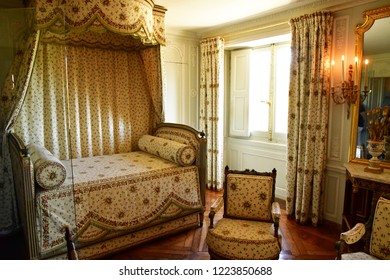
Along a dusty path on the outskirts of the Château de Versailles lies my favourite destination: Queen Marie-Antoinette’s private bedroom and boudoir in the Petit Trianon (small trianon). Built for King Louis XV and his mistress Madame de Pompadour in 1768, it was gifted to the new queen of France by Lous XVI and refurbished after 1774.
It was already an extremely beautiful cuboid design by Ange-Jacques Gabriel, the height of neo-classical French taste. Its reconfiguration and that of the surrounding grounds by the queen saw it embody a raft of new ideas concerning everything from the education of children to what women should wear.
The bedroom and boudoir were rooms in which the queen retreated from the formality and etiquette of the main palace of Versailles to spend time with women friends. She assembled aristocrats such as the Princesse de Lamballe as well as famed portrait painter Elisabeth Vigée-Lebrun.
Here the group wore a wardrobe not possible at formal assemblies: loose, tubular muslin dresses secured with a high sash, similar to juvenile girls’ clothes worn in England and the practical Creole summer dress they knew of from the French colony Louisiana.
The clothes were considered so scandalous that Vigée-Lebrun’s painting of the queen in such attire had to be taken down at the public Salon exhibition. The queen looked like she was in her underwear, the pose was too informal and the superfine muslin was likely imported from India. It was replaced by another portrait by Vigée-Lebrun of the queen in French silk, one of the many luxury trades that bolstered the French economy.
Leaving the formal apartment the ceilings suddenly lower. Framed by two large corner picture windows are views from the boudoir of the garden outside. But this is no ordinary garden.
French formal architecture had been characterised by geometrical designs in which trees and other plantings were clipped into axial vistas, often leading to sculptures or fountains indicating the status of the king, aristocrat or grandee who commissioned the work. The garden at Versailles was an abstraction in which viewing positions and plantings were subject to order, the ultimate act of control. Enormous canals mirrored the sky, unifying heaven and earth under the spell of their creator, Louis XIV.
From Marie-Antoinette’s window we see a simple landscape in which a large tree on the side anchors the “composition”. This was the new jardin anglais (English garden), claimed to embody ideas of liberty and freedom rather than French absolutism. Such gardens were anchored by asymmetrical lakes, elegant, classical pavilions as well as “ruins” (faked old structures, in which hermits sometimes resided) evoking melancholy and Romanticism.
Marie Antoinette’s private view looks rather like the wings of a theatre. Rather than a painting, we look out at nature, reframed by a set designer and man-made for wandering and thoughtful contemplation.
The 19-year-old queen was given exclusive use of Le Petit Trianon and made it her own.
Light pours into the boudoir from several directions. It falls onto delicate wall panelling and a beautiful set of calcified, white gessoed furniture in the most advanced taste by Georges Jacob. The perfectly cubic space is small, accommodating only about four people comfortably, a contrast to court levées or assemblies for hundreds.
As evening comes, a miracle happens. From the basement kitchen-floor below, as directed by the queen, come two large glaces volantes (flying Venetian mirrors) to fill the window panes, raised by a series of weights and pulleys. The engineer Mercklein received 12,500 livres tournois (later francs) for this innovation (overall per capita income was about 250 per year); his system is now electrified.
Mechanical mirrors emerge from the basement level to cover the windows.Author, Author provided
The room goes from day to night. Views of a garden, perhaps on a gloomy day in autumn, are replaced by the sparkling reflections of mirror. Large expanses of mirror glass could only be made in Venice until industrial espionage brought the technology to France. Mirrors perform important cultural work as they can infer vanity, falsehood or indeed show the truth. Animated guests were doubled and conversed like shadowy ghosts.
The queen and her circle could not be observed. Privacy, a new social conception that comes to govern middle-class life in the 19th century, now reigns. What a contrast to the Hall of Mirrors at the palace, where a sense of infinite repetition was created in a 73-metre-long gallery with 17 enormous windows and where hundreds of people thronged.
A reputation for scandal
Marie-Antoinette’s domain at Versailles was dominated by her frustration with a rigid court and her desire to embrace contemporary ideas. In her adjacent farmlet (the hameau), farm buildings were built to look shabby. Simulated wooden buckets of the finest porcelain by Sèvres lined the farmhouse stairs.
Following the educational ideas of Jean-Jacques Rousseau, Marie-Antoinette encouraged her children to plant seeds and dig the earth. She did not, as many believe, play at being a shepherdess or farmer. The woman who was erroneously claimed to have said of the hungry peasantry “let them eat cake” (this translates as brioche or sweet bread and was likely uttered by someone else), was simply trying to be a good mother as advocated by contemporary thinkers.
And what of the female friends? The queen was accused of running a tribadic or lesbian household. These scurrilous claims were designed to discredit her circle. Similarly, the bedroom shows no evidence to back the claim in an 18th-century English travel guide that Marie-Antoinette slept in a suspended bed-basket of roses.
A bed fit for a queen, but no bed of roses to be seen.Shutterstock
Later generations were not much interested in the queen’s motivations. She became an index of the profligate spending and obscene luxury of the old regime. She and her husband, as well as the Princess de Lamballe, were executed by the guillotine or in massacres between 1792 and 1793.
The mirrors were lowered, the furniture auctioned and the domain went to sleep until Empress Eugénie turned it into a museum honouring the queen.
A Swiss luxury brand has recently restored the rooms. They allow us to imagine a spirited woman married off from Austria aged 14, stripped of her foreign clothes at the French border, who became a lover of the latest French design and manufactures — rather than the debauched queen image we have inherited from the post-revolutionary period.
Wandering through the spaces I didn’t see ghosts. I did see the queen’s modern dress echoed in the brilliant white wall panels. She wandered a little in the distance towards the “temple of love” in her up-to-date garden. Her cracked mirrors are now nicely restored for the tourists.
Simple, perfect luxury. Inside Marie Antoinette’s rooms at Petit Trianon.Shutterstock
Samoa’s Parliament will convene tomorrow as originally planned
The Supreme Court has issued orders to uphold the original proclamation, dated 20 May 2021, by the Head of State of Samoa to convene the country’s 17th Parliament following the April 9 general election.
The orders of the court were signed and issued today in an unprecedented urgent Sunday sitting by Chief Justice Satiu Simativa Perese with Justice Tafaoimalo Tologata Leilani Tuala-Warren and Justice Vui Clarence Nelson.
The court orders declare the original Proclamation of the Head of State as lawful while stating that any subsequent or conflicting declarations were not aligned with the Constitution, and also went against recent judgments of the court.
Speaking to the media outside court, former Attorney-General Taulapapa Brenda Heather-Latu confirmed the court orders had addressed a challenge filed by Latu Lawyers on behalf FAST party, challenging the late night proclamation by the Head of State to suspend the opening of Parliament.
Asked if the nation could expect another move to “sabotage” Parliament convening in the next 12 hours, Taulapapa said her clients, the FAST party, stood prepared for anything further developments.
FAST party ‘prepared’ “Our clients are prepared to address anything else that might come up, and continue to rely on God’s grace.”
A special sitting of the Supreme Court was held 11am today following an application by FAST lawyers led by former Heather-Latu challenging a late night proclamation by the Head of State issued by email from the Government Press Secretariat at 9.09pm last night.
The second proclamation issued within 48 hours by Samoa’s Head of State HH Tuimalealiifano Va’aletoa Sualauvi II sent a wave of shock through the nation, as it proclaimed a suspension on his original writ, and postponed Parliament from convening tomorrow morning.
The court also directed that a copy of the orders be given immediately to the Clerk of the Legislative Assembly.
Meanwhile, in another twist to yesterday’s proclamation, RNZ Pacific reports that the Head of State has departed his official residence in Apia’s Vailele and returned to his village of Matautu-Falelatai on Upolu’s south-west coast.
The move has included a police guard, reportedly for his safety.
Last week, a bus load of matai from the village arrived at his residence in the capital to offer their support after some threats had been made against him on social media.
RNZ Pacific correspondent in Apia, Autagavaia Tipi Autagavaia, said the Tuimaleali’ifano left Vailele yesterday after making the latest proclamation.
“And moved to his village. He’s now there and operating from his village of Matautu-Falelatai. And now you see police officers are there protecting him.”
The Head of State’s village is nearly two hours from the capital, Apia.
Sina Retzlaff is a Samoa Global News website journalist.
So it’s clear: the @nytimes seems to be doing a better and more committed job of covering the Samoan election than the whole NZ media. (Excepting Radio NZ Pacific–which is tasked with Pacific, and which still doesn’t have someone in Samoa). #Embarrassing#nzpol#palota2021https://t.co/moVXQJI9kP
An urgent legal challenge against a shock proclamation by the Samoan head of state is being heard in the Supreme Court Chambers in Apia.
Without explanation, the Head of State Tuimalealiifano Va’aletoa Sualauvi announced he was suspending tomorrow’s sitting of Parliament.
The opposition FAST party had been expected to secure a majority of seats when the assembly sat.
The Samoan Head of State’s proclamation on 22 May 2021 suspending the opening of Parliament tomorrow. Image: APR screenshot
The FAST’s lawyer, Taulapapa Brenda Heather-Latu, told the Samoa Observer the suspension was unlawful and the party was seeking court orders to allow Parliament to re-convene tomorrow.
RNZ Pacific’s correspondent, Autagavaia Tipi Autagavaia is at the Supreme Court and said police were covering all the entry points.
He said police had told him and other media that they could not enter the Supreme Court compound.
He said eventually a court official explained to the officers that the media could come onto the compound and wait in the car park.
Autagavaia said this was the first time in his many years of reporting that the Supreme Court had sat on a Sunday.
There were also reports that Court of Appeal judges were on standby, awaiting the outcome of today’s challenge.
This article is republished under a community partnership agreement with RNZ.
Activists from the Papua People’s Solidarity (Sorak) have protested against Indonesia’s policies in the Papuan region, militarism and Israel’s war on Palestine, likening it to the West Papuan struggle against colonialism.
The protest against Special Autonomy (Otsus) was held in front of the Merdeka building in the West Java provincial capital of Bandung on Friday, reports CNN Indonesia.
The action by Papuan activists was staged to respond to the crisis in Indonesia’s eastern-most provinces Papua and West Papua which has become tense over a military crackdown.
Based on CNN Indonesia’s observations at the rally, scores of people brought banners and gave speeches in front of the Merdeka building.
In addition to this, there were several banners with messages such as “We reject Special Autonomy Chapter II, the creation of new autonomous regions and the terrorist label”, “Immediately release all Papuan political prisoners” and “Withdraw all organic and non-organic troops from West Papua”.
Throughout the action, the demonstrators wore masks and maintained social distancing.
Action coordinator Pilamo said there were a number of demands being articulated during the action. First, rejecting the planned extension of Special Autonomy status in Papua, and then rejecting militarism and the deployment of troops which would further harm the Papuan people.
‘Forced on’ Papuan people According to Pilamo, the Special Autonomy given to Papua by the government was just a policy which had been forced on the Papuan people by the central government.
Yet, he said, since July 2020 the Papua People’s Petition (PRP) had declared opposition to continuation of Special Autonomy and it has offered as a solution for the Papuan people the right to self-determination.
He claimed that as of May 2021 as many as 110 Papuan people’s organisations had joined the PRP and that some 714,066 people had declared their opposition to and the continuation of the Special Autonomy political package in Papua.
“Because of this, we, representing the Papua people, are conveying this aspiration to Indonesia and the state that today in Papua things are not okay,” Pilamo told journalists.
According to Pilamo, almost all components and layers of society had said that Special Autonomy had failed to side with, empower or protect the land and people of Papua.
In addition to this, over the 20 years of implementing Special Autonomy it had impacted badly on the Papuan people, including causing environmental damage, Pilamo said.
The education and healthcare system had worsened and the construction of roads were not in the interest of the people, but rather, in the interests of investors.
Pacific Islanders for Palestine and West Papua at a rally in Auckland, New Zealand, yesterday. Growing numbers of Pacific islanders are linking up the West Papuan and Palestinians struggles as a common one – against colonialism. Image: David Robie /APR
Palestine issue raised Aside from highlighting issues in Papua, the demonstrators also took up the issue of Palestine. In a written call to action, it demanded an end to the war in Palestine – a ceasefire was declared by Israel and Hamas the same day.
They also highlighted a number of recent cases including the government’s branding of the Free Papua Organisation (OPM) as terrorists, a label which they reject.
Pilamo believes that the label will only give authority to security forces to commit violence, including against civilians. He claimed that civilians often fall victim as a consequence of violence committed by the TNI (Indonesian military) and Polri (Indonesian police).
“We call on the state and Pak Jokowi [Joko Widodo] as the president, we demand an immediate end to military operations and to stop [using] the terrorist label against the West Papua National Liberation Army (TPNPB). The TPNPB are not terrorists, they are part of the movement fighting for Papua national liberation,” said Pilamo.
Similar protests were also held on Friday in Jakarta and the Central Java city of Yogyakarta.
More than 2000 people took part in Auckland today in a demonstration for justice for Palestine and against “genocide” and “ethnic cleansing”.
While speakers welcomed the ceasefire on Thursday night in the Israeli attack on Gaza after 11 days of bombardment, they lamented the lack of progress in addressing the “root causes” of the conflict.
The protesters marched to the US consulate in Auckland and condemned uncritical US policy in support of Israel.
This is the second weekend in a row when protests in support of Palestinian statehood and self-determination have been held across Aotearoa New Zealand.
Palestinian community organisers set-up a pavement vigil for the 70 Palestinian children killed in the continuous barrage of Israeli jets and missiles.
At least 243 Palestinians were killed by the Israeli bombardment, including more than 100 women and children. The Gaza Health Ministry also said more than 1800 Palestinians had been wounded.
Twelve Israelis, including two children, were killed by Palestinian rockets, the country’s medical service said.
The United Nations estimated that at least 94 buildings in Gaza had been destroyed by the Israeli military, comprising 461 housing and commercial units.
Pacific churches have condemned the media blackout in West Papua, military crackdown in parts of the territory and the silencing of dissenting voices.
They have also criticised the Melanesian Spearhead Group (MSG) for “allowing Indonesia into their fold”.
In a statement, the Suva-based Pacific Conference of Churches (PCC) said it had noted with deepening concern the humanitarian conflict in West Papua and the continued abuse of human rights perpetrated by the Indonesian security forces.
“This situation has been worsened in particular by the silencing of dissenting voices through increased military presence and suspension of electronic communication,” it said.
“Since 2018 with helicopter gunship attacks on the people of Nduga and followed by human rights abuse of Papuans in Intan Jaya Regency in 2019 and Tembagapura in 2020, Indonesia has increased its persecution of the indigenous people.”
Most recently, security forces had burned homes in Puncak, “forcing an exodus of people under the guise of fighting against terrorism”.
The council’s statement said that “terrorism” was “likely an excuse” to clear land for the “economic gain of the Indonesian elite in Jakarta and Jayapura” in the continued “cultural genocide” through displacement of Papuans.
Indonesia ‘should be ashamed’ “As a member of the United Nations Security Council, Indonesia should be ashamed of its actions and held to account,” said the churches.
“Equally culpable in these events of genocide and human rights abuse are the members of the Melanesian Spearhead Group who have allowed Indonesia into their fold.”
The PCC stood with the West Papua Council of Churches to again to call upon President Joko Widodo to order an end to human rights abuse an enter into dialogue with representatives of the Papuan people.
“We call on the MSG to accept the nomination of the United Liberation Movement for West Papua and use its offices to begin a process of dialogue and reconciliation,” said the statement.
“The churches do not condone the killing of Indonesian security forces or Papuans.
“We recognise that without free and open discussions, this conflict of more than 60 years will not end.
“Today [May 20] as we mark the 19th anniversary of East Timor’s acceptance into the United Nations family, we appeal to the United Nations to treat the matter of West Papua with extreme urgency.”
Despite overwhelmingly endorsing the general stance of the 2021 budget, only a few of the 56 leading economists surveyed by the Economic Society of Australia and The Conversation are prepared to give it top marks.
But a very large 41% awarded it either an A or a B, up from 37% in last year’s October COVID budget.
The economists chosen to take part in the Economic Society of Australia survey have been recognised by their peers as Australia’s leaders in fields including macroeconomics, economic modelling, housing and budget policy.
Among them are a former head of Australia’s prime minister’s department, a former member of the Reserve Bank board, a former OECD director and two former frontbenchers, one from Labor and one from the Coalition.
Of the panel members who commented on the historic stance of the budget — expanding the size of the deficit beyond what it would have been in order to drive down unemployment — all but three offered enthusiastic endorsement.
Emeritus Professor Sue Richardson of the University of Adelaide commended the government for at last turning its back on a “debt and deficit” mantra, that was “never justified”.
Professor Richard Holden praised the “watershed”. In due course there should be increased attention paid to the structure and quality of spending, but for now we should applaud the “Frydenberg Pivot”.
Saul Eslake said the strategy of providing further stimulus to push unemployment down to levels not seen consistently since the first half of the 1970s was the right one. It meant the Reserve Bank and the treasury would no longer be working at “cross purposes” as they had been for most of the past two decades.
But Eslake said the budget fell short in the A$20 billion it devoted to tax concessions for small business in the mistaken and unfounded belief it is “the engine room of the economy” and in housing measures that failed to heed warnings from history about the risks of ultra-high loan-to-valuation ratios.
Rebecca Cassells of the Bankwest Curtin Economics Centre said the claim that 60,000 jobs would flow from extending the temporary loss carry back and full expensing tax concessions was “a stretch,” with the connection quite tenuous.
Bucks, but not the biggest bang
Consultant Nicki Hutley said a bigger boost to the JobSeeker unemployment payment would have achieved much more than the $7.8 billion one-year extension of the “lamington” low and middle income tax offset.
Economic modeller Janine Dixon said while spending more to get more people into work was the “right setting for the times,” Australia had to ensure its workforce was ready to supply the extra aged care and child care and disability services it had funded by delivering the right training, especially in the absence of migration, which has traditionally been used to address workforce shortages.
Labour market specialist Elisabetta Magnani said measures to boost wages in the caring occupations could have achieved the double bonus of drawing more workers into those occupations and shrinking the gender pay gap, given that more than 80% of the workers in residential aged care are female.
Little for net-zero
Michael Keating, a former head of the prime minister’s department, said restoring high wage growth would require big investments in education and training, which sits oddly with the cuts in funding for universities. The extra funding for apprentices and trainees only makes up for past cuts.
Professor Gigi Foster said the $1.7 billion spent on childcare subsidies was only “surface-level fiddling with the sticker price”.
“Where is the supply-side intervention required to make childcare services sustainably accessible and of high quality?” she asked. “Childcare should be viewed as social infrastructure. Instead, when we heard infrastructure, it was mainly code for transportation.”
Margaret Nowak of Curtin University said a budget that really “built for the future” would not have focused on the “infrastructure of the past”. Professor Richardson lamented that most of the infrastructure spending was on traditional “roads and ports” when the future was net-zero emissions.
“There is little in the budget that supports this transformation,” she said. “It is an extraordinary lost opportunity.
Nicki Hutley said retooling the economy for zero emissions would have brought forth “more jobs, higher wages, more growth and private sector co-investment”.
Some concern about debt
Former OECD director Adrian Blundell-Wignall said a much-greater investment in vaccinations would have helped “get the economy back to work and the borders opened sooner which, in turn, would have saved unemployment benefits, tourism, aviation support and the need for the extension of temporary measures”.
And he was concerned that a jump in US inflation might cause international interest rates to rise faster than expected, forcing Australia to cut its projected budget deficits in order to stabilise net debt.
Former International Monetary Fund economist Tony Makin, a critic of government spending during the global financial crisis, described the budget spending as a “knee-jerk primitive Keynesian reaction” to the COVID recession.
Unease about going into debt to keep and create jobs aside (and very few of the economists surveyed shared Makin’s unease) the criticisms of the economists surveyed relate to execution and details. If Frydenberg had been judged on his approach, most would have given him an A.
Samoa’s Court of Appeal has dismissed the appeal by the Human Rights Protection Party (HRPP) against the Supreme Court’s ruling that overturned the appointment of a sixth woman Member of Parliament, Ali’imalemanu Alofa Tu’u’au.
This paves the way for the sitting of Parliament (Fale Fono) on Monday as proclaimed by the Head of State.
The decision by the panel of three judges – Justice Tafaoimalo Leilani Tula Warren and Justice Fepulea’i Ameperosa Roma – was delivered by the Chief Justice, Satiu Simativa Perese.
Proclamation has been issued be Head of State to convene Parliament on 24th May 2021.
— Lagipoiva Cherelle Jackson (@lagipoiva) May 21, 2021
The decision
The applications by the first and second appellants for a stay of execution of the judgment of the Supreme Court dated 17 May 2021 are dismissed;
Costs are awarded in the amount of $5000 against the first and second appellants in favour of the respondents, to be paid within 30 days of the date of judgment.
The appellants were Ali’imalemanu Alofa Tu’u’au and the Office of the Electoral Commissioner.
The respondents were the Faatuatua I le Atua Samoa ua Tasi (FAST Party) and Alataua West MP Seu’ula Ioane, who defeated Alimalemanu in the April 9 election.
After the decision was delivered, FAST deputy leader La’aulialemalietoa Leuatea Polataivao paid tribute to FAST’s legal team and upport from across the country.
He also acknowledged HRPP and caretaker Prime Minister, Tuilaepa Sa’ilele Malielegaoi.
The Head of State, His Highness Tuimalealiifano Vaaletoa Sualauvi II has issued the writ to declare the official opening of XVII Parliament on Monday next week. https://t.co/D9iYHWXs3X
‘We’re after all one family’ “Despite the differences in our beliefs and difficulties we faced as we went through these challenges, we after all are one family,” said La’auli.
He also acknowledged the Head of State for convening Parliament (Fale Fono) on Monday.
As seen in the court house since last Monday, after every FAST victory in court, the supporters burst out in song, hymns and prayers of thanksgiving outside court.
The victory now confirms the FAST party’s majority in Parliament and launches major evelopments in Samoa’s modern political history:
Samoa will now have its first female Prime Minister in Fiame Naomi Mataafa as the FAST Party leader; and
The FAST victory unseats one of the longest serving Prime Ministers, Tuilaepa Sailele Malielegaoi who held the office for 22 years in his Human Rights Protection Party’s (HRPP) 40-year rule.
Almost 60 years after British nuclear tests ended, radioactive particles containing plutonium and uranium still contaminate the landscape around Maralinga in outback South Australia.
These “hot particles” are not as stable as we once assumed. Our research shows they are likely releasing tiny chunks of plutonium and uranium which can be easily transported in dust and water, inhaled by humans and wildlife and taken up by plants.
A British nuclear playground
After the US atomic bombings of Hiroshima and Nagasaki in 1945, other nations raced to build their own nuclear weapons. Britain was looking for locations to conduct its tests. When it approached the Australian government in the early 1950s, Australia was only too eager to agree.
Between 1952 and 1963, Britain detonated 12 nuclear bombs in Australia. There were three in the Montebello Islands off Western Australia, but most were in outback South Australia: two at Emu Field and seven at Maralinga.
British nuclear tests left behind a radioactive legacy.National Archives of Australia
Besides the full-scale nuclear detonations, there were hundreds of “subcritical” trials designed to test the performance and safety of nuclear weapons and their components. These trials usually involved blowing up nuclear devices with conventional explosives, or setting them on fire.
The subcritical tests released radioactive materials. The Vixen B trials alone (at the Taranaki test site at Maralinga) spread 22.2 kilograms of plutonium and more than 40 kilograms of uranium across the arid landscape. For comparison, the nuclear bomb dropped on Nagasaki contained 6.4 kilograms of plutonium, while the one dropped on Hiroshima held 64 kilograms of uranium.
These tests resulted in long-lasting radioactive contamination of the environment. The full extent of the contamination was only realised in 1984, before the land was returned to its traditional owners, the Maralinga Tjarutja people.
Hot potatoes
Despite numerous cleanup efforts, residual plutonium and uranium remains at Maralinga. Most is present in the form of “hot particles”. These are tiny radioactive grains (much smaller than a millimetre) dispersed in the soil.
Plutonium is a radioactive element mostly made by humans, and the weapons-grade plutonium used in the British nuclear tests has a half life of 24,100 years. This means even 24,100 years after the Vixen B trials that ended in 1963, there will still be almost two Nagasaki bombs worth of plutonium spread around the Taranaki test site.
Plutonium emits alpha radiation that can damage DNA if it enters a body through eating, drinking or breathing.
In their original state, the plutonium and uranium particles are rather inactive. However, over time, when exposed to atmosphere, water, or microbes, they may weather and release plutonium and uranium in dust or rainstorms.
Until recently, we knew little about the internal makeup of these hot particles. This makes it very hard to accurately assess the environmental and health risks they pose.
Monash PhD student Megan Cook (the lead author on our new paper) took on this challenge. Her research aimed to identify how plutonium was deposited as it was carried by atmospheric currents following the nuclear tests (some of it travelled as far as Queensland!), the characteristics of the plutonium hot particles when they landed, and potential movement within the soil.
Nanotechnology to the rescue
Previous studies used the super intense X-rays generated by synchrotron light sources to map the distribution and oxidation state of plutonium inside the hot particles at the micrometre scale.
To get more detail, we used X-rays from the Diamond synchrotron near Oxford in the UK, a huge machine more than half a kilometre in circumference that produces light ten billion times brighter than the Sun in a particle accelerator.
Studying how the particles absorbed X-rays revealed they contained plutonium and uranium in several different states of oxidation – which affects how reactive and toxic they are. However, when we looked at the shadows the particles cast in X-ray light (or “X-ray diffraction”), we couldn’t interpret the results without knowing more about the different chemicals inside the particles.
To find out more, we used a machine at Monash University that can slice open tiny samples with a nanometre-wide beam of high-energy ions, then analyse the elements inside and make images of the interior. This is a bit like using a lightsaber to cut a rock, only at the tiniest of scales. This revealed in exquisite detail the complex array of materials and textures inside the particles.
Plutonium and uranium show up as bright lumps embedded in darker iron-aluminium alloy in this electron microscope image.Cook et al (2021), Scientific Reports, Author provided
Much of the plutonium and uranium is distributed in tiny particles sized between a few micrometres and a few nanometres, or dissolved in iron-aluminium alloys. We also discovered a plutonium-uranium-carbon compound that would be destroyed quickly in the presence of air, but which was held stable by the metallic alloy.
This complex physical and chemical structure of the particles suggests the particles formed by the cooling of droplets of molten metal from the explosion cloud.
In the end, it took a multidisciplinary team across three continents — including soil scientists, mineralogists, physicists, mineral engineers, synchrotron scientists, microscopists, and radiochemists — to reveal the nature of the Maralinga hot particles.
From fire to dust
Our results suggest natural chemical and physical processes in the outback environment may cause the slow release of plutonium from the hot particles over the long term. This release of plutonium is likely to be contributing to ongoing uptake of plutonium by wildlife at Maralinga.
Even under the semi-arid conditions of Maralinga, the hot particles slowly break down, liberating their deadly cargo. The lessons from the Maralinga particles are not limited to outback Australia. They are also useful in understanding particles generated from dirty bombs or released during subcritical nuclear incidents.
There have been a few documented instances of such incidents. These include the B-52 accidents that resulted in the conventional detonation of thermonuclear weapons near Palomares in Spain in 1966, and Thule in Greenland in 1968, and the explosion of an armed nuclear missile and subsequent fire at the McGuire Air Force Base in the USA in 1960.
Thousands of active nuclear weapons are still held by nations around the world today. The Maralinga legacy shows the world can ill afford incidents involving nuclear particles.
It’s been well documented that there’s a significant level of vaccine hesitancy in the Australian community at the moment. This appears to be a particular issue among adults over 50 concerning the AstraZeneca vaccine, for which this group is now eligible.
Hesitancy over the AstraZeneca vaccine, likely to be stemming largely from the very small risk of blood clots, is leading some people to ask: can’t I just wait and get the Pfizer vaccine later?
It didn’t help things when federal health minister Greg Hunt said yesterday there will be enough supply of the mRNA vaccines (Pfizer and Moderna) later in the year for anyone concerned about the AstraZeneca shot. Hunt has since pedalled back on his remarks.
Despite the mixed messaging, you shouldn’t wait for a Pfizer or Moderna vaccine later. There are a number of benefits to getting the AstraZeneca jab now.
Thinking about the blood clot risk
Thrombosis with thrombocytopenia syndrome (TTS), an unusual blood clotting disorder, has been associated with the AstraZeneca vaccine.
It’s important to emphasise it’s not unreasonable to have concerns about the risk of a potentially serious side effect from the AstraZeneca vaccine, or any other vaccine. The challenge is in understanding the magnitude of this risk, putting this risk into perspective, and then weighing up the risks versus the benefits before making a decision.
The difficulty is your brain plays a variety of tricks on you when you try to make sense of risks like this. For example, we have a tendency to perceive the risks of very rare adverse outcomes (such as TTS) as being greater than they are.
We also tend to be more concerned about negative consequences that may arise as a result of our actions than our inactions. That is, we’re generally more worried about a potential adverse outcome from taking a vaccine than any adverse outcome that may result from not taking it. This of course isn’t logical, but is another one of the errors we make in processing risks.
In terms of assessing the risk of TTS associated with the AstraZeneca vaccine for over 50s, we’ve always known the risk is very low.
In Australia it’s estimated this syndrome occurs in six per million people vaccinated, on average, with the risk even lower for those over 50. This is about the same as your risk of serious injury from being struck by lightning in a year in Australia.
Importantly, as we’ve got better at detecting and treating this condition, the likelihood of severe outcomes from TTS have come down considerably. So the rare risk of serious illness from this syndrome looks to be even rarer than we first thought.
To put TTS into perspective, it’s also useful to note we see around 50 blood clots unrelated to TTS every day in Australia.
Weighing the risks against the benefits
The benefits of getting the AstraZeneca vaccine are considerable for over 50s, from both an individual and a community perspective.
When opting to get a vaccine, you’re protecting yourself against the future risk of infection and possible severe illness. For over 50s who contract COVID the risk of severe illness and death is very real. We’re also learning many people who get COVID-19 suffer with ongoing and sometimes debilitating symptoms, a phenomenon called “long COVID”.
Another factor which may be driving hesitancy around the AstraZeneca vaccine is the perception the Pfizer vaccine works better. But the most recent data suggest any difference in the performance of these vaccines may be smaller than we originally believed.
Although phase 3 clinical trial data indicated the AstraZeneca vaccine had an efficacy of around 70%, new real-world data from the United Kingdom tells us it could be as much as 85%-90% effective in protecting against symptomatic COVID-19.
This is positive news and not far off the 95% figure for the Pfizer vaccine seen in clinical trials and in the real world.
And apart from effectively protecting against severe illness and death from the original strain, the AstraZeneca vaccine appears to work almost as well in protecting against more severe outcomes for variants of concern, such as the UK variant. Early signs also suggest the vaccine is working quite well to reduce transmission of the virus.
Real-world data on the AstraZeneca vaccine is starting to come through.James Ross/AAP
It’s also important to understand — and this applies to all age groups — that we’re getting vaccinated for the health of the community as a whole.
Although a great deal of the success or failure of the vaccination program has been framed in terms of reaching herd immunity, we don’t need to reach a certain threshold for the community to reap benefits. Every vaccine delivered makes a difference as the greater the proportion of the population vaccinated, the more difficult it is for the virus to spread.
As we’ve seen in Taiwan in recent weeks, being complacent about COVID is flirting with danger.
Even though we don’t have community transmission of COVID in Australia now, and we may feel safe and secure in this climate, we need to remember things could change very quickly.
There’s really no logical reason for someone over 50 to wait for an alternative to the AstraZeneca vaccine, like Pfizer or Moderna. If you do choose to wait, there’s no guarantee when any alternative might be available, and in the interim you risk leaving yourself vulnerable.
By stepping up to get your vaccine as soon as you can, you protect yourself against severe COVID and make a significant contribution to putting this pandemic behind us, including getting Australia closer to opening up international borders.
It’s the smell that hits you first. The scent of urine and decomposing bodies. Then you notice other signs: scuttles and squeaks, small dead bodies leaking blood, tails sticking out of hubcaps.
If you’ve lived through a mouse plague, you’ve seen this, and smelled the stench of mice dying of poison baits.
As a desperate measure to help combat the mouse plague devastating rural communities across New South Wales, the state government yesterday secured 5,000 litres of bromadiolone. This is a bait that’s usually illegal to roll out at the proposed scale.
This is a bad idea. While bromadiolone effectively kills mice, it also travels up the food chain to poison predators who eat the mice, and other species. And these predators, from wedge-tailed eagles to goannas, are coming out in droves to feast on their abundant prey.
When your prey is everywhere
Animal plagues in Australia are fuelled by the “boom and bust” of rainfall.
We have natural, flood-driven population explosions of the native long-haired rat, with accompanying booms of letter-winged kites, their predator. We also have locust plagues when the conditions are right, leading to antechinus or mice plagues which eat the locusts.
Since at least the late 1800s, we’ve had terrible plagues of the introduced house mouse (Mus musculus). But rarely has it been this bad, with conditions currently seeming worse than the last plague in 2011, which caused over A$200 million in crop damage alone.
High numbers of birds of prey — nankeen kestrels, black-shouldered kites and barn owls — are often reported feasting on plague mice.
Snakes, goannas, native carnivores such as quolls, and feral cats and foxes, also take advantage of the abundant food. Pets, especially cats and some dogs, are highly likely to consume mice under these conditions, too.
Poisoning the food web
Laying out poison baits is one way people try to end mouse infestations and plagues. So-called “anticoagulant rodenticides” are divided into first and second generations, based on when they were first synthesised and the differences in potency.
Wedge-tailed eagles are among the predators that take advantage of the house mouse plague.Shutterstock
Second generation anticoagulant rodenticides have higher toxicities than first generation, and are lethal after a single feed. First generation rodenticides, on the other hand, require rodents to feed on them for consecutive days to be lethal.
But mouse-eating predators are highly exposed to second generation rodenticides. For most animal species, the lethal doses of rodenticide aren’t yet known.
A scientific review from 2018 documented the poisoning of 31 bird, five mammal and one reptile species. Second generation aniticoaugulant rodenticides were implicated in the death of these animals.
Our research from 2020 found urban reptiles are highly exposed to second generation rodenticides, too. This includes mouse-eating snakes, called dugites, which had up to five different rodent poisons in them.
We also found poisons in frog-eating tiger snakes, and in omnivorous bobtail skinks which eat fruit, vegetation and snails. This is even more concerning because it shows how second generation rodenticides can saturate the entire foodweb, affecting everything from slugs to fish.
Bobtail skinks don’t eat poisoned mice, but they’ve still been found with poison in their systems.Shutterstock
Bromadiolone is particularly dangerous, even to humans
Five thousand litres of the poison can treat around 95 tonnes of grain, and the government will provide it for free to primary producers once federal authorities approve its use.
Bromadiolone is usually restricted to use in and around buildings. But given the widespread impacts on wildlife, using bromadiolone at the proposed scale will do more harm than good.
Past research on bromadiolone has shown residues persist for up to 135 days in the carcasses of voles (another rodent species). In international studies, bromadiolone has been found in the livers of a host of birds of prey, including a range of owl species, red kites, sparrowhawks and golden eagles.
Humans can be exposed, too, by eating the eggs of chickens that ate the mice.Shutterstock
And it’s not just a problem for wildlife, humans are also at risk of exposure. For example, we can get exposed from eating eggs from chickens that feed on poisoned mice, or more directly from eating other animals that may have ingested poisoned mice.
A 2013 study looked at chicken eggs for human consumption, and detected bromadiolone in eggs between five and 14 days after the chicken ingested the poison. It’s not yet clear how many of these eggs we’d have to eat for us to get sick.
So what are the alternatives?
There are highly effective first generation rodenticides that provide viable solutions for managing mouse plagues. They may take a little longer to kill mice, but the upshot is they don’t stick around in the environment. A 2020 study found house mice in Perth didn’t have genetic resistance to first generation rodenticides, which suggests they’re effectively lethal.
Another approach has been to use zinc phosphide, a poison which is unlikely to secondarily poison other animals that eat the poisoned mice. However, zinc phosphide is still extremely toxic and will kill sheep, cows, pets and even humans if directly eaten.
Rolling out double-strength zinc phosphide may be the lesser of the evils in causing secondary poisoning, but only if used very carefully.
And another way to help control the mouse plague is to limit food resources for mice on farms. Farmers can minimise grain on ground, and Australia should invest in research for grain storage facilities that are less permeable to mice.
Mouse plagues are a regular cycle in Australia. Natural predators not only help create healthy, natural ecosystems, but also they help with mouse control. Second generation rodenticides will only destroy and weaken the predator populations we need to help us combat the next plague.
From its humble beginnings in 1956, when just seven nations participated, Eurovision has grown to epic proportions.
Known for its kitschy mix of Euro-pop, bizarre choreography and hammy performances, an estimated 182 million viewers tuned in to watch the competition in 2019. This year, 39 acts seek international glory.
Although the competition centres on the music, the costumes rival for attention. They are a kind of language, embodying the cultural values and the expressive agency of the artist. The Eurovision costume is a performer in its own right, and so here are ten of the best (or most head-scratching) costumes from Eurovision history.
Conchita Wurst in gold
Conchita Wurst echoed Celine Dion, with a beard.EPA/NIKOLAI LINARES DENMARK OUT
Austrian drag queen Conchita Wurst won the coveted prize in 2014, wearing an elegant gold brocade, floor-length bodycon gown teamed with a perfectly manicured beard and glossy, long hair.
In choosing a dress which hugged to her curves, Wurst reached the high glamour of performers such as Celine Dion (who won Eurovision for Switzerland in 1988), while the juxtaposition of the beard announced her status as a genderqueer artist.
On the world stage, Wurst was seen to break ground for others to fearlessly follow in her footsteps.
The demonic Lordi
It may not be what you think of when you hear Finish dress — but metal music is huge there.AP Photo/Petros Giannakouris
The demonic costumes and corpse-like masks worn by Finland’s heavy metal band Lordi were wholly embraced by the crowds, resulting in them taking out the 2006 title.
The ghoulish prosthetics and Kiss-inspired costumes included fur, studs, chains, claws and horns, capturing the spirit of heavy metal — it also catered to Finland’s healthy appetite for the music genre which thrives in the country.
Silver star Verka Serduchka
Just your normal woman from rural Ukraine.AP Photo/Alastair Grant
For even unsuccessful contestants there is the opportunity for costumes to leave a lasting legacy.
Ukrainian performer Verka Serduchka did just that in 2007, donning a disco ball skullcap, matching tie and metallic trench while shadowed by silver-clad backup dancers.
Like Conchita Wurst, Verka Serduchka is a drag persona: Andriy Mykhailovych Danylko’s flamboyant middle-aged woman, where a full-bosom was as much as the costume as a headpiece topped by a gigantic silver star.
Moldovan singer, Aliona Moon, stood on a rising platform in a five metre long gown on which projections transformed the fabric from cosmic nebula to a flaming pyre.
The dress itself was fairly unremarkable, but the use of digital projection recast Moon’s costume from dress to canvas. The projections shifted with the song’s tempo, adding drama and suspense as it reached a crescendo.
A very messy Wig Wam
For their 2005 entry, Norwegian outfit Wig Wam presented a bewildering vision of glam rock meets camp cowboy.
The lead singer’s costume gave a clear nod to music icons of the 70s and 80s: think Suzi Quatro’s Can The Can, David Bowie as Ziggy Stardust or Alice Cooper’s School’s Out. The crotch-hugging silver spandex suit flared hard at the legs and scooped low on the chest, bearing the requisite rocker’s hairy chest.
Luckily for Wig Wam, all eyes stayed on the lead singer, since his fellow band member’s costumes were an incoherent, incomprehensible mix of rock fashion genres and decades.
The sexy Svetlana Loboda
Svetlana Loboda of Ukraine sings during the second semi-final of the Eurovision Song Contest in Moscow, Russia 14 May 2009.EPA/YURI KOCHETKOV
Ukraine’s 2009 artist Svetlana Loboda performed in a burlesque costume as she was flipped around the stage by buff, gyrating, scantily dressed gladiators.
Burlesque, known for its eroticism and use in cabaret, was the perfect match for Loboda’s song “Be My Valentine (Anti-Crisis Girl)”, but Loboda and her gladiators were flanked by two statuesque Marie Antoinette-meets-Lady Liberty figures in silver lamé — perplexing bookends to a performance that was nothing short of chaotic.
Buranovskiye Babushki’s traditional dress
Buranovskiye Babushki outfit from a village in Russia’s Udmurtia Republic, the group blended modern pop sounds with traditional choral singing.AP Photo
Eurovision is not just a competition for the young and sequinned. In 2012, Buranovskiye Babushki endearingly sang a mixture of folk and pop in traditional Udmurt dress.
The Udmurt people are an ethnic group from central Russia, and their traditional dress combines detailed embroidery with vibrant red fabrics in a tradition that reaches back centuries.
Over the course of Eurovision’s history, the Buranovskiye Babushki were perhaps the most faithful example of national dress — and their costumes remained unchanged by their Eurovision fame.
Dschinghis Khan is not Mongolian
The implied connections to Genghis Khan from Germany’s cringe-worthy 1979 entry, Dschinghis Khan left the audience scratching their heads.
It only becomes more bizarre when you realise the costume approximates nothing close to Mongolian dress.
Instead, Dschinghis Khan wore a bolero-style jacket covered by a golden cape and matching pants, topped by a rhinestone crown. A discerning eye might also catch the cavalier boots carrying the singer around the stage — another unlikely item of dress in the early Mongol empire.
The baffling Dustin the Turkey
Representing Ireland in 2008 was Dustin the Turkey. Almost improbably, the DJ — a Muppet-like bird with a large beak and a sequined jacket – was upstaged by the dancers’ deeply confusing assemblage of lamé, feathered headdresses and loincloths.
The only relationship you could glean from this frankly baffling arrangement was the colours of Ireland’s national flag.
The best of 2021: TIX
TIX performs during the First Semi-Final of the 65th annual Eurovision Song Contest.EPA/SANDER KONING / POOL
So far, the 2021 competition has not disappointed. Norway’s artist TIX combined enormous feathered wings with neck-to-toe sequins, headband and aviator sunglasses — in addition to an array of chains, a beastly dance crew of horned devils, pyrotechnics and the obligatory light show.
Whether you consider Eurovision a cultural cringe or you remain an unabashed die-hard fan, after 65 years it remains a true costume spectacle.
While details are sketchy, Israel and Hamas have agreed to a ceasefire. That is good news for everyone involved. The dying can hopefully end and further destruction be avoided — at least for now.
Both sides can also claim victory. Hamas can claim to have defended the interests of Palestinians in Jerusalem in contrast to its rivals in the Palestinian Authority, while Israel’s embattled prime minister, Benjamin Netanyahu, can claim significant military and political achievements.
But that is about as far as the good news goes. As the smoke clears, the vast devastation of Gaza becomes apparent and the slow and frustrating process of rebuilding must resume.
The economy of Gaza has long suffered under an Israeli blockade and has been struggling to rebuild after the last war between the two sides in 2014.
The devastation caused by the current Israeli air attacks has added massively to Gaza’s infrastructure problems and vast amounts of foreign aid will be necessary over the coming years. It is not clear who will provide the funding. The Gulf states, especially Qatar, can be expected to provide considerable assistance, but aid from the European Union and elsewhere is more problematic.
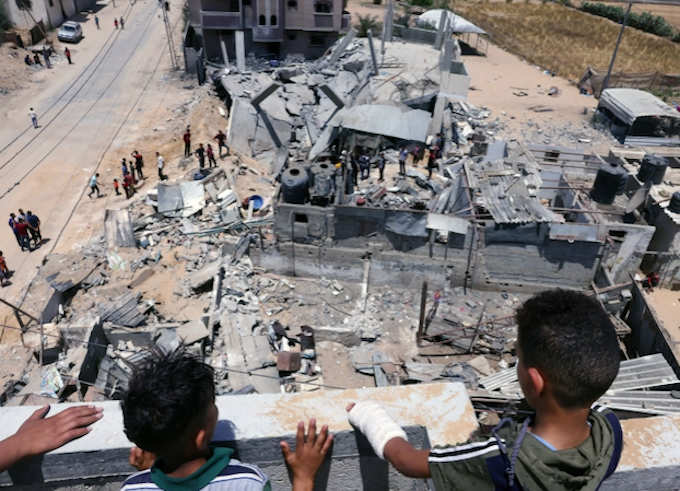
More than 130 buildings have been destroyed and 19 health facilities have been damaged in Gaza.HAITHAM IMAD/EPA
Peace process on ice
Equally as important, there seems to be no interest in reviving a peace process that has been effectively moribund since the Clinton administration in the US in the late 1990s.
The fighting does not seem to have inspired any desire on the part of the Israelis or their steadfast allies in the US to break the stalemate and pursue a solution to this long-standing problem.
The Biden administration has continued the approach of its predecessors in working to monopolise and control any attempt to promote a settlement of the dispute. Its goal is to prevent other actors, including the UN Security Council, where Russia and China have a voice, from playing a part in helping Israelis and Palestinians to establish a basis for cohabitation.
The US still enjoys a significant military, economic and political advantage over Russia and China in the Middle East based on its long engagement with the region, though its standing has been in decline in recent years. And Israel, in particular, is suspicious of the motives of the other states.
As a result, the US remains the only power capable of bringing change to the current stalemate. This makes Biden’s approach both disappointing and puzzling.
Biden has reiterated his firm support for Israel’s right to defend itself against indiscriminate rocket attacks.Ariel Schalit/AP
Despite Netanyahu’s bravado in publicly defying Biden’s requests for an end to the fighting, the sudden achievement of Israeli objectives in Gaza underscores the continued and significant influence the US has over Israeli governments.
No one is suggesting the US will abandon its solid support for Israel.
But the nature of Biden’s response to the fighting has been effectively to endorse Netanyahu’s approach, which has been to promote the expansion of settlements in the West Bank and refuse to contemplate any solution to the dispute, be it one state or two states.
Biden’s handling of this latest outbreak of violence has effectively seen the US treating Netanyahu’s and Israel’s interests as the same. While the US does not want to interfere directly in Israeli politics, its close identification with Netanyahu does little to encourage hopes for progress.
Hamas’s appeal likely strengthened
It should be remembered violence had been roiling the West Bank for weeks — including Jerusalem — before spilling over to Gaza.
The ceasefire seems to ignore that aspect of the current crisis, which could be reignited when the Israeli Supreme Court eventually releases its decision on the eviction of Palestinians from their homes in the Sheikh Jarrah neighbourhood in East Jerusalem.
West Bank Palestinians may be powerless to prevent the evictions and Hamas may be less inclined to intervene again for some time, however, the frustrations and tensions have not gone away and can be expected to boil over again.
Palestinian protesters march to support Gaza in the West Bank city of Nablus this week.ALAA BADARNEH/EPA
While the Americans have designated Hamas a terrorist organisation, it is seen quite differently in Palestine. It comfortably won the last Palestinian elections in 2006 and was expected to win again in the elections scheduled for this month before they were cancelled by the Palestinian president, Mahmoud Abbas.
Hamas had just conducted internal elections in preparation for the national vote and, despite the pain and suffering of this latest conflict, it has reinforced the organisation’s image among Palestinians as the one group that understands their concerns and is ready to defend their interests.
Hamas’s strength extends to the West Bank and to Israeli Palestinians. It reflects the great desire for change among young Palestinians and their frustrations with the leadership of Abbas and his party, Fatah.
One of the consequences of the ill-fated Oslo Accords was the Palestine Authority pledged to maintain security in the areas it controlled, which is currently limited to parts of the West Bank.
As a result, the authority is seen by many Palestinians as working for Israeli interests rather than the concerns of Palestinians. It is also seen as deeply corrupt.
A ceasefire … but for how long?
The unrest inside Israel over the past week highlights how Israeli Palestinians are equally frustrated with their status, a concern that has grown with Netanyahu’s promotion of the Jewish nature of Israel — as they see it, at their expense.
The shock to Jewish Israelis of the widespread violence between the two communities in many Israeli cities, as well as the violence in the occupied territories, highlights the need for a serious commitment by all parties to come together to seek a solution to the relationship between Palestinians and Jews.
Such a prospect remains possible, albeit quite dim at this point. When then-Prime Minister Yitzhak Rabin and Yasser Arafat, chairman of the Palestine Liberation Organization, began working toward a peace deal in the 1990s, they inspired dramatic changes in attitudes among Israelis and Palestinians. Suddenly, peaceful coexistence seemed possible.
Circumstances have, of course, changed dramatically since then, but that is no reason to abandon hope and do nothing.
Like previous ceasefires between Israel and Hamas, however, this one will hold as long as it suits both parties. And there is nothing to suggest the agreement contains any more substantial elements which might lead to a settlement of their long-term conflict.
The 2014 ceasefire lasted seven years but during that time, nothing was done to build on it. We can expect a similar lack of action this time and without such action, it is only a matter of time before violence breaks out again.
The opening ceremony of the Tokyo Olympics is about nine weeks away. And yet many of the world’s athletes are not satisfied with the COVID-19 precautions organisers have planned.
The World Players Association has identified a number of measures the International Olympic Committee (IOC) has proposed it says fail to meet best practice standards.
For example, athletes are concerned they would have to share small, poorly ventilated rooms, and demanded a review and modification of ventilation systems.
The athletes were responding to the IOC’s second “playbook”, a guide for athletes and officials on how to have a “safe and successful Games”.
Athletes also criticised plans to use daily salivaantigen tests for athletes rather than PCR tests of nose and throat swabs to test for SARS-CoV-2, the virus that causes COVID-19.
Several evaluations of these antigen tests have revealed they sometimes give a “false negative” result, meaning some infected people are not diagnosed.
Other problems the athletes identified included: the lack of sport-specific measures, such as for team sports; athletes having to sign risk waivers and the provision of inadequate insurance; the requirement athletes bring their own masks; insufficient detail about how infected athletes would be treated; no mention of mental health-care provisions; and lack of precise physical distancing measures in dining areas, gyms and locker rooms.
The IOC’s playbook stresses athletes need two approved tests on two separate days within 96 hours of departure, one of which needs to be within 72 hours of departure. All athletes are tested on arrival and daily while in Tokyo using saliva antigen tests.
It then emphasises physical distancing, mask wearing and hygiene. Athletes must not use public transport. All athletes will have a nominated COVID-19 liaison officer, who will receive pre-Games training.
Athletes and officials do not have to be vaccinated. The IOC president has said he expects 80% of athletes will be fully vaccinated, although the source of that figure is unclear.
This still leaves potentially thousands of unprotected participants, more than enough to fuel transmission. Some countries such as Tanzania, whose long-distance runners have won medals in the past, have not vaccinated a single person.
In early February, I wrote an opinion piece that said holding the Olympics “defies public health logic”. I have not changed my mind.
Challenges include a surge of COVID-19 cases in Japan, the likelihood many athletes, officials and media will be unvaccinated, and the Japanese public is against it.
Japan is experiencing its fourth wave of infections — the most severe since the pandemic began. The current seven-day moving average of 5,655 daily cases is 145 times higher than when the Games were postponed in March 2020. The host city is reporting almost 1,000 cases a day.
Japan’s coronavirus testing rate is one of the lowest in the OECD so the official figures may be underestimates. Only about 107 per 1,000 people in Japan have been tested compared with 689 per 1,000 in Australia.
Some hospitals, such as in Osaka, are overwhelmed with severe cases and critical care beds are full.
‘Lockdown lite’ and slow vaccine rollout
There are two main reasons why this wave of COVID-19 infections may not be controlled by July. The first is the “lockdown lite” approach taken by the government and the second is the slow rollout of vaccines.
Although much of Japan, including Tokyo and Osaka, is under a state of emergency, there are constitutional constraints to the government imposing a national lockdown. The country relies on voluntary restraint rather than mandating restrictions. Restaurants and bars are asked to close at a certain hour but this cannot be enforced by law.
Only 4% of people in Japan have received one vaccine dose and just under 2% are fully vaccinated. While the pace is picking up, it is unlikely more than 10% of the Japanese population will be fully vaccinated by the Games.
Although there will be little mingling between athletes and the public, there may be a high risk of the virus spreading among Japanese spectators in stadiums and public transport. That’s if spectators will be allowed to attend.
Finally, one of the strongest arguments against going ahead is that the Japanese public is against it. The latest opinion poll shows only 24% support the Olympics and Paralympics going ahead this year.
In one of the strongest statements so far, the 6,000-member Tokyo Medical Practitioners Association called for the Olympics to be cancelled in a letter sent to the prime minister, Tokyo governor, and the head of the Olympics organising committee.
About the best we can expect is a series of events in silent, empty stadiums, disrupted team-sport events and isolated athletes locked in their dormitories.
The worst would be a super-spreading event in the athletes’ village and spikes of cases in many countries when athletes return home.
Despite some conspiratorial claims to the contrary, long-serving Israeli Prime Minister Benjamin Netanyahu was not looking or hoping for a major conflict with the Palestinians to help him hold onto power.
To the contrary, over the past few years he has attempted to soothe Hamas, which has been designated a terrorist organisation by Israel, the US, European Union and other powers. While warning Hamas not to test Israel’s resolve, Netanyahu never tried to remove it from power in Gaza.
Instead, he made sure Israel maintained the set of unofficial agreements with Hamas (known in Hebrew as “hasdarah”) that have led to relative quiet. Netanyahu also allowed Qatar to transfer money to Gazans for infrastructure projects and, until the recent conflict broke out, limited the Israel Defence Force’s responses to the never-ending trickle of rockets fired from Gaza.
As tensions started escalating in Jerusalem in recent weeks, Netanyahu even warned his political ally, extremist national religious leader Itamar Ben Gvir, that his provocative makeshift “parliamentary office” in the flashpoint neighbourhood of Sheikh Jarrah could result in rockets from Gaza.
It is true that before the current outbreak of violence, Netanyahu’s political future was looking very bleak. He was unable to form a coalition after the March 23 election, when he failed for the fourth time in two years to garner enough votes for his party, Likud, and allied right-wing and ultra-Orthodox parties.
An ideologically diverse group of parties opposing Netanyahu — the no-Bibi camp — looked to be progressing slowly but surely towards a government supported by Ra’am (United Arab List), a conservative Islamist Arab party.
Yair Lapid, Israel’s opposition leader, has criticised the government’s handling of the conflict.Oded Balilty/AP
But the massive rocket barrages from Gaza — along with the Israeli airstrikes and mob violence that ensued in several Israeli cities — pushed the already fragile relations between the Zionist and non-Zionist elements of the no-Bibi camp past the point of no return.
While Ra’am leader Mansour Abbas has called for reconciliation and sought continued coalition discussions to support a no-Bibi governing coalition, others in his party pushed for a negotiations freeze.
The final straw for the no-Bibi camp’s hopes was the decision by the head of the right-wing Yamina party, Naftali Bennett, to back away from a Ra’am-supported government.
Yamina immediately resumed consultations with the Likud, and Netanyahu will now try and win over Ra’am and/or persuade a few parliament members in the no-Bibi camp to defect to his ranks. On the other side, leader of the no-Bibi camp is still trying to at least block Netanyahu’s attempts at forming a government.
At this stage, another round of elections is a likely outcome.
Rallying behind Bibi (and Gantz)
And so it happened the conflict has played into Netanyahu’s hand. Being the seasoned and skilled politician he is, Netanyahu is certain to manoeuvre the changed political situation for his own benefit.
In times of war and instability, the Israeli public tends to rally behind a strong leader. Netanyahu is projecting such an image when he promises Hamas will pay a huge price for attacking Israel.
Both Netanyahu and his defence minister, former coalition partner and bitter rival Benny Gantz, gave the Israel Defence Forces (IDF) the green light to execute a detailed and extensive attack plan that has been years in the making.
Militarily speaking, the army’s tactics have been resoundingly successful. Many high- to mid-level commanders of Hamas and the Palestinian Islamic Jihad (PIJ) group have been eliminated. Widespread damage has also been done to Hamas’ attack tunnels, weapons depots, naval forces, bases and more.
Casualties on the Israeli side have been relatively low, thanks to the Iron Dome defence system intercepting 90% of rockets from Gaza. The cost to the Palestinians due to the disparity in power between the two sides, however, has been tremendous. More than 200 people have died, including women and children, and there has been wide-scale destruction of houses, services and infrastructure.
The UN says 72,000 people have been displaced in Gaza during the current fighting.HAITHAM IMAD/EPA
The Zionist Israeli public are cheering the IDF, with the expectation the campaign will leave Hamas reluctant to initiate another round of conflict anytime soon. Many of Israel’s Arab citizens — about 20% of the population — on the other hand strongly protested against the military operation in Gaza.
Netanyahu’s staying power is also partially explained by the rightward shift among many Israelis in recent years, fuelled by their disillusionment over the perceived failure of the Oslo peace process.
Many believe the bold attempt at peace went down in smoke in the second intifada in the early 2000s, when terrorists from various Palestinian factions committed suicide bombings of a previously unthinkable scale, killing more than a thousand Israelis. More than 3,000 Palestinians were also killed in the violence.
No end game in sight
Despite a ceasefire, the tragedy is neither side presents an end game to work towards. Israel’s next government will likely be right-wing, either under Netanyahu or someone else. Over the past few decades, such governments have leaned towards managing, not resolving, the conflict.
On the Palestinian side, everyone is waiting for the chairman of the Palestinian Authority, 86-year-old Mahmoud Abbas, to exit the stage. Seen as increasingly corrupt and with no legitimacy to govern, he offers no vision for a solution of the conflict.
Hamas, PIJ and their allies remain staunchly committed to fundamentalist religious ideologies that reject Israel’s right to exist, with zero willingness to compromise.
The best both sides may strive for is another set of precarious understandings on the limits of mutual harm. Gaza will need years and heavy investments to recuperate from the damage. Psychological wounds on both sides are deep and bleeding. Healing is a long way off.
When the Australian Federal Police (AFP) raided journalists and media organisations two years ago, it showed the balance between national security and journalism is severely out of whack in Australia.
This week’s report acknowledges, across party lines, the imbalance between national security and public interest journalism in Australia.
The ABC reported this week the Senate inquiry found “government agencies should have to prove ‘real and serious’ harm caused by the publication of classified intelligence and information before a criminal investigation can be launched”.
Without such a requirement, the provisions would be susceptible to overuse, misuse or even abuse. In particular, the absence of an express harm requirement can lead to circumstances where a journalist is prosecuted for a very minor or trivial ‘dealing’ with classified information.
When giving evidence to the inquiry, the Australian Security Intelligence Organisation (ASIO) was asked to provide any examples of when a publication had demonstrably harmed Australian national security. ASIO could not produce a single example.
The report acknowledges the attorney-general is reviewing the powers granted to our intelligence and security agencies and the effect they have on media coverage of national security.
But that’s not all. The report also acknowledges a point made by several submissions that Australia stands out in the international community when it comes to the powers granted to its intelligence and security agencies.
It quotes a submission from myself and Denis Muller, a senior research fellow at the University of Melbourne’s Centre for Advancing Journalism, asking why Australia is the only country among mature liberal democratic countries
[…] that sees a need to equip its security and intelligence agencies with powers that extend to issuing and executing search warrants against individual journalists and media organisations justified by hunting down public interest whistleblowers in the name of national security?
The AFP raided the ABC’s Sydney offices in 2019 over stories alleging Australian troops may have committed war crimes.AAP Image/David Gray
Freedom of Information and ‘a culture of transparency’
The report points out that Australia’s federal Freedom of Information (FOI) laws don’t deliver on their objective of facilitating independent access to government-held information.
It recommends the government works with the Office of the Australian Information Commissioner (OAIC) to promote a culture of transparency.
It’s a noble sentiment. The problem is consecutive federal governments, since 2013, have starved the OAIC of resources. There was money in the recent federal budget for a separate freedom of information commissioner operating out of the OAIC. However, overall OAIC resources remain too small to enable them to do their transparency advocacy work properly.
It would also help if our intelligence and national security agencies were actually covered by the FOI Act, which they currently are not. This is another way Australia sets itself apart compared with most other mature liberal democracies.
A well-functioning FOI system would also make journalists less dependent on whistleblowers.
The report focuses considerable attention on the plight of whistleblowers. Instead of being thanked for their courageous disclosures of corruption and maladministration, our current legal framework allows governments to pursue and threaten them with disproportionately long jail terms and fines.
The report recommends thorough reforms of our public interest disclosure laws to achieve what they were supposed to do (but currently do not): protect whistleblowers properly.
Our current legal framework allows governments to pursue and threaten whistleblowers with extremely lengthy jail terms and fines.AP/ Rod McGuirk
Dissenting views and a proposed Media Freedom Act
The government’s senators who joined this inquiry appended a dissenting view pointing out they could not agree with all the recommendations, given some of them were already being acted on based on the PJCIS report.
The Greens appended a section suggesting a Media Freedom Act. This act was suggested by a number of submissions to the inquiry.
The act would address the lack of a Bill of Rights in the Australian Constitution safeguarding freedom of expression and media freedom. It would work as a counterbalance when the government considered any legislation that would impede media freedom and independence.
It’s a pity the committee could not agree on this recommendation across party lines. It would have been the most effective and comprehensive way to deal with the issues at hand.
It was good to see some relative newcomers submitting and giving evidence to the inquiry. However, old-timers like myself and many colleagues who have been making the same points for the past 20 years hold little hope that federal governments led by any of the major parties will walk the talk.
This somewhat jaded view is aptly justified by revelations that in 2018-19, about half of FOI requests for non-personal information were not finalised within the time limit. Despite that, Home Affairs department secretary Michael Pezzullo described the FOI section’s efforts as “commendable”.
There remains a troubling imbalance between government secrecy and journalists’ ability to do their job as independent watchdogs.
The federal government now has a comprehensive blueprint on how to become more open and transparent on all levels, including national security.
It’s time to walk the talk — but I’m not holding my breath.
New Zealand Parliament Buildings, Wellington, New Zealand.
Editor’s Note: Here below is a list of the main issues currently under discussion in New Zealand and links to media coverage. Click here to subscribe to Bryce Edwards’ Political Roundup and New Zealand Politics Daily.
Michelle Grattan discusses the week in politics with University of Canberra Associate Professor Caroline Fisher.
In the wake of last week’s budget, this week the pair discuss the April unemployment figures, the latest in the vaccine rollout, and the coronavirus situation in India – and the Australian citiziens stranded there.
Also discussed is the government’s plan to build a $600 million gas power plant, and how that accords with Liberal philosophy and the Hunter by-election.
The Lowy Institute believes New Zealand has done better at containing the pandemic, but, like Australia, experienced major economic disruptions and a big increase in government debt as a result of its fight against the pandemic.
Like Australia, New Zealand’s unemployment rate grew rapidly following lockdowns and restrictions but has now fallen to 4.7%, taking it even lower than Australia’s 5.5%. The budget forecasts are strong.
Both countries are investing in a vaccine rollout.
So on the surface there are similarities. The differences emerge in how the budgets are framed and what they try to deliver.
Wellbeing is an explicit goal
New Zealand treasurer Treasurer Grant Robertson on budget day.Nick Perry/AP
This is New Zealand’s third “Wellbeing Budget”, explicitly framed around improving the wellbeing of New Zealanders.
Much of Treasurer Grant Robertson’s budget speech was devoted to this theme.
It has become of central importance to budgeting in New Zealand, required by legislation.
There is plenty of room for debate about whether New Zealand has chosen the best ways to improve wellbeing, whether targets are being met, or whether key priorities such as children’s wellbeing or mental health are being addressed adequately.
What framing the budget around wellbeing does is encourage such conversations.
In Australia there is debate about the economic impact of budget measures.
In New Zealand that happens too, but there is also debate about the impacts of budget measures on wellbeing.
A good case can be made that the increased spending on children and on mental health in New Zealand’s 2021 budget is in part due to public discussion about these aspects of wellbeing following previous budgets.
From goals flow decisions
Both the Australian and New Zealand budgets deliver a large economic stimulus through increased government spending.
The difference is in New Zealand the stimulus comes largely from a massive increase in benefit payments.
By contrast, in Australia the budget resisted calls to increase social security payments above the poverty line, toughened eligibility tests, and confirmed that last year’s increase in JobSeeker would not continue (to be fair to the government, it had always said the increase would be temporary).
To some extent the difference is explained by politics — New Zealand has a Labour government, Australia a conservative-leaning Coalition government.
But it’s not the whole reason — a wellbeing frame for a budget will inevitably lead to a focus on improving social welfare payments, because this is where the greatest gains in wellbeing can be made per dollar of spending.
This is straightforward maths — the same amount of money will deliver a much greater percentage benefit if sent to people in poverty than it will if it is sent to people who are already well off.
Payments matter
Income is not the only driver of wellbeing, but it makes a difference.
As the apocryphal quote attributed to various US entertainers goes “I’ve been rich. I’ve been poor. Rich is better”.
Lifting people out of poverty goes a long way to improving wellbeing.
The same applies to investment in addressing entrenched disadvantage. In a striking contrast to Australia, the New Zealand budget targets Maori disadvantage.
The Australian treasurer’s budget speech did not mention Aboriginal and Torres Strait Islander Australians. The New Zealand treasurer’s speech not only included numerous references to Maori and Pacific people but in parts incorporated phrases in te reo, the Maori language.
Being First Nation matters
Cross country comparisons are dangerous — mostly differences arise not from politics but history and institutions.
In New Zealand the influence of the Treaty of Waitangi is profound, and New Zealand has a far larger Maori population as a percentage of the total than Aboriginal and Torres Strait Islanders have in Australia.
Nevertheless, if Australia had a New Zealand-style wellbeing approach to budgeting there would be a greater focus on addressing First Nations issues for the simple reason that the needs of First Nations peoples are acute.
As usual, there are programs and announcements about First Nations peoples in Australia’s budget but they have nothing like the centrality that concerns of Maori people have in New Zealand’s Budget.
If we were to take a lead from New Zealand and apply a wellbeing lens to the Australian budget, how would it stack up?
Measured by New Zealand standards…
In many respects Australia would fare well.
Spending on aged care, improving mental health, childcare and preschool were big ticket items. They are all major contributors to improving wellbeing.
Other measures like tax cuts, a gas fired recovery or strengthening mutual obligation requirements; perhaps not so much.
The New Zealand budget identified three goals for the government’s term of office:
keep New Zealanders safe from COVID-19
accelerate recovery and rebuild
tackle “foundational challenges”, in particular, housing affordability, climate change and child wellbeing
The first two would not have looked out of place in Australia’s budget. The third is unfamiliar territory.
The solutions offered will differ considerably depending on the government in power. However, New Zealanders appear to be up for debating them. Earlier this year Australia’s treasurer Josh Frydenberg scoffed at the idea of a wellbeing budget.
In light of the success of New Zealand’s approach in getting on top of fundamental problems and delivering real improvements such as an unemployment rate of a 4.7%, he might want to reflect on the merits of such an approach here.
When policymakers try to fix things, they often mess up because of the way the problem is formulated and the ways that subsequent policies are targeted. A classic example was the Closing the Gaps initiative in the early 2000s.
The problem – albeit simplified – is that some people are ‘advantaged’ and others are ‘disadvantaged’. In New Zealand, one of the groups that were (and presumably still are) disproportionately disadvantaged are Māori. (Another such group was, and is, Pasifika.)
One useful way of approaching the problem is that we can say as stylised facts:
Seventy percent of non-Māori are advantaged, and thirty percent are disadvantaged.
Thirty percent of Māori are advantaged, and seventy percent are disadvantaged.
The socio-economic circumstances of advantaged Māori are comparable with the circumstances of advantaged non-Māori. And the socio-economic circumstances of disadvantaged Māori are comparable with the circumstances of disadvantaged non-Māori.
Closing the Gaps was meant to be about making the disadvantaged less-disadvantaged; or – better still – not disadvantaged at all. But the policymaking didn’t target the disadvantaged as such; rather it targeted Māori as the most prominent disadvantaged group. And it is true that if the median circumstance of Māori could be raised, given that the median Māori is disadvantaged, then the gap between a median disadvantaged person and a median advantaged person would close. Though many disadvantaged people – indeed the majority of disadvantaged people, who in New Zealand are not Māori – would not benefit
Today’s more modest equivalent of Closing the Gaps is the proposed creation of a Māori Health Authority. And, as in 2004, the National Party passionately opposes this as racially targeted policymaking. (I might note that Māori versus Pakeha constitutional issues have no more to do with ‘race’ than do issues in Northern Ireland between ‘Catholic’ and ‘Protestant’. In New Zealand’s case, the point of difference is that Māori are tangata whenua, not that Māori are ‘brown’; of course that doesn’t preclude the possibility that some people may be prejudiced against dark-skinned ethnicities, and thereby – knowingly or unknowingly – hold racist views towards Māori.)
Unintended Consequences
The problem with racially targeted policymaking of this sort is that it doesn’t address the actual problem (‘disadvantage’); instead such policies use ‘Māori’ as a proxy for ‘disadvantage’. (Other groups use other demographic proxies for disadvantage, such as ‘female’ or ‘working-class’ or ‘Muslim’.)
We are not yet clear as to the purpose of the Māori Health Authority.
Some believe that its purpose will be positive discrimination in favour of people with proven indigenous ancestry, especially in their ability to access health services. (Much as a Community Services Card discriminates in favour of cardholders.) If this is intended, it would be clearly problematic. Should a Māori family in Flaxmere or Kaikohe have more favourable access to services than their circumstantially identical Pakeha neighbours? Or should the community of Kaikohe be more favourably resourced than the community of Bluff?
The alternative interpretation is that the Māori Health Authority is an addition to the Health bureaucracy, that could only be justified – like other government bureaucracies – as a means to an overall improvement of health outcomes for all disadvantaged New Zealanders.
This is particularly problematic in today’s zero-sum fiscal environment. In a zero-sum fiscal environment, funding is from a fixed ‘pot of money’. This means that funding for one purpose comes at the expense of funding for other purposes (such as cancer treatment, or research on infectious diseases); and the policy issue becomes the ‘marginal health benefit’ that arises from this use of the money, as opposed to that use.
One of the most important refrains today is that Health is already over-bureaucratised, with far too great a proportion of funding going into ‘prioritisation services’; this being a euphemism for gate-keeping. Is an addition to the bureaucracy a more beneficial use of scarce resources than direct funding to train nurses, or to subsidise a greater range of life-enhancing drugs?
The concern that follows from this is the possibility that the principal benefit of the Māori Health Authority will be to provide enhanced career opportunities for the thirty percent of Māori who are not disadvantaged. And that the main people who will bear the opportunity cost of this benefit will be the presently disadvantaged, the majority of whom are the thirty percent of non-Māori who are disadvantaged.
The irony of this would be an opening of the gaps between the advantaged and the disadvantaged. Indeed, a dispassionate look at socio-economic outcomes in Aotearoa New Zealand since 2017 would be that it has been a period that could be described as an ‘opening of the gaps’.
————-
Keith Rankin, trained as an economic historian, is a retired lecturer in Economics and Statistics. He lives in Auckland, New Zealand.
Finance Minister Grant Robertson called this a recovery budget for “all New Zealanders”. But was it an inclusive budget? Specifically, what did Budget 2021 offer those women who were significantly affected by the job losses resulting from COVID-19?
The budget priorities included an objective to “support into employment those most affected by COVID-19, including women and young people”. Yet in the budget speech, Robertson announced no explicit initiatives for women workers.
Indeed, as was the case in 2020, the focus was on physical infrastructure — building hospitals, schools, houses, roads, rail and a refurbished Scott Base. Around 221,000 jobs are projected to result, some of which are linked to this capital investment of NZ$57.3 billion dollars over four years.
Such spending initiatives are not gender neutral. Our highly gender-segregated labour market means this investment is likely to generate many more jobs for men than women.
Despite the extension of the Training Incentive Allowance to higher qualifications, and targeted programmes such as Tupu Aotearoa for Pacific peoples, there was no mention of support to increase the number of women in trades.
Some initiatives are already in place, but evidence shows desegregating labour markets is no easy task. Often it is a heavily lopsided process. Women are encouraged into male dominated occupations, but not vice versa.
A focus on building need not preclude investment in the care economy. The latter is just as likely as construction to result in economic growth. Research also shows women need child care to support their labour market participation, and increasing child care places increases jobs (usually for women).
Budget 2021 offered little in this regard. It provided funding for just 3,300 additional places in Out of School Care.
Australia is doing better for women
The lack of a gender lens makes New Zealand a laggard compared to the conservative government of Australia. Scott Morrison’s federal budget, handed down two weeks ago, was accompanied by an 81-page Women’s Budget Statement. New spending initiatives focused on women’s economic security, safety and health and well-being.
The statement included a raft of statistical evidence underpinning the government’s decision to invest in social infrastructure. In addition, new money was allocated for women to enter STEM careers and to fund more services for women taking up work in trades.
Alongside this, frontline services for victims of family domestic violence received an injection of money, and A$16.6 million was committed to support a National Women’s Health Strategy (over four years).
Obviously, Morrison’s was an election budget. To go to the polls later this year, and to secure a win, he has to ameliorate an anticipated backlash from women voters horrified by the allegations of sexual assault, bullying and discrimination within his own party.
Women were also critical of the fact they were largely overlooked in the 2020 budget, which focused on growing male-dominated industries.
Morrison may not be comparable to Jacinda Ardern in terms of his feminist leanings, but his minister for women, who is charged with championing the Women’s Budget Statement, is Senator Marise Payne, Australia’s Foreign Minister and a liberal feminist.
Some Australian commentators argue the budget offerings for women have not gone far enough. But it certainly appears to be more gender responsive than what we witnessed in New Zealand on Thursday afternoon.
Gender should be central to planning
So what do Ardern and Robertson need to change to ensure our progressive well-being approach accounts for women?
Mainstreaming gender analysis across all portfolios, so the budget process becomes more responsive to the needs of different groups of women and men, would be a good place to start.
Key international organisations, including the OECD, IMF and the United Nations, promote the economic and social value of gender responsive budgeting. Canada, Iceland and a number of other OECD countries have made significant progress in embedding gender analysis across all aspects of new and existing expenditure.
Three elements are required for successful implementation. First, a high-level strategy to ensure analysts take account of gender in their everyday practice across government (including budgeting).
Second, providing tools, training and disaggregated data to support this analysis (like our own “Bringing Gender In” tool and the Integrated Data Infrastructure). Third, working with parliament and civil society organisations to foster collaboration and accountability.
However, implementation of a gender-responsive budgeting process also requires political will to ensure public servants embrace this work. The adoption of a well-being approach, using Treasury’s Living Standards Framework and He Ara Waiora, represents a good first step. But to ensure budget outcomes are equitable, and resources shared with all New Zealanders, gender analysis is essential throughout the budget process.
International evidence suggests implementation is not always easy. However, without gender-responsive budgeting, the gendered nature of public expenditure will remain invisible. This will be detrimental to the well-being of the economy and to reducing inequality.
Source: The Conversation (Au and NZ) – By Joanne Gray, Lecturer in School of Communications, Chief Investigator Digital Media Research Centre, Queensland University of Technology
The massive digital platform market has until recently been dominated by a handful of US-based companies such as Facebook and Google. However, as foreign governments and competing platforms try to erode this domination, platforms are becoming a new sphere of geopolitical manoeuvring.
The European Union wants to gain more control over international tech companies and achieve more independence in the digital arena. India has banned 177 Chinese apps on the grounds they are “prejudicial to the sovereignty and integrity of India”.
And in 2020, the then US President Donald Trump spent months attempting to ban the Chinese-made video-sharing platform TikTok or force its sale to an American owner. While some claimed Trump was piqued by a supposed prank against him by teenage TikTok users, a look at statements from US government officials over the course of the year shows geopolitical concerns were the main driver.
If governments are continue to be driven by “digital nationalism”, the US-based big tech companies are likely to continue to dominate.
TikTok is the first major non-US platform
TikTok is the first social media platform born outside the United States to become a significant rival to Silicon Valley incumbents such as Facebook and Instagram. The short-form video platform rose to prominence in 2019 and, by early 2020, was the most downloaded app globally.
Since its rise, TikTok has come under intense criticism from governments around the world, who question whether ByteDance, the company that owns TikTok, sufficiently protects users’ data against access by the Chinese state.
However, the way TikTok treats user data is not very different from what its US counterparts do. There is little to suggest the platform poses any singular national security threat.
The company releases transparency reports similar to those of Google and Facebook. A CIA assessment reportedly concluded there was no evidence the Chinese government had intercepted TikTok data.
TikTok’s Chinese origins can be used to oversimplify the platform’s actual territorial connection to China. ByteDance was founded in China but it is incorporated in the Cayman Islands and operates as a multinational with subsidiaries in Australia, the US, the UK and Singapore.
Platform geopolitics
The backdrop to Trump’s stance towards TikTok was an intensifying contest between the US and China over the strategic value of the digital environment. Who gets to extract economic value from the platform economy? Who gets to exert ideological influence through vast sociotechnical systems? Who enjoys strategic advantages from control over and access to data and infrastructure?
As today’s global tech platforms have developed, they have largely mirrored the shape of classical geopolitics: the US has dominated. Recently, however, Chinese technology firms have flourished, expanding China’s economic and strategic capacities.
Trump’s TikTok challenge
TikTok teens may have successfully pranked Trump, but his actions and rhetoric fit within a geopolitical agenda articulated by others within the administration.
On June 24, 2020, US national security advisor Robert O’Brien spoke publicly on the topic of the Chinese government’s “ideology and global ambitions”. He warned China posed a threat to US citizens and explicitly implicated TikTok.
Two weeks later, on July 6, US Secretary of State Mike Pompeo suggested TikTok should be treated like Huawei, the Chinese telecommunications company that is effectively banned in the US.
On July 31, 2020, Trump announced he was planning to ban TikTok.
Several days later, Microsoft released a statement explaining that its representatives had spoken to Trump directly regarding the acquisition of TikTok. When questioned about his talks with Microsoft, Trump stated:
[…] it can’t be controlled, for security reasons, by China. Too big, too invasive, and it can’t be.
Protesters in America opposed the planned TikTok ban.STRF/STAR MAX/IPx/AP
On August 5, 2020, the US Department of State announced an expansion of its Clean Network program, which has the stated objective of “guarding our citizens’ privacy and our companies’ most sensitive information from aggressive intrusions by malign actors, such as the Chinese Communist Party”.
Expansions to the program included five policies aimed at reducing the presence of China in the US. These policies limited the use of Chinese telecommunication carriers, applications sold in app stores and pre-installed on devices, cloud services and undersea cables.
The following day, Trump issued an executive order forcing the sale of TikTok to a US company on the grounds that TikTok posed a threat to “the national security, foreign policy, and economy of the United States”.
Ultimately Trump’s executive orders were blocked in the courts and the ban and forced sale never implemented.
The rise of digital nationalism
TikTok provides welcomed competition to the platform incumbents. If real competition in the sector were to increase, requiring the incumbent platforms to compete for users, we might see further innovations in the platform market and a less concentrated tech sector.
So far, however, the US government has explicitly focused on the geopolitical implications of the rise of a Chinese platform. Whether the Biden administration will continue this approach remains to be seen.
Both the US and China have a long history of shielding strategically important industries. For those concerned with increasing competition and diluting the concentrated power of the dominant technology firms, the rise of digital nationalism is a new obstacle.
Moving forward, policymakers may need to overcome nationalistic impulses if they are to increase global competition in the international platform market. And both US and Chinese rule must be rejected if we are to decentralise power within the digital environment.
From an ethics perspective, it has been a bad couple of weeks for media coverage of COVID-19.
First, there was a highly questionable story in The Australian about China allegedly weaponising coronavirus, with the headline “‘Virus warfare’ in China files” splashed across the front page.
The author of the article, Sharri Markson, claims a document written by Chinese scientists and Chinese public health officials in 2015 discussed the weaponisation of a SARS coronavirus.
According to the article, the document was headed “The Unnatural Origin of SARS and New Species of Man-Made Viruses as Genetic Bioweapons”.
Markson reported the US State Department had obtained the document in the course of investigating the origin of COVID-19. In her article and others that followed, there was talk of a third world war in which biological weapons would be deployed.
However, Chengxin Pan, an associate professor at Deakin University, offered a different explanation for the document’s origins. He said in a tweet the document Markson cited was in fact a book, the contents of which could be found on the internet or at a Chinese online bookstore.
Dominic Meagher, an economist at the Lowy Institute with an extensive China background, tweeted the book was
pretty clearly an idiotic conspiracy theory about how the US and Japan had introduced SARS to China.
The ABC program Media Watch raised these questions and more about the article’s credibility.
Markson has replied that the Chinese Foreign Ministry and Global Times newspaper viewed the document as legitimate and not a conspiracy theory. She said while none of the critics quoted by Media Watch were bioweapons experts, she had interviewed multiple high-level specialists in biological weapons compliance.
The ethical problems here are twofold. First, there are clearly questions about the provenance of the article. Was the document uncovered by a US State Department investigation or is it a book available for public sale?
It is a basic fact that colours the entire article, and the questions are not resolved by Markson’s response.
Second, the way the story is framed as revealing Chinese weaponising of biological material is highly alarmist. This generates further public anxiety about COVID-19 and adds to the climate of Sinophobia in Australia. The justification for doing so is, on the available evidence, highly questionable.
In a pandemic or any other emergency, the first ethical duty of the media is to report accurately and soberly, and specifically not to induce unjustified anxiety or panic.
In another major ethical lapse, the Australian Financial Review ran a story that named and shamed a Sydney man who had tested positive for the virus. To make it worse, the newspaper put his photo on the front page.
This was wrong and irresponsible for several reasons.
The man had visited several barbecue shops across Sydney while unknowingly positive. When this became known as part of the media’s general contact-tracing publicity, he was dubbed “Barbecue Man” by the Sydney media.
So he was already a figure of fun when the Financial Review identified him. Its excuse for naming him? He was a financial analyst doing due diligence on the Barbecues Galore chain. The AFR’s editor-in-chief, Michael Stutchbury, claimed this meant it was in the public interest to identify him as carrying COVID.
That is absolute drivel. There is no rational connection between the man’s health and the health of the barbecue business.
Other media, including the Daily Mail and news.com, jumped on the bandwagon and named him, too. Both outlets even ran a photo grabbed from Facebook of the man and his wife. No moral compass whatever.
If the media go on doing this, it will discourage people from coming forward for testing. Who wants to see themselves plastered over the front page and given names like Barbecue Man? That is where the irresponsibility lies.
The Age was guilty of something similar a couple of months ago when it published a map of the weekend movements of a young man who was unwittingly COVID-positive and wrote an article holding him up to ridicule.
This kind of media behaviour is mediaeval: like putting people in the stocks and chucking rotten tomatoes at them. And it is a gross breach of privacy. A person’s health is among the most private classes of information that exists. To breach it for the sake of a cheap laugh is indefensible.
These weren’t the only problematic reports. On May 13, the Australian Press Council found a subhead in the Herald Sun saying “Six People Died During Pfizer Trial” was misleading because it implied the vaccine caused the deaths, when in fact the deaths were not related to the vaccine.
Four of the six deceased had been given a placebo during the trial, and the other two deaths were not related to the vaccine.
The Herald Sun defended the subhead on the basis the story said the US Food and Drug Administration had been told about these deaths because they occurred during the period of the trial.
That is materially different from implying – as the headline clearly did – that the vaccine caused the deaths.
The press council said that newspapers needed to take more than usual care to avoid misleading the public in the midst of a pandemic. And by failing to do so, the Herald Sun had breached two of the council’s principles — one concerning accuracy and the other concerning fairness and balance.
In an atmosphere where there is already a degree of resistance to being vaccinated, the Herald Sun subhead was clearly a beat-up with the potential to harm the public interest.
So, in the space of a couple of weeks elements of the print media have sought to capitalise without justification on public anxieties about China and the safety of COVID vaccines, and have pilloried an innocent man while at the same time committing a gross breach of his personal privacy.
In an age when the public must rely increasingly on the mass media for reliable and responsible information — since social media has shown itself to be unreliable and irresponsible — these newspapers have abrogated their first duty to the public.
Advances in medical technology have dramatically altered the process of dying. It’s now possible to prolong life, with the frightening reality that this may simply extend our dying process.
Advance care planning is designed to empower us to retain some control over the last stages of our life by communicating our wishes about what we want, or don’t want, in terms of medical treatment. Generally this planning is done in well in advance of a medical crisis, while people are well.
However, evidencesuggests these plans may not work as intended in a crisis, because the message the patient thought to be crystal clear appears unclear to doctors and family.
The following is a mix of several similar real world patients, but names and some specific details have been altered to avoid identifying any particular case.
“Doug Jones” was a 75-year-old man with severe Parkinson’s disease that was making it increasingly difficult for him to manage at home, even with lots of help.
Doug’s swallowing had became progressively more difficult due to his disease, to the extent that Doug’s doctors had advocated for placement of a PEG feeding tube. This would be a tube through his tummy wall directly into his stomach, so he could be fed without swallowing. Doug had declined this on the grounds that eating and drinking were “about the last pleasure I have”. He recognised the risk of choking to death, but didn’t care.
Weeks later Doug was admitted to hospital after choking on a piece of orange. The orange had totally obstructed his airway, resulting in severely low levels of oxygen in the blood and cardiac arrest. It was over 30 minutes before the piece of orange was able to be removed.
On arrival in hospital, tests suggested Doug had suffered profound brain damage due to very low oxygen delivery. However, at this early stage, while it was reasonable to have grave concern, it was not possible for doctors to be certain about the outcome.
Well before all this happened, Doug had written an advanced care directive. This is a document that states Doug’s preferences for future medical care, should he lose the capacity to make decisions. In this he stated:
I do not want to be any worse than I am now; I do not want heroic treatment and I never want to go into a nursing home.
After reading the advance care directive, the doctors explained they could not predict with certainty how things would turn out. They explained Doug would need to be kept on life support for some days, to give him “the best chance” and to “see how things go”.
As days passed it became clear Doug had suffered profound brain injury. He did start to breathe for himself but required hoist transfers and assistance with all activities of living, including turning, bathing and toileting. He remained non-verbal and was fed through a nasogastric tube. Occasionally he appeared to understand what was being said to him.
After six weeks, Doug was discharged from hospital to a high level nursing home.
When we reviewed what happened, the doctors who had looked after Doug agreed this outcome was, in all probability, exactly what Doug feared and wanted to avoid. They felt it was very sad.
It can be very challenging for doctors to interpret and act on advance care directives, often because it’s almost impossible to predict exactly how treatment will affect a patient.Shutterstock
Why didn’t Doug’s advance care directive work?
Like so many, Doug had stated outcomes he didn’t want. He said “I do not want to be any worse than I am now. I would never want to go into a nursing home”.
However, as Doug’s doctors pointed out, they could not be certain when they first saw him exactly what the outcome would be (though it was very likely to be bad).
When asked if, when they first saw Doug, they had thought there was any real chance he would return to his previous level of function, they were unequivocal. None of them thought he would.
So how can we explain these conflicting answers?
The initial thought process the doctors applied focused on whether there was certainty of a particular outcome, but certainly is something that’s impossible to predict with absolute confidence. In contrast, risk is much easier to recognise. Had Doug asked doctors (and family) that he did not want to take the risk of an unacceptable outcome it would have made it much easier for them
A second problem is that, like many patients, Doug stated things he “does not want”. There are lots of things in life we don’t want, but that we endure. The important question is not what we don’t want, but what we won’t accept and wouldn’t consent to.
Doug also wrote his plan a bit like an instruction. A lot of people do this thinking an instruction will be more convincing, but it doesn’t work like that.
Instructions written well in advance of the event, before all the circumstances are known, can be very unreliable. Most doctors can cite many examples of patients who have totally changed their mind when faced with a crisis.
Here are some tips when writing yours
Doctors and family members feel very uncomfortable faced with instructions from someone who is no longer able to explain their reasoning. This disquiet makes them question whether the instructions are well informed, adequately thought through, applicable to the situation, and firmly held. An emotional request generally inspires more confidence.
Doug might have had more success had he written something like:
If my doctors think that it is unlikely that I will be able to return to my current level of health, or that it is likely that I will require full time nursing home care, then I would not want to consent to life-saving or life prolonging treatment.
I know it won’t be easy, but I ask my family and doctors to respect my wishes should they have to decide about treatment for me.
Focusing on unacceptable risk and lack of consent, as well as adding an appeal for wishes to be respected, speaks to the heart and creates the sort of confidence doctors and families need to make difficult decisions.
It’s the smell that hits you first. The scent of urine and decomposing bodies. Then you notice other signs: scuttles and squeaks, small dead bodies leaking blood, tails sticking out of hubcaps.
If you’ve lived through a mouse plague, you’ve seen this, and smelled the stench of mice dying of poison baits.
As a desperate measure to help combat the mouse plague devastating rural communities across New South Wales, the state government yesterday secured 5,000 litres of bromadialone. This is a bait that’s usually illegal to roll out at the proposed scale.
This is a bad idea. While bromadiolone effectively kills mice, it also travels up the food chain to poison predators who eat the mice, and other species. And these predators, from wedge-tailed eagles to goannas, are coming in out in droves to feast on their abundant prey.
When your prey is everywhere
Animal plagues in Australia are fuelled by the “boom and bust” of rainfall.
We have natural, flood-driven population explosions of the native long-haired rat, with accompanying booms of letter-winged kites, their predator. We also have locust plagues when the conditions are right, leading to antechinus or mice plagues which eat the locusts.
Since at least the late 1800s, we’ve had terrible plagues of the introduced house mouse (Mus musculus). But rarely has it been this bad, with conditions currently seeming worse than the last plague in 2011, which caused over A$200 million in crop damage alone.
High numbers of birds of prey — nankeen kestrels, black-shouldered kites and barn owls — are often reported feasting on plague mice.
Snakes, goannas, native carnivores such as quolls, and feral cats and foxes, also take advantage of the abundant food. Pets, especially cats and some dogs, are highly likely to consume mice under these conditions, too.
Poisoning the food web
Laying out poison baits is one way people try to end mouse infestations and plagues. So-called “anticoagulant rodenticides” are divided into first and second generations, based on when they were first synthesised and the differences in potency.
Wedge-tailed eagles are among the predators that take advantage of the house mouse plague.Shutterstock
Second generation anticoagulant rodenticides have higher toxicities than first generation, and are lethal after a single feed. First generation rodenticides, on the other hand, require rodents to feed on them for consecutive days to be lethal.
But mouse-eating predators are highly exposed to second generation rodenticides. For most animal species, the lethal doses of rodenticide aren’t yet known.
A scientific review from 2018 documented the poisoning of 31 bird, five mammal and one reptile species. Second generation aniticoaugulant rodenticides were implicated in the death of these animals.
Our research from 2020 found urban reptiles are highly exposed to second generation rodenticides, too. This includes mouse-eating snakes, called dugites, which had up to five different rodent poisons in them.
We also found poisons in frog-eating tiger snakes, and in omnivorous bobtail skinks which eat fruit, vegetation and snails. This is even more concerning because it shows how second generation rodenticides can saturate the entire foodweb, affecting everything from slugs to fish.
Bobtail skinks don’t eat poisoned mice, but they’ve still been found with poison in their systems.Shutterstock
Bromadiolone is particularly dangerous, even to humans
Five thousand litres of the poison can treat around 95 tonnes of grain, and the government will provide it for free to primary producers once federal authorities approve its use.
Bromadiolone is usually restricted to use in and around buildings. But given the widespread impacts on wildlife, using bromadiolone at the proposed scale will do more harm than good.
Past research on bromadialone has shown residues persist for up to 135 days in the carcasses of voles (another rodent species). In international studies, bromadiolone has been found in the livers of a host of birds of prey, including a range of owl species, red kites, sparrowhawks and golden eagles.
Humans can be exposed, too, by eating the eggs of chickens that ate the mice.Shutterstock
And it’s not just a problem for wildlife, humans are also at risk of exposure. For example, we can get exposed from eating eggs from chickens that feed on poisoned mice, or more directly from eating other animals that may have ingested poisoned mice.
A 2013 study looked at chicken eggs for human consumption, and detected bromadialone in eggs between five and 14 days after the chicken ingested the poison. It’s not yet clear how many of these eggs we’d have to eat for us to get sick.
So what are the alternatives?
There are highly effective first generation rodenticides that provide viable solutions for managing mouse plagues. They may take a little longer to kill mice, but the upshot is they don’t stick around in the environment. A 2020 study found house mice in Perth didn’t have genetic resistance to first generation rodenticides, which suggests they’re effectively lethal.
Another approach has been to use zinc phosphide, a poison which is unlikely to secondarily poison other animals that eat the poisoned mice. However, zinc phosphide is still extremely toxic and will kill sheep, cows, pets and even humans if directly eaten.
Rolling out double-strength zinc phosphide may be the lesser of the evils in causing secondary poisoning, but only if used very carefully.
And another way to help control the mouse plague is to limit food resources for mice on farms. Farmers can minimise grain on ground, and Australia should invest in research for grain storage facilities that are less permeable to mice.
Mouse plagues are a regular cycle in Australia. Natural predators not only help create healthy, natural ecosystems, but also they help with mouse control. Second generation rodenticides will only destroy and weaken the predator populations we need to help us combat the next plague.
Source: The Conversation (Au and NZ) – By Christopher Charles Deneen, Senior Lecturer in Higher Education Curriculum & Assessment, The University of Melbourne
With some universities returning to face-to-face teaching this year, ANU Vice Chancellor Brian Schmidt noted that, while his university was one of them, lectures would be much less common and not a “crutch for poor pedagogy”. Since then many have discussed the issue of lectures, including the deputy vice chancellor of University of Technology Sydney and the director of the National Centre for Student Equity in Higher Education in Western Australia, with ideas ranging from embracing the lecture to removing it entirely.
Condemnation of lectures is nothing new. However, the sudden, massive shift to reliance on technology due to COVID has brought increasing calls for ending the venerable lecture. Lectures will, we are told, be replaced by superior, technology-enhanced substitutes.
Underlying these messages are two tacit assumptions: that lectures make for bad teaching and that using technology improves it. But are these reliable assumptions? Rather than simply rejecting lectures and embracing technology, perhaps we should be looking more closely into both, and their relationship to each other.
Discussions about getting rid of lectures follow predictable patterns. The most common complaints centre on lectures as didactic, learner-passive and boring. Accompanying these critiques is the oft-cited rule that students’ attention span has a limit of 10-18 minutes.
While there is little to no evidence for this claim, we can all identify with struggling to remain awake as we are droned at from a lectern. But most of us can also recall times we were spellbound by a lecture. Anyone who has attended a great TED Talk or even watched one on YouTube knows what it’s like to be captivated for that 3-18 minutes.
Can lectures hold people’s attention beyond 18 minutes, though? The late Professor Randy Pausch was well known for the power and quality of his lectures, especially his final one, “Randy Pausch’s Last Lecture”, which he delivered after receiving a terminal diagnosis of pancreatic cancer. That lecture comes in at a little over one hour and 15 minutes, and many consider it to be a masterwork of powerful teaching and communication.
Clearly, extended lectures can have great impact. Achieving that impact, however, requires understanding what makes for good lecturing and then committing to improvement.
Pausch challenges the stereotype of what a lecture is. He uses physical props, multimedia and other resources to push the boundaries of the lecture beyond a typical, didactic engagement. The result is a lecture that periodically shifts how the audience is engaged and, in doing so, captures and keeps the audience’s attention.
Lecturing at this level requires more than just experience. We must reflect on our teaching practice, evaluate the quality of our lectures in relation to our intentions, and then commit to developing both our lectures and ourselves.
Professor Eric Mazur describes how, while teaching physics at Harvard in the 1990s, he came to the painful realisation that his lectures were failing to keep his students engaged or serve the educational objectives of the subject. He used this realisation as a springboard to improve his lectures and develop his pedagogical knowledge and skills.
Since then, Mazur has become a recognised expert in improving student engagement. He has created a variety of solutions for academics to keep students actively engaged in lectures, even those that go beyond the apocryphal 18-minute limit. The techniques Mazur advocates range from integrating peer instruction into lectures to using a high-tech, collaborative platform to promote students’ pre-lecture preparation.
So then what about the claim that technology is making the lecture obsolete? This seems doubtful for a couple reasons.
Pausch and Mazur’s methods can be transferred to an online space, even if we don’t label the result a lecture. We see many examples of how this works in well-regarded online learning platforms like Khan Academy or LinkedIn Learning (formerly Lynda). However we label these engagements, it’s obvious technology can actually help lectures rather than just supplant them.
Now let’s turn the question around: does using technology guarantee or even increase the likelihood of good teaching? Technology can make good practices easier, like the use of polls and break-out rooms and timers. Technology can even open new possibilities and paradigms for teaching. But there are no guarantees.
One of these is that adding technology equals enhancing teaching. Technology carries no inherent pedagogical value. Swapping an iPad for a lectern does not, in itself move learning from a boring, didactic experience to interactive, lively engagement.
A didactic, boring lecture is poor teaching whether delivered online or in person.Shutterstock
Just like lectures, our uses of technology and the resulting impact must first come from thoughtful commitment to improving both teaching and teacher.
Technology can never substitute for critically reflecting on the pedagogical value of our practice. And while technology can assist a major transformation, it should never be a requirement for improving how we teach. Whether you’re a high-tech or low-tech teacher, you can give a good lecture or find useful alternatives if you remember to put the pedagogy before the technology.
We need to reject the notion that lectures will sink our students and technology will save them. Instead, let’s dig deeply and critically into both, reflect upon how to improve our practices, and apply sound teaching methods and practices to create learning engagements that are captivating and profound.
This speaks to our own physical and mental well-being, as well as to the health of cities in the broadest sense. For the past century we have been told, and largely accepted, a story that “faster travel will save time and make everyone better off”. This is myth rather than reality.
How do people behave when faster travel becomes possible in cities? We assume they get to destinations faster and “save” time. But the sprawl that comes with speed means more time is spent on travel, and people have to work longer hours to pay for all the costs of speed.
A great paradox of modern times is that the faster we go, the less time we have. More time can be saved by slowing city transport than by speeding it up.
An alternative to trying to go faster is to “slow the city”, as we explain in our book, Slow Cities: Conquering our speed addiction for health and sustainability. Instead of “mobility” (how far you can go in a given time), the goal of the “slow city” is accessibility (how much you can get to in that time).
Planning for speed and mobility focuses on saving time, which is rarely achieved in practice. Planning for accessibility focuses on time well spent.
In accessibility-rich places you don’t need to move fast. Hence walking, cycling and public transport are preferred ways to travel. These slow, active modes are also the healthiest and most sustainable modes.
A “slow city” strategy draws on many strands of planning policy, including:
lowering speed limits as part of holistic approaches such as Vision Zero – which aims for no road deaths or serious injuries
land-use planning to shorten distances to destinations
street re-organisation to promote the “slower” travel modes and create slow spaces.
Achieving these goals requires a new vision for the city. As Carlos Pardo asked in his presentation at UN Habitat in 2017:
“Why don’t we start thinking about speed as a problem rather than as a solution?”
Many cities are doing just that.
Elements of slow cities have been implemented successfully throughout the world. Examples include Oslo and Helsinki, Paris and Bogotá. These cities, and many others, have lowered motorised traffic speeds and increased active travel.
Before and after the transformation of Pontevedra, Spain, from traffic-choked streets to liveable city centre.Photos: Concello de Pontevedra, Author provided (No reuse)
Pontevedra in Spain demonstrates how slowing transport across an entire city benefits all types of health. After the city reduced speed limits to 30km/h, physical activity and social connection improved as more people walked. From 2011 to 2018, there was not a single traffic death.
CO₂ emissions fell by 70%. A 30% increase in business revenues in the city centre presents a strong economic case for slow cities.
Increases in walking and cycling deliver the twin benefits of physical activity and social connection, as seen here in Brescia, Italy.Photo: Rodney Tolley, Author provided
Does this mean we all need to live in higher-density inner-city “European” environments, with narrow streets and nearby destinations, to reap the benefits of slowness? No it doesn’t. There are already suburbs – in Japan, for example – that work in a “slow city” way, with plentiful walking, cycling and public transport, and relatively low traffic speeds.
Slowing cities does not mean turning our backs on suburbia. “Sprawl repair”, “play streets” and “slow streets” can produce benefits even in car-dominated cities such as in North America and Australasia.
Residents enjoy the benefits of a slow street in Oakland, California.Photo: City of Oakland, Author provided (No reuse)
The slow city dividend
In the 21st century various “slow movements” – “slow food”, “slow parenting”, “slow tourism” – have gained traction. Hence “slowing the city” may be a more feasible and appealing concept to planners and city residents than “encouraging active travel” or “curbing car use”.
While our cultural obsession with speed might prompt some to question or even ridicule “slowness”, it is worth considering the slow city dividend. Slow cities have less inequality, less air pollution, less road trauma and lower greenhouse gas emissions. They are more competitive in the global economy, with higher tax yields and GDPs.
Our new Manifesto for 21st Century Slow Cities is intended to guide progressive politicians, practitioners and citizens in efforts to end the damaging culture of speed in the city. Slowing the city may be an effective treatment for many debilitating urban conditions. If you want your city to be healthier, happier, safer, wealthier, less unequal and more child-friendly and resilient, just slow it down.
The key narrative in Josh Frydenberg’s 2021 budget was the need to use more aggressive fiscal policy to drive unemployment down and wages up.
Two key pieces of data this week indicate how things are tracking.
On Wednesday the Australian Bureau of Statistics published wages data. The Wage Price Index grew 0.6% for the March quarter, or 1.5% over the past year.
This is not a fast enough rate of wages growth to outstrip inflation by much, if at all, on a consistent basis. That’s a problem but not a surprise. The economy in general, and the labour market in particular, is still recovering from the COVID-19 pandemic.
On Thursday the bureau published its labour force data for April. These were more of a surprise. The unemployment rate fell from 5.7% in March to 5.5%.
The unemployment rate had been hotly awaited by economists and politicians alike. It gave the first glimpse of what is happening with employment with the end of the JobKeeper wage-subsidy scheme in March.
A stunning unemployment result
The prevailing wisdom among economists was that JobKeeper’s end would see the unemployment rate rise. Treasury had warned it might cost 100,000 to 150,000 jobs. Australia’s leading labour economist, Jeff Borland, feared it could be as high as 250,000.
But as University of Melbourne economist Roger Wilkins pointed out, JobKeeper wasn’t the only labour-market program that changed at the end of March.
JobSeeker for singles dropped from $715 to $620 a fortnight (and from $660 to $565 for those with partners).
Moreover, income tests were tightened along with so-called “mutual obligation” provisions (requiring people on such benefits to apply for 20, rather than 15, jobs a month).
So the actual unemployment rate falling marginally rather than rising sharply could even be considered stunning.
The only real negative news in the April labour force data was that the total number of people employed fell by 30,600 – or 0.2%.
But as the ABS’ head of labour statistics, Bjorn Jarvis, said, this might be due to the end of JobKeeper or simply down to “the usual month-to-month variation in the labour market”.
The same might be said of my favourite labour market statistic – total hours worked. That fell by 13 million hours in April, from 1.806 billion to 1.793 billion hours.
In sum, these figures are enough to make a treasurer want to dance. The single biggest threat to employment bouncing back from COVID-19 – the end of JobKeeper – seems to have been navigated without incident.
More to the point, this was exactly as Frydenberg said would be the case.
Maybe he got lucky, maybe he was just right all along, but it hardly matters.
The labour-market recovery in Australia marches on, and the significant spending in the budget means fiscal policy will not be a handbrake on continued recovery.
When will wages start to rise?
We shouldn’t get carried away. These new numbers reflect just one month without JobKeeper.
There are always time lags in the labour market. The statistics reported over the next two months will be important and instructive.
A 5.5% unemployment rate is still too high to lead to the tight labour-market conditions needed to drive up wages.
How low unemployment needs to get before wages start rising faster than inflation is still an open question.
It might be 4.5%, it might be 4%. Reserve Bank of Australia governor Philip Lowe has hinted it might well be below 4%.
What seems clear is it will need to be significantly lower than the pre-pandemic level of 5.2%.
Australian Treasurer Josh Frydenberg has reason to be satisfied with the latest employment figures.Lukas Coch/AAP
Another note of caution is what happens if, as the Reserve Bank and Treasury have predicted, unemployment gets down low enough to put upward pressure on wages.
If this goes as planned it will be good news. If it leads to a general rise in inflation back to the central bank’s 2-3% target range, it will be excellent news.
But if inflation genuinely picks up in a sustained way – as there are hints it will do the United States – the RBA will eventually need to lift interest rates.
It is good for the central bank to have that policy option, but using it will come with costs.
If higher interest rates are need to dampen inflationary pressures in the next year – or even two – then the jobs recovery will be halted or reversed, and the RBA’s credibility severely damaged.
As Philip Lowe is fond of saying, “time will tell”.
When town planners mapped Byron Bay in 1884 they mistakenly believed Captain James Cook had named Cape Byron after the English poet Lord Byron — when in fact it was named after the poet’s grandfather, a navy admiral.
From that mistaken belief, say local historians, many of Byron’s streets were given the names of famous English poets or literary figures such as Wordsworth, Browning, Milton, Marvel, Jonson, Kingsley, Carlyle Tennyson and Keats.
“It is more than a little ironic,” they note, “that the streets of Byron Bay, a very industrial seaport town until the 1970’s, were named after men who were far from working class”.
Now, with television turning its lens on Byron Bay, we can add another layer of irony to this story. A town mistakenly thought to be named after a rich European poet and his contemporaries is today synonymous with a new breed of image-conscious wordsmiths — the influencers.
From streets in the 19th century to cyberspace in the 21st, the point is not whether the connection to Byron (the man or the town) is true, but that the conjuring is enough to fire imaginations — for the purposes of colonisation then and chasing profit today.
Because hype doesn’t stand in for the real, there is still something very special about Byron Bay.
When streaming giant Netflix issued a press release in early April announcing production was imminent on the doco-soap Byron Baes, negative reaction from the local community was fast and fierce.
Surfers paddled out to protest and locals brandished handmade signs reading: “Give Netflix the Flick” and “Byron’s Soul is not for Sale”. Meanwhile famous neo-locals, actor Chris Hemsworth and wife Elsa Pataky, threw a “white party” with A-list friends including Matt Damon (visiting from Hollywood) and some musos (visiting from Melbourne).
Netflix’s Byron Baes press release promised a bevy of “hot instagrammers living their best lives, being their best selves, creating the best drama content #no filter guaranteed”.
The tone was vacuous: “This is our love letter to Byron Bay, this is not just Chris and Zac’s backyard, it’s the playground of more celebrity-adjacent-adjacent influencers, than you can poke a selfie-stick at”.
In any other town this misreading of place and lack of community consultation might have gone unnoticed. But not in Byron. This is a community that ran Club Med out of town in the early 1990s (though a luxury “place sensitive” resort has since opened on the proposed site,). This is a town that has consistently fought off McDonalds, KFC and other mega-franchises. The building limit is two storeys in the township and the local council has three Greens representatives, including the mayor.
In 1994 the Arakwal people, one of the tribes of the Bundjalung nation, lodged the first of three native title claims over the region. On 28th December 2000 the Arakwal signed the first Indigenous Land Use Agreement in the country, which stands internationally as a benchmark for Indigenous communities negotiating Native Title.
But the Bay is still bruised from a 2019 Vanity Fair article on local “murfers” (mum surfers) and Instagram stars. Many readers took pleasure in the way it skewered a group of privileged, linen-clad influencers with revelations about sponsorship and duplicity. Others felt the piece was a nasty smear job.
So, Byron Baes was always going to be divisive. At the recent protests, filmmaker Tess Hall summed up local sentiment saying, “Trash TV equals trash town”. Many have suggested this ruckus was all part of Netflix’s plan — that the continuing coverage will only serve to provide free publicity. Despite a 9500-strong petition and an emergency motion from council, filming has reportedly commenced.
What’s happening in Byron Bay highlights the gap between constructed content and reality, between what happens on “the Gram” and people’s actual lives.
I want to see if recent events have dented the spirit of the Byron I know — whether, despite its battles, it still retains its restorative powers. I spend my first night with a friend in a treehouse-style whiskey bar, trying to reactivate my Insta account after a break of several years. We request and wait — my university firewall not playing ball. My friend, much younger than me, keeps refreshing my email as if this delay is an affront to humanity.
It turns out our national broadcaster has already beaten Netflix to the punch and interviewed Byron Bay influencers for an upcoming Compass program Byron Bay: Australia’s Instagram Utopia. I chat with a couple of those featured during my visit.
When I tell Sarah Royall, adventurer and travel influencer with an eco-agenda that I’m not on Insta she looks at me like I’m an alien. But her bright-eyed positivity about the network potential of Instagram, what she categorises as a “new and emerging industry” is convincing. When travel restrictions ease, she plans to hold a sustainability retreat in French Polynesia involving coral reef and shark experts, scientists and marine biologists from around the world, all connected by social media.
Like the other women featured on the ABC program, Sarah deviates from the blatant objectification and product placement usually rife on Instagram. There’s Angel Phoenix, a self-described radical astrologist who lives in a caravan. Jade Couldwell and Sophie Pearce, two friends and mummy influencers, who pose in various relaxed tree and sand tableaux with their golden-haired husbands and children. Emica Penklis, an ex-model who now runs a successful organic chocolate company and Bunjalung woman Ella Noah Bancroft, a queer activist. Still, this is Instagram. They are all beautiful.
Ella Noah Bancroft harnesses her beauty for influence.ABC TV
Because Instagram demands beauty in whatever form it comes, beauty is the unspoken currency. Ella Noah Bancroft is uncomfortable about this aspect, smiling wryly when she says her words are linked to, “an often pretty egotistical photo … but it’s not about the photo for me, it’s about the caption”.
She recognises the power the platform provides her, but earns more money from her various roles in the community than she does from her social media presence — though the two are vitally interconnected. Instagram appears to operate in this way for many — a nexus around which other opportunities, entrepreneurial ventures and side hustles occur. People becoming brands with faces and voices. What’s contained in the messaging is key.
The women talk about the importance of cultivating “relationships” with their “communities”, steering talk away from the machinations of the monetary value of influence. Progressive narratives underpin or offset the images and commercialism — mental health, environmentalism, feminism, LGBTQI rights. While none of this could be read as altruistic, surely the ethical lean is positive.
That said, Penklis’ view is pragmatic. Her product is organic with a high price point. So her social media feed is designed to attract a particular clientele, rather than highlight an agenda. She’s also refreshingly honest and tapped into the essential fact of Instagram influence: envy sells.
While Byron Bay might offer the promise of this enviable work life balance — pristine surf beaches, spa and wellness retreats, national parks — the business of influence can be hard work and switching off isn’t easy.
Royall has suffered from burnout and Bancroft is conscious about cultivating time away from technology. In the Compass program we see her working with other women in a communal garden. She tells me she often visits her mother on their nearby ancestral lands but does not document it.
“How many people can say that — that they can sit and talk with their mother for hours without looking at their phone?”
Some say Byron is the site of a spiritual energy vortex. Others see development opportunities.Unsplash/Patrick Mcgregor, CC BY
Being there
Byron Bay is a strange attractor — the Insta-driven celebrity wave, just the latest to roll in after the colonialists, whalers, hippies and the wealthy.
Sure, some young wannabes are lining up at sunset at the redeveloped Beach Hotel hoping to run into a Hemsworth brother and real estate is skyrocketing. But the roll call of visitors and locals remains eclectic. There are still old rockers holding up the bar at The Rails, glitter fairies busking on stilts in the main street while the well-heeled stroll by in their boat shoes.
Some spiritualists believe Byron and the surrounding area is a portal or energy vortex. The Arakwal believe it is a healing place where Indigenous women would birth in the ti-tree lakes. There’s definitely something in the water. Wave after wave, the same “cheer up, slow down, chill out” vibe washes over everyone.
On my final morning in Byron I head up to the Pass where another paddle out protest is scheduled — not against Byron Baes but PEP11, a major oil and gas venture threatening the precious marine ecosystem on the east coast. The bright blue day and the gathered crowd are impressive.
Locals at the paddle out protest, this time against an offshore gas venture rather than a reality television series.Author, Author provided
I don’t see any influencers or famous Hollywood actors, or even many people on their phones. Everyone radiates casual ease and community, standing about, or pooled under the eucalypts, boards strewn all over the place. Jaded radio hosts like Mick Molloy may have paid out on the Byron community for going surfing as a form of protest (he suggests burning a wicker Hemsworth effigy instead). But when you’re here the gesture is powerful and symbiotic with a lifestyle tuned in to consciousness raising.
Musician Billy Otto, a guy Byron Baes’s producers reportedly tried to recruit for the reality show, takes to the microphone. After his song and the speeches, the crowd flows down to the beach, surf warriors paddling out a model of a giant gas rig which they dismantle and bring back to shore.
Beyond them, further out to sea, my eye is drawn to Nguthungulli (Julian Rocks) where the Arakwal people say, their grandfather creator is resting. As the surfers form a circle, I’d wager it’s not the influencers, but Nguthungulli who draws so many people to Byron Bay. The most easterly point of the country. A place originally named Cavanbah, the “meeting place”.
On the way home my phone dies. I guess refreshing my Instagram self is going to have to wait.
WHEN Nanaia Mahuta was appointed Minister of Foreign Affairs, there were hopes for a change in government thinking towards the struggles of indigenous people. The minister said she hoped to bring her experience and cultural identity as an indigenous woman to her role on international issues.
Palestine, West Papua and Western Sahara are places where the indigenous people are struggling for freedom and human rights and early on there was hope New Zealand would join the 138 member states of the United Nations that recognise Palestine.
However the hope has faded and Mahuta finally spoke on Tuesday, via a tweet, saying she was “deeply concerned” about the deteriorating situation in Jerusalem and Gaza. She called for a “rapid de-escalation” from Israel and the Palestinians, for Israel to “cease demolitions and evictions” and for “both sides to halt steps which undermine prospects for a two-state solution”.
Speaking with reporters later she said she did not want to apportion blame and in a further statement on Thursday said New Zealand officials had raised Israel’s “continued violation of international law and forced evictions occurring in East Jerusalem” with the Israeli ambassador.
Mahuta speaks as though there was some kind of political or military equality between Israel and Palestinians. But there isn’t.
In reality, it means the minister is appeasing the highly militarised state of Israel, with which we have extensive bilateral relations, against a largely defenceless indigenous Palestinian population that lives under Israeli occupation and/or control.
She is addressing only the symptoms of the problem. The heart of the problem is that for the past 53 years Israel has run what the Nobel Peace Prize-winning organisation Human Rights Watch has called “crimes of apartheid and persecution” against Palestinians.
Foreign Minister Nanaia Mahuta speaks as though there was some
kind of political or military equality between Israel and Palestinians.
But there isn’t. IMAGE: APR/RNZ
With tensions rising, Israel this month mounted an extraordinary brutal attack on Muslim worshippers as they were praying in the Al Aqsa mosque in occupied East Jerusalem. This mosque is the third holiest site for Muslims and this was seen around the world as an outrage against all of Islam.
The heart of the problem is that for the past 53 years Israel has run
what the Nobel Peace Prize-winning organisation
Human Rights Watch has called “crimes of apartheid and persecution”
against Palestinians. IMAGE: APR screenshot HRW
From there the Hamas leadership in Gaza, after issuing an ultimatum to Israel to withdraw security forces from Al Aqsa, began firing rockets into Israel, which has responded with heavy bombing of the densely populated Gaza strip.
I have a T-shirt that says “The first casualty of war is truth, the rest are mostly civilians” and so it has been this past week, with Palestinians bearing the brunt of casualties with many dozens killed, including at least 60 children.
Despite all this, anyone reading the minister’s comments would think both sides are equally to blame when the problem lies with Israel’s denial of human rights to Palestinians over as many decades as the issue has remained unresolved.
So what should a small country at the bottom of the world do to influence events in the Middle East? The answer is simple. New Zealand should implement its existing policy on the Middle East and give it some teeth.
It is a policy based on respect for international law and United Nations resolutions. These should be at the heart of our response and direct what we say, how we say it and what we do.
This means the government should demand the following:
An end to the Israeli occupation of Palestinian land (UN Security Council resolution 242) and the right of return for Palestinian refugees expelled by Israeli militias (UN General Assembly resolution 194 – reaffirmed every year since 1949).
The end of the more than 65 laws discriminating against Palestinian citizens of Israel (These are illegal under the crime of apartheid as defined by the 2002 Rome Statute of the International Criminal Court).
Israel stop building Jewish-only settlements on Palestinian land (UN Security Council resolution 2334 which was co-sponsored by New Zealand under John Key’s National Government). These settlements are illegal under Article 49 of the Fourth Geneva Convention of 1949 and a war crime under the Rome Statute of the International Criminal Court.
Initially Israel will take not a blind bit of notice and these calls will need to be followed by escalating sanctions.
It’s time for the minister to speak up unequivocally for Palestinian human rights and bring Aotearoa New Zealand on to the right side of history.
John Minto is the national chair of the Palestine Solidarity Network Aotearoa (PSNA). This article was first published byThe New Zealand Heraldand is republished by Cafe Pacific with permission.
In the New Zealand 2021 Budget, a big investment of NZ$108 million has been signalled to support the wellbeing of the Pacific population through the rebuild and recovery from the covid-19 pandemic.
Pacific Peoples Minister ‘Aupito William Sio said this was a significant investment for Pacific communities who have been hard-hit by the pandemic in the past year.
“With the Pacific Aotearoa Lalanga Fou Goals as a guide, the Pacific package puts a strong focus on Pacific wellbeing and continues the government’s commitment to ensuring that Pacific peoples are leading this work to achieve confident, thriving, prosperous and resilient communities,” he said.
“Budget 2021 makes this possible through tailored business, health and education initiatives that bolster the vital holistic work Pacific communities are already doing across the country.”
The $108 million Pacific package is made up of the following:
$99.6 million new operating funding
$660,000 new capital funding from the Budget 2021 allowances and the Covid-19 Response and Recovery Fund (CRRF).
$7.8 million in operating funding is repurposed from existing funding in Vote Education.
Pacific Peoples Minister ‘Aupito William Sio … initiatives that bolster the vital holistic work Pacific communities. Image: Samuel Rillstone/RNZ
The package includes:
$30.3 million boost to assist the Tupu Aotearoa programme to support approximately 7500 Pacific peoples into employment, training, and education across Aotearoa New Zealand, funded from the CRRF.
Investing $6.6 million to support establishing the Pacific Wellbeing Strategy – a cross-government initiative that will develop ways to measure Pacific wellbeing across government work programmes and initiatives.
Supporting Pacific businesses through the impacts of covid-19 with $16.2 million for business support services, funded from the CRRF.
$20.8 million supporting Pacific bilingual and immersion education in the schooling system, made up of $12.4 million of new operating funding and $644,000 of new capital funding from Budget 2021 allowances, with $7.8 million of repurposed funding from Vote Education.
$5 million operating funding and $16,000 capital funding to deliver sustained professional learning and development to embed Tapasā as a tool to address social inclusion in the education sector.
$5.1 million for the development of two new Pacific language subjects, gagana Tokelau and vagahau Niue as NCEA Achievement Standards subjects.
Lynfield College on the Niue stage at Polyfest 2021 … Budget funding for development of two new NCEA Pacific languages, gagana Tokelau and vagahau Niue. Image: Mabel Muller/RNZ
This article is republished under a community partnership agreement with RNZ.
Australians of Indian heritage are not just trying to get back home — many are attempting to go to India.
Scott Morrison revealed on Wednesday that since April 23, more more than 1,000 people had sought to travel there. “Now we haven’t let them go — for obvious reasons,” he said.
The government declined to provide a breakdown of the reasons given for wanting to travel. Officials will be quizzed at Senate estimates early next week.
We can presume, however, that a significant proportion sought to leave on compassionate grounds — family illnesses and funerals. This week we received news of two more Australian deaths in India – middle-aged men who were there for compassionate reasons.
These are absolutely legitimate reasons for people trying to travel. They aren’t some indulgence. And our system should be up to dealing with people caught in family crises.
As things stand, those facing such situations don’t have a hope. The only exemptions currently being considered for travel to India are in three categories: critical workers providing assistance in the pandemic there; people travelling in Australia’s national interest (diplomats and the like); and anyone seeking urgent medical treatment that’s not available here (which would be no one, you’d think).
Morrison and his ministers display less emotion than you might expect in their comments about those Australians desperate to cope with illnesses or deaths of loved ones far away. They do not seem able to walk in their shoes.
It’s a similar story with the children stranded in India.
A Senate committee recently heard there were some 173 minors who were not in a family group.
Surely some children could be flown to Australia in a charter, accompanied by Australian officials. An Australian-based parent could then be taken into quarantine with them.
Such an emergency arrangement could be put in place by Foreign Affairs Department officials and Australia’s High Commissioner in India, Barry O’Farrell, who as a former NSW premier has plenty of experience in organising things.
The India issue is just one of the sharp edges of the increasing debate about Australia’s international border. Attention was focused on returnees from India when the government imposed its controversial temporary ban (now lifted). The wider issue of when the border should be opened flared after last week’s budget assumed it would stay basically closed until mid-next year.
What’s dubbed “Fortress Australia” is objectively driven by the slowness of the vaccination rollout, which has Morrison under pressure, not least because it holds back the economy. But politically, the shut gate suits Morrison, because polling and premiers’ electoral experience tell him the public strongly support closed borders.
This week’s Newspoll showed 73% agreeing “international borders should remain largely closed until at least mid-2022, or the pandemic is under control globally”, and this included 78% of Coalition voters.
Only 21% agreed “international borders should open as soon as all Australians who want to be are vaccinated”.
This mightn’t be an unexpected result, but it is a remarkable one. Australians are saying they are willing to be cut off from the world even when we can expect the COVID risk to be much reduced.
Unsurprisingly, in the vanguard of those pressing for the border to open sooner rather than later are the business groups and individual companies.
Virgin CEO Jayne Hrdlicka was criticised by Morrison for an “insensitive” comment after she said this week: “COVID will be part of the community. We will become sick with COVID and it won’t put us in hospital, and it won’t put people into dire straits because we’ll have a vaccine. Some people may die, but it will be way smaller than with the flu.”
Obviously businesses, especially airlines, have commercial interests at stake in the border opening (although this isn’t across the board – some businesses are advantaged by the present situation).
But, more significantly, the health experts are now talking about the transition to a more open Australia.
Nick Coatsworth, a former Commonwealth deputy chief medical officer and a specialist in infectious diseases, said in an address last week to the Royal Australasian College of Surgeons: “At a point in the future when a significant majority of our community is vaccinated, there will be pressure to open our borders. We must not resist that. In fact, when the time is right, we should be leading the calls for it.”
Coatsworth isn’t saying the border should be open tomorrow but that the conversation needs to shift to how we live with some COVID circulating.
This is back to the days when Morrison used to talk a lot about “living with the virus”.
But at that time Morrison did not expect Australia would go beyond “suppressing” community transmission to more or less eliminating it. And this success has changed community expectations.
What medicos like Coatsworth are saying is that you can’t forever have the gold standard we have now.
Morrison not only wants this until the election – at the moment he does not want to jump the conversation forward.
His message is the government has plans – such as for vaccinated people to have guaranteed interstate travel (vaccine passport) and for selective arrivals – but he doesn’t want to go into detail yet.
It’s a stark contrast to those detailed colour-coded spreadsheets for lifting lockdown restrictions he flourished last year.
NSW Premier Gladys Berejiklian is anxious for more ambition, urging both a faster vaccination rollout and an earlier international opening.
At the centre of the issue is the shambles with the vaccine program. The rollout has two central problems: its tardiness from the start (with supply shortages and implementation glitches), and then the big hiccup of “vaccine hesitancy”. People became wary of the AstraZeneca vaccine following advice that in rare cases it caused blood clots.
Morrison dismissed a poll published in Nine newspapers this week that showed about three in ten people said they were unlikely to get vaccinated. He said he preferred to focus on the other seven in ten and “get on with them”.
But the hesitancy could remain a major difficulty at least until people can access more choice of vaccine later in the year, and it hampers returning to normality and increases the danger of outbreaks. The president of the Australian Medical Association, Omar Khorshid, has argued giving people a date for opening the international border would encourage more to get vaccinated.
Khorshid is blunt, telling the ABC: “When we open those borders, we’re going to get both of those viruses [flu and COVID]. … We’re going to get a bad flu season. Plus, we’ll get a certain number of people who get sick from COVID. And we’ve got to make sure our [hospital] system is ready to cope with that and our public understand that this is part of our pathway towards getting back to normal.”
A few months ago there was much haste in federal circles to map out Australia’s international reopening and announce it. The AstraZeneca issue derailed that plan. Now there’s not even an effective communication strategy, just a bland information push for eligible people to get the jab.
Australia’s dilemma is that it has effectively achieved local elimination and (so far) maintained it, but it is stumbling in the vital follow-up — rapid mass vaccination. Morrison seeks to turn this weakness into a political strength but is running into headwinds, albeit not from the public.
Timor-Leste today registered 172 more cases of covid-19 infection with the majority in Dili – passing the barrier of 5000 cases since the beginning of the pandemic.
On the day that the country celebrated 19 years of the restoration of independence, the Integrated Crisis Management Center (CIGC) announced 126 more cases in Dili, 11 in Manatuto, 10 in Bobonaro, eight in Baucau, five in Viqueque, three in Ermera and one in Ainaro.
With the recovery of 76, the country now has 2398 active cases and 5121 cases accumulated since the beginning of the pandemic.
About 10 percent of the cases recorded in the last 24 hours had symptoms of covid-19, with positive cases in Dili representing 13.1 percent of the 964 tests performed in the capital and almost 7 percent of the 662 tests recorded outside the capital.
The infection incidence rate is set at 13.4/100,000 inhabitants outside Dili and at 40.6/100,000 inhabitants in Dili.
The number of cases in the Vera Cruz isolation center has increased to 37, of which four are in serious condition.
Antonio Sampaio is the Lusa News Agency correspondent in Dili and this article is republished in community partnership.
Amid uncertainty and a court battle over the University of Goroka’s vice-chancellor seat, Higher Education Minister Wesley Raminai surprised staff and students by leading the university’s interim council members onto the campus to be “sworn in”.
The usually quiet study-friendly Humilaveka campus atmosphere was disrupted by a chanting group of Huli wigmen until the delegation arrived about noon, reports The National.
The majority of staff and students, gripped by confusion, were not present to provide a traditional university reception.
Goroka chancellor Joseph Sukwianomb … legal battle over university leadership. Image: LoopPNG
Only a handful of senior staff members received the delegation.
Raminai led them to the Mark Solon Auditorium board room.
The members were sworn in by Goroka District Court Senior Magistrate Josephine Nindue.
They were Joe Wemin (chairman), Dr Goru Hane Nou, Takale Tuna, Johnson Kent, Nelson Auwo, Rose Koyama, John Sari, Steven Nujuitu, Robin Guebianbazzynu, Wayne Joseph and Lavert Ganimo.
Raminai congratulated the interim council members, describing the council as balanced with members from all regions of Papua New Guinea.
Police serve court order The new council members were then ushered out of the campus to a luncheon when police served a National Court order on Raminai, Wemin and acting vice-chancellor Dr Teng Waninga.
The order dismissed a motion Dr Waninga had filed in court to restrain chancellor Dr Joseph Sukwianomb and vice-chancellor Professor Musawe Sinebare and their agents from interfering with Waninga’s management of the unversity.
Dr Sukwianomb is a former vice-chancellor of the University of Papua New Guinea and a onetime manager of the Prime Minister’s Department.
Lawyers Hebert Wally and Tony Waisi for Sukwianomb and Sinebare advised that the order had weakened Dr Waninga and Wemin’s position at the university with any activity following the service being deemed legally “in contempt”.
The service of the document was received and acknowledged by Raminai, Wemin and Dr Waninga through their lawyers.
However, Raminai then allowed Wemin to chair his first council meeting as “chancellor”.
Wemin appointed as the disputed officers Dr Waninga as vice-chancellor, Dr Steven Potek (pro-vice chancellor policy and planning), Dr Mathew Landu (pro-vice chancellor academic, research and innovation), Naomi Kouse (registrar) and Jim Mek (bursar).
The appointments were for a short term of six months.
Prosecution of perpetrators of gender-based violence around the country still remains a massive problem for Papua New Guinea, says National Capital District Governor Powes Parkop.
He said while the issue of GBV continued to escalate in the country, perpetrators were not being brought to account and this gave them a “licence to continue”.
Parkop said this while addressing a workshop conducted by United Nations Women in Lae last week.
NCD Governor Powes Parkop … “hard to get justice” for PNG’s women. Image: EMTV News
“We need to fix this referral pathway, because we cannot let perpetrators of GBV [avoid] the law for their actions.
“It is simply hard for women who are victims and survivors of GBV to go and get the support they need in terms of counselling, medical support and court, and for some it is hard to get justice,” Parkop said.
“Most are not able to get justice due to lack of financial support and other factors.
“There must be a support system established so that victims of GBV cannot go back to abusive relationships where some of them end up losing their lives.
Dynamics ‘unchanged’ “It is important that we fix this referral pathway and allocate money and resources to effectively address this…..because despite work done over the years to address GBV issues in the country, this has not changed the dynamics.”
He said all stakeholders, including the government and political leaders, must ensure that this issue was dealt with and must not be something that the future generation could continue to do.
A participant in the gathering and an advocate of GBV in Lae, Nellie McLay, said there was a serious need for the government to look at recommendations made some years ago and implement these to help address the issue of GBV.
McLay said women were important, equal to men and were bearers of human beings, the most important resources in the world.
But many women in PNG continued to be abused, tortured and some killed at the hand of their partners, she said.
Several participants said that when there was not much support given to victims of GBV, women continued to stay in abusive relationship and this needed to change.
When Nanaia Mahuta was appointed Minister of Foreign Affairs, there were hopes for a change in government thinking towards the struggles of indigenous people. The minister said she hoped to bring her experience and cultural identity as an indigenous woman to her role on international issues.
Palestine, West Papua and Western Sahara are places where the indigenous people are struggling for freedom and human rights and early on there was hope New Zealand would join the 138 member states of the United Nations that recognise Palestine.
However the hope has faded and Mahuta finally spoke on Tuesday, via a tweet, saying she was “deeply concerned” about the deteriorating situation in Jerusalem and Gaza. She called for a “rapid de-escalation” from Israel and the Palestinians, for Israel to “cease demolitions and evictions” and for “both sides to halt steps which undermine prospects for a two-state solution”.
Speaking with reporters later she said she did not want to apportion blame and in a further statement on Thursday said New Zealand officials had raised Israel’s “continued violation of international law and forced evictions occurring in East Jerusalem” with the Israeli ambassador.
Mahuta speaks as though there was some kind of political or military equality between Israel and Palestinians. But there isn’t.
In reality, it means the minister is appeasing the highly militarised state of Israel, with which we have extensive bilateral relations, against a largely defenceless indigenous Palestinian population that lives under Israeli occupation and/or control.
She is addressing only the symptoms of the problem. The heart of the problem is that for the past 53 years Israel has run what the Nobel Peace Prize-winning organisation Human Rights Watch has called “crimes of apartheid and persecution” against Palestinians.
NZ Foreign Minister Nanaia Mahuta speaks as though there was some kind of political or military equality between Israel and Palestinians. But there isn’t. Image: Dom Thomas/RNZ
With tensions rising, Israel this month mounted an extraordinary brutal attack on Muslim worshippers as they were praying in the Al Aqsa mosque in occupied East Jerusalem. This mosque is the third holiest site for Muslims and this was seen around the world as an outrage against all of Islam.
The heart of the problem is that for the past 53 years Israel has run what the Nobel Peace Prize-winning organisation Human Rights Watch has called “crimes of apartheid and persecution” against Palestinians. Image: APR screenshot HRW
From there the Hamas leadership in Gaza, after issuing an ultimatum to Israel to withdraw security forces from Al Aqsa, began firing rockets into Israel, which has responded with heavy bombing of the densely populated Gaza strip.
I have a T-shirt that says “The first casualty of war is truth, the rest are mostly civilians” and so it has been this past week, with Palestinians bearing the brunt of casualties with many dozens killed, including at least 60 children.
Despite all this, anyone reading the minister’s comments would think both sides are equally to blame when the problem lies with Israel’s denial of human rights to Palestinians over as many decades as the issue has remained unresolved.
So what should a small country at the bottom of the world do to influence events in the Middle East? The answer is simple. New Zealand should implement its existing policy on the Middle East and give it some teeth.
It is a policy based on respect for international law and United Nations resolutions. These should be at the heart of our response and direct what we say, how we say it and what we do.
This means the government should demand the following:
An end to the Israeli occupation of Palestinian land (UN Security Council resolution 242) and the right of return for Palestinian refugees expelled by Israeli militias (UN General Assembly resolution 194 – reaffirmed every year since 1949).
The end of the more than 65 laws discriminating against Palestinian citizens of Israel (These are illegal under the crime of apartheid as defined by the 2002 Rome Statute of the International Criminal Court).
Israel stop building Jewish-only settlements on Palestinian land (UN Security Council resolution 2334 which was co-sponsored by New Zealand under John Key’s National Government). These settlements are illegal under Article 49 of the Fourth Geneva Convention of 1949 and a war crime under the Rome Statute of the International Criminal Court.
Initially Israel will take not a blind bit of notice and these calls will need to be followed by escalating sanctions.
It’s time for the minister to speak up unequivocally for Palestinian human rights and bring Aotearoa New Zealand on to the right side of history.
John Minto is the national chair of the Palestine Solidarity Network Aotearoa (PSNA). This article was first published byThe New Zealand Heraldand is republished by Asia Pacific Report with permission.
[Following an attack on the Islam’s third most holy shrine by Israel security forces] the Hamas leadership in Gaza, after issuing an ultimatum to Israel to withdraw security forces from Al Aqsa, began firing rockets into Israel, which has responded with heavy bombing of the densely populated Gaza strip. Image: Said Khatib/AFP/Al Jazeera
The chair of the board of French Polynesia’s social security agency CPS has called on the French state to pay for the medical costs caused by its nuclear weapons tests.
Patrick Galenon, who is also a leading trade unionist, has written to the French Overseas Minister Sebastien Lecornu as France plans a high-level roundtable in Paris next month on the legacy of the nuclear weapons tests in the South Pacific.
Galenon said that since 1995 the CPS had paid out US$800 million to treat a total of 10,000 people suffering from any of the 23 cancers recognised by law as being the result of radiation.
Patrick Galenon, chair of the board of French Polynesia’s social security agency CPS … France’s liability needs to be anchored in law. Image: Tahiti Infos
A 2010 French law recognised for the first time that the nuclear tests were not clean but compensation to successful claimants was only made on the basis of national solidarity, not because the French state recognised any liability.
Galenon said France’s liability had to be anchored in law as the rest was just sentimentality and politics.
He said France should also assume paying for ongoing oncology services, which cost the CPS more than US$50 million a year.
Between 1966 and 1996, France carried out 193 nuclear weapons tests in French Polynesia.
The test sites of Moruroa and Fangataufa remain excised from French Polynesia and are French no-go zones.
More than 2000 nuclear tests have been conducted since the first American test, Trinity, in 1945, according to the Swedish Physicians against Nuclear Weapons. More than 500 tests have been done in the atmosphere, under water or in space. The rest have been tested underground.The US is responsible for around 1000 of these tests, the Soviet Union conducted about 700, France 210 (including 17 in Algeria), China 35 and the UK about 30 tests. India has conducted six tests, Pakistan five and North Korea one nuclear test.
Major global nuclear testing nations. Graphic: Laromkarnvapen
Papua New Guinea’s Communications Minister, Timothy Masiu, recently told a news conference to mark World Press Freedom Day that the state of journalism and broadcasting in the country has seen a general decline.
He was critical of the quality and the content of the media in general. The former NBC journalist and broadcaster had reported on Bougainville during the decade-long crisis. He had served with former NBC head and senior journalist Joseph Ealedona.
I agreed with him. But I couldn’t let the statement go without challenge. While many have been critical of the state of “investigative” journalism in the country and the apparent lack of impact the media has had on the corruption and abuse, there has been very little investment in Papua New Guinea’s journalism schools over 25 years.
Back then, the university produced journalists who were a force to be reckoned with. They shaped the politics, rubbed shoulders with the political and business heavies and were were unafraid to be openly critical of the government abuses.
At Divine Word University, the people focused approach to journalism and development shaped how rural communities were given a voice.
Their former students provided a vital link between the people and their government.
Quality training That generation reported on the various constitutional impasses, Bougainville, the Sandline crisis and the inquiries that followed all of the above. The quality of training prepared them to be active participants in a growing country.
Both schools are now struggling. The lack of investment from government is evident. Both universities have tried their best, with the little resources they have, to produce the best they can.
So I issued a challenge to the Communications Minister: If you are going to be critical of the training, I want you, through the Communications Ministry, to invest in training in our universities.
He was kind enough to listen. We began a discussion immediately after the conference which I sincerely hope will lead to some progress.
The same challenge goes to every other politician who is critical of the quality of journalism training. Students have to be taught well. Schools have to be given the ability to improve, build, innovate and grow. That means spending money to help achieve this.
The same challenge goes to the government for investment in our teachers’ colleges and our biggest engineering university, UNITECH. If our foundations are flawed, the outcome will be disastrous.
Asia Pacific Report republishes articles from Lae-based Papua New Guinean television journalist Scott Waide’s blog, My Land, My Country, with permission.
The Therapeutic Goods Administration (TGA) is considering rescheduling psilocybin and MDMA from their current classification as Schedule 9 prohibited substances to Schedule 8 controlled substances.
This would allow psychiatrists to use these drugs in combination with psychotherapy for the treatment of conditions such as depression and post-traumatic stress disorder (PTSD).
The TGA cited limited evidence of therapeutic benefit, safety concerns, potential for abuse, and lack of suitably trained psychiatrists.
But the final ruling, which was expected on April 22, has now been delayed while the TGA seek independent expert advice on the “therapeutic value, risks, and benefits to public health” of the change.
If MDMA and psilocybin are reclassified, they would be administered in a supervised environment.Shutterstock
The results of completed studies are very promising.
For example, last month, a study of 59 patients with major depression showed just two sessions of psilocybin-assisted therapy was as effective as a six-week course of the antidepressant escitalopram. The proportion of patients who no longer qualified for a major depression diagnosis after treatment was twice as high in the psilocybin group.
This month saw results of one of the largest trials of MDMA-assisted psychotherapy for PTSD published. The phase 3 study used MDMA-assisted psychotherapy to treat 90 patients with severe, chronic PTSD. After three sessions, 67% of participants no longer qualified for a PTSD diagnosis, compared to just 32% of participants undergoing therapy alone.
Studies are showing MDMA and psilocybin can be effective in treating a variety of mental health problems.Shutterstock
Are MDMA and psilocybin safe?
Unlike many Schedule 8 medicines, psilocybin- or MDMA-assisted psychotherapy treatments are not taken regularly. The substance is usually used just two or three times with trained specialists as part of a psychotherapy program.
Despite the safety concerns cited by the TGA, there haven’t been any serious adverse reported events due to psilocybin or MDMA from dozens of clinical trials. Less serious effects can include temporary anxiety, paranoia, fear, nausea, post-treatment headaches, or mild increases in blood pressure and heart rate.
Of course, these trials use pharmaceutical-grade drugs administered by a doctor.
However, one of the most comprehensive studies of the harms of commonly used illegal drugs found even illicit forms of psilocybin and MDMA are among the least harmful. In fact, “mushrooms” containing psilocybin had the lowest overall harm score, while illicit forms of clinically-used Schedule 8 substances like cocaine, cannabis and ketamine were all more harmful than psilocybin or MDMA.
We don’t know what dose of psilocybin would be lethal to humans, but it’s estimated to be about 1,000 times greater than the therapeutic dose. No overdose deaths due to psilocybin toxicity alone have ever been reported.
Use of illicitly manufactured MDMA — which often contains other drugs or impurities — has occasionally caused deaths. An estimated 600,000 Australians use illegal MDMA each year, and an average of about three deaths per year since 2000 have been associated with MDMA toxicity alone.
But illicit use of MDMA of unknown dose and purity is much more dangerous than administration of pharmaceutical MDMA under medical supervision in a clinical environment.
A growing field
In recent years, respected academic and medical institutions around the world have launched dedicated centres for psychedelic and MDMA research, including Johns Hopkins University and Imperial College London.
And research into the therapeutic effects of psilocybin and MDMA has recently started in Australia. St Vincent’s Hospital in Melbourne is conducting a clinical trial using psilocybin-assisted psychotherapy to treat anxiety and depression in terminally ill patients. A clinical trial at Monash University is looking at psilocybin-assisted psychotherapy for generalised anxiety disorder and MDMA-assisted psychotherapy for PTSD.
The Australian government recently announced A$15 million in funding for research into the medical potential of psychedelics and MDMA.
It’s hard to reconcile the TGA’s interim decision to retain Schedule 9 for substances with demonstrated benefit in several mental health conditions and fewer safety concerns than many existing Schedule 8 medicines.
The US medicines regulator recently granted MDMA and psilocybin “breakthrough therapy” designation; a special status for highly promising drugs that speeds up their path to the clinic.
The down-scheduling of psilocybin and MDMA could have enormous medical benefit for Australian patients, especially when Australia spent A$10.6 billion on mental health between 2018-2019.





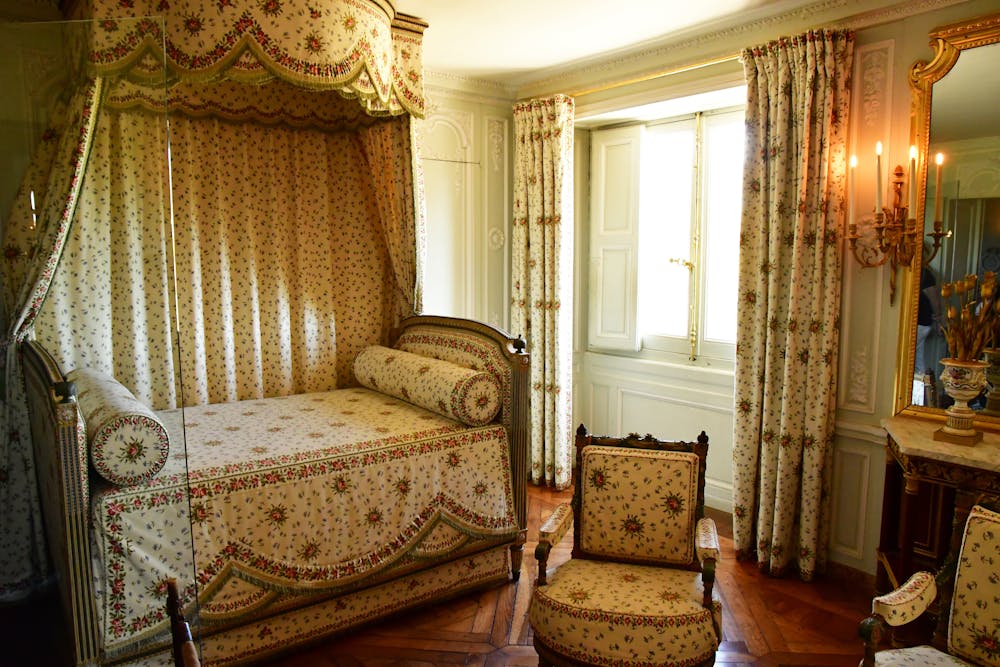



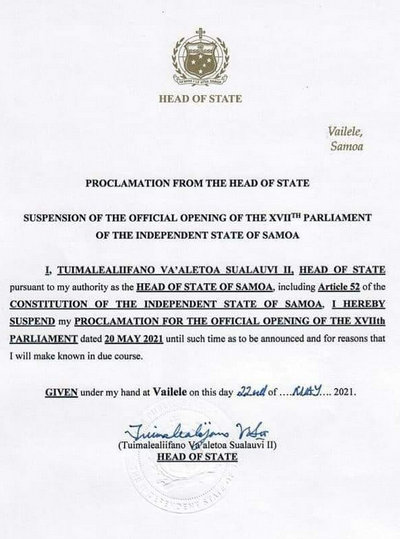

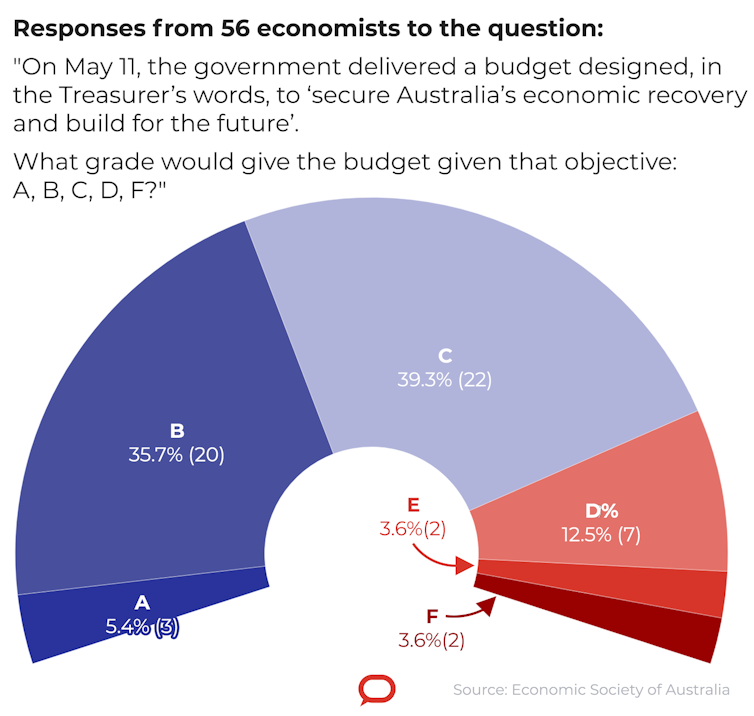
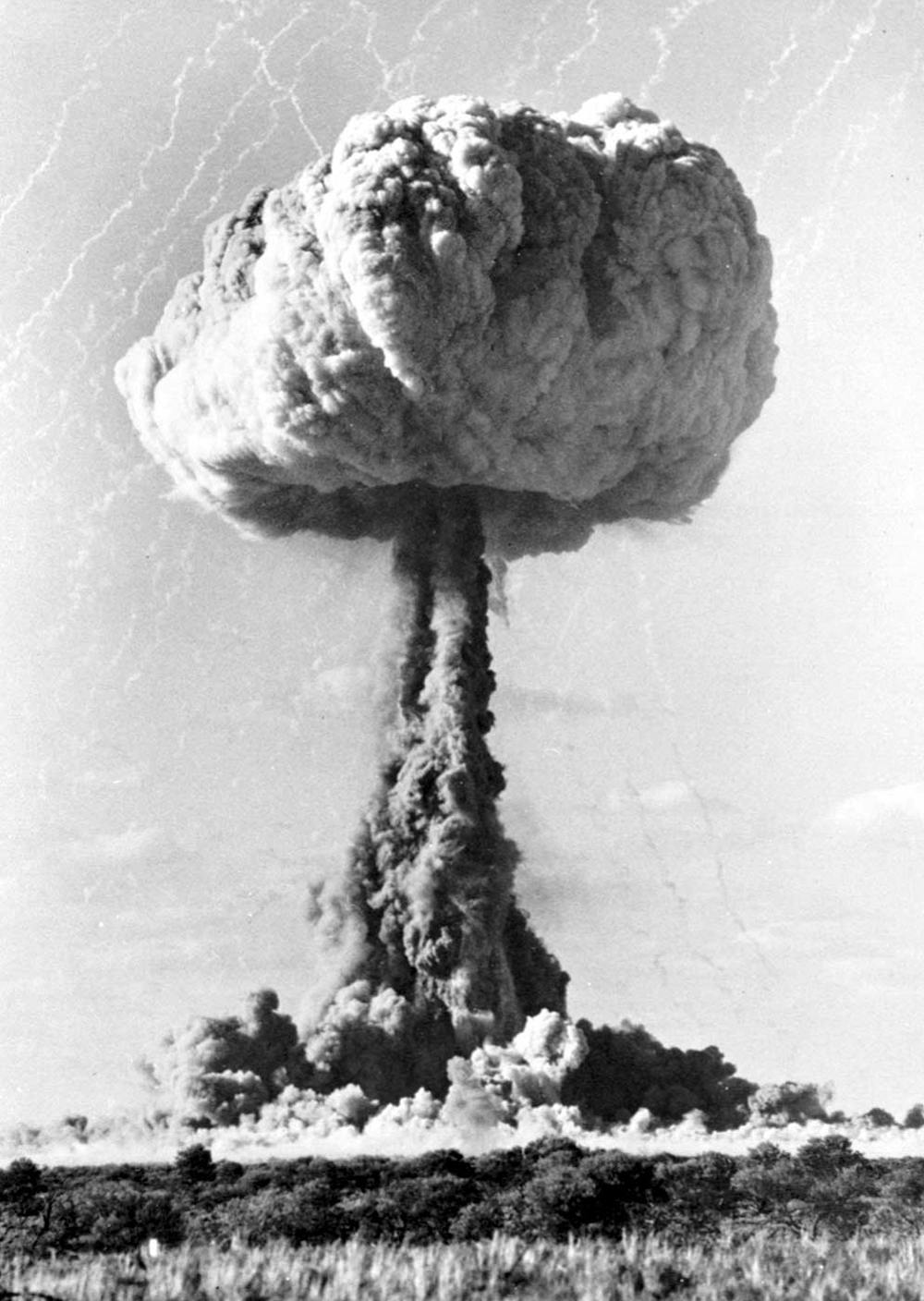
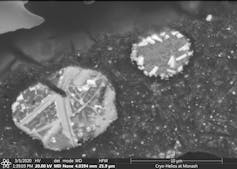










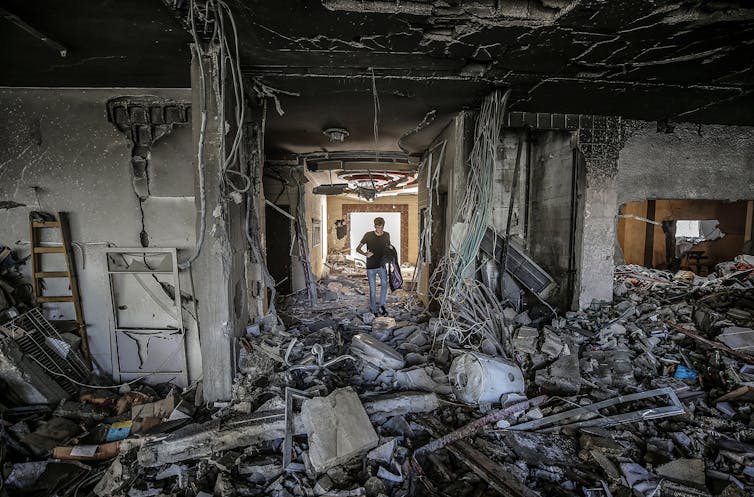


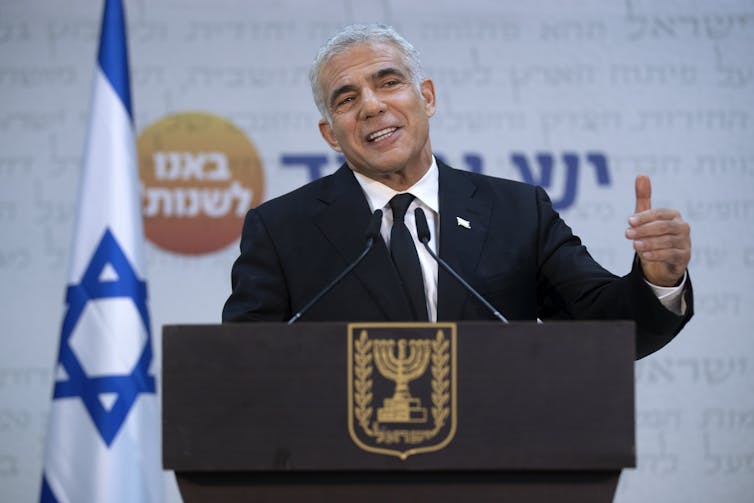
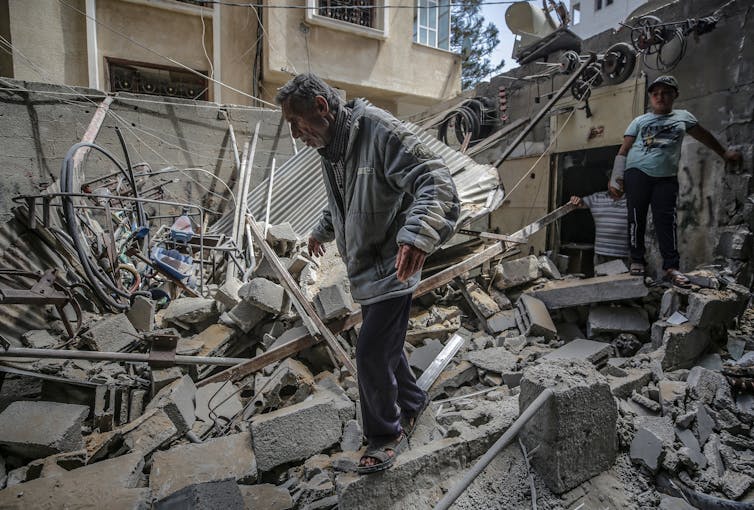
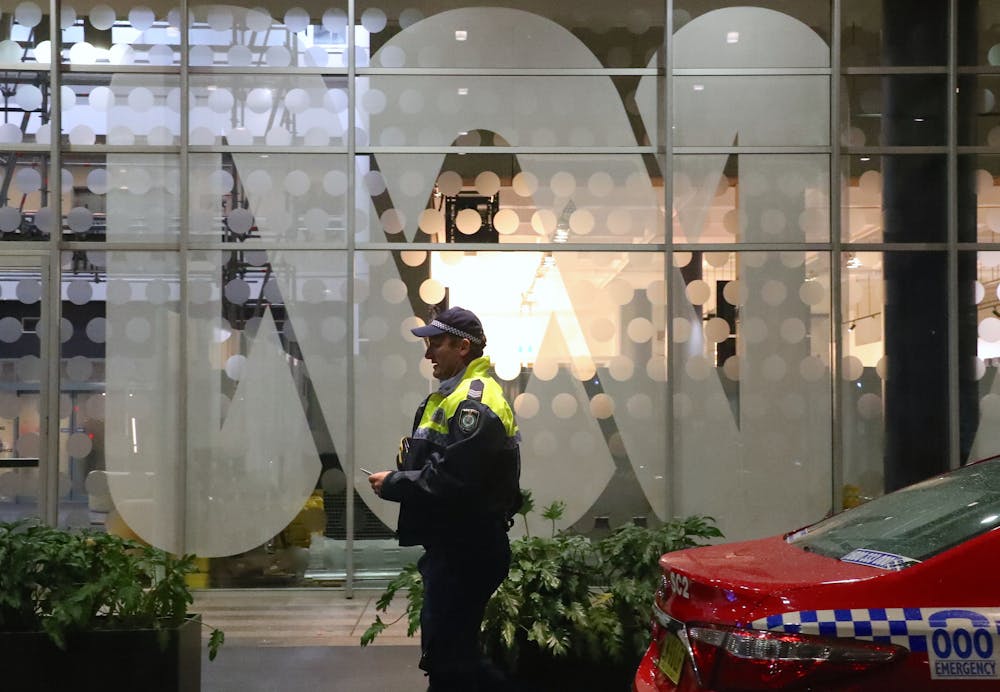
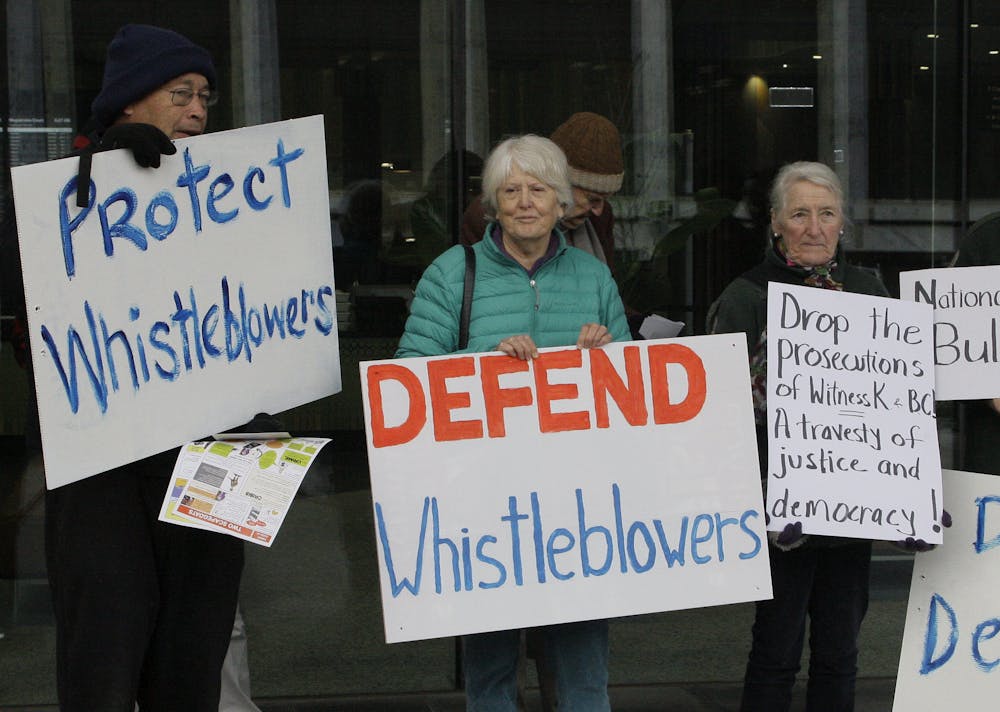






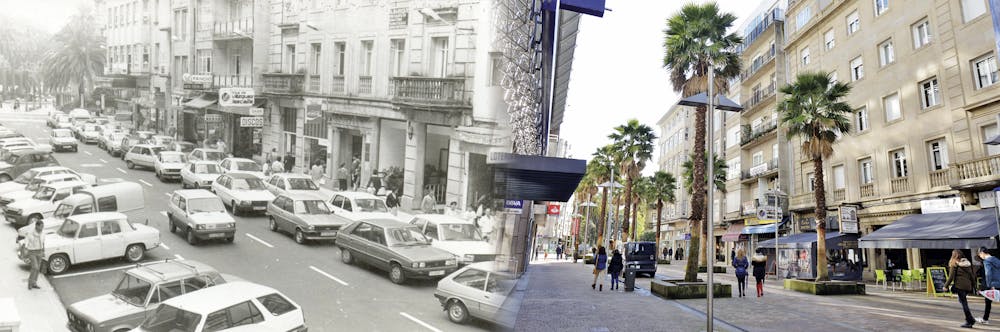

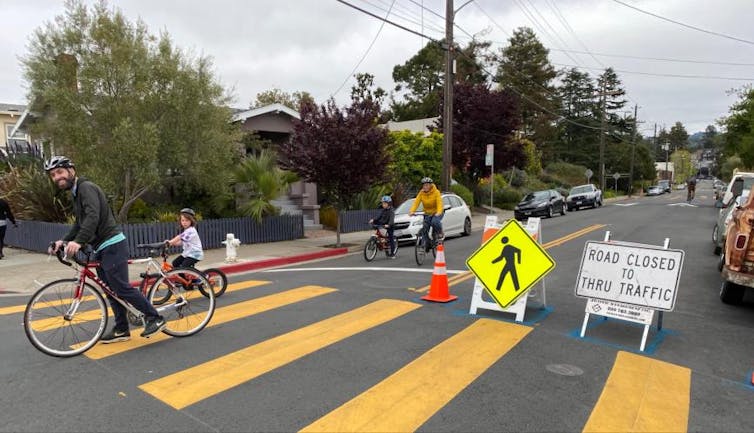
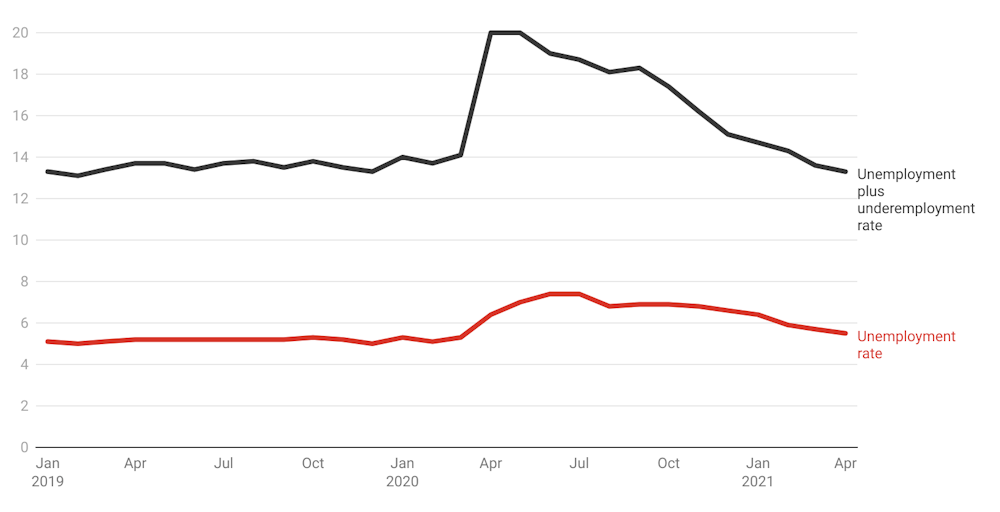
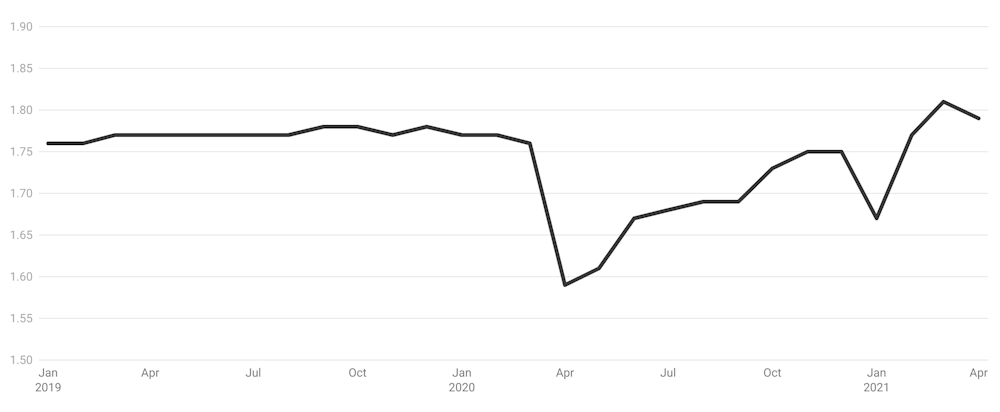
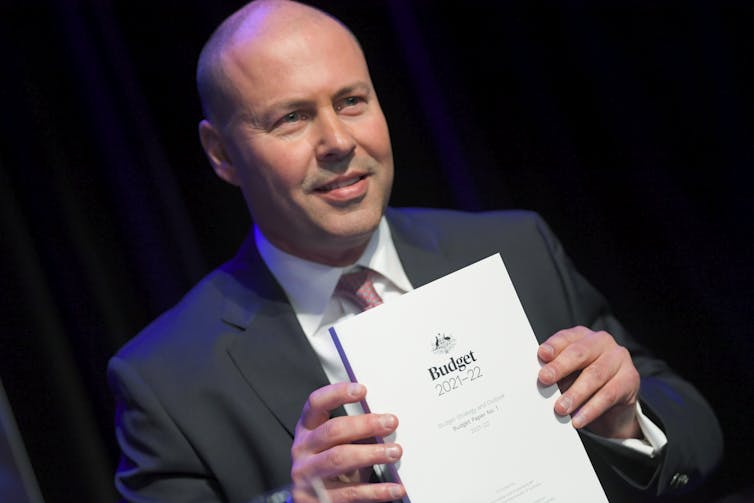



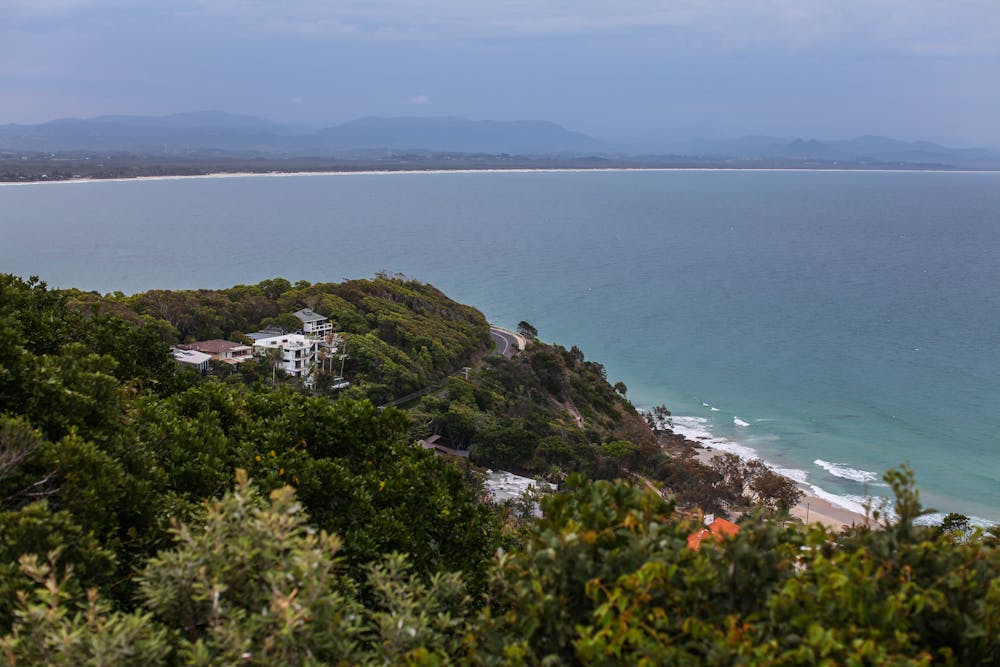
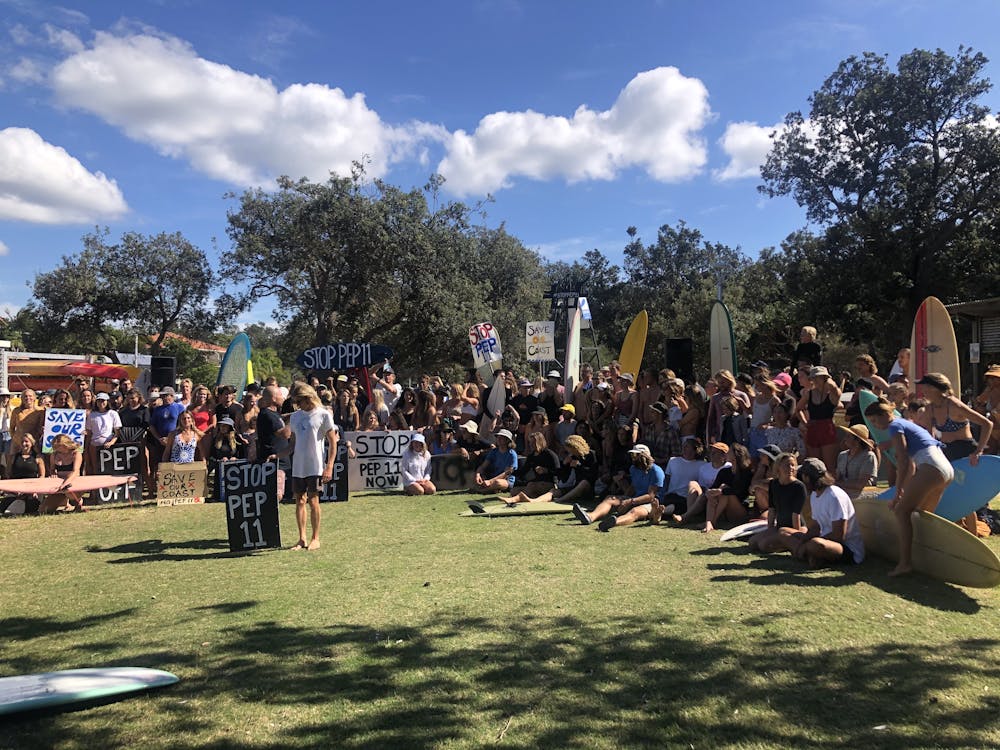


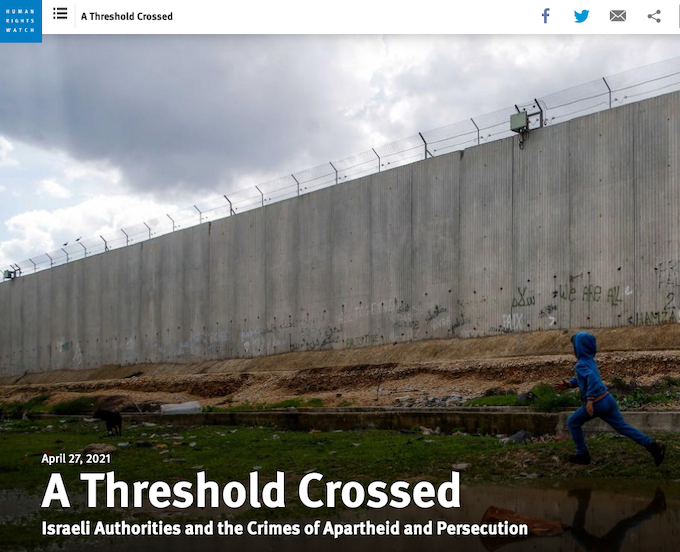
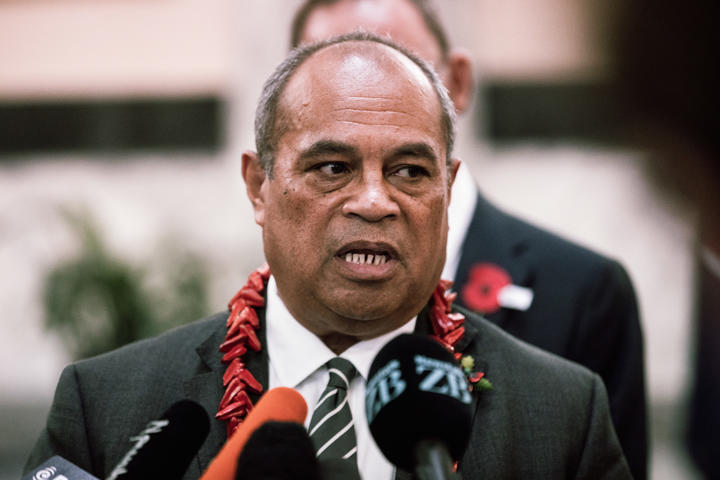
.png?1618566857)