Page 827

Effective NZ vaccination campaigns ‘must include’ Māori, Pacific leaders

By Rowan Quinn, RNZ health correspondent

The calls for New Zealanders to get vaccinated are becoming more urgent by the day as covid-19 embeds itself in the community.

Two people have now died in the latest outbreak, the number of daily cases remains in the double figures and the virus continues to spread outside Auckland.

The government has announced a nationwide immunisation push for October 16 — dubbed Super Saturday — but one of Auckland’s leading Māori vaccinators is questioning what it will achieve.

Te Whānau o Waipareira runs two mass vaccination centres, and has given tens of thousands of Aucklanders their Pfizer shots.

Chief executive John Tamihere said the first he heard of Super Saturday was when Covid-19 Response Minister Chris Hipkins announced it at a media conference, saying it would be like election day, with clinics open all day and into the night

Tamihere said that would not cut it when it came to getting vaccine stragglers.

“They won’t necessarily turn up, the ones they are endeavouring to target. We have to go out into the streets and take each suburb street by street and to do that you’ve got to know where you’re sending and deploying your resources,” Tamihere said.

More resources rather than big show
“We would probably put a lot more resource into that campaign as opposed to big show days.”

The Ministry of Health today reported 29 new cases of covid-19 in the community, including five in Waikato.

Speaking at today’s government briefing, Director of Public Health Dr Caroline McElnay said seven of the new cases in Auckland were yet to be linked to earlier cases, all of the Waikato cases were linked.

Yesterday, the death of a 57-year-old man from covid-19 was reported, along with 39 new cases in the community. Nine of those were in Waikato.

There have now been 22 cases in Waikato in the current outbreak.

One previous community case has been reclassified as under investigation, bringing the total cases in the outbreak to 1448.

There were also two cases detected in MIQ reported today.

7000 receive drive-through dose
But the recent six-day vaccination event at Vodafone Events Centre is being hailed a success after 7000 people received a drive-through dose.

Among them, many church members of the Assemblies of God Church of Sāmoa who know first-hand the harsh reality of the virus.

A father of seven who lost his battle with covid yesterday was a deacon at the church, and his wife is also in hospital with the disease.

Church spokesperson Jerome Mika said the community was grieving.

He said many members had been vaccinated at the drive-through event in the past few days which was a success due to the many community groups that had supported it.

“Community willingness to be able to just support and encourage their family members to come and get vaccinated.”

The experts agree.

Māori and Pacific leaders a must
Victoria University of Wellington immunologist Diane Sika-Paotonu said to be effective, any vaccination campaign must include Māori and Pacific leaders.

“They’re not just being called in right at the end to help make things work but rather they’re involved right from the outset at the design stage of any activities, events and interventions that are being planned.”

But one group argues they need the right information for that model to work.

Tamihere also heads the North Island’s Whānau Ora Commissioning Agency.

It is taking the Ministry of Health to court for refusing to hand over health data for all Māori that he said was vital to closing the “dangerous gap” in the vaccination rates.

It sits at just over 57 percent for a first dose compared with 81 percent of Pākehā.

“Tai Tokerau is way behind, the Bay of Plenty is way behind. These are Māori communities. It’s not that they’re stupid and dumb, it’s that they’re poorer and their priorities are different and it takes time to reach them.”

The Ministry of Health said it could not share the data because many of the people were not enrolled with Whānau Ora so officials were not authorised to hand it over.

The ministry will release information today on the most and least vaccinated suburbs in the country.

Yesterday 63,000 people were vaccinated as rates climb again after a month long dip.

This article is republished under a community partnership agreement with RNZ.

Print Friendly, PDF & Email

Article by AsiaPacificReport.nz

Police arrest spectator at Papua Games for wearing Morning Star T-shirt

By Maria Baru in Sorong, West Papua

Brother Frater Anton Syufi of the Papua’s Order of Saint Augustine (OSA) has been arrested by the Jayapura city district police for wearing a banned Morning Star (BK) independence flag T-shirt while watching a soccer match between Papua and East Nusa Tenggara at Indonesia’s National Games at Mandala Stadium.

This was conveyed by Frater Kristianus Sasior, also from the OSA, who assisted Brother Syufi at the Jayapura district police.

Syufi, who was arrested at 4 am last Sunday and detained until 7 pm, was finally released at 10 pm because police did not find any other issues to charge him with.

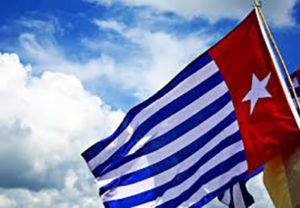
Morning Star flag
The Morning Star flag of West Papua … outlawed. Image: SIBC

“The police said he was detained because he wore a BK T-shirt. The police said that he was disturbing the Papua PON XX [20th National Games], said Brother Sasior.

“There is a prohibition on wearing things with the BK design. Brother Frater Anton did not [show] it intentionally because he was wearing two layers of clothing.

“When his favourite team won he jumped up and down and opened his outer shirt so police saw the costume underneath with the BK design.

“He was summoned and taken to Jayapura city district police. The police said they were still waiting for the head of the intelligence unit to arrive so we were [also] still waiting”, explained Sasior when contacted by Suara Papua by phone from Sorong.

A similar story was conveyed by Evenisus Kowawin who said that Syufi was detained for wearing the Morning Star T-shirt while watching the soccer match.

“Frater Anton was arrested because he wore a BK shirt. Police saw the shirt then dragged him out, interrogated him then took him to the district police. He’s currently still at the police [station],” explained Kowawin.

Translated by James Balowski for IndoLeft News. Slightly abridged due to repetition. The original title of the article was “Pakai Baju Bintang Kejora Nonton Pertandingan PON, Seorang Frater Ditahan Polisi di Jayapura”.

Article by AsiaPacificReport.nz

NZ’s covid-zero strategy may be past its use-by date, but it still has a vaccination advantage

ANALYSIS: By Michael Plank, University of Canterbury

The announcement this week that New Zealand will introduce a vaccination certificate by November is welcome news. Whether by “carrot” or “stick”, vaccination rates must keep climbing, as it is now likely case numbers will climb under alert level 3 conditions in Auckland.

We’ve seen a growing number of mystery cases over the past couple of weeks – people testing positive after going to hospital for non-covid reasons, or from essential worker surveillance testing.

These cases suggest there is a significant amount of undetected community transmission, and that makes it much harder to stamp out.

While the slight easing of restrictions announced on Tuesday may or may not accelerate the growth in cases, it is unlikely to slow it.

This has led to some debate about whether the government has abandoned its elimination strategy in favour of suppression of cases.

To some extent this is a semantic argument. Elimination has been defined as “zero tolerance” for community transmission, as opposed to zero cases. The fact that New Zealand was able to get to zero cases for much of the past 18 months has inevitably come to define what elimination has meant in practice.

Before vaccines were widely available, having zero cases was crucial in allowing us to enjoy level 1 freedoms.

But New Zealand is now transitioning into a new phase of the pandemic, and this was always going to happen. Borders can’t remain closed forever and the virus was always going to arrive sooner or later.

Return to tougher restrictions still a possibility
In an ideal world, our border defences would have kept delta out and New Zealand would have been able to stay at alert level 1 until the vaccine rollout was complete.

But the delta outbreak has forced our hand to some extent.

Whether another week or two at level 4 would have been enough to eliminate this outbreak is impossible to know. Given the outbreak is spreading in very difficult-to-reach communities, stamping out every chain of transmission is extremely challenging.

As we shift from an elimination to a suppression strategy, the country will have to tread a very narrow path to avoid overwhelming our hospitals and throwing our at-risk populations under the bus.

This includes Māori and Pasifika, who were effectively put at the back of the vaccine queue by dint of their younger populations, despite being at higher risk of severe covid-19.

We are now relying on a combination of restrictions and immunity through vaccination to prevent cases growing too rapidly. As vaccination rates increase, restrictions can be progressively eased.

But if we relax too much, there is a risk the number of hospitalisations could start to spiral out of control. When the R number is above 1, cases will continue to grow relentlessly until either more immunity or tougher restrictions bring it back under 1.

Getting vaccination rates up is crucial but will take time, so the government may yet be forced to tighten restrictions to protect our healthcare systems.

The vaccination advantage
New Zealand was always going to have to grapple with these really tough decisions, though delta has forced us to do this earlier than we would have liked.

But our elimination strategy has given us has an important advantage – almost 70 percent of the total population has had at least one dose of the vaccine before experiencing any large-scale community transmission.

We still have a lot of work ahead, but having access to the vaccine before being exposed to the virus is a luxury people in most countries didn’t have.

There is a lot that could happen between now and Christmas. Currently, the Australian state of Victoria has more than 100 people in intensive care, which is equivalent to almost a third of New Zealand’s total ICU capacity.

Those ICU beds are normally full with patients with conditions other than covid-19.

The implications for the healthcare system are obvious. If New Zealand goes the way of Melbourne, harsher restrictions will probably be inevitable.

Not a white flag
The more optimistic scenario is that a combination of restrictions, vaccination and contact tracing is just enough to keep a lid on the case numbers. It’s almost inevitable cases will increase. But if it isn’t too rapid and hospitals can meet the demand, it could tide us over until we have the high vaccine coverage we need.

And while vaccination rates are not yet high enough, they are still helping a lot, cutting the R number to around half what it would be with no vaccine.

The country is in a far better position now than it would have been if the Auckland outbreak had happened in May or June.

Everyone can do their bit by doing two things: help and encourage those around you to get vaccinated, and stick to the rules.

We have to keep community transmission rates low to keep pressure off our hospitals and help us get to the next step of the road map. Moving away from a literal interpretation of elimination does not mean waving a white flag.The Conversation

Dr Michael Plank, professor in applied mathematics, University of Canterbury. This article is republished from The Conversation under a Creative Commons licence. Read the original article.

Print Friendly, PDF & Email

Article by AsiaPacificReport.nz

Gavin Ellis: Lockdown musings over media lessons from a pandemic

COMMENTARY: By Gavin Ellis of Knightly Views

It appears we are a nation of selfish malcontents for whom enough is never enough.

That is one of the conclusions I’ve been forced to draw after seven weeks of covid lockdown in Auckland. And, because my isolation has been broken only by a few medical appointments that are valid reasons for leaving my security-guarded community, I gain my impressions through our media and a diet containing a surfeit of opinion, some of it in the guise of news.

I am confronted daily by examples of peevish bleating, whining, and complaining. I hear demands for certainty where there can be none.

I hear commentators crying out for an end to level 4 then level 3 lockdown. They range from predictable nay-saying radio hosts like Mike Hosking, Heather du Plessis-Allan and Kerre McIvor to the unscientific Sir John Key, whose syndicated comments were the product of some yet-to-be-revealed stratagem by the former prime minister.

I see New Zealanders demanding that their right to return to this country be met NOW when it is obvious that the number of intending returnees far exceeds the country’s capacity to safely manage them.

I read of business demanding the ability to trade, and parents demanding to take their children to far-flung spots for the school holidays, when doing so risks undoing the constraint that has been put on the spread of the delta variant.

I am told the government is incompetent or that it has gone too hard, and that the police haven’t gone hard enough on gangs and followers of Brian Tamaki.

Nation of whingers?
What else could I conclude but that we are a nation of whingers?

But I have also concluded that some of our news media are exhibiting signs of split personality: While devoting an extraordinary amount of time and space to the malcontents, they are also pursuing positive campaigns to get the eligible population vaccinated.

They also – thank goodness – show a willingness to accommodate the views of members of the medical and scientific community, whose opinions we so desperately need to hear.

The two positions are not, of course, mutually exclusive. Media have a duty to report dissent as well as the positives. However, while front page lead stories supporting efforts to contain the delta variant have far outweighed those that argue against them, I have a sense that this Winter Of Our Discontent emphasis is compromising the vax campaign by legitimising self-entitlement.

In my lockdown musings I have, however, reached one further conclusion that both saddens and frustrates me. It is the realisation that many of those who need to get the message to get vaccinated are beyond the reach of news media.

These are people who do not read newspapers, watch television news programmes, listen to radio news bulletins or access the online services that each provides. They have no idea what a “1pm stand-up” means.

They do not engage with news on any other basis than word-of-mouth or social media and the results are fragmented, selective, and often-as-not wrong. In other words, the commendable media campaigns to raise vaccination levels never reach them.

Getting to the marginalised
Ways need to be found to get to this marginalised part of our community. Perhaps the answer is for the media to go on the road. A media roadshow visiting suburbs with which they seldom positively identify might have benefits beyond helping us to get closer to that magic 90 per cent vaccination target.

I was about to say I had reached another conclusion but that’s too strong a word for it. I have a suspicion that the Winter Of Our Discontent is not a reflection of widespread public opinion. I am led to that suspicion by two polls.

The first was a Spinoff poll in August that showed 72 percent supported the move to Level 4, and the second was a Talbot Mills survey that showed strong support for keeping our border closed until 90 percent of the eligible population is vaccinated.

These suggest to me a greater level of resilience (and common sense) than negative media stories might indicate. It’s also manifested in the (admittedly limited) interactions I have with people these days.

That also might be reflected in a letter I read in The New Zealand Herald last week. It was in response to a story about a man who feared he would not be allowed to witness his wife giving birth to triplets in Auckland if he returned to Rotorua to work.

M.A. Hume of Mt Roskill, who admitted to being “old enough to remember the Second World War”, recalled a friend whose husband died at El Alamein without ever seeing his daughter and others who had not seen their families for four years and had no certainty of returning to them. “In those days,” the letter writer said, “huge sacrifices were commonplace.”

I would like to think that, today, most of us can muster that same sense of self-sacrifice and resolve. Given the announcements last weekend of rising cases in Auckland and a spread to the Waikato, we’ll need it.

Dr Gavin Ellis holds a PhD in political studies. He is a media consultant and researcher. A former editor-in-chief of The New Zealand Herald, he has a background in journalism and communications – covering both editorial and management roles – that spans more than half a century. Dr Ellis publishes a blog called Knightly Views where this commentary was first published and it is republished by Asia Pacific Report with permission.

  • Read the full Gavin Ellis article here:

Media lessons from a pandemic

Print Friendly, PDF & Email

Article by AsiaPacificReport.nz

Grattan on Friday: Morrison government faces battle over integrity commission it doesn’t really want

Source: The Conversation (Au and NZ) – By Michelle Grattan, Professorial Fellow, University of Canberra

Those critiquing the dramatic fall of Gladys Berejiklian, who resigned when the Independent Commission Against Corruption announced it was investigating the probity of her conduct, have divided into two camps.

Some cast ICAC as the ogre that’s brought down a good leader, and a woman at that, over what seem to them relatively small matters.

Others argue propriety is paramount, regardless of the broader qualities of a leader, and Berejiklian’s position as NSW premier became untenable after her revelation last year of her relationship with a dodgy colleague.

Deputy Prime Minister Barnaby Joyce portrayed ICAC as a rogue player that gets in the way of politicians.

“ICAC out of control means that the bureaucracy reigns supreme and politicians are basically terrified to do their job,” Joyce told Channel 7.

“Politicians at times have to make hard decisions. It’s not that they’re corrupt, they’re making decisions. There might be some disagreement with the bureaucracy, but that’s their right. That’s why people go to a ballot box and they see the name of politicians on the ballot paper, not the names of bureaucrats.”


Read more:
Politics with Michelle Grattan: Former judge Stephen Charles slams government’s integrity commission model


Joyce’s line ignores a couple of salient points.

Politicians’ decisions in some cases are made for improper reasons. And without sharp oversight, the voters may not be the wiser when they look at that ballot paper. Remember, it was the auditor-general who documented the egregious sports grants rorting.

With the Morrison government due within weeks to introduce its legislation for a federal integrity commission, Berejiklian’s resignation has brought into even sharper focus the powers and conduct of the bodies charged with investigating integrity in politics.

Morrison was blunt in his view about ICAC. “I’m sure there are millions of people who’ve seen what’s happened to Gladys Berejiklian, they’ll understand that’s a pretty good call not to follow that [ICAC] model,” he said.

Many people, however, will not think that’s such a “good call”.

We haven’t got the final version of the government’s integrity commission legislation. But the draft model put out by then attorney-general Christian Porter was spineless in its provisions relating to politicians and public servants. And it would take a major change of direction for the government to insert a significant spine when it makes its revisions.

The point is this: the government doesn’t really want an integrity commission. It has been dragged to it by political necessity.


Read more:
ICAC is not a curse, and probity in government matters. The Australian media would do well to remember that


In the draft model, the proposed commission has tough provisions covering the scrutiny of law enforcement bodies. But politicians, their staff and bureaucrats would be given heavy protections.

These would make it hard for allegations against them to reach investigators, limit what matters the body could probe, and ban public hearings during inquiries, as well as public reporting.

Under Morrison’s model, Berejiklian’s self-damning evidence of last year would not have been given in an open forum.

In a report released this week the Centre for Public Integrity, an independent think tank with a board of legal heavyweights, compared the government’s planned commission with others around the country and concluded that its public sector division “would be the weakest integrity commission in the country”.

The centre pointed out such a body wouldn’t, for instance, be able to investigate rorting in the sports grants scheme and commuter car parks project, the allegations of conflict of interest involving minister Angus Taylor’s family business, or claims about ex-ministers’ potential breaches of the ministerial code of conduct.

This list, however, does invite a knotty question. Should all alleged integrity breaches by politicians, staff and public servants be examined by the same body?


Read more:
A federal ICAC must end the confusion between integrity questions and corruption


Gary Sturgess, who as cabinet secretary to the NSW Greiner government designed ICAC, argues for having one body to look at serious “corruption” allegations (with no special protections for the political class), and a separate one to deal with less serious alleged integrity breaches by public figures.

Sturgess warns against confusing corruption involving potential criminality with other (but still important) breaches. “Treat all politicians as crooks, and there is the danger that we will end up with less integrity in public office, not more,” he wrote in The Conversation this week.

In designing its model, the Morrison government has been more concerned about the political damage a robust body could do than about corruption and other integrity issues. It doesn’t want any more opportunity than presently exists for “scandals” to be probed.

Critics of having a federal body at all have in the past argued that “corruption” is found more often at state rather than federal level.

But there’s no doubt federal governments of both complexions, and individual politicians, will often be willing to subvert proper process when it’s expedient to do so – and if they think they can get away with it. And the role of donations in buying access to ministers and their offices involves serious integrity concerns. It doesn’t have to be a matter of cash in a brown paper bag.

Potential exposure of integrity breaches has the dual advantage of serving the public’s right to know and acting as a deterrent to bad behaviour.

But the fear that an integrity commission can be weaponised politically is legitimate. Strong protections are needed for those investigated and witnesses as well as a stringent arrangements for oversight of the commission’s activities.


Read more:
Gladys Berejiklian quits premiership amid ICAC inquiry into links with former MP


Labor is promising a more robust model to cover the political class, including public hearings, wider access for those wanting to make allegations, and the ability for the commission to commence its own inquiries.

Retrospectivity is a contested area, with shadow attorney-general Mark Dreyfus saying the commission “has to be able to decide about matters that potentially, even though they occurred in the past, are having a current effect on the government of Australia”. The government says retrospectivity is a question of parameters and it is still working this through.

The government’s legislation may not have been passed by the election, given the tight timetable. Even if it has been, Labor will be committed to revisiting the model.

Either way, the national integrity commission is likely to be still a sharp point of contention when the voters go to the polls.

The Conversation

Michelle Grattan does not work for, consult, own shares in or receive funding from any company or organization that would benefit from this article, and has disclosed no relevant affiliations beyond their academic appointment.

ref. Grattan on Friday: Morrison government faces battle over integrity commission it doesn’t really want – https://theconversation.com/grattan-on-friday-morrison-government-faces-battle-over-integrity-commission-it-doesnt-really-want-169473

5 ways Twitch’s massive data leak might change live streaming as we know it

Source: The Conversation (Au and NZ) – By Mark R Johnson, Lecturer in Digital Cultures, University of Sydney

Shutterstock

Yesterday a colossal data leak from live streaming platform Twitch.tv was posted on controversial internet forum 4chan by an anonymous user. Twitch hosts millions of users who stream their daily activities to a combined audience of tens of millions of people.

The platform is used primarily to stream computer game-related content, although users can broadcast almost anything — from podcasts, to costume design, to music rehearsals and beach trips.

Although the full impact of the leak remains unclear, it appears to include the earnings of at least the top few thousand streamers, information about new software Twitch was designing, passwords and security data for streamers and viewers, and even the source code for the Twitch platform.

This might well be the largest and most comprehensive data leak on any major internet platform in history — amounting to about 125 gigabytes of data – but what will it mean for streamers, viewers, and Twitch itself?

I have researched Twitch for past six years, looking to understand its streamers, viewers, culture and economics. And although we’ve yet to uncover certain details about the leak — such as who is behind it and how the data was acquired – five potential impacts stand out.

Potential impacts

1) Trust in Twitch will surely be dented, although likely not completely destroyed, by this leak. While some streamers might not publicly express much dismay or frustration, and just change their passwords and move on, many will certainly be more vocal.

Many users will now be alarmed by account security risks. Twitch markets itself on the basis of trust and relative openness, selling the idea that streamers and viewers are not interacting with a company, but rather with friends. With a massive data leak, this message is now seriously challenged.

2) The leak will likely intensify the draw of other streaming platforms. One short-lived competitor to Twitch, Mixer, closed down last year. Mixer had secured a number of superstar streamers but failed to create the sort of community found on Twitch.

But if Twitch no longer seems secure, or if other platforms can offer more attractive terms, how many streamers might decide to make a move to the alternatives, such as YouTube Gaming?


Read more:
The war between Xbox and Playstation is no longer about consoles. It’s about winning your loyalty


3) The economy of Twitch is based on viewers giving money to streamers. These are mostly donations (one-off payments) or subscriptions (monthly payments). As such, most streamers make much of their money via many small payments from dedicated fans.

Although everyone knew top streamers had substantial incomes, the true scale of this is perhaps only now becoming clear to many viewers. The top dozens of streamers can bring in millions of dollars a year, while at least hundreds of others collect six-figure paychecks.

Twitch fans therefore might reduce their support of those who are already comfortably millionaires. On a large enough scale, the combined economic impacts could be significant. Twitch takes around half of the subscription payments, and a smaller portion of donations, so reduced income for streamers means reduced income for the platform as well.

4) The leak suggests Twitch is, or was, developing a competitor to the dominant gaming platform Steam, owned by Valve Corporation. Steam is currently the hub for most PC gaming, but has been criticised for monopolistic practices and challenged by competitors such as the Epic Games Store and itch.io.

New information in the leak might give Valve a significant advantage in countering Twitch’s offering before it even launches. In turn, might Twitch abandon the project altogether, or do the opposite and accelerate its release since there’s now no time to lose? Either way, this will impact games distribution and consumption in years to come.

Steam is a video game-distribution service that was started in 2003.
Shutterstock

5) Lastly, this leak has probably been a serious wake-up call for all major digital platforms. Twitch is owned by Amazon, one of the largest and most influential internet companies on the planet. Yet, it was seemingly taken completely by surprise with this leak.

What went wrong in Amazon or Twitch’s multi-billion dollar systems to allow such an incident? There will likely be a serious reckoning for the company here, and one that comes on the heels of other recent controversies around Facebook, Twitter, OnlyFans and other internet giants, whose growth and profitability are driven by user-created content.

Is all lost?

Despite all of the above, this is far from a knock-out blow for Twitch. The platform dominates the live streaming space in most countries and has already seen off competitors.

Twitch is also rife with systems designed to boost user retention and discourage both streamers and viewers from moving to other websites. So much of (game) live streaming culture and practice is the same as Twitch culture and practice, and this gives the platform a strong incumbent advantage.

Still, precisely because Twitch has become such a central part of gaming culture, it can’t take such an attack lightly. It remains to be seen what the leak will mean for gaming, gamers, live streaming, and digital platforms as a whole in the coming months and years.

What is certain is that as Twitch’s allure takes hit after hit — with sexism, so-called “hate raids” and now a huge data leak — the platform may well have to fight for a future of live streaming dominance that, at one point, appeared quietly assured.


Read more:
The Activision Blizzard lawsuit shows gamer culture still has a long way to go: 5 essential reads about sexual harassment and discrimination in gaming and tech


The Conversation

Mark R Johnson had been funded for Twitch and live streaming research by the UK “Digital Crucible” and by the Japanese “Hoso Bunka Foundation”. In neither case did the funder have any control over the direction or progress of the research, the findings, analyses, publications, etc.

ref. 5 ways Twitch’s massive data leak might change live streaming as we know it – https://theconversation.com/5-ways-twitchs-massive-data-leak-might-change-live-streaming-as-we-know-it-169448

Saturday is Love your Bookshop Day. 5 reasons why readers keep coming back to independent book stores

Source: The Conversation (Au and NZ) – By Katya Johanson, Professor of Audience Research, Deakin University

Shutterstock

“The cities are dead”, Australian Booksellers Association CEO Robbie Egan tells us, “and that has been brutal”.

For bookshops, the experience of the pandemic depends on their location: those in regional towns have flourished, while those in the business districts of our locked down cities have been “decimated” as one bookseller put it late last year.

Love for independent bookshops is a distinctive feature of Australian book culture. Bookshops have withstood many 21st century threats: the ubiquity of Amazon, its proprietary e-book software, divisions within the publishing industry over parallel importation restrictions, and social media’s theft of our precious leisure time from slower practices like reading.

While the number of independent bookshops in the United Kingdom experienced a steep decline in the early 2000s, Australian independent bookshops have proven resilient. In 2020, Australia had approximately 25% more independent bookshops than chain outlets like Dymocks and Collins.


Read more:
All hail the bookshop: survivor against the odds


When they closed for lockdowns in 2020, bookshops lost their advantage over their online counterparts. Suddenly, customers could no longer browse, and found it harder to chat to a well-read shop assistant. Still, with more time on our hands, book purchases increased. But reliant on click and collect or home delivery, independent bookshops struggled to compete with Amazon and its Australian equivalent Booktopia, whose sales soared.

COVID restrictions also prevented activities that usually support sales by introducing readers to books, including literary festivals and author-in-schools events.

We interviewed 18 independent booksellers in five states about their experience of the pandemic and their customers. It became clear that Australians love their independent bookshops for five main reasons:

1. Curated book choices

Our research with teenage readers finds that despite an abundance of online recommendations, many struggle to find a good book. Readers often look for novelty, but algorithms that determine online recommendations struggle to accommodate new titles and authors.

Independent booksellers stock books based on what they know about local readers and their own love of good quality books, rather than relying on sales trends. Our interviewees described enjoying “finding the little niche books” that will excite individual customers.

Usually, 50% of customers go into a bookshop “not having a book in mind at all”, says Egan, but wanting to browse. When customers lost this ability during lockdown, one bookseller reported that every sale his bookshop made was based on a personal recommendation.

2. A commitment to the local

Lockdowns saw people valuing and wanting to support their local communities, and independent booksellers return this commitment.

Knowing what books to stock and recommend for their customers, one interviewee told us, involves knowing what the customer is “like as a person, and what would inspire them”.

Some booksellers take pride in meeting a customer for the first time as a baby, and serving them throughout their lives: “our strategy is that we’ll keep ageing with the (young) customers we’ve got”.

Customers browsing at independent bookstore, Readings, in Melbourne’s Carlton pre-lockdown.
SniperGirl/flickr, CC BY

3. An introduction to local authors and stories

Readers’ appreciation of local authors and stories has also flourished. Eight of the ten 2020 top-selling titles were by Australian authors.

Australian publishers rely on independent booksellers to connect local authors to readers. Many sales are “hyperlocal”: The F-Team by Punchbowl author Rawah Arja caused excitement at Lost in Books in the neighouring suburb of Fairfield, while Hannah Moloney’s The Good Life is loved by Fullers bookshop customers in Hobart.

4. ‘Slow leisure’

Both the act of browsing in the bookshop and reading are forms of slow leisure — activities that are rich because we invest time in them. One of the best things independent bookshops do for their customers is create a calm, inviting atmosphere for browsing without pressure to purchase.

During lockdowns, sales for the ABC’s Bluey titles boomed because families sought ways for their children to spend their days, out of childcare and schools, and off screens.

The Paperback bookstore.
eddieddieddie/flickr, CC BY

5. Outlets for our emotions

Books provide an opportunity for vicarious experience of different kinds of emotion. Bookseller advice helps us find the books through which we can access these emotions.

In 2020, for instance, Australians channelled their anger over racial police violence by consuming books about race and racism.

In our quiet, locked down lives we now miss out on the full range of emotion: we may experience fear or frustration, but lack joy and excitement. Booksellers will recommend books not just based on genre or your previous reading, but also on mood. Lately, this has often meant finding “light reading”.

COVID-19 is an extraordinary disruptor to the book industry, but it isn’t all bad news. The pandemic has helped readers see clearly what it is that we love about our bookshops.

The Conversation

This project is funded by the Copyright Agency Cultural Fund and the Australian Research Council (Project LP180100258).

Bronwyn Reddan receives funding from the Copyright Agency Cultural Fund and the Australian Research Council (Project LP180100258).

Leonie Rutherford receives funding from the Copyright Agency Cultural Fund and the Australian Research Council (Project LP180100258).

ref. Saturday is Love your Bookshop Day. 5 reasons why readers keep coming back to independent book stores – https://theconversation.com/saturday-is-love-your-bookshop-day-5-reasons-why-readers-keep-coming-back-to-independent-book-stores-169445

Forecasting space weather is hard. A new Australian satellite may help make it easier

Source: The Conversation (Au and NZ) – By Brett Carter, Senior lecturer, RMIT University

The CUAVA-1 satellite departs from the International Space Station. JAXA

The Australian-made space weather satellite CUAVA-1 was deployed into orbit from the International Space Station on Wednesday night. Launched to the space station in August aboard a SpaceX rocket, a major focus of this shoebox-sized CubeSat is to study what radiation from the Sun does to Earth’s atmosphere and electronic devices.

Space weather such as solar flares and changes in the solar wind affects Earth’s ionosphere (a layer of charged particles in the upper atmosphere). This in turn has an impact on long-distance radio communications and the orbits of some satellites, as well as creating fluctuations in the electromagnetic field that can wreak havoc with electronics in space and down to the ground.

The new satellite is the first designed and built by the Australian Research Council Training Centre for Cubesats, UAVs, and their Applications (or CUAVA for short). It carries payloads and technology demonstrators built by collaborators from the University of Sydney, Macquarie University, and UNSW-Sydney.

One of CUAVA-1’s aims is to help improve space weather forecasts, which are currently very limited. As well as its scientific mission, CUAVA-1 also represents a step towards the Australian Space Agency’s goal of growing the local space industry by 20,000 jobs by 2030.

Satellites and space weather

Exploded view of CUAVA-1 and its components and payloads. Tanned labels indicate Australian-made components.
Xueliang Bai

While the Australian Space Agency was only formed in 2018, Australia has a long history in satellite research. In 2002, for example, FedSat was one of the first satellites in the world to carry a GPS receiver onboard.

Space-based GPS receivers today make it possible to routinely measure the atmosphere all around the world for weather monitoring and prediction. The Bureau of Meteorology and other weather forecasting agencies rely on space-based GPS data in their forecasting.


Read more:
Lost in space: Australia dwindled from space leader to also-ran in 50 years


Space-based GPS receivers also make it possible to monitor the Earth’s ionosphere. From heights of about 80km to 1,000km, this layer of the atmosphere transitions from a gas of uncharged atoms and molecules to a gas of charged particles, both electrons and ions. (A gas of charged particles is also called a plasma.)

The ionosphere is the location of the beautiful auroral displays that are common at high latitudes during moderate geomagnetic storms, or “bad space weather”, but there is much more to it.

The ionosphere can cause difficulties for satellite positioning and navigation, but it is also sometimes useful, such as when ground-based radar and radio signals can be bounced off it to scan or communicate over the horizon.

Technological and infrastructure affected by space weather events.
NASA

Why space weather is so hard to predict

Understanding the ionosphere is an important part of operational space weather forecasting. We know the ionosphere becomes highly irregular during severe geomagnetic storms. It disrupts radio signals that pass through it, and creates surges of electric current in power grids and pipelines.

What is space weather?

During severe geomagnetic storms, a large amount of energy is dumped into the Earth’s upper atmosphere near the north and south poles, while also changing currents and flows in the equatorial ionosphere.

This energy dissipates through the system, causing widespread changes throughout the upper atmosphere and altering high-altitude wind patterns above the equator hours later.

In contrast, X-rays and UV radiation from solar flares directly heat the atmosphere (above the ozone layer) above the equator and middle latitudes. These changes influence the amount of drag experienced in low-Earth orbit, making it difficult to predict the paths of satellites and space debris.

Even outside geomagnetic storms, there are “quiet-time” disturbances that affect GPS and other electronic systems.


Read more:
Predicting daily space weather will help keep your GPS on target


At present, we can’t make accurate predictions of bad space weather beyond about three days ahead. And the flow-on effects of bad space weather on the Earth’s upper atmosphere, including GPS and communication disturbances and changes in satellite drag, are even harder to forecast ahead of time.

As a result, most space weather prediction agencies are restricted to “nowcasting”: observing the current state of space weather and projecting for the next few hours.

It will take a lot more science to understand the connection between the Sun and the Earth, how energy from the Sun dissipates through the Earth system, and how these system changes influence the technology we increasingly rely on for everyday life.

This means more research and more satellites, especially for the equatorial to mid-latitudes relevant to Australians (and indeed most people on Earth). We hope CUAVA-1 is a step towards a constellation of Australian space weather satellites that will play a key role in future space weather forecasting.

The Conversation

Brett Carter receives funding from the Australian Reseach Council. He and Iver Cairns acknowledge contributions from the ASPiRE team working on space weather prediction and science.

Iver Cairns receives funding from the Australian Research Council and Investment NSW. He and Brett Carter acknowledge contributions from the ASPiRE team working on space weather prediction and science.

ref. Forecasting space weather is hard. A new Australian satellite may help make it easier – https://theconversation.com/forecasting-space-weather-is-hard-a-new-australian-satellite-may-help-make-it-easier-169027

Far right and extremist groups are targeting military veterans for recruitment. Does the ADF owe them a duty of care?

Source: The Conversation (Au and NZ) – By Carli Kulmar, Lecturer in Law, University of Canberra

Shutterstock

Even before extremist group activity in Australia’s 2021 anti-lockdown protests was exposed, concern about right-wing extremism in Australia was on the rise.

ASIO and the US annual threat estimate have noted right-wing extremism in Australia is on an upward trend. Ideological extremism now makes up 40% of the ASIO caseload.

Our research at the University of Canberra’s National Security Hub is investigating online influence operations targeting Australia, including its veteran community. This is a global problem and was one of many issues noted at this year’s International Terrorism and Social Media Conference in the UK.

For researchers like us, who focus on the wellness of veterans – particularly during the fallout from the military withdrawal from Afghanistan – such extremist groups present a complicated and dangerous threat to the community.

Transition to civilian life

The transition to civilian life can be a vulnerable time for many veterans. Rates of suicide, homelessness and incarceration are alarmingly high for Australian veterans.

Some veterans find their ideological beliefs are tested during transition to civilian life, when they feel most disconnected from the military community that has so far played such a fundamental role in their sense of self.

It is during this period, rather than during service, when veterans are particularly vulnerable to radicalisation.

In some cases, veterans have voiced being actively ostracised by their former colleagues for leaving the military. This has in turn caused them to feel disillusioned with the entire institution.

A man looks at his phone at night.
Well-designed prevention programs may help deter recruitment by extremist groups hoping to take advantage of military skill and knowledge.
Shutterstock

This, unfortunately, can make these veterans more vulnerable to appeals and influence by extremist groups offering the mateship and camaraderie now missing in their lives.

Such groups often promote a mission-based approach, which may attract those lacking the feeling of purpose they valued in military service.

There’s a risk this may lead to well-meaning veterans being enticed into participating in groups whose ideals they would normally have considered to be questionable.

A broader risk to the public

This is not a uniquely Australian issue.

Nearly one in five defendants in the prosecutions undertaken in response to the January 6 US Capitol attack had served in the military.

Escalation from participation in online forums to physically violent acts can happen quickly and sometimes without clear warning signs. These extremist groups aim to gain an already trained cohort of members who cannot only be immediately activated, but are also able to train others.

Those with military experience and training in combat, weaponry, or explosives are clear threats if radicalised by extremist groups. One study suggests some veterans tend to affiliate with such groups as instructors, rather than undertaking extremist acts themselves.

The newly established UK-based Veterans 4 Freedom (V4F) group even lists service in the military as a requirement for membership.

This group claims to be around 200-strong and is focused on “anti-vaccine” offensives, such as organising marches. In discussions on the group’s private Telegram account, however, it appears to be planning to escalate its activities.

Media reports suggest discussions on the platform even include awareness that currently serving military members may well become “enemy combatants” as a result of V4F’s actions. Not only are these “freedom defenders” anticipating a confrontation, they are prepared to fight their former brothers and sisters-in-arms to achieve their goals.

Veterans in Anglo democracies are being targeted by both overt and covert online influence campaigns using fake military profiles to connect with and deceive defence contractors and current and former military members.

Veterans are also ideal targets for international online influence operations encouraging promotion of particular political candidates, parties or ideologies. Many of these operations originate in Russia or China.

A duty of care

So, what duty of care does the Australian Defence Force owe to its members — and the community at large — to better prepare veterans for threats they may encounter when transitioning to civilian life?

Organisations such as the Global Internet Forum to Counter Terrorism (a collaboration between the technology industry, government, civil society, and academia) are actively engaged in monitoring and preventing violent extremist content and activity on online platforms.

But military members and their families would likely benefit from awareness and prevention programs designed specifically for the community — particularly if offered before they transition to civilian life.

Support should also be offered to assist and protect veterans seeking to leave such groups.

Well-designed prevention programs may help deter recruitment by extremist groups hoping to take advantage of military skills and knowledge, and could be offered as part of military exit processing.


If this article has raised issues for you, or if you’re concerned about someone
you know, call Lifeline on 13 11 14 or Open Arms on 1800 011 046 or visit the Open Arms website
.

The Conversation

Carli Kulmar has received funding from the Australian Defence Force for grey zone research.

Michael Jensen receives funding from the Australian Defence Force for research regarding grey zone activities targeting Australia

ref. Far right and extremist groups are targeting military veterans for recruitment. Does the ADF owe them a duty of care? – https://theconversation.com/far-right-and-extremist-groups-are-targeting-military-veterans-for-recruitment-does-the-adf-owe-them-a-duty-of-care-166756

Politics with Michelle Grattan: Former judge Stephen Charles slams government’s integrity commission model

Source: The Conversation (Au and NZ) – By Michelle Grattan, Professorial Fellow, University of Canberra

After Gladys Berejiklian’s resignation over an investigation by the NSW Independent Commission Against Corruption (ICAC), the debate about the federal government’s proposed – but weak – federal integrity commission is heating up.

Stephen Charles, a former Victorian judge who is a director of the Centre for Public Integrity, says the Coalition should totally rework its
draft model to give it real teeth in dealing with politicians and public servants.

Pointing out that under the government draft, investigations of politicians wouldn’t have public hearings, Charles asks, “What does that show you about the concern they have of their activities being exposed? And […] remember the hundreds of thousands and millions of dollars that this coalition has shown it is prepared to spend […] to its electoral advantage rather than in the interests of the public.”

“Australia is a signatory to the United Nations Convention Against Corruption. Article 36 of that convention requires Australia to have an effective body to deal with corruption, and those of us who’ve been arguing for a national integrity body have been pointing to Australia’s failure to comply with its obligations under UNCAC for a long time now.”

Charles agrees with the need to prevent the integrity commission being used by political players for their own purposes. “These powers must not be allowed to be weaponised by […] the political party in power at the time.”

“The body should be under the control of the judicial system, which in this case would mean under the control of the federal court […] there should be an inspector, and next there should be a parliamentary committee which should have its activities under continual review.” With those protections, misuse could be prevented, Charles says.

The Conversation

Michelle Grattan does not work for, consult, own shares in or receive funding from any company or organisation that would benefit from this article, and has disclosed no relevant affiliations beyond their academic appointment.

ref. Politics with Michelle Grattan: Former judge Stephen Charles slams government’s integrity commission model – https://theconversation.com/politics-with-michelle-grattan-former-judge-stephen-charles-slams-governments-integrity-commission-model-169460

Curing with blood: the rise and fall of COVID convalescent plasma therapy

Source: The Conversation (Au and NZ) – By Andrew McLachlan, Head of School and Dean of Pharmacy, University of Sydney

Shutterstock

Early in the pandemic, scientists thought “convalescent plasma” might be a way to treat COVID-19.

By giving patients the plasma of people who had recovered (or convalesced) from COVID-19, the idea was this antibody-rich infusion would help their immune systems fight infection. It’s a strategy tried, with various degrees of success, for other infectious diseases, including Ebola.

But growing evidence, including an international study published this week, shows convalescent plasma does not save lives of people critically ill with COVID-19. The researchers concluded the therapy was “futile”.


Read more:
Coronavirus: what is plasma therapy?


What is convalescent plasma?

Convalescent plasma is a blood product containing antibodies against an infectious pathogen (such as SARS-CoV-2, the coronavirus that causes COVID-19). It comes from blood collected from people who have recovered from the infectious disease.

Scientists use a process called apheresis to separate the different blood components. Red and white cells, and platelets are removed leaving plasma, which is rich in antibodies.

The story of convalescent plasma therapy (or serum therapy) originates in the 1890s. This is when physician Emil von Behring infected horses with the bacteria that causes diphtheria.

Once the horses recovered, Behring collected their antibody-rich blood to treat humans with the disease. This led to him being awarded the first Nobel prize in physiology or medicine, in 1901.

Why has convalescent plasma been used to treat COVID?

Convalescent plasma has been used to treat infectious diseases for over a century. These include: scarlet fever, pneumonia, tetanus, diphtheria, mumps and chickenpox.

More recently, convalescent plasma has been investigated as a treatment for SARS (severe acute respiratory syndrome), MERS (Middle East respiratory syndrome) and Ebola.

So early in the pandemic, researchers hoped convalescent plasma could be used to treat COVID-19 too.


Read more:
I’m a lung doctor testing the blood plasma from COVID-19 survivors as a treatment for the sick – a century-old idea that could be a fast track to treatment


Initial studies and some clinical trials were promising. This led to the widespread use of convalescent plasma for patients with COVID-19 in the United States, a decision supported by the Food and Drug Administration.

By May this year more than 100 clinical trials had been conducted with convalescent plasma in people with COVID-19; about one-third of these studies had finished or were stopped early.

Earlier this year, the results of the United Kingdom’s landmark RECOVERY trial were reported. This investigated convalescent plasma therapy (compared to usual supportive care) in more than 10,000 people hospitalised with COVID-19.

Treatment did not reduce the risk of death (24% in both groups), with no difference in the number of patients who recovered (66% discharged from hospital in both groups) or who got worse (29% needed mechanical ventilation to support breathing in both groups).

So for people admitted to hospital with COVID-19, the researchers concluded convalescent plasma offered no benefit.

A Cochrane review, which was updated in May this year and evaluated all available trials, confirmed these results. These trials involved more than 40,000 people with moderate-to-severe COVID-19 who received convalescent plasma.

The review found the treatment had no effect on the risk of dying from COVID-19, did not reduce the risk of requiring hospitalisation nor the need for a ventilator to assist breathing when compared to placebo or standard care.

In Australia, the National COVID-19 Clinical Evidence Taskforce does not recommend using convalescent plasma in people with COVID-19, unless it is in a clinical trial.


Read more:
Here’s what happens when you’re hospitalised with COVID


What’s the latest news?

The results of the trial reported this week come from a major clinical trial involving about 2,000 hospitalised patients with moderate-to-severe COVID-19.

Patients were randomised to received convalescent plasma or usual care. All patients had access to other supportive medicines used in critically ill hospitalised people with COVID, such as dexamethasone and remdesivir.

The international team of investigators included those from Australia, Canada, UK and US.

Although the results and detailed analysis were published this week, the trial was halted in January. This is when the trial committee reviewed the interim results and reported “convalescent plasma was unlikely to be of benefit for patients with COVID-19 who require organ support in an intensive care unit”. So continuing the trial was considered futile.

Convalescent plasma treatment did not reduce the risk of death in hospital over the month after treatment (37.3% convalescent plasma treated, 38.4% usual care, not treated with convalescent plasma). The median number of days without the need for organ support (such as a mechanical ventilator or cardiac support) was 14 days in both groups. Serious adverse events were reported in 3.0% of people treated with convalescent plasma and only 1.3% in the usual care group.

Taken together, the weight of evidence now clearly demonstrates convalescent plasma is not a treatment option for people with mild, moderate or even severe COVID-19.

Where next for COVID-19 treatments?

While vaccinations remain the major strategy to prevent COVID-19, attention is now turning to some emerging and promising treatments to prevent COVID-19 worsening.

These include emerging antiviral treatments that may be used early in the disease, including monoclonal antibodies such as sotrovimab and AZD7442. Then there are potential oral antiviral medicines, such as molnupiravir and PF-07321332.


Read more:
Take-at-home COVID drug molnupiravir may be on its way — but vaccination is still our first line of defence


The Conversation

Andrew McLachlan receives research funding from the NHMRC and the Sydney Pharmacy School receives research scholarship funding from GSK for a PhD student under his supervision. Andrew has served as a paid consultant on Australian government committees related to medicines regulation. Andrew does not work for, consult, own shares in or receive funding from any company or organisation that would benefit from this article.

Sophie Stocker receives funding from foundations which support medical research including Arthritis Australia, Heart Foundation and St Vincent’s Clinic Foundation.

ref. Curing with blood: the rise and fall of COVID convalescent plasma therapy – https://theconversation.com/curing-with-blood-the-rise-and-fall-of-covid-convalescent-plasma-therapy-169347

Can I catch COVID from the pool? Not from the water but watch out for the change rooms and queues

Source: The Conversation (Au and NZ) – By Thea van de Mortel, Professor, Nursing and Deputy Head (Learning & Teaching), School of Nursing and Midwifery, Griffith University

As NSW and Victoria speed toward target COVID vaccination rates and the associated relaxation of lockdown rules, many are considering a trip to the local pool in the near future.

Already in NSW, you can swim at outdoor pools under certain conditions.

So, how can you stay safe and reduce your COVID risk when at the local public pool?

Here’s what you need to know.


Read more:
Take a plunge into the memories of Australia’s favourite swimming pools


Can I catch COVID from the pool water?

No.

The World Health Organization (WHO) has said “the COVID-19 virus does not transmit through water while swimming.”

And according to Dr Sylvie Briand, director of the WHO’s Department of Global Infectious Hazard Preparedness:

if you swim in a swimming pool or in a pond, you cannot get COVID-19 through the water.

But if you go to a crowded swimming pool, and are close to other people one or more of whom is infected, then you can be infected by them. So, that’s why even in swimming pools, it’s important to maintain physical distancing and take precautions.

Can I catch it in the change rooms?

Yes.

At the pool, the most likely place to catch COVID-19 is in the change room.

That’s because the main way current variants of SARS-CoV-2 (the virus that causes COVID) spreads is via droplets and aerosols.

Droplets are larger exhaled particles that fall to the ground comparatively quickly, while aerosols are smaller particles that can hang in the air for longer and travel longer distances.

Your COVID risk is greater indoors than it is outdoors, where contaminated air is more likely to be whisked away on air currents.

The risk outdoors is also lower because ultraviolet radiation from the sun and higher temperatures in sunlit areas also tend to inactivate the virus, rendering it non-infectious.

You can reduce the risk of droplet and aerosol transmission by:

  • maintaining physical distancing. Stay at least two metres from non-household members

  • wearing a mask

  • keeping your time indoors to a minimum.

A woman holds a baby in a pool change room.
At the pool, the most likely place to catch COVID-19 is in the change rooms.
Shutterstock

Can I catch it queuing up?

Yes.

The key risk here is in how close you are to a potentially infected person, so don’t stand near others if you are queuing for entry to the pool – or lining up at the canteen for some post-swim hot chips.

The closer you are, the higher the risk, especially considering the Delta variant is much more transmissable than some previous variants.

Again, physical distancing and mask wearing can help protect you.

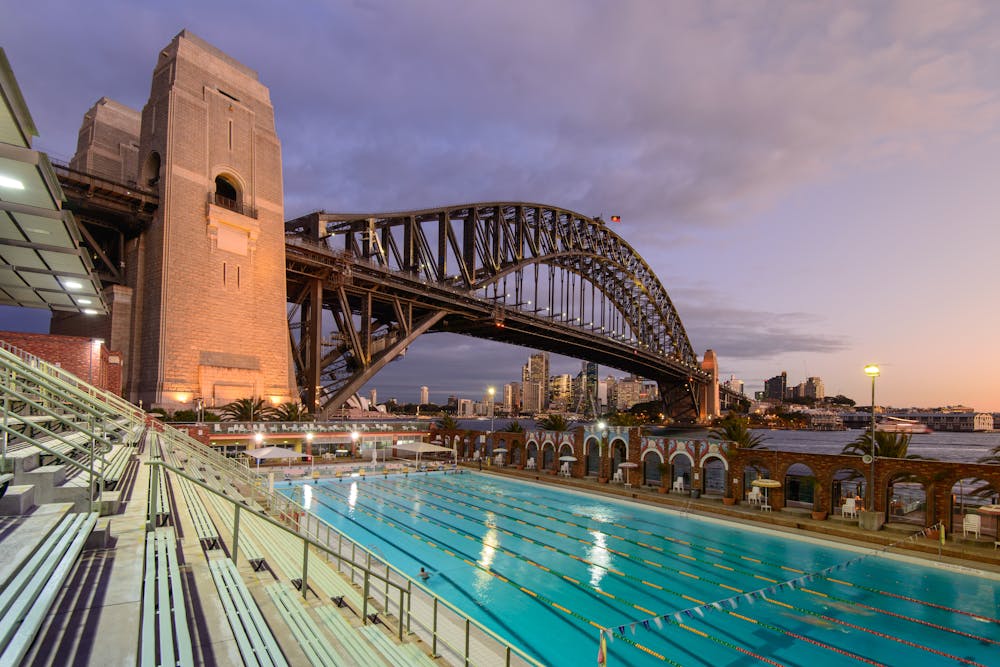
A pool lies under the Sydney Harbour Bridge
The COVID risk is lower outdoors.
Shutterstock

Any other tips to reduce my COVID risk at the pool?

Other things you can do to reduce the risk of infection are to:

  • wear a mask when out of the water

  • make sure you check in with a QR code

  • physically distance from others at the poolside

  • steer clear of anyone yelling, coughing, sneezing or laughing (these activities can mean more droplets and aerosols, and therefore more risk)

  • use an alcohol-based hand sanitiser (60% alcohol) before touching your face or food

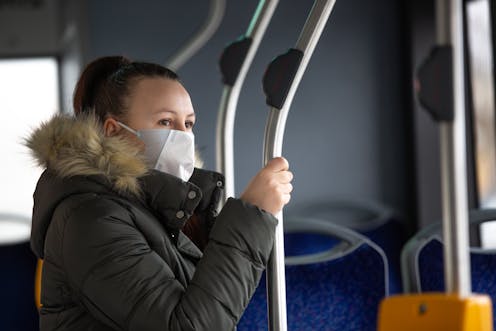
  • avoid public transport if possible. If you must use it, physically distance from others, wear a mask and open a window on the bus if you can.


Read more:
From segregation to celebration: the public pool in Australian culture


The Conversation

Thea van de Mortel teaches into the Griffith University postgraduate Infection Prevention and Control program.

ref. Can I catch COVID from the pool? Not from the water but watch out for the change rooms and queues – https://theconversation.com/can-i-catch-covid-from-the-pool-not-from-the-water-but-watch-out-for-the-change-rooms-and-queues-169252

PODCAST: How Hindutva rightwing nationalism is concerning Indian communities around the world

A View from Afar. In this week's episode Paul G. Buchanan and Selwyn Manning discuss rising concerns regarding Hindutva, a rightwing nationalistic movement originating from India.
A View from Afar
A View from Afar
PODCAST: How Hindutva rightwing nationalism is concerning Indian communities around the world
Loading
/

PODCAST: In this episode of A View from Afar political scientist Paul Buchanan and Selwyn Manning discuss how security threats present themselves in a multitude of forms. This week we look at a threat that mixes belief with nationalism. This threat is most obvious in its homeland where the movement was conceived.

But its devotees have migrated to countries all over the world. When confronted by others within their communities, they respond with threats that by degrees… become more sinister.

We are talking about Hindutva nationalism, a right wing movement which has its political epicentre in India.

In the United States of America, a network of universities had organised a virtual conference to discuss Hindutva’s rise. The Washington Post reported this month “the backlash was swift and staggering”.

It added: “Nearly a million emails were sent to universities in protest, the virtual event’s website was attacked and forced offline, organisers reached death and rape threats”, and pro-Modi government media in India said the event was “Hinduphobic and fostered hate against the community”. ref. Washington Post.

And in New Zealand – where this South Pacific nation suffered the tragedy known as the March 15 white supremacist attacks that killed 51 Muslim people while they met for Friday prayer – concerns are now emitting from within the vibrant Indian communities that Hindutva nationalism is growing.

As Stuff.co.nz reported this month, a professor at New Zealand’s Massey University, Mohan Dutta, has spoken out against Hindutva’s far right messages.

Professor Dutta has received hate messages relegating his concerns as promoting Hinduphobia.

Again as Stuff reported, Professor Dutta has received threats such as: “Bootlicker”, “brown servant”. “If you were in India you would be burnt… We should do anything in our power to stop him.” ref. Stuff.co.nz

So should we consider Hindutva as simply a right wing nationalistic political movement, with networks all over the world? Or does it pose a serious and growing threat to security?

You can comment on this debate by clicking on one of these social media channels and interacting in the social media’s comment area. Here are the links:

If you miss the LIVE Episode, you can see it as video-on-demand, and earlier episodes too, by checking out EveningReport.nz or, subscribe to the Evening Report podcast here.

The MIL Network’s podcast A View from Afar was Nominated as a Top  Defence Security Podcast by Threat.Technology – a London-based cyber security news publication.

Threat.Technology placed A View from Afar at 9th in its 20 Best Defence Security Podcasts of 2021 category. You can follow A View from Afar via our affiliate syndicators.

Podchaser - Evening Report
Listen on Apple Podcasts
***

Live Episode: How Hindutva rightwing nationalism is concerning Indian communities around the world

A View from Afar. In this week's episode Paul G. Buchanan and Selwyn Manning discuss rising concerns regarding Hindutva, a rightwing nationalistic movement originating from India.

LIVE PODCST: In this episode of A View from Afar political scientist Paul Buchanan and Selwyn Manning discuss how security threats present themselves in a multitude of forms. This week we look at a threat that mixes belief with nationalism. This threat is most obvious in its homeland where the movement was conceived.

But its devotees have migrated to countries all over the world. When confronted by others within their communities, they respond with threats that by degrees… become more sinister.

We are talking about Hindutva nationalism, a right wing movement which has its political epicentre in India.

In the United States of America, a network of universities had organised a virtual conference to discuss Hindutva’s rise. The Washington Post reported this month “the backlash was swift and staggering”.

It added: “Nearly a million emails were sent to universities in protest, the virtual event’s website was attacked and forced offline, organisers reached death and rape threats”, and pro-Modi government media in India said the event was “Hinduphobic and fostered hate against the community”. ref. https://www.washingtonpost.com/world/2021/10/03/india-us-universities-hindutva/

And in New Zealand – where this South Pacific nation suffered the tragedy known as the March 15 white supremacist attacks that killed 51 Muslim people while they met for Friday prayer – concerns are now emitting from within the vibrant Indian communities that Hindutva nationalism is growing.

As Stuff.co.nz reported this month, a professor at New Zealand’s Massey University, Mohan Dutta, has spoken out against Hindutva’s far right messages.

Professor Dutta has received hate messages relegating his concerns as promoting Hinduphobia.

Again as Stuff reported, Professor Dutta has received threats such as: “Bootlicker”, “brown servant”. “If you were in India you would be burnt… We should do anything in our power to stop him.”

ref. https://www.stuff.co.nz/national/300420720/the-rise-of-hindutva-and-hate-in-aotearoas-indian-diaspora

So should we consider Hindutva as simply a right wing nationalistic political movement, with networks all over the world? Or does it pose a serious and growing threat to security?

And remember, if you are joining us live, we can include your comments in this programme.

Join Paul and Selwyn for this LIVE recording of this podcast and remember any comments you make while live can be included in this programme.

You can comment on this debate by clicking on one of these social media channels and interacting in the social media’s comment area. Here are the links:

If you miss the LIVE Episode, you can see it as video-on-demand, and earlier episodes too, by checking out EveningReport.nz or, subscribe to the Evening Report podcast here.

The MIL Network’s podcast A View from Afar was Nominated as a Top  Defence Security Podcast by Threat.Technology – a London-based cyber security news publication.

Threat.Technology placed A View from Afar at 9th in its 20 Best Defence Security Podcasts of 2021 category. You can follow A View from Afar via our affiliate syndicators.

Podchaser - Evening Report
Listen on Apple Podcasts
***

Most of us will recover our mental health after lockdown. But some will find it harder to bounce back

Source: The Conversation (Au and NZ) – By Maree Teesson, Professor & Director of The Matilda Centre, University of Sydney

Shutterstock

Australians’ mental health has tended to decline during COVID-19 lockdowns. Record-high calls to helplines such as Lifeline suggest many are currently suffering.

Encouragingly, data from 2020 shows many Australians’ mental health improved once outbreaks were contained.

But an evidence review we released today from Australia’s Mental Health Think Tank shows the reality is far more complex for people emerging from lockdowns.

While many will recover, certain Australians who were hit particularly hard by the pandemic will find it more difficult to bounce back.


Read more:
We’ve been tracking young people’s mental health since 2006. COVID has accelerated a worrying decline


Finding the pressure points

We synthesised more than 100 Australian studies and reports about COVID-19 and mental health, to explore who experienced poor mental health and why.

We found the pandemic had a greater impact on some Australians, including children and young people, First Nations people, women, and those experiencing mental or physical disabilities, unemployment or financial stress.

In other words, the pandemic magnified existing Australian mental health inequalities.


Read more:
Languishing, burnout and stigma are all among the possible psychological impacts as Delta lingers in the community


We also asked more than 2,000 Australians to describe the pandemic’s impact. People’s generous responses provided clues as to why some groups had poorer mental health.

Rather than fear of infection, Australians described how the pandemic “pressurised” personal triggers for poor mental health by worsening financial stress and reducing social support.

Man in public housing flat looks out the window.
COVID restrictions were isolating and created additional financial stress.
Shutterstock

Increased unemployment and financial stress

Australians who lost work had poorer mental health during the pandemic. Many reported these experiences were made worse by stigmatising messages about unemployment:

The government does not see that mental impact of being unemployed and getting the distinct feeling you are seen as scum. (woman, late-30s, NSW)

Increased financial stress was a primary reason for poorer pandemic mental health. Financial stress made dealing with lockdown restrictions more difficult, particularly for families:

Bills keep coming in, real estate agent asks for deferred rent to be repaid in full… daughter needs glasses, other daughter has anxiety and becomes depressed. (woman, 50s, Victoria)

For many, good mental health is closely linked to being able to house and provide for family.

Research showed the burden of stressful lockdown care, including homeschooling, fell primarily with women.

A stressed mum talks on the phone while looking at her computer, with a toddler sitting on her lap drawing
Women bore the brunt of care during lockdown.
Shutterstock

On the positive side, receiving the temporary increased JobSeeker payments was associated with improved living standards and lower anxiety.

One person described how,

For the first time in years I was able to pay for essential medical treatment. (woman, 20s, NSW)

However, the removal of this payment was described as “crushing to your mental health” (woman, 20s, Tasmania).

Reduced social connection and support

Our review showed lockdowns and restrictions disrupted Australians’ social relationships and was a leading driver of anxiety and depression for young people in particular.

Restrictions meant they missed out on formative life experiences, such as transitioning to school or university.


Read more:
Students are returning to school with anxiety, grief and gaps in social skills – will there be enough school mental health resources?


Young people with disabilities experienced compromised learning outcomes and loneliness.

Adults noted COVID-19 restrictions and isolation measures led to loneliness, loss and disconnection. Participants experienced this isolation across their various social roles:

Being single, the option of dating was eliminated. As a friend, the opportunity to connect with my nearest and dearest was altered. As an employee, I felt disconnected from my work and my colleagues. (woman, mid-20s, NSW)

A respondent with family interstate experienced “affected mental health”, as restrictions “separated me completely from my family and friends who live in Sydney” (woman, mid-20s, Victoria).


Read more:
The shifting sands of COVID and our uncertain future has a name — liminality


Our review showed increases in racial stigma occurred for First Nations and Asian Australians during the pandemic. Added to the stigma of unemployment described above, social stigma isolated people during the pandemic, likely straining mental health.

An Asian Australian man sits, looking contemplative.
Stigma was a further strain on mental health.
Shutterstock

National data showed, on average, loneliness reduced once restrictions eased.

However, this wasn’t the case for all. Several people with existing mental health issues described heightened social anxiety in the months after lockdown:

I feel much more emotionally fragile now (and) more socially anxious – being around a lot of people doesn’t feel normal anymore. (man, early-30s, Victoria)

I had a panic attack last week and couldn’t attend when I was supposed to attend my first in person class. (woman, early-20s, Victoria)

What can we do about it?

Our review revealed the pandemic negatively impacted some Australians’ mental health by disrupting their ability to maintain social roles and relationships that had provided a meaningful life structure pre-COVID.

Unemployment meant losing their employed “identity” and prevented them from economically supporting their families.


Read more:
It’s OK if you have a little cry in lockdown. You’re grieving


We need to continue to improve access to quality mental health care. Equally, policy changes outside of traditional “health” domains will also be important to our recovery.

Post-pandemic policies ensuring all Australians have enough income to thrive and are given opportunities to reconnect with meaningful work, education and community (for example, through education scholarships) will protect Australians’ mental health.

These are are essential for our transition into “living with covid”.

The Conversation

Maree Teesson directs The Matilda Centre and is Chair of Australia’s Mental Health Think Tank, she receives funding from NHMRC, PRF, Rotary, NSW government, BHP Foundation, Australian Government, Medical Research Future Fund, alongside other philanthropic and research bodies. She is a founding director of CLIMATESchools Pty Ltd.

Marc Stears directs the Sydney Policy Lab which receives funding from the Paul Ramsay Foundation, agencies of the NSW government, the Lord Mayor’s Charitable Foundation, alongside other philanthropic bodies and service delivery groups.

Marlee Bower is affiliated with Australia’s Mental Health Think Tank as Academic Lead.

ref. Most of us will recover our mental health after lockdown. But some will find it harder to bounce back – https://theconversation.com/most-of-us-will-recover-our-mental-health-after-lockdown-but-some-will-find-it-harder-to-bounce-back-169029

We created a microscope slide that could improve cancer diagnosis, by revealing the ‘colour’ of cancer cells

Source: The Conversation (Au and NZ) – By Brian Abbey, Professor of Physics, La Trobe University

Author provided

When we look at biological cells under a microscope, they’re usually not very colourful. Normally, to visualise them we have to artificially add colour — typically by staining. By doing so, we can see their shape and arrangement in a tissue and determine whether they’re healthy or not.

Sometimes, though, cell structure alone isn’t enough to accurately identify disease — which can lead to misdiagnosis and potentially fatal consequences for a patient. But what if there was a way to not only see the structure of cells, but also determine whether they are abnormal, simply by looking at their intrinsic colour under a microscope?

This was our team’s goal as we developed a new medical diagnostic tool called the NanoMslide. We modified a standard microscope slide to turn it into a powerful tool for breast cancer detection. Our research is published today in Nature.

Early detection is key

It’s estimated one in eight Australian women will be diagnosed with breast cancer by age 85. As with most cancers, catching the disease early is critical. However, an accurate diagnosis of the earliest stages of breast cancer requires identifying small numbers of diseased cells throughout a tissue, which can be incredibly challenging.

Human cancerous tissue viewed under miscroscope
Human cancerous tissue, viewed through a microscope with the NanoMslide applied.
Author provided
Normal (non-cancerous) human tissue, viewed through a microscope with the NanoMslide applied.
Author provided

The NanoMslide can manipulate light at the nanoscale, causing cells to “light up” with vivid colour contrast. This makes it easier to recognise potentially cancerous cells (or benign abnormalities) within the tissue.

By providing a way to instantly distinguish which cells could be cancerous, the tool may help to reduce current uncertainty around very early-stage breast cancer detection. With mammogram screening, distinguishing breast abnormalities from early breast cancers upon biopsy is very important, particularly as misdiagnosis rates can be as high as 15%.


Read more:
‘Devastated and sad’ after 36 years of research — early detection of ovarian cancer doesn’t save lives


Major barriers in development

Incorporating nanotechnology into medical diagnostics presents a number of challenges. It took us six years of development to ensure NanoMslide would work effectively. In the end it was a combination of cutting-edge nanofabrication, a significant amount of trial-and-error and a bit of good fortune that led to our breakthrough.

For decades, researchers have known cancer cells tend to interact with light in a way that’s different to healthy cells. This is due to a variety of factors, such as the distribution of protein inside the cell and differences in its overall shape.

The main challenge is these differences can be extremely subtle and can present in a variety of ways. Previous approaches to differentiating cancer cells (without using stains or labels) have tended to use specialised microscopy equipment, or complex techniques.

But these approaches are difficult to incorporate into existing pathology workflows and can require specialist training and knowledge. So we took a radically different approach.

Success with human tissue

Rather than focusing on developing a better microscope, we focused on improving the microscope slide instead.

By developing a special nanofabricated coating, we modified the surface of an ordinary microscope slide and transformed it into one huge sensor. What’s truly remarkable is the structures of the sensor are just a few hundred nanometres across, yet are repeated with amazing precision across an area of tens of centimetres, or more.

Maintaining this level of precision, which is necessary for reliable fabrication at this scale, has taken advances in nanofabrication techniques that have only become commercially available in the past six years.

The NanoMslide is a large sensor fitted with cutting-edge nanotechnology capabilities.
Author provided

The sensor is activated by visible light. And when an object such as a tissue or single cell comes into contact with the sensor’s surface, colours are produced. It is this feature which we’ve been able to optimise to allow pathologists to detect cells that are likely cancerous, just by looking at them.

The dyes which are currently used to stain tissues (to visualise cell shape and architecture) normally present as one or two colours. The NanoMslide renders tissues in beautiful full-colour contrast, making it easier to differentiate multiple types of cell on a single slide.

For our study, we tested the slides with expert breast-cancer pathologists, using both a mouse model and patient tissue. By starting with a well-characterised small-animal model, our team of physicists, cancer researchers and breast pathologists was able to develop the technology further.

We eventually reached the point where we could be confident some of the specific colours visible were indicative of cancerous cells. This led to further pathology assessments with patient tissue, where there is more complexity to contend with in terms of diagnosis.

Yet, even in this more challenging setting, the NanoMslide performed strongly. It also outperformed some commercial biomarkers, which are used as an aid for borderline diagnoses (where cancer is difficult to tell apart from benign abnormalities).

Like going from black and white to colour television

Because the technology doesn’t rely on any special function, or specific molecular interactions, it could potentially be applied to other types of cancer — even other types of disease. Another application now being worked on is to examine the results of liquid biopsies, such as cheek swabs, for immediate point-of-care analysis.

In April, we were fortunate to benefit from the opening of a new instrument at the Australian National Fabrication Facility to enable the scaling-up of production. This means NanoMslide can be moved from small-scale to medium-scale manufacture, allowing us to explore a number of different applications, and produce the numbers of slides required for further clinical validation.

The technology could also be hugely beneficial to the growing digital-pathology space, where the vivid colours generated by NanoMslide could help develop next-generation artificial intelligence algorithms to identify signs of disease.


Read more:
Curious Kids: Why do people get cancer?


The Conversation

Brian Abbey receives funding from the Australian Research Council (ARC).

Belinda Parker receives funding from the DHHS, National Breast Cancer Foundation, Prostate Cancer Foundation Australia, Movember, and the Peter MacCallum Cancer Foundation.

ref. We created a microscope slide that could improve cancer diagnosis, by revealing the ‘colour’ of cancer cells – https://theconversation.com/we-created-a-microscope-slide-that-could-improve-cancer-diagnosis-by-revealing-the-colour-of-cancer-cells-169262

Loved to death: Australian sandalwood is facing extinction in the wild

Source: The Conversation (Au and NZ) – By Richard McLellan, PhD candidate, Charles Sturt University

Richard McLellan, Author provided

The sweet, earthy fragrance of sandalwood oil has made it immensely popular in incense sticks, candles and perfumes. But its beautiful scent may also be its downfall – Australian sandalwood (Santalum spicatum) is facing extinction in the wild.

Despite this, the iconic outback tree is still being harvested in the wild in Western Australia where it’s considered a “forest product”, all to satisfy incense-burners and perfumeries.

Our research, published today, reveals the WA government has known for more than a century that sandalwood is over-harvested and is declining in numbers, with no new trees regenerating. We estimate 175 years of commercial harvesting may have decreased the population of wild sandalwood by as much as 90%.

Today, walking into most sandalwood communities is like walking into a palliative care hospice. There are only old folk there, most of them in terminal decline. There are no youngsters and there are certainly no babies.

It’s time to list sandalwood as a threatened species nationally, and start harvesting only from plantations to give these wild, centuries-old trees a fighting chance at survival.

Sandalwood is an extremely popular incense stick.
Shutterstock

The tree behind the fragrance

Australian sandalwood, one of about 15 different species of sandalwood that grows across Oceania, is a highly valued economic resource as one of the main types of sandalwood traded internationally. But it’s also immensely important ecologically and culturally.

Aboriginal people have revered it for thousands of years, using it, for example, in smoking ceremonies and bush medicine. These uses take only small portions of the tree and do not endanger the plant, compared to commercial harvesting which kills the tree.

Ecologically, it’s a keystone resource in the arid outback, often flowering and fruiting when other plants are not. It attaches its roots to host plants such as acacias, enabling it to derive some of its nutrients and water from nearby trees and shrubs.

Sandalwood trees can live an estimated 250–300 years, and are capable of withstanding extremely harsh conditions. And yet, the species is extremely fragile in the first few years after germination.

Almost no new trees of sandalwood are growing in the wild.
Richard McLellan, Author provided

Sandalwood populations have been slowly collapsing for decades from commercial harvesting, land clearing, fire, and grazing (by introduced herbivores such as goats, sheep, cows, rabbits, and camels, and some native species such as kangaroos).

The biggest problems are its lack of regeneration and the rapidly changing climate. Studies suggest there have been virtually no new trees emerging in most sandalwood populations for 60–100 years.


Read more:
One-third of the world’s tree species are threatened with extinction – here are five of them


There are two main reasons for this. First, sandalwood has lost its seed dispersers, such as burrowing bettongs (small marsupials), which went extinct across most of their range about the same time sandalwood stopped recruiting.

Second, climate change. Sandalwood seeds will only germinate, establish, and survive as seedlings if they get three consecutive good years of rainfall. Under Australia’s increasingly variable rainfall conditions, that’s rarely happening.

Burrowing bettongs (or ‘boodies’ and ‘woylies’) are important seed dispersers for sandalwood, but their populations have declined dramatically since European settlement.
Michael Hains/iNaturalist, CC BY-NC

Wooden gold

Sandalwood is one of the most expensive timbers traded in Australia, making it “wooden gold” for the WA government’s forestry department, the Forest Products Commission.

The oil from this native plant is used in perfumes, soap, and moisturisers, and the heartwood “goes up in smoke” as incense in temples and homes, particularly throughout Asia.


Read more:
Photos from the field: capturing the grandeur and heartbreak of Tasmania’s giant trees


The WA government currently harvests old-growth sandalwood trees almost exclusively from the wild, where the oldest trees have the best oil quality. Plantations do exist, but they are not yet being fully utilised to replace wild-sourced timber.

Our research delved into more than 100 scientific papers, unpublished theses, parliamentary reports and historical documents, and found scientists have repeatedly warned the WA government of the tree’s dire situation.

For example, a century ago (in 1921), in a report to the head of the WA Forests Department, Charles Lane-Poole, Forests Department official Geoffrey Drake-Brockman expressed fears sandalwood harvesting was sending the species extinct in the wild. He recommended the industry start harvesting from plantations instead, writing:

The State Government’s profit (from better managed harvesting) would enable the Forests Department to establish large plantations of sandalwood so that when the natural supplies cut out, the plantations would supply the market requirements.

Sandalwood being loaded onto a ship from Fremantle wharf in 1905.
Battye Library/State Library of Western Australia, Author provided

Years later, in 1958, another report for the WA Forests Department warned:

The sandalwood tree is approaching extinction. The story of the geographical movement of the (sandalwood) industry across WA is the story of the rise and decline of the industry. All too commonly extinction followed exploitation.

Early in the industry’s history, fears were expressed as to the possibility of the future exhaustion of supplies of sandalwood […] Today, the sandalwood tree is approaching extinction […] Little hope of conservation and regeneration remains.

These are just two of scores of examples of warnings documented in our research, all of which have been ignored by successive WA governments. Scientists and others are still putting these same recommendations to the WA government.

Stockpiles of sandalwood being graded for export in the early 1900s.
Battye Library/State Library of Western Australia, Author provided

It’s not too late to save it

Fortunately, sandalwood will not completely disappear as there are thousands of hectares of sandalwood in plantations in WA’s agricultural zone. The industry should urgently transition to only harvest from plantations, taking over-harvesting pressure off wild populations.

We urge the WA government to make that transition. The government must list sandalwood as an endangered species now (as it is in South Australia), before it declines to extinction in the wild, and protect and restore surviving populations in innovative programs with Aboriginal rangers and Traditional Owners.

And we urge you, the consumer, to find out more about any sandalwood you purchase.

Plantation-grown products are readily available and just as sweet smelling. Your support will help the industry transition away from wild-harvested plants that need all the help they can get.


Read more:
Climate change is testing the resilience of native plants to fire, from ash forests to gymea lilies


The Conversation

Richard McLellan receives funding from Australian Government Research Training Program (ARTP), Herman Slade Foundation, and Australian Flora Foundation. He receives in-kind support from Bush Heritage Australia. He is a member of the Ecological Society of Australia, and a volunteer with Bush Heritage Australia.

David M Watson receives funding from The Australian Research Council, The Hermon Slade Foundation and philanthropic support from Chris and Gina Grubb. He is a member and former board member of Birdlife Australia and the Ecological Society of Australia

Kingsley Dixon is affiliated with the Linnean Society of London, The Royal Society of WA, Society for Ecological Restoration including the Australasian chapter, Wildflower Society of WA.

ref. Loved to death: Australian sandalwood is facing extinction in the wild – https://theconversation.com/loved-to-death-australian-sandalwood-is-facing-extinction-in-the-wild-167281

Parents, studies show most kids have done just fine in remote schooling. Here’s how to survive the home stretch

Source: The Conversation (Au and NZ) – By Rebecca English, Senior Lecturer in Education, Queensland University of Technology

Shutterstock

With nearly half of Australia’s population in lockdown, a lot of children and young people are still not attending face-to-face school.

In Melbourne students in year 12 go back to the classroom this week, and there are staggered return plans for the rest of the year levels. Preps and grades 1 and 2 will return part time in the following weeks. All students will return to the classroom full-time by November 5.

Regional Victorian students have a different schedule with all students back in the classroom full-time by October 26.

In New South Wales, students are set to return to class earlier than expected. Kindergarten, year 1 and year 12 students will return on October 18; years 2, 6 and 11 will return on October 25 and all other grades will resume on November 1.

But even with staggered return plans, many kids will still be learning from home if only part of the time.

Parents can be understandably worried about their children’s learning when at home. After a year and a half of COVID and lockdowns, many students and parents are feeling tired, burnt out and sick of online school. Some have disengaged from what the school is providing.

If you’re overwhelmed, and your child is disengaged, have no fear. Your child likely still continued to learn, and will continue to do so, just in a different way.

What we know from last year

During the lockdowns last year, many experts and parents were concerned children’s education would suffer.

But the majority of Australian students have done just fine. For instance, there has been little change in the NAPLAN average results in 2021 compared to 2019 in all states and territories, including Victoria, which had the longest period of remote schooling in 2020. This doesn’t mean every group succeeded, and there is evidence the learning of disadvantaged students suffered but perhaps less than would have been expected.

Some children’s mental health and well-being may have suffered due to extended uncertainty and lack of face-to-face contact with friends. This is especially so for senior students who have missed out on important events like school formals.


Read more:
Delayed graduations, no formals — the class of 2021 has had a hell of a year. They need mental health support, and quickly


But we also know some children, including children with autism, reported being happier because they experienced less bullying and their learning needs were better met at home. And a report on children with disability found learning improved for many, to the extent some parents were thinking of doing it long term.

A student with disability on his Ipad, with Mum looking on behind him.
Many school students thrived in remote learning.
Shutterstock

There are several explanations for remote learning being more successful than expected. Some schools have changed, perhaps permanently to accommodate different teaching and learning approaches.

Learning at home also meant many parents knew more about how their children were doing so were better able to support them. Parents being more involved in their children’s education is a marker of success in schools.

Home learning during lockdowns improved students’ autonomy in many cases. Some students said they valued the flexibility of being able to work at their own pace.

This may have implications for how schools continue. It may also reflect how learning can happen, even when children are not actively being taught.

How children learn

In 1985, psychologists Edward Deci and Richard Ryan introduced what is now known as self-determination theory in their book Self-Determination and Intrinsic Motivation in Human Behavior.

The theory holds that learning happens when children find meaning in what they are learning about, learn collaboratively with others and have some relationships with the content and the people they are learning with. Deci and Ryan called these motivations to learn

  • competence, which is the feeling you can do something and be successful

  • autonomy, which is the feeling you have some control over your experiences

  • relatedness, which means experiencing positive relationships as part of the learning process.

You don’t need to do anything special to your home to make these three things happen for your children.

The natural flows of family life can provide an environment where children and young people are motivated to learn. Incidental conversation (while doing the washing up or cooking), interactions with siblings (reading to the baby), trying to solve problems (fixing a bike), writing to communicate (to a friend in Minecraft) all provide opportunities to learn new skills and take on new information.

Children are naturally curious. In fact, you have to work very hard to stop them learning.

So, what can you do to foster your child’s learning?

Unlike the classroom, it can be easier to facilitate individual children’s autonomous learning and interests at home. This is because children can have more freedom and flexibility in what they do and learning can be incidental.

By encouraging students to learn what they’re interested in, do research and find their own answers, Deci and Ryan’s work would suggest parents can support motivation and success.

Outside of the formal schooling program, this may involve a child researching a particular topic online or doing something practical like fixing something broken.

Where students are unwilling to do activities provided by the school, it may be possible to cover the same learning in a different way. For example, a student might be unwilling to do fractions on the computer or a worksheet but love cooking and be perfectly happy making a cake ¾ the size of the recipe.


Read more:
Don’t want to send the kids back to school? Why not try unschooling at home?


If you had a conversation over the dishes about something they’re interested in, they’re still learning. The conversation could be about anything at all, the critical factor is that it interests your child.

If your child has learned how to crochet on YouTube, they’ve learned not only how to crochet but also how to learn – that’s competence.

If your child rang their grandfather to ask about the Vietnam War, they’ve collected first hand data on the war experience – that’s autonomy.

If you’re feeling burnt out and tired, you’re not alone. It shouldn’t be long now, keep doing what you’ve been doing and the kids will likely be all right.

The Conversation

The authors do not work for, consult, own shares in or receive funding from any company or organisation that would benefit from this article, and have disclosed no relevant affiliations beyond their academic appointment.

ref. Parents, studies show most kids have done just fine in remote schooling. Here’s how to survive the home stretch – https://theconversation.com/parents-studies-show-most-kids-have-done-just-fine-in-remote-schooling-heres-how-to-survive-the-home-stretch-167969

Guide to the classics: written in 1915, Charlotte Perkins Gilman’s Herland imagines society without men

Source: The Conversation (Au and NZ) – By Donna Mazza, Senior Lecturer in Creative Arts, Edith Cowan University

Ruth Hollick collection. State Library of Victoria

Recent television series Creamerie, a dark comedy from New Zealand where a pandemic quickly kills (almost) all men and male animals, revives the concept of an all-female society with a contemporary take on ideas raised by Charlotte Perkins Gilman (1860-1935) over 100 years ago.

Perkins Gilman’s Herland (1915) is the kind of novel mentioned by critics who dive into speculative fiction dealing with gender or utopia, but it rarely gets serious consideration as a literary work in its own right.

Authors of feminist dystopia in the mould of Creamerie and The Handmaid’s Tale do owe a debt to Herland, but the work itself was out of print for 60 years and is a scarce gem in libraries and bookstores alike.

Sepia photograph
Charlotte Perkins Gilman photographed around 1915, when she wrote and published Herland.
Schlesinger Library on the History of Women in America, Radcliffe Institute

Perkins Gilman was an influential suffragette in America, and Herland was originally published as a serial in 1915 in The Forerunner, a monthly journal edited and written entirely by her for seven years. This is an extraordinary output for a single writer in any circumstances or era.

The book was published as a full-length work for the first time in 1979 by London based The Women’s Press Ltd. If not for the foresight of the feminist publisher, it might well have languished for more decades.

The novel is narrated by Vandyck Jennings, a sociologist out to learn all he can, and one of three men – alongside wealthy American Terry O. Nicholson who bankrolls the trip and Jeff Margrave, a smarmy doctor – who are on an adventure holiday into the wilderness of a continent resembling South America.

When their guides tell them about Herland, an isolated country devoid of men, they are keen to go and try their luck with the women; Terry aims to be “king of Ladyland”.

A land without men

Soon after their first journey, the men return so they are not beaten to “the good lookers” in “the bunch” by some other fellows. They take a small aircraft to map the forest, landing on a wide rock “quite out of sight of the interior”.

“They won’t find this in a hurry,” says Terry, even though the women had run out of their houses and watched them fly over: this is one of many subtle digs by the author foreshadowing the way the men underestimate the intelligence of the women.

The original 1979 cover.

The men scamper through the landscape, armed and dangerous, fuelled by the promise of lusty adventures and thoughts of fending off the men they know must be hidden somewhere, as they have seen babies and children on their flyover.

But there are no men. The explanation for 2,000 years of ongoing procreation comes a third of the way through the novel, where a chapter is dedicated to the history.

After escaping slavery in a harem and having “no-one left on this beautiful high garden land but a bunch of hysterical girls and some older slave women” there followed a decade of working together,

growing stronger and wiser and more and more mutually attached, and then a miracle happened — one of these young women bore a child. Of course they all thought there must be a man somewhere, but none was found. Then they decided it must be a direct gift from the gods, and placed the proud mother in the Temple of Maaia — their Goddess of Motherhood — under strict watch. And there, as years passed, this wonder-woman bore child after child, five of them — all girls.

The three men are captured and held in a “fortress” for six months under the watchful eye of older women they disparagingly dub “Colonels” — and kept well away from their trousers and any young women.

Clothed in the same tunic as all Herland residents, they learn the language and are quizzed about the lives of women in their own country. Here, they divulge “the poorest of all the women were driven into the labour market by necessity” and two-thirds are “loved, honoured, kept in the home to care for the children” but it is a “law of nature” the poorest have the most children.


Read more:
What is suffragette white? The colour has a 110-year history as a protest tool


The men “escape” under subtle observation and soon form bonds with the three young women they met up a tree on their arrival: Alima, Celis and Ellador.

By the end of the novel, Jeff is “thoroughly Herlandized” and all set to live with Celis in this utopia. The narrator, Van, marries Ellador and his social observations lead to some shifts in thinking (their story is the subject of the 1916 sequel, With Her in Ourland).

Wealthy misogynist Terry is intractable in his patriarchal attitudes. He is abusive to Alima, put on trial and expelled from Herland.

The Amazons

The 12 chapters of Herland are structured around topics (“A unique history”, “The girls of Herland”, “Their religions and our marriages”) that might easily be the titles of an anthropological work from the period.

The tone of the writing mimics an authoritative patriarchal voice. This is obviously intended to be ironic. The novel is darkly comic and filled with subtle digs at the male characters and the inequality faced by women in 1915, especially in response to work and economic disadvantage.

The concept of a female-led society has its roots in Ancient Greece, in the work of Homer who captured stories of Amazon warrior-women in Iliad. Amazon women like the fearsome Penthesilea, who battled Trojan warriors, feature in a range of Greek tales, where they are usually depicted as succumbing to the swords or charms of male protagonists like Achilles and Theseus.

The Amazons have been re-imagined by authors in many contexts since, featuring in art, literature — and Wonder Woman.


Read more:
The truth about the Amazons – the real Wonder Women


Herland pays homage to them, too. The legendary Amazons of Greek myth inhabited a remote homeland at the edge of the “world”; Herland seems to be located in an area resembling the Amazon.

Considering the geography of Herland is a well-forested triangle, the witty Perkins Gilman might also have been intending a symbolic connection with female anatomy.

The Yellow Wallpaper

In her time, Perkins Gilman’s ideas about the public role of women, prevalent male attitudes to women and the structure of the family were radically feminist.

This wasn’t the first work of hers which took up such ideas.

She is best known as author of The Yellow Wallpaper (1892), a short story narrated by a woman locked in an upstairs nursery by her husband — who is also her doctor — to treat a nervous condition with the “rest cure”. The rest cure was commonly prescribed to treat what we now call postpartum depression, which Perkins Gilman suffered for three years. It involved restriction of all activity, including reading and writing, while being confined to bed.


Read more:
The Yellow Wallpaper: a 19th-century short story of nervous exhaustion and the perils of women’s ‘rest cures’


Deeply disturbing and gripping, The Yellow Wallpaper is an expose on the treatment of women by medical professionals and narrates the woman’s descent into madness in disturbing detail. Perkins Gilman’s own physician, Silas Weir Mitchell, read the story and, as she claimed, discarded the rest cure in response.

The Yellow Wallpaper predates Herland by a couple of decades, but in comparison, the writing in it is more loose and dynamic. Perhaps the first-person male protagonist in Herland was a less comfortable narrative position for the author, with her well entrenched feminist ideals. The writing in Herland is not as rich in motif and layers of meaning. Characterisation of the women in the novel lacks depth, but this may also be ironic.

Overwhelmingly, the purpose of this feminist classic is to critique the social and economic system thar restricted American (and other) women through limiting education, financial independence and life choices. As a novel, it reads as ideology-driven and a vehicle for women’s rights — but it is also very funny.Its ironies are still potent, and sadly valid.

The Conversation

Donna Mazza does not work for, consult, own shares in or receive funding from any company or organisation that would benefit from this article, and has disclosed no relevant affiliations beyond her academic appointment.

ref. Guide to the classics: written in 1915, Charlotte Perkins Gilman’s Herland imagines society without men – https://theconversation.com/guide-to-the-classics-written-in-1915-charlotte-perkins-gilmans-herland-imagines-society-without-men-166962

A federal ICAC must end the confusion between integrity questions and corruption

Source: The Conversation (Au and NZ) – By Gary Sturgess, Professor of Public Service Delivery, Australia and New Zealand School of Government (ANZSOG)

Bianca de Marchi/AAP

Gary Sturgess was director-general of NSW Premier Nick Greiner’s cabinet office in 1988 and the “architect” of ICAC.


There has been a great deal of commentary about the NSW Independent Commission Against Corruption (ICAC) in recent days, in light of Gladys Berejiklian’s resignation as premier of New South Wales. Much of this has been ill-informed, and some correction is required as the debate over a federal ICAC rolls on.

The NSW ICAC, the first anti-corruption agency in Australia, established in 1988, is an extraordinarily powerful organisation. This should never be taken for granted. It usually conducts its hearings in public. This results in considerable capacity to do harm to the reputations of innocent people, by a counsel assisting who ignores legal conventions or by headline-seeking journalists.

Those powers are not without precedent in this country. The NSW ICAC is simply a standing royal commission, albeit one that, for reasons of independence, sets its own terms of reference.

Other than in the fields of corruption prevention and education, it did not borrow from the Hong Kong agency that bears the same name. The HK ICAC operates with a great deal of secrecy, as has been pointed out, but it exercises extraordinary powers in secret, including detention without warrant. The NSW government did not want to follow this precedent.

And contrary to what one member of the Greiner cabinet has recently claimed, it was not cobbled together from precedents around the world. It was directly modelled on the royal commission, an institution that Australians know well, where there was an existing body of law and practice on which commissioners and courts could draw.


Read more:
ICAC is not a curse, and probity in government matters. The Australian media would do well to remember that


For the most part, royal commissions conduct their hearings in public and they publish reports that damage the reputations of named individuals. That is an onerous responsibility and mistakes are sometimes made. One could well understand the Australian public taking the view that the risks are too great and royal commissions should not be used in that way.

But we must be consistent. There were few complaints when Frank Costigan identified certain painters and dockers and their associates as criminals, or the more recent Hayne royal commission into banking and superannuation named and shamed company executives, shattering their careers.

Former NSW Premier Nick Greiner established ICAC in 1988. Later, he was one of its targets.
Gill Allen/AAP

Given this history, why would politicians and public servants be singled out for different treatment? If there were to be a change to the NSW legislation, there would need to be commensurate change to the legislation governing royal commissions.

Some commentators seem to think the NSW ICAC makes findings of criminal guilt or innocence. Others have claimed the legislation creates an offence of corrupt conduct, with the NSW premier having “breached the ICAC Act”. Neither statement is correct. Nor is the ministerial code of conduct “a regulation that sits under the ICAC Act”.

ICAC is simply a commission of inquiry that investigates and reports. If it encounters potential breaches of the criminal law, it has an obligation to hand those matters over to the director of public prosecutions. But it is primarily charged with delivering a report, as other royal commissions do.

Sections 8 and 9 of the NSW act, which provide the meaning of “corrupt conduct”, were designed to define the scope of its powers. It would be unacceptable for the executive government to provide ICAC with terms of reference on a specific allegation. There used to be an old saying in NSW politics – you don’t establish a royal commission if you don’t already know the answer – reflecting the ability of governments to limit political damage by drafting narrow terms of reference.

Section 8 is very wide – it covers a long list of corruption offences, both statutory and common law. But section 9, as originally framed, limited the scope of ICAC’s powers to matters that were already a criminal offence, a disciplinary offence or reasonable grounds for dismissal. The reason for these limitations was to avoid ICAC becoming a morals tribunal, making up standards of its own, or imposing standards retrospectively after a process of scandalisation had resulted in the emergence of new values.


Read more:
As a NSW premier falls and SA guts its anti-corruption commission, what are the lessons for integrity bodies in Australia?


That changed with the addition of section 9d in 1994, following the Supreme Court’s decision in the Greiner case. Parliament extended the scope of corrupt conduct, and so ICAC’s powers, to a substantial breach of a ministerial code of conduct.

Ministerial codes are not primarily about restating the criminal law. They are standards designed to ensure collective responsibility prevails for as long as possible, and that ministerial colleagues believe they can trust one another.

This amendment, initiated by the Liberal-National government of the day, substantially changed the role and function of ICAC. It shifted the focus away from criminal breaches of public trust to incorporate much less serious lapses. The result is that a body charged with exposing corruption, bearing a title that announces that it is charged with exposing corruption, is also responsible for investigating lapses in integrity that fall well short of criminality.

This is directly relevant to the current debate over a federal integrity commission. Senator Helen Haines’s bill borrows the wording of the relevant section from the NSW Act, although it extends the definition to include “a civil liability”. It’s a strange addition that would give this body powers to investigate matters that have nothing at all to do with integrity. This is guaranteed to result in confusion in the minds of the general public, and some journalists and commentators, who will confuse civil litigation, an unintended conflict of interest or a mere breach of convention with criminality.

There is a need for an ongoing anti-corruption body in NSW, to deal with those public officials like Eddie Obeid who flout the law. There is also a need for an integrity commissioner or a committee on standards in public life, utterly distinct from ICAC, to deal with less serious integrity issues, where conventions can be agreed on in a bipartisan way, and grown-up conversations can be had about the ethics that should apply in public life.

Confuse the two and treat all politicians as crooks, and there is the danger that we will end up with less integrity in public office, not more.

The Conversation

Gary Sturgess is employed by ANZSOG which is funded by the national and state governments of Australia and New Zealand. He has conducted numerous government inquiries and served on government committees over the years.

He holds the NSW Premier’s Chair in Public Service Delivery at ANZSOG, which is funded by the NSW government, but is otherwise independent of government.

ref. A federal ICAC must end the confusion between integrity questions and corruption – https://theconversation.com/a-federal-icac-must-end-the-confusion-between-integrity-questions-and-corruption-169360

Thanks to APRA, it’s about to become harder to get a mortgage. Here’s why

Source: The Conversation (Au and NZ) – By Warren Hogan, Industry Professor, University of Technology Sydney

On Wednesday the Australian Prudential Regulation Authority wrote to each of Australia’s home lenders asking them to make it just a little bit harder for Australians to get mortgage.

The letter, addressed to so-called authorised deposit-taking institutions, asked them to adopt a serviceability buffer “at least 3.0 percentage points over the loan interest rate”.


Australian Prudential Regulation Authority

What that means is they’ll have to grant loans only where they believe the borrowers can afford to keep making payments should their mortgage rates climb three percentage points.

At the moment new variable loans are typically offered something close to 2.8%. The new requirement will prevent lenders from offering such a loan unless the borrower can cope with an increase to 5.8%.

The previous buffer, in place for some years, was 2.5%.

APRA believes the change will cut the maximum amount available to a typical borrower by about 5%.

But it says given that many borrowers borrow much less than the maximum, the overall impact on housing credit growth should be “fairly modest”.

Aimed at debt rather than home prices

APRA says it is not trying to target the level of housing prices, and it looks as if it isn’t (yet) concerned that lending standards are lax, but it wants to ensure “borrowers are well-equipped to service their debts under a range of scenarios”.

Its announcement says increases in the share of heavily indebted borrowers mean “medium-term risks to financial stability are building”.

More than one in five new loans approved in the June quarter were at more than six times the borrowers’ income. As prices have surged, borrowers have pushed themselves deeper into debt in order to get a foothold in the market.


À lire aussi :
Reserve Bank not for turning. No rate hike until unemployment near 4.5%


The reasonable benchmark for lending was once considered to be between three and four times the borrower’s income. But as interest rates have fallen and prices have climbed, borrowers have been increasingly prepared to extend themselves.

APRA says with the economy expected to bounce back as lockdowns end, the balance of risks meant “stronger serviceability standards are warranted”.

The boosted serviceability requirement will also increase the resilience of borrowers to higher interest rates, should they come. Not that the Reserve Bank says they will come for some years; as it tells it, most probably not until 2024.

Reserve Bank Governor Philip Lowe has indicated rates shouldn’t need to rise until 2024.

APRA is taking out insurance.

With global inflation pressures building, there is a risk not only that rates climb go earlier than the Reserve Bank is signalling, but that the increases will be substantial, given how far rates are below normal.

The small adjustment to serviceability buffers has been described as a tap on the brakes of the housing market.

While this might be part of the impact, APRA’s objective is to reduce the vulnerability of individual borrowers and banks themselves to an increase in interest rates down the track.

The biggest impact on the most leveraged borrowers.

The most leveraged borrowers tend to be first home buyers and investors. APRA believes investors will be affected the most because first home buyers tend to be “more constrained by the size of their deposit”.

Investors are more leveraged and often have multiple loans to which the new requirement will be applied.

Insurance, for 2022

So far, investors have been less prominent than usual in the market upturn.

APRA seems to think this is about to change. Investors stayed away when home prices began climbing late last year, but returned to the market this year and have been increasingly active.


À lire aussi :
Home prices are climbing alright, but not for the reason you might think


Unchecked, low interest rates combined with Australia’s favourable taxation treatment of property investment could drive a new wave of investor-driven demand well into 2022.

Low interest rates are making low-yielding real estate extremely attractive.

APRA may be preparing itself for twin threats it sees around the corner – a new wave of investor-driven home price inflation, and the first increase in official interest in more than a decade.

The Conversation

Warren Hogan ne travaille pas, ne conseille pas, ne possède pas de parts, ne reçoit pas de fonds d’une organisation qui pourrait tirer profit de cet article, et n’a déclaré aucune autre affiliation que son organisme de recherche.

ref. Thanks to APRA, it’s about to become harder to get a mortgage. Here’s why – https://theconversation.com/thanks-to-apra-its-about-to-become-harder-to-get-a-mortgage-heres-why-169346

Take-at-home COVID drug molnupiravir may be on its way — but vaccination is still our first line of defence

Source: The Conversation (Au and NZ) – By Nial Wheate, Associate Professor of the Sydney Pharmacy School, University of Sydney

The Australian government has pre-purchased 300,000 courses of an experimental antiviral oral drug called molnupiravir.

Interim results announced by the company, US pharmaceutical Merck, show the drug halved the number of patients who ended up in hospital due to COVID. No patient who took the drug died from the virus.

But the drug isn’t yet available for dispensing from pharmacies because it hasn’t received approval from Australia’s drug regulator, the Therapeutic Goods Administration (TGA).

If approved it can be used in the community to prevent patients with mild symptoms from developing more severe disease.

Until then, there will be no legal, effective and safe treatments that people with COVID can take at home to keep them out of hospital. As such, we need to continue our push to get maximum vaccination coverage within the community.


Read more:
Stopping, blocking and dampening – how Aussie drugs in the pipeline could treat COVID-19


What is molnupiravir?

Molnupiravir is an experimental antiviral drug that acts against a range of respiratory viruses, including the virus that causes COVID.

For COVID, the instructions for creating more virus are contained in the virus’ RNA. This RNA needs to be read and copied to make new virus particles.

Molnupiravir works by disrupting the replication of the virus. It does this by mimicking two natural compounds called cytidine and uridine that are needed to make RNA. When the body tries to replicate the virus it incorporates molnupiravir into the RNA structure instead of versions of cytidine and uridine. The result is the accumulation of mutations in the virus RNA which then prevent it from causing illness.

This type of technology isn’t new. In fact, we have been using chemotherapy drugs that mimic RNA and DNA ingredients for over 50 years. One drug, called fluorouracil works by preventing DNA production inside cancer cells by mimicking the DNA ingredient thymine.

Results of the clinical trial

Last week Merck announced interim results of a phase 3 clinical trial of molnupiravir.

The company found the drug significantly reduced the risk of hospitalisation or death in patients who took the drug when compared with patients who took a placebo treatment. In fact, the results were so good, an independent data monitoring committee recommended the trial be stopped early.

Overall, the drug reduced hospitalisations and deaths by around 50%. While 14.1% of patients who took placebo ended up in hospital, only 7.3% of molnupiravir patients had the same outcome.


Read more:
What is sotrovimab, the COVID drug the government has bought before being approved for use in Australia?


The results were even better with regard to the death rates. No patient who took molnupiravir died, while eight patients in the placebo group did die.

Importantly, while the clinical trial demonstrated efficacy of the drug, it was also able to show molnupiravir is safe. The rate of side effects was nearly the same in both the molnupiravir and placebo groups. Earlier clinical trials found there are no serious side effects with the drug. The most common, mild effects were headache and diarrhea.

We have to wait for the full data to be released and checked in order to be fully confident in the drug. But the results seem to indicate molnupiravir may be useful for the early treatment of COVID to prevent the development of serious disease and hospitalisation.

How it will be used

Molnupiravir will be able to be taken orally by patients at home after they receive a prescription from their doctor.

A course of treatment will be eight 200 milligram capsules a day for five days; four capsules in the morning and four capsules in the afternoon. A patient can choose whether they want to take the medicine with or without food, as it doesn’t appear to affect the medicine in the body.

It’s unclear whether a positive COVID test will be required before a prescription can be issued. This is something that will be decided by the TGA.

Health Minister Greg Hunt said he encourages Merck to apply for registration of the drug, and the TGA has stated it’s willing to receive an application for provisional registration at which time they can evaluate the data themselves.


Read more:
Could a simple pill beat COVID-19? Pfizer is giving it a go


The Conversation

Associate Professor Wheate in the past has received funding from the ACT Cancer Council, Tenovus Scotland, Medical Research Scotland, Scottish Crucible, and the Scottish Universities Life Sciences Alliance. He is Fellow of the Royal Australian Chemical Institute and a member of the Australasian Pharmaceutical Science Association. Nial is science director of the medicinal cannabis company Canngea Pty Ltd, a board member of the Australian Medicinal Cannabis Association, and a Standards Australia committee member for sunscreen agents.

ref. Take-at-home COVID drug molnupiravir may be on its way — but vaccination is still our first line of defence – https://theconversation.com/take-at-home-covid-drug-molnupiravir-may-be-on-its-way-but-vaccination-is-still-our-first-line-of-defence-169246

The next Pandora Papers exposé is inevitable – unless governments do more on two key reforms

Source: The Conversation (Au and NZ) – By Roman Lanis, Associate Professor, Accounting, University of Technology Sydney

Shutterstock

The International Consortium of Investigative Journalists (ICIJ) is in the process of working through another mountain of documents showing how the rich and powerful use the global financial system to hide their wealth and avoid taxes.

Those 11.9 million records, dubbed the Pandora Papers, follows similar leaks in 2017 (the Paradise Papers), in 2016 (the Panama Papers) and in 2014 (the Luxembourg Leaks, or LuxLeaks).

Commenting on the 13 million financial and tax documents comprising the Paradise Papers in 2017, we wrote that “governments have not learnt their lesson and taken action”.

Four years later here we are again. Some progress has been made on the critical reforms needed – in particular, eliminating the secrecy that shrouds tax havens – but there’s still more to do.

Systemic issues

In sorting through these new documents, journalists have quite reasonably tended to focus on the “easy connections” and “known individuals”. This work has identified at least 956 companies with more than 336 beneficiaries who are “high-level politicians and public officials”.

This includes Vladimir Putin’s mistress allegedly having assets worth US$100 million, Jordan’s King Abdullah II using offshore companies to buy three Malibu mansions for US$70 million, and the 11-year-old son of Azerbaijani president Ilham Aliyev owning nine waterfront mansions in Dubai worth US$44 million.

Also on the list of 35 current and former national leaders, including Czech prime minister Andrej Babiš, Kenyan president Uhuru Kenyatta, Ukrainian president Volodymyr Zelensky and former British prime minister Tony Blair.

But as juicy as these stories are, we should not be distracted from the systemic issues that lead to the wealthy using offshore legal entities and accounts. It’s not always nefarious or illicit.


Read more:
Pandora papers: ‘it’s time to pursue lawyers and accountants who enable tax evasion’ – offshore tax expert Q&A


Protecting assets

In the Pandora Papers are arrangements that, with incomplete information, may appear suspect but may be quite legitimate.

An example might be the 81 trust structures established in the US state of South Dakota and at least 100 more in various other US states where trust disclosures, especially about beneficial ownership, are not mandatory. To properly assess these transactions we really need more information.


Read more:
What’s in the Pandora Papers? And why does South Dakota feature so heavily?


The use of complex business structures, involving countries with high levels of secrecy, may be done to facilitate tax avoidance. But it might also be “asset protection”.

Weak property rights

In countries with weak property rights and unreliable judicial systems, even those who accrue wealth legitimately can fear losing it.

Consider, for example, the case of China’s billionaire actress and singer Zhao Wei, who in August was “erased from history”, or Jack Ma, China’s richest man until he criticised financial regulators last year.

This creates a demand for assets held in other countries (preferably secretly) and a legal system that protects ownership of those assets. It also likely explains why 3.3 million of the 6.9 million documents in this latest leak relate to offices located in Hong Kong.

An analysis of these documents recognising the relative strength of property rights in the countries where individuals, or their businesses, are based would be interesting — and not just as an “academic” exercise.

In many countries, particularly developing countries, weak property rights contribute to lack of capital for economic development by creating incentives for the legitimately wealthy to use offshore accounts and assets.

This suggests a critical need to enhance property rights in these countries.

Weak legal systems also facilitate wealth accumulation through corruption or exploitation.

Unfinished business

Five years ago when discussing the revelations from the Panama Papers, we suggested the first thing the global community needed to do was require the public disclosure of country-by-country reporting of company tax affairs by all tax authorities. This idea (known as CbCR) emerged from OECD and G20 recommendations made about the time of the Luxembourg Leaks in 2014.


Read more:
Three strategies to fight the tax avoidance revealed by the Paradise Papers


About 100 countries have adopted the CbCR policy, at least in part. The problem is that in too many cases – such as Australia and the US – the disclosures are only to the tax authority, not to the public.

In 2017 we also recommended all countries have public registers of beneficial ownership of all entities.

There has also been some progress on this. Significant pressure has been applied to tax havens or secrecy jurisdictions such as the Bahamas and Switzerland. But more is needed.

In Australia, for example, the Paradise Papers led to the government floating the idea of a public register of beneficial ownership, but this was shut down soon after. In the US, states such Delaware and South Dakota are still “secrecy jurisdictions”.

Some progress has been made in making tax havens and secrecy jurisdictions more transparent. But many would say the progress has been mainly benefited wealthy countries, helping them increase tax revenue and to be seen to be doing something to fight corruption, while still allowing corruption to flourish in poorer nations.

Until countries such as the US and Australia embrace the reforms that have been on the table since LuxLeaks, expect further document leaks with similar results in the next five years.

The Conversation

The authors do not work for, consult, own shares in or receive funding from any company or organisation that would benefit from this article, and have disclosed no relevant affiliations beyond their academic appointment.

ref. The next Pandora Papers exposé is inevitable – unless governments do more on two key reforms – https://theconversation.com/the-next-pandora-papers-expose-is-inevitable-unless-governments-do-more-on-two-key-reforms-169357

True to the Land: a new history of food in Australia begins 65,000 years ago

Source: The Conversation (Au and NZ) – By Cecilia Leong-Salobir, Honorary Research Fellow, The University of Western Australia

An 1817 painting by Joseph Lycett, depicting First Nation peoples cooking and eating whale meat. National Library of Australia, Author provided

Review: True to the Land: A History of Food in Australia by Paul van Reyk (Reaktion Books)

Paul van Reyk’s True to the Land: A History of Food in Australia ambitiously evaluates the foodways of this land over 65,000 years. A Sydney-based food writer, van Reyk is also a regular presenter and administrator of the symposium of Australian Gastronomy.

The bulk of rigorous food research in Australia is conducted through university PhD theses, and in recent years several monographs have been published by food historians on the food practices here. This book weaves the history of Indigenous Australians with that of settlers and migrants.

A chronologically organised social history, it is skilfully structured through empirical evidence and ably builds on the work of prominent Australian food historians. In a series of themes spread over ten chapters, van Reyk includes primary sources from newspapers, exploration accounts, early cookery books and women’s magazines. The volume is amply illustrated with maps, recipes, anecdotes and photographs from the archives.

True to the Land, more than any other food history of Australia, re-evaluates previous accepted knowledge about Indigenous Australians on a range of issues including land use, food sovereignty and food security.


Read more:
Can we be Australian without eating indigenous food?


Food and the continent

Throughout this book the author constantly reminds us of the ways in which Indigenous Australians contribute to our foodways (the eating habits and culinary practices of a community). He writes,

[Aboriginal Australians] were actively involved in agriculture and aquaculture, were managing food stock for sustainability and had developed sophisticated strategies for turning fire, a significant environmental hazard, into a powerful tool for resource management. The consequences of this act of possession reverberate through the rest of this book.

The first two chapters discusses the lie of the land in geographical and historical terms. This premises the starting point of the food history of the continent when the First Peoples migrated to the Australian mainland.

Van Reyk, as with other scholars in recent years, asserts that Aboriginal people developed deliberate strategies in resource management of the land. There were controlled burn-offs, careful harvests of food from plants, the sea and other waterways. Importantly too, surplus food was stored for later use, in protected locations such as trees, caves or buried in sand.

The Budj Bim eel traps in Lake Condah, Victoria.
Budj Bim/AAP

Gold and Chinese food

From the period 1788 to 1850, van Reyk details the rudimentary food practices of British colonists in New South Wales, and, the establishment of settlements and colonies in other parts of Australia.

Cooking was done on open fire until permanent homes were built. Colonists and settlers initially supplemented their European diet with native flora and fauna. Colonial land grab caused conflict resulting in the killing of Aboriginal men, women and children.

One outcome of the displacement of Aboriginal peoples and land exploration was the discovery of gold. A direct consequence of the gold rush years, between 1851 to 1899 was the increase in population in the cities and towns associated with the goldfields. European populations prospered and dining out was possible. The gold boom also attracted Chinese workers to Australia; this gave rise to the first Chinese food being sold to the public.


Read more:
From lurid orange sauces to refined, regional flavours: how politics helped shape Chinese food in Australia


Van Reyk pinpoints the ebb and flow of the nation’s economic life between 1900 to 1945 through the years of federation, the two world wars and the interwar years. The publication of cookery books for home cooks began at this time. As the nation prospered, Aboriginal people were coerced to work on farms and as domestic servants on little remuneration.

The Chiko Roll: an Australian version of the Chinese Spring Roll.
Author provided

Aboriginal labour and the stolen generation

Discussing Aboriginal labour and the stolen generation, the author points out that while cookery books and other records

offer insights into the domestic lives of Australian women as home makers, what they don’t tell is the stories of the thousands of Aboriginal women and girls forced into domestic service during these years.

Among other topics examined in the years spanning between 1946 and 1979, are the contributions to the culinary landscape by European postwar migrants and the Asianisation of Australian foodways.

The emergence of modern Australian cuisine took hold from the 1980s to the 1990s, with rising affluence. The concluding chapter identifies current environmental and sustainable concerns of foodways in the nation and food insecurity among Aboriginal Australians.

An Australian barbeque.
Author provided


Read more:
From curried wombat to rendang and doro wat: a brief history of curry in Australia


I have two minor criticisms. One, it would enhance this book if there was more engagement with secondary sources pertinent to food historiography. I temper this though by saying that the readability of this book for the general reader is achieved without overuse of theory and jargon. The other criticism is that not all authors cited are in the index. These two points in no way detract from what is a brilliantly structured and well-researched book.

I highly recommend True to the Land to the general public, university students of food history, school teachers and academics. This food history is also relevant to researchers on Australian history, colonial history and cultural and social histories.

The Conversation

Cecilia Leong-Salobir does not work for, consult, own shares in or receive funding from any company or organisation that would benefit from this article, and has disclosed no relevant affiliations beyond their academic appointment.

ref. True to the Land: a new history of food in Australia begins 65,000 years ago – https://theconversation.com/true-to-the-land-a-new-history-of-food-in-australia-begins-65-000-years-ago-166965

How do you feel? Your ‘sense of touch’ is several different senses rolled into one

Source: The Conversation (Au and NZ) – By Kate Poole, Associate Professor in Physiology, UNSW

Nick Moore/Unsplash, CC BY-SA

We have more than five senses. What you might think of as your sense of “touch” is actually a range of different sensory pathways that allow you to distinguish various types of mechanical forces, to detect changes in temperature, and to feel pain.

This year’s Nobel Prize in Physiology or Medicine, announced this week, went to US physiologist David Julius and Lebanese-born researcher Ardem Patapoutian, for revealing the mechanisms that underpin these various sensations of touch. So how do these mechanisms work?


Read more:
Nobel prize: how chili peppers helped researchers uncover how humans feel pain


Our brains constantly process vast amounts of tactile and thermal information from our environment. As your hand wraps around your coffee cup in the morning, you can sense whether the coffee is too hot, just right for drinking, or has gone cold. You can feel the weight of the cup in your hand and the smoothness of its surface, and sense the positioning of your arm as you move to take a sip.

To make sense of all these stimuli, our bodies need to convert external environmental information into biological signals. This process begins at nerve cell endings in our skin.

On the surface of these nerve cells are specialised molecules called “ion channels” that can open in response to an environmental stimulus, resulting in a localised electrical signal. This signal can then be amplified into an electrical impulse that is transmitted via nerve cells to our brain, where it is interpreted as a sensation.

Hand holding steaming coffee mug
We can sense the heat of a cup of coffee, as well as the position of our arm as we move to take a sip.
Clay Banks/Unsplash, CC BY-SA

Julius and Patapoutian made separate and equally significant contributions to our understanding of exactly which types of ion channels can act as sensory receptors.

In 1997, Julius and his team identified the first known receptor for heat, by investigating how cells respond to capsaicin, the chemical that causes the burning sensation when we eat hot chillies.

Their research identified an ion channel known as TRPV1 as the receptor activated by capsaicin. What’s more, they demonstrated this receptor is also activated by high temperatures that we perceive as painful.

Subsequent research has identified other members of the same family of ion channels that are each activated by a distinct temperature range. Thus, to sense different temperatures, our bodies use separate receptors to distinguish between painful or damaging heat or cold, and to sense moderate changes in temperature.


Read more:
Can eating hot chilli peppers actually hurt you?


More than two decades later, in 2010, Patapoutian finally identified one of the receptors that responds to mechanical forces, enabling our sense of touch. He and his team identified a receptor molecule that responds to pressure, by using a fine probe to make tiny indentations in laboratory-cultured cells.

They named the ion channel PIEZO1, from the Greek word for pressure. They went on to demonstrate that a second ion channel, PIEZO2, is also required for our nerve cells to sense touch. When the surface of a sensory nerve cell is indented, both these receptor molecules change shape, initiating an electrical impulse.

What’s more, PIEZO2 receptors not only enable a sense of touch but also signal mechanical information from within our bodies. They thus allow us to detect stretching in our limbs so we can control our movement, and signal when our lungs are fully inflated or our bladder is full.

Research is still ongoing to discover whether our nerve cells have other mechanically activated ion channels that help us perceive our environment in other ways.

So when you next take a sip of hot coffee, or feel a cool breeze on your face, imagine those tiny receptor molecules in your nerve endings, working hard to deliver those signals to your brain so you can enjoy the world around you.

The Conversation

Kate Poole receives funding from the National Health and Medical Research Council (Australia) and the Asian Office of Aerospace Research and Development (US Airforce Office of Scientific Research)

ref. How do you feel? Your ‘sense of touch’ is several different senses rolled into one – https://theconversation.com/how-do-you-feel-your-sense-of-touch-is-several-different-senses-rolled-into-one-169344

We analysed 100 million bike trips to reveal where in the world cyclists are most likely to brave rain and cold

Source: The Conversation (Au and NZ) – By Richard Bean, Research Fellow, The University of Queensland

Shutterstock

Hopping on your bike when it’s raining, or snowing, might seem unappealing. But our research has found inclement weather conditions deter some cyclists more than others.

In the first analysis of its kind, we captured eight years of data from 40 bike-sharing schemes around the world, across a range of climate zones, totalling 100 million trips. We then linked this data to fine-grained historical weather information.

We found weather patterns affect people’s willingness to cycle in different ways. For example, people in Melbourne are more likely to avoid cycling in the rain or snow than people in Dublin. And female cyclists are more put off by rain and snow than male cyclists.

These differences are important. Personal decisions on how and when to travel can affect overall traffic congestion, environmental pollution and travel experience. So understanding how outdoor conditions affect cycling is crucial to effective transport planning and more sustainable cities.

cyclist rides past row of cars
Cycling can ease traffic congestion.
Shutterstock

Insights from ‘big data’

Obviously, cycling behaviour is more affected by bad weather than most other forms of transport. Previous research has confirmed this; however, the data has been patchy and limited. Bike-share schemes, which digitally record every trip taken, mean excellent “big data” is now available.

We used data from 40 public bike sharing programs in 40 cities across 16 countries. The programs spanned five climate zones, ranging from hot to frosty.

The cycling habits of people who own their bike may differ from those who use bike-sharing schemes. But bad weather can cause all cyclists to delay trips or change transport modes, so most of our findings are likely to apply broadly.


Read more:
Australian cycling boom? Nope – it’s a myth


Bad weather can cause all cyclists to delay trips.
Flickr

What we found

Prior studies have shown rain and snow are among the worst deterrents for cycling. But our analysis reveals a more nuanced picture.

In cities such as Melbourne (Australia), Chicago (the United States) and Vancouver (Canada), people are more likely to avoid cycling when it rains or snows.

In the top 5% rainiest hours of the year in Dublin (Ireland), people use bike share at 81% of the average usage rate. In Seville and Valencia these figures are 79% and 74%, respectively.

In Brisbane this figure drops to 68%, while in Melbourne it’s 46%.

Past research has assumed this trend is due to people in cooler cities being more accustomed to rain and snow, while people in hot climes are accustomed to the sun. But while Dublin is notoriously rainy, Seville and Valencia are rather dry.

Various factors may affect willingness to cycle in the rain. For example, high-quality cycling infrastructure may spur people to get on their bikes even in inclement weather. Seville and Valencia have large bike-share systems and safe cycling networks, whereas Melbourne’s was small and not particularly useful for commuting.

Other factors can push bike-share use up or down. They include lengthening opening hours, increasing prices or changing public transport arrangements – for example, Melbourne’s free tram zone.

We found female cyclists are put off by rain and snow more than male cyclists. Not all bike-share systems record the gender of subscribers, and so this effect could only be studied in New York City and Chicago.

This may suggest a greater risk aversion among women, often the product of socialisation in patriarchal cultures where women are taught from childhood to take fewer risks.


Read more:
Too wet? Too cold? Too hot? This is how weather affects the trips we make


woman rides bike near water
The research found female cyclists were more deterred by inclement weather than male cyclists.
James Ross/AAP

Goldilocks temperatures

Unsurprisingly, people cycle when it’s not too hot or too cold. We found the sweet spot is around 27-28℃, and bike usage declines when it gets hotter or colder.

But what’s considered too hot or too cold to cycle is not closely connected to the climate zone.

For example, cyclists in Trondheim (Norway) and Ljubljana (Slovenia) are sensitive to lower temperatures even though the first is a cold city and the second is less so. And cyclists in chilly Dublin (Ireland) and tropical Kaohsiung (Taiwan) are less sensitive to lower temperatures, even though these two cities also have vastly different climates.

This finding is surprising because, as with rain and snow, it was previously assumed people in the tropics could tolerate more heat while people in temperate climates were more tolerant of cooler temperatures.


Read more:
Cycling and walking are short-changed when it comes to transport funding in Australia


Silhouette of cyclists against sun and water
What’s considered too hot or cold to cycle is not closely connected to the climate zone.
Steen Saphore/AAP

On your bike

In Australia, bicycle travel accounts for only about 1% of journeys. Obviously, we can’t control the weather – but we can transform our institutional and political environments to remove barriers to cycling.

This includes creating safe, weatherproof infrastructure separated from high-speed motor vehicles. And cycling should become an integral part of transport planning and receive a fair share of funding.

Such changes will require public support to implement. Planning officials and cycling advocates must do better at motivating people to cycle. This might include positioning cycling as a “normal” pursuit, or framing it as a source of pleasure and well-being.

Improving cycling rates offers huge potential benefits. It would lower health-care costs, ease traffic congestion, lower greenhouse gas emissions and, importantly, make our cities more liveable places.

The Conversation

The authors do not work for, consult, own shares in or receive funding from any company or organisation that would benefit from this article, and have disclosed no relevant affiliations beyond their academic appointment.

ref. We analysed 100 million bike trips to reveal where in the world cyclists are most likely to brave rain and cold – https://theconversation.com/we-analysed-100-million-bike-trips-to-reveal-where-in-the-world-cyclists-are-most-likely-to-brave-rain-and-cold-166894

Why Taiwan remains calm in the face of unprecedented military pressure from China

Source: The Conversation (Au and NZ) – By Wen-Ti Sung, Sessional Lecturer, Taiwan Studies Programme, Australian National University

China has been flying a record number of military aircrafts into Taiwan’s “air defence identification zone” in recent days, heightening regional concerns about the risk of military escalation or even an outright war.

Taiwanese people are largely alert, but not alarmed. So, why are the Taiwanese not losing their minds over what seems to be intensifying “drums of war”?

It comes down to familiarity with China’s pattern of military pressure tactics, as well as a general alarm fatigue from decades of exposure.

A Chinese PLA fighter jet
A Chinese PLA fighter jet flying into Taiwan’s air defence identification zone on October 2.
Taiwan Ministry of National Defence handout/EPA

Why is China flying so many jets near Taiwan?

Many Taiwanese see the Chinese military display as more of a show than a preparation for an all-out invasion. There are several reasons being China’s “show of force” in recent days, pointing to short- and medium-term goals.

Domestically, the military pressure serves Chinese President Xi Jinping’s propaganda and political agenda. Xi’s defining political idea is promoting the “China Dream” to his people, which partly entails becoming “a strong nation with a strong army”.

China had just had its National Day celebration on October 1, and a public show of force is a visual embodiment of that narrative. China’s nationalist Global Times newspaper even went so far as to call the flight incursions a form of National Day “military parade”.

National Day celebration in Beijing.
Patriotism is always running high on National Day in China.
Andy Wong/AP

Moreover, the Chinese Communist Party is at a key period in terms of its leadership reshuffle. Next month, it will hold its Sixth Plenum, an important meeting where party heavyweights will discuss and build consensus on forming a de facto shortlist for the next generation of party leadership (to be installed in late 2022).

At this critical juncture, as Xi faces significant internal dissent, a muscular show of force seems to be a natural instrument to generate pro-incumbent, rally-around-the-flag sentiment.

Xi will likely remain supreme leader no matter what. But such a nationalist display increases the chances his preferred proteges will be on the shortlist for other key positions just below him.

Shaping the China policy of Taiwan’s opposition party

Taiwan’s main opposition party, the Kuomintang (KMT), has also just elected a new leader after a party campaign focused primarily on Taiwan’s policy towards China.

The new chairman, Eric Chu, who ran on an American-friendly foreign policy platform, won a humble victory with 45% of the votes in a tight, four-way race. Chu has since promised to be an unifier who will listen to other voices in his party, and has pledged to renew stalled talks with China.

As such, Beijing has good reason to impose military pressure at this moment in the hope of nudging the KMT’s new policy in Beijing’s preferred direction.

Notably, while Beijing sent a total of 149 military jets into Taiwan’s vicinity from October 1–4, it reportedly sent only one on October 5 – the day the KMT’s new leader assumed office.

Military threat against Taiwan faces diminishing returns

Another reason why Taiwanese people are not very alarmed by the increasing number of Chinese warplanes is simply the law of diminishing impact over time.

People are used to this type of low-intensity Chinese military provocation. In fact, they been living in the near-constant presence of Chinese military and diplomatic pressure for over a quarter century.

In the run-up to Taiwan’s first direct presidential election in 1996, China’s People’s Liberation Army conducted massive missile tests in the waters near Taiwan, which strongly hinted at a possible invasion.


Read more:
Taiwan: what election victory for Tsai Ing-wen means for the island’s future


Since then, China has frequently staged military exercises around Taiwan, including flying military jets into the island’s vicinity. These are intended to underscore the risks of potential war and caution Taiwan against crossing Beijing’s “red lines”.

Chinese state television, for example, once published a video of the Zhurihe training drills of 2015, which included footage of Chinese soldiers assaulting a building that bore a remarkable resemblance to Taiwan’s presidential office.

Is China really in a hurry to invade Taiwan?

This long-standing Chinese strategy of brinkmanship theatre has been a double-edged sword. It has encouraged pragmatism in Taiwan’s pursuit of a stronger identity on the global stage, but it has also alienated many Taiwanese from Beijing.

For example, polls consistently show less than 10% of Taiwanese favour unification with China, and a negligible 2.7% self-identify as primarily “Chinese” in their national identity.

A march in Taipei against totalitarianism.
A march in Taipei in September as part of global ‘anti-totalitarianism’ rallies.
Chiang Ying-ying/AP

Then why does Beijing still resort to these alienating tactics, if unification is the ultimate goal?

One explanation is Beijing places a higher priority on deterring Taiwan’s further movement towards independence than promoting unification, so it is willing to trade the latter for the former. In other words, Beijing may simply not be as zealous about pursuing unification in the near-term.

Instead, keeping an eye on the long game, Beijing is willing to risk short- to medium-term costs in losing hearts and minds in Taiwan. The hope is, in time, it can eventually regain the initiative. For this reason, being able to deter further movement towards independence may be sufficient to buy China much-needed time.


Read more:
Australia would be wise not to pound ‘war drums’ over Taiwan with so much at stake


So what is Beijing’s ultimate plan?

According to hawkish General Qiao Liang, the plan is “strategic patience”.

This means waiting until the cross-strait military balance tilts further in China’s favour, using the military option only when it can comprehensively overwhelm Taiwan and disincentivise or even deny American military intervention.

And politically, Beijing aims to use the gravity of its economy to attract Taiwanese youth opinion leaders and slowly build back Taiwanese support for eventual unification. In this approach, economic incentives replace soft power, which Beijing is lacking at the moment.


Read more:
China does not want war, at least not yet. It’s playing the long game


This is in line with Marxist logic, which is fundamental to Chinese communism. In this line of thinking, connections built on “infrastructure” (material and economic common interests) are longer-lasting than connections based on “superstructure” (ideational or emotional alignment).

The challenge for Taiwan and like-minded societies in the west is both to prove the resiliency of their shared liberal democratic values and build a concerted voice that prevents China from mistaking Taiwan for a soft target.

Only through closer cooperation with other like-minded democracies can Taiwan mitigate the risk of military escalation and ensure China’s development will remain peaceful into the future. This is ultimately in the interest not only of the region, but China itself.

The Conversation

Wen-Ti Sung receives funding from Taiwan Fellowship, a competitive research grant provided by Taiwan’s Ministry of Foreign Affairs, that supports scholars to conduct fieldwork research on Taiwan.

ref. Why Taiwan remains calm in the face of unprecedented military pressure from China – https://theconversation.com/why-taiwan-remains-calm-in-the-face-of-unprecedented-military-pressure-from-china-169160

Putting Aotearoa on the map: New Zealand has changed its name before, why not again?

Source: The Conversation (Au and NZ) – By Claire Breen, Professor of Law, University of Waikato

Shutterstock

Our names are a critical part of our identity. They are a personal and social anchor tying us to our families, our culture, our history and place in the world.

For Māori, a name is intrinsic to, and linked by, our whakapapa (genealogy), often reflecting the elements observed, such as a river (awa), at the time of birth before entering Te Ao Mārama, the world of life and light.

In law, names matter too. The UN Convention on the Rights of the Child, which Aotearoa New Zealand accepted in 1993, states that every child has the right to a name. The law governs the naming of individuals as well as the changing of names.

But no such laws exist for countries. Nations can and do change their own names (such as when they gain independence), or have them changed by others (such as after a war). What worked for an earlier generation may not for later ones, as national values and identities evolve.

This is the challenge presented in a petition organised by Te Pāti Māori (Māori Party). As well as calling for Aotearoa to become the country’s official name, the party also wants to restore all original Māori place names by 2026.

Maori Party co-leaders Rawiri Waititi and Debbie Ngarewa-Packer
What’s in a name? Māori Party co-leaders Rawiri Waititi and Debbie Ngarewa-Packer.
GettyImages

Names can change

As these and other lands were colonised, so too were their original place names, with the colonisers seeking to assert their authority and versions of history.

Power, the politics of language and the naming of places are all closely related. As the old saying goes, “the namer of names is the father of all things”.

Many European explorers preferred to name what they “discovered” after something they were familiar with. New York was named by the British after they defeated the Dutch, who had named their settlement New Amsterdam, part of the region they called New Netherland.


Read more:
Removing monuments to an imperial past is not the same for former colonies as it is for former empires


Before the arrival of the Dutch and British, the wider area was called manaháhtaan, from the Indigenous Munsee language of the Lenape people, which lives on in the name Manhattan.

Closer to home, the Dutch name New Holland was slowly phased out in the early 19th century by the colonial authorities in favour of Australia, from the Latin “Terra Australis” (Southern Land), a reference to the mythical great unknown southern land “terra australis incognita”.

Aerial view of lower Manhattan
Names change: from New Amsterdam to New York, manaháhtaan to Manhattan.
shutterstock

A short history of Nieuw Zeeland

Over the years there have been various petitions and attempts to change the name of New Zealand, including in 1895 a call to officially adopt “Māoriland”, already a common unofficial name for the country.

When Abel Tasman sighted these well-populated shores in 1642, he called the place Staten Land in the belief it was somehow connected to an Isla de los Estados (Staten Island) in what is now modern Argentina.


Read more:
Bilingual road signs in Aotearoa New Zealand would tell us where we are as a nation


Later, however, a Dutch East India Company cartographer conferred the name Nieuw Zeeland (or Nova Zeelandia in Latin).

“Zee” in Dutch translates as “sea”, and its English etymology is complicated. It seems to be of Gothic origin, emerging from Germany, and was adopted into the languages of Northern Europe where, for example, Sjælland (sea-land) described a place closely connected to the sea.

Māori on the first map

Our country was not named directly after the link between land and sea, but rather after the Dutch place that already had this name — specifically, Zeeland in the south-west of the Netherlands. Forts in modern-day Taiwan and Guyana were also called Zeelandia by early Dutch explorers.

portrait of James Cook
James Cook: his first map retained some Māori place names.
GettyImages

When James Cook arrived in 1769, Nieuw Zeeland was anglicised to New Zealand, as can be seen in his famous 1770 map. Cook renamed Te Moana-o-Raukawa as Cook Strait, and imposed dozens more English place names.

He did, however, attempt to retain Māori names for both main islands: his map records “Eaheinomauwe” (possibly He-mea-hī-nō-Māui, or the things Māui fished up) for the North Island and “T Avai Poonamoo” (Te Wai Pounamu, or greenstone waters) for the South Island.

The first reference in legislation to “New Zealand” was in the Murders Abroad Act of 1817, passed by parliament in England in response to increasing lawlessness in the South Pacific – including the maltreatment of Indigenous sailors aboard European ships.

Paradoxically, perhaps, the act demonstrated a British view that New Zealand was not truly part of the British realm.


Read more:
Matariki: reintroducing the tradition of Māori New Year celebrations


Nu Tirene appears

By 1835, a number of iwi (tribes) engaged in international trade and politics were using the name “Nu Tireni” to describe New Zealand in their correspondence with Britain.

Nu Tirene then appeared in the 1835 Declaration of Independence of the United Tribes of New Zealand, and then Te Tiriti o Waitangi in 1840.

The Māori Legal Corpus, a digitised collection of thousands of pages of legal texts in te reo Māori spanning 1829 to 2009, contains around 4,800 references to Nu Tirene, Niu Tirani and Niu Tirene.

The translation into te reo Māori of the Maori Language Act 1987 refers to Niu Tireni, as does the Māori Language Act 2016.


Read more:
Let’s choose our words more carefully when discussing mātauranga Māori and science


Locating Aotearoa

The precise origin of the composite term “Aotearoa” is not known. But if we translate “Ao” as world, “tea” as bright or white, and “roa” as long, we have the common translation of “long bright world” or “long white cloud”.

Sir George Grey used Aotearoa in his 1855 Polynesian Mythology, and Ancient Traditional History of the New Zealand Race, and in his 1857 Māori proverbs work, Ko nga whakapepeha me nga whakaahuareka a nga tipuna o Aotea-roa.

The Māori Legal Corpus mentions Aotearoa 2,748 times, with one of the earliest written references being Wiremu Tamehana’s hui invitation to other chiefs in October 1862.

The popularity of Aotearoa can be gauged from William Pember Reeves’ 1898 history of New Zealand: The Long White Cloud Ao Tea Roa.

Today, government departments commonly use Aotearoa, and it appears on the national currency. One of the commonest expressions of personal and national identity is the “Uruwhenua Aotearoa New Zealand” passport.

Time for change?

Whether enough New Zealanders want a formal change isn’t clear. A recent poll showed a majority wanting to retain New Zealand, but a significant number interested in a combined Aotearoa New Zealand.

Nor is there consensus on Aotearoa being the best alternative, with some debate about whether the name originally referred only to the North Island and Aotearoa me Te Waipounamu being used in the south.

At the same time, there is a growing awareness of te reo Māori (as an official language, including among Pākehā) and understanding of our national names and their significance. This allows us to better understand where we have come from and where we want to go.

By also acknowledging Māori names, we give substance to our distinctness as a nation. In time, perhaps, it will lead to us embracing a name that better reflects our history, our place in the world and our shared future.

The Conversation

The authors do not work for, consult, own shares in or receive funding from any company or organisation that would benefit from this article, and have disclosed no relevant affiliations beyond their academic appointment.

ref. Putting Aotearoa on the map: New Zealand has changed its name before, why not again? – https://theconversation.com/putting-aotearoa-on-the-map-new-zealand-has-changed-its-name-before-why-not-again-168651

NZ plans national covid ‘action day’ push to boost vaccinated numbers

RNZ News

New Zealanders need to pitch in for a final push to get as many people vaccinated as possible, says the Covid-19 Response Minister Chris Hipkins, who has announced a new “national day of action” for vaccinations.

Hipkins and Director of Public Health Dr Caroline McElnay gave today’s update on the fight against covid-19.

There were 39 new community cases in New Zealand today — including nine in Waikato — although just one is not yet linked to earlier cases.

There were 24 community cases yesterday.

Half of eligible Kiwis have been vaccinated and at least 85 percent of Aucklanders have received at least one dose.

But Hipkins said everyone had a role to to play in getting vaccination rates up, and he wanted those already vaccinated to help those who had not been to get a dose.

“This will culminate in a national day for vaccination on Saturday 16 October — Super Saturday.

“On that day, we will have vaccine clinics open all through Aotearoa all day and into the evening and a bit like election day, we will be asking all our civic and political leaders to contribute to a big effort to turn people out.”

Tomorrow, maps showing suburbs with lowest vaccination rates will be published.

Watch the briefing

Video: RNZ News

“This will be helping local iwi, who have been pushing for this, our local communities, and our local MPs to work together to mobilise their communities.”

A website will be going live later today with information about the Saturday event.

“My request to everybody is this: Pitch in and get this done.”

Hipkins said the new cases outside the Auckland border were “stark reminder of how tricky the virus can be”.

“Our strategy to date of keeping covid-19 out has served us well, but we can’t keep doing that forever,” he said.

“As the prime minister said on Monday, getting back to zero cases of covid-19 in the community is unlikely. We need to prepare for a gradual transition to the next phase of our covid-19 response.”

At yesterday’s 1pm briefing, Prime Minister Jacinda Ardern announced Cabinet had agreed to the use of vaccine certificates in New Zealand.

This article is republished under a community partnership agreement with RNZ.

Print Friendly, PDF & Email

Article by AsiaPacificReport.nz

Indonesian Games ‘held on bones of Papuans’, accuses Benny Wenda

Asia Pacific Report newsdesk

The interim president of the United Liberation Movement of West Papua (ULMWP) has accused Indonesia of holding its 20th National Games “on the bones of my people”.

“While we mourn for three years of Indonesian military operations, these games are a dance on top of our graves, on top of our suffering, on top of our cries,” Benny Wenda said today in a statement.

“I call on my people to ignore these games and focus on liberating us from this tyranny.”

The two-week Papuan Games (PON XX), centred mainly on the new Lukas Enembe Stadium complex in Jayapura, were opened on Saturday by President Joko Widodo.

Wenda said that the ULMWP had gathered new information that in the past three years at least 26 local West Papuan political figures and 20 intellectual and religious leaders had died in suspicious circumstances after speaking out about human rights and injustice.

“Some of them were official heads of their local districts, others were prominent church people,” said Wenda in the statement.

“Many turned up dead in hotel rooms after unexplained heart attacks, usually with no forensic evidence available.

‘Systematic killing’
“This is systematic killing, part of Jakarta’s plan to wipe out all resistance to its rule in West Papua.

“These deaths have occurred at the same time that Indonesia has sent more than 20,000 new troops into West Papua. They are killing us because we are different, because we are Black.”

Wenda said that while President Widodo visited “my land like a tourist”, more than 50,000 people had been internally displaced by Indonesian military operations in Nduga, Intan Jaya, Puncak and Sorong since December 2018.

Lukas Enembe Stadium
The Lukas Enembe Stadium and the Papuan National Games complex. Image: Tribun News

“High school children and elders were recently arrested and blindfolded like animals in Maybrat. The PON XX is a PR exercise by the Indonesian government to cover up the evidence of mass killings,” Wenda said.

“Any use of the Morning Star flag, or even its colours, has been totally banned during the games. One Papuan Catholic preacher was arrested for wearing a Morning Star [independence] flag t-shirt during a football match.

“Our Papuan rowing team was banned from the games for wearing red, white and blue, the colours of our flag.

“This has happened at the same time as 17 people were arrested for holding the Morning Star in Jakarta. A West Papuan woman was sexually assaulted by police during the arrests.

Papuan Games a ‘PR stunt’
“Indonesia continues to hold this PR stunt even while Vanuatu and PNG call for a UN visit to West Papua in line with the call of the Pacific Islands Forum (PIF) and the Organisation of African, Caribbean and Pacific States.”

President Joko Widodo
Indonesian President Joko “Jokowi” Widodo, who officially inaugurated the National Games last Saturday, buys nokens – traditional Papuan woven bags – from a craftswoman in Jayapura. Image: President Widodo’s FB page

Wenda said there was no reason Indonesia could not allow the visit of the UN High Commissioner for Human Rights to take place.

He asked that if Indonesia wanted to use the covid-19 crisis as an excuse to stop the visit, why was the Jakarta government sending tens of thousands of troops into West Papua.

“Why are they holding the National Games in the middle of military operations and a pandemic?” Wenda asked.

“President Widodo, do not ignore my call to find the peaceful solution that is good for your people and my people.”

The ULMWP repeated its call to “sit down to arrange a peaceful referendum, to uphold the principle of self-determination enshrined by the international community”, Wenda said.

“You cannot pretend that nothing is happening in West Papua. The world is beginning to watch.”

Print Friendly, PDF & Email

Article by AsiaPacificReport.nz

Thousands of youth get jab at NZ Pasifika community event

RNZ Pacific

A youth-led Pasifika mass vaccination event in Auckland has immunised several thousand people over the past four days.

Pacific health provider South Seas’ youth group Bubble Gum ran a drive-through event called Rally Your Village at Auckland’s Vodafone Events Centre.

The event has resulted in 4542 people being vaccinated — mostly youth and young adults.

South Seas chief executive Silao Vaisola-Sefo said it was successful because it was community-driven.

He said they wanted to take people on a journey through the process of getting vaccinated and to create a festival atmosphere.

Minister of Pacific Peoples Aupito William Sio said the numbers were impressive.

“A huge congratulations, absolutely proud of the leadership of the Bubble Gum group in leading that,” he said.

“Their efforts alongside other young people who are leading the charge are probably responsible for the huge uptake in the covid-19 vaccine for that age group.”

More than 5000 food parcels, petrol vouchers, 2000 kids packs, and NZ$100,000 worth of incentives were distributed to those attending.

This article is republished under a community partnership agreement with RNZ.

Print Friendly, PDF & Email

Article by AsiaPacificReport.nz

Yamin Kogoya: West Papua’s fate hangs in ‘30 seconds’ and only God knows the outcome

ANALYSIS: By Yamin Kogoya

Two Melanesian state leaders addressed the United Nations General Assembly (UNGA) on West Papua last week.

During the 76th UNGA, both Papua New Guinea’s Prime Minister, James Marape, and Vanuatu’s Prime Minister, Bob Loughman, expressed concern about human rights issues in West Papua.

While Marape devoted only 30 seconds of his 41-and-a-half-minute address to making some indirect remarks on West Papua, Loughman spent several minutes taking a more assertive approach.

Regardless, that 30 seconds was greatly appreciated by Papuans.

Here is the transcript of Loughman’s speech at the UNGA on 27 September 2021:

“In my region, New Caledonia, ‘French Polynesia’ and West Papua are still struggling for self-determination.

“Drawing attention to the principle of equal rights and self-determination of peoples as stipulated in the UN Charter, it is important that the UN and the international community continue to support the relevant territories giving them an equal opportunity to determine their own statehood.

“In my region, the indigenous people of West Papua continue to suffer from human rights violations.

“The Pacific Form and ACP leaders, among other leaders, have called on the Indonesian government to allow the United Nation’s Office of the High Commissioner for Human Rights to visit West Papua Province and to provide an independent assessment of the human rights situation.

“Today, there has been little progress on this plan. I hope the international community, through appropriate UN-led process, takes a serious look at this issue and addresses it fairly.”

Human rights concerns
The following is the transcript of the brief West Papua section in Marape’s address to the UNGA on 26 September 2021.

“While commenting on the United Nations peace effort on the PNG, I would also like to recall on the Pacific islands Leaders Forum (PIF) in 2019 and the out-sitting visit by the United Nations human rights mechanisms to address the alleged human rights concern in our regional neighbourhood.

“This visit is very important to ensure that the greater people have peace within their respective sovereignty and their rights and cultural dignity are fully preserved and maintained”.

The two leaders of Melanesian states expressed concern over West Papua in accordance with resolutions adopted by regional bodies, such as the Pacific Islands Forum (PIF) and the African, Caribbean, and Pacific States (ACP) in 2019.

One of the most important features of these resolutions was the call for the root causes of the West Papua problem to be addressed.

These resolutions remain primarily concerned with human rights issues. In reality, these violations of human rights result from deeper problems that are often forgotten or ignored.

For Papuans, this deeper problem relates to sovereignty: the Papuans contend that the means by which Indonesia has claimed sovereignty over West Papua was fraudulent and immoral.

Tackling the root causes
Unless the world’s leaders and international institutions — the United Nations, the ACP and/or the PIF — address these root causes, it is highly unlikely that human rights problems will be solved.

In addition, continuing to acknowledge Indonesia’s sovereignty in these resolutions would legitimise human rights abuses, since these violations are a consequence of Indonesia’s breach of sovereignty.

During the 2016 UNGA, leaders of seven Pacific nations (Vanuatu, Palau, Tonga, Tuvalu, Marshall Islands, and the Solomon Islands) raised the issues of West Papua.

Many of them agreed that the root causes should be addressed. To date, we are no closer to having a conversation about these issues than we were a few years ago.

It appears that voices like those just heard from two leaders from Melanesia at the forum occur once in a blue moon and then vanish into a sea of deaf ears.

A new lens on Indonesian colonialism
The West Papua situation has since deteriorated. In West Papua, shootings continue unabated, and prominent leaders such as Victor Yeimo continue to be arrested and imprisoned.

We continue to receive reports of Papuan bodies being found in the gutter, on the street, in the bush, in hospitals, houses, and hotels. The internal world is also bombarded by images and videos that depict Papuans who have been tortured, abused, burned or killed.

Another young prominent Papuan leader, Abock Busup, died suddenly in a Jakarta hotel last Sunday.

Abock was the former regent of the Yahukimo, the Star Mountains Highlands in Papua, and the chairman of the Papua National Mandate Party’s regional leadership council.

In May, Papuans also lost the Vice-Governor of the Papuan Province, Klemen Tinal, at Abdi Waluyo Hospital in Jakarta.

In September 2020, another prominent Papuan leader from the highlands region of Papua, Lanny Jaya, Bertus Kogoya, died in a hotel room in Jakarta.

Kogoya was the chair of the Regional Leadership Council (DPW) of the Papua Provincial Working Party at the time of his death.

Jakarta dangerous for Papuans
Jakarta, the capital and most populous city of Indonesia, has been dangerous and unwelcoming for Papuans, who are punished with death upon arrival. The causes of their deaths are rarely determined by authorities.

In response to these never-ending brutalities, the West Papuan National Liberation Army (TPNPB), the armed wing of the resistance movement, retaliated. A number of deaths of security personnel and immigrants have been attributed to them.

The armed wing often claimed that their targeted victims are not ordinary immigrants, but people who have been either directly or indirectly implicated into the state’s security apparatus, which threaten Papuans throughout the land.

A military post in Sorong, in the Mybrat region of West Papua, was attacked in early September 2021, resulting in the death of four Indonesian soldiers.

Two years earlier, in December 2018, the TNPB killed at least 19 workers in the Nduga region, suspected to be members of security forces.

In recent weeks, a 22-year-old health worker, Gabriella Maelani, was killed in the Kiwirok district of Star Highlands. This, coupled with the burning of public health buildings, are only a few of the heartbreaking atrocities perpetrated in West Papua against humanity.

These shootings and killings have conflicting narratives wherein the West Papua liberation army accused their victims of being either directly or indirectly responsible for the deaths of Papuans.

Justifying ‘securitisation’
In contrast, the government of Indonesia has attributed all forms of violence to the liberation armed wing, which conveniently justifies their securitisation of the entire region.

A massive humanitarian crisis has resulted from these killings, displacing the residents of entire areas from their homes and forcing them into forests, causing further deaths of villagers, either through starvation, sickness, or reprisal attacks by the Indonesian military.

Human tragedies never end in the land popularly known as “the little heaven that falls to earth.”

As reported in Asia Pacific Report, lawyer and human rights activist Veronica Koman has called for an independent investigation into the death of the Kiwirok’s health workers.

But even such requests are consistently denied by the authorities. Human rights organisations, NGOs, and rights activists have pressed Jakarta to investigate these atrocities for years with no result to date.

In West Papua, people live in conditions of what French sociologist Émile Durkheim termed anomie, meaning the breakdown of the existential structure that holds human life, morality, ethics, norms, and values together.

In this world, what is justice for one is a crime against another. It is a complete breakdown of the system; it is a war of freedom and survival in a tangled world – entanglements which make it virtually impossible to investigate and prosecute those responsible for these crimes when the very system necessary to deliver justice is inherently incongruent.

That is what anomie is, in essence.

An exotic dream
West Papua may seem like an exotic dream world full of wealth and lush greenery to Indonesians and Western companies which thrive on its natural resources. These people have no concern for protecting this paradise world; instead, they go there to dig, cut, extract, and steal for their multimillion-dollar mansion in Jakarta, London, Washington, or Canberra.

This is the only place that Papuans call home on this planet. Tragically, this home has been turned into a theatre of killings.

The fate of their land and cultural identities are at stake as the colonial Indonesians and imperial West have thrust the Papuan people into a fierce struggle for survival in their ancestral homeland.

The deaths of Papuans, immigrants, and security personnel are not isolated incidents. They are the victims of big wars for global control fought behind the scenes in Rome, Beijing, Jakarta, London, Canberra, Moscow, Auckland, Washington, Tokyo, and Canberra.

The real perpetrators live in these imperial capital cities. The mourning relatives in West Papua or elsewhere in Indonesia will never meet these perpetrators nor see them brought to justice as they control the very system in which these crimes are perpetrated.

According to a report from the Asian Human Rights Commission in 2013 entitled “Neglected Genocide”, Australia provided Iroquois helicopters to Indonesia in the 1970s along with Bell UH-1H Huey helicopters from the United States.

These helicopters, among other aircraft and resources, were used by Indonesia to bomb Papua’s highland villages of Bolakme, Bokondini, Pyramid, Kelila, Tagime, and surrounding areas.

Australian-trained terror squad
Danny Kogoya, one of the key OPM commanders who died in hospital near the PNG-Indonesia border in 2013, was shot by an anti-terrorist squad trained by the Australian elites.

Kogoya died as a result of an infection caused by the amputation of his right leg after having been shot in Entrop Jayapura, Jayapura, Indonesia on 2 September 2012.

Maire Leadbeater, a New Zealand-based human rights activist, wrote an article published in Green-Left in May 2021 in which she stated: “Since 2008, New Zealand has exported military aircraft parts to the Indonesian Air Force.”

In most years, including 2020, these parts are listed as “P3 Orion, C130 Hercules & CASA Military Aircraft: Engines, Propellers & Components including Casa Hubs and Actuators”.

West Papua will see the use of this military hardware as Indonesia continues to increase its presence in the region in an attempt to crack down on the highlands, which have already suffered massive displacement in the Nduga region.

It is just the tip of the iceberg in terms of the immense volume of weaponry, skills, and training the Western governments supply to Indonesia.

It is important to ask why Western governments aid Indonesia in eliminating indigenous Papuans. These questions can be answered by looking at what the Māori of New Zealand, the Aboriginals of Australia, and the Native Americans endured.

Colonisation by settlement
Colonisation through settlement has proven to be the most pernicious in human history. Tragically, this project is being undertaken by Indonesians in West Papua with the assistance of Western governments, based on the logic of exterminating one population in order to replace it with another.

Europeans have done this in Australia, New Zealand, Canada and the United States with great success.

Currently, they are dispensing all of their knowledge, expertise, and weapons to Indonesians in order to eradicate the Papuans. They continue to supply arms to Indonesia, despite knowing the arms will be used against the Papuans.

The Indonesian government’s execution of their plan to exterminate Papuans is neither secret nor new. In 1963, General Ali Moertopo declared that the Papuan people should be sent to the moon.

Decades later, General Luhut Panjaitan said the Papuans should be sent to the Pacific.

Recently, General Hendropriyono said the 2 million Papuans should be sent to Manado Island in Northern Sulawesi.

Indonesian generals’ voices
These words are coming from Indonesia’s military generals who undoubtedly have military affiliations with those Western countries that supply those munitions.

International organisations such as the UN, the PIF, and the ACP fail to challenge Western-backed Indonesia’s pernicious logic of annihilating the Papuan people through the system of “settler colonialism”.

Both West Papua and Papua are not simply provinces of Indonesia but Indonesian settler colonies.

Viewing West Papua through the lens of a Settler Colony helps to understand all the activities conducted in region better, as Indonesia attempt to assimilate, reduce, remove, and eliminate the original inhabitants so that new settlers can occupy the vacated lands.

Without real actions, written resolutions and human rights rhetoric at UN forums are nothing more than funeral letters or platitudes intended to comfort the dying and entertain the perpetrators.

The ultimate betrayal
Papuans’ stories are reminiscent of a Hollywood movie in which deserted civilians wait for a rescue train which never arrives. The sad truth is that Papuans die every day waiting for this train.

A train did arrive on 1 December 1961, when the Dutch prepared and assisted the Papuans in joining the new global community of the independent state.

Tragically, Papuans were thrown off the train when Indonesia invaded West Papua in 1963, after being permitted to invade by those imperial planners during the controversial New York Agreement a year earlier.

A sham referendum that followed in 1969 irrevocably sealed the fate of the Papuan people, known to Papuans as the “Act of No Choice”. To date, Papuans are still awaiting another train that will bring them into the global nationhood of humanity. The question is, who controls this train?

Despite all of these tragedies, the will to live continues to ignite the flames of hope and freedom in a world encircled by the clutches of despair.

Often, that will to live is strengthened each time West Papua is mentioned at the United Nations, which motivates the Papuans to wait for the next long-awaited train, which never arrives. Rumours and news spread, and their social media accounts are filled with messages of hope, thanksgiving, and prayers.

Appreciation messages
Here are the comments of these varieties expressed in appreciation for the speeches delivered by two Melanesian state leaders recently at the UNGA.

Free West Papua Camping Facebook Page wrote the following words:

“Our Sincere Gratitude and a big thank you to Prime minister of PNG, Hon. MP. Mr James Marape, to recall the PIF Leaders’ Resolution on West Papua in 2019, on your speech (mins. 41.05-41.35) at UNGA, September 25 2021. (41.05:) (41.35). Only God knows that the 30 seconds part of your speech is highly appreciated, respected and valued by our people back home who are struggling under Indonesian atrocities and colonial system and all Papuans in exile including those that are residing in your beloved country, PNG. May God bless your leadership and your government and your people back home to become a blessing for other countries, especially, for the Melanesians and the Pacific Islanders in our region. Peace be with you and your entire country.
Long live PNG??
Long live MSG countries!!
Long God yumi trustem and stanap for our freedom, dignity, justice, sovereignty, peace and cultural identities.
Freedom for West Papua, one pela day”

The campaign page also posted the following message in appreciation of the Prime Minister of Vanuatu’s speech:

“On behalf of the people of West Papua we thank you to Prime Minister of Vanuatu, Hon. MP Mr Bob Loughman, for Addresses [sic] Human Rights situations at United Nations today on his speech (at UNGA, September 25, 2021)
Long live Vanuatu, God bless VANUATU”

Papua’s fate hangs in “30 Seconds” and only God knows the outcome.

In Marape’s 41-and-a-half-minute speech, only 30 seconds were devoted to West Papua. In addition to omitting the name of West Papua, the speech was carefully constructed, avoiding certain words that may reveal the identities of those who commit heinous crimes that go unpunished.

Key message for families
Nevertheless, that 30-second speech was highly appreciated by the families of the victims.
The reality of the Papuans under Indonesian rule can be summarised in those 30 seconds.

As Papuans wait in the emergency room of an Indonesian hospital, they feel as if they are on life support as Indonesia continues to fiddle with its oxygen life support system. In that situation, time and rescue is of the essence.

Marape’s 30-second statement regarding West Papua prompted the Free West Papua Campaign to remind an unresponsive twin brother that time is running out.

In spite of it seeming inconsequential to him and the rest of the world, the Free West Papua Campaign says that “those 30 seconds are highly valued, appreciated and respected because every second counts to prevent another Papuan death accompanied by another loss of land.”

In the end, “only God knows the 30 seconds” declared the Free West Papua Campaign groups.

Both God and 30 seconds symbolised impossibilities of great magnitude and triviality, and a courageous human agent like James Marape can turn these impossibilities into possibilities to determine the fate of dying humanity and biodiversity in the land of Papua.

Yamin Kogoya is a West Papuan academic who has a Master of Applied Anthropology and Participatory Development from the Australian National University and who contributes to Asia Pacific Report. From the Lani tribe in the Papuan Highlands, he is currently living in Brisbane, Queensland, Australia.

Print Friendly, PDF & Email

Article by AsiaPacificReport.nz

Is salt good for you after all? The evidence says no

Source: The Conversation (Au and NZ) – By Clare Collins, Laureate Professor in Nutrition and Dietetics, University of Newcastle

Shutterstock

Salt is the most common form of sodium and is added to food during manufacturing, home cooking or at the table to enhance the taste or to extend the shelf life.

Most people have heard the advice to cut down on salt.
That’s because high sodium intakes are associated with high blood pressure, a major risk factor for cardiovascular disease, heart attacks and strokes.

So the recent headline “Food myths busted: dairy, salt and steak may be good for you after all” was bound to grab-attention.

In the research article this headline is based on, the authors examined whether advice to substantially lower sodium intakes was supported by robust evidence.

The article’s premise is that current advice to limit sodium consumption to 2.3 grams a day is unachievable for most people in the long term. And it claims there isn’t good quality evidence to show lower salt intakes reduce the risk of heart attacks and strokes.

The authors suggest that current global sodium intakes, which range from 3-5 grams per day, are associated with the lowest risks for a heart attack, stroke or dying prematurely. And that heart attacks and strokes increase only when sodium intakes are higher or lower than this.

The researchers argue there’s a ‘sweet spot’ for salt intake and heart disease risk.
Andrew Mente, Martin O’Donnell, and Salim Yusuf. Nutrients 2021, 13(9), 3232, CC BY

But there are a number of controversies about these claims, and the existing advice to limit salt consumption remains. Lets take a closer a look at some of the issues associated with these claims, as well as important research the authors missed.

Most of us could afford to cut down on salt

One teaspoon of salt weighs around 5 grams and contains 2 grams of sodium.

Australians consume about 3.6 grams of sodium per day, equivalent to 9.2 grams (about 2 teaspoons) of table salt.

This is higher than the suggested dietary target of 2 grams of sodium (5 grams of salt) per day and the adequate intake range of 460-920 milligrams (1.3-2.6 grams of salt) a day.


Read more:
Health Check: how much salt is OK to eat?


Sodium intakes in Australia are similar to the rest of the world. Data from 66 countries, accounting for three-quarters of the world’s adult population, reported the average sodium consumption is 3.95 grams per day and ranges from 2.2 to 5.5 grams per day.

Yes, it’s possible to cut down on salt

Changing individual behaviour long term is challenging. But it’s possible.

A 2017 systematic review of dietary salt-reduction interventions found individual dietary counselling could reduce a person’s salt consumption by about 2 grams a day (equivalent to 780mg of sodium), over time periods up to five years.

Population-wide strategies that include reformulating manufactured food with lower levels of salt, improved labelling and mass media education were even more effective in some regions, reducing average salt intakes by around 4 grams a day in Finland and Japan.

Japanese woman eats ramen from chopsticks.
Reformulating foods, better labelling and mass education can help reduce salt consumption.
Shutterstock

The authors of the latest paper highlight a lack of studies in the population showing they’ve achieved dietary sodium intakes of less that 2.3 grams per day.

But this fails to acknowledge the challenges in conducting such a study to test that, or the importance of reducing your sodium intake relative to what you usually consume.

Cutting salt lowers your risk of heart disease

A recently published randomised trial across 600 villages in rural China shows cutting salt intakes can reduce a person’s risk of cardiovascular disease, heart attack and stroke.

The study included more than 20,000 people with high blood pressure who either had a history of stroke or were aged over 60 years. One group was randomly assigned to use a salt substitute to reduce their sodium intake. The second group continued to use regular salt. Both groups were followed up over five years.


Read more:
There is no great salt debate: we should be consuming less


The intervention led to a reduction in sodium excreted in the urine (indicating complicance) and a reduction in blood pressure.

The rate of any major cardiovascular event, including heart attack, was 13% lower among those in the salt-substitute group compared to the regular salt group. The rate of strokes was 14% lower.

This trial demonstrates the benefit of reducing dietary sodium intakes, irrespective of a specific daily target.

Young man in a blue shirt puts salt into a salad bowl while cooking in a kitchen.
Australians consume two teaspoons of salt a day, when we should be limiting intake to one.
Shutterstock

Is it risky to have too little salt?

Humans need sodium to maintain essential bodily processes such as fluid volume and cell stability. Sodium levels are balanced though a sensitive system of hormones, chemical processes and nerves to ensure that sodium in excess of needs is excreted in the urine.

There is conflicting evidence about heart health when you have very low sodium intakes. Some researchers have suggested there is a J-shaped relationship, where both low and very high intakes increase the risk of poor outcomes (the end of a “J” shape), while the lowest risk is across a broad mid-point of salt intake (the curve in the “J”).


Read more:
Salt: how to cut back without losing that delicious flavour


The J-shaped curve in some studies on salt and blood pressure can be explained by issues such as measurement error, random variation, other differences (in age, sex, smoking status or socioeconomic status), existing dietary patterns or other health problems, interactions between a major sodium reduction, and the body’s physiological pathways that regulate blood pressure.

Or it could be explained by reverse causation, where the people recruited into the study report low sodium intakes because they have already been advised to follow a low salt diet before enrolling in the trial.

While we wait for more research to explaining discrepancies related to a J-shape curve, the evidence overwhelmingly finds lower sodium intakes, compared to higher intakes, lead to important reductions in blood pressure.


Read more:
Seven things to eat or avoid to lower your blood pressure


The Conversation

Clare Collins is affiliated with the Priority Research Centre for Physical Activity and Nutrition, the University of Newcastle, NSW. She has received research grants from NHMRC, ARC, MRFF, Hunter Medical Research Institute, Diabetes Australia, Heart Foundation, Bill and Melinda Gates Foundation, nib foundation, Rijk Zwaan Australia, WA Dept. Health, Meat and Livestock Australia, and Greater Charitable Foundation. She has consulted to SHINE Australia, Novo Nordisk, Quality Bakers, the Sax Institute and the ABC. She was a team member conducting systematic reviews to inform the Australian Dietary Guidelines update and the Heart Foundation evidence reviews on meat and dietary patterns.

ref. Is salt good for you after all? The evidence says no – https://theconversation.com/is-salt-good-for-you-after-all-the-evidence-says-no-168743

How fussy eating and changing environments led to the diversity of sharks today (and spelled the end for megalodon)

Source: The Conversation (Au and NZ) – By Mohamad Bazzi, Postdoctoral research fellow, University of Zurich

Artwork by José Vitor Silva, Author provided

Before humans and early primates, before dinosaurs, and even before trees, there were sharks. Sharks have been around for more than 400 million years (although how long exactly remains contested). They have survived five major mass extinctions.

But the sharks of long ago are not like the ones we see today. In fact, we still understand quite little about their long-term evolution. Our research, published today in the journal Current Biology, demonstrates how shark evolution over the past 83 million years has been driven by diet preference and climate change — leading to the diversity we see today.

As it turns out, being picky about your prey is a risky game for sharks to play.

When the scales tipped

One of the more peculiar patterns in biology is for very closely related orders of living animals to have greatly different numbers of species. A notable example is the difference in species number between mackerel sharks (the Lamniformes order) and ground sharks (the Carcharhiniformes order).

Both orders share nearly 170 million years of evolutionary history, and both have species found the world over. However, there are only 15 species of Lamniformes known today (including the great white shark), compared to more than 290 species of Carcharhiniformes (including hammerheads, tiger sharks and many species found on coral reefs).

But why do some orders of shark thrive, while others dwindle? To find out, we turned to the fossil record.

The fossil record reveals shark species in prehistoric times followed a very different pattern to species alive today. Before the “age of dinosaurs” ended some 66 million years ago, at the end of the Cretaceous Period, Lamniformes were more diverse than Carcharhiniformes.

To investigate this shift, we looked at changes in the shapes of shark teeth over the past 83 million years.

Why teeth?

Unlike their soft cartilaginous skeleton, shark teeth are made up of a substance called “enameloid”, making them very hard. Sharks also continuously grow new teeth, which means their teeth provide an almost continuous fossil record.

Luckily, the shapes of shark teeth also provide rich information on their diets. For instance, a fish-eating shark is likely to have pointy, narrow teeth — often with multiple cusps to increase its chances of catching slippery prey (see the image of the mako shark below, a predominately bony-fish specialist).

The shortfin mako, Isurus oxyrinchus, belongs to the Lamniformes order. (Scale bar = 100mm).
Mohamad Bazzi

By comparison, a shark that specialises in hunting seals is more likely to have broad teeth, which may be serrated to help with cutting. It is precisely this variation in tooth shape which we focused on in our latest study.

By examining more than 3,000 teeth, we found a clear link between changes in tooth shape over time and changes in the environment that took place during and after the end-Cretaceous mass extinction — the same event that wiped-out non-bird dinosaurs about 66 million years ago.

Plenty of fish, yet sharks can be choosy

During the Cretaceous, when Laminformes were more abundant, many shark species lived in inland seas that were common at the time. One example was the Western Interior Seaway, which divided North America into east and west “subcontinents”.

However, towards the end of the Cretaceous, these inland seas started disappearing. Sea levels lowered and exposed entire chunks of land. Inland seas are rare today (the Caspian Sea is one example, but it too is receding).


Read more:
The Caspian Sea is set to fall by 9 metres or more this century – an ecocide is imminent


The reduction in these marine ecosystems led to a significant loss of wildlife, including marine reptiles and cephalopod ammonites (relatives of squid and octopus) upon which many Cretaceous Lamniformes preyed.

As a result, many Lamniformes suffered extinction. On the other hand, Lamniformes with more generalised diets survived the extinction event — as did Carcharhiniformes, which also tend to have more generalised diets.

Why the meg went missing

A similar event may have occurred just a few million years ago to one of the most awe-inspiring lamniform sharks ever known: the meg (Otodus megalodon). The meg was the largest predatory shark species to have existed.

Megalodon was truly an imposing predator that lived during the Miocene and early Pliocene, roughly 4—23 million years ago. Based on its tooth shape, it likely specialised in eating whales, which were very diverse at that time.

Our results show the period in which it lived was also a turning point for Lamniformes, with record-low tooth disparity (a loss in the amount of shape variation).

Although it’s still difficult to know why exactly the meg went extinct, it’s likely its specialised diet, which might have included the giant sperm whale Leviathan melvillei, put it at a disadvantage as cooling climates during the Miocene and Pliocene led to changes in its preferred diet.

To generalise, it seems specialised diets, such as that of the megalodon and some Cretaceous Lamniformes, may have put these species at a greater risk of extinction.


Read more:
Making a megalodon: the evolving science behind estimating the size of the largest ever killer shark


Today’s species

So what does this mean for modern sharks?

By studying the stomach contents of modern Lamniformes, we found most species tend to feed on specific food groups. The thresher and mako sharks feed primarily on bony fish. The basking shark exclusively eats plankton, while adult great white sharks feed mainly on mammals.

Since Lamniformes were much more diverse in the past, our research indicates the low diversity of Lamniformes living today is likely the result of repeated extinction events.

By comparison, modern and past Carcharhiniformes are and were more flexible in their diets. They also benefited directly from the expansion of coral reefs over the past 50 million years.

Thanks to important biological insights offered by the fossil record, we now have evidence dietary specialisation and adaptability to environmental changes likely drove shark evolution over the past 83 million years — leading to the imbalance in Lamniformes and Carcharhiniformes species numbers today.

But what does the future hold? Although it’s hard to say for sure, the news isn’t great for Lamniformes. Of the 15 species remaining, five are classified as “endangered” or “critically endangered” by the International Union for Conservation of Nature and Natural Resources. Another five are considered “vulnerable”.

Lamniformes are also mostly oceanic species with specialised diets, and are therefore particularly vulnerable to chronic overfishing and habitat destruction.
And since our results indicate diet and prey availability underpinned much of the diversity among modern sharks, we think it will probably decide their survival in the future, too.

The Conversation

Mohamad Bazzi receives funding from Forschungskredit (K-74604-01-01).

Nicolas Campione receives funding from the Australian Research Council Discovery Early Career Research Award (DE190101423).

ref. How fussy eating and changing environments led to the diversity of sharks today (and spelled the end for megalodon) – https://theconversation.com/how-fussy-eating-and-changing-environments-led-to-the-diversity-of-sharks-today-and-spelled-the-end-for-megalodon-168851

How fussy eating and changing environments led to the diversity of sharks today (and spelled the end for megaladon)

Source: The Conversation (Au and NZ) – By Mohamad Bazzi, Postdoctoral research fellow, University of Zurich

Artwork by José Vitor Silva, Author provided

Before humans and early primates, before dinosaurs, and even before trees, there were sharks. Sharks have been around for more than 400 million years (although how long exactly remains contested). They have survived five major mass extinctions.

But the sharks of long ago are not like the ones we see today. In fact, we still understand quite little about their long-term evolution. Our research, published today in the journal Current Biology, demonstrates how shark evolution over the past 83 million years has been driven by diet preference and climate change — leading to the diversity we see today.

As it turns out, being picky about your prey is a risky game for sharks to play.

When the scales tipped

One of the more peculiar patterns in biology is for very closely related orders of living animals to have greatly different numbers of species. A notable example is the difference in species number between mackerel sharks (the Lamniformes order) and ground sharks (the Carcharhiniformes order).

Both orders share nearly 170 million years of evolutionary history, and both have species found the world over. However, there are only 15 species of Lamniformes known today (including the great white shark), compared to more than 290 species of Carcharhiniformes (including hammerheads, tiger sharks and many species found on coral reefs).

But why do some orders of shark thrive, while others dwindle? To find out, we turned to the fossil record.

The fossil record reveals shark species in prehistoric times followed a very different pattern to species alive today. Before the “age of dinosaurs” ended some 66 million years ago, at the end of the Cretaceous Period, Lamniformes were more diverse than Carcharhiniformes.

To investigate this shift, we looked at changes in the shapes of shark teeth over the past 83 million years.

Why teeth?

Unlike their soft cartilaginous skeleton, shark teeth are made up of a substance called “enameloid”, making them very hard. Sharks also continuously grow new teeth, which means their teeth provide an almost continuous fossil record.

Luckily, the shapes of shark teeth also provide rich information on their diets. For instance, a fish-eating shark is likely to have pointy, narrow teeth — often with multiple cusps to increase its chances of catching slippery prey (see the image of the mako shark below, a predominately bony-fish specialist).

The shortfin mako, Isurus oxyrinchus, belongs to the Lamniformes order. (Scale bar = 100mm).
Mohamad Bazzi

By comparison, a shark that specialises in hunting seals is more likely to have broad teeth, which may be serrated to help with cutting. It is precisely this variation in tooth shape which we focused on in our latest study.

By examining more than 3,000 teeth, we found a clear link between changes in tooth shape over time and changes in the environment that took place during and after the end-Cretaceous mass extinction — the same event that wiped-out non-bird dinosaurs about 66 million years ago.

Plenty of fish, yet sharks can be choosy

During the Cretaceous, when Laminformes were more abundant, many shark species lived in inland seas that were common at the time. One example was the Western Interior Seaway, which divided North America into east and west “subcontinents”.

However, towards the end of the Cretaceous, these inland seas started disappearing. Sea levels lowered and exposed entire chunks of land. Inland seas are rare today (the Caspian Sea is one example, but it too is receding).


Read more:
The Caspian Sea is set to fall by 9 metres or more this century – an ecocide is imminent


The reduction in these marine ecosystems led to a significant loss of wildlife, including marine reptiles and cephalopod ammonites (relatives of squid and octopus) upon which many Cretaceous Lamniformes preyed.

As a result, many Lamniformes suffered extinction. On the other hand, Lamniformes with more generalised diets survived the extinction event — as did Carcharhiniformes, which also tend to have more generalised diets.

Why the meg went missing

A similar event may have occurred just a few million years ago to one of the most awe-inspiring lamniform sharks ever known: the meg (Otodus megalodon). The meg was the largest predatory shark species to have existed.

Megalodon was truly an imposing predator that lived during the Miocene and early Pliocene, roughly 4—23 million years ago. Based on its tooth shape, it likely specialised in eating whales, which were very diverse at that time.

Our results show the period in which it lived was also a turning point for Lamniformes, with record-low tooth disparity (a loss in the amount of shape variation).

Although it’s still difficult to know why exactly the meg went extinct, it’s likely its specialised diet, which might have included the giant sperm whale Leviathan melvillei, put it at a disadvantage as cooling climates during the Miocene and Pliocene led to changes in its preferred diet.

To generalise, it seems specialised diets, such as that of the megalodon and some Cretaceous Lamniformes, may have put these species at a greater risk of extinction.


Read more:
Making a megalodon: the evolving science behind estimating the size of the largest ever killer shark


Today’s species

So what does this mean for modern sharks?

By studying the stomach contents of modern Lamniformes, we found most species tend to feed on specific food groups. The thresher and mako sharks feed primarily on bony fish. The basking shark exclusively eats plankton, while adult great white sharks feed mainly on mammals.

Since Lamniformes were much more diverse in the past, our research indicates the low diversity of Lamniformes living today is likely the result of repeated extinction events.

By comparison, modern and past Carcharhiniformes are and were more flexible in their diets. They also benefited directly from the expansion of coral reefs over the past 50 million years.

Thanks to important biological insights offered by the fossil record, we now have evidence dietary specialisation and adaptability to environmental changes likely drove shark evolution over the past 83 million years — leading to the imbalance in Lamniformes and Carcharhiniformes species numbers today.

But what does the future hold? Although it’s hard to say for sure, the news isn’t great for Lamniformes. Of the 15 species remaining, five are classified as “endangered” or “critically endangered” by the International Union for Conservation of Nature and Natural Resources. Another five are considered “vulnerable”.

Lamniformes are also mostly oceanic species with specialised diets, and are therefore particularly vulnerable to chronic overfishing and habitat destruction.
And since our results indicate diet and prey availability underpinned much of the diversity among modern sharks, we think it will probably decide their survival in the future, too.

The Conversation

Mohamad Bazzi receives funding from Forschungskredit (K-74604-01-01).

Nicolas Campione receives funding from the Australian Research Council Discovery Early Career Research Award (DE190101423).

ref. How fussy eating and changing environments led to the diversity of sharks today (and spelled the end for megaladon) – https://theconversation.com/how-fussy-eating-and-changing-environments-led-to-the-diversity-of-sharks-today-and-spelled-the-end-for-megaladon-168851

Will COVID vaccinations be mandatory for places of worship? It could depend what state you’re in

Source: The Conversation (Au and NZ) – By Renae Barker, Senior Lecturer, The University of Western Australia

Throughout the COVID-19 pandemic, places of worship in Australia have faced significant restrictions. These have included limits on the number of people who can attend, bans on singing and closure altogether.

This has impinged upon people’s freedom of religion. However, as with other COVID restrictions, religious people have generally accepted these restrictions to protect public health.

Now, there may be light at the end of the tunnel for religious institutions, including allowances for certain numbers of unvaccinated people to attend places of worship. But since the states and territories will set their own re-opening rules for public venues, religious leaders still face uncertainty.

If places of worship remain barred from allowing entry to the unvaccinated in some places, religious leaders may be forced to turn them away, putting them in an uncomfortable position.

This brings up an interesting legal question about how to balance freedom of religion against public health protections.

How are NSW and Victoria handling it?

At 70% full vaccination for adults, places of worship in NSW will be able to open for vaccinated people, with certain restrictions on capacity, and no singing.

Once the vaccination rate reaches 80%, however, the unvaccinated will be able to attend public worship, with the same capacity limitations.

They will not be allowed into other public venues, such as restaurants, stores, hairdressers or gyms, until December 1 at the earliest. And the government has warned businesses may continue to restrict access for those who are unvaccinated.

Victoria has taken a different approach. At the 70% full vaccination rate, places of worship will be able to hold outdoors services with a cap of 50 vaccinated people, at one person per four square metres. If the vaccination status of attendees is unknown, the attendance cap will be 20.

At 80% full vaccination, indoor worship will be permitted for the fully vaccinated with a cap of 150 and social distancing.

Outdoors worship will be allowed for up to 500 vaccinated people. If the vaccination status of worshippers is unknown, the 20-person cap and one-person-per-four-square-metre rule will remain.

It remains to be seen how the other states and territories will handle these decisions when they release their reopening plans.

Why can the unvaccinated go to church but not the footy?

The NSW government has not given an official reason for opening churches, mosques and temples to the unvaccinated, but not entertainment or sports venues.

The likely reason is freedom of religion.

Many religions involve an element of communal worship and public gathering. COVID restrictions have significantly restricted these practices. In fact, public gatherings have been completely banned under strict stay-at-home orders. As a result, many religions have moved to online or streaming-based worship.

Freedom of religion is well recognised in international law as a fundamental human right. Article 18 of the UN’s International Covenant on Civil and Political Rights says freedom of religion includes the right

to have or to adopt a religion or belief of his choice, and freedom, either individually or in community with others and in public or private, to manifest his religion or belief in worship, observance, practice and teaching.

But there are limits to this freedom. The same covenant says freedom of religion

may be subject only to such limitations as are prescribed by law and are necessary to protect public safety, order, health, or morals or the fundamental rights and freedoms of others.

There is a big question, then, for state premiers as they begin to lift COVID restrictions: to what extent are the restrictions on religion necessary to protect public health?

Because views about which COVID restrictions are necessary to protect public health have varied significantly across states and territories, we should expect different approaches to the re-opening of places of public worship.


Read more:
‘The blood of Jesus is my vaccine’: how a fringe group of Christians hijacks faith in a war against science


Few challenges to vaccination rules

This could cause confusion, but it is unlikely we’d see many legal challenges to different re-opening plans.

In Australia, there are few avenues to challenge restrictions on freedom of religion. The constitution prohibits the federal government from making laws to prohibit the free exercise of religion. However, COVID restrictions are imposed by state and territory governments. The freedom of religion provision in the constitution does not apply.

As such, the main legal protections for freedom of religion in Australia are religious exemptions and anti-discrmination law.

There are a few medical exceptions available for people who cannot get a COVID vaccine, but it is highly unlikely exemptions would be given to those who object to vaccination on religious grounds.

There is currently no religious exception for childhood vaccination programs under the federal “no jab, no pay” and state “no jab, no play” policies. In the case of vaccines, religious freedom is outweighed by the need to protect public health.

Anti-discrmination law is also unlikely to provide an avenue to challenge vaccine mandates, passports or bans on unvaccinated people from places of worship.

In determining whether or not there has been discrimination, the courts will consider what is reasonable in the circumstances. Given the very real and significant public health risk posed by COVID, it is likely restrictions on those who are not vaccinated will be considered reasonable – at least in the short term.

This may change if the health risk posed by COVID changes.

Concern from religious leaders

Some religious leaders have expressed concern about the new rules on reopening places of worship. As Bishop Paul Barker from the Anglican Diocese of Melbourne put it, the rules could turn those who don’t show proof of vaccination into “the lepers of Jesus’ day”.

Religious leaders may be forced to turn the unvaccinated away. Such a position may be theologically very difficult for many religions.

As Archbishop Anthony Fisher from the Catholic Diocese of Sydney explained,

It’s our nature as churches to have our doors open to welcome all people. We have a commitment to that, so we’re talking to the government at the moment about how that’s going to work out.

However, it is important to note that, with a few exceptions, religious leaders have generally be supportive of vaccinations.

What does this say about freedom of religion in Australia?

Australians enjoy a comparatively high level of freedom of religion. In the 2019 Pew Research Centre’s index on global restrictions on religion, Australia scored among the least restrictive group of nations.

This is despite the fact Australia does not have a national bill of rights, nor is discrimination on the basis of religion unlawful at the federal level.


Read more:
Why Australia needs a Religious Discrimination Act


However, this does not mean Australia can be complacent. The lack of laws protecting freedom of religion means it falls to the political process to ensure this. This in turn depends on who is in power and the will of the majority.

In the same Pew report, Australia had a moderate score on social hostility towards religion. This means there is potential for greater legal restrictions to be introduced in the future.

The recognition of the need for religious freedom in the COVID re-opening roadmap is welcome. However, we must not lose sight of the fact that if the political process does not deliver legislated religious freedom, we have few legal avenues to challenge government restrictions when they do occur.

The Conversation

Renae Barker is a Trustee for the Anglican Diocese of Bunbury

ref. Will COVID vaccinations be mandatory for places of worship? It could depend what state you’re in – https://theconversation.com/will-covid-vaccinations-be-mandatory-for-places-of-worship-it-could-depend-what-state-youre-in-169091