Page 808

Pacific lawyer tells of call to respect humanitarian law in Afghanistan

By Christine Rovoi, RNZ Pacific journalist

An International Criminal Court official in the Pacific is calling on all parties in the Afghanistan conflict to respect humanitarian law.

Thousands of foreign nationals, including Afghanis who worked for international agencies, are fleeing the conflict as Taliban forces seized control of the country.

Suicide bombers struck the crowded gates of Kabul airport with at least two explosions on Thursday, causing a bloodbath among civilians, shutting down the Western airlift of Afghans desperate to flee the Taliban regime.

The death toll from the attack is at least 175, including 13 US soldiers, according to media reports.

The attacks came amid ongoing chaos around the airport amid the American withdrawal after 20 years in the region.

Fijian lawyer Ana Tuiketei-Bolabiu has reiterated the Hague Court’s call for all parties to the hostilities to fully respect their obligations under international humanitarian law, including by ensuring the protection of civilians.

She said the ICC may exercise jurisdiction over any genocide, crime against humanity or war crime committed in Afghanistan since the country joined the court in 2003.

First woman counsel
Tuiketei-Bolabiu became the first woman counsel appointed to the Hague Court in April last year. In September, she was elected to the Defence and Membership Committee of the ICC’s Bar Association.

She told RNZ Pacific she is concerned about reports of revenge killings and persecution of women and girls in Afghanistan.

“It’s just an evolving and deteriorating situation in Afghanistan,” she said.

“The UN Security met in New York to discuss the situation in Afghanistan and what was interesting to hear from the Afghani UN ambassador Ghulam Isaczai confirming his concerns on human rights violations for girls, women and human rights defenders, and journalists, including the internally displaced people.

“He also elaborated on the fear of the Kabul residents from the house-to-house search carried out by the Taliban, registering of names and the hunt for people.

“The UN meeting also discussed safety, security, dignity and peace but also trying to protect the lives and the movement of women and children, the international community, displaced people and even the food and all the other humanitarian care that is supposed to be given to the people there.

“We’re hoping that the international human rights laws will actually be observed.”

UN chief Antonio Guterres has also called for an end to the fighting in Afghanistan.

Challenges for prosecutor
Tuiketei-Bolabiu said challenges lay ahead for the Hague Court’s new prosecutor, Karim Khan, who replaced Fatou Bensouda in June this year.

Khan inherits the long-running investigation by his predecessor into possible crimes committed in Afghanistan since 2003.

Those included alleged killings of civilians by the Taliban, as well as the alleged torture of prisoners by Afghan authorities, and by American forces and the CIA in 2003-2004.

Tuiketei-Bolabiu said the ICC only approved a formal investigation in March 2020, which prompted then US President Donald Trump to impose sanctions on Bensouda.

“In May, Afghanistan pleaded with Bensouda for a deferral of the ICC prosecution investigation, arguing that the government was already conducting its own inquiries, mostly focusing on alleged Taliban crimes,” she said.

“Under ICC rules, the court only has power to prosecute crimes committed on the territory of member states when they are unwilling or unable to do so themselves.”

It is not yet clear how the ICC will proceed with the current investigation.
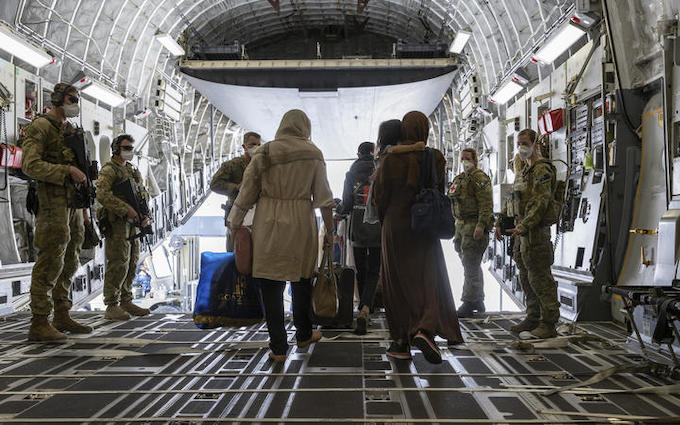
Evacuees from Afghanistan
People disembark from an Australian Air Force plane after being evacuated from Afghanistan Image: Jacqueline Forrester/Australian Defence Force

Interests of justice
But Tuiketei-Bolabiu is adamant justice will prevail.

“In March last year, the ICC appeals chamber judges found that in the interest of justice investigations should proceed by the prosecution on war crimes since 2003 including armed conflicts and other serious crimes that fall within the jurisdiction of the courts and that includes the Taliban, Afghan national police, other security forces and the CIA,” she said.

“What’s interesting now is the ICC does not have a police force so it solely relies on member states for arrests and investigations. Now the political landscape in Afghanistan has extremely changed.

“The cooperation with the ICC prosecutions office to support the court’s independence will become a bigger challenge in the future.”

UN Human Rights Council meets
The UN Human Rights Council held a special session this week to address the serious human rights concerns and the situatiation in Afghanistan.

The meeting was called by the council’s Afghanistan and Pakistan members.

Discussions were centred on the appointment of a committee to investigate crimes against humanity.

Tuiketei-Bolabiu said any evidence from the human rights council would help the court’s investigations.

But Amnesty International said the UN council has failed the people of Afghanistan.

In a statement, Amnesty said the meeting neglected to establish an independent mechanism to monitor ongoing crimes under international law and human rights violations and abuses in Afghanistan.

“Such a mechanism would allow for monitoring and reporting on human rights violations and abuses, including grave crimes under international law, and to assist in holding those suspected of criminal responsibility to justice in fair trials.”

However, the calls were ignored by UNHRC member states, who adopted by consensus a weak resolution which merely requests further reports and an update by the UN High Commissioner for Human Rights in March 2022, which adds little to the oversight process already in place.

“The UN Human Rights Council special session has failed to deliver a credible response to the escalating human rights crisis in Afghanistan. Member states have ignored clear and consistent calls by civil society and UN actors for a robust monitoring mechanism,” said Agnès Callamard, Amnesty International’s secretary-general.

“Many people in Afghanistan are already at grave risk of reprisal attacks. The international community must not betray them, and must urgently increase efforts to ensure the safe evacuation of those wishing to leave,” she said.

Amnesty International said member states must now move beyond handwringing, and take meaningful action to protect those feeling the conflict in Afghanistan.

This article is republished under a community partnership agreement with RNZ.

Print Friendly, PDF & Email

Article by AsiaPacificReport.nz

Who speaks for Afghans? Climate realities with the Taliban takeover

ANALYSIS: By Megan Darby

A suicide bombing near Kabul airport on Thursday added another dimension to the chaos in Afghanistan as Western forces rush to complete their evacuation.

Islamic State claimed responsibility for the blasts that killed at least 175 people, including 13 US soldiers, challenging the Taliban’s hold on the capital.

Either group is bad news for Afghan women and girls, and anyone with links to the former government or exiting armies.

Taliban officials are on a charm offensive in international media, with one suggesting to Newsweek the group could contribute to fighting climate change if formally recognised by other governments.

Don’t expect the Taliban to consign coal to history any time soon, though. The militant group gets a surprisingly large share of its revenue from mining — more than from the opium trade — and could scale up coal exports to pay salaries as it seeks to govern.

Afghan people could certainly use support to cope with the impacts of climate change. The UN estimates more than 10 million are at risk of hunger due to the interplay of conflict and drought.

Water scarcity
Water scarcity has compounded instability in the country for decades, arguably helping the Taliban to recruit desperate farmers.

There was not enough investment in irrigation and water management during periods of relative peace.

One adaptation tactic was to switch crops from thirsty wheat to drought-resistant opium poppies — but that brought its own problems.

The question for the international community is: who gets to represent Afghans’ climate interests?

If the Taliban is serious about climate engagement as a route to legitimacy, Cop26 will be an early test.

Megan Darby is editor of Climate Change News.

Print Friendly, PDF & Email

Article by AsiaPacificReport.nz

National Cabinet leaves us in the dark about reopening the nation, so we’re left joining the dots

Source: The Conversation (Au and NZ) – By Stephen Duckett, Director, Health and Aged Care Program, Grattan Institute

National Cabinet met on Friday after a week of intensifying debate about the vaccination thresholds in the national plan for reopening the nation.

While expectations for the meeting were high, there was no showdown — at least as far as we know.

The current plan is vague, with words such as “may occur” and only subject to “in principle” agreement.

And the Doherty Institute modelling, which underpins the plan, acts as a fig leaf for the Commonwealth government to hide behind. So the plan has survived to live another day.

Deferring the day of reckoning has papered over the cracks. National Cabinet is holding tight for another week and awaiting further modelling.

A decision to hold tight is likely a compromise between the three factions in the virtual meeting room. But it leaves many questions unanswered.


Read more:
Opening with 70% of adults vaccinated, the Doherty report predicts 1.5K deaths in 6 months. We need a revised plan


We have three factions

1. Commonwealth and NSW

In one faction, you have the Commonwealth and New South Wales, both committed to easing restrictions according to the vaccination thresholds set out in the Doherty report: 70% and 80% of the population aged 16 and over.

Prime Minister Scott Morrison probably wanted to hold firm. After repeated failures to hit his vaccine rollout targets, he cannot afford another change in the plan.

At the same time, NSW Premier Gladys Berejiklian has probably recognised she has lost the fight to control COVID in her state and wants political cover to claim victory. She has already announced the easing of some minor restrictions for fully vaccinated people.

2. Other states handling NSW leaks

In the second faction, you have states such as Queensland and Victoria affected by leaks of COVID cases from NSW.

These states would have wanted the modelling to reassure them their health systems would not be overwhelmed if they started to ease strong public health measures at low vaccination thresholds.

3. COVID-zero states

The third faction comprises the COVID-zero states, such as Western Australia, which would be concerned about any heightened risk of COVID leakage from other states.

These states only see downsides from easing restrictions too early, when not enough people are vaccinated. They do not want to throw away the benefits of their hard-won COVID-zero status.

How to broker peace?

To reconcile these conflicting positions, the leaders found peace in process: they decided to seek more information.

They agreed to establish a cross-jurisdictional working group, led by the heads of health departments, to investigate health and hospital system capacity and workforce needs in the next phases of the national plan.

This work will draw on the Doherty modelling, which shows many deaths will occur months after lockdowns end.

The group is due to report back by next week, presumably taking into account rapid advances in our understanding of how Delta might impact our health systems.

The other states will not want to replicate the makeshift responses NSW was forced into — such as triage tents to assess patients — because of escalating hospital admissions.

This process may provide a way out for the Commonwealth. At the moment, states are highlighting the impacts of the Commonwealth’s failures on slow vaccination rollouts. But they could be brought around by a big-enough payment to compensate for the increased pressure reopening could put on their hospital systems.

As former Prime Minister Paul Keating said, “never get between a premier and a bucket of money”.

States will also need more Pfizer doses. At the moment, the lion’s share of the available Pfizer doses is going to NSW, leaving GPs in other states — especially Victoria — scrambling to find doses to meet demand.

Although these side-deals will not mean the states come out ahead, at least, financially, they will not be so far in the red.

How about the Doherty modelling?

As the National Cabinet’s behind-the-scenes negotiations were going on, the Doherty Institute reconfirmed its recommendation of the 70% and 80% (adult population) vaccination thresholds. It continues to undertake further modelling, including specification of public health measures in areas of low vaccination coverage.

While the thresholds may not have changed, further modelling is yet to show how Australia’s rapidly rising COVID-19 case numbers impact the phasing, and the substance, of the plan.

For instance, specific policy measures, such as exempting vaccinated people from restrictions, must be incorporated into the modelling, since vaccinated people can still spread the virus.

What privileges are extended to fully vaccinated people — holders of a validated vaccine passport — will be one of the next big challenges for the states, both politically and in terms of implementation and monitoring.

How does vaccinating 12 to 15-year-olds fit in?

National Cabinet’s meeting took place the same day the Australian Technical Advisory Group on Immunisation (ATAGI) recommended vaccination for 12 to 15-year-olds, to begin on September 13.

But there were no updates to the national plan to include this age group as part of the total population vaccinated. The plan’s targets are still expressed as a proportion of the population aged 16 and over, rather than of the population soon eligible to be vaccinated, those aged 12 and over.


Read more:
Should we vaccinate children against COVID-19? We asked 5 experts


This means 12 to 15-year-olds are completely missing from the plan. It makes no sense for the nation to track progress towards vaccination targets without including this group.

Any plan to ease restrictions must also consider the impact on children and their education, especially for those under 12, who are not expected to be vaccinated this year.

What next?

While National Cabinet might be holding tight, there is still much work to be done to fill the many gaps in the current plan. We still need a robust national plan all states can sign up to, without hedging or caveats.

The Conversation

Grattan Institute began with contributions to its endowment from each of the Federal and Victorian Governments, BHP Billiton, and NAB. In order to safeguard its independence, Grattan Institute’s board controls this endowment. Grattan Institute also receives funding from corporates, foundations, and individuals to support its general activities as disclosed on its website. Grattan Institute has published three Reports on COVID issues, and has developed models which simulate the pandemic and the impacts of opening up at various population vaccination rates.

Anika Stobart does not work for, consult, own shares in or receive funding from any company or organisation that would benefit from this article, and has disclosed no relevant affiliations beyond their academic appointment.

ref. National Cabinet leaves us in the dark about reopening the nation, so we’re left joining the dots – https://theconversation.com/national-cabinet-leaves-us-in-the-dark-about-reopening-the-nation-so-were-left-joining-the-dots-166887

Bushfire survivors just won a crucial case against the NSW environmental watchdog, putting other states on notice

Source: The Conversation (Au and NZ) – By Laura Schuijers, Research Fellow in Environmental Law, The University of Melbourne

Shutterstock

This week was another big one in the land of climate litigation.

On Thursday, a New South Wales court compelled the state Environment Protection Authority (EPA) to take stronger action to reduce greenhouse gas emissions. It’s the first time an Australian court has ordered a government organisation to take more meaningful action on climate change.

The case challenging the EPA’s current failures was brought by a group of bushfire-affected Australians. The group’s president said the ruling means those impacted by bushfires can rebuild their homes, lives, and communities, with the confidence the EPA will also work to do its part by addressing emissions.

The group’s courtroom success shows citizens can play an important role in bringing about change. And it continues a recent trend of successful climate cases that have held government and private sector actors to account for their responsibility to help prevent climate-related harms.

Who are the bushfire survivors?

Members of the group, the Bushfire Survivors for Climate Action, identify as survivors, firefighters and local councillors impacted by bushfires and the continued threat of bushfire posed by climate change.

Their stories paint a picture of devastating loss, and fear of what might be to come. One member, who lost her home, tells of harrowing hours looking for friends and family amid a dark, alien moonscape. Another, a volunteer firefighter, describes the smell of charred and burnt flesh and the silence of the incinerated forests that haunted him.

A person stands in a burnt-out home
Fiona Lee, a member of the Bushfire Survivors group, stands in the ruins of her home after a bushfire swept through.
Bushfire Survivors for Climate Action

The group argues that because the NSW EPA is required, by law, to protect the environment through quality objectives, guidelines and policies, these instruments also need to cover greenhouse gas emissions.

Their reasoning is hard to fault: climate change is one of the environment’s most significant threats. In today’s world, you can’t protect the environment without addressing climate change.

To establish this point, the bushfire survivors presented the latest report from the Intergovernmental Panel on Climate Change, which was released while the trial was being heard. The report describes how the temperature rise in Australia could exceed the global average, and predicts increasingly hotter and drier conditions.


Read more:
Climate change has already hit Australia. Unless we act now, a hotter, drier and more dangerous future awaits, IPCC warns


An unperformed duty

The EPA’s statutory duty to protect the environment was already known before the litigation began. That’s because the duty is contained within the EPA’s own legislation.

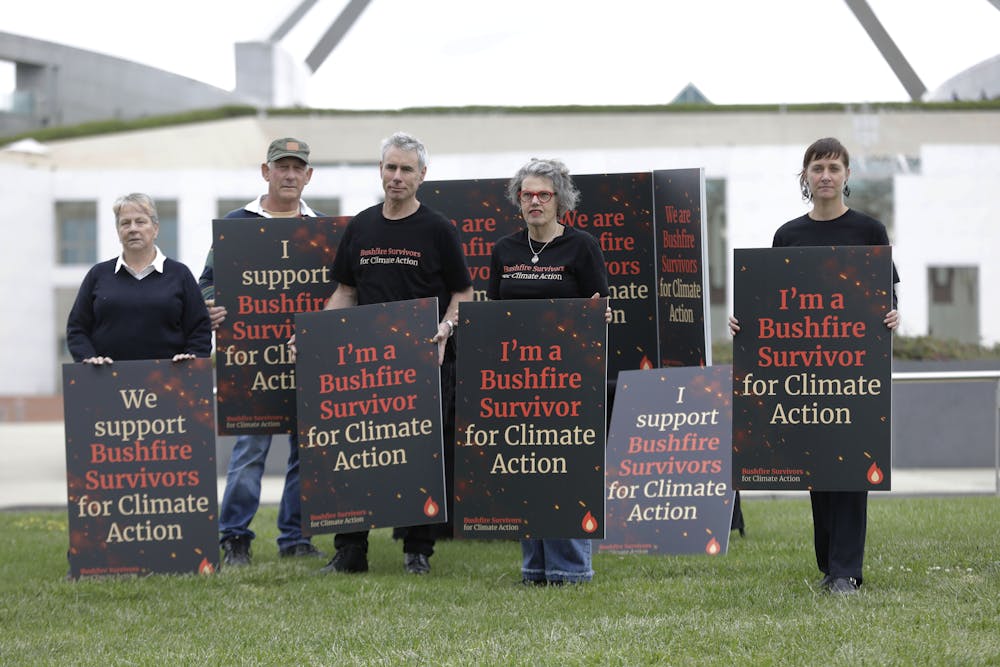
Bushfire survivors hold signs in front of Parliament House
The Bushfire Survivors brought their case to the NSW Land and Environment Court.
Bushfire Survivors for Climate Action

The EPA protects the environment from other types of pollutants by issuing environment protection licences, monitoring compliance, and imposing fines and clean-up orders. The bushfire survivors were seeking to force the EPA to address greenhouse gas emissions as well.

The EPA unsuccessfully tried to establish it is not required to address any specific environmental problem — i.e. climate change. And it argued that even if it is, it has already done enough.

But the court agreed with the bushfire survivors that the EPA’s instruments already in place aren’t sufficient, leaving the duty “unperformed”.

The court didn’t specify exactly how the EPA should remedy the fact it isn’t adequately addressing climate change, meaning the EPA can decide how it develops its own quality objectives, guidelines and policies, in a way that leads to fewer emissions. It is not the court’s job to make policy.

The EPA might, for example, target the highest-emitting industries and activities, via controls or caps on greenhouse gases.

Importantly, however, the court said the EPA doesn’t have to match its actions with a particular climate scenario, such as a global temperature rise of 1.5℃.

Other states on notice

Although this ruling is specific to NSW, other state environment protection authorities also have legal objectives to protect the environment.

This case may cause other Australian environmental authorities to consider whether their regulatory approaches match what the law requires them to do. This might include a responsibility to protect the environment from climate change.

Another thing we know from the NSW case is that simply having policies and strategies isn’t enough.

The court made it clear aspirational and descriptive plans won’t cut the mustard if there’s nothing to “set any objectives or standards, impose any requirements, or prescribe any action to be taken to ensure the protection of the environment”.

The EPA tried to point to NSW’s Climate Change Framework and Net Zero Plan as a way of showing climate change action. But neither of these was developed by the EPA.

The EPA also presented documents it did develop, including a document about landfill guidelines, a fact sheet on methane, and a regulatory strategy highlighting climate change as a challenge for the EPA.

The court found these weren’t enough to address the threat of climate change and discharge the EPA’s duty, calling the regulatory strategy’s description of climate change “general and trite”.

An Australian first, but not an anomaly

Globally, climate litigation is playing a role in filling gaps in domestic climate governance. Cases in Europe, North and South America, and elsewhere have led to courts pushing governments to do more.


Read more:
In a landmark judgment, the Federal Court found the environment minister has a duty of care to young people


One of the world’s first major successful climate change cases, Massachusetts v EPA, was similar to the bushfire survivors’ case. Back in 2007, the state of Massachusetts, along with other US states, sued the federal US EPA. They were seeking to force regulatory action on greenhouse gas emissions, and a recognition of carbon dioxide as a pollutant under the Clean Air Act.

While the NSW case comes 14 years after the US case, there has been plenty of courtroom action in Australia in the meantime, with cases against the financial sector, government actors, and corporations.

The top of the Santos building in front of a sunny blue sky
The Australasian Centre for Corporate Responsibility just filed a lawsuit against Santos.
Shutterstock

In fact, on the same morning as the bushfire survivors’ case, a lawsuit was filed against oil and gas giant Santos in the Federal Court.

The Australasian Centre for Corporate Responsibility will argue statements made in Santos’s annual report are misleading and deceptive. These statements include that natural gas is a “clean fuel” and that it has a “clear and credible” plan to achieve net-zero emissions by 2040.

Climate change is an inevitable problem, and one that will be costly. Lawsuits seeking to force action now aim to limit how great the costs will be down the track. By targeting those most responsible, they are a means of seeking justice.

The Conversation

Laura Schuijers receives funding from the Australian Research Council.

ref. Bushfire survivors just won a crucial case against the NSW environmental watchdog, putting other states on notice – https://theconversation.com/bushfire-survivors-just-won-a-crucial-case-against-the-nsw-environmental-watchdog-putting-other-states-on-notice-166820

VIDEO: Michelle Grattan on Kabul, Craig Kelly, and vaccination rates

Source: The Conversation (Au and NZ) – By Michelle Grattan, Professorial Fellow, University of Canberra

Michelle Grattan discusses the week in politics with University of Canberra Associate Professor Caroline Fisher.

This week the pair discuss the terror attack in Kabul as Australia wraps up it’s Afghanistan evacuation efforts, as well as Craig Kelly’s candidacy with Clive Palmer’s United Australia Party, and Scott Morrison’s aspirations to reach the 70-80% full vaccination rate amongst adults.

The Conversation

Michelle Grattan does not work for, consult, own shares in or receive funding from any company or organization that would benefit from this article, and has disclosed no relevant affiliations beyond their academic appointment.

ref. VIDEO: Michelle Grattan on Kabul, Craig Kelly, and vaccination rates – https://theconversation.com/video-michelle-grattan-on-kabul-craig-kelly-and-vaccination-rates-166885

New Zealand’s fossil record suggests more species lived in warmer waters. But the current rate of warming may break this pattern

Source: The Conversation (Au and NZ) – By Tom Womack, PhD Candidate, Te Herenga Waka — Victoria University of Wellington

Tom Womack, CC BY-NC-SA

Diffedrent types of marine organisms found in New Zealand.
Marine organisms found in New Zealand’s past and present coastal waters.
Tom Womack, CC BY-ND

New Zealand may be relatively small, but its fossil record reveals a globally important ecological relationship between the number of species, their role in the ecosystem and ocean temperatures.

We used New Zealand’s exemplary fossil record of molluscs from the past 40 million years to examine how ocean temperatures influence the number of species. Our research shows a new, fundamental pattern.

We found an increase in species richness during periods with warmer ocean temperatures, as well as higher numbers of species filling similar ecological roles in New Zealand’s coastal cool-water ecosystems. The latter is a measure known as functional redundancy.

Such ecological redundancy can increase ecosystem resilience to environmental change. Taken at face value, our findings might be seen as encouraging news for New Zealand’s biodiversity in the face of global heating.

But our findings are based on natural changes in ocean temperature in the past. At the rate of current human-driven warming, the unfolding biodiversity crisis — hailed as the sixth mass extinction — is likely to play out differently from previous mass extinction events.

The impact on New Zealand’s future biodiversity is also likely to deviate from the patterns we can glean from the fossil record.

A layer of fossil molluscs along the banks of the Rangitikei River in a New Zealand fieldsite
During past periods with warmer ocean temperatures, the number of marine species was likely higher.
James Crampton, CC BY-ND

Measuring biodiversity

Biodiversity measures the variety of life on Earth, typically as the number or abundance of species. Past patterns of diversity can be used as a baseline for understanding how current human-induced changes are affecting it.

But biodiversity has many dimensions, and a simple count of the number of species only measures one aspect.

Recent research has highlighted the importance of ecosystem function, which describes the range of things organisms do in an ecosystem. Ecosystem function can be measured as functional richness.

For example, the common shellfish toheroa (Paphies ventricosa) and tuatua (Paphies subtriangulata) found along New Zealand’s shorelines are two different bivalve species. But both perform very similar ecological roles. They live on sandy beaches and filter microscopic food particles from the surf.


Read more:
Ocean ecosystems take two million years to recover after mass extinction – new research


We refer to an increase in the number of species performing the same ecological role as high functional redundancy. This has been associated with better ecosystem resilience in the face of environmental change.

Conversely, the loss of species in an ecosystem with low functional redundancy is likely to lead to functional extinction, and as a result, ecosystem collapse.

Examples of marine fossils held in New Zealand's fossil collection.
Our study is based on thousands of fossil collections from around New Zealand, similar to one shown here.
Tom Womack, CC BY-ND

The results of our study are based on the geographic distribution of fossil species and the relationship to functional richness through geological time. This relationship implies that an increase in ocean temperature around New Zealand should lead to an increase in both the number of species living in our waters and functional redundancy.

This in turn suggests that during past warmer intervals, New Zealand’s ecosystems may have been more resilient to environmental change.

New Zealand’s fossil record of molluscs provides a baseline for what should be expected over hundreds of thousands to millions of years from natural ocean warming.

The observed link between functional redundancy and ocean temperature over the last 40 million years is consistent with observations from the modern, living marine fauna. The latter also shows increasing numbers of species and functional redundancy at warmer, lower latitudes. This suggests this pattern is a long-lived relationship of regional and global importance.

The future of New Zealand’s shallow marine ecosystems

The sixth mass extinction refers to the ongoing loss of global biodiversity as a direct cause of human activity.

As atmospheric carbon dioxide levels continue to rise in tandem with increased rates of habitat degradation, we commit currently surviving species to extinction far into the future. This is known as “extinction debt”.

But biodiversity is not evenly distributed across the Earth and individual regions may respond differently to environmental changes.


Read more:
Ancient sea creatures spent years crossing the ocean on rafts – we’ve worked out how it was possible


What does this mean for the conservation of New Zealand’s biodiversity?

Although species richness is expected to increase from the isolated effect of climate warming in New Zealand over long timescales, an ecosystem can simultaneously gain species through species migration while losing native species through extinction.

Recent research also suggests that the unfolding sixth mass extinction is associated with the selective removal of functional groups, for example large predatory fish. This will likely lead to increased rates of functional extinction.

Studies of the global marine fossil record suggest relatively minimal losses of functional richness during even the largest extinction events in Earth’s history.

Fossilised scallops from the Chatham Islands, New Zealand
Fossilised scallops from the Chatham Islands, New Zealand.
Tom Womack, CC BY-ND

This is corroborated in New Zealand’s shallow marine fossil record, where large drops in species richness over the last 40 million years have resulted in minimal loss of functional richness. As a result, the sixth mass extinction could be different and have unforeseeable consequences.

For these reasons, New Zealand’s conservation needs to consider the long-term impact of climate change and focus not only on protecting native species but on preserving ecosystem function.

As we commit to further ocean warming and biodiversity loss, we increase the extinction debt of the future, both globally and regionally. There is growing evidence the impact of human activity, including global heating, will deviate from patterns predicted from natural environmental change in the past.

This is particularly important for temperate marine ecosystems. They are vulnerable to climate change, but cover a large proportion of the Earth’s marine realm. In New Zealand, these ecosystems are home to many endemic animals and plants — our taonga to protect.

The Conversation

Tom Womack does not work for, consult, own shares in or receive funding from any company or organisation that would benefit from this article, and has disclosed no relevant affiliations beyond their academic appointment.

ref. New Zealand’s fossil record suggests more species lived in warmer waters. But the current rate of warming may break this pattern – https://theconversation.com/new-zealands-fossil-record-suggests-more-species-lived-in-warmer-waters-but-the-current-rate-of-warming-may-break-this-pattern-166660

Kabul bombings a dark day for Afghanistan and Joe Biden — and a harbinger of worse to come

Source: The Conversation (Au and NZ) – By Tony Walker, Vice-chancellor’s fellow, La Trobe University

US President Joe Biden is facing the worst moment of his presidency. Thirteen US troops and at least 60 Afghan civilians have been killed in a suicide bomb attack outside Kabul’s main airport, for which Islamic State has claimed responsibility.

He, like presidents before him, must face several uncomfortable questions. Could an attack on American forces, in such perilous circumstances as those in Kabul right now, have been foreseen?

Was Biden careless in his haste to get American troops out of Afghanistan and end his country’s longest war?

Was it a failure of judgment to set an August 31 deadline for the withdrawal of troops?

Could more have been done to protect the perimeter of Kabul airport, and prevent suicide bombers approaching American forces who were engaged in a humanitarian exercise to help evacuate US citizens and visa holders?

Why was the fortified Bagram airbase, built up by the US over decades, not maintained, instead using the vulnerable Kabul civilian airport?

Questions around Biden’s judgment and those of his advisers risk eating into his presidency in a way that will erode his authority.

In his moments of reflection, Biden might cast his mind back to other presidents who have endured similar catastrophes.

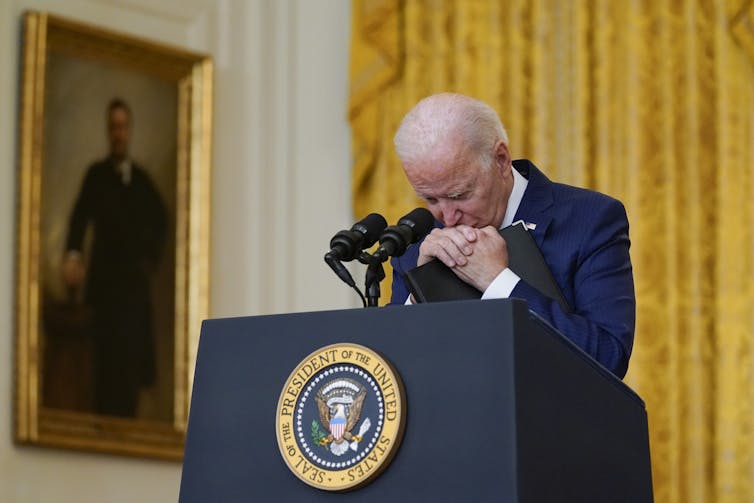
US President Joe Biden is facing the worst moment of his presidency.
Evan Vucci/AP/AAP

In 1983, Ronald Reagan was obliged to explain to the country how 241 American service personnel could have lost their lives in a vicious truck-bombing in Beirut, believed to have been carried out by Iranian-backed Shiite militants.

Then, as now in Biden’s case, Reagan was blamed for not ensuring US servicemen were adequately protected in their barracks near Beirut airport.

Reagan soon thereafter withdrew American forces from Lebanon, where they were seeking to establish order after Israel’s invasion in 1982. Reagan said at the time he would never again send ground troops anywhere in the Middle East.

His successors might have heeded his words.

Biden’s political adversaries, including former president Donald Trump, are mercilessly capitalising on a terrible day for the United States and those who look to Washington for leadership in a troubled world.

This is a very bad day for the Western alliance.


Read more:
What is ISIS-K? Two terrorism experts on the group behind the deadly Kabul airport attack and its rivalry with the Taliban


The question now becomes: how does Biden respond to this latest in a long history – going back decades – of sickening episodes in its entanglement in the Middle East?

This includes the September 11 bombings in New York and Washington by al-Qaeda terrorists that led to the greatest loss of life from a terrorist attack on American soil in the country’s history.

The 20th anniversary of that moment will again rub raw American memories about a day when the world shifted, and prompted decisions that have proven disastrous.

America’s attempts, over two decades in Afghanistan, to bring order to a country that has defied attempts by outsiders over millennia to tame its unruly elements have ended in failure.

Likewise, America’s rush to war in Iraq, rather than stabilising an inherently unstable Middle East, further catapulted the region into chaos.

All this has come at an immense cost to the United States in blood and money.

Clearly, America’s credibility, and that of the Biden presidency, has been diminished by strategic and tactical failures relating to its decision to leave Afghanistan without ensuring an orderly exit strategy.

Claims no-one could have foreseen the speed with which the Taliban would overrun Afghan government forces do not say much for US intelligence on the ground.

In an emotional speech, Biden uttered words and sentiments that have been characteristic of these moments of American trauma when a superpower has been wounded by an act of terror.

We will not forgive, we will not forget. We will hunt you down and make you pay.

In the circumstances, those words are to be expected. No American leader at a moment of national trauma would do otherwise.

However, the task of hunting down those responsible among an amorphous terrorist franchise in Afghanistan and in the wider region will be easier said than done.

Jihadists of whatever stripe across the entire Middle East and beyond will be emboldened.

In Afghanistan, a witch’s brew of terrorist groups is evolving, including the al-Qaeda-affiliated ISIS-K terrorist group, which has claimed responsibility for the Kabul suicide bombings.

What makes the apparent lack of security preparedness around Kabul airport surprising is that multiple warnings had been received that ISIS-K was planning to strike Americans as they departed.

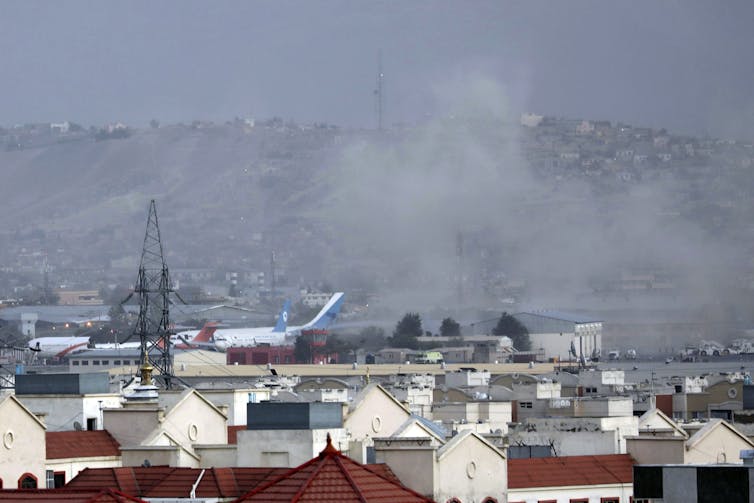
The bombings near Kabul airport have killed at least 60 Afghan civilians and 13 US troops.
Wali Sabawoon/AP/AAP

Indeed, as recently as Sunday of this week, Biden’s national security adviser, Jake Sullivan, described the ISIS-K threat as “acute” and “persistent”. Those words are certain to be thrown back in the faces of US officials responsible for securing Kabul airport.

In the meantime, the test for America, as Biden stated, will be to complete its mission to remove its personnel from Afghanistan and to put behind it a bitter moment.

This includes expenditures of something like $2.6 trillion and deaths of 2,442 servicemen and women, not to mention those wounded and damaged by the experience.

In all of this and in sympathy for the hand Biden has been dealt, America was never going to prevail in Afghanistan. It became trapped in a war that was unwinnable.


Read more:
Remaining and expanding: what the Taliban’s return will mean for jihadi terrorism


Documents secured by The Washington Post and published in 2019 showed military commanders in Afghanistan knew it was a losing proposition, yet America stuck it out.

It did so until Trump reached a deal with the Taliban in 2020, which effectively sidelined the regime in Kabul, to have American forces out of Afghanistan by May 1. Biden shifted that end date to August 31.

The Trump agreement with the Taliban spelled the beginning of the end for the Kabul regime of Ashraf Ghani.

What is left now for America and its NATO allies in Afghanistan is to make the best of the chaos that surrounds efforts to stage an orderly withdrawal.

Since there is little or no prospect of American re-engagement in Afghanistan, the world will observe what is certain to be continued bloodletting and risks of an exploding refugee exodus.

The next chapter in Afghanistan may well dwarf what has happened in Yemen where a civil war has decimated the country and impoverished a population that had in any case been living on the edge.

The Conversation

Tony Walker does not work for, consult, own shares in or receive funding from any company or organisation that would benefit from this article, and has disclosed no relevant affiliations beyond their academic appointment.

ref. Kabul bombings a dark day for Afghanistan and Joe Biden — and a harbinger of worse to come – https://theconversation.com/kabul-bombings-a-dark-day-for-afghanistan-and-joe-biden-and-a-harbinger-of-worse-to-come-166883

Supporting menstrual health in Australia means more than just throwing pads at the problem

Source: The Conversation (Au and NZ) – By Erin C. Hunter, Lecturer in Global Health, University of Sydney

Shutterstock

Menstruation has recently had a bit of a moment in Australia.

The Victorian and South Australian governments are now providing free pads and tampons in government schools, while New South Wales is trialling a pilot program to do the same.

Attention to menstruation is exciting and long overdue. But hurried efforts to provide free pads are not enough, particularly after decades of policy neglect.

To truly meet the needs of women, adolescent girls, and all people who menstruate, we must ask smart questions and develop evidence-based strategies for the long term.

What is menstrual health and how do we achieve it?

This year, a collaboration of global stakeholders and experts defined menstrual health as a state of complete physical, mental and social well-being in relation to the menstrual cycle.

The authors also shed light on the breadth of menstrual health needs. These extend well beyond access to pads, and highlight a number of things we need to consider if we’re going to better support menstrual health in Australia.

1. Information about the menstrual cycle

Knowledge about menstrual biology, reproduction and self-care practices is important. Understanding the body helps prevent distress and facilitates informed decision-making. This might include choice of menstrual product or decisions to seek medical support for period-related difficulties.

Studies in high-income countries have found women and girls don’t have enough information about menstruation, and research on menstrual disorders in Australia has found deficits in menstrual health literacy.

So we must ensure adolescents have comprehensive and timely education about menstruation in schools to promote body literacy and support their menstrual health.

A teenage girl sits looking out a window.
Research has found women and girls don’t necessarily have all the information they need when it comes to menstruation.
Shutterstock

2. Materials and facilities to care for the body

Beyond having enough products to manage a period, menstrual health requires supportive spaces to change products, dispose of single-use materials (for example, pads and tampons) or wash reusable products (for example, menstrual cups). Spaces need to be comfortable and private.

In high-income countries, little attention has been given to whether school and workplace facilities are adequately meeting these needs. This is especially relevant as reusable products such as menstrual underwear and cups are growing in popularity.

3. Diagnosis, care and treatments for discomforts and disorders

Pleasingly, we’ve seen menstrual health research and action focusing on disorders, with endometriosis receiving increased investment in the most recent federal budget.

But 92% of adolescents and young women in Australia report painful periods.

We need to see comprehensive policy that acknowledges the breadth of menstrual needs, and the varied levels of pain and discomfort associated with menstruation.


Read more:
I have painful periods, could it be endometriosis?


4. Positive and respectful environments

Menstruation continues to be stigmatised around the world. Social pressure to hide any sign of menstruation can dissuade girls and women from talking about their experiences or seeking support and advice. This can harm well-being.

Family members, education institutions, workplaces and government policies all have a role to play in creating environments that support those who menstruate.

For example, freedom to visit the toilet during the school day or to work flexibly around period pain can shape experiences of menstruation.

What’s the impact of unmet menstrual health needs?

A survey of young people in New Zealand found 8% reported missing school due to a lack of menstrual products.

A review of multiple studies estimated 12% of young women in high-income countries have missed school or university because of period pain.

We know from research in low-, middle-, and high-income countries there are a variety of other consequences of unmet menstrual health needs for physical, mental and social well-being.

But we have more to learn about the magnitude of these issues across populations and sub-groups.


Read more:
Imagine having your period and no money for pads or tampons. Would you still go to school?


Providing free menstrual products may seem like a “silver bullet”. But evidence from low- and middle-income countries has shown providing such products is not enough to improve menstrual health.

This is also likely to be the case in high-income countries like Australia where stigma and inadequate education around menstruation remain challenges.

A woman holds a menstrual cup and a tampon.
Pads and tampons are no longer the only way to manage periods.
Shutterstock

What are we overlooking?

A narrow focus on providing pads and tampons also risks suppressing menstrual product choice, and overlooks opportunities to support more environmentally friendly options.

Policies in Australia focus on providing single-use products, which are not very good for the environment. A menstruating person will use thousands of disposable pads and tampons over their lifetime — a large proportion of which is plastic waste.

Technologies such as menstrual underwear, reusable pads and menstrual cups present environmentally and economically sustainable alternatives. The median cost of a menstrual cup is A$32 and it can be used for up to ten years: that’s just 25 cents per period.

Australian adolescents’ feelings about reusable products remain largely unexplored. If research shows they’re receptive to these options, funding could be directed accordingly.

For example, installing wash basins or toilet hoses inside toilet cubicles in schools could facilitate the use of menstrual cups.


Read more:
It’s time to teach the whole story about ovulation and its place in the menstrual cycle


Menstruation matters

To inform effective policy responses, we need robust research exploring menstrual health needs in Australia and the extent to which these contribute to broader health and education outcomes.

And if we are to sustain the support of governments over the long term, we need evidence of what works. We must invest in developing effective responses and commit to evaluating the effects of our policies in supporting girls, women and all people who menstruate.

The Conversation

Erin C. Hunter has received funding for research on menstrual health. She has conducted menstrual health research funded by the Bill & Melinda Gates Foundation, Grand Challenges Canada, and The Johns Hopkins Center for Qualitative Studies in Health and Medicine. She is currently an investigator on a National Health and Medical Research Council grant to study menstrual health in Myanmar.

Julie Hennegan has received funding for research on menstrual health. This has included from foundations (The Case for Her, Bill & Melinda Gates Foundation) and research councils (she is currently an investigator on a National Health and Medical Research Council grant developing a menstrual health intervention in Myanmar). She led the development of the definition of Menstrual Health as part of the Terminology Action Group of the Global Menstrual Collective.

ref. Supporting menstrual health in Australia means more than just throwing pads at the problem – https://theconversation.com/supporting-menstrual-health-in-australia-means-more-than-just-throwing-pads-at-the-problem-161194

As the world battles to slash carbon emissions, Australia considers paying dirty coal stations to stay open longer

Source: The Conversation (Au and NZ) – By Tim Nelson, Associate Professor of Economics, Griffith University

Shutterstock

A long-anticipated plan to reform Australia’s electricity system was released on Thursday. One of the most controversial proposals by the Energy Security Board (ESB) concerns subsidies which critics say will encourage dirty coal plants to stay open longer.

The subsidies, under a so-called “capacity mechanism”, would aim to ensure reliable energy supplies as old coal plants retire.

Major coal generators say the proposal will achieve this aim. But renewables operators and others oppose the plan, saying it will pay coal plants for simply existing and delay the clean energy transition.

So where does the truth lie? Unless carefully designed, the proposal may enable coal generators to keep polluting when they might otherwise have closed. This is clearly at odds with the need to rapidly cut greenhouse gas emissions and stabilise Earth’s climate.

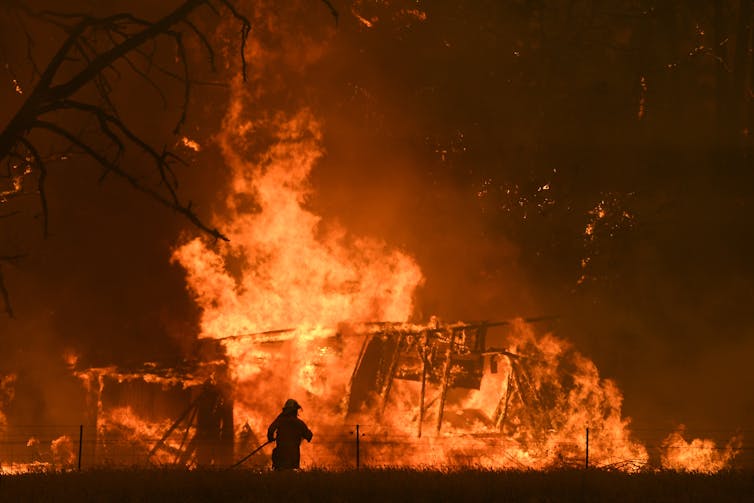
firefighter and bushfire engulfing house
Extending the life of coal plants is at odds with climate action efforts.
Dan Himbrechts/AAP

Paying coal stations to exist

The ESB provides advice to the nation’s energy ministers and comprises the heads of Australia’s major energy governing bodies.

Advice to the ministers on the electricity market redesign, released on Thursday, includes a recommendation for a mechanism formally known as the Physical Retailer Reliability Obligation (PRRO).

It would mean electricity generators are paid not only for the actual electricity they produce, which is the case now, but also for having the capacity to scale up electricity generation when needed.

Electricity prices on the wholesale market – where electricity is bought and sold – vary depending on the time of day. Prices are typically much higher when consumer demand peaks, such as in the evenings when we turn on heaters or air-conditioners. This provides a strong financial incentive for generators to provide reliable electricity at these times.

As a result of these incentives, Australia’s electricity system has been very reliable to date.

But the ESB says as more renewables projects come online, this reliability is not assured – due to investor uncertainty around when coal plants will close and how governments will intervene in the market.


Read more:
IPCC report: how to make global emissions peak and fall – and what’s stopping us


Under the proposed change, electricity retailers – the companies everyday consumers buy energy from – must enter into contracts with individual electricity generators to make capacity available to the market.

Energy authorities would decide what proportion of a generator’s capacity could be relied upon at critical times. Retailers would then pay generators regardless of whether or not they produce electricity when needed.

Submissions to the ESB show widespread opposition to the proposed change: from clean energy investors, battery manufacturers, major energy users and consumer groups. The ESB acknowledges the proposal has few supporters.

In fact, coal generators are virtually the only groups backing the proposed change. They say it would keep the electricity system reliable, because the rapid expansion of rooftop solar has lowered wholesale prices to the point coal plants struggle to stay profitable.

The ESB says the subsidy would also go to other producers of dispatchable energy such as batteries and pumped hydro. It says such businesses require guaranteed revenue streams if they’re to invest in new infrastructure.

Man gives thumbs up in front of hydro project
Prime Minister Scott Morrison at the Snowy Hydro project. Such generators would also be eligible for the proposed subsidy.
Lukas Coch/AAP

A questionable plan

In our view, the arguments from coal generators and the ESB require greater scrutiny.

Firstly, the ESB’s suggestion that the existing market is not driving investment in new dispatchable generation is not supported by recent data. As the Australian Energy Market Operator recently noted, about 3.7 gigawatts of new gas, battery and hydro projects are set to enter the market in coming years. This is on top of 3.2 gigawatts of new wind and solar under construction. Together, this totals more than four times the operating capacity of AGL’s Liddell coal plant in New South Wales.

It’s also difficult to argue the system is made more reliable by paying dispatchable coal stations to stay around longer.

One in four Australian homes have rooftop solar panels, and installation continues to grow. This reduces demand for coal-fired power when the sun is shining.

The electricity market needs generators that can turn on and off quickly in response to this variable demand. Hydro, batteries and some gas plants can do this. Coal-fired power stations cannot – they are too slow and inflexible.

Coal stations are also becoming less reliable and prone to breakdowns as they age. Paying them to stay open can block investment in more flexible and reliable resources.

Critics of the proposed change argue coal generators can’t compete in a world of expanding rooftop solar, and when large corporate buyers are increasingly demanding zero-emissions electricity.

There is merit in these arguments. The recommended change may simply create a new revenue stream for coal plants enabling them to stay open when they might otherwise have exited the market.

Governments should also consider that up to A$5.5 billion in taxpayer assistance was allocated to coal-fired generators in 2012 to help them transition under the Gillard government’s (since repealed) climate policies. Asking consumers to again pay for coal stations to stay open doesn’t seem equitable.

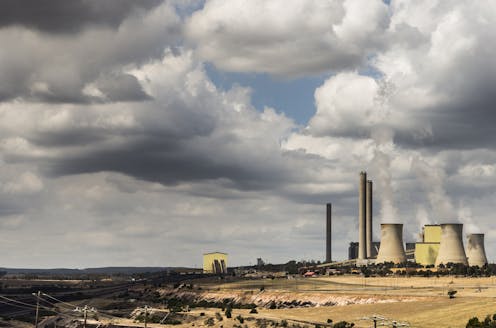
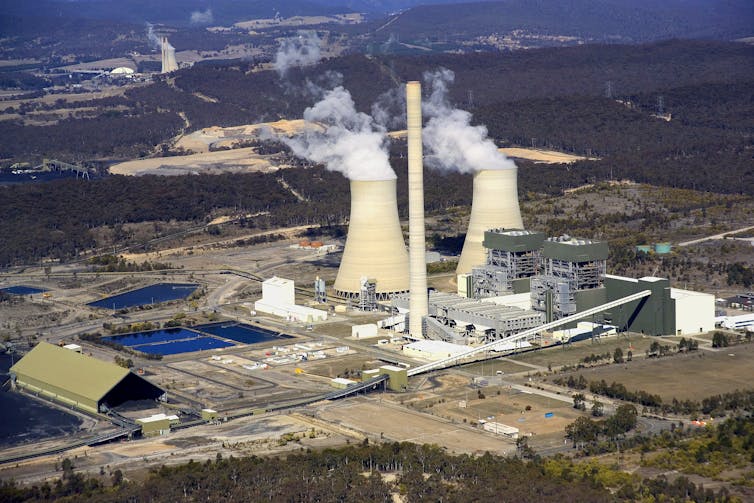
Steam billows from coal plant
Coal plants have already received billions in subsidies.
Shutterstock

The ultimate test

The nation’s energy ministers have not yet decided on the reforms. As usual, the devil will be in the detail.

For any new scheme to improve electricity reliability, it should solely reward new flexible generation such as hydro, batteries, and 100% clean hydrogen or biofuel-ready gas turbines.

For example, reliability could be improved by establishing a physical “reserve market” of new, flexible generators which would operate alongside the existing market. This generation could be seamlessly introduced as existing generation fails and exits.

The ESB has recommended such a measure, and pivoting the capacity mechanism policy to reward only new generators could be beneficial.

The Grattan Institute
has also proposed a scheme to give businesses more certainty about when coal plant will close. Together, these options would address the ESB’s concerns.

This month’s troubling report by the Intergovernmental Panel on Climate Change was yet another reminder of the need to dramatically slash emissions from burning fossil fuels.

Energy regulators, politicians and the energy industry owe it to our children and future generations to embrace a zero-emissions energy system. The reform of Australia’s electricity market will ultimately be assessed against this overriding obligation.


Read more:
Climate change has already hit Australia. Unless we act now, a hotter, drier and more dangerous future awaits, IPCC warns


The Conversation

Tim Nelson is an Associate Professor at Griffith University and the EGM, Energy Markets at Iberdrola Australia, that develops renewable projects and batteries.

Joel Gilmore is an Associate Professor at Griffith University and the GM, Energy Policy & Planning at Iberdrola Australia, that develops renewable projects and batteries.

ref. As the world battles to slash carbon emissions, Australia considers paying dirty coal stations to stay open longer – https://theconversation.com/as-the-world-battles-to-slash-carbon-emissions-australia-considers-paying-dirty-coal-stations-to-stay-open-longer-166814

Coles and Woolworths are moving to robot warehouses and on-demand labour as home deliveries soar

Source: The Conversation (Au and NZ) – By Lauren Kate Kelly, PhD Candidate, RMIT University

Woolworths

As lockdowns continue across Australia, many households are doing something they may not have considered just 18 months ago: ordering groceries online.

Australia’s supermarket duopoly, Coles and Woolworths, have raced to implement new technology and transform labour arrangements to keep up with the e-grocery boom.

Both are investing in “smart” warehousing and distribution systems with various degrees of automation, as well as making extensive use of app-driven gig workers for grocery picking and delivery via platforms such as Uber and Airtasker.

My research suggests a reimagining of the Australian supermarket is currently underway. And where Coles and Woolworths go, others will follow: the pair are Australia’s largest private-sector employers, and their current moves seem likely to speed up the trend towards on-demand and precarious labour.

Teaming up with big tech

When the pandemic hit Australia in March 2020, Coles and Woolworths were quickly overwhelmed. Unprecedented demand for home delivery caused massive delays, and online services were paused for five weeks to prioritise shoppers with special needs.

Both supermarket giants have since partnered with food delivery platforms to solve the “last mile” problem of home delivery using a precarious, on-demand network of delivery drivers.


Read more:
The coronavirus pandemic is boosting the big tech transformation to warp speed


This week Woolworths formalised a deal with Uber, trialled in 2020, to provide one-hour delivery from selected Metro stores in Sydney and Melbourne. Woolworths staff will pick and pack the order and hand it off to an Uber driver. These drivers, and on-demand couriers Sherpa and Drive Yello, are already delivering to thousands of Woolworths customers every week.

For Coles, partnerships with the on-demand economy predate the pandemic and have only grown more important. In 2017, Coles quietly teamed up with Airtasker, encouraging shoppers to put their grocery list up for auction and have gig workers bid each other down to win the job.

Coles also released a “Netflix and Chill essentials” range for delivery via UberEats in 2019, spanning ice cream, biscuits and other snacks. These partnerships suggest a strategy for restructuring labour relations was already under way before the pandemic.

The supermarket personal shopper

Inside the supermarket a growing number of “personal shoppers” can be found picking and packing orders for home delivery.

Some are employed by Coles or Woolworths, and they wheel around a multi-tiered workstation complete with scanner gun, measuring scales, and touch screen. Software determines the most efficient way to pick multiple orders at once and dictates the worker’s route through the store, which items to pick, what bag to put them in, and how long it should take.


Read more:
3 ways ‘algorithmic management’ makes work more stressful and less satisfying


Other “personal shopping” is done by plain-clothed gig workers, perhaps working through Airtasker on their mobile phone, who are indistinguishable from other shoppers.

Global tech companies shake up the warehouse

Demand for online grocery shopping has also accelerated Coles and Woolworths’ development of fully or semi-automated warehouses coordinated by “smart” management systems. Both supermarkets are working with global tech companies to develop billion-dollar, state-of-the-art warehouses, with some scheduled to open as soon as next year.

With UK software and robotics company Ocado, Coles is developing two data-driven “customer fulfillment centres” in Melbourne and Sydney, scheduled to open in 2022. Autonomous picking robots will retrieve items for human workers who, for now, are better able to scan goods and pack them for delivery.

The system is underpinned by the Ocado Smart Platform: end-to-end software, apps and technology to manage online grocery demand.

Ocado’s army of picking robots delivers items to human workers for scanning and packing.
Ocado

Woolworths is pursuing a slightly different strategy of “micro-fulfillment”, which involves smaller and more centrally located warehouses for faster home delivery.

These are hybrid warehouse-supermarket facilities developed by US company Takeoff Technologies. They cannibalise floor space in a retail store to incorporate a small warehouse with vertical racking, automation, and picking robots. As in the Ocado model, the robots retrieve items for workers to pack and deliver.

Two of these facilities are already up and running, with the second opening this week on Queensland’s Sunshine Coast.

Traditional warehouses begin to close

These are just two of the new automated systems designed to replace traditional warehouses. The closure of existing warehouses will result in the loss of thousands of (mainly unionised) jobs. It is currently unclear if retrenched workers will be redeployed to automated sites, which will still require large numbers of workers to function.

Recent research led by sociologist Tom Barnes found that when unionised warehouse workers are retrenched due to automation, they are likely to continue working in warehousing, but in more insecure arrangements and for less pay. Put simply, when unionised jobs are lost, they are not recreated elsewhere.

The hidden labour of grocery home delivery

Online grocery shopping is promoted as an important measure for limiting contact between people and reducing the spread of COVID-19. However, this highlights the question of who gets to stay home and who continues to work, potentially putting themselves at risk.

Mapping of exposure sites across suburbs shows clear class divides between those who can work from home and order in, and those who cannot. Last year, as much as 80% of COVID-19 transmission in Victoria took place in insecure workplaces among precarious workers.

On-demand labour services require a stratified and unequal labour force, whereby some families outsource domestic labour to others. This outsourcing may provide an overall benefit, but it depends on workers who have been denied secure work or government assistance. By necessity, these people do the work deemed too risky by others.

The smart supermarket of tomorrow

Advances in technology and automation are not wiping out supermarket jobs but changing them. Fantasies of “lights-out” fully automated warehouses and drone deliveries are unlikely to become reality when a growing pool of precarious workers are available to do the work.

Coles and Woolworths are not straightforwardly outsourcing labour to the on-demand economy. Instead, they are bringing multiple forms of labour into their distribution networks.


Read more:
6 challenges of being a gig worker during the COVID-19 pandemic


Precarious workers and the more securely employed (often members of unions) work side by side in the complex labour process of grocery home delivery. Coles and Woolworths can shift risk and responsibility onto gig workers when needed, while maintaining control of the entire distribution network. This ability to outsource risk and keep control is not a new high-tech development, but a fixture of capitalist labour relations.

Partnerships with the on-demand economy and global tech companies suggest a reimagining of the Australian supermarket is currently underway. Although the supermarket may appear fixed and banal, it is an important social institution which is always changing and being renegotiated.

What will these changes mean for Coles and Woolworths, and for the rest of us? In the absence of organised labour resistance or government intervention, the trend towards an on-demand and precarious workforce seems likely to continue.

The Conversation

Lauren Kelly receives funding from the Australian Research Council for research on which this article is based.
Lauren Kelly works with United Workers Union which has members in the supermarket supply chain.

ref. Coles and Woolworths are moving to robot warehouses and on-demand labour as home deliveries soar – https://theconversation.com/coles-and-woolworths-are-moving-to-robot-warehouses-and-on-demand-labour-as-home-deliveries-soar-166556

A year after the Victoria hotel quarantine inquiry, one significant question remains unanswered

Source: The Conversation (Au and NZ) – By Kristen Rundle, Professor of Law, The University of Melbourne

This time last year, the nation was riveted by the Victorian COVID-19 Hotel Quarantine Inquiry, launched to determine the cause of the state’s disastrous second COVID wave. The outbreak led to 768 deaths and a 111-day lockdown of Melbourne.

It didn’t take long before a problem revealed itself. It was not at all clear who made the decision to “contract out” the hotel quarantine enforcement to private security providers, which is what led to the virus seeping into the community.

A long line of senior political and governmental officials denied any association with it. The inquiry’s chair, Jennifer Coate, came to describe the decision as an “orphan”.

We did learn what went wrong from an infection control standpoint and reset the hotel quarantine system to be safer. But now, the debate has shifted to whether we should have hotel quarantine at all.

The question the inquiry left behind is a different one, and it’s not only about Victoria. Why are governments across Australia so reliant on private contractors in the first place?


Read more:
Victoria’s hotel quarantine overhaul is a step in the right direction, but issues remain


Contracting out is standard practice

“Contracting out” government functions for delivery by the private sector has become the standard way of doing things across all levels of government in Australia.

Indeed, it has become so standard that decision-makers might not see the matter as involving choice at all. It’s just how things are done.

Elsewhere, I have said more about the disintegrating effects this situation can have on the principles of responsible government, around which Australia’s constitutional systems are built. The entrenched status of “contracting out” means the potential for more “orphan” decisions can occur at any time and place.

There’s a long story behind how governments across Australia, of all political stripes, have arrived at a place where everything from defence security to disability services (and much in between) is performed by private contractors.

Yet, justifications for why outsourcing is used to perform the work of government still tend to be based more on assertions than arguments.

One of these assertions is that the private sector is more “efficient” than government. But the reality is outsourcing government service delivery doesn’t necessarily cost less. It just means less is spent on public employees.

But there’s more to it than contestable claims about efficiency. The functions government must perform and the services the private sector can provide are not necessarily the same thing.

For example, was the choice of outsourced “security services” for the hotel quarantine program led by a careful understanding of the nature of quarantine, or by what the private sector could deliver? Too little thought is given to what might get lost in translation.


Read more:
Hotel quarantine interim report recommends changes but accountability questions remain


Why nobody is looking at this issue

All of this requires a conversation about the appropriateness of “contracting out” in different contexts that we’ve basically never had. Outsourcing has rarely, if ever, been the subject of significant parliamentary debate in any Australian jurisdiction.

Indeed, sometimes the only way the public finds out about what’s going on with government contracting – in the many forms it might take – is through inquiries launched to investigate something that has gone wrong.

Ombudsmen and auditors-general can be empowered to look at particular instances of outsourcing and make recommendations in relation to them. We might occasionally also see a specific contract questioned in a Senate Estimates hearing.

But it’s important to highlight these “watchdogs” are not there to tell governments how to govern us. Opportunities to have that say are thin on the ground.


Read more:
Melbourne’s hotel quarantine bungle is disappointing but not surprising. It was overseen by a flawed security industry


A good illustration of this is the 2019 Senate Legal and Constitutional Affairs Committee inquiry into the impact of changes to models of government service delivery (including outsourcing). There was little in its terms of reference to suggest it sought views on whether we should be doing these things at all. The changes were going to happen, the inquiry was about their likely “impact”.

Perhaps we’ll also need an inquiry into the vaccine rollout to find out about the contractual arrangements there, given the Commonwealth Department of Health has argued multiple exemptions – including “national security” – in response to freedom of information requests about the agreements in place.

Once, there was an independent body called the Administrative Review Council that kept an eye on the “big picture” developments in government administration. Well ahead of the curve, it published a report in 1998 on the possible implications of Australia’s fulsome embrace of “contracting out” for those directly affected by outsourced government service delivery.

The ARC pledged to revisit this question if there was ever a need. But it was effectively abolished before it could do so. It was a casualty of the 2015 “smaller government” reforms that dismantled multiple government agencies and radically reduced the size of the public service, leading to even more outsourcing to private contractors.

The ARC’s functions were consolidated into the attorney-general’s department, to the extent that they continue to be performed at all.

If the public wants a discussion about how governments govern us – that is not led by governments themselves – it is up to us to pursue it. The silver lining is we at least get to set the terms of the conversation.

While we work out those terms, it would be unwise to relegate the Victorian COVID-19 Hotel Quarantine Inquiry to history. There’s still a whole lot we can learn from it.

The Conversation

Kristen Rundle does not work for, consult, own shares in or receive funding from any company or organisation that would benefit from this article, and has disclosed no relevant affiliations beyond their academic appointment.

ref. A year after the Victoria hotel quarantine inquiry, one significant question remains unanswered – https://theconversation.com/a-year-after-the-victoria-hotel-quarantine-inquiry-one-significant-question-remains-unanswered-166100

Think of it this way: at least you’re not locked down with drunken, misanthropic bookshop owner, Bernard Black

Source: The Conversation (Au and NZ) – By Daryl Sparkes, Senior Lecturer (Media Studies and Production), University of Southern Queensland

Channel 4

Our writers nominate the TV series keeping them entertained during a time of COVID.

Imagine if you were locked down with a recalcitrant alcoholic who belligerently passed scorn upon anyone who came into his orbit. A man who bullied and cajoled the only other person locked in with him, gaining sadistic pleasure from psychological torture.

Well, this is who I am spending my pandemic with. Luckily, he is on the other side of the screen. His name is Bernard Black.

Running for three seasons from 2000 to 2004, the television series Black Books starred Dylan Moran as the perpetually drunk and surly bookseller Black, Bill Bailey as his innocent and naïve offsider Manny Bianco and Tamsin Greig as fellow red wine connoisseur and best friend, Fran Katzenjammer.

The main plot revolves around the misadventures of the three main characters, mostly instigated by Bernard’s misanthropic distaste for anyone who dares enter his bookstore or, indeed, the public at large. This includes any loose associations with people he refers to as “friends”.

Bernard spends most of his time in a bookshop he doesn’t want anyone to come into, with an assistant who annoys him with his constant desire to please. Fran is continually trying to improve Black’s attitude and behaviour to the outside world — and always failing dismally.

Come to think of it, Bernard would probably relish being in lockdown.

‘A death ship’

Moran, the series’ creator, told The Observer in 2000:

Running a second-hand bookshop is a guaranteed commercial failure. It’s a whole philosophy. There were bookshops that I frequented and I was always struck by the loneliness and doggedness of these men who piloted this death ship.

Bernard loathes going into the outside world. On the rare occasion when he does, things always turn out bad for him. He is the epitome of the stereotyped drunken Irish rogue who sees his bookshop as his castle of misery. Inside it, he subjugates anyone foolish enough to enter with belittling and insults.

In the hands of a lesser talent this would come across to an audience as boorish and puerile. But in the hands of Moran, with his clever word play and childlike antics, the character is almost charming and witty.


À lire aussi :
Noice. Different. Unusual. Watching Kath and Kim as a (locked down) historian


The fact that Bernard’s tantrums and bad behaviour always end up backfiring on him is central to the show’s success. He’s the one who suffers the most from his churlishness.

Still, Moran doesn’t get to steal every scene. He plays off against the seasoned performers Bailey and Greig, each with comedy chops as finely honed as Moran.

Usually, television comedies get better the longer they run, as the characters are fleshed out more and the actors get more comfortable with the material. Think how much better the later episodes of Friends or Seinfeld were compared to the earlier ones.

But Black Books doesn’t suffer from this slow start. The earlier episodes are as great as the later ones. And there are cameos from some of the best of British comedians: Martin Freeman, Simon Pegg, David Walliams from Little Britain and Academy Award winner Olivia Colman.

A comedy booster

It is a very British comedy, often leaning into the abstract and surreal in the tradition of The Young Ones, Father Ted and Monty Python.

Who can forget Bernard’s couch, which swallows children whole? Or when Manny is trapped in the bookstore overnight and roasts dead bees found on the window sill on a campfire spit?


À lire aussi :
Life of Brian at 40: an assertion of individual freedom that still resonates


In one episode, when Manny asks “Is space hot?”, Bernard replies,

Of course it is, where else do you think we get pineapples from.

It’s a shame Black Books didn’t run longer. It certainly wasn’t stale by the end of its third season. But British TV comedy shows are renowned for not wearing out their welcome.

Other major sitcoms of the same era like Spaced, Extras, The Mighty Boosh and even the immensely popular Little Britain and The Office only ran for two or three seasons.

Perhaps Black Books isn’t enough to see you through all of lockdown. But it is a much needed comedy booster shot (pardon the pun). At the very least, it will make you thankful you’re not locked up with Bernard Black.


Black Books is available on Netflix, Britbox and Apple TV.

The Conversation

Daryl Sparkes ne travaille pas, ne conseille pas, ne possède pas de parts, ne reçoit pas de fonds d’une organisation qui pourrait tirer profit de cet article, et n’a déclaré aucune autre affiliation que son organisme de recherche.

ref. Think of it this way: at least you’re not locked down with drunken, misanthropic bookshop owner, Bernard Black – https://theconversation.com/think-of-it-this-way-at-least-youre-not-locked-down-with-drunken-misanthropic-bookshop-owner-bernard-black-166173

Kabul attack: Ardern says no NZDF personnel, evacuees at airport blasts

RNZ News

Prime Minister Jacinda Ardern says the final New Zealand Defence Force evacuation flight from Afghanistan landed back in the United Arab Emirates last night, before the bomb attacks killing at least 12 US soldiers and 60 Afghans at Hamid Karzai International Airport.

One hundred people, including New Zealanders and Australians, were on the flight. It is not yet clear how many of those people are destined for New Zealand.

So far, 276 New Zealand nationals and permanent residents, their families, and other visa holders have been evacuated.

There were no New Zealand Defence Force personnel in Kabul and no New Zealand evacuees at the airport at the time of the explosions.

Ardern described the attacks as “appalling” and said the country’s thoughts were with all of those in Afghanistan who had been killed or injured.

“We strongly condemn what is a despicable attack on many innocent families and individuals who were simply seeking safety from the incredibly difficult and fragile situation in Afghanistan,” she said in a statement.

The Ministry of Foreign Affairs and Trade remained in close contact with New Zealand citizens and permanent residents in Afghanistan who had previously registered on SafeTravel or otherwise made contact.

‘High threat of terrorist attack’
Yesterday, all those known to have been in Afghanistan were advised by MFAT of the “ongoing and very high threat of terrorist attack” and warned not to go to Hamid Karzai International Airport and to leave the airport if they were nearby.

At this stage, there have been no requests for assistance from New Zealanders or other visa holders in Afghanistan related to the explosion. MFAT are trying to contact all those known to be in the region.

Ardern said the situation at Kabul’s airport had been so difficult for both people trying to get out, and those undertaking the evacuations that there would be no more flights into the city.

Over the course of the mission, the NZDF aircraft was able to undertake three flights out of Kabul and had successfully brought out hundreds of evacuees who are destined for both New Zealand and Australia.

Australia also brought out a number of those destined for New Zealand.

Defence Minister Peeni Henare said as well as those who have already arrived in the country, more people eligible for relocation are in transit. Some are being processed at bases outside Afghanistan, so it is still too early to know the total numbers of people who will be returned to Aotearoa, he said.

Ardern said those who remained were in an incredibly difficult position.

Afghanistan situation “complex, fragile”
“The situation in Afghanistan is incredibly complex and fragile and continues to change rapidly. Our next job is to consider what can be done for those who remain in Afghanistan still. That will not be a quick or easy task,” she said.

She also praised those Defence Force personnel who undertook the mission.

“I want to thank our Defence Force personnel who have worked hard to bring those in need home, by establishing a presence on the ground both at the airport in Kabul, and in the United Arab Emirates alongside other government agencies.”

She also thanked New Zealand’s partners, especially Australia, the US and the United Arab Emirates.

It has not yet been confirmed when NZDF personnel and the C-130 aircraft will arrive back in New Zealand.

Fiji evacuations
ABC’s Pacific Beat reports that five Fijian workers have been evacuated from Afghanistan after the Taliban took control of the country, three being flown to Kazhakstan.

One Fiji security contractor said a humanitarian crisis is looming with major challenges ahead for the country.

It is believed about five others had chosen to stay in Afghanistan for the time being.

This article is republished under a community partnership agreement with RNZ.

Print Friendly, PDF & Email

Article by AsiaPacificReport.nz

Chris Trotter: Why the right-wing media hates Jacinda’s covid elimination strategy

ANALYSIS: By Chris Trotter

There is something decidedly sinister about the way the right-wing media is pursuing the “elimination strategy is madness” argument so doggedly. Yes, it’s always interesting to discover what people are saying about New Zealand overseas, but The New Zealand Herald republishing anti-Jacinda Ardern editorials from the Daily Telegraph — mouthpiece of the British Conservative Party — points to an altogether more disturbing preoccupation.

These misgivings are only reinforced when one considers the near unanimous hostility directed towards the Prime Minister and her government by New Zealand’s talkback hosts.

At the most superficial level, one could argue that the right-wing media’s editorial hostility is generated almost entirely by bottomline anxieties. With most of its advertising revenue generated by realtors, retailers, the hospitality industry and tourist operators, the big media outlets must experience significant financial pain whenever New Zealand and/or its most important economic hub, Auckland, goes into lockdown.

The pressure brought to bear on the media bosses to get the doors open for their advertisers’ paying customers is easily imagined.

More than anything else, commercial enterprises hate surprises. Certainty and predictability are what they need to go on generating profits for their shareholders. The sudden appearance of covid-19 in the community, followed by lockdowns of a severity to make the eyes of overseas commentators water, bring with them consequences that are costly, disruptive and generally bad for business.

Unsurprisingly, a significant fraction of the business community would very much prefer that covid-19 was responded to in a fashion less injurious to their financial health.

Those business leaders less bound by the short-term selfishness of their colleagues take a more responsible position. They understand how very bad it looks for businesspeople to convey the impression that they care a great deal less about people getting very ill, and quite possibly dying, than they do about making money.

Short, sharp, uncompromising lockdowns
They also know that New Zealand’s style of short, sharp, uncompromising lockdowns protect the economic interests of the business community a whole lot more effectively than the loose, dangerously porous, lockdowns on display in the UK, the USA, and across the Tasman in Australia.

Not that anything as mundane as “the facts of the matter” have ever slowed the government’s critics down. Neither New Zealand’s extraordinary success in keeping the number of covid-19 deaths below 30, nor the powerful bounce-back of its economy, cuts any ice with the “elimination strategy is madness” brigade. Indeed, the obvious success of Jacinda Ardern’s elimination strategy only seems to make them madder.

So what is it? What drives Ardern’s critics so crazy?

Sadly, a great many of her right-wing opponents seem to be inspired by nothing more edifying than sexist antipathy towards a young, female prime minister, from a tiny and powerless country at the bottom of the world, who has outperformed (by a wide margin) the male leaders of much larger and more powerful nations.

Something about this picture is just wrong, wrong, wrong. Young women are supposed to defer to the “big dogs” of the international community — not show them up. Ardern has produced a disturbance in the conservative “Force” that makes them shudder: as if an entire political ideology suddenly cried out in indignation and was rudely silenced.

They fear something terrible is going on.

And, in a way, they’re right. From the perspective of those responsible for creating a world in which the interests of business take precedence over even the ordinary person’s right to stay safe and well (some might say especially over the ordinary person’s right to stay safe and well) the sight of a young, female prime minister putting the interests of ordinary people first is a terrible thing.

Ardern’s “kindness” works way beyond neoliberalism’s explanation
Because Jacinda Ardern’s “kindness” doesn’t just work a little bit, it works way beyond neoliberalism’s capacity to supply a credible explanation.

Take Sweden, for example. For a while it was the “who needs lockdowns?” brigade’s poster child. But Sweden, with just twice the population of New Zealand, racked-up a horrifying 14,000+ covid fatalities. Had Ardern followed the Swedish prime minister’s example, her country would have sustained upwards of 7,000 deaths.

By following its leader’s strict elimination strategy, however, New Zealand’s “Team of Five Million” kept their country’s covid death toll to 26.

On the Right, however, this sort of science-guided, humanitarian response to covid-19 just doesn’t compute. Conservatives around the world react by accusing Ardern of political cowardice. She simply doesn’t have the balls to adopt a strategy that will lead directly to hundreds, if not thousands, of deaths.

Look at the Brits; look at the Yanks; they had the courage to condemn tens-of-thousands of their people to early and unnecessary deaths; they know that “you can’t live in a cave forever”; that, in the end, the economy must come first.

This is the upside-down world towards which the right-wing media’s wayward editorial decisions are dragging its readers, viewers and listeners. A world in which saving New Zealanders’ lives is the wrong thing to do. A world where “freedom” means nothing more than being able to go shopping wherever and whenever you want – without a mask.

That the big media companies haven’t quite arrived there yet is because there are still some executives who understand that, ultimately, the news media relies on ordinary people to read its copy and listen to its broadcasters’ opinions.

Ordinary people who, if right-wing editors and producers ever get around to actually swallowing the insanity-inducing Kool-Aid swishing about in their mouths, will be offered-up to deranged conservatives (and the advertisers) as unavoidable human sacrifices to the Moloch god of the free market.

The only elimination strategy the right-wing media will ever wholeheartedly support.

This essay, by Chris Trotter, was originally posted on the Bowalley Road blog of Thursday, 26 August 2021, under the title: “A Disturbing Preoccupation: Why the Right-Wing Media Hates Jacinda’s Covid Elimination Strategy”.  It is republished by Asia Pacific Report with the permission of the author.

Print Friendly, PDF & Email

Article by AsiaPacificReport.nz

Governor Parkop takes back Moresby park for ‘benefit of our people’

Asia Pacific Report newsdesk

National Capital District Governor Powes Parkop has vowed that NCDC has the municipal mandate to protect public interest and manage the best interests of the Papua New Guinea capital Port Moresby, reports PNG Post-Courier.

He made these remarks in a statement while he was present with onlookers at the city’s controversial Jack Pidik Park armed with an excavator to tear down a fence erected by the developer company TST adding a new twist in this land row.

“Today we have taken back Jack Pidik Park,” declared Parkop.

“It is public recreational land as far as we are concerned and shall remain that way until the commission decides otherwise.”

He said that TST had not received approval or power to “unilaterally” develop the land.

“Even if it is commercial land, it can’t be developed without our approval,” Parkop said.

“It has not complied with the orders it got from the National Court.

Developer ‘acted illegally’
“It has acted illegally and this cannot be allowed to continue.”

He said: “We assert NCDC power as the municipal government for our capital city to plan and manage our city for the benefit of all our people – individuals, corporations, churches and NGOs.

“Under the NCDC Act and vested with powers delegated to us by the Physical Planning Act and exercised through the NCD Physical Planning Board, we alone decide the type of development in the city,” he said.

Powes Parkop
NCD Governor Powes Parkop … “Those who seek to do [lands development] by default or deceit will not succeed.” Image: The National

Parkop said the NCDC had been fair in discharging its duty to protect public and private interests.

“We have defended public interest in public recreational areas like Ela Beach, Unagi Oval, Gerehu Sports Oval, Apex Park, Nature Park and other smaller parks in the city,” he said.

He cited other land that had been developed in the city, saying: “We have sold most of Sea Park land, for example, to raise money to complete the historic Sir Hubert Murray Stadium.

Responsible, ethical actions
“We have signed a memorandum of agreement with Kumul Training Institute to lease a park at Tokarara to operate its training center while continuing to serve the public,” he said.

“We will continue to maintain this approach as it is the most responsible, ethical and legal thing to do.

“Those private residents in the city or our country, be they individuals or corporate, who wish to access public land must respect this policy, importantly to see our cooperation and support to develop such land or facilities. So it is a win-win outcome.

“Those who seek to do it by default or deceit will not succeed.”

Print Friendly, PDF & Email

Article by AsiaPacificReport.nz

Excel autocorrect errors still plague genetic research, raising concerns over scientific rigour

Source: The Conversation (Au and NZ) – By Mark Ziemann, Lecturer in Biotechnology and Bioinformatics, Deakin University

Shutterstock

Autocorrection, or predictive text, is a common feature of many modern tech tools, from internet searches to messaging apps and word processors. Autocorrection can be a blessing, but when the algorithm makes mistakes it can change the message in dramatic and sometimes hilarious ways.

Our research shows autocorrect errors, particularly in Excel spreadsheets, can also make a mess of gene names in genetic research. We surveyed more than 10,000 papers with Excel gene lists published between 2014 and 2020 and found more than 30% contained at least one gene name mangled by autocorrect.

This research follows our 2016 study that found around 20% of papers contained these errors, so the problem may be getting worse. We believe the lesson for researchers is clear: it’s past time to stop using Excel and learn to use more powerful software.

Excel makes incorrect assumptions

Spreadsheets apply predictive text to guess what type of data the user wants. If you type in a phone number starting with zero, it will recognise it as a numeric value and remove the leading zero. If you type “=8/2”, the result will appear as “4”, but if you type “8/2” it will be recognised as a date.

With scientific data, the simple act of opening a file in Excel with the default settings can corrupt the data due to autocorrection. It’s possible to avoid unwanted autocorrection if cells are pre-formatted prior to pasting or importing data, but this and other data hygiene tips aren’t widely practised.

In genetics, it was recognised way back in 2004 that Excel was likely to convert about 30 human gene and protein names to dates. These names were things like MARCH1, SEPT1, Oct-4, jun, and so on.

Several years ago, we spotted this error in supplementary data files attached to a high impact journal article and became interested in how widespread these errors are. Our 2016 article indicated that the problem affected middle and high ranking journals at roughly equal rates. This suggested to us that researchers and journals were largely unaware of the autocorrect problem and how to avoid it.

As a result of our 2016 report, the Human Gene Name Consortium, the official body responsible for naming human genes, renamed the most problematic genes. MARCH1 and SEPT1 were changed to MARCHF1 and SEPTIN1 respectively, and others had similar changes.

Example list of gene names in Excel
An example list of gene names in Excel.

An ongoing problem

Earlier this year we repeated our analysis. This time we expanded it to cover a wider selection of open access journals, anticipating researchers and journals would be taking steps to prevent such errors appearing in their supplementary data files.

We were shocked to find in the period 2014 to 2020 that 3,436 articles, around 31% of our sample, contained gene name errors. It seems the problem has not gone away, and is actually getting worse.

Small errors matter

Some argue these errors don’t really matter, because 30 or so genes is only a small fraction of the roughly 44,000 in the entire human genome, and the errors are unlikely to overturn to conclusions of any particular genomic study.

Anyone reusing these supplementary data files will find this small set of genes missing or corrupted. This might be irritating if your research project examines the SEPT gene family, but it’s just one of many gene families in existence.

We believe the errors matter because they raise questions about how these errors can sneak into scientific publications. If gene name autocorrect errors can pass peer-review undetected into published data files, what other errors might also be lurking among the thousands of data points?

Spreadsheet catastrophes

In business and finance, there are many examples where spreadsheet errors led to costly and embarrassing losses.

In 2012, JP Morgan declared a loss of more than US$6 billion thanks to a series of trading blunders made possible by formula errors in its modelling spreadsheets. Analysis of thousands of spreadsheets at Enron Corporation, from before its spectacular downfall in 2001, show almost a quarter contained errors.

A now-infamous article by Harvard economists Carmen Reinhart and Kenneth Rogoff was used to justify austerity cuts in the aftermath of the global financial crisis, but the analysis contained a critical Excel error that led to omitting five of the 20 countries in their modelling.


Read more:
The Reinhart-Rogoff error – or how not to Excel at economics


Just last year, a spreadsheet error at Public Health England led to the loss of data corresponding to around 15,000 positive COVID-19 cases. This compromised contact tracing efforts for eight days while case numbers were rapidly growing. In the health-care setting, clinical data entry errors into spreadsheets can be as high as 5%, while a separate study of hospital administration spreadsheets showed 11 of 12 contained critical flaws.

In biomedical research, a mistake in preparing a sample sheet resulted in a whole set of sample labels being shifted by one position and completely changing the genomic analysis results. These results were significant because they were being used to justify the drugs patients were to receive in a subsequent clinical trial. This may be an isolated case, but we don’t really know how common such errors are in research because of a lack of systematic error-finding studies.

Better tools are available

Spreadsheets are versatile and useful, but they have their limitations. Businesses have moved away from spreadsheets to specialised accounting software, and nobody in IT would use a spreadsheet to handle data when database systems such as SQL are far more robust and capable.

However, it is still common for scientists to use Excel files to share their supplementary data online. But as science becomes more data-intensive and the limitations of Excel become more apparent, it may be time for researchers to give spreadsheets the boot.

In genomics and other data-heacy sciences, scripted computer languages such as Python and R are clearly superior to spreadsheets. They offer benefits including enhanced analytical techniques, reproducibility, auditability and better management of code versions and contributions from different individuals. They may be harder to learn initially, but the benefits to better science are worth it in the long haul.

Excel is suited to small-scale data entry and lightweight analysis. Microsoft says Excel’s default settings are designed to satisfy the needs of most users, most of the time.

Clearly, genomic science does not represent a common use case. Any data set larger than 100 rows is just not suitable for a spreadsheet.

Researchers in data-intensive fields (particularly in the life sciences) need better computer skills. Initiatives such as Software Carpentry offer workshops to researchers, but universities should also focus more on giving undergraduates the advanced analytical skills they will need.

The Conversation

The authors do not work for, consult, own shares in or receive funding from any company or organisation that would benefit from this article, and have disclosed no relevant affiliations beyond their academic appointment.

ref. Excel autocorrect errors still plague genetic research, raising concerns over scientific rigour – https://theconversation.com/excel-autocorrect-errors-still-plague-genetic-research-raising-concerns-over-scientific-rigour-166554

Book extract: ‘Broken’ — requiem for the family court

Source: The Conversation (Au and NZ) – By Camilla Nelson, Associate Professor in Media, University of Notre Dame Australia

April Fonti/AAP

On September 1, the Family Court of Australia will merge with the Federal Circuit Court. The Morrison government says this will “help reduce delays and backlogs in the family law courts”. However, the merger has been strenuously opposed by legal and family violence experts, who note Australia will be without a specialist, stand alone family court for the first time since the 1970s.

This is an edited extract from Broken, a new book by media academics Camilla Nelson and Catharine Lumby that explores the family court system.


In the early 1980s, the newly established Family Court of Australia — “born in hope”, and ideals of conciliation — was hit by a series of violent attacks in Sydney.

A judge was shot dead outside his home, and a string of lethal bombings followed.

One injured a judge and two school-age children while they slept, demolishing almost half of their quiet suburban home. Another killed a judge’s wife when she opened her front door. A third bomb exploded outside the family court building in Parramatta, and a fourth detonated inside a church hall, killing a member of the congregation, and seriously injuring 13 others, including children.

The murders and bombings remained unsolved until 2015, when Leonard Warwick was finally charged. His murderous rampage followed a legal dispute with his ex-wife over care of their five-year-old daughter.

His attacks on the family court indicated a fiercely held belief in his “right” to control his family. In sentencing Warwick, Justice Peter Garling acknowledged the political dimensions of the crimes, saying it “cannot be viewed as anything other than an attack on the very foundations of Australian democracy”.

Yet, after the bombs went off, commentators of the day did not condemn Warwick’s violence, but the court instead. Elizabeth Evatt, then chief justice of the family court, explained,

They said, “The Court has been bombed, what’s wrong with the Court?”

Successful terrorism

The family court bombings were remarkable in that they were successful as acts of terrorism. Although commentators at the time readily acknowledged the murders were wrong, many made excuses on behalf of the perpetrator.

The cover of the book 'Broken' by Camilla Nelson and Catharine Lumby.

Black Inc.

In the media, the violence was rationalised as the actions of a man who had been treated unfairly — of a man who, as The Sydney Morning Herald reported, was “extremely distressed by a decision of the court”. The paper called for a “fundamental reappraisal” of the new court, opining, “There must be something seriously wrong with the Family Court system for such an outrage to occur”.

According to The Bulletin, the family court was “too much of a revolution” and the bombings had “exposed serious flaws in our divorce machinery”. Warwick’s rampage was explained in much the same way as domestic abuse is explained: as the inevitable reactions of a “distressed” man who had been driven too far. The Australian said, “No wonder the man often feels a sense of rage.”

Almost immediately, then Attorney-General Gareth Evans sent a letter to activists in the nascent men’s rights movement, offering them a seat at the policy-making table by asking them what changes they would like to see to the court. This willingness of the Hawke Labor government to take the bomber’s “message” on board set the scene for the hijacking of family law that would reach its apogee under Liberal prime minister John Howard.

By the time the Howard government took office on a “family values” platform in 1996 — with a campaign brochure that featured a pastel-coloured drawing of a house with a white picket fence — the stage was set for a reform agenda that effectively elevated the claims of perpetrators above domestic abuse victims’ claims to safety. It would irrevocably change the culture of the court, so the court’s founding ideals would seem like a distant memory.

Howard era changes

Of Howard’s changes to the family court, one of the least discussed was the creation of the Federal Magistrates Court in 1999, renamed the Federal Circuit Court in 2013. This week, it becomes the Federal Circuit and Family Court of Australia, following the abolition of the standalone family court. The Federal Magistrate’s Court was designed to be “a lean, cost-effective court” — imposing a technocratic, financially rationalised form of justice on affected families.


Read more:
The government still wants a Family Court merger — new research shows why this is not the answer


Cases were to be solved swiftly and easily, often brutally. And this new managerialist behemoth progressively took over 90% of the family court’s caseload, transforming the practice of family law beyond recognition. Federal Circuit Court cases are rapid and hectic, with minimal transparency.

In 40% of family law matters, one or both parties will be self-represented. Studies show the most common reason for parties to self-represent is that they cannot afford escalating legal fees.

In a recent study by Jane Wangmann, Tracey Booth and Miranda Kaye, one lawyer described the Federal Circuit Court as a “zoo”, in which everybody struggles to understand what is going on because “there’s so many people and it’s so noisy and it’s so confusing”.

One self-represented litigant told researchers that judges “push to settle”. They say,

Just get it out of my court room, I don’t want to deal with this, get it out.

Another self-represented litigant said the judge asked her, “Why haven’t you settled, why haven’t you settled this yet?” The judge added:

I’m sick to death of people who won’t negotiate. Get out there and negotiate or I’m just going to flip a coin.

‘An absolute fantasy’

It should be unsurprising that parties to these proceedings frequently conclude that justice has not been served.

Tasmanian senator Jacqui Lambie — for all her populist, political complexity — seems to be one of the few politicians who has recently stepped inside one of the nation’s hyper-rationalised lower-tier courts.

Independent senator Jacqui Lambie.
Independent senator Jacqui Lambie has blasted the family court merger.
Mick Tsikas/AAP

She tried to convey the sense of shock in an excoriating speech to parliament in February 2021 as the Senate debated the bill that would ultimately secure the courts merger.

Maybe you’re thinking of a system where the bad guys get locked up and the good guys are quickly let go. In the back of your mind, you possibly have an idea that everybody has a high-powered lawyer in an expensive suit — and, my goodness, are they expensive. … If that’s what you’re thinking, you aren’t alone; that’s how I used to think our court system worked as well. Oh dear. It’s funny when you have life experience of something … nb small cut to quote here

In reality, judges are overworked and under-resourced, and therefore — as Lambie put it — forced to “churn through [family law matters] as though they’re on a production line”. In a memorable image, she likened the work of the judiciary to flipping greasy meals like “someone in a burger joint”.

The 2006 reforms included funding for already existing family support services, such as Relationships Australia, and the establishment of a new network of Family Relationship Centres. After this, separating parents increasingly began to turn to mediation to settle their differences, rather than the courts, reaching negotiated agreements through intermediaries.


Read more:
The family court does need reform, but not the way Pauline Hanson thinks


This turn to non-legal mediation and non-adversarial settlement has been pronounced, creating emotionally better, more affordable outcomes for families, although funding for the sector has dwindled dramatically and fails to meet demand.

At the same time, domestic abuse has become the central issue in the cases that continue to be brought before the family courts.

A ‘Rolls Royce’ system for the rich and another for everyone else

In Australia, 97% of separating families do not go to court, although 16% use mediation, counselling and lawyers to settle their disputes.

The remaining 3% of separating parents who are compelled to use the courts as their main pathway to making children’s arrangements are predominately families affected by domestic abuse, child safety concerns and complex risk factors, including drug and alcohol abuse and mental health issues.

Up to 85% of litigated family law matters involve domestic abuse. This figure includes 54% of families reporting physical violence, 50% reporting safety concerns, and 85% reporting emotional abuse. There are no reliable figures for financial abuse, but this is a frequent feature of all domestic abuse cases.

Mother and small child climbing steps.
If family law matters do go to court, most involve domestic abuse.
David Crosling/AAP

One of the many glaring problems in the courts is that the law has been written with less troubled families in mind.

It is a little-known fact that 49% of cases before the “specialist” Family Court are property matters. In practice, outside specialist lists — such as the Magellan list for “serious” child abuse — and the hearing of appeals, cases are commonly transferred from the allegedly “less specialist” Federal Circuit Court to the allegedly “more specialist” Family Court because they involve complex decision-making around taxation, superannuation, or companies and trusts.

Effectively, this means affluent families have their cases heard in what has long been dubbed the “Rolls Royce” system of the family court. And the less affluent — including domestic abuse cases with aggravating factors such as drug and alcohol addiction or mental illness — are more frequently heard by commercially trained judges in the hyper-rationalised Federal Circuit Court.

This includes judges with little specific family law experience. Or as Lambie put it in her speech,

Here is the divide between the rich and the poor.

The court merger will do little to change any of this.

Broken is released on August 30, via Black Inc.

The Conversation

Camilla Nelson receives funding as EG Whitlam Research Fellow at the Whitlam Institute at Western Sydney University.

Catharine Lumby does not work for, consult, own shares in or receive funding from any company or organisation that would benefit from this article, and has disclosed no relevant affiliations beyond their academic appointment.

ref. Book extract: ‘Broken’ — requiem for the family court – https://theconversation.com/book-extract-broken-requiem-for-the-family-court-166406

Do kids get long COVID? And how often? A paediatrician looks at the data

Source: The Conversation (Au and NZ) – By Philip Britton, Senior lecturer, Child and Adolescent Health, University of Sydney

Oded Balilty/AP/AAP

Since the rise of the more infectious Delta variant, we’ve seen reports of more cases in children than with previous strains of the virus.

Many parents are becoming more concerned about COVID in kids. One question many are asking is whether kids can get “long COVID”, too, where symptoms persist for months after the initial phase of the illness.

I’m a paediatrician and infectious diseases expert, who cares for children with COVID-19, and have been following the research in this area.

Children can get long COVID, but it seems to be less common than in adults. And they tend to recover quicker. Let’s go through the data.

What is long COVID?

There’s still no standard definition of long COVID, and the syndrome itself is quite variable.

Even though there’s no one form of it, three broad types of symptoms frequently occur:

  • cognitive effects, such as slowed thinking or “brain fog”

  • physical symptoms, including fatigue, breathlessness and pain

  • mental health symptoms, such as altered mood and anxiety.

Having symptoms that persist for more than 28-30 days following the onset of COVID is increasingly being labelled as long COVID in the medical literature.

The cumulative effect of long COVID symptoms can have a profound impact on sufferers’ ability to function in their daily life, work or schooling.


Leer más:
The mystery of ‘long COVID’: up to 1 in 3 people who catch the virus suffer for months. Here’s what we know so far


Does it occur in children?

Long COVID probably does occur in children but it is likely less common than in adults.

Two Australian studies are useful here. In one study of adults and children, researchers found 20% of over 2,000 COVID cases in New South Wales had persistent symptoms at 30 days. By 90 days, this had reduced to 5%. The youngest age group (0-29 years) were more likely to recover quicker than older age groups.

In a study from Victoria that looked at children only, 8% of 151 children with mostly mild infections had some persistent symptoms for up to eight weeks. However, all had fully recovered by 3-6 months.

The most comprehensive study to date was a large study in children aged 5-17 years with mild COVID from the United Kingdom. Of 1,734 children, 4.4% reported persistent symptoms 28 days after the start of their illness.

In these children, the number of symptoms at 28 days was fewer compared to that in the first week of their illness.

The study found 1.8% of children has symptoms at day 56. Headache, fatigue and loss of smell were the main issues.

Three-quarters of the children with persistent symptoms went on to report a full recovery. However, a quarter were not followed up, so it was unclear how many among this small group may have had longer-term problems.

The same study observed children who had other viral illnesses, not COVID. It found 0.9% showed persistent symptoms at 28 days. This suggests a “background rate” of non-specific symptoms like headache and fatigue occurs in children, which is important to consider — although the rate in children following COVID was considerably greater.


Leer más:
COVID: long-lasting symptoms rarer in children than in adults – new research


Some studies of COVID in children, for example, from Italy and Russia, have found persistent symptoms to be more common.

But these studies looked at variable populations, such as only those who were hospitalised or had moderate to severe illness, or collected data retrospectively.

Also, the children were infected during the first wave of COVID in Europe and the overall societal impacts may have contributed to some of the ongoing problems reported in children, like fatigue and insomnia.

This variability between studies makes it hard to compare them to work out the real rate of long COVID in children. Taken together, there seems to be a relative increase of persistent symptoms in teenagers compared with younger children.

What about Delta?

These studies were done before the effects of new variants of concern, most notably Delta, which has shown an increase in the number of COVID infections in children.

Delta might be leading to increased severity of COVID in adults. But there’s no compelling evidence yet that Delta is more severe in children.

Current admission rates in the 2021 Delta outbreak in NSW are no greater than those in children across Australia during 2020.


Leer más:
Under-12s are increasingly catching COVID-19. How sick are they getting and when will we be able to vaccinate them?


Both adults and potentially children who get more severe COVID in the initial (“acute”) stage of their illness seem to be at increased risk of long COVID. But if Delta isn’t causing more severe illness in kids, it’s reasonable to expect Delta won’t increase the risk of long COVID in children either.

Scientists need to agree on a consensus definition of long COVID, and a standardised way to measure it.

Given the non-specific nature of many long COVID symptoms, research also needs to include a control group of kids who haven’t had COVID to really determine the COVID effect.

Do persistent symptoms occur following other viral infections?

Yes. Common examples include the glandular fever virus, also known as Epstein Barr virus, and Ross River fever virus.

Studies report up to 10-15% of children and adults with these infections report chronic symptoms including fatigue, pain, slowed thinking and altered mood.

What actually causes persistent symptoms following viral infections, including COVID, remains a major focus of researchers. Persisting infection itself is not likely.

Major theories include chronic inflammation, blood flow disturbances or nervous system damage.

What should I do if my child has had COVID?

Some children do have persisting cough and fatigue around the four-week mark.

Parents are understandably concerned, but should be reassured most children will fully recover. If there’s a pattern of improvement, that’s a reassuring sign.

If symptoms continue beyond four weeks, it’s sensible to stay in touch with your GP or paediatrician.

In terms of persistent symptoms following other infections, we do know what helps to promote recovery. Things to consider are:

  • ensuring good sleep

  • aiming to have your child gradually return to normal activities

  • where fatigue is an issue, use rest well, in short periods and after doing activities.

Returning to normal activities may require planning, including liaising with teachers around school return, which is especially important in the context of online learning.

Aim for incremental gains, remain optimistic about recovery, and always seek help if you’re not sure what to do.

The Conversation

Philip Britton receives funding from the National Health and Medical Research Council, the Commonwealth Department of Health and NSW Ministry of Health.

ref. Do kids get long COVID? And how often? A paediatrician looks at the data – https://theconversation.com/do-kids-get-long-covid-and-how-often-a-paediatrician-looks-at-the-data-166277

Who would win in a fight between a wedge-tailed eagle and a bald eagle? It’s a close call for two nationally revered birds

Source: The Conversation (Au and NZ) – By Dominique Potvin, Senior Lecturer in Animal Ecology, University of the Sunshine Coast

Wes Mountain/The Conversation, CC BY-ND

This article is part of the “Who would win?” series, where wildlife experts dream up hypothetical battles between predators (all in the name of science).


America’s most-loved bird versus a scrappy Aussie scavenger. In a clash that might rival Crocodile Dundee in New York City, here we’ll pit two iconic birds of prey against one another: the wedge-tailed eagle and the North American bald eagle.

As a disclaimer, this exercise is well and truly hypothetical. Wedge-tailed eagles are native to Australia and would never encounter a bald eagle, which has a range covering most of North America, in the wild.

This is probably why they can both exist in the healthy numbers on both continents: their similar niches would likely result in high levels of competition for resources such as food and nesting sites, especially sites close to the ocean.

In fact, wedgies, Australia’s largest raptor, have such few competitors, they’ve actually taken on the role played by vultures and condors in the rest of the world: that of scavenger. While bald eagles will also scavenge large prey, their speciality is fish.

So before we get into the details of the fight (and, potentially, a diplomatic incident), let’s learn more about these two enormous birds of prey.

The bald eagle is the national emblem for the US.
Alvaro Postigo/Unsplash

Their fan base

Both species are thankfully doing well in terms of numbers, which is great news for humans because they play important roles. They clean up carrion and keep numbers of rapidly reproducing small mammals in check — think rabbits, mice, rats.


Read more:
Who would win in a fight between an octopus and a seabird? Two marine biologists place their bets


They are both also very important in the culture of Indigenous people on both continents. In Australia, many Aboriginal Dreaming stories include the wedge-tailed eagle, especially in depictions of Bunjil the creator, and some have even associated constellations with it. In native North American cultures, bald eagle feathers are highly esteemed, symbolising bravery, strength and holiness.

Wedge-tailed eagles are scavengers, and are often seen feasting on road kill.
Shutterstock

The birds’ sheer size means they are easily recognised in their native ranges, making them apt emblems.

Of course, the bald eagle has the honour of being the United States’ national bird, appearing on its coat of arms. The wedge-tailed eagle is an emblem in the Northern Territory, and appears on the Royal Australian Air Force badge.

Each country also has one professional football team named after the respective birds: The Philadelphia Eagles in the US, and the West Coast Eagles in Australia’s AFL.

So despite historical conflict with humans blaming the birds for losses to livestock, they both have a pretty strong fan base today.

While both eagles are part of the same family group (Accipitridae), they are not very closely related, belonging to different genera.

The wedge-tailed eagle (Aquila audax) fits in a group sometimes referred to as “true eagles”, which also holds some of the most widespread eagles in the world, such as the golden eagle (Aquila chrysaetos).

Bald eagles (Haliaeetus leucocephalus), on the other hand, belong in the Haliaeetus genus, a group of predominantly fish-eating birds of prey that includes Australia’s own white-bellied sea eagle (Haliaeetus leucogaster).

Thus, it may seem like the odds are already stacked: what chance would a bird that eats fish as its main meal have against a bird that eats just about anything – alive or dead?

Bald eagle over water
Bald eagles predominately prey on fish.
Shutterstock

A close match

Well, they are in fact well matched in terms of potential fighting ability.

Both average about four to five kilograms, with almost identical wingspans of between 1.8 and 2.3 metres. Both have large, curved, strong beaks for tearing meat off the bones of their prey.

What opponents need to most be wary of, however, are the legs and talons.

Both species have strong feet with which to grab prey of the ground (or water) and carry it away to eat in peace. Neither have natural predators. It would indeed be a close match.

The logos of the AFL's West Coast Eagles and the NFL's Philadelphia Eagles

AFL/NFL official logos

So, let’s say — hypothetically of course — that a wedge-tailed eagle and a bald eagle are in the same place at the same time, vying for the same prey.

It’s likely the bald eagle would be perched on a nearby clifftop, and the wedgie would be circling in the skies, high above. A poor, unassuming rodent (perhaps of unusual size, making it highly prized) is minding its own business on the ground below.

Both predators see the rodent as well as each other with their excellent vision — eagles generally have the best eyesight of all known vertebrates. A speedy downwards dive by both, up to 160 kilometres per hour, would signal the fight has commenced.

Before hitting the ground, the rodent, or each other, they’d flap their wings to slow down, revealing their legs and talons. These would reach out towards the opponent and, depending on where each bird grabs, might signify the end for the other. It would likely be quite the grapple and possibly even a trial of endurance.

Wedge-tailed eagles have a wingspan of over two metres.
Shutterstock

The verdict?

My money, however, is on the wedge-tailed eagle.

While wedge-tailed eagles are a similar size to bald eagles, they’re able to kill slightly bigger prey. Bald eagles tend to feed on fish and small mammals (as well as reptiles, and carrion to an extent), but they rarely target anything bigger than, say, a racoon or beaver.

While wedge-tails regularly eat similarly sized mammals such as rabbits, they will also attack kangaroos, koalas and even goannas.

This might make them more accustomed to targeting diverse, large prey.

Bald eagle vs Donald Trump.

But the real tests that clinch my decision are odd encounters these birds face in the real world.

Recently, numbers of bald eagles have increased such that their range now overlaps with the common loon in North America, a diving waterbird with a sharp beak. And it appears that loons are able to stab bald eagles trying to obtain their young as prey, killing them. Canada 1: USA 0.

Not a great look for the majestic baldie.

Compare this to the wedge-tailed eagle, which is the only bird in the world known to actively attack paragliders and hang gliders , as well as drones. They do this because they likely see them as threats, and are attempting to defend their territory.

Therefore, in terms of motivation and sheer boldness when taking on an opponent, my bets are placed firmly in the talons of the wedgie.

Who would win in a fight between a scorpion and a tarantula?


Read more:
Who would win in a fight between an emu and a cassowary? One has a dagger-like claw, the other explosive agility


The Conversation

Dominique Potvin does not work for, consult, own shares in or receive funding from any company or organisation that would benefit from this article, and has disclosed no relevant affiliations beyond their academic appointment.

ref. Who would win in a fight between a wedge-tailed eagle and a bald eagle? It’s a close call for two nationally revered birds – https://theconversation.com/who-would-win-in-a-fight-between-a-wedge-tailed-eagle-and-a-bald-eagle-its-a-close-call-for-two-nationally-revered-birds-164400

Fate of detained Australian economist Sean Turnell may be tied to Aung Sung Suu Kyi

Source: The Conversation (Au and NZ) – By Tim Harcourt, Industry Professor and Chief Economist, University of Technology Sydney

The Irrawaddy

Sean Turnell, an Australian who became a trusted economic adviser to Aung San Suu Kyi, has been in a Myanmar prison for more than six months.

The economics professor was arrested on February 5, four days after the military coup that put a stop to the nation’s slow path towards full democracy and unravelling the economic corruption entrenched by decades of junta rule.

I spoke to him between the coup and the arrest. He was remarkably calm and dedicated to the welfare of the Burmese people despite the situation.

He awaits trial on charges he violated the country’s immigration and official secrets acts by trying to leave the country after the coup with sensitive financial information.

Those familiar with the situation are optimistic he will be released after the trial of Suu Kyi, who is also facing charges widely considered to be trumped up. The judge overseeing that trial has said it should be complete by the end of year.

An economics star

I have known Turnell as a family friend and colleague for many years. But it was not until I travelled to Yangon in 2017 that I really saw him in his element.

I had spent the week interviewing prominent Australians in Myanmar for my podcast The Airport Economist. They included Australia’s then ambassador Nicholas Coppel, Austcham Myanmar chief executive Jodi Weedon, lawyer Chris Hughes (founder of the independent law firm SCM Legal) and Alison Carter (founder of Three Good Spoons, which teaches Burmese women cooking and other skills to improve their employment opportunities.

But among all these distinguished speakers, the highlight was definitely Turnell’s presentation at a conference organised by the Australian Myanmar Institute (the brain child of Christopher Lamb, a former ambassador to Myanmar).

Sean Turnell and Tim Harcourt at the Australian Myanmar Institute's conference in Yangon in 2017.
Sean Turnell and Tim Harcourt at the Australian Myanmar Institute’s conference in Yangon in 2017.
Tim Harcourt, Author provided

Turnell explained the Myanmar economy comprehensively, from macroeconomic conditions to microeconomic reform. He drilled down in great detail into fiscal and monetary policy, industrial development and infrastructure needs, financial markets, trade and tourism and, most importantly, education and human capital.

After the conference was formally closed, students milled around Sean like he was a celebrity — a rock-star economist.

Life before Myanmar

Turnell grew up in the working-class suburb of Macquarie Fields in south-western Sydney. Showing brilliance from an early age, he gained his bachelor’s degree economics at Macquarie University in north-western Sydney. Then a PhD. He ended up an associate professor at the university.

“Macquarie is everywhere in both our lives and careers,” his sister Lisa Brandt told me. She also studied economics at Macquarie University and is now a senior manager at the Macquarie Group.

After his undergraduate degree, Turnell worked for the Reserve Bank of Australia. There he was a popular and hard-working member of the central bank’s economics department.

Colleague Sean Aylmer, who went on to become a finance journalist, rising to editorial director at Fairfax Media, remembers Turnell for being both a good applied economist and an extrovert. “Which is most welcome at a place like the RBA,” he told me during a conversation for my podcast.

Professor David Throsby, former chair of the Macquarie University’s economics department, told me he believed Turnell could have been anything at the RBA. “But he was culturally more suited to academia and more at home in a university environment.”

Turnell joined the Macquarie University’s economics department in 1991. He excelled in academia. He wrote a PhD with a brilliant dissertation on John Maynard Keynes. He was also a “Hamiltonian” well before the musical. His deep interest in the life and times of Alexander Hamilton, the first US Secretary of the Treasury, drew him to Washington DC to spend many hours in the national archives and museums looking into the details of his hero.

Working for Aung San Suu Kyi

But it was Myanmar that became the centre of Turnell’s professional life, with his research increasingly focused on that country’s political economy and economic history.

He met Aung Sung Suu Kyi in the 1990s, and their professional relationship firmed from there. In 2001 he established the Burma Economic Watch, a blog providing reliable economic data and commentary to make up for the paucity of information available under the military junta.

When democracy was partially restored in 2011, Turnell got to work as a technical economist, covering all aspects of the Myanmar economy. His commitment to this work was shown in his presentation to the Australian Myanmar Institute conference. Though he continued to live in Sydney, he visited Myanmar regularly.

Then came the military coup on February 1. His arrest on February 5 made him the first foreign national arrested by the junta as part of the coup.


Leer más:
Aung San Suu Kyi trial: how Myanmar’s judicial system is stacked against the deposed leader


There is no reason for his detention. He has done nothing wrong and has only devoted his time and energy to improving the welfare of the Burmese people.

The Australian government has called for his immediate release. So has the US Congress and others.

Awaiting his return to Australia is his family and wife Ha Vu, also an economist at Macquarie University and dedicated to development economics.

Even with Myanmar back under the control of a corrupt and incompetent junta, Sean’s knowledge of the Myanmar economy can still be put to good use, helping to improve the lives of the Burmese people and the rest of South East Asia.

The Conversation

Tim Harcourt no recibe salario, ni ejerce labores de consultoría, ni posee acciones, ni recibe financiación de ninguna compañía u organización que pueda obtener beneficio de este artículo, y ha declarado carecer de vínculos relevantes más allá del cargo académico citado.

ref. Fate of detained Australian economist Sean Turnell may be tied to Aung Sung Suu Kyi – https://theconversation.com/fate-of-detained-australian-economist-sean-turnell-may-be-tied-to-aung-sung-suu-kyi-166516

Frydenberg’s directions to ASIC throw the banking royal commission under a bus

Source: The Conversation (Au and NZ) – By Andrew Schmulow, Senior Lecturer, Faculty of Law, University of Wollongong

Mick Tsikas/AAP

For Australia’s habitually-abused financial consumers it’s Back to the Future (minus the DeLorean).

Treasurer Josh Frydenberg appears to have thrown the most important findings of the banking royal commission under a bus, in glorious double-speak.

On Thursday he issued a direction to the Australian Securities and Investments Commission through what is known as a statement of expectations.

It is very different from the previous such statement, issued in 2018.

This one includes an entirely new clause, placed right at the top.

The government expects ASIC to:

identify and pursue opportunities to contribute to the government’s economic goals, including supporting Australia’s economic recovery from the COVID pandemic.

It’s an odd role for a corporate cop, on its face inconsistent with the way ASIC itself describes its function in the “our role” tab on its homepage.

Perhaps not yet updated to take account of the guidelines, ASIC’s description says it is a regulator whose job is to “take whatever action we can, and which is necessary, to enforce and give effect to the law”.

From ‘why not litigate’…

It’s how the royal commission saw ASIC’s role. In his final report, Commissioner Kenneth Hayne was scathing about how ASIC carried out those duties, saying it was too ready to negotiate, and not keen enough to litigate.

Financial services entities are not ASIC’s ‘clients’. ASIC does not perform its functions as a service to those entities. And it is well-established that ‘an unconditional preference for negotiated compliance renders an agency susceptible to capture’.

Negotiation and persuasion, without enforcement, all too readily leads to the perception that compliance is voluntary. It is not.

Hayne said the first question ASIC should ask whenever misconduct was identified was “why not litigate?”.

Frydenberg’s new statement of expectations turns that on its head.

…to ‘why not capitulate’

Rather than “why not litigate,” it reads as “why not capitulate” — justified by the need to identify opportunities to contribute to Australia’s economic recovery.

The statement says the government expects ASIC to “act independently” but also says it should “consult with the government and treasury in exercising its policy-related functions” — a requirement not previously expressed in those terms.


Leer más:
Pro tip for Australia’s banks: imagine you are in Canada


It should “minimise regulatory burdens” (including presumably those that require regulated firms to act in the best interest of their customers).

It should ensure any guidance it offers to financial service providers is not “unduly prescriptive”.

The banks have not earned leniency

Granted, these are conditions that could be interpreted positively if ASIC was charged with supervising an industry that had demonstrated its trustworthiness and its commitment to putting its customers first.

Royal Commissioner Kenneth Hayne believed the banks had not earned out trust.
AAP

But after the evidence that was ventilated before the Hayne Royal Commission no one – not even the Australian Banking Association makes such a claim.

Indeed, the damage done by more than a decade of financial industry misconduct, fraud, criminality and venality, committed on an industrial scale, is yet to be fully quantified.

Colleagues at the University of Melbourne estimate the full cost at north of A$200 billion, affecting approximately 54% of the population.

Frydenberg’s solution appears to be to put the needs of industry first. Separately, he is trying to scrap responsible lending laws.

From somewhere, to nowhere

What will the upshot be of a newly enfeebled ASIC? In light of the demonstrable failure of banks, super funds and insurers to act with integrity after the royal commission, the upshot will be more of the same.

Indeed, as reported in The Klaxon in November, the almost one million customers in Westpac-BT’s “retirement wrap” umbrella fund had been gouged as much as $8 billion over the past decade, thanks to exorbitant fees.

Between mid-2018 and mid-2020 returns to members were close to zero (0.1%).

According to Australian Prudential Regulation Authority data, had the performance of the Westpac funds been merely average, its customers would have been $5 billion better off.


Leer más:
Why bank shares are climbing despite the royal commission


The matter was reported to ASIC on November 23 last year. All ASIC has done since is “review” the situation. In that time fund members might have lost a further $1.5 billion relative to the industry average.

A better way to support a post-COVID economic recovery would be to give customers confidence that the laws meant to protect them were being properly enforced. It isn’t the road the treasurer has taken.

The Conversation

Andrew Schmulow is the founder & CEO, Clarity Prudential Regulatory Consulting, Pty Ltd, he is an Associate Partner, Senior Advisor & Thought-Leader on Financial Services to DB & Associates, a joint Australian-South African Consultancy, he is a member of the Independent Committee of Experts convened by the South African National Treasury for the drafting of the Conduct of Financial Institutions Bill, a Secretariat member for the All Party Parliamentary Group for Personal Banking and Fairer Financial Services, House of Commons House of Lords, a member of the European Banking Institute (EBI) research work-stream on EU financial supervisory architecture, and an independent consultant to Luis Silva Morais/Sérgio Gonçalves do Cabo – Law Firm, for the jurisdictions of Australia and South Africa. He has received funding from various universities, associations and think tanks, most notably CGAP (a division of the World Bank) and the Banking Association, South Africa. He is affiliated with ACAC and the Accountability Round Table. He serves on the Boards of two charities.

ref. Frydenberg’s directions to ASIC throw the banking royal commission under a bus – https://theconversation.com/frydenbergs-directions-to-asic-throw-the-banking-royal-commission-under-a-bus-166813

Vital Signs: with vaccine thresholds come the danger of repeating past mistakes

Source: The Conversation (Au and NZ) – By Richard Holden, Professor of Economics, UNSW

In 2020 when people talked about “living with COVID” it was code for letting the virus rip. It was really a plan for many to “die with COVID”.

Thankfully our political leaders listened to experts.

In general, Australia managed the pandemic’s public health and economic challenges better than most countries. The glaring exceptions were, of course, our vaccination strategy and our quarantine arrangements.

With vaccines we didn’t buy a properly diversified portfolio of vaccines, didn’t act with a sense of urgency — “It’s not a race,” said the Prime Minister and other ministers — and didn’t have an effective plan for getting jabs into arms quickly.

With quarantine arrangements we failed to build fit-for-purpose facilities akin to the one in Howard Springs outside Darwin. Instead we relied on poorly ventilated hotels in the heart of our biggest and most densely populated cities.

Now, with the roll-out of high-efficacy vaccines against COVID-19, we are beginning to have a national discussion genuinely about how to live with COVID.

It is vital that during that discussion we don’t repeat the mistakes of 2020.

Those mistakes all sprang from false economies.

The federal government thought we could save a few bucks by gambling on vaccine purchases. It favoured vaccines that could be made locally more as a back-door industry policy rather than strategic supply-chain management. It thought using hotels as quarantine facilities could help financially support the hospitality sector.

Pinching pennies cost us. Big time.

It is imperative we don’t fall into the trap of false economies again by opening up too soon, before what is needed to stay open is in place.

Vaccination milestones

The national plan about when Australia will “reopen” is pegged to vaccination milestones.

We’re still in the first of the four-phase plan. We will move to Phase B (the “vaccine transition phase”) when 70% of eligible Australians over the age of 16 are vaccinated. At 80% we move to Phase C (the “vaccination consolidation phase”).

At this 80% threshold the plan is for only “highly targeted lockdowns”, the end of passenger caps for vaccinated Australians returning home, and restarting outbound travel for vaccinated Australians.

There are important epidemiological debates about whether 70% and 80% are the right thresholds. I’m just an economist, so I’m not going to get into that here.

But if we accept, for the sake of argument, that 80% is the practically relevant threshold for moving to Phase C of the national plan, then we should at least insist on getting the arithmetic right.


On this, there are two key questions.

80% of what?

The first is about the vaccination rate. Moving to Phase C calls for 80% of the “eligible” population to be fully vaccinated.

But that’s not 80% of Australia’s population of 25.8 million.

Rather, it’s 80% of the population aged 16 and over — about 16.6 million people, or 64% of the population.

If the national plan is changed to make it 80% of the population aged 12 and over, that would be about 17.6 million people, or 68% of the population.
To paraphrase the United States politician Everett Dirksen, a million here, a million there, and pretty soon you’re talking about real numbers.

There are two points here.

First, the much-touted 80% threshold is really only 64% of the whole population. Yet herd-immunity levels — where outbreaks die out — are typically expressed as a proportion of the entire population. Given the basic reproduction rate of the Delta variant and current vaccine effectiveness, the actual herd immunity vaccination threshold could easily be north of 85%.


Leer más:
How will Delta evolve? Here’s what the theory tells us


Second, the longer that lockdowns continue, the stronger the temptation for politicians to shift to targets that are easier to achieve. Though this might be politically convenient, it would be disastrous.


Leer más:
Should we give up on COVID-zero? Until most of us are vaccinated, we can’t live with the virus


80% plus how long?

The second question is how long after hitting the 80% threshold do we begin moving from Phase C to Phase D.

Clinical trial data for the Pfizer vaccine suggests the best immune response occurs about two weeks after the second dose. The federal Department of Health emphasises that:

Individuals may not be fully protected until 7-14 days after their second dose of the Pfizer (Comirnaty) or AstraZeneca (Vaxzevria) vaccine.


Leer más:
How long do COVID vaccines take to start working?


So if the government is going to stick to the spirit of the national plan, we really should be waiting until two weeks after 80% of the 12+ population has been vaccinated.

Again, there will be a big political temptation to reopen the day of the “threshold” second jab, rather than when it really becomes effective.

Don’t fall at the final hurdle

Australians have put up with a lot since early 2020. A devastating virus, lockdowns, uncertainty, isolation from loved ones, economic pain, and differing degrees of government competence.

It is essential we finish this race properly. We must not let our political leaders reopen too early by redefining the targets they have signed up for. It would be the ultimate false economy.

The Conversation

Richard Holden is President-elect of the Academy of Social Sciences in Australia.

ref. Vital Signs: with vaccine thresholds come the danger of repeating past mistakes – https://theconversation.com/vital-signs-with-vaccine-thresholds-come-the-danger-of-repeating-past-mistakes-166754

New Netflix drama The Chair is honest and funny, but it still romanticises modern university life

Source: The Conversation (Au and NZ) – By Nik Taylor, Professor in Sociology, University of Canterbury

Eliza Morse/Netflix © 2021

The central theme of new Netflix drama The Chair is timely and gets a lot right about racial politics in modern American academia. Smart, incisive, nicely written and acted, it’s a genuinely rewarding binge watch.

As senior academic women ourselves, we were excited to see how aspects of our own professional lives might be reflected in the show, and we could relate to much of it. In particular, the deft commentary on the increasing commercialisation of academic life resonates strongly.

The drama revolves around Ji-Yoon Kim (played by Sandra Oh) who has just been appointed chair of a stuffy academic English department and is struggling to be heard by nearly all her colleagues.

She’s also struggling with her own complicity in a system rigged heavily in favour of older white men and against women — especially younger women of colour. As Kim quickly discovers, it can be lonely at the top.

Tensions ring true

Without giving too much away, Kim’s first choice for a distinguished lectureship is a fellow woman of colour, but her decision is overridden in favour of inviting a celebrity with supposedly greater student appeal — and potential commercial dividends for the university.

The tensions between faculty and students also ring true. With university courses packaged into products and sold to students as paying customers, the relationship between staff and students has undergone a dramatic transformation.


Leer más:
Our uni teachers were already among the world’s most stressed. COVID and student feedback have just made things worse


The show clearly demonstrates how course instructors of all levels and employment types are now subject to a battery of evaluations, including public reviews by students.

We also see how students are quick to record and share out-of-context excerpts of lectures to social media, where snap judgments are made with far-reaching consequences. Video recordings of lectures became standard even before COVID required the rapid transition of campus courses to online “offerings”, increasing the risk for teachers.

Holland Taylor, Nana Mensah and Sandra Oh in a scene from The Chair
Age, ethnicity and gender in the frame: Holland Taylor, Nana Mensah and Sandra Oh in The Chair.
Eliza Morse/Netflix © 2021

Reality versus fantasy

In reality, though, the true nature of work and life in the modern neoliberal academy is far more difficult, complex and brutal than in The Chair. It has become a place where managerialist and PR concerns trump academic ones, where academics are encouraged, if not coerced, to publish in journals that allow universities to claim world rankings, irrespective of whether they’re reaching the right audience.

It’s also a place where scholars are held accountable to numerous metrics that are demonstrably faulty and work against women, people of colour or working-class academics; where we are encouraged to limit our research to areas that can bring in “alternate revenue” sources, which often means not doing research with poorer communities.


Leer más:
Dependent and vulnerable: the experiences of academics on casual and insecure contracts


It’s a place where we are encouraged to “engage the public” but cautioned not to be too controversial; where promotion increasingly rests on remaining ideologically mainstream enough to bring in large amounts of money; where we spend large chunks of our time-poor lives competing fiercely with each other for fewer grant opportunities.

And it’s where work of cultural and social value is rendered largely useless if it is not quantified, packaged and taken to market, including the growing private health, education and welfare markets; where there’s growing pressure to “find what the funders are looking for” or risk future contracts.

The risks of teaching: Jay Duplass as Bill confronts a group of angry students.
Eliza Morse/Netflix © 2021

Class, poverty and powerlessness

There’s also no mention of class inequality in The Chair, but this still pervades the academy. There are no references to the poverty so many university students face, especially international students, whether from expensive tuition fees, exorbitant rent, low wages from casual jobs, or food insecurity — all evident in the US and Australia.

Nor is there any discussion of the casual employment of the vast majority of academic staff, which effectively gives them little or no say in university governance and subjects them to levels of financial and professional precariousness that is damaging to their well-being.

And there is barely a nod to the fact that across the higher education sector the mantra of “cost-effectiveness” is applied to all requests for teaching and research funding, while vast sums are paid to vice chancellors and their entourages, including their many consultants.

The idealised class: Nana Mensah as Yaz, star teacher in The Chair.
Eliza Morse/Netflix © 2021

In search of the ‘good university’

As if all this isn’t enough, teaching has become more treacherous. Classes in The Chair are depicted as intimate and manageable, but our reality is a far cry from that. First-year courses commonly have upwards of 700 enrolments, making it impossible to forge the relationships of trust needed to discuss difficult and confronting ideas.

Student anonymity and their customer-reviewer status mean staff can be policed (rightly or wrongly) for their teaching content, physical appearance and presentation. Opening up spaces for critical discussion can be difficult, if not downright scary.


Leer más:
Rating your professor: five myths about university teaching quality


For all of its humour and clever lines, we came away from The Chair feeling dispirited. In part this is because the show lays bare the huge challenge of effecting real change in the face of hard-to-swallow compromises and lack of solidarity.

But it’s also because, as sad as it sounds, the series depicts a version of modern academic life that is far more positive than our reality. Even with its problems, we’d still take The Chair’s version over its real-world counterpart, notwithstanding that it’s far from the “good university” we’d like to see.

The Conversation

Las personas firmantes no son asalariadas, ni consultoras, ni poseen acciones, ni reciben financiación de ninguna compañía u organización que pueda obtener beneficio de este artículo, y han declarado carecer de vínculos relevantes más allá del cargo académico citado anteriormente.

ref. New Netflix drama The Chair is honest and funny, but it still romanticises modern university life – https://theconversation.com/new-netflix-drama-the-chair-is-honest-and-funny-but-it-still-romanticises-modern-university-life-166655

Friday essay: beyond ‘girl gone mad melodrama’ — reframing female anger in psychological thrillers

Source: The Conversation (Au and NZ) – By Liz Evans, PhD candidate; journalist; author; psychodynamic psychotherapist, University of Tasmania

Paula Hawkins’ The Girl on the Train has sold 23 million copies, and the film adaptation was a box office smash. DreamWorks Pictures/Universal Pictures via AP

Along with Gillian Flynn’s Gone Girl (2012), Paula Hawkins’ The Girl on the Train (2015) helped establish the flawed anti-heroine as the rising star of psychological suspense fiction.

These novels are the most prominent examples of the growing genre of “domestic noir”. Focusing on the moral chaos of modern life, these psychological thrillers, written largely by — and for — women, expose the secrets, lies and betrayals at the heart of intimate relationships and family networks.

As a writer and a psychotherapist, I’m fascinated by human nature, and I love reading about the problems of ordinary women. But, too often, domestic noir fiction aligns female aggression with madness, death and terror.

Gone Girl, The Girl on the Train and many other books of the genre prioritise unhelpful stereotypes over more subtle psychological states. They fuel assumptions about the proximity of women to emotional breakdown, feeding the exploitative mythologising of women’s mental health problems in the name of entertainment.

Don’t get me wrong, I’m not asking for happy endings. I just prefer a more sophisticated scenario in which the dark fantasies and troubled emotions of heartbreak and trauma do not become the fuel for psychosis. A thriller where women don’t all hate each other; where the only way out isn’t to murder someone.

A Slow Fire Burning book cover

Surely there’s more to be done with a flawed anti-heroine than that?

The penny seems to have dropped for Hawkins. This month sees the publication of her latest book, A Slow Fire Burning, another twisty murder tale addressing the impact of trauma on women’s lives.

Like its predecessor, the book’s female protagonists are emotionally scarred and full of rage. But while The Girl on the Train’s Rachel Watson was defined by mental instability, Hawkins’ new characters are powerfully angry women whose fury leads them past the point of personal collapse.

Into the domestic noir

British author Julia Crouch coined the phrase “domestic noir” in 2013 to distinguish her own novels from the broader sweep of crime thrillers. These books are now big business in the publishing world.

The Girl on the Train has sold 23 million copies in over 50 countries, with Gone Girl keeping pace.

Film adaptations of both novels — together with prestige television productions of books such as Little Fires Everywhere, Big Little Lies, The Undoing and the forthcoming Anatomy of a Scandal — are all part of the genre’s success.

Flynn and Hawkins are joined by authors like Celeste Ng, Christobel Kent, Liane Moriarty and Jean Hanff Korelitz. These writers interrogate the false security of nuclear households and suburban communities, exploring the cultural conditions that lead people into difficult situations.

In their novels, women get angry. They stand up to abusive men and treacherous friends, they fight for their families and children, they challenge the law.

Struggling with dangerous environments, they take on the role of vigilante in the name of self-defence and self-preservation.

Occasionally, they kill.

Big Little Lies cover

In Moriarty’s Big Little Lies (2014), Bonnie saves her friend from a violent husband by inadvertently pushing him to his death. In Kent’s What We Did (2018), Bridget is trying to protect herself when she accidentally kills her former childhood abuser.

These women aren’t mad. They aren’t paranoid, sociopathic or delusional. They’re not drunk or on drugs. They have been violated and traumatised, and are triggered in the face of an oncoming threat. Some of them are terrified. All of them are angry.

The appeal of domestic noir’s anti-heroines lies in their bad behaviour. They don’t care about pleasing others or being nice.

But what happens when they lose their minds?

The women who go mad

Some of the novels in this genre might better be described as “girl gone mad” melodramas. In Gone Girl, Amy Elliott Dunne is a homicidal narcissist who frames her husband for her own murder and attacks herself with a broken bottle to make a false rape claim.

Gone Girl cover

In The Girl on the Train, Rachel Watson is a compulsive liar and an alcoholic with a tenuous grasp on reality, who ends up driving a corkscrew into the neck of her abusive ex-husband.

After the release of these books, both characters divided opinions. The authors were criticised for portraying women as disempowered and destabilised by marital breakdown. Instead of becoming independent from their cruel and cheating husbands, Amy and Rachel each go thundering off the tracks.

In response to such critiques, Flynn told The Guardian she “doesn’t write psycho bitches”.

“The psycho bitch is just crazy — she has no motive, and so she’s a dismissible person because of her psycho-bitchiness,” she said.

But does a “motive” justify the damaging stereotype of Flynn’s depictions of crazed female fury?

Whether you see them as riotous feminist icons or pitifully reliant on men, one thing seems clear: the only way for Amy and Rachel to get angry is to forego their sanity.

It is all very well for Flynn to say her women aren’t “psycho bitches”, but in our society, anger is considered to be unfeminine and socially unacceptable. In Rage Becomes Her: The Power of Women’s Anger (2018), a journalistic exploration of the history of women’s fury, Soraya Chemaly argues the angry woman is perceived as “hostile, irritable, less competent, and unlikeable.”


Read more:
Women are (rightly) angry. Now they need a plan


No wonder so many girls learn to become passive aggressive when outbursts of female anger are judged as crazy. Arguably more damaging in the long term, it seems safer for women to quietly seethe.

Instead of challenging these ideas, “girl gone mad” dramas reinforce them.

The women who get mad

Some of the best domestic noir novels, in contrast, tackle the psycho bitch problem by dispensing with violence altogether.

Instead, their anti-heroines respond to what author Harriet Lane calls “the tiny little cruelties and apparently benign interactions that we so easily inflict on each other”.

Her cover

Each of Lane’s own protagonists — Frances Thorpe in Alys Always (2012) and Nina Bremner in Her (2014) — is psychologically impacted by the stuff of dysfunctional family life. Frances is sick of being sidelined and uses a stranger’s death to better herself. Nina blames a teenage friend for her parents’ divorce and seizes an opportunity for revenge.

Both women are jealous and resentful, bitter and blaming. But instead of becoming unhinged by murderous obsessions, they execute careful and intricate plans without spilling a drop of blood.

Equally powerful, Sarah Vaughan’s bestselling legal thriller, Anatomy of a Scandal (2018), continues the #MeToo conversation by re-framing the victim as a gutsy agent in her own recovery. Deceitful, brave and morally questionable, sexual offence prosecutor Kate Woodcroft holds onto her mental clarity while risking her career — and her fragile emotional state — for an outcome she cannot predict.

These painful stories show how vulnerable women are prone to misdiagnosis, social neglect and sexual exploitation. They highlight the need for an improved understanding of trauma, especially within our medical and legal systems where the physical and psychological symptoms of such conditions can be overlooked or misdiagnosed and sufferers treated inappropriately.

In these books, women get mad but don’t go mad. Trauma is something they live with — often messily, often while making mistakes — and it shapes their flawed humanity.

A nuanced picture

Hawkins’ new novel, happily, is more aligned with this style of domestic noir narrative: presenting a nuanced picture of the female psyche.

A cleverly crafted whodunit beginning with a brutal killing, A Slow Fire Burning revolves around an interconnected cast of damaged individuals. Among these are Laura Kilbride, unpredictable and prone to aggressive outbursts; and Miriam Lewis, a mistrustful, eccentric 50-something who lives on the margins of society.

Both women are angry and disturbed, but instead of depicting them as “mad”, Hawkins uses their complicated situations to pose questions about society’s treatment of complex trauma.

For years, Laura has been told by psychologists her issues are due to brain damage from a hit-and-run accident when she was ten. But she’s smart enough to know the context and circumstances of the accident are just as much to blame.

Miriam, meanwhile, is ostracised and regarded with scorn, but her eccentric lifestyle lets her go under the radar. She cleverly uses this to claim retribution for the horrific assault she suffered in her teens.

Satisfyingly, Hawkins’ new characters refuse to be intimidated by authority, finding ways to be resourceful and aggressive instead of becoming compliant.


Read more:
Biology is partly to blame for high rates of mental illness in women – the rest is social


The pain of reflection

Troubled women don’t lend themselves to happy-ever-afters, and none of these more involved novels finish on a neat and tidy note. It wouldn’t be convincing if they did. Instead, the characters manage to navigate their way through psychological pain and emotional danger without descending into psycho-bitchiness.

They take control of their lives, seizing their opportunities and shaping their own destinies — even as they make terrible mistakes. They may be unlikeable and unreliable, but by staying sane they are also uncomfortably relatable.

As author Jill Alexander Essbaum says: “you may not like her, but you can’t look away because you recognise a little sliver of yourself in her.”

This cannot be said about Amy in Gone Girl or Rachel in The Girl on the Train. The best sellers of the genre, with their focus on the stereotypical “madwoman”, invite the reader to view misery salaciously from a distance.

The bystander appeal may be comforting — there but for the will of god — but it raises the spectre of schadenfreude. There’s something disturbing about a story that tracks a character’s mental and emotional decline for thrills.

When I turn to domestic noir, I hope to find an anti-heroine who doesn’t succumb to her predicament. I want her to transcend it. This kind of character isn’t a rampaging hysteric. She is a complicated, difficult, vengeful woman who gets angry without going mad. A hot, smart mess, readers can both identify with, and live through vicariously.

On the page, what could be more thrilling than that?


A Slow Fire Burning, out 31 August, is published by Penguin.

The Conversation

Liz Evans does not work for, consult, own shares in or receive funding from any company or organisation that would benefit from this article, and has disclosed no relevant affiliations beyond their academic appointment.

ref. Friday essay: beyond ‘girl gone mad melodrama’ — reframing female anger in psychological thrillers – https://theconversation.com/friday-essay-beyond-girl-gone-mad-melodrama-reframing-female-anger-in-psychological-thrillers-161583

Grattan on Friday: As COVID’s third wave worsens, Scott Morrison pivots to the future

Source: The Conversation (Au and NZ) – By Michelle Grattan, Professorial Fellow, University of Canberra

Josh Frydenberg is Scott Morrison’s house guest at The Lodge – sharing, in Canberra’s lockdown, microwaved meals and watching “Yes, Prime Minister”.

As he recounted domestic life with Scott, the treasurer was inevitably asked whether he’d measured up the curtains.

Among the ministers, Frydenberg and Health Minister Greg Hunt have carried the frontline burdens during the pandemic. For Frydenberg – the biggest-spending federal treasurer in the nation’s history – the experience can be viewed as a test for future leadership.

Although there’ve been mistakes – JobKeeper had design flaws which led to serious waste – he has come through credibly in extraordinary circumstances.

Frydenberg, who is also deputy Liberal leader, has never hidden his ambition and is hungry for the top job. But he is also loyal. Morrison knows that, unlike prime ministerial predecessors Tony Abbott and Malcolm Turnbull, he doesn’t have to look over his shoulder, even in the bad times. Morrison marked three years as PM this week, and there has been no white-anting.

There’s more than one path to the prime ministership for Frydenberg. If Morrison loses the election, Frydenberg would be favourite to become leader of the opposition. But that’s the start of a very rocky road; hard work and high hopes can be dashed, as Bill Shorten found.

An alternative path is to be well placed vis-a-vis your internal competitors and inherit the post when it becomes available, one way or another.

If the Coalition is re-elected next year, would Morrison serve a full term, or is it possible he might leave triumphant after a couple of years, not risking the gamble on a third election “miracle”? Frydenberg knows Morrison’s moving on in a smooth transition would be his best prospect.

The prime minister this week was in full campaign mode for the March or May election and we had a glimpse of the formidable fighter we saw in 2019.

In a week when the NSW government lost control of COVID, the state’s daily new cases rising above 1,000 and hospitals under severe strain, and with Victoria on the brink, Morrison made a dramatic pivot to focus on opening the country.


Read more:
View from The Hill: Achieving vaccine targets could be followed by a (pre-election) health ‘pinch point’


Embattled NSW Premier Gladys Berejiklian was firmly in step, making it clear she’s determined to move when the 70% vaccine target is reached (meanwhile announcing some minor easings).

It seemed incongruous that as the third wave deepened and with only a third of eligible people fully vaccinated, Morrison simply left the bad news behind and headed for the ground on which he wants to stand. In his Thursday news conference, for example, he began by hailing “another day of hope”, based on the latest vaccination numbers.

Morrison, backed by research, judges most voters have had enough of lockdowns and blocked internal travel.

A poll published by Nine this week showed 54% believed Australia could not completely suppress COVID, and more than six in ten favoured opening up once the target vaccination thresholds were reached. In the second year of the pandemic, public opinion appears to have swung from preoccupation with the health response to a strong desire to return to more freedom.

While Morrison pivots when in political trouble, Anthony Albanese this week looked to be lumbering. With the PM accusing the opposition leader of undermining the national cabinet’s exit plan, Albanese knew he had to get himself out of that corner. He stressed support for the plan, but his demeanour was that of a man on the back foot.

The defiant premiers of Queensland and Western Australia are in an easier short-term position. WA’s Mark McGowan, in particular, with his stratospheric popularity, can tell Morrison to go jump, as in effect he did this week. After the PM invoked “The Croods” film to say we must emerge from the cave, McGowan played heavily to West Australians’ parochialism and angst towards the east.

“This morning the prime minister made a comment implying Western Australians were like cave people from a recent kids’ movie. It was an odd thing to say,” McGowan wrote on Facebook. “I think everyone would rather just see the Commonwealth look beyond New South Wales and actually appreciate what life is like here in WA.

“We currently have no restrictions within our State, a great quality of life, and a remarkably strong economy, which is funding the relief efforts in other parts of the country.

“West Aussies just want decisions that consider the circumstances of all States and Territories, not just Sydney.”

Ragardless of the national plan to which they agreed, McGowan and Annastacia Pałaszczuk have the constitutional and political authority to handle their states’ transitions as they see fit. But they can’t get away from the fact they’ll have to make the journey, relaxing border restrictions, at some stage.


Read more:
Coalition gains in federal Resolve poll, but Labor increases lead in Victoria


As New Zealand is now finding, a zero-COVID position, however assiduously pursued, seems an impossible dream over the longer term.

Without the sharp motivators of big outbreaks, WA and Queensland have vaccination rates lower than the national average, and health systems that haven’t been stress-tested under maximum COVID pressure. WA, self-sheltered for so long, would be especially vulnerable if there were a big outbreak.

At the national level, one political unknown is what the public reaction will be in the difficult transition period ahead. Will sentiment change again when there are more hospitalisations and deaths as we reopen, albeit with some continuing safeguards?

With the length of the current extensive lockdowns unknown, it is not clear whether by election time we’ll have had, or have escaped, another recession. We know this September quarter will be negative but the December quarter could go either way.

Two consecutive quarters of negative economic growth (the economy shrinking) is taken in technical terms to be a recession. AMP economist Shane Oliver says there is a 45% chance of negative growth in the June-quarter figures, which will be released next Wednesday. If that happened a recession would be certain.

At the election the economy and fiscal policy will be central issues. If we are as “open” as the prime minister foreshadows, the government will need to have plans for when and how it would start fiscal repair.

For Morrison and Frydenberg, this will be another pivot point. Many will be watching carefully how much agility the treasurer can show.


Read more:
Politics with Michelle Grattan: Doherty’s Sharon Lewin on pivoting from chasing COVID zero


The Conversation

Michelle Grattan does not work for, consult, own shares in or receive funding from any company or organization that would benefit from this article, and has disclosed no relevant affiliations beyond their academic appointment.

ref. Grattan on Friday: As COVID’s third wave worsens, Scott Morrison pivots to the future – https://theconversation.com/grattan-on-friday-as-covids-third-wave-worsens-scott-morrison-pivots-to-the-future-166842

NZ lockdown ‘having an impact’, PM Jacinda Ardern tells nation

RNZ News

While covid-19 case numbers are still rising in New Zealand, Prime Minister Jacinda Ardern says the lockdown is having an obvious impact in the fight against the delta variant outbreak.

Ardern and Director of Public Health, Dr Caroline McElnay, provided the latest update on the government’s covid-19 response today.

The number of community cases rose by 68, taking the total to 277.

But Ardern said the first sign that the lockdown was having an effect was the fact that health authorities had not seen a spread beyond Auckland and Wellington, where there was a known link to the Auckland outbreak.

“If it wasn’t for lockdown, I’m sure we would have seen cases spread further,” Ardern said.

The second factor could be seen in the locations of interest, which were not growing at the same rate that the case numbers were.

“That’s because people are staying at home.”.

There have been an additional 20 new locations of interest since the last covid-19 update, although just three were added today.

Ardern said across the locations of interest reported on the ministry’s website, 13 currently had generated additional cases.

Ardern warned that the country still needed to be incredibly vigilant, especially with the delta variant.

Watch the covid-19 update here:

‘Lockdown is having an impact’ – NZ PM. Video: RNZ News

With delta, today’s numbers were not necessarily unexpected, she said.

“With delta, people are infectious much sooner and they appear to give it to a lot more people.”

Nothing was unexpected at the moment but “New Zealand does need to be incredibly vigilant”.

“Delta has changed the rules of the game, that’s why we’ve changed our game plan.”

We should be able to see the impact of delta being in our community for a week or more for a time to come, Ardern said.

The elimination strategy recommended by experts was the best strategy to have at the moment and vaccinations “provide everyone with their own individual armour”, she said.

The government’s plan was not to use lockdowns forever.

Get vaccinated, says PM
To avoid lockdowns, get vaccinated, Ardern said.

After RNZ yesterday revealed a mix-up at a vaccination centre may have meant five of the 732 vaccinations performed on July 12 could have been saline solution, Director-General of Health Dr Ashley Bloomfield earlier today repeated that it had always been the ministry’s intention to contact those affected.

He said in the afternoon briefing yesterday those people would now be contacted within 24 hours, but admitted the decision to contact people was not made until after RNZ News started making enquiries about it.

Covid-19 Response Minister Chris Hipkins called the delay “regrettable”.

This article is republished under a community partnership agreement with RNZ.

Print Friendly, PDF & Email

Article by AsiaPacificReport.nz

NFP leader accuses Fiji government of creating ‘police state’ after arrest

Asia Pacific Report newsdesk

A Fiji opposition political leader has accused the government of a “transition to a police state” with middle of the night arrests of critics.

“Fiji’s transition to a police state is well under way,” said National Federation Party leader Professor Biman Prasad after a former Fiji surgeon was arrested during the curfew on Tuesday night and following the detention of nine political dissenters last month.

“This is evidenced by the late-night arrest of Dr Jone Hawea in Lautoka and his immediate transfer to Suva for questioning,” Dr Prasad said.

Dr Hawea was being arrested and intimidated because his views on vaccination did not conform with government policy.

“This is just the same as the detention of NFP MPs and activists last month because we disagreed with [the iTaukei Land] Bill 17,” Dr Prasad said in a statement today.

“These middle-of-the-night arrests happen regularly now. Charges are never laid.

“Arrested people are accused of ‘breaching public order’ but everyone knows this is not true. In fact, despite repeated provocations by the FijiFirst government, our people have remained peaceful and calm.

‘Nothing’ on human rights
“And we hear nothing from our alleged human rights champion, Mr Ashwin Raj.

“We hear nothing from the government’s chief legal officer, Attorney-General Aiyaz Sayed-Khaiyum.

“He is the one who coined the now-mocked phrase ‘true democracy’.

“Why is he, as a leading lawyer, not standing up for the democratic right of free speech?

“We are now a democracy in name only. We can only hope that the FijiFirst Party does not interfere with our rights to vote at the next election. Because most of us cannot wait to exercise those rights and throw them out.”

Fijivillage News reports that Dr Hawea is still in police custody and would be questioned again today.

It has received confirmation that Dr Hawea was being questioned for allegedly sharing “misinformation” about the covid-19 virus.

Print Friendly, PDF & Email

Article by AsiaPacificReport.nz

Coalition gains in federal Resolve poll, but Labor increases lead in Victoria

Source: The Conversation (Au and NZ) – By Adrian Beaumont, Honorary Associate, School of Mathematics and Statistics, The University of Melbourne

AAP/Mick Tsikas

A Resolve poll for Nine newspapers, conducted August 17-21 from a sample of 1,607, gave the Coalition 40% of the primary vote (up two since August), Labor 32% (down three), the Greens 12% (steady), One Nation 2% (down two) and independents 10% (up three).

Resolve is not publishing a two party estimate, but analyst Kevin Bonham
estimated a 50-50 tie, a two-point gain for the Coalition since July. Given the continuing COVID lockdowns in NSW and Victoria, this poll is bad for Labor.

The last Newspoll in early August was 53-47 to Labor, and the last Morgan, in early to mid-August, was 54-46. Either there has been a shift back to the Coalition in the last week or so, or this poll is an outlier. There should be a Newspoll on Sunday night.

A plausible reason for a Coalition rebound is that the vaccination rollout pace has increased, particularly in NSW. In the UK, once there was some good news on vaccinations early this year, the Conservatives went from a near-tie to a high single digit lead that they have not yielded. The Coalition is also pushing for an end to the lockdowns once vaccination rates are above 70%.

Criticisms of Resolve poll

The Resolve poll can be criticised for only giving primary votes and not a two party estimate. While two party figures can be calculated from the primary votes by analysts, the media will focus on the primary votes. Australia uses preferential voting, not first past the post. Resolve should conform to our electoral system.

Another criticism is the very high vote for independents (10% in this poll). At the 2019 federal election, independents won 3.4% of the vote. With Resolve offering independent as an option in all seats, voters who are unsure who they will vote for are likely to park their votes with independents.


Read more:
Craig Kelly’s move to Palmer’s United Australia Party shows the need for urgent electoral law reform


Other results from this poll

46% thought Scott Morrison’s performance in recent weeks was good and 46% poor. After rounding, his net rating was -1, unchanged since July. Anthony Albanese’s net rating dropped three points to -19. Morrison led Albanese by 46-23 as preferred PM (45-24 in July).

The Liberals and Morrison led Labor and Albanese by 44-19 on economic management (41-25 in July). On COVID, the Liberals led by 37-22 (37-25 previously). This is the biggest Liberal lead on the economy since May.

By 62-24, voters wanted political leaders to stick to a national cabinet deal to ease COVID restrictions once vaccinations reach 70% and 80% targets of all Australians aged over 16. By 54-27, voters did not think we would be able to completely suppress the virus again. 12% (down nine since July and down 17 since May) said they were unlikely to get vaccinated.

Essential and Morgan polls

In last week’s Essential poll, 8% (down three since early August) said they’d never get vaccinated, and a further 24% (down one) said they’d get vaccinated, but not straight away. By 75-10, voters supported mandatory vaccination for workers in occupations with high COVID transmission risks, such as hospitals and education.

The federal government had a 41-35 good rating for its response to COVID, up from 38-35 good in early August, but down from 58-18 in late May, before any lockdowns.

The NSW government’s response was rated good by 42%, down five from early August and 27 since early June. Despite the current lockdown, the Victorian government’s good rating rose two points to 56%. Queensland and WA have been rewarded for keeping COVID out, with Queensland’s good rating up six to 66% and WA’s up five to 87%.

A Morgan poll, conducted August 7-8 and 14-15 from a sample of over 2,700, gave Labor a 54-46 lead, a 0.5% gain for Labor since late July. Primary votes were 37.5% Coalition (up 0.5%), 37.5% Labor (up 0.5%), 12.5% Greens (steady) and 3.5% One Nation (up 0.5%).

Victorian Labor increases lead in Resolve poll

In a Victorian state Resolve poll for The Age, Labor had 40% of the primary vote (up three since June), the Coalition 35% (down one), the Greens 10% (up one) and independents 9% (down three). Bonham estimated a 56-44 Labor lead after preferences, a two-point gain for Labor.

This poll would have been conducted with the federal July and August Resolve polls from a sample of 1,106. Incumbent Daniel Andrews led Opposition Leader Michael O’Brien by 50-24 as preferred premier (49-23 in June).

Labor’s increased lead in Victoria comes despite strict lockdowns that have still failed to contain the current Delta outbreak of COVID. It appears voters will support lockdowns until we reach the 70% fully vaccinated target.

However, the 62-24 national support for easing restrictions once vaccination targets are met indicates the federal government is on a winner with this strategy.


Read more:
View from The Hill: Achieving vaccine targets could be followed by a (pre-election) health ‘pinch point’


Biden’s ratings slump after Afghanistan withdrawal

I wrote for The Poll Bludger on Monday that US President Joe Biden’s ratings have slumped after the Afghanistan withdrawal. In the FiveThirtyEight aggregate, his ratings are now 47.6% approve, 46.9% disapprove (net just +0.7%). Biden had a +10 net rating in late July and +6 before Afghanistan.

Also covered: Canadian PM Justin Trudeau calls an election for September 20, two years early. And the Social Democrats surge in Germany, ahead of the September 26 election.

The Conversation

Adrian Beaumont does not work for, consult, own shares in or receive funding from any company or organization that would benefit from this article, and has disclosed no relevant affiliations beyond their academic appointment.

ref. Coalition gains in federal Resolve poll, but Labor increases lead in Victoria – https://theconversation.com/coalition-gains-in-federal-resolve-poll-but-labor-increases-lead-in-victoria-166649

PODCAST: Pacific Instability and Political Trends + Afghanistan Deadline Looms – Buchanan + Manning + Robie

Selwyn Manning, Dr David Robie, and Dr Paul G. Buchanan during the live recording of A View from Afar podcast.
A View from Afar
A View from Afar
PODCAST: Pacific Instability and Political Trends + Afghanistan Deadline Looms - Buchanan + Manning + Robie
Loading
/

A View from Afar: In the first half of this week’s podcast Selwyn Manning and Paul Buchanan are joined by Dr David Robie to examine instability in the Pacific’s Polynesian region – specifically to identify what’s going on in: New Caledonia, Fiji, Samoa. In the second half, Buchanan and Manning analyse the latest on Afghanistan and consider whether the USA’s humiliating withdrawal suggests an end to liberal internationalism.

Specifically the first half of this episode looks at:

  • New Caledonia where there’s the third and final referendum on Kanaky independence;
  • In Samoa there’s a new government but only after the old guard attempted to resist democratic change, a move that caused a constitutional crisis; and
  • Fiji, to add to its Prime Minister Frank Bainimarama’s politics headache, is the question of how Fiji gets its NGO and aid workers out of Afghanistan.

THEN, in the second half of this episode Paul Buchanan and Selwyn Manning dig deep into the latest from Afghanistan. The deadline for western personnel to have withdrawn from Afghanistan is looming. The Taliban leadership states it will not extend the negotiated deadline of August 31, and United States president Joe Biden insists the US will not request nor assert an extension. But Biden has instructed his military leaders to prepare for a contingency plan. 

  • But what does this humiliating withdrawal indicate to the world?
  • Is this the realisation of a diminishing United States, a superpower in decline?
  • Can the US reassert itself as the world’s Police, or does Afghanistan confirm the US is in retreat and signal an end of liberal internationalism?

WE INVITE YOU TO PARTICIPATE WITH COMMENTS ON THIS PODCAST:

You can comment on this debate by clicking on one of these social media channels and interacting in the social media’s comment area. Here are the links:

If you miss the LIVE Episode, you can see it as video-on-demand, and earlier episodes too, by checking out EveningReport.nz or, subscribe to the Evening Report podcast here.

The MIL Network’s podcast A View from Afar was Nominated as a Top  Defence Security Podcast by Threat.Technology – a London-based cyber security news publication.

Threat.Technology placed A View from Afar at 9th in its 20 Best Defence Security Podcasts of 2021 category. You can follow A View from Afar via our affiliate syndicators.

Podchaser - Evening Report
Listen on Apple Podcasts

***

Auckland is likely to remain in strict lockdown for several more weeks to stamp out NZ’s Delta outbreak

Source: The Conversation (Au and NZ) – By Rachelle Binny, Research scientist in mathematical modelling, Manaaki Whenua – Landcare Research

Fiona Goodall/Getty Images

As New Zealanders wait to hear if a nationwide level 4 lockdown continues beyond midnight on Friday, our latest modelling shows that the current Delta variant has spread much faster than last August’s outbreak, when around 90 people had been infected before it was detected.

Daily case numbers have continued to climb this week, with 68 new cases reported today, bringing the total to 277 cases. This rise is to be expected as contact tracers cast a wider net than before to work their way towards the edges of the fast-moving Delta clusters.

We now know that several superspreading events occurred before the outbreak was picked up, with a large number of people becoming infected at a church service on August 14. Incorporating data from contact tracing and testing makes it likely there were upwards of 200 people infected before New Zealand went into strict lockdown on August 18.

Given the scale of this outbreak, it’s likely that at least Auckland will need several more weeks at alert level 4 to stamp out community transmission.

The lockdown will have started to reduce transmission immediately but the lag time between being infected and getting a test means it takes time for the effect to filter through to reported case numbers.

Cases reported today are telling us about transmission seven to ten days ago. But we expect to see daily case numbers starting to level off over the next week.


Read more:
New Zealanders haven’t been scanning in enough, and that contributed to the need for a full lockdown


During earlier outbreaks, the goal for contact tracing has been to reach 80% of contacts within 48 hours to get people into isolation and break any chains of transmission. This hasn’t changed for Delta, but it is much more challenging for contact tracers, who now face thousands rather than tens or hundreds of new contacts each day.

This is why the rapid move to alert level 4 was so important to minimise the number of interactions between people so that contact tracing can catch up.

Delta is a formidable enemy

Data from around the world show that once someone in a household has Delta, almost everyone else in their household will get infected. This wasn’t the case with earlier variants of the virus, and means we may see case numbers remain high for a longer period than with previous outbreaks.

Exactly how long we’ll have to stay in lockdown depends on the R number — the average number of people an infected person passes the virus on to. We need alert level 4 to push the R number below 1 to see case numbers starting to drop.

In the March-April 2020 outbreak, we estimated the R number under alert level 4 to be around 0.4.

But as Director-General of Health Ashley Bloomfield explained, dealing with the Delta variant is like dealing with a whole new virus. In the absence of control measures or immunity, Delta’s R number is estimated to be at least 6, more than twice that of the original strain.

After accounting for vaccination coverage, alert level 4 restrictions and other measures like contact tracing will need to reduce transmission by at least 80% to see case numbers decline. If the R number stays close to one, case numbers will be slow to fall.

Once there is enough data from this outbreak, we’ll be able to estimate how effective alert level 4 is against Delta. This will allow us to gauge what it will take for Auckland to stamp out community transmission.

Regions with no cases aren’t out of the woods

Although regions with no known cases may see a drop in alert level announced tomorrow, we still need to remain cautious. We know the outbreak spread to Wellington and close contacts of known cases have been identified from many parts of the country, including in the South Island.

There may well be other contacts who haven’t been identified. The lack of detection of the virus outside of Auckland and Wellington in either waste water or community testing has been encouraging.


Read more:
Why rapid genome sequencing is key to finding out how long Delta has been in NZ, and how large this outbreak might be


But today’s positive waste water sample from Christchurch adds to the uncertainty. Hopefully further testing from around Christchurch will identify if this was due to cases in MIQ rather than in the community.

This outbreak started when the virus was transported from New South Wales and leaked out of our MIQ system. Cook Strait is a much narrower neck of water than the Tasman Sea and we don’t have any quarantine for travellers between islands.

So while there is a large active outbreak in Auckland, there’s still a risk the virus could slip into other parts of the country.

Elimination remains the best strategy

The elimination strategy is still the best option for New Zealand, simply because the alternatives are grim.

Nearly 24% of New Zealanders are now fully vaccinated and a further 18% have had one dose. This level of vaccination may reduce the R number by 15-20% nationally.

New Zealand’s vaccine rollout has accelerated over past weeks. We are now vaccinating around 1% of the population every day. But full protection from the vaccine only kicks in several weeks after the second dose.

Our vaccination programme is helping, but it won’t be fast enough to control this outbreak unless it is combined with an effective lockdown.

Graph of daily vaccine doses, per 100 people

CC BY-ND

Once our vaccine coverage is higher, we will have more options for dealing with an outbreak like this. But at the moment, our only option to bring major outbreaks under control is with a strict lockdown.

If we don’t use alert level 4 to eliminate the virus, we will either need a prolonged lockdown like New South Wales currently has or our hospitals will be rapidly overrun. Our best option is to throw everything we have at this outbreak in the coming weeks.

There is every reason to be optimistic we can eliminate this outbreak. The swift move to level 4 after the first positive test has undoubtedly prevented the outbreak from growing far bigger. Prospects for elimination are much better than if the government had sat on its hands for a few days.

New Zealand’s alert level 4 has been effective in the past and, more importantly, public support and adherence to the restrictions remain high. This means the opportunities for the virus to spread are greatly reduced and most transmission chains are stopped in their tracks.

The lockdown is working but we need to stay the course for a while longer.

The Conversation

Rachelle Binny is affiliated with Manaaki Whenua – Landcare Research and has received funding from the Ministry of Business, Innovation and Employment (MBIE) and Te Pūnaha Matatini, New Zealand’s Centre of Research Excellence in complex systems.

Michael Plank is affiliated with the University of Canterbury and receives funding from the New Zealand Ministry of Business, Innovation and Employment (MBIE) and Te Pūnaha Matatini, New Zealand’s Centre of Research Excellence in complex systems.

Shaun Hendy is affiliated with the University of Auckland and has received funding from the Ministry of Business, Innovation and Employment (MBIE) and Te Pūnaha Matatini, New Zealand’s Centre of Research Excellence in complex systems.

Siouxsie Wiles is affiliated with the University of Auckland and Te Pūnaha Matatini, New Zealand’s Centre of Research Excellence in complex systems.

ref. Auckland is likely to remain in strict lockdown for several more weeks to stamp out NZ’s Delta outbreak – https://theconversation.com/auckland-is-likely-to-remain-in-strict-lockdown-for-several-more-weeks-to-stamp-out-nzs-delta-outbreak-166651

Why it will soon be too late to find out where the COVID-19 virus originated

Source: The Conversation (Au and NZ) – By Dominic Dwyer, Director of Public Health Pathology, NSW Health Pathology, Westmead Hospital and University of Sydney, University of Sydney

KYDPL KYODO/AP

SARS-CoV-2 has caused the greatest pandemic of the past 100 years. Understanding its origins is crucial for knowing what happened in late 2019 and for preparing for the next pandemic virus.

These studies take time, planning and cooperation. They must be driven by science — not politics or posturing. The investigation into the origins of SARS-CoV-2 has already taken too long. It has been more than 20 months since the first cases were recognised in Wuhan, China, in December 2019.

This week US President Joe Biden was briefed by United States intelligence agencies on their investigation into the origins of the virus responsible for COVID-19, according to media. Parts of the investigation’s report are expected to be publicly released within the next few days.

An early report from the New York Times suggests the investigation does not conclude whether the spread of the virus resulted from a lab leak, or if it emerged naturally in a spillover from animals to humans.


Read more:
How do viruses mutate and jump species? And why are ‘spillovers’ becoming more common?


While a possible lab leak is a line of inquiry (should scientific evidence emerge), it musn’t distract from where the current evidence tells us we should be directing most of our energy. The more time that passes, the less feasible it will become for experts to determine the biological origins of the virus.

Six recommendations

I was one of the experts who visited Wuhan earlier this year as part of the World Health Organisation’s investigation into SARS-CoV-2 origins. We found the evidence pointed to the pandemic starting as a result of zoonotic transmission of the virus, meaning a spillover from an animal to humans.

Our inquiry culminated in a report published in March which made a series of recommendations for further work. There is an urgent need to get on with designing studies to support these recommendations.

Today, myself and other independent authors of the WHO report have written to plead for this work to be accelerated. Crucial time is disappearing to work through the six priority areas, which include:

  1. further trace-back studies based on early disease reports

  2. SARS-CoV-2-specific antibody surveys in regions with early COVID-19 cases. This is important given a number of countries including Italy, France, Spain and the United Kingdom have often reported inconclusive evidence of early COVID-19 detection

  3. trace-back and community surveys of the people involved with the wildlife farms that supplied animals to Wuhan markets

  4. risk-targeted surveys of possible animal hosts. This could be either the primary host (such as bats), or secondary hosts or amplifiers

  5. detailed risk-factor analyses of pockets of early cases, wherever these have occurred

  6. and follow up of any credible new leads.

Race against the clock

The biological feasibility of some of these studies is time dependent. SARS-CoV-2 antibodies emerge a week or so after someone has become infected and recovered from the virus, or after being vaccinated.

But we know antibodies decrease over time — so samples collected now from people infected before or around December 2019 may be harder to examine accurately.

Using antibody studies to differentiate between vaccination, natural infection, or even second infection (especially if the initial infection occurred in 2019) in the general population is also problematic.

For example, after natural infection a range of SARS-CoV-2-specific antibodies, such as to the spike protein or nucleoprotein, can be detected for varying lengths of time and in varying concentrations and ability to neutralise the virus.

But depending on the vaccine used, antibodies to the SARS-CoV-2 spike protein may be all that is detected. These, too, drop with time.

There is also a need to have international consensus in the laboratory methods used to detect SARS-CoV-2-specific antibodies. Inconsistency in testing methods has led to arguments about data quality from many locations.

It takes time to come to agreement on laboratory techniques for serological and viral genomic studies, sample access and sharing (including addressing consent and privacy concerns). Securing funding also takes time — so time is not a resource we can waste.


Read more:
Coronavirus is evolving but so are our antibodies


Distance from potential sources

Moreover, many wildlife farms in Wuhan have closed down following the initial outbreak, generally in an unverified manner. And finding human or animal evidence of early coronavirus spillover is increasingly difficult as animals and humans disperse.

Fortunately, some studies can be done now. This includes reviews of early case studies, and blood donor studies in Wuhan and other cities in China (and anywhere else where there was early detection of viral genomes).

It is important to examine the progress or results of such studies by local and international experts, yet the mechanisms for such scientific cross-examination have not yet been put in place.

New evidence has come forward since our March report. These papers and the WHO report data have been reviewed by scientists independent of the WHO group. They have came to similar conclusions to the WHO report, identifying:

  • the host reservoir for SARS-CoV-2 has not been found
  • the key species in China (or elsewhere) may not have been tested
  • and there is substantial scientific evidence supporting a zoonotic origin.

Teetering back and forth

While the possibility of a laboratory accident can’t be entirely dismissed, it is highly unlikely, given the repeated human-animal contact that occurs routinely in the wildlife trade.

Still, the “lab-leak” hypotheses continue to generate media interest over and above the available evidence. These more political discussions further slow the cooperation and agreement needed to progress with the WHO report’s phase two studies.

The World Health Organisation has called for a new committee to oversee future origins studies. This is laudable, but there is the risk of further delaying the necessary planning for the already outlined SARS-CoV-2 origins studies.

The Conversation

Dominic Dwyer does not work for, consult, own shares in or receive funding from any company or organisation that would benefit from this article, and has disclosed no relevant affiliations beyond their academic appointment.

ref. Why it will soon be too late to find out where the COVID-19 virus originated – https://theconversation.com/why-it-will-soon-be-too-late-to-find-out-where-the-covid-19-virus-originated-166743

Learning from home is testing students’ online search skills. Here are 3 ways to improve them

Source: The Conversation (Au and NZ) – By Renee Morrison, Lecturer in Curriculum Studies, University of Tasmania

Shutterstock

At the height of the COVID-19 pandemic, school closures meant more than 90% of the world’s learners had to study virtually or from home. The internet, already an invaluable educational tool, has therefore become even more important for students. One of students’ most common internet activities, both in schools and in home schooling, is online searching.

This means teachers, and those parents currently standing in for teachers, need to help students develop skills for searching online. So what can parents do to support their children when tasks sent home from school require them to search for information online? And what can they do to extend such work for gifted students or when the work sent home runs out?


Read more:
Schooling in lockdown isn’t home schooling – but we can learn from the real thing


Teachers and parents can have an influence on a child’s internet skills. Indeed, their search success is related to the amount of adult guidance and explicit instruction they receive.

Unfortunately, research suggests some teachers don’t offer such explicit instruction. Some also have trouble structuring (and providing support for) student online search tasks that go beyond lower-order skills. Evidence even exists of a lack of search skills among teachers and parents themselves.

The following three tips may help.

Focus on ‘learning to search’ as well as ‘searching to learn’

Making the “invisible” processes behind searches more visible improves the online information-seeking of both teachers and students. In this way, educators (be they temporary or professional) should design activities that foreground the search process itself. This makes students more aware of what goes on “behind the scenes” of a search and of their ability to affect these processes.

How might you do this? In one Queensland study, students were asked to sort 12 picture cards. The cards were designed so three “categories” – animals, transport modes and countries – were obvious at first.

3 cards with illustrations of kangaroo, double-decker bus and Australian flag map
Just like picture cards can be categorised in different ways, so can online search content.
Images: Shutterstock

Students easily sorted the cards into these categories. But they were then challenged to recognise any other sorting options, much like Google does every second of every day. When “kangaroo” was removed from the “animals” pile and placed alongside “Australia” instead, for example, students were quick to assemble the remaining cards in a similar fashion.

This activity encouraged discussions about just how many different ways not 12 but 200 million cards – or websites – could be sorted. It’s a reminder of how important it is to clearly specify what you want from Google, helping it to sort its 200 million websites.


Read more:
Digital learning is real-world learning. That’s why blended on-campus and online study is best


Become more critical users of the web

Educators sometimes set tasks that are too broad for students and likely to return millions of search results. Many will probably be irrelevent or inaccurate. Teachers may also set tasks that encourage students to use Google as a mere encyclopedia, which requires only passive lower-order learning.

If we instead want students to engage in higher-order thinking, greater structuring of search tasks is needed.

Educators can start this by setting specific requirements for the results students work with. Perhaps ask them to find one website from Australia (try adding “site:.au” to the end of queries) and one from England – this could be particularly interesting around the time The Ashes are played. Perhaps students are told to find some sources from before the year 2000 and others from the previous 12 months (select “Tools” then “Any time” in the dropdown menu).

Asking students to purposefully find websites with conflicting information and to describe how they decided which to believe requires that they compare, evaluate and analyse.


Read more:
There’s no such thing as ‘alternative facts’. 5 ways to spot misinformation and stop sharing it online


The number of results a search engine returns can help indicate the quality of your query and make finding reliable information more efficient. In school, students report that they typically don’t consider the number of results returned and have little experience in limiting or increasing these results. In Australian home-schooling too, parent-educators and students rank “limiting/expanding searches” as one of the hardest steps in search.

father and son seated on a couch discussing something on their laptop
The confidence in the skills of ‘digital natives’ may be misplaced as parents often have stronger search skills.
Shutterstock

Now that students know a little more about how Google must sort websites, ask them to alter their query to rearrange the top five or ten results returned. Challenge them to reduce the (likely millions of) results returned to just 10,000, 1,000 or even ten.

Students explain that when it is only the final product or outcome of searching that “counts” or is graded, their focus is upon that and never the search process itself. This changes when tasks are more structured and specific requirements and guidance are given. Students then focus more upon gathering quality information.

Shift your thinking about search

Attitudes have proven more important than available resources or even teacher skill when it comes to increasing students’ authentic technology-enabled learning. Many limiting attitudes about search need to be turned around to ensure students get the most out of Google.

We can start switching attitudes about what to search for and how by using the tips above. But what if your child doesn’t want to listen to you during search? This is commonly reported.

Students don’t always see their teachers as good information sources during search either. And it’s true, some teachers and parents still have much to learn about using Google.


Read more:
Less than half of Australian adults know how to identify misinformation online


However, my study, which tested the “generational digital divide” concept among Australian home-schoolers, found the parent-educators (the older generation) were stronger searchers than their kids, the so-called “digital natives”. Perhaps students can learn more about search from their parents.

The answer is unlikely to be forcing your children to recognise your strengths and their weaknesses. Instead, shifting young people’s attitude to search, and encouraging them to realise it is sometimes hard and frustrating, can help.

When it comes to schoolwork, data from over 45,000 students in 12 countries tell us internet research is “by far the most frequently recorded use of ICT”. Educators who focus upon “learning to search” as well as “searching to learn”, who encourage critical use, and begin to challenge attitudes about Google will be better placed to help students capitalise on the unprecedented educational opportunities online search can provide.


Read more:
Don’t ‘just Google it’: 3 ways students can get the most from searching online


The Conversation

Renee Morrison works at the University of Tasmania. This research was conducted at Griffith University.

ref. Learning from home is testing students’ online search skills. Here are 3 ways to improve them – https://theconversation.com/learning-from-home-is-testing-students-online-search-skills-here-are-3-ways-to-improve-them-165752

Book review: Fatal Contact is a timely account of how epidemics devastated our First Peoples

Source: The Conversation (Au and NZ) – By Cassandra Pybus, Adjunct Professor in History, University of Tasmania

Wybalenna, Flinders Island: the Aboriginal settlement 1847. Courtesy of Libraries Tasmania

Review: Fatal Contact: How Epidemics Nearly Wiped Out Australia’s First Peoples by Peter Dowling (Monash University Publishing)

Aboriginal and Torres Strait Islander readers are advised this article contains images and names of deceased people.


As Peter Dowling reminds us in his introduction to this book, violence on the colonial frontier accounted for many thousands of deaths among the First Peoples — a truth unremembered in a process of historical amnesia labelled the “great Australian silence” by anthropologist W. E. H. Stanner.

Australia’s sense of its past in collective memory, Stanner said in his famous 1968 Boyer lectures, was:

a view from a window which has been carefully placed to exclude a whole quadrant of the landscape […] a cult of forgetfulness practised on a national scale.

A great deal has shifted in our understanding of the past since Stanner shocked the historical profession into a halting engagement with the truth of Australia’s settlement.

Yet, as historian Billy Griffiths pointed out in the anthology Fire, Flood and Plague, a key part of the “great Australian silence” has been our continued willingness to see pandemic disease that eliminated the great majority of the First People as “inevitable and apolitical”.


Read more:
Friday essay: the ‘great Australian silence’ 50 years on


In the face of the current pandemic, playing out on a global stage, Griffiths writes, we can observe that “it is not only about microbes; it is also about culture, politics and history”. The radically different consequences of this pandemic as experienced by different peoples has shown us we cannot blithely assume spread of disease is without responsibility.

This is what Dowling would have us understand in his timely and meticulous account of “the greatest human tragedy in the long history of Australia”. He examines the recurring outbreaks of fatal epidemics of smallpox, measles, syphilis, influenza and tuberculosis (TB), which “nearly wiped out Australia’s First Peoples”.

Catastrophic impact

At the time of colonisation, these diseases were so endemic in Britain that a high degree of immunity existed in the population, as well as medical strategies to control epidemic spread. But in the virgin-soil communities of Australia’s First Peoples, everyone was susceptible, with no-one spared. So there was no-one to provide basic needs for the sick.

The impact was catastrophic, as illustrated in the multiple accounts of the smallpox outbreak at Sydney Cove in 1789. This is widely known about now, but a wave of epidemics, including smallpox, continued to decimate the First Peoples well into the 20th century.

West view of Sydney Cove taken from the Rocks, at the rear of the General Hospital, 1789.
Courtesy of Mitchell Library, State Library of New South Wales.

Alongside smallpox, syphilis also reached epidemic proportions in the Sydney region in the first few decades of settlement, gradually extending into every corner of the continent.

The scourge of syphilis was apparent in the early colony in Tasmania and a major contributor, along with influenza, to the rapid mortality that had all but eliminated the peoples of the south-eastern quadrant of the island by 1830.

Women and children at Corranderk in Victoria.
Courtesy of State Library of Victoria.

It was in Victoria where the magnitude of the disease was most apparent. In 1839, a cohort of Aboriginal Protectors were appointed to various districts across Victoria. They all reported overwhelming syphilis infection, accounting for as many as “nine out of ten” of the many sick and dying.

One reported of the First People in his district “the most extensive ravages […] will render them extinct within a few years”.

Another despairingly complained “no medicine has been placed at my disposal”.

Worst in camps

Epidemics reached into isolated First People’s communities well out of sight of authorities — the Spanish Flu of 1918 managed to spread its deadly tentacles into communities of the Western Desert. However, outbreaks were much more likely in the government-supervised camps, reserves, missions and stations, where dispossessed First Peoples were forcibly relocated.

Uniformly, these places of concentration had overcrowded and inadequate housing, low nutritional diets and bad water supply, combined with individual distress and depression — conditions favourable to the incubation and spread of diseases.

The First People’s high susceptibility to disease, Dowling argues, was probably a consequence of chronic untreated TB among those forced into camps and settlements.

He examines the settlement on Flinders Island in Tasmania between 1832 and 1847, which became infamous for its horrendous death rate, mythologised by the colonists who had expelled these people simply due to their “pining away”.

The records examined by Dowling show these people actually died of either TB itself or an associated respiratory illness worsened by TB’s immunosuppressant effects.

TB was also known to have been an efficient killer in the Victorian settlements at Lake Hindmarsh and Coranderrk: the attributed cause of more than 30% of recorded deaths in those places between 1876 and 1900. At these same settlements, a measles epidemic in 1874-5 killed 20% of people.

A group of Aboriginal men at Coranderrk Station, Healesville.
Courtesy of State Library of Victoria

It is no coincidence this was the same story as at the notorious concentration camps for dispossessed Boers the British created in South Africa at the end of the 19th century, where various epidemic diseases were allowed to rage.


Read more:
The COVID-19 crisis in western NSW Aboriginal communities is a nightmare realised


As I write, I am acutely aware most communities of First Peoples have the lowest vaccination rates in the nation — even though the government has assured us repeatedly vaccination for these most vulnerable communities was their highest priority.

In despair, I repeat the mantra: the past is not even past.

The Conversation

Cassandra Pybus receives funding from the Australia Council

ref. Book review: Fatal Contact is a timely account of how epidemics devastated our First Peoples – https://theconversation.com/book-review-fatal-contact-is-a-timely-account-of-how-epidemics-devastated-our-first-peoples-164071

Qantas has grounds to mandate vaccination, but most blanket policies won’t fly

Source: The Conversation (Au and NZ) – By Giuseppe Carabetta, Senior Lecturer, Sydney University Business School, University of Sydney

Last week Qantas became the first major Australian public company to declare it would require all its staff to be vaccinated against COVID-19.

“Having a fully vaccinated workforce will safeguard our people against the virus but also protect our customers and the communities we fly to,” said Qantas chief executive Alan Joyce.

All the airline’s “frontline” workers — meaning its cabin crew, pilots and airport employees — must be fully vaccinated by November 15, and the rest by March 31 2022. There will be exemptions for those unable to be vaccinated for documented medical reasons. They will be accommodated with measures including social distancing, masks and testing.

Qantas’ announcement follows similar policies declared by Queensland regional air operator Alliance Airlines and Victorian fruit-canning company SPC Australia, which has said it will mandate vaccines (with medical exemptions) for all employees, contractors and visitors.

SPC’s chairman, Hussein Rifai, has said he is “obliged under Australian law to provide the safest workplace I can for my employees”. But his plan may be stymied by legal action by the Australian Manufacturers Workers Union, which has criticised the lack of consultation.

Qantas is on firmer ground, having determined the majority of employees support its move. But it might still face a legal storm if its policy is tested before a tribunal or court. Here’s why.


Read more:
Can Australian employers make you get a COVID-19 vaccine? Mostly not — but here’s when they can


The legal framework

Legally the clearest way for employers to insist on vaccinations is where this is provided for by law, normally via state-based public health orders.

Four states — Queensland, Western Australia, New South Wales and South Australia — have introduced such orders for quarantine, transport, airport workers and certain health care professionals. States and territories have also agreed to similar orders for residential aged-care workers.

Without public health order, the validity of any employer mandating vaccination depends on assessing their right to issue “lawful and reasonable directions”.

Is is reasonable?

The Fair Work Ombudsman’s latest advice says the following circumstances ought to be considered to determine if mandatory vaccination policy is reasonable:

  • the nature of the workplace — for example, the extent to which employees interact with the public, whether social distancing is possible and whether the business provides an essential service

  • the extent of community transmission of COVID-19 in the location where the direction is given

  • the effectiveness of vaccines in reducing the risk of transmission

  • work health and safety obligations

  • each employee’s duties and the risks associated with their work

  • whether employees have a legitimate reason for refusing vaccination (for example, a medical reason)

  • vaccine availability.

These considerations essentially align with three Fair Work Commission rulings in unfair dismissal cases involving employees refusing influenza vaccinations.

Four tiers of work

The Ombudsman’s advice also refers to four “tiers” of work for applying the reasonableness test:

Tier 1 work, where employees are required to interact with people with an increased risk of being infected with coronavirus (for example, hotel quarantine employees).

Tier 2 work, where employees are required to have close contact with people who are particularly vulnerable to the impacts of coronavirus (for example, health or aged-care employees).

Tier 3 work, where there is likely interaction between employees and customers, co-employees or the public.

Tier 4 work, where employees have minimal face-to-face interaction with others.

The advice notes an employer’s direction to Tier 1 or Tier 2 employees is “more likely to be reasonable”. Conversely, a direction to employees in Tier 4 is “unlikely to be reasonable”.

For employees in Tier 3, where no community transmission has occurred for some time in the relevant location, a direction to vaccinate is less likely to be reasonable.

Where do Qantas and SPC fit

If Qantas’ policy is challenged before a court or tribunal, it may well be found to be reasonable for front-line workers, including flight crew and pilots.

This is because they are likely to interact with travellers and fellow employees in environments with a higher risk of COVID-19 transmission and where social distancing is impossible.

But looking to apply a “blanket” policy to all its employees, rather than specific subsets of workers in high-risk settings, is problematic. The Qantas workforce is likely to have a significant “mix”, with some performing “Tier 4” work in low-exposure settings.

So too SPC. Like Qantas, SPC’s management has argued the vaccination policy is necessary to discharge its statutory duty of care to the health and safety of its employees, most of whom work in close proximity of each other.

But an employee may argue there are other ways, short of vaccinations, to do this. This may include using personal protective equipment, testing and varying work patterns and procedures.


Read more:
Grattan on Friday: Vaccine passports are a better tool than mandating jabs for all jobs


Another important consideration will be vaccine access, noting that, in some states, certain employees may not yet have access to an ATAGI-approved vaccine for their age group.

A court or tribunal may also consider if the employer has provided adequate support, imposed reasonable deadlines, met consultation requirements or allowed alternative work arrangements for unvaccinated employees.

While the risk of transmission of COVID-19 remains high there is a good argument vaccination is an inherent requirement of all jobs involving face-to-face interactions. But regardless of the tier of work performed by employees, whether a vaccine mandate is reasonable needs to be assessed case by case.

The Conversation

Giuseppe Carabetta does not work for, consult, own shares in or receive funding from any company or organisation that would benefit from this article, and has disclosed no relevant affiliations beyond their academic appointment.

ref. Qantas has grounds to mandate vaccination, but most blanket policies won’t fly – https://theconversation.com/qantas-has-grounds-to-mandate-vaccination-but-most-blanket-policies-wont-fly-166416

Mood, music and money: what our Spotify playlists reveal about the emotional nature of financial markets

Source: The Conversation (Au and NZ) – By Ivan Indriawan, Senior Lecturer in Finance, Auckland University of Technology

Shutterstock

We like to think our purchase decisions are based on rational calculations and facts, but we know they are often driven by emotions, too. When we splurge on nice food, clothes or electronic gadgets, are we really thinking in terms of cost and benefit, or are we responding to stress, frustration, happiness or excitement?

The same can be asked of financial markets. The famous “efficient markets hypothesis” argues that stock prices are driven by rational calculations. But traders are human and humans are affected by emotions. Do these emotions feed through to the stock market?

Studying this question is difficult because people’s emotions aren’t observable. While emotions do manifest in observable actions, many such actions (aggressive behaviour or language, for example) are not captured by any data.

But what if there was a way to measure the overall mood of a country and relate that to the behaviour of financial markets? In the age of Spotify, this has become a real possibility.

Our research, published in the Journal of Financial Economics, uses the music people listen to as a measure of national sentiment affecting market behaviour. It builds on the concept of a “mood congruence” — that people’s music choices reflect their mood (sad songs at funerals, happy songs at parties and so on).

Spotify provides aggregated listening data across a country, as well as an algorithm that classifies the positivity or negativity of each song. Using these inputs, we calculate “music sentiment” — a measure of a country’s sentiment as expressed by the positivity of the songs its citizens listen to.

trading floor of New York Stock Exchange
Rational or emotional? The trading floor of New York Stock Exchange.
Shutterstock

How is sentiment usually measured?

Investor sentiment is often defined as the general mood among investors regarding a particular market or asset. While this definition is widely accepted, it’s challenging to construct a pure measure of mood that isn’t complicated by economics.

Many natural measures – consumer confidence, GDP growth, unemployment, coronavirus cases and deaths – have direct economic effects. So, for example, if a high consumer confidence index sees the stock market rise, this doesn’t necessarily suggest emotions directly affect the stock market.

Rather, the rise could be a rational response to an improvement in the business and employment conditions the index is based on. One alternative, then, is to look for other “mood proxies” as viable indicators of national sentiment.


Read more:
Your Spotify history could help predict what’s going on with the economy


Previous research on investor sentiment has used shocks that affect the national mood but not the economy, such as the results of major sports tournaments.

However, other factors may affect mood – a country could lose a sports game but also enjoy falling COVID cases. Hence our proposed alternative way of capturing the mood of individuals using national Spotify data.

Using music to measure sentiment

One concern with music listening data is that people may choose music to neutralise their mood rather than reflect it — listening to upbeat music to cure a downbeat mood, for example.

We show this is not the case. Music sentiment is more positive during sunnier and lengthening days. Research has already shown these to be high mood periods, as are those times when COVID restrictions are lifted.


Read more:
Mood swings and the market: how to understand irrational investor behaviour


The novelty of our study, therefore, lies in finding a measure that reflects national mood. A citizen’s music choices reflect their mood regardless of what caused it — soccer results, COVID cases or anything else.

Indeed, Spotify listening data have been shown to predict consumer confidence more accurately than standard consumer confidence surveys.

Spotify banner on New York Stock Exchange
Music and markets collide: the New York Stock Exchange celebrates the IPO of streaming music service Spotify in 2018.
Shutterstock

Stock markets overreact to sentiment

Linking our sentiment measure with the stock markets, we find that higher music sentiment is associated with higher returns to a country’s stock market during the same week. It also leads to lower returns the next week, suggesting the initial reaction was a temporary one driven by sentiment.

One might argue these results show only a spurious correlation, similar to the “Superbowl effect” where the identity of the Superbowl winner predicts US stock markets, even though there is no rational or behavioural reason for that.


Read more:
It’s the ‘vibe’ of the thing: the critical art of measuring business and consumer confidence


But we show our result holds across 40 countries and is not driven by a couple of outliers skewing the data. We also show the result is robust across asset classes. While our main results consider stocks, we also find high music sentiment is associated with greater purchases of equity mutual funds.

High music sentiment is also correlated with lower returns to government bonds, indicating that investors switch out of safe bonds into risky stocks.

Why music sentiment matters

The point of our study is not to uncover a profitable trading strategy. We do not suggest investors should calculate music sentiment and use it to predict the stock market.

Instead, using a novel measure that reflects national sentiment and is available in 40 countries, we want to show emotions affect the stock market. This suggests investors should be wary of their own emotions when making investment decisions.


Read more:
From tulips and scrips to bitcoin and meme stocks – how the act of speculating became a financial mania


Our findings also imply that sentiment rather than fundamentals could drive rising stock prices – of electric vehicles or artificial intelligence products, for instance. Therefore, investors should be wary of buying into a bubble or selling in a crash.

Moreover, this study demonstrates the power of big data to reveal aggregate ongoing sentiment. Unlike sporting events, which are infrequent, music is enjoyed everywhere all the time. Being a universal language, music enables us to construct a comparative measure of national sentiment, in real time, around the world.

The Conversation

Ivan Indriawan receives funding from Auckland University of Technology, Faculty of Business, Economics and Law Research Grant (RP-2020).

Adrian Fernandez-Perez, Alex Edmans, and Alexandre Garel do not work for, consult, own shares in or receive funding from any company or organisation that would benefit from this article, and have disclosed no relevant affiliations beyond their academic appointment.

ref. Mood, music and money: what our Spotify playlists reveal about the emotional nature of financial markets – https://theconversation.com/mood-music-and-money-what-our-spotify-playlists-reveal-about-the-emotional-nature-of-financial-markets-166166

We studied Afghan refugees for 3 years to find out what life is like for them in Australia

Source: The Conversation (Au and NZ) – By Jock Collins, Professor of Social Economics, UTS Business School, University of Technology Sydney

Department of Defence/ AAP

The shocking scenes at Kabul airport — reminiscent of the images of the fall of Saigon in 1975 — highlight the desperate situation many Afghans face following the unexpectedly quick Taliban victory.

In the 1970s, the Fraser government responded generously to the plight of the Vietnamese people seeking refuge in Australia, taking 15,000 refugees a year. In contrast, last week, Prime Minister Scott Morrison announced Australia will take in 3,000 Afghan refugees.


Read more:
No permanent settlement for Afghans who did not come ‘the right way’: Morrison


This comes from our existing annual intake of 13,750 humanitarian visas a year.

Our new research shows the government’s reluctance to take a more generous approach to Afghan refugees is not rooted in evidence about how they settle once they get to Australia.

Our research on Afghan refugee families

We have been doing a three-year study of recent refugees, examining what happens to them once they come to Australia. We followed Afghan, Syrian, and Iraqi refugee families who settled in metropolitan and regional NSW, Queensland and Victoria between 2018 and 2020. Most arrived in 2016 or 2017.

Afghan mother and child leave an ADF flight to Australia.
Since the fall of Kabul last week, Australia has been conducting rescue flights out of Afghanisatn.
Department of Defence/AAP

In this article, we present the results for the Afghan group, which involves 33 families. Many were Hazaras who fled persecution by the Taliban and many were in large, single female parent families who had arrived on women-at-risk visas.

Adults and young people aged five to 18 were interviewed and surveyed three times over three years.

They were asked a range of questions about their experience and life in Australia. This included how difficult it was to find accommodation, work, make friends, speak and read English, access good schools, and how they felt about their lives.

Feeling happy and safe

Overall, the adults we surveyed were optimistic and positive about their lives in Australia and felt welcome in their communities.

Just over half had no difficulty finding accommodation, while more than 70% said they found it “easy” to make friends. By 2020, 100% of respondents agreed they had access to good schools and felt safe in their neighbourhoods.

Some still struggled with English language ability, though this improved year on year. By 2020, more than half (55%) said they understood English “well to very well”.

At least 86% of respondents were “mostly to very happy” with their lives, over the three years of questioning. As a 20-year-old female respondent exlained:

Australia has given us safety, security, education, so we have to work for Australia’s improvement […] The Aussie people, they are very good […]Though our cultures are really different, but they respect us.

In addition to feeling safe, there was a recognition of equality:

Everybody is having the equal life. The biggest thing I can find here is equality. Here we cannot find any difference between girls and guys.

At least 96% were “mostly to very confident” about their children’s future. Meanwhile, 100% agreed Australia was a good place to raise children.

Finding a job

A significant improvement was seen in employment, although there is still room for more growth.

One of the biggest concerns Afghan adults mentioned in the first year of the study was getting a job and just 8% had paid work. By year two, this was up to 35% and then back to 26% in year three, when COVID hit.


Read more:
Afghan refugees can no longer wait — Australia must offer permanent protection now


A number of factors created barriers to employment, including a protracted work history due to war and moving from country to country seeking safety. Once in Australia, the immediate need to focus on learning English and the need to understand a new job market also delayed getting a job.

Opportunities to volunteer or take up internships helped break the catch-22 of “no job if you don’t have Australian employment experience”. While English language fluency created barriers to employment, employment was also key to learning English:

Yes, my English is getting better. Yes, working is good because I’m using English — people talk and I listen. Yes, that’s how I get better.“

‘Real Aussies’

As part of our research, we also spoke to young Afghan refugees. They were markedly positive about their lives in Australia. By 2020, 100% replied “very good to excellent” when asked how they were finding school or TAFE. One 13-year-old told us:

I have made lots of friends at school. I don’t go one day, I miss all of them.

They were also very confident about their English ability — 100% rated their speaking and listening at “very good to excellent”. More than 80% rated their reading and writing as “very good to excellent”.

More than 92% said they felt safe in their neighbourhoods and as though they belonged. As one 17 year-old boy said:

I do play soccer. Yes, I do play for the school team […] Do I do swimming? I do. Yes, I’ve become a real Aussie boy.

One 15 year-old respondent also described her work and study program, illustrating the ambition and work ethic of this young cohort.

There was a scholarship — it was from UQ [Queensland University]. Finally, I got accepted and it pays for four years of uni. Yes [I got a part-time job] […] Twelve hours a week. I’m also [a] Toowoomba regional youth leader.

Compelling practical reasons

Beyond the humanitarian and moral arguments for accepting more Afghan refugees in Australia, our research shows there are compelling practical reasons to increase our intake.

It demonstrates how Afghan refugees can overcome settlement challenges and achieve strong outcomes in terms of education and employment and belonging. This confirms findings of earlier research with Hazara boat people who set up successful businesses in Adelaide, many in partnership with those they met in detention centres.

This also ties with our current research with Syrian and Iraqi refugee families, which demonstrates their resilience and determination to create a better future in Australia for their children.

The Conversation

Jock Collins receives funding from the Australian Research Council for a Linkage Project with Industry Partners Settlement Services International, Multicultural Australia, Access Community Services and AMES.

Carol Reid receives funding from The Australian Research Council for a Linkage Project with Industry Partners Settlement Services International, Multicultural Australia, Access Community Services and AMES.

Dimitria Groutsis receives funding from the Australian Research Council.

Katherine Watson and Stuart Hughes do not work for, consult, own shares in or receive funding from any company or organisation that would benefit from this article, and have disclosed no relevant affiliations beyond their academic appointment.

ref. We studied Afghan refugees for 3 years to find out what life is like for them in Australia – https://theconversation.com/we-studied-afghan-refugees-for-3-years-to-find-out-what-life-is-like-for-them-in-australia-166498

Rates of COVID might increase in winter, but it’s not necessarily because the virus thrives in the cold

Source: The Conversation (Au and NZ) – By Vasso Apostolopoulos, Professor of Immunology and Associate Provost, Research Partnerships, Victoria University

Shutterstock

Colder weather has long been associated with coughs, colds and other respiratory illnesses. Seasonal influenza and common colds peak throughout the winter months in both hemispheres – usually around August in Australia.

Given many common colds are caused by coronaviruses, it seems logical that cases of SARS-CoV-2, the virus that causes COVID-19, would be driven upward as temperatures decline.

But while there are plausible biological explanations for why this occurs, we can’t be certain of the effect of temperature on SARS-CoV-2. There is too little data to make solid conclusions.

Behavioural factors, such as spending more time indoors where viruses are more easily transmitted, are also at play.

What does the data say?

COVID case numbers in Australia are at their highest now and were at their second-highest levels 12 months ago, in winter:

Australia’s COVID-19 daily case numbers have been highest in August.
Our World In Data

But this is not true for other countries, especially those in the Northern Hemisphere. In the United Kingdom, for instance, cases peaked last winter, and then again in summer with the Delta variant:

Cases in the UK peaked in January 2021 and again last month.
Our World In Data

Why do cases often rise in winter? Biological explanations

Coronaviruses survive longer in environments of decreased sunlight, lower temperatures and lower relative humidity.

So the amount of active virus in the environment might be greater during the winter months, and in cold, dry climates.

In environments with low humidity, there is less water vapour in the air (in other words, the air is dry), and when a COVID-19 positive person coughs, aerosolised particles stay suspended for much longer in the air. This increases the potential exposure and transmission to other people.

One study from 2020 reported a link between COVID-19 and lower humidity. The researchers noted a 1% decrease in humidity could increase the number of COVID-19 cases by 6%.

Another recent study from the United States and China found higher temperatures and higher relative humidity potentially suppressed COVID-19 transmission.

In Sydney, humidity is lowest in winter, particularly in August, and highest in summer. The same is true for most coastal areas in Australia.


Read more:
Research shows coronavirus thrives in dry air (and August is coastal Australia’s least humid month)


It’s in the air

On April 30 this year, the World Health Organization updated it guidance on how COVID-19 was transmitted:

The virus can spread from an infected person’s mouth or nose in small liquid particles when they cough, sneeze, speak, sing or breathe. These particles range from larger respiratory droplets to smaller aerosols.

These aerosols can remain suspended in the air for up to 16 hours.

So, it’s the shared air that spreads the virus, and that’s why face masks are important.

Behavioural explanations

A range of other factors which coincide with winter are likely to have a greater impact on transmission than how the virus behaves in cold climates.

As the colder winter months arrive, we flee the outdoors, instead opting for indoor activities. Some indoor spaces – including shops, restaurants, homes – are poorly ventilated, allowing colds, flus and other respiratory illness such as COVID to spread more easily.

A man sits on a couch, coughing into a tissue.
Respiratory illnesses spread more easily indoors.
Shutterstock

In the northern hemisphere, winter also coincides with the holiday season, which sees significant amounts of travel, both international and domestic, and a significant uptick in large social gatherings. In the United Kingdom in January this year, this caused a significant increase in COVID-19 transmission.

It’s unlikely due to vitamin D

Another potential factor in COVID-19 transmission centres on the seasonal change in population-wide vitamin D levels. But so far, this isn’t backed up by evidence.

Vitamin D has received significant attention throughout the pandemic for a potentially protective effect against COVID-19. This was after a number of observational studies identified poorer outcomes in geographical areas with high levels of vitamin D deficiency.


Read more:
Does vitamin D ward off coronavirus? Don’t reach for the supplements yet


Other initial studies also showed lower levels of vitamin D in those diagnosed with COVID-19. This was theorised to be due to the effect of vitamin D on the immune system, preventing some of the severe inflammatory impacts of the disease, and potentially improving the ability of the individual to combat the infection.

However, larger studies where one group was given vitamin D supplements and another weren’t have thrown doubt on these relationships, particularly in those who were not deficient.

Social distance and masks matter most

While there does seem to be an increase in COVID-19 cases in the winter months, the cause of this is multi-factorial.

While certainly something for health care and policymakers to be aware of, the effect of weather and climate on COVID-19 is unlikely to have significant impact overall, and is readily countered by control measures.

Importantly, social distancing and mask use help to limit other winter viral infections such as the seasonal influenza, which was drastically reduced in winter 2020.

Paying close attention to the public health advice, particularly when indoors, should counteract any increase in COVID-19 activity in the colder months.


Read more:
Is Delta defeating us? Here’s why the variant makes contact tracing so much harder


The Conversation

Vasso Apostolopoulos’ COVID-19 research has received internal funding from a Victoria University research grant and from philanthropic donations

Jack Feehan does not work for, consult, own shares in or receive funding from any company or organisation that would benefit from this article, and has disclosed no relevant affiliations beyond their academic appointment.

ref. Rates of COVID might increase in winter, but it’s not necessarily because the virus thrives in the cold – https://theconversation.com/rates-of-covid-might-increase-in-winter-but-its-not-necessarily-because-the-virus-thrives-in-the-cold-164776

‘Do-gooders’, conservatives and reluctant recyclers: how personal morals can be harnessed for climate action

Source: The Conversation (Au and NZ) – By Jacqueline Lau, Research Fellow, ARC Centre of Excellence for Coral Reef Studies, James Cook University

There’s no shortage of evidence pointing to the need to act urgently on climate change. Most recently, a report by the Intergovernmental Panel on Climate Change confirmed Earth has warmed 1.09℃ since pre-industrial times and many changes, such as sea-level rise and glacier melt, cannot be stopped.

Clearly, emissions reduction efforts to date have fallen abysmally short. But why, when the argument in favour of climate action is so compelling?

Decisions about climate change require judging what’s important, and how the world should be now and in future. Therefore, climate change decisions are inherently moral. The rule applies whether the decision is being made by an individual deciding what food to eat, or national governments setting goals at international climate negotiations.

Our research reviewed the most recent literature across the social and behavioural sciences to better understand the moral dimensions of climate decisions. We found some moral values, such as fairness, motivate action. Others, such as economic liberty, stoke inaction.

graph with arrow leading upwards
Those who prioritise economic liberty may be less willing to take climate action.
Shutterstock

Morals as climate motivators

Our research uncovered a large body of research confirming people’s moral values are connected to their willingness to act on climate change.

Moral values are the yardstick through which we understand things to be right or wrong, good or bad. We develop personal moral values through our families in childhood and our social and cultural context.

But which moral values best motivate personal actions? Our research documents a study in the United States, which found the values of compassion and fairness were a strong predictor of someone’s willingness to act on climate change.

According to moral foundations theory, the value of compassion relates to humans’ evolution as mammals with attachment systems and an ability to feel and dislike the pain of others.

Fairness relates to the evolutionary process of “reciprocal altruism”. This describes a situation whereby an organism acts in a way that temporarily disadvantages itself while benefiting another, based on an expectation that the altruism will be reciprocated at a later time.


Read more:
Ordinary people, extraordinary change: addressing the climate emergency through ‘quiet activism’


Conversely, a study in Australia found people who put a lower value on fairness, compared to either the maintenance of social order or the right to economic freedom, were more likely to be sceptical about climate change.

People may also use moral “disengagement” to justify, and assuage guilt over, their own climate inaction. In other words, they convince themselves that ethical standards do not apply in a particular context.

For example, a longitudinal study of 1,355 Australians showed over time, people who became more morally disengaged became more sceptical about climate change, were less likely to feel responsible and were less likely to act.

Our research found the moral values driving efforts to reduce emissions (mitigation) were different to those driving climate change adaptation.

Research in the United Kingdom showed people emphasised the values of responsibility and respect for authorities, country and nature, when talking about mitigation. When evaluating adaptation options, they emphasised moral values such as protection from harm and fair distribution of economic costs.

people on crowd hold signs
Moral reasoning helps shape climate beliefs, including climate scepticism.
Joel Carrett/AAP

Framing climate decisions

How government and private climate decisions are framed and communicated affects who they resonate with, and whether they’re seen as legitimate.

Research suggests climate change could be made morally relevant to more people if official climate decisions appealed to moral values associated with right-wing political leanings.

A US study found liberals interpreted climate change in moral terms related to harm and care, while conservatives did not. But when researchers reframed pro-environmental messages in terms of moral values that resonated with conservatives, such as defending the purity of nature, differences in the environmental attitudes of both groups narrowed.

Indeed, research shows moral reframing can change pro-environmental behaviours of different political groups, including recycling habits.

In the US, people were found to recycle more after the practice was reframed in moral terms that resonated with their political ideology. For conservatives, the messages appealed to their sense of civic duty and respect for authority. For liberals, the messages emphasised recycling as an act of fairness, care and reducing harm to others.


Read more:
Communicating climate change has never been so important, and this IPCC report pulls no punches


person opens lid of recycling bin
Reframing of messages can help encourage habits such as recycling.
James Ross/AAP

When moralising backfires

Clearly, morals are central to decision-making about the environment. In some cases, this can extend to people adopting – or being seen to adopt – a social identity with moral associations such as “zero-wasters”, “voluntary simplifiers” and cyclists.

People may take on these identities overtly, such as by posting about their actions on social media. In other cases, a practice someone adopts, such as cycling to work, can be construed by others as a moral action.

Being seen to hold a social identity based on a set of morals may actually have unintended effects. Research has found so-called “do-gooders” can be perceived by others as irritating rather than inspiring. They may also trigger feelings of inadequacy in others who, as a self-defense mechanism, might then dismiss the sustainable choices of the “do-gooder”.

For example, sociologists have theorised that some non-vegans avoid eating a more plant-based diet because they don’t want to be associated with the social identity of veganism.

It makes sense, then, that gentle encouragement such as “meat-free Mondays” is likely more effective at reducing meat consumption than encouraging people to “go vegan” and eliminate meat altogether.

Looking ahead

Personal climate decisions come with a host of moral values and quandaries. Understanding and navigating this moral dimension will be critical in the years ahead.

When making climate-related decisions, governments should consider the moral values of citizens. This can be achieved through procedures like deliberative democracy and citizen’s forums, in which everyday people are given the chance to discuss and debate the issues, and communicate to government what matters most to them.


Read more:
This is the most sobering report card yet on climate change and Earth’s future. Here’s what you need to know


The Conversation

Jacqueline Lau is affiliated with WorldFish—an international, not for profit research organization and part of the CGIAR that seeks to deliver research for a more food secure world, particularly for societies most vulnerable women and men. This research was supported by the ARC Centre for Excellence in Coral Reef Studies, and the CGIAR Research Program on Fish Agri-Food Systems.

Andrew Song receives funding from the Australian Research Council.

Jessica Blythe receives funding from the Social Science Research Council (SSHRC).

ref. ‘Do-gooders’, conservatives and reluctant recyclers: how personal morals can be harnessed for climate action – https://theconversation.com/do-gooders-conservatives-and-reluctant-recyclers-how-personal-morals-can-be-harnessed-for-climate-action-164599