Page 801

Vaccinations need to reach 90% of First Nations adults and teens to protect vulnerable communities

Source: The Conversation (Au and NZ) – By Paul Komesaroff, Professor of Medicine, Monash University

While some Australians are awaiting the nation reopening after lockdowns with hope and optimism, others are approaching it with dread. This is because a blanket lifting of restrictions when the vaccination rate reaches 70% will have devastating effects on Indigenous and other vulnerable populations.

At present, vaccination rates in Indigenous populations are very low. Meanwhile international data show the risk of serious illness and death among First Nations populations from COVID and other diseases is up to four times that of the wider population.

Once restrictions are lifted everyone unvaccinated will be exposed to the virus. The outcomes for Indigenous people may therefore resemble the early effects of British colonialism, when a high proportion of the population died from introduced infections.

Aboriginal and Torres Strait Islander adults and teenagers need vaccination rates of 90-95% among First Nations people to protect their communities.


Read more:
The COVID-19 crisis in western NSW Aboriginal communities is a nightmare realised


Additional health challenges

As with many other medical conditions, the effects of COVID-19 are worse among people with lower socioeconomic status and especially among Aboriginal and Torres Strait Islander people.

There are multiple reasons for this, including the greater likelihood of underlying conditions and reduced access to appropriate health care.

We saw a similar situation in 2009, when H1N1 influenza rates among Aboriginal and Torres Strait Islander people were more than five times those of other Australians.

Overseas, COVID-19 has been associated with striking racial disparities, with death rates for African Americans more than triple the rates for Caucasians, and more than 4% for Navajo people (compared to 1.6% for the whole population).

Outcomes for other First Nations groups in the United States and elsewhere are similar.

What’s the current vaccination plan?

On September 9, the New South Wales government announced its intention to lift lockdowns and other public health measures when the state reaches a vaccination target of 70% of the adult population. This equates to a little over 50% of the state’s population.

NSW will reach the 70% target in less than a month in NSW and the nation will reach the target by October 30.


Read more:
We can’t rely solely on arbitrary vaccination levels to end lockdowns. Here are 7 ways to fix Sydney’s outbreak


If such a policy were implemented it would have disastrous consequences for Aboriginal and Torres Strait Islander and other vulnerable populations.

Vaccination rates in Aboriginal and Torres Strait Islander communities are lagging badly behind the remainder of the Australian population. In many places in NSW, Western Australia, Queensland and the Northern Territory fewer than 20% are fully vaccinated.

What should happen instead?

Aboriginal organisations have called on state and federal governments to delay any substantial easing of restrictions until vaccination rates among Aboriginal and Torres Strait Islander populations aged 12 years and older reach 90-95%.

The organisations calling for such a target include the National Aboriginal Community Controlled Health Organisation, the Aboriginal Medical Services of the Northern Territory and the Central Australian Aboriginal Congress.

A 90-95% vaccination rate gives about the same level of population coverage for all ages as the 80% target for the entire population. That’s because Aboriginal and Torres Strait Islander communities are younger than the wider population.

Vaccinating 90-95% of the Aboriginal and Torres Strait Islander population will better protect children and other unvaccinated people in First Nations communities from infection.

This will require an immediate, well-resourced and determined effort to lift vaccination rates.


Read more:
The first Indigenous COVID death reminds us of the outsized risk NSW communities face


How can this be achieved?

Many Aboriginal community controlled health services are already running urgent vaccination campaigns with existing resources, but more needs to be done.

The Australian government’s announcement this week of A$7.7 million to fast-track vaccinations in 30 priority areas across the country is an important first step.

But the program needs to be expanded to all areas with significant Aboriginal and Torres Strait Islander populations.

Australia’s First Nations vaccination program needs to:

  1. guarantee a sufficient and reliable source of vaccines to Aboriginal and Torres Strait Islander communities

  2. ensure health services have the capacity and the workforce to carry out intensive outreach vaccination programs. This includes culturally knowledgeable Aboriginal and Torres Strait Islander workers able to engage with communities, and clinicians

  3. address vaccine hesitancy. This should start with the recognition there are many reasons for reluctance to be vaccinated.

What are the reasons for vaccine hesitancy?

For some, there is a historical and understandable distrust of the health system.

Others have been confused or made fearful by misinformation spread on social media or through fringe religious groups.

Many others are not fundamentally opposed to vaccination but are adopting a “wait and see” approach.

To overcome this hesitancy we need urgent government support for financial incentives, in the form of food vouchers or other benefits. This has been done for vulnerable groups in other countries.

Non-financial incentives requiring full vaccination for travel, entering pubs, clubs, restaurants, sporting venues and so on need to be flagged now with a commencement date in the near future.

Effective health education in Aboriginal languages developed by local Aboriginal community controlled health services need to be in the media daily.

Don’t leave vulnerable groups behind

All this is achievable but it requires the combined efforts of government working in partnership with Aboriginal community controlled health services.

Until the 90-95% target is met, rigorous restrictions should remain in place. This is consistent with modelling from the Burnet and Doherty institutes, which inform the NSW and national policies about reopening.

As the Burnet Institute told the authors of this article, Australia:

should not move to Phase B and C until vaccination coverage in each jurisdiction’s Aboriginal and Torres Strait Islander communities is as high as, or even higher than, the general community.

Similar considerations undoubtedly apply to some other vulnerable groups in the population.

Australia remains burdened by the legacy of centuries of harm and damage to its First Nations people. We are facing the possibility of a renewed assault on Aboriginal and Torres Strait Islander health.

The difference today is the outcomes are foreseeable and we know what needs to be done to avert them.

The Conversation

I am a member of the Australian Labor Party

Donna Ah Chee, Ian Kerridge, and Paul Komesaroff do not work for, consult, own shares in or receive funding from any company or organisation that would benefit from this article, and have disclosed no relevant affiliations beyond their academic appointment.

ref. Vaccinations need to reach 90% of First Nations adults and teens to protect vulnerable communities – https://theconversation.com/vaccinations-need-to-reach-90-of-first-nations-adults-and-teens-to-protect-vulnerable-communities-167800

Parents, take the school holidays pressure off yourself. Let the kids embrace the boredom

Source: The Conversation (Au and NZ) – By Monica Thielking, Associate Professor, Chair of the Department of Psychological Sciences, Swinburne University of Technology

Shutterstock

If you’re a parent feeling a modicum of dread about the upcoming school holidays, you’re not alone. Many parents will be working from home over the school holidays and wondering, “how am I going to juggle online meetings in the absence of online schooling?”

It’s likely the school holidays will bring a tangle of feelings: stress, guilt, sadness or anger that many of the usual school holiday family activities will be off the table due to lockdowns. Then there’s fear the additional unpaid duties created for working parents (especially women) will be more pronounced. Many feel pressure to find ways to keep the kids occupied.

I’m a psychologist, a former school psychologist and have lived experience of being a working parent with two teenagers in lockdown. My advice to parents is to take the pressure off yourself.

Let your children embrace boredom and don’t try too hard to create the perfect lockdown holiday. Do what you can now to warn your employer your attention might be even more divided than usual over the next few weeks.


Leer más:
We asked over 2,000 Australian parents how they fared in lockdown. Here’s what they said


Embrace the boredom

Home schooling, while challenging, has the advantage of occupying children and teenagers for a good chunk of the day. It can provide structure and routine to the stay-at-home blur.

Without school, locked down children and their parents are left to contemplate whatever will they do in all the waking hours of a two-week holiday at home? Do I hear a small voice saying, “I’m bored”?

Many parents instinctively react by trying to think of things for their child to do but have a go at resisting that urge. When they say, “I’m bored”, you say “Great! Now off you go.”

Your children might complain they’re dying of boredom, but they are not. It may even be good for them.
Shutterstock

A growing body of research evidence suggests boredom in children can make them more creative, with one study describing how:

previous research has shown that individuals use daydreaming to regulate boredom-induced tension, thus suggesting that daydreaming is used as a coping strategy for dealing with the unpleasant state of boredom.

Daydreaming is important. The same study notes how US psychologist Jerome Singer described daydreaming

as shifting attention from the external situation or problem to the internal representation of situations, memories, pictures, unresolved things, scenarios, or future goals.

Your children might complain they’re dying of boredom, but they are not. It may even be good for them.

For children, school holidays are a time to refresh and recharge. It offers some time out from the routine and learning expectations of school. Boredom and long periods of unstructured play are part of that refresh.


Leer más:
Books offer a healing retreat for youngsters caught up in a pandemic


A role for employers

A recent study of Australian parents revealed a significant number of parents have increased rates of depression, anxiety, stress and strained family relationships during the pandemic compared to pre-pandemic times.

With school holidays looming, employers should be looking for practical ways to help working parents through the next two weeks. This might include:

  • delaying deadlines where possible

  • asking whether those long online meetings are really necessary or productive

  • giving working parents permission to take leave, even half-days, to allow for a more manageable balance of paid and unpaid work.

Think carefully about how to communicate your needs to your workplace and your family.
Shutterstock

For parents, think carefully about how to communicate your needs to your workplace and your family.

If you have older children, set boundaries around your time — talk to them about your work, let them know what you are doing and why.

Most of all, know you are not alone. You are part of an amazing and resilient tribe of locked down working parents all experiencing the same highs and lows of school holidays at home – and during a global pandemic.

It’s not going to be perfect, but it will be OK in the end.

If this article has raised issues for you, or if you’re concerned about someone
you know, call Lifeline on 13 11 14.

The Conversation

Monica Thielking no recibe salario, ni ejerce labores de consultoría, ni posee acciones, ni recibe financiación de ninguna compañía u organización que pueda obtener beneficio de este artículo, y ha declarado carecer de vínculos relevantes más allá del cargo académico citado.

ref. Parents, take the school holidays pressure off yourself. Let the kids embrace the boredom – https://theconversation.com/parents-take-the-school-holidays-pressure-off-yourself-let-the-kids-embrace-the-boredom-167797

There she blows: the internal ‘magma filter’ that prompts ocean island volcanoes to erupt

Source: The Conversation (Au and NZ) – By Teresa Ubide, Senior Lecturer in Igneous Petrology/Volcanology, The University of Queensland

Laura Becerril, Author provided

The volcanoes we see on Earth’s surface are just the tip of the iceberg. Beneath the surface, they are fed by a complex network of conduits and reservoirs that bring molten rock, called magma, to the surface.

When the magma erupts, it can generate lava flows that cool down to become volcanic rocks. These rocks hold key clues about volcanoes’ inner workings, and what triggered them to erupt in the past. But decoding these clues is a puzzling task.

Our new research, published in the journal Geology, reveals previously hidden information in the chemistry of erupted lavas. Intriguingly, we discovered that many volcanoes have an internal “filter” that prompts them to erupt.

If we can detect magma at this crucial tipping point inside the volcano, it might even help us detect when an eruption is imminent.

Hotspot volcanoes

Most volcanoes, such as those in the Pacific Ring of Fire and the mid-Atlantic, are at the boundaries between tectonic plates. But some volcanoes, including the ones that created the Hawaiian islands, occur where hot plumes from deep inside Earth reach the surface. These are known as “hotspot” volcanoes.

Australia hosts the longest track of hotspot volcanoes in a continental setting. Over tens of millions of years, volcanoes such as The Glass House Mountains in Queensland, or Wollumbin (Mount Warning) in New South Wales, tracked the movement of the Australian continent over a stationary hotspot.

In the oceans, hotspots build chains of paradise islands such as Hawaii, the Galapagos or the Canary Islands. These ocean island volcanoes were previously thought to have been made of magma that welled up from tens of kilometres beneath the surface, deep in Earth’s mantle.

But our new research suggests ocean island volcanoes may erupt magma that has been filtered and modified at shallower depth.

Crystal-rich, not crystal clear

Volcanic lavas often contain crystals from inside the volcano, that were mixed in with the erupting magma. The crystals tell us a lot about the volcano’s insides, but they can also disguise the chemistry of the lava itself.


Read more:
Volcano crystals could make it easier to predict eruptions


Think of it like rocky road chocolate. If we want to analyse the ingredients of the chocolate itself, we first need to disregard the marshmallows and nuts.

Microscopic image of crystals in magma.
Author provided

We can do this by analysing rocks made from crystal-free lavas. In our study, we compared crystal-free and crystal-rich magmas from El Hierro volcano in the Canary Islands, which last erupted in 2011.

It turns out that the crystal-free magma from these volcanoes is very similar across millions of years of volcanic activity, and across many ocean island volcanoes around the world, including the Canary Islands and Hawaii. This is how we realised the magma was not pristine and coming directly from great depth, but rather filtered at shallower depths.

And if the magma from hotspot island volcanoes is so similar, the chances are their eruptions are triggered by common mechanisms too.

The ‘secret volcano filter’

When crystals form inside the volcano, this “steals” chemical elements from the magma. In turn, this alters the composition of the leftover magma, almost as if it had been passed through a sieve.

This filtering process makes the magma less dense, and increases its gas content. This gas can then bubble up and propel the magma to the surface, just like the cork popping from a bottle of champagne.

In ocean island volcanoes, the magma can reach this “tipping point” at the base of the Earth’s crust, just a few kilometres beneath the surface, rather than at depth.
This means that if we detect magma at this depth with the help of earthquake monitoring equipment, an eruption might follow. This is exactly what happened when El Hierro erupted in 2011.

Does this make it easier to forecast eruptions?

If we could open a volcano like a doll’s house, we would be able to track the movement of magma towards the surface. It’s a pity we can’t, although we can try to “see” this journey indirectly, by monitoring earthquakes, deformation and gas emissions, all of which can indicate magma rising inside a volcano.

But to assess whether a volcano is likely to erupt, or whether a dormant volcano is reawakening, we also need to compare current observations with information about what triggered eruptions in the past.

This is where our new discovery could prove especially useful. If the eruption triggers happen at similar depths in ocean island volcanoes globally, warning signs from such depths may be particularly important to monitor and consider as the precursory signs of eruption.


Read more:
Australia’s volcanic history is a lot more recent than you think


The Conversation

Teresa Ubide receives funding from The University of Queensland, the Queensland Government and the Australian Research Council.

ref. There she blows: the internal ‘magma filter’ that prompts ocean island volcanoes to erupt – https://theconversation.com/there-she-blows-the-internal-magma-filter-that-prompts-ocean-island-volcanoes-to-erupt-167358

Vaccine passports are coming. But are they ethical?

Source: The Conversation (Au and NZ) – By Julian Savulescu, Visiting Professor in Biomedical Ethics, Murdoch Children’s Research Institute; Distinguished Visiting Professor in Law, University of Melbourne; Uehiro Chair in Practical Ethics, University of Oxford

The main way to control the pandemic, as we have all painfully found out, has been to restrict the movement of people. This stops people getting infected and infecting others. It is the justified basis for lockdowns, isolation, vaccine passports, and quarantining people who have been in high-risk areas.

It is the foundational ethical principle of any liberal society like Australia that the state should only restrict liberty if people represent a threat of harm to others, as John Stuart Mill famously articulated. This harm can take two forms.

Firstly, it can be direct harm to other people. Imagine you are about to board a plane. Authorities have reason to believe you are carrying a loaded gun. They are entitled to detain you. But they are obliged to investigate whether you actually have a gun and if you do not, they are obliged to free you and allow you to board your plane. To continue to detain you without just cause would be false imprisonment.

Having COVID is like carrying a loaded gun that can accidentally go off at any time. But if vaccines remove the bullets from the gun, the carriers are not a risk to other people and should be free.

In perfect conditions, vaccine passports are therefore a human rights issue under conditions of lockdown like Melbourne and Sydney are experiencing. Perfect conditions mean vaccines reduce transmission to other people sufficiently.

This means it is not discrimination to continue to restrict the liberty of the unvaccinated – it is just like quarantining those who have entered from high-risk countries overseas. Their liberty is restricted because they are a threat to others.

Discrimination occurs when people are treated differently on morally irrelevant grounds. But differential treatment on the basis of differential threat is morally relevant. That is why I can be quarantined if I have come into contact with a positive case: there is a relevant reason to treat me differently.

For example, some countries require travellers must be vaccinated against yellow fever and receive a card as a vaccine passport. No card, no travel. Infected travellers can bring yellow fever to the local mosquito population when they are bitten and thereby start an endemic infection.


Read more:
Vaccine passports are coming to Australia. How will they work and what will you need them for?


Do COVID vaccines fit into the same justification?

Hard to say. They appeared to reduce transmission of the original alpha variant by 50-60%, but it is unclear whether they significantly reduce transmission of delta, particularly over time. Israel’s data suggest those vaccinated in January could have as little as 16% protection against symptomatic disease by July (though still 80-90% protection against hospitalisation and severe disease). Other studies have shown similar viral loads in those infected with delta regardless of vaccination status.

To let the vaccinated roam free and restrict the freedom of movement of the unvaccinated would be discrimination if the vaccine does not significantly reduce transmission.

An important consideration in whether we publish the unvaccinated is clearer information about how much having the vaccine reduces transmission of the virus.
Daniel Pockett/AAP

Some have made colourful analogies: that requiring vaccination is like requiring a surgeon to scrub before an operation. Or an analogy I have used is that vaccination is like wearing a seatbelt – it is good for the wearer and for others in the car, as well as the health system.

But these analogies are flawed in two ways when it comes to COVID. First, vaccination does not reduce the chance of infecting others to the extent of surgical scrub techniques. Second, washing your hands or wearing a seatbelt benefits all concerned; vaccines have side effects, including lethal ones.

It’s true seatbelts can kill you, but overall they are expected to prevent more harm. Vaccination for COVID in low-risk groups such as children and young people is less clearly in their interests, though it is clearly in the interests of older people.

The inherent, unrecognised and unresolved problem in the vaccination and vaccine passport debate is one of proportionality. Vaccines may reduce transmission but do they reduce it enough to warrant mandates, including restricting freedoms of the unvaccinated? If vaccines were risk-free (like washing your hands), then mandating them would be reasonable – but the current vaccines do have rare risks that become more significant for groups at lower risk from COVID, such as children and young people.

Burden on the health system

There is a second way we can harm other people besides directly infecting them. We can use up a scarce resource like intensive care unit (ICU) beds by getting ill. In a public health system, we can indirectly harm others by taking more than our fair share of resources. Though Mill explicitly rejected “harm to self” as a justification for coercion, that was before a public health system with finite resources.

If vaccines significantly reduce the chance of becoming seriously ill in a pandemic, there can be a justification for using coercion to employ them to protect the health system in a public health emergency.

Again, proportionality is key: the strain on the health system must be severe. Otherwise any measure to promote health could be mandated, such as giving up smoking, losing weight, exercising, and so on. Freedom has some value and that includes the freedom to take on some risk.

How much risk we should tolerate and what level of coercion is justified depends on the safety and efficacy of the vaccines, the reduction in transmission, the gravity of the public health problem, the effectiveness of less liberty-restricting measures, the costs of coercion and, ultimately, the value of health and liberty.

Debates about vaccination and vaccine passports should also take into account the potential burden on the health system.
James Ross/AAP

Do COVID vaccines satisfy this criterion of reducing serious illness in a public health emergency? The evidence is very strong that they prevent serious illness with delta.

To introduce vaccine passports ethically requires either showing vaccines reduce transmission significantly or that, without them, we would face a health system crisis that is not reasonably sustainable.

Restricting people’s liberty, for example by vaccine passports, can be ethically justified in certain circumstances – but we need good evidence to justify them. Under conditions of lockdown, they can be a human rights issue.

Everything I have said about vaccine passports applies to natural immunity (immunity acquired by infection rather than vaccination), which provides ‘equal or higher protection’ against asymptomatic and symptomatic infection. (Of course, the whole point of the vaccine is to avoid or limit the harm of the first infection and it remains preferable as a strategy).


Read more:
Do vaccination passports take away freedoms? It depends on how you frame the question


What about only some people having to have vaccine passports?

Most people believe that restrictions of liberty, like vaccine passports, have to be universally applied or they are discriminatory. That’s wrong. Selective restriction of liberty can be justified for certain groups. This is what happens when we quarantine travellers because they are at increased risk of infecting others.

Selective restriction of liberty, including selective mandatory vaccination or passports, could be justified for “super spreaders” or those more likely to become ill (particularly the elderly but other also high-risk groups). On the latter approach, vaccine passports are more appropriate for older rather than younger people, as they are the ones most likely to benefit.

Consent

The problem in public health is that the person who makes the sacrifice is often not the one who benefits. By mandating a measure, the government is deciding to impose a burden on one group, sometimes to benefit a different group. The person who suffers the vaccine-related side effect (although very rare) may not have suffered adversely from COVID if they had got infected (even though there is a higher risk of this at the population level).

For this reason, consent is important. Because both being vaccinated and not being vaccinated involve risks, and we do not know on whom the risks will fall, it is preferable to consent to the particular risks for yourself, rather than have others impose them.

Not all groups in Australian society need to be treated the same on vaccine passports.
Bianca de Marchi/AAP

Responsibility

If people are choosing which risks they take, it is tempting to hold them accountable for the consequences of their choices. That would imply giving those who become ill after refusing vaccination lower priority if health resources are limited.

This requires that we can attribute responsibility to the individual, rather than their peer group, education, culture or other social factors. It requires that responsibility is treated equally across healthcare: we should not single out COVID-risky behaviour without treating other dangerous lifestyles, such as risky sex and unhealthy habits, in the same way. And it will limit the kinds of lives people can freely lead by making risky alternatives more difficult to pursue. Ultimately, it depends on what price we place on freedom and health.

Road fatalities would be reduced by drastically reducing speed limits. Yet we balance lives lost on the roads (and carbon emissions) with transport efficiency, pleasure and liberty. The same will eventually happen as we learn to live with COVID.

So where does this leave us?

Vaccine passports could be justified in Australia. But whether the burden of proof rests with the government to show the vaccines significantly reduce transmission (which they don’t appear to) or that the health system could not reasonably cope without them, or the burden rests on those who oppose vaccine passports depends on whether we value liberty more than health. Different countries will reasonably differ on this trade-off.

Vaccine passports could be also justified for certain groups of super spreaders or those more likely to become ill. This creates inequality, but we face a trade-off between equality versus maximising public health and liberty.

Ethics is about weighing different values. Decisions about vaccination should be fundamentally ethical, not political or purely medical.

The Conversation

Julian Savulescu receives funding from the Uehiro Foundation on Ethics and Education, NHMRC, Wellcome Trust, Australian Research Council, and the UK Research and Innovation (Arts and Humanities Research Council) as part of the Ethics Accelerator Award AH/V013947/1, WHO. He is a Partner Investigator on an Australian Research Council Linkage award (LP190100841, Oct 2020-2023) which involves industry partnership from Illumina. He does not personally receive any funds from Illumina.

ref. Vaccine passports are coming. But are they ethical? – https://theconversation.com/vaccine-passports-are-coming-but-are-they-ethical-167693

You’re much less likely to get long COVID if you’ve been vaccinated

Source: The Conversation (Au and NZ) – By Gail Matthews, Professor and Program Head, Therapeutic Vaccine and Research Program, Kirby Institute, UNSW

Increasing COVID-19 vaccination rates as quickly as possible is currently a major focus for Australia.

Doing so has clear benefits in reducing new infections and preventing severe disease, hospitalisation and death.

One question which is frequently asked is – does COVID vaccination prevent you from getting long COVID?

Here’s what the science says so far.

How many people get long COVID?

There has been much international debate as to the definition of long COVID, how common it is, and how long it may last.

Studies examining the frequency of long COVID range from anywhere to over 80% in hospitalised patients with severe initial illness, to as low as 2-3% in one large app-based study of largely young healthy people in the United Kingdom.

A recent review of 45 studies and almost 10,000 people suggested almost 75% of them reported at least one persistent symptom at 12 or more weeks after COVID infection.

Many of these studies are highly dependent on the choice of people studied, and whether they required a definite confirmation by positive swab testing.

The Australian ADAPT study (led by myself and other colleagues from St Vincent’s Hospital, Sydney), enrolled people who’d had confirmed positive PCR tests, as well as a mix of hospitalised people and those who didn’t go to hospital. It found around one-third of people had persistent symptoms at an average of two to three months after infection.

The most common symptoms were persistent fatigue, shortness of breath and chest tightness, although a variety of other symptoms were also reported. These findings are in keeping with most of the evolving research which documents a wide variety of long COVID symptoms.

One review published in August involving 15 studies and more than 47,000 people detailed up to 55 separate symptoms involving all body systems and organs. The five most common were fatigue, shortness of breath, palpitations, brain fog and loss of smell.

The diverse nature of long COVID symptoms makes a clear definition difficult. The World Health Organization is currently attempting to achieve a consensus agreement from its members. Expect to see further tweaks to this definition as it evolves.


Read more:
The mystery of ‘long COVID’: up to 1 in 3 people who catch the virus suffer for months. Here’s what we know so far


Yes, vaccination does reduce the risk of long COVID

Vaccination doesn’t prevent all COVID infections. “Breakthrough” infections in fully vaccinated people have been estimated to occur in a small proportion of people.

Breakthrough infections are more likely to have few or no symptoms, and are associated with lower levels of the SARS-CoV-2 virus.


Read more:
Why are we seeing more COVID cases in fully vaccinated people? An expert explains


Is this important in preventing long COVID? The answer is probably yes.

Currently our understanding of what causes or predicts long COVID is limited, not least because it’s probably a “catch all” definition for several different conditions with underlying causes.

In most studies, there were two main predictors of getting long COVID.

One was the severity of the initial illness, and the second being female sex.

The first of these is very likely to be impacted by vaccination and a recent study published in The Lancet medical journal gives weight to this argument. It looked at symptoms reported after vaccination among users of the COVID Symptom Study app in the UK.

More than 1.2 million users of the app reported at least one vaccine dose and around 900,000 had two doses. A small proportion, less than 1%, of each of these groups subsequently developed COVID infection and tracked their symptoms.

The study found vaccinated people had a much-reduced risk of being hospitalised or having multiple symptoms in the first week of infection.

Importantly, the likelihood of having a long duration of symptoms (over 28 days) was approximately halved.

This would clearly be expected to translate into a lesser number of people with long COVID at 12 weeks and beyond, although data confirming this is presently lacking.

So, vaccination has benefit in limiting both severe acute COVID infection and long COVID.

A word of caution though – long COVID appears to have a variety of triggers and many people suffering this condition didn’t have an initial severe illness. Long COVID also appears to be more common in females and this association remains unexplained.


Read more:
Do kids get long COVID? And how often? A paediatrician looks at the data


If the virus does trigger a long-lasting abnormal immune response in some people, it’s too soon to understand whether this can still occur after breakthrough infection post-vaccination.

Further research is urgently needed to understand the reasons for long COVID and direct potential treatments.

In the meantime, the likely effect of vaccination in reducing the risk of long COVID is yet another reason for us to roll up our sleeves.

The Conversation

Gail Matthews is affiliated with The Kirby Institute, UNSW and St Vincent’s Hospital, Sydney.
The ADAPT study is supported by funding from The Curran Foundation and the St Vincents Clinic Foundation.
Gail Matthews is a member of the Australian National COVID-19 Evidence Taskforce

ref. You’re much less likely to get long COVID if you’ve been vaccinated – https://theconversation.com/youre-much-less-likely-to-get-long-covid-if-youve-been-vaccinated-167189

Smoke from the Black Summer fires created an algal bloom bigger than Australia in the Southern Ocean

Source: The Conversation (Au and NZ) – By Christina Schallenberg, Research Fellow, University of Tasmania

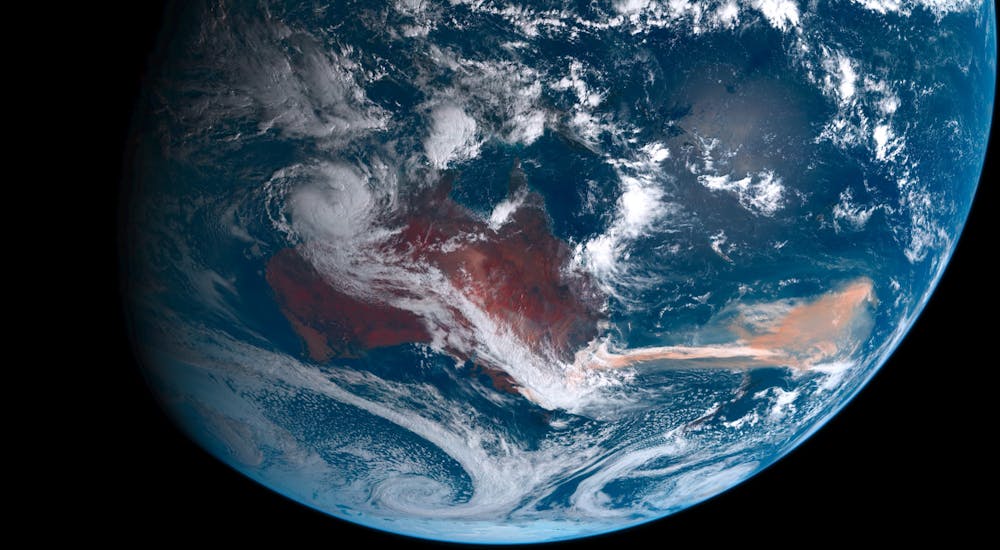
Himawari-8, Author provided

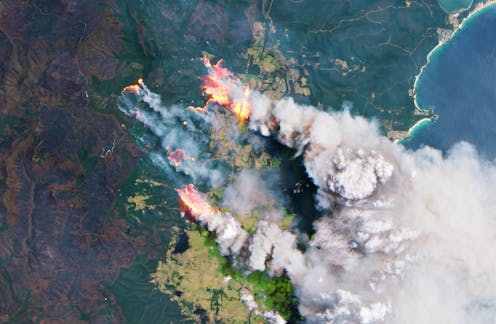
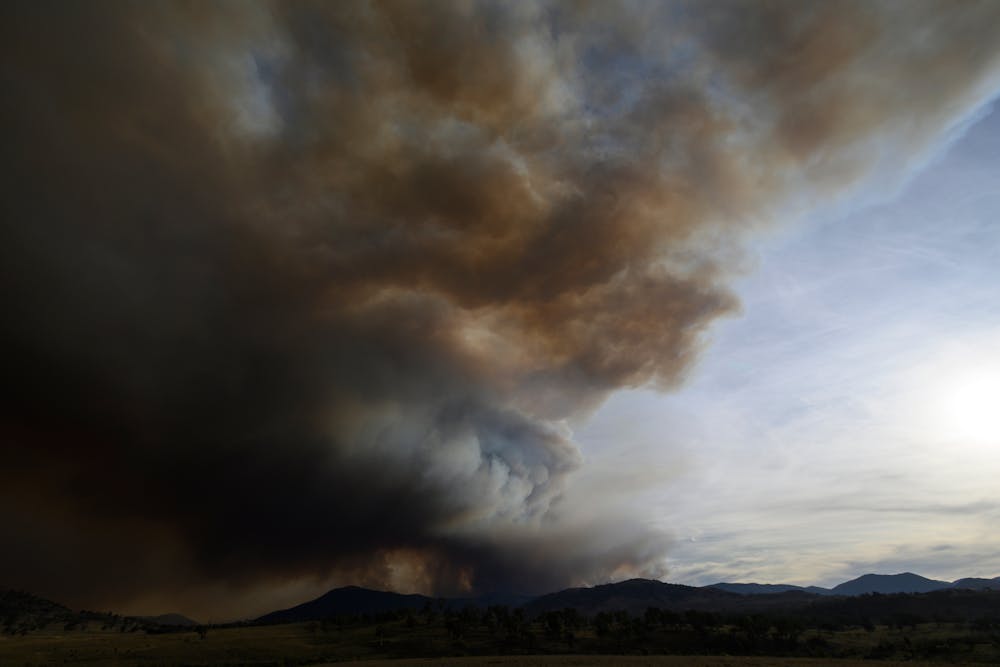
In 2019 and 2020, bushfires razed more than 18 million hectares of land in Australia. For weeks, smoke choked major cities, leading to almost 450 deaths, and even circumnavigated the southern hemisphere.

As the aerosols billowed across the oceans many thousands of kilometres away from the fires, microscopic marine algae called phytoplankton had an unexpected windfall: they received a boost of iron.

Our research, published today in Nature, found this caused phytoplankton concentrations to double between New Zealand and South America, until the bloom area became bigger than Australia. And it lasted for four months.

This enormous, unprecedented algal bloom could have profound implications for carbon dioxide levels in the atmosphere and for the marine ecosystem. But so far, the impact is still unclear.

Meanwhile, in another paper published alongside ours in Nature today, researchers from The Netherlands found the amount of carbon dioxide emitted by the fires that summer was more than double previous estimates.

Absorbing 680 million tonnes of carbon dioxide

Iron fertilises phytoplankton and helps them grow, in the same way nutrients added in soil help vegetables grow. And like plants on land, phytoplankton photosynthesise — they absorb CO₂ as they grow and produce oxygen for fish and other marine creatures.

Bushfire smoke is an aerosol made up of many different chemicals, including iron.
Shutterstock

We used satellite data to estimate that for phytoplankton to grow as much as they did in the Southern Ocean, they would have absorbed 680 million tonnes of CO₂. This means the phytoplankton absorbed roughly the same amount of CO₂ as released by the bushfires, according to the latest estimates released today.

The Dutch researchers found the bushfires released 715 million tonnes of CO₂ (or ranging 517–867 million tonnes) between November 2019 and January 2020. This surpasses Australia’s normal annual fire and fossil fuel emissions by 80%.

To put this into perspective, Australia’s anthropogenic CO₂ emissions in 2019 were much less, at 520 million tonnes.

Phytoplankton can have dramatic effects on climate

But that doesn’t mean the phytoplankton growth absorbed the bushfire’s CO₂ emissions permanently. Whether phytoplankton growth extracts and keeps CO₂ from the atmosphere depends on their fate.

If they sink to the deep ocean, then this represents a carbon sink for decades or even centuries — or even longer if phytoplankton are stored in ocean sediments.

But if they’re mostly eaten and decomposed near the ocean’s surface, then all that CO₂ they consumed comes straight back out, with no net effect on the carbon balance in the atmosphere.

Himawari satellite image showing the January aerosol plume stretching over the South Pacific.
Himawari-8, Author provided

In fact, phytoplankton have very likely played a role on millennial time scales in keeping atmospheric CO₂ concentrations down, and can affect the global climate in the long term.

For example, a 2014 study suggests iron-containing dust billowing over the Southern Ocean caused increased phytoplankton productivity, which contributed to reducing atmospheric CO₂ by about 100 parts per million. And this helped transition the planet to ice ages.


Read more:
Inside the world of tiny phytoplankton – microscopic algae that provide most of our oxygen


Phytoplankton blooms can also have a big impact on the marine ecosystem as they make excellent food for some marine creatures.

For example, more phytoplankton means more food for zooplankton that feed on phytoplankton, with effects up the food chain. It’s also worth noting this huge bloom occurred at a time of year when phytoplankton are usually in decline in this part of the ocean.

But whether there were any long-lasting effects from the bushfire-fuelled phytoplankton on the climate or ecosystem is unclear, because we still don’t know where they ended up.

Using revolutionary data

The link between fire aerosols and the increase in phytoplankton demonstrated in our study is particularly relevant given the intense fire activity around the globe.

Droughts and warming under global climate change are expected to increase the frequency and intensity of wildfires, and the impacts to land-based ecosystems, such as habitat loss and air pollution, will be dramatic. But as we now know, wildfires can also affect marine life thousands of kilometres away from land.

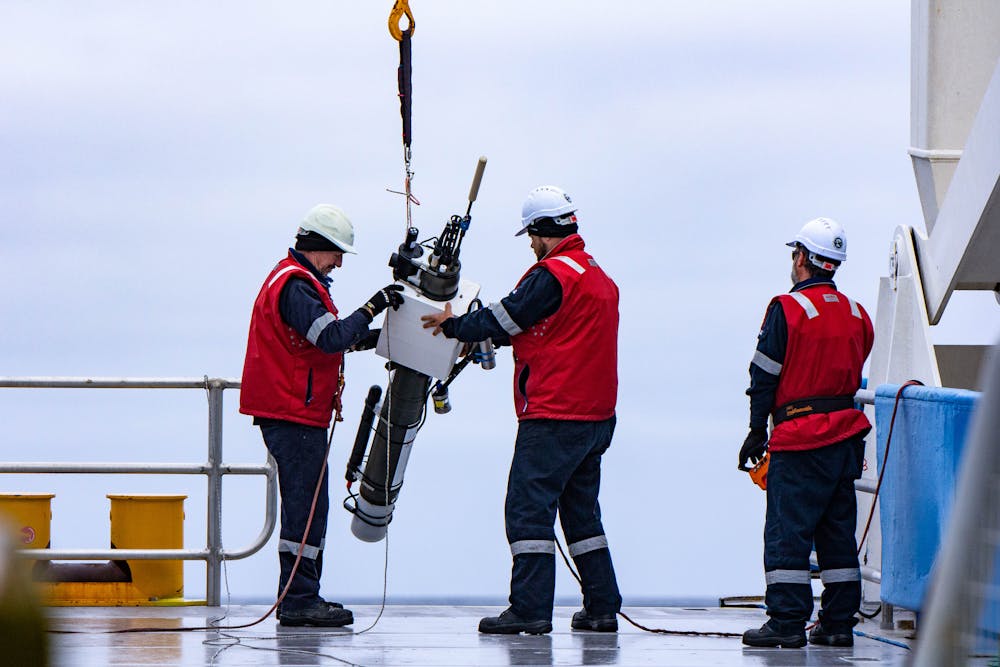
A robotic float being deployed on board the CSIRO RV Investigator.
Jakob Weiss, Author provided

Previous models have predicted the iron-fertilising effect of bushfire aerosols, but this is the first time we’ve observed and demonstrated the connection at a large-scale.

Our study is mainly based on satellite data and observations from robotic floats that roam the oceans and collect data autonomously. These robotic floats are revolutionising our understanding of chemical cycling, oxygen variability and ocean acidification.

During the bushfire period, our smoke tracers reached concentrations at least 300% higher than what had ever been observed in the 22-year satellite record for the region.

Interestingly, you wouldn’t be able to observe the resulting phytoplankton growth in a true-colour satellite image. We instead used more sensitive ocean colour sensors on satellites to estimate phytoplankton concentrations.


Read more:
Tiny plankton drive processes in the ocean that capture twice as much carbon as scientists thought


So what’s next?

Of course, we need more research to determine the fate of the phytoplankton. But we also need more research to better predict when and where aerosol deposition (such as bushfire smoke) will boost phytoplankton growth.

For example, the Tasman Sea — between Australia and New Zealand — showed only mildly higher phytoplankton concentrations during the bushfire period, even though the smoke cloud was strongest there.

Was this because nutrients other than iron were lacking, or because there was less deposition? Or perhaps because the smoke didn’t stick around for as long?

Whatever the reason, it’s clear this is only the beginning of exciting new lines of research that link forests, wildfires, phytoplankton growth and Earth’s climate.


Read more:
Some animals have excellent tricks to evade bushfire. But flames might be reaching more animals naive to the dangers


The Conversation

Christina Schallenberg receives funding from the Integrated Marine Observing System (IMOS) and is affiliated with the Australian Antarctic Program Partnership (AAPP). In the past, she received funding from the National Sciences Engineering and Research Council (NSERC) of Canada.

Jakob Weis receives funding from the Australian Research Council Centre of Excellence for Climate Extremes.

Joan Llort receives funding from the European Union’s Horizon 2020 – MSCA program.

Peter Strutton receives funding from the Australian Research Council and Australia’s Integrated Marine Observing System (IMOS), which is enabled by the National Collaborative Research Infrastructure Strategy (NCRIS).

Weiyi Tang receives funding from Princeton University and previously received funding from National Science Foundation.

ref. Smoke from the Black Summer fires created an algal bloom bigger than Australia in the Southern Ocean – https://theconversation.com/smoke-from-the-black-summer-fires-created-an-algal-bloom-bigger-than-australia-in-the-southern-ocean-164564

Jaws of death: how the canine teeth of carnivorous mammals evolved to make them super-killers

Source: The Conversation (Au and NZ) – By Tahlia Pollock, PhD candidate, Monash University

Author provided

Carnivorous animals come in all shapes and sizes, from the 500-gram quoll to the 500-kilogram polar bear. This disparate group of mammals shares a common feature: canine teeth at the front of their jaws.

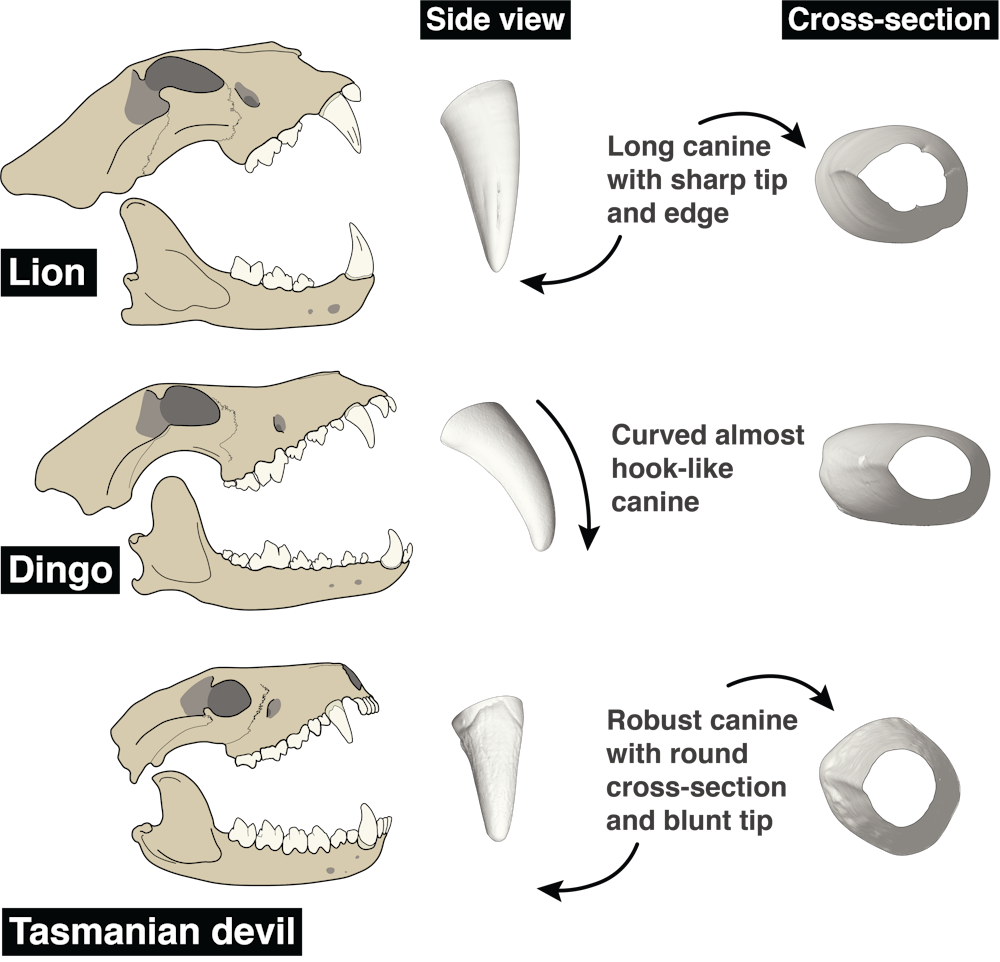
Canine teeth are long and pointed, with a sharp tip and, in some cases, bladed edges. These fearsome weapons are what make carnivores such effective killers. In fact, our new research out today reveals how evolution has shaped canines into unique forms to suit each predator’s way of life.

We applied state-of-the-art 3D methods to measure the canine teeth of more than 60 predators including lions, cheetahs, grizzly bears, dingoes and Tasmanian devils. The research represents the first comprehensive analysis of canine tooth shape in predatory mammals.

We discovered canine teeth have evolved in special ways to help each species kill and eat their favourite prey – helping to make mammals some of nature’s most successful predators.

A lion, meerkat, grizzly bear, and African wild dog bearing their canine teeth.
Lion Petr Ganaj, meerkat Joshua J. Cotten, grizzly bear mana520, African Wild Dog Matt Burke all via Unsplash

Born to kill

When carnivorous mammals snarl, they reveal four long canine teeth at the front of their jaws – two at the top and two at the bottom. These teeth are the first point of contact between predator and prey, and are used to stab, kill and dismember a catch.

Not all carnivores have the same diet. Grizzly bears eat meat, fruit and plants, while meerkats feed mostly on invertebrates like scorpions and beetles. Big cats, like cheetahs, stick to meat.

Carnivores can also kill in myriad ways. Tigers suffocate their prey with a targeted throat bite, while wolves use multiple slashing bites to tear apart their prey. Small canids such as the red fox snap up and violently shake their prey, while wolverines can kill with a single, crushing skull bite.

There’s been little research into the associations between canine tooth shape, function and evolution. Our research sought to determine what canine shapes are best for each predator diet.


Read more:
New research reveals animals are changing their body shapes to cope with climate change


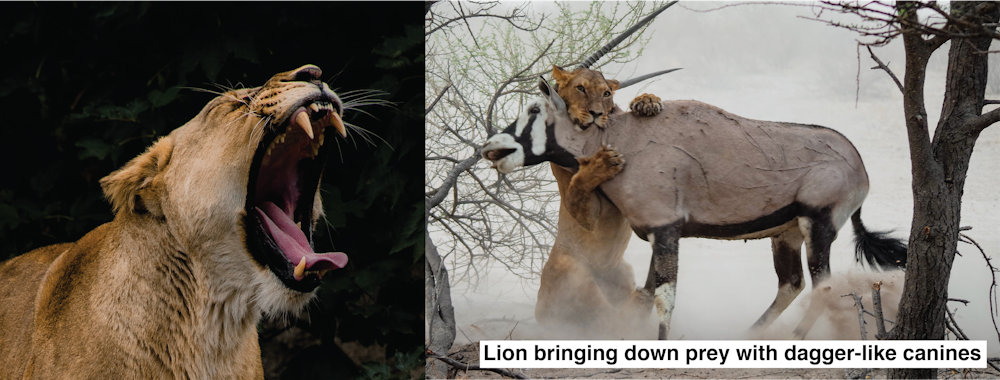
Lion using its long sharp dagger-like canines to deliver a targeted neck bite and taking down an Oryx in the Kalahari Desert.
Lion canines Mike van den Bos and hunting Thomas Evans both via Unsplash

A bite worse than its bark

We scanned and compared the canine teeth of more than 60 carnivores, including tigers, coyotes, polar bears, wolverines, raccoons and even quolls. We then looked at the association between canine shape and function.

We found tooth shape varies depending on the types of food a carnivore regularly bites into – just like we choose different kitchen knives depending on what we want to cut up.

Big cats such as lions, tigers and cheetahs have some of the sharpest canine teeth in the animal kingdom. These long, dagger-like weapons are used to stab – biting down deeply into the throats of prey to bring them down.

Take a 3D look at the canine teeth of a cheetah in the interactive below.

Other species, such as the coyote and red fox, have slender, curved canines. These teeth act as hooks to help hold small prey and prevent it slipping from the mouth when shaking.

Animals that eat a lot of “soft” prey, or those that deliver throat bites, often have sharp, slender canines. The sharp tips make a crack in the prey and as the animal bites down, the long, sharp edges of the tooth help penetrate deeply into the catch.

Species with a tougher or more varied diet have stout, robust teeth that don’t break when crunching bone or other hard foods. These species include scavengers such as the Tasmanian devil, and generalists such as the honey badger.

The bluntest upper canine tips we examined belong to the crab-eating mongoose. As the name suggests, the species feeds on crabs and other hard prey such as reptiles, snails and insects.

We also found canine teeth with blunt tips and edges were found in animals that kill prey with crushing bites to the skull, such as the American martin or wolverine. Blunt tips are better able than sharp tips to withstand the stresses produced by such heavy force.

Canine teeth can be long and sharp, slender and curved, or blunt and robust. These differences relate to how these teeth are used during hunting and feeding.
Image by Tahlia Pollock

Something to chew on

The research helps establish new links between tooth shape and ecology that may shed light on the diet and behaviour of extinct species.

For example, the thylacine (or Tasmanian tiger) had curved canines, which suggests it may have snapped up and shaken smaller prey. This supports recent research on thylacine skull shape which found that, contrary to previous theories, the thylacine likely hunted small rather than large prey.

By studying canine teeth up close, we’ve discovered just how well evolution shaped even the smallest animal features to suit the niches they fill in nature.


Read more:
Who would win in a fight between a wedge-tailed eagle and a bald eagle? It’s a close call for two nationally revered birds


The Conversation

Tahlia Pollock receives funding from the Australian Government Research Training Program Scholarship (RTP stipend), the Monash Graduate Excellence Scholarship (MGE), and the Monash Graduate Research Completion Award (GRCA).

Alistair Evans receives funding from the Australian Research Council and Monash University, and is an Honorary Research Affiliate with Museums Victoria.

David Hocking has received funding from the Australian Research Council and Monash University. He is the Senior Curator of Vertebrate Zoology at the Tasmanian Museum and Art Gallery and is an adjunct research associate with Monash University.

ref. Jaws of death: how the canine teeth of carnivorous mammals evolved to make them super-killers – https://theconversation.com/jaws-of-death-how-the-canine-teeth-of-carnivorous-mammals-evolved-to-make-them-super-killers-166029

We analysed data from 29,798 clean-ups around the world to uncover some of the worst litter hotspots

Source: The Conversation (Au and NZ) – By Lauren Roman, Postdoctoral Researcher, Oceans and Atmosphere, CSIRO

Shutterstock

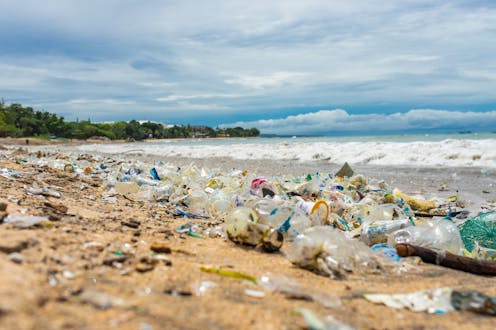
Coastal litter is a big environmental problem. But how does this litter differ around the world, and why? In the first global analysis of its kind, we set out to answer those questions using data collected by thousands of citizen scientists.

Our analysis, released today, discovered litter hotspots on every inhabited continent, including Australia. This finding busts two persistent myths: that most of the world’s plastic pollution comes from just a few major rivers, and that countries in the Global South are largely to blame for the marine plastic problem.

Single-use plastics formed the majority of litter in this study. And in general, litter hotspots were associated with socioeconomic factors such as a concentration of built infrastructure, less national wealth, and a high level of lighting at night.

Our insights reveal the complex patterns driving coastal pollution, and suggest there is no “one size fits all” solution to cleaning up the world’s oceans. In fact, the best solution is to stop the waste problem long before it reaches the sea.

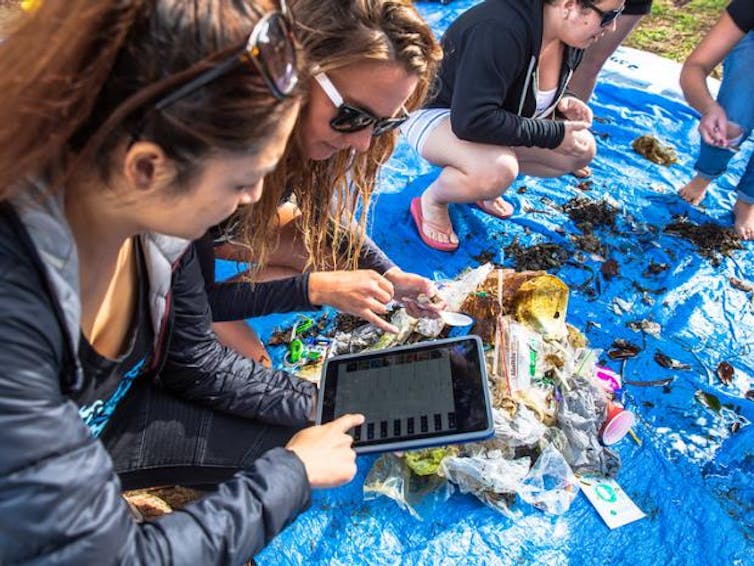
This study analyses the data collected by hundreds of thousands of citizen scientists conducting clean-ups worldwide.
Copyright PADI AWARE

A complex picture

We are scientists from the CSIRO’s Marine Debris Research team. Our study involved working closely with Ocean Conservancy and the PADI AWARE Foundation, which together hold the world’s most comprehensive litter data sets gathered by citizen scientists.

We analysed hundreds of thousands of items from 22,508 clean-ups on land (at beaches and the edge of rivers and lakes) as well as 7,290 seafloor clean-ups. The clean-ups spanned 116 and 118 countries, respectively, and involved participants recording counts for each item collected.

The analysis showed a huge diversity in the location and scale of plastic pollution hotspots. They were not limited to single countries or rivers – instead, the hotspots occurred in all inhabited continents and across many countries. In many places, litter patterns between neighbouring locations were vastly different.


Read more:
For decades, scientists puzzled over the plastic ‘missing’ from our oceans – but now it’s been found


Most litter comprised single-use items: cigarette butts, fishing line, food wrappers, and plastic bottles and bags.

In general, places with more overall litter tended to have:

  • more built infrastructure

  • less national wealth

  • bright lighting at night (which indicated urban density).

Cities and other dense urban areas around the world were linked with hotspots of “convenience” single-use plastic items, such as plastic bags, food wrappers, drink bottles, take-away containers, straws, plastic cutlery and lids. These hotspots are represented in the infographic below.


However, not all litter items followed this pattern. For example, cigarette butts followed a regional pattern and were more common in Southern Europe and North Africa.

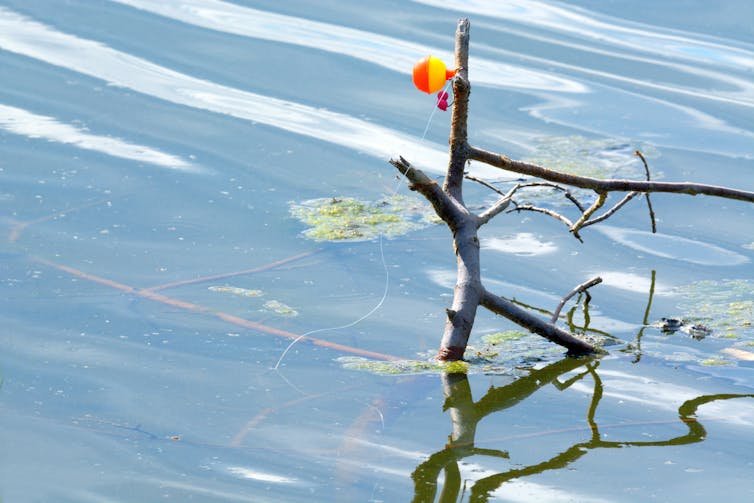
Fishing line was most abundant in wealthier countries where recreational fishing is a popular pastime. Hotspots included Australia, the United Kingdom and the United States.

Clusters of hotspots were often associated with partially enclosed bays, seas and lakes. These included areas such as the Mediterranean Sea, the Bay of Bengal, the South China and Philippine seas, the Gulf of Mexico, the Caribbean Sea, Lake Malawi and the Great Lakes of North America.

Plastic accumulation in these areas is likely due to factors such as high local littering combined with relatively contained bodies of water.

Plastic bottle hotspots were more common in tropical countries such as Costa Rica and Jamaica, among others. Plastic food wrappers were abundant in the island nations of Southeast Asia, particularly around Indonesia and the Philippines.


Read more:
It might be the world’s biggest ocean, but the mighty Pacific is in peril


fishing line and bobber wrapped around twig in water
Australia contained several global hotspots for fishing line waste.
Shutterstock

Cleaning up our coasts

Ultimately, our study reveals the diversity and complexity of the plastic pollution issue. We hope it helps governments make waste policy decisions based on sound scientific evidence.

The findings suggest programs to tackle ocean litter should be rolled out at the grassroots level, or within one part of a country, as well as nationally.

In Australia, for example, Zoos Victoria’s Seal The Loop program aims to tackle localised fishing line waste at locations where the pastime is common. The program includes fishing line bins placed on piers and at boat ramps to encourage responsible waste disposal.

And in Malawi and 15 other countries in southern Africa, national bans on plastic bags target this locally problematic item.

Our analysis shows much non-degradable waste found in the environment comes from pre-packaged food and beverages. So regulations specifically addressing this type of packaging can be useful.

In Australia, for example, Hobart is aiming to become the first Australian city to ban single-use plastic takeaway food packaging, as part of an ambitious goal of zero-waste to landfill by 2030.

Other strategies known to change litter behaviour include recycling incentives such as container deposit schemes, particularly in lower socioeconomic areas where littering is highest, as well as education campaigns. And levies on plastic items could also help stop litter entering the environment.

This Saturday September 18, Ocean Conservancy is holding its annual International Coastal Cleanup – come along if you can and if COVID restrictions allow. You’ll be helping your local environment and collecting data to inform tomorrow’s waste management policies.

Land-based clean-ups were conducted across 116 countries. Please join us for the next one.
Rafeed Hussain Ocean Conservancy

The authors would like to acknowledge the tireless volunteers from the International Coastal Cleanup and Dive Against Debris, and collaborators; Ocean Conservancy’s Dr George H. Leonard and Nicholas Mallos, and PADI AWARE Foundation’s Hannah Pragnell-Raasch and Ian Campbell.

The Conversation

Lauren Roman received funding from this work from Ocean Conservancy, PADI AWARE and CSIRO Oceans and Atmosphere.

Britta Denise Hardesty receives funding for this work from Ocean Conservancy, PADI Aware, and CSIRO Oceans and Atmosphere. She also receives funding from Oak Family Foundation and PM Angell Foundation for related research.

Chris Wilcox receives funding for this work from Ocean Conservancy, PADI Aware, and CSIRO Oceans and Atmosphere. He also receives funding from Oak Family Foundation and PM Angell Foundation for related research.

ref. We analysed data from 29,798 clean-ups around the world to uncover some of the worst litter hotspots – https://theconversation.com/we-analysed-data-from-29-798-clean-ups-around-the-world-to-uncover-some-of-the-worst-litter-hotspots-167280

I asked historians what find made them go ‘wait, wut?’ Here’s a taste of the hundreds of replies

Source: The Conversation (Au and NZ) – By Evan Smith, Research Fellow in History, Flinders University

‘That physicians in the Anti-Vaccine Society (England, early 19th C) were concerned that Jenner’s smallpox inoculation gave people bovine-like features.’ – historian’s tweet in reply to author asking about memorable finds.

Twitter/Wellcome

Often when historians visit an archive or conduct research, we are not sure what we’ll find. With the help of archivists and librarians, we may know broadly what is contained in an archival record or a database, but we never know what may or may not be useful to us. Approaching our research material with a particular set of questions or analytical framework, what we actually find may leave us surprised, confused or taken aback in another way.

On Twitter, I asked a simple question: Historians, what is the thing that made you go ‘wait, wut?’ in the archives or in your research? The response was overwhelming – over 300 replies and 450 quote tweets at last count.

Historians, archivists and other researchers got in touch with great stories of their archival finds and tales of bizarre research moments. These ranged from the quirky to the disturbing to the profound.

Below I have chosen a handful that fall into each category to give an idea of the wide spectrum of what historians have come across in the field.

The quirky

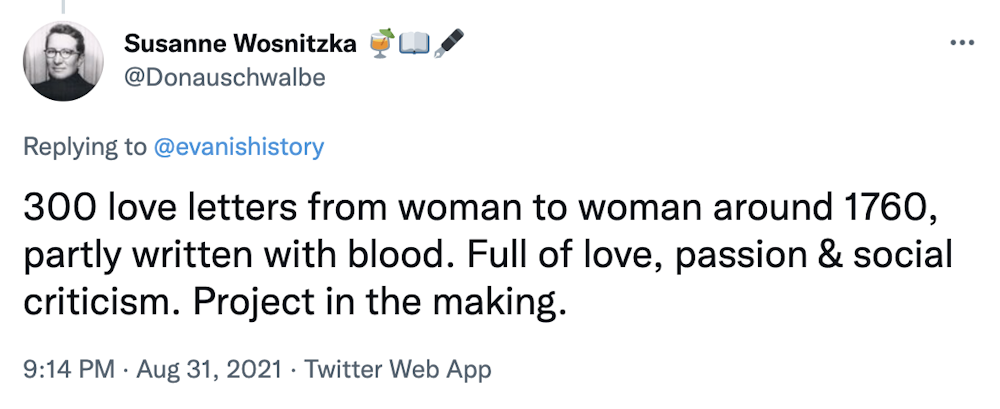
Many of those who responded told stories of bizarre (and sometimes amusing) finds in the archives. Some were actual objects, such as Robert Cribb finding “17 tubes of processed opium, ready for smoking, in the Dutch archives from 1946 Indonesia”, Daniel McKay coming across “negatives of an early Australian prime minister naked on holiday”, and “300 love letters from woman to woman around 1760, partly written in blood”, located by Susanne Wosnitzka.


Twitter

Others found interesting correspondence. A.J. Bauer gave the example of transcripts of phone-sex calls in the Ronald Reagan Presidential Library, after a politician wrote to Reagan to intervene against “dial-a-porn”. Yasmin Dualeh uncovered a “letter from Prof Phillip Hitti calling out his Princeton colleague Albert Einstein for spreading false rumours about him to students”. Maurice Casey told of a letter written to Soviet leader Josef Stalin by a New York University debating team “seeking help with their upcoming debate on capitalism”.

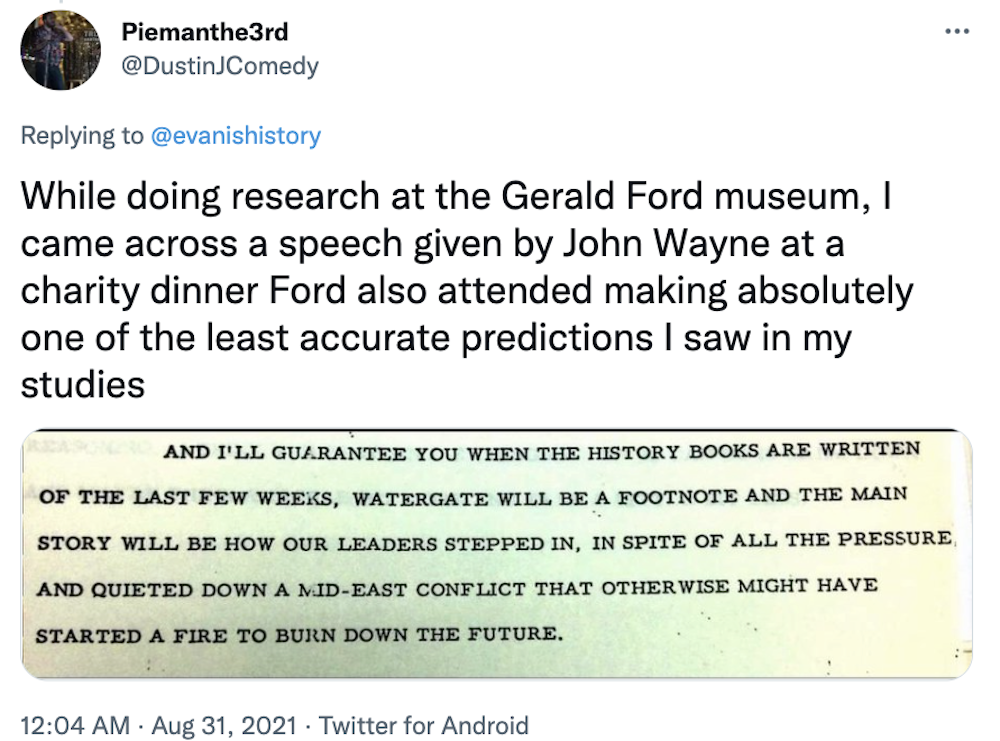
More strange tales emerged from newspaper reports and transcripts of speeches that historians discovered in their research. Xesc Mainzer mentioned a 1970s story in a Majorcan newspaper of “an elderly Belgian woman loosing [sic] her denture when she bit a policeman’s leg”. In the Gerald Ford Presidential Library and Museum, Dustin Jones “came across a speech given by John Wayne at a charity dinner Ford also attended making absolutely one of the least accurate predictions I saw in my studies”. What was the movie actor’s prediction? That “Watergate will be a footnote” in future history books.


Twitter

The disturbing

Historians also attested to the disturbing material that astounded them in their research, with the often bureaucratic and sterile nature of archival documents belying the troubling matter unearthed.

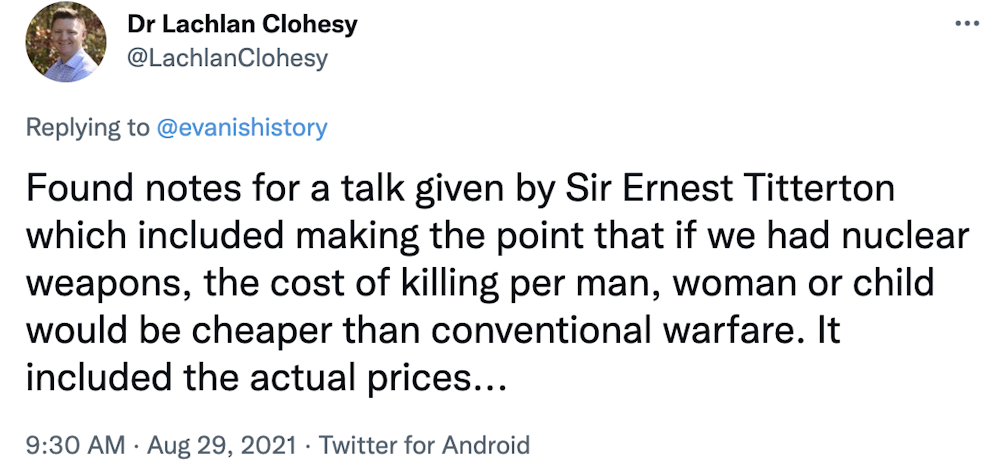
Lachlan Clohesy found notes of a talk by British nuclear physicist Sir Ernest Titterton about Australia’s potential nuclear arsenal. This talk “included making the point that if we had nuclear weapons, the cost of killing per man, woman and child would be cheaper than conventional warfare”. Clohesy added that Titterton’s notes included the actual prices.


Twitter

On a similar topic, Stephen Schwartz found that US Army Lieutenant General James M. Gavin had told Congress in 1957 that to win a nuclear war, the United States would need 151,000 nuclear weapons. Also on the topic of calculating deaths, Pépé Roswaldy came across a Dutch colonial magazine promoting native land resettlement in Indonesia in the 1930s (which resulted in a number of deaths) and reporting an officer as saying: “The death number is just okay, nothing unusual.”

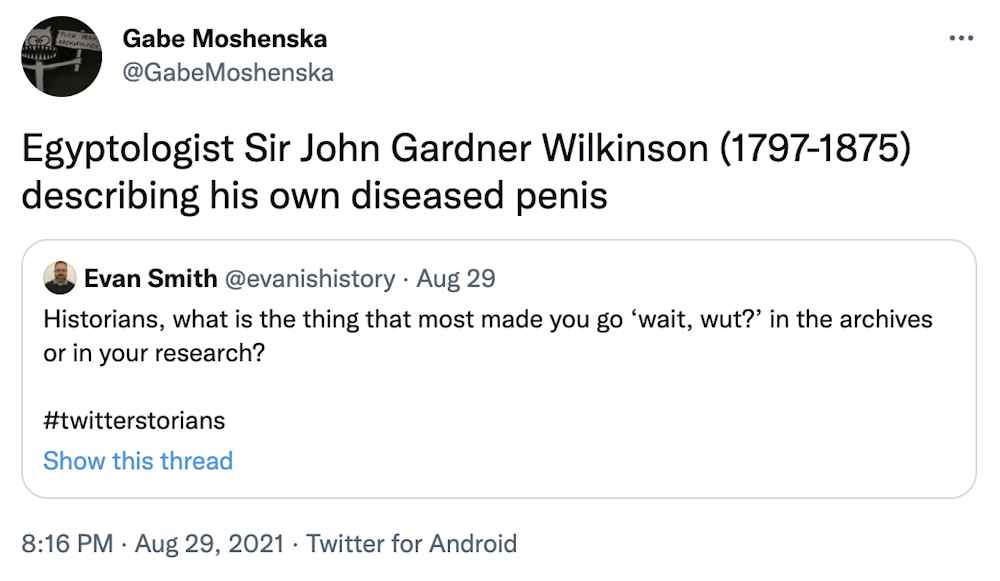
There were also more gruesome discoveries. Gabe Moshenska told of finding a description by famous Egyptologist Sir John Gardner Wilkinson of “his own diseased penis” in the papers of Thomas Pettigrew at Yale. Narrelle Morris mentioned an encounter in the National Archives of Australia with “a rusty razor that a Japanese suspected war criminal tried to commit suicide with”, stating: “I drew it to the archivist’s attention.”

Screen Shot at pm.
Twitter

The profound

There were also the surprising finds that were of particular importance to the historians and to our understanding of the past. Becky Erbelding from the United States Holocaust Memorial Museum came across the only known photos of Nazi doctor Josef Mengele at Auschwitz-Birkenau, when a photo album was sent to the museum.

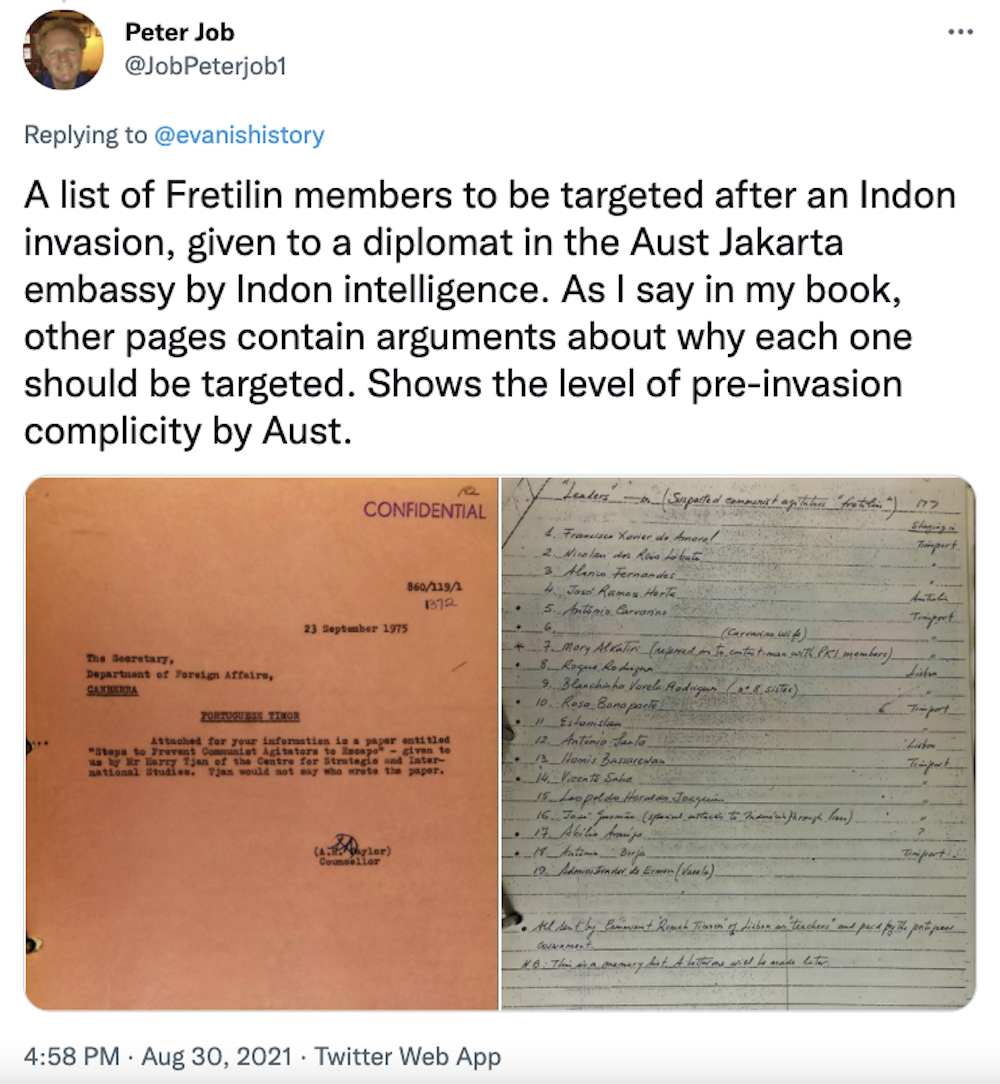
Peter Job told of a document that Indonesian intelligence provided to an Australian diplomat in Jakarta in 1975. This document, Job explains, was a list of members of Fretilin, the East Timorese independence group, to be targeted after an Indonesian invasion. Job argues that this “[s]hows level of pre-invasion complicity” by Australia.


Twitter

For Adam Rothman, it was an 1866 US Senate report on “rumors that newly freed people in the US were being kidnapped and sold into slavery in Cuba and Brazil”. This led to Rothman writing a whole book based on this realisation.

Other historians also revealed that a chance find led them to new research projects. For example, Anna Hájková heard of a story of a forced relationship between a German women’s guard and a young female prisoner during the final year of the second world war. Intrigued by a tale from an oral history recording, Hájková developed this story into a ground-breaking work of queer history.

These are only a few of the many stories that people revealed in reply to my tweet. As we do research into the past, historians are often confronted or surprised by what we come across. Some findings can be amusing titbits on the side of our research. Others greatly shift our knowledge of certain events or people.

Nearly every historian has a story of a research find that made them pause and, via Twitter, we were able to hear of so many.

The Conversation

Evan Smith has in the past received funding from the Australian Academy of the Humanities, the Museum of Australian Democracy and the Australian Research Council.

ref. I asked historians what find made them go ‘wait, wut?’ Here’s a taste of the hundreds of replies – https://theconversation.com/i-asked-historians-what-find-made-them-go-wait-wut-heres-a-taste-of-the-hundreds-of-replies-167176

From pygmies to puppets: what to do with Roald Dahl’s enslaved Oompa-Loompas in modern adaptations?

Source: The Conversation (Au and NZ) – By Kate Cantrell, Lecturer in Writing, Editing, and Publishing, University of Southern Queensland

The stage adaptation of Charlie and the Chocolate Factory has opened in Brisbane. Charlie, like all of Roald Dahl’s novels for children, celebrates courage, resilience and the creative power of childhood.

Charlie Bucket is literally starving to death by the time he arrives at Willy Wonka’s factory. Yet his steely determination to find the last golden ticket, combined with his strong moral compass, sees him emerge as Wonka’s heir, his family’s hero, and the architect of his fate.

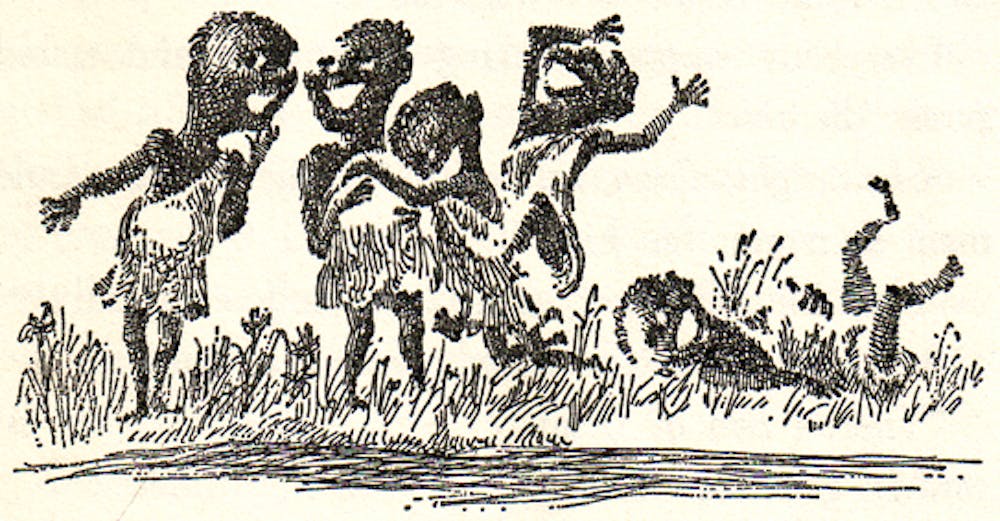
But there is a troubling aspect to this story. In the first edition of Charlie (1964), the Oompa-Loompas are black pygmies who Wonka imports from “the deepest and darkest part of the African jungle” and enslaves in his factory.

In this latest stage production, the Oompa-Loompas are transformed into “humanettes” (living dolls that are part human, part puppet). Their recent manifestation raises a number of questions. What do the Oompa-Loompas represent? And how should they be portrayed in modern-day adaptations?


Read more:
Abused, neglected, abandoned — did Roald Dahl hate children as much as the witches did?


Servitude

In the original novel, the Oompa-Loompas work (in lieu of money) in exchange for cocoa beans, the only currency they understand. Wonka explains,

You only had to mention the word ‘cacao’ to an Oompa-Loompa and they would start dribbling at the mouth.

As a messianic figure, Wonka believes he has “rescued” the Oompa-Loompas from certain death. Saving his tiny “helpers” from near starvation, he offers them shelter from their predators, the Snozzwangers and Whangdoodles.

Their servitude, Wonka insists, is a special privilege, a pro-slavery sentiment that echoes the “positive good” defence of the Atlantic Slave Trade.

The Oompa-Loompas as African Pygmies, as depicted by Joseph Schindelman in the original version of Charlie and the Chocolate Factory (1964).
AP

The novel reflects cultural anxieties that emerged in the United Kingdom in the 1960s when the labour market opened to New Commonwealth citizens from India and the Caribbean. Grandpa Joe, a former Wonka employee who is laid off, represents the concerns of white British workers who saw immigrants as rivals for what they believed were rightfully white British jobs.

When Wonka’s factory re-opens with a secret workforce, Charlie says to Grandpa Joe, “But there must be people working there”, and Grandpa Joe responds, “Not people, Charlie. Not ordinary people, anyway”.


Read more:
Gobsmacked by Aldi’s Revolting Rhymes ban? Try this instead


Whitewashing

In the late 1960s, under mounting pressure to rewrite the Oompa-Loompas, Dahl agreed, in his words, to “de-Negro” his characters.

Mel Stuart’s 1971 film adaptation, released in the immediate aftermath of the civil rights movement, recast the Oompa-Loompas as little people with green hair and orange skin. Their homeland is now Loompaland rather than Africa, and they are “transported” to Wonka’s factory rather than “imported”.

The Oompa-Loompas with Grandpa Joe in Mel Stuart’s 1971 film.
Wolper Pictures

This transformation is a textual whitewashing that obscures the power dynamic between Wonka as factory owner and the Oompa-Loompas as his exploited workforce.

Before the film’s release, the National Association for the Advancement of Colored People in the US threatened to boycott cinemas, while the producers worried if they represented black characters in a derogatory way, they would lose revenue.

Dahl eventually buckled to public criticism. In a revised 1973 edition of the book, he reimagined the Oompa-Loompas as “little fantasy creatures”.

In this new edition, the Oompa-Loompas are hippies. Their skin is rosy white; their unkempt hair is golden brown; they frolick in the factory gardens, picking wildflowers, playing hand drums, and chasing butterflies. They symbolise 1970s counterculture and its rejection of materialism, conservative values, and social and political conflict.

Digital clones

In 2005, Tim Burton produced the second cinematic adaptation of Charlie. In Burton’s revision, the Oompa-Loompas are played by a single actor (Gurdeep Roy) who is digitally cloned to create the illusion of a sizeable workforce.

For the first time, the Oompa-Loompas use information technology to communicate wirelessly, enlisting supercomputers to improve their productivity and profits.

In a 2005 interview, Roy recalled Burton’s confirmation that “the Oompas were strictly programmed like robots — all they do is work, work, work.”

“Back off you little freaks!” Mike Teavee derides the Oompa-Loompas as they chastise Augustus Gloop in Tim Burton’s 2005 adaptation.

Burton’s adaptation, a commentary on exploited labour in the digital age, shares several thematic concerns with the musical version.


Read more:
Cat in a spat: scrapping Dr Seuss books is not cancel culture


Pulling strings

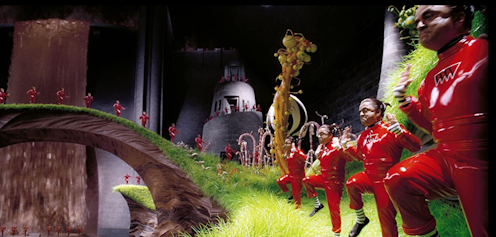
In the Brisbane season, the Oompa-Loompas form a chorus line of hybrid creatures in red curled wigs and identical suits branded with the “W” of Wonka, a stamp marking them as property rather than people.

Each Oompa-Loompa is part human (head and hands) and part puppet (body and legs). The puppeteer manipulates the body and legs to bring the puppet to life.

The result is a bizarre distortion of proportions, in which the Oompa-Loompas burst onto the stage in choreographed song and dance. The theatrical effect is of a stunted character, suspended in space, able to perform gravity-defying dance moves and circus-like tricks.

While the inventive blend of performers and puppets is clever, the puppetry reinstates the power imbalance: Oompa-Loompas are material objects controlled by others.

In attempting to conceal their exploitation, the show’s producers only draw attention to the controversy they are trying to avoid. The fact Wonka’s privilege is never questioned is evidenced by the fact he always remains the same: white, wealthy, and in control.

Using puppets as a way to obfuscate conversation around race has a problematic history in Western theatre. Some theatre-makers insist puppets are essentially “raceless”, but this claim can erase the subject’s potential humanity. An audience isn’t excepted to see puppets as anything other than figures of entertainment.

The fraught history of the Oompa-Loompas captures the irresolvable tension at the heart of children’s literature and theatre: it is impossible to separate children’s stories from the ideological fabric of our world, the power structures that privilege adults, and the particular historical moment in which stories are produced.

Any re-imagining of this classic tale will always be placed in a precarious position.

The Conversation

The authors do not work for, consult, own shares in or receive funding from any company or organization that would benefit from this article, and have disclosed no relevant affiliations beyond their academic appointment.

ref. From pygmies to puppets: what to do with Roald Dahl’s enslaved Oompa-Loompas in modern adaptations? – https://theconversation.com/from-pygmies-to-puppets-what-to-do-with-roald-dahls-enslaved-oompa-loompas-in-modern-adaptations-166967

Christian Porter’s ministerial future on the line as Morrison seeks advice on ‘blind trust’

Source: The Conversation (Au and NZ) – By Michelle Grattan, Professorial Fellow, University of Canberra

Christian Porter’s ministerial future is again on the line, with Scott Morrison seeking advice on whether his receiving money for his legal bills from a “blind trust” breaches the ministerial standards code.

Morrison discussed the arrangement, which has attracted a storm of controversy, with Porter on Wednesday.

On Tuesday Porter updated his parliamentary register of interests to reveal a “part contribution” to his legal bills for his (now settled) defamation case against the ABC from “a blind trust known as the Legal Services Trust”.

“As a potential beneficiary I have no access to information about the conduct and funding of the trust,” he said in the update.

The defamation action followed the ABC reporting a historical rape allegation against an unnamed cabinet minister. Porter, attorney-general at the time, later identified himself as the minister and strongly denied the allegation.

He was subsequently moved from attorney-general to the industry ministry.

A spokesperson for Morrison said late Wednesday: “The Prime Minister is taking this matter seriously and has discussed the matter with the minister today.

“The Prime Minister is seeking advice from his department on any implications for the Ministerial Standards and any actions the minister must take to ensure that he meets the Standards.”

The advice will come from the secretary of the Prime Minister’s department, Phil Gaetjens, and Stephanie Foster, deputy secretary for governance.

If Porter is not meeting the ministerial standard one course would be for him to return the money.

Earlier on Wednesday, former prime minister Malcolm Turnbull said he was “staggered that Porter thought he could get away with it and I will be even more staggered if the prime minister allows this to stand.

“It is a shocking affront to transparency,” Turnbull told the ABC.

“Basically what Porter is saying is that it is okay for an Australian cabinet minister, a former attorney-general – not just of Australia, but of Western Australia – to take a large donation, a large gift to himself, without disclosing who the donor was and apparently without him knowing who the donor was either. It is so wrong.”

Turnbull said it was “like saying ‘my legal fees were paid by a guy in a mask who dropped off a chaff bag full of cash’”.

Opposition leader Anthony Albanese ridiculed the proposition that Porter didn’t know the identity of his benefactors.

“The idea that he doesn’t know, that just somehow out there random people are discovering this trust, finding out for themselves where to put the money and depositing the money with no knowledge to him, is, quite frankly, just unbelievable and absurd,” Albanese said.

Albanese said this was “yet another reason why we need a national anti-corruption commission.

“If there was a national anti-corruption commission, it’d be up this like a rat up a drainpipe.”

Shadow attorney-general Mark Dreyfus said the PM seeking advice was “another farcical ‘inquiry’ by Scott Morrison’s right-hand man” which “follows yet another outrageous scandal in Mr Morrison’s government”.

Treasurer Josh Frydenberg defended Porter, telling Sky that he “has disclosed in accordance with the requirements of parliamentarians on their register of interest”.

“The point about Christian Porter’s legal defence is that he did not use taxpayers’ money, and that is very important,” Frydenberg said.

The Conversation

Michelle Grattan does not work for, consult, own shares in or receive funding from any company or organisation that would benefit from this article, and has disclosed no relevant affiliations beyond their academic appointment.

ref. Christian Porter’s ministerial future on the line as Morrison seeks advice on ‘blind trust’ – https://theconversation.com/christian-porters-ministerial-future-on-the-line-as-morrison-seeks-advice-on-blind-trust-168011

Beyond AOC’s ‘Tax the Rich’ dress: 5 acts of fashion provocation that changed history

Source: The Conversation (Au and NZ) – By Peter McNeil, Distinguished Professor of Design History, UTS, University of Technology Sydney

NDZ/STAR MAX/IPx

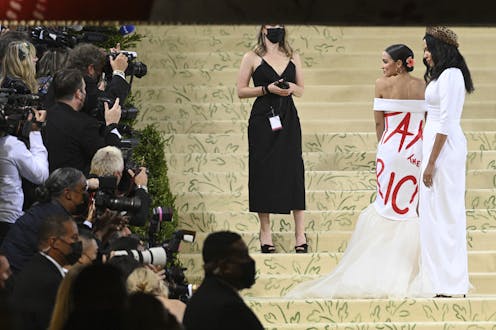
Democratic congresswoman Alexandria Ocasio-Cortez has ignited both controversy and celebration after wearing a gown to the Met Gala emblazoned in red graffiti text with the statement “Tax the Rich”.

Appearing as a guest of the Metropolitan Museum of Art at the annual fund raiser, (for which tickets cost tens of thousand dollars), the left-wing politician wore a custom gown by fashion brand Brother Vellies, bringing with her the label’s founder, the young Black designer and activist Aurora James.

Using fashion as a tool to address wider social concerns has, in fact, long been a strategy for people seeking to make change — including wearing these clothes in spaces of influence.

From 19th century Suffragettes who pounded the streets in heels, ultra-feminine dress and large “picture” hats to refute claims that they were unwomanly, to patriot textiles in the second world war, to Indigenous Australian street clothes and accessories by a brand such as Dizzy Couture today, dress has historically conveyed political messages, creating “looks” for generations of change agents.

Here are 5 clothing acts as provocations that changed history.

1. George Washington’s suit

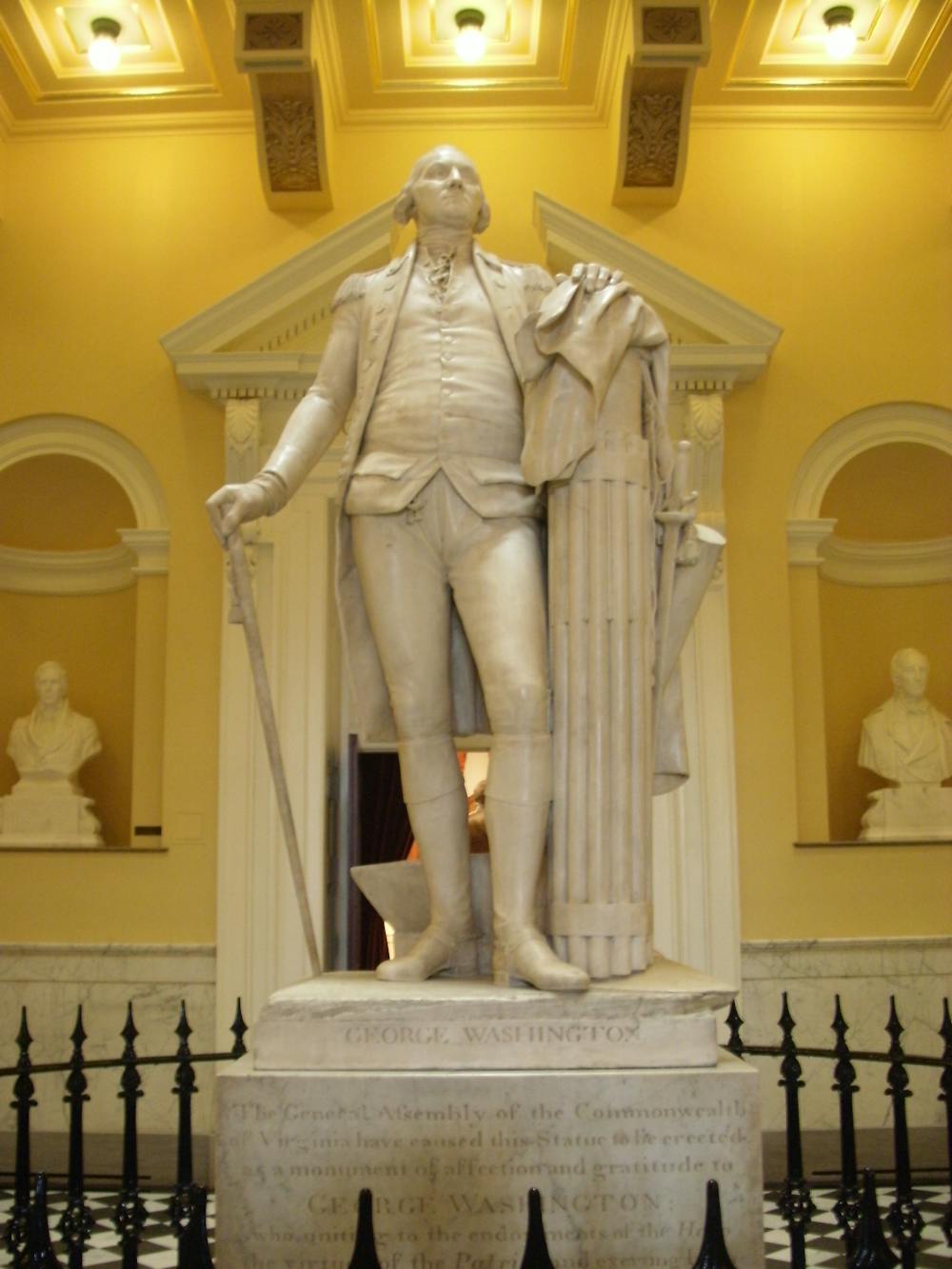
Houdon’s sculpture of Washington.
Wikimedia Commons, CC BY

The founders of the American Revolution wished to break with the old codes of European aristocracy. Much of the world still had “sumptuary laws”: legal edicts that regulated the types, materials and amounts of cloth, colours, jewellery and accessories permitted to various social groups.

In North America, the formal clothing codes of the old regime were actively resisted: men were not expected to wear the expensive and colourful embroidered silks typically worn to European courts. Their imported fabrics were considered bad for local economies, and their elite air at odds with the idea that all men might now be (relatively) equal.

President elect George Washington was sculpted by Houdon in the late 18th century with a button missing from his waistcoat. This was a deliberate gesture to show his actions were more important than his appearance. He also wore plain, home-spun American woollen cloth for his inauguration instead of the expected silk or velvet. This was a firm demonstration of North American independence and perhaps the first American “business casual”.

2. The Abolitionist handbag

Abolitionist bag full of anti-slavery pamphlets.
©Victoria and Albert Museum, London, CC BY-NC

Since the late 18th century, a range of objects from jewellery to printed dishes were produced to critique the Slave Trade.

British Quakers had advocated for Abolition in 1783. The Female Society for Birmingham (originally the Ladies Society for the Relief of Negro Slaves, the first such group) mobilised their anti-slavery followers with handbags printed with images and slogans designed to gain support for the Abolitionist movement.

The silk drawstring bags, made by women in sewing circles, were presented to prominent figures such as George IV and Princess Victoria. The bags contained newspaper articles and tracts supportive of Abolition.

The Slavery Abolition Act, which provided for the immediate abolition of slavery in most of the British Empire was passed ten years later, in 1833. A similar Act was ratified in the USA only in 1865.

3. No feather hats

Feather fan circa 1902.
Te Papa, CC BY-NC-ND

The ostrich and exotic bird industry was massive in the 19th century: as well as plumes, women wore whole bodies of birds as accessories, such as hummingbird earrings.

The ostrich plume “double fluff” industry was centred on South Africa, where the feathers were worth more than gold. They were exported to rooms in London and New York where exhausted young girls finished and dyed them for retail.

In 1914 a massive “feather crash” saw the raw material become close to worthless. Young women interested in the growing national park and conservation movements objected to the trade on ecological grounds. They simply stopped wearing the fashion, starting a global “anti-plumage” movement.

The women involved with the Massachusetts Audubon Society were so successful that their lobbying led to the first US federal conservation legislation, The Lacey Act (1900). Taxidermied birds, feather boas and birds as earrings became largely unfashionable and were rarely seen again in women’s fashion.

4. The ACT UP T-shirt

Men wearing ACT UP t-shirts at protest.

“Act Up Oral History Project”, CC BY-NC-SA

The AIDS crisis of the 1980s-90s saw the mobilisation of a unique blend of activism born from the women’s, Hispanic, Black power and 1970s gay movements. ACT UP New York determined that only anger and civil disobedience would focus the attention of government and big pharma on the plight of mainly gay men’s health.

A series of extraordinary “zaps” or site-specific protests, often theatrical, was engineered. ACT UP’s membership included skilled figures from advertising and design who created unified and stylish T-shirts, posters and banners. The designs were clean, slick and looked just like good advertising.

As Sarah Schulman recently demonstrated in her 20 year history of ACT UP, the bold T-shirt designs both created optimum impact for ACT UP’s protests on the TV news and a new pro-gay identity. Worn with Doc Marten shoes, leather jackets, clean and tight jeans or denim shorts, ACT UP established the look of gay urban men for a generation.

Government bodies and large drug companies were shamed by the public protests into adopting better and more rational health messaging, conducting better funded and more equitable drug trials and selling cheaper retrovirals.

5. When Katharine met Maggie

In 1984, designer Katharine Hamnett wore a t-shirt that read, “58% DONT WANT PERSHING” (a reference to nuclear missiles) to a high profile fashion evening attended by conservative Prime Minister Margaret Thatcher.

Hamnett made her T-shirt the night before, recognising the opportunity she had, and hid it under her coat upon entry. Its graphic format owes a debt to both 1970s Punk and ACT UP. She later recalled of the widely photographed encounter with Thatcher:

She looked down and said, “You seem to be wearing a rather strong message on your T-shirt”, then she bent down to read it and let out a squawk, like a chicken.

Social change needs its visual forms. Fashion is one of them. Fashion is a brilliant communicator of new ideas. That we are reading about AOC’s clothing “controversy” shows she fully understands fashion’s power.

The Conversation

Peter McNeil does not work for, consult, own shares in or receive funding from any company or organisation that would benefit from this article, and has disclosed no relevant affiliations beyond their academic appointment.

ref. Beyond AOC’s ‘Tax the Rich’ dress: 5 acts of fashion provocation that changed history – https://theconversation.com/beyond-aocs-tax-the-rich-dress-5-acts-of-fashion-provocation-that-changed-history-167974

Australia’s yellow international arrival cards are getting a COVID-era digital makeover. Here are 5 key questions

Source: The Conversation (Au and NZ) – By Mahmoud Elkhodr, Lecturer in Information and Communication Technologies, CQUniversity Australia

shutterstock

As Australia prepares to lift the ban on international travel, the federal government has awarded Irish-based IT multinational Accenture a A$75 million contract to develop a Digital Passenger Declaration (DPD) system.

These new digital passes, announced this week, will replace two current documents: the physical incoming passenger cards filled in by all international arrivals to Australia, and the online COVID-19 Australian Travel Declaration, which details travellers’ COVID vaccination status.

With international travel restrictions set to be lifted for vaccinated Australians once the nation reaches 80% vaccination, it is not yet clear whether unvaccinated foreign travellers will be allowed into Australia once the international border opens, or whether unvaccinated Australians will be allowed to travel overseas and return.

It is also not yet clear how the new system will interact with the COVID “vaccine passports” the government has pledged to make available to Australians from next month, allowing them to prove their vaccination status using either a digital or printed document.

The federal government says the new DPD system will also be able to share details of international travellers’ health and vaccination status with state and territory health authorities.

And Stuart Robert, the federal minister responsible for digital data policy, said the program could be extended in future to cover visas, import permits, licences, registrations and other government-issued documents.

While many of the details remain to be confirmed, the announcement prompts a range of questions about how the new digital passenger declarations will work in practice.

Is the new document a ‘vaccine passport’?

Travellers arriving in Australia, both Australian and foreign nationals, have previously been required to fill in a physical declaration card.

Not really — it’s more than that, because it also replaces the yellow arrival cards that will be familiar to anyone who has travelled to Australia on an international flight in recent years.

Besides this, the system will also allow passengers to digitally upload their COVID vaccination certificate. It’s not yet clear whether this will be the same document as the “vaccine passports” set to be issued by the federal government from next month.

The vaccine passports can be shown to immigration officials in other countries, whereas the information in the DPD is purely for collection by Australian officials. It’s also not clear what documents foreign arrivals will be able to use to declare their COVID vaccination status to Australian authorities via the DPD system.


Read more:
Vaccine passports are coming to Australia. How will they work and what will you need them for?


How will privacy and security concerns be addressed?

Arriving travellers completing an incoming passenger card disclose lots of personal information, such as their full name, passport number, intended address in Australia, and declarations relating to customs and quarantine.

The new proposed DPD system will capture all these details, as well as the traveller’s COVID vaccination status. This raises several questions about how these data will be collected, transmitted, stored, accessed and shared.

A digital-based system comes with increased cybersecurity risks, and cyber criminals will doubtless be on the lookout for any vulnerability. There will also need to be clear policies detailing which federal, state and territory agencies are granted access to the data.

Will it be mandatory for overseas arrivals to declare their vaccination status, and will they be refused entry if they can’t prove they have been vaccinated? We don’t know yet.

Will authorities determine who needs to quarantine based on their vaccination status? Will Australia implement a traffic-light system, similar to other nations such as the United Kingdom, to identify which countries pose their biggest risk from unvaccinated travellers?

It is also unclear whether the system will be offered in languages besides English, and whether alternatives will be provided to those with accessibility needs or who lack access to a digital device.

How will travellers’ vaccination status be verified?

Recently, federal trade minister Dan Tehan told ABC radio the government is working with the International Civil Aviation Organisation on a QR-based system that would allow Australian vaccine certificates to be internationally recognised.

However, it is unclear at this stage whether the new DPD system will use the same system to verify the vaccination status of Australians returning home, and whether it will be able to verify foreign travellers’ vaccination status without further checks.

At the same time, Qantas is investigating ways to integrate yet another system, the IATA Travel Pass, into its own app. This system, developed by the International Air Transport Association and already used by airlines in several countries, allows passengers to securely store and present their COVID vaccination certificate, and to find information on testing and vaccine requirements for their journey.

IATA Travel Pass.
IATA

Why isn’t there a globally unified approach?

European Union residents can already use the EU Digital COVID Certificate app to travel freely between member nations, and to other participating countries such as Norway. The app uses a QR code signed with a digital signature to ensure authenticity without needing to collect extra personal details from the holder.

EU Digital Certificate app.

New York state, meanwhile, has adopted a blockchain-based app called Excelsior Pass, which provides digital proof of COVID vaccination or negative test results. It works by searching the state’s health department records, using special cryptographic signatures to ensure COVID certificates and health data are genuine.

For the time being at least, international passengers will likely need to use several different apps to prove their vaccination status in various parts of the world. There are obvious issues with this beyond simple inconvenience, such as data and privacy protection.

Will the system discriminate unfairly?

My research shows that the absence of a unified approach to COVID-19 contact-tracing apps was the main driver behind their failures worldwide. Similar problems are now arising with the rapid proliferation of national and international COVID certificates, travel passes and vaccine passports.

One issue is compatibility. The Excelsior Pass app, for instance, only works on devices running Apple iOS version 13 or later, or Android version 7 or later.

But more importantly, people should have the right to prove their vaccination status without needing to carry a smart phone. Even in a rich country like Australia, only about 80% of the population owns a smart phone, and the rate is lower in developing nations. A system that relies solely on apps would disproportionately deny freedom of movement to poorer people.

Other issues go beyond the choice of technology involved. Legislation will be needed to ensure people with a valid reason for not having been vaccinated do not face discrimination as Australia and the world gradually open up their borders.

The Conversation

Mahmoud Elkhodr does not work for, consult, own shares in or receive funding from any company or organization that would benefit from this article, and has disclosed no relevant affiliations beyond their academic appointment.

ref. Australia’s yellow international arrival cards are getting a COVID-era digital makeover. Here are 5 key questions – https://theconversation.com/australias-yellow-international-arrival-cards-are-getting-a-covid-era-digital-makeover-here-are-5-key-questions-167898

Labor and the Greens need to sober up. The next election is far from in the bag

Source: The Conversation (Au and NZ) – By Chris Wallace, Associate Professor, 50/50 By 2030 Foundation, Faculty of Business Government & Law, University of Canberra

Close elections have been common and landslides rare in the 20 federal elections held in Australia over the past 50 years. Some political parties are acting as though the reverse is true and the outcome of the next election is a foregone conclusion. This week, there have been two unequivocal gifts to Prime Minister Scott Morrison from his opponents.

Known for a literal belief in God-given luck, Morrison likely felt blessed by naked in-fighting in opposition ranks over preselection for the south-western Sydney seat of Fowler. This was followed by the Greens openly touting “shadow ministers” as part of their narrative that Labor will have to rely on them to form government after the next poll.

The ugliness and ill-discipline of the Fowler struggle suggest a dire complacency in Labor about its election prospects. If Labor thought it worthwhile to move one of its hard hitters, Senator Kristina Keneally, to the lower house after being displaced from a winnable spot on the NSW senate ticket, this could and should have been organised with less damaging optics. And that’s leaving aside the extraordinary situation where, so close to the poll, a candidate was not already preselected and running.


Read more:
View from The Hill: Kristina Keneally’s house switch stops one row, starts another


Similarly, the Greens’ cheekiness can only be based on an assumption that Labor is going to win. The alternative explanation is that the Greens don’t mind hurting Labor among Greens-averse blue-collar workers in rural and regional seats in Queensland, Western Australia and Tasmania, for whom a Labor-Greens coalition would be anathema.

And that can’t be right, can it? The Greens’ anti-Adani caravan through regional Queensland is one of the reasons Morrison was re-elected with a wafer-thin majority. Surely this has not already been forgotten.

The latest Newspoll showing Labor leading the Morrison government 54-46%, after the distribution of preferences, is the likely reason for these damaging breakouts so close to an election.

Yet that election is far from a foregone conclusion. Opinion poll ratings are merely progress scores in a match that has many more minutes of play left. Further, opinion polls across the board were proven wrong at the last election. It won’t be known until after the next election whether the corrections made have delivered more accurate polling or not.

Labor and the Greens would do well to turn away from the opinion polls, look back on those previous 20 elections and sober up. In one-third of those elections, the government elected won with a single-digit majority of seats or was in minority government.

There were only three unequivocal landslides: the Fraser government in 1975 (55-seat majority) and 1977 (48-seat majority), and the Howard government in 1996 (40-seat majority). The three times Labor wrested power from a Liberal and National coalition government, the majorities ranged from modest to solid: Whitlam in 1972 (9 seats), Hawke in 1983 (25 seats) and Rudd in 2007 (16 seats).

Winning government is hard. Labor has governed nationally for just six of the past 25 years. Current political atmospherics are worryingly similar to those leading up to Labor’s shock 2019 federal election loss, when then-Labor leader Bill Shorten was figuratively measuring up the drapes for The Lodge, and the Greens’ tactics ensured Labor’s failure to get that last seat or two in Queensland that would have seen the Morrison government fall.


Read more:
Albanese’s small-target strategy may give Labor a remarkable victory — or yet more heartbreak


Those who see Morrison as an expired political franchise fail to recall how much he can do with very little in the theatre of a five-week political campaign, even without gifts like those Labor and the Greens gave the government this week.

They also fail to reckon with the historical and recent ruthlessness of the Liberal Party in dispatching leaders they come to believe can’t win. The Coalition has gone to the past three elections with a different prime minister, each having trounced a colleague in bloody circumstances to get there, and has won every time. So while Morrison will likely lead the LNP into the next campaign, Labor shouldn’t assume Albanese will be squaring off Stephen Bradbury-style against an enfeebled prime minister.

The Greens would do well to consider the consequences of destructive rather than constructive competition against Labor. If tactics like its “shadow minister” announcement help re-elect the Morrison government at the coming poll, climate policy will remain stuck for another three years.

It’s unlikely that’s the outcome Greens voters really want.

The Conversation

Chris Wallace has received funding from the Australian Research Council.

ref. Labor and the Greens need to sober up. The next election is far from in the bag – https://theconversation.com/labor-and-the-greens-need-to-sober-up-the-next-election-is-far-from-in-the-bag-167972

Bringing woolly mammoths back from extinction might not be such a bad idea — ethicists explain

Source: The Conversation (Au and NZ) – By Julian Koplin, Resarch Fellow in Biomedical Ethics, Melbourne Law School and Murdoch Children’s Research Institute, The University of Melbourne

Shutterstock

US startup Colossal Biosciences has announced plans to bring woolly mammoths, or animals like them, back from extinction and into the frosty landscape of the Siberian tundra.

Colossal has received US$15 million in initial funds to support research conducted by Harvard geneticist George Church, among other work. The proposed project is exciting, with laudable ambitions — but whether it is a practical strategy for conservation remains unclear.

Colossal proposes to use CRISPR gene editing technology to modify Asian elephant embryos (the mammoth’s closest living relative) so their genomes resemble those of woolly mammoths.

Asian elephants
The Asian elephant is an endangered species found across the Indian subcontinent and Southeast Asia.
Shutterstock


Read more:
What is CRISPR, the gene editing technology that won the Chemistry Nobel prize?


These embryos could then theoretically develop into elephant-mammoth hybrids (mammophants), with the appearance and behaviour of extinct mammoths. According to Colossal, the ultimate aim is to release herds of these mammophants into the Arctic, where they will fill the ecological niche mammoths once occupied.

When mammoths disappeared from the Arctic some 4,000 years ago, shrubs overtook what was previously grassland. Mammoth-like creatures could help restore this ecosystem by trampling shrubs, knocking over trees, and fertilising grasses with their faeces.

Theoretically, this could help reduce climate change. If the current Siberian permafrost melts, it will release potent greenhouse gases. Compared to tundra, grassland might reflect more light and keep the ground cooler, which Colossal hopes will prevent the permafrost from melting.

While the prospect of reviving extinct species has long been discussed by groups such as Revive and Restore, advances in genome editing have now brought such dreams close to reality. But just because we have the tools to resurrect mammoth-like creatures, does this mean we should?

Siberian tundra landscape
Mammoth-like beasts with thick fur and dense fat would in theory be able to survive the harsh polar climate of the Siberian tundra.
Shutterstock

A cause worth considering

De-extinction is a controversial field. Critics have referred to such practices as “playing god” and accused scientists in favour of de-extinction of hubris.

A common worry is that bringing back extinct species, whose ecological niches may no longer exist, will upset existing ecosystems. But when it comes to mammophants, this critique lacks bite.

Colossal says it aims to recreate the steppe ecosystem (a large, flat grassland) that flourished in Siberia until about 12,000 years ago. It has been estimated the total mass of plants and animals in Siberia’s tundra is now 100-fold less than when it was a steppe.

Simply, this ecosystem is already compromised, and it’s hard to see how reintroducing mammophants would lead to further damage.

Reintroducing species can transform ecosystems for the better. A well-known example is the reintroduction of wolves to Yellowstone National Park in the 1990s, which started a cascade of positive changes for local flora and fauna. Mammophants may do the same.

Furthermore, climate change is one of the great moral challenges of our time. The melting of the Siberian permafrost is expected to accelerate climate change and exacerbate ecological disaster.

This is such a serious problem that even ambitious projects with a low probability of success can be ethically justified. Often our moral intuitions are clouded when considering new technologies and interventions.

But technologies which originally seemed scary and unnatural can slowly become accepted and valued. One tool that is sometimes used to overcome these tendencies is called the reversal test, which was originally developed by Oxford philosophers Nick Bostrom and Toby Ord as a way to tackle status quo bias.

This test involves assuming the new thing already exists, and the novel proposal is to take it away. Imagine an endangered population of mammophants currently inhabits Siberia, where it plays an important role in maintaining the ecosystem and protecting the permafrost.

Few would argue attempts to save these mammophants are “unethical”. So if we would welcome efforts to save them in this hypothetical scenario, we should also welcome efforts to introduce them in real life.

So according to the reversal test, the key ethical objections to Colossal’s project should not relate to its aims, but rather to its means.

The main ethical concerns

Let’s look at two ethical concerns related to de-extinction. The first is that de-extinction could distract from more cost-effective efforts to protect biodiversity or mitigate climate change. The second relates to the possible moral hazards that may arise if people start believing extinction is not forever.

1. Opportunity costs

Some critics of de-extinction projects hold that while de-extinction may be an admirable goal, in practice it constitutes a waste of resources. Even if newly engineered mammophants contain mammoth DNA, there is no guarantee these hybrids will adopt the behaviours of ancient mammoths.

For instance, we inherit more than just DNA sequences from our parents. We inherit epigenetic changes, wherein the environment around us can affect how those genes are regulated. We also inherit our parents’ microbiome (colonies of gut bacteria), which plays an important role in our behaviours.

Also important are the behaviours animals learn from observing other members of their species. The first mammophants will have no such counterparts to learn from.

Rendering of woolly mammoths on field.
If mammoth-like beasts were introduced to Siberia today, they would not have parents from which to learn behaviours.
Shutterstock

And even if de-extinction programs are successful, they will likely cost more than saving existing species from extinction. The programs might be a poor use of resources, especially if they attract funding that could have otherwise gone to more promising projects.

The opportunity costs of de-extinction should be carefully scrutinised. As exciting as it may be to see herds of wild mammophants, we shouldn’t let this vision distract us from more cost-effective projects.

That said, we also shouldn’t rule out de-extinction technologies altogether. The costs will eventually come down. In the meantime, some highly expensive projects might be worth considering.

2. Broader implications for conservation

The second concern is more subtle. Some environmentalists argue once de-extinction becomes possible, the need to protect species from extinction will seem less urgent. Would we still worry about preventing extinctions if we can just reverse them at a later date?

Personally, however, we are not convinced by these concerns. Extinction is currently irreversible, yet humans continue to drive an era of mass extinction that shows no sign of slowing. In other words, moving towards increasing extinctions is the status quo, and this status quo is not worth preserving.

Also, de-extinction is not the only conservation strategy that seeks to undo otherwise irreversible losses. For example, “rewilding” involves reintroducing locally-extinct species into an ecosystem it once inhabited. If we welcome these efforts — and we should — then we should also welcome novel strategies to restore lost species and damaged ecosystems.


Read more:
WHO guidelines on human genome editing: why countries need to follow them


The Conversation

Julian Koplin, via his affiliation with the Murdoch Children’s Research Institute, received funding from the Victorian State Government via the Operational Infrastructure Support program.

Christopher Gyngell, via his affiliation with the Murdoch Children’s Research Institute, received funding from the Victorian State Government via the Operational Infrastructure Support Program

ref. Bringing woolly mammoths back from extinction might not be such a bad idea — ethicists explain – https://theconversation.com/bringing-woolly-mammoths-back-from-extinction-might-not-be-such-a-bad-idea-ethicists-explain-167892

Can Queensland cash in on the NRL finals? It’s all about ‘event leveraging’

Source: The Conversation (Au and NZ) – By Sheranne Fairley, Associate professor, The University of Queensland

Queensland’s love of rugby league, and the fact the state isn’t in lockdown, has won it the right to host the 2021 NRL finals series.

But it was economic gains as much as love of the game that Premier Annastacia Pałaszczuk spruiked when announcing Queensland would host all eight finals games plus the grand final at Brisbane’s Suncorp Stadium. Six of those games are being played outside Brisbane — two in Townsville, two in Mackay, and one apiece in Rockhampton and Sunshine Coast.

“It’s a tremendous gesture from the NRL and will provide an economic boost spread over our regional cities,” Pałaszczuk said in a statement. Her minister for sport, Stirling Hinchliffe, was even more effusive. “It will invest millions of dollars into local economies and boost intra-state tourism into regional Queensland cities,” he said.

But will it?

Uncertain gains

Research shows that hosting sport and other events rarely delivers the economic and tourism benefits commonly claimed. In fact, studies around large-scale events often fail to show any positive economic impact at all.

The financial hangover from hosting events such as the Olympics is well-documented. It took Montreal 30 years to pay off the debt incurred from hosting the 1976 Olympic Games. The 2004 Athens and 2016 Rio de Janeiro Games also failed spectacularly to deliver on their promises of economic benefit.

The Olympics, though, is in a league of its own, due to the scale of competition, sheer number of venues required and being a one-off.

Hosting a seasonal sporting event using existing infrastructure should be of greater economic value. The outlays aren’t anywhere near as much, and local hotels, restaurants and other businesses get a boost from the influx of sport tourists.

The problem is that this year’s NRL finals won’t see thousands of footy fans flying from interstate and injecting money into local economies through transport, accommodation, dining and other touristy activities.

So Townsville, Mackay, Rockhampton and Sunshine Coast may benefit from intrastate visitors, but perhaps not to the extent of the promised millions.

Rockhampton Regional Council, for example, has estimated the economic value of the September 12 elimination final between Parramatta Eels and the Newcastle Knights to be $680,000, with about a quarter of the 5,000 spectators from outside the region. That estimate depends on assumptions about those visitors spending money on accommodation, and all spectators spending money on local retail and in hospitality businesses.

Event leveraging

So how does an economic return occur from hosting smaller-scale events like the NRL finals?

The answer is “event leveraging”. It is not enough just to hold an event; organisers must implement strategies to achieve the benefits touted — encouraging visitors to spend more, and using the occasion to promote the host area as a tourism destination.

For example, French towns and regions that attract Tour de France fans use event-themed activities to keep visitors around longer.

Spreading the NRL finals games between Brisbane and four regional centres can also be seen as a leveraging strategy — spreading any economic benefits more evenly throughout the state — particularly to areas hit hard by the loss of international and interstate tourism.


Read more:
Footy crowds: what the AFL and NRL need to turn sport into show business


Media exposure

This also helps what is, given closed borders, the even more important component for Queensland to leverage the NRL finals: media attention that showcases the host region as a future place to visit.

During the Sydney 2000 Olympics, for example, a program encouraged media organisations to cover tourism destinations such as the Blue Mountains and Uluru, by providing visiting journalists with video and other resources

Even with the more modest NRL, media attention isn’t just confined to the hours before, during and after the actual games. There is an intensive industry generating content in the days leading up to game, and in the wash-up.

This occurs through general media coverage and the well-developed communications channels of the NRL and its respective clubs. Now players also cultivate their own audiences through social media. Melbourne Storm star Cameron Munster, for example, has 158,000 followers on Instagram.

The biggest audiences, though, come from game broadcasts. These typically are replete with aerial shots of the ground and other imagery showcasing the host city.

Queensland’s premier and minister for sport must therefore be relieved the NRL has rescheduled the preliminary final (at Suncorp Stadium in Brisbane), originally set to coincide with the AFL grand final on September 25. One of the teams in that preliminary final is Melbourne Storm. The broadcast would have denied the NRL, and Queensland, thousands of television viewers.


Read more:
The NRL’s unrivalled equality means back-to-back premierships are very rare


So the NRL finals should provide some immediate economic benefit to the host cities and towns, though perhaps not as much as the Queensland government would like to think. They also provide a great opportunity to promote regional Queensland as a tourist destination to interstate audiences.

But without the time to implement strategies to really leverage these events, the extent of economic benefits that will flow to Queensland in the longer term is hard to estimate.

The Conversation

The authors do not work for, consult, own shares in or receive funding from any company or organisation that would benefit from this article, and have disclosed no relevant affiliations beyond their academic appointment.

ref. Can Queensland cash in on the NRL finals? It’s all about ‘event leveraging’ – https://theconversation.com/can-queensland-cash-in-on-the-nrl-finals-its-all-about-event-leveraging-167879

Victoria has announced extra funds for counselling, but it’s unlikely to improve our mental health

Source: The Conversation (Au and NZ) – By Anthony Jorm, Professor emeritus, The University of Melbourne

Shutterstock

Yesterday, Victorian Minister for Mental Health James Merlino announced additional funding of $22 million for mental health support in response to the COVID-19 pandemic.

The centrepiece of this announcement was $13.3 million for 20 “pop-up community mental health services” with “around 90 dedicated clinicians providing 93,000 additional hours of well-being checks and counselling”.

This announcement is a small step towards overcoming some of the deficiencies in mental health service provision which were identified by the Royal Commission into Victoria’s Mental Health System. So it’s not surprising the new funding has been welcomed by mental health advocates.

However, is it likely to make a difference to the effects the pandemic is having on mental health?

Victoria’s mental health has worsened during the pandemic

Early in the pandemic, mental health experts warned there was likely to be a worsening of mental health and perhaps even an increase in suicide.

They called for increased resources for treatment and prevention of mental health problems to reduce this impact. The predictions of worse mental health have proved to be correct.

Fortunately, however, there has been no increase in suicide.

Recent compilations of data by the Australian Institute of Health and Welfare and the Australian Bureau of Statistics have shown depression and anxiety symptoms increased in Australia early in the pandemic, but then decreased back towards pre-pandemic levels.

However, in Victoria, which has been the state most affected by lockdowns, the prevalence of a high level of psychological distress remains much greater than in the rest of Australia (27% versus 18%).

Demand for services is also up

The Australian Institute of Health and Welfare data also show demand for mental health services has increased substantially.

Victorians have received a much higher rate of mental health services funded under Medicare since the start of the pandemic. Some of this increase was facilitated by the introduction of telehealth services, which weren’t previously available.

There have also been increased calls by Victorians to support services provided by Lifeline (up 37% from 2019 to 2020), Kids Helpline (up 27%) and Beyond Blue (up 65%).


Read more:
Lockdowns don’t get easier the more we have them. Melbourne, here are 6 tips to help you cope


Will the additional services make a difference?

Given Victorians’ increasing demand for mental health support, the additional services will be welcomed by people who are on waiting lists and by hard-pressed clinicians.

However, it’s unlikely they will make an impact on the worsening of mental health seen during the pandemic. The reason for expecting no reduction in prevalence is that in recent decades Australia has had substantial increases in the provision of mental health services, but this has had no measurable impact on people’s mental health.

Rather, prevalence remained stable for the two decades leading up to the pandemic.

Australia isn’t unique in this regard. In other high-income countries where the mental health of the population has been monitored over many years, no reduction in prevalence has been found with increases in treatment.

Why are more services unlikely to have an impact?

One of the reasons increasing services has had no measurable impact is they’re often of poor quality.

In Australia, most people with depression or anxiety disorders who seek help do not receive minimally adequate treatment. In many cases, the treatment isn’t evidence-based and the number of sessions received is too few to be effective.

Providing more funding for services has increased the number of people with milder problems receiving help. But the people with severe and recurring mental illnesses who are most in need are still not getting adequate help.

Another reason services are unlikely to have a measurable impact is they don’t generally deal with the risk factors that underlie the worsening of mental health during the pandemic.

Important risk factors are loneliness due to social isolation, financial stress, and juggling the demands of childcare and homeschooling while working from home.

I have argued previously that income and employment support are more important in addressing the mental health impact of the pandemic than mental health services.


Read more:
The government will spend $48 million to safeguard mental health. Extending JobKeeper would safeguard it even more


While governments can take action to ameliorate these risk factors, the major impact is likely to come with the easing of lockdowns and consequent resumption of social contact, schooling and work.

These benefits require greater vaccination coverage and provide an important motivation for achieving this goal.


If this article has raised issues for you, or if you’re concerned about someone you know, call Lifeline on 13 11 14.

The Conversation

Anthony Jorm receives funding from the National Health and Medical Research Council. He is a Chief Investigator on the Centre for Research Excellence on Childhood Adversity and Mental Health. He is Chair of the Scientific Advisory Committee of Prevention United, Member of the Board of Mental Health First Aid International, a member of the Alliance for Prevention of Mental Disorders and a member of the Association for Psychological Science.

ref. Victoria has announced extra funds for counselling, but it’s unlikely to improve our mental health – https://theconversation.com/victoria-has-announced-extra-funds-for-counselling-but-its-unlikely-to-improve-our-mental-health-167889

Women at the height of their artistic powers present a powerful reckoning in SOUL Fury

Source: The Conversation (Au and NZ) – By Alison Carroll, Senior Research Fellow, Victorian College of the Arts, The University of Melbourne

Anida Yoeu Ali’s Lava Rising, The Red Chador: Genesis I
(2019).
Studio Revolt/Photo: Masahiro Sugano

Review: SOUL Fury at Bendigo Gallery

From love, bitter becomes sweet … From love, fire becomes light … From love, fury becomes mercy.

So wrote the Sufi poet Rumi 700 years ago. Curator Nur Shkembi has used Rumi’s evocative words to frame her selection of art by 16 women artists who have cultural backgrounds in Islam as SOUL Fury, an exhibition running at Bendigo Art Gallery until October.

It is a telling title. It slips between the transformative power of these works with a reckoning if not of the soul, at least towards a sense of wonder, and the reality of the experience of artists. They live in a world oft-times “resistant”, as artist Cigdem Aydemir says, to their culture.


Read more:
Friday essay: why traditional Persian music should be known to the world


Heart and spirit

The entry to the exhibition is magical: golden circles, made by Shireen Taweel, are perforated with perfectly tuned patterns making arcs of light on the floor. A call to prayer recorded in the Australian outback resonates. Then the room finishes with a poem by Eugenia Flynn, a First Nations (Tiwi Larrakia) Muslim woman, half lit on the wall behind.

Indoor sculpture in gallery space
Shireen Taweel, tracing transcendence (detail) 2018–21.
AGNSW/Photo: Leon Schoots

The combination does what experiencing art in galleries alone can do: it brings down your heartbeat and raises your spirit at the same time. The clever staging of the whole show reminds us, even subliminally, of the easy slippage between static artworks, video, music, poetry and indeed the space of Islamic sensibility.

Islamic art, put simply, aspires to bring us closer to God. It transcends the trivia of our daily lives, in a process that encourages us to a purer state of mind. You don’t have to be a believer in an Islamic God to understand the power of much of the culture originally from the Middle East, or to appreciate its beauty or be swayed by its rhythms.

Think of Persian miniatures and the Taj Mahal, ghazals spoken and sung as well as the flourishes of calligraphic books, the turquoise and blue tiles of Isfahan and the wondrous spaces of the Haggia Sophia in Istanbul. It’s in the colours floating in the air in the Newport Mosque in Melbourne.

Many of the works in SOUL Fury reflect these traditions. Nusra Latif Qureshi’s precise and luminescent “miniatures” come from that traditional style and technique, but hidden within them is the sting of colonial and present day (often gendered) politics.

Shahzia Sikander’s hypnotic rhythms in her video Singing Suns, of exploding golden orbs, easily transcend our terrestrial humdrum. Bombshell, a video by Cigdem Aydemir, takes its name from the Marilyn Monroe footage of her dress swirling over an air vent. Here equally rhythmically billowing clothing surrounds the figure of an ethereally floating young woman, though her clothing is the heavy veiling frequently seen by those in the West to equate with oppression and restriction.


Read more:
Ancient rhythms: Shirin Neshat and the dream space that contemporary Persian art can unlock


Power and exclusion

SOUL Fury is about the culture that flows around this religion, as it is experienced by women today. Gallery director Jessica Bridgfoot says this exhibition is a “disruption of entrenched powers in public cultural spaces”. The placement of this exhibition in Bendigo, with its recent fragile history of Islamic relations around the building of a new mosque is understandable.

Shadi Ghadirian, Untitled from the Ghajar series 2000, printed 2007. © Shadi Ghadirian.
Photo: QAGOMA

However, the success here is that while the visitor arrives aware of the issues, the overall result is to be inspired by the work and its stories. It’s about facing adversity head-on, if not with defiance but with strength, humour, and a refined sensibility of a greater humanity.

The filigree delicacy accorded Mehwish Iqbal’s personal accoutrements of refugees is an example. Another is the serious humour of Hoda Afshar’s unlikely photography: women in heavy veils sporting a blonde pigtail, or smoking a cigarette and very cool sunglasses. In the end people win, artists win, women win.


Read more:
Iran’s cultural heritage reflects the grandeur and beauty of the golden age of the Persian empire


The height of their powers

Half of the 16 women represented live in Australia, half of those born here. While artists from or living in Bangladesh, Somalia and Cambodia are included as well as those with a Lebanese background, the majority are from the Persian arc of influence: Iran and its cultural partner of Pakistan. Almost all respond to the immensely entrancing traditions of art coming from there, in technique (including miniature painting and intricate carving), style, content — or all three.

The image of women of Pakistan particularly in Western minds is one of subjugation and violence. But the work by many of the Pakistani artists here, including Shahzia Sikander and Nusra Latif Qureshi, comes from institutions in Lahore and more recently in Karachi run by women. Formidable artists-teachers-writers Salima Hashmi and Durriya Kazi have nurtured students there who have since gained enormous international reputations.

Nusra Latif Qureshi, Justified behavioural sketch 2002. © Nusra Latif Qureshi.
QAGOMA/ANIDA YOEU ALI

Most of the artists are in their 30s and 40s, at the height of their powers and making themselves and their views very clear. These are not artists on the margins of the art world.

Some of them, like Sikander, Qureshi, Hadieh Shafie, Shadi Ghadirian, Naiza Khan and Anida Yoeu Ali, have been included in the major exhibitions and institutions of our time, from the Venice Biennale to the British Museum, to the Queensland Art Gallery’s Asia Pacific Triennial.

Contrary to the stereotype of neglect, these artists are doing very well in the centres of art world power.

This important exhibition is a unique chance to experience webs of sympathetic communication weaving between great works in a specific cultural context. A tour-de-force experience, it really should be seen around the country.

SOUL Fury is at Bendigo Art Gallery until October 24.

The Conversation

Alison Carroll does not work for, consult, own shares in or receive funding from any company or organisation that would benefit from this article, and has disclosed no relevant affiliations beyond their academic appointment.

ref. Women at the height of their artistic powers present a powerful reckoning in SOUL Fury – https://theconversation.com/women-at-the-height-of-their-artistic-powers-present-a-powerful-reckoning-in-soul-fury-165315

During COVID lockdown, is it OK to go to the beach? We asked 5 experts

Source: The Conversation (Au and NZ) – By Sunanda Creagh, Senior Editor

Many Sydneysiders have been heading to beaches in their local areas as the weather warms, leading authorities in certain spots to restrict access last weekend and prompting furious debate online.

The current NSW public health orders allow people to leave home “to undertake exercise or outdoor recreation” under certain strict conditions (which may be different depending on what local government area you live in).

In Victoria, stay at home restrictions allow people in most areas to leave home for exercise, also under certain strict conditions.

So, if it’s allowed under the public health orders for your area, is it OK to go to the beach? We asked five experts.

A diagram showing 4 ticks and 1 cross

CC BY-ND

The Conversation

ref. During COVID lockdown, is it OK to go to the beach? We asked 5 experts – https://theconversation.com/during-covid-lockdown-is-it-ok-to-go-to-the-beach-we-asked-5-experts-167788

The shifting sands of COVID and our uncertain future has a name — liminality

Source: The Conversation (Au and NZ) – By Sarah Wayland, Senior Lecturer Social Work, University of New England

Shutterstock

During the pandemic, lots of us, myself included, are struggling to live in the “now”. That “now”, with all its uncertainty, doesn’t look like the life we used to live or the life we imagine we will return to.

That experience has a name — liminality.

Understanding liminality and its origins can provide ways to better understand the foggy, ambiguous space we currently inhabit.


Read more:
Not all doom and gloom: even in a pandemic, mixed emotions are more common than negative ones


What is liminality?

European anthropologist Arnold van Gennep pioneered the study of liminality in the early 20th century. His work on liminal spaces focused on the rites of passage we transition through in life.

Since then, the term liminality has been used to describe the paths we navigate when faced with life events. These are the times when we are in a metaphorical waiting room between one life stage and another.

I’ve been studying liminality throughout my career working with families of missing people.

These families, waiting for missing people to come home, can also experience a sense of liminality. They can be stuck between certainty and uncertainty about knowing what happened to their loved ones and learning to live without answers.

What families of missing people taught me is what helps us survive uncertainty is reflecting on our own capacity to tolerate “not knowing”.

An everyday example might be sitting an exam and waiting for the outcome. You might be unable to plan ahead, and are balancing thoughts of passing or failing, all at the same time.


Read more:
Languishing, burnout and stigma are all among the possible psychological impacts as Delta lingers in the community


What’s this to do with COVID?

During COVID, how we believe our lives “should” work ceases to exist. And we’re left with uncertainty.

We ask ourselves, others or Google “how long will the pandemic last?”, “when will lockdown end” or “when can we safely travel?”.

Liminality shows up in other ways, with the:

  • lost life-stage rituals such as the sudden end of the school year, but without the formals or graduation ceremonies

  • newfound uncertainty about daily tasks we once took for granted. “I just need to pop to the shops” is now an exercise in decisions and questions about masks, social distancing and what’s essential

  • grandparents who haven’t cuddled their first grandchild and made that transition to a new stage of their life. They may live between saying “well at least we are healthy” while quietly lamenting those missed opportunities.


Read more:
Learning to cope with uncertainty during COVID-19


There are real health impacts

The space between the life we had and the life we potentially will be able to live can cause us distress. And no amount of Zoom trivia, Uber Eats delivery or walking around the block can satisfy us.

Liminality during COVID has also impacting our health and well-being in other ways.

People with eating disorders have noted an increase in behaviours, as a coping tool, when faced with uncertainty. Diabetes educators have noted increased isolation and disconnection from usual routines can impact how diabetes is managed.

But the liminal space can also provide breathing room to learn to live with uncertainty and overcome what scares us.


Read more:
It’s OK if you have a little cry in lockdown. You’re grieving


How to cope with uncertainty

To manage uncertainty, individually and collectively, we need to reflect on how we receive information.

A US study found one place we go to for information, for certainty in a pandemic, is science. However, given science changes as research progresses, public health messaging can also change. So this repetitive looking for certainty, in an uncertain world, makes it difficult to learn to live with COVID.

We know long periods of uncertainty can have impacts on our capacity to cope. Without the strong foundation of certainty or “knowns” in our life, the reshaping of the world, from the pandemic, can and will be unsettling.


Read more:
Life is full of uncertainty, we’ve just got to learn to live with it


Young woman wearing mask scrolling smartphone sitting outside
Do we really need to stay up-to-date with the latest twists and turns of the news cycle?
Shutterstock

I’m not suggesting abandoning science, far from it. But those not at the forefront of designing vaccines, studying epidemiological trends or treating COVID patients might like to rethink our relationship with certainty.

Learning to “go with” all the twists and turns that come with rapidly changing science and the resultant uncertainty is what we need. We might enhance our lives by accepting liminality in how we navigate each day, to learn to tolerate ambiguity.

It is not simple to accept the unknown. However in this pandemic, learning to accept public health advice (and the science that underpins it) might change is part of living through a worldwide event.

Not knowing what next week will look like and finding ways to “tolerate ambiguity” is where we’re at right now. We can help ourselves by finding daily routines within our control, small moments of the day where we connect with a person, nature, or an activity that reminds us where we are and who we are.


Read more:
Coronavirus: tiny moments of pleasure really can help us through this stressful time


We also need space to safely grieve the small and big losses COVID has created. We need to accept that, globally, we are in the liminal space between here and there.

Hopefully, “there” is when life returns to somewhat normal and when popping down to the shops means just that.

The Conversation

Sarah Wayland does not work for, consult, own shares in or receive funding from any company or organisation that would benefit from this article, and has disclosed no relevant affiliations beyond their academic appointment.

ref. The shifting sands of COVID and our uncertain future has a name — liminality – https://theconversation.com/the-shifting-sands-of-covid-and-our-uncertain-future-has-a-name-liminality-166903

Australia’s housing laws are changing, but do they go far enough to prevent pet abandonment?

Source: The Conversation (Au and NZ) – By Emma Power, Senior Research Fellow, Geography and Urban Studies, Western Sydney University

Shutterstock

New South Wales recently became the latest state to end blanket bans on pets in apartments, joining Queensland and the ACT.

Other housing regulations on pets are also shifting nationally, with Victoria last year following the ACT with reforms that prevent landlords from unreasonably restricting pets, and the Northern Territory following suit this year.

But while some laws are changing, there is still too much uncertainty across the housing system. As a result, pets are often the victims when people need to relocate and can’t take their dogs or cats with them.

With close to 2.5 million Australians now living in apartments and a third of Australian households renting their homes — and rising — there is an urgent need for consistent, equitable and pet-supportive housing policies across the country.


Read more:
Can I have a pet and be housed, too? It all depends…


Pets are ‘part of the family’

Australia is a nation of pet owners, with over 60% of households including a pet. In most of those households, pets are part of the family.

During the COVID-19 pandemic, our pets have become even more important. They have helped us adjust to the stresses of lockdown and been vital companions when we cannot get out and see friends and other family.

The benefits of pets within communities are well established. Dogs, in particular, act as ice breakers, helping neighbours to get to know one another and building a sense of community.

Dogs have also been shown to increase average rates of daily exercise across all age groups.

Despite this, pet bans in apartment buildings and the rental sector have been widespread in Australia until recently. As a result, around half of households that live with pets believe their future housing options are limited, and renters who have pets have reported feeling insecure about their housing.


Read more:
Australians love their pets, so why don’t more public places welcome them?


Are the new laws fair?

NSW’s reforms relate to strata title — a form of housing in Australia that enables owners to buy an apartment “lot” in a larger complex (or rent from owners). Until recently, many strata titles included a blanket pet ban.

Compared with other states and territories, NSW has traditionally had the most comprehensive, yet complex, regulations regarding pets and strata title. The new reforms provide insights that can help other states and territories follow suit with their own laws. But do the reforms go far enough?

Broadly speaking, the new rules are bringing strata living in line with community expectations. They give apartment owners greater power to make decisions about what they do in their own homes.

With these rights, however, come responsibilities. The NSW government has said owners corporations can still refuse an apartment owner to keep an animal if there is

repeated damage of the common property, menacing behaviour, persistent noise and odour.

Owners corporations will also have the right to set conditions about how pets are kept, such as requiring they are supervised on common property or while entering and exiting an entrance or lift.

The government says these conditions must be “reasonable”, but there are yet to be guidelines on what this might mean.

In the past, apartment by-laws in Australia have been highly variable. While most banned pets outright, others had perverse rules requiring they be carried through common areas regardless of size, or limiting the size of dogs.

The latter restriction sounds sensible, but in reality, such a rule makes it difficult for apartment residents to have larger dogs, many of whom are quiet and well-suited to apartment life.

A report prepared as part of the NSW legislation review suggests these types of requirements would be unreasonable. However, this is not specified in the law that was passed.


Read more:
Speaking with: Emma Power and Jennifer Kent about why Australian cities and homes aren’t built for pets


Renters — and their pets — are left out

One group is left out of the newly introduced NSW rules. Renters will still require landlord permission to keep pets in strata title apartments — and that can be hard to come by.

These restrictions are exacerbating an animal welfare problem. In our research, we found an unacceptably high number of animals are taken to welfare agencies across Australia every year. And we found that just over half of the households that had to give up pets were renters.

The RSPCA alone reported receiving 112,530 animal relinquishments in 2019–20.

The organisation estimates between 15% and 30% of animal surrenders nationally are from pet owners who could not keep their pets when moving into a new rental property.

A brighter, pet-inclusive future

New strata laws in NSW, Queensland and the ACT show the way toward housing policies that respect the right of households to make their own decisions about how they live – and who they live with.

Yet, these laws are only effective when they are consistent for owners and renters, and across all housing types and every state and territory.

Inconsistent policies are making it difficult for households that include pets to move from one rental home to another or from public housing into the private rental sector. They also make it difficult for households to move between housing types – for instance, from a detached house into an apartment.

Times are changing in Australia. Many people would like to keep pets, but find themselves unable to due to onerous restrictions and out-of-date laws. It is time housing regulations across the country catch up and recognise the benefits and joys that pets can bring to people’s lives.

The Conversation

Emma Power currently receives funding from the Australian Research Council (ARC) and has previously received funding for the Australian Housing and Urban Research Institute (AHURI).

Wendy Stone receives funding from the Australian Research Council (ARC), the Australian Housing and Urban Research Institute (AHURI) and Homes Victoria (HV).

ref. Australia’s housing laws are changing, but do they go far enough to prevent pet abandonment? – https://theconversation.com/australias-housing-laws-are-changing-but-do-they-go-far-enough-to-prevent-pet-abandonment-167047

Should I stay or should I go? Academics facing this dilemma should ask themselves 3 questions

Source: The Conversation (Au and NZ) – By Lauren Ball, Associate Professor and Principal Research Fellow, Menzies Health Institute, Griffith University

Shutterstock

This year my partner and my brother both left academia. They are part of a nation-wide changing of the guard at most universities in Australia and many overseas.

Over 17,000 Australian university jobs disappeared in 2020, Universities Australia estimated. It predicted more to come. By May this year an estimated one in five positions in higher education had been lost, according to an Australia Institute analysis.

Universities have lost billions in revenue during the COVID-19 pandemic. They saw no alternative to reducing the biggest expense on their books: staff salaries.


Read more:
Universities lost 6% of their revenue in 2020 — and the next 2 years are looking worse


Some academics have left with a smile on their face. They are the ones who were able to take advantage of early retirement, voluntary redundancy or voluntary separation schemes backed by enterprise agreements. Universities such as ANU, Monash, UQ, Griffith, USC, UNSW, Macquarie, Canberra and others offered generous payments to entice staff to exit, reducing their total headcount.

Other departures weren’t so voluntary. Several universities, including Melbourne, UWA, La Trobe, QUT, CQU and others, have made staff redundant in specific areas, sometimes through multiple rounds.


Read more: Australia badly needs earth science skills, but universities are cutting the supply

Read more: In a time of COVID and climate change, social sciences are vital, but they’re on university chopping blocks


To minimise disruption, professional staff who hold service or support roles have been prioritised for cuts. This is a tough sell, especially when their expertise is so valuable with the rapid shift to online learning, increases in students’ peripheral support needs, and new processes brought about by organisational restructures.

Other elephants in the room are now looming large, including unmanageable workloads, increasing administrative burdens, deteriorating working conditions, unhealthy work practices during lockdown (and arguably outside lockdown too). It is no wonder many academics are contemplating whether they still want their jobs.


Read more:
Our uni teachers were already among the world’s most stressed. COVID and student feedback have just made things worse


If you’re considering whether you are better off outside academia, the grass may not be greener on the other side. First ask yourself three key questions.

male worker with belongings packed up in box stands in front of city
People contemplating leaving academia need to fully consider whether the grass really is greener on the other side.
Shutterstock

1. Is your role secure?

Alarmingly, up to three-quarters of staff in several universities are on casual or fixed-term contracts. Even before COVID-19, the higher education sector was criticised for mass casualisation of its workforce. In defence, this trend is being seen across Australia as employers increasingly look to manage overheads in pursuit of economic efficiencies.

Unfortunately, casual academics have also been the hardest hit by COVID-related impacts on universities. This includes their unrecognised (and therefore unpaid) hours of work required to set up online courses and support business continuity.


Read more:
Wage theft and casual work are built into university business models


There is hope: there are calls to transfer casual staff to fixed term or continuing positions. Anecdotally, executive staff are hearing these calls. Some universities are investigating their options to recognise the work casuals do through flexible but more secure employment arrangements.

Academics in continuing positions may feel lucky, and let’s not forget their employer-provided superannuation is nearly twice as generous as in most other industries. When considering jobs in other sectors, be aware they may not offer the generous leave provisions for academics. This includes longer-than-typical sick leave, parental leave, recreational leave and long-service leave.

2. Is the flexibility worth the workload?

Ask any academic whether they have enough time to complete the work their role requires of them; the answer will be a firm “No”. Unmanageable workloads pose a serious risk to mental health. However, “success” in an academic career typically requires individuals to defy the odds when it comes to producing high-volume, high-quality work.

Early-career academics usually feel overwhelmed by such an expectation. It can drive them to leave the industry. In response to this challenge, academic workload models now exist in many universities, despite concerns raised overseas about their value in improving working conditions.


Read more:
Early and mid-career scientists face a bleak future in the wake of the pandemic


Flexible working conditions are a great benefit of academic work. COVID-19 has resulted in other industries realising the value of supporting staff to “work from anywhere”. It has meant many academics have continued to earn while in lockdown, a privilege not afforded to all Australians.

But, as with all adults who are increasingly working from home, juggling the load along with housework and schooling from home challenges us all – arguably even more so women.


Read more:
How COVID is widening the academic gender divide


3. Can you still pursue your intellectual passions?

A deep commitment to scholarship draws people to academia. A genuine passion for a discipline, field or topic also lays the foundation for a career dedicated to pursuing new knowledge and having an impact. These rewarding aspects of academia can seem hidden at present, especially when academics need to focus their efforts on other urgent, reactive tasks.

Some academics have opportunistically pivoted into COVID-19 related research. The pandemic has sparked a new-found intellectual pursuit, backed by several COVID-targeted funding opportunities, including from the Medical Research Future Fund.

Universities undeniably benefit a society at its core, particularly their endeavours to address societal challenges and foster positive change. However, they are not without their professional criticisms.

The coming years will bring further changes to the way education is delivered to communities, but must also bring innovative improvements that support and nurture academics to succeed in their work.

The Conversation

Lauren Ball receives funding from the National Health and Medical Research Council, RACGP Foundation, VicHealth and Queensland Health.

ref. Should I stay or should I go? Academics facing this dilemma should ask themselves 3 questions – https://theconversation.com/should-i-stay-or-should-i-go-academics-facing-this-dilemma-should-ask-themselves-3-questions-166750

‘What is my IP address?’ Explaining one of the world’s most Googled questions

Source: The Conversation (Au and NZ) – By Paul Haskell-Dowland, Associate Dean (Computing and Security), Edith Cowan University

Shutterstock

What is my IP? It’s an odd question in most people’s minds, yet it’s one of the top ten most-searched questions on Google.

Those who know what an IP address is will already know most of these searches are coming from people who understand what they’re searching for. But for the rest of us a more relevant question might be: what is an IP address?

Across the globe there are billions of computing devices that connect to the internet. To communicate, each device needs an address, just like our homes.

Our home address is typically structured along the lines of “number, street, city, postcode, country”. And our entire postal delivery network is based on this system.

Our digital world is similar, and has an address system that allows network traffic to move around the internet. So, an IP (internet protocol) address — which also has its own implicit structure — is fundamentally a numeric address for an endpoint on the internet.

An online content delivery system

Akin to postal addresses, IP addresses are assigned to each recipient in a worldwide infrastructure. The recipient could be a single device such as a laptop, phone, tablet or even your air-conditioner controller — but could also be a network entry point to a large organisation.

Since its inception, IP was designed with simplicity and efficiency in mind. That’s why it has remained effective at handling internet traffic, starting on a network with four nodes in the late 1960s, to billions of devices today.

An IP address is a number in binary format, which means it has 32 digits (or bits) comprising 1s and 0s. The address is typically grouped as four 8-bit numbers, so each number is eight digits that are either a 1 or 0.

But we usually view IP addresses in a decimal format, wherein the value between 00000000-11111111 becomes a number between 0 and 255. So the complete IP address space ranges from 0.0.0.0 through to 255.255.255.255.

See an example below, using the IP address of one of the servers that hosts theconversation.com.

Examples of the same IP address in three different notations.
Author provided

IP addresses are centrally managed by the Internet Assigned Numbers Authority, which delegates to one of five regional registries: Africa, America, Asia-Pacific, Latin America and Europe-West/Central Asia.

Not all addresses are available for use by anyone. Many are reserved for specific purposes. For example, three ranges of addresses (10.0.0.0—10.255.255.255, 192.168.0.0—192.168.255.255 and 172.16.0.0—172.31.255.255) are reserved for private networks such as your home.

For an IT geek, there’s no place like your local loopback address.
Author provided

Other large blocks of addresses are assigned to specific organisations. The US Department of Defense “owns” the “6” prefix (6.x.y.z), as well as 11 others.

IPv6: a new frontier

IPv4 (version 4) is the most widely used version of IP in the world right now. Dating back to the 1980s, it has a capacity of more than four billion unique addresses — which was considered enough back then.

But a combination of wasteful use (such as organisations being allocated larger IP address spaces than they need), and the exponential increase of users, is causing this space to run out.

For now, IPv4 is still here. But its demise has long been predicted and it will eventually no longer be fit for purpose. There are technical solutions, however.

The most useful ones are Network Address Translation (more on this later) and a newer version of IP: version 6. Although IPv6 is newer than IPv4, it isn’t really “new”. It was originally proposed some 25 years ago.


Read more:
Here’s why the internet will always have enough space for all our devices


The shift to IPv6 brings a range of benefits, even if they are basically transparent as far as consumers are concerned. The most significant change with IPv6 is the increase in the size of IP addresses from 32 bits to 128 bits.

Version 6 also boosts the total number of unique IP addresses on offer, up to some 340,282,366,920,938,463,463,374,607,431,768,211,456. Even with the rapid rise in device usage, this address pool should last us a long time.

While IPv6 contains an unimaginable number of assignable addresses, as technology evolves we may well reach address exhaustion again!
xkcd

Making efficient use of addresses

As mentioned above, private addresses can be used for individual devices inside an organisation (or home). But private addresses can’t be used on the internet, so these devices “hide” behind one public/external IP address.

This public address is capable of supporting up to hundreds of thousands of devices for a large organisation. But a router is needed to connect the network to the internet. The router translates the many internal private addresses which are hiding behind the public IP address (or several of them).

Private address spaces often use the 192.168 prefix. You cannot trace an address to this network remotely!
xkcd

When data is delivered to a private organisation or home network, the router forwards the traffic to a specific internal computer using that computer’s private IP address.

The process of routing many devices through a single IP address is called “nesting” networks. And the technique it uses is referred to as Network Address Translation (NAT).

IP and download speeds

You probably won’t be using IP addresses in your daily life. But in order to access a website our computers need to “look up” the IP address for that site. This all happens in the background.

An example DNS lookup, the web address ‘www.theconversation.com’ is converted to the shorter form ‘theconversation.com’ and returns four distinct IP addresses.
Author provided

Once our computer has retrieved the website’s IP address, our browser will connect to the address, request the website data from the server and load the page.

In the image above, you’ll notice four different addresses. This allows the servers delivering the content to distribute the workload between four servers. Some websites go further and use Content Delivery Networks (CDNs).


Read more:
Fastly global internet outage: why did so many sites go down — and what is a CDN, anyway?


CDNs host copies of web content in servers around the globe. This means the content requested can be delivered from a location that is geographically closer to the user trying to access it. This reduces the time it takes to load the page.

The future of IP

IPv6 may be slowly rolling out in ISP networks and large organisations, but home users and smaller companies will still be using IPv4 for the foreseeable future.

The increased number of devices connected to the internet will certainly test our home routers – with predictions of 25 billion devices expected globally within the next decade. Fortunately, even with this predicted explosion, IPv4 at home will be able to cope.

In the meantime, if you want to know your public IP address, simply search “what is my IP address” and Google (as well as several other search engines) will deliver your public IP address. If you want to check your private IP address, this will take a little more effort.

The Conversation

The authors do not work for, consult, own shares in or receive funding from any company or organisation that would benefit from this article, and have disclosed no relevant affiliations beyond their academic appointment.

ref. ‘What is my IP address?’ Explaining one of the world’s most Googled questions – https://theconversation.com/what-is-my-ip-address-explaining-one-of-the-worlds-most-googled-questions-167316

The government is determined to keep National Cabinet’s work a secret. This should worry us all

Source: The Conversation (Au and NZ) – By Cheryl Saunders, Laureate Professor, Melbourne Law School, The University of Melbourne

Earlier this month, the Morrison government introduced a bill to parliament that would amend the Freedom of Information Act to allow meetings of the National Cabinet to receive the same exemptions from releasing information to the public as the federal cabinet.

The protection would be considerable. The bill would expand the definition of “cabinet” in the act to include the National Cabinet or one of its committees, and would redefine “minister” to include state ministers.

The exemption would also cover not only National Cabinet meetings themselves, but a host of other bodies associated with it under the convoluted architecture for intergovernmental relations in Australia. This chart shows just how confusing it gets.

The bill has been referred to a Senate committee, which is due to report on October 14. There is a lot at stake. The bill certainly should not pass in its present form.


Read more:
The national cabinet’s in and COAG’s out. It’s a fresh chance to put health issues on the agenda, but there are risks


What’s this all about?

The bill is a response to the decision of the Administrative Appeals Tribunal (AAT) in a case brought by Senator Rex Patrick to force the government to release certain National Cabinet records.

In that decision, the AAT rejected the government’s claim that National Cabinet documents were exempt from release under the Freedom of Information (FOI) Act. The tribunal did so on the basis that a forum in which heads of Australian governments meet is a completely different kind of body to a cabinet.


Read more:
Nowhere to hide: the significance of national cabinet not being a cabinet


A cabinet comprises ministers in the same government, who are elected to the same parliament, to which they are accountable and collectively responsible.

By contrast, a meeting of National Cabinet comprises the leaders of nine separate jurisdictions, with cabinets, parliaments and lines of accountability of their own.

The government decided not to appeal the AAT decision, but has moved to amend the FOI Act instead.

There have been meetings of heads of Australian governments since before federation. For around 100 years, these were known as the premiers’ conference. In 1992, the name was changed to the Council of Australian Governments, or COAG.

COAG today has ceased to exist — National Cabinet has replaced it. It is, however, essentially the same body with a new name and some altered procedures to respond to the pandemic.

What the current bill would do

None of these bodies was set up by legislation. Over the almost 30 years of its existence, however, COAG came to be mentioned in passing in a lot of legislation dealing with federal, state and territory government relations.

This explains the title of the current bill: the COAG Legislation Amendment Bill.

Interestingly, the first two sections of the bill (“schedule one” and “schedule two”) amend a host of acts referring to the old name, COAG. None of the amendments, however, uses “National Cabinet” as a substitute. Instead, for example, the COAG Reform Fund would become the Federation Reform Fund and references to COAG alone would become First Ministers’ Council.

Against this background, the amendments in schedule three to the FOI Act — and many other acts — seem even more peculiar.

Here, National Cabinet is referred to by name, and the amendments define the federal cabinet to include “the committee known as the National Cabinet”. This begs the question: known by whom? If the answer lies in the terminology used by the prime minister, what other bodies might this bill ultimately cover?

How confidential should National Cabinet be?

The bill raises an important question of the extent to which decisions of National Cabinet should be available to parliaments, the media and the public.

The need for transparency and accessibility is pressing. Over the course of the pandemic, the National Cabinet has made a host of significant decisions about how public power will be exercised, when and by whom. Its decisions have dramatically affected the lives of all Australians for almost two years.

In many ways, the National Cabinet’s effectiveness relies on public cooperation and trust. The only publicly available information about its decisions, however, comes through bland press releases, discursive remarks at Prime Minister Scott Morrison’s press conferences, and the occasional leak to selected journalists.

The lack of public knowledge about what goes on in National Cabinet cuts across all the principles and practices of representative democracy — at the Commonwealth level and in each of the states and territories.

There may well be a case for keeping some aspects of what goes on in National Cabinet confidential. The decisions are difficult and negotiations may be tense. Outcomes are sometimes unpredictable and public opinion can be febrile. It’s also in the public interest to encourage frank exchanges between political leaders and innovative thinking about solutions.

These considerations suggest there may be a case for the confidentiality of some aspects of the National Cabinet and preliminary working documents.

There is no comparable rationale, however, for withholding information about the decisions that have been made, any finalised documents on which they are based and understandings about the action expected to be taken.

These matters would be exempt under the bill. They should be in the public domain.

Compounding the confusion

By enshrining the words “National Cabinet” in legislation, the bill also entrenches the foolish and inappropriate name that was adopted without apparent deliberation as the pandemic began to unfold.

Perpetuating this way of describing the a forum of heads of government puts at least two of our most basic principles of government at risk.


Read more:
Will national cabinet change federal-state dynamics?


One is federalism. It is bizarre to describe the meeting of heads of Australian government as a subcommittee of the cabinet of one of its members (the federal government).

This could be destructive to healthy relations between federal, state and territory governments in the future.

The second risk is to the idea of a “cabinet” itself — and, by extension, responsible government.

The concept of a cabinet is hard enough for people to understand. It depends almost entirely on constitutional convention, reinforced by the logic of the relationship between government and parliament.

No doubt the frequency with which the term is used gives observers some general understanding of what a cabinet does. But if the understanding is muddled by applying the term “cabinet” to a body of an entirely different kind, the potential for confusion is magnified.

This comes with considerable loss to our democracy, and no gain.

The Conversation

Cheryl Saunders has in the past received funding from the Australian Research Council

ref. The government is determined to keep National Cabinet’s work a secret. This should worry us all – https://theconversation.com/the-government-is-determined-to-keep-national-cabinets-work-a-secret-this-should-worry-us-all-167540

From bushfires, to floods, to COVID-19: how cumulative disasters can harm our health and erode our resilience

Source: The Conversation (Au and NZ) – By Erin Smith, Associate Professor in Disaster and Emergency Response, School of Medical and Health Sciences, Edith Cowan University

Many of us will be exposed to a disaster in our lifetime. In the past two years alone, Australians have lived through bushfires, floods, cyclones, and the ongoing COVID-19 pandemic.

It’s normal to experience a range of reactions following disaster, such as sadness, anxiety, depression, hyperactivity, irritability or even anger.

The good news is, research tells us most people will recover without the need for professional help. Only a small number of people who experience a disaster will go on to develop long-term mental health problems.

But exposure to more than one disaster can take a unique toll.

Cumulative exposure to disaster

We are now beginning to understand the effects of being exposed to multiple disasters. In the United States, people who experienced both Hurricane Katrina in 2005 and the Deepwater Horizon oil spill in 2010 had significantly increased anxiety and post-traumatic stress disorder (PTSD) than those who experienced only one of the disasters.

Mental health issues were a significant concern after the Deepwater Horizon oil spill; greater levels of disruption to people’s lives, work, family, and social engagement were associated with increased symptoms of anxiety, depression, and post-traumatic stress.

People who had also experienced losses from Hurricane Katrina were highly associated with negative mental health outcomes. Those who experienced both disasters were also more likely to report respiratory illness, heart problems, fatigue, headaches and migraines.

Women who were exposed to both the hurricane and the oil spill and experienced illness or injury because of the hurricane disaster were more likely to have poorer mental health compared to the general population.


Read more:
Distress, depression and drug use: young people fear for their future after the bushfires


Meanwhile, New York residents exposed to both the 9/11 attacks and the American Airlines Flight 587 crash that occurred in New York two months later had poorer mental and general health if exposed to both disasters compared to one. This held true for people who experienced direct (including working on the rescue or survivors) or indirect exposure.

What causes this cumulative effect?

One possibility is that experiencing multiple disasters influences our feelings of safety, security, and even our hope for the future, and this increases the negative impact on mental health.

Other research suggests persistent social and economic stress associated with cumulative disaster exposure goes some way to explaining this.

A woman sits on a bed in the dark, appears depressed.
Research shows people who have been exposed to cumulative disasters have poorer mental and physical health than people who have experienced a single disaster.
Shutterstock

Potential biological mechanisms should also be explored.

Mental health symptoms resulting from exposure to one disaster could also increase vulnerability and erode resilience, making us more susceptible to the effects of subsequent disasters.


Read more:
Fire, tsunami, pandemic: how to ensure societies learn lessons from disaster – podcast


Will one more disaster ‘push us over the edge?’

Is there a limit to resilience? Is there a point at which one more disaster will push us over the edge?

According to George Bonanno, a professor of clinical psychology at Columbia University in New York, there’s very little evidence on this.

And capacity for resilience likely depends on a variety of factors unique to each person and their experience.

Bonanno does, however, make a distinction between one-off traumatic events and chronic stress events. He argues chronic stress events, like the COVID-19 pandemic, wear us out. Over time, our capacity to adapt begins to break down.

A house is submerged in floodwaters.
Mental health symptoms resulting from one disaster could increase our vulnerability if we’re faced with another one.
Shutterstock

Cumulative disaster exposure and inequality

While published research on the effects of cumulative disaster exposure on people from disadvantaged backgrounds is lacking, we do know people who are poorer are more likely live in areas which are more vulnerable to natural disasters, as well as housing types which are less protective against disaster risks.

They also generally have poorer physical and mental health to begin with.

So the burden of cumulative disaster exposure, and its effects on resilience, could be worse for people who are disadvantaged.


Read more:
You can’t talk about disaster risk reduction without talking about inequality


What can we do?

We can help build resilience to the impact of cumulative disasters by improving emotional and material supportive strategies.

Emotional supportive strategies focus on reducing stress and transforming maladaptive behaviours to help reduce emotional, social, and health problems.

Material supportive strategies can include policies providing survivors of disaster with easy and timely access to appropriate resources. We also need mental health policies, plans, and legislation that ensure the care and support of the most vulnerable and marginalised.

This story is part of a series The Conversation is running on the nexus between disaster, disadvantage and resilience. You can read the rest of the stories here.

The Conversation

Erin Smith does not work for, consult, own shares in or receive funding from any company or organisation that would benefit from this article, and has disclosed no relevant affiliations beyond their academic appointment.

ref. From bushfires, to floods, to COVID-19: how cumulative disasters can harm our health and erode our resilience – https://theconversation.com/from-bushfires-to-floods-to-covid-19-how-cumulative-disasters-can-harm-our-health-and-erode-our-resilience-160534

Suspensions and expulsions could set our most vulnerable kids on a path to school drop-out, drug use and crime

Source: The Conversation (Au and NZ) – By Linda J. Graham, Professor and Director of the Centre for Inclusive Education, Queensland University of Technology

Shutterstock

Increasing numbers of students are being excluded from Australian schools. This is done both temporarily, through informal and formal suspensions, and permanently, through expelling them and cancelling their enrolments.

We know from publicly available data in New South Wales, South Australia and Queensland that these exclusions begin in the first year of school when children can be as young as four years old.

Informal exclusions are more common at this stage and usually occur in the form of a phone call requesting parents “take home” their child.

But because exclusionary discipline does not address the issues underlying childrens’ behaviour — and can reinforce it — short informal exclusions quickly progress to longer, formal suspensions. And because suspension still doesn’t solve the problem, one suspension can become many.

This progression was clearly laid out in analyses conducted during last year’s Inquiry into Suspension, Exclusion and Expulsion processes in South Australian Government Schools.

4 in 5 suspended students have disability

One analysis retrospectively tracked the average number of take-homes, suspensions and exclusions for 24 students who were in year 9 in 2019. It illustrates the graduation from shorter and less severe, to longer and more severe, exclusions over time.

A small number of take-homes progressed to more take-homes, then to suspensions, more suspensions and eventually to exclusions, which are longer-term suspensions. In South Australia, these are four to ten weeks in length (exclusions in other states are the same as expulsions).


How small exclusions become bigger over time

Average number of take homes, suspensions and exclusions received by 24 students, who received more than one exclusion in 2019 from reception to Year 9.
SA education department data, unpublished, September 2020.

Another analysis conducted as part of the inquiry showed while the majority of students suspended (56.8%) accounted for just over one quarter of suspensions (28.7%), the majority of suspensions (71.3%) went to students suspended two or more times.

The red box in the graph below shows the percentage of students receiving one suspension in 2019.


Most suspensions in 2019 went to students suspended two or more times

Percentage of students per number of times suspended compared to the percentage of incidents each group represents, in 2019.
SA Department for Education data collections, unpublished, September 2020.

What this means is that 42.8% of students suspended in 2019 received more than one suspension in that year, with 42 students receiving ten or more. Four in five of these 42 students had a disability.

The blue box in the above graph highlights the percentage of suspended students (7.8%) who received five or more suspensions in 2019. Together, these 804 students accounted for almost as many suspensions (24.7%) as students in the much larger (red) group who were only suspended once.

As with the students suspended ten or more times, four in five students suspended more than five times had a disability.

Indigenous students overrepresented

Along with students with a disability, Indigenous students and those living in out-of-home care are also massively overrepresented in suspension and exclusion statistics. These are not distinct groups. It is possible to be Indigenous, have a disability and be living in care.

Analysis of South Australian data separated by group shows close to one in five suspensions in 2019 (17%) went to students in two or more of these groups.


Most suspensions in 2019 went to very vulnerable students

Distribution of suspensions across risk groups and the school index of educational disadvantage (1=most disadvantaged, 7=least disadvantaged).
SA Department for Education data collections, unpublished, September 2020.

Further analysis showed two out of three of these suspensions went to Indigenous students with a disability, followed by children with a disability living in care. Just over one in ten of these suspensions were given to Indigenous children with a disability living in care.

New research to be presented at QUT Centre for Inclusive Education’s forum on reducing school exclusion this week shows in 2019 in Queensland, there were 350.8 suspension incidents per 1,000 Indigenous students compared to 110.9 for non-Indigenous students.


Read more:
NSW wants to change rules on suspending and expelling students. How does it compare to other states?


Put another way, an Indigenous student in Queensland may have a one-in-three chance of being suspended, although it is likely a substantial proportion are receiving multiple (repeat) suspensions.

Worryingly, longitudinal trends show a significant increase in suspension incidents over the seven years between 2013 and 2019. And the rate of increase for Indigenous students is significantly faster than non-Indigenous students.


Suspension rates for Indigenous students growing much faster than for non-Indigenous students

Comparing suspension incident rate for Indigenous and non-Indigenous students attending Queensland state schools, 2013-2019.
School Disciplinary Absences, Queensland Department of Education Open Data Portal

These are our most vulnerable children. They need wrap-around support and a timely, educative response, not suspension or exclusion from school.

The ‘school-to-prison pipeline’

Research from the United States has identified a similar racial bias in the use of exclusionary school discipline to Australia. African American students are up to four times as likely as their White peers to be referred to a school’s office for “problem behaviour”. The research also states:

[…] students from African American and Latino families are more likely than their White peers to receive expulsion or out of school suspension as consequences for the same or similar problem behavior.

Multiple suspensions means spending a lot of time out of school. This is time that may be unsupervised, which can lead to injury and even death, gang affiliation, drug use, crime, increased police contact and entry to the criminal justice system.

Exclusionary school discipline is described as contributing to a phenomenon known as the “school-to-prison pipeline”. The majority of research on this topic has been conducted in the US.


Read more:
Why suspending or expelling students often does more harm than good


To date, limited availability of data has prevented Australian researchers from investigating the local contours of this problem. Not only does this lack of data prevent public scrutiny and problem identification but it also leads to gaps in public policy.

For instance, the most recent analysis of progress against 17 agreed Closing the Gap targets found there has been no improvement in the school attendance rate of Indigenous students in the last ten years. Interestingly, the report does not mention the use of exclusionary school discipline. Nor does the 2020 Agreement on Closing the Gap include targets to reduce its use.

This appears a missed opportunity, given that two of 17 Closing the Gap targets are to reduce Indigenous overrepresentation in the criminal justice system.

Our research makes the case that we must, as a matter of urgency:

  1. identify overrepresentation in school suspension and exclusion, and any patterns related to it

  2. challenge implicit bias, racism, and discrimination wherever they may exist

  3. develop culturally appropriate evidence-based prevention and intervention frameworks, as well as implement them on a system-wide basis.

The Conversation

Linda J. Graham receives funding from the Australian Research Council (ARC). In 2020, she was Chair of the Inquiry into Suspension, Exclusion and Expulsion processes in South Australian government schools, and gave evidence at the Royal Commission on Violence, Abuse, Neglect and Exploitation of People with Disability on the use of exclusionary school discipline.

In 2020, Callula Killingly was involved in the Inquiry into Suspension, Exclusion and Expulsion processes in South Australian government schools, as a member of the research team.

Kristin R. Laurens receives funding from the Australian Research Council, the National Health and Medical Research Council of Australia, and the Medical Research Future Fund.

Naomi Sweller receives funding from the Australian Research Council.

ref. Suspensions and expulsions could set our most vulnerable kids on a path to school drop-out, drug use and crime – https://theconversation.com/suspensions-and-expulsions-could-set-our-most-vulnerable-kids-on-a-path-to-school-drop-out-drug-use-and-crime-166827

Delta is tempting us to trade lives for freedoms — a choice it had looked like we wouldn’t have to make

Source: The Conversation (Au and NZ) – By Peter Martin, Visiting Fellow, Crawford School of Public Policy, Australian National University

shutter_o/Shutterstock

Last year COVID-19 seemed simple. It was horrific, but the arguments about what to do were fairly straightforward.

On one side were people rightly horrified by its rapid spread who wanted us to stay at home and stay away from school and work and socialising in order to save lives.

On the other side were people concerned about the costs of those measures — to jobs, to education, to freedom, to mental health, and to other lives (because if we used too much of our health system fighting COVID-19, other lives might fall through the cracks).

And through it all came a kind of consensus.

The concern about non-COVID deaths turned out to be overblown. Last year Australia recorded fewer than normal doctor-certified deaths, in part because the COVID restrictions stopped deaths from influenza, and in part because they snuffed out COVID-19 early, ensuring hospitals weren’t overwhelmed.

Last year, we didn’t have to choose

Concern about jobs also turned out to be overblown. By locking down hard and early, and paying employers to keep on staff (through JobKeeper) we ensured the lockdowns would be short-lived, with light at the end of the tunnel.

In none of the states for which there is data was there an increase in suicides.

The insurance company ClearView told a parliamentary committee this June its research found things were better than expected in part because of the universal nature of the pandemic. Everyone knew “everyone was in this together”.

Another reason was telehealth. It was easier to get help than before.


Read more:
7 lessons for Australia’s health system from the coronavirus upheaval


And students returned to school sooner than they would have had the lockdowns had been weaker or started later, leaving much of their education intact.

The consensus was that by locking down hard and early we got the best of both worlds — near-elimination of COVID-19 and a quick return to normal life. Anyone who remembers Christmas last year remembers how normal it felt.

Economics is called the dismal science in part because it is about hard choices — situations where we can’t have our cake and eat it too. Last year it seemed as if COVID wasn’t one of them. Starving the virus early gave us both one of the world’s lowest death tolls and one of its shortest recessions.

Hard choices are back in sight

And then came Delta.

Far more contagious than the original, and with fewer immediate symptoms (making it harder to trace) the Delta variant became almost impossible to get on top of in the two big states where it took hold.

And without very high vaccination rates — in the view of the Grattan Institute significantly higher than either the NSW, Victorian or Commonwealth governments are targeting — it became all but impossible to reopen without condemning Australians to COVID deaths.

The new reality is plunging us back toward the territory economists call their own — the world of hard choices.

If the lockdowns don’t end (and there is no sign they can end any time soon without costing lives) education and mental health and jobs will indeed suffer.

Businesses can’t hang on indefinitely.
JakeOwenPowell/Shutterstock

There’s only so long businesses can hang on without pulling the pin.

We are getting closer to having to trade off lives against freedoms; getting closer to having to decide how many COVID deaths and how much COVID illness we are prepared to live with in order to return to something more like normal living.

Last week’s NSW “roadmap to freedom” implicitly made those tradeoffs.

Calculations prepared by the Treasury and the Grattan Institute make them more explicit.

There are few important things to note. One is that we might yet be able to get the best of both worlds.

We might yet be able to effectively eliminate the delta strand, restoring both health and freedoms (as we did with the earlier strand).

It won’t happen if we ease restrictions before transmission has stopped, as some states are planning to.

Lockdowns without end are unsustainable

Another is that unending lockdowns are untenable. While last year’s lockdowns didn’t do the psychological and health and educational damage that was feared, lockdowns without end would.

One type of damage clearly evident in the comprehensive report on last year’s lockdowns from the Australian Institute of Health and Welfare is family and domestic violence. The longer lockdowns continue, the longer elevated violence is likely to continue.

And another thing to note is that in a world where we have to make tradeoffs there are no particularly good options. Allowing the disease to spread in order to restore freedom of movement would itself curtail freedom of movement.


Read more:
Economists back social distancing 34-9 in new poll


An analysis across US states suggests 90% of last year’s collapse in face-to-face shopping was due to fear of COVID rather than formal COVID restrictions. That fear will grow if we lift restrictions and COVID spreads.

The Grattan Institute would lift lockdowns only when 80% of the entire population has been double vaccinated (not 70-80% of people aged 16+ as the NSW and national plans envisage, which amounts to 56-64% of the population).

Grattan believes its plan would cost 2,000-3,000 lives per year; a cost it believes the public would accept because it is similar to the normal toll from flu.

The NSW and national plans (Victoria’s isn’t spelled out) would cost much more.

No option is particularly good

The Commonwealth Treasury finds, perhaps counter-intuitively, that an aggressive lockdown strategy that saved more lives would impose lower economic costs (about A$1 billion per week lower) in part because it would end up producing fewer lockdowns.

They are the sort of calculations we hoped never to have to make.

There’s still a chance we might not. With a Herculean effort NSW and Victoria could yet join Taiwan, New Zealand and every other Australian state in being effectively COVID-free. But they are running out of time.


Read more:
NSW risks a second larger COVID peak by Christmas if it eases restrictions too quickly


The Conversation

Peter Martin does not work for, consult, own shares in or receive funding from any company or organisation that would benefit from this article, and has disclosed no relevant affiliations beyond their academic appointment.

ref. Delta is tempting us to trade lives for freedoms — a choice it had looked like we wouldn’t have to make – https://theconversation.com/delta-is-tempting-us-to-trade-lives-for-freedoms-a-choice-it-had-looked-like-we-wouldnt-have-to-make-167762

The Taliban’s rule threatens what’s left of Afghanistan’s dazzlingly diverse cultural history

Source: The Conversation (Au and NZ) – By Julian Droogan, Senior Lecturer, Macquarie University

The Tailban destroyed this Buddha statue dating to the 6th century AD in Bamiyan, Afghanistan, in March 2001. The photo on the left was taken in 1977.

AP Photo/Etsuro Kondo, (left photo) and Osamu Semba, both Asahi

Despite cliched talk of a “graveyard of empires”, what we now call Afghanistan has for thousands of years been an important part of many sophisticated cultures.

Situated along the Silk Road — a tangle of Eurasian trade routes stretching back to the days of the Roman Empire — Afghanistan and its people have long served as a place of connection between Mediterranean, Persian, Indian and Chinese civilisations.

It has been home to Hellenistic cities populated by the successors of Alexander the Great, glittering Buddhist monasteries that served to transmit early Buddhism from India to far away China and Japan, and a series of Medieval Islamic kingdoms at the forefront of the literature and science of their day.

This dazzlingly diverse heritage is preserved in over 2,600 archaeological sites scattered across its rugged terrain, numerous regional museums and galleries, and, most famously, the National Museum of Afghanistan in Kabul. Refurbished in 2007, the museum holds a collection of over 80,000 artefacts from throughout the region.

All of this is now under renewed threat by Taliban forces, whose fanatical interpretation of Islam forbids representative imagery, and is particularly dismissive of anything it considers to be non-Islamic.

While remaining focused on the plight of the Afghan people, countries such as the US, UK, and Australia need to also start planning how they can reduce the coming assault on Afghanistan’s art, history and material culture.

A history of destruction

Afghanistan’s archaeological sites were previously systematically looted and destroyed during the period of Soviet occupation and warlordism that followed.

In the 1980s, whole ancient sites were illegally excavated with artifacts sold off under cover of war. The Hellenistic Greek city of Ai-Khanoum, dating from the 4th century BCE to the mid-2nd century CE and discovered in the 1830s, was destroyed, including its Greek theatre, gymnasium and temple to Zeus.

A black and gold plaque.
This plate, dating from the 3rd century BCE, depicts the Greek gods Cybele and Nike. It was found in Ai-Khanoum, an ancient city in what is modern-day Takhar Province in Afghanistan.
National Museum of Afghanistan, Kabul

During Afghanistan’s civil war in the early 1990s, items from the 12th century palace of Mas’ud III were looted and distributed through international black markets.

The National Museum in Kabul, established in 1919, was extensively damaged and looted in the period immediately following the end of communist rule in 1992.

UytreewwqqqaafgirUfwk
h?w,.
asytreewwqqqaafgir — from as early as the 2nd century —

From 1996 to 2001, the Taliban outlawed almost all forms of art while systematically looting and destroying libraries and museums, and persecuting anyone considered to be an expert or academic.

A man next to rubble.
A museum employee stands in front of a destroyed statue in the basement of the Kabul Museum in Kabul, Afghanistan in 2001.
AP Photo/Marco Di Lauro

The Taliban were ruthless in their destruction, but also strategic. They saw Afghanistan’s pre-Islamic art and culture as a resource to be used and abused where possible to aid their international objectives.

Most infamously, during their final year in power they glorified in the demolition of the 6th century Bamiyan Buddhas while also decimating the already weakened collections of the National Museum.

Just two years earlier, in 1999, the Taliban Minister of Culture had assured the international community Afghanistan’s Buddhist heritage would be safe under his custodianship. In 2001, they what the Bayiman Buddhas? were held hostage — and ultimately destroyed — while the Taliban demanded international recognition.


Read more:
Should Australia recognise a Taliban government?


What does this mean for Afghanistan today?

The Taliban are again claiming Afghanistan’s heritage will be safe under their rule.

Statements have been released instructing fighters to protect and preserve historical sites, halt the plundering of archaeological digs, and forbid the selling of antiquities on the black market. Guards have been posted at the National Museum to prevent looting.

However, this initial charm offensive could just be the opening move in a longer strategy in which Afghanistan’s history and heritage will be once again held hostage. Priceless cultural treasures may be threatened with destruction.

Archaeologists and curators responsible for preserving Afghanistan’s national heritage were caught off-guard by the Taliban’s rapid advance. Many are now seeking to flee the country or are going into hiding.


Read more:
The situation in Afghanistan is beyond horrifying: this is what you can do to help


The loss of these experts and custodians of Afghanistan’s rich heritage will mean there is nobody to protect its material past from neglect or looting. Nor will future generations of young Afghans be able to learn about their past from fellow citizens who have dedicated their lives to preserving it.

Australia’s part to play in stopping illegal trade

Looted antiquities make up a lucrative international black market. There is a proven connection between these back markets and international terrorist groups such as the Islamic State.

A golden broach
A 1st century Clasp from the collection of the National Museum of Kabul.
(AAP Image/National Museum of Afghanistan, Thierry Ollivier

As has been seen in Iraq and Syria, the looting and sale of the archaeological heritage of Afghanistan could be used to fund international terrorism.

Markets for illegally looted artefacts only exist while international collectors — including museums and galleries — continue to acquire stolen antiquities.


Read more:
Illegal trade in antiquities: a scourge that has gone on for millennia too long


Afghanistan remains, first and foremost, a humanitarian tragedy and we must do what we can to assist the Afghan people.

But now is also the time for Australia and other liberal democracies to put in place stronger legal safeguards to prevent the trafficking of antiquities, in particular much stronger border security and customs measures for the detection and ending of this illicit trade.

The Conversation

Malcolm Choat receives funding from the Australian Research Council.

Julian Droogan does not work for, consult, own shares in or receive funding from any company or organisation that would benefit from this article, and has disclosed no relevant affiliations beyond their academic appointment.

ref. The Taliban’s rule threatens what’s left of Afghanistan’s dazzlingly diverse cultural history – https://theconversation.com/the-talibans-rule-threatens-whats-left-of-afghanistans-dazzlingly-diverse-cultural-history-167780

Why a domestic NZ COVID ‘passport’ raises hard questions about discrimination, inequality and coercion

Source: The Conversation (Au and NZ) – By Tim Dare, Professor of Philosophy, University of Auckland

Shutterstock

With COVID-19 causing extraordinarily intrusive and expensive lockdowns, vaccine “passports” or certificates are increasingly seen as key to getting out of them. Decision-makers and gatekeepers – from border guards to maître d’s – will have a means of knowing who can safely engage with others.

To that end, the New Zealand government aims to have one in place by year’s end. But vaccine passports have also prompted riots and protests overseas, and there are as yet unanswered questions about their use domestically.

A central concern is that they will cause or exacerbate inequality because access to a passport relies on access to vaccines, and access to vaccines has been unequal.

Internationally, citizens of some countries are more likely to have access to vaccines – and so to vaccine passports – than citizens of other countries. And within countries, some individuals and groups are more likely to have access to vaccines than others.

Furthermore, these inequalities track familiar and ethically troubling fault lines: New Zealand has struggled to lift Māori vaccination rates to match those of European New Zealanders, though Māori are more at risk.

And vaccine passports could compound existing inequalities, as those with them return to work and other activities while those without remain trapped.

protest march
A recent protest in Marseilles, France, against the introduction of mandatory vaccination certificates.
GettyImages

Inequality and discrimination

But there are reasons to think these legitimate concerns don’t automatically mean vaccine passports are unethical.

Firstly, the need to contain COVID-19 justifies the significant restrictions of important liberties in lockdowns. But to the extent that vaccines work, that justification doesn’t apply to someone who has been vaccinated. The justification for curtailing liberties has gone (or at least, given the possibility of breakthrough cases, been considerably weakened), so for the vaccinated the curtailment should go too.

Secondly, distinguishing between people on the basis of their COVID immunity may be discrimination, but it’s not obvious it is unjustified discrimination.


Read more:
Vaccine passports are coming to Australia. How will they work and what will you need them for?


Whether someone is vaccinated or not is arguably legitimate grounds for discrimination. The unvaccinated (for whatever reason) pose a greater risk to others than the vaccinated. They are also more likely to suffer severe symptoms if they get COVID-19.

Thirdly, one reason to tolerate inequality is that sometimes it improves the position of the disadvantaged. We might tolerate doctors’ high incomes, for example, if the promise of a higher income led people to study medicine and we believed a good supply of doctors benefited the worst-off members of our community.

Vaccine passports might work the same way. They help get the economy going, so the government can support those still locked down. They’re also an incentive to vaccinate, and high vaccination rates are good for everyone — perhaps especially the unvaccinated.

An offer you can’t refuse

But the use of vaccine passports as incentives poses some real issues. How they are used is crucial. Under some proposals, vaccination passports are (like conventional passports) essentially another international travel document.

Increasingly, however, countries (including New Zealand potentially) are proposing their use to control access to a significant range of domestic activities, such as returning to work in person, dining out or going to concerts and sports events.


Read more:
Do vaccination passports take away freedoms? It depends on how you frame the question


In this context, it’s clear some incentives can be coercive: they might be an offer you can’t refuse.

There are some people desperate to travel overseas, perhaps for good family reasons. But most of us can still decide whether the incentive of the IATA Travel Pass is enough to motivate us to travel.

Justified coercion?

Many people, though, will simply not be in a position to refuse the incentive of a domestic vaccine passport. Getting back to work and a pre-COVID life will not be a discretionary matter. For them, domestic vaccination passports are likely to be coercive.

For now at least, the government insists vaccination will not be mandatory. But effectively it will be for those who have no choice but to get a vaccine passport to work or have access to non-discretionary domestic activities.

And that coercion will not apply equally. There will be much greater pressure on those who are already socially disadvantaged and less able to make a genuine choice.

Coercion is sometimes justified, and perhaps the threat posed by COVID-19 warrants it. However, we should be wary of accepting kinds of coercion that are discriminatory and inegalitarian.


Read more:
Why we need to seriously reconsider COVID-19 vaccination passports


Governments need to be clear

So what should we do about vaccine passports and vaccine incentives?

We could restrict them to more discretionary activities, such as international travel, concerts and restaurants. That would be an offer anyone could refuse, especially the already disadvantaged.

But this use of passports might be insufficient incentive — too many people might refuse to get one. That’s a problem if we think trying to increase vaccination rates is justified.

So we think governments have a choice: they should address concerns about vaccine passports by avoiding uses that are coercive, discriminatory and inegalitarian. Alternatively, they should acknowledge their position that COVID-19 justifies coercion, and make vaccination mandatory.

The second option would be less discriminatory, and seems less likely to threaten trust and co-operation than the surreptitious and uneven compulsion provided by wide-ranging requirements for domestic vaccine passports.

The Conversation

The authors do not work for, consult, own shares in or receive funding from any company or organisation that would benefit from this article, and have disclosed no relevant affiliations beyond their academic appointment.

ref. Why a domestic NZ COVID ‘passport’ raises hard questions about discrimination, inequality and coercion – https://theconversation.com/why-a-domestic-nz-covid-passport-raises-hard-questions-about-discrimination-inequality-and-coercion-167703

Doctors and farmers turn up heat on Morrison ahead of Glasgow

Source: The Conversation (Au and NZ) – By Michelle Grattan, Professorial Fellow, University of Canberra

Multiple doctors’ organisations, led by the Australian Medical Association, and a major farm lobby have called on the federal government to boost Australia’s climate change ambition, as pressure mounts on Scott Morrison and Barnaby Joyce to finalise a deal ahead of the Glasgow conference.

In an open letter to the Prime Minister, the AMA, Doctors for the Environment Australia and many of the country’s medical colleges say: “Medical leaders across the country are calling on your government to urgently take much greater action to avert a further deterioration of the current climate crisis”.

Meanwhile, a report from economic consultants Ernst & Young commissioned by Farmers for Climate Action, which says it has more than 6000 farming supporters, lays out a pathway to zero emissions by 2040 without shrinking Australia’s agriculture, the cattle herd or the sheep flock.

The calls come as Morrison prepares to visit Washington next week for the meeting of the QUAD – leaders of the US, Japan, India and Australia – which will focus on security issues.

While there, Morrison will have a bilateral meeting with President Joe Biden at which climate change and the Glasgow conference would be expected to figure prominently.

Australia is under strong pressure from the US to embrace a net-zero by 2050 target, and to improve its short term ambition.

Morrison and Joyce are in negotiations about what Australia can put forward for Glasgow. But these are not expected to reach an outcome before Morrison leaves for Washington, according to sources.

The doctors’ letter says that with the conference weeks away, “Australia must significantly lift its commitment to the global effort to bring climate change under control in order to save lives and protect health”.

The letter is pointed in saying: “Australia must talk less about aspiration, and focus on firm and binding commitments that are aligned with the science”. The AMA and other medical groups are mapping a path towards emissions reductions in their sector.

“As doctors, we understand the imminent health threats posed by climate change and have seen them already emerge in Australia,” the letter says, referencing the 2019-20 bushfires, saying “that climate disaster” took more than 30 lives as a direct result of the fires.

The doctors’ organisations called on the government to:

  • commit to an ambitious national plan to protect health by cutting emissions this decade, including “significantly increasing Australia’s Nationally Determined Contribution to the Paris Agreement … in line with limiting global warming to 1.5 degrees Celsius.

  • develop a national climate change and health strategy to facilitate planning for future climate change health impacts

  • establish a national Sustainable Healthcare Unit to support environmentally sustainable practice in healthcare and reduce the sector’s own significant emissions.

Medical colleges signing the letter were: The Australian and New Zealand College of Anaesthetists, The Royal Australian College of General Practitioners, The Australian College of Rural and Remote Medicine, The College of Intensive Care Medicine of Australia and New Zealand, The Royal Australasian College of Medical Administrators, The Royal Australian and New Zealand College of Psychiatrists, The Royal Australasian College of Physicians, The Royal Australian and New Zealand College of Obstetricians and Gynaecologists, The Royal Australian and New Zealand College of Ophthalmologists, and the Australasian College for Emergency Medicine.

Signatories to the AMA letter.
AMA, Author provided

The Farmers for Climate Action group says in a statement that “farming families do not want to miss the opportunities good climate policy presents for them”.

The consultants’ report includes methods of reducing net emissions such as improved pasture management, selective breeding, feed supplements which reduce stock’s methane output, and “carbon and biodiversity” crops.

“Much of what needs to be happening – planting trees and ground cover on non-productive land and within productive systems, adopting best practice grazing management – is already underway. We just need to scale it up,” the group says.

A case study in the Queensland region of Maranoa (where deputy Nationals leader and agriculture minister David Littleproud has his seat) found an extra 14,000-17,000 jobs and $2 billion to $2.4 billion could be added to the local economy over the next decade while agriculture reduced its net emissions.

Farmers for Climate Action is urging:

  • expanding payments to farmers for biodiversity work into a nationwide program

  • funding research and development for methane emissions reduction technologies

  • strong emissions cuts across energy and transport this decade, to allow all the abatement pathways to achieve their full potential.

Australia has about 83.000 farm businesses.

The group notes research by the Australian Bureau of Agricultural and Resource Economics and Sciences (ABARES) showing climate change is already costing the average Australian farming family nearly $30,000 a year.

The Conversation

Michelle Grattan does not work for, consult, own shares in or receive funding from any company or organisation that would benefit from this article, and has disclosed no relevant affiliations beyond their academic appointment.

ref. Doctors and farmers turn up heat on Morrison ahead of Glasgow – https://theconversation.com/doctors-and-farmers-turn-up-heat-on-morrison-ahead-of-glasgow-167891

Podcast with Michelle Grattan: Christian Porter’s anonymous money pot

Source: The Conversation (Au and NZ) – By Michelle Grattan, Professorial Fellow, University of Canberra

As well as her interviews with politicians and experts, Politics with Michelle Grattan now includes “Word from The Hill”, where she discusses the news with members of The Conversation politics team.

In this episode, politics + society editor Amanda Dunn and Michelle discuss Christian Porter’s extraordinary “blind trust” – where generous benefactors (assuming there’s more than one) are helping out with his legal bills in his now discontinued ABC defamation case. Porter, it seems, doesn’t know who he should be thanking because the donors are anonymous.

Amanda and Michelle also canvass Gladys Berejiklian’s on-again-off-again media appearances, and Scott Morrison’s trip to the US next week, which is likely to include some interesting exchanges with President Biden on climate policy.

Listen on Apple Podcasts

Stitcher Listen on TuneIn

Listen on RadioPublic

Additional audio

Gaena, Blue Dot Sessions, from Free Music Archive.

The Conversation

Michelle Grattan does not work for, consult, own shares in or receive funding from any company or organisation that would benefit from this article, and has disclosed no relevant affiliations beyond their academic appointment.

ref. Podcast with Michelle Grattan: Christian Porter’s anonymous money pot – https://theconversation.com/podcast-with-michelle-grattan-christian-porters-anonymous-money-pot-167907

Samoan parliament sits but opposition MPs banned

RNZ Pacific

Five months after Samoa’s April 9 general election the FAST party government finally began its first parliamentary session today.

But it was without the members of the opposition HRPP party, who were shut out by the Speaker, Papalii Lio Masipau.

Papali’i announced a ban yesterday, saying the HRPP was still failing to acknowledge that the FAST party had won the election.

This follows months of legal squabbles between the parties but last month the Court of Appeal declared FAST were the legitimate winners of the election.

This morning the HRPP staged a march near the grounds of Parliament until police stepped in and told people to return to the party offices.

Samoa police had erected a barricade to deter people from approaching the Parliament building.

The opposition leader, Tuilaepa Sailele Malielegaoi, called the ban from Parliament a ‘sad day for Samoa.’

He said FAST was behaving in a dictatorial manner, according to the Samoa Observer.

Tuilaepa claimed that such an event had never happened when the HRPP was in power.

However, on May 24 Parliament was locked preventing the FAST party from entering for the scheduled opening of Parliament.

This article is republished under a community partnership agreement with RNZ.

Print Friendly, PDF & Email

Article by AsiaPacificReport.nz

Yogyakarta officials ‘black out’ critical street art before Jokowi’s visit

Asia Pacific Report newsdesk

A mural on the eastern side of the Wirobrajan intersection in Central Java city of Yogyakarta was covered over with black paint before President Joko “Jokowi” Widodo’s weekend visit.

But officials have denied that it was censorship, reports CNN Indonesia.

It was known that President Widodo would be passing through this stretch of road during a working visit to Yogyakarta on Saturday. The mural was painted over in Friday.

The mural was critical of Indonesian censorship under the Widodo administration.

Yogyakarta Mayor Haryadi Suyuti asked people not to pre-judge the removal of the mural, saying it was done as part of a routine weekly cleanup — not just because of the mural.

“We were doing a routine cleanup right, not [just] cleaning off the mural,” he told journalists.

Quoting from the Gejayan Calling (Gejayan Memanggil) Instagram account, which immortalised the mural before it was painted over, the picture was of a figure whose eyes were covered with the internet tab “404 Not Found” with the message “The regime is afraid of pictures”.

During his working visit to Yogyakarta on Friday, Widodo asked Yogyakarta Governor Sri Sultan Hamengku Buwono X to accelerate the covid-19 vaccination programme for the region.

The request was made during an internal meeting with the provincial and regency regional leadership coordinating forum at the Pracimasono Building at the Kepatihan complex in Danurejan.

“[We are] accelerating vaccinations in concert with the gradual reopening (of public places)”, said the Sultan following the meeting, although he said that Widodo did not give any specific vaccine targets for Yogyakarta.

“Vaccinations must be done as widely as possible even if it’s only the first dose”, he added.

Abridged translation by James Balowski for IndoLeft News. The second part of the article which was not translated detailed the covid-19 situation in Yogyakarta, vaccination rates and comments by Widodo. The original title of the article was “Jokowi Mau Lewat, Coretan Kritikan di Yogya Dihapus”.

Print Friendly, PDF & Email

Article by AsiaPacificReport.nz

New Caledonia imposes curfew as delta outbreak new cases hit 256

Asia Pacific Report newsdesk

French High Commissioner Patrice Faure in New Caledonia has declared an eight hour curfew for 15 days from tonight as health authorities reported 256 new cases yesterday in the covid delta variant outbreak.

The curfew will run from 9pm to 5am

Government spokesman Yannick Slamet and Health Director Dr Mabon de la Dass addressed last night’s media conference as the crisis entered its second week.

Dr De la Dass announced 256 new cases, taking the total to 821 cases since the outbreak began just over a week ago.

Seven patients were in intensive care and two people had died, one with other serious illnesses.

Eighty percent of the people hospitalised were unvaccinated.

Slamet said that local “tabac presse” shops — newsagencies — would be closed, but cigarettes and newspapers could be bought at supermarkets that remained open.

It was “inevitable” that the two-week lockdown declared last week would be extended.

Print Friendly, PDF & Email

Article by AsiaPacificReport.nz

Slippery slope for Fiji’s media in politically charged climate

COMMENTARY: By Shailendra Singh in Suva

Do the Fiji news media represent a wide range of political perspectives?
Fiji’s national media, like media elsewhere, would cover a wider berth collectively, rather than as individual media organisations, because individual media have obvious leanings and priorities.

But do the media, even as whole, provide a wide enough perspective?
Not always – media coverage is discriminatory by nature, even by necessity, some would argue.

Besides media’s commercial priorities and political biases, there are resource and logistical constraints to consider, as well as professional capacity development challenges. Inevitably, certain individuals and groups fall through the cracks.

Generally, the political elites, and to some extent the business lobby tend to receive proportionality greater coverage because they are deemed more important and more sellable than the less prominent, prosperous or powerful in society.

Internationally, research indicates that women are among the disadvantaged groups consigned to the margins of political coverage, along with youth.

Then there’s the question of political parties. Are they treated equal?
Usually, the dominant party, and/or the governing party, which can marshal the most resources, gets the lion’s share of coverage, and follows in descending order.

In Fiji, the governing party regularly accuses some media of being anti-government, especially The Fiji Times. Meanwhile, the opposition complain that they are ignored by the Fiji Sun and the Fiji Broadcasting Corporation, whom they label pro-government media.

Fiji media weaned on Anglo-American news tradition
The Fiji media were weaned on the Anglo-American news reporting tradition, based on journalistic objectivity as an ethos. This calls for reporting the “facts” in a neutral, unattached manner.

Because objectivity is neither possible nor ideal in every situation, the media can, and will take a stance on certain issues, political or otherwise. The compromise is that any such leanings are confined to the opinion sections. The news section must remain objective, unbiased and untainted by opinion.

However, it is a slippery slope, and the lines between news and opinion have become blurred, both in Fiji and abroad. Nowadays, it is not unusual to see opinion masquerading as news.

Different media commentators have different takes about the risks and benefits of this trend. At best it is a mixed bag, depending on the issue on hand.

Media can support government policy out of conviction, but not out of pecuniary/financial interests. Even if they take a certain stance, media should still provide reasonably equal coverage to opposing views. Especially state media since it is tax-payer funded.

Ideally, state media should give opposing views a fair hearing, but in the Pacific, the reality is different. State media, by policy, serve as government mouthpieces.

The surest way to know if media represent wide a political perspective is through research. USP Journalism is examining Fiji’s 2018 election coverage data with Dialogue Fiji, and preliminary results indicate a clear bias on the part of all media – some far more than others.

Complex variables for media bias
While the Fiji media do have their favourites, analysing media bias can be complex because there are so many variables to consider. For one, media bias is not only intentional, but unintentional as well.

For example, if a politician or political party refuses to talk to a certain media, then the bias is self-inflicted. The media can hardly be blamed for it.

The bottom line is that the Fiji public know by now their media’s stances. While the media have an obligation to be fair and balanced, the public have the right to choose not to consume media that are deliberately biased.

Do Fiji media exercise self-censorship?
It’s obvious that media exercise a greater level of self-censorship since the 2006 coup and the punitive 2010 Fiji Media Industry Development Act. There are several reports attesting to this, including IDEA’s Global Media-Integrity indices.

The indices show that the Fiji media have been bolder since 2013, yes, but they will not cross a certain line – the fines and jail terms in the Media Act are not worth the risk.

While no one has been charged under the Act so far, it’s like having an axe on your neck because the lettering in the Act is quite broad. For instance, any news reports that are “against the national interest” is a breach of the Act, without clearly defining what constitutes “against national interest”.

This means that there are any number of reports that could be deemed to be against the “national interest”.

An ordeal in terms of stress
Even if in the end the charges don’t stick, just going through the hearing process would be an ordeal in terms of the stress, both financial and emotional.

In 2015, the fines and jail terms for journalists were removed from the Act. Was this impactful in reducing self-censorship? Not necessarily, because the editors’ and publishers’ penalties were retained.

The editor, and to some extent the publisher, are the newsroom gatekeepers – they would put a leash on their journalists to protect themselves and their investment.

So, media are trying to live with the Act and operate around its parameters. Rather than take big risks, they are taking calculated risks, such as a degree of self-censorship, so that they can live to fight another day.

Is criticism of the government common?
The answer is both yes and no — criticism is common with some media, not all media.

There is not as much criticism as before the Act, but still a fair amount of criticism — under the circumstances. Private media such as The Fiji Times stand out for their critical reporting, as well as Fiji Village, more recently.

The FBC and the Fiji Sun are on the record saying that they have pro-government policies, and this is reflected in their coverage.

Blind eye to goverment faults
Of course, being pro-government policy would not mean turning a blind eye to the government’s faults, or endlessly singing its praises.

Some complain that Fiji media in general are not critical enough — such people do not fully understand the context that media work in, or appreciate the risks they take — on a daily basis.

Government accusations usually come with the territory. But because of the Act, the government criticism is menacing. So given the context, I don’t buy fully into claims that the media are not critical enough.

Besides its news reporting, The Fiji Times gives space to government critics in its letters columns, and hosts columnists ranging from opposition members, academics and civil society representatives.

Could there be more criticism? Should there be more criticism?
My answer to both is “yes”. But the criticism needs to be measured, as well as fair and balanced.

In the last IDEA session, University of Hawai’i professor Tacisius Kabutaulaka stated that the quality of media reporting was part of media freedom. I agree — the two cannot be separated. Just as a fawning, biased media is bad for democracy, so is a negative, overly-critical media.

Region’s toughest media law
Fiji’s Media-Integrity graph has improved since 2013 but is still among the lowest in the region. Why so?

Fiji has the lowest ranking in the region, simply because it has the toughest media law in the region. There was some improvement in the rankings because of the 2013 constitution and the 2014 elections. Compared to military rule, this signalled a return to a form of democratic order.

But as long as the Act is in place, the media are government-regulated. In a fuller democracy, the media are self-regulated, as Fiji’s media used to be.

Also, the two-day media coverage blackout on the 2018 elections would have affected Fiji’s ranking as well. The ban was seen to restrict political debate at a crucial time.

The contempt of court charge against a government critic and The Fiji Times sedition trial all affected Fiji’s rankings.

How can Fiji media improve?
Addressing the issues concerning the Act could be a starting point. For one, the Act was imposed on the media; for another, it has not been reviewed in over 10 years.

I suggest a roundtable of stakeholders to review and update the act. The government, the media and other interested parties can get together to find common ground and apply it in the Act to come up with a more acceptable arrangement.

Shailendra B Singh is associate professor in Pacific journalism and coordinator of the University of the South Pacific Journalism Programme. This is extracted from Dr Singh’s recent presentation on International IDEA’s Democratic Development in Melanesia Webinar Series 2021.

Print Friendly, PDF & Email

Article by AsiaPacificReport.nz

Is Salman Rushdie’s decision to publish on Substack the death of the novel?

Source: The Conversation (Au and NZ) – By Julian Novitz, Lecturer, Writing, School of Media and Communication, Swinburne University of Technology

EPA/HAYOUNG JEON

Email newsletters might be associated with the ghost towns of old personal email addresses for many: relentlessly accumulating unopened updates from organisations, stores and services signed up to and forgotten in the distant past. But over the last few years they have experienced a revival, with an increasing number of writers supplementing their income with paid newsletter subscriptions.

Most recently, Salman Rushdie’s decision to use the newsletter subscription service Substack to circulate his latest book has sparked conversation around this platform and its impact on the world of publishing.

What is Substack?

Launched in 2017, Substack allows writers to create newsletters and set up paid subscription tiers for them, offering readers a mixture of free and paywalled content in each edition.

Substack has thus encroached on the traditional territories of newspapers, magazines, the blogosphere – and now trade publishing. Though it is worth noting that until now it has been most enthusiastically adopted by journalists rather than authors.

Rather than monetising the service via advertising, Substack’s profits come from a percentage of paid subscriptions. Substack’s founders see the platform as a way of breaking from the ‘attention economy’ promoted by social media, allowing a space for more thoughtful and substantial writing that is funded directly by readers.


Read more:
Substack isn’t a new model for journalism – it’s a very old one


Not a radical disruption

Rushdie’s decision to publish via Substack signals a surprising inroad into one of the areas associated with trade publishing – literary fiction – and certainly makes for a good news story. He is the first significant literary novelist to publish a substantial work of fiction via the platform and Rushdie himself talks jokingly about helping to kill off the print book with this move.

However, the novella that Rushdie is intending to serialise will almost certainly be available in a more conventional format at some point in the future, given all Substack writers retain full rights to their intellectual property.

Other experiments with digital self-publication by prominent fiction authors, such as Stephen King’s novella Riding the Bullet (first published independently as an eBook), and the fiction first generated on Twitter by writers like David Mitchell and Neil Gaiman, have made their way to traditional publishers.

Neil Gaiman has also experimented with digitally distributed fiction.
shutterstock

While this movement provides excellent publicity for Rushdie and the Substack service, it’s perhaps better understood as a limited term platform exclusivity deal than as a radical disruption of the literary publishing ecosystem.

Potentially more interesting is what the “acquisition” of Rushdie by Substack illustrates about their operation as a digital service. Throughout its history, Substack has offered advances to promising writers to support them while they cultivate a subscriber base.

This practice has now been formalised as Substack Pro, where selected writers, like Rushdie himself, are paid a substantial upfront fee to produce content, which Substack recoups by taking a higher percentage of their subscription fees for their first year of writing.

The exact sums paid vary between writers, but it is not dissimilar to a traditional advance on royalties. When coupled with some of the other services that are available to writers with paid subscriptions – like a legal fund and financial support for the editing, design, and production of newsletters – Substack can be seen as operating in a grey area between publisher and platform.

They pursue promising and high-profile writers, generate income, and provide services in ways that parallel the operations of trade publishers, but do not claim rights or responsibilities in relation to the content that is produced.

Although Substack do not see themselves as commissioning writers it could be argued they do play an editorial role in curating content on their platform through not terribly transparent Substack Pro deals and incentives.

The evolution of Substack

Recently Jude Doyle, a trans critic and novelist, has abandoned the platform. They note the irony of how profits generated by the often marginalised or subcultural writers who built paid subscriber bases in the early days of Substack are now being used to fund the much more lucrative deals offered to high-profile right-wing writers, who have in some cases exploited Substack’s weak moderation policy to spread anti-trans rhetoric and encourage harassment.

It could be argued Substack Pro is evolving into an inversion of the traditional (if somewhat idealised) publishing model, where a small number of profitable authors would subsidise the emergence of new writers. Instead, on Substack, profits generated from the work of large numbers of side-hustling writers are used to draw more established voices to the platform.

The founders of Substack have been unapologetic about their policies, considering the “unsubscribe” button to be the ultimate moderation tool for their users. They do, however, acknowledge Substack’s free-market approach may not appeal to all and anticipate competition from alternatives.

Ghost already exists as a non-profit newsletter platform with a more active approach to moderation, and Facebook’s Bulletin provides a carefully curated newsletter service from commissioned writers.

At this stage, the use of newsletters for literary fiction is an experiment, and it remains to be seen if it will be sustainable. As Rushdie puts it: “It will either turn out to be something wonderful and enjoyable, or it won’t.”

The Conversation

Julian Novitz does not work for, consult, own shares in or receive funding from any company or organisation that would benefit from this article, and has disclosed no relevant affiliations beyond their academic appointment.

ref. Is Salman Rushdie’s decision to publish on Substack the death of the novel? – https://theconversation.com/is-salman-rushdies-decision-to-publish-on-substack-the-death-of-the-novel-167530

ASIC, now less a corporate watchdog, more a lapdog

Source: The Conversation (Au and NZ) – By Andrew Schmulow, Senior Lecturer, Faculty of Law, University of Wollongong

Shutterstock

The implosion of Australia’s corporate watchdog, the Australian Securities and Investments Commission, under the federal government’s new directions, has gone from tragedy to farce.

ASIC was described as “weak, hesitant and timid” in a 2014 Senate review of its performance. To be fair, that was before ASIC’s current leadership. Now any assessment could add “dazed and confused”.

Last week we got a dose of that in the doublespeak of ASIC’s new chair Joseph Longo and deputy chair Sarah Court in their “first significant media interview” — with the Australian Financial Review.

The pair were asked about ASIC’s commitment to the “why not litigate?” approach recommended in 2019 by the Hayne royal commission into misconduct in the financial services industry.

Following the litany of revelations where the corporate regulator had failed to take action against illegal behaviour, royal commissioner Kenneth Hayne made it clear that when ASIC saw a law broken, its obligation, in deciding on a response, was to first ask itself “why not litigate”?

“I love litigation,” Longo told the AFR. “It’s what I used to do and Sarah is an expert at it.”

But in the same interview Court — ASIC’s head of enforcement — said the why-not-litigate strategy “has had its day”.

Regulatory doublespeak

Confusion is to be expected when a regulator is told to both enforce and refrain from enforcing the law — which is effectively what the federal government did last month in the “statement of expectations” it handed ASIC.

The previous statement, issued in 2018, began with acknowledging “the independence of ASIC and its responsibility for market conduct regulation”.

The new statement begins by saying ASIC is expected to “identify and pursue opportunities to contribute to the Government’s economic goals”.


Read more:
Frydenberg’s directions to ASIC throw the banking royal commission under a bus


ASIC accepted the banking royal commission’s why-not-litigate recommendation in 2019. But the federal government’s view of this was underlined last Friday when Longo fronted the House of Representatives’ standing committee on economics.

The committee’s chair, Tim Wilson, slammed the “why not litigate” approach as binary, wrong-headed and farcical. He also disputed that ASIC was too close to regulated companies, despite the overwhelming evidence to the contrary.

Return to enforceable undertakings

The answers Longo and Court gave the AFR also suggest ASIC is backing away from the Hayne royal commission’s recommendation on “enforceable undertakings” — by which transgressors negotiate a settlement without an admission of wrongdoing.

A regulator might think using enforceable undertakings was better than taking a company to court, Commissioner Hayne said in his final report.

But that view cannot be formed without having first given proper consideration to questions of deterrence, both general and specific. A regulatory response to a breach of law that does not deter, generally and specifically, will rarely be a more effective regulatory outcome.“

Court, however, told the AFR:

My own view is that an enforceable undertaking can be completely appropriate in the right circumstance. Infringement notices can be completely appropriate.

Royal commission’s fading influence

The impression gained is of an attempt to pay some lip service to the royal commission but also demonstrate fealty to the federal government.

The federal government repeatedly resisted the royal commission, then backed away from its commitment to act on all the recommendations. What has changed since the royal commission? Not much.


Read more:
Ideology triumphs over evidence: Morrison government drops the ball on banking reform


Last week the Federal Court fined Westpac A$10.5 million for deceptive behaviour towards members of the Westpac-owned BT Superannuation Fund – a ruling stemming from litigation initiated by ASIC in 2016. This is the same BT ordered two weeks ago by the Australia Prudential Regulatory Authority to advise about 500,000 members of its Retirement Wrap fund that they should leave the fund, so bad have their returns been.

In his judgement, Justice Michael O’Bryan criticised Westpac for failing to fix its compliance failures, tardiness in compensating customers and lack of apology: “Westpac has not expressed regret for the conduct, does not appear to have taken steps to remedy the compliance deficiencies and has been tardy in progressing a remediation plan.”

At least, though, ASIC litigated against Westpac — successfully pursuing an appeal when it lost its first case. What chance would there be of achieving a fair outcome for consumers from a “no-regrets Westpac” had it not gone to court? Not much.

Australia’s battered and bruised financial consumers have every right to say to the regulator, and the government: enforce the law, or get out of the way.

The Conversation

Andrew Schmulow is the founder & CEO, Clarity Prudential Regulatory Consulting, Pty Ltd, he is an Associate Partner, Senior Advisor & Thought-Leader on Financial Services to DB & Associates, a joint Australian-South African Consultancy, he is a member of the Independent Committee of Experts convened by the South African National Treasury for the drafting of the Conduct of Financial Institutions Bill, a Secretariat member for the All Party Parliamentary Group for Personal Banking and Fairer Financial Services, House of Commons House of Lords, a member of the European Banking Institute (EBI) research work-stream on EU financial supervisory architecture, and an independent consultant to Luis Silva Morais/Sérgio Gonçalves do Cabo – Law Firm, for the jurisdictions of Australia and South Africa. He has received funding from various universities, associations and think tanks, most notably CGAP (a division of the World Bank) and the Banking Association, South Africa. He is affiliated with ACAC and the Accountability Round Table. He serves on the Boards of two charities.

ref. ASIC, now less a corporate watchdog, more a lapdog – https://theconversation.com/asic-now-less-a-corporate-watchdog-more-a-lapdog-167532