Page 795

When is the right time for children to learn to swim?

Source: The Conversation (Au and NZ) – By Amy Peden, Lecturer – Injury Prevention, UNSW

Shutterstock

Each year in Australia, an average of 23 children under five die from unintentional drowning, usually due to factors such as a lack of adult supervision, unrestricted access to water and not having the skills to stay safe in water.

Teaching children to swim is crucial to prevent drowning; it’s also good for fun and fitness, and sets kids up for a lifetime of water enjoyment.

But when is the best age to enrol children in swimming?


À lire aussi :
Why going for a swim in the ocean can be good for you, and for nature


Babies and mothers play in a pool.
Many learn-to-swim schools offer lessons for children as young as six months.
Shutterstock

Age four is a good time to start

Many learn-to-swim schools offer lessons for children as young as six months, and parents often feel under pressure to get kids started as early as possible.

These lessons can help a child get used to water, learn to put their face under and learn to close their mouths. They can also be a great opportunity for parent and child to bond, as the caregiver is in the water with the child. Research has even suggested swimming in the early years can benefit physical, cognitive and language skills among three to five year olds.

But while it may be possible to teach young infants basic motor skills in water, infants cannot, and should not, be expected to know how to swim or to be able to react appropriately in emergencies.

There’s not a lot of research available on what age is the “best” time to start swim lessons. But studies from Australia suggest children start being able to master water confidence and basic aquatic locomotive skills at around four years of age, regardless of the age they are when lessons begin.

The same researchers also reported that regardless of whether lessons began at two, three or four years of age, children achieved the skills necessary to perform freestyle at five and a half years of age.

Some evidence suggests swimming lessons improve swimming ability and behaviour around the pool in younger children (between two and four years of age).

But the jury is out on how well these skills are maintained in the long term.

You may have also seen videos circulating on social media showing infants being tossed into pools and rolling over to float on their back unassisted.

But Austswim, Australia’s national organisation for the teaching of swimming and water safety, has advised against forced back float and submersion in favour of more developmentally appropriate strategies.

Research I led also showed a negative prior aquatic experience, which can occur during formal learn-to-swim lessons, can negatively impact a child’s achievement level.

Children kick in a pool.
Learning to swim sets kids up for a lifetime of water enjoyment.
Shutterstock

Consistency is key

Parents sometimes enrol their children in swimming lessons at a young age and then pull them out before minimum competencies are achieved, frustrated by the cost of lessons and the seemingly slow progress.

COVID has also interrupted swimming lessons and water safety education for many children.

Some will return to lessons and catch up, but some may never return – perhaps due to the cost of lessons or because the child is now focused on a different sport or activity.

So when considering whether to enrol your child in swimming lessons, consider sticking with it over the long term until your child truly has the skills to stay safe in the water.

Consider your child’s maturity level and how ready they are to learn to swim. Factor in the long-term costs associated with lessons and when that investment may provide the greatest benefit.

Once enrolled, what’s the best way to learn?

You might be wondering what’s better: a short weekly lesson or school holiday intensives, where the child does a swim lesson every day for a week or two.

The answer may depend on your family’s schedule and what’s available in your area but even if you opt for holiday intensives, try to provide opportunities for your child to regularly practise the skills learned in the pool.

Research I co-authored found the more often a child swims (formally or informally) in a pool, at the beach or at the river, the better they will do at swimming lessons. My coauthors and I recommended children swim at least once a fortnight.

It has been a tragic summer for drowning so far, with several factors increasing the risk at this time of year. Therefore, water safety is vital.

For children, in addition to learning to swim, that means active adult supervision of children at all times around the water, checking the pool fence and gate are in good working order and learning CPR so you have the skills to respond in an emergency.


À lire aussi :
Watered down: what happened to Australia’s river swimming tradition?


The Conversation

Amy Peden is an honorary Senior Research Fellow with Royal Life Saving Society – Australia and is the co-founder of the UNSW Beach Safety Research Group. Amy Peden receives funding from the National Health and Medical Research Council (NH&MRC).

ref. When is the right time for children to learn to swim? – https://theconversation.com/when-is-the-right-time-for-children-to-learn-to-swim-173144


Maternal metamorphosis: how mothering has changed in Australia since the second world war

Source: The Conversation (Au and NZ) – By Carla Pascoe Leahy, Australian Research Council DECRA Fellow, The University of Melbourne

Shutterstock

When I first became a mother in 2013, I realised my experiences of motherhood did not match the kinds of messages circulating around me.

As a society we talk about motherhood either in cheesy sentimentalities – think of gift catalogues for Mother’s Day – or in terms of how overly burdensome it is for women. Too often, we depict motherhood as a problem or a crisis, rather than considering whether there are ways that mothering enriches a woman’s life.

Psychologists recognise becoming a mother as a fundamental shift in a woman’s identity.

So, I decided to try and understand this metamorphosis of the self that I recognised in myself, to track how it has developed over time, and what it can tell us about motherhood today.

By interviewing more than 60 Australian women who entered motherhood between 1945 and the present, I’ve created an oral history of how it feels to become a mother. While each interview is unique, together they form three broad eras of generational experience.


Read more:
Why coronavirus may forever change the way we care within families


Postwar mothers

Women who had their first child in the 1950s and 1960s had a distinctive experience I call postwar motherhood. During these decades, Australians embraced plans for marriage and parenthood that had been delayed by the second world war. Under conditions of full employment and high male wages, many families could live on one income.

In 1954, for example, only 15% of married women were in paid work. Most girls grew up assuming that their identity would centre on motherhood and for many, that meant becoming a full-time housewife. Women became mothers at a younger age and had larger families: almost half had their first child in their early 20s and mothers had 3.5 children on average.

When I asked postwar mothers whether motherhood had changed them, many were dismissive. Eve felt that “I was the same person but growing in skills” and explained that – like many Australians in the mid-20th century – she did not analyse herself very often.

Postwar mums were characteristically stoic when recalling their time raising children.
Museums Victoria

Postwar mothers were characteristically stoic in remembering motherhood. By contrast to living through the Great Depression or the second world war, they tended to downplay the challenges of toilet training or infant feeding.

However, a minority admitted finding the transition to motherhood difficult. Grace, for example, became “seriously depressed” from “managing two babies, and being isolated all day”. It was hard to speak openly about perinatal depression in an era when mental illness was considered shameful and the condition was not widely understood.

Second-wave mothers

Women who had children in the 1970s and 1980s had their experiences shaped by second-wave feminism.

More and more Australians came to believe a woman’s potential reached beyond breeding and raising children. Better access to birth control, abortion and sex education gave women a greater ability to control reproduction. The average age of first-time motherhood rose to 25 in 1971, and women were having 2.1 children on average by 1976.

Women’s participation in the labour force grew from 34% in 1961 to 62% by 1990, supported by the slow expansion of paid childcare.

By the 1970s, Australian women saw their identity as stretching beyond just being wives and mothers.
Museum of Australian Democracy

There was growing discussion of psychology and emotion, as feminism encouraged women to speak about personal experiences, including mothering. Many second-wave mothers felt they were changed by having children. Susan said “having the first baby made my whole life worth living” and “fulfilled something that I didn’t know I needed”.

Second-wave mothers were franker about the difficulties of first-time motherhood. Sally found her initial experience was “hell on earth” and a “shock to the system in every way”. While Sally’s difficulties were short-lived, some mothers experienced more serious and long-lasting emotional struggles.

Miroslava remembers her sister Mary’s perinatal depression. Mary’s mother-in-law told her “it’s nothing” and “you’re being silly”. In an era when mental illness was stigmatised, Mary’s family was determined that “no daughter-in-law of ours was going to be diagnosed with a mental issue” and impeded her access to support services.

Mary’s story highlights the tragic incomprehension of many people towards perinatal depression in earlier eras. It also demonstrates that difficulties coping with motherhood do not happen in a vacuum, but rather in social contexts with many contributing factors.


Read more:
Mothers explain how they navigated work and childcare, from the 1970s to today


Millennial mothers

Women who have become mothers from the 1990s to today I call “millennial mothers”. The influence of feminism means motherhood is viewed as a choice, and around one-quarter to one-third of Australian women alive today will likely never have children.

Those that do are having children later, with the average age of first motherhood rising to 31. Australians are also having smaller families. In 2020, the average number of births per woman was 1.8. Our gender norms have fundamentally shifted: millennial mothers have grown up assuming female identity is rooted in career.

Our cultural ideals of the “good mother” have also changed: from judging mothers who go out to work, to judging women who stay home with their kids. Assisted reproductive technologies have enabled motherhood where it would have been difficult or impossible before, for single mothers, lesbian mothers and for women with fertility issues.

Millennial mothers assume having a career is a vital part of female identity.
Shutterstock

Katerina evoked the sense of intensity that characterises the early months of mothering, explaining it was both “the hardest thing” and “the most amazing thing” she has experienced. In fact, these extremes were linked in her interview, implying that the satisfaction and joy of mothering stem from mastering – or at least surviving – its difficulties.

After she decided to have a child on her own, Connie found motherhood much harder than anticipated. After what she describes as a couple of “breakdowns”, she was prescribed antidepressants. Connie’s depression stemmed from a disappointing birth experience, unsympathetic hospital staff while she was recovering, and inadequate support in looking after her new baby, manifesting in exhaustion and loneliness.

A more complex picture emerges

Across these 75 years there is a clear shift from the stoic and pragmatic accounts of postwar mothers to the more personal and expressive accounts of millennial mothers. There is also a rise in the number of women expressing difficulties adjusting to new motherhood.

Several factors explain these shifts. The rise of an expressive culture over the second half of the 20th century means more people feel comfortable sharing emotions. Linked to this, the popularisation of psychology has normalised mental illness (to some extent) and made it easier for mothers to admit emotional difficulties.

The dynamic nature of memory plays a role. For millennial mothers, memories of early motherhood are vivid and identity shifts easier to remember. For postwar mothers, memories of temporary difficulties have faded and any identity change has been integrated over decades.

But it’s also likely first-time motherhood was less of an identity shift for postwar mothers than today. Many grew up assuming motherhood would be central to adult identity; they didn’t view motherhood as optional. Since the women’s liberation movement, many Australian women have regarded their identity as closely linked to work, and motherhood disrupts that, at least temporarily.

A rising age of first motherhood contributes to this disruption. Postwar women were significantly younger when they became mothers – and it is very different for a 20-year-old to have a child compared with a 35- or 40-year-old, who may find motherhood more disruptive to her sense of self because her prematernal identity had become more solidified over time.

More and more women are choosing not to mother in the 21st century. I suspect one influence on women who decide against motherhood is because it looks inescapably and inevitably difficult. Yet motherhood itself is not the problem. It has the potential to be the most enriching experience of a woman’s life – but the preparation and support we provide to new mothers require dramatic improvement.

Motherhood comes with intense emotions, the likes of which a woman may never have previously experienced. This is hardly surprising if we keep in mind that two births are taking place: that of the infant and of the mother.

By improving our understanding of this profound transition we will also be able to better appreciate how mothers can be more effectively supported through one of the most cataclysmic – and rewarding – experiences of their lives: the maternal metamorphosis.

The Conversation

Carla Pascoe Leahy receives funding from the Australian Research Council under DE160100817.

ref. Maternal metamorphosis: how mothering has changed in Australia since the second world war – https://theconversation.com/maternal-metamorphosis-how-mothering-has-changed-in-australia-since-the-second-world-war-172843

Who are the ‘Original Sovereigns’ who were camped out at Old Parliament House and what are their aims?

Source: The Conversation (Au and NZ) – By Toni Hassan, Adjunct research fellow, Charles Sturt University

The politics swirling around Canberra’s Aboriginal Tent Embassy – set up on the lawns opposite Old Parliament House 50 years ago – have always been complex.

These politics got more layered this summer when protesters not formally connected to the embassy – people calling themselves the Original Sovereigns –defaced and allegedly set fire to the main entrance of Old Parliament House.

The Original Sovereigns come out of the so-called Original Sovereign Tribal Nation Federation (OSTNF) in Australia. The Federation blends with and borrows from the global Sovereign Citizens (SovCits) movement.

Indigenous custodians of the Canberra region have rejected any connection to the Original Sovereigns, embarrassed and upset by what they see as a lack of respect shown by the interstate visitors to the capital.

From mid-December the Original Sovereigns set up a camp they called Muckudda (interpreted as “storm coming”) near but separate from the Aboriginal Tent Embassy.

They took their protest to the gates of Government House on Tuesday, led by a spokesperson, Indigenous activist Bruce “Buddy” Shillingsworth Jnr. On Thursday they went to Parliament House on Capital Hill, where they clashed with police.

On Friday, police began to dismantle the Muckudda camp. Shillingsworth Jnr was arrested and appeared in court charged with abetting arson related to the December 30 fire. He pleaded not guilty.

Twists on notions of sovereignty

Indigenous Australians have long asserted Aboriginal sovereignty was never ceded on the continent. However, ideas around sovereignty, statehood and self government differ among First Nations peoples.

Sovereign citizens also assert the authority of the Australian state is illegitimate. Their reasons and interpretations of the law are often convoluted and conspiratorial.

According to US lawyer Caesar Kalinowski, the global movement has “no leader, no central repository for ideas, and no unifying collective mission, with most adherents gaining their information through nebulous webpages or YouTube videos”.

The movement, which originated among farmers in the US midwest, has ties to right-wing patriot or militia movements. SovCits members believe, among other things, that federal attempts to protect the environment and regulate gun ownership (and more recently mandate vaccines) interfere with their civil or constitutional liberties.

In Australia, the SovCits have tried to connect with Aboriginal and Torres Strait Islander people to gain the credibility that comes from assertions of Indigenous sovereignty.

Just how formally enmeshed members of the Original Sovereign Tribal Nation Federation are with the SovCits movement is unclear, likely made deliberately opaque by members, but they do adopt concepts and rhetoric from one another.

Both groups have deep suspicions of mainstream media and both employ similar tactics, such as targeting buildings that symbolise political power. Across the interconnected groups, there’s a fair amount of testosterone, anger and ego.

There are regular lived-streamed forums bringing together Indigenous and non-Indigenous people involved with the now dismantled Muckudda Camp. When followers have questioned the group’s aims, organisers point to the actions of the Yidindji Tribal Nation in Northern Queensland. This group has renounced legal ties with the Commonwealth and began a process from 2014 to secede from Australia. Yidinji has its own ministers, identity cards and law enforcement agency.
But the so-called Original Sovereigns have little or nothing to do with current Tent Embassy caretakers. The embassy, which has had periods of latency since 1972, has been more active since 2000 as a vigil promoting First Nations sovereignty. It has a self-appointed committee, with its own power struggles and fundraising drives.

The embassy, which is included on the Commonwealth Heritage List, is a potent place where activists and subcultures of all kinds are drawn – a visible soapbox. Others go there because they are homeless.

Social media exchanges involving members connected to the Muckudda Camp continue to talk up plans to #TakeOldParliment, inspired by the Capitol Hill insurrection in Washington.


Read more:
White supremacist and far right ideology underpin anti-vax movements


Ties to political conservatives

The Original Sovereign Tribal Federation was formed in 2010 by Mark McMurtrie (who also goes by the name Dunham Badi Jakamarra). McMurtrie claims Indigenous heritage and that he’s been initiated into Warlpiri Law of the Northern Territory.

The Federation’s website says it has a treaty with a “large number of tribes”. It aims to unite the “original society nationally” and “expose the fraud being conducted against the tribes on behalf of the Crown Corporation by its UK and Australian parliaments”.

In 2020, the Federation signed a memorandum of understanding with the fledgling Great Australian Party led by former One Nation senator Rod Culleton.

The Federation and the Great Australian Party declared in a media release “the current state and federal governments of Australia are operating without license”.

Members of the Federation have also been pursued by Australia’s largest anti-vaccine lobby group, Reignite Democracy Australia; a crowd shown to back the United Australia Party’s Craig Kelly and Clive Palmer.

The Federation has set itself up in opposition to an older, more coherent and scholarly movement of First Nations activists called the Sovereign Union.

The Sovereign Union was organised by Ghillar Michael Anderson, an Euahlayi elder from Goodooga in northwest New South Wales. Anderson is the only surviving member of the group that put up the umbrella as the original Tent Embassy. He has a law degree and was once an adviser on First Nations treaties to Liberal Prime Minister Malcolm Fraser.

Anderson has spent many years trying to unite Indigenous nations, working with volunteers and advisers to essentially try and work out how to “put Aboriginal law on top of Australian law”. He puts forward shire councils as a model for what could be done, and promotes the idea of dual citizenship, not secession.

Anderson won’t openly criticise those people drawn to the “Muckudda” resistance camp at Old Parliament House. He told me he has more concern for what he calls “too many conservative blacks who think these [white] fellahs will give us what we want”.

Future reckoning?

What has panned out in the Tent Embassy precinct in December and January is not black and white.

The destruction to Old Parliament House has added to the mistrust among the pro-sovereignty parties in the Canberra parliamentary zone.

There were plans to “take Old Parliament house” over the weekend, but after Friday’s eviction of the Muckudda Camp, the protest seemed to fizzle out.

Tensions could continue to worsen during commemorative events planned for the 50th anniversary of the Tent Embassy around January 26. In a sign of the new anxieties, the embassy’s caretakers have insisted people who are planning to camp must formally register.

Whatever happens in the midst of a pandemic, the program will rely on the police to keep the peace.

The Conversation

Toni Hassan does not work for, consult, own shares in or receive funding from any company or organisation that would benefit from this article, and has disclosed no relevant affiliations beyond their academic appointment.

ref. Who are the ‘Original Sovereigns’ who were camped out at Old Parliament House and what are their aims? – https://theconversation.com/who-are-the-original-sovereigns-who-were-camped-out-at-old-parliament-house-and-what-are-their-aims-174694

What makes a vegan-friendly wine vegan? And how’s it different to conventional wine?

Source: The Conversation (Au and NZ) – By Geoff Scollary, Adjunct Professor, Charles Sturt University

Shutterstock

Consumer interest in vegan wines is growing, with vegan-friendly wines showing up in many supermarkets and Google searches for “vegan wine” soaring in recent years.

But what makes a vegan-friendly wine vegan? And how’s it different to conventional winemaking techniques?

I’m an oenology and chemistry researcher; I’ve spent years studying wine and winemaking processes. To explain the difference between vegan and non-vegan wines, I first need to walk you through the basics of conventional winemaking.

So top up your glass and let’s begin.

An Asian woman and Asian man drink a glass of red wine together.
In winemaking, the grape has a long and tortuous path from the vine to the bottle.
Shutterstock


Read more:
No, putting a spoon in an open bottle of champagne doesn’t keep it bubbly – but there is a better way


How conventional wine is made

In conventional winemaking, for both red and white, the grape has a long and tortuous path from the vine to the bottle.

Red wine fermentation is carried out with the skin on the grape, as this is where the molecules that contribute to colour are found.

Additions and manipulations can be extensive. Yeast is normally added in combination with diammonium phosphate, a source of nitrogen, to ensure a controlled and manageable fermentation.

Enzymes may be added, either to break down pectin (a fibre found in fruits) or to enhance flavour. Malo-lactic fermentation – where the grape’s malic acid is converted to lactic acid – is common in red wine and also used in some white wine styles.

Gross lees (waste yeast) can be removed by “racking” – which means moving wine from one vessel to another – while the smaller fine lees are removed by filtration.

Finishing the wine prior to bottling

Wines are routinely tasted prior to bottling. It’s often at this stage a decision is made the young wine may need adjustment to the palate structure.

For example, a wine may have an obvious drying effect in the mouth, known as astringency, or exhibit a slightly bitter aftertaste. This can happen when the amount of polyphenolic compounds – micronutrients that naturally occur in plants –are higher than preferred.

In red wine, polyphenolic compounds are commonly called tannins; these are macromolecules made up of carbon, oxygen and hydrogen atoms. The molecules are much smaller in white wine and, in that context, are usually referred to simply as “phenolic compounds”.

Phenolic compounds interact with proteins. Think of putting milk into a cup of strong black tea to soften the taste and give a more rounded, less bitter taste.

Winemakers will add one of the permitted protein additives after setting up a tasting trial to assess the right amount of protein to be added. This process is known in the business as “fining”.

Now here’s the problem for vegans

This is where things get problematic for vegans.

The commonly used proteins are gelatin sourced from cow or pig collagen, isinglass (from fish swim bladder), egg white or skim milk.

Each protein tends to have specific fining ability, and winemakers make decisions on which to use based on experience or advice.

A winemaker tests wine in a factory.
Wines are routinely tasted prior to bottling. It’s often at this stage a decision is made the young wine may need adjustment to the palate structure.
Shutterstock

Australia has comprehensive rules regarding wine labelling, including the need to specify allergens.

This includes milk and eggs, but not the other animal-derived fining proteins. This can cause considerable uncertainty when selecting wines that are vegan-friendly.

Some wine labels now have a statement such as “this wine has been treated with fish product and traces may remain”.

Increasingly in Australia and especially in Europe, wines are now often labelled as “vegan-friendly” or “no animal products were used in the preparation of this wine”.

What are the alternatives to animal proteins?

Proteins derived from plants would appear to be an obvious alternative but, for now, most work on plant proteins is still in the research stage. Only one from potatoes is commercially available.

Gluten from cereals is effective in red wine, but presents obvious problems for those with coeliac disease or gluten allergies.

Grape seed extract is perhaps the most effective plant-based protein that has been trialled but it’s not commercially available. Obtaining regulatory approval across international markets is a significant barrier to the commercialisation of new products for use in wine.

Storing a wine on its fine lees (meaning the wine is aged in contact with its fine lees) after removal of the gross lees is one alternative to using animal proteins in winemaking. This can soften a wine and enhance the mouthfeel without the use of additives.

White wines can be stored on fine lees for nine months before bottling. Reds can take up to 18 months to obtain the desired mouthfeel.

Regular tasting during this ageing step is essential to ensure the wine is developing as desired. It is a somewhat expensive process as it ties up storage vessels and winery space.

The taste test

At a recent tasting of organic and biodynamic wines, some I presented were made by the conventional method, while others met the vegan-friendly criterion. The general comment after the tasting was: I couldn’t tell the difference.

Pairing vegan-friendly wines with food is not restricted to vegan-friendly food. In one classic example, a vegan-friendly sweet wine from the Loire Valley in France was also described as “excellent with foie gras”.

My advice is to explore with an open mind and enjoy the new experience.


Read more:
Cardboardeaux, bag-in-box, and goon: why Australia’s love affair with boxed wine endures


The Conversation

Geoff Scollary does not work for, consult, own shares in or receive funding from any company or organisation that would benefit from this article, and has disclosed no relevant affiliations beyond their academic appointment.

ref. What makes a vegan-friendly wine vegan? And how’s it different to conventional wine? – https://theconversation.com/what-makes-a-vegan-friendly-wine-vegan-and-hows-it-different-to-conventional-wine-174468

Russia and the West are at a stalemate over Ukraine. Is Putin’s endgame now war?

Source: The Conversation (Au and NZ) – By Matthew Sussex, Associate Professor, National Security College, Crawford School of Public Policy, Australian National University

AP

The flurry of diplomatic activity last week over Russia’s latest military buildup near Ukraine ended, as expected, with no breakthrough agreement. Russian President Vladimir Putin called it a “dead end”.

Washington was hoping the talks between Russia and the United States and its NATO allies, which took place in three different European cities, would de-escalate the crisis along Ukraine’s border and lead to a diplomatic solution.

But the stalemate shows how differently the Putin and Biden administrations interpret the security situation on Europe’s periphery.

For the US, Russia’s determination to act as a spoiler stems from a petulant unhappiness with the post-Soviet geopolitical status quo.

For Russia, the US is the chief instigator of instability in Europe, pushing Western-dominated political and security institutions, like NATO and the European Union, ever closer to its borders.

These contrasting viewpoints give both protagonists entirely different objectives for the outcome of the talks – one wants to build walls, the other seeks to break them down.

Little room for agreement

The Kremlin has put forth a list of demands that are all about creating boundaries in Europe, in which Russia has a central role in the security affairs of the independent nations that surround it.

Russia also sees the “Ukraine question” as a broader “NATO expansion question”, and wants it resolved once and for all.

The Biden administration, meanwhile, sees the talks as a chance to restart dialogue on a path back to a strategically stable relationship with Russia.


Baca juga:
Ukraine: crisis between Russia and the west in the region has been brewing for 30 years


It’s clear now the two sides have little room for agreement. It is an open question whether Moscow even wants strategic stability, unless it is on its own terms. And the West will not allow a European security order riven between NATO members on one side and a group of Russian proxies and relatively weak nations vulnerable to Kremlin political interference on the other.

Given this disconnect, it is puzzling why the talks are happening at all, and what might possibly be gained from them.

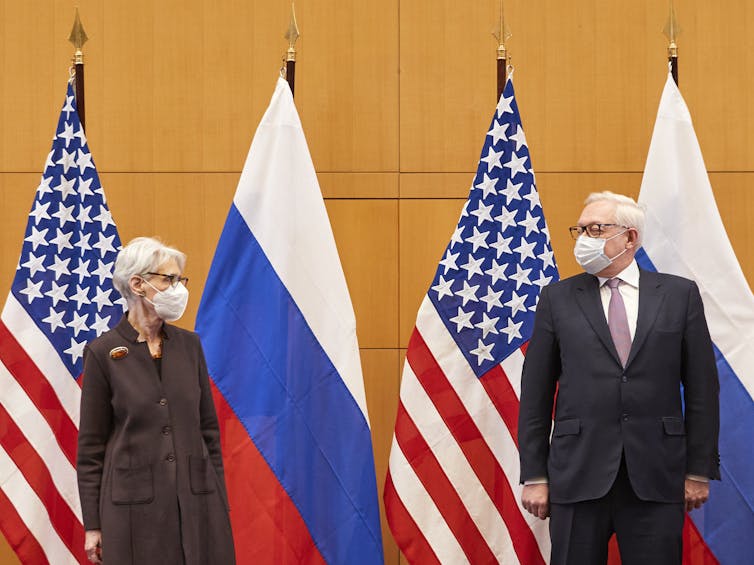
After the first round of talks in Geneva last Monday, US Deputy Secretary of State Wendy Sherman referred to the Russian position as a number of “non-starters”.

Russian Deputy Foreign Minister Sergei Ryabkov was similarly downbeat, warning of unspecified consequences for Europe if Russia’s demands were not met:

We don’t see an understanding from the American side of the necessity of a decision in a way that satisfies us.

Wendy Sherman and Sergei Ryabkov in Geneva
US Deputy Secretary of State Wendy Sherman, left, and Russian Deputy Foreign Minister Sergei Ryabkov at the security talks in Geneva.
Denis Balibouse/AP

The NATO-Russia Council meeting that followed in Brussels also yielded no progress, with Sherman saying Russia had the choice of “de-escalation and diplomacy, or confrontation and consequences”.

Meanwhile, Russian Deputy Foreign Minister Alexander Grushko accused NATO of trying to contain Russia and described the presence of NATO forces in eastern Europe as “intolerable” for Moscow.

Why is Putin raising the stakes?

With the talks so far following the expected script, it raises the broader question of why Putin has sought to escalate tensions so dramatically, and what his endgame might be.

Conventional wisdom would suggest the Kremlin sees the situation as a series of useful tests of Western resolve.

First, by upping the ante with troops on Ukraine’s borders, Putin is testing the Biden administration’s commitment to European security after the chaos of the Trump years.

Russian leaders certainly perceive Biden as weak, distracted by America’s internal political schisms and the need to outline a coherent approach to its competition with China.

Russian President Vladimir Putin
Russian President Vladimir Putin listens during a meeting in the Kremlin last week.
Mikhail Metzel/AP

Second, Russia’s brinkmanship also helps reveal potential fault lines among NATO members. This is intended to wheedle out those who are more risk-averse, like Germany, from those such as Poland who see Russia as a clear threat to their territorial integrity.

Third, it allows Putin to test how well his muscular foreign policy is playing at home.

This is partly a pragmatic political gambit to prop up faltering support for his leadership. But it is also a social device, aimed at tapping into domestic nostalgia about past greatness. This potentially gives Russians a sense of a unifying national idea that has been largely absent since the collapse of the Soviet Union.

What could Putin do next?

All these are useful explanations for why Putin might seek to ramp up tensions with the US and the broader West – and why he’s doing it now.

But it doesn’t answer what would actually satisfy Moscow, given Washington refuses to acquiesce to Russian demands not to expand NATO to Ukraine, regardless of how remote a possibility that might be.

Stationing more than 100,000 military personnel – effectively an invasion force – near a sovereign neighbour is a dramatic piece of symbolism not without political risk.

Russian military drills near the Ukraine border.
A Russian tank fires as troops take part in drills in southern Russia last week.
AP

It is possible Putin may interpret failure to make headway in the talks as further evidence of the West’s malign intentions, and formally annex the Donbas region of eastern Ukraine – just as it did Crimea – in retaliation.

Yet that is hardly persuasive. For one thing, Putin is already in de facto possession of these regions, and leaving the negotiating table with only parts of Ukraine to show for it would hardly be a ringing triumph.

Another possibility is Putin genuinely wishes to bring confrontation with NATO to a head by threatening to conquer the rest of Ukraine.


Baca juga:
Why Putin has such a hard time accepting Ukrainian sovereignty


This should not be dismissed out of hand. After all, Putin has long telegraphed his personal sense of loss at the collapse of the USSR. It culminated in his bizarre essay last July which effectively denied Ukraine was a sovereign nation and claimed Ukrainians and Russians were “one people”.

This essentially frames Russia as a grand geo-cultural civilising project: it must dominate its historical spheres of influence in Eastern Europe in order for there to be stability.

And what should the West do next?

For the Biden administration and other NATO governments, Putin’s antics can no longer be dismissed as mere petulance, or sympathetically explained away as “legitimate” grievances.

Rather, they form a pattern of behaviour that has sought to undermine European unity, exacerbate domestic divisions in the US, and fragment the current security order by threatening to invade independent states.

Given this, as well as Putin’s increasingly virulent nationalism, talks are unlikely to assuage him. Instead, he is more likely to perceive it as weakness, and be encouraged to continue his brinkmanship.

So, if diplomacy fails, the US and its NATO partners will need to do more than rely on cycles of sanctions and dialogue to counter Russia. More importantly, if they really do seek to uphold the principles they espouse, they may find they can speak louder with actions than with words.

The Conversation

Matthew Sussex has receives funding from the Australian Research Council, Australian Defence Department, Fulbright Commission and European Union.

ref. Russia and the West are at a stalemate over Ukraine. Is Putin’s endgame now war? – https://theconversation.com/russia-and-the-west-are-at-a-stalemate-over-ukraine-is-putins-endgame-now-war-174691

Green hydrogen is coming – and these Australian regions are well placed to build our new export industry

Source: The Conversation (Au and NZ) – By Steven Percy, Senior Research Fellow, Victorian Hydrogen Hub, Swinburne University of Technology

Shutterstock

You might remember hearing a lot about green hydrogen last year, as global pressure mounted on Australia to take stronger action on climate change ahead of the COP26 Glasgow summit last November.

The government predicts green hydrogen exports and domestic use could be worth up to A$50 billion within 30 years, helping the world achieve deep decarbonisation.

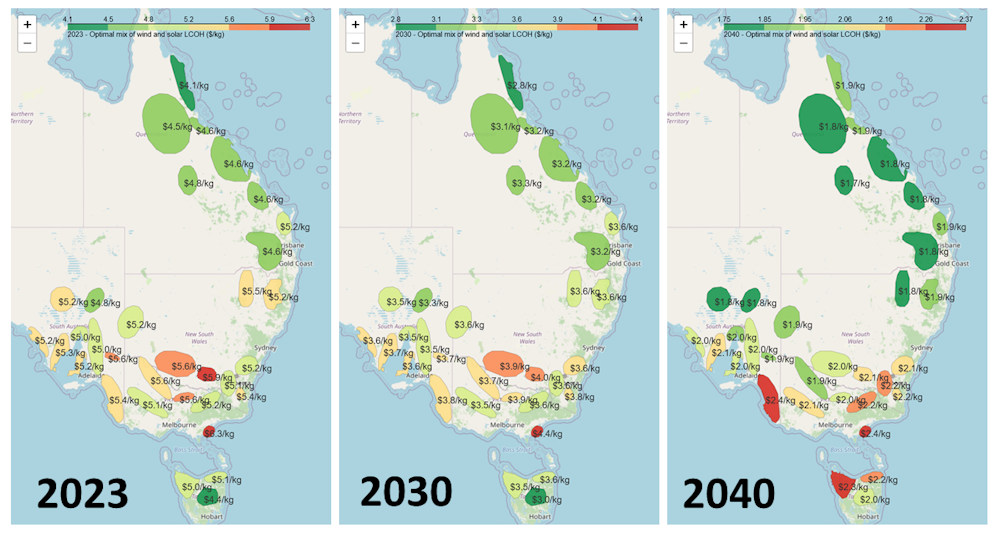
But how close are we really to a green hydrogen industry? And which states are best placed to host it? My research shows that as of next year, and based on where the cheapest renewables are, the best places to produce green hydrogen are far north Queensland and Tasmania.

As ever more renewable energy pours into our grid, this picture will change. By the end of the decade, the north Queensland coast could become the hydrogen powerhouse. By 2040, dirt-cheap solar should make inland areas across New South Wales, Queensland, Victoria and South Australia the lowest cost producers.

Renewable energy you can store and transport

Why is there so much buzz around green hydrogen? In short, because it offers us a zero emissions way to transport energy. Take cheap renewable energy and use it to split water into hydrogen and oxygen using an electrolyser. Store the hydrogen on trucks, ship it overseas, or send it by pipeline. Then use the hydrogen for transport, manufacturing or electricity production.

Diagram of uses of green hydrogen
Pathways for the production and use of green hydrogen.
Author provided

All the technology exists – it’s the cost holding the industry back at present. That’s where Australia and its wealth of cheap renewable energy comes in.

Making hydrogen is nothing new – it has a long history of use in fertiliser production and oil refining. But until now, the main source for hydrogen was gas, a fossil fuel.

In the last few years, however, there has been a sudden surge of interest and investment in green hydrogen, and new technology pathways have emerged to produce cheap green hydrogen. As global decarbonisation gathers steam, Japan, South Korea and parts of Europe are looking for clean alternatives to replace the role fossil fuels have played in their economies.

Australia is exceptionally well placed to deliver these alternatives, with world-beating renewable resources and ports set up for our existing fossil fuel exports, such as coal and LNG.

In 2019, we sold almost $64 billion of black coal, with most going to Japan, South Korea, India and China. As these countries decarbonise, the coal industry will shrink. Green hydrogen could be an excellent replacement.


Read more:
Australia’s clean hydrogen revolution is a path to prosperity – but it must be powered by renewable energy


How competitive is Australian hydrogen?

At present, Australia is a long way from producing green hydrogen cheap enough to compete with fossil fuels, given we seem to have no appetite for taxing carbon pollution.

Does that mean it’s a non-starter? Hardly. It was only a decade ago sceptics ridiculed solar and wind as too expensive. They’ve gone awfully quiet as renewable prices fell, and fell, and fell – as tracked by the International Renewable Energy Agency. Now renewables are cheaper than coal. Battery storage, too, has fallen drastically in price. The same forces are at work on the key technology we need – cheaper electrolysers.

By 2040, the CSIRO predicts an 83% fall in electrolyser costs, according to its Gencost 2021-22 report. By contrast, gas-derived hydrogen with carbon capture is predicted to reduce in cost only slightly. That means green hydrogen is likely to capture much of the market for hydrogen from 2030 onwards.

Which states could benefit?

My research with the Victorian Hydrogen Hub) shows as of next year, the lowest cost location for green hydrogen would be Far North Queensland ($4.1/kg) and Tasmania ($4.4/kg) due to high renewable resources.

But this picture will change. By 2030, northern Queensland’s coastal regions could be the Australian hydrogen powerhouse due to a combination of cheap solar and access to ports. Western Australia and the Northern Territory could also have similar advantages, though the modelling for these areas has not yet been done.

As solar energy and electrolyser costs continue to fall, new states could enter the green hydrogen economy. In CSIRO’s cost predictions, electricity from solar is predicted to become much cheaper than wind by 2040. This means sunny areas like central and northern Queensland ($1.7/kg) and inland NSW, Victoria and South Australia ($1.8/kg) could be the best locations for green hydrogen production.

In making these estimates, I do not consider supply chain and storage infrastructure required to deliver the hydrogen. Transport could account for between $0.05/kg to $0.75/kg depending on distance.

Comparing my modelling to price thresholds set out in the National Hydrogen Strategy indicates we can produce green hydrogen for trucking at a similar cost to diesel within four years. Fertiliser would take longer, becoming competitive by 2040.

The levelised cost of hydrogen at renewable energy zones in Australia for 2023, 2030 and 2040. (source: Steven Percy, Victorian Hydrogen Hub)

Does our dry country have the water resources for green hydrogen?

If we achieved the $50 billion green hydrogen industry the government is aiming for, how much water would it consume? Surprisingly little. It would take only around 4% of the water we used for our crops and pastures in 2019-20 to generate an export industry that size – 225,000 megalitres.

Much more water than this will be freed up as coal-fired power stations exit the grid. In Queensland and NSW alone, these power stations consume around 158,000 megalitres a year according to a 2020 report prepared for the Australian Conservation Foundation. Coal mining in these two states takes an additional 224,000 megalitres.


Read more:
Why green hydrogen — but not grey — could help solve climate change


As the cost of renewable energy falls and falls, we will also be able to desalinate seawater along our coasts to produce hydrogen. We estimate this would account for only about 1% of the cost of producing hydrogen, based on Australian Water Association desalination cost estimates.

How can we get there faster?

This decade, we must plan for our new hydrogen economy. Government and industry will need to develop and support new hydrogen infrastructure projects to produce, distribute, use and export hydrogen at scale.

We’re already seeing promising signs of progress, as major mining companies move strongly into green hydrogen.

Now we need governments across Australia to rapidly get optimal policy and regulations in place to allow the industry to develop and thrive.

The Conversation

Steven Percy receives funding from the Victorian government’s Victorian Higher Education State Investment Fund.

ref. Green hydrogen is coming – and these Australian regions are well placed to build our new export industry – https://theconversation.com/green-hydrogen-is-coming-and-these-australian-regions-are-well-placed-to-build-our-new-export-industry-174466

The Singapore-inspired idea for using super for housing that could cut costs 50%

Source: The Conversation (Au and NZ) – By Cameron Murray, Research Fellow – Henry Halloran Trust, University of Sydney

shutterstock

During the past four decades in which home ownership among Australians aged 25-34 has sunk from around 60% to 45%, home ownership among the same age group in Singapore has climbed from around 60% to 88%.

There’s a good chance that’s because Singapore is doing something right.

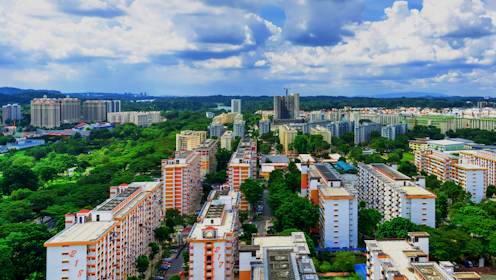
What Singapore has that Australia does not is a public housing developer, the Housing Development Board, which puts new dwellings on public and reclaimed land, provides mortgages, and allows buyers to use their compulsory retirement savings (what Australians call superannuation) for both a deposit and repayments.

There’s more to it than that. It limits eligibility by income and age, requires owners to hang on to the property for five years, and limits their resale to only other eligible buyers.

Eight in ten of all the dwellings in Singapore today were built over the past half century by the Housing Development Board.

In a new paper released this month I suggest an Australian version called HouseMate, that could halve the cost of buying a home.

Introducing HouseMate

  • Housemate would build on underutilised crown, council, and federal land, land acquired by compulsory acquisition, or land purchased at market prices, and by tenders from private developers

  • HouseMate would sell the dwellings at a discounted price (A$300,000 on average) to Australian citizens aged over 24 and in a de facto or married relationship and to single citizens aged over 28 and over, where no household member owns property

  • HouseMate would offer loans underwritten by the federal government for up to 95% of the purchase price, charged at one percentage point above the cash rate, which at the moment would be 1.1%

  • HouseMate buyers would be permitted to use their superannuation savings and contributions for both the deposit and ongoing repayments

  • HouseMate buyers would be required to occupy the home, with limits on leasing and resale for seven years. They will own the home freehold, paying council rates, insurances, and having responsibility for maintenance and body corporate representation

  • HouseMate owners could sell after seven years. But if they sell to the private market instead of another eligible HouseMate buyer, that would trigger a waiting period of seven years before the seller became eligible for another HouseMate home, and a fee of 15% of the sale price

Homes for half price


HouseMate, a proposed national institution to build new homes and sell them cheap to any citizen who does not own a home

My calculations suggest building these homes on land that would cost little (perhaps A$50,000 averaged across all types) would by itself cut the price 20-35%.

The lower interest rate, and the use of superannuation savings for both the deposit and repayments would cut the “after super” cost saved by as much again, cutting the “after super” cost savings 50-70%.

The use of superannuation savings where available makes sense. Home ownership does more for security in retirement than does super.

Because the use of super would be quarantined to new HouseMate homes, it would be unlikely to push up the price of existing homes.

No other housing policy change would do anything like as much to make homeownership cheaper, or to free up income for families at the times they need it most.

The changes to tax arrangements often talked about, including changes to capital gains tax and negative gearing, might on my estimate at most cut prices by as much as 10% – enough to reverse only six months of the past year’s price growth.

There would be critics

Because HouseMate would divert first home buyers away from private
markets, private sellers would find reasons to argue it would be bad for the people it helps and somehow financially reckless or unsustainable. Banks would argue the same thing.

But because the non-land cost of HouseMate dwellings would be mostly covered by the purchase price (and 15% of private resale prices) and the other costs would mostly be covered by the interest margin, the budget cost would be low – on my estimate peaking at A$1.7 billion after seven years and shrinking to $640 million after 20 years.


Read more:
A century of public housing: lessons from Singapore, where housing is a social, not financial, asset


The $1 billion or so per year would provide 30,000 affordable houses per year. Compared to the A$100 billion spent on the COVID JobKeeper scheme, that cost is a rounding error. Australia spends $125 billion per year on healthcare.

Each year about $11 billion is given to private landowners through
rezoning decisions. Taxing those value gains could fund HouseMate ten times over.

We have got the land

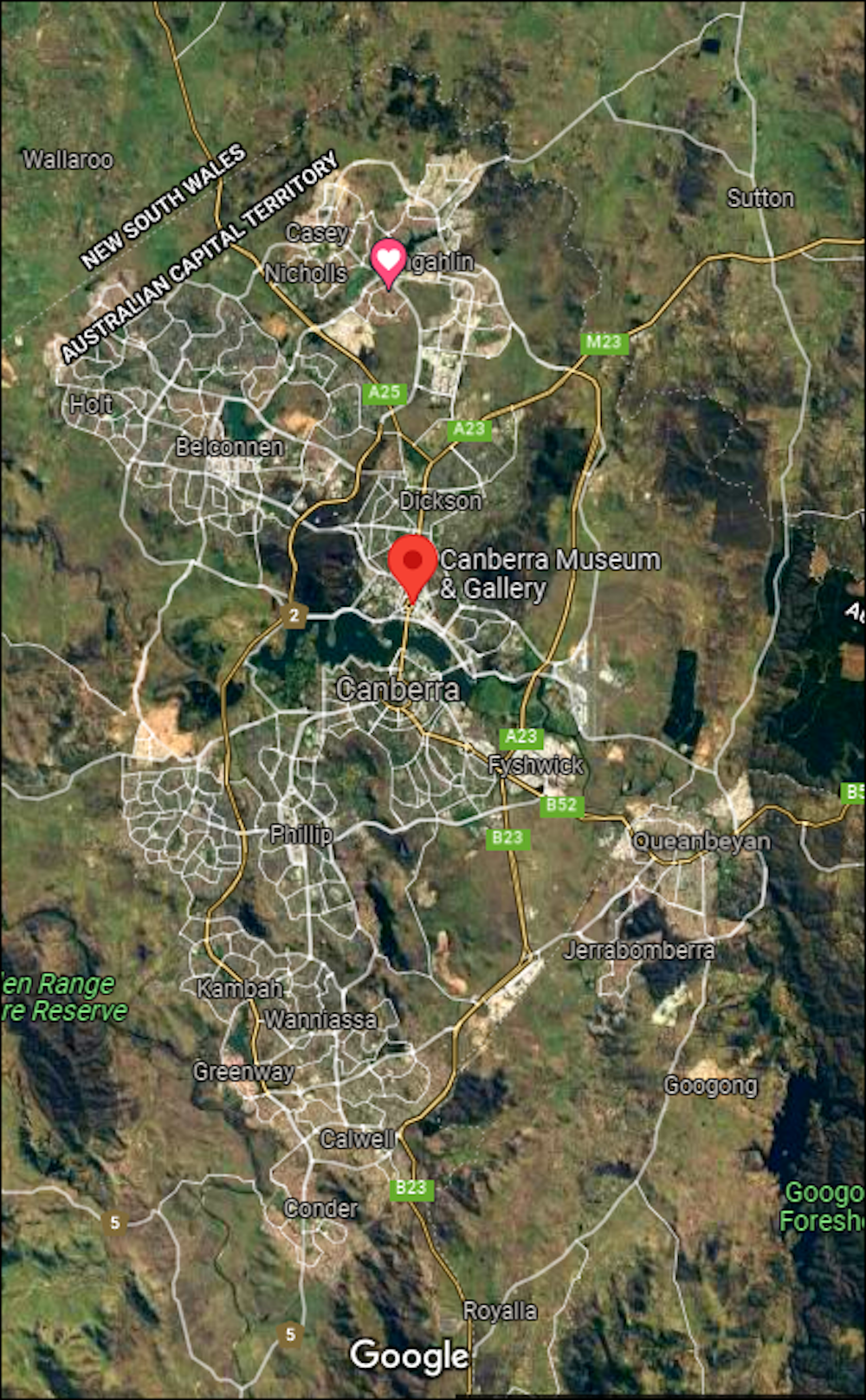
The Australian Capital Territory has developed land for decades.
Google Maps

The New South Wales Land and Housing Corporation has four times the net assets of Singapore’s Housing Development Board at $54 billion. Queensland’s Housing and Public Works has $10 billion in land assets. Victoria’s Department of Families, Fairness and
Housing has $17 billion.

We could start by upgrading and selling existing public housing to its tenants under HouseMate rules.

The Australian Capital Territory has operated this way for decades, developing low or zero cost rural land for housing and selling the homes at cost, although in recent decades it has acted more like a private developer, maximising revenue at the expense of putting people into homes.

To start with, there would be bottlenecks

HouseMate would be overwhelmed at first. I have suggested lotteries to allocate homes until the system ramps up.

Just as Medicare didn’t displace but operated alongside the private health system, HouseMate would operate parallel to the private market, adding to overall supply rather than increasing demand in the private market.

I’ll finish with a story. I met a Singaporean resident recently who moved to Australia to study social work. She said they don’t really have homeless people in Singapore because the Housing Development Board provided an option for almost everyone.

To find homeless people required moving to Australia. I think we ought to try it. What’s the worst that could happen?

The Conversation

Cameron Murray is currently a member of the Drew Pavlou Democratic Alliance.

ref. The Singapore-inspired idea for using super for housing that could cut costs 50% – https://theconversation.com/the-singapore-inspired-idea-for-using-super-for-housing-that-could-cut-costs-50-174401

‘Our community is small, but our spirit is strong’: how art forms the heart of Cobargo’s Black Summer fires recovery

Source: The Conversation (Au and NZ) – By Jen Webb, Dean, Graduate Research, University of Canberra

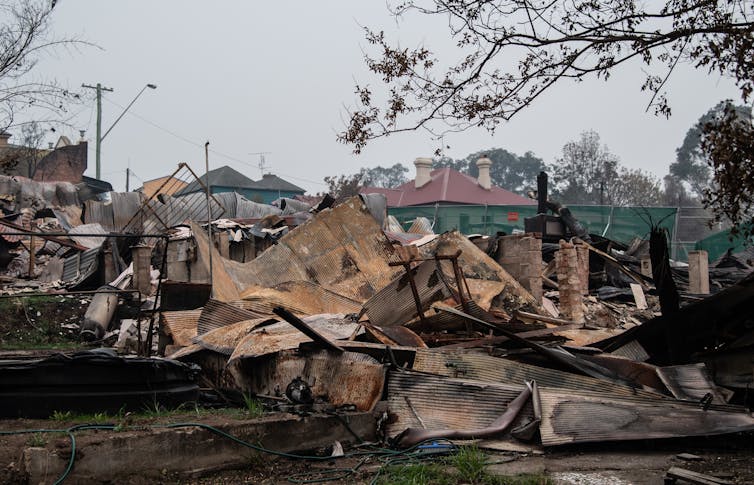
On December 31 2019, the catastrophic fires burning across southeastern Australia reached the small South Coast NSW town of Cobargo in the form of the Badja Forest Road Fire.

Within just a few hours, roads and bridges were impassable, all critical infrastructure was destroyed, and 300 homes in the district along with 30% of businesses in Cobargo’s main street were lost. Six people died, 300,000 hectares were destroyed, and hundreds of kilometres of fencing, thousands of farm animals and countless native flora and fauna were lost. All this in a community of just 2,200 people.

Cobargo became, to quote The Times, “the symbol of a country […] in crisis”.

Communities that have experienced catastrophic ruin often face an ongoing cycle of loss. With material and economic resources largely gone, and significant trauma present, the resource that is the community – the sense of “us” – often crumbles.

Emergency and service providers are there at the beginning, providing vital support, but swiftly move on to the next disaster. The community is then left to its own resources while psychological damage continues to emerge.

This is where art enters the picture.

Research shows participating in an art practice has the capacity to aid the healing of individuals and communities. Participants do not need to be artists in order to gain enormous benefits. The act of engaging in creative expression helps rebuild connections, improves physical and mental health, and provides the capacity to begin imagining recovery.


Read more:
A staggering 1.8 million hectares burned in ‘high-severity’ fires during Australia’s Black Summer


Thinking about community

Two years on from Black Summer, rebuilding is still at an early stage. The roll-out of the government’s recovery fund has been slow and uneven: well into 2021, many victims of the fires were still living in tents and caravans.

Adding to the difficulties, the process of crafting a submission for financial support is onerous and complex, particularly for those not practised in grant-writing. And it is highly competitive. Applicants to the second stage of the NSW Bushfire Local Economic Recovery Package, focused on community recovery and resilience projects, requested more than six times the available funds. Most applications were not approved.

Recovery after a natural disaster largely depends on the energy and capability of local people. When those driving the recovery process are community members, the sustained collective activity increases the likelihood of success. Local people are present throughout the long-term process of recovery, and their deep knowledge of the community – its history, its demographics, and its values and aspirations – are vital.


Read more:
‘It’s given me love’: connecting women from refugee backgrounds with communities through art


Recovery through collaboration

Creative thinking and practice are at the heart of the healing process. Whether macro or micro, planned or ad hoc, creative activities bring people together. In the process of making and talking, recovery can begin: for the individual, and for the community.

Although many of Cobargo’s creative practitioners lost their homes, studios and businesses, they have been prominent in this task of recovery, rebuilding their community at the same time as rebuilding their own practices.

Early on, Cobargo residents wrote a creative plan to construct a shared vision, and established the Cobargo Community Bushfire Recovery Fund. With support from this fund, and from charities and private contributors, Cobargo’s creatives have been crafting opportunities for community members to reconnect.

Painted telegraph poles have been a feature of Cobargo’s main street for about 20 years but most were destroyed or damaged by the fire. With the Poles Project, local artists – young and old, professional and amateur – repainted the poles with new interpretations and new senses of a future.

The Cobargo Community Tree project saw Cobargo residents working with local blacksmiths Iain Hamilton and Philippe Ravenel to forge stainless steel leaves for a memorial tree.

Other creatives have organised workshops, hosted the Fire Up Cobargo music festival, presented children’s theatre, and set up a tool library for craft projects.

Local children also played their part. In response to the fires, Year 5 and 6 students at the Cobargo Public School wrote and illustrated a remarkable book titled The Day She Stole the Sun. It tells the story of Ganyi (the Yuin word for fire) who wrestles with and overcomes Nature. The writing and illustrations manifest the children’s distress:

We fought hard, but we lost our farms. We fought hard, but we lost our homes. We fought hard, but we lost our families.

But it ends with a positive turn:

Our community is small, but our spirit is strong. Ganyi will never take that from us.

The work of recovery is progressing, though it is piecemeal, uneven, and by no means complete. There is still a vital need for rebuilding and for support. This is likely to remain the case for years. Meanwhile, the Cobargo community continues to identify and implement creative activities and aims that are both short- and long-term.

One large-scale long-term project is the Cobargo Bushfire Resilience Centre, funded by the NSW government, with construction due to begin later this year. This will be a community cultural centre, with spaces for exhibition, performance and commemoration.

It will also be a place for residents to visit, to rebuild themselves and the community, and to think anew a creative response to climate change – and the challenges yet to come.

The Conversation

Jen Webb receives funding from the Australian Research Council.

Rhonda Ayliffe is the recipient of an RTP scholarship. She is a Research Associate with the National Museum of Australia and is the Vice-Chairperson of the Cobargo Bushfire Resilience Centre Inc.

ref. ‘Our community is small, but our spirit is strong’: how art forms the heart of Cobargo’s Black Summer fires recovery – https://theconversation.com/our-community-is-small-but-our-spirit-is-strong-how-art-forms-the-heart-of-cobargos-black-summer-fires-recovery-173649

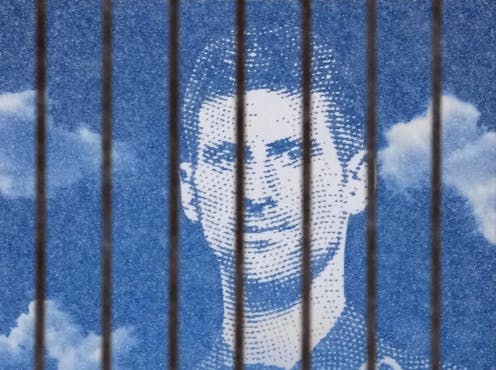
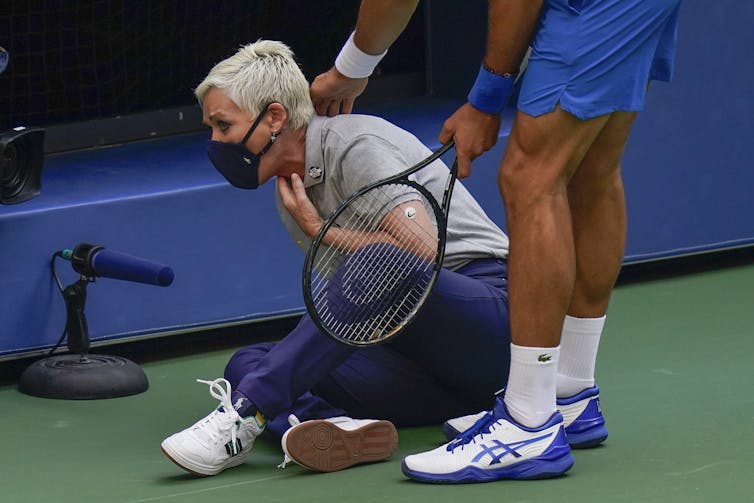
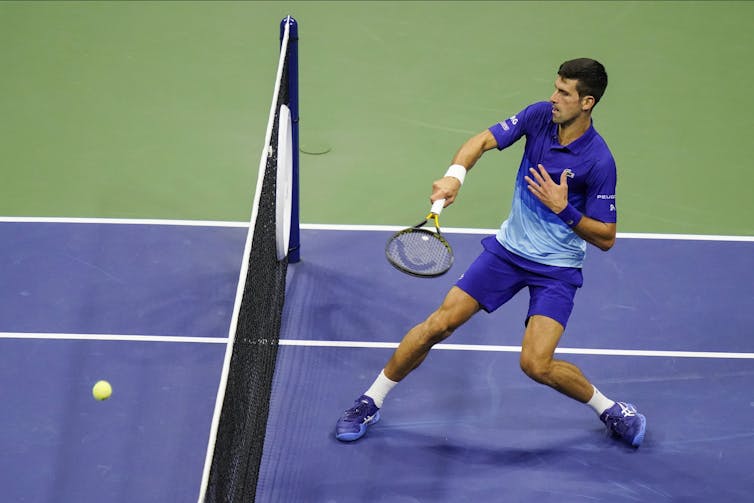
Why Novak Djokovic lost his fight to stay in Australia – and why it sets a concerning precedent

Source: The Conversation (Au and NZ) – By Maria O’Sullivan, Associate Professor, Faculty of Law, and Deputy Director, Castan Centre for Human Rights Law, Monash University

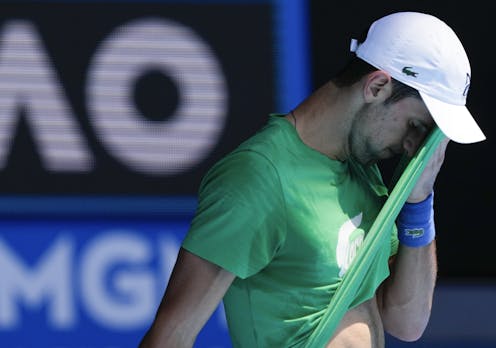
Many sports stars are, rightly or wrongly, held up as role models. In the case of Novak Djokovic, we have a set of powerful factors at play.

On one side is a tennis superstar who is unvaccinated and has raised concerns about receiving the vaccination. On the other side is a government which believes Djokovic’s presence in Australia will have a serious negative effect on public health orders and future vaccination levels.

Today, the full Federal Court, in a unanimous judgement, dismissed Djokovic’s application to overturn the cancellation of his visa. It is not surprising he lost his case. Although the evidence used by the immigration minister to cancel the visa was not overwhelmingly strong, the breadth of his powers under the Migration Act made it very difficult to successfully challenge his findings.

But the legal issues raised by this case do not end here. What are the broader implications of the government’s approach in future cases involving high-profile “anti-vaxxers” or people who may be seen as a risk to Australia’s social order?

Although the government may be very happy about this result, I would question whether this is a workable precedent to set for other sportspeople, or indeed anyone, who may be seen as posing a risk to the public interest of Australia.

What the government claimed

The immigration minister has the power to cancel a visa if he or she is satisfied a person’s presence in Australia might be a risk to the health, safety or good order of Australia and the cancellation is in the public interest.

The use of the word “might” is important – the minister does not need to show Djokovic would pose a risk, only that he may do so.

When cancelling Djokovic’s visa on Friday, Immigration Minister Alex Hawke reasoned the tennis player’s conduct and stance against vaccination may encourage others to emulate him by reason of his high profile and status.


Read more:
Novak Djokovic has long divided opinion. Now, his legacy will be complicated even further


There were two issues with the ministerial statement which were discussed at some length in the full Federal Court:

  1. Hawke did not seek the views of Djokovic on his present attitude to vaccinations. Instead, the minister cited material that made clear Djokovic has publicly expressed antivaccination sentiment. This included a BBC article, which Djokovic’s lawyers argued was not sufficient to make a judgement about his vaccination views.

  2. Hawke explicitly referred to the effect Djokovic’s presence would have on public health and social order. What the minister did not consider, however, was the other side of this argument. That is, Djokovic’s deportation might lead to an increase in anti-vax sentiment and/or civil unrest.

What Djokovic claimed

Djokovic’s lawyers made some very compelling arguments about Hawke’s reasoning. Put simply, the lawyers said the minister had two choices:

  1. to cancel the visa and deport Djokovic

  2. not cancel it and let him stay.

They argued it was irrational for Hawke to only question the effect Djokovic’s presence would have on anti-vax sentiment in Australia and not the effect his deportation would have.


Read more:
Why one man with ‘god-like’ powers decides if Novak Djokovic can stay or go


Djokovic’s lawyers also argued the minister’s findings lacked sufficient evidence to support the contention that his presence in Australia might pose a risk to the health or good order of the Australian community and the contention Djokovic had a “well-known stance on vaccination”.

Djokovic’s lawyers conceded Djokovic had previously said he was opposed to vaccinations. However, they pointed out in the BBC article he

later clarified his position by adding that he was ‘no expert’ and would keep an ‘open mind’ but wanted to have ‘an option to choose what’s best for my body’.

It is important to note this qualifying passage was not extracted by Hawke in his statement – a point Djokovic’s lawyers made in the hearing.

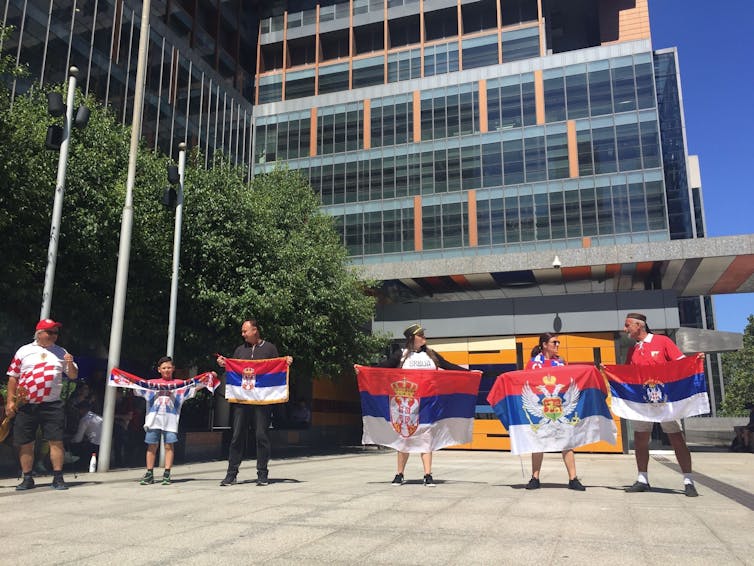
Supporters of Novak Djokovic hold Serbian flags.
Supporters of Novak Djokovic hold Serbian flags outside the Federal Court building in Melbourne.
Tom Moldoveanu/AP

Why Djokovic’s case failed

In response, the government argued it was reasonable to conclude Djokovic is opposed to vaccination based on his previous public statements and the fact he is known to be unvaccinated.

The government also said Hawke was not only concerned with Djokovic’s current views on vaccination, but the public perception of his views.

Further, the government said Hawke did not have to show Djokovic’s presence has fostered anti-vaccination sentiment or necessarily will foster it. All he needed to show was his presence in Australia may foster anti-vax sentiment – a relatively low threshold to reach.

Presumably, this is why Djokovic’s case failed. Although there were questions about the evidence used by Hawke, the Migration Act powers are very broad and it is difficult to challenge them based on unlawfulness.

Implications for the future

While the Federal Court’s decision may be viewed as legally justified given the breadth of the cancellation powers in the Migration Act, some thought must be given to the future implications of these powers and what this means for the ability of the government to cancel other people’s visas.

The basis of Hawke’s findings seemed to be it was enough to show Djokovic is an iconic sports star who is perceived as being anti-vaccination and therefore may foster anti-vax sentiment in Australia.

I have a number of concerns with this.

First, it is unfair if the perception or actions of others can determine someone’s eligibility to remain in a country. A person may wrongly be viewed as having a particular belief and still be subject to a visa cancellation.

Second, the minister relied on Djokovic’s claimed status as a “role model” and his capacity as a high-profile sportsperson to apparently influence society. What if a sportsperson is unvaccinated, but not high-profile?

Third, and this is the most concerning point, if we extend this logic to other people, it could justify the cancellation of any individual who is seen as a “role model” and who may be perceived as causing social unrest or protests.

As legal commentators such as Kate Seear pointed out,

This kind of logic – that athletes are role models and role models can influence society […] could be extended to other athletes wanting to come here in the future, including those with diverse political views, such as supporters of Black Lives Matter and defunding police.

Lastly, the idea a person can have their visa cancelled because their views might affect the health, safety or good order of the Australian community raises issues for freedom of expression.

A wide cancellation power allows the government to stop international visitors who may have an important message to tell Australians. That would pose significant concerns for political debate in Australia.

The Conversation

Maria O’Sullivan previously received funding from the Commonwealth Attorney-General’s Department to undertake research on automated decision-making. She also serves on the Human Rights Legal Advice Panel for the Queensland Parliament.

ref. Why Novak Djokovic lost his fight to stay in Australia – and why it sets a concerning precedent – https://theconversation.com/why-novak-djokovic-lost-his-fight-to-stay-in-australia-and-why-it-sets-a-concerning-precedent-175038

Former Fiji journalist in Tonga tells of family’s flight from crashing waves

Waves associated with the continuous volcanic eruption at Hunga-Tonga-Hunga-Ha’apai in Tonga crashed into Tonga’s largest island Tongatapu and forced residents to evacuate their homes.

A former Fijian journalist, Iliesa Tora, said in his Facebook live video that explosions were heard and black clouds of smoke seen in the sky followed by abnormal tidal movements and large waves.

He said a similar incident had occurred several years ago but was not of the same magnitude.


Former Fiji journalist Iliesa Tora’s Facebook video feed on the tsunami.

“Something similar happened seven years ago, but it wasn’t this bad,” he said.

Tora said his family and others were advised to move to higher ground by local authorities.

“An explosion erupted from underneath the sea near Ha’apai and we were given a tsunami warning,” Tora added.

“All the roads in Nuku’alofa have been busy as authorities try to move us to a safer place.”

Tora said rocks showered through the area while they drove to safety.

“Small rocks from the volcanic eruption started to fall like rain as a result of what had happened.”

Fiji villagers flee tidal waves
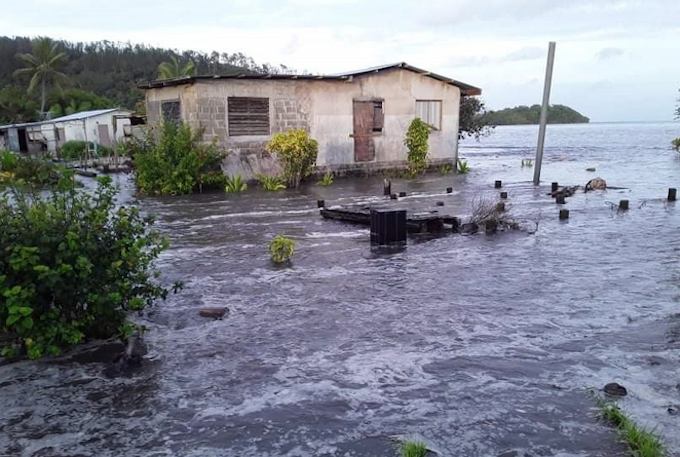
In Fiji, villagers of Narikoso on Kadavu fled for safety to elevated areas on the island after huge tidal waves crashed into the village ground yesterday afternoon.

The highest point in the island is understood to be occupied by seven households who were relocated from the old village site in 2020.

Village spokesman Kelepi Saukitoga told The Fiji Times that they were hit by three tidal waves.

He said the whole village ground was underwater.

“It was shocking and the villagers were terrified,” he said.

Saukitoga said they heard rumbling sounds before the tidal waves crashed through their homes.

“We had to chase the children and everyone in the village to higher grounds for safety. Everyone was terrified of the events that transpired this afternoon [Saturday].

“We understand that this was caused by the volcanic eruption in Tonga.”

Luke Nacei is a Fiji Times journalist. Republished with permission.

The village of Narikoso in Kadavu, Fiji, flooded
The village of Narikoso in Kadavu, Fiji, flooded by tidal waves following the volcanic eruption in Tonga on Saturday, 15 January 2022. Image: Fiji Times

Article by AsiaPacificReport.nz

No reports of deaths in Tongan volcano tsunami, says NZ prime minister

RNZ News

New Zealand Prime Minister Jacinda Ardern says there are no official reports of injuries or deaths in Tonga in the wake of the undersea volcano eruption and tsunami, but communication with the kingdom is very limited.

Communication with the island nation has been cut off since yesterday evening and members of the Tongan community in New Zealand are desperately awaiting news of their loved ones.

In a post on her Facebook page, Ardern said images of the underwater volcanic eruption on Hunga-Tonga-Hunga-Ha’apai were “hugely concerning”.

She told the media briefing today communication as a result of the eruption had been difficult but the New Zealand Defence Force and the Ministry of Foreign Affairs were working to establish what was needed and how to help.

Ardern said the undersea cable had been impacted, probably because of power cuts, and authorities were trying urgently to restore communications.

Local mobile phones were not working, she said.

A significant clean up would be needed. Authorities were still trying to make communication with some of the smaller islands, she said.

NZ offers $500,000 donation
Ash had stopped falling in the capital Nuku’alofa, she said.

The Tongan government has accepted a New Zealand government offer for a reconnaissance flight, and an Orion will take off tomorrow morning provided conditions allow.

At present ash has been spotted at 63,000 feet.

The government is also announcing a $500,000 donation which is very much a “starting point”, Ardern said.

A naval vessel has also been put on standby to assist if necessary.

Ardern has also been in touch with Australian Prime Minister Scott Morrison so that both governments can work in tandem in their response.

Ardern said she had not been able to speak to the Tongan Prime Minister, because communications were so difficult.

Little information on outer islands
“At the moment we are mainly receiving information from our High Commission …unfortunately from the outer islands we don’t have a lot of information,” she said.

Pacific Peoples Minister Aupito William Sio said the Tongan Consul General Lenisiloti Sitafooti Aho had confirmed Tonga’s Royal family were safe.

The New Zealand High Commission advised that the tsunami had had a significant impact on the foreshore on the northern side of Nuku’alofa, with boats and large boulders washed ashore.

Shops along the coast had been damaged and there would need to be a major cleanup, Ardern said.

An undersea volcano eruption in Tonga on Saturday 15 January, 2022. The eruption of the Hunga Tonga-Hunga Ha'apai volcano came just a few hours after Friday's tsunami warning was lifted.
The undersea volcano eruption in Tonga on 15 January 2022. The eruption of the Hunga-Tonga-Hunga-Ha’apai volcano came just a few hours after Friday’s tsunami warning was lifted. Image: RNZ/Tonga Meteorological Services/EyePress/AFP

While ash had stopped falling in Nuku’alofa, it was having a big impact on the island, initial reports indicated.

Authorities were still trying to make communication with some of the smaller islands, Ardern said.

“There are parts of Tonga where we just don’t know yet – we just haven’t established communication.”

Satellite images revealed the ‘scale’
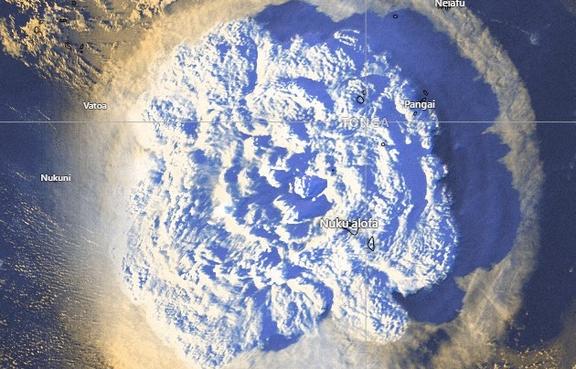
Ardern said satellite images “really brought home the scale of that volcanic eruption,” adding that people know how close Tonga was to the volcano, so it was very concerning for those trying to contact their relatives.

Sio said there had been overwhelming concern in New Zealand for whānau in Tonga. Pacific people were resilient people who had experienced hurricanes and storms before and knew how to respond, he said.

He appealed for people to allow officials the time to ascertain how best to respond effectively.

Ardern said anyone in the Pacific region, such as holidaymakers, should heed local advice.

This article is republished under a community partnership agreement with RNZ.

Print Friendly, PDF & Email

Article by AsiaPacificReport.nz

Tonga volcano eruption and tsunami – 120 evacuated in NZ’s Far North

An Al Jazeera report on the undersea volcano Hunga-Tonga-Hunga-Ha’apai eruption and tsunami yesterday afternoon. Video: Al Jazeera English

RNZ News

Large waves in the Far North have forced 120 people to be evacuated as big swells from Cyclone Cody and the surge from yesterday’s volcanic eruption and tsunami in Tonga begin to hit Aotearoa New Zealand.

A tsunami hit the kingdom after undersea volcano Hunga-Tonga-Hunga-Ha’apai erupted for eight minutes, throwing clouds of ash into the sky, yesterday afternoon.

Waves flooded the capital Nuku’alofa, where video footage has shown water engulfing buildings.

The eruptions have been heard as booms or “thumps” across the Pacific, in Fiji, Niue, Vanuatu, and in New Zealand.

RNZ listeners from Northland, to Wānaka in Central Otago have reported hearing what sounded like gunshots, loud bangs, or sonic booms.

The National Emergency Management Agency issued an update this morning after yesterday’s tsunami warning that the advisory remains in place for the north and east coast of the North Island and the Chatham Islands, and has been extended to the west coast of the South Island.

Meanwhile, Cyclone Cody is expected to bring gale force winds and large swells to the eastern coast of Aotearoa’s North Island over the next few days.

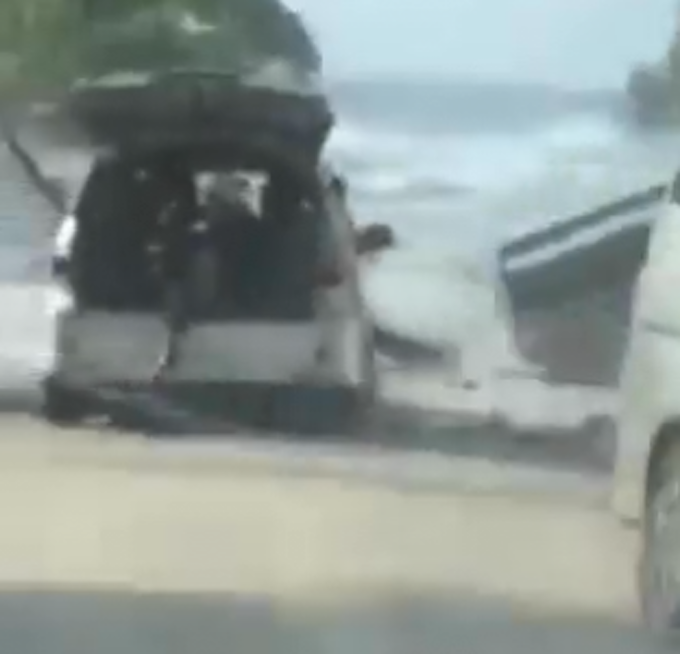
Motorists try to flee a tsunami wave on the foreshore in the Tongan capital of Nuku'alofa
Motorists try to flee a tsunami wave on the foreshore in the Tongan capital of Nuku’alofa. Image: Screenshot @JTuisinu
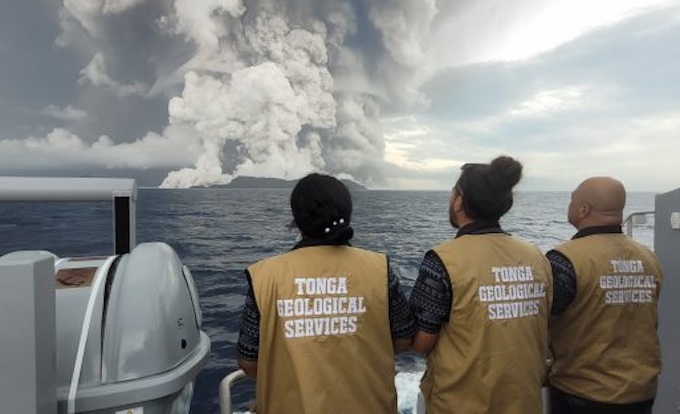
Tongan geologists view the Hunga eruption
Tongan geologists view the eruption … Hunga-Ha’apai on the left and Hunga-Tonga on the right. The plumes shot up to 20km above sea level. Image: Tonga Geological Services/Kaniva Tonga

Tidal surges in Far North
Police said they received a number of reports regarding tidal surges from people based in the Far North between 11pm and 12am, including Te Rere Bay and Shipwreck Bay.

Police, Fire and Coastguard also assisted with evacuations of boats moored at Tūtūkākā Marina last night.

A number of boats and moorings were damaged by large waves washing ashore.

Northland Civil Defence’s Murray Soljak said damage caused to boats in Tūtūkākā Marina last night were due to a single wave, however, surges along the coast were continuing at regular intervals.

A camp site at Mahinepua Bay was also inundated, about 50 people were in the camp at the time and all were accounted for.

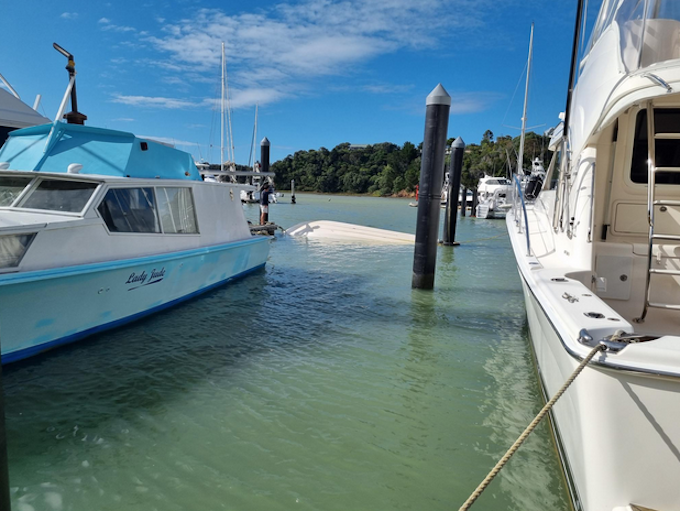
Boat sinks at Tūtūkākā Marina
One of the boats which sank at Tūtūkākā Marina northeast of Whangārei following last night’s wave surge. Image: Sam Olley/RNZ

NZ Defence Force stands ready
RNZ Pacific reports there has been little contact with Tonga since the underwater eruption.

Communications with Tonga has been down since 6.30pm yesterday, with reports that power had been cut in the capital.

Tongan authorities should have a clearer picture today of the scale of the damage from Saturday’s volcanic eruption and tsunami.

The New Zealand Defence Force is currently monitoring the situation in Tonga, and said it stood ready to assist if requested by the Tongan government.

This article is republished under a community partnership agreement with RNZ.

Print Friendly, PDF & Email

Article by AsiaPacificReport.nz

Why the volcanic eruption in Tonga was so violent, and what to expect next

Source: The Conversation (Au and NZ) – By Shane Cronin, Professor of Earth Sciences, University of Auckland

The Kingdom of Tonga doesn’t often attract global attention, but a violent eruption of an underwater volcano on January 15 has spread shock waves, quite literally, around half the world.

The volcano is usually not much to look at. It consists of two small uninhabited islands, Hunga-Ha’apai and Hunga-Tonga, poking about 100m above sea level 65km north of Tonga’s capital Nuku‘alofa. But hiding below the waves is a massive volcano, around 1800m high and 20km wide.

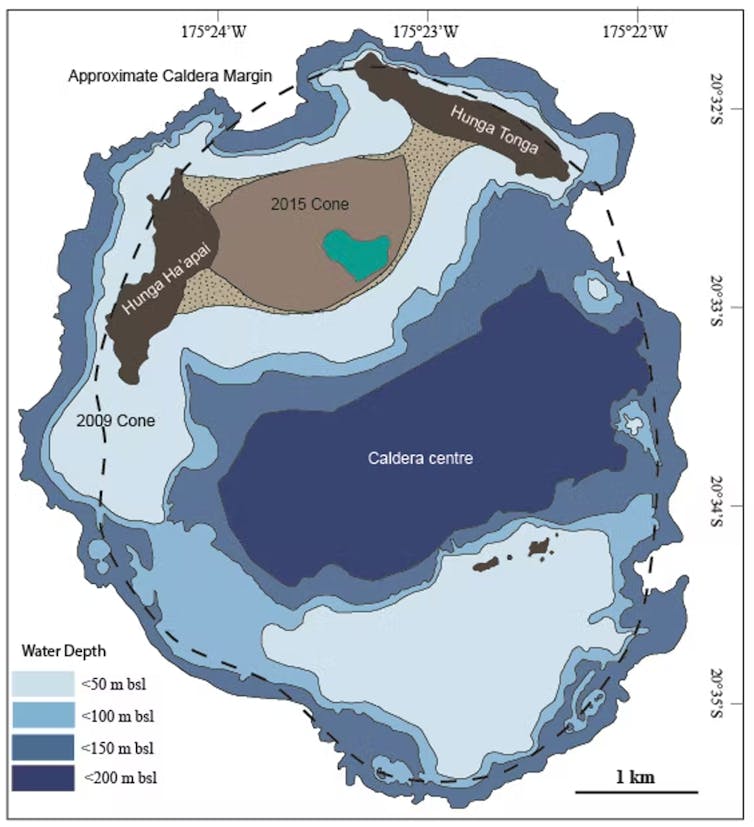
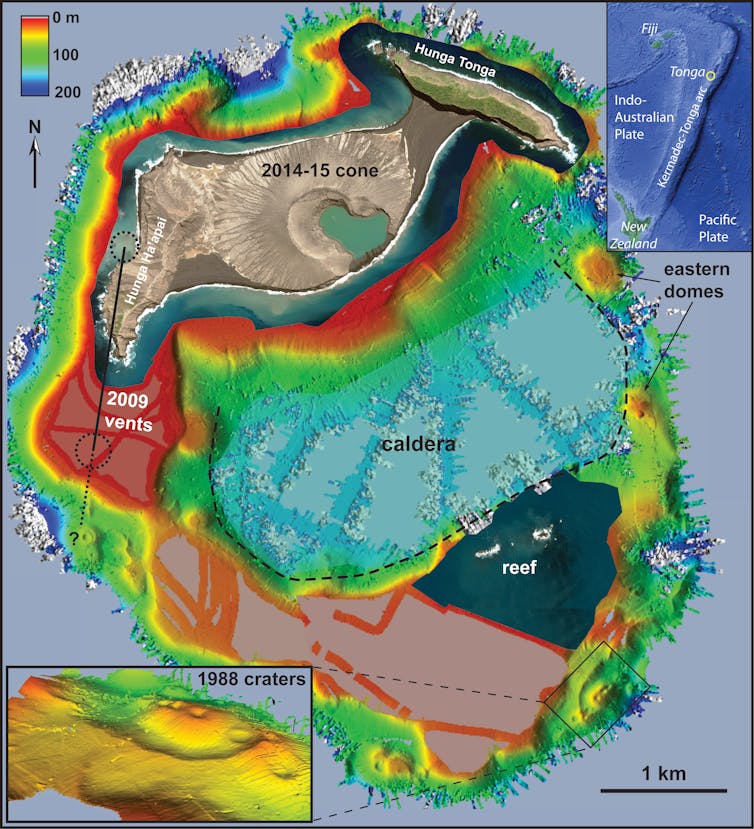
A map of the massive underwater volcano next to the Hunga-Ha’apai and Hunga-Tonga islands.
A massive underwater volcano lies next to the Hunga-Ha’apai and Hunga-Tonga islands.
Author provided

The Hunga-Tonga-Hunga-Ha’apai volcano has erupted regularly over the past few decades. During events in 2009 and 2014/15 hot jets of magma and steam exploded through the waves. But these eruptions were small, dwarfed in scale by the January 2022 events.

Our research into these earlier eruptions suggests this is one of the massive explosions the volcano is capable of producing roughly every thousand years.

Why are the volcano’s eruptions so highly explosive, given that sea water should cool the magma down?

If magma rises into sea water slowly, even at temperatures of about 1200℃, a thin film of steam forms between the magma and water. This provides a layer of insulation to allow the outer surface of the magma to cool.

But this process doesn’t work when magma is blasted out of the ground full of volcanic gas. When magma enters the water rapidly, any steam layers are quickly disrupted, bringing hot magma in direct contact with cold water.

Volcano researchers call this “fuel-coolant interaction” and it is akin to weapons-grade chemical explosions. Extremely violent blasts tear the magma apart. A chain reaction begins, with new magma fragments exposing fresh hot interior surfaces to water, and the explosions repeat, ultimately jetting out volcanic particles and causing blasts with supersonic speeds.


Read more:
The ‘pulse’ of a volcano can be used to help predict its next eruption


Two scales of Hunga eruptions

The 2014/15 eruption created a volcanic cone, joining the two old Hunga islands to create a combined island about 5km long. We visited in 2016, and discovered these historical eruptions were merely curtain raisers to the main event.

Mapping the sea floor, we discovered a hidden “caldera” 150m below the waves.

A map of the seafloor shows the volcanic cones and caldera.
A map of the seafloor shows the volcanic cones and massive caldera.
Author provided

The caldera is a crater-like depression around 5km across. Small eruptions (such as in 2009 and 2014/15) occur mainly at the edge of the caldera, but very big ones come from the caldera itself. These big eruptions are so large the top of the erupting magma collapses inward, deepening the caldera.

Looking at the chemistry of past eruptions, we now think the small eruptions represent the magma system slowly recharging itself to prepare for a big event.

We found evidence of two huge past eruptions from the Hunga caldera in deposits on the old islands. We matched these chemically to volcanic ash deposits on the largest inhabited island of Tongatapu, 65km away, and then used radiocarbon dates to show that big caldera eruptions occur about ever 1000 years, with the last one at AD1100.

With this knowledge, the eruption on January 15 seems to be right on schedule for a “big one”.


Read more:
Why White Island erupted and why there was no warning


What we can expect to happen now

We’re still in the middle of this major eruptive sequence and many aspects remain unclear, partly because the island is currently obscured by ash clouds.

The two earlier eruptions on December 20 2021 and January 13 2022 were of moderate size. They produced clouds of up to 17km elevation and added new land to the 2014/15 combined island.

The latest eruption has stepped up the scale in terms of violence. The ash plume is already about 20km high. Most remarkably, it spread out almost concentrically over a distance of about 130km from the volcano, creating a plume with a 260km diameter, before it was distorted by the wind.

This demonstrates a huge explosive power – one that cannot be explained by magma-water interaction alone. It shows instead that large amounts of fresh, gas-charged magma have erupted from the caldera.

The eruption also produced a tsunami throughout Tonga and neighbouring Fiji and Samoa. Shock waves traversed many thousands of kilometres, were seen from space, and recorded in New Zealand some 2000km away. Soon after the eruption started, the sky was blocked out on Tongatapu, with ash beginning to fall.

All these signs suggest the large Hunga caldera has awoken. Tsunami are generated by coupled atmospheric and ocean shock waves during an explosions, but they are also readily caused by submarine landslides and caldera collapses.

It remains unclear if this is the climax of the eruption. It represents a major magma pressure release, which may settle the system.

A warning, however, lies in geological deposits from the volcano’s previous eruptions. These complex sequences show each of the 1000-year major caldera eruption episodes involved many separate explosion events.

Hence we could be in for several weeks or even years of major volcanic unrest from the Hunga-Tonga-Hunga-Ha’apai volcano. For the sake of the people of Tonga I hope not.

The Conversation

Shane Cronin receives funding from The University of Auckland Faculty of Science to study the 2014-2015 Hunga eruption.

ref. Why the volcanic eruption in Tonga was so violent, and what to expect next – https://theconversation.com/why-the-volcanic-eruption-in-tonga-was-so-violent-and-what-to-expect-next-175035

Why the Hunga-Tonga-Hunga-Ha’apai eruption was so violent, and what to expect next

Source: The Conversation (Au and NZ) – By Shane Cronin, Professor of Earth Sciences, University of Auckland

The Kingdom of Tonga doesn’t often attract global attention, but a violent eruption of an underwater volcano on January 15 has spread shock waves, quite literally, around half the world.

The volcano is usually not much to look at. It consists of two small uninhabited islands, Hunga-Ha’apai and Hunga-Tonga, poking about 100m above sea level 65km north of Tonga’s capital Nuku‘alofa. But hiding below the waves is a massive volcano, around 1800m high and 20km wide.

A map of the massive underwater volcano next to the Hunga-Ha’apai and Hunga-Tonga islands.
A massive underwater volcano lies next to the Hunga-Ha’apai and Hunga-Tonga islands.
Author provided

The Hunga-Tonga-Hunga-Ha’apai volcano has erupted regularly over the past few decades. During events in 2009 and 2014/15 hot jets of magma and steam exploded through the waves. But these eruptions were small, dwarfed in scale by the January 2022 events.

Our research into these earlier eruptions suggests this is one of the massive explosions the volcano is capable of producing roughly every thousand years.

Why are the volcano’s eruptions so highly explosive, given that sea water should cool the magma down?

If magma rises into sea water slowly, even at temperatures of about 1200℃, a thin film of steam forms between the magma and water. This provides a layer of insulation to allow the outer surface of the magma to cool.

But this process doesn’t work when magma is blasted out of the ground full of volcanic gas. When magma enters the water rapidly, any steam layers are quickly disrupted, bringing hot magma in direct contact with cold water.

Volcano researchers call this “fuel-coolant interaction” and it is akin to weapons-grade chemical explosions. Extremely violent blasts tear the magma apart. A chain reaction begins, with new magma fragments exposing fresh hot interior surfaces to water, and the explosions repeat, ultimately jetting out volcanic particles and causing blasts with supersonic speeds.


Read more:
The ‘pulse’ of a volcano can be used to help predict its next eruption


Two scales of Hunga eruptions

The 2014/15 eruption created a volcanic cone, joining the two old Hunga islands to create a combined island about 5km long. We visited in 2016, and discovered these historical eruptions were merely curtain raisers to the main event.

Mapping the sea floor, we discovered a hidden “caldera” 150m below the waves.

A map of the seafloor shows the volcanic cones and caldera.
A map of the seafloor shows the volcanic cones and massive caldera.
Author provided

The caldera is a crater-like depression around 5km across. Small eruptions (such as in 2009 and 2014/15) occur mainly at the edge of the caldera, but very big ones come from the caldera itself. These big eruptions are so large the top of the erupting magma collapses inward, deepening the caldera.

Looking at the chemistry of past eruptions, we now think the small eruptions represent the magma system slowly recharging itself to prepare for a big event.

We found evidence of two huge past eruptions from the Hunga caldera in deposits on the old islands. We matched these chemically to volcanic ash deposits on the largest inhabited island of Tongatapu, 65km away, and then used radiocarbon dates to show that big caldera eruptions occur about ever 1000 years, with the last one at AD1100.

With this knowledge, the eruption on January 15 seems to be right on schedule for a “big one”.


Read more:
Why White Island erupted and why there was no warning


What we can expect to happen now

We’re still in the middle of this major eruptive sequence and many aspects remain unclear, partly because the island is currently obscured by ash clouds.

The two earlier eruptions on December 20 2021 and January 13 2022 were of moderate size. They produced clouds of up to 17km elevation and added new land to the 2014/15 combined island.

The latest eruption has stepped up the scale in terms of violence. The ash plume is already about 20km high. Most remarkably, it spread out almost concentrically over a distance of about 130km from the volcano, creating a plume with a 260km diameter, before it was distorted by the wind.

This demonstrates a huge explosive power – one that cannot be explained by magma-water interaction alone. It shows instead that large amounts of fresh, gas-charged magma have erupted from the caldera.

The eruption also produced a tsunami throughout Tonga and neighbouring Fiji and Samoa. Shock waves traversed many thousands of kilometres, were seen from space, and recorded in New Zealand some 2000km away. Soon after the eruption started, the sky was blocked out on Tongatapu, with ash beginning to fall.

All these signs suggest the large Hunga caldera has awoken. Tsunami are generated by coupled atmospheric and ocean shock waves during an explosions, but they are also readily caused by submarine landslides and caldera collapses.

It remains unclear if this is the climax of the eruption. It represents a major magma pressure release, which may settle the system.

A warning, however, lies in geological deposits from the volcano’s previous eruptions. These complex sequences show each of the 1000-year major caldera eruption episodes involved many separate explosion events.

Hence we could be in for several weeks or even years of major volcanic unrest from the Hunga-Tonga-Hunga-Ha’apai volcano. For the sake of the people of Tonga I hope not.

The Conversation

Shane Cronin receives funding from The University of Auckland Faculty of Science to study the 2014-2015 Hunga eruption.

ref. Why the Hunga-Tonga-Hunga-Ha’apai eruption was so violent, and what to expect next – https://theconversation.com/why-the-hunga-tonga-hunga-haapai-eruption-was-so-violent-and-what-to-expect-next-175035

New tsunami warning in NZ, Samoa as volcano waves reach Tonga’s capital

Kaniva Tonga News

A new tsunami warning is now in force for all of Tonga following this evening’s violent eruption of the Hunga-Tonga-Hunga-Ha’apai undersea volcano with tidal waves flooding the shoreline of the capital Nuku’alofa.

Parts of New Zealand and Samoa are also under tsunami warning, reports RNZ News.

The eruption came shortly after locals in Tongatapu reported a “deafening” sound of an eruption this afternoon. They also reported stones pouring down on the main island of Tongatapu.

No injuries or deaths have been reported.

Kaniva News correspondent in Tonga Patimiosi Ngūngūtau shared a photo of sea waves flowing inland.

He described the deafening sound as “weird”.

‘Rain of small black stones’
“It was a rain of small black stones and black ash,” he said.

He said they had evacuated to Liahona in the central south.

Ngūngūtau said ash not only covered vehicle screens but their impact sounded like they could break the screens.

Tonga Geological Services said at 1.45pm this afternoon satellite images captured this morning between showed volcanic eruption continuing, with ash emitted and detected at 7.20am this morning.


“This ash plume was due to an eruption that lasted 10 to 15 minutes and was drifting downwind to the east from Hunga. No further eruption has been detected since then,” it said.

“Near shore water turbulence caused by the eruption is expected to have ceased for all shores of Ha’apai and Tongatapu islands. It is advised that the public observe currents before entering the water.

“Owners of rainwater harvesting systems in all Tonga are advised to check for ashfall on your roofs for ash before reconnecting your guttering systems.

“Please clean if ashfall is evident. For locations of residents where the pungent smell of sulphur or ammonia is experienced please use breathing masks if helpful”.

Flooded coastal roads
RNZ News reports tidal waves crossed the shoreline in Nuku’alofa and flooded coastal roads and properties.

There is panic and people are worried and uncertain what to do, RNZ Pacific reporters said.

The advisory for New Zealand’s north and east coast of the North Island and the Chatham Islands came around 8.45pm from NEMA (National Emergency Management Agency).

It said people in those areas might experience strong and unusual currents and unpredictable surges at the shore.

People are being urged to stay away from beaches and shore areas until 4am tomorrow.

There was no need to evacuate other areas unless directly advised by local civil defence authorities.

Coastal inundation (flooding of land areas near the shore) is not expected as a result of this event.

Tonga's King Tupou VI (inset)
Tonga’s King Tupou VI (inset) … evacuated from the palace in the capital Nuku’alofa to the royal villa at Mataki’eua on higher ground. Image: Kaniva News

King evacuated from palace
Kaniva News reports that Tonga’s King Tupou VI has been evacuated from the Royal Palace after the tsunami flooding.

“A convoy of police and troops rushed the king to the villa at Mataki’eua as residents headed for higher ground”, reports Fiji-based Islands Business magazine.

“Earlier, a series if explosions were heard as an undersea volcano erupted throwing clouds of ash into the sky.”

TVNZ 1News reports that the second eruption in as many days had sent ash, steam and gas 20 km into the air.

A journalist based in Nukuʻalofa told the channel the situation was “precarious”.

“You’ll forgive the wobble in my voice because we’ve had a very frightening hour,” she said.

Asia Pacific Report collaborates with Kaniva Tonga.

Hunga-Tonga-Hunga-Ha’apai undersea volcano in Tonga erupts
Hunga-Tonga-Hunga-Ha’apai undersea volcano in Tonga erupts. Image: TVNZ1 screenshot APR
Print Friendly, PDF & Email

Article by AsiaPacificReport.nz

Tonga tsunami warning lifted but volcano still monitored

RNZ Pacific

The tsunami marine warning issued for all of Tonga waters following the violent eruptions of underwater volcano Hunga-Tonga-Hunga-Ha’apai has been lifted.

Hunga-Tonga-Hunga-Ha’apai erupted on Friday sending ash, steam and gas 20 kilometres into the air.

The volcano had been active from 20 December 2021 but was declared dormant on  January 11.

The head of Tonga Geological Services, Taaniela Kula, told RNZ Pacific that at 4am on Friday, January 15, an eruption was picked up on satellite.

Kula said the eruption on Friday was almost seven times bigger than the one on December 20, bigger in terms of the radius of the plume that was scattered from the volcano, up to 250km away from the volcano radius.

He said his team visited the site on Friday to see up close, 2-3km away from the volcano, and the eruption of ash really shot up to over 1km into the atmosphere.

“That created an ash column of about 5km diameter just elevating ash up to 20kms into the atmosphere, that was really high, and the plume covered that 5km diameter of that island.”

Kula said it appeared to have been sourced from two locations but “we couldn’t identify on Friday because of too much plume and the source was not clear but his team could see multiple shooting … and ash”.

He said it was the biggest eruption he has seen on the site.

Hunga-Tonga-Hunga-Ha'apai underwater volcano on January 15, 2022.
Hunga-Tonga-Hunga-Ha’apai underwater volcano on 15 January 2022. Image: Tonga Geological Services

Overnight, Kula said they noted that the lack of ash emerging into the atmosphere and the satellite picked up ash was drifting to the east and dispersed after, around 2am. It had gone past ‘Otu Mu’omu’a islands of Ha’apai to the East side.

“This morning, steam and gas plume coming out of the volcano, drifting Eastwards, and so they have lowered the aviation colour code from ‘Red’ to ‘Orange’ this morning because of no sign of ash.”

Kula said a lot of ash was noticed in the Ha’apai group and this morning a navy boat is shipping out drinking water to locals.

The Tonga Geological Services said people were told to disconnect their water supplies on Friday and to ensure that there was no ashfall on their rainwater harvesting system, especially their roof and also their gutter system before they reconnect it.

This article is republished under a community partnership agreement with RNZ.

Print Friendly, PDF & Email

Article by AsiaPacificReport.nz

What does ‘academic freedom’ mean in practice? Why the Siouxsie Wiles and Shaun Hendy employment case matters

ANALYSIS: By Jack Heinemann, University of Canterbury

Two high-profile University of Auckland academics raised important questions about academic freedom with their complaint to the Employment Relations Authority (ERA) that their employer had failed its duty of care to them.

Associate Professor Siouxsie Wiles and Professor Shaun Hendy have become well known for their work explaining the science behind covid-19 and guiding the public and government response.

But not everyone has agreed with that response or valued their contribution, and the academics have been threatened by what they have called “a small but venomous sector of the public”. They argued the university had not adequately responded to their safety concerns and requests for protection.

The case has now been referred to the Employment Court and the outcome for all parties remains unknown.

My focus is on the initial determination by the ERA, which referred to a letter from the university to Wiles and Hendy in August 2021 that urged them “to keep their public commentary to a minimum and suggested they take paid leave to enable them ‘to minimise any social media comments at present’.”

According to the ERA, this advice was “apparently given after [the university] received recommendations from its legal advisors to amend its policies so as to ‘not require’ its employees to provide public commentary, in order to limit its potential liability for online harassment.”

The ERA also noted the university “says that the applicants are not ‘expected’ or required to provide public commentary on COVID-19 as part of their employment or roles with the respondent, but it acknowledges they are entitled to do so.”

This issue is central to my concerns about academic freedom.

Freedom and risk
The academics argued that the university is statutorily required to “accept a role as critic and conscience of society” – as is set out under section 268 of the Education and Training Act 2020.

Universities routinely fulfil this role when academic staff and students state controversial or unpopular opinions and the results of their independent scholarship. Asking academics to step back from those roles to avoid risk seems to acknowledge that the threat derives from them doing their work.

I also fail to see how it would mitigate risk. An electrician who tried to mitigate the risk of electrocution by spending less time around wires hasn’t actually reduced the risk of electrocution when doing their job. They’ve just reduced the amount of time they are doing their job.

The Auckland academics are not the first to receive threats because of their “critic and conscience” activities. In the US, my former boss Dr Anthony Fauci says he, too, has received death threats from members of the public because of his work on the pandemic.

Less visible but still damaging threats or derogatory comments can come from within the university community, too. Systemic discrimination based on gender and race is well documented in academia. And increasingly, there are conflicts arising out of commercial interests in public research organisations.

Elsewhere it can be even more dangerous, such as the state-sponsored attacks on academics reported in Turkey. As a fellow scientist, I empathise with colleagues forced into the spotlight by virtue of their expertise or conscience.

Uses and limits of institutional power
Universities provide an important protection of academic freedom by not using their power as employers to stifle opinion. But it’s not enough. Universities should be more active in enabling academics to fulfil their role as critic and conscience of society so that, as expected by parliament, academic freedom is “preserved and enhanced”.

Prof Shaun Hendy
Professor Shaun Hendy … well known for his work explaining the science behind covid-19 and guiding the public and government response. Image: The Conversation/Getty

But there are also limits. No university in Aotearoa New Zealand has the scale to protect its students and staff from the concerted actions of a hostile country, a multi-billion dollar multinational company, or even the whispers of co-conspirators at coffee breaks during the ranking of grants.

What universities should do cannot exceed what they can do.

A coalition of government, universities, unions, staff and students needs to work together to redefine what can be done.

The government could reaffirm its commitment to critic-and-conscience activities by creating or re-purposing funding explicitly for these. Accountability will follow because universities would be required to expose that activity to public oversight.

The expectations of the university and the government to preserve and enhance academic freedom should become a normal conversation.

The risk is governments might want to influence what does and does not constitute being a critic and conscience of society, and use funding to stifle criticism of its policies. While this risk exists already, the temptation to constrain academic freedom could become stronger.

But balance would be provided by using the United Nations’ higher education declaration as a benchmark, through the transparency of the funding accountability exercise, and the declared precondition the funding allocation process be subject to ongoing and open scrutiny by university staff and students.

Accepting risk with freedom
Universities would be expected to use their additional resources to enable students and staff, as safely as possible, to use their academic freedom for public service.

Jurisdictional responsibilities could be negotiated between universities and government so that, where appropriate, a threat requiring more than campus security would be covered by the country’s police or defence resources.

But students and staff have some responsibilities, too. The university community cannot and should not leave its own protection to others. It needs to take a greater role in self-policing prejudice, privilege and conflicts of interest within the academic community itself.

Confronting the ultimate holders of power within their own academies and professional bodies will be the most painful action for members. But it would be worse for the community to fail in this and therefore do less as the critic and conscience of society.

If the use of academic freedom did not create risk, parliament would not have needed to legislate for its protection. But that risk should not be shouldered by Wiles and Hendy, or anyone else, alone.The Conversation

Dr Jack Heinemann is professor of molecular biology and genetics at the University of Canterbury. This article is republished from The Conversation under a Creative Commons licence. Read the original article.

Print Friendly, PDF & Email

Article by AsiaPacificReport.nz

Novak Djokovic has long divided opinion. Now, his legacy will be complicated even further

Source: The Conversation (Au and NZ) – By Daryl Adair, Associate Professor of Sport Management, University of Technology Sydney

Darko Vojinovic/AP

After a convoluted and shambolic visa approval process, followed by questions about his movements over the past month and the information provided to Australian border officials, Immigration Minister Alex Hawke has cancelled Novak Djokovic’s visa.

The decision is a major blow to Djokovic, who is tied with Roger Federer and Rafael Nadal at 20 Grand Slam singles titles, the most ever by a male player. While his lawyers will attempt to challenge the latest visa cancellation, Djokovic is unlikely to chase history at his most successful Grand Slam tournament.

The decision is also a blow to the Australian Open. With Federer out with injury, Djokovic and Nadal were the prime draw cards in this year’s men’s tournament. If the top-ranked Serbian player and nine-time Australian Open champion is deported, some have feared serious repercussions for the longevity of the event.

Critics have gone so far as to theorise global tennis powerbrokers might look elsewhere to host the “grand slam of the Asia-Pacific”, so as

[…] to be confident the tournament can proceed smoothly with strong levels of public and government support.

In that sense, the conservative MP and former professional tennis player John Alexander had urged allowing Djokovic to stay in the country, arguing:

Retaining the Australian Open as a grand slam event […] is in our national interest.

While the Australian Open’s reputation certainly has taken a hit, its status as one of the four Grand Slam tournaments has plenty of support. The longer-term damage might be to Djokovic’s legacy.

Given the extraordinary backstory to his medical exemption from COVID vaccination to enter Australia – along with the many questions that have arisen about his COVID infection in December – public opinion about him has swayed back and forth on a daily basis.

Courtside drama

Djokovic has long been a polarising figure in tennis. Despite his athleticism, endurance and mental toughness, he has sometimes been accused of gamesmanship, “exaggerating” injuries to allow for medical pauses when an opponent has the momentum.

Like other players, Djokovic has also exhibited unruly behaviour on court, with occasional racket smashes, as well as disqualification from the 2020 US Open after recklessly – albeit accidentally – smashing a ball into a line judge.

Novak Djokovic checks a line judge after hitting her with a ball.
Novak Djokovic checks a line judge after inadvertently hitting her with a ball in reaction to losing a point at the US Open.
Seth Wenig/AP

Compared with the much-loved Federer and Nadal, Djokovic has a narrower fan base. At the Australian Open, he’s always had the effervescent support of Melbourne’s large Serbian diaspora, with their patriotic singing and flag-waving. But the mood of the rest of the crowd this year would likely have been mixed, with some undoubtedly voicing their hostility.


Read more:
Secrecy surrounding Djokovic’s medical exemption means star can expect a hostile reception on centre court


Indeed, local tennis fans would have good reason to chafe at Djokovic’s medical exemption from immunisation given the stringent COVID protocols they must follow to attend the Australian Open.

The tournament requires fans to be double-vaccinated or provide evidence of a medical exemption. However, unlike Djokovic’s peculiar defence, prior COVID status does not absolve local residents from the need to be double-vaccinated, with “previous infection” no basis for an exemption.

Grand slammed?

Further complicating Djokovic’s legacy is the question of whether he’ll now face visa difficulties at the other tennis majors. The rapid spread of the Omicron variant may alter the rules for unvaccinated players in different countries and tournaments.

As things stand, Djokovic appears to face no vaccine-related impediment to competing at the French Open in a few months. The French sports minister has said Djokovic “would be able to take part”, although unlike vaccinated players he would need to follow “health bubble” protocols.

French President Emmanuel Macron, however, has made headlines by declaring he wants to “piss off” the unvaccinated – in part by mandating a “health pass” for public venues, a requirement for which is to be vaccinated. Whether Macron insists on changes for competitors at Roland-Garros remains to be seen.

As far as Wimbledon is concerned, unvaccinated international arrivals to the United Kingdom are currently required to take repeat COVID tests over several days, plus quarantine for ten days at a residence of their choice.

Djokovic would, presumably, look to a rent a house with a lawn tennis court attached.


Read more:
Novak Djokovic’s path to legal vindication was long and convoluted. It may also be fleeting


The US Open seems less certain. The unvaccinated are not permitted in specific indoor venues in New York without a medical exemption.

So, if one of Djokovic’s matches on the showcourts at the US Open was affected by rain and the roof needed to be closed, it is not clear what organisers would do. He might be forced to forfeit the match.

Djokovic at the US Open
Without getting vaccinated, Djokovic’s return to the US Open is far from certain.
Seth Wenig/AP

The Djokovic legacy

Given Djokovic has been less prone to injury than Federer or Nadal and is coming off one of his best years on tour, he is still likely to retire with the most men’s grand slam titles. If so, he can rightfully be feted as the greatest male tennis star of all time.

But how he will be remembered is a more complicated question. In one sense, Djokovic appears to revel in being depicted as the “arch-nemesis” of Federer and Nadal – it has fuelled his desire to surpass their grand slam title hauls.


Read more:
Why one man with ‘god-like’ powers decides if Novak Djokovic can stay or go


Yet, for all his tennis greatness, Djokovic often attracts eye-rolling outside the court – not simply in relation to his views on vaccines, but the wider pseudo-scientific ruminations that underpin his public pronouncements.

As the Australian tennis player Nick Kyrgios has put it, Djokovic seems “a very strange cat”.

The drama from the past week will have an effect on the way others view him, too. It will inflame his supporters, infuriate his detractors, and prompt even neutral observers to take a stand in respect to his entry to Australia. When it comes to Novak Djokovic, everyone will now surely have an opinion.

The Conversation

Daryl Adair does not work for, consult, own shares in or receive funding from any company or organisation that would benefit from this article, and has disclosed no relevant affiliations beyond their academic appointment.

ref. Novak Djokovic has long divided opinion. Now, his legacy will be complicated even further – https://theconversation.com/novak-djokovic-has-long-divided-opinion-now-his-legacy-will-be-complicated-even-further-174531

Novak Djokovic’s visa cancelled ‘in the public interest’, with possible 3-year ban from Australia

Source: The Conversation (Au and NZ) – By Michelle Grattan, Professorial Fellow, University of Canberra

Mark Baker/AP

Immigration Minister Alex Hawke announced late Friday he had cancelled tennis star Novak Djokovic’s visa “on health and good order grounds, on the basis that it was in the public interest to do so”.

Djokovic’s lawyers are expected to seek an immediate injunction against his deportation.

The government had delayed all week responding to the Federal Circuit Court’s Monday quashing of the original decision by Border Force officials to cancel the Serbian player’s visa when he arrived in Australia.

The delay was partly due to extensive material provided by Djokovic’s laywers. But also, after being humiliated by the overturning of the initial visa cancellation, the government was anxious to make sure Hawke’s action would withstand a fresh challenge.

There has been strong public reaction against Djokovic, which has also been a factor in the government’s thinking. But at a diplomatic level, Serbia reacted sharply against the initial cancellation of his visa.

Djokovic was seeking a tenth title at the Australian Open, which starts on Monday. The draw pitted him against a fellow Serbian player in the first round.

Hawke said in his Friday night statement: “The Morrison government is firmly committed to protecting Australia’s borders, particularly in relation to the COVID-19 pandemic”.

Djokovic, who is unvaccinated, obtained a medical exemption under a Tennis Australia and Victorian government process on the grounds he had tested positive for COVID last month and therefore did not need to be vaccinated. But this was not accepted by the federal government.

Hawke said: “In making this decision, I carefully considered information provided to me by the Department of Home Affairs, the Australian Border Force and Mr Djokovic”.

Prime Minister Scott Morrison also released a statement expressing support for Hawke’s decision.

“This pandemic has been incredibly difficult for every Australian but we have stuck together and saved lives and livelihoods,” he said.

“Australians have made many sacrifices during this pandemic, and they rightly expect the result of those sacrifices to be protected,” he added. “This is what the minister is doing in taking this action today.”

The federal government conceded in Monday’s court case that Djokovic had not received procedural fairness when he was interviewed at Melbourne’s airport upon arrival. The interview took place in the early hours on January 6, which meant he did not have the opportunity to contact advisers.

But while Border Force has come under criticism within the government over its handling of the matter, Hawke said pointedly in his statement, “I thank the officers of the Department of Home Affairs and the Australian Border Force who work every day to serve Australia’s interests in increasingly challenging operational environments.”

The immigration minister has broad discretionary powers under section 133C (3) of the Migration Act to cancel visas on public interest grounds, including on the grounds of health, safety or good order.


Read more:
Why one man with ‘god-like’ powers decides if Novak Djokovic can stay or go


Following Hawke’s decision, the law dictates that Djokovic will not be able to be granted another visa for three years, except in certain circumstances. These include compelling circumstances that affect the interests of Australia or compassionate or compelling circumstances affecting the interests of an Australian citizen, permanent resident or eligible New Zealand citizen.

Hawke did not address whether Djokovic was likely to be able to obtain a visa before the end of the three-year period.

The Conversation

Michelle Grattan does not work for, consult, own shares in or receive funding from any company or organisation that would benefit from this article, and has disclosed no relevant affiliations beyond their academic appointment.

ref. Novak Djokovic’s visa cancelled ‘in the public interest’, with possible 3-year ban from Australia – https://theconversation.com/novak-djokovics-visa-cancelled-in-the-public-interest-with-possible-3-year-ban-from-australia-174968

Latest isolation rules for critical workers gets the balance right. But that’s not the end of the story

Source: The Conversation (Au and NZ) – By Catherine Bennett, Chair in Epidemiology, Deakin University

Thousands more essential workers will be allowed back to work rather than having to self-isolate for seven days, under new rules agreed by national cabinet.

High-risk close contacts – those living with someone who has COVID-19 – must have a negative rapid antigen test on day one, have no symptoms and must stick to certain rules.

These include wearing a mask at work, getting rapid antigen tests every second day until day six, and monitoring for symptoms for 14 days. They can only leave quarantine to go to and from work.

Any workers in these categories who develop symptoms will need to immediately leave work. Anyone who tests positive will also need to isolate.

The move is designed to stem staff shortages and maintain critical services in the face of high COVID infection rates and increasing numbers of workers in isolation.

Food logistics workers and health staff already had different self-isolation requirements to most others. However the new rules also apply to emergency workers, teachers, childcare staff, among others.


Read more:
I’ve tested positive to COVID. What should I do now?


This is a proportional response to managing risk at this stage of the pandemic, with so many of us vaccinated and receiving boosters.

However, we need to keep a close eye on how the changes influence case numbers at these critical workplaces. That’s so we can dial up or down future public health measures in response to changing conditions, including any future variants.


Read more:
Grattan on Friday: Government management of Omicron blighted by false assumptions, bad planning


What are the benefits?

Treasury estimates existing isolating arrangements could see 10% of workers, including those in critical industries, out of the workforce. If schools shut and parents had to stay at home to look after children it estimates a further 5% will be away from work.

So this latest announcement aims to find the optimal balance between freeing up as much of our industry and education sector to return to work and keeping a cap on infection risk.

That balance has shifted over time. We now know Omicron generally causes less-serious disease for most people than earlier variants, and the risk is reduced further as many of us are vaccinated and receiving boosters.

Teachers have been added to the list of workers who can return to work under these new rules. This should give us more confidence when planning how schools re-open after the summer break.

Ensuring schools stay open, with the teachers to staff them, is not only critical, it’s also an equity issue – we know school closures disproportionately affect disadvanaged students.

Allowing other critical workers to return to work, while balancing the risks, is also an equity issue. This latest move means people who have been disproportionately affected by the pandemic so far – including younger workers, casual workers, people in low socioeconomic groups – can get back to work and not lose income.


Read more:
5 charts on how COVID-19 is hitting Australia’s young adults hard


What are the risks? How do we manage them?

Yes, we need to manage the risk of more infections at work. But we are far from having a zero background risk as it is.

The virus is already in many workplaces. And only a fraction of infections are in people who would meet the close household contact definition; they could have picked up the virus at the pub or from social connections.

We also know from past experience, people often wait two to three days after developing symptoms to get tested, and wait even longer to get a result. So by the time they know their status, they may have had the infection for a week or more, with their housemates likely already infected and unknowingly taking the virus to work.

The latest changes also rely on rapid antigen testing to clear people for work, which has its own risks. Rapid antigen tests for use at home can miss detecting some infections, especially early in the infection. In other words, some infectious people will test negative, risking returning to work while unknowingly capable of transmitting the virus to others.

That’s why the latest changes ask for rapid antigen testing every two days. This makes it less likely you will repeatedly miss an actual infection. Repeat testing also means you can pick up those who incubate the virus for longer before becoming infectious.

There’s some evidence the reliability of rapid antigen tests might increase later in the traditional isolation period, which is more likely to overlap with the period when a contact knows they have to quarantine, or test for work if asymptomatic.

Workplaces and workers still need to minimise the risk of onward transmission for this identified at-risk groups of workers. For instance, there will be different rules for wearing personal protective equipment, and returning workers will still be allowed breaks, but they won’t be allowed to sit with other people.

Woman wearing mask, sitting on steps, looking at laptop, holding takeaway coffee cup
Staff will still need to wear masks at work and socially distance while taking a coffee break.
Shutterstock

After all, it’s in industry’s best interests to manage this well to keep enough employees healthy and at work.

So what we have with these latest changes is a marginal increase in risk that relies on testing, monitoring symptoms and safe work practices.


Read more:
Healthy humans drive the economy: we’re now witnessing one of the worst public policy failures in Australia’s history


What needs to happen next?

I’d like to see a few more measures in place to monitor these changes. These will tell us if we need to dial up or dial down public health measures for this current wave, and for future variants.

Infection numbers should be monitored by occupation to look for signs of a spike in particular occupational groups. Case counts are not the best measure as testing patterns change across the community and over time, but it would still allow detection of large shifts in infection patterns, especially in the critical settings that now require testing.

After the peak of the current wave is over, we should sample staff in key industries to see how many are infected and monitor this over time (known as surveillance). Ideally we look at infection rates before and after public health measures change to measure impact. This then allows us to design and manage quarantine and testing rules with greater precision going ahead.

We could target high-risk workplaces such as meatworks. These could be the canary in the mine. If case rates are OK there, they’re likely OK everywhere.


Read more:
Treating workers like meat: what we’ve learnt from COVID-19 outbreaks in abattoirs


We also need to change the way we test

A move away from relying on PCR testing towards surveillance testing is what we should be moving to more broadly as Australia learns to live with the virus. It’s an approach South Africa is taking.

If surveillance isn’t suggesting numbers are going up, and there is no change to hospital patterns, then it’s business as usual. So rather than slamming on the breaks with the types of hard public health measures we’ve seen in the past, we tap the breaks lightly, or merely decelerate. We do this when we see a shift in infection patterns or new variants – minimal settings with the greatest disease control potential.

It’s not about widespread lockdowns any more, but we do have to be careful to avoid the shadow lockdowns we’re seeing now. We also need to invest in the evaluations we need to more precisely manage the risk of transmission in workplace and education settings in future.


Read more:
South Africa has changed tack on tackling COVID: why it makes sense


The Conversation

Catherine Bennett receives funding from National Health and Medical Research Council, the Medical Research Future Fund and VicHealth. Catherine was also appointed expert advisor on the AstraZeneca COVID-19 Vaccine Advisory Group, and is on the COVID-19 Advisory Board of ResApp Health.

ref. Latest isolation rules for critical workers gets the balance right. But that’s not the end of the story – https://theconversation.com/latest-isolation-rules-for-critical-workers-gets-the-balance-right-but-thats-not-the-end-of-the-story-174884

This WA town just topped 50℃ – a dangerous temperature many Australians will have to get used to

Source: The Conversation (Au and NZ) – By Andrew King, Senior Lecturer in Climate Science, The University of Melbourne

shutterstock Shutterstock

While Australians are used to summer heat, most of us only have to endure the occasional day over 40℃.

Yesterday though, the temperature peaked at 50.7℃ in Onslow, a small Western Australian town around 100km from Exmouth.

Remarkably, the town sits right next to the ocean, which usually provides cooling. By contrast, the infamously hot WA town of Marble Bar has only reached 49.6℃ this summer, despite its inland location.

If confirmed, the Onslow temperature would equal Australia’s hottest on record set in Oodnadatta, South Australia, in January 1960. It would also mark only the fourth day over 50℃ for an Australian location since reliable observations began.

Unfortunately, this extreme heat is becoming more common as the world heats up. The number of days over 50℃ has doubled since the 1980s. These dangerous temperatures are now being recorded more often – not just in Australia but in cities in Pakistan, India and the Persian Gulf. This poses real threats to the health of people enduring them.

Where did the heat come from?

Hitting such extreme temperatures requires heat to build up over several days.

Onslow’s temperatures had been close to average since a couple of heatwaves struck the Pilbara in the second half of December. So where did this unusual heat come from?

This weather chart from 13th January 2022 illustrates the conditions just half an hour before the record-equalling 50.7℃ was recorded. The blue dashed line marks the trough which meets the coast close to Onslow and helped bring in the hot air.
Bureau of Meteorology

In short, from the bakingly hot desert. South to south-easterly winds blew very hot air from the interior of the state up to Onslow. The wind came from an area that has had little to no rainfall since November, so the very hot air was also extremely dry.

Dry air kept the sun beating at full intensity by preventing any cloud cover or storm formation. The result? The temperature rose and rose through the morning and early afternoon, and the temperature spiked at over 50℃ just before 2.30pm local time.

Aren’t we in a cooler La Niña period?

Australia’s weather is strongly linked to conditions in the Pacific Ocean. At the moment we’re in a La Niña event where we have cooler than normal ocean temperatures near the equator in the central and east Pacific.

La Niña is typically associated with cooler, wetter conditions. But its effects on Australian weather are strongest in spring, when we had unusually wet and cool conditions over the east of the continent.

During summer the relationship between La Niña and Australian weather usually weakens, with its strongest impacts normally confined to the northeast of the continent.

During La Niña we typically see fewer and less intense heatwaves across much of eastern Australia, but the intensity of heat extremes in Western Australia is not very different between La Niña and El Niño.

The pattern of extreme heat in Western Australia and flooding in parts of Queensland is fairly typical of a La Niña summer, although temperatures over 50℃ are extremely rare.

men pump water from flooded street
Recent flooding in Queensland is also typical of La Nina summers.
RAPID RELIEF TEAM

Climate change is cranking up the heat

Should these temperatures be a surprise? Sadly, no. Australia has warmed by around 1.4℃ since 1910, well ahead of the global average of 1.1℃.

In northern Australia, summer-average temperatures have not risen as much as other parts of the country, because summers in the Top End have also got wetter. That’s in line with climate change models.

When the conditions are right in the Pilbara, however, heat is significantly more extreme than it used to be. Heat events in the region have become more frequent, more intense, and longer-lasting, just as in most other regions.

Most of us have chosen not to live in Australia’s hottest areas. So you might think you don’t need to worry about 50℃ heatwaves. But as the climate continues to warm, heatwave conditions are expected to become much more common and extreme across the continent.

In urban areas, roads and concrete soak up the sun’s heat, raising maximum temperatures by several degrees and making for dangerous conditions.

Even if we keep global warming below 2℃ in line with the Paris Agreement, we can still expect to see our first 50℃ days in Sydney and Melbourne in coming years. In January 2020 the Western Sydney suburb of Penrith came very close, reaching 48.9℃.

man holds child in front of cooling mist machine
Sydney and Melbourne will experience 50℃ days in coming years.
Joe Castro/AAP

As you know, it’s going to be very hard to achieve even keeping global warming below 2℃, given the need to urgently slash greenhouse gas emissions in the next decade.

As it stands, the world’s actions on emission reduction suggest we are actually on track for around 2.7℃ of warming, which would see devastating consequences for life on Earth.

We already know what we need to do to prevent this frightening future. The stronger the action to reduce greenhouse gas emissions globally – including by major carbon emitting countries such as Australia – the less the world will warm and the less Australian heat extremes will intensify. That’s because the relationships between greenhouse gas emissions, global temperatures and Australian heat extremes are roughly linear.

You may think Australians are good at surviving the heat. But the climate you were born in doesn’t exist any more. Sadly, our farms, wildlife, and suburbs will struggle to cope with the extreme heat projected for coming decades.

Let’s work to make this 50℃ record an outlier – and not the new normal.

The Conversation

Andrew King receives funding from the Australian Research Council and the National Environmental Science Program.

ref. This WA town just topped 50℃ – a dangerous temperature many Australians will have to get used to – https://theconversation.com/this-wa-town-just-topped-50-a-dangerous-temperature-many-australians-will-have-to-get-used-to-174909

Vital Signs. The 3 problems with fines for not reporting positive COVID tests

Source: The Conversation (Au and NZ) – By Richard Holden, Professor of Economics, UNSW

Shutterstock/The Conversation

The NSW government this week decreed that anyone returning a positive COVID-19 reading using a rapid antigen test must report their result (through the Service NSW app or website). Failing to do so can result in a $1,000 fine.

The new rule came into effect on January 12 (there will be a one-week grace period). In the first 24 hours more than 80,000 people registered positive tests (recorded since January 1). In one sense that’s a lot. But since we have no idea of the total number of tests taken – let alone the number with a positive result – it’s hard to calibrate.

The fine threat raises a number of questions, with the first being how will the government know if you test positive and don’t record it? On Wednesday, NSW Premier Dominic Perrottet admitted that it would be a hard law to enforce, saying:

there are obviously areas right across the state where there are laws that are harder to enforce than others, this is clearly one that will be harder to enforce, there’s no doubt about it.

Given this, it’s hard to know what the point of the announced penalty is. Indeed, both the economic theory and behavioural research research suggests it will achieve the opposite of its intention.

1. Fines act as a disincentive

Economists view these rules through the lens of the field of “contract theory”.

Rules create incentives that encourage or discourage certain behaviours. In this case, suppose you test positive. If you self-isolate as result, because that’s the right thing to do even without rules, then truthfully reporting the result is of no consequence to you (as long as it’s easy to do, which it is for most people).

But if you wouldn’t isolate, then truthfully reporting the results is of consequence. In NSW you face a $5,000 fine for failing to comply with obligations to self-isolate when diagnosed with COVID-19. Your choice is the low probability of a $1,000 fine for not reporting the result or the higher probability of a $5,000 fine for failing to isolate.

So there’s an individual disincentive to even taking the test at all – which is, after all, optional for most. This means fewer tests will be taken, the opposite of what authorities want.


Read more:
It’s still not too late to fix the rapid antigen testing debacle. Why the national cabinet decision is wrong and must be reversed


From the perspective of contract theory, therefore, this $1,000 fine is likely to reduce tests by those who are not willing or not able (perhaps because they have to work for financial reasons) to voluntarily isolate.

So you can bet that these folks will be calculating the odds of getting caught. This is the way some people think about parking fines, or thieves think about stealing bicycles. It’s a calculation involving the size of the penalty and the probability of getting caught.

2. Fines can turn off good behaviour

Some scholars, such as Harvard philosopher Michael Sandel, argue the very act of putting a dollar value on things causes people to think of them in a transactional way. It’s no longer “wrong” to park in a no-standing zone, there’s just a kind of fee for it. In other words, fines can destroy civic virtue.

A classic example of this comes from a study by behavioural economists
Uri Gneezy and Aldo Rustichini on ways to encourage parents to pick up their children from child-care centres on time.

Parents being late meant staff had to stay behind. The study involved some centres introducing fines to deter late pickups. But the fines actually led to more late pickups. Parents no longer felt so guilty. Being on time was no longer a social norm but a transaction. They could pay to disregard the expectation.


Read more:
What to do with anti-maskers? Punishment has its place, but can also entrench resistance


So, too, it might be with this week’s $1,000 fine rule. In the unlikely event of getting caught, some might see the fine as just “the cost of doing business”.

3. Fines can make a mockery of the law

A final consideration about the $1,000 fine for failing to report a positive RAT tests concerns the problem of laws that cannot be enforced. The NSW government concede the new rule will hard to police and is mostly about messaging.

“If we didn’t put a fine on it then people would say you’re not taking it seriously,” the minister for customer service said. But this is just turning a law into a bit of a joke. Laws being openly “mocked” damage the rule of law itself.

Getting rules right

These three complementary perspectives all point to the $1,000 fine for failing to report a positive rapid antigen test being a bad idea.

It’s good to make it convenient for people to do the right thing (that’s what the Service NSW app does). It’s good to encourage people to do the right thing. It would be really good if there were lots of RATs available (ideally for free or close to it) so people can have the information to empower and protect themselves, their families and their communities.

This does none of these things. It’s bad to enact a rule that makes a mockery of the law and likely to be counterproductive.

The Conversation

Richard Holden is President of the Academy of the Social Sciences in Australia.

ref. Vital Signs. The 3 problems with fines for not reporting positive COVID tests – https://theconversation.com/vital-signs-the-3-problems-with-fines-for-not-reporting-positive-covid-tests-174774

Still no justice for PNG sorcery burning victim Kepari Leniata after nine years

By Rebecca Kuku in Port Moresby

Nine years ago widespread publicity given to the public execution of Kepari Leniata, who was falsely accused of sorcery and burnt by a mob in broad daylight in Papua New Guinea’s third-largest city Mt Hagen, shocked people around the world.

The tragic death also highlighted the problem of Sorcery Accusation Related Violence (SARV) in the country.

Leniata was a 20-year-old mother of two accused of sorcery. She was stripped naked, doused in petrol and burnt alive in front of hundreds of people on 6 February 2013.

She was wrongly accused of killing a six-year-old boy that died at Mt Hagen General Hospital and the boy’s relatives tortured her with a hot iron rod, stripped her naked, tied her hands and legs and threw her into a pile of burning tyres as hundreds watched.

The gruesome photos of Leniata being burnt alive were featured on the front pages of both the country’s national dailies.

Policemen at scene
Several policemen were at the scene but were helpless to do anything to save the women because they were outnumbered by the perpetrators.

Sorcery burning crime
The Papua New Guinea sorcery burning crime against Kepari Leniata on 6 February 2013. Image: Executions Today.

Four years later, in November of 2017, Leniata’s six-year-old daughter was tortured in Enga by several men after one of her friends became sick.

She was tortured for a week before word spread and she was rescued.

Her only crime was being the daughter of a woman accused of sorcery and burnt to death.

To this date, the perpetrators involved in both cases still remain at large.

Rebecca Kuku is a senior PNG Post-Courier reporter. Republished with permission.

Print Friendly, PDF & Email

Article by AsiaPacificReport.nz

Cook Islands reopens border with vaccinated New Zealanders

By Craig McCulloch, RNZ News deputy political editor

The Cook Islands has reopened its borders to fully vaccinated New Zealanders, but with less fanfare and more trepidation than last year’s kick-off.

The two-way quarantine-free travel bubble lasted just three months in 2021 before authorities pulled the pin due to Auckland’s delta outbreak of covid-19.

Since then, the island nation has vaccinated close to 100 percent of its eligible population, paving the way for today’s reconnection.

Resort operator Tata Crocombe told RNZ News today’s excitement was mixed with fear and apprehension given previous setbacks.

“We’ve been open and closed before. Omicron is running away in Australia. There’s so much uncertainty.”

Crocombe, owner of the Rarotongan Beach Resort, said initial demand had been modest, below what he had hoped and expected.

“There’s no stampede [of tourists] this time. This has been very muted, very measured, very slow.”

Summer months typically quiet
He said the summer months were typically quiet for the Cook Islands, but believed demand was also down due to traveller fatigue with tourists delaying plans due to the constant uncertainty.

“If you listen to our colleagues in Queenstown, they’re not even getting the Aucklanders to move to Queenstown in the numbers they would’ve expected, so the market is definitely spooked.”

The Rarotongan managing director Tata Crocombe
The Rarotongan Beach Resort owner Tata Crocombe … “the market is definitely spooked.” Image: RNZ/Cook Islands News

Cook Islands Tourism Industry Council president Liana Scott said that concern was widespread in the industry.

“There’s a lot of nervousness … a little bit of fear,” Scott said. “There’s worry that we’re opening to very low occupancy.”

Scott, who manages the Muri Beach Club Hotel, said most properties were at 30-40 percent capacity over the next few months, but would pick up from April onwards.

“Maybe it’s a blessing in disguise,” she said.

“We haven’t had covid here … perhaps a slower start does allow us to adapt to some of the new procedures and practices that have come on board.”

Turn around for winter
Cook Islands Tourism Australasia general manager Graeme West said bookings were “reasonably quiet” for the next few months, but that would turn around as New Zealand moved into winter.

“Given we’re starting mid-January, the demand has been good, but not as crazy as last time. From April on, we’re seeing very good bookings.”

Passengers at check-in for the first flight to the Cook Islands.
Passengers at check-in for the first flight to the Cook Islands today. Image: Lydia Lewis/RNZ

House of Travel chief operating officer Brent Thomas said it would take a long time for international travel to return to pre-covid-19 levels, but the Cook Islands was well placed to bounce back.

“The Cook Islands itself is actually a relatively small destination in terms of its capacity so it’s not some place that takes a lot to fill it up.”

Air New Zealand’s chief operational integrity and safety officer David Morgan said the airline had “strong demand” for bookings this month, with “some seat availability in late January and February”.

The airline was offering a daily service between Auckland and Rarotonga but would adjust the schedule “where possible” as it monitored demand.

Only double-vaccinated travellers, from the age of 12 up, will be allowed into the Pacific nation, with a negative covid-19 test required no more than 48 hours before departure.

Once in Rarotonga, passengers will need to take a rapid antigen test before travelling on to Aitutaki.

This article is republished under a community partnership agreement with RNZ.

Print Friendly, PDF & Email

Article by AsiaPacificReport.nz

Tahiti’s Flosse banned from public office after latest court defeat

RNZ Pacific

France’s highest court has upheld a corruption conviction of French Polynesia’s former president Gaston Flosse, effectively ending his political career.

It confirmed a 2020 appeal court ruling in Tahiti, which had deprived Flosse of his eligibility to hold public office for five years after finding him and the current president Edouard Fritch guilty of abusing public funds.

As former and current mayors of the town of Pirae, Flosse and Fritch made the town administration pay for the water supply to the upmarket Erima neighbourhood, where Flosse lived.

Flosse had set up the scheme and Fritch allowed the abusive billing process to be continued until the practice was discovered in an audit in 2011. In the appeal court in 2020, Flosse had been given a two-year suspended prison sentence.

However, Fritch was allowed to stay in office, but both have been fined and have been ordered to jointly settle the water bill of US$820,000.

When the case went to court, Fritch was a defendant and, as the mayor of Pirae, he was also a complainant because in the civil case running alongside, the town sought to be reimbursed.

In Paris, the court did not accept Flosse’s arguments that the statute of limitations applied, and it rejected a claim that Fritch could not both be a complainant and an accused.

Losing the appeal in Paris, Flosse, who is 90, will not be able to contest this year’s French National Assembly elections nor next year’s territorial election.

Only last week, he had announced his candidacy for one of the three French Polynesian seats in the French legislature.

In 2014, Flosse had been declared ineligible for five years after another corruption conviction and hoped to avert a renewed such sanction by taking the matter to Paris.

He was forced to relinquish the presidency to his deputy Fritch, but the two politicians have since fallen out.

Fritch has since been re-elected president and mayor of Pirae.

This article is republished under a community partnership agreement with RNZ.

Print Friendly, PDF & Email

Article by AsiaPacificReport.nz

Omicron part of everyday life, say New Zealanders living overseas

By Ella Stewart, RNZ News reporter

New Zealanders living overseas say covid-19 is now part of everyday life as cases of the highly-infectious omicron variant steadily grow around the globe.

More than 307 million covid-19 cases have been confirmed since the pandemic began, with countries now breaking records for daily case numbers as leaders struggle to keep the new variant at bay.

Cantabrian Savannah Winter has been working as an au pair in Paris for about six months.

France is currently reporting around 300,000 cases each day, and while she is double vaccinated and has had her booster shot, she still caught covid-19 three months ago.

“Everyone I know, knows someone that has it and the kids I look after are constantly not at school because people in their class are getting it, so I’m thinking, ‘Oh am I going to get it again?’, we are just waiting and seeing if our kids test positive,” Winter said.

As omicron spread, the situation became overwhelming and there was a shortage of rapid-antigen testing, she said.

“All of the pharmacies are just inundated with people needing to get tested. I went to the gym this morning and I walked past a few pharmacies and there is just a line at 8am in the morning going around the street of people just lining up to get a test.”

About 10 percent effective
A study from the UK Health Security Agency found the Pfizer and Moderna vaccines were only about 10 percent effective at preventing symptomatic infection from omicron, 20 weeks after the second dose.

But two doses of those vaccines still provide good protection against severe illness, hospitalisation and death.

The study also found that boosters are up to 75 percent effective at preventing symptomatic infection.

In the US, the booster programme is well underway, but cases are still skyrocketing.

Ben Fitchett, 22, moved to Los Angeles in December.

“On my second night here, I caught it from a friend and over the period of that weekend until the week leading up to Christmas cases just exploded,” said Fitchett.

“Everyone seems to know someone that has it. Everyone is basically dropping like flies.”

WHO says not categorised as ‘mild’
Last week the World Health Organisation (WHO) said that while studies suggested omicron was less likely to make people seriously ill compared to previous variants, it should not be categorised as mild.

Fitchett said despite the high case numbers, people in Los Angeles were going about life as normal.

“It is a deadly virus. Some people will get it and it does react differently within people, but people don’t seem to be too worried about it here. Obviously, if you are immunocompromised, you are, but people are just living life as normal and then if you get it, you get it, and you just have to stay away from everyone else.”

In Australia, case numbers have also been rising exponentially, with the state of Victoria recording more than 40,000 cases yesterday.

Heather Jameson and her family are in a self-imposed lockdown in Melbourne to ensure they do not catch the virus before their family holiday.

“I personally hate the idea that I would be spreading something to immunocompromised people without my knowledge … so our own self imposed lockdown, while we are well, is purely to make sure that we don’t get it, and then risk passing it on should we have symptoms when we go away.”

Her children would almost certainly catch covid-19 once they returned to school next month, she said.

Case numbers blowing up
“Case numbers are just blowing up every day, to be honest it gives me a pretty high sense of anxiety when I’m looking at the actual numbers.

“We just have the sense that it is literally everywhere. A lot of work mates have had it, our direct neighbours have got it right now. It’s pretty panic inducing. We feel like we’re still in lockdown.”

New Zealanders should look after each other to ensure covid-19’s spread in Aotearoa remained contained, Jameson said.

To date, there have been 196 omicron cases detected at the border since December 1.

The Ministry of Health says there are also 217 border cases that have been caught still undergoing genome sequencing. Most are expected to be omicron.

This article is republished under a community partnership agreement with RNZ.

Print Friendly, PDF & Email

Article by AsiaPacificReport.nz

Crime won’t stop because of COVID. So how should we protect crime scene investigators?

Source: The Conversation (Au and NZ) – By Paola Magni, Senior Lecturer in Forensic Science, Murdoch University

COVID may have curtailed travel, hospitality, education and entertainment, but crime scene investigation never stops.

As a forensic scientist, researcher and lecturer, I know first-hand the risks and challenges crime scene investigation (CSI) teams have faced over the past two years as we’ve grappled with the realities of operating amid the threat of COVID.

CSI units present a unique challenge, as investigators often work at close quarters for prolonged periods. Yet surprisingly, until now, there has been very little adjustment to existing crime scene procedures.

When COVID first appeared, guidelines were quickly introduced in a range of countries for forensic autopsies of COVID-positive cases and the handling of infected biological samples, but not for CSI protocols more generally.

How should CSI teams be protected?

One possibility is CSI teams could adopt the existing protective measures used for chemical, biological, radiological or nuclear incidents.

Those measures were largely developed in the wake of the 9/11 terror attacks, and in response to broader concerns about terrorism that began to emerge in the 1990s.

But these safety precautions are burdensome, time-consuming and expensive, particularly for local and regional law enforcement agencies, and are not necessarily useful when dealing with a virus.

Officers dealing with identifying a potential toxic warfare agent, for example, would need much more bulky equipment than the standard PPE used to prevent COVID infections.

And let’s not forget the role of our law enforcement agencies also includes many other tasks, such as crime prevention and public order, not just identifying, securing and providing evidence in a criminal court. In an ideal world, each police department would have its own specialist forensic agents. But the reality, especially in small cities and remote areas, is that officers are trained for every task, including collecting forensic evidence.

Officer in anti-terrorism protective suit
Equipment designed to protect officers from terrorism-related hazards are often too impractical to use on a daily basis.
Katelyn Strange/US Army/Wikimedia Commons

All over the world during the 2020 lockdowns, minor offences such as burglaries and car thefts declined. But there was no drop in serious crimes, such as homicide and domestic violence.

In fact, COVID has arguably created new types of incidents to investigate, such as suspicious deaths in hotel quarantine.


Read more:
Some crimes have seen drastic decreases during coronavirus — but not homicides in the US


COVID looks set to be with us for some time yet. So what is the best way to protect our CSI teams in an affordable and practical way?

COVID-safe crime scenes

One place to look for ideas is Italy, which has so far recorded 5.6 million COVID cases and almost 140,000 deaths.

Together with Enrico Di Luise of the Italian Military Police Laboratory of Forensic Biology in Messina, I have published a world-first set of recommendations to make forensic operations possible across the different phases of crime scene management, from evidence collection in the field to analysis in the lab.

Briefly, our recommendations include:

  • CSI call policy. To ensure maximum preparedness, operations call centre staff should be trained to ask for information about the health conditions of the victim(s) and other people involved in the case, including their travel history and contact history.

  • Equipment preparation and sanitation. Any object, if contaminated at the scene of a crime, can potentially spread infection to the rest of the CSI team. To guard against this, team members should each be given their own individual set of equipment, such as briefcases, evidence boxes, chemical reagent sets, and ultraviolet flashlights. Disposable materials or tools should be treated as medical waste and placed in a designated area of the crime scene. Reusable items should be disinfected at the crime scene with sanitiser or bleach, and back at headquarters should be sanitised a second time by mechanical or chemical disinfection, or thermal sterilisation in an oven called an autoclave. This should be done in a dedicated room by staff wearing appropriate PPE.

  • Working groups. CSI team should be able to maintain independent forensic capacity, including experts in at least the areas of forensic biology, fingerprint analysis and photography, plus the ability for one team member to also take on the task of team leader. This is the only feasible way to maintain teams with full operational ability. Officers should be organised into small, non-interchangeable teams, so if one or more members of a particular team falls ill, another team can step in without risk of exposure.

  • Procedure at the scene. Regardless of the scenario, CSI operators must consider every crime scene as a “hot zone”. Limiting the number of operators present in a room or small space at any given time is crucial. We have proposed a new general layout by which crime scenes can be divided into different areas, including one-way paths in and out, and a dedicated “clean area”.

Crime scene layout diagram
Suggested generic layout for a crime scene, to minimise chances of cross-infection with COVID.
Di Luise & Magni/Science & Justice
  • Chain of custody. A correct chain of custody for evidence is crucial to any forensic case. But different types of evidence have different infection potential, and often have to be treated in different labs, by different staff or on different time frames. Until now, details such as time and exact location have rarely been included in routine traceability recordings, but should now be included. These details could be vital in tracing the movement of potentially contaminated items.


Read more:
COVID has changed policing — but now policing needs to change to respond better to COVID


The Conversation

Paola Magni does not work for, consult, own shares in or receive funding from any company or organization that would benefit from this article, and has disclosed no relevant affiliations beyond their academic appointment.

ref. Crime won’t stop because of COVID. So how should we protect crime scene investigators? – https://theconversation.com/crime-wont-stop-because-of-covid-so-how-should-we-protect-crime-scene-investigators-174870

When will this COVID wave be over? 4 numbers to keep an eye on and why

Source: The Conversation (Au and NZ) – By Adrian Esterman, Professor of Biostatistics and Epidemiology, University of South Australia

Shutterstock

Before Australia’s recent changes to COVID testing, working out when we reached the peak of cases was, in principal, straightforward.

We looked at the numbers of new daily cases, diagnosed via PCR. From there, we worked out a range of other key indicators related to COVID spread, testing and hospitalisation – each dependent on those daily case numbers.

However, we’ve seen a huge spike in cases recently as people test positive using rapid antigen tests, especially as reporting their results to state health authorities is now possible and becoming mandatory.

So it will be a few days before we can measure some key numbers with any degree of accuracy. Only then will be able to say with confidence when we’ve hit the peak and are coming down the other side.

1. The number of new daily cases

Most people by now would have seen an epidemic curve. It is a plot of the number of new cases of COVID-19 diagnosed each day. Here is the current epidemic curve for New South Wales.

Epidemic curve for NSW. Note the erratic case numbers in recent days.
Author provided/Adrian Esterman

As for the date, states and territories use different cut-off times for defining a 24-hour period. As authorities undertake investigations, the date of some cases can change. So, do we plot the daily announced case numbers, or the “true” case number after modifications?

That sounds complicated, but even more complicated is trying to define a case.

Before rapid antigen tests became available to the public for use at home, cases were diagnosed from positive PCR tests.

Then, because of huge queues at PCR testing hubs and many people, even those with symptoms, giving up and not getting tested, our testing system changed.

National Cabinet agreed to remove the requirement for a PCR test to confirm a positive rapid antigen test result.

As most states and territories move towards reporting both positive PCR tests and positive rapid antigen tests, we still need to iron out the bumps in the data. Potentially, someone could get both tests and be included twice!

The uncertainty in case numbers also affects other key parameters we use to monitor the current wave.

2. The Reff

The effective reproduction number (Reff) is a measure of how many other people on average each case infects. We want that to get below 1 to stop an outbreak. At its most simple, the Reff is today’s case number, divided by the case number four days ago.

Since we currently have so many problems defining and counting case numbers, it will be a few days before we can consistently interpret the Reff for each state and territory again.


Read more:
What are the symptoms of omicron?


3. Percentage of positive tests

This is the percentage of positive tests out of all COVID-19 tests taken. It is an important measure as it gives an indication of the amount of undiagnosed cases in the community.

The World Health Organization suggests if it is under 5%, things are under control.

When diagnosis was only by PCR test, we had good data on both the number of tests, and the number that were positive.

Now, states and territories are moving to reporting rapid antigen test results, it’s not so straightforward.

Some jurisdictions like Queensland only ask you to report a positive result. This means we no longer know how many tests were taken. SA Health is encouraging people to report negative tests as well, which is a much better system.

4. Number hospitalised

As Australia opens up, we’ve been told to pay more attention to COVID-19 hospitalisations, rather than just the case numbers. But even that gets complicated.

Clearly if someone tests positive for COVID-19 and then gets admitted to hospital, they are an admitted case. But what if they are admitted as a probable case?

And should hospitalisation numbers include people being managed in a hospital-in-the-home type arrangement? After all, they still take up hospital resources.

Finally, what if they were admitted for something else but subsequently diagnosed with COVID-19 in hospital?

Even more difficult is attempting to calculate the rate of COVID-19 hospitalisation. This is the number of people in hospital with COVID-19 divided by the number of people diagnosed. But you have to decide which time periods you’re talking about, another debate entirely.

There are similar issues with measuring the number and rates of people in intensive care.


Read more:
We’re seeing more COVID patients in ICU as case numbers rise. That affects the whole hospital


How do these changes impact modelling?

NSW Health recently released modelling to look at what’s ahead.

With current restrictions in place in NSW, the modelling shows a peak of 4,700 hospitalisations, with 273 in intensive care over mid- to late January.

It is unclear whether changes to testing rules have been factored into the modelling. However, it’s understood, even if the detection rate changes significantly, it doesn’t affect any projection of when the peak will be reached that much.

Modelling is therefore still likely to be reasonably accurate despite the changes to COVID testing. This is good news for other states and territories that rely on modelling results for planning.


Read more:
Scientific modelling is steering our response to coronavirus. But what is scientific modelling?


Where to from here?

A good start would be to have mandatory reporting of rapid antigen test results, both positive and negative. That way we can calculate the percentage of positive tests again.

The United Kingdom has a good system. After you take a rapid antigen test there, you scan a QR code on the pack and report the test results as positive, negative or void to a central government database.

Importantly, let’s have one national body responsible for defining, collecting and reporting COVID-19 statistics. It could be the Australian Institute of Health and Welfare. Better still would be to have our own Centre for Disease Control, which people like myself have been calling for for a long time.

Chris Billington, from the University of Melbourne, contributed to the section on modelling.

The Conversation

Adrian Esterman does not work for, consult, own shares in or receive funding from any company or organisation that would benefit from this article, and has disclosed no relevant affiliations beyond their academic appointment.

ref. When will this COVID wave be over? 4 numbers to keep an eye on and why – https://theconversation.com/when-will-this-covid-wave-be-over-4-numbers-to-keep-an-eye-on-and-why-174533

Fire management in Australia has reached a crossroads and ‘business as usual’ won’t cut it

Source: The Conversation (Au and NZ) – By Rachael Helene Nolan, Senior research fellow, Western Sydney University

Darren England/AAP

The current wet conditions delivered by La Niña may have caused widespread flooding, but they’ve also provided a reprieve from the threat of bushfires in southeastern Australia. This is an ideal time to consider how we prepare for the next bushfire season.

Dry conditions will eventually return, as will fire. So, two years on from the catastrophic Black Summer fires, is Australia better equipped for a future of extreme fire seasons?

In our recent synthesis on the Black Summer fires, we argue climate change is exceeding the capacity of our ecological and social systems to adapt. The paper is based on a series of reports we, and other experts from the NSW Bushfire Risk Management Research Hub, were commissioned to produce for the NSW government’s bushfire inquiry.

Fire management in Australia has reached a crossroads, and “business as usual” won’t cut it. In this era of mega-fires, diverse strategies are urgently needed so we can safely live with fire.

firefighter holds head while lying down
In the age of mega fires, new strategies are needed.
David Mariuz

Does prescribed burning work?

Various government inquiries following the Black Summer fires of 2019-20 produced wide-ranging recommendations for how to prepare and respond to bushfires. Similar inquiries have been held since 1939 after previous bushfires.

Typically, these inquiries led to major changes to policy and funding. But almost universally, this was followed by a gradual complacency and failure to put policies into practice.

If any fire season can provide the catalyst for sustained changes to fire management, it is Black Summer. So, what have we learnt from that disaster and are we now better prepared?

To answer the first question, we turn to our analyses for the NSW Bushfire Inquiry.

Following the Black Summer fires, debate emerged about whether hazard reduction burning by fire authorities ahead of the fire season had been sufficient, or whether excessive “fuel loads” – such as dead leaves, bark and shrubs – had been allowed to accumulate.

We found no evidence the fires were driven by above-average fuel loads stemming from a lack of planned burning. In fact, hazard reduction burns conducted in the years leading up to the Black Summer fires effectively reduced the probability of high severity fire, and reduced the number of houses destroyed by fire.


Read more:
Drought and climate change were the kindling, and now the east coast is ablaze


remains of homes destroyed by fire
Prescribed burning reduced the numbers of homes affected by fire.
James Gourley/AAP

Instead, we found the fires were primarily driven by record-breaking fuel dryness and extreme weather conditions. These conditions were due to natural climate variability, but made worse by climate change. Most fires were sparked by lightning, and very few were thought to be the result of arson.

These extreme weather conditions meant the effectiveness of prescribed burns was reduced – particularly when an area had not burned for more than five years.

All this means that hazard reduction burning in NSW is generally effective, however in the face of worsening climate change new policy responses are needed.

Diverse and unexpected impacts

As the Black Summer fires raged, loss of life and property most commonly occurred in regional areas while metropolitan areas were heavily affected by smoke. Smoke exposure from the disaster led to an estimated 429 deaths.

Socially disadvantaged and Indigenous populations were disproportionately affected by the fires, including by loss of income, homes and infrastructure, as well as emotional trauma. Our analyses found 38% of fire-affected areas were among the most disadvantaged, while just 10% were among the least disadvantaged.

We also found some areas with relatively large Indigenous populations were fire-affected. For example, four fire-affected areas had Indigenous populations greater than 20% including the Grafton, Eurobodalla Hinterland, Armidale and Kempsey regions.

Two maps illustrating (a) the index of relative social disadvantage, and (b) the proportion of affected population that was Indigenous (2016 Census)
Demographic characteristics of fire-affected communities in NSW.
https://doi.org/10.3390/fire4040097


Read more:
1 in 10 children affected by bushfires is Indigenous. We’ve been ignoring them for too long


The Black Summer fires burnt an unprecedentedly large area – half of all wet sclerophyll forests and over a third of rainforest vegetation types in NSW.

Importantly, for 257 plant species, the historical intervals between fires across their range were likely too short to allow effective regeneration. Similarly, many vegetation communities were left vulnerable to too-frequent fire, which may result in biodiversity decline, particularly as the climate changes.

green shoot sprouting from burnt trunk
Not all plant species can regenerate after too-frequent fire.
Darren England/AAP

Looking to the future

So following Black Summer, how do we ensure Australia is better equipped for a future of extreme fire seasons?

As a first step, we must act on both the knowledge gained from government inquiries into the disaster, and the recommendations handed down. Importantly, long-term funding commitments are required to support bushfire management, research and innovation.

Governments have already increased investment in fire-suppression resources such as water-bombing aircraft. There’s also been increased investment in fire management such as improving fire trails and employing additional hazard reduction crews, as well as new allocations for research funding.

But alongside this, we also need investment in community-led solutions and involvement in bushfire planning and operations. This includes strong engagement between fire authorities and residents in developing strategies for hazard reduction burning, and providing greater support for people to manage fuels on private land. Support should also be available to people who decide to relocate away from high bushfire risk areas.

The Black Summer fires led to significant interest in a revival of Indigenous cultural burning – a practice that brings multiple benefits to people and environment. However, non-Indigenous land managers should not treat cultural burning as simply another hazard reduction technique, but part of a broader practice of Aboriginal-led cultural land management.

three figures in smoke-filled forest
Indigenous burning is part of a broader practice of Aboriginal-led land management.
Josh Whittaker

This requires structural and procedural changes in non-Indigenous land management, as well as secure, adequate and ongoing funding opportunities. Greater engagement and partnership with Aboriginal communities at all levels of fire and land management is also needed.

Under climate change, living with fire will require a multitude of new solutions and approaches. If we want to be prepared for the next major fire season, we must keep planning and investing in fire management and research – even during wet years such as this one.


Ross Bradstock, Owen Price, David Bowman, Vanessa Cavanagh, David Keith, Matthias Boer, Hamish Clarke, Trent Penman, Josh Whittaker and many others contributed to the research upon which this article is based.

The Conversation

Rachael Nolan receives funding from the Australian Research Council, NSW Rural Fire Service, ACT Parks and Conservation and the Hermon Slade Foundation. She is a member of the NSW Bushfire Risk Management Research Hub, which is supported by funds from the NSW Department of Planning, Industry and Environment

Grant Williamson receives funding from the NSW Bushfire Risk Management Research Hub, funded by NSW Dept of Planning, Industry and Environment.

While based at UOW Katharine Haynes received funding from the NSW Bushfire Risk Management Research Hub, supported by the NSW Dept of Planning, Industry and Environment. Katharine is now the NSW Node Research Manager for Natural Hazards Research Australia.

Mark Ooi receives funding from the Australian Research Council and the Commonwealth Department of Agriculture, Water and the Environment. He is a member of the NSW Bushfire Risk Management Research Hub, which is supported by funds from the NSW Department of Planning, Industry and Environment.

ref. Fire management in Australia has reached a crossroads and ‘business as usual’ won’t cut it – https://theconversation.com/fire-management-in-australia-has-reached-a-crossroads-and-business-as-usual-wont-cut-it-174696

What does ‘academic freedom’ mean in practice? Why the Siouxsie Wiles and Shaun Hendy employment case matters

Source: The Conversation (Au and NZ) – By Jack Heinemann, Professor of Molecular Biology and Genetics, University of Canterbury

shutterstock

Two high-profile University of Auckland academics raised important questions about academic freedom with their complaint to the Employment Relations Authority (ERA) that their employer had failed its duty of care to them.

Associate Professor Siouxsie Wiles and Professor Shaun Hendy have become well known for their work explaining the science behind COVID-19 and guiding the public and government response.

But not everyone has agreed with that response or valued their contribution, and the academics have been threatened by what they have called “a small but venomous sector of the public”. They argued the university had not adequately responded to their safety concerns and requests for protection.

The case has now been referred to the Employment Court and the outcome for all parties remains unknown.

My focus is on the initial determination by the ERA, which referred to a letter from the university to Wiles and Hendy in August 2021 that urged them “to keep their public commentary to a minimum and suggested they take paid leave to enable them ‘to minimise any social media comments at present’.”

According to the ERA, this advice was “apparently given after [the university] received recommendations from its legal advisors to amend its policies so as to ‘not require’ its employees to provide public commentary, in order to limit its potential liability for online harassment.”

The ERA also noted the university “says that the applicants are not ‘expected’ or required to provide public commentary on COVID-19 as part of their employment or roles with the respondent, but it acknowledges they are entitled to do so.”

This issue is central to my concerns about academic freedom.

Freedom and risk

The academics argued that the university is statutorily required to “accept a role as critic and conscience of society” – as is set out under section 268 of the Education and Training Act 2020.

Universities routinely fulfil this role when academic staff and students state controversial or unpopular opinions and the results of their independent scholarship. Asking academics to step back from those roles to avoid risk seems to acknowledge that the threat derives from them doing their work.

I also fail to see how it would mitigate risk. An electrician who tried to mitigate the risk of electrocution by spending less time around wires hasn’t actually reduced the risk of electrocution when doing their job. They’ve just reduced the amount of time they are doing their job.


Read more:
Are New Zealand’s universities doing enough to define the limits of academic freedom?


The Auckland academics are not the first to receive threats because of their “critic and conscience” activities. In the US, my former boss Dr Anthony Fauci says he, too, has received death threats from members of the public because of his work on the pandemic.

Less visible but still damaging threats or derogatory comments can come from within the university community, too. Systemic discrimination based on gender and race is well documented in academia. And increasingly, there are conflicts arising out of commercial interests in public research organisations.

Elsewhere it can be even more dangerous, such as the state-sponsored attacks on academics reported in Turkey. As a fellow scientist, I empathise with colleagues forced into the spotlight by virtue of their expertise or conscience.

Uses and limits of institutional power

Universities provide an important protection of academic freedom by not using their power as employers to stifle opinion. But it’s not enough. Universities should be more active in enabling academics to fulfil their role as critic and conscience of society so that, as expected by parliament, academic freedom is “preserved and enhanced”.

Shaun Hendy.
GettyImages

But there are also limits. No university in Aotearoa New Zealand has the scale to protect its students and staff from the concerted actions of a hostile country, a multi-billion dollar multinational company, or even the whispers of co-conspirators at coffee breaks during the ranking of grants.

What universities should do cannot exceed what they can do.

A coalition of government, universities, unions, staff and students needs to work together to redefine what can be done.


Read more:
Ministerial interference is an attack on academic freedom and Australia’s literary culture


The government could reaffirm its commitment to critic-and-conscience activities by creating or re-purposing funding explicitly for these. Accountability will follow because universities would be required to expose that activity to public oversight.

The expectations of the university and the government to preserve and enhance academic freedom should become a normal conversation.

The risk is governments might want to influence what does and does not constitute being a critic and conscience of society, and use funding to stifle criticism of its policies. While this risk exists already, the temptation to constrain academic freedom could become stronger.

But balance would be provided by using the United Nations’ higher education declaration as a benchmark, through the transparency of the funding accountability exercise, and the declared precondition the funding allocation process be subject to ongoing and open scrutiny by university staff and students.


Read more:
Academic freedom is under threat around the world – here’s how to defend it


Accepting risk with freedom

Universities would be expected to use their additional resources to enable students and staff, as safely as possible, to use their academic freedom for public service.

Jurisdictional responsibilities could be negotiated between universities and government so that, where appropriate, a threat requiring more than campus security would be covered by the country’s police or defence resources.

But students and staff have some responsibilities, too. The university community cannot and should not leave its own protection to others. It needs to take a greater role in self-policing prejudice, privilege and conflicts of interest within the academic community itself.

Confronting the ultimate holders of power within their own academies and professional bodies will be the most painful action for members. But it would be worse for the community to fail in this and therefore do less as the critic and conscience of society.

If the use of academic freedom did not create risk, parliament would not have needed to legislate for its protection. But that risk should not be shouldered by Wiles and Hendy, or anyone else, alone.

The Conversation

Jack Heinemann does not work for, consult, own shares in or receive funding from any company or organization that would benefit from this article, and has disclosed no relevant affiliations beyond their academic appointment.

ref. What does ‘academic freedom’ mean in practice? Why the Siouxsie Wiles and Shaun Hendy employment case matters – https://theconversation.com/what-does-academic-freedom-mean-in-practice-why-the-siouxsie-wiles-and-shaun-hendy-employment-case-matters-174695

The 3 problems with fines for not reporting positive COVID tests

Source: The Conversation (Au and NZ) – By Richard Holden, Professor of Economics, UNSW

Shutterstock/The Conversation

The NSW government this week decreed that anyone returning a positive COVID-19 reading using a rapid antigen test must report their result (through the Service NSW app or website). Failing to do so can result in a $1,000 fine.

The new rule came into effect on January 12 (there will be a one-week grace period). In the first 24 hours more than 80,000 people registered positive tests (recorded since January 1). In one sense that’s a lot. But since we have no idea of the total number of tests taken – let alone the number with a positive result – it’s hard to calibrate.

The fine threat raises a number of questions, with the first being how will the government know if you test positive and don’t record it? On Wednesday, NSW Premier Dominic Perrottet admitted that it would be a hard law to enforce, saying:

there are obviously areas right across the state where there are laws that are harder to enforce than others, this is clearly one that will be harder to enforce, there’s no doubt about it.

Given this, it’s hard to know what the point of the announced penalty is. Indeed, both the economic theory and behavioural research research suggests it will achieve the opposite of its intention.

1. Fines act as a disincentive

Economists view these rules through the lens of the field of “contract theory”.

Rules create incentives that encourage or discourage certain behaviours. In this case, suppose you test positive. If you self-isolate as result, because that’s the right thing to do even without rules, then truthfully reporting the result is of no consequence to you (as long as it’s easy to do, which it is for most people).

But if you wouldn’t isolate, then truthfully reporting the results is of consequence. In NSW you face a $5,000 fine for failing to comply with obligations to self-isolate when diagnosed with COVID-19. Your choice is the low probability of a $1,000 fine for not reporting the result or the higher probability of a $5,000 fine for failing to isolate.

So there’s an individual disincentive to even taking the test at all – which is, after all, optional for most. This means fewer tests will be taken, the opposite of what authorities want.


Read more:
It’s still not too late to fix the rapid antigen testing debacle. Why the national cabinet decision is wrong and must be reversed


From the perspective of contract theory, therefore, this $1,000 fine is likely to reduce tests by those who are not willing or not able (perhaps because they have to work for financial reasons) to voluntarily isolate.

So you can bet that these folks will be calculating the odds of getting caught. This is the way some people think about parking fines, or thieves think about stealing bicycles. It’s a calculation involving the size of the penalty and the probability of getting caught.

2. Fines can turn off good behaviour

Some scholars, such as Harvard philosopher Michael Sandel, argue the very act of putting a dollar value on things causes people to think of them in a transactional way. It’s no longer “wrong” to park in a no-standing zone, there’s just a kind of fee for it. In other words, fines can destroy civic virtue.

A classic example of this comes from a study by behavioural economists
Uri Gneezy and Aldo Rustichini on ways to encourage parents to pick up their children from child-care centres on time.

Parents being late meant staff had to stay behind. The study involved some centres introducing fines to deter late pickups. But the fines actually led to more late pickups. Parents no longer felt so guilty. Being on time was no longer a social norm but a transaction. They could pay to disregard the expectation.


Read more:
What to do with anti-maskers? Punishment has its place, but can also entrench resistance


So, too, it might be with this week’s $1,000 fine rule. In the unlikely event of getting caught, some might see the fine as just “the cost of doing business”.

3. Fines can make a mockery of the law

A final consideration about the $1,000 fine for failing to report a positive RAT tests concerns the problem of laws that cannot be enforced. The NSW government concede the new rule will hard to police and is mostly about messaging.

“If we didn’t put a fine on it then people would say you’re not taking it seriously,” the minister for customer service said. But this is just turning a law into a bit of a joke. Laws being openly “mocked” damage the rule of law itself.

Getting rules right

These three complementary perspectives all point to the $1,000 fine for failing to report a positive rapid antigen test being a bad idea.

It’s good to make it convenient for people to do the right thing (that’s what the Service NSW app does). It’s good to encourage people to do the right thing. It would be really good if there were lots of RATs available (ideally for free or close to it) so people can have the information to empower and protect themselves, their families and their communities.

This does none of these things. It’s bad to enact a rule that makes a mockery of the law and likely to be counterproductive.

The Conversation

Richard Holden is President of the Academy of the Social Sciences in Australia.

ref. The 3 problems with fines for not reporting positive COVID tests – https://theconversation.com/the-3-problems-with-fines-for-not-reporting-positive-covid-tests-174774

Grattan on Friday: Government management of Omicron blighted by false assumptions, bad planning

Source: The Conversation (Au and NZ) – By Michelle Grattan, Professorial Fellow, University of Canberra

Australia’s journey through Omicron is like the bus tour from hell. Steering awry, seat belts forgotten or not working, and the driver’s patter wearing thin with stressed passengers.

Eventually we’ll see the back of the boggy ground on this outback track. But in worse shape and at higher cost than the Morrison government was suggesting only weeks ago.

“Omicron is a gear change and we have to push through,” Prime Minister Scott Morrison said on Monday. “You have two choices here: you can push through or you can lock down. We’re for pushing through.”

Surveying the present shambles, you’d have to conclude the gearbox is shot.

Morrison’s “either-or” dichotomy is simplistic and misleading, trying to disguise the failure to have been better prepared with a more nuanced response.

It wasn’t “either-or”. It was about managing to best effect a transition that must be made to the so-called “living with COVID” new world. The challenge was to find the right settings on a spectrum of choices.

So what went wrong? Almost everything, it seems. Federal and state governments share blame, but as PM, Morrison has to shoulder prime responsibility.

After being able to pride itself on (with some notable exceptions) coping with COVID well in the pandemic’s earlier stages, Australia has suddenly jumped from having minimal rates to widespread infection in the community (excluding Western Australia).

Obviously this Omicron journey was going to be rough. But surely it did not have to be as bad as we’re experiencing on multiple fronts.

Earlier lessons weren’t properly learned. Planning has been woeful. The relationship between health and the economy was misread.

Morrison’s much vaunted “national plan” of last year (admittedly formulated when we were in the Delta stage) put near total faith in vaccination. Vaccination has been transformational, reducing the severity of illness and saving lives. But it doesn’t stop the transmission of the highly-infectious Omicron, which can still hobble the country.

As Christmas approached, and on the back of a good economic bounce-back from the lockdowns, the federal government wanted people spending as much as possible of their stored-up savings as a further stimulus.

In the biggest state, new NSW Premier Dominic Perrottet was particularly gung ho about achieving maximum freedom as quickly as possible.

But soon the catch-22 emerged. If Omicron is ripping through, people might not be locked down but many will choose or be forced to behave as though they are – doing less, tightening their purse strings.

The lack of preparation has been even more stunning than the miscalculation.

The future need for rapid antigen tests (RATs) was anticipated months ago. Yet we’ve been hit with an acute shortage, just as delays lengthened in getting results from PCR tests.

After the vaccination stuff-ups, you’d have thought federal and state governments would have pulled out all stops to get enough RATs. But no.

Without denying the importance of RAT results being collected, there was some irony in NSW this week rushing to announce fines for people who fail to record these – when they can’t readily secure the tests. Now the NSW government concedes its policy won’t be enforceable – the policy was “a line-ball call”, said one NSW minister.

It’s great that younger children are currently getting vaccinated. But who thought this would not put immense pressure on already overloaded GPs, with many parents preferring to take their kids to a doctor than elsewhere?

That job won’t be finished by the end of the holidays. But Morrison is desperate for children to be in school. Treasury told Thursday’s national cabinet “current arrangements could see 10% of Australia’s workforce, including many workers in critical supply sectors, withdrawn from the workforce”. If schools didn’t open that could add another 5%. Queensland and South Australia have already put back their school start dates.

Morrison late last year argued that with a very high vaccination rate we shouldn’t concentrate on case numbers but on hospitalisations rates, much lower than in earlier waves.

But with skyrocketing infections, the absolute numbers in hospital are going to weigh down the system, as well as pushing aside other care, notably elective surgery.

This is happening while the wildfire infection takes out large numbers of health care workers, directly through illness or indirectly through furlough.

When the PM last week said he would “strongly encourage” people with COVID to contact their GP, doctors’ phones ran hot. The medicos weren’t impressed with the prime ministerial referral system.

The narrative that most people wouldn’t be very ill so the health system and the economy should be fine was always problematic.

It didn’t take enough account of how everything connects to everything else in this pandemic, and how the interconnections are multiplied a hundred fold when the numbers become so high. In just one example, lack of RATs weaken supply chains.

COVID is hitting these chains in a way inconceivable in 2020. Morrison this week personally led talks on the supply aspect of the crisis.

At the start of the pandemic, Australian governments prided themselves on following the health advice. Now the health considerations are following the economic and political ones.

Isolation rules and close contact definitions are being continually changed to keep the wheels turning – whether they are the wheels of the health system (trying to keep enough workers on the job) or those of the transports taking goods to the supermarkets.

But the more you dilute these rules – even for very good reasons – the more infections can be expected to increase, leading to fresh problems and constraints.

Morrison acknowledged on Thursday, after the latest alterations: “The less restrictions you put on people to get them at work, the more pressure that can potentially put on your hospital system. And vice-versa.

“The more you try to protect your hospital system, the more people you’re taking out of work, which disrupts supply chains. So this is a very delicate balance that needs to be constantly recalibrated.”

The Omicron wave is expected to “peak” within weeks. But how much planning is underway for variants that might follow?

Assuming there is not some new variant soon, the government is banking on things then calming down before the election.

Work is underway on the late-March budget with its election sweeteners, although Treasurer Josh Frydenberg presumably has been a little slowed this week by experiencing a bout of COVID himself.

Morrison is hoping that in a May election he can escape or minimise the blame for the gross mismanagement of the Omicron wave. But “long COVID” is a nasty illness for those who get it, and it could have a harsh political variant.

The Conversation

Michelle Grattan does not work for, consult, own shares in or receive funding from any company or organisation that would benefit from this article, and has disclosed no relevant affiliations beyond their academic appointment.

ref. Grattan on Friday: Government management of Omicron blighted by false assumptions, bad planning – https://theconversation.com/grattan-on-friday-government-management-of-omicron-blighted-by-false-assumptions-bad-planning-174876

In a fight between a wild and a domestic budgie, whose feathers would fly?

Source: The Conversation (Au and NZ) – By Penny Olsen, Honorary Professor in the Division of Ecology and Evolution, Australian National University

Wes Mountain/The Conversation, CC BY-ND

Who would have thought the budgerigar, Australia’s most petite parrot and a denizen of our arid and semi-arid inland, would become the most popular pet bird in the world?

The budgerigar’s world domination began in 1840 when British ornithologist John Gould returned to England from the Australian colonies. With him were two budgerigars which had survived the months at sea.

As Gould later wrote in a letter to a relative, the pair were “in exuberant voice and the most animated cheerful little creatures you can possibly imagine”.

Gould showed the birds off at scientific meetings and visits to stately homes, attracting much interest and envy.

By the 1860s, collectors had discovered many of the birds’ breeding grounds across Australia’s interior and the holds of ships from Adelaide to Europe were often filled with thousands of budgies. In the 1880s, fanciers in England and Europe were breeding budgerigars and budgie farms were producing vast numbers for sale as pets.

After 150 years of selective breeding in captivity, including as an exhibition bird, the domestic budgie would now be almost unrecognisable to its wild cousin. So in the unlikely event of a confrontation between the two, whose feathers would fly?

A wild and domestic budgerigar perched on a branch
A wild-type budgerigar, left, which differs starkly to its large domestic cousin, right.
Roland Seitre

Battle of the budgerigars – in the wild

Outside captivity, the wild budgie would defeat its domesticated doppelganger without ruffling a feather. Wild budgies are swift and agile, with a slightly forward-leaning posture always ready to take off. By comparison, pet budgies are slower and less athletic – particularly show budgies, which can barely fly and are bred to stand upright.

Show budgies do have one factor that could possibly work in their favour: size. They’re bred big and bulky, weighing in at about 55 grams, compared to the more slender wild and pet budgies at about 30 grams. But given show budgies are bred to be placid, they’re unlikely to throw their supersized weight around.

And while wild budgies are smaller than a show or pet budgie, their ability to dodge a predator is considerable – especially when they are in a coordinated, wheeling flock.

In the 1870s in South Australia, for example, wild budgies even managed to dodge gun club shooters. Club members complained budgies were too small and swift, and hard to follow because their colour blended with the local vegetation. Eventually they abandoned them for pigeons.

But what of the pet budgies’ purported psychic powers – could they be used to outwit an opponent on the battlefield?

In late Victorian London, budgerigars were popular tellers of fortunes. Their keepers, often migrant women, earned a penny by getting their budgie to choose a predictive note from among many. Clairvoyant budgies can still be found eking out a living in Iran, Mexico, China and elsewhere.

Of course, there’s no evidence to suggest pet budgies can actually predict the future. In fact in a battle outside captivity, wild budgies are more likely to display psychic-like prowess. Flocks of wild budgies have an uncanny ability to find distant water and fresh seeding grasses, travelling far as the country dries out.


Read more:
Cracked it! A 30-year cold case involving an egg and the mysterious Night Parrot


budgie in a cage
Pet budgerigars were popular fortune tellers In late Victorian London.
Shutterstock

The budgie battle continues – in captivity

Given domesticated budgerigars don’t survive long in the wild, the most likely confrontation would occur in captivity.

Individual budgies – particularly females – can be territorial, particularly when breeding. So the most likely squabble would occur when a wild budgie was caged with a female pet budgie.

In captivity, the odds of victory are stacked against the wild budgie. Away from the safety of the flock, it would be timid and nervous, in contrast to its domesticated cousin which is likely to be confident, cheeky and attention-seeking.

The pet might bully the wild bird by raising her wings, hissing, biting, chasing or picking at the other bird’s feathers, as well as keeping it from food and drink.

Pet budgies have another advantage tucked into their feathers: the gift of the gab. The respiratory system of all budgerigars allows an unbroken stream of chatter or song. Wild birds apparently do not mimic, however pet budgies – particularly males – can be taught to mimic human speech.

A flock of wild budgerigars
Wild budgerigars apparently do not mimic.
Ann BrittonAAP

A baby-blue budgie named Puck holds the world record for vocabulary: 1,728 words. Like most clever budgies, he not only mimicked but created his own phrases and sentences. Such a champion talker would simply out-prattle a wild opponent!

And what if the confrontation took place in the show ring or pet shop, where the battle is for the judge’s/buyer’s eye? Sadly for the wild budgie, its sleek, standard green and gold plumage wouldn’t cut it in this competition class.

Pet budgies come in myriad colours except red and black. They also bear many variations in markings – with names such as clearbody, lacewing, yellowface, spangle and pied – which can occur separately or in combination.

But in the arena, show budgies are the real exhibitionists. Show budgies are selectively bred to feature bouffant hairdos. Sometimes fringed or crested, the hairdo makes the head appear larger obscures the eyes and sometimes even the beak.

Selection has also ensured that show budgies bear bright blue cheek-patches and black necklace spots of highly exaggerated size. And if that’s not enough, their owners will also pluck and trim the plumage before a show.


Read more:
Ever wondered who would win in a fight between a dingo and a wolf? An expert explains


The Conversation

Penny Olsen does not work for, consult, own shares in or receive funding from any company or organisation that would benefit from this article, and has disclosed no relevant affiliations beyond their academic appointment.

ref. In a fight between a wild and a domestic budgie, whose feathers would fly? – https://theconversation.com/in-a-fight-between-a-wild-and-a-domestic-budgie-whose-feathers-would-fly-171956

Why one man with ‘god-like’ powers decides if Novak Djokovic can stay or go

Source: The Conversation (Au and NZ) – By Mary Anne Kenny, Associate Professor, School of Law, Murdoch University

After Novak Djokovic’s visa was restored by a Federal Court judge this week, the ultimate decision of whether he could stay in Australia rested with one person: Immigration Minister Alex Hawke.

The personal powers of the immigration minister to grant or cancel visas are so broad and powerful, they’ve been described as “god-like” by none other than a former immigration minister himself, Chris Evans.

A 2017 report by the Liberty Victoria Rights Advocacy Project noted the immigration minister is granted more personal discretion than any other minister by an “overwhelming margin”.

This is not a new concern, either. In 1989, the then-immigration minister, Robert Ray, tried to amend the Migration Act to remove ministerial discretion from all immigration matters, saying

The wide discretionary powers conferred by the Migration Act have long been a source of public criticism. Decision-making guidelines are perceived to be obscure, arbitrarily changed and applied, and subject to day-to-day political intervention in individual cases.

The move was blocked, however, and the minister’s extremely broad powers have remained ever since.

Ministerial powers have only grown stronger

Wide-ranging discretionary powers have been part of Australia’s immigration system since the Immigration Restriction Act was passed in 1901 and the subsequent Migration Act came into effect in 1958. Both of these laws gave wide discretion to the minister to grant or refuse visas.

After the failed attempt to remove these powers in 1989, legislative reforms brought in a new system for the granting, refusal and cancellation of visas. However, some statutory discretion remained with the minister to allow flexibility to intervene when it was in the “public interest”.


Read more:
Novak Djokovic’s path to legal vindication was long and convoluted. It may also be fleeting


This kind of intervention was intended for compassionate or humane reasons, for example, in the case of granting skilled visas to a British family in 2020 whose application for permanent residency was refused due to the high medical costs related to their child’s disability.

And since 1989, the Migration Act has actually been amended several times to increase the personal power of the minister.

These powers are non-compellable (meaning the minister cannot be required by a court to exercise them). And if exercised correctly, the minister’s decisions are, in effect, unable to be reviewed by the courts.

This means, it will be very difficult for Djokovic’s lawyers to review Hawke’s decision if his visa is cancelled again.

Controversial uses of power in the past

Not surprisingly, the Djokovic visa case is not the first time the minister’s decisions have courted controversy. In fact, there have been a number of parliamentary inquiries related to the use of these powers over the years.

Most recently, then-Immigration Minister Peter Dutton intervened to grant visas to two au pairs in 2015 who arrived on tourist visas and were facing deportation at the airport. A Senate committee recommended censuring Dutton after the inquiry found he misled parliament.

In 2004, an inquiry was held after then-Immigration Minister Philip Ruddock was involved in a so-called “cash for visas” scandal. Ruddock was accused of using his ministerial powers to grant visas to people represented by a travel agent who had donated money to the Liberal Party. He was eventually cleared of any criminal wrongdoing in the affair.

Concerns were raised in both inquiries about the use of such ministerial powers and the lack of adequate accountability mechanisms, which creates “both the possibility and perception of corruption”.


Read more:
Peter Dutton’s decisions on the au pairs are legal – but there are other considerations


Asylum seekers and ministerial intervention

These ministerial powers have also been scrutinised when it comes to the plight of the refugees and asylum seekers who have been in various forms of detention since arriving by boat nearly a decade ago. Some of these people were held in the same Melbourne hotel where Djokovic was initially detained last week.

The Home Affairs Department has released data showing how many times the minister has used his power under section 195A of the Migration Act to release people from detention on temporary bridging visas. However, statistics are not available showing how many times refugees are granted more permanent visas by ministerial decree.

A parliamentary inquiry in 2018 heard evidence that cases of “obvious merit” involving asylum seekers were “given little consideration” for ministerial interventions.

Perhaps the most prominent case in Australia in recent years has involved a Sri Lankan Tamil family who had been living in the town of Biloela, Queensland, until their visas expired in 2018.

The family then spent two years in detention under threat of removal before Hawke, facing considerable public pressure, finally used his powers to allow them to move into community detention last year.


Read more:
Biloela family to be released into community detention – what happens now?


Their lives remain in limbo, however, as they are currently in community detention in Perth with no certainty they’ll be able to stay in Australia permanently.

Asylum seekers should not be reliant on the minister to exercise unreviewable personal discretion in cases like this. As former Immigration Minister Ian MacPhee recently put it,

The sheer breadth of the minister’s discretionary power ensures that unfair decisions will be made in haste and rarely subject to objective review. The law and its practice is now unjust. It is un-Australian.

The Conversation

Mary Anne Kenny has previous received funding from the Australian Research Council and sitting fees from the Department of Home Affairs.

ref. Why one man with ‘god-like’ powers decides if Novak Djokovic can stay or go – https://theconversation.com/why-one-man-with-god-like-powers-decides-if-novak-djokovic-can-stay-or-go-174773

NFTs, an overblown speculative bubble inflated by pop culture and crypto mania

Source: The Conversation (Au and NZ) – By John Hawkins, Senior Lecturer, Canberra School of Politics, Economics and Society and NATSEM, University of Canberra

Shutterstock

Comedian Robin Williams once called cocaine “God’s way of telling you you are making too much money”. This role may now have been overtaken by non-fungible tokens, the blockchain-based means to claim unique ownership of easily copied digital assets.

The latest NFT mania involves fantastic amounts of money being paid for “Bored Apes”, 10,000 avatars featuring variants of a bored-looking cartoon ape. Last month rapper Eminem (real name Marshall Mathers) paid about US$450,000 in Ethereum cryptocurrency to acquire Bored Ape No. 9055 – nicknamed EminApe, because its khaki and gold chain resembles what Eminem wears. It purportedly joins more than 160 other NFTs in the rapper’s collection.

The Bored Ape character seems derivative of the drawings of Jamie Hewlett, the artist who drew Tank Girl and virtual band Gorillaz. According to to the creators, each variant is “generated from over 170 possible traits, including expression, headwear, clothing, and more”. They say every ape is unique “but some are rarer than others”.

So what does Eminem now own? He has an electronic version of an image, which he is using for his Twitter profile. But then so does anyone who copies it from the internet. The only difference is that he has a record in a blockchain that shows he bought it. He also gets to be a member of the “Bored Ape Yacht Club” a members-only online space whose benefits and purpose beyond being a marketing gimmick are unclear.


Eminem's Bored Ape avatar on his Twitter profile.
Eminem’s ‘Bored Ape’ avatar on his Twitter profile.
Twitter, CC BY

That’s about it. The intellectual property (such as it is) remains with the creators. He is not entitled to any share of merchandising revenue from the character. He can only profit from his purchase if he can find a “greater fool” willing to pay even more for the NFT.

Which is unlikely. While publicity given to the rapper’s purchase certainly seems to have boosted demand, the average price paid for Bored Ape NFTs so far in 2022 is about 83 Ether (currently about US$280,000). Eminem may have been prepared to pay much more for the one that looked more like him; but would anyone else?


'Bored Ape' sales activity from NFT marketplace OpenSea. Prices are in 'ether', the currency unit of the Ethereum blockchain platfrom.
‘Bored Ape’ sales activity from NFT marketplace OpenSea. Prices are in ‘ether’, the currency unit of the Ethereum blockchain platfrom.
OpenSea, CC BY

NFTs are a highly speculative purchase. The basis of the market is proof of unique ownership, which only really matters for bragging rights and the prospect of selling the NFT in the future. NFT mania arguably combines the most tawdry and avaricious aspects of collectibles and blockchain markets with celebrity culture.

The rise of the celebrity influencer

Eminem’s monster payment in particular has lent credibility to the idea these NFTs have value. But he is not the only celebrity who has helped attract attention to the Bored Ape NFTs.

Others to buy into the hype include basketball stars Shaquille O’Neal and Stephen Curry, billionaire Mark Cuban, electronic dance music DJ Steve Aoki, YouTuber Logan Paul and late-night television host Jimmy Fallon.

Jimmy Fallon's tweet about his Bored Ape purchase.
Jimmy Fallon’s tweet about his Bored Ape purchase.
Twitter, CC BY

These well-publicised purchasers effectively act as a form of celebrity endorsement – a tried and true marketing tactic. It is a graphic example of the power of media culture to stoke “irrational exuberance” in financial markets.

There has been a shift away from traditional investments and sources of investment advice. With prices disconnected from any future cash flows, there is less interest in forecasts from technical experts. Instead people turn to social media and “doing their own research”.

One survey in mid-2021 (polling 1,400 investors aged 18 to 40) suggested about a third of Gen Z investors regard TikTok videos as a source of trustworthy investment advice.

This has opened up the field for celebrity influencers.


Read more:
FinTok and ‘finfluencers’ are on the rise: 3 tips to assess if their advice has value


A lot like Ponzi schemes

While not illegal, many NFT marketing ventures have some similarities with Ponzi schemes, such as that operated by Bernie Madoff (who sustained his fraud for decades by paying high “dividends” from the deposits of new investors).

Cryptocurrency markets work in essentially the same manner. For existing investors to profit, new buyers have to be drawn into the market. So too NFTs, with something illusory attached to the digital assets.

Some light on the worth of this attachment compared to the economics of NFTs themselves may come from the interesting (and also highly profitable) experiment by the (now not so) “young British artist” Damien Hirst – himself a master self-promoter.

Hirst’s well-publicised “The Currency” project has involved selling NFTs for 10,000 similar but unique dot paintings. The twist is that at the end of a 12-month period those who have bought the NFT must decide if they want the digital token or the physical artwork. If they keep the NFT the artwork will be destroyed.


These two Damien Hirst ‘Currency’ works sold within a hour of each other. ‘5083. Yeah, come on for a ride’, left, sold for US$45,966. ‘6307. We shall bring our own children’, right, sold for US$26,285.
HENI


Read more:
Damien Hirst’s dotty ‘currency’ art makes as much sense as Bitcoin


No fundamental value

There’s virtually nothing humans can’t turn into a market. But increasingly there are speculative bubbles in things with absolutely no fundamental value. NFTs have joined Bitcoin and celebrity meme-based cryptocurrencies such as Dogecoin and Shiba Inu as examples of tokens with no intrinsic worth, which speculators just buy in the hope the price will keep rising.

Even Dogecoin, started as a satire on these excesses, is now valued at US$20 billion and promoted in Ponzi-like ways.


Read more:
What is Bitcoin’s fundamental value? That’s a good question


Some studies have suggested tweets or Facebook posts can now drive stock prices. Elon Musk’s tweets certainly seem to have a large impact on cryptocurrency prices.

We now appear to be in the monster of all speculative bubbles. The creators of assets like NFTs will do well. It is not so clear about the holders.

Nor will the impact of NFT crashes be restricted just to the NFT market. Speculators, particularly if they have borrowed heavily, may need to liquidate other assets as well. This is all likely to make all financial markets more volatile.

The larger the bubble becomes, the wider the contagion when it bursts.

The Conversation

John Hawkins does not work for, consult, own shares in or receive funding from any company or organisation that would benefit from this article, and has disclosed no relevant affiliations beyond their academic appointment.

ref. NFTs, an overblown speculative bubble inflated by pop culture and crypto mania – https://theconversation.com/nfts-an-overblown-speculative-bubble-inflated-by-pop-culture-and-crypto-mania-174462

COVID chaos has shed light on many issues in the Australian childcare sector. Here are 4 of them

Source: The Conversation (Au and NZ) – By Marg Rogers, Senior Lecturer, Early Childhood Education, University of New England

Pixabay

Thousands of families are without childcare as hundreds of services have had to close due to a surge in COVID cases, while many more are running at reduced capacity. Many parents dread another chaotic year that may have them jugging childcare and work at home.

The government rescued the childcare sector several times over the past two years – making services eligible for a portion of their pre-pandemic payments as families pulled their children out. But these measures were only temporary.

The childcare system was already busting at the seams before COVID. I led an international survey in 2021, during the pandemic, in which early childhood educators’ gave ideas on how their government could support their work. In Australia, 51 educators participated.

Here are four preexisting the issues that have increased during the pandemic.

1. Staff shortages

Currently, many childcare services are closed and others are operating at reduced capacity because staff are either sick with COVID or close contacts that need to isolate. But staffing problems plagued the sector well before the pandemic, with more than a 30% staff turnover.

The agency responsible for early childhood education and care, the Australian Children’s Education and Care Quality Authority (ACECQA), released its National Workforce Strategy in 2021. It revealed 25% of educators have been at their service for less than a year. This high turnover harms relationships with children who need continuity.

In a 2021 survey of almost 4,000 Australian educators, 73% said they planned to leave their job within three years. The reasons included low pay, overwork and being undervalued.

Child pouring out sand.
73% of early childhood educators plan to leave the profession.
Markus Spiske/Unsplash

Women make up 91% the early childhood education and care workforce. Pay is low in traditionally female occupations, and many educators leave simply because they cannot afford to stay.


Read more:
Early childhood educators are leaving in droves. Here are 3 ways to keep them, and attract more


ACECQA has fast tracked quick conversions for primary and secondary school teachers into early childhood education, despite large and important differences in teaching philosophies.

But there is unlikely to be a stampede to become one of Australia’s 13th lowest paid workers, just above a housekeeper. The national average salary for a childcare worker is A$29.63 per hour, but many earn as little as A$23.50. This is in comparison to an average school teacher who earns A$33.65 per hour.

One educator in our study called for

recognition of the equal value of early childhood educators with primary school teachers, especially for university-trained teachers, who experience a huge pay gap.

Casualisation in the sector is another issue leading to high turnover. As part of government COVID rescue packages, permanent staff could receive JobKeeper payments, but casual staff at childcare services were not eligible. Many casual staff left the sector.

Government oversight is needed but there is always confusion about which government is responsible. Then there are also differences between community based and private services.

2. Nobody is responsible for the sector

Australia has one of the highest levels of privatisation in early childhood education in the world. This makes it harder for governments to control casualisation. However, the government sets the award wages.

In a recent speech to the National Press Club, New South Wales Premier, Dominic Perrottet, said he wanted states and territories to be able to take over responsibility for childcare from the federal government. This was part of his plan for “reform for a postpandemic world” which he said should be “state led, not Commonwealth led”.


Read more:
The government has again rescued the childcare sector from collapse. But short-term fixes still leave it at risk


The federal government funds childcare, through subsidies, but providers are largely private and set their own fees. The state and territory governments fund community preschools.

The federal government is responsible for the sector’s standards, frameworks and curricula, but the state and territory governments regulate them. This messy web makes it more difficult to reform the sector and manage costs for families.

One level of government taking responsibility for childcare and preschool services will go some way to fixing the problems.

NSW Premier Dominic Perrottet wants the states to take over responsibility for childcare.

3. Too much paperwork

In ACECQA’s survey, educators blamed administrative overload as one of the three main reasons they wanted to leave the profession.

The increasing paperwork came as governments created managerial systems disguised as quality assurance, to try to regulate the sector.

Now, educators must collect big data every day, including mountains of checklists for regulation and to document children’s learning. This extra workload reduces time spent on quality interactions. It also makes educators feel micromanaged, affecting their identity and confidence.


Read more:
Early childhood educators are slaves to the demands of box-ticking regulations


Echoing the Productivity Commission’s findings in 2014, educators in our study said governments must “reduce paperwork”, which they described as “ridiculous”, “complex”, “indecipherable”, “frustrating” and “random”. As one educator said: “we need some paperwork, but we also need to be there for the children”.

Over 60% felt frustrated three or more times a week. Nearly 40% of educators said the paperwork required for accreditation compliance (assessment and rating) decreased the time they spent with children.

4. High burnout, low morale

Despite being an essential worker, educators are undervalued, struggling for recognition. Their strengths are not mentioned in curriculum documents.

Overwork is the second reason educators want to leave. Our study showed that during the accreditation period, when they need to fill out regulation requirement documents, 50% of staff reported working unpaid hours. Staff morale also suffers during accreditation.

Childcare worker talking to kids.
Despite doing essential work, childcare workers are burnt out and suffer from low morale.
Shutterstock

During the pandemic, educators reported an increased burden with extra time needed for cleaning, health requirements, communicating with parents, rearranging work plans and spaces, caring for staff, and constant hypervigilance.

One said, “I would prefer to work somewhere for the same or similar wage with less stress and take-home work”.

Burnout is the third reason educators want to leave. “The demand on educators is too high. The pressure is intense”, one told us.


Read more:
‘Insulting’ and ‘degrading’: budget funding for childcare may help families but educators are still being paid pennies


The National Workforce Strategy recommends directors give educators links to well-being services and strategies. While this is well-meaning, it is simplistic given the level of crisis.

For example, we found 70% of educators felt overtired and 60% felt overwhelmed three or more times in the last week.

Recognition of childcare as an essential service – with assured funding provision and a more streamlined level of government regulation – is key to reforming the sector’s status, and educators’ pay.

The sector is in crisis, so we need to stop talking about ideas to change it and take action towards total reform.

The Conversation

Marg Rogers does not work for, consult, own shares in or receive funding from any company or organisation that would benefit from this article, and has disclosed no relevant affiliations beyond their academic appointment.

ref. COVID chaos has shed light on many issues in the Australian childcare sector. Here are 4 of them – https://theconversation.com/covid-chaos-has-shed-light-on-many-issues-in-the-australian-childcare-sector-here-are-4-of-them-174404