COMMENTARY:By Marylou Mahe, a Kanak supporter of independence for New Caledonia
When tomorrow’s referendum on independence for New Caledonia goes ahead, it won’t have my vote.
I am a young Kanak woman, a pro-independence and decolonial feminist who wants to stop the injustice and humiliation of my people, colonised for more than a century by France.
But this referendum is undemocratic, and should be postponed.
For more than 30 years, New Caledonia has undergone a unique process of decolonisation. After the Matignon (1988) and Nouméa (1998) agreements, the indigenous Kanak people and the various communities on the archipelago have worked to build a common society.
A process driven by constant dialogue, the spoken word, and recognition of the Kanak culture, which had long been ignored.
This was done under the watchful and “neutral” eye of the French state. The spoken word refers to a Melanesian way of navigating the world — it determines actions and assures the perpetuity of the collective existence of the group.
It is sacred, with a moral and spiritual commitment, and cannot be betrayed.
Three referendums on independence The Nouméa agreements included up to three referendums, asking New Caledonians to vote on the sovereignty and independence of the islands.
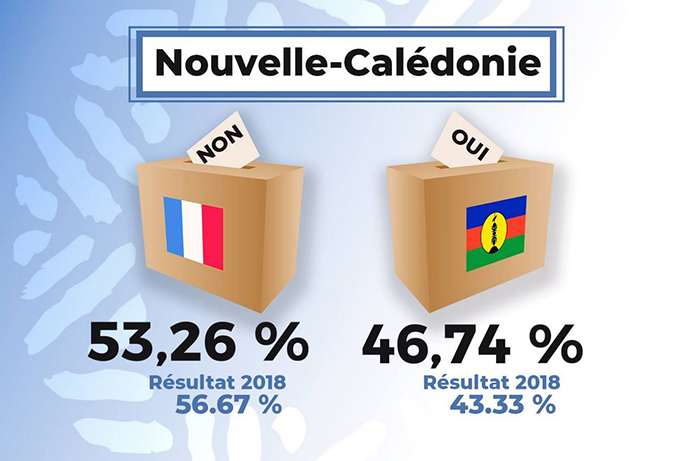
The first took place in November 2018. The “No” vote, which “loyalists” had initially predicted would win by 70 per cent, ended up with only 56.7 per cent, while 43.3 per cent said “Yes” to independence.
In October 2020, the second referendum was held, in which 53.3 per cent voted “No” and 46.7 per cent voted “Yes”. There were only 10,000 votes between the two camps.
We felt that we were touching independence with our fingertips; the momentum was in our favour.
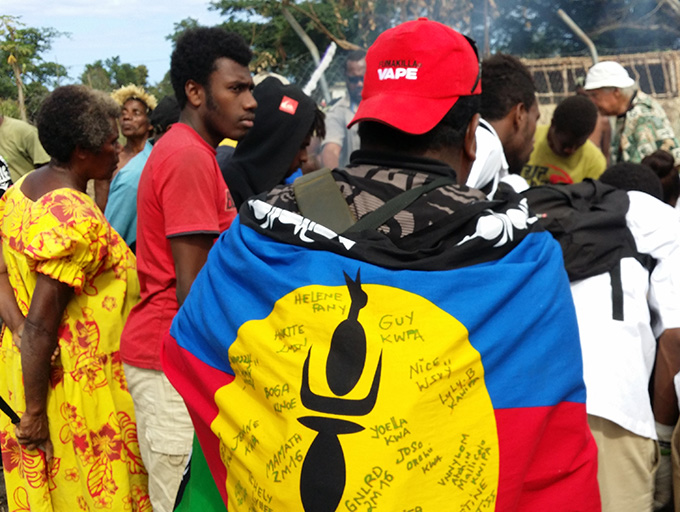
“We felt that we were touching independence with our fingertips; the momentum was in our favour.” Image: David Robie/APR
For this third and final referendum, the state initially announced that the consultation could not be held between September this year and August 2022, because of French presidential campaigns and elections taking place until April. It later contradicted itself by setting the date for December 12.
As the referendum campaign was about to begin, New Caledonia, which until then had been covid-free, recorded its first local cases on September 6.
And I wouldn’t vote. The future of New Caledonia cannot be built without its indigenous people. The Kanak voice is the cornerstone of New Caledonia’s common destiny.
Campaign conditions are not met With covid-19 health restrictions, it is impossible to create the democratic conditions for a normal and fair election campaign. Large rallies are now impossible, and many pro-independence Kanak tribes do not have easy access to the internet.
The digital divide is real, and the idea of a “fair” online campaign is an illusion. Beyond this, the virus is likely to demobilise voters.
Time of mourning This is a time for traditional Kanak mourning. More than 50 percent of the people who have died from the virus are Kanak. The Customary Senate, the representative body of the Kanak people, has declared a period of mourning of one year.
Yet the state has dismissed this issue. We felt this was a sign of contempt. I have the impression that my culture is being ignored, that my Kanak identity is being denied, and that we are being set back more than 30 years. To a time when our voice did not count. As if I and we didn’t exist.
Betrayal of the spoken word The spoken word is of considerable importance in Kanak culture. Sunday’s vote will be perfectly “legal”, even if half the electorate does not participate. But what political and moral legitimacy can be given to an independence referendum without the participation of the colonised people?
The French state, with the support of local loyalists, is undermining 30 years of negotiations. It risks taking us back to the violence of the 1980s. The state’s failure to keep its word is bringing us closer to the shadows of the past.
As a young Kanak woman, my voice is often silenced, but I want to remind the world that we are here, we are standing, and we are acting for our future. The state’s spoken word may die tomorrow, but our right to recognition and self-determination never will.
Marylou Mahe is a decolonial feminist artist and student in English studies, in France. She was born in Houaïlou, in the Kanak country of Ajë-Arhö, of mixed Kanak and French descent. She is currently finishing her master’s thesis on Hawai’ian feminism. This article is published via the Pacific Cooperation Foundation and was previously published by Stuff.
Not a single tear was shed as 54 unclaimed bodies and 11 body parts were laid on top of each other in a single open grave dug out at the 9-Mile Cemetery in Port Moresby this week.
It was a rather undignified way to go for the corpses. What were once loved ones clearly had been forgotten — every single one of them.
But what was even sadder was the 9 bodies of children among the mass burial after six months had gone by with not a single family member coming forward to claim them.
A mass burial is unusual in Melanesian society such as Papua New Guinea, but without relatives collecting the bodies it had to be done.
Wrapped in plastic bags and put in standard plain box coffins, the bodies and body parts were taken to the cemetery from the Port Moresby General Hospital in two trucks.
The bodies have been at the mortuary and other makeshift storage containers.
The covid-19 situation in NCD also complicated matters for the hospital and the relatives of the deceased.
No time to waste At the burial site, it was no time to waste for the morgue attendees as they unloaded the two truckloads containing the bodies and body parts and quickly lowered them stacked into the hole in the ground.
Port Moresby General Hospital director for medical services Dr Kone Sobi said the mass burial came into effect following several media announcements following the overwhelming burden at the morgue facility.
“We come from a Melanesian society and this kind of sending off our loved ones is not expected, however it has to be done,” Dr Sobi said.
“We had to go through due process as it takes time to comply with the processes to take place.
“The mass burial was for dead bodies that have been in the morgue since March, April and May this year.
“There were requests after the initial announcements for mass burial from relatives and friends of the deceased in the name list to reserve and claim their loved ones.”
He said the hospital allowed that process to take place and the period had lapsed.
An approved list “We then provide the approved list from the coroner to the National Capital District Commission (NCDC) to conduct the mass burial.
“If the body is not claimed after two weeks, then this goes to the Coroner to give an authorisation and once it is authorised, the mass burial is carried out,” he said.
The mortuary is the function of the NCDC social services division and it is the responsible of the office of the governor who has appointed a contractor to carry out the mass burial and all the parties involved have allowed and assisted the hospital to carry out this exercise.
He said the usual costs for mass burial was about K90,000 (about NZ$38,000) because a mass burial is carried out on a quarterly basis during a year, so one mass burial costs about K30,000. However, for this year’s exercise, NCDC is responsible for the costs.
For these mass burials, there were 54 adult bodies, nine children and 11 body parts from individuals who have been involved in accidents and people who have had injuries resulting in amputation of upper and lower limbs.
This is a combination of two mass burials that were supposed to be carried out in the year.
Dr Sobi said that for this year, this was the first mass burial exercise to be carried out.
Grace Auka-Salmangis a PNG Post-Courier reporter. Republished with permission.
Maria Ressa of the Philippines, co-founder of the news website Rappler, and Dmitry Muratov of Russia, editor of the independent newspaper Novaya Gazeta, will receive their prize in Oslo on Friday for “their efforts to safeguard freedom of expression”, reports AFP news agency.
“So far, press freedom is under threat,” Ressa told a press briefing, when asked whether the award had improved the situation in her country, which ranks 138th in the Reporters Without Borders (RSF) press freedom index.
Malabanan, who was also a Reuters correspondent, had worked on the sensitive subject of the “war on drugs” in the Philippines.
“It’s like having a Damocles sword hang over your head,” Ressa said.
Toughest stories ‘at own risk’ “Now in the Philippines, the laws are there but… you tell the toughest stories at your own risk,” she added.
Ressa, whose website is highly critical of Philippines President Rodrigo Duterte, is herself the subject of a total of seven lawsuits in her country.
Currently on parole pending an appeal after being convicted of defamation last year, she needed to ask four courts for permission to be able to travel and collect her Nobel in person.
Sitting beside her on Thursday, Muratov, 60, concurred with his fellow recipient’s words.
“If we’re going to be foreign agents because of the Nobel Peace Prize, we will not get upset, no,” he told reporters when asked of the risk of being labelled as such by the Kremlin.
“But actually… I don’t think we will get this label. We have some other risks though,” Muratov added.
‘Foreign agent’ label The “foreign agent” label is meant to apply to people or groups that receive funding from abroad and are involved in any kind of “political activity”.
“Foreign agent” organisations must disclose sources of funding and label publications with the tag or face fines.
Novaya Gazeta is a rare independent newspaper in a Russian media landscape that is largely under state control. It is known for its investigations into corruption and human rights abuses in Chechnya.
Source: The Conversation (Au and NZ) – By Kate Fitz-Gibbon, Director, Monash Gender and Family Violence Prevention Centre; Associate Professor of Criminology, Faculty of Arts, Monash University
Shutterstock
Brittany Higgins’s disclosure of an alleged rape in our nation’s most prominent workplace put all Australian employers on notice – they too must act to end violence against women and better support victim-survivors of domestic and family violence (DFV).
Throughout the last year, a sequence of valuable reports including Respect@Work and Set the Standard have established that violence against women is a serious workplace issue.
Research shows 62% of women who have or are currently experiencing DFV are in the paid workforce.
Workplace supports for family violence victim-survivors
The commission is currently reviewing their DFV leave model. As part of this review, we surveyed 302 victim-survivors across Australia, and interviewed 42 of those, about their experiences of accessing DFV leave and other workplace supports.
This is the first Australian study examining what workplace supports (including paid DFV leave) victim-survivors have accessed, and what supports they believe are needed. We found toxic workplace cultures, financial insecurity and sessional contracts negatively affect victim-survivors and can compound the impacts of trauma.
DFV can affect people’s everyday lives and cause significant harm to their mental and physical well-being. Victim-survivors in this research explained their experiences of DFV led to anxiety, difficulty concentrating at work and impacted their punctuality and attendance. These factors combined to damage their relationships with colleagues.
I would have a lot of time off work, be physically sick at work as well as
emotional and would cry easily.
Many of the research participants were not comfortable disclosing their experience of DFV at work. This contributed to inaccurate assumptions by colleagues and managers. Participants reported they were seen as lazy or flaky, and in some cases moved onto performance management plans. As one victim-survivor recalled:
I could not bring my full self to my work. I was unable to perform tasks I would normally do with ease due to ongoing anxiety and depression that I developed over a period of about a year […]I did not feel I could talk honestly about what was happening with me […] I appeared lazy and distracted to my workmates and towards management. They lost faith in my ability to perform.
Our findings underscore the need for workplace training in specialist DFV and trauma-informed practice. There is a need to create safe and supportive environments where employees feel comfortable to disclose that they are experiencing DFV in order to engage key supports (such as leave) that enable them to remain in the workforce.
Financial security is key to recovery
Our research shows DFV not only affects victim-survivors’ engagement in the workforce but also their work performance and their career progression.
Only 20% of the victim-survivors surveyed accessed DFV leave. None of those surveyed who were working in casual roles or as contractors at the time they were experiencing violence had access to DFV leave. In addition, many employed in full or part-time ongoing roles identified the absence of paid leave as the key barrier to use.
This study highlights the critical role financial security plays in supporting victim-survivors to leave abusive relationships. While the introduction of unpaid DFV leave in 2018 was a welcomed first step, respondents stressed the benefits of paid leave entitlements as they recover from DFV.
Ideally, Australian workplaces would shift to introduce a minimum of 14 days paid DFV leave, and, where required, grant victim-survivors access to unlimited leave provisions.
Beyond access to paid DFV leave, our research reveals the critical role workplace culture plays in ensuring the safety and participation of victim-survivors in the workforce.
Many respondents reflected on the stigma associated with accessing DFV supports, especially in workplaces where managers were not educated about, or sensitive to, the complexity of DFV. As one victim-survivor explained:
If you look at their DFV policy, leave and intranet page you’d give it full marks. The issue was, and is, that if you identify as a DFV victim in the legal profession – you’re marked and your career is over – it doesn’t matter what the policies say it matters what employers actually do and how they treat you.
There is significant work to be undertaken across Australian workplaces to provide a culture and a policy environment in which victim-survivors of DFV are safe and are supported to thrive in paid employment.
Key to this is ensuring employees are not penalised or ridiculed for seeking help at work. Trauma and DFV-informed workforce training to build awareness and understanding, particularly on how to respond sensitively and appropriately to DFV disclosures, is essential to the effectiveness of DFV leave policies. Such workplace models reinforce that family violence is everyone’s business, but also signal clear recognition of the ongoing effects of DFV.
The mounting evidence demonstrates Australian workplaces must implement change. Workplaces can play a key role in supporting employees’ trauma recovery while ensuring they have the financial security required to live free from violence.
If you or someone you know is impacted by sexual assault, family or domestic violence, call 1800RESPECT on 1800 737 732 or visit www.1800RESPECT.org.au. In an emergency, call 000. International helplines can be found via www.befrienders.org.
Kate Fitz-Gibbon is Director of the Monash Gender and Family Violence Prevention Centre. Kate currently receives funding for family violence related research from the Australian Research Council, Australian Institute of Criminology, Australia’s National Research Organisation for Women’s Safety and the Department of Social Services.
The findings presented here stem from a project funded by the Fair Work Commission. This project was led by Associate Professor Kate Fitz-Gibbon. The findings arise entirely from the work of Kate Fitz-Gibbon in her capacity as Director of the Monash Gender and Family Violence Prevention Centre and are wholly independent of Kate Fitz-Gibbon’s role as Chair of Respect Victoria.
Emma Jane McNicol and Naomi Pfitzner do not work for, consult, own shares in or receive funding from any company or organisation that would benefit from this article, and have disclosed no relevant affiliations beyond their academic appointment.
After three decades of frustratingly slow progress but with a measure of quiet optimism over the decolonisation process unfolding under the Noumea Accord, Kanaky New Caledonia is again poised on the edge of a precipice.
Two out of three pledged referendums from 2018 produced higher than expected – and growing — votes for independence. But then the delta variant of the global covid-19 pandemic hit New Caledonia with a vengeance.
Like much of the rest of the Pacific, New Caledonia with a population of 270,000 was largely spared during the first wave of covid infections. However, in September a delta outbreak infected 12,343 people with 280 deaths – almost 70 percent of them indigenous Kanaks.
With the majority of the Kanak population in traditional mourning – declared for 12 months by the customary Senate, the pro-independence Kanak and Socialist National Liberation Front (FLNKS) and its allies pleaded for the referendum due this Sunday, December 12, to be deferred until next year after the French presidential elections.
In fact, there is no reason for France to be in such a rush to hold this last referendum on Kanak independence in the middle of a state of emergency and a pandemic. It is not due until October 2022.
It is clear that the Paris authorities have changed tack and want to stack the cards heavily in favour of a negative vote to maintain the French status quo.
When the delay pleas fell on deaf political ears and appeals failed in the courts, the pro-independence coalition opted instead to not contest the referendum and refuse to recognise its legitimacy.
Vote threatens to be farce This Sunday’s vote threatens to be a farce following such a one-sided campaign. It could trigger violence as happened with a similar farcical and discredited independence referendum in 1987, which led to the infamous Ouvea cave hostage-taking and massacre the following year as retold in the devastating Mathieu Kassovitz feature film Rebellion [l’Ordre at la morale] — banned in New Caledonia for many years.
On 13 September 1987, a sham vote on New Caledonian independence was held. It was boycotted by the FLNKS when France refused to allow independent United Nations observers. Unsurprisingly, only 1.7 percent of participants voted for independence. Only 59 percent of registered voters took part.
After the bloody ending of the Ouvea cave crisis, the 1988 Matignon/Oudinot Accord signed by Kanak leader Jean-Marie Tjibaou and anti-independence leader Jacques Lafleur, paved the way for possible decolonisation with a staggered process of increasing local government powers.
A decade later, the 1998 Noumea Accord set in place a two-decade pathway to increased local powers – although Paris retained control of military and foreign policy, immigration, police and currency — and the referendums.
The New Caledonian independence referendum 2020 result. Image: Caledonian TV
In the first referendum on 4 November 2018, 43.33 percent voted for independence with 81 percent of the eligible voters taking part (recent arrivals had no right to vote in the referendum).
In the second referendum on 4 October 2020, the vote for independence rose to 46.7 percent with the turnout higher too at almost 86 percent. Only 10,000 votes separated the yes and no votes.
Kanak jubilation in the wake of the 2020 referendum with an increase in the pro-independence vote. Image: APR file
Expectations back then were that the “yes” vote would grow again by the third referendum with the demographics and a growing progressive vote, but by how much was uncertain.
Arrogant and insensitive However, now with the post-covid tensions, the goodwill and rebuilding of trust for Paris that had been happening over many years could end in ashes again thanks to an arrogant and insensitive abandoning of the “decolonisation” mission by Emmanuel Macron’s administration in what is seen as a cynical ploy by a president positioning himself as a “law and order” leader ahead of the April elections.
Another pro-independence party, Palika, said Macron’s failure to listen to the pleas for a delay was a “declaration of war” against the Kanaks and progressive citizens.
Many academics writing about the implications of the “non” vote this Sunday are warning that persisting with this referendum in such unfavourable conditions could seriously rebound on France at a time when it is trying to project its “Indo-Pacific” relevance as a counterweight to China’s influence in the region.
China is already the largest buyer of New Caledonia’s metal exports, mainly nickel.
“The dangerous political game being played by Macron in relation to New Caledonia recalls decisions made by French leaders in the 1980s which disregarded pro-independence opposition, instrumentalised New Caledonia’s future in the national political arena, and resulted in some of the bloodiest exchanges of that time,” they wrote.
The theme of the webinar asks: “Has the search for a consensus solution to the antagonisms that have plagued New Caledonia finally ended? Is [the final] referendum likely to draw a line under the conflicts of the past or to reopen old wounds.”
Today’s New Caledonia webinar at Victoria University of Wellington. Image: VUW
One of the webinar panellists, Denise Fisher, criticised in The Conversation the lack of “scrupulously observed impartiality” by France for this third referendum compared to the two previous votes.
“In the first two campaigns, France scrupulously observed impartiality and invited international observers. For this final vote, it has been less neutral,” she argued.
“For starters, the discussions on preparing for the final vote did not include all major independence party leaders. The paper required by French law explaining the consequences of the referendum to voters favoured the no side this time, to the point where loyalists used it as a campaign brochure.”
‘Delay’ say Pacific civil society groups A coalition of Pacific civil society organisations and movement leaders is among the latest groups to call on the French government to postpone the third referendum, which they described as “hastily announced”.
While French Minister for Overseas Territories Sebastien Lecornu had told French journalists this vote would definitely go ahead as soon as possible to “serve the common good”, critics see him as pandering to the “non” vote.
The Union Calédoniènne, Union Nationale pour l’independence Party (UNI), FLNKS and other pro-independence groups in the New Caledonia Congress had already written to Lecornu expressing their grave concerns and requesting a postponement because of the pandemic.
“We argue that the decision by France to go ahead with the referendum on December 12 ignores the impact that the current health crisis has on the ability of Kanaks to participate in the referendum and exercise their basic human right to self-determination,” said the Pacific coalition.
“We understand the Noumea Accord provides a timeframe that could accommodate holding the last referendum at any time up to November 2022.
“Therefore, we see no need to hastily set the final referendum for 12 December 2021, in the middle of a worldwide pandemic that is currently ravaging Kanaky/New Caledonia, and disproportionately impacting [on] the Kanak population.”
The coalition also called on the Chair of the Pacific Islands Forum, Prime Minister Voreqe Bainimarama to “disengage” the PIF observer delegation led by Ratu Inoke Kubuabola. Forum engagement in referendum vote as observers, said the coalition, “ignores the concerns of the Kanak people”.
‘Act as mediators’ The coalition argued that the delegation should “act as mediators to bring about a more just and peaceful resolution to the question and timing of a referendum”.
Signatories to the statement include the Development Alternatives with Women for a New Era, Fiji Council of Social Services, Melanesian Indigenous Land Defence Alliance, Pacific Conference of Churches, Pacific Network on Globalisation, Peace Movement Aotearoa, Pasifika and Youngsolwara Pacific.
Melanesian Spearhead Group team … backing indigenous Kanak self-determination, but a delay in the vote. Image: MSG
Fiji, Papua New Guinea, Solomon Islands and Vanuatu, which along with the FLNKS are full MSG members, have been informed by the secretariat of its concerns.
In a media release, the MSG’s Director-General, George Hoa’au, said the situation in New Caledonia was “not conducive for a free and fair referendum”.
Ongoing customary mourning over covid-19 related deaths in New Caledonia meant that Melanesian communities were unable to campaign for the vote.
Kanak delegation at the United Nations. Image: Les Nouvelles Calédoniènnes
Hopes now on United Nations “Major hopes are now being pinned on a Kanak delegation of territorial Congress President Roch Wamytan, Mickaël Forrest and Charles Wéa who travelled to New York this week to lobby the United Nations for support.
One again, France has demonstrated a lack of cultural and political understanding and respect that erodes the basis of the Noumea Accord – recognition of Kanak identity and kastom.
Expressing her disappointment to me, Northern provincial councillor and former journalist Magalie Tingal Lémé says: What happens in Kanaky is what France always does here. The Macron government didn’t respect us. They still don’t understand us as Kanak people.”
Dr David Robie covered “Les Événements” in New Caledonia in the 1980s and penned the bookBlood on their Bannerabout the turmoil. He also covered the 2018 independence referendum.
New Caledonia’s pro-independence parties say the French overseas minister’s visit in the next few days is unwelcome, describing it as “another provocation”.
Overseas Minister Sebastien Lecornu announced his trip as New Caledonia readies for Sunday’s third and final independence referendum after rejected pleas by the pro-independence parties to postpone it to next year because of the pandemic.
While the minister said he would outline details of the 18-month transition phase following the vote in upcoming talks in Noumea, the pro-independence parties have ruled out meeting him.
They said any negotiations will have to wait until after the French presidential election in April.
The customary Kanak Senate, which is a forum of traditional leaders, has now declared Sunday as a day of mourning for the victims of the pandemic and called on Kanaks not to vote.
Its president, Yvon Kona, has also appealed for calm so there would be no trouble on polling day.
An extra 2000 police and military personnel have been flown in from France to provide security across the territory.
Complaint that Lecornu flouted covid rules Meanwhile, a small pro-independence party has lodged a formal complaint against Lecornu in France after reports that the minister flouted covid-19 restrictions during his visit to New Caledonia in October.
The French investigative news site Mediapart reported that Lecornu had gone for drinks at a meeting with anti-independence New Caledonian politicians.
The complaint alleges that by breaking the rules he imperiled the health of others.
The ministry said the event was a work-related multilateral exchange.
It said in turn it intended to lodge a complaint against the party for defamation.
This article is republished under a community partnership agreement with RNZ.
The Malaita for Democracy (M4D) group has been declared an illegal organisation because of the alleged role of individuals in last month’s riots in the capital Honiara.
The Governor-General and Commander in Chief of Solomon Islands, Sr David Vunagi, declared M4D an unlawful society under section 66 (2) (ii) of the Penal Code from last Saturday.
The declaration was made after investigations conducted by Royal Solomon Islands Police Force (RSIPF) identified a number of people linked to M4D as having “played critical roles in the recent riots”.
In a media statement, the national government said that M4D was not and had never been formally registered under any laws of Solomon Islands.
The government said M4D also played the central role in organising and rolling out the protest in Auki which barred elected provincial members from entering the Provincial Assembly Chambers.
The actions of M4D were illegal and constituted acts against the good governance of Solomon Islands, the statement said.
The government added that the protest in Auki had hindered elected members of the Provincial Assembly from discharging their function under the Provincial Government Act 1997.
Suppression of constitutional rights “This is an interference with or inciting to interfere with the administration of the law which resulted in the suppression of the constitutional rights of Malaita provincial members,” the government statement said.
Reports from the RSIPF had indicated that M4D had openly advocated for the protest in Honiara and was instrumental in the escalation of the riots.
“These actions also include strategic planning by staging disruptive actions such as setting of vehicles on fire and inciting violence. Also, M4D have openly advocating for the overthrow of a democratically elected government,” the national government stated.
The statement added that based on the findings of the RSIPF the Governor-General by virtue of his status as the Command in Chief of Solomon Islands had declared M4D an unlawful society.
The M4D was seen as the pressure group for the Malaita provincial government (MPG).
Robert Iroga is editor of SBM Online. Republished with permission.
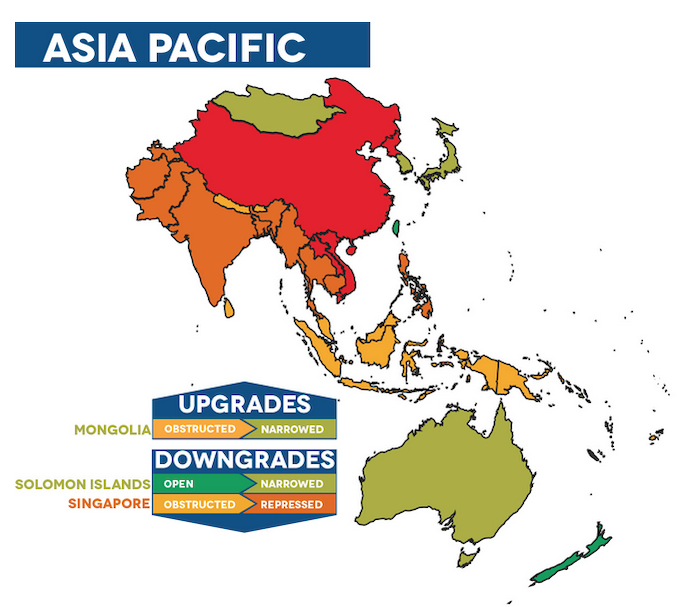
The troubled nation of Solomon Islands, whose Prime Minister Manasseh Sogavare won a no-confidence vote 32 votes to 15 with two abstentions on Monday, has been downgraded from “open” to “narrow” in the people power under attack 2021 CIVICUS Monitor report.
While the majority of Pacific countries were rated open, of most concern was the increased use of restrictive laws that blighted the whole region the report released by the international non-profit organisation CIVICUS, a global research collaboration that rates and tracks rights in 197 countries and territories.
The People Power Under Attack 2021 report shows that civic freedoms are routinely respected in over half the countries in this region. Seven countries in the Pacific are rated “open”, the highest rating awarded by the CIVICUS Monitor.
An open rating means people are free to form associations, demonstrate in public spaces, and share information without fear of reprisals.
Concern in the report highlighted those civic rights are not respected across the region; Fiji, Nauru and Papua New Guinea remain in the “obstructed” category, meaning that restrictions of freedoms of expression, association and assembly have been raised by civil society in these countries.
Restrictions relating to media freedoms, access to information and the right to protest led to the Solomon Islands downgrade. Freedom of expression is of particular concern — in early 2021 the cabinet threatened to ban Facebook over worries about posts with “inflammatory critiques of the government”.
The government eventually backtracked after condemnation from civil society and the opposition.
Public Emergency extended Freedom of assembly have been documented in the Solomon Islands. In July, the State of Public Emergency was extended for another four months in response to covid-19, even though there were only 20 reported cases in the country.
A march in Honiara to deliver a petition to the government by people from the Malaita province was disrupted and dispersed by the police.
Accessing information is not available to the media in the pandemic as Solomon Islands does not have freedom of information legislation. Additionally, the environment towards civil society groups is becoming more hostile in the country.
For example, in late 2019 the office of the Prime Minister called for an investigation into a number of civil society groups after they called for the prime minister to step down.
“Excessive restrictions on civic freedoms imposed by the government under the guise of preventing covid-19 led to the downgrade of the Solomon Islands. Constant threats to ban Facebook and attempts to vilify civil society have also resulted in the failure of the Solomon Islands to retain a top spot in our global rights rankings,” said Josef Benedict, Asia-Pacific civic space researcher at CIVICUS.
The use of excessive restrictions against activists and critics was the leading violation in 2021 with at least seven countries having been found to have transgressed in the report.
Asia-Pacific status in latest CIVICUS report. Image: APR screenshot CIVICUS
Target on Fiji journalists, activists and critics In Fiji, provisions relating to sedition in the Public Order (Amendment) Act 2014 have been used to target journalists, activists, and government critics, while other sections of the act have been used to arbitrarily restrict peaceful protests.
The Fiji Trade Unions Congress (FTUC) was denied a permit to hold a rally in Suva, on International Labour Day, 1 May 2021 — no reason, written or verbal for the rejection was given.
The use of restrictive laws is a concern across the Pacific. New criminal defamation laws passed in Vanuatu and Tonga cast a chilling blow to freedom of expression.
In Australia, the government continues to hound whistleblowers through the courts, as seen in the case of Bernard Collaery, the lawyer of an ex-spy, who was charged with allegedly exposing Australia’s bugging of Timor-Leste.
In 2019, Australia was downgraded by the CIVICUS Monitor due to attempts to silence whistleblowers who reveal government wrongdoing, among other concerns.
New Zealand and Australia, which was downgraded in 2019, did not get off scot-free. The UN Special Rapporteur on the rights to freedom of peaceful assembly and of association said the pandemic was not reason enough to quell peaceful assembly of protesters.
Indeed, protesters to the lockdown rules were detained this year for violating covid-19 rules.
Intimidation of Pacific activists Other civic rights violations highlighted by the CIVICUS Monitor include the harassment or intimidation of activists and critics across the Pacific, as documented in Fiji, Samoa and Papua New Guinea.
Fijian surgeon Dr Jone Hawea was detained for questioning after criticising the government’s response to covid-19 in his Facebook live videos, while Papua New Guinean lawyer Laken Lepatu Aigilo was allegedly detained and assaulted by police in April 2021 after lodging an official complaint against a politician.
“The state of civic space in the Pacific may seem relatively positive. However, over the year we have seen restrictive laws being used in several countries, including criminal defamation laws. Protests have also been denied or disrupted under the pretext of handling the pandemic, while activists have faced harassment and intimidation,” said Benedict.
However, there have been some positive developments this year. After strong civil society pressure, Tongan authorities moved swiftly to charge the alleged murderer of leading LGBTQI+ activist Polikalepo “Poli” Kefu, after his body was found on a beach near Tongatapu, Tonga’s main island
More than 20 organisations collaborate on the CIVICUS Monitor to provide an evidence base for action to improve civic space on all continents.
The Monitor has posted more than 500 civic space updates in the last year, which are analysed in People Power Under Attack 2020.
Civic space in 196 countries is categorised as either closed, repressed, obstructed, narrowed or open, based on a methodology which combines several sources of data on the freedoms of association, peaceful assembly and expression.
Made up of present and retired police officers, former school teachers, village headmen, community leaders and representatives from the District Council of Social Services (DCOSS), 25 male advocates in Fiji have made a commitment to change themselves and their perception of women and honour their roles in society.
This was the outcome of a one-day Fiji Women’s Crisis Centre (FWCC) dialogue with male advocates from the Western Division in Lautoka on Monday.
The advocates who were part of a dialogue on engaging men to end violence against women and girls have committed themselves to be agents of change in their communities.
At the conclusion of the dialogue, the advocates made commitments to be agents of change and work towards ending violence against women and girls in their respective communities.
“When we leave this room and return to our communities, we will ensure that we get our house in order first before calling for change in the communities,” the male advocates declared.
“In our own homes, we need to bring up our boys in a manner that they learn to respect their own sisters, mothers, and other women in the community.
“We should teach our sons to respect women and girls and live with high moral standards.”
Rohit Deois a Fiji Times reporter. Republished with permission.
As New Zealand gets ready for the festive season under the new traffic light system, the emergence of the omicron variant is a reminder this pandemic is far from over.
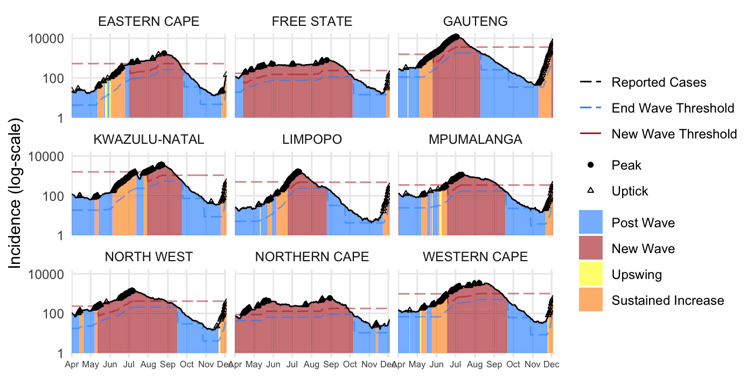
The new variant of concern is already fuelling a new wave of infections in South Africa and there is some evidence hospitalisations are increasing.
Omicron has already arrived in Australia and the question now is whether it will get to New Zealand during the summer holiday season and potentially affect plans for border openings.
New Zealand is currently planning to start opening its borders and allowing quarantee-free entry from early 2022, first to fully vaccinated New Zealand citizens arriving from Australia after January 16, and then for New Zealanders arriving from all other countries after mid-February.
There is already some discussion about whether this plan may have to be reviewed.
Omicron contains 32 mutations in the spike protein alone. These are mutations that may make the virus more transmissible and better at evading immunity. There is also some evidence to suggest it poses a higher risk of reinfection.
Other anecdotal evidence suggests more children are being hospitalised with moderate to severe symptoms with omicron.
However, it is still too early to draw any firm conclusions. Data over the next few weeks will help determine the variant’s full impact.
Data from the South African COVID-19 monitoring consortium show the impact of the Omicron variant. Graphic: SACMC Epidemic Explorer, CC BY-ND
Perhaps most importantly, delta also taught us that when new variants emerge, they do not stay in one place for very long.
So, how prepared is New Zealand?
FASTEST SURGE TO DATE—The #OmicronVarient is up swinging much faster in both new daily cases and positivity, than all previous waves in South Africa ??, according to @nicd_sa data illustrated by @jburnmurdoch. This supports the faster transmission theory of #Omicron. ? pic.twitter.com/BBdAsEGUk0
In the short term, New Zealand is well placed to deal with omicron. Our strong border controls, testing and rapid genome sequencing mean that when omicron arrives at our border, we can respond quickly and prevent community incursion.
It is unlikely it will be our unwanted guest this Christmas. Despite this, significant challenges lie ahead in the long term, including vaccination inequity and disruptions to routine healthcare.
Percentage of the double vaccinated In several regions, including Auckland and Canterbury, 90 percent of the eligible population are now fully vaccinated. High vaccination rates may blunt the extent of future potential waves of infection, but significant inequities in vaccination levels remain.
So far, New Zealand has been luckier than other countries where concerns are growing about disruptions to routine healthcare. Delays may leave patients with treatable conditions suffering illnesses that can become fatal.
Although unlikely, should Omicron breach our border like Delta did, it will have to be tackled against the backdrop of trying to manage the current Delta outbreak.
Child vaccinations are set to start at the end of January. However, low vaccination levels are often in areas where health provision and hospitals are a long way away. This will need to be incorporated into the rollout strategy to ensure equitable childhood vaccination rates.
Looking forward to Christmas and beyond The Auckland border will lift next week on December 15 and many are bracing themselves for a covid summer. Calls for staycations have emerged as popular summer holiday spots such as Matai Bay close and iwi are asking people to stay away from some destinations.
Our analysis by regional tourism areas supports this. It shows most regional tourism areas have low vaccination rates, especially for Māori and Pacific peoples.
As New Zealand heads into the holiday season, public health measures such as mask wearing, physical distancing, hand hygiene, contact tracing, case isolation and vaccination will remain essential.
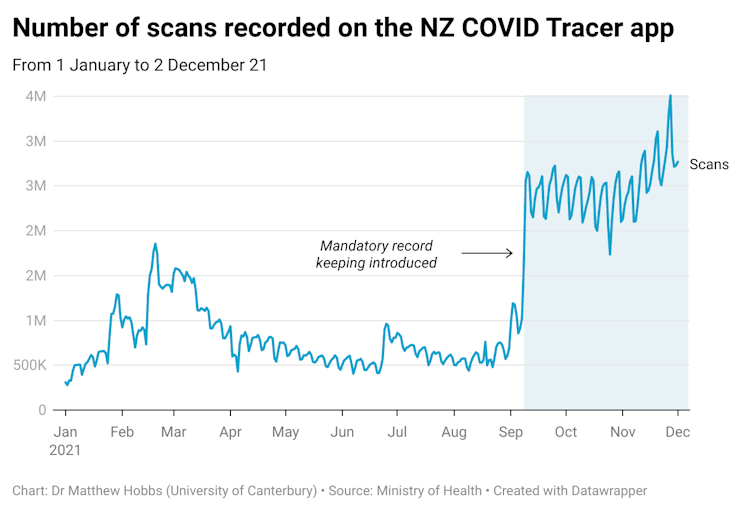
Mandating the covid tracer app increased the number of scans while less than 1 percent of paid staff at St John’s ambulance service left due to the vaccine mandate.
Some experts have suggested the emergence of omicron could be a result of low levels of vaccine coverage in developing nations.
The root of this is that the world isn not doing enough to stop the spread of covid-19.
While some countries, including New Zealand, have had domestic success at controlling covid-19, wealthy countries around the world continue to hoard vaccines. This ultimately gives the virus more opportunities to replicate and mutate.
Omicron should act as a wake-up call to ensure worldwide equitable vaccine delivery before even more concerning variants emerge.
If your clothes are feeling snug after lockdown, you’re not alone. A survey of more than 22,000 people across 30 countries found almost one-third of respondents gained weight during the COVID pandemic.
Major contributors include stress, takeaway and working from home. Sound familiar?
As you gain more freedom of movement post-lockdown, some of this extra weight may come off naturally. However, your body might need a nudge to return to its pre-lockdown weight, and it’s probably better to act now than wait until New Year’s resolutions time.
Humans tend to maintain a steady weight over time, give or take a few kilos.
One scientific theory on how the body does this is the “set point” theory. It posits that whenever we deviate from our weight set point, our body activates defence mechanisms that tend to shift us back to base.
When your weight goes up, your body may react by:
reducing hunger and the amount of food needed to feel satisfied, possibly brought on by changing appetite hormones
increasing your propensity to be physically active, which can involve conscious activity like walking, or even subconscious activity like fidgeting
raising your metabolic rate, a change that some people exhibit more than others (you may notice feeling hot-under-the-collar if this happens to you).
This array of physiological responses, which we call the “fat brake” because it slows fat gain, has been documented in experiments where adults were overfed for periods spanning several hours to several weeks. This time frame is similar to the time frame of feasting over a holiday season.
More takaways than usual contributed to lockdown weight gain. Shutterstock
Practically speaking, this means in the aftermath of a brief period of overeating, you may find yourself having less interest in food and wanting to move more than usual.
In other words, a window of opportunity exists where your body is likely to work alongside you in shedding weight.
The latest Sydney lockdown lasted almost four months (107 days). Melbourne’s lockdown was more fragmented, but no shorter in duration.
It’s not entirely clear how our bodies react to this length of potential overeating. This is because most human overfeeding experiments don’t last beyond two months.
One of the longest is a classic study where “lean young men” were fed an excess of 4,200 kilojoules (1,000 calories) per day for 100 days. At the end, their metabolic rate was found to be higher than before the overfeeding began.
Importantly, in the four months post-experiment, they lost 82% of the weight and 74% of the fat they had gained.
These results are encouraging because they suggest the “fat brake” can remain active even after several months of overeating.
A study of lean young men found they lost most of the weight they’d gained. Shutterstock
All things, however, tend to come to an end. In animal studies, the effects of the fat brake have been shown to subside with time.
We can’t predict if or when this might happen in humans, but we do know genes play a major role in determining how our bodies respond to overeating.
We also know that loss of excess weight tends to be more permanent in children and young people, which could be related to a more flexible weight set point.
So, the aforementioned study in “lean young men” likely presents the best-case scenario in terms of recovering from prolonged overeating.
For those of us who don’t have genes or age on our side, being proactive about post-lockdown weight loss and seizing the window of opportunity our fat brakes offer could provide a path of least resistance, at least from a physiological view point.
How to go about losing COVID kilos
It’s important to listen to your body’s signals. Eat only when you’re hungry and stop as soon as you’re satisfied.
When you are hungry, aim for smaller portions and lighter foods. One way to do this at mealtimes is to prioritise and “fill up” on vegetables before eating any other food on your plate. You may be surprised by how little it takes to feel satisfied, especially if your fat brake is activated.
If you have an iPhone, a free app (Wink by Amanda Salis) can help you learn to eat according to your body signals.
The Australian Dietary Guidelines provide evidence-based information on what foods to eat and how much to eat. For more personalised information, this free quiz offers a quick assessment of your diet and tailored ideas on things you could improve on.
To avoid eating when you’re not hungry, it’s helpful to do things that are active and exciting. Think team sports, dancing, or other activities you couldn’t do during lockdown.
It’s also a good idea to remove snacks and temptations around the house to minimise “mindless” grazing.
If you’re carrying more weight than a few excess COVID kilos, consider professional help. Young people who have support from a dietitian tend to lose more weight than older adults who seek the same help.
For adults with related medical issues that would improve with weight loss, there are more intensive treatments that are effective for a majority of people, such as severely energy restricted liquid meal replacement diets but this must be done under medical supervision.
Hoi Lun Cheng is affiliated with the the Wellbeing, Health & Youth (WH&Y) NHMRC Centre for Research Excellence. She receives competitive grant funding from the National Health and Medical Research Council.
Amanda Salis owns 50% of the shares in Zuman International, which receives royalties for books she has written about adult weight management, and income from education about adult weight management and research methodology. She also receives funding from the National Health and Medical Research Council (NHMRC) of Australia.
Almost a third of Australia’s estimated ten million households now have solar on the roof. But as the nation moving fastest to produce energy on our homes, we are also encountering teething problems, such as “curtailment” of output.
This issue will be one we have to overcome as ever more Australians install solar. Our grids were designed primarily for large fossil fuel power stations transmitting electricity in one direction, while solar households both consume and export power.
That means in some conditions, household solar may contribute to spikes in voltage levels outside of the acceptable range, especially as voltage levels are typically already high.
To counter this, your solar system can stop exporting to the grid or even shut down temporarily if voltage levels are too high. This is called “curtailment”.
The rush for solar shows no signs of slowing – but curtailment could be a stumbling block. Shutterstock
So what’s the issue?
The average solar household lose less than 1% of its power production to curtailment – and even less for those with home batteries. While that sounds minor, an unlucky few households are losing as much as 20%.
Why the drastic difference? It depends on factors like the house’s location, the local electricity network equipment, home wiring, the number of solar systems in the area, and the size of a solar system and inverter settings, which can vary depending on the date of installation.
These findings are from our scoping study in South Australia, conducted in partnership with AGL, SA Power Networks and Solar Analytics as part of the RACE for 2030 research centre.
We analysed two out of three modes of automatic curtailment, with further research underway to assess the third mode, which may account for greater overall curtailment.
This issue is set to get bigger, as more and more solar systems are installed and export to the grid at the same time.
Given the different ways solar households experience curtailment, this research also raises issues of fairness.
Our research interviewed and ran focus groups with South Australians who have solar. We found most participants didn’t know about curtailment and hadn’t experienced it or noticed it.
But when we described curtailment, most people found it off-putting and questioned whether rooftop solar owners should be made to absorb any losses, given the contribution of rooftop solar to the renewable energy transition.
Not only that, our participants told us they believed the issue could slow down the adoption of solar and potentially undermine faith in the system.
Australia’s rapid renewable transition means challenges to overcome for the grid. Shutterstock
Is this a problem for solar uptake?
The issue of curtailment means people may not get everything they expect out of their solar system. But this may not be a deal breaker, given earlier research and our study both show that people hope to benefit in many different ways from installing a solar system.
For instance, some want to reduce their reliance on fossil fuels and contribute to a cleaner grid. Others want to be less reliant on electricity providers and enjoy producing and using their own energy. And some just want cheaper electricity, and don’t mind whether they get these savings through selling their power or just buying less of what they need from the grid.
The good news is that as the solar sector matures, new ways are emerging of maximising value from our solar, including:
home energy management systems letting us time the use of appliances such as hot water tanks for daytime periods, when solar generates most power
batteries letting us store power for use in the home when it is needed, such as in the evening
virtual power plants enabling households to be paid for allowing their solar and battery systems to help stabilise the electricity grid.
While attractive in their own right, these options can also reduce how much your solar system is curtailed, and have the potential to help tackle challenges at a grid scale.
Other changes to electricity and grid access and pricing could also help us better manage curtailment.
Flexible export limits being trialled in South Australia and elsewhere would mean households could export electricity to the grid when it is needed, while occasionally being prevented from doing so when the network does not have capacity.
Flexible export limits also mean households can install larger solar systems regardless of their location within the network. They could stop curtailment affecting solar households in unexpected and uneven ways.
Other responses include programs to reward households for having their export curtailed, recognising it as a service to the market and the network.
There is no single solution to the issue of curtailment. But the different solutions described above may contribute to the successful integration of more rooftop solar energy and pave the way for a more renewable grid.
Now is the time to talk about the future of solar in Australia, and the ways we can value it, use it and manage it when abundant.
Sophie Adams receives funding from the Cooperative Research Centre (CRC) program, Reliable, Affordable, Clean Energy for 2030 (RACE for 2030), an Australian Government initiative. She has also received an Artificial Intelligence (AI) for Earth grant from Microsoft. Project partners include AGL, South Australia Power Networks and Solar Analytics.
Baran Yildiz receives funding from the Cooperative Research Centre (CRC) program, Reliable, Affordable, Clean Energy for 2030 (RACE for 2030), an Australian Government initiative. He has also received an Artificial Intelligence (AI) for Earth grant from Microsoft. Project partners include AGL, South Australia Power Networks and Solar Analytics.
Naomi Stringer receives funding from the Cooperative Research Centre (CRC) program, Reliable, Affordable, Clean Energy for 2030 (RACE for 2030), an Australian Government initiative. She has also received an Artificial Intelligence (AI) for Earth grant from Microsoft. Project partners include AGL, South Australia Power Networks and Solar Analytics.
Shanil Samarakoon receives funding from the Cooperative Research Centre (CRC) program, Reliable, Affordable, Clean Energy for 2030 (RACE for 2030), an Australian Government initiative. He has also received an Artificial Intelligence (AI) for Earth grant from Microsoft. Project partners include AGL, South Australia Power Networks and Solar Analytics.
Source: The Conversation (Au and NZ) – By Jo Caust, Associate Professor and Principal Fellow (Hon), School of Culture and Communication, The University of Melbourne
In 1980, I was in London and working at the Roundhouse performing arts centre.
Thelma Holt, the legendary director of the Roundhouse, told me she had booked an Australian circus to perform. She asked me had I heard of them. I said no. I had been in England for a few years, so I was out of touch with what was happening in Australia. I knew though, of some former peers at Flinders, who had formed something called the New Circus. But I had not heard of Circus Oz.
Given I was the only Australian working at the Roundhouse at the time, I was self-conscious about who this group was, and what they would be like. Typical cultural cringe.
Of course, they were a revelation. So joyous, funny, imaginative, talented and witty. I felt so proud to be an Australian. They took something that was intrinsically Australian and showed it to the world. It was a moment in history when expatriate Australians such as myself could feel proud about who we were, and no longer needed to apologise for being lesser beings.
Established in December 1977, Circus Oz showed the world Australia was unique, Australians were capable of doing incredible things, and they had something special to offer on the world stage.
Circus Oz brought something uniquely Australian to the world stage. Alan Simpson – PA Images/Getty
It brought to the stage a model of circus that didn’t exploit animals but joyously celebrated the human form. Outstanding individuals such as Jonno Hawkes, Robyn Laurie, Tim Caldwell, Anni Davey, Sue Broadway and numerous other wonderful performers, designers, musicians and directors were part of this world. Then there were the individuals on the administrative side, such as Linda Mickleborough, who committed herself to nurturing and supporting the company for more than 20 years.
Today, we heard Circus Oz is to be no more. Why this is happening, I am not sure. The official statement is rather full of management language that obfuscates rather than clarifies. No doubt a backstory will come out, but nevertheless it is very sad. It suggests the funders want the company to become something that is against its very nature. It may also be another arts victim of the past two years.
Circus Oz has been doing Australia a service for many years. We have all come to take it for granted. It has been travelling around the world promoting what is unique about Australia and winning acclaim in New York, London, Paris and everywhere in between. It has also been travelling around Australia making Australians feel proud about their culture.
It has shown countless young people there are alternative careers to being stuck in a factory or office. It has celebrated Indigenous culture, and protested about the things Australia is least proud of.
It has encouraged the creation of new circuses and the beauty of physical theatre around the country. Circuses such as the Flying Fruit Fly Circus in Albury/Wodonga, Gravity & Other Myths in Adelaide, Circa in Brisbane and numerous other groups that have been so important to the making of physical theatre in Australia.
Generations of performers have trained with Circus Oz and then gone on to work with them and other circuses around the world. The National Institute of Circus Arts in Melbourne would not exist without Circus Oz, nor would Cirkidz in Adelaide.
Circus Oz also pioneered how a performing arts group could be organised and be self-managed. Everyone earned the same wage, and everyone participated in decision-making. It was a role model for collective and collaborative leadership. It gave performers a sense of being more than a performer: the artists were treated as adults who had something to contribute to how their world was constructed and managed.
The artists were always an integral part of the company’s management. AAP Image/Mick Tsikas
Business, or creativity?
Circus Oz was a pioneer in being acknowledged as a major player in Australian performing arts by being accepted into the hallowed framework of the Major Performing Arts Framework at the Australia Council. This meant it joined the opera companies, ballet and theatre companies and was granted on-going guaranteed funding.
But perhaps this acceptance into the mainstream has also been its downfall. It then had to conform to management expectations, that as an entity, are foreign to its own culture and framing. The corporatisation of the arts has been an ever-increasing challenge for arts practitioners. It is foreign to the very making of art when business paradigms rule instead of creativity. It is particularly foreign to an entity that was founded on worker entitlements, collective management models and democratic principles.
Circus Oz has been a special gift to Australia and the world. We will all miss it deeply.
Jo Caust is a member or the Arts Industry Council (SA) and NAVA. She has previously received funding from the Australia Council.
Review: Death of a Salesman directed by Paige Rattray, Sydney Theatre Company
Director Paige Rattray has made an interesting choice in the opening moments of Sydney Theatre Company’s new production of Arthur Miller’s Death of a Salesman. She provides us with a narrator (Brigid Zengeni) who directly addresses the audience with a kind of “voiceover” derived from Miller’s wonderful original stage directions.
This is an impactful decision, as it overlays the set with the dream-like visions of reality with which the play is so much concerned. David Fleischer’s well-executed set design provides us with an enormous, echoing school assembly hall that is well past its sell-by date. This empty space is the screen against which the Loman family’s faded hopes of schoolboy success are projected, and where they have come to die.
The most telling sentence from Miller’s opening stage directions describes the house in which the Lomans live: “An air of the dream clings to the place, a dream rising out of reality”. This elusive instruction from Miller is a tough brief for any set designer. But it is succinctly evocative of the terrible prison into which the Loman family have slowly drifted, a prison constructed out of ill-founded hopes and a cruelly competitive world.
Perhaps unusually, the stage directions for Death of a Salesman are fascinating in their own right. So it is an unexpected pleasure of this production to have them foregrounded and made use of in this way.
Dreams clashing with reality
Working in the middle of the 20th century, Miller’s plays arrive towards the exhausted end of a long tradition of realist dramatic writing in which stage directions had increasingly dominated the page, with the dialogue sometimes seeming to take a backseat. From Ibsen’s work in the late 19th century onwards, playwrights tried to ensure that the worlds they presented on the modern stage were as fully realised as possible.
For Miller, the promise of realism had frayed alongside American expectations of 20th century prosperity. Sydney Theatre Company/Prudence Upton
But for Miller (as for his mid-century American contemporary, Tennessee Williams) the promise of realism had frayed alongside American expectations of 20th century prosperity.
The worlds that they both create through increasingly complex and demanding stage directions are worlds in which dreams clash with reality, worlds that neither we nor their protagonists are quite able to grasp.
Willy Loman, the 63-year-old travelling salesman of the play’s title, is never able to live in the present. His past keeps walking through the door. He is exhausted, “tired to the death”, unable to escape the memories that keep him trapped, hoping for success that has never – will never – come true.
Rattray and Fleischer, with the aid of Clemence Williams’ powerful score, make great use of the deep Roslyn Packer stage to bring this increasingly nightmarish experience to life.
The play centres on the four members of the Loman nuclear family. Jacek Koman captures Willy’s mercurial temperament, particularly the dangerously rapid shifts in his temperament: manic optimism, frustration at a world that has disappointed him, and foolish nostalgia.
Helen Thompson gives the standout performance of this production. Sydney Theatre Company/Prudence Upton
Helen Thomson’s portrayal of Linda Loman, his wife, is the standout performance of the production. Thomson has found a pathos and a strength to the role that is not always realised in performance.
Linda Loman’s defiant defence of her husband, despite all his flaws, is the moral centre of the play. “He’s a human being”, she tells her sons, “and a terrible thing is happening to him. So attention must be paid.” Linda’s claims are the claims of the play: that an ordinary man’s suffering is worth something beyond its dollar value. At the very least, his life is worth having a play written about it. Thomson’s superb performance holds this heart of the play for us.
Callan Colley as the younger son, Hap Loman, does a great job of living up to another of Miller’s demanding stage directions. “Sexuality,” we are told, “is like a visible colour on him, or a scent that many people have discovered.”
Josh McConville’s performance of Biff, older brother and a faded high school jock, is the other stand out. His awareness that he can’t live up to his father’s dream that he will turn high school adulation into ever-increasing success provides the key journey of the play’s narrative, and McConville’s typically physical performance captures well Biff’s frustrations.
Josh McConville (left) captures the frustrations of the faded former jock. Sydney Theatre Company/Prudence Upton
The director’s decisions here – to use the narrator, to ask the cast to use American accents, and also to populate the stage with extraneous cast members – are all carefully considered. They all point towards the theatrical nature of the experience.
Her choices provide us with the sense that, even though it is set in the kitchen of an ordinary house, what we are watching is not a slice of realism at all. Rather, it is an understanding of our lives as hemmed in by – controlled by – dreams and delusions.
Death of a Salesman plays at the Roslyn Packer Theatre until December 22.
Huw Griffiths does not work for, consult, own shares in or receive funding from any company or organisation that would benefit from this article, and has disclosed no relevant affiliations beyond their academic appointment.
What does the trial data say about safety and efficacy?
The Pfizer vaccine trial included 2,268 children aged 5-11. Of these children, 1,517 were given two doses of 10 microgram vaccine three weeks apart, and 751 who were given a placebo. The results found the vaccine was safe and had good efficacy.
Children given the vaccine had similar antibody levels after the second dose to older adolescents and young adults (aged 16-25). This indicates their immune system was able to recognise the lower amount of vaccine mRNA – the vital ingredient in the Pfizer vaccine – and still produce a good amount of antibody to protect against the virus.
There were no serious reactions in this trial, however the sample size wasn’t large enough to detect rare adverse events.
The most common side effect is a sore arm. Shutterstock
painful arm (around 70% at any time in the first week after vaccination but usually in the first few days)
headache (around 25%)
tiredness (around 35%).
The vaccine was around 90% effective at preventing confirmed COVID-19 infection, with three COVID cases in the vaccine group and 16 in the placebo group.
Based on this data, the Therapeutic Goods Administration (TGA) provisionally approved the vaccine for use in 5-11 year-old Australians on Sunday, following United States’ Food and Drug Administration (FDA) approval at the end of October.
How safe and effective has it been overseas?
Australia has around 2.3 million children aged 5-11. So we can look to the real-world experience of the Pfizer vaccine in the US to see what we can expect.
The US has administered more than 2 million second doses to 5-11 year olds. Kelly Sikkema/Unsplash
One potential concern authorities are watching out for is the risk of heart inflammation, called myocarditis. This is a rare side effect after the second dose in young males aged 12-17, with an estimated risk of around ten cases per 100,000.
No cases of myocarditis, or the related condition pericarditis, were reported in the clinical trial of 5-11 year olds.
No data is yet available on the real world effectiveness of the vaccine to protect against hospitalisation or infection in children aged 5-11, however this will emerge.
Why an 8 week interval?
The US, European Union, Canada and Israel have approved Pfizer for younger children. The US has gone with a three week interval between doses, while Canada recommends eight weeks.
There are two reasons for a wider interval. The first is a potentially better immune response. Studies in adults have shown a larger gap between doses has resulted in a higher antibody immune response and better vaccine effectiveness, although this has not been shown yet for children under 12.
The second is a possible lower risk of developing myocarditis. In a Canadian study, young adults aged 18-24 had lower rates of myocarditis when the interval between dose one and two was greater than eight weeks compared to those who an interval of less than 30 days between doses.
While similar data for children under 12 is not yet available, a recommendation for a wider interval allows us to continue to monitor real-world international experience of the risk of myocarditis.
Who should be first in line to get the vaccine?
Some children with underlying medical conditions are more likely to get sicker with COVID. This includes those with obesity, diabetes, neurological diseases, heart and lung conditions. These children should be among the first to get the vaccine next January.
There is no major difference in the immune systems of an 11 and 12 year old.
The age cut-off was chosen based on the ages of the children in the vaccine trials. These age groupings were most likely designed to match the ages children are when they attend primary and high school.
If your 11 year old is about to turn 12, they should get the dose at 11 and not wait.
Your child should get the dose recommended for their age. Shutterstock
If they had the 10 microgram dose and turn 12 before their second dose is due, ATAGI says they may get a 30 microgram second dose when they are 12.
How will the vaccine be administered?
The lower (10 microgram) child’s dose has been packaged in orange-top vials so it doesn’t get confused with the purple- or grey-top (30 microgram) dose vial used for adults.
The vaccine will be given in the child’s upper arm, and you and child will need to wait for at least 15 minutes after vaccination in case of a reaction.
The vaccine will be available through general practices, Aboriginal Health Services, community pharmacies and state and territory clinics.
Your child can get other vaccines at the same time, if they’re due, but there is very limited data on the side effects when both a COVID and non-COVID vaccine are given at the same time.
If your child has had COVID-19 disease in the past they should still get vaccinated but it is important to make sure they have completely recovered before getting a vaccine. You can wait up to six months after natural infection before getting the vaccine. If in doubt talk with your GP.
Can my child with allergies still get the vaccine?
Children who have had an allergic reaction to a substance called PEG (polyethylene glycol) – which is a commonly used ingredient of other medications, hand sanitisers, cosmetics and bathroom products – should talk to their GP before getting the vaccine.
If your child has an allergic reaction after the first dose, talk to your GP before getting dose two.
Children who are allergic to foods such as nuts, milk or eggs, or those who have asthma or hay fever, can safely receive the Pfizer vaccine.
When will kids under 5 be vaccinated?
Results from clinical trials in children under five years old are expected soon.
Vaccinating 5-11 year-old Australian children is is an important next step in our ability to protect both ourselves and the community against COVID-19. The safety of the vaccines will be closely monitored as we roll them out in January and aim to give first doses before children go back to school.
Nicholas Wood receives funding from the NHMRC for a Career Development Fellowship. He holds a Churchill Fellowship
New Zealand Parliament Buildings, Wellington, New Zealand.
Editor’s Note: Here below is a list of the main issues currently under discussion in New Zealand and links to media coverage. You can sign up to NZ Politics Daily as well as New Zealand Political Roundup columns for free here.
The National Party’s recent call for a royal commission of inquiry into New Zealand’s pandemic response may have been part of a wider political strategy, with former leader Judith Collins highly critical of the government’s handling of the Delta outbreak.
But the idea predated its recent advocate, and there are good, non-political reasons for holding such an inquiry – not least that it would be powerful and independent. Royal commissions reach further and dig deeper than parliamentary select committees, and are free from partisan sway.
Nor is this a novel recommendation. In 1919, the Influenza Epidemic Commission investigated what happened after the arrival of the disease in New Zealand the previous year. That commission’s influence can still be felt today.
The 1918-19 pandemic killed at least 8,831 people (still probably an underestimate), with Māori making up almost a quarter of the total, the single worst human disaster recorded in New Zealand history.
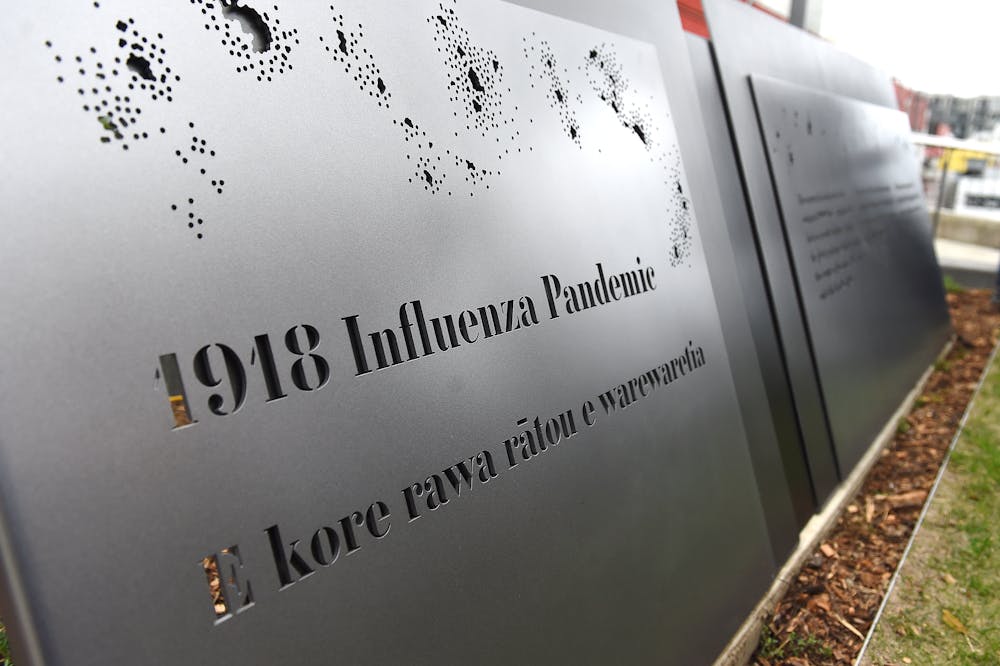
The 1918 Influenza Pandemic Memorial at Pukeahu War Memorial Park in Wellington. GettyImages
The 1919 inquiry
Parts of the 1919 commission report read like they were written today. The virtues of masks, quarantine, ventilation, the importance of Māori settlements, and basic health education are all canvassed.
Other parts are simply curious, such as the discussion of whether alcohol helped, with some medical witnesses testifying two or three whiskeys and soda a day were the best medicine. But there are also surprisingly accurate predictions of what inoculation might look like in the future.
Mostly, however, the commission was concerned with questions of how the pandemic made it into the country, how local health systems had collapsed, and what could be done to prevent history repeating.
Its answers provided the foundations for the 1920 Health Act, which provided the basis for the current law, on which much of the contemporary legal and policy responses to COVID-19 have rested.
A royal commission, then, is the appropriate forum for assessing New Zealand’s COVID response and making recommendations that will stick. It’s the highest form of official inquiry into matters of public importance, more powerful than a government inquiry.
There can be no doubt New Zealand’s handling of the pandemic justifies the same attention. It has overshadowed everything in the past two years, and no New Zealander has been untouched by it in some way.
But such a commission would certainly differ greatly from the 1919 influenza inquiry, if only because of the scale and duration of COVID-19 and the relative success of government policy in combating it.
Areas of inquiry
With 44 deaths recorded so far, the government’s first duty to keep its population safe appears to have been met, at least when compared to the horrors experienced in other countries, and indeed during the 1918-19 pandemic.
However, that success has come at a cost – to mental health, the economy, rights and freedoms and, to a degree, social cohesion. All of these will be important elements of an inquiry.
While most people suffered in some way, the burden has not been equally shared. In particular, the impact on Māori – currently the subject of a Waitangi Tribunal hearing – will be a focus of inquiry.
Similarly, a royal commission will need to look at how women, children, people with disabilities, the elderly, and anyone affected by international border closures or access to vaccines and health care have fared.
Of course, how the economy weathered the pandemic will form a significant part of an inquiry: how much was spent and where, who benefited or lost, and what will be the long term consequences?
Finally, the entire legal framework surrounding the government’s response needs the scrutiny only a royal commission could provide.
In the past two years, the country’s legal system has creaked and groaned in response to the myriad decisions that affected the lives of ordinary New Zealanders in unprecedented ways.
Critical pieces of legislation curtailing personal rights and freedoms were rushed urgently through parliament, arguably weakening existing democratic safeguards. Where these decisions have been legally challenged (unsuccessfully so far), the courts have been left to find the delicate balance between individual and collective rights.
A royal commission would allow for these personal, economic and democratic costs to be fully documented, measured and evaluated. Most importantly, it can recommend improvements and remedies. And it should be scheduled to start on March 19, 2022 – two years exactly from when New Zealand first closed its borders to the outside world.
Present generations have learned some hard but valuable lessons from COVID-19. Given the possibility of future pandemics, it’s vital those lessons are passed on to future generations.
The authors do not work for, consult, own shares in or receive funding from any company or organisation that would benefit from this article, and have disclosed no relevant affiliations beyond their academic appointment.
In recent months we have seen images of Afghan people, fleeing their country and seeking refuge in Australia.
But people from Afghanistan have a long history in Australia. From the 1860s to the 1930s, they helped develop the outback with their camels. They also arrived during the Soviet invasion of Afghanistan in the 1970s and 80s, and after 1996, when the Taliban began persecuting ethnic and religious minorities.
As of 2016, there were are about 47,000 Afghanistan-born people in Australia, the majority of whom arrived as refugees.
Prominent Afghan-Australians such as cardiologist Homa Forotan, journalist Yalda Hakim and martial arts actor Hussain Sadiqi have highlighted the significant contributions Afghan refugees have made to Australian society.
However, despite the successful integration of some, our research shows other Afghan refugees still face serious challenges in Australia, even after receiving their citizenship.
Our new study focused on former Afghan refugees who are now Australian citizens to understand what integration challenges they still face after becoming citizens.
We surveyed 102 people, interviewed 13 and conducted two focus groups (one for men with eight participants and one for women with five) during 2020 and 2021. Our study was based on the Afghan community in Perth. On average, participants had been living in Australia for more than eight years.
Nearly 90% want to stay forever
Our survey research suggests respondents are settled in Australia – they want to be here and feel a connection to their new home.
About 87% “definitely” or “most probably” want to live in Australia for the rest of their lives, and only 1.6% wanted to move to Afghanistan if it becomes a peaceful country.
Nearly 90% of those surveyed said they wanted to stay in Australia forever. Royal Australian Navy/AAP
This is not surprising, because the situation in Afghanistan has been unstable over the past four decades. In addition, at the time of our survey, the United States declared it was planning to withdraw its troops from Afghanistan. Therefore, returning home to the country was not a realistic option.
More than half of those surveyed (56%), considered both Australia and Afghanistan as their homelands, and 20% nominated only Afghanistan and 22% nominated just Australia as their homeland.
The participants considered safety and stability as the most attractive feature of Australian society.
More than half not satisfied with work
Employment emerged as a major issue for those surveyed. Only 42.5% of Afghan-Australians were satisfied with their current employment, and 17.4% of respondents were either unemployed or doing unpaid voluntary work. This is compared Australia’s overall unemployment rate of less than 5%.
Afghan interviewees reported difficulties finding work that suited their skills. James Gourley/AAP
Many participants also faced problems in finding employment in their chosen fields or having their overseas qualifications recognised. As Sadiq, a chemistry graduate and former high school teacher explains:
I have to study eight years if I want to be a teacher [in Australia], but I don’t have time. I have to work and make money to support my family in Afghanistan. That’s why I’m working in construction field now.
Afghan women were over-represented of those unemployed, making up nearly 84% of that group, as well as having lower level of education and higher level of English language barriers, compared to men. Zari, a Hazara woman in her 20s, told us her hijab was severely limiting her employment options.
I haven’t been able to find a job mainly because of my hijab. Even some employers have said this to me directly. My uncle is an owner of a business in Perth, but even he doesn’t hire me for my hijab […] That’s why I have to look for a job only in Afghan community.
Sanam, another female interviewee, does not wear a hijab and describes herself as “modern”. But she nevertheless reported discrimination at work, and being overlooked for promotions.
You are a foreigner in the workplace, no matter how much you try to be similar to them.
‘Where are you from?’
Interviewees also reported being uncomfortable about revealing their identity either as Muslim-Afghan or as former refugees. This was particularly the case in the wake of the September 11 terrorist attacks. As Ali, a 39-year-old participant told us:
At first, people would ask me, ‘where are you from?’ And I would say, ‘Afghanistan’. Then they would say, ‘Oh, Taliban’, or ‘Do you know Osama Bin laden?’ So, I realised that I don’t have to tell them the truth. Since then, whenever somebody asks me where are you from, I say Tajikistan or Uzbekistan.
Saed, 41, told a similar story:
My younger brother is a [university] student […]. One day I was working with him in a construction project and the man that we were working for asked my brother, ‘What do you study?’ My brother replied, ‘Piloting’. Then the man said,‘Oh. Okay, you plan for hijacking’. It really made me sad […] and I decided not to tell people my nationality anymore.
There has been significant, negative media and political attention on “boat people” since the 1990s. Interviewees reported this has had an impact on public understanding of why refugees come to Australia. Sara is in her 60s and has been living in Australia for over 30 years. She had a pharmacy in Afghanistan in the 1970s, but had to flee as a result of the Soviet invasion.
It’s always been so difficult for me to explain people that we were fleeing from violence. We didn’t leave our country voluntarily, but we had to do that. People here don’t know anything about war […] they just blame refugees for coming to Australia.
Seeking acceptance
Adjusting to a new society is not an easy journey for everyone, particularly for refugees who have been forced to flee violence and trauma.
Since arriving in Australia, our participants have undeniably received support from the Australian government. As citizens, they have the same rights as other Australians and the vast majority regard Australia as home.
However, our study showed how former Afghan refugees continue to face serious challenges. This not only includes fulfilling employment, free from discrimination, but a sense of belonging as well. This suggests that while they are legally Australian citizens, they are not fully accepted in their new home.
Associate Professor Vicki Banham is Associate Dean in School of Arts and Humanities, Edith Cowan University
Omid Rezaei does not work for, consult, own shares in or receive funding from any company or organisation that would benefit from this article, and has disclosed no relevant affiliations beyond their academic appointment.
Exactly 100 years ago tomorrow, a bird that had been relegated to extinction made a comeback. The exquisitely beautiful paradise parrot was rediscovered by Cyril Jerrard, a grazier from Gayndah in Queensland’s Burnett district, on December 11 1921.
But its return was fleeting. Scattered pairs were seen around Gayndah until 1929. Some were seen around nearby Gin Gin in the 1930s. After that came only rumour and hope.
Lithograph of two male paradise parrots by HC Richter, from John Gould’s 1848 book The Birds of Australia. Mitchell Library
Today, the paradise parrot has the tragic status of extinct. It’s the only mainland Australian bird species known to have suffered that fate since colonisation.
On the 100th anniversary of the parrot’s rediscovery, we might revisit the event and consider why the bird’s resurrection was so brief. From that, we may gain insights into how to help the many species threatened with extinction today.
Our ‘avarice and thoughtlessness’
In 1924, a few years after rediscovering the paradise parrot, Jerrard identified the reasons for its decline. “Directly by our avarice and thoughtlessness,” he wrote, “and indirectly by our disturbance of the balance so nicely preserved by nature, we are undoubtedly accountable for the tragedy of this bird.”
Although a grazier, he acknowledged “the most fatal change of all” was wrought by the pastoral industry.
Jerrard’s collaborator in trying to save the bird, the journalist and birder Alec Chisholm, also nominated pastoralism – especially the burning of grasslands – as a main factor in the decline, along with trapping for the aviary trade and feral cats.
But while Jerrard and Chisholm could point out why the paradise parrot was sliding towards extinction, they were unable to do much about it. In books, newspapers and magazines, Chisholm publicised the parrot’s plight and pleaded for its preservation. His pleas didn’t exactly fall on deaf ears, but they were inadequate to counter a social ethos that privileged economic gain over avian loss.
The first ever photograph of a paradise parrot, taken by Cyril Jerrard, March 1922. National Library of Australia
Besides, ornithologists in the 1920s and 1930s had a lamentably limited repertoire of strategies to save endangered species.
On the latter issue, things have changed dramatically. We now have comprehensive scientific studies of the risks facing endangered species, and a vast array of remedial measures.
There are gaps in the science and imperfections in the conservation strategies, but there is a potential to rescue endangered species today that was lacking when the paradise parrot was rediscovered.
Lessons for the golden-shouldered parrot
Take, for example, the paradise parrot’s close relative, the golden-shouldered parrot of Cape York Peninsula. Currently listed by the International Union for the Conservation of Nature as endangered, it faces threats similar to those that annihilated its southern cousin last century.
In the heartland of golden-shouldered parrot territory, pastoralists Sue and Tom Shephard are devoted to preserving the parrots on their station, as was Jerrard 100 years ago. But unlike the Gayndah grazier, the Shephards have scientific backup.
From the pioneering studies of environmental scientists in the 1990s to more recent investigations, scientists working on Cape York Peninsula have scrutinised the species’ needs and advised on how to safeguard them. They place particular stress on fire management.
The birds eat seeds from several preferred grasses, which require specific fire regimes to thrive. The availability of seed affects the parrot’s breeding success. Fire also helps maintain the birds’ grassy woodland habitat and leaves fewer places for predators to hide.
But since European colonisation, fire regimes in Australia have changed dramatically across northern Australia. It has meant the golden-shouldered parrot has less food and is more vulnerable to predators.
We’re better equipped today to rescue species like the the golden-shouldered parrot than we were a century ago. Russell McGregor
Chisholm in the 1920s knew fire had something to do with the paradise parrot’s demise, but his writings on the topic were sketchy and vague. There was then no clear understanding of the fire ecology of this land, still less of the role of Indigenous fire regimes or willingness to learn from them.
Now, we have detailed calibrations of the type and intensity of fires needed to ensure breeding success for the golden-shouldered parrot and to minimise its loss to predators. Traditional owners of its territory, the Thaypan and Olkola peoples, collaborate with pastoralists and ecologists, linking traditional knowledge with Western science to reestablish fire regimes beneficial to the parrot.
Male (lower) and female (upper) paradise parrots on their termite mound nest, photographed by Cyril Jerrard, March 1922. National Library of Australia
While we’re better equipped today to rescue endangered species than was the case for the paradise parrot last century, that’s no cause for complacency.
Despite the superior conservation strategies and technologies now available, the drivers of extinction identified by Cyril Jerrard in the 1920s – our “avarice and thoughtlessness” – remain stubbornly persistent.
Prioritising bird welfare
If we’re to ensure the golden-shouldered parrot and other endangered species do not go the way of the paradise parrot, we need scientific strategies and technologies. But we need more than those. Sometimes, at least, we need to subordinate avarice to avian welfare.
For that, we need to connect, emotionally and ethically, with the birds around us. Birds must matter to us – not merely in an abstract or objectified fashion but as beings of intrinsic worth.
That’s what Chisholm was getting at in his 1922 book, Mateship with Birds, the concluding chapter of which was titled “The Paradise Parrot Tragedy”. In the lavish language then fashionable among nature writers, he urged readers to:
“dispute the dangerous idea that a thing of beauty is a joy for ever in a cage or cabinet; and disdain, too, the lopsided belief that the moving finger of Civilisation must move on over the bodies of ‘the loveliest and the best’ of Nature’s children”.
He and Jerrard lacked the tools and technologies to avert the paradise parrot’s tragedy, but not an appreciation of our moral responsibility to try to do so. We now have the tools and technologies, but our moral compass seems as fickle as ever.
Russell McGregor has received funding for the research underpinning this article from the State Library of New South Wales and the National Library of Australia.
Twenty years’ experience of casual conversion clauses in Australian universities’ employment agreements shows these have not reduced the number of casual staff they employ. No one should be surprised at how few offers of conversion to permanent employment have been made following changes to the National Employment Standards (NES) in March this year. Universities have reportedly offered fewer than 1 in 100 casual staff permanent status since then.
NES provisions require offers of continuing employment to staff members who meet several conditions. They must:
have been employed for the past 12 months
have worked a regular pattern of hours for six months
continue that pattern as a full-time or part-time employee. Grounds for non-conversion include the likelihood of a significant change to work requirements.
Academic conversion provisions include threshold and work pattern requirements similar to those in the NES. Some include other criteria such as:
being selected through an open (international) merit-based recruitment process
achieving specific performance standards
demonstrating potential for an academic career.
In part, this reflects a desire to protect the academic tenure system and the status of academic titles. Recruitment for continuing (tenured) teaching and research staff is based on open, merit-based competition. These academic staff serve a probationary period of three to five years.
Casual conversion could open “backdoor” access to a continuing academic role.
Some might see the low rates of casual conversion as reflecting a managerial desire to retain a lower-cost teaching workforce, underpinned by a drive to increase research output of continuing and fixed-term staff. However, it is likely few conversions occurred because:
threshold requirements could not be met as casual engagement for teaching is trimester/semester-based (13 or 16 weeks)
future teaching requirements are unpredictable, given recent decline in international students and changing student interests
there are underlying concerns about the impacts on the quality and capacity of the teaching and research workforce.
A non-conversion decision could be challenged in the Fair Work Commission. A successful challenge would pose a problem if universities wish to maintain academic recruitment standards and provisions.
How many staff are we talking about?
At the time of writing, no Higher Education Statistics data for 2020 casual staff are available. The most recent are for pre-pandemic 2019. Furthermore, headcount data are not published.
Thus, a true understanding of the number of academic casuals depends on knowing the ratio of full-time equivalent (FTE) staff to actual headcounts.
We used a conservative ratio of 1:3 to calculate the headcounts in the chart below.
However, it is likely the ratio is 1:7 based on data provided to the Senate Select Committee on Job Security. Using these ratios, between 48,000 and 110,000 people worked as casual academic staff in Australian universities in 2019.
In 2020, their numbers decreased significantly due to the COVID pandemic. One report suggests 10,000 casual jobs were lost by late 2020. More than half are likely to have been academic staff.
Casual academics are not a homogenous group. They can be broadly categorised as:
industry experts – professionals employed elsewhere who teach or supervise students in their discipline/area
faculty freelancers – work in multiple institutions, sometimes as consultants
returning academic staff – retired staff coming back on a casual basis
treadmill academics – qualified with research doctorates, aspiring to an academic appointment
apprentice academics – usually higher-degree candidates
In a NSW parliamentary inquiry in September 2020, the then University of Sydney vice-chancellor, Michael Spence, emphasised the diversity of the academic casual workforce. Based on his evidence, 30% of his university’s approximately 3,500 academic casual employees might be categorised as faculty freelancers and treadmill academics.
These staff are the ones most likely to be disadvantaged by current employment arrangements. Nationally, we conservatively estimate about 20% of all casual academic staff fall into these two categories.
Casual academic employees fall into several categories, but two in particular are likely to be disadvantaged by the current arrangements. Shutterstock
Put bluntly, arrangements for casual academic employment are messy. Universities struggle to fit modern teaching requirements into rigid 40-year-old industrial instruments. These were framed at a time when casuals were a small percentage of the workforce.
The diversity of tasks they perform suggests a “one size fits all approach” is not appropriate.
Conversion processes are not the solution. We suggest universities and the union work together to review national and international practice. This would involve:
a census of casual academic staff to determine how many there are, who they are and what they do
a review of the work they do to determine appropriate pay and contemporary forms of engagement for academic work
simplifying arrangements for annualised hours contracts
establishing guidelines or thresholds to be met for a staff member to work in a fixed term or continuing position that better reflect the pattern of teaching over the trimester/semester teaching year.
Such an approach requires vision, leadership and institutional and peer recognition of the valuable contribution of casual academic staff.
Teresa Tjia is an Honorary Fellow with the LH Martin at the University of Melbourne and is employed as the Dean of Students and Registrar at Federation University.
Elizabeth Baré and Janet Beard do not work for, consult, own shares in or receive funding from any company or organisation that would benefit from this article, and have disclosed no relevant affiliations beyond their academic appointment.
If you are worried about inequality you probably lament the end of death duties.
At first in Queensland and then in the rest of the country, Australia became one of the first nations in the world to abolish death duties in the late 1970s.
Surely an inheritance tax (that’s what a death duty is) would cut the size of inheritances, reducing the intergenerational transmission of inequality.
Actually no, according to a groundbreaking study released on Tuesday by the Productivity Commission.
The commission used datasets including tax returns and probate records to look at how much money is passed on in inheritances and gifts and where it goes.
The striking finding is that an awful lot is passed on.
In 2018 it was an astonishing A$120 billion, way in excess of the $80 billion the Australian government spent on health, and approaching the $170 billion it spent on social security and welfare.
An even more astounding finding is that these transfers actually reduced inequality.
I’ll say that again: “reduced inequality”.
One of the authors of the report, Commissioner Catherine de Fontenay, summarised the finding this way:
When measured against the amount of wealth they already own, those with less wealth get a much bigger boost from inheritances, on average about 50 times larger for the poorest 20% than the wealthiest 20%
It isn’t that the biggest inheritances don’t go to the already-wealthiest fifth of the population. Of course they do. This graph shows how big, in thousands of dollars.
Average wealth transfer by wealth quintile (in dollars)
Average equivalised wealth transfer received among all people in a three-year period, by initial equivalised wealth quintile. Productivity Commission
The extra thing the commission discovered was that as a proportion of the wealth they already have, inheritances lift the wealth of the bottom fifth of the population far, far more than that of people better off.
And this isn’t a peculiarly Australian phenomenon. The commission finds it is true in most advanced economies.
Average wealth transfer as share of initial wealth
Average equivalised wealth transfer in a three-year period as a share of average initial equivalised wealth by initial wealth quintile. Productivity Commission
So ought we to make sure inheritance taxes stay dead?
In 2010 the late Emmanuel Farhi and Ivan Werning examined optimal taxation in a setting where society cared about current and future generations.
They found that in such a situation, the best death duty would be negative – that we should subsidise inheritances to stop parents consuming too much and children getting too little.
What about a progressive inheritance tax?
One way to get the benefits of inheritances and still fight inequality would be to exempt from tax modest-size bequests and tax larger bequests even more.
This could be done by making inheritances of up to, say, $100,000 tax-free, and everything over that taxed (increasingly) heavily.
But there would be a big incentive to come in just under the cap.
Just as retirees moved to Queensland to avoid death duties (and appeared to adjust the timing of their deaths) retirees with a lot of wealth would find it worthwhile to give big gifts to their children ahead of their deaths – which would have to be caught by a gift duty.
The gift duty might have to take in deposits for houses and childcare and school fees (and to be equitable, perhaps childcare in kind provided by grandparents!).
And then you would get into really murky territory. People would want to exempt things such as homes, which could lead to even more upward pressure on home prices if more and more wealth got transferred in the form of homes.
It isn’t going to happen
In any event, in Australia, it isn’t going to happen.
Death duties are common around the world. Across the OECD, 24 countries have inheritance or estate taxes, among them the US, the UK, Korea and Germany.
Canada, New Zealand and Australia are among the smaller number of countries that had such taxes and then withdrew them.
The mere (incorrect) assertion that Labor would bring them back helped cost it the 2019 election.
A mobile billboard parked at locations around Canberra during the 2019 election. Sally Whyte
Labor no longer has the stomach for a tax on emissions that would actually work.
It most certainly doesn’t have the stomach for one that would make it harder for parents to pass on things to their children, probably worsen inequality, and complicate the tax system even further.
Richard Holden is President of the Academy of the Social Sciences in Australia.
Gabrielle “Coco” Chanel, friend of artist Jean Cocteau and lover of musician Igor Stravinsky, transformed women’s fashion across the world. Pablo Picasso said of her: “Chanel is the woman with the most sense in Europe”. Chanel’s fashion vision transformed both women’s appearances and definitions of luxury for the 20th century.
How did she pull this off, what is the continuing attraction, and how do we recognise her complex background, difficult choices and ongoing legacy?
With the opening of a new show, Gabrielle Chanel: Fashion Manifesto, at the National Gallery of Victoria, curated by Paris fashion museum the Galliera (supplemented with works drawn from the NGV’s collection), Chanel’s life and work are in the spotlight once more.
Who was Coco Chanel?
Coco Chanel was born in 1883 in Saumur, France, the illegitimate daughter of a street vendor, who struggled to raise her. She lived for a time with nuns, whose white linen and fine sewing influenced her later approach to good dressing.
Chanel began her life as a singer in cabarets, where she sang a tune that gave her the nickname “Coco”. She took up a series of lovers, not unusual for struggling women in that time, which gave her the capital to become a milliner, an occupation requiring modest investment and little space to set up.
In a foretaste of her later work with serial repetition, Chanel used basic templates, such as the boater or wide brimmed straw hats which she dressed very simply. Her work struck a modern note and was popularised by actresses.
Chanel opened boutiques at Deauville and Biarritz, fashionable seaside resorts where she observed and wore beach garments made of the wool jersey that she later made her own signature. She took up with wealthy English men who introduced her to hunting dress and the Scottish tweeds that she also transformed into day wear for women.
We associate Chanel with the little black dress of the 1920s, which could be made of wool jersey for day or silk and tulle for evening. A short, tubular garment, it took the world by storm. Vogue called it the “Ford signed Chanel” in 1926, referring to the mass produced and affordable car that also came in only one colour.
The emphasis on the little black dress has distorted Chanel’s output, which always extended to vibrant but tonal colours, and other materials such as lace and satin for evening.
The First World War brought with it the death of millions of young men, the disruption of succession in the great landed English estates, and the destruction of huge swathes of Europe. Cultural pessimism was common. Out went the lavish, historical styles associated with the robber barons and the Belle Époque.
France had the greatest casualties of WWI – nearly 2 million were dead. Chanel witnessed the collective mourning of thousands of French women dressed in black. She also saw the large numbers of women working in male occupations who suddenly wore uniforms with trousers, external pockets, overalls, and boiler suits.
The 1920s was a time of living for the moment and “experience culture”: sex, sport, travel, and fast-changing fashion. 1920s French women’s fashion was marked by a new engagement with the street and the notion of repetition. The Italian Futurists proposed cancelling fashion altogether. Chanel was ready for this change, even if her approach was more subtle.
In the 20th century the innovative silhouette and cut of clothes became the most important ambition for designers who wished to present new dress fashions. Cubist painters such as Picasso and Braque fractured the body. Their geometries were also adopted in clothing. Chanel both learned from and inspired the Paris modernist avant-gardes. The poet Colette remarked:
Chanel works with all ten fingers, with her nails, the side of her hand, her palm, pins and scissors, on the dress itself, a white mist with long pleats, spattered with flecks of crystal.
Chanel’s approach was modernist in that she was interested in the idea of a template for day-wear. In the late 1920s she made suits with unlined jackets revealing the selvedge (reinforced edge of the piece of fabric) and overstitching on the seaming.
Her monochrome palette which often used black, blue, red, beige and white was the opposite of the oriental sensuality of fashion design before the Great War. Her wide belts referred to both men’s wear and working wear, as did her famous striped matelots. From military dress she used the concept of the jacket’s lining extending to the revers, or lapel facings.
We associate Chanel with the ‘little black dress’ of the 1920s, which she helped popularise. Installation view of Gabrielle Chanel. Fashion Manifesto from 4 December 2021 to 25 April 2022 at NGV International, Melbourne. Photo: Tom Ross
Chanel once noted: “One wears clothes with the shoulders. A dress should hang from the shoulders”. Like her older contemporary Madeleine Vionnet, she created dresses that seemed diaphanous and sculptural simultaneously. Her use of pin tucks created dresses that clung so closely to the body they appeared almost nude.
Her 1920s dresses appear deceptively simple but include skirts pieced together with up to 20 panels. Although she usually cut on the straight grain, Chanel made clever use of fabrics with tensile qualities, such as lace, tulle, jersey, chiffon, georgette, crepe de chine and loosely woven tweeds, blurring the distinction between the flou (dress-making) and the tailleur (tailoring) by applying techniques from each process to the other.
Chanel did not depart from the lines of the body. The focus on the Chanel suit has deflected attention from her evening wear of the 1930s, which is notable for its hyper-feminine effects using lace and sequins and suggestions of the bustle skirts of the 1870s.
Chanel was interested in a playful and conceptual design approach, in which real gems might be intermingled with fakes, and a practical pocket-book bag, first introduced in 1927, could hold everything a woman required for the day. There was no need to flaunt money in materials and craft, but luxury could be expressed in subtle ways that only other women might recognise.
Yet, this was no “democratic” move in any sense of the word. Chanel’s modern luxury was for those “in the know” and it continued to cost a great deal.
Chanel was probably the person who contributed most to redefining luxury in the first half of the twentieth century.
We associate Chanel with the term chic, although this was not her invention. Théophile Gautier, the French journalist and literary critic, used the term in 1864, calling it “a dreadful and bizarre word of modern fabrication”.
With Chanel, chic came to mean an approach to style that was not simply dependent upon money, although money often helps. This explains her use of simple materials, muted colours, and rigid lines. She claimed that she was not interested in diamonds and pearls — many of hers were in fact fine fakes crafted by the jeweller Verdura.
Chanel’s concept of luxury had as its opposite, vulgarity. She was revolted by the approach to luxury connected with the vibrant Ballets Russes of the early 1910s and the associated fashions, perfumes, and household products retailed most notably by the fashion designer Paul Poiret:
The Ballets Russes were stage décor, not couture. I remember only too well saying to someone sitting beside me: “These colours are impossible. These women, I’m bloody well going to dress them in black”.
In the case of Chanel, clothes can been seen as dynamic forces that helped produce the “modern woman” – not the other way around, that is to say the women becoming modern and demanding fresh clothes.
Coco Chanel was among those at this time who argued that luxury was not necessarily physically embodied in artefacts: diamonds could therefore be replaced by imitation paste, silk or velvet by a wool jersey.
Chanel was partisan in a titanic struggle between the protectors of elite forms of luxury (today referred to as “metaluxury” or “über luxury”) and the growing middle class comforts and commodities of the time.
Although known as a couturière, Chanel made her fortune from the sale of Chanel Number 5, a very expensive perfume made with the rarest luxury ingredients from the south of France but with the novelty of adding synthetic ingredients.
The base was an Imperial Russian scent whose heaviness was alleviated by the new aldehydes which gave a sharp floral and ylang ylang kick. It was first released in 1922 in its medicinal looking bottle, stripped of all historical association.
Chanel Number 5 in its iconic, medicinal styled bottle. Sean Fennessy/ Gabrielle Chanel Fashion Manifesto
Chanel was not the sole author of these ideas regarding a luxurious simplicity. Clearly associated with wider aesthetic minimalism, they appear also in the popular writings of decorator Elsie de Wolfe, who wrote in 1913 that “the woman who wears paste jewels is not so conspicuously wrong as the woman who plasters herself with too many real jewels at the wrong time”.
Chanel’s redefinition of luxury was part of a wider French debate about twentieth century taste and manufactures. One of her great loves was the French illustrator and entrepreneur Paul Iribe, who designed the famous art deco rose motif.
Iribe also ran a pro-nationalist magazine called The Witness (le Témoin) between 1933-35. Only red, white and blue ink, the colours of the French tri-couleur, was used in the printing. Iribe promoted the idea that France was the pre-eminent centre of luxury and criticised modern German and American design and also Jewish business. Iribe depicted Chanel as Marianne – saviour of the French, on one of the covers of The Witness.
Iribe was also behind an intriguing publication, the Defence of Luxury (1932), a printed manifesto that attacked aesthetic modernism, maintaining that France remained the centre of luxury despite the rise of other societies, particularly North America and Germany.
The Défense also had anti-Semitic and anti-cosmopolitan overtones, suggesting an international conspiracy was attempting to drive away the old value system that had created France as the pinnacle of luxury taste and style. Aristocracy and a “pure” French race were required, Iribe argued, in order for luxury manufacturing to continue.
Chanel’s designs, nonetheless, in their focus on craftsmanship, taste, and elite luxury (they were extremely expensive), were both a reaction to the state of affairs Iribe posited and also a confirmation Paris remained the centre of luxury.
Chanel’s own anti-Semitism, not uncommon for high-society elites of the time, came to stand as a shadow over the subtlety of her designs later in life, as did her relationship with high ranking Nazis, including her lover, during the Occupation of Paris.
Many claims, some disputed, have been made about Chanel’s level of collaboration with the Nazis, but she clearly benefited from her highly placed and opportunistic access to powerful people in France and England.
Chanel worked against the Wertheimer family who risked having their businesses Aryanised (sold to non-Jewish owners), partly because she resented the great profits they made from her house due to their earlier stock control. Following the war, enquiries were made into Chanel’s relationship with the Nazis and with the possible support of Winston Churchill (whose English aristocratic friend had been her lover) she retreated to Lausanne in Switzerland.
Chanel relaxing in her book-lined studio above her Paris salon April 21,1954. AP Photos
Chanel’s comeback
Returning to work in 1954, Chanel surprised everyone with the famous two piece Chanel suit, worn with a co-ordinating blouse. The irony of the template is that it could be modified with trims and details in order to maintain a sense of something fashionable and timeless (out of fashion) simultaneously. The cost of these simple looking clothes is indicated in a 1965 order for Marlene Dietrich: a white day suit cost US$6000, perhaps US$55,000 today.
The controlled and modernist Chanel chromatic was a striking foil to much 1960s fashion, particularly colourful and more revealing styles for women. Chanel herself once said that she would not be surprised if women might start showing their “ass” in the future; the sight of belly buttons and midriffs was enough to horrify her in the 1960s and 1970s.
Chanel would have been very puzzled by our contemporary bust ops and “facework”: she once said: “I can think of nothing more ageing than trying to make oneself look younger”.
Chanel died in 1971 aged 87. Let’s conclude by giving her the last word, in the grumpy attitude typical of many of her pronouncements of the 1960s:
I have dressed the whole world and, today, it goes about naked.
Peter McNeil is leading a visit to the Chanel exhibition in Melbourne with Renaissance Tours.
A week after Anthony Albanese announced his climate blueprint, Labor has every reason to believe the most difficult policy it will launch for the coming election has parachuted to a safe landing.
The government has brought out the predictable attacks, but there is no sign of a knock-out hit. Anyway, going too hard is risky, when moderate Liberals are facing campaigns from community independents focused on climate policy.
Labor’s 43% medium-term emissions reduction target isn’t scarily ambitious; the modelling is holding its own in the debate among the wonks; and the backing of business and high state targets undercut the Coalition’s arguments.
Moreover, opposition energy spokesman Chris Bowen is more than a match for his opposite number, Angus Taylor.
After Labor’s disastrous 2019 experience, when he was shadow treasurer, Bowen copped a good share of blame, including from some caucus colleagues. He has a lot to prove this time. His early performances on the climate policy have been strong and feisty.
Of course it’s first days for the policy, which has its vulnerabilities, and it will go down differently in various electorates. But avoiding a crash landing was no small thing – that could have soured Labor’s year end, overshadowing Scott Morrison’s troubles.
Now Albanese is finishing 2021 in as good a place as he could have hoped.
Let’s say immediately that doesn’t mean Labor can be confident of an election win. It only means it looks seriously competitive.
Largely this is thanks to two factors: the traps Albanese has avoided – he has not allowed the opposition to be wedged – and the government’s falling into nearly every possible hole, many of which it has dug itself.
As well, keeping policies back (partly tactical, partly forced by COVID) has preserved a relatively blank canvas for Labor to write on in the election run-up.
Elections at their core are two-horse contests dominated by the leaders. Albanese will never sparkle but he has recently improved his performance and spruced up the way he presents.
At Sunday’s Sydney rally, with new glasses and a sharp suit, he looked more race-fit than all year. Yes, all that is superficial and personal, but in these image-conscious days, such things matter at the margin. They are small signs of effort.
Morrison might wish he could improve his image by attending to the superficial. He has some fundamental problems that are very difficult for him and his strategists to overcome in the next few months.
By his own actions and words, Morrison has trashed much of his credibility, allowing Labor to portray him as a “liar”, which it now does day in and day out.
Beyond that, the Coalition has been mired in scandal, controversy and sheer untidiness. This currently ranges from minister Alan Tudge being investigated over an alleged violent incident to the much-publicised, clumsy but unsuccessful courting of former NSW premier Gladys Berejiklian to run for Warringah.
Next week’s budget update might provide the government with a dash of Christmas cheer, but it won’t eclipse its shocking end to the parliamentary year.
While Morrison and his team have handed the opposition plenty of opportunities in the past months, Albanese’s challenges in the months ahead are formidable.
The Labor leader remains relatively unknown to many people. Imprinting him (favourably) on voters’ consciousness between now and the poll won’t be easy.
He’s not a big, distinctive, compelling personality. Nor is he a fresh face – he was deputy prime minister a long time ago, not that most voters will remember.
He tells his “log cabin” story – being brought up by a single mum in straitened circumstances – but in a self-centred age, how many people listen or care? The best two things going for him at a personal level are that people don’t dislike him, and that they have become dubious about Morrison (to say nothing of Barnaby Joyce).
Albanese needs to stymie the government’s attempts to portray him as weak, or a potential patsy of the Greens – and to do this while avoiding sounding shrill or desperate.
As well as projecting himself, Albanese will need to stay firmly on message and keep that message tight (rather than waffly as is his wont). He’s been disciplined to date, but campaigning for months is exhausting and mistakes can be magnified a hundred-fold.
Labor will also be vulnerable to “scares” and other negative tactics against it. These can be potent, even devastating. Think Labor’s Mediscare in 2016. Think Clive Palmer’s advertising in 2019 (and he’s still around, with money to burn).
In the age of social media, “scares” are particularly dangerous and insidious, and hard to counter.
For example, Labor may successfully neutralise attacks on its climate policy in the national campaign, but in certain areas (in the Hunter, central Queensland) it could be undermined by scares delivered via social media and by impossible-to-track-down players. We saw this with the scare run in 2019 that Labor would bring in a death tax.
If Morrison holds out for a May election preceded by a budget, Albanese will have to deal with the campaign field being rearranged weeks out from the finish line.
Although bringing down a budget just before the start of the formal campaign might carry some risk for the government (it didn’t work well in 2016, but did in 2019), it would position the battle squarely on the Coalition’s strong ground of the economy and force the opposition into quick reactions.
Albanese would deliver the traditional budget reply, which would have to contain at least one big-ticket item and be pitched just right.
One hurdle confronting Albanese in his quest to persuade voters to swing could be their inertia, a lack of impetus for change, especially if the economic outlook is encouraging. Then there is the unpredictability of COVID’s course in early 2022.
With 2021 drawing to its end, the government is worried about how damaged Morrison is, while Labor is nervous that he remains a ruthless, relentless opponent. No one is putting great store in the polls that show Labor ahead on a two-party basis, although not massively so. The fashionable speculation among the commentariat is about the possibility of a hung parliament.
As for the electorate, people are exhausted after two years of COVID. For many, the last thing they want to do is engage with the fractious, accusatory discourse of politicians.
At some point, however, they must make choices. Morrison and Albanese are campaigning as though those choices are tomorrow, but many voters will hang off until the last moment. As people do with so much in the age of COVID.
Michelle Grattan does not work for, consult, own shares in or receive funding from any company or organization that would benefit from this article, and has disclosed no relevant affiliations beyond their academic appointment.
Source: The Conversation (Au and NZ) – By Cyra Patel, Senior Research Officer, National Centre for Immunisation Research and Surveillance; PhD candidate, Australian National University
If it’s been six months since you got the second COVID vaccine dose, it’s time to book in for your booster shot. This will provide additional protection against COVID, including the new Omicron variant.
While the evidence is still emerging, preliminary data suggests a Pfizer booster might give the same protection against Omicron as double-dose vaccination did for the original strain.
Why get a booster?
When you get your first dose of COVID vaccine, your body produces an immune response against a part of the virus called the spike protein. If you’re exposed to the SARS-CoV-2 virus, your immune system can recognise and fight the virus quickly.
The immune response to a single dose of COVID vaccine is generally short-lived. So a second dose is needed to have a stronger and longer-lasting response.
Over time, the amount of antibodies in your body decreases – this is referred to as waning immunity.
If the immune response wanes below the level needed for protection against COVID – the “protective threshold” – your immune system may not be able to prevent infection when exposed to the virus.
Vaccine doses given some time after the initial course help boost the level of antibodies above the protective threshold.
On a positive note, protection against serious COVID illness, including hospitalisation or death, does not seem to be reduced to the same extent, only by about 8 percentage points.
This is likely because other components of the immune response (T cells and immune memory cells) stay in the body for longer than antibodies and prevent serious illness.
Waning protection is more of a concern among elderly and immunocompromised people because they tend to have weaker immune responses to vaccines compared with young, healthy people.
Although protection against COVID infection from two doses was slightly lower against Delta than the original strain, a booster dose restores protection to the same level.
In Israel, people who received a booster dose (five or more months after completing vaccination) had infection rates ten times lower than in people who had only received the initial two-dose course.
The two mRNA COVID vaccines available in Australia – Pfizer and Moderna – are so far approved for use as a booster dose.
A recent clinical trial showed several COVID vaccines, including all three currently available in Australia (Pfizer, Moderna and AstraZeneca), and the Novavax and Janssen vaccines, produce strong immune responses after a course of either Pfizer or AstraZeneca vaccines.
Based on what we know so far about immune responses to COVID vaccines, any of these vaccines given as a booster should be effective in reducing your risk of infection, regardless of which vaccine you initially received.
The highest immune responses were seen with mRNA vaccines, but it’s too early to tell whether these provide better protection against COVID infections when used as a booster, or how quickly immune responses will wane compared with the other vaccines.
When is the best time to get my booster dose?
Booster doses are timed to boost your antibody levels before they get below the protective threshold. The difficulty with COVID is we don’t yet know what the protective immune threshold is.
So the timing also involves other factors such as how much disease is in the community and vaccine availability. Some countries, such as the United Kingdom, have recommended getting a booster dose as soon as three months after the initial course.
The UK has much higher daily cases of COVID, and face the potential for increased Omicron cases in winter, when hospitals are often at capacity due to other common respiratory viruses including influenza. In that context, early boosters are like an insurance policy to prevent an overwhelming winter peak.
However, a shorter interval may mean the boost to the immune response is not as high or long lasting. A longer interval between the first and second dose of COVID vaccine is more effective.
Given the COVID virus is circulating at much lower rates in Australia than other countries and vaccine coverage is generally high, a booster dose six months after the initial course seems reasonable.
With this vaccination schedule, most adults in Australia will be eligible for their booster before winter 2022.
Will the booster protect me against Omicron?
We’re still learning how the new Omicron variant, with so many mutations, may change our existing immunity (from past infection or vaccination) to be less effective.
Early laboratory studies show two doses of the Pfizer vaccine provide some immunity against Omicron, but not as much as against previous strains. This means we’re likely to see more infections in fully vaccinated people.
However a booster dose appears to improve the immune response to a level similar to that observed against previous strains in fully vaccinated people, and is expected to provide good protection against serious illness.
As more data on the effectiveness of boosters emerges, and if Omicron cases increase rapidly, the recommended timing of booster doses may also change.
While we wait for more data to confirm the vaccines provide good protection against hospitalisation and death, we can take some comfort knowing early data indicate this variant may even be less severe than previous ones.
In the future, booster doses may be adapted for emerging variants, much like influenza vaccines are modified each year depending on what new strains are circulating.
The benefits of new vaccine technologies like mRNA is the time required to manufacture new variant vaccines is only about 100 days. So if a vaccine-resistant variant does arise, we might not need to wait too long for an updated vaccine.
Cyra Patel is an employee at the National Centre for Immunisation Research and Surveillance (NCIRS). NCIRS receives service contract funding from the Australian Government Departments of Health, NSW and other state government Departments of Health.
Robert Booy consults to all vaccination companies in Australia and works one day a week for Vaxxas. He has received funding from NHMRC and ARC in relation to vaccine research.
Jean Li-Kim-Moy does not work for, consult, own shares in or receive funding from any company or organisation that would benefit from this article, and has disclosed no relevant affiliations beyond their academic appointment.
Novak Djokovic told the media last week “you will know very soon” if he is going to play in the Australian Open in January, for a chance to win a tenth title. He is on the list of entrants to the tournament, but he has not yet clarified whether he will participate and under what conditions.
With the tournament set to begin in just over a month, speculation has been running wild regarding Djokovic’s vaccination status (he has declined to say publicly), as well as whether special medical exemptions could be provided to unvaccinated players to compete in Melbourne.
Tennis Australia has mandated all players must be vaccinated to play or provide a medical exemption. It has strongly denied any “loopholes” would be available to players seeking an exemption.
The Victorian Sports Minister Martin Pakula has reiterated the government’s top priority was the safety of the “Victorian community”.
Yet, Djokovic’s unclear vaccination status – and his preeminent position in the sport – has (again) raised questions about vaccine mandates.
Djovokic’s father, Srdjan Djokovic, has called the mandates a form of blackmail and suggested his son will not play under these conditions.
Djokovic himself claims to favour freedom of choice, but his reluctance to be clear with Tennis Australia and the public obscures what should be a simple issue. His vaccination status shouldn’t matter – he should still be able to play.
Special rules for elite athletes?
Throughout the COVID pandemic, Tennis Australia and other sporting organisations have led the way in organising large-scale events in a safe and responsible way without them becoming COVID super-spreaders.
We should trust the organisations to work closely with the Commonwealth and state governments to develop COVID protocols that will allow sports to continue and keep locals safe. These should be bespoke rather than general, and could include a range of strategies other than vaccine mandates, such as masking, quarantines, social distancing, and COVID bubbles.
If Djokovic is unvaccinated, his entry into Australia would seemingly be against Commonwealth policy. But the government already makes exceptions for elite athletes in many ways.
This might rankle with everyday people – a separate and seemingly less rigorous border policy for athletes – but athletes have always had different rules when it comes to overseas travel and work.
These special rules have continued during the pandemic. Freedom for athletes to travel has been a cornerstone principle for many sporting organisations, such as the International Olympic Committee. For example, the IOC is currently working with the Chinese government to allow travel for unvaccinated athletes for the 2022 Winter Olympics (with a 21-day quarantine), even though China’s borders have been closed to most other travellers.
Extensiveresearch has been done by sporting organisations on how to host events like this safely.
A proven track record
In Australia, who needs to be reminded athletes have already enjoyed special rules that made their travel possible when everyone else was locked down?
In 2020, AFL and NRL players – and in some cases, their families – travelled widely into states with border lockdowns. Australian athletes have also been the beneficiaries of special hotel quarantine provisions, priority access to vaccinations, and forewarnings from government officials about border closures.
Actors, business executives, and politicians have similarly had less onerous border and travel restrictions than ordinary Australians. These industries bring in valuable dollars, but they also serve important public functions, including providing entertainment and leadership.
The US Open did not mandate vaccines for players this year. Players were instead tested when they arrived in the US and then every four days, and they were ordered into isolation if they returned a positive result. (Fans, however, were required to be vaccinated.)
Recently, Football Australia successfully navigated a COVID scare when a Matilda tested positive after returning to Sydney for a friendly match against Brazil. The protocols put in place – including isolating the positive player immediately – prevented any further spread and the Matildas hosted two successful games.
Without special exemptions for athletes, our sporting organisations would take a major financial hit.
The NBA went ahead with its playoffs in 2020 with a COVID bubble (and without crowds), as did the Tokyo Olympics in 2021. Cancelling both would have costbillions of dollars.
The NBA playoff bubble cost some US$190 million to organise, but the NBA recouped US$1.5 billion in revenue that would have been lost. Ashley Landis/AP
To be sure, COVID bubbles cost money, but they are justified due to the long-term financial benefits these events can bring. For instance, Tennis Australia reported A$100 million in losses from June 2020 to September 2021 due to cost of hosting the 2021 Australian Open.
However, in the past decade, the Australian Open has contributed more than A$2.7 billion to the Victorian economy.
The 2022 Australian Open will be the first Grand Slam to require player vaccinations. Tournament director Craig Tiley’s position is understandable. Hemmed in by the need to protect his employees from the threat of infection, as well as his desire to work with the Victorian government, the Australian Open and Tennis Australia seem less receptive to risk than other sporting organisations.
However, the fact remains that COVID is already here. It is unlikely to be spread much further due to any sporting competition and we need to consider new ways of living with it, and each other, in the coming year.
Keith Rathbone does not work for, consult, own shares in or receive funding from any company or organisation that would benefit from this article, and has disclosed no relevant affiliations beyond their academic appointment.
Source: The Conversation (Au and NZ) – By Simon Coghlan, Senior Research Fellow in Digital Ethics, Centre for AI and Digital Ethics, School of Computing and Information Systems, The University of Melbourne
Kriegman et al./PNAS
In 2020, scientists made global headlines by creating “xenobots” – tiny “programmable” living things made of several thousand frog stem cells.
These pioneer xenobots could move around in fluids, and scientists claimed they could be useful for monitoring radioactivity, pollutants, drugs or diseases. Early xenobots survived for up to ten days.
A second wave of xenobots, created in early 2021, showed unexpected new properties. These included self-healing and longer life. They also showed a capacity to cooperate in swarms, for example by massing into groups.
Last week, the same team of biology, robotics and computer scientists unveiled a new kind of xenobot. Like previous xenobots, they were created using artificial intelligence to virtually test billions of prototypes, sidestepping the lengthy trial-and-error process in the lab. But the latest xenobots have a crucial difference: this time, they can self-replicate.
Hang on, what? They can self-replicate?!
The new xenobots are a bit like Pac-Man – as they swim around they can gobble up other frog stem cells and assemble new xenobots just like themselves. They can sustain this process for several generations.
But they don’t reproduce in a traditional biological sense. Instead, they fashion the groups of frog cells into the right shape, using their “mouths”. Ironically, the recently extinct Australian gastric-brooding frog uniquely gave birth to babies through its mouth.
The latest advance brings scientists a step closer to creating organisms that can self-replicate indefinitely. Is this as much of a Pandora’s Box as it sounds?
Conceptually, human-designed self-replication is not new. In 1966, the influential mathematician John Von Neumann discussed “self-reproducing automata”.
Famously, Eric Drexler, the US engineer credited with founding the field of “nanotechnology”, referred to the potential of “grey goo” in his 1986 book Engines of Creation. He envisaged nanobots that replicated incessantly and devoured their surroundings, transforming everything into a sludge made of themselves.
Although Drexler subsequently regretted coining the term, his thought experiment has frequently been used to warn about the risks of developing new biological matter.
In 2002, without the help of AI, an artificial polio virus created from tailor-made DNA sequences became capable of self-replication. Although the synthetic virus was confined to a lab, it was able to infect and kill mice.
Possibilities and benefits
The researchers who created the new xenobots say their main value is in demonstrating advances in biology, AI and robotics.
Future robots made from organic materials might be more eco-friendly, because they could be designed to decompose rather than persist. They might help address health problems in humans, animals and the environment. They might contribute to regenerative medicine or cancer therapy.
Xenobots could also inspire art and new perspectives on life. Strangely, xenobot “offspring” are made in their parents’ image, but are not made of or from them. As such, they replicate without truly reproducing in the biological sense.
Perhaps there are alien life forms that assemble their “children” from objects in the world around them, rather than from their own bodies?
What are the risks?
It might be natural to have instinctive reservations about xenobot research. One xenobot researcher said there is a “moral imperative” to study these self-replicating systems, yet the research team also recognises legal and ethical concerns with their work.
Centuries ago, English philosopher Francis Bacon raised the idea that some research is too dangerous to do. While we don’t believe that’s the case for current xenobots, it may be so for future developments.
The interdisciplinary nature of these advances, including AI, robotics and biology, makes them hard to regulate. But it is still important to consider potentially dangerous uses.
There is a useful precedent here. In 2017, the US national academies of science and medicine published a joint report on the burgeoning science of human genome editing.
It outlined conditions under which scientists should be allowed to edit human genes in ways that allow the changes to be passed on to subsequent generations. It advised this work should be limited to “compelling purposes of treating or preventing serious disease or disability”, and even then only with stringent oversight.
Both the United States and United Kingdom now allow human gene editing under specific circumstances. But creating new organisms that could perpetuate themselves was far beyond the scope of these reports.
Looking into the future
Although xenobots are not currently made from human embryos or stem cells, it is conceivable they could be. Their creation raises similar questions about creating and modifying ongoing life forms that require regulation.
At present, xenobots do not live long and only replicate for a few generations. Still, as the researchers say, living matter can behave in unforeseen ways, and these will not necessarily be benign.
We should also consider potential impacts on the non-human world. Human, animal and environmental health are intimately linked, and organisms introduced by humans can wreak inadvertent havoc on ecosystems.
What limits should we place on science to avoid a real-life “grey goo” scenario? It’s too early to be completely prescriptive. But regulators, scientists and society should carefully weigh up the risks and rewards.
The authors do not work for, consult, own shares in or receive funding from any company or organisation that would benefit from this article, and have disclosed no relevant affiliations beyond their academic appointment.
Source: The Conversation (Au and NZ) – By Thea van de Mortel, Professor, Nursing and Deputy Head (Learning & Teaching), School of Nursing and Midwifery, Griffith University
Shutterstock
Not many more sleeps until Christmas, and all those long lunches and get-togethers with family and friends.
If you’re hosting a gathering and want to avoid a super-spreader event, it’s worth having a discussion with your guests to set some rules to minimise the risk of COVID transmission.
For example, should you only ask vaccinated family members and friends to attend? Or require a negative rapid antigen test before arrival?
As an expert in infection control and prevention, I can offer some information to help you to decide.
How COVID spreads
Three ways SARS-CoV-2 (the virus that causes COVID-19) can spread are:
through respiratory droplets exhaled through breathing, talking, laughing, coughing and sneezing. These droplets tend to fall to the ground relatively quickly, due to their larger size, which can limit the distance they spread. Physical distancing of 1.5-2 metres reduces the risk of spread this way, as does wearing masks
through smaller respiratory aerosols that can hang in the air for longer periods and potentially travel longer distances. Masks and good ventilation are key strategies to avoid infection here
touching virus-contaminated surfaces and then touching your food or face. This isn’t as much of a risk as we first thought early in the pandemic but it’s still possible.
8 tips to reduce transmission risk
1. Hand hygiene
The easiest way to avoid transferring virus from your hands to your food or face is to ensure you wash or sanitise your hands regularly, particularly before touching food.
Ensure you provide ample hand sanitiser and hand soap for guests.
People can have respiratory symptoms for various non-COVID reasons, for example asthma and hay fever.
Let your guests know before arriving that you want them to practice respiratory etiquette.
This means coughing or sneezing into their elbow rather than their hand, or into a tissue, followed by sanitising hands afterwards.
3. Don’t show up if you have symptoms
Make clear you expect guests shouldn’t attend if experiencing signs and symptoms of COVID.
These include sore throat, cough, fever, and loss of sense of taste and smell.
Keep a record of who came to the event, in case contact tracing is required.
4. Gather outdoors
Weather and circumstances permitting, have your event outdoors. This greatly reduces the risk of transmission, as the breeze can disperse infectious particles.
Evidence suggests transmission is almost 19 times more likely indoors than outdoors.
Ultraviolet B in amounts found naturally in sunlight also rapidly inactivates the virus on surfaces, as it damages the viral genetic material making it harder for the virus to replicate.
Eating outdoors will reduce the risk of COVID transmission. Shutterstock
5. Ventilation
If you must hold your event indoors, ensure the best possible ventilation by opening doors and windows.
Also consider portable air filters with HEPA filtration, which can remove infectious particles from the air. Some studies do show a benefit from HEPA filtration.
However, the effectiveness of machines on sale for home use varies. So do your research on the most effective devices.
You might want to consider separating people at high risk from infection from others in space or time.
For example, relatives and friends that are at high risk (the elderly and anyone on chemotherapy or treatments that suppress the immune system) might sit at a greater distance from everyone else who may be getting out and about more and might have an infection that isn’t yet symptomatic.
You might also choose to separate visitors by time. For example, you may have your elderly grandparents visit for lunch, and then have other friends and family for dinner.
7. Ask guests to be fully vaccinated
If your guests are fully vaccinated, it will be safer for everyone.
First, someone who is fully vaccinated is less likely to contract COVID because the vaccine can help their body produce neutralising antibodies. These are proteins that bind to the spike protein of the virus, stopping it from binding to the receptor on cells that allows the virus to enter the cell.
Fully vaccinated people are less likely to contract COVID, and less likely to pass it on.
Second, the vaccine triggers other responses from our immune system that help to reduce the overall viral load. So even if a vaccinated person gets infected, they’re likely to have lower amounts of virus in their nose, mouth and throat over the course of their illness and shed less virus for a shorter period of time.
That makes it less likely they’ll infect someone else.
You might also want to consider rapid antigen self-testing to reduce the risk for everyone.
You could ask all guests to take one, and receive a negative result, before coming to your event. These don’t guarantee there will be no infections, but do provide an added layer of protection.
A Melbourne bookshop worker shoved down an escalator. Another scalded by a cup of hot coffee thrown at them. A trolley thrown at yet another.
These are three of the more shocking incidents in what Australian retailers and unions say is an epidemic of abuse and aggression directed towards retail staff.
The Shop, Distributive and Allied Employees Association says 59% of frontline retail workers have experienced some form of abuse in 2021. The Australian Retailers Association says thousands of incidents reported to it include “many acts of significant violence”.
We shouldn’t assume this is all down to people angry about rules to do with masks, QR codes and vaccination checks. Abuse of retail staff has been a problem for years.
But there have been enough incidents to show resistance to pandemic rules is a big part of it, with the retailers’ association saying aggression has been particularly bad in Victoria, where the government has threatened to exclude the unvaccinated from non-essential shops and other venues till 2023.
But why get angry with low-paid retail workers? They’re not responsible for rules in their stores, much less in their state.
The reasons are likely complex, but two interlocking contributors seem clear.
Angry and even violent rhetoric has been normalised in the echo chambers of online platforms. So too have confrontations with shop staff by “digital soldiers” looking to publicise their cause, and themselves, on social media channels.
For most the rhetoric doesn’t move beyond bluster. But for some it inspires real-world aggression, with retail workers too often copping the brunt of it.
Remember “Bunnings Karen”? She was the woman who in July 2020 went viral globally after she filmed herself confronting staff over wearing a mask as a condition of entry.
She threatened to have them “sued personally for discriminating against me as a woman”.
“You’re discriminating against me”: a video filmed and uploaded to the internet by the woman widely dubbed ‘Bunnings Karen’.
There have been hundreds of thousands of views of various versions of that video. Although much of the “mainstream” commentary ridiculed her, within anti-lockdown and conspiracy-minded chat groups there was also admiration for her courage – and perhaps even more admiration for how much the attention she gained. There have been plenty of emulators since.
The idea of the “attention economy” was first formulated by US economist and computer scientist Herbert Simon in a 1971 paper discussing the downsides of an information-rich world.
A wealth of information, Simon said, meant a scarcity of what information consumes – the attention of its recipients:
Hence a wealth of information creates a poverty of attention and a need to allocate that attention efficiently among the overabundance of information sources that might consume it.
That is, time is finite, and when you give your attention to one thing you can’t give it to something else.
While this economic lens is by no means a complete explanation for what drives social media, it is useful for understanding core “selling points” of the very American-sounding “freedom movement”.
If you watch mainstream television and movies, you have less time for social media. So social media activists/influencers have a vested interest in telling you the mainsteam media is lying to you, and telling you you’re special, because you’re “awake”.
Why Karens (and Darrens) get the attention
But how to keep your attention? A lesson easily learned from commercial media is that people are drawn to watch conflict and drama – especially where they aren’t a participant. This is the reason we rubberneck at car accidents, where the drama is obvious.
Drama plus conflict is even more riveting. One way to do this on social media is to stoke an “us against them” mentality, joining an existing battle.
The narrative of a heroic “out group” fighting for freedom against an evil oppresser is a shorthand most of us understand immediately.
In fact, research published in June by University of Cambridge psychologist Steve Rathje and colleagues found
out-group language is the strongest predictor of social media engagement across all relevant predictors measured, suggesting that social media may be creating perverse incentives for content expressing out-group animosity.
Doing their Kardashian
In a sense the social media influencers who are the default leaders of this vaccination “resistance movement” are simply keeping up with Kim Kardashian.
A popular meme among those opposed to masks, lockdowns, vaccine mandates and government generally. CC BY
Like the Kardashians, they have found a way to make content and attract attention by creating theatre out of their everyday existence. In the case of a minority of anti-vaccination protesters, this includes going to the shops to record a confrontation with staff.
Combined with rhetoric about the majority of people being compliant “sheep” complicit in ushering in tyranny by following the rules, it’s a potent mix.
This anger with their fellow citizens never gets beyond talk for most. But it still normalises the idea that it’s acceptable, indeed heroic, to take online invective into the real world.
That’s a hard question. We may need specific penalties to deter those who exploit and endanger others for the purpose of attracting online attention.
The one piece of advice I can give you is that you can’t fight ire with ire. Take a cue from the staff who dealt with Bunnings Karen. Be firm, but remain calm and reasonable. De-escalate as much as possible.
Particularly if your harasser is brandishing a mobile phone. The last thing you want to do is help them create content.
Nathalie Collins does not work for, consult, own shares in or receive funding from any company or organisation that would benefit from this article, and has disclosed no relevant affiliations beyond their academic appointment.
Source: The Conversation (Au and NZ) – By Euan Ritchie, Professor in Wildlife Ecology and Conservation, Centre for Integrative Ecology, School of Life & Environmental Sciences, Deakin University
This article is part of the “Who would win?” series, where wildlife experts dream up hypothetical battles between predators (all in the name of science).
Imagine two of the world’s most iconic canids – a dingo and a wolf – head to head in a fight. Who would win?
Before we examine the combatants in more detail, we need to answer an important question first, which wolf and which dingo? Taxonomy – the way we describe, name and classify Earth’s biodiversity – remains contentious for both animals.
As for wolves, there are North American (“Grey”), Mexican, Eurasian, Himalayan, Asiatic, Indian and Tibetan, Red, African golden, Ethiopian and even “ghost wolves” – yes, ghost wolves! Ghost wolves are species we can recognise from the past using genetic information, but they no longer survive and no fossils are known to exist.
And then there are “wolves” that aren’t wolves at all: the fox-like maned wolf in South America, and the gargantuan, now-extinct dire wolf.
The maned wolf is a canine from South America, but is neither a wolf nor a fox. Shutterstock
For the purposes of this battle, let’s assume it’s between a grey wolf and an alpine dingo.
Why do dogs, dingoes and wolves fight?
For wild canids, fights occur for many reasons, within and between species when they overlap. Wolves and dingoes fight for mates, to attain dominance within packs, and to establish and maintain their territories.
So, let’s get to know each opponent a little better.
Grey wolves are what we call hyper-carnivores, feeding predominantly on other animals, in many cases large prey such as deer, elk, moose and bison.
Dingoes are omnivores with a broad, varied diet. They eat everything from fruits, to invertebrates, to small and large vertebrates – think lizards, birds, wombats, wallabies, possums, kangaroos, and feral animals like goats and deer. Dingoes will also scavenge food and carcasses.
Aside from humans, it’s thought the grey wolf was once the world’s most widespread mammal, where it, and its subspecies, occurred across much of Europe, Asia, and North and Central America. But, like with dingoes, humans have caused substantial population and range decline of wolves.
The battle: terrain is crucial
The terrain of the arena for our combatants would be crucial. Dingoes and wolves are capable of moving at great speeds, sustained for long periods of time, especially in open country. Both can reach top speeds in the range of 50-60 kilometres per hour!
Aside from humans, the grey wolf may once have been the world’s most widespread mammal. Milo Weiler/Unsplash, CC BY
However, dingoes arguably have the advantage in tight spots, in terms of their much smaller size, greater agility and flexibility, and climbing abilities. Dingoes typically weigh between 15 and 20 kilograms, while grey wolves are usually in the range of 30-65kg, and up to around 80kg for some males.
Dingoes have been recorded vertically jumping 2 metres and climbing fences, making them quite cat-like in many respects. So, if the battle occurs among many obstacles and on steep terrain, this will give dingoes an edge.
Dingoes are perfectly adapted to Australia’s conditions. Shutterstock
But if the fight is in the open, the much heavier, taller, and longer wolves will be too much for dingoes. They also pack a heavier bite quotient (bite force relative to body mass) of 136 as compared to the dingo’s 108.
Having said that, wolves are much taller than dingoes, around 65-80 centimetres and 45-60cm at their shoulders, respectively. So it’s possible a wily dingo could dash under the legs of a tall wolf and launch an attack on the vulnerable underbelly.
What about pack vs pack?
The final factor to consider is whether the fight is simply one dingo vs one wolf. Both can occur as individuals or in packs.
Grey wolves can be in packs with 20 or more individuals. Eva Blue/Unsplash, CC BY
Dingoes are typically found alone, in pairs or in small packs of a few individuals, but occasionally can be found in much larger, less socially cohesive groups of ten or more when food resources are plentiful.
Wolves, on the other hand, are often found in groups of between five and ten, but much larger packs of 20 or more can also occur.
I spoke to Lyn Watson, who runs the Dingo Discovery and Research Centre. She says dingoes are “flight, rather than fight, canids”. This is wise behaviour, as dingoes are small in number and size and can’t rely on a large pack, like wolves sometimes can, to substitute them should they become injured in a fight.
She goes on to say that from her 30 years of observations, female dingoes are particularly deadly.
While dingoes are small, bonded pairs will fight in a coordinated way. Males fight in traditional neck and throat grabs, or “elbow”, but their bonded other has a completely different mode – and it’s deadly.
The female will stay at the periphery then dart into the soft parts of the combatant that is threatening her mate. She aims to maim – and does so, targeting the most “sensitive” of areas, enough said!
So if it’s pack vs pack, wolves will be far too strong. But if a single wolf was unlucky enough to come across a pack of dingoes, the tide could turn strongly in favour of dingoes.
Female dingoes aim to maim when they fight. Angus Emmott
Learning to live together
Even though wolves and dingoes fight in the wild, despite common perceptions, they generally pose a very small risk to people, especially if we adhere to advice such as not feeding them.
Domestic and feral dogs pose a far greater risk to us. It’s estimated that around the world, dogs bite and injure tens of millions of people annually. In the US alone, it’s thought around 4.5 million people are bitten by dogs each year.
Of course, in reality wolves and dingoes will never fight each other in the wild. The greatest threat they both face is the ongoing destruction of their habitats and widespread direct persecution from humans (trapping, poisoning, shooting, and exclusion from areas), often aimed at protecting livestock.
Like other apex predators, dingoes and wolves have critical roles in our ecosystems and, in many cases, have deep cultural significance for Indigenous people. We must find more ethical and sustainable ways to share our world.
Euan Ritchie receives funding from the Australian Research Council, Australian Government Bushfire Recovery program, Australian Geographic, Parks Victoria, Department of Environment, Land, Water and Planning, WWF, and the Bushfire and Natural Hazards CRC. Euan Ritchie is a Director (Media Working Group) of the Ecological Society of Australia, and a member of the Australian Mammal Society.
A late legal bid to postpone Sunday’s independence referendum in New Caledonia has reportedly failed.
A leading anti-independence leader and president of New Caledonia’s Southern Province, Sonia Backes, said the highest French administrative court had rejected an urgent submission to defer the third and final independence referendum until next year.
The submission was filed by 146 voters and three organisations, arguing that campaigning has been hampered by the covid-19 pandemic.
They said it was therefore “unthinkable” to proceed with such an important plebiscite.
In a post on social media, Backes said the vote would go ahead.
For weeks pro-independence parties have unsuccessfully lobbied Paris to delay the vote and they now say they will neither take part in the vote nor recognise its result.
France, which deems the pandemic to be under control, last week flew in almost 250 magistrates and judicial officials to oversee Sunday’s vote.
It also flew in about 2000 extra police, including riot squads, to provide security for the referendum.
A pro-independence delegation from New Caledonia has left for New York to raise its opposition to the referendum with the United Nations.
This article is republished under a community partnership agreement with RNZ.
Malaita province in Solomon Islands is planning to poll people on self-determination.
It comes two weeks after a Malaitan-led protest against the national government in Honiara degenerated into a violent riot.
The Malaita Premier, Daniel Suidani, said he was seeking the help of the United Nations in the referendum, which he hoped to have completed by the end of January.
Suidani said the UN was involved in drawing up the Townsville Peace Agreement in 2000, which was an attempt to resolve prolonged ethnic violence on Guadalcanal.
He said nothing had come from that agreement’s commitment to self-determination.
“The issue of independence or maybe a referendum is quite important because we need to find out whether that idea is still in the minds of the people of Malaita. That is why I am announcing this referendum to be carried out as soon as possible,” he said.
Earlier this week, Solomon Islands Prime Minister Manasseh Sogavare defeated a motion of no confidence in him by 32 votes to 15 with two abstentions.
It was moved by opposition leader Matthew Wale after major political unrest in the capital last month saw three days of rioting, looting and burning of businesses and properties in Honiara.
Sogavare said he would defend the principles of democracy and the rule of law no matter the cost.
In his first public statement since the vote, Sogavare said the Solomon Islands was a democratic country with a democratically-elected government and he did not resign because that would only bring the wrong message to future generations.
Where is the legislation? The government is also being criticised for only passing one new law this year.
Opposition MP and member for East ‘Are’are Peter Kenilorea Jr said the only law the government had passed in Parliament this year was an amendment to the Telecommunications Act.
He said the government could not use the covid-19 pandemic as an excuse for not doing its job.
“Just this year Fiji passed 34 Acts. They had community transmission. They worked,” he said.
“Papua New Guinea had 15, and 43 last year. We cannot just leave our jobs just because of covid-19. We don’t even have community transmission.”
This article is republished under a community partnership agreement with RNZ.
A pro-independence delegation from New Caledonia has left for New York to raise its opposition to the independence referendum due this Sunday with the United Nations.
New Caledonia has been on the UN decolonisation list since 1986.
Because of the pandemic, the pro-independence parties say they will neither take part in the vote, nor recognise its result.
France has refused to postpone the vote despite repeated pleas by pro-independence parties to defer it.
New Caledonia’s public broadcaster said the Congress President, Roch Wamytan, left Noumea at the weekend after the pro-independence parties said they would not respect the referendum outcome.
Wamytan was a signatory for a pro-independence party of the 1998 Noumea Accord which provided for three referendums by 2022.
The pro-independence parties wanted the third referendum to be held next year, but Paris decided to hold it this month.
In last year’s second referendum, just over 53 percent voted against independence.
Can still be called off, says Melenchon French presidential candidate Jean-Luc Melenchon says it is not too late to postpone the December 12 referendum.
Melenchon said that by refusing to defer it to next year, President Emmanuel Macron risks breaking New Caledonia’s equilibrium and recreating the conditions of its conflict now kept in check with the Noumea Accord.
He said endangering the peace in New Caledonia could be an election strategy for Macron to appear as a law-and-order candidate.
Melenchon has urged him to put postponing the referendum on Wednesday’s government agenda.
France, which deems the pandemic to be under control, has flown in almost 2000 extra police, including riot squads, to provide security for the referendum.
The call to postpone the vote is being backed by civil society figures internationally.
This article is republished under a community partnership agreement with RNZ.
Journalist and publisher Maria Ressa has called on tech and social media giants to practise “enlightened self-interest” amid a global call for platforms to step up in the fight against disinformation.
“The world that you’ve created has already shown that we must change it. I continue to appeal for enlightened self-interest,” said Ressa, chief executive and founder of Rappler, in an online lecture for the Facebook and the Big Lie series.
Ressa, a veteran journalist and Nobel Peace laureate who will be receiving the award this Friday, has been studying, reporting on, and sounding the alarm against the use of social media platforms as a means to spread lies and hate.
Platforms like Facebook, said Ressa, give the same weight on posts, whether it is a lie or a fact, in a bid to increase user engagement.
While it has meant more revenue for the platforms, it also means that posts that spark emotion — whether or not they are based on fact — gain the most traction online.
Facebook whistleblower Frances Haugen had earlier revealed that the algorithm for instances, puts weight on “angry” reactions more than regular likes.
‘Moderate the greed’ “In the Philippines, we say ‘moderate the greed.’ [These platforms] are part of our future, that’s why we’re partners,” she explained.
The stakes are even higher in countries like the Philippines, which will be electing a new president in May 2022.
“Why we must fight disinformation. It weakens, and ultimately subverts, democracy, by undermining the factual basis of reality, by denying the standards of truth.”
“We cannot not do anything because we in the Philippines have elections on May 9. If we do not have integrity of facts, we won’t have integrity of elections,” warned Ressa.
Platforms, after all, are anything but clueless and helpless.
Facebook, for instance, put more weight on “news ecosystem quality” or NEQ after employees found that election-related information were spreading on the platform in the days following the US elections in 2021.
The NEQ, according to The New York Times, is a “secret internal ranking it assigns to news publishers based on signals about the quality of their journalism.”
The lies asserted that the elections were rigged and that Donald Trump, then US president, was the true winner.
The ‘big lie’ persists he “big lie,” as it has since been called, persists to this day.
Ressa said she woud be asking Facebook “behind the scenes and in front,” via Rappler’s partnerships, to turn up the NEQ locally.
Increasing the weight of the NEQ, at least in the US, meant that for a while, mainstream media accounts — The New York Times, CNN, and NPR — were more prominent on the Facebook feed than hyperpartisan pages.
“The foundational problem is that facts and lies are treated equally, which is what has poisoned the information ecosystem,” added Ressa.
Duterte, who won the 2016 elections by a wide margin in a plurality, is among the first national candidates to effectively use social media in a Philippine election.
Social media hasn’t just changed how regular citizens act and candidates campaign, it has also changed sitting leaders’ tactics.
“Leaders in the past that would take over, their first challenge is always how to unite people. Now, with social media because of the incentive schemes, we’re seeing leaders awarded if they divide,” said Ressa.
More manipulation tools “Illiberal governments have gotten more tools to manipulate people,” she added. Rappler investigations later found that pro-Duterte networks used fake accounts to spread lies and disinformation well into his term as president.
Rappler started out as a Facebook page in mid-2011 and has since grown to be among the leading news sites in the Philippines. The news organisation faces at least seven active pending cases before different courts in the Philippines.
These are on top of online attacks over its reporting on the Duterte administration, including its bloody “war on drugs” and allegations of corruption among the President’s allies.
Ressa and a former researcher were convicted in June 2020 for a cyber libel law that hadn’t even been legislated when the article first came out.
Ressa is the first Filipino individual awardee of the Nobel Peace Prize and is the only woman in this year’s roster of laureates.
New Zealand Parliament Buildings, Wellington, New Zealand.
Editor’s Note: Here below is a list of the main issues currently under discussion in New Zealand and links to media coverage. You can sign up to NZ Politics Daily as well as New Zealand Political Roundup columns for free here.
Much has been written about why Indigenous recognition is important. Such recognition would be a legal change to address the dispossession of Indigenous peoples from their lands and rights, and the widescale damage to Indigenous lives and culture.
At the top of the recognition agenda is a national First Nations Voice to Parliament. This would be an advisory body made up of Indigenous Australians that would interact with parliament and review bills affecting Indigenous people.
Currently, the reform enjoys support from both the federal government and opposition, though exactly how to achieve this reform remains a point of contention.
If the Voice goes ahead, one big question is whether the change should be made via the Constitution – and the level of public support for such a change.
Our research suggests support for legal reform on Indigenous issues is not only high, it’s also durable. Public attitudes have shifted to such an extent in the last 40 years, there is little reason to think a constitutionally enshrined Voice wouldn’t pass a referendum if it was held today.
Governments believe public support for change is weak
The views of both the Turnbull and Morrison governments have been that the Voice to Parliament needn’t be enshrined in the Constitution.
However, this view goes against the advice of experts, who strongly favour enshrinement to give the Voice stability – especially to prevent its disbandment, as happened with past Indigenous governing bodies. The Voice may also need constitutional status to have a genuine impact on law-making.
It’s never easy to change the Constitution. It requires a referendum, with 50% of voters and 50% of the states voting “yes”. Of the 44 referendums since 1901, only eight have been successful.
Recent governments have argued public support for constitutional enshrinement is too weak to lead to success in a referendum.
But here’s what the polling says
The government’s pessimism here is belied by recent polls suggesting very high support for Indigenous recognition.
In the Australian Election Study surveys conducted by the Australian National University, around three-quarters of voters were prepared to support a change to the Constitution to recognise Indigenous Australians in both 2016 and 2019.
However, recent polls tell just part of the story. Our study of several decades of Australian Election Study polling shows not just transient support for Indigenous recognition, but something potentially deeper.
There has been a gradual firming up of positive attitudes towards legal reform for Indigenous people overall. Because of this, support for a constitutional change is unlikely to collapse in the course of a referendum campaign.
In surveys over 40 years, the results tell a remarkably consistent story. Though it would have been unthinkable in the 1980s, the clear trend since then is towards more favourable attitudes on Indigenous issues.
In the early period of the surveys in the 1980s, only one in five voters thought support for Indigenous Australians – whether it was land rights or assistance from government – had “not gone far enough” (see graph below).
In 1987, voters who thought that land rights had “gone too far” outnumbered those who thought they had “not gone far enough” by almost five to one.
By 2019, however, those believing support for First Nations people had “gone too far” and those believing it had “not gone far enough” were almost equal. This shows a considerable decline in voter hostility towards Indigenous affairs.
Notably, the consistent upward trend is also “secular”, meaning it is unrelated to whichever party is in government and the policies they promote. The long-term change in public opinion seems to rest instead with long-term social and economic changes and a gradual liberalising of attitudes in the country.
Since the 1960s, attitudes towards a wide range of social issues have become more liberal in almost all established democracies. Numerous studies show dramatic changes on issues associated with equality, such as women’s rights, same-sex marriage and abortion.
The causes of these long-term changes in attitudes are often traced to shifting value systems creating a more tolerant and egalitarian society. Underlying this fundamental shift are unprecedented increases in economic prosperity, physical security and educational opportunities.
We assessed several factors in our study. One possibility is younger generations are more likely to vote “yes” to constitutional reform than older generations. Older generations tend to prioritise physical security and economic well-being as opposed to equality and personal fulfilment.
Our data show, however, that factors such as age were not necessarily significant. There were other explanations for the shift in people’s attitudes that were stronger.
Especially significant was whether a person has pursued higher education – a category that, since the 1960s, includes many more Australians than before. Australia has been a world leader in the expansion of higher education. In 2018, just over half of 25- to 34-year-olds had a tertiary education.
A greater proportion of people are now better educated, meaning they have received training in the cognitive skills needed to evaluate complex political issues and come to a more considered personal view on Indigenous issues.
Lessons for referendum design
Importantly, education does not take place in schools alone. Some referendum processes do more than others to inform voters through things like online tutorials, televised (including reality-style) programs and “voting advice applications” (like smartvote). This may counter some of the lack of knowledge among voters.
Citizens’ assemblies are another possible tool. These involve recruiting randomly selected citizens as decision-makers and thoroughly informing them on the issues so they can take the lead in writing referendum ballots and information materials.
Our results suggest cautious optimism should replace cynicism about the prospects of constitutional recognition. Unprecedented rises in educational attainment may have brought Australian voters at least part way towards a more nuanced and open-minded understanding of Indigenous affairs.
Referendum education programs in the lead-up to the vote itself may take Australians even farther along this path.
Ron Levy has received funding from the Australian Research Council.
Ian McAllister receives funding from the Australian Research Council
The rise of Omicron, the latest SARS-CoV-2 variant of concern, reminds us how quickly things can change during the pandemic.
Only a few weeks ago, we were hearing about a range of potential new COVID-19 antiviral drugs and antibody treatments. Now researchers are asking if such drugs will still work to treat Omicron, with its multiple new mutations. We’ll be hearing more about this in coming weeks.
However, another approach to treating COVID is to “treat the host”. Rather than target the virus itself, this involves treating the body’s overwhelming response to the virus. This approach is less susceptible to new viral variants.
And for this, we have some progress with, at first glance, an unlikely group of drugs to treat COVID-19 – antidepressants. These include fluoxetine (for example, Prozac) and the related drug fluvoxamine (for example, Luvox). It’s early days yet. But here’s what we know so far.
The antidepressants under investigation are SSRIs or selective serotonin reuptake inhibitors. These commonly prescribed mood-altering drugs block “reuptake” of the naturally occurring chemical messenger, serotonin, by nerve cells in the brain; some antidepressants stop serotonin being broken down. These mechanisms leave more serotonin available to pass messages between nearby nerve cells.
There are two ways SSRIs could have an effect on COVID-19.
First, human biology is frugal
Biological “frugality” sets the scene. It takes a lot of effort for the body to make a single important molecule and a huge undertaking if you need hundreds of them. So, biology directs important molecules to multi-task.
For example, we all make serotonin by introducing a few changes to the chemical structure of the essential amino acid tryptophan, commonly present in food.
Serotonin is then tasked with being:
a messenger in the brain
a molecule to cause contraction in the gut
an inducer of platelet clotting, and
a modulator of how blood vessels work, including how they constrict and how they interact with the immune system.
The virus responsible for COVID-19 drives a devastating hyperinflammation in serious disease. This involves many of the systems serotonin strongly regulates – inflammation, platelet clotting and proper functioning of blood vessels.
So there’s a potential link between drugs that influence serotonin, and COVID-19.
Drugs often act as a “key” to open certain locks in the body. However, in some cases, the “key” is not that specific and can surprise us by opening additional, unrelated locks.
This may also explain why a mood-altering drug may be effective in serious infection. As we’ll see later, it may open the lock to influence inflammation.
Sometimes drugs act as ‘keys’ that open different, unrelated locks. Shutterstock
There have been a number of clinical trials showing favourable COVID-19 outcomes for people taking SSRIs.
In a preliminary study, outpatients with COVID-19 symptoms treated with fluvoxamine were less likely to deteriorate over 15 days compared with those taking the placebo.
Another study found patients hospitalised for COVID-19 who took antidepressants – including the SSRI fluoxetine, and non-SSRI antidepressants – within 48 hours of admission were less likely to be intubated or die than those who didn’t take an antidepressant.
The latest evidence comes from a major independent study published online in late October. This found people diagnosed with COVID-19 who took fluvoxamine reduced their chance of symptoms deteriorating or needing to go to hospital, compared to those who took the placebo.
Although few studies have directly compared fluvoxamine with fluoxetine to treat COVID-19, the bulk of the best quality evidence suggests to date suggests fluvoxamine may have the greatest promise.
However, there are a number of studies on broader effects of other SSRIs including fluoxetine.
It is likely our frugal biology is at work, in particular the influence of serotonin on platelets and blood clotting.
SSRIs may be reducing the incidence or size of blood clots, heart attacks and strokes we’d usually see in severe COVID-19.
SSRIs could also switch on anti-inflammatory pathways in the body, independent of any serotonin effect. Different SSRIs have different capacities to do this, which may explain why some SSRIs seem to have a greater effect on COVID-19 than others.
For instance, fluvoxamine is a more powerful key to unlock the sigma-1 receptor, which has a significant role in controlling inflammation. Fluvoxamine may also increase melatonin, which has anti-inflammatory effects.
What we still want to find out
Despite promising clinical trials, in particular for fluvoxamine, researchers still want to know:
is this a class effect? In other words, would all SSRIs work? Although fluvoxamine is widely available, it is not on the World Health Organization’s list of essential medicines, whereas fluoxetine is. So we need to know if these drugs are interchangeable within the class of SSRIs, or even with antidepressants more broadly
we still don’t know the precise mechanism behind why these drugs seem to work. But how much more data would we need before we start treating these patients in hospital?
could fluvoxamine work for vaccinated people? Or is the potential mainly for those unvaccinated, and more likely to have severe disease?
we need further information on possible side-effects of using SSRIs in COVID-19 patients, particularly if we are using doses different to the standard antidepressant dose. However, since SSRIs are existing and commonly used drugs, we already know a lot about how they work in the body, and any possible adverse reactions.
That said, based on the results to date with fluvoxamine in particular, we consider it needs to be added to the list of candidate COVID-19 drugs for further testing and evaluation.
Omicron may not be the last variant of concern. And by “treating the host” with existing drugs – SSRIs being just one example – we can offer patients options that are not at the mercy of future, unknown variants.
SSRIs can be dangerous if used in a dose that is too high for a particular person. These drugs should only be prescribed by your doctor. The drugs also have a number of potential drug interactions, increasing the risk of serotonin syndrome, which can be life-threatening.
The authors do not work for, consult, own shares in or receive funding from any company or organization that would benefit from this article, and have disclosed no relevant affiliations beyond their academic appointment.
During last month’s COP26 summit, climate change was a ubiquitous story. News hooks abounded, from unpacking the flurry of non-binding pledges to reporting on the failure of rich nations to honour demands of countries at the frontline, criticising the summit as the “most exclusionary COP ever”.
Even in today’s crowded information landscape, mainstream news media continue to play an important role in shaping how we understand and act on climate change.
This chart shows coverage of climate change (across newspapers, radio and TV) across 59 countries in seven regions around the world. Media and Climate Change Observatory, CC BY-ND
Based on research interviews with climate reporters, I argue the main stories are about climate breakdown and climate justice, and entire newsrooms, not just science and environment specialists, need to step up to demonstrate that understanding.
This needs to be reflected in the quantity and quality of climate coverage, well beyond the brief window of COP summits.
Climate change is every story
My research, which focused on interviews with journalists who consistently cover climate change, highlights how climate reporting directly challenges journalism’s traditional tendency to divide the world into rounds.
As Kennedy Warne, founder and former editor of New Zealand Geographic, puts it:
The exclusive deployment of science journalists to the climate beat has had the unfortunate problem or effect of scientising the whole thing, when it’s really a human life, human hopes, human dreams, human inter-generational responsibility type of issue.
While specialist expertise does matter, the lion’s share of climate coverage can no longer be left to a handful of science and environment reporters.
When it comes to ensuring climate stories get regular coverage across newsrooms of large media outlets, Stuff is taking a laudable lead. In early 2020, it established a climate desk with a climate editor and reporter. The climate desk journalists, Eloise Gibson and Olivia Wannan, set about embedding climate reporting within the organisation’s outputs.
Newsroom is an example of a smaller organisation in which climate coverage is also a priority and mainstay, with diverse and regular reporting within its climate emergency section.
Specialist reporters matter
Specialist climate reporters can build up a base of knowledge in a complex domain. But the journalists I interviewed were clear that media outlets don’t have to have a climate desk to produce more and better climate coverage.
On the science side, explaining the ecosystems and human implications from melting glaciers or freshwater policy is crucial.
In politics, reporters need to continue holding governments accountable to their promises, as many did recently in highlighting the dubious accounting in Aotearoa’s latest emissions reduction pledge.
Reporters are responsible for connecting the consequences of rising emissions for people’s lives.
Stuff’s Charlie Mitchell describes a 2017 story about the impacts of coastal erosion on mostly low-income residents of the West Coast coal-mining town of Granity.
It sticks out for me because climate change can be quite abstract and hard to communicate in some ways. But in that story, it was very real, it was very tangible.
Alex Braae, a former reporter at The Spinoff, picks out a different kind of local story about a meeting on carbon farming in the economically run-down King Country town of Taumarunui. It detailed the concerns of local farmers about planting productive farmland with carbon-absorbing pines at the cost of local jobs and community cohesion.
It took into account the fact that we might know exactly what the scientific solutions to climate change are, but we don’t necessarily know how to turn scientific changes into social and political policy that won’t leave people behind.
Covering climate responsibly
The journalists I interviewed highlighted that in order to cover climate responsibly, they aim to:
● Provide accurate and contextualised stories
● strive for fair and diversified representation
● strive for regular and fresh coverage
● maintain emotional awareness
● make coverage interesting and relevant
● remain responsive to audience needs and feedback.
Accuracy is a tenet of responsible journalism. Another principle is balance, but journalists were clear that mainstream editors have understood the dangers of false balance for about a decade now. While climate denial is no longer platformed in a misguided effort to balance a story, this should apply to opinion columns as well.
Stories need to be based on evidence, which can come from Western science or other long-established knowledge systems like mātauranga Māori.
The low-lying South Pacific island nation of Tuvalu, home for about 11,000 people, has been classified as extremely vulnerable to climate change by the UN Development Programme. Mario Tama/Getty Images
The journalists I interviewed said it was important to them to make a conscious effort to seek out and fairly convey a wide range of perspectives.
Those already marginalised or in vulnerable situations face disproportionate impacts and multiplied inequities.
Jamie Tahana, previously at RNZ Pacific and now RNZ Te Ao Māori, emphasises that being able to tie frontline perspectives into political and scientific climate discussion brings them to life, reminding us that decisions made at political summits like COPs amount to decisions about Pacific Islanders’ lives and livelihoods.
Connecting with audiences
When Rebekah White, editor at New Zealand Geographic, imagines climate reporting in a decade, she isn’t optimistic about lessening the class divide between mainstream media’s primary audiences and those most affected.
I suspect that it’s going to be much the same as today. A bunch of journalists trying to make something that predominantly affects under-privileged people relevant to the middle-class people who are the main consumers of their media.
Still, climate connects with our daily lives and our choices all the time, whether we acknowledge it or not. Stories about air pollution, house insurance, banking, living in poverty, e-scooters or the best vegan restaurants all have climate angles.
A 2019 Stuff survey garnered 15,248 responses and showed audiences were keen for more accessible and relatable climate coverage.
They asked for more coverage of the impacts of their lifestyle and political choices, reporting that holds politicians and industry to account and more emphasis on the farming sector, especially about how it is adapting.
They were also keen on more forecasting of future climate impacts, as well as hopeful and solutions-based stories.
COVID-19 need not be a deterrent to climate coverage. Globally, around two in three people think climate change is an emergency, even during the pandemic.
Canadian analysis shows while COVID-19 can compete with climate stories within a finite pool of audience attention, it also opens up opportunities to link the two. And a US study shows that while the amount of climate coverage dropped off during the early months of the pandemic, page views on climate stories didn’t.
Off the back of the momentum generated by COP26, it’s incumbent on all of Aotearoa’s newsrooms to ensure climate remains on the news agenda.
Áine Kelly-Costello does not work for, consult, own shares in or receive funding from any company or organization that would benefit from this article, and has disclosed no relevant affiliations beyond their academic appointment.
Severely burned forest following the devastating fire season of 2019 and 2020T Fairman
Eucalypt forests are well known for bouncing back after fire, and the green shoots that emerge from eucalypts stems as they begin their first steps to recovery provide some of the most iconic images of the Australian bush.
Resprouting allows trees to survive and quickly start photosynthesising again, which keeps carbon “alive” and stored in the tree. On the other hand, if a tree dies and slowly rots, the carbon stored in the tree is released into the atmosphere as a source of greenhouse gas emissions.
But our new research finds more frequent, severe bushfires and a hotter, drier climate may limit eucalypt forests’ ability to resprout and reliably lock up carbon. This could seriously undermine our efforts to mitigate climate change.
Our findings paint a cautionary tale of a little known challenge posed by climate change, and gives us yet another reason to urgently and drastically cut global emissions.
Eucalypt forest recovery up to four years after severe bushfire north of Heyfield. T Fairman
We need forests to fight climate change
At the international climate summit in Glasgow last month, more than 100 nations pledged to end and reverse deforestation. This put a much-needed spotlight on the importance of the world’s forests in storing carbon to mitigate climate change.
Victoria’s national parks alone store almost 1 billion tonnes of carbon dioxide equivalent. For perspective, that’s roughly a decade’s worth of Victoria’s net CO₂ emissions in 2019 (91.3 million tonnes).
Extensive wildfires that have burned in Victoria between 2000 and 2020 have overlapped, resulting in large areas of forest being burned by multiple severe fires in that period. Geary et al, 2021
While resprouting eucalypts can be resilient to periodic fires, we know surprisingly little about how they’ll respond to increasingly common severe fires, particularly when combined with factors like drought.
Understanding why is an area of active research, but reasons could include damaged resprouting buds (as their protective bark is thinned by successive fires), or the depletion of the trees’ energy reserves.
Snow gum forest killed and burned by three successive severe fires in ten years in the Alpine National Park. T Fairman
Forests burned by two fires stored half the carbon
If resprouting after fire begins to fail, what might this mean for carbon stores in widespread fire-tolerant eucalypt forests?
In our new paper, we tackled this question by measuring carbon stored in Victoria’s dry eucalypt forests. We targeted areas that had been burned once or twice by severe bushfire within just six years. In these places, severe fires usually occur decades apart.
In general, we found climate change impacts resprouting forests on two fronts:
as conditions get warmer and drier, these forests will store less carbon due to reduced growth
as severe fires become more frequent, forests will store less carbon, with more trees dying and becoming dead wood.
Our study forest type in West Gippsland, and the effects of one and two severe fires within six years. In the frequently burned site, nearly all trees had their epicormic buds killed and all resprouting occurred from the base of the trees. T Fairman
First, we found carbon stores were lower in the drier and hotter parts of the landscape than the cooler and wetter parts. This makes sense – as any gardener knows, plants grow much better where water is plentiful and it’s not too hot.
When frequent fire was added to the mix, forest carbon storage reduced even further. At warmer and drier sites, a forest burned by two severe fires had about half as much carbon as a forest burned by a single severe fire.
More trees were killed with more frequent fire, which means what was once “living carbon” becomes “dead carbon” – which will rot and be a source of emissions. In fact, after two fires, less than half of the forest carbon was stored in living trees.
Victoria’s high country, recovering from multiple fires in the last 20 years. T Fairman
What do we do about it?
Given how widespread this forest type is in southern Australia, we need a better understanding of how it responds to frequent fires to accurately account for changes in their carbon stocks.
We could also learn from and adapt management approaches in the dry forests of North America, where the new concept of “pyro-silviculture” is being explored.
Pyro-silviculture can include targeted thinning to reduce the density of trees in forests, which can lower their susceptibility to drought, and encourage the growth of large trees. It can also involve controlled burns to reduce the severity of future fires.
With the next, inevitable fire season on Australia’s horizon, such approaches are essential tools in our management kit, ensuring we can build better resilience in forest ecosystems and stabilise these crucial stocks of carbon.
Tom Fairman has received funding from Australian Research Council and has previously worked in forest management and research for the Victorian Government.
Craig Nitschke has received funding from the Australian Research Council, Department of Environment, Water, and Planning through the Integrated Forest Ecosystem Research Program, Parks Victoria, Melbourne Water, VicForests, Eucalypt Australia, and Australian Alps Liaison Office
Lauren Bennett has received funding from the Australian Research Council, Forest and Wood Products Australia Limited, and the Victorian Department of Environment, Land, Water and Planning through the Integrated Forest Ecosystem Research program.
Source: The Conversation (Au and NZ) – By Ian Marshman, Honorary Principal Fellow, Melbourne Centre for the Study of Higher Education, The University of Melbourne
Shutterstock
Two years into the pandemic, what impacts have COVID-19 really had on Australian university finances and staffing in 2020 and in 2021? Our recently published research shows the impacts varied greatly across the sector. However, staff cuts appear to have been disproportionate to overall financial losses.
About 10% of the university workforce (in full-time equivalent terms) lost their jobs. Although that broadly matches the loss of fees and charges income in 2020, overall revenue fell by only 5%.
The impacts of the pandemic on revenue have been generally less than predicted. About half of Australia’s public universities suffered medium to high financial impacts. Eight universities increased or had essentially the same total income in 2020 as in 2019.
Looking ahead, anticipated increases in other revenue provide a healthy buffer against any further fall in international student revenue.
COVID halted a decade of growth
From 2010 to 2019, domestic student enrolments grew by 27% and overseas student enrolments by 56%. Total annual revenue from continuing operations increased by 65% to nearly A$37 billion in 2019.
As a share of revenue, government financial assistance, including student HECS payments, decreased from 56% to 49%. Revenue from fees and charges grew from 23% to 32%.
By the end of 2019, universities’ total equity was $61.5 billion. Many universities, but not all, had a strong buffer to manage the financial challenges of the pandemic.
In mid-2020, amid first-wave lockdowns and border closures, several commentators predicted the impact on international student enrolments would be worse than the actual 2020 outcome. We predicted a 2020 fee loss of up to $3.5 billion. It turned out to be $1.16 billion – a 10% reduction in fee income.
In February 2021, Universities Australia announced universities had lost $1.8 billion in revenue for 2020 and faced a $2 billion loss in 2021.
In August 2021, federal Education Minister Alan Tudge said the sector had begun the year in a relatively strong financial position, with an overall operating surplus of about 2%. He said international student enrolments had fallen by only 5% in 2020 and by 12% by mid-2021 against the record levels of 2019.
Staffing typically accounts for 57% of university spending. Universities Australia reported in February 2021 at least 17,300 university jobs had been lost. By September 2021 the Australia Institute’s Centre for Future Work calculated one in five tertiary education jobs had been lost – including 35,000 at public universities.
The outcomes in 2020 are now well documented. However, mixed messages about revenue losses in 2021 and beyond make for a confusing picture. Based on our research, we offer six conclusions.
1. The impact of the pandemic on higher education finances in 2020 was significant but not catastrophic.
For 2020, total revenues fell by 5% or $1.82 billion to $36 billion.
Fees and charges revenue (mostly international student fees) fell by 10% or $1.2 billion.
The loss of investment revenue ($1.3 billion) in 2020 was similar.
Increased government grants and other revenue partly offset these losses.
2. The impacts on individual universities were highly variable.
Eight universities increased or had essentially the same total income in 2020 as in 2019. They include the three South Australian public universities, four regional universities and ACU as a multistate university. Charles Darwin University reported a sector-high revenue increase of 7.5%.
Ten universities reported revenue losses exceeding 8%. Four were regional, two were in the Group of Eight and three were in Victoria, the state most affected by lockdowns in 2020. ANU reported a sector-high revenue loss of 17.4%.
Among the larger universities, Monash was a standout. It had only a 1.6% revenue loss and a 2.9% increase in fees and charges revenue despite lower international student enrolments.
We conclude the pandemic had a high financial impact on ten universities and a medium impact on another ten.
3. International student enrolments – and hence fees and charges revenue – appear to be declining much faster in 2021 than for 2020.
As at September 2021, the Commonwealth’s Provider Registration and International Student Management System (PRISMS) database shows:
commencing international student enrolments fell by 24% compared to 2020 and by 41% compared to 2019
for all international enrolments, numbers fell by 13% compared to 2020 and by 17% compared to 2019.
The initial 4% fall in PRISMS enrolments in 2020 corresponded to a 10% decline in total fees and charges revenue. It appears reasonable, then, to assume the 13% decline in PRISMS enrolments for 2021 might equate to a 20-30% reduction.
4. Anticipated increases in other revenue in 2021 will provide a healthy buffer against further falls in international student revenue.
University revenue from government grants, student HECS payments and other income increased by 3% in 2020. We expect the Job-Ready Graduates Package and other sources will enable universities to increase revenue from these sources by at least 5%, or $1.1 billion, in 2021.
The Commonwealth also allocated an extra $1 billion in research funding in 2021.
As financial markets have improved significantly since December 2020, investment revenue can be expected (barring another major disruption) to return at least to 2019 levels of $1.3 billion.
These three items combined represent an increase of $3.4 billion.
International fee revenue would need to fall by at least 30% in 2021 to outweigh these gains.
We conclude that 28 of 37 public universities could sustain greater fee losses in 2021 than in 2020 and still have higher total incomes.
5. If borders reopen and international students return for semester one in 2022, revenue losses will probably bottom out in 2021 and 2022.
Universities are expected to be highly flexible in enrolling international students during 2022. This suggests commencing student numbers will progressively offset the numbers who have completed courses.
Any additional losses in fees and charges revenue in 2022 are likely to be modest and offset by revenue from increasing domestic enrolments.
Responses to new COVID-19 variants remain a significant risk in assessing likely revenue impacts.
The outlooks for individual universities vary greatly. In part, these depend on pandemic impacts on international student markets across various countries. It is unlikely there will be a standard pattern of re-engagement.
If reopened borders mean international students return in early 2022, revenue losses will probably bottom out in 2021 and 2022. Shutterstock
6. The impact on staffing levels appears to have been disproportionate, with workers employed on casual and fixed-term contracts the worst affected.
Before the pandemic, the number of university employees totalled 137,575 full-time equivalent (FTE) positions. In FTE terms, some 95,500 were full-time staff, 17,205 fractional full-time and 24,873 casual.
We extrapolated the numbers of jobs lost by December 2020 based on annual reporting by the seven Victorian universities (the only ones to provide such data). These data suggest 20,000 jobs (equating to 7,000 FTE) had been lost across the sector by the end of 2020.
The Centre for Future Work, using ABS data, later calculated public university job losses had risen to 35,000. Extrapolating the Victorian data, this would amount to around 14,000 FTE positions or 10% of the workforce on a FTE basis. The difference between positions lost and the full-time equivalent number suggests casual, fixed-term and part-time staff suffered the greatest impact.
Given recent announcements of further job losses, these estimates may be conservative.
A loss of 10% of the FTE workforce broadly matches the loss of fees and charges income in 2020, though overall revenue fell by only 5%. If university finances do bottom out in 2021, the overall impact of the pandemic has amounted to a fall in annual revenues of around 5%. In this case, university staff appear to have contributed disproportionately to bridging the gap between revenue and expenditure.
It also suggests that, should revenues and the international student market rebuild, either universities will face significant workforce recruitment challenges or they entered the pandemic with significantly oversized workforces.
The authors do not work for, consult, own shares in or receive funding from any company or organization that would benefit from this article, and have disclosed no relevant affiliations beyond their academic appointment.
Rakugo is among Japan’s more humble performing arts: a solo performer, dressed in traditional kimono, sits on a plush cushion and narrates stories lasting twenty or thirty minutes, assuming the roles of every character. A simple folding fan and handkerchief stand in for anything from a writing brush to a roasted sweet potato.
While rakugo has been described as “sit-down comedy”, it’s far from an Eastern analogue of what we know as stand-up comedy. It is an orally transmitted art with a much longer history. With two distinct traditions based in Osaka and Tokyo, rakugo as we know it dates back about 150 years, but precursors go back centuries.
Today more artists than ever (around 850) call rakugo their occupation. Respected as knowledgeable conveyors of history and cultural heritage, many are also on radio and TV. But it has always been a traditionally male art form. The first woman, Tsuyu no Miyako, joined the profession in 1974, and still today women make up only 7% of rakugo artists.
Women began to gain a quiet presence in the art form in the 1980s.
In the 2000s, there was a surge in new rakugo performers, notably women. This was partly thanks to books, movies and TV shows spotlighting rakugo, some, such as Life’s Like a Comedy and Rakugo musume featuring women undertaking arduous apprenticeships to a happy end.
These no doubt enticed some of the young adults weighing their options as Japan’s “lost decades” – or decades of economic stagnation – idled on.
When she was in her early 20s, Nishii Fumi saw a famous rakugo artist on TV and went to see him in a live show. She knew nothing of rakugo at the time, but kept going to shows until she determined she wanted to be the one making audiences laugh.
After veteran rakugo artist Katsura Yoneji agreed to take on Fumi as an apprentice at 24 in 2011, he followed convention by giving her a stage name: Katsura Niyō. For her, rakugo seemed like the perfect job: it would allow her to play the clown full-time.
“I was always a joker when I was small and aspired to bring that into my adult life”, she told me this weekend.
But Niyō understood women behaving improperly isn’t something that Japanese society looks highly upon: “Men act like fools all the time, and get applauded for it, but not women”.
She viewed rakugo as a road to freedom, to be herself. Yet, though a handful of women had been on stage for decades prior to her beginning, she wasn’t blind to the fact women were rarely viewed as true artists.
Niyō asked to work with Yoneji because she wanted to do “real rakugo”. The art form’s first professional woman, Miyako, had formed a growing school of female pupils, but Niyō didn’t want to be identified as a woman storyteller. She wanted to be seen as a rakugo artist, full stop.
She faced numerous hardships during her training. Everyone training in rakugo must memorise long stories, but Niyō also faced the perceived “awkwardness” of a woman playing in a man’s domain. Some were awfully explicit with their view that women have no place in rakugo, but Niyō refused to give up.
Rakugo artists establish authenticity and advance their careers in various ways, including winning televised contests and receiving honours from local and national government.
Early on, Niyō began entering contests to challenge herself and assert her legitimacy. Last year she was a finalist at the influential NHK Newcomer Rakugo Awards, and this year, with the traditional story Long-Nosed Goblin Hunting (Tengu sashi), she took the Grand Prize over 106 other professionals from Osaka and Tokyo.
She is the first woman to win the award in its 50 year history.
The new face of rakugo
Niyō is now upheld by NHK as the “new hope for the rakugo world”.
Her perfect score at the contest seen as nothing short of monumental, drawing even The New York Times to interview her over several days, to Niyō’s surprise (and honour). The Hanjōtei, Osaka’s premier rakugo hall, will honour her with a full week of shows from January 31.
Niyō’s success is noteworthy for other reasons. Unlike some women who came before her (whom she thanks for opening doors), she insists on performing rakugo without modifying repertoire pieces or changing male characters to female. “It made me pretty happy that I could win top prize doing that” she told me.
Niyō has been told time and again women don’t have what it takes to perform traditional rakugo, but this only convicted her further. Having received such an esteemed prize, there’s no question she has changed some narrow minds.
Off stage she’s relishing the fact she could do something to face down gender bias. And to her detractors, she has one thing to say: “Did you see what I just did? Eat that!”
M.W. Shores does not work for, consult, own shares in or receive funding from any company or organization that would benefit from this article, and has disclosed no relevant affiliations beyond their academic appointment.