Page 756

This WA town just topped 50℃ – a dangerous temperature many Australians will have to get used to

Source: The Conversation (Au and NZ) – By Andrew King, Senior Lecturer in Climate Science, The University of Melbourne

shutterstock Shutterstock

While Australians are used to summer heat, most of us only have to endure the occasional day over 40℃.

Yesterday though, the temperature peaked at 50.7℃ in Onslow, a small Western Australian town around 100km from Exmouth.

Remarkably, the town sits right next to the ocean, which usually provides cooling. By contrast, the infamously hot WA town of Marble Bar has only reached 49.6℃ this summer, despite its inland location.

If confirmed, the Onslow temperature would equal Australia’s hottest on record set in Oodnadatta, South Australia, in January 1960. It would also mark only the fourth day over 50℃ for an Australian location since reliable observations began.

Unfortunately, this extreme heat is becoming more common as the world heats up. The number of days over 50℃ has doubled since the 1980s. These dangerous temperatures are now being recorded more often – not just in Australia but in cities in Pakistan, India and the Persian Gulf. This poses real threats to the health of people enduring them.

Where did the heat come from?

Hitting such extreme temperatures requires heat to build up over several days.

Onslow’s temperatures had been close to average since a couple of heatwaves struck the Pilbara in the second half of December. So where did this unusual heat come from?

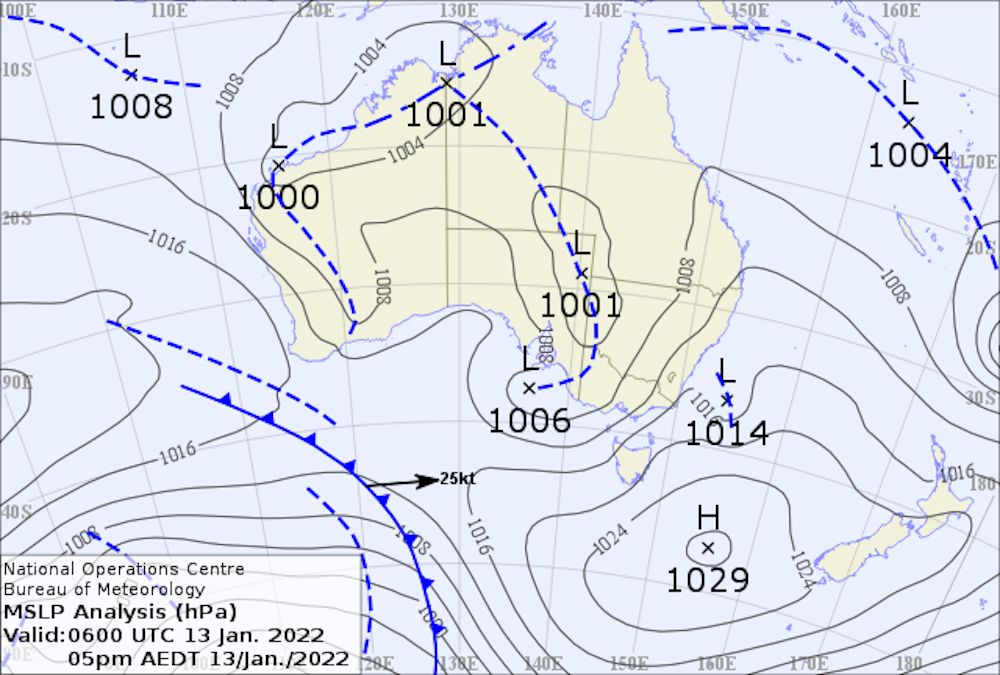
This weather chart from 13th January 2022 illustrates the conditions just half an hour before the record-equalling 50.7℃ was recorded. The blue dashed line marks the trough which meets the coast close to Onslow and helped bring in the hot air.
Bureau of Meteorology

In short, from the bakingly hot desert. South to south-easterly winds blew very hot air from the interior of the state up to Onslow. The wind came from an area that has had little to no rainfall since November, so the very hot air was also extremely dry.

Dry air kept the sun beating at full intensity by preventing any cloud cover or storm formation. The result? The temperature rose and rose through the morning and early afternoon, and the temperature spiked at over 50℃ just before 2.30pm local time.

Aren’t we in a cooler La Niña period?

Australia’s weather is strongly linked to conditions in the Pacific Ocean. At the moment we’re in a La Niña event where we have cooler than normal ocean temperatures near the equator in the central and east Pacific.

La Niña is typically associated with cooler, wetter conditions. But its effects on Australian weather are strongest in spring, when we had unusually wet and cool conditions over the east of the continent.

During summer the relationship between La Niña and Australian weather usually weakens, with its strongest impacts normally confined to the northeast of the continent.

During La Niña we typically see fewer and less intense heatwaves across much of eastern Australia, but the intensity of heat extremes in Western Australia is not very different between La Niña and El Niño.

The pattern of extreme heat in Western Australia and flooding in parts of Queensland is fairly typical of a La Niña summer, although temperatures over 50℃ are extremely rare.

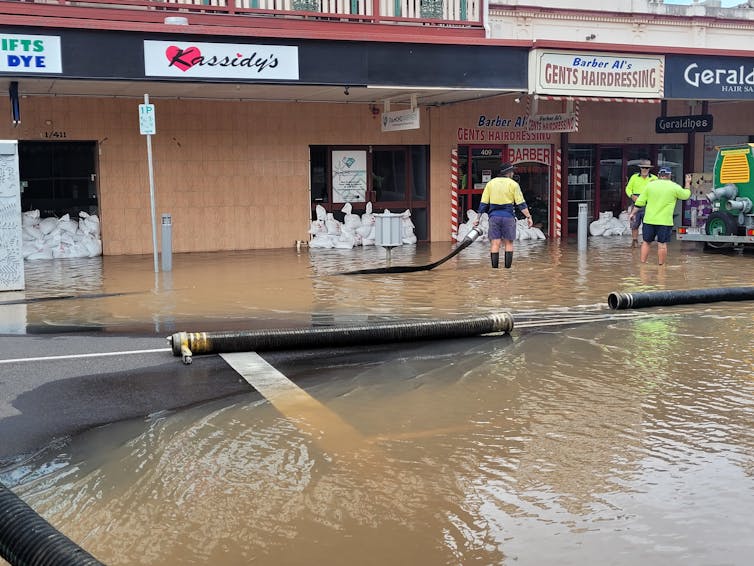
men pump water from flooded street
Recent flooding in Queensland is also typical of La Nina summers.
RAPID RELIEF TEAM

Climate change is cranking up the heat

Should these temperatures be a surprise? Sadly, no. Australia has warmed by around 1.4℃ since 1910, well ahead of the global average of 1.1℃.

In northern Australia, summer-average temperatures have not risen as much as other parts of the country, because summers in the Top End have also got wetter. That’s in line with climate change models.

When the conditions are right in the Pilbara, however, heat is significantly more extreme than it used to be. Heat events in the region have become more frequent, more intense, and longer-lasting, just as in most other regions.

Most of us have chosen not to live in Australia’s hottest areas. So you might think you don’t need to worry about 50℃ heatwaves. But as the climate continues to warm, heatwave conditions are expected to become much more common and extreme across the continent.

In urban areas, roads and concrete soak up the sun’s heat, raising maximum temperatures by several degrees and making for dangerous conditions.

Even if we keep global warming below 2℃ in line with the Paris Agreement, we can still expect to see our first 50℃ days in Sydney and Melbourne in coming years. In January 2020 the Western Sydney suburb of Penrith came very close, reaching 48.9℃.

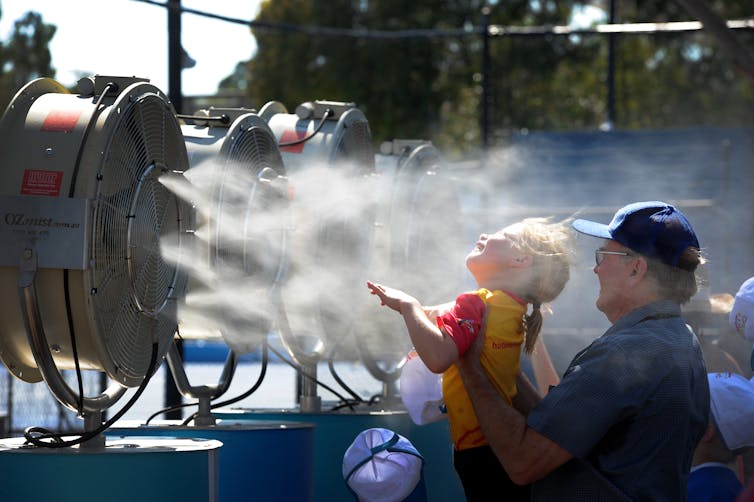
man holds child in front of cooling mist machine
Sydney and Melbourne will experience 50℃ days in coming years.
Joe Castro/AAP

As you know, it’s going to be very hard to achieve even keeping global warming below 2℃, given the need to urgently slash greenhouse gas emissions in the next decade.

As it stands, the world’s actions on emission reduction suggest we are actually on track for around 2.7℃ of warming, which would see devastating consequences for life on Earth.

We already know what we need to do to prevent this frightening future. The stronger the action to reduce greenhouse gas emissions globally – including by major carbon emitting countries such as Australia – the less the world will warm and the less Australian heat extremes will intensify. That’s because the relationships between greenhouse gas emissions, global temperatures and Australian heat extremes are roughly linear.

You may think Australians are good at surviving the heat. But the climate you were born in doesn’t exist any more. Sadly, our farms, wildlife, and suburbs will struggle to cope with the extreme heat projected for coming decades.

Let’s work to make this 50℃ record an outlier – and not the new normal.

The Conversation

Andrew King receives funding from the Australian Research Council and the National Environmental Science Program.

ref. This WA town just topped 50℃ – a dangerous temperature many Australians will have to get used to – https://theconversation.com/this-wa-town-just-topped-50-a-dangerous-temperature-many-australians-will-have-to-get-used-to-174909

Vital Signs. The 3 problems with fines for not reporting positive COVID tests

Source: The Conversation (Au and NZ) – By Richard Holden, Professor of Economics, UNSW

Shutterstock/The Conversation

The NSW government this week decreed that anyone returning a positive COVID-19 reading using a rapid antigen test must report their result (through the Service NSW app or website). Failing to do so can result in a $1,000 fine.

The new rule came into effect on January 12 (there will be a one-week grace period). In the first 24 hours more than 80,000 people registered positive tests (recorded since January 1). In one sense that’s a lot. But since we have no idea of the total number of tests taken – let alone the number with a positive result – it’s hard to calibrate.

The fine threat raises a number of questions, with the first being how will the government know if you test positive and don’t record it? On Wednesday, NSW Premier Dominic Perrottet admitted that it would be a hard law to enforce, saying:

there are obviously areas right across the state where there are laws that are harder to enforce than others, this is clearly one that will be harder to enforce, there’s no doubt about it.

Given this, it’s hard to know what the point of the announced penalty is. Indeed, both the economic theory and behavioural research research suggests it will achieve the opposite of its intention.

1. Fines act as a disincentive

Economists view these rules through the lens of the field of “contract theory”.

Rules create incentives that encourage or discourage certain behaviours. In this case, suppose you test positive. If you self-isolate as result, because that’s the right thing to do even without rules, then truthfully reporting the result is of no consequence to you (as long as it’s easy to do, which it is for most people).

But if you wouldn’t isolate, then truthfully reporting the results is of consequence. In NSW you face a $5,000 fine for failing to comply with obligations to self-isolate when diagnosed with COVID-19. Your choice is the low probability of a $1,000 fine for not reporting the result or the higher probability of a $5,000 fine for failing to isolate.

So there’s an individual disincentive to even taking the test at all – which is, after all, optional for most. This means fewer tests will be taken, the opposite of what authorities want.


Read more:
It’s still not too late to fix the rapid antigen testing debacle. Why the national cabinet decision is wrong and must be reversed


From the perspective of contract theory, therefore, this $1,000 fine is likely to reduce tests by those who are not willing or not able (perhaps because they have to work for financial reasons) to voluntarily isolate.

So you can bet that these folks will be calculating the odds of getting caught. This is the way some people think about parking fines, or thieves think about stealing bicycles. It’s a calculation involving the size of the penalty and the probability of getting caught.

2. Fines can turn off good behaviour

Some scholars, such as Harvard philosopher Michael Sandel, argue the very act of putting a dollar value on things causes people to think of them in a transactional way. It’s no longer “wrong” to park in a no-standing zone, there’s just a kind of fee for it. In other words, fines can destroy civic virtue.

A classic example of this comes from a study by behavioural economists
Uri Gneezy and Aldo Rustichini on ways to encourage parents to pick up their children from child-care centres on time.

Parents being late meant staff had to stay behind. The study involved some centres introducing fines to deter late pickups. But the fines actually led to more late pickups. Parents no longer felt so guilty. Being on time was no longer a social norm but a transaction. They could pay to disregard the expectation.


Read more:
What to do with anti-maskers? Punishment has its place, but can also entrench resistance


So, too, it might be with this week’s $1,000 fine rule. In the unlikely event of getting caught, some might see the fine as just “the cost of doing business”.

3. Fines can make a mockery of the law

A final consideration about the $1,000 fine for failing to report a positive RAT tests concerns the problem of laws that cannot be enforced. The NSW government concede the new rule will hard to police and is mostly about messaging.

“If we didn’t put a fine on it then people would say you’re not taking it seriously,” the minister for customer service said. But this is just turning a law into a bit of a joke. Laws being openly “mocked” damage the rule of law itself.

Getting rules right

These three complementary perspectives all point to the $1,000 fine for failing to report a positive rapid antigen test being a bad idea.

It’s good to make it convenient for people to do the right thing (that’s what the Service NSW app does). It’s good to encourage people to do the right thing. It would be really good if there were lots of RATs available (ideally for free or close to it) so people can have the information to empower and protect themselves, their families and their communities.

This does none of these things. It’s bad to enact a rule that makes a mockery of the law and likely to be counterproductive.

The Conversation

Richard Holden is President of the Academy of the Social Sciences in Australia.

ref. Vital Signs. The 3 problems with fines for not reporting positive COVID tests – https://theconversation.com/vital-signs-the-3-problems-with-fines-for-not-reporting-positive-covid-tests-174774

Still no justice for PNG sorcery burning victim Kepari Leniata after nine years

By Rebecca Kuku in Port Moresby

Nine years ago widespread publicity given to the public execution of Kepari Leniata, who was falsely accused of sorcery and burnt by a mob in broad daylight in Papua New Guinea’s third-largest city Mt Hagen, shocked people around the world.

The tragic death also highlighted the problem of Sorcery Accusation Related Violence (SARV) in the country.

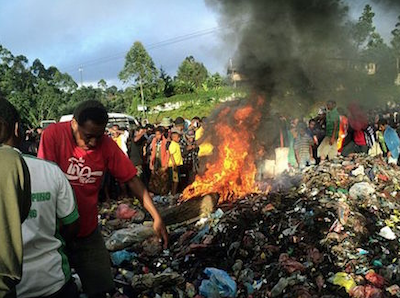
Leniata was a 20-year-old mother of two accused of sorcery. She was stripped naked, doused in petrol and burnt alive in front of hundreds of people on 6 February 2013.

She was wrongly accused of killing a six-year-old boy that died at Mt Hagen General Hospital and the boy’s relatives tortured her with a hot iron rod, stripped her naked, tied her hands and legs and threw her into a pile of burning tyres as hundreds watched.

The gruesome photos of Leniata being burnt alive were featured on the front pages of both the country’s national dailies.

Policemen at scene
Several policemen were at the scene but were helpless to do anything to save the women because they were outnumbered by the perpetrators.

Sorcery burning crime
The Papua New Guinea sorcery burning crime against Kepari Leniata on 6 February 2013. Image: Executions Today.

Four years later, in November of 2017, Leniata’s six-year-old daughter was tortured in Enga by several men after one of her friends became sick.

She was tortured for a week before word spread and she was rescued.

Her only crime was being the daughter of a woman accused of sorcery and burnt to death.

To this date, the perpetrators involved in both cases still remain at large.

Rebecca Kuku is a senior PNG Post-Courier reporter. Republished with permission.

Print Friendly, PDF & Email

Article by AsiaPacificReport.nz

Cook Islands reopens border with vaccinated New Zealanders

By Craig McCulloch, RNZ News deputy political editor

The Cook Islands has reopened its borders to fully vaccinated New Zealanders, but with less fanfare and more trepidation than last year’s kick-off.

The two-way quarantine-free travel bubble lasted just three months in 2021 before authorities pulled the pin due to Auckland’s delta outbreak of covid-19.

Since then, the island nation has vaccinated close to 100 percent of its eligible population, paving the way for today’s reconnection.

Resort operator Tata Crocombe told RNZ News today’s excitement was mixed with fear and apprehension given previous setbacks.

“We’ve been open and closed before. Omicron is running away in Australia. There’s so much uncertainty.”

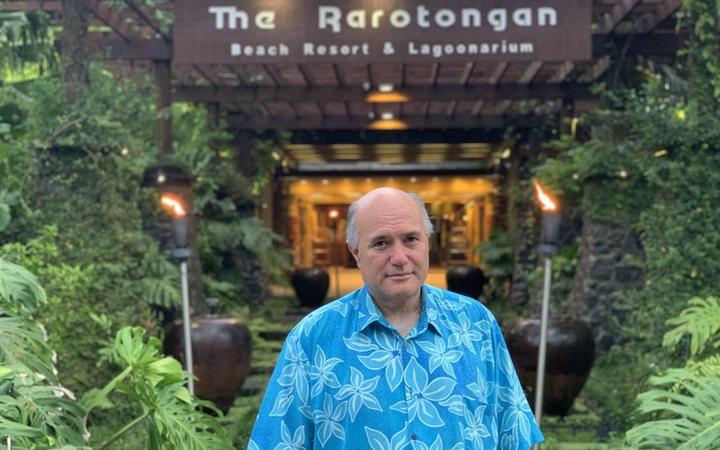
Crocombe, owner of the Rarotongan Beach Resort, said initial demand had been modest, below what he had hoped and expected.

“There’s no stampede [of tourists] this time. This has been very muted, very measured, very slow.”

Summer months typically quiet
He said the summer months were typically quiet for the Cook Islands, but believed demand was also down due to traveller fatigue with tourists delaying plans due to the constant uncertainty.

“If you listen to our colleagues in Queenstown, they’re not even getting the Aucklanders to move to Queenstown in the numbers they would’ve expected, so the market is definitely spooked.”

The Rarotongan managing director Tata Crocombe
The Rarotongan Beach Resort owner Tata Crocombe … “the market is definitely spooked.” Image: RNZ/Cook Islands News

Cook Islands Tourism Industry Council president Liana Scott said that concern was widespread in the industry.

“There’s a lot of nervousness … a little bit of fear,” Scott said. “There’s worry that we’re opening to very low occupancy.”

Scott, who manages the Muri Beach Club Hotel, said most properties were at 30-40 percent capacity over the next few months, but would pick up from April onwards.

“Maybe it’s a blessing in disguise,” she said.

“We haven’t had covid here … perhaps a slower start does allow us to adapt to some of the new procedures and practices that have come on board.”

Turn around for winter
Cook Islands Tourism Australasia general manager Graeme West said bookings were “reasonably quiet” for the next few months, but that would turn around as New Zealand moved into winter.

“Given we’re starting mid-January, the demand has been good, but not as crazy as last time. From April on, we’re seeing very good bookings.”

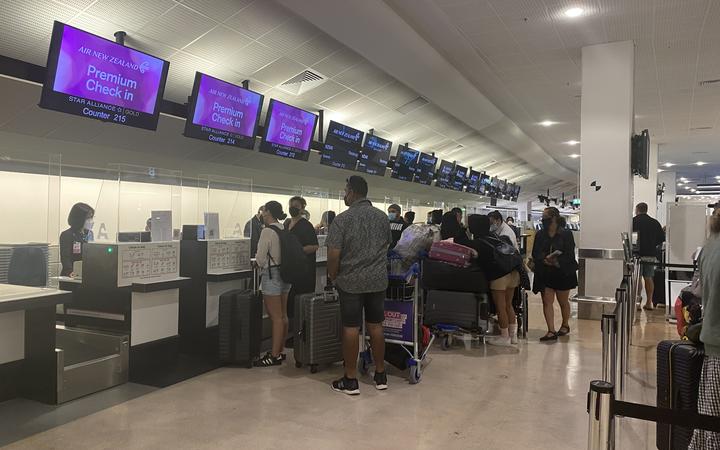
Passengers at check-in for the first flight to the Cook Islands.
Passengers at check-in for the first flight to the Cook Islands today. Image: Lydia Lewis/RNZ

House of Travel chief operating officer Brent Thomas said it would take a long time for international travel to return to pre-covid-19 levels, but the Cook Islands was well placed to bounce back.

“The Cook Islands itself is actually a relatively small destination in terms of its capacity so it’s not some place that takes a lot to fill it up.”

Air New Zealand’s chief operational integrity and safety officer David Morgan said the airline had “strong demand” for bookings this month, with “some seat availability in late January and February”.

The airline was offering a daily service between Auckland and Rarotonga but would adjust the schedule “where possible” as it monitored demand.

Only double-vaccinated travellers, from the age of 12 up, will be allowed into the Pacific nation, with a negative covid-19 test required no more than 48 hours before departure.

Once in Rarotonga, passengers will need to take a rapid antigen test before travelling on to Aitutaki.

This article is republished under a community partnership agreement with RNZ.

Print Friendly, PDF & Email

Article by AsiaPacificReport.nz

Tahiti’s Flosse banned from public office after latest court defeat

RNZ Pacific

France’s highest court has upheld a corruption conviction of French Polynesia’s former president Gaston Flosse, effectively ending his political career.

It confirmed a 2020 appeal court ruling in Tahiti, which had deprived Flosse of his eligibility to hold public office for five years after finding him and the current president Edouard Fritch guilty of abusing public funds.

As former and current mayors of the town of Pirae, Flosse and Fritch made the town administration pay for the water supply to the upmarket Erima neighbourhood, where Flosse lived.

Flosse had set up the scheme and Fritch allowed the abusive billing process to be continued until the practice was discovered in an audit in 2011. In the appeal court in 2020, Flosse had been given a two-year suspended prison sentence.

However, Fritch was allowed to stay in office, but both have been fined and have been ordered to jointly settle the water bill of US$820,000.

When the case went to court, Fritch was a defendant and, as the mayor of Pirae, he was also a complainant because in the civil case running alongside, the town sought to be reimbursed.

In Paris, the court did not accept Flosse’s arguments that the statute of limitations applied, and it rejected a claim that Fritch could not both be a complainant and an accused.

Losing the appeal in Paris, Flosse, who is 90, will not be able to contest this year’s French National Assembly elections nor next year’s territorial election.

Only last week, he had announced his candidacy for one of the three French Polynesian seats in the French legislature.

In 2014, Flosse had been declared ineligible for five years after another corruption conviction and hoped to avert a renewed such sanction by taking the matter to Paris.

He was forced to relinquish the presidency to his deputy Fritch, but the two politicians have since fallen out.

Fritch has since been re-elected president and mayor of Pirae.

This article is republished under a community partnership agreement with RNZ.

Print Friendly, PDF & Email

Article by AsiaPacificReport.nz

Omicron part of everyday life, say New Zealanders living overseas

By Ella Stewart, RNZ News reporter

New Zealanders living overseas say covid-19 is now part of everyday life as cases of the highly-infectious omicron variant steadily grow around the globe.

More than 307 million covid-19 cases have been confirmed since the pandemic began, with countries now breaking records for daily case numbers as leaders struggle to keep the new variant at bay.

Cantabrian Savannah Winter has been working as an au pair in Paris for about six months.

France is currently reporting around 300,000 cases each day, and while she is double vaccinated and has had her booster shot, she still caught covid-19 three months ago.

“Everyone I know, knows someone that has it and the kids I look after are constantly not at school because people in their class are getting it, so I’m thinking, ‘Oh am I going to get it again?’, we are just waiting and seeing if our kids test positive,” Winter said.

As omicron spread, the situation became overwhelming and there was a shortage of rapid-antigen testing, she said.

“All of the pharmacies are just inundated with people needing to get tested. I went to the gym this morning and I walked past a few pharmacies and there is just a line at 8am in the morning going around the street of people just lining up to get a test.”

About 10 percent effective
A study from the UK Health Security Agency found the Pfizer and Moderna vaccines were only about 10 percent effective at preventing symptomatic infection from omicron, 20 weeks after the second dose.

But two doses of those vaccines still provide good protection against severe illness, hospitalisation and death.

The study also found that boosters are up to 75 percent effective at preventing symptomatic infection.

In the US, the booster programme is well underway, but cases are still skyrocketing.

Ben Fitchett, 22, moved to Los Angeles in December.

“On my second night here, I caught it from a friend and over the period of that weekend until the week leading up to Christmas cases just exploded,” said Fitchett.

“Everyone seems to know someone that has it. Everyone is basically dropping like flies.”

WHO says not categorised as ‘mild’
Last week the World Health Organisation (WHO) said that while studies suggested omicron was less likely to make people seriously ill compared to previous variants, it should not be categorised as mild.

Fitchett said despite the high case numbers, people in Los Angeles were going about life as normal.

“It is a deadly virus. Some people will get it and it does react differently within people, but people don’t seem to be too worried about it here. Obviously, if you are immunocompromised, you are, but people are just living life as normal and then if you get it, you get it, and you just have to stay away from everyone else.”

In Australia, case numbers have also been rising exponentially, with the state of Victoria recording more than 40,000 cases yesterday.

Heather Jameson and her family are in a self-imposed lockdown in Melbourne to ensure they do not catch the virus before their family holiday.

“I personally hate the idea that I would be spreading something to immunocompromised people without my knowledge … so our own self imposed lockdown, while we are well, is purely to make sure that we don’t get it, and then risk passing it on should we have symptoms when we go away.”

Her children would almost certainly catch covid-19 once they returned to school next month, she said.

Case numbers blowing up
“Case numbers are just blowing up every day, to be honest it gives me a pretty high sense of anxiety when I’m looking at the actual numbers.

“We just have the sense that it is literally everywhere. A lot of work mates have had it, our direct neighbours have got it right now. It’s pretty panic inducing. We feel like we’re still in lockdown.”

New Zealanders should look after each other to ensure covid-19’s spread in Aotearoa remained contained, Jameson said.

To date, there have been 196 omicron cases detected at the border since December 1.

The Ministry of Health says there are also 217 border cases that have been caught still undergoing genome sequencing. Most are expected to be omicron.

This article is republished under a community partnership agreement with RNZ.

Print Friendly, PDF & Email

Article by AsiaPacificReport.nz

Crime won’t stop because of COVID. So how should we protect crime scene investigators?

Source: The Conversation (Au and NZ) – By Paola Magni, Senior Lecturer in Forensic Science, Murdoch University

COVID may have curtailed travel, hospitality, education and entertainment, but crime scene investigation never stops.

As a forensic scientist, researcher and lecturer, I know first-hand the risks and challenges crime scene investigation (CSI) teams have faced over the past two years as we’ve grappled with the realities of operating amid the threat of COVID.

CSI units present a unique challenge, as investigators often work at close quarters for prolonged periods. Yet surprisingly, until now, there has been very little adjustment to existing crime scene procedures.

When COVID first appeared, guidelines were quickly introduced in a range of countries for forensic autopsies of COVID-positive cases and the handling of infected biological samples, but not for CSI protocols more generally.

How should CSI teams be protected?

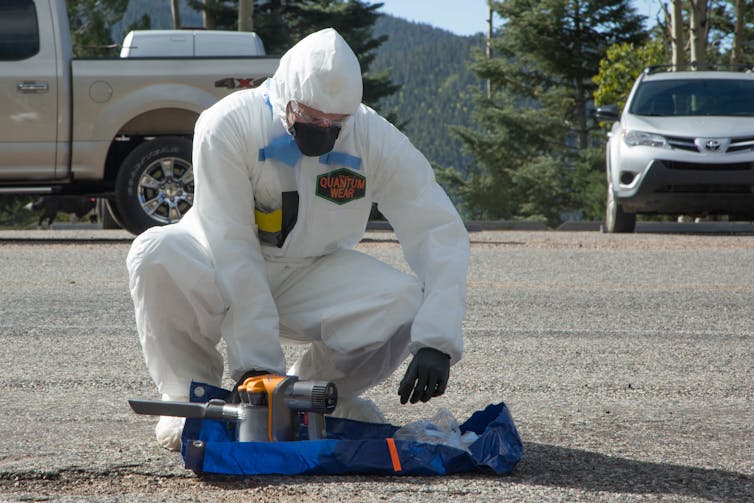
One possibility is CSI teams could adopt the existing protective measures used for chemical, biological, radiological or nuclear incidents.

Those measures were largely developed in the wake of the 9/11 terror attacks, and in response to broader concerns about terrorism that began to emerge in the 1990s.

But these safety precautions are burdensome, time-consuming and expensive, particularly for local and regional law enforcement agencies, and are not necessarily useful when dealing with a virus.

Officers dealing with identifying a potential toxic warfare agent, for example, would need much more bulky equipment than the standard PPE used to prevent COVID infections.

And let’s not forget the role of our law enforcement agencies also includes many other tasks, such as crime prevention and public order, not just identifying, securing and providing evidence in a criminal court. In an ideal world, each police department would have its own specialist forensic agents. But the reality, especially in small cities and remote areas, is that officers are trained for every task, including collecting forensic evidence.

Officer in anti-terrorism protective suit
Equipment designed to protect officers from terrorism-related hazards are often too impractical to use on a daily basis.
Katelyn Strange/US Army/Wikimedia Commons

All over the world during the 2020 lockdowns, minor offences such as burglaries and car thefts declined. But there was no drop in serious crimes, such as homicide and domestic violence.

In fact, COVID has arguably created new types of incidents to investigate, such as suspicious deaths in hotel quarantine.


Read more:
Some crimes have seen drastic decreases during coronavirus — but not homicides in the US


COVID looks set to be with us for some time yet. So what is the best way to protect our CSI teams in an affordable and practical way?

COVID-safe crime scenes

One place to look for ideas is Italy, which has so far recorded 5.6 million COVID cases and almost 140,000 deaths.

Together with Enrico Di Luise of the Italian Military Police Laboratory of Forensic Biology in Messina, I have published a world-first set of recommendations to make forensic operations possible across the different phases of crime scene management, from evidence collection in the field to analysis in the lab.

Briefly, our recommendations include:

  • CSI call policy. To ensure maximum preparedness, operations call centre staff should be trained to ask for information about the health conditions of the victim(s) and other people involved in the case, including their travel history and contact history.

  • Equipment preparation and sanitation. Any object, if contaminated at the scene of a crime, can potentially spread infection to the rest of the CSI team. To guard against this, team members should each be given their own individual set of equipment, such as briefcases, evidence boxes, chemical reagent sets, and ultraviolet flashlights. Disposable materials or tools should be treated as medical waste and placed in a designated area of the crime scene. Reusable items should be disinfected at the crime scene with sanitiser or bleach, and back at headquarters should be sanitised a second time by mechanical or chemical disinfection, or thermal sterilisation in an oven called an autoclave. This should be done in a dedicated room by staff wearing appropriate PPE.

  • Working groups. CSI team should be able to maintain independent forensic capacity, including experts in at least the areas of forensic biology, fingerprint analysis and photography, plus the ability for one team member to also take on the task of team leader. This is the only feasible way to maintain teams with full operational ability. Officers should be organised into small, non-interchangeable teams, so if one or more members of a particular team falls ill, another team can step in without risk of exposure.

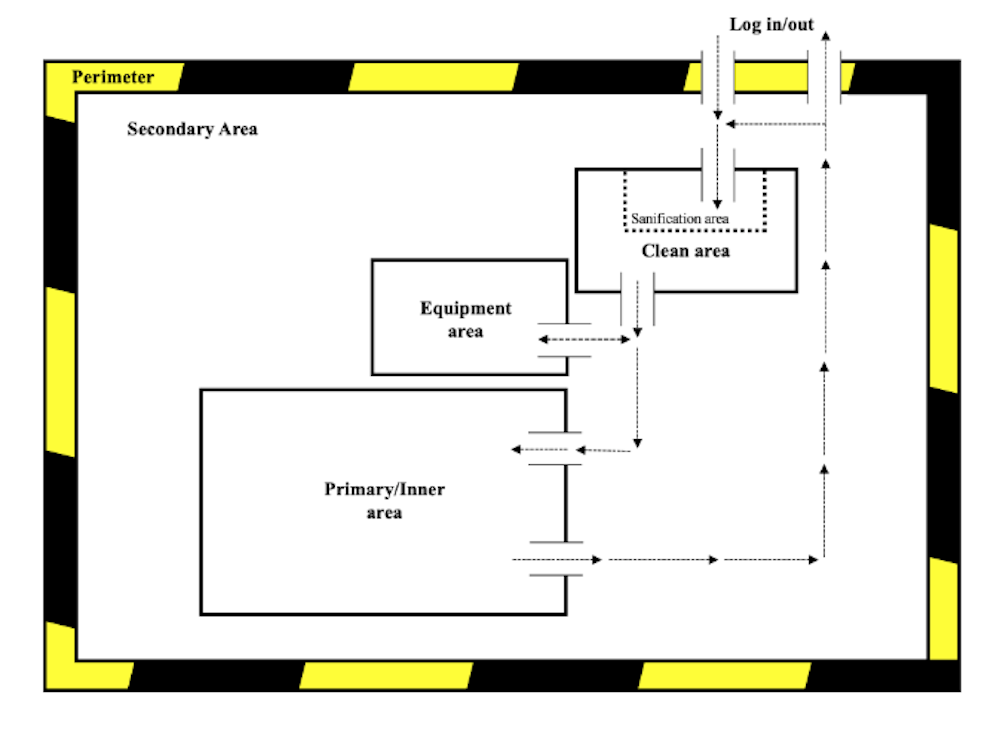
  • Procedure at the scene. Regardless of the scenario, CSI operators must consider every crime scene as a “hot zone”. Limiting the number of operators present in a room or small space at any given time is crucial. We have proposed a new general layout by which crime scenes can be divided into different areas, including one-way paths in and out, and a dedicated “clean area”.

Crime scene layout diagram
Suggested generic layout for a crime scene, to minimise chances of cross-infection with COVID.
Di Luise & Magni/Science & Justice
  • Chain of custody. A correct chain of custody for evidence is crucial to any forensic case. But different types of evidence have different infection potential, and often have to be treated in different labs, by different staff or on different time frames. Until now, details such as time and exact location have rarely been included in routine traceability recordings, but should now be included. These details could be vital in tracing the movement of potentially contaminated items.


Read more:
COVID has changed policing — but now policing needs to change to respond better to COVID


The Conversation

Paola Magni does not work for, consult, own shares in or receive funding from any company or organization that would benefit from this article, and has disclosed no relevant affiliations beyond their academic appointment.

ref. Crime won’t stop because of COVID. So how should we protect crime scene investigators? – https://theconversation.com/crime-wont-stop-because-of-covid-so-how-should-we-protect-crime-scene-investigators-174870

When will this COVID wave be over? 4 numbers to keep an eye on and why

Source: The Conversation (Au and NZ) – By Adrian Esterman, Professor of Biostatistics and Epidemiology, University of South Australia

Shutterstock

Before Australia’s recent changes to COVID testing, working out when we reached the peak of cases was, in principal, straightforward.

We looked at the numbers of new daily cases, diagnosed via PCR. From there, we worked out a range of other key indicators related to COVID spread, testing and hospitalisation – each dependent on those daily case numbers.

However, we’ve seen a huge spike in cases recently as people test positive using rapid antigen tests, especially as reporting their results to state health authorities is now possible and becoming mandatory.

So it will be a few days before we can measure some key numbers with any degree of accuracy. Only then will be able to say with confidence when we’ve hit the peak and are coming down the other side.

1. The number of new daily cases

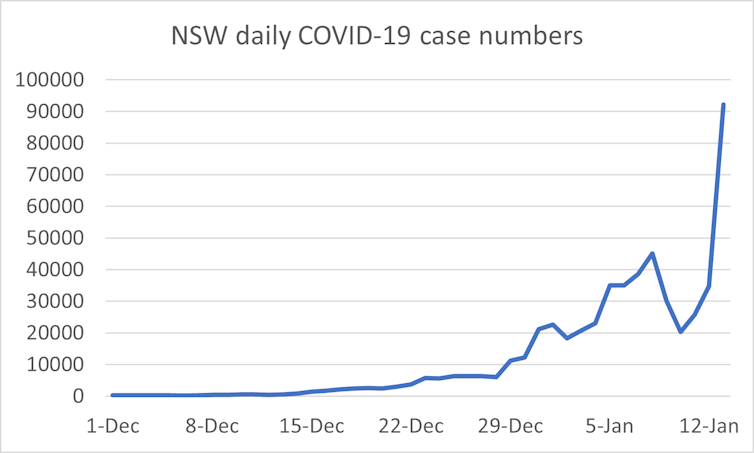
Most people by now would have seen an epidemic curve. It is a plot of the number of new cases of COVID-19 diagnosed each day. Here is the current epidemic curve for New South Wales.

Epidemic curve for NSW. Note the erratic case numbers in recent days.
Author provided/Adrian Esterman

As for the date, states and territories use different cut-off times for defining a 24-hour period. As authorities undertake investigations, the date of some cases can change. So, do we plot the daily announced case numbers, or the “true” case number after modifications?

That sounds complicated, but even more complicated is trying to define a case.

Before rapid antigen tests became available to the public for use at home, cases were diagnosed from positive PCR tests.

Then, because of huge queues at PCR testing hubs and many people, even those with symptoms, giving up and not getting tested, our testing system changed.

National Cabinet agreed to remove the requirement for a PCR test to confirm a positive rapid antigen test result.

As most states and territories move towards reporting both positive PCR tests and positive rapid antigen tests, we still need to iron out the bumps in the data. Potentially, someone could get both tests and be included twice!

The uncertainty in case numbers also affects other key parameters we use to monitor the current wave.

2. The Reff

The effective reproduction number (Reff) is a measure of how many other people on average each case infects. We want that to get below 1 to stop an outbreak. At its most simple, the Reff is today’s case number, divided by the case number four days ago.

Since we currently have so many problems defining and counting case numbers, it will be a few days before we can consistently interpret the Reff for each state and territory again.


Read more:
What are the symptoms of omicron?


3. Percentage of positive tests

This is the percentage of positive tests out of all COVID-19 tests taken. It is an important measure as it gives an indication of the amount of undiagnosed cases in the community.

The World Health Organization suggests if it is under 5%, things are under control.

When diagnosis was only by PCR test, we had good data on both the number of tests, and the number that were positive.

Now, states and territories are moving to reporting rapid antigen test results, it’s not so straightforward.

Some jurisdictions like Queensland only ask you to report a positive result. This means we no longer know how many tests were taken. SA Health is encouraging people to report negative tests as well, which is a much better system.

4. Number hospitalised

As Australia opens up, we’ve been told to pay more attention to COVID-19 hospitalisations, rather than just the case numbers. But even that gets complicated.

Clearly if someone tests positive for COVID-19 and then gets admitted to hospital, they are an admitted case. But what if they are admitted as a probable case?

And should hospitalisation numbers include people being managed in a hospital-in-the-home type arrangement? After all, they still take up hospital resources.

Finally, what if they were admitted for something else but subsequently diagnosed with COVID-19 in hospital?

Even more difficult is attempting to calculate the rate of COVID-19 hospitalisation. This is the number of people in hospital with COVID-19 divided by the number of people diagnosed. But you have to decide which time periods you’re talking about, another debate entirely.

There are similar issues with measuring the number and rates of people in intensive care.


Read more:
We’re seeing more COVID patients in ICU as case numbers rise. That affects the whole hospital


How do these changes impact modelling?

NSW Health recently released modelling to look at what’s ahead.

With current restrictions in place in NSW, the modelling shows a peak of 4,700 hospitalisations, with 273 in intensive care over mid- to late January.

It is unclear whether changes to testing rules have been factored into the modelling. However, it’s understood, even if the detection rate changes significantly, it doesn’t affect any projection of when the peak will be reached that much.

Modelling is therefore still likely to be reasonably accurate despite the changes to COVID testing. This is good news for other states and territories that rely on modelling results for planning.


Read more:
Scientific modelling is steering our response to coronavirus. But what is scientific modelling?


Where to from here?

A good start would be to have mandatory reporting of rapid antigen test results, both positive and negative. That way we can calculate the percentage of positive tests again.

The United Kingdom has a good system. After you take a rapid antigen test there, you scan a QR code on the pack and report the test results as positive, negative or void to a central government database.

Importantly, let’s have one national body responsible for defining, collecting and reporting COVID-19 statistics. It could be the Australian Institute of Health and Welfare. Better still would be to have our own Centre for Disease Control, which people like myself have been calling for for a long time.

Chris Billington, from the University of Melbourne, contributed to the section on modelling.

The Conversation

Adrian Esterman does not work for, consult, own shares in or receive funding from any company or organisation that would benefit from this article, and has disclosed no relevant affiliations beyond their academic appointment.

ref. When will this COVID wave be over? 4 numbers to keep an eye on and why – https://theconversation.com/when-will-this-covid-wave-be-over-4-numbers-to-keep-an-eye-on-and-why-174533

Fire management in Australia has reached a crossroads and ‘business as usual’ won’t cut it

Source: The Conversation (Au and NZ) – By Rachael Helene Nolan, Senior research fellow, Western Sydney University

Darren England/AAP

The current wet conditions delivered by La Niña may have caused widespread flooding, but they’ve also provided a reprieve from the threat of bushfires in southeastern Australia. This is an ideal time to consider how we prepare for the next bushfire season.

Dry conditions will eventually return, as will fire. So, two years on from the catastrophic Black Summer fires, is Australia better equipped for a future of extreme fire seasons?

In our recent synthesis on the Black Summer fires, we argue climate change is exceeding the capacity of our ecological and social systems to adapt. The paper is based on a series of reports we, and other experts from the NSW Bushfire Risk Management Research Hub, were commissioned to produce for the NSW government’s bushfire inquiry.

Fire management in Australia has reached a crossroads, and “business as usual” won’t cut it. In this era of mega-fires, diverse strategies are urgently needed so we can safely live with fire.

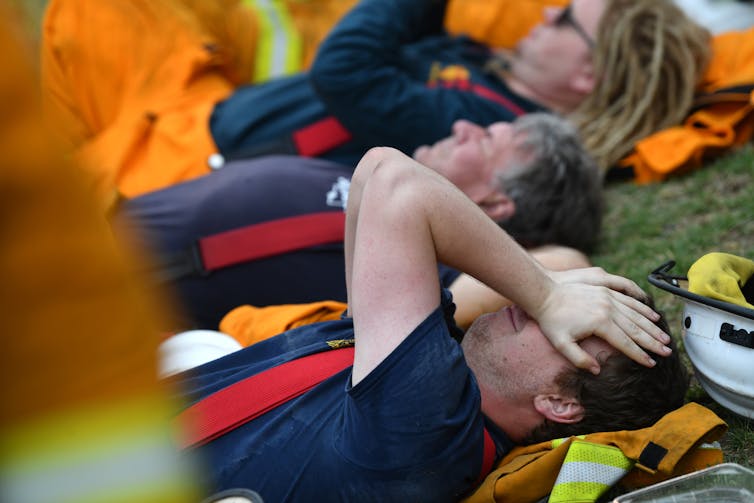
firefighter holds head while lying down
In the age of mega fires, new strategies are needed.
David Mariuz

Does prescribed burning work?

Various government inquiries following the Black Summer fires of 2019-20 produced wide-ranging recommendations for how to prepare and respond to bushfires. Similar inquiries have been held since 1939 after previous bushfires.

Typically, these inquiries led to major changes to policy and funding. But almost universally, this was followed by a gradual complacency and failure to put policies into practice.

If any fire season can provide the catalyst for sustained changes to fire management, it is Black Summer. So, what have we learnt from that disaster and are we now better prepared?

To answer the first question, we turn to our analyses for the NSW Bushfire Inquiry.

Following the Black Summer fires, debate emerged about whether hazard reduction burning by fire authorities ahead of the fire season had been sufficient, or whether excessive “fuel loads” – such as dead leaves, bark and shrubs – had been allowed to accumulate.

We found no evidence the fires were driven by above-average fuel loads stemming from a lack of planned burning. In fact, hazard reduction burns conducted in the years leading up to the Black Summer fires effectively reduced the probability of high severity fire, and reduced the number of houses destroyed by fire.


Read more:
Drought and climate change were the kindling, and now the east coast is ablaze


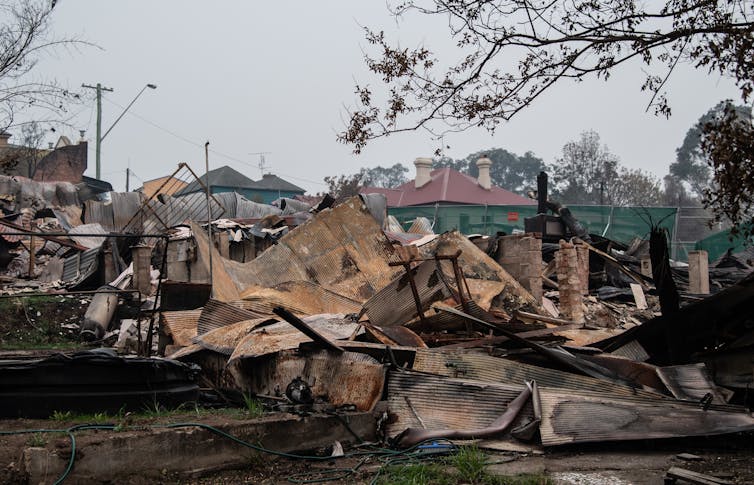
remains of homes destroyed by fire
Prescribed burning reduced the numbers of homes affected by fire.
James Gourley/AAP

Instead, we found the fires were primarily driven by record-breaking fuel dryness and extreme weather conditions. These conditions were due to natural climate variability, but made worse by climate change. Most fires were sparked by lightning, and very few were thought to be the result of arson.

These extreme weather conditions meant the effectiveness of prescribed burns was reduced – particularly when an area had not burned for more than five years.

All this means that hazard reduction burning in NSW is generally effective, however in the face of worsening climate change new policy responses are needed.

Diverse and unexpected impacts

As the Black Summer fires raged, loss of life and property most commonly occurred in regional areas while metropolitan areas were heavily affected by smoke. Smoke exposure from the disaster led to an estimated 429 deaths.

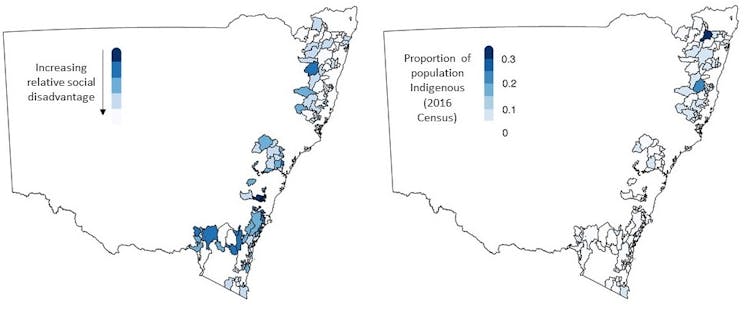
Socially disadvantaged and Indigenous populations were disproportionately affected by the fires, including by loss of income, homes and infrastructure, as well as emotional trauma. Our analyses found 38% of fire-affected areas were among the most disadvantaged, while just 10% were among the least disadvantaged.

We also found some areas with relatively large Indigenous populations were fire-affected. For example, four fire-affected areas had Indigenous populations greater than 20% including the Grafton, Eurobodalla Hinterland, Armidale and Kempsey regions.

Two maps illustrating (a) the index of relative social disadvantage, and (b) the proportion of affected population that was Indigenous (2016 Census)
Demographic characteristics of fire-affected communities in NSW.
https://doi.org/10.3390/fire4040097


Read more:
1 in 10 children affected by bushfires is Indigenous. We’ve been ignoring them for too long


The Black Summer fires burnt an unprecedentedly large area – half of all wet sclerophyll forests and over a third of rainforest vegetation types in NSW.

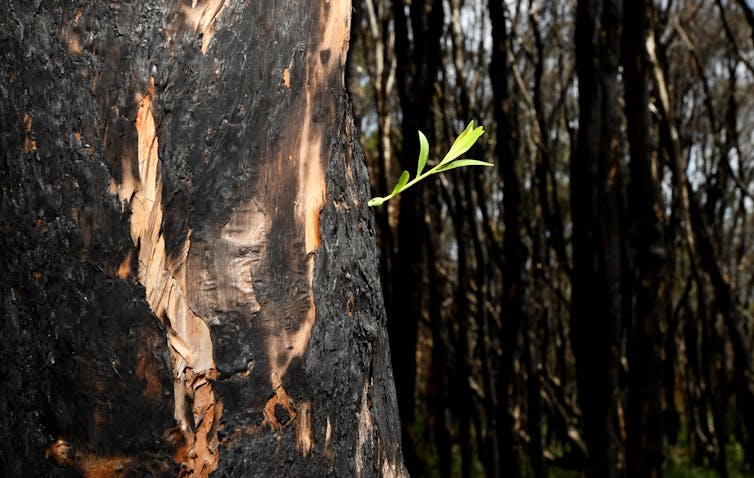
Importantly, for 257 plant species, the historical intervals between fires across their range were likely too short to allow effective regeneration. Similarly, many vegetation communities were left vulnerable to too-frequent fire, which may result in biodiversity decline, particularly as the climate changes.

green shoot sprouting from burnt trunk
Not all plant species can regenerate after too-frequent fire.
Darren England/AAP

Looking to the future

So following Black Summer, how do we ensure Australia is better equipped for a future of extreme fire seasons?

As a first step, we must act on both the knowledge gained from government inquiries into the disaster, and the recommendations handed down. Importantly, long-term funding commitments are required to support bushfire management, research and innovation.

Governments have already increased investment in fire-suppression resources such as water-bombing aircraft. There’s also been increased investment in fire management such as improving fire trails and employing additional hazard reduction crews, as well as new allocations for research funding.

But alongside this, we also need investment in community-led solutions and involvement in bushfire planning and operations. This includes strong engagement between fire authorities and residents in developing strategies for hazard reduction burning, and providing greater support for people to manage fuels on private land. Support should also be available to people who decide to relocate away from high bushfire risk areas.

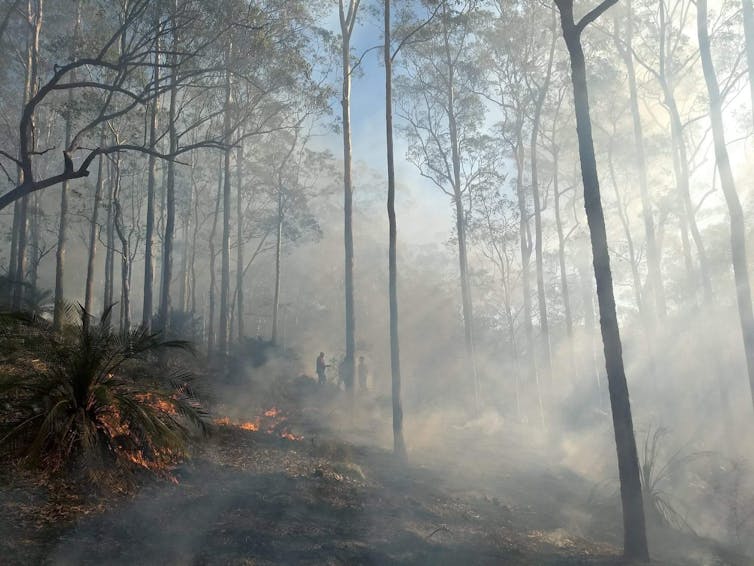
The Black Summer fires led to significant interest in a revival of Indigenous cultural burning – a practice that brings multiple benefits to people and environment. However, non-Indigenous land managers should not treat cultural burning as simply another hazard reduction technique, but part of a broader practice of Aboriginal-led cultural land management.

three figures in smoke-filled forest
Indigenous burning is part of a broader practice of Aboriginal-led land management.
Josh Whittaker

This requires structural and procedural changes in non-Indigenous land management, as well as secure, adequate and ongoing funding opportunities. Greater engagement and partnership with Aboriginal communities at all levels of fire and land management is also needed.

Under climate change, living with fire will require a multitude of new solutions and approaches. If we want to be prepared for the next major fire season, we must keep planning and investing in fire management and research – even during wet years such as this one.


Ross Bradstock, Owen Price, David Bowman, Vanessa Cavanagh, David Keith, Matthias Boer, Hamish Clarke, Trent Penman, Josh Whittaker and many others contributed to the research upon which this article is based.

The Conversation

Rachael Nolan receives funding from the Australian Research Council, NSW Rural Fire Service, ACT Parks and Conservation and the Hermon Slade Foundation. She is a member of the NSW Bushfire Risk Management Research Hub, which is supported by funds from the NSW Department of Planning, Industry and Environment

Grant Williamson receives funding from the NSW Bushfire Risk Management Research Hub, funded by NSW Dept of Planning, Industry and Environment.

While based at UOW Katharine Haynes received funding from the NSW Bushfire Risk Management Research Hub, supported by the NSW Dept of Planning, Industry and Environment. Katharine is now the NSW Node Research Manager for Natural Hazards Research Australia.

Mark Ooi receives funding from the Australian Research Council and the Commonwealth Department of Agriculture, Water and the Environment. He is a member of the NSW Bushfire Risk Management Research Hub, which is supported by funds from the NSW Department of Planning, Industry and Environment.

ref. Fire management in Australia has reached a crossroads and ‘business as usual’ won’t cut it – https://theconversation.com/fire-management-in-australia-has-reached-a-crossroads-and-business-as-usual-wont-cut-it-174696

What does ‘academic freedom’ mean in practice? Why the Siouxsie Wiles and Shaun Hendy employment case matters

Source: The Conversation (Au and NZ) – By Jack Heinemann, Professor of Molecular Biology and Genetics, University of Canterbury

shutterstock

Two high-profile University of Auckland academics raised important questions about academic freedom with their complaint to the Employment Relations Authority (ERA) that their employer had failed its duty of care to them.

Associate Professor Siouxsie Wiles and Professor Shaun Hendy have become well known for their work explaining the science behind COVID-19 and guiding the public and government response.

But not everyone has agreed with that response or valued their contribution, and the academics have been threatened by what they have called “a small but venomous sector of the public”. They argued the university had not adequately responded to their safety concerns and requests for protection.

The case has now been referred to the Employment Court and the outcome for all parties remains unknown.

My focus is on the initial determination by the ERA, which referred to a letter from the university to Wiles and Hendy in August 2021 that urged them “to keep their public commentary to a minimum and suggested they take paid leave to enable them ‘to minimise any social media comments at present’.”

According to the ERA, this advice was “apparently given after [the university] received recommendations from its legal advisors to amend its policies so as to ‘not require’ its employees to provide public commentary, in order to limit its potential liability for online harassment.”

The ERA also noted the university “says that the applicants are not ‘expected’ or required to provide public commentary on COVID-19 as part of their employment or roles with the respondent, but it acknowledges they are entitled to do so.”

This issue is central to my concerns about academic freedom.

Freedom and risk

The academics argued that the university is statutorily required to “accept a role as critic and conscience of society” – as is set out under section 268 of the Education and Training Act 2020.

Universities routinely fulfil this role when academic staff and students state controversial or unpopular opinions and the results of their independent scholarship. Asking academics to step back from those roles to avoid risk seems to acknowledge that the threat derives from them doing their work.

I also fail to see how it would mitigate risk. An electrician who tried to mitigate the risk of electrocution by spending less time around wires hasn’t actually reduced the risk of electrocution when doing their job. They’ve just reduced the amount of time they are doing their job.


Read more:
Are New Zealand’s universities doing enough to define the limits of academic freedom?


The Auckland academics are not the first to receive threats because of their “critic and conscience” activities. In the US, my former boss Dr Anthony Fauci says he, too, has received death threats from members of the public because of his work on the pandemic.

Less visible but still damaging threats or derogatory comments can come from within the university community, too. Systemic discrimination based on gender and race is well documented in academia. And increasingly, there are conflicts arising out of commercial interests in public research organisations.

Elsewhere it can be even more dangerous, such as the state-sponsored attacks on academics reported in Turkey. As a fellow scientist, I empathise with colleagues forced into the spotlight by virtue of their expertise or conscience.

Uses and limits of institutional power

Universities provide an important protection of academic freedom by not using their power as employers to stifle opinion. But it’s not enough. Universities should be more active in enabling academics to fulfil their role as critic and conscience of society so that, as expected by parliament, academic freedom is “preserved and enhanced”.

Shaun Hendy.
GettyImages

But there are also limits. No university in Aotearoa New Zealand has the scale to protect its students and staff from the concerted actions of a hostile country, a multi-billion dollar multinational company, or even the whispers of co-conspirators at coffee breaks during the ranking of grants.

What universities should do cannot exceed what they can do.

A coalition of government, universities, unions, staff and students needs to work together to redefine what can be done.


Read more:
Ministerial interference is an attack on academic freedom and Australia’s literary culture


The government could reaffirm its commitment to critic-and-conscience activities by creating or re-purposing funding explicitly for these. Accountability will follow because universities would be required to expose that activity to public oversight.

The expectations of the university and the government to preserve and enhance academic freedom should become a normal conversation.

The risk is governments might want to influence what does and does not constitute being a critic and conscience of society, and use funding to stifle criticism of its policies. While this risk exists already, the temptation to constrain academic freedom could become stronger.

But balance would be provided by using the United Nations’ higher education declaration as a benchmark, through the transparency of the funding accountability exercise, and the declared precondition the funding allocation process be subject to ongoing and open scrutiny by university staff and students.


Read more:
Academic freedom is under threat around the world – here’s how to defend it


Accepting risk with freedom

Universities would be expected to use their additional resources to enable students and staff, as safely as possible, to use their academic freedom for public service.

Jurisdictional responsibilities could be negotiated between universities and government so that, where appropriate, a threat requiring more than campus security would be covered by the country’s police or defence resources.

But students and staff have some responsibilities, too. The university community cannot and should not leave its own protection to others. It needs to take a greater role in self-policing prejudice, privilege and conflicts of interest within the academic community itself.

Confronting the ultimate holders of power within their own academies and professional bodies will be the most painful action for members. But it would be worse for the community to fail in this and therefore do less as the critic and conscience of society.

If the use of academic freedom did not create risk, parliament would not have needed to legislate for its protection. But that risk should not be shouldered by Wiles and Hendy, or anyone else, alone.

The Conversation

Jack Heinemann does not work for, consult, own shares in or receive funding from any company or organization that would benefit from this article, and has disclosed no relevant affiliations beyond their academic appointment.

ref. What does ‘academic freedom’ mean in practice? Why the Siouxsie Wiles and Shaun Hendy employment case matters – https://theconversation.com/what-does-academic-freedom-mean-in-practice-why-the-siouxsie-wiles-and-shaun-hendy-employment-case-matters-174695

The 3 problems with fines for not reporting positive COVID tests

Source: The Conversation (Au and NZ) – By Richard Holden, Professor of Economics, UNSW

Shutterstock/The Conversation

The NSW government this week decreed that anyone returning a positive COVID-19 reading using a rapid antigen test must report their result (through the Service NSW app or website). Failing to do so can result in a $1,000 fine.

The new rule came into effect on January 12 (there will be a one-week grace period). In the first 24 hours more than 80,000 people registered positive tests (recorded since January 1). In one sense that’s a lot. But since we have no idea of the total number of tests taken – let alone the number with a positive result – it’s hard to calibrate.

The fine threat raises a number of questions, with the first being how will the government know if you test positive and don’t record it? On Wednesday, NSW Premier Dominic Perrottet admitted that it would be a hard law to enforce, saying:

there are obviously areas right across the state where there are laws that are harder to enforce than others, this is clearly one that will be harder to enforce, there’s no doubt about it.

Given this, it’s hard to know what the point of the announced penalty is. Indeed, both the economic theory and behavioural research research suggests it will achieve the opposite of its intention.

1. Fines act as a disincentive

Economists view these rules through the lens of the field of “contract theory”.

Rules create incentives that encourage or discourage certain behaviours. In this case, suppose you test positive. If you self-isolate as result, because that’s the right thing to do even without rules, then truthfully reporting the result is of no consequence to you (as long as it’s easy to do, which it is for most people).

But if you wouldn’t isolate, then truthfully reporting the results is of consequence. In NSW you face a $5,000 fine for failing to comply with obligations to self-isolate when diagnosed with COVID-19. Your choice is the low probability of a $1,000 fine for not reporting the result or the higher probability of a $5,000 fine for failing to isolate.

So there’s an individual disincentive to even taking the test at all – which is, after all, optional for most. This means fewer tests will be taken, the opposite of what authorities want.


Read more:
It’s still not too late to fix the rapid antigen testing debacle. Why the national cabinet decision is wrong and must be reversed


From the perspective of contract theory, therefore, this $1,000 fine is likely to reduce tests by those who are not willing or not able (perhaps because they have to work for financial reasons) to voluntarily isolate.

So you can bet that these folks will be calculating the odds of getting caught. This is the way some people think about parking fines, or thieves think about stealing bicycles. It’s a calculation involving the size of the penalty and the probability of getting caught.

2. Fines can turn off good behaviour

Some scholars, such as Harvard philosopher Michael Sandel, argue the very act of putting a dollar value on things causes people to think of them in a transactional way. It’s no longer “wrong” to park in a no-standing zone, there’s just a kind of fee for it. In other words, fines can destroy civic virtue.

A classic example of this comes from a study by behavioural economists
Uri Gneezy and Aldo Rustichini on ways to encourage parents to pick up their children from child-care centres on time.

Parents being late meant staff had to stay behind. The study involved some centres introducing fines to deter late pickups. But the fines actually led to more late pickups. Parents no longer felt so guilty. Being on time was no longer a social norm but a transaction. They could pay to disregard the expectation.


Read more:
What to do with anti-maskers? Punishment has its place, but can also entrench resistance


So, too, it might be with this week’s $1,000 fine rule. In the unlikely event of getting caught, some might see the fine as just “the cost of doing business”.

3. Fines can make a mockery of the law

A final consideration about the $1,000 fine for failing to report a positive RAT tests concerns the problem of laws that cannot be enforced. The NSW government concede the new rule will hard to police and is mostly about messaging.

“If we didn’t put a fine on it then people would say you’re not taking it seriously,” the minister for customer service said. But this is just turning a law into a bit of a joke. Laws being openly “mocked” damage the rule of law itself.

Getting rules right

These three complementary perspectives all point to the $1,000 fine for failing to report a positive rapid antigen test being a bad idea.

It’s good to make it convenient for people to do the right thing (that’s what the Service NSW app does). It’s good to encourage people to do the right thing. It would be really good if there were lots of RATs available (ideally for free or close to it) so people can have the information to empower and protect themselves, their families and their communities.

This does none of these things. It’s bad to enact a rule that makes a mockery of the law and likely to be counterproductive.

The Conversation

Richard Holden is President of the Academy of the Social Sciences in Australia.

ref. The 3 problems with fines for not reporting positive COVID tests – https://theconversation.com/the-3-problems-with-fines-for-not-reporting-positive-covid-tests-174774

Grattan on Friday: Government management of Omicron blighted by false assumptions, bad planning

Source: The Conversation (Au and NZ) – By Michelle Grattan, Professorial Fellow, University of Canberra

Australia’s journey through Omicron is like the bus tour from hell. Steering awry, seat belts forgotten or not working, and the driver’s patter wearing thin with stressed passengers.

Eventually we’ll see the back of the boggy ground on this outback track. But in worse shape and at higher cost than the Morrison government was suggesting only weeks ago.

“Omicron is a gear change and we have to push through,” Prime Minister Scott Morrison said on Monday. “You have two choices here: you can push through or you can lock down. We’re for pushing through.”

Surveying the present shambles, you’d have to conclude the gearbox is shot.

Morrison’s “either-or” dichotomy is simplistic and misleading, trying to disguise the failure to have been better prepared with a more nuanced response.

It wasn’t “either-or”. It was about managing to best effect a transition that must be made to the so-called “living with COVID” new world. The challenge was to find the right settings on a spectrum of choices.

So what went wrong? Almost everything, it seems. Federal and state governments share blame, but as PM, Morrison has to shoulder prime responsibility.

After being able to pride itself on (with some notable exceptions) coping with COVID well in the pandemic’s earlier stages, Australia has suddenly jumped from having minimal rates to widespread infection in the community (excluding Western Australia).

Obviously this Omicron journey was going to be rough. But surely it did not have to be as bad as we’re experiencing on multiple fronts.

Earlier lessons weren’t properly learned. Planning has been woeful. The relationship between health and the economy was misread.

Morrison’s much vaunted “national plan” of last year (admittedly formulated when we were in the Delta stage) put near total faith in vaccination. Vaccination has been transformational, reducing the severity of illness and saving lives. But it doesn’t stop the transmission of the highly-infectious Omicron, which can still hobble the country.

As Christmas approached, and on the back of a good economic bounce-back from the lockdowns, the federal government wanted people spending as much as possible of their stored-up savings as a further stimulus.

In the biggest state, new NSW Premier Dominic Perrottet was particularly gung ho about achieving maximum freedom as quickly as possible.

But soon the catch-22 emerged. If Omicron is ripping through, people might not be locked down but many will choose or be forced to behave as though they are – doing less, tightening their purse strings.

The lack of preparation has been even more stunning than the miscalculation.

The future need for rapid antigen tests (RATs) was anticipated months ago. Yet we’ve been hit with an acute shortage, just as delays lengthened in getting results from PCR tests.

After the vaccination stuff-ups, you’d have thought federal and state governments would have pulled out all stops to get enough RATs. But no.

Without denying the importance of RAT results being collected, there was some irony in NSW this week rushing to announce fines for people who fail to record these – when they can’t readily secure the tests. Now the NSW government concedes its policy won’t be enforceable – the policy was “a line-ball call”, said one NSW minister.

It’s great that younger children are currently getting vaccinated. But who thought this would not put immense pressure on already overloaded GPs, with many parents preferring to take their kids to a doctor than elsewhere?

That job won’t be finished by the end of the holidays. But Morrison is desperate for children to be in school. Treasury told Thursday’s national cabinet “current arrangements could see 10% of Australia’s workforce, including many workers in critical supply sectors, withdrawn from the workforce”. If schools didn’t open that could add another 5%. Queensland and South Australia have already put back their school start dates.

Morrison late last year argued that with a very high vaccination rate we shouldn’t concentrate on case numbers but on hospitalisations rates, much lower than in earlier waves.

But with skyrocketing infections, the absolute numbers in hospital are going to weigh down the system, as well as pushing aside other care, notably elective surgery.

This is happening while the wildfire infection takes out large numbers of health care workers, directly through illness or indirectly through furlough.

When the PM last week said he would “strongly encourage” people with COVID to contact their GP, doctors’ phones ran hot. The medicos weren’t impressed with the prime ministerial referral system.

The narrative that most people wouldn’t be very ill so the health system and the economy should be fine was always problematic.

It didn’t take enough account of how everything connects to everything else in this pandemic, and how the interconnections are multiplied a hundred fold when the numbers become so high. In just one example, lack of RATs weaken supply chains.

COVID is hitting these chains in a way inconceivable in 2020. Morrison this week personally led talks on the supply aspect of the crisis.

At the start of the pandemic, Australian governments prided themselves on following the health advice. Now the health considerations are following the economic and political ones.

Isolation rules and close contact definitions are being continually changed to keep the wheels turning – whether they are the wheels of the health system (trying to keep enough workers on the job) or those of the transports taking goods to the supermarkets.

But the more you dilute these rules – even for very good reasons – the more infections can be expected to increase, leading to fresh problems and constraints.

Morrison acknowledged on Thursday, after the latest alterations: “The less restrictions you put on people to get them at work, the more pressure that can potentially put on your hospital system. And vice-versa.

“The more you try to protect your hospital system, the more people you’re taking out of work, which disrupts supply chains. So this is a very delicate balance that needs to be constantly recalibrated.”

The Omicron wave is expected to “peak” within weeks. But how much planning is underway for variants that might follow?

Assuming there is not some new variant soon, the government is banking on things then calming down before the election.

Work is underway on the late-March budget with its election sweeteners, although Treasurer Josh Frydenberg presumably has been a little slowed this week by experiencing a bout of COVID himself.

Morrison is hoping that in a May election he can escape or minimise the blame for the gross mismanagement of the Omicron wave. But “long COVID” is a nasty illness for those who get it, and it could have a harsh political variant.

The Conversation

Michelle Grattan does not work for, consult, own shares in or receive funding from any company or organisation that would benefit from this article, and has disclosed no relevant affiliations beyond their academic appointment.

ref. Grattan on Friday: Government management of Omicron blighted by false assumptions, bad planning – https://theconversation.com/grattan-on-friday-government-management-of-omicron-blighted-by-false-assumptions-bad-planning-174876

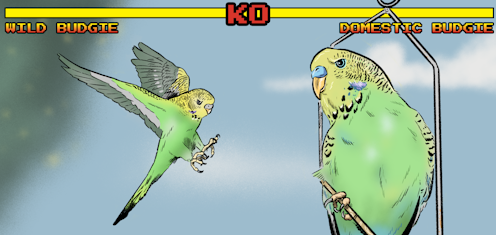
In a fight between a wild and a domestic budgie, whose feathers would fly?

Source: The Conversation (Au and NZ) – By Penny Olsen, Honorary Professor in the Division of Ecology and Evolution, Australian National University

Wes Mountain/The Conversation, CC BY-ND

Who would have thought the budgerigar, Australia’s most petite parrot and a denizen of our arid and semi-arid inland, would become the most popular pet bird in the world?

The budgerigar’s world domination began in 1840 when British ornithologist John Gould returned to England from the Australian colonies. With him were two budgerigars which had survived the months at sea.

As Gould later wrote in a letter to a relative, the pair were “in exuberant voice and the most animated cheerful little creatures you can possibly imagine”.

Gould showed the birds off at scientific meetings and visits to stately homes, attracting much interest and envy.

By the 1860s, collectors had discovered many of the birds’ breeding grounds across Australia’s interior and the holds of ships from Adelaide to Europe were often filled with thousands of budgies. In the 1880s, fanciers in England and Europe were breeding budgerigars and budgie farms were producing vast numbers for sale as pets.

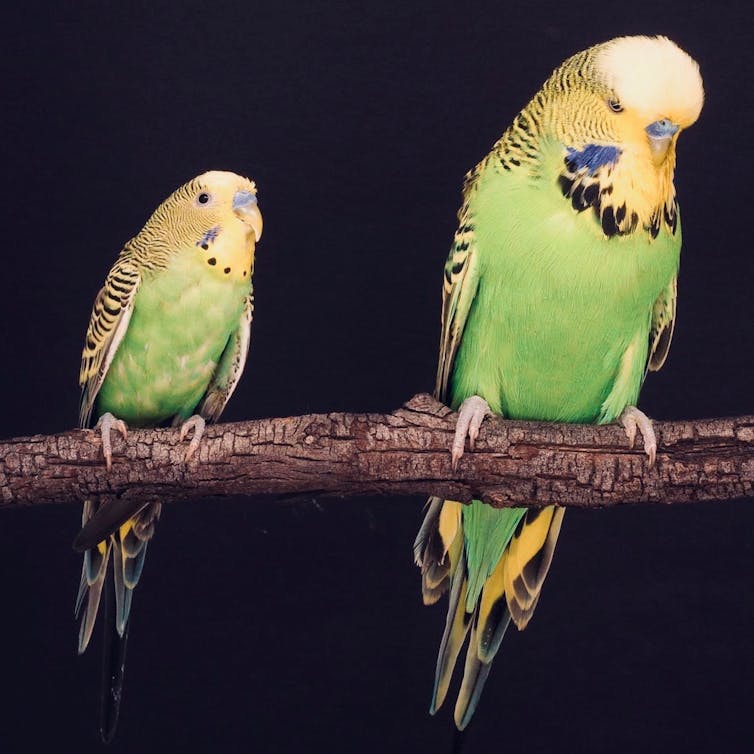
After 150 years of selective breeding in captivity, including as an exhibition bird, the domestic budgie would now be almost unrecognisable to its wild cousin. So in the unlikely event of a confrontation between the two, whose feathers would fly?

A wild and domestic budgerigar perched on a branch
A wild-type budgerigar, left, which differs starkly to its large domestic cousin, right.
Roland Seitre

Battle of the budgerigars – in the wild

Outside captivity, the wild budgie would defeat its domesticated doppelganger without ruffling a feather. Wild budgies are swift and agile, with a slightly forward-leaning posture always ready to take off. By comparison, pet budgies are slower and less athletic – particularly show budgies, which can barely fly and are bred to stand upright.

Show budgies do have one factor that could possibly work in their favour: size. They’re bred big and bulky, weighing in at about 55 grams, compared to the more slender wild and pet budgies at about 30 grams. But given show budgies are bred to be placid, they’re unlikely to throw their supersized weight around.

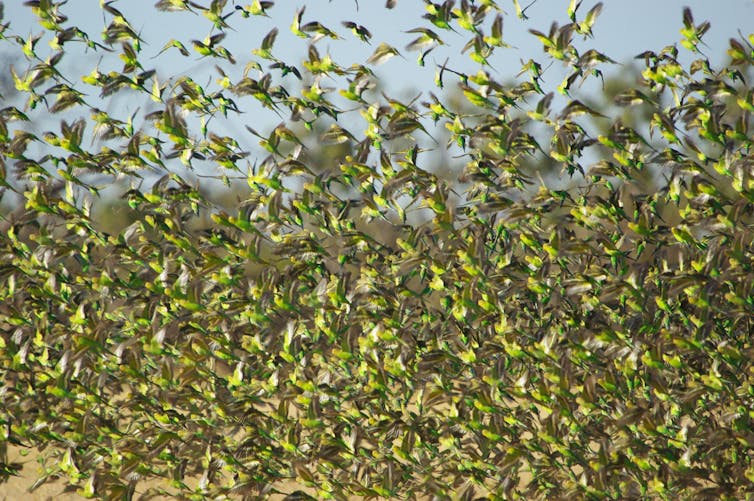
And while wild budgies are smaller than a show or pet budgie, their ability to dodge a predator is considerable – especially when they are in a coordinated, wheeling flock.

In the 1870s in South Australia, for example, wild budgies even managed to dodge gun club shooters. Club members complained budgies were too small and swift, and hard to follow because their colour blended with the local vegetation. Eventually they abandoned them for pigeons.

But what of the pet budgies’ purported psychic powers – could they be used to outwit an opponent on the battlefield?

In late Victorian London, budgerigars were popular tellers of fortunes. Their keepers, often migrant women, earned a penny by getting their budgie to choose a predictive note from among many. Clairvoyant budgies can still be found eking out a living in Iran, Mexico, China and elsewhere.

Of course, there’s no evidence to suggest pet budgies can actually predict the future. In fact in a battle outside captivity, wild budgies are more likely to display psychic-like prowess. Flocks of wild budgies have an uncanny ability to find distant water and fresh seeding grasses, travelling far as the country dries out.


Read more:
Cracked it! A 30-year cold case involving an egg and the mysterious Night Parrot


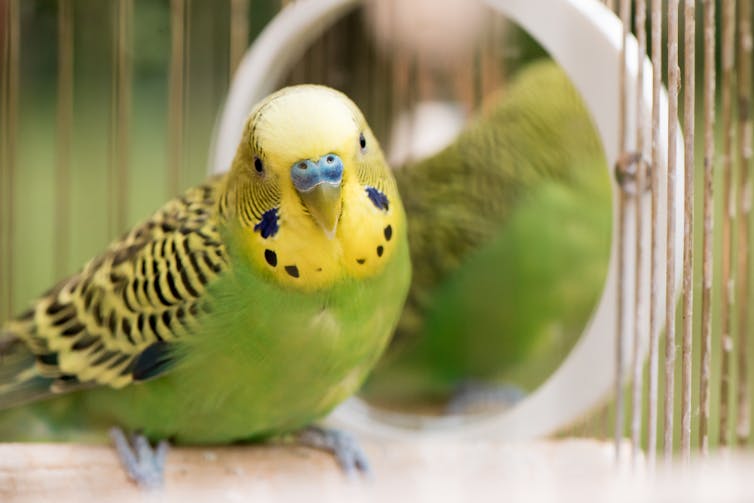
budgie in a cage
Pet budgerigars were popular fortune tellers In late Victorian London.
Shutterstock

The budgie battle continues – in captivity

Given domesticated budgerigars don’t survive long in the wild, the most likely confrontation would occur in captivity.

Individual budgies – particularly females – can be territorial, particularly when breeding. So the most likely squabble would occur when a wild budgie was caged with a female pet budgie.

In captivity, the odds of victory are stacked against the wild budgie. Away from the safety of the flock, it would be timid and nervous, in contrast to its domesticated cousin which is likely to be confident, cheeky and attention-seeking.

The pet might bully the wild bird by raising her wings, hissing, biting, chasing or picking at the other bird’s feathers, as well as keeping it from food and drink.

Pet budgies have another advantage tucked into their feathers: the gift of the gab. The respiratory system of all budgerigars allows an unbroken stream of chatter or song. Wild birds apparently do not mimic, however pet budgies – particularly males – can be taught to mimic human speech.

A flock of wild budgerigars
Wild budgerigars apparently do not mimic.
Ann BrittonAAP

A baby-blue budgie named Puck holds the world record for vocabulary: 1,728 words. Like most clever budgies, he not only mimicked but created his own phrases and sentences. Such a champion talker would simply out-prattle a wild opponent!

And what if the confrontation took place in the show ring or pet shop, where the battle is for the judge’s/buyer’s eye? Sadly for the wild budgie, its sleek, standard green and gold plumage wouldn’t cut it in this competition class.

Pet budgies come in myriad colours except red and black. They also bear many variations in markings – with names such as clearbody, lacewing, yellowface, spangle and pied – which can occur separately or in combination.

But in the arena, show budgies are the real exhibitionists. Show budgies are selectively bred to feature bouffant hairdos. Sometimes fringed or crested, the hairdo makes the head appear larger obscures the eyes and sometimes even the beak.

Selection has also ensured that show budgies bear bright blue cheek-patches and black necklace spots of highly exaggerated size. And if that’s not enough, their owners will also pluck and trim the plumage before a show.


Read more:
Ever wondered who would win in a fight between a dingo and a wolf? An expert explains


The Conversation

Penny Olsen does not work for, consult, own shares in or receive funding from any company or organisation that would benefit from this article, and has disclosed no relevant affiliations beyond their academic appointment.

ref. In a fight between a wild and a domestic budgie, whose feathers would fly? – https://theconversation.com/in-a-fight-between-a-wild-and-a-domestic-budgie-whose-feathers-would-fly-171956

Why one man with ‘god-like’ powers decides if Novak Djokovic can stay or go

Source: The Conversation (Au and NZ) – By Mary Anne Kenny, Associate Professor, School of Law, Murdoch University

After Novak Djokovic’s visa was restored by a Federal Court judge this week, the ultimate decision of whether he could stay in Australia rested with one person: Immigration Minister Alex Hawke.

The personal powers of the immigration minister to grant or cancel visas are so broad and powerful, they’ve been described as “god-like” by none other than a former immigration minister himself, Chris Evans.

A 2017 report by the Liberty Victoria Rights Advocacy Project noted the immigration minister is granted more personal discretion than any other minister by an “overwhelming margin”.

This is not a new concern, either. In 1989, the then-immigration minister, Robert Ray, tried to amend the Migration Act to remove ministerial discretion from all immigration matters, saying

The wide discretionary powers conferred by the Migration Act have long been a source of public criticism. Decision-making guidelines are perceived to be obscure, arbitrarily changed and applied, and subject to day-to-day political intervention in individual cases.

The move was blocked, however, and the minister’s extremely broad powers have remained ever since.

Ministerial powers have only grown stronger

Wide-ranging discretionary powers have been part of Australia’s immigration system since the Immigration Restriction Act was passed in 1901 and the subsequent Migration Act came into effect in 1958. Both of these laws gave wide discretion to the minister to grant or refuse visas.

After the failed attempt to remove these powers in 1989, legislative reforms brought in a new system for the granting, refusal and cancellation of visas. However, some statutory discretion remained with the minister to allow flexibility to intervene when it was in the “public interest”.


Read more:
Novak Djokovic’s path to legal vindication was long and convoluted. It may also be fleeting


This kind of intervention was intended for compassionate or humane reasons, for example, in the case of granting skilled visas to a British family in 2020 whose application for permanent residency was refused due to the high medical costs related to their child’s disability.

And since 1989, the Migration Act has actually been amended several times to increase the personal power of the minister.

These powers are non-compellable (meaning the minister cannot be required by a court to exercise them). And if exercised correctly, the minister’s decisions are, in effect, unable to be reviewed by the courts.

This means, it will be very difficult for Djokovic’s lawyers to review Hawke’s decision if his visa is cancelled again.

Controversial uses of power in the past

Not surprisingly, the Djokovic visa case is not the first time the minister’s decisions have courted controversy. In fact, there have been a number of parliamentary inquiries related to the use of these powers over the years.

Most recently, then-Immigration Minister Peter Dutton intervened to grant visas to two au pairs in 2015 who arrived on tourist visas and were facing deportation at the airport. A Senate committee recommended censuring Dutton after the inquiry found he misled parliament.

In 2004, an inquiry was held after then-Immigration Minister Philip Ruddock was involved in a so-called “cash for visas” scandal. Ruddock was accused of using his ministerial powers to grant visas to people represented by a travel agent who had donated money to the Liberal Party. He was eventually cleared of any criminal wrongdoing in the affair.

Concerns were raised in both inquiries about the use of such ministerial powers and the lack of adequate accountability mechanisms, which creates “both the possibility and perception of corruption”.


Read more:
Peter Dutton’s decisions on the au pairs are legal – but there are other considerations


Asylum seekers and ministerial intervention

These ministerial powers have also been scrutinised when it comes to the plight of the refugees and asylum seekers who have been in various forms of detention since arriving by boat nearly a decade ago. Some of these people were held in the same Melbourne hotel where Djokovic was initially detained last week.

The Home Affairs Department has released data showing how many times the minister has used his power under section 195A of the Migration Act to release people from detention on temporary bridging visas. However, statistics are not available showing how many times refugees are granted more permanent visas by ministerial decree.

A parliamentary inquiry in 2018 heard evidence that cases of “obvious merit” involving asylum seekers were “given little consideration” for ministerial interventions.

Perhaps the most prominent case in Australia in recent years has involved a Sri Lankan Tamil family who had been living in the town of Biloela, Queensland, until their visas expired in 2018.

The family then spent two years in detention under threat of removal before Hawke, facing considerable public pressure, finally used his powers to allow them to move into community detention last year.


Read more:
Biloela family to be released into community detention – what happens now?


Their lives remain in limbo, however, as they are currently in community detention in Perth with no certainty they’ll be able to stay in Australia permanently.

Asylum seekers should not be reliant on the minister to exercise unreviewable personal discretion in cases like this. As former Immigration Minister Ian MacPhee recently put it,

The sheer breadth of the minister’s discretionary power ensures that unfair decisions will be made in haste and rarely subject to objective review. The law and its practice is now unjust. It is un-Australian.

The Conversation

Mary Anne Kenny has previous received funding from the Australian Research Council and sitting fees from the Department of Home Affairs.

ref. Why one man with ‘god-like’ powers decides if Novak Djokovic can stay or go – https://theconversation.com/why-one-man-with-god-like-powers-decides-if-novak-djokovic-can-stay-or-go-174773

NFTs, an overblown speculative bubble inflated by pop culture and crypto mania

Source: The Conversation (Au and NZ) – By John Hawkins, Senior Lecturer, Canberra School of Politics, Economics and Society and NATSEM, University of Canberra

Shutterstock

Comedian Robin Williams once called cocaine “God’s way of telling you you are making too much money”. This role may now have been overtaken by non-fungible tokens, the blockchain-based means to claim unique ownership of easily copied digital assets.

The latest NFT mania involves fantastic amounts of money being paid for “Bored Apes”, 10,000 avatars featuring variants of a bored-looking cartoon ape. Last month rapper Eminem (real name Marshall Mathers) paid about US$450,000 in Ethereum cryptocurrency to acquire Bored Ape No. 9055 – nicknamed EminApe, because its khaki and gold chain resembles what Eminem wears. It purportedly joins more than 160 other NFTs in the rapper’s collection.

The Bored Ape character seems derivative of the drawings of Jamie Hewlett, the artist who drew Tank Girl and virtual band Gorillaz. According to to the creators, each variant is “generated from over 170 possible traits, including expression, headwear, clothing, and more”. They say every ape is unique “but some are rarer than others”.

So what does Eminem now own? He has an electronic version of an image, which he is using for his Twitter profile. But then so does anyone who copies it from the internet. The only difference is that he has a record in a blockchain that shows he bought it. He also gets to be a member of the “Bored Ape Yacht Club” a members-only online space whose benefits and purpose beyond being a marketing gimmick are unclear.


Eminem's Bored Ape avatar on his Twitter profile.
Eminem’s ‘Bored Ape’ avatar on his Twitter profile.
Twitter, CC BY

That’s about it. The intellectual property (such as it is) remains with the creators. He is not entitled to any share of merchandising revenue from the character. He can only profit from his purchase if he can find a “greater fool” willing to pay even more for the NFT.

Which is unlikely. While publicity given to the rapper’s purchase certainly seems to have boosted demand, the average price paid for Bored Ape NFTs so far in 2022 is about 83 Ether (currently about US$280,000). Eminem may have been prepared to pay much more for the one that looked more like him; but would anyone else?


'Bored Ape' sales activity from NFT marketplace OpenSea. Prices are in 'ether', the currency unit of the Ethereum blockchain platfrom.
‘Bored Ape’ sales activity from NFT marketplace OpenSea. Prices are in ‘ether’, the currency unit of the Ethereum blockchain platfrom.
OpenSea, CC BY

NFTs are a highly speculative purchase. The basis of the market is proof of unique ownership, which only really matters for bragging rights and the prospect of selling the NFT in the future. NFT mania arguably combines the most tawdry and avaricious aspects of collectibles and blockchain markets with celebrity culture.

The rise of the celebrity influencer

Eminem’s monster payment in particular has lent credibility to the idea these NFTs have value. But he is not the only celebrity who has helped attract attention to the Bored Ape NFTs.

Others to buy into the hype include basketball stars Shaquille O’Neal and Stephen Curry, billionaire Mark Cuban, electronic dance music DJ Steve Aoki, YouTuber Logan Paul and late-night television host Jimmy Fallon.

Jimmy Fallon's tweet about his Bored Ape purchase.
Jimmy Fallon’s tweet about his Bored Ape purchase.
Twitter, CC BY

These well-publicised purchasers effectively act as a form of celebrity endorsement – a tried and true marketing tactic. It is a graphic example of the power of media culture to stoke “irrational exuberance” in financial markets.

There has been a shift away from traditional investments and sources of investment advice. With prices disconnected from any future cash flows, there is less interest in forecasts from technical experts. Instead people turn to social media and “doing their own research”.

One survey in mid-2021 (polling 1,400 investors aged 18 to 40) suggested about a third of Gen Z investors regard TikTok videos as a source of trustworthy investment advice.

This has opened up the field for celebrity influencers.


Read more:
FinTok and ‘finfluencers’ are on the rise: 3 tips to assess if their advice has value


A lot like Ponzi schemes

While not illegal, many NFT marketing ventures have some similarities with Ponzi schemes, such as that operated by Bernie Madoff (who sustained his fraud for decades by paying high “dividends” from the deposits of new investors).

Cryptocurrency markets work in essentially the same manner. For existing investors to profit, new buyers have to be drawn into the market. So too NFTs, with something illusory attached to the digital assets.

Some light on the worth of this attachment compared to the economics of NFTs themselves may come from the interesting (and also highly profitable) experiment by the (now not so) “young British artist” Damien Hirst – himself a master self-promoter.

Hirst’s well-publicised “The Currency” project has involved selling NFTs for 10,000 similar but unique dot paintings. The twist is that at the end of a 12-month period those who have bought the NFT must decide if they want the digital token or the physical artwork. If they keep the NFT the artwork will be destroyed.


These two Damien Hirst ‘Currency’ works sold within a hour of each other. ‘5083. Yeah, come on for a ride’, left, sold for US$45,966. ‘6307. We shall bring our own children’, right, sold for US$26,285.
HENI


Read more:
Damien Hirst’s dotty ‘currency’ art makes as much sense as Bitcoin


No fundamental value

There’s virtually nothing humans can’t turn into a market. But increasingly there are speculative bubbles in things with absolutely no fundamental value. NFTs have joined Bitcoin and celebrity meme-based cryptocurrencies such as Dogecoin and Shiba Inu as examples of tokens with no intrinsic worth, which speculators just buy in the hope the price will keep rising.

Even Dogecoin, started as a satire on these excesses, is now valued at US$20 billion and promoted in Ponzi-like ways.


Read more:
What is Bitcoin’s fundamental value? That’s a good question


Some studies have suggested tweets or Facebook posts can now drive stock prices. Elon Musk’s tweets certainly seem to have a large impact on cryptocurrency prices.

We now appear to be in the monster of all speculative bubbles. The creators of assets like NFTs will do well. It is not so clear about the holders.

Nor will the impact of NFT crashes be restricted just to the NFT market. Speculators, particularly if they have borrowed heavily, may need to liquidate other assets as well. This is all likely to make all financial markets more volatile.

The larger the bubble becomes, the wider the contagion when it bursts.

The Conversation

John Hawkins does not work for, consult, own shares in or receive funding from any company or organisation that would benefit from this article, and has disclosed no relevant affiliations beyond their academic appointment.

ref. NFTs, an overblown speculative bubble inflated by pop culture and crypto mania – https://theconversation.com/nfts-an-overblown-speculative-bubble-inflated-by-pop-culture-and-crypto-mania-174462

COVID chaos has shed light on many issues in the Australian childcare sector. Here are 4 of them

Source: The Conversation (Au and NZ) – By Marg Rogers, Senior Lecturer, Early Childhood Education, University of New England

Pixabay

Thousands of families are without childcare as hundreds of services have had to close due to a surge in COVID cases, while many more are running at reduced capacity. Many parents dread another chaotic year that may have them jugging childcare and work at home.

The government rescued the childcare sector several times over the past two years – making services eligible for a portion of their pre-pandemic payments as families pulled their children out. But these measures were only temporary.

The childcare system was already busting at the seams before COVID. I led an international survey in 2021, during the pandemic, in which early childhood educators’ gave ideas on how their government could support their work. In Australia, 51 educators participated.

Here are four preexisting the issues that have increased during the pandemic.

1. Staff shortages

Currently, many childcare services are closed and others are operating at reduced capacity because staff are either sick with COVID or close contacts that need to isolate. But staffing problems plagued the sector well before the pandemic, with more than a 30% staff turnover.

The agency responsible for early childhood education and care, the Australian Children’s Education and Care Quality Authority (ACECQA), released its National Workforce Strategy in 2021. It revealed 25% of educators have been at their service for less than a year. This high turnover harms relationships with children who need continuity.

In a 2021 survey of almost 4,000 Australian educators, 73% said they planned to leave their job within three years. The reasons included low pay, overwork and being undervalued.

Child pouring out sand.
73% of early childhood educators plan to leave the profession.
Markus Spiske/Unsplash

Women make up 91% the early childhood education and care workforce. Pay is low in traditionally female occupations, and many educators leave simply because they cannot afford to stay.


Read more:
Early childhood educators are leaving in droves. Here are 3 ways to keep them, and attract more


ACECQA has fast tracked quick conversions for primary and secondary school teachers into early childhood education, despite large and important differences in teaching philosophies.

But there is unlikely to be a stampede to become one of Australia’s 13th lowest paid workers, just above a housekeeper. The national average salary for a childcare worker is A$29.63 per hour, but many earn as little as A$23.50. This is in comparison to an average school teacher who earns A$33.65 per hour.

One educator in our study called for

recognition of the equal value of early childhood educators with primary school teachers, especially for university-trained teachers, who experience a huge pay gap.

Casualisation in the sector is another issue leading to high turnover. As part of government COVID rescue packages, permanent staff could receive JobKeeper payments, but casual staff at childcare services were not eligible. Many casual staff left the sector.

Government oversight is needed but there is always confusion about which government is responsible. Then there are also differences between community based and private services.

2. Nobody is responsible for the sector

Australia has one of the highest levels of privatisation in early childhood education in the world. This makes it harder for governments to control casualisation. However, the government sets the award wages.

In a recent speech to the National Press Club, New South Wales Premier, Dominic Perrottet, said he wanted states and territories to be able to take over responsibility for childcare from the federal government. This was part of his plan for “reform for a postpandemic world” which he said should be “state led, not Commonwealth led”.


Read more:
The government has again rescued the childcare sector from collapse. But short-term fixes still leave it at risk


The federal government funds childcare, through subsidies, but providers are largely private and set their own fees. The state and territory governments fund community preschools.

The federal government is responsible for the sector’s standards, frameworks and curricula, but the state and territory governments regulate them. This messy web makes it more difficult to reform the sector and manage costs for families.

One level of government taking responsibility for childcare and preschool services will go some way to fixing the problems.

NSW Premier Dominic Perrottet wants the states to take over responsibility for childcare.

3. Too much paperwork

In ACECQA’s survey, educators blamed administrative overload as one of the three main reasons they wanted to leave the profession.

The increasing paperwork came as governments created managerial systems disguised as quality assurance, to try to regulate the sector.

Now, educators must collect big data every day, including mountains of checklists for regulation and to document children’s learning. This extra workload reduces time spent on quality interactions. It also makes educators feel micromanaged, affecting their identity and confidence.


Read more:
Early childhood educators are slaves to the demands of box-ticking regulations


Echoing the Productivity Commission’s findings in 2014, educators in our study said governments must “reduce paperwork”, which they described as “ridiculous”, “complex”, “indecipherable”, “frustrating” and “random”. As one educator said: “we need some paperwork, but we also need to be there for the children”.

Over 60% felt frustrated three or more times a week. Nearly 40% of educators said the paperwork required for accreditation compliance (assessment and rating) decreased the time they spent with children.

4. High burnout, low morale

Despite being an essential worker, educators are undervalued, struggling for recognition. Their strengths are not mentioned in curriculum documents.

Overwork is the second reason educators want to leave. Our study showed that during the accreditation period, when they need to fill out regulation requirement documents, 50% of staff reported working unpaid hours. Staff morale also suffers during accreditation.

Childcare worker talking to kids.
Despite doing essential work, childcare workers are burnt out and suffer from low morale.
Shutterstock

During the pandemic, educators reported an increased burden with extra time needed for cleaning, health requirements, communicating with parents, rearranging work plans and spaces, caring for staff, and constant hypervigilance.

One said, “I would prefer to work somewhere for the same or similar wage with less stress and take-home work”.

Burnout is the third reason educators want to leave. “The demand on educators is too high. The pressure is intense”, one told us.


Read more:
‘Insulting’ and ‘degrading’: budget funding for childcare may help families but educators are still being paid pennies


The National Workforce Strategy recommends directors give educators links to well-being services and strategies. While this is well-meaning, it is simplistic given the level of crisis.

For example, we found 70% of educators felt overtired and 60% felt overwhelmed three or more times in the last week.

Recognition of childcare as an essential service – with assured funding provision and a more streamlined level of government regulation – is key to reforming the sector’s status, and educators’ pay.

The sector is in crisis, so we need to stop talking about ideas to change it and take action towards total reform.

The Conversation

Marg Rogers does not work for, consult, own shares in or receive funding from any company or organisation that would benefit from this article, and has disclosed no relevant affiliations beyond their academic appointment.

ref. COVID chaos has shed light on many issues in the Australian childcare sector. Here are 4 of them – https://theconversation.com/covid-chaos-has-shed-light-on-many-issues-in-the-australian-childcare-sector-here-are-4-of-them-174404

We’ve unveiled the waratah’s genetic secrets, helping preserve this Australian icon for the future

Source: The Conversation (Au and NZ) – By Stephanie Chen, PhD Candidate, UNSW

Vrweare/Wikimedia Commons, CC BY-SA

When the smoke cleared after the Black Summer bushfires of 2019-20, the bush surrounding the Blue Mountains Botanic Garden Mount Tomah was charred. Among the casualties was a NSW waratah, Telopea speciosissima, that had recently become the first of its species to have its genome sequenced. We have published this genome in the journal Molecular Ecology Resources.

The waratah is the official floral emblem of New South Wales, and its spectacular red blooms have been adopted as the logos of state government agencies and sporting teams.

Waratah in flower
Waratahs are a cherished member of Australia’s native flora.
Stephanie Chen, Author provided

The genome sequence paves the way for the waratah to serve as a model for understanding how plant populations change over time and adapt to their environments, and particularly how this species bounces back after a bushfire.

Genome sequencing has come a long way in a short time. The first human genome, completed in 2003, cost around US$1 billion and took about 13 years to compile the roughly 3 billion “letters” of our genetic code. Today, sequencing a human genome would cost less than $1,000 and take just a few days.

With rapidly decreasing costs and advancing technology, the genomic era presents the opportunity to decode many plant genomes that we can then use as reference resources. In turn, this will help us understand and conserve Australian fauna for the long term.

What is a genome anyway?

An organism’s genome is the complete set of genetic information it needs to develop, grow and survive. Plants, animals and many other living things are made of DNA, which consists of a string of four chemical “bases”, known as A, C, G and T.

Sequencing a genome involves determining the order of these bases. When we began our project, we knew from previous research the waratah genome would be quite long, at around a billion bases, that it was likely to be arranged into 11 large parcels called chromosomes, and that each plant would have two copies of the genome in each of its cells.

Cracking the waratah code

Generating the waratah reference genome first involved sampling young leaves from a plant growing naturally in the Blue Mountains. We extracted DNA from the leaves, and used three different sequencing technologies to piece together its genetic code. This approach generated many sequences, hundreds or thousands of bases long, which we then needed to assemble to determine the full genome.

Assembling the genome involved a range of different software tools, running on powerful computers. The result was a sequence of slightly less than a billion bases, mostly in 11 large sequences, as expected. The sequences appear to contain around 40,000 genes in total – roughly twice as many as humans have.

Why we sequenced the waratah

Previous sequencing efforts have focused on important crops and on “model organisms” such as Arabidopsis, which is widely studied by researchers and was the first plant to have its genome sequenced, back in 2000. But of course, there are many other types of species in the plant tree of life.

The NSW waratah is one of five waratah species in the genus Telopea, which grows throughout southeastern Australia, and one of around 1,700 species in the family Proteaceae. This family includes other iconic Australian plants such as banksias, grevilleas and macadamias. Yet despite this, very few Proteaceae genomes have so far been sequenced.

A collaborative effort between the Australian Institute of Botanical Science and UNSW Sydney, the waratah genome project was the first completed as part of the Genomics for Australian Plants (GAP) Initiative. A key aim of this initiative is to generate genomes to enable better conservation and understanding of Australia’s unique plant diversity.

Hope for the future

For many Australians, Black Summer embodied the threat posed by climate change to our unique natural heritage. But waratahs evolved with fire, and can regenerate with the help of a modified stem called a lignotuber, from which masses of fresh shoots emerge after a bushfire. It offers a potent symbol of our hope for the future.

Resprouting waratah
The waratah involved in the study has now resprouted after being burned during Black Summer.
Royal Botanic Gardens, Author provided

The waratah plant whose genome we sequenced has resprouted after being burned in the Black Summer fires, and has now been propagated at the Blue Mountains Botanic Garden Mount Tomah and will become part of the garden’s living collection.

A display inspired by this plant and its genome will also feature in the foyer of the new National Herbarium of NSW when it opens at the Australian Botanic Garden Mount Annan next year.

The waratah’s genome sequence will provide a platform for future studies of its evolution and environmental adaption, ultimately informing breeding efforts and helping us better conserve this iconic species. By sequencing its DNA, we can uncover its evolutionary past and pave the way for its survival long into the future.

The Conversation

Stephanie Chen is supported by an Australian Government Research Training Program (RTP) Scholarship.

Jason Bragg receives funding from the Australian Research Council.

Richard Edwards receives funding from the Australian Research Council.

ref. We’ve unveiled the waratah’s genetic secrets, helping preserve this Australian icon for the future – https://theconversation.com/weve-unveiled-the-waratahs-genetic-secrets-helping-preserve-this-australian-icon-for-the-future-174772

A short history of the Aboriginal Tent Embassy – an indelible reminder of unceded sovereignty

Source: The Conversation (Au and NZ) – By Bronwyn Carlson, Professor, Indigenous Studies and Director of The Centre for Global Indigenous Futures, Macquarie University

Activist and actor Bob Maza addresses a protest at the Aboriginal Tent Embassy in front of Parliament House on July 30, 1972. Wikimedia Commons, CC BY-SA

Aboriginal and Torres Strait Islander readers are advised this article contains names and images of deceased people.

Often people think about the Aboriginal Tent Embassy as something historic, dating back to the 1970s. But it should also be thought of as a site of the longest protest for Indigenous land rights, sovereignty and self-determination in the world.

In fact, this year, the Tent Embassy is set to celebrate its 50th continuous year of occupation. Demonstrating its significance to Australian history, it was included on the Commonwealth Heritage List in 2015 as part of the Old Parliament House precinct.

In this momentous year, it’s worth remembering how the Tent Embassy came to be and what it has continued to stand for since its erection in 1972 – and the significance it still has today.

Aliens in our own land

The Tent Embassy began its public life on January 26 1972. On that day, Michael Anderson, Billy Craigie, Bertie Williams and Tony Coorey left Redfern and drove to Ngunnawal Country (Canberra), where they planted a beach umbrella opposite Parliament House (now known as Old Parliament House).

They erected a sign that said “Aboriginal Embassy”. With them on that day was their driver, Tribune photographer Noel Hazard, who captured the event in a series of photos.

The establishment of the Aboriginal Tent Embassy on Australia Day in 1972.
National Museum Australia

The term “embassy” was used to bring attention to the fact Aboriginal people had never ceded sovereignty nor engaged in any treaty process with the Crown. As a collective, Aboriginal people were the only cultural group not represented with an embassy.

According to Aboriginal activist and scholar Gary Foley, the absence of an Aboriginal embassy in Canberra was a blatant indication Aboriginal people were treated like aliens in their own land.

Initially, the protesters were making a stand about land rights following the then prime minister William McMahon’s speech that dismissed any hope for Aboriginal land rights and reasserted the government’s position on the policy of assimilation. The Tent Embassy was therefore a public display of our disapproval of and objection to the policies and practices of the government.

In later years, it has become an acclaimed site of our continued resistance to the continuity of colonial rule.


Read more:
Why the Australian government must listen to Torres Strait leaders on climate change


Demands of protesters

Police who were patrolling the area at the time of the Tent Embassy’s erection asked the protesters what they were doing outside Parliament House. They said they were protesting and would do so until the government granted land rights to Aboriginal people. The police were said to have responded, “That could be forever”.

As it turned out, it was not illegal to camp on the lawns of Parliament House, so the police could not remove them.

Later, on February 6 1972, the members of the Tent Embassy issued their list of demands to the government. The demands were clearly about our rights as Aboriginal people to our homelands, regardless of the fact cities were now built on the land or mining companies were interested in the bounties within.

Compensation was called for in the instances where the lands was not able to be returned. There were also demands for the protection of our sacred sites.

While the McMahon government cared little about negotiating with the protesters, the leader of the Opposition, Gough Whitlam, visited the Tent Embassy and publicly proclaimed a promise of Aboriginal land rights under a future Labor government.

There was widespread support for the Tent Embassy from Aboriginal and Torres Strait Islander people and allies across the continent, and indeed the world.

Media attention also grew as it became obvious the Tent Embassy and protesters were not going to move on. Other Aboriginal activists joined the embassy, including Foley, Isabel Coe, John Newfong, Chicka Dixon, Gordon Briscoe and many others.


Read more:
From dispossession to massacres, the Yoo-rrook Justice Commission sets a new standard for truth-telling


Forced removal and revival

The government was not too keen on being reminded Aboriginal people were demanding rights, so it amended the Trespass on Commonwealth Lands Ordinance to make it illegal to camp on the lawn of Parliament House. This gave the police the authority to remove the protesters.

The ordinance was but a few hours old when police attempted to forcibly remove the embassy. They did so to the roar of the crowd chanting “land rights now”. A violent confrontation with police ensued.

On September 12 1972, the ACT Supreme Court ruled against the use of the trespass laws, and the Tent Embassy was temporarily re-erected before being removed again the following morning.

Then, at the end of 1972, the Coalition government led by McMahon lost the federal election to Labor. Whitlam was able to keep his promise in part – he did give the land title deeds to the Gurindji people. This was captured in the historical photo by Merv Bishop of Whitlam pouring a fistful of dirt into Vincent Lingiari’s hand.

While this iconic image has become a demonstration of what might be possible, the work of the embassy is not yet done. Land rights across the continent have yet to be fully achieved.

The Tent Embassy was re-established the following year and remained until activist Charles Perkins negotiated its removal pending the enactment of the Aboriginal Land Rights Act in 1976.

In the ensuing years, it occupied several other sites around Canberra, including the site of the current Parliament House. In 1992, it returned to its original site on the lawn of Old Parliament House to mark the 20th anniversary of the original protest.

Eleven years later, much of the Tent Embassy was destroyed by fire in a suspected case of arson. The police once again attempted to remove protesters from the site under orders from federal government’s National Capital Authority.

An enduring symbol of protest

Today, the Tent Embassy remains on the lawns of Old Parliament House as a reminder of the successive failures of subsequent governments to address the demands for justice represented by the embassy and its people.

As Foley reflects in his history of the embassy:

That it has endured for [five] decades as a potent symbol rejecting the hypocrisy, deceit and duplicity by successive Australian governments is a testament to the refusal of large numbers of Aboriginal people to concede defeat in a 200-year struggle for justice.

Nowhere else in the world have we seen such longevity around a site of protest. The Aboriginal Tent Embassy is an impressive achievement that demonstrates the tenacity of Aboriginal and Torres Strait Islander people and our continued fight for the reclamation of our lands and sovereign rights as First Nations peoples.

The Conversation

The Aboriginal Tent Embassy is a site of cultural and political significance for myself and members of my family. Some of the Aboriginal activists involved in the 1972 protest are my Elders, Aunties and Uncles.

Bronwyn Carlson does not work for, consult, own shares in or receive funding from any company or organisation that would benefit from this article, and has disclosed no relevant affiliations beyond their academic appointment.

ref. A short history of the Aboriginal Tent Embassy – an indelible reminder of unceded sovereignty – https://theconversation.com/a-short-history-of-the-aboriginal-tent-embassy-an-indelible-reminder-of-unceded-sovereignty-174693

What’s a pulse oximeter? Should I buy one to monitor COVID at home?

Source: The Conversation (Au and NZ) – By Stuart Marshall, Associate Professor, Department of Critical Care, The University of Melbourne

Shutterstock

Having a low level of oxygen in the blood is an early sign of worsening COVID. But not everyone gets obvious symptoms. For instance, some people can have low oxygen levels without getting short of breath or feeling otherwise unwell.

So some people are buying their own device – a pulse oximeter – to monitor their oxygen levels at home. Other people are routinely supplied pulse oximeters as part of their COVID home-care package.

The idea is that by monitoring your own oxygen levels at home, you can be reassured your lungs are adequately oxygenating your blood. Alternatively, detecting low levels of oxygen may indicate you need urgent medical care.

So what is a pulse oximeter? And if you can get hold of one, how do you actually use one to monitor COVID at home?

What is a pulse oximeter? How does it work?

A pulse oximeter is a routine clinical monitor that’s been in use in and out of hospital for years.

Most types you can buy for use at home are designed like a large clothes peg you clip onto your fingertip.

One side of the clip shines a light through your finger to a sensor on the other side of the clip.

This gives a measure of the colour of your blood. Blood carrying more oxygen (oxygenated blood) is a brighter red than the bluer de-oxygenated blood.

The oximeter interprets the colour of the blood (via the amount of light absorbed) to provide a number – the percentage of oxygen in the blood compared to the maximum amount that can be carried.

This percentage is the “oxygen saturation” level. For healthy people this is 95% to 100%.

As the oximeter measures blood from the pulse in your finger, it will also display your heart rate (heart beats per minute).


Read more:
What should my heart rate be and what affects it?


How are people using them now?

Most people with COVID do not need to be in hospital. So services have been set up for some to be monitored by health professionals at home and only come to hospital if they start to become very unwell.

People who do not qualify for this type of hospital-in-the-home type monitoring will still need to monitor their own symptoms at home and seek medical care if needed.

One of the most important early signs of COVID deteriorating is a fall in the level of oxygen in the blood. This happens as the lungs become inflamed and less efficient at absorbing oxygen. This may happen even before the person feels particularly ill.

Woman at home with pulse oximeter on fingertip
An early sign of COVID deteriorating is a fall in the level of oxygen in the blood, detected with a pulse oximeter.
Shutterstock


Read more:
I’ve tested positive to COVID. What should I do now?


Australian guidelines state that when oxygen saturation levels fall to 92%-94% at rest, admission to hospital should be considered.

Whether someone needs to go to hospital also depends on if there are other warning signs such as rapid breathing, older age, not being fully vaccinated, if there are other medical problems, and if someone has limited social supports.

For children, the number is at or below 95%.

If possible you should contact your GP or regular doctor who will advise based on your individual circumstances.

If that’s not possible, you can phone:


Read more:
COVID can worsen quickly at home. Here’s when to call an ambulance


Are the readings accurate?

Oxygen saturation readings are generally very accurate. However, poor circulation, or cold or moving fingers can make it difficult for the device to find the pulse or may trick the probe into measuring the movement as a pulse.

If you have cold fingers or poor circulation you might have to try another finger, or warm your hands by rubbing them together before retaking a reading. You’ll also need to keep still and reduce your hand movement while taking a measurement. This might be a challenge for taking readings on small children!

Nail polish, particularly dark colours, can cause misleading oximeter readings and is why we ask people to remove it before having a general anaesthetic in hospital.

However, nail polish has less of an effect compared to acrylic nails. So it’s best to remove nail polish or acrylic nails on the fingers you’ll use for testing.


Read more:
What are the symptoms of omicron?


What if I have darker skin?

More controversial is the inaccuracy of some pulse oximeters in people with darker skin. Due to software problems, darker skin increases the risk some pulse oximeters over-estimate oxygen levels.

It’s an issue Australia’s Therapeutic Goods Administration (TGA) is concerned about. However, it said it didn’t have the evidence to recommend particular devices.

But with the type of monitoring we are seeing in the community, we consider any discrepancies are not clinically significant. The changes are small and wouldn’t influence the type of care people need to receive. Observing readings over a period of hours or even days can also give a better understanding of the severity of the disease.

So if you have darker skin, you can still use a pulse oximeter at home. In the meantime, manufacturers of pulse oximeters are addressing the software issues.


Read more:
More health inequality: Black people are 3 times more likely to experience pulse oximeter errors


So, should I buy one?

If you can afford it, yes. The concern many health professionals have is that, just like rapid antigen tests, oximeters may become difficult to access as numbers of cases in the community accelerate.

Just as most households have a thermometer, a simple low-cost oximeter will allow us all to monitor our health and seek help if things change.

Pulse oximeters are currently available online and from pharmacies from about A$23 but can be over $100. Expect these prices to rise as supplies become limited.

You can use the same one for multiple people in a household, including both adults and children. However, you do need to clean the oximeter before using it on the next person. You can do this with an antiseptic wipe.

Are some types better than others?

It’s best to get a pulse oximeter that has a “waveform” display so it can be timed with your pulse and ensure the oxygen readings are accurate. Look for one with a set of horizontal bars on the display like a phone battery charge indicator. Or you can buy one that displays a waveform (wiggly line to indicate the pulse) on the advert or packaging.

Some smart watches and phones also have an oximeter function. There is emerging evidence some of these devices are accurate enough for home monitoring use. However, the evidence is not strong and they are generally not yet licensed for this use. So if you can get hold of a pulse oximeter, that would be best.

The Conversation

Stuart Marshall is a councillor (non-executive director) for the Australian and New Zealand College of Anaesthetists (ANZCA)

David A. Story is a councillor (non-executive director) for the Australian and New Zealand College of Anaesthetists (ANZCA)

ref. What’s a pulse oximeter? Should I buy one to monitor COVID at home? – https://theconversation.com/whats-a-pulse-oximeter-should-i-buy-one-to-monitor-covid-at-home-174457

‘Disappointment and disbelief’ after Morrison government vetoes research into student climate activism’

Source: The Conversation (Au and NZ) – By Philippa Collin, Associate Professor, Institute for Culture and Society, Western Sydney University

Darren England/AAP

Between 2019 and early 2021, we developed a research proposal asking for funding from the Australian Research Council (ARC). The project was to investigate the mass student climate action movement and its relationship to democracy.

A few weeks ago, on Christmas Eve, we learnt via Twitter that the ARC had recommended our research proposal for funding, but acting Education Minister Stuart Robert vetoed the recommendation.

Robert also vetoed five other humanities projects. He did so on the grounds they “do not demonstrate value for taxpayers’ money nor contribute to the national interest”.

This political intervention is a problem for many reasons. Chief among them, it breaches key principles of academic autonomy and – in our case, also silences research working with young people on a crucial policy issue.

boy holds sign
The decision silences research into young people on climate change.
Darren England/AAP

‘Freedom in research and training’

Since 1988, almost 1,000 universities in 94 countries have signed the Magna Charta Universitatum, including ten from Australia. The charter affirms the deepest values of university traditions.

In practice, it means a university “must serve society as a whole” and that “to meet the needs of the world around it, its research and teaching must be intellectually independent of all political authority and economic power”.

Central to the charter is that “freedom in research and training is the fundamental principle of university life”.

The ARC administers the National Competitive Grants Program, which delivers around $800 million to Australian researchers each year.

The ARC grants process involves several rounds of rigorous review and assessment, by internationally leading scholars. The ARC then recommends to the education minister which proposals should be funded, and the budget. The minister makes the final funding decisions.

The Morrison government claims it wants to protect academic freedoms. And it commissioned a 2019 review of freedom of expression and intellectual inquiry in higher education.

However, Robert’s veto of the ARC’s decision to fund six projects is a clear breach of the core principle of academic freedom.

What’s more, it’s not the first time Morrison government education ministers have ridden roughshod over the funding processes of the ARC and university research.

In 2018-19, Simon Birmingham vetoed 11 research grants recommended by the ARC. In 2020, Dan Tehan vetoed five.


Read more:
ARC grants: if Australia wants to tackle the biggest issues, politicians need to stop meddling with basic research


man touches head
Robert’s veto is a clear breach of academic freedom.
Lucas Coch/AAP

An important new phenomenon

The project we proposed for ARC funding was titled “New possibilities: student climate action and democratic renewal”. It involved working directly with young people to investigate a significant new phenomenon.

Since 2018, millions of students across the globe have worked hard as leaders, organisers and advocates for action on climate change. Their actions include the school strikes for climate and various legal actions. In Australia since 2018, we estimate at least 500,000 school students have participated in the movement, including coordinated school strike actions online and in the streets.

Our project was designed to document such actions and to establish:

  • why young people participate

  • what activities they undertake

  • what we can learn from the movement to address climate change and strengthen our democracy.


Read more:
Seriously ugly: here’s how Australia will look if the world heats by 3°C this century


Our project would have led to vital new knowledge on a global phenomenon. It had the potential to help address falling trust in governments and dissatisfaction with democracy, and to give new insights on engaging with young people in learning about and responding to climate change.

It also provided jobs for early-career researchers already facing cripplingly precarious employment in the university sector.

Our proposal relied on a vast body of academic work and expertise, and previous scholarship by the research team. It was connected to a global research network exploring young people’s climate politics and broader possibilities for democracy.

Developing the proposal involved hundreds of hours of additional research, writing, editing and consultation with professional staff across five universities.

For the ARC to judge the project worthy of funding, it must have determined it passed the national interest test and that it was value for money.

Significantly, we have no formal right to appeal the decision.

students walk and yello at protest
The project aimed to learn more about the student climate movement.
James Ross/AAP

‘Disappointment and disbelief’

The minister’s intervention is a serious blow to Australia’s reputation for research excellence and its commitment to academic freedom.

The Morrison government has also sent a negative message to Australia’s young people – essentially saying research into their views on climate change is irrelevant.

We asked students who we work with to respond to the government’s veto, and they stand with us in disappointment and disbelief. Audrey, aged 10, who has participated in climate action, said:

“I personally think that the vetoing was to stop the research from public view to make the government look better, as they aren’t doing enough on climate change. Another main reason why the vetoing is so bad and unfair is that the government is sending the message that young people’s views aren’t important to both young people and the community.”

Urgent change is needed to ensure academic autonomy, freedom, and independence of process are not subject to political interference in future.

Addressing urgent and complex problems such as climate change involves research across the full spectrum of society – and that includes Australia’s young people.


Read more:
Ministerial interference is an attack on academic freedom and Australia’s literary culture


The Conversation

Philippa Collin receives funding from the NHMRC, Victorian Government, UNICEF and Google.

Brendan Churchill receives funding from the Australian Research Council.

Faith Gordon receives funding from The Australian Research Council (ARC) and The Australasian Institute of Judicial Administration (AIJA).

Stewart Jackson has previously received funding from the International Development Committee of the Australian Greens for research on Asia Pacific environmental movements and parties. He is a member of the Australian Greens.

Judith Bessant, Michelle Catanzaro, and Rob Watts do not work for, consult, own shares in or receive funding from any company or organisation that would benefit from this article, and have disclosed no relevant affiliations beyond their academic appointment.

ref. ‘Disappointment and disbelief’ after Morrison government vetoes research into student climate activism’ – https://theconversation.com/disappointment-and-disbelief-after-morrison-government-vetoes-research-into-student-climate-activism-174699

Regent honeyeaters were once kings of flowering gums. Now they’re on the edge of extinction. What happened?

Source: The Conversation (Au and NZ) – By Rob Heinsohn, Professor of Evolutionary and Conservation Biology, Australian National University

Less than 80 years ago, regent honeyeaters ruled Australia’s flowering gum forests, with huge raucous flocks roaming from Adelaide to Rockhampton.

Now, there are less than 300 birds left in the wild. Habitat loss has pushed the survivors into little pockets across their once vast range.

Sadly, our new research shows these birds are now heading for rapid extinction. Unless we urgently boost conservation efforts, the regent honeyeater will follow the passenger pigeon into oblivion within the next 20 years.

If we let the last few die, the regent honeyeater will be only the second bird extinction on the Australian mainland since European colonisation, following the paradise parrot.

Regent honeyeaters are one of the most endangered birds in Australia.
Lachlan Hall.

How did it come to this?

With vivid yellow and black wings, embroidered body and warty faces, these honeyeaters are among Australia’s most spectacular birds.

John Gould, one of Australia’s earliest European naturalists, observed these birds in “immense flocks amongst the brushes of New South Wales”. He described the regent honeyeater as “the most pugnacious bird he ever saw”, noting they “reigned supreme in the largest, most heavily-flowering trees.” Their success in securing nectar supplies made them vital pollinators.


Read more:
Only the lonely: an endangered bird is forgetting its song as the species dies out


The world Gould saw is sadly a thing of the past. Regent honeyeater populations have plummeted, with the loss of over 90% of their preferred woodland habitats to farmland.

You might wonder how this could be, given there are still large tracts of forest in Australia. But these are invariably on poorer soils and hilltops. Our remaining forests do not yield the rich nectar regent honeyeaters require for breeding.

As their habitat has declined, the surviving regent honeyeaters have been forced to compete with larger species – without the safety of their huge flocks. The result? The once common species no longer reigns supreme.

Gone within 20 years

Unless conservation actions are urgently stepped up, our research shows these birds will be extinct within 20 years.

We’ve known about the decline of regent honeyeaters since the late 1970s. In response, a recovery team including BirdLife Australia and Taronga Conservation Society launched a long-term recovery effort to protect habitat, plant new trees and release zoo-bred birds. These efforts have slowed but not arrested the decline of these birds.

Regent honeyeaters are important pollinators of eucalypts.
Liam Murphy.

In 2015, we began a large-scale survey to better understand their population decline. Regent honeyeaters are a notoriously difficult bird to study in the wild. As nomads, they wander long distances throughout their vast range in search of nectar in their favoured tree species. Finding these birds is hard enough, let alone monitoring the population in detail.

After six years of intensive fieldwork, and with data from research in the 1990s and long term bird banding, we have finally gathered enough information to be able to understand the challenges for the few remaining wild birds. We now know their breeding success has declined because their nests are raided and the chicks killed by aggressive native species, with noisy miners a particular problem.

We also know the wild birds are losing their song culture because of a lack of older birds for fledglings to learn their songs.

Our fieldwork has given us accurate estimates of vital breeding data, such as how many young birds fledge for each adult female, how many birds are breeding and how well juveniles are surviving. We combined this with data from the decades of monitoring of zoo-bred and released birds to create population models, which allow us to predict the future for the wild population under different conservation scenarios.

Habitat is king

What do the models show? That time is critical. To have any chance of getting the regent honeyeater back, we must build its numbers up enough for them to be able to roam in large flocks for protection.

How? First, we have to nearly double the nesting success rate for both wild and released zoo-bred birds. Too many young birds are dying early. That means we have to find nesting birds early in the breeding season and protect them from noisy miners, pied currawongs and even possums.

Regent honeyeater nests need protection from predators.
Nathan Sherwood

Next, we have to boost the numbers of zoo-bred birds released in the Blue Mountains, and maintain these numbers for at least twenty years. Staff at Taronga Conservation Society are preparing zoo-bred birds for the trials of the wild by exposing them to competition in flight aviaries, song tutoring young males and improving husbandry practices in zoos to increase survival in the wild.


Read more:
Should we cull noisy miners? After decades of research, these aggressive honeyeaters are still outsmarting us


Finally, our models clearly show regent honeyeaters will only become self-sustaining if we do much more to secure their habitat. Their remaining pockets of habitat are simply too small. We must protect all remaining habitat, restore degraded habitat and control noisy miners.

Without habitat, other conservation efforts will be pointless. The honeyeater will simply never reach flock sizes large enough to muscle their way back into the surprisingly competitive business of drinking nectar.

Unfortunately, we continue to destroy essential regent honeyeater habitat in some areas even as we attempt to restore lost habitat elsewhere. For example, if the Warragamba Dam in the Blue Mountains is raised it will flood essential habitat and make it even harder to bring back our iconic honeyeater.

Ongoing destruction of the habitat of regent honeyeaters is likely to lock-in their extinction.
Lachlan Hall

The status quo is not enough

For decades, conservationists and researchers have worked to save the regent honeyeater. Despite this tireless work, the species is inching towards the exit. If we maintain the status quo, we will lose it.

We must think bigger. Nest protection and release of zoo-bred birds can help get flock sizes up, but these efforts will be pointless if there are no blossoms for them to drink from.

Like the regent honeyeater, the passenger pigeon sought safety in numbers. We now know its extinction could have been predicted, if modern risk assessments had been available. Those same assessments and models tell us very clearly what will happen to the regent honeyeater.

It is too late for the passenger pigeon. It is not too late to save the regent honeyeater. But only if we act now.

Monique Van Sluys (Taronga Conservation Society) and Dean Ingwersen (Birdlife Australia) contributed to this article

The Conversation

Rob Heinsohn receives funding from the Australian Research Council. The study reported here was funded by an Australian Government Wildlife and Habitat Bushfire Recovery Program grant to Birdlife Australia.

Dejan Stojanovic receives funding from an Australian Government Natural Heritage Trust grant.

Ross Crates receives funding from the NSW Office of Environment and Heritage, BirdLife Australia, CWP renewables and the Department of Agriculture, Water and Environment.

ref. Regent honeyeaters were once kings of flowering gums. Now they’re on the edge of extinction. What happened? – https://theconversation.com/regent-honeyeaters-were-once-kings-of-flowering-gums-now-theyre-on-the-edge-of-extinction-what-happened-174538

Relax, Australia does not have (and is not likely to have) a shortage of food

Source: The Conversation (Au and NZ) – By Stephen Bartos, Visiting Fellow, Crawford School of Public Policy, Australian National University

Australia does not have a food shortage. Supply has been disrupted in some locations due to staff absences caused by COVID, that’s all.

This is primarily a distribution problem, not a lack of food problem. Meat shortages may emerge (abattoirs are notorious COVID hot spots) but there are plenty of other types of food awaiting distribution.

Nonetheless, in places where large numbers of truck drivers and warehouse workers have the virus or are required to isolate, some food is not getting to stores.

The good news is that food supply chains are flexible and adjust quickly, meaning current shortages are likely a temporary inconvenience rather than an ongoing problem.

I was lead author for a detailed analysis of resilience of the Australian food chain for the agriculture department in 2012. It remains relevant.

A key finding was that while our food supply chains were highly resilient, they were potentially vulnerable if two or more different disruptions (such as a natural disaster, pandemic or biosecurity emergency) occured simultaneously.

Food isn’t supplied just-in-time

In this regard Australia has been lucky. We are not currently experiencing major natural disasters – nothing comparable to Victoria’s Black Saturday bushfires in 2009 or Brisbane floods of 2010-11 – in addition to COVID.

Cybersecurity in the food supply chain remains robust, as does plant and animal health. If the luck holds, our current shortages will be localised and temporary.

Moreover, some of the weaknesses identified in the 2012 report have been addressed since.


Read more:
COVID revealed flaws in our food supply. It gives us a chance to fix them


For example, we are less reliant on imports for packaging materials, we are better at getting food to north Queensland, and our different levels of government communicate better on food security issues.

However other weaknesses persist, including low levels of what the report called “food literacy” (that is, understanding among consumers of how to prepare food and what foods can substitute for other foods).

This means people can perceive shortages even when food is well supplied.

And aspects of the supply chain remain poorly understood. A common misconception is that wholesalers and retailers operate on a “just-in-time” basis. They don’t.

Warehouses hold large stocks

The just-in-time concept, used in Japan’s car industry, reduces holdings of parts and spares in a factory to a minimum and delivers components from suppliers to assembly lines just as they are required, minimising storage costs.

Food retailers would face big risks if they adopted such an approach, and they know it.

Stock outages upset customers. Supermarkets aim to have enough goods on their shelves not to risk losing their customers to competitors, although not so many as to cause wastage.

Food waste is already a big problem in Australia, costly and a contributor to greenhouse gas emissions. Extra stocking would make it worse.

Holding more would waste more

The same applies to warehouses. Retailers want ready access to restocking from nearby warehouses, especially if there is a run on a particular food product.

Australian warehouses maintain large stocks to cover these eventualities.

Australia’s toilet paper shortage didn’t last long.
James Ross/AAP

It is true that even these can come under strain when stories about shortages become self-fulfilling by encouraging panic buying.

Fortunately, Australia’s experience (remember 2020 toilet paper panic) is these panics do not last long.

While panics are underway food outages are indeed worrying for consumers.

The current ones may last a while – two to three weeks according to Woolworths chief Brad Banducci.

There could be others in future if more virulent and contagious COVID-19 variants emerge. But these problems are driven not by insufficient food but by too few staff to move it.

What should we do when empty shelves emerge?

One suggestion for how to respond to the possibility of empty shelves is that people buy three weeks’ food supply (based on the length of past supermarket crises). It might work for some, but it would be counterproductive for others.

If people don’t know what three weeks of food looks like, or make poor choices, the likely result is more waste.

Try it with lettuce, bean sprouts or fish, and see how it holds up after three weeks.

For the many low-income households who buy what they can afford on a day to day basis, three weeks supply of food is out of reach.

A more straightforward approach is to adapt, innovate and shop around.

Try substitution

Most foods have substitutes. Noodles substitute for rice and vice versa. Beans can replace meat. Beans are cheaper, more sustainable and more likely to be more available.

Beans can replace meat.
Dan Peled/AAP

There are different supply chains for different types of food. Fresh and frozen vegetables, for example, come from different sources on different trucks.

Unless all the drivers on all the routes are sick or isolating, substituting fresh for frozen (or vice versa) ensures we still have food.

And different shops have different supply chains, Asian grocers and farmers markets among them.

Small suppliers with their own networks and produce are likely to see the woes of the big supermarkets as an opportunity.

There is little role for governments other than to continue vaccination and public health measures.

At this point, the sensible approach is to wait to see how Australia’s historically robust systems respond.

In the longer term governments could help by commissioning a new independent and rigorous analysis of supply chain vulnerabilities (the one I led was in 2012) and ensuring the lessons from COVID form part of it.

Who knows, it might be ready for when the next crisis hits.

The Conversation

Stephen Bartos does not work for, consult, own shares in or receive funding from any company or organisation that would benefit from this article, and has disclosed no relevant affiliations beyond their academic appointment.

ref. Relax, Australia does not have (and is not likely to have) a shortage of food – https://theconversation.com/relax-australia-does-not-have-and-is-not-likely-to-have-a-shortage-of-food-174598

Cities are made from more than buildings and roads. They are also made by ambiences – how a city makes you feel

Source: The Conversation (Au and NZ) – By Jordan Lacey, Research Fellow, School of Design, RMIT University

Ryoji Iwata/Unsplash

How does a city feel? Energetic, unnerving, invigorating, relaxing?

This is a key question often asked by designers who consider the ambience of a city.

Typically, when we think of a city we jump straight to thinking about its buildings, roads, shops and parklands: the physical things we are surrounded by. But what about all those invisible things in between?

When we speak of ambience, we think of the city in a very different way. We think of the city from the position of our own sensing body. The light that enters our eyes; the sounds that enter our ears; the wind and radiation that touches our skin; the tastes and smells in the air; even the vibrations that pass through us (think of passing trams, and even Earthquakes!).

Each of us is suspended in these ever-shifting mediums, with our perceptions reshaping our world, moment by moment.

Ambient encounters

It is very subtle, this thing called ambience. But you can be sure there is a reason your body draws you back to the same place again and again. It’s not simply habit, it is also the ways a place makes our body feel.

Do you have a quiet place you disappear to at lunchtime? A place in a park or a quiet back alley? These are places of refuge in which the senses are less overwhelmed, allowing us to sink into our thoughts.

A plant filled atrium.
Do you have a quiet place you disappear to at lunchtime?
Benn McGuinness/Unsplash

Perhaps you have a café you favour, alone or with friends. What draws you there? The images on the wall, the soft sound of conversation, the smells and sounds?

And what about the lockdown? Trapped in our homes, some more lucky than others, where did you find solace? Telephones and wine! A sprawling backyard? Chatting with your neighbour from your balcony?

Ambiences are key to social interaction – an understanding the lockdowns forced upon us as we struggled with the effects of loneliness and isolation.


Read more:
Is isolation a feeling?


Unpleasant ambiences

Ambiences are not always pleasant. There are frightening ambiences: the train station underpass you need to traverse to get home at night, or perhaps the nefarious night-time uses of those quiet places you escape to during lunchtime.

The political reaction to such issues is usually to flood these areas with light and surveillance cameras. While effective at promoting safety for the vulnerable, they also create vigilant cities accompanied by an ever-present sense of a watchful gaze.

A city alley at night.
Places that feel safe during the day might feel very different at night.
Jeffrey Blum/Unsplash

Ambiences are also complex. One person’s joyful ambience can be another person’s nightmare.

Take the issue of noise annoyance from band venues. Many pubs and clubs have been forced to close due to complaints from newly built housing.

Melbourne was one of the first cities in the world to institute “agent of change” laws. It is now the agent of change – whether a housing developer or new venue operator – who is responsible for noise management. The results seem positive: buildings have improved noise protection while both cultural institutions and tenant quietude are preserved.

First Nations ambiences

First Nations people had and continue to foreground ambiences in their connections with country. Connecting with country is often described as a feeling in which the body opens to the expressions of the land.

In his book Sand Talk, Indigenous scholar Tyson Yunkaporta writes:

There are aspects of consciousness, knowledge and knowledge transmission that have not been explained or proven scientifically […] They include the messages that land and Ancestors bring to us – a bird or animal behaving strangely, a sudden wind gust, a coincidence that highlights a deep meaning or revelation, a burst of inspiration – these are the things that make knowledge processes sacred and magical.

Yunkaporta’s passage highlights something all but lost in contemporary civilizations: a capacity to connect deeply with the spirit of the land. Designing ambiences cannot (and should not) play proxy to such complex cultural and spiritual understandings; however, it may provide new insights into the ways we can connect with the environments in which we live.

Designing ambiences

So how do architects and designers think about designing ambiences? There are many practitioners from many fields doing some beautiful and thoughtful work in this area.

Peter Zumthor’s Serpentine Pavilion brought nature back into London.
Alan Stanton/flickr, CC BY-SA

Peter Zumthor is a standout architect, who, influenced by Zen Buddhism, carefully considers the role of the senses in his designs. His 2011 Serpentine Pavilion created an enclosure with scented flowers and humming bees, creating an ambience in which people could escape the hustle and bustle of London. He even asked for nearby generators to be switched off, so people could sink more easily into the sounds.

Soundscape design is a developing field seeking positive ways to shape the sounds of the city (like a landscape designer creates new landforms). Public sound artists in particular, have led the way in soundscape design. Bruce Odland and Sam Auninger’s Harmonic Bridge uses tuning tubes to turn the sound of traffic into a calm, melodic drone.

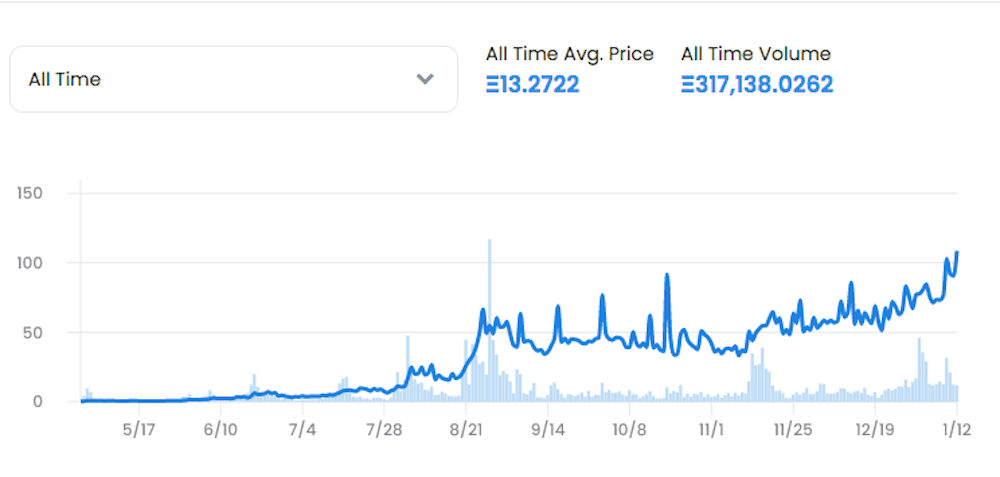


Read more:
We need a new relationship with urban noise


Finally, there is the growing importance of the work of biophilic designers bringing nature into the city to improve human well-being. I am interested in ways we can bring nature into the city to create healing, restful and collaborative spaces.
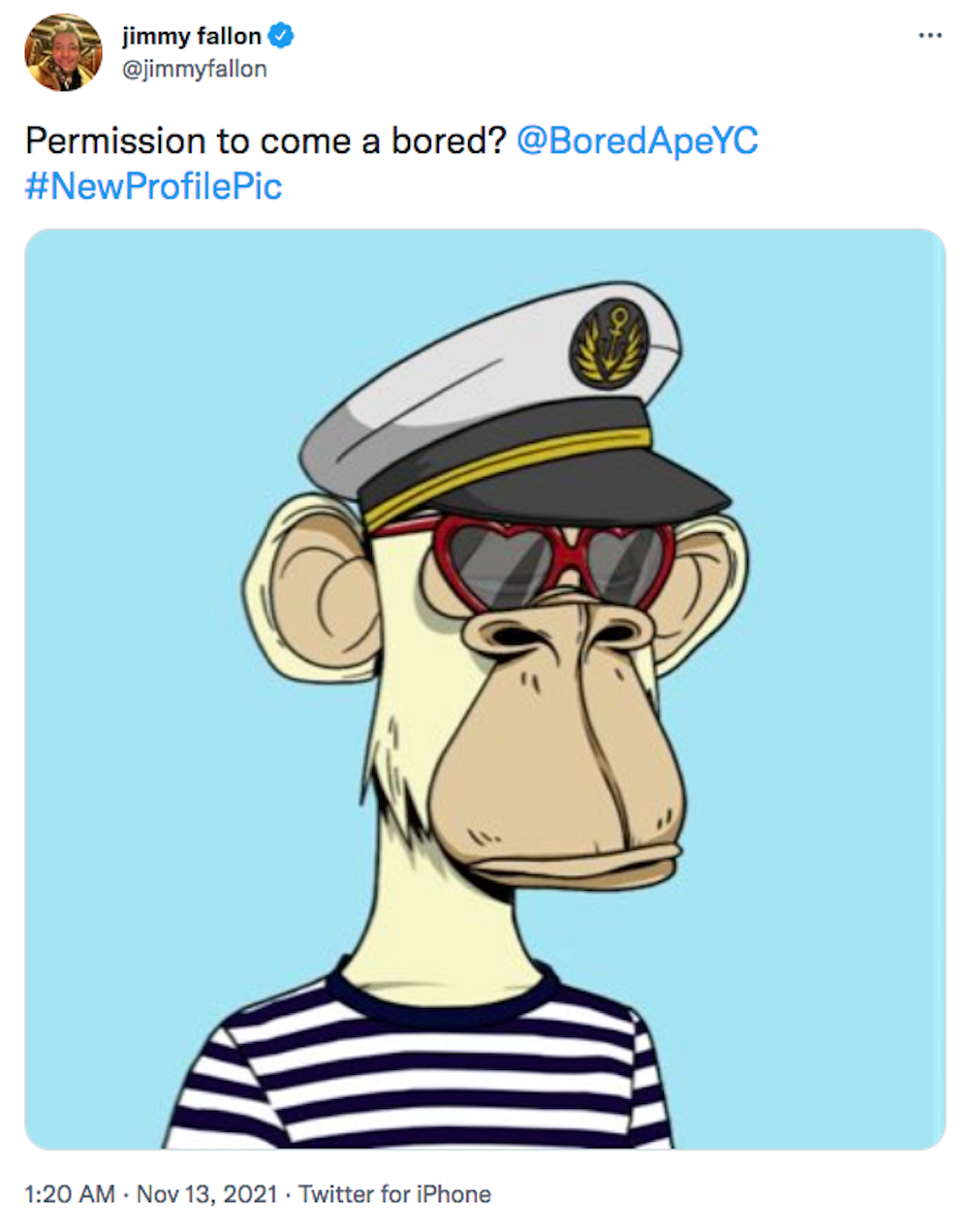
I worked with landscape architect Charles Anderson to place our prototype biophilic sound design installation Sonic Gathering Place in the forecourt of the Old Melbourne Gaol: a small circular seating area surrounded by plants and sounds from four National Parks in Australia.

If in Melbourne, we encourage you to visit the work and to take a moment to explore an unexpected ambience in the middle of the city.

The Conversation

Jordan Lacey receives funding from the Australian Research Council.

ref. Cities are made from more than buildings and roads. They are also made by ambiences – how a city makes you feel – https://theconversation.com/cities-are-made-from-more-than-buildings-and-roads-they-are-also-made-by-ambiences-how-a-city-makes-you-feel-173429

Djokovic admits doing photoshoot knowing he was COVID positive

Source: The Conversation (Au and NZ) – By Michelle Grattan, Professorial Fellow, University of Canberra

Novak Djokovic on Wednesday admitted he undertook an interview and photoshoot in Serbia last month after a receiving a positive COVID test result.

He also conceded information on his Travel Declaration to Australian authorities was incorrect, attributing that to a “human error” by his agent.

Earlier, Serbian Prime Minister Ana Brnabić told the BBC it would be “a clear breach of Serbian rules” if Djokovic had been in public after a positive Covid test. “If you’re positive you have to be in isolation,” she said.

As the tennis star fought to resist a second cancellation of his visa, his lawyers submitted more material to Immigration Minister Alex Hawke.

Hawke’s office indicated the decision on Djokovic’s fate was delayed while the minister considered this.

“Mr Djokovic’s lawyers have recently provided lengthy further submissions and supporting documentation said to be relevant to the possible cancellation of Mr Djokovic’s visa. Naturally, this will affect the timeframe for a decision,” Hawke’s spokesman said.

Djokovic took to social media to address what he said was “continuing misinformation” about his activities in the lead up to his positive COVID test result in December.

He said this needed correction, “particularly in the interest of alleviating broader concern in the community about my presence in Australia, and to address matters which are very hurtful and concerning to my family”.

Djokovic said he had attended a basketball game on December 14 in Belgrade. After it was reported people there had tested positive, although he had no symptoms, he took a rapid antigen test (RAT) on December 16, which was negative. “Out of an abundance of caution” he also had a PCR test that day.

The following day he presented awards to children at a tennis event, after taking a RAT before the event, which was negative.

“I was asymptomatic and felt good, and I had not received the notification of a positive PCR result until after that event.”

On December 18 he fulfilled a commitment for a L’Equipe interview and photoshoot, but cancelled other events. He did not want to let down the journalist, he said, adding he wore a mask except when being photographed. He then isolated.


Read more:
Novak Djokovic: the legal problem of having one rule for some, another for everyone else


He said that “on reflection” he had made “an error of judgement” – “I accept that I should have rescheduled this commitment”.

Djokovic acknowledged the falsity of the information on his travel declaration, which Border Force has been probing. The declaration asks “Have you travelled, or will you travel, in the 14 days prior to your flight to Australia?” His form said he had not, when in fact he had been in Belgrade within the period before leaving Spain, where he lives, for Australia.

In his social media post, he said the declaration was submitted by his support team and “my agent sincerely apologises for the administrative mistake in ticking the incorrect box about my previous travel”.

“This was a human error and certainly not deliberate.” Additional information had been given to the federal government to clarify this matter, he said.


Read more:
Novak Djokovic’s path to legal vindication was long and convoluted. It may also be fleeting


Before his statement, Djokovic’s mother Dijana Djokovic appeared on Australian morning TV, saying she was very worried his visa would be cancelled again.

“Don’t throw him out, he is tennis player, he is not politician, he is not criminal, he is not murderer, he’s just tennis player, the best in the world, just let him play,” she said on the Seven Network.

Home Affairs Minister Karen Andrews said Border Force would “be looking at everything that happened in relation to timings of the interview process” that led to the cancellation of Djokovic’s visa at the border last week.

That decision was overturned in court on Monday, with the government conceding he had not been accorded procedural fairness in the interview process.

The Conversation

Michelle Grattan does not work for, consult, own shares in or receive funding from any company or organization that would benefit from this article, and has disclosed no relevant affiliations beyond their academic appointment.

ref. Djokovic admits doing photoshoot knowing he was COVID positive – https://theconversation.com/djokovic-admits-doing-photoshoot-knowing-he-was-covid-positive-174784

They live for a century and clean our rivers – but freshwater mussels are dying in droves

Source: The Conversation (Au and NZ) – By Alan Lymbery, Professor, Harry Butler Institute, Murdoch University

Carter’s freshwater mussel (_Westralunio carteri_) stranded on a dry river bed Alan Lymbery, Author provided

Am I not pretty enough? This article is part of The Conversation’s series introducing you to Australia’s unloved animals that need our help.


Freshwater mussels are dying suddenly and in the thousands, with each mass death event bringing these endangered molluscs closer to extinction. Tragically, these events rarely get noticed.

In March last year, for example, seawater was introduced into the lower Vasse River in south-western Australia to control harmful algal blooms. This killed the entire population of Carter’s freshwater mussel (Westralunio carteri) in this section of the river.

For me, this was particularly distressing for two reasons. First, the species was recently listed as vulnerable to extinction thanks to the work of my then graduate student Michael Klunzinger.

Second, among the 3,000-4,000 mussels killed were 160 my colleagues had previously collected from the river, kept alive in cages for nine months, then re-introduced so they would survive the construction of a new bridge.

Freshwater mussels are one of the most endangered groups of animals on the planet, with 47% either extinct or threatened with extinction. Yet we hear almost nothing about the extinction crisis they face.

I want to bring your attention to why freshwater mussels are important, why many will become extinct within our lifetimes, and why this will have dramatic consequences for freshwater environments throughout the world.

Under threat, yet poorly studied

Mass death events like the one in the Vasse River are not uncommon for freshwater mussels.

In 2019, the death of hundreds of thousands of pheasantshell mussels in the Clinch River in Tennessee, USA may have been caused by a virus, and prolonged droughts have killed mussels en masse throughout the USA and Australia.

Researchers from Murdoch University taking samples from the Vasse River, where thousands of mussels died last year.
Stephen Beatty, Author provided

There are 18 species of freshwater mussels in Australia. Only two of these are listed as threatened under Australia’s environment law: Carter’s freshwater mussel and the Glenelg freshwater mussel (Hyridella glenelgensis).

Unfortunately, this doesn’t mean we’re doing better at mussel conservation than the rest of the world. It just means our freshwater mussels are very poorly studied. There have been no ecological assessments of the conservation status of most Australian freshwater mussels.

One of the most serious threats to freshwater mussel populations in Australia is climate change. Reduced rainfall has resulted in a dramatic reduction of water flow. In south-western Australia, for example, water flow has decreased by around 70% since the 1970s and climate change models predict at least a further 25% reduction by 2030.


Read more:
Drying land and heating seas: why nature in Australia’s southwest is on the climate frontline


This loss of flow means more of our rivers go without water over the dry season, and these drought conditions are lasting longer. Mussels can live for a short time without water by burrowing into the sediment, but longer and more severe dry spells will kill them.

Indeed, severe drought killed around 2.9 million freshwater mussels in the Murray Darling Basin between 2017 and 2020.

The livers of rivers

A big reason freshwater mussels are so vulnerable is because of their unique life cycle.

Unlike marine mussels (which release their eggs and sperm into the sea), female freshwater mussels fertilise their eggs internally. The embryos grow in special pouches of the gills until they’re released as tiny larvae that are parasitic on fish.

Many mussel species have marvellous ways to attract fish when the larvae are due to be released. For example, the US pocketbook mussel (Potamilus capax) uses part of it’s body to create a lure which looks like a small fish. This lure is waved about to attract the mussel’s host fish, bass, which are predators of smaller fish.

After spending several months as a parasite, the larvae then metamorphose into juvenile mussels and drop off their host into the sediment.

Fish near mussel
Mussels lure fish in to host their parasitic larvae.
Shutterstock

Most mussel species take five to ten years to reach sexual maturity. They are slow growing and long lived, often with a lifespan of 100 years or more. This combination of characteristics means mussel populations often cannot recover from large death events.

This can have devastating knock-on effects to the freshwater ecosystem, as mussels are considered “keystone” species.


Read more:
Buy Australian oysters and farmed barramundi: 5 tips to make your feast of summer seafood sustainable


When rivers cease to flow in dry summer months, freshwater fish and other animals find refuge in the remaining pools. Freshwater mussels behave like the livers of rivers, keeping these refuges clean and ensuring animals can survive until the rains return.

They maintain water quality by filtering and removing suspended sediments, nutrients, bacteria and algae. They also deposit nutrients on the river bottom, and their burrowing activity mixes and aerates the sediment.

Take more notice

I was distressed that thousands of endangered mussels died in the Vasse River. I was also distressed, but not surprised, at the general lack of attention to these deaths. If a pod of dolphins had died in an estuary because of human actions, we would have heard an outcry.

W. carteri in a stream
Carter’s freshwater mussel on a stream bank in south-western Australia.
Michael Klunzinger, Author provided

The plight of freshwater mussels illustrates a sad reality for freshwater life. Freshwater ecosystems are incredibly diverse. Per unit area, there are more than twice as many species of freshwater animals and plants than on land or in the ocean. But more than four times as many of these species are threatened with extinction.

Despite this, the conservation management of freshwater species lags far behind that of terrestrial or marine species. Freshwater environments are very poorly protected by conservation reserves and up to 71% of the world’s wetlands have been lost since 1900.

One urgent priority for Australia is to invest in freshwater protected areas, the same way as we invest in marine protected areas and terrestrial conservation reserves.

If you live near a stream, river or freshwater lake, go and visit it soon and appreciate the myriad forms of life that live below the surface. Chances are they won’t be there in the decades to come unless we develop policies and practices that protect our freshwater ecosystems.


Read more:
Why are there no true freshwater protected areas in Australia?


The Conversation

Alan Lymbery receives funding from the Australia and Pacific Science Foundation and the Water Corporation of Western Australia

ref. They live for a century and clean our rivers – but freshwater mussels are dying in droves – https://theconversation.com/they-live-for-a-century-and-clean-our-rivers-but-freshwater-mussels-are-dying-in-droves-164567

Legendary band Yothu Yindi and their trailblazing call for a treaty

Source: The Conversation (Au and NZ) – By Aaron Corn, Professor and Inaugural Director, Indigenous Knowledge Institute, The University of Melbourne

Yothu Yindi performing at the closing ceremony of the Sydney Olympic Games in 2000. Dave Hunt/AAP

Review: Writing in the Sand: The Epic Story of Legendary Band Yothu Yindi and How Their Song Treaty Gave Voice to a Movement by Matt Garrick (ABC Books)

Readers are advised this article contains depictions of deceased people. Special thanks to Witiyana Marika of Yothu Yindi for confirming it is acceptable to publish the late Mandawuy Yunupiŋu’s name.


Few musicians have had as profound an impact on Australia’s cultural and political life as those in Yothu Yindi. Formed in 1986, this revolutionary band brought together Indigenous musicians from the Yolŋu town of Yirrkala in Northeast Arnhem Land and their non-Indigenous, or Balanda, friends who played in a Darwin band called the Swamp Jockeys.

Their union became fertile ground for new musical dialogues between very different styles, cultures and ideas with the band’s innovative songs drawing on Yolŋu musical elements and lyrics.

Their sources were Manikay, the ancestral Yolŋu song tradition performed in public ceremonies, and Djatpaŋarri, a playful and exuberant popular song form composed and performed by young men in Yirrkala from the 1930s to the 1970s. These overt borrowings afforded Yothu Yindi their distinctive sound.

Sung in both English and Yolŋu languages, Yothu Yindi’s early hits included spirited rock anthems such as Djäpana: Sunset Dreaming and Treaty. These songs affirmed traditional ideas and values for local Yolŋu audiences, while resonating across Australia with the Aboriginal Reconciliation movement of the early 1990s.

The band’s biggest hit, Treaty, released in 1991, was informed by the Yirrkala community’s deep sorrow over their 1971 Supreme Court loss in a case brought against the bauxite mine that had consumed their surrounding homelands.

The song contributed significantly to popularising calls for the Australian government to negotiate a treaty with Indigenous peoples in recognition of their human rights and unceded sovereignty.

Despite the gravity of such themes in many of Yothu Yindi’s songs, the band’s generosity of spirit towards people from all walks of life shone through.

Growing into a group of increasingly diverse musicians over time, Yothu Yindi advocated their own vision for an Australia in which Indigenous people and others could live together in mutual respect and harmony.


Read more:
My favourite album: Yothu Yindi’s Tribal Voice


An anthem for all Australians

Writing in the Sand: The Epic Story of Legendary Band Yothu Yindi and How their Song Treaty Gave Voice to a Movement is a new book by Matt Garrick, an award winning writer and ABC News journalist based in Darwin. It is both Garrick’s first book and the band’s first biography.

Book cover

Writing in the Sand marks 30 years since the release of Treaty. The book’s title is taken from the song’s first verse, which laments the failed 1988 promise of Australian Prime Minister Bob Hawke to make a treaty with Indigenous peoples within the lifetime of his parliament.

As the first book to comprehensively chronicle Yothu Yindi’s globetrotting career, Writing in the Sand deepens our understanding of this remarkable band’s achievements. It brings together a multitude of diverse voices to breathe life into this story, vividly illustrated by previously unpublished photos from the band’s archive.

Much love and care has been taken to respect and honour the memories of deceased musicians, including Yothu Yindi’s late singer Mandawuy Yunupiŋu, as well as Slim Dusty, who toured with the band.

Their contributions are contextualised by Garrick’s extensive interviews with Yothu Yindi musicians, including Witiyana Marika, Stu Kellaway and Jodie Cockatoo, as well as Yunupiŋu’s widow, Yalmay Marika-Yunupiŋu, and a wide array of collaborating artists, including Peter Garrett, Paul Kelly, Neil Finn, Joy McKean, Bart Willoughby and Andrew Farriss.

These interviews beautifully illustrate the humanity of Yothu Yindi’s creative process. For example, when Kelly joined Yunupiŋu on his ancestral homeland at Biranybirany, they wrote the first few lines of Treaty together as an anthem for all Australians.

The book also addresses the early musical influences that shaped Yothu Yindi’s sound, from the formative affinity of the band’s Yolŋu musicians with Slim Dusty, to the irreverent country originals of the Swamp Jockeys in a 1980s Darwin inundated with blues cover bands.

Finding a balance

The name Yothu Yindi means child and mother. The yothu–yindi relationship between children and mothers, and their respective mala, or clans, is fundamental to maintaining systemic balance within Yolŋu society.

This tenet provided a foundation for the band’s inclusion of musicians from a wide array of backgrounds and influences from around the globe. Its importance is engagingly explained in the book through the words of Witiyana Marika.


Read more:
Friday essay: how Indigenous songs recount deep histories of trade between Australia and Southeast Asia


The book also mentions the important Yolŋu concept of ganma, the balanced meeting of fresh and salt waters in certain estuaries. This metaphor for the meeting of different cultures and knowledges inspired and informed Yunupiŋu’s prolific career as an educator and a musician.

Even at this present time of widening hyper-partisanship on a global scale, when people’s perceived differences threaten to overwhelm our common humanity, Yothu Yindi offers us these quintessentially Australian lessons about the intrinsic value of social harmony and mutual respect in creating a more inclusive world for all.

In an Australia yet to make a treaty with Indigenous peoples, Yothu Yindi is more relevant now than ever.

The Gupapuyŋu App is a free download from Charles Darwin University that provides a Yolŋu language pronunciation guide.

The Conversation

Aaron Corn receives funding from the Australian Research Council and collaborated with Yothu Yindi personnel on a pilot study for the National Recording Project for Indigenous Performance in Australia. He explores the music of Yothu Yindi in his book Reflections & Voices (2009), published by Sydney University Press, and multiple other essays.

ref. Legendary band Yothu Yindi and their trailblazing call for a treaty – https://theconversation.com/legendary-band-yothu-yindi-and-their-trailblazing-call-for-a-treaty-173843

NZ police tighten rules on photos of youth, but concerns still for Māori

By Hamish Cardwell, RNZ News senior journalist

New Zealand police are being commended for tightening the rules for officers photographing young people, but there are concerns it could lead to the perverse outcome of more Māori being arrested.

The changes come after RNZ revealed in December 2020 that officers in Wairarapa were unlawfully photographing young Māori.

Police there admitted illegally taking pictures of young people on three occasions.

Whānau described their sons — some as young as 14 — walking alone in broad daylight, when police approached and insisted they take their picture.

The rangatahi were not doing anything wrong, nor being arrested.

Further RNZ reporting by Te Aniwa Hurihanganui suggested the practice was far more widespread than just in Wairarapa.

Police subsequently launched a review, and as a result of that, officers will no longer take pictures or fingerprints of young people unless they have been arrested or are being summonsed.

Photos being deleted
They will delete all photos of young people already taken on police-issued phones.

From now, when a picture is taken, only official cameras or photographers should be used.

At a pinch, a mobile device can still be used by officers, but the photo must be deleted off the phone once it has been uploaded into the police’s national intelligence database.

Barrister Marie Taylor-Cyphers said there was the risk it could lead to more Māori being arrested, rather than just being given a warning.

“If a police officer, in the course of their investigation, needs to for some reason identify the child by photographing them, then they’re going to be incentivised to place that child under arrest more readily than previously.”

Police deny there will be an increase in Māori arrests as a result, calling the changes a procedural issue.

Police community partnerships and prevention director Eric Tibbott told RNZ Morning Report the change would “definitely not” lead to more Māori youth being arrested.

Policy to reflect community expectations
“This is more about policy to reflect community expectations,” he said.

Taylor-Cyphers said the way the policy was worded appeared to give police permission to photograph young people in wider range of circumstances than adults.

Police said the law allowed them to take pictures of people under custody.

But Taylor-Cyphers said the new rules also let police snap photos of young people under summons — which often happened for lower level offences like traffic or driving infringements — and the policy needed to be tightened up.

Dr Karaitiana Taiuru, who has completed a PhD on indigenous ethics in data collection, described the changes by police as a “huge step forward”, but was also worried it could lead to more rangatahi facing charges.

Dr Taiuru said it would be necessary to wait and see how the policy was implemented.

“In a year’s time, it would be really interesting to see the statistics on … how many Māori youth were arrested for low-level crimes rather than non-Māori youth.

“And then compare the amount of photos taken of Māori youth compared to non-Māori youth.”

The full findings from the police’s internal review are expected early this year, as is a joint Independent Police Conduct Authority and Privacy Commission inquiry.

This article is republished under a community partnership agreement with RNZ.

Print Friendly, PDF & Email

Article by AsiaPacificReport.nz

‘Don’t enter Solomon Islands’ pleads Sogavare with Bougainvilleans

By Gorethy Kenneth in Port Moresby

Solomon Islands Prime Minister Manasseh Sogavare has appealed to his fellow Solomon Islanders at the western border not to allow Bougainvilleans into the country.

In his nation’s address last Friday, Sogavare recapped the country’s first covid-19 case recorded from a Shortland islander, dropped off by four Bougainvilleans in Shortland, who was automatically tested positive and is still in a 14-day quarantine with his seven family members who also tested positive.

The four Bougainvilleans returned home the same day and are back in their respective villages.

Sogavare singled out the New Year delta and omicron cases recorded in Solomon Islands which were brought in by citizens returning from outside Honiara.

“The western border continues to be an area of priority for health,” he said.

“For the Royal Solomon Islands Police Force and other border force agencies, it represents a potential source of covid-19 incursion into the country.

“For example, on New Year’s Day, a man from the Shortlands travelled with four Bougainville nationals from Bougainville to Shortland.

“The four Bougainvilleans returned straight after dropping off the man.

In quarantine facility at Nila
“The man is now held at the quarantine facility in Nila along with seven of his family members with whom he had made close contact.

“They will undergo 14 days of quarantine and only released if all tests results are returned negative.

“Five who had been held at the Nila isolation ward at Shortlands will be released after serving 14 days if their results return negative.

“These five individuals have made close contact with people from Bougainville.

“My good people, living along the western border, I ask you to refrain from going across the border to Bougainville.

“I also ask you to not allow any visitors from Bougainville to your villages during the period of the State of Emergency. Please continue to be vigilant to prevent the entry of covid-19 through our western border.”

ABG health chief ‘not aware’
Autonomous Bougainville Government (ABG) Health Secretary Dr Clement Totavun told the Post-Courier they were not aware of the incident singled out by Sogavare but also said the border had been closed since 2020 when the covid initial measures were released and PNG Immigration and other border offices had ordered immediate closure.

“There is currently a ban on traditional border crossing,” he said.

“The border is closed.

“The Border Protection Authority is supposed to man the border but surveillance at the moment is not effective.”

He said he would communicate with National Pandemic Controller David Manning on this issue.

Gorethy Kenneth is a senior PNG Post-Courier journalist. Republished with permission.

Print Friendly, PDF & Email

Article by AsiaPacificReport.nz

Guam breaks single-day record with 422 new covid cases – omicron fears

Governor Lou Leon Guerrero presents her covid update message … “Our focus remains on preventing severe illness, preventing increased hospitalisation and saving lives.” Video: Office of the Governor of Guam

By Mar-Vic Cagurangan in Tumon, Guam

Guam has reported its 273rd covid-19 death and 422 new positive cases on Tuesday, breaking its daily record for new infections and shooting up the island’s Covid Area Risk score to 189.3.

Despite the phenomenal increase in new infections, Governor Lou Leon Guerrero said she was not currently inclined to change the status quo.

“Our Public Health interventions and protective measures remain effective and as such, I am not announcing any new restrictions at this time,” the governor said.

“Our focus remains on preventing severe illness, preventing increased hospitalisation and saving lives,” she added.

A 90-year-old man died, who died at the US Naval Hospital on January 5, was Guam’s 273rd covid-related death. He was partially vaccinated and had underlying health conditions. He tested positive on December 27.

There are currently 14 covid-19 admissions within the island’s hospitals. One is receiving ICU level of care and “the remainder are not as severe,” the governor said.

The 422 coronavirus infections were detected in 2304 specimens analysed on January 10. This is the largest single-day result ever recorded on Guam. Of the total number of new positive cases, 126 were identified through contact tracing.

Speculated over omicron variant
Although data is not currently available, public health officials speculated that the omicron variant, described as highly transmissible, is already spreading on the island along with the delta variant.

To date, there have been a total of 21,540 officially reported cases, 273 deaths, 2062 cases in active isolation, and 19,205 not in active isolation.

The unprecedented surge of infections has prompted the Department of Public Health and Social Services to accelerate the testing in Tiyan, which has transitioned to an appointment-based system.

“Scheduling of appointments for Covid-19 testing will allow for more efficient processing and reduce long lines and wait times,” the department said.

Testing has been expanded to six days a week and six hours a day.

“We know that community testing helps us quickly identify new covid cases, so we can isolate the virus. Please get tested,” the governor said.

Guam public health
Although data is not currently available, Guam public health officials have speculated that the omicron variant, described as high transmissible, is already spreading on island along with the delta variant. Image: Pacific Island Times

Booster clinics at 6 schools
“To expand access and availability, we have added vaccination and booster clinics at six schools, in addition to clinics widely available at the University of Guam, Public Health community centers, and private providers.”

She reiterated her advice for residents to “wash your hands, wear your mask and watch your distance”.

Dr Rochelle Walensky, director of the Centers for Disease Control and Prevention, said last week that despite the astronomic rise in omicron-related covid cases nationwide, there was a possibility that the number would fall just as fast.

Mar-Vic Cagurangan is editor-in-chief of the Pacific Island Times. Republished with permission.

Print Friendly, PDF & Email

Article by AsiaPacificReport.nz

‘Enough is enough’, say PNG women over gender crimes by ‘callous men’

By Mark Talia in Port Moresby

“Enough is enough,” is the impassioned plea of the women, mothers and daughters of Papua New Guinea, says Mea Isaac, women’s representative in the Motu-Koitabu Assembly.

She has called for all forms of violence, abuse and discrimination against women to stop in the wake of the latest case of “barbaric torture” sparked by sorcery allegations.

Isaac made the call after witnessing National Capital District (NCD) Governor Powes Parkop hand over K50,000 (abut NZ$22,000) to the Police Department to assist with their operations to catch tribesmen in Southern Highlands alleged to have tortured five women accused of sorcery — killing two of them.

She said there were reports of far too much violence directed at innocent women, — especially the weak and helpless, ones who could not defend themselves.

“These are the very people who gave birth to you men, these are the very people who have nurtured you for nine months within their womb and the very people who help you men to grow up in feeding you, clothing you or when you cry and you fall they are there to embrace you,” she said.

“And here you are, callous men, you turn around and do this horrific act in return. Please, enough is enough,” Isaac said.

“No more violence, enough is enough; justice must be served and I am appealing to those who have committed this horrific crime to please surrender yourselves.

‘Your mothers, your sisters, your aunties …’
“These are your mothers, your sisters, your aunties and nieces why do you have to do such a terrible thing to them.”

Isaac said sorcery related, family and sexual related violence was also happening in the NCD. She cited an example such as in her village of Hanuabada, where a husband had beaten his wife to death.

She said there were many reported cases in the city settlements where women were attacked on the whim of so-called “glassman” on allegations of sorcery.

Moresby South women’s rep Rose Hagua shared these sentiments, saying that women and girls — despite so many barriers — wanted to take this challenge and to use their voice as a medium on behalf of the victims.

So they staged a march last December to raise their concerns relating to this “barbaric torture” of women in PNG’s Highlands.

Mark Talia is a PNG Post-Courier reporter. Republished with permission.

Print Friendly, PDF & Email

Article by AsiaPacificReport.nz

West Papuans to open branch office in Port Moresby, Wenda confirms

Asia Pacific Report newsdesk

The United Liberation Movement for West Papua (ULMWP) plans to open a government branch office in the neighbouring Papua New Guinean capital of Port Moresby along with diplomacy offices to be based in Europe and the United Kingdom.

In a New Year message from interim president Benny Wenda, he has confirmed a strategic office reshuffle around the world.

“The headquarters will be based inside West Papua, and the international office in Port Vila,” he said in the statement.

“We are opening a government branch in Port Moresby, and our diplomatic coordination offices will be based in the UK and Europe.

“This is another step in our long road to reclaiming the sovereignty stolen from us by Indonesia in 1963.

“With the formation of our constitution, provisional government, cabinet and Green State Vision, all Indonesian laws in West Papua are over.”

Wenda said the Indonesian presence was “totally illegal, and totally redundant”.

“With our clandestine government departments operating within our borders, all West Papuans and Indonesian migrants working under our jurisdiction are now governed by the ULMWP,” said Wenda.

Presidential demands
The West Papua military wing and any organisation affiliated to the West Papua National Coalition for Liberation, the West Papua National Parliament, or the Federal Republic of West Papua — the three constituent organisations within the ULMWP — were automatically considered part of the provisional government.

“Everyone must respect our constitution, whether you are inside West Papua or part of our international solidarity networks. The world must trust us and our constitution — we want peace for all in the region and internationally, and to democratically govern ourselves,” Wenda said.

“I encourage all NGOs, churches and religious leaders, every West Papuan inside and in exile, to unite and pray for the provisional government. Support everyone within the government working to end our long suffering and complete our 60 year struggle.”

Wenda said the demands to the Indonesian President in 2022 remained those that had been first issued during the West Papua Uprising in 2019:

1. Hold a referendum on West Papuan independence;
2. Allow international supervision of any referendum;
3. Allow the UN High Commissioner for Human Rights into West Papua in accordance with the demand of 84 UN member states;
4. Withdraw all troops from West Papua, including the 21,000 additional troops deployed since December 2018, and end the Indonesian military’s illegal war;
5. Release all political prisoners, including Victor Yeimo and the “Abepura Eight”; and
6. Allow all international journalists and human rights, humanitarian and monitoring groups into West Papua to visit internally-displaced people in Nduga, Puncak, Intan Jaya, Oksibil, Maybrat and elsewhere.

“In 2022, we will redouble all efforts in our long struggle for the liberation of our nation,” Wenda said.

“We will peacefully bring an end to this bloodshed.”

Print Friendly, PDF & Email

Article by AsiaPacificReport.nz

If my child or I have COVID, when can we get our vaccine or booster shot?

Source: The Conversation (Au and NZ) – By Margie Danchin, Paediatrician at the Royal Childrens Hospital and Associate Professor and Clinician Scientist, University of Melbourne and MCRI, Murdoch Children’s Research Institute

Shutterstock

As Omicron cases soar along Australia’s east coast, many people are faced with having to re-book their vaccination appointments.

If you or your child test positive for COVID, you clearly can’t go to the vaccination or booster appointment you had this week. So, when can you go?

There are no hard and fast answers on this; although there is some guidance, this question is still under current consideration by Australian Technical Advisory Group on Immunisation (ATAGI).

But here are some general principles to help guide your decision-making.


Read more:
How to talk to your child about a COVID diagnosis … and share the news with others


1. I’m an adult with COVID, and have had to postpone my booster appointment. So when can I get it?

The current ATAGI advice is that you can have your booster once you have recovered from the acute infection.

But based on vaccinology principles, it would be reasonable to consider waiting at least three months after you’re well to get your booster dose. A COVID infection stimulates the immune system like a vaccine, meaning you will produce antibodies that help increase your protection against COVID.

Vaccination can also be deferred for up to six months if preferred, as past infection does reduce the chance of reinfection for at least this amount of time, but there is still much we don’t know about the Omicron variant.

Currently, the booster dose is recommended four months after the primary course of two doses (meaning four months after you get your second dose).

By end of January, that will be changed to three months.

With Omicron, the duration of protection from natural immunity is unclear. So you should still get your booster shot and make sure you end up getting the required number of doses.

That’s because we can’t exactly quantify to what extent COVID infection stimulates your immune system.

People’s bodies respond differently to infection depending on age, underlying medical risk factors, the particular strain they’re infected with and a range of other factors.

That’s why, even if you get COVID, we still recommend vaccination and the required number of doses to ensure you get the best long-lasting protection.

So, after COVID, you could consider getting your booster 3-6 months later. But you may choose to bring your booster dose forward if:

  • you have underlying health conditions that place you at higher medical risk

  • you work in a workplace where you have higher risk of COVID exposure or

  • you are required to have a booster dose to go to work.

In those circumstances, you might consider having the booster a few weeks after you have recovered from the acute illness.

2. My child has COVID and will miss their vaccination appointment. So when can they get vaccinated?

Again, the current ATAGI advice is your child can have their vaccine once they have recovered from the acute infection but I would recommend waiting a minimum of four weeks before the first vaccine dose. This is also currently stated in the UK Joint Committee on Vaccination and Immunisation (JCVI) guidelines.

This is because we develop what’s known as “mucosal immunity” in the nose and throat from natural infection. Then, we can provide a boost to systemic immunity with the first dose of vaccine. The combination of both natural infection and vaccination gives longer and stronger protection.

This also provides a window for the child to recover, bearing in mind the risk of a rare but severe post-infectious inflammatory condition called paediatric multisystem inflammatory syndrome after SARS-CoV-2 or PIMS-TS (also known as multisystem inflammatory syndrome in children or MIS-C).

It occurs in about one in 3,000 children and can happen between 2-6 weeks after the acute infection. Waiting at least four weeks gives you more confidence your child has fully recovered.

If your child has persistent symptoms at a month, I would recommend waiting another month until getting them vaccinated. Then, wait eight weeks until the second dose.

A boy drinks from a drink bottle with a straw.
Staying hydrated is crucial for anyone with COVID.
Shutterstock

In general, a COVID infection is going to stimulate an immune response and the child will develop antibodies. But, as described above, we don’t yet know how much protection you get from natural infection versus vaccination in children. So, to get the best protection, they will still need to be vaccinated.

That said, we need to be pragmatic. Some parents may worry that if they cancel an upcoming appointment, they may not get another until much later.

So if a parent has an appointment coming up and their child has completely recovered, and has no symptoms, then – knowing the pressures on the system and approaching new school year – I wouldn’t decline that appointment. It’s about making a judgement call at the time of the appointment.

Hopefully, parents can use this information to make an informed decision. If they have concerns, they can speak to their GP or other healthcare provider.

To sum up: in general, I’d say wait four weeks after the initial infection and ensure the child has completely recovered – but if you have a slightly earlier appointment, then it’s reasonable to keep that as well.


Read more:
From faith leaders to office workers: 5 ways we can all be COVID vaccine champions


3. Anything else I need to know?

I think it’s worth highlighting an update to the CDC guidelines stating people are most infectious in the 1-2 days before they develop symptoms and 2-3 days after.

So the clear guidance is to adhere to the rules and isolate as a positive case or a close contact for seven days, but please check the guidelines in your state or territory.

I know there’s so much changing advice on that – for example in relation to critical workers – but the best advice is to stay isolated for at least five days if you’re a positive case or a close contact.

The Conversation

Margie Danchin receives funding from the NHMRC, WHO, DFAT and the Victorian and Commonwealth Departments of Health. She is Chair, Collaboration on Social Science and Immunisation (COSSI).

ref. If my child or I have COVID, when can we get our vaccine or booster shot? – https://theconversation.com/if-my-child-or-i-have-covid-when-can-we-get-our-vaccine-or-booster-shot-174690

3 in 4 people want to ride a bike but are put off by lack of safe lanes

Source: The Conversation (Au and NZ) – By Lauren Pearson, PhD Candidate, Monash University

Cycling is healthy and sustainable, but only 1.7% of trips in Melbourne are made by bike. Car use has soared since lockdowns were lifted.

We surveyed over 4,000 Victorians and found more than three-quarters are interested in riding a bike, but only in infrastructure that separates people from cars (such as off-road paths or protected bike lanes).

This proportion is far higher than previously thought, highlighting a huge opportunity to increase bike-riding rates by building separated bike lanes.

Our study, published in the Journal of Transport and Health, found high levels of interest in bike riding in groups with traditionally lower participation, including women and people living in outer-urban fringe areas.

However, these areas tend to have less access to safe, protective and supportive infrastructure than their higher socioeconomic counterparts.


Read more:
Bike kitchens: the community-run repair workshops that help build a culture of cycling


Infrastructure is key

Previous research has shown that how unsafe someone feels when riding a bicycle – particularly in the presence of motor vehicle traffic – is the key barrier to cycling.

Too much existing bike infrastructure is simply a strip of white paint; 99% of existing on-ride bike infrastructure in Melbourne is made up of painted bike lanes, which result in closer motor vehicle passes and do not protect cyclists from potential injury.

Providing high quality, connected and protected bike lanes or paths that separate people on bikes from motor vehicle traffic would greatly increase cycling rates in Melbourne.

Bike infrastructure must work for women, as well as men

For every woman that rides a bike in Melbourne, there are two men doing the same.

Despite lower participation, our study showed two-thirds of women are interested in riding a bike, and over half own a bike. Research suggests women are more likely than men to feel vulnerable to harassment by drivers when riding, may need more storage space than a bike usually provides, and may have more care-giving responsibilities than men. Differing perceptions of risk are also a factor.

Women have different infrastructure preferences to men, with a high preference for bike paths or lanes physically separated from motor vehicle traffic.

Taken together, these factors contribute to a pattern where many city bike paths and lanes are designed for the needs and confidence levels of male cyclists.

Common to many cities in Australia and around the world is what’s known as the “radial planning fallacy”, where transport systems are designed to optimise trips from outer-urban areas to city centres or businesses – rather than to facilitate local trips.

The majority of protected bike paths or lanes in Melbourne are radial in design, with a lack of connectivity between existing paths.

This kind of planning does not support the needs of many actual or aspiring cyclists, particularly women who tend to have more varied trips around places such as school, local shops and other locations close to home.

A woman cycles on the street.
We must plan bike infrastructure that supports the needs of women, as well as men.
Shutterstock

Outer suburbs are losing out

Despite lower participation, we found that interest in bike riding is high in the outer urban fringe areas of Melbourne.

These areas also have the lowest level of access to safe and comfortable bike infrastructure.

People who are inexperienced or new to bike riding prefer bike paths or lanes that are physically separated from motor vehicle traffic.

But a lack of infrastructure dedicated to active transport, coupled with longer distances to essential services, means people living in outer-suburbs are often required to drive long distances.

To address these health and transport inequities, it’s essential we plan and build protected and connected bike infrastructure across Melbourne, including new urban growth areas.

As well as boosting health outcomes, optimising social connection and reducing transport inequities, this would also contribute toward meeting Australia’s net-zero emissions targets.


Read more:
What Australia can learn from bicycle-friendly cities overseas


The Conversation

Lauren Pearson receives funding from the Australian Government Research Training Program.

Ben Beck receives funding from the Australian Research Council, the National Health and Medical Research Council, the Federal Office of Road Safety, the Transport Accident Commission, the Victorian Department of Health, VicHealth, RACV, Transport for New South Wales, and the British Columbia Centre for Disease Control, Canada. He is President of the Australasian Injury Prevention Network (AIPN).

ref. 3 in 4 people want to ride a bike but are put off by lack of safe lanes – https://theconversation.com/3-in-4-people-want-to-ride-a-bike-but-are-put-off-by-lack-of-safe-lanes-172868

We asked 6 scientists what inspired them to pursue a career in science. Here’s what they said

Source: The Conversation (Au and NZ) – By Michael Hopkin, Section Editor (Science + Tech) and Deputy Chief of Staff, The Conversation

Mael Balland/Unsplash, CC BY-SA

As you read this, scientists the world over are rushing to find out more about the COVID-19 Omicron variant.

Indeed, if there’s anything the pandemic has made clear, it’s that the importance of scientific research can’t be understated in today’s world.

As we embark on a new year, hopefully with more progress on the COVID-19 front, we asked six authors of The Conversation to reflect on what first sparked their interest in science.


Read more:
Hit hard by the pandemic, researchers expect its impacts to linger for years


Cathy Foley

Australia’s Chief Scientist

It was my brothers’ high-school textbooks, I kid you not! I loved poring over the Harry Messel textbooks as a 10- or 11-year-old. They were beautifully illustrated, with nature drawings and detailed experiments set out in a visual format. And I’ll never forget the photo of a dissected rat.

Then when I got to years 11 and 12 at school, the six-volume Harvard Project Physics sold me completely. It has a strong historical narrative, which is unusual in a science textbook and really worked for me.

I still have both sets of textbooks on the bookshelf in my home office. But even though I wanted to be a scientist from a young age, I didn’t know it was open to me so I didn’t dare express it. That final step only came in third-year experimental physics, when I discovered new properties of liquid crystals no one had found before. There was no going back.

Frog life cycle illustration
The life cycle of a frog, as featured in Science for High School Students by Harry Messel.
Reproduced courtesy of the University of Sydney

Bronwyn Carlson

Professor of Indigenous Studies and Director of The Centre for Global Indigenous Futures, Macquarie University

In 2008 I made my first Facebook post. I was in the middle of a PhD, conducting interviews with Aboriginal people about their identity and involvement in the Aboriginal community. Several spoke about how they expressed their Aboriginality on Facebook, by sharing images and forming connections.

This piqued my interest; Facebook was still new, having opened to the public just two years prior. I hadn’t considered issues of identity or community in these still-novel digital settings. Back then, people tended to separate life into the offline “real” world and the online “virtual” world – which by implication was not “real”.

I became interested in whether being Aboriginal online attracted the same sort of scrutiny as Aboriginal people regularly experienced offline. It turned out those with Facebook profiles experienced high levels of surveillance around their identity. I guess regardless of being online or offline, being Indigenous can attract violent behaviour from settlers.


Sara Webb

Postdoctoral Research Fellow at the Centre for Astrophysics and Supercomputing, Swinburne University of Technology

I have always been curious about the world and universe we live in. As a child I remember catching my poor mum off-guard, at 7.30am mind you, with the questions: “why do we exist?” and “What was there before the universe?”

It was a lot for 8-year-old me to be contemplating. But after watching all the Discovery Channel, National Geographic and History Channel documentaries I could possibly get my hands on, my mind was constantly in awe of such questions.

I genuinely can’t remember a time I haven’t been fascinated with the wonders of life. Learning physics in high school was the pinnacle of me beginning to understand why the universe is the way it is. This passion led me to where I am today – an astrophysicist and data scientist trying to make sense of the universe (and other things) via observations and data analysis.


Russell D.C. Bicknell

Postdoctoral Researcher in Palaeobiology, University of New England

When I was about five years old, my father showed me the fossil of an extinct animal called a trilobite: ancient organisms that lived within even older oceans. They evolved long before the dinosaurs, and had gone extinct just before the first of the giant vertebrates (animals that have a backbone).

In doing so, my father had introduced me to the record of organisms that were no longer alive – and furthermore, that people who studied these animals are called palaeontologists. From this point on, I was motivated to understand more about these extinct groups.

This led me down the road of studying evolution, ultimately resulting in me becoming an evolutionary palaeontologist. Now, rather true to my childhood origins, I regularly study trilobites and am interested in documenting many different aspects of arthropod evolution.

Trilobite fossil
Trilobites make for fascinating fossils.
Didier Descouens/Wikimedia Commons, CC BY-SA

Jenny Graves

Distinguished Professor of Genetics and Vice-Chancellor’s Fellow, La Trobe University

I was a scientist for 20 years before I defined myself as “a scientist”. I was many things: harried lecturer, canny grant-seeker, cynical academic, chameleon mother and wife of shire president.

The event that stopped everything, and focused my attention on science, was a near-fatal brain bleed when I was 50 – followed by life-saving neurosurgery and an 18-month recuperation. During my rehabilitation, a kind visitor remarked comfortingly, “Now you have the space to decide what you really want to do with your life!”

I was overwhelmed by the realisation that what I really wanted to do was at the core of what I had been doing for 20 years: science! Just more, and better, with commitment and immersion.


Yvonne Wong

Associate Professor of Physics, University of New South Wales

The American physicist Sidney Coleman once said:

The career of a young theoretical physicist consists of treating the harmonic oscillator in ever-increasing levels of abstraction.

My journey into theoretical physics indeed began with a harmonic oscillator: the pendulum. Specifically, the formula relating the period of a pendulum’s swing (T) to its length (l) and gravity (g), which I found in a textbook at the age of about 15:

T = 2π√(l/g)

I was always good at maths. I also liked the idea that a set of universal principles governs all natural phenomena. But to see the latter expressed in terms of the former so cleanly was an epiphany.

I spent many hours pondering the 2π and the square root. More obsessions followed, from plucked violin strings to nuclear fission.

But what sealed it in the end was Douglas Giancoli’s textbook Physics: Principles with Applications, which I came across at about age 16. The last two chapters were on “Elementary Particles” and “Astrophysics and Cosmology”. The rest is history.


Read more:
There are 10 catastrophic threats facing humans right now, and coronavirus is only one of them


The Conversation

ref. We asked 6 scientists what inspired them to pursue a career in science. Here’s what they said – https://theconversation.com/we-asked-6-scientists-what-inspired-them-to-pursue-a-career-in-science-heres-what-they-said-172397

At long last, we can tear open the queen’s secret letters with Australia’s governors-general

Source: The Conversation (Au and NZ) – By Anne Twomey, Professor of Constitutional Law, University of Sydney

One consequence of the High Court’s 2020 judgement that caused the National Archives to release Sir John Kerr’s correspondence with Buckingham Palace was that the royal correspondence of other governors-general also had to be released.

More than a year and a half later, after the archives scoured every document for an embarrassing detail that could be redacted, these letters have now been made public.

They cover the terms of four governors-general: Lord Richard Casey (1965-69), Sir Paul Hasluck (1969-74), Sir Zelman Cowen (1977-82) and Sir Ninian Stephen (1982-89).

What is most remarkable about the letters is how similar they are to Kerr’s correspondence with the palace.

All the features that critics have picked on as unprecedented and inappropriate – the detailed political analysis, the obsequious deference, the focus on formalities, the discussion of reserve powers – are common features in the correspondence of Kerr’s predecessors and successors.


Read more:
‘Palace letters’ show the queen did not advise, or encourage, Kerr to sack Whitlam government


Frank political reports

This is unsurprising, because the palace encouraged the governors-general to write with “complete freedom and frankness” about political affairs in Australia and anything affecting the monarchy and the powers or status of the governor-general. This keeps the monarch well informed about her various realms.

Each governor-general, therefore, gave regular detailed and often quite critical reports on the political controversies of the day and the likely outcomes of elections.

Kerr’s analysis was, indeed, quite tame compared with that of his predecessors, Casey and Hasluck, who had stronger political pedigrees.

Sir Paul Hasluck (left) and Lord Casey (right) at Government House.
National Archives

Flattery and formality

To today’s eyes, the correspondence is often cloying and obsequious in its formality and deference, but this was standard for the time. The letters include many professions of “loyalty” and “devotion” to the monarch and every royal tour is a “great success” and “very well received”, especially by the “plain folk”.

Hasluck, in his comment about a prospective first meeting of Queen Elizabeth and Prime Minister Gough Whitlam, said:

If I may venture to say so, with due humility and respect, the wisdom and experience of Her Majesty will find here an opportunity to help make a promising Prime Minister into a better one and I believe he will prove responsive to Her counsel and guidance.

Not even Kerr could have topped that for flattery.

The excess of admiration also flowed the other direction. Governors-general are constantly praised for their “wisdom”. Deference is also given to their greater knowledge and understanding of the local political situation.

Letters from the palace praise and support the governor-general – they never criticise or instruct.

The focus on the formalities was strong throughout. This is because the monarchy represents itself to the people through such courtesies, pomp, honours and ceremony. Hence, a large part of the correspondence concerns changes to the oath of allegiance, the national anthem, the vice-regal salute, the royal anthem and the honours system.

Hasluck did his best in 1972 to dissuade the prime minister, William McMahon, from initiating a search for a “national song”, fearing it would replace “God Save the Queen” as the national anthem.

In 1984, Stephen was still having robust discussions with Prime Minister Bob Hawke about the use of “God Save The Queen” and the vice-regal salute. He even changed an Executive Council Minute by hand so that groups such as the Country Women’s Association and the RSL could continue to sing “God Save the Queen” without being in the presence of royalty.


Read more:
Explainer: what is the ‘palace letters’ case and what will the High Court consider?


The reserve powers

But what about the reserve powers, which allow a governor-general to act without, or contrary to, ministerial advice? Was it unprecedented or inappropriate to discuss their nature and hypothetical application? No, because the others did so, too.

Hasluck, for example, discussed what would happen if the prime minister, Sir John Gorton, was defeated in a vote of no confidence in 1970 (which had been a real prospect) and then requested the dissolution of parliament and an election.

Hasluck said he would have felt bound to ask whether it was impossible for Gorton to carry on the government without an election, and whether the governing parties might be able to continue to govern under a different leader.

Hasluck wanted to be satisfied all possibilities of forming a government without an election had been tried before granting one. If not, he would exercise his reserve power to refuse a dissolution and appoint a new prime minister. Hasluck said he had put down these thoughts on paper

so that Her Majesty may be aware of the way in which I interpret my constitutional duties.

Sir Paul Hasluck (left) with Prime Minister John Gorton at the swearing in the Gorton ministry in 1970.
National Archives of Australia

He was not alone. Stephen also reported his views on his reserve power to refuse advice to hold a double dissolution election and made Prime Minister Malcolm Fraser come back with additional advice before he agreed to grant one in 1983.

Hasluck exercised a reserve power by refusing to sign an Executive Council Minute approving a US defence science base in Australia just 12 days before the 1969 election.

He deferred acting because it would breach the caretaker conventions. He only signed the papers after the Coalition won the election and wished to proceed.

As for the governor-general consulting the chief justice of the High Court on legal matters, this again was shown to be well precedented.

Casey, for example, consulted Chief Justice Garfield Barwick after the presumed death of Prime Minister Harold Holt in 1967 and also, more bizarrely, on whether a satirical magazine that ran a spoof interview with Prince Philip could be prosecuted under the Crimes Act.

Prime Minister Harold Holt with Governor-General Lord Casey after swearing in of Holt as prime minister.
National Archives

A snapshot of Australian history

The letters of the governors-general provide a fascinating snapshot of political history. They add context to our understanding of the governor-general’s office and the relationship between the monarch and Australia. Seeing only Kerr’s correspondence led to distorted interpretations. Reading it in the context of his predecessors and successors gives a much more accurate picture.

While many of the reports are quite candid and frank, their release after so many years is hardly damaging, and the efforts to keep them secret for so long are again shown to be absurd.

Australia’s history should not be locked up forever in hermetically sealed boxes – it belongs to all of us and it is good that we can finally see some of it.

The Conversation

Anne Twomey has received funding from the Australian Research Council and occasionally does consultancy work for governments and inter-governmental bodies. She has written books on the reserve powers and the role of vice-regal officers in Australia.

ref. At long last, we can tear open the queen’s secret letters with Australia’s governors-general – https://theconversation.com/at-long-last-we-can-tear-open-the-queens-secret-letters-with-australias-governors-general-174584

What’s autophagy? It’s the ultimate detox that doesn’t yet live up to the hype

Source: The Conversation (Au and NZ) – By Tim Sargeant, Head, Lysosomal Health in Ageing research group, South Australian Health & Medical Research Institute

Shutterstock

“The anti-aging MIRACLE.” “Strengthen your immune system.” “Lose weight fast.”

These are some of the promises of autophagy, the silver bullet wellness influencers are saying is backed by Nobel-winning science.

In many cases, influencers say the best way to boost autophagy – the body’s way of recycling molecules – is with a product available from their online store.

While autophagy sounds too good to be true, the scientific reality may cross over with the hype – at least in laboratory mice and some other organisms.

Here’s where the science is up to and what we still need to find out to see if boosting autophagy helps humans.


Read more:
Research Check: can eating aged cheese help you age well?


Autophagy is the ultimate detox

Autophagy is a vital process that removes and recycles unwanted or damaged molecules from your cells.

The process begins with the cell marking unwanted or damaged organelles (made from molecules like proteins, carbohydrates, lipids, and DNA or RNA) for removal.

These marked organelles are enveloped by a membrane, sealing them inside like a garbage bag, becoming what scientists call an autophagosome.

The autophagosome then moves closer to another organelle called a lysosome, a small acidic bag filled with powerful enzymes. When the two fuse, their contents mix. The enzymes break down the rubbish into recycled nutrients your cells can re-use.

It is the ultimate detox, and you’re doing it right now.

How autophagy works in the body. Created with BioRender.com.
Author provided

Mice benefit, but do humans?

Removing these waste products can potentially affect age-related diseases. For example, genetically engineered mice with less autophagy are more likely to develop tumours. Decreased autophagy also accelerates signs of dementia and heart disease in mice.

Autophagy degrades cellular components to re-use as an energy source during advanced stages of starvation in mice. And because autophagy is crucial for survival during starvation, it is sensitive to nutrient and energy levels. If we decrease nutrition in laboratory cells and laboratory animals, autophagy increases to compensate. This means diet can potentially modify autophagy.

It all sounds promising. But, and this is the big stumbling block, we don’t really know how it acts in humans.


Read more:
Of mice and men: why animal trial results don’t always translate to humans


How would we know if it’s the same in humans?

For us to know if fasting, taking a pill or some other activity affects autophagy in humans (and our health), we need to be able to measure if autophagy is increasing or decreasing.

And our group has developed the first test of its kind to measure how autophagy activity varies in humans. But even that is limited to blood samples. We’re still not sure about the levels of autophagy in tissues like the brain or whether the autophagy activity we see in the blood matches elsewhere in the body. We are working on it.


Read more:
There’s no magic way to boost your energy. But ‘perineum sunning’ isn’t the answer


How about those diets or pills then?

We simply do not understand enough about autophagy in humans, and there has not been enough time to test whether autophagy-boosting diets or supplements actually work in people. At best this makes various claims of boosting autophagy and its benefits premature, and at worst, completely incorrect.

Given the positive results in animals, and because autophagy is sensitive to nutrition, it is not surprising there is no end of advice and nutritional supplements that promise to increase autophagy for healthy ageing.

These tend to be books or material that explain how to diet your way to more autophagy (using intermittent fasting or keto-diets for example). Or, you can buy supplements claiming to increase autophagy with ingredients such as citrus bergamot.

Woman holding up dietary supplement
There is no end of advice and nutritional supplements that promise to increase autophagy for healthy ageing.
Shutterstock

As dubious as these claims might seem, a lot of them do tend to stem from a grain of truth. Indeed, work on the mechanisms of autophagy really did win the Nobel Prize in 2016.

But influencers’ claims wildly extrapolate from preliminary data without context. For example, a mouse can only go without food for two to three days before dying, while a human can go without food for weeks.

So exactly how much fasting is required to increase autophagy in humans is completely unknown: influencer claims of 16, 24 or 48 hours are stabs in the dark.

This is equally true for supplements. One prominent product for sale is spermidine, which can increase autophagy in the laboratory, such as in yeast and cultured human cells. However, nothing directly shows it can increase autophagy in humans.

Autophagy has only been widely studied for around 15 years. So far, we know it can slow biological ageing in laboratory animals. Because of this, it has the potential to address some of the biggest health issues our society currently faces. This includes dementia, cancer and heart disease.

But, at the moment, we just don’t know enough about autophagy in humans to make any claims about what we can do to increase it, or any health benefits.


Ben Lewis, science writer and communicator at the South Australian Health and Medical Research Institute, co-authored this article.

The Conversation

TJS and JB are listed as inventors on a related patent, PCT/AU2020/050908 for measurement of autophagy in humans.

ref. What’s autophagy? It’s the ultimate detox that doesn’t yet live up to the hype – https://theconversation.com/whats-autophagy-its-the-ultimate-detox-that-doesnt-yet-live-up-to-the-hype-172236