Page 748

150 years ago, Charles Darwin wrote about how expressions evolved – pre-empting modern psychology by a century

Source: The Conversation (Au and NZ) – By Ben Bradley, Professor Emeritus (Psychology), Charles Sturt University

The Expression of the Emotions in Man and Animals / Wikimedia

Was Charles Darwin a one-hit wonder? According to scientists who take a gene’s-eye view of evolution, the 19th-century English naturalist contributed one crucial idea to understanding how species change: natural selection, or “design without a designer”.

However, a book of Darwin’s that is little read by modern evolutionists – The Expression of the Emotions in Man and Animals – turns out to contain valuable lessons for scientists seeking to understand how and why humans do what we do.

Published 150 years ago, the book has long bemused scientific readers because it hardly mentions natural selection. Instead, it puts how organisms behave at the heart of evolutionary adaptation – an idea that is becoming commonplace in 21st-century biology.


Read more:
Curious Kids: how do scientists know evolution is real?


Putting agency into evolution

Since the 1940s, evolutionists have viewed natural selection as an aimless mechanism: random genetic variations arise, and chance environmental events allow the most beneficial (or “fittest”) ones to survive.

More recently, biologists have found it necessary to introduce the actual behaviour of living creatures into this picture. From this perspective, organisms adapt to their circumstances, and genetics then stabilises the changes.

As I show in my book Darwin’s Psychology, or Darwin, the agency of organisms – their ability to do things – was the key, whether in driving the struggle for existence, or in explaining the antics of climbing plants, babies and earthworms.

This was because actions produce reactions: what a creature does has consequences for itself and its surroundings.

Those consequences shape its own subsequent actions, and how its descendants eventually evolve.


Read more:
Social plants: in the wild, staghorn ferns grow in colonies to improve water storage for all members


Some consequences prove injurious or fatal. Others enhance the doer’s life, even if it is in ways that are not immediately obvious, such as forest trees and honeybees who render “mutual aid” to other members of their own species.

Darwin took this view of agency and applied it to what he called the most social of social species, ourselves.

Expressions and meaning
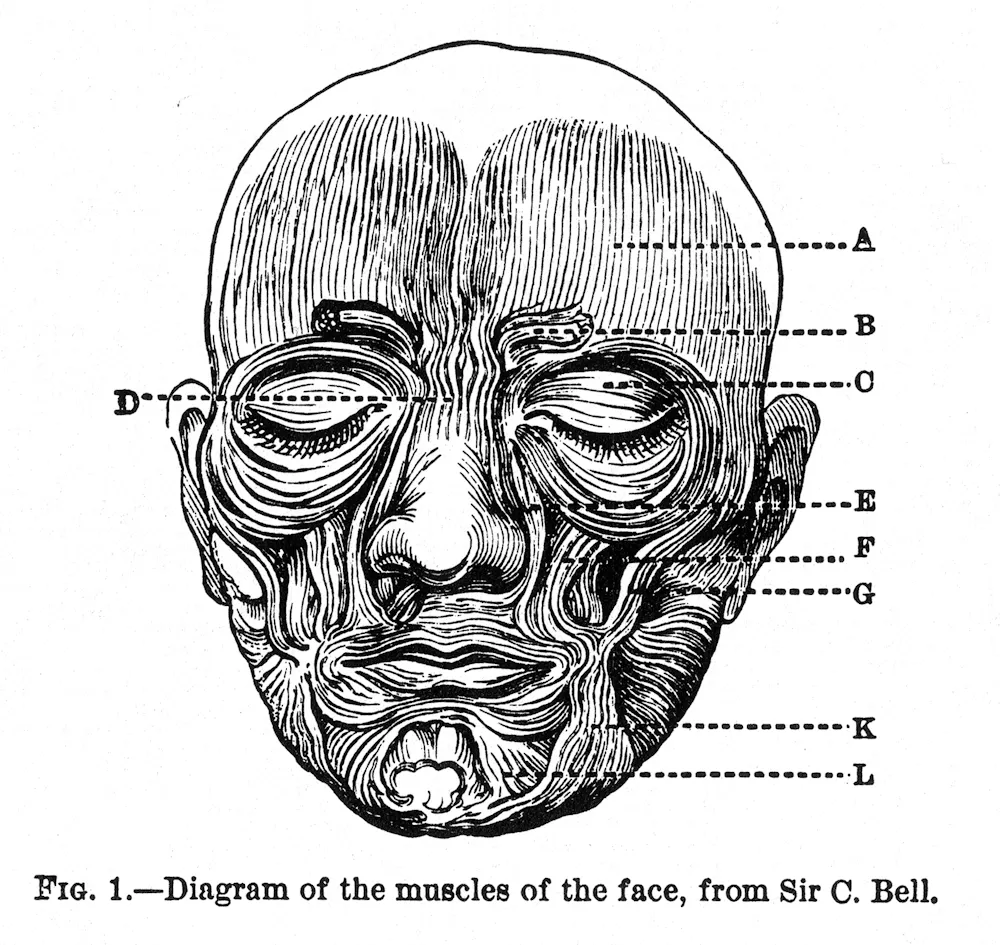
Darwin studied the mechanics of facial expressions in great detail.
The Expression of the Emotions in Man and Animals / Wikimedia

He analysed in great detail more than 70 different components and types of facial expressions plus other non-facial gestures.

Darwin concluded the movements we call expressions, such as smiling and crying, did not evolve to communicate. For Darwin, smiles and tears do not arrive at the body’s surface already steeped in emotional meanings brewed in the hidden recesses of the expresser’s mind. They are accidental side-effects of other “habits”, or of the ways the nervous system works.

“Expressions” only become meaningful when others read them as such, so the meaning of any so-called “emotional expression” depends on context and other people.

Viewed this way, Darwin’s book argues an expression could only ever have evolved or “become instinctive” if the ability to recognise it had also evolved and “likewise become instinctive”. And if recognising expressions is instinctive, Darwin reasoned, humans should be born able to understand gestures and facial displays.

Child’s play

To find out whether this was the case, Darwin carefully studied the social behaviour of his firstborn child, Doddy. He observed Doddy understood, “at a very early period, the meaning or feelings” of those who took care of him, “by the expression of their features”.

Recent research has confirmed Darwin’s theory that even very young babies can interpret the expressions of others.
Shutterstock

Darwin tells us he aimed many “odd noises and strange grimaces” at his four-month-old son. These did not scare Doddy, however, being “taken as good jokes”, because they were “preceded or accompanied by smiles” – the smiles proving legible to Doddy as making humorous his father’s otherwise-fearsome growling and gurning.

These observations pre-empted by more than a century modern psychology’s discovery babies have an inbuilt capacity for sympathetic mind-reading and mental sharing.

Universal emotions?

Darwin made clear his book presented a theory of expression rather than a theory of emotion. While he painstakingly pioneered a modern physiological way of studying the human movements it discusses, he found the meanings of such movements – whether emotional or not – to be inescapably social.

Modern psychologists argue over a split between supposedly “basic”, “biological” or “universal” emotions such as anger, which are held to be directly linked to one’s physical state, and “social” emotions such as envy, which are supposed to result from our readings of others.

Darwin’s work sidesteps this controversy, arguing only the observable patterns of facial action we call “expressions” can ever be universal. Whatever meanings are attributed to those actions must derive from the social relationships they reflect.

Reading faces

Darwin used the experiments of the neurologist Guillaume Duchenne, who used electrical stimulation of face muscles to produce expressions.
Wikimedia

In Darwin’s time, the traditional way of studying emotions was to ask people about why they were smiling or what they were angry about. However, Darwin’s research went the opposite way: he asked people about how they understood the expressions of others.

He asked expatriate Europeans living on six continents to fill in a survey about the forms of expressive movement they had seen in diverse indigenous peoples “who have associated but little with Europeans”.

He also asked 20 or so well-educated members of his circle to judge what meanings they saw in photographs of 11 facial displays neurologist Guillaume Duchenne had produced by attaching electrodes to muscles in the faces of volunteers so as to simulate different emotional expressions.

Darwin held that only photographs which judges agreed about could be called “genuine” expressions. Pictures of terror, sorrow or laughter produced unanimous responses. Other photos, including Duchenne’s portrait of hatred, proved indecipherable.

Blushing

The masterstroke of The Expression of the Emotions in Man and Animals comes in its longest chapter, on blushing. Blushes, Darwin shows, result from the rebounding of our faculty for reading others: it is “the thinking what others think of us which excites a blush”.

Thus blushers will blush when they imagine someone blames them for something, even when they are innocent. This conclusion, that one’s reading of others’ attitudes shapes how one acts, underpins the treatments of conscience and morality, sexual coquetry and culture which fill Darwin’s earlier book The Descent of Man (1871).

It also inspired social theorist George Herbert Mead’s invention of what sociologists now call “symbolic interactionism” – the view that all human actions are shaped by what they signify in the groups where they occur.

Read alongside The Descent of Man, of which it was at first intended to form part, The Expression of the Emotions proves that Darwin’s vision of nature as a theatre of agency did more than anticipate biology’s newest theory of adaptation. That same vision laid the groundwork for an idea of psychology based in evolution, where all human meaning has a social origin.


Read more:
Guide to the classics: Darwin’s The Descent of Man 150 years on — sex, race and our ‘lowly’ ape ancestry


The Conversation

Ben Bradley does not work for, consult, own shares in or receive funding from any company or organisation that would benefit from this article, and has disclosed no relevant affiliations beyond their academic appointment.

ref. 150 years ago, Charles Darwin wrote about how expressions evolved – pre-empting modern psychology by a century – https://theconversation.com/150-years-ago-charles-darwin-wrote-about-how-expressions-evolved-pre-empting-modern-psychology-by-a-century-170880


Whose sovereignty is really being fought for? What happens when First Nations People are dragged into extremist protests

Source: The Conversation (Au and NZ) – By Kelly Menzel, Assistant Professor – First Nations Health, Bond University

Over the past few weeks we have seen First Nations people protesting alongside alt-right “freedom” protesters at Old Parliament House in Canberra.

With this we saw a classic example of the alt-right trying to recruit disaffected marginalised people for their own ends.

This is not only dangerous given what we know about the history of First Nations peoples’ interactions with police, it also perpetuates a stereotype of First Nations people that we are dysfunctional, disunited and do not know what we want.


Read more:
A short history of the Aboriginal Tent Embassy – an indelible reminder of unceded sovereignty


White supremacy and the Aboriginal Tent Embassy

The Aboriginal Tent Embassy in Canberra was established in 1972. The Embassy is a permanent, heritage-listed protest site representing the political rights of the Indigenous Peoples of Australia. It is the longest living Indigenous protest site in the world.

However, in recent months a clash of extremist white protesters alongside some Indigenous people, attempted a hostile invasion of the site in a bid to co-opt the Embassy’s cause. The group that descended the area included key white supremacist figures, including members of the Proud Boys.

These alt-right, extremist invaders are aligned with the global Sovereign Citizens (SovCits) movement, whose roots are racist and antisemitic. Sovereign Citizens are anti-government and believe they are sovereign from the laws of the country where they live.

These extremists misappropriated the long-term struggle of First Nations people, and created chaos and division.

It seems these groups find ways to recruit others by tapping into the distrust of authority. They potentially exploited this to recruit Indigenous people to an alt-right cause.

The presence of Indigenous people in these protests further perpetuates the narrative we are dysfunctional peoples who cannot agree – a stereotype white people as a collective do not have to worry about.

Indigenous people being perceived as dysfunctional springs from white deficit narratives about Indigenous communities. This deficit discourse represents our people in terms of incivility, discord and failure.

So whose sovereignty is really being fought for?

Sovereignty is one of the foundational principles of international law. Unfortunately, sovereignty under traditional Western Euro-centric international law was purposefully designed and restricted to what are considered “civilised” nations and Indigenous Peoples were (and one could argue still are) “objects” under the law.

Indigenous Sovereignty remains a separate concept and means something entirely different but is marginalised to Indigenous politics. It remains marginalised because of the history of Terra Nullius being applied to justify colonisation and the refusal of contemporary politicians to advocate on the issue. Indigenous Sovereignty has deep significance in the fight for recognition, and there are many models of what Indigenous Sovereignty looks like.

However, sovereignty cannot simply exist, it can only be asserted, claimed, or taken – which is the antithesis of Indigenous law and lore.

Sovereignty and the assertion of sovereignty is a critical item of Indigenous activism in Australia – the only commonwealth country without an agreement between Indigenous and non-Indigenous peoples. Terra Nullius was enacted in Australia because the colonial invaders believed the Indigenous Peoples were uncivilised and thus did not possess sovereignty, therefore did not have the right to exclude the invaders from their lands. Therefore, the notion of Indigenous Sovereignty is intertwined with the activism for Treaty and the pursuit of self-determination.

Sovereignty however, has been hijacked by the alt-right and their version of sovereignty is about the rights of (white) individuals to do what they like without the subordination of the outside authorities.

How does this impact Indigenous people?

White protesters co-opting Indigenous causes for their own “sovereignty” agenda is problematic in a number of ways.

First Nations people are often expected to educate those around us, and to freely give emotional and cultural labour. Providing such labour when educating about systemic violence while concurrently facing disadvantage due to white privilege in systems takes a significant toll. However, speaking out and protesting has very real life and death consequences for Indigenous People that white people do not need to consider.

First Nations People in Australia are the most criminalised and incarcerated in the world, and are at a higher risk of dying in custody.

White people also do not need to manage the same burdens, cultural loads or responsibilities, such as being asked to be the representative of their entire race. Nor are they collectively condemned when one white person does something that is considered “wrong”.

The far-right appropriating Indigenous causes is not new and often used to justify acts of violence. The far-right appropriate language about “rights” and twist them to fuel their own propaganda. This has been an effective tool to recruit all sorts of disenfranchised people.


Read more:
Who are the ‘Original Sovereigns’ who were camped out at Old Parliament House and what are their aims?


In order to stop the momentum of these groups and their toxic way of thinking, we must ensure white people are no longer ignorant of the power of white privilege and the effect dysfunctionality speech, deficit narratives and systemic racism have on Indigenous Peoples and communities.

Many people may feel we are living in uncertain times, and these protest groups might try to pretend they have the answers people seek. But they do not. These groups encourage a pattern of ignorance that maintains social inequity for marginalised groups.

Instead these groups fuel hate speech, create further division in communities, and do nothing to bring stability to uncertain times.

The Conversation

Kelly Menzel does not work for, consult, own shares in or receive funding from any company or organisation that would benefit from this article, and has disclosed no relevant affiliations beyond their academic appointment.

ref. Whose sovereignty is really being fought for? What happens when First Nations People are dragged into extremist protests – https://theconversation.com/whose-sovereignty-is-really-being-fought-for-what-happens-when-first-nations-people-are-dragged-into-extremist-protests-168368

Buchanan + Manning on Foreign Affairs: What does 2022 hold in store?

A View from Afar - February 10, 2022.

A View from Afar: In this the first episode for 2022 Paul G. Buchanan and Selwyn Manning discuss What we all should expect to unfold in 2022 – especially with regard to foreign affairs and global security.

In particular Buchanan and Manning will discuss: – What’s behind this Europe, USA, NATO, Ukraine, Russia diplo-battle? – What to understand from how authoritarian states are reacting to the USA’s re-emergence as a superpower? – What does the intensity of US-led military Air-Land-Sea exercises signal?

You can comment on this debate by clicking on one of these social media channels and interacting in the social media’s comment area. Here are the links:

If you miss the LIVE Episode, you can see it as video-on-demand, and earlier episodes too, by checking out EveningReport.nz or, subscribe to the Evening Report podcast here.

The MIL Network’s podcast A View from Afar was Nominated as a Top  Defence Security Podcast by Threat.Technology – a London-based cyber security news publication.

Threat.Technology placed A View from Afar at 9th in its 20 Best Defence Security Podcasts of 2021 category. You can follow A View from Afar via our affiliate syndicators.

Podchaser - Evening Report
Listen on Apple Podcasts
***

Dissatisfied plastic surgery clients show the downsides of online research

Source: The Conversation (Au and NZ) – By Aphrodite Vlahos, Adjunct Lecturer, The University of Melbourne

Shutterstock

A woman walks into a plastic surgeon’s office with an image she has found online. She wants her body to look like the same, and thinks she knows how to get it. She tells the consulting surgeon exactly what she wants: round, 350cc implants, with full projection. She believes this will get her to a full D-cup shape.

But after the operation, once the physical pain subsides and the scars heal, she’s dissatisfied with the decidedly unnatural-looking result. It’s nothing like the image she hoped to emulate. Because that body was not hers.

This woman wasn’t stupid. In spending many hours online pondering her options and making decisions she was doing exactly what expert services from plastic surgeons to financial advisers encourage clients to do.

Yet, as our research shows, this trend has also shifted responsibility and risks onto customers.

Charged with “doing their own research”, drawing on anecdotal information online to inform their decision making, consumers can become overconfident about their level of understanding. The result is an increasing number of bad outcomes.

How we did our research

To understand more about the paradox of “informed” customers, we conducted a qualitative study of women seeking breast augmentation surgery.

Our research involved a deep immersion into plastic surgery forums over two years. This included an analysis of YouTubers who documented their breast augmentation in online videos, and participation in a private Instagram group designed for women seeking breast augmentation surgery. From this Instagram group, we then formally interviewed 20 women aged between 18 and 34 who had breast augmentation surgery.

Many women only see their cosmetic surgeon once before their surgery.
Shutterstock


Read more:
The five most surprising cosmetic surgery trends across the globe


Turning to the internet

The results of our research suggest many women turn to the internet because consulting a plastic surgeon is expensive. An appointment costs, on average, about US$500 (A$700), with the cost of breast augmentation in the US generally ranging from US$4,000 to US$15,000 (A$ 5,600 to $A21,000).

Many women only see their surgeon once, for 30 to 40 minutes, before their surgery. In this consultation everything must be decided – from aesthetic decisions to discussing any medical conditions that may complicate the surgery.

For this reason, customers often spend weeks and months online to prepare and educate themselves before they meet their surgeon. They learn about terminology and techniques, find pictures they like, and talk to others who have gone through the procedure.

They even conduct DIY experiments, such as the “rice-test”, which involves filling two bags with rice and placing them inside their bra as a way of understanding breast implant sizes.

Many women go to these efforts to build some form of expertise for their doctor consultations, to communicate what they want to a professional and get their money’s worth.

The ‘rice-test’ involves filling two bags with rice as a way of understanding breast implant sizes.
Shutterstock

The limits of individual expertise

Our study suggests the more women solely relied on lay expertise to dictate how their breast surgery should go, the more likely they were to be disappointed with the outcome. Better results occurred when they carefully selected their doctors and were open to working with them.

Creating aesthetically beautiful breasts must consider myriad factors. But online forums for breast augmentation mostly focus on size and often ignore risks.

Those who reported trying to control the decision making, by asking for very specific products or techniques – as the woman in our introduction did – were more likely to be disappointed by the result. They described feeling their breasts were too small, too large, too perky, too fake-looking or not fake-looking enough.

When asked about why these bad outcomes occurred, they blamed themselves for being bad decision makers. “I should have asked more questions,” one said. “I should have researched more,” said another. “I should have communicated what I wanted better,” said yet another.

But more questions and research were not the solution. What they needed to question was the premise that a medical service provider should simply do what a customer asks.

Research and ‘responsibilisation’

This is part of a wider trend, in which access to unfettered information online has emboldened many people to believe they can work things out for themselves.

It is also reflects a trend in expert services that require deep technical knowledge, termed “responsibilisation”, in which customers are encouraged to do their own research and take responsibility for “coproducing” those services.

While being prepared is superficially good advice, such encouragement also shifts risks to individual customers, who invest a lot of time and effort to become educated through the internet because it is easily accessible and free. But all this “research” does not necessarily lead to better outcomes.


Read more:
Distrust of experts happens when we forget they are human beings


Our research also highlights the downside problem when people lose faith in medical expertise.

Women in our study reported happier outcomes when they listened to the doctor.

One woman we interviewed related telling her surgeon what she wanted and being told no. “You will never have that shape,” he said, referring to an image she had shown him. The doctor then discussed with her what was possible. She credits her satisfaction with the outcome to this process of working with her surgeon.

Our research offers a cautionary tale of the limits of lay expertise in online forums. The best outcomes occurred when consumers’ preferences were respected within the limits of medical possibilities.

So it pays to listen to experts. There is certainly a space for online research, but not to the extent that it makes us think we always know better.

The Conversation

Aphrodite Vlahos received funding from the Australian Government Research Training Program (RTP) Scholarship.

Anna E Hartman receives financial support provided by the Australian Government Research Training Program Scholarship.

Julie Ozanne does not work for, consult, own shares in or receive funding from any company or organisation that would benefit from this article, and has disclosed no relevant affiliations beyond their academic appointment.

ref. Dissatisfied plastic surgery clients show the downsides of online research – https://theconversation.com/dissatisfied-plastic-surgery-clients-show-the-downsides-of-online-research-175060

Critics slam Indonesian green capital move – ‘heaven surrounded by hell’

Asia Pacific Report newsdesk

A number of national figures in Indonesia have criticised the project to move the state capital (IKN) from Jakarta to East Kalimantan as envisaged by President Joko “Jokowi” Widodo, reports CNN Indonesia.

Among the figures who have loudly criticised the project are economist Dr Faisal Basri and former Vice-President Jusuf Kalla.

Dr Basri has questioned Widodo’s dream of building a “green capital” city. In reality, said Dr Basri, the new capital city Nusantara would be surrounded by coal mines, oil refineries and palm oil plantations.

“This is unique, they (the government) want to build a green city, a smart city, but what surrounds it is totally different,” the economist said.

“So it will be a heaven surrounded by hell. In time this heaven could also become hot,” said Dr Basri during a virtual discussion at the Mulawarman University.

Dr Basri said that it was not a matter of not being allowed to move the capital, but he warned that the current economic conditions were not supportive of such a mega-project.

He also warned of the economic transformation which would stall and the issue of half of the population currently being categorised as extremely poor, poor, almost poor and vulnerable to falling into poverty.

Many problems
Speaking separately, former Vice-President Kalla predicted that moving the capital city would encounter many problems. He is pushing the government to fully resolve the problems which would emerge in the future.

“It is these complex issues which must be addressed together because later there will be problems, there will definitely be problems, budgetary problems, location problems, and the like”, said Kalla during a Justice and Prosperity Party (PKS) national working meeting in Jakarta.

Kalla said that moving the capital city would not be easy. He added, however, that this was no longer the time to debate the issue because the decision had already been taken by the government and the House of Representatives (DPR).

Sharp criticism has also come from former Corruption Eradication Commission (KPK) Chair Busyro Muqoddas who said that the process of deliberating and enacting the law on the state capital city by the DPR was “reckless”.

“And this is an irony which has profoundly injured the dignity of the ordinary people. The people have been positioned like the oligarchy’s cash cows in an election cycle, an election of regional heads,” said Muqoddas during the virtual discussion.

“This also in fact represents layers of disloyalty. In Arabic, durhaka murokab against the people,” he said.

New law to move capital
Earlier, the government and the DPR agreed to move the capital city from Jakarta to the new location in East Kalimantan.

The two parties embodied this agreement in the Law on the State Capital City (UU IKN).

The process of moving the state capital will not be done immediately following the enactment of the UU IKN.

Jakarta will continue to carry the status of the capital city until the president issues a presidential decree on moving the capital.

Translated by James Balowski for IndoLeft News. The original title of the article was “Tokoh Kritik Keras IKN: Dikelilingi Neraka, Rakyat Jadi Sapi Perah”.

Print Friendly, PDF & Email

Article by AsiaPacificReport.nz

‘With togetherness, we overcome,’ says NZ’s Ardern on Waitangi Day

Prime Minister Jacinda Ardern’s prerecorded speech marking the historic 1840 Treaty of Waitangi between Māori chiefs and the colonial government made from the treaty grounds. Video: RNZ News

RNZ News

Prime Minister Jacinda Ardern has used her Waitangi Day speech to call for New Zealand’s people to come together and overcome the challenges facing the country today and into the future.

A pre-recorded speech from Ardern has been broadcast as part of today’s Waitangi Day commemorations.

Because of the pandemic, the Waitangi Trust shifted the focus for this year’s Waitangi Day commemorations from the typical in-person ceremony at the treaty grounds north of Paihia to a virtual experience via broadcasts and online.

Ardern said it was important to take time and reflect on Waitangi Day and think about how to improve outcomes for Māori and all New Zealanders.

She said across Aotearoa there were stories of arrival, settlement, conflict, unity, hope and hardship and acknowledging the stories was crucial to people’s connection to each other.

“Today, we mark the signing of Te Tiriti o Waitangi and our ancestors who signed this document, we mark their journey, and continue to make our own, one that defines our nation — a nation we can all be proud of.

“Togetherness is something we have shown throughout the last few years, I know it hasn’t been easy. There were many clouds and at times they seemed so dark that the sun could not shine through, but together we have, and we continue to overcome.”

Proud of NZ history teaching
Ardern said she was proud that this year schools would have the resources to teach New Zealand history and the country would celebrate the first Matariki public holiday.

Ardern said she would return to Waitangi in person, but for now she had to address people from Parliament in Wellington.

Prime Minister Jacinda Ardern and Governor-General Dame Cindy Kiro travelled to Waitangi to pre-record speeches last month.

It was on the flight from Kerikeri to Auckland that they became close contacts of a positive covid-19 case, but subsequently they both tested negative for the virus.

This article is republished under a community partnership agreement with RNZ.

Print Friendly, PDF & Email

Article by AsiaPacificReport.nz

US worried about losing out in South Pacific to Chinese influence

COMMENTARY: By Michael Field in Auckland

China’s activities in the South Pacific are causing growing alarm in Washington, forcing US Secretary of State Antony Blinken to make an urgent visit to Fiji.

But, sources say, he cannot do it due to the continued absence of Fiji Prime Minister Voreqe Bainimarama, and like many people, Blinken is awaiting word on when he will return.

Last month Bainimarama flew to Melbourne for unannounced open heart surgery and has given no word on when he will return.

Washington has regional concerns but Blinken appears to believe he can speak to the whole South Pacific in a single meeting with Bainimarama.

Washington regards its concerns as too important to be dealt with via acting Prime Minister Aiyaz Sayed-Khaiyum.

US aid and involvement in the Pacific has been minimal and the last high level visit of any kind was the 2012 trip to Rarotonga of then Secretary of State Hillary Clinton. A decade between visits shows a high level indifference.

But concern has mounted after recent riots in the Solomon Islands in the wake of its switch in diplomatic ties from Taiwan to China.

Beijing appears now to have strengthened its hand in Honiara.

Slow to give significant aid
While China has been slow to get significant aid to eruption damaged Tonga, they will still beat the United States to it. Washington got a frigate to Nuku’alofa with boxes of water; China’s PLAN Wuzhishan and Chaganhu are grunty vessels, carrying significant aid.

Nuku’alofa is already home to a large and modern Chinese Embassy.

The business of asserting Western power has not been helped by Australia’s naval failure of its flagship HMAS Adelaide.

However, while Blinken’s flying trip into Suva will wave flags and provide the Republic of Fiji Military Forces (RFMF) with yet another dress up parade, how it will go down with other countries in the region is far from clear. They are not overly fond of Bainimarama’s preaching.

But all depends on one thing: Bainimarama showing up at all.

Michael Field is an independent New Zealand journalist and co-editor of The Pacific Newsroom. Republished with permission.

Print Friendly, PDF & Email

Article by AsiaPacificReport.nz

As parliament returns for 2022, the religious discrimination bill is still an unholy mess

Source: The Conversation (Au and NZ) – By Luke Beck, Associate Professor of Constitutional Law, Monash University

www.shutterstock.com

The religious discrimination bill is due to be debated in parliament this week. This has been a long time coming – Prime Minister Scott Morrison first promised a religious discrimination bill before the last federal election, more than three years ago.

In large part, the delay stems from vast disagreement – both inside parliament and in the community – about what the bill should contain. There is broad agreement a person should not be discriminated against on the basis of their faith or lack of faith. However, the extent to which religion should be a licence to discriminate against others remains enormously contentious.

As MPs return to Canberra, who supports the bill? Who opposes it? What might happen?

Two inquiries into the bill

After Morrison introduced the bill into parliament in December 2021, it was sent to the legal affairs and human rights committees.

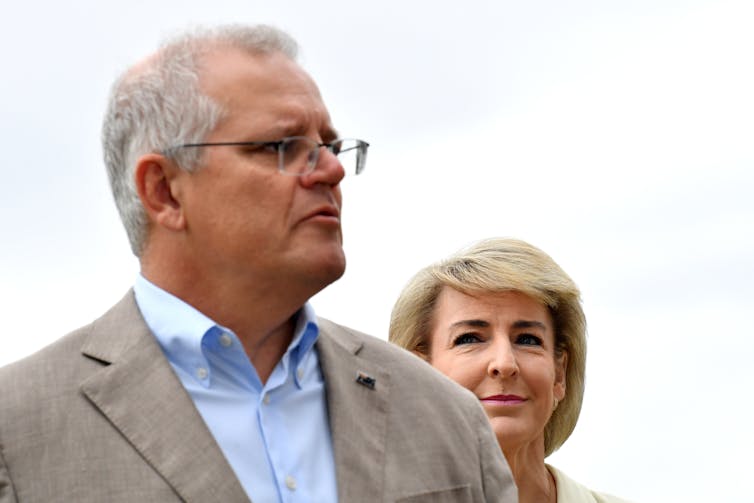
Prime Minister Scott Morrison and Attorney-General Michaelia Cash
Attorney-General Michaelia Cash, here with Prime Minister Scott Morrison, has the difficult job of trying to get the bill through parliament.
Mick Tsikas/AAP

On Friday, both recommended the bill be passed – but only after a series of changes. In their reports, both committees said there were serious doubts about the constitutional validity of some elements of the bill.

Both committees chaired by government MPs. But any committee member can make additional comments or dissent from the main findings.

Overriding state protections

One of the key sticking points is a clause allowing religious schools to discriminate against staff members on religious grounds if the school has a written policy on its religious position.

This provision overrides also existing federal, state and territory protections against discrimination and permits schools to sack LGBTIQ+ teachers.


Read more:
Third time lucky? What has changed in the latest draft of the religious discrimination bill?


Attorney-General Michaelia Cash’s office has acknowledged discrimination against gay staff will be allowed, provided it is done under the guise of religious views.

Parliament’s human rights committee said this provision “is an important measure to […] maintain the religious ethos of the school” even though it “may limit the right to freedom of religion and equality and non-discrimination for others”.

Statements of belief

Another sticking point concerns statements of belief. This provision overrides every federal, state and territory anti-discrimination law to make “statements of belief” immune from legal consequences if they are based on a genuinely held religious view.

For example, statements of belief could include a male boss saying to a female employee, “women should not hold leadership positions” or a doctor saying to a patient, “disability is a punishment for sin”.

Parliament’s human rights committee said this clause “operates, in the main, to give reassurance to people of faith that they are able to make moderately expressed statements of religious belief”.

But in extra comments to the legal affairs committee report, NSW Liberal senator Andrew Bragg,warned:

Strong evidence has been provided to the committee that the statement of belief is unworkable and undesirable. Numerous employers, religious organisations, anti-discrimination groups and legal experts are against it.

The Australian Human Rights Commission is also concerned this statement of belief provision might make it more difficult to deal with cases of sexual harassment at work.

No protection for gay and trans kids at school

On Thursday, Morrison promised he would amend the Sex Discrimination Act to take away the right of religious schools to expel LGBTIQ+ students.

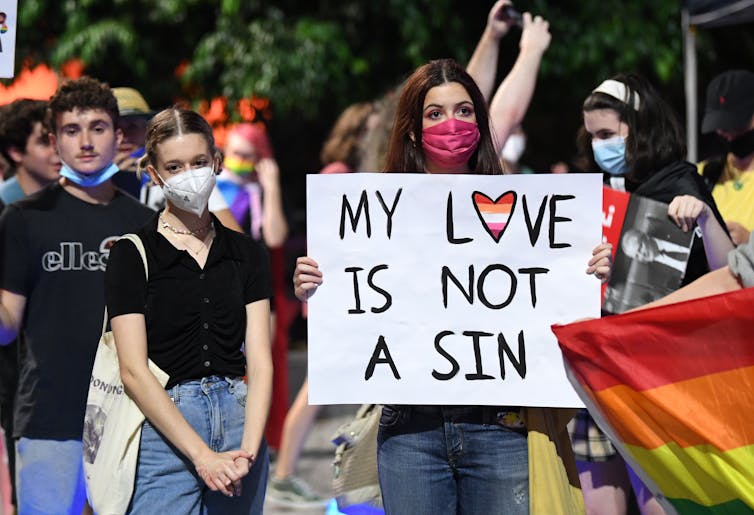
A young woman holds a sign 'my love is not a sin'.
One of the major concerns about the bill is its impact on the LGBTIQ+ community.
Darren England/AAP

This promise was met with fierce opposition from conservative groups: FamilyVoice Australia called it a “betrayal”. Christian Democratic Party campaign director Lyle Shelton said Christian parents had been “thrown under a bus”.

But even if Morrison delivers on this promise about expulsion, this will not stop religious schools discriminating against gay and trans kids while they are at school, providing they aren’t expelled.

Religious groups are divided

It is important to note religious groups do not agree among themselves.
Conservative religious groups like the Australian Catholic Bishops’ Conference and the Sydney Anglican Diocese support the bill.


Read more:
The debate about religious discrimination is back, so why do we keep hearing about religious ‘freedom’?


But other religious groups disagree. The broader Anglican Church opposes the bill in its current form. Its Public Affairs Commission says the bill gives “too much unnecessary scope and encouragement for harmful discriminatory behaviour in the name of religion”.

Catholic welfare agencies feel the same. The St Vincent de Paul Society says “people will be hurt […] and will have no legal remedy”, while Sacred Heart Mission says the bill “will exclude people from accessing essential services”.

Minority religious groups are also worried. The Buddhist Council of NSW believes, the bill “may worsen religious discrimination against people from minority faith groups”.

The major parties are divided

Meanwhile, the bill’s path through parliament is still uncertain. Moderate Liberal MPs such as Dave Sharma, Trent Zimmerman and Bridget Archer are threatening to cross the floor unless the bill is watered down. Bragg has called for the statement of belief provision to be removed and for protections to be introduced to shield both students and teachers from discrimination by religious schools.

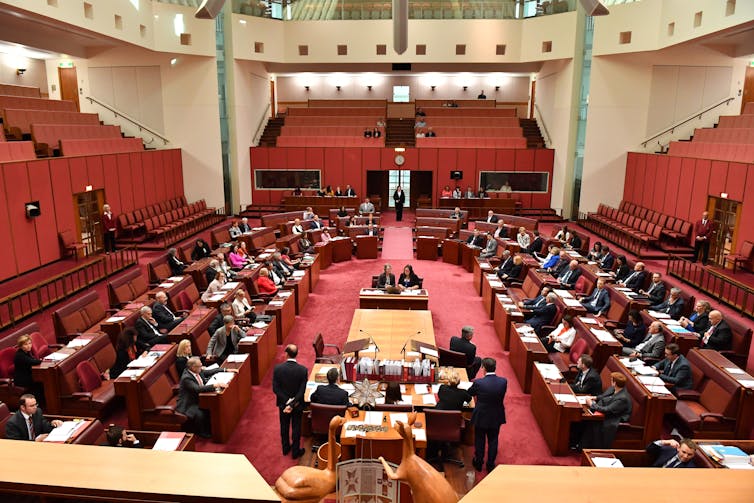
The Senate divided over a vote.
MPs within both Liberal and Labor camps hold serious concerns about the bill. The Greens want Labor to help block the bill.
Mick Tsikas/AAP

Labor’s extra comments to the legal affairs committee report warned the bill should not “remove existing protections Australians already enjoy against other forms of discrimination”.

But the opposition is trying to walk both sides of the street. Labor members on the parliamentary committees signed up to the main reports but added extra comments emphasising the need for amendments. This allows Labor to say it supports the bill and that it wants to change the controversial bits – depending on who it’s talking to.

If Morrison risks some of his own MPs crossing the floor and calls a vote on the bill as it currently stands, Labor will have to declare its hand. Labor is expected to finalise its position for this week’s debate at its regular parliamentary meeting on Tuesday.

Where is this heading?

There’s almost no time left before the election to make amendments (or at least properly thought out amendments) and pass the bill. The Senate sits for only five days before the election is expected to be called.

Following the Citipointe Christian College scandal last week, it is not clear that passing laws to allow discrimination against gay and trans people is a vote winner for either the Coalition or Labor.

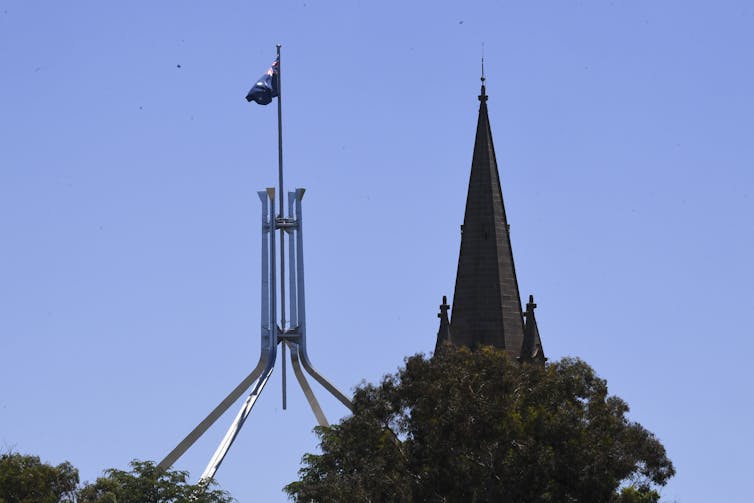
A steeple in front of the Parliament House flag.
Time is running out to pass the religious discrimination bill before the federal election, which could make it a hot-button campaign issue.
Lukas Coch/AAP

Seemingly pre-empting the bill passing, the Pentecostal school asked parents to sign “contracts” agreeing that being gay or trans is as “destructive to human relationships and society” as paedophilia, and trans kids would only be welcome if they did not attend as the gender with which they identify. A backlash from families forced the school to back down and the principal is now on “extended leave”.

If Pentecostal families don’t support this kind of thing, it’s hardly likely families from more mainstream religious groups would either. But if the bill is passed without significant changes, we can expect to see many more situations like Citipointe’s.

The messy debate over religious discrimination in Australia continues.

The Conversation

Luke Beck made submissions to the parliamentary inquiries considering the Bill, is a member of the Australian Labor Party and is on the board of the Rationalist Society of Australia Inc. This article reflects only his personal views.

ref. As parliament returns for 2022, the religious discrimination bill is still an unholy mess – https://theconversation.com/as-parliament-returns-for-2022-the-religious-discrimination-bill-is-still-an-unholy-mess-176362

Native birds have vanished across the continent since colonisation. Now we know just how much we’ve lost

Source: The Conversation (Au and NZ) – By Michelle Ward, PhD Candidate, The University of Queensland

The critically endangered regent honeyeater. Friends of Chiltern, Author provided

In the 250 years since Europeans colonised Australia, native birdlife has disappeared across the continent. Our new research has, for the first time, registered just how much Australia has actually lost – and our findings are astonishingly sad.

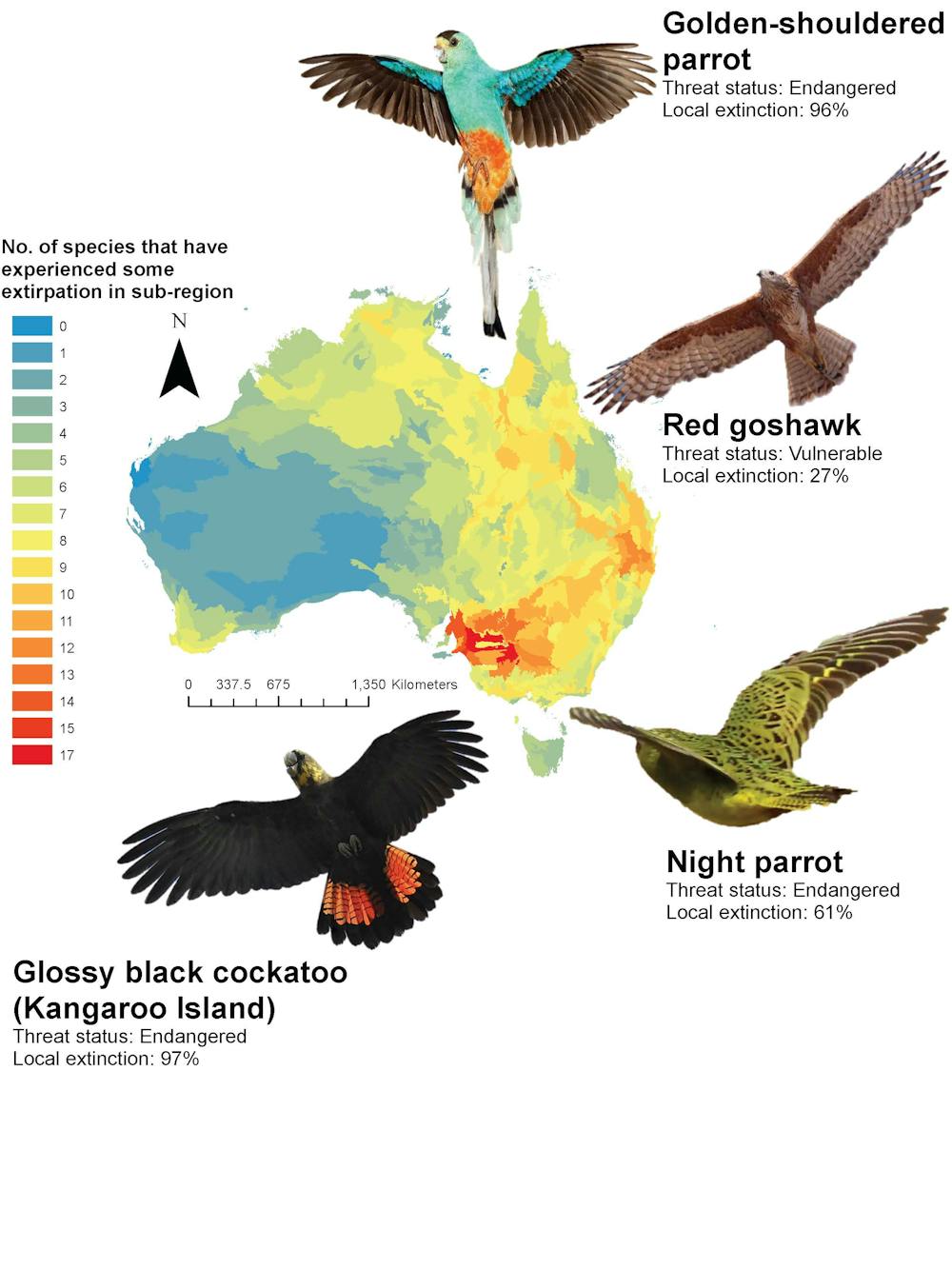
We focused on 72 species of birds faced with extinction today, including the Kangaroo Island glossy black cockatoo, regent honeyeater, and night parrot. We found 530 million hectares, or 69%, of Australia, has lost at least one bird species. In some parts of the country, we’ve lost up to 17 birds.

Land clearing, along with threats such as cat predation, have driven ten birds to disappear from over 99% of their historical habitat. Indeed, we show the last 250 years has seen more than 100 million hectares of now-threatened bird habitat cleared on mainland Australia – that’s 15% of Australia’s landmass.

For many of the species we examined, their remaining habitats occur in patches surrounded by farmland, towns and cities. To give birds and other animals a chance at survival, we need effective national leadership not only to protect existing habitats, but also to restore lost habitat and manage future habitat under climate change.

Lost, but not forgotten

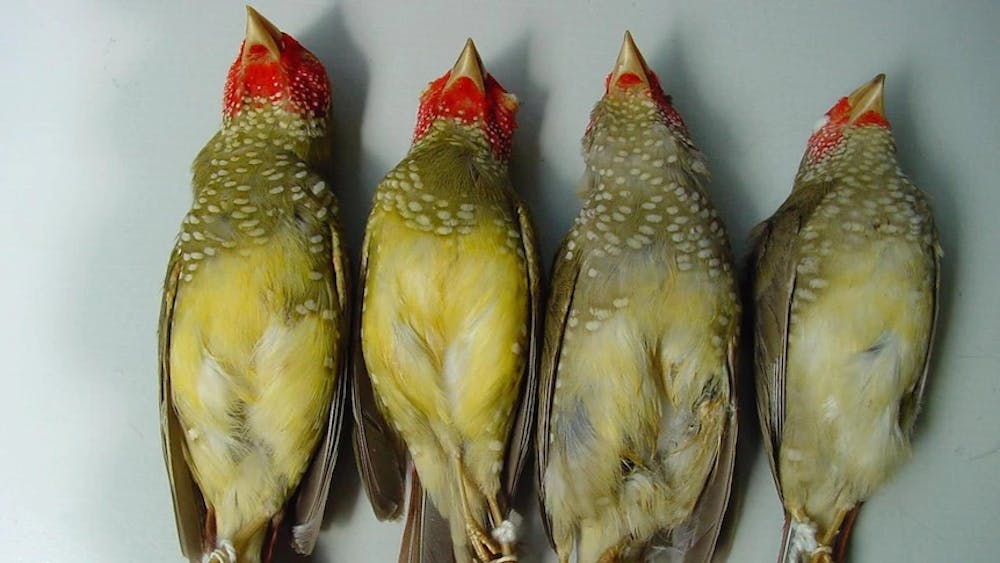
In the last 250 years, 22 native birds have gone extinct. We found two more currently listed as threatened under Australia’s environmental legislation may also be now extinct.

One is the eastern star finch. This bird was once found from northern New South Wales to Queensland’s Burdekin River. A victim of overgrazing, it has not been seen since 1995. Surprisingly, this bird is only listed as “endangered” rather than “critically endangered” under [Australian law]

The other is the Tiwi Islands hooded robin, which has not been seen for 27 years. Changed fire patterns from European colonisation and invasive species such as cats and weeds have likely driven it to extinction.

Eastern star finch is now thought to be extinct.
Stephen Garnett

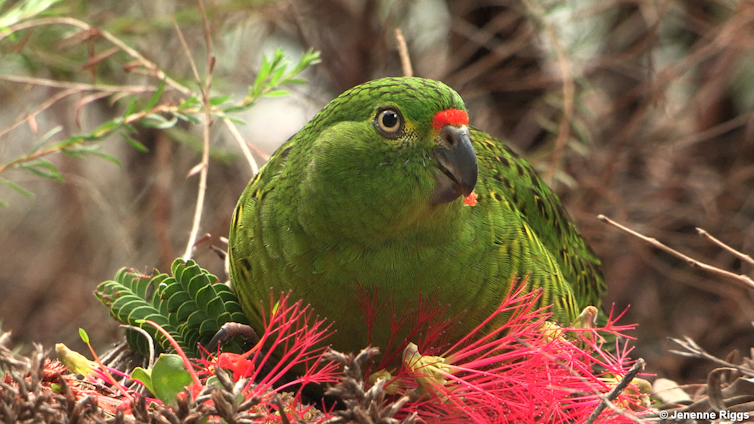
Other species are on their last legs. The western ground parrot, for example, once swept across large parts of Western Australia, but are now in just two locations: Cape Arid National Park and Nuytsland Nature Reserve.

They’ve become locally extinct across more than 99% of their historical habitat because of habitat destruction, invasive species, and changed fire patterns. They’re at significant risk from isolated catastrophic events such as major bushfires. For example, the 2019-2020 fires alone destroyed 40% of the bird’s last remaining habitat.

Kyloring (the western ground parrot) is one of Australia’s rarest birds. It’s estimated fewer than 150 are left in world.
J Riggs/Riggs Australia/Friends of the Western Ground Parrot

The plight of the regent honeyeater is another tragic story of decline. Flocks of thousands once occurred from Adelaide to north of Brisbane, with the naturalist John Gould writing in 1865:

I met with it in great abundance among the brushes of New South Wales […] I have occasionally seen flocks of from fifty to a hundred in numbers, passing from tree to tree as if engaged in a partial migration from one part of the country to another, or in search of a more abundant supply of food.

Today, only 100 breeding pairs are left, and almost all breed in just three sites in NSW. The species has lost more than 86% of its historical habitat, with land clearing the main driver of decline. So few remain that young birds cannot learn to sing properly, so have trouble attracting a mate.

The extinction wave

Our research used a combination of historical field guides, reference books, research papers, government records, spatial data, and expert elicitation to create maps of past habitats, and compared those to current habitats.

We found certain areas across continental mainland Australia to be in worse shape than others.

Number of threatened species that have experienced local extinction per subregion (Ward et al. 2022).
Clockwise from top left: golden- shouldered parrot (source: Jan Wegener); red goshawk (source: James Watson), night parrot (source: Bruce Greatwich), and Kangaroo Island glossy black-cockatoo (source: Maureen Goninan).

For example, we revealed extinction hotspots in areas between Swan Hill in Victoria and Marmon Jabuk range in South Australia. In this region, up to 17 birds have gone extinct (red areas in map), such as the black-eared miner.

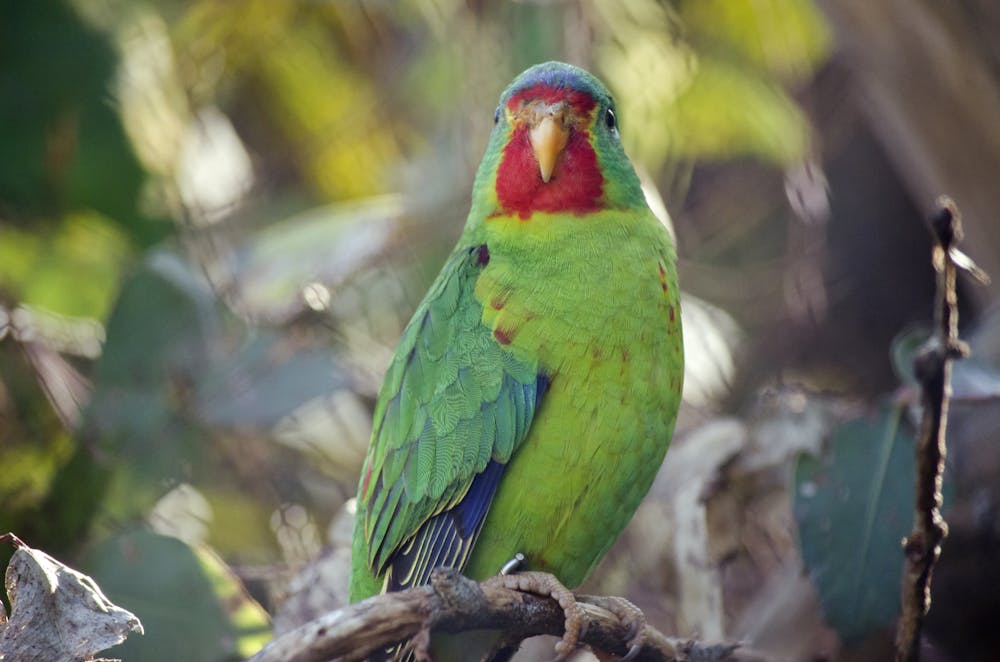
Likewise, over the last century, almost 10% of all known breeding land-based birds have vanished in SA’s Mount Lofty ranges. This includes the rufous fieldwren, bush stone-curlew, ground parrot, king quail, azure kingfisher, barking owl, regent honeyeater, and swift parrot.

The story of decline is not limited to only threatened species, with more common birds such as willie wagtails, brolgas, boobook owls, and even magpies now disappearing from many places they were once common.

Indeed, the loss of so many species is the canary in the coal mine of total ecosystem collapse. And total ecosystem collapse poses an existential threat to food systems, water quality and climate stability.

If we don’t make fundamental changes in the way we manage and use landscapes, the extinction wave will continue to inundate Australia.

Swift parrot
Swift parrots have vanished from the Mount Lofty ranges.
Shutterstock

What can we do about it?

We need federal leadership to curb the extinction crisis, and an important start is to implement promises we’ve already signed up to in, for example, the UN’s Aichi biodiversity targets.

At the ongoing international biodiversity conference – COP15 – a key ask is for countries to halt human-induced species extinctions from now onwards, to bring the overall risk of species extinctions to zero, and to bring population abundance of native species back to 1970s levels by 2050. This is a basic commitment to Australia’s heritage and culture.

Crucially, we need fundamental reform of Australia’s key environment legislation: the Environment Protection and Biodiversity Conservation (EPBC) Act.

A major, independent review last year revealed that the EPBC Act has failed native wildlife. One of its key recommendations was to implement strong national environmental standards, such as not allowing any degradation of critical habitat.

These standards must be put in place as a matter of urgency. They must be legally enforceable, concise, specific, and focused on the conservation outcomes to properly protect Australian biodiversity and reverse the decline of our iconic places.


A huge thank you to all my wonderful co-authors, without which, this research would not be possible: James E.M. Watson, Hugh P. Possingham, Stephen T. Garnett, Martine Maron, Jonathan R. Rhodes, Chris MacColl, Richard Seaton, Nigel Jackett, April E. Reside, Patrick Webster, Jeremy S. Simmonds.

The Conversation

Michelle Ward received funding from the Research and Training Program by the Federal Government. She is Postdoctoral Research Fellow at the University of Queensland and a Conservation Scientist at WWF Australia.

ref. Native birds have vanished across the continent since colonisation. Now we know just how much we’ve lost – https://theconversation.com/native-birds-have-vanished-across-the-continent-since-colonisation-now-we-know-just-how-much-weve-lost-176239

Just 16% of the world’s coastlines are in good shape – and many are so bad they can never fully recover

Source: The Conversation (Au and NZ) – By Brooke Williams, Postdoctoral research fellow, The University of Queensland

Leonardo Felippi

Only about 16% of the world’s coastal regions are in relatively good condition, according to our world-first research released today, and many are so degraded they can’t be restored to their original state.

Places where the land meets the sea are crucial for our planet to function. They support biodiversity and the livelihoods of billions of people. But to date, understanding of the overall state of Earth’s coastal regions has been poor.

Our research, involving an international team of experts, revealed an alarming story. Humanity is putting heavy pressure on almost half the world’s coastal regions, including a large proportion of protected areas.

All nations must ramp up efforts to preserve and restore their coastal regions – and the time to start is right now.

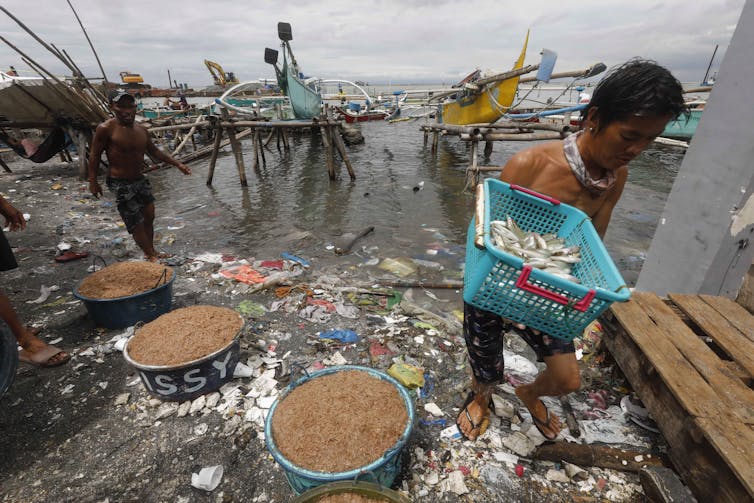
Fishermen bring their catch ashore a polluted bank
Coastlines support the livelihoods of billions of people.
ROLEX DELA PENA/EPA

Our coasts are vital – and vulnerable

Coastal regions encompass some of the most diverse and unique ecosystems on Earth. They include coral reefs, kelp forests, seagrass, tidal flats, mangroves, estuaries, salt marshes, wetlands and coastal wooded habitat.

Many animal species, including those that migrate, rely on coastlines for breeding, foraging and protection. Coastal sites are also where rivers discharge, mangrove forests exchange nutrients with the ocean, and tidal flows are maintained.

Humans also need coastlines. Among other functions, they support our fisheries, protect us from storms and, importantly, store carbon to help mitigate climate change.

As much as 74% of the world’s population live within 50 kilometres of the coast, and humans put pressure on coastal environments in myriad ways.


Read more:
Wetlands have saved Australia $27 billion in storm damage over the past five decades


In marine environments, these pressures include:

  • fishing at various intensities
  • land-based nutrient, organic chemical and light pollution
  • direct human impacts such as via recreation
  • ocean shipping
  • climate change (and associated ocean acidification, sea-level rise and increased sea surface temperatures).

On land, human pressures on our coastlines include:

  • built environments, such as coastal developments
  • disturbance
  • electricity and transport infrastructure
  • cropping and pasture lands, which clears ecosystems and causes chemical and nutrient runoff into waterways

To date, assessments of the world’s coastal regions have largely focused solely on either the land or ocean, rather than considering both realms together. Our research sought to address this.

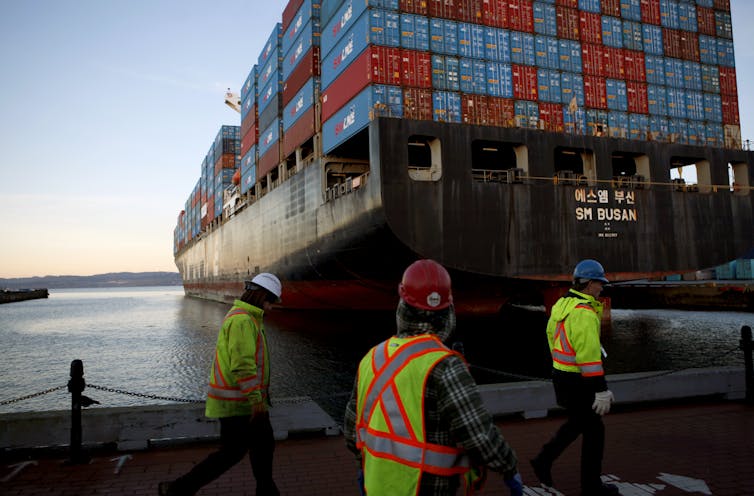
cargo ship and dock workers at port
Shipping is among the human activities putting pressure on coastlines.
Chad Hipolito/ AP

A troubling picture

We integrated existing human impact maps for both land and ocean areas. This enabled us to assess the spectrum of human pressure across Earth’s coastal regions to identify those that are highly degraded and those intact.

Both maps use data up to the year 2013 – the most recent year for which cohesive data is available.

No coastal region was free from human influence. However, 15.5% of Earth’s coastal regions remained intact – in other words, humans had exerted only low pressure. Many of the intact coastal regions were in Canada, followed by Russia and Greenland.

Large expanses of intact coast were also found elsewhere including Australia, Indonesia, Papua New Guinea, Chile, Brazil and the United States.

Troublingly, 47.9% of coastal regions have been exposed to very high levels of human pressure. And for 84% of countries, more than half their coastal regions were degraded.

What’s more, human pressures were high in about 43% of protected coastal regions – those regions purportedly managed to conserve nature.

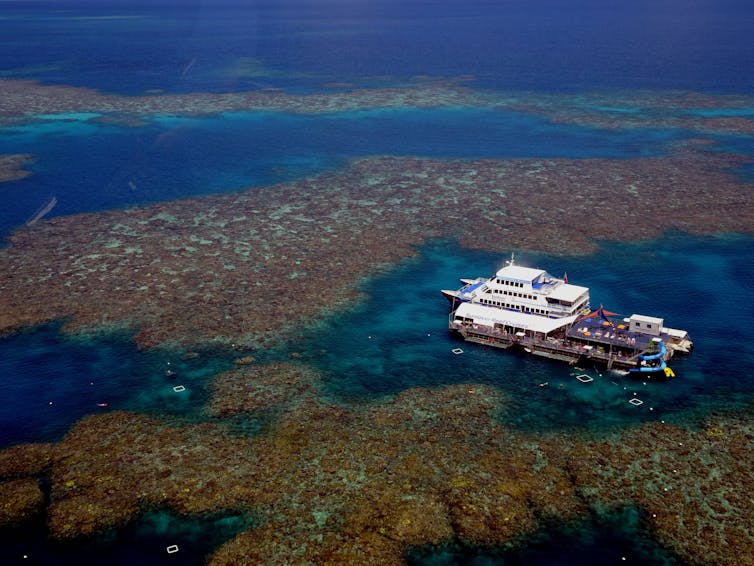
Coastal regions containing sea grasses, savannah and coral reefs had the highest levels of human pressure compared to other coastal ecosystems. Some coastal regions may be so degraded they cannot be restored. Coastal ecosystems are highly complex and once lost, it is likely impossible to restore them to their original state.


Read more:
5 major heatwaves in 30 years have turned the Great Barrier Reef into a bleached checkerboard


coral reef and boat
Coastal regions containing coral are among the world’s most degraded by human activity.
AP

So where to now?

It’s safe to say intact coastal regions are now rare. We urge governments to urgently conserve the coastal regions that remain in good condition, while restoring those that are degraded but can still be fixed.

To assist with this global task, we have made our dataset publicly available and free to use here.

Of course, the right conservation and restoration actions will vary from place to place. The actions might include, but are not limited to:

  • improving environmental governance and laws related to encroaching development

  • increasing well-resourced protected areas

  • mitigating land-use change to prevent increased pollution run-off

  • better community and local engagement

  • strengthening Indigenous involvement in managing coastal regions

  • effective management of fishing resources

  • addressing climate change

  • tackling geopolitical and socioeconomic drivers of damage to coastal environments.

In addition, there’s an urgent need for national and global policies and programs to effectively managing areas where the land and ocean converge.

Humanity’s impact on Earth’s coastal regions is already severe and widespread. Without urgent change, the implications for both coastal biodiversity and society will become even more profound.


Read more:
How Traditional Owners and officials came together to protect a stunning stretch of WA coast


The Conversation

Brooke Williams receives funding from an Australian Government Research Training Program Scholarship.

James Watson has received funding from the Australian Research Council and National Environmental Science Program. He serves on scientific committees for Bush Heritage Australia and BirdLife Australia.

Amelia Wenger does not work for, consult, own shares in or receive funding from any company or organisation that would benefit from this article, and has disclosed no relevant affiliations beyond their academic appointment.

ref. Just 16% of the world’s coastlines are in good shape – and many are so bad they can never fully recover – https://theconversation.com/just-16-of-the-worlds-coastlines-are-in-good-shape-and-many-are-so-bad-they-can-never-fully-recover-176445

7 reasons Australia is the lucky country when it comes to snakes

Source: The Conversation (Au and NZ) – By Christina N. Zdenek, Lab Manager/Post-doc at the Venom Evolution Lab, The University of Queensland

A dugite (P. Affinis) Chris Hay, Author provided

Australia has a global reputation as a land full of danger, where seemingly everything is out to kill you. Crocodiles lurk in estuaries, large spiders hide in bathrooms, and we share our suburbs with some of the world’s most venomous snakes.

Snakes hold a particular fear and fascination for many people. The bite of an eastern brown snake can kill an adult in under an hour. And that’s just one of more than 150 venomous snakes inhabiting the island continent across land and sea. Australian snakes are well and truly overrepresented out of the world’s top 25 most venomous snakes.

Terrifying, right? Not quite. Australians are actually extremely lucky when it comes to snakes. Here are seven reasons why.

1) Our snakes bolt away from us

The best way to survive a snakebite is of course not to be bitten. Keeping your distance is the easiest way to avoid a bite.

But what if you’re walking through the bush and don’t see the snake? Luckily, most Australian snakes will rapidly slither away from us.

It could be much worse. Imagine if most of our snakes were like vipers or rattlesnakes, which hold their ground and can be easily trodden on. And imagine if our venomous snakes could sense our body heat, as pit vipers and rattlesnakes do with their heat-sensing pits. For Australians, simply staying still can keep you safe.

A blue pit viper from Komodo Island flicks its tongue upwards
Pit vipers like this white-lipped pit viper (Trimeresurus insularis) from Indonesia can sense heat but can’t bolt away.
Christina N. Zdenek

2) We have very few snakebite deaths

Compared to other countries with many snake species, Australia has orders of magnitude fewer snakebites and related deaths. South Africa has 476 snakebite deaths on average every year. By contrast, Australia has two or three.

3) If you do get bitten, you’re very unlikely to lose a limb

Most snakebites in Australia are completely painless. This is in part due to the short fangs of our brown snakes (Pseudonaja spp.), who are responsible for most bites in Australia, but mainly because most Australian snakes have venom which works internally, rather than locally at the bite site. This means snakebites in Australia very rarely result in amputations.

By contrast, across sub-Saharan Africa it is sadly common, with almost 2400 amputations reported in Africa’s most populous country, Nigeria, every year. Unfortunately, the people most at risk of snakebite are the ones least able to afford the high treatment costs.

A Dugite's fangs
Brown snakes like this dugite (Pseudonaja affinis) have small fangs.
Christina N. Zdenek & Chris Hay

4) We have great access to excellent antivenom and other treatments

For snakebites, antivenom is the only specific treatment. If you’re unlucky enough to be bitten by a highly venomous snake, getting the antivenom as quickly as possible is vital. Luckily, antivenoms work quickly, and ours are high quality.

Antivenom is often produced from purified horse antibodies. It’s well known antivenom can cause anaphylaxis, which occurs around 10% of the time in Australia. These reactions can be quickly reversed by adrenaline administered in a hospital.

By contrast, some other countries have alarmingly ineffective antivenoms as well as triggering anaphylaxis 57% of the time.


Read more:
Does Australia really have the deadliest snakes? We debunk 6 common myths


You can get antivenom at 750 hospitals across Australia. For more remote regions, snakebite victims benefit from proven pressure-immobilisation which should be applied before the Royal Flying Doctors come to the rescue.

Seven Australian snake antivenoms.
Many quality snake antivenoms are available in Australia.
Christina N. Zdenek

5) We have the world’s only snake venom detection kits

Using the wrong antivenom can lead to the treatment failing. So how do doctors know which antivenom to administer? It’s not via snake identification by the victim because, more often than not, Australians get it wrong.

In 1979, Australia became the first country in the world to have a commercial snake venom detection kit to make antivenom choice more accurate. Even now, we’re the only ones with this option.


Read more:
The sun’s shining and snakes are emerging, but they’re not out to get you. Here’s what they’re really up to


Every other country has to rely on more dangerous options. Either the victim brings the snake to hospital for a professional ID, or doctors have to rely on the patient’s symptoms and location where they were bitten to take an educated guess as to which antivenom will work.

As you’d expect, this can be a challenge. Why? Because there can be a great deal of overlap of symptoms caused by venom from unrelated species. Plus, picking the species responsible can take years of experience treating snakebite which many doctors do not have.

In Australia, there’s another option if the kit is unavailable: polyvalent antivenom, effective against all our most dangerous snakes.

6) Snakebites are covered by Medicare

Antivenom can be prohibitively expensive, costing thousands of dollars per dose.

Our nearest neighbour, Papua New Guinea, is a snakebite hotspot. But many people simply do not have the money to pay for the antivenom. In some areas, taipans kill more people than malaria due to the cost of treatment.

In Australia, treatment for a bite may cost around AUD$6,000, but this cost is covered by Medicare. In my lab, we’re working to make snakebite treatment more affordable by testing next-generation snakebite treatments.

7) Snake venom is actually saving lives

To top it all off, snake venom is saving lives. There are six therapeutic drugs on the global market derived from snake venoms, with another two in clinical trials.

Our many venomous snake species hold in their venom glands a mini drug library, a cornucopia for scientists to trawl through looking for promising new therapeutic drugs. In fact, a toxin from the venom of eastern brown snakes (P. textilis) is being tested as a drug used to reverse life-threatening bleeding complications.

Rather than fearing our venomous snakes, let’s try seeing them as they are.

They pose little risk to us. They flee from us. Their bites can usually be cured quickly. Their venom holds therapeutic promise. And they play a vital role in keeping down the numbers of introduced rats and mice.

So let’s take a moment to appreciate Australia’s wealth of beautiful snakes.

The Conversation

Christina N. Zdenek does not work for, consult, own shares in or receive funding from any company or organisation that would benefit from this article, and has disclosed no relevant affiliations beyond their academic appointment.

ref. 7 reasons Australia is the lucky country when it comes to snakes – https://theconversation.com/7-reasons-australia-is-the-lucky-country-when-it-comes-to-snakes-175188

Teachers can’t keep pretending everything is OK – toxic positivity will only make them sick

Source: The Conversation (Au and NZ) – By Saul Karnovsky, Lecturer & Bachelor of Education (Secondary) Course Coordinator, Curtin University

Shutterstock

As children return to schools across the country, the outlook for teachers is bleak.

The spread of Omicron will make chronic staff shortages worse and has added to teachers’ responsibilities. They must now be COVID wardens, while supporting the many students whose mental health has suffered during the pandemic – not to mention teachers’ concerns for their own health.


Read more:
COVID and schools: Australia is about to feel the full brunt of its teacher shortage


All of this is piling pressure on teachers who already had unmanageable workloads. In a national survey for the 2021 NEiTA-ACE Teachers Report Card, many reported very high workplace stress.

Teachers said their workloads were “massive”. Their work-life balance was “less than ideal or non-existent”. They felt “overworked, burnt out and undervalued”.

Teachers are increasingly dissatisfied with the unreasonable demands created by their work conditions.

A typical week includes piles of marking, planning learning for an increasingly diverse student cohort and responding to parent emails and phone calls, which can take hours.

Administrative and compliance tasks also consume teachers’ time. They must collect, analyse and report on student performance data. They are expected to document all student misbehaviour, welfare and well-being concerns as they struggle to keep their classrooms safe, inclusive and enjoyable places to learn.

Then there are the endless meetings, staff briefings and professional development, while delivering an over-prescriptive and crowded curriculum so students meet national achievement standards.

One teacher in Perth told us:

“The expectations are impossible to live up to. We want to help our students and do all that is asked of us but often I face hostility and distrust from students and their parents or carers.

“After teaching for over 15 years this all has a cumulative effect. I’ve struggled with feelings of disillusionment and burn-out. Sometimes I think that my well-being goes unnoticed or is dismissed as unimportant.”

One of us wrote last year about the emotional labour of teachers who have to manage, suppress or feign their emotions as part of their work. They “put on a brave face” and ignore their emotions to get through the daily ups and downs of school life. But it can be exhausting.


Read more:
Teachers are expected to put on a brave face and ignore their emotions. We need to talk about it


Many teachers who have since contacted us are sick of pretending they are “doing OK”. They are deeply concerned that school administrators are pushing them to be unrealistically positive, despite evidence to a federal parliamentary inquiry that workloads and stresses are eroding teachers’ well-being across the country.

With tears in her eyes, one very experienced teacher in Canberra described a particularly violent student bullying incident at her school. The police were involved and many staff were traumatised.

However, her school’s leaders required her not to talk about the incident, despite the stress it caused. More than a year later, the staff have had no opportunity to debrief with one another about it.

The teacher said the leaders’ priority was protecting the school’s “brand”, rather than to help staff confront the obvious challenges they faced. They were expected to cultivate a “positive attitude” and “be quiet” about “any negativity”.

What is toxic positivity?

Toxic positivity has emerged as a significant force in the lives of teachers in Australia. Education administrators are reshaping workplace values and practices to maintain employees’ positivity, happiness and optimism in the face of irrefutable evidence that everything is not great.


Read more:
How to avoid ‘toxic positivity’ and take the less direct route to happiness


Positivity in a workplace setting is not inherently toxic to our mental health. However, psychological researchers are calling out the dangers of being persistently optimistic when our experiences are clearly and objectively anything but positive.

This happens in schools when administrators urge teachers to look on the bright side or find the opportunities in challenging work conditions. In doing so, schools sideline the issue of workplace stress by policing negative comments and ignoring difficult issues raised by staff.

Administrators are consumed by the positive spin. They offer staff professional development facilitated by “wellness consultants” who teach self-care strategies, such as doing yoga, to maximise well-being and minimise negativity.

Is this sort of positivity ethical?

In a recent research article, we theorised about the ethics of positivity in education. We criticised the “positive movement”, typified by “happiness scientists” and self-help literature, which purports to make us all “lastingly happy”. We liken this pop psychology to the snake oil charlatans of the past.


Read more:
The rise of pop-psychology: can it make your life better, or is it all snake-oil?


We found that during a teacher’s university training positive emotions are seen as a highly productive way to build relationships with students. They are regarded as an important signal that a teacher is being ethical and professional.

Positive emotions can support teaching and learning practices and help teachers maintain their energy. However, we argue when relentless positivity takes hold in schools to deny negative experiences or stressors, there can be unethical and dangerous consequences for teachers. These include demoralisation and emotional fatigue, which contribute to teachers leaving the profession.


Read more:
‘Exhausted beyond measure’: what teachers are saying about COVID-19 and the disruption to education


Smiling man and woman holding yoga mats high-five each other
A culture of relentless positivity that offers strategies of ‘self-care’ such as yoga rather than acting on teachers’ real concerns can do more harm than good.
Shutterstock

We need collective care for a shared problem

Teachers are experiencing what we term “collective emotional labour”. Forces such as the COVID pandemic and chronic staff shortages have put enormous pressure on teachers collectively. This means they need to work on their emotional well-being as a co-operative network, rather than as individuals.

Individual strategies of self-care to support workplace stress are exactly that, an individual concern. When it comes to teachers’ shared concerns, they need meaningful collective strategies of support and care.

School administrators and teachers should come together to put aside the platitudes of “keeping positive”. They need to find space and time to share and respond to their emotional concerns.

Teachers will then feel they are being heard and that their emotions are valid because their school culture is open, understanding and realistic about their experiences and stress. This is by no means the cure-all for the troubles of schools and the profession. But it is an essential starting place in these times of collective uncertainty and stress.

The Conversation

The authors do not work for, consult, own shares in or receive funding from any company or organisation that would benefit from this article, and have disclosed no relevant affiliations beyond their academic appointment.

ref. Teachers can’t keep pretending everything is OK – toxic positivity will only make them sick – https://theconversation.com/teachers-cant-keep-pretending-everything-is-ok-toxic-positivity-will-only-make-them-sick-175431

Australia is seeing a ‘great reshuffle’ not a ‘great resignation’ in workforce: Frydenberg

Source: The Conversation (Au and NZ) – By Michelle Grattan, Professorial Fellow, University of Canberra

The Morrison government will ensure COVID tests are tax deductible for workers and exempt from fringe benefits tax for businesses when purchased for work-related purposes.

Treasurer Josh Frydenberg will announce on Monday that the government will remove uncertainty around the tax treatment of these tests, including PCR tests and RATs.

This will require legislation which will be backdated to July last year.

He will also announce the Productivity Commission’s second five yearly productivity review will develop a map for reforms to improve productivity as the country comes out of COVID.

In a speech to the Australian Industry Group Frydenberg says Australia’s labour market is experiencing a “great reshuffle”, in contrast to the “great resignation” that has happened in the United States and other advanced economies.

“Treasury analysis shows that over one million workers started new jobs in the three months to November 2021. The rate at which people are taking up new jobs is now almost 10% higher than the pre-COVID average.

“In the last three months, a record number of around 300,000 workers say they left a job because they were looking for better job opportunities,” Frydenberg says in his speech, released ahead of delivery. The pick up in switching has been across all industries.

“Switching jobs allows workers to move up the job ladder for better pay,” with Treasury’s analysis based on single touch payroll data showing workers who moved jobs typically had pay increases of 8-10%.

“They also move to more productive firms, helping those firms grow.”

In the US 2.8 million fewer people are employed than pre-pandemic, with participation rates there and in the UK, Canada, Japan and Italy now lower than before COVID. In contrast, Australia’s participation rate is near its record high.


Read more:
View From The Hill: Aged care residents are paying for lessons not learned fast enough


Frydenberg predicts that as the Omicron peak passes, “we will again see the economy surge ahead”.

He also says it is now time to “draw some clear lines in the sand”.

He acknowledges there will be problems with workforce shortages, supply chain disruptions and the return of higher inflation.

But “now is the time to start confidently moving back towards normalised economic settings.

“It is time to let businesses get back to business. Time to get people back safely to our CBDs, back moving freely around their communities.

“And it is time for the private sector, who have taken the baton, to continue to run hard,” Frydenberg says.

“The economy simply cannot be conditioned to the level of unprecedented support that has been required over the last two years.

“This level of government intervention must not become entrenched and become a permanent feature of our system. Continued support at crisis levels would do more economic harm than good.”

The Conversation

Michelle Grattan does not work for, consult, own shares in or receive funding from any company or organisation that would benefit from this article, and has disclosed no relevant affiliations beyond their academic appointment.

ref. Australia is seeing a ‘great reshuffle’ not a ‘great resignation’ in workforce: Frydenberg – https://theconversation.com/australia-is-seeing-a-great-reshuffle-not-a-great-resignation-in-workforce-frydenberg-176516

Papuan students form umbrella body, reaffirm campaign for education rights

Asia Pacific Report newsdesk

An umbrella organisation representing Papuan students worldwide has been formed with a renewed commitment to strengthening their efforts to gain “quality education”.

Five country groups affiliated to the International Alliance of Papuan Students Associations Overseas (IAPSAO) met virtually yesterday to make a united stance on Papuan education, affirming their appeal last month for Indonesian President Joko Widodo to hear their concerns.

Opening the meeting, Dessy F. Itaar, president of the Papuan Student Association in Russia (IMAPA Russia), declared that the organisation was committed to achieving quality education for Papuans.

“That’s our main goal. Whatever happens, we will keep fighting until we get our rights,” she said.

The virtual meeting was a continuation of an earlier consultation on January 26 when the students expressed concern over policy changes that they believed would impact on education and Papuan students studying abroad.

Other Papuan student associations affiliated to IAPSAO besides the Russian-based one include the Papuan Students Association in the United States and Canada (IMAPA USA-Canada), the Papuan Students Association in Japan (IMAPA Japan), the Papuan Students Association in Germany (PMP Germany) and the Papuan Students Association in Oceania (PSAO).

Previously, student presidents united under the IAPSAO name were known as the Association of Papuan Students Abroad.

Renaming witnessed
Witnessed during the virtual conference by “hundreds of Papuan students” from countries such as Australia, Canada, Germany, Japan, New Zealand, Russia, Germany, Indonesia and the United States, PSAO president Yan Piterson Wenda declared the renaming of the international organisation IAPSAO on behalf of the five presidents who were signatories.

Earlier, Itaar had stressed that although Papuan students were sent overseas to focus on their studies, it was important for the presidents to unite and speak out about the problems faced by fellow students.

“As presidents who represent every organisation that we lead, there is one moral burden that we carry — which is not thinking about ourselves, we must think about all members in each organisation,” she said.

Only Papuans know the struggle of Papuan inner souls, so Papuans should first help each other before other people help Papuans, Itaar said.

“The only people who can wake us up are Papuans.

When “our friends from the USA and New Zealand shared their struggles”, fellow Papuans from Japan, Russia and Germany agreed to support them.

“We Papuan children must get a quality education, whatever it is,” she said.

No political agenda
“Meilani S. Ramandey, president of IMAPA Japan, said the working team demanding the rights of the current and future Papuan generations had no political agenda. It worked only for educational issues.

“As Papuan students, we stick to this principle, it is not affiliated with any kind of political agenda.”

The students want to know the status of their scholarship programme, which is run under the policies of Papua provincial Governor Lukas Enembe.

“This is important so that all of us do not misunderstand,” said Ramandey.

Reporting on a meeting last week between representatives of the Papuan Students Association in Oceania and the Indonesian Ambassador to New Zealand, Fientje Maritje Suebu, and the head of the Papua Province Human Resources Development Bureau (HRDB), Aryoko Rumaropen, and his staff, PSAO president Yan Piterson Wenda recalled that the bureau had no power to respond to demands by the students.

“The Head of HRDB appreciates the steps taken by the students. The HRDB is disappointed with the policies taken by the central government, so the Indonesian Embassy must respond to this problem,” Wenda said.

“Then, the HRDB said frankly that they had no money. That’s why now all of my friends can’t buy food and pay for accommodation and other needs.

“In principle, HRDB is with us and will forward our aspirations to the Governor. We are waiting for the embassy to proceed with our demands.”

Embassy responded well
Dimison Kogoya, president of the Papuan Students Association in the United States and Canada, reported that the Indonesian Embassy in USA and Canada had responded well to the students’ letter.

“We have held a meeting and at the time of the meeting, we emphasised that our demands should be forwarded to the President,” said a computer science student at Johnson and Wales University in North Carolina.

President Reza Rumbiak of the Papuan Students Association in Germany said Papuan students who were studying in Germany remained in solidarity with students in the USA and New Zealand.

He said a letter had been received from the Indonesian Embassy in Berlin in response to the request by students for a dialogue with President Widodo – but the reply contained 18 points of rebuttal.

“The pressure on me as student president is very intense. But we in Germany support our brothers and sisters in the USA and New Zealand because our DNA as Papuans is communal,” said Rumbiak.

IAPSAO issued a four-point declaration to:

  1. Make the International Alliance of Papuan Student Associations Overseas (IAPSAO) an umbrella organisation for all Papuan student organisations domiciled overseas;
  2. Improve and maximise coordination and communication in efforts to protect, prevent, anticipate, and defend the educational rights of Papuan students overseas;
  3. Affirm IASAO is an independent and academic forum; and
  4. Make decisions in this forum based on mutual consensus.
Print Friendly, PDF & Email

Article by AsiaPacificReport.nz

Rebuilding post-eruption Tonga: 4 key lessons from Fiji after Cyclone Winston

ANALYSIS: By Suzanne Wilkinson, Mohamed Elkharboutly and Regan Potangaroa, Massey University

While news from Tonga is still disrupted following the massive undersea eruption and tsunami on January 15, it’s clear the island nation has suffered significant damage to housing stock and infrastructure.

Once initial clean-up work is done, the focus then turns to rebuilding — specifically, how to rebuild in a way that makes that housing and infrastructure stronger, safer and more resilient than before the disaster.

This is where the United Nations’ Sendai Framework for Disaster Risk Reduction comes into the picture. It advocates for:

The substantial reduction of disaster risk and losses in lives, livelihoods and health and in the economic, physical, social, cultural and environmental assets of persons, businesses, communities and countries.

Beyond the framework, however, we have the lessons learned from previous disasters and recovery efforts in the same region — notably what happened in Fiji after Cyclone Winston in 2016.

These lessons can be applied to the Tonga rebuild.

Island, Fiji, in the wake of Cyclone Winston
A devastated Nasau Village on Koro Island, Fiji, in the wake of Cyclone Winston. Image: UNICEF

Lessons from Cyclone Winston
Winston was a category 5 cyclone, one of the most powerful storms ever recorded in the South Pacific. When it approached Fiji’s largest and most populated island, Viti Levu, winds reached 230 km/h, with gusts peaking at 325km/h.

Over 60 percent of the Fijian population was affected, with around 131,000 people left homeless. The cyclone destroyed, significantly damaged or partially damaged around 30,000 homes, or 22 percent of households, representing the greatest loss to Fiji’s housing stock from a single event.

Notably, some models of the traditional Fijian bure survived the cyclone with minor or no damage.

Our research team from New Zealand followed and recorded the housing recovery. What we found could benefit Tonga as it faces reconstruction of so much housing stock.

As in Tonga, power, infrastructure and communication systems in Fiji were extensively damaged. Given that “building back better” involves applying higher structural standards than existed previously, we looked for evidence that Fiji was rebuilding in a more resilient and sustainable way.

Fiji carefully recorded and analysed data, employing systematic reconnaissance surveys and damage assessments to identify building performance, structural vulnerabilities and failure mechanisms, as well as community needs.

These assessments were done well, to international standards.

Understandably, Fijians were also aware of the need to reduce risks to housing from future cyclones. After the immediate post-cyclone humanitarian response, housing was their main concern. This became a key focus for government agencies as a way of demonstrating the recovery was under way and that communities were at the heart of the process.

Fijian bure
A traditional bure in Navala village, Viti Levu – some survived the cyclone well. Image: Author

Problems with rebuilding
We studied two main initiatives: a government-funded rebuilding programme for houses (the “Help For Homes Initiative”) and the rebuilding programmes led by various international and local NGOs.

Help For Homes provided credit for construction materials to people who had lost homes, assuming recipients met certain criteria related to household income, damage and location.

Communities were free to choose the basic type of dwelling, its interior design, external features and materials. Information and instructions about building best practices and standards were provided, but technical or practical support was limited.

Overall, the initiative had mixed reviews. On the one hand, people had autonomy over their future homes; if things went to plan, they liked the outcome. On the other, lack of building skills led to some poor-quality construction, and limited resources (mainly materials) pushed costs up.

A lack of suitable alternative building material also created problems. Material choice, material substitution, resource costs, low community technical expertise and low building standard knowledge are all issues Tonga might also face.

Some homeowners were left without the material they needed, and in some cases with only a partially rebuilt home.

The NGO rebuilding programmes, by contrast, usually employed their skilled workers to build and supervise construction activities, often with the help of community labour. But again, reviews were mixed, especially when the communities didn’t have sufficient input into the rebuilding process.

While housing design was largely standardised for quick construction, the NGO houses tended to be technically strong and more resilient to future hazard events.

Fiji house on elevated foundations
A timber house on elevated foundations, built to the owner’s design without technical support. Image: The Conversation/Author

The best of both worlds
The main lesson was that high levels of community involvement and strong technical support were key to building resilient, future-proofed houses. For Tonga, the Fijian experience offers the opportunity to apply that lesson in four principal ways:

  • ensure the initial assessment process is thorough and up to international standards
  • recognise that housing stock overall needs to improve, and commit to higher construction standards
  • analyse local architecture and building practices for disaster-resistant features
  • combine the best of government-led and NGO building systems to maximise community involvement while ensuring good technical support and building expertise.

Overall, to have the best chance of rebuilding with the resilience to withstand future shocks, Tonga will benefit greatly from a three-way partnership between the government, NGOs and local communities.

As advocated by the authors in their book Resilient Post-Disaster Recovery through Building Back Better, co-ordination of such partnerships should be government-led and include trusted local community leaders and a consortium of NGOs.


The authors acknowledge the collaboration of Diocel Harold Aquino (Associate Professor of Civil Engineering, University of the Philippines) and Sateesh Kumar Pisini (Principal Lecturer in Civil Engineering, Fiji National University) in the preparation of this article.The Conversation

Dr Suzanne Wilkinson is professor of construction management at Massey University; Dr Mohamed Elkharboutly is lecturer in built environment at Massey University, and Dr Regan Potangaroa is professor of resilient and sustainable buildings (Māori engagement) at Massey University. This article is republished from The Conversation under a Creative Commons licence. Read the original article.

Print Friendly, PDF & Email

Article by AsiaPacificReport.nz

New Zealand posts record 243 new daily covid cases in community

RNZ News

New Zealand has recorded its highest number of community cases in one day, with 243 new cases reported today.

The previous highest number of cases reported in one day was 222 during the delta outbreak in November.

In a statement, the Health Ministry said the continued increase in cases today was “a reminder that, as expected, the omicron variant is spreading in our communities as we have seen in other countries”.

The ministry said getting a booster dose as soon as it was due was one of the best steps to take.

“Boosters lower your chances of getting very sick and being hospitalised. Being boosted also helps slow the spread of the virus. If you’re over 18 and your booster is due, please get it now.”

Covid-19 Response Minister Chris Hipkins said today’s record numbers were expected and would continue to grow in the coming days and weeks

“I urge people not to panic but to plan for that,” he said.

‘Get your booster’
“The best thing you can do to prevent illness is to get vaccinated, and get your booster. Wear a mask when you’re around others, cough into your elbow and wash your hands regularly.”

It was a record day for boosters yesterday, with 66,864 booster doses given. There were also 876 first doses, 1780 second doses and 4440 paediatric doses given.
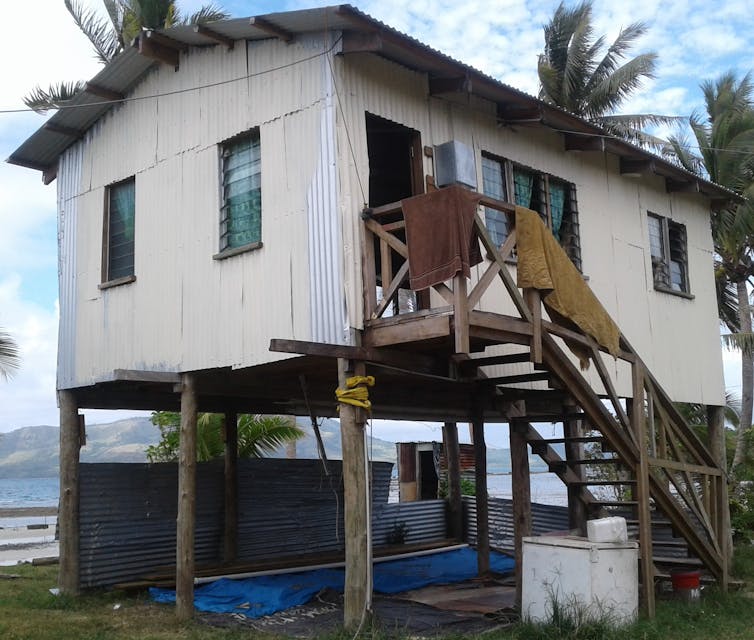
There are 10 people in hospital with covid-19, including one in ICU. Two are in Rotorua and one in Christchurch, with the rest in Auckland hospitals.

Today’s new community cases were in Northland (21), Auckland (165), Waikato (34), Rotorua (1), Bay of Plenty (8), Tairāwhiti (2), Hawke’s Bay (6), Nelson/Marlborough (3), Whanganui (1), and Wellington (2).

The 21 new cases in Northland include 14 cases in Kerikeri, two cases in Kaeo, one case in Kaikohe, three cases in Whangārei, and one case in Taipa Bay-Mangōnui.

Less than half of the 34 cases in Waikato today are linked to previously reported cases. Nineteen of the cases are in Hamilton, five in Ohaupo, two in Te Kuiti, two in Ngāruawāhia, one in Tirau, and the remaining with locations under investigation.

Both of the Wellington cases are under investigation for links to previous cases, but a JetStar flight between Wellington and Auckland on January 29 has been added as a location of interest. More details are available on the ministry’s location of interest page.

There were also 26 cases reported at the border today, with travellers arriving from Singapore, Australia, UK, India, Egypt, Lebanon, UAE and Ireland.

There were 209 community cases reported yesterday, along with a further 64 cases at the border.

This article is republished under a community partnership agreement with RNZ.

Print Friendly, PDF & Email

Article by AsiaPacificReport.nz

The COVIDSafe app was designed to help contact tracers. We crunched the numbers to see what really happened

Source: The Conversation (Au and NZ) – By Florian Vogt, Senior Research Fellow, The Kirby Institute, UNSW

Shutterstock

Early in the pandemic, the COVIDSafe app was designed as a tool to improve contact tracing. And a multimedia campaign promoted it as helping to find more COVID contacts faster.

Now, almost two years after its launch in April 2020, we publish in The Lancet Public Health our evaluation of the app’s effectiveness and usefulness in New South Wales.

We analysed data from all 619 COVID cases recorded in NSW above the age of 12 and their contacts between May and November 2020. We also interviewed contact tracers about whether they considered the app useful.

Our analysis showed the app did not add much value to the existing, conventional contact tracing system.

A total of 22% of cases were using the app. Most (61%) contacts the app registered as “close contacts” turned out not to be epidemiologically linked to a case. The app detected only 15% of true close contacts identified by conventional contact tracing.

In total, COVIDSafe detected only 17 additional true close contacts in NSW during the six-month evaluation period.

It caused substantial additional work for contact tracers and overall, did not make a meaningful contribution to the COVID response in NSW.


Read more:
From COVID control to chaos – what now for Australia? Two pathways lie before us


Tracing takes time

Interviewing new cases to identify, trace and isolate their close contacts is a crucial public health activity. But this is time-consuming and contact tracers can become rapidly overwhelmed when case numbers rise.

Digital contact tracing apps were enthusiastically embraced early in the COVID pandemic in many countries, including Australia.

Like many other tracing apps, COVIDSafe uses smartphones’ built-in Bluetooth function to exchange signals between phones.

The duration, frequency and transmission strength of these “digital handshakes” are used to determine whether two smartphone users have come into “close contact” with each other.

Low ability to detect and identify close contacts correctly

During our study period, less than a quarter of all cases were using the app. This is half the proportion of the Australian general public who did so.

Of those cases who used the app, many had not a single contact registered by the app. For others, contact tracers could not access the app data.

Contact tracers could use app data for 32 (5%) of the 619 cases over our study period. Of those cases, only 79 (39%) of the 205 contacts the app registered as “close contacts” could be verified as true close contacts. This suggests poor positive predictive value of the app.

Examples of false close contacts the app registered were:

  • neighbours in different flats in apartment buildings

  • office workers in adjacent rooms

  • customers in neighbouring restaurants

  • people waiting in separate cars at COVID drive-through testing clinics.

The vast majority (85%) of close contacts identified by conventional contact tracing were not detected by the app, indicating low sensitivity.

A few additional contacts detected

During the six months of our study, there were only 17 true close contacts identified by COVIDSafe who would have otherwise been missed – a tiny fraction of the more than 25,300 close contacts detected and followed up through conventional contact tracing in NSW during the same period.

None of these 17 contacts became positive. So COVIDSafe did not contribute to preventing any new exposures in NSW during our evaluation period.


Read more:
Free rapid antigen tests makes economic sense for governments, our analysis shows


Technological flaws

Contact tracers did not find the app easy to use. Some said the app did not seem to work as reliably on all types of phones. The number of contacts on iPhones were substantially underestimated, while those from Android phones were overestimated.

Contact tracers also noted the app’s apparent inability to properly register contacts unless it was open. This might explain the large number of cases without any registered contacts in our study.

The process of cross-matching close contacts identified by the app with those identified through case interviews was seen as time-consuming, particularly as most contacts picked up by the app were not really close contacts.

Interviewed staff said this could easily overwhelm the contact tracing system had case numbers been higher, paradoxically leading to a reduction in usefulness of the app when it would be most needed.

Overall, contact tracers’ perceptions of the app ranged from “not impacting much” to being an additional step that increased workload without adding much value.

smart phone with covidsafe app info displayed
The app identified 17 contacts that would have been otherwise missed.
AAP Image/Scott Barbour

Little added value at high costs

In our study, COVIDSafe did not make a meaningful contribution to the COVID response in NSW during 2020. Instead, the app created a high workload for no clear benefit.

This stands against the A$7.7 million it has cost to develop and run COVIDSafe until the end of April 2021, with an estimated $60,000-$75,000 per month in maintenance since.

The arrival of the highly transmissible Omicron variant in late 2021 in Australia, coinciding with the lifting of most public health restrictions, led to massive expansion in case numbers, forcing a series of major adjustments to contact tracing.


Read more:
Australia has all but abandoned the COVIDSafe app in favour of QR codes (so make sure you check in)


In most parts of Australia, contact tracing now has a very limited role in COVID control. Nevertheless, it is likely to remain a key public health intervention for infectious diseases in the future.

For digital contact tracing apps to be effective and useful, it will be important to involve contact tracers when designing the system, to road test the underlying technology in real-life settings, and to evaluate the app regularly after roll-out.


Dr Anthea Katelaris, a public health physician who worked at the Western Sydney Local Health District public health unit at the time of the study, co-authored the research mentioned in this article.

The Conversation

Florian Vogt receives a fellowship from the Australian Partnership for Preparedness Research on Infection Disease Emergencies (APPRISE) Centre of Research Excellence (CRE), funded by the National Health and Medical Research Council (NHMRC) of Australia. The Kirby Institute, University of New South Wales received funding from the New South Wales Ministry of Health for his involvement in this research.

Bridget Haire has received funding from the National Health and Medical Research Council and NSW Health. She is a volunteer with the Australian Federation of AIDS Organisations..

John Kaldor’s university received funding from the New South Wales Ministry of Health to support members of his team to conduct this research. His university research position is funded through a National Health and Medical Research Council Fellowship.

Linda Selvey receives funding from the National Health and Medical Research Council.

ref. The COVIDSafe app was designed to help contact tracers. We crunched the numbers to see what really happened – https://theconversation.com/the-covidsafe-app-was-designed-to-help-contact-tracers-we-crunched-the-numbers-to-see-what-really-happened-172242

Journalism academics question News Corp’s deal with Google and Melbourne Business School

ANALYSIS: By Andrew Dodd, The University of Melbourne; Alexandra Wake, RMIT University, and Matthew Ricketson, Deakin University

News Corp Australia and Google have announced the creation of the Digital News Academy in partnership with the Melbourne Business School at the University of Melbourne. It will provide digital skills training for News Corp journalists and other media outlets.

Is this a good thing or a bad thing?

The academy won’t provide full degrees, just certificates and a chance to upgrade digital skills in a fast-changing media environment.

Many companies in various industries have partnered with universities to deliver what used to be in-house training programmes. Strengthening the links between industry and the academy has been welcomed in many sectors and certainly encouraged by governments for many years.

Why then are we as journalism academics concerned?

There are several reasons. The first and most obvious is the incursion of a high-profile and controversial media company into the higher education sector and the extent to which that is funded by a large disruptive digital search company.

Antagonism towards academia
It is telling that the Digital News Academy will be housed in the University of Melbourne’s private arm, the Melbourne Business School, rather than its Centre for Advancing Journalism within the Arts faculty.

Australia’s largest commercial media company has long criticised university journalism education, and journalism academics, including each of the authors of this article and many of our colleagues.

The company even once sent an incognito reporter into a University of Sydney lecture to uncover criticism of News Corp in the classroom. That reporter, Sharri Markson, is now investigations editor at The Australian and a member of “the panel of experts” that will oversee the Digital News Academy.


Source: Digital News Academy

So it comes as no surprise that News Corp has avoided journalism programmes.

News Corp Australasia’s executive chairman Michael Miller has said part of the academy’s role will be building a stronger Australia by keeping society informed through “strong and fearless news reporting and advocacy”.

Yet partnering with a journalism programme would have facilitated that. It might also have helped assuage News Corp critics, some of whom have been active online during the week with reminders about News Corp’s unethical conduct during the hacking scandal and its disregard for scientific evidence in its reporting on climate change.

University journalism courses teach ethics and critical thinking alongside practical skills such as new digital ways of fact checking, gathering information and telling stories.

Google Australia already offers free tutorials to journalism programmes about smart ways to use its search engine to find and check investigative stories.

University journalism programmes also distinguish between training and education; the former is predominantly about skills, the latter places those skills in context and teaches students how to think critically about the industry and environment in which they work.

By placing this course in a business school and not a liberal arts or humanities faculty, the venture gets the kudos of the University of Melbourne’s backing without the challenging academic culture News Corp dislikes.

News Corp and Google are corporate clients, paying the university for these courses, so the capacity for independent criticism of Australia’s most dominant newspaper company is eroded even further.

The Digital News Academy will be within the Melbourne Business School, rather than the University of Melbourne's Centre for Advancing Journalism.
The Digital News Academy will be housed within the Melbourne Business School, rather than the University of Melbourne’s Centre for Advancing Journalism. Image: The Conversation/Shutterstock

What will the Digital News Academy do?
All we know so far about the academic credibility of the Digital News Academy comes from its promotional announcement, in press releases reported in the Media section of The Australian (published by News Corp).

The publicity says the nine-month course will take 750 enrolments from journalists at News Corp Australia, Australian Community Media (the stable of 160 regional publications formerly owned by Fairfax) and smaller media partners.

A “governance committee” will select candidates (who nominate themselves or are put forward by their employers). These students will be expected to use the Google suite of tools as they collaborate online at the Melbourne Business School, to generate, build and sell stories to the course’s “Virtual Academy Newsroom”.

Each year there will be what is being billed as a major journalism conference and a US study tour for a select group of trainees.

There are no public details yet of the academic credentials of the certificate programme but the academy has drawn on a “panel of experts”, almost all of whom come from inside News Corp and Google.

Google gains influence
It’s easy to see why Google was motivated to fund a News Corp training academy above and beyond what it is required to do as part of its bid to stop further intervention in its workings by the Australian government under the terms of the News Media Bargaining Code.

But there are some deeper questions about why a company that has such a stranglehold on the new digital economy is involved. By funding the academy Google may be undercutting full university degrees specialising in journalism.

Relying on Google to make up the shortfall in news organisations’ training budgets is a problem. It allows Google to shape curriculum while appearing to be a champion of the same journalism industry it has been accused of undermining.

As journalism academics we respect the need for specialised training and skills development. But journalism programmes should never be captured or constrained from being critical of the industry for which they prepare students.

They should continue to embed ethics in their courses. The aim, after all, is to improve journalism, for everybody’s benefit.

As it is often said, news is not just another business. While studying journalism often involves the study of business, business imperatives should not drive the study of journalism itself.The Conversation

Dr Andrew Dodd is director of the Centre for Advancing Journalism, The University of Melbourne; Dr Alexandra Wake is programme manager, journalism, at RMIT University, and Dr Matthew Ricketson is professor of communication at Deakin University. This article is republished from The Conversation under a Creative Commons licence. Read the original article.

Dr Dodd has worked as a journalist at The Australian newspaper and has provided in-house legal and news writing training for News Corp. Dr Wake has provided in-house training for the ABC and for Australian Provincial Newspapers. She is the elected president of the Journalism Education and Research Association of Australia (JERAA). Professor Ricketson has worked on staff at The Australian, among other news outlets. He was a member of the Finkelstein inquiry into the media and media regulation which was sharply criticised in News Corp Australia publications. His appointment as the Media Entertainment and Arts Alliance’s representative on the Press Council was also criticised by News Corp Australia. Full disclosures at The Conversation.


Print Friendly, PDF & Email

Article by AsiaPacificReport.nz

Chaos as PNG airlines cancel flights with majority of staff off sick

By Melisha Yafoi in Port Moresby

Air travellers were left stranded and fuming country-wide as airlines Air Niugini and PNG Air hit a rough patch in operations due to wet weather and a large number of their key staff falling sick and unable to be at work.

Flight cancellations were the order of the day yesterday at many airports with passenger backlogs and frustrations growing.

Air Niugini, especially, has had flight cancellations since last November.

The airline has issued an apology saying wet weather conditions and staff absenteeism had caused the situation.

In a media release, both airlines apologised for a number of flights in recent days which have been disrupted due to a much higher number of crew than usual falling sick, as well as the current bad weather conditions across the country impacting on the airlines’ operations.

Both airlines say they are doing everything they can to manage the situation, but will not compromise safety operations.

Stranded passengers had to rebook flights and spend extra money for accommodation and transport.

Backlog mostly tertiary students
Most on the backlog of passengers are tertiary students and parents who have been asked to rebook flights for four to five days as of last Wednesday.

While the airlines have not publicly stated if staff were infected with covid-19, reliable sources from within companies have informed the Post-Courier that a majority of those sick and absent from work were infected with the virus.

They included aircraft engineers, high-end ground staff, pilots, cabin crews and protocol staff.

One of the stranded passengers from Lae, former EMTV senior journalist Scott Waide took to social media to comment on the crisis, which attracted a lot of responses and complaints from passengers who were in a similar situation.

They describing the customer service by the airlines as poor.

Waide was asked to rebook his flight more than once and finally made it into Port Moresby late yesterday evening.

An unfortunate incident happened at Nadzab Airport in Lae yesterday when an airline staff member allegedly insulted a female passenger.

Staff member ‘tears up’ boarding passes
Josephine Kawage claimed the staff member tore up her and her child’s boarding passes.

Kawage said in a video recording that they had been stranded for four days and were finally put on the flight yesterday. However, the check-in officer was only able to produce two boarding passes for Kawage and her son.

She said that she was humiliated when she asked for the boarding passes for her other family members.

A disappointed husband, Captain Henry Nilkare from the North Coast Aviation, condemned the alleged actions of the airline staff member when he spoke to Post-Courier last night.

He said he would take the matter up with Air Niugini to have the officer penalised.

“I do work in the airline industry and understand the nature of his job at situations like this, but his actions were uncalled for and no passenger, or any woman with an infant, should be treated as such in front of many people,” he said.

“That is a bad image for Air Niugini and I do not wish to see this happen to any other passengers.

“If he can do this to my wife and child, who knows how many people he may have treated badly.”

Captain Nilkare said he would be flying to Lae himself to pick up his family today.

Melisha Yafoi is a PNG Post-Courier reporter. Republished with permission.

Print Friendly, PDF & Email

Article by AsiaPacificReport.nz

NZ deserves far more respect for keeping covid deaths so low

ANALYSIS: By Peter Davis

With the arrival of the omicron variant on our shores, it is hard to believe, judging by the media coverage — particularly on MIQ, that the Aotearoa New Zealand government has got anything right in its pandemic response.

One important feature that has been missed in the debate on New Zealand’s pandemic response to date, however, is our very low death rate. At under 60, it is 0.5 percent of the rate in the United Kingdom – approximately 10 per million, compared with more than 2000 per million in the United Kingdom.

This is a very important metric that has been given too little regard here and overseas. The number of people dying of covid-19 in the UK is well over 150,000. This figure is confirmed by the data on excess deaths estimated against the long-run average; the two numbers closely correspond.

This figure is just under half the number of British troops killed in World War II. And this in two years of a pandemic, compared with the six years of that conflict.

In other words, the deaths wrought by covid are on a scale comparable with a major outbreak of warfare. And yet too many commentators and decision-makers have become inured to this death toll, concentrating instead on the performance of the health system and the enjoyment of individual freedoms.

If we had suffered the same rate of covid deaths as the UK has, that would make the number of deaths not 50-60 but 10,000, not far short of the number of New Zealanders dying in World War II (just under 12,000).

The scale of death — or the potential for death — therefore needs to feature more prominently in the coverage of the politics of the pandemic.

‘Let the bodies pile high’​
For example, British Prime Minister Boris Johnson is said to have stated that he would prefer to “let the bodies pile high”​ rather than pursue another lockdown.

True or not, that reported statement had almost no impact on his popularity compared to stories of his attending parties at Downing Street when the UK was under firm restrictions on gatherings.

This blind spot in the media coverage and cultural resonance of the pandemic came home to me when a columnist in the left-of-centre publication New Statesman pointed out that, pre-omicron, her friends in Australia didn’t know a single person with the virus, and yet their state and federal governments at that time were pursuing far stronger public health measures than were being applied the UK.

The same could have been said of New Zealand since the two countries have followed similar policies.

Yes, most Australians — and New Zealanders — pre-Omicron were unlikely to know anybody with the virus; but neither were they likely to know anybody who had died of it, which is in many respects a far more important metric both ethically and politically.

Arguably, New Zealand — like Australia — is a more communitarian country, with “two degrees of separation” and all that. Thus, it might matter that bit more to us whether or not our neighbour, friend, or relative dies of a pandemic disease.

In larger, more anonymous societies there is less proximity to death.

Pictures of morgues
At present anyway, pictures of morgues piled high with the dead from the pandemic would be socially unacceptable in our culture. Added to this is the special place of Māori, who could suffer disproportionately with a premature opening of our borders.

This is something that Grounded Kiwis, the expatriate New Zealanders’ group pushing the legal case against the government, may have missed. If it forces the hand of the government to open our borders before we have been able to achieve acceptable levels of both vaccination and infection protection — such as masking, ventilation, distancing, and self-testing against the onslaught of omicron – then the consequences may also be an increase in the likely death rate in New Zealand.

For example, New South Wales at the peak of its omicron outbreak recorded rather more deaths in a single day than New Zealand had recorded over the near-two years of the pandemic, despite the supposedly milder and less impactful character of this variant.

Is that really what we want?

It is also as well to remember our responsibility to all vulnerable populations, including the elderly, Māori and Pasifika, and all those with relevant underlying health conditions. These groups have suffered disproportionately in the pandemic so far.

Few of us have experienced over a short time and in a proximate way significant numbers of deaths in our circles. Half a century ago, it was more common for people to die at home, often surrounded by family, but this has become much less so.

These days it is more likely to be professionally and medically managed, with much of our experience of death otherwise coming packaged via mass and social media.

The government — and New Zealanders — have done well to keep pandemic death at bay. This is not to justify draconian measures without considered trade-offs against wider societal costs and benefits.

But it is to argue for a more balanced discussion of our pandemic response, and to show greater respect for the more communitarian style of it.

Peter Davis is an elected member of the Auckland District Health Board, and emeritus professor in population health and social science at the University of Auckland. His article was first published at Stuff and is republished on Asia Pacific Report with permission.

Print Friendly, PDF & Email

Article by AsiaPacificReport.nz

Iwi clinic egged as anti-vaxxers force caution in vaccine rollout for tamariki

By Moana Ellis, Local Democracy Reporting

Māori health providers in Aotearoa New Zealand are holding back on covid-19 vaccinations for children in the face of growing anti-vaxxer protest in the wider Whanganui region.

That is despite the area recording the second-lowest rate in the country of vaccinations for children aged 5 to 11 years.

Iwi collective Te Ranga Tupua says one of its mobile vaccination clinics was egged in the Whanganui suburb of Aramoho on Wednesday and anti-vaxxer activity has been ramping up since children became eligible for vaccination.

Local Democracy Reporting
LOCAL DEMOCRACY REPORTING

According to the Ministry of Health, as of Wednesday only 1600 (24 percent) of 6600 eligible children in the Whanganui District Health Board area have had their first shot.

The rate for tamariki Māori is even worse, with only 400 (15 percent) of Māori aged between 5 and 11 years getting their first vaccination.

The Whanganui District Health Board area includes parts of Rangitīkei and the Waimarino/Ruapehu district.

Te Ranga Tupua rapid response vaccination co-lead Elijah Pue said anti-vaxxers are now targeting the iwi collective’s mobile teams daily with the message “hands off our tamariki”.

Ramped up the rhetoric
“The anti-vax community have ramped up the rhetoric. It is a health and safety issue for our staff and our frontline teams.”

The iwi collective did not want to bring in security, preferring instead to encourage kōrero, he said.

Te Ranga Tupua is midway through a 15-week effort to lift Māori vaccination rates in Whanganui, Rangitīkei, South Taranaki and the Waimarino.

Pue said the iwi collective was taking the time to engage with parents who had questions or were hesitant before it launched a region-wide child vaccination rollout on 14 February.

About 120 parents participated in an online information session with Covid-19 experts last week. Pue said Te Ranga Tupua would continue to take a cautious approach and had more information sessions for parents planned next week.

Te Ranga Tupua vaccination co-lead Elijah Pue
Iwi collective vaccination teams are engaging with parents who have questions before Te Ranga Tupua launches a region-wide child vaccination rollout, says vaccination co-lead Elijah Pue. Image: Moana Ellis/LDR

The Whanganui DHB vaccination uptake for both Māori and non-Māori children is the second lowest in the country, with only Northland recording lower numbers.

Spokesperson Louise Allsopp said the DHB was encouraging whānau to talk with their trusted healthcare providers to work through any concerns about vaccinating their 5 to 11-year-olds.

“We are also ensuring existing providers are supported to start vaccinating children when they are ready,” Allsopp said.

Right information for whānau
“The key things are that people have the right information to make their decision for their whānau, then [that] vaccinations are available from the right people at the right time. There has been a focus from Māori providers on getting accurate information out there before they start vaccinating.”

The public health team was providing support to local school principals around Covid-19 protection measures, including wearing masks at school. The DHB was also supporting additional providers to start delivering covid-19 vaccinations for both adults and children, Allsopp said.

Covid-19 Māori health analyst Rāwiri Taonui said tamariki Māori vaccination numbers throughout the country were concerning and had to be lifted urgently before the omicron variant took hold.

“There’s an impression that omicron causes milder disease and that’s true but the scale of cases is so large that even a small percentage of severe illnesses is quite a serious situation.”

Taonui said MOH data showed 18 percent of tamariki Māori (5-11s) nationwide had their first vaccination compared to 33 percent for all ethnicities. But the gap was much wider due to an undercount of more than 12,000 in the index the MOH used to count vaccinations and the estimated number of tamariki Māori, he said.

“That gap is closer to 25 or 26 percent. A more accurate calculation of the tamariki vaccination is 16.1 percent for Māori compared to 40.9 percent for non-Māori/Pacific.”

Taonui was calling on the government to cut the wait time between first and second child vaccinations from eight weeks to three, and to prioritise the tamariki Māori vaccination rollout to avoid repeating the inequities of the national vaccination programme to date.

Targeting low-decile schools
“This includes targeting low-decile schools with large Māori enrolments,” Taonui said.

“At the moment Māori cases are very low. But at some point there’s going to be a vector by which Omicron begins to make its way into our community and that is likely to come when our children go back to school and begin mixing with kids from other communities and take the virus home.”

The MOH had to release tamariki Māori data to the Whānau Ora Commissioning Agency and other Māori health providers to help them quickly locate children who had yet to be vaccinated, he said.

Delays in child vaccinations now would carry through to second vaccinations. With the current eight-week wait time between vaccinations, a child vaccinated today would not be fully protected until April – well after Omicron has taken hold in the country.

“That’s a real concern. We could get caught out really quite badly,” Taonui said.

“We are starting to see numbers overseas, for instance in the United States and amongst other indigenous groups, where there’s a lot of children getting ill and child hospitalisations are increasing.

“We’re already in a situation where by mid-January tamariki Māori were 53 percent of all under-12 infection and 63 percent of all hospitalisation. If we don’t get the tamariki vaccination rollout right, those numbers could become even worse.”

Local Democracy Reporting is Public Interest Journalism funded through NZ On Air. Published by Asia Pacific Report in collaboration.

Print Friendly, PDF & Email

Article by AsiaPacificReport.nz

View From The Hill: Aged care residents are paying for lessons not learned fast enough

Source: The Conversation (Au and NZ) – By Michelle Grattan, Professorial Fellow, University of Canberra

Richard Colbeck had to face the music this week over attending the fifth test in his home state of Tasmania when he’d told the Senate COVID committee he was too busy working on the Omicron wave spreading through aged care to appear.

Explaining himself to the committee on Wednesday, Colbeck spelled out what he had been doing on aged care but also said: “I’m very careful to balance and acknowledge the different elements of my portfolio”.

The senator is minister for sport as well as minister for senior Australians and aged care services. His reference to balancing his duties raises the question: how is it that Colbeck has the sports job in the first place?

In a reshuffle in late 2020, Scott Morrison elevated aged care to cabinet under Heath Minister Greg Hunt, leaving Colbeck with the day-to-day duties in the portfolio.

But it seems inexplicable that Colbeck retained the sports post. He had struggled with his aged care work, especially when grilled at the Senate committee, and the sector had been a disaster area during 2020 with many hundreds of deaths in Victoria.

Even though health and aged care is the senior portfolio, aged care services should be a full time ministerial job, not one that has to be “balanced” with any other responsibilities.

We’ve seen in the COVID waves how the virus seeks out the weak points and most vulnerable individuals in the community, and residential aged care and those who live there are once again the most obvious examples.

With Australia having around 2000 deaths so far this year, as of Thursday there had been 512 deaths in residential aged care. This compares to 685 in 2020 and 282 last year.

Despite our overall death numbers being so high in recent weeks, the public in January did not seem particularly galvanised by them. The attention was on shortages of tests and supply chain problems. But as the crisis in aged care has worsened, attitudes are changing.

It’s not just deaths. It’s that Omicron hits this sector in multiple ways.

Staff shortages – because staff have the virus or are close contacts – dramatically affect patient care.

Understaffed facilities are being caught in a bind – between effectively locking down patients, away from families and other outsiders, to give them maximum protection from Omicron, or allowing them the company they desperately need, with the infection danger that brings.

The Australian Health Protection Principal Committee, which advises the national cabinet, has considered national guidance providing for residents to have an “essential visitor” even when there is an outbreak. The advice will be finalised within days.

The AHPPC accepts this increases the risk of transmission but says the impact of social isolation must also be taken into account.

Aged care is a federal government responsibility, and there is much questioning as to whether the time since the deadly 2020 wave has been used to reinforce the sector.


Read more:
View from The Hill: Morrison a ‘psycho’ – now who would have said that?


One of the aged care royal commissioners, Lynelle Briggs, this week criticised the lack of preparation.

“We shouldn’t be seeing the disproportionate impact on this group when we’ve known for two years they were particularly vulnerable to the disease,” Briggs told the ABC.

A core part of the problem goes to workforce issues, especially retention and pay. The government this week announced $800, paid in two instalments, for workers, in a bid to retain numbers.

But it will not come out and support a pay rise.

A wage care is in the Fair Work Commission and Labor leader Anthony Albanese has said the government should put a submission advocating a rise (although he won’t nominate what the increase should be).

Asked at the National Press Club why the government wouldn’t argue for an increase, Morrison defaulted to the extra cost that would bring. “We will let that process follow its course and we’ll of course have to absorb any decision that is taken there,” he said.

Obviously the cost would be substantial. But given the importance of aged care and the fact that a well staffed and paid workforce is critical to a well functioning sector, surely the government should be advocating a pay boost.

This is especially the case given how much government money has been splashed around generally in the pandemic.

The government has indicated it is open to using some defence personnel to help meet the aged care staff crisis but it is very reluctant to do so.

Defence Minister Peter Dutton said on Friday, “If that is what is required to fix this problem and to provide dignity to these people that is what we will do” . He pointed out, however, that the Defence Force had its own problem of staff in isolation.

Morrison sounded less than keen, saying “the Defence Forces is not a shadow workforce for the aged care sector”.

But Labor’s Mark Butler says: “A quarter of shifts not getting filled is simply not good enough. It is high time the Australian Defence Force was called in to help with this crisis.”

Butler said the ADF had “the broadest range of skills. They can really turn their hand to anything, whether it’s providing quite sophisticated nursing care and personal care or helping out with some of those daily tasks of providing meals and just providing residents with a bit of personal interaction.”

When parliament resumes next week, aged care will be at the centre of the 0pposition’s attack. The government arcs up about Labor “politicising” the issue, but political pressure is not just legitimate but a way to force action.

Albanese this week called for Colbeck’s resignation. Barring unforeseen circumstances, Colbeck is there until the election. But it’s a safe bet that if the Coalition is re-elected he will be moved on from the aged care area. Maybe he’d retain sport.

The Conversation

Michelle Grattan does not work for, consult, own shares in or receive funding from any company or organisation that would benefit from this article, and has disclosed no relevant affiliations beyond their academic appointment.

ref. View From The Hill: Aged care residents are paying for lessons not learned fast enough – https://theconversation.com/view-from-the-hill-aged-care-residents-are-paying-for-lessons-not-learned-fast-enough-176472

News Corp’s deal with Google and the Melbourne Business School questioned by journalism academics

Source: The Conversation (Au and NZ) – By Andrew Dodd, Director of the Centre for Advancing Journalism, The University of Melbourne

Shutterstock

News Corp Australia and Google have announced the creation of the Digital News Academy in partnership with the Melbourne Business School at the University of Melbourne. It will provide digital skills training for News Corp journalists and other media outlets.

Is this a good thing or a bad thing?

The academy won’t provide full degrees, just certificates and a chance to upgrade digital skills in a fast-changing media environment.

Many companies in various industries have partnered with universities to deliver what used to be in-house training programs. Strengthening the links between industry and the academy has been welcomed in many sectors and certainly encouraged by governments for many years.

Why then are we as journalism academics concerned?

There are several reasons. The first and most obvious is the incursion of a high-profile and controversial media company into the higher education sector and the extent to which that is funded by a large disruptive digital search company.

Antagonism towards academia

It is telling that the Digital News Academy will be housed in the University of Melbourne’s private arm, the Melbourne Business School, rather than its Centre for Advancing Journalism within the Arts faculty.

Australia’s largest commercial media company has long criticised university journalism education, and journalism academics, including each of the authors of this article and many of our colleagues. The company even once sent an incognito reporter into a University of Sydney lecture to uncover criticism of News Corp in the classroom. That reporter, Sharri Markson, is now investigations editor at The Australian and a member of “the panel of experts” that will oversee the Digital News Academy.


DNA.


So it comes as no surprise that News Corp has avoided journalism programs.

News Corp Australasia’s executive chairman, Michael Miller, has said part of the academy’s role will be building a stronger Australia by keeping society informed through “strong and fearless news reporting and advocacy”.

Yet partnering with a journalism program would have facilitated that. It might also have helped assuage News Corp critics, some of whom have been active online during the week with reminders about News Corp’s unethical conduct during the hacking scandal and its disregard for scientific evidence in its reporting on climate change.

University journalism courses teach ethics and critical thinking alongside practical skills such as new digital ways of fact checking, gathering information and telling stories. Google Australia already offers free tutorials to journalism programs about smart ways to use its search engine to find and check investigative stories.

University journalism programs also distinguish between training and education; the former is predominantly about skills, the latter places those skills in context and teaches students how to think critically about the industry and environment in which they work.


Read more:
More than protection, Australian journalism needs better standards


By placing this course in a business school and not a liberal arts or humanities faculty, the venture gets the kudos of the University of Melbourne’s backing without the challenging academic culture News Corp dislikes.

News Corp and Google are corporate clients, paying the university for these courses, so the capacity for independent criticism of Australia’s most dominant newspaper company is eroded even further.

The Digital News Academy will be within the Melbourne Business School, rather than the University of Melbourne's Centre for Advancing Journalism.
The Digital News Academy will be housed within the Melbourne Business School, rather than the University of Melbourne’s Centre for Advancing Journalism.
Shutterstock

What will the Digital News Academy do?

All we know so far about the academic credibility of the Digital News Academy comes from its promotional announcement, in press releases reported in the Media section of The Australian (published by News Corp).

The publicity says the nine-month course will take 750 enrolments from journalists at News Corp Australia, Australian Community Media (the stable of 160 regional publications formerly owned by Fairfax) and smaller media partners.

A “governance committee” will select candidates (who nominate themselves or are put forward by their employers). These students will be expected to use the Google suite of tools as they collaborate online at the Melbourne Business School, to generate, build and sell stories to the course’s “Virtual Academy Newsroom”.

Each year there will be what is being billed as a major journalism conference and a US study tour for a select group of trainees.

There are no public details yet of the academic credentials of the certificate program but the academy has drawn on a “panel of experts”, almost all of whom come from inside News Corp and Google.

Google gains influence

It’s easy to see why Google was motivated to fund a News Corp training academy above and beyond what it is required to do as part of its bid to stop further intervention in its workings by the Australian government under the terms of the News Media Bargaining Code.

But there are some deeper questions about why a company that has such a stranglehold on the new digital economy is involved. By funding the academy Google may be undercutting full university degrees specialising in journalism.


Read more:
The news media bargaining code could backfire if small media outlets aren’t protected: an economist explains


Relying on Google to make up the shortfall in news organisations’ training budgets is a problem. It allows Google to shape curriculum while appearing to be a champion of the same journalism industry it has been accused of undermining.

As journalism academics we respect the need for specialised training and skills development. But journalism programs should never be captured or constrained from being critical of the industry for which they prepare students. They should continue to embed ethics in their courses. The aim, after all, is to improve journalism, for everybody’s benefit.

As it is often said, news is not just another business. While studying journalism often involves the study of business, business imperatives should not drive the study of journalism itself.

The Conversation

Andrew Dodd worked as a journalist at The Australian newspaper and has provided in-house legal and news writing training for News Corp. He is currently employed as the director of the Centre for Advancing Journalism, which is mentioned in this article.

Alexandra Wake provided in-house training for the ABC and for Australian Provincial Newspapers. She is the elected President of the Journalism Education and Research Association of Australia and is the current programs manager for journalism at RMIT.

Matthew Ricketson has worked on staff at The Australian, among other news outlets. He was a member of the Finkelstein inquiry into the media and media regulation which was sharply criticised in News Corp Australia publications. His appointment as the Media Entertainment and Arts Alliance’s representative on the Press Council was also criticised by News Corp Australia.

ref. News Corp’s deal with Google and the Melbourne Business School questioned by journalism academics – https://theconversation.com/news-corps-deal-with-google-and-the-melbourne-business-school-questioned-by-journalism-academics-176462

Vital Signs: What’s wrong with Australian mortgages? They’re fixed for shareholders, not home owners

Source: The Conversation (Au and NZ) – By Richard Holden, Professor of Economics, UNSW

shutterstock

If you’re paying off a mortgage – or aspiring to – imagine if you didn’t have to worry so much about rising interest rates.

That’s already the reality for US home buyers. Unlike in Australia, most mortgages in the US have a fixed-interest rate, locked in for 30 years.

Instead of having to wait and see if their central bank (the Federal Reserve) raises rates each month, a US 30-year fixed mortgage at 2% will still have the same monthly repayment – even after a rate rise.

In contrast, when the Reserve Bank of Australia lifts rates it has huge implications for household budgets, because most borrowers still have variable-rate mortgages.

Every time the cash rate increases and banks inevitably pass through that increase, our mortgage payments go up too – adding thousands of dollars to average annual repayments.

This is one reason why RBA governor Philip Lowe has been so cautious about following the US Federal Reserve’s strong signal about lifting interest rates.

So why don’t Australian lenders offer 30-year fixed-rate mortgages too, like their US counterparts?

Every extra 1% can cost thousands

Here in Australia, an extra 1% on a A$600,000 mortgage means $6,000 a year more in interest payments. And these are post-tax dollars. So if you earn $100,000 and hence pay an average tax rate of 25%, that’s like taking a roughly $8,000 pay cut. Ouch.

A 3% rise in official rates over two to three years is not impossible. On a $600,000 mortgage that would mean an extra $18,000 a year in interest payments.

The RBA knows this, of course. It looks at Australian household debt of more than 120% of GDP and knows raising rates too aggressively risks putting a significant number of Australian households into financial distress.


Read more:
Top economists expect RBA to hold rates low in 2022 as real wages fall


In one sense this is good news. It means the RBA has large-calibre ammunition to fire in pursuit of its monetary policy goals (to keep unemployment low and inflation between 2% and 3%).

But it would be better if the Australian mortgage market involved less risk for consumers.

There is no reason why Australian lenders couldn’t offer 30-year fixed-rate mortgages. After all, there’s an active government bond market with maturities from one year to 30 years. This provides a benchmark to price mortgages.

Two fixes for more affordable mortgages

Fixed-rate mortgages have become much more popular in Australia in the past few years: the proportion of new mortgages that were fixed jumped from about 15% in June 2019 to more than 45% by September 2021.


CC BY

But even those loans are typically fixed for only three years – sometimes as short as one year, sometimes as long as five years. After that, the rate reverts to the variable rate.

Longer fixed-rate loans would insulate Australian borrowers from big swings in interest rates. In the US you can refinance a 30-year fixed mortgage if long-term rates drop. So you benefit if rates go down but are protected if they go up.


Read more:
Building back better: how RBA Governor Lowe sees the year ahead


Another idea to improve loan contract terms for borrowers – long advocated by University of Melbourne economist Kevin Davis – is the so-called “tracker mortgage”. These contracts limit borrowers to paying a certain “spread” over a benchmark interest rate.

Such offerings depend in large part on competition in the banking sector. The US has lots of competition in banking. Australia has very little.

When costs go up, two groups can bear that cost: customers or shareholders.

In Australia when bank funding costs go up, customers bear pretty much all of the cost, and shareholders zero. That’s the best evidence you’ll ever get of true market power.

Threading the needle

The Reserve Bank is well positioned to drive the official unemployment rate down from 4.2% to the lowest levels in 50 years while keeping inflation under control. It knows when it does increase interest rates this will transmit very directly to the real economy.

The challenge for Lowe is to use his interest-rate firepower in true Goldilocks fashion: not too little but not too much. That will be the great central banking challenge of the next several years.

If we could restructure the Australian mortgage market to better protect borrowers from swings in interest rates, the job of future RBA governors need not involve such a delicate balancing act.

The Conversation

Richard Holden is President of the Academy of the Social Sciences in Australia.

ref. Vital Signs: What’s wrong with Australian mortgages? They’re fixed for shareholders, not home owners – https://theconversation.com/vital-signs-whats-wrong-with-australian-mortgages-theyre-fixed-for-shareholders-not-home-owners-176234

First Nations students need culturally safe spaces at their universities

Source: The Conversation (Au and NZ) – By Kevin Taylor, Lecturer Indigenous health, cultural studies and Indigenous Education Development Specialist, The University of Western Australia

Since the Closing the Gap targets were first introduced in 2008, the number of Indigenous university enrolments have more than doubled. The numbers grew from 9,490 students in 2008 to 19,935 students in 2018. During this period, bachelor award course completion grew by 110.6%, from 860 degrees to 1,811.

Indigenous support centres embedded within universities around the country have played a vital role in supporting this growth of Indigenous students.

Students can feel supported on their learning journey and gain support from other students experiencing similar challenges, while being in an environment that understands the obligations of culture, family and community.


Read more:
Tutors are key to reducing Indigenous student drop out rates


Challenges for Indigenous students

Indigenous students who come to study at university already face a number of disadvantages in education.

For many they are first person in their family to attend university, which can bring a sense of pressure and responsibility from community.

This journey for students can be quite isolating and stressful. Particularly when a lack of understanding by family and community leads to forms of lateral violence – violence towards one’s peers.

This is an experience commonly shared among Indigenous students at university and is one of the reasons it’s important to have culturally safe spaces that support them while studying.

In addition to cultural and family obligations, other challenges include financial struggles of full-time study, lack of requisite academic skills and unfamiliarity of place while being disconnected from country.

How culturally safe spaces can help

Indigenous centres are culturally safe places instrumental in student success. They often provide a range of supports to students from scholarships, workplace learning, tutoring, counselling and accommodation. It’s an environment reserved for Indigenous students that helps build confidence and academic ability.

International research has indicated creating a supportive institutional space for Aboriginal students can build confidence and self belief in their study abilities, which is a strong motivator for ongoing engagement and active learning.

Embeddedd within some Indigenous centres are educational programs and outreach opportunities that encourage high school students to pursue university as an option and provide alternative entry pathways for future students. One study found a number of Aboriginal students sought out a particular post secondary institution because of the Aboriginal education program on offer. Participants said the small class sizes, peer support networks and positive support from authority figures were some of the reasons behind their choice.

Indigenous centres have the capability of working in alignment with other schools across the university to further support students.

In another case study, the Kulbardi centre at Murdoch University aimed to increased its visibility across the university with the intent of schools reaching out to the centre to support students in need. This was a success and resulted in schools reaching out to the centre to support them in designing culturally appropriate curriculum, cultural competency training and reaching out to student success coordinators about how they could best support their Individual Indigenous students.

Though Indigenous centres provide a wealth of knowledge and experience in ensuring the success of Indigenous students. It is important to note a “whole-of-university” approach is important in achieving this. This can be done through utilising university resources to further assist First Nations students in their success at university. It needs to be acknowledged Indigenous student success is everyone’s responsibility, not just the Indigenous Centre’s. This is vital for significant change to occur, in not only increasing the number of First Nations students at university, but to support their successes.


Read more:
Bridging programs transform students’ lives – they even go on to outperform others at uni


The UWA example

In late 2020 following the COVID outbreak, the University of Western Australia welcomed the new School of Indigenous Studies which would be the new home to Indigenous students on campus.

Bilya Marlee (meaning river of the swan in local Noongar language, as it’s built on the swan river) is currently home to over 250 Indigenous students who come from all over the country, including rural and regional Western Australia.

The building was culturally designed by Indigenous Elder Dr Richard Walley, with input from staff and students. Upon consultation, Dr Walley used a cultural blueprint to inform the design process which included connection to place and its surroundings. This includes the connection to plants and animals of the area and their significance to that place.

By creating a physical environment that connects to culture, the building hopes to enhance the feeling of support and safety for students while studying. The building aims to make students feel like they are studying on country and in a place that supports their cultural identity while navigating a foreign education system.

Consultation with cultural experts such as Dr Walley is a way universities can explore opportunities to address challenges faced by Indigenous students at university.

The Conversation

Kevin Taylor does not work for, consult, own shares in or receive funding from any company or organisation that would benefit from this article, and has disclosed no relevant affiliations beyond their academic appointment.

ref. First Nations students need culturally safe spaces at their universities – https://theconversation.com/first-nations-students-need-culturally-safe-spaces-at-their-universities-175521

16-17 year olds can now get their COVID boosters. Why not younger children?

Source: The Conversation (Au and NZ) – By Nicholas Wood, Associate Professor, Discipline of Childhood and Adolescent Health, University of Sydney

Shutterstock

Adolescents aged 16-17 are now eligible to receive their Pfizer vaccine booster, following the recommendation earlier this week from the Australian Technical Advisory Group on Immunisation (ATAGI).

This move has been prompted by the rise of Omicron and reduced immunity after two vaccine doses.

It’s also the next step in the likely future expansion of booster doses to younger adolescents.

Here’s what you need to know before booking your 16-17 year old for their booster, and why younger children are not yet eligible.

What’s been recommended?

ATAGI’s recommendation to extend Pfizer booster doses to 16-17 year olds this week follows regulatory approval from the Therapeutic Goods Administration (TGA) in late January.

This means an estimated 370,000 Australians aged 16-17 are eligible to receive their Pfizer booster vaccine from three months after their second dose.

Presently, the Pfizer vaccine is the only one registered as a booster for this age group.

Those under 16 when they received their second dose but have since turned 16 are also eligible.

Those 16-17 year olds who are severely immunocompromised – for instance, with weakened immune systems due to cancer treatment – are recommended to have three primary doses, and three months later, have their booster (fourth) dose.


Read more:
If my child or I have COVID, when can we get our vaccine or booster shot?


Why Omicron changes things

The more transmissible Omicron variant can still infect people who have already been infected with SARS-CoV-2 (the virus that causes COVID), or who have had two vaccine doses.

For the vast majority of older adolescents, these so-called breakthrough infections are mild and very unlikely to lead to hospitalisation.

Data from New South Wales during the Omicron period (November 26, 2021 to January 15, 2022) shows of 71,786 PCR-confirmed cases in adolescents (aged 10-19 years) only 191 cases (under 1%) required hospitalisation.

Then there’s the issue of waning immunity following the initial two doses.

Real-world data from adults in the United Kingdom shows four months after two Pfizer doses there is modest protection against Omicron infection (vaccine effectiveness 0-34%).

However, a Pfizer booster dose quickly improves protection against Omicron. Vaccine effectiveness increases to 54-76% within two to four weeks after a booster.

It is important to note that studies of the effectiveness of booster doses specifically in adolescents aged 16-17 against Omicron are not yet available. However, this is likely to be comparable to that for young adults.

The booster dose has several aims. It not only reduces the chances of getting infected in the first place, it reduces the severity of infection in an individual if they do. This means people are less likely to have to take time off school or work.

Adolescents are also a very mobile social group and there may be a potential benefit of a booster vaccine in reducing community transmission. If a booster vaccine reduces your chances of infection it follows it could then reduce community transmission. But more research is needed to confirm if this occurs for Omicron.


Read more:
Why vaccine doses differ for babies, kids, teens and adults – an immunologist explains how your immune system changes as you mature


How safe are boosters for adolescents?

Safety data from the United States indicates Pfizer booster doses in adolescents have a similar profile to that seen after a Pfizer second dose.

Early data on booster doses from Australia’s active safety surveillance system also supports the safety of a Pfizer booster dose in adults. In over 600,000 surveys, the most common reported reactions include pain, redness and swelling at the injection site, tiredness, headache and muscle aches.

We also know that both Pfizer (and Moderna) COVID-19 vaccines have rarely been associated with myocarditis, a treatable inflammation of the heart.

In studies in the US, the estimated myocarditis rate in young males aged 16-17 after the second Pfizer dose was 6.9 per 100,000 doses.

Australian data from the TGA show estimated rates of likely myocarditis in males aged 12-17 years of 10.9 per 100,000 doses after the second dose of Pfizer vaccine.

As the booster vaccine program rolls out to 16-17 year olds, the TGA and state/territory health departments will closely monitor any adverse events.


Read more:
COVID vaccines have been developed in record time. But how will we know they’re safe?


Why can’t younger kids get their booster?

The US now recommends booster doses for everyone aged 12 and older, from five months after the second dose.

It is likely Australia will also see a recommendation for booster doses in younger adolescents (12-15 year olds) and potentially younger children (5-11 year olds) in the future.

However, for now, our focus is on rolling out the two primary doses in 12-15 year olds before considering any booster doses in this age group.

In the meantime, Australia will be closely monitoring data from the US and other countries before expanding the booster program to younger children. This will include:

  • safety data, with a focus on the risk of myocarditis

  • looking at the best interval between primary and booster doses

  • effectiveness data, with a focus on breakthrough infections and their severity.

Pfizer, or other vaccine manufacturers, would need to seek regulatory approval for boosters in younger age groups, and provide safety and effectiveness data.

Australia would also closely watch for the emergence of any new viral variants when considering the need to expand the booster program.

The Conversation

Nicholas Wood has received funding from the NHMRC for a Career Development Fellowship. He holds a Churchill Fellowship awarded in 2019.

ref. 16-17 year olds can now get their COVID boosters. Why not younger children? – https://theconversation.com/16-17-year-olds-can-now-get-their-covid-boosters-why-not-younger-children-176359

Israel is rolling out fourth doses of COVID vaccines. Should Australia do the same?

Source: The Conversation (Au and NZ) – By Vasso Apostolopoulos, Professor of Immunology and Associate Provost, Research Partnerships, Victoria University

While Australia’s booster program of COVID vaccines is just getting going, governments overseas are evaluating the need for a fourth dose program.

Earlier this year, Israel began offering a fourth dose of the Pfizer mRNA vaccine to people who are immunocompromised, older people, and front line health workers. Israeli medical experts have since suggested fourth doses for everyone over 18. A number of other countries are deploying or considering a fourth dose program. Meanwhile, the UK have ruled it out for the time being.

In Australia, a fourth dose for significantly immunocompromised people – such as those with certain cancers – was approved by ATAGI in early January and is being evaluated for other high-risk populations by the government.

While there is evidence a fourth dose would help protect our most vulnerable, it may not be the answer for the broader Australian community.

Does a fourth dose work?

Preliminary data from Israel suggests a fourth dose for people over 60 offers up to two times more protection against infection, and three times more against severe disease compared to those who have received a third dose at least fourth months prior.

Evidence is not yet available to show the safety of a fourth dose. But given the decrease in adverse events from the third dose, compared to the second, it is likely the extra vaccine will be equally as well – or better – tolerated.


À lire aussi :
What we know now about COVID immunity after infection – including Omicron and Delta variants


A booster for high risk populations

Given a fourth dose looks likely to provide extra protection and be safe, there is certainly a place for the extra vaccination – particularly for those at greatest risk of exposure and severe illness.

In immunocompromised people, the original two doses do not provide enough protection for many. Administering a third dose helped 50% of people who didn’t respond to the first two doses generate an immune response – but this still leaves a large number of people unprotected.

This scenario is partially mirrored in older adults, who have both worse outcomes if they get COVID, and smaller, shorter immune responses to vaccination.

This has sadly been made clear by the lives lost to COVID in Australian aged care facilities. Given these groups make up a disproportionate number of both COVID fatalities and cases, the argument for a fourth dose for older Australians is clear.


À lire aussi :
1,100 Australian aged care homes are locked down due to COVID. What have we learnt from deaths in care?


But what about the rest of the population?

The question of whether to vaccinate the bulk of healthy Australians is a more complex one. While some will frame the issue around the risk of vaccine side-effects, this is not the central concern.

Adding a universal widely distributed fourth dose will save lives and prevent burden on the medical system – but this needs to be weighed against practicality and cost.

In healthy people, three doses of a COVID vaccine gives good protection against symptomatic infection and severe illness. This is consistent against all variants of COVID, including the now prevalent Omicron.

The benefit of an additional dose for healthy Australians, may be outweighed by the cost of acquiring and administering an additional 20 million or more doses.

As the Omicron variant has highlighted, we might be better advised to improve access to vaccines in poorer parts of the world, where widespread transmission can seed new variants that can then spread back to wealthier nations like Australia.

Another issue facing immunologists, is the diminishing return on investment of the current vaccines in the face of new variants. Omicron has mutated to a point where it has significant differences from the coronavirus of 2019 (on which the current vaccines are derived). This means the current vaccines are less effective and provide a smaller increase in protection against Omicron infection, though still signficant protection against severe illness.

Rather than further doses of the same formulations, variant-specific vaccines currently in development could offer more tailored protection.

While some voices deride the need for a fourth, fifth or even 20th dose, this is the reality we have faced for years in preventative medicine. New flu vaccines are engineered each year to counter the rapid mutation of viruses. Thankfully, the invention of the mRNA vaccine platform means we can do this faster, more effectively, and more safely than ever before. So, no matter the specific variant, severity or transmission of coronaviruses, we will continue to be able to protect our community.


À lire aussi :
COVID will soon be endemic. This doesn’t mean it’s harmless or we give up, just that it’s part of life


A future unknown

The way forward all hinges on future information not yet known. We still can’t say with confidence how long immunity from a third dose will last, particularly in the face of new variants. If another variant arises that is more dangerous, or widespread, then maybe the cost/benefit ratio of additional vaccine doses will change for Australians.

However, it is already clear a fourth dose in vulnerable groups will provide worthwhile benefits and protect the most vulnerable members of society – even if we don’t need more widespread vaccination. But we should remain alert and informed. If the battleground changes, those who can must all be prepared to roll up their sleeves and do what is necessary as a community.

The Conversation

Vasso Apostolopoulos COVID-19 research has received internal funding from Victoria University place-based Planetary Health research grant and from philanthropic donations.

Jack Feehan et Maja Husaric ne travaillent pas, ne conseillent pas, ne possèdent pas de parts, ne reçoivent pas de fonds d’une organisation qui pourrait tirer profit de cet article, et n’ont déclaré aucune autre affiliation que leur poste universitaire.

ref. Israel is rolling out fourth doses of COVID vaccines. Should Australia do the same? – https://theconversation.com/israel-is-rolling-out-fourth-doses-of-covid-vaccines-should-australia-do-the-same-176145

Rebuilding post-eruption Tonga: 4 key lessons from Fiji after the devastation of Cyclone Winston

Source: The Conversation (Au and NZ) – By Suzanne Wilkinson, Professor of Construction Management, Massey University

While news from Tonga is still disrupted following the massive undersea eruption and tsunami on January 15, it’s clear the island nation has suffered significant damage to housing stock and infrastructure.

Once initial clean-up work is done, the focus then turns to rebuilding – specifically, how to rebuild in a way that makes that housing and infrastructure stronger, safer and more resilient than before the disaster.

This is where the United Nations’ Sendai Framework for Disaster Risk Reduction comes into the picture. It advocates for:

The substantial reduction of disaster risk and losses in lives, livelihoods and health and in the economic, physical, social, cultural and environmental assets of persons, businesses, communities and countries.

Beyond the framework, however, we have the lessons learned from previous disasters and recovery efforts in the same region – notably what happened in Fiji after Cyclone Winston in 2016. These lessons can be applied to the Tonga rebuild.

Lessons from Cyclone Winston

Winston was a category 5 cyclone, one of the most powerful storms ever recorded in the South Pacfic. When it approached Fiji’s largest and most populated island, Viti Levu, winds reached 230 kilometres per hour, with gusts peaking at 325km/h.

Over 60% of the Fijian population was affected, with around 131,000 people left homeless. The cyclone destroyed, significantly damaged or partially damaged around 30,000 homes, or 22% of households, representing the greatest loss to Fiji’s housing stock from a single event.


Read more:
Rebuilding after disasters: 5 essential reads


Notably, some models of the traditional Fijian bure survived the cyclone with minor or no damage.

Our research team from New Zealand followed and recorded the housing recovery. What we found could benefit Tonga as it faces reconstruction of so much housing stock.

As in Tonga, power, infrastructure and communication systems in Fiji were extensively damaged. Given that “building back better” involves applying higher structural standards than existed previously, we looked for evidence that Fiji was rebuilding in a more resilient and sustainable way.


Read more:
Why the volcanic eruption in Tonga was so violent, and what to expect next


Fiji carefully recorded and analysed data, employing systematic reconnaissance surveys and damage assessments to identify building performance, structural vulnerabilities and failure mechanisms, as well as community needs. These assessments were done well, to international standards.

Understandably, Fijians were also aware of the need to reduce risks to housing from future cyclones. After the immediate post-cyclone humanitarian response, housing was their main concern. This became a key focus for government agencies as a way of demonstrating the recovery was under way and that communities were at the heart of the process.

Fijian bure
A traditional bure in Navala village, Viti Levu – some survived the cyclone well.
Author provided

Problems with rebuilding

We studied two main initiatives: a government-funded rebuilding program for houses (the “Help For Homes Initiative”) and the rebuilding programs led by various international and local NGOs.

Help For Homes provided credit for construction materials to people who had lost homes, assuming recipients met certain criteria related to household income, damage and location.


Read more:
New cyclone forecasts: why impacts should be the focus of hazardous weather warnings


Communities were free to choose the basic type of dwelling, its interior design, external features and materials. Information and instructions about building best practices and standards were provided, but technical or practical support was limited.

Overall, the initiative had mixed reviews. On the one hand, people had autonomy over their future homes; if things went to plan, they liked the outcome. On the other, lack of building skills led to some poor-quality construction, and limited resources (mainly materials) pushed costs up.

A lack of suitable alternative building material also created problems. Material choice, material substitution, resource costs, low community technical expertise and low building standard knowledge are all issues Tonga might also face.


Read more:
Laws governing undersea cables have hardly changed since 1884 – Tonga is a reminder they need modernising


Some homeowners were left without the material they needed, and in some cases with only a partially rebuilt home.

The NGO rebuilding programs, by contrast, usually employed their skilled workers to build and supervise construction activities, often with the help of community labour. But again, reviews were mixed, especially when the communities didn’t have sufficient input into the rebuilding process.

While housing design was largely standardised for quick construction, the NGO houses tended to be technically strong and more resilient to future hazard events.

house on elevated foundations
A timber house on elevated foundations, built to the owner’s design without technical support.
Author provided

The best of both worlds

The main lesson was that high levels of community involvement and strong technical support were key to building resilient, future-proofed houses. For Tonga, the Fijian experience offers the opportunity to apply that lesson in four principal ways:

  • ensure the initial assessment process is thorough and up to international standards

  • recognise that housing stock overall needs to improve, and commit to higher construction standards

  • analyse local architecture and building practices for disaster-resistant features

  • combine the best of government-led and NGO building systems to maximise community involvement while ensuring good technical support and building expertise.

Overall, to have the best chance of rebuilding with the resilience to withstand future shocks, Tonga will benefit greatly from a three-way partnership between the government, NGOs and local communities.

As advocated by the authors in their book Resilient Post-Disaster Recovery through Building Back Better, co-ordination of such partnerships should be government-led and include trusted local community leaders and a consortium of NGOs.


The authors acknowledge the collaboration of Diocel Harold Aquino (Associate Professor of Civil Engineering, University of the Philippines) and
Sateesh Kumar Pisini (Principal Lecturer in Civil Engineering, Fiji National University) in the preparation of this article.

The Conversation

Suzanne Wilkinson receives funding from the New Zealand National Science Challenge: Resilience to Nature’s Challenges to research post-disaster recovery.

Regan Potangaroa receives funding from the New Zealand National Science Challenge: Resilience to Nature’s Challenges to research post-disaster recovery. He is a shelter delegate with the NZ Red Cross and an Associate Trainer with the International humanitarian training group RedR Australia.

Mohamed Elkharboutly does not work for, consult, own shares in or receive funding from any company or organisation that would benefit from this article, and has disclosed no relevant affiliations beyond their academic appointment.

ref. Rebuilding post-eruption Tonga: 4 key lessons from Fiji after the devastation of Cyclone Winston – https://theconversation.com/rebuilding-post-eruption-tonga-4-key-lessons-from-fiji-after-the-devastation-of-cyclone-winston-175611

Curious Kids: can black holes become white holes?

Source: The Conversation (Au and NZ) – By Luke Barnes, Lecturer in Physics, Western Sydney University

Shutterstock

Can black holes become white holes? – Remy, age 9, Wangaratta, Victoria

Hi Remy! Thank you for this great question. The short answer, unfortunately, is no.

White holes are really just something scientists have imagined — they could exist, but we’ve never seen one, or even seen clues that one may exist. For now, they are an idea.

To put it simply, you can imagine a white hole as being a black hole in reverse. So if time was running backwards, black holes would look like white holes. But time doesn’t run in reverse in our universe.

To understand more, let’s start by thinking about how black holes work.

What’s a black hole?

When you drop a tennis ball, it falls to the ground due to what we call gravity. The Earth is very heavy, so it pulls the tennis ball down.

If Earth had more material inside, making it even heavier, gravity would pull on the ball more strongly. The pull would also be stronger if we stood on the surface of a shrunken Earth, which remained as heavy as it is.

Now, imagine we’re deep space explorers and we’ve found something out in space that is both extremely heavy and very small. It pulls very strongly on anything that comes close to it, so we keep our spacecraft a safe distance away.

This mysterious object would pull so powerfully that nothing inside could escape to the outside. A spaceship with the biggest rocket boosters couldn’t escape. Even a laser beam, fired straight out at the speed of light, would not make it to the outside.

This kind of object is a black hole.


Read more:
Curious Kids: can Earth be affected by a black hole in the future?


What’s a white hole?

Now imagine we stick around in our spaceship (at a safe distance) and make a movie of this black hole.

As we watch it, we’d never see anything escape the black hole. We would instead see the black hole eat anything that came too close. We get lucky: as we watch, the black hole swallows an entire star!

Our movie, titled “Black hole eats a star” gets a million views online. But now imagine if we played it in reverse. In the backwards movie, we’d see a very heavy, very small object just sitting there – and then, all of a sudden, spit out an entire star!

The object we’re looking at now, which spits everything out and eats nothing, would be called a white hole.

Are there white holes?

We have good evidence from our telescopes that black holes really do exist.

However, we’ve never seen a white hole (which is a shame, because they would be really awesome). The reason astronomers think about white holes at all is because of Albert Einstein – a great scientist who is no longer alive, but if you’ve ever seen him you may remember his crazy hair.

Portrait of Albert Einstein in black and white.
Much of what we know about gravity, and the way it works, is thanks to the amazing work of the scientist Albert Einstein.
WikiCommons

Einstein came up with an excellent idea about gravity, the invisible force that keeps our feet on the ground. His theory describes how black holes work, with their huge gravitational pull.

Einstein’s idea also says white holes are possible. So could our universe actually make a white hole? And could a black hole become a white hole? Probably not. Something can be “possible” as an idea, but also extremely unlikely in real life.

White holes are unlikely because they are an “in reverse” kind of thing. Think of breakfast in reverse: your egg unscrambles itself and jumps out of the pan, back into the shell. It’s possible, but it would mean time had turned itself around and started running backwards.

As best we can see and measure, time in our universe only flows in one direction: forward. So for now, white holes are just an interesting possibility.

It’s fun to see an egg being cooked in reverse in a movie, but it’s not possible to see in real life.

The Conversation

Luke Barnes does not work for, consult, own shares in or receive funding from any company or organization that would benefit from this article, and has disclosed no relevant affiliations beyond their academic appointment.

ref. Curious Kids: can black holes become white holes? – https://theconversation.com/curious-kids-can-black-holes-become-white-holes-176034

Was the Sydney Festival boycott justifiable to support Palestine?

Source: The Conversation (Au and NZ) – By Ben Saul, Professor of International Law, Sydney Centre for International Law, University of Sydney

The remarkably successful pro-Palestinian boycott by artists of the recent Sydney Festival was a vibrant example of engaged citizens taking foreign policy into their own hands.

Perhaps 35% of the festival’s participants withdrew, objecting to Israel’s A$20,000 sponsorship of a dance created by an Israeli choreographer and performed by the Sydney Dance Company. Over 1,000 artists also signed a letter supporting the boycott.

The heat on Israel follows alleged war crimes in last year’s Gaza war, accusations of apartheid by Human Rights Watch and now Amnesty International, evictions and home demolitions in East Jerusalem and the ever-expanding colonial settlements in the West Bank.


Read more:
Jerusalem: evictions show how urban planning is being weaponised against Palestinians


The boycott caused uproar. The conservative federal and state arts ministers condemned it, as did a conservative former Australian ambassador to Israel, conservative Australian Jewish groups and some artists. Israel was apoplectic.

Caught like a deer in headlights, the festival organisers belatedly acknowledged the moral objections of artists by pledging to review their policy on donations by foreign governments, but refused to return Israel’s money. The Sydney Dance Company still danced, to rapturous reviews.

Surprisingly weak objections

Opponents of the boycott have mounted some surprisingly weak objections.

They say it censors art for political reasons.

Artists themselves chose not to perform, persuaded, in the free marketplace of ideas, by boycott campaigners. Artists who still wished to perform were free to do so, and audiences were free to attend. There were no union-style pickets. This was a relatively “smart” boycott.

As the European Court of Human Rights unanimously found in 2020, advocacy of boycotting Israel is protected free speech – the opposite of censorship.

Democracies only function if citizens are free to voice their opinions, hoping to convince others. It is absurd for government ministers to condemn such advocacy as censorship. It also patronises artists as unqualified to make up their own minds.

Opponents say it politicises art. Yet political critique has long been a function of art and artists. Art is not just elevator music. The same arguments are often made not to politicise sport. Yet Australia is willing to diplomatically boycott the Beijing Winter Olympics.


Read more:
Australia will follow US in diplomatic boycott of China’s Winter Olympics


Critics argue Israel is anti-Semitically singled out for a boycott when other states have worse human rights records. But it is not the responsibility of campaigners for Palestine to crusade for victims in every other bad country.

It is to their credit they have mobilised an effective boycott, which campaigners elsewhere might learn from. It is not anti-Semitic to criticise Israel for violating international law or to take peaceful action to urge it to stop.

Opponents claim Israel is a democracy. But democracies violate rights too and should not be immune from sanctions.

In any case, Israel is not a democracy for five million Palestinians living under Israeli military control. Most of them have been unable to vote in Israeli elections for over 50 years – even though Israeli settlers in Palestine enjoy the vote.

Opponents warn Hamas has endorsed the boycott, as if invoking the spectre of terrorism automatically discredits it. Hamas supports COVID vaccines too, which hardly makes them a bad thing. Smearing boycotters by association with Hamas is pitifully cheap.

Critics claim struggling artists need to perform because their incomes plummeted during COVID. Again, the artists know best whether they are willing to forgo income to stand up for human rights.

The questions which should be asked of a boycott

There are three genuine questions that should be asked of any boycott. Are the offender’s violations serious enough to justify it? Is the collateral damage to innocents, if any, proportionate? Could the boycott potentially improve the wrongdoer’s behaviour?

First, Israeli violations of international law have been exhaustively documented. It denies Palestinians their rights to self-determination and statehood, has committed war crimes and human rights violations and denies justice to victims.

Its sponsorship of illegal Israeli settlements proves its agenda is to colonise Palestine, not free it or bring it peace. It has constantly defied the international community, including the Security Council and the International Court of Justice.

Palestinian violations do not excuse Israel’s violations. That other countries may be worse does not diminish the case of a boycott of Israel, but draws attention to the need to boycott others as well.

Secondly, the boycott has caused limited collateral damage. It targeted Israeli support for a blameless Israeli dance performed by blameless Sydney dancers and inconvenienced audiences. The calculus of the boycott is these are small sacrifices if stigmatising cooperation with Israel may pressure it to change.

Thirdly, a boycott inflicts pointless vengeance if it has no prospect of success. Critics cry shunning a tiny amount of Israeli money for a harmless dance in faraway Sydney will hardly bring peace to the Middle East.

Yet Israel is hyper-sensitive about its perception by western allies. The spread of sympathy to the Palestinian cause among the Australian community has rattled Israel’s cage and increases its international isolation.

A case of conscience

Citizen boycotts are growing precisely because western governments like Australia and the US have so spectacularly failed to hold Israel to account for systematic violations. We should not only apply our new Magnitsky Act human rights sanctions to adversaries like Russia or China, but also to our “friends” when they badly misbehave.

China will not stop its repression of Uighurs just because Australia doesn’t send officials to watch the Olympics, but we boycott anyway, to stigmatise terrible behaviour. Who knows what might happen when the butterfly of citizen boycotts flaps its wings in the desert of Middle Eastern politics? There is so little to lose and so much to gain.

Australians must exercise their own conscience about different types of boycotts. But the case for boycotts is plausible and should be taken seriously – not sledged by specious or misleading criticisms.


Read more:
Sydney Festival boycott: when arts organisations accept donations, there is always a price to pay


The Conversation

Ben Saul is affiliated with Chatham House, London and the International Centre for Counter-terrorism in The Hague

ref. Was the Sydney Festival boycott justifiable to support Palestine? – https://theconversation.com/was-the-sydney-festival-boycott-justifiable-to-support-palestine-176373

Women sportswriters were critical to the growth of cricket in the 1930s. How have we gone backwards?

Source: The Conversation (Au and NZ) – By Nick Richardson, Adjunct Professor of Journalism, La Trobe University

Wikimedia Commons

Men write nearly nine in ten sports articles that appear in Australian media, a report on female voices in the media found last year. The report also found women were only quoted in 31% of the most prominent sports stories that are published, and about 31% of sports stories focused on a female subject.

These statistics show that despite an increase in the visibility of a few female sports reporters during the past decade, media coverage of women’s sport is still not fully reflecting its excellence, depth and achievements.

Yet there was a time when this wasn’t the case, when a diverse group of female sports reporters played a critical role in covering women’s sport.

This was perhaps best exemplified in the newspaper coverage of the first test cricket series between the Australian and English women’s team in 1934-35 in Australia, and the subsequent Australian women’s tour of England in 1937.

As I discuss in my new podcast, The Maiden Summer, the series featured coverage by a range of Australian female sports journalists whose reporting helped support the growing public interest in the tests.

Pioneers in sports media

Patricia Jarrett was a talented swimmer and junior athletics champion in Victoria when she became the first female sports writer at Keith Murdoch’s The Herald in 1933.

The Herald’s in-house staff publication introduced Jarrett as “[…] our outstanding woman athlete.” At the time, there was only one other woman on the newspaper’s editorial staff.

English women's cricket player.
English women’s cricket player practising in the nets during the 1934-35 tour.
Wikimedia Commons

Jarrett then accompanied the 1934-35 Australian women’s cricket team around the country, and became the first woman to cover an overseas cricket tour when she travelled to England in 1937.

These breakthroughs provoked little resistance within newsrooms. Jarrett recalled in a National Library of Australia interview in 1984 there was only one reaction to her being sent on the 1937 tour, when a female friend remarked, “Fancy The Herald sending a woman to England to cover a cricket match.”

But Jarrett explained when she asked Murdoch if she could cover the tour, he readily agreed “…and off I went on this slow boat”.

The arrival of the Australian Women’s Weekly in 1933 also provided an important platform for a discussion about women’s sport. The former cricketer, administrator and national selector Ruth Preddey had a weekly column in the new magazine that canvassed a range of sporting issues, particularly those affecting women’s cricket.

Scene from the second test Sydney, 1935
A dramatic moment from the second Ashes test at Sydney during the 1934-35 England tour of Australia.
WikiCommons

Jarrett and Preddey were soon joined by many others in Australian sports media:

  • the Hansen sisters, Pat and Carley, who played hockey and cricket, wrote about women’s sport in Sydney and Brisbane newspapers

  • Lois Quarrell, who created the Women in Sport page in The Adelaide Advertiser in 1936 and continued to cover women’s sport in the 1940s and 1950s

  • Gwen Varley, who pioneered the coverage of women’s sport, particularly grassroots sport, during the early years of ABC Radio in Sydney and then at 3AW in Melbourne

  • Kath Commins, a talented cricketer and tennis player, who joined The Sydney Morning Herald in the 1934 after telling an executive there was a gap in the newspaper’s coverage she could fill – women’s sport.

Early advocates for women’s sport

What many of these women had in common was a deep involvement in sport administration. This meant they were not just absorbed by the contests of sport, but also its development and promotion. They became early advocates for women’s sport through their writing and broadcasting.

Biography of Patricia Jarrett
Biography of Patricia Jarrett, published in 1996.
Melbourne University Press

There were two important factors that feed in to this blossoming of women’s sport reporting in the 1930s.

In cricket, in particular, there was a strong public interest in the game, especially following the 1932-33 men’s Ashes series that was riven by the Bodyline controversy – the use of short and targeted fast bowling by England to curb the run-scoring of Don Bradman. English women’s captain Betty Archdale was still being asked about “Bodyline” when her team arrived in Fremantle in 1934.

Second, women’s cricket was in the midst of the next stage of its evolution – the game was more organised at a state level and there was an equivalent growth in interest. Women’s club cricket in Melbourne would frequently draw several thousand spectators, mainly men, to suburban grounds.

A slow decline after the war

This interest in women’s sport and the growth in female reporting was interrupted by the second world war.

Although there was still some vibrancy in post-war women’s cricket, the number of women sports reporters declined, partly because returned servicemen went back to newsrooms, and partly because some of the trailblazing female reporters from the 1930s had moved on.

Jarrett, for example, had been an accredited war correspondent within Australia, which reflected her desire to write about issues other than sport. She later recalled,

It was when I came back from that [1937] tour that I thought there had to be more for me in journalism than sportswriting […] I saw the opportunities for other writing.

My preliminary research shows publications had supported this group of pioneers at the time because there was a readership for women’s sport. Newspapers, in particular, were also healthy businesses back then. Advertising was strong and there were large editorial departments and plenty of pages to fill – unlike the current commercial pressures facing the Australian press.

Nevertheless, there is only one sobering conclusion to be drawn – we have gone backwards since then.

Integral to appreciating the contribution of these women’s sports reporters in the 1930s is an understanding of how important they were in supporting women’s sport and driving interest, patronage and attendance at games.

This is a clear sign what happened once before needs to happen again – we need more women reporting on sport, especially at a time when the interest in women’s sport has rarely been greater.

The Conversation

Nick Richardson does not work for, consult, own shares in or receive funding from any company or organization that would benefit from this article, and has disclosed no relevant affiliations beyond their academic appointment.

ref. Women sportswriters were critical to the growth of cricket in the 1930s. How have we gone backwards? – https://theconversation.com/women-sportswriters-were-critical-to-the-growth-of-cricket-in-the-1930s-how-have-we-gone-backwards-175644

Women sportswriters were critical to the growth of cricket in the 1930s. How have we managed to go backwards?

Source: The Conversation (Au and NZ) – By Nick Richardson, Adjunct Professor of Journalism, La Trobe University

Wikimedia Commons

Men write nearly nine in ten sports articles that appear in Australian media, a report on female voices in the media found last year. The report also found women were only quoted in 31% of the most prominent sports stories that are published, and about 31% of sports stories focused on a female subject.

These statistics show that despite an increase in the visibility of a few female sports reporters during the past decade, media coverage of women’s sport is still not fully reflecting its excellence, depth and achievements.

Yet there was a time when this wasn’t the case, when a diverse group of female sports reporters played a critical role in covering women’s sport.

This was perhaps best exemplified in the newspaper coverage of the first test cricket series between the Australian and English women’s team in 1934-35 in Australia, and the subsequent Australian women’s tour of England in 1937.

As I discuss in my new podcast, The Maiden Summer, the series featured coverage by a range of Australian female sports journalists whose reporting helped support the growing public interest in the tests.

Pioneers in sports media

Patricia Jarrett was a talented swimmer and junior athletics champion in Victoria when she became the first female sports writer at Keith Murdoch’s The Herald in 1933.

The Herald’s in-house staff publication introduced Jarrett as “[…] our outstanding woman athlete.” At the time, there was only one other woman on the newspaper’s editorial staff.

English women's cricket player.
English women’s cricket player practising in the nets during the 1934-35 tour.
Wikimedia Commons

Jarrett then accompanied the 1934-35 Australian women’s cricket team around the country, and became the first woman to cover an overseas cricket tour when she travelled to England in 1937.

These breakthroughs provoked little resistance within newsrooms. Jarrett recalled in a National Library of Australia interview in 1984 there was only one reaction to her being sent on the 1937 tour, when a female friend remarked, “Fancy The Herald sending a woman to England to cover a cricket match.”

But Jarrett explained when she asked Murdoch if she could cover the tour, he readily agreed “…and off I went on this slow boat”.

The arrival of the Australian Women’s Weekly in 1933 also provided an important platform for a discussion about women’s sport. The former cricketer, administrator and national selector Ruth Preddey had a weekly column in the new magazine that canvassed a range of sporting issues, particularly those affecting women’s cricket.

Scene from the second test Sydney, 1935
A dramatic moment from the second Ashes test at Sydney during the 1934-35 England tour of Australia.
WikiCommons

Jarrett and Preddey were soon joined by many others in Australian sports media:

  • the Hansen sisters, Pat and Carley, who played hockey and cricket, wrote about women’s sport in Sydney and Brisbane newspapers

  • Lois Quarrell, who created the Women in Sport page in The Adelaide Advertiser in 1936 and continued to cover women’s sport in the 1940s and 1950s

  • Gwen Varley, who pioneered the coverage of women’s sport, particularly grassroots sport, during the early years of ABC Radio in Sydney and then at 3AW in Melbourne

  • Kath Commins, a talented cricketer and tennis player, who joined The Sydney Morning Herald in the 1934 after telling an executive there was a gap in the newspaper’s coverage she could fill – women’s sport.

Early advocates for women’s sport

What many of these women had in common was a deep involvement in sport administration. This meant they were not just absorbed by the contests of sport, but also its development and promotion. They became early advocates for women’s sport through their writing and broadcasting.

Biography of Patricia Jarrett
Biography of Patricia Jarrett, published in 1996.
Melbourne University Press

There were two important factors that feed in to this blossoming of women’s sport reporting in the 1930s.

In cricket, in particular, there was a strong public interest in the game, especially following the 1932-33 men’s Ashes series that was riven by the Bodyline controversy – the use of short and targeted fast bowling by England to curb the run-scoring of Don Bradman. English women’s captain Betty Archdale was still being asked about “Bodyline” when her team arrived in Fremantle in 1934.

Second, women’s cricket was in the midst of the next stage of its evolution – the game was more organised at a state level and there was an equivalent growth in interest. Women’s club cricket in Melbourne would frequently draw several thousand spectators, mainly men, to suburban grounds.

A slow decline after the war

This interest in women’s sport and the growth in female reporting was interrupted by the second world war.

Although there was still some vibrancy in post-war women’s cricket, the number of women sports reporters declined, partly because returned servicemen went back to newsrooms, and partly because some of the trailblazing female reporters from the 1930s had moved on.

Jarrett, for example, had been an accredited war correspondent within Australia, which reflected her desire to write about issues other than sport. She later recalled,

It was when I came back from that [1937] tour that I thought there had to be more for me in journalism than sportswriting […] I saw the opportunities for other writing.

My preliminary research shows publications had supported this group of pioneers at the time because there was a readership for women’s sport. Newspapers, in particular, were also healthy businesses back then. Advertising was strong and there were large editorial departments and plenty of pages to fill – unlike the current commercial pressures facing the Australian press.

Nevertheless, there is only one sobering conclusion to be drawn – we have gone backwards since then.

Integral to appreciating the contribution of these women’s sports reporters in the 1930s is an understanding of how important they were in supporting women’s sport and driving interest, patronage and attendance at games.

This is a clear sign what happened once before needs to happen again – we need more women reporting on sport, especially at a time when the interest in women’s sport has rarely been greater.

The Conversation

Nick Richardson does not work for, consult, own shares in or receive funding from any company or organisation that would benefit from this article, and has disclosed no relevant affiliations beyond their academic appointment.

ref. Women sportswriters were critical to the growth of cricket in the 1930s. How have we managed to go backwards? – https://theconversation.com/women-sportswriters-were-critical-to-the-growth-of-cricket-in-the-1930s-how-have-we-managed-to-go-backwards-175644

Staff and children in preschool and childcare aren’t being protected like in schools. We need a national plan

Source: The Conversation (Au and NZ) – By Thea van de Mortel, Professor, Nursing and Deputy Head (Learning & Teaching), School of Nursing and Midwifery, Griffith University

Shutterstock

By late January, more than 400 early learning centres were closed across the country due to the Omicron wave, and many more were running at reduced capacity.

Anxiety about kids’ safety is leading many parents not to send their child to preschool or childcare. Absence rates in some large providers of early childhood education and care were reportedly as high as 43% by late January compared to about 10% in November and December.

Most kids across the country went back to school this week with various plans in place in different states to monitor and contain COVID infections. Together with mitigation measures such as masks and effective ventilation, schools in New South Wales, Victoria and the ACT, for instance, are providing free rapid antigen tests to families so students and staff can be tested several times a week to monitor any infections.


Read more:
Test all students and staff twice a week, or only close contacts? States have different school plans – here’s what they mean


While provision of RATs for preschool and childcare staff and similar testing plans are in place in NSW, Victoria and South Australia, this is not the case for the children in their care. This may be because RATs aren’t as effective in detecting infections in children as in adults. A study of the sensitivity of RATs in children found the tests failed to accurately detect infection in 36% of infected children. If the child was infected but had no symptoms, RATs failed to detect this in 44% of cases.

Other states’ decisions not to require regular RATs for staff may be due to lower case numbers. For instance, on February 1, NSW had over 12,000 new cases while Western Australia had 24.

Other mitigation measures in place at schools are more difficult to implement in early learning settings. No vaccine is available for preschool and childcare-aged children and masks are not recommended for children under two years old.

There is a national framework for managing COVID in schools and childcare settings. Early childhood services and schools must respond on the basis of public health advice and with support from public health authorities where required.

However, at the moment plans to prevent transmission in childcare settings are being left to states and territories, and the approaches are at times fragmented. A national set of strategies supported by evidence is required to ensure the best outcomes for children, childcare workers and families.

What are the risks of childcare?

COVID remains a mild disease for most infants and children. The majority of positive COVID cases still occur in older age groups.

Despite this, because of the sheer number of overall Omicron infections, some areas in the northern hemisphere have had an almost eight-fold increase in hospitalisations of children aged 0-4. This is higher than the population generally, probably because small children are unvaccinated.

It is also winter there, which increases transmission risk for everyone because viral particles stay viable for longer in the cold, and transmission occurs much more frequently indoors.

COVID is still a mild disease for most infants and toddlers.
Shutterstock

Australian infants and children have a very low risk of dying from COVID. Only four deaths associated with COVID have been recorded in Australian children under the age of 10 since the first case of COVID was reported. This is compared to 12 in the 20-29 group, 41 for 30-39 and 353 for those aged 60-69.

However, having a chronic condition may increase your child’s risk of serious outcomes from COVID. You may wish to seek medical advice on whether to send them to childcare or keep them at home.

What about the risks to teachers?

A Scottish study found school teachers were not at a higher risk of contracting COVID-19 than the general population.

There is very little published on the risk to teachers in childcare. However, data collected in childcare in the middle of 2021, during the Delta outbreak in NSW, showed that of the secondary cases (someone being infected by a primary case) most SARS-CoV-2 (the virus that causes COVID) transmission in childcare occurred between staff (16.9%), or staff infected children (8.1%), rather than the other way around.


Read more:
COVID chaos has shed light on many issues in the Australian childcare sector. Here are 4 of them


Omicron is much more transmissable than Delta, but given the very high volume of cases in the commmunity, teachers are likely at no greater risk of contracting COVID at work than they are anywhere else.

States and territories doing different things

All states and territories require preschool and childcare staff to be vaccinated. But there are slight variations when it comes to other migitation measures.

For instance, in Queensland, staff are required to wear masks while standing or moving about indoors, but may remove their mask when seated or if able to maintain a 1.5 metre distance from others while teaching or interacting with children. But in NSW, all staff and visitors in early childhood and education services are required to wear masks while indoors with no exceptions.

Kids should be kept outside as much as possible.
Shutterstock

States and territories advise childcare centres to keep indoor areas well ventilated by opening doors and windows and using outdoor spaces as much as possible.

While most states are deploying air purifiers to schools, there is no such policy for early education and care settings. It is less simple for the government to send free purifiers to childcare centres due to their different ownership arrangements and the sheer number of them.


Read more:
Schools need to know classrooms’ air quality to protect against COVID. But governments aren’t measuring it properly


But air purifiers are an important way to ensure children and staff in early childhood and care settings are protected, especially considering other mitigation measures employed by schools are not in place. A national plan needs to address how to ensure each centre has one.

What steps can be taken to reduce the risk?

Parents

  • If your child or household member has COVID symptoms, get them tested and keep them home for the period required in your state. Check the rules for your state or territory here

  • wear a mask (or respirator: P2, N95 or KN95), and practise physical distancing during drop-offs and pick-ups

  • children aged 2 and older can wear a mask but parents can decide based on their particular child

  • sanitise your hands regularly

  • ensure eligible household members are fully vaccinated (including a booster) to lower the risk.

Childcare providers

  • providers should do a risk assessment of their facility and draw up a COVID-safe plan to minimise risk

  • staff should be fully vaccinated and wear a mask or respirator indoors in line with requirements.

  • staggered drop-off and pick-up times can reduce the density of people in the building

  • regular cleaning of surfaces, and particularly of objects infants and small children put in their mouths, may help reduce transmission

  • children should be encouraged to regularly wash hands, particularly before touching food.

One of the most important strategies to reduce transmission is good ventilation, as infectious particles build up in the air when infected people are indoors, so:

  • where possible children should be outdoors

  • if indoors, open doors and windows to create a cross breeze.

Ultimately though, we need a national approach to developing coherent and easy-to-follow guidelines for parents and childcare providers.


Read more:
Schools have moved outdoors in past disease outbreaks. Here are 7 reasons to do it again


The Conversation

Thea van de Mortel teaches into the graduate Infection Prevention and Control programs at Griffith University.

ref. Staff and children in preschool and childcare aren’t being protected like in schools. We need a national plan – https://theconversation.com/staff-and-children-in-preschool-and-childcare-arent-being-protected-like-in-schools-we-need-a-national-plan-175658

From ‘Australia’s Titanic’ to deadly mutineers: 4 infamous shipwrecks found on the Great Barrier Reef

Source: The Conversation (Au and NZ) – By Maddy McAllister, Senior Curator – Maritime Archaeology, James Cook University

The wreck of the SS Gothenburg. Queensland Museum Network

The Great Barrier Reef is incredible, with turquoise water, stunning reefs and white sandy cays. Yet its name infers something quite different – a barrier: treacherous, dynamic and dangerous to navigate.

For millennia, people navigated and traded across the northern coast of Australia and the Coral Sea.

When early European seafarers came face-to-face with the world’s largest coral reef system, it was not the beauty they saw, but a nearly unnavigable structure that could easily sink their ships.

Throughout the past 230 years, over 1,200 vessels met their end on the reef – but only 114 have been found.

Each site holds the potential for a wealth of archaeological and historic heritage, as well as tales of disaster, death and lessons learnt about the reef. Preservation, future management and care of these sites is essential.

Our shipwrecks should be visited and enjoyed by the public, yet we should also strive to protect them for the future. We can never replace these sites – once gone they are lost forever. Here are four particularly infamous shipwrecks on the Great Barrier Reef.


Read more:
Has Captain Cook’s ship Endeavour been found? Debate rages, but here’s what’s usually involved in identifying a shipwreck


HMS Pandora (1791)

Painting of a sinking ship
HMS Pandora Sinking, by Oswald Brett.
Queensland Museum Network

The tale of HMS Pandora is the lesser known – yet perhaps more disastrous – sequel to the infamous maritime tale of the “Mutiny on the Bounty”.

Pandora was the Royal Navy ship sent to hunt down the Bounty mutineers in 1791. After months of searching the south pacific and finding only 14 of the mutineers, Captain Edwards turned for home via passage through the Torres Strait.

The 24-gun frigate ran aground onto the reef, eventually sinking in 30 metres of water. One mutineer and 35 crew lost their lives, and the survivors made a phenomenal journey in long boats to Indonesia (then Java).

Archaeologists excavating a ceramic oil jar from the Pandora shipwreck.
Queensland Museum Network

The ship was lost to history until divers searching for the site found it buried beneath sand and well-preserved in 1977. Throughout the 1980s and 1990s, archaeological excavations provided a wealth of information about life on-board a naval ship in the 18th century.

Artefacts from the wreck include an enormous six-pounder cannon, ceramics, belt buckles, ivory instruments and even delicate organics like rope and cloth.

To date, Pandora is the earliest known shipwreck on the Great Barrier Reef.

SS Gothenburg (1875)

Perhaps one of the most horrific shipwrecks to occur on the Great Barrier Reef is SS Gothenburg.

Built in the UK in 1854, the 60 metre long steam ship operated as a regular passenger service between Australia and New Zealand, and later between Adelaide and Darwin. Gothenburg’s fateful last voyage was a trip from Darwin to Melbourne carrying 37 crew and 98 passengers, including some of Darwin’s elite citizens, as well as 93 kilograms of gold valued at £40,000 (A$1,000,000 today).

An illustration of SS Gothenburg.
Australasian Sketcher with Pen and Pencil (Melbourne, Vic. : 1873 – 1889), Saturday 20 March 1875

Gothenburg encountered cyclonic weather and struck reef southeast of Townsville. The crew attempted to reverse the vessel off the reef, which ultimately damaged the hull further. Worsening weather pushed the steamer further onto the reef, sweeping people into the ocean.

Although one lifeboat made it out, help arrived too late and only 22 people survived. Grisly details arose of bodies seen still clinging to the staircase as salvage divers investigated the wreck to recover the gold.

Gothenburg was found in 1971 by divers sitting in 9 to 16 metres of water and identified in 1978. Maritime archaeologists continue to learn from Gothenburg: the wreck provides insight into life onboard a steam ship in Australia and management of iron steamships in reef environments.

Foam (1893)

Artists interpretation of what Foam may have looked like.
Queensland Museum Network

In 1893, a wooden topsail schooner ran aground on Myrmidon Reef east of Townsville. The shipwreck remained undiscovered in six metres of water until identified as Foam in 1982.

Diver ensures artefacts are carefully raised from the Foam Shipwreck.
Queensland Museum Network

Foam is the only known wreck on the Great Barrier Reef of a Queensland vessel engaged in the labour trade at the time of its demise. Its discovery helped shed light on the recruitment and transport of indentured labourers from the South Sea Islands, known as blackbirding.

Among the artefacts collected from the wreck were many ceramic armbands used for trade.

Maritime archaeologists now know these armbands were European copies of the shell armbands traditionally used by South Sea Islanders as indicators of status or for trade: the Europeans were introducing counterfeit copies into the Islanders’ exchange systems.

Foam continues to reveal information about the labour trade and influences at the time.

One of the ceramic armbands (MA3279) in the state collection.
Queensland Museum Network


Read more:
From the Caribbean to Queensland: re-examining Australia’s ‘blackbirding’ past and its roots in the global slave trade


SS Yongala (1911)

SS Yongala disappeared without a trace in March 1911, likely having encountered an unexpected cyclone. Known as “Australia’s Titanic”, all 122 people on board disappeared without a trace. The location of the 100 meter long steamship remained a mystery until discovered lying in 30 meters of water off Alva Beach in the 1950s.

Today, the haunting grave site has become a unique oasis.

Divers around the bow of the Yongala shipwreck.
Maddy McAllister

Yongala is one of the most intact historic shipwrecks in Australian waters and ongoing research is exploring how it has become the habitat for a remarkably diverse range of marine life (particularly coral). The wreck is ranked as one of the top ten best wreck dives worldwide.

The Conversation

Maddy McAllister is the Senior Curator of Maritime Archaeology at James Cook University and the Queensland Museum Network. She is affiliated with the Australasian Institute for Maritime Archaeology.

ref. From ‘Australia’s Titanic’ to deadly mutineers: 4 infamous shipwrecks found on the Great Barrier Reef – https://theconversation.com/from-australias-titanic-to-deadly-mutineers-4-infamous-shipwrecks-found-on-the-great-barrier-reef-175339

Why do we love the great outdoors? New research shows part of the answer is in our genes

Source: The Conversation (Au and NZ) – By Richard Fuller, Professor in Biodiversity and Conservation, The University of Queensland

Shutterstock

Do you love spending time in nature? Or are you a city slicker, happier in the concrete jungle than the great outdoors? Back in 1986, the US biologist EO Wilson proposed that humans have an innate connection with the natural world, an idea known as biophilia.

Almost every aspect of our lives depends on nature, from food and shelter to fuel and clothing. Yet some of us are much more “into” spending time in nature than others.

To try to understand why, we studied more than 1,100 pairs of twins to find out how much of our connection to nature might depend on our DNA. We found almost half the variation in people’s connection to nature can be put down to genetics.

Nature is good for you

There is strong evidence even a wander in the local park can be beneficial for our mental and physical health. Yet with work and family responsibilities and packed social schedules, most of us do not regularly spend time in nature.

We wondered why some people spend more time in nature than others, and what underpins the fact some of us feel more strongly connected to nature.


Read more:
Why daily doses of nature in the city matter for people and the planet


Perhaps our affinity for nature is inherited. Or perhaps we get it from environmental factors – such as beautiful forests – in the places we live. Or again it might come from our cultural milieu such as the books we read or the TV programs we watch.

Finding answers to these questions might help us work out how to get some nature back into people’s lives.

Studying twins

We studied more than 1,100 pairs of twins to understand the origin of affinity for nature, and report the results in a study published today in PLoS Biology. It turns out identical twins are much more similar to each other in the strength of their connection to nature than non-identical twins.

Statistical analysis of the results showed 46% of the variation in connection to nature, as measured on a psychological scale, can be explained by genetic factors. Even the amount of time we spend in our own backyards and visiting local parks seems to have a strong genetic basis.

Studies of twins show 46% of the variation in connection to nature as measured on a psychological scale can be explained by genetic factors.
Shutterstock

Why the strong genetic influence on our love for nature? Well, one can imagine a strong affinity with nature conferring a significant survival advantage for early humans. This might have led to the formation of complex networks of genes that govern how we relate to nature, and how we behave in it.

Despite the clear role of genetics, our results show other factors actually shape most of our affinity to nature. These might include childhood holiday destinations, the examples set by our parents, friends and other family members, educational experiences, and whether we live in a biodiverse area.

This is good news, because many of these things are under our own control.

Nature and health

Nature–based health interventions such as green gyms or environmental volunteering can improve physical, mental and social health and well-being. Nature-play initiatives such as the Green Passport for Queensland kids can give children powerful experiences of nature that could benefit their health over the long term.


Read more:
Being in nature is good for learning, here’s how to get kids off screens and outside


A deeper question, and one we don’t yet have a clear answer to, is whether spending time in nature fosters our sense of environmental concern, and in turn, support for nature conservation.

The US ecologist James Miller has argued interactions with nature are crucial in sparking support for protecting nature. Yet an Australian study led by environmentalist Jessica Pinder showed conservation concern among Australian undergraduates was more strongly associated with social and cultural experiences in childhood than with the amount of time a person spends in nature. Clearly, there is much more to learn in this area.

Ultimately, we now know despite a genetic basis for our affinity to nature, much of it also depends on other factors that are decidedly under our own control. So make a resolution today to rekindle your connection to the great outdoors!

The Conversation

Richard Fuller receives funding from the Australian Research Council.

Brenda Lin receives funding from the Commonwealth and State governments. She is affiliated with CSIRO, which sponsors The Conversation. She is also a STEM Ambassador with Science & Technology Australia.

Danielle Shanahan is affiliated with Zealandia’s Centre for People and Nature, and Victoria University of Wellington.

Kevin J. Gaston receives funding from UKRI.

Chia-chen Chang, L. Roman Carrasco, and Rachel Oh do not work for, consult, own shares in or receive funding from any company or organisation that would benefit from this article, and have disclosed no relevant affiliations beyond their academic appointment.

ref. Why do we love the great outdoors? New research shows part of the answer is in our genes – https://theconversation.com/why-do-we-love-the-great-outdoors-new-research-shows-part-of-the-answer-is-in-our-genes-175995

Why Ukrainians are ready to fight for their democracy

Source: The Conversation (Au and NZ) – By Olga Boichak, Lecturer in Digital Cultures, University of Sydney

SERGEY DOLZHENKO/EPA

Eight years since the Russian annexation of Crimea, Ukraine is facing another threat from its eastern neighbour. Russia has amassed an estimated 130,000 troops and military equipment along its borders in recent weeks.

Ukraine is literally surrounded by Russian troops: along its northern border with Belarus, in Russian-occupied eastern Ukraine (Donetsk and Luhansk), in Crimea to the south, and in Transnistria, the Russian-occupied part of Moldova to the west.

Despite these disturbing developments, Russia continues to deny any planned aggression towards Ukraine. Russia is not only the second-largest natural gas producer in the world – it is also extremely good as gaslighting.

A convoy of Russian armoured vehicles
A convoy of Russian armoured vehicles moving along a highway in Crimea.
AP

Russia’s ‘reflexive control’ strategy

As the official Russian rhetoric goes, Ukraine and Russia are “one people” belonging to the same historical and spiritual space.

However, this claim is a historical fabrication. It is strategically deployed to de-legitimise Ukraine’s claims to nationhood – and by extension, sovereignty – and bring it back into Russia’s orbit of influence.

The significant military buildup on Ukraine’s border is part of a larger coordinated geopolitical offensive called “reflexive control”.


Read more:
How Russian is Ukraine? (Clue: not as much as Vladimir Putin insists)


Reflexive control involves a wide variety of hybrid warfare tactics, such as deception, distraction, deterrence and provocation. We’ve seen these tactics playing out in the rising number of cyber attacks on Ukraine’s government servers and energy grid, to the Russian state-sponsored disinformation campaigns aimed at sowing distrust and discord in the country.

In many cases, these disinformation campaigns have originated online with the help of the Internet Research Agency, a troll factory in Russia.

Reflexive control also involves the potential for so-called false-flag operations – terrorist acts allegedly committed by Ukraine on Russian territory or involving Russian citizens. These types of incidents can be used to justify a military incursion into a sovereign state.

A history of interference and disinformation

The roots of Russian interventions in Ukraine go much deeper than its illegal annexation of Crimea and occupation of large parts of Donetsk and Luhansk in 2014, and its actions on the border today. In fact, Ukraine has been subjected to Russian interference since becoming an independent state in 1991.

This influence has manifested in myriad ways, from economic and political coercion to cultural conformism. This includes weaponising Ukraine’s energy dependency on Russia, a near-complete russification of Ukraine’s media, attempts to install pro-Kremlin governments, and even high-profile assassinations of journalists and political activists.

Ukraine has seen two major waves of popular protests against rising Russian influence. The first was the Orange Revolution of 2004 following Russian attempts to rig Ukraine’s presidential election to try to ensure the pro-Russian candidate, Viktor Yanukovych, won.

Orange Revolution in 2004.
Then-opposition leader Viktor Yushchenko addressing a crowd in Kyiv during the Orange Revolution in 2004.
Alexander Zemlianichenko/AP

Another protest broke out in 2013 after Yanukovych, then president, refused to sign a political association agreement with the European Union, opting instead to join a customs union with Russia. This was known as the Revolution of Dignity, or the Maidan Revolution.

In both cases, Russian official rhetoric used these revolutions as evidence of Ukraine being subverted by the West. This effectively de-legitimised their true causes and the public sentiment around them.

One of the most prominent Russian narratives was that Ukraine was a “failed state” – a country governed by chaos, swarming with radicals and fascists, and on the brink of a civil war. Conveniently, this vilification also served as a cautionary tale to prevent any pro-democratic protests from erupting in Russia.

The Maidan Revolution eventually succeeded in Yanukovych being removed from office. But Russia took advantage of the transition of power by sending uniformed men with no insignia to covertly take over government buildings in Crimea. It was the most significant breach of territorial integrity in Europe since the second world war.

A secession referendum was then held in Crimea that was the exact kind of “democracy” the Ukrainian people have fought so hard to overthrow.

It does not take a mathematical genius to question the validity of a near-unanimous vote to secede (96.77%) in a region comprised of only 60% ethnic Russians, many of whom had Ukrainian citizenship and did not support the secession.

Russian-orchestrated “insurgency” in the east

Russia’s next move was to orchestrate an insurgency in eastern Ukraine stoked initially by Russian special operations units and paramilitary groups.

I have written extensively on how a handful of citizens in the eastern Ukrainian city of Mariupol were able to successfully counter a so-called “insurgency” after seeing their city suddenly flooded by strangers who spoke an unfamiliar dialect of Russian, had a hard time paying in Ukrainian currency and repeatedly asked locals for directions.

These strangers – locals called them “political tourists” – were sent to Mariupol from the Russian city of Rostov-on-Don to instigate pro-Russian demonstrations. Similar operations took place throughout 2014 in many other Ukrainian cities.

In hindsight, Ukrainian activists were perhaps the only reason the Russian army couldn’t advance further into the country eight years ago. They quickly identified these patterns across the country and organised against the interlopers.

Yet, as is often the case with gaslighting, the burden of proof is on the victim – many in the West still repeat Russia’s “civil war” narrative to this day.


Read more:
Don’t call it a civil war – Ukraine’s conflict is an act of Russian aggression


Reasons for hope

In the face of such an existential threat, Ukraine has experienced profound social, political and cultural transformations.

Over the past eight years of occupation, hundreds of grassroots volunteer initiatives have stepped up to help the country recover from the humanitarian crisis stemming from the long-running conflict and counteract a full-scale military invasion.

This type of civil society activism is the cornerstone of democracies around the world. There is still a long way to go in Ukraine, but these emerging foundations can now be observed in nearly every aspect of public life.

Ukrainians do not want democracy because they are being “subverted” by the West, as Russia claims. Ukrainians want democracy because it paves the way from an imperial Russian borderland to a sovereign statehood.

Allowing Russia to thwart these aspirations and re-invade Ukraine sets a dangerous precedent for other sovereign states trying to break away from their violent and traumatic past.

The Conversation

Olga Boichak is affiliated with Ukraine Democracy Initiative – an international nonpartisan network of researchers, field experts, civic activists, journalists, and policy-makers working on the topic of democratic transformations in Ukraine.

ref. Why Ukrainians are ready to fight for their democracy – https://theconversation.com/why-ukrainians-are-ready-to-fight-for-their-democracy-175649

Is it time to rethink vaccine mandates for dining, fitness and events? We asked 5 experts

Source: The Conversation (Au and NZ) – By Liam Petterson, Deputy Editor, Health + Medicine, The Conversation Australia

The requirement to show proof of two doses of a COVID vaccine to do things such as eat out, go to the pub and visit sporting events is still in place across parts of the country including Victoria, Queensland and Western Australia.

Part of the rationale for such mandates is to limit transmission of the virus, and therefore also protect vulnerable people who may be at risk of severe disease.

But the arrival of the Omicron variant has changed the COVID landscape in Australia. Emerging evidence suggests two doses of COVID vaccine provides little protection against infection against the highly-infectious Omicron variant – though they’re still effective against severe disease.

So we asked five experts, is it time to rethink vaccine mandates for dining, fitness and events?

Here’s what they said.

The Conversation

ref. Is it time to rethink vaccine mandates for dining, fitness and events? We asked 5 experts – https://theconversation.com/is-it-time-to-rethink-vaccine-mandates-for-dining-fitness-and-events-we-asked-5-experts-176356

Critically understaffed and with Omicron looming, why isn’t NZ employing more of its foreign-trained doctors?

Source: The Conversation (Au and NZ) – By Johanna Thomas-Maude, PhD Candidate, Massey University

GettyImages

New Zealand’s critical shortage of specialist nurses made headlines again this week, but it’s not the country’s only pressing medical need.

The Association of Salaried Medical Specialists (ASMS) has estimated almost 3,000 more GPs and specialist doctors, and 12,000 more nurses, are needed to match Australia’s per-capita staffing levels.

The predicted impact of Omicron adds to the urgency, but since the beginning of the COVID-19 pandemic there have been regular reports of a medical workforce in crisis, with longer waiting times and patients being turned away.

Border closures and immigration restrictions have only made the doctor shortage worse. We need to ask, therefore, why many foreign-trained doctors currently living in New Zealand are still not allowed to work.

Brain drain and brain gain

Doctors have always moved around. It’s been an important aspect of the medical profession for centuries, as a way of learning new skills and knowledge. According to a 2019 Medical Council workforce survey, around 40% of New Zealand-trained physicians from the 2005 cohort were living overseas after ten years.

To compensate for this “brain drain”, which leads to roughly one in six New Zealand-trained doctors working overseas, doctors from other countries are encouraged to immigrate. New Zealand’s health system depends on this migrant “brain gain”.


Read more:
Omicron is overwhelming Australia’s hospital system. 3 emergency measures aim to ease the burden


Before the pandemic, almost 43% of New Zealand doctors were from overseas. But many have joined a general exodus of skilled workers, with some blaming delays over residency.

To make matters worse, not all of those who stay are able to work as doctors in their adopted country.

Long pathways to practising

The reason lies in the way New Zealand licenses foreign doctors depending on where they trained. Those with training and experience in “comparable health systems” can generally practise as soon as they receive a job offer.

That comparability is measured by indicators such as life expectancy and doctors-per-capita in other countries. It’s hardly surprising that only wealthier countries are on the list.

Doctors who can’t claim comparability must first complete a medical knowledge exam from either Australia, the UK, US or Canada, pass an English test and then pass the New Zealand Registration Examination (NZREX).

This process can cost more than NZ$10,000 and takes years – especially since COVID-19 has meant half of the exam offerings were cancelled in 2020 and 2021, adding to wait times.


Read more:
New Zealand’s border quarantine has intercepted thousands of COVID cases, but is it time to retire the flawed system?


A hurdle too far

Once a doctor has passed the exams and met the required standard, they must still complete two years of supervised work before being licensed.

This is where the catch comes: first-year supervised positions are limited, prioritised for New Zealand medical graduates and rarely offered to foreign-trained doctors.

Most doctors from comparable health systems, on the other hand, don’t need to take the NZREX or complete two years of supervised work. By not competing with New Zealand medical graduates to be licensed, they don’t experience the same bottlenecks.

Of the foreign doctors who passed the NZREX between 2016 and 2021, just over half now have provisional registration and can work. This leaves 94 who have passed the exam in the past five years but are still not licensed to practise medicine.

For those who passed the exam earlier, the results are valid for only five years. If they haven’t been able to secure a supervised position in that time, they are back to square one.

A wasted workforce

The government has an ongoing recruitment campaign to lure overseas doctors. The Medical Council is also looking for ways to simplify the pathway for doctors from comparable health systems.

Despite the obvious need, qualified immigrant doctors have reportedly been denied work opportunities at understaffed hospitals during the pandemic.

It is difficult not to see an apparent assumption that a doctor’s competency as a physician is associated with the country they are from. This is not an unusual phenomenon – migrant physicians from non-Western backgrounds often experience barriers to registration and licensing in their destination countries.

But in New Zealand the disadvantage some foreign doctors face also extends to the licensing pathways. To be registered, those from non-Western countries must demonstrate clinical skills, including showing Māori cultural competency, while those from “comparable health systems” don’t.

One might ask, if cultural competency is important in the context of New Zealand’s inequitable health outcomes, why shouldn’t all foreign doctors be required to demonstrate this before being licensed?

With so many foreign-trained doctors in New Zealand unable to work, even after passing their licensing exams, we argue the problem is less about brain drains or brain gains. Rather, it reflects a “brain waste” for both the doctors themselves and for Aotearoa New Zealand, as Omicron threatens to stretch a system already in crisis.

The Conversation

Sharon McLennan received funding from the Royal Society of New Zealand’s Marsden Fund.

Johanna Thomas-Maude does not work for, consult, own shares in or receive funding from any company or organisation that would benefit from this article, and has disclosed no relevant affiliations beyond their academic appointment.

ref. Critically understaffed and with Omicron looming, why isn’t NZ employing more of its foreign-trained doctors? – https://theconversation.com/critically-understaffed-and-with-omicron-looming-why-isnt-nz-employing-more-of-its-foreign-trained-doctors-175914