Page 741

Thinking of joining a multi-level marketing scheme or MLM as your side hustle? Read this first

Source: The Conversation (Au and NZ) – By Deanna Grant-Smith, Associate Professor, Queensland University of Technology

Shutterstock

Multi-level marketing (MLM) is a business model that relies on direct selling and consultants recruiting friends and relatives to also become consultants, salespeople or distributors.

MLM salespeople sell products – such as beauty products, kitchenwares, essential oils or health supplements – directly to end-user retail consumers. These sales are made through relationship referrals, word-of-mouth marketing, and increasingly through social media.

Billed as entrepreneurial self-employment, many people (mostly women) join MLMs to supplement their income or make some money while caring for kids.

However, while MLMs promise financial independence, flexibility and work-life balance, it’s been widely reported by media and researchers that very few MLM sellers make any profit.

To find out more, we surveyed 287 current and former MLM consultants in Australia.

Many said they made less than A$5,000 a year from their MLM business. But even this figure is likely an overestimate for many; around half of those we surveyed said they didn’t include all costs in their profit calculations.

Around 40% of former MLM consultants told us they left for financial reasons.


Read more:
Multi-level marketing has been likened to a legal pyramid scheme – the backlash against it is growing


How do MLMs work?

Under Australian Consumer Law, legal MLM enterprises are not classed as pyramid schemes because consultants’ income is predominantly derived from selling products or services rather than recruiting others into the scheme.

However, consultants are incentivised to recruit others because recruits become their “downline”. Most MLMs offer commissions based on downlines’ sales in addition to their own sales.

For example: Mary recruits Jane as a consultant and now Jane is in Mary’s downline. So now Mary gets to keep a portion of the money Jane makes from her sales. Jane goes on to recruit Angela to her downline; now both Mary and Jane get to keep a portion of the money Angela makes from her sales.

Most MLMs offer commissions based on downlines’ sales in addition to their own sales.
Shutterstock

There are close to half a million independent MLM sellers in Australia selling products ranging from health and beauty products to craft supplies, home wares and fashion.

Critics say the MLM business model depends on exploiting women’s social circles as well as aspirations or obligations to generate income while managing caring responsibilities.

Is it really a side hustle if you end up losing money?

The most common reason for joining an MLM is to earn extra money. But a US survey of more than 1,000 MLM sellers found the majority made less than US 70c per hour in sales – before deducting expenses.

Fewer than half made US$500 over five years. Nearly a third acquired credit card debt to finance their MLM involvement.

A 2020 study by AARP (formerly known as the American Association of Retired Persons) found 1 in 13 US adults had tried MLM at some point, and nearly half had lost money.

In our study, we were interested in the financial literacy of MLM consultants in Australia. You can test your financial literacy using the questions we asked consultants.

We compared the actual and perceived financial literacy of MLM consultants, and found many were unable to answer questions assessing basic financial literacy.

We also asked MLM-specific financial literacy questions and found a sample of the general population (meaning people not involved in MLMs) were more likely to answer these questions correctly than most of the MLM sample.

We also found some respondents are particularly vulnerable to MLM recruitment as they have high levels of optimism and materialism and are overconfident of their financial knowledge.


Read more:
Should I pay off the mortgage ASAP or top up my superannuation? 4 questions to ask yourself


Questions to ask yourself before joining an MLM

If you are considering joining an MLM, our research suggests you need to consider the following questions first.

1. Can I afford to join an MLM?

You may need to purchase a starter kit or demonstration products, or pay a joining fee. Two-thirds of consultants told us they spent more than $1,000 starting their MLM business.

But the majority told us it took more than a year to make any profit. So if you are going to take out a loan, consider the repayment terms, including interest.

Some MLM companies have annual membership fees. Others have monthly or quarterly sales targets and you may feel pressured to meet these by purchasing additional products yourself to meet your quota. In fact, 40% of consultants told us they did not make any profit in their MLM business.

2. Do I really have the financial knowledge and skills to run my own MLM business?

Most MLM recruits have little or no experience running a home-based business; only 20% seek ongoing advice from a financial professional.

This is concerning, as MLMs typically have complex commission and remuneration structures.

We also found many sellers overestimate their financial knowledge compared to their actual financial literacy.

3. Do I have all the information I need to make an informed decision to join?

It is important to collect as much information as possible before making this decision.

MLM consultants and the person trying to recruit you have a vested interest in highlighting success stories and downplaying how statistically improbable it is you’ll achieve them.

Do your homework, compare alternatives and ask current and former consultants about their experiences to get both sides of the story.

The Conversation

Deanna Grant-Smith received funding from Ecstra Foundation to undertake this research. She is a board member of the TJ Ryan Foundation, a progressive public policy think tank. This story is part of a series on financial and economic literacy funded by Ecstra Foundation.

Laura de Zwaan receives funding from Ecstra Foundation and the Financial Basics Foundation. She is affiliated with the Financial Planning Academic Forum and is an Academic Member of the Financial Planning Association.

ref. Thinking of joining a multi-level marketing scheme or MLM as your side hustle? Read this first – https://theconversation.com/thinking-of-joining-a-multi-level-marketing-scheme-or-mlm-as-your-side-hustle-read-this-first-175052


Homage, pilgrimage and protest: why Sydney’s Mardi Gras parade should go back to the streets

Source: The Conversation (Au and NZ) – By Clifford Lewis, Senior lecturer, Charles Sturt University

Dan Himbrechts/ AAP

In 1985, calls for the Sydney Gay and Lesbian Mardi Gras Parade to be cancelled in response to concerns about HIV/AIDS were successfully countered by the organisers. The parade is now recognised as an important way of creating awareness of safe-sex practices, reducing the social stigma of HIV/AIDS and being a living memorial to those who died from it.

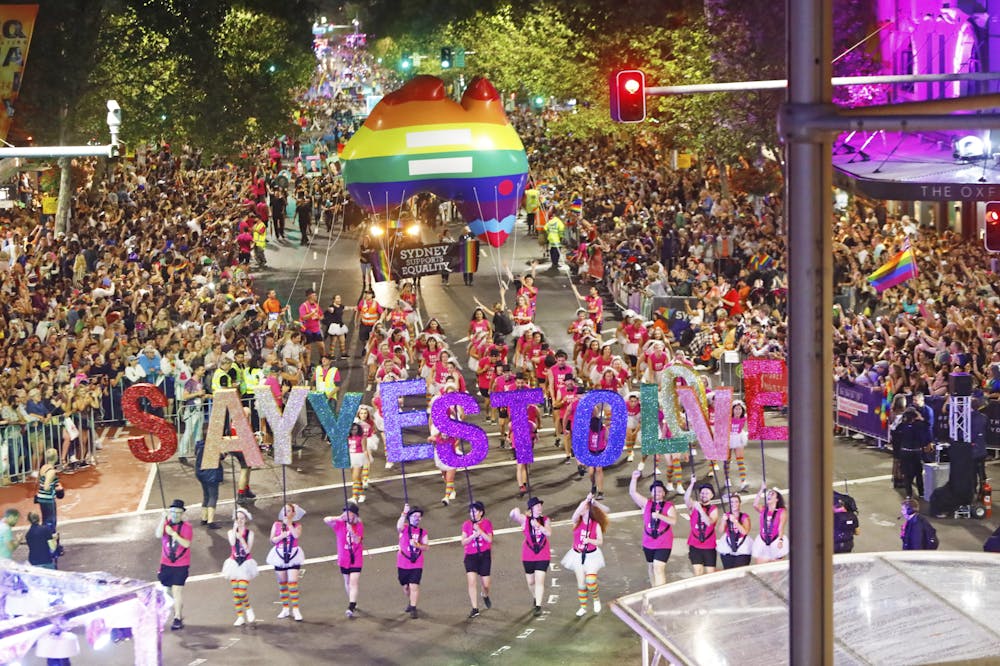
In 2020, like many other major events, the Mardi Gras parade became a victim of another virus: COVID-19. In consultation with public health experts, the parade moved to the Sydney Cricket Ground in 2021 and will again take place there in 2022.

This radical decision is a testament to the resilience and spirit of Mardi Gras that, despite calls for its cancellation at various points within its 43-year history, the show continues.

But at what cost? Taking it away from its homeland on Oxford street, and containing it within the boundaries of the SCG challenges its status as a protest, reducing its ability to disrupt.

The 43rd annual Gay and Lesbian Mardi Gras parade took place at the SCG in Sydney in 2021, due to COVID-19.
Dan Himbrechts/ AAP

A pilgrimage

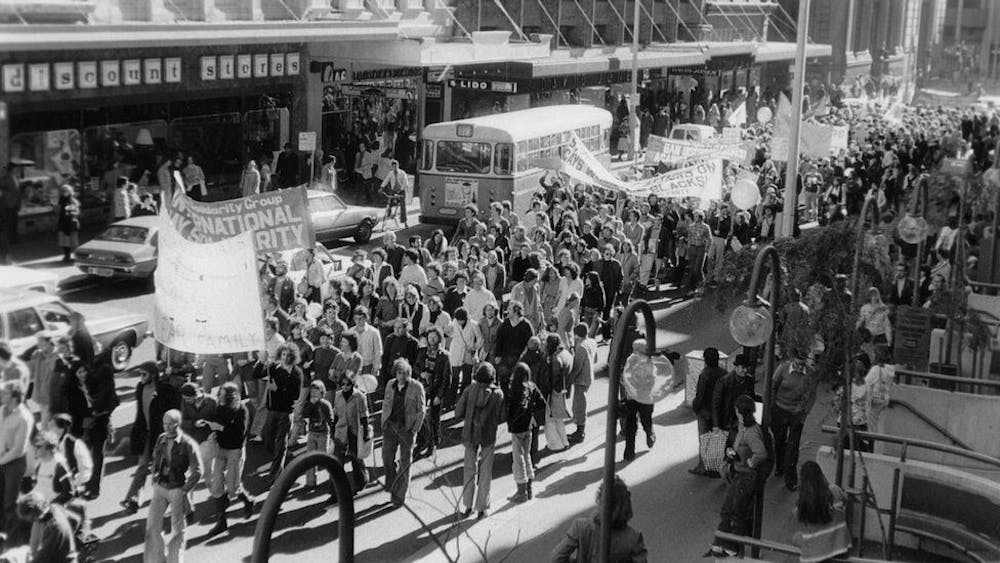
Since 1978, the parade has followed roughly the same route on Oxford Street in the heart of Sydney’s “Gaybourhood”. That first parade ended in a brutal riot instigated by police. By following the route of that first night, the parade pays homage to the brave people who created that first parade, now known as the 78ers.

For some, the parade acts as a form of pilgrimage and a place to express and affirm one’s sexual and/or gender orientation. It is a moment in time when a minority is publicly celebrated and when differences are embraced, albeit temporarily.

For others who may not be out, the parade provides a visual representation of what being LGBTIQ+ is. It helps break down barriers that prevent LGBTIQ+ people from living their authentic lives, displaying a community that will embrace them.

The Mardi Gras parade pays homage to the brave people who created that first parade, now known as the 78ers.
Australian Lesbian and Gay Archives

The success of the parade has inspired similar ones in other regional communities around Australia .

These public displays challenge mainstream expectations of sexuality and gender, drawing attention to the diversity of LGBTIQ+ communities. Oxford Street provides the parade and its exuberant participants with a connection to what is arguably Australia’s LGBTIQ+ imagined homeland – and the struggles and celebrations of past generations.

The shift to the Cricket Ground

It is not surprising the shift to the Sydney Cricket Ground in 2021 was not accepted by all LGBTIQ+ people. Several hundred people marched down Oxford Street following an exemption granted by the NSW Minister for Health.

Apart from honouring the 78ers, people marched to protest contemporary issues like the religious freedom discrimination bill and Black deaths in custody. They felt protest could not be effective within the walls of the SCG.

The importance of Oxford Street relates then not only to the origin of the parade but to the fact that it disrupts public space and, by doing so, garners public attention for important issues.

Indeed, a protest is only a protest if it disrupts the everyday routines of public life. The blocked roads and traffic diversions expose the public to the parade, regardless of whether they intend to participate. These disruptions help remind the public of the LGBTQIQ+ communities and their place in Australian society.

The Mardi Gras parade has important functions as a public protest.
Ann Marie Calilhanna/ Mardi Gras

The shift to the SCG changes the nature of the parade and its relationship with onlookers. It becomes a ticketed event, and those attending can no longer maintain the anonymity afforded on a crowded street. Ticketing limits access to the event to Mardi Gras members (who each receive two free tickets); those who can afford tickets; and those lucky to get one of a limited number of spots.


Read more:
Friday essay: on the Sydney Mardi Gras march of 1978


Lastly, the SCG, with its fencing and security, is spatially contained within boundaries that prevent the public gaze on the street, potentially consigning the politics of Pride away from the public sphere to within a private space.

The fact that the Mardi Gras Parade has been able to take place each year across its 43-year history, in the face of protests from some religious groups, ill-founded concerns about HIV transmission, horrible weather and now, COVID-19, is a show of defiance and strength.

However, shifting the parade from the street where it emerged, with such strong historical connections to the development of LGBTQI+ Pride does come with some costs.

It remains to be seen what happens in the future with World Pride 2023 set to be hosted in Sydney.

Will the parade come out of the stadium as planned? Will it still call people out of the bars and onto the streets? Or will it morph into an entertainment spectacle, sanitised and contained within the boundaries of the SCG?

The Conversation

The authors do not work for, consult, own shares in or receive funding from any company or organization that would benefit from this article, and have disclosed no relevant affiliations beyond their academic appointment.

ref. Homage, pilgrimage and protest: why Sydney’s Mardi Gras parade should go back to the streets – https://theconversation.com/homage-pilgrimage-and-protest-why-sydneys-mardi-gras-parade-should-go-back-to-the-streets-171820

Scott Morrison commits $804 million over a decade for the Antarctic

Source: The Conversation (Au and NZ) – By Michelle Grattan, Professorial Fellow, University of Canberra

Scott Morrison on Tuesday will announce $804.4 million over a decade to strengthen Australia’s strategic and scientific capabilities in the Antarctic.

The funding, including for drones, helicopters and vehicles, will enable Australia’s to penetrate inland areas of its claimed territory of East Antartica previously unreachable.

In strategic terms, Australia has had a watchful eye on China’s increasing involvement in recent years in the Antarctic and in Antarctic politics.

The money includes $136.6 million for inland travel capability, mapping, mobile stations, environmental protection, and other core activities.

Another $109 million will fund drone fleets and vehicles to map “inaccessible and fragile areas of East Antartica”, establishing an “Antarctic Eye” with integrated censors and cameras feeding real-time information back.

It will also purchase four new medium-lift helicopters with a range of 550 kilometres when launched from the RSV Nuyina that will give access to areas which have been beyond reach. Helicopters provide more landing flexibility than fixed-wing aircraft.

The Nuyina was launched late last year, when it was described by the government as “the most advanced polar research vessel in the world”.

Other funds in the package will go into shipping support, marine science (including a new krill aquarium in Hobart), environment management including cleaning up “legacy waste”, research on Antarctic ice sheet science to improve understanding of climate change, and international engagement.

Morrison said the Antarctic investment would support jobs in Australia – with Australian businesses, contractors, medical suppliers and other providers benefiting.

Foreign Minister Marise Payne said the government’s proposed investments “are a clear marker of our enduring commitment to the Antarctic Treaty system, its scientific foundations, and Australia’s leadership within it”.

Environment Minister Sussan Ley said: “When I sit down with world leaders to discuss the Antarctic and the Southern Ocean in the face of increasing pressures, the strategic importance of our scientific leadership is clear.

“We need to ensure that the Antarctic remains a place of science and conservation, one that is free from conflict and which is protected from exploitation.”

Australia was a founding member of the Antarctic Treaty, signed by the Menzies government in 1959.

Seven countries have made territorial claims in Antarctica. Apart from Australia, the others are Argentina, Chile, France, New Zealand, Norway, and the United Kingdom.

Other countries including China, India, Italy, Pakistan, Russia, Ukraine, and the United States have stations there.

Australia’s claimed territory  covers 42% of the continent and includes the vast majority of East Antarctica.

Under the Hawke government Australia together with France led the successful push to have an international agreement reached to prevent mining in the Antarctic.

Ley has been pushing for the expansion of marine protected areas but getting consensus is hard, with China and Russia being difficult.

Last year the government abandoned a proposal to build a 2700 metre concrete runway at Australia’s Davis research station, following a detailed environmental and economic assessment.

Ley said then that “higher projected costs, potential environmental impacts, and the complexity of a 20-year construction process in an extreme and sensitive environment, are such that we will now
focus on alternative options for expanding our wider Antarctic Program capability”.

The Conversation

Michelle Grattan does not work for, consult, own shares in or receive funding from any company or organisation that would benefit from this article, and has disclosed no relevant affiliations beyond their academic appointment.

ref. Scott Morrison commits $804 million over a decade for the Antarctic – https://theconversation.com/scott-morrison-commits-804-million-over-a-decade-for-the-antarctic-177548

The battle for AGL heralds a new dawn for Australian electricity

Source: The Conversation (Au and NZ) – By Bruce Mountain, Director, Victoria Energy Policy Centre, Victoria University

shutterstock

Two events in the past week mark a watershed for Australia’s electricity industry.

The first, on Thursday, was Origin Energy’s surprise announcement that it intends to close the mammoth Eraring power station in the NSW Hunter region in 2025, seven years earlier than previously advised.

Eraring is Australia’s largest coal-fired generator and supplies between a fifth and quarter of the electricity consumed in NSW.

The second, on Saturday, was a bid by a consortium led by Australian tech billionaire Mike Cannon-Brookes for AGL Energy.

AGL’s board has predictably knocked back the initial non-binding offer. But the transaction has some way to play out, and the share price has risen in expectation of a more attractive offer.

Serious negotiations will now begin. It would be surprising if they were drawn out.

After having pushed on the door for so long, those striving for rapid decarbonisation have suddenly found the door flung wide open.

What Cannon-Brookes would do

Cannon-Brookes has form when it comes to transforming power generation. In 2017 he challenged Tesla founder Elon Musk to build the world’s biggest battery in South Australia within 100 days and said he had “never been more happy to lose a bet” when it was built.

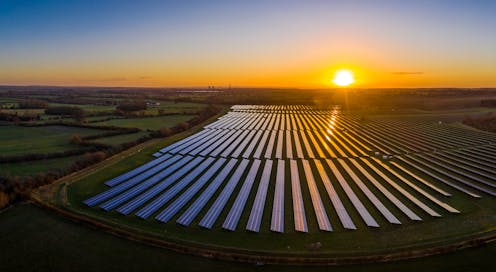
After spending as much as A$8 billion, his consortium would de-list AGL from the stock exchange and bring forward the planned closure of its coal-fired plants.

In partnership with the giant Canadian asset manager, Brookfield, Cannon-Brookes would spend as much as $20 billion on renewable power generation and storage.


Read more:
Australia’s largest coal plant will close 7 years early – but there’s still no national plan for coal’s inevitable demise


AGL is Australia’s biggest greenhouse gas polluter, accounting for as much as 8% of Australia’s emissions. Cannon-Brookes says he would halve those emissions by 2030 and cut them to zero by 2035.

AGL is also a cultural icon. Originally called The Australian Gas Light Company and set up in 1837 by a NSW Act of Parliament before the advent of distributed electricity, it was the second company to list on what is now the Australian Securities Exchange.

Australian Gas Light company, established in 1837.
AGL

One in every three Australian energy customers – about 4.5 million Australians – buy gas or electricity from AGL. It is by far Australia’s biggest energy supplier.

Those customers increasingly form its shareholder base. Australian superannuation funds are walking away on environmental concerns, while international institutional shareholders are edging away.

The bidders have indicated they will seek a way for existing shareholders to retain a share in what will become a privately owned company, if they wish to stay in.

AGL’s staff and unions will surely welcome new owners that promise a great deal of new investment to revitalise the company.

AGL bet big on coal, did well – then lost

For much of the past decade, AGL has pursued a strategy of becoming Australia’s dominant fossil-fuel generator despite its early recognition – by Australian standards – of the reality of global warming.

It bought Victoria’s largest coal-fired generator in 2012, just as the Australian government introduced a price on carbon emissions. Two years later, it bought the Bayswater and Liddell coal generation plants from the NSW government, just as the Commonwealth government disbanded the carbon price.

At first, this coal strategy worked well for shareholders. The AGL share price more than doubled to reach an all-time peak shortly after the competing Hazelwood coal-fired power station closed in April 2017.


Read more:
Wondering if your energy company takes climate change seriously? A new report reveals the answer


Since then, it has been all downhill. By the end of 2021 the AGL share price was less than one-fifth of its 2017 peak.

AGL’s coal generators, once so highly prized, have become an albatross.

Mid last year, it announced plans to split itself in two: a wholesale company that owned coal plants, which would transition to renewables, and a consumer-facing company that owned only renewables, storage and gas-fired peaking plants.

Billionaire investor Mike Cannon-Brookes.
Bianca De Marchi/AAP

Earlier this month it brought forward the planned closure of its NSW Bayswater black coal-fired power plant, from 2035 to 2033, and brought forward the closure of its Victorian brown coal-fired Loy Yang A plant from 2048 to 2045.

With a share register of older Australians desperate for a stable dividend, AGL lacks the capital or ambition needed to complete the transition more quickly.

Taken together with Origin Energy’s intention to close its Eraring power station as soon as possible, Cannon-Brookes’ and Brookfield’s bid to buy AGL brings clarity, at last, to the closure of coal generation in Australia.

Although another four coal generators would remain in NSW and Victoria after the Eraring and AGL closures, they are smaller and have less strategic significance.

That would leave a substantial portfolio of coal generation in Queensland, owned by the Queensland government, which will come under political pressure to develop an exit strategy.

NSW and Victoria will have to work hard to keep the lights on

The AGL and Origin developments put the ball squarely in the court of the NSW and Victorian governments. It will be up to them to facilitate the rapid development of enough wind and solar generation and storage to ensure the lights stay on and electricity remains affordable.

This is a completely different dynamic to one that has dominated the landscape for the last decade. The big coal generators have folded, are heading for the exit and want help getting their customers safely to shore as soon as possible.

The changes also provide an opportunity to breathe fresh air into Australia’s alphabet soup of energy regulators. Caught between the need to prepare for decarbonisation and governments hostile to it, they have succeeded only in delivering thick layers of red tape, muddled thinking and half-measures.


Read more:
20 years on, the national electricity market is on the way out, and it’s OK


In the face of this entrenched failure, the states with largely privatised electricity industries – NSW, Victoria and South Australia – have been steadily peeling away, going their own way, and getting on with the job.

There are enormous but surmountable technical challenges to be reckoned with.

Tens of billions of dollars of eager private capital will have to be corralled quickly into the development of wind and solar farms and storage, with new and strengthened transmission lines to connect them to where electricity is used.

Behind-the-meter household (and business) energy production and storage will have to expand quickly too.


Read more:
What is the electricity transmission system, and why does it need fixing?


The Commonwealth government was always an interloper in electricity. It never had a right to play on the main stage. If it can not bring itself to support the states in the challenges they face, it should direct its attention elsewhere.

At a moment of such enormous significance, it is difficult to not reach for cliches. This time, it looks as if there really is a new dawn breaking.

The Conversation

Bruce Mountain does not work for, consult, own shares in or receive funding from any company or organisation that would benefit from this article, and has disclosed no relevant affiliations beyond their academic appointment.

ref. The battle for AGL heralds a new dawn for Australian electricity – https://theconversation.com/the-battle-for-agl-heralds-a-new-dawn-for-australian-electricity-177530

No, the federal government didn’t spend $4 billion on COVID support for culture and the arts

Source: The Conversation (Au and NZ) – By Ben Eltham, Lecturer, School of Media, Film and Journalism, Monash University

Shutterstock

Canberra thinktank A New Approach put out an interesting paper last week on the state of public funding for Australian arts and culture.

The report made some bold statements about the level of support given to the arts and culture during the pandemic.

Most notably, A New Approach claims “arts and culture organisations and businesses accessed more than $4 billion of COVID support in the last four months of the 2019–20 financial year.”

The big number would have surprised many in the cultural sector who struggled through the pandemic with little or no government support.

Sure enough, the figure was picked up in an article for the Nine newspapers, which led with the headline “Billions in crisis payments paid to the arts”.

With prominent contemporary music venues in both Sydney and Melbourne announcing their closure last week, you could be forgiven for asking where all those billions went.


Read more:
The John Curtin Hotel is a home for Melbourne’s musicians, activists and unionists. Shutting it down is a loss for our cultural heritage


Unfortunately for the cultural sector, if you drill down into the statistics the $4 billion number is indeed too good to be true. A New Approach has misinterpreted some fuzzy data from the federal government, dramatically over-estimating the amount of support given to Australian culture in 2020.

Measuring the “creative sector”

A New Approach’s figures come from the federal government, specifically a set of reports from the Meeting of Cultural Ministers on funding and participation by the Commonwealth and state and territory governments.

If you check the report for the Commonwealth for 2019–20, there is indeed a statement on COVID support. The report says the federal government “spent $4,272 million in COVID support funding for eligible organisations, businesses, and individuals in creative and cultural industries”.

This figure was made up of:

  • $3,065.3 million in JobKeeper

  • $1,168.4 million from Boosting Cash Flow for Employers, and

  • $38.4 million in arts portfolio grants.

Even so, $4 billion of federal stimulus in just four months seems like an awful lot. Was there really this much money sloshing around the sector?

As always when it comes to statistics, the answer comes down to how you define “the sector”. The reason the JobKeeper figure looks so big is the federal government’s definition for the cultural and creative industries is very broad.

Drawing on an Australian Bureau of Statistics (ABS) definition of the cultural and creative sector from 2008–09, this definition includes not just the core arts and cultural activities, but vast swathes of the rest of the economy as well.

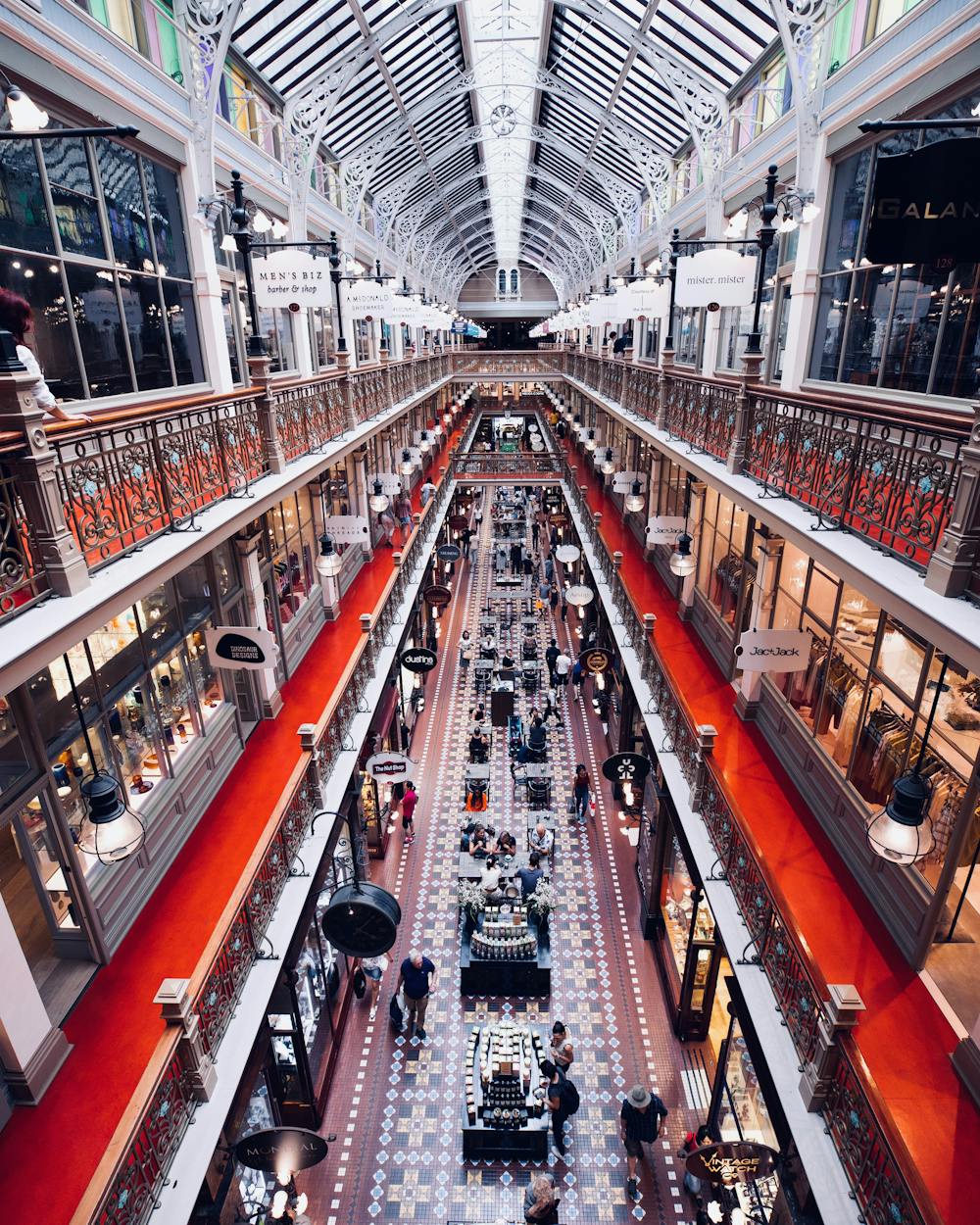
Industries in the dragnet include significant parts of the manufacturing and retail sectors, such as clothing, footwear and jewellery manufacturing and retail; software publishing and computer system design; zoos and parks; advertising; and architecture.

Queen Victoria Building, Sydney
Large parts of the clothing retail industry are also included in figures about Australia’s ‘creative sector’.
Digby Cheung/Unsplash

This same expansive approach was adopted by the government’s Bureau of Communications and Arts Research in 2018 to give a total figure for the size of the cultural and creative sector of $111.7 billion in 2016-17. But again, the devil is in the detail.

Of this $111.7 billion, the single biggest component was the technology-rich design industry, valued at roughly $43 billion. Fashion was second, valued at around $14 billion. Compare that to the performing arts, with a gross value add in 2016-17 of just $1.7 billion.

The reasons for including these sectors go back to old debates about the size and shape of the “creative” sector. When the stats were being drawn up, there was an earnest attempt by the ABS to capture associated activity that fed into creative supply chains.

But the arts ministry doesn’t break their JobKeeper figures down by industry, and so we don’t actually know how much funding went to core arts and cultural sectors like the performing arts, galleries and museums, or independent artists and creators.


Read more:
Friday essay: a world of pain – Australian theatre in crisis


Exaggerated figures

In reality, it is likely the majority of this money did not flow to closed music venues or shuttered theatres. The inclusion of the entire clothing and footwear sector in these figures is a big hint as to where the bulk of the stimulus was likely spent.

As we know from their annual reports, big retail outlets collectively banked billions in JobKeeper support during the pandemic (even though some of them still made profits).

JobKeeper was great for workers at businesses like Best & Less and Just Jeans. But this funding was not actually support for culture or artists and including these sectors in the data shows how misleading the $4 billion figure is.

By highlighting an exaggerated figure for cultural stimulus, A New Approach’s report glosses over some very real problems in the federal response to the pandemic crisis.

Tens of thousands of artists and cultural workers were ineligible for JobKeeper, because they were casual employees with insecure work patterns.


Read more:
The government says artists should be able to access JobKeeper payments. It’s not that simple


Other parts of the sector, including art galleries and museums run by local and state governments and public universities, were excluded from JobKeeper because of the way the program was designed.

The most recent detailed ABS labour force data shows employment in the arts and culture has not recovered to 2019 levels.

In the three years since it was set up by prominent philanthropists, A New Approach has published a number of thoughtful reports. The organisation describes itself as “Australia’s lading arts and culture think tank” and claims it is “objective” and “led by evidence”.

Given this, it’s disappointing that A New Approach decided to package up exaggerated government data and spin it as cultural funding.

The Conversation

Ben Eltham has peviously received arts funding from the Australia Council for the Arts. He is affiliated with Fund the Arts, a campaign to increase arts funding.

ref. No, the federal government didn’t spend $4 billion on COVID support for culture and the arts – https://theconversation.com/no-the-federal-government-didnt-spend-4-billion-on-covid-support-for-culture-and-the-arts-177443

Jupiter, Saturn, Uranus, Neptune: why our next visit to the giant planets will be so important (and just as difficult)

Source: The Conversation (Au and NZ) – By Chris James, ARC DECRA Fellow, Centre for Hypersonics, School of Mechanical and Mining Engineering, The University of Queensland

SpaceX

The giant planets – Jupiter, Saturn, Uranus and Neptune – are some of the most awe-inspiring in our Solar System, and have great importance for space research and our comprehension of the greater universe.

Yet they remain the least explored – especially the “ice giants” Uranus and Neptune – due to their distance from Earth, and the extreme conditions spacecraft must survive to enter their atmospheres. As such, they’re also the least understood planets in the Solar System.

Our ongoing research looks at how to overcome the harsh entry conditions experienced during giant planet missions. As we look forward to potential future missions, here’s what we might expect.

Jupiter is about ten times as large as Earth – with a 69,911km radius (compared to Earth’s 6,371km radius).
Beinahegut

But first, what are giant planets?

Unlike rocky planets, giant planets don’t have a surface to land on. Even in their lower atmospheres they remain gaseous, reaching extremely high pressures that would crush any spacecraft well before it could land on anything solid.

There are two types of giant planets: gas giants and ice giants.

The larger Jupiter and Saturn are gas giants. These are mainly made of hydrogen and helium, with an outer gaseous layer and a partially liquid “metallic” layer below that. They’re also believed to have a small rocky core.

Uranus and Neptune have similar outer atmospheres and rocky cores, but their inner layer is made up of about 65% water and other so-called “ices” (although these technically remain liquid) such as methane and ammonia.

Relative size and composition of the giant planets in our solar system (with Earth also shown for comparison).
JPL/Caltech (based on material from the Lunar and Planetary Institute)

Slingshots to the edge of the Solar System

Any giant planet mission is extremely difficult. Still, there have been some past missions sent to the gas giants.

NASA’s 1989 Galileo mission had to slingshot around Venus and Earth to give it enough momentum to get to Jupiter, which it orbited for eight years. The 2011 Juno mission spent five years in transit, using a flyby around Earth to reach Jupiter (which it still orbits).

Similarly, the Cassini-Huygens mission run by NASA and the European Space Agency (ESA) took seven years to reach Saturn. The spacecraft spent 13 years exploring the planet and its surrounds, and launched a probe to explore Saturn’s moon, Titan.

Flight times get even longer for the two ice giants, which are much further from the Sun. Neither has had a dedicated mission so far.

A complex journey

The last and only spacecraft to visit the ice giants was Voyager 2, which flew by Uranus in 1986 and Neptune in 1989.

Voyager 2, the only spacecraft ever to have visited Neptune, took a photo of the planet in 1989.
NASA/JPL

While momentum is building for a return, it won’t be simple. If we launch during the next convenient launch windows of 2030–34 for Uranus and 2029–30 for Neptune, flight times would vary from 11 to 15 years.

A major issue is power. The Juno spacecraft is the most distant object from the Sun to have used solar panels. It orbits Jupiter, which is five times further away from the Sun than Earth is. Yet, where Juno’s solar cells would generate 14 kilowatts of continuous power on Earth, they only generate 0.5kW at Jupiter.

Meanwhile, Uranus and Neptune are 20 and 30 times further away, respectively, from the Sun than Earth is. Power for these missions would have to be generated from the radioactive decay of plutonium (the power source for both the Galileo and Cassini missions).

This radioactive decay can damage and interfere with instruments. It is therefore reserved for spacecraft which really need it, such as missions operating far away from the Sun.


Read more:
So a helicopter flew on Mars for the first time. A space physicist explains why that’s such a big deal


Fighting the heat

The massive scale of giant planets means orbit speeds for incoming spacecraft are incredibly fast. And these speeds greatly heat up the spacecraft.

The Galileo probe entered Jupiter’s atmosphere at 47.5 kilometres per second, surviving the harshest entry conditions ever experienced by an entry probe. The shock layer which formed at the front of the spacecraft during entry reached a temperature of 16,000℃ – around three times the temperature of the Sun’s surface.

Even so, the distribution of the heat shield’s mass was found to be inefficient – showing we still have a lot to learn about entering giant planets.

Proposed future probe missions to Uranus and Neptune would occur at slower entry speeds of 22km/s and 26km/s, respectively.

For this, NASA have developed a tough but relatively lightweight material woven from carbon fibre, called HEEET (Heatshield for Extreme Entry Environment Technology), designed specifically for surviving giant planet and Venusian entry.

While the material has been tested with a full-scale prototype, it has yet to fly on a mission.

It’s planned NASA’s HEEET material will be used for future ice giant entry missions.
NASA

The next steps

In 2024, NASA’s Europa Clipper mission will launch to investigate Jupiter’s moon Europa, which is believed to house an ocean of liquid water below its icy surface, where signs of life may be found. The Dragonfly mission, planned to launch in 2026, will similarly aim to search for signs of life on Saturn’s moon Titan.

There are plans for a joint NASA-ESA mission to visit one of the ice giants within the upcoming launch window. But while there has been extensive preparation, it’s undecided which ice giant will be visited.

A single mission to both planets is being considered. An entry probe is planned, too. But if the mission visits both planets, it’s undecided which planet’s atmosphere the probe would explore.

If we want to meet the upcoming launch window, it’s expected mission concepts will need to be finalised by 2025, at the latest. In other words, crunch time is coming.

Should a mission go forward, the two most important goals for NASA’s scientists will be to determine the interior makeup of ice giants (exactly what they are made of) and their composition (how they are formed).

Other objectives will include studying their magnetic fields, which are very different to gas giants and all other types of planets.

They’ll also want to study the heat released by both Uranus and Neptune, which both have average temperatures of around -200℃. All giant planets are meant to be very slowly cooling down, as they release energy gained during their formation.

This heat release can be detected for Jupiter, Saturn and Neptune. Uranus, however, doesn’t seem to release heat – and scientists don’t know why.

The Conversation

Chris James receives funding from the University of Queensland, the Australian Research Council, and the U.S. Office of Naval Research.

Yu Liu does not work for, consult, own shares in or receive funding from any company or organisation that would benefit from this article, and has disclosed no relevant affiliations beyond their academic appointment.

ref. Jupiter, Saturn, Uranus, Neptune: why our next visit to the giant planets will be so important (and just as difficult) – https://theconversation.com/jupiter-saturn-uranus-neptune-why-our-next-visit-to-the-giant-planets-will-be-so-important-and-just-as-difficult-175918

Want to learn a language? Try TikTok

Source: The Conversation (Au and NZ) – By Aidan Carter, Head Tutor in Political Science; Tutor in Italian studies and Linguistics, The University of Melbourne

Shutterstock

Social media are becoming an increasingly integral part of our everyday lives. We’re spending more time on our phones, but this is mostly on unproductive activities, which can take a serious toll on mental and physical well-being.

But what if we could make this time productive? For example, spending time on social media could help you learn a foreign language.


Read more:
Our smartphone addiction is killing us – can apps that limit screen time offer a lifeline?


How do Australians use social media?

In January 2021, almost 80% of Australians were “active users” of social media compared to 58% in 2015. Facebook remains the most popular social media platform. Others such as TikTok and Instagram are gaining a stronger foothold with younger audiences.

At the end of 2021, TikTok even surpassed Google as the world’s most popular web domain. This is not just in terms of social media but based on global internet traffic, which includes platforms hosted by Google such as Gmail and Google Maps. In Australia, TikTok is the fastest-growing social media company and was the second-most-downloaded app after Zoom in 2020.

TikTok’s success is largely due to the interactive and highly engaging nature of the audiovisual content that dominates its platform. Users often spend hours scrolling through their feeds, and popular channels boast millions of followers.

This upwards trend among young users — who visit social media platforms “multiple times a day” — has led Australian school teachers to turn to TikTok to engage with students, particularly during COVID-19 lockdowns.

Young people looking at their mobile phones
The allure of social media for young people can be used for productive purposes such as learning a language.

Social media as an educational platform

The role of social media as an emerging educational platform, particularly for foreign languages, deserves greater attention. In lieu of face-to-face lessons, private language teachers have turned to platforms like TikTok and Instagram to attract and teach students.

Language educators are harnessing the popularity and success of social media by creating content to help their followers improve their language skills. This is primarily done through short, interactive videos. These are designed to teach content in short chunks, an approach called “microlearning”.

Research indicates this is an effective tool for students and teachers alike. It breaks the lessons down so users can absorb it as part of an “everyday scroll”. Content in this form is easier to engage with (from the learner’s perspective) and more likely to be retained.

For example, English students can watch short videos to improve their vocabulary or practise the pronunciation of difficult words — or even mimic simple conversations.

Students studying Mandarin can learn some helpful phrases for going to the hairdresser; French students can practise distinguishing between two similar sounds; and people travelling to Italy can learn how to order their first espresso.

This TikToker teaches basic Korean.

Videos can offer general guidance on language learning or even illustrate — in a highly relatable manner — the obstacles students may encounter when studying Mandarin.

The platforms’ high functionality allows teachers to use visual and audio cues. On platforms like Instagram, they can also create quizzes or save content via “stories” for students to access later.

It’s engaging, accessible and not just limited to language learning. Popular channels feature educational content on topics such as cooking, learning to play piano, or simple “life hacks”.


Read more:
How creative use of technology may have helped save schooling during the pandemic


How much can you learn?

Social media content won’t take you from a complete beginner to a native speaker in a few weeks. But a little bit of exposure each day can have a significant effect.

If you’re a beginner, this will mean finding channels aimed at teaching you the basics. Many channels on TikTok and Instagram cater to a variety of levels, and incorporate grammar, vocabulary, listening and speaking videos to help you learn. However, it’s key to engage with “comprehensible input” — that is, language you can understand but which still challenges you.

More advanced users may find they benefit more from videos dedicated to slang, idioms or improving their vocabulary.

Ultimately, everyone’s language learning journey is different. How you can harness social media in that journey will depend on what your individual goals are. And as more and more language teachers take to social media platforms, the channels and platforms to choose from are numerous.


Read more:
Australian students say they understand global issues, but few are learning another language compared to the OECD average


Is it worth it?

Just like changing the language on your phone to your target language or increasing the amount of music you listen to and movies you watch, social media offer another tool to allow you to increase your daily exposure to your target language.

But the advantage of social media is easy access. It’s likely something you’re already engaging with daily and potentially even feel “addicted to”.

The Conversation

Aidan Carter does not work for, consult, own shares in or receive funding from any company or organisation that would benefit from this article, and has disclosed no relevant affiliations beyond their academic appointment.

ref. Want to learn a language? Try TikTok – https://theconversation.com/want-to-learn-a-language-try-tiktok-174702

Why urban greening isn’t a panacea for extreme weather under climate change

Source: The Conversation (Au and NZ) – By Mark O. Cuthbert, Principal Research Fellow & Reader, Cardiff University

Shutterstock

Urban greening is often touted as a way to tackle both heatwaves and floods in cities. This includes through green roofs, living walls, vegetated urban spaces, private and community gardens, habitat corridors, bushland and parks.

But our latest research shows that, for most cities worldwide, urban greening can either subdue floods or mitigate heat. It generally cannot do both in one city.

As the climate changes, cities around the world are enduring both heatwaves and floods more frequently. Perth, for example, sweltered through a record-breaking heatwave last month, with six days in a row over 40℃. A few months earlier, Perth recorded its wettest July in decades, with 18 straight days of rain.

Our findings ensure we can plan urban greening projects more effectively to suit cities. So let’s take a closer look at these findings, and the benefits Australia can derive from urban greening.

Park with Melbourne skyline in the background
Urban greening strategies include community gardens, bushland and parks.
Shutterstock

What we found

Temperatures in cities are often several degrees higher than rural areas, due to the “urban heat island” effect, where the predominance of concrete and steel absorb and retain heat, and there is a lack of cooling by water evaporating from plants.

These same heat-intensifying features are also often responsible for flash flooding in cities, as sealed surfaces can’t act like a sponge to soak up and store rain, unlike the soil they’ve replaced.


Read more:
What drove Perth’s record-smashing heatwave – and why it’s a taste of things to come


To find out whether the benefits of urban greening on cooling and flood prevention hold true, we analysed global climate models and weather information from 175 cities around the world spanning 15 years of daily observations, from 2000 to 2015.

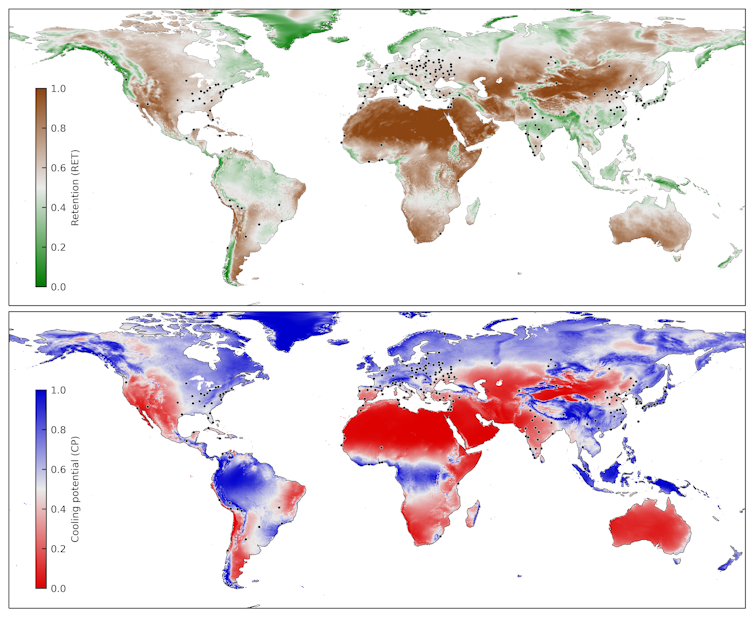
Our results, published in the journal Nature Communications, show the greatest cooling potential occurs where abundant rainwater is available for plants to transpire (release water vapour during photosynthesis). This is common for cities around the Equator and in much of northern Europe.

The cooling potential of urban greening varies with the seasons – it’s more effective if periods of higher rainfall coincide with summer.

Global map of the relative hydrological (water retention) as well as thermal (cooling potential) benefits of urban greening. Black dots are cities where our study analysed long-term weather data. A higher value closer to 1 means more cooling or more retention.
Authors. See more detail here, Author provided

In contrast, the greatest potential for water retention by soils, which is crucial for flood prevention, occurs in drier areas where there’s plenty of energy from sunshine, but rainfall is more limited. These areas are common in North Africa, Australia and the Middle East.

Such areas have higher average water retention in the long term, and its potential varies less from season to season. This is because large rainfall events that exceed the storage capacity of the soils and result in water runoff are less common.

What do the findings mean for Australia?

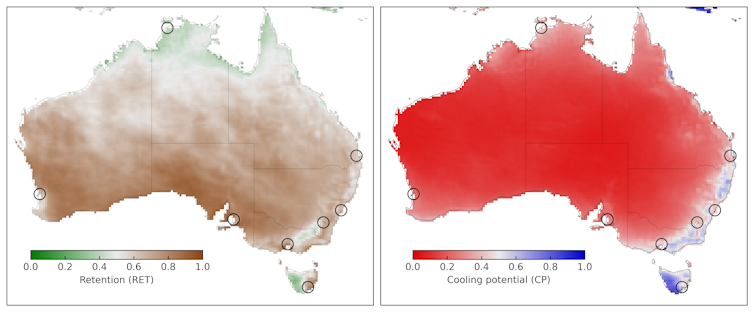
While our findings suggest urban greening can’t reduce both flooding and heat in many, if not most, of the world’s cities, parts of southeast Australia are among the rare exceptions. This includes parts of Melbourne and Hobart.

Melbourne, for example, can endure urban heat island-induced temperature increases of 3℃. City greening initiatives are an important way to mitigate this heat.


Read more:
Urban greening can save species, cool warming cities, and make us happy


On the other hand, Canberra, Adelaide, Perth and Brisbane are “water-limited”, which means urban greening is ineffective at reducing the urban heat island effect. However, because much of Australia has a relatively dry climate which is good for water retention, large-scale urban greening initiatives can help reduce flash flooding in these cities.

For example, Brisbane has lots of sunshine in summer, providing ample energy for evaporation, which often exceeds the amount of available summer rains.

Water retention (left) and cooling potential (right) of urban greening for Australia. The location of state capitals is highlighted.

Darwin is Australia’s only state capital that, according to our modelling, would not derive strong stormwater or cooling benefits from urban greening.

This is because Darwin is in an area that transitions between the arid Australian interior and the more humid tropical climates to the north. It doesn’t benefit from the high cooling or water retention performance that comes with either extreme.

Where to from here?

While it seems we can’t assume urban greening can mitigate cooling and flooding at the same time, it’s still an excellent strategy to address either in many places.

Urban greening also has other positive benefits – it provides habitat, filters air and has demonstrable effects on people’s well-being.

However, there are important cost-benefits of these kinds of schemes to consider, both environmentally and economically.


Read more:
Higher-density cities need greening to stay healthy and liveable


Urban spaces are expensive, and many greening strategies require more complex engineering than traditional buildings. Also, the cooling benefits can only be significant in some areas if irrigation is used, and this is impossible to do sustainably in many parts of the world.

Policymakers worldwide can use our results as a first-pass guide for more local feasibility studies on urban greening. While it’s a crucial planning and climate change adaptation tool, urban greening has to be understood within specific local conditions – one size does not fit all.

Councils, governments, planners and developers need to be fully aware of the benefits and pitfalls before embarking on urban greening projects.

The Conversation

Mark O. Cuthbert receives funding from the UK Natural Environment Research Council (NE/P017819/1).

Denis O’Carroll receives funding from the Australian Research Council.

Gabriel Rau receives funding from the German Research Foundation and, in the past, from the EU Research and Innovation programme “Horizon 2020”.

ref. Why urban greening isn’t a panacea for extreme weather under climate change – https://theconversation.com/why-urban-greening-isnt-a-panacea-for-extreme-weather-under-climate-change-176556

The Wellington protest is testing police independence and public tolerance – are there lessons from Canada’s crackdown?

Source: The Conversation (Au and NZ) – By Dominic O’Sullivan, Adjunct Professor, Faculty of Health and Environmental Sciences, Auckland University of Technology and Professor of Political Science, Charles Sturt University

Today’s action to cordon off the occupation of parliament grounds and prevent it growing might go some way to restoring public confidence in the police, which has appeared to be eroding since the protests began a fortnight ago.

So far, police have pursued a de-escalation strategy, but there have been calls for firmer action. The whole event has raised important questions about the relationship between the police and government, and about police independence and accountability.

With local businesses unable to trade, and the neighbouring university closing its campus for eight weeks, the political consequences are potentially serious.

From the government’s perspective, there is a direct relationship between its own public support and public confidence in the police. The political and legal impasse between the rightful independence of the police and public accountability is not a simple issue to resolve.

Constabulary independence

The relationship between the government and the police has come a long way since government minister John Bryce – armed and on horseback – led the police invasion of Parihaka in 1881. Bryce decided who would be arrested and personally ordered the destruction of property.

Supporting the political objectives of the government of the day was a function of the police. But New Zealand was not a developed liberal democracy 140 years ago.


Read more:
The occupation of NZ’s parliament grounds is a tactical challenge for police, but mass arrests are not an option


By 2018, that relationship had evolved enough for the solicitor-general to advise the prime minister that “constabulary independence [had become] a core constitutional principle in New Zealand”.

The solicitor-general explained the constitutional subtleties of the Policing Act thus:

The Police are an instrument of the Crown […] but in the two principal roles of detecting and preventing crime and keeping the Queen’s peace they act independently of the Crown and serve only the law.

This is reinforced in the oath police officers swear to perform their duties “without favour or affection, malice or ill-will”.

Who is accountable?

Constabulary independence means governments can’t control the police for political advantage. At the same time, police accountability to the public is as important as for any department of state. Independence should not mean the police can do whatever they like.

However, the lines of accountability are complex. Constabulary independence means the ordinary process of accountability to parliament through the relevant minister, and through parliament to the people, does not fully apply to the police.

The police commissioner is accountable to the minister for “carrying out the functions and duties of the Police”, but explicitly not for “the enforcement of the law” and “the investigation and prosecution of offences”.


Read more:
Prior’s warning: what would NZ’s greatest 20th century philosopher have said about civil liberties in the COVID age?


As well as “keeping the peace”, “maintaining public safety”, “law enforcement”, “crime prevention” and “national security”, the Policing Act requires “community support and reassurance”.

This might help explain why, for security and tactical reasons, the police won’t fully explain their tolerance of the occupation, beyond the police commissioner saying the public would not accept the inevitable violence and injury a harder line would entail.

Despite clear public concern, the police are not required to give further explanation of why they haven’t prosecuted people for intimidation and harassment, for threatening MPs, public servants and journalists, or for failing to remove illegally parked vehicles.

Canadian comparisons

The situation in Canada may be instructive. There, the police have seemingly abandoned a de-escalation strategy that had lasted three weeks, with the protest in Ottawa cleared in the last few days.

As in New Zealand, public tolerance was low. Rejecting a claim that the repeated sounding of 105-decibel truck horns was “part of the democratic process”, a Canadian judge said: “Tooting a horn is not an expression of any great thought.”


Read more:
Protesting during a pandemic: New Zealand’s balancing act between a long tradition of protests and COVID rules


In both countries, the protests are being viewed less as expressions of political thought than as simple acts of public nuisance. The difference lies in the Canadian federal government invoking special powers under its Emergencies Act.

The first time it has been invoked since it was passed in 1988, the law allows the government to use “special temporary measures that may not be appropriate in normal times” to respond to “threats to the security of Canada”.

Banks can freeze accounts being used to support the protest. Private citizens and businesses may be compelled to provide essential services to assist the state – tow trucks, for example.

Political calculation

Such significant constraints on freedom can be justified only if they are proportionate to the emergency. But on Friday, the Canadian parliament was prevented from scrutinising the decision to declare an emergency because protesters had prevented access to the debating chambers.

Ironically, the debate began on Saturday when police cleared the obstruction (without needing emergency powers) – suggesting “freedom” is a wider concept than the one protesters claimed they were defending.

The ability of people to go to work, to study, shop, drive on a public road – and (as in Ottawa) the ability of parliament to function – are democratic freedoms the protesters are curtailing.


Read more:
COVID-19 ‘freedom’ rallies actually undermine liberty – here’s why


Whether Wellington goes the way of Ottawa remains to be seen, but the New Zealand police commissioner says a state of emergency is among the “reasonable options” being considered to stop more protesters entering parliament grounds.

For now, the political question is what happens if the evolution from protest to public nuisance to crisis of confidence in the police continues.

Given the constraints of constabulary independence, and the democratic need for accountability, what political responses are available to the government to ensure any crisis of confidence in the police does not become a crisis of confidence in the government itself?

For both police and government, there is much at stake in the de-escalation strategy.

The Conversation

Dominic O’Sullivan does not work for, consult, own shares in or receive funding from any company or organisation that would benefit from this article, and has disclosed no relevant affiliations beyond their academic appointment.

ref. The Wellington protest is testing police independence and public tolerance – are there lessons from Canada’s crackdown? – https://theconversation.com/the-wellington-protest-is-testing-police-independence-and-public-tolerance-are-there-lessons-from-canadas-crackdown-177523

‘We get the raw deal out of almost everything’: a quarter of young Australians are pessimistic about having kids

Source: The Conversation (Au and NZ) – By Lucas Walsh, Professor and Director of the Centre for Youth Policy and Education Practice, Monash University

A young woman in Melbourne in December 2021. Con Chronis/AAP

Young people today are coming of age in the middle of a global pandemic, soaring house prices, an unpromising job market and the shadow of climate change.

As part of the 2021 Australian Youth Barometer, we asked young people what they think about their futures. Some of the responses were bleak. As one 24-year-old observed:

I feel like, as a young person specifically, we get the raw deal out of almost everything at the moment.

What is this doing to young people’s aspirations? In particular, what impact might it have on their plans to have children?

The Australian Youth Barometer

In the Australian Youth Barometer, we surveyed more than 500 Australians aged 18 to 24 from diverse backgrounds. We also conducted interviews with 30 more young people. We asked them about their health, education, employment, money, housing, food, safety, and community involvement and participation.

We found 24% of respondents are pessimistic about having children in the future. The reasons for this are complex. Some have yet to make a firm decision. Some appear to be choosing not to have children at all.

Father pointing with young son.
Housing affordability is a factor in young people’s views about having kids.
www.shutterstock.com

Unsurprisingly, young people see a stable home and financial independence as prerequisites for having a family – both of which seem increasingly unattainable for many in the current employment and housing market.

Indeed, this figure increases significantly for those living in uncertain housing and precarious financial circumstances, as well as for non-binary and gender diverse young people.

For example, 65% of those who are very pessimistic about their housing prospects are also very pessimistic about having children, while only 9% are very optimistic about having children. Here, one 24-year-old interviewee sets out their concerns:

[the] rising cost of living, owning a home, having enough to sort of be able to have a home and have a family in the future, but also not to have to use up all of my money.

Another 20-year-old similarly explained their hesitancy:

I think in the future, it’s probably just about being able to provide enough for my family […] If I have a family in the future.

On the flip-side, those who are optimistic about having children tend to be optimistic about their futures in relation to financial security and access to supportive social networks. They are also more optimistic about living in a world in which environmental issues are effectively addressed. But having enough money is significant:

I want to reach a point in my life where I can have a good number of years to enjoy the money […] that I’ve earned, without having to worry about making repayments or things like that. If it’s uni for my [future] kids or something like that, then I’m more than happy, but I don’t want to have to pay my own debts.

Our survey found no large differences in optimism or pessimism about having children between men and women. Young men were a little more pessimistic about the prospect of having a child in the future (17.8%) than young women (12.8%).

Climate change and babies

Climate change also appears to be influencing young people’s views about children. Nearly a third (31%) of respondents were pessimistic or very pessimistic about environmental issues being addressed effectively.

One 19-year-old told us that a big concern is:

Definitely climate change. Our age group, is going to be most affected by it […] Like everyone’s affected by it, but it’s our future. It’s not some 90-year-old woman’s future.


Read more:
Yes, young people are concerned about climate change. But it can drive them to take action


Recent media reports have described significant numbers of young people wanting to skip having kids to put less strain on the planet.
As the Guardian’s Sian Cain wrote:

The climate crisis has presented an opportunity to rebrand being child-free, once the greatest taboo, into the ultimate altruistic act.

Meanwhile, other data suggests young people simply don’t see having kids as inevitable or essential. The ABC’s Australia Talks! Survey conducted in 2019 found almost three in four Australians thought having children was not necessary to have a fulfilling life. In their study, women particularly thought having children would not necessarily make them happier.

The pandemic has also featured constant reports about how mothers are bearing the brunt of work and care responsibilities.

What does this mean for Australia?

The mix of housing affordability, the persistent norm that women assume the majority of household labour while raising children, and climate change are hard to ignore.

Commuters in the centre of Sydney.
The fertility rate in Australia is already at a record low of 1.58 babies per woman.
www.shutterstock.com

However, young people’s views about having children is about more than personal choice. It is about how all of us prepare for the changes in population in Australia and around the globe.

The fertility rate in Australia has been declining for some time. Australian Bureau of Statistics data suggests in the next decade, the number of couples without children will outnumber those with children.

As policy makers confront how Australia’s economy, environment and population needs to look in the coming decades, they should not forget how their decisions affect not only young people today, but future generations.


Read more:
Half of women over 35 who want a child don’t end up having one, or have fewer than they planned


The Conversation

The authors do not work for, consult, own shares in or receive funding from any company or organisation that would benefit from this article, and have disclosed no relevant affiliations beyond their academic appointment.

ref. ‘We get the raw deal out of almost everything’: a quarter of young Australians are pessimistic about having kids – https://theconversation.com/we-get-the-raw-deal-out-of-almost-everything-a-quarter-of-young-australians-are-pessimistic-about-having-kids-173751

What’s an LRAD? Explaining the ‘sonic weapons’ police use for crowd control and communication

Source: The Conversation (Au and NZ) – By Lawrence English, Adjunct Research Fellow, Griffith University

Shutterstock

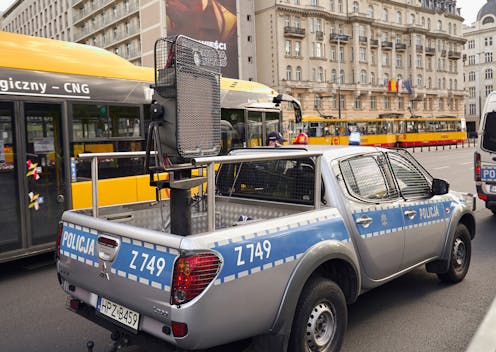
At vaccine mandate protests in Canberra last week, police used powerful loud-hailing devices called Long-Range Acoustic Devices (LRADs) to address protesters.

While some protesters claimed they were injured by the “sonic weapon”, those reports are inconsistent with what an LRAD can really do.

However, the claims highlight the importance of understanding new policing and crowd-control technologies such as LRADs, and how they are used.

What’s an LRAD?

The LRAD is device that can put out a highly directional “beam” of incredibly loud sound, up to 160 decibels (dB).

To understand how loud 160dB is, it’s important to understand that volume, or “sound pressure level” (SPL), is not a linear measure: an increase of 10dB actually corresponds to a tenfold increase in SPL. A 20dB increase would be a 100-fold increase in SPL.

As a rough reference, standing directly behind a jet engine as it takes off is between 130-140dB, and a nearby gunshot rates at approximately 150db. Anything over 140dB will cause pain for most people, but even sounds over 120dB can cause permanent hearing damage from even short periods of exposure.

The history of the LRAD

The origin of the LRAD can be traced to an event in October 2000, when the USS Cole, an American guided missile destroyer, was bombed by a small boat loaded with explosives in a terrorist attack.

As the small vessel approached, naval personnel on board the USS Cole
were unable to successfully hail it. By the time they were confident their messages could be heard, it was too late.

This incident resulted in numerous changes in naval policy, and it also led to the creation of the LRAD. Since that time, the technology has proliferated, aided by a dedicated effort from its creators to make the item a staple device for communication and increasingly for crowd control in military and civil settings.

The LRAD’s siren is one of its main deterrents. It is specially designed to be weighted to transmit sound loaded in the frequency range where human hearing is most sensitive, roughly 2,000–4,000 Hertz. This design simultaneously ensures maximum discomfort for the target subject and maximum efficiency of the device itself.

What makes the power of the LRAD significant is its capacity to cause long-term physiological damage to the body. In September 2009 a US woman named Karen Piper suffered permanent hearing damage when she was accidentally caught within an extended period of loud emissions from an LRAD operator.


Read more:
Voices, hearts and hands – how the powerful sounds of protest have changed over time


This resulted in a successful lawsuit against the City of Pittsburgh that was significant and historic as it recognised that sound can be weaponised, and cause lasting bodily harm.

LRADs in Australia

Until very recently, the use of the LRAD in public settings in Australia has been largely nonexistent. Most use by police forces in Australia has been limited to disaster communication and for communication during events such as hostage situations.

In 2020, however, this pattern of usage began to shift. In June 2020, during the Black Lives Matters protests in New South Wales, police deployed the LRAD, in a move that significantly shifted the way the technology could be used in Australia.

Most recently, in response to the protesters gathered in Canberra and assembled on Parliament House’s lawn earlier this month, the LRAD was again deployed. In this case, it was used as a “loud hailer” for voice messages to be passed to those assembled for the vaccine mandate protests. It’s unclear exactly how loud the messages were, but there’s no evidence the devices were used in “siren mode”.

After its use, there were a series of posts and reports on various outlets regarding purported injuries from the use of the device. These speculative injuries are in no way consistent with how the device operates, or how it is reported to have been used.

There is no question that if used to its full potential, the LRAD can cause significant damage to auditory nerves. However, unlike what the protesters reported, beyond the auditory system, the device does not harm the body.

Invisible weapons

Many reports seem to conflate the LRAD, sometimes called a “sound cannon”, with other devices for crowd control such as the Active Denial System. Rather than sound, this uses millimetre-wave radiation to cause the nerve receptors in the upper layer of skin to feel an incredible heat via dielectric heating.

A quick scan of coverage and social media following the use of LRAD this past week reveals a lot of anxiety about its use in public settings. There is also plenty of misinformation and disinformation circulating about how it operates and what the LRAD technology is actually capable of doing.

More sound and energy-based control devices are on their way – one recent invention is the “speech jamming” Acoustic Hailing And Disruption (AHAD) device. It’s important to recognise the actual implications of these technologies, and to talk about how, when and where they are to be used.

The Conversation

Lawrence English does not work for, consult, own shares in or receive funding from any company or organisation that would benefit from this article, and has disclosed no relevant affiliations beyond their academic appointment.

ref. What’s an LRAD? Explaining the ‘sonic weapons’ police use for crowd control and communication – https://theconversation.com/whats-an-lrad-explaining-the-sonic-weapons-police-use-for-crowd-control-and-communication-177442

Please excuse me, is there a place for politeness in Australian politics?

Source: The Conversation (Au and NZ) – By Katherine (Kate) Power, Lecturer in Management, School of Business, The University of Queensland

Mick Tsikas/AAP

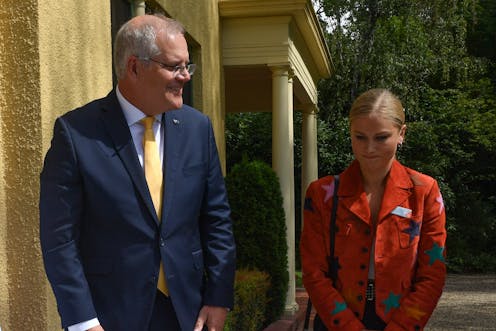
Since former Australian of the Year Grace Tame declined to smile in a photo opportunity with Prime Minister Scott Morrison, debate has raged about what counts as politeness and impoliteness in Australian political debate.

Jenny Morrison recently told 60 Minutes she wants her daughters to grow up “fierce and strong” but also “be polite and have manners”.

Meanwhile, the gloves are well and truly off in Canberra. As Labor claimed Aged Care Services Minister Richard Colbeck had “failed in his job” and should be sacked, Morrison accused opposition leader Anthony Albanese of “clearly [being] on the side of criminals” (during debate about deportation legislation) and labelled deputy leader Richard Marles, a “Manchurian candidate” (over past comments on China).

As we head towards another federal election, the temperature of debate will only increase. Is politeness compatible with politics? And what standards should we expect from our leaders?

Defining “politeness”

In 1978, American linguists Penelope Brown and Stephen C Levinson developed “politeness theory”. This is the most influential scholarly work dealing with politeness. At its heart lies the notion of “face” or the public image we want for ourselves.

There are two types of “face”:

  1. “positive face” – our desire to be “appreciated and approved of”. It can be threatened by accusations, insults and expressions of criticism or contempt.

  2. “negative face” – our desire for autonomy, including both freedom to act and freedom from other people telling us what to do. It can be threatened by orders, requests, advice and threats.

Politeness might mean giving someone approval or praise, or minimising our imposition on them. But there are times when this is not possible or practical. In emergencies, for example, we might yell sharply at someone to get out of harm’s way, or to protect ourselves. As linguistic anthropologists Horst Arndt and Richard W. Janney observe,

To not do this would require a radical suppression of one’s own interests and feelings, and an almost slavish acceptance of those of others. The result would be a total loss of personal face.

In situations such as these, a lack of conventional politeness is not only understandable, it just might be essential.

Defining impoliteness

Politeness theory focuses on what we say, but impoliteness can also be communicated by non-verbal behaviour, such as facial expressions, eye contact, voice quality and body movements. So, not smiling in a photo opportunity may express positive impoliteness. Meanwhile, shaking someone’s hand when they don’t want you to arguably shows negative impoliteness.

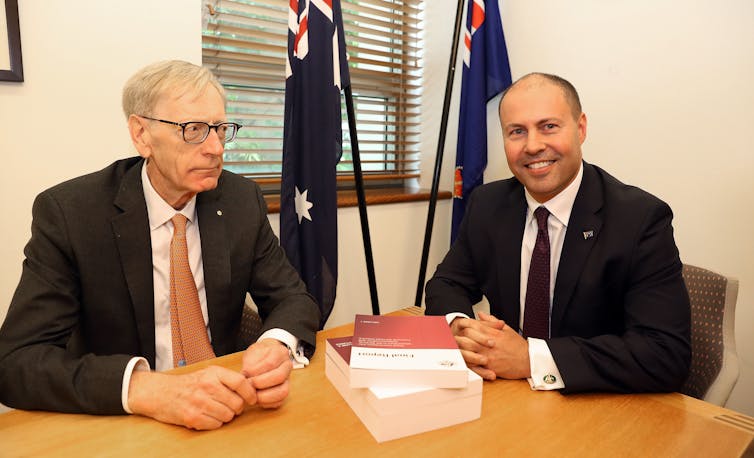
Kenneth Hayne and Josh Frydenberg
Kenneth Hayne also did not smile during a photo opp with Treasurer Josh Frydenberg, when handing over the banking royal commission report in 2019.
Kym Smith/pool/AAP

Linguist Jonathan Culpeper says impoliteness involves “the absence of politeness […] where it would be expected”. And the more powerful and/or unfamiliar someone is to us, the more polite we are expected to be. He also explains that some behaviours can be perceived as impolite if they just clash with how someone expects or wants them to be.

So, who decides what counts as politeness? And what happens when we disagree?

Context matters

There is a longstanding consensus amongst linguists that nothing is inherently polite or impolite. Rather, the things we communicate take on these meanings from the cultures and contexts in which they happen.

For example, recent research suggests Australia’s brand of politeness prioritises “positive face,” with a high value placed on “being welcoming and showing solidarity and sympathy”. We also have an emphasis on what scholars call, “jocular mockery.” This includes various forms of teasing based on the view that people shouldn’t take themselves too seriously – or what is more commonly known as “taking the piss”.


Read more:
From ‘Toby Tosspot’ to ‘Mr Harbourside Mansion’, personal insults are an Australian tradition


But ideas about gender also play a significant role in our expectations here. For example, men who don’t smile when they are expected to might be seen as “tough” or “serious”, while women are labelled “rude” or “disrespectful”.

Politeness in politics

Politics is not a warm and fuzzy profession by any means. But in recent years, researchers have tracked a “shameless normalisation” of verbal aggression, insults, racist and misogynistic attacks and hostile forms of humour from leaders such as Donald Trump and Silvio Berlusconi.

Closer to home, last week outgoing Liberal MP Nicolle Flint decried the abuse she has received during her time in politics.

Men on the left, some of whom are public figures of influence, have done the following: they’ve stalked me, suggested I should be strangled, criticised the clothes I wear and the way I look, called me a whiny little bitch repeatedly, repeatedly called me weak, a slut […]

More generally, politicians and scholars have both observed that rudeness is not only expected but rewarded in parliamentary debates.

The risk here is that voters just tune out and turn off (as any regular viewer of parliamentary question time can attest).

Caution: election ahead

Of course there is a difference in how politicians or political opponents behave towards each other and how they behave towards the people whose votes they want.

Politeness can play a potentially important role in image-management. While he was opposition leader, for example, Tony Abbott was quick to distance himself from placards belittling then Prime Minister Julia Gillard, after speaking in front of them at a public rally.

But here voters should take note of linguist Manfred Keinpointner’s warning:

some forms of politeness, such as manipulative or insincere politeness, should be seen as […] impolite.

And as we reflect on what behaviour we expect and want from our political leaders and those who shape the national debate, we also need to ask to whose benefit it is to be – or seem to be – polite. Perhaps what we want more than conventional etiquette is what political scientists call civility – or “respect for the traditions of democracy”.

The Conversation

Katherine (Kate) Power receives funding from The Advance Queensland Industry Research Fellowships program.

ref. Please excuse me, is there a place for politeness in Australian politics? – https://theconversation.com/please-excuse-me-is-there-a-place-for-politeness-in-australian-politics-177437

Taking COVID pills at home sounds great. But we need to use them wisely or risk drug resistance and new variants

Source: The Conversation (Au and NZ) – By Peter Wark, Conjoint Professor, School of Medicine and Public Health, University of Newcastle

Shutterstock

GPs can now prescribe antiviral pills for some of their vulnerable COVID-19 patients to take at home. More patients are expected to have access in coming weeks and months.

These drugs are given to people at greater risk of severe disease at the start of their infection, to stop them getting so sick they need to go to hospital. So they are an important next step in our fight against the pandemic. But we should look at these antivirals as another option to manage COVID-19, not a silver bullet.

These pills aren’t suitable for everyone, especially pregnant women, and need to be taken very soon after diagnosis. Not everyone benefits. Then there’s the theoretical risk they could help lead to more viral variants.


Read more:
Australia approves two new medicines in the fight against COVID. How can you get them and are they effective against Omicron?


Remind me, what are antiviral drugs?

Viruses cannot reproduce unless they invade a host cell, hijack its machinery and use it to replicate and spread to the next cell.

Antiviral drugs sabotage part of this process. They either prevent the virus from entering the cell, prevent it from replicating or stop it being released.

Unlike earlier COVID-19 antiviral drugs, such as remdesivir, these new antiviral pills will be taken at home. This makes them easier to use, potentially preventing people with COVID-19 deteriorating and needing to go to hospital.

These pills have also been designed specifically to target SARS-CoV-2, the virus that causes COVID-19, including the Omicron variant.


Read more:
Why are there so many drugs to kill bacteria, but so few to tackle viruses?


Merck’s pill

One of the newly approved antivirals is molnupiravir (brand name Lagevrio). This causes fatal mutations in the virus as it tries to replicate.

In a recently published study, researchers treated 1,433 people within five days of symptoms and a COVID-19 diagnosis. Half took molnupiravir, the other half placebo, for five days.

All had at least one risk factor for severe COVID-19, such as diabetes, obesity, or serious heart, lung or kidney disease. None had been vaccinated.

In the molnupiravir group, 7.3% were admitted to hospital or died from any cause in the following month compared with 14.1% who took the placebo. That’s a 48% risk reduction when you compare the two. You would need to treat 15 people with the drug to prevent one hospitalisation or death. There were no serious side effects.

But we need to exercise caution. Molnupiravir damages the viral genes, causing mutations so the virus cannot replicate. So it also has the potential to damage human genes, especially in susceptible cells that are dividing, such as foetal cells. At least, that’s what laboratory studies show.

This means molnupiravir can’t be used in pregnancy or by breastfeeding mothers and it is recommended women of childbearing age use contraception while taking it. It theoretically could also cause mutations that, under rare circumstances, could lead to health issues in the mother and foetus.

There is also a theoretical risk mutations in the viral genome could lead to new viral variants resistant to the medication, or that can evade our immune response.

Molnupiravir is only used for a short time and this should be safe.

But concerns about inducing new viral variants or viral resistance limit its use in immunosuppressed people, who may need longer treatment courses, or in vulnerable people who have been exposed to the virus but do not yet show signs of infection.


Read more:
Take-at-home COVID drug molnupiravir may be on its way — but vaccination is still our first line of defence


Pfizer’s treatment

The other newly approved agent is a combination of two drugs – nirmatrelvir and ritonavir – called Paxlovid.

Nirmatrelvir blocks the action of an enzyme the virus uses to replicate while ritonavir (which is also used in an HIV drug) boosts the levels of nirmatrelvir to maintain its effectiveness.

Trial results for this agent have only just been published. The trial involved
2,246 unvaccinated people with at least one risk factor for severe COVID-19. Within five days of diagnosis, they were treated with either the drug or placebo.

Treatment resulted in an 89% reduction in COVID-19-related hospitalisations, or deaths from any cause, compared to placebo, in people treated within three days of symptoms starting. You would need to treat 16 people to prevent one hospitalisation or death. There were no serious adverse events.

This treatment is also not recommended in people who are pregnant or breastfeeding.

It can interact with many other medicines. And as it’s removed from the body by the liver and kidneys, it is not suitable for people with serious liver or kidney disease.


Read more:
Pfizer’s pill is the latest COVID treatment to show promise. Here are some more


Who will get them?

A word of caution. These antiviral drugs have only been assessed in unvaccinated people. So we’re not really sure how effective these agents will be if you’re vaccinated. With high levels of vaccination in Australia, including our most vulnerable populations, this may be an issue.

Initially, there is likely to be constraints on their supply and they will be prioritised for those most at risk of severe COVID-19.

For the vulnerable people we are most concerned about – such as people in residential aged care and with serious health problems – these antivirals may be too little too late.

That’s because by the time some people have become infected and develop symptoms, their immune response to infection causes severe disease. So elderly people may not get the same benefit as younger people from these antiviral agents.

We need to use them wisely

This new generation of antivirals is not a replacement for vaccination, masks or improved indoor ventilation. These measures prevent people from being infected in the first place.

If we use these antivirals unwisely, they will have side effects and may lead to the virus becoming resistant, just as we see with bacteria becoming resistant to antibiotics.

The Conversation

Peter Wark receives funding from NHMRC Australia, Medical Research Futures fund, the US NIH. He has also received independent investigator funding from Glaxo Smith Kline and Vertex.

ref. Taking COVID pills at home sounds great. But we need to use them wisely or risk drug resistance and new variants – https://theconversation.com/taking-covid-pills-at-home-sounds-great-but-we-need-to-use-them-wisely-or-risk-drug-resistance-and-new-variants-176235

How Australia’s geology gave us an abundance of coal – and a wealth of greentech minerals to switch to

Source: The Conversation (Au and NZ) – By Melanie Finch, Lecturer in Structural Geology and Metamorphism, James Cook University

Shutterstock

Two recent announcements hint at a seismic shift about to hit Australia’s coal industry.

Australian tech billionaire Mike Cannon-Brookes and Canada’s Brookfield put forward an extraordinary joint bid to takeover AGL Energy, Australia’s biggest emitting company, over the weekend. If successful, it would see AGL’s coal-fired power stations shut down early. And last week, Origin Energy announced that the country’s largest coal plant, Eraring, will close seven years early.

These developments have confirmed what many already knew: the death of the coal industry is now inevitable.

Australia’s coal industry directly and indirectly supports less than 1% of the Australian workforce, with these jobs heavily concentrated in a handful of small regions in Queensland, Victoria, New South Wales and Western Australia.

Coal is the reason some of these communities exist. If we don’t transition carefully, these communities will break apart, as so many mining towns have before.

But Australia is also abundant in many of the minerals and rare earth elements our society will run on in the future, including lithium, cobalt and copper. If government and industry pivot from coal to green energy, Australian jobs in energy and the minerals industry will still exist. All we need is a plan.

But why did coal end up in these dense deposits in a small number of places? And how can we ensure the end of the coal industry happens in a way that doesn’t decimate people’s livelihoods? The answers to those questions can be found in Australia’s ancient past – let’s take a trip back 299 million years.

Lithium in hands
An Australian mining worker holds a handful of processed lithium.
Getty Images

The past shapes the present

Our destination: eastern Australia, 299 million years ago during the Permian age. In this period, Australia was much further south, close to where Antarctica is now.

Australia was slowly emerging from a long, cold period which had lasted for millions of years. Ice sheets still covered parts of southern and western Australia and glaciers were common in the mountains of the eastern states.

As the world warmed and ice sheets melted, high rainfall saw dense forests grow in eastern Australia. Swamps and extensive river systems covered swathes of land.

In these dense, swampy forests, the most abundant trees were from a now-extinct group called Glossopteris. These trees, known as seed ferns, reached heights of 40 metres with long, bare trunks giving way to a dense canopy of branches bearing broad, tongue-shaped leaves.


Read more:
The epic, 550-million-year story of Uluṟu, and the spectacular forces that led to its formation


Australia’s animal life was vastly different to today. Our oceans were full of trilobites, which looked a little like slaters with a hard mineral exoskeleton. They lived underwater and had incredible vision with eyes made of calcite – the same mineral that makes up stalactites and stalagmites in caves.

On land, the vertebrate fossil record from this time is intriguingly sparse, but we suspect animals such as the Labyrinthodont wandered the swamps (think of a salamander but the size of a crocodile and with razor-sharp teeth).

It was in this glorious, terrifying swampy wonderland that eastern Australia’s coal deposits formed. When the towering Glossopteris died, they toppled into the swamps and rivers. High rainfall meant dead trees were completely covered by water so deep it contained little oxygen.

The lack of oxygen meant the trees didn’t break down like they normally would, instead retaining some of the energy they accumulated when alive. More and more plant matter was deposited, and the swamps and rivers deepened.

Under the weight from above, the lowest layers compacted and became more dense, eventually forming peat. When peat is buried deeper, compacted and heated it eventually forms a carbonaceous black rock: coal.

fossil leaves from a coal deposit
The fossil leaf of a Glossopteris seed fern found in coal deposits in New South Wales.
James St John, Wikimedia Commons, CC BY

Coal is remarkably rare

Coal deposits are extraordinarily rare on Earth and require very specific circumstances to form. You need enormous volumes of woody plant matter being deposited into a swamp, river or shallow marine environment. Australia’s Glossopteris trees were uniquely adapted to grow prolifically in swamps and rivers, so they were the perfect coal ingredient.

But the coal checklist doesn’t stop there. The watery graveyard for the trees had to deepen over time to make room for more trees on top, while keeping the whole system covered in water. This environment had to exist for a very long time. To make a 1m-thick black coal deposit, you need a 10m-thick layer of trees.


Read more:
Plant fossils have a lot to teach us about Earth’s history


After the coal deposit forms, it needs to be preserved. That usually means no major tectonic activity after the deposit forms.

Australia’s deposits formed close to the coast. If the sea level had risen just a little, many coal deposits would be submerged and inaccessible.

In short, several environmental and geological processes have to occur at the same time for coal deposits to form. Australia’s eastern margin proved to be the perfect setting.

Using our geology for a just transition

Today, Australia is a coal giant, the world’s largest exporter of coking coal and second-largest of thermal coal. While this might be lucrative for the companies involved, coal is not compatible with a liveable climate. Every year, burning coal causes 40% of global greenhouse gas emissions.

Governments often hold up coal jobs as a reason Australia can’t part ways with coal mining. Recent modelling of a net-zero emissions by 2050 scenario shows between 100,000 and 300,000 jobs will be lost in Australia’s coal-mining communities.


Read more:
The end of coal is coming 3 times faster than expected. Governments must accept it and urgently support a ‘just transition’


This would be devastating for coal towns if it happened suddenly. But we don’t have to do it like that. If new industries are brought into these towns over the next 20 years, it may have minimal impact.

Not only that, but Australia will need mining workers for the foreseeable future – just not in coal.

Coal, gas and oil are quickly getting replaced with renewables, electric cars and battery storage, among other technologies. That means mining. To build wind turbines, solar panels and battery storage we need minerals such as copper, cobalt, lithium and rare earth elements.

Luckily, Australia’s geology means we have rich deposits of many of these minerals, too.

cobalt
Could we switch from coal to cobalt?
Shutterstock

Like coal, these minerals are concentrated in particular regions. And like coal, they have been millions of years in the making. Mount Isa’s copper and rare earth element deposits formed when hot, salty fluids acted like a magnet for metals, bringing them up to the surface and depositing them in little pockets we can find by understanding the geology.

Much of this happened 1.5 billion years ago, but the deposits are still there, just under the surface.


Read more:
5 rocks any great Australian rock collection should have, and where to find them


Indeed, modelling suggests Australia’s switch to export clean energy and green technology minerals could generate 395,000 jobs in locations likely to be affected by global decarbonisation.

On a wider scale, the million jobs plan, proposed by the Beyond Zero Emissions thinktank, details how 1.8 million new jobs could be created in Australia in renewables and low-emissions technology.

We have the potential to be a global leader in climate action through our mining prowess and human capital coupled with our geological wealth of minerals vital to the decarbonisation push now under way. No one need be left behind in the coal towns – as long as our leaders plan for this now.

The Conversation

Melanie Finch is the President of the Women in Earth and Environmental Sciences Australasia (WOMEESA) Network. She is a 2021-2022 Science and Technology Australia Superstar of STEM.

Emily Finch has previously received funding from an Australian Postgraduate Award and a Society of Economic Geologists Graduate Student Fellowship.

ref. How Australia’s geology gave us an abundance of coal – and a wealth of greentech minerals to switch to – https://theconversation.com/how-australias-geology-gave-us-an-abundance-of-coal-and-a-wealth-of-greentech-minerals-to-switch-to-173988

Going to private school won’t make a difference to your kid’s academic scores

Source: The Conversation (Au and NZ) – By Sally Larsen, PhD candidate, Education & Psychology, University of New England

Shutterstock

In Australia, around 30% of primary and 40% of secondary school children attend a private, or independent, school. School fees vary widely, depending on the type of private school and the different sectors that govern them. Catholic schools generally cost less than independent schools where families can pay fees of more than $40,000 per year.

Despite the term “independent school”, all schools in Australia receive government funding. On average, Catholic schools receive around 75% and independent schools around 45% of their funding from state and federal governments.

Research shows parents believe private schools will provide a better education for their children, and better set them up for success in life. But the evidence on whether this perception is correct is not conclusive.

What does the research say about academic scores?

Our recent study showed NAPLAN scores of children who attended private schools were no different to those in public schools, after accounting for socioeconomic background.

These findings are in line with other research, both in Australia and internationally, which shows family background is related both to the likelihood of attending a private school and to academic achievement.

While there may appear to be differences in the academic achievement of students in private schools, these tend to disappear once socioeconomic background is taken into account.


An analysis of 68 education systems (mainly countries, but some countries only include regions which are known as “education systems”) participating in the 2018 Programme for International Assessment (PISA) tests showed attendance at private schools was not consistently related to higher test performance.

The OECD report says:

On average across OECD countries and in 40 education systems, students in private schools […] scored higher in reading than students in public schools ([…] before accounting for socio-economic profile)[…] However, after accounting for students’ and schools’ socio-economic profile, reading scores were higher in public schools than in private schools […]

Do private schools improve student achievement over time?

Another argument used to support Australia’s growing private school sector is the idea private schools actually add value to a child’s education. This means attending a private school should boost students’ learning trajectories over and above what they might have achieved in a public school.

Our research is the first to examine whether students differ in learning trajectories across the four NAPLAN test years (3, 5, 7 and 9) depending on the school type they attended.

We compared the NAPLAN scores of students who attended a public school, a private school and those who attended a public school in years 3 and 5 and then a private school in years 7 and 9. The students in the latter group scored highest in reading and numeracy tests in each of the four NAPLAN test years.

This group outperformed students who attended private schools at all years, and students who attended public schools at all years. But there was no evidence that making the switch to a private school added to students’ learning growth.


These high-performing students were already achieving the highest results in public school before they left for private school in year 7.

This suggests private schools may be be enrolling the highest achievers from public primary schools.

Other analyses in our paper showed that once socioeconomic background of these students was taken into account, apparent achievement differences between school sectors were no longer present.


Read more:
Public schools actually outperform private schools, and with less money


The other interesting point is that there were no differences in achievement trajectories between the groups. So, making the switch to private schools in year 7 did not affect the gains students were making in NAPLAN over time. Students in public schools made just as much progress as their peers who attended private schools.

This undermines claims private schools add value to students’ academic growth.


What about other private school benefits?

Some Australian research has shown students who attend private schools are more likely to complete school and attend university, and tend to attain higher rankings in university entrance exams. Indeed, the recent announcements of NSW students’ HSC results showed almost three-quarters of the 150 top-ranked schools were independent.

The concentration of higher-achieving students in private schools could also magnify any peer effects on students’ decisions about future career paths or attending university.


Read more:
More money for private schools won’t make Australia’s education fairer, no matter how you split it


Nonetheless the research on these questions is not definitive: it is very difficult to separate out the effects of background characteristics of students and the effects of the school sector given that more advantaged students tend to concentrate in private schools.

Some Australian research has shown the characteristics of students before they enter private schools have a larger effect on their aspirations, behaviour and attitudes than the school.

Rethinking the system?

While the capacity for parents to choose a school that best suits their child is often seen as an advantage, many disadvantaged families are a lot more constrained in their ability to choose, and pay for, private schools.

Students attending private schools may have access to other non-academic benefits, such as more opportunities for sports, excursions and other extracurricular activities.

But in terms of academic advantage, we know, from our research and other studies that explored similar questions, there is little evidence to show independent schools offer any. It is likely children will do equally well in any school sector.


Read more:
Schools have been ideological battlegrounds in the past. In the coronavirus crisis, they are again


The Conversation

Sally Larsen receives PhD research funding from the Australian Government Research Training Program.

Alexander Forbes receives PhD research funding from the Australian Government Research Training Program.

ref. Going to private school won’t make a difference to your kid’s academic scores – https://theconversation.com/going-to-private-school-wont-make-a-difference-to-your-kids-academic-scores-175638

Remaking history: in hand-making 400-year-old corset designs, I was able to really understand how they impacted women

Source: The Conversation (Au and NZ) – By Sarah Bendall, Research Fellow, Gender and Women’s History Research Centre, Institute for Humanities and Social Sciences, Australian Catholic University

Attributed to Pieter Cornelisz van Rijck, Kitchen interior with the parable of the rich man and the poor Lazarus, c. 1620-20. Rijksmuseum Amsterdam

In this new series, Remaking History, academics take a look at the ways they are recreating historical practices, and how this impacts their research today.


Although I have been sewing as a hobby for many years, making and wearing historical clothing was not something I imagined myself doing when I first began researching the history of corsets and hooped skirts.

But many years on – and many corsets later – the experimental process of reconstructing 400-year-old garments has taught me many things about historical making practices, women’s experiences and about not believing everything you read.

In my research, I look at women’s clothing from the 16th and 17th centuries. There are very few sources from this time where women themselves describe what it was like to wear “bodies”, “stays” and “farthingales” – the names given to corsets and hooped skirts at the time.

The philosopher Michel de Montaigne portrayed these garments as torture devices women used to become slender, reflecting their inherent vanity.

Other men blamed women for deforming their own bodies and that of their children, for causing infertility or miscarriage, and even for hiding sexually transmitted infections.

Male writers often criticised women for wearing corsets, as demonstrated here by John Bulwer in Anthropometamorphosis (1653).
Wellcome Library London

Yet, in the face of these criticisms, corsets and hooped skirts went from being elite garments worn by a few aristocrats in royal courts to common among many different classes of women in Europe. During the 17th and 18th centuries, women led the way in purchasing these garments and in dictating to their tailors what they wanted and why.

Despite the demonstrated popularity of this clothing among women, many myths persist. Without physical or historical proof to interrogate whether these garments were as restrictive or painful as they were made out to be, such myths are hard to overcome.

This is where reconstruction comes in.


Read more:
Remaking history: how recreating early daguerreotype photographs gave us a window to the past


Reconstructing early corsets

My work follows other approaches that have reconstructed surviving historical clothing.

I focus on making my corsets to the patterns and dimensions of surviving garments.

Two hands sewing
The author’s reconstructions were all hand made.
Sarah A. Bendall, Author provided

All my corsets (except one) were completely hand sewn using techniques and stitches visible in the originals.

For many of the reconstructions I kept an online diary of the making process, noting both my successes and failures as I attempted to replicate the work of master craftsmen with many more years of experience than myself.

Reconstructions of historical garments can never be exact replicas: it is always an act of interpretation. Informed compromises between modern and historical materials are necessary.

All my reconstructions are made from natural fibre fabrics that were available in the past such as silk and linen, but differences in modern fabric manufacturing make it impossible to precisely replicate historical fabrics.

Historical corsets often got their shape and stiffness from whale baleen. Commercial whaling was banned in 1986 and so I used modern synthetics specifically designed to mimic the properties of baleen.

Despite these challenges, making historical corsets taught me to think like a tailor, to understand why specific materials or techniques were used and to assess the artisanal making knowledge that we have lost.

Lessons in the wearing

Once the corsets were made, it was time for them to be worn. I both wore them myself, and observed other women in them.

A woman in a corset
By wearing corsets, the author could get a better understanding of how women felt hundreds of years ago.
Sarah A. Bendall, Author provided

I instructed models to sit down, bend over and reach up to test the ways these garments limited or impeded movement. I found corsets spanned a wide spectrum of comfort and restrictiveness depending on the design of the garment: the cut, the length and how much it was boned.

Early modern corsets could be uncomfortable if not fitted to individual measurements or made correctly. This shows the importance of well-tailored garment in times before modern off-the-rack standardised clothing made from stretch fabrics.

Most 17th-century garments are front lacing, giving women control over how they wore the garment at different times of the day. A woman could wear it loose or tight laced. She may also have worn it every day or only for formal occasions.

A woman in a corset
The most restrictive feature of 17th century corsets were their off-shoulder straps that limit arm movement.
Sarah A. Bendall, Author provided

My experiments also showed the slenderising effects of these early corsets observed by Montaigne were largely due to the optical illusion of their cylindrical shape. My corsets didn’t reduce body measurements by much. I found the most restrictive feature of 17th century corsets to be their off-shoulder straps that limit arm movement, but this is not something unique to corsets.

One of my reconstructions was a maternity corset from the late 17th century. Placing it on a model with a simulated pregnancy bump showed how the design accommodated pregnancy: it supported the breasts and back, while not restricting the abdomen. This is far from the picture painted by sensationalist male moralists that warned of the dangers to pregnancy.

A pregnant woman in a corset.
Corsets were even worn by pregnant women.
Sarah A. Bendall, Author provided

We may never know precisely how a 16th or 17th-century woman felt when she wore a corset, nor exactly recapture her bodily experiences. However, reconstructions can help us to assess how much written sources do or do not reflect the lived experiences of historical women – and go one step further in showing how many myths about early corsets written by men are exaggerations.


Read more:
Long before Billie Eilish, women wore corsets for form, function and support


The Conversation

Sarah Bendall receives funding from the Australian Research Council and Pasold Research Fund.

ref. Remaking history: in hand-making 400-year-old corset designs, I was able to really understand how they impacted women – https://theconversation.com/remaking-history-in-hand-making-400-year-old-corset-designs-i-was-able-to-really-understand-how-they-impacted-women-175055

Chinese laser incident feeds into national security debate

Source: The Conversation (Au and NZ) – By Michelle Grattan, Professorial Fellow, University of Canberra

Tensions between Australia and China have increased further, after the Chinese shone a laser at a RAAF surveillance aircraft that was observing Chinese naval activity in Australia’s exclusive economic zone.

The incident comes as the government is set on ramping up the national security debate – despite pushback from some in the intelligence community – claiming an Albanese government would be soft on China.

Anthony Albanese on Sunday ensured Labor’s reaction to the incident was bipartisan, condemning it in the strongest terms.

Scott Morrison said the incident, which happened on Thursday, was an “act of intimidation”, unprovoked and unwarranted as well as irresponsible and dangerous.

Lasers can disable aircraft and blind crew members.

The Prime Minister told a news conference Australia would be “making our views very, very clear to the Chinese government”. Sources said later Australia had raised strong concerns in Canberra and Beijing through defence and diplomatic channels.

Albanese said China’s action was “an outrageous act of aggression that should be condemned”.

“The Australian government should be making the strongest possible statement about what is a reckless act,” he added.

Morrison said the incident, in the Arafura Sea, “only strengthens my resolve to ensure we keep going down the path of boosting Australia’s resilience, taking this issue as seriously as you possibly can take it, as we have always done.

“It has been our government that has stood up to these threats and coercion over many years now. We’ve shown that resolve, we’ve shown that strength.

“And we’ve done it in the face of criticism, including here in our own country from those who think an appeasement path should be taken.

“I won’t be intimidated by it. And the appeasement path is not something my government will ever go down.”

The shadow ministers for foreign affairs and defence, Penny Wong and Brendan O’Connor respectively, said Labor was seeking a detailed briefing from the Defence Department.

“These are not the actions of a responsible power,” they said in a joint statement. “It is consistent with Beijing’s growing regional aggression.

“China must understand that such action will only engender further mistrust.”

They stressed “support for our defence force is bipartisan and unwavering. On issues of national security, the focus should remain solely on Australia’s national interest and not political interests.”

The Saturday Defence statement said that on February 17, “a P-8A Poseidon detected a laser illuminating the aircraft while in flight over Australia’s northern approaches.

“The laser was detected as emanating from a People’s Liberation Army –
Navy (PLA-N) vessel. Illumination of the aircraft by the Chinese
vessel is a serious safety incident.”

The vessel, with a second PLA-N ship, was sailing east through the Arafura Sea when the incident happened.


Read more:
Explainer: what was the Chinese laser attack about and why does it matter?


Defence said such acts had “the potential to endanger lives. We strongly condemn unprofessional and unsafe military conduct”.

Such acts were “not in keeping with the standards we expect of
professional militaries.”

Defence said the two ships had gone through the Torres Strait and were in the Coral Sea.

Defence Minister Peter Dutton said it was important to understand this was a military grade laser – not a sort of laser “you would see from time to time that […] kids might have or a pointer somewhere”.

Australia was right to call out this sort of behaviour, Dutton said. “There’s a lot of aggression going on by China at the moment.”

“Like in any circumstance, you can’t deal with a bully in the schoolyard or a workplace from a position of weakness. You need to stand up and to push back on that aggression”.

Morrison said China would “have to explain their own actions”.

That was “not just important for Australia, but I think all around the region this explanation should be provided as to why a military vessel, a naval vessel, in Australia’s exclusive economic zone, would undertake such an act, such a dangerous act in relation to Australian surveillance aircraft”.

The aircraft had been “doing their job, being where they have every right to be. And that act of intimidation is not just a message that I suppose they’re trying to send to Australia, a message that we will respond to.

“But it is a sign of the sort of threats and intimidation that can occur to any country in our region. And that’s why we need to band together.”

Australia’s exclusive economic zone extends from 12 nautical miles to 200 nautical miles from its coastline. Within the zone Australia has sovereign rights to explore, use, conserve and manage its natural resources.

On Ukraine, Morrison said Australia would work with its partners on a response if the Russians went ahead and invaded, making it clear a response would involve new sanctions.

“There’s never been any contemplation of Australian troops being deployed,” he said.

Meanwhile the Liberal chairman of the parliamentary joint committee on intelligence and security James Paterson said all sides of politics should heed the warning of ASIO’s head Mike Burgess, who last week made it clear he was unhappy with ASIO being dragged into the political debate.

“We should [all] be careful in referring to classified information,” Paterson told the ABC.

The Conversation

Michelle Grattan does not work for, consult, own shares in or receive funding from any company or organisation that would benefit from this article, and has disclosed no relevant affiliations beyond their academic appointment.

ref. Chinese laser incident feeds into national security debate – https://theconversation.com/chinese-laser-incident-feeds-into-national-security-debate-177526

Explainer: what was the Chinese laser attack about and why does it matter?

Source: The Conversation (Au and NZ) – By John Blaxland, Professor, Strategic and Defence Studies Centre, Australian National University

A Chinese PLA-N guided missile frigate prepares to dock in Manila in 2019. AAP/AP/Bullit Marquez

Just after midnight last Thursday, a transiting Chinese People’s Liberation Army Navy (PLA-N) vessel shone a military-grade laser at an Australian air force plane conducting coastal maritime surveillance.

This did not happen in the South China Sea near China’s coastline, but rather in the Arafura Sea, within Australia’s exclusive economic zone off the north coast of the country. From what we can ascertain, this is the closest an attempt at military intimidation by China has gotten to our shores.

The Chinese vessel has since steamed through the Torres Strait at the northern tip of Queensland accompanied by another PLA-N ship, heading towards the Coral Sea off the Great Barrier Reef.

They may be intending to monitor upcoming Australian military exercises off the Queensland coast, which is a legitimate act as long as the ships stay outside Australia’s territorial waters, which stretch 12 nautical miles from the coast.

The laser pointing, though, was not a legitimate or appropriate act.

The Department of Defence condemned “the unprofessional and unsafe military conduct” by the Chinese ship. This was quickly followed up by Prime Minister Scott Morrison declaring the incident an “act of intimidation” that put military lives at risk. Defence Minister Peter Dutton labelled it an “aggressive, bullying act”.

In seeking to put this in context, it’s important to understand what a laser attack is, what these lasers are used for, and how dangerous they are. We also need to consider the possible reasons China would engage in such an act.

What are laser attacks?

All modern warships are equipped with lasers. These are used largely to determine the firing range and designate a target immediately before discharging a weapon. It is routinely practiced against dummy targets.

It is considered dangerous for at least two reasons. Pointing a laser is often referred to as “painting a target” before firing live munitions, such as artillery shells, machine guns or missiles. It is widely seen as a hostile act, just short of crossing the threshold of open conflict or war.

This is because laser pointing is separated from firing a missile with hostile intent by a mere split second. This can be a nerve-wracking experience for those subjected to such beams.

In addition, laser beams themselves are dangerous because they can cause permanent blindness if shone into someone’s eyes, as well as damage to important navigational and other related systems critical to air safety.

Laser pointers were popular in schools for a while until the potential for harm was recognised. These lasers are exponentially more powerful and harmful.

The Chinese laser was aimed at a RAAF P-8A Poseidon aircraft similar to this one.
Royal Australian Air Force

So, why would China do this?

Naval vessels operating in the contested waters of the South China Sea are frequently confronted by PLA-N, Chinese Coast Guard and Chinese militia vessels.

And these Chinese vessels have been engaging in this kind of behaviour for some time against Australian, US and other aircraft.

This kind of assertive and adversarial behaviour is not what is normally expected in uncontested waters closer to Australia – or within any nation’s exclusive economic zone. This is also not a tactic known to have been used by Australia against other nations’ naval vessels, particularly not close to or within China’s exclusive economic zone. So, this seems to be an escalation.


Read more:
Does the US have the right to sail warships through the South China Sea? And can China stop them?


China may be seeking to send a message to Canberra that its naval patrols in the South China Sea are not welcome. The US Navy also engages in these patrols – calling them Freedom of Navigation Operations, or FONOPS – as do other nations such as Japan, the UK and France.

China sees these FONOPS as provocative, given it claims nearly the entirety of the South China Sea contained within the so-called “nine dash line”. The Permanent Court of Arbitration at The Hague dismissed China’s maritime claims in 2016 and upheld the application of the UN Convention on the Law of the Sea (UNCLOS), but China wants to re-write the rules regardless.

How should Australia respond?

There are two obvious deductions to make from the events over the past few days. First, China is ratcheting up its pressure on Australia. Second, Australian politicians remain prepared, eager even, to use heightened tensions with China to draw attention to themselves in the lead-up to the election.

With the stakes rising, and an election looming, there is a need for issues like this to be handled firmly, but delicately. We must avoid making undue concessions to China’s adversarial tactics, while also seeking to avoid escalation and politicisation of an issue of significant importance to the future security and stability of the region.

In considering how best to manage this in the future, Australian diplomats should be looking to enlist the support of nations in the region, such as the member states of ASEAN, our Quad partners (India, Japan and the US) and beyond.


Read more:
Explainer: why is the South China Sea such a hotly contested region?


There is strength in solidarity. China is testing to see what limits it can reach while demonstrably avoiding crossing the threshold with an act of war.

Beijing knows that openly provoking conflict will have major repercussions for the country’s reputation and image. It also doesn’t want to damage its attempts to undermine American and US-aligned security policies supportive of the Court of Arbitration ruling on the South China Sea.

Australia’s actions have an effect on the region. Our neighbours in Southeast Asia and the Pacific will be watching closely to see where the limits of our tolerance lie and how far we are willing to push back against Chinese assertiveness – without crossing the threshold of open conflict, as well.

The Conversation

John Blaxland does not work for, consult, own shares in or receive funding from any company or organisation that would benefit from this article, and has disclosed no relevant affiliations beyond their academic appointment.

ref. Explainer: what was the Chinese laser attack about and why does it matter? – https://theconversation.com/explainer-what-was-the-chinese-laser-attack-about-and-why-does-it-matter-177524

When we open up, let’s open up big: top economists say we need more migrants

Source: The Conversation (Au and NZ) – By Peter Martin, Visiting Fellow, Crawford School of Public Policy, Australian National University

Wes Mountain/The Conversation, CC BY-ND

Australia’s leading economists have overwhelmingly endorsed a return to the highest immigration intake on record, saying Australia should aim for at least 190,000 migrants per year as it opens its borders, up from the target of 160,000 per year set ahead of COVID.

More than a third of those surveyed believe 190,000 isn’t enough, arguing that a “catch up” will show Australia is open to the world.


Economic Society of Australia/The Conversation, CC BY-ND

Prime Minister Scott Morrison cut Australia’s migration ceiling from 190,000 to 160,000 places per year in March 2019, in order to “tackle the impact of increasing population in congested cities”.

The 49 economists who took part in the Economics Society of Australia poll were selected by their peers for their expertise in macroeconomics, microeconomics and economic modelling. One is a member of the Reserve Bank board.

Ahead of COVID, Australia’s permanent intake has only been as high as 190,000 on five occasions, during the five years 190,000 was the official target.


Annual migrant intake in the years leading up to COVID


Parliamentary Library 2021

The government’s intergenerational report) released mid last year assumed a return to an intake of 190,000 per year in 2023-24.

Only four of the 49 economists surveyed by The Economic Society and The Conversation wanted less migration than Australia had going into COVID.

Their concerns were that growing population numbers put pressure on “fragile resources and infrastructure”. Slower population growth would “ease pressures on the environment, housing prices, infrastructure and emissions”.

Adelaide University labour market specialist Sue Richardson said there was no evidence high levels of migration raised GDP per person, as opposed to GDP.

Congestion and the environment matter

“In terms of living standards, it is the per capita measure that matters,” she said. “And it should be adjusted for increased traffic congestion, urban density and pressures on the health and other important social systems.”

The six economists who thought an annual intake of 160,000 was about right made the point that what mattered more was the composition of the intake. There should be less unskilled migration, more skilled migration and a “decent humanitarian program”.

The 19 economists who went for 190,000 argued less would show a “lack of ambition” for lifting economic growth.

Helen Silver, chief general manager at Allianz Australia and a former head of Victoria’s Department of Premier and Cabinet said a higher target would be both a “catch up” and would act to symbolise Australia was more open to the world.

Australia benefits from being open

Any target would need to be flexible and responsive to the capacity of Australia’s heath and other systems given the ongoing pandemic.

Melbourne University economist John Freebairn said a larger population would enable Australia to capture economies of scale and fill gaps in high skill and low skill jobs caused by labour market rigidities and failures in training systems.

It would increase the government’s tax take net of spending and help build a more dynamic and interesting society, as it had in the past.

The 18 economists (37.5% of the total) who said 190,000 was not enough argued that Australia’s status as a nation of immigrants gave it a formidable advantage.

190,000 could be considered a floor

UNSW economist Gigi Foster said in the wake of Australia’s responses to COVID its challenge was not so much what target to set, but rather how to convince immigrants to come here.

Melbourne University ‘s Chris Edmond said if Australia had the same per capita target as Canada it would have a permanent intake of 250,000 per year.

The University of Sydney’s James Morely said 190,000 was less than 1% of the population and was in any event not a target for net migration as that would be determined by the number of Australians who left and returned, and the number who came in temporarily under other schemes.

Given low birth rates and a need for a balanced age profile Australia should probably target permanent visas of 320,000 – 1.25% of the current population.


Read more:
Top economists say cutting immigration is no way to boost wages


RMIT’s Leonora Risse said what mattered was that the migration intake was accompanied by policies designed to ensure migrants reached their potential.

When considering an upper limit on migration, we should keep in mind that 30% of all Australians were born overseas. For 20% of Australians, one or both parents were born overseas. Australia would not be what it was were it not for migration.

Notably absent from most of the 49 responses was discussion of the impact of migration on wages and the employment of locals.

The experts surveyed seemed to regard these impacts as not particularly big in either direction compared to the impacts of migration on dynamism, Australia’s place in the world, and its environment, infrastructure and social cohesion.


Detailed responses:

The Conversation

Peter Martin does not work for, consult, own shares in or receive funding from any company or organisation that would benefit from this article, and has disclosed no relevant affiliations beyond their academic appointment.

ref. When we open up, let’s open up big: top economists say we need more migrants – https://theconversation.com/when-we-open-up-lets-open-up-big-top-economists-say-we-need-more-migrants-177359

NZ police begin to clear up some of blockade near Parliament protest

RNZ News

New Zealand police have moved to start clearing up the roads near Parliament in the capital Wellington, where protesters have clogged the roads with vehicles for more than a week.

But there has also been a significant increase in illegally parked vehicles in the area.

Some streets around Parliament could not be used since people protesting against covid-19 vaccine mandates clogged the roads with their vehicles, with public transport in the capital also having to be re-routed.

On Thursday, police estimated more than 400 cars, vans and campervans were ensconced in several streets alongside Parliament and today that estimate grew to 800.

The protest, which began on February 8, drew a crowd of more than 1000 people today.

Yesterday, Police Commissioner Andrew Coster said they were expecting more people to turn up to the protest over the weekend, and that they would implement a traffic management plan.

Despite police previously warning protesters to move their vehicles or face towing, they did not end up acting on the ultimatum, fearing an escalation.

Tow trucks relocating vehicles
But on Saturday afternoon, tow trucks were seen relocating illegally parked cars near Wellington railway station.

In a statement, police said there was an increase of people attending the protest today, as was anticipated.

“Police cleared illegally parked vehicles on Thorndon Quay today — 15 were moved by protesters after police spoke with them and two were towed.

“Police are also noting the registration of vehicles currently impeding traffic for follow up enforcement action, and structures such as tents and marquees are being removed from any site that does not form part of the main protest area.”

The cars were parked in the median strip in the middle of the road, and appear to be relocated to the side of the road.

Over a dozen police cleared traffic in the area and directed pedestrians to move away, when a small crowd began to gather.

Further up the road, traffic cones with “no parking” signs have been laid down on the curb of Bowen Street, where many cars remain illegally parked.

Sky Stadium at capacity
Police said the parking facility at Sky Stadium was at capacity, after they had previously encouraged protesters to move their vehicles there.

But they said they had “serious concerns” about health and safety as a concert at the protest site has been planned.

“We continue to maintain a highly visible, reassurance presence on site, and staff are engaging with the public and protesters to provide advice and, where necessary, take enforcement action.”

Police said they have attended at least six medical events within the protest and continued to urge anyone parked unlawfully to remove their vehicle to allow emergency services access.

Business and community leaders have been calling for an end to the blockade, saying it was adding stress to nearby residents and users.

Meanwhile, Marlborough Mayor John Leggett said protesters in Picton had made it clear they would not be moving until their counterparts in Wellington do.

Leggett said the council had been in contact with leaders of the action in Nelson Square, who had made their position clear.

He said the Picton occupiers were linked to the Wellington anti-mandate protest.

“To put it the other way, if Wellington [protest] is resolved, we will get a resolution here, a peaceful resolution, and they’ve made it very clear that their occupation is linked entirely to what’s happening in Wellington so there needs to be some way of resolving the Wellington situation.”

Police today said they were also maintaining a presence at that protest, as well as another one in Christchurch.

1901 new community cases – down slightly
Meanwhile, the Ministry of Health reported that the number of new daily community cases of covid-19 has fallen slightly from yesterday’s record, with 1901 new cases today.

The ministry said 1240 of the new cases were in Auckland, with the rest in the Northland (33), Waikato (249), Bay of Plenty (66), Lakes (11), Hawke’s Bay (22), MidCentral (12), Whanganui (10), Taranaki (10), Tairāwhiti (12), Wairarapa (17), Capital and Coast (38), Hutt Valley (31), Nelson Marlborough (40), Canterbury (40), South Canterbury (2), West Coast (1) and Southern (65) DHBs.

There were also 14 cases identified at the border, including five historical cases.

There was a record 1929 community cases reported yesterday.

There have now been 28,360 cases of Covid-19 in New Zealand since the pandemic began.

The ministry said there are 76 people in hospital with the coronavirus. None are in ICU.

This article is republished under a community partnership agreement with RNZ.

Print Friendly, PDF & Email

Article by AsiaPacificReport.nz

Overcoming trauma, Papuan students in NZ now face new challenge

SPECIAL REPORT: By Mary Argue of the Wairarapa Times-Age

Screams erupted as the sound of gunshots ricocheted around the open-air market. People ran.

It was bloody.

“I saw from my own eyes the gun violence,” says Laurens Ikinia.

“It was just crazy.”

Ikinia was still a child when he witnessed Indonesian security forces open fire at a market in Wamena, the largest highland town in West Papua’s Baliem Valley.

He says it was a massacre. It was later recognised as the 2003 Wamena Incident (or Peristiwa Wamena 2003 in Bahasa Indonesian).

What began as a raid on an armoury led to a two-month operation by the Indonesian Army and National Police. Thousands of villagers were displaced, civilians killed.

It was a response to increasing cries for West Papuan independence.

Some healing in NZ
The trauma of that day lasts, says Ikinia, but in the recent years, studying in New Zealand he has experienced some healing.

Ikinia is one of 125 West Papuan students in Aotearoa, arriving in 2015 and 2016 on a scholarship to study abroad.

He aspires to write Pasifika stories, about the people and places largely ignored by the international media.

He is close to completing a Master of Communications at Auckland University of Technology.

However, the domino effect of legislative changes in Jakarta means the 27-year-old stands to lose it all.

Governor Lukas Enembe
Papuan provincial Governor Lukas Enembe … established a scholarship programme for Papuans to study abroad. Image: West Papua Today

A couple of years before the violence in Wamena, Papua Provincial Governor Lukas Enembe established a scholarship programme for Papuans to study abroad.

The investment in indigenous human resources drew on Special Autonomy funds granted by Jakarta, but employed at the governor’s discretion.

‘Inspired thinking’
“It was inspired thinking on his part,” says Professor David Robie, retired director of the Pacific Media Centre and editor of Asia Pacific Report (APR).

“Get them educated outside West Papua, outside Indonesia, and come back with fresh ideas.”

But in 2021, the money dried up.

In a 20-year legislative review, the central Indonesian government passed a bill ratifying sweeping amendments to the Special Autonomy Law, effectively diverting money and authority away from the provinces.

Despite widespread opposition by West Papuans and calls for an independence referendum instead, the funds propping up several provincial programmes, including the scholarships were allocated elsewhere.

The fallout for the students abroad arrived in December.

A letter to the Indonesian embassy with a list of names — 39 students in New Zealand, and dozens of others overseas, were to be sent home.

‘Underperforming’ students
A translation of the letter says underperforming students and those who had not completed their study in the allocated timeframe would be repatriated by December 31, 2021.

Ikinia’s name is on the list.

“It doesn’t make sense at all,” he says.

“Based on my track record, I was one of the ones that completed the programme the fastest.”

He says all postgraduate students were given a three-month thesis extension due to covid interruptions.

“I am just about to finish.”

He says the decision to recall students is based on incorrect data held by the Provincial Government’s Human Resources Department Bureau (HRDB).

Many phone calls
“We have had a number of phone calls. It seems like people in the department don’t hold the data according to the latest results.

“It’s totally wrong. I did not start my masters in 2016.”

Papuan Student Association in Oceania president Yan Wenda
Papuan Student Association in Oceania president Yan Wenda … an Indonesian law change “affects the students studying abroad”. Image: Otago Uni

It’s politics, says Yan Wenda, president of the Papuan Student Association in Oceania, and a postgraduate student at the University of Otago.

“The central government in Jakarta changed the law without any input from the provincial government.

“They did the review, and in some areas changed how they managed the money between the provinces and the districts.

“It affects the students studying abroad.”

He says calls to the bureau confirmed this.

‘The money is not here’
“[They said] ‘the money is not here. It’s just not happening for you guys, you’ll have to come back home.’”

He says not only have successful students been recalled, but also the allowance for others has stopped.

“As students we are desperate to pay our rent. We haven’t had any allowance in two months.

“This is why we need to speak up about this.

“We have been victims of this change.”

A public statement issued by the newly formed International Alliance of Papuan Student Associations Overseas (IAPSAO) on January 27 urged the Indonesian government to consider the rights of Papuans to obtain a quality education.

Wenda and student presidents from the United States and Canada — where 81 students were recalled, Russia, Germany, and Japan signed it.

Sustainability of the governor’s policy
They requested the 10 per cent fund allocation for the education sector return to the Papua Provincial Government “for the continuity and sustainability of the governor’s policy to develop Papuan human resources”.

“Don’t kill Papuan human resources anymore with political policy.”

The students have since demanded that the Indonesian Embassy facilitate a dialogue with Indonesian President Joko Widodo.

Dr David Robie
Professor David Robie … “self-determination … the rights of Melanesians to education” is at stake. Image: Alyson Young/APR

“It is a really sad development,” says Professor Robie.

“It’s all political by Jakarta. It’s all about self-determination, all about denying the rights of Melanesians in the two provinces of Papua to define their own future.”

He says the Jakarta government is uncomfortable with the student scholarships, and says the premise for repatriation was baseless.

“They are trying to curb the rights of Papuan students to get an education overseas.

‘Fundamentally changed’
“What has fundamentally changed is that (provincial) autonomy, that right to send those students to where they want to go.

“Those decisions are no longer in their hands.”

After APR reported on the issue, Dr Robie received a letter from the Indonesian Embassy, stating it was “appalled at the unfounded claims” made in the regional website.

The letter said the Indonesian government was committed to ensuring the right to education for all Indonesian citizens.

In response to questions from the Times-Age the embassy refuted claims that repatriation of students was politically motivated and said the HRDB did not recall students based on academic performance alone.

Length of study and the students’ disciplinary records were also taken into account.

A spokesperson said they could not speak to the accuracy of the information used recall students. However, they said the decision was the result of a thorough assessment by the bureau.

Conceded adjustments made
They denied budget cuts to the Papuan Special Autonomy Fund were responsible, but conceded adjustments were made to the “budgetary system”.

In response to the demands for dialogue with the president:

“[We] have duly engaged and in coordination with concerned students, Students’ Coordinator, student organisations, and the Provincial Government of Papua to further discuss the issue at hand.”

Wenda and Ikinia say scholarship students around the world are united in their stance, they will not return home.

“We are demanding our rights to education. We have no political agenda at all,”  Ikinia says.

“The government claims that we have a hidden political agenda, this is totally incorrect and unacceptable. We have been always participating in the events that the Indonesian Embassy has been hosting.”

When Indonesia staged a Pacific Exposition in Auckland in 2019, Papuan students actively participated in the event. Most of the Papuan students participated as local ambassadors to accompany the diplomats and delegations who came from the Pacific.

“I myself have also been the president of the Indonesian Students Association in Palmerston North and at the same time vice-president of Indonesian Students in New Zealand in 2018-19.”

‘Trauma healing’
Ikinia says West Papuans have become a minority in their own land, and suffering is not an anomaly.

“In New Zealand I realised how other people could treat us, like family,” he says.

“This is the treatment we should receive from the Indonesian government.”

He believes coming to New Zealand goes beyond academic achievement.

“It is part of the journey to find the potential in my life. And it’s part of the trauma healing.”

He says the New Zealand government is in a position to help the students, by acknowledging their Pasifika status.

“We are not Asians, we are Melanesians.

“We know NZ is a generous country that helps minority groups. We hope in this difficult time the New Zealand government will open its arms and have us as part of their Pacific family.”

Mary Argue is a Wairarapa Times-Age reporter. Republished with permission.

Some of the Papuan students in Aotearoa New Zealand pictured with Papua provincial Governor Lukas Enembe
Some of the West Papuan students in Aotearoa New Zealand pictured with Papua provincial Governor Lukas Enembe (front centre) during his visit in 2019. Image: APR
Print Friendly, PDF & Email

Article by AsiaPacificReport.nz

Parliament disruption: Growing calls for NZ protesters to go home

RNZ News

Many central Wellington shops face a crisis, university buildings have been closed for eight weeks and many report major disruptions from the illegal anti-vaccination mandates protest at New Zealand’s Parliament, with people’s patience wearing thin and calls for more decisive action.

Retail NZ said the road blocks and disruption were a disaster for local stores. Some retailers had had to close while others were reducing their operating hours.

Chief executive Greg Harford said very few customers were visiting the central city area of the capital near Parliament, which includes some of Wellington’s prime shopping.

“Things were bad before the protests, with the move to the red traffic light setting, but protests and the disruption associated with them are really just keeping customers away from town. Foot traffic is down and sales and down,” he said.

Harford said the government needed to reintroduce the wage subsidy for all businesses affected by omicron — and that the need was particularly acute in Wellington.

Yesterday about 30 Wellington community leaders, including regional mayors, MPs, business leaders and principals signed a letter urging an immediate end to the illegal camp.

Last night Victoria University of Wellington announced its Pipitea campus, which is occupied by the protesters, would remain closed until April 11 to protect staff and students’ health and safety.

Students, disappointed, harassed
Student president Ralph Zambrano said he understood the decision, but students were disappointed more was not done to stop the protest before it disrupted the education they are paying thousands of dollars for.

He said students supported peaceful protest, but they had been subject to harassment and intimidation for 11 days.

The association is running a petition calling for the protesters to be peacefully relocated so the buildings can reopen before April, and now has more than 8000 signatures.

“We want there to be further efforts now to avoid the disruption lasting as long as they’ve set it out to be… which is why we’re going to continue to put pressure for peaceful action,” Zambrano said.

A Wellington City Missioner called on the protesters to go home because of the negative impact on the city’s most vulnerable.

Murray Edridge said it was harder to get around the city and more difficult to access services.

Some streets can’t be used as they’re clogged with protesters’ vehicles, public transport in the capital has had to be re-routed and the mission’s food delivery to people who are isolating with covid-19 and people in need had been disrupted.

Noise, disruption cause extreme anxiety
Edridge said the noise and disruption from protesters was causing extreme anxiety for some, and the mission was also worried about the health risk the large gathering presented.

“The people that come to help us have all been impacted by this. It’s getting very trying on people, and just enhancing the stress on both those who we’re here to serve, and those who are here to serve.”

Edridge said he had no issue with a gathering on the lawns of Parliament, but the blocking of streets was unacceptable.

Meanwhile, an RNZ reporter at the protest site said it was already busy at 10am, the busiest they had seen at that time.

Police Commissioner Andrew Coster yesterday said at last count there were about 800 protesters but police expected a “significant number” of people to join the protest over the weekend.

Canadian police clash with anti-vaccine protesters
In Ottawa, the Canadian police have clashed with protesters in the capital as they moved to end an anti-vaccine mandate demonstration.

The operation started early on Friday morning in downtown Ottawa with 70 arrests made.

Police have accused protesters of using children as a shield between lines of officers and the protest site.

The police action came after the government invoked the Emergencies Act to crack down on the three-week protest.

This article is republished under a community partnership agreement with RNZ.

The protest at Parliament at about 10am on Saturday 19 February 2022.
The Parliament protest in Wellington about 10am today … patience wearing thin with calls for more decisive action. Image: RNZ
Print Friendly, PDF & Email

Article by AsiaPacificReport.nz

PNG faces dilemma over ‘momentous’ decision to reopen Bougainville’s Panguna mine

Last week the Bougainville Autonomous Government announced an agreement had been reach with Panguna landowners to reopen the island’s controversial gold and copper mine.

Once the backbone of the Papua New Guinea economy, Panguna has been idle since the civil war began more than 30 years ago — a war the mine was at least partly responsible for.

But now the leaders of the five major clans in the Panguna area — Basikang, Kurabang, Bakoringu, Barapang and Mantaa — have said they will allow the mine to reopen.

Don Wiseman of RNZ Pacific asked Islands Business specialist writer on PNG Kevin McQuillan about the significance of the decision:

KMcQ: “This is hugely significant. It’s significant for the people of Bougainville, the Bougainville Autonomous Government, the national government, and, dare I say, probably the whole region. But on the other hand, it also creates a huge dilemma for the national government. Panguna was probably the second biggest copper and gold mine in the world, and at one point and accounted for two fifths of Papua New Guinea’s GDP.

“So when it was operating, that was a huge source of income for the national government. But it wasn’t so much of course, for the people of Bougainville, which prompted the 10 years civil war in part. The other element of that civil war, apart from the poor income that the operators gave the people of Bougainville was the environmental damage to the island of Bougainville.”

DW: President Ishmael Toroama has said that being able to open Panguna again is a critical step on the road to independence, in terms of showing economic viability.

KMcQ: “Yes. And that’s reflected also in the fact that there’s been mounting pressure over the last probably 10 or more years for the mine to open because the generations coming through have had very little in the way of food, shelter, clothing, educational opportunities, so on and so forth. And a lot of that pressure to reopen has come from the younger generation, because they want the opportunities that they know exist.

“For the national government it creates the dilemma of having agreed to discuss Bougainville breaking away, but not wanting to break away. What does it do to keep Bougainville within the fold, because the potential income for not just for Bougainville but for the country as a whole is enormous — 42 percent of GDP when it was operating.

“It may not be as much when it does get back up and running, but it will certainly be a significant contributor to the PNG economy. So where [Prime Minister James] Marape and whoever takes over as prime minister, if he loses the election this year, goes with discussions on Bougainville and its independence is hugely significant for the country as a whole.”

DW: This idea that President Toroama has of it being a conduit to independence may in fact work in the other direction.

KMcQ: “Well, it all depends on the negotiating skills really. The other element that comes into play is that BCL — Bougainville Copper Ltd — is now jointly controlled by the Papua New Guinea government and the Bougainville Autonomous Government, through a company called Bougainville Minerals Ltd. They both own a 36.4 percent share in Bougainville Copper.

“Over the past few years there have been promises from the national government to transfer that 36.4 percent shareholding that the national government has to the people Bougainville, which would give it roughly 72 percent shareholding in Bougainville Copper. It’s never happened.

“The national government has held off transferring that money despite the promises that it would do so. And this is going to be a key negotiating point in the future of independence. The national government, of course, does not want Bougainville to go independent. And there are options. There are other options.

“It’s not a binary choice of either independence or not. It could be that the negotiations see the Bougainville area stay within, if you like the parameters of Papua New Guinea, but having a high degree of independence. But whatever that actually means, nobody’s really going to know until the negotiations finish.”

DW: Yes. So the PNG government could hold on to shareholding and still earn from Panguna. Even if it went to this lesser form of independence.

KMcQ: “Yes, it could. But you can really bet your bottom dollar that if the national government holds on to its 36.4 percent shareholding, which was given to it by Rio Tinto, despite those promises, that will be a matter of a court case.”

DW: Now you talk about a lot of people being very keen to see the mine reopened. But there are also many, many people who certainly don’t want to see it reopen.

KMcQ: “They do but what has given this announcement the impetus is that clan chiefs’ representatives from the five major clans from the area have agreed to this resolution to re-open the mine.

“There will always be opposition to reopening the mine. There always has been, even over the last 10 years, when previous president of Bougainville, Fr John Momis, wanted the mine to reopen.

“There was a significant minority. Well, a vocal minority is probably more accurate, deeply opposed to the reopening of mine on environmental grounds.”

Panguna tailings wasteland
Panguna tailings wasteland … “There will always be opposition to reopening the mine … on environmental grounds.” Image: HRLC/RNZ Pacific

DW: With these announcements the minuscule share price for Bougainville Copper has soared.

KMcQ: “Well, it has doubled on news of this announcement. And it means that BCL has a market capitalisation of around about NZ$260 to NZ$265 or NZ$270 million . The point about the doubling of the share prices is the support that it reflects for the re-opening of mine.

“Plus it also, it paves the way for a company to be a little bit more settled in the prospects of the process of reopening the mine. The last valuation that they had to reopen the mine, which was several years ago now, said that it would cost between around about NZ$6 billion to reopen the mine. But over its lifetime, it would earn roughly $75 billion.

“So it’s a high risk, high reward investment. But the fact that this resolution has been made, declared, share prices doubled. It means that Bougainville Copper is probably a lot more confident this week than it was last week that it could go ahead and do some preparatory work for the reopening of the mine, which could take five to seven years.”

DW: They are just eyewatering figures aren’t they?

KMcQ: Well, it shows the potential. I mean this is a mine that was the second biggest gold and copper mine in the world. And there will be a lot of companies, global companies keen to get involved. Rio Tinto has put its fingers into the air and sniffed the wind and it realises that this could finally happen.

DW: You mean Rio Tinto is lining up to to work with its former company?

KMcQ: “Well, it certainly looks that way. In 2016, because of the criticism that Rio Tinto had, or was receiving because of the huge environmental damage that it caused to the Bougainville area, it gave away its mine.

“It had a choice of either fixing up the environment or walking away, as it saw it. So it walked away — gave those shares equally to the Bougainville government and the national government. But now it wants to get back involved.

“And over the last week it has been talking about repairing some of the environmental damage that it caused during the mine’s operation. But there are other companies involved around the world, which could get involved.

“I’m thinking Glencore, the Swiss-based development company could get involved as well. Now, the reason why this is important is because BCL does not have the financial wherewithal to go and reopen the mine at a cost of $6 billion.

“And it’s only gotten roughly NZ$260 million in play. And really, it doesn’t have the expertise to reopen the mine, develop it, run it. It would have to go into partnership with one of the big mining companies Rio Tinto, or Glencore, or somebody else.

“The former president, Sir John Momis, had negotiations or had talked to China about the possibility of a Chinese company moving in and developing the mine. So in the current climate of debate around China’s role in South Pacific, one has to wonder just what impact that might have on the Australian, New Zealand, American governments.”

This article is republished under a community partnership agreement with RNZ.

Article by AsiaPacificReport.nz

‘We’ve had enough’ call to NZ capital protesters from city ‘who’s who’

RNZ News

Almost 30 community leaders of New Zealand’s capital Wellington have banded together to urge an immediate end of the illegal protest activities at Parliament.

Among those who have signed the joint statement are the region’s mayors, MPs, principals and business leaders.

The letter says Wellingtonians and city workers have been “intimidated” by protesters, and some residents have reported being “too distressed and frightened to leave their homes”.

A number of businesses have had to close to protect staff.

The community leaders say the people of Wellington have had enough of this illegal anti-mandates activity and it is time for the harassment and disruption to end.

Record 1929 new community cases
The Ministry of Health today reported a record 1929 new community cases of covid-19 in New Zealand.

In a statement, the ministry said 1384 of the new cases were in the Auckland district health boards (DHBs), with the remaining cases in Northland (13), Waikato (155), Bay of Plenty (58), Lakes (9), Hawke’s Bay (17), MidCentral (3), Whanganui (11), Taranaki (9), Tairāwhiti (8), Wairarapa (5), Capital and Coast (28), Hutt Valley (50), Nelson Marlborough (60), Canterbury (35), South Canterbury (7) and Southern (77).
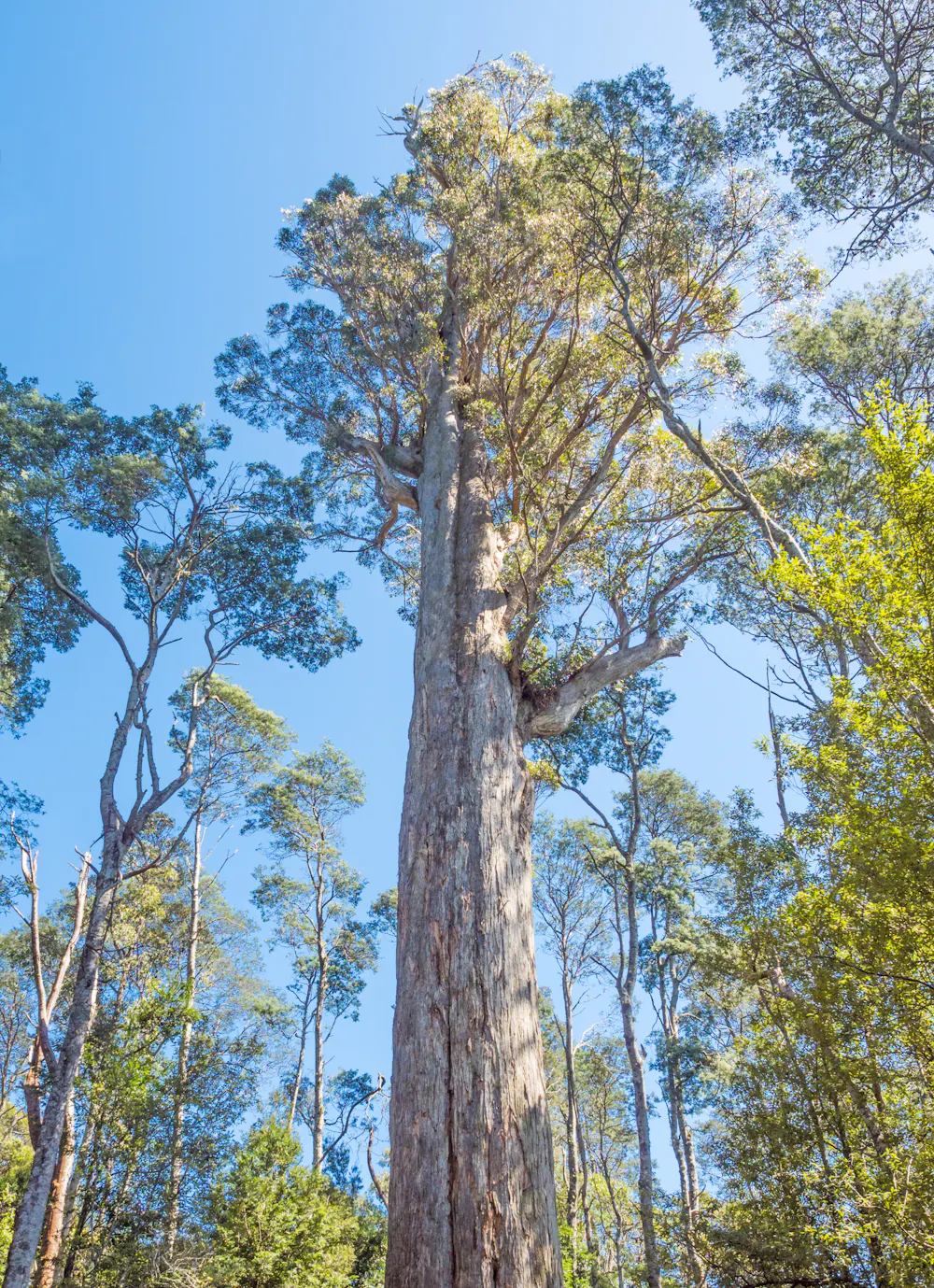
There are 73 people in hospital with the coronavirus, with one in ICU. Seven of the cases are in Waikato Hospital, with others in Auckland, Rotorua, Tauranga, Wellington, Tairawhiti and MidCentral hospitals.

The previous record of 1573 new community cases was reported yesterday, 1140 of them in Auckland.

There were also 18 cases reported at the border today.

There have now been 26,544 cases of covid-19 in New Zealand since the pandemic began.

‘Resolution opportunity’ passed over
Meanwhile, former New Conservative leader Leighton Baker said politicians had had an opportunity to resolve the Parliament protest eight days ago.

“They never did anything and the longer they leave it, the bigger it gets. The responsibility is on their shoulders to talk to the people.

“You’ve got to talk to the people. The ball’s in their court.”

Baker describes himself as an “intermediary” — not a protest leader.

As the protest continues, Wellington transport operator Metlink is receiving more reports of people not wearing masks on its trains and busses.

It said its frontline workers were not expected to risk their own health and safety by enforcing mask wearing.

Wellington City Council has increased security around the city after a spike in verbal abuse and aggression against members of the public.

Increasing incidents of aggression
The council said retail workers had reported increasing incidents of maskless customers and of people becoming aggressive when asked to put a mask on.

Close to the protest site, the owner of a cafe and catering business on Molesworth Street says patronage is well below normal because customers can not park nearby and cafe regulars are all working from home.

The Word of Mouth Cafe and Catering owner said while it had remained open since the protest began, staff were working reduced hours and some had taken leave because there was no work for them to do.

No-one had been rude and tried to enter without a mask or vaccine passport, but the presence of protesters was greatly affecting her customer base, the owner said.

Suppliers were also reluctant to come in, with some who used to come every day now reducing that to every second or third day.

The full letter:
We the undersigned ask that the current illegal protest activities in and around the Parliament precinct end immediately. There is a right to peaceful protest in New Zealand that it is important to uphold. However, this protest has gone well beyond that point.

“Those who live, work and go to school and university have been subjected to significant levels of abuse and harassment when attempting to move about in the area. There has been intimidation to Wellingtonians and city workers, and some residents have reported being too frightened or distressed to leave their homes.

“The vehicles associated with the protest are illegally blocking roads that are preventing Wellingtonians moving freely, including using public transport, posing a risk to the movement of emergency services, and are severely disrupting businesses. A number of businesses have had to close to protect their staff, while for others customers cannot access these businesses. The [Victoria] University has needed to close its Pipitea campus, disrupting teaching and learning.

“Police have issued trespass notices for those on Parliamentary and university grounds. We remind the protesters this city and these streets are those of Wellingtonians who have the right to access them freely and without fear.

“The people of Wellington have had enough of this illegal activity, harassment and disruption, we ask that it end immediately.”

Alex Beijen — South Wairarapa Mayor

Andy Foster — Wellington City Mayor

Anita Baker — Porirua City Mayor

Barbara McKerrow — Wellington City Council CEO

Bernadette Murfitt — Principal Sacred Heart School Thorndon

Campbell Barry — Hutt City Mayor

Daran Ponter — on behalf of Metlink

Fleur Fitzsimons — Wellington City Councillor

Grant Guildford — Vice-Chancellor, Victoria University of Wellington

Grant Robertson — MP for Wellington Central [and deputy Prime Minister]

Greg Lang — Carterton District Mayor

James Shaw — Green List MP based in Wellington

Jenny Condie — Wellington City Councillor

John Allen — CEO Wellington NZ

Julia Davidson — Principal, Wellington Girls College

K. Gurunathan — Kapiti District Mayor

Kerry Davies — Secretary of the Public Service Association

Laurie Foon — Wellington City Councillor

Lyn Patterson — Masterton District Mayor

Murray Edridge — Wellington City Missioner

Nicola Young — Wellington City Councillor

Paul Retimanu — director of Manaaki Management and president of Hospitality Wellington, New Zealand

Rebecca Matthews — Wellington City Councillor

Sarah Free — Wellington City Deputy Mayor

Simon Arcus — Wellington Chamber of Commerce CEO

Tamatha Paul — Wellington City Councillor

Teri O’Neill — Wellington City Councillor

Wayne Guppy — Upper Hutt City Mayor

This article is republished under a community partnership agreement with RNZ.

Print Friendly, PDF & Email

Article by AsiaPacificReport.nz

Perceptions of corruption are growing in Australia, and it’s costing the economy

Source: The Conversation (Au and NZ) – By Tony Ward, Fellow in Historical Studies, The University of Melbourne

The Australian government has decided not to establish a federal anti-corruption watchdog this parliamentary term, despite a promise in December 2018 to deliver an integrity commission

with teeth, resources and proper processes that will protect the integrity of Australia’s Commonwealth public administration

In the three years since that promise was made, Australia has slipped further down the international corruption league tables.

On the respected Corruption Perceptions Index compiled by Transparency International, it is now in 18th position, down from 13th in 2018.

A decade ago Australia was seventh.

The Corruption Perceptions Index both ranks and rates countries on a scale out of 100. Australia’s score in 2012 was 85. In 2021 it was 73.

This 12-point drop is, along with Hungary’s fall from 55 to 43, equal worst among the 38 nations in the OECD – the economies with institutions and cultures most comparable to Australia.

New Zealand, by comparison, has consistently been in the top three, with scores between 88 and 91.


CC BY

Does Australia’s decline in this index really matter? Its score is, after all, still comparatively high, and the Corruption Perceptions Index is only a proxy measure of corruption.

Yes, it does. Dozens of studies have demonstrated the corrosive economic effect of corruption, and perceptions are almost as important as reality in guiding economic decisions.


Read more:
Australia and Norway were once tied in global anti-corruption rankings. Now, we’re heading in opposite directions


Based on studies correlating corruption indices with economic impacts, I estimate the difference between Australia’s 2012 and 2021 ratings equates to 0.6% lower economic growth.

This translates to about 60,000 extra new jobs and an extra A$10 billion in government revenue a year.

The value of measuring perceptions

Because corruption is hard to measure – not least because it’s generally illegal – the Corruption Perceptions Index does the next best thing.

Measuring perceptions is useful, particularly when considering economic impacts. Perceptions are critical in investment decisions – whether it be a major corporation investing in a billion-dollar project, a small business borrowing money to expand, or an individual taking on a debt to get a university degree.

Any impression a system is “rigged”, and that “who you know” is more important than how hard or smart you work, acts as a disincentive against taking risks.


Read more:
It’s the luxuries that give it away. To fight corruption, follow the goods


The Corruption Perceptions Index’s credentials are strengthened by it being a survey of expert surveys, drawing on 13 different data sources from 12 authoritative institutions.

These include the World Economic Forum’s Executive Opinion Survey, the World Justice Project’s Rule of Law Index, the Economist Intelligence Unit’s Country Risk Ratings and the World Bank’s Policy and Institutional Assessment.

The index is focused on public-sector corruption – from misusing public institutions for private or political gain to outright fraud and bribery. Many of its sources also incorporate perceptions of broader corruption.

According to a 2018 World Bank review of eight major corruption measures, this “composite methodology” makes the Corruption Perceptions Index the most valid measure of the magnitude of overall corruption in many countries.

Calculating economic impacts

To estimate the economic impact of Australia’s falling score, I’ve drawn on the extensive body of economic research done over the past 30 years quantifying the impact of corruption on economic growth.

A useful overview of these many studies came from a 2011 meta-analysis for the United Kingdom government by University of London economists Mehmet Ugur and Nandini Dasgupta.

They sorted through more than 1,000 papers, analysing 115 of those studies in detail to calculate concrete numbers for the relationship between corruption index scores and economic performance.


Read more:
Equality: our secret weapon to fight corruption


They created a six-point corruption scale from “0” (very corrupt) to “6”.

Every one-point change on this six-point scale, they calculated, increased or reduced per capita economic growth by, on average, 0.86% a year.

Each one-point change on their scale equals a 17-point change on the Corruption Perceptions Index 100-point scale, meaning Australia’s 12-point decline suggests 0.6% less income per capita.

What this means for Australia

It suggests that if Australia had the same Corruption Perceptions Index score as in 2012, therefore, it would enjoy GDP per capita growth of 2.2% over the next few years instead of Treasury’s forecast 1.6%.

In terms of jobs, the Treasury forecasts 1.6% annual growth between 2022 to 2025 – about an extra 200,000 jobs per year. An extra 0.5% would lift that growth by 60,000 jobs per year.

The calculations are necessarily rough. International averages don’t automatically translate to a specific nation’s circumstances. However, Ugur and Dasgupta’s study finds higher economic effects apply in wealthier countries, meaning applying the average effect to Australia might produce an underestimate.

The result is also broadly consistent with an International Monetary Fund study, published in 2016 linking a 22-point improvement on the Corruption Perceptions Index to a tax revenue increase equal to 0.88% of GDP.

Applying this to Australia’s performance would suggest its 12-point decline is costing government revenue some 0.5% of GDP – that’s $10 billion – a year.

Perceptions of corruption do matter. These results suggest they go well beyond integrity and good governance.

Simply put, an effective integrity commission and other steps tackling corruption are both sensible economic management and good budget repair.

The Conversation

Tony Ward does not work for, consult, own shares in or receive funding from any company or organisation that would benefit from this article, and has disclosed no relevant affiliations beyond their academic appointment.

ref. Perceptions of corruption are growing in Australia, and it’s costing the economy – https://theconversation.com/perceptions-of-corruption-are-growing-in-australia-and-its-costing-the-economy-176562

The pandemic exposes NZ’s supply chain vulnerability – be ready for more inflation in the year ahead

Source: The Conversation (Au and NZ) – By Rahul Sen, Senior Lecturer, School of Economics, Auckland University of Technology

GettyImages

You don’t have to be an economist to know New Zealand faces its highest annual inflation rate in 30 years – 5.9% as of December 2021. Visit a supermarket or petrol station and the evidence is right before your eyes.

The average price of petrol per litre is now up by 31% compared to last year. In some places, it has already hit NZ$3 a litre. To take just one grocery example, tomatoes doubled in price during the same period, contributing to the highest annual food price inflation since 2011.

These severe price hikes are a direct reflection of the impact of the global pandemic on tradable inflation – that is, goods and services we either import for our own consumption or as components in our own manufacturing and exporting processes.

Since mid-2021, annual tradable inflation has been outpacing non-tradable inflation (the rising price of goods and services we produce and consume domestically) – 6.9% versus 5.3% at December 2021.

While tradable inflation accounts for about 40% of New Zealand’s overall inflation, the pace at which it’s growing means external sources are increasingly fuelling inflationary pressure.

Made with Flourish

Pandemic pressures

Much of this can be sourced back to the effects of the pandemic on global supply lines. Three key factors are driving the pressures:

  1. Costs of raw materials and other inputs are rising at each stage of the supply chain, with factories closing and reopening due to changing restrictions. The semiconductor industry, for example, has been facing a chip shortage since 2021.

  2. Logistics and transport costs are rising due to massive disruptions at the distribution end of the supply chain. Reduced airline capacity and rerouting of cargo, coupled with lockdowns and isolation requirements, have led to delays in unloading cargo at ports and slower turnaround times for ships. Freight company Mainfreight, for example, expects delays of 20-30 days above normal shipping times for Auckland.

  3. Energy costs are rising, partly due to recovery in global demand in 2021, combined with supply shortages and cartel-controlled production.


Read more:
Energy prices: how COVID helped them to surge – and why they won’t go down any time soon


These combine to cause disruption at each stage of supply chain – production, transportation and distribution – forcing New Zealand to “import” more inflation on top of what is being generated from within its own economy. Vehicles, fuel, clothing, processed foods and manufacturing materials have all been affected.

Supply chain vulnerability

The rising cost of house construction provides an illustrative example. Prices go up when, say, imported iron girders cost more to produce in their country of origin, in turn caused by costlier imports of iron and steel.

On top of this there can be delays in shipping the materials due to port closures or workforces affected by the pandemic.

Similarly, the scarcity caused by a worldwide semiconductor shortage means higher costs of production for electronic products and new vehicles, pushing up retail prices for imports.


Read more:
Inflation is raising prices and reducing real wages – what should be done to support NZ’s low-income households?


Above all, rising energy costs are a financial body blow to the transport and logistics sector – the backbone of the local economy. The geopolitical tensions over Ukraine and Russia – both major oil and gas producers – simply add to the risk of spiking imported energy costs.

The pandemic has exposed New Zealand’s ever-present vulnerability to global supply chain disruptions. If the emergence of new COVID-19 variants affects New Zealand’s major trading partners (China, Australia, US, EU and Japan) imported inflation will remain a problem throughout 2022.

No quick fix

The unpredictable impacts of the pandemic on supply chain-led tradable inflation create a tough balancing act for policymakers because the causes are out of their direct control.

The Reserve Bank’s use of interest rates and monetary policy to maintain short-term price stability has worked well when domestic factors drove inflation. It’s a lot trickier when external supply shocks become the key drivers, and inflation predictions are clouded by global uncertainties.


Read more:
How to prevent disruptions in food supply chains after COVID-19


Some relief could be provided by the government reducing GST and fuel taxes, but this is not a quick fix. In the medium to longer term, New Zealand needs to diversify risk and bring some supply chains back within its own borders.

The government could take a cue from the trilateral supply chain resilience initiative (SCRI) launched last year by two of New Zealand’s main trading partners, Australia and Japan, and the fastest-growing emerging global market, India. Its aim is to identify key sectors vulnerable to supply chain shocks and invest in their resilience to future uncertainties.

For now, however, New Zealand can count on an unpredictable road ahead, and should be ready for the possibility of even higher inflation than the year before.

The Conversation

The author is Senior Lecturer, School of Economics, Faculty of Business Economics and Law, AUT. The views expressed here are personal.

The author is Lecturer, School of Economics, Faculty of Business Economics and Law, AUT. The views expressed here are personal.

ref. The pandemic exposes NZ’s supply chain vulnerability – be ready for more inflation in the year ahead – https://theconversation.com/the-pandemic-exposes-nzs-supply-chain-vulnerability-be-ready-for-more-inflation-in-the-year-ahead-176232

How our album of birdsong recordings rocketed to #2 on the ARIA charts

Source: The Conversation (Au and NZ) – By Stephen Garnett, Professor of Conservation and Sustainable Livelihoods, Charles Darwin University

Australia is losing its birds at an alarming rate – one in six species are now threatened with extinction, predominantly due to climate change, land clearing and worsening bushfires.

Last year, when we met in a Darwin cafe to discuss Anthony’s PhD on the impact of environmental art on conservation, we wondered if his project could contribute to saving threatened birds.

Could we, perhaps, harness the beauty of birdsong to help Australians care about what they were losing?

Throughout history, humans have been inspired by the complex melodies and rhythms of birdsong. It’s a natural, daily celebration of our biodiversity, and has shaped the evolution of human speech and song for millennia.

Our idea was to let the threatened birds speak directly to those who might help them.

Teaming up with renowned bird recordist David Stewart, we created a CD for the music charts consisting entirely of bird calls, titled Songs of Disappearance. For the title track, the Bowerbird Collective’s Simone Slattery arranged a fantasy dawn chorus of 53 threatened species.

As of February 18, the CD – now with a video by Senior Gooniyandi artist Mervyn Street and Bernadette Trench-Thiedeman – was sitting at No.2 on the charts.

The ARIA chart-topping recording of pure birdsong. Animation by Mervyn Street and Bernadette Trench-Thiedeman.

Among the stars

Launched on December 3, 2021, the album debuted at No.5 on the ARIA charts, in part because the conservation organisation BirdLife Australia alerted its supporter base to a wonderful Christmas present that would also help bird conservation.

Some calls on the CD are astonishing for their rarity. Night parrots, critically endangered with a bell-like call, were lost for a century before they were rediscovered in 2013. Regent honeyeaters are now so scarce that young birds lack models from which to learn their soft, warbling calls.

Others are poignant cries of a disappearing landscape – the creaking calls of gang-gangs, buzzing bowerbirds and the mournful cry of the far eastern curlew.

Gang-gang Cockatoo
Gang-gang cockatoos are endemic to south-eastern Australia.
Shutterstock

Some purchasers of the CD have written to say they have the 53 calls on loop.

Two weeks after its release, the CD reached number 3, ahead of such artists as Taylor Swift, Mariah Carey and Michael Bublé.

“I’m very happy to have birds flying above me!” Paul Kelly told us when Songs of Disappearance displaced his Christmas Train album.

Suddenly, retail giants wanted our album in their stores. Media requests flowed in from around the world. Our CDs are being manufactured and distributed for release in the United States.


Read more:
Regent honeyeaters were once kings of flowering gums. Now they’re on the edge of extinction. What happened?


Now it’s at number 2 on the ARIA charts – a pretty good result for threatened species from a project with a zero marketing budget. It may also be the first time, anywhere in the world, that a university research project has hit the music charts.

Will the calls be answered?

In December last year, more than 300 of Australia’s leading ornithologists released the Action Plan for Australian Birds 2020. It found 216 Australian birds are now threatened with extinction, mainly due to climate change.

The devastating findings of the action plan are what spawned our idea. The resulting combination of research, conservation, and creativity told a story that has resonated globally, something the action plan alone would never have achieved.

The endangered far eastern curlew is the largest wader that visits Australia.
JJ Harrison/Wikimedia, CC BY-SA

But will it make a difference?

Certainly the profits, which go to BirdLife Australia, will be put to good use. However, the 200 Australian bird taxa identified in the action plan need far more assistance to survive than one CD can provide.

The question is, can art help change population trajectories? Or, as cultural policy expert Christiaan De Beukelaer writes, will these haunting bird calls just “naturalise the awful future it wishes to avert”, like other climate apocalyptic art?

The answer is that we do not know – hence our ongoing research. However, we do know that, 60 years ago this year, the fear of losing birdsong implied by conservationist Rachel Carson’s book Silent Spring helped launch the environmental movement.

Regent Honeyeater perched on a branch
Regent honeyeaters are losing their song culture, as there are fewer birds from which to learn them.
Shutterstock

Where will the songs lead us?

Songs of Disappearance now presents a fascinating opportunity to understand whether it can catalyse some of the same impetus for change.

Those who purchased the album have been invited to complete a survey to help us understand whether this project and others like it can have a lasting effect on conservation outcomes.

We wish to know, for example, whether the CD has affected people emotionally. Conservation, like art, is a belief system driven by deep emotions. As 2020 research suggests, empathy for wildlife is strongly linked to a sense of moral justification for preventing extinctions.


Read more:
More than 200 Australian birds are now threatened with extinction – and climate change is the biggest danger


So, has the CD changed behaviour? We know bird song, like music, boosts mental well-being. But can it turn intention into action? And if so, what sort of action? We also aim to learn lessons from this experience that might be transferred to other projects involving the arts and conservation.

The disappearance of Australian bird song is by no means inevitable. How wonderful if the songs of the birds themselves can help secure their future.

The Conversation

Stephen Garnett receives funding from the Australian Research Council. He is affiliated with BirdLife Australia for which he coordinates the threatened species committee.

Anthony Albrecht is co-founder of the Bowerbird Collective

ref. How our album of birdsong recordings rocketed to #2 on the ARIA charts – https://theconversation.com/how-our-album-of-birdsong-recordings-rocketed-to-2-on-the-aria-charts-177070

Sunny side up: can you really fry an egg on the footpath on a hot day?

Source: The Conversation (Au and NZ) – By Chris Thompson, Associate Dean (Education) – Science, Monash University

Shutterstock

Aahh, the Australian summer. When the temperatures top 40℃ and only the bravest or most foolhardy would venture outside in bare feet, there’s a cherished old saying: “it’s so hot outside you could fry an egg on the footpath!”

But what does the science say? Does this claim stack up, or it half-baked?

To answer this question, we need to understand the chemicals inside an egg, what happens to them during the cooking process, and whether the footpath really gets hot enough to drive these chemical changes.

The first and most obvious point is that the egg’s yolk and white are chemically very different. The white, which makes up about two-thirds of an egg’s mass, is roughly nine parts water and one part protein. The key here is that the protein’s structure changes if you heat it above a certain temperature.

About half the yolk’s mass is water, about a quarter is “fat”, about one-sixth is protein, and less than 5% is carbohydrates. The protein in the yolk is a completely different type of protein, but much like with the egg white, it’s how the protein responds to heat that gives us the texture of fried, scrambled, poached or hard-boiled eggs.

Ok, so how does this work?

We can think of proteins as being long chains of molecules called amino acids. In a raw egg, the protein is suspended in the watery mixture. The chain is curled up in a very particular way, held in shape by weak chemical bonds between different parts of the chain as it folds over on itself (the animation below shows the folded structure of ovalbumin, the main protein in egg white). This keeps it stable, and able to mix with the water.

But once it’s heated up, the heat energy starts to break these weak chemical bonds and the chain begins to uncurl, rearrange itself and stick together again in a completely different way.

Suddenly, these reconfigured clumps of protein molecules are no longer water-soluble, and so they solidify. This is why eggs get harder if you cook them for longer.

This process is called denaturation, and it can happen to any type of protein. Denaturation is what turns milk into curds and whey, and changes the texture of meat as it cooks.


Read more:
Kitchen Science: the chemistry behind amazing meringue and perfect cappuccino


For eggs, denaturation begins at around 60℃, but this is likely to only slightly cook the egg whites, and the yolk will not turn solid at all.

As you slowly go from 60℃ to 70℃, however, there is more heat energy available and all of the egg’s proteins now begin to denature. The egg white begins to turn gel-like and eventually rubbery, and the yolk begins to solidify into a viscous goo, before eventually becoming solid or even slightly powdery in texture.

Get the temperature right and this process unfolds nice and gradually, which means with a bit of practice you can get your eggs to turn out exactly how you like them.

Righto, so is a footpath hot enough for this?

That leaves us with the crucial question: how hot does pavement get on a scorching summer day? Does it reach the almost 70℃ you would need for a footpath fry-up?

This depends on a lot of factors, including the air temperature, direct sunlight, the footpath material and even its colour. Black-painted concrete, for example, absorbs more heat than white or unpainted concrete.

All in all, at the peak of these conditions, on a boiling summer day, a footpath can potentially just about reach the right temperature. But sadly, that’s still not enough to sizzle an egg.

First, concrete is a poor conductor, so it will transfer heat to the egg much more slowly than a metal frying pan. Second, after cracking the egg onto the footpath, the footpath’s temperature will drop slightly.


Read more:
Why you can’t fry eggs (or testicles) with a cellphone


So if you were hoping for a cheap way to cook your sunny-side-up eggs on the footpath this summer, you might be disappointed. It’s much wiser to head back indoors to the kitchen. Your egg will be hotter, and you’ll be much cooler.

The Conversation

Chris Thompson does not work for, consult, own shares in or receive funding from any company or organisation that would benefit from this article, and has disclosed no relevant affiliations beyond their academic appointment.

ref. Sunny side up: can you really fry an egg on the footpath on a hot day? – https://theconversation.com/sunny-side-up-can-you-really-fry-an-egg-on-the-footpath-on-a-hot-day-172616

Morrison’s Christian empathy needs to be about more than just prayer – it requires action, too

Source: The Conversation (Au and NZ) – By Robyn J. Whitaker, Senior Lecturer in New Testament, Pilgrim Theological College, University of Divinity

Over the past week, Australians have heard Scott Morrison make several explicit references to his faith. Given Morrison has placed his faith front and centre of his public persona, it is helpful to try to understand how he perceives his faith and how it might intersect with his job as prime minister.

For me, Morrison’s recent comments about faith and prayer reveal a pattern of human passivity, dependence on divine intervention, and potential abnegation of power.

For example, in his 60 Minutes interview, Morrison’s response to a question about his empathy was:

I’ve worn out the carpet on the side of my bed […] on my knees, praying and praying […] praying for those who are losing loved ones, praying for those who couldn’t go to family funerals, praying for those who are exhausted […]

To be fair to Morrison, it would be odd for a person of any faith not to include prayer as part of their expression of concern for those who suffer or struggle. Such an approach has a long tradition. But we might expect more than just prayer from a devout Christian who also happens to be the prime minister.

In this response, he appears to prioritise prayer over action, which is astonishing given the power he holds due to his position. In the Christian tradition, prayer informs and even motivates action; it does not replace it. Such a response is also, of course, a way of signalling his piety to certain constituents.

It is not an isolated example. Take, for instance, his address to the Australian Christian Churches National Conference in 2021, where he told the crowd:

I can’t fix the world, I can’t save the world, but we both believe in someone who can.

That someone, of course, is God.

On the one hand, it shows admirable humility to acknowledge that even the prime minister cannot “fix the world”. But in alluding to the “someone who can”, Morrison appears to be giving over his agency and responsibility to God. Leave it up to God to act.

More recently, in a speech commemorating 14 years since the Rudd government’s “sorry” to Indigenous peoples, Morrison shifted the focus to forgiveness, which sparked fury.

Morrison shifting the focus to ‘forgiveness’ in a speech commemorating the apology to the Stolen Generations sparked fury this week.
Mick Tsikas/AAP

Morrison explicitly stated that forgiveness was an individual, not a “corporate” matter, expressing a hope for the kind of healing that came through forgiveness. His desire to move from apology to individual forgiveness is entirely consistent with his stated spirituality which emphasises individual and personal faith.

But it is also theologically thin. Trawloolway man and theologian Garry Deverell was quick to point out the prime minister had missed a step. In the Christian tradition, no apology can insist on forgiveness, and seeking forgiveness for harm done requires repentance, acts of restitution, and attempts to address injustice. The spiritual cannot be divorced from the physical, tangible, social, and political dimensions of life.

While acknowledging, rightly, that forgiveness is hard and cannot be earned, Morrison had put the onus on those wounded by systemic justice to do the work of forgiveness, rather than on those with power to do the work of restitution.


Read more:
Christians in Australia are not persecuted, and it is insulting to argue they are


Prayer and action go hand in hand

There’s a classic story that does the rounds in Christian circles of a guy who gets trapped when his town floods. In a desperate attempt to avoid the rising floodwaters he climbs onto his roof and prays to God to save him.

Soon a rescue crew in a boat come past and invite him into their boat, but he refuses. “God will save me,” he says.

Later a helicopter flies by and a man descends on a rope. He is offered a way off the roof by the rescue crew, but again he refuses. “God will save me.”

Eventually the man dies and goes to heaven, but he is confused. “Why didn’t you save me God?” he asks. “I’ve been a faithful Christian my whole life.”

And God replies: “What do you mean I didn’t save you? I sent a boat and a helicopter. You refused them both.”

Such parabolic stories demonstrate a Christian theological belief that God works through and with human activity, not despite it. It points to the need to integrate belief, prayer and action.

Theology – how we think and talk about God – matters precisely because of its implications for human activity. I have no reason to doubt that when Morrison talks about his faith he is sincere, and when he expresses his care for people primarily through prayer he is behaving in a normal way for his faith community. Yet this kind of passivity and trust in divine intervention is not the only or even the fullest expression of Christian faith.

Morrison’s faith is no doubt sincere. But God’s work requires action as well as prayer.
Mick Tsikas/AAP

Faith and power should integrate, not separate

The danger of emphasising personal prayer as the primary expression of Christian care is that social responsibility can be abdicated. Pray and leave it up to God can be a cop-out, particularly for those with power. It can be a way to ignore systemic injustice by reducing faith to something personal and private.

As Brittany Higgins put it so eloquently in her recent National Press Club address: “I didn’t want his sympathy as a father, I wanted him to use his power as prime minister.”

Theologians like Dietrich Bonhoeffer offer an alternative expression of Christian faith. Bonhoeffer lived and wrote during the early 20th-century rise of Nazism in Germany. In his well-known book The Cost of Discipleship, Bonhoeffer writes about “cheap grace”, which is the kind of faith that wants forgiveness without actual repentance, and justice or peace without personal cost. Cheap grace wants the inner spiritual resolution without the outward costly work.

For Bonhoeffer, that outward work included vocal criticism of the Nazi regime and of Christians who were silent bystanders. Bonhoeffer saw the way of Jesus was one that demanded practical help for victims of injustice and, where necessary, resistance to government. Arrested for conspiring to rescue Jews, Bonhoeffer was imprisoned before being executed at the Flossenbürg concentration camp in 1945.

Not every Christian needs to become a martyr, but as Garry Deverell writes:

The Christian is called not to separate but to integrate their faith and their public presence, work or office.

This broader view of faith is seen in the call of Tim Costello for the prime minister to act on his faith when it comes to climate change, or in the urging of church leaders for more compassionate action for refugees based on Christian values. After all, Jesus teaches that whatever one does for the least among us (defined as those who are hungry, poor or imprisoned) one does for Jesus.

Morrison is not the first prime minister to be a person of deep faith, nor will he be the last. That is not the issue. All politicians are informed by their value systems and beliefs, regardless of the religious or non-religious traditions that shape them.

Neither am I criticising Morrison for speaking out about his faith. I am, however, critical of the highly individualistic, spiritualised version of faith Morrison espouses, which allows him to shirk personal responsibility and action when convenient.

There are millions of faithful Christians in this country who also wear out the carpet in prayer every week. The difference is they do not hold the highest office in the land, nor have Morrison’s power to enact change.

The Conversation

Robyn J. Whitaker does not work for, consult, own shares in or receive funding from any company or organisation that would benefit from this article, and has disclosed no relevant affiliations beyond their academic appointment.

ref. Morrison’s Christian empathy needs to be about more than just prayer – it requires action, too – https://theconversation.com/morrisons-christian-empathy-needs-to-be-about-more-than-just-prayer-it-requires-action-too-177248

VIDEO: Michelle Grattan on the Morrison government weaponising national security

Source: The Conversation (Au and NZ) – By Michelle Grattan, Professorial Fellow, University of Canberra

University of Canberra Professional Fellow Michelle Grattan and University of Canberra Associate Professor Caroline Fisher discuss the week in politics.

In this episode they review the penultimate sitting weeks in the parliamentary term, with only budget week left before the election.

In parliament we saw Labor ramp up its attack on the aged care crisis, calling for the resignation of the Minister for Senior Australians and Aged Care Services, Richard Colbeck.

Meanwhile the government has brought national security centre stage, accusing Labor of being soft on China, with Scott Morrison even going so far as dubbing deputy opposition leader Richard Marles a ‘Manchurian candidate.’ Unusually, we saw the current and a former head of ASIO entering the debate.

Michelle and Caroline also take a look at THAT 60 Minutes program, which put a lot of focus on Jenny Morrison.

The Conversation

Michelle Grattan does not work for, consult, own shares in or receive funding from any company or organisation that would benefit from this article, and has disclosed no relevant affiliations beyond their academic appointment.

ref. VIDEO: Michelle Grattan on the Morrison government weaponising national security – https://theconversation.com/video-michelle-grattan-on-the-morrison-government-weaponising-national-security-177440

Strip searches in prison are traumatising breaches of human rights. So, why are governments still allowing them?

Source: The Conversation (Au and NZ) – By Andreea Lachsz, PhD Candidate, University of Technology Sydney

Content warning: This article contains details readers may find distressing including discussion of excessive or gratuitous violence, abuse and mental illness.

In December, the Victorian Court of Appeal found certain routine strip searches in prison breach human rights to privacy and dignity in detention. The decision highlights how traumatising, unnecessary and degrading the routine practice of strip searching people can be.

In Victoria’s prisons, strip searches involve forcing a person to remove their clothing, stand with their legs apart and bend over in full view of prison guards. There is some variation in strip-searching processes in other states and territories.

Throughout Australia, police and prison officials conduct strip searches as a matter of routine. They are commonly conducted upon entry into custody, after legal and family visits and hearings, when moving between secure locations or before drug testing.

For Aboriginal and Torres Strait Islander people, who are more likely to be policed, imprisoned, subjected to abuses of power and violence within prisons, and strip searched, the court’s decision is important. Victoria’s criminal and legal systems are built on Australia’s violent colonial history, and routine strip searches are a modern form of this violence.

The Victorian Court of Appeal case is an opportunity for real systemic reform. The Victorian government must now decide whether it will maintain this violent practice.


Read more:
Excessive strip-searching shines light on discrimination of Aboriginal women in the criminal justice system


The case of Thompson v Minogue

In 2020, Dr Craig Minogue successfully challenged a prison order that he submit to a urine test and routine strip search before that test. In the Supreme Court, Minogue successfully argued this direction was in breach of his rights to privacy and dignity in detention. The state of Victoria appealed.

The Victorian Aboriginal Legal Service (VALS) was granted leave to intervene in the appeal as a “friend of the court” to make written and oral submissions.. Although Minogue is not Aboriginal or Torres Strait Islander, VALS believed it was critical to provide the court information on the harmful impact of strip searching and urine testing on First Nations people.

The Victorian Court of Appeal upheld the Supreme Court’s ruling that routine strip searches prior to urine testing breached Minogue’s human rights and the government did not properly consider human rights when making strip-searching policies.

The Court found these routine strip searches were “extremely invasive and demeaning” procedures which can constitute “a severe limitation upon […] privacy and dignity rights”.

Both the Supreme Court and Court of Appeal found the government did not back up its claims that routine strip searches prior to urine tests were necessary or effective. The government did not sufficiently explain why pre-existing and less harmful alternatives, such as x-ray body scanners, were not used.

However, the Court of Appeal reversed the Supreme Court’s decision on urine testing and found this procedure did not breach Minogue’s human rights. Minogue has sought to appeal this aspect of the decision to the High Court.

Now, it is up to the Victorian government to decide whether it will implement changes to strip-search policies and laws to end this practice across all police stations and prisons.


Read more:
Dragging its feet on torture prevention: Australia’s international shame


The human rights of people in prison

Evidence and data in Australia show strip searches are often over-used, ineffective in uncovering contraband and unnecessary. Strip searches are also prone to being a tool for abuses of power and misconduct.

A 2021 IBAC report exposed serious misconduct in the management and conducting of strip searches in Victoria. Staff were unfamiliar with human rights standards and prisons did not properly investigate complaints about inappropriate searches.

The general manager of Port Phillip Prison was reported to have said strip searches were “one of the options available to assert control” over people in prison. Reports from other states tell the same story of unlawful searches being used to degrade and humiliate prisoners.

Under both the Victorian human rights charter and international law, people in prison are entitled to the same human rights as those outside of prison. This includes a right to privacy, including bodily and psychological autonomy, and to be treated with humanity and respect.

International law dictates that, given the harmful impact of strip searches, alternatives such as x-ray scanners should instead be used in prisons.

Independent scrutiny of human rights in prisons is also vital, including preventive oversight under the UN Optional Protocol to the Convention against Torture (OPCAT). Australia has ratified this protocol, but has missed the January 20, 2022, deadline to meet its obligations to set up an independent oversight system of places of detention.

Strip searches are inherently harmful

There is evidence Aboriginal people are subjected to disproportionate rates of strip searching. Many Aboriginal people who are incarcerated have disabilities and histories of trauma. Strip searches can compound this trauma and impede a person’s ability to recover and heal.

In a 2016 Four Corners episode, entitled Australia’s Shame, footage was shown of a young Aboriginal child in the Northern Territory being stripped naked. This horrified Australians and led to a royal commission.

Years later, however, it is still lawful in Victoria and other states and territories to subject Aboriginal children to traumatic strip searches.

The evidence is indisputable – strip searches do not work, are inherently harmful, and disproportionately impact Aboriginal people.

Rather than persist with this archaic practice, all Australian governments must end the use of strip searches.

The Conversation

Andreea Lachsz is the Head of Policy, Communications and Strategy at the Victorian Aboriginal Legal Service.

Sarah is a Senior Lawyer / Advocate at the Victorian Aboriginal Legal Service (VALS) and represented VALS in the Court of Appeal matter of Thompson v Minogue, referred to in this article.

ref. Strip searches in prison are traumatising breaches of human rights. So, why are governments still allowing them? – https://theconversation.com/strip-searches-in-prison-are-traumatising-breaches-of-human-rights-so-why-are-governments-still-allowing-them-174463

Stronger laws on ‘foreign’ election influence were rushed through this week – limiting speech but ignoring our billionaire problem

Source: The Conversation (Au and NZ) – By Graeme Orr, Professor of Law, The University of Queensland

In case you missed it, election season is upon us again. Like the elongated summers caused by climate change, campaigning is intensifying and being spread over longer periods every election.

Although polling day is not due until May, this year’s campaign kicked off nine months out with billionaire Clive Palmer’s plunge into spam texts, and big spending on YouTube ads and billboards.

Campaigning may be well under way, but the rules governing the election are still being finessed. Some of this is administrative and technological, such as tweaks to ensure COVID-safe voting at polling places.

However, in the past week, a more substantial campaigning bill sailed through parliament. Its title, the Electoral Amendment (Foreign Influences and Offences) Bill 2022, is clunky, but suggestive.

The bill creates several new offences, limiting “foreign” persons or entities from fundraising for or directly spending on electioneering – or even authorising electoral matter – to influence a Commonwealth election.

This new law has received minimal attention. Aside from a commentary piece by a Liberal MP, there’s been scant reporting or analysis.

Instead, it has been subsumed by concerns over foreign interference or disinformation campaigns in the upcoming federal election. These concerns were amplified by revelations about alleged Chinese attempts to inject funding into the Australian political system.

The Morrison government has sought to leverage the heightened tensions by claiming “Beijing backs Labor”. In response, the head of ASIO warned against politicising the issue. Any risk of inappropriate overseas influence in the election affects all sides.

What the new law will do

The new “foreign influences” bill was hurried through the Senate at the end of last week, then passed the House on Wednesday. Unlike almost all electoral reforms, it was not subject to committee, let alone public, scrutiny.

This suggests both major parties are genuinely concerned about beefing up the law or at least sending a strong signal against overseas assistance to Australian parties, candidates or electoral lobby groups that may hope to benefit from it.

The bill builds on existing offences against “foreign” donations to parties, MPs or electoral lobby groups in Australia, which were enacted after long debate in 2018. These already cover gifts on behalf of a “foreign” donor to candidates – the alleged scheme recently involving Chinese money and potential Labor candidates.


Read more:
Federal government’s foreign donations bill is flawed and needs to be redrafted


“Foreign” is a slippery concept, and not easy to define. This is a reason why the bill needed more debate – and may be partly unconstitutional.

In our electoral act, the term “foreign” covers overseas governments or corporations, as well as any non-citizen, either in Australia or overseas. These include some refugees and those in Australia on working or business visas (however long-term), but not permanent residents.

Of course, such foreigners cannot vote in our elections. And the 2018 ban on these individuals donating to electoral campaigns was sensible.

Yet, the new law now threatens fines of up to $26,000 for merely authorising election material. This would include small things like pamphlets, or YouTube content that costs any money to produce.

Many of the guest workers we rely on to work on farms or in the hospitality industry face objectively poor conditions and legal rights. Under this new law, they are permitted to contribute to discussion of these issues, but would be prohibited from trying to sway Australians to vote to address them.

On its face, this breaches freedom of political communication. This freedom is not an individual right, it’s a collective ideal. Its rationale is to ensure we, as an electorate and society, can be informed about politics and government.

Limits on this freedom of political communication have to be proportionate or the High Court can strike them down.


Read more:
The NSW political donations case: the implied freedom of political communication strikes again (after 21 years)


More systemic issues to worry about

For over a century, Australian law accepted foreign influence in our politics. A British lord tipped $1 million into Liberal Party coffers before the 2004 election. US agencies have helped fund liberty-oriented expression.

Some argue that because goods and finance flow easily internationally, and problems like climate change and pandemics know no borders, foreign influence is not only unavoidable but essential. We live in an integrated world, where interests are intermingled.

Some say these laws are xenophobic against China. But we should be concerned about Chinese influence, due to its sheer size, resources, and opaque and unaccountable system of government.

The bigger problem is we have been focusing on the mote of foreign influence, without addressing the beam in our eye – the broader systemic weakness of our political finance regime.


Read more:
$177 million flowed to Australian political parties last year, but major donors can easily hide


Our national election act, despite years of debate, still lacks expenditure limits and donation limits. The US, UK, New Zealand, Canada and most Australian states have one or both of these limits. Capping campaign spending helps maintain political equality, while capping donations inhibits those who would give big, behind the scenes, to buy political influence.

Nor do we regulate misleading political ads at the national level.

Foreign money and disinformation is a worry. But even more so are the much larger sources of both, generated entirely inside the country.

In 2019, for instance, Palmer spent a record-shattering $83 million to influence the federal election. Parliament had three years to fix this problem. It didn’t; now we get to relive it.

The Conversation

Graeme Orr has received ARC grant funding in the past to research electoral law and work with electoral commissions. He is currently an expert member of the NSW iVote Panel. He also gives pro bono advice to groups lobbying for reform of electoral law.

ref. Stronger laws on ‘foreign’ election influence were rushed through this week – limiting speech but ignoring our billionaire problem – https://theconversation.com/stronger-laws-on-foreign-election-influence-were-rushed-through-this-week-limiting-speech-but-ignoring-our-billionaire-problem-177147

Australia is failing marginalised people, and it shows in COVID death rates

Source: The Conversation (Au and NZ) – By Gemma Carey, Professor, UNSW Sydney

Newly released Australian Bureau of Statistics (ABS) data show people living in poverty or disadvantage are three times more likely to die from COVID than the wealthy.

This statistic is alarming, but it gets worse when we begin to look more closely at particular communities.

ABS data show the rate of death from COVID for people living in Australia who were born overseas was almost three times more than those born in Australia when standardised for age (6.8 deaths per 100,000 vs 2.3 deaths).

The rate of death from COVID for people living in Australia from the Middle East was over 12 times that of people born in Australia (29.3 people per 100,000).

These statistics are damning. They tell us you’re more likely to survive COVID if you were born here, grew up speaking and reading English, are educated, and earn a good income.

They undermine the idea that Australia has good quality universal health care that has been accessible during the pandemic.

Poverty makes you sick

Most health problems, and the care needed to address them, follow what we call “the social gradient”.

This term is shorthand for the idea that those with the most resources – be it money or education – have better health and get better treatment than those with fewer resources.

In short, poverty makes you sick. It does this by limiting your access to services and supports, through money or other factors such as the type of job you work.

People at the “lower end” of the social gradient also tend to receive poorer quality health care.

Unfortunately, this social gradient is now clear in the data on Australian COVID deaths.

For example, some people from Middle Eastern countries and other migrant or refugee communities have poorer employment conditions, such as janitorial jobs in hospitals. These jobs expose people to COVID, who then bring the virus home. They have also needed to keep working in these high risk jobs throughout the pandemic so they can afford basic living costs like food and rent.

There are also major barriers to medical care for, and information about, COVID for particular communities. During the Delta variant wave in Victoria and New South Wales, we saw this result in people from refugee and migrant backgrounds dying at home before receiving any medical care for COVID.

Authorities attributed this to a reluctance to seek health care. This reluctance can stem from a lack of culturally and linguistically appropriate health care communication and services.


Read more:
Using military language and presence might not be the best approach to COVID and public health


Many people also distrust authorities, including the police and army, due to experiences in people’s home countries. Being scared of authorities is a legitimate fear when you have come from a country where authorities may kill you.

This has been exacerbated by governments in Australia choosing to “police” the pandemic. Large fines were threatened to people who broke COVID public health orders.

This fear of fines and authorities likely contributed to a reluctance to seek medical care, and in turn more deaths. And messaging around authoritarian approaches to those who break COVID health orders are likely to have exacerbated this.

Many have also been excluded from government support.

Australian governments and health services have been failing parts of our community, from those with low incomes to people from non-English speaking backgrounds.

What can we do right now?

There are a range of actions we can take to rectify the high rates of death amongst refugee and migrant communities.

Policy wise, the federal government could extend access to Medicare and social safety net support for people experiencing issues with temporary visas, such as asylum seekers living in the community who are appealing a decision on a visa application, and are not eligible for Medicare. Adding specific Medicare items for refugees and migrants may also encourage more culturally and linguisticaly inclusive medical care in the health system.

These changes would help provide more affordable, accessible and inclusive health care, particularly for asylum seekers and refugees dealing with visa issues, and help prevent loss of life.

Governments should also involve refugee and migrant communities in the development and implementation of actions to reduce COVID deaths. Communities know what they need in a crisis – we need to find new ways of listening. A top-down, middle class response to a pandemic will create services and supports that only work for the middle class.

It’s vital we look to the evidence of what may best help refugee and migrant communities reduce the risk of infection, involve them meaningfully in this process, and sharpen our focus on making life in Australia fairer, more inclusive and, hopefully, safer for all.

What has to happen next?

Currently, there are major gaps in understanding what may best support refugee and migrant communities to reduce the risk of infection and harm from COVID.

More research is needed. However that research needs to be led by peers in communities and be easy to access and participate in. In other words, we cannot repeat the mistake of creating approaches that work for just the middle class.

Best practice tells us multiple forms of research are required, and in culturally and linguistically inclusive ways.


Read more:
The real challenge to COVID-19 vaccination rates isn’t hesitancy — it’s equal access for Māori and Pacific people


Survey-based research must be conducted in hospitals, health centres and other clinical environments to understand how barriers to medical care and information for COVID can be addressed to better meet the needs of people from refugee and migrant communities. The research could identify more culturally inclusive ways of managing vaccinations, testing and recovery from virus symptoms.

This must be backed up by in-depth research to explore the experiences of a diverse range of communities. Just as disadvantaged groups are not all alike, neither are refugee and migrant communities (despite being commonly lumped under the term “culturally and linguisticaly diverse”).

Communities who are recently arrived or longer settled – all from different countries – have different needs.

We need more listening, and less punitive approaches.

The Conversation

Ben O’Mara has previously received funding from VicHealth, the Department of Heath and Ageing and the Australian and New Zealand School of Government. O’Mara also works as an Adjunct Fellow at Swinburne University and he is the Information Resources Manager at Motor Neurone Disease Australia.

Gemma Carey does not work for, consult, own shares in or receive funding from any company or organisation that would benefit from this article, and has disclosed no relevant affiliations beyond their academic appointment.

ref. Australia is failing marginalised people, and it shows in COVID death rates – https://theconversation.com/australia-is-failing-marginalised-people-and-it-shows-in-covid-death-rates-177224

Passive smoking, synthetic bedding and gas heating in homes show the strongest links to asthma

Source: The Conversation (Au and NZ) – By K M Shahunja, PhD candidate, The University of Queensland

Shutterstock

One in every nine people in Australia has asthma. It is a health burden for many children, and expensive for families because of medication, hospital and out-of-hospital expenses.

The pandemic has added further stress and extra testing measures to check respiratory symptoms. COVID infection can co-exist with asthma and, although research shows allergic asthma does not increase the risk of COVID infection and death, keeping asthma symptoms under control remains important.

At home, tobacco smoke, pollen, mould, dust, pet dander and harmful gases can initiate or worsen asthma symptoms. Our recent study – a review and analysis of Australian research – identifies the most significant culprits. Passive smoking, synthetic pillows or quilts, and gas heating in your house are the most frequently identified triggers for the highest rates of asthma in the home. Preventing these common household environmental factors could better control asthma.


Read more:
We expected people with asthma to fare worse during COVID. Turns out they’ve had a break


Nasties in the home

Prior research reports various environmental factors can trigger asthma symptoms. But the relevant factors and the size of the effect varies widely in different countries and populations. Knowing the most common environmental triggers that can initiate asthma symptoms in Australia can help us tailor prevention strategies.

We examined the evidence based on the research conducted in Australia to determine significant family environmental factors associated with asthma. We looked at 56 studies that involved 137,840 people in Australia. The combined data confirm passive smoking, synthetic bedding and gas heating in households are significant triggering factors for asthma symptoms. These household features are noted in more homes where people have asthma and need more asthma treatment.

young girl looks short of breath in bed
Synthetic bedding can trap animal dander, be home to dust mites and release harmful gas.
Shutterstock

Being around smokers, such as at home or in the workplace is the most commonly reported indoor exposure for people with asthma. Breathing in smoke disrupts normal lung and immune system development and causes airway irritation. This can lead to asthma symptoms and other lung diseases. The main sources of secondhand smoke in Australia were identified as smoking by a parent or other family member at home and by colleagues in the workplace. Children were the main victims of secondhand smoke, exposed to their parents’ smoking – especially mothers – at home.


Read more:
We boosted babies’ immune systems and it protected them from serious lung infections: new research


Bedding and heating

The second most commonly reported household trigger was bedding from unnatural fibres, such as microfibre, nylon or acrylic materials. Synthetic bedding items have higher house dust mite allergen levels than feather-bedding items.

They also increase exposure to volatile organic chemicals. These are gases emitted from certain solids and liquids found in many household products. These gases can accumulate in higher concentrations inside and cause health problems.

Synthetic pillows are also more likely to trap cat and dog allergens than feather pillows. The firmer weave of feather pillows makes them a more protective barrier to allergens that could otherwise lead to respiratory irritation. Households of children prone to asthma or allergies should pay extra attention to the bedding they choose.

Finally, both flued and unflued gas heaters can emit nitrogen dioxide gas that can irritate the respiratory tract and trigger asthma symptoms. It’s better to get rid of gas heaters or heating systems, if possible, in households where asthma is an issue.


Read more:
Gas cooking is associated with worsening asthma in kids. But proper ventilation helps


Asthma risks we can control

Our research shows the importance of emphasising prevention of some common family environmental factors to prevent asthma symptoms. These factors may remain less acknowledged despite their notorious effect on asthma.

The scientific evidence that shows active tobacco smoking is detrimental for asthma control is well understood by the general public. But people may be less aware of the effect of passive smoking on asthma.

There is also scope to build awareness around gas heaters and synthetic bedding as asthma triggers. These environmental factors lurking in homes should be better communicated to families who could be affected, especially in a country where asthma is a major public health problem. Elimination of these factors may help control asthma symptoms and reduce COVID testing during the pandemic.


Read more:
Air pollution: over three billion people breathe harmful air inside their own homes


The Conversation

The authors do not work for, consult, own shares in or receive funding from any company or organisation that would benefit from this article, and have disclosed no relevant affiliations beyond their academic appointment.

ref. Passive smoking, synthetic bedding and gas heating in homes show the strongest links to asthma – https://theconversation.com/passive-smoking-synthetic-bedding-and-gas-heating-in-homes-show-the-strongest-links-to-asthma-176677

A strong-eyed style: what makes Australian muster dogs unique

Source: The Conversation (Au and NZ) – By Melissa Starling, Postdoctoral researcher, University of Sydney

Shutterstock

The recent ABC TV series Muster Dogs has brought into sharp focus the incredible skills of our working stock dogs.

It’s not just their sensitivity to livestock movement that makes them so good at what they do.

They are also agile endurance athletes that can work long hours in very hot conditions. During peak times, working kelpies have been recorded travelling over 60km just in one work day.

There are dog breeds all over the world that have been selectively bred over many generations to work with stock. That selective breeding has shaped them to be best suited to the specific environment they work in and the style of work they are required to do.

If you’re interested in the history, traits and skills of these amazing dogs – and perhaps have wondered about owning one yourself – here’s what you need to know.

ABC TV.


Read more:
How hot is too hot? Here’s how to tell if your dog is suffering during the summer heat


Shaped for Australian conditions

The Australian Working Kelpie was shaped for Australian conditions to use what’s known as a “strong-eyed style” of herding, which is to adopt a low posture and use eye-stalking (keeping its eyes fixed on the livestock) to track the herd’s movement. The Border collie also uses this style.

They control the movement of the herd with exquisite sensitivity with their overall presence.

Their behaviour includes that characteristic stalking posture with head and body low, and quiet, controlled steps.

This is how a predator would approach a herd of prey animals if it were hunting.

The strong-eyed herding dog stalks, stares, holds position, and rushes; it is not just where they are that controls the herd, but what they are doing.

Most other herding breeds have a looser style of herding, where they work with their heads up and use their body position to influence the movement of the herd.

Herding dogs that use eye-stalking also often work the front of the herd, turning it towards the handler. The looser style herding dogs tend to drive the herd from the rear.

A working dog rests on top of some sheep.
Muster dogs control the movement of the herd with exquisite sensitivity with their overall presence.
Shutterstock

Bred for bravery

Australian Working Kelpies were developed from British farm collies in the late 1800’s.

Some claim there is dingo infused in the breed to add resilience, but this remains subject to debate.

Signals of selection in the Australian Working Kelpie DNA suggest one very important trait is the ability to withstand prickly terrain; a working dog that cannot ignore burrs and spines to continue working is of little use to the farmer.

Other traits prized by the handlers are bravery and a level head. In other words, a dog that doesn’t panic under pressure.

Unlike many other herding breeds, the Kelpie is often asked to work independently from the handler and to think for itself.

Unlike many other herding breeds, the Kelpie is often asked to work independently from the handler and to think for itself.
Shutterstock

Owning a working dog

Working breeds can be very rewarding canine companions for people that don’t have stock for them to work. But prospective owners need to understand the selective breeding that makes these dogs so good at herding can also make them a handful in a suburban setting.

They are of course extremely active; most need a few hours of high intensity exercise a day just to keep them from destroying the home and yard when they are young.

They are also highly alert and often extremely aroused by movement. The faster and more chaotic the movement, the more powerfully they are drawn to control that movement as they would a herd.

This can make playing with kids, ball games, bikes and skateboards, and even encountering other dogs in the dog park a real challenge.

Working breeds also sometimes have a tendency to rush in and bark at an object that is bothering them, just as they would rush and bark at cattle looking to break away from the herd.

The strong-eyed herding dog stalks, stares, holds position, and rushes; it is not just where they are that controls the herd, but what they are doing.
Shutterstock

Some good lessons for owners

The television program Muster Dogs presented some core messages applicable to any pet dog, as well as working dogs that are pets at home. These include:

1. Early exposure

Ensuring puppies have positive experiences with stimuli they’ll encounter often in life early is crucial. They must be taught to accept activities they need to be tolerant of, and be comfortable with handling and restraining themselves.

2. Responsiveness

The owner must build strong foundations in the areas of coming when called, staying close while off leash, and maintaining a connection with the handler even around distractions.

3. Impulse control

This is particularly important for working dogs keen to participate in exciting activities. In fact, all dogs can benefit from learning to control their impulses and not chase, jump up, or use their mouth every time the urge takes them.

It takes a special kind of dog to be able to face animals 20 or more times their size that can easily cause them serious damage.

To do it all day in the hot and rough terrain of inland Australia takes a dog with a tremendous desire to work.

This should never be forgotten by those of us living in more comfortable environments when we think we want a working dog to accompany us through our suburban lives.


Read more:
At home with your dog? 3 ways to connect and lift your spirits


The Conversation

Melissa Starling owns an animal behaviour consulting business called Creature Teacher.

Claire Wade has previously received funding from the Working Kelpie Council of Australia. She is affiliated with the Royal NSW Canine Health and Welfare Charity.

ref. A strong-eyed style: what makes Australian muster dogs unique – https://theconversation.com/a-strong-eyed-style-what-makes-australian-muster-dogs-unique-177143

In heatwave conditions, Tasmania’s tall eucalypt forests no longer absorb carbon

Source: The Conversation (Au and NZ) – By Tim Wardlaw, Research Associate, University of Tasmania

Author provided

Southern Tasmania’s tall eucalyptus forests are exceptionally good at taking carbon dioxide from the atmosphere and converting it into wood.

For many years, we have believed these forests had a reasonable buffer of safety from climate change, due to the cool, moist environment.

Unfortunately, my research published today shows these forests are closer to the edge than we had hoped. I found during heatwaves, these forests switch from taking in carbon to pumping it back out.

That’s not good news, given heatwaves are only expected to increase as the world heats up. While we work to slash emissions, we need to explore ways to make these vital forests more resilient.

From carbon dioxide in to carbon out

It’s well established from forest sampling that moist, cool environments like southern Tasmania provide ideal growing conditions for tall eucalypt forests.

We had believed these types of forests would have a buffer against the worst effects of climate change to come, and perhaps even benefit from limited warming.

large gum tree
Messmate stringybark (Eucalyptus obliqua) in southern Tasmania.
Shutterstock

But this is no longer the case.

I monitored what happened to a messmate stringybark (Eucalyptus obliqua) forest during a three week heatwave in November 2017. Under these conditions, the forest became a net source of carbon dioxide, with each hectare releasing close to 10 tonnes of the greenhouse gas over that period.

A year earlier during more normal conditions, the forest was a net sink for carbon dioxide, taking in around 3.5 tonnes per hectare.

How can we know this? The forest I studied is at the Warra Supersite in the upper reaches of the Huon Valley, one of 16 intensive ecosystem monitoring field stations making up Australia’s Terrestrial Ecosystem Research Network.

Instruments mounted on an 80-metre-tall tower at Warra give us great insight into how the forest is behaving. We can measure how much, and how quickly, carbon dioxide, water and energy shuttle between the forest and the atmosphere.


Read more:
Australian forests will store less carbon as climate change worsens and severe fires become more common


So what actually happened in the forest during the hot spell? Two crucial things.

The first was that the forest breathed out more carbon dioxide. This was expected, because living cells in all air-breathing lifeforms (yes, this includes trees)
respire more as temperatures warm.

But the second was very unexpected. The forest’s ability to photosynthesise fell, meaning less solar energy was converted to sugars. This took place while the trees were transpiring (releasing water vapour) rapidly.

Until now, we’ve seen falls in photosynthesis output in heatwaves because the trees are trying to limit their water loss. They can do this by closing their pores on their leaves (stomata). When a tree closes its stomata, it makes it harder for carbon dioxide in air to enter the leaves and fuel the photosynthesis process.

By contrast, this heatwave saw trees releasing water and producing less food at the same time.

So what’s going on? In short, the temperatures were simply too hot for the forests in southern Tasmania. Every forest has an ideal temperature to get the best results from photosynthesis. We now know this temperature in Australia is linked to the historic climate of the local area.

That means the trees at Warra require lower temperatures to optimally feed themselves, compared to most other Australian forests.

During the 2017 heatwave, the temperatures soared well outside the forest’s comfort zone. In the hottest part of the day, the forest was no longer able to make enough food to feed itself.

River and forest in Tasmania
For now, the forests at Warra remain intact.
Author provided

Outside the forest’s comfort zone

For now, the forest at Warra is still intact. After the heatwave, the messmate stringybark forest quickly recovered its ability to feed itself, and became a carbon sink again.

But as the world warms, these forests will be pushed outside their comfort zones more and more. They can only endure so many of these kinds of heatwaves. If they keep coming, there will be a tipping point beyond which the forest can no longer recover.

What then? We can see a disturbing glimpse when we look at Tasmania’s oceans, which are a marine heatwave hotspot. Fully 95% of Tasmania’s giant kelp forests are now gone, killed off by temperatures beyond their ability to tolerate.

giant kelp forest
Giant kelp forests are all but gone from Tasmanian waters.
Shutterstock

It is no exaggeration to say that the rapid increase in temperatures are the most serious threat to the health of tall eucalypt forests I’ve encountered during 40 years of studying forest health and threats in Tasmania.

Unlike the kelp forests, our tall eucalyptus forests have not yet hit their tipping point. We still have time to lessen the risk global heating poses.


Read more:
Can selective breeding of ‘super kelp’ save our cold water reefs from hotter seas?


There is already work under way to test promising new methods for making future forests better able to cope with the new climate they find themselves in.

These techniques include climate adjusted provenancing, where forest managers sow seeds of local species collected from areas at the hotter end of their range. Another being tried for giant kelp is finding individual plants with better heat tolerance and breeding them.

Our eucalyptus forests will need our help, more and more. The better engaged and informed we are about the risks to forests we long thought were highly resilient, the likelier we will be to be able to preserve them.

One way we could do this is by making our monitoring data publicly accessible in real time, so we can grasp the strain our forests are under as the world warms.

The Conversation

Tim Wardlaw is affiliated with the Terrestrial Ecosystem Research Network.

ref. In heatwave conditions, Tasmania’s tall eucalypt forests no longer absorb carbon – https://theconversation.com/in-heatwave-conditions-tasmanias-tall-eucalypt-forests-no-longer-absorb-carbon-176979

Anti-media sentiment among NZ protesters big concern, say experts

By Tim Brown, RNZ News reporter

The anti-mandate protests in New Zealand’s capital Wellington and around the country have also contained a strong anti-media sentiment with reporters abused and threatened.

But one far-right activist has gone a step further and as part of a targeted attack on the media has published a graphic image of public executions of Nazi war criminals.

The disturbing image shows a dozen Nazi war criminals being hanged following World War II.

It has become a popular meme with the online far-right ecosphere, where it is often accompanied by a caption: “Photograph of Hangings at Nuremberg, Germany. Members of the Media, who lied and misled the German People were executed, right along with Medical Doctors and Nurses who participated in medical experiments using living people as guinea pigs”.

Disinformation Project lead Dr Kate Hannah said the poster’s intention was clear.

“It’s incredibly unsubtle. Even if all they do is march outside… it is still incredibly disturbing, it is still incredibly upsetting to have their work [media and health workers] targeted in such a manner.”

But in a twist of irony — considering the fake news such far-right groups claimed to despise — only one member of the media was actually executed following the war; high-ranking Nazi politician Julius Streicher, publisher of the far-right Der Stürmer tabloid.

And the photo in question was not even taken in Nuremberg — instead it shows executions in Kiev.

‘Hideous media language’
But, errors aside, Dr Hannah said the far-right’s seizing of ill-feeling against the media was cause for concern.

“There has been a concerted effort in these spaces over the last 18 months to frame mainstream media as agents of the state, as the ‘lying press’ which is obviously from lügenpresse which is Nazi terminology for left-wing press,” she said.

“There’s been some hideous language used around journalists — the use of the [word] ‘presstitute’ to describe female journalists.

“So this is very much an attempt to shift the place where people get their information from, from being say the mainstream media to fringe media outlets.”

The ultimate goal of far-right activists was destabilising democracy, Dr Hannah said.

Dr Gavin Ellis
Media commentator Dr Gavin Ellis … “Some of these people won’t even be at the protest – their orchestration is behind the scenes. Image: Dru Faulkner/RNZ

Media commentator Dr Gavin Ellis said there had been a concerted effort to target the foundations of democracy — including freedom of the press.

It was an orchestrated rather than an organised movement, Dr Ellis said, with some of those pulling the strings doing so from a distance.

“Some of these people won’t even be at the protest – their orchestration is behind the scenes. But they are intent on undermining the institutions of democratic government,” he said.

Most protesters not violent
Most protesters were not violent and were simply frustrated with the ongoing effects of the pandemic on their lives.

But they were being harnessed by far more nefarious actors, and their anger at the media was a case of shooting the messenger, he said.

“That’s a large part of it — that reality flies in the face of what they stand for. So they forge their own alternate reality and anything that doesn’t match that worldview that they might have is seen as not only wrong, but inherently malevolent — that the truth is something that must not be tolerated,” Dr Ellis said.

While the anger directed at the media was unprecedented in New Zealand, he did not believe it was based on any genuine criticism of the current health or quality of the industry.

However, he feared such tactics could have a chilling effect on the media and journalists, and reporters must continue to do their work in the face of such intimidation.

The other aspect of using such imagery was how offensive it was to victims of Nazi persecution.

Disgusted by poster
Holocaust Centre of New Zealand chair Deborah Hart said she was disgusted by the poster.

There was no comparison of the rollout of a potentially life-saving vaccine by the New Zealand government to the industrial murder of six millions Jews and millions of others by the Nazis, Hart said.

“The Nuremberg trials where military tribunals after World War II for senior Nazis who participated in the Holocaust. To compare that to the vaccine mandates is ridiculous,” she said.

“The intention of these two things was different; the scale was different; the policies were different; and the outcomes were profoundly different.”

It is also worth noting that where possible Hitler withheld vaccines from populations the Nazis persecuted.

This article is republished under a community partnership agreement with RNZ.

Print Friendly, PDF & Email

Article by AsiaPacificReport.nz