Page 720

Ah, memories of 2020. Why it’s important to remember our COVID holidays, good or bad

Source: The Conversation (Au and NZ) – By Amanda Barnier, Pro Vice-Chancellor (Research Performance) and Professor of Cognitive Science, Macquarie University

In Charles Dickens’ famous 1843 ghost story, A Christmas Carol, Ebenezer Scrooge is visited by the Ghosts of Christmas Past, Christmas Present and Christmas Yet to Come.

However, we do not need supernatural powers or a ghostly escort to travel in time to holidays past, present and future, at least not in our minds.

The ability to remember our past and imagine our future relies on the uniquely human gifts psychologists call retrospective and prospective memory.

What memories are we thinking of as we head towards a holiday season unlike any we’ve had before? What memories will we think back on when our break is over? Will we recall our COVID Christmas fondly or will we hope to put 2020 behind us?

What use is memory anyway?

Memory serves many important psychological and social functions. It helps us navigate everyday situations, such as remembering gifts we need to buy or where we’ve parked our car in a crowded shopping centre. It helps define who we are as people, our values, rituals and beliefs. It allows us to learn from the past, then predict and navigate the future. Finally, it helps shape and deepen personal and social bonds with friends, families and communities.

For many people, holidays are a time when we do our favourite things — holiday rituals, family traditions, longed-for getaways — the kinds of things we’ve always done at this time of year.

We organise our life stories — our autobiographical memories — according to reliable patterns of life events or “life scripts”. But this year, we can’t do some things in the same way. We can’t travel to all the places we usually would; family and friends might not be able to visit; and important events may be postponed or restricted.


Read more: Why we remember our youth as one big hedonistic party


The good news is any new rituals, traditions or holiday experiences we adopt this year may be especially memorable and meaningful. That’s because we’re particularly likely to remember novel, rather than routine, events.

For instance, in ten years’ time, we may be more likely to remember the holiday season when we shared embarrassing family stories via Zoom than ten years of “normal” Christmases before or after.

Memory builds resilience

Of course, these holidays will still have their challenges. We might be inclined to forget 2020 and our summer break entirely. But there is value even in memories of stressful events.

In a trial published earlier this year, Macquarie University psychologist Monique Crane and her colleagues asked people over 50 to reflect on stressful or challenging events during a busy Australian Christmas period in 2018.

In this type of reflection, known as guided self-reflection, the researchers asked study participants to recall stressful experiences and then analyse what happened and how they behaved. People in the study were also asked to consider how they would tackle a similar situation in the future.

Woman screaming wearing Santa hat

Christmas can be stressful. But remembering and reflecting on these experiences can actually help us in the future. Shutterstock

The researchers found self-reflection led people to rate themselves more resilient (agreeing with questions like “I tend to bounce back quickly after hard times”), and feeling less stressed and more positive during the previous two weeks. This is compared to people in a control group, who talked about resilience but did not recall and reflect on their own experiences.

In other words, stressful events during Christmas became an opportunity for positive growth when people reflected on memories of their experiences and used them as building blocks for more resilient responding in the future.


Read more: Ten tips to make your holidays less fraught and more festive


Benefits of remembering together

Whether good or bad events, the very act of recalling memories delivers other important benefits when we remember together. Across a series of studies, my colleagues and I show talking with family and friends about life events supports or “scaffolds” individual memories.

In a study published earlier this year, we arranged for families of mothers, fathers and their two primary school-aged children to complete a Halloween-themed obstacle course in a park.

A few weeks later we asked them to reminisce about this event in mother-child, father-child and sibling-sibling pairs. Although mothers and fathers were most successful in helping their children to remember, even our littlest participants asked questions and offered their own memories in ways that encouraged and supported their memory partner’s recall.


Read more: The power of ‘our song’, the musical glue that binds friends and lovers across the ages


Remembering together is just as valuable, perhaps more so, as we age and if our memories start to fade. In a second study, we asked long-married couples — people married on average for 50 years — to recall their wedding day. We first asked husbands and wives to remember separately. A week later, we asked them to remember together. Couples recalled many new details when they remembered collaboratively compared to alone.

Remembering together strengthens personal and social connections. In a year that has challenged these connections and isolated many of us, telling stories and sharing memories with our loved ones — even of these difficult and unusual times — may support and protect both our psychological and cognitive health.

ref. Ah, memories of 2020. Why it’s important to remember our COVID holidays, good or bad – https://theconversation.com/ah-memories-of-2020-why-its-important-to-remember-our-covid-holidays-good-or-bad-150061

‘A world view that sees people rather than nations’: the legacy of Sydney Uni’s International House

Source: The Conversation (Au and NZ) – By Gregory Houseman, Emeritus Professor of Geophysics, University of Leeds

The end of an era is something of a cliché, but it’s the only way to describe the closure of Sydney University’s International House at the end of this year.

Prominently located on the corner of City Road and Cleveland Street, in Darlington, Sydney, it’s been home to many thousands of university students, both international and local, since 1967.


Read more: How unis can use student housing to solve international student quarantine issues


One of those local students was me. International House was my home for three years during the 1970s.

The author (right) relaxing with friends in a resident’s room in 1975. Gregory Houseman, Author provided

My career as an academic led me to jobs in the US, Australia and eventually Leeds in the UK, but I still have fond memories and many friends made at Sydney IH.

A home away from home

The accommodation model of residential halls like International House provides the opportunity to socialise daily with a broad spectrum of people from different countries studying different courses.

The friendships made by those who have lived there are of enormous value to both the individual and society. What you learn from interacting with the kind of diverse population living there can equip you for living in a globalised world, better than anything you learn in class.


Read more: Why countries should leverage universities as a new force in global diplomacy


International House at Sydney University has its origins in a different era, when the White Australia policy was only recently discarded.

The federal government was only then getting around to constitutional amendments that protected the rights of the original Australians. International students were relatively few.

Some high-profile initiatives such as the Colombo Plan, an intergovernmental program designed to strengthen relationships within Asia and the Pacific, were in place and Australian universities had begun to attract privately funded foreign students.


Read more: Colombo Plan: An initiative that brought Australia and Asia closer


The universities saw the many benefits that could accrue from attracting foreign students, in particular the opportunity for students from other countries to interact with Australian students and to learn about each other’s cultures and attitudes.

An international group of people dressed in traditional Greek costumes.
Times gone by: meet the ‘Greek’ dancers on one of the International Night celebrations at International House. University of Sydney

International House was an initiative to support that goal. It allowed foreign and Australian students to share the university experience at a deeper level than is possible when you only meet other students in formal lectures and tutorials.

The alumni of International House are testament to the many life-long friendships formed in this environment.

It started in New York

The idea of an International House came originally from Columbia University in New York in the 1920s. It was conceived by Harry Edmonds, a far-sighted man who resolved to overcome the barriers and isolation faced by foreign students in New York.

As Edmonds told the New York Times in 1979:

One frosty morning [in 1909] I was going up the steps of the Columbia library when I met a Chinese student coming down. I said, ‘Good morning.’ As I passed on, I noticed he stopped. I went back.

He said, ‘Thank you for speaking to me. I’ve been in New York three weeks and you are the first person who has spoken to me.’

With my wife’s insistence, I agreed I had to do something.

The support of prominent philanthropists like John D. Rockefeller junior helped Edmonds transform his idea of an International House into a reality.

The first International House in New York (meet the Australian at 3’33”).

The International House model has influenced the lives of many thousands of students, first at Columbia University but later in many cities around the world where the concept was adopted and thrived.

At Sydney University in the 1960s, the then deputy principal, Wilson Harold Maze, championed the concept but it was only realised with major sponsorship from Rotary International.

Harold Maze and four other people looking at a model of a building.
Harold Maze (centre) and guests with an early model of International House in 1965. University of Sydney

Award-winning architect Walter Bunning designed the distinctive buildings, and the house officially opened its doors to students in 1967 under director Graeme de Graaf.

Where the world comes together

International House is more than just a student dormitory. Going to live there opened my eyes to a world view that sees people rather than nations, and cuts away much of the baggage associated with nationalism.

A group of people sitting and laughing.
Some of the early residents at International House in 1967. University of Sydney

Meals were taken together in a common dining hall where any resident could talk daily with others from around the world who were taking courses in anything that the university offered.

This daily give-and-take provided for me the essence of the university experience. One of the things you learn in a place like International House is that people basically have the same range of needs, wants, capabilities, problems and potential, wherever they come from.

At a time when populist politics too easily leads people to label others as different, or threatening, or somehow less good or less deserving, such institutions are more important than they have ever been.

Without this kind of environment, a foreign student can feel completely isolated, or fall too easily into the habit of mixing socially only with students who have come from the same country. They then never really experience what the host country has to offer.


Read more: ‘I love Australia’: 3 things international students want Australians to know


If you go to university with the objective of just learning the dry technical details encapsulated in the course you enrolled in, you miss a huge opportunity.

So what happens next?

Why then is International House closing on December 31 2020?

Those award-winning buildings now have some serious maintenance issues and are too small for what is required to keep residence fees at a competitive level. A redevelopment of the site is planned.

A candlelight and closure ceremony held at International House in November.

We expect to see in coming years a new, larger complex on the same site. It should further develop the essential role of International House, providing a home and learning environment to many future generations of students who will end up working in Australia and around the world.

ref. ‘A world view that sees people rather than nations’: the legacy of Sydney Uni’s International House – https://theconversation.com/a-world-view-that-sees-people-rather-than-nations-the-legacy-of-sydney-unis-international-house-150086

People on Vanuatu’s Malekula Island speak more than 30 Indigenous languages. Here’s why we must record them

Source: The Conversation (Au and NZ) – By Julie Barbour, Senior Lecturer, Linguistics, University of Waikato

Malekula, the second-largest island in the Vanuatu archipelago, has a linguistic connection to Aotearoa. All of its many languages are distantly related to te reo Māori and the island is the site of a long-term project to document them.

Vanuatu has been described as the world’s “densest linguistic landscape”, with as many as 145 languages spoken by a population of fewer than 300,000 people.

Malekula itself is home to about 25,000 people, who between them speak more than 30 Indigenous languages. Some are spoken by just a few hundred people.

For 20 years, our team of linguists has been working with small communities to document their languages and to develop resources to help preserve them.

Indigenous languages around the world are declining at a rapid rate, dying out with the demise of their last speakers. The UN Permanent Forum on Indigenous Issues (UNPFII) estimates one Indigenous language dies every two weeks.

As each language disappears, its unique cultural expression and world views are lost as well. Our project in Malekula hopes to counter this trend.


Read more: Indigenous languages matter – but all is not lost when they change or even disappear


Malekula languages

The work in Malekula began in the 1990s when the late Terry Crowley hosted a Neve’ei-speaking university student from a small village. The encounter inspired his interest in the island’s many Indigenous languages.

The Malekula project works with communities to facilitate literacy initiatives, often in the form of unpublished children’s books and thematic dictionaries. The research highlights the value of Indigenous languages as an expression of local cultural identity.

Group of people taking part in a langauge project
One of the authors, Julie Barbour, with a group of women at Larevet Village, Malekula. Royce Dodd, Author provided

The Malekula project is a response to the urgent need to record the island’s Indigenous languages in the face of significant changes to almost every aspect of traditional life.

These changes have brought indigenous languages into contact and competition with colonial English and French and the home-grown Bislama, a dialect of Melanesian pidgin. From education to religion, administration and domestic life, Bislama is now often the language of choice.

Why is that a problem? The value of Indigenous languages lies in the fact that they articulate the way in which people have engaged with and understood their natural environment.

Malekula has a 3,000-year history of human settlement. Each language spoken on the island encodes unique ways in which its speakers have sustained life.

Landscape in Malekula Island
Indigenous languages preserve ways in which people engage with their environment. Royce Dodd, Author provided

Another fundamental aspect of Indigenous languages is their direct link to cultural identity. In a place where distinctive local identities are the norm, the increasing use of Bislama reduces the linguistic diversity that has been sustained for millennia.

Returning knowledge to communities

In recent times, the way of life for the people of Malekula has shifted from intensely local communities to broader formal education. Imported religions have similarly influenced local belief systems.

The same centralised governance that facilitates infrastructure development and access to medical care also affects the autonomy of small communities to govern their affairs, including the languages in which children are taught.


Read more: The state of Australia’s Indigenous languages – and how we can help people speak them more often


The author and friends in Malekula
The author with speakers of the Uripiv language. Royce Dodd, Author provided

Traditionally, linguistic field research has produced valuable research for a highly specialist linguistic audience. Most scholars had no expectation of returning their research to the community of speakers.

We initially followed this tradition in writing about the Neverver language of Malekula, but grew increasingly dissatisfied with the expectations of the discipline. Looking to modern decolonising research methodologies and ethical guidelines in Aotearoa, we developed the “first audience principle”. This means Indigenous language communities should be the first to hear about any field research findings.

The Malekula project has a dual purpose: to conduct linguistic research and to develop language resources with and for their people. In 2019, its mandate was closely aligned with the three topics of the International Year of Indigenous Languages: support, access and promotion.

In 2020, the COVID-19 pandemic and travel bans brought linguistic fieldwork to an abrupt halt. During this unwelcome hiatus from fieldwork with Malekula communities, it has been tempting to focus on more technical analysis for our fellow academics. But our obligation to communities remains, and we are developing new ways of working with our archived field data in preparation for the time when we can return to Malekula.

ref. People on Vanuatu’s Malekula Island speak more than 30 Indigenous languages. Here’s why we must record them – https://theconversation.com/people-on-vanuatus-malekula-island-speak-more-than-30-indigenous-languages-heres-why-we-must-record-them-122253

Sure, interest rates are negative, but so are some prices, and when you look around, they’re everywhere

Source: The Conversation (Au and NZ) – By Peter Martin, Visiting Fellow, Crawford School of Public Policy, Australian National University

On December 10, it finally happened. Instead of demanding an interest payment from the government in return for lending it money, a group of investors offered to pay the government in order to lend it money.

Naturally enough, the offer was accepted.

The government needed A$1.5 billion which it promised to repay on March 26.

It sought tenders. What was the lowest return an investor would accept to lend it the money?

It wasn’t short of offers. It fended off $8.2 billion of bids, and some of them were prepared to accept very low returns indeed.

The lowest was -0.01%. The minus sign indicates that, instead of the government paying the lender a return for lending to it, the lender would pay the government a return for the privilege of lending to it – a perfectly-legal backhander if you like.

AOFM

The government got a fair chunk of the $1.5 billion for less than nothing.

Some of the bidders demanded more, but nothing too far into positive territory.

It happened because the sale of bonds benefits both parties: the government gets to borrow money it needs and the investor gets a safe place to park their money.


Read more: The government has just sold $15 billion of 31-year bonds. But what actually is a bond?


In those circumstances, where benefits flow in both directions, there’s no reason to suppose that the final payment will flow in only one direction.

And sometimes the direction chosen is arbitrary. Economist Joshua Gans made the point on Twitter talking about the coronavirus vaccine.

He said “half of the economists out there think people should be paid to be vaccinated, the other half think they should pay to be vaccinated earlier.

He asked: “can we at least work out whether the price is positive or negative?”

Which bank pays which bank?

Two banks are involved when you whip out a debit card to pay for a purchase – your bank (that issues the card), and the seller’s bank (that accepts the card).

Which should pay which? Usually the seller’s bank pays a fee to buyer’s bank, but not always. Depending on the type of card and bank, sometimes the fee flows the in the other direction, from the buyer’s bank to the seller’s bank.

The truth is both parties benefit from the transaction, and who the banks ultimately manage to pass the fee on to (the buyer or the seller) is another question altogether.

Home taping is killing music?

The advent of cassette recorders frightened record companies, and throughout the 1970s, 1980s and 1990s they persuaded governments in Australia, Canada, the United States and much of Europe to impose levies (taxes) on the sale of blank recording media such as cassette tapes and compact discs in order to compensate the companies that would suffer.

There was only one problem. The companies didn’t suffer. The advent of the cassette made it possible to listen to recorded music in places other than the loungeroom record player (most notably in cars and later, with the Walkman while walking or jogging).

The amount of time people spent listening to recorded music shot up, recorded music sales in the US more than doubled, and the record companies took in more money than ever before.

Radio stations should pay to play, or…

If anything, record companies should have been paying the purveyors of cassette tapes rather than the other way around.

The same sort of two-way exchange happens when radio stations play music.

Radio stations pay the artists, composers and record companies for the music they play (although not very much) and sometimes the recording companies pay the radio stations (payola) in order to ensure their records are played.


Read more: Spotify may soon dominate music the way Google does search — this is why


In 1970 Australia’s six largest record companies demanded more money from the radio stations, which they refused to pay. The resulting “record ban” saw commercial radio drop the British and Australian artists represented by the majors and instead play the American and independent local artists whose companies weren’t demanding more money.

Without airplay, sales faded. The Long and Winding Road cracked the top five most places it was released, but not in Australia.

Six months on, each side realised it needed the other.

Google should pay newspapers, or….

Now the government is insisting that platforms such as Google and Facebook pay news organisations for the content they link to, in something of a world first.

Or at least it seems to be. The original draft legislation released in April required the arbitrating panel to take account of the direct and indirect benefits of the news content to the digital platform.

After representations from Google and Facebook the revised final legislation released in December also requires the panel to take account of the benefit “to the registered news business” of having the digital platform pointing to its content.


Read more: World is watching plan to make Facebook and Google pay for content: Frydenberg


That benefit is huge. Without Google and Facebook, news websites would be bereft of traffic (which is why they allow Google and Facebook to point to their content).

The Treasurer calls it a “two-way value exchange”. At least to me, it’s no longer clear in which direction the money should flow.

Prices can be negative as well as positive.

ref. Sure, interest rates are negative, but so are some prices, and when you look around, they’re everywhere – https://theconversation.com/sure-interest-rates-are-negative-but-so-are-some-prices-and-when-you-look-around-theyre-everywhere-152081

Flip flop: the un-Australian history of the rubber thong

Source: The Conversation (Au and NZ) – By Lydia Edwards, Fashion historian, Edith Cowan University

The shoe known in Australia as a “thong” is one of the oldest styles of footwear in the world.

Worn with small variations across Egypt, Rome, Greece, sub-Saharan Africa, India, China, Korea, Japan and some Latin American cultures, the shoe was designed to protect the sole while keeping the top of the foot cool.

Australians have long embraced this practical but liberating shoe — but history shows we can’t really claim to it as our own.


Read more: The erotic theatre of the pool edge: a short history of female swimwear


Geishas, workers, soldiers

Japan is often cited as the pivotal influence, perhaps because the culture features not only the thong’s closest ancestor (the flat-soled zori, traditionally made from straw) but also the chunky geta sandal, famously worn by geisha for centuries in an effort to keep trailing kimono hems out of the mud.

Antique Japanese artwork of umbrellas and traditional footwear.
Umbrellas and Geta by Ryūryūkyo Shinsai, circa 1816. Wikimedia Commons/Metropolitan Museum of Art

In the late 19th century, Japan started to export aspects of its culture to diverse corners of the world. An early example was the Hawaiian “slipper” or “slippah”, a thong-like version of the zori with roots in the footwear of Japanese plantation worker immigrants in the 1880s. The slipper rapidly became part of the Hawaiian sartorial code (as in Australia, the shoe suited the relaxed outlook and beach lifestyle).

The popularity of the shoe may have spread after US soldiers, stationed in the East Pacific during the second world war, brought back souvenirs — but that claim is contested.

During the 1940s the technology for mass-producing synthetic rubber was developed, and this undoubtedly increased dissemination and influence of the humble flip flop. However, it was not until around the same time Hawaii became the official 50th state of the USA in 1959 that thongs became a globally recognised symbol of leisure.

Downunderfoot

Despite the thongs’ strong identification with Australia, details of its exact arrival here are not easy to pin down.

From 1907 onwards, for example, advertisements described “Japanese sandals” with “flexible wooden” or jute soles, although the few illustrations that exist do not depict shoes with a thong fastening.

In 1924, Melbourne’s The Herald discussed criticism levelled at Melburnians for walking with a “flip-flop movement, bringing the back of the heel down too heavily on the ground, causing jarring to the body and fatigue”.

Heels were suggested as a remedy for women with this complaint. Nearly a century later, podiatrists still recommend avoiding thongs for long term wear. (These days, they’re not fans of heels either.)

Thongs were standard beachwear by the 60s. Australian Women’s Weekly

In 1946, department store David Jones promoted “Olympia”, a Greek-inspired thong sandal with additional ankle straps. But it was not until around 1957, when Kiwi businessmen Maurice Yock and John Cowie both claimed credit for what they termed the “jandal” — a portmanteau of “Japanese” and “sandal” — that Australia’s connection with the flip flop became more established and, at the same time, questioned.

In 1959, Dunlop in Australia imported 300,000 pairs of thongs from Japan. They started producing them internally in 1960.

Thong in bin, foot in plaster cast.
A Safety Council of Australia poster consigning thongs to the bin. State Library of Victoria

Read more: Take a plunge into the memories of Australia’s favourite swimming pools


As Australia’s tourism boomed during the 1950s and 60s, so too did its sartorial image, with thongs taking centre stage as the footwear of choice for an egalitarian, laid-back society.

So widespread did they become, in fact, that by the mid 1960s bans were being sought by state governments to avoid frequent injuries at the workplace — especially construction sites.

Woman stands on huge float, in shape of thong.
Kylie Minogue came by thong to the Sydney Olympics. Could it be more Australian? AAP/David Longstreath

In the name of professionalism, in 1978 the Queensland government decreed that schoolteachers not be permitted to wear thongs to work. This year, they have been banned for wear at Australia Day citizenship ceremonies — a decision reflecting a wish for greater “significance and formality” to be represented at official events.

But the rubbery love affair endured, perhaps shown most ardently when Kylie Minogue made her entrance as part of the Sydney 2000 Olympics atop a giant rubber thong carried by lifeguards.

Dressing up, dressing down

Thong-related concerns have not been limited to Australia.

In 2005 members of an American college women’s lacrosse team wore them to the White House to meet President Bush. There followed a furor over whether this brazen act was disrespectful, a distraction from the women’s achievements or signalled a casual shift in attitudes to leaders (and fashion) in the years after the Clinton sex scandals.

Group of young women meet the US President Bush, some are wearing thongs with formal dresses.
The Northwestern University lacrosse team (and their flip flops) go to Washington. Wikimedia Commons

Since the late 1990s it has been possible to buy more formal heeled versions. Although these were widely mocked as expensive aberrations of the style, they looked to making a Kardashian-led comeback in recent times.

Branded versions are also available, with couturiers like Hermès selling a very unassuming flip flop for a cool A$600.

There is a poignant irony in the fact that thongs are the most popular kind of shoe in developing countries, precisely because of their cheap manufacture (often made from recycled rubber tyres) and consequently, very low purchase cost.

This practice of appropriating “ordinary” or “working class” clothing — transitioning it from the practical to the fashionable — is nothing new. We’ve seen it with singlets and boilersuits. Clogs are another footwear example.

Thongs worn on a seaside pier.
Australians take their thongs seriously. You can tell because they don’t call them ‘thozzas’. Shutterstock

Rather than a form of fashion whimsy, Australians take their thongs seriously. Even the naming of them — after the structural make-up of the shoe’s fastening rather than the onomatopoeic “flip flop” used by other countries — flies in the face of the Australian preference for shortened diminutives and nicknames.

That shows true commitment, but also that thongs are not really so dinky-di, after all.


Read more: Friday essay: vizards, face gloves and window hoods – a history of masks in western fashion


ref. Flip flop: the un-Australian history of the rubber thong – https://theconversation.com/flip-flop-the-un-australian-history-of-the-rubber-thong-150068

Thousands still in evacuation centres in Fiji after Tropical Cyclone Yasa

By RNZ Pacific

More than 4000 people are still in evacuation centres in Fiji nearly two weeks after Tropical Cyclone Yasa struck.

Relief supplies are getting out to affected areas, but there is growing concern about the risk of disease.

Officials said 4035 people were in 84 evacuation centres, most of them in the northern island of Vanua Levu, which bore the brunt of the category five storm.

Health officials are now concerned about the possible spread of diseases like leptospirosis and dengue fever – particularly with more heavy rain forecast this weekend.

The government said work crews and relief supplies have made it to all the affected areas, but items like water tanks and shelter are needed.

Damage to a house on Vanua Levu
A photo taken by the Red Cross of damage to a house on Vanua Levu after the cyclone moved south. Image: RNZ/AFP/Red Cross

Permanent Health Secretary Dr James Fong told Fiji Village that it normally takes at least a month for these cases to develop after a cyclone.

Dr Fong said they had not received any reports of anything out of the ordinary as yet.

The Fiji Emergency Medical Assistance Team is in the Northern Division to carefully monitor the health situation after Tropical Cyclone Yasa.

The team are establishing a forward operating base.

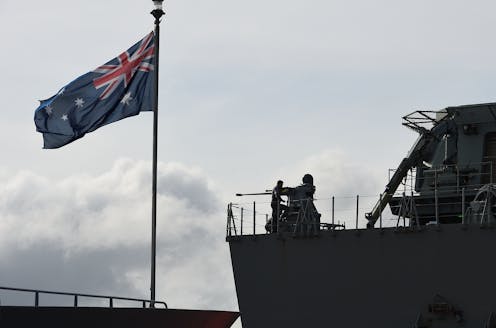
An Australian navy ship is on the way to help, but its crew will be subject to strict coronavirus protocols with little public interaction.

This article is republished under a community partnership agreement with RNZ.

Print Friendly, PDF & Email

Article by AsiaPacificReport.nz

AJI slams sharp rise in violence against Indonesian journalists – 84 cases

By Irfan Kamil in Jakarta

Alliance of Independent Journalists (AJI) chairperson Abdul Manan says there has been a sharp rise of cases of violence against journalists in Indonesia – a record 84 during 2020

Manan said that what were referred to as violence against journalists were actions which can be categorised as attempts to obstruct journalists from doing their job.

This, said Manan, was based on the standards on handling cases of violence against journalists as set out by the Indonesian Press Council.

“It covers various kinds of acts ranging from intimidation, seizure of equipment, deleting photographs, criminalisation, to murder,” Manan told a press conference on Monday.

“These are the categories which can be said to be violence against journalists,” said Manan.

Manan said that based on these categories, AJI had recorded at least 84 cases of violence against journalists throughout Indonesia in 2020, compared with 53 cases in 2019.

The most cases of violence which could be categorised as severe before this occurred in 2016 with 81 cases.

‘Largest number if cases’
“What is more crucial is that this is the largest number of cases of violence [against journalists] monitored by AJI since it began gathering data,” said Manan.

“I think that this is not good news for journalists and the Indonesian press because violence should tend to decline, not the reverse,” he said.

Manan said that considering the spread of cases, the largest number occurred in Jakarta with 17, followed by the East Java cities of Malang with 15 cases and Surabaya with 7 cases.

In terms of the type of cases, Manan said that the majority were intimidation against journalists.

Nevertheless, based on AJI’s records, the next most common type of violation after intimidation was physical violence, damaging equipment and the deletion of photographs and videos.

“If we summarise the incidents that made a big contribution to the quite significant increase in cases of violence against journalists, if we look at the data, then the largest contributor to cases of violence was indeed cases related to the Omnibus Law,” said Manan.

Massive demonstrations
Manan said the massive demonstrations against the recently enacted Omnibus Law on Job Creation by civil society, workers and students in early October, was the largest contributor to cases of violence against journalists.

He said that on October 5 the demonstrations were quite massive and occurred in several parts of the country, which of course journalists covered.

“And it was over this period of demonstrations that [there were many] cases of violence against journalist ranging from intimidation so they wouldn’t report, assault and also damage [to equipment] and seizure of video equipment as well as photographs resulting from reportage,” he said.

Translated by James Balowski for Indoleft News. The original title of the article was “Meningkat, AJI Sebut Terjadi 84 Kasus Kekerasan Terhadap Wartawan Sepanjang 2020”.

Print Friendly, PDF & Email

Article by AsiaPacificReport.nz

9 tips to give yourself the best shot at sticking to new year’s resolutions

Source: The Conversation (Au and NZ) – By Joanne Dickson, Associate Professor of Psychology, Edith Cowan University

For many cultures, the dawn of the new year is marked not only with celebration, but also the opportunity for personal reflection and growth.

But as the year progresses, our initial drive for self-betterment can falter.

The good news is our tendency to give up can be circumvented. There are various ways we can strengthen our commitment to our new year’s goals.

A mismatch between aim and actions

In early 2020, my colleagues and I surveyed 182 participants to study personal goal factors which promoted well-being and sustained people’s pursuit of their most important new year’s resolution.

We found 74% of participants listed their most important resolution as the same, or nearly the same, as in the previous year.

More than half of the resolutions focused on either “diet” (29%) or “exercise” (24%). This suggests health-related goals tend to get rebooted each year — perhaps because New Year’s Day follows plenty of end-of-year festivities and feasting.

Furthermore, despite the participants reporting a strong commitment to their listed resolution, about two thirds gave up within one month. Other studies have shown similarly high rates for not sticking with new year’s resolutions.


Read more: Symbolic gestures, magical thinking: New Year’s resolutions


Generating meaning to sustain effort

If you’re wanting to set yourself a resolution for 2021, a good place to start is to reflect on the year that was.

Our personal reflection on 2020, and the key lessons we took away from it, will help determine our hopes and visions for the year ahead.

Due to the coronavirus pandemic, 2020 was marked by prolonged lockdowns, isolation, loss and shifts in opportunity. But personal growth and strength can stem from such experiences, as past research has revealed.

Living though difficult and stressful times can pave the way for a greater appreciation for life, deeper self-understanding, and increased personal resilience (which means being able to bounce back quicker).

When setting resolutions, it’s important they’re linked to meaningful goals and values that can sustain motivation.

For example, the resolution to “lose five kilos” will more likely endure in the face of obstacles, difficulties or other competing resolutions if it’s linked to higher personal values, such as beliefs about one’s health or appearance.

Sticky note with various popular new year's resolutions

If you’re wondering whether your motivation to reach a certain goal will dwindle later on, look at why you want to achieve the goal in the first place. What does it really mean to you? Shutterstock

Our study also found “goal flexibility”, which refers to being able to adapt to various situations, was positively associated with mental well-being. In turn, this was associated with a greater chance of sticking to new year’s resolutions.

So being adaptable in the process of meeting your goals will not only improve your general well-being, it will also help you pursue your new year’s resolutions.

Tips for setting your 2021 new year’s resolutions

When it comes to sticking to resolutions, insight gleaned from psychology research can be distilled into several practical and easy-to-apply tips.

1) Set resolutions that match your deeper values

Your personal beliefs and hopes have a key role in sustaining your motivational impetus and keeping you focused. This form of motivation is associated with increased personal well-being.

2) Try to set “new” resolutions

This is preferable to recycling old ones. If you still want to pursue a resolution from last year, try to be more specific in your approach.

3) Set resolutions as specific plans

These should account for factors such as time, place and people. Specific plans provide the mental cues needed to stick to our goals.

This is because they’re also less mentally taxing than more vague or generic plans that require further thinking. For instance, consider this resolution:

I will walk for at least 30 minutes around the nearby lake with my friend Sam on Monday, Wednesday and Friday mornings.

It already sets a framework that provides plenty of mental cues and strategies on which to follow up. Also, including another person in the plan also sets a greater sense of responsibility, accountability and social enjoyment — compared with a more vague resolution such as:

I’ll go on more walks this year.

4) Identify and imagine your desired positive outcome

Visualising your goals will help keep you focused on identifying the specific resources your resolution requires. It will also help mobilise a sustained pursuit of the goal.

5) Reward small gains along the way

Enjoying small progress gains is not only pleasurable, it will also help to motivate you.

Taking stock of how far you’ve come in the process of achieving a goal can provide the internal drive needed to see it to the end. Shutterstock

6) Set resolutions you want to pursue, rather than those you think you should

Research consistently shows pursuing freely chosen goals that are internally motivated enhances well-being. Meanwhile, goals that are externally motivated are associated with psychological distress and are less likely to be achieved.

Examples of external motivation include doing something because the situation demands it, because it might please someone else, or to avoid shame or guilt that may arise if it isn’t done.

7) Be flexible

If your resolution isn’t working for you, reset it or adjust it to make it more meaningful and/or achievable.

8) Be realistic

The more realistic your resolution is, the more achievable it will be and the less likely you are to set yourself up for failure.

9) Learn from past failures

Instead of engaging in self-criticism and negative self-evaluation, a positive attitude towards failed resolutions can help you do better next time.


Read more: Three ways to achieve your New Year’s resolutions by building ‘goal infrastructure’


ref. 9 tips to give yourself the best shot at sticking to new year’s resolutions – https://theconversation.com/9-tips-to-give-yourself-the-best-shot-at-sticking-to-new-years-resolutions-151372

3 fallacies that blighted this year’s COVID commentary — have you fallen foul of any of them?

Source: The Conversation (Au and NZ) – By Rachael L. Brown, Director of the Centre for Philosophy of the Sciences and Senior Lecturer at the School of Philosophy, Australian National University

Throughout the pandemic we have seen a deluge of outright lies, conspiracy theories and pseudoscience from various peddlers of self-interest.

But to a philosopher like me, more vexing than these calculated cases of disinformation has been the amount of sloppy reasoning in public discourse about Australia’s COVID epidemic.

Barely a day goes by without a politician, official or commentator making the kind of basic failure of critical thinking that I teach first-year philosophy undergraduates to avoid.

While these are sometimes deliberate attempts to obfuscate, it is more frequently the well-intentioned who fall victim to these often appealing fallacies. The only antidote is a large dose of scepticism, mixed with some understanding of where our reasoning frequently goes wrong.

Here are three critical thinking errors that were rife in 2020.

Fallacy 1: false comparisons

In arguing against lockdowns, it was not uncommon to hear people decry the “hidden cost” of public health measures designed to curb the virus’s spread. Commonly cited examples include drops in cancer detection or the negative impacts of school closures, particularly on students from disadvantaged backgrounds.

It is certainly reasonable to ask whether the costs of lockdown outweigh the benefits. But any such reckoning needs to factor in the costs of not imposing a lockdown.

It is a mistake to use the “pre-COVID normal” as the baseline for comparison. We’re not in Kansas any more, Toto. Pre-COVID cancer rates or school grades are irrelevant when thinking about the impact of public health measures in our current circumstances.

Deserted Bourke Street Mall in Melbourne
Lockdown was tough, but the alternative may well have been even tougher. Erik Anderson/AAP Image

What is relevant is the expected outcomes given the impact of the COVID infections that would occur without public health measures in place. In the case of cancer detection, for example, we should expect a drop in diagnoses relative to pre-COVID levels both with, and without, lockdowns in place. During a pandemic, the fear of infection creates a significant extra factor that would make people less likely to visit their doctor for a cancer check.

Similarly, when looking at the impact of school closures, particularly on socioeconomically vulnerable students, we need to factor in the likely impact of increased COVID infections. As has been shown both at home and abroad, the impacts of COVID outbreaks are disproportionately felt by disadvantaged communities.


Read more: The costs of the shutdown are overestimated — they’re outweighed by its $1 trillion benefit


Fallacy 2: failing to see the nuance behind the numbers

Victorians were understandably glued to the daily case numbers during their epic lockdown, while their New South Wales neighbours nervously kept an eye on their own tally. But the focus on numbers can mislead; bald case numbers don’t tell the whole story.

Why, for example, did two such similar states have such contrasting fortunes? Behind the headline numbers were some key differences that can explain why Victoria endured a major second wave, while NSW escaped relatively unscathed. Not all of them involve differences in contact-tracing capacity.

To illustrate, despite similar absolute case numbers over the ten days to October 14, about 60% of the cases in NSW were returned international travellers, compared with none in Victoria. Given that a positive case in hotel quarantine is easier to contain than one at large among the public, Victoria clearly faced a more challenging situation than NSW.

Similarly, there are other features of the demographics of the Victorian outbreak that also set it apart from NSW, such as the average size of the households in which infected individuals live and the source of their infections. The devil is in the detail.


Read more: Finally at zero new cases, Victoria is on top of the world after unprecedented lockdown effort


Fallacy 3: thinking everything happens for a reason

The ancient Greeks blamed unexpected bad outcomes in their lives on Tykhe, the goddess of chance, and the Romans similarly blamed Fortuna. In our largely secular modern world, however, we typically assume a bad outcome to be a sign of failure rather than simple bad luck.

But in a pandemic, not only can relatively small differences in situations lead to large differences in outcomes, but these small differences often come down to dumb luck. This is especially true when talking about very small numbers of cases, as we have in Australia now.

At such low numbers, bad luck and chance are likely to play a big role in our fortunes. South Australia, for instance, may have been plunged into lockdown as a result of dodgy ventilation in a hotel corridor.

It is easy to interpret any jump in case numbers as indicating a failure of the public health measures in place. But this overlooks the role of other factors: whether a COVID-positive person lives with one other person or six, or whether they work in aged care, or from home, where they shop, whether or not they developed symptoms while infected, and whether or not they self-isolated as a result. All of this can make a significant difference to the potential number of others whom they infect with the virus.

It is also harder to trace the contacts of someone working outside the home, compared with someone working from home and only leaving to go to the shops once a week. No two infections are truly equal.


Read more: Exponential growth in COVID cases would overwhelm any state’s contact tracing. Australia needs an automated system


This doesn’t mean we shouldn’t be concerned by a sudden spike in cases, and it doesn’t mean we can’t ask questions about what went wrong. But it also doesn’t mean it necessarily warrants any shift from our current public health measures.

It’s an uncomfortable thought, but luck is a huge part of where we find ourselves today, and where we could be in the future.

ref. 3 fallacies that blighted this year’s COVID commentary — have you fallen foul of any of them? – https://theconversation.com/3-fallacies-that-blighted-this-years-covid-commentary-have-you-fallen-foul-of-any-of-them-148518

Getting to the (street) art of a year like no other

Source: The Conversation (Au and NZ) – By Alison Young, Francine V. McNiff Professor of Criminology, University of Melbourne

If there’s one thing everyone seems to agree on, it’s that 2020 was a nightmare of a year. This was the year of political crisis: not just one, but several, one after another.

Street artists have always responded to the political issues of the day by writing, painting and sticking posters on walls. What kind of street art could be seen on walls in 2020?

In the early months of 2020, Australia’s political street art was dominated by the bushfires that incinerated over 17 million hectares of land, destroyed 3,094 homes, and killed 34 people and over a billion animals.

Shocked by the severity and extent of the fires, many people, including artists, wondered whether this was no ordinary fire season. Posters quickly appeared in Fitzroy, simple sheets of paper, each with two news photos. One showed a child in a boat fleeing the fires in Mallacoota on New Year’s Day; in another, firefighters ran through a torrent of burning embers. Between the two images, block capitals stated: “THIS IS CLIMATE CHANGE”.

A few weeks later, climate anxiety continued to motivate street artists: during the Australian Open tennis tournament, a “street sculpture” was glued to a windowsill in Melbourne’s Hosier Lane. Initially looking like a large blob of lime-green ice-cream, a closer look revealed it to be a melting tennis ball, emblazoned with the words #ClimateCrisis.

A melting tennis ball appeared in Melbourne’s Hosier Lane, bearing the hashtag #Climatecrisis. Black Mark Melbourne Art & Culture Critic

Soon after the bushfires, the spread of a new coronavirus led to the declaration of a global pandemic. Lockdowns and states of emergency were implemented in numerous countries from March onwards. Despite stay-at-home orders, graffiti and street art have appeared on walls in cities all over the world.

Much of this was about the pandemic itself. During Melbourne’s first lockdown from March to early June, posters satirised the hoarding of toilet paper or showed Bart Simpson saying “ay corona”. Some artists simply wrote “COVID-19” as if it was a graffiti tag, evoking the tag names of decades gone by in New York and other American cities.

After the second wave of coronavirus infections hit Victoria in July, Melbourne’s lockdown intensified. Street art reflected the divided views expressed in media and political debates about public health. An artist added the words “MOCKING SCIENCE” to a “STOP” sign, perhaps as a riposte to COVID-deniers or anti-mask campaigners. Others wrote on bridges over freeways “the government lies” and “it’s just a flu”.

As this second lockdown went on, artists’ activities became more elaborate and more emotional. In South Melbourne, one mural revised Michelangelo’s The Creation of Adam, which shows God giving life to Adam and is famed for its almost-touching fingers. This rendition placed the two figures far apart and put the words “physical distancing” between them.

This South Melbourne mural turned iconic art into a message about physical distancing under COVID-19. Instagram/streetart_melbourne

Separation from friends and family members generated extensive anxiety and sadness in lockdown. Posters in Fitzroy exhorted us to “Be kind. Let’s look out for one another” and reminded us that “kindness is contagious too”. In Brunswick, one artist created posters evoking the semi-abstract figures of Matisse, with two people embracing, surrounded by the words “together soon enough”. Frequently, individuals simply condensed their emotions into two words, writing “fuck corona”.

As Melbourne’s harsh second lockdown ended, well-known artist Lushsux painted a mural of Victorian Premier Daniel Andrews, posting a photograph on Instagram accompanied by a voice-over criticising Andrews for “the longest and most severe lockdown probably in the entire world”.

Black Lives Matter

The killing of George Floyd by a police officer in Minneapolis on May 26 led to widespread unrest in America, Australia and around the world. Artists both protested and memorialised his death. Murals, usually showing Floyd’s face and often including phrases such as “Say his name” and “I can’t breathe”, appeared in dozens of cities, including Barcelona, New York, London, Berlin, Los Angeles, Binnish in Syria, and in Minneapolis itself.

The Black Lives Matter protests gave rise to much new street art in Australia, just as the arrival of the coronavirus pandemic had done. James Ross/AAP

In Melbourne, posters proclaiming “Cops are not our friends” and the spray-painted slogan “NO JUSTICE NO PEACE” appeared in Hosier Lane, as the same messages sprung up in London and New York. Black Lives Matter protests were held in several Australian cities.

Artists contributed temporary and more long-lasting interventions. Pieces of cardboard were left propped up against trees in the Exhibition Gardens in Melbourne, stating “432 Deaths in Custody” and “Justice for Tanya Day”. On the outside wall of the Tote Hotel in Collingwood, Melbourne, someone had written “END ABORIGINAL DEATHS IN CUSTODY” in huge white capital letters.

Although much street art is anonymous, some makers sign their street artworks. During 2020, two artists stood out for their creation of highly political artworks.

Artist Scott Marsh’s depiction of Scott Morrison, who was widely criticised for being on holiday in Hawaii while bushfires raged in Australia. scottmarsh.com.au

In Sydney, having painted Prime Minister Scott Morrison on holidays while bushfires blazed in Australia in December 2019, Scott Marsh continued to paint murals that pressed buttons on hot topics throughout 2020. He followed up his Morrison-in-Hawaii mural with one of climate deniers and, in June, a mural in Redfern of a burning police van, which was removed within 24 hours of it being completed.

As US President Donald Trump protested that the election outcome in November was based on fake results, Marsh took inspiration from CNN anchor Anderson Cooper’s description of Trump as a turtle flailing on its back in the sun. Marsh painted this as a cartoonish mural on the wall of a Newtown pub. (Marsh’s website is also selling T-shirts of Trump as a turtle.)

As 2020 came toward an end, with everyone hoping for respite from the crises that had dominated their lives, Melbourne artist Julie Shiels created an art installation in the streets of Fitzroy that seeks to keep politics in the minds of the public.

The Grandmasters is a series of paste-ups featuring famous artworks altered to include the heads of Australian politicians. From their mouths, speech bubbles emit comments made by them in 2020. The series includes 12 separate works, pasted along a hoarding at a construction site.

It features federal government ministers such as Alan Tudge and Josh Frydenberg, former prime minister Tony Abbott and Scott Morrison. Each is featured in an artwork whose scenario relates to the politician’s role. When juxtaposed with the speech-bubble quotations, the painting’s titles provide excoriating political critique.

Frydenberg features in Caravaggio’s The Cardsharps; Morrison is shown in Quentin Massys’s work, The Money Changer and His Wife, saying: “We don’t want to see women rise only on the basis of others doing worse.” Morrison’s mouth is open and he stares directly at the spectator, while the eponymous wife stares resignedly downwards.

Julie Shiels’s interpretation of Quentin Massys’s The Money Changer and His Wife. Julie Shiels

The only non-Australian politician featured is Donald Trump, shown spliced into Rembrandt’s The Anatomy Lesson saying: “Don’t be afraid of COVID. Don’t let it rule your life.”

And, as if to keep our minds on the issue that began the disasters of 2020, Shiels includes a reworked Raft of the Medusa by Gericault with Abbott sitting amid dead and dying refugees on a sinking raft, saying: “Climate change is crap.”

Despite the seemingly endless series of disasters in 2020, we can take some comfort and inspiration from the ways in which so many artists expressed their views on the walls and in the streets of Australia.

ref. Getting to the (street) art of a year like no other – https://theconversation.com/getting-to-the-street-art-of-a-year-like-no-other-149923

Vaccines may soon make travel possible again. But how quickly will it return — and will it be forever changed?

Source: The Conversation (Au and NZ) – By Joseph M. Cheer, Professor in Sustainable Tourism, Wakayama University

The COVID-19 pandemic brought the global tourism industry to a screeching halt in 2020. With vaccines starting to be rolled out, there is hope international travel can resume soon, but exactly when — and how — is the million-dollar question.

Before COVID-19, there was much concern about whether tourism had grown too big for our planet. There were calls to scale back tourism, make it more environmentally sustainable and help over-touristed locations become more resilient to crises.

However, with almost no international travel in 2020, we now have the opposite problem. The pandemic caused a 70% drop in international tourist arrivals globally from January to August, compared to the same period last year.

Destinations reliant on international tourists have been the hardest hit. Many are in developing countries, where tourism is a major export earner. For example, according to the World Bank, tourism makes up nearly 15% of Thailand’s GDP, which is why it recently started allowing select foreign tourists to return for extended stays.

But attempts to reboot international travel on a wider scale have so far failed due to successive waves of COVID-19.

As a more transmissible and harder-to-control coronavirus variant has emerged in the UK and South Africa in recent days, dozens of countries have announced they would close their doors to travellers from both nations. Some countries, like Japan and Israel, have gone a step farther, banning all foreign nationals from entering.

Even before this, travel bubbles and corridors between countries have been proposed, but few have managed to take root.

The recently-announced trans-Tasman bubble between Australia and New Zealand is one of the few options for international travel in the pipeline. DEAN LEWINS/AAP

With borders closed, many countries have put a focus on attracting domestic tourists instead. This has helped maintain economic stability in countries such as China and Japan.

Hopes for a swift recovery of international travel are now pinned on a silver bullet: the rapid and widespread distribution of a vaccine.

Beyond this, we believe getting people back in the air again will be shaped by three key issues.


Read more: A vaccine will be a game-changer for international travel. But it’s not everything


1) What travel regulations will prove effective?

Travel health requirements may soon start to resemble the past. In the 1970s, having appropriate vaccinations and health clearances was essential for travel to and from many countries. Coronavirus vaccinations will likely become similarly standard for international flights.

This should be rapidly adopted by all countries, and could even be applied more broadly – in hotels, for example.

However, any vaccination regime will need governments to pass strong laws and regulations. Digital travel passes and vaccination passports may be one solution, but in order to work, these will require standardisation across borders.

Travellers are screened and have their temperature checked at Los Angeles International Airport. ETIENNE LAURENT/EPA

One solution may be the CommonPass, a new digital health passport that looks to be a trustworthy model for validating people’s COVID-free status consistently across the globe.

Other health measures will also remain vital, including mandatory in-flight masks, pre-departure and arrival testing, mandatory quarantining and social distancing. If vaccination uptake in destinations is low, these measures will become even more important.


Read more: Can governments mandate a COVID vaccination? Balancing public health with human rights – and what the law says


Touchless travel should also become standard at most airports through the use of biometric technology. And passengers should expect temperature screening and reduced in-flight services to be the new norm.

Lengthy quarantine periods are one of the biggest obstacles to restarting international tourism — few people can afford 14 days in a quarantine hotel on top of their holiday.

There are potential alternatives being tested. Before the new COVID variant emerged, British Airways and American Airlines had piloted a voluntary testing program for some passengers as a way of avoiding the mandatory 14-day quarantine period in the UK.

The British government also implemented its new “test and release” policy in mid-December, which could shorten the quarantine period to five days for international arrivals.

2) How will airlines restart their businesses?

The International Air Transport Association expects the airline industry won’t reach pre-pandemic levels again until at least 2024.

This means any tourism restart is going to require restoring transportation infrastructure and networks, especially for aviation and cruising.

Many planes are now parked in deserts in the US and Australia. They will need to be retrieved and thoroughly serviced before recommencing flights. Crews will have to be rehired or retrained.

Grounded planes parked at a storage facility in Alice Springs, Australia. DARREN ENGLAND/AAP

But it’s not as simple as just getting planes back in the air. A more formidable challenge for airlines will be reestablishing air routes while ensuring their ongoing viability.

As airlines slowly build up these networks again, travellers will have to put up with less frequent connections, longer journeys and drawn out stopovers.

There is some encouraging news, though. In the US, domestic airfares have dropped, and though international flight schedules have been drastically reduced, low demand has kept some prices down.

Smaller and more nimble airlines should perform better. And expect smaller and more efficient aircraft to also become more common. Demand for long-haul flights may remain low for some time.

Airports, meanwhile, will require temporary or permanent reconfigurations to handle new public heath screening and testing arrangements — providing yet another possible frustration for travellers.

Cruise ships and port terminals will face similar requirements, as will hotels and other accommodation providers.

3) Will traveller confidence return?

For leisure travellers, the lingering fear of coronavirus infections will be the most formidable obstacle to overcome.

The Thanksgiving holiday in the US and Golden Week in China suggest the appetite for travel remains robust. Some analysts also anticipate leisure travel will likely recover faster than business travel.

However, it remains to be seen whether travellers will have a high appetite for risk, or how quickly they’ll adapt to new safety protocols.

The key to bringing traveller confidence back again will be standardising safety and sanitation measures throughout the global travel supply chain. One idea is a “Safe Travels” stamp once companies have complied with health and hygiene protocols.


Read more: Worried about COVID risk on a flight? Here’s what you can do to protect yourself — and how airlines can step up


How we can build back better

COVID-19 has prompted much reflection about our relationship with the planet.

Advocates for more sustainable tourism are hoping the coming years will lead to a rethink of international travel, with more innovation and a renewed commitment to addressing climate change and crisis management.

However, the likely reality is that destinations will be desperate for economic recovery and will compete vigorously for tourism dollars when borders reopen.

So, if consumer behaviour trends are anything to go by, the new normal might not be too dissimilar from the old. It’s doubtful, for example, that we would tolerate flying less when travel is proven safe again. This doesn’t bode well for the planet.

If international travel is going to “build back better”, communities, governments and the global tourism industry must come up with a transformative plan that is workable and helps drive traveller behaviour change and decarbonisation.

The pandemic has given us a chance for a reset — we should make the most of the opportunity.

ref. Vaccines may soon make travel possible again. But how quickly will it return — and will it be forever changed? – https://theconversation.com/vaccines-may-soon-make-travel-possible-again-but-how-quickly-will-it-return-and-will-it-be-forever-changed-150268

Bzzz, slap! How to treat insect bites (home remedies included)

Source: The Conversation (Au and NZ) – By Cameron Webb, Clinical Associate Professor and Principal Hospital Scientist, University of Sydney

It’s the holidays and we’re spending more time outdoors. This means we’re exposed to the more annoying and painful aspects of summer — insect bites and stings.

There are plenty of products at the local pharmacy to treat these. Some treat the initial bite or sting, others the itchy aftermath.

What about natural remedies? Few studies have actually examined them. But if they work for you, and don’t irritate already inflamed skin, there’s likely no harm in continuing.


Read more: Buzz, buzz, slap! Why flies can be so annoying


Why do insects bite and sting?

When insects bite and sting, they are either defending themselves or need something from us (like blood).

Whatever the motivation, it can leave us with a painful or itchy reaction, sometimes a severe allergic reaction, or even a debilitating disease.

While insects sometimes get a bad rap, there are relatively few that actually pose a serious threat to our health.

Flies, mosquitoes

Many types of flies, especially mosquitoes, bite. In most instances, they need blood for nutrition or the development of eggs. The method of “biting” can vary between the different types of flies. While mosquitoes inject a needle-like tube to suck our blood, others chew or rasp away at our skin.

While researchers have studied what happens when mosquitoes bite, there is still much to learn about how to treat the bites.

So, avoiding mosquito bites is especially important given some can transmit pathogens that make us sick.


Read more: Feel like you’re a mozzie magnet? It’s true – mosquitoes prefer to bite some people over others


We still have lots to learn about treating mosquito bites. A/Prof Cameron Webb

Fleas, lice, mites and ticks

There are lots of other insects (such as bed bugs, fleas, lice) and other arthropods (such as mites, ticks) that bite.

But it is difficult to determine which insect has bitten us based on the bite reaction alone. This is generally because different people react in different ways to the saliva injected as they start to suck our blood.

Bees, wasps, ants

Then there are stinging insects, such as bees, wasps and ants. These are typically just defending themselves.

But as well as being painful, the venom they inject when they sting can cause potentially severe allergic reactions.

How do you best treat a sting or bite?

If you suffer potentially severe allergic reactions from bites or stings, immediately seek appropriate medical treatment. But for many other people, it is the initial painful reaction and itchy aftermath that require attention.

Despite how common insect bites can be, there is surprisingly little formal research into how best to treat them. Most of the research is focused on insect-borne diseases.

Even for recommended treatments, there is little evidence they actually work. Instead, recommendations are based on expert opinion and clinical experience.

For instance, heath authorities promote some general advice on treating insect bites and stings. This includes using pain relief medication (such as paracetamol or ibuprofen). They also advise applying a cold compress (such as a cold pack, ice, or damp cloth soaked in cold water) to the site of the sting or bite to help reduce the inflammation and to ease some of the discomfort.

Refreshing red drink in glass with ice cubes and lemon
Ice cubes aren’t just for summer cocktails. They can help reduce inflammation from insect bites and stings. Shutterstock

There is also specific advice for dealing with stings and removing ticks.

However, if you do nothing, the discomfort of the bite or sting will eventually fade after a few days. The body quickly recovers, just as it would for a cut or bruise.

If you’re still in pain for more than a couple of days, or there are signs of an allergic reaction, seek medical assistance.

What about the itch?

Once the initial pain has started to fade, the itch starts. That’s because the body is reacting to the saliva injected when insects bite.

For many people, this is incredibly frustrating and it is all too easy to get trapped in a cycle of itching and scratching.

In some cases, medications, such as corticosteroid creams or antihistamines could help alleviate the itchiness. You can buy these from the pharmacy.

Then there’s calamine lotion, a mainstay in many Australian homes used to treat the itchiness caused by insect bites. But there are few studies that demonstrate it works.


Read more: Are itchier insect bites more likely to make us sick?


Do any home remedies work?

If you’re looking for a home remedy to treat insect bites and the itchiness that comes with it, a quick internet search will keep you busy for days.

Potential home remedies include: tea bags, banana, tea tree or other essential oils, a paste of baking soda, vinegar, aloe vera, oatmeal, honey and even onion.

There is little evidence any of these work. But not many have actually been scientifically evaluated.

Tea tree oil is one of the few. While it is said to help treat skin reactions, the oil itself can cause skin reactions if not used as directed.

However, if a home remedy works for you, and it’s not causing additional irritation, there’s no harm in using it if you’re getting some relief.

With so much uncertainty about how to treat insect bites and stings, perhaps it is best if we avoid exposure in the first place. There are plenty of insect repellents available at your local pharmacy or supermarket that do this safely and effectively.

ref. Bzzz, slap! How to treat insect bites (home remedies included) – https://theconversation.com/bzzz-slap-how-to-treat-insect-bites-home-remedies-included-148722

‘Like finding life on Mars’: why the underground orchid is Australia’s strangest, most mysterious flower

Source: The Conversation (Au and NZ) – By Mark Clements, Botanist, CSIRO

If you ask someone to imagine an orchid, chances are pots of moth orchids lined up for sale in a hardware store will spring to mind, with their thick shiny leaves and vibrant petals.

Moth orchids with purple flowers in a pot
Orchids like this may be what comes to mind when you think of them, but there are actually more 30,000 different orchid species. Shutterstock

But Australia’s orchids are greater in number and stranger in form than many people realise. Rock orchids, fairy orchids, butterfly orchids, leek orchids and even onion orchids all look more or less the same. But would you recognise a clump of grass-like roots clinging to a tree trunk as an orchid?

What about a small, pale tuber that spends its whole life underground, blooms underground and smells like vanilla? This is the underground orchid, Rhizanthella, and it’s perhaps the strangest Australian orchid of them all.

Even to me, having spent a lifetime researching orchids, the idea of a subterranean orchid is like finding life on Mars. I never expected to even see one, let alone have the privilege of working on them.

Known for almost a century, but rarely seen

The family Orchidaceae is the largest group of flowering plants on Earth, comprising more than 30,000 species. Australia is home to around 1,550 species and 95% are endemic, meaning they don’t occur naturally anywhere else in the world.

Rhizanthella has been known to science since 1928, when a farmer in Western Australia who was ploughing mallee for wheat fields noticed a number of tuber-like plants among the roots of broom bushes. Recognising them as unusual, he sent some specimens to the Western Australian Herbarium.

The species Rhizanthella gardneri occurs in Western Australia. Fred Hort/Flickr, CC BY-SA

In 1931, another underground orchid was discovered in eastern Australia at Bulahdelah in NSW by an orchid hunter who was digging up a hyacinth orchid and found an unusual plant tangled in its roots. Three quarters of a century later, I was involved in conserving the population of Rhizanthella in this location when the Bulahdelah bypass was built.

And most recently, in September, I confirmed an entirely new species of underground orchid, named Rhizanthella speciosa, after science illustrator Maree Elliott first stumbled upon it four years ago in Barrington Tops National Park, NSW.

Elliott’s discovery brings the total number of Rhizanthella species known to science to five, with the other two from eastern Australia and two from Western Australia.

The pink flower head of the _Rhizanthella speciosa_
The newly discovered species, Rhizanthella speciosa, found in Barrington Tops. Mark Clements, Author provided

All species are vulnerable

For much of its life, an underground orchid exists in the soil as a small white rhizome (thickened underground stem). When it flowers, it remains hidden under leaf litter and soil close to the surface, its petals think and pink, its flower head a little larger than a 50 cent coin.


Read more: ‘Majestic, stunning, intriguing and bizarre’: New Guinea has 13,634 species of plants, and these are some of our favourites


Its pollinator is probably a tiny fly that burrows down to lay eggs in the orchid, mistaking the flower for a fungus.

Today, all Rhizanthella species are vulnerable: the species R. gardneri and R. johnstonii are listed as critically endangered under national environment laws, while R. slateri and and R. omissa are listed as endangered. The most recently discovered species hasn’t yet been listed, but its scarcity means it’s probably highly vulnerable.

Rhizanthella speciosa. The seeds of underground orchids are like ball bearings, and the fruits smell like vanilla. Mark Clements, Author provided

The conservation of the underground orchid is complicated. Knowing where it exists, and where it doesn’t, is one problem. Another is knowing how to grow it.

All orchid species need a buddy, a particular soil fungus, for their seeds to germinate, and Rhizanthella must have its habitat to survive. Unfortunately, it’s extremely difficult to just grow it in a pot.

Seeds like ball bearings

We also know very little about the biology of Rhizanthella. But here’s what we do know.

We’ve discovered the fungus that buddies up with underground orchids in Western Australia is indeed the same as that in eastern Australia. We know underground orchids tend to grow in wetter forests and that burning will kill them. And we know that after pollination, the seed head of an underground orchid takes 11 months to mature.

The floral structures of four described species of _Rhizanthella_
The floral structures of four described species of Rhizanthella: (a) R. slateri (b) R. omissa (c) R. johnstonii (d) R. gardneri Chris J. Thorogood, Jeremy J. Bougoure et Simon J. Hiscock/Wikimedia, CC BY-SA

Most orchids have wind-dispersed seeds. Some are so light that drifting between Queensland and Papua New Guinea might be possible, and might explain its vast distribution.

The seeds of underground orchids, however, are like ball bearings and the fruits smell like the famous vanilla orchid of Mexico, whose seeds and pods add scent and flavour to everything from candles to ice cream.

In nature, bats disperse the seeds of the vanilla orchid. So we set up infra-red cameras in Bulahdelah as part of the bypass project to find out what animals might disperse the seeds of the underground orchid. We observed swamp wallabies and long-nosed bandicoots visiting the site where R. slateri grows.

We suspect they disperse the seeds of underground orchids via their excrement, finding the orchid among truffles and other goodies in the leaf litter and soil of the forest floor.

A swamp wallaby in the bush
Swamp wallabies and long-nosed bandicoots may disperse the underground orchid seeds, but they’re locally extinct in WA. Shutterstock

In Western Australia, these animals are locally extinct. Without bandicoots and wallabies to transport seeds away from the parent plant, the natural cycle of renewal and establishment of new plants has been broken. This cannot be good for the long-term survival of the two Western Australian Rhizanthella species.

An alien in the floral world

Conservation of the underground orchid might require intricate strategies, such as reintroducing bandicoots to a protected area, preventing bushfires and using alternatives to burning to manage the land.

An important first step is to find more populations of underground orchids to help us learn more about them.

Leek orchid
A leek orchid. Shutterstock

Our work with DNA has shown, in the orchid family tree, Rhizanthella is most closely related to leek orchids (Prasophyllum) and onion orchids (Microtis).

But as you can see from the photo of a leek orchid above, it bears no resemblance to a subterranean flower, like an alien in the floral world.


Read more: Leek orchids are beautiful, endangered and we have no idea how to grow them


ref. ‘Like finding life on Mars’: why the underground orchid is Australia’s strangest, most mysterious flower – https://theconversation.com/like-finding-life-on-mars-why-the-underground-orchid-is-australias-strangest-most-mysterious-flower-144727

Hit the road, Jack: 5 epic literary road trips that are not by Kerouac

Source: The Conversation (Au and NZ) – By Jessica Gildersleeve, Associate Professor of English Literature, University of Southern Queensland

Summer is the time for holidays and travel. But as we weakly wave goodbye (we hope) to the horrors of 2020, international travel is off the table and even domestic travel is still restricted.

A book is still your most faithful companion on summer journeys, even if that trip is limited to the journey between the kitchen and a sun lounge in the backyard.

Curated here is a mix tape of great literary road trips. There is one oldie but goodie, some 21st-century hits and shout-outs to the authors who mapped the way. Buckle up — or curl up — and enjoy.


Read more: Friday essay: Alice Pung — how reading changed my life


1. Geoffrey Chaucer’s The Canterbury Tales (c. 1400)

Book cover: The Canterbury Tales
Goodreads

Our journey begins with The Canterbury Tales, one of literature’s earliest road trip narratives, although Chaucer’s work takes its lead from Giovanni Bocaccio’s Decameron (c. 1353).

A series of stories told by a group of travellers, in Chaucer’s Middle English, takes readers on a pilgrimage to the shrine of Saint Thomas à Becket in Canterbury. Indeed, the pilgrimage can be seen as the earliest form of today’s holiday (a “holy day”), in which the faithful would journey for days or even weeks to visit a holy site. The physical demands of the travel itself contributed to the pilgrim’s spiritual growth.

Each pilgrim of The Canterbury Tales represents a different class or social position — the knight, the priest, the merchant, and so on. Additionally, each story not only represents a particular and symbolic genre — the low humour of the miller’s fabliaux, or the knight’s idealisation of the courtly love poem — but when taken together signify the interactions between people and experiences of the period.


Read more: Chaucer’s great poem Troilus and Criseyde: perfect reading while under siege from a virus


If you enjoy The Canterbury Tales, you might also like Homer’s epic poem The Odyssey (8th C BCE) — a heroic adventure on the high seas. Likewise: Jules Verne’s Twenty Thousand Leagues Under the Sea and Around the World in Eighty Days (both first published in English in 1872), or Jonathan Swift’s satirical masterpiece, Gulliver’s Travels (1726).

2. Cheryl Strayed, Wild (2012)

Book cover: Wild (a hiking boot)
Goodreads

Perhaps best known for the image of Reese Witherspoon tossing her hiking boots into a canyon in the 2014 film adaptation, Cheryl Strayed’s memoir of her solo hike along the Pacific Crest Trail is an epic pilgrimage in its own right.

Just as the archetypes of The Canterbury Tales undertake both a physical and a spiritual journey, so too Strayed commits to the trail as a trip of transformation and discovery: “a world I thought would both make me into the woman I knew I could become and turn me back into the girl I’d once been. A world that measured two feet wide and 2,663 miles long”.

Wild constitutes a modern, even feminist, reimagining of the American frontier narrative — a lone journey into the “wild west”, stripped of the markers of civilisation to truly find a self-made paradise. The book echoes and subverts the classic road trip novel, Jack Kerouac’s On the Road (1957) — a compulsory addition to any literary road trip list. It also hearkens back to Mark Twain’s boyhood novel, The Adventures of Huckleberry Finn (1885), or even Vladimir Nabokov’s twisted trip in Lolita (1955).


Read more: Mythbusting Ancient Rome — did all roads actually lead there?


3. John Green’s Paper Towns (2008)

Book cover: paper towns (poster pin in map)
Goodreads

That the road trip is frequently used as a symbolic journey of understanding the self makes it ripe for the contemporary bildungsroman form — a novel of development — in the Young Adult genre. Author John Green has plumbed this trope a number of times, perhaps most successfully in Paper Towns. The acclaimed Amy & Roger’s Epic Detour by Morgan Matson (2010), or the more recent I Wanna Be Where You Are by Kristina Forest (2019) both also fall within this category.

Poised on the precarious cusp of adulthood and searching for their adventurous friend Margot, the teenaged protagonists of Paper Towns set off on a road trip through the night, determined to “right a lot of wrongs … wrong some rights … (and) radically reshape the world”. It is thus a moral journey, an effort to imprint the emerging self on a world not yet acknowledging its presence. The travellers want to make decisions about their lives, rather than be swept down a predetermined road.


Read more: The kids are alright: young adult post-disaster novels can teach us about trauma and survival


4. Tara June Winch’s Swallow the Air (2006)

Book cover: Swallow the Air
Goodreads

Australian road trip narratives are more often described by fear than frontierism, as in Kenneth Cook’s Wake in Fright (1961) or cinema’s Wolf Creek (2005). Similarly, Ari’s drug-fuelled trip around inner Melbourne in Christos Tsiolkas’s Loaded (1995) tracks the urban intersections of individual, national and multicultural identity.

2020 has been a triumphant year for Tara June Winch. Her earlier short story cycle, Swallow the Air won the David Unaipon Award.

With a nod to the structure of The Canterbury Tales, Winch’s stories follow the cross country journey of a young Indigenous girl, May. She is determined to escape and change the cycles of violence and misery to which her family has been subjected. Like Tony Birch’s Blood (2012), it adopts the road trip as a means of going back to Country, providing not only a specifically cultural innovation in the genre, but a different understanding of self-discovery.


Read more: The Yield wins the Miles Franklin: a powerful story of violence and forms of resistance


5. Joe Hill’s N0S4A2 (2013)

Book cover: N0S4A2 (number plate)
Goodreads

Not all road trips constitute journeys into the self. Instead, a psychological voyage might constitute a plunge into the depths of the nightmarish unconscious.

Joe Hill, son of that most famous horror writer Stephen King, offers up a road trip we might prefer not to take, although it does have a festive theme. In N0S4A2, Christmasland is the horrific and fantastic destination for the child victims of a phantom vehicle and its deranged driver.

Hill offers the chilling prophesy that “sooner or later a black car came for everyone”, pointing out the horrific inevitability of one final road trip. It’s a journey in the tradition of the monstrous vehicle, as in King’s Christine (1983), as well as the apocalyptic father-son walk in Cormac McCarthy’s The Road (2006), Josh Malerman’s Bird Box (2014), King’s The Stand (1978) and (as Richard Bachman) The Long Walk (1979).

After the year we’ve all had, I hope your road trip is less nightmarish.

ref. Hit the road, Jack: 5 epic literary road trips that are not by Kerouac – https://theconversation.com/hit-the-road-jack-5-epic-literary-road-trips-that-are-not-by-kerouac-150159

Landslide claims 13 lives at Tolukuma mine in PNG’s Central province

By Harlyne Joku in Port Moresby

A huge landslide has buried a long hut with 13 people asleep inside at the foot of the Tolukuma gold mine in Papua New Guinea’s Central province.

The community from Saki village, Tolukuma, experienced the massive landslide yesterday morning between 4.30 am and 6 am amid heavy rain.

They were surprised to see that the long house built for visitors from nearby villages who come and reside there while panning for gold had disappeared.

“We have sent a message to the Central Provincial Disaster Office to assist with a chain saw and excavator to dig and cut through the trees, logs and dirt to uncover the house and search for the people buried by the landslide,” Saki village spokesman Cyril Samana told the PNG Bulletin by phone.

“We cannot do it ourselves with our bush knives because the slide has buried many of trees and logs too.

“The disaster occurred at about 4.30 am while the people were asleep. The landslide caught them by surprise coming down from the nearby Tolukuma mountain,” Simana said.

He said the people buried were from nearby villages panning for gold during the Christmas weekend.

‘Huge landslide debris’
“We woke up to see the huge landslide debris and the long house disappear. We have informed the disaster authorities and waiting for them to arrive possible tomorrow [Tuesday],” Simana said.

Simana said that since the Tolukuma mine was in operation in the early 1990s and 2000s, the ground on Tolokuma mountain had become soft.

He said the recent heavy rain in the afternoon till early morning may be the cause of the massive landslide burying the 13.

Tolukuma mine map
A map showing Tolukuma in Papua New Guinea’s Central Province. Image: PNG Bulletin/PNG Report

“Hopefully when the Disaster Office arrives, we will start clearing and digging,” Simana said.

“We have not been able to get through to the MP for Goilala or the Governor for Central. But we managed to reach the provincial disaster office,” Simana said.

Print Friendly, PDF & Email

Article by AsiaPacificReport.nz

Should you go to a Sydney New Year’s Eve party? NSW has handled COVID outbreak well but risks remain

Source: The Conversation (Au and NZ) – By Catherine Bennett, Chair in Epidemiology, Deakin University

The news on the Sydney northern beaches COVID-19 outbreak is encouraging, with just five locally acquired new cases announced today from more than 15,000 tests in the last 24 hours. All five locally acquired cases were contacts of known cases and already in isolation.

The way NSW Health has managed this outbreak — and at such a tricky time of year — has been impressive, but risks remain. The number of people coming forward for testing has fallen in recent days. Worryingly, cases continue to pop up outside the northern beaches, including several around the Belrose Hotel where the chain of transmission is unclear. NSW Health has asked anyone who spent any time there during December to get tested.

New Year’s Eve presents a higher risk, because it often involves different household groups gathering indoors, talking face-to-face for extended periods, without masks. These are the conditions the coronavirus likes best.

However, there’s a lot you can do to reduce your own, and the collective, risk in coming days.


Read more: Australia on alert as Sydney’s northern beaches COVID cluster grows, linked to US strain


New Year’s Eve parties: just because you can, it doesn’t mean you should

NSW has now cancelled a previous plan to offer frontline workers special access to the harbour foreshore to watch the New Year’s Eve fireworks display. NSW Premier Gladys Berejiklian has encouraged everyone to stay out of the Sydney CBD for New Year’s unless they have a permit from Service NSW.

Tighter restrictions remain in place for people in the northern beaches area.

In Greater Sydney, however, you can have up to ten visitors in your home (including children) for New Year’s. Outdoor gatherings have been capped at 50, as long as people are socially distanced and separate groups don’t mingle.

But just because you can do these things doesn’t mean you should. It’s like a speed limit — you don’t have to drive at the maximum.

If you’re planning to go to a party in Sydney on New Year’s, think quite carefully about whether you really need to. New Year’s decisions should include doing everything possible to support what NSW Health is trying to do — and that might mean staying home.

Don’t create the opportunity for you to be linked to the next NSW cluster; being linked as a casual contact to an outbreak can mean an incredibly inconvenient period of quarantine for you and your household, even if you don’t get the virus. The less mixing everybody does, the better.

If you must get together, do what you can to reduce risk — try to make the gathering outdoors or in a well-ventilated space, encourage physical distancing, avoid crowding around drink or snack tables and keep a record of all attendees.

NSW Premier Gladys Berejiklian addresses the media.
NSW Premier Gladys Berejiklian encouraged everyone to stay out of the CBD for New Year’s unless they have a permit. MICK TSIKAS/AAP

Encouraging response but risks remain

Overall, I’m confident in how this outbreak is being managed by NSW Health. The way they are communicating cases details and their understanding of risk, the amount of detail contact tracers are gathering within the first critical hours, the updated lists of exposure sites and the high testing rates this has encouraged — it’s all reassuring.

However, there are still cases of community transmission where the exact relationship to known cases is unclear — and that could signal a potential new cluster.

That terrible mix of someone at their most infectious taking the virus into an enclosed space, being face-to-face with others, with no mask — that’s the worrying scenario that could drive an escalation in numbers.

That’s what NSW saw with the Crossroads Hotel outbreak in July. It took months to shut it down as it kept reappearing in new clusters because there were ongoing insidious chains of transmission.

The same could happen if the virus spreads into greater Sydney, or beyond.

It’s important to remember we are still not quite capturing all the cases in this outbreak, despite the generally high level of testing. And so it’s vital testing levels remain high.

Crucially, people should consider repeat tests if they were near any of the exposure sites. If you test negative in the early days after exposure, you might still be incubating the virus and could become infectious and test positive a week or more later. You are not in the clear until 14 days after exposure, so if you get symptoms, you must re-test. And even if you don’t, it’s worth re-testing after day 11.

Surfers walk along a Sydney beach.
If you’re outdoors at the beach and you maintain physical distance from others, it’s not as risky as going to shopping centres or supermarkets without a mask. DAN HIMBRECHTS/AAP

What about the beach or the gym?

In general, I am less worried about Sydney beach visits than I am about household gatherings. If you’re outdoors at the beach and you maintain physical distance from others, it’s not as risky as, say, going to shopping centres or supermarkets without a mask. You absolutely should be wearing a mask in Sydney if you are on public transport or visiting any indoor crowded area with people outside your household.

If you’re a Sydney-sider considering hitting the gym after Christmas, make sure the gym is operating in a COVID-safe way. Is equipment cleaned regularly? Are numbers tightly controlled so distancing can be maintained? If you get to the gym and it’s crowded, turn around and head home. Go for a walk or a run instead. A crowded Sydney gym is not where you want to be right now.

Outbreak control is about individual responsibility but it’s also about what the community does as a whole. We don’t ever count on everyone doing the right thing all of the time but if most of us do, we will reduce the risk to ourselves and our loved ones, and help NSW Health get on top of this faster. And that means a speedier return to normality.


Read more: How to reduce COVID-19 risk at the beach or the pool


ref. Should you go to a Sydney New Year’s Eve party? NSW has handled COVID outbreak well but risks remain – https://theconversation.com/should-you-go-to-a-sydney-new-years-eve-party-nsw-has-handled-covid-outbreak-well-but-risks-remain-152552

Victory, history and a pink recession: the highs and lows for women in 2020

Source: The Conversation (Au and NZ) – By Chris Wallace, Associate Professor, 50/50 By 2030 Foundation, Faculty of Business Government & Law, University of Canberra

It has been both a remarkably good and remarkably bad year for Australian women.

Their leadership in Australian politics and public life has been more prominent and successful than ever before. Yet the pandemic has set back the broad swathe of women at home, in education and in the workplace.

A new golden age

First the good news. In 2020 we have entered something of a golden age for women in political leadership.

In October, Queensland Premier Annastacia Palaszczuk emerged as the most successful female politician in Australian history, when she became the first woman to win three elections in a row.


Read more: Queensland is making election history with two women leaders, so why is the campaign focused on men?


Palaszczuk’s victory capped her 2015 success as the first woman in Australia to win an election from opposition. It also follows her 2017 win, when she created gender equity in an Australian ministry for the first time.

But a woman would have been premier whatever happened on October 31. With Deb Frecklington leading the LNP, the Queensland election was the first state or federal election to see two women going head-to-head in a contest for premier.

Queensland has had a female leader for 10 of the past 13 years — between them, Anna Bligh and Palaszczuk have won four elections.

Palaszczuk’s achievement, and Bligh’s before her, is worth pondering. They show the often privately voiced assumption in federal political circles that male leaders are more likely succeed in what is seen as the masculinist state of Queensland as one of the great lies of Australian politics.

Palaszczuk and Berejiklian

Palaszczuk also survived sustained attacks on her COVID border management in the lead up to and during the state election. She stared down NSW Premier Gladys Berejiklian and brushed off similar pressure from Prime Minister Scott Morrison.

NSW Premier Gladys Berejiklian and Queensland Premier Annastacia Palaszczuk at a press conference
NSW Premier Gladys Berejiklian repeatedly called on Queensland’s Annastacia Palaszczuk to open the borders. Marc McCormack/AAP

The Queensland premier’s battles with her NSW counterpart Berejiklian also draw attention to another important feature of Australian politics in 2020. From opposite sides of politics, these two women govern about half of Australia’s population (about 13 million out of almost 26 million people) – literally, no small thing.

If there was a NSW election tomorrow, it too would be governed by a woman whatever the result, since the NSW opposition leader is Labor’s Jodi McKay.

Women win big in the ACT

Meanwhile, Australia got its first majority female ministry in a majority female parliament at the ACT Assembly election in October. Each party in the ACT Assembly is at least 50% women, and the ACT Liberals chose an all-woman leadership team in the election aftermath.

New ACT opposition leader Elizabeth Lee — as an Australian of Korean heritage — is the latest example of women thriving in politics despite not fitting the male Anglo-Celtic stereotype.

She joins Palaszczuk, with Polish and German heritage, Berejiklian with Armenian heritage and senior politicians like Penny Wong, with Chinese-Malaysian heritage and Tanya Plibersek, with Slovenian heritage — all making conspicuous contributions to Australian public life.

Lastly, it remains too little known that men and women are almost equally represented in the federal Labor caucus – a mighty achievement and, given its commitment to the quota mechanism that helped bring this about, one set to last.

Women prominent in pandemic response

Women leading in a broader sense has been more conspicuous in 2020 than ever before, too.

Female chief health officers have been prominent in the management of the COVID-19 pandemic. The Australian Council of Trade Unions leadership team of president Michele O’Neil and secretary Sally McManus have been unrelenting in their efforts especially for those in the most vulnerable parts of Australia’s highly casualised workforce – typically women.

NSW chief health officer Dr Kerry Chant
NSW chief health officer Dr Kerry Chant has been front and centre of Australia’s pandemic response. Mick Tsikas/AAP

Australia’s main employer organisation, the Business Council of Australia, is female-led too. Jennifer Westacott is due to reach her ten year milestone as chief executive in 2021. The chief justice of the High Court is also a woman, Susan Kiefel.

That’s the good news. The bad?

But (still) too few women in the federal Coalition

Less than one-quarter of Morrison government MPs are women. This is because the federal Coalition parties remain stubbornly against the proven method – quotas – which can change this. They do so on narrow ideological grounds.

ABC journalist Louise Milligan’s Four Corners report on the bullying of female staffers inside the government provides the latest in a string of reminders of the cultural problems in Coalition ranks. These are both a product and cause of gender inequity in the Coalition.

Prime Minister Scott Morrison flanked by Josh Frydenberg and Michael McCormack at a cabinet meeting.
Women still are still in the minority in the Coalition’s ranks. Mick Tsikas/AAP

This lack of female representation has fed into a disastrously gendered policy response to the COVID-19 pandemic, which was already especially bad for Australian women. They won’t quickly forget the government providing free childcare during lockdown, only to withdraw it as one of its first policy decisions post-lockdown.

Already in a weaker position in the workforce, concentrated in low-paid, casualised work, women disproportionately withdrew from the labour market compared to men during the pandemic — the hasty withdrawal of free childcare was a critical factor in this.

The 14% difference between female and male average full-time weekly earnings – the national gender pay gap – also influenced family decisions about who should pick up the extra burden at home. This and gender stereotyping saw men’s domestic labour rise a little during the pandemic and women’s rise a lot, especially for childcare and home-schooling.


Read more: She won’t be right, mate: how the government shaped a blokey lockdown followed by a blokey recovery


Women withdrew from higher education at greater rates than men during the pandemic. Domestic violence, overwhelmingly committed by men against women,rose too.

Despite a chorus of community voices and academic analyses showing how and where the Morrison government was either blind to, or actively worsening,the gendered impacts of its pandemic response, it failed to change course. Bereft of enough women to lean against these policies, the Morrison government discounted and disadvantaged women across the board.

The agenda for 2021

So a “pink” recession has taken hold. 2020 likely marks a structural lurch backward in the position of women at home, in education, and in the labour force so significant it takes years to recover.

We need to take a leaf from the grace, guts and drive displayed by women working to make things better, come what may. They get up, get going, show solidarity with other women, and get things done.

Sharing the load, sharing the benefits and sharing the power ought to be on every woman’s agenda, and every other thinking person’s agenda, in 2021.


Read more: COVID-19 is a disaster for mothers’ employment. And no, working from home is not the solution


ref. Victory, history and a pink recession: the highs and lows for women in 2020 – https://theconversation.com/victory-history-and-a-pink-recession-the-highs-and-lows-for-women-in-2020-150064

New Zealand’s 2020 report card: doing well but could try harder

Source: The Conversation (Au and NZ) – By Alexander Gillespie, Professor of Law, University of Waikato

A year ago, who could have even imagined 2020 would turn out the way it did? A pandemic, closed borders, lockdowns, economic crisis, a delayed election … but here we are at the end of a year like no other.

So, if New Zealand were to receive a report card for its performance in the year of COVID-19, measured against members of the global community, how might that look?

Tick

On the pandemic

We take gold at being the best in the world at confronting the COVID-19 pandemic, according to the Foreign Policy publication.

Global business leaders agree, report The Guardian and others, citing a Bloomberg Media survey that looked at a number of factors including political stability, the economic recovery, virus control and social resilience.

A sign in a shop window uring people to take COVID safe precautions.
New Zealand acted early and quickly to reduce the spread of coronavirus. Shutterstock/YIUCHEUNG
Tick

A place to do business

The World Bank says we are the best place in the world for doing business.

Transparency International says we are back to being top of the class (joint 1st with Denmark) in terms of being corruption free.

The Economist says our internet (in terms of affordability and access) is also ranked 2nd best, behind Sweden.

Cross

But not competitive

Conversely, the last Global Competitiveness Report has us fall a spot, to 19th place.

Similarly, the Global Innovation Index, recorded New Zealand falling out of the top 25, to 26th position.

Tick

A peaceful place

For peace, in terms of societal safety and security, the extent of ongoing domestic and international conflict, and the degree of militarisation, Vision of Humanity says we are ranked 2nd best, behind Iceland.

The Index for Economic Freedom (which covers everything from property rights to financial freedom) has us as third best.

Tick

A democratic place

The Democracy Index, which looks at considerations such as free and fair elections and influence of foreign powers, has us at 4th best in the world. Norway, Iceland and Sweden do better.

Excellence is also merited for our democracy in the Freedom in the World Index with a score of 97 out of 100, but we dropped one point due to the Christchurch terror attack.

The Global Gender Gap Report notes an improvement of one place and lands us as the 6th most gender equal country.

The World Justice, Rule of Law, Project has us as 7th best in the world, up one place since last year.

New Zealand Prime Minister Jacinda Ardern casting her vote.
No one disputed the final result of New Zealand’s election. AAP Image/David Rowland
Tick

A happy place

Our happiness remains steady, as the 8th most cheerful place on the planet, says the World Happiness Report.

Reporters Without Borders has us as 9th best in the world, but we fell two places due to recent concerns about the quality and independence of some media outlets.

Tick

Our wellbeing

In terms of falling out of the top ten countries, but still doing really well, the latest Human Development Index has us increase two places, to 14th, in terms of life expectancy, education and income.

That’s just ahead of the United Kingdom and the United States but well behind Australia in 6th place.

Cross

The environment and climate

With regards to environmental concerns we do good, but not great. According to the Yale Environmental Performance Index, which measures environmental health and ecosystem vitality, our overall rank is 19th, noting we are falling, not rising, in this ranking.

In some areas, such as with fresh water and sanitation, we are only 26th in the line-up.

In terms of climate change, the Climate Change Performance Index has our country rise to 37th, a good jump from the previous position of 44th.

But the Climate Tracker Index is a little harsher, putting our response as “insufficient” despite our good intentions with our Zero Carbon law.

Tick

Jobs and earnings

Unemployment hit 5.3% in September, which although a percentage point higher than where it was pre-COVID it’s not that bad, and certainly better than most comparable OECD countries at the moment.

As of the middle of the year, the medians for weekly earnings from wages and salaries, compared to last year, increased NZ$44 (4.3%) to NZ$1,060.

Tick

A drop in suicides

One area better than expected is with the suicide statistics. Although New Zealand’s rate is high in terms of comparative examples, in the year to June 30, 2020, 654 people died by suicide compared to 685 the year before.

Although each one of these deaths is a tragedy, and we have a very long way to go as a country in this terrible area, this decrease (of 31 deaths, and a drop in the suicide rate from 13.93 deaths per 100,000 to 13.01) is moving in the right direction.

Tick

Crime …

In terms of crime, New Zealand Police figures show assaults have increased more than 14% on the previous 12 months but that’s partly due to the introduction of new family violence offences.

The amount of both burglary and theft has fallen.

Tick

… and punishment

Slight progress is evident with our rates of incarceration. While high compared to similar countries, the good news is the number of people in prison has fallen slightly to 9,469 by the middle of 2020, down from 9,969 the year befofre.

Cross

The housing crisis

The housing crisis, driven by demand outstripping supply and prices escalating much faster than comparable countries, is creating a fearful situation for those who cannot afford an abode, or the costs of it eats up too much of their money.

Homelessness, which was entrapping tens of thousands before the COVID pandemic remains systemic.

A new wooden frame house under construction.
Demand is outstripping supply for new housing. Shutterstock/Emagnetic
Cross

People in poverty

Probably the sharpest end of the poverty crisis is with children. Figures from the beginning of 2020 show about one in five Kiwi children (235,400) lived in relative poverty.

So while New Zealand’s report card contains a very impressive collection of clear excellences, and reflects some positive changes, we need to be vigilant and must seek to improve. There are a few areas of failure that must be addressed if we wish to claim we are the best country in the world.

ref. New Zealand’s 2020 report card: doing well but could try harder – https://theconversation.com/new-zealands-2020-report-card-doing-well-but-could-try-harder-149982

Here’s why you’re checking work emails on holidays (and how to stop)

Source: The Conversation (Au and NZ) – By Dan Caprar, Associate Professor, University of Sydney

Finally, the holidays are here — the break you’ve been waiting for. You want to leave work behind, kick back and enjoy time with family and friends.

But you’re still checking work emails and taking work calls. Even if you are at a remote location that screams holiday, you’re still thinking about work, or even doing work, although you promised yourself this time would be different.

If this sounds familiar, you’re not the only one struggling to switch off on holidays.

One reason is you, like many others, might derive a strong sense of self from your work.

Work helps shape your identity

Humans crave answers to the question “who am I?”. One place we find these answers is in the activities we do — including our work. Whether we work by choice, necessity, or a bit of both, many of us find work inevitably becomes a source of our identity.

We develop professional identities (“I’m a lawyer”), organisational identities (“I’m a Google employee”), or as we discovered in our research, performance-based identities (“I’m a top performer”).

Such identification can be beneficial. It has been linked with increased motivation and work performance, and even better health. But it can also prevent us from switching off.


Read more: How our obsession with performance is changing our sense of self


Your work identity can make it harder to switch off

We all know people who are mentally “on holidays” even before the holidays have started. But for others, switching off from work is not so easy. Why?

One factor is our identity mix. We all have multiple identities, but the range and relative importance of our identities vary from person to person.

If work-related identities occupy a central place in how we see ourselves, they’re likely to shape our thinking and behaviour beyond work hours — including during holidays. In other words, we stay mentally connected to work not because the boss or the job necessarily requires it, but because it’s hard to imagine other ways of “being ourselves”.

Equally important to why some of us struggle to switch off on holidays are environmental cues. That relaxing chair by the pool or the company of family tell us we’re off work. But email alerts or phone calls, or even the simple sight of our laptop, can activate work identities and associated mindsets and behaviours. No wonder our plans for switching off are doomed.

Yes, but what can I do about it?

It’s worth considering all that obvious advice you’ve heard on the benefits of digital detox.

This is even more important in the new normal of working from home in 2020 and beyond. For many of us, the office and home are now one and the same, meaning we have to work even harder to protect non-work time from work-related incursions.

From an identity perspective, though, there’s a lot more we can do.

First, we can scan the environment and remove any cues that might activate our work identity (beyond switching off email alerts). This might be something as simple as hiding your laptop in a drawer.

At the same time, introduce cues to activate other identities. For instance, if you’re a tennis player or an aspiring artist, keep your gear visible so your brain is primed to focus on those aspects of your self.

Tennis bag, racket, ball and shoes lying around at home
Keep your tennis gear visible so your brain is primed to focus on your identity as a tennis player. Shutterstock

Second, research suggests we can engage in “identity work” and “identity play”. That’s deliberately managing and revising our identities, and even experimenting with potential new ones. Imagining and trying new and more complex versions of ourselves takes time, but it can be an effective antidote to an overpowering work identity.

But simply trying to not think about work over the holidays is likely to do more harm than good. Much research shows trying to suppress certain thoughts tends to have the opposite effect, making us not only have the thought more, but also feeling worse afterwards.

A better approach may be to accept the thought for what it is (a simple mental event), and naturally let your mind move to the next carriage in your train of thought.


Read more: We’re all going on a summer holiday – well, some of us …


In the long term, it’s worth reflecting on whether you might be over-identifying with work.

One way to test this is by assessing how you feel about doing the unthinkable of completely unplugging for a while. Does that make you anxious?

What about the idea of retirement — that final “holiday” we’ve worked towards our entire life? This too can be challenging for identity reasons: giving up work can feel like giving up a part of ourselves. We can prevent that, and ensure we enjoy retirement and all other holidays, by considering what else we could use as equally valid sources of identity.

Ultimately, the aim is to see ourselves as the complex creatures we indeed are, defined by more than just our work, so we can make the most of our precious time away from it.


Disclaimer: We wrote part of this article on holidays. Academics are perhaps the best (or worst?) example of over-identifying with work. Time for us to really practise what we preach.

ref. Here’s why you’re checking work emails on holidays (and how to stop) – https://theconversation.com/heres-why-youre-checking-work-emails-on-holidays-and-how-to-stop-148720

Clicks, bonks and dripping taps: listen to the calls of 6 frogs out and about this summer

Source: The Conversation (Au and NZ) – By Jodi Rowley, Curator, Amphibian & Reptile Conservation Biology, Australian Museum

Environmental scientists see flora, fauna and phenomena the rest of us rarely do. In this series, we’ve invited them to share their unique photos from the field.


Frog calls are iconic sounds of summer in Australia. There are more than 240 species native to Australia, almost all of which are found nowhere else on Earth.

While some of Australia’s frog species prefer the cooler months, spring and summer are the best times to see and hear the majority of them. This is particularly true in tropical Australia, where most frog species only emerge from their hiding places in the wet season, filling summer nights with their choruses.

Most of us will hear frogs before we see them. In all Australian frog species, male frogs call to attract female frogs to mate with. Each species has a unique advertisement call, so you don’t need to see a frog to identify it.

Males typically call from near water bodies, where they hope to breed, and call mostly at night, preferring to shelter in the heat of the day. As a result, the best place to encounter frogs is near a water body such as a pond, creek or wetland, and the best time is after dark.

This article contains recordings of six unique frog calls. Depending where you live, you might just hear one on a quiet, summer night. But first, let’s explore why frogs are so important to our ecosystems.


Read more: Australians recorded frog calls on their smartphones after the bushfires – and the results are remarkable


From rainforests to deserts

Frogs are exquisitely adapted to almost all kinds of habitats in Australia, from rainforests to deserts. In some of the wettest forests, some frogs such as the northern ornate nursery frog (Cophixalus ornatus) have done away with the need for tadpoles, developing into tiny frogs in the egg.

The stonemason toadlet, Uperoleia lithomoda Jodi Rowley, Author provided

In the driest parts of Australia, where it doesn’t rain for months at a time, frog species such as the eastern water-holding frog (Cyclorana platycephala) spend most of their lives underground. These frogs are protected from dehydration by a “cocoon” of their own skin and skin secretions. They only pop above the surface when it’s wet enough for them to breed in the flood waters.

While many species are common, more than 30 are threatened with extinction. On top of that, we’ve already lost at least four species — part of out natural heritage, gone forever.

The major frog threats are disease (particularly chytridiomycosis, caused by the amphibian chytrid fungus), habitat loss and modification, introduced species and climate change.

We should care that our frogs are disappearing, as they are an important part of healthy ecosystems. Frogs are major consumers of invertebrates, and are also eaten by a wide array of predators including fish, birds and mammals. Tadpoles may also be the dominant grazers in aquatic systems, helping keep streams from clogging up with algae. When frogs disappear, other animals follow, and ecosystems are forever altered.


Read more: A deadly fungus threatens to wipe out 100 frog species – here’s how it can be stopped

When meeting your local frogs, be careful not to disturb them or their habitat, and clean your shoes if going to more than one area of frog habitat so you don’t accidentally spread frog disease. One of the best ways to learn about your local frogs, and to help understand and conserve them, is by recording their calls using the free FrogID app.

Here are some of the frog species you are likely to hear, and maybe even see, this summer.

1. Peron’s tree frog

Peron’s tree frog (Litoria peronii) is a large frog species that can be found in southern Queensland, New South Wales, Victoria and southeastern South Australia.


With cream to dark grey skin flecked with tiny emerald spots, cross-shaped pupils, and a loud, laugh-like call, this frog species is very commonly encountered around our homes — often hiding in pot plants, watering cans or even our letterboxes.

2. Motorbike frog

While the haunting call of the moaning frog (Heleioporus eyrei) fills autumn and winter nights around Perth, the motorbike frog (Litoria moorei) makes up a large part of Perth’s summer soundtrack.


Common in backyards throughout the southwest of Western Australia, this species is named after its drawn-out call, resembling an old motorbike racing up the street, changing gears.

This large tree frog, variably marbled with green and gold, often basks in the sun on reeds during the day.

3. Striped marsh frog

The striped marsh frog (Limnodynastes peronii) is commonly heard but rarely seen throughout its range along eastern Australia from north Queensland to Tasmania, and into the eastern edge of South Australia.


Its call is familiar to many, resembling a tennis ball being hit, or a dripping tap. This species loves backyard ponds, and is found even in the most built-up areas of cities, creating foamy nests for their eggs after a successful night of calling.

Adults have smooth, striped brown skin, and long, spidery toes. Males can be distinguished by females as they have much more robust arms.

4. Banjo frog

Banjo frogs occur throughout much of Australia, with a familiar loud “bonk” call, somewhat resembling the pluck of a banjo string reverberating from dams, wetlands and slow-flowing sections of streams and rivers.


During dry times, banjo frogs bury themselves underground, emerging after, or sometimes just before, summer rains. They are large, rather solid, frogs with a round snout, and are often mistaken for cane toads.

There are four species of banjo frog. In the southeast, the eastern banjo frog (Limnodynastes dumerilii) is very common, particularly in farm dams. Meanwhile, the northern banjo frog (Limnodynastes terraereginae) lives in northern NSW and throughout much of Queensland.

The giant banjo frog (Limnodynastes interioris) can be found in inland NSW and Victoria, and the western banjo frog (Limnodynastes dorsalis) is found in southwestern Western Australia.

5. Stonemason toadlet

The stonemason toadlet (Uperoleia lithomoda) is a tiny brownish-grey burrowing frog found across the top of Australia: in north Queensland, the Northern Territory and Western Australia.


This species emerges from underground after heavy monsoonal rains, and males produces an extraordinarily loud call that sounds like a harsh “click”.

With bumpy skin, they resemble toads enough to be called “toadlets”, and are often mistaken for young cane toads (Rhinella marina).

6. Eastern dwarf tree frog

The eastern dwarf tree frog (Litoria fallax) is highly adaptable and usually found along the east coast, from north Queensland to the borders of NSW and Victoria.


In recent years, it has also established populations in Victoria, well outside its native range, likely as a result of hitchhiking on produce or nursery plants.

Like the motorbike frog, the eastern dwarf tree frog is often seen during the day, basking in the sun, and will even call during the day on vegetation far from water.


ref. Clicks, bonks and dripping taps: listen to the calls of 6 frogs out and about this summer – https://theconversation.com/clicks-bonks-and-dripping-taps-listen-to-the-calls-of-6-frogs-out-and-about-this-summer-150084

The less equal we become, the less we trust science, and that’s a problem

Source: The Conversation (Au and NZ) – By Tony Ward, Fellow in Historical Studies, University of Melbourne

In mid November, South Dakota emergency room nurse Jodi Doering tweeted her experience of caring for dying patients.

Many, she said, were denying the existence of COVID-19 until their final breaths.

Their last dying words are “this can’t be happening, it’s not real.” And when they should be … FaceTiming their families, they’re filled with anger and hatred

Five months earlier, a 30 year old man died of COVID-19 in the Methodist Hospital in San Antonio, Texas. His dying words, to his nurse:

I think I made a mistake. I thought this was a hoax, but it’s not

The hospital’s chief medical officer reported that the patient became infected at a party with other sceptics, all thinking the virus was “fake news”.

Trust varies by location

That Texas party was doubtless organised by mobile phone, and the friends drove their cars there. Both pieces of technology have much more computer storage and processing power than the Apollo 11 moon landing had in 1969.

Ironically, recent advances in science and technology helped people gather to express their doubts about scientific advice.

But it is not just individuals who have downplayed scientific advice and warnings about the virus.

Scientists around the world frequently feel governments do not pay enough attention to scientific advice. That was the view of some half of the 25,307 researchers surveyed by Frontiers, a Swiss publisher of scientific journals, in May and June.

New Zealand takes advice, the US not so much

The survey asked the international scientists whether lawmakers in their country had used scientific advice to inform their COVID strategy.

Overall, the scientists split 50:50 on how much, or how little, their government had considered the scientific advice.

Opinions varied widely between countries. In New Zealand, almost 80% were happy with the attention their government paid to scientific advice. In the United States, fewer than 20% of the scientists thought the same about their government.


Where policy makers take scientific advice into account

The Academic Response to COVID-19, Frontiers in Public Health, October 2000

One obvious factor in scientists’ attitudes is the penchant some politicians from various parts of the world have for denigrating experts.

Outgoing US President Donald Trump frequently dismisses anything he disagrees with as “fake news”.

In Britain in the 2016 Brexit referendum, a raft of economists argued that Brexit would damage the UK economy. Leading Conservative politician and Brexit supporter Michael Gove ignored them, saying: “people in this country have had enough of experts”.


Read more: 5 ways we can prepare the public to accept a COVID-19 vaccine (saying it will be ‘mandatory’ isn’t one)


And recently in Australia, the Grattan Institute, an independent think tank, issued a report Flame Out, which argued there is limited future need for natural gas.

A spokesman for the energy minister Angus Taylor dismissed the report, saying its findings about the manufacturing sector did not reflect the industry’s own views.

Who needs experts when they can rely on industry?

Less-equal societies trust less

But there are other, less obvious, factors underlying how much attention countries and governments have paid to expert advice.

A significant one is the level of inequality in the country. This graph maps the results from the Frontiers survey against levels of income inequality.

Inequality is measured by the standard Gini coefficient, which runs from 0.0 (everyone has the same income) to 1.0 (one person has all of a country’s income).


Proportion of scientists saying government took scientific advice on COVID

Gini coefficient measures inequality on scale where 0 = income is shared equally, 1 = one person has all the income. Frontiers in Public Health, OECD

The line running through the diamonds is a trend line. It shows that, on average, trust in science declines as inequality increases.

On average, an increase of one percentage point in inequality is associated with a decrease of 1.5 percentage points in listening to scientists.

Richard Wilkinson and Kate Pickett provide an clue as to why this might be the case in their 2009 book The Spirit Level, observing that

inequality affects how you see those around you … people in less equal societies are less likely to trust each other”.

In such countries the beliefs that it’s a “dog-eat-dog” world, or that “everyone’s out for themselves”, seem to be more prevalent.

New York Times columnist David Brooks believes collapsing levels of trust are devastating America. In his view

an anti-institutional bias has manifested itself as hatred of government; an unwillingness to defer to expertise, authority, and basic science; and a reluctance to fund the civic infrastructure of society, such as a decent public health system.

World-wide, efforts to tackle the coronavirus have been hampered by communities disputing the severity – or even the existence – of the virus.

Australia still has a fair measure of trust. Announcing restrictions earlier this year, Victorian Premier Dan Andrews said “everybody will pay a price” if Victorians don’t play their part and act on the advice of experts.

So far we have, impressively; and in Sydney too. But trust is fragile.

Inequality is a corrosive solvent.

ref. The less equal we become, the less we trust science, and that’s a problem – https://theconversation.com/the-less-equal-we-become-the-less-we-trust-science-and-thats-a-problem-151691

Humans learn from mistakes — so why do we hide our failures?

Source: The Conversation (Au and NZ) – By Ben Newell, Professor of Cognitive Psychology, UNSW

A few years ago I had the pleasure of listening to the highly-influential legal scholar Cass Sunstein speak in the flesh. Cass wrote the best-selling book Nudge, along with his long-time collaborator Richard Thaler.

Thaler subsequently won the Nobel Prize in Economics and Cass went to the White House to head up a team advising the Obama administration.

It was among the first of what came to be hundreds of government teams around the world using their insights into human behaviour to improve what governments did.

Cass was speaking in Canberra and I asked whether he could talk about nudges that hadn’t worked. His initial answer surprised me – he said none came to mind.

So what is nudging?

To backtrack, it’s important to understand what a nudge is. The concept is based on the idea that people often act “irrationally”.

By itself this isn’t a particularly useful insight. What is a useful is the insight that they behave irrationally in ways we can predict.

Here’s one. We are lazy, so when placed with a plethora of offers about what to buy or sign up to we often stick with what we’ve got, the “don’t need to think about it option”, even when there are better deals on the table.


Read more: The psychology of Christmas shopping: how marketers nudge you to buy


And we tend to value the present over the future – so while we know we shouldn’t eat junk food, we often prioritise short-term satisfaction over long-term health.

These insights into behavioural regularities allow us to tailor government programs to get better outcomes.

For example, in Britain 80% of people say they are willing to donate an organ when they die, but only 37% put their names on the register.

To bridge this gap the government is changing the system so that the default option is to be a donor.


Read more: An opt-out system isn’t the solution to Australia’s low rate of organ donation


People can still opt-out if they want to – but the simple switch is likely to save as many as 700 lives per year.

We like to behave like those around us, so here in Australia to help combat the rise of drug-resistant superbugs, the chief medical officer wrote to the highest prescribers of antibiotics pointing out they weren’t in line with their peers.

It cut the prescribing rate of the highest prescribers by 12% in six months.

Then why was Cass’ answer surprising?

I was surprised because nudging promotes rigorous trials, evidence and testing – so it’s hard to believe every proposal would be found to have worked.

Cass Sunstein at the BETA conference. BETA

In science, experiments frequently throw up unexpected results.

Only publishing the results of successful trials would lead to bulging cabinets of failures from which we would never learn.

Given that failure is one of our most effective teachers, it would be a huge missed opportunity.

And the false positives that would be published along with any genuine positives would inflate the belief that the intervention worked.

Any experiment involving an element of randomness (in the subjects selected or conditions in which it was conduced) will occasionally report a positive effect that wasn’t there.

This “replication crisis” has been recognised as big problem in psychology and economics, with many previously results being thrown into doubt.

Thankfully things are changing for the better. There are a range of initiatives encouraging the publication of both positive and negative results, along with a far greater awareness of these questionable research practices.


Read more: The replication crisis has engulfed economics


And they are embraced by the Australian government’s own Behavioural Economics Team, BETA, with whom I work.

To guard against the publishing of only results that fit a narrative, BETA pre-registers its analysis plan, which means it can’t decide to pick out only the results that fit a particular story once the trial is done.

BETA has also set up an external advisory panel of academics (on which I sit) to give independent advice on transparency, trial design and analysis.

It has had some very successful trials, but also some with surprising results.

When it set out to discover whether a fact sheet enabling households to compare electricity plans would encourage them to switch to better ones it discovered (at least in the experiment conducted) it did not.

When it set out to discover whether removing identifying information from public service job applications would increase the proportion of women and minorities shortlisted for interviews it discovered (at least in the experiment conducted) it did not.

These findings give us just as much useful information as the trials that were “successful”. They can help the government design better programs.

There’s a happy ending to this story

Back at the conference, after his initial answer Cass reflected further. He did recall some failures, and he talked about the lessons learned.

Since then, he has even published a paper, Nudges that Fail that provides insights every bit as good as those from nudges that succeed.

Feel free to check out BETA’s list, the good and the bad.

It’s important to embrace mistakes, and to make more than a few. It’s the only way to be sure we are really learning.

ref. Humans learn from mistakes — so why do we hide our failures? – https://theconversation.com/humans-learn-from-mistakes-so-why-do-we-hide-our-failures-132252

From curried wombat to rendang and doro wat: a brief history of curry in Australia

Source: The Conversation (Au and NZ) – By Frieda Moran, PhD Candidate, University of Tasmania

In a new series, our writers explore how food shaped Australian history – and who we are today.

Curry occupies a grey area in Australia: sometimes exotic and other, sometimes ordinary, often a bit of both.

Advertised in Australia as early as 1813, curry powder was a familiar ingredient for British colonists, developed in British India through a process of “negotiation and collaboration”.

Curry powder was a food of empire.

For the British colonialists who moved to Australia, curry powder was an “agent of transformation”. In a new country with unusual animals, these spices could render the unfamiliar into the familiar, as in “Iguana” tail curry and curried wattle bird.

Writing in the Melbourne Herald in 1874, journalist Marcus Clarke said a man who had not eaten curried wombat “has not used his opportunities”.

In his 1893 dietary advice publication The art of living in Australia, physician Philip Muskett proposed vegetable curry as a suitable national dish.

By the early 20th century, curry was a standard feature of Australian cookbooks and recipes. Curry powder was a given pantry item. In most discussions, curry barely rated a second mention: it was known, accepted and widely eaten.

Sugar and spice and all things nice

Keen’s curry powder was first blended in Hobart in the 1860s by British immigrant Joseph Keen. By the 1960s, the company was promising curries “fit for a Maharajah” such as Murgh Korma and Kare Daging.

A very ugly looking curry on spaghetti with lemons
An issue Women’s Weekly in 1948 listed a recipe for ‘curried steak with spaghetti’, including one dessertspoon of curry powder, two dessertspoons of sultanas and two apples. Trove

But these promises of a “rich true Indian flavour” were undermined by the use of stereotypes to sell their product.

An advertisement from 1965 read:

To the Indian housewife, “curry” means a richly spiced sauce … Indians curry anything.

Keen’s suggested recipes included ingredients such as canned fruit, plum jam, sultanas and tomato sauce alongside the curry powder.

From the 1930s, Australians developed a fashion for sweeter curries — perhaps initially stemming from the need to substitute unavailable souring agents such as tamarind.

But it also reflected a sweetening Australian palate and successful marketing campaigns by companies such as Golden Circle, who suggested meat curries be topped with their tinned pineapples.

A 1965 ad for Golden Circle pineapples, the perfect topping for your curry. Trove

A recipe for “Australian Curry” published in the 1981 Catholic Women’s League of Tasmania cookbook is characteristic of these tastes, featuring tinned pineapple, a granny smith apple, two bananas, meat, a tin of tomato soup and one dessertspoon of curry powder.

Looking outward

From the 1960s, sweet Australianised curries increasingly competed with a trend of heightened (although often questionable) cultural knowledge in the context of Australia’s broader cultural, economic and political change.

Post the second world war, a booming economy allowed for greater emphasis on lifestyle and travel. Increasingly aware of our proximity to Asia, Australia shifted its gaze to its own neighbourhood. There was a boom in international food in restaurants, on television and in homes.

The Colombo Plan and Vietnam War resulted in greater migration from Asian countries. The White Australia Policy was abolished in 1973, and an international movement for social equality and civil rights movements reverberated through the nation.


Read more: Colombo Plan: An initiative that brought Australia and Asia closer


Australians integrated foods from the Asia-Pacific region – including the incorporation of dishes from cuisines other than India under the label “curry”, such as Thai green curry.

The Complete Asian Cookbook Solomon Charmaine

In 1972, Charmaine Solomon published her first book, the South East Asian Cookbook, with recipes for Indonesian rendang daging and Burmese fish kofta curry. Her second, The Complete Asian Cookbook (1976), became one of the most influential cookbooks in Australia.

Solomon’s family heritage from Sri Lanka, Burma and India is reflected in her recipes, moving Australian curries away from sweetened sauces and generic curry powders and towards more nuanced and complex tastes.

In 1980, she pledged to work with Australian tastes, but would not put up with:

those strange and spurious dishes that masquerade under the name of curry and are only the leftover roast disguised in a yellow sauce thickened with flour and flavoured with what some people are pleased to call “curry” [with] bits of apple, banana and sultanas.

Solomon’s history reminds us of how people move — carrying and adapting culinary customs but also contributing to the food cultures of their adopted homes.

From the late 1960s, Australian cookbooks and magazines shifted towards recipes for more subtle and refined curries. “Australianised” curries didn’t disappear, but knowledge of regional and cultural variations gradually increased.

South Asian migrants opened restaurants and takeaways, tending to offer a stable repertoire of North Indian dishes, reflecting both migration patterns and an Anglo-Australian preference for familiar flavours.

An evolving food culture

Our understanding of curry hasn’t stopped evolving. Australians are still encountering and remaking foods from around the world as curry, and new migrants are expanding our cultural understanding and diets.

From Ethiopian Doro Wat to Afghani Lawang, curry is still at once ordinary and exotic.

Food is never just food. What we ingest becomes part of us, and can be a statement of who we are: a marker of identity. It has the capacity to unite or divide.

While food can signal the boundaries of cultures between “us” and “them”, it can also mark the spaces where these delineations break down.

I wonder what sort of curry Muskett might propose as a national dish today?

ref. From curried wombat to rendang and doro wat: a brief history of curry in Australia – https://theconversation.com/from-curried-wombat-to-rendang-and-doro-wat-a-brief-history-of-curry-in-australia-150370

Military police chief says TNI soldiers burned Papuan bodies to hide deaths

Pacific Media Watch newsdesk

The commander of the Indonesian Army Military Police (Danpuspomad), Lieutenant-General Dodik Widjanarko says TNI AD soldiers in Papua have committed acts of violence, including burning bodies to erase traces of their killing.

General Widjanarko said bodies were burned after in an incident that led to two civilians, Luther Zanambani and Apinus Zanambani, detained at the Sugapa Koramil, Papua, on 21 April 2020 dying without trace, reports CNN Indonesia.

The two brothers are reportedly the family of Pastor Yeremia Zanambani, who was shot dead in Intan Jaya, Papua, on September 19.

General Widjanarko described the chronology of the deaths of the two civilians.

The incident began when the Raider Battalion Unit 433 JS Kostrad carried out a sweeping operation on April 21. During the operation, they suspected the two brothers were part of an alleged “Armed Criminal Group” (KKB).

The KKB, or the Armed Separatist Criminal Group (KKSB), is how law enforcers in Indonesia label the militant group of the pro-independence Free Papua Organisation (OPM).

On the basis of this suspicion, several members who were on duty at that time immediately interrogated the two people at Sugapa Koramil Paniai Kodim, said General Widjanarko.

Yellow public truck
“During the interrogation, there was excessive action beyond the limits of propriety which resulted in Apinus Zanambani’s death and Luther Zanambani’s critical death at that time,” General Widjanarko told a media conference at the Army Puspom Building, Jalan Medan Merdeka Timur, Central Jakarta, on Wednesday.

At first the two civilians were about to be transferred to Kostrad’s Yonif PR 433 JS Kotrad by using a yellow public truck, said the general.

However, while riding a vehicle with police number B 9745 PGD in the middle of the journey, Luther Zanambani, who was previously critical, died.

General Widjanarko said that in order to erase any trace of the deaths of the two civilians, members of the Indonesian Army who were ainvolved in the incident tried to remove the two bodies.

“When arriving at Kotis Yonif Pararider 433 JS Kostrad to leave a trail, the victim’s bodies were then burned and the ashes dumped in the Julai River in Sugapa sub-district,” said the three-star TNI general.

Regarding the deaths of the two Zanambani brothers, General Widjanarko said that the Joint Army Police Headquarters Team together with the Cenderawasih XVII Military Command had named nine suspects.

The nine suspects, comprised two Paniai Kodim personnel and seven personnel from Yonit Pararider 433 JSD Kostrad.

Nine suspects named
“The suspects comprise two personnel from the Paniai Military Command, Major Inf ML and the FTP Special Officer as well as seven personnel from the Yonif Para Raider 433 JS Kostrad, namely Major Inf YAS, Lettu Inf JMTS, Serka B, Seryu OSK, Sertu MS, Serda PG, and Kopda MAY,” said General Widjanarko.

The suspects’ determination was carried out after examining 21 witnesses, both from the TNI and civilians, said the general.

The investigation was carried out on 19 members of the Indonesian Army comprising five personnel from the Paniai Kodim, 13 personnel from Yonif Para Raider 433 JS, and one personnel from Denintel Kodam XVII Cenderawasih.

Even though nine suspects had been named, General Widjanarko said that his party was still conducting an in-depth examination of several personnel of Yonif Para Raider 433 JS, which needed further investigation.

This article was translated by a Pacific Media Watch correspondent from the original report

Print Friendly, PDF & Email

Article by AsiaPacificReport.nz

Family of murdered Papuan pastor want case tried in human rights court

Pacific Media Watch newsdesk

The family of Pastor Yeremia Zanambani, who was shot dead in Hitadipa district, Intan Jaya regency, Papua, three months ago are asking that the case be tried in a human rights court.

They oppose having the trial being taken to a military tribunal, reports CNN Indonesia.

“They [Yeremia’s family] want the case to be heard in a human rights court, so that the perpetrator can be tried in accordance with his actions and there will be justice for the victim. The victim’s family has no faith in the legal process of a military tribunal,” said a member of the team of lawyers representing Zanambani’s family, Yohanis Mambrasar.

In early October the government formed the Intan Jaya Joint Fact Finding Team (TGPF) to investigate the killing of Pastor Zanambani on September 19.

The team found allegations of the involvement of security personnel in the murder of the religious figure.

In a press release on Wednesday, the commander of the Army’s Military Police Centre, Lieutenant General Dodik Widjanarko, said that the Army Headquarters Legal Process Reinforcement Team was in the process of attempting to question 21 personnel from the 400 Raider Military Battalion in relation to the shooting.

Aside from questioning the 21 personnel, Widjanarko said that they had also questioned 14 personnel from the Cendrawasih XVII Regional Military Command’s (Kodam) Penebalan Apter Military Operational Unit Task Force.

Legal handling deplored
Mambrasar said that he deplored the legal handling of the case which should already be at a more advanced stage in the investigation.

“Like arresting and declaring suspects, because there’s already enough evidence. There are many witnesses and the indicating evidence is already very strong [and enough] to explain the case and the perpetrator,” he said.

He also said other such cases which had occurred in Papua recently, such as the murder of two youths named Luter Zanambani and Apinus Zanambani on April 21, the torching of a healthcare office on September 19 and the shooting of Agus Duwitau on October 7 must also be resolved by a human rights court.

Pastor Yeremia Zanambani
Rev Yeremia Zanambani … alleged to have been shot dead by the Indonesian military in Hitadiap village on September 19. Image: Suara Papua

Mambrasar said that as regulated under Article 9 in conjunction with Article 7(b) of Law Number 26/2000 on a Human Rights Court, the elements of a gross human rights violation in these cases — including Zanambani’s shooting — had already been met.

“As referred to under Article 7, namely that there were acts of violent killing which took in a systematic and broad manner”, he said.

IndoLeft News reports:
Although the government sanctioned TGPF only said that it found indications of the involvement of security personnel in Zanambani’s murder, an investigation by the government’s own National Human Rights Commission (Komnas HAM) explicitly alleged Zanambani’s murderer as being Hitadipa sub-district military commander Chief Sergeant Alpius Hasim Madi.

Komnas HAM said Zanambani was killed while being interrogated on the whereabouts of an Indonesian military assault rifle two days earlier during an exchange of fire with the West Papua National Liberation Army (TPNPB).

Translated by James Balowski for IndoLeft News. The original title of the article was “Keluarga Korban Minta Kasus Intan Jaya Diadili Pengadilan HAM”.

Print Friendly, PDF & Email

Article by AsiaPacificReport.nz

Sir Mekere, PNG’s straight shooting and reformist prime minister

OBITUARY: By Scott Waide in Lae

For many Papua New Guineans, Sir Mekere Morauta will be remembered as the straight shooting politician and the reformist Prime Minister, whose work came to be appreciated more than a decade later.

Up until the 1990s, Mekere Morauta’s public life was rather low key.

He thrived behind the scenes, helping to develop, shape and implement important government policies.

He was the first graduate in economics from the University of Papua New Guinea and with it came important responsibilities both for his people and the country.

In 1971, he began a career in the public service as a research officer with the department of Labour. A year later, he took up a job as economist in the Office of Economic advisor.

When Papua New Guinea became  self-governing in 1973, the government of Chief Minister Michael Somare sought out its best and brightest to help run the young democracy.

At 27, Mekere Morauta was thrust into a position of power and responsibility with his appointment as Secretary for Finance – a post he held for nine years.

Important influencer
He was always an important influencer in the banking and financial sector of Papua New Guinea.

In 1983, he was appointed managing director of the Papua New Guinea Banking Corporation.  He held the position for another 9 years until his upward transition to a new job as the Governor of the Bank of Papua New Guinea.

It was during this short stint as the central bank Governor that he shot to prominence as an outspoken enemy of the corruption that was infecting PNG government institutions.

Sir Julius Chan was Prime Minister then and in a foreign documentary about corruption in Papua New Guinea, Mekere Morouta spoke out describing the rampant corruption and “systemic and systematic.”

He was removed one year into the job.

The period from 1994 to 1997 was politically turbulent.

The international attention on government institutions and the corruption highlighted by key figures in Papua New Guinea, including Sir Mekere, caused many Papua New Guineans to demand a change in leadership and management.

The seeds had already been planted.

South African mercenaries
In 1997, when the government of Sir Julius Chan opted to bring in South African mercenaries to end the Bougainville crisis, PNGDF commander Brigadier-General Jerry Singirok called for the prime minister to step down and riots broke out.

It was months before the elections and when Sir Julius was voted out of office, a new group of political leaders, including Sir Mekere Morouta  were voted in.

For the next three years, the country faced deep economic trouble.

The decade long closure of the Bougainville mine, a severe drought and high unemployment and government institutions in desperate need for reform… this was the scenario in 1999 when Sir Mekere took over from Bill Skate as prime minister.

In the next three years, Sir Mekere had the most impact on Papua New Guinea’s political and economic future.

In 2000, the Mekere government introduced sweeping reforms in the finance and banking sector.  He introduced legislative reforms that strengthened the superannuation funds and banks, effectively eliminating much of the political interference that these institutions had long been burdened with.

Through the reforms, Nasfund and other superfunds which were  on the brink of collapse, were revived and strengthened

In the political sphere, constitutional changes were made to strengthen political parties and other institutions of state.

As Papua New Guineans come to grips with the void left by Sir Mekere’s passing on December 19, the impact of his decisions at the turn of this century will continue to be felt decades into the future.

Scott Waide is a leading Papua New Guinean journalist and a senior editor with a national television network. He writes a personal blog, My Land, My Country. Asia Pacific Report republishes his articles with permission.

Print Friendly, PDF & Email

Article by AsiaPacificReport.nz

Quantum philosophy: 4 ways physics will challenge your reality

Source: The Conversation (Au and NZ) – By Peter Evans, ARC Discovery Early Career Research Fellow, The University of Queensland

Imagine opening the weekend paper and looking through the puzzle pages for the Sudoku. You spend your morning working through this logic puzzle, only to realise by the last few squares there’s no consistent way to finish it.

“I must have made a mistake,” you think. So you try again, this time starting from the corner you couldn’t finish and working back the other way. But the same thing happens again. You’re down to the last few squares and find there is no consistent solution.

Working out the basic nature of reality according to quantum mechanics is a little bit like an impossible Sudoku. No matter where we start with quantum theory, we always end up at a conundrum that forces us to rethink the way the world fundamentally works. (This is what makes quantum mechanics so much fun.)

Let me take you on a brief tour, through the eyes of a philosopher, of the world according to quantum mechanics.

1. Spooky action-at-a-distance

As far as we know, the speed of light (around 300 million metres per second) is the universe’s ultimate speed limit. Albert Einstein famously scoffed at the prospect of physical systems influencing each other faster than a light signal could travel between them.

Back in the 1940s Einstein called this “spooky action-at-a-distance”. When quantum mechanics had earlier appeared to predict such spooky goings-on, he argued the theory must not yet be finished, and some better theory would tell the true story.


Read more: Einstein vs quantum mechanics … and why he’d be a convert today


We know today it is very unlikely there is any such better theory. And if we think the world is made up of well-defined, independent pieces of “stuff”, then our world has to be one where spooky action-at-a-distance between these pieces of stuff is allowed.

2. Loosening our grip on reality

“What if the world isn’t made of well-defined, independent pieces of ‘stuff’?” I hear you say. “Then can we avoid this spooky action?”

Yes, we can. And many in the quantum physics community think this way, too. But this would be no consolation to Einstein.

Einstein had a long-running debate with his friend Niels Bohr, a Danish physicist, about this very question. Bohr argued we should indeed give up the idea of the stuff of the world being well defined, so we can avoid spooky action-at-a-distance. In Bohr’s view, the world doesn’t have definite properties unless we’re looking at it. When we’re not looking, Bohr thought, the world as we know it isn’t really there.

Black and white photo of Niels Bohr and Albert Einstein sitting next to each other looking pensive.
Physicists Niels Bohr (left) and Albert Einstein famously disagreed about what quantum mechanics meant for the nature of reality. Paul Ehrenfest

But Einstein insisted the world has to be made of something whether we look at it or not, otherwise we couldn’t talk to each other about the world, and so do science. But Einstein couldn’t have both a well-defined, independent world and no spooky action-at-a-distance … or could he?

3. Back to the future

The Bohr-Einstein debate is reasonably familiar fare in the history of quantum mechanics. Less familiar is the foggy corner of this quantum logic puzzle where we can rescue both a well-defined, independent world and no spooky action. But we will need to get weird in other ways.

If doing an experiment to measure a quantum system in the lab could somehow affect what the system was like before the measurement, then Einstein could have his cake and eat it too. This hypothesis is called “retrocausality”, because the effects of doing the experiment would have to travel backwards in time.

If you think this is strange, you’re not alone. This is not a very common view in the quantum physics community, but it has its supporters. If you are faced with having to accept spooky action-at-a-distance, or no world-as-we-know-it when we don’t look, retrocausality doesn’t seem like such a weird option after all.

4. No view from Olympus

Imagine Zeus perched atop Mount Olympus, surveying the world. Imagine he were able to see everything that has happened, and will happen, everywhere and for all time. Call this the “God’s eye view” of the world. It is natural to think there must be some way the world is, even if it can only be known by an all-seeing God.


Read more: A new quantum paradox throws the foundations of observed reality into question


Recent research in quantum mechanics suggests a God’s eye view of the world is impossible, even in principle. In certain strange quantum scenarios, different scientists can look carefully at the systems in their labs and make thorough recordings of what they see – but they will disagree about what happened when they come to compare notes. And there might well be no absolute fact of the matter about who’s correct – not even Zeus could know!

So next time you encounter an impossible Sudoku, rest assured you’re in good company. The entire quantum physics community, and perhaps even Zeus himself, knows exactly how you feel.

ref. Quantum philosophy: 4 ways physics will challenge your reality – https://theconversation.com/quantum-philosophy-4-ways-physics-will-challenge-your-reality-150175

Would you do this at home? Why we are more likely to do stupid things on holidays

Source: The Conversation (Au and NZ) – By Denis Tolkach, Senior Lecturer, James Cook University

As the COVID pandemic took hold in March, Ohio’s Brady Sluder went to Miami for spring break, despite urgent calls for people to stay home and socially distance.

Interviewed by CBS News, Sluder’s arrogant justfication for his trip went viral.

If I get corona, I get corona. At the end of the day, I’m not gonna let it stop me from partying […] about two months we’ve had this trip planned.

A week later — now an international “celebrity” for all the wrong reasons — he was forced to issue a grovelling apology.

If you think Sluder’s partying was stupid, we share your feelings.

With the festive season upon us, as the pandemic continues, we can only hope covidiots listen to the rules. As many of us also head off on summer breaks, now is also a good time to reflect on stupidity in tourism.

We may be tempted to think a stupid person has certain demographic or psychological characteristics. However, anyone can behave stupidly, especially in unfamiliar environments — like holidays — where it is difficult to judge the right course of action.

The laws of human stupidity

In our recently published journal article on stupidity in tourism, we see stupidity as an action without insight or sound judgement. This results in losses or harm to the perpetrator and others. In a holiday context, it can negatively affect tourists themselves, as well as other people, animals, organisations, or destinations.

Young people partying on a beach in Florida.
When bars were shut in Florida Spring Break revellers headed to the beach. Julio Cortez/AP/AAP

In 1976, Italian economist Carlo Cipolla published a definitive essay called The Basic Laws of Human Stupidity. Although we prefer to focus on stupid behaviour rather than stupid people, we agree with his five laws:

  1. Always and inevitably, everyone underestimates the number of stupid individuals in circulation.

  2. The probability that a certain person (will) be stupid is independent of any other characteristic of that person.

  3. A stupid person is a person who causes losses to another person or a group of persons while himself deriving no gain and even possibly incurring losses.

  4. Non-stupid people always underestimate the damaging power of stupid individuals. In particular, non-stupid people constantly forget dealing with or associating with stupid people always and everywhere turns out to be a costly mistake.

  5. A stupid person is the most dangerous type of person.

Why is stupid behaviour so dangerous? Because it is irrational and so the outcome is unpredictable.

Who could have thought so many people would die when taking a selfie that you can now take out insurance on the act? Or that aeroplane passengers would throw coins into engines for good luck?

What causes stupidity?

How can we better understand our own stupid behaviour, or recognise it in others? Stupidity is generally caused by an excess of one or more of the following factors:

  • the person believing they know everything
  • the person believing they can do anything
  • the person being extremely self-centred
  • the person believing nothing will harm them
  • the person’s emotions (for example, fear or anger)
  • the person’s state (for example, exhausted or drunk).

Why stupid behaviour is more likely on holidays

Tourists can be affected by all of these factors.

Leisure tourism, by its nature, is a very self-centred and pleasure-seeking activity. People often travel to relax and enjoy themselves.


Read more: Memories overboard! What the law says about claiming compensation for a holiday gone wrong


In pursuit of trying something new or escaping their daily routine, people may go to places with very different cultures or practices than their own, or try things they wouldn’t normally do — such as adventure activities. As a result, individuals can act differently while on holidays.

There also seem to be fewer social constraints. Tourists may not follow rules and social norms while travelling, because relatives, friends, colleagues, bosses are less likely to find out. Of course, tourists may not be aware of the commonly-accepted rules of where they travelling, as well.

All of the above increases the likelihood of stupidity. And one certainly doesn’t need to travel overseas to be stupid. A case in point is a tourist who snuck into Uluru-Kata Tjuta National Park, which was closed-off in August due to COVID concerns in the local indigenous community. The woman injured her ankle and had to be rescued.

The importance of thinking first

So, what to do about stupid tourist behaviour?

Strict regulation, physical barriers, warning signs and other punitive measures alone may not work. This is seen in the case of a man who climbed over a zoo fence in 2017 to avoid the entry fee. He ended up being mauled to death by a tiger.

Tourists walking beyond a 'do not go beyond this point' sign.
Physical barriers alone do not prevent stupid behaviour. www.shutterstock.com

Education of tourists on how to behave during travels has some effect. But more importantly, tourists need to be self-aware. They need to consider what is likely to happen as a result of their behaviour, how likely is it that things will go wrong, and whether they would do this at home.

While stupidity is impossible to eliminate, it can be less frequent and do much less damage, if we take time to reflect on our behaviour and attitudes.

So, have fun during the holiday … but don’t be stupid!


Read more: Australians don’t have a ‘right’ to travel. Does COVID mean our days of carefree overseas trips are over?


ref. Would you do this at home? Why we are more likely to do stupid things on holidays – https://theconversation.com/would-you-do-this-at-home-why-we-are-more-likely-to-do-stupid-things-on-holidays-150287

Mozzies biting? Here’s how to choose a repellent (and how to use it for the best protection)

Source: The Conversation (Au and NZ) – By Cameron Webb, Clinical Associate Professor and Principal Hospital Scientist, University of Sydney

Mosquitoes are an inevitable part of the Australian summer. And this year, with COVID a consideration, we might be spending more time outdoors than usual.

Supermarkets and pharmacies are stocked with a wide range of insect repellents including aerosols, creams, gels, sprays, roll-ons and wipes. There are even wristbands, fabric sprays, coils, sticks, plug-in devices and smartphone apps.

But not all products that purport to protect us from mosquito bites are equal.

So, how do you choose and use a repellent to best protect you and your family from mosquito bites?

The key ingredients

Health authorities around Australia recommend using insect repellents that you apply directly to exposed skin to prevent mosquito bites and reduce the risk of mosquito-borne diseases.

All insect repellents sold in Australia must be registered with the Australian Pesticides and Veterinary Medicines Authority (APVMA), which checks that products are safe and effective.

Despite the wide range of formulations available, there are only a small number of active ingredients registered for use. So any insect repellent on the shelves in Australia will contain at least one of these ingredients.

Spending more time outdoors means a greater chance of mosquito bites. David Todd McCarty/Unsplash

Diethyltoumide (DEET) is one of the most widely used and recommended repellents across the world. It effectively prevents mosquito bites and has repeatedly been shown to have minimal adverse side effects if used as directed.

DEET formulations in Australia are available in a range of concentrations, as low as 10% through to “heavy duty” or “tropical strength” products that may be as high as 80%.

Picaridin is a common ingredient in local mosquito repellent formulations and effectively reduces mosquito bites. Like DEET, it has been assessed as safe to use. Most formulations in Australia have concentrations of less than 20%.

Oil of lemon eucalyptus is increasingly common in mosquito repellents. The chemical, p-menthane-3,8-diol, is derived from the leaves of the lemon-scented gum Corymbia citriodora.

This ingredient is a byproduct of the distillation process, not an essential oil extracted from the leaves of the plant. This is important, as this product is a much more effective repellent than essential oils (we’ll get to these alternatives shortly).

Formulations containing oil of lemon eucalyptus provide comparable protection to DEET-based repellents.


Read more: La Niña will give us a wet summer. That’s great weather for mozzies


The active ingredient in the repellent will be listed on the packaging, along with the concentration.

Any insect repellent that contains these products should provide protection against biting mosquitoes. But the stronger the formulation, the longer the protection will last.

If you’re only outside for a couple of hours, say, in the backyard, there’s really no need for a high-concentration formulation. But if you’re going for a long bushwalk or fishing trip, pick a high-concentration product (regardless of the active ingredient).

Mosquitoes are one of the most common insect pests in Australia. A/Prof Cameron Webb (NSW Health Pathology)

How you use it matters too

A dab here and there, or spraying repellent into the air around you, as you might a perfume, won’t provide much protection.

These products need to be applied thinly and evenly to all exposed areas of skin. Think of repellents as camouflaging us from mosquitoes on the lookout for blood.

While an aerosol or pump spray may allow for application direct from the container, you’ll need to rub creams, roll-ons and gels into your skin.

That doesn’t necessarily mean one is better than the other. But when choosing a formulation, think about which one you feel you’ll be able to apply thoroughly most easily.


Read more: Feel like you’re a mozzie magnet? It’s true – mosquitoes prefer to bite some people over others


What about ‘natural’ alternatives?

Some “natural” formulations that contain tea tree oil and other plant-based active ingredients have APVMA registration. Products sold at local markets or online may not be registered.

Notably, products that contain plant-based repellents generally don’t provide long-lasting protection from mosquito bites.

If you prefer to use products containing tea-tree oil or other botanical repellents, you need to be prepared to reapply much more frequently than with DEET, picaridin or oil of lemon eucalyptus formulations.

And avoid making up your own insect repellents from essential oils. Without the checks in place associated with APVMA-registered repellents, there may be a greater risk of adverse skin reactions.

Mosquito repellents come in a range of formulations. A/Prof Cameron Webb (NSW Health Pathology)

Can anything else help?

There’s no evidence mosquito-repellent wristbands or smartphone apps will protect you from mosquito bites.

A range of candles, coils, sticks, plug-in and fan devices and insecticide-treated clothing offer varying assistance in reducing mosquito bites. But unfortunately, none of these provides complete protection and are always best combined with topical mosquito repellents.


Read more: What can I eat to stop mosquitoes biting me?


Some people perceive so-called “chemical” repellents as posing a risk to our health. But, in most instances, they can be safely applied to anyone over 12 months of age. (For babies, it’s best to provide physical protection, such as covering the stroller with a mosquito net.)

It’s also often said these traditional repellents are unpleasant to use. But even though the active ingredients haven’t changed much, the cosmetic constituents of insect repellents have greatly improved in recent years.

To get you through summer, choose a repellent formulation registered with APVMA. Pick whichever one you find easiest to spread over the skin to provide complete cover. And always check the instructions on the label.

ref. Mozzies biting? Here’s how to choose a repellent (and how to use it for the best protection) – https://theconversation.com/mozzies-biting-heres-how-to-choose-a-repellent-and-how-to-use-it-for-the-best-protection-150183

What’s the best way to boost the economy? Invest in high-voltage transmission lines

Source: The Conversation (Au and NZ) – By Peter Martin, Visiting Fellow, Crawford School of Public Policy, Australian National University

When, in the midst of the pandemic, the Economic Society of Australia invited 150 of Australia’s keenest young thinkers to come up with “brief, specific and actionable” proposals to improve the economy, amid scores of ideas about improving job matching, changing the tax system, providing non-repayable loans to businesses and accelerating telehealth, two proposals stood out.

They were actually the same proposal, arrived at independently by two groups of “hackers” in the society’s annual (this time virtual) “hackathon”.

I was one of the judges.

The mentors who helped test and guide the proposals were some of the leading names in economics, among them Jeff Borland, John Quiggin, Gigi Foster, Deborah Cobb-Clark, Peter Abelson and John Hewson.

The proposal is to fast track the 15 or more projects already identified by the Australian Energy Market Operator as essential to meet the electricity grid’s transmission needs over the next 20 years.

Starting them immediately, when business investment is weak and there’s a need for jobs and governments can borrow at rates close to zero, will bring forward all of the benefits of being able to bring ultra-cheap power from the places it will be made to the places it will be needed as expensive fossil-fuel generators bow out or are out competed.


Read more: Explainer: what is the electricity transmission system, and why does it need fixing?


Judges Alison Booth, Jeremy Thorpe and I noted that policy hacks were the most useful where neither the market nor the government was getting the job done.

The proposal would help ensure renewables can connect to the grid, something “neither the market nor the government is managing to do quickly”.

A few weeks later Labor leader Anthony Albanese used his budget reply speech to propose the same thing – a Rewiring the Nation Corporation to turn the projects identified in the Energy Market Operator’s integrated system plan into reality.

Here is what is proposed in the winners’ own words:

Accelerating priority transmission projects

Nick Vernon, Agrata Verma, Bella Hancock

Investment in new renewable generators in Australia sank 40% in 2019. A major factor holding them back is grid access. The best locations for wind and sun often have poor access to the cables that transport electricity to consumers.

Our near-term recommendation is to guarantee Project EnergyConnect, a 900-kilometre cable between NSW and South Australia due to begin construction next year. The network operators got approval in January, but there is now uncertainty over whether they will get the funding.


Read more: ‘A dose of reality’: Morrison government’s new $1.9 billion techno-fix for climate change is a small step


We propose that the two state governments agree to cover the shortfall between approved revenues and realised costs (up to a pre-determined limit) to ensure construction starts on time in 2021.

Medium-term, we recommend the Australian Energy Regulator conduct the regulatory investment test and revenue adjustment processes for all priority projects in parallel to condense approval timelines and that the Commonwealth and state governments underwrite priority projects’ early works.

This would allow service providers to commission new transmission lines sooner after regulatory approval.

AEMO Integrated System Plan

The case for fast tracking transmission

Patrick Sweeney, Sam Edge, Elke Taylor, Jacob Keillor, Timothy Fong

Currently valued at A$20 billion, the Australian transmission network was designed for a centralised 20th century power mix and suffers from aging infrastructure.

The $6 billion upgrade we propose would have as its centrepiece 15 projects the Energy Market Operator has already identified as essential.

Fast-tracking these projects has the potential to generate 100,000 jobs, to bring about strong private investment in low-carbon power production, and to place downward pressure on wholesale power prices, producing $11 billion in benefits.

A national taskforce consisting of the department of energy and the market operator would oversee a project of a similar size to the Snowy Mountains scheme, which itself created more than 100,000 jobs during its lifecycle.


Read more: The verdict is in: renewables reduce energy prices (yes, even in South Australia)


The government would procure the funds by issuing bonds, with recent rates indicating the yield payable will be less than the rate of inflation.

Firms that tendered for the work would be evaluated on their capacity to upscale production to meet milestones and on their plans to generate long-term, sustainable employment.

ref. What’s the best way to boost the economy? Invest in high-voltage transmission lines – https://theconversation.com/whats-the-best-way-to-boost-the-economy-invest-in-high-voltage-transmission-lines-151921

Mary Shepard: the artist who brought Mary Poppins to life

Source: The Conversation (Au and NZ) – By Margaret Baguley, Professor in Arts Education, Curriculum and Pedagogy, University of Southern Queensland

The success of Disney’s 1964 movie Mary Poppins has often obscured the fact the popular series of books describing the experiences of the enigmatic nanny were in fact written by the Australian born author P.L. Travers.

Travers’ own sense of ownership of her creation in turn obscured the contribution made by the illustrator Mary Shepard. Despite a 54 year collaboration, Shepard is regularly ignored in discussions of the books: the 2013 movie Saving Mr Banks, which detailed the genesis of the film, did not even mention Shepard or the pivotal role she played in the books’ success.

Shepard was born in Sussex on Christmas Day in 1909, the only daughter of Florence Chaplin, a painter, and E.H. Shepard, who illustrated Winnie the Pooh and the Wind in the Willows. Her mother died suddenly in 1927, and that same year Mary was accepted into the Slade School of Art where she studied painting and drawing.

Even as a new author, Travers was never one to sell herself short, wanting E.H. Shepard to illustrate the first Mary Poppins story. He declined, too busy with other drawing commissions, but fortuitously Travers saw Mary’s artwork on a Christmas card and felt her whimsical style was well suited to her vision for Mary Poppins.

Shepard had recently graduated and was invariably humble about her talents. Travers was ten years her senior and far surer of herself. She saw the illustrations as servants of the text rather than artworks in their own right.


Read more: How Australia’s children’s authors create magic on a page


This view would colour their whole working relationship.

Years later, Shepard recalled the struggle to create an appropriate “Mary Poppins”. In her typically self-effacing style, Shepard wrote in her unpublished biography it was finally achieved “after some effort and a lot of help and advice from Pamela.”

Sketches of Mary Poppins looking very doll like
Mary Shepard’s original sketches for Mary Poppins is a far cry from the woman we came to know. Mary Shepard and P. L. Travers Archive, Cotsen Children’s Library, Princeton University Library. Line illustrations by Mary Shepard © The Shepard Trust Reproduced with permission from Curtis Brown Group Limited on behalf of The Shepard Trust, Author provided (No reuse)

The inspiration for Shepard’s initial sketches was a wooden Dutch doll owned by Travers.

Travers did not want Mary Poppins to be beautiful: Shepard wrote she was directed to make Mary Poppins “totally bosomless, as flat as a board, which as a character seemed to suit her best!”

But in later drawings there is a visual change, perhaps reflecting Shepard’s growing confidence. Poppins becomes prettier, more feminine, and eventually Shepard goes so far as to transpose her own features onto Poppins’ face.

A small delicate sketch
Shepard’s sketch of Mary Poppins with Shepard’s own features. Mary Shepard and P. L. Travers Archive, Cotsen Children’s Library, Princeton University Library. Line illustrations by Mary Shepard © The Shepard Trust Reproduced with permission from Curtis Brown Group Limited on behalf of The Shepard Trust, Author provided (No reuse)

A difficult relationship

Shepard’s family background and her humility were perhaps the main reasons why the long collaboration with the notoriously prickly Travers was even possible, with Shepard illustrating all eight Mary Poppins books from 1934 to 1988.

But Travers’ desire to exert artistic control is evident in letters and notes on Shepard’s preliminary sketches.

Writing about their relationship in 1980, Travers said: “the word, as it appears in print, needs to be served by both writer and artist, mutually and in harmony”. But closer to her real view was expressed in a letter to her agent, Harriet Wasserman: “what counts most is text, not picture”.

Notes over a drawing of the park
Notes by P. L. Travers on Mary Shepard’s sketches. Mary Shepard and P. L. Travers Archive, Cotsen Children’s Library, Princeton University Library. Line illustrations by Mary Shepard © The Shepard Trust Reproduced with permission from Curtis Brown Group Limited on behalf of The Shepard Trust, Author provided (No reuse)

Ultimately, this ensured this long and financially successful collaboration with Shepard was often an unhappy one. Closer to the truth than Travers’ self-serving assessments is publisher Frank Eyre’s observation, that, because the character of Mary Poppins is so important:

Mary Shepard’s illustrations are of the first importance too, for they present Mary Poppins to us visually in a way that establishes her for ever.

The £1,000 feet

The relationship between Shepard and Travers came under particular pressure with the release of the Mary Poppins film.

Disney spent decades trying to reach an arrangement with Travers, and though Travers hated the film, it was – for her and Disney at least – financially very lucrative.

Shepard did not initially receive any financial benefit from the film, nor was Travers supportive of her efforts to do so.

Julie Andrews as Mary Poppins, showing the turned out feet as in Mary Shepard’s illustrations. Disney

Her agent A.S. Knight finally succeeded in winning Shepard £1,000 for the unique portrayal of Mary Poppins’ feet in the first ballet position as she descends from the sky.

The placement of the feet, which Shepard described as portraying the “firm implacable stance which seemed to indicate Mary Poppins herself”, was inseparably associated with her creation of Mary Poppins’ image.

I’ll stay till the wind changes

Shepard was a talented artist who also illustrated Ruth Manning-Sanders’ Adventure May be Anywhere (1939) and A. A. Milne’s Prince Rabbit and The Princess Who Could Not Laugh (1966).

In 1937, she married E.V. Knox, the editor of Punch magazine who her father worked for as an illustrator and political cartoonist. It was a happy union, with Knox often standing in as a model for Mr Banks in Shepard’s drawings.

Shepard illustrated many books, but Mary Poppins remains her most recognisable. Coloured illustrations by Mary Shepard © The Shepard Trust Reproduced with permission from Curtis Brown Group Limited on behalf of The Shepard Trust

Mary Shepard died in September 2000, and her grave is beside her stepdaughter the writer Penelope Fitzgerald, who was only seven years younger and to whom she was very close.

Fitzgerald’s headstone depicts a hand with a pen. Shepard’s has a hand holding a paintbrush. A fitting tribute.

ref. Mary Shepard: the artist who brought Mary Poppins to life – https://theconversation.com/mary-shepard-the-artist-who-brought-mary-poppins-to-life-131150

A festive feast of fish and fruit: the creation of the Australian Christmas dinner

Source: The Conversation (Au and NZ) – By Madeline Shanahan, Honorary Adjunct Lecturer, University of New England

In this new series, our writers explore how food shaped Australian history – and who we are today.

A traditional British meal of roast turkey and plum pudding may have once dominated Australia’s Christmas tables. But as our population has become more diverse, so has our menu.

While some may mark the day with a pepparkakor and others a panettone, it would now be a rare house where prawns and a bowl of cherries did not make an appearance.

But how did this distinctively Australian Christmas spread get its start?

The peculiarity of preparing a roast and pudding in high summer was amusing to colonials. In many ways its absurdity was celebrated, representing the ambiguity of emergent Antipodean identity. But there were soon calls for innovation.

In 1907, Henry Lawson described a “sensible Christmas dinner” in one of his short stories, celebrating a festive feast where all the food was cold.

His narrator observed:

Billy’s wife and her sister [were] fresh and cool-looking and jolly, instead of being hot and brown and cross like most Australian women who roast themselves over a blazing fire in a hot kitchen on a broiling day, all the morning, to cook scalding plum pudding and red-hot roasts, for no other reason than that their grandmothers used to cook hot Christmas dinners in England.

Two maids stand by a table laden with meat.
Australian Christmas dinners – like this one in 1910 – were once very British affairs. Courtesy of Coffs Harbour City Council, CC BY-SA

Cornucopias of festive fruits

From the late 19th century, new traditions developed celebrating summer. Tropical and stone fruits became increasingly popular as a seasonal addition to the festive spread.

While the heady scent of mangoes and piles of ruby-red cherries must have seemed extraordinary to migrants used to a winter Yuletide, the emphasis on fruit was far from novel — fruit had long played a role in British Christmases.


Read more: Decking the halls of history: the origins of Christmas decorations


The heavy use of dried fruits — luxury goods imported from the east — underpinned the celebratory status of traditional favourites like plum pudding and mince pies. Oranges and apples appeared in the stockings of Victorian children and as decorations on the tree.

In Australia, the bounty of colour was perfect for the Victorian tradition of festive window displays, and grocers competed to wow crowds with cornucopias of fruit and flowers.

A busy market filled with people, fruits and plants.
Victoria Markets at Christmas, as printed in the Illustrated Australian News, 1893. State Library Victoria

In 1890, The Daily Telegraph reported on the Christmas Eve spectacle in Sydney’s King Street Arcade:

great masses of beautiful flowers at the florists and the magnificent spread of fruit near by — the piles of oranges, lemons, mangoes, pineapples, apricots, nectarines, peaches, plums, cherries, red and white currants, grapes, gooseberries and other fruits — decked with Christmas bush making a picture worth travelling to see.

Boxes of mangoes became popular gifts, so common that, in 1945, a columnist for the Rockhampton Morning Bulletin decried:

if we get another Christmas box that includes mangoes, pineapples or a watermelon I’ll scream.

In the 20th century, the popularity of tropical fruits at Christmas was bolstered the development of another modern festive classic: the pavlova.

Rising in popularity in the decades following its fabled “invention” on one side of the Tasman or the other (a debate for another time), by the 1940s it was promoted by women’s magazines, newspapers and cookbooks as an alternative to pudding.

Pavlova with mango
We are more likely to cook a pavlova than a pudding for Christmas dinner. Shutterstock

If the traditional pud was to be ousted, its rival needed a mythology of its own. The pav was a more than worthy opponent, and by December 2017, Australia’s recipe searches for pavlova far outstripped searches for pudding.

Out with the meat and in with the fish

The seafood feast is a decidedly more recent phenomenon.

In contrast to other parts of Europe, after Britain’s 16th century Reformation the seafood meal associated with Christmas Eve as a traditional Catholic fast day declined, and the festival became a decidedly meat-oriented affair.

Fish had no defined role in the menu the British brought with them to Australia, where roast fowl, beef and ham dominated Christmas tables for almost 200 years.


Read more: Tofu turkey? Paleo feast? Christmas culinary traditions are ever changing


Real change did not begin until the 1980s, gathering pace in the 1990s, as Australian culinary identity developed increasing confidence and embraced new flavours. Post-war migrants, especially from the Mediterranean, shaped change, too: bringing not just their seafood traditions, but also lessons in the art of cooking and eating al fresco.

In 1994, the Sydney Fish Market began their 36-hour seafood marathon.

Piles of prawns
The 2019 Sydney Fish Market Christmas marathon saw 130 tonnes of prawns move out the door. AAP/Dean Lewins

From 5am on 23 December until 5pm on Christmas Eve the market sells fish, squid, prawns and oysters to approximately 100,000 shoppers.

Last year, A$1.4 million was spent over the 36 hours — an estimated 700 tonnes of seafood, including 130 tonnes of prawns.

Just over a century ago, Henry Lawson marvelled at the innovation of a cold seasonal spread. Today, it is fair to say the prawn and mango have well and truly found their place on the festive table as hallmarks of a uniquely Australian Christmas.

ref. A festive feast of fish and fruit: the creation of the Australian Christmas dinner – https://theconversation.com/a-festive-feast-of-fish-and-fruit-the-creation-of-the-australian-christmas-dinner-151201

Papuan students succeed in NZ – ‘the golden generation from Papua’

By Laurens Ikinia

As late South African President Nelson Mandela said: “Education is the most powerful weapon which you can use to change the world.” Papuan Governor Lukas Enembe also believes this.

Enembe made a remarkable decision to provide scholarships to Papuan students to obtain education overseas such as in New Zealand, Australia, the UK, the US and other countries across the world.

He has realised that having West Papuan students in many world ranking universities will help raise the profile and dignity of Papuans on the global stage.

This year, six Papuan provincial government scholarship recipients have graduated from several universities in New Zealand. About 160 Papuans are currently studying in New Zealand.

Marius Elabi graduated with Master of International Relationship and Security Studies from Waikato University on December 8, and Anggie Freesia Maritje Kapisa with a Bachelor of Science major in microbiology and Stephanie Verneytha Dike with a Bachelor of Science in Human Nutrition from Otago University on December 16.

Fredy Nawalyn with a Bachelor of International Business Management, Erli Enambere with a Bachelor of Contemporary International Studies and Prisilia Samori with a NZ Diploma in Tourism and Travel also graduated from the Institute of the Pacific United New Zealand on December 18.

Kapisa, who is the first child of her family to achieve education overseas said she was so humble and grateful to set an example for her younger sisters.

Even though Otago University did not hold its usual full graduation ceremony, a graduation ceremony was staged for Pacific students at the university campus.

Grateful for study opportunity
Kapisa said that she was so grateful to have a Pacific community at Otago University, so her West Papuan friends who were studying in New Zealand could come and celebrate the graduation together.

“I am so grateful to have my Pacific community here and West Papuan friends because my family could not attend my graduation,” said Kapisa.

Kapisa always stayed close to her family said that during her study she had encountered a lot of challenges knowing that came from a non-English speaking country and a different education system.

But with her commitment and perseverance and with the support from the people around her, she completed her study.

Governor Lukas Enembe
Governor Lukas Enembe … he realises that having West Papuan students in many world ranking universities will help raise the profile and dignity of Papuans on the global stage. Image: West Papua Today

“Off course, I was homesick, but I must keep my health. It is not only my physical health but also my mental health,” she said.

“As you don’t know what I am going through, so it is important for me to have someone to talk to.

“I know that if I could make it, other girls can also make it,” said Kapisa.

Governor Enembe’s scholarships
Stephanie Verneytha Dike, who also graduated from Otago University, said she was extremely grateful to all the lecturers and academic supports staff who had helped her during her study.

She said she was so grateful to the government of Papua province and particularly Governor Enembe for granting her the scholarship to study in Aotearoa New Zealand.

Being an international student and studying overseas in a new environment and social life was always challenging, Dike said.

Dike who is also the first born in her family said that she faced a number of challenges that she managed to overcome.

She said the language barrier was the first challenge she faced along with social life.

Anggie Kapisa
Papuan microbiology graduate Anggie Kapisa at Otago … “I know that if I could make it, other girls can also make it.” Image: APR

Another challenge was the study because students were very competitive in class, so she had to study really hard.

“The challenges came from various factors, from education, the life like socialisation, and living far away from family – but the biggest challenge was competition in class,” she said.

‘Motivation to study hard’
“We have to pass the paper because we have the scholarship from the government, and we don’t want to waste the chance that the [Papua provincial] government has provided for us.

“Even though it is a pressure, we need to take it as our motivation to study hard,” said Dike.

Marius Elabi, who graduated from Waikato University, said that getting an opportunity to obtain knowledge from one of the universities in New Zealand was a fulfillment of his dream.

He said students needed to be grateful for the current provincial government’s programme to send students to pursue education in developed countries like New Zealand.

Elabi left his wife and children in West Papua and said it is really hard to be a student when you have got a family. But he was grateful to have a supportive family.

“I am so fortunate to have such a great wife and beautiful children who always get my back.

“My wife is a civil servant, but she is a great woman like other Melanesian and Pacific women,” he said.

“We West Papuans are capable to compete with other students here in New Zealand and in other countries, but we don’t have much opportunity,” said Elabi.

Father of three
Elabi, who is the father of three children, said that studying in New Zealand was not like in Indonesia where he had completed his undergraduate studies.

He said the challenges were similar to what Kapisa and Dike experienced, but one other issue that challenged him throughout his study was “family burdens”.

In order to be able to provide needs for his family back in West Papua, he did part time work as a cleaner and fruit picker.

“Even though I have to study and complete my thesis, I spent a couple of hours to do cleaning,” he said.

“During school break, I work with other West Papuan students at the farm.

“When you are students, never be shy to do any kind of work,” said Elabi.

Kapisa, Dike and Elabi said that they hoped the government of Papua province would send more Papuan students to New Zealand so that they could have a chance to know their brothers and sisters in the Pacific from New Zealand.

Presented achievements to family
The graduates said they presented their achievements to their mother, father, brothers, sisters, wife, children, extended family and all West Papuans.

Marveys Ayomi, a scholarship coordinator for Papuan students in New Zealand, said he was extremely proud of all the West Papuan graduates from Waikato, Otago and IPU New Zealand.

“First of all it is a big achievement for the people of Papua and we also need to acknowledge such an important role of the government of Papua plays from the very beginning since the establishment of the programme, specially a big thanks to our Governor bapak Lukas Enembe for providing this opportunity to many of our Papuan students.

“This is once in a lifetime opportunity for many of them and some of them in fact never travel out of Papua. Most of the students are highly motivated and driven to succeed.

“Now over the last three or four years we are averaging over five sometimes 10 students graduating over the last few years,” said Ayomi.

“This is the example of how successful the programme has been.”

Ayomi, a Papuan who has been living in New Zealand for 20 years and is a lecturer at the IPU New Zealand, said that there were many challenges that every student faced.

Adapting to new culture
Every student faced challenges like adapting to the new culture, academic system and other things.

Coming from Papua and culturally as a Melanesian and with a Pacific background, he said that New Zealand was a very unique and beautiful country for Papuans to be. He said in terms of the culture, there was a lot of similarity between Papuan culture and Māori culture.

“It is a different country, but I think culturally speaking we share a lot of commonalities and also similar cultural practices and traditions,” he said.

“The people of Papua have got a lot of hope for a bigger, better, brighter Papua in coming years. I call this day, the Golden Generation of Papua.”

He hopes everyone will succeed in their studies and enjoy their experience as much as possibly they can, take a lot of positive things that they can learn from New Zealand – “the beautiful nation and its people”.

Transfer some of those skills to your own people when you return home at some point,” said Ayomi.

“But if you still continue your studies, continue to do well and always put people in your land first before anything else.”

Laurens Ikinia is a Papuan Masters in Communication Studies student at Auckland University of Technology who has been studying journalism. He is on an internship with AUT’s Pacific Media Centre.

Papuan students in NZ
Papuan students in New Zealand pictured with Governor Lukas Enembe. Image: APR
Print Friendly, PDF & Email

Article by AsiaPacificReport.nz

Christmas is political, and always has been

Source: The Conversation (Au and NZ) – By Robyn J. Whitaker, Senior Lecturer in New Testament, Pilgrim Theological College, University of Divinity

The biblical Christmas story, the one that announces the birth of Jesus, seems so sweet it can appear almost saccharine. It is so often told as a children’s story and a sentimental one at that.

Yet it is deeply political and has been from the beginning. The oldest extant texts to record the birth of Jesus go out of their way to locate him in his political setting. Moreover, they portray him as a threat to that empire.

This is not a kids’ story.


Read more: A Christmas story: the arrival of a sweet baby boy – or a political power to change the world


Biblical scholar Bill Loader asks us to imagine life in the first-century Roman Empire. He writes:

Ask Romans in Luke’s world, ‘Who is the Son of God?’ and they will point to the Emperor. Ask them: ‘Who is the bringer of peace?’ They will answer: ‘The Emperor’ and go on to explain that Rome’s armies cleared land routes of bandits and their ships, the sea routes of pirates, bringing the pax romana (Roman peace) to the world, making travel and trade safe.

So when the writer of Luke’s Gospel announces the birth of Jesus, describing him as the one who brings peace and calls him “son of God”, these are fighting words in an ancient context.

Luke, the author of the gospel that bears his name, doesn’t stop there. He records (Luke 1:33-34) Jesus’s mother, Mary, being told her son will inherit the “throne of his ancestor David” and “reign over the house of Jacob forever”. These are references to Jerusalem and Jewish self-rule over their traditional lands. It is a pointed promise given that Mary is living in occupied territory; land that Rome had conquered and colonised.

For Jesus to sit on David’s throne requires the emperor to vacate it. Jesus never threatened war, but subversion by force of ideas can be as dangerous as insurrection by violence. It’s perhaps no surprise that the imperially appointed client king, Herod, tried to kill Jesus while still an infant and the Romans killed him when a grown man.

Countless other examples could be offered of these early writers’ attempts to amplify the political environment of Jesus’s birth, life and death. They name the relevant emperors, use their epithets, evoke their iconography and claim the power and praise bestowed on the emperor more rightly belongs to Jesus.

That Jesus, a child from an ordinary Jewish family in non-urban, occupied Judea could be a threat to an emperor should be laughable hyperbole. Strangely, it is not presented as such in the gospels. Radical? Yes. Hyperbole? No.

This aspect of the Christmas story is often what sits most uncomfortably for Christians and non-Christians alike. I have frequently heard things like “keep politics out of it” (like when I write articles like this). I’ve heard colleagues criticised for mentioning things like the Black Lives Matter movement in a sermon because it’s “too political”. This is not universal, of course, but there is an unease when faith and politics combine.

In Australia we prefer faith to be private. We like our religion and our politics in two discrete categories, as if that is possible, as if one’s religion can be divorced from one’s values and life.

Australians generally like to keep their faith private, and certainly distinct from politics. Mick Tsikas/AAP

In a recent speech to parliament, Victorian Premier Daniel Andrews referred to his faith as “personal and private”, acknowledging it is not something he usually speaks about as a politician. I can understand why, and this is not a criticism of Andrews. But it caught my attention because it is precisely what both the church and state have promoted for decades now – that religion is best in private. That is, if you just keep your religion to yourself we won’t have a problem.

Yet a robust notion of the secular includes religious and non-religious alike and is, I would argue, enhanced by open and public religious dialogue.

I suspect this emphasis on personal and private is why we are so affronted by obvious displays of faith like Muslim women wearing hijabs or Orthodox Jewish men wearing shtreimels or peyot. It’s too public, too visible a reminder of someone’s faith. It breaks the unspoken agreement that we keep our faith private and personal.

In the world from which the Bible emerged, the idea that religion and politics could be separated would have been considered ludicrous. Politics was religion and religion political. Both encompassed and informed the values that structured and organised society.

So when a group of Judeans proclaim their king has come and call him “Son of God”, they are proclaiming their allegiance to someone other than the emperor. That Christians would demand allegiance to Jesus alone was even worse in a religiously pluralistic society, leading others to call them “atheists” for their lack of general religiousity.

Are Christians still a political threat? It depends who you ask and where you live. Communist states and religion are notoriously poor bedfellows and the Christian church suffered greatly in Russia as it continues to in China.

In countries like North Korea, organised religions such as Christianity continue to be considered a threat to the state. What these states realise, perhaps more profoundly than the average Western churchgoer, is that Christianity is deeply political and, if lived out to its fullest potential, fundamentally threatening to those in power.

One way to mitigate such threat, of course, is to co-opt Christianity for nationalistic causes. Donald Trump has shown rare insight in doing just that.


Read more: Trump’s photo op with church and Bible was offensive, but not new


As a biblical scholar who spends a lot of time reading ancient texts, contemporary nativity scenes give me pause. They present a picture of domestic bliss, albeit a slightly strange one if you consider the stable scene (historically dubious and romanticised as it is).

Yet the Christmas story as told by Luke and Matthew in the Bible is not a safe, children’s story of domestic happiness. It is the beginning of a longer narrative of power challenged, justice demanded, love proclaimed, and certain worldly values overturned.

How can that not be political?

ref. Christmas is political, and always has been – https://theconversation.com/christmas-is-political-and-always-has-been-148629

Sun, sand and survival: a short history of the beach in Australia

Source: The Conversation (Au and NZ) – By Anna Clark, Australian Research Council Future Fellow in Public History, University of Technology Sydney

Summer’s here again. After months of lockdowns, travel bans and uncertainty, that first crunch of warm sand between the toes brings a sigh of relief that, all being well, lasts at least until the end of January. Walking by the waves finally feels like a bookend to what’s been a testing year.

If you’re like me, days at the beach mean watching the tides, walking the clifftops and poking in the dunes. I love shimmying my feet in the wet sand to catch a feed of pipis and gather bait for a sunset fish. Kids jump in the waves and down the embankments, filling their hair with sand and dry seaweed.

It’s a much-needed salve. But a closer examination of the Australian beach reveals this place isn’t simply a retreat from modern life or a hard year’s work. Many thousands of generations have come here before us to savour this place and enjoy its bounty.


Read more: Plenty of fish in the sea? Not necessarily, as history shows


Ancient middens in the dunes exposed by the wind reach back into an archaeological deep time. They’re a granular archive of Aboriginal life which, as the Wirudjuri scholar Michelle Bovill explains:

embodies layers of shells, bones, charcoal and tools, capturing moments in time, celebrations and ceremonies of our ancestors.

In Weipa, Queensland, the middens are so extensive – up to 16 metres high – that they’re visible on Google Earth. Meanwhile, Indigenous oral histories give accounts of the inundation of Naarm (Port Phillip Bay) and the north Queensland coast, which provided the seabed for what’s now the Great Barrier Reef. These histories reveal a knowledge of the beach that seems almost incomprehensible from a settler-colonial perspective.

Aboriginal Australians spearing fish and diving for shellfish, New South Wales, circa 1817. Watercolour by Joseph Lycett. National Library of Australia

Early colonial accounts from Sydney Cove also show the essential place of the beach for Indigenous communities, as well as its extraordinary natural bounty: water just off Bondi filled with crayfish, giant schools of Australian salmon that seasonally swam into the harbour, and bays filled with native oysters and shellfish. Sydney placenames (such as Cockle Bay, Chowder Bay and Kirribilli – which is believed to mean “good fishing spot”) are like little threads that link us back in time to the environmental history of the city.

Other Aboriginal imprints remind us the beach wasn’t simply a place for gathering food, but also of contemplation and stories. Vast galleries of rock art right across Australia reveal Indigenous cosmologies that connect land, sea and sky. Giant engravings of whales, sharks, stingrays and fish on sandstone rock platforms around Sydney show how the things that enchant us about the beach today — the natural wonder, the nostalgia of places we played in as children – have been wondrous for millennia.

A rock engraving at Dobroyd Head, Sydney. Indigenous rock art reveals cosmologies that connect land, sea and sky. Anna Clark

Even when the beach has been visited by necessity, its allure has been profound. During the Great Depression in the 1930s, unemployed families camped out by the beach right around the country. While many of their old shacks have been removed, some can still be seen at Crater Cove in Sydney and further south at Royal National Park.

The inhabitants of these shanty communities had been driven there by need, to catch and barter fish while they were out of work. But residents also remembered this time in terms of the deep connections to the coastline that sustained them.

Families used these fishing shacks at Crater Cove during the Great Depression to catch and barter fish when there was no work and no money. Anna Clark

Many migrants also describe the importance of beachside activities such as fishing and camping to their growing sense of belonging. Australia’s population swelled by over 1 million arrivals between 1945 and 1955. And, like their Australian-born neighbours, many of those who migrated here from Europe and later Asia found themselves at beach camps on their weekends and summer holidays.

However, not all seaside histories are based on forging connections. Place names like Lime Kiln Bay in Sydney or Limeburners Lagoon in Geelong point to a history of cultural destruction on the beach. Aboriginal middens were dug up and burnt to make lime for the mortar that built colonial cities like Melbourne and Sydney.

Likewise, what can be seen as ground-breaking environmental protections from the late 19th century also confirmed the dispossession of Aboriginal people from Country they had managed and occupied prior to colonisation. The declaration of the Royal National Park just south of Sydney in 1879 was only the second in the world. It reflected the idea that Australia’s beaches and bushland were important enough to be protected and enjoyed, rather than simply a resource to be exploited.

It’s no accident this burgeoning popular and government interest in the Australian landscape coincided with the end of frontier wars. Surviving Indigenous communities had mostly been moved off their country and onto missions, reserves and stations by the turn of the 20th century, allowing “the beach” to become synonymous with Australia’s settler-colonial identity.

The 2005 Cronulla race riots also confirm how that identity has worked exclusively at times — this shared, multicultural place can be the front line for social dislocation and unrest.


Read more: Friday essay: a response to the Cronulla riots, ten years on


Such histories demonstrate communal places like the beach can segregate as well as bring together, as the Goenpul scholar Aileen Moreton-Robinson contends. Swimming and fishing on the beach can be regenerative, connected and grounding, an embodied history that’s passed down through families in place. But the historical terrain of the beach can also be felt unevenly.

That little patch of summer coastal paradise is undoubtedly restorative. But its complex and multilayered history is important to remember, even as we dash over the hot sand for a dip in its glorious cool waters.

ref. Sun, sand and survival: a short history of the beach in Australia – https://theconversation.com/sun-sand-and-survival-a-short-history-of-the-beach-in-australia-148527

Have yourself a merry COVID-safe Christmas: 5 tips for staying healthy this festive season

Source: The Conversation (Au and NZ) – By Philip Russo, Associate Professor, Director Cabrini Monash University Department of Nursing Research, Monash University

We’re now in a very good place in Australia in our fight against COVID-19. When we wrote this, we had very few active cases and no community transmission. Plus, it’s summer, and a vaccine doesn’t appear to be too far away.

After the year we’ve come through, many of us probably want to celebrate big this festive season.

Of course, it’s important to adhere to the limits on the number of people who can gather in your state or territory. But eased restrictions around the country do now allow for larger gatherings with our family and friends.

As we get into the festive spirit, it’s important we also think about how we can conduct this year’s celebrations in a COVID-safe way.

The basics

Before we get to some tips, let’s recap a couple of the key things we know about how COVID-19 can spread.

First, we know close contact is a major risk factor for the spread of COVID-19. This is because droplet spread plays a key role in transmission.

So for example, when an infected person coughs or sneezes, infectious droplets can land on you or in the environment. Then if you touch your face, or nearby contaminated surfaces, you could introduce the virus into your body by touching your mouth or rubbing your eyes.

In a confined space with poor ventilation, there’s also increasing evidence COVID is spread via airborne transmission, which is when droplets smaller in size (aerosols) hang around for longer in the air.

A group of people enjoy a festive evening meal outdoors.

COVID risk is lower when we’re outside. Shutterstock

5 tips to reduce the risk

  1. If there’s one thing we’ve learnt this year, it’s that it’s not heroic to soldier on if you’re sick. If you are feeling unwell, stay at home. This applies to you and your guests. If you are hosting and you’re unwell, look for another venue, or cancel
  2. Plan for an outdoor gathering — the risk of transmission is significantly lower outdoors. We should make the most of Christmas falling in summer in Australia
  3. If you’re hosting a gathering indoors, dine in your biggest room, or spread everybody out across a few rooms. Open your windows and doors to let in the fresh air and, importantly, increase ventilation
  4. Avoid crowded seating at the table. Set up a few extra trestles or camp tables to space people out
  5. Encourage your guests to perform frequent hand hygiene. Stock up on hand sanitisers and soaps and have them readily available in all rooms and outside, especially if people are helping themselves to food.

Read more: This video shows just how easily COVID-19 could spread when people sing together


And a few other things …

Singing

If you’re feeling particularly merry, you may be tempted to turn up the music and belt out a few carols. But keep in mind singing and shouting can expel more infectious droplets than normal speech.

So if you’re going to perform a hearty rendition of Deck the Halls, perhaps this is something to do outside, not in a crowded room or near food.

Hugs and kissess

No one wants to be a grinch at Christmas, but keeping close contact to a minimum — including in the form of hugs and kisses — will help reduce the risk. Under the mistletoe or otherwise.


Read more: No, a hug isn’t COVID-safe. But if you have to do it, here’s what to keep in mind


Food and drinks

Ideally, reduce the sharing of food, including things like buffets. You could ask guests to bring their own food, but this is not necessarily practical, or as festive. Given the low prevalence of COVID-19 in Australia, it’s probably reasonable to cater for your guests, as long as you’re careful.

When you’re preparing food, whether for your own gathering or to take to someone’s place, remember to keep up regular hand hygiene. And avoid preparing food if you’re feeling unwell.

A woman uses hand sanitiser.
Hand hygiene is particularly important when you’re preparing food. Shutterstock

With celebratory cocktails, champagne, beer, wine and soft drinks likely to feature on the day, this will mean plenty of glasses lying around. It’s important for people not to share drinks. Using tags on glasses can help people remember which is theirs.

Backyard cricket

Time for a game of backyard cricket after lunch? The wheelie bin is OK to use as stumps, and over the fence is still six and out. But avoid saliva on the cricket ball.

A bit of balance

We’ve endured a year of rules and recommendations to protect ourselves and others. Nothing has been normal this year and our Christmas and New Year celebrations may also need a bit more thought. We might need to come up with some sensible and practical compromises in how we celebrate.

Christmas gatherings do present a significant risk — close, prolonged contact with people, often in confined spaces. Time and time again during 2020 we’ve seen these factors contributing to COVID-19 transmission.

We definitely deserve to have some fun over the festive season, and with COVID so well under control in Australia, we’re in a good place to celebrate. But it’s still important we stay vigilant during this period, so we start 2021 on the right foot.


Read more: How to reduce COVID-19 risk at the beach or the pool


ref. Have yourself a merry COVID-safe Christmas: 5 tips for staying healthy this festive season – https://theconversation.com/have-yourself-a-merry-covid-safe-christmas-5-tips-for-staying-healthy-this-festive-season-150079

There’s no magic way to boost your energy. But ‘perineum sunning’ isn’t the answer

Source: The Conversation (Au and NZ) – By Gayle Fischer, Professor of Dermatology, University of Sydney

If you keep up with wellness trends, you might have heard of something called “perineum sunning”.

If you haven’t, it’s just what it sounds like. It involves going outside undressed — at least on the bottom half — and positioning yourself in a way that exposes your perineum to the sun for a short time.

The perineum is the area between the genitals and anus — so between the anus and the vulva in females, and between the anus and the scrotum in males. It’s not a part of our bodies that usually sees the light of day.

While the proponents of this trend talk about all sorts of benefits, there’s no evidence for it. It may well do no harm — or you could find yourself with a nasty case of sunburn.

Where does the idea come from?

Perineum sunning is said to have roots in an ancient Taoist practice, where the perineum, or “Hui Yin”, is regarded as a gateway where energy enters and exits the body.

It’s probably also related to the idea that the sun has healing powers. Many years ago sun exposure was recommended after childbirth, and sunlamps were used in labour wards to ostensibly aid healing. But there was no evidence for this.

Some of the appeal of the trend might also lie in the fact many pale-skinned people like to be tanned.

That said, tanning is not the motivation behind the perineum sunning wellness trend. People who do it say it gives their body an intense dose of vitamin D, and therefore a significant energy boost.

It can also supposedly increase creativity, improve sleep, and even promote a healthy libido, among other reported benefits.


Read more: Your vagina cleans itself: why vagina cleaning fads are unnecessary and harmful


But there’s no evidence to support any of these supposed benefits. Although there have been no scientific studies on perineum sunning to date, I would be very surprised if any future research did reveal any notable benefits.

However, we can’t dismiss the placebo effect. For example, if someone thinks sunning their perineum will improve their libido, it probably will.

Is it safe?

The main risk of perineum sunning is sunburn. Sun-exposed skin adapts to exposure to ultraviolet (UV) light by forming melanin, the natural protective pigment in skin that reduces the risk of sunburn. So when you get UV light on a part of your skin that’s not accustomed to sun exposure, you’re much more likely to get burnt.

If you do get sunburnt in this sensitive area, it’s likely to be very sore. You won’t be able to have sex for about a week, and it might sting to urinate.

And of course, UV is a known carcinogen, which is why nowadays we discourage any kind of tanning. Sunburn can increase your risk of skin cancer, and chronic UV exposure can raise skin cancer risk even without causing sunburn.


Read more: Explainer: what happens to your skin when you get sunburnt?


You would have to do an awful lot of perineum sunning to get skin cancer from it. However, there are other potential carcinogens that affect that area, such as oncogenic human papillomavirus genotypes (HPV). In general, the more carcinogens you’re exposed to, the greater the risk.

If you’re carrying another possible carcinogen like HPV — statistics suggest HPV is present in up to 70% of sexually active people (though this doesn’t mean they all have the oncogenic types, with the potential to cause cancer) — this could theoretically increase your risk from perineum sunning.

So what’s the take-home message?

If you try perineum sunning on the odd occasion for a couple of minutes, it’s probably not dangerous. And there’s nothing to say you can’t put sunscreen on your perineum if you want to be safer about it.

In terms of following radical health claims, there are worse things you could do, like drinking bleach or buying one of Pete Evans’ “BioCharger” machines.

But still, I wouldn’t recommend perineum sunning. I don’t think it has any benefit, and it does carry some degree of risk.

If you’re looking to feel more energised, there are plenty of other tactics to try. Ensure you get enough sleep, exercise regularly, eat healthy food, avoid smoking, limit recreational drugs, moderate your alcohol intake, and stay out of the sun. These are the sorts of things wellness is about, if you look at it from the perspective of science.

At the end of the day, there’s no magic way to boost your energy. And sticking your perineum in the sun is not going to be the answer.


Read more: Sun damage and cancer: how UV radiation affects our skin


ref. There’s no magic way to boost your energy. But ‘perineum sunning’ isn’t the answer – https://theconversation.com/theres-no-magic-way-to-boost-your-energy-but-perineum-sunning-isnt-the-answer-150835

Snow in summer: when this tree begins to bloom, count down the days to Christmas

Source: The Conversation (Au and NZ) – By Gregory Moore, Doctor of Botany, University of Melbourne

Often in the lead up to Christmas, the tree with the curious common name “snow in summer” is in full bloom.

Snow in summer (Melaleuca linariifolia) is an Australian paperbark, and is endemic to parts of Queensland and New South Wales. It has spikes of creamy white flowers that grow in dense clusters at the ends of branches and twigs. When in profusion, they look very much like snow-capped foliage.

It intrigued me as a youngster and, not surprisingly, I associated it with Christmas and the images of the snowy festivals of the northern hemisphere, which were such a contrast to our own experiences.


Read more: Spring is here and wattles are out in bloom: a love letter to our iconic flowers


Depending where you live, Melaleuca linariifolia tends to flower from late October until February, but in many parts of Australia they are in full flower in December. Once they start, however, you must be quick to catch sight of them — the impressive flower show doesn’t last more than a couple of weeks.

Hear the hum of insects

Naturally, snow in summer often grows near water and rivers, and can reach heights of ten to 12 metres (but is often lucky to make it to eight metres).

Close-up of snow in summer flowers
The flowers attract native birds and bees. Greg Moore, Author provided

Its dense canopy provides excellent habitat for native birds and mammals such as honey-eaters and possums, as it offers protection and great nesting sites. The nectar in its flowers attracts native birds, bees and other insects, and if you wander past when it’s in full bloom, you can hear the hum of insect visitors.


Read more: Why there’s a lot more to love about jacarandas than just their purple flowers


The fruits develop as hard woody capsules, which only release their seed after a fire or when they dry out. They are like little woody cups about five millimetres across, glued to the woody branches.

Like all paperbarks, the bark of snow in summer is wonderfully spongy and can be quite thick. You can peel it off in sheets, draw and write on it. It also had uses for Indigenous peoples, who would wrap the strips of bark around fish or meat and then bury the food under sand or soil for slow cooking.

Paperbark trunk
The thick, spongy bark of Melaleuca linariifolia can be easily torn off in large strips. John Robert McPherson/Wikimedia, CC BY-SA

From farms and nature strips to pharmacies

As far back as the 1970s, snow in summer was planted in urban nature strips and as an effective landscape screening plant. While many of those 1970s nature strip trees are gone, those that remain still put on quite a show.

They were also planted widely as a wind break on farms because of its low growing habit and dense canopy. But farmers may have been left disappointed as the trees burnt well in fires and tended to collapse as they reached the end of their useful lives, which could be as short as 20 years.

It has been widely used horticulturally and there are compact forms, such as those named “snowstorm” and “sea foam”, that grow only to about two metres and make hardy garden shrubs.

Snow in summer trees along nature strips
Snow in summer is native to eastern Australia, but has been planted widely elsewhere, such as in California, US. John Rusk/Flickr, CC BY

For the gardeners, Melaleuca linariifolia is easy to propagate from both cuttings and seed. It has quite an extensive root system that can cause problems if you have leaky pipes. They love water — in fact, they’re what botanists call “luxury water users”, and have little or no control of how much water they take from the soil.

They grow well in almost any soil and it doesn’t matter if they’re occasionally waterlogged, as they tolerate periods of inundation. If you want a plant that will drain a swamp, Melaleucas in general are up for it.

Like many members of the Myrtaceae family — which includes eucalypts and tea tree — Melaleuca linariifoliais are rich in essential oils. One of these, Terpinen-4-ol is found in high concentrations in snow in summer and is an antioxidant and powerful antiseptic.

It can be used as disinfectant and to treat skin problems as it is non-irritant. There is great scientific interest at the moment in its use in anti-bacterial and anti-viral medicines.

Fluffy flowers of snow in summer
Snow is summer typically blooms for only around two weeks every year. Shutterstock

By any other name

Just to avoid confusion, some of you may know of other plants as snow in summer. The most common is Cerastium tomentosum, which is a low growing ground cover with small white trumpet-like flowers. It is a southern European plant, but has been widely planted in gardens around the world. Likewise, Melaleuca alternifolia is also called snow in summer and was once considered to be a variety of Melaleuca linariifolia.


Read more: Tree ferns are older than dinosaurs. And that’s not even the most interesting thing about them


Melaleuca linariifolia was one of the first plants I planted in my own first (and only) backyard in the late 1970s.

I always anticipated its flowering and would make sure our children saw the flowers, explained why it was called snow in summer and usually noted the number of days to Christmas. It is one of the trees they remember still.

ref. Snow in summer: when this tree begins to bloom, count down the days to Christmas – https://theconversation.com/snow-in-summer-when-this-tree-begins-to-bloom-count-down-the-days-to-christmas-150852

Teen summer reads: 5 novels to help cope with adversity and alienation

Source: The Conversation (Au and NZ) – By Kate Douglas, Professor, Flinders University

This article is part of our three-part series on summer reads for young people after a very unique year.


2020 has been a particularly tough year for those approaching the latter years of high school.

Young people have witnessed large-scale economic insecurity and unstable education systems. Teenagers have reported high levels of stress and anxiety. But they have also demonstrated outstanding resilience and resolve in adapting to the “new normal”.

During COVID-19, cultural texts have become more important than ever — a place to turn to for knowledge, reflection, support and escape.


Read more: How reading habits have changed during the COVID-19 lockdown


Reading can be therapeutic for young readers during difficult times. It offers something other media doesn’t — greater social and emotional benefits. It also does more to stimulate the imagination and creates a sense of moral achievement in readers.

With this in mind, here are some summer reading ideas for older teenagers. The texts I have chosen demonstrate how young characters have coped with trauma and uncertainty.

Research suggests young people are more likely to listen to their peers than their teachers when it comes to reading recommendations.

So, I spoke to my 18-year-old son and asked him to name five types of books he would like to read over the summer.

He suggested:

  • a classic book he’s always wanted to read but hasn’t
  • a book penned by a young author
  • a “throwback” young adult novel he has already read
  • an autobiography of someone who has overcome adversity
  • something provocative that was published this year.

Inevitably some of my selections meet more than one of his criteria.

by S.E. Hinton

The cover of S.E. Hinton's The Outsiders
The Outsiders is thought to be one of the first novels written specifically for young adults. Penguin

The Outsiders is thought to be one of the first novels written specifically for young adults. The coming of age novel explores the class divide between the rival Greasers and Socs gangs in the American South in the mid-1960s.

The book’s challenging and emotive representations of inequality, violence, crises of conscience, and the powerful love of family and friends, make it an enduring standout for young readers. The first-person narration constructs intimacy between the reader and our protagonist, Ponyboy Curtis, as he approaches an increasingly uncertain future.

Hinton started the book at 15, finished it at 16, and it was published when she was 18. It is said she wrote the book because it was the sort of book she herself wanted to read.

In a year when many young people have experienced isolation and separation, Ponyboy’s wisdoms should resonate powerfully:

It seemed funny to me that the sunset she saw from her patio and the one I saw from the back steps was the same one. Maybe the two different worlds we lived in weren’t so different. We saw the same sunset.

2. Autobiography (memoir): Crazy Brave (2012)

by Joy Harjo

Cover of Crazy Brave: a memoir
Joy Harjo’s memoir is confronting and, at times, graphic. W.W. Norton

Cherokee, Creek painter, musician and US Poet Laureate, Harjo wrote her memoir when she was 61.

Crazy Brave recalls her early life from birth to her early 20s. The story is abstract and non-linear in structure, making the memoir unpredictable, which destabilises the reader’s experience.

Harjo’s memoir is confronting and, at times, graphic. But her spiritual connections, and trust of her own “knowing” (instinct, or inner vision) will inspire readers keen to escape problematic right or wrong, or black and white perceptions of experience. As Harjo astutely observes:

In the end, we must each tend to our own gulfs of sadness, though others can assist us with kindness, food, good words, and music. Our human tendency is to fill these holes with distractions like shopping and fast romance, or with drugs and alcohol.

by Jessie Tu

The cover of Jessie Tu's A Lonely Girl is a Dangerous Thing
This is not a fun read, but it is a timely one. Allen & Unwin

28-year-old Tu’s debut novel presents 22-year-old violinist child prodigy Jena Chung. We follow Jena’s sense of alienation and detachment as she attempts to find meaning in the world.

Lonely Girl is not a fun read, but it is a timely one. We need to see more Asian-Australia women’s voices in literature because of the important provocations they make about race and misogyny in Australia. Tu wanted this novel to be a conversation starter and it certainly is.

Tu’s is a powerful intervention young readers will appreciate. It is a book about making bad choices while feeling so much pressure to be “good”:

I throw myself into things, expecting always to get what I want. And I always get what I want. Now it feels like I’ve failed all over again. Only this time there’s no motivation behind it. I’ve just failed myself, and it hurts in a strange, unfamiliar way. The wound is deeper than anything I’ve ever felt.

This novel contains graphic representations of sex. It is recommended for readers 17 and over.

4. Written in 2020: The Morbids (2020)

by Ewa Ramsey

The cover of Ewa Ramsey's, The Morbids
This is Newcastle-based author Ewa Ramsey’s debut novel. Allen & Unwin

This is a wonderfully compassionate book about living with anxiety caused by our 20-something protagonist Caitlin’s fear of death. The Morbids explores the value of friendship and romance amid youthful fears and phobias.

Ramsey’s debut novel is a difficult read. The style of the novel (fragmented, sometimes repetitive language) attempts to bring the reader closer to the experience of mental illness. But the characterisations are warm and the moral is ultimately hopeful.

It’s a book about therapy and letting people in when it is the last thing you feel like you can do, because “Sometimes you need to give up on death … to have the time of your life”.

by Becky Albertalli

The cover of Becky Albertalli's, Love, Creekwood
Love, Creekwood is narrated via the characters’ emails to each other. Penguin

Not exactly a throwback, but if you enjoyed Simon vs the Homosapiens Agenda as much as my teens and I did, here is the latest instalment of the Simonverse.

Love, Creekwood is a short epistolary romance novella (the story is narrated via the characters’ emails to each other). It is “part 3.5” in the series and functions as an epilogue.

Love, Creekwood follows the characters to college and we follow the progression of two same-sex relationships. The book explores the challenges of being too close and too far away from a partner. It explores the mental health struggles often triggered by loneliness and fear.

Love, Creekwood is a light-hearted but genuine representation of what the first year of university can feel like.

As Simon explains:

When we say we want to freeze time, what we mean is that we want to control our memories. We want to choose which moments we’ll keep forever. We want to guarantee the best ones won’t slip away from us somehow. So when something beautiful happens, there’s this impulse to press pause and save the game. We want to make sure we can find our way back to that moment.

Albertalli is donating all proceeds from the sale of this novella to The Trevor Project, an organisation committed to crisis and suicide prevention for LGBTQIA youth.


Read more: Teen summer reads: how to escape to another world after a year stuck in this one


The author would like to thank to Katerina Bryant, Kylie Cardell, Joshua Douglas-Spencer and Emma Maguire for sharing ideas for this article.

ref. Teen summer reads: 5 novels to help cope with adversity and alienation – https://theconversation.com/teen-summer-reads-5-novels-to-help-cope-with-adversity-and-alienation-149546

- ADVERT -

MIL PODCASTS
Bookmark
| Follow | Subscribe Listen on Apple Podcasts

Foreign policy + Intel + Security

Subscribe | Follow | Bookmark
and join Buchanan & Manning LIVE Thursdays @ midday

MIL Public Webcast Service


- Advertisement -
- Advertisement -
- Advertisement -
- Advertisement -
- Advertisement -