Page 720

‘Just as important as English or maths’: how mentoring is bringing music alive for primary school students

Source: The Conversation (Au and NZ) – By Margaret S. Barrett, Head of School, Sir Zelman Cowen School of Music and Performance, Monash University
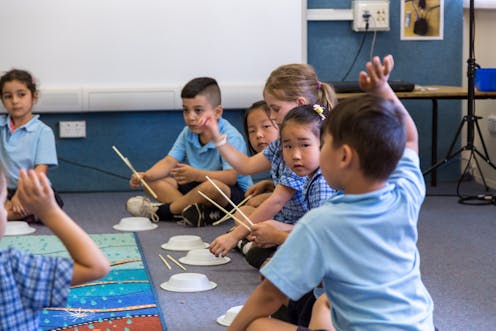
The National Music Teacher Mentoring Program

The National Music Teacher Mentoring Program was established by Richard Gill in 2015 and implemented through the Australian Youth Orchestra.

The mentoring program uses a simple formula: experienced music specialist teachers (the mentors) are paired with generalist early childhood teachers in primary schools which don’t have music programs to develop music programs collaboratively.

First, the mentors assess the teachers’ music experience and skills, student needs and local resources.

Second, specialist and generalist teachers work together to plan music activities that will work for that school, class and teacher.

The training involves mentors demonstrating music teaching in their own classroom, then demonstrating in the teachers’ classroom, along with joint lesson planning, preparation and team-teaching, where mentors gradually hand over the reins to teachers as they gain more music teaching skills and confidence.

The approach of the mentoring program is very different from typical professional development. Ordinarily, teachers may be presented with a great deal of information during a one-day course but they are not provided with ongoing support as they trial new ideas back in their classroom.

Under this mentorship program, mentors and teachers build an ongoing relationship based on trust, mutual respect and collaboration. Since its inception, 630 primary classroom teachers have been upskilled to teach 50,000 students music in their classrooms.


Read more:
Music can help lift our kids out of the literacy rut, but schools in some states are still missing out


Benefits for children

This mentorship scheme provides a ray of sunshine for children who do not have access to music at school, in particular at disadvantaged schools.

Our research found, regardless of gender or socio-economic status, the singing skills of students in these classrooms improved and children showed a general improvement in their attitudes towards music.
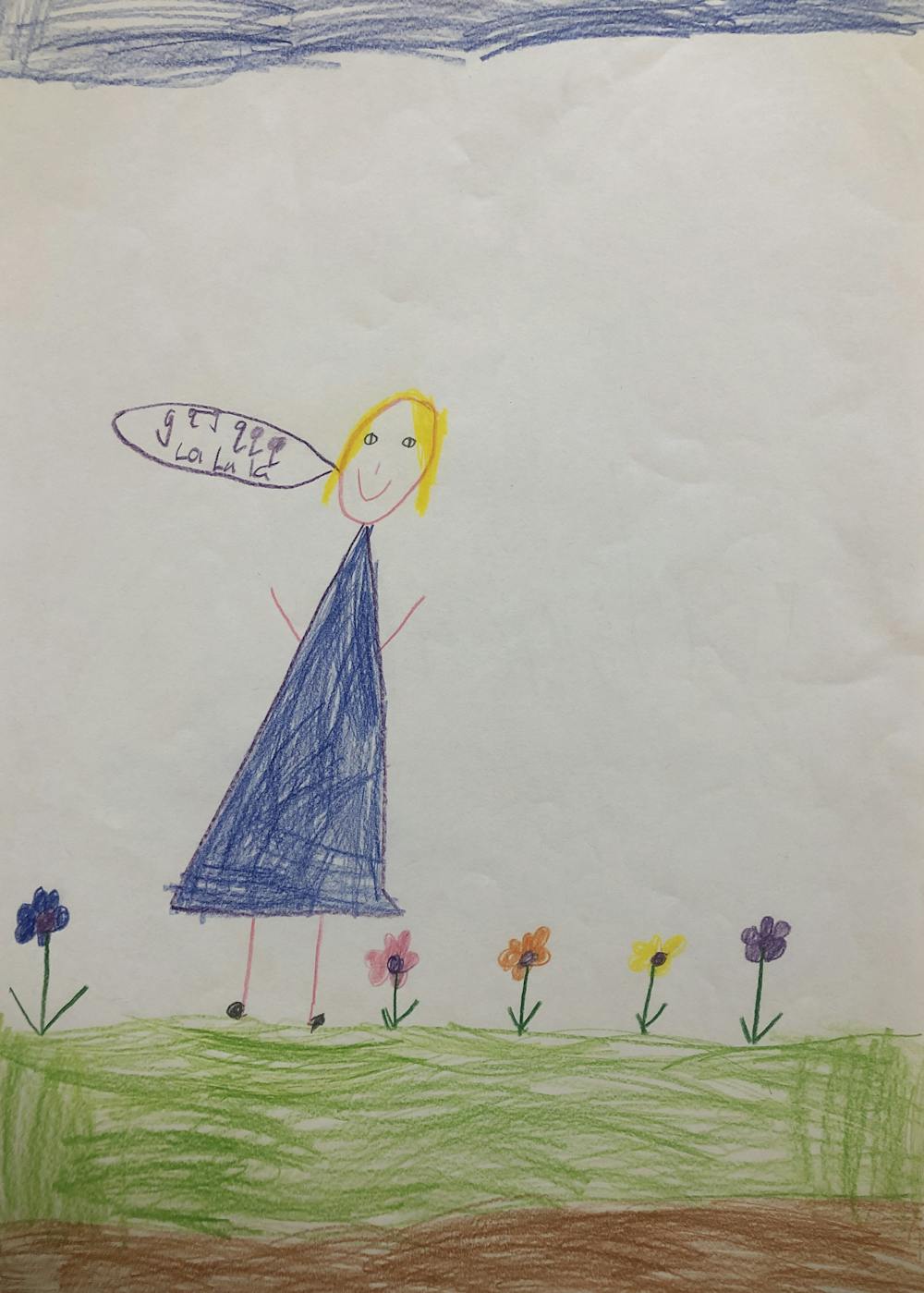
An illustration by a child who took part in the music classes.
The National Music Teacher Mentoring Program

We spoke directly to children who participated in this program. They told us they:

  • recognised the intrinsic value of music

  • sang and played musical games at home and at school

  • made music at home and while travelling in cars

  • played musical instruments

  • accessed music using technology

  • used music for mood and self-regulation

  • built social interactions and confidence through music and

  • identified music’s positive impact on literacy and numeracy development.

One very wise year two child said:

I think [music] is just as important as English and maths. I think it is just as important because if you don’t know how to express yourself or play or sing, then your life isn’t going to be as fun as kids that have got education in music.


Read more:
What’s your school closures playlist? Why music should be part of parents’ pandemic survival strategy


Impact on teachers and schools

As well as talking to children, we interviewed teachers, mentors and principals.

They saw many positive outcomes from the program, including an enriched school curriculum, locally relevant programs that drew on the interests and activities of the school and its community to create music content, the building of teacher resources, increased confidence in teachers’ music skills and a positive impact on student learning and behaviour.

As part of the mentorship, music did not just take place in discrete lessons. The mentoring program integrated music into daily activities and transitions between regular lessons, changing the atmosphere of entire schools.
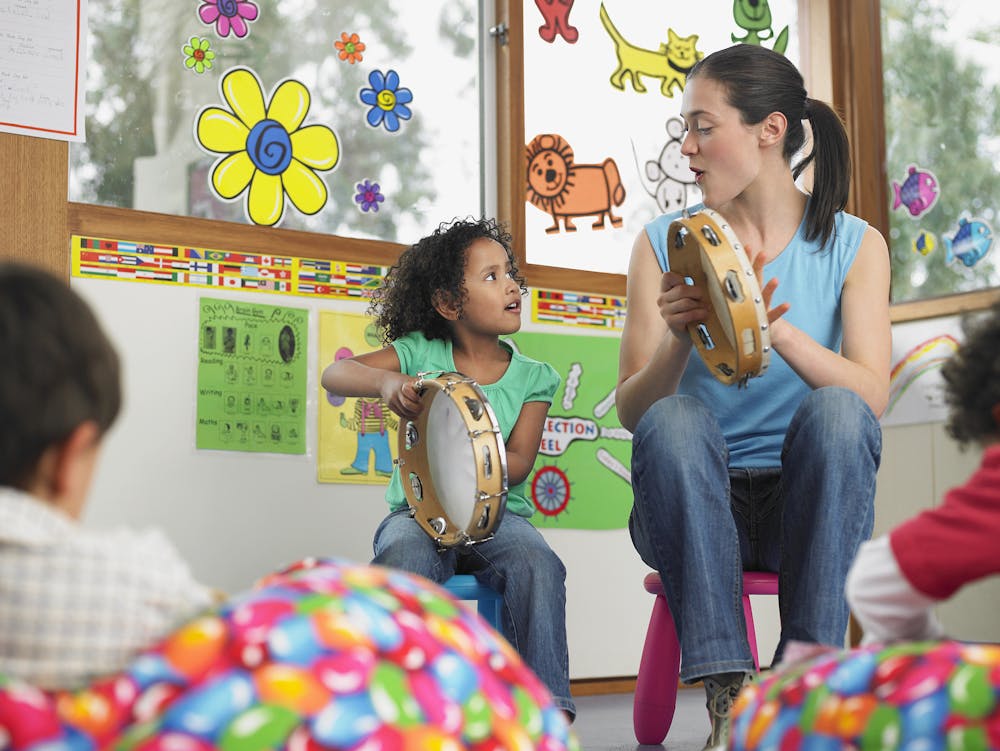
A teacher and a student play tambourines in a colourful classroom.
The mentorship program gives early childhood teachers the confidence to teach music in their classrooms.
Shutterstock

The morning roll-call became a singing game, short music activities between lessons refreshed children for the next task and children continued singing and playing music games out of the classroom in the playground.

Teachers also noted the particular benefits for children from non-English speaking backgrounds who gained English skills and personal confidence through singing and music activities.

As one teacher described:

30% of our students come to us with no English at all, and now they’re learning chunks of language because of singing. Songs make a huge difference to children learning English, because otherwise they’re just silent.

Children with diverse neurological needs also became calmer in the classroom and more actively engaged in learning. One mentor reported:

The teacher was absolutely speechless about this little boy who had a number of learning difficulties, would not speak, incredibly poor self-esteem. But he got up and sang and had confidence.

Bridging the gap between values and skills

The National Music Teacher Mentoring Program has made it possible to upskill classroom teachers with little previous music experience to deliver quality music programs in their schools.

Programs such as this invest in the expertise of specialist music teachers, linking music mentors and teachers to create music programs in primary schools.

Our research has shown early childhood teachers value music highly, but express low confidence in their skills and ability to deliver music education. The National Music Teacher Mentoring program is addressing the gap between values, confidence and skills.

The Conversation

Margaret Barrett receives funding from the Australian Research Council. the Australian Youth Orchestra, and the Melbourne Recital Centre

Katie Zhukov does not work for, consult, own shares in or receive funding from any company or organisation that would benefit from this article, and has disclosed no relevant affiliations beyond their academic appointment.

ref. ‘Just as important as English or maths’: how mentoring is bringing music alive for primary school students – https://theconversation.com/just-as-important-as-english-or-maths-how-mentoring-is-bringing-music-alive-for-primary-school-students-180411

View from The Hill: Morrison talks risk, Albanese spruiks opportunity, in opening pitches

Source: The Conversation (Au and NZ) – By Michelle Grattan, Professorial Fellow, University of Canberra

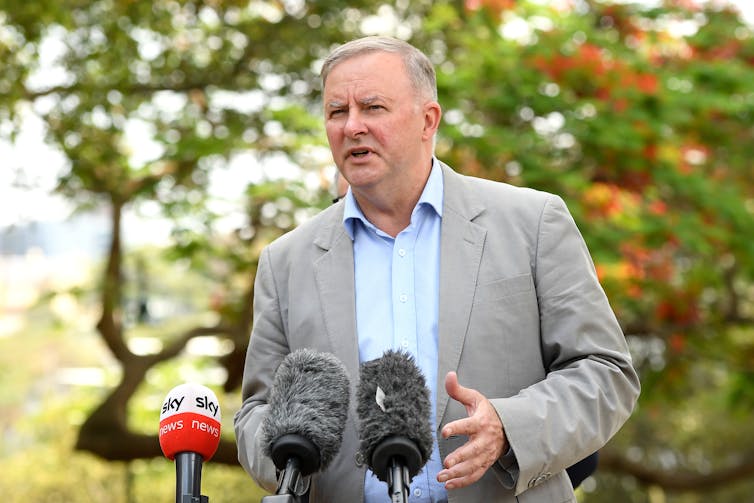
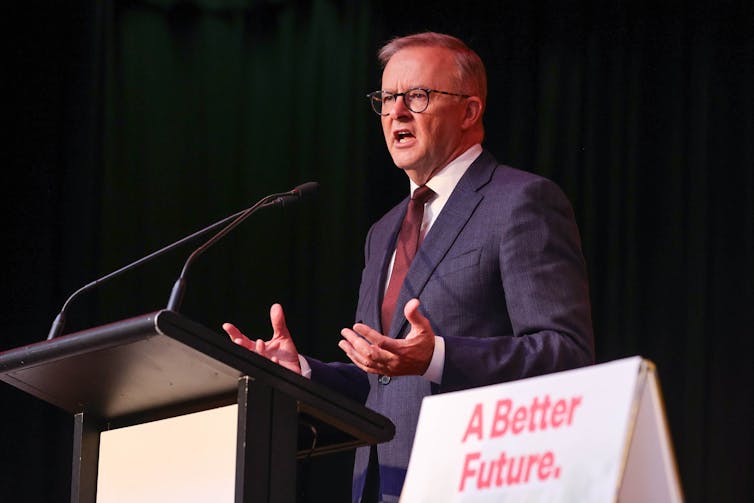
When they faced the media to deliver their opening campaign pitches on Sunday, the core messages of Scott Morrison and Anthony Albanese were clear. One emphasised the risk of change, the other sold change as an opportunity.

They brought different styles to their appearances.

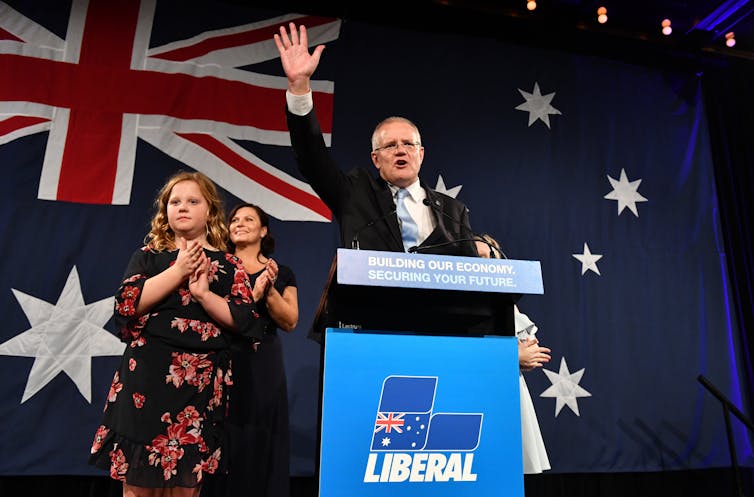
Morrison just wanted to say his piece and get away. Questions can be slippery territory. He cut the press pack’s interrogation short, after warning he’d take “a few quick questions”. It looked abrupt, and Albanese was determined to demonstrate a contrast.

So when he appeared, the Labor leader let the questioning run. But by the end he sounded verbose – which is a perennial fault his minders seem unable to fix.

The Prime Minister didn’t use the word “trust” in his appeal to voters. Given the debate about his character, that mightn’t play so well in the focus groups these days.

But that was the sentiment, expressed through the word “choice”.

“A choice between an economic recovery that is leading the world, and a Labor opposition that would weaken it, and risk it.”

“A choice between a strong and tested government team that has demonstrated our ability to make difficult and tough choices in tough times and a Labor opposition who has been so focused on politics over these past few years that they still can’t tell you what they do, who they are or what they believe in.”

There was more, but the fundamental choice was “between a government that you know and a Labor opposition that you don’t.”

Morrison rehearsed Australia’s achievements in handling both COVID and the economy.

But he is also aware he has to give a nod to the criticisms of his government, so we got (once again) the acknowledgement it “is not perfect […] you may see some flaws”. And, given he’s personally unpopular, Morrison is talking up the “team”.

Albanese attacked the government for lacking “an agenda for today, let alone a vision for tomorrow”. He warned of the fear campaigns to come, but reached out to people’s “sense of optimism and desire for a better future”. This was the time for Australians “to seize the opportunities that are before us”.

In both his opening remarks and responding to questions, Albanese sold himself as a responsible, experienced leader, countering the way the government paints him.

He wouldn’t be a spendthrift – remember he learned the value of a dollar when young. As for the government’s “absurd” attacks alleging his inexperience, there was a CV of his time in office. A leftwinger? “I am who I am” – a “working class lad”, comfortable in a board room and a pub.

Most of what the leaders said we’ve heard before and we’ll hear it endlessly again. But there were surprises from each under questioning about their frontbenches.

Like the PM’s answer when asked whether Alan Tudge would be in his cabinet if the government is returned.

“Alan Tudge is still in my cabinet,” Morrison said.

Which is very different from what Tudge said after last month’s release of the report into a former staffer’s allegations against him (which said there was “insufficient evidence” to find he bullied or harassed the woman).

“I have requested not to be returned to the front bench before the election,” he said. Morrison also said then that Tudge had told him “that […] he is not seeking to return to the frontbench”.

Neither said “frontbench duties”. Their statements were misleading – although there was a hint of something fishy in Morrison’s, which said Stuart Robert would continue as “acting” minister for education.

It recently came out at Senate estimates that Tudge still has the title of education minister. The government says he isn’t being paid as a minister.

There’s little doubt Tudge – after apparently never leaving the current cabinet– would be in a new Morrison cabinet.

And on the subject of ministers, Morrison told his news conference he will reveal who would be his future health minister (Greg Hunt is retiring) “in the next week or so”. Presumably in conjunction with a health announcement.

Also notable was what Albanese said, when probed, about his frontbench.

There has been speculation deputy Labor leader Richard Marles would want to return to the defence area, replacing Brendan O’Connor, if Labor wins. Also canvassed has been the possibility of Kristina Keneally, shadow home affairs minister, perhaps getting an economic job in government.

But Albanese said: “It’s my expectation that the frontbench will serve in the same positions that they’re in now”, although he also referred to this as “the starting point”. (Caucus, which means the factions, formally chooses the frontbench, the leader allocates portfolios.)

Albanese has left himself wriggle room – and perhaps just wants to shut down the stories – but it was significant that he locked himself in to the extent he did.

The Conversation

Michelle Grattan does not work for, consult, own shares in or receive funding from any company or organisation that would benefit from this article, and has disclosed no relevant affiliations beyond their academic appointment.

ref. View from The Hill: Morrison talks risk, Albanese spruiks opportunity, in opening pitches – https://theconversation.com/view-from-the-hill-morrison-talks-risk-albanese-spruiks-opportunity-in-opening-pitches-181039

Women have been at the centre of political debate in the past two years. Will they decide the 2022 election?

Source: The Conversation (Au and NZ) – By Michelle Arrow, Professor of History, Macquarie University

AAP/Diego Fidele

After months of speculation, the prime minister has finally called an election for May 21.

Given the events of the past two years, so-called “women’s issues” look set to play an important role in the campaign. Apart from the government’s headline gender problems, most notably their handling of the Brittany Higgins case, the COVID pandemic exposed the ways our culture still relies on women to perform most of the care work that keeps society functioning. Women workers in retail, health and aged care were at the pandemic frontlines; at home, many juggled paid work with care for children and ageing relatives.

How will the major parties speak to these women?

This government is nine years old, and it has had what former Prime Minister Malcolm Turnbull described as a “women problem” in its parliamentary ranks for all of that time. The LNP still has far fewer women in parliament than the Labor party, and since the departure of Julie Bishop, they have few popular female campaigners to draw on.

In contrast, more than 40% of Labor’s MPs are women. According to recent research, Penny Wong is Australia’s most trusted politician, with Tanya Plibersek not far behind.

Yet despite these high-profile women, for most voters, the election is a contest between two white men, close in age and appearance. After the ALP’s demoralising defeat in 2019 on a progressive platform of redistributive tax reform (changes to franking credits and negative gearing) and health (free cancer treatment and abortions in public hospitals), this time they have chosen a small target strategy. The differences between the two parties are far less obvious than they were in 2019.

Yet much has changed since then. The country has experienced a disruptive three years. While Australians rose to the occasion during the pandemic, enduring lockdowns and quickly getting vaccinated, they were let down by the government’s failures in planning and procurement.

The politics of climate change have also changed since 2019, when Labor was caught between “coal seats” and progressive voters. Three years of unprecedented natural disasters and the government’s failure to take meaningful action mean the LNP is now wedged on climate by the “teal” independents in blue-ribbon seats.

And since the last election, the Coalition’s treatment of women has become a defining issue. In 2018, the party’s humiliation of Julie Bishop as a leadership contender raised the hackles of many in the LNP, including Julia Banks, who resigned from parliament, alleging bullying.

Brittany Higgins and Grace Tame, among others, have done much to galvanise women since the last election.
AAP/Mick Tsikas

But it was the emergence of 2021 Australian of the Year Grace Tame as an eloquent critic of the government on gender issues and Brittany Higgins’ allegation of sexual assault that galvanised Australian women.

Add to that Morrison’s response to the allegations made against Christian Porter, his treatment of former Australia Post CEO Christine Holgate, the expensive stage three tax cuts that will overwhelmingly favour men, failure to enforce a “positive duty” on employers to ensure workplaces free of sexual harassment, and more allegations of bullying against the prime minister from women in his party, and it’s pretty clear the government still has a “women problem”.


Read more:
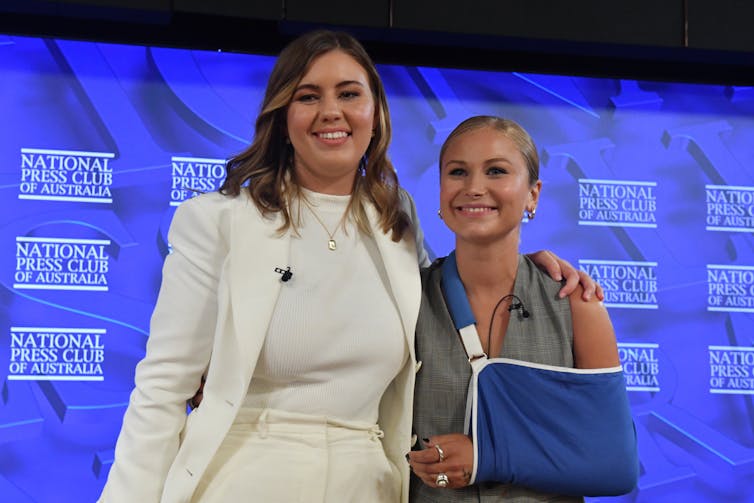
Making change, making history, making noise: Brittany Higgins and Grace Tame at the National Press Club


The unseemly eagerness with which the government seized on unproven allegations that the late Senator Kimberly Kitching had been bullied showed how desperate they are to level the playing field on “women’s issues”.

But how will all this play out in the election campaign?

How women reshaped the major parties

The last few decades have seen a realignment of support for the major parties along gender lines, and the gender differences in voter bases have been especially stark in the Morrison era.

Historically, Australian women tended to vote conservative. While there were very few women in Australia’s parliaments until the late 1970s, those elected tended to represent the Liberal and National parties. The ALP was regarded as a party with a male-dominated union culture, hostile to women.

The emergence of what historian Judith Brett called a “moral middle class” in the 1960s began a larger political realignment in Australia. The Labor party broadened its appeal to the emerging progressive middle class, and women became a crucial part of this constituency as they moved into the workforce and education, expanding their horizons and changing their priorities.


Read more:
Memo Liberal women: if you really want to confront misogyny in your party, you need to fix the policies


Since the 1980s, the gender gap between women and men’s support for the major parties has waxed and waned. But at the last election, the Liberal Party attracted the lowest number of votes from women since 1987. More women than men voted for Labor) in 2019.

Anthony Albanese’s focus on aged care in his budget reply signalled that care, in the broadest sense, would be a central plank of Labor’s campaign. This should matter to everyone – both men and women have ageing parents or grandparents. But because women largely perform society’s paid and unpaid care work, it is an issue that will resonate more with female voters.

To win government, Labor needs to retain women’s votes while renewing their appeal to blue collar men, many of whom shifted to the LNP in 2019. Polling suggests they have succeeded, though how it will play out in individual seats remains to be seen.

In constantly courting the male (and often tradie) vote, Morrison has neglected women.
AAP/Sarah Rhodes

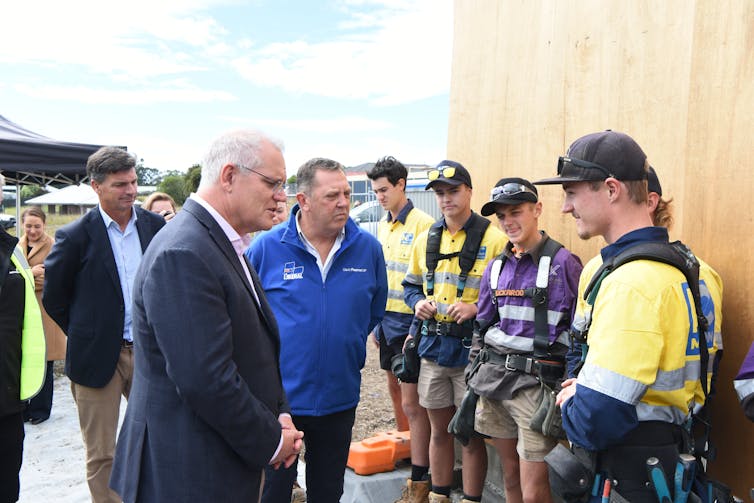
Morrison constantly courting the male (tradie) vote

So what might Morrison do to retain the “men’s vote”? Katharine Murphy has astutely observed that his political attention is always focused on men who “might vote Labor”. This explains why so many women are turned off by his repeated tradie cosplay: he’s not addressing them.

In 2019, Morrison’s “daggy dad” persona served him well: he was happy on the campaign trail, serving up stunts for the 6pm news. However, since then this strategy has faltered. He doesn’t hold a hose when it counts, and his willingness to take credit but never responsibility might represent a kind of masculinity that few Australian men will want to embrace.

In focusing so tightly on the male vote, Morrison has neglected women. It may yet cost him government. The wild card in this election is the number of largely female independents running in safe Liberal seats.

In an alternate universe, most of these women would be Liberal Party moderates, had the party not worked so hard to alienate them. In the early 2000s, John Howard dismissed Liberal-leaning women who disliked the party’s policies on refugees and social issues as “doctors’ wives”: Anne Henderson noted critics regarded them as women with “enough money to afford a conscience”.

Yet in 2022, the Liberal party would do well to remember that many “wives” are also doctors – professional, socially progressive and economically centrist, looking for candidates who represent their values. This is why the “teal” independents have made urgent action on climate, an integrity commission, and better action on gender equity central to their platforms. Their views on aged care reform – which will require increased government spending – are less clear.

The next few weeks will reveal whether they emerge as a new force in Australian politics. Whatever happens, many women voters are clearly signalling they will no longer be taken for granted, and this renewed engagement is a promising sign for a more responsive, representative politics.

The Conversation

Michelle Arrow receives funding from the Australian Research Council. She was a campaign volunteer for the Australian Labor Party at the 2019 election. Michelle would like to thank Shaun Wilson for his assistance in researching this article.

ref. Women have been at the centre of political debate in the past two years. Will they decide the 2022 election? – https://theconversation.com/women-have-been-at-the-centre-of-political-debate-in-the-past-two-years-will-they-decide-the-2022-election-179749

As the election campaign begins, what do the polls say, and can we trust them this time?

Source: The Conversation (Au and NZ) – By Adrian Beaumont, Honorary Associate, School of Mathematics and Statistics, The University of Melbourne

Prime Minister Scott Morrison has called the federal election for May 21. What do the polls say, and how do we know if they are accurate?

There have been five national polls conducted since the March 29 budget. Newspoll gave Labor a 54-46 lead, a one-point gain for the Coalition since mid-March, and Ipsos a 55-45 lead (its first poll since the 2019 election). Morgan gave Labor a 57-43 lead, a 1.5-point gain for Labor since the previous week.

Essential’s “2PP+”, which includes undecided voters, gave Labor a 50-45 lead (48-44 two weeks ago). Analyst Kevin Bonham estimated Resolve would be about 55.5-44.5 to Labor from the primary votes, a 1.5-point gain for Labor since mid-February.

If these poll results were repeated on election day, Labor would easily win a majority in the House of Representatives. While the polls could change between now and election day, or be inaccurate, it’s wrong to say that current polls would result in a minority government.

The Coalition’s main hope is not that the polls are wrong again, but that they improve in the polls over the course of the election campaign. They probably don’t need to win the two-party vote. In both 1990 (Labor) and 1998 (Coalition), incumbent governments won a majority of seats despite losing the national two-party vote.

In 1998, Labor won the two-party vote by 51.0-49.0, while in 1990, the Coalition won by 50.1-49.9. The government can win a majority if the two-party result is fairly close, but if it’s the blowout that current polls suggest, Labor will easily win a House of Representatives majority.

The Poll Bludger’s BludgerTrack aggregate of all polls currently has Labor winning by 55.3-44.7, while Bonham gives Labor a 54.6-45.4 lead.

Are the polls accurate?

At the 2019 election, the final pre-election Newspoll gave Labor a 51.5-48.5 lead, and other polls were similar. The actual two-party result was the reverse, with the Coalition winning by 51.5-48.5.


Read more:
Final 2019 election results: education divide explains the Coalition’s upset victory


Australian pollsters are assisted by compulsory voting, so they don’t need to estimate the likelihood of various demographics voting. By Australian standards, this was a major poll blunder.

After the 2019 election, the Australian Polling Council was formed so pollsters disclose basic information, like how they weight their samples. Of Australia’s four regular pollsters that conduct national polls, Essential and YouGov, which conducts Newspoll, are APC members, but Morgan and Resolve are not.

Until we know the results of this year’s election, we can’t be completely confident the polls are not messing up again. Our four current regular pollsters use online methods to conduct polls, with Morgan supplementing with live phone interviews. There is not enough variety in methods used to give confidence.

The polls’ problem in the 2019 election was likely caused by failure to weight to educational attainment. I wrote last May that non-university-educated whites in the United States, United Kingdom and Australia have been moving to the right. So it gives me more confidence that Newspoll is now weighting its results by education.


Read more:
Non-university educated white people are deserting left-leaning parties. How can they get them back?


Polling of state elections since the 2019 federal election has been good. This polling has somewhat understated Labor. At the recent South Australian election, the final pre-election Newspoll gave Labor a 54-46 lead; it actually won by 54.6-45.4.

At the March 2021 Western Australian election, Newspoll’s final poll gave Labor a 66-34 lead, but it actually won by a record-breaking 69.7-30.3 margin. At the October 2020 Queensland election, the final Newspoll gave Labor a 51.5-48.5 lead, but it won by 53.2-46.8.

It is a pity other pollsters have not attempted to poll close to state elections, so their vote estimates could be tested against actual results.

Morrison’s ratings at about this time before the 2019 election were only slightly negative in Newspoll, while then Labor leader Bill Shorten’s ratings were consistently in the negative double digits. Currently, Morrison’s ratings are in the negative double digits and Albanese is near net zero, so personal ratings are lining up better with voting intentions.

Non-response bias is thought to be the reason US 2020 polls understated Donald Trump. Trump supporters distrusted the established media, including polls, so much that they did not respond to polls. This was not a “shy Tory” effect, when people lie to pollsters, but simply not participating in polls.

State election results so far indicate non-response bias isn’t yet a major factor in Australia. It would be very difficult for pollsters to correct for non-response bias, so hopefully it doesn’t become a factor here.

The Conversation

Adrian Beaumont does not work for, consult, own shares in or receive funding from any company or organization that would benefit from this article, and has disclosed no relevant affiliations beyond their academic appointment.

ref. As the election campaign begins, what do the polls say, and can we trust them this time? – https://theconversation.com/as-the-election-campaign-begins-what-do-the-polls-say-and-can-we-trust-them-this-time-180318

How the Coalition can win the 2022 election

Source: The Conversation (Au and NZ) – By Mark Kenny, Professor, Australian Studies Institute, Australian National University

Wes Mountain/The Conversation, CC BY-ND

This piece is the second in a two-part series. Its companion piece, How Labor can win the 2022 election, can be found here.


When the counting’s done, elections obey the iron laws of arithmetic. Yet, in the lead-up to polling day, psychology also plays its part.

At two key federal elections in living memory, the upset winner relied on more malleable things than hard numbers to leaven their poor electoral prospects – unquantifiables such as hope, self-belief, even faith.

Paul Keating’s “victory for the true believers” in 1993, and Scott Morrison’s “miracle win” in 2019, stand out as elections during which the leaders successfully harnessed these most human of motivations.

Each had used them not merely to steel themselves against a corrosive defeatism to which they might have otherwise succumbed, but also to project that confidence within their inner circle and outwards to their wider base. This “build it and they will come” mindset assisted them to beat the odds and ultimately prevail.

Crucially, both campaigns were designed to give tired governments another term against fresher, if more radical, alternatives: John Hewson’s super-specific Fightback manifesto in 1993, and in 2019, Bill Shorten’s comprehensive tax-and-spend plans.

In 2022, though, Morrison faces a tougher task.

First, he’s already pulled off a stealth victory once, and Anthony Albanese has taken clear lessons from that shock. The Labor leader is determined to make election 2022 a referendum on the government’s failures and not, as it became in 2019, a fear-fight about the opposition’s policy plans. Expect Albanese to direct the spotlight relentlessly at the prime minister himself.

Second, Morrison’s advantage in 2019 was that voters didn’t know him well, which allowed the former marketing executive to fill in the gaps.

Cunningly, he presented as a kind of competent accountant who was reassuringly dull. It worked precisely because he was so unthreatening – a politician, yes, but one who was also a suburban everyman. Voters felt little desire to know more.

Scott Morrison faces a tougher electoral task in 2022 than he did in 2019.
AAP/Mick Tsikas

Three years later though, they do. They see a polarising figure known for blame-shifting, despised by some who have worked with him closely, and described as deceitful, overbearing and ruthless.

Third, the Coalition is probably further behind in 2022.

Yet, for all this, Morrison has told his colleagues he will win, and few doubt his belief. So, is a fourth term possible? Yes, if Morrison succeeds in keeping the focus on his ground – the economy and national security – enabling him to retain the seats the Coalition holds in net terms.

That won’t be easy, given Labor’s eight-point two-party lead and the fact that Morrison is just one point ahead in the most recent Newspoll’s better PM index. Mark, have updated this from last night


Read more:
Coalition and Greens gain in post-budget Newspoll as an Ipsos poll gives Labor a large lead


Yet, as Morrison has told his colleagues, Labor’s path to a majority is more difficult. It’s harder still if you price in the usual narrowing of opinion polls at the business end of this race.

In raw seats, Morrison starts ahead, with 76 in the 151-member house to Labor’s 69. The opposition needs to hold what it has and gain seven to govern in its own right.

Queensland might be the birthplace of the ALP and friendly ground for Labor’s Annastacia Palaszczuk, but it is hardly propitious for federal Labor. Out of 30 House of Representatives seats, Labor holds just six, and has no great confidence in picking up more.

That said, the veteran Liberal Warren Entsch (Leichhardt) admits the slow responses to the floods and the pandemic have left Far North Queensland voters angry, with some now drifting rightward towards populists Clive Palmer and Pauline Hanson.

In the Northern Territory it is probably status quo also, although Liberals think Lingiari (5.5%) is “gettable” after the retirement of Labor stalwart Warren Snowden. Solomon (3.1%) is also mentioned.

So what about resource-rich Western Australia? Here, Morrison could live or die. Labor is optimistically eyeing five seats but if by some strange “miracle” Liberals hang on to all of them, Morrison would be a long way towards retaining government. Yet going into the campaign, that looks unlikely.

Labor is campaigning hard in Pearce, which has been vacated by Christian Porter and is likely to snare the 5.2% electorate given Porter’s infamy and the shredded Liberal brand in the West.

With Christian Porter retiring from politics, the West Australian seat of Pearce is one of those Labor is eyeing off in the west.
AAP/Lukas Coch

The next most likely are Swan and Hasluck. The former is being vacated by a retiring Liberal MP Steve Irons. At just 3.2%, it too is a probable Liberal loss. Hasluck, however, held by the respected Minister for Indigenous Australians Ken Wyatt, would take a 6% Labor swing to change hands.

Moving east, the recent rout of the Liberal state government in South Australia suggests the blue-ribbon jewel of Boothby (1.4%) will fall. But that could easily be the extent of damage in the ten-seat central state. That said, state voting booth-by-booth, if applied to federal boundaries suggests Sturt at 6.9% is also vulnerable.

In Victoria, Labor’s support was high at the last election, which means there are few Labor prospects in 2022 aside from Chisholm (0.5%). However, the Liberal party is under threat in several heartland seats with “teal” independents pushing hard in Higgins, Kooyong and Goldstein.

In New South Wales, Morrison expects to regain Gilmore via a popular ex-state MP for the area, Andrew Constance. In a best-case scenario, the biggest state would otherwise remain fairly static. Still, a squalid factional brawl has left key electoral prospects without Liberal candidates until the death knell. Plus, Liberal seats like Reid (3.2%) and Robertson (4.2%) remain extremely vulnerable.

Liberals say an against-the-play gain in Tasmania is possible, with Morrison eyeing an upset in Labor-held Lyons (5.1%). But the party could also fall short and lose Bass as well, which it holds by a wafer-thin 0.4%.

In the end, all this detail could be swept aside if the electorate is of a clear mind to change government. As they say in political circles, when a swing is on, it’s on.


Read more:
Want to understand how the Coalition works? Take a look at climate policy


Nevertheless, Morrison could actually survive a sizeable swing in some areas if he can pick up the odd win here and there to offset losses.

Of course, the wildcard is the rise of the independents. Their success in Liberal strongholds such as Wentworth, Goldstein, Higgins and Curtin could see the Coalition displaced even if Labor falls short of its own majority. And defending these seats will cost money and resources.

After nearly a decade in office, the Coalition carries plenty of scar tissue into this contest, and Morrison himself has attracted extraordinary personal criticism on character grounds – largely from his own side.

Yet he is an ebullient and disciplined campaigner who has shown how to carry a message, dismantle those of his opponents, and frighten voters.

In 2019, voters didn’t need to like him to stick with the status quo. He’ll be hoping that in 2022, his perceived strengths on jobs, economic growth, and national security, will outweigh his low standing personally.

And who knows? Surely that’s the key lesson of 2019 for both sides: it’s not over until it’s over. Morrison believes this even if others have their doubts.

The Conversation

Mark Kenny does not work for, consult, own shares in or receive funding from any company or organization that would benefit from this article, and has disclosed no relevant affiliations beyond their academic appointment.

ref. How the Coalition can win the 2022 election – https://theconversation.com/how-the-coalition-can-win-the-2022-election-179942

How Labor can win the 2022 election

Source: The Conversation (Au and NZ) – By Chris Wallace, Associate Professor, 50/50 By 2030 Foundation, Faculty of Business Government & Law, University of Canberra

Wes Mountain/The Conversation, CC BY-ND

This piece is the first in a two-part series. Its companion piece, How the Coalition can win the 2022 election, can be found here.


Every election is winnable, by either side, as the 2019 election showed. Labor enters this one in better shape, and with better prospects, than last time.

Providing it’s not bested over the tough weeks of the campaign itself, and barring shock developments before election day, Labor appears to be on track for victory. These are things it needs to do to make sure it gets there.

1. Anthony Albanese should continue to be “the reasonable person”

Compare television footage of Albanese at the beginning of his opposition leadership with now and you see a leader who has worked hard to make himself fit – and to look fit – for office.

He is not perfect, but has not made the perfect the enemy of the good. In the tradition of Bob Hawke making himself electable by forgoing the grog and giving up savaging journalists, Albanese now stands tall, dresses professionally and speaks more clearly. He has gone from looking like someone from the Annandale Hotel’s front bar to a leader one can easily see living in The Lodge.

Albanese in 2019 …
AAP/Albert Perez

Albanese has also perfected the “reasonable person” image essential to making voters comfortable about installing him there for the next three years. By vastly improving his public presentation, running a tidy and effective opposition, and not scaring the horses, Albanese has made Labor more competitive at this election than it was in 2016 or 2019 – elections it only narrowly lost.

Crucially, his personal efforts and strategic approach, combined with extraordinary caucus loyalty, have enabled him to turn around the massive net popularity advantage Scott Morrison once enjoyed.

… and in 2022.
AAP/Russell Freeman

While Albanese’s Newspoll net approval rating of -1 is not stellar, it’s significantly better than the now toxic Morrison’s net approval rating of -12.

The more popular leader doesn’t always win federal elections. However, the last three times governments fell (at the 1996, 2007 and 2013 elections), the opposition leader had a higher net approval rating than the prime minister who lost. Albanese needs to maintain this advantage during the campaign.


Read more:
Coalition and Greens gain in post-budget Newspoll as an Ipsos poll gives Labor a large lead


2. Labor should remain disciplined to keep the focus on government bungles

Morrison overcame the political damage from his truculence during the 2020 bushfire crisis when he reluctantly returned from an Hawaiian holiday and declared he “did not hold a hose”.

Voters forgave him and his standing recovered. Since then, voters have joined the dots between this and several other areas of perceived underperformance. There was the COVID-19 vaccine “strollout”, the punitive and unlawful “robodebt” scheme, the mishandling of the Brittany Higgins rape allegation and historic rape allegations against cabinet minister Christian Porter, and slackness over the organisation of COVID-19 booster shots and RAT tests, among other bungles and integrity clouds.

French President Emmanuel Macron’s response last year “I do not think, I know” to the question of whether Morrison lied in dealings with him over a major defence contract proved a turning point.

Macron’s comment tipped the accumulated weight of the government’s poor performance into a fundamental adverse shift in voter perceptions of the Coalition. The government had not reversed this by the time the election was called.

Labor has to keep attention on the pattern of Coalition incompetence and avoid making itself the issue.


Read more:
Tax cuts? COVID management? On the search for the Morrison government’s legacy (so far)


3. Labor should resist the temptation to exploit the Liberal Party NSW division’s implosion

When you see an opponent digging a hole for themselves, don’t interfere – let them keep digging. The prime minister’s central involvement in the chronic Liberal preselection stoush in his home state of NSW has put the government’s re-election at risk. This is because survival depends on the Coalition picking up enough seats from Labor in NSW to offset expected losses in other states.

Yet Morrison has stubbornly prioritised preselection protection for his unpopular factional ally Alex Hawke over getting the NSW division of the Liberals election-ready. While the NSW court of appeal gave Morrison a victory of sorts this week when it dismissed a claim that the hand-picking of candidates was invalid, the damage within the party has been done and bitterness remains.

This kind of “precipice” politics is extraordinary so close to a poll: the printing of corflutes and campaign literature featuring candidates for a number of seats awaited the exhaustion of legal challenges to Morrison’s plan.

Providing Labor lets Liberal infighting in NSW speak for itself, there will be dividends to the opposition in a populous state with a large number of seats.

4. Labor should continue its ‘smart target’ policy approach and showcase its best frontbenchers prominently in the campaign

Learning from errors last time round, Labor can avoid becoming the subject of a large-scale fear campaign by keeping policy strategic, straight-forward and easily communicated to voters. There is no equivalent this time of Labor’s complicated 2019 franking credits policy or uncosted climate change policy, both vehicles for damaging coalition attacks.

Further, Labor has a higher performing frontbench than last time. Albanese has done a better job than his predecessor Bill Shorten in matching the best frontbench talent with the right portfolios to show Labor as an effective alternative government.

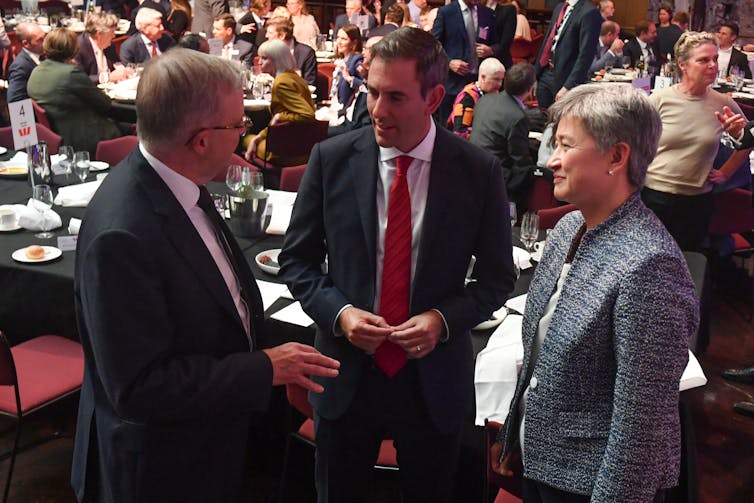
Several strong performers, such as Shadow Treasurer Jim Chalmers in the vital economic sphere and Shadow Foreign Minister Penny Wong in the sensitive foreign policy area, showcase Labor’s readiness for office.

They and talented colleagues should feature strongly in Labor’s paid advertising, letting voters know Albanese has a strong frontbench and signalling that his government, in contrast to Morrison’s, won’t be dysfunctional.

Labor has a talented frontbench, including Jim Chalmers as shadow treasurer and Penny Wong in foreign affairs.
AAP/Mick Tsikas

5. Albanese should draw on voter goodwill by association with Labor’s successful state premiers

Voters strongly supported the approach of state premiers during the most dangerous phases of the COVID-19 pandemic. Most of these were Labor premiers, who benefited in opinion polls and at the ballot box for keeping citizens safe.

Queensland Labor Premier Annastacia Palaszczuk won her third election in a row. Western Australian Labor Premier Mark McGowan was re-elected with a majority so big the Coalition was reduced to just two MPs in the WA parliament’s lower house.

Liberal premiers who replicated the Labor premiers’ approach, and pushed back against Morrison’s pressure to open up early, did well. Those who went with the Morrison approach were punished: Liberal South Australian premier Steven Marshall lost office last month, and the minority government of NSW Premier Dominic Perrottet is deeply unpopular and clinging to power by a thread.

The Labor brand has benefited from the Labor premiers’ pandemic leadership. Albanese should subtly encourage perceptions he is from the same mould, being seen with them in judicious quantities, to get some spillover benefits by association.

The Conversation

Chris Wallace has received funding from the Australian Research Council.

ref. How Labor can win the 2022 election – https://theconversation.com/how-labor-can-win-the-2022-election-179750

View from The Hill: an election fought on the political low ground

Source: The Conversation (Au and NZ) – By Michelle Grattan, Professorial Fellow, University of Canberra

This election is a contest between a desperate prime minister and an opposition leader who sometimes looks as though he has been promoted beyond his capability.

Neither government nor Labor is putting forward an agenda to seize the imagination of Australians as they struggle out from the pall of the pandemic.

The Coalition, which enters the campaign well behind in the polls, is pitching centrally on economic management, as well as national security. Labor is casting itself as the “caring” party: “Child Care. Medicare. Aged Care. Because Labor cares”. It portrays the government as “out of ideas and out of time”.

This is an election that will be fought on the political low ground, not on the heights of competing ambitious blueprints for the country’s future. It’s a battle between a leader who’s lost the confidence of many of the public and one who has yet to gain it.

If Scott Morrison struggles over the line, we can expect a continuation of the “managerial” style of governing we’ve seen in the last three years.

If Anthony Albanese wins, Labor’s approach is promised to be (as he keeps repeating) “renewal not revolution” – worthy initiatives rather than innovative and bold thinking.

No one rules out the uncertainties of a hung parliament, which would put the spotlight on the crossbench.

Of course whoever is the victor may surprise us – for better or worse. And events, which have shaped politics so dramatically and unexpected during this parliamentary term, will continue to play a major, but unpredictable, part in the next.

Morrison enters the campaign with massive scarring. The ordinary (if little known) bloke from the suburbs, promoted as the so-called “daggy dad” of the 2019 campaign, is now viewed very differently.

Many voters have come to see him more clearly than they did three years ago, and don’t like what they see. He’s widely disliked and distrusted (although “trust” is multifaceted – a leader can be personally distrusted but still trusted on, say, the economy). Women in particular view the prime minister negatively. Colleagues will admit privately he’s a drag on their vote, especially in some traditional Liberal seats.

To state the obvious, Morrison can’t win this election by any sort of charm offensive. His problems are way beyond that.

It will be like the sighting of a rare bird if and when he appears in the seats where Liberals are fighting off high profile “teal” independents. Wooing those voters will have to be left to treasurer and deputy Liberal leader Josh Frydenberg.

Morrison can only win if he manages to demolish his opponent, instilling uncertainty and fear about an Albanese government.

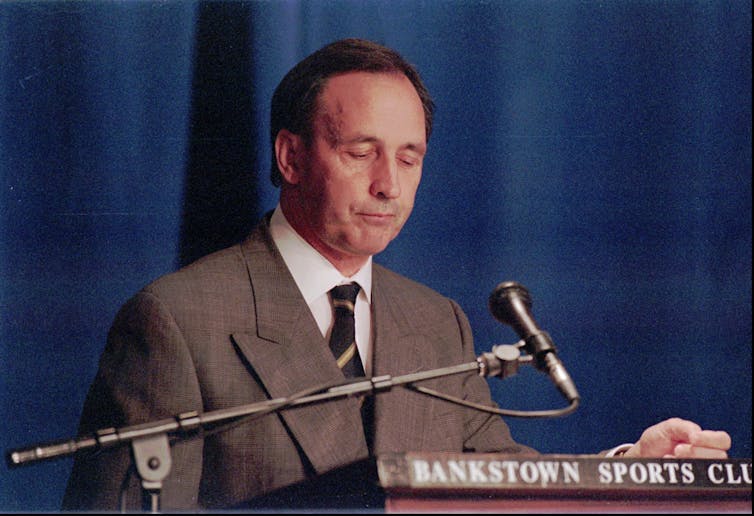
There are parallels between Morrison and Paul Keating, both the Keating of the 1993 campaign and the Keating of 1996.

Morrison hopes to emulate Keating’s (unexpected) win in 1993, when he triumphed with a shock-and-awe negative campaign.

But, unlike Keating, who in that campaign was punching at an enormous target in John Hewson’s radical Fightback program, Morrison’s target is akin to a rolled-up porcupine.

In 1996, the then-prime minister had worn out his welcome with the electorate and grappled with the small-target John Howard opposition. Keating lost. History may or may not repeat itself.

Morrison’s challenge is to inflate, in the minds of voters, an apparently unthreatening Labor alternative into something alarming. “Labor is an unknown in uncertain times,” the PM declares.

Morrison’s situation compares with Paul Keating’s in 1996, when the then-prime minister had worn out his welcome with the electorate.
AAP/Steve Holland

Albanese’s strength in a two-horse race is that he is not Morrison (or indeed Bill Shorten, with his excessive policy baggage, of the 2019 campaign).

His weakness is that, after decades in politics, he may not be disciplined enough, under the blowtorch, to avoid errors in the next several weeks. A certain prickly quality could come through under stress. And, although people don’t dislike him, he lacks the charisma of a Bob Hawke or the freshness of a Kevin Rudd. His persona doesn’t drive people away, but it’s no political magnet.

Albanese’s vulnerability was obvious the day after his budget reply, when pressed on Nine’s Today show about whether he’d increase taxes. On this simple and most expected question he faffed around, deflected, talked about the government. It took a couple of days before the issue was cleaned up (Labor would only increase taxes on multinationals).

If Albanese has trouble answering something so predictable, Morrison will often say anything that seems convenient in the moment, regardless of whether it’s true. On the ABC’s 7.30 last week, he asserted Gladys Berejiklian had denied a text message saying he was a horrible person. In fact, she’d pleaded lack of recollection.

When Morrison’s statements are misleading, they tend to come back to bite him. It’s part of his wider “character” problem. The denigration of him from people on his own side (Berejiklian, Barnaby Joyce) via leaked texts and in parliaments (Senator Concetta Fierravanti-Wells, NSW Liberal Catherine Cusack) has done him much more damage than his opponents could inflict.

The Morrison “character” failure delivers a windfall to the “teal” independents who are challenging Liberal seats usually considered safe. While the “teals” are elevating climate change and integrity, they also give Liberal voters who can’t stand Morrison personally a bolthole.

An extensive network of “teals” is appealing to the moderate centre of politics, with the contests in Mackellar, North Sydney, and Wentworth in NSW, and Goldstein and Kooyong in Victoria the core “teal” tests.

The “teals” have already had an impact. Morrison’s determination to have the government embrace net zero by 2050 was at least in part driven by having to sandbag Liberals in these seats. The payoff for the Nationals to agree to the target was billions of dollars for infrastructure for the regions.

These “teals” are well funded, especially thanks to the Climate 200, started by Simon Holmes a Court, and well organised. In Kooyong for example, there are hundreds of volunteers helping independent Monique Ryan, who is running against Treasurer Josh Frydenberg.

The high profile independents are diverting Liberal resources and attention. But their difficulty in actually winning should not be underestimated: they have to force themselves into second place on primaries before they can get a leg up on preferences.

There is already a batch of crossbenchers in the House of Representatives. Most will be returned and they’d be critical if the parliament were hung.

The 46th parliament hasn’t had much to commend it. Its legislative achievement was meagre. COVID was a massive limitation, but it wasn’t the sole problem. There was a lack of ambition, which the pandemic masked. For example, the government’s failure to bring in an integrity commission was basically a failure of will, a reluctance by the government to meet the public’s expectations.

The 46th parliament had little to recommend it.
AAP/Lukas Coch

For the reputations of individuals, and the institution of parliament generally, this has been a devastating term.

The parliament was rocked by the allegation of former staffer Brittany Higgins that a colleague raped her in a ministerial office. A subsequent inquiry into the parliamentary workplace painted a shameful picture of bad conduct.

Linda Reynolds, the minister who initially dealt with Higgins, was shifted sideways. Indirectly, consequences flowed to the late Labor Senator Kimberley Kitching, ostracised by her own side for allegedly leaking to Reynolds about the matter.

In the wake of a historical rape allegation (which he denied), Christian Porter quits politics at this election. A messy affair with a staffer (in the previous term) saw Alan Tudge effectively shunted from the frontbench (although he formally retained title of education minister).

On a number of fronts, the 46th is a parliament that won’t be missed. Everyone would hope – but not necessarily expect – the 47th, with the worst of COVID behind us, will be one of greater achievement.

As the formal campaign starts Albanese, on the basis of the polls, is in a winning position. But, especially given the experience of 2019, pundits are being careful with predictions. In elections there is not just the national campaign grabbing the headlines but the grassroots contests. If things are close, they can be the difference between victory and defeat.

The current polls guide us as to how people are thinking at this instant; they can’t tell us if or how the formal campaign might reshape that thinking.

The Conversation

Michelle Grattan does not work for, consult, own shares in or receive funding from any company or organization that would benefit from this article, and has disclosed no relevant affiliations beyond their academic appointment.

ref. View from The Hill: an election fought on the political low ground – https://theconversation.com/view-from-the-hill-an-election-fought-on-the-political-low-ground-180670

One issue matters more to top economists than any other this election: climate change

Source: The Conversation (Au and NZ) – By Peter Martin, Visiting Fellow, Crawford School of Public Policy, Australian National University

Wes Mountain/The Conversation, CC BY-ND

Offered a menu of issues to choose from as the most important in the May 21 election, Australia’s top economists have overwhelmingly zeroed in on one.

Three quarters of the 50 top economists surveyed by The Conversation and the Economic Society of Australia have nominated “climate and the environment” as the most important issue for the incoming government and the most important in the election.

The 74% who nominated climate and the environment is more than twice the proportion that nominated the four substantial runners up: housing availability and affordability, health, tax reform, and education.


Made with Flourish

None of the 50 surveyed nominated “lower taxes” as important for the election or the incoming government, and only 8% nominated support for business.

The economists chosen for the survey are recognised as leaders in fields including economic modelling and public policy. Among them are former IMF, Treasury and OECD officials, and a former member of the Reserve Bank board.

Many noted that their priorities were at odds with those of both major parties.

Guyonne Kalb of The University of Melbourne observed that Australia was especially vulnerable to climate disasters, and that the population seemed to recognise this more than the government. Being the last nation to use outdated technologies was “never wise if it can be avoided”.


Read more:
Below the Line: introducing The Conversation’s new election podcast, hosted by Jon Faine


Young Economist of the Year Stefanie Schurer said Australia had fallen so far behind the richer countries on measures to reach net zero it ranked “dead last” according to the Climate Council. It was not only embarrassing, but “incredibly shortsighted” given Australia’s exposure to extreme weather events.

Flavio Menezes of The University of Queensland said the needed transition was massive. To achieve net-zero by 2050 (a target accepted by both sides of politics) Australia would need an 800% increase in large-scale wind, solar and hydro generation, as well as a corresponding increase in the transmission capacity.

The current government’s motto of technology not taxes was “an empty slogan”. Much of the needed spending would have to be funded by taxes.

A carbon tax would help

The University of Queensland’s John Quiggin described the campaign as the most depressing he had seen in more than 50 years of paying attention. Neither major party was offering anything substantive.

Several participants noted that a carbon price (or tax) of the kind Australia had between 2012 and 2014 would provide a permanent incentive for every sector of the economy to find new ways to cut emissions, but was “not on the table”.

Consulting economist Rana Roy said Australia actually had several types of carbon price in place, but their rates varied widely, with emissions in some sectors untaxed, while emissions in other sectors (such as petrol) were overtaxed.


Read more:
Economists back carbon price, say benefits of net-zero outweigh costs


The third of the economists surveyed who nominated tax reform as an important issue said it would be needed to deal with the other issues identified as important: housing affordability, health, and education.

Saul Eslake said in an ideal world both sides of politics should be having an intelligent conversation about the least damaging ways of raising the extra one to two percentage points of GDP in tax revenue that will be needed to fund priorities including aged care and the national disability insurance scheme.

Tax reform would help

The University of Melbourne’s Kevin Davis said next year’s planned stage three tax cuts directed at higher earners (and costed by the Parliamentary Budget Office at $76.2 billion over four years) should be scrapped on equity grounds alone.

Superannuation tax should also be reformed, and capital gains tax concessions reduced or axed. The “massive” tax concessions offered to home buyers and buyers of investment properties were among the chief reasons for high prices.

Curtin University’s Rachel Ong ViforJ said changes that moved away rewarding the ownership of non-productive assets toward rewarding work would be needed to address the intergenerational transmission of debt.

Higher productivity would help

The University of Sydney’s Nigel Stapledon said neither side of politics seemed focused on the emerging risk of 1970s and 1980s-style inflation.

The idea that the government could drive real wages growth without productivity improvements and not feed inflation was dodgy economics and risky policy.

Melbourne University’s John Freebairn said productivity growth had been below world’s best practice for a decade, making it hard to lift incomes and collect tax.


Read more:
Cut emissions, not petrol tax. What economists want from the budget


Tax reform itself could raise more tax by boosting productivity and cutting inequality, as could better regulations and less wasteful government spending.

Former OECD official Adrian Blundell-Wignall said Australia didn’t have a plan that offered less dependence on digging holes. Research and development and a highly educated population were the keys to driving sustainable growth.

But there’s little optimism

None of the 50 members of the panel was optimistic about either side of politics offering what was needed, at least during the campaign.

Eslake (a Tasmanian) said he was more likely to “tread in thylacine-poo on my front lawn of a morning” than to see the intelligent conversations that were needed between now and voting day.


Individual responses:

The Conversation

Peter Martin does not work for, consult, own shares in or receive funding from any company or organisation that would benefit from this article, and has disclosed no relevant affiliations beyond their academic appointment.

ref. One issue matters more to top economists than any other this election: climate change – https://theconversation.com/one-issue-matters-more-to-top-economists-than-any-other-this-election-climate-change-180948

Vaccine resistance has its roots in negative childhood experiences, major NZ study finds

ANALYSIS: By Richie Poulton, University of Otago; Avshalom Caspi, Duke University, and Terrie Moffitt, Duke University

Most people welcomed the opportunity to get vaccinated against covid-19, yet a non-trivial minority did not. Vaccine-resistant people tend to hold strong views and assertively reject conventional medical or public health recommendations.

This is puzzling to many, and the issue has become a flashpoint in several countries.

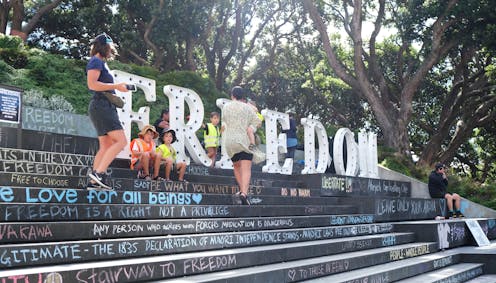
It has resulted in strained relationships, even within families, and at a macro-level has threatened social cohesion, such as during the month-long protest on Parliament grounds in Wellington, New Zealand.

This raises the question: where do these strong, often visceral anti-vaccination sentiments spring from? As lifecourse researchers we know that many adult attitudes, traits and behaviours have their roots in childhood.

This insight prompted us to enquire about vaccine resistance among members of the long-running Dunedin Study, which marks 50 years this month.

Specifically, we surveyed study members about their vaccination intentions between April and July 2021, just prior to the national vaccine roll out which began in New Zealand in August 2021. Our findings support the idea that anti-vaccination views stem from childhood experiences.

The Dunedin Study, which has followed a 1972-73 birth cohort, has amassed a wealth of information on many aspects of the lives of its 1037 participants, including their physical health and personal experiences as well as long-standing values, motives, lifestyles, information-processing capacities and emotional tendencies, going right back to childhood.

Almost 90 percent of the Dunedin Study members responded to our 2021 survey about vaccination intent. We found 13 pecent of our cohort did not plan to be vaccinated (with similar numbers of men and women).

A study participants undergoes an eye examination to test the health of optic nerves and the eye’s surface.
Among many assessments, study participants undergo eye examinations to test the health of optic nerves and the eye’s surface. Image: Guy Frederick, CC BY-ND

When we compared the early life histories of those who were vaccine resistant to those who were not we found many vaccine-resistant adults had histories of adverse experiences during childhood, including abuse, maltreatment, deprivation or neglect, or having an alcoholic parent.

These experiences would have made their childhood unpredictable and contributed to a lifelong legacy of mistrust in authorities, as well as seeding the belief that “when the proverbial hits the fan you’re on your own”.

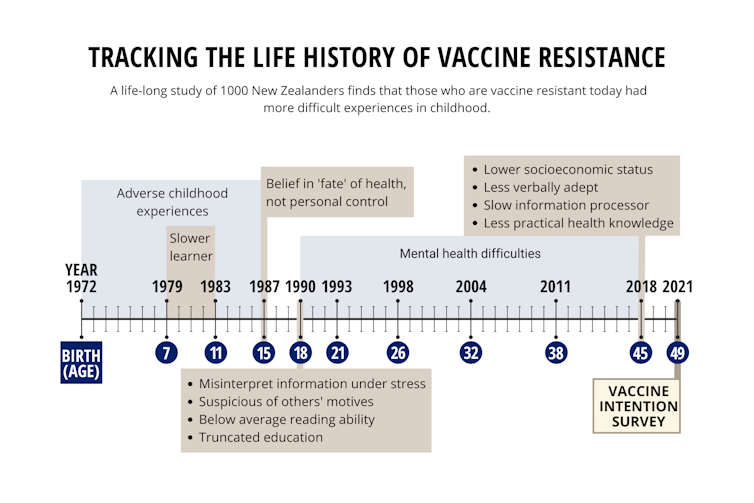
Our findings are summarised in this figure.

A graph that tracks the life history of vaccine resistance
Vaccine resistance. Graph: Dunedin Study, CC BY-ND

Personality tests at age 18 showed people in the vaccine-resistant group were vulnerable to frequent extreme emotions of fear and anger. They tended to shut down mentally when under stress.

They also felt fatalistic about health matters, reporting at age 15 on a scale called “health locus of control” that there is nothing people can do to improve their health. As teens they often misinterpreted situations by unnecessarily jumping to the conclusion they were being threatened.

The resistant group also described themselves as non-conformists who valued personal freedom and self-reliance over following social norms. As they grew older, many experienced mental health problems characterised by apathy, faulty decision-making and susceptibility to conspiracy theories.

Negative emotions combine with cognitive difficulties
To compound matters further, some vaccine-resistant study members had cognitive difficulties since childhood, along with their early-life adversities and emotional vulnerabilities. They had been poor readers in high school and scored low on the study’s tests of verbal comprehension and processing speed.

These tests measure the amount of effort and time a person requires to decode incoming information.

Such longstanding cognitive difficulties would certainly make it difficult for anyone to comprehend complicated health information under the calmest of conditions. But when comprehension difficulties combine with the extreme negative emotions more common among vaccine-resistant people, this can lead to vaccination decisions that seem inexplicable to health professionals.

Today, New Zealand has achieved a very high vaccination rate (95 percent of those eligible above the age of 12), which is approximately 10 percent higher than in England, Wales, Scotland or Ireland and 20 percent higher than in the US.

More starkly, the New Zealand death rate per million population is currently 71. This compares favourably to other democracies such as the US with 2,949 deaths per million (40 times New Zealand’s rate), UK at 2,423 per million (34 times) and Canada at 991 per million (14 times).

How to overcome vaccine resistance
How then do we reconcile our finding that 13 percent of our cohort were vaccine resistant and the national vaccination rate now sits at 95 percent? There are a number of factors that helped drive the rate this high.

They include:

  • Good leadership and clear communication from both the prime minster and director-general of health
  • leveraging initial fear about the arrival of new variants, delta and omicron
  • widespread implementation of vaccine mandates and border closure, both of which have become increasingly controversial
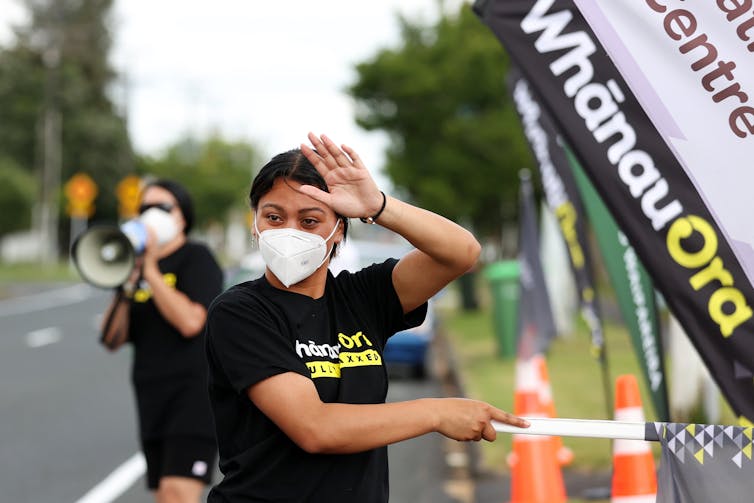
  • the devolution by government of vaccination responsibilities to community groups, particularly those at highest risk such as Māori, Pasifika and those with mental health challenges.

A distinct advantage of the community-driven approach is that it harnesses more intimate knowledge about people and their needs, thereby creating high(er) trust for decision-making about vaccination.

A local vaccination clinic
Community organisations can build on higher trust and better knowledge of people’s concerns and needs. Image: The Conversation/Fiona Goodall/Getty Images

This is consistent with our findings which highlight the importance of understanding individual life histories and different ways of thinking about the world – which are both attributable to adversities experienced by some people early in life. This has the added benefit of encouraging a more compassionate view towards vaccine resistance, which might ultimately translate into higher rates of vaccine preparedness.

For many, the move from a one-size-fits-all approach occurred too slowly and this is an important lesson for the future. Another lesson is that achieving high vaccination rates has not been free of “cost” to individuals, families and communities. It has been a struggle to persuade many citizens to get vaccinated and it would be unrealistic not to expect some residual resentment or anger among those most heavily affected by these decisions.

Preparing for the next pandemic
Covid-19 is unlikely to be the last pandemic. Recommendations about how governments should prepare for future pandemics often involve medical technology solutions such as improvements in testing, vaccine delivery and treatments, as well as better-prepared hospitals.

Other recommendations emphasise economic solutions such as a world pandemic fund, more resilient supply chains and global coordination of vaccine distribution. The contribution of our research is the appreciation that citizens’ vaccine resistance is a lifelong psychological style of misinterpreting information during crisis situations that is laid down before high school age.

We recommend that national preparation for future pandemics should include preventive education to teach school children about virus epidemiology, mechanisms of infection, infection-mitigating behaviours and vaccines. Early education can prepare the public to appreciate the need for hand-washing, mask-wearing, social distancing and vaccination.

Early education about viruses and vaccines could provide citizens with a pre-existing knowledge framework, reduce citizens’ level of uncertainty in a future pandemic, prevent emotional stress reactions and enhance openness to health messaging. Technology and money are two key tools in a pandemic-preparedness strategy, but the third vital tool should be a prepared citizenry.

The takeaway messages are twofold. First, do not scorn or belittle vaccine-resistant people, but rather attempt to glean a deeper understanding on “where they’re coming from” and try to address their concerns without judgement. This is best achieved by empowering the local communities that vaccine resisters are most likely to trust.

The second key insight points to a longer-term strategy that involves education about pandemics and the value of vaccinations in protecting the community. This needs to begin when children are young, and of course it must be delivered in an age-appropriate way. This would be wise simply because, when it comes to future pandemics, it’s not a matter of if, but when.The Conversation

Dr Richie Poulton, CNZM FRSNZ, director of the Dunedin Multidisciplinary Health & Development Research Unit (DMHDRU), University of Otago; Dr Avshalom Caspi, professor, Duke University, and Dr Terrie Moffitt, Nannerl O. Keohane University Professor of Psychology, Duke University. This article is republished from The Conversation under a Creative Commons licence. Read the original article.

Print Friendly, PDF & Email

Article by AsiaPacificReport.nz

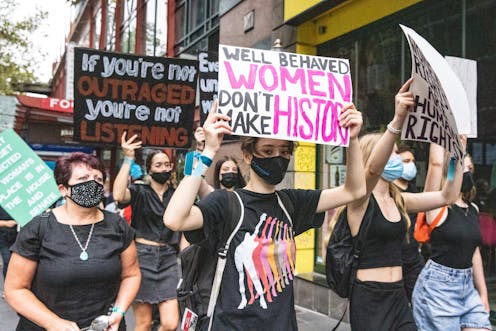
Below the Line: what role will gender play in the federal election campaign? – podcast

Source: The Conversation (Au and NZ) – By Benjamin Clark, Deputy Engagement Editor, The Conversation

When will Prime Minister Scott Morrison call the election? And could this be the long-awaited campaign when women take the driver’s seat?

In the second episode of our new election podcast, Below the Line, our expert panel delve into the High Court’s involvement in the election’s timing and its likely impact on the Coalition vote. After we finished recording, the High Court confirmed the dismissal of the New South Wales Liberals’ challenge to Morrison’s hand-picked candidates.

Then, picking up on the PM’s claim this week that he overrode the local preselection process to “get more good women into parliament”, we take a deep dive into what role gender will play in the campaign.

Jointly hosting the episode are award-winning broadcaster and Vice Chancellor’s Fellow at the University of Melbourne, Jon Faine, and University of Sydney’s Professor Simon Jackman. Joining them to talk about gender and politics is an all-female line-up of political scientists including regular panellists Andrea Carson from La Trobe University, Sydney University’s Anika Gauja and special guest Jill Sheppard, a gender expert from the Australian National University.

They look at why Australia is ranked just 50th in the world for female political representation, a drastic fall from 1999 when Australia was ranked 15th . After the March4Justice movement and with increasing numbers of female independent candidates campaigning, could we turn things around in 2022? Don’t hold your breathe, said Jill Sheppard, who reminded us that voters might care more about petrol prices than gender parity.

Below the Line is brought to you by The Conversation and La Trobe University twice weekly until polling day. It is produced by Courtney Carthy and Benjamin Clark.

The Conversation

ref. Below the Line: what role will gender play in the federal election campaign? – podcast – https://theconversation.com/below-the-line-what-role-will-gender-play-in-the-federal-election-campaign-podcast-180995

A martial law ghost of the dark years – is history returning in the Philippines?

COMMENTARY: By Pacific Island Times publisher Mar-Vic Cagurangan

I remember that day — February 25, 1986. I was then a teenager. My family stood outside the iron gates of Malacañang Palace among a massive wave of people armed with yellow ribbons, flowers and rosaries.

After a four-day uprising, we heard on the radio that the dictator Ferdinand Marcos and his family had fled the country.

Ramming through the gates of the now forlorn presidential palace, people found signs of a hurtled retreat. Hundreds of pairs of shoes, gowns and other evidence of the Marcoses’ profligacy had been abandoned. Documents and bullets were scattered on the floor.

They’re gone, the Marcoses!

People burst into song. The poignant “Bayan Ko” (My Country) — the metaphor of a caged bird that yearns to be free — was the anthem of the EDSA revolution: People Power.

The Marcoses had been obliterated from our lives.

Or so we thought.

My generation — we were called “The Martial Laws Babies” — is beginning to realise now that only the glorious part of Philippine history is being obliterated.

‘Bongbong’ Marcos the frontrunner
Ferdinand “Bongbong” Marcos Jr., only son and namesake of the late dictator, is the frontrunner in the Philippines’ upcoming presidential election in May. Polls in January and February show Marcos Jr. ahead in the race with 60 percent of the national vote.

He was 29 when the family was ousted and sent into exile in Hawai’i. He had since returned to the Philippines, where he served as governor of Ilocos Norte, as congressman and senator.

Now he is aiming to go back to his childhood playground — the Malacañang Palace.

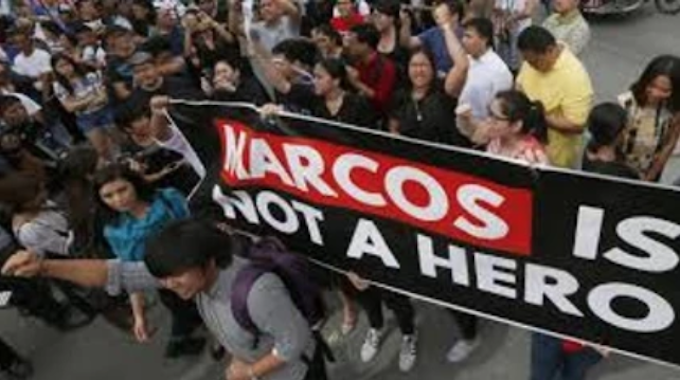
"Marcos is not a hero"
“Marcos is not a hero”. Image: Mar-Vic Cagurangan/Pacific Island Times

His campaign has revived “Bagong Lipunan” (The New Society), the anthem of martial law. I shudder. It summoned the dark years.

Now as an adult, watching how North Koreans live now gives me a perspective of how we were brainwashed into subservience during the martial period when the media was controlled by the regime.

Political opinions had no place in the public sphere. Dissidents disappeared, plucked out of their homes by military men, never to be seen ever again. Those who had heard of these stories of desaparecidos had to zip their mouths. Or else.

The government slogan “Sa Ikakaunlad ng Bayan Displina Ang Kailangan” (For the Nation’s Progress Discipline is Necessary) was forever stuck in our heads.

Marcos family’s extravaganzas
My generation lived through different political eras. We grew up watching the Marcos family’s extravaganzas. They acted like royalty.

Imelda Marcos paraded in her made-for-the-queen gowns and glittering jewelry, suffocating Filipinos with her absolute vanity amid our dystopian society.

“People say I’m extravagant because I want to be surrounded by beauty. But tell me, who wants to be surrounded by garbage?” she said.

“Bagong Lipunan” was constantly played on the radio, on TV and in public places. It was inescapable. Its lyrics were planted into our consciousness: “Magbabago ang lahat tungo sa pag-unland” (Eveyone will change toward progress.)

Marcos created a fiction depicting his purported greatness that fuelled his tyranny.

During the two decades of media control, the brainwashing propaganda concealed what the regime represented — world-class kleptocrats, murderers and torturers.

Marcos Jr. gave no apology, showed no remorse and offered no restitution. And why would he? Maybe no one remembers after all. None of the Marcoses or their cronies ever went to jail for their transgressions.

Marcos rewarded many times
Marcos Jr. has been rewarded many times, repeatedly elected to various positions. And now as president?

It’s perplexing. It’s appalling. And for people who were tortured and the families of those killed, it’s revolting.

Marcos Jr. appeals to a fresh generation that doesn’t hear the shuddering beat of “Bagong Lipunan” the way my generation does.

The Philippines’ median age is 25. Their lack of a personal link to the martial law experience perhaps explains their historical oblivion.

But history is still being written. Pre-election polls are just polls. The May 9 ballot will decide a new chapter in history.

As Filipino journalist Sheila Coronel said, “A Marcos return is inevitable only if we believe it to be.”

Mar-Vic Cagurangan is editor-in-chief and publisher of the Pacific Island Times in Guam. This article is republished with permission.

Print Friendly, PDF & Email

Article by AsiaPacificReport.nz

French Pacific readies for presidential election as Macron seeks second term

By Walter Zweifel, RNZ Pacific reporter

As the French Pacific is gearing up for Sunday’s first round of the French presidential election, incumbent President Emmanuel Macron appears to be enjoying the most support among the 14 candidates.

Committees set up in support of Macron have been campaigning with the backing of those in power in New Caledonia and French Polynesia.

However, pro-independence parties have remained aloof, either declining to express a preference for any of the candidates or suggesting the election be ignored altogether.

However, pro-independence Palika has called on people to vote for “any Left politician” in the first round on Sunday.

Candidates include Marine Le Pen of the National Rally, who is running for a third time, Valerie Pecresse of the Republicans and Jean-Luc Melenchon, who heads the left-wing La France Insoumise movement.

In the 2017 election, Macron defeated Le Pen nationwide, winning 66 percent of the votes.

In Wallis and Futuna, his victory was even more decisive as he won almost 80 percent of the vote.

Smallest vote in New Caledonia
In French Polynesia, Macron won 58 percent, while in New Caledonia, his score was 52 percent.

With 48 percent voting for Le Pen, her score in New Caledonia was her best result of any French overseas territory.

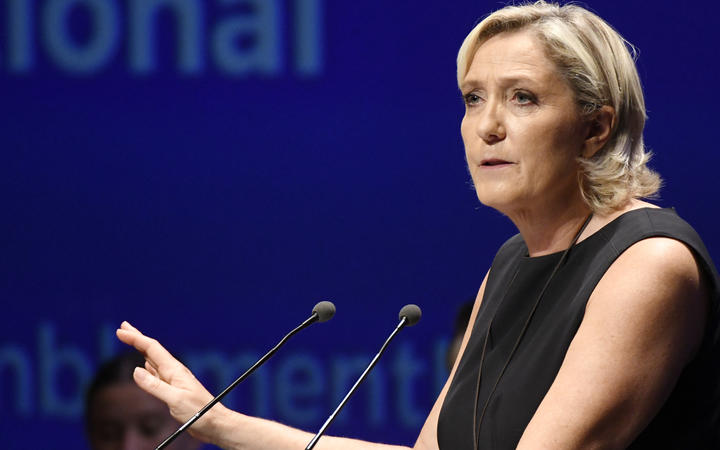
Leader of France's Rassemblement National party Marine Le Pen in 2018
Far-right National Rally leader Marine Le Pen … polled best in New Caledonia in 2017. Image: RNZ/AFP

In the Noumea area, which wants close links with Paris, she won more votes than Macron

Anti-independence side backs Macron
In the run-up to this year’s election, Noumea-based anti-independence politicians set up a Macron re-election committee, headed by Mayor Sonia Lagarde.

The committee was formed in December, weeks before Macron confirmed that he would stand for a second term, and just days after 96 percent voted against independence from France in a referendum boycotted by the pro-independence camp.

Lagarde hailed Macron’s support for New Caledonia as flawless, saying the referendum decision to stay with France was due to his commitment.


France’s fearful election. Video: Al Jazeera’s People and Power

After meeting Macron in Paris in January, the president of New Caledonia’s Southern Province, Sonia Backes, said she would also support him, praising his engagement as a key factor in winning the referendum.

In an interview this week, Backes said that in 2017 she abstained because she refused to vote for either Le Pen or Macron.

She said what had turned her off Macron was his declaration in Algeria, when he said colonialism was a crime against humanity.

President of New Caledonia's Southern Province Sonia Backes
President of New Caledonia’s Southern Province Sonia Backes … abstained in 2017, but backs Macron this year. Image: RNZ/Facebook

Macron’s letters to Pacific territories
In recent weeks, Macron delivered open letters tailored to French overseas territories and outlining his achievements and policies.

He told New Caledonia that “France, the powerhouse of the Indo-Pacific, is destined to stay.

“Investments mean that the armies have been able to commit since 2017 and from which the armed forces in New Caledonia will benefit in the coming months.

“I want to accelerate this and complement it with new regional partnerships at the economic, scientific, academic and cultural levels.”

The make-up of the restricted electoral rolls in New Caledonia is enshrined in the French constitution but calls for change persist now that the anti-independence camp won the final referendum.

This is alarming indigenous Kanaks who still want to achieve their promised decolonisation.

“There will be no shortage of difficult topics — everyone is thinking about the thorny issue of the electorate. We all know the terms: Caledonian citizenship can and should be open to those who live it.

Citizenship of tomorrow?
“But who is a Caledonian? How should this citizenship of tomorrow work?,” he asked.

The left-wing candidate Melenchon has urged caution in New Caledonia, saying the outcome of last year’s referendum was a catastrophe.

He said the French government destroyed the consensus process of the accord by imposing last December’s referendum date and triggering a huge abstention by the pro-independence side.

Melenchon suggested keeping the 1998 Noumea Accord going for another decade.

The Republicans’ Valerie Pecresse said that if elected she would make New Caledonia a policy priority.

Valerie Pecresse of Les Republicains
Valerie Pecresse, candidate of Les Republicains party for the Presidential election of 2022 during her public meeting to present her programme … New Caledonia would be a policy priority if elected. Image: Eric Dervaux/Hans Lucas/RNZ

She said she would want accelerated discussions with New Caledonia’s leaders to prepare a roadmap on the territory’s future status within the French republic by December.

This would include revisiting the electoral rolls.

‘Respect, traditions and modernity’
Le Pen’s support committee in Noumea said its “programme is called ‘respect, traditions and modernity’. It is to give a voice to the people, to democracy, which is sorely lacking today.

“To get out of this incessant authoritarianism by repealing vaccine pass regulations, which are a major attack on freedom.”

Running for the top job for a third time, Le Pen said she wanted to create a full-time overseas ministry and fight against the high cost of living while developing the blue economy.

In his letter to French Polynesia, Macron again stated his geopolitical views.

“The Indo-Pacific strategy I wanted for France is a major step in our common history. Through you, France is present and alive in the Pacific,” he wrote.

“At the strategic level, the continuous increase in the resources of our armies will provide for this,” adding that “we must accentuate this military effort and, moreover, accompany it with new co-operation in the region.”

View of the advanced recording base PEA "Denise" on Moruroa atoll
Remnants of the testing infrastructure on Moruroa atoll where nuclear tests were staged until 1996. Image: RNZ/AFP

French Pacific nuclear legacy lingers
The compensation for victims of France’s nuclear weapons tests has continued to be a contentious issue in the relationship between Paris and Papeete.

Twenty-five years after the last test and more than a decade after France for the first time conceded that radiation had an impact on human health, Macron assured French Polynesians that France would try to find all those affected by the blasts.

“We are going to look for the victims and their beneficiaries. We will accompany them towards compensation. The road will still be long but there is a commitment which is irreversible,” he wrote.

“Because I want truth and transparency with you,” he added.

The ruling Tapura Huiraatira is officially supporting Macron, although in 2017 he was only the party’s third choice.

Then it backed the Republicans’ Alain Juppe in the primaries and after his elimination, the party supported Francois Fillon, who after also being eliminated, called for his support to go to Macron.

The Republicans’ Pecresse, who in Tahiti has the endorsement of veteran leader Gaston Flosse, promised to launch a major investigation in French Polynesia on nuclear weapons tests to reassess the compensation allocations.

She said if elected she would want to create an Overseas Bank, which would include several of the existing institutions, such as the current Development Bank.

Nuclear test legacy
Le Pen also addressed the nuclear test legacy, saying she would recognise the effects of the nuclear fallout and pay compensation for test victims.

A 1971 nuclear explosion at Moruroa atoll.
A photo taken in 1971 showing a nuclear explosion at Moruroa atoll. Image: RNZ/AFP

She added that she would reimburse the expenses incurred by the CPS welfare agency.

Since 1995 the CPS has paid out US$800 million to treat a total of 10,000 people suffering from any of the 23 cancers recognised by law as being the result of radiation.

However, Paris has so far rejected calls to bear these costs.

The pro-independence Tavini Huiraatira party suggested to its supporters to abstain from voting.

Its leader Oscar Temaru said voters were free to choose but he said none of the candidates represented French Polynesia’s interests.

He said his party’s agreement with the Socialist Party of François Hollande had turned out to be a bad adventure because once in power the French side did not deliver on its promises.

The two top candidates will contest a run-off election two weeks later, with the winner becoming the President of France for five years.

This article is republished under a community partnership agreement with RNZ.

Print Friendly, PDF & Email

Article by AsiaPacificReport.nz

‘It was clear sharing information was key,’ says resigned NZ public health chief

RNZ News

Aotearoa New Zealand’s outgoing Director of Public Health says the quick sharing of scientific information and the widespread use of masks have both been critical parts of the country’s public health response.

Dr Caroline McElnay, who is leaving the role shortly, presented the regular covid-19 update with Director-General of Health Dr Ashley Bloomfield for the final time yesterday and gave her view on the pandemic response over the past couple of years.

She is stepping down from the role in the same week Dr Bloomfield announced he would also soon be leaving his role.

Dr McElnay had been in the job for five years and is travelling to Europe, but plans to come back to New Zealand. She said she is looking forward to going hiking — on long walks without cell phone coverage.

Dr McElnay said the country had learned a lot since New Zealand first went into lockdown more than two years ago.

Masks had become part of daily lives and would continue to remain an important tool, she said.

“They are a critical aspect of our public health response.”

Pandemic sped up science
The pandemic had changed the way many people worked, and also sped up science, she said.

“Scientists effectively show progress through publishing scientific papers, which makes the information then available to the science and health communities,” she said.

“Pre-covid that process often took months, but during covid it was clear sharing information was key. Information that could help understand the science behind the pandemic and assist in tackling it needed to be fast, so it could be used equally quickly.

“Applying that knowledge, which has improved as time has gone on, has held New Zealand in good stead.

“Vaccines and treatments that are effective at keeping people out of hospital were developed fast and advances in tracking and testing were equally quick.”

Watch the covid-19 update


The covid briefing. Video: RNZ News

This had allowed the fast spread of information to the scientific community and the public within days.

There had been frequent changes in advice and approach as experts and officials learnt more, she said.

New Zealand was very fortunate to have had a solid foundation of trust by the public in the country’s institutions, but she said she was also aware of the impact the pandemic had had on many people’s lives.

She noted there has also been a rise in misinformation, so officials had worked to increase the amount of trustworthy information available to the public.

She said the media standups would continue. This was her 299th in two years, she said.

Dr McElnay said she would travel overseas for some months. She said she was honoured to have held the role of director of public health.

“I want to finish by thanking you all, all New Zealanders, in getting us to where we are today on what has been a rollercoaster of a ride. And I’d also like to thank you in this room, the media, for your extensive coverage throughout the pandemic, helping to keep the public informed.”

Timing of departures
Dr Bloomfield said there had been speculation in the past 24 hours about the timing of his and Dr McElnay’s departures. He said Dr Jim Miller had already joined to act in the public health role while Dr McElnay’s replacement was appointed, while Dr Bloomfield himself would remain for four months.

The response to the virus had been a huge undertaking for many people, but “having said that Dr McElnay has been instrumental, and often the public face of the ministry’s response”, he said.

“A mammoth effort indeed. Personally I just want to fully acknowledge Dr McElnay’s calm and supportive and solution-focused approach over the last five years, but in particular she’s been a real rock for me over these past two years.”

Dr McElnay said she took on the role five years ago and decided at the time that five years would be a good length of time, and it had been challenging.

She said she got quite a few comments about her hair, and tried to avoid engaging with social media.

She personally did not feel burnt out but said burnout was a very real thing and workplaces and employees themselves needed to acknowledge that.

“Talk to your family and friends and talk to your health professionals.”

Collaboration ‘awe-inspiring’
A highlight of her time was seeing public health experts come together to come up with a plan back when covid-19 first struck our shores, she said.

Seeing the advice she and her colleagues gave be announced as official decisions reinforced the weight of responsibility that came with her job. She said it was “awe inspiring”.

The death toll in New Zealand had been staggeringly low — 466 as at today — and while every death was a tragedy, New Zealand had “such an amazing response”, she said.

“Every country has responded differently according to the context of that country.”

It was really the early closing of the borders as an island nation that really allowed such a strong response, she said.

Dr Bloomfield said the health system was now having to gear up to switch from responding to the acute illness from covid-19, to a longer-term care for people who have long-term symptoms.

Pressure on the healthcare system due to covid-19 was now easing.

Case numbers declining
The overall situation was improving, and as case numbers continue to decline it will also mean fewer staff members being off work, he said.

DHBs all have plans for how to catch up on care that has been deferred and ensure it is delivered, he said.

He was concerned enough about the possibility of a perfect storm of winter illnesses as well as covid-19 to have prepared a plan to prevent that.

Advice on a fourth booster was going to ministers this week, he said.

“The groups that other countries are offering a fourth dose to are largely older people and immunocompromised people of all ages.”

Dr Bloomfield also said he wanted to mark yesterday as World Health Day, the anniversary of the founding of the WHO in 1948.

  • Ten new deaths were reported today — including someone aged between 10-19 — while the daily number of new community cases in New Zealand has dropped back below the 10,000 mark.
  • There were 9906 new community cases reported today, down from the 11,634 community cases reported yesterday, while the number of people in hospital has dropped from 654 yesterday to 626 today, including 17 people in ICU.
  • The death toll of people who have died with covid-19 is now 466.

This article is republished under a community partnership agreement with RNZ.

Print Friendly, PDF & Email

Article by AsiaPacificReport.nz

High Court win for Morrison, as he prepares to fire election starting gun

Source: The Conversation (Au and NZ) – By Michelle Grattan, Professorial Fellow, University of Canberra

Scott Morrison has won, in a Friday decision by the High Court, his long running battle over NSW Liberal party preselections, clearing the way for him to call the election.

Former Liberal Matthew Camenzuli – expelled from the party this week over his disruptive tactics – has been fighting through the courts against multiple preselections having been done by a committee headed by Morrison.

The High Court refused Camenzuli’s application for special leave to appeal, after the NSW Court of Appeal earlier found against him.

The court based its refusal on an insufficient prospect of the case being successful.

If the court had agreed to hear the case it would have complicated Morrison’s run up to the election.

The case most immediately focused on the preselections of three sitting members – ministers Alex Hawke and Sussan Ley, and backbencher Trent Zimmerman.

But if successful the effect would have extended to nine other candidates selected by the committee of Morrison, NSW premier Dominic Perrottet and a former Liberal president Chris McDiven.

While Morrison is keeping his counsel about the election announcement, the speculation on Friday was that he would call the election on Sunday. The two available dates are for March 14 and 21, with the latter considered more likely.

Pressed on Friday Morrison said the last election was on May 18 “and the next election will be held at about the same time”. The date would be known “very soon”.

If he delayed beyond Sunday, he would face parliament, with the House of Representatives due to resume on Monday.

Anthony Albanese accused Morrison of delaying an announcement so he could “continue to spend taxpayer funds on election ads in the name of the government”.

Campaigning in South Australia Albanese appeared alongside the popular newly elected premier Peter Malinauskas. 

On the hustings in Victoria, Morrison said “Labor is an unknown in uncertain times”.

The Conversation

Michelle Grattan does not work for, consult, own shares in or receive funding from any company or organisation that would benefit from this article, and has disclosed no relevant affiliations beyond their academic appointment.

ref. High Court win for Morrison, as he prepares to fire election starting gun – https://theconversation.com/high-court-win-for-morrison-as-he-prepares-to-fire-election-starting-gun-180981

Want to buy guilt-free Easter chocolate? Pick from our list of ‘good eggs’ that score best for the environment and child labour

Source: The Conversation (Au and NZ) – By John Dumay, Professor – Department of Accounting and Corporate Governance, Macquarie University

Eva Elija/Pexels

What do Beyond Good, Alter Eco, Tony’s Chocolonely and Whittaker’s all have in common? Besides producing delicious chocolate, they are the “good eggs” in this year’s chocolate scorecard.

Each is an industry leader in producing sustainable chocolate. By “sustainable” we mean doing the right thing to the planet and its people on measures as important as child labour, pesticide use, and deforestation.

The Chocolate Collective, made up of Australian charity Be Slavery Free and 20 other non-government organisations, with guidance from university experts and consultants, grades 90% of the industry and publishes the results in the lead-up to Easter, the biggest chocolate season of the year.

How we determine what’s a ‘good egg’

We scored 38 companies on six measures:

Transparency and traceability. This is the big one. If companies don’t know where their cocoa comes from, they cannot truly ensure it isn’t tainted by child labour, deforestation, and other abuses.

Child labour. More than 1.56 million children work in the cocoa industry. Around 95% of them are exposed to at least one type of hazardous labour as defined by the International Labour Organization.

Living income. Farmers are poor because of a combination of small farm size, low productivity, high costs, low prices and no alternative sources of income. Most earn about half of a so-called living income, able to provide enough food, water, housing, education, healthcare and provisions for unexpected events.


Read more:
Turning to Easter eggs to get through these dark times? Here’s the bitter truth about chocolate


Deforestation and climate. In 2020 alone, more than 47,000 hectares of forest was lost in the cocoa growing areas of Côte d’Ivoire. We explored how companies are minimising their contribution to deforestation through programs such as satellite monitoring their plans to reach net-zero carbon emissions.

Agroforestry. As opposed to pesticide-soaked monoculture, this is a more ecologically sound way of growing cocoa and restoring farm landscapes. We also looked at assessment, monitoring, and support to farmers using such methods. While we saw improvements, greater coordinated action is needed.

Agrichemicals. This theme is appearing in the chocolate scorecard for the first time. Overall, companies scored poorly, with many still uncommitted to action to reduce agrichemicals and failing to adequately protect farmers (especially children and pregnant women) from being poisoned.

And the winners are…

Beyond Good receives this year’s “good egg” award for a business model which ensures people and the planet are respected and cared for. Its smaller size has enabled this model to be refined, and now it is looking to scale up.

We also gave honourable mentions to previous “good eggs”, Alter Eco, Tony’s Chocolonely and Whittaker‘s.

Also Nestlé receives an honourable mention for its huge steps to address the living incomes of farmers, and for its commitment to plant 20 million shade trees each year.

Finally, Ferrero now joins other companies whose cocoa is 100% or early 100% certified slavery-free, such as Hershey’s, Unilever, Ritter.

We also want to give a shout out to the best Japanese company, Blommer/Fuji. This company has made major improvements over the past year and did particularly well in some aspects of addressing child labour and agrforestry.

And the losers…

“Rotten eggs” were awarded to Starbucks, General Mills, and Storck who did not disclose to us any improvements in their cocoa value chain.

Their online sustainability reports lack the details and transparency many other companies provide to their stakeholders, or are simply out of date.

If they are making progress on increasing the sustainability of their chocolate supply chains, then we (and presumably their customers) would like to hear more about it. There might be improvement, but they are not telling.

What you do makes a difference

The chocolate industry is laced with unsustainable practices. The farmers are extremely poor, and sustainability often takes second place to cheap cocoa. Our scorecard can help.

Also, it helps to look out for products that are 100% organic. You might pay a little more, but you can enjoy your chocolate knowing that in itself protects the lives of farmers, children and the environment.

There’s plenty of room for improvement across the industry – if there’s enough consumer demand for change. For instance, the manufacturers of Cadbury and Lindt chocolate were not among the top band of good eggs, instead only scoring a “Starting to implement good policies”.

As well as using our guide to help your shopping choices, it might also help to send the scorecard to your favourite company via a tweet, Facebook post or Instagram, telling them you would prefer ethical chocolate.

Australians might be asking about local brands such as Darrell Lea, Haigh’s and Robern Menz. They are not big enough to be scored in the global scorecard, but the good news is each is taking sizeable steps. Ask them if you want to know more.

The Conversation

The authors do not work for, consult, own shares in or receive funding from any company or organisation that would benefit from this article, and have disclosed no relevant affiliations beyond their academic appointment.

ref. Want to buy guilt-free Easter chocolate? Pick from our list of ‘good eggs’ that score best for the environment and child labour – https://theconversation.com/want-to-buy-guilt-free-easter-chocolate-pick-from-our-list-of-good-eggs-that-score-best-for-the-environment-and-child-labour-180549

The AFL has consistently put the women’s game second. Is it the best organisation to run AFLW?

Source: The Conversation (Au and NZ) – By Matthew Klugman, Research Fellow, Institute for Health & Sport, member of the Community, Identity and Displacement Research Network, and Co-convenor of the Olympic Research Network, Victoria University

Saturday’s Adelaide Crows versus Melbourne Demons grand final is full of promise. Two superb teams matched up on a day forecast to be warm and clear, playing in front of tens of thousands of passionate fans.

But while the Crows and Demons have been busy preparing for the match, the rest of the league has been in an all-too familiar state of limbo.

The issue this time is when the next AFL Women’s season starts. Players, fans and clubs were blindsided when news broke in early March the seventh season was likely to begin in August 2022 (it has always started in summer).

The problem wasn’t the suggested start date – some, though not all players are in favour of this. The problem was the shambolic process. Players, clubs and fans weren’t initially consulted. A month later, no clarity has been provided.

Even more worryingly, this follows a pattern of devaluing those most invested in the AFLW. Is the AFL even up to the task of running the AFLW?

How the AFL has devalued women’s football

When it began in 2017, the new AFLW league was celebrated as a chance for women to finally be able to play Australian Rules football at an elite, national level.

But at the outset, it did not mirror the men’s competition. The AFL decided it was necessary to amend the AFWL rules to “ensure this is a great game to play and exciting to watch”.

Key changes included making the ball smaller, making the game more than 20 minutes shorter and reducing the number of players on the field.

Such changes sent a message the women’s competition is worth less. For example, the smaller ball was harder to kick accurately and didn’t travel as far, making it harder for women to demonstrate key skills valued by so many fans.

There have also been issues with a slew of injuries that seem related (among other things) to playing on hard grounds in summer, players not being afforded the benefits of professionalisation as well as the exhaustion of combining part-time work with the demands of elite sport.


Read more:
Mark! Kick! Tackle! The reality of fast-tracking women into elite AFL


The AFL doesn’t pay women players enough to sustain a life

Despite the mismanagement of AFLW, players, clubs and fans were nevertheless expected to remain grateful to the AFL. To not complain. The fans were the first to voice their disapproval, building vigorous, joyful, critical communities of support for AFLW.

Players are also no longer prepared to simply be grateful for the competition’s existence.

As recent research has highlighted, although they’re grateful to be included, players know they’re actually key assets.

AFLW players are paid a small fraction of the men. The average salary for men is A$372,224 per year while most women receive $20,239 doled out in a precarious six-month contract.

The economic rationale is the AFLW doesn’t bring in as much income. But this crude accounting fails to factor in the goodwill and positive brand associations of the game.

Nor does it stand up to the realities of the costs of the men’s game. For example, new men’s teams like the Gold Coast Suns have required significant investment by the AFL, without the same backlash as the women’s competition.

Also, over the last decade the enormous growth in women and girls playing Australian Rules football has offset declining numbers of men playing the game, saving numerous local clubs.

Federal, state, and local governments have poured millions of dollars into renovating grounds to support women playing, while the most compelling advertisements featuring Australian Rules football tell stories of girls and women playing the game.

Yet the elite competition on which this economic, cultural and social growth is based doesn’t pay its players enough to sustain a life.

And when the players and fans agitate for more, they are called “whingers” as sports journalist Sam Lane noted in a recent podcast.

Is the AFL the best organisation to run AFLW?

The AFL Player’s Association CEO Paul Marsh recently observed the AFL’s current lack of a clear, detailed plan for AFLW was simply “not good enough”.

After six years of mismanagement the players, fans, and clubs deserve much more from the organisation currently in charge of the elite women’s football competition.

Research on the WNBA, the elite women’s basketball competition in the United States, suggested women players get paid less because of their secondary status within the culture of sport compared to men.

When the sustainability of the AFLW is raised, people tend to ask about the quality of the players, the number of fans, and the attention of the media.

As scholars of sport in history and society we think the spotlight should now focus on the AFL – an organisation that has consistently put the AFLW second to the AFLM, and is yet to invest in it fully, or to work closely and respectfully with the players and fans.

Is it willing to undergo the significant cultural and structural work required to ensure women are valued for the worth they bring? The players and the fans are watching.

The Conversation

Matthew Klugman has previously received funding from the Australian Research Council.

Adele Pavlidis has received funding from the Australian Research Council.

Kim Toffoletti and Michael Burke do not work for, consult, own shares in or receive funding from any company or organisation that would benefit from this article, and have disclosed no relevant affiliations beyond their academic appointment.

ref. The AFL has consistently put the women’s game second. Is it the best organisation to run AFLW? – https://theconversation.com/the-afl-has-consistently-put-the-womens-game-second-is-it-the-best-organisation-to-run-aflw-180665

How climate-friendly is an electric car? It all comes down to where you live

Source: The Conversation (Au and NZ) – By Robin Smit, Adjunct Associate Professor, University of Technology Sydney

Shutterstock

If you’re thinking about buying an electric vehicle, whether due to soaring fuel prices or to lower your greenhouse gas emissions, where you live can make a huge difference to how climate-friendly your car is.

New research reveals having an electric vehicle would mean less emissions than a fossil-fuelled car – but the extent to which electric vehicles can lower emissions varies in each state. Much depends on how much electricity is generated from renewable sources, such as solar, wind and hydro.

Australia-wide, the study found electric vehicles emit, on average, 29-41% less emissions than a typical fossil-fuelled car for every kilometre driven. But when you break it down into states, Tasmania is expected to see the largest drop, with 70-77% less emissions per kilometre.

This information is important for meeting climate targets, because Australia’s on-road fleet is different from the more commonly assessed fleets in the United States, Europe or Asia in terms of vehicle size, fuel type, emission standards and fuel quality.

Australia’s electric vehicle uptake

Australia won’t meet its climate target of net-zero emissions by 2050 without an overhaul of transport, as the sector accounts for around 17% of national emissions. Passenger cars alone account for around half of all our transport emissions.

Rising petrol prices might just be the incentive we need to swing public sentiment towards electric vehicles in Australia, which have a lower climate footprint.


Read more:
Four ways our cities can cut transport emissions in a hurry: avoid, shift, share and improve


In just two years, electric vehicle sales have tripled from 6,900 in 2020 to 20,665 in 2021. And yet, they still account for only 2% of market share in new cars.

This is a far cry from the rest of the world, where 6.6 million electric vehicles were sold globally last year. Over half were in China alone.

Thanks to a range of financial incentives, Canberrans led Austalia in the number of electric vehicles bought per capita. Motorists bought 825 new electric vehicles last year, accounting for over 5% of all vehicle sales in the territory.

Queensland, too, may see a surge in uptake, as last month the Palaszczuk Government announced a A$55 million electric vehicle package, which includes a $3,000 incentive to buy a car and $10 million for new charging infrastructure.

Comparing car emissions per kilometre

To compare the potential for emissions reduction in each state, Transport Energy/Emission Research (TER) conducted a so-called “life cycle assessment”. This considers all aspects of a vehicle’s life – from production, to operational use (driving it), to when it gets scrapped.

Life cycle assessments are a holistic way of looking at emissions but, confusingly, some studies have reached different conclusions. So TER combined a life cycle assessment with a probabilistic analysis, presenting our findings as a range of possible, but realistic, outcomes.

The average carbon emissions for a fossil-fuelled Australian car are an estimated 349-390 grams per kilometre. This is made up of approximately:

  • 72% for operational use
  • 13% for vehicle manufacture
  • 14% for fossil fuel production and distribution.
A typical Australian fossil-fuelled car emits up to 390 grams of carbon dioxide per kilometre.
Shutterstock

An average battery electric car, on the other hand, is estimated to have life cycle emissions around 221-255 grams per kilometre. This is made up of approximately:

  • 69% for operational use
  • 23% for vehicle manufacture
  • 7% for electricity production and distribution.

Infrastructure and vehicle disposal (scrappage) is estimated to have less than 1% contribution for both vehicle types.

These estimates are higher than what has been reported in European studies, reflecting Australia’s unique conditions, including high carbon intensity from coal-based electricity generation, and different fleet characteristics such as having heavier and larger cars than Europe.

Comparing each jurisdiction

The good news is, in all Australian jurisdictions, emissions released from the beginning to the end of the electric vehicle’s life are expected to be significantly less than for fossil-fuelled cars. Each, however, varies in the extent emissions will be reduced.

The largest emissions reductions will occur in Tasmania, as its electricity largely comes from renewable sources: more than 80% comes from hydroelectricity and about 10% comes from wind.

South Australia comes in second, with electric vehicles bringing 55-66% less emissions per kilometre, compared to fossil-fuelled cars. This is because a significant portion of SA’s electricity comes from wind (about 40%) and solar (more than 10%).


At the other end of the spectrum, most electricity generation in Victoria and New South Wales currently comes from coal-fired power stations.

And still, electric vehicle uptake is expected to see substantial reductions: around 9-31% in Victoria, and 17-39% in NSW. These values will improve as the electricity generation system is further decarbonised.

Squandering our potential

Australia has a huge potential for a renewables industry, thanks to our wide open spaces, windy coasts and sunny skies.

So TER also looked at a future scenario, where the national electricity mix is generated with about 10% fossil fuels and 90% renewable energy (solar, wind, hydro, biomass). In this scenario, electric vehicles nationwide are expected to provide between 74% and 80% emissions reductions.

Sadly, Australia is still far removed from this situation. Most cars sold in 2020 were large fossil-fuelled SUVs with high greenhouse gas emissions because of their size and weight.

Fossil fuel guzzling SUVs were the most popular car sold in Australia in 2020.
Shutterstock

What’s more, fleet turnover is a slow process. The Australian Motor Vehicle Census reports that the average age of Australian cars is about ten years, with an average attrition rate of only about 4% each year.

This means even if all passenger vehicles sold today were electric, it would take more than ten years for the Australian road fleet to be fully electric.


Read more:
We must rapidly decarbonise road transport – but hydrogen’s not the answer


Efforts to boost the share of electric vehicles in the Australian fleet needs to be stepped up urgently, alongside a rapid decarbonisation of the electricity grid. These should, finally, align with international emission standards to reduce delays and increase choice and availability of electric vehicles in Australia.

This will ensure we’ll have at least made a significant start with emission reductions in the road transport sector by 2030.

If Australia was serious about reducing emissions – fast – rolling out electric vehicles could perhaps focus on states with the lowest carbon intensity. But given the slow fleet turnover and the current state of play, it’s essential electrification starts everywhere, now.

The Conversation

Robin Smit is the founder of Transport Energy/Emission Research.

Hussein Dia receives funding from the Australian Research Council, the iMOVE Cooperative Research Centre, Level Crossing Removal Authority, City of Boroondara, Australian Housing and Urban Research Institute, Transport for New South Wales, EmissionsIQ Pty Ltd, Department of Infrastructure, Transport, Regional Development and Communications, and Beam Mobility Holdings

ref. How climate-friendly is an electric car? It all comes down to where you live – https://theconversation.com/how-climate-friendly-is-an-electric-car-it-all-comes-down-to-where-you-live-179003

‘I know that you know’ – 5 ways to help people with aphasia to communicate

Source: The Conversation (Au and NZ) – By Deborah Hersh, Professor, Speech Pathology, Curtin University

Shutterstock

Aphasia was in the news last week when the family of actor Bruce Willis announced he was stepping back from his career due to communication difficulties. Also last week, performer Lady Gaga was praised for her supportive approach to co-presenting an Oscar with Hollywood great Liza Minnelli, who has previously battled encephalitis and expressed confusion about what to say onstage.

People living with aphasia say lack of awareness of the condition is one of the biggest barriers they face. Two high-profile examples of communication difficulties – one of them involving an aphasia diagnosis and one featuring similar symptoms – present an opportunity.

Aphasia is the loss of access to language due to brain damage, most commonly following stroke but also caused by traumatic brain injury, tumours and a type of dementia called primary progressive aphasia. It is a frustrating and isolating condition, derailing conversations and impacting relationships with family and friends.

But there are ways to help those we love to communicate. Here are five ideas to keep in mind:

1. Acknowledge capacity

Aphasia affects language, not intellect. Aura Kagan from Canada’s Aphasia Institute coined the phrase “I know that you know”. This was a breath of fresh air for people who were used to being treated as lacking capacity because they couldn’t find the words to express themselves.

Acknowledging that people with aphasia remain competent and intelligent lays the groundwork for productive and respectful exchanges.


Read more:
What brain regions control our language? And how do we know this?


2. Partner up

Recognise the responsibility for satisfying conversations does not just rest with the speaker. It is equally shared by those communicating with them. Evidence shows that when communication partners are given information, strategies and a little practice, they can enable much better conversations.

Communication partner training is now commonly offered by speech pathologists. It is also being explored for use with people who have dementia.

Key strategies in communication partner training include:

  • speaking with your usual tone and volume

  • acknowledging communication blocks or problems and trying to respectfully repair them, rather than ignoring them

  • writing down key words to keep chat on track

  • drawing or using gestures – say, pointing to an object or person

  • using yes/no questions to confirm meaning

  • summing up what’s been said at regular points in the conversation.


Read more:
What is aphasia, the condition Bruce Willis lives with?


3. Respect the human right to communicate

Communication is an essential and integral part of being human. We express our personalities, histories, aspirations and achievements through spoken or written language. Communication is recognised as a human right, and without it, life quality suffers.

Humanising our approach to aphasia – that is, attending to subtle and empathetic human needs, not just the basics of survival – has the potential to sustain and validate the person with aphasia and to transform health services.


Read more:
In a chatty world, losing your speech can be alienating. But there’s help


4. Ensure accessibility

Everything we do is mediated by language: reading the news, using public transport, buying a coffee, using a smart phone, chatting with colleagues or friends over lunch, negotiating bureaucracy, buying a ticket for a sports or music event.

Accessibility is about ensuring that how language is spoken, written or presented electronically does not exclude people with communication difficulties. Adjustments might moderate the speed, presentation or complexity of information.

Just as people who use wheelchairs should be able to expect ramp access instead of facing a flight of stairs, people with aphasia should be entitled to a communication ramp (another brilliant term from Aura Kagan) where a person or agency makes their verbal or written information aphasia-friendly. This may be particularly vital in health-care contexts.

5. Include people in conversations and events

Inclusion is what keeps people buoyant and gives them opportunities to practice and improve their communication. Aphasia can be a lonely disorder but with communication supports, positive attitudes, friendship, meaningful activity, community aphasia groups and social opportunities, it doesn’t have to be. Don’t leave people out because you assume they might feel uncomfortable. Offer choices and they will tell you.

four adults chatting at an outdoor gathering
Make sure you include people with aphasia in social events.
Unsplash/Leah Hettering, CC BY

Awareness of aphasia is key. Despite being relatively common, the word aphasia is not well known, and it is hard to address something when you don’t have a word for it. Knowing the term helps but knowing how to help is even better.

You can find more information on aphasia, conversation partner training and community aphasia conversation groups online.

The Conversation

Deborah Hersh is a member of research teams that receive funding from the NHMRC. She volunteers as chairperson of the not-for-profit Australian Aphasia Association and is an affiliate of the CRE Aphasia Recovery and Rehabilitation.

ref. ‘I know that you know’ – 5 ways to help people with aphasia to communicate – https://theconversation.com/i-know-that-you-know-5-ways-to-help-people-with-aphasia-to-communicate-180669

‘She was the most important person to us’ – R. Rubuntja’s story shows society is still failing First Nations women

Source: The Conversation (Au and NZ) – By Chay Brown, Research and Partnerships Manager, The Equality Institute, & Postdoctoral fellow, Australian National University

Aboriginal and Torres Strait Islander readers are advised this article contains mentions and images of someone who has passed away. There are also descriptions of domestic and family violence and murder.


R. Rubuntja was a loving mother and grandmother. She was funny and intelligent, and so very strong.

R. had lived through domestic and family violence. She was a founding member of the Tangentyere Women’s Family Safety Group – a group of senior women from Alice Springs Town Camps. This strong women’s group works to bring visibility to Aboriginal women’s experiences and to end family violence.

One of the last times Tangentyere staff, members of the women’s group and I saw R. was about a week or so before she was murdered. We were at the Tangentyere Women’s Family Safety Group Christmas party. She sat the whole time with her baby granddaughter on her lap.

We remember that in our last workshop for the year, there was no getting anything out of R. that day because she only had eyes and attention for her granddaughter – walking around the room with her, feeding her squished-up bananas, and playing blocks with her.

One of my fondest memories of R. was out at Ross River on a retreat with the Tangentyere Women’s Family Safety Group. She was supposed to be cooking the ‘roo tail, but instructed me – the vegetarian – to cook it while she played cards and shouted over instructions.

In the Tangentyere women’s group’s film about Hope and Healing, R. said:

when I first had my little boy, my partner used to just be violence – fighting. And it’s got to stop. No more violence. It’s not only for me, it’s for everyone. Stop the violence.

On January 7 2021, R. was brutally and publicly murdered by her partner in front of the Alice Springs hospital. Her murder sent shock waves of grief and anguish through our whole community.

On April 1 2022, Malcolm Abbott pleaded guilty to R’s murder, and was sentenced to life imprisonment with a non-parole period of 25 years.

How was a man with an extensive history of domestic violence – including a previous manslaughter conviction – able to continue to be released from several short prison sentences, and go on to murder R?

Clearly, the justice system failed R. With First Nations women being 11 times more likely than non-Indigenous women to die from gender-based violence, our systems need to do more. In addition, the mostly silent media response to R’s murder also speaks volumes about the way Australia regards the lives of First Nations women.
We need accountability for men who use violence

In court that day, R’s family and friends sat with dignity and listened to the results of R’s post mortem examination, and the list of the horrific injuries the perpetrator inflicted upon her. We listened as we heard that R. had reached out many times for help.

We also sat and listened to the perpetrator’s extensive history of domestic violence.

Abbott had previously killed another woman, and stabbed at least four others in separate attacks. Each time he was convicted and sentenced to jail – 10 years, 5 years, 15 months, 12 months. Each time, he served his sentence. Then he was released a final time, and he murdered R. He will likely spend the rest of his life in jail.

Sadly, R.’s death was not the only domestic violence homicide of a First Nations woman that our community experienced last year. According to reports, this woman’s death was allegedly at the hands of her partner, who also later died. This alleged homicide went under-reported.

The media guidelines talk about how painful it can be to families and communities when deaths are ignored and not reported – or are reported in harmful and culturally unsafe ways. One participant, a First Nations woman, says “it feels like media don’t take all lives equally and as seriously”.


Read more:
Women’s police stations in Australia: would they work for ‘all’ women?


Reporting on domestic, family and sexual violence

My and the Tangentyere Women’s Group and staff’s experience with some media after R’s death ranged from media silence, to others pushing to release a story by the deadline rather than wait for necessary permissions. This prompted my colleagues and me to write the media guidelines for the reporting of domestic, family and sexual violence in the Northern Territory.

In these guidelines, we propose six principles for safe and ethical reporting of violence against women.

  • Safety-focused: the safety of women and children is prioritised in reporting

  • Victim-survivor centred: the voices of victim-survivors are elevated

  • Rapport and relationships: build trust with affected communities and the domestic, family, and sexual violence sector

  • Do no harm: always consider the impact reporting may have on victim-survivors, families, and communities, as well as the impact it may have on community attitudes towards violence against women

  • Challenge myths and stereotypes: challenge harmful attitudes and beliefs about violence against women and provide the necessary context and depth in the reporting

  • Deep listening: listen to Aboriginal people, families and communities about the issues that affect them and their experiences. And listen to experts from the domestic, family, and sexual violence sector

At the launch of the media guidelines, Larissa Ellis, chief executive of the Women’s Safety Services of Central Australia, gave a powerful speech, in which she said:

In the Northern Territory, often victim’s/survivor’s voices are silenced, muted, never heard. These guidelines, entitled ‘Media Changing the Story’ are a call to our media allies, to ensure we get these women’s stories out. That we acknowledge the pain of domestic violence, but also the resilience of survivors.“


Read more:
Consent education needs Blak voices for the safety and well-being of young First Nations people


More needs to be done for women’s safety in Australia

National media coverage and outrage about R’s death and Abbott’s conviction has been minimal. There has been some local coverage, but most mainstream news outlets have largely been silent. There’s been no social media outcry, no opinion pieces questioning how a man with such a violent history was able to kill again, and no national campaign to reform the systems that allowed this to happen.

It is hard to imagine the death of a white woman being met with the same silence as R’s murder, especially when there is such evidence of systems failure. There needs to be a national reflection on why some women’s voices are elevated and why others are sidelined. Why are some stories met with public outrage, while others are met with barely a whisper of acknowledgement – as though their lives did not matter?

In Australia, we are supposed to be undergoing a national conversation about women’s safety. Yet those who are most affected – First Nations women, LGBTQI+ people, women with disability, refugee and migrant women – are often marginalised, silenced, unheard in this conversation.

R’s family said in their victim impact statement, read aloud in court:

she was the most important person to us… it is really sad that she died this way, at the hands of her partner when she was working so hard to make that stop for other women.

R. mattered. Her life mattered. She is loved and terribly missed.


This article was written with permission from R. Rubuntja’s family.

The Conversation

Chay Brown is affiliated with The Australian National University and The Equality Institute.

ref. ‘She was the most important person to us’ – R. Rubuntja’s story shows society is still failing First Nations women – https://theconversation.com/she-was-the-most-important-person-to-us-r-rubuntjas-story-shows-society-is-still-failing-first-nations-women-180857

VIDEO: Handling the unexpected on the campaign trail

Source: The Conversation (Au and NZ) – By Michelle Grattan, Professorial Fellow, University of Canberra

University of Canberra Professional Fellow Michelle Grattan and University of Canberra Associate Professor Caroline Fisher discuss the week in politics.

They canvass Scott Morrison and Anthony Albanese’s latest campaigning, with both leaders having unwelcome encounters on the trail, the continued ‘character’ pile-on against Morrison, the never-ending trouble with the NSW Liberals, and the implications for the public service if Labor wins.

The Conversation

Michelle Grattan does not work for, consult, own shares in or receive funding from any company or organisation that would benefit from this article, and has disclosed no relevant affiliations beyond their academic appointment.

ref. VIDEO: Handling the unexpected on the campaign trail – https://theconversation.com/video-handling-the-unexpected-on-the-campaign-trail-180951

Vaccine resistance has its roots in negative childhood experiences, a major study finds

Source: The Conversation (Au and NZ) – By Richie Poulton, CNZM FRSNZ, Director: Dunedin Multidisciplinary Health & Development Research Unit (DMHDRU), University of Otago

Lynn Grieveson/Getty Images

Most people welcomed the opportunity to get vaccinated against COVID-19, yet a non-trivial minority did not. Vaccine-resistant people tend to hold strong views and assertively reject conventional medical or public health recommendations. This is puzzling to many, and the issue has become a flashpoint in several countries.

It has resulted in strained relationships, even within families, and at a macro-level has threatened social cohesion, such as during the month-long protest on parliament grounds in Wellington, New Zealand.

This raises the question: where do these strong, often visceral anti-vaccination sentiments spring from? As lifecourse researchers we know that many adult attitudes, traits and behaviours have their roots in childhood. This insight prompted us to enquire about vaccine resistance among members of the long-running Dunedin Study, which marks 50 years this month.

Specifically, we surveyed study members about their vaccination intentions between April and July 2021, just prior to the national vaccine roll out which began in New Zealand in August 2021. Our findings support the idea that anti-vaccination views stem from childhood experiences.

The Dunedin Study, which has followed a 1972-73 birth cohort, has amassed a wealth of information on many aspects of the lives of its 1037 participants, including their physical health and personal experiences as well as long-standing values, motives, lifestyles, information-processing capacities and emotional tendencies, going right back to childhood.

A study participants undergoes an eye examination to test the health of optic nerves and the eye’s surface.
Among many assessments, study participants undergo eye examinations to test the health of optic nerves and the eye’s surface.
Guy Frederick, CC BY-ND

Almost 90% of the Dunedin Study members responded to our 2021 survey about vaccination intent. We found 13% of our cohort did not plan to be vaccinated (with similar numbers of men and women).

When we compared the early life histories of those who were vaccine resistant to those who were not we found many vaccine-resistant adults had histories of adverse experiences during childhood, including abuse, maltreatment, deprivation or neglect, or having an alcoholic parent.

These experiences would have made their childhood unpredictable and contributed to a lifelong legacy of mistrust in authorities, as well as seeding the belief that “when the proverbial hits the fan you’re on your own”. Our findings are summarised in this figure.

A graph that tracks the life history of vaccine resistance

Dunedin Study, CC BY-ND

Personality tests at age 18 showed people in the vaccine-resistant group were vulnerable to frequent extreme emotions of fear and anger. They tended to shut down mentally when under stress.

They also felt fatalistic about health matters, reporting at age 15 on a scale called “health locus of control” that there is nothing people can do to improve their health. As teens they often misinterpreted situations by unnecessarily jumping to the conclusion they were being threatened.

The resistant group also described themselves as non-conformists who valued personal freedom and self-reliance over following social norms. As they grew older, many experienced mental health problems characterised by apathy, faulty decision-making and susceptibility to conspiracy theories.

Negative emotions combine with cognitive difficulties

To compound matters further, some vaccine-resistant study members had cognitive difficulties since childhood, along with their early-life adversities and emotional vulnerabilities. They had been poor readers in high school and scored low on the study’s tests of verbal comprehension and processing speed. These tests measure the amount of effort and time a person requires to decode incoming information.

Such longstanding cognitive difficulties would certainly make it difficult for anyone to comprehend complicated health information under the calmest of conditions. But when comprehension difficulties combine with the extreme negative emotions more common among vaccine-resistant people, this can lead to vaccination decisions that seem inexplicable to health professionals.


Read more:
COVID-19 vaccine hesitancy can be overcome through relatable stories and accessible information


Today, New Zealand has achieved a very high vaccination rate (95% of those eligible above the age of 12), which is approximately 10% higher than in England, Wales, Scotland or Ireland and 20% higher than in the US.

More starkly, the New Zealand death rate per million population is currently 71. This compares favourably to other democracies such as the US with 2,949 deaths per million (40 times New Zealand’s rate), UK at 2,423 per million (34 times) and Canada at 991 per million (14 times).

How to overcome vaccine resistance

How then do we reconcile our finding that 13% of our cohort were vaccine resistant and the national vaccination rate now sits at 95%? There are a number of factors that helped drive the rate this high.

They include:

  • Good leadership and clear communication from both the prime minster and director-general of health

  • leveraging initial fear about the arrival of new variants, Delta and Omicron

  • widespread implementation of vaccine mandates and border closure, both of which have become increasingly controversial

  • the devolution by government of vaccination responsibilities to community groups, particularly those at highest risk such as Māori, Pasifika and those with mental health challenges.

A distinct advantage of the community-driven approach is that it harnesses more intimate knowledge about people and their needs, thereby creating high(er) trust for decision-making about vaccination.

A local vaccination clinic
Community organisations can build on higher trust and better knowledge of people’s concerns and needs.
Fiona Goodall/Getty Images

This is consistent with our findings which highlight the importance of understanding individual life histories and different ways of thinking about the world – which are both attributable to adversities experienced by some people early in life. This has the added benefit of encouraging a more compassionate view towards vaccine resistance, which might ultimately translate into higher rates of vaccine preparedness.


Read more:
The 9 psychological barriers that lead to COVID-19 vaccine hesitancy and refusal


For many, the move from a one-size-fits-all approach occurred too slowly and this is an important lesson for the future. Another lesson is that achieving high vaccination rates has not been free of “cost” to individuals, families and communities. It has been a struggle to persuade many citizens to get vaccinated and it would be unrealistic not to expect some residual resentment or anger among those most heavily affected by these decisions.

Preparing for the next pandemic

COVID-19 is unlikely to be the last pandemic. Recommendations about how governments should prepare for future pandemics often involve medical technology solutions such as improvements in testing, vaccine delivery and treatments, as well as better-prepared hospitals.

Other recommendations emphasise economic solutions such as a world pandemic fund, more resilient supply chains and global coordination of vaccine distribution. The contribution of our research is the appreciation that citizens’ vaccine resistance is a lifelong psychological style of misinterpreting information during crisis situations that is laid down before high school age.

We recommend that national preparation for future pandemics should include preventive education to teach school children about virus epidemiology, mechanisms of infection, infection-mitigating behaviours and vaccines. Early education can prepare the public to appreciate the need for hand-washing, mask-wearing, social distancing and vaccination.


Read more:
5 strategies to prepare now for the next pandemic


Early education about viruses and vaccines could provide citizens with a pre-existing knowledge framework, reduce citizens’ level of uncertainty in a future pandemic, prevent emotional stress reactions and enhance openness to health messaging. Technology and money are two key tools in a pandemic-preparedness strategy, but the third vital tool should be a prepared citizenry.

The takeaway messages are twofold. First, do not scorn or belittle vaccine-resistant people, but rather attempt to glean a deeper understanding on “where they’re coming from” and try to address their concerns without judgement. This is best achieved by empowering the local communities that vaccine resisters are most likely to trust.

The second key insight points to a longer-term strategy that involves education about pandemics and the value of vaccinations in protecting the community. This needs to begin when children are young, and of course it must be delivered in an age-appropriate way. This would be wise simply because, when it comes to future pandemics, it’s not a matter of if, but when.

The Conversation

Richie Poulton receives funding from public h good funding agencies in NZ (e.g. the Health Research Council) and subcontracts from The National Institute of Aging in the United States.

Terrie Moffitt receives funding from the US National Institute on Aging, the UK Medical Research Council, and the Covid research program of the American Psychological Association and the US Center for Disease Control and Prevention.

Avshalom Caspi does not work for, consult, own shares in or receive funding from any company or organisation that would benefit from this article, and has disclosed no relevant affiliations beyond their academic appointment.

ref. Vaccine resistance has its roots in negative childhood experiences, a major study finds – https://theconversation.com/vaccine-resistance-has-its-roots-in-negative-childhood-experiences-a-major-study-finds-180114

Identifying the dead after mass disasters is a crucial part of grieving. Here’s how forensic experts do it

Source: The Conversation (Au and NZ) – By Paola Magni, Senior Lecturer in Forensic Science, Murdoch University

As Russian forces withdraw from parts of Ukraine, reports have emerged of thousands dead and mass graves holding unknown numbers of bodies.

After many people die in human-made or natural “mass disasters”, the work of identifying the victims begins. This is a crucial part of the process of grieving the loss of life, and for a community to start recovering from mass trauma.

Forensic experts, which form disaster victim identification teams, have standard operating procedures for these situations. These procedures give the best chance of recovering information, successfully identifying remains, and providing initial psychological support to victims’ families.

Many nations have their own disaster victim identification teams. However, as the world becomes more connected and disasters grow more complex, international cooperation is on the rise.

How disaster victim identification works

Disaster victim identification experts gather the victims’ data at the scene. They then obtain dental records, DNA, fingerprints and other invidual-specific information, such as tattoos and prostheses, during the post-mortem examination.

Information about the victims’ lives is recovered via various sources. These range from the typical medical records and collaboration with suspected victims’ families, to photographs posted on social media and personal items such as jewellery.


Read more:
How do we identify human remains?


All of these data are used to confirm the victim’s identity, so the remains can be released to the family.

Dignity, respect and care

The correct storage of bodies is a priority. While there is a “best practice” procedure, it must often be adapted to the circumstances.

For example, in Ukraine the United Nations reports 1,611 civilian deaths confirmed as of April 7. There are unconfirmed reports of thousands more.



Read more:
Reliable death tolls from the Ukraine war are hard to come by – the result of undercounts and manipulation


When many people die in a short time, and in an active war zone, managing their remains can be difficult.

The best storage procedure would use refrigerated containers or dry ice to keep the bodies cool or frozen. Temporary burials can be considered if electricity is an issue, and for the health and safety of survivors.

If bodies are to be moved or buried, they must be documented first with photographs, fingerprints and DNA samples. Individual and marked body bags are also important, as are geocoding systems to precisely identify the burial location of each individual.

Disaster victim identification teams aim to put in place the highest possible quality standards. This allows victims to be treated with dignity and respect, giving their families the best opportunity to obtain answers as quickly as possible.

A global problem

Mass disasters affect multiple countries, and the victims are frequently citizens of different nations.

International organisations such as Interpol and the International Commission on Missing Persons commonly offer technical and other assistance in such cases, especially in less-developed countries.

However, greater international cooperation between disaster victim identification teams is needed. This is to support in-country authorities and assure ethical, transparent and humane treatment of all victims.

A key part of this cooperation will be strategic planning ahead of disasters, and establishing protocols for bringing in specialists and resources when disasters occur.

There have been several noteworthy projects aiming to test the joint response capacities of different countries. In 2019 the Austrian Red Cross ran a large exercise in the European Alps involving rescue organisations from several neighbouring countries.

In Australia, the Disaster Victim Identification Practitioner’s Course held in the Northern Territory brings together experts from every state. The Australian Border Force also works with the Malaysia Coast Guard in Operation Redback, which aims to combat maritime crime and prevent vulnerable people from risking their lives at sea.

Some mass disaster exercises require thousands of volunteers to play the role of victims for a drill that can run for several consecutive days.

A group of students posing for a photo.
Students from Murdoch University and Universiti Kebangsaan Malaysia with forensic experts.
Paola Magni

In the past few years I have developed an educational program funded by the Australian government’s New Colombo Plan. This program brings together Australian and Malaysian forensic students with international experts to work on a simulated mass disaster scenario. Students who have taken part in this intercultural experience have improved their practical and communication skills, developed awareness and long-lasting international connections.

Projects like this one should be a priority of every country. All nations should develop plans to prepare the present and future generations of investigators to help heal the physical and psychological scars caused by a disaster.

The Conversation

Paola Magni has received funds from the Australian Government New Colombo Plan Mobility Grant.

ref. Identifying the dead after mass disasters is a crucial part of grieving. Here’s how forensic experts do it – https://theconversation.com/identifying-the-dead-after-mass-disasters-is-a-crucial-part-of-grieving-heres-how-forensic-experts-do-it-180616

Emerging tech in the food, transport and energy sector can help counter the effects of climate change

Source: The Conversation (Au and NZ) – By Arunima Malik, Senior Lecturer in Sustainability, University of Sydney

Shutterstock

The latest report from the Intergovernmental Panel on Climate Change (IPCC) — which one of us (Arunima) contributed to — has emphasised the need for enormous change if we are to keep within the 1.5℃ warming limit.

This Paris Agreement goal is currently beyond our reach. Achieving it would require drastic emissions reductions across all sectors and at all scales.

Here are some emerging technologies in the food, transport and energy sectors with great potential to address the climate challenge.

1. Alternative protein sources

The IPCC report highlights the potential of plant-based diets, not only for achieving emissions reductions but also improving our collective well-being more generally.

Plant-based protein sources, including “fake meat” products, are increasingly being produced to mimic the appearance, flavour and texture of animal meat.


Read more:
How much meat do we eat? New figures show 6 countries have hit their peak


Traditionally, alternative proteins such as tofu were made from simple coagulation of soybean milk. A few decades ago we saw the emergence of mycoprotein, which is derived from fungus (and has been popularised by the brand Quorn).

More novel alternative proteins require advanced extrusion techniques and artificial colours and flavours to mimic the texture and flavour of animal protein.

Then there are cell-based meat alternatives, also called “lab-grown”,
cultured” or “in-vitro” meats. These are made using advanced bioengineering techniques to grow meat cells from a sample (starter cells) extracted from an animal, inside a device called a “bioreactor”.

Cell-grown meat is an emerging technology. It went on sale for the first time in 2020, in Singapore. It’s not commercially available in Australia yet, but according to reports work has begun behind the scenes.

Compared with livestock meat, plant-based meats produce 30–90% less greenhouse gas emissions, require 40-98% less land, 70-80% less water, and release 85–94% less reactive nitrogen (which can lead to excessive algal growth that starves marine life of oxygen).

Australia is the third fastest-growing vegan market in the world. Australia’s main industry research organisation, CSIRO, estimates the sustainable food market here alone will be worth A$25 billion by 2030.

Moreover, alternative proteins have the second-biggest market potential of all the categories in the food and agribusiness sector. They are expected to deliver some A$5.4 billion in savings in carbon and water by 2030.

2. Edible and biodegradable packaging

As the name suggests, edible or biodegradable food packaging is designed to be eaten or to biodegrade efficiently. Edible packaging is made of natural polymers extracted from plant sources, which can be made into various films and coatings. Some examples are:

Besides being environmentally friendly, edible packaging could enhance the nutritional value of packaged food, by incorporating compounds known as “nutraceuticals” which can improve the nutrient composition of packaged food. Adding antioxidants and antimicrobials to packaging can also increase the shelf life of food.

Much work needs to be done to make edible packaging mainstream, but it has proven a good alternative to plastic bottles for marathon runners.

In 2020, Australia only recycled 16% of plastics. Globally, only about 17% of plastics were recycled in 2015. The rest ended up in landfill, oceans and rivers — damaging land and marine systems — or generated carbon dioxide and other harmful emissions during incineration.

Fossil-fuel based plastics can take 20-500 years to decompose, whereas biodegradable packaging decomposes within three to six months depending on the material.

It’s estimated the global biodegradable packaging market will grow by 17% each year, and be valued at US$12.06 billion by 2025.

Australia has set a target for 70% of plastic packaging to be recycled or composted by 2025, and to phase out single-use plastics by 2025. Innovation in edible and biodegradable packaging could go a long way to support these reduction targets.

Smoke billows from industrial site in the distance.
The latest IPCC report is clear in its message: the decisions we make today will shape tomorrow.
Shutterstock

3. Electric vehicles

While they’ve been a hot topic for a while now, electric vehicles can’t be overlooked.

The IPCC identified electric vehicles as having the largest decarbonisation potential for land-based transport. Why? Because increased uptake of electric vehicles, facilitated by falling costs, has already delivered emissions reductions. And market shares for electric vehicles have tripled in two years.

In Australia, the energy and transport sectors account for more than 50% of carbon emissions. Research shows electric vehicles could transform the transportation sector, if coupled with a 100% renewable electricity system where all energy used is produced from renewable sources.

What’s more, if all vehicles were electric and we had a 100% renewable electricity system, consumers could expect to save around A$1,000-2,000 per year (based on petrol prices of A$1.40-2.00 per litre).

Electric vehicles need to be charged, but this can be controlled or uncontrolled. Uncontrolled charging lets the user charge their vehicle any time of the day, while controlled charging relies on maximising benefits by charging during the day, for example, when sunlight is abundant. Running about 16 million electric vehicles on Australian roads would require 205 gigawatts of installed capacity to provide the electricity for charging, if based on a 100% renewable electricity system.

According to the Australian Bureau of Statistics, there were 23,000 electric vehicles registered in Australia in 2021, out of about 20 million vehicles in total. Australia is falling behind other developed countries in the race to take up this technology.


Read more:
Government assumes 90% of Australia’s new car sales will be electric by 2050. But it’s a destination without a route


4. Hydrogen’s vast potential

Solar and wind power are both well-established and feasible options for reducing emissions — and are even cheaper than non-renewable sources.

But at the same time, both are variable energy sources which are dependent on weather, season, geography and time of day. This can lead to supply gaps, for which alternative sources need to be considered.

Hydrogen, which produces no carbon emissions when burned, is a potential option. It can be produced by splitting water using electricity from wind and solar sources. It also provides a way to store renewable energy for later use.

With the declining cost of renewables, and the scaling-up of hydrogen deployment, hydrogen production costs are expected to fall by 30% by 2030. Increasing hydrogen energy storage technologies could lead to further reductions in the cost of variable renewable electricity systems.

The IPCC report also flags the potential for hydrogen in achieving emissions reductions in the aviation sector, but notes this will first require improvements in technology and cost reductions.

The Conversation

Arunima Malik receives funding from the Australian Research Council and the Department of Industry, Science, Energy and Resources.

Mengyu Li receives funding from the Department of Industry, Science, Energy and Resources.

Navoda Nirmani Liyana Pathirana does not work for, consult, own shares in or receive funding from any company or organisation that would benefit from this article, and has disclosed no relevant affiliations beyond their academic appointment.

ref. Emerging tech in the food, transport and energy sector can help counter the effects of climate change – https://theconversation.com/emerging-tech-in-the-food-transport-and-energy-sector-can-help-counter-the-effects-of-climate-change-180126

The next COVID wave is here. Why for some of us it’s OMG and for others it’s meh

Source: The Conversation (Au and NZ) – By Sophie H Li, Senior Clinical Research Manager and Clinical Psychologist, UNSW Sydney

Shutterstock

Depending on where you live, you may have been warned to brace for the next COVID wave, driven by the new Omicron subvariant, more of us being out and about, and fewer people wearing masks.

Alternatively, you may be living somewhere already approaching the peak of the wave.

Comparing COVID waves
The number of daily COVID cases for each state and territory, based on a seven-day average.
www.covid19data.com.au

You may have noticed a range of responses. For some people, the prospect of another COVID wave prompts a “meh” and shoulder shrug. For others, it’s an anxious “OMG!”.

Why do people’s responses differ?

Two main reasons why

Two psychological factors influence how people respond to the same situation differently:

  1. how likely you think there’ll be a bad outcome If you think there’s a high chance you’ll contract COVID, you’ll likely be more frightened and actively avoid situations where you think you might catch it

  2. how bad you think the bad outcome will be If you expect huge “costs” from becoming infected – such as becoming so sick you’ll end up in hospital – this can also affect your response. The greater the anticipated cost, the greater the fear and avoidance.

In other words, even though we may face the same situation, people will differ in how they expect things to pan out. In turn, this affects how fearful they are and how they behave.


Read more:
COVID cases are rising but we probably won’t need more restrictions unless a worse variant hits


From OMG to meh (or the other way around)

More than two years into the pandemic the world is a very different place. We now know more about the virus and its effects. A larger proportion of the community has been infected and recovered. We have high vaccination rates, protecting us from severe illness. The dominant Omicron variant is reportedly less severe than previous variants.

So, for many people, this has resulted in a shift in the anticipated cost of catching COVID. For some, becoming infected with COVID might seem inevitable. However, this prospect is no longer considered bad enough to prevent them from being out and about.

Then there’s the impact of more than two years of expecting to get infected, but not actually contracting COVID. This reduces our expectation of infection, our fear and our avoidance.

For example, loosened restrictions and re-engagement in pre-pandemic activities may have initially been anxiety provoking. But over time, in the absence of catastrophe (such as being hospitalised with COVID), our fears decline.

Friends sitting around restaurant table, waiter taking orders
You know what? Let’s book a table.
Shutterstock

This is called “extinction learning” and is the basis for exposure therapy – the gold standard treatment for anxiety.

However, if someone is unexpectedly hospitalised with COVID, this can increase their belief in the likelihood and cost of contracting COVID. Once recovered, they’re then more likely to be afraid and avoid being exposed to more risk.

COVID also no longer dominates the news cycle. This reduced opportunity to consume threatening COVID information may have also reduced COVID-related fear. However, this may have been superseded by other recent threats in the news – floods and war.

All these factors account for why people’s responses to COVID can change over time. What used to be OMG a few months ago might now be a meh, or vice-versa.


Read more:
Feeling socially anxious about returning to the office? You’re not alone


Are some people more prone to OMG, then meh?

For some, OMG is an appropriate response, for instance, if they are vulnerable or are protecting a vulnerable person.

An OMG response may also have been appropriate earlier in the pandemic, when we knew so little about the virus and we weren’t certain vaccines would arrive. Avoiding risk made sense when we were unable to accurately determine the likelihood and cost of contracting COVID.

However, at this stage of the pandemic some people may be prone to overestimating the likelihood of contracting COVID and its consequences – independent of both the actual risk and their experience of COVID so far.

Man clutching head
Some people are stuck in a cycle of fear.
Shutterstock

These people are likely to seek out and pay greater attention to negative or threatening information around them. This is a process known as attentional bias and is linked to anxiety.

People with this characteristic are also more likely to avoid situations that provoke anxiety. This prevents opportunities to adjust their expectations about the chance of contracting COVID and the cost.

This creates a perpetual cycle of fear and avoidance that does not dissipate over time.


Read more:
How to stop fixating on the daily COVID numbers


Is your response appropriate?

A rational response is one that accurately reflects both the likelihood and the cost of a negative consequence. The threat posed by COVID will vary between individuals. So it is important to accurately assess the threat for you.

If the threat is high, more caution may be warranted to prevent contracting COVID by physically distancing, wearing masks or reducing social contact.

Alternatively, if the threat is low, less caution may be required.

Here are some practical steps to help you accurately determine the likelihood and cost of contracting COVID and align your response accordingly:

  • assess the evidence. Stay well informed from credible sources about infection rates and rates of serious illness requiring hospitalisation

  • talk to medical professionals about your personal risks and how to manage them

  • if your fear of COVID is having a serious negative impact on your life, seek support from a mental health professional. Cognitive behaviour therapy is a psychotherapy that teaches people how to evaluate threat and reduce avoidance. Alternatively, you can access cognitive behaviour therapy at MindSpot or This Way Up.


If this article has raised issues for you, or if you’re concerned about someone you know, contact Lifeline (13 11 14), Beyond Blue or eheadspace.

The Conversation

Aliza Werner-Seidler receives research funding from the NHMRC (GNT1197074).

Sophie H Li does not work for, consult, own shares in or receive funding from any company or organisation that would benefit from this article, and has disclosed no relevant affiliations beyond their academic appointment.

ref. The next COVID wave is here. Why for some of us it’s OMG and for others it’s meh – https://theconversation.com/the-next-covid-wave-is-here-why-for-some-of-us-its-omg-and-for-others-its-meh-180338

What would it take to get Australians to buy electric cars? Canberra provides a guide

Source: The Conversation (Au and NZ) – By Yogi Vidyattama, Associate Professor, National Centre for Social and Economic Modelling, University of Canberra

Only 5,532 of the 101,233 new cars sold in Australia last month were all-electric.

While that number is an improvement on previous months, it is tiny compared to the 25% to 85% of new cars sold that are all-electric in European nations such as Germany, the Netherlands, Denmark and Norway.

A lot has been written about why that is, but less about what an individual state or territory can do to improve it, in the absence of help from the federal government.

Our team at the National Centre for Social and Economic Modelling, University of Canberra has examined what the Australian Capital Territory (ACT) is doing, and what effect this is having on electric vehicle take-up by price and type of household.

The ACT offers three incentives

  • a full exemption from stamp duty on purchase

  • two years free registration

  • a zero-interest loan of up to A$15,000 for eligible households

We used Australian Bureau of Statistics census and household expenditure data as well as microsimulations based on a survey of vehicle preferences to examine behaviour before and after the changes.

We simulated the decision to buy electric based on a total cost of ownership, which included the value of the vehicle as well as operational costs including petrol, service and repair.

Incentives matter

Our modelling found that with a stamp duty exemption, at an electric vehicle price of A$50,000, around 9% of new vehicles sold would be electric in five years.

The proportion climbs to 11% with zero-interest loan and free registration added.

But even after five years, the proportion of total cars on ACT roads that were electric would be small: just 1.6% with just the stamp duty exemption, and 2.0% with the other measures as well.

This result is much higher than the latest-known proportion of electric vehicles in the ACT, which in 2019 was 0.1%. Nationally, only 23,000 (0.011%) of the 20.1 million vehicles registered are electric.

Prices matter

At a much-lower electric vehicle price of $25,000, an extraordinary 23% of new vehicles sold after five years would be electric, provided they were stamp duty exempt.

If there was also a zero-interest loan of $15,000, the proportion would increase to 27%, and with two years free registration as well, to $30%.

As a proportion of the entire car fleet in the ACT, the figures would be 4.1%, 4.8% and 5.3% respectively, depending on those price, loan and registration factors. That would mean much larger demand than at present, but still small enough to mean the infrastructure for maintaining conventional vehicles would be needed for some time.

Income matters

We found that high income households are far more likely to replace their cars within five years and far more likely to switch electric even without incentives – and that for them, the incentives didn’t make much difference.


NATSEM, Impact simulation of ACT EV policy

The incentives had their biggest impact, not among the highest earning three-fifths of households, or among the bottom fifth, but in the second-bottom fifth.

For that group, the interest-free loan was found to be more important than the free registration, whereas for higher income households it was the other way around.

In terms of geography, the highest take up is set to be in Canberra’s inner north and south where incomes are high. Nevertheless, our modelling also suggests a high take up in the south of Canberra.

Petrol matters

And the take-up rate depends on the price of petrol. The price used in our modelling was the 2018-19 price of around $1.45 per litre for unleaded and diesel.

Our modelling suggests that the recent increase in price to around $2 a litre would lift the purchase of electric vehicles by 0.5 percentage points, while an increase to $3 would increase take-up by around 2.5 percentage points.

Different states are experimenting with different incentives. Victoria, NSW and Queensland are offering $3,000 rebates on the purchase price, along with a registration discounts in Victoria offset by a road user charge.


Read more:
The embarrassingly easy, tax-free way for Australia to cut the cost of electric cars


What applies to the ACT might not apply elsewhere, especially as average incomes in Canberra are higher than in other cities. But our modelling provides a guide as to how incentive-based policies can work.

Policies that increase the electric vehicle take-up in lower income households are likely to have the greatest effect, and also likely to benefit these households by freeing them from the need to pay for fuel.

The Conversation

Yogi Vidyattama receives funding from the ACT government to evaluate several policy options regarding electric vehicles before the current policy was announced. The data in this article were produced separately to this prior work.

Darren Sinclair received funding from the ACT government to evaluate several policy options regarding electric vehicles before the current policy was announced. The data in this article were produced separately to this prior work.

Jacki Schirmer received funding from the ACT Government to evaluate several policy options regarding electric vehicle before the current policies in place were announced. the data in this article were produced separately to this prior work.

Robert Tanton received funding from the ACT government to evaluate several policy options regarding electric vehicles before the current policies in place were announced. The data in this article were produced separately to this prior work.

ref. What would it take to get Australians to buy electric cars? Canberra provides a guide – https://theconversation.com/what-would-it-take-to-get-australians-to-buy-electric-cars-canberra-provides-a-guide-178778

Airbnb’s Ukraine moment is a reminder of what the sharing economy can be

Source: The Conversation (Au and NZ) – By Daiane Scaraboto, Associate Professor of Marketing, The University of Melbourne

Vaclav Salek/AP

As desirable vacation destinations go, war-torn Ukraine must surely rate low. But in the first month of Russia’s invasion, Airbnb bookings in Ukraine boomed, as people around the world used the accommodation platform to channel more than US$15 million in donations to the country.

As with other forms of direct donation, using Airbnb to channel aid to Ukraine has been problematic. The company was relatively quick to waive the 20% commission it usually charges on transactions. But stopping scammers from setting up fake accounts to collect money from well-meaning donors has proven more difficult.


Read more:
Airbnb cash transfers to Ukrainians can help, but they’re disrupting charities


It’s a story that illustrates both the potential and limitations of the so-called sharing economy.

Idealistic visionaries once imagined the internet would connect individual buyers and sellers, peer to peer (or P2P), without the need for intermediaries and their commissions. But this promise of market democratisation and inclusivity has largely failed to materialise.

Instead, the platforms that have arisen – eBay, Uber, Airbnb and so forth – are very much like traditional capitalist enterprises, putting the squeeze on rivals, exploiting labour, and making their founders and executives among the wealthiest people on the planet.

Platform capitalism

The founders of these companies didn’t necessarily begin with such ambitions. Airbnb’s founders, for example, started their website in 2007 to provide
an alternative to mainstream hotels and motels, enabling anyone to offer a spare room or residence for short-term stays in the expensive San Francisco market.

Now Airbnb’s market capitalisation rivals that of the world’s biggest hotel chain, Marriott. In 2021, Airbnb reported US$1.6 billion in earnings before interest, tax, depreciation and amortisation, compared with Marriott’s US$2 billion.

Co-founder and chief executive Brian Chesky’s personal fortune is an estimated US$14 billion, placing him 157th on Forbes’ world billionaires list.

Brian Chesky's image on an electronic screen outside the Nasdaq stock market in New York's Time Square to mark Airbnb's initial public offering on December 10 2020.
Brian Chesky’s image on an electronic screen outside the Nasdaq stock market in New York’s Time Square to mark Airbnb’s initial public offering on December 10 2020.
Mark Lennihan/AP

The fortunes made by the dominant sharing platform have not all come from technological innovation.

Uber, for example, has squeezed taxi cooperatives, reduced wages for drivers and normalised precarious “gig work”. Airbnb has been criticised for contributing to rental affordability and supply problems, as property owners chase higher returns from the short-stay market.

There’s little that is democratic about these platforms. The owners have the last say in the equation, dictating which actions and exchanges are allowed or cancelled.


Read more:
Algorithms workers can’t see are increasingly pulling the management strings


Creating a true sharing economy

Our research on the sharing economy shows that digital platforms can be a powerful tool for individuals to collaborate in developing solutions to their needs. But for the promise of the sharing economy to be realised, platforms must be far more open, democratic and publicly accountable than they are now.

As the non-profit P2P foundation argues, peer-to-peer networks create the potential to transition to a commons-oriented economy, focused on creating value for the world, not enriching shareholders.

For that to happen, all users must have input into decisions about why a platform exists and how it is used.


Read more:
The ‘sharing economy’ simply dresses up our consumerist tendencies in a more palatable ideology


Examples of what is possible already exist. Perhaps the best known is Wikipedia – a hugely valuable service that runs on volunteer labour and donations. It’s not perfect but it’s hard to imagine it working as a for-profit enterprise.

There are many attempts to create collectively owned, more democratic sharing platforms. In New York, for example, drivers have organised to create ride-sharing alternatives to Uber and Lyft based on cooperative principles. Such endeavours are known as platform cooperativism.


Read more:
Another approach to online platforms is possible: cooperation


But these ventures routinely struggle to raise the money needed to develop their platforms. Members also vary largely in their knowledge of business practices, particularly the skills needed to manage democratic decision making.

To help these platforms thrive, we need public policies that assist them to raise funds. We also need programs that deliver financial and business education to platform members.

Beyond these practical difficulties, users also need to have a stake in how these platforms run for them be a fully transformative version of the sharing economy.

We’ve drifted a long way from the early hopes for the sharing economy. But it’s not too late to change course and work to co-create more equitable, human-focused models of exchange.

The Conversation

The authors do not work for, consult, own shares in or receive funding from any company or organisation that would benefit from this article, and have disclosed no relevant affiliations beyond their academic appointment.

ref. Airbnb’s Ukraine moment is a reminder of what the sharing economy can be – https://theconversation.com/airbnbs-ukraine-moment-is-a-reminder-of-what-the-sharing-economy-can-be-180506

Straight to the pool room: a love letter to The Castle on its 25th anniversary

Source: The Conversation (Au and NZ) – By Daryl Sparkes, Senior Lecturer (Media Studies and Production), University of Southern Queensland

IMDB

The phrases “Tell him he’s dreamin’”, “That’s going straight to the pool room”, “How’s the serenity?” and “It’s the vibe” have become Aussie staples. These now-classic quotes all come from The Castle – voted the best Australian film ever in a recent poll.

The Castle was released in Australia 25 years go. It charmed the socks off us on its release and its reputation and influence as the quintessential Australian film have grown since.

Centred on an ordinary working class family, the Kerrigans, the film tells of their legal fight against greedy developers and the government when their house and land are threatened with a plan? to extend an airport runway.

When his neighbours’ properties are also targeted, Darryl Kerrigan, the father, organises a protest committee. It hires perhaps the most inept suburban solicitor, Dennis Denuto (Tiriel Mora), to dispute the case in court – and fails. Dennis’s main defence is that

It’s the constitution. It’s Mabo. It’s justice. It’s law. It’s the vibe … no, that’s it, it’s the vibe.

It’s the vibe

Reputedly filmed over 11 days on a very small budget, it stars mostly television actors, or those who were at that time just emerging, such as Michael Caton, Anne Tenney, Stephen Curry, Eric Bana and Wayne Hope. It’s true the production values are ordinary at best and the visuals are uninspiring, but who cares? This all adds to the feeling of the familiar and very real world of the Kerrigans.

The best parts of the film are the characters, the exploration of family and most importantly, the naive and gentle humour expressed through the character’s dialogue.

The film is full of dad jokes that you just know Darryl tells over and over. From telling opposing lawyers to “suffer in their jocks”, or saying every cheap knick-knack they find is “going straight to the pool-room”, the humour is comprised of bad puns, repetitive gags and parochial sayings.

Darryl’s repetitive, good-natured bits, such as being amazed at every dinner that his wife makes, regardless of whether it’s just rissoles or chicken, is clearly meant to be humorous – but we don’t laugh at the Kerrigans, we laugh with them.

This is because the humour is all expressed through their glass half full view of the world. All of the Kerrigans have this eternal positivity and optimism. After losing the court case and facing eviction, they look for the good in it. Most people would be happy not to live next to a busy airport but Dale Kerrigan only sees the benefits, “It will be very convenient if we ever have to fly one day”.

Straight to the pool room

The Kerrigan values are similar to many working class Australians: anti-authoritarianism, the Aussie battler ethos, a sense of political antipathy, and a belief in common sense and that natural justice will prevail. This is why this film has endured over so many years – Australians recognise themselves in the characters.

The Kerrigans are just ordinary people who find delight in their ordinariness. Darryl works the tow-truck, they have little money, their house is built on a landfill site and their eldest son is in prison. They go on holiday – not to Bali or Hawaii, but to Bonnie Doon, a little country town with a small lake and a shack that Darryl built amongst towering electricity pylons. A place many people would run a mile from.

Again, the family don’t see this as a negative. As Dale says wisely, “Dad, he reckons power-lines are a reminder of man’s ability to generate electricity”.

The Castle embraces an A Current Affair mentality – that someone, somewhere in business or in government is always trying to rip-off the honest little guy. Darryl Kerrigan represents all the honest, hard working Australian battlers who have been done over by forces greater than them. We all want to see the tables turned and the little guy win – this is why underdog stories such as this are so popular.


Read more:
Orright you spunkrats, here’s where all our Aussie summertime language came from


Dale has dug a hole

But The Castle goes beyond such simple classifications. The events portrayed are just a sideline to the family dynamics – the bond of family and community in every situation, good and bad, is paramount to the film.

Every Kerrigan supports each other and celebrates their achievements no matter how small, such as the pride they have in Dale having dug a hole. Even if the Kerrigans aren’t like your family, you secretly wish they were.

How deeply embedded the characters and dialogue are in the Australian psyche can be demonstrated is one anecdote?. The real Bonnie Doon was listed for sale in 2011. The estate agent was inundated with people calling asking for the price. When told, they universally replied, “Tell him he’s dreamin’”.

The Conversation

Daryl Sparkes does not work for, consult, own shares in or receive funding from any company or organisation that would benefit from this article, and has disclosed no relevant affiliations beyond their academic appointment.

ref. Straight to the pool room: a love letter to The Castle on its 25th anniversary – https://theconversation.com/straight-to-the-pool-room-a-love-letter-to-the-castle-on-its-25th-anniversary-176361

Vodafone in new ‘price cutting’ bid for PNG’s mobile phone market

By Melisha Yafoi in Port Moresby

Vodafone has made its entry back into the Papua New Guinea market as Digitec-Vodafone to operate as the third mobile operator company.

In the next two weeks the PNG market will see the new look Vodafone operate in 25 different locations of the country, selling mobile phones and SIM cards to customers by April 21, 2022.

Minister for Information and Communication Technology Timothy Masiu announced this last night at the launching of the new look Digitec office in Port Moresby.

With around 3 million current users in the existing networks, Masiu said there was room for another operator to create competition and bring prices down and this had now happened with Digitec-Vodafone’s entry.

He said Digitec’s investment showed trust and confidence in PNG’s economy.

“On behalf of the Marape government, I welcome your entry into the PNG market,” Masiu said.

“It is the government’s policy objective to promote sustainable competition in the information and communications technology sector and to ensure affordability, accessibility, connectivity and we believe your entry into the market as the third mobile telecommunication operator will rejuvenate competition in the market.”

Headquarters in PNG
He said having the headquarters in PNG showed the government their commitment towards investing in the country’s telecommunications sector.

The move comes against the backdrop of a “super tax” saga, where market dominance levy in the sector has created a stir with the enforcement of an additional K350 million demanded by the state following reports of Digicel refusing to pay.

Today's front page mobile operator news in the Post-Courier 07042022
Today’s front page mobile operator news in the Post-Courier. Image: Post-Courier screenshot APR

This is amid fears that the deal between Telstra Australia and the dominant Digicel PNG would fall through, impacting on any new entrants into the lucrative mobile communications market.

Deputy Prime Minister Sam Basil said Digitec had a history in the Pacific for more than two decades and was known as an ICT technology sector innovator.

He said a strong ICT was vital for a strong economy and essential for healthy communities.

“Having access to modern technology was no longer for the rich or the big cities as it had been 20 years ago,” Basil said.

“Now, right down to village level, our people need access to technology.

“This is to conduct small businesses, stay in touch with loved ones and to access medical care.”

Tough business arena
Basil said ICT was a tough business to engage in, especially now that there were major changes in the sector with greater investment and competition.

“As a businessman, and now as a political leader, I believe that competition is healthy,” he said.

“It makes company operations more efficient and delivers savings to our people.

“I encourage the workers and management at Digitec to continue to provide outstanding service to our people and the business community.”

Digitec CEO Nirmal Singh said the country would in the next few weeks see some great products that he company would bring to the market.

Melisha Yafoi is a PNG Post-Courier reporter. Republished with permission.

Print Friendly, PDF & Email

Article by AsiaPacificReport.nz

Health chief’s resignation: ‘He felt the pressure along with the rest of us’

By Rowan Quinn, RNZ News health correspondent

Health workers in Aotearoa New Zealand are thanking Director-General of Health Dr Ashley Bloomfield for his work stopping the ailing health system from collapsing in the covid-19 pandemic — and for saving lives.

They say they can relate to him needing a rest.

Dr Bloomfield leaves his job in July, stepping down 12 months early after the huge stress of the past two years.

There are few public servants who have had the same degree of fame.

For two years he has been a regular in the living rooms of the country, particularly in the first lockdown when almost everyone was home turning in every day to hear news of the covid-19 threat.

Emergency doctor and chair of the Council of Medical Colleges Dr John Bonning said Dr Bloomfield had to step up to communicate with the public in a role that would normally have been done by politicians.

He exuded trust and had stellar public health credentials, as a medical doctor who had worked for the World Health Organisation and headed a district health board (DHB), Dr Bonning said.

Engaged and communicated
He engaged and communicated very regularly with health worker groups.

“He felt the pain, he felt the pressure along with the rest of us,” he said.

Frontline GP and chair of the Pacific GP Network Api Talemaitoga said the country was lucky to have a director-general with top public health skills when they were needed most.

That meant Dr Bloomfield understood the practicalities of what had to be done — like limiting numbers, mass masking, vaccination programmes and the importance of communication, he said.

Covid-19 Minister Chris Hipkins said Dr Bloomfield’s advice had been at the heart of the government’s decision making and he “had saved thousands if not tens of thousands of lives”.

But not everything was perfect under his tenure. There was a blunder that meant high-risk border workers were not being routinely tested as promised, criticisms about spread in MIQ facilities, delays at times over testing, and a slow vaccine rollout for Māori.

Delays over Māori health autonomy
Te Whānau O Waiapareira chief executive John Tamihere said the director-general had done a decent job but he was uncomfortable with the “idolatry” that had sprung up around him.

He had called Dr Bloomfield out over the past two years on issues like the delays giving Māori health groups autonomy to look after their communities, and of the ministry’s initial failure to hand over health data.

Director-General of Health Dr Ashley Bloomfield
Dr Ashley Bloomfield … “He will go down as leading a great result when compared with other nations.” Image” RNZ/Pool/Getty

It would be mean-spirited to criticise Dr Bloomfield on his way out, he said.

He was a highly-paid public servant who had done a decent job, particularly for mainstream New Zealand, but his copybook was not completely clean, Tamihere said.

“But … Dr Bloomfield will go down as leading a great result when compared with other nations,” he said.

Pacific health groups had shared the concerns about not initially being able to lead the response for their communities, who bore the brunt of early waves of the virus.

Privy to the big picture
GP Dr Api Talemaitoga said while that was frustrating, he and his colleagues on the frontline were not always privy to the big picture Dr Bloomfield was dealing with “in terms of the whole country, the ministry, and his political masters”.

Senior emergency doctor Dr Kate Allan represents the College of Emergency Medicine and said Dr Bloomfield inherited a “broken health system” but led a response that stopped it from collapsing under the weight of covid-19.

“I take my hat off to him. I think it’s been an amazing job and an incredibly difficult job and I can’t imagine how tired he must be,” she said.

Dr Bloomfield is, in turn, quick to credit people like Dr Allan who worked on the frontline to battle the virus.

‘Relentless’
The director-general of health was one of three top health chiefs to announce their resignations yesterday.

Director of Public Health Dr Caroline McElnay
Director of Public Health Dr Caroline McElnay … also resigned. Image: RNZ/Pool/Stuff/Robert Kitchin

Director of Public Health Caroline McElnay and Deputy Director of Public Health Niki Stefanogiannis are also leaving the ministry.

Health Minister Andrew Little told RNZ Morning Report they had been at the forefront of the covid-19 response and had worked tirelessly. “As Ashley said to me in the weekend, he is just exhausted.”

Thousands of front line health workers had done a phenomenal job and would be feeling the same after two years of the pandemic, he said.

There was still work to be done in terms of the rebuild and the nationwide health restructure “because we’ve got to create that extra capacity.”

“I am committed to filling the gaps that are there.”

‘Saved thousands of lives’
Epidemiologist Professor Rod Jackson said the key leadership group including Dr Bloomfield, the prime minister, senior ministers and others “saved thousands of lives, it saved our health services”.

“The work that they did over the past couple of years, it’s just relentless.” Jackson said. “I’m amazed that they lasted so long.”

All three were there at the most important stage but it was “a bit worrying” they were leaving. “The next phase is going to be messy, it’s going to be more political.”

However, New Zealand had “fantastic” vaccines and the knowledge on how to slow down and contain a pandemic.

This article is republished under a community partnership agreement with RNZ.

Print Friendly, PDF & Email

Article by AsiaPacificReport.nz

Leaked memo raises questions over NZ Health Ministry’s daily covid-19 cases

By Stephen Forbes, Local Democracy reporter

A leading epidemiologist says Aotearoa New Zealand has no idea how many community cases of covid-19 there are in the country because so many people are not recording their rapid antigen test (RAT) results.

Local Democracy Reporting
LOCAL DEMOCRACY REPORTING

University of Auckland Professor Rod Jackson said an upgrade of the testing system and My Covid Record is desperately needed.

His comments follow the leak of a memo from the Northern Region Health Co-ordination Centre (NRHCC) to health providers in the Auckland region on March 26.

The memo states:

“The MoH shared the following with us this week: in the last month we have distributed 50 million RATs into the system and so far less than 1 million results have been reported.”

The memo goes on to mention the increased number of false positives and negatives that occur with RATs (compared to PCRs) and the need to shift towards more PCR testing immediately.

Professor Jackson said the fact that so many people are not recording their covid-19 RAT results means the Ministry of Health’s daily case numbers are meaningless.

“Those numbers clearly demonstrate that expecting people to report the results of self-administered RAT tests was never going to happen on a consistent basis,” he said. “They are only reliable if they are done by trained people and recorded.”

Professor Rod Jackson
University of Auckland epidemiologist Professor Rod Jackson … “The numbers are only reliable if they are done by trained people and recorded.” Image: Ricky Wilson/Stuff/LDR

Looking at hospitalisations
Professor Jackson said he did not even even look at the daily case numbers.

“I look at the hospitalisations and, sadly, the number of deaths,” he said.

Daily new covid-19 cases in NZ 06042022
Daily new covid-19 cases as at today. Image: Ministry of Health

But Professor Jackson said, in the middle of an omicron outbreak, a switch back to PCR testing might not be feasible due to the sheer number of people who would need to be tested.

“And my concern is people have got so used to easy access to RATs and now they wouldn’t want to wait in line.”

He said RATs are a tool to help slow down the spread of omicron, but their accuracy can be as low as 50 percent.

Auckland University associate professor of public health and Associate Dean Pacific Dr Collin Tukuitonga agrees that poor recording of RAT results highlights the shortcomings of the Ministry of Health’s daily case numbers.

Auckland University associate professor of public health Dr Collin Tukuitonga
Auckland University associate professor of public health Dr Collin Tukuitonga … “The reality is we have no idea of the real numbers.” Image: Ryan Anderson/Stuff/LDR

“The reality is we have no idea of the real numbers because people are either not getting tested or, if they are, they aren’t recording their results,” he said.

Real case numbers far higher
“Some people say the real case numbers could be two or even four times higher.”

He said looking at the overall trend shows case numbers are declining in Auckland.

“But in terms of absolute numbers, we have no idea.”

A Ministry of Health spokeswoman said it has continued to monitor and review its approach to testing throughout the outbreak.

She said RATs are the ministry’s preferred testing method as they can be done at home, the results are available quickly and, when people upload their results, they provide an insight into the spread and size of an outbreak.

“We are still undertaking some PCR testing. However, this is mainly focused on priority populations and those individuals who are at higher risk of the effects from covid-19.”

According to the Ministry of Health, from February 22 to April 4 it has distributed 61.6 million RATs nationwide and between December 13 and April 5, a total of 1,614,110 million results have been recorded.

Local Democracy Reporting is a public interest news service supported by RNZ, the News Publishers’ Association and NZ On Air. Asia Pacific Report is a community partner.

Print Friendly, PDF & Email

Article by AsiaPacificReport.nz

Grattan on Friday: A new government would bring changes for the bureaucrats in the Canberra ‘bubble’

Source: The Conversation (Au and NZ) – By Michelle Grattan, Professorial Fellow, University of Canberra

With a change of government a real prospect according to the opinion polls, public servants are starting to gossip about what an Albanese administration would mean for them.

For Canberra’s bureaucrats, it’s been a cold climate in the Morrison years. The prime minister told them early on to concentrate on implementation, not advice – at least not advice of any freewheeling kind.

Morrison’s notion of the “Canberra bubble”, with its negative connotation of being separate from the real world, embraces public servants as well as journalists. His government’s view of the bureaucracy is also influenced by Canberra being a Labor town – all three House of Representatives seats have ALP members. Ministers know the bureaucrats that come to their offices are likely Labor voters.

Admittedly, the pandemic softened the government’s attitudes to a degree. In particular, it was heavily reliant on treasury advice as it battled to keep the economy afloat.

A majority of public servants would likely view a Labor government positively (or at least welcome a change), although there would be some high-profile losers.

The occupant of the most powerful public service job in the country – secretary of the Department of the Prime Minister and Cabinet – would change quickly.

Phil Gaetjens, the present secretary, who was a former chief of staff to Morrison, and then head of treasury, has been highly controversial in the position.

Morrison has used him essentially for political jobs, such as the investigation into who in the PM’s office knew what when about the Brittany Higgins rape allegation (an inquiry which never ended, at least publicly).

The secretary of PM&C is seen as having a responsibility to stand up for the public service generally, as well as the role of serving the PM. Gaetjens’ critics would say he has failed to do the former.

Presumably Gaetjens would quit of his own accord, not waiting to be sacked, if Labor won.

One name speculated as a possible replacement is Mike Mrdak, a former secretary of the infrastructure department under both Labor (when Anthony Albanese was his minister) and the Coalition.


Read more:
Gains for Labor in three post-budget polls, as budget has weak response compared with historical record


Mrdak was one of a batch of secretaries given their marching orders in late 2019, when he headed the communications department, and he’s now in the private sector.

If Mrdak was appointed secretary of the PM’s department it would be a sort of parallel with the experience of Martin Parkinson, who was sacked as Treasury secretary by Tony Abbott, and later appointed by Malcolm Turnbull to head PM&C.

While Treasury secretary Steven Kennedy is mentioned by some as a possible head of PM&C, Jim Chalmers, who’d be Labor’s treasurer, would be anxious to keep him – and it would be counterproductive for Albanese to move him out of such a vital position in uncertain economic times.

The position of secretary of the finance department will be vacant whoever wins – Rosemary Huxtable has been intending to retire for some time.

A strong contender would be Jenny Wilkinson, a deputy secretary in Treasury, who previously headed the Parliamentary Budget Office. Her appointment would have the incidental advantage of replacing a woman with a woman. Also mentioned is David Fredericks, who is secretary of the industry department.

Eyes would be on what happened to the secretary of the foreign affairs and trade department, Kathryn Campbell. She came to her present role after being embroiled in the Robodebt disaster. It’s unlikely that Penny Wong, who would be foreign minister, and Campbell would be simpatico.

At Senate estimates last week, Wong pointedly asked Campbell, who was appointed last year, how she saw “the role of both foreign policy and diplomacy” in “advancing Australia’s interests and values”, in a probing inquisition that appeared rather uncomfortable for the secretary.

And what about Brendan Murphy? He was brought in as secretary of the health department by minister Greg Hunt, and was on the frontline of the vaccine rollout, of which Labor was very critical. Labor sees Murphy as politicised and anyway would probably be inclined to someone with a stronger policy background.

The implications for the public service of a change of government would be far wider than the fate of individuals.

Labor has said it would cut back on the use of outside consultants and contractors for public service work. The Morrison government uses these extensively, for a range of reasons – both ideological and as a way of containing public service numbers (although not necessarily costs, because outsourcing can be very expensive). In some cases, it is also a matter of handing work to mates.

Given how squeezed the bureaucracy is, less outsourcing would inevitably mean an increase in public service numbers. A Labor government would be expected to be less tough on wage rises, although tight finances would constrain it.

Labor would also go back to the Thodey review on public service reform. The Morrison government rejected key recommendations that would have put some guard rails around its behaviour in relation to the senior levels of the public service.


Read more:
Politics with Michelle Grattan: Election expert Antony Green on the election map


Andrew Podger, a former public service commissioner, urges that a Labor government should “strengthen the degree of independence of the public service” (recognising that independence can’t be unlimited, because it is there to serve the government of the day).

Public service independence has been undermined by the pressures of “professional politics”, Podger says. These include the role of ministerial staff, the pressure on senior bureaucrats to “please” their ministers, and the control by ministerial offices over the bureaucracy’s communications and publications and its engagement with external organisations including academia.

But would Labor want to dramatically change these things, which would mean ceding some of the tight control their ministers’ offices would otherwise have?

As Podger observes, “You can see the professional politics as much on the Labor side as the Liberal side”, with frontbenchers having had roles in political offices where they were in effect “apprentice politicians” waiting for seats.

Podger nevertheless welcomes comments by the shadow minister for the public service, Katy Gallagher, that Labor would revisit Thodey recommendations including to strengthen the role of the Public Service Commission.

He also hopes some on the Coalition side holding more traditional conservative views would support measures to strengthen the Westminster institution of the civil service.

But under a continued Morrison prime ministership any fundamental change of attitude would seem improbable.

When the election is called, the government goes into caretaker mode, during which by convention major decisions are not taken (except in consultation with the opposition).

Once the caretaker period starts the public servants begin compiling the “red” and “blue” books – the bureaucratic advice on the implementation of the opposition and government’s policies. If Labor wins, the new ministers will find those red books on their freshly polished desks.

The Conversation

Michelle Grattan does not work for, consult, own shares in or receive funding from any company or organisation that would benefit from this article, and has disclosed no relevant affiliations beyond their academic appointment.

ref. Grattan on Friday: A new government would bring changes for the bureaucrats in the Canberra ‘bubble’ – https://theconversation.com/grattan-on-friday-a-new-government-would-bring-changes-for-the-bureaucrats-in-the-canberra-bubble-180863

Another day, another flood: preparing for more climate disasters means taking more personal responsibility for risk

Source: The Conversation (Au and NZ) – By Celeste Young, Collaborative Research Fellow, Sustainable Industries and Liveable Cities (ISILC), Victoria University

Sydney is bracing for flash floods and landslides as the city yet again endures a disastrous downpour, with a month’s worth of rain falling in just 24 hours and evacuation orders issued. The rain is forecast to continue all week.

Communities in New South Wales have endured one disaster after another. As exhausted residents in Lismore began cleaning up from the record-breaking flood in late February, a second flood inundated the city. Indeed, some flood-damaged towns this year were previously in the path of the Black Summer bushfires.

Climate change is making disasters more frequent and severe, so how should we be preparing for these inevitable events?

As our latest research shows, a key aspect of pre-disaster preparation is that people accept and understand what risks they face and how they’ll be impacted. Stocking up on toilet paper in preparation for COVID lockdowns is an example of what happens when they don’t.

Meeting new challenges

One of the lasting mantras in disaster risk management is “hope for the best, anticipate the worst”. But what happens when the worst-case scenario is realised – or even exceeded?

During the Black Summer bushfires in 2019, Rural Fire Service Commissioner Shane Fitzsimmons said:

We cannot guarantee a fire truck at every home. We cannot guarantee an aircraft will be overhead every time a fire is impacting on your property. We cannot guarantee that someone will knock on the door and give you a warning that there’s fires nearby.

What’s more, the recent NSW floods saw local communities instigate their own rescue operations, with boat or a jet ski owners pulling stranded survivors from inundated homes.

Being prepared at the individual, household and local community level is essential. Emergency management and support agencies such as hospitals are becoming overwhelmed by the unprecedented scales of recent disasters.


Read more:
‘One of the most extreme disasters in colonial Australian history’: climate scientists on the floods and our future risk


First, this is because many emergency workers who respond to earthquakes, cyclones, floods, fires, and storms are volunteers. Second, some events such as the pandemic are unbudgeted and exceptional, so agencies need additional resources.

Third, a disaster is, by definition, an event that exceeds the capacity to respond, making “disaster response” a paradox.

It is unreasonable to expect people to cope with all disasters – but it is reasonable to expect people to manage a certain level of risk. So how much responsibility should fall on the individual, and how much needs to be shared across governments, industry, agencies, and throughout the community?

72 hours are crucial

For those directly affected, the 72 hours surrounding the event can be the most important. This spans the time between early warning, onset, and the immediate responses that may involve defence, evacuation or rescue.

In the United States, you’re encouraged to be prepared to cope for 72 hours in a disaster. We are beginning to see this encouraged in Australia along with greater acknowledgement of personal responsibility for risk.

Local disaster agencies in Australia are promoting lists of essentials to keep on hand, including first-aid kits, medications, and enough food and water for three days.

People are also encouraged to prepare psychologically, and rehearsing survival plans has been found to be especially useful with children. And emergency management agencies and community groups provide guidance for those with a disability, non-English speakers, and people with pets and other domestic animals.


Read more:
Floods leave a legacy of mental health problems — and disadvantaged people are often hardest hit


Still, information does not always guarantee preparation. Our research surveyed bushfire-hit residents in East Gippsland following the Black Summer fires. We found people new to an area were less likely to be prepared or understand how to respond to risks.

They were also more likely to have unrealistic expectations about how long and demanding the recovery process was. Some people from non-English speaking backgrounds were isolated within their communities and did not know where to access information.

Burnt road sign & bushland
Black summer bushfires burnt more than 1.5 million hectares and destroyed more 300 homes in Victoria.
Shutterstock

Owning your risk

Our Risk Ownership Framework allows communities and the public and private sector to unpack the complex connections of shared risk ownership. We explore the questions “who owns a risk?” and “how do they own it?”

We learned that if one area is unable to manage their risk, then it can increase or transfer to another person or entity.

For example, a homeowner may be responsible for home and contents insurance, while a community is responsible for maintaining social connectivity. Likewise, local government may own and maintain flood levees, while state government regulates the planning for them.


Read more:
Homeless and looking for help – why people with disability and their carers fare worse after floods


We also explored the concept of “unowned” risks – where roles and responsibilities in disasters are unallocated or unfulfilled. These can impact important community values such as liveability, local businesses (such as tourism) and natural resources.

Unowned risks raises difficult questions such as:

  • will the forests and wildlife recover and if so, how long will this take?

  • will displaced residents return to their communities, or will housing availability and affordability force them out?

  • will communities, such as Lismore, remain viable in the face of future disasters under climate change?

These questions often get passed over in favour of more immediate needs.

The escalation and breadth of disasters these last two years has left communities with barely enough time to recover before the next one arrives. We need to start negotiating how to prepare for the unexpected and what follows.

The mantra of community resilience and empowerment is now a central narrative, but recent events show there’s a pivotal role for government that cannot be neglected if we’re to survive future disasters.

We need a national conversation on what risk ownership for disaster means – personally and politically.


Read more:
First come floods, then domestic violence. We need to prepare for the next inevitable crisis


The Conversation

Celeste Young has receive funding from the Bushfire and Natural Hazards CRC.

Roger Jones has received funding from the CRC for Bushfires and Natural Hazards.

ref. Another day, another flood: preparing for more climate disasters means taking more personal responsibility for risk – https://theconversation.com/another-day-another-flood-preparing-for-more-climate-disasters-means-taking-more-personal-responsibility-for-risk-180034

Climate change, mental health services, a better education system: what marginalised young people told us needs to be fixed

Source: The Conversation (Au and NZ) – By Peter Kelly, Professor of Education, Deakin University

Shutterstock

In youth policy and service delivery the idea of youth voice and participation is an uncontested “good thing”. But which youth voices? Who is heard and who is left out?

Our recent research in Melbourne’s inner northern suburbs and in the Geelong region has grappled with this question.

We have interviewed more than 80 young people since the start of the pandemic, in an effort to better understand the concerns of many disengaged, marginalised and disadvantaged young people in these areas.

We wanted to find out:

  • what challenges have they faced?

  • why do some young people seem to be able to get a say, while others don’t?

  • how can these young people become active stakeholders in their own futures?

  • what might change these dynamics?

Crucially, we asked young people to share their views in a format they felt comfortable with – by speaking directly to their webcams or phone cameras. Common themes that emerged included:

  • the need for secure work now and in the future

  • the need for better mental health services

  • a sense of pressure around school

  • a sense of not being heard

  • concern about climate change and the future of the planet.

Young people in Geelong speak powerfully to the challenges of the COVID-19 pandemic and subsequent lockdowns, and the toll it has taken on their well-being.


Read more:
Uncapping of university places has not failed disadvantaged students


What we did

Many of the young people we heard from live with health and well-being challenges, neuro-diversity, and disengagement from traditional education, training and employment pathways. Financial struggles were common.

We asked young people to speak directly to their communities, and to a wider audience by filming their contribution on their camera phone or on a webcam. This allowed for a more natural flow of ideas from our interviewees. We published many of the videos on YouTube and Instagram.

Our generous interviewees spoke openly about the connections between their health and well-being, and the hopes, aspirations and anxieties they feel about the future – around education, work, relationships, and the planet.

Young people in Geelong speak powerfully about their aspirations.

What young people told us

Take, for example, Ruby, aged 16. She lives with her family in Geelong, is looking for work, and studies Victorian Certificate of Applied Learning (an alternative to Year 11 and 12 at school) at her local TAFE. She told us:

[…] they kind of like just say, to people that have anxiety or depression, to like, ‘just breathe’. And I think for a lot of us that just doesn’t work. I think we just need some better listeners and I think we need some people who genuinely care.

Emilie, aged 24, lives in a sharehouse in Geelong. She studies social work and is uncertain about the future.

I want to be hopeful for the future, but honestly, I don’t know if I exactly am. In some ways, I feel that the government focuses on what the voters are gonna want to get them in for the next election.

Ruth, who was in Year 12 and living in the inner Melbourne suburb of Fitzroy, spoke about her life and her hopes for the future:

Dickheads in politics – less of them please.

I’d like to be in a relationship with someone who makes me really happy. Who treats me in a really genuinely wonderful way. And who brings me joy. And maybe cake as well.

During 2020, Astrid, now 20 years old, was living in social housing in Fitzroy with her mum and her kitten. She faces a number of challenges due to her dyslexia. She told us:

I hope, my biggest hope is that they figure out how to deal with climate change. Oh, no, I take that back. They know how to deal with climate change. I hope that they do it.

I also hope that the people who are running the community make note of the fact that young people want more involvement in it. And a place where they feel that they can be themselves.

Young people in Geelong speak about their experiences and needs.

Why do some young people seem to be on the margins?

Too often, the youth voices highlighted in public discourse and media narratives are the well-heeled, often privately educated beneficiaries of a system that serves wealthy people well while excluding those living with poverty or disability.

In an essay titled Can the Subaltern Speak? Indian scholar Gayatri Chakravorty Spivak explores the legacies of colonialism in “postcolonial” states (such as India) and “settler colonies” (such as Australia), as well as the forms of disadvantage experienced by indigeneous peoples in these contexts.

The “subaltern” groups are those people facing often multiple forms of disadvantage, who are denied access to processes that shape their oppression. They have no voice.

Our discussion with these young, marginalised people harks back to these ideas, and calls for close consideration of what young people from the margins demand: “better listeners” among the adults who shape their lives, and a reason to hope for the future.

As young Swedish climate activist Greta Thunberg put it:

We can no longer let the people in power decide what hope is. Hope is not blah, blah, blah. Hope is telling the truth. Hope is taking action. And hope always comes from the people.

The Conversation

Peter Kelly receives funding for the projects reported on here from the Inner Northern Local Learning and Employment Network and the Anthony Costa Foundation. He also receives funding from the Australia Research Council Discovery and Linkage Schemes. This story is part of The Conversation’s Breaking the Cycle series, which is about escaping cycles of disadvantage. It is supported by a philanthropic grant from the Paul Ramsay Foundation.

James Goring receives funding for the projects reported on here from the Inner Northern Local Learning and Employment Network and the Anthony Costa Foundation.

Seth Brown receives funding for the projects reported on here from the Inner Northern Local Learning and Employment Network and the Anthony Costa Foundation.

ref. Climate change, mental health services, a better education system: what marginalised young people told us needs to be fixed – https://theconversation.com/climate-change-mental-health-services-a-better-education-system-what-marginalised-young-people-told-us-needs-to-be-fixed-180492

Aus-NZ refugee deal is a bandage on a failed policy. It’s time to end offshore processing

Source: The Conversation (Au and NZ) – By Natasha Yacoub, International refugee lawyer and scholar, UNSW Sydney

Australia has finally accepted New Zealand’s offer to settle some of the refugees from the offshore processing regime – about nine years after it was first made in 2013.

The NZ deal will provide certainty for 450 people who have been in limbo, many for more than a decade.

But in the March 24 announcement, Home Affairs Minister Karen Andrews made clear the deal does not change Australia’s hard-line approach.

This makes the deal a bandage on a failed policy that continues to haemorrhage cash, destroy lives and erode the international system for refugee protection.


Read more:
Morrison government finally accepts deal with New Zealand to resettle refugees


Who is – and isn’t – included in the NZ deal?

The original offer, made by the then NZ Prime Minister John Key in 2013, was refused by the Australian government until now. The Coalition government claimed the deal could be a “pull factor” for asylum seekers coming by boat to Australia.

Under the agreement, NZ will settle up to 150 of Australia’s “offshore processing” refugees per year for three years. These refugees arrived in Australia by sea between 2012 and 2014 and were sent to Nauru or Manus Island “offshore processing” detention centres.

The deal can include the 112 people who are in Nauru or those temporarily in Australia under offshore processing arrangements.

Some 1,100 people have been returned temporarily to Australia, mostly for medical treatment. They mostly live in the community with no support and insecure visa status but some remain in detention.

Those already being considered for settlement to another country, such as the United States or Canada, aren’t eligible for the NZ program.

More than 100 men who remain in Papua New Guinea aren’t included in this deal.

Under current known arrangements, people remaining in PNG could be referred by the United Nations High Commissioner for Refugees to NZ through its regular refugee programme.

Even after the NZ and US options are exhausted, it’s estimated at least 500 refugees will be without a solution.

And they’re not the only ones. There are some 30,000 people in what’s called the “legacy caseload” who arrived by sea between 2012 and 2014 and weren’t transferred to Nauru and PNG. They remain in Australia subject to harmful measures. They’re stuck in limbo on temporary visas, unable to reunify with family members, and receive inadequate support to secure housing or health care.

Australia distorts the global refugee system

Australia has primary responsibility for refugees who seek its protection. The Australian government has repeatedly tried and failed to find countries willing to settle refugees it refuses to protect. It reportedly offered multiple countries, from the Philippines to Kyrgyzstan, millions of dollars to settle refugees from Australia’s offshore camps – without success.

Resettlement to a third country is an important solution, available to less than 1% of refugees globally whose lives, liberty, safety, health or other fundamental rights are at risk in the country where they have sought refuge. This isn’t the case for refugees seeking asylum in Australia, where there’s a well-established asylum system.

It’s difficult to think of the NZ solution as “resettlement” in its true meaning.

Resettlement places are important to relieve pressure on developing countries that host almost 90% of the world’s refugees. Conflicts in Syria, Yemen, Myanmar, South Sudan, Afghanistan, plus now Russia’s invasion of Ukraine, have created a need for resettlement in a third country for almost 1.5 million refugees worldwide. Resettlement has been disrupted over the last two years due to COVID, leaving even more people in urgent need.

Under these extraordinary “refugee deals” with the US and NZ, the Australian government is trying to solve a political problem of its own making at the expense of people in desperate need.

Like Australia, the US and NZ offer only a limited number of resettlement spots each year. When these spots go to Australia’s refugees, who are Australia’s responsibility, someone else misses out.

Continuing damage

This is Australia’s second go at offshore processing. Its first iteration, the “Pacific Solution”, lasted from 2001 until 2008. The second commenced in 2012 and continues.

Offshore processing remains costly. Australian taxpayers have spent, on average, around A$1 billion per year to maintain offshore processing since 2014.

This is despite a dramatic drop in the number of people held in Nauru and PNG. At the peak in April 2014, Australia detained a total of 2,450 people. By December 2021, there were 219 people remaining offshore in Nauru and PNG.

People transferred to Manus Island and Nauru suffered mandatory and indefinite detention in harsh conditions. Their treatment has been called out by the United Nations repeatedly as cruel and inhuman and described by Amnesty International as torture.

The abuse of men, women and children in offshore processing centres has been thoroughly documented in a communiqué to the International Criminal Court, parliamentary inquiries and domestic legal challenges.

Australia’s offshore processing sets a bad regional precedent for refugee protection in Southeast Asia and beyond.

The policy objective of using cruelty as a deterrent to “stop the boats” and “save lives at sea” didn’t work. If boats didn’t arrive, this was due to Australia’s interception and turnback of boats at sea.

What needs to change?

Refugee policy can be principled and driven by compassion while protecting borders and respecting international law.

Australia should formally end offshore processing. The small number of people still held offshore in Nauru and PNG should be transferred back to Australia.

Everyone who has been subject to the policy since 2012 who doesn’t have a permanent solution could be offered settlement in Australia. This occurred in the first iteration of offshore processing and could happen again.

Money and lives can be saved.

The Conversation

Natasha Yacoub is an international refugee law scholar and practitioner, having worked on refugee protection for two decades with the United Nations in conflict and peacetime settings. She is presently a researcher and doctoral candidate at UNSW. The views expressed herein are those of the author and do not necessarily reflect the views of the United Nations.

ref. Aus-NZ refugee deal is a bandage on a failed policy. It’s time to end offshore processing – https://theconversation.com/aus-nz-refugee-deal-is-a-bandage-on-a-failed-policy-its-time-to-end-offshore-processing-180241

Remind me again, why is salt bad for you?

Source: The Conversation (Au and NZ) – By Evangeline Mantzioris, Program Director of Nutrition and Food Sciences, University of South Australia

Shutterstock

Despite most of us knowing we should cut down on salt, Australians consume on average almost twice the recommended daily maximum per day.

Salt has been used in food preservation for centuries, and idioms like “worth your weight in salt” indicate how valuable it was for preserving food to ensure survival. Salt draws moisture out of foods, which limits bacterial growth that would otherwise spoil food and cause gastrointestinal illnesses. Today, salt is still added as a preservative, but it also improves the taste of foods.

Salt is a chemical compound made of sodium and chloride, and this is the main form in which we consume it in our diet. Of these two elements, it’s the sodium we need to worry about.


Read more:
Is salt good for you after all? The evidence says no


So what does sodium do in our bodies?

The major concern of consuming too much sodium is the well-established link to the increased risk of high blood pressure (or hypertension). High blood pressure is in turn a risk factor for heart disease and stroke, a major cause of severe illness and death in Australia. High blood pressure is also a cause of kidney disease.

Delicious-looking cakes, biscuits, pretzels and chips.
Most of the salt we consume is from processed foods.
Shutterstock

The exact processes that lead to high blood pressure from eating large amounts of sodium are not fully understood. However, we do know it’s due to physiological changes that occur in the body to tightly control the body’s fluid and sodium levels. This involves changes in how the kidneys, heart, nervous system and fluid-regulating hormones respond to increasing sodium levels in our body.

Maintaining tight control on sodium levels is necessary because sodium affects the membranes of all the individual cells in your body. Healthy membranes allow for the movement of:

  • nutrients in and out of the cells

  • signals through the nervous system (for example, messages from the brain to other parts of your body).

Dietary salt is needed for these processes. However, most of us consume much, much more than we need.

When we eat too much salt, this increases sodium levels in the blood. The body responds by drawing more fluid into the blood to keep the sodium concentration at the right level. However, by increasing the fluid volume, the pressure against the blood vessel walls is increased, leading to high blood pressure.

High blood pressure makes the heart work harder, which can lead to disease of the heart and blood vessels, including heart attack and heart failure.

While there is some controversy around the effect of salt on blood pressure, most of the literature indicates there is a progressive association, which means the more sodium you consume, the more likely you are to die prematurely.


Read more:
Salt overload – it’s time to get tough on the food industry


What to watch out for

Certain groups of people are more affected by high-salt diets than others. These people are referred to as “salt-sensitive”, and are more likely to get high blood pressure from salt consumption.

Those most at risk include older people, those who already have high blood pressure, people of African-American background, those who have chronic kidney disease, those with a history of pre-eclampsia (high blood pressure during pregnancy), and those who had a low birth weight.

Blood pressure monitor showing 120 and 80
Optimal blood pressure is 120/80.
Shutterstock

It is important to be aware of your blood pressure, so next time you visit your doctor make sure you get it checked. Your blood pressure is given as two figures: highest (systolic) over lowest (diastolic). Systolic is the pressure in the artery as the heart contracts and pushes the blood through your body. The diastolic pressure in the artery is when the heart is relaxing and being filled with blood.


Read more:
There’s more hidden salt in your diet than you think


Optimal blood pressure is below 120/80. Blood pressure is considered high if the reading is over 140/90. If you have other risk factors for heart disease, diabetes or kidney disease, a lower target may be set by your doctor.

How to reduce salt intake

Reducing salt in your diet is a good strategy to reduce your blood pressure, and avoiding processed and ultra-processed foods, which is where about 75% of our daily salt intake comes from, is the first step.

Chef sprinkling salt into a pot
Try to use less salt in your cooking, but home prepared meals are not the worst culprit.
Shutterstock

Increasing your intake of fruit and vegetables to at least seven serves per day may also be effective in reducing your blood pressure, as they contain potassium, which helps our blood vessels relax.

Increasing physical activity, stopping smoking, maintaining a healthy weight and limiting your alcohol intake will also help to maintain a healthy blood pressure. Blood pressure reducing medications are also available if blood pressure can not be reduced initially by lifestyle changes.


Read more:
What we may think are the healthiest bread and wrap options actually have the most salt


The Conversation

Evangeline Mantzioris is affiliated with Alliance for Research in Nutrition, Exercise and Activity (ARENA) at the University of South Australia.
Evangeline Mantzioris has received funding from the National Health and Medical Research Council, and has been appointed to the National Health and Medical Research Council Dietary Guideline Expert Committee.

ref. Remind me again, why is salt bad for you? – https://theconversation.com/remind-me-again-why-is-salt-bad-for-you-179768

What has Morrison’s ‘big stick’ to cut power bills achieved? Nothing, as far we can tell

Source: The Conversation (Au and NZ) – By Kelly Burns, Senior Research Fellow, Victoria University

The Morrison government has spent years bringing in a law supposed to ensure electricity retailers pass on lower prices to customers. Yet so far that law appear to have achieved nothing, except add to regulatory red tape.

The so-called “big stick” law, threatening to punish electricity retailers for not passing on wholesale cost reductions, came into effect in June 2020, about 20 months after new Prime Minister Scott Morrison first proposed them and more than three years after he, when treasurer, directed the Australian Competition and Consumer Commission to inquire into the retail power market.

In mid-2018, the competition watchdog reported that consumers weren’t getting the best deal and made 56 recommendations to bring down prices.

But none of those 56 recommendations involved the “big stick” retail pricing law Morrison promised in October 2018. That law would give the federal government the power to break up any electricity retailer failing to make “reasonable adjustments” to its prices in response to “sustained” and “substantial” fall in wholesale prices.

This level of market intervention by a Coalition government was unprecedented and considered by the industry and other experts to be a significant over-reach (as expressed in submissions to the Senate committe inquiry into the proposed bill. Morrison’s plan provoked consternation in the industry, as well as revolt in the government’s own backbench.

There was a failed attempt in 2019 to get the legislation through parliament, before a watered-down version of the bill – the Treasury Laws Amendment (Prohibiting Energy Market Misconduct) Act 2019 – was passed in November 2019. This limited punishment to public warning notices (naming and shaming) and fines of up to A$126,000.


Read more:
Newsflash. The government doesn’t need to break up power companies in order to tame prices. The ACCC says so


So what has the retail pricing law achieved?

Almost two years since it came into effect, there’s no evidence – from the competition watchdog or any other body – that all this effort has achieved anything.

In fact, there’s no evidence there was ever a problem to solve, and that the “big stick” law was “the only way to tame power prices”, as federal energy minister Angus Taylor declared in 2019.

Was there a problem to fix?

As treasurer, Morrison had directed the competition watchdog to investigate retail electricity pricing in response to electricity prices almost doubling in a decade.

The Australian Competition and Consumer Commission’s inquiry report, published in July 2018, did conclude there was “a serious electricity affordability problem for consumers and businesses”.

Among the “many causes” it identified were customers being made to pay unnecessary costs (for instance, to help pay for past over-investment in state-owned electricity lines and poles) and the lack of competition in the wholesale markets.

What it didn’t identify as a problem was retailers failing to pass on falling wholesale prices. Consequently its report made no recommendation about this.

There’s just no evidence

At the Victoria Energy Policy Centre we’ve sought to verify if retailers were failing to pass through falling wholesale prices.

Our finding, based on analysing almost 19,000 households in Victoria and the hundreds of different retail prices advertised each month from 2019 to 2021, are inconclusive.

The difficulty is that energy pricing – both wholesale and retail – is hugely complicated. The best we could do was test if an estimate of the wholesale costs an “average” retailer might pay was being passed through to a few of the prices on offer to our sample of customers. We used that same test with different classes of retailers (small, medium and large).

Regulators are just as bedevilled by this problem in trying to monitor compliance with the “big stick” law.

Consumer choice is the key

So while we can’t say conclusively the evidence shows there was a problem, the lack of evidence is enough to question if there was any real need for the “big stick” law in the first place.

On the other side of the ledger, the industry and others have argued the law has increased compliance costs. The government’s own estimate (contained in the Senate committee inquiry report) was each retailer would have to spend an extra $290,000 a year over ten years. This isn’t a significant figure in the greater scheme of things but it is still a cost being passed on to customers.

The wording of the legislation is clumsy and confused. There’s no clear definition, for example, of what constitutes a “sustained” and “substantial” fall in wholesale prices, or what a “reasonable adjustment” in retail prices is. This makes virtually impossible for any regulator to enforce it.

A better solution to lower household power bills would be to encourage more people to regularly compare and switch to cheaper retailers.


Read more:
You can’t trust the price-comparison market, as iSelect’s $8.5 million fine shows


Electricity retailers do compete fiercely for new customers looking for better prices, particularly smaller and lesser known retailers. They advertise new prices and plans almost every day – not because there is a big stick, but because lower prices are the best way to fight for your business.

Yet there are so many different types of retail electricity retailers, prices, discounts and incentives on offer that finding the best price is often more complex than you expect.

Making price comparison easier is the area where government can most make a difference.

The Conversation

Kelly Burns does not work for, consult, own shares in or receive funding from any company or organisation that would benefit from this article, and has disclosed no relevant affiliations beyond their academic appointment.

ref. What has Morrison’s ‘big stick’ to cut power bills achieved? Nothing, as far we can tell – https://theconversation.com/what-has-morrisons-big-stick-to-cut-power-bills-achieved-nothing-as-far-we-can-tell-180683

Blair Witch, Cloverfield and Archive 81: horror’s love affair with the ‘found footage’ technique

Source: The Conversation (Au and NZ) – By Sarah Baker, Senior Lecturer Communication Studies, Auckland University of Technology

Clifton Prescod/Netflix

In 1999, the low-budget The Blair Witch Project changed the way horror film was shot with its use of “found footage”: a technique that up until then was largely seen in cult films.

The innovative use of “real” footage created a trend that continues to influence film and TV, with Netflix capitalising on the attractions of found footage horror with its critically acclaimed Archive 81.

Archive 81 pushes the style further, creating an innovative form that changes the use of found footage. The show is broad in its use of horror, the narrative covering a demonic cult, a pan dimensional god called Kaelego and supernatural mystery that bends space and time. It is the use of found footage that cements the various horror/thriller themes in the program.

The eight-part TV series was adapted from the popular 2016 horror podcast of the same name, created by Dan Powell and Marc Sollinger.

The story is centred on Dan Turn (Mamoudou Athie), the sole film archivist hired to restore a collection of old video tapes that previously belonged to PhD student Melody Pendras (Dina Shihabi), whose story begins in 1994. She is recording an archaeological documentary investigating the strange occurrences in the Viser apartment building, which was built over an old mansion that burned down in the 1920s.

The footage Melody collects is of an unexplained and tragic fire that happened in Dan’s youth, killing his entire family, which connects the two stories in a continuous interweaving of past and present time.

As Dan becomes increasingly desperate to satisfy his own desire for resolution on his family’s death, Archive 81 blurs the timeline between past and present, pulling the audience into the narrative through the intertwining use of found footage.

Found footage and archival horror

While found footage in horror is not new, the genre has been in decline in recent years. The 1980 cult horror Cannibal Holocaust was often claimed to be the first example of found footage in horror, while the Blair Witch Project (1999) popularised found footage as a powerful cinematic device.

For many, the Blair Witch Project presented horror through the lens of the real, captured with the new portable video recording devices of the time, and with a sense of low indie feeling horror. This style of presentation was linked to the new way of promoting film in the internet age, with one of the strongest online marketing campaigns ever made. In 1999, its promotion through the internet and word of mouth was a trailblazer in using the online space.

Hype was created through targeted uncertainty among the public, deliberately confusing potential movie viewers about whether the story was fiction or documentary. Was the footage real? Were the people featured actually dead? The marketing only served to create more uncertainty – even to the point of the filmmakers handing out missing persons leaflets.


Read more:
The Visit and other ‘accidental’ horror films


The Blair Witch project cemented found footage in the horror genre, with other films such as Paranormal Activity following in its footsteps.

In found footage, it is the characters who “record” the drama in amateur style, which is shaky and uneven at times, lending a sense of realness that other horror does not have. That sense of realness is enhanced because the footage documents the narrative, the growth in suspense, terror and horror.

Cloverfield (2008) was praised by critics for its cinéma vérité-style narrative, which earned US$172 million worldwide, with only an initial budget of US$25 million. The film, ostensibly developed from footage from a personal camcorder, includes cuts to older saved footage of the lives of the characters, before a catastrophic disaster hits.

Form and narrative

In Archive 81, the use of found footage is used to innovate form and narrative. Using both found footage and conventional cinema techniques, it blends these seamlessly, moving the story forward and back in time.

The series almost fetishises old recording technologies — from Hi-8 videotapes, to 8mm and 16mm prints, to equipment as obscure as the Fisher-Price PIXL 2000 camera.

Dina Shihabi as Melody Pendras in Archive 81.
Clifton Prescod/Netflix

Archive 81 is a successful new entry to the horror genre and uses the found footage to set up a dual narrative that eventually connects together. In this way, Archive 81 pushes the found footage horror sub-genre further than previous examples with its complicated and narratively enthralling shifts in time.

It creates an unconventional viewing experience for horror fans – one that will no doubt spawn more new ways of using found footage in future horror films.

The Conversation

Sarah Baker does not work for, consult, own shares in or receive funding from any company or organization that would benefit from this article, and has disclosed no relevant affiliations beyond their academic appointment.

ref. Blair Witch, Cloverfield and Archive 81: horror’s love affair with the ‘found footage’ technique – https://theconversation.com/blair-witch-cloverfield-and-archive-81-horrors-love-affair-with-the-found-footage-technique-175518