Page 703

To protect vulnerable Australians from COVID this winter, we need to pick up the pace on third doses

Source: The Conversation (Au and NZ) – By Peter Breadon, Program Director, Health and Aged Care, Grattan Institute
CDC/Unsplash

Anthony Albanese campaigned on better pandemic management. Giving the vaccination program a shot in the arm will be his first test.

Not long ago, every shipment of vaccines was a news item and people were queuing around the block to get a jab.

Today, despite rising COVID cases and deaths, Australians seem to have lost interest. The vaccination rate for third doses has almost stalled.

Speeding up third doses will be critical to protecting Australians against Omicron variants as we move into winter. But without a focus on equal access, that protection will remain uneven.


Read more:
COVID has killed 5,600 Australians this year and the pandemic isn’t over. Ethics can shape our response


Australia is losing the race

After a shaky start, Australia got near the top of the charts for second dose coverage.

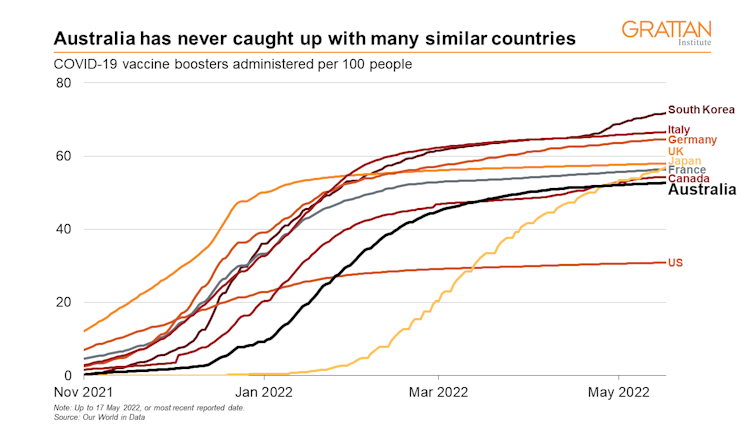
But only about half the population has had a third dose. That puts us back in the middle of the OECD pack, and we’re falling further behind the leaders.
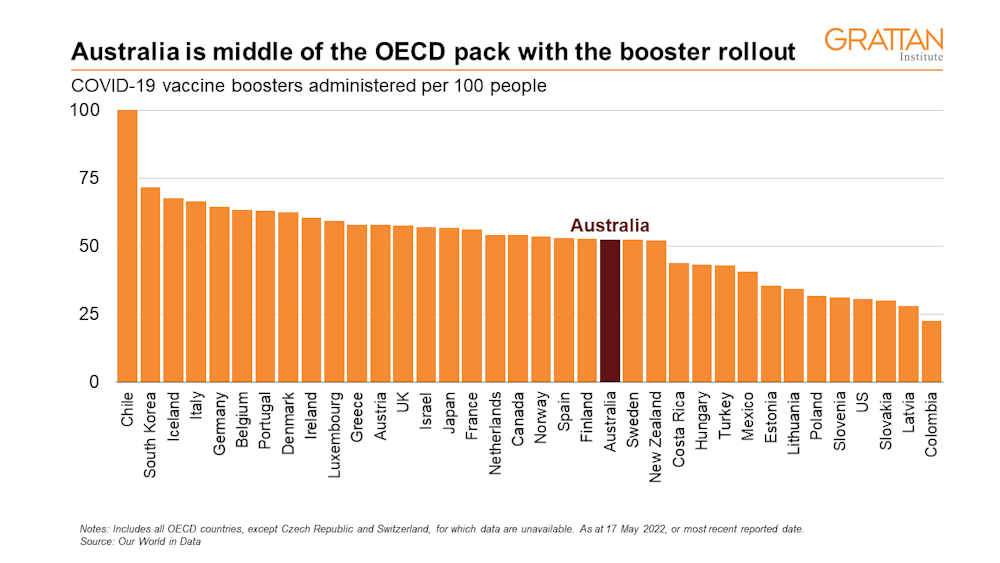
At the current rate, it would take about two years for every Australian who had a second dose to get their third. That’s not nearly fast enough to improve protection before winter.
Vaccination still matters

Thousands of hospital beds across Australia are occupied by people with COVID. Freeing up those beds is urgent.

The flu season is looming, and hospitals are facing a perfect storm heading into winter: emergency departments overflowing, elective surgery wait lists ballooning, and the health workforce stretched to the limit.


Read more:
Cases are high and winter is coming. We need to stop ignoring COVID


Data from the United Kingdom show third doses substantially reduce symptomatic infections and hospitalisations.

Against Omicron, protection falls quickly after the second dose, until a third dose boosts it and keeps it higher for longer.

That makes high third dose coverage important. It’s also easier than the other steps required for a comprehensive plan to reduce severe illness from COVID, such as national ventilation standards, better access to tests, more antiviral doses, and promoting mask use.

Compared to those measures, vaccination is straightforward. We’ve bought the doses, we’ve done it before, and it’s effective and safe.

But we’re moving too slowly overall, and parts of the country are being left behind.

There are wide gaps in coverage

The Department of Health publishes data on the proportion of the eligible population that has received second and third doses in different parts of Australia (the international comparison above uses the share of the whole population).

Our analysis shows that the share of eligible Australians without a third dose is three times higher in the least-vaccinated areas compared to the most-vaccinated.

This problem isn’t new. By early November in 2021, half of the local areas in Australia had reached 80% second dose coverage. Today, about one in 20 still haven’t made it.

It’s not random who misses out. Poor areas are more likely to have low vaccination rates (see chart below), even though they should have the highest.
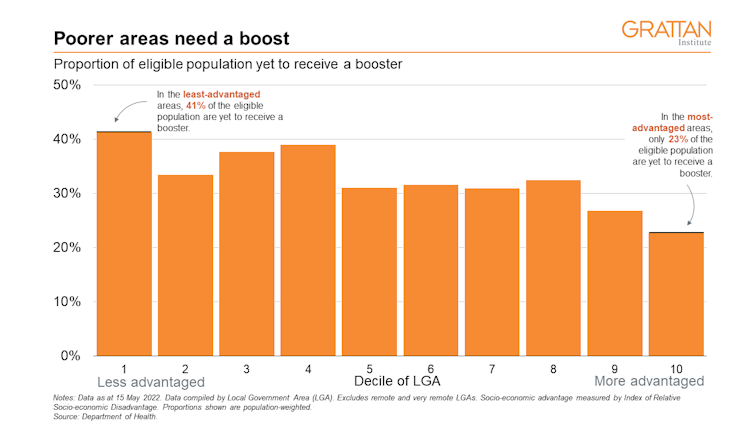
People living in poor areas are more exposed, because more of them have in-person jobs and live in larger households. If they get infected, their chance of severe illness is higher, because they are more likely to have risk factors such as chronic disease. Low vaccination coverage only adds to their risk of harm.

Likewise, people living in remote areas have lower vaccination, as do Aboriginal people in many parts of Australia, even though these groups are at greater risk.

A key lesson of Victoria’s second wave in 2020, and NSW’s in 2021, is the importance of vaccinating people at higher risk, including those in lower-income areas, to slow the spread of COVID and reduce severe illness. The data show this critical lesson of the pandemic has not been learned.


Read more:
Australia is failing marginalised people, and it shows in COVID death rates


How can we get faster … and fairer?

Getting higher – and fairer – vaccination rates will require national and local action.

Government advertising and political leadership helped raise the vaccination rate before. The Albanese government should lead the way on third doses, promoting the importance, safety, and impact of vaccination.

The government should set ambitious coverage targets for vulnerable groups and areas, and support tailored, local solutions to achieve them.

Primary Health Networks (PHNs) are regional bodies responsible for improving primary care, which is health care given outside a hospital, typically without a referral. That includes vaccinations at GP clinics and community pharmacies. Their role includes improving access to care for people at risk of missing out. PHNs should work with local communities to lift third dose rates, with new funding for the PHNs that have the lowest rates in their area, linked to targets they must hit.

Local barriers are different from place to place, but there are many proven ways to overcome them. Clinics reaching out to people is effective. Aboriginal-controlled services can play a critical role in their communities. There is experience here and overseas about partnering with community leaders and organisations, countering distrust, and vaccinating in different community settings.

Tough vaccine mandates have worked to increase uptake. If other measures fail, and hospitalisations rise, they should be considered again.

Without strong leadership, the vaccination rate will remain low and uneven. Getting it right will make a difference now and give us the playbook for the next dose, the next vaccine, and the next pandemic.

The Conversation

Peter Breadon does not work for, consult, own shares in or receive funding from any company or organisation that would benefit from this article, and has disclosed no relevant affiliations beyond their academic appointment.

ref. To protect vulnerable Australians from COVID this winter, we need to pick up the pace on third doses – https://theconversation.com/to-protect-vulnerable-australians-from-covid-this-winter-we-need-to-pick-up-the-pace-on-third-doses-183609
Don’t believe the backlash – the benefits of NZ investing more in cycling will far outweigh the costs

Source: The Conversation (Au and NZ) – By Simon Kingham, Professor, University of Canterbury

Shutterstock/Tanya NZ

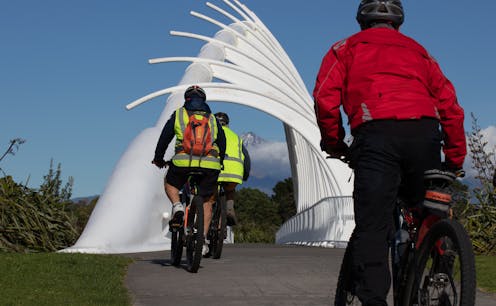
The Dutch have long been recognised as leaders in cycling. Denmark is not far behind, with more bikes than cars in its capital Copenhagen. This is the result of many years of investment. Even the UK, with less of a cycling tradition, is investing and showing growth in cycling.

New Zealand is starting to follow suit. The Emissions Reduction Plan, released last week, includes NZ$350 million to encourage walking, cycling and public transport.

Investment in cycling is often motivated by the need to curb emissions and to increase rates of active transport. But the backlash can sometimes seem as large as the level of spending.

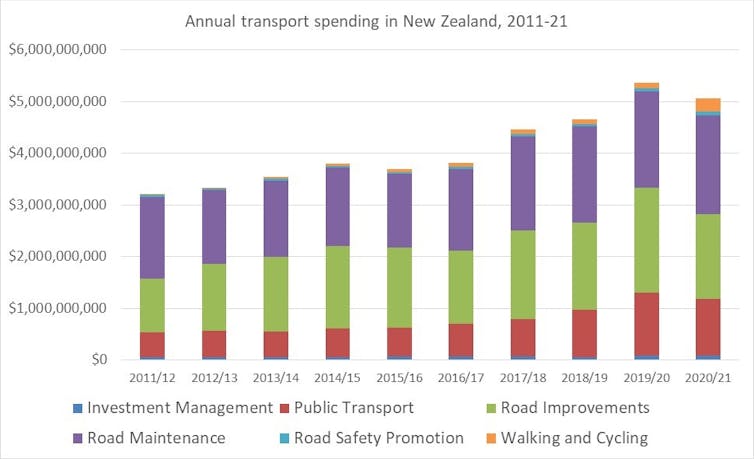
New Zealand spends around $5 billion per year on transport. On average, over the past decade, 41% was spent on maintaining existing roads, 38% on building new roads, 17% on public transport and 1.7% on walking and cycling.

Some critics argue cyclists do not pay for cycle infrastructure.
But transport funding comes from several sources, including central government funds such as fuel excise duty (paid on petrol purchased), road user charges (paid by diesel vehicle owners), vehicle registration and licensing, and local government funds from rates. One-off investments have come from the NZ Upgrade Programme and the Provincial Growth Fund.

Many of these sources come from general taxation, which cyclists pay. Most people who commute by bike usually also own a car and therefore pay for registration and licensing.

Increasing the number of cyclists will benefit the economy since research shows cities with more physically active people are more productive. The evidence for investing in cycle infrastructure is compelling.

This graph shows the annual government spending on transport.
Road building and maintenance take up most of transport funding, with less than 2% spent on cycling and walking infrastructure.
Author provided

Health benefits from cycling

Active commuting has been shown to reduce the risk of disease and to enhance mental health. Research has even found that cycling is the happiest way to travel.

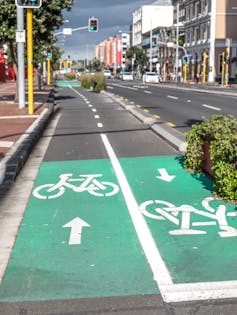
Bike lanes separated from the main road.
Cycling has benefits for physical and mental health.
Shutterstock

A recent review of over 170 studies found places designed to encourage walking and cycling have lower rates of obesity and diabetes.

New Zealand research confirms overseas findings that cyclists are exposed to healthier air than car drivers. Segregated cycle lanes, even a small distance from traffic, improve air quality.

Some people raise concerns about the safety of cycling, with data showing injury and fatality rates are higher for cyclists for each kilometre travelled. However, the more people cycle, the safer it becomes for all road users.


Read more:
Will the budget be another missed opportunity to get more New Zealanders out of their cars?


Build it and they will come

The standard tool to inform transport decisions is the benefit-cost ratio. A UK government report found the average benefit-cost ratio for walking and cycling projects delivers benefits 13 to 35 times the cost.

In New Zealand, transport planners estimate money spent on high-quality cycling infrastructure yields benefits between ten and 25 times the costs.

Research clearly shows the biggest barrier to cycling is perceived safety. Segregated cycleways are key to feeling safe, and infrastructure should be a mix of separate cycling facilities along roads with heavy traffic and at intersections, combined with extensive traffic calming of residential neighbourhoods, coupled with lower speed limits.

The physical separation from traffic comes at a higher cost and these expensive projects tend to attract the headlines, such as the proposed Auckland Harbour crossing.

But many cycle routes use lower speeds and simple traffic management to create a cycle-friendly environment. Overall, cycleways are cheap compared with other transport infrastructure.

Evidence shows the number of people cycling is related to the quality and quantity of infrastructure provided. This has been demonstrated in the US, UK, Denmark and most recently in a European study which examined the impact of temporary cycle infrastructure “popping up” as a COVID transport solution.


Read more:
3 in 4 people want to ride a bike but are put off by lack of safe lanes


Registration for cyclists

The issue of whether cyclists should be registered or licensed has generated debate. The arguments for registration include:

  • some form of registration would provide legal accountability

  • registration could raise funds to pay for cycle infrastructure

  • the process would include a cycling test to improve cyclists’ safety.

The arguments against include:

  • complication and confusion deciding who and what to include (children, tricycles, people who never ride on the road etc)

  • creating a barrier to people on low incomes who use a bike because they cannot afford a car

  • cyclists already paying for cycle infrastructure through their taxes.

Ultimately, the main reasons against registration are bureaucracy and cost. The UK government concluded the cost and complexity of introducing such a system would significantly outweigh the benefits.


Read more:
Electric cars alone won’t save the planet. We’ll need to design cities so people can walk and cycle safely


Cycleways and business

One frequent complaint is that when cycleways replace on-street parking, businesses suffer. But research does not support this.

According to Bloomberg CityLab, multiple studies have reached a similar conclusion: replacing on-street parking with a bike lane has little to no impact on local business, and in some cases might even increase business.

Evidence from the US suggests people who travel by bike spend more. A small New Zealand study supports this.

A study in London found “an increase in cycling trips significantly contributes to the emergence of new local shops and businesses”. In New Zealand, there is some evidence a growing number of businesses appreciate the benefits of cycleways.


Read more:
Electric cars alone won’t save the planet. We’ll need to design cities so people can walk and cycle safely


Safety is the main barrier

Poor weather is a barrier for some people, but not one of the most significant ones. Rates of commuter cycling do not vary dramatically by season. Cycling rates in Christchurch in winter are only 10% lower than during other times of the year.

While US research has shown cycling declines in bad weather, a New Zealand study calculated that someone cycling to work every day in the main cities would only get wet six times a year.

What really stops some people hopping on a bike is that they don’t feel safe cycling in traffic. As Chris Boardman, an Olympic gold medallist cyclist and now commissioner for Active Travel England, said, we can tackle our biggest crisis and “all we have to do is make nicer places to live”.

The Conversation

Simon Kingham is seconded to the New Zealand Ministry of Transport as their Chief Science Advisor

ref. Don’t believe the backlash – the benefits of NZ investing more in cycling will far outweigh the costs – https://theconversation.com/dont-believe-the-backlash-the-benefits-of-nz-investing-more-in-cycling-will-far-outweigh-the-costs-181053

To protect vulnerable Australians from COVID this winter, we need pick up the pace on third doses

Source: The Conversation (Au and NZ) – By Peter Breadon, Program Director, Health and Aged Care, Grattan Institute

CDC/Unsplash

Anthony Albanese campaigned on better pandemic management. Giving the vaccination program a shot in the arm will be his first test.

Not long ago, every shipment of vaccines was a news item and people were queuing around the block to get a jab.

Today, despite rising COVID cases and deaths, Australians seem to have lost interest. The vaccination rate for third doses has almost stalled.

Speeding up third doses will be critical to protecting Australians against Omicron variants as we move into winter. But without a focus on equal access, that protection will remain uneven.


À lire aussi :
COVID has killed 5,600 Australians this year and the pandemic isn’t over. Ethics can shape our response


Australia is losing the race

After a shaky start, Australia got near the top of the charts for second dose coverage.

But only about half the population has had a third dose. That puts us back in the middle of the OECD pack, and we’re falling further behind the leaders.

At the current rate, it would take about two years for every Australian who had a second dose to get their third. That’s not nearly fast enough to improve protection before winter.

Vaccination still matters

Thousands of hospital beds across Australia are occupied by people with COVID. Freeing up those beds is urgent.

The flu season is looming, and hospitals are facing a perfect storm heading into winter: emergency departments overflowing, elective surgery wait lists ballooning, and the health workforce stretched to the limit.


À lire aussi :
Cases are high and winter is coming. We need to stop ignoring COVID


Data from the United Kingdom show third doses substantially reduce symptomatic infections and hospitalisations.

Against Omicron, protection falls quickly after the second dose, until a third dose boosts it and keeps it higher for longer.

That makes high third dose coverage important. It’s also easier than the other steps required for a comprehensive plan to cut COVID cases, such as national ventilation standards, better access to tests, more antiviral doses, and promoting mask use.

Compared to those measures, vaccination is straightforward. We’ve bought the doses, we’ve done it before, and it’s effective and safe.

But we’re moving too slowly overall, and parts of the country are being left behind.

There are wide gaps in coverage

The Department of Health publishes data on the proportion of the eligible population that has received second and third doses in different parts of Australia (the international comparison above uses the share of the whole population).

Our analysis shows that the share of eligible Australians without a third dose is three times higher in the least-vaccinated areas compared to the most-vaccinated.

This problem isn’t new. By early November in 2021, half of the local areas in Australia had reached 80% second dose coverage. Today, about one in 20 still haven’t made it.

It’s not random who misses out. Poor areas are more likely to have low vaccination rates (see chart below), even though they should have the highest.

People living in poor areas are more exposed, because more of them have in-person jobs and live in larger households. If they get infected, their chance of severe illness is higher, because they are more likely to have risk factors such as chronic disease. Low vaccination coverage only adds to their risk of harm.

Likewise, people living in remote areas have lower vaccination, as do Aboriginal people in many parts of Australia, even though these groups are at greater risk.

A key lesson of Victoria’s second wave in 2020, and NSW’s in 2021, is the importance of vaccinating people at higher risk, including those in lower-income areas, to slow the spread of COVID and reduce severe illness. The data show this critical lesson of the pandemic has not been learned.


À lire aussi :
Australia is failing marginalised people, and it shows in COVID death rates


How can we get faster … and fairer?

Getting higher – and fairer – vaccination rates will require national and local action.

Government advertising and political leadership helped raise the vaccination rate before. The Albanese government should lead the way on third doses, promoting the importance, safety, and impact of vaccination.

The government should set ambitious coverage targets for vulnerable groups and areas, and support tailored, local solutions to achieve them.

Primary Health Networks (PHNs) are regional bodies responsible for improving primary care, which is health care given outside a hospital, typically without a referral. That includes vaccinations at GP clinics and community pharmacies. Their role includes improving access to care for people at risk of missing out. PHNs should work with local communities to lift third dose rates, with new funding for the PHNs that have the lowest rates in their area, linked to targets they must hit.

Local barriers are different from place to place, but there are many proven ways to overcome them. Clinics reaching out to people is effective. Aboriginal-controlled services can play a critical role in their communities. There is experience here and overseas about partnering with community leaders and organisations, countering distrust, and vaccinating in different community settings.

Tough vaccine mandates have worked to increase uptake. If other measures fail, and hospitalisations rise, they should be considered again.

Without strong leadership, the vaccination rate will remain low and uneven. Getting it right will make a difference now and give us the playbook for the next dose, the next vaccine, and the next pandemic.

The Conversation

Peter Breadon ne travaille pas, ne conseille pas, ne possède pas de parts, ne reçoit pas de fonds d’une organisation qui pourrait tirer profit de cet article, et n’a déclaré aucune autre affiliation que son organisme de recherche.

ref. To protect vulnerable Australians from COVID this winter, we need pick up the pace on third doses – https://theconversation.com/to-protect-vulnerable-australians-from-covid-this-winter-we-need-pick-up-the-pace-on-third-doses-183609
New Zealand must get over its obsession with big cars and go smaller or electric to cut emissions

Source: The Conversation (Au and NZ) – By Jen Purdie, Senior Research Fellow, University of Otago

Getty Images

If your next car is not electric, then it must be much smaller than your last one.

Scientists have warned that the world needs to halve emissions every decade to keep global warming less than 1.5 degrees above pre-industrial levels.

The government of Aotearoa New Zealand aims to reduce greenhouse gas emissions to net zero by 2050.

Last year, the Climate Change Commission (CCC) laid out the path to net zero in its advice to the government. In recent weeks, the government has released its plan to achieve these climate targets.

The goal is not insignificant, especially considering New Zealanders have been buying bigger vehicles for nearly two decades.

To achieve net zero by 2050, New Zealand must reduce total CO2 emissions by a third before 2030, and another third by 2040.

How to target a third of emissions

How can we reduce New Zealand’s emissions by a third every decade?

Around 20% of New Zealand’s emissions come from the transport sector.

Both the government and commission see removing carbon from transport as the low-hanging fruit in the emissions reduction journey (in part because the government and farmers are still working on a plan to reduce the 50% of emissions that come from agriculture).

As part of its plan, the government intends to help low-income households reduce their transport emissions and make 30% of the light vehicle fleet electric by 2035.

But the government’s road map to achieve this seems light on details.

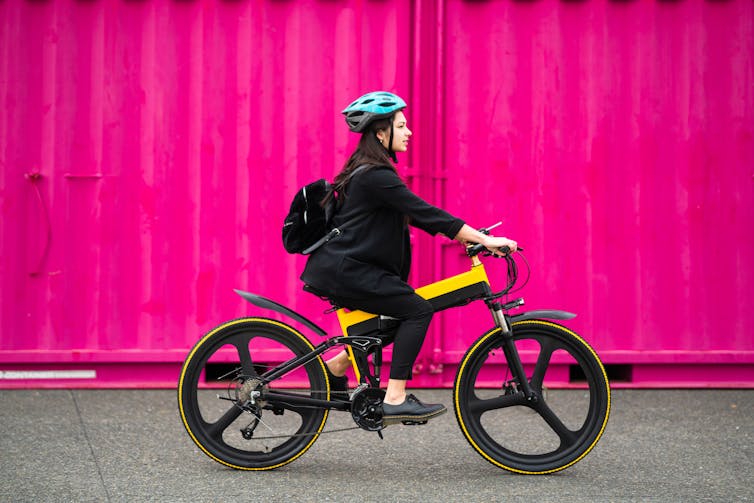
woman on electric bike in front of pink shed
The popularity of electric bicycles has increased, but cities need to be designed to allow people to better use non-car transport.
Getty Images

To reduce transport emissions, the commission proposed New Zealanders should walk, cycle, use electric bikes and scooters more, and drive less.

The good news is electric bike and scooter sales are booming in New Zealand and are predicted to overtake new car sales in the next couple of years.

Town planners are also starting to take these modes of transport into account when planning new ways for us to get around our cities.

The commission recommends that public transport and motive transport (using our own energy to get around by walking and biking), which currently make up just 6% of all travel, should increase to 14% by 2035 to achieve the emission reduction goals.


Read more:
Net zero: despite the greenwash, it’s vital for tackling climate change


The government has promised to invest in public transport, and will introduce a zero-emissions public bus mandate by 2025. But it has resisted calls to permanently extend the three month half-fare initiative currently in place.

New cars need to be smaller

To reduce emissions by a third every decade, New Zealand needs fewer cars on the road. But we also need to decarbonise the cars and trucks we do have, and we need to do it fast.

Barriers to achieve this include New Zealand’s ageing vehicle fleet, which is one of the oldest in the developed world. The average car is 14 years old, and the average age of cars when scrapped is 20 years old.

Approximately 150,000 cars are scrapped each year, out of a vehicle fleet of 4.4 million. This means it will take 30 years to turn over the entire fleet. That’s too slow if we want to reach net zero emissions by 2050.

People replace their vehicles on average every six to 11 years. In real terms, this means every time you replace your car it needs to produce 30% less emission than the one being replaced to meet reductions targets.


Read more:
Net-zero, carbon-neutral, carbon-negative … confused by all the carbon jargon? Then read this


The problem is, the average engine size of our cars grew steadily between 2000 and 2010, and stayed steady between 2010 and 2020. This decade has to be the one where engines get smaller.

But our obsession with large cars continues to grow. The Ford Ranger has been the most popular new car in New Zealand for the past couple of years.

Globally, sport utility vehicles (SUVs) grew from 16% of new car sales in 2010 to 45% of new car sales in 2021.

SUVs were the second largest contributor to the increase in global carbon emissions from 2010 to 2018 – bigger than either heavy industry or aviation. If SUVs were a country, they would be the seventh biggest emitter in the world.

There is no need for massive SUVs in an urban setting and they are too often used as a status symbol rather than a workhorse.

Lucky for SUV owners, vehicle manufacturers will soon be mass producing large electric utes. Electric vehicle (EV) charging infrastructure is well on it’s way to being universal, and the energy industry is gearing up to supply the resulting large increase in electricity demand.

Battery technology is coming on apace, finding ways around using rare earth metals such as cobalt, which have a high environmental and social cost.


Read more:
Aggressive marketing has driven the rise of the double-cab ute on New Zealand streets — time to hit the brakes?


Initial cost is still a barrier

EVs cost more upfront but have lower running costs, so the lifetime purchase and running costs of a new EV is already lower than an internal combustion engine (ICE). The up-front purchase price of a new EV is projected to be cheaper than ICEs by 2031.

But for many who usually drive cheap used cars, the up-front cost will remain prohibitive for some time unless the government comes up with more incentives than the the existing discount scheme. Supply chains to source the number of second hand EVs we need are not guaranteed either.

To achieve net zero, your next car will need to be electric or, at least, be two-thirds the size of your current car. Our obsession with driving cars, and with big vehicles in particular, must change.

We need to walk and bike more, or commute to work on electric bikes or scooters, and our cities need to be designed around bike lanes and better subsidised public transport. We need to stop using our vehicles as status symbols and buy smaller cars.

What will we get in return? Our children will get a planet they can actually live on.

The Conversation

Jen Purdie receives funding from the Deep South Science Challenge, and is an employee of the University of Otago.

ref. New Zealand must get over its obsession with big cars and go smaller or electric to cut emissions – https://theconversation.com/new-zealand-must-get-over-its-obsession-with-big-cars-and-go-smaller-or-electric-to-cut-emissions-183424

Commemoration held in Tahiti for politicians on a ‘vanished’ flight

RNZ Pacific

A commemoration has been held in French Polynesia to mark the 20th anniversary of the disappearance of a leading opposition politician in the Tuamotus.

Boris Léontieff, who headed the Fetia Api party, was among four politicians travelling in a small plane on a campaign trip when it disappeared without a trace.

The commemoration was held in Arue where Léontieff was the mayor.

Boris Léontieff
Boris Léontieff … leader of the Fetia Api party was among four Tahitian politicians who disappeared on a flight. Image: Radio1

The case was closed 11 years ago after investigations failed to conclude why their plane vanished, with theories suggesting the pilot lacked experience and might have encountered fuel problems.

There had been speculation there may have been foul play or that the aircraft may have been diverted.

The politicians’ wives had approached the French president to explore if the United States took satellite images of the Tuamotus at the time of the presumed crash.

Nine years ago, a court rejected a request for compensation to be paid to the widow of Boris Léontieff.

Her lawyer, James Lau, told a local newspaper that it was established that Leontieff was under surveillance by the secret service of then-president, Gaston Flosse.

Lau said the same spying effort was directed at Leontieff’s advisor and journalist, Jean-Pascal Couraud, who also disappeared without leaving a trace in 1997.

Researching the affairs of Flosse
Couraud was famous for researching the affairs of Flosse, who ruled a militia known as the GIP.

An investigation was first opened in 2004 after a former spy claimed that Couraud had been kidnapped and killed by the GIP, which dumped him in the sea between Mo’orea and Tahiti.

Murder charges against two members of the now disbanded militia, the GIP, were dismissed a decade later, after incriminating wiretaps were ruled inadmissible because they were obtained illegally.

This article is republished under a community partnership agreement with RNZ.

Print Friendly, PDF & Email

Article by AsiaPacificReport.nz

Curious Kids: what would happen if someone moved at twice the speed of light?

Source: The Conversation (Au and NZ) – By Sam Baron, Associate professor, Australian Catholic University

Shutterstock

I’m curious about what will happen if, hypothetically, someone moves with speed (that is) twice the speed of light? – Devanshi, age 13, Mumbai

Hi Devanshi! Thanks for this great question.

As far as we know, it’s not possible for a person to move at twice the speed of light. In fact, it’s not possible for any object with the kind of mass you or I have to move faster than the speed of light.

However, for certain strange particles, travelling at twice the speed of light might be possible – and it might send those particles back in time.

A universal speed limit

One of our best physical theories at the moment is the theory of relativity, developed by Albert Einstein. According to this theory, the speed of light operates as a universal speed limit on anything with mass.

Specifically, relativity tells us that nothing with mass can accelerate past the speed of light.

To accelerate an object with mass, we have to add energy. The faster we want the object to go, the more energy we’ll need.

The equations of relativity tell us that anything with mass – regardless of how much mass it has – would require an infinite amount of energy to be accelerated to the speed of light.

But all of the sources of energy we know of are finite: they are limited in some respect.

Indeed, it’s plausible the Universe only contains a finite amount of energy. That would mean there isn’t enough energy in the Universe to accelerate something with mass up to the speed of light.

Since you and I have mass, don’t expect to be travelling at twice the speed of light anytime soon.

Blue beams of light rushing past signify a fast moving object going through space
According to Einstein, nothing bulky such as an object or human could accelerate faster than the speed of light.
Shutterstock

Tachyons

This universal speed limit applies to anything with what we might call “ordinary mass”.

There are, however, hypothetical particles called tachyons with a special kind of mass called “imaginary mass”.

There is no evidence tachyons exist. But according to relativity, their possible existence can’t be ruled out.

If they do exist, tachyons must always be travelling faster than the speed of light. Just as something with ordinary mass can’t be accelerated past the speed of light, tachyons can’t be slowed down to below the speed of light.

Some physicists believe that if tachyons exist, they would constantly be travelling backwards in time. This is why tachyons are associated with time travel in many science fiction books and movies.

There are ideas that we might someday harness tachyons to build a time machine. But for now this remains a distant dream, as we don’t have the ability to detect potential tachyons.


Read more:
Curious Kids: is time travel possible for humans?


Shortcuts?

It’s disappointing we can’t travel faster than the speed of light. The nearest star to us, other than the Sun, is 4.35 light years away. So, travelling at the speed of light, it would take more than four years to get there.

The farthest star we’ve ever detected is 28 billion light years away. So you can pretty much give up on charting the entire Universe.

That said, relativity does allow for the existence of “wormholes”.

A wormhole is a shortcut between any two points in space. While a star might be 4.5 light years away in normal terms, it might only be a few hours away via a wormhole.

If there are any actual wormholes, they would let us travel great distances in a very short period of time – allowing us to get to the farthest reaches of the universe within a single lifetime.

Unfortunately, like tachyons, wormholes remain entirely hypothetical.

Illustration showing a hypothetical wormhole open in space, bending spacetime around it.
You can think of a wormhole as a tunnel with two ends opening up to different points in spacetime.
Shutterstock

Strange possibilities

Despite the fact we can’t genuinely travel faster than light, we can still try to imagine what it would be like to do so.

By thinking in this way, we are engaging in “counterfactual thinking”. We are considering what things would, or might, be like if reality was different in some way.

There are many different possibilities we could consider, each with a different set of physical principles.

So we can’t say with any certainty what would happen if we were able to travel faster than light. At best, we can guess what might happen. Would we start to travel back in time, as some scientists think tachyons might do?

I’ll leave it to you and your imagination to come up with some ideas!

The Conversation

Sam Baron receives funding from the Australian Research Council.

ref. Curious Kids: what would happen if someone moved at twice the speed of light? – https://theconversation.com/curious-kids-what-would-happen-if-someone-moved-at-twice-the-speed-of-light-183043

Did Australia just make a move to the left?

Source: The Conversation (Au and NZ) – By Frank Bongiorno, Professor of History, ANU College of Arts and Social Sciences, Australian National University

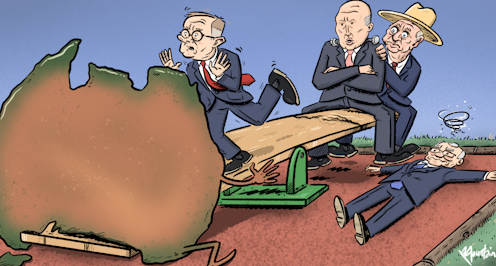
Wes Mountain/The Conversation, CC BY-ND

Political commentators often use the idea of a political spectrum from left to right as shorthand for understanding political ideologies, parties and programs. Derived from the arrangement of the National Assembly in the French Revolution, it has been a remarkably resilient form of political shorthand.

Is it useful is explaining what has happened in the 2022 Australian federal election?

The customary way of considering such matters has been to regard the Liberals and Nationals as parties of the right, and Labor and the Greens as parties of the left. Terms such as centre right and centre left have sometimes been used to provide greater refinement, seen to be necessary especially with the proliferation of xenophobic and extreme parties further to the right in many countries. The term “centre party” has sometimes been used for smaller parties that seem to sit between the others, however uncomfortably – the Australian Democrats was an example.

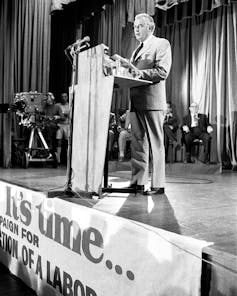
Gough Whitlam gives a policy speech.
Labor’s two-party-preferred vote in 2022 is only slightly behind Gough Whitlam’s in 1972.
Wikimedia Commons

If the spectrum does indeed remain a useful concept, an argument can be made that the 2022 election discloses an electoral shift to the left. It is perhaps the most significant since the combined momentum of the elections of 1969 and 1972 that brought the Whitlam government to office.

Changes of government in federal politics don’t happen often. There have been eight since the second world war, and three of those were in a turbulent decade between late 1972 and early 1983. Australian voters are in the habit of returning governments and they tend not to discard an incumbent lightly. When they do, it is reasonable to ask if it signals some wider shift in voter attitudes and leanings.


Read more:
Albanese wins with a modest program – but the times may well suit him


In particular, Australian voters have normally clung tightly to non-Labor governments. Joseph Lyons won three elections before the war as leader of the United Australia Party (no relation to Clive Palmer’s), while Robert Menzies won seven from 1949 for Liberal-Country party coalitions. His successors managed another couple between them, taking their tally to 23 years of continuous rule.
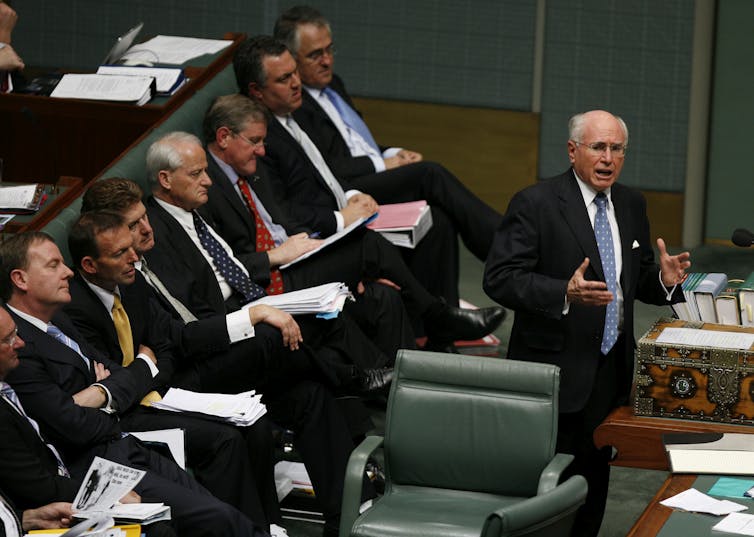
John Howard won four times for almost 12 years, and Malcolm Fraser three for just over seven. The Coalition government that has just been defeated won three elections under three different leaders. All up, since House of Representatives elections became largely a two-way competition between a government and an opposition in 1910, non-Labor has governed for two-thirds of the time and Labor for one-third.

Australians have historically clung onto Coalition governments, including John Howard’s which won four elections over almost 12 years.
Andrew Sheargold/AAP

Labor’s primary vote at this election is on present counting at a historic low of about 32%, but the emphasis placed on this might be producing a misreading of the electoral mood. Once preferences are distributed, the party is currently tracking for a two-party preferred vote of about 52% to the Coalition’s 48%. If maintained, that will be fractionally behind the vote received by Gough Whitlam in 1972 and Kevin Rudd in 2007 (both 52.7%), and just over a point behind Hawke in 1983 (53.2%).

We have used the preferential system, known internationally as the Alternative Vote, for House elections since 1918. By the standards of federal elections, in 2022 voters have announced a clear preference for a party regarded as “centre left” or “progressive” over one that is “centre right”, “conservative” or even “liberal”.

The opposition that Australians have been prepared to send into government is led by a man whom few would regard as having the charisma of John Curtin, Gough Whitlam, Bob Hawke or Kevin Rudd. Anthony Albanese displays sincerity, integrity and authenticity, which gave him advantages in comparison with a prime minister whose popularity was in decline. But it is unlikely he has inspired the support that these earlier Labor leaders could mobilise on the basis of strength of personal appeal. He may do so in time, but not this time.


Read more:
He’s Australia’s 31st prime minister. So who is Anthony Albanese?


Albanese pursued a small-target strategy, which might lead one to doubt his election signifies much at all. But this is only part of the story. As the campaign developed, Albanese sounded increasingly in tune with values normally understood as in Labor’s DNA.

He stood up to media and Coalition bullying over his support for maintaining the real wages of low-paid workers. He talked of universal provision in childcare, which has a Whitlamite feel to it. He signalled a strong commitment to the Uluru Statement From the Heart. His language was about caring, co-operation and collaboration, of “we” and “us” more than “you” or “me”.

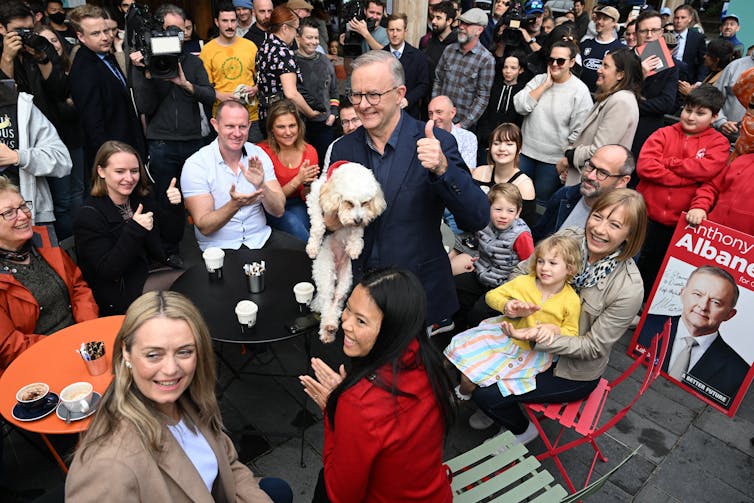
Anthony Albanese with supporters the day after the election.
Anthony Albanese, pictured with dog Toto, will have the most progressive Australian parliament for many years.
Dean Lewins/AAP

Labor took seats from the Coalition – a point that is perhaps being lost in the understandable emphasis on the victories of independents and Greens. The swing to Labor in Western Australia looks like it will be between 10% and 11% – no doubt entangled in the politics of the pandemic, but a radical shift nonetheless in a state where Labor usually struggles.

Labor will win seats from the Coalition in Sydney, Melbourne, Perth and Adelaide. Indeed, the Coalition has been nearly wiped out in all of these cities by a combination of Labor, independents and, in Melbourne, Greens.

Labor’s national swing looks to be about 3.6%. As a result, many of its own seats have become safer while it is now in striking distance of Coalition ones. Aston in Melbourne’s affluent eastern suburbs, held by Alan Tudge and an outer island in a sea of red, teal and green, has moved from safe to marginal. Coalition hopes that it could take Hunter in view of the large swing gained there in 2019 and the supposed strength of pro-coal opinion now look faintly ridiculous.

In Brisbane, the Greens have taken seats – possibly three – from both Labor and the Liberals. This might be considered an unambiguous shift to the left by inner-city electorates in Brisbane, although not one from which Labor has been able to benefit.

It is a major breakthrough for the Greens in the lower house, where they previously had just their leader, Adam Bandt, representing Melbourne. This success will greatly magnify their standing in the new parliament, where the government will often need Greens support in the Senate even if it gets a House of Representatives majority.

Greens success will equally worry Labor strategists concerned about their own inner-city strongholds, just as the party’s larger inability to win seats in regional Queensland will remain of concern. But even here, Labor has managed a two-party preferred swing of over 5% on present counting, which might place some seats in striking distance next time.

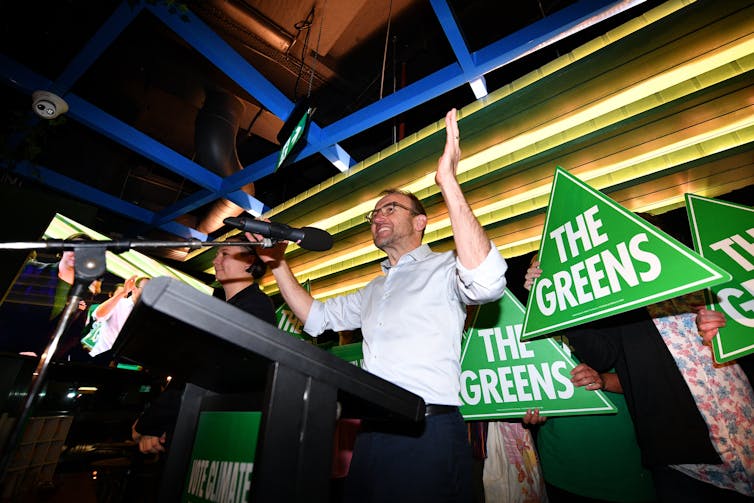
Greens leader Adam Bandt celebrates on election night.
The Greens made significant inroads against both the Coalition and ALP in Brisbane.
James Ross/AAP

The rise and rise of the independents has rightly been the story of the election. The central issues of their campaign – climate change, anti-corruption and gender equality – have been turned into the property of “progressives” and “the left” through the ham-fisted efforts of Scott Morrison and the Coalition, support of now questionable value from the Murdoch media, and the place of the environment in the right’s culture wars.

Climate and energy policy, more than any other issue, now defines what it is to be “conservative” and “progressive” in Australia. This is the handiwork of a succession of powerful conservative politicians who saw political advantage in this framing and enjoyed their parties’ relationship with the fossil fuel industry. Tony Abbott, Morrison and Barnaby Joyce have been among the most influential.


Read more:
Australian voters have elected their government. Now the Labor Party has to make them believe they were right


They may now behold their achievement. The Liberal Party is a drastically depleted and demoralised force. The Coalition might fall apart. The right-wing populist minor parties such as Pauline Hanson’s One Nation and Clive Palmer’s United Australia Party have performed poorly, with Hanson’s Senate seat in danger – another measure, perhaps, of a general shift to the left.

Australia will have the most progressive parliament for many years. And the Coalition will have some deep soul-searching to do, possibly under a leader – Peter Dutton – who will be a strange but unavoidable choice for a party that needs both to soften its image and change its substance to have any hope of avoiding many years in the wilderness.

The Conversation

Frank Bongiorno is a member of Kim For Canberra (Senate election) and has donated to Climate 200.

ref. Did Australia just make a move to the left? – https://theconversation.com/did-australia-just-make-a-move-to-the-left-183611

On the Pacific, the new government must be bold and go big. Here’s how the repair work could begin

Source: The Conversation (Au and NZ) – By Patricia A. O’Brien, Faculty Member, Asian Studies Program, Georgetown University; Visiting Fellow, Department of Pacific Affairs, Australian National University; Adjunct Fellow, Center for Strategic and International Studies, Washington DC., Georgetown University

The federal election has delivered a monumental win for Australia’s relations with the Pacific. The stunning victories of the teal and Greens candidates means climate action will be at the top of the new government’s agenda.

In one fell swoop, the Pacific’s leading source of deep frustration with Australia is back at the centre of policy debate. The Australian government and its Pacific neighbours are now much closer to being on the same page.

This is a profoundly important turn of events, allowing other much-needed improvements to Australia’s regional image and outreach.

When it comes to the Pacific, the new government must be bold and go big.


Read more:
The teals and Greens will turn up the heat on Labor’s climate policy. Here’s what to expect


Swift action on climate

To repair our relationship with the Pacific, the new government must make swift decisions addressing the climate emergency.

During the campaign, Labor equivocated about its stance on coal, fearing losses in vital “coal country” seats.

But Australian voters have made clear that they want action on climate.

As a result, Labor’s governing mandate – enforced by the teal independents and the Greens – will likely involve the winding down of Australia’s coal industry.

This is doing right by the Pacific – and by fire and flood-ravaged Australia, too.

The new government must effect this change in ways that secure a strong future for coal country people.

Otherwise, the politics of coal that have marred Australia’s Pacific relations will undoubtedly be revived.

A big repair job ahead

Addressing the climate crisis should be the first order of business for the new government. But the new government has a lot of other repair work ahead of it.

Under the Coalition, Australia’s record of relations with the Pacific ran the gamut from positive, to checkered, to tone-deaf, to downright embarrassing.

Take, for example, the confounding election night revelation the Morrison government rejected doubling the Pacific aid budget in the wake of the Solomon Islands-China security deal.

Despite such decisions, the Morrison government was fond of using the sentimental slogan “our Pacific family”. It rang profoundly hollow, given it left the greatest existential crisis facing “our family” unaddressed.

What has Labor promised on the Pacific?

Labor is using the language of “our Pacific family” too, but has pledged to back it up with a broad-ranging Pacific policy announced during the campaign.

The policy pledges include:

  • establishing an Australia Pacific Defence School
  • boosting maritime assistance support and development assistance
  • developing climate infrastructure financing and
  • reforming the Pacific Australian Mobility Scheme (criticised in the past for failing to address exploitation).

Labor also signalled it will issue 3,000 visas annually to boost permanent migration “for nationals of Pacific Island countries and Timor-Leste”.

While this is a step in the right direction, Labor’s migration and labour goals are too modest.

Its vital Australia addresses the low numbers of Pacific Islanders living in Australia. Boosting these numbers in Australia opens economic and educational opportunities of Pacific Islanders, but also directly benefits home islands through remittances.

The Solomon Islands High Commissioner to Canberra, despite the acute tensions between Australia and his government due to the China security deal, has underscored how vital worker access to Australian jobs is, saying:

If only the scheme can be extended to the whole of Australia and metropolitan cities like Sydney, Brisbane, Wollongong, Perth, Melbourne, Adelaide, Newcastle, Gold Coast, where the demand for plumbers, bricklayers, caregivers is huge.

This fills labour market gaps. It also generates earnings and valuable skills on islands, like the Solomons, that face high rates of youth unemployment (which feeds social unrest).

The incoming government should take heed – there is no better way to build and secure bridges between Australia and the Pacific than by creating job opportunities for Pacific Islanders in Australia.


Read more:
Labor’s proposed Pacific labour scheme reforms might be good soft diplomacy but will it address worker exploitation?


Educational opportunities

The way forward for the new government must also help raise Australian literacy and understanding about the islands.

School children should learn about Australia’s Pacific history and Pacific cultures as a matter of course.

Australia’s universities must expand opportunities for Australian students to learn about the Pacific and establish on-island campuses.

This would facilitate circulation of people, learning and expertise between Australian and island-based campuses.

It would represent an excellent investment but would need government support.

Reckoning with history

Australia also needs to reckon with its Pacific history, focusing on colonial Papua New Guinea and the history of “blackbirding” – where Pacific Islanders were lured or taken forcibly to work in Australia.

The Australian War Memorial could also do a better job of educating Australians about Australia’s military history of “pacifying” islanders.

Prime Minister Anthony Albanese also must follow the example of New Zealand Prime Ministers Helen Clark and Jacinda Ardern. Both formally apologised for past policies and practices that caused untold harm to the Samoan people and peoples from Niue, Tokelau and the Cook Islands.

Albanese should issue a similar apology for the people of Papua New Guinea, the Solomons and Vanuatu.

Only by providing civic education and acknowledging a troubled past can more Australians appreciate the immense debt Australia owes the Pacific Islands.

This is a debt that has yet to be paid.


Read more:
How should the next Australian government handle the Pacific?


The Conversation

Patricia A. O’Brien received funding from the Australian Research Council as a Future Fellow, the Jay I. Kislak Fellowship at the John W. Kluge Center, Library of Congress, Washington D.C. and New Zealand’s JD Stout Trust.

ref. On the Pacific, the new government must be bold and go big. Here’s how the repair work could begin – https://theconversation.com/on-the-pacific-the-new-government-must-be-bold-and-go-big-heres-how-the-repair-work-could-begin-183598

COVID made things taste weird, now ‘Paxlovid mouth’ sounds disgusting. What causes dysgeusia?

Source: The Conversation (Au and NZ) – By Sarah Hellewell, Research Fellow, Faculty of Health Sciences, Curtin University, and The Perron Institute for Neurological and Translational Science, Curtin University

Shutterstock

Loss or alteration of taste (dysgeusia) is a common symptom of COVID. It’s also a side effect of several illnesses and medications, including Paxlovid, the new antiviral medication to treat COVID infection.

Although it affects fewer than 6% of people who are given Paxlovid, some report a “horrible” taste that came on soon after they started taking the drug.

Dysgeusia is described as a bitter, metallic or sour taste in the mouth. But what exactly is it, and what’s going on in the body when it happens?


Read more:
Even mild COVID can cause brain shrinkage and affect mental function, new study shows


What happens in the brain when we taste?

Aside from the pleasure we get from eating food that tastes good, our sense of taste also serves other purposes. Taste helps us decide what to eat, ensuring we get enough nutrients and energy. It also helps us metabolise the foods we have eaten.

Our sense of taste can also keep us safe from consuming things that are dangerous to our health, such as poisons or food which has spoilt.

There are around 10,000 taste buds in the human mouth, with each taste bud having up to 150 taste receptors. These taste receptors on our taste buds help detect whether food is salty, sweet, bitter, sour or umami.

Taste buds transmit information to the brain about what we’re eating through several nerve pathways.

Information about taste is first transmitted to the brain stem at the base of the brain, and is then sent throughout the brain via connected pathways, reaching the orbitofrontal cortex at the front of the brain. This area connects to sensory areas and the limbic system that helps encode memory and emotion.

microscopic view of taste buds
Taste buds, up close.
Shutterstock


Read more:
Four strange COVID symptoms you might not have heard about


3 causes of dysgeusia

Aside from direct damage to the tongue and mouth, dysgeusia can be caused by several factors: infection or disease, medicines, or damage to the central nervous system.

1. Infection or disease

Alterations in taste have been reported after influenza infection, in hayfever, diabetes, heart disease and others.

Today, one of the most frequent causes of dysgeusia is COVID, with loss of taste one of the first symptoms many people experience. Research suggests dysgeusia occurs in between 33% and 50% of people with COVID, though less so with newer variants. It’s also been reported as a lingering symptom of Long COVID.

Scientists don’t know exactly why COVID or other infections cause dysgeusia. Some recent theories centre on how the SARS-CoV-2 virus that causes COVID triggers an inflammatory response by binding to receptors in the mouth. This might cause changes in molecular and cellular pathways which could alter taste.

Because of the close links between taste and smell, viral-induced damage to the lining of the nose may be enough to cause taste disturbance.

The virus could also be causing more direct damage to taste buds, nerves involved in taste, or brain areas responsible for taste sensory processing.

sick woman sniffs orange
Disruptions to the nose and sense of smell can also affect taste.
Shutterstock

2. Injury

Loss of taste can also follow damage to the nerves and brain pathways involved in taste perception.

This could be because of lesions in the nerves or brain tissue, or could be due to loss of the fatty myelin coating which helps insulate the pathways used for taste signalling. In rare cases, dysgeusia can also be due to brain tumours.

3. Medications

Dysgeusia is a known side effect of several medications, including antibiotics and medications for Parkinson’s disease, epilepsy and HIV.

There could be several reasons for this. The medications themselves may have a bitter taste which lingers in our taste buds.

Medications can also activate specific taste receptors that detect bitter, sour or metallic flavours, activating these taste receptors in a way that we don’t often experience with our food.

The new antiviral medication Paxlovid is almost 90% effective at reducing COVID hospitalisations and deaths.

However, dysgeusia is a prominent side effect of Paxlovid. Although it occurs in less than 6% of people, dysgeusia has been nicknamed “Paxlovid mouth”.


Read more:
Australia approves two new medicines in the fight against COVID. How can you get them and are they effective against Omicron?


Paxlovid is actually two medications: nirmatrelvir and ritonavir. Nirmatrelvir is the main antiviral drug to combat COVID, and Ritonavir is given at the same time to stop nirmatrelvir being broken down too quickly, so it can remain active in the body for longer.

Ritonavir has a bitter taste and causes dysgeusia when taken alone or in combination with other medications. Although the mechanism has not been researched, Ritonavir could be the underlying factor behind Paxlovid mouth.

Leaving a bad taste

While it can be unpleasant, dysgeusia is usually short-lived, and should improve after medications are finished or infection is resolved.

People who experience prolonged changes in taste should seek medical assessment to determine the underlying cause. In the short term, lozenges, mints and salt water gargles may make dysgeusia more manageable. Although it may be an unpleasant size effect of Paxlovid, short-term dysgeusia is a palatable trade-off to reduce the serverity of COVID infection.

The Conversation

Sarah Hellewell does not work for, consult, own shares in or receive funding from any company or organization that would benefit from this article, and has disclosed no relevant affiliations beyond their academic appointment.

ref. COVID made things taste weird, now ‘Paxlovid mouth’ sounds disgusting. What causes dysgeusia? – https://theconversation.com/covid-made-things-taste-weird-now-paxlovid-mouth-sounds-disgusting-what-causes-dysgeusia-182755

Into the ocean twilight zone: how new technology is revealing the secrets of an under-researched undersea world

Source: The Conversation (Au and NZ) – By James Bell, Professor of Marine Biology, Te Herenga Waka — Victoria University of Wellington

Despite New Zealanders’ close connection with the oceans, very few will have heard of “temperate mesophotic ecosystems” (TMEs). Even fewer will appreciate their importance for coastal fisheries, and possibly climate change mitigation.

TMEs typically occur at depths of between 30 and 150 metres – the twilight zone of our oceans, where little sunlight remains. But science is beginning to shed light on these remarkable ecosystems, and the need to protect them.

While there has been plenty of research on the deep oceans (greater than 200m) and the shallow seas (less than 30m), TMEs have received surprisingly little attention. They have only been recognised as distinct ecosystems in the past 15 years.

TMEs are beyond the reach of most scientific divers, but the recent development of relatively small and cheap remotely operated vehicles (ROVs) now allows greater access to these extraordinary undersea regions.

ROVs, such as the New Zealand-made Boxfish, can be deployed from small boats and are equipped with high-resolution cameras and robotic arms to identify organisms and collect specimens. We’re now able to regularly observe TMEs and our understanding of them is growing rapidly.

What do rocky TMEs look like?

Unlike the shallow seas, which are generally dominated by habitat-forming fleshy seaweeds, TMEs are dominated by animals.

At their shallowest, they support a mixture of seaweeds and animals, but as you descend deeper into low light conditions, encrusting algae and unique animal species begin to dominate.

Animals adapted to low light conditions include sponges, sea fans and sea squirts. Indeed, recent research from New Zealand found sponges can occupy more than 70% of the available space on rocky TMEs.

Given these ecosystems are likely to be widespread throughout temperate seas, it’s feasible that sponges might be even more abundant than algae in coastal ocean regions.

Ecological and economic importance

While we still know little about the ecology of TMEs, they’re important in several ways for wider coastal ecosystems.

The three-dimensional nature of the sponges and other animals that dominate TME habitats creates structural complexity on the sea floor. This provides a home to a range of organisms, from small and juvenile fish to crabs, that are likely to use this habitat to evade predators.

Also, many fish species migrate between shallow water and these deeper twilight ecosystems, likely looking for food and shelter.


Read more:
Marie Tharp pioneered mapping the bottom of the ocean 6 decades ago – scientists are still learning about Earth’s last frontier


The sponges that dominate TMEs filter large volumes of water and are able to capture dissolved carbon and transform it into detritus. Scavengers such as small crustaceans and worms can eat sponge detritus. Subsequently, these little creatures are eaten by larger organisms (like fish) higher up the food chain.

TMEs are therefore likely to be extremely important to coastal fisheries.

Our evaluation of depth-related changes in temperature suggests TMEs could also be important in the mitigation of climate change impacts, particularly marine heat waves that drive extremes in sea water temperature.

We’ve found water temperature in the depths where TMEs occur is usually several degrees lower than at the surface, which may provide a refuge for mobile fish species from shallow waters.

Furthermore, if shallower populations are damaged by human activity, then deeper water TME populations may be able to replenish them by providing larvae.

Human impacts on TMEs

While TMEs are likely to be affected by the same anthropogenic factors as surface waters, some specific stressors may have a greater impact.

The domination of TMEs by many upright (often slow-growing) tree-like forms, including sponges and sea fans, makes these ecosystems particularly vulnerable to physical disturbance.


Read more:
New Zealand’s fossil record suggests more species lived in warmer waters. But the current rate of warming may break this pattern


Rocky TMEs often overlap with fisheries that use pots and traps, such as for lobsters and crabs. These fishing activities can smash and damage sponges and sea fans, which may take many years to recover.

The domination of rocky TMEs by filter-feeding organisms, and their proximity to the surface, makes them susceptible to the impacts of increased sediment in the water column, which increases turbidity and the amount of sediment settling on organisms.

Increased sediment might result from changes in land use in coastal areas, for example from construction or farm conversions, or from trawling, dredging or sea-floor mining.

Our recent analysis has shown very few of the rocky TMEs across the world’s oceans have been explored and characterised. Even fewer are protected as part of existing management and conservation frameworks.

In most places where they are protected, it’s usually a side effect of protecting shallow-water ecosystems that border TMEs.

The diverse and ecologically important communities found in TMEs need greater recognition and protection of a unique biodiversity we’re only now coming to properly understand.

The Conversation

James Bell receives funding from The George Mason Charitable Trust and the Department of Conservation

Alice Rogers, Francesca Strano, and Valerio Micaroni do not work for, consult, own shares in or receive funding from any company or organization that would benefit from this article, and have disclosed no relevant affiliations beyond their academic appointment.

ref. Into the ocean twilight zone: how new technology is revealing the secrets of an under-researched undersea world – https://theconversation.com/into-the-ocean-twilight-zone-how-new-technology-is-revealing-the-secrets-of-an-under-researched-undersea-world-182280

‘It’s almost like a second home’: why students want schools to do more about mental health

Source: The Conversation (Au and NZ) – By Christine Grové, Fulbright Scholar and Adjunct Senior Lecturer, School of Educational Psychology & Counselling, Monash University

Shutterstock

Psychological distress is on the rise among young people in Australia. The implications of COVID-19 and the strain on the training and availability of psychologists are likely to add to the mental health challenges and hinder young people’s ability to get help.

Social isolation, loneliness and uncertainty due to COVID-19 have contributed to a decline in the mental health of Australian youth. Young people in our research and other studies do not feel well equipped to manage their mental health. This is concerning as the onset of mental illness peaks at 14.5 years of age, and about one in seven Australian youth experience mental illness.

Currently, schools address mental health and well-being through a social and emotional learning curriculum. Some have school counsellors or psychologists to offer students individual or group support.

However, research shows more than a third of young people with mental health problems do not seek professional help. This is due to limited mental health knowledge and awareness of how to seek help, and negative attitudes towards mental illness.

There is a need to address youth mental health through preventive approaches such as mental health literacy programs. Mental health literacy is the knowledge and awareness of mental health, help-seeking options and positive mental health behaviours. Mental health literacy programs aim to increase skills to achieve and maintain good mental health.

Schools are one setting to base such programs. Young people spend much of their childhood and adolescence in school where the environment is already geared towards supporting learning and development.


Read more:
We’ve been tracking young people’s mental health since 2006. COVID has accelerated a worrying decline


Young people need to be included in the development of these programs. Neglecting their voice in research leads to a risk of misinterpreting their needs and misguided approaches.

We used online group discussions as a forum for young people to give their perspective on current mental health education in the curriculum and whether it’s meeting their mental health literacy needs. Thirteen young Australians took part in these discussions in 2021.

What did the students tell us?

Our study participants expressed concern that they do not receive enough information about mental health in school. They also find it difficult to identify appropriate help sources. They told us:

“I haven’t been happy with […] how little they talk about mental health.”

“They don’t really talk about how you can help other people deal with it [mental health], so, like, then it […] is harder to help your friends.”

Informal sources of help such as family, friends and the internet were the most common avenues for seeking help. Young people were less likely to go to formal sources such as a mental health professional or general practitioner.

Young people are not confident about supporting a friend who may be experiencing mental health challenges for fear of crossing a boundary or saying the wrong thing.


Read more:
Climate change, mental health services, a better education system: what marginalised young people told us needs to be fixed


Stigma is still a big problem

Stigma and negative attitudes towards mental illness exist despite many mental health initiatives and campaigns to normalise mental health challenges.

Young people described mental health as a “hush-hush topic”, with language relating to the issue often framed negatively.

A lack of mental health knowledge was seen as contributing to stigma. As one young person said:

“When people don’t understand something […] they become afraid of it.”

The youth in our study suggested discussing mental health in schools and normalising mental health difficulties can reduce this stigma.

Though mental health can be a sensitive topic, young people believe it is important to understand and learn about it at school with others that are experts on mental health.

Schools are the right place to learn about mental health

Young people want schools to teach them how to recognise mental health challenges and practical coping strategies. They observed that discussions of mental health in school are often in response to crises or a stressful time such as exams. These discussions are usually rushed and not comprehensive.

There is a need to proactively talk about mental health with students throughout their schooling. This will build their mental health literacy, as one young person told us:

“If you’re equipped with everything you need to know prior to that experience [mental health issues] you could better tackle that and you could better bounce back from that difficult time in the future if you’re equipped with the knowledge of how to overcome that issue.”

Youth want to learn about mental health at all year levels. Some felt frustrated that they didn’t learnt appropriate coping skills before entering secondary school.

Students see schools as a safe place for supporting their mental health, suggesting schools have an obligation to provide a holistic education that includes mental health.

“It’s [school] almost like a second home, and within that second home mental health needs to be the safe discussion topic.”


Read more:
Youth anxiety and depression are at record levels. Mental health hubs could be the answer


Good education includes mental health literacy

From the perspectives of the young people in our study, more needs to be done in schools to improve mental health literacy.

There is evidence that preventive mental health approaches are effective. School-based mental health literacy programs are one way to overcome the lack of mental health education in Australia.
Schools exist to support the learning and development of young people, which should include fostering good mental health and increasing mental health literacy.

The Conversation

Christine Grové is a fellow of the College of Educational and Developmental Psychologists, a member of the Australian Psychological Society, and the American Psychological Association, and a member of The United Nations Association of Australia Academic Network.

Alexandra Marinucci is a member of the Australian Psychological Society, and the College of Educational and Developmental Psychologists.

ref. ‘It’s almost like a second home’: why students want schools to do more about mental health – https://theconversation.com/its-almost-like-a-second-home-why-students-want-schools-to-do-more-about-mental-health-179644

Ancient Rome didn’t have specific domestic violence legislation – but the laws they had give us a window into a world of abuse

Source: The Conversation (Au and NZ) – By Eleanor Cowan, Lecturer in Ancient History, University of Sydney

Francesco Solimena, Death of Messalina (about 1704/1712) The Getty

Readers are advised this story includes depictions of domestic violence and violence against women.


Domestic violence was endemic in the Roman world.

Rome was a slave-owning, patriarchal, militarised culture in which violence (potential and actual) signalled power and control.

Tragically, but predictably, the names of most of the victims of domestic violence do not show up in the historical record. And yet the identities of a handful of victims survive.

Nero’s second wife Poppaea Sabina was kicked to death while pregnant. His first wife Octavia and his mother Agrippina were murdered on his orders.

Nero and Agrippina, painted by Antonio Rizzi (1869-1940)
Wikimedia Commons

According to her epitaph, Julia Maiana was killed after 28 years of marriage. Appia Annia Regilla, an aristocratic woman and wife of the Greek author Herodes Atticus, was murdered while pregnant. Prima Florentia was drowned. Apronia was thrown from a window.

The love poets Ovid and Propertius depicted relationships with “Corinna” and “Cynthia” involving physical abuse.

John Chrysostom, a church father, described the nightly shrieks of women echoing through the streets of Antioch.


Read more:
Mythbusting Ancient Rome: cruel and unusual punishment


The Roman household

Relationships between members of the Roman household (both free and enslaved) were characterised by significant power imbalances – a scenario ripe in possibilities for physical, sexual and psychological abuse and coercive control.

The head of the Roman household, the pater familias, was famously powerful. His power included the so-called “power of life and death” and ownership of the property of even adult children within his control.

His wife might exercise violence and coercion (for instance against slaves, lovers, or children) and be its victim.

With a society-wide belief in correctional education, children were often victims of violence. There is also scattered evidence for elder abuse and the routine sexual and physical abuse of slaves.

the murderer is turning aggressively on the mother, who’s looking at him with a frightend and angry glance. His forearm muscles are stretched in grasping the leg of the crying baby
Angelo Visconti, The Massacre of the Innocents (1860 – 1861)
Asciano, Cassioli Museum

Legal responses to domestic violence

The autonomy and authority of the pater familias, the comparative ease with which a Roman marriage could be dissolved and endemic inequality have been viewed as reasons why Rome did not develop specific domestic violence legislation.

But a patchwork of Roman laws (including Rome’s complex murder laws) sought to address coercive and violent behaviour.

The first Roman emperor, Augustus (27 BCE until 14 CE), brought in anti-adultery legislation, criminalising extra-marital sexual activity. This legislation was a deliberate and unprecedented intrusion into the realm of the family, including limits on circumstances under which a father could kill his daughter.

Stalking and sexual harassment were illegal – although the law focused on preserving a woman’s chastity, not on the perpetrator’s desire to control or terrify his victim.

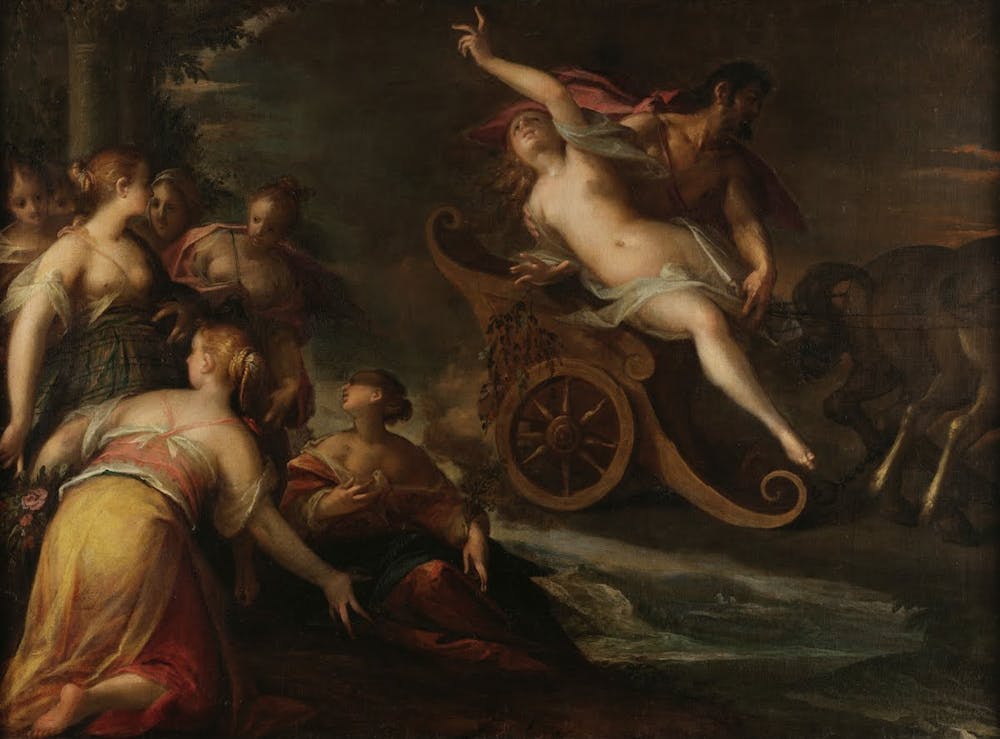
The painting presents the mythological story of Proserpine, the goddess, who was abducted by Pluto, ruler of the Underworld o be his spouse.
Hans Van Aachen, The Rape of Proserpine (1589)
Brukenthal National Museum

The emperors Theodosius (379 to 395) and Valentinian (364 to 375) accepted physical abuse as a just cause for divorce – but this appears to have been revoked under the emperor Justinian (542).

The emperor himself was known on occasions to have taken an interest in specific domestic murder cases, but his intervention probably depended on the status and connections of the complainants.

Laws which incidentally addressed abuse and coercive control were much more common. Roman laws offered extensive and detailed legal provision for dowries, wills and inheritance. Laws provided recourse for a child wrongfully disinherited and worked against a pater familias who intentionally cheated a wife out of her dowry.

The need for these laws opens a window on a world of abuse.


Read more:
The Johnny Depp-Amber Heard defamation trial shows the dangers of fan culture


‘Good fatherhood’

If the law rarely directly addressed domestic violence, a public rhetoric of “good fatherhood” did seek to speak to family duties and relationships.

Exemplary fathers exercised self-control and restrained their anger. They showed severity and pietas (familial duty) rather than cruelty.

This rhetoric was made use of by the emperor Hadrian (117 to 138) who exiled a father who had killed his son.

The emperor Trajan (98 to 117) also ordered a father who was maltreating his son to set him free since he viewed the treatment as a breach of pietas.

Of course, not all acts of violence were punished. When Egnatius Mecenius beat his wife to death with a club for being drunk (a story dating back to the legendary days of Romulus), he was commemorated for his exemplary severitas (acceptable strictness).

The voices of women

Roman matrons could be respected and influential figures within both household and state.

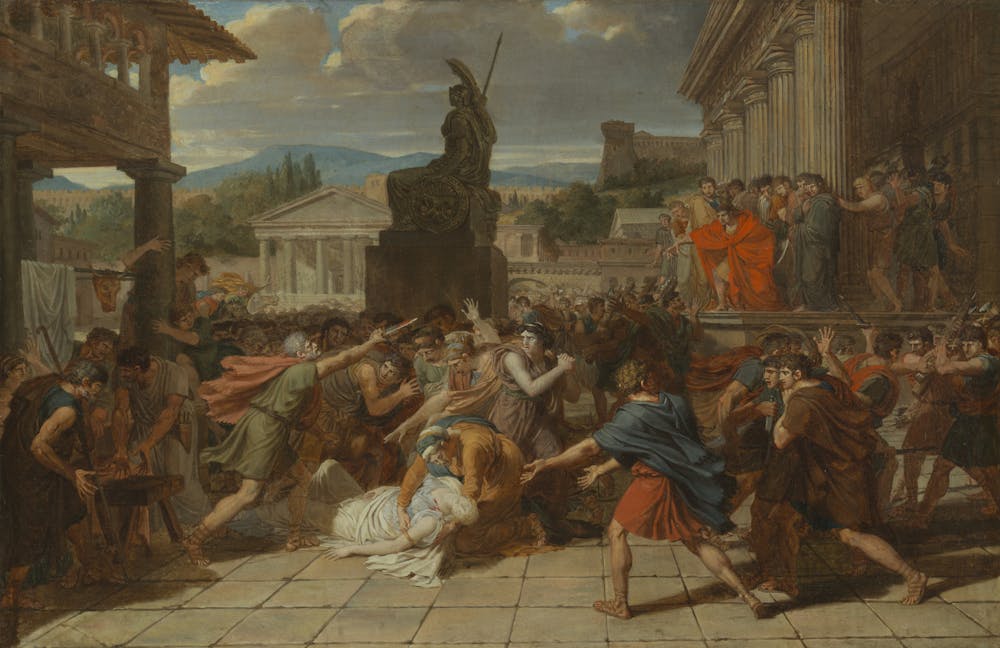
The ancient Roman historian Livy gave an account of the public murder of Verginia by her father, who killed her in order to protect her chastity from an abuser.

In his telling of the story, Livy examines the public presence of women during the incident. He depicts a crowd of respectable matrons standing with Verginia throughout her ordeal, jostling her accuser.

Their weeping moved the crowd of onlookers more than her father’s complaints.

Guillaume-Guillon Lethière, The Death of Virginia (circa 1800)
Los Angeles County Museum of Art

After her murder, Livy reports the women lamented loudly and publicly: the actions of the male protagonists are highlighted through the protesting voices of the matrons.

The presence of domestic violence in ancient Rome may not be surprising. But of interest is how Romans formulated limited legal and non-legal challenges to cultures of violence and how we can continue to interrogate such responses today.

The Conversation

The authors do not work for, consult, own shares in or receive funding from any company or organization that would benefit from this article, and have disclosed no relevant affiliations beyond their academic appointment.

ref. Ancient Rome didn’t have specific domestic violence legislation – but the laws they had give us a window into a world of abuse – https://theconversation.com/ancient-rome-didnt-have-specific-domestic-violence-legislation-but-the-laws-they-had-give-us-a-window-into-a-world-of-abuse-179460

Why Labor is likely to win a House of Representatives majority despite a 33% primary vote

Source: The Conversation (Au and NZ) – By Adrian Beaumont, Honorary Associate, School of Mathematics and Statistics, The University of Melbourne

AAP/Lukas Coch

With 73% of enrolled voters counted, the ABC is calling 73 of the 151 House of Representatives seats for Labor, 54 for the Coalition, 15 Others and nine in doubt. Labor is likely to win Lyons, while the Coalition should win Bass, Cowper and Sturt. The Coalition is currently just ahead in both Deakin and Gilmore.

Labor would need to win two of the three other undecided seats if they miss out on Deakin and Gilmore. The Coalition will lose Brisbane to either Labor or the Greens. Current primary votes there are 37.0% Coalition, 28.0% Greens and 27.8% Labor. Whichever of Labor and the Greens goes out first elects the other on preferences.

Macnamara and Richmond are both Labor-held seats that the Greens are threatening. In both seats, Labor currently has a primary vote lead over both the Greens and the Coalition. If it’s Labor vs Greens, Labor wins on Coalition preferences. If it’s Labor vs Coalition, Labor wins on Greens preferences.

Labor only loses these seats if they finish third after minor candidates are distributed (a “three candidate preferrred”). The ABC rates both Richmond and Macnamara as likely Labor. If they win both these seats and Lyons, they reach the magic 76 seats needed for an outright House majority. But we may not know for sure until after the June 3 deadline for reception of postals.

Current primary votes are 35.8% Coalition (down 5.7% since 2019), 32.8% Labor (down 0.5%), 11.8% Greens (up 1.5%), 4.9% One Nation (up 1.8%), 4.2% UAP (up 0.7%) and 10.5% for all Others (up 2.2%). The ABC’s two party estimate is 51.9-48.1 to Labor, a 3.4% swing to Labor.

Disproportionate single-member system

Why is Labor likely to win a house majority even though their national primary vote is down 0.5% from the 2019 election to just 32.8%? Australia uses a single member system for the house, and such systems are disproportionate.

If Labor wins a majority, it would be because they finish in the top two in the overwhelming majority of seats, and then win a large share of preferences whether their opponent is the Coalition or the Greens, as Coalition how to vote cards put Labor ahead of the Greens.

The one situation where Labor will not do well on preferences is when facing an independent. Had Labor’s national primary vote been higher, Kristina Keneally may have survived in Fowler.

Here are two examples from the UK of very disproportionate outcomes from first past the post with single-member electorates. In 2005, Labour defeated the Conservatives by 35.2% to 32.4% nationally with 22.0% for the Liberal Democrats. But Labour won 355 of the 646 House of Commons seats (55% of seats).

In 2015, the Conservatives defeated Labour nationally by 36.8% to 30.4% with 12.6% UK Independence Party and 7.9% Lib Dems. The Conservatives won 330 of the 650 Commons seats (51% of seats).

Single-member systems are very landslide-prone, and there have been two recent Australian state elections where one of the major parties has nearly been wiped out of the lower house of parliament.

At the Queensland 2012 state election, the LNP defeated Labor by 49.7% to 26.7% on primary votes and by 62.8-37.2 after preferences. The LNP won 78 of the 89 seats and Labor just seven. But Labor recovered to win the 2015 Queensland election.

At the Western Australian 2021 election, Labor crushed the combined Liberals and Nationals by 59.9% to 25.3% on primary votes and 69.7-30.3 after preferences, resulting in a lower house of 53 Labor, four Nationals and just two Liberals.

An argument can be made that single-member systems shut out minor parties and provide stable government. But if you want a more proportional outcome, you need a proportional system, not a single-member system.

Issues with the count

The Australian Electoral Commission
(AEC) provides a live two party count that currently has Labor ahead by 52.2-47.8. But this excludes all the seats where Labor and the Coalition were not the final two candidates.

There will be a special Labor vs Coalition count in all these seats in a few weeks, once the main results are finalised. I believe the ABC uses the swing in the seats currently counted between Labor and the Coalition to project the national two party.

On election night, there were many seats where the AEC selected the wrong two candidates for the final count. These counts need to be re-done with the correct candidates. But early votes counted between the correct candidates are often unrepresentative of the overall primary votes in that seat.

For example, the initial preference count in Ryan was between the Coalition and Labor, and this is now being re-done between the Coalition and Greens. The AEC still has the Coalition just ahead, but the ABC applies preference flows to the full primary votes, giving the Greens a 53.2-46.8 lead.

The Conversation

Adrian Beaumont does not work for, consult, own shares in or receive funding from any company or organisation that would benefit from this article, and has disclosed no relevant affiliations beyond their academic appointment.

ref. Why Labor is likely to win a House of Representatives majority despite a 33% primary vote – https://theconversation.com/why-labor-is-likely-to-win-a-house-of-representatives-majority-despite-a-33-primary-vote-183601

View from The Hill: Government exits amid shredding snowstorm, Labor ministers make staged entry

Source: The Conversation (Au and NZ) – By Michelle Grattan, Professorial Fellow, University of Canberra

The transition from one government to another involves a democratic miracle and a physical mess.

In parliament house’s ministerial wing on Monday, shredding machines were working flat out, fragments of their massive output leaving a light snowstorm on the blue corridor carpet as it was carted away.

Cardboard boxes had been delivered; enormous wheelie bins were everywhere. How many hours had gone into preparing and working on all those papers suddenly no longer needed, or needing quick and confidential disposal?

On the Labor side, the move into power has the air of disorderly order. Staffers still carry a touch of that slightly casual demeanour of opposition. Many frontbenchers are preparing for their new responsibilities from existing digs in other places.

With Anthony Albanese and Penny Wong attending the meeting of the QUAD (comprising the US, Japan, India and Australia) in Tokyo on Tuesday, they and a handful of colleagues were sworn in early Monday.

In what must be some kind of record, Deputy Prime Minister Richard Marles is already acting prime minister, minding Labor’s new shop until Albanese returns on Wednesday. Marles, who was shadow minister for national reconstruction, continues coy about whether he’ll be defence minister.

Treasurer Jim Charmers and Finance Minister Katy Gallagher are starting cautiously on the work of government, mindful of (as Labor kept saying in the campaign) not getting ahead of themselves until the whole ministry is in place.

Last seats are still being finalised. Labor will have a bigger frontbench reshuffle than earlier anticipated, with Kristina Keneally failing to win the Sydney seat of Fowler and Terri Butler defeated in her Brisbane seat of Griffith. Keneally had home affairs and Butler the environment portfolio in opposition.

At Albanese’s first news conference in the prime minister’s “blue room” the Aboriginal and Torres Strait Islander flags had been added to the always-present Australian flag.

Albanese said Labor’s caucus would meet on Tuesday next week, and the new ministry would be sworn in Wednesday. The ministry will then meet, as will the cabinet national security committee and the expenditure review committee.

The prime minister said he thought his government would reach majority.

But anyway, he’d had discussions with the re-elected crossbenchers Rebekha Sharkie, Bob Katter, Andrew Wilkie, Helen Haines and Zali Steggall. He’d received confirmation from them “that they would not support any no confidence motions against the government and that they would also secure supply.”

“They will consider legislation on its merits,” he said, adding “I will treat them with respect.”

The government would “resume parliament in a very orderly way”, Albanese said, without specifying when, beyond saying it would be before the end of July, and might be much earlier.

“There is a number of international events some of which are public, some of which are not, which need to be accommodated,” he said. “The other issue is, I will try to run a family-friendly parliament – there are school holidays in July.”

The new PM was anxious to send a message of “how valued our public servants are”.

The arrangements around his trip to Japan were organised in pre-election consultations with the public service, and Labor seems impressed with the briefings frontbenchers received to discuss their portfolio areas in the event of a win.

Albanese’s message contrasted with Scott Morrison’s more dismissive attitude towards the bureaucracy, which he saw as part of the “Canberra bubble”.

“We won’t be sacking public servants,” Albanese said. “We will be valuing public servants and respecting them.”

But the most senior federal public servant, Phil Gaetjens, who headed the prime minister’s department under Morrison and had come under sustained Labor attack for being political, was already gone. Jumped before he was pushed, it seems. The Australian Financial Review reported he went on leave.

Albanese met with the Department of the Prime Minister and Cabinet on Sunday, when a deputy secretary, Stephanie Foster became its acting head. The new secretary will be announced soon.

Like Labor, the opposition parties will meet next week.

On Monday Alan Tudge, who had made himself scarce during the campaign, emerged to declare unequivocally “Peter Dutton will be [Liberal] leader”.

Josh Frydenberg finally conceded in Kooyong, while Liberal senator Sarah Henderson said the party needed him back into the parliament.

Various Liberals debated whether the party should move to the left or the right.

Meanwhile the Nationals were, as usual, looking counter-intuitive.

With the Liberals losing a swag of seats, the Nationals held all theirs, and gained an extra senator. But in teal seats the name of Nationals leader Barnaby Joyce was constantly invoked, and the Liberals suffered by way of association with him.

There are now muttering about whether there could, or should, be a challenge against Joyce.

Former leader Michael McCormack has not ruled out a move, and eyes are on deputy leader David Littleproud.

Joyce told the ABC on Monday night: “I’m quite at ease with the democratic process”.

The Conversation

Michelle Grattan does not work for, consult, own shares in or receive funding from any company or organisation that would benefit from this article, and has disclosed no relevant affiliations beyond their academic appointment.

ref. View from The Hill: Government exits amid shredding snowstorm, Labor ministers make staged entry – https://theconversation.com/view-from-the-hill-government-exits-amid-shredding-snowstorm-labor-ministers-make-staged-entry-183653

OP-ED: Reclaiming our future

Armida Salsiah Alisjahbana is the United Nations Under-Secretary-General and Executive Secretary of the Economic and Social Commission for Asia and the Pacific (ESCAP).

OP-ED by Armida Salsiah Alisjahbana, Armida Salsiah Alisjahbana is the United Nations Under-Secretary-General and Executive Secretary of the Economic and Social Commission for Asia and the Pacific.

Armida Salsiah Alisjahbana is the United Nations Under-Secretary-General and Executive Secretary of the Economic and Social Commission for Asia and the Pacific (ESCAP).

The Asia-Pacific region is at a crossroads today – to further breakdown or breakthrough to a greener, better, safer future. 

Since the Economic and Social Commission for Asia and the Pacific (ESCAP) was established in 1947, the region has made extraordinary progress, emerging as a pacesetter of global economic growth that has lifted millions out of poverty. 

Yet, as ESCAP celebrates its 75th anniversary this year, we find ourselves facing our biggest shared test on the back of cascading and overlapping impacts from the COVID-19 pandemic, raging conflicts and the climate crisis.  

Few have escaped the effects of the pandemic, with 85 million people pushed back into extreme poverty, millions more losing their jobs or livelihoods, and a generation of children and young people missing precious time for education and training. 

As the pandemic surges and ebbs across countries, the world continues to face the grim implications of failing to keep the temperature increase below 1.5°C – and of continuing to degrade the natural environment. Throughout 2021 and 2022, countries across Asia and the Pacific were again battered by a relentless sequence of natural disasters, with climate change increasing their frequency and intensity. 

More recently, the rapidly evolving crisis in Ukraine will have wide-ranging socioeconomic impacts, with higher prices for fuel and food increasing food insecurity and hunger across the region.

Rapid economic growth in Asia and the Pacific has come at a heavy price, and the convergence of these three crises have exposed the fault lines in a very short time. Unfortunately, those hardest hit are those with the fewest resources to endure the hardship. This disproportionate pressure on the poor and most vulnerable is deepening and widening inequalities in both income and opportunities. 

The situation is critical. Many communities are close to tipping points beyond which it will be impossible to recover. But it is not too late. 

The region is dynamic and adaptable.

In this richer yet riskier world, we need more crisis-prepared policies to protect our most vulnerable populations and shift the Asia-Pacific region back on course to achieve the Sustainable Development Goals as the target year of 2030 comes closer — our analysis shows that we are already 35 years behind and will only attain the Goals in 2065.

To do so, we must protect people and the planet, exploit digital opportunities, trade and invest together, raise financial resources and manage our debt. 

The first task for governments must be to defend the most vulnerable groups – by strengthening health and universal social protection systems. At the same time, governments, civil society and the private sector should be acting to conserve our precious planet and mitigate and adapt to climate change while defending people from the devastation of natural disasters. 

For many measures, governments can exploit technological innovations. Human activities are steadily becoming “digital by default.” To turn the digital divide into a digital dividend, governments should encourage more robust and extensive digital infrastructure and improve access along with the necessary education and training to enhance knowledge-intensive internet use.

Much of the investment for services will rely on sustainable economic growth, fueled by equitable international trade and foreign direct investment (FDI). The region is now the largest source and recipient of global FDI flows, which is especially important in a pandemic recovery environment of fiscal tightness. 

While trade links have evolved into a complex noodle bowl of bilateral and regional agreements, there is ample scope to further lower trade and investment transaction costs through simplified procedures, digitalization and climate-smart strategies. Such changes are proving to be profitable business strategies. For example, full digital facilitation could cut average trade costs by more than 13 per cent. 

Governments can create sufficient fiscal space to allow for greater investment in sustainable development. Additional financial resources can be raised through progressive tax reforms, innovative financing instruments and more effective debt management. Instruments such as green bonds or sustainability bonds, and arranging debt swaps for development, could have the highest impacts on inclusivity and sustainability.

Significant efforts need to be made to anticipate what lies ahead. In everything we do, we must listen to and work with both young and old, fostering intergenerational solidarity. And women must be at the centre of crisis-prepared policy action. 

This week the Commission is expected to agree on a common agenda for sustainable development in Asia and the Pacific, pinning the aspirations of the region on moving forward together by learning from and working with each other. 

In the past seven-and-a-half decades, ESCAP has been a vital source of know-how and support for the governments and peoples of Asia and the Pacific. We remain ready to serve in the implementation of this common agenda. 

To quote United Nations Secretary-General Antonio Guterres, “the choices we make, or fail to make today, will shape our future. We will not have this chance again.”

*******

Armida Salsiah Alisjahbana is the United Nations Under-Secretary-General and Executive Secretary of the Economic and Social Commission for Asia and the Pacific.

Women MPs vital for PNG’s future, says campaigning Somare-Brash

RNZ Pacific

A female candidate in the Papua New Guinea elections believes it is more important than ever that the country has women MPs in Parliament.

Dulciana Somare-Brash is the daughter of the late Sir Michael Somare and she unsuccessfully stood in the East Sepik regional seat in 2017, finishing fourth in the vote count.

This time she is standing in the Angoram seat in East Sepik, which has previously been held by her brother, Arthur Somare.

Papua New Guinea has had very few women MPs over the country’s 47 years of independence, and none in the current Parliament.

Somare-Brash said it was vital that changed in this year’s general election — and she was hoping to be part of that change.

“Papua New Guinea is growing so quickly. We are growing at a population rate of about 3.8 percent each year. We don’t have female representation in Parliament at all and that too is a huge motivator for why I continue to persist,” she said.

“I work in a political space, as a technical advisor, and I am hoping, as I see my support base increase that I might have some success at the polls this time.”

Lack of equity ‘motivating force’
Somare-Brash said the lack of equity for many in PNG society — women and children, particularly — was a motivating force for her.

“I feel very confident with the policy priorities that I am promoting, with a deep understanding of my people and their challenges.

Women in PNG at a market in Port Moresby
Women in PNG at a market in Port Moresby … a record number of women candidates is anticipated for the general election in July. Image: Koroi Hawkins/RNZ Pacific

“And certainly the issues of the importance of equity in the benefit sharing arrangements in Papua New Guinea, where women and children and youth seem to be left at the back of the line when we are divvying out the spoils, if you like, from our massive resource base in Papua New Guinea.”

The nominations period is not yet finished but a record number of women candidates is anticipated.

Voting, over a two week period, is set to begin July 9.

This article is republished under a community partnership agreement with RNZ.

Article by AsiaPacificReport.nz

We identified the 63 animals most likely to go extinct by 2041. We can’t give up on them yet

Source: The Conversation (Au and NZ) – By Stephen Garnett, Professor of Conservation and Sustainable Livelihoods, Charles Darwin University

Gilbert’s potoroo, a marsupial that may be extinct in 20 years. Shutterstock

It feels a bit strange to publish a paper that we want proved wrong – we have identified the 63 Australian birds, mammals, fish, frogs and reptiles most likely to go extinct in the next 20 years.

Australia’s extinction record is abysmal, and we felt the best way to stop it was to identify the species at greatest risk, as they require the most urgent action.

Leading up to this paper, we worked with conservation biologists and managers from around the country to publish research on the species closest to extinction within each broad group of animals. Birds and mammals came first, followed by fish, reptiles and frogs.

From these we identified the species that need immediate work. Our purpose is to try to ensure our predictions of extinction do not come true. But it won’t be easy.

The orange-bellied parrot is critically endangered.
Shutterstock

Animals in peril

The hardest to save will be five reptiles, four birds, four frogs, two mammals and one fish, for which there are no recent confirmed records of their continued existence.

Four are almost certainly extinct: the Christmas Island shrew, Kangaroo River Macquarie perch, northern gastric brooding frog and Victorian grassland earless dragon. For example, there have only ever been four records of the Christmas Island shrew since it was found in the 1930s, with the most recent in the 1980s.

While some of the 16 species feared extinct may still persist as small, undiscovered populations, none have been found, despite searching. But even for species like the Buff-breasted button-quail, those searching still hold out hope. It is certainly too soon to give up on them entirely.


Read more:
Is the buff-breasted button-quail still alive? After years of searching, this century-old bird mystery has yet to be solved


We know the other 47 highly imperilled animals we looked at still survive, and we ought to be able to save them. These are made up of 21 fish, 12 birds, six mammals, four frogs and four reptiles.

For a start, if all their ranges were combined, they would fit in an area of a little over 4,000 square kilometres – a circle just 74km across.

Nearly half this area is already managed for conservation with less than a quarter of the species living on private land with no conservation management.

Two researchers face a waterfall surounded by bushland.
This waterfall in NSW is all that protects the last population of the fish, stocky galaxias, from the predatory trout below.
Mark Lintermans

More than one-third of the highly imperilled taxa are fish, particularly a group called galaxiids, many of which are now confined to tiny streams in the headwaters of mountain rivers in southeastern Australia.

Genetic research suggests the different galaxiid fish species have been isolated for more than a million years. Most have been gobbled up by introduced trout in little more than a century. They have only been saved from extinction by waterfall barriers the trout cannot jump.


Read more:
Before and after: see how bushfire and rain turned the Macquarie perch’s home to sludge


The other highly imperilled animals are scattered around the country or on offshore islands. Their ranges never overlap – even the three highly threatened King Island birds – a thornbill, a scrubtit and the orange-bellied parrot – use different habitats.

Sadly, it is still legal to clear King Island brown thornbill habitat, even though there are hardly any left.

The King Island brown thornbill.
GB Baker, Author provided

It’s not all bad news

Thankfully, work has begun to save some of the species on our list. For a start, 17 are among the 100 species prioritised by the new national Threatened Species Strategy, with 15 of those, such as the Kroombit Tinkerfrog and the Bellinger River Turtle, recently getting new funding to support their conservation.

There is also action on the ground. After the devastating fires of 2019-20, big slugs of sediment were swept into streams when rain saturated the bare burnt hillsides, choking the habitats of freshwater fish.

In response, Victoria’s Snobs Creek hatchery is devoting resources to breeding some of the most affected native fish species in captivity. And in New South Wales, fences have been constructed to stop feral horses eroding the river banks.

Existing programs have also had wins, with more orange-bellied parrots returning from migration than ever. This species is one of seven we identified in our paper – three birds, two frogs and two turtles – to which captive breeding is contributing to conservation.

Ten species – six fish, one bird, one frog, one turtle and Gilbert’s potoroo – are also benefiting from being relocated to new habitats in safer locations.


Read more:
We name the 26 Australian frogs at greatest risk of extinction by 2040 — and how to save them


For example, seven western ground parrots were moved from Cape Arid National Park to another site last April, and are doing so well that more will be moved there next month.

The wet seasons since the 2019-2020 fires have also helped some species. Regent honeyeaters, for example, are having their best year since 2017. Researcher Ross Crates, who has been studying the birds for years, says 100 birds have been found, there are 17 new fledglings and good flocks of wild and newly released captive birds being seen.

Regent honeyeater numbers are growing thanks to the recent rain.
Shutterstock

In fact, in some places the weather may have been too favourable. While good streamflows helped some galaxiids breed, invasive trout have also benefited. Surveys are underway to check if flows have been large enough to breach trout barriers.

There’s work still to do

The fish hatchery program is only funded for three years, and a shortage of funds and skilled staff mean attempts to ensure populations are safe from trout has been patchy. And one cannot afford to be patchy when species are on the edge.

Some legislation also needs changing. In NSW, for example, freshwater fish are not included under the Biodiversity Conservation Act so are not eligible for Save Our Species funding or in the otherwise laudable commitment to zero extinctions in national parks.

Elsewhere, land clearing continues in scrub-tit and brown thornbill habitat on King Island – none of it necessary given so little native vegetation remains on the island.

As many as 90 of around 315 native freshwater fishes may now meet criteria as threatened.

Swift parrot habitat in Tasmania continues to be logged. The key reserve of the western swamp tortoise near Perth is surrounded by burgeoning development.

Also, the story we tell here is about the fate of Australian vertebrates. Many more Australian invertebrates are likely to be equally or even more threatened – but so far have largely been neglected.

Nevertheless, our work shows that no more vertebrates should be lost from Australia. The new Labor government has promised funds for recovery plans, koalas and crazy ants. Hopefully, money can also be found to prevent extinctions. There is no excuse for our predictions to come true.


Read more:
Photos from the field: capturing the grandeur and heartbreak of Tasmania’s giant trees


The Conversation

Stephen Garnett received funding from the National Environment Science Program’s Threatened Species Recovery hub. He is affiliated with BirdLife Australia where he coordinates the threatened species committee

Hayley Geyle received funding from the National Environment Science Program’s Threatened Species Recovery hub.

John Woinarski received funding from the National Environment Science Program’s Threatened Species Recovery Hub; he is also a Director of the Australian Wildlife Conservancy.

Mark Lintermans received funding from the National Environment Science Program’s Threatened Species Recovery hub, the NSW Department of Planning, Industry and Environment, and South East Local Land Services. He is affiliated with the Australian Society for Fish Biology where he previously Chaired and is now a member of the Threatened Species Committee.

ref. We identified the 63 animals most likely to go extinct by 2041. We can’t give up on them yet – https://theconversation.com/we-identified-the-63-animals-most-likely-to-go-extinct-by-2041-we-cant-give-up-on-them-yet-182155

‘I’m ready – energised,’ Port Moresby’s Parkop pledges to huge crowd

PNG Post-Courier

“Powes! Powes! Powes!” The city of Port Moresby was ringing with chants of support for its governor for the past 15 years — Powes Parkop.

Hundreds of men, women and children from the settlements to the suburbs flocked at the weekend in support of the three-term politician who stands confident of defending his seat one more time.

The Independence Boulevard came alive with shades of orange — the colour of Parkop’s Social Democratic Party — more than a hundred buses, taxis and private vehicles crammed the Kone Tigers Oval while banners pledging the support of youth, women, settlements and suburbs danced.

Making his stance clear, Parkop said he was ready for another term in Parliament.

“From the bottom of my heart, I am proud of how far we have come and I promise you, the journey of transformation will continue to be outstanding for our people in the city and all our people in the entire length and breadth of our country,” he said.

“Today I am ready. I am energised. I am all set for the next five years to continue to do more and deliver more for our people, our city and our country. “

The rally last Saturday follows Parkop’s quiet nomination on Thursday, May 19, at the Sir John Guise stadium as the first candidate to nominate for the National Capital District (NCD) regional seat.

Gratitude to supporters
He also extended gratitude to the people of the city for their support of his leadership.

“I thank our people from the eastside, the westside and southside of our city, for your faith and belief in our leadership and journey together,” he declared.

“I thank you for your steadfastness, your unwavering support and loyalty.

Powes Parkop
NCD Governor Powes Parkop … “It has been a great journey for us and for me as your Governor.” Image: The National

“It has been a great journey for us and for me as your Governor in the last 14 years,” said Parkop.

“We have delivered equally in the entire NCD, the East, West and South and we are poised to deliver more in the next 5 years to transform our capital city, the pride of our country.”

Deputy Governor and Motu-Koita chairman Dadi Toka Jr, sitting member for Moresby South Justin Tkatchenko, Moresby North-east hopefuls Pastor Moses Minape and Joe Tintin Saraga were also present at the rally.

John Rosso named Deputy PM
Meanwhile, Gorethy Kenneth reports that Prime Minister James Marape has announced Member for Lae and Minister for Lands John Rosso as the country’s Deputy Prime Minister going into the election and beyond.

He will be sworn in on Wednesday to succeed Sam Basil who died tragically in a car accident earlier this month.

Marape has also announced Hagen MP and SOE Minister William Duma will be acting Prime Minister while he is away attending the 37th Australia Papua New Guinea Business Forum and Trade Expo.

The PNG Electoral Commission estimates that up to 1000 candidates have already nominated to contest the 2022 National General Election.

It was unable to provide a definitive figure on the nominations due to lack of information and communications from the provinces.

Electoral Commissioner Simon Sinai said that a few hiccups were experienced in many provinces where information was not readily available and also due to communication difficulties.

Republished with permission.

Print Friendly, PDF & Email

Article by AsiaPacificReport.nz

How well does the new Australian Curriculum prepare young people for climate change?

Source: The Conversation (Au and NZ) – By Kim Beasy, Lecturer in Curriculum and Pedagogy, University of Tasmania

You’d be forgiven for not having heard about the long-awaited new Australian Curriculum, which was released with little fanfare in the midst of the election campaign. But this update to the national curriculum (9.0), for foundation to year 12 students, is hugely significant. It will guide the education of young Australians for the next six years, which could encompass a child’s whole primary or secondary school education.

Education fundamentally prepares children for life, so it should be expected to address the existential issues of our time. On our current trajectory, climate change will drastically affect children’s health, wealth and job futures. Today’s children face up to seven times as many extreme weather events as people born in the 1960s experienced.

If we are to tackle climate change and adapt to the impacts that are already unavoidable, then children need to be educated for a changing future. Until now, however, this subject matter has been largely missing from the Australian Curriculum.


Read more:
Ever wondered what our curriculum teaches kids about climate change? The answer is ‘not much’


We know young people are overwhelmingly concerned about climate change. Students, parents and academics have been calling for a greater focus on climate change in all areas of school learning.

Our research project, Curious Climate Schools, has involved 1,300 Tasmanian school students to date in student-led climate literacy learning. It shows current teaching leaves students with many unanswered questions about climate change. And, from our lightning analysis of the new curriculum, it seems it won’t routinely deal with the kinds of questions students are asking.

A drawing of the Earth, with heat and storms
Climate change as seen by students at Margate Primary School, Tasmania.
www.curiousclimate.org.au/schools


Read more:
Children deserve answers to their questions about climate change. Here’s how universities can help


Climate change content has increased

The good news is that the new curriculum does pay more attention to climate change. The old curriculum had a total of four explicit references to “climate change”. Whether it was covered in the classroom depended on the knowledge and beliefs of teachers.

In the new curriculum we counted 32 references to climate change across diverse subject areas: civics and citizenship, geography, history, science, mathematics, technologies, and the arts. This means students have more opportunities to learn about climate change, and teachers have more direction on where and how to teach it.

For example, in civics and citizenship, secondary school students can now learn about global citizenship by studying the campaigns of youth activists like Greta Thunberg and the work of Indigenous Australian climate campaigner Amelia Telford. They can also learn about global climate governance, including the United Nations Sustainable Development Agenda and the UN Framework Convention on Climate Change.

Climate change is also used in innovative ways in the new curriculum. In maths, for example, it’s presented as a context for teaching students how to use statistical evidence.

However, our analysis of climate change in the new curriculum also reveals it is dominated by a science focus. We counted 21 references to climate change in science and technology learning areas, but only nine in humanities and social science learning areas and two in the arts learning area.

Our work with students through Curious Climate Schools shows their wide-ranging questions about climate change encompass ethics, politics, their careers and their futures. Students are interested in climate science and projected impacts, but have more questions about the urgency of action and what can be done. This illustrates that learning about climate change must be suffused through all subject areas if students are to become climate literate.

Many young people want to contribute their skills and knowledge to climate action in their future careers. We need to show them, through the curriculum, that in whatever subject area their interests lie – health, arts, law, engineering, ecology or many other fields – they will be able to use their talents to tackle the climate crisis.


Read more:
Curriculum is a climate change battleground and states must step in to prepare students


Worryingly, explicit mentions of climate change are still missing from the primary school curriculum. The Curious Climate Schools project found upper primary teachers had the most interest and capacity to bring climate learning into their classrooms, because they were more able to explore the complex and interacting issues of climate change across subject areas.

Equipping teachers for holistic climate teaching

Climate change is causing legitimate and increasing anxiety for many young people. Many students leave school feeling betrayed and disempowered because their climate concerns are not being heard or taken seriously. The new curriculum does not adequately acknowledge or act on the significant emotional impacts of growing up in a changing climate.


Read more:
Yes, young people are concerned about climate change. But it can drive them to take action


This leaves teachers, who may become the bearers of bad news to many students, in a difficult position. In our interviews with teachers they told us they don’t feel confident to teach about climate change or to manage their students’ anxiety as they discover how climate change will affect their futures.

Governments and universities have a responsibility to ensure teachers have the knowledge and skills to teach their students holistically about climate change. They can’t be expected to do this without training or resources.

The new curriculum moves towards addressing climate change in the classroom, but climate teaching in schools must be much more ambitious, given the urgency and enormity of the problem. This needs to be supported first by building teachers’ own knowledge about climate change. It also means equipping schools with resources that empower their students to become active citizens in a changing climate.

The Conversation

Kim Beasy received funding from the Centre for Marine Socioecology, the University of Tasmania and the Tasmanian Climate Change Office for the research and engagement reported in this article.

Chloe Lucas received funding from the Centre for Marine Socioecology, the University of Tasmania, and the Tasmanian Climate Change Office for the research and engagement reported in this article. She is also funded by the Australian Research Council, and the Tasmanian State Emergency Services. Chloe is a member of the Centre for Marine Socioecology, the Institute of Australian Geographers and the International Environmental Communication Association, and is a member of the Editorial Board of Australian Geographer.

Gabi Mocatta received funding from the Centre for Marine Socioecology, the University of Tasmania and the Tasmanian Climate Change Office for the research and engagement reported in this article. She is co-lead of the Climate Change Communication and Narratives Network, funded by Deakin University, and vice-president of the Board of the International Environmental Communication Association.

Gretta Pecl received funding from the Centre for Marine Socioecology, the University of Tasmania and the Tasmanian Climate Change Office for the research and engagement reported in this article. She has also received funding from the Australian Research Council, Department of Agriculture Water and the Environment, Department of Primary Industries NSW, Department of Premier and Cabinet (Tasmania), the Fisheries Research & Development Corporation, and received travel funding support from the Australian government for participation in the IPCC process.

Rachel Kelly received funding from the Centre for Marine Socioecology, the University of Tasmania and the Tasmanian Climate Change Office for the research and engagement reported in this article. She is affiliated with the Centre for Marine Socioecology, and the National Environmental Science Programme Climate Systems Hub.

ref. How well does the new Australian Curriculum prepare young people for climate change? – https://theconversation.com/how-well-does-the-new-australian-curriculum-prepare-young-people-for-climate-change-183356

Cases are high and winter is coming. We need to stop ignoring COVID

Source: The Conversation (Au and NZ) – By Nancy Baxter, Professor and Head of Melbourne School of Population & Global Health, The University of Melbourne

In a poll conducted by the Guardian in August of 2021 about the number of deaths Australians would be willing to accept as restrictions eased, only 3% of respondents felt that 5,000 or more COVID-related deaths per year would be acceptable.

Sadly we have surpassed that milestone in the first four months of this year alone.

Each day, an average of 45,000 Australians are reporting cases of COVID, a number that is rising and likely a substantial underestimate.

Yet where are the sensible public health measures to stem the tide of illness and death?


Read more:
Reducing COVID transmission by 20% could save 2,000 Australian lives this year


People are dying of COVID

Sadly we are now leading the world in COVID cases per capita.

But did these people die of or with COVID? This question is raised often by those who wish to diminish the impact of the pandemic, including former prime minister Scott Morrison.

The evidence, however, is clear – of all people who died “of” or “with” COVID during the pandemic in Australia, 90% have died of COVID.

Even if we concern ourselves only with excess death rates (that is, deaths exceeding what would usually be expected) COVID is a major killer. The Australian Bureau of Statistics evaluated deaths in January 2022, around the time of the peak in COVID cases during the first Omicron wave in Australia. Comparing the observed mortality rate to the usual pre-COVID rate, they found 22% more deaths in that month than expected.

COVID is currently on track to be one of the leading causes of death in Australia this year.

Long COVID will affect many Australians infected, perhaps up to 30%. And the other long-term effects of COVID are not yet known.


Read more:
The mystery of ‘long COVID’: up to 1 in 3 people who catch the virus suffer for months. Here’s what we know so far


The number of deaths and long COVID are only part of the story. The health care system right now is in crisis throughout the country with people dying waiting for ambulances, record levels of ambulance ramping (where patients wait with paramedics for medical attention), prolonged emergency stays for patients in overcrowded departments, and hospital staff shortages.

Add to that we are now facing our first flu season in two years, with weekly numbers now exceeding the average for the past five years.

Coupled with a lower-than-average uptake of the flu vaccine this year, the flu season is shaping up to potentially be a severe one – potentially resulting in up to 30,000 people requiring admission to hospital.

With winter coming, and more people gathering indoors as the weather turns cold, COVID cases may also rise in tandem with influenza.

We can reduce cases

This looming disaster can be averted: we can reduce transmission and “flatten the curve” with simple actions.

We have seen the impact the relaxation of public health restrictions and protections like mask-wearing mandates have made in terms of driving transmission.


Read more:
Australia is failing marginalised people, and it shows in COVID death rates


In Western Australia, relaxation of public health measures including mask wearing and household contact isolation occurred on April 29. Within days of these changes, case numbers reached record highs – there are now 100 more people hospitalised with COVID every day than before these changes went into effect.

It would stand to reason reinstating these two measures would have the opposite effect – fewer cases, fewer people in hospital, and fewer people dying of COVID.

man with flag takes off mask
Western Australia saw a huge uptick in cases after removing masks and isolation requirements.
AAP Image/Richard Wainwright

The Australian Medical Association has called for an increase in voluntary use of masks, yet its pleas are being ignored. It seems without mandates most people are unwilling to wear masks, so reinstating these mandates for indoor gatherings should be considered.

Boosters and treatments are vital

We also need to use the tools we have to prevent serious disease in people who contract COVID.

Although vaccinations have maintained effectiveness for serious illness, hospitalisation, and death, our protection has waned over time and has also been reduced due to Omicron’s increased immune-evasion.

The impact of a booster dose is substantial, with high levels of protection against severe outcomes demonstrated with a third dose. Yet only 70% of the population of Australia has received a booster and numbers are not increasing.

For those who have been boosted, the fourth dose prevents severe disease in those most at-risk, but to date, most eligible people are yet to receive it.

If delivered early to those most at risk of severe disease, antiviral medications can reduce the risk of hospitalisation. But to access these medications, patients must have access to testing and a knowledgeable care provider all within five days of the onset of symptoms. The GP community is trying, but inequitable distribution of these treatments will occur without more education and support for the clinicians at the coalface.

A clearly articulated vision of what is at stake and what actions we need to take to avert disaster is the leadership we need right now.

A few simple public health measures such as mask mandates and reinstating isolation for household contacts of positive cases could make a major difference saving lives. And ensuring provision of boosters and early antiviral therapy for those at-risk despite vaccination will also save lives.

Pretending the pandemic is in the rear-vision mirror will help no one.


Read more:
COVID has killed 5,600 Australians this year and the pandemic isn’t over. Ethics can shape our response


The Conversation

I have been an unpaid participant on an Ad Board for MSD who make Molnupiravir

Nicholas Talley receives funding from the NHMRC and the Department of Defence/Breakthrough Human Performance Research Call. He is affiliated with OzSage, the Australian Medical Council (AMC) (Council Member) and the NHMRC Principal Committee (Research Committee).

ref. Cases are high and winter is coming. We need to stop ignoring COVID – https://theconversation.com/cases-are-high-and-winter-is-coming-we-need-to-stop-ignoring-covid-183218

The election showed Australia’s huge appetite for stronger climate action. What levers can the new government pull?

Source: The Conversation (Au and NZ) – By John Quiggin, Professor, School of Economics, The University of Queensland

Shutterstock

As the polls closed on Saturday night, most election commentary focused on the dispiriting campaign where both major parties avoided any substantial division on policy issues and instead focused on negatively framing the opposing leader.

Even to many seasoned political minds, the most likely outcome seemed to be a reversal of the last parliament, with Labor winning enough seats to form a narrow majority, and one or two more seats falling to independents. As we all now know, the outcome was utterly different. The Liberals lost many of their crown jewels to climate challengers –  teal independents and the Greens.

This means the new Labor government now has a different challenge on climate. Rather than trying to keep check on concessions to the cross-bench, Labor must now find ways to pursue more ambitious climate policies. Labor can’t pull the most effective lever available – a carbon price – after the Liberals successfully poisoned the well. But there are other ways to accelerate Australia’s shift to cleaner and greener, such as through public investment in large-scale solar and wind.

The next three years will be challenging economically and politically. But the transformation wrought by the election has opened up the possibility of a similar transformation of climate policy. With bold action, a bright future awaits.

Solar farm by sea
Government backing for large scale renewables could be one lever Labor could pull.
Shutterstock

Climate proved critical

Labor’s path to victory was unusual. The party taking government will do so despite its primary vote slumping to a postwar low, far below the level of routs seen in 1996 and 1975.

Outside Western Australia (where the result was driven largely by the success of the McGowan government’s Covid policy), Labor barely moved the dial. So far Labor has taken five seats from the Liberals (with some Labor-held seats still in doubt) while losing Cowper to an independent and Griffith to the Greens.


Read more:
Carbon pricing works: the largest-ever study puts it beyond doubt


The big shock in this election was the loss of a string of formerly safe Liberal seats to Greens and “teal” independents. All of these candidates campaigned primarily on climate change, an issue the major parties, and most of the mainstream media had agreed should be put to one side as too dangerous and divisive.

During the campaign, the possibility of a hung parliament drew attention. In response, both major parties vowed (not very credibly) that they would never do a deal with Greens or independents to secure office. Realistically, it seemed possible that Labor might offer a slightly more ambitious program on climate policy in order to make minority government easier.

In retrospect, it’s clear that this type of analysis assumed Australia’s long-standing political pattern would continue: a two-party system, with a handful of cross-benchers occasionally playing the role of kingmaker. All of the media commentary leading up to the election took this for granted. The “teal” independents were seen as a possible threat to two or three urban Liberals and the Greens were, for all practical purposes, ignored.

What we have instead is a shock to this system. Australia now has a radically changed political scene in which the assumptions of the two-party system no longer apply. Even if Labor scrapes in with a majority, it is unlikely to be sustained at the next election, given the challenging economic circumstances the incoming government will face. As for the LNP, unless they can regain some of the seats lost to independents and Greens, they have almost no chance of forming a majority government at the next election, even with a big win over Labor in traditionally competitive seats.

Power pylons
Labor’s proposed Rewiring the Nation corporation is aimed at making the grid renewable-ready.
Shutterstock

Adapting to political change

Labor’s challenge now is to adapt to this new world. They will have to find ways of delivering what the electorate clearly wants on climate, after ruling out most of the obvious options in the course of the campaign. The new leader of the LNP will have the unenviable task of winning back lost Liberal heartlands while placating a party room dominated by climate denialists and coal fans.

Having ruled out a carbon price, Labor will need to be much more aggressive with the safeguard mechanism it inherits from the LNP. By itself, this won’t be nearly enough.


Read more:
Australia is about to be hit by a carbon tax whether the prime minister likes it or not, except the proceeds will go overseas


The real need is to promote rapid growth in large-scale solar and wind energy, and to push much harder on the transition to to electric vehicles. Some of this could be done through direct public investment, on the model of Queensland’s CleanCo, or through expanded use of concessional finance using the Clean Energy Finance Corporation and the new Rewiring the Nation Corporation. The great political appeal of this approach is that all of these agencies are off-budget and therefore won’t count in measures of public debt, which is bound to grow in coming years due to pandemic spending.

Democracy, however imperfect, works through the possibility of renewal and change. What this election has shown us that the political system can change. Now comes the task of applying politics – the art of the possible – to the challenge of switching our energy systems from fossil fuels to clean power. It’s our best chance yet.

The Conversation

John Quiggin is a former Member of the Climate Change Authority

ref. The election showed Australia’s huge appetite for stronger climate action. What levers can the new government pull? – https://theconversation.com/the-election-showed-australias-huge-appetite-for-stronger-climate-action-what-levers-can-the-new-government-pull-183548

Did NASA find a mysterious doorway on Mars? No, but that’s no reason to stop looking

Source: The Conversation (Au and NZ) – By Ray Norris, Professor, School of Science, Western Sydney University

NASA/JPL-Caltech/MSSS

For the past ten years, NASA’s Curiosity rover has been trundling around the surface of Mars, taking photos in its quest to understand the history and geology of the red planet and perhaps even find signs of life.

Last week it took a photo which appeared to show a doorway carved into the rock. It’s the sort of thing that on Earth might indicate an underground bunker, such as an air-raid shelter.

Seeing is not always believing

At first sight, the picture is totally convincing. At second sight, maybe not. The passage seems to go in only a short way before the steeply descending roof meets the floor.

And then those killjoys at NASA tell us its only about 45 cm high. Still, who said Martians had to be the same height as us? But then geologists point out several straight-line fractures can be seen in this site, and the “doorway” is where they happen to intersect.

Such a pity. It would have been so exciting if it had been a real doorway. Instead it joins the face on Mars, the spoon on Mars, the cube on the Moon, and all the other things seen in photos from space that turn out not to be as exciting as we thought.

The face on Mars, the spoon on Mars, and the cube on the Moon. On closer examination, each turned out to be a natural geological formation.
NASA, NASA, CNSA

Faces in the clouds

Worse, the “doorway” joins the even longer list of wacky images like the cornflake that looks like Australia, the cats that look like Hitler, and so on. And who hasn’t seen a face in the clouds?

The sad fact is that when presented with an unclear or unfamiliar image, humans try to turn it into a familiar-looking object. Scientists call our tendency to do this “pareidolia”.


Read more:
Holy grilled cheese sandwich! What is pareidolia?


It’s easy to understand why it happens. We likely evolved this tendency because spotting important things like predators or faces, even when the light is poor or they are partly obscured, gave us an advantage. And getting false positives – seeing a predator where there is none – is better than not seeing a predator who then eats you.

No signs of life

Reasonable explanations won’t deter the conspiracy theorists who say the doorway really is evidence of life on Mars, and maintain that scientists are engaged in some sort of cover-up.

If I were trying to do a cover-up, I wouldn’t be releasing the photos! So a conspiracy doesn’t seem very likely.

But there’s also a lesson here for serious searchers for alien life. As astronomer Carl Sagan said, extraordinary claims require extraordinary evidence.


Read more:
The search for ET has been going on for years: so what do we know so far?


Following this maxim, scientists seeking evidence of extra-terrestrial life demand much stronger evidence, than, say, someone looking for a geological formation. And despite decades of searching for evidence of life on Mars, we have found nothing.

It is still possible there may once have been life on Mars. We may yet find some fossilised relics of ancient cellular life. But suddenly finding an artefact such as a doorway, or a spoon, seems unlikely.

The bigger picture

There’s a similar story with the broader search for extra-terrestrial intelligence (SETI). For years, SETI scientists have been searching the skies for signals from other civilisations, but so far we have found nothing. But nearly all our searches have been on the nearest few stars, and so in a sense the search has barely started.

Meanwhile, we continue to be bombarded with photos purporting to show UFOs (Unidentified Flying Objects) or UAP (Unidentified Aerial Phenomena).

The vast majority of these photos are probably fakes, or mistaken photos of familiar objects such as weather balloons. But as scientists, we must keep an open mind. In among the rubbish, perhaps there may be one or two photos or videos that really could stretch our current knowledge.


Read more:
Is there evidence aliens have visited Earth? Here’s what’s come out of US congress hearings on ‘unidentified aerial phenomena’


The problem is that if someone presents me with a photo purporting to show a flying saucer, I know that the odds overwhelmingly favour it being a fake, and so I’m likely to dismiss it rather than wasting my time examining it carefully. But supposing I’m wrong?

Similarly, when we see a doorway, or a face, or a spoon, on Mars, it’s all too easy to dismiss it out of hand. But we must remain alert to the possibility that one day we might find archaeological evidence of past life on Mars.

Admittedly, this seems very unlikely. But not impossible. It would be a terrible loss if, among all our careful searching through the data, we missed the thing we had been searching for because it was too easily dismissed as a trick of the light.

The Conversation

Ray Norris does not work for, consult, own shares in or receive funding from any company or organization that would benefit from this article, and has disclosed no relevant affiliations beyond their academic appointment.

ref. Did NASA find a mysterious doorway on Mars? No, but that’s no reason to stop looking – https://theconversation.com/did-nasa-find-a-mysterious-doorway-on-mars-no-but-thats-no-reason-to-stop-looking-183446

Legalise Cannabis Australia did well at the ballot box – but reform is most likely to come from a cautious approach

Source: The Conversation (Au and NZ) – By Jarryd Bartle, Sessional Lecturer, RMIT University

Shutterstock

One of the surprising results from the federal election was a record vote for Legalise Cannabis Australia, a minor party previously known as the Help End Marijuana Prohibition (HEMP) party.

The party received 2-7% of the Senate vote in most states and territories, narrowly missing out on a Senate seat in Queensland.

This follows a notable result in the 2021 Western Australian state election, where it picked up two seats in the Legislative Council.

Does the success of this single issue minor party mean Australians are finally ready to “legalise it”?


Read more:
Home grown cannabis to be legal in the ACT. Now what?


Support for legalisation has soared

In 2019, for the first time in the survey’s history, the National Drug Household Survey found more Australians support the legalisation of cannabis (41.1%) than oppose it (37%).

Support for the legalisation of cannabis has risen dramatically over the last few decades.

In 2007, only 21.2% of Australians supported legalisation. This jumped to 24.8% in 2020, then to 26% in 2013. It was 35.4% in 2016. By 2019, 41.1% of those surveyed supported legalisation.

Only 22% of Australians surveyed in 2019 felt cannabis possession and use should be a criminal offence, compared to 34% in 2010.

Support for cannabis legalisation likely comes from observing the legalisation of recreational cannabis in countries across the globe. Examples include Uruguay, Malta, Mexico, South Africa, Canada and a number of states in the United States.

Interestingly, very few Australians indicate they would use cannabis if it were legalised.

Over 78% of respondents to the 2019 survey said that they would not use cannabis even if it was legal.

Only 9.5% said they would “try it” and 9.2% say they would “use it about as often as they do now”.

But surveys can be misleading

But asking voters if they support a policy proposal in the abstract might not tell us much about how much they’d support it once it becomes a hot button political issue.

We saw this play out in the 2020 New Zealand cannabis referendum. There, 51% of voters rejected the legalisation of cannabis, despite early opinion polling in 2020 indicating strong support.

As the cannabis legalisation debate became a greater topic of discussion, support for legalisation gradually narrowed and finally flipped right before voting day. In the end, New Zeland narrowly voted no.

Opponents argued a normalisation effect could encourage teenagers to start using cannabis or that there would be more drug-affected drivers on the road. Some argued there would be unpredictable effects of lung health and mental health.

There is mixed evidence for each of these propositions, but the debate itself made voters more cautious about change.

A gradual approach

One of the big lessons from the last few decades of cannabis law reform is voters prefer a gradual and measured approach to drug liberalisation.

Voters need to be convinced the legalisation of currently illicit drugs will successfully reduce health and social harms.

One academic analysis of the failure of the New Zealand referendum noted the proposed bill failed to address voter concerns about potency, reducing the black market and the normalisation of cannabis.

A libertarian style argument in favour of cannabis legalisation focused on the “freedom to choose” is unlikely to shift voters already concerned about the harms of legal substances such as alcohol and tobacco.

A more moderate approach, centred around harm reduction and best practice regulation, is more in line with the values of voters.

Jumping straight from a criminalised environment regarding cannabis towards full legalisation may also be too fast for some voters. A gradual change of policies regarding cannabis is more likely to have support.

For example, states that adopt medicinal cannabis policies (as Australia has done) tend to move faster towards recreational cannabis legalisation than other jurisdictions.

One intermediate step, which has already occurred to varying degrees in the ACT, Northern Territory and South Australia is the decriminalisation of the possession and use of cannabis.

Change will be slower than some hope

There has been strong consistent support for the decriminalisation of cannabis in all states and territories in Australia for a number of years now.

Decriminalisation provides a good introductory step towards treatment cannabis use as a health issue, not a criminal justice one.

Overall, there’s a growing level of support for cannabis law reform in Australia. But change is likely to occur much slower than liberalisation supporters would hope.


Read more:
Australian voters have elected their government. Now the Labor Party has to make them believe they were right


The Conversation

Jarryd Bartle is a drug and alcohol consultant.

ref. Legalise Cannabis Australia did well at the ballot box – but reform is most likely to come from a cautious approach – https://theconversation.com/legalise-cannabis-australia-did-well-at-the-ballot-box-but-reform-is-most-likely-to-come-from-a-cautious-approach-183612

‘Mutual respect and genuine partnership’: how a Labor government could revamp our relationship with Indonesia

Source: The Conversation (Au and NZ) – By Rebecca Strating, Director, La Trobe Asia and Associate Professor, La Trobe University, La Trobe University

During the election campaign, Anthony Albanese singled out Indonesia as a key regional partner.

The new prime minister made a point of declaring he intended his first overseas visit as head of a Labor government would be to Indonesia.

His first overseas visit as Labor leader was also to Indonesia in 2019, as was his first trip as a minister in 2007.

Albanese is not the first newly-minted prime minister to prioritise a trip to Jakarta as Scott Morrison’s first overseas visit as leader was also to Indonesia.

Instead, Albanese has had to travel to Tokyo for a pre-planned meeting of Quad nations (Australia, India, Japan, and the United States).

Nevertheless, judging by the campaign, and a bit of recent history, we can expect to see a Labor government pay more attention than their predecessors to Indonesia – and Southeast Asia in general.


Read more:
Indonesia will take a big step on the global stage this year – are Australians paying enough attention?


From a rollercoaster to a plateau

Both major parties say they recognise the “vital importance” of the Australia-Indonesia relationship.

Despite this, ties between the neighbours have often been described as a “rollercoaster”. Unpredictability and insensitivity have often clouded the relationship, no matter who is in power.

Labor Prime Minister Julia Gillard government’s snap ban on live cattle exports to Indonesia in 2011 caused tensions with Indonesia. Former Prime Minister Tony Abbott came to power in 2013 promising “more Jakarta, less Geneva”, only to quickly abandon it as the government repeatedly damaged relations with Indonesia. Tensions emerged over boat turn-backs, bugging and spying allegations, and the death penalty.

Perhaps relations never fully recovered after Australia, under the Howard government, led a multinational force in East Timor in 1999.

But in recent years, Indonesia has barely rated a mention in Australian foreign policy discussions.

Rather than a rollercoaster, the relationship has plateaued.

Former prime minister Tony Abbott came to power in 2013 promising ‘More Jakarta, less Geneva’ but relations soon suffered.
AP Photo/Rob Griffith


Read more:
How well has the Morrison government handled relations with Southeast Asia?


Personal ties matter

There were some early successes in the Morrison era, including the two countries signing a new Comprehensive Strategic Partnership in August 2018 that promised to deepen ties and cooperation.

The following year, both countries signed the “landmark” Indonesia-Australia Comprehensive Economic Partnership Agreement (IA-CEPA).

But these two early successes built on the work of previous governments.

The IA-CEPA deal had been in the works for over a decade.

Morrison’s predecessor Malcolm Turnbull carefully cultivated a strong personal relationship with his Indonesian counterpart, Joko Widodo. Turnbull’s 2015 Jakarta visit involved one of Widodo’s “blusukans” – an impromptu visit to a market. Foreign Minister Julie Bishop and her Indonesian counterpart, Retno Marsudi, also had a reportedly strong relationship.

This personal touch has not quite been replicated under the Morrison government.

Areas of friction

A low point was a surprise announcement by Morrison during the 2018 Wentworth byelection. Unexpectedly, Morrison said he’d consider moving the Australian embassy in Israel from Tel Aviv to Jerusalem, following similar moves from then-US President Donald Trump.

This wasn’t well received in Muslim-majority Indonesia. The optics were not good – it suggested a tendency on Morrison government’s part to privilege electoral ambitions ahead of the national interest.

In a reported text message exchange, Marsudi purportedly told Payne the embassy issue “will slap Indonesia’s face [and] affect bilateral relations”.

There have been other areas of friction. Indonesia initially responded critically to Australia’s AUKUS deal, which reflected concerns about how Australia acquisition of nuclear powered submarines might affect regional security, the arms race and non-proliferation.

Following the announcement, Morrison’s plan to stop over in Jakarta from a US visit was called off when Widodo opted to visit provinces outside Jakarta instead.

The impression was that the Coalition looks to Australia’s “great and powerful friends” in the US and the UK for security, while Labor prioritises regional relationships.

This difference was on display in the pre-election foreign ministers debate between Marise Payne and Penny Wong.

While Payne talked up the Quad and AUKUS (both which don’t include Indonesia), Wong focused on the Pacific and Southeast Asia. However, Indonesia was barely mentioned by either.

How might Australia-Indonesia relations change under Labor?

Labor’s election campaign rhetoric emphasised regional engagement based on “mutual respect and a sense of genuine partnership”. It announced a Southeast Asia policy, including A$470 million over four years in foreign aid and the creation of a Southeast Asia office in the Department of Foreign Affairs and Trade.

Despite the lack of specific attention to Indonesia during the campaign, there are some positive signs, though. Labor advocates a First Nations foreign policy, which could be appealing to Indonesia.

Australia and Indonesia already cooperate fruitfully on shared interests in maritime security, marine science and the blue economy. This is likely to continue regardless of who is in power.

Most importantly, Labor’s national security plan highlights climate security as an area of cooperation, promising a A$200 million climate and infrastructure partnership with Indonesia.

But more needs to be done. Labor should focus more on bolstering Asian studies and languages in secondary schools and universities, particularly Bahasa Indonesia.

The new government also needs to listen to Southeast Asian perspectives.

States like Indonesia don’t want to be forced to make a choice between US and China.

Engaging with Indonesia requires creative, nuanced and modulated diplomacy. Sensitivity around sovereignty, autonomy and regional security is key.

The Conversation

Rebecca Strating receives external funding from the Australian Department of Foreign Affairs and Trade, United States Department of State, the UK High Commission in Australia, and Taiwan Foundation for Democracy.

ref. ‘Mutual respect and genuine partnership’: how a Labor government could revamp our relationship with Indonesia – https://theconversation.com/mutual-respect-and-genuine-partnership-how-a-labor-government-could-revamp-our-relationship-with-indonesia-183116

Alcohol marketing has crossed borders and entered the metaverse – how do we regulate the new digital risk?

Source: The Conversation (Au and NZ) – By Sally Casswell, Professor of public health policy, Massey University

Getty Images

The World Health Organization’s newly released report on regulating cross-border alcohol marketing raises the alarm for countries like Australia and New Zealand, given their light touch towards alcohol advertising.

Alcohol is widely consumed in Australasia but there is ongoing tension over how much restraint, if any, should be placed on the marketing of these products.

Australia and New Zealand are at the unrestrained end of the marketing continuum. Both countries rely on industry-led policy in the form of voluntary codes – an approach identified as insufficient by the WHO report.

What is cross-border alcohol marketing?

Alcohol marketing, created and disseminated in one country and spread across borders into others, is commonly used by multinational corporations striving to increase sales and normalise alcohol as an everyday product. Much of this advertising is taking place in the digital media sphere.

The increased use of these media platforms by alcohol corporations allows them access to cheap advertising opportunities. For as little as US$2, an advertising campaign based in Australia could reach a thousand young people profiled as interested in alcohol, for example.

Marketing across digital media has also increased the impact of those messages.

Brands interact with users on social media platforms, encouraging the posting, sharing and liking of branded images and messages. Higher user engagement is associated with more drinking.

AB InBev logo behind a smartphone also showing the logo
Multinational corporations like AB InBev have been quick to embrace digital platforms as a new way to advertise alcohol products.
Pavlo Gonchar/Getty Images

Targeting the individual

The increased power of these advertisements reflects the effectiveness of “personalised marketing”. Companies can now target individuals and “look alike” audiences.

This approach is made possible thanks to the enormous amount of data collected as we interact together, purchase products and indicate our interests and passions through our clicks and likes.

This data is extremely valuable to marketers and alcohol corporations. It gives them insight into the best time of day, the best brand of alcohol and the best type of marketing message to send our way.


Read more:
Alcohol advertising has no place on our kids’ screens


All groups across society are vulnerable to being bombarded by messages encouraging the purchase and consumption of alcohol.

Digital advertising can target everyone: teenagers looking for brands which exemplify their identity; young adults, the heaviest “occasion drinkers” in Australia and New Zealand, some of whom are developing drinking habits that may be hard to change in later life; and adults of all ages who wish to reduce their consumption, often for health reasons.

Digital media has become an all-encompassing marketing environment in which the “buy” button – with home delivery and often no checks on age or intoxication – provides a seamless marketing and distribution system.

In New Zealand, online sales increased significantly during the COVID-19 lockdowns, particularly among heavier drinkers.

Entering the metaverse

The alcohol industry is now showing its initiative by entering the emerging metaverse. To understand the metaverse, according to one commentator, you should

take today’s social media, add a splash of sophisticated 3D, fold in a plethora of options for entertainment and gaming, garnish it all with data-driven personalisation, and you are all set to take away your order of a supersized social media network, the metaverse.


Read more:
NZ children see more than 40 ads for unhealthy products each day. It’s time to change marketing rules


In terms of marketing, this provides a new opportunity. The biometric data essential to a virtual reality experience is also available to develop “biometric psychographics”, allowing for the even greater personalisation of advertising.

Virtual alcohol brands created and used by avatars in the metaverse support the development of brand allegiance in real life, and virtual reality will transform e-commerce experiences and increase the power of sponsorship.

AB InBev, the largest global alcohol corporation, was an early adopter of the metaverse. One of its brands, Stella Artois, is sponsoring the Australian Zed Run platform on which virtual horses can be raced, bred and traded. The Zed Run platform experienced 1,000% growth in early 2021.

Two people stand in front of a screen with a digital image of a horse.
Digital horse racing game Zed Run has exploded in popularity, with alcohol companies using the digital platform to reach a new audience.
Lisa Maree Williams/Getty Images

Regulating to reduce alcohol harm

The digital world is extremely dynamic. It is also opaque to most policy makers and public health practitioners. It is telling that there is no reference to the metaverse as a cross-border alcohol marketing opportunity in the WHO report.

There is an urgent need for debate regarding how policy makers should better understand the risks involved with the targeted marketing of hazardous products such as alcohol.

The WHO report outlines various partial and unsuccessful approaches to regulating marketing in the digital media.

Attempts, such as Finland’s regulation of user-shared branded material, have failed because they did not interfere with the basic architecture of the social media platforms, which is predicated on engagement via sharing and liking.

The most successful examples offered by the WHO report have been countries like Norway, which have imposed a complete ban on alcohol marketing including in the digital media.


Read more:
Children’s health hit for six as industry fails to regulate alcohol ads


The report emphasises the need for surveillance and enforcement, suggesting ways in which alcohol companies could be penalised for marketing breaches.

The support provided by international agreements such as the Framework Convention on Tobacco Control is identified as a possible template for future discussions.

The response to tobacco marketing provides a good and largely effective model for officials and policy makers. That said, the public health goal for alcohol is not equivalent to the smokefree goal. Advocates are not trying to eliminate alcohol altogether.

However, there are parallel arguments in favour of creating a healthier media environment through regulation to prevent the promotion of alcohol products via increasingly sophisticated technological and psychological tools.

These products are significant causes of reduced well-being, and this marketing increases consumption and therefore harm. The messages of the WHO report are timely and should be heeded.

The Conversation

Sally Casswell has received funding from many independent funding bodies and WHO. She is Chair of the Global Alcohol Policy Alliance which advocates for evidence based alcohol policies and is a Board member of Health Coalition Aotearoa.

ref. Alcohol marketing has crossed borders and entered the metaverse – how do we regulate the new digital risk? – https://theconversation.com/alcohol-marketing-has-crossed-borders-and-entered-the-metaverse-how-do-we-regulate-the-new-digital-risk-183334

New Caledonia’s Frogier pulls out of French National Assembly race

RNZ News

A New Caledonian anti-independence candidate has withdrawn from the race for a seat in the French National Assembly just hours before nominations closed.

Vaea Frogier pulled out, citing concern about the splits in the anti-independence camp.

Seventeen candidates in New Caledonia are standing in next month’s election, with the pro-independence parties jointly fielding just one candidate in each of the territory’s two electorates for the seats in Paris.

Frogier said the anti-independence side was more divided than ever, facing the unity of the pro-independence side, which may win a seat.

Her withdrawal is meant to increase the chances of anti-independence politicians retaining the two seats.

In March, Frogier had been among the first to lodge a candidacy.

Frogier is a former deputy mayor of Mont-Dore and the daughter of Pierre Frogier, who is a former president of New Caledonia and now a member of the French Senate.

New French Overseas Minister
Meanwhile, a new French Overseas Minister has been appointed by President Emmanuel Macron in the second stage of his government reshuffle, reports RNZ Pacific.

Yael Braun-Pivet has replaced Sebastien Lecornu who has been given the defence portfolio.

Braun-Pivet had been the head of the National Assembly’s law commission.

Her main challenges include negotiations with New Caledonian leaders in the aftermath of last December’s controversial independence referendum.

While the anti-independence camp wants the territory’s reintegration into France after its victory at the ballot box, the rival pro-independence side refuses to accept the referendum result.

In the reshuffle’s first step on Monday, Macron chose Elisabeth Borne as the new prime minister.

The foreign affairs portfolio has been given to Catherine Colonna who has been France’s ambassador to Britain.

This article is republished under a community partnership agreement with RNZ.

Print Friendly, PDF & Email

Article by AsiaPacificReport.nz

Australian voters have elected their government. Now the Labor Party has to make them believe they were right

Source: The Conversation (Au and NZ) – By Shaun Carney, Vice-Chancellor’s professorial fellow, Monash University

Elections are a test – the ultimate test, really – of those who serve as parliamentarians and those who aspire to serve. Scott Morrison asserted quite absurdly early in the 2022 campaign that the election was not a popularity contest.
Clearly, the opposite is true. An election involving every eligible voter is by definition a popularity contest.

It was not hard to see why Morrison was trying to argue that day was night. With the early halo effect of the pandemic that boosted his popularity towards the stratosphere a distant memory, he was trying to overcome his rising levels of unpopularity. Ultimately, in the final days of the campaign, with his initial Lewis Carroll-esque stylings having failed to change the Liberals’ tracking polling, he pledged to become a different person.


Read more:
View from The Hill: Morrison was routed by combination of quiet Australians and noisy ones


As we know from the election result, Morrison’s resort to something more akin to comics where a superhero assumes a new identity because the writers have run out of ideas didn’t work either. But among the attempts to reframe the democratic process and remake himself, he offered one observation that contained an element of truth: that the election was not about him, it was about “you”. “You”, in this case, was each voter.

This election and its fractious, atomised, and possibly revolutionary aftermath will definitely be about Australian voters. They are about to be tested. After all, in the strictest sense they have collectively created this situation – historically low primary levels of support for the major parties, the denial of a strong working majority to either side, an expanded crossbench in the lower house – by casting their votes.

Scott Morrison’s attempts to redefine himself were too little, too late.

There are complexities here. It can be argued the candidates and their parties and support groups – donors, volunteers and media companies – are coauthors with the voters of each election outcome. The interactions between political players and voters shape the result; of course they do. But now that the votes are in and the tallies being finalised, the voters are obliged to own the result. I’m a voter, so I’ll pose the question this way: do we have it in us to do that?

It’s a reasonable question, because even if this election produces a Labor government with a slim majority, rather than the minority government that appeared more likely at the close of counting on Saturday night, the new administration will be built on a Labor primary vote of around 33%. Until not so long ago, conventional wisdom had it that anything less than a Labor primary of 40% would consign the party to the opposition benches. So that’s one more truism consigned to the dustbin.

But there will be no shortage of Liberal and National MPs and media commentators, especially those working for News Corporation, who will be arguing from day one that the Albanese government is somehow illegitimate and without a mandate. That criticism will come regardless of whether Labor commands a House of Representatives majority in its own right or operates in minority with the tacit acceptance of enough of the crossbenchers to maintain confidence and supply.

The Liberals’ Senate leader, Simon Birmingham, began that narrative on television on Saturday night and continued it in an interview on Sunday morning. At least two of News Corp’s senior commentators have run it out too.

You have to wonder whether Anthony Albanese and his deputy Richard Marles – neither of whom has an especially combustible or pugnacious style – are ready for the onslaught. They should be, given they were around when Julia Gillard fell short of a majority at the 2010 election, which in many respects began Labor’s long political winter that was broken only at this election.

That was a dreadful time for our political system and for that Labor government. Gillard made a series of political errors, going back on a pre-election promise not to introduce a carbon tax and allowing herself to be portrayed as too close to the Greens. A vengeful Kevin Rudd lurking inside her government also didn’t help.

The attacks on the Gillard government helped foster a sense of ‘buyer’s remorse’.
AAP/Alan Porritt

Encouraged by the media, a substantial chunk of the voting public recoiled from the very idea that somehow the parliament they had helped elect had produced a minority government in which crossbenchers had influence on policy. Meanwhile, the Coalition under Tony Abbott set about saying and doing anything that would wreck the Gillard government’s standing, with little thought of what would happen on the other side of the next election.


Read more:
Albanese wins with a modest program – but the times may well suit him


This led to buyer’s remorse on a grand scale. And it now falls to Albanese and his cabinet and backbenchers to simultaneously defend and aggressively assert their government’s authority while trying to lure more electors to the Labor fold. Yes, it’s true that in our electoral system in which preferences determine outcomes, and everyone 18 and older is required by law to lodge their ballot papers, every vote counts. (This exposes the claim thrown around since Saturday night that Labor has no right to govern because two-thirds of the people voted against it as utterly ridiculous. If so, what was Morrison doing serving as PM when 58.5% of voters didn’t cast a primary vote for the Liberals or Nationals in 2019?)

But for a government to prosper and feel confident it can take bold decisions when they’re required, and to be re-elected, it will more than likely need more than one in three voters who are willing to put a “1” next to the name of its candidates on the ballot paper. To counter its natural enemies, this Labor government will need as many community advocates as it can muster.

That, as much as climate change action, the reform of aged care and the NDIS, an anti-corruption tribunal and the other policy items on the party’s to-do list, should be a first-order objective for Albanese and his team.

The Conversation

Shaun Carney does not work for, consult, own shares in or receive funding from any company or organisation that would benefit from this article, and has disclosed no relevant affiliations beyond their academic appointment.

ref. Australian voters have elected their government. Now the Labor Party has to make them believe they were right – https://theconversation.com/australian-voters-have-elected-their-government-now-the-labor-party-has-to-make-them-believe-they-were-right-183213

Morrison’s ‘great electoral bungle’ leaves the Liberals decimated and heading in the wrong direction

Source: The Conversation (Au and NZ) – By Mark Kenny, Professor, Australian Studies Institute, Australian National University

AAP/James Ross

It is pretty human to crave the approval of peers and to hope for more of the same, even if unconsciously.

But for political parties selling themselves as unifying forces of the middle, broad-based and representative, this way lies atrophy. And death.

Courting the applause of extreme media voices is a formula for narrowing a party’s electoral reach.

Yet this is where the Liberal Party of Australia has journeyed over its nine years in office. First under Tony Abbott’s ideological zealotry and then through various squalls and culture wars since.

After unsuccessful attempts to address climate policy by Malcolm Turnbull and Josh Frydenberg – the latter being the standout casualty of the 2022 reckoning – the preference for clever politics over policy solutions has drawn the Liberal Party further from the great Australian middle, and towards gratifying the sharper grievances of religious conservatives and the electoral gains from suburban outsider resentment.

Throwing out euphemisms like “the quiet Australians” to camouflage his real project of demonising elites, Scott Morrison told a mining conference a year ago “We’re not going to achieve net-zero in the cafes, dinner parties and wine bars of our inner cities”.

It turns out this was a thumb in the eye to his own party’s greatest asset, its rusted-on intergenerational base of cashed-up professionals in its heartland. In the year since, this support base has been not just ignored, but insulted.

Depicted as mere dupes for even considering candidates wanting swifter action on climate change, corruption, and gender equality, life-long Liberals rebelled, voting with their well-heeled feet.

The Liberals branded them as fakes, but independents like Kylea Tink harnessed enough votes to snatch previously safe Liberal seats.
AAP/Bianca de Marchi

On May 21 2022, Morrison’s divisive strategy backfired spectacularly.

His personal appointment of the anti-trans Katherine Deves in Warringah (a once Liberal seat with the second highest pro-marriage equality vote in NSW in 2017) did not turn the election nationally, but its symbolism mattered.

It said everything about the slice of Australia to which Morrison’s Liberal-Nationals government had become in thralled.

Dog whistling Deves’s harmful views to the marginal outer-suburbs where Morrison thought they might just resonate, was a moral low point in major party politics in Australia. But it was also an undiluted electoral disaster.

Using Katherine Deves’ anti trans views as a dog whistle was not just a low point in public debate, but an unmitigated political disaster.
AAP/Mick Tsikas

So how does the party of Menzies’ “forgotten people” and John Howard’s “broad church” read the result, and then re-tool for recovery?

That task is made far more difficult because so many of the party’s leading lights have been washed away in Morrison’s great electoral bungle. The most important loss is the aforementioned Frydenberg (it seems) because the erstwhile treasurer and deputy leader represented the articulate urbane centre-ground. Clearly the most gifted and saleable Liberal in the parliament, he was the heir apparent.

His absence highlights that even the early logistical decisions will set the course. Among the few remaining moderates, Simon Birmingham told Insiders on Sunday, who they choose to be leader will set the tone of the opposition, but influence its policy also.

Therefore, it matters. Assuming Frydenberg does not scrape through on a favourable postal vote surge, Peter Dutton is the both the most likely leader, and the most conservative.

His selection would inevitably take the Liberal Party further from its disillusioned traditional blue-ribbon supporters – certainly in Victoria but elsewhere also.

Voters who walked in 2022, would keep walking.

Here, the basic maths are crucial. It is hard to imagine the Coalition even getting to 76 seats in future without recovering some or all of the “teal” seats.


Read more:
A narrow Labor win and a ‘teal bath’: all the facts and figures on the 2022 election


Yet history shows that good independents consolidate their wins, suggesting these seats would be very hard to recover at any time, let alone when policy and personnel options are this limited.

Besides, finding genuinely local, top-shelf female candidates who are both capable and willing to take on a Zoe Daniel or a Monique Ryan – and who are prepared to campaign over almost a whole term, will be a supremely difficult task.

Making that commitment for a party with two more average conservative men running it (names like Angus Taylor and Dan Tehan have been mentioned) is even more difficult to picture. And if one of them is Peter Dutton, probably impossible.

This explains why Liberals are casting about for a woman to take one of the two leadership posts, probably that of deputy. Karen Andrews and Sussan Ley have been floated.

Surveying the carnage, Birmingham observed that the wellsprings of the weekend rout began a long time ago with the needlessly drawn-out marriage equality vote, (a full-blown culture war) and the rejection of the National Energy Guarantee championed by Frydenberg and Turnbull.
Both political storms had registered negatively with soft Liberals in the heartland seats, leaving many distinctly unimpressed.

Yet as the beleaguered party considers its options, entreaties to double-down on the very things that alienated it from its base are already being aired. The logic can be well hidden.

A hardliner from South Australia, Senator Alex Antic, told Sky News on Sunday,

“>The Liberal Party’s experiment with the poison of leftism and progressivism must be over.”

Other prominent conservatives on the network suggested Liberals who had become pale imitations of Labor were the ones defeated, whereas hardliners who stood up against climate policy and who oppose a First Nations Voice to Parliament, had been successful.

These were their takes after the most significant shift to the left by mainstream voters in memory.

They highlight the influence of ideology and what looms as a wrestle for the centre-right soul that lay ahead.

Sensible Liberals meanwhile, have some big decisions to make.

They could listen to the extremist voices in partisan media, remembering of course it’s what got them to here. Or they could be more self-critical.

In a democracy, it’s never a terrible idea to listen to what the voters have just told you. Their message wasn’t hidden at all.

The Conversation

Mark Kenny does not work for, consult, own shares in or receive funding from any company or organisation that would benefit from this article, and has disclosed no relevant affiliations beyond their academic appointment.

ref. Morrison’s ‘great electoral bungle’ leaves the Liberals decimated and heading in the wrong direction – https://theconversation.com/morrisons-great-electoral-bungle-leaves-the-liberals-decimated-and-heading-in-the-wrong-direction-183596

As Albanese heads to the Quad, what are the security challenges facing Australia’s new government?

Source: The Conversation (Au and NZ) – By Greg Barton, Chair in Global Islamic Politics, Alfred Deakin Institute for Citizenship and Globalisation, Deakin University

Lukas Coch/AAP

Extreme weather events are the new normal. The use of nuclear weapons by Vladimir Putin’s Russian military is now an unthinkable possibility. And Xi Jinping’s China, our largest trading partner and rising superpower, is pulling down the shutters.

So no pressure then, for our freshly-minted 31st prime minister as he flies into the Quadrilateral Security Dialogue in Tokyo this week.

The immediate challenge facing incoming Prime Minister Anthony Albanese and Foreign Minister Penny Wong is to reassure allies and friends of continuity and certainty. But more than that, the change of government presents an opportunity to build confidence in Australia’s capacity, once taken for granted, for visionary leadership and humble decency.

Remind me, what is the Quad?

The Quad involves India, Japan, the United States and Australia. It began in 2007, under George W Bush and John Howard, but Kevin Rudd, Australia pulled back because of concerns about America’s approach to China.

Prime Minister Turnbull revived the arrangement in 2017 as concerns mounted about China’s military expansion in the South China Sea. In March 2021 the Quad leaders issued a joint statement. “The Spirit of the Quad” spoke of a “rules-based maritime order in the East and South China seas” that supported a “Free and Open Indo-Pacific”.


Read more:
Explainer: what exactly is the Quad and what’s on the agenda for their Washington summit?


At this week’s meetings, Japan and India will be looking for signs Australia is serious about engaging with Asia. Another old friend with deep and long-established links in Asia, France, will be looking for signs of a reset. The US will be reviewing its expectations of what Australia, under a Labor government, is prepared to contribute to both the Quad security dialogue and to the AUKUS trilateral security pact.

Albanese and Wong share much in common with US President Joe Biden and Secretary of State Antony Blinken. Their face-to-face meetings this week in Tokyo have the potential to reset the allies’ approach to China and the Indo-Pacific well beyond what was every likely or possible under Donald Trump and Scott Morrison.

The China question

One of the greatest challenges of our time is to reverse the slide in relations between China and the West. The stakes are immense, not just for defence and security, or trade and the economy, but also global responses to climate change, and the future course of Chinese society and the lives of 1.4 billion people.

US President Joe Biden.
US President Joe Biden travelled to Japan on Sunday, ahead of the Quad meeting.
Evan Vucci/AP/AAP

Biden and Blinken will also be looking for signs that the new Albanese Labor government is as committed to AUKUS as was the Morrison government. The revelation last week that, contrary to expectations in Washington DC, Labor was not consulted about AUKUS, raised doubts about the functioning of the security pact.

The operational details of how AUKUS could transform our immediate security environment, have also not been fully spelt out. As with the Quad, the potential benefits, and threats, to Australia go well beyond hard-core defence and security issues.

New opportunities with Wong

For decades, Australia’s engagement with Asia has lacked the sustained investment of financial, political, and social capital that is needed. Albanese says that he wants to change this, singling out Indonesia as a key priority for his government.

Despite living on the edge of the largest and fastest developing economies and societies on the planet, Australia has been far too lazy, shortsighted, and miserly about truly engaging with Asia. Our current woes with Chinese trade bans point to a failure to engage more broadly with both China and the rest of Asia.

Under Penny Wong, the Department of Foreign Affairs and Trade has the potential to play a critical role in securing Australia’s broader security interests. Wong’s personal backstory, as well as her formidable intellect, will be key assets in our engagement with Asia.

Incoming Foreign Affairs Minister Penny Wong.
Penny Wong comes her new job with years of experience as a senior minister under the Gillard/Rudd governments.
Jane Dempster/AAP

The challenges facing the new defence minister – understood to be Richard Marles – intersect tightly with those facing Wong. The shocking invasion of Ukraine by Russia, and the unexpected course of the war, contain many lessons for Australia. The first is the importance of international alliances and institutions, such as NATO and the European Union. Prior to Russia’s invasion of Ukraine, it was easy to be critical of NATO and the EU, and question their utility and substance. Not any more.

The Quad, AUKUS, ANZUS, and the Five Eyes intelligence alliance, together with ASEAN, are very different entities to NATO and the EU, but the war in Ukraine casts them in a fresh light. Diplomacy, trust and relationship-building are as critically important to defence and security as tanks, trucks and planes.

Other lessons from Ukraine

Australia’s next Defence White Paper, likely to be released in 2023, is going to be shaped by the both the rise of China and the decline of Russia. The experiences of the war in Ukraine, the critical role of logistics, the utility of certain kinds of equipment such as tanks, and the impact of organisational culture will be closely studied.


Read more:
With a new Australian government and foreign minister comes fresh hope for Australia-China relations


In all of this, there are challenges as well as great opportunities for Australia. Already it is clear that intelligence, IT and drones have played a critical role in defence of Ukraine. Australia has considerable capacity to innovate and develop related critical systems, hardware and technology, to the benefit of both national and regional security.

It should go without saying that Australia needs to both prepare for war and to do everything that it possibly can to avoid war. The later depends very much on the former, together with diplomacy and relationship building.

Don’t forget climate change

War, in the worst-case scenario, constitutes an existential threat. So too does climate change.

The remarkable outcomes of the 2022 federal elections point to the realisation of millions of Australians that more frequent and severe, fire, flood, drought and intense heat events represent an immediate security threat.

Neither the LNP nor Labor intended for this to be climate election. But it clearly was. This was an instance of ordinary voters being well-ahead of the leaders of the two larger parties.

The impacts of climate change will contribute directly to political and social stability in our region. Crises in food and water security, rising sea levels and severe weather events, and an increased impact of animal-to-human diseases such as COVID-19, mean that responses to climate change are integral to managing national and regional security.

The nation and the region is watching and looking to the new Australian government for leadership on security and this includes climate change.


Read more:
The teals and Greens will turn up the heat on Labor’s climate policy. Here’s what to expect


The Conversation

Greg Barton receives funding from the Australian Research Council. And he is engaged in a range of projects working to understand and counter violent extremism in Australia and in Southeast Asia that are funded by the Australian government.

ref. As Albanese heads to the Quad, what are the security challenges facing Australia’s new government? – https://theconversation.com/as-albanese-heads-to-the-quad-what-are-the-security-challenges-facing-australias-new-government-183435

3 big issues in higher education demand the new government’s attention

Source: The Conversation (Au and NZ) – By Catharine Coleborne, Dean of Arts/Head of School Humanities, Creative Industries and Social Sciences, University of Newcastle

Higher education did not figure prominently in the election campaign. The biggest issues facing the sector, in particular the arts, humanities and social sciences, could never be fully addressed in six weeks, but the Australasian Council of Deans of Arts, Social Sciences and Humanities (DASSH) urges the incoming Labor government to act on three issues as a priority.

The first is the impacts in Australia’s universities of the former Coalition government’s Job-Ready Graduates Package announced in June 2020. The changes included enormous fee increases for humanities, arts and social science (HASS) subjects.

The second issue is the Research Commercialisation Action Plan released in February this year.

Third, the acting minister for education and employment, Stuart Robert, wrote to the Australian Research Council (ARC) in December 2021 to direct that a significant portion of research funding be awarded to projects that demonstrate a strong connection with Australia’s manufacturing priorities. Research funding for the arts, humanities and social sciences is shrinking.

Taken together, these three policy shifts represent a sustained assault on the arts, humanities and social sciences. Ministerial vetoes of ARC discovery grants in late 2021 added to the picture of federal government disregard for our fields of education and research and their role in Australian society.


Read more:
Here’s what the major parties need to do about higher education this election


The myths about ‘job-ready’ graduates

The Job-Ready Graduates Package was announced in 2020. Student fee increases of 113% apply to most arts degree subjects from 2022. This has had a direct impact on inflation.

The previous government assumed that studying these subjects will not get you a job, despite its own graduate outcomes data showing the opposite. According to Universities Australia, 36% of domestic students and 11% of international students were enrolled in arts, humanities and social sciences in 2018. Yet the government inferred that these disciplinary fields contribute little to Australia’s cultural and economic interests.

According to research commissioned by the Council of Deans, graduates from the HASS fields make up two-thirds of the Australian workforce. The QILT Employer Satisfaction Survey of 2021 showed graduates of “society and culture” degrees exceed the national average in their preparedness for employment.


Read more:
3 flaws in Job-Ready Graduates package will add to the turmoil in Australian higher education


A blinkered approach to research commercialisation

The research commercialisation plan will focus research efforts on the six national manufacturing priorities identified in the Modern Manufacturing Strategy.

Researchers in the humanities and social sciences will find it almost impossible to attract funding under these priorities. The creative industries might have better prospects in some areas such as design for new technologies.

However, the Coalition government’s own policies were contradictory. The National Research Infrastructure Roadmap, released in April 2022, points to “outcomes from research in the creative arts, humanities and social sciences disciplines” as being “critical to achieve the economic, social and environmental benefits we strive for”. The roadmap suggested this research will “play an important role in ensuring social acceptance and uptake of research outcomes, adoption of new technologies and ensuring ethical and responsible development and application of emerging technologies”.

The Council of Deans welcomed this recognition of the value of HASS research.


Read more:
Will the government’s $2.2bn, 10-year plan get a better return on Australian research? It all depends on changing the culture


HASS research suffers from meddling in grants

In December 2021, acting minister Robert asked that discovery grants be assessed under a strengthened national interest test. He also asked the ARC to “bring forward a proposal to enhance and expand the role of the industry and other end-user experts in assessing the National Interest Test of high-quality projects”.

We have argued these proposals represent a major shift for researchers in Australia. They would further entrench the changes that are pushing research dollars away from arts, humanities and social sciences.

Not only this but, as I noted at a Senate hearing on the ARC Amendment Bill 2018, applying a national interest test to inquiry-driven research links funding decisions to immediate, commercial and political concerns. Our STEM colleagues agree.

ARC research grants have also been subject to vetoes by government ministers, drawing condemnation both in Australia and internationally. The vast majority of grant vetoes since 2005 have affected humanities and social science projects, with the government showing ignorance of our contribution. Senator Amanda Stoker, for example, representing the education minister at a Senate estimates hearing in February, said:

“We are very happy to stand by the decision to reject a research project on how climate shaped the Elizabethan theatre. Presumably it’s something about how the theatre might have needed a roof or something.”


Read more:
Why we resigned from the ARC College of Experts after minister vetoed research grants


What next?

The value of our disciplines can be seen in every part of Australian life. Without arts, humanities and social sciences research we would not be using languages to build peace and diplomacy in our region, or have our current social institutions forging democracy. We would not have “Big History”: the study of how how humans and our environment have co-existed and influenced change over time leading to the profound understandings of humanity’s origins through interdisciplinary research. We would have little shared conceptual knowledge of our nation’s ancient histories and Indigenous cultures.

We have extensive collective experience as deans of these disciplinary fields in almost every university in Australia. We argue that researchers in the humanities, arts and social sciences have been highly responsive to the need to forge relevant research.

We look forward to working with the next minister for education to implement changes to these policies that will benefit our universities and the hundreds of thousands of students studying in our degree areas.

The Conversation

Catharine Coleborne is the President of the Australasian Council of Deans of Arts, Social Sciences and Humanities (DASSH), the peak body for Deans (and equivalent roles) of these fields across Australia and New Zealand, representing 43 university members.

ref. 3 big issues in higher education demand the new government’s attention – https://theconversation.com/3-big-issues-in-higher-education-demand-the-new-governments-attention-183349

A new dawn over stormy seas: how Labor should manage the economy

Source: The Conversation (Au and NZ) – By Saul Eslake, Vice-Chancellor’s Fellow, University of Tasmania

Shutterstock

Labor has inherited an economy with a pretty full “head of steam”.

Domestic demand is growing strongly, fuelled by

  • households flush with cash (and enriched by big increases in property prices)

  • full pipelines of housing construction and government-funded infrastructure

  • businesses apparently keener to invest than for more than a decade.

Unemployment has fallen to its lowest for 48 years with only 1.3 unemployed for each vacant job.

And Australia has also been one of very few economies to benefit financially from the impact of the conflict in Ukraine on food and energy prices.

Stormy weather

But Labor has also inherited an economy which, like most others at the moment, is experiencing a sharp acceleration in inflation. As a result, interest rates are likely to climb significantly over the next 18 to 24 months, weighing on Australia’s many heavily-mortgaged households.

And Labor will have to deal with the consequences of the ongoing slowdown in – and the deterioration in relations with – Australia’s major customer, China.

It might also have to confront a sharp slowdown, if not a recession, in the US and much of the rest of the industrialised world.

And it might do so with limited room to deploy fiscal (spending and tax) tools, thanks to the deterioration in Australia’s public finances.

Limited mandate

Like every first-term federal and state government in the past 30 years, the Albanese government comes into office with only a limited mandate – one in which the list of things it has promised not to do is longer than the list of things it has promised to do.

It has mandates for:

  • more ambitious action on climate change, for which it will be supported by the bevy of independents elected in formerly safe Liberal seats

  • improved standards in aged and disability care

  • cheaper child care

  • more technical and further education and university places

  • more spending on social and affordable housing and

  • collecting more tax from multinational corporations.

But it has no mandate for reforms that might lift Australia’s woeful productivity performance over the past decade, beyond whatever contribution any of the aforementioned policies might make, at the margin.

And, having acknowledged its policies will marginally add to the projected budget deficits over the next four years, it has no mandate for anything that would put Australia’s public finances on a more sustainable medium-term trajectory (as its counterpart in New Zealand did in its budget handed down last week).


Read more:
Albanese wins with a modest program – but the times may well suit him


In particular, it lacks a mandate to find the revenue required to fund the extra spending on aged and disability care, and health, which the Australian people clearly want, or for the extra spending on defence that the Australian people seem likely to get, whether they want it or not.

Bob Hawke used summits to expand mandates.
National Archives of Australia

If it truly wishes to make a lasting difference to Australia’s medium term prospects – in the way that the Hawke and the Keating governments did – Labor needs in its first term to lay the groundwork for a more expansive mandate for its second term.

The most effective way of doing this would be to commission a series of inquiries into a limited number of issues posing the greatest medium-term challenges for Australia.

Among them would be ways of lifting productivity growth, housing affordability, tax reform, federal-state financial relations, the performance of Australia’s education system, and inequality.

If the inquiries had well-crafted terms of reference and were led by well-chosen people tasked with identifying solutions and making the case for change, Labor could then use their findings to create a more ambitious platform for 2025.

It is what Prime Minister John Howard did. Having promised ahead of the 1996 election that he would “never, ever” introduce a goods and services tax, he used that term to make the case for introducing such a tax in his second term, put it to the 1998 election, and won.

Prepare for that second term now

Bob Hawke did a similar thing to Howard with his 1983 national economic summit and 1985 national taxation summit, expanding the boundaries of what was politically possible while keeping faith with those to whom he had promised not to do certain things in his first term.


Read more:
The teals and Greens will turn up the heat on Labor’s climate policy. Here’s what to expect


The alternative approach of abandoning promises shortly after taking office, adopted by the Abbott government in its first budget in 2014, and Queensland Premier Campbell Newman in 2012, is usually fatal.

Not since 1931 has a first-term federal government failed to secure a second term. This makes it possible to lay the groundwork now for that term, creating the mandate to allow Labor to do what it won’t be able to do in its first.

The Conversation

Saul Eslake does not work for, consult, own shares in or receive funding from any company or organisation that would benefit from this article, and has disclosed no relevant affiliations beyond their academic appointment.

ref. A new dawn over stormy seas: how Labor should manage the economy – https://theconversation.com/a-new-dawn-over-stormy-seas-how-labor-should-manage-the-economy-183518

Swing when you’re winning: how Labor won big in Western Australia

Source: The Conversation (Au and NZ) – By John Phillimore, Executive Director, John Curtin Institute of Public Policy, Curtin University

Western Australia’s promise to be the kingmaker on federal election night has finally been delivered.

During the count, the rest of the country saw a slow but steady accumulation of Labor gains despite a fall in its primary vote. There was also a solid but unspectacular swing to it on a two party preferred (2PP) measure. But WA moved decisively and dramatically into the Labor camp. This is evident in both votes and seats.

Labor won four seats from the Liberals: Swan, Pearce, Hasluck and Tangney. So it now holds nine of WA’s 15 seats in the House of Representatives – the first time it has held a majority of WA’s federal seats since 1990. The Liberals also look very likely to lose the prized seat of Curtin to a teal independent. This would leave them with just five seats, in a state where they won 11 out of the 16 that were available in 2019.


Read more:
State of the states: six politics experts take us around Australia in the final week of the campaign


Massive swings for Labor’s primary and 2PP votes

These seat gains to Labor come on the back of massive primary and 2PP vote swings. Labor’s first-preference vote in WA jumped from 29.8% in 2019 to about 37.3% this time around.

In 2019, Labor’s primary vote in WA was 3.5 percentage points below its national share of 33.3%. Now, it is 4.5 percentage points above – a turnaround of 8 percentage points.

According to the ABC on Sunday evening, Labor in WA has about 55.3% of the 2PP, compared with about 52.2% nationally. In 2019, Labor won only 44.4% of the 2PP in WA, compared with 48.5% nationally. Labor in WA has gone from second-lowest to the highest 2PP share of any state.

Labor supporters in WA watch outgoing Prime Minister Scott Morrison concede on election night.
Labor picked up four seats in WA.
Richard Wainwright/AAP

These results reflect massive swings across the state and in individual seats.

In the Liberals’ two most marginal seats, Pearce and Swan, the swings to Labor on a 2PP basis are 14.9% and 13.1% respectively. Electoral boundaries for Pearce were redrawn after the last election, favouring Labor and reducing the total number of WA seats to 15. In Hasluck, Labor’s other target seat, there was an 11.5% swing, which means outgoing Minister for Indigenous Australians Ken Wyatt has lost his seat.

A few months ago, Premier Mark McGowan talked about Tangney as a possibility before Labor expectations were hosed down. Now, a swing of 12.1% has seen Ben Morton, a close colleague of Scott Morrison, defeated. Meanwhile, Labor’s most marginal seat, Cowan, previously on a margin of 0.9%, now has an 10% buffer.

Labor also looks like it may pick up a third Senate seat for the first time in a half-Senate election, with the Greens also winning a seat. This could tip the balance of power in the Senate.

The final blow to the Liberal Party is the likely loss of Curtin, held by Celia Hammond. Despite a 13.9% margin, it seems to have fallen to independent Kate Chaney.

Four steps to success in the West

We can think of the election outcome in WA as the result of four distinct steps along the electoral map.

WA Premier Mark McGowan and Anthony Albanese at the Labor campaign launch in Perth.
WA Premier Mark McGowan’s enormous popularity in the state was a bonus for Anthony Albanese’s campaign.
Lukas Coch/AAP

First, WA Labor has been a serial underperformer in federal politics, so merely shifting towards the average national Labor vote share was always likely to deliver it at least one seat, possibly two. The lack of contentious issues in the campaign relating to tax or the resources industry, plus the increased attention paid to WA by federal Labor, helped turn the dial in Labor’s direction.

Second, McGowan’s ongoing popularity disproved the notion that state politics don’t translate federally. Clearly, in 2022, they did. Federal Labor was able to capitalise on Labor’s strong brand in those Perth suburbs where it did so well in the 2021 state election. This enabled it to make a second big step forward in its primary vote.


Read more:
Meet Mark McGowan: the WA leader with a staggering 88% personal approval rating


Coalition mistakes

Third, the Coalition federal government shot itself in the foot in 2020 when Morrison criticised the WA government’s border closures, and even more so when it supported Clive Palmer’s High Court case against them.

This was a major contributor to the Liberal Party’s decimation at the state poll in March 2021, leaving it with just two lower house MPs and depriving it of staff and resources, and thus not well positioned to withstand Labor’s strong campaign this time around. In addition, the WA Liberal Party’s failure to address internal organisational and factional issues left it open to a successful challenge in its Curtin heartland.

Voters walk past Labor and Liberal signs in Hasluck on election day.
Outgoing Minister for Indigenous Australians Ken Wyatt lost his seat of Hasluck as Labor swept WA.
Richard Wainwright/AAP

Fourth, WA’s relatively benign experience of the pandemic, plus Palmer’s unpopularity, meant most disaffected Liberal voters switched directly to Labor rather than to other right-wing parties. The United Australia Party and One Nation between them look to have only won 6.2% of the vote in WA, compared with 9.2% nationally.

Only one WA-based Labor MP, Madeleine King, is regarded as a certainty for a ministerial portfolio. But with federal Labor owing so much to WA, satisfying the ambitions and expectations of his WA MPs, and the broader WA community, will be an early challenge for Anthony Albanese.

The Conversation

John Phillimore worked as an adviser to state Labor governments in Western Australia in the 1980s and between 2001 and 2007

ref. Swing when you’re winning: how Labor won big in Western Australia – https://theconversation.com/swing-when-youre-winning-how-labor-won-big-in-western-australia-183599

Takaparawhau occupation protest leader Joe Hawke dies

RNZ News

Joe Hawke — the prominent kaumātua and activist who led the long-running Takaparawhau occupation at Auckland’s Bastion Point in the late 1970s — has died, aged 82.

Born in Tāmaki Makaurau in 1940, Joseph Parata Hohepa Hawke of Ngāti Whātua ki Ōrākei, led his people in their efforts to reclaim their land and became a Member of Parliament.

He had been involved in land issues in his role as secretary of Te Matakite o Aotearoa, in the land march led by Dame Whina Cooper in 1975, before Ngāti Whātua Ōrākei walked onto their ancestral land on the Auckland waterfront in January 1977 and began an occupation that lasted 506 days.

He was among the 222 people arrested in May 1978 when police, backed by army personnel, ejected the protesters off their whenua.

In archival audio recorded during the protest, he exhibited his relentless commitment to the reclamation and return of whenua Māori — his people’s land — and for equality.

“We are landless in our own land, Takaparawha means a tremendous amount to our people. The struggle for the retention of this land is the most important struggle which our people have faced for many years. To lose this last bit of ground would be a death blow to the mana, to the honour and to the dignity of the Ngāti Whātua people,” Hawke said1977.

“We are prepared to go the whole way because legally we have the legal right to do it.”

In 1987, he took the Bastion Point claim to the Waitangi Tribunal and had the satisfaction of seeing the Tribunal rule in Ngāti Whātua’s favour] and the whenua being returned.

He was a pou for protests and demonstrations thereafter — a prominent pillar in Māori movements.

In the 1990s Hawke became a director of companies involved in Māori development, and in 1996 he entered Parliament as a Labour Party list MP, before retiring from politics in 2002.

In 2008, he became a Member of the New Zealand Order of Merit for his services to Māori and the community.

Hawke’s tangi will be held at Ōrākei Marae this week. Wednesday marks the 44th anniversary of the Bastion Point eviction. His nehu will be on Thursday.

E te rangatira, moe mai rā.

The Bastion Point occupation protest lasted 506 days
The Bastion Point occupation protest lasted 506 days … 222 people were arrested in May 1978 when police, backed by army personnel, ejected the protesters off their whenua. Image: NZ History – Govt
Print Friendly, PDF & Email

Article by AsiaPacificReport.nz

Women stormed the 2022 election in numbers too big to ignore: what has Labor pledged on gender?

Source: The Conversation (Au and NZ) – By Camilla Nelson, Associate Professor in Media, University of Notre Dame Australia

Joel Carrett/AAP

Women were everywhere and nowhere in the 2022 federal election.

The message from the weekend’s vote was that the things that really matter to women and their communities matter at the ballot box, too. Even if they were not part of the conversations the major parties were having.

We know that women have been trending away from the Liberal Party, for almost 40 years. And we also know polls suggest women care about climate change more than men and of course we know they care about being respected and living in safety.

Big wins across the country

The most conspicuous winners on Saturday night were the so-called teal candidates.

From Zoe Daniel and Monique Ryan in Melbourne to Zali Stegall, Sophie Scamps, Kylea Tink and Allegra Spender in Sydney and Kate Chaney in Perth, politics-as-usual is being revolutionised by independent women.

Here we have seen a swathe of well-credentialed professional women secure stunning victories in metropolitan seats that have historically provided the Liberal Party with its power base. This is a trend started by former independent Cathy McGowan in 2013 in Indi. McGowan, who has continued to advise the current crop of candidates, wanted local members who actually listened to their constituents.

The teals made gender equality one of their top priorities, also situating it within an interlinked set of policy positions including anti-corruption and climate change. And they have been rewarded with history-making wins. Their impact on Australia’s political scene is already seismic and we’re barely 24 hours post-election.


Read more:
The big teal steal: independent candidates rock the Liberal vote


Not just teals

But we also saw significant gains from women in other parts of the political spectrum.
Liberal MP Bridget Archer held her seat against the tide, having stood up for integrity issues and LGBTIQ+ rights during the last parliament.

Also in Tasmania, Jacqui Lambie increased her Senate team to two, with the likely election of Tammy Tyrrell.

A young women lines up to vote in the seat of Melbourne.
Voters line up in Melbourne on election day.
Luis Ascui/AAP

In Western Australia, Labor’s surprise success stories were female candidates like Zaneta Mascarenhas turning blue seats red. And in Sydney, independent Dai Le showed the major parties they can’t take local communities for granted, after she ousted parachuted Labor star Kristina Keneally.

This election is a stark warning about treating communities with contempt.

What will Labor do now?

We have known for some time the Coalition had “women problems” (Tony Abbott’s first cabinet had just one woman – Julie Bishop – in 2013). These were exacerbated in 2021 with Brittany Higgins’ allegations of rape at Parliament House and the dismissive way the Coalition and Scott Morrison responded to concerns.

Penny Wong, Anthony Albanese and his family celebrate Labor's election win.
Labor frontbencher Penny Wong played a prominent role on election night.
Lukas Coch/AAP

Anthony Albanese and Labor have pledged to do more. It was noticeable the incoming prime minister made specific references to women in his victory speech and was prominently introduced by incoming Foreign Affairs Minister Penny Wong.

He has already appointed Linda Burney, the first female Aboriginal woman elected to the House of Representatives, as Indigenous Affairs Minister. Tanya Plibersek is expected to take the lead on women’s policy as Minister for Women.

But what have they promised and it is enough?

Sexual harassment

Labor’s commitment to fully implement all the Australian Human Rights Commission’s 55 Respect@Work recommendations is welcome news to the thousands of women who participated in the March4Justice last year.

We of course now need to watch to make sure this happens the way Sex Discrimination Commissioner Kate Jenkins intended.

Labor will also now have carriage of Jenkins’ other recommendations – to improve the culture at parliament house. This includes Labor Party culture.

Economic security

Labor says Australia should be “leading the world in equality between women and men”.

In policy terms, Labor is pledging to make childcare cheaper and to support women in insecure work. This means that wages in female dominated industries – such as care work – need to lead the policy discussion.

But there’s also a need for greater focus on the gendered nature of poverty and disadvantage. More could be done around fixing the adequacy of income supports. We know that most people who receive parenting payments (more than 90%) are women. More also needs to be done to invest in social housing, in addition to the lack of affordable housing over all.

It is reasonably clear the new Albanese government recognises the structural barriers to genuine equality. But with the Coalition’s stage three tax cuts totalling $15.7 billion annually backed by Labor – a legislated change that will overwhelmingly benefit high-income men – it is difficult to see how much-needed structural reform is to be funded and implemented.


Read more:
Stand by for the oddly designed Stage 3 tax cut that will send middle earners backwards and give high earners thousands


Violence against women and children

Labor says it is making a “record” $3 billion investment into women’s safety. As part of this, it is pledging $77 million on consent and respectful relationships education. It will also spend $157 million for more community workers to support women in crisis and put ten days of domestic violence leave into the National Employment Standards.

Policymakers frequently fail to grasp the depth, complexity, and impact of violence on women and children. There are also clear links between women’s safety and economic security, including the need to address income support, homelessness, and housing.

The economic cost of violence against women and children is huge, but the policy debate is constantly framed in terms of money spent. We will need to watch this area closely for signs of real progress and lives being saved and better supported.

Who are ‘women voters’?

Finally, we also need to be cautious about how we speak about “women” and “women voters”.

An effective gender agenda needs to take account of the diversity of women’s interests.
Analysts do women a tremendous disservice by supposing that women are a single voting block or socially homogeneous group.

Diversity is something feminists have long attempted to place squarely at the centre of policy discussion. This includes economic and cultural differences in a population in which diversity is not a politically “marginal” issue but simply a description of mainstream Australian society.

Women have been angry, hurt and disappointed by major party politics in recent years. The results of the weekend show change at the ballot box is possible. We can only hope it now translates into change where it is needed most.

The Conversation

Camilla Nelson has received funding from the Whitlam Institute.

ref. Women stormed the 2022 election in numbers too big to ignore: what has Labor pledged on gender? – https://theconversation.com/women-stormed-the-2022-election-in-numbers-too-big-to-ignore-what-has-labor-pledged-on-gender-183369

Queensland bucks the national trend (again) and this spells trouble for both the Liberals and ALP

Source: The Conversation (Au and NZ) – By Paul Williams, Associate Professor, Griffith University, Griffith University

Darren England/AAP

There’s an ancient observance in Chinese history that an earthquake is an ominous omen of coming political change. When the ground shakes it’s said the heavens are withdrawing an emperor’s mandate and encouraging people to rise up against a dying dynasty.

A few days ago, a sizeable quake shook Macquarie Island 1,500 km off Tasmania. While that island is hardly Canberra, Australia’s own electoral gods – the good burghers of the capital cities’ suburbs – nonetheless forced a tectonic shift in Australian politics on Saturday.

The aftershocks are likely to reverberate around the nation’s party system for years to come. Labor leader Anthony Albanese may still form majority government but, even if not, a few trends remain clear.

Political realignments

The first is the devastation of the Liberal Party. There was a 6% swing against the Coalition but this is largely a Liberal, not Coalition or National party problem. That’s roughly the size of the quake that demolished Paul Keating’s Labor government in 1996 and delivered an electoral “realignment” where “aspirational” working class Australians first moved to the Liberal-National Coalition.

Saturday’s movement from the Liberals (and, to a lesser degree, Labor) to the teals and Greens across the suburbs suggests another political realignment has occurred.

A second trend is the electorate’s rejection of outgoing Prime Minister Scott Morrison’s personal “bulldozer” style – a leadership type he foolishly acknowledged in the final week of the campaign.

Scott Morrison crash tackles a child at the Devonport Strikers Soccer Ground.
Scott Morrison’s ‘bulldozer’ approach was rejected by voters.
Mick Tsikas/AAP

But this is a Liberal problem as much as Morrison’s: when a party puts all its electoral eggs in the leadership basket (and encourages its leader to behave presidentially via “captain’s pick” pre-selections), the party has nothing left to sell when those leadership eggs are broken.

Existential crises

Third, and even more critically, Saturday was a rejection of a Liberal party that had become so conservative in its social, climate and wage policy that voters in the inner and middle suburbs could no longer stomach it. Only in the outer suburbs, provinces and regions (especially in Queensland and Tasmania, and particularly among older, male and blue-and fluoro-collar voters) did the conservative vote hold up.

This leads to a fourth theme – an existential crisis as to who the Liberals are and whom they represent. With moderate and progressive Liberals, most commonly in safe and leafy Liberal seats, wiped out on Saturday in a red wave in Perth, a green wave in Brisbane and a teal wave in Sydney and Melbourne, the next Liberal party room is likely to be the most conservative since the Menzies’ era.

There is a great irony here. At a moment when (especially younger, educated urban and suburban) Australians have jumped to the centre-left and demanded action on climate change, cost-of-living and government integrity, a now-battered Liberal party – likely to be led by the very conservative Queenslander Peter Dutton – may be more resistant to the progressive zeitgeist than ever.

If the Liberals cannot reconcile its deepening conservatism – based in Queensland where the Liberal National Party lost only two seats in Brisbane while maintaining all regional representation from Caboolture to Cape York – with an increasingly progressive electorate across Australia’s inner and middle suburbs, its longer-term prospects come into question.


Read more:
State of the states: six politics experts take us around Australia in the final week of the campaign


Moreover, given the Liberals have seen support spin off in three directions – to Labor, the teals and to the populist right of Pauline Hanson and Clive Palmer (especially in Queensland) – the party that has governed federally for 51 of the past 73 years might be out of office for more than a decade.

While the Senate count is far from complete, it already appears Hanson is struggling to be re-elected. It’s also evident that the Liberal Democrats under former premier Campbell Newman, as well as the United Australia Party, have spectacularly fizzled despite Palmer spending millions.

Labor faces its own threats

But Labor faces its own existential threat in suffering a primary vote locked in the low 30s across Australia, and in the high 20s in Queensland. With fewer than one in three Australians now opting for Labor – and just over one in four Queenslanders – hundreds of thousands of capital city dwellers now see the Greens and teals as the only forces able to deliver on climate, integrity and equality.

This is certainly the case in Brisbane where the Greens – building on recent Brisbane City Council and state seat successes – have picked up the western Brisbane electorate of Ryan, and are set to win Griffith and Brisbane, too. If so, the departures of up-and-coming Labor MP Terri Butler and Liberal MP Trevor Evans will be a mammoth loss to the parliament.

Labor’s identity and mission are also in question. Albanese, while only the fourth Labor opposition leader to take office since the end of World War II, is the first to come to the top job without a comprehensive platform of policy reform.

Last, this election reveals that Australian voters, wracked with fears over the cost-of-living, unrepresentative leadership and weak climate policy, were indeed in the mood for change. But that change, toward the Greens and independents, took a turn few expected, and did not occur at all in regional Queensland.

Once again, the 2022 federal election reminds us that Queensland is indeed different.

The Conversation

Paul Williams is a research associate with the T J Ryan Foundation.

ref. Queensland bucks the national trend (again) and this spells trouble for both the Liberals and ALP – https://theconversation.com/queensland-bucks-the-national-trend-again-and-this-spells-trouble-for-both-the-liberals-and-alp-183597

Nationals vote holds steady. Will the Coalition become a party of the regions and outer suburbs?

Source: The Conversation (Au and NZ) – By Gregory Melleuish, Professor, School of Humanities and Social Inquiry, University of Wollongong

original

The most amazing thing about the election was the very low primary vote for the ALP and the Liberal Party.

The Liberal Party has lost seats to both Labor and the “teal” independents.

But the National Party has lost no seats (although Flynn is still very close) and its vote has declined only marginally. The problem with calculating swings for or against the Nationals is that candidates in Queensland stand for the Liberal National Party and then choose membership of either the Liberal or Nationals party room.

So the result for the Nationals has been very much steady state with essentially no real change since the previous election. This isn’t necessarily surprising as the ALP struggles to achieve 20% of the vote in many rural electorates.

If there’s to be a significant challenge to a National incumbent then it needs to come from either a minor party, as has happened in two seats in the New South Wales parliament with the Shooters, Fishers and Farmers (SFF), or from a high profile independent.

At the 2022 election there were a number of independents in National seats, but none had sufficient votes to make a significant challenge. This is not surprising as most National electorates are geographically very large and independents invariably have a power base in only part of the electorate.

Minor parties flop

As for the various minor parties – SFF, Pauline Hanson’s One Nation (PHON) and the United Australia Party (UAP) – none have performed very well at this election.

The PHON vote went up overall as the party ran candidates in more electorates than 2019. However, in those electorates where PHON had run previously its vote tended to decline, especially in Queensland.

Despite its massive campaigning the UAP vote stayed under 5%. It made no real impact.

Coalition holds onto regional and rural seats

One thing worth noting is the Nationals performed well in Victoria, with a slight increase in its primary vote. There was a swing to the Nationals in both Gippsland and Mallee.

When one looks at the rest of Australia, the Liberals successfully held onto their rural seats in both South Australia (Barker and Grey) and Western Australia (O’Connor, Forrest and Durack). If one then looks at Tasmania, which is largely regional in nature, there has been a swing of around 2% to the Liberals.

There are some interesting implications in these election results. The first is that the balance between the Nationals and the Liberals in the Coalition has changed, so that in any future arrangement, the Nationals will have a more prominent voice. This assumes, of course, that the coalition continues now that both parties are in opposition.

The second is the Liberals have been far more successful in rural and regional Australia than in the cities. This will also shift the balance for the Liberals between city and country, in favour of the country.

At the same time, the largest contingent of Coalition members in the parliament will come from Queensland and the Liberal Party may well be led by a Queenslander.

The Liberals now largely represent outer suburban and regional Australia. This is where its strength lies. It will need to decide on its future strategy. Does it seek to rebuild the Howard “broad church” by attempting to win back the seats lost to the teal independents, or does it attempt to remake itself more explicitly as a regional/outer suburban party?

City and bush divide

This election seems to indicate a major division opening up between the city and the bush. This coincides with a siloing of the population, such that the affluent increasingly do not rub shoulders with the less well off.

Labor will not make any inroads into the bush in the foreseeable future, beyond the regional seats it already holds such as Bendigo and Ballarat.

The Liberals may have to look at waving goodbye to what it once considered to be its “blue ribbon” seats. This election may indicate Australians are not moving closer together but further part.

Perhaps Australia is approaching a crossroads.

The Conversation

Gregory Melleuish receives funding from the Australian Research Council..

ref. Nationals vote holds steady. Will the Coalition become a party of the regions and outer suburbs? – https://theconversation.com/nationals-vote-holds-steady-will-the-coalition-become-a-party-of-the-regions-and-outer-suburbs-182856

View from The Hill: Morrison was routed by combination of quiet Australians and noisy ones

Source: The Conversation (Au and NZ) – By Michelle Grattan, Professorial Fellow, University of Canberra

The rout of Scott Morrison goes beyond the defeat of his government. It has left behind a Liberal party that is now a flightless bird.

The parliamentary party has had one wing torn asunder, and its path to recovery will be difficult and painful.

It has lost a clutch of moderates, and with them the person who would have been potentially the most unifying figure in opposition, Josh Frydenberg.

Peter Dutton, now the most likely next leader, is divisive within the party and community; he would wield a hard fist against the new government but have trouble rebuilding his own side and changing his style.

Meanwhile the postmortem will get ugly. As outgoing minister Jane Hume put it succinctly on Sky News, “We should gut the chicken properly before we read the entrails – and there’ll be a lot of gutting.”

The Coalition’s loss goes to multiple factors, but Morrison personally carries much of the blame. On Saturday, he was torn down by a combination of quiet Australians and noisy ones.

His arrogant, or ill-informed, assumption seems to have been the teals were just a bunch of irritating women, and that professional people – including and especially female voters – in traditional Liberal seats would buy the government’s insulting argument these candidates were “fakes”.

They weren’t fakes – they were the genuine article. They embodied the thinking of many people, who previously voted Liberal and had concerns about climate, integrity and gender equity. But especially, and fundamentally, the rise of these candidates was a sign of community frustration and anger at the way politics is being played.

Morrison thought that whatever he lost to the teals – and almost no one expected him to lose anything like this much – he would pick up with the outer suburban tradies, the “quiet” ones.

Don hi-vis jackets as much as often as possible. Get your advancers to organise photo ops so you could put on aprons in coffee and food-serving places around the country. Kick footy balls. Oh, and install Katherine Deves in Warringah to dog-whistle on the trans issue to electorates many kilometres away.

Well, the tradies turned out to be harder voters to move or keep than the inner city professionals, and Morrison lost out in that transaction. The tradies are more worried about cost of living than culture wars.

For some time Morrison, reading polls and focus group reports and hearing from some alarmed backbenchers, was trying to catch up with the political zeitgeist. But it was too little too late, and moreover his efforts had unintended consequences.

He negotiated a deal with Nationals leader Barnaby Joyce for the net-zero 2050 emissions target. But the revised climate policy lacked medium-term ambition and so didn’t combat the teals. It also set off a “climate war” among Coalition troops and supporters, with a sharp negative reaction from the right.

Recognising his own deep unpopularity – he couldn’t set foot in many Liberal seats during the campaign – Morrison promised to be more empathetic if re-elected. However his last-minute “bulldozer gear change” narrative became a complete muddle, convincing nobody.

In the run-up to the election, with the polls showing the government was flagging, the Liberals put their hopes in Morrison’s reputation as a campaigner.

But that reputation was always over-egged – the 2019 “miracle” win came as much from the unpopularity of Labor’s policies and then leader, Bill Shorten.

Morrison was banking on wearing down Anthony Albanese during a relatively long six-week campaign. The government would play the man, and Albanese certainly made that easier with his mistakes.

But the electorate had also decided to play the man, and that man wasn’t Albanese. Voters had made up their minds against the government before the campaign, and many were given a middle-ground landing spot by the teals.

The election delivered lethal variations of the maxim that all politics is local. Labor’s bid to install former senator Kristina Keneally in the Sydney seat of Fowler was rejected by the voters, who likely would have got behind a well-known local Asian-Australian candidate, lawyer Tu Le, if Labor had put her up.

On a much bigger scale, Western Australians have had their revenge over Morrison’s attacks on their state during the pandemic (joining Clive Palmer’s border challenge; drawing an unfortunate comparison with cave people). Something of the same reaction has hit the Liberal vote in Victoria, where many people resented the attacks on Premier Dan Andrews.

Albanese, Australia’s 31st prime minister, was, it turns out, born under a lucky political star. Leave aside the log cabin story. In the days of the Rudd/Gillard/Rudd Labor governments, he wasn’t talked of as a likely future prime minister.

If Shorten had won the last election, Albanese, now 59, would never have reached the leadership. Time would have been against him.

Uncharismatic but dogged and canny, Albanese kept his nerve and held the party together over a difficult term dominated by a pandemic that initially helped incumbent governments and sidelined oppositions.

In an unwelcome byelection, he held the seat of Eden-Monaro, when a loss could have posed a threat to his leadership. He saw off mutterings as colleagues grew nervous about whether he could deliver government.

He set, and stayed with, the small-target strategy. He weathered the vicious and unrelenting attacks from the Murdoch media, in their newspapers and from Sky News commentators.

All the while, Morrison was doing for him what Shorten did for Morrison in 2019: alienating voters.

We don’t yet know whether Albanese will be in majority or minority government, although Labor’s chance of a majority were said to be improving on Sunday. If it were minority government, there are so many crossbenchers he wouldn’t have any trouble securing confidence and supply and passing legislation.

As leader of the house in the minority Gillard government, Albanese is experienced in dealing with crossbenchers, which would stand him in good stead.

There is speculation about the pressure he will be under, including from inflated Greens (at least one extra in the lower house and perhaps more) and the teals, to be more ambitious on climate policy.

But he needs to act with caution. Trust is low in the Australian electorate, and it is not a bad rule – unless circumstances change substantially – to say what you’ll do and do what you say.

“I want to change the country, I want to change the way politics works in this country,” Albanese declared on Sunday. To the extent he can do either, establishing and maintaining trust, in himself and in his government, will be vital.

He is promising to gather premiers and chief ministers together soon, which is a sound move. The federation is in need of some greasing.

While main attention is always on the prime minister, the incoming Labor government is fortunate in having a strong frontbench, several of whom have been in office before.

Sworn in on Monday, Albanese will fly off to Tuesday’s QUAD, the highly significant grouping of the leaders of United States, Japan, India and Australia. Although on one level the timing might look inconvenient, it is actually extraordinarily fortuitous.

Albanese, with little experience in foreign affairs, now has the immediate opportunity not just to participate in the QUAD’s collective discussion, but to have bilateral meetings with Japan’s Fumio Kishida, India’s Narendra Modi and US president Joe Biden.

It’s icing on the cake as he starts his term.

The Conversation

Michelle Grattan does not work for, consult, own shares in or receive funding from any company or organization that would benefit from this article, and has disclosed no relevant affiliations beyond their academic appointment.

ref. View from The Hill: Morrison was routed by combination of quiet Australians and noisy ones – https://theconversation.com/view-from-the-hill-morrison-was-routed-by-combination-of-quiet-australians-and-noisy-ones-183600

Labor has a huge health agenda ahead of it. What policies should we expect?

Source: The Conversation (Au and NZ) – By Stephen Duckett, Honorary Enterprise Professor, School of Population and Global Health, and Department of General Practice, The University of Melbourne

Labor’s win in Saturday’s election heralds real change in health policy. Although Labor had a small-target strategy, with limited big spending commitments, its victory represents a value shift to a party committed to equity and Medicare, and, potentially, a style shift to a hands-on, equity-oriented health minister.

Labor’s shadow health minister, Mark Butler, is expected to be the new health minister, subject to a reshuffle caused by two Labor shadow ministers losing their seats.

Butler is very different from his predecessor. He was Australia’s first minister for mental health and ageing in the Gillard government. He also held the equity-focused ministries of housing, homelessness, and social inclusion. He has written a book about ageing in Australia, published by Melbourne University Press.

The new minister faces two urgent policy priorities: primary care and COVID.

Fixing primary care

Outgoing health minister Greg Hunt released an unfunded strategy paper on budget night. It aimed to improve primary care – a person’s first point of contact with the health system, usually their GP or practice nurses. The paper had languished on his desk for months and was the result of years of consultation and consensus-building.

One of the largest and most important Labor commitments during the campaign was almost A$1 billion over four years for primary care reform, about A$250 million in a full year.

The funding commitment is cast broadly, promising to improve patient access to GP-led multidisciplinary team care, including nursing and allied health and after-hours care; greater patient affordability; and better management of complex and chronic conditions.

Presumably, a key way this will be effected will be through voluntary patient enrolment. A patient would enrol with a practice, and the practice would get an annual payment for that enrolment. This was promised for people over 70 in the 2019–20 budget but not delivered.

This new policy is a welcome start for reform in primary care and signals the importance that a Labor government attaches to the sector.

Middle aged man speaking
Mark Butler was Minister for Mental Health and Ageing in the Gillard government.
AAP Image/Lukas Coch

The Strengthening Medicare Fund was only sketched out in broad terms before the election, and provides insight into the new ministerial style. The details of the policy will be thrashed out in a taskforce which will include key stakeholders. Most importantly, the taskforce will be chaired by the minister – no hiding behind consultants; he or she will hold the hose.


Read more:
Labor’s health package won’t ‘strengthen’ Medicare unless it includes these 3 things


Reducing COVID deaths

Another crucial early challenge for the minister will be addressing the continuing COVID pandemic.

COVID deaths continue: three times as many people have died this year than in the previous two. The coalition delegitimised any form of action, including mask wearing and vaccine mandates, as part of its undermining of state public health measures, especially action by Labor states.

The prevalence of third dose vaccinations, necessary for adequate protection from Omicron, sits at about two-thirds of the over-16 population, much lower in the under-16s, meaning that many in the population are not protected.

Public hospitals are bursting at the seams, with staff overwhelmed. This needs urgent attention, and the Coalition strategy of ignoring it and saying it was someone else’s problem, must be dumped. Labor vowed to “step up the national strategy” late in the election campaign.


Read more:
Reducing COVID transmission by 20% could save 2,000 Australian lives this year


Aged care support

Hopefully Labor’s shadow aged care minister, Clare O’Neil, will continue in this role post-election. She proved more than a match for her hapless opponent, Richard Colbeck.

Labor made big commitments in aged care, creating a significant point of difference with the Coalition, despite the Coalition’s investments in the 2021–22 budget.

In addition to the Coalition commitments, Labor promised 24/7 registered nurse coverage in residential aged care facilities, and to support a wage rise for aged care workers. The latter is particularly important because without a wages uplift, the staff shortages in the sector will continue.


Read more:
Labor’s plans for aged care are targeted but fall short of what’s needed


A new approach

Labor won’t engage in climate denialism or use climate policy as a political wedge.

Recognising and addressing climate change is an important issue for the health sector and, of course, the community more broadly as the teal surge and the Greens’ wins demonstrated.

Labor has committed to establishing a centre for prevention and disease control, which should provide a framework for addressing social and economic determinants of health.

Potentially as important in terms of policy style are Labor’s public service policies. The “consultocracy” which thrived under the Liberals will be shown the door, replaced by public servants doing the job the public service has always been available to do.


Read more:
First Nations people in the NT receive just 16% of the Medicare funding of an average Australian


Obviously, a new Labor government will not be able to be meet all the community’s pent-up aspirations in a single term.

Nevertheless, it is disappointing Labor did not commit to phasing in universal dental care – the crucial missing piece of Australia’s universal health coverage.

Butler and his colleagues have a huge agenda on their plates. Starting with primary care is a good first focus, as without those foundations in place, the whole system cannot work well.

The Conversation

Stephen Duckett does not work for, consult, own shares in or receive funding from any company or organization that would benefit from this article, and has disclosed no relevant affiliations beyond their academic appointment.

ref. Labor has a huge health agenda ahead of it. What policies should we expect? – https://theconversation.com/labor-has-a-huge-health-agenda-ahead-of-it-what-policies-should-we-expect-182764

Victoria turns red and teal as Liberals are all but vanquished in greater Melbourne

Source: The Conversation (Au and NZ) – By Zareh Ghazarian, Senior Lecturer, School of Social Sciences, Monash University

The federal election result is highly problematic for the Liberal Party. Aside from finding itself on the opposition benches for the first time in nine years, the Liberal Party lost support in what were once its strongest electorates in Victoria. The biggest blow of all came in losing former Treasurer Josh Frydenberg’s seat of Kooyong.

It’s a devastating result that must now start a conversation about the party’s policy agenda at the state and national level.


Read more:
A narrow Labor win and a ‘teal bath’: all the facts and figures on the 2022 election


How Victoria’s electoral map was reshaped

Victoria, like Western Australia, had been the subject of a routine electoral redistribution before this election by the Australian Electoral Commission. This resulted in a new seat being created to the west of Melbourne, Hawke, to reflect the state’s changing population. In the process, it redrew the boundaries of many seats.

Even before the campaign began, the Liberal Party looked to be in trouble in Victoria. At the national level, opinion polls were showing Labor ahead on the all-important two party preferred vote.

Despite this, the experience of 2019, when polls got it wrong, injected some doubt as to whether Labor could really win the election. For example, one nightmare situation for Labor could have been enjoying a boost in the support in seats it already held, but being unable to win seats from the Coalition.

The possibility of this occurring was quickly extinguished on election night as Chisholm, the most marginal seat held by the government in Victoria, showed a strong swing to Labor. A two-party preferred vote swing of over 8% meant Gladys Liu could not defend the seat, held by a margin of just 0.5%.

Labor’s Carina Garland won the marginal seat of Chisholm from the Liberals’ Gladys Liu.
AAP/Joel Carrett

The story continued in other parts of the state such as the seat of Deakin, which covers suburbs including Ringwood and Croydon in eastern Melbourne. It is held by right faction luminary Michael Sukkar but, with a two-party swing of almost 6% to Labor, looks likely to be a Labor gain.


Read more:
Is this the end of the two-party system in Australia? The Greens, teals and others shock the major parties


In the inner-metropolitan seat of Higgins, Liberal incumbent Katie Allen’s primary vote fell by over 6%. The seat, once held by Treasurer Peter Costello and then Kelly O’Dwyer, is now looking almost certain to be won by Labor.

Even in the once-relatively safe seat of Menzies, which was previously held by Kevin Andrews, the Liberal party’s primary vote fell by over 9%. The candidate who replaced Andrews, Keith Wolahan, must now wait for the final votes to be counted to know his fate because, at the time of writing, he was ahead by just 45 votes.

There were some rare bright spots for the Coalition in Victoria. The Nationals were able to defend their seats while, in the outer-metropolitan electorate of La Trobe, Jason Wood has strengthened the margin he holds the seat by over 3%.

Inner Melbourne turns teal

One major development in Victoria was the performance of the teal independent candidates, especially in the inner metropolitan seats where the Liberal Party had performed very strongly over many decades.

Independent Zoe Daniel has won the formerly blue ribbon Liberal seat of Goldstein from incumbent Tim Wilson.
AAP/Joel Carrett

The electorate of Goldstein had been held by the Liberal Party since its creation in 1984, and has been represented by MPs who became senior ministers, including David Kemp (1990-2004) and Andrew Robb (2004-2016). The incumbent, Tim Wilson, was defending a healthy two-party preferred margin of 7.8%. However, this evaporated as independent Zoe Daniel won the seat after the Liberal’s primary vote collapsed by over 13%.

The seat of Kooyong, which was held by Treasurer Josh Frydenberg, also fell to a teal independent, Monique Ryan, who finished with a higher primary vote than the incumbent.

The defeat in Kooyong has added significance. This was the seat that was held by the Liberal Party’s founder and longest serving prime minister, Robert Menzies. The defeat of the party here indicates its policy agenda is no longer resonating with what was once its core constituency.

Where to from here?

The losses in Victoria for the Liberal Party pose significant challenges. At a national level, the loss of Frydenberg, Allen and Wilson deprives the party of insights from Victorians, something that it can ill afford when trying to arrest the slide in popularity in this state.

The absence of Frydenberg in particular will also diminish the experience the party has, especially in the Treasury portfolio, and will likely have implications for the party’s policy direction.

The absence of these MPs, as well as the possible absence of Sukkar, also has important organisational implications for the party at the broader state level. The Liberal Party had significant party infrastructure that was built around the inner metropolitan electorates. Kooyong, Deakin and Higgins all had “200” clubs, which are important fundraising bodies for the Liberal Party. It remains to be seen how the party can continue to fund-raise in the same way without a local MP.

In electoral terms, the Liberal Party has gone backwards in Victoria, losing seats to not just its main rival in Labor, but also new challengers in the form of the teal independents. It will need some serious soul-searching to find its way back from here.

The Conversation

Zareh Ghazarian does not work for, consult, own shares in or receive funding from any company or organization that would benefit from this article, and has disclosed no relevant affiliations beyond their academic appointment.

ref. Victoria turns red and teal as Liberals are all but vanquished in greater Melbourne – https://theconversation.com/victoria-turns-red-and-teal-as-liberals-are-all-but-vanquished-in-greater-melbourne-183595

Prime Minister Albanese’s victory speech brings hope for First Nations Peoples’ role in democracy

Source: The Conversation (Au and NZ) – By Emma Lee, Associate Professor, Indigenous Leadership, Swinburne University of Technology

Prime Minister Anthony Albanese’s acceptance speech opened with a generous acknowledgement of Traditional Owners and a full commitment to the Uluru Statement from the Heart.

The new government also celebrates the first female Minister for Indigenous Affairs, Linda Burney, as another significant and historic occasion.

Albanese’s commitment to the Uluru Statement from the heart made it clear it is an exciting time to be an Aboriginal or Torres Strait Islander person and participate in building our democracy.

No other election victory speech has placed Indigenous Peoples as central to the incoming government’s policy. Labor’s win thus represents a positive turning point in the relationship between Indigenous Peoples and other Australians.

What does this mean for an Indigenous Voice to Parliament?

An Indigenous Voice to Parliament and Government is one of three aspects of the Uluru Statement, alongside truth-telling and Treaty.

In 2020 I sat on the National Co-Design Group for Indigenous Voice. This was the federal government consultative process that put together the framework for how Indigenous peoples could have a say in parliament and government. Across 2020 and 2021, the working groups for Indigenous Voice heard from almost 9,500 Indigenous and other Australians who offered their thoughts on how a Voice to Parliament might work in practice.

Yet, Labor’s track record in living up to the big policy and social moments is patchy. For example, the 2008 National Apology for Stolen Generations was a bold move to recognise the trauma of colonisation in separating families.

However since that speech, there has been significant increase of Indigenous children in out of home care. This growth jumped in 2008 with the establishment of Close the Gap and has been a consistent trend throughout the Labor and Liberal years since the Apology.

Two options

Instituting an Indigenous Voice under Labor can go one of two ways.

Labor could implement the framework for Indigenous Voice designed by Aboriginal and Torres Strait Islander leaders. Our design was tested in wide-ranging public feedback from both Indigenous and non-Indigenous people. This can be implemented without the need for constitutional reform. This Voice to Parliament would not depend on anything more than the creation of an Act of parliament. This would constitute a national Indigenous body that represents local and regional Indigenous Voices from country to city.

The other pathway is constitutional enshrinement of an Indigenous Voice, which would require a referendum.

We do not need to have constitutional enshrinement of an Indigenous Voice to begin the process of government and parliament deeply listening to Indigenous Peoples for equity in decision-making. Indeed, it is better that we hold off on enshrinement and let the establishment of Indigenous Voice work out the foundations of a historic relationship between Indigenous Peoples and the rest of Australia.

I am full of hope that Indigenous Voice to Parliament and Government will be a powerful example of how we maintain democracy in Australia. If a parliament and government is from the people and for a people, then Indigenous Voice is a perfect place to test how we hear and respond to issues that are representative. Indigenous Voice is not a third chamber, but rather the process in which our gaps of relationship-building are filled.


Read more:
The Uluru Statement must be core to promises made by all parties in the lead-up to the federal election


Hope for the future

People are hurting, through fire, flood or pandemic, and the previous government have badly let us down in addressing this. Politics is not just the act of leadership – Indigenous Voice can be a place where harmonious and practical advice can demonstrate how working together has mutual benefits.

It is exciting to think how far we might come as an Australian population when we look to Indigenous-led processes of inclusion as a model for those other marginalised voices. It is this basis of a healthy and connected relationship to each other, and to Country, that we might have the makings of reaching a democratic fullness of parliament and government.

This election has been surprising, because we could not assume obvious winners in the choice of multiple opinions, parties, independents and positions. What has been beautiful is the idea that an Indigenous Voice is no longer a wedge issue, but something genuine of our Australian character to stand for – a right to have a fair go.

The Conversation

Dr Emma Lee has consulted on the National Co-Design Group for Indigenous Voice. Dr. Lee has also received funding from the Australian Research Council Grant DP200101394 Making policy reform work: a comparative analysis of social procurement.

ref. Prime Minister Albanese’s victory speech brings hope for First Nations Peoples’ role in democracy – https://theconversation.com/prime-minister-albaneses-victory-speech-brings-hope-for-first-nations-peoples-role-in-democracy-183454