Most of the music we listen to is made by session musicians. These guns for hire are experts in their field, much sought after and often bring a unique sound – that extra thing that helps to make the recording what it is.
Whether we’re at home or in our cars, at the gym, the shops, a cafe or a pub, recorded performances form the soundtrack to our lives. This soundtrack includes music made by hired freelance instrumentalists and singers whose contributions are vital to the appeal and quality of those recordings.
While we get to enjoy the end product seemingly free of charge, all music that is broadcast or communicated to a listener is licensed by the owner of that recording and a fee is paid for that licence. Collection agencies such as PPCA collect these licences and disperse royalties to the rights holders of the registered recordings.
Does Australia value musicians?
Historically, Australian session musicians have had no economic claim to their recorded performances beyond a basic session fee – an unregulated fee that in real terms, has been going backwards for decades.
While many other countries support the rights of performers to ongoing royalties, Australia is one of a handful of developed economies that does not. This has denied our musicians access to important income streams at home and abroad, placed a limit on our trade with other countries and positioned us as an outlier.
We are seen as a country that does not value musicians the way they are valued elsewhere in the world, a perception that needs to change if we want to provide some incentive for the next generation to keep making music.
So, how did it get to this?
In 1996 the World Intellectual Property Organisation (WIPO) drafted the WIPO Performances and Phonograms Treaty, which granted performers economic rights for their recorded performances and “equitable remuneration” when these performances were monetised.
Since then, free trade agreements, such as the one between Australia and the United States in 2004, have required that parties sign up to the treaty, which our government did in 2007. Unfortunately, then Foreign Affairs Minister Alexander Downer deliberately excluded Article 15.1 from the agreement, leaving Australian musicians without the same rights as those enjoyed by musicians in other parts of the world.
While many other countries support the rights of performers to ongoing royalties, Australia is one of a handful of developed economies that does not. Shutterstock
For example, in the UK, US, most of Europe, as well as Mexico, Brazil, Canada and Japan, performers are assigned a percentage of the licence revenue.
According to Peter Thoms, board member of the UK collection agency PPL,
[…] in the UK, PPL royalties are split 50/50 with the labels and performers. A featured artist, who will be contracted to the label, gets a bigger performer share but session players also share in this revenue. Players who have been active on many recordings receive significant amounts annually. This helps make session playing as a vocation more viable and is a fair recognition of their contribution.
However, when the same recordings are then broadcast in Australia, these musicians are not entitled to any performance royalties. This has led to countries like the UK reciprocating our approach and no longer paying session musicians or artists on Australian recordings when they are broadcast in the UK.
The extra twist is that Australian artists with international appeal are now frequently recording outside Australia to enable them to qualify for European royalties, which are paid on a qualifying territory basis.
As Australia is no longer a qualifying territory there is motivation for Australian artists to record in the UK and elsewhere to ensure they can claim equitable remuneration in the big overseas markets.
The WIPO Treaty aimed to “provide adequate solutions to the questions raised by economic, social, cultural and technological developments”, all of which have evolved enormously since 1996. If Australia is to keep up with these changes, it must stop lagging behind and adopt Article 15.1.
This has the potential to increase productivity in the recording economy, including revenue derived from export, and expand a sector that is currently heavily reliant on live music. Increasing passive income streams would also help to grow and sustain the careers of young musicians and support performers through future crises.
The current free trade agreement between Australia and the UK provides us with a political opening for this conversation. The agreement calls for a discussion about measures to ensure “adequate” remuneration for performers and producers of recordings. If we truly value our musicians, adequate must be equitable.
All performers, classical and contemporary, as well as record producers should be having this conversation right now, engaging with other stakeholders and raising awareness.
Increasing passive income streams would help to grow and sustain the careers of young musicians. Shutterstock
If the Australian government and recording industry will acknowledge the prevailing conditions for musicians globally and adopt the principle of equitable remuneration, we can begin rebuilding the structures that support payments to performers at home and overseas.
By valuing our musicians more we will add value to the sector, with better economic regulation and new systems connecting all Australian musicians to the larger markets.
So next time you hear music playing, think of the session musicians and producers whose skills helped to make that song a hit – the drummer on X, the trombone player on Y, or the vocalist on that annoying advertisement that’s been running for 20 years – and ask someone close by, why is it that Australian musicians are denied equitable remuneration that exists in so many other parts of the world?
Rod Davies is a freelance musician and a member of MEAA/Musicians Australia, which is part of a coalition campaigning and working on behalf of musicians for equitable remuneration
Prime Minister Jacinda Ardern’s acceptance of an invitation to speak at this week’s NATO leaders’ summit in Madrid has fuelled a narrative that New Zealand’s independent foreign policy is falling victim to a new Cold War.
According to this view, Ardern’s participation is a reward for recently aligning New Zealand’s foreign policy more closely with the US and its allies against Russia and, to a lesser extent, China.
These developments purportedly show American power has forced New Zealand to abandon its preferred strategy of hedging between the two superpowers and instead follow Washington at the expense of its own national interests and the country’s crucial relationship with China.
But this reading of the current international situation and its impact on New Zealand foreign policy is wide of the mark.
There is no new Cold War
The post-Cold War era is fundamentally different from the period between 1947 and 1989 and its rival global economic systems and competing but comparable alliance systems. Those features simply do not exist in the globalising world of the 21st century.
China’s rise to superpower status has been based on full-blooded participation in the global capitalist economy and its dependence on key markets like America, the European Union and Japan.
At the same time, the Ardern government has distinctive reasons, beyond simply following America’s lead, for opposing Putin’s Ukraine invasion and expressing public reservations about the China-Solomon Islands security deal.
Since the second world war, New Zealand has been a firm supporter of a strengthened international rules-based order, enshrined in institutions such as the United Nations and embodied in norms such as multilateralism.
Putin’s invasion of Ukraine was a flagrant violation of the UN Charter. It confirmed what has been clear for much of the post-Cold War era – the UN Security Council is no longer fit for purpose.
Ukrainian President Volodymyr Zelenskyy has pledged to campaign for a reformed Security Council that can more effectively hold aggression in check. The Ardern government believes it has a big stake in helping Kiev defeat Putin’s expansionism.
By framing concerns about China’s “militarisation” of the Pacific region as a possible breach of the 2000 Biketawa Declaration, the Ardern government is seeking to foster local resilience against China’s assertiveness in a region considered as New Zealand’s neighbourhood.
New Zealand’s worldview remains distinctive. It shares many of the concerns of close allies about the threat of authoritarian states to an international rules-based order. But it also rejects the view any great power should enjoy exceptional rights and privileges in the 21st century.
Here New Zealand’s foreign policy parts company with that of its traditional allies. New Zealand not only seeks to defend the international rules-based order, it wants to strengthen it.
New Zealand’s strategic positioning
There are other important strategic and economic reasons for Ardern to make this five-day visit to Europe.
She will have the chance to emphasise to so-called realists within NATO that ceding Ukrainian territory to Putin to bring peace is delusional, only likely to invite more territorial demands from the Kremlin.
China will also loom large in the discussions. Xi Jinping’s regime has diplomatically backed the Kremlin and recently declared Putin’s Ukraine invasion was “legitimate”.
Ardern has said China should not be “pigeonholed” with Moscow. But she will also be mindful a failure to strongly counter Putin’s assault on the rules-based order in Ukraine could increase China’s pressure to incorporate Taiwan, a state with vibrant trade and cultural ties with New Zealand.
Ardern should tell leaders in Madrid the best China strategy at this time is to make sure Putin’s invasion is rebuffed. If Putin’s army is defeated and ejected from Ukraine, it will be a serious blow to Xi’s leadership and could complicate any plans he might have for annexing Taiwan.
Chance to advance bilateral trade talks
The NATO meeting will also facilitate bilateral meetings with European leaders on some crucial trade questions.
In Brussels, Ardern and Trade Minister Damien O’Connor will seek to progress already advanced talks for a New Zealand-EU Free Trade Agreement (FTA). The EU single market remains the world’s largest and most prosperous. It offers New Zealand the prospect of enhanced trade links with an important like-minded partner.
In London, Ardern and O’Connor will meet UK Prime Minister Boris Johnson to build on a “gold-standard” New Zealand-UK FTA negotiated earlier this year.
The UK government has applied to join the Comprehensive Progressive Trans-Pacific Partnership (CPTTP). Ardern may warn Johnson that breaching the EU withdrawal agreement in relation to the Northern Ireland protocols could jeopardise this goal.
Ardern’s participation in the NATO summit and bilateral discussions in Europe at a time of geopolitical uncertainty mirror New Zealand’s key national goals of promoting an international rules-based order and diversifying trade links.
Robert G. Patman does not work for, consult, own shares in or receive funding from any company or organisation that would benefit from this article, and has disclosed no relevant affiliations beyond their academic appointment.
In many churches across the United States of America, and even perhaps here in Australia, Sunday worship would have been an opportunity to celebrate the decision of the US Supreme Court to overturn the protections established in the case of Roe v. Wade in 1973. On Twitter one theology professor has responded to the news with “Well, praise the Lord!”, while another just gave a “Hallelujah”.
It’s clearly the case that the decision to overturn is seen as a victory for the Christian Right in the US and vindication of their role in electing President Trump.
The decision will be seen by many as a recovery of “biblical” values; a return to the Bible’s teaching on the sanctity of human life and the moral abhorrence of voluntary abortion.
So, this is a good time to remind ourselves that the Bible says nothing directly about abortion, the indirect evidence relating to biblical perspectives on the sanctity of life is deeply conflicted, and that one of the two major religious traditions that looks to the Bible as an authoritative text clearly affirms the moral necessity of abortion in certain cases.
The Bible is silent on abortion
Discussions about, and laws pertaining to, the practice of voluntary abortion can be found in the literature of the Ancient Near East and Hellenistic worlds in which biblical texts were written.
It seems to have been a concern in Assyrian society around 1500–1200 BCE. There, if a woman was discovered to have had “a miscarriage by her own act” she was to be prosecuted and, if guilty, impaled (alive or dead) on a stake.
Aristotle said abortion is appropriate as a means of controlling the size of a family, but should be performed early, “before sensation and life”.
But the Bible is simply silent on the question on which the Supreme Court has now pronounced. Old Testament scholar John Collins is right to say “on this issue, there is no divine revelation to be had”.
What the Bible does contain are some verses which seem to refer to the status of the unborn fetus. The most famous and commonly cited is Psalm 139:13–16, a poem in which the Psalmist expresses the view that God created them in the womb.
In fact, the passage seems to suggest God “saw” who the poet was before they had even been conceived, let alone born (see also Jeremiah 1:5).
It’s hard to see that the passage has any direct relation to the ethical/legal issues at stake in the modern debate, such as the nature of personhood, bodily autonomy, or the negotiation of competing rights.
More specific is Exodus 21:22–25 which imagines a scenario in which a pregnant woman is injured through her involvement (or perhaps her intervention) in a fight between two men. The Hebrew version of this passage is clear about priorities: if all that happens is the fetus is lost through miscarriage then the man who injured the woman should just pay a fine. In the world of Exodus 21, this is the equivalent to losing ox or a donkey: the money is to make up for lost earnings and so the fetus is regarded as property.
But, if the woman herself suffers harm, then more direct restitution is required, depending on the severity of injury: “life for life, eye for eye, tooth for tooth, etc.” The most important “person” in this scenario is clearly the woman. The Greek translation of this text, perhaps reflecting ideas of Aristotle outlined above, changes this latter injunction to make it clear it refers to any harm incurred by any child born “fully formed”.
When it comes to the New Testament there’s even less to go on.
Yes, John the Baptist “leaps” in Elizabeth’s womb. But any attempt to extrapolate from that specific statement to general ideas about the personhood of the unborn is, in the words of New Testament scholar Richard Hays, “ridiculous and tendentious exegesis”.
And we do find condemnation of those who practice pharmakeia (sorcery or magic), which some suggest includes mixing potions to induce abortion. But we have no way of telling what practices are being referred to by that term.
Jesus isn’t remembered as saying anything about the unborn. Paul is silent on the issue.
Attempts to claim otherwise are ideologically informed cases of special pleading.
So, the clear moral prohibition on abortion which we find in early Christian literature outside of the New Testament needs some kind of explanation.
That prohibition emerges in the late first or early second century in texts like the Didache, the Epistle of Barnabas, and, with highly disturbing threats of the eternal torture of women, the Apocalypse of Peter.
It seems to have occurred as a particular interpretation of the Old Testament commandments “you shall not murder” and “you shall love your neighbour as yourself”, but then developed by way of cultural accommodation to the Greek/Platonic idea that the fetus is a living being.
The Christian rejection of abortion seems to have been predicated on assumptions the fetus is a person. The woman, without whom the fetus would be nothing at all, disappears from view. But on such questions, Jesus and the early apostles say nothing.
Yet, around the same time, Jewish teachers were clarifying a position on abortion in which the woman carrying the fetus continued to play a central role. The second century discussion in the section of the Mishnah called Oholoth states clearly that if a woman is “in hard labour” then the fetus should be aborted “because her life takes precedence over the life of the child”. This requirement is only waived if the fetus has already been substantially born (defined as “the greater part [of its head] has come out”).
While we find nothing of this sort in the New Testament either, Jesus is remembered as invoking the same principle of the priority of saving life even if it means breaking Sabbath laws. Jesus’ ethical convictions owed far more to the traditions of Judaism than to the philosophical deliberations of early Christian treatises.
The recent decision of the Supreme Court is seen, in legal terms, as a victory for “originalism”: the idea that the Constitution should be interpreted according to some notion of its “original meaning”.
Applying the same criterion to the biblical texts would help to clarify that Christian support for legislation prohibiting abortion is a cultural and political stance. It has nothing to do with the Bible.
Sean Winter does not work for, consult, own shares in or receive funding from any company or organisation that would benefit from this article, and has disclosed no relevant affiliations beyond their academic appointment.
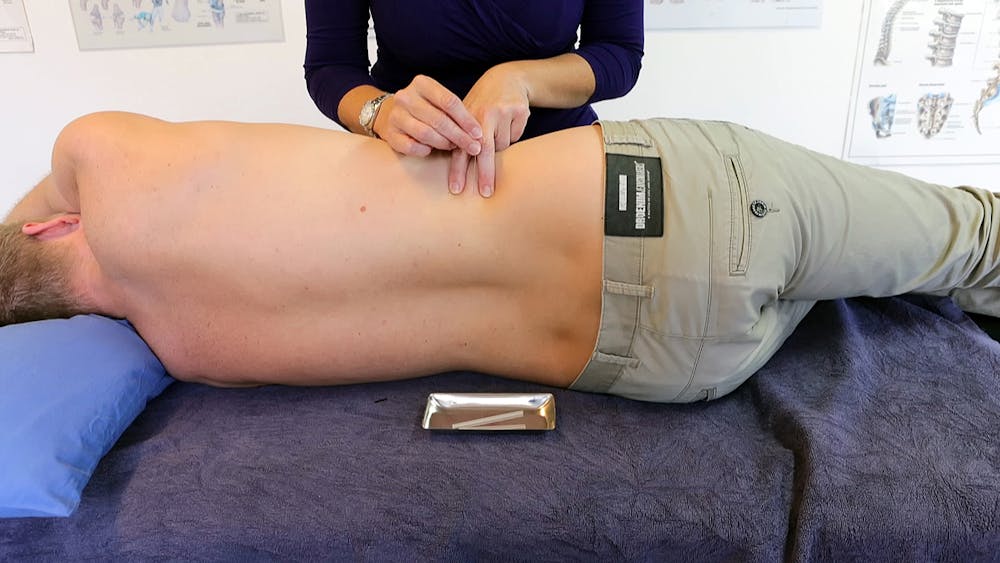
Physiotherapists are increasingly offering needling therapies in addition to their standard care. Many Australian physiotherapists in private practice now offer dry needling or Western medical acupuncture as part of a treatment approach.
Physiotherapists can be trained to use dry needling, Western acupuncture and/or traditional acupuncture.
Dry needling involves penetrating the skin with needles to altered or dysfunctional tissue in order to improve or restore function. This often involves needling muscle trigger points to activate a reflexive relaxation of the muscle.
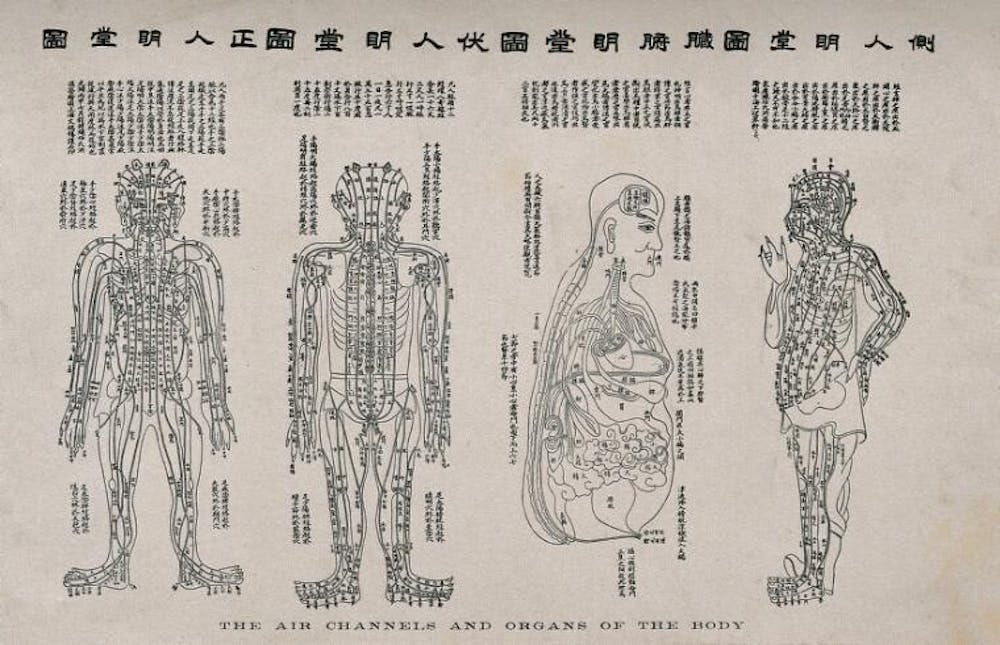
Western acupuncture uses traditional needling meridians (the ancient idea of energy channels through the body) and trigger points. But these ideas are applied to Western understandings of anatomy. In Western acupuncture, points are stimulated to create local tissue changes, as well as spinal and brain effects. The goals is to trigger pain-relieving chemicals, muscle activation or relaxation.
Even though traditional acupuncture points are used with this style of needling, Western acupuncture is not viewed as traditional Chinese medicine.
Traditional acupuncture uses meridian lines or other points based on traditional Chinese medicine assessment methods and approaches.
All physiotherapists trained in either acupuncture or dry needling meet safety standards which are viewed as within scope by the Australian Health Practitioners Regulatory Agency and the Physiotherapy Registration Board. These standards cover the level of training required, registration to practice and safety standards that include needle safety and hygiene to protect the public.
Minor reported side effects related to acupuncture including pain and bleeding or bruising from needle insertion are fairly common. But major adverse events – pneumothorax (collapsed lung), excessive bleeding, prolonged aggravation – are rare.
Research into the effectiveness of acupuncture and dry needling is variable. Some studies show comparable results between dry needling and acupuncture, while others show more favourable results for one or the other depending on the condition being treated.
A review that assessed the effects of acupuncture and dry needling for the treatment of low-back pain found they may be useful add-on therapies but could not make firm conclusions due to a lack of quality trials.
Another review reported the growing popularity of dry needling world wide and across disciplines and points out that many questions still remain regarding the use of needling.
For migraine and tension headaches, experts say acupuncture seems to reduce the frequency and intensity of attacks – though more research is needed to compare it to other treatments.
Acupuncture and dry needling may reduce pain and improve function for people with neck pain. A systematic review found significant differences between acupuncture and “sham acupuncture” (which is performed away from acupuncture points) when used to treat certain types of chronic pain. However, some research only shows small and temporary relief for neck pain with dry needling.
Systematic reviews have reported needling and acupuncture were safe and effective recommendations for the treatment of broad conditions of tendinopathy (the breakdown of collagen in tendons) and fibromyalgia (chronic pain in the muscles and bones).
For women’s health, acupuncture has been shown to be effective for reducing pain with periods, compared to no treatment or non-steroidal pain relief medications – but the research had design limitations.
Though widely used in pregnancy, research into the use of acupuncture to induce labour reports it may increase satisfaction with pain management and reduce pain intensity. But it may have little to no effect on the rates of caesarean or assisted vaginal birth.
In summary, it appears needling techniques – whether dry needling or acupuncture – generally show positive effects over no treatment or “sham” treatments, but more research and high quality trials are needed.
Physiotherapists may combine needling therapies with exercise prescription, hands-on care including massage, mobilisations and manipulations, and taping techniques. They may also employ therapies that apply external energy such as ultrasound, laser, transcutaneous (under the skin) electrical nerve stimulation and biofeedback.
Finally, while the various needling techniques all use a filiform needle (with a solid filament as opposed to a hollow bore needle), the styles with each can be quite different. Ask what style of needling is being employed to treat you, and if you have a history of finding one style works better for you, discuss this with your practitioner.
The authors do not work for, consult, own shares in or receive funding from any company or organization that would benefit from this article, and have disclosed no relevant affiliations beyond their academic appointment.
Papua New Guinean security forces have intercepted and stopped seven trucks carrying seven containers containing sensitive election material in the Southern Highlands after it was found that the containers had been allegedly tampered with.
“Manager Alwyn Jimmy called police in SHP to stop the trucks,” Southern Highlands commander Chief Inspector Daniel Yangen said.
“Seven trucks were stopped and taken to Mendi police station where the seven drivers were interviewed.
“The EC officer from POM was found in Mt Hagen and was taken to the Mt Hagen police station where I arrived at 11pm on Saturday night and took him back to Mendi at 10am on Sunday.”
Papua New Guinea goes to the polls next month between July 2 and July 22.
Upon initial interviews it was found that the man allegedly admitted to tampering with the containers by removing serial numbers and EC stickers on the containers, Chief Inspector Yangen said.
“The officer is expected to be arrested and charged.”
Stopped the trucks Jimmy said in an interview: “The trucks were sent to Hela, Southern Highlands and Enga province.”
The container containing materials for Southern Highlands was sent to Hela, I asked the security personnel who went after the trucks, stopped the trucks and told the trucks to return to Mendi, he added.
He said that the containers were removed and were now in custody of the police.
In Wabag, another container is now being kept by police after it was found that the container was supposed to go to Mendi.
Enga Police commander Acting Superintendent George Kakas said: “When we were informed of the incident in Southern Highlands, I ordered that the containers not be opened.
“We will await the arrival of the SHP Election team to come to Wabag and check the containers.”
Investigations by the Post-Courier have pointed out that no election materials have been shipped. All materials have been flown into the provinces in one day.
Sensitive election materials All sensitive election materials are not supposed to go on transport that is more than a day:
Ballot papers and indelible ink are not supposed to be shipped as they are sensitive materials;
Ballot papers are supposed to be airlifted to all destinations and provided security; and
Police are supposed to accompany sensitive materials like ballot papers and ink anywhere.
Pictures obtained by the Post-Courier show that containers have been kept by security forces at Mendi and Wabag police station.
The Post-Courier understands that the officer who allegedly tempered with the containers has been questioned by police and allegedly admitted to the diversion of the trucks.
The last meeting was hosted by the United Kingdom in 2018, and this is the first meeting since the covid-19 pandemic delayed the meeting for two years.
The week-long meeting discussed important matters to the Commonwealth family of nations such as democracy, peace, and governance; sustainable and inclusive development; post-covid-19 recovery, climate crisis, new members, and the secretary-general of the Commonwealth Secretariat.
On Saturday, during the Leaders Retreat, Samoa was confirmed as the next host for the CHOGM in 2024.
This article is republished under a community partnership agreement with RNZ.
The West and China continue to exert influence over the Pacific region. But discussions of Pacific Island Countries (PICs) are increasingly patronising, framing them as vulnerable, and omitting their agency.
In the battle for geopolitical influence and supremacy in the Pacific, the two most visible antagonists, the Anglo-West and China, are often the only two sides which matter to the mainstream media and political discourse.
The third side, the Pacific Big Ocean States (BOSs), are often forgotten, or relegated to the margin. In a subconscious way, this hierarchy of significance has roots in the colonial discourse which continued to undermine Pacific agency in various ways to this day.
As an example, the recent whirlwind visit to the region by China’s Foreign Minister, Wang Yi, caused media outcry and desperate diplomatic visitations — the political ripples spread far and wide provoking narratives of indignation, anxiety, and outright anger among the Anglo-Western states.
China responded by using tactical diplomatic language to tone down and conceal its own global expansionist agenda under the Belt and Road initiative. Both sides tried their best to project their humane and empathetic imagery towards the Pacific people while concealing their respective geopolitical, ideological, and strategic interests.
This is exactly what diplomacy is all about: putting on different masks when the circumstances require.
As it turned out, the BOSs “won” the diplomatic battle. They rejected China’s hegemonic and all-consuming plan to form a multilateral regional bloc in the form of the “China-Pacific Countries Common Development Vision,” as well as pushed back on the Anglo-Western insistence on keeping away from Chinese offerings.
Bilateral agreements In the end, Pacific leaders signed bilateral agreements with China, based on specific developmental, economic, and wellbeing needs of individual states.
Bilateral agreements are common in international relations. The United States, Australia, and Aotearoa New Zealand all have bilateral economic agreements with China as part of their economic lifeline as modern states. Likewise, BOSs are also seeking economic agreements for their survival and why should they be discouraged from engaging with China or any other country in this regard?
There is a subtle ring of patronisation and paternalism here. The Anglo-Western states see the Pacific as their “natural” habitat which should not be shared with anyone else because that’s where they sent explorers, missionaries, and settlers, had colonies, fought against the Japanese invaders, tested their nuclear bombs, built military bases, and exerted significant cultural influence.
During the Cold War, the Pacific was often described as the “American Lake” because it was literally littered with US military and naval bases.
Despite decolonisation in the region, this feeling of false imperial grandeur still persists in various subconscious forms. For instance, being lectured on the evils of China by the Anglo-West is almost like saying that the BOSs are not smart, strong, and sophisticated enough to stand up to China’s manipulative intents.
Aid, which is used to counter Chinese influence, often ends up benefiting the donor countries such as Australia and New Zealand because the contractors are largely from those countries.
On the other hand, China’s low quality infrastructure and debt-creating loans seem to suggest the rather patronising “beggars cannot be choosers” attitude. Chinese influence is far more cunningly subtle through its “soft power” long term approach compared to the rather abrupt short term approach of the Anglo-Saxon powers.
Common colonial experiences China has strategically invoked the South-South discourse to engage with BOSs hoping that they will see each other as “developing” countries who share common colonial experiences of Western colonialism.
Whether the BOSs buy this ideological bait is another question. By and large, BOSs still see China as a highly industrialised state with lots of goodies to dangle and benefit from, and not so much as a fellow “poor” Global South brethren.
One of the ironies of history is that colonialism, apart from creating a culture of subservience, has also deeply embedded a strong pro-Anglo-Western cultural orientation amongst the BOSs, despite moments of political and ideological resistance. Most Pacific people speak English, go through Anglo-Western education, are readily exposed to Anglo-Western cultural influences such as music, Hollywood movies, and other forms of ideological hegemony, and have close connections with their neighbours such as Australia, New Zealand, and the USA, where they migrate for various reasons.
These factors have created a deep sense of connection with the Anglo-Western world, a reality which China will never be able to replicate, or even challenge, in the next 20 years, despite its extensive “soft power” machinations.
The BOSs’ engagement with China is more economic and diplomatic and less cultural, although this has been on the increase through scholarship offerings and the establishment of Confucius institutions, among other strategies. BOSs frame their engagement with China on the basis of need rather than ideological alignment as is often assumed and misrepresented by their Anglo-Western neighbours. They are able to play the diplomatic and geopolitical game in subtle and smart ways that keep the big powers guessing and sometimes worried.
The reality is that while individual BOSs may sign bilateral agreements with China, none of them will allow itself to become China’s patron state, the same way that the US has been creating buffer and client states around the world. This is because, as they probably know, the cost of assimilation into China’s sphere of influence will be massive and they have a lot to lose.
Some BOSs have adopted a “Look North Policy” and in recent years Pacific students have travelled to China for studies, Pacific businesses have sold their products to the Chinese market, and states have engaged in bilateral or multilateral deals with the Asian power. This should be seen as part of the diplomatic diversification process rather than a colonising project.
Just another partner The reality is that China will always become just another partner and not the alternative to the Anglo-Western connection. Most Pacific people will opt to migrate to New Zealand, US, or Australia, rather than China.
This is where the anxiety and fear of the Anglo-Western countries about a Chinese “takeover” is not just misplaced, but utterly irrational. It does not consider the agency of the BOSs to wisely, strategically, and imaginatively navigate their way through the treacherous geopolitical waters. The overreaction by the Anglo-Western bloc about potential Chinese influence sends out a rather unsavoury message about “bullying” and “colonial attitude.”
This is reinforced by insults such as that by former Australian Prime Minister Scott Morrison that the Pacific is Australia’s “backyard” or the racist insinuation by Heather du Plessis-Allan (a right-wing New Zealand journalist) that Pacific people are “leeches,” or the unkind and patronising labelling by some Australian academics and policy thinkers of the Pacific as an “Arc of Instability.”
Residues of neo-colonial perception are consciously and subconsciously entrenched in the Anglo-Western perception of the BOSs. This has a long history. The Pacific Island Labourers Act 1901, an offshoot of the White Australian policy, was designed to remove Pacific people from Australia.
In New Zealand, the Dawn Raid era of the mid-1970s and early 1980s saw the arrest, harassment, and removal of Pacific peoples who were unwanted in New Zealand. The then Australian Immigration Minister Jim Forbes said in May 1971 that “Pacific Islanders are unsophisticated and unsuited to settlement in Australia.”
Pacific people have always been treated as dispensable entities who need to be kept out, only invited in to support their economy as cheap dispensable labour. This philosophy and practice, which started during the Australian labour trade in the 1800s and in New Zealand in the 1950s and 60s, continues today in both countries under the seasonal labour scheme.
Times have changed and it’s important for our bigger members of the Vuvale (family) to engage with their Pacific neighbours as equal partners, not subordinate and unsophisticated backyard children. The BOS’s agency needs full recognition as capable of making their own mind and plotting their trajectory towards the future they desire.
The old order where colonial paternalism, imperial patronage, racialised narratives, and belittling perceptions shaped relationships no longer have any place. The Anglo-Western countries in the region are good at ticking the UN Sustainable Development boxes such as equity, diversity, and inclusion (SDG10), but they hardly practice these in meaningful ways.
No matter how well these subtle manoeuvres are diplomatically concealed, these still cannot escape the gaze of Pacific BOSs because they live with it all the time. Time for a dramatic attitudinal transformation.
Steven Ratuva is a professor and interdisciplinary scholar and director of the Macmillan Brown Centre for Pacific Studies at the University of Canterbury, Aotearoa New Zealand.This article was first published by the Australian Institute of International Affairs under a Creative Commons Licence and is republished with the author’s permission.
Private companies and public authorities are quietly using facial recognition systems around Australia.
Despite the growing use of this controversial technology, there is little in the way of specific regulations and guidelines to govern its use.
Spying on shoppers
We were reminded of this fact recently when consumer advocates at CHOICE revealed that major retailers in Australia are using the technology to identify people claimed to be thieves and troublemakers.
There is no dispute about the goal of reducing harm and theft. But there is also little transparency about how this technology is being used.
CHOICE found that most people have no idea their faces are being scanned and matched to stored images in a database. Nor do they know how these databases are created, how accurate they are, and how secure the data they collect is.
As CHOICE discovered, the notification to customers is inadequate. It comes in the form of small, hard-to-notice signs in some cases. In others, the use of the technology is announced in online notices rarely read by customers.
The companies clearly don’t want to draw attention to their use of the technology or to account for how it is being deployed.
Something similar is happening with the use of the technology by Australian police. Police in New South Wales, for example, have embarked on a “low-volume” trial of a nationwide face-recognition database. This trial took place despite the fact that the enabling legislation for the national database has not yet been passed.
In South Australia, controversy over Adelaide’s plans to upgrade its CCTV system with face-recognition capability led the city council to vote not to purchase the necessary software. The council has also asked South Australia Police not to use face-recognition technology until legislation is in place to govern its use.
However, SA Police have indicated an interest in using the technology.
In a public statement, the police described the technology as a potentially useful tool for criminal investigations. The statement also noted:
There is no legislative restriction on the use of facial recognition technology in South Australia for investigations.
A controversial tool
Adelaide City Council’s call for regulation is a necessary response to the expanding use of automated facial recognition.
This is a powerful technology that promises to fundamentally change our experience of privacy and anonymity. There is already a large gap between the amount of personal information collected about us every day and our own knowledge of how this information is being used, and facial recognition will only make the gap bigger.
Recent events suggest a reluctance on the part of retail outlets and public authorities alike to publicise their use of the technology.
Although it is seen as a potentially useful tool, it can be a controversial one. A world in which remote cameras can identify and track people as they move through public space seems alarmingly Orwellian.
The technology has also been criticised for being invasive and, in some cases, biased and inaccurate. In the US, for example, people have already been wrongly arrested based on matches made by face-recognition systems.
Public pushback
There has also been widespread public opposition to the use of the technology in some cities and states in the US, which have gone so far as to impose bans on its use.
Surveys show the Australian public have concerns about the invasiveness of the technology, but that there is also support for its potential use to increase public safety and security.
Facial-recognition technology isn’t going away. It’s likely to become less expensive and more accurate and powerful in the near future. Instead of implementing it piecemeal, under the radar, we need to directly confront both the potential harms and benefits of the technology, and to provide clear rules for its use.
What would regulations look like?
Last year, then human rights commissioner Ed Santow called for a partial ban on the use of facial-recognition technology. He is now developing model legislation for how it might be regulated in Australia.
Any regulation of the technology will need to consider both the potential benefits of its use and the risks to privacy rights and civic life.
It will also need to consider enforceable standards for its proper use. These could include the right to correct inaccurate information, the need to provide human confirmation for automated forms of identification, and the setting of minimum standards of accuracy.
They could also entail improving public consultation and consent around the use of the technology, and a requirement for the performance of systems to be accountable to an independent authority and to those researching the technology.
As the reach of facial recognition expands, we need more public and parliamentary debate to develop appropriate regulations for governing its use.
If you’re in Adelaide, there will be a public forum on regulating facial recognition technology at the Town Hall tonight (Monday, June 27). Ed Santow and his colleague Lauren Perry will present their model legislation, and they will be joined in discussion by South Australian parliamentarian Tammy Franks and Law Society of South Australia president Justin Stewart-Rattray.
Mark Andrejevic receives funding from the Australian Research Council.
Gavin JD Smith receives funding from the Australian Research Council.
During the federal election campaign, Labor promised to future-proof Australia’s water resources. Now, new Water Minister Tanya Plibersek must deliver on the policy – one vital to securing Australia’s future.
Australia is already challenged by extremes of intense drought and severe floods, and these will be exacerbated as climate change progresses. Amid this, we must continue to feed a growing population and support important export industries, while leaving enough water for people to drink and for rivers to flow.
Many of the nation’s water policies are outdated and, in some cases, clearly ineffective. Over the past nine years of Coalition government, commitment to fix the problems has been sorely lacking.
Labor says it will right these wrongs. It’s a massive job. Here, I outline six actions the new government should prioritise.
Water Minister Tanya Plibersek, right, must correct almost a decade of wrongs in water policy. Lukas Coch/AAP
What Labor promised
The Productivity Commission last year warned Australia’s water policy needs modernising and reform to meet future challenges.
One of Labor’s key promises was to establish a new National Water Commission – a body the Abbott Coalition government abolished in 2015.
Labor says the commission will drive water reform. One of its key functions will be to support renewal of the National Water Initiative.
That initiative was an agreement struck in 2004 between the Commonwealth and the states and territories on fundamental principles for sustainable water management.
Water is principally a state responsibility, so the initiative articulated a nationally shared vision as a first step.
The Howard Coalition government negotiated the initiative and established the National Water Commission to oversee it. The Rudd and Gillard Labor governments maintained this focus.
But the commission’s abolition killed this momentum for water reform. With no dedicated body overseeing implementation, government commitment to the agreed principles has waned.
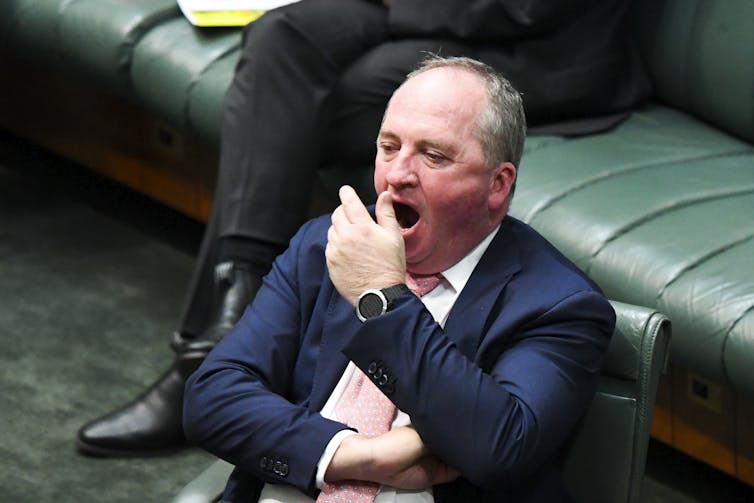
Government momentum for water reform waned in recent years. Pictured: former Nationals leader Barnaby Joyce during debate over the basin plan. Lukas Coch/AAP
For example, the initiative requires that infrastructure proposals are found to be “economically viable and ecologically sustainable” before they proceed.
Despite this, state and federal funding was dedicated to the proposed Dungowan Dam in New South Wales, and federal funding to the Hells Gates Dam in Queensland, before a detailed business case or environmental impact assessment had been completed for either.
Labor will renew the National Water Initiative. This should involve a refreshed commitment between the Commonwealth and the states and territories, after several important updates to the agreement:
1. Consider climate
Australia desperately needs a water management strategy that responds to a changing climate. Current water sharing plans are based on past climate variability. But as climate change progresses, this historical experience will be less useful.
2. Secure the water interests of Indigenous people
Indigenous Australians must be more involved in water planning and granted much greater access to water for Indigenous cultural purposes. More attention must also be paid to Indigenous ownership of water resources.
3. Reform urban water management
Cities and towns need greater resilience to drought, bushfire and floods. An overhaul of drinking water safety, and wastewater and stormwater management, are also required to better protect public health and the environment.
In particular, water quality and reliability in some remote and Indigenous communities needs urgent attention.
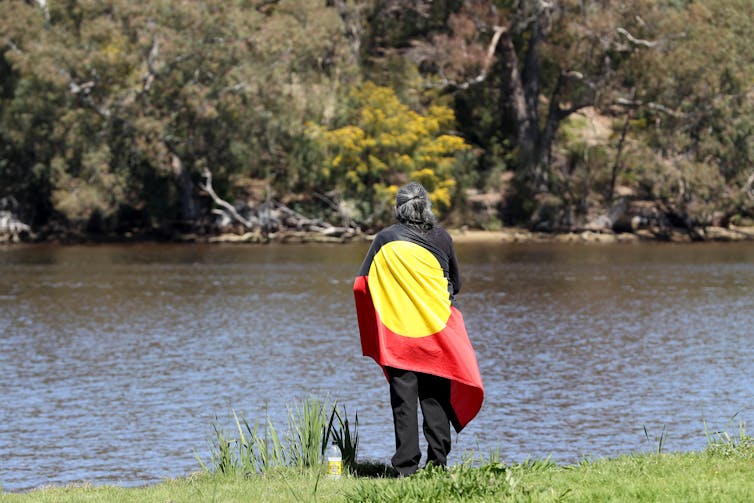
The renewed agreement should include more Indigenous involvement in water planning. Richard Wainwright/AAP
What about the Murray-Darling Basin Plan?
The Murray Darling Basin Plan is due for full implementation by June 2024. Plibersek has much work to do if that deadline is to be met.
That brings us to the final three steps Labor should prioritise:
4. Complete water resource plans
Labor must work with the Murray Darling Basin Authority to ensure so-called “water resource plans” are completed and accredited. These plans, devised by the states, outline how water is to be shared between users and the environment.
NSW’s plans are three years late and holding back progress. The federal government must rectify this – including using “step in” powers to intervene if needed.
5. Prepare for two big reviews
A five-yearly review of the basin’s “environmental watering plan” is due in 2025. It will assess whether environmental water is being best used to benefit dependent ecosystems. The review is a major undertaking, and will require federal consultation with state governments, state and federal agencies, scientists, community and business groups and Indigenous people.
The federal government should also review the basin plan from 2026, with a view to adapting it to more frequent dry periods predicted under climate change.
6. Overhaul water markets
Water markets are central to the basin plan. Farmers are allocated water from the river system, and can choose to use it or sell it on water markets.
These markets need reform. A review last year by the Australian Competition and Consumer Commission found greater scrutiny and transparency was needed to ensure their effectiveness and improve community trust.
The ACCC recommended a new agency to oversee and regulate the water market. Labor could establish this agency or give such responsibilities to a new National Water Commission.
Reform is needed to improve community trust in water markets. Lukas Coch/AAP
Water, water, everywhere
The water sector can contribute to meeting important goals across many policy areas – including the transition to net-zero emissions.
For example, wastewater treatment produces emissions including carbon dioxide, nitrous oxide and methane. But wastewater can also be a source of energy, such as producing biogases.
In all this, federal policy will be required. Labor must also overcome skills shortages – especially in engineering – and invest in research and development to ensure Australia’s water management is world-class.
All eyes are now on Tanya Plibersek at this crucial juncture. Let’s hope she’s the visionary and effective federal water minister Australia needs.
Stuart Khan receives funding from the Australian Research Council and previously received funding from the now-abolished National Water Commission. He is affiliated with the Australian Water Association, the Academy of Technology and Engineering, Engineers Australia, and the Royal Society of Chemistry. He was previously a member of the National Water Grid Advisory Body.
Armida Salsiah Alisjahbana is the United Nations Under-Secretary-General and Executive Secretary of the Economic and Social Commission for Asia and the Pacific (ESCAP).
OP-Ed by Armida Salsiah Alisjahbana – Under-Secretary-General of the United Nations and Executive Secretary of the Economic and Social Commission for Asia and the Pacific (ESCAP).
Armida Salsiah Alisjahbana is the United Nations Under-Secretary-General and Executive Secretary of the Economic and Social Commission for Asia and the Pacific (ESCAP).
If done right ocean action will also be climate action but this will require working in concert on a few fronts.
First, we must invest in and support science and technology to produce key solutions. Strengthening science-policy interfaces to bridge practitioners and policymakers contributes to a sound understanding of ocean-climate synergies, thereby enabling better policy design, an important priority of the Indonesian Presidency of the G20 process. Additionally policy support tools can assist governments in identifying and prioritizing actions through policy and SDG tracking and scenarios development.
We must also make the invisible visible through ocean data: just three of ten targets for the goal on life below water are measurable in Asia and the Pacific. Better data is the foundation of better policies and collective action. The Global Ocean Accounts Partnership (GOAP) is an innovative multi-stakeholder collective established to enable countries and other stakeholders to go beyond GDP and to measure and manage progress towards ocean sustainable development.
Solutions for low-carbon maritime transport are also a key part of the transition to decarbonization by the middle of the century. Countries in Asia and the Pacific recognized this when adopting a new Regional Action Programme last December, putting more emphasis on such concrete steps as innovative shipping technologies, cooperation on green shipping corridors and more efficient use of existing port infrastructure and facilities to make this ambition a reality.
Finally, aligning finance with our ocean, climate and broader SDG aspirations provides a crucial foundation for all of our action. Blue bonds are an attractive instrument both for governments interested in raising funds for ocean conservation and for investors interested in contributing to sustainable development in addition to obtaining a return for their investment.
These actions and others are steps towards ensuring the viability of several of the region’s key ocean-based economic sectors, such as seaborne trade, tourism and fisheries. An estimated 50 to 80 per cent of all life on Earth is found under the ocean surface. Seven of every 10 fish caught around the globe comes from Pacific waters. And we know that the oceans and coasts are also vital allies in the fight against climate change, with coastal systems such as mangroves, salt marshes and seagrass meadows at the frontline of climate change, absorbing carbon at rates of up to 50 times those of the same area of tropical forest.
But the health of the oceans in Asia and the Pacific is in serious decline: rampant pollution, destructive and illegal fishing practices, inadequate marine governance and continued urbanization along coastlines have destroyed 40 per cent of the coral reefs and approximately 60 per cent of the coastal mangroves, while fish stocks continue to decline and consumption patterns remain unsustainable.
To promote concerted action, ESCAP, in collaboration with partner UN agencies, provides a regional platform in support of SDG14, aligned within the framework of the UN Decade of Ocean Science for Sustainable Development (2021-2030). Through four editions so far of the Asia-Pacific Day for the Ocean, we also support countries in identifying and putting in place solutions and accelerated actions through regional dialogue and cooperation.
It is abundantly clear there can be no healthy planet without a healthy ocean. Our leaders meeting in Lisbon must step up efforts to protect the ocean and its precious resources and to build sustainable blue economies.
*******
Armida Salsiah Alisjahbana is an Under-Secretary-General of the United Nations and Executive Secretary of the Economic and Social Commission for Asia and the Pacific (ESCAP)
Source: The Conversation (Au and NZ) – By Tim Payne, Adjunct Senior Lecturer, The Sydney School of Education and Social Work, University of Sydney
My experience as an adviser to Peter Andren – perhaps the first of the modern-day wave of non-party MPs to arrive in Canberra – suggests Labor’s planned cuts to the staff of independents will be a backward step for our democracy. It will also be a serious blow to the more collaborative approach to politics so many Australians have been yearning for.
I had the privilege of serving as an electorate officer and ultimately as chief of staff for Peter from 1996, when he was first elected, until 2001. As the independent member for Calare, in central-west New South Wales, he won wide respect during his 11 years in parliament.
Peter sadly passed away in 2007 after a short battle with pancreatic cancer. If he were still with us today, I am sure he’d sympathise with the government’s desire to rein in the ballooning cost of running our federal parliament, which now costs taxpayers well over A$1 billion each year (including MPs and staff), according to the latest budget.
But I’m also certain he would be concerned at the way independent MPs are being forced to bear a disproportionate share of these savings – and particularly by the government’s apparent failure to understand the workloads of independent MPs.
The workload an independent is fundamentally different
Serving as an independent MP is fundamentally different from being elected as a member of a major political party. It requires substantially different levels of support. Anthony Albanese and Peter Andren may have entered the parliament at the same time – when John Howard took power in 1996 – but their experiences as MPs could not have been more different.
For a start, every independent MP needs to form their own position on every piece of legislation, amendment, division, motion and matter of public importance, and every report tabled in parliament.
Major party backbenchers, by contrast, generally have the luxury of relying on the policy, legislative and tactical advice provided by their party machines.
They don’t need to put anywhere near the same effort into the day-to-day work of parliament. Their ministers or shadow ministers and their offices prepare standardised briefings, parliamentary and media speaking points. Party backbenchers rely on these and are expected to follow them.
During Peter’s time in parliament, it was common for members of both major parties to ask him privately what they were voting on as they filed in to follow instructions from their party whips.
During the previous parliament, according to recent media reports, each independent MP was allocated up to two senior advisers, two junior advisers and four electorate staff.
That increase on pre-2019 numbers recognised the complexity of dealing with a full suite of legislation while serving the needs of local constituents through the important pastoral and advocacy work occurring in MPs’ electorate offices.
This compares to a typical party backbencher who is entitled to four electorate staff, most of whom are based in electorate offices, rather than parliament house.
Labor’s proposal would see each independent’s staff profile return to something like the complement Peter Andren had more than 20 years ago – one adviser and four electorate staff, on account of Calare’s large geographic size.
In other words, Labor is proposing a 75% cut in independent MPs’ higher-level staff. These are the people who often hold degrees in law, politics, economics, finance, public policy, communications and public relations and provide the MPs with vital support.
It is difficult, from available data, to track changes in parliament’s legislative workload over the last 25 years.
But the following statistics for the House of Representatives give a sense of the mammoth task the new wave of independents are likely to face:
average number of bills considered each year 1996–2021: 206
average number sitting hours 1996–2021: 850 hours
average number of divisions 1996 to 2021: 168
number of bills presented during the 2019–22 parliament: 484
number of bills considered in detail during the 2019–22 parliament: 89
government amendments moved during the 2019–22 parliament: 1189
opposition and non-aligned amendments moved during the 2019–22 parliament: 366.
Independent senators in the current parliament will face even heavier workloads than their colleagues in the House of Representatives. That’s because the balance of power situation sees its committees far more active and influential, while contested bills and amendments are often debated line-by-line.
When I worked for Peter, our resources were inadequate for managing both his electorate and parliamentary duties.
We dealt with an average of around 6,000 constituent inquiries each year – a number that is probably much higher now for many independent MPs given the advent of mobile phones and social media.
I remember the enormous challenges I faced as Peter’s chief of staff, which included:
seeking to be across all the legislation and policy matters relevant to his electorate
keeping up with parliamentary debates and divisions late into the night
supporting his committee work
preparing speeches, questions, letters, bills, media releases and dealing with the resulting inquiries
managing his dedicated team of electorate staff and volunteers and
advising on constituent matters, which could become very complex and time-consuming.
It was a challenging, fascinating, exciting and rewarding job, but not one you could perform well without countless hours of unpaid overtime.
No substitute
It’s been reported the government expects independent MPs to draw more on the services of their own electoral staff and the parliamentary library, which will receive a boost in funds.
The parliamentary library is a wonderful resource, staffed by outstanding researchers with expertise across most policy areas. We drew heavily on its services and those of the clerks of the House of Representatives and Senate.
But these general parliamentary services, while vital, are no substitute for giving each independent MP their own in-house capability to participate fully and effectively as “legislators” in the true sense of the word.
Whether or not independents hold the balance of power in the House or Senate, the care they take reviewing legislation and amendments improves the quality of our democracy.
Time and again in recent years, the painstaking work of Senate committees and independent senators has delivered better legislation.
With the budget deficit now so large, there may well be a case for scaling back independent MPs’ and senators’ advisory staff to some degree.
But any decision needs to be based on evidence about the level of support required. That evidence should be examined by an independent review that consults MPs of all persuasions and ensures that savings are shared across the entire parliament.
There may also be potential to achieve efficiencies by centralising routine aspects of the policy, legislative and procedural advice available to independents, while ensuring each MP retains enough in-house capability to perform their legislative duties.
Once any new resourcing levels are in place, their continuing adequacy should be reviewed every three years.
The views expressed in this article are those of the author alone and are not made on behalf of or represent the views of the University of Sydney.
Tim Payne does not work for, consult, own shares in or receive funding from any company or organization that would benefit from this article, and has disclosed no relevant affiliations beyond their academic appointment.
Most women are not working full-time during most of their working lives, which holds them back from management positions and accentuates the pay gap with men, according to data released on Monday.
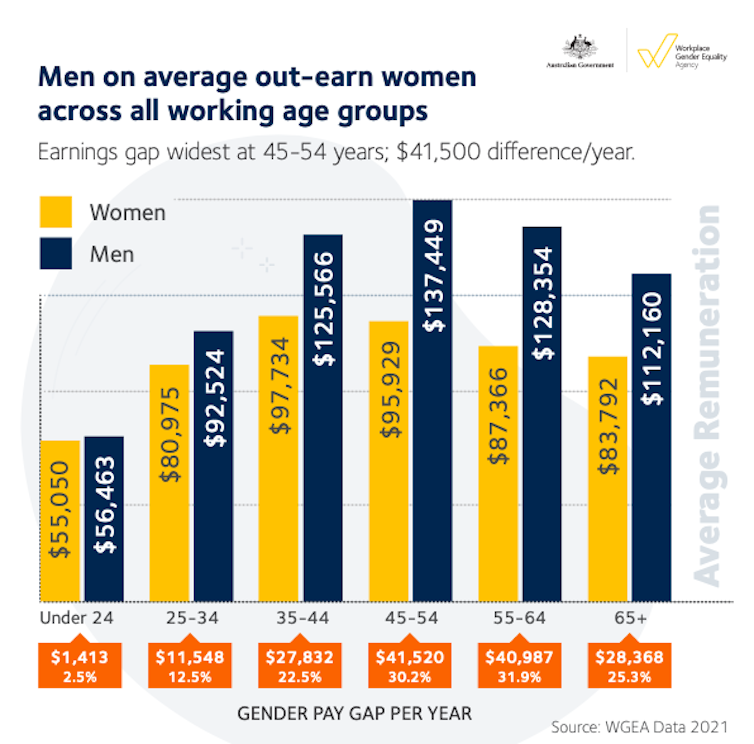
Men on average out-earn women across all working age groups.
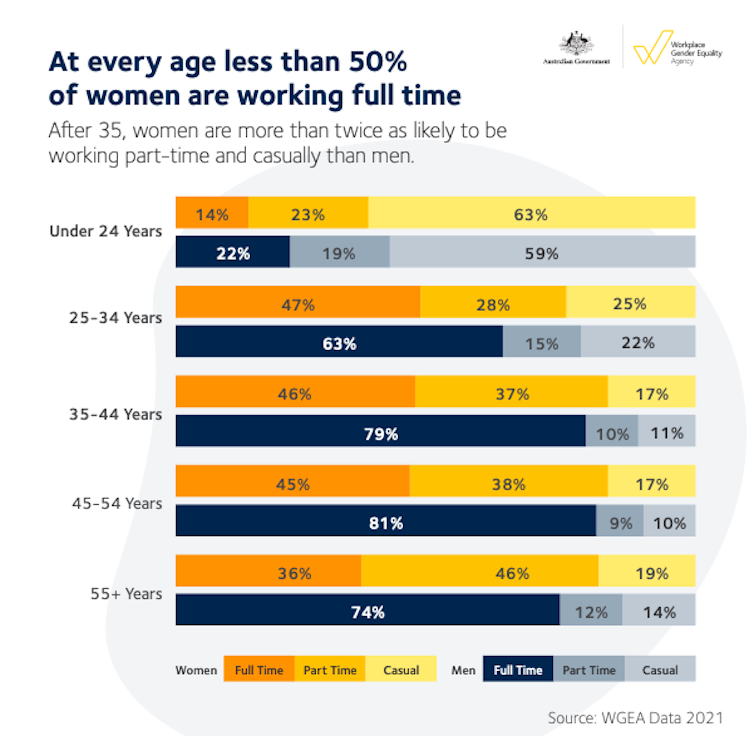
At every age group less than 50% of women were full time in 2021, according to the Wages and Ages: Mapping the Gender Pay Gap by Age data series. This has been issued by the Workplace Gender Equality Agency, a federal government body. The data comes from private sector employers with 100 or more employees.
The divergence in working patterns between men and women starts from age 35, when men are mainly working full time and women mainly working part time or casually. After 35 women are more than twice as likely to work part time and casually than men.
Men over age 55 are twice as likely to be in management as women.
Of those women in management at the same age, two thirds are in lower ranks.
Men also earn more than women across each generation in the workplace, according to the data.
The gap is greatest at 55-64 where men out-earn women by almost one third (31.9%). This is more than $40,000 on average a year.
Even those women in senior executive and CEO jobs aged 55 and above face a big pay gap – they are earning about $93,000 annually less on average than male counterparts.
The agency says “that in 2021 at no age were more than 50% of women working full time, yet higher paid management opportunities were almost exclusively reserved for full-time workers. In all age groups, more than 90% of managers were working full-time.”
On average, companies with more part-time managers have more women at executive levels.
WGEA director Mary Wooldridge said if the trends in the data continued, millennial women now working would earn only 70% of men’s earnings by the time they were 45.
“Millennial women in the workforce 35 and under are currently reaching management at equal rates as men,” Wooldridge said. “We have a generation of Australian women who are highly educated, and over the last decade have been outnumbering men in higher education enrolments and completion.
“If organisations want to unlock the potential that these women can provide after the age of 35, there needs to be a shift in workplace structures surrounding them. Creative workplaces will reap the talent rewards today and in the future.”
She said “too many employers are missing a huge talent pool by not encouraging and enabling women to work additional hours or in the managerial ranks”.
She highlighted the importance of gender-neutral parental leave. childcare subsidies and support, and flexible work policies.
“Leading employers are creating or redesigning roles to support part-time management and job-sharing structures,” Wooldridge said.
Michelle Grattan does not work for, consult, own shares in or receive funding from any company or organisation that would benefit from this article, and has disclosed no relevant affiliations beyond their academic appointment.
Source: The Conversation (Au and NZ) – By Lindsay Robertson, Senior Research Fellow in the Department of Preventive and Social Medicine, University of Otago
Getty Images
The number of young New Zealanders aged 15 to 17 who vape every day has tripled in two years, from 2% in 2018-19 to 6% in 2020-21, according to the most recent New Zealand Health Survey. For young adults, aged 18 to 24, daily vaping increased from 5% to 15%.
Another national survey focused on Year 10 school students shows these increases are especially high for Māori girls. Around one in five Māori girls aged 14 to 15 reported vaping daily in 2021.
Increases in regular vaping (defined as vaping at least monthly) are also large, particularly for Māori boys (19% in 2019 to 31% in 2021) and girls (19% to 41%).
While manufacturers claim vapes are lower risk alternatives for people who smoke cigarettes, many people who vape have never smoked.
If only smokers took up vaping, we would expect to see increases in vaping to be offset by equivalent decreases in smoking. Instead, the growth in daily vaping exceeds the decline in daily smoking.
Had vapes never been introduced, many young non-smokers may not have started using any nicotine products. Our new research helps explain why non-smokers start vaping.
Regulating industry activities to prevent youth vaping should remain an important focus of policy, research and monitoring. But the personal reasons why young non-smokers start vaping could provide additional insights and ways to reduce the problem.
Our research, published in the journal PLOS One, is based on in-depth face-to-face interviews with 16 young adults, aged 18 to 25, who self-identified as regular vapers (from daily to at least a couple of times each month). Using a qualitative approach, we identified five factors that helped explain what had led these young non-smokers to vaping.
Two of these factors – connection and belonging, and balancing social status and stigma – were psycho-social in nature. Vaping is a highly social activity, taking place predominantly in shared flat settings or at parties. Being part of a peer group where a vape was circling helped reinforce relationships through a collective experience.
The communal nature of vaping also helped provide an entry to social groups where participants had previously felt on the periphery. For instance, one participant enjoyed how his vape piqued others’ interest and acted as a conversation starter, while another explained how vaping helped him “fit in” at parties.
The second theme, balancing social status and stigma, reflects the way vapes can become a personal fashion statement. One participant described her vape as “sleek and […] just my kind of style”. For others, vaping offered an opportunity to impress with “skills and tricks” they mastered when exhaling aerosol.
These attributes fostered social cachet and helped offset the perceived stigma many participants felt as non-smokers who vaped. That stigma, they believed, did not apply to people who had switched from smoking to vaping, as one participant explained:
If you make the effort to get off smoking and get onto vaping, you get a lot more respect for it […] compared to people who just do it for the sake of it.
The allure of vaping
Apart from psycho-social factors, vapes attracted non-smokers by providing stimulation and engagement. Unsurprisingly, the wide variety of vape liquids that mimic confectionery or soft drink flavours attracted and maintained young adults’ interest. Participants also experienced blowing clouds as whimsical, and many expressed an almost child-like fascination with the aerosol they exhaled.
Several participants vaped as a means of self-management, to relieve stress or boredom, anxiety or awkwardness. A minority began vaping intentionally to manage their weight, using sweet-flavoured vape liquids as a replacement for “stress eating”. The effectiveness of this approach is not clear.
Lastly, participants used rationalisations about vapes’ costs and benefits relative to smoking to justify their vaping. They believed vapes offered multiple benefits, such as pleasure, connections and social cachet, without the “costs” they associated with smoking cigarettes, including financial and long-term health harms as well as unpleasant odour and nausea.
As one participant explained, vaping “doesn’t seem anywhere near as bad as cigarettes […] I feel less guilty about using it”.
Study limitations and implications
One limitation of our work is that data collection took place before higher-strength “pod” devices such as JUUL and Vuse and disposable vapes such as Fruitia and SOLO entered the market.
Pods and disposables are popular with young people and allow high nicotine concentrations in e-liquids, up to 60mg/ml, without causing a harsh sensation in the mouth and throat. Evidence suggests the majority (at least 80%) of youth and young adults who vape currently use nicotine, whereas a 2019 study suggested only around a quarter of vaping school students used nicotine.
This limitation means our study may not have fully captured the role of nicotine addiction in maintaining vaping.
While recent regulations have restricted the widespread, aggressive marketing of vaping products, social media promotion nonetheless continues. Vaping products are available at numerous outlets and there are no restrictions on manufacturers or retailers making “reduced-harm” marketing claims.
Easy access and “lower-risk” marketing messages likely normalise vaping and the belief that vaping is a safe activity. Educational efforts aimed at youth, such as the Asthma Foundation’s Don’t Get Sucked In campaign, may help counter ideas that vaping is low-risk.
However, educational campaigns will have a limited impact if products remain widely available and appealing, and social marketing is not a substitute for effective policy. In light of rapidly increasing youth vaping, it is time to reconsider the widespread availability of vaping products in convenience stores and supermarkets and the use of eye-catching packaging and flavours that appeal to young people.
Lindsay Robertson receives funding from the Royal Society Marsden Fund, the National (NZ) Heart Foundation, and Otago Medical School Foundation Trusts. She has previously been supported by funding from: Bloomberg Philanthropies, the Health Research Council of New Zealand, the Cancer Society of New Zealand, Otago University (Department of Preventive and Social Medicine), Lottery NZ Health Research, and the Asthma and Respiratory Society of Aotearoa/ New Zealand. She is a member of ASPIRE 2025, a University of Otago Research Centre whose researchers work to support the government’s Smokefree 2025 goal.
Janet Hoek receives funding from the Health Research Council of New Zealand and Cancer Society of New Zealand; she has previously held grants from the Royal Society Marsden Fund. She co-directs ASPIRE 2025, A University of Otago Research Centre whose researchers work to support the Government’s Smokefree 2025 goal. She has served on government, crown entity and NGO advisory groups to support public health policy goals.
Grocery prices have taken a hike upwards for a host of reasons, including the rising costs of petrol, fertiliser and labour.
You could “shop around” for cheaper groceries, but that would cost you more in fuel or travel, not to mention time.
Research shows a healthy diet costs low-income households 20 to 30% of their disposable income. But a healthy diet remains cheaper than one dominated by highly processed foods and drinks.
Cutting your grocery bill takes planning and flexibility – and knowing your budget.
Next, create a grocery list. This helps save money by reducing in-store impulse buys. Look at what you already have in the pantry, fridge and freezer, and only buy what you need. This will reduce food waste.
A 2021 survey found the average supermarket grocery bill was A$98 per week for a single person, $145 for two, $168 for three, $187 for four and $255 for five or more people.
An older survey from 2016 found the average household (2.6 people) spent $269 per week across all food ($237) and alcohol ($32) purchases, both at the supermarket and other outlets.
About half the money was spent was on “discretionary” items such as meals out or fast food ($80), with $20 spent on lollies, chocolate, savoury snacks and potato crisps, and $10 on cakes, biscuits and puddings. At the supermarket, $26 was spent a week on fruit and vegetables.
Sticking to a shopping list means you’re likely to spend and waste less. Shutterstock
A 2019 survey found the average person spent $300 a week for all food and drinks. This included groceries ($135), eating out ($52), alcohol ($31), take-aways ($22), barista coffee/tea ($13), food delivery services ($12), supplements ($12) and health foods ($11).
These surveys show it’s common to spend more on foods and drinks consumed away from home than on groceries and more on unhealthy items than healthy ones.
Putting all this together, here are five key tips to keep in mind when planning food for your household:
1) Have a food budget
Total food budget dollars will be influenced by how many people you need to feed, their age and your household income. A rough rule of thumb is it shouldn’t cost more than one-third of your total household disposable income.
Allocate target amounts in your budget for both core, nutritious foods and discretionary foods and drinks (softdrinks, chips, biscuits, cakes, lollies, pies, pastries and deli meats) and on foods away from home (coffees, fast food, pubs, clubs, bottle shops and restaurants).
2) Make a weekly plan for breakfast, lunch, dinner and snacks
Buy a lunch box and pack it the night before. Put it in the fridge so you can grab and go in the morning. For ideas, see our $5 make-at-home lunches.
If your mornings are too busy, pack in breakfast foods too.
4. Cook more meals at home
Cooking more meals at home might include cheaper and healthier versions of some of your take-out favourites such as pizza and burgers.
A study from the United States found those who cooked more at home spent half the amount of money on food eaten away-from-home than those who cooked infrequently. They also spent 17% less on food overall.
Interestingly, both groups spent the same on groceries suggesting that infrequent home cookers either wasted more food, ate more, or both.
Cook greater quantities of meals like curries, soups and casseroles, and either freeze them or have the same meal twice.
For those needing to shop on a significantly restricted budget, we’ve developed a $60 a week meal plan on our No Money No Time website. This free resource contains a meal plan with inexpensive recipes, designed to meet key nutrients needed for health.
If you need help getting food right now, try the Ask Izzy website. By submitting your postcode, it shows support services, such as free meals, near you.
The authors acknowledge the assistance of Hannah McCormick and Ilyse Jones from the No Money No Time Project team in preparing this article.
Clare Collins is a Laureate Professor in Nutrition and Dietetics at the University of Newcastle, NSW and a Hunter Medical Research Institute (HMRI) affiliated researcher. She is a National Health and Medical Research Council (NHMRC) Leadership Fellow and has received research grants from NHMRC, ARC, MRFF, HMRI, Diabetes Australia, Heart Foundation, Bill and Melinda Gates Foundation, nib foundation, Rijk Zwaan Australia, WA Dept. Health, Meat and Livestock Australia, and Greater Charitable Foundation. She has consulted to SHINE Australia, Novo Nordisk, Quality Bakers, the Sax Institute, Dietitians Australia and the ABC. She was a team member conducting systematic reviews to inform the 2013 Australian Dietary Guidelines update and the Heart Foundation evidence reviews on meat and dietary patterns.
Megan Whatnall is affiliated with the University of Newcastle, NSW, and Hunter Medical Research Institute. She has received research grants from Hunter Medical Research Institute, The National Heart Foundation of Australia, and nib foundation.
Source: The Conversation (Au and NZ) – By Jessica Holloway, Senior Research DECRA Fellow, Institute for Learning Sciences and Teacher Education, Australian Catholic University
Without fail, every time a politician is tasked with reforming education, the issue of performance-based pay for teachers is put on the table. It’s odd, really, that such a controversial idea can keep making the rounds with such enthusiasm from government leaders. But that’s exactly what New South Wales Premier Dominic Perrottet has announced as part of his platform to reform education.
The policy is being framed as innovative and designed to “modernise the education system”, according to the premier.
The proposal has drawn swift criticism. The two largest teachers’ unions in the state – the NSW Teachers Federation and the Independent Education Union of Australia (NSW/ACT) – unanimously voted to strike for 24 hours this Thursday, June 30, in the dispute about pay and staff shortages. It’s the first time members of the two unions will strike together.
It is unclear whether the premier anticipated this sort of response, but a brief look at how similar proposals have been received in the past suggests it isn’t very surprising.
What do we know about similar efforts to introduce performance pay for teachers? There is a lot of international evidence to draw upon. Unfortunately, the evidence paints a grim view of what performance pay might look like in the Australian context.
To begin, what is performance pay? And why do government leaders keep proposing it as a solution for school reform?
Performance-based pay is built on a simple premise: good teachers should be financially rewarded for excellent teaching. The idea is that teachers will be motivated to try harder, perform better and produce better outcomes.
This might sound like a great idea. Don’t we want good teachers to be compensated for their exceptional performance? According to decades of research, however, there are many problems with this premise.
First of all, we know that the best teaching occurs when teachers are able to collaborate, share and learn from one another. This only happens when teachers have the time, but also the motivation, to work together.
Performance pay, on the other hand, is based on a model of competition. Only the best will receive financial rewards. Others will miss out.
Creating this kind of competitive environment has been detrimental to collegiality, trust and morale among teachers. At a time when teachers are already finding their workloads unbearable, adding a layer of competition is the last thing that will help keep them in the classroom.
It requires a level playing field, which doesn’t exist
One area that most performance pay research is clear about is that such policies require very specific conditions to be effective. At the same time, this research shows that achieving perfect conditions is nearly impossible.
The only way to make performance pay fair is to create a perfectly level playing field for all teachers. Of course, this is unrealistic. Classrooms are messy, complex environments.
Students have varied backgrounds, different levels of privilege and diverse needs.
Teachers are expected to teach all students, regardless of the circumstances.
However, research has shown us time and again that different levels of advantage have a significant influence on outcomes. When teachers teach in schools or classrooms with high concentrations of disadvantage, it is often harder for them to demonstrate achievement growth.
On the flip side, experts also warn of “ceiling effects”. When teachers teach high concentrations of high-performing students, they also struggle to demonstrate learning growth.
In one notorious case in the US, a teacher lost out on performance pay because he taught high-performing students. His students had already performed so well that this left little room for growth in achievement. This teacher showed “decreased” performance [need to explain that they didn’t actually go backwards so added the following line] because students didn’t achieve their predicted scores – some better than perfect – under the state’s value-added model (VAM).
Florida’s value-added model of performance pay penalised teachers of high-performing students.
These are just some of the issues that have to be resolved before performance pay can be considered a viable option. School systems around the world have been trying to do so for decades, with limited success.
What we have learned from these attempts is that performance pay is based on narrow measures of quality that inevitably lead to poor teaching practice. Not only is the policy outdated and ineffective, but international evidence shows performance pay damages teacher morale and collegiality.
At a time when teachers are leaving the profession in droves, this policy proposal threatens to make current conditions even worse. Now is not the time to take an already precarious workforce and impose policies we know have had damaging effects elsewhere.
Jessica Holloway receives funding from the Australian Research Council.
Rafaan Daliri-Ngametua et Sarah Langman ne travaillent pas, ne conseillent pas, ne possèdent pas de parts, ne reçoivent pas de fonds d’une organisation qui pourrait tirer profit de cet article, et n’ont déclaré aucune autre affiliation que leur poste universitaire.
Source: The Conversation (Au and NZ) – By Jim Stanford, Economist and Director, Centre for Future Work, Australia Institute; Honorary Professor of Political Economy, University of Sydney
Reserve Bank of Australia governor Phillip Lowe has invoked memories of the 1970s, warning wage growth must be restrained to contain Australia’s surging inflation.
In the 1970s, Lowe said last week, “we got into trouble because wages growth responded mechanically to the higher inflation rate”. Now, with inflation above 5%, and tipped to reach 7% by the end of the year, he wants want people to keep in mind an “anchoring point” for wage growth of 3.5%.
That 3.5% represents the central bank’s long-standing judgement that wage growth equal to the RBA’s ideal inflation target (2.5%) plus productivity growth (typically more than 1% a year, currently above 2%) is economically sustainable.
Lowe says “if wage increases become common in the 4% and 5% range” that will make it harder to get inflation back to his target. But that prospect seems so remote it’s a wonder why he focused on it. Particularly when he said nothing about about the role of ever higher profits on increasing prices.
Wages increases aren’t the problem
Nominal wage growth has languished well below that 3.5% benchmark since 2012. The last time wages grew at more than 4% was 2009.
Over the past decade, wages have fallen further and further behind the level implied by the RBA’s magic formula. During this time Lowe (governor since 2016) repeatedly cited weak wages as a key factor keeping inflation below the bank’s 2-3% target – but nothing happened.
So why is he now ringing alarm bells about wages growing too fast? It’s not at all clear when broad wage growth will even regain 3.5%, let alone surge faster.
The Fair Work Commission’s decision this month to raise the minimum wage by 5.2% and wages for other award-covered workers by 4.6% will boost the pay for about a quarter of workers. But even that can’t be considered “inflationary” by any stretch of imagination. In real terms, the minimum wage will fall again this year, as it did last year.
Most other workers have little chance of doing as well.
Wage gains from enterprise bargaining agreements (covering about 35% of workers) remain subdued. In the latest 12-month period they delivered an average increase of just 2.6%.
For the 38% of workers on individual contracts – now the most common pay-setting method in Australia’s individualised labour market – there is even less reason to expect wage growth to suddenly accelerate.
Labour is not the only component in production costs: a considerable profit margin is also built into final prices. In fact, after decades of capital’s share of GDP increasing while labour’s declines, those profits have become more important in price-setting.
That’s a big change from the 1970s, when the narrative about wage-driven inflation became so firmly locked into the national policy discourse.
Indeed, by the end of 2021, corporations made 62 cents in gross profit for every dollar they paid in labour compensation. That’s the highest in history – and more than twice the rate in the 1970s.
Yet while the RBA warns darkly about rising labour costs, the growing importance of profits in driving higher prices is not mentioned. This reflects an ideological bias that wages are a “cost” item that must be tightly controlled, while profit is assumed to be a legitimate “reward” to businesses that efficiently supply the market with something valuable.
The Australian Bureau of Statistics calculates several measures of unit labour costs – the cost of employing labour per “unit” of production. It does not publish a measure of “unit profit cost” – what gets paid in profit per unit of production. But perhaps it should. That might motivate greater attention to the role of profit margins in current inflation.
In lieu of ABS data, however, we can create a broad measure of unit profit cost by comparing the growth of nominal corporate profits to the growth of real output (similar to the methodology for measuring unit labour costs).
As shown in the following graph, since the start of the COVID-19 pandemic unit profit cost has surged 24%, compared with a 4% increase in the nominal unit labour cost (which, being over two years, is still below the RBA’s inflation target.
Blaming the victims
Warnings about wages misdiagnose the source of current inflation. They blame the victims of falling real wages for a problem they did not cause.
The RBA acknowledges the upsurge in inflation was initially fuelled by COVID-19 disruptions – including supply chain problems, global energy prices and major (but temporary) shifts in the composition of consumer demand.
But corporations with pricing power (particularly potent in sectors like energy, housing and groceries) took advantage of those disruptions to fatten their profit margins. They have profited from inflation, while workers lost out.
Now workers are being told they must swallow further real wage cuts to fix the inflation that enriched their employers.
Once the RBA confronts the issue of inflated profits as both a cause and a consequence of current inflation, we then might discuss labour’s role. Until then, workers are justified in fighting to protect their real incomes.
Jim Stanford is a member of the Australian Services Union.
Nakashima Harumi, born Ena City, Gifu prefecture, 1950, Struggling forms, c2005, Ena City, Gifu prefecture, porcelain, under and overglaze, 66.0 x 49.0 x 43.0 cm. Collection of Raphy Star
Review: Pure Form, Art Gallery of South Australia.
Japanese art post the second world war is infinitely fascinating. At a time when the country was under Allied occupation and Japan had paid a high price for the war in the Pacific to end, its artists were revelling in new found freedom.
Some of the most interesting work of this era was from avant-garde ceramicists. Their revolution in clay led to them abandoning the Mingei tradition of Japanese folk craft which included making functional vessels such as tea bowls.
In its place, they redefined themselves as artists, placed a premium on individual expression and, as modernists with a Japanese inflection, began producing abstract sculptural ceramics.
Three generations of artists now work in this style, and their stunning work stretching from the late 1940s to 2021 is the subject of the Art Gallery of South Australia’s exhibition Pure Form. The title underscores the shift in ceramics from function to form.
In a time of often unnamed craftsmen producing humble ceramic objects for everyday use integral to the Mingei tradition, five Kyoto-based ceramicists were abreast of international trends in avant-garde modernism. They formed a group called Sōdeisha, meaning “crawling through the mud association” in 1948.
There was initially a gradual shift to pure form, as seen in Yamada Hikaru’s Glazed jar with sgraffito (scratched decoration) (1951-52). Its shape still alludes to a functional vessel while its sgraffito linework – a decorative technique of incising into pale slip to reveal the clay beneath – is steeped in Korean ceramics.
Other works in the exhibition reference surrealism, such as Square vase on pedestal foot (1950-60) by Sōdeisha member Suzuki Osamu. There are vases devoid of openings, elongated forms negating function, or, as with second-generation Sōdeisha artist Hayashi Hideyuki’s Walk (c. 1980), a minimal geometric form referencing the human body.
A delicate and refined aesthetic underpins the work on show, such as that of Matsutani Fumio, a third-generation artist whose ceramics balance innovation with tradition, as in his Yellow (Ou) (2021). This is a flamboyant extension of the architecture of the tea bowl, replete with beautiful line work.
In terms of drama, Moriyama Kanjiro’s metallic glazed Kai (Turn) (2020) takes the honours for simulating movement. Its tower-like form is constructed from individual pieces assembled and fired to make a stunning swirling sculpture.
Installation view: Pure Form: Japanese sculptural ceramics, featuring Kai (Turn) VIII.
by Moriyama Kanjiro. Art Gallery of South Australia, Adelaide; photo: Saul Steed
Women’s ceramic art and the broader diaspora
One of the many strengths of this exhibition is its focus on women of the calibre of Tsuboi Asuka, who was instrumental in establishing the Women’s Association of Ceramic Art in Kyoto in 1957.
Women’s rights came to the fore during the occupation, along with suffrage, and women ceramicists gained visibility.
Tsuboi’s three panel work Untitled (c. 2005) delicately inserts Japanese textile patterns in clay, each panel taking on the movement of cloth swaying in the wind.
Another is Tanaka Yu, whose clever wrapped bundles in clay imitate reality. Her Yellow sculpture in the shape of a furoshiki (c. 2108), looking like a beautifully wrapped object complete with a knotted tie, is informed by the ancient Japanese art of cloth wrapping.
Japanese-trained ceramic sculptors now form a diaspora working outside Japan – one is US-based Kaneko Jun in Nebraska, whose large hand-built forms such as Untitled triangle (dango) (2004), employ abstract design features.
Uranishi Kenji is another emigre, based in Brisbane since 2004. His white glazed objects portray the wondrous world of coral in the Great Barrier Reef.
The porcelain sculpture on show is superb. Matsuda Yuriko’s erotically charged foot, In her shoes (c. 2007), with its tightly curled back toes suggesting sexual pleasure, is a stunning piece.
Matsuda Yuriko, born Ashiya, Hyōgō, 1943. In her shoes, c2007, Oshino, Yamanashi prefecture, porcelain, underglaze blue and overglaze enamels, 33.0 x 31.0 x 16.0 cm (foot),2.0 x 41.0 x 33.0 cm (base). Collection of Raphy Star
Her subject is frequently the female body. Here, the decorative surface evokes the patterning of Meiji ceramics while its subject matter sits squarely in the Japanese tradition of shunga, or erotic imagery. Refreshingly, it comes from the perspective of a woman.
Yet another porcelain piece, Struggling forms (c. 2005) by Nakashima Harumi, looks almost octopus-like, but has only two feet. Its twists echo that of a Möbius strip, it looks disarmingly like an impossible form, but achieves perfect balance. The blue colour of the dot patterning harks back to the Japanese tradition of sometsuke which is underglaze painting in cobalt blue on porcelain or stoneware.
In contrast to referencing tradition, Mishima Kimiyo’s ceramic forms in Box Batter -17 (2017) shows bottles in newspaper wrappings in a roughly opened box, very much of their time. Her interest is the imbalance between the human footprint and nature, seen in the detritus of modern life, newspapers, packaging and soft drink bottles littering the environment.
Mishima Kimiyo, born Osaka, Japan,1932, Box Batter -17,2017, Osaka, stoneware, silk screen prints, 22.0 x 31.0 x 25.0 cm (box), 22.5 x 6.5 cm (bottle, each). Collection of Raphy Star
The limits of clay
This is a must-see exhibition.
Its 100 plus artworks by 65 ceramicists drawn from public and private collections in Australia and Japan, and spanning modern and contemporary work, are dazzling in innovation, skill and aesthetic.
The sculptural leap to pure form in porcelain in Fukami Sueharu’s To the sky (c. 2013), simulates flight itself and leaves viewers elevated by the experience.
While in the exhibition space, I could hear some, including senior artists, puzzling as to how several of the ceramic objects were actually produced. These ceramicists have indeed tested the limits of clay.
Pure Form is at the Art Gallery of South Australia until November 6.
Catherine Speck has received funding in past years from the Australian Research Council to research art exhibitions.
With increasing ferocity over the past 15 years, abortion access in the US has been gradually eroded since the 1973 landmark Supreme Court ruling on Roe v Wade, through measures including the banning of federal funding for abortion, and state laws that enforce mandatory counselling and stringent licensing requirements for abortion clinics.
In 2021, states across the US introduced 663 abortion restrictions and enacted 108 of them, a record number in any year since 1973. One quarter of US abortion clinics closed between 2011-2016, and, as of early 2022, there were five states with only one clinic.
Women have always circumvented restrictive abortion laws and, with the advent of medical abortion, it’s never been safer to do so. Individuals can safely self-manage their abortion using oral medications.
Pregnant Americans living in states hostile to abortion rights are getting abortion pills online or via the telephone, or travelling to buy them elsewhere — in the pharmacies in cities just over the Texan-Mexican border, for example.
Of course, this is far from ideal — medical abortion is only recommended up to the twelfth week of pregnancy, and women should optimally have the choice of surgical or medical methods. Good information about medical abortion is key to its success and safety.
Clinics over the border from the worst affected states will be placed under increased pressure. Many states will criminalise travelling to obtain an abortion, “aiding and abetting” someone from getting an abortion (by, for example, driving them to an interstate abortion clinic), and searching for or providing information about how to obtain an abortion (via the telephone or internet for example). Yet such measures will be difficult to enforce.
It’s estimated about one quarter of people who would have had an abortion under Roe will be forced to continue with a pregnancy post-Roe.
These pregnancies will, in about 90% of cases, lead to parenthood. Despite what the Supreme Court imagines, forced pregnancy, birth and parenthood, and not adoption, is generally the alternative to abortion.
Moreover, far from being “voluntary”, adoption is, as legal scholar Dorothy Roberts writes, most often “forced upon politically marginalised people as a response to crises caused by race, class, and gender inequities”.
The end of Roe will increase inequality
Forced pregnancy will further entrench existing inequalities. Wealthy Americans in states that will ban or restrict abortion will continue to have abortions because they will have the capacity and resources to travel interstate or access abortion pills online.
Three quarters of abortion seekers in the US are living in poverty. Black women get abortions at nearly three times the rate of white women, and a higher proportion of Black women live in states that will restrict or criminalise abortion.
Police will disproportionately target non-white people in laws criminalising abortion. Today, 38 states have laws that can be used to charge a woman for pregnancy outcomes, including charges related to drug addiction and accidental falls.
Of the 1,200 prosecutions under these laws over the past 15 years, 52% were against Black women.
Last year, Brittanay Poolaw, a 21-year-old Native American woman, went to hospital in Oklahoma seeking help for a miscarriage, and was charged and convicted of first-degree manslaughter of her unborn child.
The complications for medical abortion and miscarriage are identical. Seeking medical help in this context may work for white women, who will be less subject to medical-legal surveillance, but is likely to subject racial minorities to increased surveillance for miscarriage.
Forced pregnancy increases poverty levels and takes a toll on children born and women’s health, their well-being, and their relationships well into the future.
Continuing with a pregnancy and birth is always more dangerous than abortion, and these risks are greater for Black women, who die 3.5 times more often in birth and the postpartum period than white women. Deaths resulting from the failure to properly manage miscarriage are also very possible.
The post-Roe world is undoubtedly concerning but is not all doom and gloom. Abortion is likely to remain protected in 20 states and the District of Columbia, and some states have recently strengthened their capacity to become abortion “safe havens”.
Responding to already restrictive contexts, US activists are organised to maximise and help fund abortion travel and self-managed care. With only 34% of the US population supportive of the Supreme Court’s decision, US pro-choice activists and organisations have significant force behind them.
Sitiveni Rabuka is infamous for making Fiji a republic after carrying out a military coup 35 years ago by overthrowing an Indo-Fijian dominated government to help maintain indigenous supremacy.
Rabuka has been a central figure in Fijian politics since 1987 — as the nation’s first coup maker, a former prime minister, most recently the leader of opposition, and now a reformed Christian and politician, and the leader of the People’s Alliance Party.
The former military strongman has positioned himself as the chief rival of the country’s incumbent Prime Minister Voreqe Bainimarama — a former military commander and coup leader himself — as Fijians prepare to head to the polls at some stage later this year.
Lieutenant-Colonel Sitiveni Rabuka … as he was at the time of the two 1987 Fiji military coups that he led. Image: Matthew McKee/Pacific Journalism Review
Rabuka, now 73, is on a campaign trail in Aotearoa New Zealand on a mission — to share with the Fijian diaspora how “politics will affect their relatives” back at home and raise funds for his campaign to topple Bainimarama’s FijiFirst government.
In an exclusive interview with RNZ Pacific’s senior journalist Koroi Hawkins, he spoke about his vision for a better Fiji, raising the living standards of the Fijian people, and why he is the man to return the country back to “the way the world should be.”
“I’m here to talk to the supporters who are here,” Rabuka said.
“We do not have a branch in New Zealand so most of our supporters here have not formed themselves into a branch or into a chapter and I’m just out here to talk to them. They’ve been very supportive on this journey and that’s why I’m here.”
Koroi Hawkins: Why is it important to be talking to people outside of Fiji for the elections?
Rabuka: It is very important to speak to the diaspora. Some of them are now [New Zealand] citizens and may not vote. But they have relatives in Fiji and politics will affect their relatives. It is good for them to know how things are, and how things could turn out if we do not have the change that we advocate.
KH: Is there a fundraising aspect to this overseas election campaigning as well?
Rabuka: That is also the case. Fiji is feeling the impacts of covid-19 and also the rising food prices and the reduction of employment opportunities, hours at work and things like that, has reduced our income earning capacities and so many of us have been relying on government handouts, which is not healthy for a nation. We would like to encourage people to find out their own alternative methods of coping with the crisis that we are now facing, health and economic, and also to communicate those back to those at home.
We are also here to thank the people for the remittances of $1.5 billion [that] came into Fiji over the last two years, and a lot of that came from New Zealand, Australia and America. We were grateful to the three governments of the United States of Australia and New Zealand for hosting the diaspora.
KH: One of your strongest campaign messages has been about poverty with estimates around almost 50 percent of Fijians are now living in hardship. How do you propose to deliver on this promise?
Rabuka: Those are universal metres that I applied and for Fiji it can be effectively much lower if we were to revert to our own traditional and customary ways of living. Unfortunately, many of the formerly rural dwellers have moved to the urban centres where you must be earning to be able to maintain a respectable and acceptable way of life and living standards and so on.
Those surveys and the questions were put out to mostly those in the informal settlement areas where the figures are very high. It is true that according to universal metres and measures, yes, we are going through very difficult times. And the only way to do that is to give them opportunities to earn more. Those that are living in the villages now can earn a lot more. Somebody sent out a message this morning, calculating the income per tonne of cassava and dalo; it is way more than what we get from sugar in the international market.
KH: This pandemic, it’s really exposed how dependent Fiji is on tourism. This really hit Fiji hard. What is your economic vision for Fiji?
Rabuka: We just don’t want to be relying totally on one cow providing the milk. We will need to be looking at other areas. We have to diversify our economy to be able to weather these economic storms when they come because we cannot foresee them. But what we can do is have something that can weather whatever happens. Whether it is straightforward health or effects of wars and crises in other parts of the world. Agriculture and fisheries and forestry, when you talk about these things it also reminds us of our responsibilities towards climate change. We have to have sustainable policies to make sure these areas we want to diversify into do not unfairly hurt the areas that we are trying to save and sustainably used when we consider climate change.
KH: Talking about agriculture, the goal seems to be always import substitution and attempts to do that so far have been mild. Even downstream processing also seems problematic. Are there any specific ways you see food for agriculture other than the things that have been tried not just in Fiji, but around the region that are not really taking a hold in a lot of Pacific countries?
Rabuka: I think it is the choices we have made. There is a big opportunity for us to go into downstream processing of our agricultural produce and use those to substitute for the imports we get. If you look at the impact on the grain market in the world as a result of the Ukrainian war. What else can we have in Fiji now or in other countries that can substitute the grain input into the diet. So those are the things that we need really need to be doing now.
There has been a lot of research done at the Koronivia Research Station and they are laying there in files stored away in the libraries and the archives. We need to go back to those and see what has been done. Very interesting story about the former the late president Ratu Sir Penaia Ganilau when he went to Indonesia and he found a very big coconut. He wanted to bring that back to go and plant in Fiji and the people were so embarrassed to tell him that this thing was a result of research carried out in Fiji.
KH: Another big issue is education. We have heard a lot about student loans. You have talked about converting student loans to scholarships and forgiving student debt. Can you maybe speak a little bit more about that that promise? What exactly is that?
Rabuka: We would like to go back to the scholarships concept, enhance the education opportunities for those that are that are capable of furthering the education and also branching out or branching back into what has been dormant for some time now that TVET, technical and vocational education and training. Those are the things that we really need to be doing. Lately, there have been labour movement from Fiji to Australia, New Zealand, for basic agricultural processes of just picking up nuts and fruit and routes.
Those people who are coming out are capable of moving on in education to being engineers and carpenters and block layers and if they had the opportunity to further to go along those streams in in the education system. There is no need for them to be paying. The government really should be taking over those things that we did in the past. We cannot all be lawyers and accountants and auditors and doctors and pilots and so on. But there is so many, the bigger portion of the workforce goes into the practical work that is done daily.
KH: Just going back to the current student debt that is there. Would your policy be to forgive that debt? Or would you still be working out a way to recover it?
Rabuka: That would be part of our manifesto and we are not allowed to announce those areas of our manifesto without giving the financial and budgetary impacts of those.
KH: If you did become prime minister, you would be inheriting a country with the highest debt to GDP ratio that Fiji has ever seen is what the experts are saying. What would be your thoughts coming into that kind of a problematic situation?
Rabuka: We would have to find out how much is owed at the moment and if we were to forgive that, what does forgiving that mean? It means you forego your revenue that you are going to get from these students who are already qualified to do work and for them it means getting reduced salaries when they start working so that they can pay off loans. We have to look at all the combinations and find out which is the most, or the least painful way, of doing it.
It is not their fault. It is what the new government will inherit from the predecessors. Everybody will have to be called upon to tighten their belt, understand the situation, everybody getting a very high per capita burden of the national debt and tell them just how it is. [This is] where we are, this is how we have to get out of it and everybody needs to work together. That is why we need a very popular government. And that is why all the political parties are working very hard to get that support from the people.
KH: Turning to the politics. In 2018, you came within a millimetre of that finish line. Since then, a lot has changed. You ran with the Social Democratic Liberal Party (Sodelpa) at the time. You have now formed your own party, the People’s Alliance. How confident are you about this election race given all those changes?
Rabuka: I think I am confident because there is a universal cry in Fiji for change. The people are looking for their best options on who is to bring the change, what sort of combinations, who are the people behind the brand, people with records in the private sector, also in politics and in the public sector, people who are who are determined to stay on Fiji and do what needs to be done.
There are so many overseas now who love Fiji so much. So many other people who could have been there in Fiji with us running the campaign in order to create a better Fiji, who are overseas. They have not been able to come freely back and with those in mind, we are determined to be the change and bring the change.
KH: One of the things you have talked about is reforming the Fiji Police Force. There has been documented history of problems within the police force. How would you plan to achieve that?
Rabuka: Just bring back the police in Fiji to be the professional body of law enforcement agencies that they had been in the past. We have the capacity, we have the people, we have the natural attributes to be good policemen and women. Get them back to that and avoid the influence of policing in non-democratic societies or the baton charge in every situation, putting it in an extreme term. But that is the sort of thing that we are beginning to see.
We have to reconsider where we send our police officers for training. They must be trained in regimes, in cities, and in countries and governments where we share the same values about law and order, about respecting the rights of citizens, having freedoms. Nobody is punished until they have been through the whole judicial system. You cannot punish somebody when you are arresting them.
KH: There has been a lot of work to try and improve things in policing in the Pacific. But there is a culture that persists, that this history of sort of brutality and “us and them” kind of mentality. How would we get past that in our policing?
Rabuka: We are still coming out of that culture. That was our native culture. We still have to get away from it into modern policing. You look at the way the tribal rules were carried out from that. Somebody’s offended the tribal laws, tribal chiefs, one solution: club them. We have to get away from that. And when we don’t concentrate on moving forward, we very easily fall back.
KH: What [would] a coalition with the National Federation Party look like?
Rabuka: We are going to form a coalition. It will be a two-party government. The Prime Minister is free to pick his ministers from both parties and the best qualified will be picked.
KH: Looking at your own political journey. It started very strongly pro-indigenous Fijian focus. Even with your evolution to your current standing, there are some non-indigenous Fijian voters who are unsure what the future would look like with you as prime minister. What is your message to these people about what Fiji will be like for them and under your prime ministership?
Rabuka: Well, it is like you see the cover of the book and now you are reading the book. I have a dream of what the Pope [John Paul II] saw when he came to Fiji; the way the world should be, a multiracial, vibrant society, where everybody is welcome, where everybody is contributing, everybody is going by their own thing and even unknowingly contributing to a very vibrant economy that will grow and grow and grow so that we are equal partners in the region with Australia, New Zealand, and a very significant part of the global economy.
This article is republished under a community partnership agreement with RNZ.
Source: The Conversation (Au and NZ) – By C Raina MacIntyre, Professor of Global Biosecurity, NHMRC Principal Research Fellow, Head, Biosecurity Program, Kirby Institute, UNSW Sydney
The World Health Organization (WHO) has decided not to declare monkeypox a public health emergency of international concern. This may change in the future.
However, WHO Director-General Tedros Adhanom Ghebreyesus said he was “deeply concerned” about the evolving threat of monkeypox, which he said had reached more than 50 countries.
There have been more than 4,100 confirmed cases globally, including at least 13 in Australia.
The WHO also acknowledged there were many unknowns about the outbreak.
Here are three things we know about monkeypox and three things we want to find out.
Monkeypox is a large DNA virus belonging to the orthopoxvirus family. Unlike the related smallpox virus, variola, which only affected humans, monkeypox virus is found in rodents and other animals in parts of Africa.
We know of two clades (virus groupings), and it is the less severe of the two currently circulating outside Africa.
Orthopoxviruses are stable viruses that do not mutate much. Multiple mutations, however, have been described in the virus causing the current outbreak.
In the United States, at least two separate strains have been circulating, suggesting multiple introductions into the country.
2. You can be infected for more than a week and not know
It takes an average 8.5 days from infection to showing symptoms, such as enlarged lymph nodes, fever and a rash, which usually looks like fluid-filled blisters that erupt. People are infectious while they have the rash, and are usually infectious for about two weeks.
Children are most severely affected and have a higher risk of dying from the disease. Historically, in the endemic countries of Africa, almost all deaths have been in children.
Children with monkeypox, such as this four-year-old girl, are at increased risk of severe disease. CDC
The European epidemic is mostly in adult males, so this, together with better access to care, may explain the low rate of deaths in these countries.
Vaccines work. Past vaccination against smallpox provides 85% protection against monkeypox. Smallpox was declared eradicated in 1980, so most mass vaccination programs ceased in the 1970s.
Australia never had mass smallpox vaccination. However, an estimated 10% of Australians have been vaccinated in the past, mostly migrants.
Vaccines protect for many years but immunity wanes. So declining population-level protection is likely responsible for the resurgence of monkeypox seen since 2017 in Nigeria, one of seven endemic hot spots in Africa.
Even if you have been vaccinated against smallpox, protection wanes. Shutterstock
Mass vaccination is not recommended. But vaccines can be given to contacts of confirmed cases (known as post-exposure prophylaxis) and people at high risk of contracting the virus, such as some lab or health workers (pre-exposure prophylaxis).
There are also treatments, such as vaccinia immune globulin and antivirals. These were developed against smallpox.
The virus causing the current outbreak has several mutations compared with versions of the virus circulating in Africa. However, we don’t know if these mutations affect clinical disease and how the virus spreads.
The monkeypox virus has a very large genome, so is more complex to study than smaller RNA viruses, such as influenza and SARS-CoV-2 (the virus that causes COVID).
Experts wonder if the mutations have made it more contagious or changed the clinical pattern to be more like a sexually transmitted infection. A study from Portugal shows the mutations likely make the virus more transmissible.
Monkeypox has not been described as a sexually transmitted infection in the past. However, the current transmission pattern is unusual. There seems to be a very short incubation period (of 24 hours) following sexual contact in some, but not all, cases.
It is a respiratory virus, so aerosol transmission is possible. But historically most transmission has been from animal to human. When there was transmission between humans, this usually involved close contacts.
The rapid growth of the epidemic in non-endemic countries in 2022, however, has been all due to spread between humans. There may be many more cases than officially reported.
We do not know why the pattern has changed, whether it is sexually transmitted or simply transmitted due to intimate contact in specific and globally connected social networks, or whether the virus has become more contagious.
The virus is found in the skin rash, mouth and semen, but this does not prove it is sexually transmitted.
Due to waning immunity from the smallpox vaccine globally and the spread of monkeypox to many countries already, we may see the epidemic spreading more widely.
If it does so and starts infecting large numbers of children, we could see more deaths because children get more severe infection.
So we should monitor globally for clusters of fever and rash, and misdiagnosis as chickenpox, hand foot and mouth disease, herpes simplex or other diseases with a rash.
Another factor is COVID. As people recover from COVID, their immune system is impaired. So people who have had COVID may be more susceptible to other infections.
We see the same with measles infection. This weakens the immune system and increases the risk of other infections for two to three years afterwards.
If the epidemic becomes established in countries outside the endemic areas, it may infect animals and create new endemic zones in the world.
It is important we do everything possible to stop this epidemic.
C Raina MacIntyre receives funding from NHMRC and MRFF. She has been on advisory boards for Bavarian Nordic and received funding for a smallpox workshop she conducted in 2019 from Emergent Biosolutions, Bavarian Nordic, Siga technologies and Meridien Medical. She is on the WHO SAGE Smallpox and Monkey Pox Ad Hoc Advisory Group.
Source: The Conversation (Au and NZ) – By Prudence Flowers, Senior Lecturer in US History, College of Humanities, Arts, and Social Sciences, Flinders University
The United States Supreme Court has handed down a ruling overturning Roe v. Wade, the landmark 1973 decision that found there was a constitutional right to abortion.
In Dobbs v. Jackson Women’s Health Organization, the Court ruled 6-3 that
The Constitution makes no reference to abortion, and no such right is implicitly protected by any constitutional provision.
Abortion regulation has now been returned to the individual states. Yet rather than resolving the debate over abortion in the US, we will likely see a dramatic escalation of abortion lawsuits and legislation.
That is because the goal of abortion opponents has always been to stop abortion nationwide. Overturning Roe v. Wade is just the beginning.
For 49 years, Roe v. Wade has been under constant attack from opponents of reproductive rights, surviving repeated legal challenges and reaffirmed on multiple occasions by the Supreme Court.
Despite the political controversy and polarising rhetoric from Republican politicians, 2021 polling indicated 80% of Americans support abortion in all or most cases, and at least 60% support Roe v. Wade.
However, after former President Donald Trump was able to fill three Supreme Court vacancies, conservatives had a 6-3 majority on the bench.
The end of Roe v. Wade seemed inevitable and the question became whether the judgement would be gradually gutted or overturned in one fell swoop.
What can Biden and the Democrats do?
In early May, a draft of Justice Samuel Alito’s majority decision was leaked, indicating it would be overturned.
Protests from abortion rights supporters erupted, including outside the Supreme Court and the homes of conservative justices.
President Joe Biden swiftly issued a statement insisting a “woman’s right to choose is fundamental” and his administration has spent the intervening months meeting with abortion rights advocates. However, there is little of substance the president or Congressional Democrats can do to reverse the decision.
And although Democrats have a majority in both houses of Congress, without filibuster reform they do not have the numbers to pass legislation, which has stymied much of the Democratic agenda during Biden’s presidency.
While Biden promised to issue Executive Orders on reproductive rights if Roe v Wade is overturned, these would work to offset only some of the likely consequences of the new abortion landscape.
Such a move would shift the contours of the abortion fight back to the national stage and would ensure abortion is front and centre in the 2024 presidential elections.
With the overturning of Roe v. Wade, abortion access and provision will be shaped by a patchwork of state laws.
13 states already have “trigger” laws on the books that criminalise abortion if Roe is overturned. A further 10 are expected to move quickly to ban the procedure.
States hostile to abortion have also begun debating how to close legislative “loopholes”, considering laws that are more extreme than any previously proposed.
In addition to pursuing abortion bans, including from the moment of conception, many of the new laws no longer allow for abortion in cases of rape or incest.
Provisions that would allow abortion to protect maternal health are being so narrowly defined as to render them almost meaningless.
In Oklahoma, one Republican complained the proposed law did not ban abortion in instances of ectopic pregnancy, a condition fatal to the pregnant person if left untreated.
The National Right to Life Committee has drafted model state legislation that would make it illegal to provide information on self-managed abortion via phone, internet, or website, effectively targeting the First Amendment right to free speech.
Some states have laws enshrining the right to abortion
Supporters of reproductive rights have also been galvanised by the looming end of Roe v. Wade.
Sixteen states, primarily on the east and west coasts, as well as the District of Columbia, have laws enshrining the right to abortion.
Advocates are pushing the White House to challenge any law criminalising out-of-state travel to receive an abortion.
A Jewish synagogue is suing the state of Florida, claiming the state’s abortion ban violates religious freedoms protected by the First Amendment.
Impact on abortion patients
Politically and legally, the struggle over abortion rights is primed to explode nationwide, with no foreseeable end in sight.
Yet the impact of today’s Supreme Court decision will be most acutely felt by abortion patients.
Most of the toughest abortion bans and regulations are in the South and Midwest, rendering abortion inaccessible in a vast geographic stretch of the country.
Overturning Roe v. Wade will result in the closure of more than a quarter of the nation’s abortion clinics, placing huge pressure on the remaining providers to offer time-sensitive care to patients likely travelling hundreds of kilometres from home.
Banning abortion does not stop abortion
Banning abortion does not stop abortion, nor does it reduce the number of abortions. Regardless of their home state, pregnant people will still seek abortions, although they may need significant resources to do so and could face criminal sanctions.
Prudence Flowers has received funding from the South Australian Department of Human Services. She is a member of the South Australian Abortion Action Coalition.
Protecting people from floods requires many technical professionals to make good predictions and decisions.
Meteorologists predict the risk of extreme rainfall. Hydrologists translate this rainfall into predictions about what the flood will be like in terms of depth, flow and speed. Engineers design roads, bridges and buildings to cope with the likely conditions, while planners ensure new development is compatible with flood risks.
No step in this process is easy – and most are getting harder. Climate change is worsening flooding, because a hotter atmosphere can hold more water vapour which supercharges clouds. A hotter climate provides more energy to lift wet air high into the atmosphere, where it cools, becomes liquid and forms extreme rainfall. In Australia’s north, the intensity of heavy rainfall events has already increased by 10% since 1979.
While it is difficult to adapt to unpredictable rainfall events, we can improve our flood predictions. We focused on improving a common flood prediction technique called the Rational Method.
While simple to use, it can also get some things very wrong – such as underestimating flood peaks by 200%. To fix this, we worked with the developers of Arc Hydro, a popular software package used by stormwater and flood planners, to better describe how the shape of hillslopes affects floods. We hope this can help planners gain a better understanding of the true flood risks in specific areas.
The changing climate makes floods harder to predict. This photo shows Brisbane’s floods in March 2022. Shutterstock
Why do we need better flood predictions?
It’s particularly hard to predict the risk of extreme storms – like those that drove devastating flooding in parts of New South Wales and Queensland earlier this year – because for these storms, the past is not a good guide to the future. Those floods came from a “rain bomb” which dumped 60% of south east Queensland’s normal annual rainfall in just three days.
Managing flood risks is hard, given the cost of flood protection, evacuation and resilience in developed areas and challenges in restricting development in high-risk areas. In recent years, there has been intense pressure on planners in Australian cities to provide new housing stock. The land development sector also makes substantial political donations. Unsurprisingly, these pressures have led to development on flood-prone land. Flooding during the ongoing La Niña events has paused development in some areas.
Australia has robust guidance available to predict flood risk. The federal government’s Australian Rainfall and Runoff guidance is world-leading. Unfortunately, to use this properly, you need to undertake high quality analysis, detailed physical modelling, and thoughtful exploration of uncertainty. This can be expensive, requiring specialised software, highly trained experts, and enough data and time. That’s why many planners in Australia and globally still turn to simpler methods of flood assessments like the Rational Method.
While appealing, simpler methods are more likely to be inaccurate. Although there are longstanding concerns about the reliability, the method remains stubbornly popular and recommended in design standards globally. Rather than scolding engineers for using the Rational Method, we aimed to improve it.
To maintain simplicity, the Rational Method overlooks many factors affecting how floods form. We looked at one vital factor – the shape of the landscape. When rain falls on sloping land, it flows to the bottom of valleys where stream channels form. But hillslopes aren’t “flat” like a sheet of cardboard – they curve in different ways.
We were worried about divergent hillslopes, which fan out from a short section of ridge to a long stretch of stream. Under these conditions, the Rational Method overestimates how long rain needs to fall to produce a worst-case flood. By overestimating how long a storm will last, the Rational Method underestimates rainfall extremes. That can lead to very significant errors, such as underestimating the flood peak by 200%.
Two common types of hillslopes are convergent (at left), which are narrower at the bottom, and divergent (at right), which are wider at the bottom. Our research focused on divergent hillslopes.
To fix this issue, we developed a mathematical theory to correct flood predictions based on the shape of the hillslope. We tested our new theory using experiments run on carefully engineered model hillslopes and found it worked as expected.
We used tiny nozzles to spray water onto a sand-coated foam board to test flood generation theory. Dana A Lapides
From theory to practice
Sadly, mathematical theories aren’t usually popular outside academic circles. To share our new approach with users, we worked with Esri, the developer of the globally popular Arc Hydro GIS package used by stormwater and flood planners.
Together, we built new tools for the package which map hillslopes, describe the hillslope shape mathematically, and use our new theory to improve predictions produced by the Rational Method.
So does it work? When we applied our tool to test watersheds in California and New Mexico, we found about 40% of the hillslopes were divergent – wider at the bottom than the top. For these areas, using our new methods would improve flood predictions by up to 270%.
Floods are a difficult challenge for societies to deal with around the world. That’s because coping with floods requires us to make long-term decisions about where we live, how we live, and what we build in the face of a rapidly changing climate.
To fully address these problems is an international, multidisciplinary task for scientists, engineers, planners, policymakers and decision makers. We hope our improvement to the Rational Method will be a small, but useful, part of this great endeavour.
Sally Thompson receives funding from the Australian Research Council, the Western Australian Department of Water and Environmental Regulation, and the Water Corporation (Western Australia).
Anneliese Sytsma receives funding from The Colorado School of Mines, National Science Foundation’s Engineering Research Center for Reinventing the Nation’s Urban Water Infrastructure (ReNUWIt) (EEC-1028968), and the Gledden Foundation at the University of Western Australia’s Institute for Advanced Studies.
Dana Ariel Lapides receives funding from Simon Fraser University and the United States Department of Agriculture (USDA) Forest Service Southwest Pacific Research Station administered by the Oak Ridge Institute for Science and Education (ORISE).
Mary H. Nichols receives funding from the United States Department of Agriculture – Agricultural Research Service 9USDA-ARS) at the Southwest Watershed Research Center.
University of Canberra Professorial Fellow Michelle Grattan and Professor Chris Wallace discuss the week in politics.
They canvass the Albanese government’s reaction to Sri Lankan people smugglers trying to reactivate their trade. Meanwhile, the Prime Minister is heading overseas again, at attend the NATO summit in Madrid. He will also visit Paris to meet Emmanual Macron, and is expected to go to Ukraine to meet with President Zelenskyy, who has warmly welcomed Australia military aid.
Chris and Michelle also discuss this week’s public service shakeup, and the government stepping up its messaging on COVID, which is still costing many lives every week.
Michelle Grattan does not work for, consult, own shares in or receive funding from any company or organization that would benefit from this article, and has disclosed no relevant affiliations beyond their academic appointment.
Prime Minister Anthony Albanese and his new government have committed to enshrining a First Nations Voice in the Australian Constitution. To do so, a majority of Australians in a majority of states will have to vote “yes” at a referendum.
But what are the other challenges along the way? Why might people support a Voice, or why might they be against it?
The survey measured attitudes towards the Voice from more than 1,500 respondents. Through quota sampling across participants’ location, age, education and voting preference, we were able to obtain a nationally representative sample.
Our survey found substantial support for a constitutional Voice (51.3%). Twice as many people supported the Voice as were against it (20.8%, with 27.9% undecided). But just as important are the reasons why participants said they were in favour, against or undecided.
Here are four key challenges that need to be addressed, our data suggests, on the journey towards a Voice.
1. Why have a First Nations Voice to Parliament?
As a first step, people must see a good reason to establish a Voice. The Uluru Statement from the Heart, which formalised calls for a constitutional Voice, is framed as a generous invitation towards reconciliation from First Nations Peoples. The sentiments in the Uluru Statement are reflected in many survey respondents’ support of the Voice. For example, one participant said:
I believe that if Australia really wants to reconcile with the Indigenous community – that this is a very important step in that process.
However, some people remain sceptical. While it seems most First Nations Peoples support a Voice, this view is not unanimous. Some First Nations scholars and respondents to our survey questioned whether supporting the Voice further legitimates the Constitution, a colonial document.
At the other end of the spectrum, 10% of respondents did not see the need for a Voice at all. Evidence of the disadvantages faced by First Nations Peoples under all existing political institutions continues to suggest otherwise. For example, the inability to “close the gap” is often attributed to the government’s failure to genuinely engage with Indigenous Australians. Nevertheless, the view that reform is not needed is one the Voice campaign will need to confront.
Advocates for the Voice will be encouraged by the substantial number of survey respondents who are already convinced that institutionalising an Indigenous advisory body is a positive step. Many respondents cited the value in constitutionally recognising First Nations Peoples, and viewed it as the “right thing to do”. Further, when supporters of the Voice were asked how important this issue was, one in three thought it should be a priority for the government.
The Voice was proposed in the Uluru Statement in 2017, and calls for an Indigenous advisory body are even older. Despite this, public awareness remains a core issue.
More than half of respondents to the survey had never heard of the Voice before. Of the 27.9% of respondents who were unsure whether they would be in favour of or against a constitutional Voice, most cited a lack of knowledge as the reason.
Encouragingly, the responses also suggest there is an appetite to learn more. Some 19% of undecided participants said they wanted more information about the Voice, while 17.7% had specific questions, such as how representatives would be chosen, and what powers the body would have.
3. The role of bipartisanship
While bipartisanship may not necessarily be essential to obtain a yes vote in a referendum, a proposal with the support of the major parties is far less likely to fail. So far we know Labor is committed to pursuing a constitutional Voice, although the Coalition’s position following its election loss is less clear.
One thing is clear from our survey: differences between the major parties’ positions do not reflect voters’ attitudes in a significant way. This is an important result, as it suggests the major parties should be able to find common ground in supporting the Voice. Senator Patrick Dodson’s appointment as Special Envoy for Reconciliation and the Implementation of the Uluru Statement is an important step, as Senator Dodson is highly regarded on both sides of politics.
Support for Indigenous constitutional recognition is clearly strongest if believed to be likely to deliver practical benefits as well as its symbolic value. Many survey respondents saw tangible outcomes such as improved healthcare and learning from Indigenous land management as reasons to support the Voice. When asked, 75% thought the Voice would improve the lives of First Nations Peoples. Therefore, the Voice many Australians want to enshrine is one that can make a practical difference in the lives of First Nations Peoples.
The new government’s commitment to the Uluru Statement is a hopeful sign for all those seeking constitutional change. While there is still a long journey ahead for the First Nations Voice, if these four challenges are met then a majority of Australians are clearly ready to engage in this important step in the reconciliation process.
Jacob Deem receives funding from the Australian Research Council.
Adrian Miller receives funding from NHMRC, ARC and BHP. He is affiliated with CQUniversity, BHP and Outside Opinion. I run my on small business call “Jirrbal Solutions” and I Chair a community organisation called “Jirrbal Aboriginal Corporation”
A J Brown has received funding from the Australian Research Council and other supporting universities to conduct the Australian Constitutional Values Survey over the years. He is also a boardmember of Transparency International Australia.
Susan Bird does not work for, consult, own shares in or receive funding from any company or organisation that would benefit from this article, and has disclosed no relevant affiliations beyond their academic appointment.
Source: The Conversation (Au and NZ) – By Alexander Mitchell Lee, PhD Candidate, Crawford School of Public Policy, Australian National University
The ill-fated nineteen: the only known photo of the Croatian Revolutionary Brotherhood members who went to Yugoslavia in 1972.Wikimedia
Fifty years ago this month, in June 1972, Yugoslavia’s Territorial Defence Force was desperately trying to contain and kill militants associated with the Australian-based Croatian Revolutionary Brotherhood.
For the second time in ten years, foreign-based nationalists were attempting to incite a revolt against the country’s Communist Party government, headed by president Josip Tito. Their aim was to create a Croatia independent of the rest of Yugoslavia.
Believing that now was the time for a revolutionary uprising of Croatians, and having learnt from the smaller, unsuccessful attack in 1963, the militants devised a daring plan to strike deep into the heart of Yugoslavia. The fallout of the operation, which was launched under the code name Operation Phoenix, would echo through the governments of both Yugoslavia and Australia.
Nineteen men, many of them Croatian Australians and some of them from West Germany, had been preparing for months. Inspired by Fidel Castro’s tactics during Cuba’s revolution and observing the recent suppression of the “Croatian Spring” movement, they believed they could rally the Croatians of Yugoslavia against Tito.
On the night of the June 20 1972, the militants managed to evade detection by the authorities and enter Yugoslavia from Austria. They hijacked a truck and drove to Bugojno, a central Bosnian town with a large ethnically Croatian population. There, they attempted to recruit locals to their cause.
Receiving little sympathy from the resident population – some of whom reported them to the authorities – the militants began to attack Yugoslavian outposts and distribute propaganda. Aware that they had no way to escape the country, their aim was to give maximum visibility to their cause.
Alarmed and embarrassed by these developments, Yugoslavia mobilised thousands of men and placed central Bosnia under quarantine. Tito was personally involved in the operation. After a brutal firefight on June 25 in which most of the attackers were killed, the surviving members of the incursion fled into the hills. Only after four more weeks were all 19 men accounted for. Fifteen militants and 13 Yugoslavians had been killed in this bloody event.
Mobilisation: a report to President Tito on the Yugoslav response to the incident. Petar Dragišić
The four captives faced trial in Yugoslavia. Three were executed and the final member, the youngest, was sentenced to life imprisonment. He would later be released, and ultimately died fighting during the breakup of Yugoslavia almost 20 years later.
Reverberations
For Australia, the incident was unique. An organisation founded and headquartered in this country had attacked Yugoslavia in a stunning way.
Now, new research, and the increasingly accessibility of primary source documents in the former Yugoslavia, has highlighted the considerable impact of the attack in both countries.
The militants didn’t spark an uprising of Croatians against Yugoslavia, and the Yugoslavian government was no doubt reassured by their failure to attract local support. But the psychological impact of an attack deep into the country was considerable. Tito was enraged. His security detail feared that diaspora Croatian nationalists had the will and sophistication to attempt to assassinate the president.
Vigilant: President Tito with his Soviet counterpart, Leonid Brezhnev, in November 1973. Wikimedia
The prestige of Yugoslavia’s security services was eroded. To ensure an event like this was never repeated, Tito launched a “special war” on émigré nationalists – a decade-long international campaign of targeted assassinations. Yugoslavia also increased pressure on countries like Australia to repress Croatian nationalist and extremist organisations in their territory.
In Australia, the attack wasn’t reported for weeks. When initial reports arrived from Yugoslavia, they were openly challenged by the Australian government, with Attorney-General Ivor Greenwood declaring he was “not aware of any factual basis for such allegations”. Distrustful of its Yugoslavian counterpart, the Australian government needed to be convinced that the improbable events had actually occurred.
When the full scale of the incident became known in the lead-up to Australia’s 1972 election, the government was caught flat-footed and deeply embarrassed. Police findings that at least some members of the group had been recruited and trained in Australia were widely reported in the press.
Australian security forces, more interested in countering communism than investigating machinations within migrant communities, didn’t have files on many of the Australian-based members of the brotherhood. They were unable to give William McMahon’s Coalition government a clear picture of what had happened and how such a plot came to be organised by Australians.
The Commonwealth Police quickly launched a series of raids and reported to the government that approximately 300 Croatian Australians were of “particular concern”. The issue of how best to respond to these developments bedevilled a government that was reluctant to alienate migrant communities but didn’t want to give the impression such plotting was acceptable.
The Labor Party, long concerned about the risk posed by violent Croatian nationalism in Australia, seized on the incursion as evidence the McMahon government was unable to grapple with locally based terrorism. They would move aggressively against Croatian nationalist organisations when they came to power later that year, though this led to damaging typecasting of ordinary Croatian Australians and sometimes serious impacts on innocent individuals.
Coupled with the September 1972 bombings of the Yugoslav General Trade and Tourist Agency in Sydney, the June attack in Yugoslavia weakened McMahon’s law and order record going into the 1972 election. Indeed, Labor MPs like Jim Cairns warned the government that any attempt to campaign on law and order had been undermined by their failure to tackle this issue.
While it is impossible to judge the role of a single issue in any campaign, and while neither party made the issue of Croatians central to their election pitch, the incursion had resonance.
Writing later, journalists Laurie Oakes and David Solomon observed that the government’s inability to deal with Croatian nationalist violence meant “Labor could appear stronger on national security than the Coalition”. The narrowness of McMahon’s election loss made every weakness more important.
A forgotten episode of Australian national security history, the 1972 attack is more than just a footnote. The incident had real consequences for the political trajectories of both Australia and Yugoslavia.
Alexander Mitchell Lee receives funding from the Australian Government Research Training Program (AGRTP) Stipend Scholarship.
Mindfulness forms part of the trillion-dollar wellness industry, representing 1.5–6% of yearly spending around the world (estimated to be more than US$200 million) on wellness products and services.
Smartphone apps, in particular, have skyrocketed in popularity offering incredible promise for mental health with wide reach, and scalability at low cost. Mental ill-health was on the rise before the pandemic but reached new heights during it. Correspondingly, COVID created previously unseen demand for mindfulness apps and online courses.
It’s no surprise people have turned to mindfulness in the wake of the past few stressful years, and their considerable promotion. And while there may be some benefit, it cannot treat mental ill-health on its own, and should not be relied upon to do so.
What does research say about mindfulness for treating mental health?
In-person mindfulness-based programs such as those for stress reduction, which often include health information and guided meditation practice, show moderate benefits among healthy individuals and those with mental ill-health.
In-person mindfulness has been found to have some benefits. Shutterstock
Among healthy populations, a comprehensive review shows mindfulness-based programs help most with symptoms of anxiety, depression, and distress, and to a slightly lesser extent, in promoting well-being.
Among individuals with a psychiatric diagnosis, a comprehensive review shows mindfulness-based programs can help with anxious and depressive disorders, as well as pain conditions and substance use disorders. But mindfulness-based programs do not outperform standard talk therapy.
When it comes to structured online mindfulness programs (digital variations on programs like mindfulness-based stress reduction), a review shows benefits are small but still significant for depression, anxiety, and well-being.
The evidence for mobile phone interventions and apps is less positive.
A recent comprehensive review of mobile phone interventions (including apps) combined results from 145 randomised controlled trials of 47,940 participants. The study examined text messaging interventions and apps for a number of mental health conditions relative to no intervention, minimal intervention (such as health information), and active interventions (other programs known to work). The authors “failed to find convincing evidence in support of any mobile phone-based intervention on any outcome”.
One review of mindfulness apps, included in the above comprehensive review, found well-designed randomised controlled trials for only 15 of the hundreds of apps available. Overall results were small to moderate for anxiety, depression, stress, and well-being. While these results sound positive, most studies (about 55%) compared apps to doing nothing at all, while another 20% compared apps to controls like audiobooks, games, relaxing music, or maths training.
When apps are compared to well-designed treatments, the effects are often less promising. One study comparing a mindfulness app to a “sham” (something that looked and felt like mindfulness but was not), the app was no better.
But does it do any harm?
Evidence shows mindfulness meditation can actually make some people worse off.
A recent meta-analysis that examined 83 studies on meditation, including 6,703 particpants, found 8.3% of people became anxious, depressed, or experienced negative changes in their thinking during or after meditation practice.
Most studies find mindfulness apps confer little benefit. Shutterstock
Other research suggests those first exposed to meditation via an app may be more likely to experience adverse effects such as anxiety, depression, or worse.
While apps and other forms of meditation are relatively inexpensive, if they do not work, the return on investment is poor. While the costs may seem relatively small, they can represent significant costs to individuals, organisations, and government. And some learning modules and training programs cost thousands of dollars.
Mindfulness should be used ‘as well as’, not ‘instead of’
The investment in these programs is not a problem on its own. Mindfulness meditation (including various digital offerings) has considerable potential. The problem is mindfulness is not enough, and should be used as a supplement to first-line mental health treatment such as psychotherapy and medication, not instead of first-line treatment.
More concerning is that some mindfulness apps claim they can prevent mental health problems. There is not enough evidence yet to be able to make these claims.
In a world where people are facing so many challenges spanning social and income inequality, unprecedented environmental changes, war, economic instability, and global pandemics (to name a few), we must choose support programs very carefully.
While mindfulness may have some benefits for some people, it is not a replacement for first-line treatments for mental ill-health.
Nicholas T. Van Dam received funding from the Three Springs Foundation Pty Ltd to establish the Contemplative Studies Centre at the University of Melbourne. He is a Fellow of the Mind and Life Institute, as well as a member of the International Society for Contemplative Research.
Source: The Conversation (Au and NZ) – By Alexander Mitchell Lee, PhD Candidate, Crawford School of Public Policy, Australian National University
The ill-fated nineteen: the only known photo of the Croatian Revolutionary Brotherhood members who went to Yugoslavia in 1972.Wikimedia
Fifty years ago this month, in June 1972, Yugoslavia’s Territorial Defence Force was desperately trying to contain and kill militants associated with the Australian-based Croatian Revolutionary Brotherhood.
For the second time in ten years, foreign-based nationalists were attempting to incite a revolt against the country’s Communist Party government, headed by president Josip Tito. Their aim was to create a Croatia independent of the rest of Yugoslavia.
Believing that now was the time for a revolutionary uprising of Croatians, and having learnt from the smaller, unsuccessful attack in 1963, the militants devised a daring plan to strike deep into the heart of Yugoslavia. The fallout of the operation, which was launched under the code name Operation Phoenix, would echo through the governments of both Yugoslavia and Australia.
Nineteen men, many of them Croatian Australians and some of them from West Germany, had been preparing for months. Inspired by Fidel Castro’s tactics during Cuba’s revolution and observing the recent suppression of the “Croatian Spring” movement, they believed they could rally the Croatians of Yugoslavia against Tito.
On the night of the June 20 1972, the militants managed to evade detection by the authorities and enter Yugoslavia from Austria. They hijacked a truck and drove to Bugojno, a central Bosnian town with a large ethnically Croatian population. There, they attempted to recruit locals to their cause.
Receiving little sympathy from the resident population – some of whom reported them to the authorities – the militants began to attack Yugoslavian outposts and distribute propaganda. Aware that they had no way to escape the country, their aim was to give maximum visibility to their cause.
Alarmed and embarrassed by these developments, Yugoslavia mobilised thousands of men and placed central Bosnia under quarantine. Tito was personally involved in the operation. After a brutal firefight on June 25 in which most of the attackers were killed, the surviving members of the incursion fled into the hills. Only after four more weeks were all 19 men accounted for. Fifteen militants and 13 Yugoslavians had been killed in this bloody event.
Mobilisation: a report to President Tito on the Yugoslav response to the incident. Petar Dragišić
The four captives faced trial in Yugoslavia. Three were executed and the final member, the youngest, was sentenced to life imprisonment. He would later be released, and ultimately died fighting during the breakup of Yugoslavia almost 20 years later.
Reverberations
For Australia, the incident was unique. An organisation founded and headquartered in this country had attacked Yugoslavia in a stunning way.
Now, new research, and the increasingly accessibility of primary source documents in the former Yugoslavia, has highlighted the considerable impact of the attack in both countries.
The militants didn’t spark an uprising of Croatians against Yugoslavia, and the Yugoslavian government was no doubt reassured by their failure to attract local support. But the psychological impact of an attack deep into the country was considerable. Tito was enraged. His security detail feared that diaspora Croatian nationalists had the will and sophistication to attempt to assassinate the president.
Vigilant: President Tito with his Soviet counterpart, Leonid Brezhnev, in November 1973. Wikimedia
The prestige of Yugoslavia’s security services was eroded. To ensure an event like this was never repeated, Tito launched a “special war” on émigré nationalists – a decade-long international campaign of targeted assassinations. Yugoslavia also increased pressure on countries like Australia to repress Croatian nationalist and extremist organisations in their territory.
In Australia, the attack wasn’t reported for weeks. When initial reports arrived from Yugoslavia, they were openly challenged by the Australian government, with Attorney-General Ivor Greenwood declaring he was “not aware of any factual basis for such allegations”. Distrustful of its Yugoslavian counterpart, the Australian government needed to be convinced that the improbable events had actually occurred.
When the full scale of the incident became known in the lead-up to Australia’s 1972 election, the government was caught flat-footed and deeply embarrassed. Police findings that at least some members of the group had been recruited and trained in Australia were widely reported in the press.
Australian security forces, more interested in countering communism than investigating machinations within migrant communities, didn’t have files on many of the Australian-based members of the brotherhood. They were unable to give William McMahon’s Coalition government a clear picture of what had happened and how such a plot came to be organised by Australians.
The Commonwealth Police quickly launched a series of raids and reported to the government that approximately 300 Croatian Australians were of “particular concern”. The issue of how best to respond to these developments bedevilled a government that was reluctant to alienate migrant communities but didn’t want to give the impression such plotting was acceptable.
The Labor Party, long concerned about the risk posed by violent Croatian nationalism in Australia, seized on the incursion as evidence the McMahon government was unable to grapple with locally based terrorism. They would move aggressively against Croatian nationalist organisations when they came to power later that year, though this led to damaging typecasting of ordinary Croatian Australians and sometimes serious impacts on innocent individuals.
Coupled with the September 1972 bombings of the Yugoslav General Trade and Tourist Agency in Sydney, the June attack in Yugoslavia weakened McMahon’s law and order record going into the 1972 election. Indeed, Labor MPs like Jim Cairns warned the government that any attempt to campaign on law and order had been undermined by their failure to tackle this issue.
While it is impossible to judge the role of a single issue in any campaign, and while neither party made the issue of Croatians central to their election pitch, the incursion had resonance.
Writing later, journalists Laurie Oakes and David Solomon observed that the government’s inability to deal with Croatian nationalist violence meant “Labor could appear stronger on national security than the Coalition”. The narrowness of McMahon’s election loss made every weakness more important.
A forgotten episode of Australian national security history, the 1972 attack is more than just a footnote. The incident had real consequences for the political trajectories of both Australia and Yugoslavia.
Alexander Mitchell Lee receives funding from the Australian Government Research Training Program (AGRTP) Stipend Scholarship.
Today’s Matariki celebrations signal the maturing of Aotearoa New Zealand, says Māori leader Sir Pou Temara.
A ceremony attended by Prime Minister Jacinda Ardern and other dignitaries was held in Wellington to mark the first national public holiday in New Zealand for Matariki.
On a still Wellington morning at Te Papa, the hautapu ceremony was led by Sir Pou Temara and an array of tohunga.
“Today is a moment in time. This is a moment that future generations will look upon and say this is when we came of age,” Sir Pou said.
Matariki is the start of the Māori New Year Matariki – a time for celebration, remembrance, growth and renewal and events to acknowledge this have been organised across the country.
RNZ is marking Matariki with special programming throughout the day with highlights including a live broadcast of the celebrations from Te Papa hosted by Julian Wilcox and Māni Dunlop and an interview with renowned Māori astronomer Professor Rangi Mātāmua.
Celebrating Matariki. Video: RNZ News
‘Unites us under the stars’ Prime Minister Ardern recalled announcing the holiday in Rotorua in September 2020 and the joy that greeted the news, especially among young people.
She said she had witnessed several special moments this week, as people prepared for Matariki, including during her visit yesterday to Wainouimata Intermediate School to watch tamariki stage a performance of the many stories of Matariki.
The prime minister said the public holiday should not divide us by Māori ancestry or other, rather “it unites us under the stars of Aotearoa”.
“Matariki provides us with a chance to reflect; to think of those we have lost and to prepare and share a sense of hope and optimism for the future.
“I can’t think of a better moment in time for us to take up what Matariki has to offer us as individuals but also as a nation.”
Matariki offered “a space where there is room for us all,” she said.
This article is republished under a community partnership agreement with RNZ.
Source: The Conversation (Au and NZ) – By Hans Westerbeek, Professor of International Sport Business, Head of Sport Business Insights Group, Victoria University
Organisers of Wimbledon, the main draw of which begins on June 27, have found themselves in a quandary over their controversial decision to ban Russian and Belarusian players in protest over the invasion of Ukraine.
The banned players include current men’s world number 1 Daniil Medvedev, number 8 Andrey Rublev, and women’s world number 6 Aryna Sabalenka.
Because one of the world’s most prestigious tennis tournaments has been relegated to merely a high-profile exhibition event, a growing number of players have pulled out of the tournament, including Naomi Osaka and Eugenie Bouchard (this shows how a boycotter event can simultaneously be boycotted by participants).
These kinds of boycotts occur regularly in high-profile sport as event organisers and participants use its global reach to highlight human rights violations.
But boycott actions and counter-actions – including those at Wimbledon – often do more to harm individual athletes who happen to be nationals of these countries rather than to the condemned regime or the event sponsors.
Australian former golfer Greg Norman sparked world-wide condemnation with his statement that “we’ve all made mistakes” when discussing the Saudi-Arabian-backed killing of journalist Jamal Khashoggi.
It didn’t go unnoticed that Norman is also CEO of the Saudi-backed LIV Golf Investments, which launched a PGA-breakaway golf tour for the super-rich.
Norman’s dismissal of a murder and the horrified global reaction to his comment show the power of sport to highlight and simultaneously ignore human rights violations.
Nations accused of violating these rights have found strategic, proactive approaches to counter the punitive, reactive, and short-term approach of economic boycotts. And sport plays an important part in that, such as the example of Qatar using the FIFA World Cup as a confirmation of their credibility and ability to host a globally significant event.
Such investments in “sportswashing” – using sport as a thin veneer to present a sanitised, friendlier version of a political regime or an organisation – are big business. The global influence of sport can become a vehicle for soft diplomacy and pursuing legitimacy.
November’s FIFA World Cup in Qatar remains a topic of a decade-long debate questioning how FIFA could award the world’s biggest sporting event to a country with a dubious human rights record.
This has now only worsened with evidence of mass exploitation of the migrant workers constructing the Cup’s stadiums.
Migrant construction workers building infrastructure for the Qatar World Cup worked in very harsh conditions. STR/EAP/AP
Although arguably less extreme in nature, Australia is not absolved of human rights deficiencies in sport.
We should take to heart that even the practice of sport is a universal human right under the Olympic and European Sports Charters, and other internationally ratified declarations and treaties.
However, most nations do not fully recognise and implement this notion in policy and practice, with access to sport participation often marred with complexities and hypocrisy.
Wimbledon organisers are clearly trying to make a point: invading the sovereign territory of another nation is unacceptable.
Yet even though the tournament can call the world’s attention to its stand, has banning players from invading nations proven to be an effective means to defend and protect human rights?
The answer would be a resounding “no”.
What the ban has achieved is to signal that the Wimbledon organisers take a position against the Russian invasion of Ukraine. But taking a stand does not defend nor protect.
In this case, it hurts those who cannot be blamed for the war (the banned tennis players), and the unintended consequences (no ranking points) hurt the wider community of professional tennis players.
While sport can indeed be a valuable platform to promote human rights, we must also recognise it doesn’t take much for sport to become exclusive, divisive and controversial.
Crucially, leveraging sport to advance human rights requires that human rights safeguarding by Australia, Russia or Qatar is measured by the same yardstick, recognising that much work must be done to ensure each country’s own sporting environment is inclusive and free of discrimination.
In doing that, we can truly recognise sport as the universal human right that it is, and it can remain true to its core objective of celebrating human potential and achievement.
Ramon Spaaij receives funding from the Australian Research Council and the Department of Health.
Hans Westerbeek does not work for, consult, own shares in or receive funding from any company or organisation that would benefit from this article, and has disclosed no relevant affiliations beyond their academic appointment.
Aotearoa New Zealand will enjoy a new official public holiday on June 24, with the country marking Matariki — the start of the Māori New Year. But with it comes the temptation for businesses to use the day to drive sales.
Some Māori have already expressed concern that businesses were positioning themselves to market Matariki as a shopping event.
On the back of those concerns, Skye Kimura, chief executive of Māori cultural marketing and communications agency Tātou, launched a campaign called “Matariki is not for sale”.
“No one wants to see a Matariki Big Mac,” she argued.
But those trying to defend Matariki from mass commercialisation could be fighting a difficult battle.
Few public holidays, either in New Zealand and elsewhere, have been immune to commercial interests. In the United States, for example, businesses are facing criticism for attempting to make money from Juneteenth, a holiday to celebrate the emancipation of slaves.
Human tendency to mark the change One of the difficulties facing critics of the commercialisation of public holidays is that they may be fighting deep habits born out of capitalism and human nature.
A lot of our special occasions are structured around various parts of the year and changes in the pattern of life. The earliest pagan rituals were about the change in seasons and to mark what was different from one period of life to the next.
From a social and possibly evolutionary perspective, we are already primed to do something different from our day-to-day activities to mark the significant changes we see around us.
When we have these seasonal celebrations, it doesn’t take much of a nudge for retailers to say, hey, people are looking to mark the change and shopping is a really good way to enact that transition between two phases — an “out with old, in with the new” message.
New Zealand’s new public holiday celebrates the New Year in the Māori lunar calendar. Image: Guo Lei/Getty Images
Shopping to celebrate is what we do Each year is already punctuated with several cultural celebrations that have, over time, become shopping events. The most classic example is the commercialisation of Christmas.
Even though there is the Christian tradition of the three wise men giving gifts at the birth of Christ, establishing the ritual of gift giving, the three months leading up to December 25 have become about sales and opportunities to spend.
Easter, Valentine’s Day, Queen’s Birthday weekend and even Labour Day have all become sales events for retailers.
Matariki also lands in a quiet time of the year for retail — right in the middle of winter and between the big shopping weekends of Queen’s Birthday and Labour Day.
Potential for blowback against retailers But when businesses commercialise anything there is always the question of whether they have the legitimacy to do so, or whether they’re bastardising the event for commercial gain.
There is the potential for significant blowback for businesses looking to cash in on Matariki. And they only need to look at Anzac Day as an example of commemoration that remains off limits to blatant commercialisation.
Yes, it’s fine to sell poppies or to have a donation box at your point of sale. It’s even okay to advertise with a “thank you for your service” banner. But if a business tries obviously to make money on the back of Anzac Day, people start to get a little upset.
That doesn’t mean businesses don’t try to get around public sentiment. Every year there is an element of “Anzac washing”, where companies try to make it look like they’re supportive of veterans, even if they have otherwise done nothing to support former and current military personnel.
It is likely that how we handle Anzac Day will provide a baseline for critics assessing businesses that try to use Matariki as a way to drive sales.
Businesses could be judged by whether or not they have Matariki sales, or whether there is some sort of attempt to “Matariki-wash” their other commercial offerings.
Christmas is the classic example of the commercialisation of cultural tradition. Image: Rizek Abdeljawad/Getty Images
Businesses should tread carefully It is an area full of potential landmines, with little clear benefit at this stage.
Not only is there the commercialisation of a public holiday, which some people find annoying already, but there’s also the debate about cultural appropriation versus cultural appreciation.
Companies need to realise the potential for blowback and controversy is multiplied above other, more established public holidays. There are those who are annoyed about another public holiday adding labour costs for businesses. And there even are those objecting to the supposed “wokeness” of celebrating Matariki.
At a bare minimum, then, businesses determined to use Matariki as part of their sales pitch need to understand what the celebration is really about and its significance within the community.
It will be interesting to see if any are willing to risk the minefield for the sake of sales that come from an extra three-day weekend, or whether they’ll wait and see what happens to those who take the risk first.
A new Asia Pacific social justice research and publication nonprofit has awarded a diversity communications trophy to a West Papuan postgraduate student who has advocated for the education and welfare of his fellow students.
Several dozen Papuan students trying to complete their studies were stranded in Aotearoa New Zealand by a sudden scholarship cancellation.
Laurens Ikinia, 26, has been campaigning since February for his fellow students to carry on with their studies in New Zealand after Jakarta scrapped their Papuan autonomy government scholarships.
However, while presenting the Storyboard Award for diversity journalism to Ikinia, interim chair of the Asia Pacific Media Network, Dr David Robie, said today the prize was primarily marking the work of the communication studies student during the pandemic in 2020 when he “raised the profile” of the tiny Papuan community in Aotearoa New Zealand with many articles.
“His efforts have gone on from strength to strength combining the skills of journalism and as a communications advocate,” he said at the ceremony in the Whānau Community Hub in Mt Roskill.
“Laurens Ikinia has done West Papua proud, and we’re also very proud of his work.”
The Storyboard Award was first created in 2006 with the first winner being Qiane Matata-Sipu, creator of Nuku: Stories of 100 Indigenous Women. Other winners have included John Pulu of Tagata Pasifika; Alex Perrottet, formerly of RNZ; Sri Krishnmurthi of Pacific Media Watch; and Alistar Kata and Blessen Tom of TVNZ’s Fair Go.
Publication of PJR The APMN, formally founded earlier this month, was established to continue publication of Pacific Journalism Review, first launched at the University of Papua New Guinea in 1994 and published in recent years at the University of the South Pacific then Auckland University of Technology.
The network’s objectives also include providing resources to benefit “First Nations and other communities, and in support of fair representation for voiceless and diverse community interests”.
Gathered at the ceremony were academics, researchers, community advocates and journalists – including several stalwarts of the former Pacific Media Centre – and also “wantok” supporters of Ikinia.
A spokesperson for the Whānau Hub, Nik Naidu, said it was “exciting to be working with like-minded groups committed to social justice”.
“It certainly feels as if we are part of an important initiative — it’s a privilege to be part of such an inclusive and welcoming community,” said Dr Heather Devere, one of the network members.
Khairiah A. Rahman and David Robie with Laurens Ikinia. Image: Del Abcede/APR
Pacific Journalism Review editor Dr Philip Cass said it was encouraging that the 28-year-old journal now had a new home and his editorial team were busy working on the next edition due out next month.
Institutional support Ikinia reported that for most of the 27 Papuan students who were impacted on by the loss of government scholarships and were still in Aotearoa they were being assisted by a mix of institutional support through accommodation and waiving of fees and public fundraising.
In the case of nine students in Palmerston North who had completed their carpentry course, they had been offered jobs and were applying for work visas.
Nik Naidu of the Whānau Community Hub with other Asia Pacific Media Network members at their meeting today. Image: Del Abcede/APR
Ikinia said that on behalf of the International Alliance of Papuan Students Association Overseas (IAPSAO) he was offering “our humble and sincere gratitude” for all the assistance provided in New Zealand.
He also said that student president Yan Wenda and secretary Christian Tabuni had returned to the Papuan capital Jayapura in a bid to seek government support.
“They’ve met Governor Lukas Enembe in person to talk about the struggle faced by all West Papuan students who are currently studying overseas,” he said.
It is believed the governor had issued instructions for the payment of outstanding fees.
Ikinia also thanked Auckland University of Technology for its support and community groups such as Pax Christi that have been fundraising.
Asia Pacific Media Network members and Papuan students share the success of Laurens Ikinia. Image: Del Abcede/APR
The impartiality of officials who have been appointed to manage polling in the National Capital District during the Papua New Guinea general election next month has been questioned.
In a first of its kind meeting in Port Moresby yesterday, candidates, police and the election manager convened at the Sir John Guise stadium where issues such as impartiality, vote rigging, common roll and security were the biggest concerns.
The meeting comes on the back of the appointment of all Assistant Returning Officers (AROs) by the PNG Electoral Commission to conduct the national elections.
The list of appointees will be published by the Post-Courier tomorrow for readers’ information and comment.
Former Moresby North-west MP and now NCD regional candidate Michael Malabag, who was Health Minister in the outgoing government, questioned the appointment of five AROs who are engaged with the National Capital District Commission, claiming that this may influence the election process.
In response, NCD Election Manager Kila Ralai said the officials were public servants attached with the NCDC and that there was no intention to compromise the integrity of the election process.
“We have 16 AROs for NCD’s three open electorates and we have two APROs and that makes it 18 and out of those 18 AROs we have only five staff from NCDC as part of AROs to assist in these elections,” he clarified.
A petition is possible “Because they are public servants in NCDC, likewise, if I was in East Sepik I would also have public servants as AROs.
“So in that process we only considered five out of a couple of applications from NCDC.”
However, Ralai added that if the candidates wished to apply for changes, they could present a petition which he would bring it to the Electoral Commissioner for further deliberation.
He also advised candidates that there would be issues with the common roll which should be ironed out after this election.
Another matter raised by NCD regional candidate Michael Kandiu was the transportation of ballot boxes from the polling stations to the counting venues.
He said there were allegations of foul play in the last two elections.
In this election he demanded transparent operations and better security.
No tinted police vehicles “I want police to make sure that no ballot box is transported by any tinted police vehicle and it must be transported straight from the polling booth to the counting centre,” he said.
It was resolved that ballot boxes would be transported on open back vehicles straight from polling sites to counting venues.
The former Secretary for Department of Community Development and Religion, Anna Bais, who is contesting the Moresby Northwest Open, asked about the installment of CCTV (closed circuit television) cameras in all counting sites.
“We want CCTVs so we need to know if CCTVs can be put in here.
While government may say there is no money, we are willing to support,” said Bais.
Her call for CCTV linkages was supported by other candidates who offered to help with funds.
Metropolitan Superintendent Gideon Ikumu explained that the manpower in the city included 200 recalled reservists and another 150 recently trained reservists who would join the regular police officers along with members of the PNG Defence Force.
Claudia Tallyis a PNG Post-Courier journalist. Republished with permission.
Ever wondered about the secret to a long life? Perhaps understanding the lifespans of other animals with backbones (or “vertebrates”) might help us unlock this mystery.
You’ve probably heard turtles live a long (and slow) life. At 190 years, Jonathan the Seychelles giant tortoise might be the oldest land animal alive. But why do some animals live longer than others?
Research published today by myself and colleagues in the journal Science investigates the various factors that may affect longevity (lifespan) and ageing in reptiles and amphibians.
To investigate this, we used long-term data from 77 different species of reptiles and amphibians – all cold-blooded animals. Our work is a collaboration between more than 100 scientists with up to 60 years of data on animals that were caught, marked, released and re-caught.
These data were then compared to existing information on warm-blooded animals, and several different ideas about ageing emerged.
What factors might be important?
Cold-blooded or warm-blooded
One popular line of thought we investigated is the idea that cold-blooded animals such as frogs, salamanders and reptiles live longer because they age more slowly.
These animals have to rely on external temperatures to help regulate their body temperature. As a result they have slower “metabolisms” (the rate at which they convert what they eat and drink into energy).
Animals that are small and warm-blooded, such as mice, age quickly since they have faster metabolisms – and turtles age slowly since they have slower metabolisms. By this logic, cold-blooded animals should have lower metabolisms than similar-sized warm-blooded ones.
However, we found cold-blooded animals don’t age more slowly than similar-sized warm-blooded ones. In fact, the variation in ageing in the reptiles and amphibians we looked at was much greater than previously predicted. So the reasons vertebrates age are more complex than this idea sets out.
Environmental temperature
Another related theory is that environmental temperature itself could be a driver for longevity. For instance, animals in colder areas might be processing food more slowly and have periods of inactivity, such as with hibernation – leading to an overall increase in lifespan.
Under this scenario, both cold and warm-blooded animals in colder areas would live longer than animals in warmer areas.
We found this was true for reptiles as a group, but not for amphibians. Importantly, this finding has implications for the effects of global warming, which might lead to reptiles ageing faster in permanently warmer environments.
The Viviparous lizard (Zootoca vivipara) is one of the cold-blooded species we studied. Shutterstock
Protection
One suggestion is that animals with certain types of protections, such as protruding spines, armour, venom or shells, also don’t age as fast and therefore live longer.
A lot of energy is put into producing these protections, which can allow animals to live longer by making them less vulnerable to predation. However, could it be the very fact of having these protections allows animals to age more slowly?
Our work found this to be true. It seems having such protections does lead to animals living longer. This is especially true for turtles, which have hard shell protection and incredibly long lifespans.
We’ll need to conduct more research to figure out why just having protections is linked to a longer life.
One species of crocodile studied, Crocodylus johnsoni, has a powerful armoured body with protruding scales that protect it from predation. Shutterstock
Reproduction
Finally, it has been posited that perhaps longevity is linked to how late into life an animal reproduces.
If they can keep reproducing later into life, then natural selection would drive this ability, generation to generation, allowing these animals to live longer than those that reproduce early and can’t continue to do so.
Indeed, we found animals that start producing offspring at a later age do seem to live longer lives. Sleepy lizards (or shinglebacks) are a great example. They don’t reproduce until they’re about five years old, and live until they’re close to 50!
To understand ageing, we need a lot of data on the same animals. That’s simply because if we want to know how long a species lives, we have to keep catching the same individuals over and over, across large spans of time.
This is “longitudinal” research. Luckily, it’s exactly what some scientists have committed themselves to. It’s also what my team is doing with sleepy lizards, Tiliqua rugosa. These lizards have been studied continuously at Bundey Bore station in the Mid North of South Australia since 1982.
The sleepy lizard is one of the species used in the longevity study. As far as we know, this species lives up to 50 years. Mike Gardner
Here, more than 13,000 lizards have been caught over 40 years of study. Some have been caught up to 60 times! But given the 45-year longevity of these lizards, we’ve been studying them for a shorter time than some of them live. By keeping the survey work going we might find they live even longer.
Some animals’ chance of dying isn’t linked to age
Another interesting part of this research was finding, for a range of animals, that their chance of dying is just as small when they’re quite old compared to when they’re young. This “negligible ageing” is found in at least one species across each of frogs, salamanders, lizards, crocodiles and, of course, in tortoises like Jonathon.
We’re not quite sure why this is. The next challenge is to find out – perhaps by analysing species genomes. Knowing some animals have negligible ageing means we can target these species for future investigations.
Understanding what drives long life in other animals might lead to different biomedical targets to study humans too. We might not live to Jonathan the tortoise’s age, but we could theoretically use this knowledge to develop therapies that help stop some of the ageing process in us.
For now, healthy eating and exercising remain surer ways to a longer life.
Despite widespread access to social media and videoconferencing technology, many Australians experienced heightened loneliness during COVID lockdowns, and continue to do so.
We surveyed more than 2,000 Australians during 2020-21 about their experiences during and after lockdown, for research published today in the Australian Journal of Social Issues. Participants came from every state and territory and ranged from ages 18 to 88. About two-thirds were female.
We captured respondents’ detailed experiences of lockdowns in their own words. From this we gained insight into people’s feelings of loneliness in the context of digital media use.
While many have struggled, the impacts haven’t been felt equally by all.
Who was lonely, and stayed lonely after lockdowns?
The pandemic opened up new “inequalities” in loneliness, by creating barriers to socialising for several types of people. These difficulties remained even after lockdowns ended, as they had higher rates of loneliness months later.
For example, 49% of men and 47% of women agreed they had been lonely “at least some of the time” (a minimum 1-2 days per week) during lockdown. But this dropped to 40% of men and 42% of women in the months after lockdown, opening up a gendered “loneliness gap”.
Men bounced back quicker when activities such as sports and recreation resumed. This makes sense when you consider men are more likely to base friendships on such activities than women are.
We also found people with a physical disability, single people (not in a relationship), those with low incomes, and those lacking strong social ties before COVID had higher levels of loneliness during lockdowns – and persistent loneliness afterwards.
Why did they stay lonely?
Loneliness was extensive among young people who experienced COVID‐induced isolation. They missed out on formative opportunities to make friends (such as starting university), travel overseas or enter the workforce for the first time. Such interruptions may correct themselves as regular routines resume.
During lockdowns many students had to graduate online – missing out on a major life experience. Shutterstock
A potentially more serious problems is social networks having diminished during lockdown. There was a reported “pruning” of friends, where people chose to socialise online with those they were already close to, at the expense of more distant and diverse friendships.
One respondent noted:
I spend more time with close friends. Less time with ‘acquaintances’. More time with reliable colleagues. Less time with ‘time‐wasters’.
The problem with this is it takes time to rebuild extensive networks, which likely contributes to more protracted “social” loneliness. It may also propagate intolerance towards those more distant types of people that we cull, as shown in studies of COVID-induced loneliness in rural NSW communities.
It was also difficult for those who found themselves being “pruned”. These people, many of them men, became lonelier when they realised much of their existing friendships weren’t as close as they’d thought.
Many people felt they and others had lost the habits of social interaction during COVID, making it difficult or impossible.
One middle-aged male said:
Feels like life and society have permanently changed even after most of the pandemic has ended […] You can make plans and act towards them, but they can (and usually do) come undone in moments.
Such lost habits may take substantial time to be regained.
Some people made the most of what they had
COVID exposed gaps in our digital preparedness. Those who already had extensive or active online networks described an easier transition to lockdown. One older female respondent noted she:
for decades had many online relationships all over the world. This has facilitated my ease at moving to online.
This reflects research findings that online interaction that supports existing connections and stimulates new ones can help reduce loneliness.
Some people with physical disabilities celebrated digital interaction. As one person said:
I am an equal on Zoom.
This is in keeping with research finding positive impacts of videoconferencing on loneliness for frail older people.
Elderly people found it difficult to connect digitally during lockdowns, making them feel distant from loved ones. Shutterstock
Zoom couldn’t fill the gap
However, despite some positive experiences, our work found digital contact was overall not a sufficient substitute for lost physical contact and social needs.
As one female respondent said:
Online alternatives help a lot, but it’s not the same and not enough.
Some lacked digital literacy, and described a difficult transition to videoconferencing:
I hate chatting ‘cause I’m a slow typer. I hate Skype, in part because I hate seeing myself on screen and hate other people seeing me.
Having to “go digital” made pre-existing anxieties worse for some, while others felt left behind:
It has been an isolating experience because I keep hearing how others are always staying connected via these methods.
Many people simply missed the “physicality” of face-to-face interactions; the “atmosphere” of public spaces, the chance to “dress up”, and physical intimacy and contact.
Connection in a post-COVID world
Still, many fell back on the ease of digital communication compared to “difficult” face-to-face encounters even after lockdown lifted. One middle-aged female said real-life interactions now felt “tiring”.
This is concerning because it points to the seductive power of digital communication as a “substitute” for physical interaction.
Research shows online interaction can increase loneliness when it fails to support (often more meaningful) existing relationships, and instead “displaces” them with less meaningful or shallow digital interactions.
The internet might improve life for those who can’t physically interact due to remoteness or physical incapacity. But if the convenience of digital communication displaces regular (often higher-quality) interactions, it could exacerbate isolation and loneliness.
With lockdowns having receded, we should look at ways to reconnect physically with friends, rather than relying increasingly on digital means to bridge the loneliness gap.
This story is part of The Conversation’s Breaking the Cycle series, which is about escaping cycles of disadvantage. It is supported by a philanthropic grant from the Paul Ramsay Foundation
Marlee Bower is Academic Lead, Australia’s Mental Health Think Tank, which is funded philanthropically by the BHP Foundation. She is a board member of The Haymarket Foundation.
For Black African young people in Australia, social media can be especially fraught – a place they witness footage of anti-Black violence, contend with an “othering” gaze and encounter racist trolling, posts or comments.
Despite these challenges, social media can offer Black African young people in Australia safe spaces to engage in positive expressions of afro-Blackness, as our new study shows.
Our study, published today in the Australian Journal of Social Issues, was an ethnographic study of the social media activity of 15 young people (16–25) who self-identify as African and live in Australia.
Participants consented to being followed and/or “friended” on social media so as to observe their online practises over a six month period. They were also interviewed about their experiences on social media.
Our study reveals how these young people are using social media to challenge anti-Black narratives and reclaim some of their racial dignity.
the immutable, unconditional worth of Blac/k people as human beings. To be racially dignified is to be seen through a humanised lens, and to be afforded basic respect, compassion and recognition in interpersonal and systemic contexts.
Anti-Black racism is a unique form of racism especially directed towards dark skinned Black people.
Research on blackness argues there is something particular and specific about the visibility of Black bodies that triggers the imagination of white Australia. They are “read” as too un-assimilable, too different, too foreign, too dangerous, too visible, too everything.
Zuberi (age 25) also highlighted how anti-Blackness produces hyper-criminalisation of Black people. This results in over-policing by the community and the criminal justice system. He reflected on one example:
We were walking back to the train station, and we were topping up our Myki. And there were two inspectors, standing a few metres from us, on the side. And this was probably about 9pm, a bit late. and they were like “Those people are always up to no good.” And then my cousin’s like, “What? What do you mean?” Like he got very angry and I think in those kinds of moments you kind of question […] you question a lot of stuff.
Real world experiences of anti-Black racism can inform the way young African Australians experience social media and participate in racial discourse online.
Many use social media functions – such as block, delete, mute and unfollow – to effectively bypass racism online. Shutterstock
Our other journal article from this study reported how Black African Australians used social media to spotlight and engage in positive expression of afro-Blackness. But they were also terrified of making white people uncomfortable, which could invite racial trolling or racial abuse online.
King (age 18) reflected on his attempts to separate himself from the “African gangs” label often attached to young Black African people in Australia. This informed the design of his online avatar and profile photo, curated to evoke a “friendly” persona:
People sometimes they just look at your profile and they think you’re a bad person or a bad influence based on your picture. They’ll assume that you’re like other Black people they’ve seen in their life, they’ll assume you’re the same person.
When confronted with racist content on their newsfeed, most participants made deliberate choices to stay away from the comments section, colloquially considered a “cesspool of hatred”. Zuberi explained:
You do see things on social media but I try to not get involved with it as much […] And for that reason, I choose not to look at the comments.
Creating online boundaries and communities
The young people in our study reported digital spaces were safer than physical, offline settings in the white-majority Australian context.
Many used social media functions – such as block, delete, mute and unfollow – to effectively bypass racism online. They also used the “close friends” and “private stories” features to share their racial experiences.
This allowed people to engage in the kind of self-representation they chose – including posting pictures of themselves or discussing their experiences – within a “safe digital space”.
Social media was also particularly useful in connecting Black African youth who are geographically separated from each other. Many reflected how useful these connections are, often noting they were the “only Black kid” in their school or neighbourhood.
Social media was also particularly useful in connecting Black African youth who are geographically separated from each other. Shutterstock
Social media therefore became a place where participants sought out connections that dignified and validated their experiences.
Nya (age 18) told us these communities helped her to form a positive sense of identity as a young Black woman in Australia:
I’ve created a communal space on every single platform which has made me feel comfortable with myself […] I feel like I belong to the wider Black diaspora […] I actually didn’t grow up with Sudanese people, I grew up in (location removed for privacy) which is very white. So yeah, I created a community and I have connections and I like it.
Fear of racial trolling persists
Human rights lawyer Nyadol Nyuon, has said racial trolling is provoked by the belief that discussions about racism are a lack of gratitude “for the hand that fed you.”
Participants in our study also expressed awareness about the types of content they could and could not post, demonstrating how the fear of offending white people in digital spaces continued to shape their online practices.
As Mark (age 25) said,
I try to be quite careful in digital spaces because anything to do with race, you never know who is going to use that against you.
Using certain social media features allowed our participants to bypass traditional media and instead engage in self-presentations of their own making. This way, they were able to reclaim aspects of their racial dignity by developing positive pro-Black narratives online.
This story is part of The Conversation’s Breaking the Cycle series, which is about escaping cycles of disadvantage. It is supported by a philanthropic grant from the Paul Ramsay Foundation.
Claire Moran does not work for, consult, own shares in or receive funding from any company or organisation that would benefit from this article, and has disclosed no relevant affiliations beyond their academic appointment.
Source: The Conversation (Au and NZ) – By Thea van de Mortel, Professor, Nursing and Deputy Head (Learning & Teaching), School of Nursing and Midwifery, Griffith University
We’re now pretty used to swabbing our nose to test for COVID when we have a scratchy throat or new cough. But should we also be using our rapid antigen test (RAT) to swab our throat, as some social media sources suggest?
As people with an Omicron infection often get a sore throat early on, they reason that Omicron is found first in the throat. So swabbing the throat and nose together, some social media sources say, is more likely to accurately detect an infection.
A sore throat is more common with Omicron than Delta. However this doesn’t mean you should use your nasal RAT to swab your throat for Omicron. It’s best to follow the instructions on the packet.
Remind me, what are the different types of RATs?
There are several different ways to test for COVID using a RAT.
Oral samples can include saliva (spit into a tube), saliva from a tongue or cheek swab, or a throat swab (tonsil area).
Nasal samples can be collected from the front (anterior), middle or back (nasopharyngeal) of the nose.
There are also many different brands of RAT. Their ability to detect a positive case varies depending on the brand, the variant, whether the person has symptoms, and their viral load at the time of the test.
What do studies say about RATs for the nose vs throat?
It’s complicated. The time lag between researchers conducting a study and its publication means studies that compare sampling methods were largely conducted before Omicron, or before the widespread use of RATs.
A systematic review of 23 pre-Omicron studies found nasal and throat samples tested together were more sensitive (meaning they accurately detected a positive case) than nasal samples alone: 97% vs 86%.
However, these were swabs taken independently (with two separate swabs – one for the nose and one for the throat) and then combined at the point of testing the sample, rather than taking a combined nasal/throat swab (where the nose is swabbed then the throat is swabbed with the same swab, or vice versa). They also used PCRs rather than RATs.
A study conducted during the Omicron wave tested 49 people with PCR-confirmed COVID who had both nasal and throat swabs. It found 86% of positive cases were picked up by nasal swabs on a RAT compared with 47% detected by throat swabs, and 89% by both methods.
This suggests Omicron is not more easily detected in the throat. Adding a throat swab did not pick up many extra cases (3%).
Swabbing your throat doesn’t seem to pick up many extra positives. Shutterstock
However, a preprint study, which is yet to be peer-reviewed (checked by independent scientists), reports conflicting results.
In this study, individual nasal and throat swabs both detected 64.5% of infections. But some nasal samples tested positive when the throat swab was negative and vice versa. Doing both tests individually picked up around 89% of positive cases.
When individual nasal swabs were compared to a combined nasal/throat swab, the nasal swabs picked up around 68% of the cases, while the combined swab picked up around 82%.
In summary, of the two recent studies that include an Omicron sample, the published study found that nasal swabs were much more effective than throat swabs at detecting COVID. And if the results of both tests were combined, only 3% of extra cases would be detected.
The preprint (unpublished) study reports conflicting results, suggesting a combined nasal/throat swab would pick up an extra 14% of cases.
Does Omicron appear first or at higher levels in the throat?
A survey found those with Omicron were 9% more likely to report a sore throat than those with Delta, whereas the latter were more likely to report a runny nose and sneezing.
However, when comparing saliva from a throat swab to a deep nasal swab in a study of 624 people, researchers found more virus (known as viral load) in the deep nasal swabs than in saliva tests. A test is more likely to detect a positive case when the viral load is higher.
The researchers found more virus in the nasal swab regardless of the day the specimen was collected, which suggests the virus doesn’t appear earlier in the throat.
Detection of COVID in saliva from the throat was 4% less likely in Omicron compared to Delta cases, which suggests Omicron doesn’t increase the viral load of saliva in the throat either.
However, it’s important to note, the nasal swabs we take at home are unlikely to go as deep as those in this study, which could affect the results.
The virus doesn’t seem to appear in the throat first. Shutterstock
Other things to consider
The type of swab also differs, depending on whether it is designed for a nasal or oral test, and may not always be appropriate to sample a different area, because of differences in swab shape and flexibility.
The pH (a measure of acidity) also differs in the throat and the nose, and altered pH can affect COVID test function, and therefore could potentially affect the result.
So what should you do?
The website of Australia’s regulator, the Therapeutic Goods Administration, recommends performing either a nasal or oral test, as the instructions direct.
While the UK’s National Health Service (Britain) website refers to swabbing both the throat and nose, this is using a RAT kit that is made to do both.
As there is currently no clear evidence that Omicron appears in the throat earlier or at higher levels, and RATs are designed and tested for the specific area being sampled, it makes sense to continue to follow the test instructions.
If you wish to swab both areas, it’s best to use two separate tests designed for those areas.
Source: The Conversation (Au and NZ) – By Bjorn Sturmberg, Research Leader, Battery Storage & Grid Integration Program, Australian National University
Shutterstock
The Black Summer bushfires devastated parts of the Eurobodalla region in New South Wales. Then earlier this year, the area was hit by floods. As climate change threatens to bring more severe and frequent extreme weather events, how can we help future-proof such communities?
One way is to build electricity systems that can withstand natural disasters. That was the starting point of a three-year project we’re undertaking. The project has just reached a milestone: selecting eight sites where microgrids – small, self-sufficient energy systems – might help boost disaster resilience.
Smart site selection for new technologies is crucial. Too often, projects have been parachuted into communities without enough consideration, leading to poor outcomes for both project operators and residents.
The climate and environmental crises demand innovations in our everyday infrastructures. If these changes are to be accepted and adopted en masse, we must find the right fit between communities and infrastructure. Here, we share what we’ve learnt so far, in the hope other regional communities might benefit.
A model community
Microgrids are small-scale electricity networks that can be used as part of, or separate to, the main electricity grid. They usually involve a range of local electricity sources, and can supply power when communities are cut off from the main network – such as during a storm or fire.
But the form that microgrids should take is unclear and contested. A microgrid could be limited to servicing a handful of essential shops during disasters, or it could power the whole community all year round – protecting it from electricity market volatility as well as disasters.
The Eurobodalla Shire is a picturesque coastal region with a growing population.
During the Black Summer fires, power supplies were lost across large parts region and the outage lasted several days.
Our project is working with Eurobodalla communities to determine if microgrids are right for them. We aim to model using microgrids coupled with renewable energy – including household, commercial and community solar, and small- and medium-scale batteries.
Eurobodalla communities suffered power cuts during the Black Summer fires. Dominica Sanda/AAP
Context is everything
Under the previous federal government, Australia’s approach to emissions reduction was narrow and technology-centred.
The new Labor government – elected on the promise of climate action – has the opportunity to move to a community-based approach. This should ensure any new infrastructure integrates with people’s lives, values, and aspirations.
Such an approach requires proponents and funding bodies (both government and private) to genuinely listen to communities’ needs – right from the early design stage.
If local circumstances are not considered, a trial can be plagued with problems. These include:
technical systems that do not address the community’s real problem, such as power outages at crucial times
So how did we decide which communities to work with? One guiding principle was to elevate local voices in the decision-making process.
For the selection of sites we held discussions with organisations including the local electricity network company, a prominent community group focused on sustainability and the Eurobodalla Shire Council.
Based on our initial discussions and a literature review, we compiled a set of indicators to help identify which communities would most benefit from the resilience boost that microgrids offer. The indicators include:
population size, age and income
rates of people with disability
cultural and ethnic diversity
the frequency and duration of past power outages
layout of the town and electricity network
a community’s visions for its future.
The researchers spoke to poeple in the Eurobodalla region about their visions for the future. Shutterstock
In the case of the Eurobodalla region, we also considered communities’ past experience of traumatic disasters, and subsequent “consultation fatigue” following the many investigations into the Black Summer fires.
While our assessment was project specific, we’ve made our framework freely available here so it might inform future technology trials.
From these indicators, we selected eight communities ranging from small hamlets of less than 100 residents to larger towns with more than 2,000 residents.
All were found to be vulnerable to natural disaster – for example, they may have had high residential occupancy rates (as opposed to holiday lettings), or lots of elderly people and those with disability. These communities also had high rates of rooftop solar installation.
The project team will now speak to residents and businesses in each community about their future energy needs, and whether microgrids might have a role. We’ll ask questions such as:
what, if any, microgrid designs appeal to you – ranging from backup power for community shelters to large systems servicing an entire community?
what, if any, business models do you support, ranging from current market structures to more active roles for the local council or citizens?
By the end of the project, we hope to have identified which, if any, communities wish to move forward with microgrids. For those that do, our project will provide the initial social research and technical feasibility studies on which to build proposals and potentially apply for federal funding.
Mystery Bay, one of eight communities on the NSW south coast selected for further microgrid studies. Shutterstock
Looking to a clean energy future
As the climate emergency worsens, there is too much at stake to adopt the “decide, announce, defend” method of technology roll-out. Community-based approaches will better build the widespread support needed to accelerate climate action.
And the recent energy crisis on east coast showed natural disasters aren’t the only threats to electricity supplies. As the national electricity market grapples with a perfect storm of challenges, technology to help communities become energy self-sufficient makes even more sense.
Bjorn Sturmberg has received funding from the State and Federal governments, including from the Australian Renewable Energy Agency. for work related to solar, batteries, microgrids, and electric vehicles.
Hedda Ransan-Cooper has received funding from the State and Federal governments, including from the Australian Renewable Energy Agency for work related to solar, batteries, microgrids, and electric vehicles.
Johannes Hendriks has received funding from the State and Federal governments, including from the Australian Renewable Energy Agency for work related to microgrids, and electric vehicles.
Pierrick Chalaye has received funding from Federal government, including from the Department of Industry, Science, Energy and Resources for work related to microgrids.
Source: The Conversation (Au and NZ) – By Amanda Levido, Research Fellow – Australian Research Council Centre of Excellence for the Digital Child, Queensland University of Technology
Shutterstock
Recent outrage surrounding a young children’s toy “vlogger” set echoes moral panics of the past, particularly when words such as children, play and digital come together.
Aldi recently released a new range of wooden toys, including the Vlogger set for children aged 3 and older. This set has sparked discussion on Twitter, including criticism.
As researchers who explore the ways young children are growing up in the digital age, we want to move this conversation past any initial shock.
Instead of feeding into any moral panic, we would suggest taking the time to consider what children can get out of playing with such toys. They might benefit from activities like practising the making of digital media and mimicking the real-world practices of the adults in their lives.
Children live in a digital age
Digital technology is increasingly part of children’s everyday lives. They are being introduced to media-making practices at younger ages than in the past.
Children don’t just watch their favourite content online. They produce their own media when they film what’s happening around them.
Not only is social media entertainment a legitimate and growing industry, learning how to communicate through media-making practices is important for children now and to build upon in the future. Young children might use filters on video calls with family but as they move through their tween and teen years they may have to make video presentations at school or choose to connect with friends through video-orientated platforms such as TikTok, SnapChat and Instagram.
Whether we like it or not, this is the reality for many young people.
Children need to gain digital literacy early on in a world where digital media are pervasive. Shutterstock
People do have concerns about children online
Of course, there is ongoing concern about children online.
Controversy about child influencers or “kidfluencers” continues to fuel debate about the presence and exploitation of children in online media entertainment. A notorious example was DaddyOFive, where children’s reactions to “pranks” by their parents were shown on YouTube. Other examples include popular YouTube content of children unboxing toys and the rise of “micro-microcelebrities” – young celebrities who derive their exposure and fame through their parents’ sharing or “sharenting”, online.
These examples understandably call for greater consideration of how children are represented online. It’s essential to critically examine exploitative commercialisation practices and champion children’s right to privacy. At the same time, it’s important to remember that not all media produced by and for children are inherently bad or harmful.
Children are at some stage likely to produce media and share things online. Organisations such as Common Sense and Australia’s eSafety Commissioner provide useful resources for families to help children navigate the production and consumption of online media in guided and considered ways.
Through this lens, toys like this Vlogger set could also be considered a resource for parents and educators to start conversations with young children about what it means to make content online.
Wooden toy versions of digital devices, such as cameras, laptops, phones and tablets, are common.
We understand it can be unsettling to think about children playing with toys that reflect our own media practices. However, if we consider the shifting practices of media production and distribution, it is possible to understand that children can learn important ideas from these toys. They can begin to develop early understandings of media literacy and how to use technology.
Take the vlogger set, for example. In media production, lighting is an essential part of ensuring we can communicate our intended meaning to our audience. We can create mood, convey emotion and set audience expectations. Through exploring the ringlight feature of the vlogger toy children are learning how to apply media languages.
Through playful exploration and imagined production, children can start to think not only about what they share but how they share and who they share with.
Children have long played with toy sets representing adult occupations. Now they’ve been updated to include the digital world. Shutterstock
Let the children play
Children’s imaginative role-playing toys have many benefits. These include being able to act out real and imagined situations, especially when parents are involved with play. There are countless versions of these toys, including chef sets, doctors kits, cleaning sets and tool belts.
While adults might buy these sets in the hope that their child will be inspired to start a career journey, we don’t expect every child who plays with a chef set to become a chef. We would hope one day they’ll learn to cook since that’s an important everyday life skill.
The vlogger toy is no different. Some might argue it encourages children to be YouTube stars or influencers. And if some children want to be part of that profession (and it is a legitimate profession for some), then they can look back at the cute photos their parents took of them and maybe posted online, using the vlogger set, and remember where it all started.
Amanda Levido is affiliated with the Australian Research Council Centre of Excellence for the Digital Child.
Aleesha Rodriguez is affiliated with the Australian Research Council Centre of Excellence for the Digital Child.
Australia’s new federal treasurer, Jim Chalmers, spoke regularly in opposition about a well-being budget and the need to measure more than just the traditional economic indicators.
He was even mocked for it by his predecessor, Josh Frydenberg, who joked about him “fresh from his ashram deep in the Himalayas, barefoot, robes flowing, incense burning, beads in one hand, well-being budget in the other”.
Chalmers hasn’t been deterred. The day he was formally sworn in as treasurer he reiterated of the need for better ways to measure progress:
It is really important that we measure what matters in our economy in addition to all of the traditional measures. Not instead of, but in addition to. I do want to have better ways to measure progress, and to measure the intergenerational consequences of our policies.
This commitment presents an important opportunity to address the many critical challenges Australia faces – from housing affordability, to the environment and Indigenous justice and reconciliation.
Just as importantly, it is an opportunity for neglected conversations – about what progress means, and what we want from our lives and for future generations.
The traditional measures of national progress to which Chalmers was referring are primarily economic indicators: growth, employment, inflation and exports.
The biggest headline measure of economic progress is gross domestic product – or the very similar gross national product (used by the US government from 1934 to 1991) – which tallies economic activity by counting the total dollar value of all of goods and services sold in a year.
GDP as a measure of progress has always had its detractors. Even economist Simon Kuznets, who laid the the groundwork for measuring GNP in the 1930s, regarded it a poor measure of national welfare.
Serious public discussion about GDP’s limits and alternatives kicked off in the late 1960s and early 1970s. In March 1968, three months before he was assassinated, US senator Robert F. Kennedy railed against “the mere accumulation of material things”:
Our gross national product counts air pollution and cigarette advertising and ambulances to clear our highways of carnage. It counts special locks for our doors and the jails for the people who break them. It counts the destruction of the redwood and the loss of our natural wonder in chaotic sprawl […]
Yet the gross national product does not allow for the health of our children, the quality of their education, or the joy of their play. It does not include the beauty of our poetry or the strength of our marriages, the intelligence of our public debate or the integrity of our public officials.
In other words, GDP measures some things that don’t improve our lives and doesn’t measure many things that do.
Measuring what matters
The aim of a well-being approach is to better measure the things that matter, thereby improving the focus of policy makers.
Economic outcomes are not the only basis on which Australian governments make policy decisions, but they do receive disproportionate attention. That’s in part because it is relatively easy to measure things in dollars.
Employment is obviously important, but we also need to look beyond the headline numbers at the types of jobs, their security and the pay and conditions. Also important is the quality and access to education and health care (mental and physical) as well as the quality of our environment.
Australia had a world-record 28 years continuous economic growth before the COVID-induced recession of 2020. Did this solve all our social, environmental and economic problems? Far from it. Indeed higher incomes have caused and amplified some of those problems.
Australia had a framework in 2004
Chalmers has mentioned New Zealand’s Wellbeing Budget process, introduced by the Ardern government in 2019, as an inspiration.
In fact, New Zealand’s Treasury, along with other international well-being budget approaches, were inspired by the well-being framework the Australian Treasury established in 2004.
Jacinda Ardern’s government delivered New Zealand’s fourth wellbeing budget in May 2022. Hagen Hopkin/AAP
But the Australian framework was scrapped in 2016 under then treasurer Scott Morrison.
There is now an alliance of governments who have adopted well-being approaches, includeing Iceland, Finland, New Zealand, Scotland and Wales. Leading the field, however, is Bhutan, which has had Gross National Happiness as the main goal of government for decades.
The lessons from these governments is that a well-being approach must be embedded in every level of government and throughout the public service.
As Jane Davidson, who was a key Welsh government minister through four versions of Wales’ well-being framework, has said, it must be clear to everyone what it means to have well-being as a goal and how to get there.
High-level measurement and goal setting, without a clear public service reform program, will likely just lead to business as usual, embellished with the language of well-being.
Jane Davidson on the Creation of The Well-Being of Future Generations Act in Wales.
Another critical element is accountability. It’s not enough to set goals and report on them. Ministers and public servants must be held accountable for their progress (or lack thereof).
It’s a work in progress. Each year brings incremental improvements, including new methods to integrate well-being measures into traditional cost-benefit analysis.
Like Wales and New Zealand, the Australian government must be prepared to make mistakes and learn from them.
Warwick Smith is the Wellbeing Lead at the Centre for Policy Development, an independent policy research organisation and is a director of the Castlemaine Institute.
Recently screened at the Sydney Film Festival, Fire Island is a rom-com inspired by Jane Austen’s Pride and Prejudice, the film breaking traditional conventions to feature gay romance as the plot.
The fact that it is streaming on Disney+ speaks clearly about how ordinary non-heterosexualities have become. While it might be surprising that it has taken this long for same-sex romance to reach the mainstream, Australian audiences might be forgiven for wondering about the significance of the title of the film.
The island in question is a barrier island off the coast of Long Island, New York City, featuring a unique and threatened environment that has long been a gay sanctuary, providing a space of freedom and expression at a time when same-sex activity was still illegal and gay communities highly policed.
Scrapbook page at Fire Island, 1940 – 1953. The New York Public Library Digital Collections
Prohibition, hurricanes and writing
Fire Island always attracted history’s brightest queer figures. Overlooking the Great South Bay in 1857, Walt Whitman contemplated the “wrecks and wreckers” of Fire Island. Taking respite from his 1882 American lecture series, Oscar Wilde enjoyed several days at Cherry Grove’s Perkinson’s Hotel.
In the Prohibition years of the 1920s, Fire Island’s remote location attracted a new crowd of thirsty mainlanders. To New York’s gay theatre personalities, the Grove’s relaxed policing suggested freedom and safety, though they remained outnumbered by the island’s wealthy heterosexuals.
In the Great Hurricane of 1938, two thirds of the island’s cottages were destroyed. Amassing large debts in the effort to rebuild, straight locals rented their properties to a younger metropolitan crowd, a crowd who heard whispers of the island’s untamed beauty throughout New York’s downtown gay scene. By the 1940s, the island’s small contingent of gay theatre personalities grew to a vibrant queer majority, and Cherry Grove earned its name as America’s first gay and lesbian town.
In the 1940s and 1950s, Fire Island emerged as a creative and literary space. Far removed from the noise and distractions of the city, the island’s serene and quiet landscape offered a place to read, reflect, and compose. Its catalogue of queer writers included WH Auden, Patricia Highsmith, Tennessee Williams, Frank O’Hara, and Truman Capote.
One of Frank O’Hara’s most beloved poems is titled A True Account of Talking to the Sun at Fire Island. Wikimedia
In 1955, Capote drafted Breakfast at Tiffany’s while staying at Carrington House. This drive to create was occasionally at-odds with the island’s emerging party scene. In a poem as early as 1948, Auden ridiculed the “bosoms and backsides” that paraded across the beach, the “great” masses who “will be drunk till Fall.”
Disco to meat rack
Cherry Grove’s queer reputation only grew in the 60s and 70s. Gay vacationers began to reside in the Pines, Cherry Grove’s conservative neighbour. Contrary to Auden’s fears, the island offered a site of both sexual and artistic exploration.
As gay men cruised the Meat Rack, the wild terrain at the edge of Cherry Grove, Andy Warhol and David Hockney sought creative inspiration in the island’s erotic and visual cultures. Warhol examined this atmosphere of open sexuality in his 1965 film My Hustler, and Hockney experimented with photography while staying on the island.
Filmed on Fire Island, this two reel, 70 minute Warhol film covers the activities of the Dial A Hustler service, as an older man seeks a young hustler for a companion. IMDB
The island’s impact extended further throughout the golden years of disco. Pines DJ Tom Moulton revolutionised the clubbing scene with the invention of the extended mix, first played at the Sandpiper discotheque.
The drag queen invasion on Fire Island, July 4 1998. Images Alight/ Flickr
Tensions stirred, however, between Cherry Grove’s established population and the affluent community of the Pines. In 1976, Cherry Grove drag queen Teri Warren was denied service at a Pines restaurant. Grove residents dressed in drag, boarded a water taxi, and stormed the Pines in protest. Dubbed the first “invasion” the event is repeated every 4th of July, though to a much warmer reception from the Pines locals.
The AIDS epidemic saw the devastating loss of many island residents. What once represented sexual freedom became largely a site of care, a place to politically mobilise and grieve.
Watercolor artist on sand dunes at Fire Island National Seashore Park between Cherry Grove and the Pines at Fire Island on 5 September 1992. Elvert Barnes Photography/ Flickr
Fire Island today
Once a place of primitive living conditions, without running water or electricity – a real retreat – the island now features cutting-edge architecture, pumping clubs and a vibrant party scene, from “tea dances” at the Blue Whale to the infamous underwear parties at the Ice Palace. It is within this culture that the film Fire Island places its action.
With the development of PrEP and greater awareness about sexual safety, the island’s culture of sexual experimentation has largely returned, though concerns remain that digital cruising apps such as Grindr and Scruff put these historical queer sites at risk.
While other gay and lesbian enclaves exist around the world, mostly they are suburbs, often on the way to gentrification. As non-heterosexualities become more acceptable, at least in some parts of the world, the need for queer people to cluster for safety and comfort is less pressing.
A scene from Fire Island (2022), a modern-day queer re-telling of Pride and Prejudice. IMDB
Yet Fire Island continues to be a gay mecca, its remarkable history and contribution to art and literature legendary despite the fact that its predominantly white, male, cisgender, and upper-class aficionados make this legacy rather exclusive. Centring on the experiences of queer Asian Americans, the film Fire Island underscores the island’s ambivalence as a safe haven for marginalised queer identities.
While its current reality might lack the romance of its former bohemian cache, it nonetheless remains a place where queers – some at least – can feel “normal”, part of the majority at last. This might be its enduring appeal.
The authors do not work for, consult, own shares in or receive funding from any company or organisation that would benefit from this article, and have disclosed no relevant affiliations beyond their academic appointment.