Page 689

Gavin Ellis: Heavy work ahead on Aotearoa NZ’s Public Media Bill

ANALYSIS: By Gavin Ellis

The Aotearoa New Zealand Public Media Bill — introduced to Parliament this week — will have a long journey before it is fit for purpose.

The Bill gives effect to the government’s plan to replace TVNZ and RNZ with a new entity designed for the digital age, but the legislation as it stands does little more than cement the two public broadcasters together.

On first reading (mine, not Parliament’s), it looks like a legislative instrument to give effect to the merger, but its stated intent and functions are much wider. This is supposed to be the legal foundation upon which a new age of public media is to be built.

The general policy statement accompanying the Bill says: “This Bill seeks to strengthen the delivery of public media services by establishing a new public media entity.” It may achieve the latter, but it falls far short of guaranteeing its objective.

The Bill falls short on many fronts: Matters that should be covered are omitted, others are dealt with in obtuse ways, boilerplate clauses are employed in place of purposeful creativity, and ironclad protection of the public interest is absent.

The Bill’s shortcomings are too numerous to set out all of them, but a few key failings give a sense of how much work must be done on the proposed law through its committee stages.

The Bill states the new organisation will be a Crown entity but does not stipulate the category under which it must fall. We need to go to Schedule 2 Part 1 to find that Schedule 2 of the Crown Entities Act is to be amended to make Aotearoa New Zealand Public Media an autonomous Crown entity.

Why the change?
Both TVNZ and RNZ are currently Crown companies. Why the change?

Was it because autonomous Crown entities “must have regard to government policy when directed by the responsible Minister”? While the new public media organisation will be protected against ministerial interference on matters relating content and news gathering, there are many ways to skin the cat.

Why was the new entity not designated an Independent Crown Entity which is “generally independent of government policy”?

The Bill states that, in accordance with provisions of the Crown Entities Act, the Minister of Broadcasting and Media will appoint the board of the new entity, but the new Bill stipulates at least two of those directors will be nominated by the Minister for Māori Development.

As things stand, that means Willie Jackson will appoint the entire board because he holds both portfolios. The proposed legislation does not anticipate that aggregation of power.

Ministers are writ large across the Bill. There is oversight of the new entity by no fewer than three, possibly four. Aside from the Minister of Broadcasting and Media, the finance minister has direct powers over financial issues and the Māori development minister has Te Tiriti oversight.

The Crown Entities Act provides for the broadcasting minister to appoint a monitor to act as his eyes and ears over the new entity. The Ministry for Culture and Heritage has been working behind the scenes to gear itself to take on that role – and an even wider role across all media if its current strategy framework draft is anything to go by. So, it is possible that its minister (currently Carmel Sepuloni) will also have a look-in.

Independence absolutely vital
I do not think that augers well for the independence that is absolutely vital if the new body is to gain and retain public trust and confidence.

Yes, the Bill does carry over the provisions in existing legislation that tells ministers to keep their hands off editorial matters. However, there are too many other mechanisms by which politicians can influence the direction of the new organisation.

There is a charter that should provide its own protections, given that the relevant minister’s actions must be consistent with it. However, the charter in the Bill consists largely of boilerplate generalities that are less aspirational than the existing RNZ charter.

It is in marked contrast to the BBC Charter, which is erudite, explicit, and carries more direct obligations.

Submissions on the Bill will, no doubt, focus on the charter and it may yet go through iterations that improve it. One necessary improvement relates to the digital environment that made all of this reorganisation necessary. Although there is passing reference to online services, the tenor of the Bill is rooted in the present, not the future.

The entity’s principal purpose is “broadcasting”. That would be fine if the term was defined in broad enough terms. However, it talks of “transmitting” and “reception by the New Zealand public by means of receiving apparatus”. That hardly conjures up pictures of very smart interactive devices and a community for whom one-way linear transmission is antiquated.

The charter does state that one of its principles is “innovating and taking creative risks” but that looks tame alongside the BBC Charter’s clause on technology that states it “must promote technological innovation, and maintain a leading role in research and development”.

Technologically aspirational requirements
I would have thought that, in order to set the stage for a future-oriented organisation built for the digital age, the Bill just might contain some technologically aspirational requirements.

It is not the only element of the new organisation that is absent from the proposed legislation.

Aside from a pressing need to provide far more robust independent governance, the Bill’s most glaring omissions relate to finance and internal structures.

The Bill contains an explicit requirement that RNZ’s commercial-free services will continue, and where a charge is applied to new services on first broadcast it will later be free. There is no reference in the Bill, however, to TVNZ’s current commercial status, nor to annual appropriations from government.

It takes a careful reading of the Bill’s schedules and amendments to those in other acts to determine whether the current practice of channelling RNZ’s funding through NZ on Air will continue. Reading between the lines it appears that a more direct funding stream is being contemplated, with some form of coordination with other bodies such as NZ on Air and Te Māngai Pāho.

The Bill itself makes no direct reference to future requirements for TVNZ to pay a dividend but a tick in a column in the Bill’s schedule suggests the new entity will not contribute to the Treasury coffers.

Beyond that, the finances of the new entity are a deep void. The new organisation faces real challenges in reconciling public funding and commercial revenue. It must also determine the division of expenditure associated with programming to meet the expectations created by both sources.

No legislative guidance
However, there is no legislative guidance on how these challenges should be met. There is total silence on commercial expectations, and on the mechanisms by which any continuity of government funding will be calculated or guaranteed. The Cabinet papers released to date suggest funding matters will be dealt with through the Ministry for Culture and Heritage. So why is that not explicit in the Bill?

Internal structures — which must address the cultural and funding process differences between commercial and non-commercial broadcasting — are apparently entirely in the hands of the Establishment board as there is nothing in the Bill that mandates the unique internal structure that will be needed to satisfy both imperatives. Does Parliament have no view, for example, on whether news and current affairs should be structurally separated from a commercial enterprise, say as a separate subsidiary with its own statutory independence?

Why is there no requirement to follow the Irish precedent whereby the state broadcaster RTÉ must adhere to a Fair Trading Policy that complies with EU rules on State aid? That policy requires RTÉ “to trade in a manner which ensures that public funds are not used to subsidise RTÉ’s commercial activities…[and] that ensures that RTÉ’s commercial activities are compatible with its public service objects.”

These questions, and more, will be raised during the Bill’s select committee hearings. My fear is that the timetable set out for the legislation — it must be passed and in force by the end of the year — will truncate the process to the point where the necessarily exhaustive examination of its provisions will not take place.

Last week I set 12 labours for the new Minister of Broadcasting and Media. This Bill, as it currently stands, will make Willie Jackson’s tasks even more Herculean.

Dr Gavin Ellis holds a PhD in political studies. He is a media consultant and researcher. A former editor-in-chief of The New Zealand Herald, he has a background in journalism and communications — covering both editorial and management roles — that spans more than half a century. Dr Ellis publishes a website called Knightly Views where this commentary was first published and it is republished by Asia Pacific Report with permission.

Print Friendly, PDF & Email

Article by AsiaPacificReport.nz
The UN Refugee Agency is exaggerating the number of Nicaraguan refugees

Source: Council on Hemispheric Affairs – Analysis-Reportage

Print Friendly, PDF & Email

By John Perry
Managua, Nicaragua

Two years ago, COHA reported on the manufactured “refugee” crisis around Nicaraguans living in Costa Rica.[1] Now the United Nations Refugee Agency (UNHCR) is saying that “102,000 people fled Nicaragua and sought asylum in Costa Rica” in 2021. As this article shows, this statement is inaccurate, adding further to the myth that Nicaragua is suffering a refugee crisis.

On June 20, a group called “SOSNicaragua” which is based in Costa Rica, held a conference to mark World Refugee Day. Called “Breaking down walls, building hope,” it was addressed by the head of the Costa Rican government’s Refugee Unit, Esther Núñez.[2] She confirmed that, since 2018, Costa Rica had received 175,055 applications for asylum, the majority from Nicaragua. However, the rest of her message must have been less welcome to the participants. Her unit had limited capacity to deal with these cases, she said, but in any case “a large proportion” of the people who apply for refugee status in Costa Rica do so “because they need to regulate their migratory status, but they do not really qualify for asylum” [my emphasis].

A closer look at asylum claims of Nicaraguans in Costa Rica

Núñez was repeating a point made by the then president of Costa Rica, Carlos Alvarado, when numbers of asylum claims first began to grow, after the violent, US-backed coup attempt in Nicaragua in 2018. He declared that more than 80% of recent asylum requests came from people who had been living in Costa Rica without documents before Nicaragua’s crisis.[3] In the four years since this statement, Costa Rica has made a decision on just 7,803 asylum claims from Nicaraguans and has rejected 60% of them.[4] Even getting an initial appointment to make a claim means a wait of two to three years, according to a Costa Rican NGO that assists refugees.[5]

Yet the UN behaves as if all the asylum claims are not only justified but are made by people who have recently crossed the border, driven by political persecution in Nicaragua. On June 16, the UN human rights chief, Michelle Bachelet, warned that “sociopolitical, economic and human rights crises” in Nicaragua are forcing thousands to leave their homes, in a wave of migration that is growing in “unprecedented numbers.”[6] Bachelet said that over the last eight months “the number of Nicaraguan refugees and asylum seekers in Costa Rica has doubled, reaching a total of 150,000 new applicants since 2018.″ She made no reference to the Costa Rican government’s assertions that most of these claims come from Nicaraguans already living there before 2018. Nor did she explain that claims have only “doubled” because significant numbers of them have reached the formal stages after sometimes waiting for years to be processed.

Costa Rica and Nicaragua are economically interdependent

As Jeff Abbott points out in The Progressive, “Nicaraguans have been migrating to Costa Rica for decades. The two countries are historically and geographically tied together, with seasonal migration filling important jobs within the Costa Rican economy.”[7] He quotes the coordinator of Costa Rica’s  Nicaraguan Links Association, describing the “economic interdependence between the two countries.” In fact, around 385,000 Nicaraguans are officially residents in Costa Rica, with perhaps another 200,000 there without official documents, totaling about 10% of the population. In a typical year, there are more than 900,000 official cross-border movements by Nicaraguans, with similar numbers leaving as there are entering the country: principally, migrant workers traveling back and forth, according to Costa Rica’s seasonal job opportunities (see table). Thousands more make unofficial crossings to avoid paying the border fees.

Source: Compiled from data from the Costa Rica Migration Department website (https://www.migracion.go.cr/Paginas/Centro%20de%20Documentaci%C3%B3n/Estad%C3%ADsticas.aspx)

However, official cross-border movements fell by two-thirds in 2020, during the pandemic. Costa Rica was desperate to keep its Nicaraguan workers, with the then vice-president urging Nicaraguans to stay.[8] But the country was hit hard by COVID-19, which badly affected its tourist trade: The Economist reported that government debt reached one of the highest levels in Latin America and, in return for loans to bail out the government, the IMF insisted on spending cuts.[9] Poverty now affects nearly one-third of Costa Rican households.[10] In 2021, over 5,000 more Nicaraguans left Costa Rica than entered it. Although traffic has increased in the first months of 2022, it is still less than half of pre-pandemic levels. Lack of job opportunities in Costa Rica, for Nicaraguans who have historically worked there, is one of the factors leading to more migration north to the United States.

Of course, Nicaragua was also affected by the pandemic, as well as the additional damage caused in November 2020 by two devastating hurricanes. Its economy grew by 10% in 2021, which returned it to pre-pandemic levels, but growth was still not sufficient for the country to recover from the harsh economic effects of the 2018 coup attempt. It is therefore not surprising that, while far fewer Nicaraguans are traveling to Costa Rica to work, a proportion of those already there are looking to regularize their immigration status by seeking asylum, as Esther Núñez pointed out.

Migrants are instead heading to the United States

The temporary breakdown of the historic economic ties between the two countries has almost certainly given extra impetus to Nicaraguan migration northwards, to the United States. Some 163,000 Nicaraguans have been encountered after crossing the U.S. border since January 2020, while before then numbers amounted to a few hundred each month. While (again) this increase is blamed (by the BBC, for example)[11] on the “atmosphere of terror” in Nicaragua, the reality is more mundane.

As Tom Ricker points out, writing for the Quixote Center,[12] while political instability may be a factor, it is certainly no more of a factor than it is for the larger migration flows from the “northern triangle” countries (Honduras, El Salvador and Guatemala). Post-COVID economic problems are also as great, perhaps greater, in the northern triangle. But there are factors unique to Nicaragua: reduced job opportunities in Costa Rica, the growing effect of U.S. sanctions, and the relatively more favorable treatment which Nicaraguans have received after crossing the U.S. border. Indeed, the BBC quotes the case of a Nicaraguan who declared himself to the U.S. border patrol, was detained for a few weeks and then released to await a court hearing on his case. Many new arrivals get travel permits to join relatives elsewhere in the U.S., and the government pays for bus and air transport. The perception that well-paying U.S. jobs are readily available to Nicaraguans has been created by advertising in social media and the activities of the “coyotes” who facilitate the journey north.

The UN Refugee Agency gets it wrong – again

However, the UN Refugee Agency (UNHCR) appears to be blind to economic factors driving migration, and ever keener to claim that Nicaraguans are escaping political repression. In its recently issued report on Global Trends 2021,[13] it picks out Nicaragua on a world map showing forced displacement, and a chart shows Nicaragua ranked #2 in the world for asylum applications last year, below Afghanistan but ahead of Syria (see chart).

Major sources of new asylum applications, 2021 (UN Refugee Agency). Source: UNHCR Global Trends 2021.

Of the 111,600 claims attributed to Nicaraguans in 2021, almost all (102,000) are made in Costa Rica. However, the official Costa Rican figure for claims registered by Nicaraguans in 2021 is only slightly more than half of this, at 52,894. How does UNHCR arrive at the higher figure? Key to understanding the statistics is awareness of the extreme slowness with which Costa Rica deals with asylum applications. By the end of 2021, it had dealt with fewer than 7% of the 116,970 applications from Nicaraguans received over the previous four years. In addition to these formal claims, there are around 50,000 more applications at various stages before registration, many of them lodged before 2021. In correspondence with the UNHCR statistics office, they revealed that “In agreement with the Government of Costa Rica,” they added this backlog of what might be called “pre-applications” to the official tally of registered claims, to produce a total of 102,000. But the Global Trends report, far from making this clear, treats this number as relating to new claims in 2021 alone, and concludes that 102,000 Nicaraguans “fled” their country last year (see picture). The caption maintains:“In 2021 some 102,000 people fled Nicaragua and sought asylum in Costa Rica.”

Source: UNHCR Global Trends 2021.

Disinformation, used by opposition media

Why the UNHCR wants to portray Nicaraguans as being as much at risk as people fleeing Afghanistan and Syria is a question only they can answer. It is a convenient ploy for the Costa Rican government, since it receives UN financial assistance to respond to the plight of Nicaraguans.[14] However, it also gives added momentum to the media message that Nicaraguans are fleeing persecution. Because the increase in Nicaraguan migration northwards is a focus of media attention, exaggerating the flows southwards to Costa Rica adds to the impression of a country in crisis. This adds fuel to the flames for Nicaragua’s opposition media, of course. For example, Confidencial, a web outlet much cited by international media, gives ever more exaggerated versions of the migration figures. It claimed in June that some 400,000 Nicaraguans had left the country since the beginning of 2020. Yet even adding together the encounters over that period at U.S. borders (163,000), with the accumulation of asylum applications in Costa Rica over the same period (93,000), only produces a total of 256,000. And as we have seen, this does not compare like-with-like.

The empirical evidence indicates  that migration to Costa Rica has almost certainly fallen sharply, while there has been a matching increase in migration to the United States. Economic motives are likely to be predominant, although there are political factors too. However, it is far from an “exodus” and it is ridiculous to create a headline (as the BBC does) suggesting that most people would “rather die” than stay in Nicaragua. Unfortunately, and irresponsibly, the UN Refugee Agency is adding to the scare stories, rather than sticking to the facts.

John Perry, Senior Research Fellow at COHA, is a writer living in Masaya, Nicaragua.


Sources

[1] “Nicaraguans in Costa Rica: A Manufactured “Refugee” Crisis,” https://www.coha.org/nicaraguans-in-costa-rica-a-manufactured-refugee-crisis/

[2] “Costa Rica ha recibido casi 200.000 solicitudes de refugio en última década,” https://www.swissinfo.ch/spa/d%C3%ADa-refugiados-costa-rica_costa-rica-ha-recibido-casi-200.000-solicitudes-de-refugio-en-%C3%BAltima-d%C3%A9cada/47689826

[3] “Presidente de Costa Rica defiende atención a migración nicaragüense por crisis,” https://www.elnuevodiario.com.ni/nacionales/472337-costa-rica-atencion-migracion-nicaraguense-crisis/

[4] Detailed figures quoted are taken from statistical section of the Costa Rica Migration Department website (https://www.migracion.go.cr/Paginas/Centro%20de%20Documentaci%C3%B3n/Estad%C3%ADsticas.aspx), and are correct to April or May 2022, or to December 2021, according to the latest available data.

[5] “More than 20,000 Nicaraguans request asylum in Costa Rica in the first quarter of 2022,” https://www.confidencial.digital/english/more-than-20000-nicaraguans-request-asylum-in-costa-rica-in-the-first-quarter-of-2022/amp/

[6] “UN rights chief warns of ‘unprecedented’ exodus from Nicaragua,” https://www.aljazeera.com/news/2022/6/16/un-rights-chief-warns-of-unprecedented-exodus-from-nicaragua

[7] “The Other Americans: Is Costa Rica Becoming Another Brick in the U.S. Border Wall?” https://progressive.org/latest/costa-rica-brick-in-us-border-wall-abbott-220420/

[8] “Gobierno pide a residentes nicaragüenses no abandonar el país en los próximos días,” https://semanariouniversidad.com/pais/gobierno-pide-a-residentes-nicaraguenses-no-abandonar-el-pais-en-los-proximos-dias/

[9] “Costa Rica is struggling to maintain its welfare state,” https://www.economist.com/the-americas/2021/04/15/costa-rica-is-struggling-to-maintain-its-welfare-state

[10] “Tres de cada 10 familias se encuentran en situación de pobreza,” https://www.nodal.am/2022/06/costa-rica-tres-de-cada-10-familias-se-encuentran-en-situacion-de-pobreza/

[11] “US immigration: ‘They’d rather die than return to Nicaragua’,” https://www.bbc.com/news/world-us-canada-61735603

[12] “Migration from Nicaragua is up since October 2021,” https://www.quixote.org/migration-from-nicaragua-is-up-since-october-2021/

[13] https://www.unhcr.org/publications/brochures/62a9d1494/global-trends-report-2021.html

[14] “Costa Rica ha recibido casi 200.000 solicitudes de refugio en última década,” https://www.swissinfo.ch/spa/d%C3%ADa-refugiados-costa-rica_costa-rica-ha-recibido-casi-200.000-solicitudes-de-refugio-en-%C3%BAltima-d%C3%A9cada/47689826

What’s driving Uber’s historic agreement with the TWU on gig work

Source: The Conversation (Au and NZ) – By Caleb Goods, Senior Lecturer – Management and Organisations, UWA Business School, The University of Western Australia

Uber Australia has struck a historic agreement with the Transport Workers’ Union – a statement of principles that re-regulate work in the Australian rideshare and food delivery industry.

This is a major shift to industrial relations in the gig economy.

Uber and its rival platforms have largely treated their workforce as independent contractors, not employees with rights to benefits such as sick leave, minimum wages or union representation.

Now the poster company of the gig economy has agreed with the union that workers on the platform should receive some baseline conditions.

What Uber and the Transport Workers’ Union agree on

First, and most importantly, Uber and the Transport Workers’ Union have agreed to support the creation of an independent umpire, potentially as part of the Fair Work Commission, to apply minimum standards and practices across the industry.

There are four key objectives.

First, an enforceable floor around earnings, to give transparency to drivers and ensure platforms don’t seek to compete by driving down labour costs. Earnings are a critical concern for gig workers.

Second, enhanced and low-cost opportunities for workers to resolve disputes via an independent umpire. Gig workers, as contractors, currently have little recourse to address grievances.


Read more:
Delivery workers are now essential. They deserve the rights of other employees


Third, the right for workers to collectively organise and be represented by a union.

Fourth, the effective enforcement of these and other standards, including occupational health and safety compliance.

Beyond these key principles, Uber and the Transport Workers’ Union have also agreed to have an ongoing conversation about making these principles work in reality, not just on paper.

Why now?

The Uber-Transport Workers’ Union statement of principle follows the union signing a similar joint charter with DoorDash in May.

Given DoorDash has been operating in Australia since 2019, and Uber since 2012, why are they making these voluntary agreements to pursue improved working conditions now?

The answer seems reasonably obvious: the Morrison government, which had little enthusiasm for regulating the gig economy, has been replaced by the Albanese government, which has signalled it will.

The new Labor government’s plans for the gig economy and employee-like work arrangements include giving the Fair Work Commission the power to regulate “employee-like” forms of work.

The exact details and timeline for these reforms have not been announced.

These union-platform agreements suggest that platforms are keen to get in front of, and potentially shape, this regulation agenda.

No more debating classification

Critically, unions and platforms working together may mean the end of the classification debates – employee versus independent contractor – that have been fought out in the Fair Work Commission and the courts over the past five years.

As we have suggested previously, the debates over whether workers treated as independent contractors should actually have been classified as employees have largely been a dead-end. They may have even harmed workers, as platforms have sought to avoid doing anything the Fair Work Commission or a court might interpret as indicative of an employer-employee relationship.


Read more:
Did somebody say workers’ rights? Three big questions about Menulog’s employment plan


This agreement represents a different approach that may produce better outcomes. It should help platforms avoid the cost and reputational damage of ongoing litigation. It also helps the union. Recent High Court rulings have made it harder for the union to recruit, organise and represent gig workers. This agreement implicitly accepts the union’s right to represent those workers.

Setting the agenda

These statements of principles also strongly align with the Albanese government’s proposal to imporve the conditions of “employee-like work.”

Uber and Doordash appear to be embracing self-regulation to help set the agenda around what is (and importantly what is not) included in the new regulations for employee-like work arrangements.

The future of gig work is looking very different from what it did a few months ago.

The Conversation

Caleb Goods is part of a research team that received a University of Sydney Business School Industry Partnership grant. Uber Technologies is a Partner Organisation on this grant and provided a minority financial contribution to the project.

Alex Veen is part of a research team that received a University of Sydney Business School Industry Partnership grant. Uber Technologies is a Partner Organisation on this grant and provided a minority financial contribution to the project. He further receives funding from the Australian Research Council in the form a Discovery Early Career Researcher Award (DECRA) for his project entitled ‘Algorithmic management and the future of work: lessons from the gig economy.’

Tom Barratt is part of a research team that received a University of Sydney Business School Industry Partnership grant. Uber Technologies is a Partner Organisation on this grant and provided a minority financial contribution to the project.

ref. What’s driving Uber’s historic agreement with the TWU on gig work – https://theconversation.com/whats-driving-ubers-historic-agreement-with-the-twu-on-gig-work-186044

How can we reverse the vaping crisis among young Australians? Enforce the rules

Source: The Conversation (Au and NZ) – By Paul Grogan, Adjunct Senior Lecturer, The Daffodil Centre, University of Sydney

E-cigarettes and vape products are illegally imported into Australia. Some claim not to contain nicotine, but do. Simon Collins/Shutterstock

ABC TV’s Four Corners this week reported how unlawful sale of e-cigarettes in Australia is out of control.

The program highlighted the effects on young people, in particular, including how easy it is for them to buy the products.

How did this slow-moving public health train wreck unfold in broad daylight, almost a decade after the Cancer Council warned it was coming?

The answer is poor or non-existent enforcement of good laws.

A growing problem

The use of all harmful substances in young Australians is declining – except for e-cigarettes and smoking in men aged 18-24.

Lifetime use of e-cigarettes increased by 46% between 2016 and 2019 in non-smokers aged 18-24 – a huge spike in the use of a harmful substance in just three years.

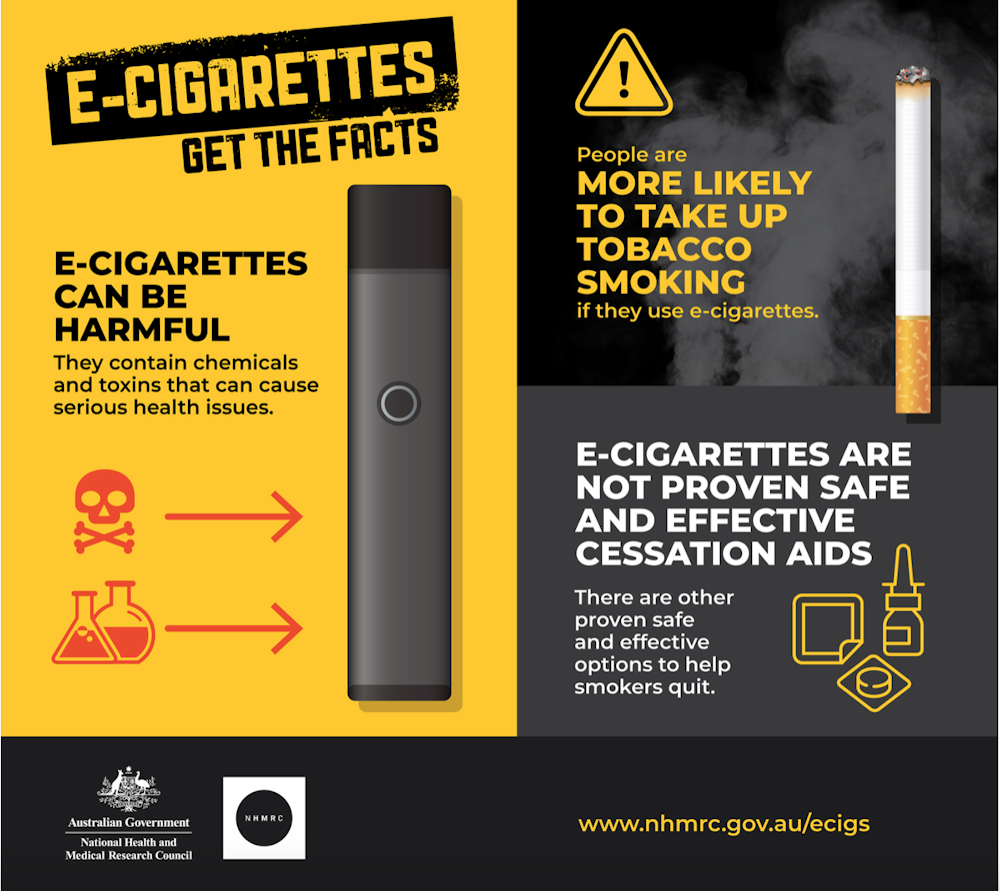
Last week, an updated statement from the National Health and Medical Research Council reflected increasing concerns from public health officials about the growing uptake of e-cigarettes, particularly by young people.

E-cigarettes: get the facts, public health campaign
Public health officials are concerned about the growing use of e-cigarettes.
NHMRC


Read more:
A damning review of e-cigarettes shows vaping leads to smoking, the opposite of what supporters claim


But aren’t these illegal?

Anyone using a nicotine e-cigarette without a valid doctor’s prescription has obtained the product unlawfully. Its importation was unlawful, as was its storage, sale and promotion.

Yet, as the Four Corners program showed, this is happening on an industrial scale. Merchants with a profit motive are promoting addictive products, with no regard for the health of young people.

Retailers and online entrepreneurs are clearly not complying with current laws. And these laws are not being enforced.

We need to target importation

E-cigarettes are not manufactured in Australia. If their destination is not a pharmacy or someone with a valid prescription, their importation is unlawful.

But it is clear, from the number of illegal e-cigarettes available in Australia, the federal government is not enforcing its own importation rules.

Attempts to amend regulations to further restrict imports were proposed in 2020. This would have enabled the Australian Border Force to intercept illegal e-cigarette imports.

However, the government assured the community that requiring all
non-tobacco nicotine products to only be available on prescription (schedule 4 of the Poisons Standard) would achieve the same result. It said this would protect young people from e-cigarettes.

It’s almost nine months since this came into effect in October 2021. Yet young people, in increasing numbers, are accessing e-cigarettes.

The scheduling standard and the rules underpinning it are clearly being ignored. The federal government must revisit proposals to allow interception of illegal e-cigarettes at the border or find another mechanism to block them.

We need to target their sale

Retailers and wholesalers are also breaking rules set out in official advice from the Therapeutic Goods Administration and corresponding information on state government websites.

New South Wales Chief Health Officer Kerry Chant has warned that nicotine e-cigarette traders, other than pharmacies, could face prosecution, heavy fines and even jail.

Yet tobacconists, convenience stores and vape shops are still breaking the rules.

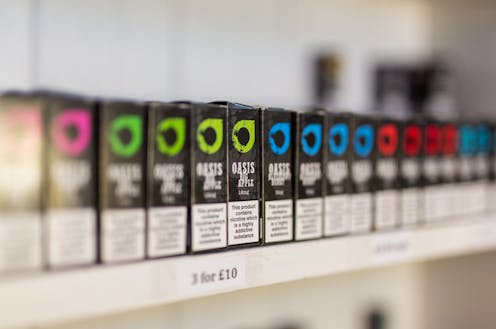
Rows of e-cigarettes for sale
E-cigarettes and vaping products can be sold in plain view.
hurricane hank/Shutterstock

State and territory governments must enforce their laws, especially those being broken in plain view. Authorities can impose substantial fines for offenders, which would not only deter unlawful trade, it would fund additional enforcement.

There are also laws for the bulk storage and transport of schedule 4 poisons, such as nicotine. Four Corners showed how readily a film crew could expose breaches of these laws.

If young people can find them, so can the authorities

Young people told Four Corners they can access products without a prescription from online entrepreneurs importing, storing and selling nicotine e-cigarettes.

Seizing illegal imports will eventually dry up their supply, but there will be stockpiles.

If school children can access these suppliers and their products with a quick search on their smartphones, authorities can also find them and put them out of business.


Read more:
Vaping is glamourised on social media, putting youth in harm’s way


What needs to happen next?

E-cigarette use in young Australians is a crisis, but is fixable. The federal government must stop illegal imports, the states and territories must end the unlawful retail, wholesale and interstate trade.

The harms of e-cigarettes are severe and far outweigh any modest benefits; there are laws to protect young people from them.

If the crisis worsens, more people will ask, how did this happen? The answer will be simple: governments made good laws, but they did not enforce them.


Read more:
It’s safest to avoid e-cigarettes altogether – unless vaping is helping you quit smoking


The Conversation

Paul Grogan is employed by the Daffodil Centre, a joint cancer research venture between Cancer Council NSW and the University of Sydney. He is an investigator on a current research project on e-cigarette use in young people jointly funded by the NSW Government and the Minderoo Foundation, with in-kind support from Cancer Council NSW.

ref. How can we reverse the vaping crisis among young Australians? Enforce the rules – https://theconversation.com/how-can-we-reverse-the-vaping-crisis-among-young-australians-enforce-the-rules-185867

Word from The Hill: Parliamentary ‘newbies’ inspect their workplace, with some complaints

Source: The Conversation (Au and NZ) – By Michelle Grattan, Professorial Fellow, University of Canberra

As well as her interviews with politicians and experts, Politics with Michelle Grattan includes “Word from The Hill”, where she discusses the news with members of The Conversation politics team.

Michelle and Peter Browne from the Politics + Society team discuss Anthony Albanese’s weighing a Ukraine visit and whether Australia will announce more support for that country and reopen its embassy there.

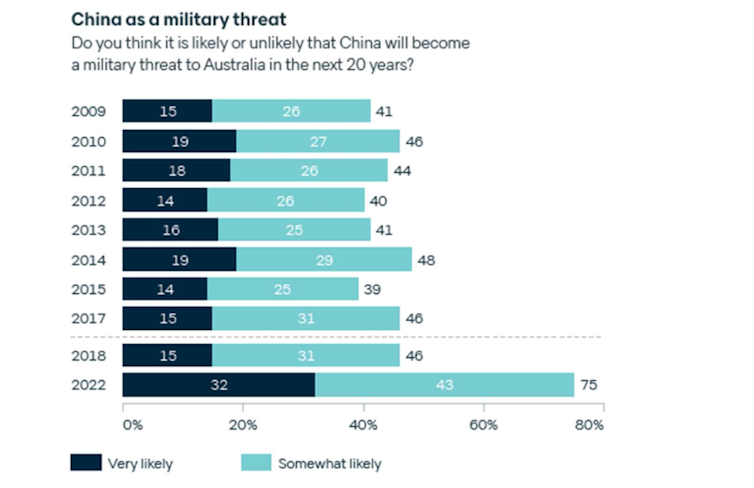
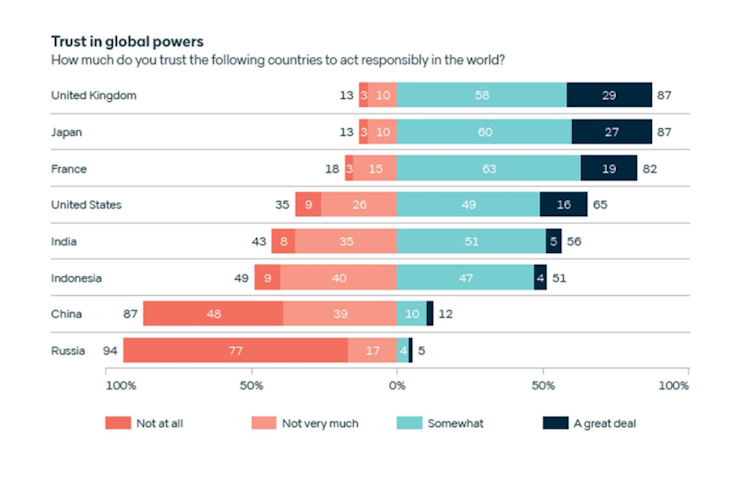
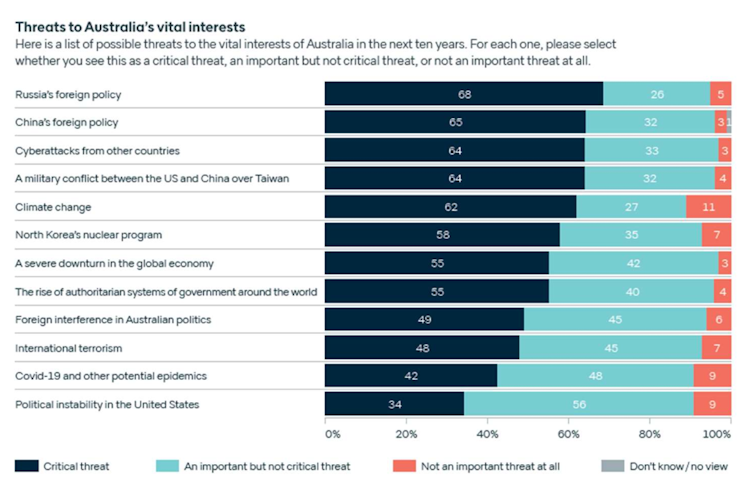
They also canvass the just-released Lowy Institute’s poll, which found a narrow majority of Australians support increased defence spending, and Defence Minister Richard Marles’ announcement extending the terms of the military’s top brass.

Meanwhile Parliament House has been like the first week of school, with new MPs being briefed on how the place works. Crossbenchers are in a row with the government over Albanese’s plan to cut back the additional staff they will get, above the entitlement of government and opposition backbenchers, from four in the last parliament to just one.

The Conversation

Michelle Grattan does not work for, consult, own shares in or receive funding from any company or organisation that would benefit from this article, and has disclosed no relevant affiliations beyond their academic appointment.

ref. Word from The Hill: Parliamentary ‘newbies’ inspect their workplace, with some complaints – https://theconversation.com/word-from-the-hill-parliamentary-newbies-inspect-their-workplace-with-some-complaints-186041

1970s-style stagflation now playing on central bankers’ minds

Source: The Conversation (Au and NZ) – By John Hawkins, Senior Lecturer, Canberra School of Politics, Economics and Society, University of Canberra

Shutterstock

“Stagflation” is an ugly word for an ugly situation – the unpleasant combination of economic stagnation and inflation.

The last time the world experienced it was the early 1970s, when oil-exporting countries in the Middle East cut supplies to the United States and other supporters of Israel. The “supply shock” of a four-fold increase in the cost of oil drove up many prices and dampened economic activity globally.

Stagflation was thought left behind. But now there is a real risk of it coming back, warns the central bank for the world’s central banks.

“We may be reaching a tipping point, beyond which an inflationary psychology
spreads and becomes entrenched,” says the Bank for International Settlements BIS in its latest annual economic report.

By “inflationary psychology” it means that expectations of higher prices lead consumers to spend now rather than later, on the assumption waiting will cost more. This increases demand, pushing up prices. Thus expectations of inflation become a self-fulfilling prophecy.

The danger of stagflation comes from this inflationary cycle becoming so entrenched that attempts to curb it through higher interest rates push economies into recession.


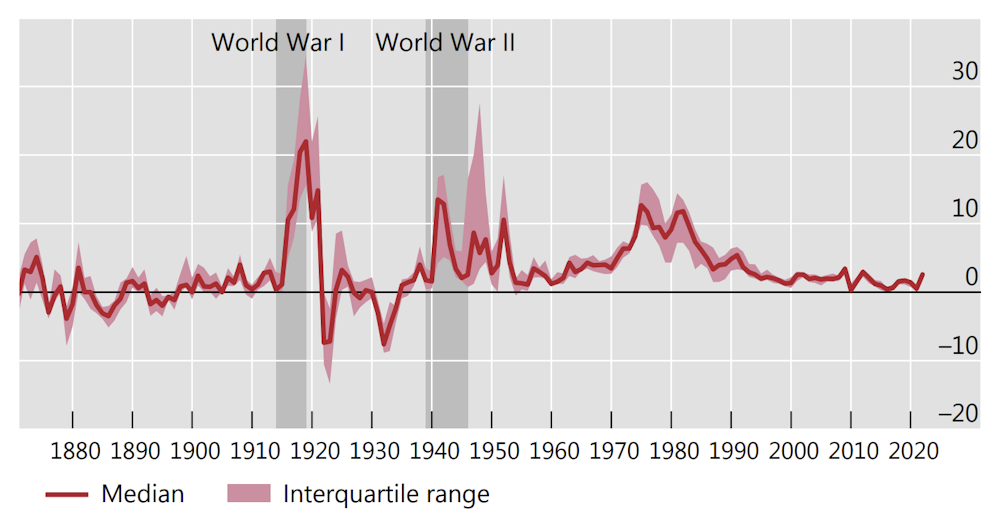
Global inflation since the 19th century

Graph of global inflation since the 19th century.

BIS, CC BY

What’s driving inflation

As well as its own expert staff, the BIS brings together expertise from its member central banks, such as the US Federal Reserve, the European Central Bank, the Bank of England and Reserve Bank of Australia. So its views are worth paying attention to.

Its report makes clear its experts, like most forecasters, have been surprised by the extent of the rise in inflation.

This is a global phenomenon, which the report attributes to a combination of an unexpectedly strong economic rebound from the COVID-19 lockdowns, a sustained switch in demand from services to goods, and supply bottlenecks exacerbated by a shift from “just-in-time” to “just-in-case” inventory management.

Then there is Russia’s invasion of Ukraine.

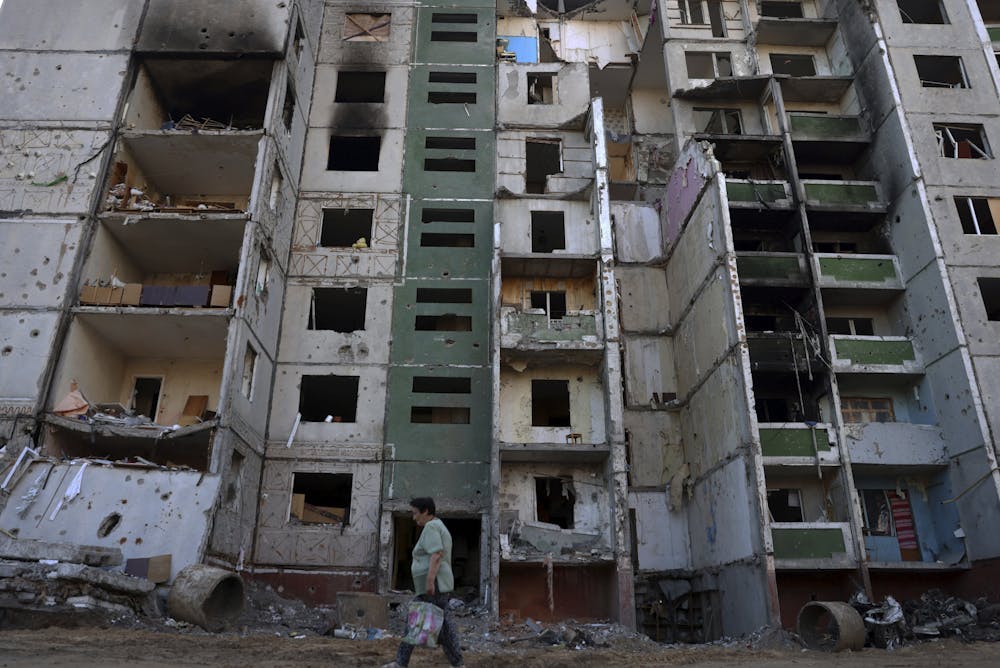
An apartment building damaged by Russian attacks on the northern Ukraine city of Chernihiv, June 27 2022.
Kunihiko Miura/Yomiuri Shimbun/AP

The war’s effect in driving up the price of oil, gas, food, fertilisers and other commodities has been “inherently stagflationary”:

Since commodities are a key production input, an increase in their cost constrains output. At the same time, soaring commodity prices have boosted inflation everywhere, exacerbating a shift that was already well in train before the onset of the war.

The only bright note is that BIS expects these price surges to be less disruptive than the oil supply shock of the 1970s.

This is because the relative impact of the oil supply shock was greater due to economies in the 1970s being more energy-intensive.

There is also much more focus now on containing inflation, with most central banks having a clearly stated inflation target (2% in Europe and the US, 2%-3% in Australia).

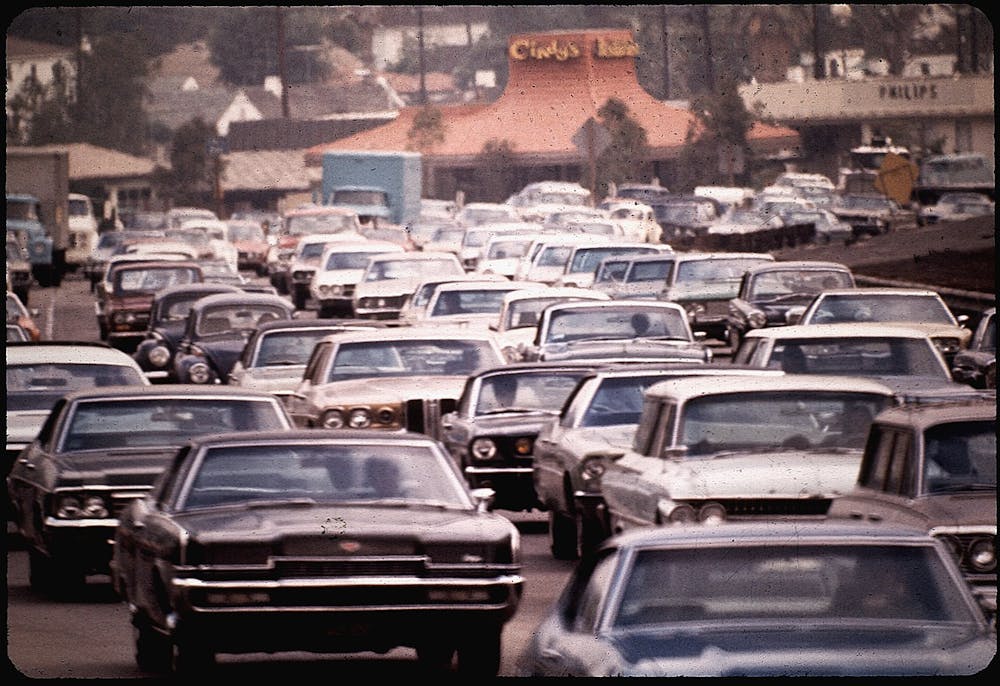
Traffic in Los Angeles, 1973. Economies were much more energy-intensive than now.
Gene Daniels/Wikimedia Commons, CC BY

What are the biggest dangers?

But the current situation is still very challenging, the report says, because increases in the price of food and energy are particularly conducive to spreading inflationary psychology.

This is because food is bought frequently, so price changes are notable. The same goes for fuel prices, which are prominently displayed on large roadside signs.

There is also the risk in many economies of a wage-price spiral – in which higher prices drive demands for higher wages, which employers then pass on in higher prices.


Read more:
Rising prices: why the global drive to keep food cheap is unsustainable


Central banks face what Reserve Bank of Australia governor Philip Lowe has called a “narrow path”.

To achieve a “soft landing” they need to raise interest rates enough to bring inflation down. But not enough to cause a recession (and thus stagflation).

How to avoid a ‘hard landing’?

The BIS report cites an analysis of monetary tightening cycles – defined as interest rate rises in at least three consecutive quarters – in 35 countries between 1985 and 2018. A soft landing was achieved in only about half the cases.

A key factor in the hard landings was the extent of financial vulnerabilities, particularly debt. Economies with hard landings on average had double the growth in credit to GDP prior to the interest-rate rises.

This factor contributes to BIS concerns now. As the report notes:

Unlike in the past, stagflation today would occur alongside heightened financial vulnerabilities, including stretched asset prices and high debt levels, which could magnify any growth slowdown.


Furthermore, the slowdown in China’s labour productivity is removing an important boost to global economic growth and restraint on global inflation.

But a key lesson from the 1970s is that the long-term costs of doing nothing outweigh the short-term pain of bringing inflation under control.


Read more:
5 things to know about the Fed’s biggest interest rate increase since 1994 and how it will affect you


This means governments must curb handouts or tax cuts to help people with cost-of-living pressures. Expansionary fiscal policy will only make things worse. Assistance must be strictly targeted to those who most need it.

There is also a need to rebuild monetary and fiscal buffers to cope with future shocks. This will require raising interest rates above inflation targets and returning government budgets (close) to surplus.

The Conversation

John Hawkins was formerly a senior economist at the Reserve Bank of Australia and the Bank for International Settlements.

ref. 1970s-style stagflation now playing on central bankers’ minds – https://theconversation.com/1970s-style-stagflation-now-playing-on-central-bankers-minds-185868

The iPhone turns 15: a look at the past (and future) of one of the 21st century’s most influential devices

Source: The Conversation (Au and NZ) – By Ismini Vasileiou, Associate Professor in Information Systems, De Montfort University

Shutterstock

Today marks 15 years since Apple released what’s arguably its flagship device: the iPhone. A decade and a half later, there are few products that have managed to reach a similar level of brand recognition.

Announced to an eager audience in 2007, the iPhone has revolutionised how we communicate and even how we live day to day.

Steve Jobs introduced the iPhone on January 9 2007.

The large-screen revolution

The iPhone was released in the United States in June 2007, and in a further six countries in November (but notably not in Australia).

From the launch of Mac computers in the 1970s to the iPod in 2001, Apple already knew how to engage with its audience – and how to encourage extraordinary levels of hype when launching a product.

Early reviews for the iPhone were almost universally glowing, applauding Apple’s attention to detail and style. The only problem flagged was network connectivity – and this was an issue with slow speeds on phone carrier networks, rather than the device itself.

Consumers’ appreciation of the iPhone’s style was no surprise. It was indicative of an emerging trend towards smartphones with large-format screens (but which still reflected the form of a phone). The Nokia N95 was another such example that hit the market the same year.

A Nokia N95 with its keypad closed.
The 2007 Nokia N95 had a slide-out keypad.
Asim18/Wikimedia (CC BY-SA 4.0)

The original iPhone offered wifi, supported 2G EDGE connectivity and had internet download speeds below 500Kbps (compared to multi Mbps speeds today).

It was also limited to 4GB or 8GB models. This might sound pitiful compared to the 1TB options available today, but it’s enough to hold hundreds of songs or videos and was revolutionary at the time.

The Apple assembly line

The iPhone 3G was rolled out across the globe in July 2008, with significantly improved data speeds and the addition of the Appple App Store. Even though it offered a mere 500 apps at launch, the app store marked a significant improvement in phone functionality.

And just as users started getting used to 3G, it was superseded by the 3GS about a year later.

This cycle of regularly pushing out new products was critical to Apple’s success. By releasing regular updates (either through whole product iterations, or more minor functionality improvements) Apple managed to secure an enthusiastic audience, eager for new releases each year.

A comparison of iPhone sizes from the iPhone 5S to the iPhone 12
iPhone sizes got noticeably larger from the iPhone 5S release to the iPhone 12.
Tboa/Wikimedia (CC BY-SA 4.0)

Also, since older products would often be passed down within families, Apple’s product pipeline helped it establish a multi-generational user base. This pipeline continues to operate today.

New approaches to old ways

The iPhone family has delivered size, speed and storage improvements over its 15-year history. Some of its “new” features weren’t necessarily new to the market, but Apple excelled at delivering them in highly integrated ways that “just worked” (as founder Steve Jobs would say).

“It just works” – Steve Jobs (1955-2011)

In 2013, the iPhone 5S introduced touch ID, which allowed users to unlock their phones with a fingerprint. While this had first been introduced with the Fujitsu F505i back in 2003, Apple delivered a robust implementation of the feature. Of course, it wasn’t long before enterprising individuals learnt how to bypass the mechanism.

The iPhone 8, released in 2017, brought with it the face ID feature. This still had weaknesses, but was at least immune to being unlocked with a photo.

Beyond security, the iPhone series has also produced year-on-year improvements in camera technology. While the original model sported a paltry two-megapixel camera, later models featured multiple lenses, with resolution boosted to 12 megapixels – rivalling many digital cameras on the market.

Wireless charging was introduced with the iPhone 8 (although preceded by Samsung as early as 2011). And the bezel-less design of the iPhone X, released in 2017, built on features found in the Sharp Aquos S2 from the same year.

Controversy

Nonetheless, the iPhone has not been without problems. The introduction of the iPhone 7 in 2016 saw the removal of the standard 3.5mm headphone socket – and many weren’t happy.

While an adaptor was initially provided for customers to connect their regular headphones, it was only free for about two years. After that it had to be purchased. In 2016 there were indications of a spike in wireless headphone sales. Perhaps somewhat conveniently, Apple launched its AirPods (wireless Bluetooth earbuds) at the same time.

A similar change came in 2020 with the release of the iPhone 12. Arguing consumers had a multitude of spare devices – and perhaps trying to ride on the green re-use agenda – Apple removed chargers from the unboxing experience.

Users still received a charge cable, but it was a USB-C to lightning cable, whereas previous iPhone chargers would have a USB-A socket (the standard USB port).

Apple phone cable
When Apple stopped offering chargers it provided a USB-C to lightning cable, despite older chargers having a USB-A socket.
Apple

The justification iPhone users would have a box full of old chargers overlooked the fact that none of them would be likely to support the newer and faster USB-C cable.

So you could use your old USB-A to lightning cable and charger to charge your shiny new phone, but you’d be limited to slower charging speeds.

Future

If the past 15 years are anything to go by, it’s likely the iPhone will continue with annual product releases (as we write this article many will be anticipating the iPhone 14 due later this year).

These models will probably bring improvements in speed, weight, battery life, camera resolution and storage capacity. However, it’s not likely we’ll be seeing many groundbreaking innovations in the next few years.

The latest iPhones are already highly sophisticated mini computers, which means there’s limited scope for fundamental enhancement.

Perhaps the most radical change will be the shift from Apple’s proprietary lightning connection to USB-C charging, thanks to a new European Union directive. And while a common power connector standard is widely considered a positive move, Apple wasn’t convinced:

We believe regulations that impose harmonisation of smartphone chargers would stifle innovation rather than encourage it.

As display technologies evolve, Apple may turn to the clam-shell phone design, with a fully foldable display screen.

Samsung has already brought this to the market. But Apple, in true fashion, will likely wait until the technology (particularly the glass) has evolved to deliver an experience in line with what iPhone users have come to expect.

While we can’t predict what the iPhone will look like in another 15 years (although some have tried), it’s likely the demand for Apple products will still be there, driven by Apple’s strong brand loyalty.


Read more:
New USB-C charger rule shows how EU regulators make decisions for the world


The Conversation

The authors do not work for, consult, own shares in or receive funding from any company or organisation that would benefit from this article, and have disclosed no relevant affiliations beyond their academic appointment.

ref. The iPhone turns 15: a look at the past (and future) of one of the 21st century’s most influential devices – https://theconversation.com/the-iphone-turns-15-a-look-at-the-past-and-future-of-one-of-the-21st-centurys-most-influential-devices-183137

Does Labor have ‘total control’ in Western Australia?

Source: The Conversation (Au and NZ) – By John Phillimore, Executive Director, John Curtin Institute of Public Policy, Curtin University

Just before the Western Australian state election in March 2021, the then leader of the Liberal Party did an unusual thing. He conceded defeat – but then asked voters to stop premier Mark McGowan’s Labor Party from achieving “total control” of the state.

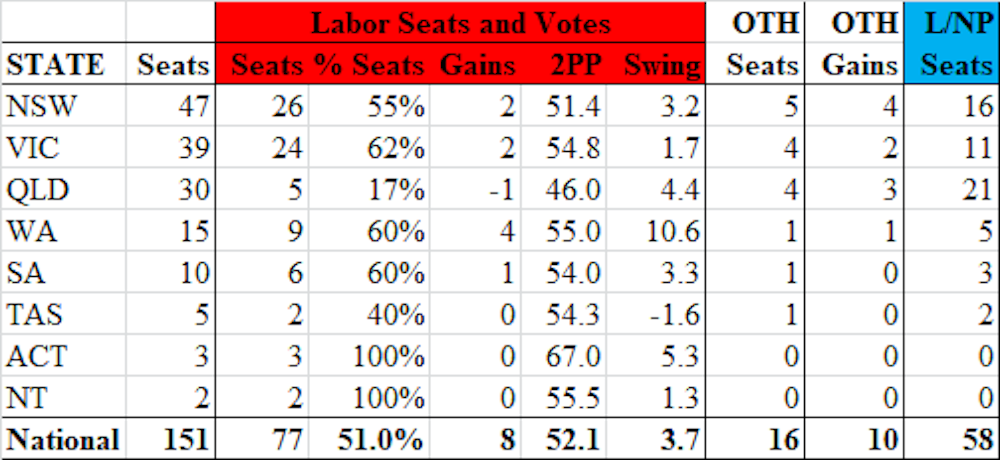
The appeal failed spectacularly. McGowan won 53 of the 59 seats in the legislative assembly and a majority for the first time ever in WA’s upper house, the legislative council.

The Liberals, shattered, were reduced to just two seats in the assembly. The Nationals, with a grand total of four seats, became the official opposition, and a Nationals MP, Mia Davies, was elected opposition leader. The question immediately arose: could parliament operate effectively in these extraordinary circumstances? Would sufficient democratic scrutiny be applied to the government?

Just over a year later, the federal election provided another crushing blow to the WA Liberals. The party lost not only four lower house seats and a senate seat to Labor, but also the seat of Curtin to independent Kate Chaney.


Read more:
Swing when you’re winning: how Labor won big in Western Australia


WA has 122 state and federal MPs. Currently, 89 of them – almost three-quarters – are Labor. Less than six years ago, the comparable figure was 41, or a third. By contrast, the Liberals have just 19 MPs or 16% of the total, compared to 64, or just over half, six years ago. Perhaps we need to take the fears of “total control” seriously?

Senator Linda Reynolds, the former Liberal defence minister, seems to think so. She recently argued that “without substantial change, we risk condemning Western Australia to a one-party state and the WA Liberals to an electoral abyss”.

So far, so good?

Everyone would agree democracy works best when a strong opposition can keep the government accountable. So what is happening in WA? Is democracy in danger?

So far, the answer would appear to be no. Take parliament. Parties with a majority of MPs can, in principle, run roughshod over their opponents in parliament. In practice, most don’t. While governments will occasionally force through legislation or resist pressure to reveal information, rules and conventions enable non-government parties to participate in debates and committees, and to scrutinise the executive about its actions and proposed legislation.

Governing parties know one day they will be in opposition, and parliament should at the very least let the opposition have its say, even if the government prevails.

Despite the vast disparity in numbers, this attitude seems to be holding up in WA. Question time is still operating, unchanged. The parliamentary schedule continues to allow non-government MPs to bring forward debates on matters of public importance, private members’ business and grievances.


Read more:
Governments usually win a second term. But could the new Labor government be an exception?


Estimates hearings continue to be held, as are meetings of parliamentary committees. As in the past, the opposition chairs one committee in the assembly, two in the council, and the joint audit committee. The deputy Liberal leader chaired a prominent select committee inquiry into sexual harassment in the resources sector.

Of course, with so few seats, the workload of non-government MPs is very large. The government has a majority on most committees – but this was true in previous parliaments. One potential area of concern is that the standing committee on education and health – the two areas of greatest expenditure – has only Labor members.

Clearly, the government is not going to lose any votes on the floor of the house. Overall, though, the structures and operations of parliament look much the same as before.

Under scrutiny

But given the huge imbalance of resources and power within the political system, it is important other players keep the government under scrutiny. WA retains a full complement of independent integrity agencies – ombudsman, auditor-general, information commissioner, corruption and crime commissioner.

The auditor-general’s office has been particularly active. It recently produced a transparency report on the progress of major government projects, arguing the government could and should update parliament more regularly on whether these projects are on time and on budget – and vowing to do this itself, if government refused.


Read more:
Below the Line: Has Australia’s political landscape changed forever? – podcast


Another crucial player is the media. WA’s press and broadcasting landscape is dominated by Seven West Media, which owns the state’s only daily newspaper and its most popular TV station. While Mark McGowan received generally positive coverage for his handling of the pandemic, his government has not escaped media criticism, on hospitals and health in particular. Other media outlets have also been active in scrutinising government.

WA Liberal leader David Honey
Right direction? WA Liberal leader David Honey.
Tony McDonough/AAP

A Coalition fightback?

With the federal election out of the way, what might we look forward to in WA politics? Three things are worth noting.

First, the WA Liberal Party holds its annual conference in July. This will be an important indicator of whether it has done the thinking it needs to turn its fortunes around.

Second, a state by-election is due soon after a Nationals MP, Vince Catania, resigned his marginal seat of North-West Central. If Labor were to win, the number of non-government MPs would fall from six to five – a much bigger deal than Labor increasing its representation from 53 to 54.

Intriguingly, if the Liberal Party managed to win North-West Central (which is not completely out of the question, as they have held the seat in the past), then they and the Nationals would each have three MPs and would need to work out who would be the official opposition.

Third, no election is due in WA, state or federal, for almost three years. (The state poll is in March 2025, followed by a likely federal poll two months later.) Can Liberal and National MPs maintain their diligence in parliament? Can their parties form a viable alternative government? And can Labor avoid the malaise that commonly strikes second-term governments in WA, where no party has won a third term since 1989?

It seems inconceivable that Mark McGowan and Labor could lose office in 2025. But can he govern well in the meantime? And can the non-government parties, the integrity watchdogs and the media keep him and his government on their toes? For democracy’s sake, let’s hope so.

The Conversation

John Phillimore worked as an adviser to state Labor governments in Western Australia in the 1980s and between 2001 and 2007. He was also a member of a Ministerial Expert Committee on Electoral Reform for the current Western Australian Government, which reported in June 2021.

ref. Does Labor have ‘total control’ in Western Australia? – https://theconversation.com/does-labor-have-total-control-in-western-australia-185873

This giant kangaroo once roamed New Guinea – descended from an Australian ancestor that migrated millions of years ago

Source: The Conversation (Au and NZ) – By Isaac Alan Robert Kerr, PhD Candidate for Palaeontology, Flinders University

Illustration by Peter Schouten, Author provided

Long ago, almost up until the end of the last ice age, a peculiar giant kangaroo roamed the mountainous rainforests of New Guinea.

Now, research published by myself and colleagues suggests this kangaroo was not closely related to modern Australian kangaroos. Rather, it represents a previously unknown type of primitive kangaroo unique to New Guinea.

The age of megafauna

Australia used to be home to all manner of giant animals called megafauna, until most of them went extinct about 40,000 years ago. These megafauna lived alongside animals we now consider characteristic of the Australian bush – kangaroos, koalas, crocodiles and the like – but many were larger species of these.

There were giant wombats called Phascolonus, 2.5-metre-tall short-faced kangaroos, and the 3-tonne Diprotodon optatum (the largest marsupial ever).
In fact, some Australian megafaunal species, such as the red kangaroo, emu and cassowary, survive through to the modern day.

The fossil megafauna of New Guinea are considerably less well-studied than those of Australia. But despite being shrouded in mystery, New Guinea’s fossil record has given us hints of fascinating and unusual animals whose evolutionary stories are entwined with Australia’s.

Palaeontologists have done sporadic expeditions and fossil digs in New Guinea, including digs by American and Australian researchers in the 1960s, ’70s and ’80s.

It was during an archaeological excavation in the early 1970s, led by Mary-Jane Mountain, that two jaws of an extinct giant kangaroo were unearthed. A young researcher (now professor) named Tim Flannery called the species Protemnodon nombe.

The fossils Flannery described are about 20,000–50,000 years old. They come from the Nombe Rockshelter, an archaeological and palaeontological site in the mountains of central Papua New Guinea. This site also delivered fossils of another kangaroo and giant four-legged marsupials called diprotodontids.


Read more:
Meet the giant wombat relative that scratched out a living in Australia 25 million years ago


An unexpected discovery

Flinders University Professor Gavin Prideaux and I recently re-examined the fossils of Protemnodon nombe and found something unexpected. This strange kangaroo was not a species of the genus Protemnodon, which used to live all over Australia, from the Kimberley to Tasmania. It was something a lot more primitive and unknown.

In particular, its unusual molars with curved enamel crests set it apart from all other known kangaroos. We moved the species into a brand new genus unique to New Guinea and (very creatively) renamed it Nombe nombe.

A 3D surface scan of a specimen of Nombe nombe, specifically a fossilised lower jaw from central Papua New Guinea. (Courtesy of Papua New Guinea Museum and Art Gallery, Port Moresby).

Our findings show Nombe may have evolved from an ancient form of kangaroo that migrated into New Guinea from Australia in the late Miocene epoch, some 5–8 million years ago.

In those days, the islands of New Guinea and Australia were connected by a land bridge due to lower sea levels – whereas today they’re separated by the Torres Strait.

This “bridge” allowed early Australian mammals, including megafauna, to migrate to New Guinea’s rainforests. When the Torres Strait flooded again, these animal populations became disconnected from their Australian relatives and evolved separately to suit their tropical and mountainous New Guinean home.

We now consider Nombe to be the descendant of one of these ancient lineages of kangaroos. The squat, muscular animal lived in a diverse mountainous rainforest with thick undergrowth and a closed canopy. It evolved to eat tough leaves from trees and shrubs, which gave it a thick jawbone and strong chewing muscles.

The species is currently only known from two fossil lower jaws. And much more remains to be discovered. Did Nombe hop like modern kangaroos? Why did it go extinct?

As is typical of palaeontology, one discovery inspires an entire host of new questions.

Strange but familiar animals

Little of the endemic animal life of New Guinea is known outside of the island, even though it is very strange and very interesting. Very few Australians have much of an idea of what’s there, just over the strait.

When I went to the Papua New Guinea Museum in Port Moresby early in my PhD, I was thrilled by the animals I encountered. There are several living species of large, long-nosed, worm-eating echidna – one of which weighs up to 15 kilograms.

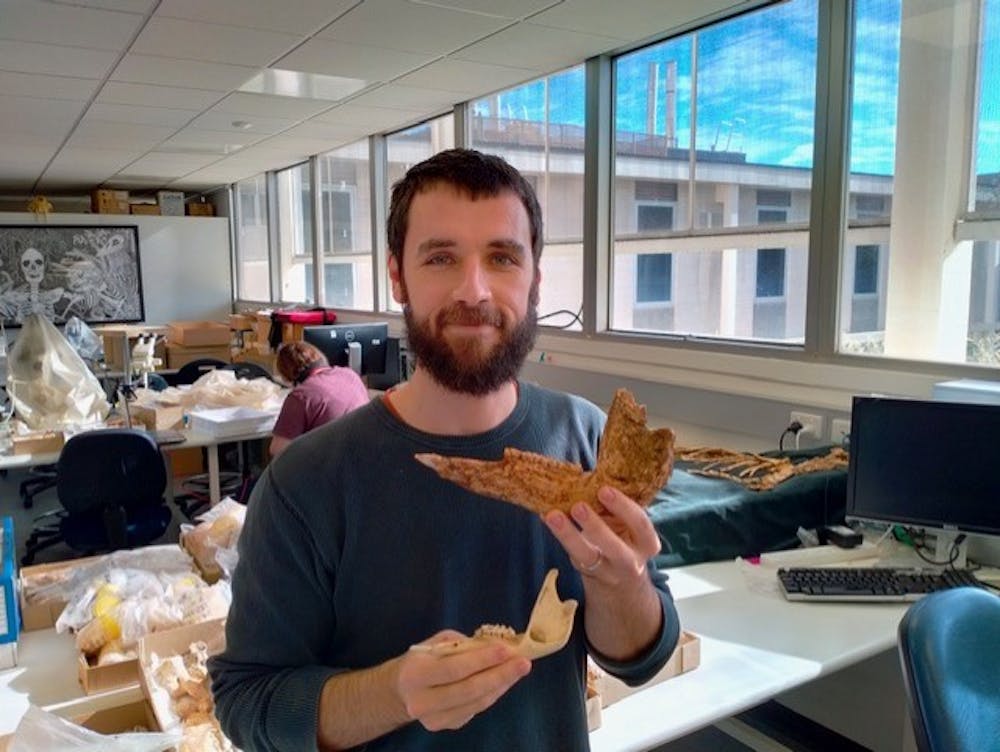
Author Isaac Kerr poses for a photo, holding an Australian giant kangaroo jaw in his left hand
I’m excited to start digging in New Guinea’s rainforests!
Author provided

There are also dwarf cassowaries and many different wallaby, tree kangaroo and possum species that don’t exist in Australia – plus many more in the fossil record.

We tend to think of these animals as being uniquely Australian, but they have other intriguing forms in New Guinea.

As an Australian biologist, it’s both odd and exhilarating to see these “Aussie” animals that have expanded into new and weird forms in another landscape.

Excitingly for me and my colleagues, Nombe nombe may breathe some new life into palaeontology in New Guinea. We’re part of a small group of researchers that was recently awarded a grant to undertake three digs at two different sites in eastern and central Papua New Guinea over the next three years.

Working with the curators of the Papua New Guinea Museum and other biologists, we hope to inspire young local biology students to study palaeontology and discover new fossil species. If we’re lucky, there may even be a complete skeleton of Nombe nombe waiting for us.

The Conversation

Isaac Alan Robert Kerr receives funding from the Royal Society of South Australia.

ref. This giant kangaroo once roamed New Guinea – descended from an Australian ancestor that migrated millions of years ago – https://theconversation.com/this-giant-kangaroo-once-roamed-new-guinea-descended-from-an-australian-ancestor-that-migrated-millions-of-years-ago-185778

Is 5 senior ministers quitting Victoria’s Andrew’s government a sign of renewal – or decline?

Source: The Conversation (Au and NZ) – By Paul Strangio, Professor of Politics, Monash University

Renewal or decline? These are the competing narratives that now surround Daniel Andrews’ Victorian Labor government, with five senior ministers exiting cabinet as a preliminary to leaving parliament at November’s state election.

The resignations of this quintet – deputy premier James Merlino, Lisa Neville, Martin Foley, Martin Pakula, and Richard Wynne – is the equivalent of the loss of one quarter of the cabinet.

Another seven ministers have either voluntarily resigned from cabinet or been pushed out during the course of this term of government. This is indisputably a high ministerial turnover.

Yet in another way, this rush to the door is unremarkable. The Andrews administration is already the second longest serving Labor government in Victorian history and at November’s poll will be asking the electorate to extend its tenure to 12 years.

If Andrews were to remain premier until the end of 2026 (which seems more unlikely given the events of the past week) only the post-Second World War Liberal behemoth Henry Bolte would have survived longer in office.

That kind of longevity brings wear and tear.


Read more:
A new Treaty Authority between First Peoples and the Victorian government is a vital step towards a treaty


A taxing profession

Though there is public cynicism about politicians, theirs is a taxing profession.

The five cabinet members who are departing politics in November have a combined total of nearly one hundred years of experience in parliament.

Ministerial responsibilities are particularly demanding and during the COVID-19 pandemic became even more onerous.

There is then an argument that turnover in the composition of cabinet is a good thing. It does bring opportunity for rejuvenation.

Rejuvenation depends, of course, on whether there are still existing reserves of talent on the backbench of Andrews’ ageing government to cover the departures.

Goodbye James Merlino, hello Jacinta Allan

Of all the changes to the composition of the Andrews government in the wake of last week’s ministerial resignations, the most significant was Jacinta Allan’s replacement of Merlino as deputy premier.

There are two types of deputy: the loyal lieutenant and the leader in waiting. Merlino was the former – he did not covet the premiership himself.

From all accounts, he also had the necessary skill set to provide an effective foil to Andrews. Andrews is a dominating force within his own government and is not shy of treading on toes.

By way of contrast, as demonstrated when he was acting premier for an extended period during 2021, Merlino was more consultative in style and had a calming influence.

Andrews and Merlino were from different factions and there was an expectation that faction chiefs would insist on the preservation of that arrangement.

However, in a dramatic assertion of his authority, Andrews pre-empted the factions and his parliamentary colleagues by publicly anointing Allan (who, like the premier, is a member of the Socialist Left faction) as Merlino’s replacement.

Presented with a fait accompli, the Labor Caucus dutifully assented to Allan’s elevation.

Andrews’ nomination of Allan as deputy premier is full of meaning. He will have done so in the knowledge (and expectation) she will be a different mould of deputy than was Merlino; she will be more than a loyal lieutenant.

Instead, Allan is now recognised as the heir apparent to Andrews. This was, in short, a succession plan; Andrews is trying to create the conditions for a Labor dynasty that outlasts him.

Speculation grows about Daniel Andrews’ own future

Indeed, one of the by-products of the spate of departures from the government and the installation of Allan as deputy premier is that speculation will inevitably grow about Andrews’ own future.

This is likely to be a talking point in November’s election campaign.

Having towered over the Victorian political landscape since his election as premier in November 2014, managing expectations about Andrews’ future exit will be a challenge but also an opportunity for the government.

Looking ahead to November’s election, of all the things that will threaten Labor’s continuing grip on office probably the most dangerous will be an “it’s time” factor.

That is electorate fatigue with a government that will be asking for more than a decade in office. Unquestionably, Andrews will be the focal point of that problem for Labor.

Front and centre in everything the government does, and his prominence especially heightened during the COVID-19 pandemic when he became a figure of national curiosity, there is a risk Andrews will have worn out his welcome with a public that may hanker for life after Dan.

Remaking an ageing government

Jacinta Allan’s heir apparent status and an understanding that Andrews is likely to depart some time during a third term may actually become a means for Labor to mitigate the “it’s time” effect.

The recognition that Allan is in line to become Victoria’s second woman premier (behind Joan Kirner) can also further burnish the government’s handsome record of promoting women to senior leadership roles.

The hardest thing for an ageing government is to remake itself.

On balance, last week’s developments in Spring Street represent the first step towards Victorian Labor performing that elusive feat.


Read more:
Victoria’s $5.4bn Big Housing Build: it is big, but the social housing challenge is even bigger


The Conversation

Paul Strangio does not work for, consult, own shares in or receive funding from any company or organisation that would benefit from this article, and has disclosed no relevant affiliations beyond their academic appointment.

ref. Is 5 senior ministers quitting Victoria’s Andrew’s government a sign of renewal – or decline? – https://theconversation.com/is-5-senior-ministers-quitting-victorias-andrews-government-a-sign-of-renewal-or-decline-185857

Census data shows we’re more culturally diverse than ever. Our institutions must reflect this

Source: The Conversation (Au and NZ) – By Sukhmani Khorana, Senior Research Fellow, Western Sydney University

Initial data from the 2021 census released this week shows Australia continues to become more culturally diverse.

Almost half of us have at least one parent born overseas (48.2%), and almost a quarter of us (24.8%) speak a language other than English at home.

Just over a quarter of us (27.6%) report being born overseas, and of those, India has risen to become the second-most common overseas country of birth after England.

The growing number of first-generation migrants means Australians’ ancestry will change significantly over the next decade. Australia will continue to change and look different, and we must ensure our institutions and policies reflect this.

That work, by governments and policymakers, should begin now so they can gain trust and maximise the belonging of these communities. Research shows feelings of belonging lead to better socioeconomic outcomes.

It’s likely there would have been substantially more immigration were it not for the COVID pandemic and subsequent restrictions and lockdowns. Some 84% of the one million new migrants arrived before the virus did.

Australia’s future

Three bits of data stuck out to me from this initial census data release:

  • India surpassed New Zealand and China in becoming the second-most common overseas country of birth

  • the number of people born in Nepal grew by 123.7% compared to 2016, the second largest increase in country of birth

  • the number of people who are either born overseas or have a parent born overseas is greater than half (51.5%).

These data show the changing face of Australia and our global links.

They also reveal suburban clusters in the major cities where ethnic groups have a critical mass, median incomes are higher than the state and national average, and tertiary education rates are on the rise (examples include Girraween and Castle Hill in NSW).

Such figures show social class is an important factor when looking at data on migrant populations. In areas with a higher percentage of working class migrants and resettled refugees, such as those mentioned towards the end of this article as more impacted by COVID, household incomes are lower and hence they require more consideration for future planning needs.

The top five sources of ancestry haven’t changed since the last census: English (33%), Australian (29.9%), Irish (9.5%), Scottish (8.6%) and Chinese (5.5%).

But given the big changes in country of birth data, Australians’ ancestry will look very different over the next decade.

This will have policy and planning implications across schooling, housing and local government services.

It will translate into the need for our diversity to be reflected in all aspects of society, including professions, media, decision-making roles and government.

Made with Flourish

These data also show Australia is as multicultural, if not more, than countries such as Canada, the United Kingdom and the United States.

Data from the 2016 census in Canada, which is known to be multicultural, shows 21.9% of people there are immigrants, with the largest share being from South Asia.

2018 data shows 14% of the UK population was from a minority ethnic background. In the city of London, this figure was 40% in 2018.

According to 2020 data, nearly four in ten Americans identify with an ethnic group other than white.

COVID disproportionately affected migrant communities

Australia would have received more migrants were it not for the COVID pandemic, which shut borders from early 2020.

We would have had more tourists, and more people arriving on work and student visas. Census data shows the pandemic led to an 80% decrease in the number of overseas visitors. This affected the economy, particularly in sectors such as tourism, hospitality and higher education.

We also received less relatives of overseas-born Australians, for example on family-sponsored visas. This can have impacts on childcare, care of elderly relatives and mental health.


Read more:
The 2021 Australian census in 8 charts


Some areas with a high percentage of migrants were heavily affected by COVID and pandemic restrictions.

Census data reveals, for example, 71.6% of people in the Western Sydney suburb of Merrylands have both parents born overseas. And in the nearby local government area of Liverpool, 65.5% of people have both parents born overseas.

Western Sydney was an area disproportionately affected by COVID infections and deaths over the last two years. It was also subject to strict COVID restrictions and a heavy police and even military presence.

In Flemington, Melbourne, the site of a public housing tower lockdown in 2020, 47.1% of people have both parents born overseas. Somalia and Ethiopia feature in the top five countries of birth.

In Dandenong, south-east of Melbourne, 75.4% of people have both parents born overseas. The area has also suffered disproportionately more COVID deaths.

We don’t yet know the full extent of COVID impacts on these areas though. Further census data is due to be released in October featuring employment and work commute data for these areas which will be important to look at for COVID impacts.

The Conversation

Sukhmani Khorana has received funding from the Australia Research Council, the Australia-India Council, and conducts contracted research for migrant and refugee-focused organisations in Western Sydney.

ref. Census data shows we’re more culturally diverse than ever. Our institutions must reflect this – https://theconversation.com/census-data-shows-were-more-culturally-diverse-than-ever-our-institutions-must-reflect-this-185575

By naming ‘Pennhurst’, Stranger Things uses disability trauma for entertainment. Dark tourism and asylum tours do too

Source: The Conversation (Au and NZ) – By Joanne Watson, Senior Lecturer in Disability and Inclusion, Deakin University

Netflix

The Netflix sci-fi horror series Stranger Things is vividly soaked in 1980s nostalgia, famously catapulting Kate Bush’s 1985 song Running up that Hill to the top of the music charts in 2022.

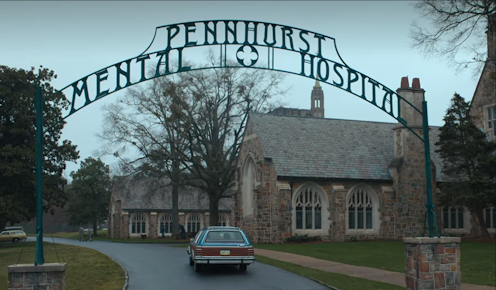
In season four, series creators the Duffer Brothers introduce viewers to Pennhurst Mental Hospital for the criminally insane (which was also mentioned in season one). Viewers follow teenage sleuths Robin and Nancy into Pennhurst, where they are granted permission to speak with Victor Creel, imprisoned because he is thought to have brutally murdered his family.

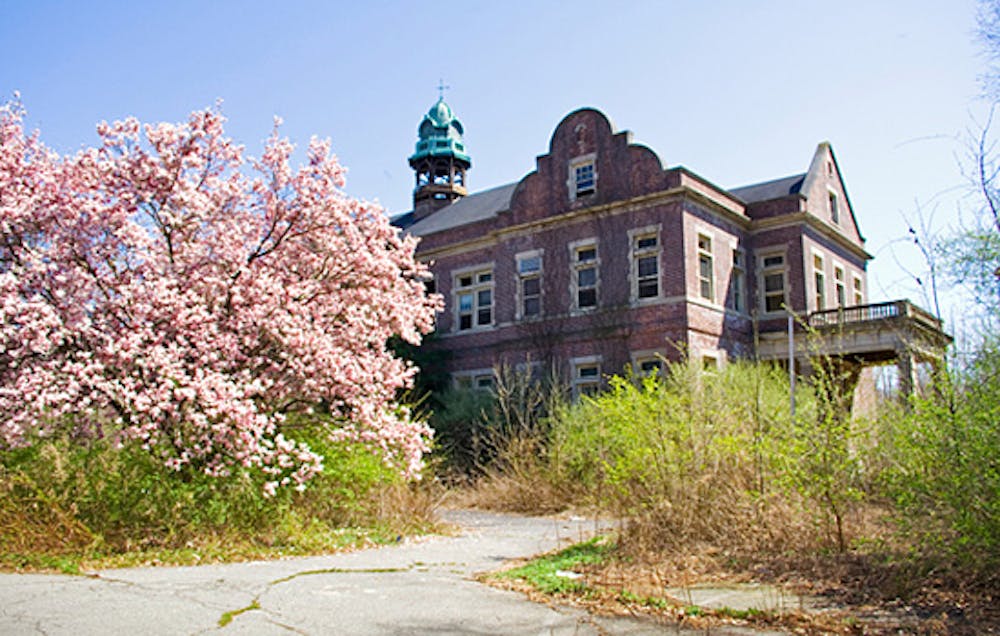
Although the Pennhurst Mental Hospital portrayed in Stranger things is fictitious, the location was inspired by the Eastern Pennsylvania State Institution for the Feeble-Minded and Epileptic. Later named the Pennhurst State School and Hospital and located in the woods of Chester County, Pennsylvania, it was founded in 1908 and shut down in 1987. More than 10,000 people with intellectual disability and mental illness lived at Pennhurst, many spending their entire lives within its walls.

The real Pennhurst has become a tourist attraction, like dozens of empty asylums around the world, including some in Australia. But as we seek out thrills, we shouldn’t forget these institutions held real people and their stories.


Read more:
People with disability are more likely to be victims of crime – here’s why


Pennhurst, then freedom

Pennhurst was a place of segregation, power, abuse, neglect and torture, fuelled by society’s perception that people with intellectual disability were a dangerous threat to social order.

At the dawn of the 19th century’s eugenics movement, people with intellectual disability existed on the lowest rung of the human hierarchy. Ultimately, they were removed from the human gene pool through institutionalisation and sterilisation.

In 1987, in response to the disability rights movement’s loud call for de-institutionalisation and after groundbreaking litigation brought by a resident and her family, the State of Pennsylvania closed Pennhurst’s doors. The courts agreed those in state care had a constitutional right to appropriate treatment and education. More than 1,000 Pennhurst residents began lives of worth and value in the community.

In 2010, the state of Pennsylvania sold the site. Today, Pennhurst exists as a “dark tourism” destination. Pennhurst Asylum entertains visitors with “jump scares” around a narrative of depraved criminality, that simultaneously erases and evokes the inhumane treatment of the people who called Pennhurst home.

Old building with flowers nearby
Pennhurst today.
Wikimedia Commons

Real people, real stories

To those who lived there and their supporters, Pennhurst is more than the horrors of its past and the commercialisation of its future.

For Dennis Downey and James Conroy, editors of Pennhurst and the Struggle for Disability Rights, Pennhurst represents “one of the great, if unrecognised, freedom struggles of the twentieth century”, fanning the flames of the global de-institutionalisation and independent living movements.

Following Pennhurst’s closure, most Western nations began closing institutions. This independent living movement was a precursor to the 2006 United Nations Convention on the Rights of Persons with Disability.

Article 19 of the convention obliges signatory nations to ensure “the equal right of all persons with disabilities to live in the community, with choices equal to others”. And Article 12 asks signatory nations to recognise that all citizens, regardless of disability, have “legal personhood” and therefore should enjoy autonomy and respect.

The convention charges signatory nations with an unequivocal obligation to firmly make the traumatic experiences of institutionalisation a thing of the past, while acknowledging and preserving the stories of trauma as narratives of dignity and respect.


Read more:
Over 1,000 Australians with cognitive disability are detained indefinitely each year. This shameful practice needs to stop


A global ghost tour

Pennhurst is one of many “haunted” tourist attractions worldwide inspired by traumatised lives of people with disability.

A hemisphere away, high on a hill, overlooking the rural town of Ararat in Western Victoria, Australia, stands Aradale Lunatic Asylum, location of the notorious J-Ward.

During its years of operation from 1867 to 1993, it was home to more than 10,000 people with disability. Like Pennhurst, the past two decades have seen a transformation of Aradale into a tourist attraction, exploiting the very real and horrific life experiences of the people who called it home.

Thrill-seekers can join the Aradale ghost tour and be haunted by such ghostly “tickling, strange smells, banging sounds, shadows, and other spooky sensations”.

old stone building
Ararat prison asylum.
Wikimedia Commons/Denis Frolow, CC BY-SA

Tours and “paranormal investigations” also operate at the former Mayday Hills Lunatic Asylum, in Beechworth, Victoria. Tours of Sydney’s Gladesville Mental Hospital, formerly Tarban Creek Lunatic Asylum, are currently on hold due to COVID.

Shuttered institutions that were once home to people with disabilities in the United States, Norway, Austria and South Korea are regularly grouped into terrifying online itineraries.

Postcard showing Beechworth asylum
The asylum at Beechworth, where tours run today.
Wikimedia Commons

Acknowledge and preserve their stories

Dark tourism operators sell thrilling customer experiences – but the stories of people with disability who lived behind the walls of institutions like Pennhurst and Aradale are much darker.

By relying on offensive and misguided portrayals of people with disability as horrifying, dangerous and criminal, operators exploit the ways residents were treated for commercialised entertainment.

Ironically, London’s Bethlem Hospital (from which the word “bedlam” originated) reportedly ran tours for curious visitors to gawk at residents until 1770. But today, the Bethlem Museum of the Mind houses archives and art “to support the history of mental healthcare and treatment”. An upcoming exhibition explores how “experiences of trauma, mental distress, contact with mental health services and everyday life can shape and disrupt a person’s sense of home”.

Netflix and filmmakers like the Duffer Brothers have an opportunity to acknowledge and preserve the stories of institutionalised communal trauma. A simple dedication to Pennhurst residents could even be added to a Stranger Things episode or opening credits. It could educate a generation of world citizens about the crimes of the past and the intrinsic personhood of all of humanity.


Read more:
Jimmy Savile: how the Netflix documentary fails to address the role institutions play in abuse


The Conversation

Joanne Watson does not work for, consult, own shares in or receive funding from any company or organisation that would benefit from this article, and has disclosed no relevant affiliations beyond their academic appointment.

ref. By naming ‘Pennhurst’, Stranger Things uses disability trauma for entertainment. Dark tourism and asylum tours do too – https://theconversation.com/by-naming-pennhurst-stranger-things-uses-disability-trauma-for-entertainment-dark-tourism-and-asylum-tours-do-too-185581

What is ‘heteropessimism’, and why do men and women suffer from it?

Source: The Conversation (Au and NZ) – By Jennifer Hamilton, Senior Lecturer, School of Humanities Arts and Social Sciences, University of New England

Shutterstock

A friend introduces their partner as “my current husband”. Another jokes about marriage as a life sentence. Everyone laughs, no one is surprised.

The sentiments at the heart of these asides are pervasive and familiar to many people in (or who have had) heterosexual relationships. There is now a term for this negativity: “heteropessimism”.

Heteropessimism is a new word for an intuitive, possibly very old, concept in white Western culture. Coined in 2019 by writer Asa Seresin, heteropessimism is an attitude of disappointment, embarrassment or despair at the state of heterosexual relations – specifically about being in one.

Seresin’s definition is useful because this pessimism is accompanied by the paradoxical practice of sticking with heterosexuality in its current forms, even as it is judged to be “irredeemable”.

Seresin now uses the term “heterofatalism” to emphasise how dire, hopeless, and lacking in visions for an alternative, this attitude is.

So what is heteropessimism?

Heteropessimism describes a negative attitude that pervades heterosexual culture, within many of the men and women who co-create it.

Heteropessimism does not necessarily imply violent or harmful relationships, overt sexism, abuse or even a hierarchy. In fact, many heteropessimistic relationships likely start with real desire for romantic, sexual and intimate connection.

Heteropessimism describes something more mundane. It’s a pervasive disappointment, ambivalence, if not doubt, about the quality of the lived heterosexual experience.

It is either unhappily ever after, or living with compromises that are fundamentally unsatisfactory. While life can be a little disappointing at times, the problem with heteropessimism is the negativity stifles thinking about how things could be different.

It is easy to find examples of heteropessimism in culture. Stories that highlight the power of female friendship or sisterly love (from Sex and the City to Frozen), often do so by comparing it to the disappointments of heterosexual romance.

Out of a sense of anger and frustration about the monotony and violence of it all, the queer internet has turned heteropessimistic culture into jokes. The Instagram account Hets Explain Yourselves is a growing archive of heteropessimism memes (on clothing, greeting cards, masks, mugs, bumper stickers) without a compelling vision for change.

Meanwhile, writer Andrea Long Chu claims heterosexuality is on the verge of collapse, held together with “sticky tape and crossed fingers”.

The persistent desire to keep it together is clearest in a show like Married at First Sight. In MAFS, there is no space for exploring or developing a new kind of heterosexual relation. There is only time for a man and a woman to say hello and be stuck together with matrimonial glue.

Married at First Sight is a reality TV show following Australian ‘couples’ as they meet for the first time at their wedding, then honeymoon, meet the in-laws and set up home, all the while getting to know one another more deeply, in what’s billed as a ‘social experiment’.
Nine

So, why are heterosexuals so pessimistic about heterosexuality?

Many couples feel resentful in relationships with unequal caring responsibilities. This imbalance was given a new clarity during COVID.

Rising living costs also compel compromises. One partners’ career is prioritised over the other’s, work hours increase and it takes multiple jobs to sustain a household. All this increases relationship pressure.


Read more:
Married at First Sight – a ‘social experiment’ all but guaranteeing relationship failure


Even if some couples negotiate happier and more equitable relationships, we can’t ignore the ubiquity of intimate partner violence and sexual assault. This is the darkest and far too often fatal expression of dissatisfaction with the heterosexual ideal.

Although heteropessimism might manifest as a personal or private feeling, Asa Seresin says “heterosexuality is nobody’s personal problem”.

On one hand, pessimism works like cynicism. It thwarts an examination of the other forces shaping intimate relations – misogyny and normative gender roles, economic stresses and the moral and emotional pressures of monogamy.

On the other, pessimism diverts attention from the lack of cultural encouragement to imagine alternatives beyond the nuclear family household.

For an interview as part of our research, author Sophie Lewis identifies this fatalism as especially acute amongst straight women in heterosexual relationships. Lewis observes many women seem to see “no alternative to their trajectory” within heterosexuality. This kind of dissatisfaction is “unaccompanied by political experimentation and response”.

Where do we go from here?

There are established alternative ways of living and loving in other cultures and LGBTQAI+ communities. These include expanded kinship arrangements with friends or family, platonic or romantic polyamorous relationships, or even just good relationship therapy.

But a feature of heteropessimistic culture is that proponents are radically disinterested in, even hostile to, such possibilities.

Although heteropessimism as a concept is useful in raising awareness of an enduring cultural problem, pessimism can’t help solve it. We need other visions for heterosexuality that are neither straightforward, nor particularly straight.

We hope for new forms of liberation that don’t rely on the binary opposition of heterosexual versus LGBTQAI+. We want them to recognise all kinds of desire and breathe optimism into relationships by emphasising equality, freedom, consent, creativity, kindness and respect.

The Conversation

Transmedia consultant, Daz Chandler, from the Parallel Effect https://www.paralleleffect.com/ worked on the podcast project and also assisted with the writing of this piece. The authors of this article received funding from the Freilich Project for the Study of Bigotry to seed their research. https://freilich.anu.edu.au/

Christina Kenny, Felicity Joseph, and Matt Allen do not work for, consult, own shares in or receive funding from any company or organisation that would benefit from this article, and have disclosed no relevant affiliations beyond their academic appointment.

ref. What is ‘heteropessimism’, and why do men and women suffer from it? – https://theconversation.com/what-is-heteropessimism-and-why-do-men-and-women-suffer-from-it-182288

A $400-a-week shortfall: people in their 40s face a bleak retirement on KiwiSaver’s current trajectory

Source: The Conversation (Au and NZ) – By Ayesha Scott, Senior Lecturer – Finance, Auckland University of Technology

Getty Images

Cost of living is – and should be – on everyone’s mind. But how we are managing increasing costs could impact us well into retirement.

As cost-of-living pressures continue to increase with record inflation and rising interest rates for mortgages, increasing numbers of New Zealanders are withdrawing money from their KiwiSaver accounts to survive.

According to last September’s Financial Market Authority’s KiwiSaver Annual Report, financial hardship withdrawals were up 42.8% from 2020.

For New Zealanders struggling to survive in 2022, saving for retirement is likely far from their minds.

It is also these New Zealanders for whom safeguarding retirement savings is arguably the most important, as they are less likely to enter retirement owning their home.

Worrying about retirement

The Financial Services Council’s Money & You report gave insight into how many of us are worried about our retirement savings – namely, being able to afford one at all.

Around 64% of Kiwis worry they won’t be able to afford retirement, while 70% think they’ll need to work past age 65.


Read more:
How New Zealanders miss out on hundreds of thousands in retirement savings


So while withdrawals, fees and fund switching due to stockmarket volatility are important savings topics, there is one (admittedly unpleasant) question we all need to ask ourselves. Is our KiwiSaver balance building up fast enough to provide for our retirement?

For the average New Zealander, the short answer is no. We are not on track. That’s before we take into consideration the possibility of future financial shocks, like high inflation.

Older person holding an empty purse
Just over two-thirds of New Zealanders worry that they will have to work well past retirement age.
Olga Shumytskaya/Getty Images

The gap between retirement and reality

The average KiwiSaver balance is $29,022, as of December 31 2021.

This figure is relatively uninformative by itself.

The Retirement Commission (formerly the Commission for Financial Capability) asked actuaries Melville Jessup Weaver (MJW) to dig into the numbers and provide some context, namely to break down the figures by age and gender.

Unsurprisingly, there is a large gender disparity in KiwiSaver funds – another important topic that has received considerable media coverage since it was revealed.

But there is a more general and pressing concern: the limited savings of people in their 40s.

Why this age group? Put simply, these individuals face high household expenditure with kids at home and, if they’re homeowners, increasing interest rates on their mortgage repayments. If they’re paying rent, that’s likely to be going up as well.

This age group also has less time to benefit from KiwiSaver’s compounding returns before retirement and, despite NZ Super being seemingly guaranteed, retirement is far enough away for a little uncertainty to be prudent.


Read more:
The coming storm for New Zealand’s future retirees: still renting and not enough savings to avoid poverty


This group was also already in the workforce for KiwiSaver’s inaugural year, with our current 41-year-old aged 27 in 2007.

Calculating a clearer picture

To gain a better understanding of what is facing this cohort, we need to do two things: first, estimate their KiwiSaver balance at age 65 (using Sorted’s KiwiSaver Calculator) and, second, calculate if this will be enough for retirement.

The average KiwiSaver balance for a 40-something is $36,833 ($32,987 for women, $43,068 for men). Assuming the average wage (to be conservative, let’s use figures from 2017) and investment in a balanced fund, a 43-year-old with a current average balance of $33,331 is projected to have $151,820 by 65. For a 48-year-old with current average balance of $40,335 in a balanced fund, Sorted projects $121,350 by 65.

But is this enough?

The New Zealand Retirement Expenditure Guidelines 2021 are the basis of Sorted’s retirement calculator. Our retirement options are “metro” versus “regional” living, and “no-frills” versus “choices” expenditure.

Let’s assume our average Kiwis are city-slickers (“metro”) and hope for a comfortable standard of living with a few luxuries thrown in (a “choices” lifestyle). Those in regional areas and/or planning to live (very) frugally are likely to spend less in retirement.

This calculation does not factor in other income (such as savings outside KiwiSaver, or working past 65) or having a partner, and we’re (optimistically) living until 90 years old.

Retired couple discuss finances with computer in front of them.
The gap between retirement funds and expenses will depend on your lifestyle, but even those living frugally face a weekly shortfall.
Marko Geber/Getty Images

After the weekly (singles) NZ Super payment of $463 combined with KiwiSaver funds, our 43-year-old is projected to be $392 per week short of the $1,029 they’ll need per week in retirement. Our 48-year-old is projected to be $427 per week short.

Those considering a more frugal lifestyle ($726/week) are still short after NZ Super and KiwiSaver: $89/week for our 43-year-old and $124/week for those currently aged 48.

Save now or work longer

Kiwis are right to think they are not on track to afford their retirement and that they may be working well past retirement age.

Depending on your personal circumstances, you may or may not be the average Kiwi. It doesn’t matter. We all need to cope with today’s cost-of-living pressures while making sure we’re saving enough for tomorrow. On average, what we are doing now isn’t enough.


Read more:
Fewer than 1% of New Zealand men take paid parental leave – would offering them more to stay at home help?


It didn’t have to be this way.

While we can’t go back in time and introduce KiwiSaver in the early ’90s like Australia, raising the baseline savings rate from 3% would help. This is not a new idea, with the Commission for Financial Capability recommending a graduated increase in 2016.

Unlike our employee-employer contribution mix where New Zealand employers match their employees’ 3%, Australians also enjoy an employer-paid scheme (currently a 10% rate, by 2025 it’ll be 12%). The current average balance for a 40-something Australian is about $125,000.

But what you can do now is take stock of your own financial situation. Regardless of age, you should do the above calculations yourself. Then, do something about it.

Individuals can contribute to KiwiSaver at a higher rate of 4%, 6%, 8% or 10% and choose the best fund type for their circumstances to ensure that money is working for them. Your future retired self will thank you.

The Conversation

Ayesha Scott receives research funding from the Auckland University of Technology (AUT) and AUT Business School. She collaborates with Good Shepherd NZ and BNZ on non-KiwiSaver research projects, around healthy financial relationships and economic harm. Ayesha has consulted for KiwiSaver providers in the past, as an independent expert reviewer.

ref. A $400-a-week shortfall: people in their 40s face a bleak retirement on KiwiSaver’s current trajectory – https://theconversation.com/a-400-a-week-shortfall-people-in-their-40s-face-a-bleak-retirement-on-kiwisavers-current-trajectory-185576

Australians favour more defence spending in Lowy poll, as Labor extends ADF chief Angus Campbell’s term

Source: The Conversation (Au and NZ) – By Michelle Grattan, Professorial Fellow, University of Canberra

Australians are becoming more fearful in an insecure world, and want to see the country armed up, favouring more defence spending and the planned acquisition of nuclear-powered submarines.

Three quarters of Australians say it is likely China will become a military threat to Australia in the next 20 years, according to the 2022 Lowy Institute’s Poll. This is an increase of 29 points since 2018.

Moreover, for the first time a majority (51%) would favour Australian military forces being used if China invaded Taiwan and the United States intervened. This was an eight-point rise since 2019 when the question was last asked.

Just over half (51%) say Australia should boost defence spending – a 20-point rise since 2019. Seven in ten favour the plan to acquire nuclear-powered submarines. More than six in ten support the American military being based in Australia.

Defence Minister Richard Marles, who is acting prime minister, on Tuesday announced the government is extending the terms of the Chief of the Defence Force, Angus Campbell, and the ADF’s vice chief, Vice Admiral David Johnston, by two years. The government has also asked the CDF to extend the term of the Chief of Joint Operations, Lieutenant General Greg Bilton.

Marles said the extensions were because it was “a time which is as strategically complex as any since the end of the Second World War in terms of our national security and the needs of our defence procurement”.

In his preface to the poll, Lowy executive director Michael Fullilove writes:
“Australians are increasingly concerned about the potential for great power competition to spill over into confrontation.

“In 2022, Australians report feeling unsafe, and as the potential for conflict in our region feels more possible, support for Australia’s alliance with the United States has returned to a record high.”

Nearly seven in ten (68%) believe Russia’s foreign policy poses a critical threat to Australia’s vital interest in the next decade – a 36-point increase since 2017. Russian foreign policy tops the list of threats to Australia’s vital interests, narrowly ahead of China’s foreign policy (65% – up 29 points since 2017).

In general, anxiety about Russia, China and a war over Taiwan have overtaken Australians’ concerns about COVID-19 and climate change.

The poll was conducted March 15-28 with a sample of 2006. It is the 18th in the Lowy Institute’s annual series and is authored by Natasha Kassam.

In the election campaign the Coalition tried to make national security and fears about China an issue to its advantage but this backfired when it came under attack for having been unable to head off the China-Solomons security pact.

The poll found 88% of people were concerned about China potentially opening a military base in a Pacific Island country.

While there has been a 11-point (to 58%) fall in confidence in US President Joe Biden since 2021, this is still 28 points above the confidence expressed in President Donald Trump in 2020 (30%).

On climate change, there is overwhelming support for federal government subsidies for renewable technology (90%), committing to a more ambitious emissions target for 2030 ((77%), and Australian hosting a United Nations climate conference (75%). Nearly two thirds (65%) support reducing coal exports, and banning new coal mines (63%).

COVID has receded but not disappeared as a threat in the minds of Australians. Only just over four in ten (42%) see COVID as a critical threat to Australia’s interests, 17 points down on 2021 and 34 points down on 2020.

More than six in ten people (62%) are optimistic about Australia’s economic performance in the world over the next five years, but this is a 17-point fall from 2021.

With Anthony Albanese’s visiting Paris later this week, in the poll 49% blame both Australia and France for the tensions in the relationship over the cancellation of the submarine contract; 35% say Australia is more to blame, while 12% blame France more.

Making his announcement about the defence chief, Marles said the Albanese government “is putting a premium on continuity. This applies to strategic advice and the timely and effective delivery of key procurements including through the AUKUS framework. Australia cannot afford any further delay in the next generation of submarines.”

Marles announced new chiefs of the navy, army and air force.

Navy: Rear Admiral Mark Hammond.

Army: Major General Simon Stuart.

Air Force: Air Vice-Marshal Robert Chipman.

The Conversation

Michelle Grattan does not work for, consult, own shares in or receive funding from any company or organisation that would benefit from this article, and has disclosed no relevant affiliations beyond their academic appointment.

ref. Australians favour more defence spending in Lowy poll, as Labor extends ADF chief Angus Campbell’s term – https://theconversation.com/australians-favour-more-defence-spending-in-lowy-poll-as-labor-extends-adf-chief-angus-campbells-term-185878

NZ health sector may see influx of US doctors after abortion ruling

By Leah Tebbutt, RNZ News reporter

An Aotearoa New Zealand health workforce recruiting agency is fielding calls from senior US doctors who say they can no longer live in their own country.

Accent Health Recruitment has been flooded with inquiries from US doctors wanting to come to New Zealand following the US Supreme Court’s decision overturning abortion rights last Friday.

The ruling has made access to abortions all but impossible in at least 18 states.

Accent Health Recruitment managing director Prudence Thomson said she normally got about 30 inquiries a day but that had doubled since the ruling.

“The emotion and frustration attached to their email, you could just feel it. They’re saying, ‘we can no longer live in this country, we need to come, will you have us in New Zealand?’

“It was quite an emotional tug, as far as of people really wanting to leave and throwing their hands in the air.”

Thomson said most inquiries were from GPs and obstetricians.

‘A spike in inquiries’
“There has been quite a spike in inquiries from them — they’re really passionate about looking after their patients and now they no longer are able to provide the healthcare they want,” she said.

“So they want to come to New Zealand to practise, which is good for New Zealand.”

Thomson said while it was sad these health workers felt forced morally to leave, it would help this country’s health worker “crisis”.

However, she said it would take at least six months before the American health professionals could work in New Zealand.

“Every medical professional needs to get their qualifications verified to come to New Zealand and that takes from three to six months.

“While we want to speed it up we don’t want to cut corners because in a crisis that’s when the weaknesses will be exposed and that’s when the people who want to commit identity fraud could get through.”

However, she said it should still give the chronically understaffed health sector some hope that help was coming.

Messaging about jobs
US nurse McKenzie Mills recently moved to New Zealand and said former colleagues had been messaging her about jobs ever since the US Supreme Court ruled against abortion.

She said she was heartbroken and angry after the ruling.

However, she said she was even more sure now that her decision to move to New Zealand in January was the right one.

“I take care of people and it just really broke my heart that there is so much health care that will be denied to millions of women.”

Mills said she felt like she had “escaped” her own country as a result of the ruling.

This article is republished under a community partnership agreement with RNZ.

Print Friendly, PDF & Email

Article by AsiaPacificReport.nz

Fiji’s new investment law leads to ‘confusion and risk’, say lawyers

By Luke Nacei in Suva

Foreign investors could be sent to jail in Fiji for breaking a new investment law, says the prominent Suva law firm Munro Leys.

The company said the “vague and unsatisfactory” new Investment Act could create greater uncertainty for foreign investors.

In a legal alert to its clients, Munro Leys lawyers also said aspects of the new law could do “more harm than help” and “poor legal drafting leaves us more confused and slightly alarmed”.

It said serious investors relied on the laws of their target country to give them certainty and transparency.

“The Investment Act, unfortunately, does the opposite. In place of transparency, there is significant potential for confusion and frustration,” the legal firm said.

Munro Leys criticises some of the wording of the new law as “vague and almost impossible to legally pin down”.

“If we don’t know who a ‘foreign investor’ is and when they are investing, it is impossible to know which rules apply,” the legal alert said.

New regulations criticised
The firm’s alert also criticised new regulations which required foreign investors to bring into Fiji their total investment amount within three months of “incorporation” and said an investor could be prosecuted for failing to do so.

“The penalty for the offence, for an individual, is a fine not exceeding $10,000 or imprisonment for a term not exceeding five years or both. Bodies corporate can be fined up to $50,000.

“To make matters worse, it’s not clear to whom this three-month rule applies. From a plain reading of the regulations, it applies only to those foreign investors investing in restrictive activities,” the legal advice said.

“However, the authorities appear to have expressed the view that it applies to all foreign investors.

“It is difficult to see the government prosecuting a foreign investor which does not bring in its money on time. But criminalising delay may create other issues for investors going to the legality of their investment and double down on the uncertainty that has already been created.”

Criticising Section 7 of the Act, Munro Leys said that an investor was required to send an investment proposal to the government for consent to invest in certain “critical sectors” but it was not clear what those sectors were.

“No one knows what the proposal should say, what criteria the minister will apply in his/her decision and how long the minister will take to approve it.

Other problems
“It seems that the government intends for regulations to be made to decide what sectors need ministerial approval. [But] with about a month to go before the new law comes into effect, there are no regulations.

“The problems are not confined to new investors.

“Existing investors, including those who complied with the old Foreign Investment Act, are not immune.

“They may now need to apply for permission to make new investments. Some companies who were not previous “foreign investors” may find they are now in that category (and vice versa).”

The Act will come into effect from August.

Questions sent to Attorney-General Aiyaz Sayed-Khaiyum, Fiji Commerce and Employers Federation (FCEF) and Fiji Chamber of Commerce and Industry remained unanswered.

Luke Nacei is a Fiji Times reporter. Republished with permission.

Print Friendly, PDF & Email

Article by AsiaPacificReport.nz

The 2021 Australian census in 8 charts

Source: The Conversation (Au and NZ) – By Wes Mountain, Multimedia Editor

Shutterstock

More than 25 million people Australians sat down on (or around) Tuesday August 20 last year to complete their census.

Despite our borders still largely being closed, that was an 8.6% increase in the number of people completing the census in 2021 compared to the last time we broke the internet to do it (in 2016).

And the population has been steadily increasing, largely thanks to migration, over the past 25 years.

Made with Flourish

So what did the average respondent look like?

They were most likely to be 38 (37 if male, 39 if female), with a slightly larger chance of it being a woman (50.7%).


Read more:
Australians are more millennial, multilingual and less religious: what the census reveals


Millennials and Boomers battle it out

This census saw a generational shift in who was filling out the census.

While there has been little change in the total size of the Boomer population, the proportion of the population has dropped since 2016 – making way for their traditional generational rivals.

Millennials are now on equal footing, which could tells us something about recent (and future) elections, as well as potential culture wars.

Made with Flourish

We’re an increasingly diverse country

More than half of Australians (51.5%) reported either being born overseas or having a parent who was.

This is the first time since the question was added to the census this has been the case, and it will be interesting to see if this number continues to increase given the impact border closures have had over the past two years.

While England remains the number one source of new Australians, India, New Zealand and China were not far behind – and growing – as the most common countries of birth.

Made with Flourish

The First Nations population also continues to grow

Since 2016 there’s been a 25% increase in the number of Australians who identify as Aboriginal and/or Torres Strait Islander, with 812,728 people (or 3.2% of the population) indicating it on their census form.

Made with Flourish

The 2021 data also revealed a shift in First Nations demographics, with a growing population of Indigenous people now aged over 65 – a more than 150% increase (from 31,000 to 47,000 people) on 2016.


Read more:
Aboriginal and Torres Strait Islander population has increased, but the census lacks detail in other facets of Indigenous lives


Imagine ‘no religion’

The number of Australians who identified as having no religion increased again this census (38.9%), rocketing up from 30.1% in 2016.

While Christians as a whole remained the number one religious group – with 43.9% of the population identify with some form of Christianity – “no religion” was the number one individual religious affiliation, with Catholic a distant second.

Made with Flourish


Read more:
‘No religion’ is Australia’s second-largest religious group – and it’s having a profound effect on our laws


A population-wide look at our long-term health

For the first time, the Australian Bureau of Statistics asked Australians about long-term health conditions, which gives us a population-level view of the self-reported health of the nation.

While just under 15.3 million (60.1%) Australians reported no conditions, 2.2 million reported having some kind of long-term mental health condition (including depression or anxiety), with arthritis and asthma not far behind.

An ageing population, as well as reports of the impact of COVID and lockdowns on mental health across multiple populations, suggest it’s unlikely the number of people with a long-term health condition is going to decrease over time.

The data also show that women are more likely than men to have multiple long-term conditions.

Made with Flourish

Women are still doing (much) more housework than men

Finally, the census showed – again – that women are doing the lion’s share of unpaid domestic work.

Women were much more likely than men to be doing more than 30 hours of unpaid domestic work in the week prior to census night, and men were more likely to have done none at all.

Made with Flourish

Our first – and hopefully last – COVID census shows that we still have a lot of progress to make in the way labour is shared in the home.

The Conversation

ref. The 2021 Australian census in 8 charts – https://theconversation.com/the-2021-australian-census-in-8-charts-185950

Post Roe, women in America are right to be concerned about digital surveillance – and it’s not just period-tracking apps

Source: The Conversation (Au and NZ) – By Uri Gal, Professor in Business Information Systems, University of Sydney

Shutterstock

The reversal of Roe v. Wade by the American Supreme court last week is a watershed moment in American politics. The ruling withdraws constitutional protections for abortion rights and sends the issue to the states, around half of which are expected to ban abortions.

Unlike the last time abortion was illegal in the United States, almost half a century ago, we now live in an era of pervasive digital surveillance enabled by the internet and mobile phones. Digital data may well be used to identify, track, and incriminate women who seek abortion.

Over the past 20 years or so, large tech companies, mobile app operators, data brokers, and online ad companies have built a comprehensive system to collect, analyse, and share huge amounts of data. Companies can follow our every movement, profile our behaviour, and snoop on our emotions.

Until now, this system has mostly been used to sell us things. But following last week’s ruling, many are concerned that personal data could be used to surveil pregnancies, shared with law enforcement agencies, or sold to vigilantes.

Data everywhere

There are various sources of data that could be used to identify, track, and prosecute women who are suspected of seeking an abortion.

Google routinely shares private user information with law enforcement agencies, even without a warrant. This includes search terms, which could be used as evidence by law enforcement agencies investigating or prosecuting abortion-related cases.


Read more:
The ugly truth: tech companies are tracking and misusing our data, and there’s little we can do


Online surveillance can also include location data. American police already use location data from mobile devices to collect evidence against suspected criminals.

What’s more, many mobile apps track your location and share it with data brokers. The brokers then sell the data on to a myriad of unknown third parties, including law enforcement agencies. This happens even when people have opted out of location data collection.

The same technology could be used to track women’s movements, and report when they went near an abortion facility or travelled to a different state where abortions are legal.

Social media

Social media activity, and data collected by social media platforms, can also be used to infer whether someone may be pregnant or is interested in getting an abortion.

A recent investigation showed hundreds of “crisis pregnancy centres” – quasi-healthcare clinics that aim to dissuade women from having abortions – around the US shared website visitor information with Facebook. In some cases, this revealed people’s names and addresses, as well as whether a woman was considering an abortion.

The investigation also showed anti-abortion organisations were able to get access to some of this information. If abortion is made a crime, this information could be used against women in legal proceedings.

Period trackers

Data from fertility and health apps could also be used to identify and track women who are suspected of seeking abortion. These apps record highly private information including menstruation cycles, sexual activity, and hormonal treatments.

However, many of these apps share unencrypted sensitive information with data brokers and ad companies without users’ knowledge or consent.

With the end of institutional protections for abortions, many worry that data from such applications could be used as evidence against women in legal proceedings.

A unique moment for democracies

Following last week’s ruling, there have been calls for women to delete fertility and period tracking apps, switch off location tracking on their phones, or even use “burner phones”.

However, such piecemeal individual efforts are likely to be ineffective or impractical. The digital surveillance apparatus is too vast for us to effectively evade it.

Billions of webpages contain trackers that collect detailed data. More than 6.5 billion phones globally can be easily repurposed as sophisticated surveillance tools. It is becoming increasingly difficult to avoid the gaze of cameras whose images can be stored in biometric databases and algorithmically identified and analyzed.


Read more:
Facial recognition is on the rise – but the law is lagging a long way behind


What is worse, these data are collected, stored, and traded in ways we don’t understand very well, with only minimal rules and regulations.

Privacy advocates and researchers have been warning us for years of the destructive potential of the digital surveillance apparatus.

Critics have often noted how this system could bolster and embolden totalitarian regimes, such as in China. Surveillance in Western countries, like the US, has been seen as less of a problem because it was focused on commerce.

The overturning of Roe v. Wade is an era-defining moment because of its significance for women’s reproductive rights. It may also define the era in another way: we may see the existing digital surveillance system routinely used to criminalise individual citizens.

Not too late for better privacy rules

Much of the existing legislation is out of step with current technologies and in need of reform, not only in the US but also in Australia.


Read more:
83% of Australians want tougher privacy laws. Now’s your chance to tell the government what you want


What would new rules look like? To rein in digital surveillance, they would

  • strictly limit the collection, storage, sharing, and recombination of digital data
  • tightly regulate the use of facial recognition technologies
  • require digital platforms, websites, and mobile apps to provide users with easy and genuine non-tracking options, and
  • require companies to offer true end-to-end encryption to protect user data.

We are on the cusp of an era where digital surveillance is used at scale against ordinary citizens. Huge changes are required, not only to protect women’s reproductive choice but also to protect everybody’s privacy and freedom from undue surveillance.

The Conversation

Uri Gal does not work for, consult, own shares in or receive funding from any company or organisation that would benefit from this article, and has disclosed no relevant affiliations beyond their academic appointment.

ref. Post Roe, women in America are right to be concerned about digital surveillance – and it’s not just period-tracking apps – https://theconversation.com/post-roe-women-in-america-are-right-to-be-concerned-about-digital-surveillance-and-its-not-just-period-tracking-apps-185865

Aboriginal and Torres Strait Islander population has increased, but the census lacks detail in other facets of Indigenous lives

Source: The Conversation (Au and NZ) – By Bronwyn Carlson, Professor, Indigenous Studies and Director of The Centre for Global Indigenous Futures, Macquarie University

Limitations in census reporting includes how Aboriginal and Torres Strait Islander caregivers are reported on and considered. GettyImages

The census counted 812,728 Aboriginal and Torres Strait Islander people on census night, making up 3.2% of the total people counted. That’s up from 649,171 in the 2016 census, an increase of over 25%.

Many have estimated the population prior to the arrival of the British was between 750,000 and 1 million. So the exciting news is in only 234 years we are nearing pre-colonial numbers.

Whenever there is an increase in the numbers of Aboriginal and Torres Strait Islanders, there is always speculation as to why.

Of course the politics of identity is always at play. There will be the usual commentary that targets the way people look in those old arguments that refer to skin colour as the measure of who counts as Aboriginal and the idea that lighter skin signifies less Indigenous or no Indigenous identity at all.

These worn out tropes never take into consideration that colonial policies and practices such as those that led to the Stolen Generations directly targeted people with mixed heritage. These targeted people suffered unimaginable violence in the nation’s mission to breed the colour out of us.

But unfortunately, given the lack of information in the census about Aboriginal and Torres Strait Islander peoples’ lives, we can’t be sure if overall health among Indigenous people is improving and why lifespans seem to be improving. And the census has failed to investigate other ways Indigenous people may choose to identify, and how we live as families.


Read more:
LGBTIQ+ people are being ignored in the census again. Not only is this discriminatory, it’s bad public policy


Limitations in the census findings

The 2021 census, like previous years, leaves me wanting more information and a more complex read of our lives. As my colleague Wiradjuri Indigenous Studies professor Sandy O’Sullivan has pointed out repeatedly, the census survey is often a reductive examination of our lives and lacks a more detailed exploration of who we are.

There is generally no focus on race, gender and sexuality as it pertains to Aboriginal and Torres Strait Islander peoples. Nor are there any questions in the survey around what constitutes a family or a household or parenting from our perspectives.

In terms of families, the census shows there are many changes to the 6 million families counted. The census speaks of parents as being either female or male. What of same sex, queer and trans parents? Such a focus can have significant impact on families seeking services.

The census also records a reduction of people over the age of 55 years looking after “other people’s children”. However Aboriginal and Torres Strait Islander non-parental caregivers such as grandparents would likely see children they care for as being “theirs”, as this is the way Indigenous family systems work. There are thought to be a significant number of Indigenous kids living in informal kinship care. Therefore these numbers will not be accurate for Indigenous people.

The census provides details such as there are now more than 47,000 Aboriginal and Torres Strait Islander people who identify as being over the age of 65 years old. This up from 31,000 in 2016. That is great news, but without knowing any more about those who are living longer, we don’t know the circumstances that have led to this improvement.

The census tells us how many Aboriginal and Torres Strait Islander people own a house or are paying rent, but it does not speak to the rising number of Indigenous people who are homeless or unable to afford rising rent prices.

Dr David Gruen, an Australian statistician has said,

The Census collects vitally important information about Aboriginal and Torres Strait Islander communities that will help governments and local organisations plan for health, education and community services into the future

But do the questions asked in the census survey reflect our population and what is important to many of us? And if not then what does that mean for service provision for our communities?

If the census is the means by which Australia understands its population then it is fair to say it falls short on several fronts, especially with regard to Aboriginal and Torres Strait Islander peoples.

It’s time we demanded a more nuanced picture of ourselves. If the results of the census are to inform planning for health, education and community services as Dr Gruen suggests, then we need to do a better job of collecting data that reflects our population and the reality of the lives we lead.

The Conversation

Bronwyn Carlson does not work for, consult, own shares in or receive funding from any company or organisation that would benefit from this article, and has disclosed no relevant affiliations beyond their academic appointment.

ref. Aboriginal and Torres Strait Islander population has increased, but the census lacks detail in other facets of Indigenous lives – https://theconversation.com/aboriginal-and-torres-strait-islander-population-has-increased-but-the-census-lacks-detail-in-other-facets-of-indigenous-lives-185692

Meet 5 remarkably old animals, from a Greenland shark to a featherless, seafaring cockatoo

Source: The Conversation (Au and NZ) – By Benjamin Mayne, Molecular biologist and bioinformatician, CSIRO

Some animals can live to a startlingly old age, from the famous 392-year-old “Greenland shark” to a 190-year-old tortoise in the Seychelles. Two science studies published last week brings us closer to understanding why some animal species can live for so long – far longer than humans.

The first, published in Science, debunked a few theories on why amphibians and reptiles (such as tortoises) live long lives. It found most reptiles and amphibians have highly variable rates of ageing and that, perhaps counter-intuitively, being coldblooded is not indicative of a long lifespan.

The only exception is turtles, which may fit the hypothesis of having a “protective phenotype”, where physical or chemical traits such as shells or venom enable a species to live longer.

The second study, which I was involved in, discovered the age of the world’s oldest aquarium fish: Granddad the lungfish.

Granddad was sent from Australia to Chicago in 1933 and lived in an aquarium until 2017. Our study measured changes in Granddad’s DNA to calculate his age at death. He was 109 years old.

Finding out how long an animal lives for isn’t easy, especially if they can outlive humans. It is well established that ageing is under genetic control, as the DNA sequence of certain genes can predict potential lifespan.

However, environmental pressures – such as getting eaten by a predator or succumbing to disease – can cut life off short, and may explain age differences between closely related species, such as between reptiles in the first study.

Here, I introduce you to five remarkably old animals and the fascinating lives they’ve led.

Granddad the Lungfish

Age: 109 years

Species: Australian lungfish (Neoceratodus forsteri)

Granddad the lungfish, who lived to 109 years old.
©Shedd Aquarium

The world’s oldest lived aquarium fish is Granddad, the Australian lungfish. In our recent study, we used a DNA-based method to determine that Granddad was 109 years old when he died.

He lived a remarkable life. In 1933, Granddad made the 20-day voyage from Australia to the Chicago World’s Fair in the United States, where more than 100 million people visited him in the John G. Shedd Aquarium.

As its name suggests, Australian lungfish have the unique ability to breathe air from a single lung during dry spells, when streams become stagnant or water quality becomes poor.

The species, now endangered, has a deeply ancient lineage. Indeed, the Australian Lungfish is the closest living relative to all land-based “tetrapods” – four-limbed animals including frogs, humans, and even dinosaurs.


Read more:
Breakthrough allows scientists to determine the age of endangered native fish using DNA


To find out Granddad’s age, we used a test that looks at “epigenetic” changes in the DNA, which occur from environmental changes and accumulate over a lifetime.

In fact, our study also identified the sub-population in Queensland Granddad came from. We learned Granddad originally came from the Burnett River, one of three rivers in Queensland home to Australian lungfish.

Cocky Bennett the Cockatoo

Age: 119 years

Species: sulphur-crested cockatoo (Cacatua galerita)

A rare photo of Cocky Bennett, aged 117.
Aussie~mobs/Flickr

Another long-lived Australian animal was a sulphur-crested cockatoo named Cocky Bennett, who lived to 119.

Cocky lived at the Sea Breeze Hotel in Blakehurst, New South Wales, and even had a tribute written in the newspaper in 1916 when he died.

According to the tribute, Cocky would often say “one at time gentlemen, please” when other birds harassed him, and “one feather more and I’ll fly”. But due to a disease, Cocky was almost featherless for the last two decades of his exceptionally long life, and had a long, curved and twisted beak.

Prior to ruling the Sea Breeze Hotel, Cocky Bennett is thought to have accompanied a ship captain on his seafaring journeys for 78 years, and reportedly circled the globe seven times.


Read more:
Don’t disturb the cockatoos on your lawn, they’re probably doing all your weeding for free


The Animal Ageing and Longevity Database report a much shorter lifespan for sulphur-crested cockatoos in the wild at 57 years. But in captivity, they can live as long as humans.

This is where researchers need to be careful, as lifespans are often longer for animals in captivity than would naturally occur in the wild.

Jonathan the Tortoise

Age: 190 years

Species: Seychelles giant tortoise (Aldabrachelys gigantea hololissa)

Jonathan the Seychelles giant tortoise, at 190, currently holds the record for the oldest living land animal.

It’s estimated he hatched in 1832 in the Seychelles Islands. When he was around 50 years old, Jonathan was transported to St Helena, a remote island in the South Atlantic Ocean, and gifted to the St Helena governor. Jonathan has not only outlived the governor, but has seen 31 different governors hold office.

Photograph of St Helena resident tortoise Jonathan (left) around 1900.
Wikimedia, CC BY-SA

As the new study on reptiles and amphibians hypothesised, tortoises may be long-lived due to their extra protection from their shells. A lack of predators may also play an important role. For example, Galapagos giant tortoises can live to over 100 and are free from any natural predators.

The Greenland Shark

Age: 392 years

Species: Greenland shark (Somniosus microcephalus)

The species, the Greenland shark, is thought to be the longest-lived animal with a backbone. We know only little about Greenland sharks. But a 2016 study used radiocarbon dating and found one to be 392 years old.

The authors also estimated that Greenland sharks don’t reach sexual maturity until 156 years old.


Read more:
Caught on camera: Ancient Greenland sharks


Living deep in the cold waters of the Arctic and North Atlantic oceans, these iconic sharks are also one of the slowest growing, at a rate of around 1 centimetre per year. Yet, these ocean giants can reach over 5 metres in length.

We know only little about Greenland sharks, including how long they can live for. It’s thought freezing polar waters may play a role in their longevity as it may slow down their metabolism.

Ming the Clam

Age: 507 years

Species: ocean quahog (Arctica islandica)

The left valve of Ming the clam.
Wikimedia, CC BY-SA

The ocean quahog is the world’s longest-lived species, with many reaching over 400 years. As a clam (or marine bivalve mollusk), it’s the only invertebrate on our list. Just like the Greenland shark, this species also lives in the cold waters of the North Atlantic Ocean.

One ocean quahog called “Ming” lived for 507 years. He was named after the Chinese dynasty in power when he was born in 1499, and was discovered off the coast of Iceland. His age was confirmed by counting growth bands on its shell, in the same way you’d count the rings of a tree.

Little is known to why ocean quahogs live for so long but, similar to the Greenland shark, it’s thought the colder waters may have a role in its long lifespan.


Read more:
Meet 5 of Australia’s tiniest mammals, who tread a tightrope between life and death every night


The Conversation

The CSIRO paper this article features was published in Frontiers in Environmental Science with authors from CSIRO, Queensland State Government, and Seqwater.

ref. Meet 5 remarkably old animals, from a Greenland shark to a featherless, seafaring cockatoo – https://theconversation.com/meet-5-remarkably-old-animals-from-a-greenland-shark-to-a-featherless-seafaring-cockatoo-185605

It’s not just period trackers you need to worry about. Digital surveillance and data privacy leaks are everywhere

Source: The Conversation (Au and NZ) – By Uri Gal, Professor in Business Information Systems, University of Sydney

Shutterstock

The reversal of Roe v. Wade by the American Supreme court last week is a watershed moment in American politics. The ruling withdraws constitutional protections for abortion rights and sends the issue to the states, around half of which are expected to ban abortions.

Unlike the last time abortion was illegal in the United States, almost half a century ago, we now live in an era of pervasive digital surveillance enabled by the internet and mobile phones. Digital data may well be used to identify, track, and incriminate women who seek abortion.

Over the past 20 years or so, large tech companies, mobile app operators, data brokers, and online ad companies have built a comprehensive system to collect, analyse, and share huge amounts of data. Companies can follow our every movement, profile our behaviour, and snoop on our emotions.

Until now, this system has mostly been used to sell us things. But following last week’s ruling, many are concerned that personal data could be used to surveil pregnancies, shared with law enforcement agencies, or sold to vigilantes.

Data everywhere

There are various sources of data that could be used to identify, track, and prosecute women who are suspected of seeking an abortion.

Google routinely shares private user information with law enforcement agencies, even without a warrant. This includes search terms, which could be used as evidence by law enforcement agencies investigating or prosecuting abortion-related cases.


Read more:
The ugly truth: tech companies are tracking and misusing our data, and there’s little we can do


Online surveillance can also include location data. American police already use location data from mobile devices to collect evidence against suspected criminals.

What’s more, many mobile apps track your location and share it with data brokers. The brokers then sell the data on to a myriad of unknown third parties, including law enforcement agencies. This happens even when people have opted out of location data collection.

The same technology could be used to track women’s movements, and report when they went near an abortion facility or travelled to a different state where abortions are legal.

Social media

Social media activity, and data collected by social media platforms, can also be used to infer whether someone may be pregnant or is interested in getting an abortion.

A recent investigation showed hundreds of “crisis pregnancy centres” – quasi-healthcare clinics that aim to dissuade women from having abortions – around the US shared website visitor information with Facebook. In some cases, this revealed people’s names and addresses, as well as whether a woman was considering an abortion.

The investigation also showed anti-abortion organisations were able to get access to some of this information. If abortion is made a crime, this information could be used against women in legal proceedings.

Period trackers

Data from fertility and health apps could also be used to identify and track women who are suspected of seeking abortion. These apps record highly private information including menstruation cycles, sexual activity, and hormonal treatments.

However, many of these apps share unencrypted sensitive information with data brokers and ad companies without users’ knowledge or consent.

With the end of institutional protections for abortions, many worry that data from such applications could be used as evidence against women in legal proceedings.

A unique moment for democracies

Following last week’s ruling, there have been calls for women to delete fertility and period tracking apps, switch off location tracking on their phones, or even use “burner phones”.

However, such piecemeal individual efforts are likely to be ineffective or impractical. The digital surveillance apparatus is too vast for us to effectively evade it.

Billions of webpages contain trackers that collect detailed data. More than 6.5 billion phones globally can be easily repurposed as sophisticated surveillance tools. It is becoming increasingly difficult to avoid the gaze of cameras whose images can be stored in biometric databases and algorithmically identified and analyzed.


Read more:
Facial recognition is on the rise – but the law is lagging a long way behind


What is worse, these data are collected, stored, and traded in ways we don’t understand very well, with only minimal rules and regulations.

Privacy advocates and researchers have been warning us for years of the destructive potential of the digital surveillance apparatus.

Critics have often noted how this system could bolster and embolden totalitarian regimes, such as in China. Surveillance in Western countries, like the US, has been seen as less of a problem because it was focused on commerce.

The overturning of Roe v. Wade is an era-defining moment because of its significance for women’s reproductive rights. It may also define the era in another way: we may see the existing digital surveillance system routinely used to criminalise individual citizens.

Not too late for better privacy rules

Much of the existing legislation is out of step with current technologies and in need of reform, not only in the US but also in Australia.


Read more:
83% of Australians want tougher privacy laws. Now’s your chance to tell the government what you want


What would new rules look like? To rein in digital surveillance, they would

  • strictly limit the collection, storage, sharing, and recombination of digital data
  • tightly regulate the use of facial recognition technologies
  • require digital platforms, websites, and mobile apps to provide users with easy and genuine non-tracking options, and
  • require companies to offer true end-to-end encryption to protect user data.

We are on the cusp of an era where digital surveillance is used at scale against ordinary citizens. Huge changes are required, not only to protect women’s reproductive choice but also to protect everybody’s privacy and freedom from undue surveillance.

The Conversation

Uri Gal does not work for, consult, own shares in or receive funding from any company or organisation that would benefit from this article, and has disclosed no relevant affiliations beyond their academic appointment.

ref. It’s not just period trackers you need to worry about. Digital surveillance and data privacy leaks are everywhere – https://theconversation.com/its-not-just-period-trackers-you-need-to-worry-about-digital-surveillance-and-data-privacy-leaks-are-everywhere-185865

Shifting from chaplains to secular student welfare officers can be divisive. Here’s how schools can manage the risks

Source: The Conversation (Au and NZ) – By Allan Dale, Professor in Tropical Regional Development, The Cairns Institute, James Cook University

Shutterstock

The new federal Labor government is ending the compulsory religious aspect of the A$60 million-a-year National School Chaplaincy Program. The change comes as newly released census data show only 44% of Australians now identify as Christian. The new rules will give Australian schools a fresh choice between a chaplain or a secular student welfare officer, but this change creates a potential for conflict within school communities.

Chaplains of various denominations are now embedded in thousands of schools across Australia. Considering past angst within school communities about the program, guidance is needed for parents and school administrators who wish to shift to secular welfare support for students.


Read more:
To give schools real choice about secular school chaplains, latest change needs to go further


My interest in this issue arises from my personal experience of the chaplaincy program as a parent. But it is informed by my wider research on governance systems and how institutions’ decision-making affects communities. I’m currently researching inclusive approaches to community development. This includes how local schools make decisions to achieve positive outcomes for students and diverse local communities.

In this article, I hope to offer a low-conflict pathway for school communities seeking to change from a religious chaplain to a secular officer.

In schools where there is strong support for incumbent chaplains, particular care needs to be taken. Religious communities, students, parents and school professionals all need to feel comfortable that respectful processes are followed and that resources for student welfare deliver maximum benefit.


Read more:
After years of COVID, fires and floods, kids’ well-being now depends on better support


How the program could lead to tensions

As a parent in a rural state high school during the past decade, my family experience of the chaplaincy program was vexed. The program facilitated extracurricular activities at the school with religious themes. Religious activities beyond the school gate were also promoted.

While operating within the program guidelines, I believed these activities weakened the separation of church and state. Some of them lacked any form of secular and multi-faith context setting. There were visits by a creationist artist, a Christian magic show and contested programs like “Shine” for girls and “Strength” for boys.

Straight Talk Australia” presenters handed out postcard pledges encouraging students to commit to sexual abstinence until entering “a covenant marriage relationship”. I encouraged the school to consider prefacing the talk by outlining state education department policy on sex education and stressing that the activity represented just one organisation’s view on relationship-building and sex education.

Encouraging students to attend non-school-supervised activities beyond the school gate and school hours was equally of concern to me. This could draw students into places where proselytising could occur.


Read more:
School chaplains may be cheaper than psychologists. But we don’t have enough evidence of their impact


Lessons on changing from religious to secular welfare support

In 2011, the Gillard Labor government institutionalised the same change (but a short-lived one) as the Albanese government has just announced. My school’s Parents and Citizens Association successfully made the shift from a Scripture Union-hosted chaplain to a secular welfare worker. This was achieved with a minimum of conflict despite strong support for the chaplain among many parents and some local Christian groups.

For me, at least three lessons emerged from this process.

1. Not seeking removal of the incumbent chaplain

It is important to not personalise problems associated with the chaplaincy program to individual school-based chaplains. Chaplains have been appointed through legitimate processes under program rules. Many Australians support chaplains as having performed an important role.

Once the rules changed in 2011, our school did not actively seek an immediate transition from the chaplaincy position. Discussion and decision-making were delayed until the position became vacant.

2. Finding a suitable secular host for the welfare worker

Finding a suitable secular organisation to host the welfare worker was perhaps the most difficult challenge the school faced, as there were few organisations well positioned to cover the costs associated with the program. At that time, the funds available for the position were meagre (A$20,000 a year). This meant any hosting organisation would likely, to some degree, need to subsidise overheads.

Religious institutions are often motivated to host the chaplains. That’s why they’re willing to help cover the costs. After a complex national search, our school eventually found a not-for-profit organisation with a secular focus on improving child welfare (and a commitment to trial a hosting arrangement).

3. Framing the school-based decision well

Of utmost importance is the need to positively frame the transition decision within the relevant school-based body. When the chaplaincy position became vacant, my school’s Parents and Citizens Association explored a range of options such as not re-appointing anyone, re-appointing a chaplain, or transition.

I argued we should seek the best-qualified person (religious or not) to service the needs of all school students. Doing so, in my view, made the transition option less contentious.


Read more:
School chaplaincy debate ignores what ‘secular’ actually is


Transition need not be divisive

My interest here is in encouraging good local community and school governance and preserving the integrity of our secular school system.

I hope that sharing this experience can guide all schools in considering this complex decision while meeting the wider needs of the entire school community.

The Conversation

Allan Dale has received no funding in relation to this article. While the views represented are based on his personal experience, they are informed by his extensive research and practical background in governance systems analysis and place-based approaches to community development. At the time of the events discussed, Allan was an ordinary member, and his partner an office bearer, of the P&C referred to. His separate research efforts receive Australian and State Government funding.

ref. Shifting from chaplains to secular student welfare officers can be divisive. Here’s how schools can manage the risks – https://theconversation.com/shifting-from-chaplains-to-secular-student-welfare-officers-can-be-divisive-heres-how-schools-can-manage-the-risks-185500

Final 2022 election results: Coalition routed in cities and in Western Australia – can they recover in 2025?

Source: The Conversation (Au and NZ) – By Adrian Beaumont, Election Analyst (Psephologist), The Conversation

At the May 21 federal election, Labor won 77 of the 151 House of Representatives seats (up eight since 2019 when adjusted for redistributions), the Coalition won 58 seats (down 18), the Greens four (up three) and all Others 12 (up seven). This was a Labor majority of three.

The 2019 election result was Coalition 77 seats and Labor 68, but the ABC adjusted for Labor gaining a seat from the Coalition from redistributions. Craig Kelly’s defection from the Coalition to the UAP was not factored in, so Hughes was not a gain for the Coalition.

Primary votes were 35.7% Coalition (down 5.7%), 32.6% Labor (down 0.8%), 12.2% Greens (up 1.8%), 5.0% One Nation (up 1.9%), 4.1% UAP (up 0.7%), 5.3% independents (up 1.9%) and 5.1% others (up 0.2%).

Despite losing the primary vote by 3.1%, Labor won the national two party count by a 52.1-47.9 margin, a 3.7% swing to Labor. This is obtained by recounting all seats that did not finish as Labor vs Coalition contests between those parties to ascertain the preference between Labor and Coalition of all of Australia’s voters.

With the combined major party primary votes down to just over 68%, and 16 seats won by crossbenchers, some would argue that the two party vote is not relevant anymore. I think it is still relevant as a basic measure of whether more Australians preferred a Labor government or a Coalition one, and of how left or right-leaning seats and states were at the election.

The table below shows the number of seats for each state and nationally, the number of Labor seats, the percentage of Labor seats, the number of net Labor gains, the Labor two party percentage, the two party swing to Labor, the number of Other seats (this includes Greens), the number of Other gains and the number of Coalition seats.

Final results of the 2022 federal election.

The two party swing to Labor in Western Australia was a massive 10.6%, far larger than in any other state.

Seat changes occurred in cities

All Labor, Greens and independent gains occurred in Australia’s five mainland capital cities, and the large majority were in inner city seats. In regional seats, there were swings to the Coalition in Lyons, Gilmore and Lingiari, which made these seats close holds for Labor.

The Australian Electoral Commission (AEC) has a table of two party swings by seat demographic. Negative swings are to Labor, positive to the Coalition. This table has a 5.6% two party swing to Labor in inner metro seats, 3.6% in outer metro, 2.5% in provincial and 2.3% in rural seats.

In Queensland, there was a particularly marked difference between inner metro (an 8.7% two party swing to Labor) and other seat categories (between a 3.1% and 4.4% swing).

Analyst Ben Raue has charts of the difference between each seat demographic and the national two party vote since 1993. He says the inner metro difference in Labor’s favour is the highest ever in these charts, while the difference between rural seats and nationally is the highest in the Coalition’s favour.

Before the election, I anticipated that the best swings to Labor would occur in the cities. Australian cities with over 100,000 population have 68% of our overall population. Winning rural seats isn’t good enough for the Coalition in Australia.


Read more:
Will a continuing education divide eventually favour Labor electorally due to our big cities?


People with a higher level of educational attainment tend to live in inner metro seats, and they have swung towards the left in recent elections in Australia, the US and the UK. Concerns about climate change and social issues were likely important factors in inner metro seats.

State result summaries

In NSW, Labor gained Robertson, Bennelong and Reid from the Liberals, but lost Fowler to an independent. Independents also gained Wentworth, North Sydney and Mackellar from the Liberals. The regional seat of Gilmore was held by Labor by just a 0.2% margin against the Liberals.

In Victoria, Labor gained Chisholm and Higgins from the Liberals, and independents gained Goldstein and Kooyong. The Liberals held Deakin by just a 0.2% margin and Menzies by 0.7% against Labor.

In Queensland, the Greens gained Griffith from Labor and Ryan and Brisbane from the LNP. Outside Brisbane, Labor had swings in its favour, but did not gain any seats. While Labor recovered ground from 2019’s shellacking in regional Queensland, it wasn’t enough to gain seats.

In WA, Labor gained Swan, Pearce, Hasluck and Tangney from the Liberals and an independent gained Curtin. The Liberals held Moore by 0.7% against Labor. Labor has WA to thank for its House majority.

The WA Senate result was crucial in giving Labor a friendly Senate, with Labor winning three of the six up for election, to two Liberals and one Green, a gain for Labor from the Liberals.


Read more:
Final Senate results: Labor, the Greens and David Pocock will have a majority of senators


In SA, Labor gained Boothby from the Liberals, with the Liberals holding Sturt by 0.5% against Labor.

Tasmania was the only state to record a two party swing to the Coalition. The Liberals had swings in their favour in the regional seats of Bass, Braddon and Lyons, easily retaining the first two after gaining them in 2019, and coming close to gaining Lyons, which Labor held by 0.9%.

In the ACT, Labor easily retained its three seats, while independent David Pocock defeated Liberal Zed Seselja in the Senate. Pocock was helped by Labor’s 67.0-33.0 two party win in the ACT, a 5.3% swing to Labor.


Read more:
ACT Senate result: Pocock defeats Liberals in first time Liberals have not won one ACT Senate seat


In the NT, Labor easily retained the Darwin-based Solomon with a swing in its favour, but came close to losing the regional Lingiari, holding by 1.0% against the Country Liberals.

Two party seat margins and swings

The AEC has a sortable table of two party results for each seat. Ignoring crossbenchers, Labor won the two party count in 84 of the 151 seats, to 67 for the Coalition. Labor won this measure in its own 77 seats, the four Greens seats, Clark, Fowler and Mayo.

None of the seats gained by teal independents at this election flipped from a Coalition win to a Labor win on two party votes. Labor gained a two party majority in Brisbane, Ryan and Mayo; the first two were gained by the Greens and the last is held by Centre Alliance’s Rebekha Sharkie.

Labor’s best seats against the Coalition were the six seats that were Labor vs Greens contests: Cooper, Wills, Melbourne, Sydney, Grayndler and Canberra.

When Greens and other votes in these seats were counted between Labor and the Coalition, these six seats gave Labor between 72 and 79% against the Coalition. The best two party share in a traditional Labor vs Coalition contest for Labor was in Newcastle (68.0%).

With WA recording a much bigger swing to Labor than any other state, it’s not surprising that WA seats made up the top seven two party swings to Labor.

Greens leader Adam Bandt’s seat of Melbourne was the top non-WA swing to Labor at 10.1%. In 2019, Labor’s Melbourne candidate was disendorsed after nominations closed, and this affected Greens preference flows.

The largest swing to the Coalition was in Fowler (8.3% swing). This was the seat Kristina Keneally lost to an independent. Other western Sydney seats, such as Blaxland, Chifley, McMahon and Watson, swung slightly to Labor, so this was a candidate effect against Keneally.

There were six other seats which swung more than 4% to the Coalition: in ascending order, they are Lyons, Gorton, Lingiari, Braddon, Scullin and Calwell. Gorton, Scullin and Calwell are safe Labor seats in Melbourne, and it appears there was a backlash from the Victorian Labor government’s COVID lockdowns.

The other three are regional seats in Tasmania and the NT. In my election maps article before the election, I said Labor could struggle to regain the Tasmanian seats of Braddon and Bass.


Read more:
Where are the most marginal seats, and who might win them?


Can the Coalition recover at the next election?

Once elected, independents and other parties who win seats in Australia are difficult to dislodge. For example, independent Andrew Wilkie won Clark (then named Denison) from third on primary votes in 2010, but has retained it easily at subsequent elections.

Furthermore, while the Coalition won the two party count in all the seats won by teal independents, these seats all swung to Labor by between 1% and 10%. The lowest two party swing to Labor in a teal seat was Warringah, where Tony Abbott had deflated the Liberal vote in 2019. If the trend to the left in inner cities continues, it will be difficult for the Coalition to regain these seats.

While the Coalition came close to gaining three regional seats from Labor – Gilmore, Lyons and Lingiari – there are not enough regional seats in Australia for the Coalition to compensate for the losses of city seats.

If the Coalition is to win the next election, they will probably need to regain support in outer metro seats. I believe that in these seats the economy is of paramount importance. At this election, people in outer metro seats probably swung to Labor owing to concerns about inflation.

Economic conditions at the next federal election are likely to be crucial in determining how outer metro seats vote. So if the economy is lousy in three years, the Coalition will probably return to power.

With the massive swing to Labor in WA at this election, the Liberals will be hoping it returns to its normal place as a strongly pro-Coalition state at the next election. But while the WA swing was enhanced by COVID factors, Perth has around 80% of WA’s overall population.

If the Liberals continue to struggle in cities, WA is likely to be more difficult than it may first appear for the Liberals to win back. Tasmania’s three northern seats are likely to be easier for the Liberals to win and hold, but Tasmania only has five seats while WA has 15.

With declining vote share for the major parties, it is becoming more difficult for one of them to win a majority even with our single-member system for the House. Labor has angered both House and Senate crossbenchers with its proposals to cut the number of parliamentary staff each crossbencher is entitled to from four to one.

While Labor does not need the crossbench for a House majority in this term, they could easily need more support in the future, And Labor needs at least one non-Greens crossbencher in the Senate to pass legislation opposed by the Coalition in this term. The proposed reduction is stupid politics.

The Conversation

Adrian Beaumont does not work for, consult, own shares in or receive funding from any company or organization that would benefit from this article, and has disclosed no relevant affiliations beyond their academic appointment.

ref. Final 2022 election results: Coalition routed in cities and in Western Australia – can they recover in 2025? – https://theconversation.com/final-2022-election-results-coalition-routed-in-cities-and-in-western-australia-can-they-recover-in-2025-184755

The Northern Territory is about to ease alcohol restrictions, but more consultation from First Nations community members is needed first

Source: The Conversation (Au and NZ) – By Elizabeth Crawford Spencer, Professor of Law, Charles Darwin University

Shutterstock

In 2012, legislation was introduced in the Northern Territory to restrict the possession and supply of alcohol without a liquor license or permit in designated alcohol protected areas in the Northern Territory.

This legislation will expire at midnight on 16 July 2022, when 344 areas where Aboriginal people live will go back to unrestricted alcohol access. Alcohol restrictions in about 100 general restricted areas (GRAs) that were in place prior to the Stronger Futures legislation will continue under the Liquor Act 2019.

A map is shown of restricted alcohol areas in the Northern Territory.
A map of the current restricted alcohol areas in the Northern Territory.
Government of Northern Territory

Is restricting the sale of alcohol in communities racist and paternalistic? Without consultation, perhaps. But Indigenous and non-Indigenous organisations have come out against the lifting of restrictions. They call for transparent negotiation processes, that involve key community stakeholders, including women’s groups and youth groups.

Consultation with First Nations community members is vital to avoid making policy decisions without affected communities. This would ensure any strategies implemented would be culturally safe and be informed by people who have better knowledge of what respective communities need.


Read more:
National reconciliation centre to help lead national systemic change


Last minute legislation could lead to more overpolicing in the NT

An Australian Institute of Health and Welfare report estimated alcohol misuse accounts for 10.5% of total disease burden among Indigenous people in Australia, with that number doubling for Indigenous males aged 25–44. Reducing alcohol misuse can significantly improve overall health and well-being, reduce levels of crime and disability and improve educational achievement.

According to one report, the Northern Territory has around five times the level of alcohol-related emergency department presentations compared to the next closest state or territory. Despite these numbers, both Commonwealth and Territory governments seem to be turning their backs on remote communities when it comes to alcohol policy.

The NT government will implement an “opt-in” policy when the restrictions are lifted. The NT government claims this policy will “empower communities” as communities themselves can determine whether or not a designated area continues with an alcohol ban.

However this new “opt-in” process comes with barriers and risks. It assumes community awareness of these new laws and that communities will know how required procedures and processes for this will work, and have the required technology and internet access to do this. Another significant barrier will be communities achieving consensus about whether or not to “opt-in” to alcohol restrictions for their area. Applications to opt in must have written support of the registered land owner, which could be an NT incorporated association, a land trust or a corporation formed under Commonwealth legislation.

If communities are unaware of, or are unable to complete opt in process, this could result in a significant increase in alcohol-related harm and crime. The NT government says extra support will be provided to communities who decide not to re-implement the ban to help ensure safety.

However it is not clear what this “extra support” will look like, and communities are concerned it will mean “extra policing”. This is a concern for First Nations people, given the history of over policing of Aboriginal people and unfair or overzealous treatment by police.


Read more:
First Nations people in the NT receive just 16% of the Medicare funding of an average Australian


Communities in The Northern Territory need a better way forward

There is urgent need for a reconsideration of policy approaches to alcohol regulation in the NT. One example of this is the government approval of a Dan Murphy’s super liquor store in Darwin, with the owners themselves commissioning a report that found the new superstore approval was against the advice of health experts and community feedback.

Many jurisdictions in the world regulate alcohol, and regulations vary depending on particular needs and circumstances. Regulation should be tailored to local requirements determined by community consultation.

Consultation can be complicated, time-consuming and expensive, but it is the process called for in Australia’s own guidelines for engaging with
Indigenous communities.

Communities have expressed support for modification of drinking environments, through social clubs, better education around alcohol consumption and public messaging about alcohol behaviours. Also culturally appropriate treatment programs and early intervention or preventative measures have been recommended.

Any future misuse of alcohol in these communities will lead to blame and punishment of individuals despite some affected communities being vocal about not wanting these restrictions lifted in the first place.

Successful community outcomes can only be found through respectful and collaborative support from the government, industry and the wider community to better support First Nations people in controlling their social environment, including the use of alcohol.


The authors wish to thank Neil Westbury for his time and insights, as reflected in this commentary.

The Conversation

Andrew Lockyer Works for North Australian Aboriginal Justice Agency. He is affiliated with NT Government Youth Justice Advisory Committee.

Elizabeth Crawford Spencer does not work for, consult, own shares in or receive funding from any company or organization that would benefit from this article, and has disclosed no relevant affiliations beyond their academic appointment.

ref. The Northern Territory is about to ease alcohol restrictions, but more consultation from First Nations community members is needed first – https://theconversation.com/the-northern-territory-is-about-to-ease-alcohol-restrictions-but-more-consultation-from-first-nations-community-members-is-needed-first-184844

Yet again, the census shows women are doing more housework. Now is the time to invest in interventions

Source: The Conversation (Au and NZ) – By Leah Ruppanner, Professor of Sociology and Founding Director of The Future of Work Lab, The University of Melbourne

Shutterstock

The Australian Census numbers have been released, showing women typically do many more hours of unpaid housework per week compared to men.

Made with Flourish

It’s not a new development. In 2016, the “typical” Australian man spent less than five hours a week on domestic work, while the “typical” Australian woman spent between five and 14 hours a week on domestic work. Before that, the 2006 census showed, again, that more of the domestic workload is shouldered by women.

So, in the 15 years since the Australian Census started collecting unpaid housework time, women are shown to do more than men. Every. Single. Time.

What is unique about these latest census numbers is Australians filled out their surveys during one of the greatest disruptors to work and home life – the COVID pandemic.


Read more:
Planning, stress and worry put the mental load on mothers – will 2022 be the year they share the burden?


In the 15 years since the Australian Census started collecting unpaid housework time in 2006, women are shown to do more than men.
Shutterstock

Pandemic pressures

We have a breadth of research showing the pandemic disrupted women’s – especially mothers’ – work and family lives, in catastrophic ways.

Economic closures knocked women out of employment at higher rates to men, forcing them to rely more heavily on their savings and stimulus payments to make ends meet. All this while managing intensified housework, childcare and homeschooling.

The transition to remote and hybrid learning meant mothers, not fathers, reduced their workloads to meet these newfound demands.

Fathers picked up the slack in the home – doing more housework at the start of the pandemic and holding it over time.

Yet, as my colleagues Brendan Churchill and Lyn Craig show, fathers increased their housework but so did mothers, meaning the gender gap in that time remained.

So, while men should be applauded for doing more during the unique strains of the pandemic, we show mothers were the true heroes of the pandemic, stepping into added labour at the expense of their health and well-being.

Quite simply, the pandemic placed unparalleled pressures on Australian families. So it is perhaps no surprise our surveys are showing Australians are burnt out.

(As discussed in previous articles, the chore divide in same-sex relationships is generally found to be more equal. But some critiques suggests even then, equality may suffer once kids are involved.)

In general, fathers increased their housework during the pandemic – but so did mothers, meaning the gender gap remained.
Shutterstock


Read more:
COVID forced Australian fathers to do more at home, but at the same cost mothers have long endured


Time for action

So, where to now?

We pay upwards of $640 million dollars every five years to document Australia through the census.

And, in each of these surveys we find the same result – women are doing more housework than men.

This parallels decades of research showing women do more housework, even when they are employed full-time, earn more money and especially once kids hit the scene.

Men have increased their housework and childcare contributions over time and younger men want to be more present, active and attentive in the home.

Simply put: men want to step into greater care giving and women are suffering from “doing it all”.

We have documented these trends for decades – enough. Now it is time for action.

The pandemic intensified housework, childcare and homeschooling demands on women.
Shutterstock


Read more:
Flexible work arrangements help women, but only if they are also offered to men


Creating a fair future

These are the critical questions we are asking through The Future of Work Lab at the University of Melbourne – how do we create a future that is fair to everyone, including women and mothers?

A few key projects illuminate some of the next steps towards clear interventions. The first is to provide Australian families with a comprehensive safety net to support their care-giving lives.

All of us will be, at some point, called upon to care for a loved one, friend, family member or colleague. At these moments, work becomes difficult and housework demands soar.

So, providing care-giving resources beyond just paid time off is critical. This underscores the need for

  • universal free high-quality childcare
  • paid caregiver leave, and/or
  • better and longer term cash payments for caregivers.

Second, we need comprehensive policies that allow men to step into care-giving roles without fear of retribution and penalty at work.

Australians work more annual hours, on average, than their Canadian and United Kingdom counterparts, working hours more similar to the overwork culture of the United States. And, only one in 20 Australian fathers take paid parental leave following childbirth, an abysmal rate relative to other high-income countries.

We can do better.

The pandemic created the space for many men to step into larger care-giving roles with great pleasure and showed workplaces that flexible work is feasible.

Next, the Australian workplace must become more supportive of men’s right to care.

Australian workplaces must become more supportive of men’s right to care.
Shutterstock

Unpaid domestic work and the mental load

Finally, we must redress the challenges of unpaid domestic work and the mental load on women’s physical, mental and economic health and well-being.

Perhaps tech holds some solutions.

The demand is clearly there with some super impressive women building out concrete tech solutions to reduce the mental load and unpaid domestic work – like Melo’s mental load app or Yohana’s virtual concierges.

Others are using old tech solutions – like Eve Rodsky’s Fair Play cards – to help couples equalise the often unseen, and undervalued household chores. We are working on a research project to understand the impact of these different resources on families’ unpaid domestic loads and lives more broadly.

The census is valuable in showing us we remain unchanged.

But, now, is a time to invest in intervention and innovation to make us better versions of ourselves into the future.


Read more:
Don’t give mum chocolates for Mother’s Day. Take on more housework, share the mental load and advocate for equality instead


The Conversation

Leah Ruppanner receives funding from the Australian Research Council and is working on a research project with Melo to understand how to share the mental load.

ref. Yet again, the census shows women are doing more housework. Now is the time to invest in interventions – https://theconversation.com/yet-again-the-census-shows-women-are-doing-more-housework-now-is-the-time-to-invest-in-interventions-185488

Men have pelvic floors too – and can benefit when they exercise them regularly

Source: The Conversation (Au and NZ) – By Mischa Bongers, Sessional Lecturer, CQUniversity Australia

Shutterstock

“Kegels” and pelvic floor exercises are usually associated with “women’s business” – think pregnancy, childbirth, and menopause. But men have pelvic floors too.

Just like women, at various times in their lives men can benefit from training their pelvic floors to address a variety of health concerns. About 30% of men visiting the doctor have urinary incontinence, or bladder leakage, but a large majority don’t bring it up. Around 15% of men also experience faecal incontinence, or bowel leakage, and take longer to seek help for it compared to women.

The pelvic floor muscles are also involved in sexual function. Erectile dysfunction affects around 10% of healthy men, and up to almost 40% of men with chronic health conditions, and can be associated with pelvic floor issues.

People sometimes assume these problems are just a normal part of ageing; but common doesn’t mean inevitable. There is often much improvement to be had with some simple strategies – including pelvic floor rehabilitation.

Pelvic floor dysfunction in men is really common

Though pelvic floor problems are more common in women, one in eight men have issues with their pelvic floor, bladder or bowel.

The pelvic floor is a group of muscles lining the base of the pelvis. For men, this supports the bladder, prostate gland and bowel. It is essential in maintaining core stability, bladder and bowel control, and for erectile function and sexual satisfaction.

Most men have little reason to think about their pelvic floor for the majority of their lives, until something goes wrong medically (in comparison to women, who tend to be introduced to pelvic floor exercises much younger, often in the context of pregnancy and childbirth).

couple look affectionate in bed
Working on your pelvic floor strength might even improve your sex life.
Shutterstock


Read more:
Playing games with your pelvic floor could be a useful exercise for urinary incontinence


Why it happens

Risk factors for incontinence and pelvic floor problems in men include ageing, prostate issues, pelvic surgery, bowel issues including constipation, chronic coughing, frequent heavy lifting, and being overweight.

Prostate cancer affects up to 15% of men and is the second most common cancer in men (and fourth most common cancer overall).

The largest source of pelvic floor physiotherapy referrals for men tends to be in the context of prostate surgery. This is because surgery on the prostate gland (which sits very close to the base of the bladder) causes trauma to the nearby structures and nerves that maintain bladder control and erectile function.

However, we know that training the pelvic floor early (starting pre-operatively) means post-operative side effects like incontinence resolve more quickly.


Read more:
Prostate cancer linked to bacteria, raising hope of new test and treatment


How can men exercise their pelvic floors?

To engage the pelvic floor, the sensation should feel like a squeeze, lift and relax of the muscles running between the pubic bone, tailbone, and sit bones. Some popular cues include visualising:

  • stopping urine mid-flow (but not actually doing this)
  • holding in wind
  • retracting the penis/testicles
  • pulling the perineum (skin between the genitals and back passage) away from your underwear.

It is important to ensure that the abdominal, gluteal (buttock) and thigh muscles stay relaxed, with breathing maintained throughout.

Exercises can be performed in any position, and if done right, should be able to be done inconspicuously (even when there are other people around!). But it’s quite common to find the exercises difficult to do without some coaching.

Working with a health professional such as a pelvic floor physiotherapist may be beneficial. Physiotherapists trained in men’s health and pelvic floor conditions will teach clients how to perform exercises correctly. Often they do this with biofeedback devices such as real-time ultrasound imaging that can help identify the right muscles to use and refine technique.

Not all pelvic floor problems require more strengthening. Optimal muscle function requires good strength, but also correct timing, co-ordination and relaxation.

A pelvic floor that is too tight can be problematic, for both men and women, and can contribute to symptoms of pelvic or genital pain, sexual dysfunction, urinary issues including overactive bladder, and bowel problems.

Your specific concerns will inform the way in which your physio might prescribe exercises, but good targets to aim for are to be able to:

  1. turn the pelvic floor on and off 10 times in 10 seconds
  2. strongly hold 10 seconds, repeated 10 times
  3. maintain an easy hold for 1 minute.


Read more:
Technology for incontinence hasn’t developed that much since ancient Egyptian times


If I don’t have pelvic floor problems, do I need to do exercises?

Like a good gym program keeps you in optimal physical health and helps stave off injuries, it stands to reason that a regular pelvic floor training routine might serve to combat the likelihood of bladder, bowel and erectile dysfunction. However, the literature is scarce for preventative use in asymptomatic men.

Knowing where your pelvic floor is and how to exercise it properly can never be a bad thing – and training might even have some happy side effects, like reduced waking in the night with the need to urinate, reduced dribbling post-urination, better bowel emptying, and improved sexual satisfaction.

If you are unsure whether pelvic floor exercises are suitable for you or if you’re doing them properly, check in with a trusted health professional.

The Conversation

Mischa Bongers is the Founder and Principal Physiotherapist at Pelvic Fix Physiotherapy. She is affiliated with CQUniversity as a Sessional Lecturer, Curtin University as a Physiotherapy Clinical Supervisor, and Queensland Health as a Senior Women’s Health Physiotherapist.

ref. Men have pelvic floors too – and can benefit when they exercise them regularly – https://theconversation.com/men-have-pelvic-floors-too-and-can-benefit-when-they-exercise-them-regularly-184451

Moral injury: what happens when exhausted health workers can no longer provide the care they want for their patients

Source: The Conversation (Au and NZ) – By Dougal Sutherland, Clinical Psychologist, Te Herenga Waka — Victoria University of Wellington

Getty Images

Healthcare workers in New Zealand already face life-and-death decisions daily. But as multiple winter illnesses add pressure to a system already stretched by COVID, staff now also have to deal with daily abuse, acute staff shortages and unsafe working conditions. At times, they cannot provide the care they would like for their patients.

The impact on health workers is often described as stress and burnout. The consequences of this prolonged pressure can be seen in the number of doctors, nurses and other health professionals leaving their jobs for overseas positions and the private sector, or being lost to their professions completely.

Many of these healthcare workers may well be suffering from a more serious form of psychological distress than burnout: moral injury.

Moral injury refers to the psychological, social and spiritual impact of events on a person who holds strong values (such as caring for patients) and operates in high-stakes situations (hospital emergency care), but has to act in a way inconsistent with those values.

Examples include having to turn patients away despite them being in pain or discomfort; being unable to provide adequate care due to staff shortages; having to care for a dying patient isolated from their loved ones while wearing full protective gear.


Read more:
Resurgent COVID-19, flu and other viruses are pushing New Zealand’s health system to the limit – and now winter is coming


Symptoms of moral injury can include strong feelings of guilt and shame (about not being able to uphold healthcare values, for example) as well as high levels of anger and contempt towards the system that prevents proper care.

High levels of self-criticism, loss of trust in people and organisations and a weakening of personal relationships are further symptoms of moral injury.

It can be viewed as a more severe form of burnout. But while burnout can happen in most workplaces, moral injury requires the three core components listed above.

From war to the operating table

The term moral injury arose in military psychology to refer to situations where, for example, soldiers were unable to intervene to save lives in case they risked breaching the rules of engagement. More recently, the term has been adapted to apply to healthcare.

Viewing the experiences of health workers through this lens can help us understand why they may experience a seesawing emotional state and the confusing conflict of simultaneously wanting to be at work while wishing they were anywhere but.

For healthcare workers, understanding the concept of moral injury may help reframe it as something that is happening to them rather than because they don’t have the skills to cope. The latter can sometimes be a mistaken implication of the term burnout.

Exhausted nurse
Staff shortages can take health workers beyond exhaustion and burnout.
Getty Images

While healthcare workers are largely at the mercy of the organisations they work for, there are some steps individuals can take to alleviate moral injury. Firstly, simply recognising they may be suffering from this condition can reduce confusion and validate their experiences.

Secondly, reconnecting back to an individual’s values and beliefs can help refocus and re-energise, at least temporarily. Reminding themselves why they got into this job in the first place is a useful place to start.

Organisational responses

Organisations and businesses must play a lead role in preventing and treating moral injury. Many of the factors leading to it (lack of resources or staff, a pandemic or peak flu season) are outside the control of individuals.

Most modern businesses will be aware they have a legal responsibility under the 2015 Health and Safety at Work Act to look after their employees’ mental and physical well-being.

At a high level, organisations can advocate for systemic change and increases in funding and resourcing, where needed. But these higher-level changes take time to achieve. In the meantime, it is important healthcare workers are protected and supported.


Read more:
Nurses don’t want to be hailed as ‘heroes’ during a pandemic – they want more resources and support


Broad steps an organisation can take to prevent or reduce moral injury include removing the burden of difficult ethical decisions from frontline workers and instead adopting evidence-based policies to guide an organisation-wide response. Where possible, rotating staff between high and low-stress environments may help.

Providing funding for workers to access professional psychological supervision is another practical step businesses can consider. At a team level, it can be helpful to have leaders who are visible, validating and can help make sense of the moral conflict. Leaders can also play a role in keeping alive professional values and modelling their own struggles with the situation.

The general public also has a role to play in supporting healthcare workers. Any steps we can take to protect our own health and thereby reduce pressure on the system can have a cumulative effect on the well-being of doctors, nurses and allied health clinicians. The health of our nation rests with those who work in this field and it is in all our interest that their health is protected and prioritised.

The Conversation

Dougal Sutherland works for Umbrella Wellbeing and Victoria University of Wellington

ref. Moral injury: what happens when exhausted health workers can no longer provide the care they want for their patients – https://theconversation.com/moral-injury-what-happens-when-exhausted-health-workers-can-no-longer-provide-the-care-they-want-for-their-patients-185485

‘It was the beginning of feminism’: how higher education paved the way for the women of Albury-Wodonga

Source: The Conversation (Au and NZ) – By Portia Dilena, History PhD Candidate, La Trobe University

Interviewee Eileen Clark

Regional women are too often forgotten in Australia’s political movements. The “big teal steal” focuses on the independent candidates from Melbourne and Sydney, forgetting that independent Cathy McGowan stole the seat of Indi from the Liberals a decade earlier.

This forgetfulness applies to the Australian women’s movement from the heady 1970s, with the accepted history centring the women who led the movement from the cities.

This neglect of regional women was driven home to me in a series of interviews I conducted with past students of the Albury-Wodonga Study Centre of the Riverina College of Advanced Education (now Charles Sturt University).

The women I interviewed had all been mature-age students of the Study Centre in the 1970s. For all of them, this education offered them a new life.

What stuck out to me in these interviews, was when asked what undertaking study meant to them, many responded “it was the beginning of feminism”.

RCAE Study Centre was located on Townsend Street, Albury.
CSU Regional Archives

Women and education

Women had traditionally missed out on the opportunity for a higher education, held back by cost, society’s expectations on the role of women and, for regional women, distance.

Of the women I interviewed, all had missed out on the opportunity of a further education. Jan left school at 15 and travelled with her husband to Papua New Guinea for his career. Ann worked doing “whatever I could to earn enough money” to solely support her six kids.

Once mothers, further education was seen to be a waste of time and money: they had already fulfilled what feminist Anne Summers called their “‘natural’ vocation”.


Read more:
Damned Whores and God’s Police is still relevant to Australia 40 years on – more’s the pity


Ann recalled that, when she initially enrolled at the Study Centre, she experienced a backlash from her own children who

thought I should have been putting more time into being a mother. All this study business was taking away from what I was expected to do with my life.

The Whitlam Government’s free education initiative removed the financial barrier, yet it was the women’s movement’s critique of gender roles that worked to redefine what possibilities were open to women.

Jan explained:

of course the reason I could go, perhaps this isn’t quite true, but I think it was, was because of the Whitlam free education. It was part of the women’s movement […] and so there was really no obstacle in my way.

Education and feminism

Opened in 1972, the Study Centre was to help local professionals upskill. The courses were vocationally focused, ran in the evening and located in the centre of town.

These factors attracted large numbers of Albury-Wodonga women as it accommodated their busy roles as mothers and wives. Speaking to the local paper, centre director Geoff Fairhall attributed this influx to “bored housewife syndrome”.

Fairhall said women enrolled were ‘bored housewives’ – it was much more complex than that.
CSU Regional Archives: CSU2620-OO-15

Fairhall missed the mark. The women were using the Study Centre to radically alter their lives as women, mirroring feminist principles from the period.

First, they developed a community outside of the family home, not tied to their family or marriage. This provided the space for them to engage in a form of consciousness-raising, as they applied their course material to their lives as women.

Jan recalled a psychology class where the women concluded they already knew much of the material as being “guardians of the health of the family” they had already “picked up on those things”.

Eileen simply stated her studies “helped me to look at my own life in a critical way”.

Second, this education had an impact on their lives as women as they developed an intellectual and economic independence.

Encouraged to undertake further study to stop her from “vegetating” at home, Barb opened her own book-keeping business upon graduation.

Reflecting on her study, Barb argued:

having the degree, it gave me that freedom […] I wasn’t stuck working in a full-time, low-paying job like a lot of women my age were.

The Study Centre is an important place in the history of Australian feminism.
CSU Regional Archives: CSU2620-OO-14

Lastly, this challenged the highly gendered public and private spaces of regional Albury-Wodonga: women developed new identities not defined by their role as mother or wife.

Summarised by Ann:

studying and graduating and moving into the workforce as a professional, is miles away from being a housewife! The degree gives the woman a chance to take part in society as a real person rather than just being a mum.

The women of the Study Centre may not have led the 1970s Women’s Liberation movement, but they lived it, and through it their lives changed dramatically. It is important this story becomes part of our national history of feminism.

As Eileen told me:

so it was […] really inspiring, all these women who had lived on the farm for 30 years, now were doing something […] It was the beginning of feminism.


Read more:
‘A human being, not just mum’: the women’s liberationists who fought for the rights of mothers and children


The Conversation

The primary research, including the original oral history interviews, was conducted as part of a larger, commissioned history on higher education in Albury-Wodonga by Charles Sturt University undertaken in 2019. This work was supported by the Australian Historical Association under a Copyright Agency Travel and Writing Bursary 2020.

ref. ‘It was the beginning of feminism’: how higher education paved the way for the women of Albury-Wodonga – https://theconversation.com/it-was-the-beginning-of-feminism-how-higher-education-paved-the-way-for-the-women-of-albury-wodonga-183535

Research shows tropical cyclones have decreased alongside human-caused global warming – but don’t celebrate yet

Source: The Conversation (Au and NZ) – By Savin Chand, Senior Lecturer, Applied Mathematics and Statistics, Federation University Australia

Shutterstock

The annual number of tropical cyclones forming globally decreased by about 13% during the 20th century compared to the 19th, according to research published today in Nature Climate Change.

Tropical cyclones are massive low-pressure systems that form in tropical waters when the underlying environmental conditions are right. These conditions include (but aren’t limited to) sea surface temperature, and variables such as vertical wind shear, which refers to changes in wind speed and direction with altitude.

Tropical cyclones can cause a lot of damage. They often bring extreme rainfall, intense winds and coastal hazards including erosion, destructive waves, storm surges and estuary flooding.

The Intergovernmental Panel on Climate Change’s latest report detailed how human emissions have warmed tropical oceans above pre-industrial levels, with most warming happening since around the middle of the 20th century. Such changes in sea surface temperature are expected to intensify storms.

At the same time, global warming over the 20th century led to a weakening of the underlying atmospheric conditions that affect tropical cyclone formation. And our research now provides evidence for a decrease in the frequency of tropical cyclones coinciding with a rise in human-induced global warming.

Reckoning with a limited satellite record

To figure out whether cyclone frequency has increased or decreased over time, we need a reliable record of cyclones. But establishing this historical context is challenging.

Before the introduction of geostationary weather satellites in the 1960s (which stay stationary in respect to the rotating Earth), records were prone to discontinuity and sampling issues.

Black and white image of beach hit by big winds
Beaches at Bowen, Queensland, were photographed while being hit by a cyclone in 1903.
Wikimedia

And although observations improved during the satellite era, changes in satellite technologies and monitoring throughout the first few decades imply global records only became consistently reliable around the 1990s.

So we have a relatively short post-satellite tropical cyclone record. And longer-term weather trends based on a short record can be obscured by natural climate variability. This has led to conflicting assessments of tropical cyclone trends.


Read more:
Homes can be better prepared for cyclones. But first we must convince the owners


Declining global and regional trends

To work around the limits of the tropical cyclone record, our team used the Twentieth Century Reanalysis dataset to reconstruct cyclone numbers to as far back as 1850. This reanalysis project uses detailed metrics to paint a picture of global atmospheric weather conditions since before the use of satellites.

Drawing on a link to the observed weakening of two major atmospheric circulations in the tropics – the Walker and Hadley circulations – our reconstructed record reveals a decrease in the annual number of tropical cyclones since 1850, at both a global and regional scale.

Specifically, the number of storms each year went down by about 13% in the 20th century, compared to the period between 1850 and 1900.

For most tropical cyclone basins (regions where they occur more regularly), including Australia, the decline has accelerated since the 1950s. Importantly, this is when human-induced warming also accelerated.

The only exception to the trend is the North Atlantic basin, where the number of tropical cyclones has increased in recent decades. This may be because the basin is recovering from a decline in numbers during the late 20th century due to aerosol impacts.

But despite this, the annual number of tropical cyclones here is still lower than in pre-industrial times.

It’s a good thing, right?

While our research didn’t look at cyclone activity in the 21st century, our findings complement other studies, which have predicted tropical cyclone frequency will decrease due to global warming.

It may initially seem like good news fewer cyclones are forming now compared to the second half of the 19th century. But it should be noted frequency is only one aspect of risk associated with tropical cyclones.

The geographical distribution of tropical cyclones is shifting. And they’ve been getting more intense in recent decades. In some parts of the world they’re moving closer to coastal areas with growing populations and developments.

These changes – coupled with increasing rain associated with tropical cyclones, and a trend towards hurricanes lasting longer after making landfall – could point to a future where cyclones cause unprecedented damage in tropical regions.

Then again, these other factors weren’t assessed in our study. So we can’t currently make any certain statements regarding future risk.

Moving forward, we hope improvements in climate modelling and data will help us identify how human-induced climate change has affected other metrics, such as cyclone intensity and landfalling activity.


Read more:
FactCheck: is global warming intensifying cyclones in the Pacific?


The Conversation

Savin Chand receives funding from the Australian Bureau of Meteorology and CSIRO through the Earth Systems and Climate Change Hub of the Australian Government’s National Environmental Science Program (NESP).

ref. Research shows tropical cyclones have decreased alongside human-caused global warming – but don’t celebrate yet – https://theconversation.com/research-shows-tropical-cyclones-have-decreased-alongside-human-caused-global-warming-but-dont-celebrate-yet-185706

‘No religion’ is Australia’s second-largest religious group – and it’s having a profound effect on our laws

Source: The Conversation (Au and NZ) – By Renae Barker, Senior Lecturer, The University of Western Australia

The latest census results are out and the number of Australians who selected “no religion” has risen again to 38.9%, up from 30.1% in 2016.

This makes them the second-largest “religious group” after Christians, who make up 43.9% of the population, down from 52.1% in 2016.

Australia is often described as a secular country and this ongoing movement from religion to “no religion” is one way this manifests.

The numbers are interesting but, as a legal academic, I am more interested in what they mean in practice and how this ongoing shift in Australia’s religious demographics plays out in our laws.


Read more:
Why Australia needs a Religious Discrimination Act


Marriage equality, euthanasia and abortion

Perhaps the most obvious example is marriage equality.

I began teaching law and religion at the University of Western Australia just over a decade ago. At the time, we were teaching students about the arguments for and against same-sex marriage. However, this was a purely theoretical concept.

True, the campaign for same-sex marriage was advanced even then. But repeated refusals at the time by political leaders such as John Howard, Julia Gillard and Kevin Rudd to even consider legalising same sex marriage made it seem like marriage equality was still decades away. At the time of the 2016 census, marriage equality was still theoretical.

How quickly things change.

In the five years between the 2016 census and 2021 census, Australia saw a monumental shift in what might broadly be considered moral laws.

In December 2017 the definition of marriage was officially changed to being the union of two persons voluntarily entered into for life, regardless of gender.

But marriage equality is just the tip of the iceberg. Euthanasia and abortion laws have also been reformed in the five years between the censuses.

Victoria, WA and Tasmania all passed laws to legalise euthanasia. Queensland and New South Wales have also passed similar laws since the 2021 census.

Abortion has been decriminalised in all states, with South Australia, NSW, the Northern Territory and Queensland all making reforms to their laws.


Read more:
What happens if you want access to voluntary assisted dying but your nursing home won’t let you?


An ongoing debate about freedom of religion

Given this legal shift away from what are sometimes referred to as “traditional moral laws”, it may seem strange that, concurrently, there has also been an ongoing debate about freedom of religion.

The debate has been the fiercest, and most painful, in relation to discrimination by religious schools.

On one hand, some religious schools claim they need to be able to maintain their unique faith identity, especially where this is out of step with mainstream beliefs.

On the other, LGBTQ+ groups in particular argue discrimination is harmful and no longer acceptable in modern Australia.

It is tempting to argue that, given the number of Australians who don’t have a religion, religious belief should give way to the secular.

However, it is important to remember that a large portion of the population still identify with a religion.

It is also important to note that Australia’s religious diversity is increasing.

As I noted back in 2017:

In the battle for supremacy between the “nones” and Christianity, we must also be conscious of minority faiths which in 2016 made up 8.2% of the Australian population. For small and emerging faith groups, whose beliefs and practices may not be well understood in Australia, there is always a real risk of policy decisions affecting their religious beliefs and practices unintentionally or as the result of misunderstanding.

It is therefore more important than ever to have a robust and respectful debate about freedom of religion and the place of religion in secular Australia.

Part of the answer may lie in a balanced Religious Discrimination Act. It will also lie in respectful conversations about law reform. This must include those of minority faiths, those of the majority Christian faith, and those of no faith.


Read more:
Abortion is no longer a crime in Australia. So why is it still so hard to access?


The Conversation

Renae Barker is the Advocate for the Anglican Diocese of Bunbury and member of the Anglican General Synod. These are both voluntary positions.

ref. ‘No religion’ is Australia’s second-largest religious group – and it’s having a profound effect on our laws – https://theconversation.com/no-religion-is-australias-second-largest-religious-group-and-its-having-a-profound-effect-on-our-laws-185697

We need to brace for a tsunami of long COVID. But we’re not quite sure the best way to treat it

Source: The Conversation (Au and NZ) – By Peter Wark, Conjoint Professor, School of Medicine and Public Health, University of Newcastle

Matt Paul Catalano/Unsplash

Australia’s Omicron wave earlier this year was much larger than we thought, recent research has confirmed. We also heard Health Minister Mark Butler acknowledge Australia can expect a “very big wave” of people with long COVID over the next few years.

Doctors and researchers have been warning about the growing threat of long COVID, as restrictions ease and case numbers climb.

So we need to take an urgent look at how we manage and treat it.


Read more:
We calculated the impact of ‘long COVID’ as Australia opens up. Even without Omicron, we’re worried


Remind me again, what’s long COVID?

More than 7 million Australians have had COVID; most have recovered from the acute illness. But some have lingering symptoms for months, or longer.

The World Health Organization defines long COVID as symptoms present three months after infection, lasting at least two months, that cannot be attributed to other diagnoses.

The most common symptoms include: fatigue, especially after activity, shortness of breath, brain fog or difficulty concentrating, sleep problems, chronic cough, muscle aches and pains, loss of smell or taste, depression and anxiety.

But there is no one test that diagnoses long COVID. So this multitude of complex symptoms makes it a difficult condition to track down, study and treat.


Read more:
Fatigue after COVID is way more than just feeling tired. 5 tips on what to do about it


Who’s more likely to get long COVID?

The risk of long COVID is increased in people who have had more severe COVID, women and people with a chronic illness, such as diabetes, or chronic lung or heart disease.

A US study looked at 4.5 million people treated in the community or in hospital, and followed them to see if they developed long COVID. At six months, 7% had symptoms.

Worryingly this study also suggests being vaccinated only reduced the risk of long COVID by 15%. Symptoms such as brain fog and fatigue were present and vaccination seemed only partly protective against them.

How do we treat long COVID?

Australia’s National COVID-19 Clinical Evidence Taskforce’s recommendations for treating long COVID were updated in May. But these borrow heavily from UK recommendations and the evidence backing these recommendations is at best weak.

In the UK “long COVID clinics” have adopted a medical-led holistic model of care. This involves GPs, specialists and allied health workers, such as physiotherapists, occupational therapists and exercise physiologists. Similar clinics have been set up in Australia.

However, the advice for such clinics is based on consensus and experience of similar conditions, such as chronic fatigue, and what we know about how people recover after leaving intensive care, rather than the results of robust studies focusing on long COVID.

UK advice for treating long COVID involves looking for and managing COVID complications that may affect the lungs, lead to heart disease and managing other existing conditions, such as obesity and diabetes. It also recommends assessing and managing anxiety and depression, which not surprisingly is common in people with long COVID.

UK guidelines advise supporting people to manage their own symptoms, including getting support from their GP, then referral to specialist services when needed.


Read more:
Five tips for young people dealing with long COVID – from a GP


If people had COVID pneumonia – especially those who went to intensive care, still have breathing problems and are weak – there is some limited evidence pulmonary rehabilitation helps. This is out-patient care with specialist physiotherapists and nurses, involving breathing exercises, education and support.

Two small trials have shown pulmonary rehabilitation, improves breathlessness, exercise capacity, fatigue and quality of life. So this is now recommended.

How to manage fatigue, pain and brain fog?

However, breathing problems are only one component of long COVID.

For people with long COVID and severe fatigue or pain following exertion, a standard exercise program may make things worse. Here, the recommendation is for an initial period of rest then incremental increase in activity, often over many months. However, the optimal approach is not defined.

Neurological symptoms of poor concentration or brain fog, sleep disturbance and altered taste are common, but as yet there are no agreed or proven therapies.


Read more:
Has COVID affected your sleep? Here’s how viruses can change our sleeping patterns


Some people with the most severe neurological symptoms and fatigue develop a disabling condition known as postural orthostatic tachycardia syndrome or POTS. When people stand up, their heart races and blood pressure falls. This leads to severe fatigue, headaches and difficulty concentrating.

This condition can be treated by modifying someone’s diet and taking medication. We know this because we see POTS after other infectious diseases or other prolonged, severe diseases that lead to hospitalisation. However, we need clinical trials for these therapies for long COVID to see which treatments work and for whom.

What’s in the future

There are many aspects of long COVID that health authorities, doctors and researchers have yet to pin down.

We still don’t know what causes long COVID, we don’t have a universally accepted definition of it, robust data to say how many Australians are or will be affected, nor a concrete plan of how to manage the many thousands of cases we can expect. So evidence-based treatments for long COVID are only part of the picture.

But the problem we face is here now. We cannot wait for gold-standard evidence to come in before we start treating people.

In the meantime, people need reliable information about the symptoms of long COVID, what to expect and where to go for help. And health professionals need to take their symptoms seriously.


Read more:
Social media, activism, trucker caps: the fascinating story behind long COVID


Health professionals also need training in how to manage people with long COVID, targeting appropriate investigations and treatments that will benefit people the most.

That does not just mean specialised long COVID clinics in capital cities, though it is likely we will need these to help people with the most debilitating problems.

Our response will also need to leverage help from a range of existing health providers, and a coordinated response to deal with symptoms that range from mild to severely debilitating. People need support for rehabilitation, mental health and return to work or study.

If we do not start planning and preparing now, the problem will only worsen.


Read more:
First, COVID hit disadvantaged communities harder. Now, long COVID delivers them a further blow


The Conversation

Peter Wark receives funding from NHMRC Australia, MRFF and NIH.

ref. We need to brace for a tsunami of long COVID. But we’re not quite sure the best way to treat it – https://theconversation.com/we-need-to-brace-for-a-tsunami-of-long-covid-but-were-not-quite-sure-the-best-way-to-treat-it-183824

Drones and DNA tracking: we show how these high-tech tools are helping nature heal

Source: The Conversation (Au and NZ) – By Jake M Robinson, Ecologist and Researcher, Flinders University

Gontran Isnard/Unsplash, CC BY

Technology has undoubtedly contributed to global biodiversity loss and ecosystem degradation.

Where forests once stood, artificial lights now illuminate vast urban jungles. Where animals once roamed, huge factories now churn out microchips, computers, and cars. But now, we can also leverage technology to help repair our precious ecosystems.

Here, we discuss our two new research papers published today. They show how drones and genomics (the same technology used to identify COVID strains) can help protect and restore nature.

One paper demonstrates that drones can help safeguard biodiversity and monitor ecosystem restoration activities. They can also help us understand how impacts in one ecosystem may affect another.

Genomics can help identify populations that may be vulnerable to future climate change, and monitor elusive animals such as platypuses, lynx, and newts. Yet, our other paper found ecologists without genomics expertise thought the technology still needed to be tried and tested.

Remote sensing with drones

Drones are an increasingly common sight in, for instance, urban parks and weddings. Farmers also use them to assess crop health, and engineers use them to detect damage to bridges and wind turbines.

Drone technology has rapidly advanced over the last decade. Advancements include obstacle avoidance, enhanced flight times, high-definition cameras, and the ability to carry heavier payloads.


Read more:
Five of the world’s tiniest robots


But can drones help repair damaged ecosystems? We reviewed the scientific literature from various environmental sectors to explore the existing and emerging uses of drones in restoring degraded ecosystems. The answer, we found, is a resounding “yes”.

We found drones can help map vegetation and collect water, soil, and grassland samples. They can also monitor plant health and wildlife population dynamics. This is essential for understanding whether a restoration intervention is working.

Large grass fire burning
Some drones can help extinguish fires in the wild.
Shutterstock

In Australia, for instance, drones have helped researchers identify the habitat requirements for marsupials such as the spotted-tailed quoll and the eastern bettong. Thanks to having the drone’s birds-eye view, researchers and practitioners are gaining a better understanding of what vegetation to restore as well as new approaches to monitor the return of critical habitat.

Famously, drones have recently been used to plant trees by dropping “seed bombs” to help restore forests. While drone-based tree planting has potential, it still requires more research as the survival rate of seedlings is currently poor.

Some researchers have even developed bushfire-fighting drones to protect sensitive ecosystems. This is where one drone detects fire using thermal technology, and another puts it out by dropping fire-extinguishing balls. But controlled wildfires can sometimes be vital to ecosystem restoration, so we can also use drones to drop tiny fireballs, too.


Read more:
Heat-detecting drones are a cheaper, more efficient way to find koalas


However, there are many pitfalls to consider when using drones. In the wrong hands, drones can be a nuisance and harm wildlife.

Studies have shown flying too close to animals, such as birds and bears can impact their physiology. For example, a 2015 study showed drones flying too close to American black bears caused their heart rates to rise – even for one bear deep in hibernation.

Drone pilots should acquire appropriate licences and follow strict protocols when flying them in sensitive habitats.

Black bear at edge of river
A study found black bears became stressed when drones flew too close.
Shutterstock

Genomics: valuable, yet misunderstood

Genomics is a toolkit jam-packed full of innovative ways of looking at DNA, the blueprint of life on Earth. When scientists talk about genomics, they usually refer to modern DNA sequencing technologies or the analysis of vast collections of DNA.

But despite the potential for genomics to improve ecosystem restoration, our recent study showed restoration scholars without genomics experience were concerned genomics was over-hyped.

We interviewed leading experts in different ecology disciplines and found many called for case studies to demonstrate the benefits of genomics in restoration.

But surprisingly, we found restoration genomics literature included over 70 restoration genomics studies, many of which used environmental DNA to monitor ecosystem health. So, plenty of case studies already exist.

Genomics can help choose which seeds of red ironbark trees can withstand the changing climate.
John Tann/Wikimedia, CC BY-SA

In ecosystem restoration, the two most common genomics applications are population genomics and environmental DNA.

Population genomics studies small differences in an organism’s genome to answer questions such as how much genetic variation exists in a population, how related individuals are, or how landscapes change migration patterns.

Linking changes in DNA sequences to historical climates has become central to modern-day nature conservation and restoration. It allows us to understand how resilient animals, plants and microbes are to future climates.

For example, we have used this approach to select robust tree seeds, such as red ironbark (Eucalyptus tricarpa), for woodland restoration plantings across southeast Australia. Using genomics to select the most resilient seeds gives the trees the best chance of surviving in a changing climate.


Read more:
We’ve unveiled the waratah’s genetic secrets, helping preserve this Australian icon for the future


Scientists can also gain insights into ecosystems and monitor elusive species using the DNA organisms leave behind in environments, such as soil or water.

This environmental DNA data can help track the presence of species — invasive, endangered, or cryptic — and help measure community health and diversity. This includes pollinators such as bees, other animals and plants and our invisible friends, the microbes.

For instance, in the United Kingdom, ecologists currently use environmental DNA to detect the presence of vulnerable amphibians, such as great crested newts.

A water dragon with orange background
Great crested newt populations are declining.
Shutterstock

Where to from here?

Greater uptake of remote sensing and genomics in restoration has clear potential to help improve the monumental task of restoring our degraded ecosystems. Our papers outline ways for restoration ecologists to integrate drones and genomics into their toolboxes.

Given humans have caused substantial degradation to global ecosystems, it makes sense to use the technologies now available to restore wildlife and prevent additional biodiversity loss.

The Conversation

Jake M Robinson is affiliated with Flinders University in South Australia and the University of Sheffield in the UK.

Jakki Mohr receives funding from the U.S. National Science Foundation.

Martin Breed receives funding from the Australian Research Council.

Peter Harrison receives funding from the Tasmanian Government.

suzanne.mavoa@unimelb.edu.au previously received funding from University of Melbourne and the Australian National Health and Medical Research Council.

ref. Drones and DNA tracking: we show how these high-tech tools are helping nature heal – https://theconversation.com/drones-and-dna-tracking-we-show-how-these-high-tech-tools-are-helping-nature-heal-185140

What does equity in schools look like? And how is it tied to growing teacher shortages?

Source: The Conversation (Au and NZ) – By Lucas Walsh, Professor and Director of the Centre for Youth Policy and Education Practice, Monash University

Shutterstock

When Prime Minister Anthony Albanese declared victory on election night, he said he wanted to unite Australians around “our shared values of fairness and opportunity, and hard work and kindness to those in need”.

So what would this look like in Australian schools? Schools, after all, are where a society that believes in fairness and opportunity must begin. Equity involves more than fairly funding schools.

It is about matching teachers’ passion with the respect, time, resources and conditions that enable them to do what they signed up to do: make a difference in students’ lives.


Read more:
Almost 60% of teachers say they want out. What is Labor going to do for an exhausted school sector?


Based on our research into quality use of evidence do drive quality in education, I suggest equity, hard work and kindness should underpin school policy in three ways.

1. Ensure fairness in funding

The first priority is fairness in funding. It has been ten years since the Gonski review proposed a more equitable approach to school funding. The goal was to ensure differences in students’ educational outcomes are not the product of differences in wealth, income or power.

Since then, the approach has been diluted and gone backwards.

While resourcing to schools increased by over A$2 billion over a decade, the Grattan Institute found that once wage growth is taken into account, private schools received over 80% of this extra funding despite educating less than 20% of Australia’s most disadvantaged students.

COVID-19 has intensified disparities that are hard-baked into Australia schooling through the historical segregation of schools.

The basis of the reform therefore needs to be reviewed. As then Prime Minister Julia Gillard, a former education minister, effectively tied a hand behind the government’s back by committing to the principle that no school would lose funding as a result of the reforms.

This distorted Gonski’s needs-based aspiration.

The needs-based funding that needs to be directed to public schools for them to be fully funded according to the Gonski model equates to more than $1,000 per student each year. But ensuring all schools get a fair share of public funding is only a part of the challenge.

Chart showing shortfalls and excesses in School Resource Standard (SRS) funding by state and territory, 2018-2023

Source: Review of needs‑based funding requirements: final report, December 2019/DESE, CC BY


Read more:
Still ‘Waiting for Gonski’ – a great book about the sorry tale of school funding


2. Reward those who choose to teach

A second priority relates to fairly rewarding the hard work of teachers. This should include incentives to enter the profession, and better pay and working conditions to keep them there.

Teacher shortages are reaching critical levels. Modelling in Queensland, for example, shows a 25% decline in state high school teaching graduates over five years. Secondary school enrolments are predicted to increase by 13% over the same period.

As Southern Cross University education professor Pasi Sahlberg notes, teachers “start excited and depart exhausted”.


Read more:
New Education Minister Jason Clare can fix the teacher shortage crisis – but not with Labor’s election plan


During the campaign, Labor promised high-achieving students would be paid up to $12,000 a year to study education to lift teacher standards.

“We want to make sure our kids get the best education they can. That means we have to make sure they get the best-quality teaching,” Albanese said. nb moved this quote down

Labor also announced plans to double the number of high-achieving students enrolling in teacher education over the next decade, from around 1,800 a year at present to 3,600.

Also, about 5,000 students who receive an Australian Tertiary Admission Rank (ATAR) of 80 will be able to get an annual $10,000 payment over their four-year degree. An extra $2,000 a year has been promised to students who commit to teach in regional areas – the worst affected by teacher shortages. I think we can cut this par – it doubles up on above

Providing incentives like these might work – particularly as only 3% of high achievers in Australia select teaching for undergraduate study. Contrast this to the 19% who select science for undergraduate study.

Three decades ago, about tens times this proportion of high achievers chose to study teaching.

But, unlike other fields such as agriculture, such rankings year 12 exam marks? are less reliable as predicators of performance in education. It is rightly argued that other skills, such as high-level interpersonal skills, are important to the quality of teaching, alongside high-level literacy and numeracy.

We need to be thinking more boldly and expansively about how we can inspire and assess people to enter the profession.


Read more:
Three charts on teachers’ pay in Australia: it starts out OK, but goes downhill pretty quickly


3. Make schools better for teaching

But even if such measures might attract new teachers, attrition rates are also concerning.

Educators persistently indicate they are suffering stress, burnout, abuse from parents and excessive workload, which takes away from teaching students.

Increased workload pressures mean they have less time to focus on teaching students. It ultimately drives many out of teaching.

Strikes for better pay in New South Wales in relation to the government’s 2.5% wage cap for public servants are on one level about fair pay, but also reflect deeper concerns about working conditions.


Read more:
Read the room, Premier. Performance pay for teachers will make the crisis worse


Teachers do not feel respected. A 2020 study found nearly three-quarters of educators felt underappreciated.

The challenge of keeping teachers in the profession therefore entails much more than pay. Research has shown salary ranks after factors such as commitment to the profession, job satisfaction and positive relationships with students and colleagues. The most common reasons for leaving include workloads, being unappreciated, stress and burnout from years of struggle in substandard conditions.

Fostering excellence in teaching is therefore not just about attracting quality candidates, nor is it only about paying them at the right level once they become teachers. It’s about respecting their judgement and professionalism, as well as supporting them throughout their careers.


Read more:
Higher salaries might attract teachers but pay isn’t one of the top 10 reasons for leaving


Even though pay might be poor in comparison with other professions and the workload overwhelming, educators continue to teach because they are driven by a deep, passionate moral purpose to make a difference in kids’ lives.

We understand the challenges. Let’s hope kindness, fairness and a clear moral purpose drive the policy of Australia’s new government to address current problems as well as deeply embedded historical legacies.

The Albanese government has a tough, complex job – not unlike teaching.

The Conversation

Lucas Walsh does not work for, consult, own shares in or receive funding from any company or organisation that would benefit from this article, and has disclosed no relevant affiliations beyond their academic appointment.

ref. What does equity in schools look like? And how is it tied to growing teacher shortages? – https://theconversation.com/what-does-equity-in-schools-look-like-and-how-is-it-tied-to-growing-teacher-shortages-185394

Australians are more millennial, multilingual and less religious: what the census reveals

Source: The Conversation (Au and NZ) – By Peter Martin, Visiting Fellow, Crawford School of Public Policy, Australian National University

Dean Lewins/AAP

Census data to be released Tuesday shows Australia changing rapidly before COVID, gaining an extra one million residents from overseas in the past five years, almost all of them in the three years before borders were closed.

For the first time since the question has been asked in the census, more than half of Australia’s residents (51.5%) report being either born overseas or having an overseas-born parent.

More than one quarter of the one million new arrivals have come from India or Nepal.

The census shows so-called millennials (born between 1981 and 1995) are on the cusp of displacing baby boomers as Australia’s dominant generation.

Although the number of baby boomers (born between 1946 and 1965) has changed little, as a proportion of the population boomers have fallen from 25.4% in 2011 to 21.5%. Millennials have climbed from 20.4% to level pegging at 21.5%.

The changes are reflected in the answer to the question about religion, the only non-compulsory question in the census. Almost 40% of the population identified as having no religion, up from 30% in 2016, and 22% in 2011.


Read more:
How well off you are depends on who you are. Comparing the lives of Australia’s Millennials, Gen-Xers and Baby Boomers


Whereas 47% of millennials identify as having no religion, only 31% of boomers fail to identify with a faith. Nearly 60% of boomers are Christian, compared to 30% of millennials.

The share of the population identifying as Christian has slipped from 52% to 44%. Other religions are growing, but remain small by comparison. Hinduism climbed from 1.9% of the population in 2016 to 2.7%. Islam climbed from 2.6% to 3.2%.

The five-yearly snapshot

Conducted every five years since 1961, and before that less often from 1911, and asking questions of every Australian household, the census provides information about the ways society is changing that couldn’t be obtained in any other way.

In the past five years the number of people who use a language other than English at home has climbed 792,000 to more than 5.6 million. 852,000 Australian residents identify as not speaking English well or at all.

Mandarin remains the most common language other than English used at home, used by 685,300 people, followed by Arabic with 367,200 people.

The real value is in the detail

The real value of the census is in the locational details. The information released on Tuesday will identify locations with any characteristic that needs particular services, such as the areas with more people who identify as not speaking English well or at all. It will also show which parts of Australia are growing in population and which parts are shrinking.

The broad-brush information released on Monday showed the number of single-parent families had climbed past one million. The information released on Tuesday will identify the suburbs and towns in which they live.

The information released on Monday showed the overall proportion of Australians owning their homes was little changed. The information released on Tuesday will report those proportions by age group and city.

The thank you message for the 2021 census.
ABS

New questions

Two new separate questions in the 2021 census ask about service in defence forces and long-term health conditions.

One quarter of veterans are aged 65-74, reflecting conscription during the Vietnam War.

More than two million Australians suffer long-term mental health conditions; more than two million suffer arthritis; and more than two million suffer asthma.

Tuesday’s figures will offer more detail on the locations of sufferers and details such as their income and occupations, as well as details such as whether those who’ve served in defence were conscripts, serving in Vietnam.

Saved from the axe

Seven years ago the Australian Bureau of Statistics tried to axe the five-yearly census, making it 10-yearly – as in the United Kingdom and the United States – to save money.

The outcry from planners and researchers who relied on the census resulted in the bureau being given an extra A$250 million to ensure it continued.

Tuesday’s is the first of three census data releases. In October, the bureau will release information about education and employment and travel to work.

Early next year it will release location-specific socio-economic information and estimates of homelessness.

The Conversation

Peter Martin does not work for, consult, own shares in or receive funding from any company or organisation that would benefit from this article, and has disclosed no relevant affiliations beyond their academic appointment.

ref. Australians are more millennial, multilingual and less religious: what the census reveals – https://theconversation.com/australians-are-more-millennial-multilingual-and-less-religious-what-the-census-reveals-185845

Light: Works from the Tate’s Collection honours the body and its sensations – this is art which is meant to be felt

Source: The Conversation (Au and NZ) – By Dominic Redfern, Associate Professor, RMIT University

Raemar, Blue, 1969, Tate: Presented by the Tate Americas Foundation, partial purchase and partial gift of Doris J. Lockhart 2013. © James Turrell. Photo: Chen Hao

Review: Light: Works from The Tate’s Collection, ACMI

The first room of Light: Works from The Tate’s Collection at Melbourne’s ACMI, begins, cannily, at the end of the Enlightenment – the period of the 17th and 18th centuries characterised by the emergence of the scientific method and the decline of the power of religious thinking.

Beginning in the 18th century and winding up with work from the 21st, it is a show of some 70 works that surveys the many ways light has been important to artists as both the material and content of their work.


Read more:
Explainer: the ideas of Kant


Light and the birth of abstract painting

Not surprisingly in an exhibition by Britain’s Tate, J.M.W. Turner is front and centre in this first room.

Turner is commonly associated with his contemporary John Constable, as he is here.

Constable applied himself scientifically to the recording of atmospheric effects. But there is really nothing like Turner’s swirling, highly textured, and downright experimental work of the second half of his career.

Harwich Lighthouse, exhibited 1820, John Constable, Tate: Presented by Miss Isabel Constable as the gift of Maria Louisa, Isabel and Lionel Bicknell Constable 1888.
Photo: Tate

Turner’s later work can be abstract to the point where we must rely on the title to tell us what we are looking at – as is the case with Light and Colour (Goethe’s Theory) – the Morning after the Deluge – Moses Writing the Book of Genesis from 1843 (yes, that’s all one title!).

Turner points the way to the shift in the late 19th and 20th centuries away from naturalistic representation as a key value in art.

Joseph Mallord William Turner, Light and Colour (Goethe’s Theory) – the Morning after the Deluge – Moses Writing the Book of Genesis, exhibited 1843.
Tate Britain, CC BY-ND

As the exhibition travels forward in time through its various galleries, it is a delight to find the mid-century abstract photography of György Kepes and Luigi Veronesi.

So often the history of art leaves out the attempts by many 20th century artists to use film and photography for ends other than naturalistic renderings of the world as we see it.

Seated among these works is a Yayoi Kusama sculpture, The Passing Winter (2005), sitting at the centre of the exhibition.

Seriously dotty

With her iconic and cartoony bobbed hair and polka dot fetish, Kusama is occasionally overlooked as Instagram eye candy and grandmother of east Asian cute.

In reality, she has been a deeply serious artist since her emergence in 1960s New York. Her installations can be quite intense, disorientating experiences.

The Passing Winter, 2005, Yayoi Kusama. Tate: Purchased with funds provided by the Asia – Pacific Acquisitions Committee 2008.
© Yayoi Kusama. Tate

Stereotypically Japanese, Kusama’s craft is exacting in terms of the experiences she creates, and this work is no exception. Using a complex set of mirrors and portals, the work by turns fractures, refracts and reflects the room around it.

As you play with the various portals it offers, the work feels so very precise in its ability to surround you with shimmering dots or echoes of our own circularly vignetted face.

Transported into the world of Kusama’s unique psyche, while remaining at a safely bell-roped distance, I couldn’t help but smile.


Read more:
From selfie to infinity: Yayoi Kusama’s amazing technicoloured dreamscape


More circles

As you approach the end of the exhibition, there is a room dedicated to Tacita Dean’s 16mm film installation, Disappearance at Sea (1996).

In an echo of Turner’s seascapes, Dean creates a deceptively simple, circular portrait of a lighthouse. Like Kusama, all is circles: day to night the lighthouse lamp rotates gravely as the giant film loop chases its own tail.

Disappearance at Sea, 1996, Tacita Dean. Tate: Purchased 1998.
© Tacita Dean, courtesy Frith Street Gallery, London and Marian Goodman Gallery, New York/Paris. Photo: Tate.

We have all become accustomed to 4K televisions. We now realise just how orange TV makeup is. Our eyes have also become retrospectively more sensitive to the lack of resolution in earlier formats like DVD and the humble VHS tape. This technological advance made this work feel entirely different now to when I first viewed it in 2001.

The grainy 16mm film, ticking through the intricate looping film projector, foregrounds the ephemerality of light through its precarious physicality.

None of the glassy imperviousness of the digital image, we were looking at a fragile remnant from another time, like the Constables and Turners.

Art as phenomena

This show offers a respite from contemporary art dominated by social concerns.

Even as an insider, I feel contemporary art is, at times, theoretically and politically overburdened.

This comes on the back of a suspicion of aesthetics among many contemporary practitioners and academics (by aesthetics I mean the realm of the sensory, intuitive and prelingual). That’s fine: contemporary art is a broad church, and if art can help with society’s ills, there’s certainly plenty of work to do.

Stardust particle, 2014, Olafur Eliasson, Tate: Presented by the artist in honour of Sir Nicholas Serota 2018.
© Olafur Eliasson. Photo: Jens Ziehe

But this is something different, an exhibition which privileges the body and its sensations.

Curated as they are here, these works are presented not to be read for meaning but to be experienced as phenomena (yes, yes, good art can do both).

There is plenty of representational, narrative content amongst what is on show: people and places, moments from myth, imagination and history.

Nataraja, 1993, Bridget Riley. Tate: Purchased 1994.
© Bridget Riley 2022. All rights reserved. Photo: Tate

However, for me, this is a show to be felt: floating in front of James Turrell’s Raemar, Blue (1969), sitting surrounded by the circling sparkles of Olafur Eliasson’s Stardust Particle (2014), being hypnotised by Bridget Riley’s Nataraja (1993), or considering the clouds that overshadow Constable’s bucolic (ok, admittedly a little saccharine) scenes.

Light: Works from The Tate’s Collection is at ACMI until November 13.


Read more:
James Turrell, a mythic artist in the contemporary constellation


The Conversation

Dominic Redfern has previously had work funded by local, state and federal government bodies.

ref. Light: Works from the Tate’s Collection honours the body and its sensations – this is art which is meant to be felt – https://theconversation.com/light-works-from-the-tates-collection-honours-the-body-and-its-sensations-this-is-art-which-is-meant-to-be-felt-184162

Former National justice minister says NZ abortion law must stay – alternative is ‘soul-destroying’

By Craig McCulloch, RNZ News deputy political editor

Former National MP and Justice Minister Amy Adams says opposition leader Christopher Luxon is right to rule out restricting abortion laws in Aotearoa New Zealand, calling the alternative “absolutely soul-destroying”.

Speaking to RNZ, Adams also sounded a note of warning to her socially conservative former colleagues that their views are increasingly “out-of-touch” with the public.

Shortly after taking the helm of National, Luxon — who describes himself as “pro-life” — committed not to change abortion laws if elected prime minister next year.

Following Friday’s Roe v Wade decision, Luxon went further, stating: “These laws will not be relitigated or revisited under a future National government, and these health services will remain fully funded”.

Amy Adams.
Former Justice Minister Amy Adams … she says some socially conservative National MPs are increasingly out of touch with the New Zealand public. Image: Rebekah Parsons-King/RNZ

Adams told RNZ anything other than an unequivocal assurance would have put Luxon in a “very bad” position.

She said the vast majority of New Zealanders regarded abortion as a health issue.

“There is no place whatsoever for politicians and lawyers and judges to start determining what health procedures women are entitled to,” Adams said.

Conservative politicians ‘in peril’
“When political parties wade into that space, they put themselves in great peril and they risk getting substantially out of touch with those people they represent.”

Adams said the US Supreme Court decision overturning Roe v Wade was “outrageous” and “should scare women all over the world”.

“We can get quite complacent that our progressive movements… are set in stone, but actually it shows us that things can be undone and freedoms we perhaps take for granted… can be taken away from us,” Adams said.

“I felt quite sick… it made me really sad and actually very, very angry.”

National Party leader Christopher Luxon
Opposition leader Christopher Luxon … says his party is united in its commitment not to change abortion law. Image: Angus Dreaver/RNZ

Luxon: ‘I serve the common cause’
On Saturday, Luxon directed his Tamaki MP Simon O’Connor to remove a Facebook post showing support for the US Supreme Court ruling.

O’Connor posted “today is a good day” surrounded by love hearts.

Speaking to RNZ on Monday, Luxon said he felt the message was being “misrepresented as the National Party position”.

He said O’Connor was entitled to his own personal views but also believed the message was “insensitive to people on the other side of that debate”.

“It’s a sensitive and distressing issue, and I want to make sure that New Zealanders understand there will be no change under a National government.”

Luxon said all his MPs were united around the commitment not to change abortion law if elected next year.

“I serve the common cause of all New Zealanders,” Luxon said. “I’m not just here for one group or one interest or one topic.”

O’Connor did not return RNZ’s calls.

Grant Robertson
Acting Prime Minister Grant Robertson … has questioned if Christopher Luxon will follow through on his commitment. Image: Samuel Rillstone/RNZ

Questions also for Labour
Speaking at the regular post-Cabinet media conference, Acting Prime Minister Grant Robertson questioned whether Luxon’s assurance could be trusted.

“It’s great news if that is what Christopher Luxon says he’s going to do,” Robertson said.

“But I could also understand why people could be sceptical about that given what he has said in the past [and] given that over half of his caucus actually voted against [abortion reform].”

Robertson was also questioned over Foreign Minister Nanaia Mahuta’s tweet calling the Supreme Court ruling “draconian” despite voting against removing abortion from the Crimes Act.

He said Mahuta had dealt with the issue in accordance with her conscience and deferred questions to her.

“The Labour Party continues to support women in New Zealand to be able to access abortion services and to have reproductive rights. We passed the legislation, it was a government bill, and I stand by what we’re doing here.”

This article is republished under a community partnership agreement with RNZ.

Print Friendly, PDF & Email

Article by AsiaPacificReport.nz

Tuvalu quits UN Oceans summit in protest after China blocks delegates

RNZ Pacific

The Tuvalu government has withdrawn from a UN Oceans Conference in Portugal after China blocked Taiwanese delegates in its team.

An officer with Tuvalu’s Ministry of Foreign Affairs, Dr Jessica Marinaccio, told RNZ Pacific that Tuvalu’s Foreign Minister Simon Kofe was already en route to the Portuguese capital, Lisbon, for the summit on scaling up actions to protect the world’s oceans.

But Dr Marinaccio said China had blocked the credentials of three Taiwanese participants on Tuvalu’s delegation list.

The Foreign Minister made a decision to return and will land in Brisbane on Monday night instead of Lisbon.

The UN Oceans Conference is hosted by the governments of Kenya and Portugal and around two dozen heads of state and governments are expected to attend the event taking place from June 27 to July 1.

Representatives from 193 countries will also be joining the conference, including 938 civil society groups, 75 foundations, and 74 universities.

Nominated for Nobel Peace Prize
Meanwhile, Kofe has been nominated for the Nobel Peace Prize.

He made headlines at last year’s COP 26 summit, when he addressed the summit while standing knee-deep in the ocean to highlight rising sea levels.

Kofe said he was surprised at the nomination but at the same time honoured to be considered.

He said the main message of the clip, which had gone viral online, was to recognise the plight of Pacific Island nations like Tuvalu in their fight against climate change.

Sir David Attenborough, the World Health Organisation, and Belarusian dissident Sviatlana Tsikhanouskaya, Greta Thunberg, and Pope Francis are among the other nominees for the Nobel Peace Prize.

This article is republished under a community partnership agreement with RNZ.

Print Friendly, PDF & Email

Article by AsiaPacificReport.nz

Drought increases rural suicide, and climate change will make drought worse

Source: The Conversation (Au and NZ) – By Ivan Charles Hanigan, Director, WHO Collaborating Centre for Environmental Health Impact Assessment and Senior Lecturer in Climate Change and Health, , Faculty of Health Science, School of Population Health, Curtin University., Curtin University

Shutterstock

New research has found suicide increases during drought among men in Australia’s rural communities, and the problem may be exacerbated due to climate change.

Our findings call for urgent plans for adaptation, and global action to mitigate climate change and avoid impacts on vulnerable communities who are at risk of worsening natural hazards.


Read more:
Farmer suicide isn’t just a mental health issue


What did our study find?

By looking at drought data and suicide data from 1971-2007, we found suicides among working-age rural men increase as drought worsens.

We then used this correlation to calculate how many deaths can be attributed to drought in every month over the 37-year study period.

We used this statistic to calculate a total number of suicides, and because some years are drought years and some are not, we calculated an annual average figure. We found on average each year, 1.8% of suicides among rural working-age men could be attributed to drought.

We sought to quantify the risks of climate change under potential future scenarios, and its association with impacts to mental health.

We compared three climate models for New South Wales available from the Bureau of Meteorology and CSIRO, which estimated rainfall by month between 2006 and 2100. The three models ranged from the hottest and driest to a low-warming, wetter scenario.

Using the same method as above for calculating suicides due to drought for each of the climate change scenarios, we showed the annual average number of drought-related suicides under the driest future scenario would increase to 3.3%.

All three scenarios showed increasing drought and suicide levels, with the lower-warming/wetter scenario increasing the proportion to around 2%.

Man and horse on property
The increase in suicide rates during drought is seen among working age men in rural areas.
Shutterstock


Read more:
Bushfires, drought, COVID: why rural Australians’ mental health is taking a battering


Managed retreat is one option

Fourteen years ago, the federal government sponsored the Garnaut Climate Change Review, which investigated the mental health impacts of climate change in rural Australia. This report raised the unsettling concept of a “planned and orderly closure of community”.

It noted that for some high-risk rural communities, potential downturns in agriculture could be so substantial that farming may not be feasible. Extraordinary adaptation would be required as the communities may need to change the mix of their industry base to largely exclude agriculture or move away entirely.

There are precedents in Australia, including in agricultural and mining communities, of the abandonment of towns and farms. The best known is the retreat of farming north of the Goyder line in South Australia in the 1880s, driven by a ten-year boom followed by drought and depressed wheat prices.

Abandoned mining infrastructure
There are precedents of mining and agricultural towns being abandoned.
Shutterstock

A forced retreat is a tragedy. Is it possible to design a planned and managed closure of such communities? Might this help prevent adverse mental health impacts due to climate change, or does it produce a different set of problems?

This dilemma is increasingly relevant globally, including to many low-lying coastal regions and small island developing states such as in the Pacific Islands. Not only are sea levels rising, so too is the rate of its rise.


Read more:
Decline in young male suicide hides rise in remote areas


Although adaptation in the form of sea walls enables millions of Dutch to continue living below sea level, such a response cannot be expanded on the required scale. Sea-level rise is already a reality in many Pacific communities, affecting drinking water and agriculture through saltwater intrusion into water tables and erosion and loss of land through inundation.

Mitigating climate change is the best option

It is clear that careful attention to interventions such as farm and town planning are an important part of adapting to climate change. We should avoid placing people in harm’s way. However, we should also put more effort into mitigation so we avoid the worst climate change scenarios entirely.

Governments should ensure we avoid runaway global warming through stronger national policies on reducing greenhouse gas concentrations in the atmosphere while also pursuing adaptation strategies such as investments that also build climate resilience across vulnerable communities. This would provide the co-benefit of preventing the public health burden due to climate change, of which suicides are but one example.


If this article has raised issues for you, or if you’re concerned about someone you know, call Lifeline on 13 11 14.

The Conversation

Ivan Charles Hanigan receives funding from the Australian Research Data Commons (ARDC), the NSW Human Health and Social Impacts (HHSI) Node of the NSW Adaptation Research Hub and the National Health and Medical Research Council HEAL (Healthy Environments And Lives) National Research Network.

Aditya Vyas receives funding from the WA Department of Health. He is affiliated with the Monash Sustainable Development Institute and has consulted for the Victorian Department of Health.

Colin D. Butler has received funding from the Australian Research Council (long ago). He is affiliated with Doctors for the Environment, Australia, as a member of its scientific advisory council, and as a co-founding board member.

Natasha Kuruppu previously received funding from the Federal Government- National Climate Change Adaptation Research Facility and NSW Government funding from Office of the Environment and Heritage. She is affiliated with Asian Development Bank.

ref. Drought increases rural suicide, and climate change will make drought worse – https://theconversation.com/drought-increases-rural-suicide-and-climate-change-will-make-drought-worse-185392