Page 630

Money for dams dries up as good water management finally makes it into a federal budget

Source: The Conversation (Au and NZ) – By Jamie Pittock, Professor, Fenner School of Environment & Society, Australian National University
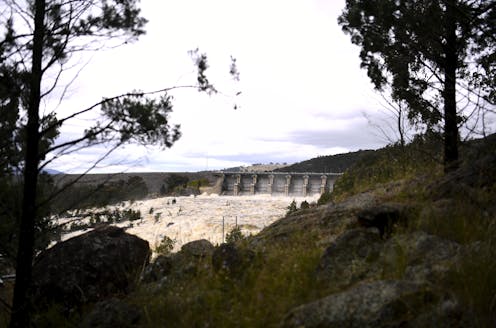
Wyangala Dam AAP Image/Lukas Coch

A story from the early days of the Abbott government still circulates in the halls of Parliament House.

The government’s Expenditure Review Committee apparently supported then Minister for Agriculture Barnaby Joyce’s first A$500 million budget funding for the National Party’s dam-building plans, over then Treasurer Joe Hockey’s objections. Hockey reputedly said to Joyce “good luck with that, I don’t think you’ll build one of them”. If true then Joe, take a cigar.

In our land of drought and flooding rains, better water management should feature in every federal budget. Thankfully, the budget handed down by Treasurer Jim Chalmers on Tuesday delivers it.

It slashes spending on big dams and elevates the role of science in water decision-making. It also positions Labor to undertake further reform in the Murray-Darling Basin by buying back more water from farmers to improve the health of the rivers, and manage the impacts of climate change.

These measures promise to deliver more sustainable use of water in Australia’s most economically important and exploited river system. But they also buy a fight with some quarters of the farming community, and the New South Wales and Victorian governments.

Nationals set about building dams

Dams are a talisman for Australians who believe development and the conquest of nature is essential to nation-building.

The National Party arguably exemplifies this ideology. It gained control of the water portfolios in the former federal government and current NSW government and set about trying to build dams, especially in the Murray-Darling Basin.

The Liberal Party has conceded to National Party demands on water even though the National Water Initiative, established by the Coalition in 2004, stipulates:

proposals for investment in new or refurbished water infrastructure […] be assessed as economically viable and ecologically sustainable prior to the investment occurring.

This week’s budget wields a long overdue axe to dam proposals from Coalition governments, saving $1.7 billion over four years. Two of the most controversial dam proposals in the Murray-Darling Basin are among those axed or indefinitely postponed.

First is the $1.27 billion Dungowan proposal near Tamworth in NSW. It was slammed by the Productivity Commission as excessively expensive and the leading example of poor water infrastructure decision making.

Second is the hugely expensive – up to $2.1 billion at last estimate – raising of Wyangala Dam, near Cowra. In 2021 a NSW parliamentary inquiry found the proposal was “yet to demonstrate the cost effectiveness and water yield benefits of the project”.


Read more:
Labor’s ‘sensible’ budget leaves Australians short-changed on climate action. Here’s where it went wrong


Further, $153.8 million of unallocated funding in former “water efficiency” projects in the basin has been (somewhat ambiguously) “re-profiled”. These efficiency projects have been criticised as double-counting water at the expense of the environment, being very expensive and subsidising irrigators.

Importantly, Labor has quietly sought to lock a commitment to better governance with transparent environmental and socio-economic assessment standards in a new National Water Grid Investment Framework.

Science and the Murray-Darling Basin

Labor has allocated $51.9 million over five years to strengthen the Murray-Darling Basin Plan “by updating the science to account for the impacts of climate change and restore trust and transparency in water management”.

This spending is timely. The past decade and more has seen risk-averse government agencies commission water research through narrow briefs to the government-owned CSIRO and other contractors. In one instance, the South Australian Royal Commission into the Murray-Darling Basin described this research as “improperly pressured” and representing “maladministration”.

The situation worsened when the research program into better water management commissioned by the independent National Water Commission was axed under Abbott in 2014.


Read more:
Excessive water extractions, not climate change, are most to blame for the Darling River drying


This has resulted in science that may not be independently peer-reviewed and often doesn’t address the big questions.

For instance, after allocating around $13 billion for water management reforms in the basin since 2008, governments still can’t tell the public:

Further, water institutions in the basin do not currently adequately address the threat of climate change.

Returning water to the rivers

Measures to implement the basin plan are meant to be complete in mid-2024. Consequently, allocated funding for all Basin water reforms was due to decline markedly after this point. Yet, major and expensive elements of the plan have still not been implemented.

In just one example, the Victorian and NSW governments were supposed to reach agreements and pay over 3,300 riverside land owners to fill river channels and allow water to spill safely onto the lower-most floodplains. This would conserve nearly 375,000 hectares of wetlands, and maximise conservation of flora and fauna with the limited volume of available environmental water.

However, since 2013 the state governments have failed to make a single agreement with land owners.
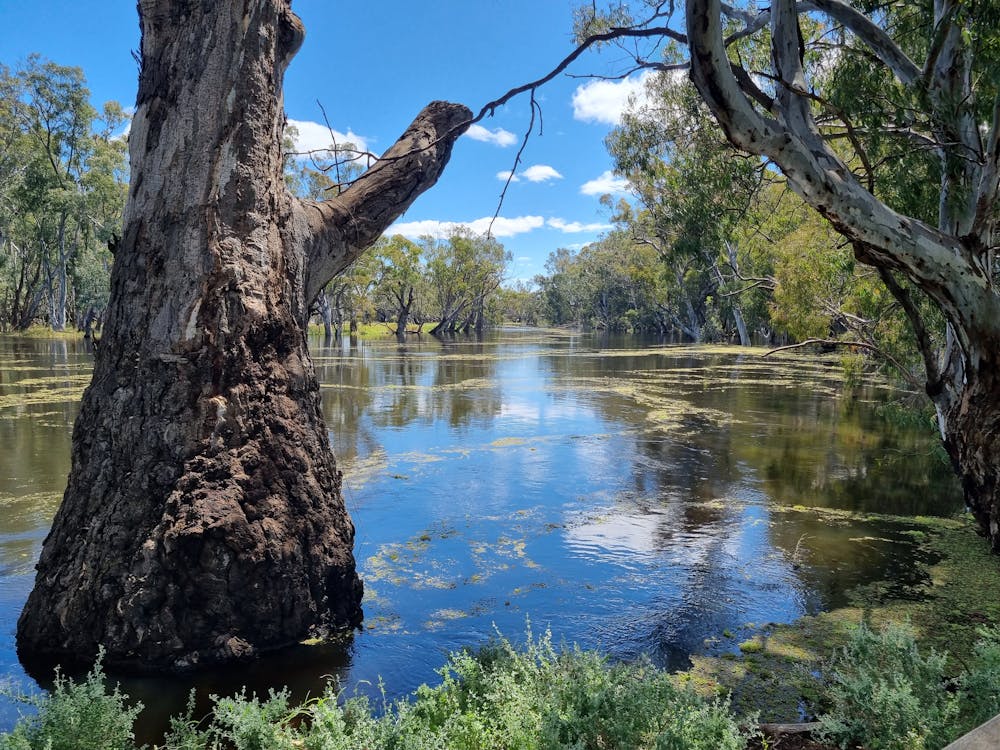
A river on a sunny day, behind two big trees
Murrumbidgee river at Yanga Woolshed, a major tributary of the Murray-Darling Basin.
Jamie Pittock, Author provided

Hundreds of billions of litres of water that were supposed to have been reallocated to the environment are still missing. The latest federal budget describes the lack of water recovery for the environment as an unquantified “fiscal risk”.

Waving a big stick, Labor has allocated initial funding for meeting the environmental water targets in the plan. The amount of the funding has not been disclosed. It could involve purchasing water entitlements from farmers who volunteer to sell them – a move deeply opposed by the state governments and the irrigation industry.

The budget also funds repairs to other broken elements of the basin’s water governance. After a decade of cuts, the now Department of Climate Change, Energy, the Environment and Water will have funding restored to, among other goals, improve “the health of our rivers and freshwater ecosystems”.


Read more:
Australia has an ugly legacy of denying water rights to Aboriginal people. Not much has changed


There is also money to start work on re-establishing a National Water Commission, and to reform the much criticised water trading markets to make them more transparent and robust.

Finally, the budget allocates $40 million to begin addressing the appalling dispossession of water from Indigenous peoples, who now hold just 0.17% of surface water entitlements in the basin. It’s a small but important first step for water justice.

The Conversation

Jamie Pittock is a member of the Wentworth Group of Concerned Scientists, and is a member of and advises a number of other environmental non-government organizations. Many moons ago he received funding from the National Climate Change Adaptation Research Facility (RIP) for research on on climate change adaptation in the Murray-Darling Basin.

ref. Money for dams dries up as good water management finally makes it into a federal budget – https://theconversation.com/money-for-dams-dries-up-as-good-water-management-finally-makes-it-into-a-federal-budget-193380

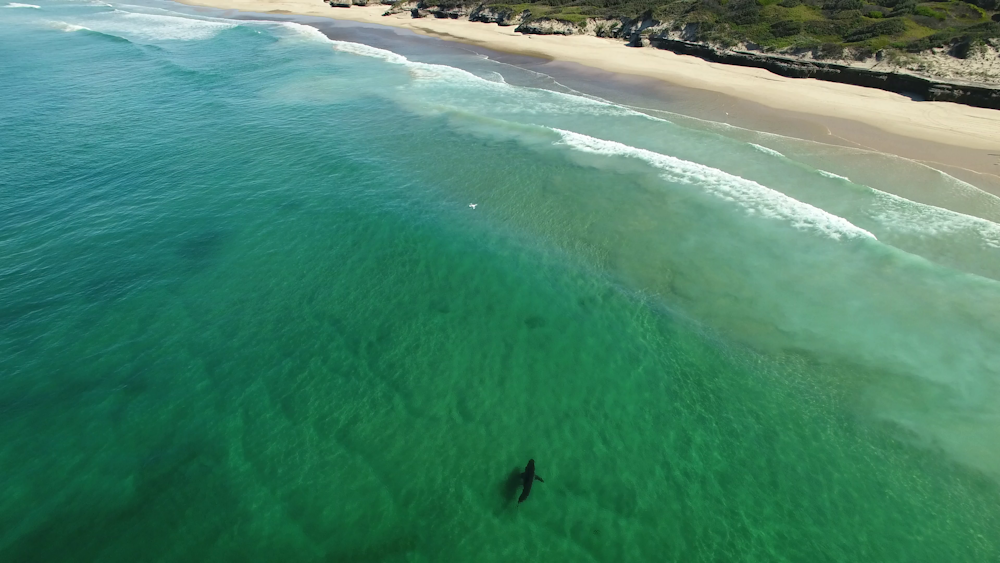
How shoring up drones with artificial intelligence helps surf lifesavers spot sharks at the beach

Source: The Conversation (Au and NZ) – By Cormac Purcell, Adjunct Senior Lecturer, UNSW Sydney

A close encounter between a white shark and a surfer. Author provided, Author provided

Australian surf lifesavers are increasingly using drones to spot sharks at the beach before they get too close to swimmers. But just how reliable are they?

Discerning whether that dark splodge in the water is a shark or just, say, seaweed isn’t always straightforward and, in reasonable conditions, drone pilots generally make the right call only 60% of the time. While this has implications for public safety, it can also lead to unnecessary beach closures and public alarm.

Engineers are trying to boost the accuracy of these shark-spotting drones with artificial intelligence (AI). While they show great promise in the lab, AI systems are notoriously difficult to get right in the real world, so remain out of reach for surf lifesavers. And importantly, overconfidence in such software can have serious consequences.

With these challenges in mind, our team set out to build the most robust shark detector possible and test it in real-world conditions. By using masses of data, we created a highly reliable mobile app for surf lifesavers that could not only improve beach safety, but help monitor the health of Australian coastlines.

White shark being observed by a drone.
A white shark being tracked by a drone.
Author provided.

Detecting dangerous sharks with drones

The New South Wales government has invested more than A$85 million in shark mitigation measures over the next four years. Of all approaches on offer, a 2020 survey showed drone-based shark surveillance is the public’s preferred method to protect beach-goers.

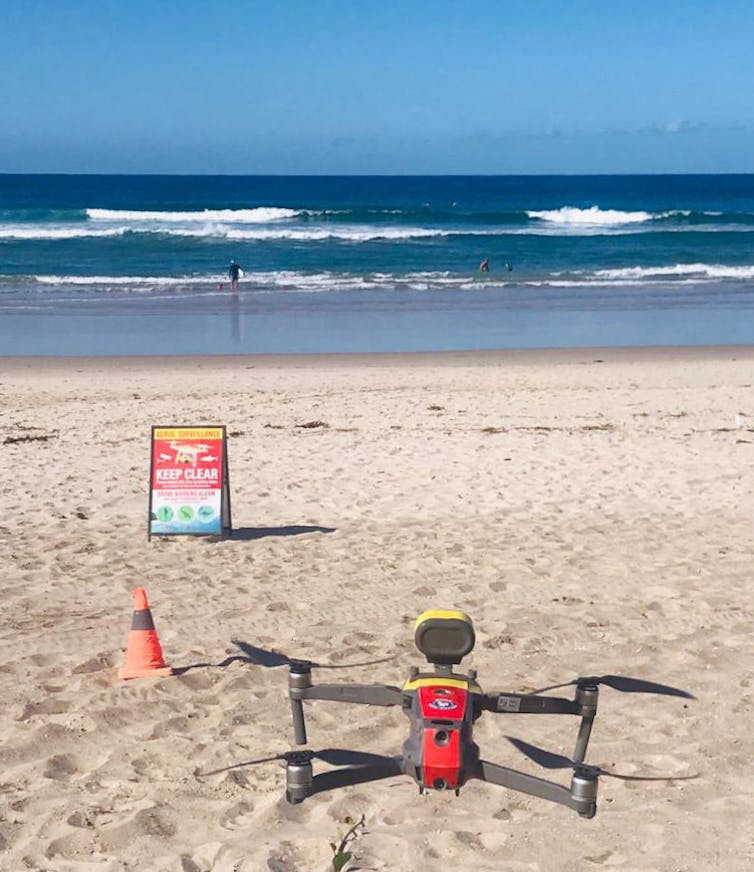
The state government has been trialling drones as shark-spotting tools since 2016, and with Surf Life Saving NSW since 2018. Trained surf lifesaving pilots fly the drone over the ocean at a height of 60 metres, watching the live video feed on portable screens for the shape of sharks swimming under the surface.


Read more:
Lifeguards with drones keep us (and sharks) safe, and beach-goers agree


Identifying sharks by carefully analysing the video footage in good conditions seems easy. But water clarity, sea glitter (sea-surface reflection), animal depth, pilot experience and fatigue all reduce the reliability of real-time detection to a predicted average of 60%. This reliability falls further when conditions are turbid.

Pilots also need to confidently identify the species of shark and tell the difference between dangerous and non-dangerous animals, such as rays, which are often misidentified.

Identifying shark species from the air.

AI-driven computer vision has been touted as an ideal tool to virtually “tag” sharks and other animals in the video footage streamed from the drones, and to help identify whether a species nearing the beach is cause for concern.

AI to the rescue?

Early results from previous AI-enhanced shark-spotting systems have suggested the problem has been solved, as these systems report detection accuracies of over 90%.

But scaling these systems to make a real-world difference across NSW beaches has been challenging.

AI systems are trained to locate and identify species using large collections of example images and perform remarkably well when processing familiar scenes in the real world.

However, problems quickly arise when they encounter conditions not well represented in the training data. As any regular ocean swimmer can tell you, every beach is different – the lighting, weather and water conditions can change dramatically across days and seasons.


Read more:
740,000km of fishing line and 14 billion hooks: we reveal just how much fishing gear is lost at sea each year


Animals can also frequently change their position in the water column, which means their visible characteristics (such as their outline) changes, too.

All this variation makes it crucial for training data to cover the full gamut of conditions, or that AI systems be flexible enough to track the changes over time. Such challenges have been recognised for years, giving rise to the new discipline of “machine learning operations”.

Essentially, machine learning operations explicitly recognises that AI-driven software requires regular updates to maintain its effectiveness.

Examples of the drone footage used in our huge dataset.

Building a better shark spotter

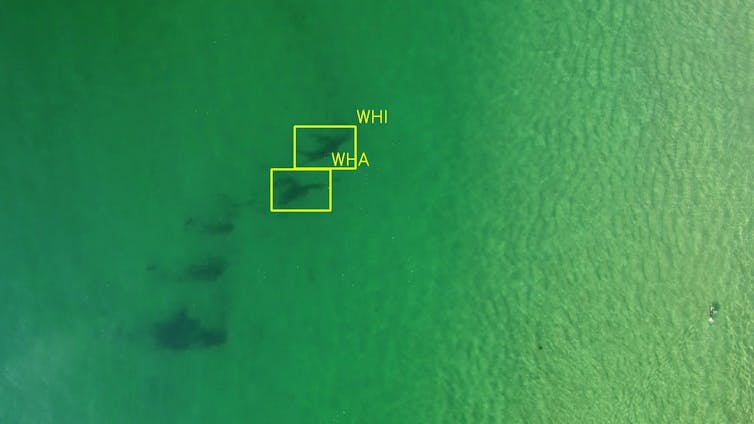
We aimed to overcome these challenges with a new shark detector mobile app. We gathered a huge dataset of drone footage, and shark experts then spent weeks inspecting the videos, carefully tracking and labelling sharks and other marine fauna in the hours of footage.

Using this new dataset, we trained a machine learning model to recognise ten types of marine life, including different species of dangerous sharks such as great white and whaler sharks.

And then we embedded this model into a new mobile app that can highlight sharks in live drone footage and predict the species. We worked closely with the NSW government and Surf Lifesaving NSW to trial this app on five beaches during summer 2020.

Drone flying at a beach.
A drone in surf lifesaver NSW livery preparing to go on patrol.
Author provided.

Our AI shark detector did quite well. It identified dangerous sharks on a frame-by-frame basis 80% of the time, in realistic conditions.

We deliberately went out of our way to make our tests difficult by challenging the AI to run on unseen data taken at different times of year, or from different-looking beaches. These critical tests on “external data” are often omitted in AI research.

A more detailed analysis turned up common-sense limitations: white, whaler and bull sharks are difficult to tell apart because they look similar, while small animals (such as turtles and rays) are harder to detect in general.

Spurious detections (like mistaking seaweed as a shark) are a real concern for beach managers, but we found the AI could easily be “tuned” to eliminate these by showing it empty ocean scenes of each beach.

Seaweed identified as sharks.
Example of where the AI gets it wrong – seaweed identified as sharks.
Author provided

The future of AI for shark spotting

In the short term, AI is now mature enough to be deployed in drone-based shark-spotting operations across Australian beaches. But, unlike regular software, it will need to be monitored and updated frequently to maintain its high reliability of detecting dangerous sharks.

An added bonus is that such a machine learning system for spotting sharks would also continually collect valuable ecological data on the health of our coastline and marine fauna.

In the longer term, getting the AI to look at how sharks swim and using new AI technology that learns on-the-fly will make AI shark detection even more reliable and easy to deploy.

The NSW government has new drone trials for the coming summer, testing the usefulness of efficient long-range flights that can cover more beaches.

AI can play a key role in making these flights more effective, enabling greater reliability in drone surveillance, and may eventually lead to fully-automated shark-spotting operations and trusted automatic alerts.


Read more:
Sleeping fish? From sharks to salmon, guppies to groupers, here’s how they grab a snooze


The authors acknowledge the substantial contributions from Dr Andrew Colefax and Dr Andrew Walsh at Sci-eye.

The Conversation

Cormac Purcell received funding from the NSW Department of Primary Industries to conduct this research at Macquarie University. He was previously affiliated with Sci-eye, a company founded to advance the development of technology to tackle human-wildlife conflict. Fujitsu Australia also supported this research with a loan of computing equipment.

Paul Butcher works for and receives funding from NSW Department of Primary Industries while being an adjunct of Southern Cross University and Deakin University.

ref. How shoring up drones with artificial intelligence helps surf lifesavers spot sharks at the beach – https://theconversation.com/how-shoring-up-drones-with-artificial-intelligence-helps-surf-lifesavers-spot-sharks-at-the-beach-192498

Farmers need certainty over emissions pricing – removing government from the equation might help

Source: The Conversation (Au and NZ) – By Zack Dorner, Senior Lecturer in Environmental Economics, University of Waikato

Getty Images

The most important part of the government’s proposed agricultural emissions pricing scheme is the price. This may seem obvious – but the government has failed to provide a clear indication of what the price will be and how it will be set.

Unfortunately, this uncertainty is already undermining what is otherwise a very good policy proposal. The first casualty of the lack of price certainty seems to have been well-informed public debate.

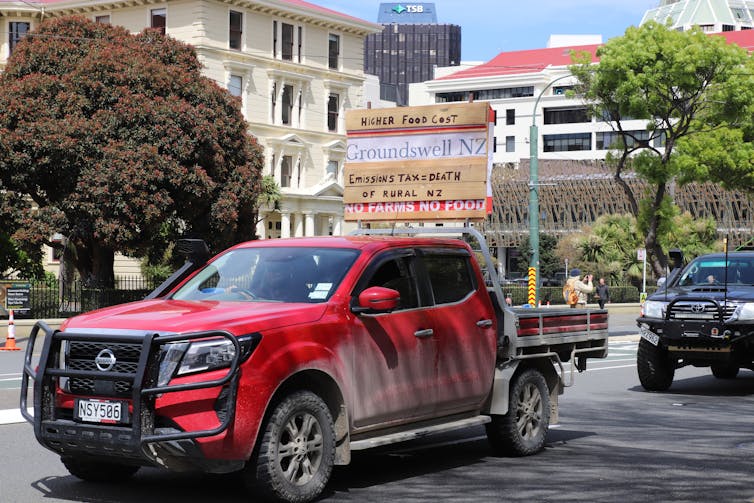
On the one hand, farming advocates have said the pricing scheme will put 20% of sheep and beef farmers out of business. On the other, environmentalists have said it will do nothing to address the urgent climate crisis.

Public consultation on the scheme is open until November 18. My hope would be that one outcome is the Climate Change Commission being given responsibility for setting the price – as soon as possible – to provide more certainty.

In reality, because we don’t know the price, we can’t say how much the scheme might reduce agricultural emissions and what impacts it could have on the sector. But if we assume a price that will give us credible emission reductions, industry-led modelling predicts an average cost of 0 to 7.2% of farm profits.

Carrot and stick

Under the proposed plan, farmers will be charged for every kilogram of greenhouse gasses (GHGs) they emit. They will also be given incentives to implement specific GHG-reducing practices on their farms. Both the “stick” and the “carrot” make up the price.


Read more:
Eating lots of meat is bad for the environment – but we don’t know enough about how consumption is changing


This is a good policy because the stick funds the carrot. Combined, they increase the price while reducing the impact on farmers. The scheme is farm-level, which is more costly to administer than the earlier proposals to place emissions charges on processors like Fonterra. But it should be more effective at reducing emissions.

While our milk and meat produce relatively low GHGs per kilogram of product by international standards, a strong pricing scheme such as this will help us maintain that position.

Ministers will set the price, annually or every three years, taking into account advice from the Climate Change Commission.

Red truck carrying protest signs against proposed methane tax
The recent Groundswell protests claim emissions pricing will put some farmers out of business.
Getty Images

Uncertainties around pricing

Methane is the main greenhouse gas (GHG) emitted by farming cows and sheep. The government has set a target for methane emissions of 10% below 2017 levels by 2030. But it’s hard to know what the price needs to be to achieve the target.

There are a few things that complicate the calculation.

Firstly, there’s the human factor. It’s hard to model exactly how strongly farmers will respond to the price, particularly when we are talking about relatively small costs in relation to all the decisions made on farms.

Secondly, we don’t know what technologies will become available to farmers over the next five to ten years. A range of technologies show promise but are still in development. If one or two of them become available and affordable in that time frame, the 10% target may be easy to achieve at little cost.

By putting the decision in the hands of government, we now have political uncertainty to add to this list.

A need for compromise

There are many competing factors to weigh up when setting the price. First is achieving the GHG reduction targets – a difficult task in itself. There may need to be some flexibility, as long as we are on the right track.

A second factor is maintaining a competitive agricultural export sector. Reducing emissions will come at a cost, but we will want to avoid putting too high a burden on farmers too quickly.

A third factor is providing some certainty over the price. This is important for farmers when they’re deciding whether to invest time and money in new practices and technologies.


Read more:
Climate change threatens food but microscopic algae offer answers


Governments may be tempted play with any of these factors – for example, promising to drop prices at election time. And if the price is set too low, the scheme will be an expensive failure. Too high and the costs may be borne too quickly.

Who should set the price?

A better option would be to let the Climate Change Commission set the price. It’s well placed to do this with expert and community input, and was set up as an independent body specifically for jobs like this.

Yes, the government has said the commission will recommend a price and ministers will respond. But why add the additional political uncertainty?

The government should provide clear criteria for determining the price, which would increase rather than reduce certainty. And the commission should set prices early and for a specific period of time. For example, next year it could set the prices for when the scheme starts in 2025, with the plan to review it in 2028.

Of course, governments don’t like to hand decision-making power over to others. But in this case it would make sense. The first casualty of price uncertainty may have been some public doubt over the merits of the policy. Let’s make sure the next casualty isn’t the policy itself.

The Conversation

Zack Dorner received funding from the Ministry for Primary Industries in 2022 to review modelling of the agri-emissions pricing policy. He is receiving funding from DairyNZ to co-supervise a Master’s student. He also receives funding from a Ministry of Business, Innovation and Employment Endeavour project, looking at increasing pro-environmental actions on farms.

ref. Farmers need certainty over emissions pricing – removing government from the equation might help – https://theconversation.com/farmers-need-certainty-over-emissions-pricing-removing-government-from-the-equation-might-help-192932

We took away due dates for university assignments … here’s what we found

Source: The Conversation (Au and NZ) – By Benjamin T. Jones, Senior Lecturer in History, CQUniversity Australia

Eliott Reyna/Unsplash

As university students around the country finish their final exams and assessments for the year, the idea of removing due dates might seem incredibly appealing.

Being more open-ended about when assignments are submitted may also seem like the logical next step for universities. Even before COVID-19, they have been looking for ways to make learning more flexible. This is generally done by offering units online or in a hybrid model, where some units are in person and some are online. But is it truly flexible if just the place has changed?

An emerging trend in the sector is “self-paced learning,” where students do not have to fit their learning into a university semester and there might be flexible due dates for assessments.

In other words, students with internet access and a laptop can study at a time and place that suits them.

At CQUniversity this is called “hyperflexible learning”. Our university already offers hyperflexible postgraduate units.

We wanted to know what the experience would be like for students and staff if hyperflexible units were offered at undergraduate level.

Our study

In a 2021 pilot study, we looked at four undergraduate history and communication units. The humanities was a good fit for the pilot because they attract a wide range of students, did not have tests or exams and had fewer restrictions like external accreditation.

We offered the units in the traditional mode and a hyperflexible mode. In the hyperflexible mode, students had access to all the unit content, could self-pace and did not have due dates for their written and oral assessments.

Students reading at a bench.
University is becoming more and more flexible, in a bid to fit around students’ lives.
Alexis Brown/Unsplash

The unit’s content was self-paced, via short recorded videos and interactive learning modules, rather than traditional lectures. There were opportunities for learning with other students (like live Zoom tutorials), but these were not compulsory.

Of the group, 27 students chose to take the hyperflexible option. We interviewed them and three unit coordinators before and after the term about their experiences. We also surveyed all 12 humanities staff about their perceptions of hyperflexible learning.

While the sample size was small, students and staff suggested there are both risks and benefits to this type of study.

‘I wouldn’t have passed’: what did students say?

On balance, the students who took part had a positive experience. One even said:

If it wasn’t hyperflexible I wouldn’t have passed.

Several noted how assessment deadlines were a significant source of stress and relished the freedom to fit study around their life, rather than the other way around. Several said it made it easier to accommodate their work and family commitments.

One student said they were thrilled when they heard about the hyperflexible option because:

I am a very anxious student, and deadlines really, really stressed me out.

Other students suggested the quality of their learning was better in a hyperflexible model as they were able to “go deeper” on a topic that interested them and not have it reserved for one particular week. It was suggested that the hyperflexible unit allowed “study in a more intensive way”.

But students also raised concerns. Several noted it “feels a bit isolating”, “disconnected”, like they are “the only student doing it” and they are not “participating in the university experience”.

Others were worried they might not receive the same level of feedback from staff and there might be a temptation to “leave everything to the last minute”.


Read more:
University fees are poised to change – a new system needs to consider how much courses cost and what graduates can earn


Doing two jobs: what did staff say?

University staff were generally more cautious about the benefits of hyperflexible learning. Common concerns were students would lose their sense of being part of a group, feel lost or overwhelmed, allow assignments to pile up, and it could ultimately see more students dropping out.

Staff were also concerned no due dates could increase their workload. They noted they would be less free to take leave or attend conferences if they did not have a reasonable expectation when their marking would be due. Even when students were being taught the same content, there were new challenges and as one staff member said:

I feel as though I am managing two cohorts.

Staff members did see benefits in hyperflexible learning also and most said they were willing to experiment with it. Several commented on the potential for motivated students to finish their degrees faster. One staff member noted that having now taught a hyperflexible unit:

I have confidence that most students get there in the end.


Read more:
It’s not just Australian students who need more food, university staff are also going hungry


What now?

Our study suggests removing due dates from undergraduate units has potential to make university study more accessible and less rigid, while reducing student stress.

One key issue is how students can maintain a sense of being together in a group, receive support, and feel a connection to their university.

Young man, studying on his own at night.
Some students reported feeling isolated when studying without due dates.
Max Shilov/Unsplash

For educators, hyperflexible learning is a distinct form of teaching and staff members would need to be adequately trained and supported. This way of teaching is individualistic and seeks to fit study around the needs of each student. To some extent, this is in conflict with the ideal of university as a learning community.

Although the responses to the pilot program were largely positive, there is still a lot more we need to know about the impact of removing due dates and time pressures. For example, although due dates were removed, students still had to complete their assessments within the semester – due to university and government policies.

Also, while this approach might fit the assessment-focused humanities, we don’t know how this works in disciplines that are more heavily exam-driven (like health and IT).

Ultimately, risks associated with hyperflexible learning and the impact on both staff and students need to be considered carefully before adopting these approaches for undergrads.

So, sorry students – seems like you’ll have to finish that essay this week after all.

The Conversation

This research was funded by a CQUniversity Learning and Teaching Research Development Grant.

Benjamin T. Jones does not work for, consult, own shares in or receive funding from any company or organization that would benefit from this article, and has disclosed no relevant affiliations beyond their academic appointment.

ref. We took away due dates for university assignments … here’s what we found – https://theconversation.com/we-took-away-due-dates-for-university-assignments-heres-what-we-found-193024

Grattan on Friday: Cost of living goes from a winner for Albanese in May to a weapon for Dutton in October

Source: The Conversation (Au and NZ) – By Michelle Grattan, Professorial Fellow, University of Canberra

An opposition leader has a tricky task when delivering a first budget reply after an election rout. But circumstances played into the hands of Peter Dutton for his big parliamentary occasion on Thursday night.

Jim Chalmers’ budget was, as the treasurer argued, responsible and restrained. But it contained alarming numbers on the potent issue of surging power prices. They’re not Labor’s fault, and of course when it comes to energy policy the Coalition has dirty hands.

But dealing with the crisis, driven by the Ukraine war, is now Labor’s problem, and that gave Dutton something substantial to latch onto.

Aside from the budget, the government this week introduced its workplace reforms, which include extending multi-employer bargaining, and business is critical, fearing a rise in strike action. Industrial relations is traditional core ground for the Coalition (not that it has always gone well politically). The legislation provided some more fodder for Dutton.

In Thursday’s reply, Dutton sounded nervous and fluffed some lines. Without the troubles Labor faces, he probably would have struggled. In the event, it was a comprehensive effort that touched many bases. Chalmers had pre-billed his budget as “workmanlike”, and so was Dutton’s reply. Neither indulged in the “flashy”.

Homing in on the cost of living, Dutton told Australians: “Labor’s budget was a missed opportunity to help you at a time when you need help.”

Notably, however, he did not say the government should have splashed cash around.

Dutton reprised Labor’s killer pre-election line. “On Tuesday, the treasurer failed to mention in his speech what Labor’s budget papers revealed: ‘Everything is going up, except your wages’.

“Cost of living, power prices, taxes, interest rates, unemployment and the deficit are going up, or will be going up,” Dutton said, claiming that “by Christmas, a typical family will be $2000 worse off under this budget”.

The budget “makes life more difficult for millions of Australians,” he said; he invoked the familiar Coalition mantra that “Labor can’t manage the economy”.

It’s true life will be more difficult for millions of Australians in coming months, with rising prices and interest rates. But it is not true, as Dutton claims, that this is as a result of the budget.

Despite the climate issue being a significant factor in the Coalition’s loss of teal and other seats, Dutton used the energy crisis to maintain a hard line.

“Labor’s push for 82% renewables by 2030 comes without a plan to ensure reliable baseload power,” he said. “Labor is misleading Australians when it says it can roll out billions of dollars’ worth of transmission wires, cables and towers for renewables in the next few years.” Nuclear got a nod.


Read more:
Australia’s growth downgraded and inflation drives massive rise in cost of pensions and payments in budget


He said the budget saw the government “rip-up funding for gas exploration and cancel gas infrastructure projects which would eliminate shortfalls and make your bills cheaper. They handed over funding to environmental activists who want to overturn gas projects approvals.

“Higher gas prices will be baked-in for the foreseeable future, putting high-paying jobs in regional communities at risk.”

The government retreated from its flirtation with recalibrating the Stage 3 tax cuts, but Dutton painted this as just a temporary reprieve.

“Our legislated tax plan future-proofs your income,” he said. Labor had taken the Coalition’s tax plan to the election, “but now they are laying the groundwork to break this promise”.

“This budget provides no certainty for ten million Australians expecting tax relief in 2024. The budget is intended to soften up Australians. It gives the government time to come up with excuses by May next year to tax you more.”

Unsurprisingly, the opposition leader didn’t announce major new Coalition policy, but he reaffirmed the election policy to allow first home buyers to dip into their superannuation to buy a home (which would be extended to women who separated later in life).

He contrasted this with the budget’s “housing accord” between governments, investors (Chalmers is thinking super funds) and industry to build a million houses. “They want your super to invest in someone else’s home – not your own.”

He cast the government’s multi-employer bargaining changes as a throwback to the 1980s, a world where “multiple sectors will be able to engage in crippling economy-wide strikes, where parties unaffected by disputes join in on protests”.


Read more:
Floods drive up fruit and veg prices, while energy costs will prolong high inflation


Dutton trod carefully in some areas, finding aspects of the budget with which to agree (the extension of the childcare subsidy, lower medicine prices), and promising co-operation on issues such as violence against women and children.

Elsewhere, notably on education, he was combative, saying “the system has allowed ideologically driven advocates too much influence over what is taught to our children”.

He also used the occasion to sketch his personal story, just as Anthony Albanese did so often in the run-up to the election. Albanese said he learned the value of a dollar growing up as the son of a single mum; Dutton told us his parents taught their kids “to appreciate the value of money”.

In the direct political contest – government versus opposition – Labor is in a very strong position. Post-election, the public is not expressing buyer regret. The opposition is painfully strung out on a spectrum stretching from its right wing to its moderates, with Dutton still to figure how he can shape his troops into a cohesive fighting unit.

But in that real world where families sit around those much-talked-about kitchen tables, the government knows it confronts intractable problems.

This week it has been criticised for not having sorted out a policy on power prices before the budget. One reason is because crafting one is fraught with difficulty. Nevertheless the task looms more urgent by the day.

Wednesday’s unexpectedly high inflation number – 7.3% for the September quarter – just reinforced how painful cost-of-living pressures are becoming. It also called into question the budget’s forecast that inflation will peak (in the December quarter) at 7.75%, although Chalmers is sticking to it.


Read more:
Politics with Michelle Grattan: Jim Chalmers, Angus Taylor and Danielle Wood on the budget


As if they don’t have enough bad news, households with mortgages will be slugged with another interest rate rise when the Reserve Bank board meets on Tuesday, Melbourne Cup day.

Labor was helped to office by the cost-of-living pressures and its promise it would get real wages growing.

But living costs are much more acute now, and the budget confirmed the earliest real wages are likely to start moving is 2024.

In the space of a few months the cost of living has transformed, politically, from a Labor weapon to a Coalition one. As it looks to the May budget, the government will be preoccupied with trying to deal with both the substance and the politics of the issue.

The Conversation

Michelle Grattan does not work for, consult, own shares in or receive funding from any company or organisation that would benefit from this article, and has disclosed no relevant affiliations beyond their academic appointment.

ref. Grattan on Friday: Cost of living goes from a winner for Albanese in May to a weapon for Dutton in October – https://theconversation.com/grattan-on-friday-cost-of-living-goes-from-a-winner-for-albanese-in-may-to-a-weapon-for-dutton-in-october-193393

Cheaper gas and electricity prices are within Australia’s grasp – here’s what to do

Source: The Conversation (Au and NZ) – By Rod Sims, Professor in the practice of public policy and antitrust, Crawford School of Public Policy, Australian National University

Shutterstock

Virtually every country in the world is facing a crisis in energy costs, yet while other countries can’t do much about it, Australia can.

Australia could get its east coast gas producers to supply the domestic gas market for less than A$10 a gigajoule. Earlier this year, prices were more than $40 a gigajoule, and now sit at $25-30 a gigajoule.

Tuesday’s budget factored in retail electricity price rises of more than 50% over two years. The increases in retail gas prices exceeded 40%.

Outlining the budget on Tuesday, Treasurer Jim Chalmers said any responsible government facing these kinds of price hikes needed to “consider a broader suite of regulatory interventions” than in the past.

Chalmers had “more work to do” and would work with the states.

Here is the key step I think should be taken.

To restrain electricity prices, cut gas prices

The quickest way to get electricity prices down is to significantly lower the cost of gas. Gas generators come online after cheaper forms of generation have already been pressed into service, and so help set the final price charged.

Getting gas prices below $10 a gigajoule would also help households that are facing crippling gas bills, as well as industries that rely on sensibly priced energy for their existence including Australia’s glass, paper and fertiliser industries.

Once those industries close, they are unlikely to return.

Here’s what’s been done so far.

The Turnbull, Morrison and recently the Albanese governments have each reached agreements with the three liquid natural gas producers operating out of Gladstone in Queensland that together control around 90% of east coast reserves.

‘Sufficient supply’ isn’t affordable supply

The agreements require the supply of sufficient gas to meet the needs of east coast gas consumers.

For a while they worked to reduce then-high domestic prices to sensible levels, because international prices were low. But now international prices have climbed to multiples of usual levels, agreements to supply without specific reference to prices are no longer enough.

An agreement to supply “sufficient” quantities of gas at $25-40 per gigajoule is an agreement to not supply much. After industries close, supply will be “sufficient” for the remaining users who can afford it, but it won’t be what we want.


Read more:
Politics with Michelle Grattan: Rod Sims on the gas price crisis


We need to get the east coast liquefied natural gas (LNG) producers to supply sufficient gas to the east coast at prices below $10 a gigajoule. They would continue to make a profit at those prices, albeit much less than otherwise.

As it happens, the Commonwealth has the power to get such commitments, because it has the power to stop exports. That power gives it complete leverage.

We need to be clear on two points.

First, there is no suggestion here that the LNG producers’ long-term contracts are at risk. Asian buyers need not be concerned. All three LNG projects were underwritten by long-term contracts at fixed prices.


Read more:
Grattan on Friday: We must find a way to get gas prices down, but how?


What we are talking about is the gas the three producers have available beyond their need to service these long contracts. This gas can either be exported to the spot, or short-term, market at very high prices or sold domestically.

They should be told they can only export gas to the currently lucrative international spot market if they sell sufficient gas domestically to get prices clearly below $10 a gigajoule.

Other exporters reserve gas

Second, what I am suggesting is akin to what all other gas exporting countries do.

Australia has by far the highest domestic gas prices of any gas exporting country. No other country would tolerate its gas being exported while its domestic market is paying the same high prices as international customers.

The gas companies need to come to the party, either to earn their “licence to operate” or to avoid the threat of export controls.

If they know the threat of export controls is real, I believe they will do what’s necessary without the need to actually control exports.

A final point: there can be no argument about “sovereign risk”, the idea that foreign companies will no longer do business with Australia if it changes the rules.

The long-term gas exporting contracts would remain intact. Australia would simply be aligning itself with all other gas exporting nations – and, by the way, with Western Australia, which has long looked after its residents and businesses by reserving gas to ensure reasonable domestic prices.

The Conversation

Rod Sims was Chair of the Australian Competition and Consumer Commission from 2011 to 2022.

ref. Cheaper gas and electricity prices are within Australia’s grasp – here’s what to do – https://theconversation.com/cheaper-gas-and-electricity-prices-are-within-australias-grasp-heres-what-to-do-193388

Will your energy bills ever come down? Only if Labor gets serious with the gas majors

Source: The Conversation (Au and NZ) – By Samantha Hepburn, Professor, Deakin Law School, Deakin University

Shutterstock

Over the next two years, energy prices are expected to rise by a whopping 56%. That’s the dismal forecast in this week’s federal budget.

The rise will be extremely painful, adding enormous pressure to households already struggling with the cost of living.

In response, the government is talking tough. Treasurer Jim Chalmers has flagged a government intervention and has asked the Australian Competition and Consumer Commission (ACCC) to examine the gas market closely.

But does the government have any real leverage? It’s so far baulked at pulling the gas trigger – a mechanism to limit exports if there’s a local shortfall.

If Labor genuinely wants to stop prices skyrocketing, it must forcibly reserve gas for the east coast market. The policy has worked for Western Australia. The question is, does it have the nerve?

Is there any hope for consumers? Short term, it’s unlikely. But within three years, Australia should be able to produce half its electricity from renewables – and the sun and wind are, thankfully, resistant to geopolitical price hikes.

gas burner
Energy prices show no signs of slowing.
Shutterstock

Why do energy prices keep rising?

Right now, we’re still highly dependent on fossil fuels, because the renewable transition is still in its early stages.

Oil, gas and coal prices are spiking following Russia’s invasion of Ukraine. Sweeping sanctions on Russia forced many European countries to find alternative gas supplies, causing global prices to skyrocket. So while Australia has plentiful gas, producers are selling much of it overseas – and domestic users have to pay the same high international price.

What’s more, the Australian electricity market has been forced to rely more on expensive gas due to rising number of extreme weather events, unexpected coal plant outages, fuel supply issues and the closure of old coal plants.

To date, the national market (which excludes Australia’s north and west) has imposed few restrictions on gas exports. This cannot continue. Gas is a public resource and the government must act to protect vulnerable consumers.

What has the government tried?

Since taking power in May, Labor has done two things to bring prices down: extended an existing agreement with gas producers, and proposed changes to the gas trigger to make it easier to pull. Neither have had noticeable success.

The agreement signed at the end of September extends the Morrison-era agreement out to 2030. The goal is simple: ensure we do not run short of gas next year.

The problem is, while good in principle, these types of agreements – known as heads of agreement – are not legally binding.

The extended agreement says producers must offer uncontracted gas to the domestic market – gas left over after producers have satisfied their contractual supply obligations – before it’s offered to the international market.

It must be offered at a competitive price, which is hard to define in a highly turbulent international market. It provides no price security.

What’s more, the code of conduct guiding the agreement is voluntary and there’s no legal recourse for non-compliance.

This is a feeble, unsatisfactory way to regulate Australia’s multibillion-dollar gas sector in the face of a global energy crisis.


Read more:
Albanese government’s first budget delivers election promises but forecasts soaring power prices


What about the so-called “gas trigger”?

If a shortfall of gas is forecast, the federal government can pull the gas trigger – a mechanism where the energy minister can impose export restrictions.

This is a supply mechanism, not a price mechanism. Intended as a last resort, it was introduced in 2017 and has never been used – not even this year, despite the dire predictions of a shortfall next year.

What’s Labor doing? Proposing to make it easier to pull this trigger by assessing any shortfall every three months instead of only once a year. But this won’t change the price of gas.

Don’t we have more protection against price spikes?

When you look at your energy bill, you may notice a key phrase: the default market offer. Effectively a price cap, it was introduced in 2019 to ensure the standing offers of energy retailers couldn’t rise too much.

Standing offers – as opposed to market offers – include mandatory consumer protections, usually making them more expensive. Confused? You’re not alone. While energy users have always been able to choose between standing and market offers, in reality, most of us didn’t know the difference.

That’s why the ACCC got involved in 2018, finding the national electricity market wasn’t operating in the best interest of consumers.

In response, the government introduced a code forcing energy retailers to adhere to the default market offer, set by the Australian Energy Regulator. This price cap is figured out by taking into account wholesale cost of energy and cost of living pressures. For instance, this financial year, price increases were capped at 1-9% in Victoria, 8.5-14% in New South Wales, and 11.3% in South-east Queensland.

The default market offer has proved an important safeguard against anti-competitive pricing in the retail sector. But the problem now is the wholesale cost of energy has spiked, forcing up the default market offer to reflect the rising cost of energy for retailers.

How could Labor get serious on energy prices?

As prices surge, pressure will rise on the government to quit tinkering and take stronger action – namely, legally reserving gas for east coast use, and tackling the soaring network costs of maintaining and expanding the poles and wires through which electricity flows.

In WA, the energy crisis has been much more muted. This year, wholesale energy price rises in the west have averaged A$64 a megawatt-hour while east coast rises have been more than four times higher at an extraordinary $284/MWh.

That’s because the WA government learned from a 2008 gas outage and brought in a reservation policy which mandates 15% of the gas extracted in the state must stay there.

A federal gas reservation policy is the best way to increase supply and drive down prices.

The second step is to intervene in network costs, which contribute up to half of the cost to you as a consumer.

The problem is, worsening extreme weather damages existing infrastructure. And we’ll need much more transmission infrastructure to get to a clean energy grid.

To solve this part of your energy bill pain, state and federal governments can work to expand our underground power network, which is more resilient to floods and fire. But we also need to develop a fair and equitable way of allocating network costs.

wind turbines sea
Renewables are coming – but not fast enough to stave off this pain.
Nicolas Doherty/Unsplash, CC BY

Beyond softly-softly

Where does this leave us? In a world of (temporary) pain. Until we stop relying on expensive gas, coal and oil, market turbulence will add more pain. Change is coming – and fast – with renewables expected to meet 50% of our electricity needs within three years.

Those three years are likely to be rough. We are dependent on gas until enough renewables and storage come online. Given our gas is a national resource, we should treat it as such. The softly-softly approach isn’t working.

As consumers feel the pain, energy poverty and food insecurity will spike. Things may have to get worse for Labor to bite the bullet and take decisive action.


Read more:
Want a solution for the energy crisis gripping Australia’s east? Look west


The Conversation

Samantha Hepburn does not work for, consult, own shares in or receive funding from any company or organisation that would benefit from this article, and has disclosed no relevant affiliations beyond their academic appointment.

ref. Will your energy bills ever come down? Only if Labor gets serious with the gas majors – https://theconversation.com/will-your-energy-bills-ever-come-down-only-if-labor-gets-serious-with-the-gas-majors-193298

Why was the Lehrmann trial aborted and what happens next?

Source: The Conversation (Au and NZ) – By Ben Livings, Associate Professor of Criminal Law and Evidence, University of South Australia

The trial of Bruce Lehrmann, accused of raping former Liberal Party staffer Brittany Higgins, has been aborted after a juror was found in possession of material that had not been presented as evidence, against the judge’s specific directions.

This was not the first drama in the jury’s deliberations. On Tuesday, after more than four days of deliberating, the 12 jurors passed a note to ACT Chief Justice Lucy McCallum saying they could not agree on a unanimous verdict. The judge called the jurors back into the courtroom and encouraged them to keep working on a decision.

Today, however, she announced she had no choice but to discharge the jury due to a juror’s “misconduct”, which was apparently discovered when a member of the court staff noticed an academic research paper in one of the juror’s document holders that had been knocked to the floor.

Is this uncommon?

It’s not uncommon for juries to be discharged in circumstances where a juror decides to do their own unauthorised research, such as by photographing a crime scene, making their own enquiries, or planning to visit a place mentioned in evidence.

One of the more extraordinary cases of jury misconduct occurred in 1994 when a number of jurors in Britain deployed a ouija board to contact the victim of a murder. A new trial was ordered.

Interestingly, misconduct often comes to light when one juror approaches the judge about a fellow juror’s behaviour. It’s more difficult to know how common it is for extraneous research by a juror to go undetected, particularly given the veil of secrecy that surrounds jury deliberations.

In today’s hyper-connected world, it’s easy for a juror to access information, in this case an academic paper about the incidence of false complaints of rape.

Why are jurors not allowed to conduct their own research?

The role of the jury is to come to a decision based on the evidence before them.
Juries are community representatives within the courtroom, whose job it is to determine questions of fact and apply the law to those facts to reach a verdict.

One might think that, in so doing, it’s inevitable individual jurors bring with them their own life experiences and moral values, and there is nothing wrong with that. Indeed, Justice McCallum told the jury in this case:

You are expected to use your common sense […] your understanding of human nature and your ability to judge people […] You are entitled to have regard to your understanding and experience of the nature of memory.

However, the jurors in the trial of Lehrmann sat through days of evidence, carefully presented and argued over by prosecution and defence counsel, and deemed admissible according to the rules of evidence.

The most important rule of admissibility is that the evidence is relevant to the case. Beyond relevance, evidence is subject to complex rules of admissibility, designed primarily to screen out material that’s unfairly prejudicial to the defence, and to protect vulnerable witnesses.

Examples include rules against the admission of hearsay, prior sexual experience of a complainant, or the “character” of a defendant. These rules are all the more important when it comes to emotive crimes like rape.

Given the complex nature of some of the evidence with which they are presented, and the “holes” in the trial narrative that might appear from the exclusion of potentially relevant evidence, jury members may be tempted to turn to outside sources in an attempt to increase their understanding of issues raised during the course of a trial.

The dangers of allowing such extraneous “research” are twofold. First, such evidence is not subject to the rules of admissibility alluded to above. Second, it is not subject to the rigours of cross-examination.

For these reasons, jurors are reminded again and again to come to a decision based solely on the evidence presented. It’s for this reason the jury in this case will have been instructed to disregard anything they may have read, heard or seen in the media about the case before they had been empanelled, and certainly not to undertake their own research.


Read more:
Why was the Brittany Higgins trial delayed, and what is ‘contempt of court’? A legal expert’s view on the Lisa Wilkinson saga


What happens next?

The trial has been aborted and the jury has been dismissed. The judge granted Lehrmann bail until February 20, and set that as a provisional retrial date. The matter is now referred back to the Director of Public Prosecutions, Shane Drumgold. It’s unclear whether a retrial will be heard before a jury.

A re-trial comes at considerable economic cost. What’s more, all of the witnesses will now be put through the same ordeal once again.

Despite the disruption caused by the errant juror’s behaviour, however well-meaning, the juror has committed no offence in the ACT. However, other jurisdictions deem juror contempt a serious criminal offence.

It remains to be seen what the next chapter in this protracted case brings.

The Conversation

Rick Sarre is affiliated with the ALP.

Ben Livings does not work for, consult, own shares in or receive funding from any company or organisation that would benefit from this article, and has disclosed no relevant affiliations beyond their academic appointment.

ref. Why was the Lehrmann trial aborted and what happens next? – https://theconversation.com/why-was-the-lehrmann-trial-aborted-and-what-happens-next-193382

David Robie: Pacific lessons in climate crisis journalism and combating disinformation

Mediasia Iafor

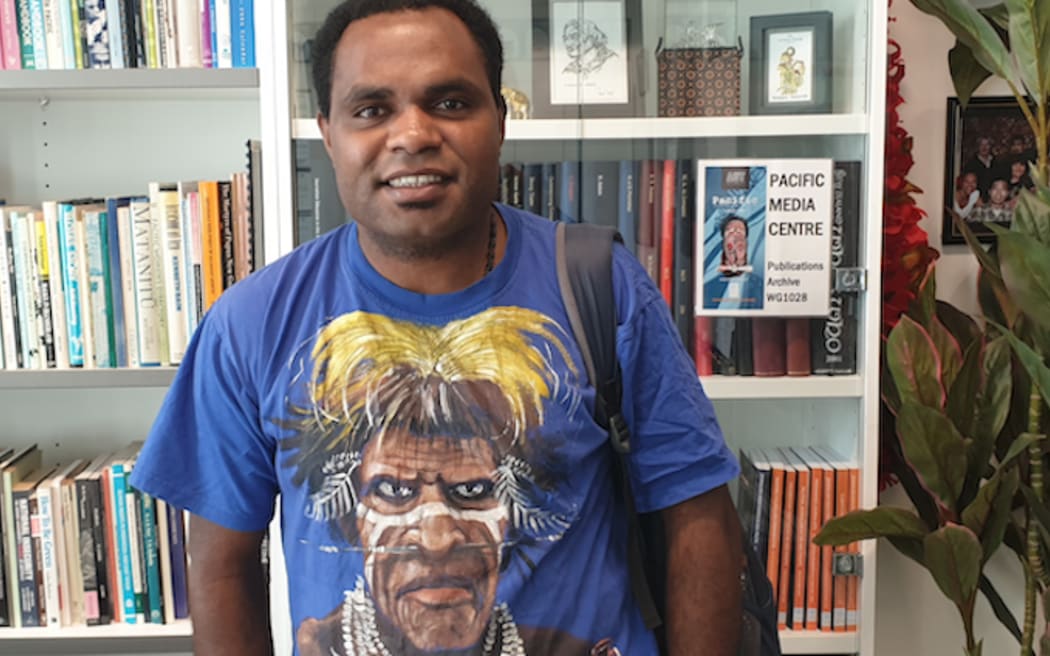
New Zealand journalist and academic David Robie has covered the Asia-Pacific region for international media for more than four decades.

An advocate for media freedom in the Pacific region, he is the author of several books on South Pacific media and politics, including an account of the French bombing of the Greenpeace flagship Rainbow Warrior in Auckland Harbour in 1985 — which took place while he was on the last voyage.

In 1994 he founded the journal Pacific Journalism Review examining media issues and communication in the South Pacific, Asia-Pacific, Australia and New Zealand.

The Mediasia “conversation” on Asia-Pacific issues in Kyoto, Japan. Image: Iafor screenshot APR

He was also convenor of the Pacific Media Watch media freedom collective, which collaborates with Reporters Without Borders in Paris, France.

Until he retired at Auckland University of Technology in 2020 as that university’s first professor in journalism and founder of the Pacific Media Centre, Dr Robie organised many student projects in the South Pacific such as the Bearing Witness climate action programme.

He currently edits Asia Pacific Report and is one of the founders of the new Aotearoa New Zealand-based NGO Asia Pacific Media Network.

In this interview conducted by Mediasia organising committee member Dr Nasya Bahfen of La Trobe University for this week’s 13th International Asian Conference on Media, Communication and Film that ended today in Kyoto, Japan, Professor Robie discusses a surge of disinformation and the challenges it posed for journalists in the region as they covered the covid-19 pandemic alongside a parallel “infodemic” of fake news and hoaxes.

He also explores the global climate emergency and the disproportionate impact it is having on the Asia-Pacific.

Paying a tribute to the dedication and courage of Pacific journalists, he says with a chuckle: “All Pacific journalists are climate journalists — they live with it every day.”

Challenges facing the Asia-Pacific media
Challenges facing the Asia-Pacific media . . . La Trobe University’s Dr Nasya Bahfen and Asia Pacific Report’s Dr David Robie in conversation. Image: Iafor screenshot APR
Print Friendly, PDF & Email

Article by AsiaPacificReport.nz

Why has a UN torture prevention subcommittee suspended its visit to Australia?

Source: The Conversation (Au and NZ) – By Andreea Lachsz, PhD Candidate, University of Technology Sydney

This week, a United Nations torture prevention subcommittee delegation suspended its visit to Australia. The delegation arrived on October 16 and was due to end its visit on October 27, but suspended the visit prematurely on Sunday October 23.

In giving its reasons for the decision, the delegation claimed it had

been prevented from visiting several places where people are detained, experienced difficulties in carrying out a full visit at other locations, and was not given all the relevant information and documentation it had requested.

Justice Aisha Shujune Muhammad, the head of the four-member delegation, concluded there had been “a clear breach by Australia of its obligations under OPCAT”. The OPCAT is the UN’s Optional Protocol to the Convention against Torture and other Cruel, Inhuman or Degrading Treatment or Punishment.

Why suspension?

The Australian government signed the OPCAT anti-torture protocol in 2009 and ratified it in 2017, voluntarily agreeing to meet the obligations.

These include granting the subcommittee unfettered access to information such as the number of people deprived of their liberty in places of detention, and the treatment of those people and their conditions of detention. This also includes allowing unfettered access “to all places of detention and their installations and facilities”.

The subcommittee was reportedly granted access to some places of detention during its Australia visit last week, including in the Australian Capital Territory and the Northern Territory, and immigration detention centres.

However, the subcommittee was reportedly barred from entering some facilities in jurisdictions such as Queensland and New South Wales.

Justice Muhammad explained that

irrespective of whether [denial of access] happens in parts of the country, or in the country as a whole, we see that as an obstruction to our mandate.

Muhammad emphasised that suspending the subcommittee visit was not a decision taken lightly. In fact, such a decision has only been made three times in the past:

  • a visit to Azerbaijan was suspended, but then recommenced in April 2015, with a confidential report to the government

  • a visit to Ukraine was suspended and then recommenced in September 2016, with the report to the government being made public

  • and a visit to Rwanda was suspended in October 2017, to be ultimately terminated, without a report, in June 2018.

A collaborative approach

There are misconceptions about what the subcommittee actually does. It’s not an oversight or complaint handling body. It doesn’t carry out investigations or inspections. And it’s not in the business of naming and shaming governments or countries.

The opposite is true. The subcommittee’s work is grounded in co-operation, making confidential recommendations to governments on strengthening critical safeguards to mitigate the risk of torture and ill-treatment of detained people.

The optional anti-torture protocol is a forward-looking instrument, which focuses on building constructive relationships, and engaging in constructive dialogue, with governments and detention authorities.

This preventive mandate is to be distinguished from oversight and accountability mechanisms such as complaints adjudication, audits, regulation, monitoring, criminal proceedings, civil litigation and coronial inquests.

Can Australia benefit from a successful visit?

The short answer is yes. Every country can benefit from accommodating a visit by a subcommittee delegation, to have a fresh, objective, expert set of eyes on places of detention, and to learn from best practices internationally.

No country has a perfect record when it comes to preventing torture and ill-treatment in places of detention.

Australia is one of 91 countries that have voluntarily joined the anti-torture protocol. In doing so, it has affirmed a commitment to meet international human rights obligations to take proactive steps to prevent torture from happening in the first place.

So the emphasis here is on not just responding to torture and ill-treatment after the fact, when people have already gone through terrible pain and suffering, with potentially lifelong consequences.

Where to from here?

Australia was commended by the UN Working Group and many other countries at its 2021 appearance before the UN Human Rights Council Universal Periodic Review for ratifying the optional anti-torture protocol.

Under the protocol, Australia has committed to establishing a “national preventive mechanism” (NPM) – which can be constituted by multiple bodies and is the domestic counterpart to the UN subcommittee.

To date, the federal government has nominated its NPM body, as have the governments of the Australian Capital Territory, Northern Territory, South Australia, Tasmania and Western Australia. However, Victoria, New South Wales and Queensland are yet to do so.

The deadline for Australia to meet these commitments is in January 2023. It had been postponed for three years, and subsequently extended by one year.

In mid-November, Australia will appear before the UN Committee Against Torture, which monitors implementation of the UN anti-torture convention. The Australian NPM coordinator, the Commonwealth Ombudsman, has made a submission to the UN on the progress of implementation of the optional protocol.

Although the subcommittee has suspended its visit to Australia, there’s still an opportunity for Australian governments to work collaboratively to address any obstacles to the subcommittee effectively exercising its mandate, and being able to resume its visit.

On the other hand, the subcommittee may choose to terminate its visit if the issues it has identified aren’t resolved in a reasonable time frame. In that case, it may decide to make its observations public.

The Conversation

Andreea Lachsz is currently contracted to the ACT government as the ACT National Preventive Mechanism (NPM) Coordination Director. The opinions expressed herein are those of the author and do not necessarily reflect those of ACT government, ACT NPM or any extant policy.

ref. Why has a UN torture prevention subcommittee suspended its visit to Australia? – https://theconversation.com/why-has-a-un-torture-prevention-subcommittee-suspended-its-visit-to-australia-193295

1 million homes target makes headlines, but can’t mask modest ambition of budget’s housing plans

Source: The Conversation (Au and NZ) – By Hal Pawson, Professor of Housing Research and Policy, and Associate Director, City Futures Research Centre, UNSW Sydney

Housing took centre stage in Treasurer Jim Chalmers’s first budget this week. Relatively modest but positive steps were made towards tackling Australia’s worsening shortage of affordable social housing, as well as the broader challenge of housing affordability. But parts of the package cast some doubt on the new government’s analysis of the problem and its ambitions to tackle it.

The most substantive aspect of budget housing plans was the confirmation of promised funding for 30,000 new social and affordable rental homes over five years via the new Housing Australia Future Fund. This will involve a A$10 billion, debt-funded, equity investment. Resulting annual returns will be ploughed into building subsidised housing available at below-market rates.

The 2022 ALP election platform had outlined this initiative. The budget added a bonus in the form of federal funding for another 10,000 affordable rental homes under a newly minted National Housing Accord with state and territory governments.

As part of that deal, the states have pledged to enable construction of “up to” 10,000 affordable homes on top of Commonwealth commitments. One way they would do this is by making well-located state land available for the purpose.


Read more:
Labor’s proposed $10 billion social housing fund isn’t big as it seems, but it could work


How achievable is the 1 million homes pledge?

To help make housing more affordable for Australians in general, the accord also commits Australian governments to enabling at least 1 million new homes over five years from 2024.

A million homes has a good ring to it, but how ambitious is it really?

Critics have pointed out that 985,000 homes were built over the past five years. However, in Australia’s notoriously volatile housing system, that was a period of peak activity unlikely to be repeated soon. In the five years to 2014, for example, the total was only 860,000 homes. And official and industry forecasts suggest only about 180,000 housing completions per year on average over the next three years.

By these measures, the million homes target could be quite challenging. So how can it be achieved?

Firstly, if governments directly fund 50,000 social and affordable rental homes, that will be a good start.

Secondly, according to the budget statement, it’s hoped measures such as stepped-up rezoning of non-housing land for housing and higher-density redevelopment near transport hubs will boost market housing output. These moves could lead to better-sited house building.

This approach also follows from the analysis that unreasonably high prices and rents are largely a result of “constrained housing supply”, in turn largely due to excessive planning restrictions.

Planning simplification can never be a bad aspiration. However, it’s questionable whether market players would ever boost construction rates enough to significantly lower new house prices – and therefore existing property values too.


Read more:
The market has failed to give Australians affordable housing, so don’t expect it to solve the crisis


A one-sided view of the housing system

The real problem here is that the budget and Labor’s election platform focused solely on the supply side of the market. They turned a blind eye to the policy settings that affect housing demand such as migration, tax, social security and financial regulation.

It would be hoped the more holistic analysis of Australia’s housing problems and solutions that’s essential to address these issues will underlie the government’s forthcoming National Housing and Homelessness Plan.

Positively, the budget allocated funds for the plan’s development. But that task has been assigned to the Department of Social Services. This seems to raise the risk of an unduly narrowly defined conception of what’s needed. The concern is it might focus exclusively on homelessness and affordability at the lower end of the market.

Certainly, these are crucial aspects of the wider housing policy challenge. But to examine them in isolation risks misdiagnosis and the prescription of palliative solutions.

Budget downplays need for institutional reform

The budget papers also imply a substantial downgrading of another ALP election pledge – to emulate countries such as Canada by setting up a national housing agency. Just $500,000 a year is allocated to this task. In my book, Housing Australia should be leading on the national plan, as well as accommodating the re-established National Housing Supply and Affordability Council.

With the right mandate, Housing Australia could create a much-needed permanent body of housing expertise within government, co-ordinating policy development and implementation across departments and levels of government. It could help to insulate housing policymaking from the short-term political dynamics that have plagued it for decades. This is an area where long-term thinking comes at a premium.


Read more:
Australia has been crying out for a national housing plan, and new council is a big step towards having one


Negotiating the multi-party Housing Accord within months of taking power is an impressive government achievement. More broadly, though, these developments seem to speak to a disappointingly lukewarm commitment to essential institutional reforms.

The governance structure for housing policy in Australia is outdated, fragmented and underpowered. It’s badly in need of an overhaul.

The decayed state of this framework, and the long-term erosion of housing policy capacity within government, help to explain the problems of the housing system itself.

After nearly a decade of Commonwealth neglect, the Albanese government has moved fast to flesh out its main housing commitments. Yet an administration with serious long-term ambition to restore the health of our housing system would also be embracing the challenge of wider policy governance reform. It’s a fairly low-cost undertaking, but a precondition for progress beyond this term of office.

The Conversation

Hal Pawson receives funding from the Australian Housing and Urban Research Institute (AHURI), the Australian Research Council (ARC), Launch Housing, the Queensland Council of Social Service, and Crisis UK

ref. 1 million homes target makes headlines, but can’t mask modest ambition of budget’s housing plans – https://theconversation.com/1-million-homes-target-makes-headlines-but-cant-mask-modest-ambition-of-budgets-housing-plans-193289

Without free-to-air, we wouldn’t have Doctor Who in the archives. What will we lose when it moves to Disney?

Source: The Conversation (Au and NZ) – By Marcus Harmes, Professor in Pathways Education, University of Southern Queensland

The announcement the BBC will move the global streaming of Doctor Who from free to air channels to Disney+ will change the viewing habits for millions of people internationally.

In Australia, Doctor Who will be removed from the ABC, in New Zealand from the New Zealand Broadcasting Corporation, and in America from BBC America.

According to reports, the BBC and Disney+ are thrilled with the deal. The show’s chief writer Russell T. Davies has said this new relationship will allow the show to “launch the TARDIS all around the planet, reaching a new generation of fans while keeping our traditional home firmly on the BBC in the UK.”

But what about the traditional homes Doctor Who has in other countries, which often kept rare Doctor Who episodes safe which the BBC discarded in the 1970s, before the BBC began archiving the videotapes of their old black and white programs. Now the BBC keeps everything, but once wiped or threw out tapes when they thought the programs had no further value.


Read more:
60 years and 14 Doctors: how Doctor Who has changed with the times – and Ncuti Gatwa’s casting is the natural next step


Black and white broadcasting for the world

The first people anywhere in the world to see Doctor Who were British viewers of the BBC’s television service on November 23 1963. Any one with a television licence could have watched and several million people did, having just learned of President John F Kennedy’s assassination.

The rest of the world did not have to wait long. In the mid-1960s television was mostly black and white and the BBC’s 405 line productions could be broadcast by technicians in television stations around the world.

West Australians first saw Doctor Who in January 1965. Shortly after, the ABC in other capitals began to broadcast the series.

The global broadcasting of Doctor Who has created different viewing patterns for diverse audiences.

Famously in Britain, Doctor Who was part of a Saturday evening “tea time” experience for school children: a line-up of football, light entertainment and drama from early afternoon to late night. Doctor Who kept its place as the mainstay of the BBC’s Saturday line-up almost without interruption from 1963 to 1989.

But for Australians like me, Doctor Who was viewed in a different way. As a child of the 1980s, Doctor Who was in an unmissable weekday afternoon line-up on the ABC.

Australians weren’t watching exactly the same episodes as their counterparts watching the BBC. Early Doctor Who is startlingly violent, and early on the show gained its enduring reputation as so scary kids watched from behind the sofa. These black and white episodes feature mass killings, hangings, shootings, attempted and actual rape, psychotic attacks by a scissor wielding woman, and more.

Doctor Who episodes broadcast in Australia in the 1960s and 1970s had many of these juicy moments were edited out by the Commonwealth Film Censorship Board.

Oddly, this means Australian television archives contain snippets of 1960s episodes still missing from the BBC archives, among them the existentially dreadful attack from Mr Oak and Mr Quill, humanoids made of gas who advance on a helpless woman breathing poison gas out of gaping black holes in their faces. These small moments of violence are all that’s left of some classics stories.

Global audiences from the 1960s to present

These snippets of missing episodes exist because, prior to the late 1970s, the BBC did not routinely archive its shows – including Doctor Who. Indeed, a global network of television archives has been crucial in maintaining the nearly 50 year history of the show.

Doctor Who episodes missing from the BBC archives have been recovered from Australia, New Zealand, Hong Kong and Africa. They were found there because the BBC sent them there, as exports for showing on local free to air channels.

As recently as 2013, a large number of missing episodes were found in a remote television relay station in west Africa.

Much academic research into the viewing and reception of Doctor Who is about British audiences. How fascinating it would be to know more about the first global audiences and the viewing reactions and audiences from Hong Kong to Nigeria.

Modern Doctor Who’s global audience is no less diverse. In 2013 the incumbent Doctor, Peter Capaldi, embarked on a world tour and fans in Seoul, Mexico City, Rio de Janeiro, New York and Sydney clamoured to meet him.

But these fans, like others elsewhere in the world, watched their favourite show free to air.


Read more:
My time as a ‘scary girl’ on Doctor Who


Streaming the 60the anniversary and beyond

The BBC’s announcement changes everything for fans around the world.

It puts Doctor Who on par with programs from the streaming giants which are the most talked about in popular culture, like House of the Dragon or The Crown.

But Doctor Who has always been an accessible commodity on the ABC, the New Zealand Broadcasting Corporation and their like.

In Australia, Doctor Who on the ABC was simply a fact of life. This announcement will not only be a disappointment but a concern about access.

It also means Doctor Who will be judged against lavish programs with immensely larger budgets, different storytelling approaches and multinational casts.

In 2021, the Guardian writer Martin Belam suggested the time had come to exterminate Doctor Who for precisely these reasons, but back then the show was still safe on global free to air.

This change means Doctor Who will enter its 60th year with its global broadcasting changed beyond recognition and judged against the giants of streamed television.


Read more:
A fragmented streaming video market is good for everyone but the consumer


The Conversation

Marcus Harmes does not work for, consult, own shares in or receive funding from any company or organisation that would benefit from this article, and has disclosed no relevant affiliations beyond their academic appointment.

ref. Without free-to-air, we wouldn’t have Doctor Who in the archives. What will we lose when it moves to Disney? – https://theconversation.com/without-free-to-air-we-wouldnt-have-doctor-who-in-the-archives-what-will-we-lose-when-it-moves-to-disney-193310

Melanesian advocate criticises Pacific languages strategy ‘blunder’

By Susana Suisuiki, RNZ Pacific journalist

A ni-Vanuatu and Melanesian advocate in New Zealand says the country’s Pacific ministry has overlooked Melanesian communities in its language strategy.

In an opinion piece in E-Tagata, Leina Isno said from the consultation to the launch the 10-year Pacific Languages Strategy was a “major cultural blunder’.

The government’s Pacific Languages Strategy, launched in September, has lacked input from other Melanesian groups except Fiji.

Isno said she understood that bigger Pacific groups such as Tonga and Samoa had been the pioneers of language revitalisation in New Zealand, but said the ministry needed to be across all Pacific groups.

“I feel that despite the strategy being comprehensive and really well laid out, I felt that it was lacking in diversity,” she said.

“When you talk about the Pacific, you talk about the real true representation of what the sub-regions mean and so in a document as such you need to include the other sub-regions so that it’s a true representation of the document.”

There are nine Pacific languages identified in the strategy with three key objectives, one of them being to recognise the value of Pacific languages across Aotearoa.

However, West Papuan advocate and student Laurens Ikinia said the strategy only seemed to value the Pacific languages that were most spoken.

“One of the arguments is that it focuses on the numbers of speakers of the language who are currently living in Aotearoa New Zealand but as a Pacific islander you cannot ignore other fanau,” he said.

Laurens Ikinia is from Papua and studies at AUT
West Papuan advocate Laurens Ikinia at the now closed Pacific Media Centre . . . “as a Pacific islander you cannot ignore other fanau.” Image: Del Abcede/PMC/RNZ Pacific

Government supports Melanesian communities, says minister
However, Minister Aupito William Sio said the Ministry for Pacific Peoples (MPP) had given more than NZ$260,000 to the Melanesian communities to support their language initiatives.

He added that it was the first time the government had delivered such a strategy and that all Pacific communities should refer to it to determine what actions they needed to take before they approached the ministry.

Glorious Oxenham, left, performing with the Solomon Islands community at the Wellington Pasifika Festival in January 2021. Oxenham has been honoured for her services to the Melanesian community in Aotearoa.
A Solomon Islands community event in Wellington . . . not one of the New Zealand “recognised” Pacific languages. Image: Koroi Hawkins/RNZ Pacific

“It’s no good standing outside the tent and throwing stones – you’ve got to engage and now with the Pacific languages strategy you have the opportunity, develop your actions, engage with the Ministry for Pacific Peoples so that the ministry can continue to fund the initiatives that they see as important for their communities.”

Isno said it was the ministry’s responsibility to understand the communities needs.

“The minister had mentioned that the communities need to organise ourselves better,” she said.

“There has been the lack of the ministry recognising the needs of smaller communities to work better with them by providing key focus people so we can better our relationship.”

  • The nine Pacific languages recognised in New Zealand are Cook islands Māori, Fijian, Kiribati, Niuean, Rotuman, Samoan, Tokelauan, Tongan and Tuvaluan.

This article is republished under a community partnership agreement with RNZ.

Print Friendly, PDF & Email

Article by AsiaPacificReport.nz

Academic warns of more hostage crises as ‘revolution’ unfolds in Iran

RNZ News

An academic says hostage diplomacy is a well-known tactic of the Iranian regime and New Zealanders should not go to the country.

Topher Richwhite and Bridget Thackwray are understood to have been detained for months after entering Iran.

The New Zealand government negotiated for the safe release of the pair but has remained tight-lipped about the details.

A senior lecturer from Massey University who was born and raised in Iran, Dr Negar Partow, said there was a pattern of this kind of action in Iran.

However, she told RNZ Morning Report it was not necessarily naive for the couple to visit the country.

When they arrived in July it was much quieter than what it became when the unrest started in September after the death of Mahsa Amini, who was detained by morality police for allegedly not covering her hair properly.

However, travelling in a Jeep — a US brand — might have created suspicions, she said.

NZ not especially targeted
The move against the New Zealanders was not especially targeted at this country, she said, with as many as 70 nations having citizens in Iranian prisons.

“The fact that Iran entered a revolutionary phase complicated the situation and gave the Islamic Republic the opportunity to use them and to create a hostage diplomacy. This is not particular to Aotearoa. They do it all around the world,” she said.

Topher Richwhite and Bridget Thackwray, pictured in South Africa, recorded their round the world travels on Instagram.
Topher Richwhite and his wife Bridget Thackwray pictured in South Africa . . . they may have attracted attention in Iran driving their US-branded Jeep, says an academic. Image: Expeditionearth.live/Instagram/RNZ

People with dual citizenship, diplomats, activists, and human rights and environmental advocates were especially vulnerable to attention from Iranian authorities.

If the couple had been focusing on environmental concerns that may have made them a target, she said.

“As the Islamic Republic becomes more and more challenged and de-legitimised by this revolution, these hostage crises will increase and they will use any opportunity as a bargaining chip.”

There have been conflicting reports on now the couple were detained.

Dr Partow said Iran used different models, including imprisonment or being detained in a safe house and not being allowed to communicate.

Richwhite and Thackwray would have had their passports confiscated and their cellphones removed with their Instagram posts stopping in July.

She believed they were not put in prison.

Tepid resoponse by NZ
Asked about the tepid response by the New Zealand government to the unrest in Iran, she said the government was trying to do a delicate balancing act while the couple were being detained.

Many Western governments had to resort to hostage diplomacy with Iran.

Protesters over death of Mahsa Amini
Exiled Iranians of the National Council of Resistance of Iran in front of the embassy of Iran in Berlin, Germany, with images of Mahsa Amini. Image: RNZ File

While Foreign Minister Nanaia Mahuta has warned against visiting Iran due to the potential for violence, Dr Partow said it was important to remember the violence was being perpetrated by the security agencies not the protesters.

She said now that the couple had been freed, she was hopeful Aotearoa would take a stronger stance.

“Yes we have been too kind but I’m hoping that as we come out of this period and everybody’s back to normal diplomacy we will take stronger action against the Islamic republic,” she said.

“As the prime minister mentioned as well, this was a delicate diplomatic situation … we did have two New Zealanders inside Iran detained and I think that [strong criticism of Iran] would create more complications.”

Expulsion of ambassador
The expulsion of the ambassador, campaigning for oil embargoes, speaking out publicly to support the rights of Iranian women and human rights lobbying at the United Nations were among measures New Zealand should be considering.

“Now that we have been the victim of hostage crisis in the Islamic Republic that should give us much more importance into the project and we should actually work on it,” she said.

As for advice for potential visitors, she said: “Definitely not. Iran is in the middle of a revolution.”

Ordinary citizens were not in a position to offer help to foreign tourists and it was far better that they stayed away.

She said as the revolution approached the six-week mark, the response from authorities to the demonstrations was becoming even more violent and oppressive.

Asked about Act’s move to block a motion calling for a unified condemnation of Iran’s oppression of women’s rights unless Greens MP Golriz Ghahraman apologised for interrupting a speech made by party leader David Seymour in the House, she said it should be remembered that the Iranian government was now killing children and this was a more important consideration.

Deputy PM pleased couple released
The government is remaining tight lipped about what it took to secure the release of the couple.

Deputy Prime Minister Grant Robertson said Iran was a dangerous place and New Zealanders should obey the travel warnings not to go there.

Consular officials around the world did not judge New Zealanders who got into trouble —  instead they got on with the job of helping them regain their freedom.

“I’m just pleased we’ve been able to get them out.”

Robertson told RNZ First Up he could not comment specifically on the couple’s case — but he said it was important to understand the customs and rules of other countries — and to understand whether you should be there at all.

He said no doubt the pair would reflect on what they have been through.

Call for NZ govt to take strong stand
An Iranian-Kurdish journalist now living in New Zealand said the government needed to do more regarding the actions of Iran’s government.

Behrouz Boochani, who was granted refugee status in New Zealand in July 2020, said New Zealand should speak out loudly against the Iranian regime.

He said the current unrest was a revolution and was a call for regime change in Iran.

While there had been mass protests in the past, this year felt different because it involved more people and more cities.

He said he was delighted the couple had been freed. However, the Iranian community in New Zealand had been disappointed in Prime Minister Jacinda Ardern’s response to the unrest in Iran to this point.

He said since Mahsa Amini’s death another 250 people had been killed, including more than 20 children.

“So we expect the New Zealand government to strongly condemn this violence and strongly support the protesters on the street and the people of Iran.”

The US and Australia have criticised the Iranian government’s actions and it was time New Zealand followed suit.

This article is republished under a community partnership agreement with RNZ.

Print Friendly, PDF & Email

Article by AsiaPacificReport.nz

Drone delivery is a thing now. But how feasible is having it everywhere, and would we even want it?

Source: The Conversation (Au and NZ) – By Jonathan Roberts, Professor in Robotics, Queensland University of Technology

Wing

In recent years, cafes, supermarkets and online shops have started to trial drone delivery in a handful of locations around the world. More than a dozen drone delivery companies are now running such trials.

Just this week, Wing (owned by Google’s parent company Alphabet) announced a partnership with Australian supermarket giant Coles to deliver small items via drone to customers close to a Gold Coast supermarket. Wing is already operating in parts of Canberra and Logan, Queensland.

Given the technical success of various trials so far, it is worth exploring whether drone delivery might become mainstream and can actually be scaled up geographically.

As you would expect, the answer is “it depends”. There are many issues when considering drones around people, such as safety and infrastructure. For example, a recent crash of a delivery drone on electricity lines in a suburb of Logan left thousands without power.

There is also potential unwanted noise and visual pollution, and a perceived issue around privacy.


Read more:
Privatising the sky: drone delivery promises comfort and speed, but at a cost to workers and communities


Safety first

Adding potentially dozens of small aircraft to the sky above our homes, workplaces and roads each day is a serious business. As you would hope, currently the operation of commercial drones is a highly regulated undertaking in most countries.

In Australia, the Civil Aviation Safety Authority has strict regulations that aim to make the operation of drones as safe as possible. They also prohibit drone use if the craft can’t be used safely in a given situation.

In fact, Australia was one of the first countries to have drone regulations. For example, you cannot fly a drone close to an airport, or directly over people.

Commercial operators of drones are acutely aware of this and gain a licence to operate – it is not in anyone’s interest to operate unsafely, and it would be bad for business.

A limited geographic market – for now

To satisfy the requirement of operating drones safely, delivery operators focus on flying drones over unpopulated land, generally very low-density areas, and in particular the urban fringe. These are newer suburbs where drone flight paths can be planned to eliminate or minimise safety issues, such as an unexpected crash.

It is no coincidence Wing has been running drone delivery trials in low-density areas of Southeast Queensland, and outer Canberra suburbs. These places are ideal for drone delivery and a great place to continue to develop this business, even if the odd bird attack can disrupt things.

But drone delivery in dense parts of major cities? This is very unlikely in the medium term, due to extreme difficulty in safely operating drones in dense suburbs.

If you live in an apartment building, where would the delivery take place? On the roof? Maybe, if your building was set up for it. This is where scaling up faces the largest difficulties, and the logistics of running potentially hundreds of drones from a distribution centre become truly challenging.

Zipline and Walmart team up for drone delivery.

However, if there was a high demand for it, and the right investments were made, it is feasible that drone delivery to dense city areas could be achieved.

But just because it might be technically possible, doesn’t mean it will happen. The long-term business case would need to make sense, of course. But there is a more critical issue in the near term – the social licence to operate.

A social licence

A social licence is not an official thing, a government body does not issue one. It is more about whether the general public accepts and supports the new thing.

At the end of the day, this social acceptance is what often determines the success or failure of widespread uptake of new technology, such as delivery drones.

Take nuclear power, for example. Many countries have nuclear power and the public there seem happy with that. Other countries had a social licence for nuclear power and lost it, such as Japan. In Australia we do not have a social licence for nuclear power, but that does not mean we won’t gain it in the future.


Read more:
From divestments to protests, social licence is the key


A social licence is an ever-evolving construct based on the pros and cons of a technology, all of which is influenced by its perceived value. Most people are now seemingly comfortable to be tracked 24 hours a day by their smartphones, as they believe the benefits outweigh the potential negative impacts.

It is likely we already have a solid social licence to use drones to deliver emergency life-saving medicine to people in need. In a potential life-or-death situation like that, it is easy to see that normally the benefits outweigh any risks or inconvenience to others.

But delivering a coffee or a tube of toothpaste by drone? I think the social licence for that is up for grabs. At this point in time, it could go either way.

The Conversation

Jonathan Roberts is Director of the Australian Cobotics Centre, the Technical Director of the Advanced Robotics for Manufacturing (ARM) Hub, and is a Chief Investigator at the QUT Centre for Robotics. He receives funding from the Australian Research Council. He was the co-founder of the UAV Challenge – an international drone competition.

ref. Drone delivery is a thing now. But how feasible is having it everywhere, and would we even want it? – https://theconversation.com/drone-delivery-is-a-thing-now-but-how-feasible-is-having-it-everywhere-and-would-we-even-want-it-193301

10 is too young to be in court – NZ should raise the minimum age of criminal responsibility

Source: The Conversation (Au and NZ) – By Claire Breen, Professor of Law, University of Waikato

Getty Images

Recent news that thousands of charges have been filed in the Waikato and Auckland youth courts in the past nine months once again put a spotlight on youth crime and our responses to it.

This comes not long after a recent rise in ram raids and smash-and-grab burglaries by young offenders was called a “tsunami” of youth crime by the National Party police spokesperson.

And despite evidence suggesting the number of young people in court had dropped in the year to June 30, opposition calls for a crackdown may well mean it becomes an issue at next year’s general election.

But just how the justice system should deal with children and teenagers remains a complex question – especially when it comes to the minimum age of criminal responsibility.

In fact, New Zealand is among a number of countries criticised by the United Nations Committee on the Rights of the Child for retaining an unacceptably low age of criminal responsibility.

It’s now more than 60 years since the Crimes Act set the age at ten years. Children younger than that, the law says, are incapable of forming criminal intent. Since that law was written, we have learned a lot more about the brain development of children and adolescents, and how their decision-making abilities differ from adults.

Given this also affects their ability to comprehend the court process itself, and therefore their right to a fair trial, is it time New Zealand revisited the minimum age and the reasons for raising it?

New Zealand out of step

Even politicians calling for a tougher approach to youth crime seem to agree that keeping children out of the criminal justice system should be a priority, particularly for young and first-time offenders.

Currently, children aged over ten but under 14 are subject to the adult criminal justice system. But they may avoid conviction if it can be shown they didn’t know their actions were wrong or illegal.

At the same time, however, the Oranga Tamariki Act allows for children aged ten to 13 years to be charged with serious offences such as murder or manslaughter.


Read more:
Sam Uffindell was lucky to avoid NZ’s criminal justice system as a schoolboy – but it was the right outcome


This puts New Zealand alongside Australia and other Pacific nations where the minimum age of criminal responsibility is ten (with the exception of Papua New Guinea and Tonga where it is seven). And despite calls for change, England, Wales and Northern Ireland also still recognise a minimum age of ten.

But Scotland raised its age of criminal responsibility from eight to 12 in 2019. Elsewhere it is higher: 14 in Germany, 15 in Sweden, 16 in Portugal and 18 in Luxembourg.

Hints of change

International law only goes so far when it comes to establishing common ground. While the UN’s Convention on the Rights of the Child requires countries to establish a separate justice system for children with a minimum age of criminal responsibility, it doesn’t specify an age.

The Committee on the Rights of the Child has sought to fill that gap. Responding to changing trends driven by developments in neuroscience and child development, in 2019 it encouraged states to raise their minimum age of criminal responsibility to 14 (the commonest age internationally at that time).

For nearly 20 years, New Zealand has resisted the committee’s call and kept the minimum age at ten. It has offered a range of justifications, including wanting to focus on more effective responses to children’s offending.

However, in 2021 New Zealand indicated some movement, advising the committee that it was monitoring the progress of a working group set up to review the law in Australia.


Read more:
More than 90% of Year 10 teachers don’t know the age of criminal responsibility in Australia


Keeping children out of court

Ideas about a minimum age of criminal responsibility have been evolving since at least the 18th century, when it was decided that, in order to be convicted, children aged between seven and 14 had to understand what they’d done and that it was wrong.

This was reflected in New Zealand’s Criminal Code Act of 1893 and Crimes Act of 1908, and has shifted only by degrees since then.

But while public safety is a legitimate aim of the justice system, including the child justice system, raising the minimum age doesn’t mean children will escape any consequences for their actions.


Read more:
Sending teens to maximum security prisons shows Australia needs to raise the age of criminal responsibility


With more countries now raising their ages of minimum criminal responsibility, New Zealand could comfortably raise its own threshold to 12, or even 14. Given that most youth offending is not serious, and is therefore dealt with outside the criminal justice system, the wider societal impact may not be significant.

But it would reduce the risk of ten-year-olds who have not committed a serious crime ending up in the criminal justice system. This is not to say they would not face any consequences for their actions. Rather, the consequences might be more effective in improving their chances later in life.

The Conversation

Claire Breen does not work for, consult, own shares in or receive funding from any company or organisation that would benefit from this article, and has disclosed no relevant affiliations beyond their academic appointment.

ref. 10 is too young to be in court – NZ should raise the minimum age of criminal responsibility – https://theconversation.com/10-is-too-young-to-be-in-court-nz-should-raise-the-minimum-age-of-criminal-responsibility-188969

Lehrmann trial aborted after juror accessed own information

Source: The Conversation (Au and NZ) – By Michelle Grattan, Professorial Fellow, University of Canberra

The jury in the Lehrmann trial has been discharged after it was discovered a juror had obtained information outside the evidence presented.

ACT Chief Justice Lucy McCallum said it was unfortunate but indicated she had no option but to abort the trial.

The member of the 12 person jury – which had been deliberating since last Wednesday – had been doing their own research.

Early this week, jurors indicated they had not been able to reach an unanimous verdict, but McCallum urged them to continue to deliberate.

The juror’s material was found during a routine tidying.

Former Liberal staffer Bruce Lehrmann was charged with raping his then colleague Brittany Higgins in the office of then Coalition minister Linda Reynolds shortly before the 2019 election.

Higgins’ sensational allegation, which she made public in the media in early 2021, fuelled a debate about a toxic culture in the Parliament House workplace and created serious and ongoing political problems for then Prime Minister Scott Morrison, who was widely accused of mishandling the fallout.

The trial saw Higgins face extensive questioning from the defence counsel and also heard evidence from Reynolds and another former minister, Michaelia Cash, for whom Higgins worked after leaving the Reynolds office.


Read more:
Why was the Brittany Higgins trial delayed, and what is ‘contempt of court’? A legal expert’s view on the Lisa Wilkinson saga


Reynolds denied her main concern when she first discussed the incident with Higgins was that if it came out it would harm the government at the imminent election.

The jury also heard from witnesses who were ministerial and parliamentary security staff at the time.

Higgins accused Lehrmann of assaulting her on a couch in the parliamentary office of Reynolds, who was defence industry minister at the time, in March 2019, after a night out drinking in two Canberra bars.

Lehrmann pleaded not guilty to a charge sexual intercourse without consent.

Higgins spoke with police in 2019 but decided not to pursue the matter. In 2021, after giving two media interviews, she went ahead with a complaint.

She told police in February 2021 that she had been drinking with defence industry contractors and staffers, including Lehrmann, at The Dock in Kingston and 88mph on the evening of March 22, 2019.


Read more:
The Jenkins review has 28 recommendations to fix parliament’s toxic culture – will our leaders listen?


Higgins and Lehrmann agreed to share an Uber, but he said he “had to pick something up from Parliament House,” she said.

They arrived there at about 1.40am on March 23, and were let in to the Reynolds office by security.

Higgins, who described herself as highly intoxicated, said she fell asleep in Reynolds’ office.

“The next thing I remember is being on the couch as he was raping me,” she said. “I couldn’t get him off me. I was crying throughout the entire process. I said ‘no’ at least half a dozen times, he did not stop.”

Higgins was later found asleep and naked on the couch by a parliamentary security officer.

According to parliamentary security guard Mark Fairweather, Lehrmann left the building at 2:33am. Higgins departed several hours later, putting a jacket from a charity bag of clothes over her white dress.


Read more:
Morrison says ‘sorry’ to Higgins for ‘terrible things’ that happened


The court heard Higgins told her former partner, Ben Dillaway, that she’d woken “half naked” in Reynolds office and was “barely lucid”.

“I really don’t think it was consensual at all,” Higgins texted Dillaway on March 26, 2019. Dillaway subsequently said he would speak to someone in the prime minister’s office on her behalf.

In his interview with police after the allegations went public, Lehrmann said the pair had no sexual contact. He described it as “an innocuous sort of night” with colleagues.

Lehrmann said when they entered the ministerial suite he went to his desk while Higgins entered Reynolds’ office. He said he did not see her again before he left.

Lehrmann was quickly dismissed after the late night visit, for “serious misconduct”, with Reynolds citing his entering her ministerial suite for non-work purposes and being dishonest about his reasons (telling security he was there for official business).

Higgins, under cross examination, denied falsifying the allegations because she was worried about losing her job. “I’m not a monster, I would never do something like that,” she told the court.


Read more:
In 2021 #MeToo finally made it to #Auspol – what happens next?


Concluding her evidence – which was broken by an interval of several days when she was “unavailable” – Higgins addressed Lehrmann directly, declaring “nothing was fine after what you did to me, nothing”.

It was revealed during Reynolds’ evidence that the former minister had asked Lehrmann’s legal team for transcripts of Higgins’ evidence and also suggested text messages between Higgins and another of her former staffers, who was friendly with Higgins, “may be revealing”. As well, Reynolds’ partner sat in court during the case.

Reynolds, who had been told her contacts were inappropriate, denied the claim by prosecutor Shane Drumgold that she had been “attempting the coach the cross-examination”.

Summing up at the end of the trial, Drumgold posed five questions he said the jury had to consider: Was Lehrmann attracted to Higgins? Why did he go to parliament house? Did he have sex with Higgins? Did Higgins consent? Was Lehrmann reckless as to whether Higgins consented?

Drumgold described Higgins as an “inherently credible witness”. “When she couldn’t recall something, she said so … when she didn’t know an answer, she made it plain,” he said. She “didn’t seem to embellish her account of rape at all”.

He also said “there were clearly strong political forces at play in the period immediately after the events, through the election and beyond. These forces were at play for the almost two years [Higgins] worked for Senator Cash”.

In his summing up defence barrister Steven Whybrow said “Lehrmann has no onus to prove anything”.

“We can probably sum up this case in the kindest way to Ms Higgins … and just say she doesn’t know what happened,” he told the court. “What we do know for a fact [is] that Ms Higgins passed out, fell asleep in the minister for defence industry private office and is seen by a security guard naked.”


Read more:
The missing women of Australian politics — research shows the toll of harassment, abuse and stalking


He allowed Higgins might now be convinced of what she alleged. “She doesn’t know what happened and she’s reconstructed events to the point she now genuinely believes they’re to be true.

“That doesn’t mean they are true. If she’s convinced herself in the witness box this has happened it might be entirely genuine.”

In her directions to the jurors, McCallum told them: “It’s important that you are satisfied beyond reasonable doubt that the witness is both honest and accurate in the account she has given”. In considering her evidence, “you may like to see whether it’s supported by other evidence”.

Urging them to assess the evidence clinically, McCallum said: “You would have seen the number of journalists in court every day. They’re practically hanging from the rafters.

“You are not answerable in this trial to public opinion no matter which way you think it sways.”

McCallum said there were three questions to be considered: whether sexual intercourse happened, which was the “principal issue”; whether consent was given by Higgins (it can’t be given if a person is unconscious, asleep or too intoxicated), and whether Lehrmann was reckless towards whether Higgins was consenting.

The Conversation

Michelle Grattan does not work for, consult, own shares in or receive funding from any company or organisation that would benefit from this article, and has disclosed no relevant affiliations beyond their academic appointment.

ref. Lehrmann trial aborted after juror accessed own information – https://theconversation.com/lehrmann-trial-aborted-after-juror-accessed-own-information-192396

The government hopes private investors will help save nature. Here’s how its scheme could fail

Source: The Conversation (Au and NZ) – By Megan C Evans, Senior Lecturer and ARC DECRA Fellow, UNSW Sydney

Seiichiro/Unsplash

This week’s federal budget reiterated the government’s plan to establish a new scheme for encouraging private investment in conservation, called a biodiversity market (now, rebranded to a “nature repair” market).

A biodiversity market would see landholders granted certificates for restoring or managing local habitats. Landholders could then sell these certificates to, for instance, businesses.

But the effectiveness of such schemes overseas and in Australia can at best be described as mixed. Whether biodiversity markets can actually improve the dire trajectory of our native plants and animals depends heavily on two things:

  1. whether they reward environmental stewardship, which delivers overall benefits for biodiversity or
  2. whether they rely on the use of “offsets”, and the loss of biodiversity elsewhere, to generate market demand.

Unfortunately, the government is sending mixed messages on this critical issue. Federal Environment Minister Tanya Plibersek has said while the market “is not designed to be an offset scheme”, companies could still buy certificates to compensate for damage they cause to nature.

In submissions to the recent public consultation on the proposed market, we and other experts argued the scheme should explicitly rule out the use of certificates as compliance offsets for biodiversity damage. Here, we give three major reasons why this is important.

What sort of market?

The term “biodiversity market” refers to a range of approaches that can operate quite differently.

For example, “environmental stewardship schemes” reward land managers who benefit native ecosystems, such as by planting trees and restoring rivers.

Biodiversity offset schemes” similarly offer financial incentives to land managers, but with a critical difference: on-ground work to benefit nature is used to offset, or compensate for, biodiversity losses elsewhere.

This means offsets don’t usually result in overall improvements to nature, but rather maintain existing declines.

Introduction to biodiversity offsetting. Video: Threatened Species Recovery Hub

The government hopes voluntary private sector demand will drive this biodiversity market. This is because the government says it cannot afford the A$1-2 billion a year needed to adequately protect Australia’s natural environments and reverse biodiversity decline.

This sounds like a lot, but let’s put $1 billion into perspective.

It’s about one-tenth of the public money spent every year subsiding fossil fuel extraction in this country. It’s about a fifth of the cost of cancelling the submarine contract with France.

And it’s about a 25th of the annual cost of the stage three tax cuts promised in this week’s federal budget.


Read more:
We pay billions to subsidise Australia’s fossil fuel industry. This makes absolutely no economic sense


It is completely unknown, however, whether businesses will want to voluntarily purchase enough biodiversity certificates purely for corporate social responsibility to make the market work.

On the other hand, allowing businesses to use the certificates for legally-required offsets now – or sometime in the future – will certainly generate more immediate market demand. But this would open up the market to a host of problems, and ultimately undermine its very purpose: to improve biodiversity.

Three reasons to rule out offsets

First, almost all biodiversity offsets in Australia are legally required as conditions of approving new developments, under environmental policies and laws. These policies have strict requirements – and for good reason.

For example, offsets must be “like for like”. In other words, the compensation must be for the same type of biodiversity as the loss.

Such like-for-like requirements limit the number of possible trades in a market, but are crucial to protect Australia’s most threatened species. Otherwise, for instance, allowing replanted koala habitat to count as compensation for the loss of cassowary habitat simply means cassowaries are more likely to become extinct.


Read more:
Can we really restore or protect natural habitats to ‘offset’ those we destroy?


The problem is that biodiversity certificates will certify activities (such as tree planting or fencing), rather than specific outcomes (such as increased population size) for particular species or ecosystems.

So it’s not clear how these certificates could be used to compensate for biodiversity losses in line with the national environmental law.

Second, the new biodiversity market is sold as a good news story: willing land managers creating benefits to nature that the private sector wants to support, to help turn around Australia’s atrocious environmental record.

But in practice, offsets have never been a good news story, with scheme failure, misapplication and abuse regularly making headlines. Including offsets in the mix might scare off buyers and sellers.

Third, offsets are legal requirements, so a market that encourages a land manager to supply them achieves no additional benefit for the environment through that trade. It may become cheaper for businesses to acquit their current or future compliance obligations – but it would be a zero sum game for biodiversity.

A better way forward

The proposed biodiversity market is a central response to Australia’s damning State of the Environment report earlier this year.

But previous government attempts to attract private investment to encourage biodiversity have fallen flat, so it would be wise to learn from these experiences.

A better way to stimulate market demand is for the federal government to make an initial public investment in protecting biodiversity to boost private sector confidence. The Queensland government did this in 2020, when it announced a $500 million Land Restoration Fund.


Read more:
Labor’s plan to save threatened species is an improvement – but it’s still well short of what we need


Another source of risk is that the government proposes the Clean Energy Regulator would be responsible for the biodiversity market, as well as for Australia’s carbon credit scheme. It seems wise to await the findings of the current independent review into Australia’s carbon scheme before loading complex new responsibilities onto the carbon market regulator.

We argue that instead, the biodiversity market should be administered by a specialised regulator – such as the proposed new Environmental Protection Agency.

This market is not a silver bullet. It is also no substitute for adequate public investment or law reforms needed to stop nature declining in the first place.

But if it’s carefully designed, with an initial investment from the federal government as a kick-start, a biodiversity market for genuine additional benefits to nature could prove its worth.


Read more:
Labor’s biodiversity market scheme needs to be planned well – or it could lead to greenwashing


The Conversation

Megan C Evans receives funding from the Australian Research Council through a Discovery Early Career Research Award and has previously been funded by the Department of Agriculture, Water and the Environment, WWF Australia, and the National Environmental Science Program’s Threatened Species Recovery Hub.

Martine Maron has received funding from various sources including the Australian Research Council, the Queensland Department of Environment and Science, and the Australian Government’s National Environmental Science Program, and advises both state and federal government on offset policy. She is a member of the Wentworth Group of Concerned Scientists, President of BirdLife Australia, and a Governor of WWF-Australia.

ref. The government hopes private investors will help save nature. Here’s how its scheme could fail – https://theconversation.com/the-government-hopes-private-investors-will-help-save-nature-heres-how-its-scheme-could-fail-193010

Curious Kids: why do people get old?

Source: The Conversation (Au and NZ) – By Laurie Buys, Professor of Healthy Ageing, Australian Catholic University

SHVETS production/Pexels

Why do people get old? – Emily, 8 years old, Victoria

That’s a great question, Emily!

Who do you think is old? Is it anyone older than you, like an annoying older brother or sister? Is it your mum? Your grandpa? Anyone with wrinkly skin?

Or is it someone who might have had lots of birthdays and still has lots of fun?

Maybe you know an older person who likes using TikTok. Maybe they like dancing or riding a bike? Or maybe they laugh at the same jokes you do.

You see, being old means different things to different people. If someone has had a lot of birthdays, they may not actually feel old.

The government might call them old and expect them to stop working. Even then, they don’t feel old.

In fact, some people who have had a lot of birthdays, learn new things, never stop working, and have years of great adventures.

Of course, some older people, just like some younger people, can feel lonely. Or perhaps they have a few health problems. Maybe they have sore knees and can’t walk as far and as fast as they used to.

But mostly, they can do things they want and live long, healthy and happy lives.

So, we’ve covered a lot. The word “old” means different things to different people. Not everyone feels or acts “old”. But some do.


Read more:
Curious Kids: why do older adults get shorter?


Great, but why do people get old?

I’ll give you two answers.

I could say getting old is all about your body. When people get older, their body’s cells might not work in the same way. This could explain why some older people get diseases like cancer. Or I could say some of their body parts wear out a little, and may not work as well. That’s why some older people don’t hear so well.

Grandfather holding granddaughter's hand while walking
Older people can help us learn new skills.
RODNAE Productions/Pexels, CC BY-SA

But there’s another answer I’d like you to think about.

We know most older people are busy doing things and often help out with their families. Your grandparents might even pick you up from school or teach you to make yummy cakes.

So maybe the reason why people get old, after all those birthdays, is to share all the amazing things they’ve learned along the way.

Maybe the real reason why people get old is to be there to help young people as they grow old.


Hello, curious kids! Do you have a question you’d like an expert to answer? Ask an adult to send your question to curiouskids@theconversation.edu.au

The Conversation

Laurie Buys receives funding from Australian Research Council and industry partners.

ref. Curious Kids: why do people get old? – https://theconversation.com/curious-kids-why-do-people-get-old-190142

A constitutional Voice to Parliament: ensuring parliament is in charge, not the courts

Source: The Conversation (Au and NZ) – By Shireen Morris, Senior Lecturer and Director of the Radical Centre Reform Lab, Macquarie University Law School, Macquarie University

Australians will soon vote in a referendum on a First Nations Voice – a constitutionally guaranteed body empowering Indigenous communities to advise parliament and government on Indigenous affairs, as advocated by the Uluru Statement.

Prime Minister Anthony Albanese has released a draft constitutional amendment requiring parliament to establish the Voice.

However, some critics have raised concerns about “judicial activism”. They worry the High Court might interpret the provisions in unpredictable ways, creating legal uncertainty.

Careful constitutional drafting can address such concerns by making the amendment “non-justiciable”.

Non-justiciable constitutional clauses respect parliamentary supremacy. It means courts don’t get involved.

A constitutionally guaranteed First Nations Voice is intended to be non-justiciable.

The amendment can now be perfected to remove any doubt that parliament will be charge of its operation, not judges.


Read more:
Putting words to the tune of Indigenous constitutional recognition


What’s been proposed

The government’s draft constitutional amendment reads:

  1. There shall be a body, to be called the Aboriginal and Torres Strait Islander Voice.
  2. The Aboriginal and Torres Strait Islander Voice may make representations to parliament and the executive government on matters relating to Aboriginal and Torres Strait Islander Peoples.
  3. The parliament shall, subject to this Constitution, have power to make laws with respect to the composition, functions, powers and procedures of the Aboriginal and Torres Strait Islander Voice.

This is modest and reasonable, but can be refined.

Clause two could be revised to read (bolding is author’s addition):

The Aboriginal and Torres Strait Islander Voice may make representations to parliament and the executive government on proposed laws and matters relating to Aboriginal and Torres Strait Islander peoples.

Adding “proposed laws” will confirm and signpost non-justiciability. It will fortify the amendment against criticism. It will help answer concerns about uncertain judicial interpretation.

Constitutional clauses referring to “proposed laws” are considered unenforceable by the courts. This is because the High Court deals with laws, while “proposed laws” are parliament’s business.

Australia’s first chief justice and founding father of the Constitution, Samuel Griffith, explained in 1911 that parliament’s internal affairs are “not subject to […] review by a court of law”.

As former High Court judge Edward McTiernan once said, “Parliament is master in its own household.”

Why ‘proposed laws’ is a key phrase

The “proposed laws” suggestion is not new.

Back in 2014, Indigenous leaders and constitutional conservatives – experts anxious to protect the Constitution from judicial activism – collaborated on how to achieve the empowering constitutional recognition Indigenous peoples sought, without creating High Court uncertainty.

The solution was a constitutionally guaranteed Indigenous advisory body, which would work through political dialogue, rather than through the courts.

Constitutional law expert Professor Anne Twomey suggested an amendment in 2015. It used the phrase “proposed laws”, which she noted was:

deliberately employed to indicate that this is an internal parliamentary process that cannot be interfered with or enforced by the courts.

Legal scholars Professors Megan Davis and Gabrielle Appleby recently recalled how Twomey’s 2015 suggestion informed the First Nations dialogues that culminated in the Uluru Statement’s 2017 call for a constitutionally guaranteed First Nations Voice.

In its 2017 final report, the government-appointed Referendum Council affirmed the Voice amendment must be non-justiciable, noting:

The proposed Voice would not interfere with parliamentary supremacy, it would not be justiciable, and the details of its structure and functions would be established by parliament through legislation that could be altered by parliament.

However, the “proposed laws” approach only works with standalone provisions that do not limit parliament’s law-making power.

Those suggesting a “duty to consult” within an Indigenous head of power as a more modest constitutional change should be commended for engaging productively, but are on the wrong track. These formulations limit parliament’s power, creating uncertainty for courts to resolve.

The government’s approach is more modest and workable, and should be refined.

Better than other proposals

The intent to keep the Voice amendment away from the courts and under the purview of parliament sets it apart from all other options for Indigenous recognition.

An earlier proposal for a constitutional ban on racially discriminatory laws would enable courts to strike down parliament’s laws.

Proposals for a new preamble acknowledging Indigenous peoples could yield unpredictable judicial interpretations of the whole Constitution. Constitutional conservatives oppose a symbolic insertion for this reason.

By contrast, a constitutionally guaranteed Voice intends to keep policy matters out of the courts for resolution through political processes. It is the most legally sound and constitutionally compatible solution.

On the question of scope

Non-justiciability also means those trying to excessively limit the issues on which the Voice can provide advice are missing the point. If properly drafted, scope issues would be resolved by parliament through legislation.

And why would politicians want to unnaturally limit the Voice’s ability to give non-binding advice on matters that are important to Indigenous communities? Environmental laws, for example, might not directly target Indigenous people but may yield negative consequences for economic development on Indigenous land. Indigenous communities may wish to alert government to the impacts of such policies.

To prohibit such advice would undercut a key practical benefit of the Voice. Flexibility and common sense are needed here.

Equally, those seeking to constitutionalise a broad scope should remember the Referendum Council’s directive: as the final report made clear, scope issues should be resolved by parliament, not judges.

Let’s work together

Experts should keep non-justiciability firmly in mind when suggesting improvements to the government’s draft constitutional amendment.

We need an efficient bipartisan process to refine and agree on the Voice amendment.

The phrase “proposed laws” should be included to confirm parliament will be in charge, not the courts.


Read more:
Creating a constitutional Voice – the words that could change Australia


The Conversation

Shireen Morris is Director of the Radical Centre Reform Lab at Macquarie University Law School, which was established with generous support from Foundation Donors, Henry and Marcia Pinskier. Dr Morris advises Cape York Institute on constitutional reform. She is a member of the Australian Labor Party.

ref. A constitutional Voice to Parliament: ensuring parliament is in charge, not the courts – https://theconversation.com/a-constitutional-voice-to-parliament-ensuring-parliament-is-in-charge-not-the-courts-193017

Why are there so many data breaches? A growing industry of criminals is brokering in stolen data

Source: The Conversation (Au and NZ) – By James Martin, Senior Lecturer in Criminology, Deakin University

Fili Santillán/Unsplash

New details have emerged on the severity of the Medibank hack, which has now affected all users. Optus, Medibank, Woolworths, and, last Friday, electricity provider Energy Australia are all now among the household names that have fallen victim to a data breach.

If it seems like barely a week goes by without news of another incident like this, you would be right. Cybercrime is on the rise – seven major Australian businesses were affected by data breaches in the past month alone.

But why now? And who is responsible for this latest wave of cyber attacks?

In large part, the increasing number of data breaches is being driven by the growth of a global illicit industry that trades in your data. In particular, hackers known as “initial access brokers” specialise in illegally gaining access to victim networks and then selling this access to other cyber criminals.

The cyber crime ecosystem

Hackers and initial access brokers are just one part of a complex and diversifying cyber crime ecosystem. This ecosystem contains various cyber criminal groups who increasingly specialise in one particular aspect of online crime and then work together to carry out the attacks.

For example, one of the fastest-growing and most damaging forms of cyber crime – ransomware attacks – involves malicious software that paralyses a victim’s device or system until a decryption key is provided following payment of a ransom.


Read more:
What is ransomware and how to protect your precious files from it


Ransomware attacks are big business. In 2021 alone, they earned cyber criminals more than US$600 million. The huge amounts of money to be made in ransomware, and the rich abundance of targets from all around the world are fostering the development of a vast ransomware industry.

Ransomware attacks are complex, involving up to nine different stages. These include gaining access to a victim’s network, stealing data, encrypting a victim’s network, and issuing a ransom demand.

Specialist criminals

Increasingly, these attacks are carried out not by lone cyber criminal groups, but rather by networks of different cyber crime groups, each of which specialises in a different stage of the attack.

Initial access brokers will often carry out the first stage of a ransomware attack. Described by Google’s Threat Analysis Group as “the opportunistic locksmiths of the security world”, it’s their job to gain access to a victim’s network.

Once they have compromised a victim’s network, they typically sell this access to other groups who will then steal data and deploy the ransomware that paralyses the victim’s computer systems.

There is a massive and growing underground market for this type of crime. Dozens of online marketplaces on both the dark web and surface web offer services from initial access brokers.

Their access to companies can be purchased for as little as US$10, although more privileged, administrator-level access to larger companies often commands prices of several thousands of dollars or more.

Responding to the growing cyber threat

Over the past month, we have seen several instances of cyber criminals forgoing actual ransomware. Instead, they sought to directly extort companies by threatening to publicly release any data they have stolen.

While not as devastating as a ransomware attack, data breaches can cause serious financial and reputational damage to an organisation (just ask Optus chief executive Kelly Bayer Rosmarin), not to mention major problems for any customers or clients who now have their private information released online.


Read more:
I’ve given out my Medicare number. How worried should I be about the latest Optus data breach?


In the final six months of 2021, more than 460 data breaches were reported to government authorities. Even more worryingly, this number is almost certainly an underestimate.

While companies with a turnover of more than AU$3 million are required by law to report data breaches involving personal information, most small businesses are not subject to mandatory reporting laws. Therefore, they have little incentive to report a data breach that could scare off customers and damage their brand.

Taking action against cyber crime

So what can we do about it? In the first instance, companies need to rethink their approach to data. Data should be treated not simply as an asset that can be freely held and traded in, but also as a liability that needs to be carefully protected.

Some experts are calling for Australia to follow the European Union’s approach and to introduce stricter corporate regulations that better protect consumer data.

This week the federal government also introduced plans to fine companies that do not maintain sufficient cyber security and suffer repeated data breaches.


Read more:
After the Optus data breach, Australia needs mandatory disclosure laws


Reforms like this could help, particularly in preventing relatively unsophisticated data breaches, like the one that recently affected Optus.

On the other hand, punitive fines towards victims could further strengthen the hand of entrepreneurial cyber criminals – they could try to leverage these fines to further extort their victims.

There is no silver bullet to solving the threats posed by cyber criminals. At a minimum, both government and industry must continue to work together to improve our cyber defences and resilience. Through research, we must also work to better understand the global cyber crime ecosystem as it continues to evolve.

The Conversation

James Martin receives funding from the Australian Institute of Criminology and the Cyber Security Cooperative Research Centre.

Chad Whelan receives funding from sources for related work, including the Australian Institute of Criminology and the Cyber Security Cooperative Research Centre.

ref. Why are there so many data breaches? A growing industry of criminals is brokering in stolen data – https://theconversation.com/why-are-there-so-many-data-breaches-a-growing-industry-of-criminals-is-brokering-in-stolen-data-193015

NDIS plans rely on algorithms to judge need – the upcoming review should change that

Source: The Conversation (Au and NZ) – By Georgia van Toorn, Research fellow, UNSW Sydney

NDIS Minister Bill Shorten has announced a review of the National Disability Insurance Scheme, amid claims of a cost blowout, heightened by budget forecasts.

The review will look at ways to improve access to and delivery of the NDIS, including its operations and financial sustainability.

The announcement follows last year’s failed attempt by the Morrison government to limit scheme spending, using algorithmic tools and processes to scrutinise the cost of funded plans for individual recipients. As a result of pushback by disability advocates, independent assessments of NDIS eligibility, or “roboplanning”, is now officially dead.

But algorithmic technologies have already become a central component of NDIS assessment, planning and review processes. Unless they are repurposed to address the concerns of people with disability and their families, these automated technologies will continue to undermine trust and confidence in the scheme.


Read more:
NDIS fraud reports reveal the scheme’s weakest points


The algorithm behind NDIS budget cuts

Every year, NDIS participants undergo a review of their plan to assess whether their supports are “reasonable and necessary”.

According to the most recent NDIS quarterly report, 25% of participants had their funding cut by more than 5% between 2021 and 2022.

In the second half of 2021, 34% experienced cuts of more than 5%. This was 3% more people than the year prior, and 10% more than the year before that (2019–20).

The impact of these measures is reflected in the explosion of appeals to the Administrative Appeals Tribunal, which reviews federal government decisions. Since 2016, appeals against decisions made by the National Disability Insurance Agency (NDIA), which oversees the scheme, have risen by more than 700%. Shorten has appointed an independent taskforce to address the backlog of appeals, a situation he described as “repellent and repugnant”.

Behind the planning process sits an opaque system of automated decision-making. This system uses a set of actuarial and predictive tools that guide NDIS planning and reviews.

The process rests on an automatically generated plan, called a “typical support package”. The plan is informed by the NDIA’s long-term modelling, which predicts a cost profile for each participant based on their age, disability and level of function.

Data related to individual characteristics are entered into a computer program. Participants are profiled to estimate the support they need, based on a statistical average of what people in that category, with those characteristics, typically receive.

The plan is adjusted manually if it is judged not to meet specific needs. Finally, at the end of the process, an NDIA delegate approves the support package.

Automating judgement, misjudging need

There are two major problems with this system of automated decision-making.

First, it assumes people with similar disabilities, or levels of functioning, all share similar needs and preferences for support. In other words, it stereotypes them by putting them in a “box” based on a prescribed set of allowable supports and services.

In Australia, people with disability have fought hard against such a tick-a-box approach. In the case of roboplanning, for example, disability groups argued it was discriminatory and demeaning, and undermined disabled people’s right to self-determination.

Automated approaches can be especially problematic for Indigenous Australians and Australia’s large culturally and linguistically diverse disability community, whose experiences of disability and support needs are shaped by complex social and cultural factors.

Second, automated processes conceal political decisions about the allocation of public funds.

According to the NDIA, the automatically generated plans are the crucial “link between the scheme’s overall funding and the allocation to each individual participant”. In other words, these plans are essentially benchmarks, which can be adjusted in line with budgetary concerns and cost-cutting imperatives.

All this happens in the “back end” of the NDIA’s computer systems, away from public scrutiny. All participants and families can see are the end results of automated adjustments, in the form of seemingly arbitrary cuts to people’s funding when they apply or go for review.


Read more:
A disabled NDIA chair is a great first move in the NDIS reset. Here’s what should happen next


The future of NDIS automation

The Albanese government faces significant challenges in balancing the need for financial sustainability with the NDIS’s social and human rights objectives.

So far, it has taken steps in the right direction, by appointing several people with lived experience of disability to the NDIA’s senior leadership. Since May, the government has halved the number of NDIS participants waiting on the outcome of an appeal.

Yet it remains to be seen how Labor will make good on its election promise to “fix the planning process so people with disability have real choice and control”.

This is, after all, the ultimate goal of the scheme: to place disabled people in control of the decisions, resources and supports that are necessary for them to lead fulfilling and flourishing lives.

The review needs to consider whether algorithmic technologies are fit for this purpose.


Read more:
Politics with Michelle Grattan: Bill Shorten on NDIS reform and the Optus fallout


The Conversation

Georgia van Toorn receives funding from the ARC Centre of Excellence for Automated Decision-Making & Society.

Karen Soldatić receives funding from the Australian Research Council and is a Non-Executive Director for Diversity Arts Australia.

Jackie Leach Scully does not work for, consult, own shares in or receive funding from any company or organisation that would benefit from this article, and has disclosed no relevant affiliations beyond their academic appointment.

ref. NDIS plans rely on algorithms to judge need – the upcoming review should change that – https://theconversation.com/ndis-plans-rely-on-algorithms-to-judge-need-the-upcoming-review-should-change-that-193106

Out of bounds: how much does greenwashing cost fossil-fuel sponsors of Australian sport?

Source: The Conversation (Au and NZ) – By Emma Sherry, Professor and Co-director, Sport Innovation Research Group, Swinburne University of Technology

Shutterstock

High-profile Australian athletes and supporters across sports such as cricket, netball and Australian Rules football have recently called for their sports to reconsider their partnerships with fossil fuel or mining companies.

Our report, released today, is the first research to quantify the number and value of fossil-fuel sponsorships in Australian sport. It reveals coal, gas and oil companies spend A$14 million to A$18 million each year sponsoring 14 high-profile leagues and sports in Australia.

We identified 51 such partnerships. The major fossil-fuel sponsors of sport include companies such as Santos, Alinta, BHP and Woodside.

The money these sponsors spend on sport is at least partly an investment in “greenwashing” their images. Fossil fuel corporations are major sources of the emissions that drive climate change, but through sports sponsorship they leverage the positive image of sport and fan loyalty associated with teams.

The association of these sponsors’ names and logos with popular sports and athletes can sanitise the image of fossil fuel companies. When sports embrace high-polluting brands, they help normalise those companies’ contributions to the climate crisis.

But many Australian sport organisations are starting to take action to reduce their carbon footprint. They are also leveraging their media profiles to promote environmentally positive behaviours. As they do so, coal, oil and gas sponsorships and partnerships are coming under increasing public scrutiny.


Read more:
Should athletes just shut up and play ball? No – society is changing and sport sponsorship must too


Why does this matter for sport?

Sport is part of the Australian cultural identity. Millions of Australians watch and play sport. Hundreds of thousands volunteer every week to do the work needed to bring community sport to life.

Sport is integral to the social fabric of communities. It provides well-documented mental and physical health benefits as well as social benefits for participants. Sport also contributes around $50 billion a year to the Australian economy.

However, climate change is both an immediate and future threat to sport in Australia.

Increasing heat as a result of climate change is a problem for sport. The viability of iconic sporting events such as cricket’s MCG Boxing Day Test and the Australian Open tennis could be threatened by heatwaves reaching highs of 50℃ by 2040. Extreme heat poses a risk for community sport too.

Higher temperatures are also driving longer and more intense bushfire seasons, exposing athletes and spectators to dangerous air pollution.

In this context, accepting sponsorship from coal, gas and oil corporations creates reputational risks for Australian sport.


Read more:
In a climate crisis, how do we treat businesses that profit from carbon pollution?


Which sports are favoured?

Our report, Out of bounds: coal, gas and oil sponsorship of Australian sports, was prepared by Swinburne University of Technology’s Sport Innovation Research Group for the Australian Conservation Foundation. We identified 51 partnerships (3.5% of all partnerships) between 14 top-tier sporting organisations and coal, gas and oil companies. We found oil and gas companies tend to sponsor Australian Rules football, rugby union and rugby league, while fossil-fuel energy retailers favour partnerships with cricket, soccer and netball.

While not a small level of investment, we suggest these 14 sports could, over time, replace the $14 million to $18 million they receive each year.

The benefits that associating with sport provides to these corporations would be much more difficult for them to replace.


Read more:
Sportswashing: how mining and energy companies sponsor your favourite sports to help clean up their image


What can sports do?

There is a solution to this challenge for the Australian sport industry. Sport organisations have a history of having to move away from corporate sponsors due to growing public concern about their impact on individual and community health and wellbeing. Tobacco, alcohol and gambling are just some industries that have faced regulation to control their involvement with sport as a promotional platform.

Cricket Australia has already announced it is parting ways with Alinta Energy when its nearly $40 million, five-year sponsorship deal ends in 2023.

The road away from coal, oil and gas company sponsorship of sport, as well as wider environmental approaches, can be either direct or indirect. Directly, organisations or brands can end or reject coal, oil and gas sponsorship. They can also actively advocate or illustrate sports’ role in a more sustainable future.

Indirectly, sports organisations may “signal an intent” by signing a climate-related agreement or join an environmental association as an institutional member. For some sport organisations these commitments appear at odds with their sponsorship partnerships with oil, coal and gas companies.

Global and national concern about the impacts of climate change on human health and the environment is growing. Sports fans are increasingly likely to question sponsorship arrangements with corporations that extract or sell coal, gas and oil.

Sporting competitions and clubs should actively work to avoid such reputational risks. They need to recognise the influence their brand has on society, especially as it relates to the climate crisis that’s also threatening the viability of sport.

The Conversation

Emma Sherry consults to many Australian sport and non-profit organisations. She receives funding from the Australian Conservation Foundation. She is affiliated with Sport Inclusion Australia and the Australian Sport Innovation Centre of Excellence.

Brian P. McCullough receives funding from external governmental agencies and sport organizations to conduct research on sport and the natural environment. He is affiliated with the Center for Sport Management Research and Education, Laboratory for Sustainability in Sport, and the Sport Ecology Group.

Olivia Bramley does not work for, consult, own shares in or receive funding from any company or organisation that would benefit from this article, and has disclosed no relevant affiliations beyond their academic appointment.

ref. Out of bounds: how much does greenwashing cost fossil-fuel sponsors of Australian sport? – https://theconversation.com/out-of-bounds-how-much-does-greenwashing-cost-fossil-fuel-sponsors-of-australian-sport-192720

Beyond a state of sandbagging: what can we learn from all the floods, here and overseas?

Source: The Conversation (Au and NZ) – By Penny Allan, Professor of Landscape Architecture, University of Technology Sydney

“We are […] sandbagging the state”, New South Wales Emergency Services Minister Steph Cooke declared on Saturday. And so we endure the third La Niña season with this waiting-for-the-next-disaster attitude.

After heavy rain and repeated floods across Australia’s eastern states over the past three years, it’s worth considering what we have and haven’t learned.

A good way to improve flood readiness is to understand how floods work, and then to examine adaptive solutions developed by communities facing similar situations in other countries. Every river behaves differently and responses should site-specific. However, the following approaches may be relevant to local conditions and are likely to improve flood protection.


Read more:
La Niña, 3 years in a row: a climate scientist on what flood-weary Australians can expect this summer


Work with nature, not against it

Flooding is complex. Factors such as climate variability, soil saturation, loss of vegetation cover in key parts of catchments, the growth of urban areas and their hard surfaces, the failure of early-warning systems, the erosion of community self-reliance, and inadequate governance all influence the risks.

Complex unpredictable conditions call for an integrated suite of responses to manage the risk.

Engineered infrastructure, such as dams and levees, has encouraged us to live on floodplains with little regard for the impacts of climate variability. Dams and levees work within predicted parameters, but we can’t expect that predictability anymore.

And planning regulations that restrict building on floodplains can be useful but are only part of the solution.

Many effective “nature-based” solutions run counter to traditional engineering works. For example, rather than engineer a river channel to make water move more quickly through an area, nature-based solutions modify or multiply river channels to accommodate variable water volumes. These approaches spread out and slow the flow of water and encourage it to soak into the ground before reaching the river.

Overseas, China makes “sponge cities” with urban wetlands and revegetated waterways. The Netherlands has removed dykes and widened river corridors as part of its Room for the River program.


Read more:
I lived through Hurricane Katrina and helped design the rebuild – floods will always come, but we can build better to prepare


These strategies often require land to be rezoned and buildings removed. That’s a brave move in the face of urban growth pressures.

But these strategies also offer an opportunity to refocus cities, towns or even regions, by reintegrating nature and opening up new spaces for recreation, environmental regeneration and biodiversity. The independent 2022 NSW Flood Inquiry recognised just such an approach. Its report called for floodplains to be thought of as assets serving environmental, recreational and community uses while allowing space for flooding.

In agricultural regions, allowing farmland to flood temporarily can help relieve pressure on urban infrastructure downstream. On the US west coast, for example, wetlands have been incorporated into crop-rotation cycles. In times of flood these farmlands draw down excess water from the river while improving soil quality, fertility and ecosystem health. In the Tisza Valley in Hungary, farmland has been adapted as slow-release wet-season reservoirs.

Agricultural practices that improve soil quality, prevent erosion, slow runoff and encourage water to soak into the ground can also make a difference. These practices include strip cropping – alternating rows of two or more crops – to redirect and dissipate floodwaters, gully planting, and fencing and planting riverbanks.

What can communities do?

Elsewhere, early-warning systems are drawing on citizen science to make communities less vulnerable.

In Jakarta, a low-lying city that regularly floods, Indonesian researchers capitalised on the intensity of flood-related social media posts. They developed an app to integrate and geolocate those posts across the catchment. The app gives residents access to alternative real-time data, allowing them to make their own decisions about timely preparation and evacuation.


Read more:
Some councils still rely on outdated paper maps as supercharged storms make a mockery of flood planning


The March 2022 floods in Lismore, NSW, show the need for such systems. The Bureau of Meteorology did not consider local rainfall measurements scientific enough to be counted as evidence and some of its data-sensing tools were faulty. This type of communication failure is quite common.

Houses in flood-prone areas can be modified to cope with floodwaters. Typical measures include raising them on stilts and retrofitting interiors using materials that don’t absorb water. They can then be hosed down during clean-up.

Governments can provide support to minimise vulnerability. This might include funding neighbourhood resources such as boats with motors, kayaks and floodproof containers to store valuables. Water and power can be provided to designated local evacuation areas on high ground.

And then there’s relocation

If all else fails, there is always managed retreat. This involves relocating a town to high ground.

Recent research reviewing all known cases of managed retreat in the United States over the past 140 years suggests this approach has had mixed results. It’s enormously expensive and exhausting. Typically, the shift benefits developers and government rather than the vulnerable communities.

If communities are to move, another study suggests the move needs to be planned well in advance. It should be done outside the time frame of a flood event when affected communities are already vulnerable.


Read more:
‘Building too close to the water. It’s ridiculous!’ Talk of buyouts after floods shows need to get serious about climate adaptation


Draw on all available knowledge

In Australia, there have been increasing calls for Traditional Owners to take a leading role in exploring how our policies, planning and practices might better incorporate Indigenous practices of managing land, including catchment and river systems.

Our heavy reliance on sandbagging suggests we really don’t understand the river landscapes we inhabit. Learning to live with floods, especially in the face of the uncertainties of climate change, requires us to learn from our own past as well as the successes and failures of others.

Any suite of solutions will have to be tailored to the unique conditions of a river, its landscape systems, land uses and settlement patterns. A single solution would be nice, but that is never going to be the reality.


UTS is planning an exhibition of flood strategies in Lismore, NSW, in late November.

The Conversation

The authors do not work for, consult, own shares in or receive funding from any company or organisation that would benefit from this article, and have disclosed no relevant affiliations beyond their academic appointment.

ref. Beyond a state of sandbagging: what can we learn from all the floods, here and overseas? – https://theconversation.com/beyond-a-state-of-sandbagging-what-can-we-learn-from-all-the-floods-here-and-overseas-193011

Playing sea soundscapes can summon thousands of baby oysters – and help regrow oyster reefs

Source: The Conversation (Au and NZ) – By Dominic McAfee, Postdoctoral researcher, marine ecology, University of Adelaide

Dominic McAfee, Author provided

Imagine you’re in a food court and spoilt for choice. How will you choose where to eat? It might be the look of the food, the smell, or even the chatter of satisfied customers.

Marine animals do the same thing when choosing a good place to live. Even seemingly simple creatures such as marine larvae use sight, smell and sound as navigational cues. Once we understand these cues, we can use them to help nature recover faster than it would on its own.

In our new research, we amplified the natural sounds of the sea through underwater speakers. We were testing if sound cues would draw baby oysters to swim to the locations where we are trying to regrow oyster reefs. It worked better than we’d hoped. Many thousands more larvae swam to our locations than control areas and settled on the bare rocks.

Flat oyster
Billions of Australian flat oysters once filtered our coastal seas. Could they return?
John Turnbull/Flickr, CC BY

Why can’t these reefs return naturally?

Oyster reef restoration is gaining momentum in Australia and globally as a way to restore healthy ecosystems. Reefs of shellfish reefs filter and clean vast volumes of water as they feed, while their shell piles provide habitat for fish. Oysters are also food for many marine species.

These highly productive shellfish reefs once spanned thousands of kilometres of Australian waters, but more than 90% were dredged up for food and or to use their shells as lime for cement during the early colonial years.


Read more:
The surprising benefits of oysters (and no, it’s not what you’re thinking)


When we try to restore these reefs, however, we hit a problem. Free-swimming baby oysters need to find the boulders we drop onto sandy seafloors at our restoration sites.

Restoring shellfish reefs starts with a limestone base, as in this construction image of the Glenelg oyster reef project.
Maritime Constructions, CC BY

That’s where our siren songs come in. Many marine animals use sound like we use sight on land. Think of whalesong, which lets whales communicate over long distances. Sound is more useful than sight or smell underwater because it can carry information a long way – much further than you can see – and without getting pushed about by ocean currents.

If you’ve snorkelled on a coral or rocky reef, you’ll know healthy reefs are surprisingly noisy. As you float over the reef, you hear a cacophony of sound: crackles and pops from fish as they feed and invertebrates like snapping shrimp.

If this soundscape is present, it tells oyster larvae it’s a healthy habitat. And because sound travels so well, the soundscapes are broadcast a decent distance. That’s why it’s such a useful cue if you’re a baby oyster looking for a rock to settle on and begin growing your shell.

To test if this works outside the laboratory, we recorded sounds from the healthy Port Noarlunga Reef in South Australia. Then we played these sounds underwater near two large reef restoration sites offshore from Adelaide and the Yorke Peninsula.

This attracted up to 17,000 more oysters per square metre to our restoration sites. Not only that, but over the next five months, close to four times more large oysters grew in our test areas, which accelerated habitat growth. By contrast, the areas where we played ambient sound from oyster-free areas produced only stunted habitat with few oysters settling.


Read more:
The world’s most degraded marine ecosystem could be about to make a comeback


Hang on, oysters can hear?

The way we hear is based on the pressure of soundwaves hitting our eardrums. Marine mammals like seals and dolphins hear this way too. But fish and marine invertebrates such as oysters are different.

Oyster larvae are brainless and earless, but they are certainly not clueless. Like fish, they hear by detecting and interpreting the movement of water particles stirred up by soundwaves as they pass. Soundwaves alternately squish and stretch water particles, sending vibrations in the direction the soundwave is moving. Oysters sense this motion with tiny sensory hairs, or with statocysts, sensory organs used for balance and orientation.

Despite being only the width of a human hair themselves, larval oysters use these organs to follow these vibrations back towards the healthy reef producing the sound. In adult oysters, the tiny statocyst is near impossible to find. But swimming oyster larvae project their statocysts out in front of them, presumably to improve navigation and interpret marine sounds.

oyster larvae
You can see the oyster larvae’s sound-sensing organ covered in tiny hairs.
S. Pouvreau/Ifremer, Author provided

The reefs are alive with the sound of music

Researchers and community groups around the world are launching restoration efforts to repair some of the damage we’ve done. In Queensland, for instance, fishing communities in Moreton Bay offshore from Brisbane plan to restore 100 hectares of oyster reef over the next decade.

While exciting, success isn’t guaranteed. It can be hard to restore ecosystems which haven’t existed for a century. And it can be expensive to get large stocks of larvae.

This technique – and others like it – could help improve how many baby oysters or other keystone species actually make it to their new homes and start the great task of reef-building.

Researchers have discovered fish can be attracted to coral reef sites by playing healthy reef noises, and it has long been known that birds can be drawn to specific nesting sites by playing their social calls.

oyster reef virginia
Oyster reef restorations are taking place in countries like America. This image shows surviving oyster reefs in Virginia.
Aileen Devlin/Flickr, CC BY

In science, there’s no such thing as a silver bullet and there are potential downsides. It wouldn’t help if we drew all larval oysters to our sites at the expense of others – or if we attracted predators in large numbers.

But if we do this carefully, these techniques could help re-establish the invisible acoustic highways of the sea – and turn the deathly quiet of many coastal waters back into vibrant, noisy and healthy oyster reefs.


Read more:
Once the fish factories and ‘kidneys’ of colder seas, Australia’s decimated shellfish reefs are coming back


The Conversation

Dominic McAfee receives funding from the Australian Research Council.

Sean Connell receives funding from the Australian Research Council.

Brittany Williams and Lachlan McLeod do not work for, consult, own shares in or receive funding from any company or organisation that would benefit from this article, and have disclosed no relevant affiliations beyond their academic appointment.

ref. Playing sea soundscapes can summon thousands of baby oysters – and help regrow oyster reefs – https://theconversation.com/playing-sea-soundscapes-can-summon-thousands-of-baby-oysters-and-help-regrow-oyster-reefs-188006

Fiji academic warns over media ‘climate injustice’ in open access webinar

By David Robie

A Fiji-based academic challenged the Pacific region’s media and policymakers today over climate crisis coverage, asking whether the discriminatory style of reporting was a case of climate injustice.

Associate Professor Shailendra Singh, head of the journalism programme at the University of the South Pacific, said climate press conferences and meetings were too focused on providing coverage of “privileged elite viewpoints”.

“Elites have their say, but communities facing the brunt of climate change have their voices muted,” he told the Look at the Evidence: Climate Journalism and Open Science webinar panel exploring the role of journalism in raising climate awareness in the week-long Open Access Australasia virtual conference.

Dr Singh, who is also on the editorial board of Pacific Journalism Review and was speaking for the recently formed Asia Pacific Media Network (APMN), threw open several questions to the participants about what appeared to be “discriminatory reporting”.

“Is slanted media coverage marginalising grassroots voices? Is this a form of climate injustice?” he asked.

“Are news media unknowingly perpetuating climate injustice?”

He cited many of the hurdles impacting on the ability of Pacific news media to cover the climate crisis effectively, such as lack of resources in small media organisations and lack of reporting expertise.

‘Jack-of-all-trades’
“We are unable to have specialist climate reporters as in some other countries; our journalists tend to be a jack-of-all-trades, and master of none,” he said.

He did not mean this in a “disparaging manner”, saying “it’s just our reality” given limited resources.

Key Pacific media handicaps included:

• The smallness of Pacific media systems;
• Limited revenue and small profit margins;
• A high attrition rate among journalists (mostly due to uncompetitive salaries);
• Pacific journalists “don’t have the luxury” of specialising in one area; and
• No media economies of scale.

“Our journalists don’t build sufficient knowledge in any one topic for consistent or in-depth reporting,” he said. “And this is more deeply felt in areas such as climate reporting.”

He cited recent research on Pacific climate reporting by Samoan climate change journalist Lagipoiva Dr Cherelle Jackson, saying such Pacific media research was “scarce”.

‘Staying afloat in Paradise’
A research fellow with the Reuters Institute and Oxford University, Dr Jackson carried out research on how media in her homeland and six other Pacific countries were covering climate change. The report was titled Staying Afloat in Paradise: Reporting Climate Change in the Pacific.

Pacific journalists and editors “have a responsibility to inform readers on how climatic changes can affect them, she argued. But this did not translate into the pages of their newspapers.

“Climate change is simply not as high a priority for Pacific newsrooms as issues such as health, education and politics which all take precedence over even general environment reporting,” Dr Jackson wrote.

“For a region mainly classified by the United Nations as ‘least developed’ and ‘developing’ countries, it is apparent that there are more pressing issues than climate change.

“But the fact that the islands of the Pacific are already at the bottom end of the scale in regards to wealth and infrastructure, and the fact that climate change is also threatening the mere existence of some islands, should make it a big story. But it isn’t.”

Newsroom's Marc Daalder
Newsroom’s Marc Daalder . . . “we need this [open access] to happen for climate reporting”. Image: Open Access Week 2022 screenshot APR

The Open Access Australasia media panel today also included Newsroom’s Marc Daalder, The Conversation’s New Zealand science editor Veronica Meduna, and Guardian columnist Dr Jeff Sparrow of the University of Melbourne.

Critical of paywalls
Daalder spoke about how open access to scientific papers was vitally important for journalists who needed to read complete papers, not just abstracts. He was critical of the paywalls on many scientific research papers.

Open access enabled journalists to do their job better and this was clearly shown during the covid-19 pandemic — “and we need this to happen for climate reporting”.

Meduna said it took far too long for research, such as on climate change, to filter through into public debate. Open access helped to reduce that gap.

She also said the success of The Conversation model showed that there was a growing demand for scientists communicating directly with the public with the help of journalists.

Dr Sparrow called for a social movement for meaningful action on the climate crisis and more scientific literacy was needed to enable this.

Highly critical of the “dysfunctional” academic publishing industry, he said open access would contribute to “radically accessible” science for the public.

The panel was organised by Tuwhera digital and open access publishing team at Auckland University of Technology.

Open Access Week 2022
Open Access Week 2022 … the media climate webinar panel. Image: Open Access Week screenshot APR
Print Friendly, PDF & Email

Article by AsiaPacificReport.nz

Morning Star flag protester in West Papua dies of mystery illness

RNZ Pacific

One of eight West Papuan activists who raised the banned Morning Star flag of independence in a protest last December has died.

Zode Hilapok’s death was confirmed by a relative, Christianus Dogopia, who said that since being detained, Hilapok’s health had been deteriorating.

Dogopia said that on 12 December 2021 his relative began experiencing symptoms of illness, feeling fatigued and sleepy.

At that time, Hilapok lost weight dramatically.

“At that time he ate only rice, without side dishes, or with vegetables but in small portions. Otherwise, his stomach hurt or he would become nauseated. His bowel movements were bloody,” Dogopia said.

Hilapok and seven friends, all aged between 18 and 29, were arrested by police on December 1, 2021, when they marched in front of the Papua police headquarters carrying Morning Star flags and banners.

The flag is considered a symbol of the West Papua struggle for independence and has been strictly banned by the Indonesian authorities with jail sentences of up to 15 years for offenders.

The treason case against Zode Hilapok was never tried because he was ill.

He died at Yowari Hospital on October 22.

In August, the other seven were found guilty of treason and sentenced to 10 months in prison from the day they were detained.

They were released in September.

Hilapok’s death comes after a West Papuan leader, Buchtar Tabuni, was arrested by Indonesian police.

The West Papua Morning Star flag
The banned West Papua Morning Star flag . . . iconic symbol of resistance flown globally in protests in support of self-determination and independence. Image: RNZ Pacific/AFP
Print Friendly, PDF & Email

Article by AsiaPacificReport.nz

‘Frightening to see such violence’ in tribal war on PNG’s Kiriwina island

By Rebecca Kuku in Port Moresby

At least 32 people have been killed in an all-out war between Kulumata and Kuboma tribes in Milne Bay’s Kiriwina island.

Internal Security Minister Peter Tsiamalili Jr confirmed that the killings had erupted early last month after yam gardens were destroyed.

“A police team from Port Moresby was deployed yesterday morning to the island to contain and manage the raging war,” he said.

“The Commissioner of Police David Manning is in charge of the operations and directives.

“He has advised me that he is taking swift and appropriate action.

“Police will help forge peace,” he added.

According to sources on the ground, the fight started in early September when a man from Kuboma tribe was killed in a fight over a soccer game in the remote Trobriand archipelago.

Situation still tense
The situation has remained tense since then and escalated on Monday, when the Kuboma villagers (seven villages inland that include Bwetalu, Yalaka, Buduwalaka, Kuluwa, Luya, Wabutuma and Gumilababa villages) allegedly destroyed all the yam gardens of the Kulumata villages (Kavataria, Mulosaida and Orabesi villages).

The Kulumata villagers went up to the station to demand answers from the district development authority on why their yam gardens were destroyed and for authorities to address the situation when they were attacked by the Kuboma villagers who were already there waiting for them.

All-out tribal warfare with traditional spears and bush knives broke out between the two parties, that led to 26 people being killed from the Kuboma side and about six people killed from the Kulumata side.

Kiriwina island in the Trobriands
Kiriwina island in the Trobriands . . . “Tribal fighting has always been part of our lives and culture. But normally when someone got killed, the fighting stopped.” Image: Scott Waide/RNZ Pacific

Another source said it was “frightening to see such violence on their island” that is locally known or dubbed as the “island of love”.

“Tribal fighting has always been part of our lives and culture.

“But normally when someone got killed, the fighting stopped, they cease fire and start the traditional process of dealing with the death, and they do not just continue fighting like this.

“The Kulumata and the Kuboma people are all related to each other and it is heartbreaking for us as mothers, sisters, daughters to watch our people fight among themselves like this.”

“But you must also understand that our gardens are very important to us.

Painted in war colours
“Our yams are important and very valuable, to see them chopped off, destroyed — yes our men would be so angry, because we value our gardens.”

They [men] painted themselves in the traditional war colors and went up to the station to show their frustration.

When they met the other party, they started fighting, and we ran away with our children.

“They will not harm women and children but it was just too frightening to watch, so we ran away,” the source said.

Attempts to get comments from the local MP and Deputy Opposition Leader Douglas Tomuriesa was unsuccessful yesterday.

RNZ Pacific’s PNG correspondent Scott Waide said the clash during the football match five weeks ago left two people dead.

He told RNZ Pacific Waves that in this week’s retaliatory attack a 13-year-old boy was among the dead and several women were wounded.

Kiriwina Island Area Manager Nelson Tauyuwada said in the lead-up to the massacre, crops were damaged, threatening livelihoods.

Rebecca Kuku is a reporter with The National in PNG. Republished with permission.

Print Friendly, PDF & Email

Article by AsiaPacificReport.nz

Politics with Michelle Grattan: Jim Chalmers, Angus Taylor and Danielle Wood on the budget

Source: The Conversation (Au and NZ) – By Michelle Grattan, Professorial Fellow, University of Canberra

Treasurer Jim Chalmers says of his first budget: “Inflation is the dragon we need to slay”. Chalmers’ worry about inflation was reinforced by Wednesday’s release of the September quarter CPI, which showed inflation at 7.3%.

In this podcast, we talk to Chalmers, shadow treasurer Angus Taylor, and the head of the Grattan Institute Danielle Wood. Among the topics we canvass are the budget’s broad fiscal settings, the huge increases in power prices it forecasts, the pressures for tax and spending reforms in future budgets, the government’s housing initiative, and the implications of the childcare policy for women’s workforce participation.

The Conversation

Michelle Grattan does not work for, consult, own shares in or receive funding from any company or organisation that would benefit from this article, and has disclosed no relevant affiliations beyond their academic appointment.

ref. Politics with Michelle Grattan: Jim Chalmers, Angus Taylor and Danielle Wood on the budget – https://theconversation.com/politics-with-michelle-grattan-jim-chalmers-angus-taylor-and-danielle-wood-on-the-budget-193335

The women’s budget is headed in the right direction. But the policies still need work

Source: The Conversation (Au and NZ) – By Helen Hodgson, Professor, Curtin Law School and Curtin Business School, Curtin University

The Labor federal government promised it would make women central to its first budget.

The inclusion of an evidence-based women’s budget statement shows a greater awareness of the systemic challenges, particularly to women’s economic security. The statement sets out a number of systemic issues that must be addressed to ensure women achieve economic equality.

But the policies still need work.

The headline items: childcare and paid parental leave

In a year when dealing with inflation has taken priority over supporting low-income Australians, the headline items are increased access to childcare and paid parental leave.

The childcare measures are fulfilling an election promise. Legislation is already before parliament to increase the rate of the childcare subsidy from 85% to 90% for a family with one child where the family income is less than $80,000.

The changes to paid parental leave were also announced ahead of the budget. This proposal will increase paid parental leave from 20 to 26 weeks, with an extra two weeks being available each year from July 1 2023 to July 1 2026. The Morrison government’s March 2022 budget proposed some changes, but the increased time is a new measure.


Read more:
Paid parental leave extended to 26 weeks by 2026, with pressure on dads to share more early caring


The current government has acknowledged that the former government’s proposals for flexibility would reinforce stereotypical gender roles. It has stated there will be a use-it-or-lose-it allocation for dads and partners, but has not identified how the increased allocation will be shared between parents. This has been referred to the Womens’ Economic Equality Taskforce for further advice.

While the use-it-or-lose-it component is important to promote shared parenting, the rate of payment, at minimum wage, is a further deterrent to dads taking advantage of the scheme. There’s no proposal to increase the rate of payment to a rate closer to replacement wage, and again there’s no commitment to pay superannuation on paid parental leave.

The changes to childcare and paid parental leave are welcomed as necessary to retain women’s attachment to the paid labour market during the critical period of family formation: following childbirth and before the children attend school.

However, there’s little support for other families in this budget, particularly those families who will be doing it tough as inflation and interest rate rises erode their take-home income.

About $1.7 billion has been allocated to women’s safety over four years. Respect@Work initiatives have been allocated $42.5m, new “working women’s centres” have been allocated $32m, and there’s $65m for consent and respectful relationships education in schools.

The National Plan to End Violence Against Women and Children has been allocated $1.3 billion. The detail of these measures is still thin as the underlying action plan is under development, but prevention measures must be included.

Funding for the national plan illustrates the approach the government has taken to reviewing programs from the previous government with funding from those measures being redirected to new, “better targeted” commitments.

A first step

The women’s budget statement piloted gender impact analysis to identify policies that affect women negatively compared to men. Gender impact analysis is an important step toward gender responsive budgeting. It can identify how mainstream programs can be designed to be inclusive and take account of the needs of women, as well as where a gender specific program is needed.


Read more:
Applying a gender lens to the budget is not about pitting women against men


The Office for Women piloted gender impact analysis in several policy areas including the housing needs of women, apprenticeship and training data, and the child care reforms.

For example, gender impact analysis was applied when writing the government submission to the Fair Work Commission for the Aged Care Work Value Case.

This budget goes on to include gender equity as an object of the Fair Work Act, and to establish Pay Equity and Care and Community Sector expert panels at the Fair Work Commission. This will focus attention on the issues around pay rates in the care sector which has a predominantly female workforce. Improving pay rates will also increase the rate of male employment resulting in a more gender balanced workforce.

However, the matter of how to fund higher wages in the care sector hasn’t been specifically addressed in this budget. While the service provider will pay the increased wages cost, this will create a cost pressure point in the system.

Budget Paper 1 included a statement on “Measuring What Matters”, which discusses how to develop a framework for wellbeing budgeting. It’s important gender indicators are taken into account in developing the wellbeing budget framework, but the work on gender responsive budgeting must also continue.

The women’s budget is headed in the right direction, but there needs to be capacity building across the public service to ensure systemic issues are addressed across portfolios.

The Conversation

Helen Hodgson has received funding from the ARC, AHURI and CPA Australia. Helen is the Chair of the Social Policy Committee and a Director of the National Foundation for Australian Women (NFAW) and on the Gender and Career Progression Committee of CPA Australia (WA Division). Helen was a Member of the WA Legislative Council in WA from 1997 to 2001, elected as an Australian Democrat. She is not a current member of any political party. She is a Registered Tax Agent and a member of the SMSF Association, CPA Australia and The Tax Institute.

ref. The women’s budget is headed in the right direction. But the policies still need work – https://theconversation.com/the-womens-budget-is-headed-in-the-right-direction-but-the-policies-still-need-work-193100

Chalmers hasn’t delivered a wellbeing budget, but it’s a step in the right direction

Source: The Conversation (Au and NZ) – By Warwick Smith, Research economist, The University of Melbourne

It was billed as Australia’s first wellbeing budget. But, five months into a new government, with so many economic fires to fight, Treasurer Jim Chalmers’ first budget was never going to be that.

Instead, he’s taken the first step: to get a sense of what we want for society and measuring how we’re doing. The budget papers refer to this as “measuring what matters”:

Indicators that measure broader quality of life factors should be considered in addition to, not instead of, traditional macroeconomic measures. When policy processes consider these outcomes, they facilitate more holistic discussions of the type of economy and society Australians want to build together.

The main commitment is to produce a “Measuring What Matters Statement” in 2023 that will lay out the government’s proposed wellbeing measures, drawing on international frameworks established over the past half-century.

A holistic wellbeing approach enables us to look at the root causes of problems, instead of simply devising policies to treat the symptoms (vital though that is in the short term).

For example, measurable improvements in mental health can have profound implications for the justice system, and mental health in turn is affected by circumstances such as poverty, domestic violence and joblessness.

Reforms based on a wellbeing approach would look to reorient the economy so that poverty, domestic violence and joblessness are reduced. This would reduce the need for police, courts, prisons, mental health support and welfare.

Treasury is thankfully moving slowly on this. I say “thankfully” because establishing an effective wellbeing approach is complex and will take time – particularly if ordinary people are to be included in the process.


Read more:
Jim Chalmers’ 2022-23 budget mantra: whatever you do, don’t fuel inflation


Consulting diverse communities

The initial consultation on the Measuring What Matters Statement announced by Treasury is so far restricted to written submissions. Such a process will attract the usual suspects: think tanks, academics, unions, social services organisations, and so on.

Ideally, the process will be broadened, with officials going to a diverse range of communities to learn what’s important to people and places.

The Australian Capital Territory government ran consultations like this in 2019 and 2020 when developing its Wellbeing Framework. The Victorian Council of Social Services this year conducted a Listening Tour of 12 communities with similar goals in mind.

Building from this, the Victorian Health Promotion Foundation has published How to create a wellbeing economy, which explains the systemic changes to which a wellbeing budget can contribute. Closing the Gap is another relevant Australian framework that can inform Treasury’s work.

Learning from others

It is encouraging the budget papers focus on the lessons we can learn from wellbeing budgets and wellbeing economy frameworks internationally.

Rather than starting from scratch, Australia can build on what has been developed by the OECD and governments such as Scotland, New Zealand, Wales and Canada, avoiding their mistakes and emulating their successes.


Read more:
Australia’s wellbeing budget: what we can – and can’t – learn from NZ


One of the key lessons from these international efforts is that measurement alone does not bring about change. We also need high-level goal-setting and explicit plans for how government agencies can contribute to achieving those goals.

What makes a wellbeing budget

The Albanese government’s first budget contains many measures that may contribute to increased wellbeing.

These include resurrecting the gender budget statement (introduced by the Hawke government in 1984 but discontinued in 1997 under the Howard government), increasing paid parental leave and child care subsidies, resourcing for a referendum on an Indigenous voice to parliament and a truth-telling process, and funding for climate change mitigation and adaptation.

But a budget containing items that improve wellbeing does not make a wellbeing budget. A genuine wellbeing government approach will have the following characteristics:

• It will take a holistic approach to policy development, assessment and implementation. This means breaking down silos between government departments and between levels of government.

• It will take a long-term view. Wellbeing approaches consider not just the wellbeing of people alive today but also future generations. This means considerations of wellbeing inherently include environmental sustainability and nature conservation.

• It considers upstream drivers of wellbeing rather than treating the symptoms caused by an economy that is not serving the interests of people and planet.

But immediate action is needed too

This “upstream” approach to policy design and service delivery has the potential to improve wellbeing and reduce the need for public expenditure in many spheres.

Chalmers’ first budget is an encouraging beginning of what is hopefully a meaningful journey to reform. A new measurement framework will inform systemic change.

There is, however, much that can be done right now to improve the lives of millions of people in Australia.


Read more:
5 charts on Australian well-being, and the surprising effects of the pandemic


At its most basic level, wellbeing requires safety, food, health care, housing, connection to community and opportunity to contribute. We know many who lack these basics. They include those surviving on JobSeeker paymments, well below the poverty line, forced to skip meals and live in their cars. They include Indigenous women lacking basic physical safety.

A wellbeing approach, looking at the drivers of these problems in an attempt to reorient society and the economy so they do not occur, must be coupled with more immediate action.

Hopefully the next budget can deliver both progress towards a more complete wellbeing framework as well as immediate action that will improve the wellbeing for those in dire need.

The Conversation

Warwick Smith is Wellbeing Lead at the Centre for Policy Development and Co-founder and Director at the Castlemaine Institute.

ref. Chalmers hasn’t delivered a wellbeing budget, but it’s a step in the right direction – https://theconversation.com/chalmers-hasnt-delivered-a-wellbeing-budget-but-its-a-step-in-the-right-direction-192840

Budget restraint? When it comes to transport projects, it’s hard to find

Source: The Conversation (Au and NZ) – By Marion Terrill, Transport and Cities Program Director, Grattan Institute

“Restraint” – that’s what Treasurer Jim Chalmers claimed as the watchword of Tuesday’s federal budget. Perhaps the claim can be made in general, but when it comes to transport infrastructure, the budget is remarkable not for how different it is to budgets past, but how similar. It has left plenty of opportunities for actual restraint for next time around, in May 2023.

The first similarity to budgets past is how much is being committed to transport infrastructure.

This year the total is about 0.6% of GDP, much like Josh Frydenberg’s budgets of the past three years. That equates to A$13.4 billion this year, rising to about A$15 billion for each of the next three years.

Chart showing level of transport spending in federal budgets, 2012 to 2022

Author provided

What Frydenberg and Chalmers have in common is that they have presided over a big shift upwards in the total spend, from around 0.4% of GDP under their predecessors Scott Morrison, Joe Hockey and Wayne Swan. It’s hardly “restraint”.

Headline numbers are inflated

The second similarity to budgets past is the irresistible temptation to quote far bigger numbers than are actually committed in the budget.

It’s all very well to say what you plan to deliver in ten years and beyond, but the budget is all about what you’re committing this year and the following three. It’s just like legislating stage 3 tax cuts in 2019; three years and a pandemic later, it’s hard to backtrack.

The problem is exacerbated because the headline number includes projects already committed long ago. The claim in the budget glossy is that the Albanese government “is delivering on its election commitments as part of the more than $120 billion pipeline of investment in transport infrastructure over the next 10 years”.

But what’s actually committed in the budget for additional road and rail is $8.1 billion of new money over ten years. Most of the eye-watering $120 billion predates this government.

For example, New South Wales residents may applaud the promise to spend $300 million on western Sydney roads and $500 million on early works for high-speed rail, and a total NSW commitment of $1.4 billion over ten years. But it’s hard to square that with the infrastructure minister’s promises of $5.25 billion for the Sydney Metro to Western Sydney Airport, and $1.6 billion for the M12 motorway.

Similarly, Victorians may eagerly anticipate the $125 million for the Barwon Heads Road upgrade and $2.2 billion towards the Suburban Rail Loop. There’s a total commitment of $2.6 billion for the state over ten years. But how does that line up with the minister’s promises of $5 billion for Melbourne Airport Rail, along with $448 million for Gippsland Rail?

Infrastructure Australia bypassed

The third similarity to budgets past is how projects are selected for funding.

Prime Minister Anthony Albanese is proud of Infrastructure Australia. It’s the body he set up as infrastructure minister in the Rudd government to help elected representatives who, he said, struggled “with the need to take a long-term non-partisan view” of infrastructure. Yet this budget includes billions of dollars for projects that should have gone through an Infrastructure Australia assessment, but haven’t.

The standout is Melbourne’s Suburban Rail Loop. It’s the signature project of the Andrews state government as it heads into a November election. The project was announced three months out from the previous Victorian election, and a business case wasn’t published until three years after the decision to invest. It’s very controversial.

The state government claims that building the east and north sections of the rail loop and operating them for 50 years will cost $31 billion to $51 billion. In stark contrast, the Victorian Parliamentary Budget Office calculates it will cost $200 billion.

What does Infrastructure Australia think? It considers the project a very long way from investment-ready.

Another standout is a $500 million down payment on high-speed rail. Even without a current business case, the government has declared it is “absolutely committed” to the project. If the numbers run in 2013 were correct, this project will cost at least $130 billion, and will compete with the since-begun Western Sydney Airport.

What does Infrastructure Australia think? Again, it considers that even corridor preservation for the project is a long way from investment-ready.

A third standout is $586 million to upgrade the Bruce Highway through Brisbane’s outer northern suburbs. The Bruce has had a massive program of upgrades over many years. Many sections have been assessed by Infrastructure Australia – but not this one.

None of these decisions could be described as restrained, and there are many similar.

Still waiting for rigorous assessments

Of course, it’s not easy to inherit a swag of major projects from the previous government, many of which are begun or at least anticipated. And it’s to this government’s credit that it has moved $6.5 billion worth of these projects to beyond the budget forward estimates, in recognition that the engineering construction sector is already struggling to keep up with demand. But in this environment, it makes little sense for the government to have thrown its weight behind new commitments, such as east-coast high-speed rail and the Suburban Rail Loop, that will tie its hands for decades to come.

Next time around, the treasurer should insist that each individual project up for funding consideration has been properly assessed by the government’s own independent advisory body. If the project is at too early a stage, the government shouldn’t invest public money in it.

A more rigorous project-by-project assessment would help the government determine how much of the transport spend is really worth it. Let’s hope. When it comes to transport, restraint is hard to find.

The Conversation

Grattan Institute began with contributions to its endowment of $15 million from each of the Federal and Victorian Governments. In order to safeguard its independence, Grattan Institute’s board controls this endowment. The funds are invested and Grattan uses the income to pursue its activities. Marion Terrill does not work for, consult, own shares in or receive funding from any other company or organisation that would benefit from this article, and has disclosed no relevant affiliations beyond the academic appointment above.

ref. Budget restraint? When it comes to transport projects, it’s hard to find – https://theconversation.com/budget-restraint-when-it-comes-to-transport-projects-its-hard-to-find-192848

This was supposed to be a ‘wellbeing budget’ – so why does it feel like the arts have been overlooked?

Source: The Conversation (Au and NZ) – By Jo Caust, Associate Professor and Principal Fellow (Hon), School of Culture and Communication, The University of Melbourne

The first Labor federal budget has come down, but the arts are almost nowhere to be seen.

According to Arts Minister Tony Burke, the government is waiting for its new cultural policy, to be delivered later this year.

Only then will we know if the government is going to take any real action to address the disastrous issues in the arts sector.

Given the emphasis in the budget on addressing issues around “wellbeing”, it is worrisome we have longer to wait before issues in the arts are addressed by the Labor government.

It took the Coalition government more than seven months to announce any real relief to the sector during COVID, by which time many individuals and organisations had given up. Timing is everything when people are desperate.

What are the issues in the arts? Where do we start?

There is the continued funding decline and support of the arts over the past 15 years, the defunding of respected arts organisations by the Australia Council since 2016, the dramatic decline in funding support for individual artists, the dire impact of the pandemic, and the need to recognise that cultural value is not the same as economic value, and both are needed.

Individuals who work in the arts are highly skilled and talented. Acknowledging their labour as important and valuable is just the beginning.

Our artists are another aspect of our national wealth. Australia cannot afford to ignore them.


Read more:
Everything you need to know about Labor’s first budget in 6 charts


The small budget measures

Nevertheless, the government has taken action in some areas.

This budget sees:

The budget also reflects the merging of Creative Partnerships Australia with the Australia Council.


Read more:
Jim Chalmers’ 2022-23 budget mantra: whatever you do, don’t fuel inflation


Creative Partnerships Australia

Creative Partnerships Australia costs the government around $4-5 million a year, so this merging will bring around $15 million to the Council over the next three years.

Creative Partnerships Australia grew out of the Australian Business Arts Foundation (AbaF), an initiative of the Howard government. Its mandate was to promote and facilitate private sector support for the arts and initially it focused on encouraging businesses to engage with the arts.

From 1998 to 2012, AbaF was driven through a council of business representatives, who committed $10,000 each and actively advocated for business partnerships with arts organisations. This council provided a rich resource base of potential benefactors and in its early days was successful at doing this. A separate arts philanthropy organisation, Artsupport Australia, sat under the Australia Council with AbaF support.

In 2012 Simon Crean, then arts minister, decided to excise Artsupport Australia from the Australia Council and re-orientate AbaF by rebranding it as Creative Partnerships Australia. Creative Partnerships Australia since then has had a primary focus on philanthropic support for the arts, and unlike AbaF, also distributes Commonwealth funds through grant programs.

Unlike the Australia Council, Creative Partnerships Australia is based in Melbourne (rather than Sydney), with staff also located in other cities. This means it has more immediate contact with its arts constituents outside Sydney.

The organisation has run many workshops over the years to develop fundraising skills for the arts, and has also been the home of the Australian Cultural Fund, which allows for donations to be given to individual artists and organisations that do not have tax deductibility status.

The loss of this stand-alone entity will likely be felt more by the smaller organisations and individuals than the larger ones. Larger organisations have no difficulty in claiming tax deductibility and greater likelihood of making connections with donors.

The Australia Council is a grant giving body, and has not historically facilitated philanthropy nor been a conduit for tax deductibility. It remains to be seen how these functions will be folded into the Australia Council.

The Labor government has a lot to do to restore confidence in the arts sector and help the sector recover from several terrible years. There is an urgency to this, but this urgency is nowhere to be seen in this budget.


Read more:
Jim Chalmers’ ‘restraint’ budget the first stage of a marathon for the treasurer


The Conversation

Jo Caust has previously received from the Australia Council. She is a member of NAVA and the Arts Industry Council (SA).

ref. This was supposed to be a ‘wellbeing budget’ – so why does it feel like the arts have been overlooked? – https://theconversation.com/this-was-supposed-to-be-a-wellbeing-budget-so-why-does-it-feel-like-the-arts-have-been-overlooked-193304

Labor’s ‘sensible’ budget leaves Australians short-changed on climate action. Here’s where it went wrong

Source: The Conversation (Au and NZ) – By Timothy Neal, Senior research fellow in the Department of Economics, UNSW Sydney

Joel Carrett/AAP

Treasurer Jim Chalmers last night delivered a budget he declared was “solid, sensible and suitable to the times”. But what does a sensible budget look like in a world that is fast running out of time on climate change?

Lowy Institute polling this year suggests most Australians believe immediate and substantial action on climate change is eminently sensible. Some 60% agreed global warming was a serious and pressing problem for which “we should begin taking steps now even if this involves significant costs”. A further 29% want mitigation to occur gradually.

Chalmers unveiled his budget in a precarious economic environment and amid fears of a looming global recession. But while the national conversation is focused on short-term economic pressures, the world is entering unprecedented territory of climate disruption.

This federal budget was Labor’s first opportunity to establish its economic vision for emissions reduction. Even as Chalmers prepared his speech, parts of Australia’s east coast were battling floods, and the summer rain outlook looks grim.

The budget earmarked a suite of worthwhile climate-related measures, but many are relatively piecemeal. As extreme weather events occur at a record-breaking frequency and severity, federal spending on climate action still falls well short.

two men in suits walk down path
The budget was Labor’s first opportunity to establish its economic vision for emissions reduction.
Lukas Coch/AAP

Where’s the tangible action?

Over the past few months, Labor has generated significant headlines on climate change.

It’s Climate Change Bill passed parliament last month. It means Australia’s greenhouse gas emissions must fall by 43% (relative to 2005 levels) by 2030, and emissions must reach net-zero by 2050.

Labor on Sunday also announced Australia will sign a global pledge to reduce methane emissions by 30% by 2030.

But setting these targets is just the first step. Limiting climate change to 1.5℃ degrees – the goal of the Paris Agreement – requires immediately reversing the upward trend in global emissions and making significant cuts over the next two decades. That means tangible actions must occur right now.

But looking at the budget papers released last night, it’s hard to see how Australia’s climate targets will be met.

What’s in the budget for climate?

Most budget measures related to climate change and the environment formed part of Labor’s pre-election platform. They include:

  • A$224 million over four years to fund 400 community batteries, and $100 million for community solar banks

  • the Rewiring the Nation plan: $20 billion of low-cost finance to improve Australia’s transmission network, and new investments in renewable electricity generation which aren’t yet detailed


Read more:
Albanese government’s first budget delivers election promises but forecasts soaring power prices


transmission tower in mist
Labor’s $20 billion Rewiring the Nation plan will improve Australia’s transmission network.
Lukas Coach/AAP

Also worth noting are measures to mitigate the future impact of climate change:

  • the Disaster Ready Fund to support adaptation measures such as flood levees, sea walls, fire breaks and evacuation centres

  • $225 million over four years to implement the Threatened Species Action Plan and funding to establish Indigenous Protection Areas and protect heritage places

  • increased funding to preserve and restore the Great Barrier Reef.

These initiatives are, in part, funded by a $747 million reduction in environment spending over the next four years. The cancelled spending includes projects for gas and carbon capture and storage, funding earmarked for the Murray Darling Basin, and other Morrison government measures.

The budget also contained subsidies and infrastructure investment to support the uptake of electric vehicles. This includes 117 electric vehicle charging stations on highways, exempting electric cars from the fringe benefits tax and removing custom duties on electric car imports.

Electric cars will reduce Australia’s dependence on international oil markets made volatile by Russia’s invasion of Ukraine.

But whether electric cars significantly reduce Australia’s transport emissions depends on the extent to which renewables power the electricity grid. Until coal and gas are phased out, many electric cars in Australia will be powered by fossil fuels.

electric vehicle at charging station
The budget contained support for the uptake of electric vehicles.
Lukas Coch/AAP

Is it enough? No

Chalmers said the budget drives investment in renewable energy and delivers thousands of new jobs. But what’s lacking are mechanisms that encourage or compel companies to reduce their emissions in line with nationally legislated targets.

Of course, it’s hardly the present government’s fault that such mechanisms are not in place. The former Coalition government’s decision to axe Labor’s carbon price left a gaping policy hole that put Australia at the back of the global pack on climate action.

The initiatives outlined in this budget should be applauded. But many Australians who voted for Labor, the Greens or the Teal independents wanted significant action on climate change – and they’re still waiting.

So what climate measures should the government be taking?

Many of the policies at its disposal would require new legislation and would not necessarily appear in the budget. They include ending logging of old-growth forest to reduce forestry emissions, and changes to the safeguard mechanism.

The government has flagged reforms to this policy, a legacy of the previous government that purports to set limits on emissions from big industrial polluters.

Given a price on carbon is politically challenging in Australia, the safeguard mechanism appears the most likely means through which industrial emissions reductions will be curbed.


Read more:
Nearly 30% of Australia’s emissions come from industry. Tougher rules for big polluters is a no-brainer


here
The budget is likely to disappoint those wanting drastic action on climate change, including those who voted for independent Teal candidates.
Mark Baker/AAP

Hopefully other initiatives appear in future budgets, in good haste. They should include:

  • larger capital investments in renewable electricity generation and battery storage

  • a very significant funding boost for science and engineering research to produce further technological breakthroughs in low-carbon manufacturing and green steel production

  • electric vehicle charging stations powered by 100% renewable energy in every city and major highway

  • taxes on the worst climate offenders such as the beef and dairy industries and other sources of methane emissions.

And then we come to the elephant in the room: the emissions created when Australia exports fossil fuels to countries where it’s burned for energy.

Domestically, Australia is responsible for about 1.5% of global emissions. But factor in our fossil fuel exports and that rises to about 5% – and may jump to up to 12% by 2030.

So perhaps the most significant decisions Labor will make for the climate change aren’t budget initiatives at all – but rather, what fossil fuel exploitation the government allows in coming years.

Let’s get started

This budget included, for the first time, a statement on the fiscal impact of climate change.

It outlined the damage climate change can cause to government budgets including the cost of “responding to extreme weather events, which are likely to increase in severity and frequency”.

One thing is clear: Australia must reduce its greenhouse gas emissions and transition away from its reliance on fossil fuel exports. It’s in the nation’s best economic interests – and there’s no better time than now to begin this work in earnest.


Read more:
Australia is poised to be a world leader in offshore wind, but any potential risks to marine life remain poorly regulated


The Conversation

Timothy Neal does not work for, consult, own shares in or receive funding from any company or organisation that would benefit from this article, and has disclosed no relevant affiliations beyond their academic appointment.

ref. Labor’s ‘sensible’ budget leaves Australians short-changed on climate action. Here’s where it went wrong – https://theconversation.com/labors-sensible-budget-leaves-australians-short-changed-on-climate-action-heres-where-it-went-wrong-193215

Four Corners’ ‘How many more?’ reveals the nation’s crisis of Indigenous women missing and murdered

Source: The Conversation (Au and NZ) – By Marlene Longbottom, Associate Professor, University of Wollongong

Shutterstock

Aboriginal and Torres Strait Islander readers are advised this article contains names of deceased people and mentions domestic violence and murder.

This week’s Four Corners special How Many More? provided a much-needed investigation into the rates of First Nations women missing and murdered in this country. ABC Indigenous affairs editor Bridget Brennan and her team must be commended for their work.

We in the Indigenous community are well aware of the impact of the violence that occurs. Many of us work on the frontline to help those in need, partnering with Indigenous community organisations.

As part of my work, I review coronial inquest documents and death data that includes Indigenous people, as well as hearing survivors’ stories and those of
families who have lost a loved one to violence.

However, it is also through my lived, working, community experiences that I come to the topic of addressing violence – much like many other advocates in the space.

This work is interwoven with our lives in a way we don’t get to knock off from. I can – and have – gone from speaking at a national level one day, to providing one-on-one domestic violence support the very next.

The nation is in the midst of a national crisis of violence against Indigenous women. As Associate Professor Hannah McGlade puts it, this is “Indigenous femicide”.

For those of us who live in Indigenous communities, and have experienced violence ourselves, we’ve long known we’re on our own when it comes to our survival.


Read more:
How ‘closing the gap’ may close doors for First Nations women in new plan to end violence


What the Four Corners report found

The Four Corners report detailed the impacts of horrendous crimes against First Nations women with care and sensitivity. It humanised the women and supported their families to provide a voice to their experiences. This has not always been afforded to us.

The program highlighted a vital issue: the indifferent, uncaring nature and lack of urgency of many first responders. People requiring protection continue to be misidentified, with First Nations women punished for not conforming to the “worthy victim” stereotype.

These interactions with service providers, such as the police, are made worse as a result of racist stereotypes which dismiss violence against First Nations women. Four Corners showed this in Roberta’s story, who was told by the attending police officer to “stop calling us”. No one helped her when she was being beaten in public. This all occurred in the lead-up to her death.

The racist and inadequate responses highlighted on Four Corners aligns with research I have conducted into policing practice.

Given the widespread racism of police and their freqently apathetic responses and disregard to First Nations women’s safety, there is a reluctance to come forward and report violence. When women do report, they are criminalised, further marginalised, dismissed and dehumanised, as highlighted on Four Corners.

These systems continue to fail First Nations women. These failures are across institutions, and across state and territory jurisdictions.

Because of the inadequate support for First Nations women to report violence, colleagues and I have argued the police may not be the appropriate service to approach in reporting violence, and as first responders.


Read more:
No public outrage, no vigils: Australia’s silence at violence against Indigenous women


What is needed to address violence against Indigenous women?

There is no simple answer to address this. The ongoing impacts of multigenerational trauma continues, as do the effects of discrimination, marginalisation and racism many of us still experience.

It is clear we need to move away from the assumption that what works in non-Indigenous communities will be effective in Indigenous communities.

In addition, what works for First Nations women in the southern communities of Australia may not work across to the west and in the north. The diversity in our communities should be seen as a strength; programs that are locally designed, culturally responsive and trauma-informed are much more likely to have success.

We need better education and awareness to ensure First Nations people, communities and broader society understand that acts of violence aren’t limited to physical violence, and that violence can change over the course of a relationship.

Given that new laws are being implemented around the criminalising of coercive control, we need to ensure both community and police understand what this actually is, and how it can present in a relationship.

There is a need to teach community about healthy relationships – and in particular, identifying red flags such as partners who have been violent in previous relationships. These behaviours often extend into new relationships, and the person who uses the violence can escalate how they harm their partner, sometimes fatally.

Too many First Nations women have been killed by people who have a history of violence in relationships. State and territory courts, corrections and the criminal legal system need to ensure these people are unable to cause more harm.

Clearly, we need a more holistic approach to providing services for Indigenous women. Agencies that respond to violence must have the systems and processes in place to the support the woman, the partner, the immediate family and extended kin. Episodic responses will not suffice and women will continue to fall between the gaps.

We also need to ensure that preventing violence against First Nations women is a whole-of-community responsibility. First Nations women are also partnered with non-Indigenous people, therefore this is not “just” a First Nations issue.

Finally, we need accountability for system failures, especially where Indigenous women and children’s lives are lost. One life lost to violence is far too many.


Read more:
Could the Senate inquiry into missing and murdered Indigenous women and children prevent future deaths?


The Conversation

Marlene Longbottom is currently employed by the University of Wollongong as an Associate Professor at the Ngarruwan Ngadju First Peoples Health & Wellbeing Research Centre.

ref. Four Corners’ ‘How many more?’ reveals the nation’s crisis of Indigenous women missing and murdered – https://theconversation.com/four-corners-how-many-more-reveals-the-nations-crisis-of-indigenous-women-missing-and-murdered-193216

Steadying foreign aid budget signals the government takes development seriously

Source: The Conversation (Au and NZ) – By Melissa Conley Tyler, Honorary Fellow, Asia Institute, The University of Melbourne

Mick Tsikas/AAP

On budget night in 2014, the Abbott government cut nearly $8 billion from Australia’s international development program, the largest-ever aid cuts. Programs in South-East Asia were cut by 30%. For a government obsessed with surplus, it was seen as a sort of political victimless crime. Yes, it would hurt foreigners, but they don’t vote.

Last night’s budget announced an increase in aid of $1.4 billion over four years, including new funding beyond measures promised in the election campaign. This will prevent Australia’s development spend from dropping to its worst-ever level, as it was slated to do.

The previous Morrison government had resisted expanding the development budget beyond $4 billion, responding to the impact of COVID-19 with temporary and targeted measures. As these expired, foreign aid would have slumped to record lows. The new government has crossed this Rubicon by folding these into an increased budget of $4.65 billion.


Read more:
Jim Chalmers’ ‘restraint’ budget the first stage of a marathon for the treasurer


What’s notable is not just the funding, it’s also the way it was announced. Foreign Affairs Minister Penny Wong framed the spending as a “major step toward the goal of making Australia stronger and more influential in the world”. She positioned development spending as key to Australia’s relationships in the region.

“Without these investments,” she said, “others will continue to fill the vacuum and Australia will continue to lose ground”. The spending was key to making Australia a “partner of choice for the countries of our region”.

In his budget speech, Treasurer Jim Chalmers described the investment in development as “restoring our role as a diligent and dependable partner and friend to our Pacific neighbours – for a stable, peaceful and more prosperous region”.

This signals a commitment to development as a key tool of statecraft.

Foreign Minister Penny Wong has said that if Australia does not invest in overseas aid and development, others will fill the void.
Lukas Coch/AAP

Analysts will reasonably say this budget should be seen as steadying rather than improving. The current foreign aid commitment of around 0.2% of national income is well below the international standard of 0.7% and the donor country average of 0.33%. It is also far from the Rudd-era bipartisan position of rising to 0.5%.

Meanwhile, the budget found significant funds for defence, which increased $2.66 billion to $51.5 billion. It’s fair to ask if the dollars match the rhetoric.

But for a new government five months in, putting in the hard yards of budget repair in the face of a teetering global economy, it means a lot that it has committed not to let development funding slip. Many other areas face cuts, and it must have taken tough advocacy to preserve these commitments through the budget process.

The government has committed to year-on-year growth in funding. It puts Australia’s development programs on a more secure and predictable fiscal footing.

The challenge will be to build on this budget in subsequent ones. Many of the questions reasonably being raised around the “what” and “how” can be addressed in the New International Development Policy currently being developed.


Read more:
Everything you need to know about Labor’s first budget in 6 charts


The federal budget is always about priorities. Among the many things the government and nation would like to do, which are the ones they are prepared to put money behind? As foreign affairs and defence mandarin Sir Arthur Tange noted, “strategy without money is not strategy”. To succeed in this environment, you need to make your case.

There are very strong arguments for development co-operation – which is why developed countries, and even some developing ones, invest money in it. But the supporting arguments come from quite different perspectives. In a speech last month, Minister for International Development and the Pacific Pat Conroy summarised four ways of making the case for foreign aid:

  • the security case – grinding poverty contributes to social tensions, instability and radicalisation

  • the economic case – supporting prosperity abroad supports prosperity at home

  • the international relations case – contributing to developing countries supports prosperity and stability in the region and boosts Australia’s bilateral and multilateral relationships

  • the moral argument – it is the right thing to do.

When the Abbott government slashed the budget in 2014, it was probably thinking of development mainly in terms of the moral case – and thought that this could be overridden as expedient.

In increasing the budget, the Albanese government is justifying its decision on the basis of the other arguments – linking it to Australia’s national interest and seeing development as a key component in Australia’s foreign policy toolkit. And perhaps the Australian public is heeding this. Since 2019, cuts to the aid budget have become less popular.

The Department of Foreign Affairs and Trade budget paper states:

In an uncertain world, the strength and diversity of Australia’s partnerships is critical. The development program is fundamental to deepening our partnerships with our Indo-Pacific neighbours.

It seems we’re starting to cement the view that an adequate development budget is non-negotiable if Australia wants to have influence in the region. Given the scale of the needs, it would be wonderful if we could aim beyond adequate.

The Conversation

Melissa Conley Tyler is Executive Director of the Asia-Pacific Development, Diplomacy & Defence Dialogue (AP4D), a platform for collaboration between the development, diplomacy and defence communities. It receives funding from the Australian Civil-Military Centre and the Department of Foreign Affairs and Trade and is hosted by the Australian Council for International Development (ACFID).

ref. Steadying foreign aid budget signals the government takes development seriously – https://theconversation.com/steadying-foreign-aid-budget-signals-the-government-takes-development-seriously-193088