Page 603

New report shows alarming changes in the entire global water cycle

Source: The Conversation (Au and NZ) – By Albert Van Dijk, Professor, Water and Landscape Dynamics, Fenner School of Environment & Society, Australian National University
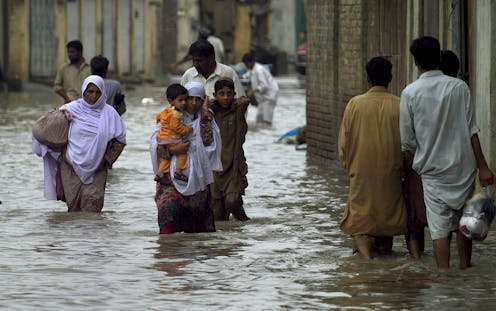
Anjum Naveed/AP

In 2022, a third La Niña year brought much rain to Australia and Southeast Asia and dry conditions to the other side of the Pacific. These patterns were expected, but behind these variations there are troubling signs the entire global water cycle is changing.

Our research team watches the global water cycle closely. We analyse observations from more than 40 satellites that continuously monitor the atmosphere and Earth’s surface. We merge those with data from thousands of weather and water monitoring stations on the ground.

For the first time, we’ve drawn on those many terabytes of data to paint a full picture of the water cycle over a year for the entire globe, as well as for individual countries. The findings are contained in a report released today.

The key conclusion? Earth’s water cycle is clearly changing. Globally, the air is getting hotter and drier, which means droughts and risky fire conditions are developing faster and more frequently.

A tyre sits on a dry lake bed
Earth’s air is getting hotter and drier, which means more flash droughts.
CAROLINE BREHMAN/AP

The year in a nutshell

In 2022, a third consecutive La Niña influenced weather around the world.
Three La Niña years in a row is unusual but not unprecedented.

A La Niña is an oceanic event in which sea surface temperatures are cooler than normal in the central and eastern tropical Pacific and warmer than normal in the western Pacific. The phenomenon strengthens easterly trade winds that bring rain to southeast Asia and Australia.

In 2022, La Niña combined with warm waters in the northern Indian Ocean to bring widespread flooding in a band stretching from Iran to New Zealand, and almost everywhere in between.

The most devastating floods occurred in Pakistan, where about 8 million people were driven out of their homes by massive flooding along the Indus River. Australia also experienced several severe flood events throughout the year – mostly in the east, but also in Western Australia’s Kimberly region at the very end of the year and into 2023.

As is typical for La Niña, the rain was much less plentiful on the other side of the Pacific Ocean. A multi-year drought in the western United States and central South America saw lakes fall to historic lows.

Another year of drought also decimated crops and led to a rapidly worsening humanitarian situation in the Horn of Africa.
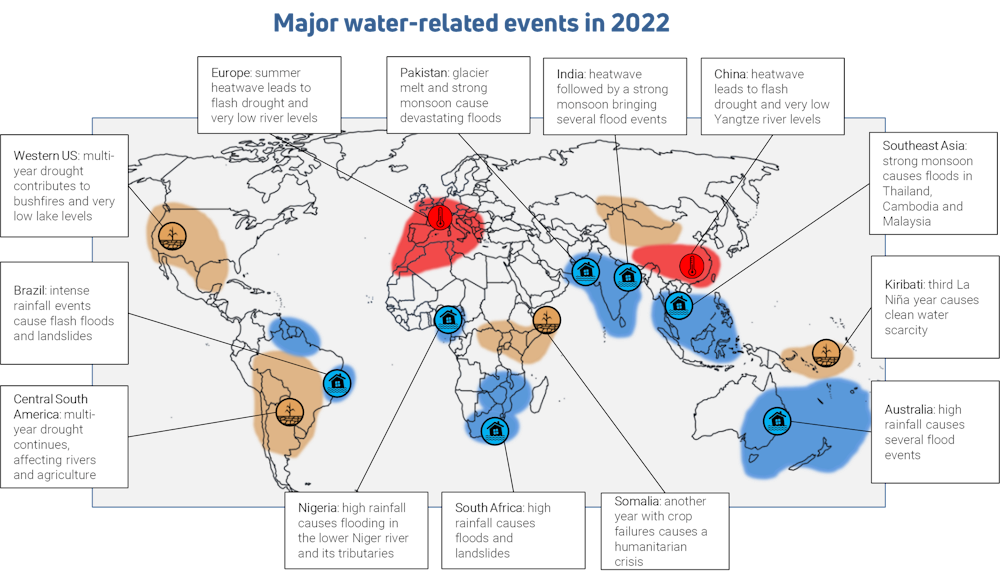
Major water-related events in 2022.
Global Water Monitor 2022 Summary Report

A change in the rains

Although our data do not suggest a change in average global rainfall, there are troubling trends in several regions.

The monsoon regions from India to Northern Australia are getting wetter. Parts of the Americas and Africa are getting drier, including the western United States, which experienced its 23rd year of drought in 2022.

Monthly rainfall total records appear intact. But rainfall over shorter periods is becoming increasingly intense in many regions.

As our report highlights, intense rainfall events struck communities across the globe in 2022 – from Brazil, Nigeria and South Africa to Afghanistan, India and Pakistan.

The downpours caused flash floods and landslides, killing thousands and leaving many thousands more without a home. Growing population pressures are pushing ever more people into floodplains and onto unstable slopes, making heavy rain and flood events even more damaging than in the past.

people holding belongings wade through water
The downpours caused flash floods and left thousands homeless.
Anjum Naveed/AP

A hotter, drier world

Average global air temperatures are rising. While La Niña years are historically relatively cool, that effect is largely lost in the upward march of global temperatures.

Heatwaves are increasing in severity and duration and this was noticeable in 2022. Apart from being natural disasters in their own right, heatwaves and unseasonally high temperatures also affect the water cycle.

In 2022, intense heatwaves in Europe and China led to so-called “flash droughts”. These occur when warm, dry air causes the rapid evaporation of water from soils and inland water systems.

In 2022, many rivers in Europe ran dry, exposing artefacts hidden for centuries.

Air is not only getting warmer but also drier, nearly everywhere. That means people, crops and ecosystems need more water to stay healthy, further increasing pressure on water resources.

Dry air also means forests dry out faster, increasing the severity of bushfires. In 2022, the western US experienced major fires in January, in the middle of Northern Hemisphere winter.

Warmer temperatures also melt snow and ice faster. The Pakistan floods were made worse by a preceding intense heatwave that increased glacier melt in the Himalayas. This raised river flows even before the rains hit.

Climate change is not the only way humanity is changing the water cycle. There has been a steady increase in the volume of lakes worldwide. This is mostly due to individuals and governments constructing and enlarging dams to secure their access water, which changes river flows downstream.
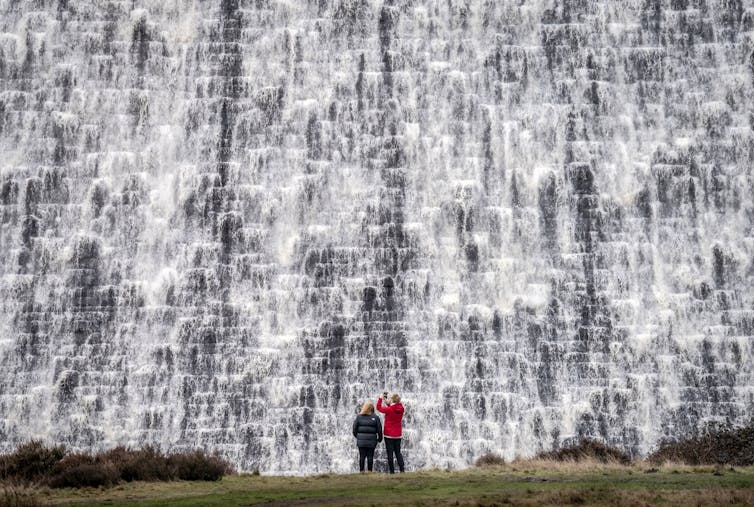
People look on as water pours down the front of a dam
Humans are building more dams as the global water cycle changes.
Danny Lawson//AP

Welcome to the future

La Niña’s influence appears to be waning, and a switch to an El Niño halfway through this year is possible.

Hopefully, that will mean fewer flood disasters in Asia and Oceania and more rain for drought-affected regions in the Americas and East Africa.

Australia, however, may see a return to heatwaves and bushfires. In the longer term, 2023 may mark the start of another multi-year drought.

The seesawing between El Niño and La Niña is a natural phenomenon. But it remains to be seen whether the triple La Niña was a statistical fluke or a sign of disruption from climate change.

If La Niña or El Niño stays around longer in future, we’re likely to experience deeper droughts and worse floods than seen to date.

Humanity’s success in reducing greenhouse gas emissions will determine the planet’s future several decades from now. Until then, global temperatures will continue to increase. New records will continue to be broken: for heatwaves, cloudbursts, flash droughts, bushfires and ice melt.

There is no way to avoid that. What we can do is heed the warning signs and prepare for a challenging future.


The 2022 report and the underlying data are publicly available via www.globalwater.online.

The following people collaborated on the 2022 report: Jiawei Hou (Australian National University), Hylke Beck (King Abdullah University of Science and Technology, Saudi-Arabia), Richard de Jeu and Robin van der Schalie (Planet, Netherlands), Wouter Dorigo and Wolfgang Preimesberger (TU Wien, Austria), Pablo Rozas Larraondo (Haizea Analytics, Australia) and Joel Rahman (Flowmatters, Australia).

The Conversation

Albert Van Dijk receives or has previously received funding from several government-funded agencies, grant schemes and programmes.

ref. New report shows alarming changes in the entire global water cycle – https://theconversation.com/new-report-shows-alarming-changes-in-the-entire-global-water-cycle-197535

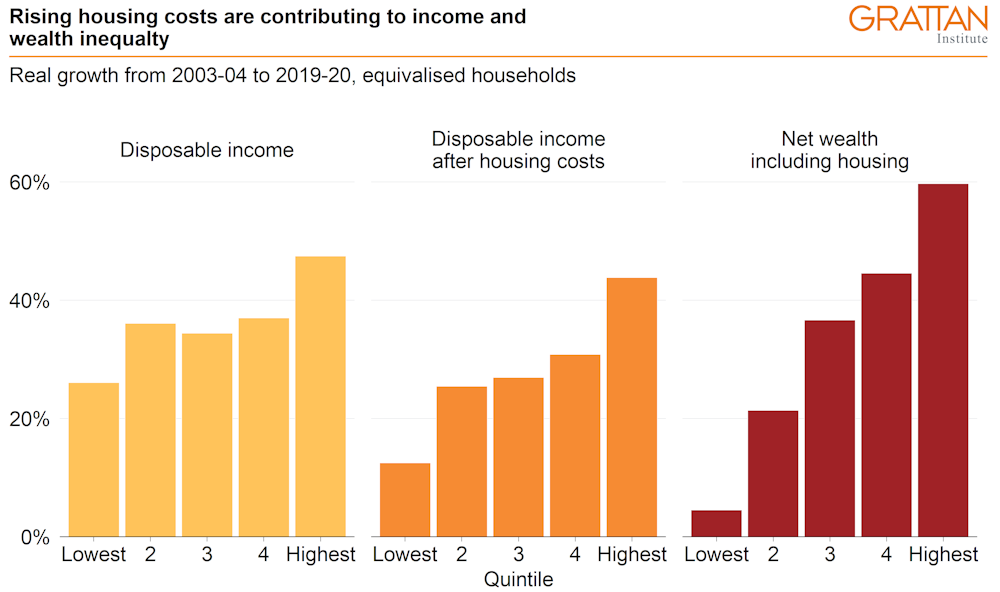
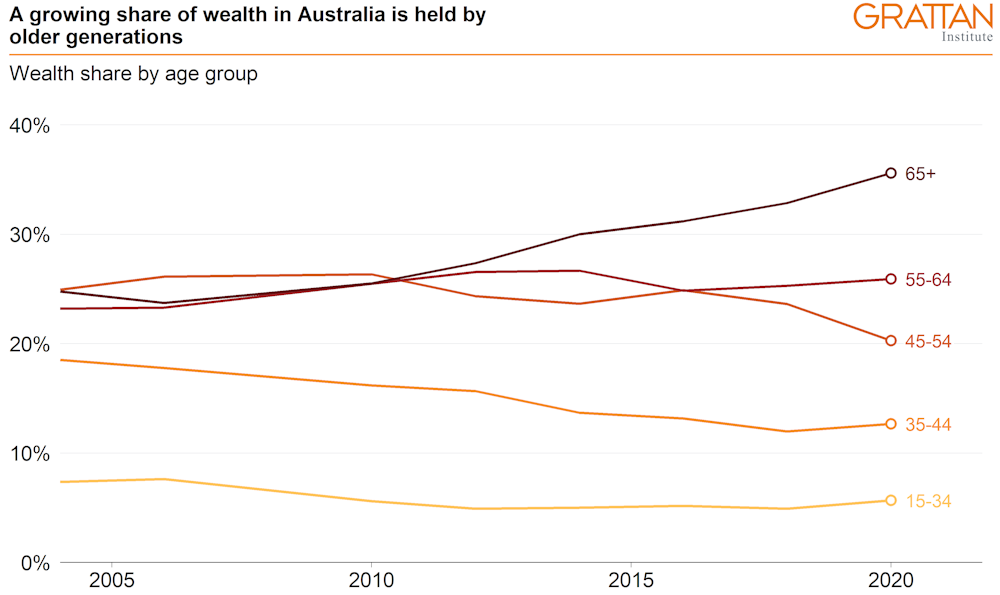
The housing wealth gap between older and younger Australians has widened alarmingly in the past 30 years. Here’s why

Source: The Conversation (Au and NZ) – By Rachel Ong ViforJ, ARC Future Fellow & Professor of Economics, Curtin University

Shutterstock

The housing wealth gap between younger and older Australians is undeniably growing.

Our newly published study attempts to find out how much it has grown by estimating the gap in the home equity of older people (Australians in their 50s) and younger people (Australians in their 30s) in 1997–98 and 2017–18.

Adjusted for inflation, we find that in 1997-98 the younger group had mean housing equity of A$97,799 compared to the older group’s $255,323 – meaning the older group had 161% more equity home equity than the younger group: 2.6 times as much.

By 2017–18 the younger group had mean equity of $140,080 but the older group’s mean equity had increased more to $467,182 – meaning the older group had 234% more equity than the younger group: 3.3 times as much.

The housing wealth gap between the old and young had grown from 161% to 234% – making it almost half as big again.

The increase in the gap between those we describe as the income-poor young and the income-rich old was even more alarming – a doubling from 532% to 1230%.

Two things have widened the divide

Our study draws on the 1997-98 and 2017-18 Bureau of Statistics surveys of income and housing and identifies two forces widening the gap.

The first relates to home ownership. While ownership rates for both groups have fallen, the decline has been steeper among the young (from 52% to 40%) than the old (80% to 69%).

The second relates to the different trajectories in the growth of home equity among those who do own homes. In 1997-98, the average equity in the primary home of owners in the older group was 1.7 times that of owners in the younger group. By 2017-18 it was twice that of the younger owners.


The increasing ownership gap turns out to have mattered more than the increasing gap in equity among those who do have homes.

We find that if the ownership gap had not widened, the overall intergenerational housing wealth gap would have been smaller at 200%, rather than 234%.

If the gap in home equity among those who owned homes had not widened, the gap would have been smaller at 215% rather than 234%.

It’s not just age – there are other divides

Housing inequality exists across other divides. In the table below we identify gaps across gender, location and income divides:

  • comparing single women to single men, we find the advantage enjoyed by single women has shrunk from 72% to 42%

  • comparing Australians in regional and urban areas we find the advantage enjoyed by those in cities has climbed from 46% to 93%

  • comparing Australians in the bottom and top thirds of income (adjusted for family size) we find the housing wealth gap has widened from 94% to 191%.


The age-based housing wealth gap is much greater than these other divides. But it becomes greater still when it interacts with those divides.

The greatest combined divide is between people who are both younger and income-poor and people who are both older and income-rich.

In 1997-98, the housing wealth gap between these two groups was an outsized 532%. Over the following decades, it more than doubled to 1230%.


Action is becoming urgent

Our findings put beyond doubt that younger people are falling further behind older people in terms of home ownership.

While some of this might reflect a shift in young people’s investment preferences toward non-housing assets, we find young non-owners also have less non-property wealth than owners.

It makes urgent the need to act on both the affordability of housing and the security of tenure for renters.


Read more:
The rent crisis is set to spread: here’s the case for doubling rent assistance


Our finding that older Australians enjoy higher growth in home values than young Australians provides support for encouraging the use of equity-release (“reverse mortgage”) schemes to unlock their housing wealth, relieving younger Australians of some of the tax burden of supporting them.

Although obstacles remain, the benefits to both older Australians and less well-off younger taxpayers would be considerable.

In the past 30 years the housing wealth gap between income-poor young Australians and income-rich older Australians has doubled to more than 1000%. Our society will hold together better if we do what we can to wind it back.

The Conversation

Rachel Ong ViforJ is the recipient of an Australian Research Council Future Fellowship (project FT200100422).

Christopher Phelps does not work for, consult, own shares in or receive funding from any company or organisation that would benefit from this article, and has disclosed no relevant affiliations beyond their academic appointment.

ref. The housing wealth gap between older and younger Australians has widened alarmingly in the past 30 years. Here’s why – https://theconversation.com/the-housing-wealth-gap-between-older-and-younger-australians-has-widened-alarmingly-in-the-past-30-years-heres-why-197027

Sizzling New Year but blackouts continue to hold PNG to ransom

By Miriam Zarriga in Port Moresby

Papua New Guinea began New Year 2023 with sizzling fireworks that lit up the skies.

But our hopes of shrugging off the “power blackout” tag ended just as the year was a few hours old.

An hour into New Year celebrations in the capital Port Moresby, like a perennial remnant, the inevitable popped like a fireworks flare gone bonkers — resulting in an inkiness that lasted into the wee hours of the morning.

Eleven days into the year, black outs are holding businesses and people to ransom across the country, prompting PNG Power Limited CEO Obed Batia to address the root cause of the constant outages.

According to Batia, the reasons range from aging equipment to high rainfall, vegetation that overwhelms power lines, the refusal of customers to allow PNG Power to trim vegetation and access powerlines, and low diesel fuel.

The creepy crawlies like snakes, rats and bats that can spark a major outage by squatting illegally in a transmitter don’t even rate a mention.

Batia said overgrown trees near power lines are some of the biggest contributors to blackouts, and the refusal of customers to allow PPL workers to cut down these trees add to the problem in many parts of the country.

Resisting cutting trees
He said: “Many customers resist PNG Power officers from cutting the trees and clearing of the vegetation within their properties. We are working with external parties to control this.”

Lae PPL office refused to answer questions asked by the Post-Courier about blackouts in Morobe.

In Goroka, a blackout lasted from Jan 6-8 for 48 hours, coming on for only 30 mins and going off again.

Frustrated consumers urged PNG Power to come clear on why the blackout was continuing.

Chamber of Commerce president Chris Anders said the blackout comes as “the risk of having your business or home broken into” had escalated as criminals took advantage of the blackouts, as they normally hit in the early hours of the morning.

“The lack of announcements from PNG Power on what they are doing to fix the power supply is deafening,” Anders said.

PPL said: “The Power Transformer at Himitovi Substation in Goroka which caters for the Goroka load experienced a technical fault on Friday around 2am.

“The issue was rectified at 7pm on Saturday night and power fully restored for Goroka customers.”

Without power for 8 days
Along the North Coast Road in Madang, a community has been without power for eight days with requests receiving responses that never were followed up by PPL.

Batia said that rainfalls have attributed to low water levels at Yonki and Ramu will see continued load shedding in Madang and Highlands while Lae has been assured of supply from Taraka, Mildford Power Stations, Baiune Power Station in Bulolo and the Munum IPP.

“In Port Moresby, recent system outages were experienced due to technical issues between all generation power stations both at PNG Power and the Independent Power Producers (IPPs),” he said.

“We are working together with our IPP stakeholders to ensure we correct those issues with respect grid control and regulation issues, in order to provide stable power.

“All Highlands centres and Madang have their standby power stations which supplement the load.

“There has been little increase in the water level but not to a capacity for the Ramu Hydropower Station to generate to full capacity yet.

Back to normal for Kokopo
“Gazelle grid has stopped load shedding and the system is back to normal for Kokopo, Rabaul and Kerevat customers,” Batia added.

“In all other provincial centres who run on diesel fuel power stations, our challenge is ensuring our fuel suppliers get supply to our power stations on time.

“When there is late supply, our teams resort to load shedding, which is conserving fuel until the next supply of fuel is delivered.

“Discussions are ongoing with our fuel suppliers to ensure we have an understanding on time supply for our diesel power stations.”

Miriam Zarriga is a PNG Post-Courier reporter. Republished with permission.

Print Friendly, PDF & Email

Article by AsiaPacificReport.nz

Papua governor Enembe arrested on ‘lavish’ bribery charges

RNZ Pacific

Indonesian anti-curruption authorities have arrested Papua Governor Lukas Enembe on allegations of bribery.

The Jakarta Globe called the arrest by the Corruption Eradication Commission in a restaurant in the provincial capital Jayapura yesterday as “dramatic” saying it came four months after he had been named a suspect.

The arrest led to his supporters attacking a police Mobile Brigade Unit where he was being held prior to being flown to Jakarta on a chartered flight.

Governor Lukas Enembe
Governor Lukas Enembe … his arrest led to his supporters attacking a police Mobile Brigade Unit. Image: West Papua Today

The newspaper said the two-term governor is accused of taking billions of rupiah in bribes from businessmen but has resisted arrest since the commission named him a suspect in September.

Indonesia’s Financial Transaction Reports and Analysis Centre alleged Enembe made payments, amounting to US$39 million dollars, to overseas casinos.

Indonesia’s Chief Security Minister Mohammad Mahfud said in October that the central government had channelled billions of dollars in what was dubbed “autonomy funding” to Papua since 2001, with about half of that amount disbursed during Enembe’s term.

He claimed “nothing happened: the people remain poor and the officials continue their lavish lifestyle”.

  • Pacific Media Watch reports that Papua province is at the heart of the indigenous self-determination struggle in West Papua.

This article is republished under a community partnership agreement with RNZ. 

Fate of Papua’s Governor Enembe – the ‘son of Koteka’ – lies in balance amid allegations

Print Friendly, PDF & Email

Article by AsiaPacificReport.nz

George Pell: a ‘political bruiser’ whose church legacy will be overshadowed by child abuse allegations

Source: The Conversation (Au and NZ) – By Miles Pattenden, Senior Research Fellow, Institute for Religion and Critical Inquiry, Australian Catholic University

Former senior Vatican figure George Pell has died in Rome from complications following hip surgery. He was 81.

Pell, often described as a conservative Catholic, was jailed for 13 months for child sexual abuse in Australia in 2019 but maintained his innocence and was acquitted the following year.

Once a top official in charge of reforming the Vatican finances, and also Australia’s highest-ranked Catholic figure, Pell leaves behind a complex legacy.

His death will be sad for the Catholics who held him in high regard but less so for the many critics he attracted in Australia and elsewhere over the course of his career.

It’s hard to believe he will not be remembered most vividly for the trial in 2019 and 2020, when he was accused and then convicted of several counts of sexual abuse of children within the St Patrick’s Cathedral complex itself. His conviction was later overturned.


Read more:
How George Pell won in the High Court on a legal technicality


Heavily criticised

Though his conviction was overturned by the High Court, there are many in Australian society who still felt Pell didn’t do enough when he was Archbishop of Melbourne and Sydney to act against abuse by priests in the dioceses he controlled.

He was heavily criticised by the Royal Commission into Institutional Responses to Child Sexual Abuse. When its report was released after Pell’s conviction was quashed in 2020, it condemned him for his failures to take action against abusive priests – particularly against serial paedophile priest Gerald Ridsdale.

One thing I think Pell’s own court case highlighted is a particular absurdity about legal reporting in Australia, in that everyone outside Australia knew he had been convicted but no one in Australia could report it.

That’s part of his legacy; this case exposed the difficulty in legal reporting. It’s actually quite important.

A political bruiser

Pell was, without a doubt, the most powerful Australian ever to rise through the ranks of the Catholic church. He put Australia on the map in the Vatican in a way it had not been at any other time in history.

It’s testament to how well he was regarded as an administrator in the church that even though he was one of the most staunch conservatives of his generation, the comparatively liberal Pope Francis still turned to him to ask him to regain control of Vatican finances. In other words, his talents were recognised even by liberals within the church.

He was an outsider to the nexus of Italian cardinals who usually controlled that aspect of Vatican activity.

When you talk to people who knew him, they say that in private Pell could be quite charming. But his public personality was as a political bruiser who was simply able to sweep aside opposition, which is what allowed him to ascend the hierarchy so quickly.

He was an ideological fellow traveller with Pope Benedict in many ways, but their style and personality couldn’t have been more different. Benedict was the softly spoken professor type, whereas Pell learned how to do politics in the boxing ring and on the footy field. That shaped his response to any given problem.

Before and after the court cases

Pell came from Ballarat, and had, in many ways, a difficult childhood where he wasn’t always physically well.

But he came through it and channelled a lot of his energy into physical pursuits. He signed for Richmond Football Club in 1959 and was on the verge of becoming a professional player. Yet he decided instead to give it all up to go into the seminary. I don’t think anyone but he could explain exactly why he made that choice.

His talent to cut to the heart of the problem and impose his solution is what got him noticed by his superiors in Australia and the Vatican and helped his rise though the ranks.

After the court case, Pell quietly returned to Rome, where he has been living in semi-retirement since. He’s only made a handful of public statements and he also published some writing he did during his time in prison.

In Easter last year he urged the Vatican to intervene to stop German priests who were advocating that homosexuality might be OK.

All in all, Pell had an important impact on making Australia central to the church but that will be overshadowed by the accusation he didn’t do enough to stop abuse by priests and by his own court cases.

This period will no doubt be triggering for survivors and it’s important to remember that. Many adults in the Catholic church and other institutions failed children in a lot of ways and it’s important we remember survivors of abuse and the profound effect public discussion of this case will have on them.


Read more:
Why have media outlets been fined more than $1 million for their Pell reporting?


The Conversation

Miles Pattenden has previously received research funding from the British Academy, the European Commission, and the Government of Spain.

ref. George Pell: a ‘political bruiser’ whose church legacy will be overshadowed by child abuse allegations – https://theconversation.com/george-pell-a-political-bruiser-whose-church-legacy-will-be-overshadowed-by-child-abuse-allegations-197613

Is it OK to kick a robot dog?

Source: The Conversation (Au and NZ) – By Robert Sparrow, Professor, Department of Philosophy; Adjunct Professor, Centre for Human Bioethics, Monash University

Shutterstock

Last Saturday night, a young woman out on the town in Brisbane saw a dog-shaped robot trotting towards her and did what many of us might have felt an urge to do: she gave it a solid kick in the head.

After all, who hasn’t thought about lashing out at “intelligent” technologies that frustrate us as often as they serve us? Even if one disapproves of the young woman’s action (or sympathises with Stampy the “bionic quadruped”, a model also reportedly used by the Russian military), her impulse was quintessentially human.

As artificial intelligence and robotics are increasingly deployed to spy on and police us, it may even be a sign of healthy democracy that we’re suspicious of and occasionally hostile towards robots in our shared spaces.

Nevertheless, many people have the intuition that “violence” towards robots is wrong. However, as my research has shown, the ethics of kicking a robot dog are more complicated than might be expected.

Robots feel no pain – but what about the people around them?

Were robots ever to become sentient — capable of thinking and feeling — then it would be just as wrong to kick a robot dog as it was a real dog, or maybe even a human being. But the robots we have today are just machines and feel nothing, so kicking them cannot be wrong because it hurts the robot.

Moreover, we still don’t know what makes us conscious and have no idea about how to produce sentience in a robot. So for the foreseeable future we don’t need to worry about causing robots themselves to suffer.

One obvious reason to criticise those who damage robots is that the robots are often the property of another person, who may well be dismayed when their robot is damaged. This fails to distinguish damaging robots from damaging cars or bicycles, and cannot explain why we might feel disturbed when we see someone abusing a robot they own.


Read more:
Abusing a robot won’t hurt it, but it could make you a crueller person


That other people would feel upset when they saw me kicking a robot dog gives me some reason not to do it. But it’s not a very powerful reason, since some people may be upset by anything I do, including some things that are clearly the right thing to do.

Is kicking robots a gateway to ‘real’ violence?

Some philosophers have argued violence towards robots is wrong because it makes it more likely the perpetrator, or perhaps witnesses, will behave violently towards entities that can suffer. Abuse of robots may lower the barriers to abuse of humans and animals.

This line of argument, which has also been rolled out to criticise “violent” video games, was actually developed by the 18th-century German philosopher, Immanuel Kant, to explain why (he thought) cruelty to animals is wrong.

Kant denied that animals themselves were worthy of moral concern but worried that people who abused animals would develop “cruel habits”. These habits would cause them to behave badly toward those who do count according to Kant – human beings.


Read more:
You wouldn’t hit a dog, so why kill one in Minecraft? Why violence against virtual animals is an ethical issue


How we treat robots that represent people and animals might therefore have implications for how we treat the things they represent.

It’s hard not to feel the appeal of this line of thought. After all, the advertising industry is built on the idea that getting people to associate representations of things or actions with pleasure can change their behaviour. So perhaps someone who enjoys kicking a robot dog may be more likely to kick a real dog in the future.

The problem with this argument is that it often doesn’t bear out in real life when we look at the evidence.

For instance, the claim that playing “violent” video games makes people more likely to be violent in real life is highly contested. Most people can distinguish pretty clearly between fantasy and reality, and may be able to enjoy representations of violence while still abjuring real violence.

What kind of person would do that?

An alternative line of criticism of violence towards robots, which I have developed in my own work, focuses on what our treatment of robots expresses here and now, rather than on how it might affect our behaviour in the future.

How we treat robots may say something about how we feel about the things that the robots represent. It may also say something about us.

To see this, imagine you meet someone who treated “male” robots well but “female” robots badly. This pattern of behaviour looks obviously sexist.

Or imagine you find your ex laughing with glee while they beat a robot made in your image with a baseball bat. It would be hard not to think this said something about how they feel about you.

It doesn’t matter whether these actions make the people who perform them more likely to behave badly in the future. The actions express attitudes that are morally wrong in themselves.

As Aristotle argued in The Nicomachean Ethics, one way to decide how we should act is to ask: “What sort of person would do that?”

When we think about the ethics of our treatment of robots, we should think about the sort of people it reveals us to be. That might be a reason to control our tempers even in our relations with machines – or to give military and police robots in public streets the boot.

The Conversation

Robert Sparrow is an Associate Investigator in the Australian Research Council Centre of Excellence for Automated Decision Making and Society. He was a Chief Investigator in the Australian Research Council Centre of Excellence for Electromaterials Science, which funded some of his previous work on the ethics of social robotics.

ref. Is it OK to kick a robot dog? – https://theconversation.com/is-it-ok-to-kick-a-robot-dog-197538

How does methadone work as a heroin-replacement therapy? And what about the longer-acting buprenorphine?

Source: The Conversation (Au and NZ) – By Nicole Lee, Professor at the National Drug Research Institute (Melbourne), Curtin University

Tbel Abuseridze

Around 1% of Australian adults have tried heroin in their lifetime and 2.7% have used pharmaceutical opioids for non-medical purposes in the past 12 months.

These drugs attach to the opioid receptors in the brain, creating feelings of relaxation, wellbeing and reduced pain.

Heroin has a short half life, meaning it doesn’t stay in the body for very long, so it has a high potential for dependence. If you’re dependent, you may need to use several times a day to maintain the effect.

Dependence is when you use a drug regularly and your body and brain become used to it. When you stop, withdrawal symptoms occur, which in the case of opioids can include symptoms such as muscle aches, strong cravings and hot or cold flushes. These symptoms can be so uncomfortable that they sometimes lead to using opioids again, which will stop the withdrawal symptoms.

Around one in three people who try heroin become dependent, and around one in five people who use opioids long-term for pain become dependent.

Research shows the most effective treatment for heroin dependence is to replace it with a similar but longer-acting opioid – such as methadone – in a controlled dose to reduce the need to use heroin. This is called “opioid agonist treatment”.


Read more:
Weekly Dose: methadone, the most effective treatment for heroin dependence


How does methadone work?

Methadone was the first medication trialled as a “replacement therapy”. It’s a long-acting opioid, with similar effects to heroin.

It’s usually swallowed as a solution or a syrup. Because it maintains its action for so long, it only needs to be taken once a day.

Syrup bottle and in cup
Methadone is usually taken as a solution or syrup.
Shutterstock

When the dose is high enough, methadone blocks the brain’s natural opioid receptors. So if someone uses heroin while on methadone they won’t feel the effects of the heroin because the receptors are already full with methadone.

Methadone treatment was first tested in the 1960s in New York, in a groundbreaking trial at The Rockefeller University by Vincent Dole, a physician, and Marie Nyswander, a psychiatrist.

The first trial of 22 people who were given daily doses of methadone was highly successful and laid the foundation for decades of research demonstrating its effectiveness.

By removing the need to regularly take other opioids, and stabilising opioid withdrawal and cravings, methadone reduces drug use, reduces criminal activity, and improves health.

Once a person is on a steady dose, which often takes up to six to eight weeks, and they no longer feel withdrawal symptoms, they are better able to work or study. When a person is on a steady dose (that is, that they are not intoxicated or feeling “under the influence” after their normal daily dose) they are allowed to drive a car, although driving is not recommended when undergoing dose changes or at the start of treatment.

Methadone works for people who use heroin or prescription opioids. In Australia, the proportion of people in opioid agonist treatment for dependence to prescription opioids has grown significantly.

Opioid agonist treatment, such as methadone, is an effective treatment for prescription opioid dependence, and is also an effective analgesic (painkiller) for those with both chronic pain and opioid dependence.

So what is buprenorphine?

Buprenorphine is the other medicine commonly used for opioid dependence.

Buprenorphine works for even longer than methadone and in some cases can be taken every second or third day. It comes in a film or a tablet that dissolves under the tongue.

It is a partial agonist, so it binds to the opioid receptor but doesn’t have a full opioid effect.

Buprenorphine is usually combined with naloxone: the medicine that reverses heroin overdoses. Naloxone is inactive when taken orally (or sublingually, or under the tounge) with buprenorphine, but if it is injected it causes unpleasant side effects. Combining the two reduces the likelihood someone will inject their medication intravenously (into a vein), as it’s not intended to be used in this way.


Read more:
How do painkillers actually kill pain? From ibuprofen to fentanyl, it’s about meeting the pain where it’s at


A long-acting buprenorphine that is injected subcutaneously (under the skin) and slowly released over time is also now available in Australia. It can be used as infrequently as once a month, and makes treatment much more accessible.

Some people prefer buprenorphine as it can be less sedating, but others find the full opioid effects of methadone is more effective.

But it can be costly and difficult to access

Methadone and buprenorphine are not expensive medicines, and in Australia they are paid for in full by the government.

Methadone and buprenorphine are usually taken under supervision by a community pharmacist. However, the cost for the pharmacist to provide methadone or buprenorphine is not subsidised by the government. It has to be paid for by the patient.

The medicine has to be taken daily or, for buprenorphine, at least several times a week. A fee is charged for each dose supplied and the costs can add up.

Woman leans against a building at night, her head dipped
Other costs can push drug replacement therapies out of reach.
Eric Ward/Unsplash

Some people also need to pay to see a doctor to get a prescription.

All these costs can be a disincentive to stay in the program, even though the outcomes are very good.

There’s still a lot of stigma

One of the key barriers to treatment is stigma. This occurs across all levels of the treatment system.

When patients are worried about the stigma of being identified as someone on an opioid pharmacotherapy program, they may wait a long time to seek treatment.

Some treatment providers also hold prejudices against people who use heroin and other drugs and may treat them poorly, compounding the problem.


Read more:
Opioid dependence treatment saves lives. So why don’t more people use it?


There is also judgement from people in the community about being on treatments like methadone. Many people have the incorrect idea that methadone is “just replacing one drug for another”.

But compared to using street heroin, methadone treatment is better for the individual, their families and the community.

Think of methadone and buprenorphine treatment in a similar way to insulin for diabetes or daily medications that are needed to manage high blood-pressure. Opioid agonist treatment is usually needed long term and to be taken regularly to be effective.

Man reaches into medicine cabinet
Methadone and buprenorphine are long-term therapies to treat a health condition.
Shutterstock

What replacement therapies might come next?

Several other forms of opioid agonist treatment are available in Canada and Europe, but not yet in Australia. These include slow-release oral morphine and injectable opioid agonist treatments.

With injectable opioid agonist treatments, short acting opioids like hydromorphone are self-injected under medical supervision multiple times per day. This treatment is usually only when methadone or buprenorphine have been ineffective.

Although these are now well-established treatments in countries such as Canada, it is not clear if or when injectable opioid agonist treatments will become widely available in Australia.

Heroin dependence is a health condition and there is very good evidence that receiving any form of opioid agonist treatment saves lives, so it is critical that people can access it when they need it.

If you’re worried about your own or someone else’s drug use you can call the National Alcohol and other Drug Hotline on 1800 250 015 for advice, counselling or help finding a treatment provider.

The Conversation

Nicole Lee works as a consultant in the alcohol and other drug sector and a psychologist in private practice. She has previously been awarded funding by Australian and state governments, NHMRC and other bodies for evaluation and research into alcohol and other drug prevention and treatment.

Suzanne Nielsen receives funding from the National Health and Medical Research Council (NHMRC) as a current recipient of an NHMRC Career Development Fellowship. In the past she has received research grants from Seqirus to investigator harms from prescription opioids. She was a named investigator on a trial of buprenorphine depot funded by Indivior but she did not receive funding, nor did her institution.

ref. How does methadone work as a heroin-replacement therapy? And what about the longer-acting buprenorphine? – https://theconversation.com/how-does-methadone-work-as-a-heroin-replacement-therapy-and-what-about-the-longer-acting-buprenorphine-189692

Are stingrays actually dangerous? 3 reasons you shouldn’t fear these sea pancakes

Source: The Conversation (Au and NZ) – By Jaelen Nicole Myers, PhD Candidate, James Cook University

Shutterstock

To beat the summer heat, many of us in the Southern Hemisphere are hitting the beach – and this raises our chances of encountering potentially dangerous marine life beneath the waves.

So should we be worried about stingrays? You might still think so, even if it’s been 16 years since the death of wildlife icon Steve Irwin.

Irwin wrangled some of the world’s most dangerous animals, from crocodiles to venomous snakes, yet it was a stingray that tragically took his life. When I tell others I study stingrays, they usually respond with shock, followed by a quick reminder about this. In fact, I am surprised when an Australian doesn’t mention it.

Despite their reputation as being dangerous, stingray-caused deaths are actually rare. Accidental injuries do happen, but understanding how and why “barbings” occur could help prevent them and help beachgoers overcome the stingray stigma.

The stingray stigma

The existence of a “stingray stigma” became obvious to me after I recently posted an Instagram reel demonstrating the proper technique for picking up a stingray. Despite the fact I’m well trained in this procedure, multiple commenters were flabbergasted I would attempt something so dangerous.

A few more suggested I should fling the stingray out of my hands to avenge Steve Irwin. We can assume these comments are jokes, but weeks after his death news reports showed Irwin fans may have sought retribution when a handful of stingrays on Queensland’s beaches were found with their tails cut off.

Antipathy towards stingrays is likely influenced by media headlines which often paint the animals in a negative light. Many reports about stingrays are coupled with terms such as “stingray attack” but, in fact, they rarely act aggressively.

A rather docile cowtail stingray resting in the ankle-deep water.
Jaelen Myers, 2022


Read more:
‘I will miss them if they are gone’: stingrays are underrated sharks we don’t know enough about


3 crucial facts about stingrays

So which rays should we watch out for and how do barbings happen? Here are three key facts:

1. More people die falling out of bed than from stingrays

Thousands of stingray injuries are reported worldwide each year but, interestingly, only five recorded deaths have been reported in Australia since 1945, and fewer than 20 worldwide.

Actually, more people die each year from falling out of bed – 73 people in Australia in 2021 alone, according to data from the Australian Bureau of Statistics.

2. Not all rays sting

I have been using the term stingray so far, but there are many types of rays. To clarify, all stingrays are rays, but not all rays are stingrays.

The term “ray” includes everything from skates, guitarfish, manta rays, devil rays, to true stingrays. Only the latter is characterised by a venomous barb, which it developed as a defence tool against larger aquatic predators such as sharks.

Common shovelnose ray – one of the many barb-less rays.
Jaelen Myers, 2022

3. A stingray’s body is harmless – but it is slimy

The barb is the only part of a stingray you should be wary of. Since it is located close to the base of the tail on most species, the rest of the tail and the body are harmless to touch.

You’re only in barbing range if you stand nearly on top of their bodies, but they usually shuffle away long before you get that close.

When they feel threatened or are stepped on, rays may react defensively by jerking their tail. That’s why injuries are usually on the foot or ankle. Injuries to extremities vary in severity and pain degree, but they aren’t usually life threatening.

Location of the venemous barb on a stingray’s tail. As they grow, they commonly grow a second barb.
Jaelen Myers, 2022


Read more:
Reef manta rays are in decline globally – but new research finds one place in Indonesia where these charismatic rays are thriving


Love your local stingray

Knowing these facts hopefully eliminates some of the mystery and underlying fear about stingray strikes. Based on my experiences, I find stingrays to be gentle natured. My hope is to alter the general perception of them from dangerous to cute and gentle.

Fortunately, the growth of ecotourism is helping by providing people with memorable stingray interactions. Many aquariums around the world, such as the Georgia Aquarium in the United States, allow adults and children to pet and feed stingrays in touch tanks.

You may have also heard of Stingray City in the Cayman Islands, which is famous for letting you snorkel with rays. At the DayDream Island resort in Queensland, Australia, you can even feed them on your lap.

A group of kids learn how to feed stingrays at Daydream Island Resort.
Jaelen Myers, 2022

Positive interactions with these animals can replace the stingray stigma with fascination and curiosity, which is important for promoting their conservation.
A hefty portion of ray species worldwide are vulnerable to localised extinctions and declining population sizes under current levels of overfishing, including eagle and manta rays.

Increasing evidence also suggests more conservation efforts are directed to popular, beloved species. Is there any doubt that we care more for panda bears than a slimy fish? Thus, learning to appreciate our ocean’s “sea pancakes” could be good for them in the long run.

My advice is to seek out a memorable stingray experience. If you see one at the beach, observe it from a safe distance. If you’re landlocked, take the family to the aquarium and touch one. Then you can decide whether it’s worth being afraid of them.

Stingray City, Cayman Islands is a tourist hotspot where people can get up close and personal with the resident stingrays.
George Wauchope, 2023


Read more:
It might be the world’s biggest ocean, but the mighty Pacific is in peril


The Conversation

Jaelen Nicole Myers receives funding from James Cook University and the Ecological Society of Australia,.

ref. Are stingrays actually dangerous? 3 reasons you shouldn’t fear these sea pancakes – https://theconversation.com/are-stingrays-actually-dangerous-3-reasons-you-shouldnt-fear-these-sea-pancakes-196390

New Zealand does not offer tenure to academics, but a recent employment dispute shows it’s more than a job perk

Source: The Conversation (Au and NZ) – By Jack Heinemann, Professor of Molecular Biology and Genetics, University of Canterbury

Getty Images

Late last year, the Auckland University of Technology (AUT) initiated a process to eliminate 170 academic jobs to cut costs. The Employment Relations Authority (ERA) found AUT’s approach breached its collective employment agreement with staff and their union and ordered it to withdraw the termination notices.

Tertiary education runs on an insecure labour force in New Zealand and elsewhere. The AUT decision illustrates that even traditionally secure positions are becoming less so.

Tenure is the traditional protection for academics in the tertiary sector, but New Zealand does not have tenure at its universities.


Read more:
For many NZ scholars, the old career paths are broken. Our survey shows the reality for this new ‘academic precariat’


Tenure is more than a perk

A common argument against tenure is that it leads to a complacent, under-motivated university professor. These concerns are hypothetical – evidence that tenure causes productivity differences is lacking. In fact, one of few large studies on the subject found the opposite. Good administrators should be able to manage any actual productivity issues as they do in all other workplaces.

On the other hand, lack of tenure creates risks for free societies. Tenure is common practice in other liberal democracies. UNESCO says:

Security of employment in the profession, including tenure […] should be safeguarded as it is essential to the interests of higher education.

Tenure is important, if not indispensable, for academic freedom. Academic freedom is essential to a university’s mission, and this mission is a characteristic of a democracy. As University of Regina professor Marc Spooner put it:

A country’s institutional commitment to academic freedom is a key indicator of whether its democracy is in good health.


Read more:
Universities: The often overlooked player in determining healthy democracies


Scholarship is not piecework

The ERA said AUT misunderstood terminology in the collective employment agreement.
The clash term was “specific position”. AUT’s position was that specific positions are identified by professional ranks (from lecturer to professor) and the numbers of each role across four particular faculties.

The ERA did not agree and concluded an essential component for identifying specific positions is the employee, being the person who is the current position holder or appointee to a position.

AUT’s assertion would be like the air force using the rank of “captain” to adjust its number of pilots. The number of captains does not tell you what each captain does, be it to fly planes or fix them.

Without tenure, a standard less than this minimum established by the ERA can be used to eliminate academics who have legitimate priorities that do not align with the administrative staff of the day, or are the victims of any other concealed discrimination. The ERA clarification makes it more difficult to inhibit intramural criticism, the right to criticise the actions taken by managers and leaders of the university.

The authoritative review of freedom of speech and academic freedom in Australian universities singles out the importance of academic freedom for this purpose, saying:

It […] reflects the distinctive relationship of academic staff and universities, a relationship not able to be defined by reference to the ordinary law of employer and employee relationships.

The ERA clarification helps to prevent the firing of academics who are teaching, researching or questioning things administrators, funders or governments don’t want them to. But it is a finger in a leaking dyke. Tenure is a tried and tested general solution.

Health of the democracy

We only need to observe the events in the United States to recognise the importance of tenure. This benchmark country has a proud tradition of tenure. Nevertheless state governments are dismantling tenure to impose political control on curriculums. Our liberal democracy is not immune to this.

We need more than tenure-secured academic freedom to enable universities to do the sometimes dreary and at other times risky work of providing societies alternatives to populist, nationalist or autocratic movements. But as the Douglas Dillon chair in governance studies at the Brookings Institution, Darrell M. West, wrote, academic freedom is a problem for these movements.

Recognizing the moral authority of independent experts, when despots come to power, one of the first things they do is discredit authoritative institutions who hold leaders accountable and encourage an informed citizenry.

In a system with tenure, a university would have a defined stand-down period preventing reappointment to vacated positions. For example, if an academic program and associated tenured staff that teach it were eliminated at the University of Arkansas for financial reasons, the program could not be reactivated for at least five years. The stand-down inhibits whimsical or agenda-fuelled restructuring as a lazy option to manage staff.

If a similar trade-off were to be applied to how AUT defined specific positions, then no academics could be hired there for five years. It is very different to be prevented from hiring academics than it is to, say, not re-establishing a financially struggling department or program.

Herein lies the true value of tenure. It is greater than a protection of the individual. It protects society from wasteful or ideologically motivated restructuring as an alternative to poor management. Tenure is security of the public trust in our universities.

The Conversation

Jack Heinemann is a member of the Tertiary Education Union and the network of scholars called Academic Freedom Aotearoa. He is an expert witness on academic freedom in the Employment Court. This work is his opinion and does not represent the opinion of the University of Canterbury.

ref. New Zealand does not offer tenure to academics, but a recent employment dispute shows it’s more than a job perk – https://theconversation.com/new-zealand-does-not-offer-tenure-to-academics-but-a-recent-employment-dispute-shows-its-more-than-a-job-perk-197016

Why do our dogs and cats bring us dead animals?

Source: The Conversation (Au and NZ) – By Mia Cobb, Research Fellow, Animal Welfare Science Centre, The University of Melbourne

Samantha Fortney/Unsplash, CC BY

What do a little penguin, a baby rabbit, a black rat and a Krefft’s glider have in common? They’ve all been presented to me (when dead) by my animal companions. Chances are, if you live with a cat or dog, you’ve also been brought something similar.

So, is it a gift, are they showing off, or is something else going on?

Is it meant for you?

The first thing to consider is whether your canine or feline companion is actually bringing you the dead animal, or are you just in the space they have also come to?

As people, we tend to like putting ourselves into the middle of every story (the fancy term to describe this mindset is anthropocentric). But sometimes it’s not about us. Maybe your dog was planning to munch away at that half-rotten critter on their comfortable bed in a known safe place, which coincidentally is near where you are.


Read more:
Genetic research confirms your dog’s breed influences its personality — but so do you


Perhaps your cat has entered the room, truly parading the find in their mouth to you. This might include them loudly exclaiming they hit their version of the jackpot with a direct approach: walking towards you, holding eye contact with you and making a distinctive cry (most cat meows are designed to get your attention).

If this is the case, then yes, they probably are intentionally sharing this dead animal with you. But why?

Understanding animal motivations

Did they kill this animal themselves?

Globally, we know people value wildlife in both urban and rural areas. Yet our companion cats and dogs kill huge numbers of wild animals. In Australia, cats in particular have attracted attention and management policies to reduce their impact on local wildlife.

Cat peering out of from the side of a window
They can be very cute, but cats are also highly effective killers of native wildlife.
Fatih Turan/Pexels, CC BY


Read more:
Australia must control its killer cat problem. A major new report explains how, but doesn’t go far enough


Are they bringing you something that was already dead?

In some situations, our animals may just be opportunistic and have found something that was already dead. Perhaps it was dropped in a paddock by an owl, or washed up on the beach, or hit by a vehicle and found on the side of a road. What are we to make of these offerings?

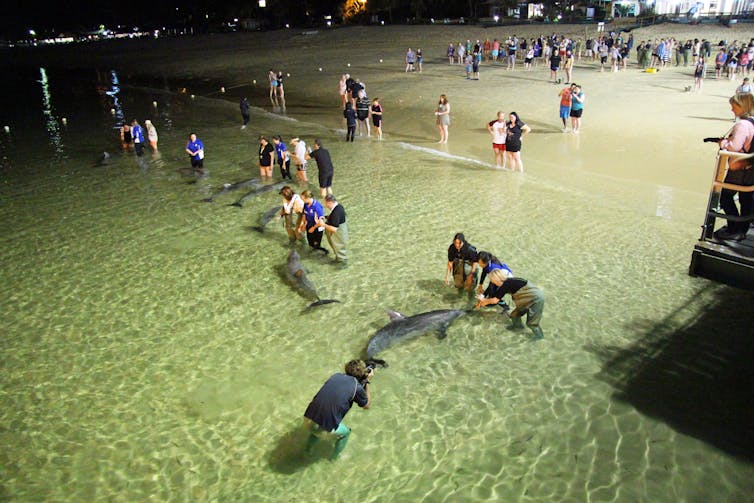
In 2015, Queensland biologists described a number of individual wild bottlenose dolphins apparently “gift-giving” wild-caught fish (usually already dead) or cephalopods (such as squid and octopus) to the people who fed them fish as part of a regulated feeding program at Tangalooma in Australia.

The researchers thought the gifting was consistent with play, prey-sharing and teaching behaviours observed in dolphins, whales and many other mammals historically considered as big thinkers.

Ultimately, with these dolphins, and with our own animal companions, we can think of this sharing as an expression of the particular relationship between the animal and the human. In some cases, where the behaviour is regular (even if infrequent), we can describe it as part of the animals’ culture, as the dolphin biologists did in their scientific paper.


Read more:
Whales and dolphins have rich cultures – and could hold clues to what makes humans so advanced


dolphins being fed by people in shallow water at the beach
Dolphins used to being fed by people at Tangalooma, Queensland, have been known to present fish in return.
S. Newrick/Wikimedia Commons, CC BY-SA

What should you do?

If you ever find yourself in the position where your animal companions bring you a dead animal, there are a couple of things to remember.

  1. Regular parasite control will ensure you don’t all share more than intended. Mites responsible for mange, lice and worms can all spread readily between dead wildlife, animal companions and people. Talk to your veterinarian if you’re unsure about what parasite control your four-legged friend should routinely have.

  2. Stopping cats and dogs from preying on wildlife is a really important part of looking out for everyone’s wellbeing. If you know your animal companion is killing wild animals, you should take action to prevent it.

Effective measures might include safely limiting when and where they go outdoors, a bell on their collar, keeping them on a lead when outside, and redirecting their energy through regular walks, play and fun training activities. Keeping cats inside the home can also limit the spread of diseases to humans and other animals.


Read more:
Cats that are allowed to roam can spread diseases to humans and wildlife


So, when your cat or dog presents you with a dead animal, it is normal behaviour and can indicate their attachment to you. It’s also a reminder, though, of how much damage they can do to wildlife and of our responsibility to limit that harm.

The Conversation

Mia Cobb does not work for, consult, own shares in or receive funding from any company or organisation that would benefit from this article, and has disclosed no relevant affiliations beyond their academic appointment.

ref. Why do our dogs and cats bring us dead animals? – https://theconversation.com/why-do-our-dogs-and-cats-bring-us-dead-animals-189983

As international students flock back, they face even worse housing struggles than before COVID

Source: The Conversation (Au and NZ) – By Alan Morris, Professor, Institute for Public Policy and Governance, University of Technology Sydney

Shutterstock

Australia is welcoming back international students in much greater numbers this year. Some predict new enrolments in 2023 could even be higher than the pre-COVID record in 2019. Student visa applications in the second half of 2022 were up 40% on the same period in 2019.

The downside is many of these students are likely to struggle to find affordable and adequate accommodation. They are facing record low private rental vacancy rates and higher rents than before the pandemic.

Redfern Legal Centre’s International Student Legal Service NSW has been assisting international students for over a decade. Its senior solicitor, Sean Stimson, told us:

The tenancy situation facing international students in the second half of 2022 – including illegal evictions and illegal rent increases – is the worst I’ve seen. We are increasingly seeing international students who are occupying substandard, illegal accommodation, exposing themselves to dangerous environments.

To make matters worse, a number of universities have been selling off a proportion of their student housing in response to falls in revenue during the pandemic. For example, in 2021, University of Technology Sydney sold three buildings with 428 beds for A$95 million to Scape, the largest provider in Australia’s A$20 billion purpose-built student housing sector.

In some cases, this has made student accommodation more costly. Rents are typically equivalent to, or even higher, than rents in the wider private rental market.

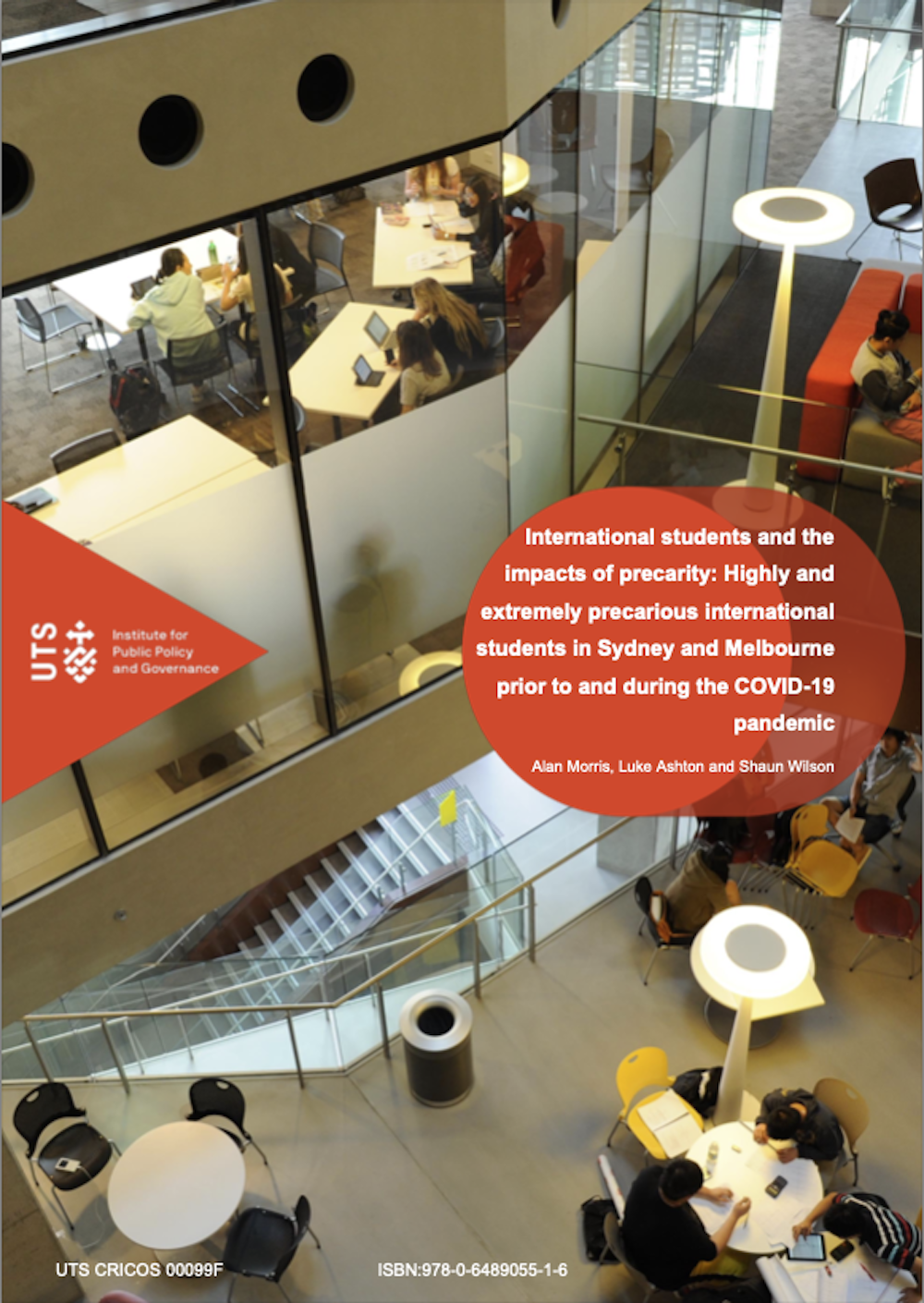
Cover of report on international students and the impacts of precarity
The authors’ report, International students and the impacts of precarity.
Institute for Public Policy and Governance/UTS, Author provided

Like any group, students’ financial resources vary greatly. However, little was known about these inequalities and their impacts on international students’ housing and everyday living.

Our recently published study, involving more than 7,000 international students, shows many were struggling financially even before the post-COVID rental crisis. They suffered great anxiety about finding the money to pay the rent and worried about becoming homeless.

We also found food insecurity was common among these students. More than one in five had gone without meals. Similar numbers were unable to heat or cool their home adequately.


Read more:
Australia wants international students to stay and work after graduation. They find it difficult for 4 reasons


What did the study look at?

To study students’ experience of financial hardship or precarity, we used a scale of seven financial stress indicators from the Australian Bureau of Statistics. We added a new item, “Could not afford to buy prescribed textbooks”.

Our research project surveyed students who depended on private rental accommodation in Sydney and Melbourne, Australia’s top destinations for international students, in late 2019.

The sample was drawn from all three post-secondary sectors. It included ten universities, 24 vocational colleges, seven English language colleges and two foundation course institutions.

We divided the 7,084 valid responses to the survey into four groups: secure (no financial stress indicators), moderately precarious (one to two indicators), highly precarious (three to five) and extremely precarious (six to eight).

Some 44% of students were secure, 31% were moderately precarious, 20% were highly precarious, and 5% were extremely precarious.


Read more:
International students are returning to Australia, but they are mostly going to more prestigious universities


How many students are struggling financially?

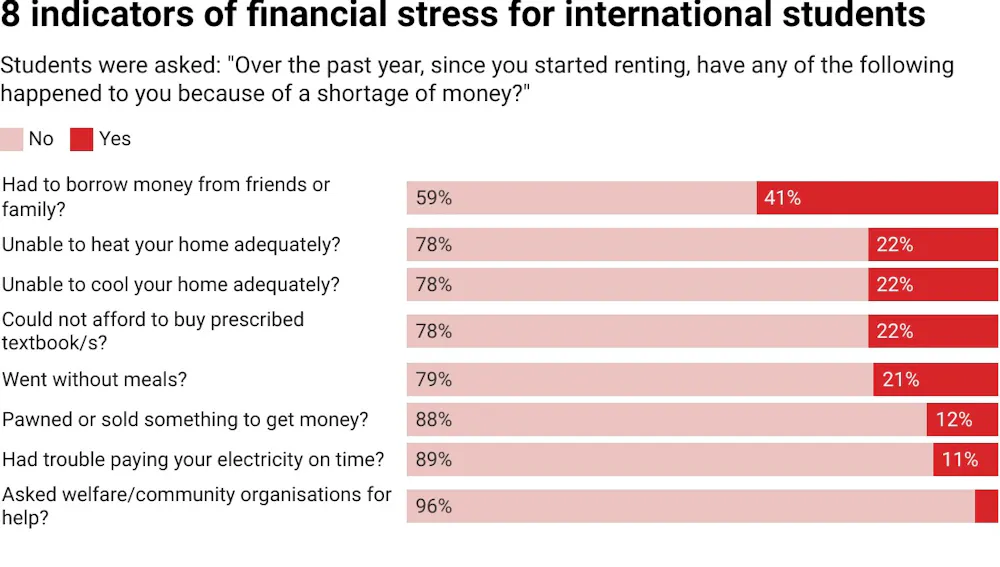
A large proportion of students were struggling, as the chart below shows. Some 21% reported going without meals in the past 12 months. And 22% were unable to heat or cool their home adequately.

Horizontal stacked bar chart showing students' responding 'yes' or 'no' to whether they had experienced eight indicators of financial stress over the previous 12 months

Chart: The Conversation. Data: International students and the impacts of precarity, Author provided

How affordable is students’ housing?

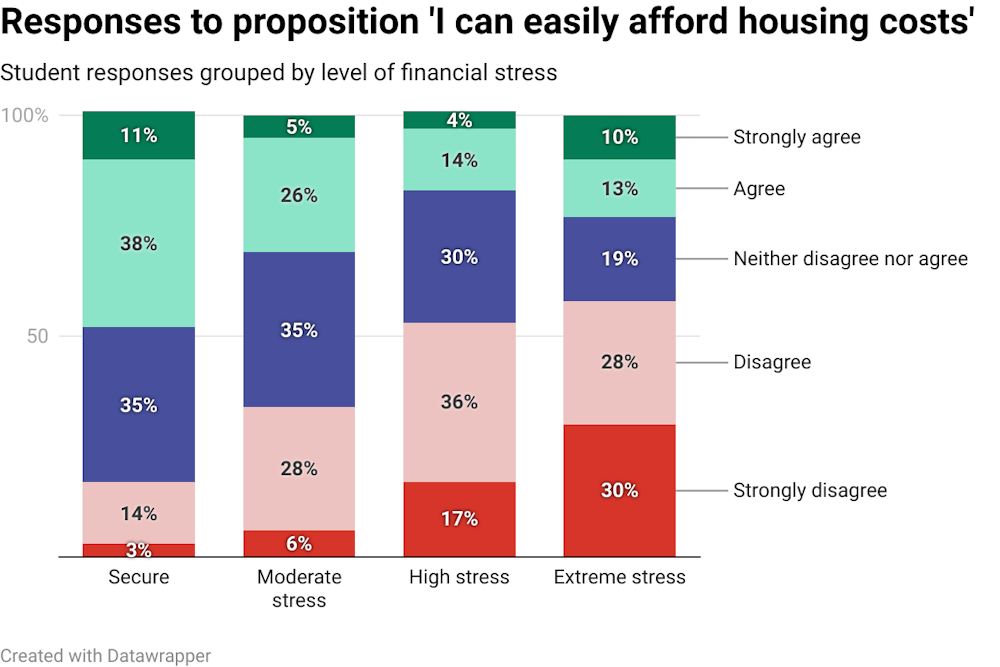
More than half of the students classed as highly and extremely precarious (53% and 58% respectively) said they could not “easily afford housing costs”. This compared to 34% of moderately precarious and 17% of secure students.

Vertical bar chart showing students' level of agreement or disagreement with proposition that they can easily afford housing costs, grouped by level of financial stress

Chart: The Conversation. Data: International students and the impacts of precarity, Author provided

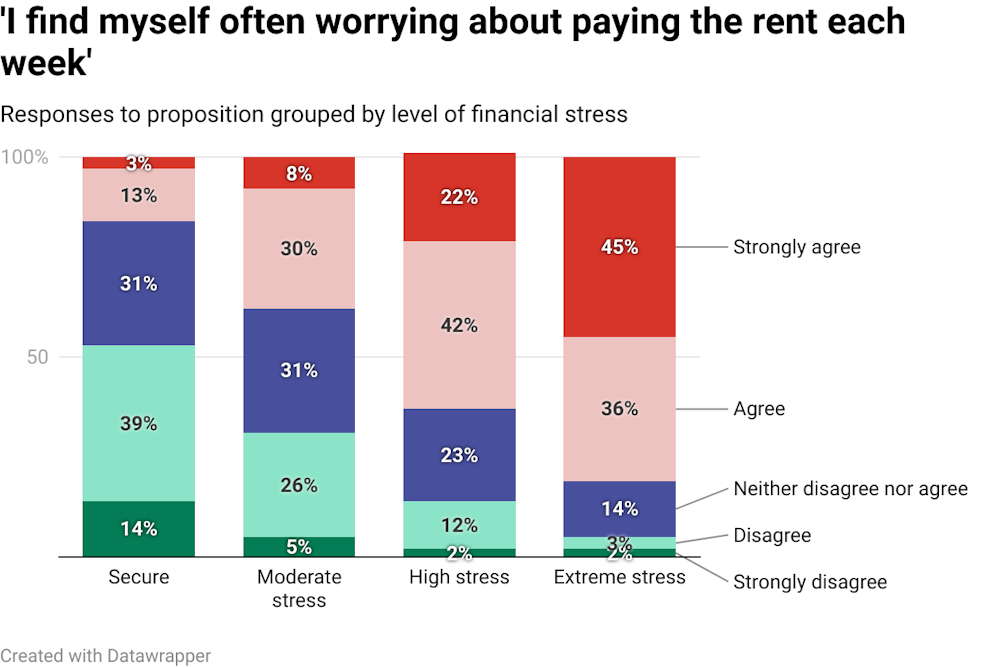
Paying the rent was a source of much anxiety across all groups. Some 64% of highly precarious students and 81% of extremely precarious students said they often worried about paying the rent each week, compared to 38% of moderately precarious students and only 16% of secure students.

Vertical bar chart showing students' level of agreement or disagreement to proposition 'I find myself often worrying about paying the rent each week'

Chart: The Conversation. Data: International students and the impacts of precarity, Author provided

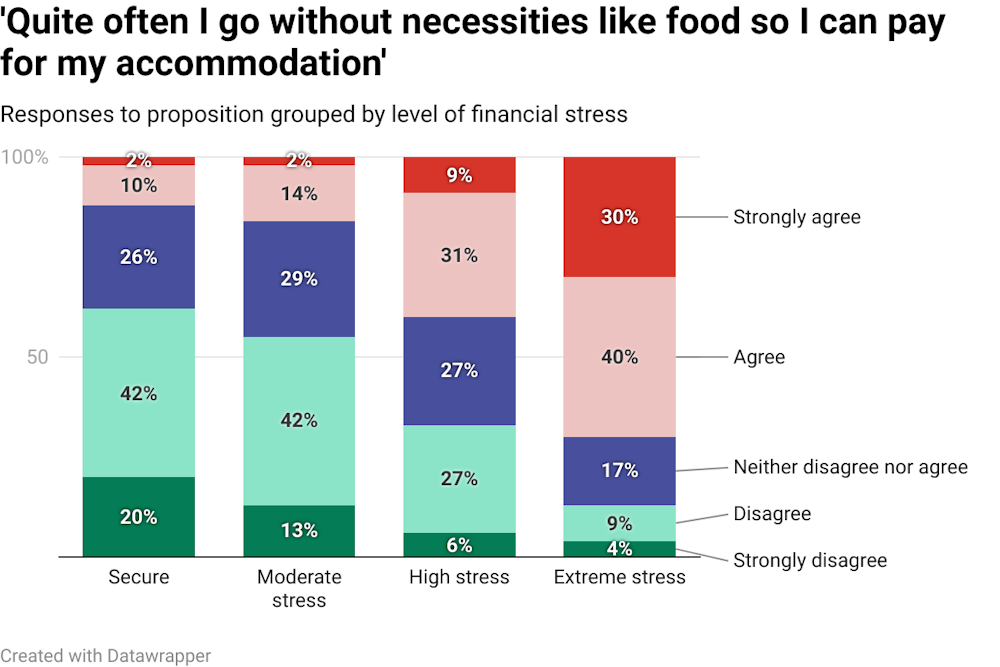
Worryingly, 70% of extremely precarious students reported going without necessities such as food so they could pay the rent. This proportion drops to 40% for highly precarious students, 16% for moderately precarious students and 11% for secure students.

Vertical bar chart showing students' level of agreement or disagreement to proposition 'Quite often I go without necessities like food so I can pay for my accommodation'

Chart: The Conversation. Data: International students and the impacts of precarity, Author provided


Read more:
How many Australians are going hungry? We don’t know for sure, and that’s a big part of the problem


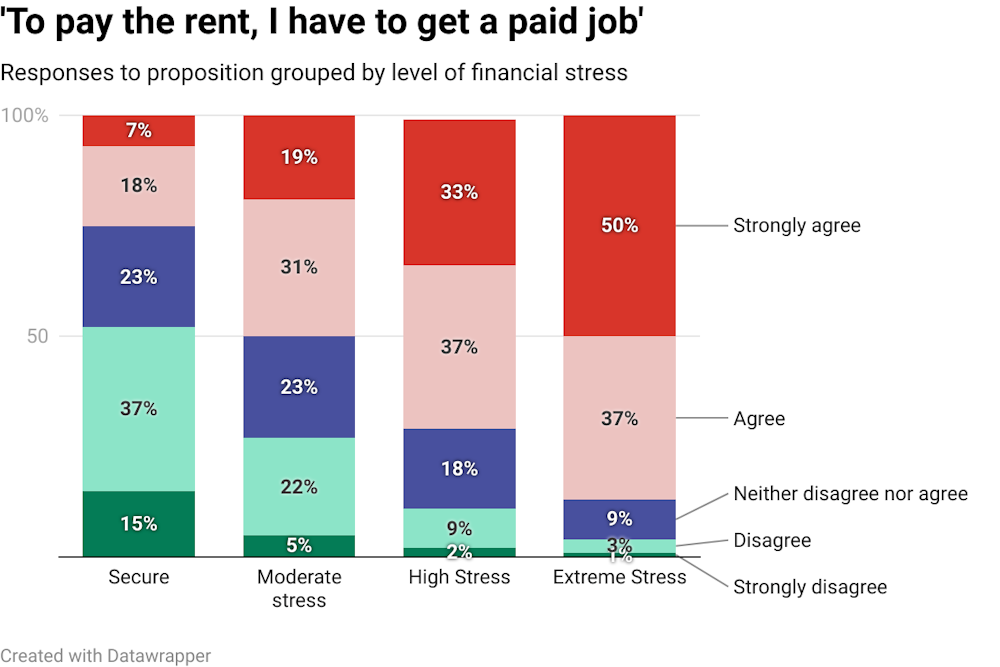
Many international students have a job and paid work is strongly related to precarity. A large percentage of extremely precarious students and highly precarious students (87% and 70% respectively) agreed having paid work was essential to pay the rent. In contrast, half of moderately precarious students and a quarter of secure students said they needed paid work to pay the rent.

Severe financial need may drive students into accepting underpaid or unsafe work.

Vertical bar chart showing students' level of agreement or disagreement to proposition 'To pay the rent, I have to get a paid job'

Chart: The Conversation. Data: International students and the impacts of precarity, Author provided


Read more:
Australia is bringing migrant workers back – but exploitation is still rampant. Here are 3 changes needed now


How secure do students feel about their housing?

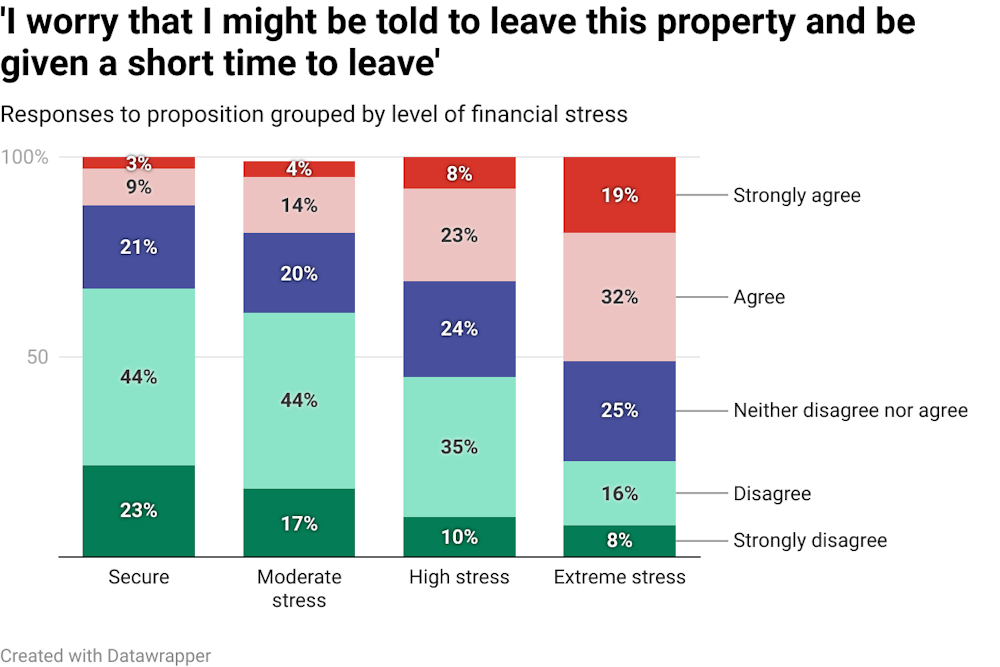
High rents are only part of the housing insecurity problem. When asked whether they worry about being told to leave their accommodation at short notice, just over half of extremely precarious students said yes, as did 31% of high precarious students. Only 18% of moderately precarious students and 11% of secure students had similar worries.

Vertical bar chart showing students' level of agreement or disagreement to proposition 'I worry that I might be told to leave this property and be given a short time to leave'

Chart: The Conversation. Data: International students and the impacts of precarity, Author provided

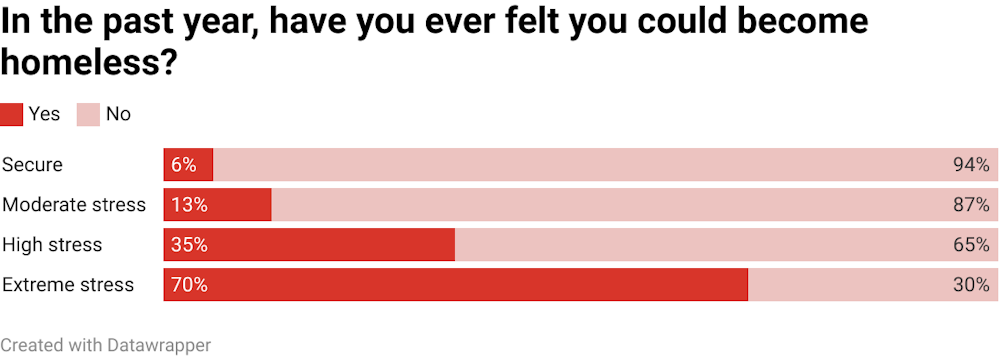
A particularly worrying finding was that seven in ten extremely precarious students and just over one in three highly precarious students had felt in the past year that they could become homeless. Only 13% of moderately precarious students and 6% of secure students had this concern.

Vertical bar chart showing percentages of students' 'yes' and 'no' responses to question 'In the past year, have you ever felt you could become homeless?' according to level of financial stress

Chart: The Conversation. Data: International students and the impacts of precarity, Author provided


Read more:
As international students return, let’s not return to the status quo of isolation and exploitation


Looking ahead

The rental housing crisis means the circumstances of international students in need of housing are likely worse now than in late 2019.

The risks are particularly high for students from poorer backgrounds or countries. Policymakers and education providers must pay more attention to the issue of housing students who come to study in Australia.

The Conversation

Alan Morris receives funding from the Australian Research Council

Luke Ashton receives funding from the Australian Research Council.

Shaun Wilson receives funding from the Australian Research Council

ref. As international students flock back, they face even worse housing struggles than before COVID – https://theconversation.com/as-international-students-flock-back-they-face-even-worse-housing-struggles-than-before-covid-195364

The rent crisis is set to spread: here’s the case for doubling rent assistance

Source: The Conversation (Au and NZ) – By Bruce Bradbury, Associate Professor, Social Policy Research Centre, UNSW Sydney

Shutterstock

For many Australians, the rent crisis is just starting. Advertised rents have been soaring, but mainly for new rentals – so called “asking rents”.

The broadest measure of rents actually paid – the rents on the 480,000 or so capital city properties the Bureau of Statistics uses to calculate the consumer price index – has climbed only modestly, increasing 3.5% in the year to October.

Rent cuts during the first year of COVID mean the Bureau’s measure of capital city rents is just 2.2% above where it was in February 2020, ahead of the COVID lockdowns.

But advertised rents are climbing steeply. According to property consultants SQM Research, they are an extraordinary 35% higher than in February 2020.


Asking rents versus consumer price index rents

Jan/Feb 2020 = 100.
Calculated from SQM Research and ABS CPI

Part of the reason for the difference in the two measures is that rents have been climbing most strongly away from the cities, and the Bureau’s consumer price index only incorporates capital city prices.

But probably more important is that newly-advertised rents are only paid by a small proportion of renters.

Most renters are likely to be paying rents set some time ago when the property was last advertised, or regular increases in accordance with a schedule they have become used to. Landlords tend to save the big increases for new tenants.

Average rents so far slow to move

For capital city tenants in total, real rents (which are rents adjusted for the rate of inflation) remain lower than they were in 2020, and also lower than they were in 2010, because other prices have increased faster.

But the changes in advertised rents suggest substantial increases in overall rents are coming.

When this happens it will place severe pressure on the living standards of the most vulnerable. What can we do about this?


Read more:
Rent crisis? Average rents are increasing less than you might think


In the long run, the best solution is to provide more dwellings. A wide gamut of policies come into play, from public investment in housing to land use controls to improvements in transport. But they take a long while to work.

More immediately it might help to restrict foreign arrivals, at least for while, but this would hurt Australia’s education and tourism industries.

The simplest short-term response is to financially support renters.

Rent Assistance is in place, but too low

Commonwealth Rent Assistance is already available to Australians on pensions and benefits including JobSeeker, the Family Tax Benefit and Parenting Payment.

But it is only modest. It amounts to 75% of the rent paid between two thresholds, both of which are low compared to actual rents.

For people living alone, the upper threshold is A$169 per week, for a couple with two dependent children it is $250 per week.

The maximum available to a person living alone is $75.80 per week, or about $10 a day. The maximum available to a couple with two dependent children is $89.20 per week – about $13 per day.


Read more:
Renters spend 10 times as much on housing as petrol. Where’s their relief?


The 2021 Census provides an indication of how far the rent thresholds have fallen below rents paid. It found the median rent for a one-bedroom home in Sydney was $451 per week. Only one quarter of such dwellings rented for $379 or less.

In other regions the rents were lower, but still well above assistance thresholds.

Research I conducted with Trish Hill for the Australian Council of Social Service found the $10 per day and $13 per day available to singles and families does go a little way towards closing the large gap between JobSeeker and the poverty line, but there’s ample scope to lift it to something nearer the rents actually paid.

The 2009 Henry Tax Review recommended linking the upper rent threshold to the 25th percentile of actual rents for one and two-bedroom dwellings in capital cities (the rent level that 75% of rentals exceeded).

Rent assistance could double

My calculations suggest the threshold proposed by the Henry Review would now be $354 per week – more than twice the current upper threshold for singles.

If the rest of the payment formula remained unchanged, this would boost the maximum payment 2.8 times to around $215 per week for singles – enough to make a big dent in rent payments. And it would automatically adjust in line with subsequent rent increases.

Would such an increase be simply redirected into landlords’ pockets?

The Henry Review argued that wouldn’t happen much, and to the extent it did, it would encourage more investment.

More assistance shouldn’t push up rents

For people who are at the maximum payment threshold, an increase in rent assistance would be just the same as any other increase in income – it would give them more to spend on a wide array of things rather than only housing.

One way to minimise upward pressure on rents and help those in the highest-rent locations more would be to vary the threshold by region. The Henry review didn’t recommend this, arguing that its recommended maximum rate of payment would be high enough in all locations.

But if any increase offered is not as generous as that proposed by Henry, varying the amount by region could distribute what is offered more fairly.

In time, we will need to offer rent assistance more widely

What I have proposed isn’t perfect. Rent Assistance is generally paid only to Australians on benefits, meaning many vulnerable renters could miss out.

Even though it is available to some families receiving Family Tax Benefit A, the tight rules governing that benefit mean only about 154,000 families on it get rent assistance.

The likely rent increases in the pipeline will create pressure to expand rent assistance to a wider range of families in financial stress.

The Conversation

Bruce Bradbury receives funding from the Australian Research Council, conducts contract research for other government bodies and is involved in a Poverty and Inequality research collaboration between UNSW and ACOSS.

ref. The rent crisis is set to spread: here’s the case for doubling rent assistance – https://theconversation.com/the-rent-crisis-is-set-to-spread-heres-the-case-for-doubling-rent-assistance-196810

Up to French people to decide on New Caledonia’s future, says academic

RNZ Pacific

An Australian-based French law professor says it is up to the French people as a whole, and not the voters in New Caledonia, to decide the territory’s future statute.

Professor Eric Descheemaeker of the University of Melbourne’s Law School said New Caledonia’s three votes against full sovereignty mean that legally, the power to determine the future standing of the Pacific territory has reverted from New Caledonian voters to France as a whole.

In the three referendums between 2018 and 2021, a majority of New Caledonians rejected independence from France.

Professor Eric Descheemaeker
Professor Eric Descheemaeker . . . French constitutional framework still applies. Image: Merlbourne Law School

However, the last and third referendum under the 1998 Noumea Accord was boycotted by the pro-independence parties after France refused to postpone the vote to 2022 because of the covid-19 pandemic’s impact on the indigenous Kanak population.

The pro-independence Kanak and Socialist National Liberation Front (FLNKS) has been adamant that it will not recognise the referendum outcome, describing it as a humiliation of the Kanak people.

Amid the political fallout, Professor Descheemaeker has argued in an article in the blog Jus Politicum that the French constitutional framework still applies.

He said the rejection of the proposed sovereignty meant that New Caledonia was subject to the French constitution with its definition of national sovereignty.

The text says “no section of the people nor any individual may arrogate to itself, or to himself, the exercise thereof”.

Process not binding
Professor Descheemaeker also said the referendum process granted by Paris was not binding because a vote for independence would still have had to be approved by the French legislature and in a referendum.

He said the 1988 referendum involving all of France approved the Matignon Accords that paved the way for a vote on independence in New Caledonia within 10 years.

It did not take place, and political leaders deferred a decision by signing the Noumea Accord in 1998, which extended the deadline by another two decades.

Professor Descheemaeker said that with the referendum outcome, the provisions from 1988 could no longer be used to claim a separate entitlement for voters in New Caledonian, similar to there not being one for Parisians.

The political discussions are due to resume later this month once the FLNKS movement, which is a signatory to the Noumea Accord, has held its congress.

Formal talks on a new statute are yet to be launched, but speaking in the French National Assembly last month, Interior Minister Gerald Darmanin ruled out any further voting on the issue for five years.

Days after the last referendum in 2021, the then-Overseas Minister Sebastien Lecornu said he planned to have a vote in New Caledonia on a new statute by June 2023.

Kanaky New Caledonia referendum without the Kanaks
The last of three Kanaky New Caledonia referendums on independence on 12 December 2021 … “no validity without us”, the indigenous Kanak people. Image: FLNKS

Undertaking scuttled
But amid the political impasse and the absence of any substantive talks, the undertaking was scuttled.

The pro-French parties have said that with a new statute the restricted electoral rolls, which were brought in as part of the Noumea Accord process, must be opened to all French citizens.

Reserving voting rights in referendums and provincial elections to long-term residents and indigenous Kanaks, more than 40,000 French residents now lack full voting rights, being allowed to vote in French national elections only.

Professor Descheemaeker said that although there was no specific expiry date to the restrictions in New Caledonia, they would have to be reviewed.

He said the partial withdrawal of the right to vote from certain French citizens living in New Caledonia was contrary to the most fundamental constitutional principles.

He said the measures had only been validated by French and international authorities insofar as they were transitional.

Pro-independence parties are opposed to changing the rolls.

For them, the ringfencing of the electorate was an irreversible gain attained through the Noumea Accord.

They say this forms the bedrock of New Caledonian citizenship and identity as they pursue their campaign for an independent New Caledonia, which has been on the UN decolonisation list since 1986.

This article is republished under a community partnership agreement with RNZ. 

Print Friendly, PDF & Email

Article by AsiaPacificReport.nz

TVNZ files opposition claim against Vodafone’s One NZ trademark

RNZ News

Television New Zealand has filed an opposition claim against Vodafone’s attempt to trademark the name “One NZ”.

In September last year, the telecommunications company revealed it wanted to change its name to One New Zealand to better reflect its legacy in Aotearoa, having separated from the global Vodafone group three years ago.

But a TVNZ spokesperson said its own TVNZ 1 and One News were reputable and valuable brands, and it was keen to protect them.

“Given these discussions are ongoing, we are simply exercising our rights until the parties reach a position they are comfortable with,” they said in a statement.

“We continue to partner with Vodafone commercially and on a range of projects.”

An initial three-month extension to the opposition period was filed in October but could not be renewed, and discussions had paused for the holiday break.

In a statement, Vodafone NZ corporate affairs head Conor Roberts said they expected TVNZ’s objection given the extension period could not be renewed.

They were “constructively working” with TVNZ on the matter, Roberts said.

“The remaining issues are minor and procedural and relate to various uses of the brand — rather than whether it can be used at all — and as such we believe they can be resolved,” he said.

Vodafone has up to two months to file a counterclaim or withdraw the application.

This article is republished under a community partnership agreement with RNZ. 

Print Friendly, PDF & Email

Article by AsiaPacificReport.nz

Fiji’s revised Media Act currently being drafted, confirms Rabuka

By Arieta Vakasukawaqa in Suva

Fiji’s much-anticipated Media Industry Development Authority (MIDA) Act review is now being drafted and expected to be tabled at the next cabinet meeting on January 17.

Prime Minister Sitiveni Rabuka confirmed this to journalists during an interview in Suva last Friday when he was questioned about the government’s actions to repeal the Act that was imposed by the FijiFirst government.

“It is currently being drafted by our legal team at the Office of the Attorney-General in conjunction with input from the Ministry of Information,” Rabuka said.

Fiji Times editor-in-chief Fred Wesley welcomed the statement by Rabuka.

“It has been long overdue, and this is something we had been hoping to see happen,” Wesley said.

Meanwhile, Rabuka reminded journalists they could do their work without fear as long their reporting was balanced.

Arieta Vakasukawaqa is a Fiji Times reporter. Republished with permission.

Print Friendly, PDF & Email

Article by AsiaPacificReport.nz

Labor’s scheme to cut industrial emissions is worryingly flexible

Source: The Conversation (Au and NZ) – By Rebecca Pearse, Lecturer, Australian National University

The federal government today proposed new rules to regulate greenhouse gas emissions from Australia’s polluting industrial sector. The rule changes apply to a measure known as the “safeguard mechanism”, and are supposed to stop Australia’s top 215 emitters, such as new coal, oil and gas projects, from emitting over certain thresholds, or “baselines”.

The safeguard mechanism was established by the Abbott Coalition government in 2016. It’s been widely criticised for lacking teeth – indeed, industrial emissions have actually increased since the mechanism began.

The safeguard mechanism was reviewed last year and Labor had promised a revamp. The fine detail of the changes is crucial, because it will determine how well Australia brings down its emissions on the path to net zero.

So would Labor’s proposed reforms, if implemented, be effective and equitable? Unfortunately, it appears no. They involve only very modest changes to a very flexible regime, and many issues plaguing the safeguard mechanism under the previous government continue.

What has Labor proposed?

The safeguard mechanism is the main lever the government can pull to ensure emissions from industry do not keep expanding. Industrial facilities regulated under the mechanism together account for almost 30% of Australia’s overall greenhouse gas emissions.

In its announcement today, Labor government proposed three key measures:

  1. emission baselines will remain flexible for industrial facilities planning to grow

  2. any tightening of baselines to industry standards will occur gently, giving facilities time to transition

  3. “trade exposed” industries (such as exporters relying on international markets) will be compensated in the form of grants.

Overall, the government says these changes will bring emissions baselines down by 4.9% each year to 2030.


Read more:
Nearly 30% of Australia’s emissions come from industry. Tougher rules for big polluters is a no-brainer


The biggest problem: flexibility

Industry lobby groups have argued against standardised rules for all facilities, saying it could damage their international trade competitiveness. Such “trade exposed” industries – such as steel producers and mining companies – have called for the safeguard mechanism to be more flexible.

But too much flexibility is generally the reason the scheme was ineffective under the previous Coalition government. Flexibility was built into the rules governing where, when, and how much industrial producers are required to reduce emissions.

The main sources of flexibility for industry under the current safeguard mechanism rules are:

  • loose baseline emissions, allowing facilities to expand their production

  • unlimited carbon credit purchases (where companies buy “credits” to represent emissions cuts made elsewhere, instead of cutting their own emissions outright).

Further flexibility will come from future proposed carbon credit trading rules that allow banking and borrowing credits for companies to use at a later time.

Ultimately, such flexibility means facilities can delay cutting their emissions to a later date. But as climate change accelerates, we have no time to waste.

Loose baselines

Industries aiming to grow their commodity output will be allowed to continue using flexible emissions baselines. In other words, as their production rises, so too will the amount of greenhouse gases they’re allowed to emit.

The government initially considered returning to “absolute baselines”, which fix carbon limits on existing facilities even when those facilities produce more goods.

Scientists and climate campaigners often argue for measures that make sure industry production baselines are adjusted intermittently to avoid exceeding the overall, absolute carbon target. But industry groups prefer a more flexible approach.

The government’s proposal to continue with individually tailored “production-adjusted” emissions intensity baselines mean industries can expand without facing increased costs.

For example, let’s say a new liquefied natural gas plant expands its output to meet international demand. Then, the overall emissions baseline for the plant will also increase, because the baseline is measured as emissions per tonne of gas produced. If enough producers do the same, the overall carbon budget will be broken.


Read more:
Clearer rules on reporting companies’ climate risks could soon put us on a path to decarbonising corporate Australia


New carbon credits to fill headroom

Some facilities have emitted considerably less greenhouse gases than their baseline allocations allowed, leaving a lot of headroom for these facilities to emit more greenhouse gases in future.

The Albanese government has signalled it wants to address this issue of having too much headroom by making aggregate adjustments to all baselines, plus creating a new kind of carbon credit: Safeguard Mechanism Credits (SMCs).

SMCs will be issued to facilities with baselines set above their actual emissions. These lower-emitting facilities can then sell credits to higher-emitting companies that struggle to reduce emissions. Or, these lower-emitting facilities can store the credits to use in future.

This means they’ll be able to plan to expand their emissions over reporting periods.

Weak limits on ‘old’ carbon credits

Labor’s proposed safeguard mechanism will not recognise international carbon credits (where an Australian company can buy credits from an overseas company). But the government seems open to this at a later date.

When it comes to carbon credits generated in Australia, the new rules continue with a laissez faire approach. There are no limits to how many carbon credits companies can use to compensate for excess emissions over their baselines, which means companies can avoid direct emissions cuts.

Until now, the only carbon credits recognised in the safeguard mechanism have been “Australian Carbon Credit Units”. Because of their well-documented integrity issues, these units have this week been subject to an independent review.

Controversially, the review found this carbon credit system is largely sound, and made 16 recommendations to improve it. Others, however, do not share this view, and say the system doesn’t lead to genuine emissions cuts.


Read more:
Chubb review of Australia’s carbon credit scheme falls short – and problems will continue to fester


Flexible compensation for exporters

The planned rule changes add up to a lot of continued flexibility for industry – mostly justified as keeping costs low for the companies.

But meaningful emissions reductions in Australia will inevitably lead to reduced production (and employment) in some industries. The challenge is to make sure it happens in ways that are fair for communities and workers.

Following the practice of Labor and Coalitions before it, export-focused industries will be compensated for some losses. These industries argue they must be allowed to compete on a level footing with rivals in other countries who are not forced to bear the cost of reducing their emissions.

Industry compensation should only be applied where the cost of carbon reductions is shown to cause the industry or company in question to move offshore and lead to an increase in global emissions.

About A$600 million from Labor’s $1.9 billion “Powering the Regions Fund” will be allocated to trade-exposed businesses. Climate action campaigners have criticised this compensation, particularly if it goes to fossil fuel companies.

More tension is likely to play out in coming weeks as the government consults on the proposed changes.

At some point, however, if Labor is serious about tackling climate change, the flexibility must give way to tougher rules for polluters, and a greater government commitment to an equitable industrial transition.

The Conversation

Rebecca Pearse receives funding from the Australian Resource Council and the National Recovery and Resilience Agency.

ref. Labor’s scheme to cut industrial emissions is worryingly flexible – https://theconversation.com/labors-scheme-to-cut-industrial-emissions-is-worryingly-flexible-197525

Dog theft is increasing, and so are new laws targeting this awful crime. But will they help?

Source: The Conversation (Au and NZ) – By Lisa Parker, Lecturer in Law, University of South Australia

Shutterstock

Amid the first year of the pandemic in 2020, crime statistics in Victoria showed an increase in the number of dogs reported stolen. Since then, media reports suggest there’s been an increase in dog theft in Australia.

The price of dogs has increased during the pandemic given higher demand and decreased supply, particularly of purebred and designer dogs. Dog theft is said to be rising due to offenders exploiting this situation. Media reports suggest dogs are being targeted to be sold on the black market.

Dogs have reportedly been stolen from outside supermarkets and restaurants, from backyards, inside homes and even doggy day care. Therapy dogs have also allegedly been stolen.

However, because of limited reliable data outside media reports, the true nature and extent of dog theft across Australia aren’t known.

In December 2022, South Australia became the latest Australian jurisdiction to introduce a standalone criminal offence of dog theft. New South Wales and the Northern Territory both have similar offences, and there are calls for other jurisdictions to follow suit.

But will specific dog theft laws actually help stop this awful crime? The practical effects are not clear cut, but such laws do have symbolic value, recognising dogs aren’t merely property.

How does the law deal with people who steal dogs?

Stolen dogs aren’t treated as cases of abduction or kidnapping in Australia. In other words, “dognapping” is not a specific crime. If someone is alleged to have stolen a dog, they are usually charged with larceny or theft.

The offence of theft captures the stealing of dogs because, in law, dogs are classified as property.

But when a dog is stolen, significant emotional distress is often caused to both the owner and the dog. Dogs are often recognised as members of the family, despite their legal status as property.

In both Australia and abroad, increasing attention is being paid to specific offences that seek to address the emotional impact caused when a dog is stolen.

New dog theft offences

Under the new South Australian law, the offence of dog theft carries a maximum penalty of $50,000 or imprisonment for two years.

Until now, a person stealing a dog in South Australia had been charged under the general offence of theft, which has a maximum penalty of ten years imprisonment.

The new offence of dog theft is targeted at people who seek to make financial gain from stealing and selling dogs. While the new offence has a much lower maximum term of imprisonment than general theft, it’s hoped the substantial financial penalty attached to the new offence acts as a strong deterrent to potential offenders motivated by profit.

Despite the higher financial penalty, the new offence is unlikely to make it easier for police to prosecute people who steal dogs. People who steal dogs are already being prosecuted under the general offence of theft; the new offence doesn’t fill a gap in the law.

Symbolic value

However, a standalone offence of dog theft does have symbolic value. It recognises dog theft is inherently different from other types of property theft.

As South Australia’s deputy premier, Susan Close, said while reading the dog theft bill in parliament:

A new summary offence sends a clear signal that anyone who steals a dog will face serious consequences. It also acknowledges that dogs are not simply property but are deeply loved members of the family which cannot easily be replaced.

Meanwhile, the United Kingdom looks set to take a different approach, with pet abduction to become a criminal offence. The Pet Theft Taskforce, established to investigate the reported increase in pet theft in the UK, recommended an offence of pet abduction instead of pet theft.

According to the taskforce, this would better reflect the view that stolen pets are not mere property, but sentient beings.


Read more:
Pet theft is on the rise, with more than 60 dogs stolen in the UK every week


Should dogs still be classified as property?

There’s ongoing debate whether the legal classification of animals as property in Australia is keeping pace with community attitudes.

There’s a shift towards recognising animals as sentient beings in the law.

In 2019, the ACT became the first Australian jurisdiction to recognise sentience of animals in legislation.

In family law, when couples separate, dogs are treated as part of the asset pool in property settlements. But there are calls for a new pet custody model that moves away from viewing dogs as property.

In the criminal law, a pet abduction offence such as that proposed in the UK would better reflect the view that dogs aren’t merely property.

However, beyond symbolism, in practical terms a change in the law may not reduce the frequency of the offence. The general offence of theft is already an adequate tool to prosecute those who steal dogs.

The Conversation

Lisa Parker does not work for, consult, own shares in or receive funding from any company or organisation that would benefit from this article, and has disclosed no relevant affiliations beyond their academic appointment.

ref. Dog theft is increasing, and so are new laws targeting this awful crime. But will they help? – https://theconversation.com/dog-theft-is-increasing-and-so-are-new-laws-targeting-this-awful-crime-but-will-they-help-196875

‘Drowning for love’ – 5 ways to protect your life while you’re trying to rescue someone in trouble in the water

Source: The Conversation (Au and NZ) – By Amy Peden, Research fellow, School of Population Health, UNSW Sydney

The news headlines show summer is a deadly period for drowning in Australia. Sadly, between December 1 and January 9, 35 people died due to drowning.
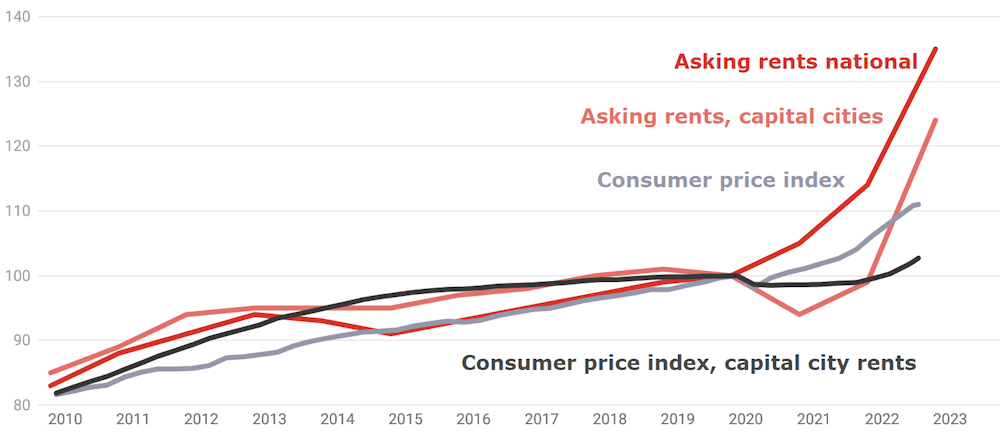
There are a range of reasons why the season is one of heightened risk for water-related incidents. Our research shows drowning risk is twice as high for children during school holidays and similarly increased for adults on public holidays.

People may be more likely to visit unfamiliar places and waterways not patrolled by lifeguards. They may seek relief in the water on hot days and consume alcohol while swimming, fishing or boating. Such risks can, and do, lead to tragedy at our beaches, rivers and pools.

Two recent summer tragedies have involved bystanders who have drowned trying to rescue someone from the surf. On January 1, an off-duty police officer drowned while rescuing his son who was caught in a rip current at a beach south of Narooma, New South Wales.

Just a few days later, a man drowned after trying to rescue his daughter from a rip current at Black Head Beach on the NSW mid-north coast. A nearby surfer was able to bring the girl ashore, but returned to assist her father and found him unresponsive. Both incidents involved rip currents at unpatrolled beaches and bystanders who drowned trying to save a child.

Researchers have a name for this tragic scenario: Aquatic Victim Instead of Rescuer syndrome or “drowning for love”.


Read more:
When is the right time for children to learn to swim?


One chance, 5 ways to protect yourself

On average five people drown while performing a bystander rescue each year in Australia.

Our research shows most people who rescue others will perform only one rescue in their lifetime. Their altruism will most likely be directed to family members including young children. Men are more likely to perform a rescue at a coastal location, while women are more likely to save a child struggling in a swimming pool.

young person underwater swimming
Men are more likely to rescue a loved one at the beach, while women are more likely to help a child at a swimming pool.
Unsplash/Tim Marshall, CC BY

So what steps can you take to reduce your risk of needing to perform a rescue in the first place? If you do need to perform a rescue – and most parents will want to do anything necessary to save a child – how do you do so safely?

Here are five evidence-based tips to help you avoid danger this summer:

1. Choose a patrolled beach

The guidance for beach safety in Australia tells us to “swim between the red and yellow flags”. Unfortunately, few beaches in Australia outside of populated areas are patrolled by lifeguards (who are paid professionals) or lifesavers (volunteers affiliated with community clubs).

Our research also shows people choose to swim at unpatrolled beaches because they are closer to their holiday accommodation or are less busy. Worryingly, many of those we surveyed at unpatrolled beaches were infrequent beachgoers with poor rip current hazard identification skills. Many did not observe safety signage, yet intended to enter the water knowing no lifeguard was present.

If you’re heading to the beach, plan your trip. Consult resources such as BeachSafe or download the app to find your nearest patrolled beach. It’s worth the extra 15 minute drive to find one.

Red and yellow flag at beach
Patrolled beaches are much safer for everyone.
Shutterstock

2. Understand rips and learn how to spot them

Rip currents, or rips, are strong, narrow offshore flowing currents that exist on many of the world’s beaches.

They begin close to the shoreline and flow offshore to the end of the surf zone (where waves are breaking) and various distances beyond. They are a global phenomenon because they are found on any beach with waves breaking across a surf zone.

Rip currents can be notoriously difficult to spot and are often appealing to swimmers due to the calm appearance of the water. They are dangerous because they can sweep even the strongest swimmer out to sea.

Learn how to spot a rip and, if in doubt, swim between the flags or speak to locals who know the safest places to swim.

Author Rob Brander (aka Dr Rip) explains his top 5 best tips for avoiding rips.

3. Stay calm and make a plan

In the heat of the moment, it can be hard to think logically. But it’s imperative to take a moment to assess the situation.

There are a range of rescues you can make without having to enter the water. These include talking to the person in trouble, throwing them something buoyant, wading or rowing to them or reaching out.

If you do need to enter the water, ensure someone else calls for help.

4. Take a flotation device with you

Our research shows those who drown while performing a rescue on the coast usually do not take a flotation device with them.

When adrenaline wears off and exhaustion kicks in, or if you need to support the weight of another person, having added buoyancy is vital. If you have a traditional flotation device such as a life jacket or boogie or surfboard, that’s great. If not, the humble esky or cooler, a pool noodle or even an empty soft drink bottle can provide some flotation assistance.


Read more:
Are you one of the many Australians who never learned to swim? Here’s how to get started


5. Learn how to perform CPR

Many people are alive today after almost drowning due to quick and effective cardiopulmonary resuscitation (CPR). First aid and CPR skills can assist someone who has been rescued from the water while you await emergency services.

While any attempt is better than no attempt, hands-only CPR (chest compressions without rescue breaths) is not recommended in a drowning situation, given the importance of oxygen to the drowning victim. Consider enrolling in a CPR and first-aid course.


Read more:
When we swim in the ocean, we enter another animal’s home. Here’s how to keep us all safe


It’s already been a heartbreaking summer for too many families. Heeding these tips may just save a life and ensure you and your loved ones enjoy time at the beach, river or pool safely.

Being caught in a rip can be ‘horrific’.

The Conversation

Amy Peden receives funding from the National Health and Medical Research Council. She is an honorary Senior Research Fellow with Royal Life Saving Society – Australia.

Rob Brander receives funding from Surf Life Saving Australia and the New South Wales Government Department of Justice via the Water Safety Fund.

ref. ‘Drowning for love’ – 5 ways to protect your life while you’re trying to rescue someone in trouble in the water – https://theconversation.com/drowning-for-love-5-ways-to-protect-your-life-while-youre-trying-to-rescue-someone-in-trouble-in-the-water-197411

Maluku earthquake: why do some ocean earthquakes cause tsunamis while others don’t?

Source: The Conversation (Au and NZ) – By Martin Van Kranendonk, Professor and Director of the Australian Centre for Astrobiology, UNSW Sydney

Google Maps

We live on an active planet, one whose surface is constantly in motion, although imperceptibly to us most of the time. Until an earthquake occurs.

This morning, just such an event happened in the seas north of the Indonesian Archipelago, where a strong (magnitude 7.6 on the Richter scale) earthquake shook the region and was felt as far afield as Darwin in Australia.

The Bureau of Meteorology advises there is no tsunami warning for Australia, while some parts of Indonesia are in watch and wait mode. But what determines if a tsunami will occur?

Grinding rocks

Only 70 years ago, it was considered our planet was rigid and affected only by slight sagging and raising of landscapes.

However, with the advance of technology in the 1950s we began to map the seafloor using sonar. We could also measure the magnetic properties of the seafloor.

As a result, we’ve discovered the ocean floors are splitting apart at undersea mountain ranges known as mid-ocean ridges.

Additionally, oceanic crust (the part of Earth’s crust underlying the ocean basins) is being lost around the edges of most continents. It is being returned deep into Earth’s mantle – the thick layer of semi-molten rock beneath Earth’s surface crust.

This happens at what are known as “subduction zones”. Subduction zones are deep oceanic trenches where one tectonic plate dives down beneath another, generating earthquakes as the rocks slowly grind past one another.

The source of tsunamis

So why is it some earthquakes generate deadly tsunamis and others don’t?

Earth’s tectonic plates move across the planet’s surface at an average speed of around 10cm per year. This speed was originally estimated based on changes in the magnetic seafloor properties, but has now been measured by satellites in space.

This movement is not a smooth process, since Earth’s crust is hard and experiences strong friction when the tectonic plates come into contact with one another.

As they move, this friction builds up stress in the rock, which is released every once in a while in the form of earthquakes. In some places, earthquakes occur only occasionally but are very strong, while in others they happen more frequently and are weaker.

But earthquakes also vary greatly in terms of how deep they are generated below the surface. This is because subduction zones continue for a long way down into the mantle. The rocks remain cold and stiff for hundreds of kilometres down before they get hot enough from the internal heat of the planet to become soft.


Read more:
Why are shallow earthquakes more destructive? The disaster in Java is a devastating example


And this is the main reason some earthquakes generate tsunamis and others do not. Shallow subduction zone earthquakes actually displace the seafloor – either up or down – and also the ocean above it.

This happened with devastating effect in the 2011 Tohoku earthquake in Japan, located 24km deep and 9.1 magnitude on the Richter scale. This single earthquake moved the crust 26 metres in seconds and lifted up the ocean, sending the crashing waves of a tsunami right across the Pacific Ocean.

Meanwhile last night’s 7.6 magnitude Maluku earthquake in Indonesian waters was not as strong and occurred at a depth of 105km. At this depth, the energy and associated movement from the earthquake becomes dissipated into a million small fractures in the overlying rocks.

The energy also has to pass up through a wedge of the semi-molten mantle. Thus, the surface expression of the earthquake is significantly weakened and we either get no ocean waves, or only small ones.

Because Earth’s plates move at a relatively constant rate and we have a record of earthquake activity for any particular part of Earth’s crust in the form of the geological record, we can predict roughly how often earthquakes should occur in any broad location.

Unfortunately, we do not yet have the technology to be able to predict exactly when or where an earthquake will occur. But what we can do is identify areas at risk and build earthquake-resistant infrastructure in areas prone to earthquakes to prevent damage and loss of life.


Read more:
Be prepared, always: the tsunami message from New Zealand’s latest earthquake


The Conversation

Martin Van Kranendonk receives funding from the Australian Research Council.

ref. Maluku earthquake: why do some ocean earthquakes cause tsunamis while others don’t? – https://theconversation.com/maluku-earthquake-why-do-some-ocean-earthquakes-cause-tsunamis-while-others-dont-197529

Are polishes, acrylics and powders bad for my fingernails? Do I need a breather between manicures?

Source: The Conversation (Au and NZ) – By Christian Moro, Associate Professor of Science & Medicine, Bond University

Pexels/Valeria Boltneva, CC BY

People are increasingly opting for regular manicures – with vibrant layers of polish, gel, acrylic or powder.

Australians spend more than $22 billion a year on beauty treatments. And it’s not slowing down – the beauty and personal care market is expected to grow at around 2–5% in the next year.

Manicure popularity (velvet nails are among the latest looks) could be down to fashion, social media influencers or our desire for small luxuries. But should we hold off from treatments, and give our nails a break every now and then?


Read more:
We know hand dryers can circulate germs through the air. Why are they still used everywhere?


What are nails?

Nails are a unique feature in primates, made from skin cells. A special arrangement of keratin, a structural protein, allows the nails to become strong and compact. Keratin is the same protein present in hair, as well as the horns, claws and hooves of other animals.

Upon maturing, the cells making up the fingernail disintegrate their nucleus, giving rise to a translucent and colourless appearance.

Nails strengthen and protect the fingertips. They enable fine motor control, such as turning the pages of a book or picking up a needle from a table. They allow us to scratch ourselves when itchy, hold a better grip on some items, and pry open nuts and foods. They also enhance some sensations due to the underlying nerves.

The curved shape of the nail both strengthens it, as well as allows a nice snug fit to the underlying finger.

Fingernails grow at an average rate of 3 millimetres per month, so it takes about 4–6 months to fully grow from the cuticle to the tip. This is much faster than toenails, which grow around three times slower.

Labelled fingernail.
Christian Moro, Author provided

Fingernails grow from the skin at the base of the nail, with the new nail slowly pushing the rest forward. This occurs the fastest up to about 14 years of age, with males exhibiting faster-growing nails than females. The growth rate evens out at around 50 years of age.

Nails can be an insight into our health. An abnormally shaped nail bed (clubbing) may suggest anaemia, low tissue oxygenation, or cardiovascular disease. Discolouration or pitting could indicate autoimmune issues, infections or malnutrition.

How do nails break?

Dermatologists see a lot of patients with frail and brittle nails. Such nails can be vulnerable to splitting or breaking.

The external environment does impact our nails. Both low moisture and very high moisture can cause the nails to become brittle.

Poor nutrition and age can also affect the health of the nailbed and the strength and colour of the nails.


Read more:
What causes dry lips, and how can you treat them? Does lip balm actually help?


Beautiful nails

Healthy nails are more likely to look good.

Good habits to adopt for strong fingernails include trimming the nails straight across and rounding the edges, not messing with the cuticles (which help keep out nasty bugs), and not putting anything sharp under the nails.

But of course, playing around with the look of nails using shades and colours can be fun and fashionable. Around 85–90% of women worldwide use nail care products.

nail colour selection in salon
Choices, choices, so many choices.
Pexels/Rodnae, CC BY


Read more:
Yes, women might ‘feel the cold’ more than men. Here’s why


Can manicures do damage?

Although nail cosmetics can enhance nail appearance, they can potentially damage the underlying nails. Knowing what changes could occur is the important first step towards avoiding any permanent impact.

If you regularly paint your nails with traditional nail polish, be careful when using darker colours as this can stain the nail plate. Some ingredients in nail care products may also lead to allergic contact dermatitis.

To cure, harden, and dry each layer, the nail is often exposed to light under a fluorescent bulb. Most commonly, nail salons will use UV lamps, which requires about five minutes of exposure per hand.

This can cause cell damage and ageing to the skin. Current literature reports low skin cancer risk from UV lamp exposure. However, the recommendation is to apply a broad spectrum sunscreen with SPF >30 before exposure.

The most common method of removing gel polish is using acetone. The chemical can lead to brittle, dry and rough nails and cause separation of the nail from the nail bed.

Skin contact with acetone can also cause your skin to become dry, irritated and cracked. Some damage can also be done by peeling off acrylic or gel nails.

Everybody’s doing it.
Christian Moro, Author provided

Maybe don’t try this at home

Practising beauty techniques at home comes with the danger of serious harm.

The glue or chemical applicants used to adhere fake nails can cause serious burns. The chemicals used can also be harmful to children if left within reach. As such, going to a qualified and experienced nail technician is likely safer, provided they are taking infection precautions like using sterile tools and equipment.

Although nail cosmetics come with relatively minor risks, dermatologists often recommend sticking with your natural nails and painting them with regular polish, and allowing intermittent breaks between manicures to give your nails time to breathe.

We use the term “breathe” loosely here. Your nails receive their nourishment from the blood vessels under the skin, and do not need contact with the outside oxygen. But keeping the nails uncovered with product does give your body a chance to repair and regenerate the nail and its surrounding skin, keeping the region nice and healthy.

How long of a break is up to you, depending on your nails. However, given a full nail regrows entirely in four to six months, you won’t need to wait that long.


Read more:
What position should I sleep in, and is there a ‘right’ way to sleep?


The Conversation

The authors do not work for, consult, own shares in or receive funding from any company or organisation that would benefit from this article, and have disclosed no relevant affiliations beyond their academic appointment.

ref. Are polishes, acrylics and powders bad for my fingernails? Do I need a breather between manicures? – https://theconversation.com/are-polishes-acrylics-and-powders-bad-for-my-fingernails-do-i-need-a-breather-between-manicures-193947

Why Pacific Islanders are staying put even as rising seas flood their homes and crops

Source: The Conversation (Au and NZ) – By Merewalesi Yee, PhD Candidate, School of Earth and Environment Sciences, The University of Queensland

Photo: Merawalesi Yee, Author provided

Climate change is forcing people around the world to abandon their homes. In the Pacific Islands, rising sea levels are leaving communities facing tough decisions about relocation. Some are choosing to stay in high-risk areas.

Our research investigated this phenomenon, known as “voluntary immobility”.

The government of Fiji has identified around 800 communities that may have to relocate due to climate change impacts (six have already been moved). One of these is the village on Serua Island, which was the focus of our study.

Coastal erosion and flooding have severely damaged the village over the past two decades. Homes have been submerged, seawater has spoiled food crops and the seawall has been destroyed. Despite this, almost all of Serua Island’s residents are choosing to stay.

We found their decision is based on “Vanua”, an Indigenous Fijian word that refers to the interconnectedness of the natural environment, social bonds, ways of being, spirituality and stewardship of place. Vanua binds local communities to their land.

Waves submerge a house
A house on Serua Island is submerged by seawater.
Photo: Serua Island resident, Author provided


Read more:
Climate change forced these Fijian communities to move – and with 80 more at risk, here’s what they learned


Residents feel an obligation to stay

Serua Island has historical importance. It is the traditional residence of the paramount chief of Serua province.

The island’s residents choose to remain because of their deep-rooted connections, to act as guardians and to meet their customary obligations to sustain a place of profound cultural importance. As one resident explained:

“Our forefathers chose to live and remain on the island just so they could be close to our chief.”

Sau Tabu is the burial site of the paramount chiefs of Serua.
Photo: Merewalesi Yee, Author provided

The link to ancestors is a vital part of life on Serua Island. Every family has a foundation stone upon which their ancestors built their house. One resident told us:

“In the past, when a foundation of a home is created, they name it, and that is where our ancestors were buried as well. Their bones, sweat, tears, hard work [are] all buried in the foundation.”

Many believe the disturbance of the foundation stone will bring misfortune to their relatives or to other members of their village.

The ocean that separates Serua Island from Fiji’s main island, Viti Levu, is also part of the identity of men and women of Serua. One man said:

“When you have walked to the island, that means you have finally stepped foot on Serua. Visitors to the island may find this a challenging way to get there. However, for us, travelling this body of water daily is the essence of a being Serua Islander.”

The ocean is a source of food and income, and a place of belonging. One woman said:

“The ocean is part of me and sustains me – we gauge when to go and when to return according to the tide.”

The sea crossing that separates Serua Island from Viti Levu is part of the islanders’ identity.
Photo: Merewalesi Yee, Author provided

Serua Islanders are concerned that relocating to Viti Levu would disrupt the bond they have with their chief, sacred sites and the ocean. They fear relocation would lead to loss of their identity, cultural practices and place attachment. As one villager said:

“It may be difficult for an outsider to understand this process because it entails much more than simply giving up material possessions.”

If residents had to relocate due to climate change, it would be a last resort. Residents are keenly aware it would mean disrupting – or losing – not just material assets such as foundation stones, but sacred sites, a way of life and Indigenous knowledge.


Read more:
An entire Pacific country will upload itself to the metaverse. It’s a desperate plan – with a hidden message


Voluntary immobility is a global phenomenon

As climate tipping points are reached and harms escalate, humans must adapt. Yet even in places where relocation is proposed as a last resort, people may prefer to remain.

Voluntary immobility is not unique to Fiji. Around the world, households and communities are choosing to stay where climate risks are increasing or already high. Reasons include access to livelihoods, place-based connections, social bonds and differing risk perceptions.

As Australia faces climate-related hazards and disasters, such as floods and bushfires, people living in places of risk will need to consider whether to remain or move. This decision raises complex legal, financial and logistical issues. As with residents of Serua Island, it also raises important questions about the value that people ascribe to their connections to place.

Serua Island is one of about 800 communities in Fiji being forced to consider the prospect of relocation.


Read more:
Coastal property prices and climate risks are both soaring. We must pull our heads out of the sand


A decision for communities to make themselves

Relocation and retreat are not a panacea for climate risk in vulnerable locations. In many cases, people prefer to adapt in place and protect at-risk areas.

No climate adaptation policy should be decided without the full and direct participation of the affected local people and communities. Relocation programs should be culturally appropriate and align with local needs, and proceed only with the consent of residents.

In places where residents are unwilling to relocate, it is crucial to acknowledge and, where feasible, support their decision to stay. And people require relevant information on the risks and potential consequences of both staying and relocating.

This can help develop more appropriate adaptation strategies for communities in Fiji and beyond as people move home, but also resist relocation, in a warming world.

The Conversation

Celia McMichael receives funding from the Australian Research Council.

Karen E McNamara receives funding from the Australian Research Council, Australian Government, Organisation for Economic Cooperation and Development, and the Vanuatu Government.

Annah Piggott-McKellar and Merewalesi Yee do not work for, consult, own shares in or receive funding from any company or organisation that would benefit from this article, and have disclosed no relevant affiliations beyond their academic appointment.

ref. Why Pacific Islanders are staying put even as rising seas flood their homes and crops – https://theconversation.com/why-pacific-islanders-are-staying-put-even-as-rising-seas-flood-their-homes-and-crops-195100

What if your colleague is a bot? Harnessing the benefits of workplace automation without alienating staff

Source: The Conversation (Au and NZ) – By Lena Waizenegger, Senior Lecturer in Information Systems, Auckland University of Technology

Getty Images

The need for businesses to adapt to the workplace demands of the COVID-19 pandemic has accelerated the adoption of digital technologies, with clear implications for jobs and workers.

But just how much employees worry about the threat of automation – and how real those fears are – can have implications for workplaces beyond the technological change itself.

Our new research examined how employees feel about the introduction of “robotic process automation” (RPA) to the workplace. We also looked at how the willingness to embrace these new technologies influenced employees’ assessment of the software bots and their work.

RPA refers to software that interacts with different applications, such as a payroll system or a website, in the same way a human would.

Software robots – the so-called worker bees of RPA – can conduct mundane, repetitive and rule-based tasks such as transferring, entering and extracting data, accounting reconciliation, and automated email query processing. And they can do it at a fraction of the cost of employing real people.

The 24/7 worker

Unsurprisingly, organisations have embraced RPA for its cost and productivity benefits, but it’s not without its challenges. As RPA interacts with various applications, for example, it can “break” when one of the underlying systems is upgraded and the user interface changes.

RPA is also a double-edged sword for employees. On the one hand, with mundane and repetitive tasks outsourced to software robots, workers can focus on more complex tasks that require “soft” skills, empathy and decision-making capabilities.


Read more:
Companies are mitigating labour shortages with automation — and this could drastically impact workers


On the other, some feel threatened by the software robots because they are generally more productive, make fewer errors and don’t cost as much as human employees.

Employees can also end up having to do additional tasks, picking up the work that used to be completed by the staff replaced by RPA. Paradoxically, fewer human employees can lead to an increased workload rather than the expected decrease.

Similarly, as employees shift from a mix of mundane and complex tasks to mainly complex ones, the variety in their work is reduced. This can lead to feeling alienated at work, or a sense they lack control over their role.

Fear and enthusiasm

These various perspectives on automation were clear in our research. We interviewed employees and automation team members at a financial institution in New Zealand about their perceptions and responses to RPA and software robots.

We found that reactions to RPA are influenced by what employees imagined would be the consequences of software robots on their jobs. In turn, this influenced their collaboration with the automation team, their attitude towards change in their tasks and work processes, and ultimately their interactions with software robots – including how they judged the bots’ performance.

Perceptions and responses to RPA can be categorised by employees’ views of software robots as either burdens and threats, tools, teammates or innovative enablers.

Those who considered software robots as a burden and threat before they were introduced tended to have a negative view of their experience with RPA. They were concerned about job security, had negative reactions to having greater responsibility added to their workload, and were dissatisfied with the robots’ performance.


Read more:
Can machines invent things without human help? These AI examples show the answer is ‘yes’


Lessons for employees and employers

At the opposite end of the spectrum, those who viewed software robots as enablers of innovation saw the opportunities of RPA and the benefits of using robots to improve work quality.

Some eagerly accepted the robots as team members, even giving them human names and joking that the bot was taking a sick day when it stopped working. This group also appreciated the reduction in their own workloads through RPA.

Little surprise, then, that employees who view software robots as innovative enablers or teammates tended to collaborate closely with the automation team to find the best way to integrate robots and improve their performance.


Read more:
Brain-computer interfaces could allow soldiers to control weapons with their thoughts and turn off their fear – but the ethics of neurotechnology lags behind the science


In the middle ground, employees who viewed software robots as tools tended to be accepting, but remained sceptical about changes to their workloads and robot performance. They were reluctant to offer full cooperation with the automation team to configure robots’ tasks that would have consequences for their own roles.

Some level of automation is inevitable for businesses. To harness the benefits of RPA without alienating staff, organisations should communicate clearly and often, debunking the myths of robots and their capabilities early to avoid unnecessary misunderstandings by employees.

Employers should take the time to understand how different employees feel about the introduction of automation initiatives. And they should consider incorporating employees’ ideas to increase the overall benefits of automation.

The Conversation

The authors do not work for, consult, own shares in or receive funding from any company or organisation that would benefit from this article, and have disclosed no relevant affiliations beyond their academic appointment.

ref. What if your colleague is a bot? Harnessing the benefits of workplace automation without alienating staff – https://theconversation.com/what-if-your-colleague-is-a-bot-harnessing-the-benefits-of-workplace-automation-without-alienating-staff-196203

Chubb review of Australia’s carbon credit scheme falls short – and problems will continue to fester

Source: The Conversation (Au and NZ) – By Andrew Macintosh, Professor and Director of Research, ANU Law School, Australian National University

Jeremy Ng/AAP

An independent review of Australia’s controversial carbon credit system released today concluded the scheme is essentially sound. But key questions remain unaddressed – a fact that will continue to undermine confidence in Australia’s central climate policy.

The review, led by former chief scientist Ian Chubb, followed concerns raised by our research team that the scheme lacked integrity and was not delivering genuine reductions in greenhouses gas emissions. The review panel, however, says it does “not share this view”.

Climate Change and Energy Minister Chris Bowen on Monday said the government would implement all 16 of the review panel’s recommendations.

But more must be done to ensure the Albanese government truly delivers the emissions reductions it has promised.

smoke stack in front of setting sun
The federal government has accepted the review’s recommendations – but more must be done to ensure genuine carbon abatement.
Charlie Riedel/AP

Carbon credits underpin our climate policy

Australia’s carbon credit system is central to reaching the federal government goal of 43% emissions reduction by 2030 and net-zero by 2050.

The scheme provides carbon credits to projects that reduce greenhouse gas emissions using a number of approved methods, such as avoiding deforestation. These credits can be sold on the carbon market to entities that want to offset their emissions.

In March last year, our research team raised serious concerns about the scheme. In a series of papers, we outlined systemic flaws in the way carbon credits were issued.

We concluded Australia’s Emissions Reduction Fund – under which the scheme operates – has serious governance flaws, has issued a large number of low integrity credits and is wasting billions of dollars in taxpayers’ money.

Our analysis focused on three of the fund’s most popular methods – avoiding deforestation, human-induced regeneration of native forests and combusting methane from landfills. These account for 75% of the credits issued under the scheme.

We found that more than 70% of the credits issued under these methods do not represent genuine emissions abatement.

Following that criticism, in July last year, the Albanese government commissioned an independent review of the scheme. Those findings were released today.

farm scene with trees and crops
The author’s research found more than 70% of the credits issued under a number of carbon farming methods do not represent genuine emissions abatement.
Shutterstock


Read more:
We blew the whistle on Australia’s central climate policy. Here’s what a new federal government probe must fix


A ‘bewildering’ assessment

The panel concluded the carbon credit arrangements are largely sound. How the panel reached this conclusion is hard to fathom.

Discussion of the rules governing human-induced regeneration, landfill gas and avoided deforestation projects spans less than six pages.

The report does not contain references to the evidence relied upon to reach its conclusions, and includes very little analysis to support its findings. And importantly, the panel does not address key questions around the integrity of the scheme’s rules.

Bewilderingly, in its assessment of the methods, the panel does not refer to the findings of a review it commissioned from the Australian Academy of Science to inform its considerations.

The academy reviewed the three main methods my research team analysed and a fourth, concerning carbon capture and storage.

It found numerous flaws in the methods and the associated governance processes. For example, consistent with our analysis, it found a risk the human-induced regeneration method is crediting vegetation change brought on by rainfall, rather than project activities.

The academy also found problems with the landfill gas method – namely, that so-called “baselines” used to calculate carbon abatement don’t adequately account for other financial and regulatory incentives offered to operators for capturing and combusting methane.

This means credits are sometimes issued for actions the industry would take anyway. As I wrote in The Conversation in September last year, so great are the problems with the landfill gas method that several large companies profiting from it have called for changes to the system.

The academy is not alone in recognising these problems. The CSIRO [https://consult.dcceew.gov.au/independent-review-of-accu/submission/view/150] and Wentworth Group of Concerned Scientists also found problems with the rules governing the issuance of credits.

The review panel acknowledged the scientific evidence criticising the carbon credit scheme, but says “it was also provided with evidence to the contrary”. Yet it did not disclose what that evidence was or what it relates to. The public is simply expected to trust that the evidence exists.

pipes collecting methane from site
The landfill gas industry says credits are sometimes issued for actions the industry would take anyway.
Shutterstock


Read more:
‘Untenable’: even companies profiting from Australia’s carbon market say the system must change


Integrity is essential

The panel recommended significant changes to governance arrangements under the carbon credits scheme. It’s hard to understand the need for such changes if there are no material problems with the credits.

Nonetheless, most recommended governance changes are welcome, including:

  • reducing the roles performed by the Clean Energy Regulator, to “enhance confidence and transparency” and reduce potential conflicts of interest

  • amend the scheme’s legislation to improve transparency to support greater public trust and confidence in the scheme.

But these governance changes are not enough. Measures should be taken to prevent low-integrity credits being issued to existing projects. And polluting facilities should not be allowed to use low-integrity credits to meet their emission reduction obligations.

Without these changes, problems with the scheme will continue to fester, jeopardising the operation of the government’s climate policy.


Read more:
Australia relies on controversial offsets to meet climate change targets. We might not get away with it in Egypt


The Conversation

Andrew Macintosh consults to various organisations about the carbon market and other environmental markets. He is also a Director of Paraway Pastoral Co., which has ERF projects.

Don Butler receives funding from the Australian Government and also consults to various organisations about the carbon market and other environmental markets.

ref. Chubb review of Australia’s carbon credit scheme falls short – and problems will continue to fester – https://theconversation.com/chubb-review-of-australias-carbon-credit-scheme-falls-short-and-problems-will-continue-to-fester-197401

Mad world: global flashpoints to watch in 2023 in the era of ‘polycrisis’

Source: The Conversation (Au and NZ) – By Susan Harris Rimmer, Professor and Director of the Policy Innovation Hub, Griffith Business School, Griffith University

When 2022 began, there was trepidation about what might happen in at least ten regions. Topping most lists were concerns about tensions in Ukraine, Afghanistan and Ethiopia.

What actually transpired in 2022 were some of the most shocking humanitarian scenes in modern history – with a backdrop of the continuing pandemic and extreme weather events exacerbated by climate change.

This has prompted experts to speak of an era of “polycrisis”, where countries are dealing with cascading and interconnected crises.


Read more:
‘Polycrisis’ may be a buzzword, but it could help us tackle the world’s woes


The World Bank estimates 23 countries – with a combined population of 850 million people – currently face high or medium intensity conflict. The number of conflict-affected countries has doubled over the past decade.

This has triggered massive refugee flows. As of May 2022, a global record of 100 million people were forcibly displaced worldwide.

With the backdrop of last year’s bitter legacy, what crises are most concerning as we head into 2023?

There are a range of new flashpoints and ongoing deadly conflicts the world has largely ignored due to the focus on Ukraine.

2022’s bitter legacy

Russia’s invasion of Ukraine has been seared into our memories of 2022. It has been one of the fastest and largest displacement crises in decades.

Also making headlines last year was continuing violence in Afghanistan, where six million people were on the brink of famine by August 2022 according to the UN refugee agency, and the mayhem in Myanmar following the military’s February 2021 coup.

The opening days of 2023 look bleak. Those in Ukraine and Afghanistan are now facing winter without access to food, water, health care and other essential supplies.

The situation in Myanmar is only worsening, especially for ethnic minority regions and in Rohingya refugee camps.


Read more:
War in Ukraine is pushing global acute hunger to the highest level in this century


New flashpoint: Iran

In Iran, 22-year-old Mahsa (Jina) Amini was arrested at a metro station by the morality police who enforce the dress code, and she died after being held in their custody on September 16 last year.

Her death set off a sustained uprising in more than 150 cities and 140 universities in all 31 provinces of Iran, according to UN human rights chief Volker Türk.

More than 15,000 people, including children, have been arrested in connection with the protests and are threatened with execution. At least 26 of them currently face the death penalty, and at least four have reportedly already been executed. The Islamic Revolutionary Guard Corps say the average age of arrested protesters is as young as 15.

The prospects of a peaceful resolution of this crisis in 2023 are low and require strong global intervention.

Australia’s Foreign Minister Penny Wong has made firm statements against the death penalty and this “dark chapter” in Iran’s history with her Canadian and New Zealand counterparts, and she should continue this rhetoric.

Tensions in the Asia-Pacific

In our region, Sri Lanka faced economic collapse and a mostly peaceful uprising in mid-2022, and remains in a precarious position.

North Korea remains an aggressive actor. Military tensions on the Korean peninsula have risen sharply this year as Pyongyang has carried out an unprecedented blitz of weapons tests, including the launch of one of its most advanced intercontinental ballistic missiles in November.

From Australia’s perspective, our primary national security risk remains developments in the South China Sea and Taiwan.

More aggressive language on Taiwan emerged from the Chinese Communist Party Congress, and statements by President Joe Biden indicated the United States would not stand by if China invaded Taiwan.

Current Japanese Prime Minister Fumio Kishida has pledged to double Japan’s defence spending in response to these tensions.

There’s a high risk of miscalculation on this issue from all sides, and there’s the growing threat of grey zone tactics – coercive measures which don’t qualify as conventional military battle.

We must avoid tunnel vision

What we also witnessed in 2022 was that the world’s gaze and assistance was so firmly focused on events in Ukraine that many other long-running conflicts producing extreme human suffering were ignored or receded into the background.

For example, it’s hard to overstate the severity of the crises in East Africa of food, shelter and health systems – though comparably this has received little media attention.

What’s more, the UN Human Rights Office estimates more than 306,000 civilians were killed over ten years in the Syrian conflict, and any peaceful resolution is still “elusive” according to UN Special Envoy Geir Pedersen.

There are deep structural conflicts in Haiti, South Sudan, Ethiopia, Syria, Yemen, and the Democratic Republic of the Congo threatening people, species and the environment. The global community must pay attention.


Read more:
Permacrisis: what it means and why it’s word of the year for 2022


Dealing with ‘polycrisis’

Nations, civil society movements and the UN must be nimble enough to deal with the state of “polycrisis” or “permacrisis” the globe is enduring – where armed conflicts combine with and exacerbate issues such as inflation, cyber threats, geo-politics and the energy crisis.

World leaders are dealing with a host of pressing issues:

  • the climate emergency

  • the socio-economic repercussions of the COVID pandemic, by no means over

  • 100 million displaced people

  • the increasing global population, now over eight billion

  • the rising cost of living.

All this means 2023 is likely to be another turbulent year.

The Conversation

Susan Harris Rimmer receives funding from the Australian Research Council, the Queensland Public Service Commission and ONI.

ref. Mad world: global flashpoints to watch in 2023 in the era of ‘polycrisis’ – https://theconversation.com/mad-world-global-flashpoints-to-watch-in-2023-in-the-era-of-polycrisis-195433

AI might be seemingly everywhere, but there are still plenty of things it can’t do – for now

Source: The Conversation (Au and NZ) – By Marcel Scharth, Lecturer in Business Analytics, University of Sydney

Mahdis Mousavi/Unsplash

These days, we don’t have to wait long until the next breakthrough in artificial intelligence (AI) impresses everyone with capabilities that previously belonged only in science fiction.

In 2022, AI art generation tools such as Open AI’s DALL-E 2, Google’s Imagen, and Stable Diffusion took the internet by storm, with users generating high-quality images from text descriptions.

Unlike previous developments, these text-to-image tools quickly found their way from research labs to mainstream culture, leading to viral phenomena such as the “Magic Avatar” feature in the Lensa AI app, which creates stylised images of its users.


Read more:
No, the Lensa AI app technically isn’t stealing artists’ work – but it will majorly shake up the art world


In December, a chatbot called ChatGPT stunned users with its writing skills, leading to predictions the technology will soon be able to pass professional exams. ChatGPT reportedly gained one million users in less than a week. Some school officials have already banned it for fear students would use it to write essays. Microsoft is reportedly planning to incorporate ChatGPT into its Bing web search and Office products later this year.

What does the unrelenting progress in AI mean for the near future? And is AI likely to threaten certain jobs in the following years?

Despite these impressive recent AI achievements, we need to recognise there are still significant limitations to what AI systems can do.

AI excels at pattern recognition

Recent advances in AI rely predominantly on machine learning algorithms that discern complex patterns and relationships from vast amounts of data. This training is then used for tasks like prediction and data generation.

The development of current AI technology relies on optimising predictive power, even if the goal is to generate new output.


Read more:
Not everything we call AI is actually ‘artificial intelligence’. Here’s what you need to know


For example, GPT-3, the language model behind ChatGPT, was trained to predict what follows a piece of text. GPT-3 then leverages this predictive ability to continue an input text given by the user.

“Generative AIs” such as ChatGPT and DALL-E 2 have sparked much debate about whether AI can be genuinely creative and even rival humans in this regard. However, human creativity draws not only on past data but also on experimentation and the full range of human experience.

Cause and effect

Many important problems require predicting the effects of our actions in complex, uncertain, and constantly changing environments. By doing this, we can choose the sequence of actions most likely to achieve our goals.

But algorithms cannot learn about causes and effects from data alone. Purely data-driven machine learning can only find correlations.

To understand why this is a problem for AI, we can contrast the problems of diagnosing a medical condition versus choosing a treatment.

Machine learning models are often helpful for finding abnormalities in medical images – this is a pattern recognition problem. We don’t need to worry about causality because abnormalities are already either present or not.

But choosing the best treatment for a diagnosis is a fundamentally different problem. Here, the goal is to influence the outcome, not just recognise a pattern. To determine the effectiveness of a treatment, medical researchers run randomised controlled trials. This way, they can try to control any factors that might affect the treatment.

The confusion between these two types of problems sometimes leads to suboptimal applications of machine learning in organisations.

While the success of recent work in AI demonstrates the value of data-driven models, many of the problems we would want computers to solve require an understanding of causation.

Current AI systems lack this ability, apart from specialised applications such as board games.

A colourful pixellated image with vague outlines of several human eyes and mouths
A Stable Diffusion artwork generated by the prompt ‘The limits of artificial intelligence’. Current AI technology tends to perform poorly in unexpected situations. In this case, the prompt is not well represented in Stable Diffusion’s training data.
Stable Diffusion

Common sense reasoning

Language models such GPT-3 and ChatGPT can successfully solve some tasks requiring common-sense reasoning.

However, the following interaction with ChatGPT, adapted from an experiment by Gary Marcus suggests it is not entirely reliable in this respect.

I’m eight years old. When I was born, my biological mother was in Barcelona and my father was in Tokyo. Where was I born? Think through this step by step.

It is not mentioned where you were born. All we know is that your biological mother was in Barcelona and your father was in Tokyo at the time of your birth.

Whether AI systems such as ChatGPT can achieve common sense is a subject of lively debate among experts.

Sceptics such as Marcus point out we cannot trust language models to robustly display common sense since they neither have it built into them nor are directly optimised for it. Optimists argue that while current systems are imperfect, common sense may spontaneously emerge in sufficiently advanced language models.

Human values

Whenever groundbreaking AI systems are released, news articles and social media posts documenting racist, sexist, and other types of biased and harmful behaviours inevitably follow.

This flaw is inherent to current AI systems, which are bound to be a reflection of their data. Human values such as truth and fairness are not fundamentally built into the algorithms – that’s something researchers don’t yet know how to do.

While researchers are learning the lessons from past episodes and making progress in addressing bias, the field of AI still has a long way to go to robustly align AI systems with human values and preferences.

The Conversation

Marcel Scharth does not work for, consult, own shares in or receive funding from any company or organisation that would benefit from this article, and has disclosed no relevant affiliations beyond their academic appointment.

ref. AI might be seemingly everywhere, but there are still plenty of things it can’t do – for now – https://theconversation.com/ai-might-be-seemingly-everywhere-but-there-are-still-plenty-of-things-it-cant-do-for-now-197050

Help! My kid won’t read chapter books. What do I do?

Source: The Conversation (Au and NZ) – By Helen Harper, Senior Lecturer in English, Literacy and Language Education, University of New England

Photo by Mikhail Nilov/Pexels, CC BY

Many children start school excited about learning to read. And parents too! After many years of reading and re-reading (seemingly ad nauseam) favourite picture books aloud, it’s thrilling to see your child develop their own reading skills.

But what if they seem to be “stuck” on books that still use lots of illustrations, such as graphic novels, comics or picture books?

Many parents fret about their child still not having fallen in love with chapter books. You might mourn the fact they still aren’t reading the books you loved as a child – the Roald Dahl classics, the Narnia books or more recent releases such as the Harry Potter series.

But the fact is, it’s counterproductive to push your child to read a whole chapter book independently if they are not ready. You might turn them off reading altogether. Here’s what to do instead.


Read more:
Book Week: it’s not the costume that matters, but falling in love with reading


A kid flicks through a comic
Lots of kids still delight in books that rely heavily on visual aids, such as comics, graphic novels and picture books.
Photo by Dayvison Tadeu/Pexels, CC BY

Yes, chapter books are important. But don’t rush

Chapter books are an important step in learning to read. They introduce increasingly complex storylines, themes, characters and settings.

They expand children’s vocabulary (which is essential for developing reading comprehension).

Importantly, when texts have no pictures, children must rely on decoding (recognising sound-letter relationships) to make sense of the words.

This helps with developing reading fluency (reading accurately with expression at a pace that allows for comprehension), and developing reading stamina (maintaining comprehension over longer passages of text).

But the transition to chapter books can be daunting for children. It’s a big leap from picture books, where so much meaning is carried in the illustrations, to books where readers rely solely on the print to make sense of the text.

Your child may not be ready to read entire chapter books independently. They may still not have developed what researchers call “automaticity” in their decoding skills (reading words without having to sound them out).

Automaticity frees up mental space for paying attention to meaning. In other words, if you have to stop and sound words out all the time, it’s hard to follow the plot and can take the fun out of reading.

Here are some ways you can help your child develop the skills they need to read and enjoy chapter books.

Narnia books sit upon a shelf.
Maybe your kids just aren’t into the same books you loved as a child – and that’s OK.
Photo by Pixabay via Pexels., CC BY

Choose books that support the transition

Many books are designed to support young readers, with short chapters featuring plenty of images.

There are picture books for older children, and don’t be frightened of graphic novels. As well as visual richness, they often offer sophisticated storylines and themes.

Visit your local library and ask the children’s librarian for suggestions.

Share the reading, make it fun and keep the conversation going

Share the reading; you read a page or a paragraph, and they read a page or a paragraph, or even just a sentence or two.

This makes reading less overwhelming for kids, but still allows them to practise.

Plan reading time so it doesn’t compete with distractions such as screen time or siblings.

Your child may even like to help read a story to a younger sibling or to grandparents via Zoom.

Read alongside your child so you can share ideas about the story, author or series.

Talk with your child about movies, video games, images, art and comics. All of this talk helps build vocabulary and knowledge, which help them tackle more challenging texts.

Two children look at a picture book
Let’s not think that picture books are only for little kids.
Photo by Marta Wave/Pexels, CC BY

Respect their interests and keep it positive

Let your child explore the books they’re interested in.

Some children are not keen on fiction, and prefer to read about science or the world around them. These kinds of texts also help develop vocabulary and complex language.

Remember, reading for pleasure is associated with overall reading attainment and writing ability. It’s a big part of becoming a lifetime reader.

Yes, you can still suggest books to your child. But don’t get upset if they say no, and definitely don’t insult their tastes by putting down their favourite books and authors.

Whatever their response, keep the conversation channels open and help them feel confident about their own choices.

A child reads Captain Underpants
Don’t insult your child’s taste in books.
Shutterstock

Check your own anxiety levels and accept it takes time

Children can pick up on parental anxiety about academic achievement.

Anxiety takes up mental space and interferes with your child’s work as they practise more challenging reading.

Children may seem to master their sounds and letters quickly, but still need years of schooling to develop the knowledge and language they need for skilled reading comprehension. They also need time to get used to the pages of full print and the smaller font size in chapter books.

Accept that learning to read is a marathon, not a sprint. It’s big work for a young person.

What if I’m still worried?

If you are really worried about your child’s reading, talk to their teacher and consider if a sight or hearing test is warranted (to check they can see the letters and discriminate language sounds).

If your child does have decoding difficulties, a systematic approach to learning about sound-letter relationships, and practice in reading accurately and fluently is important.

In the end, though, your most important role is to give time and encouragement, to maintain an interest and enjoyment in reading together and independently.


Read more:
5 ways to support children’s early literacy skills and build family connections this summer


The Conversation

Bronwyn Parkin is affiliated with the Primary English Teaching Association of Australia.

Pauline Jones is President of the Primary English Teaching Association Australia (PETAA)

Helen Harper and Susan Feez do not work for, consult, own shares in or receive funding from any company or organisation that would benefit from this article, and have disclosed no relevant affiliations beyond their academic appointment.

ref. Help! My kid won’t read chapter books. What do I do? – https://theconversation.com/help-my-kid-wont-read-chapter-books-what-do-i-do-195092

Indonesian ex-graft convicts active again in political parties ‘nothing new’

By Agus Rahmat in Jakarta

Indonesia Corruption Watch (ICW) has condemned the phenomena of former corruption convicts becoming active again in political parties after serving their sentences.

However, it says this is not a new phenomenon in the world of politics.

ICW coordinator Agus Sunaryanto revealed several names of people who were caught up in corruption cases and who were now active again in political parties.

He cited names such as Andi Mallarangeng from the Democrat Party, who was indicted in the Hambalang sports complex case and released from prison in 2017.

Nazaruddin, also from the Democrat Party, was indicted in two cases — the 4.6 billion rupiah (NZ$4.65 million) bribery case involving the Wisma Atlet (Athletes Village), as well as graft and money laundering.

The latest is former United Development Party (PPP) chairperson Muhammad Romahurmuziy (Romy) who was indicted over receiving bribes for selling posts in the Ministry of Religious Affairs in 2019.

After being released from prison, Romahurmuziy was appointed as chairperson of the PPP’s Advisory Board.

“So (the phenomena of ex-corruptors becoming active again in political parties) is not just happening in the PPP. The Democrats are also like that, Nazaruddin and Andi Mallarangeng for example,” Sunaryanto told journalists.

‘Internal problem’
Sunaryanto said he suspected there was an “internal problem” in the political parties so that in the end they accepted former corruption convicts rejoining the party.

He also gave a flashback over the actions by the political parties when their members were indicted in corruption cases.

Sunaryanto said that the parties “fall over themselves publicly” in taking stern measures against corrupt members, such as dismissing them.

But these dismissals were just a political gimmick because party members could easily rejoin after they had served their sentences.

“I think there is a problem in the political parties. The political parties actually take good steps when [members] are declared suspects. Before, the Democrats immediately dismissed them [Nazaruddin and Mallarangeng], but then after they’re released, they come back in again. This is simply a political gimmick,” he added.

Translated by James Balowski for IndoLeft News. The original title of the article was “ICW Sindir Eks Koruptor Masuk Partai Lagi: Seperti Gimmick Politik”.

Print Friendly, PDF & Email

Article by AsiaPacificReport.nz

FLNKS congratulates Fiji PM Rabuka and his coalition government

By Timoci Vula in Suva

The Kanak Socialist National Liberation Front (FLNKS) of Kanaky New Caledonia has congratulated Fiji’s Prime Minister Sitiveni Rabuka and his three deputies on their election in Parliament last month.

In a statement, FLNKS’s Victor Tutugoro also congratulated the 55 Members of Parliament and the newly-constituted government.

The liberation front also congratulated Speaker Ratu Naiqama Lalabalavu and deputy Speaker Lenora Qereqeretabua.

“FLNKS looks forward to continuing to work closely with government in the future,” Tutugoro said.

“Our political, cultural and historical ties will continue within our great Melanesian family.

“FLNKS is ready to pursue our exchanges through the Melanesian Spearhead Group in the coming weeks.”

Tutugoro also acknowledged former prime minister Voreqe Bainimarama for his “strong support” to the FLNKS cause.

Tutugoro is second vice-president of New Caledonia’s Northern provincial government and a member of the territory’s Congress.

Timoci Vula is a Fiji Times reporter. Republished with permission.

Print Friendly, PDF & Email

Article by AsiaPacificReport.nz

Rabuka’s ‘wasteful spending’ spotlight now turns onto FBC, Fiji Sun

By Wata Shaw in Suva

After the termination of Qorvis Communications and Vatis, Prime Minister Sitiveni Rabuka has indicated that attention has now shifted to the state-run Fiji Broadcasting Corporation (FBC) and Fiji Sun newspaper.

He revealed this while addressing the nation on Friday afternoon.

“We made it clear in our manifestos that implementation of certain promises would be dependent on the true state of Fiji’s economy,” Rabuka said.

“We will be conducting mandatory audits and associated checks and balances. Until these are completed, we will be curtailing what we consider to be wasteful spending in areas that are not a priority.

“We’ve started an investigation into what appears to be excessive spending in the Department of Information, through payments to the [US-based] public affairs company Qorvis, the local communications company Vatis, the Fijian Broadcasting Corporation (FBC) and the Fiji Sun newspaper.

“In fact, there are many looming issues to address.”

He said that in the past 14 days they had made progress with ministers establishing themselves in their respective ministries.

Questions sent to FBC chief executive officer, Riyaz Sayed-Khaiyum, and Fiji Sun acting chief executive officer Rosi Doviverata remained unanswered when this edition of the Fiji Times went to press.

Wata Shaw is a Fiji Times reporter. Republished with permission.

Print Friendly, PDF & Email

Article by AsiaPacificReport.nz

Long before Silicon Valley, scholars in ancient Iraq created an intellectual hub that revolutionised science

Source: The Conversation (Au and NZ) – By Terhi Nurmikko-Fuller, Senior Lecturer in Digital Humanities, Australian National University

Shutterstock

Time and again, collaboration has proven to be a key driver of scientific and technological innovation. So it follows that some of the greatest advances have come from intellectual hubs set up for this very purpose.

Today Silicon Valley is synonymous with this idea – but it’s just one in a long line of institutions that paved the way before it. One such example came from Baghdad, Iraq, during the Islamic Golden Age in the fourth Islamic century (tenth century AD).

It was around this time, when Europe was living through its so-called “Dark Ages”, the House of Wisdom (Bayt-al Hikmah) was born. It was here that many great works from Persia, China, India and Greece were collected and translated into Arabic, including works by Aristotle and Euclid.

This illustration showing Aristotle teaching a student is from a manuscript attributed to Assyrian physician and writer Jabril ibn Bukhtishu (8th-9th century)
Wikimedia

This culturally and linguistically diverse environment gave rise to innovations that would have lasting legacies in fields including algebra, geography, astronomy, medicine and engineering.

Automata with talent

During its tenure of some three-and-a-half centuries, the House of Wisdom was populated by a number of multitalented thinkers.

Among these were the Banu Musa brothers – three ninth-century Persian scholars who lived in Baghdad. The brothers formed a multidisciplinary team: one was a mathematician, one an astronomer and one an engineer.

They translated works from other languages into Arabic, sponsored other translators and invested money in buying rare manuscripts. They were also involved in politics and the development of urban infrastructure, and were even musically talented.

But arguably their most tangible contribution was to automated machines, or automata. One of their works published in 850 AD, The Book of Ingenious Devices, translated as The Book of Tricks, describes machines that served as precursors to modern robots.

These automata included mechanical musical instruments and a self-playing steam-powered robotic flute player. Vrije University of Amsterdam’s Teun Koetsier considers this mechanical musician to be the world’s first programmable machine.

Brilliant polymaths

Another scholar of the House of Wisdom at the time was Mohammad ibn Musa al-Khwarizmi, whose name inspired a term we use regularly: “algorithm”.

In fact, his is a two-fold legacy, as the term “algebra” also derives from the title of one of his books, Kitab al-Jebr, or The Book of Completion.

A page from al-Khwarizmi’s Kitab al-Jabr, written around 820 AD.
Wikimedia Commons

This was one of the (if not the) world’s first publications of algebraic rules. He also made important contributions to geography and astronomy.

Al-Khwarizmi worked closely with al-Kindi, also known by his Latinised name Alkindus.

Al-Kindi was an Abbasid polymath. He was a citizen of the Abbasid Empire, which spanned the Arabic-speaking world from what’s now Pakistan to Tunisia, and from the Black Sea to the Indian Ocean. He was a mathematician, student of cryptanalysis, and pioneer in music theory who combined Aristotelian philosophy with Islamic theology.

Al-Kindi is credited with introducing Indian numbers to his colleagues and peers in the Arab-speaking world. Together with al-Khwarizmi, he developed the Arabic numerals that we all use today (i.e. numbers 0-9).

He also authored the oldest known book on cryptanalysis, and is known to have used statistical inference (a type of data analysis). Statistician Lyle Broemeling describes this as one of the earliest known examples of both these methods.

Al-Kindi’s personal library was so magnificent the Banu Musa brothers apparently conspired, in their jealousy, to have him beaten, evicted from the House of Wisdom, and his library confiscated and given to them.

Gone without a trace

After centuries of fostering intellectual thought and technical development, The House of Wisdom was destroyed by the Mongols during the Siege of Baghdad in 1258 – leaving next to no traces.

An artwork depicts the siege of Baghdad by Mongols
This painting by Persian historian Rashid-al-Din Hamadani formed part of a manuscript made in Iran around 1430 AD. It shows the 1258 siege of Baghdad by the Mongols, headed by Genghis Khan’s grandson Hulagu Khan.
Bibliothèque nationale de France. Département des Manuscrits. Supplément Persan 1113

This absence of archaeological evidence has even led some scholars to doubt its very existence, or to suggest it existed not so much as a place, but as a state of mind.

In his book Greek Thought, Arabic Culture, Dimitri Gutas suggests the House of Wisdom could, at best, be romanticised as an “idealised national archive”. But this view is challenged by Islamic Studies expert Hossain Kamaly in the review of the volume.

However, even Gutas agrees that between 800 AD and 1000 AD there was a large-scale translation movement in the Middle East that led to a comprehensive and systematic translation of Greek non-literary works into Arabic. Translators were held in high esteem, and social prestige was awarded not only to them, but also to the elite who helped fund their activities.

As renowned science communicator and theoretical physicist Jim al-Khalili summarises in his book Pathfinders:

[T]here was indeed an establishment known as the House of Wisdom […] expanded dramatically in scope from a mere palace library […] that became a centre for original scientific scholarship.

In other words, the House of Wisdom could have been a small space, but one that enabled a culture of interdisciplinary knowledge acquisition in a rich and dynamic environment. Its legacy and contribution to modern research are clear.

In his book Kitab Surat-al-ard, Al-Khwarizmi depicts what is considered one of the earliest maps of the River Nile (11th century).
Wiki Commons

Lessons for today

While there’s much we don’t know about the House of Wisdom, one thing seems clear: it was driven by an appreciation of the rich ideas that can emerge in a dynamic, multidisciplinary environment.

In this regard, it begins to sound less like Silicon Valley, which has shown itself to be focused squarely on commercial gain and is known for attracting unscrupulous behaviour.

On closer inspection, The House of Wisdom sounds more like a collaborative environment that could be achieved in higher education.

One key to its success was consistent financial backing from various caliphs, who were the political and religious leaders of Islamic states, known as caliphates. In other words, the scholars were focused on just that – scholarship – rather than applying for funding.

Also, all manners of gathering knowledge were equally respected, rewarded and encouraged, which led to social stability and prosperity.

What would it take to create a space like this today? A complete re-evaluation of the way higher education is managed, funded, judged and taught?

Or maybe we should simply ask: are our disciplinary divides, which position the sciences and humanities as antithetical, holding back innovation?

For the scholars in Baghdad in the fourth Islamic century, these pursuits were opposite but equal sides of the same coin. Perhaps we’d benefit by taking a page from their book.


Read more:
3 reasons to study science communication beyond the West


The Conversation

Terhi Nurmikko-Fuller does not work for, consult, own shares in or receive funding from any company or organisation that would benefit from this article, and has disclosed no relevant affiliations beyond their academic appointment.

ref. Long before Silicon Valley, scholars in ancient Iraq created an intellectual hub that revolutionised science – https://theconversation.com/long-before-silicon-valley-scholars-in-ancient-iraq-created-an-intellectual-hub-that-revolutionised-science-191589

Too many smelly candles? Here’s how scents impact the air quality in your home

Source: The Conversation (Au and NZ) – By Svetlana Stevanovic, Senior Lecturer in Environmental Engineering, Deakin University

Karolina Grabowska/Pexels

There’s nothing wrong with wanting your home to smell nice and fresh – and from candles to diffusers, there’s no shortage of home scent products to help you achieve that.

But having rampant fragrances in our indoor air can dramatically impact air quality, coming with a host of potential problems.

Indoor air quality is a going concern

People in high- and middle-income countries spend 85-90% of their time indoors. An average person inhales up to 20,000 litres of air daily, and exposure to air pollutants in stagnant air indoors can pose risks to our health and wellbeing, causing symptoms such as eye irritation, respiratory issues and even headaches.

According to the US Environmental Protection Agency (EPA), levels of indoor air pollutants are typically more than three times higher than outdoors.

Sources of indoor pollution can be many: cooking, heating, scented cleaning products, and also the products we use to deodorise our living or working spaces – whether they’re candles, diffusers, room sprays, gels, beads or other products.

The sole purpose of home scents is to make the air smell nice. This means we’re intentionally releasing a mix of chemicals in an indoor environment and potentially lowering the indoor air quality.


Read more:
Common products, like perfume, paint and printer ink, are polluting the atmosphere


Meet the VOCs

Air fresheners emit more than 100 different chemicals, including volatile organic compounds (VOCs). These are airborne chemicals that include wide classes of organic compounds: terpenes such as limonene (lemon scent), alpha-pinene (smell of pine trees), and beta-pinene; solvents such as ethanol, formaldehyde, benzene, toluene and xylene, and many other compounds.

These VOCs will react with ozone and other indoor oxidants to generate a range of oxidation products, which are potentially toxic molecules. The level of exposure and concentration determines the potential toxicity.

Fragrances and ozone can also generate pollutants such as formaldehyde, acetaldehyde and free radicals, all classified as toxic or hazardous by agencies such as the EPA.

The type and amount of pollutants created by your home fragrance will depend on many factors, such as the type of product (does it burn or is it a vapour?), its composition (although ingredients aren’t always known), and the indoor air itself.

All air freshener types produce high emissions of volatile organic compounds in some settings. How scents are delivered into the space is reported to be less important for emissions than the composition of the scent in question.

Legally, the chemicals used in air fresheners do not have to be disclosed. Studies have found vast variation in what gets disclosed on the label.

Apart from fragrance compounds, a home scent can also emit solvents such as ethanol and iso-propanol, or dipropylene glycol and tens of others. Odourless solvents are of specific concern as it is difficult for a consumer to predict the impact and to be aware of higher concentrations present in the air.

Notably, manufacturers of scents can use the words “fragrance”, “perfume” and “essential oil” in the list of ingredients without specifying which chemicals are used to form the fragrance.

Typically, it can be tens or hundreds of different chemicals that were not disclosed.

an amber coloured diffuser with several wooden sticks on a windowsill
Apart from scent, home fragrances like diffusers also contain various solvents.
H_Ko/Shutterstock

‘Green’ isn’t always better either

Even when the ingredients are listed on the label, it doesn’t mean the product is entirely off the hook.

For example, consumers can be easily misled by labels such as “green”, “organic” or “natural” on their products, also known as greenwashing.


Read more:
Greenwashing: can you trust that label?


There is generally a lack of awareness that the scents marketed as green or organic release similar amounts of potentially hazardous materials into the air as other products, as there’s no regulation on what can be labelled “green”.

For example, essential oils are natural aromatic compounds but, once released into the air, can form nanoparticles and pollutants such as formaldehyde, a known carcinogen.

Keeping it fresh

Our ubiquitous exposure to fragranced products, even at low levels, has been associated with various adverse health effects. In a study across the United States, Australia, Sweden and the United Kingdom, 32.2% of people were reported to have a sensitivity to fragrance. In those who are sensitive, fragrances are a risk factor for asthma and headaches.

All this doesn’t mean you must throw your scented candles in the bin. But using them in moderation is highly advisable if you care about the overall quality of your indoor air.

Although there is no safe threshold for exposure to particulate matter (such as soot) and VOCs, burning soy, beeswax or other non-paraffin candles in a moderate way – along with proper ventilation and/or indoor air filtration – should be considered generally safe.

That said, removing air fresheners, fragrances and scented candles will likely improve your indoor air quality overall. It will also make your living space safer for your family, pets and friends.

Some other measures you may consider to make your indoor environment cleaner and healthier are frequently ventilating spaces, using vacuum cleaners with HEPA filters, using air purifiers, surrounding yourself with greenery, and cleaning regularly.


Read more:
We can’t afford to ignore indoor air quality – our lives depend on it


The Conversation

Svetlana Stevanovic receives funding from the Australian Research Council and research and industry partners such as CO2 CRC, Hyzon Motors and others. All my work is associated with the characterisation of airborne materials and complies with the research ethics and scientific research integrity code. I do not have any funding related to the scent or candle industries.

ref. Too many smelly candles? Here’s how scents impact the air quality in your home – https://theconversation.com/too-many-smelly-candles-heres-how-scents-impact-the-air-quality-in-your-home-190913

Road to nowhere: why the suburban cul-de-sac is an urban planning dead end

Source: The Conversation (Au and NZ) – By Timothy Welch, Senior Lecturer in Urban Planning, University of Auckland

Getty Images

The cul-de-sac is a suburban trap. It’s virtually useless as a road, doesn’t support public transport, cycling or walking, and doesn’t work well as a play or gathering place. Its literal translation from the French is “bottom of a sack” – which sounds a lot less glamorous, you’ll agree.

And yet we persist with them. The calls for more housing that resonate across many urban societies almost always include plans to repurpose broad swathes of agricultural land into single-family housing serviced by twisting strands of cul-de-sac-capped roads.

But there is a danger in embracing this type of development. Despite the French name, the cul-de-sac as it exists today is not even from Europe. Like many modern transport nightmares, it originated in the car-oriented suburban planning of 1950s America, a defence against the perceived threat of the inner city.

Cul-de-sacs were envisioned initially as small offshoots from more traditional grid roads. They eventually morphed into isolated loops at the end of curvilinear patterns where only residents of the suburb would travel. They are the antithesis of connectivity.

Developers favour cul-de-sacs partly because they allow for building more single-family houses.
Getty Images

A developer’s dream

In pushing the cul-de-sac, land and housing developers were merely continuing with a misguided notion that began with suburbs in general: those endless landscapes of single-family homes on large sections were promoted as a way to re-engage with the community and escape the rat race of city living.

But studies have shown residents of suburbs have much lower rates of civic engagement than those living in a more urban environment.


Read more:
Electric cars alone won’t save the planet. We’ll need to design cities so people can walk and cycle safely


Developers told us cul-de-sacs were more efficient because they allowed higher densities. While not entirely a lie, it isn’t the whole truth either. Developers favour cul-de-sacs partly because they allow for building more single-family houses on oddly shaped land or closer to natural features than would otherwise be possible with a grid. Cul-de-sac suburbs often completely ignore topography or nature in their development.

Developers also favour cul-de-sacs because they require up to 50% less road, fewer pipes, streetlights and footpaths compared to traditional grid street patterns.

Snaking, disconnected cul-de-sac streetscapes mean less road to construct compared to a well-connected grid with more complex street hierarchies. But that also means fewer kilometres of footpaths, bike lanes and through-streets for public transport.

The very nature of cul-de-sacs means residents often require a car.
Getty Images

Costly and impractical

Suburban single-family housing on “greenfield” development is cheap to build and has a high profit margin. Unfortunately, disconnected, car-centric, large-home suburbs result in higher per capita infrastructure costs, vehicle ownership and travel time costs, and higher overall purchase prices. And the real cost of suburban living is met by governments, councils and residents.

True, people are often attracted to cul-de-sacs because they’re seen as having minimal traffic. Ironically, the very nature of cul-de-sacs means residents often require a car as their primary mode of transport. People searching for a refuge from the noise, pollution and danger of cars have backed themselves – literally – into a corner.


Read more:
Triumph of the mall: how Victor Gruen’s grand urban vision became our suburban shopping reality


The isolated and circuitous nature of cul-de-sac suburbs means there is often no access to public transportation. And active modes like walking, cycling and scooting are impractical. A lack of alternatives to the car means suburban residents have higher rates of car ownership – an added expense inner-city residents often don’t face.

Meanwhile, children might be only a few streets away from their friends, but in a jumble of winding roads and dead ends it’s virtually impossible to walk or cycle quickly to each other’s houses. Even that time-honoured rite of passage – walking alone to school – is impractical in this type of development.

Because these winding roads without any obvious focal point also often have low traffic volumes, they can’t support land uses other than low-density residences. As a result, even grabbing milk and bread from the dairy can involve a trip of several kilometres.


Read more:
Urban planning is now on the front line of the climate crisis. This is what it means for our cities and towns


No exit

Compared to the straight lines of traditional developments, the curvilinear roads that sweep through modern subdivisions might seem relaxing, even pastoral. But lurking around every curve is a hidden danger.

Lines of sight are significantly reduced, making every car backing out of its driveway a risk for other motorists. For pedestrians and people on bikes, this lack of visibility presents a significant danger.

New developments also tend to have wider streets and fewer intersections, encouraging faster driving. Higher speeds and lower visibility can be a deadly combination. Studies have shown fatal car crashes are 270% more likely in newer, cul-de-sac-laden developments compared to older traditional neighbourhoods.

All in all, giving something a French name might make it sound classy, but a cul-de-sac is really just a dead end. And that’s exactly what cul-de-sac subdivisions are, too – an urban planning dead end.

The Conversation

Timothy Welch does not work for, consult, own shares in or receive funding from any company or organisation that would benefit from this article, and has disclosed no relevant affiliations beyond their academic appointment.

ref. Road to nowhere: why the suburban cul-de-sac is an urban planning dead end – https://theconversation.com/road-to-nowhere-why-the-suburban-cul-de-sac-is-an-urban-planning-dead-end-194628

What are ‘masking’ and ‘camouflaging’ in the context of autism and ADHD?

Source: The Conversation (Au and NZ) – By Beth Radulski, PhD Candidate and Neurodiversity Project Manager, La Trobe University

Shutterstock

Many autistic people and ADHD-ers report using “masking” and “camouflaging” in their lives. This is where people conceal certain traits and replace them with neurotypical ones to avoid being recognised as neurominorities.

This can involve changing things such as

  • tone of voice

  • facial expressions

  • eye contact

  • speech patterns, and

  • body language.

Autistic people make these changes in an effort to match dominant social norms.

Some ADHD-ers also embrace the concept, though ADHD masking remains under-explored in research.

Masking and camouflaging can cause immense stress for neurominorities. And they’re different to the adjustments neurotypical people make in response to social cues. While neurotypical people may moderate behaviour to enhance social success, masking and camouflaging differ as they are used to avoid negative consequences.

Here’s what you need to know.

A person's face is covered by a leaf.
Masking and camouflaging are linked to physical, emotional, and intellectual exhaustion.
Shutterstock

How does masking or camouflaging affect neurominorities?

Masking and camouflaging are linked to:

Yet, without masking and camouflaging many autistic people report experiencing difficulty getting jobs and qualifications or issues with social exclusion. They may even risk verbal and physical assaults.

The consequences of unmasking can be enormous. Disclosing autism can risk permanent residency applications being denied, and may lead to unwanted “treatments”. For autistic people of colour in particular, this can even result in violence from police.

Reducing the need for masking and camouflaging

In my late twenties, I found out I am autistic. Suddenly, things started to make sense. From failing ninth grade, to chronic unemployment, and social isolation, I realised my disorder was causing these poor outcomes – or so I first thought.

This medical model understanding assumes disability is created primarily by a medical disorder in the body or brain. That struggles autistic people or ADHD-ers face with social life, employment, or schooling are because their brain doesn’t work the way it “should”.

The neurodiversity movement asks us to rethink this. It challenges us to ask how society can change to better include neurominorities (rather than seeing neurominorities as a problem needing to be “fixed”).

The #TakeTheMaskOff campaign on Twitter, driven by neurodiversity activists, aims to address anti-autism discrimination and boost social acceptance and inclusion.

So, how can society prevent poor wellbeing, social, educational, and employment outcomes for neurominorities? And what’s this got to do with masking?

My research suggests a first step is to begin identifying how neurotypical privilege – the cultural and social dominance of neurotypical norms – drives masking and camouflaging.

My work on autism is influenced by the work of activists who have paved the way for disability anti-discrimination policy. My recent paper argues for an intersectional approach to examining why autistic people use masking and camouflaging and what changes we can make to reduce the need for them to do so.

Intersectionality identifies how forces such as colonialism, racism and patriarchy help reinforce systemic inequity.

For example, might neurominority women in male-dominated settings be under extra pressure to mask in order to “pass” as neurotypical? Might autistic people of colour face unique risks when unmasking, in ways that most white people do not?

Perhaps one day we will see legal protections for visible neurominorities who cannot mask and camouflage, or choose not to.

A woman covers her eye with a cardboard piece.
We can begin identifying how neurotypical privilege – the cultural and social dominance of neurotypical norms – drives masking and camouflaging.
Photo by Leeloo Thefirst/Pexels, CC BY

In the meantime, you can support neurodiversity inclusion by:

Schools, workplaces, social circles, and research institutions should address neurotypical privilege. They should empower diverse neurominority leaders, and support them to drive systemic cultural change.

This is how we can remove barriers to unmasking, and improve life for neurominorities at work, school and in broader society.

The Conversation

Elizabeth Radulski sits on the advisory board for Untapped.

ref. What are ‘masking’ and ‘camouflaging’ in the context of autism and ADHD? – https://theconversation.com/what-are-masking-and-camouflaging-in-the-context-of-autism-and-adhd-193446

Meet the eastern bristlebird: tragically under-appreciated, and one fire away from local extinction

Source: The Conversation (Au and NZ) – By Dominique Potvin, Senior Lecturer in Animal Ecology, University of the Sunshine Coast

Am I not pretty enough? This article is part of The Conversation’s series introducing you to unloved Australian animals that need our help.


In 1962, renowned American conservationist Rachel Carson wrote a book entitled “Silent Spring” after she noticed the birdsong she used to wake up to as a child had been thinning. Its eventual absence had become almost deafening.

This deep dive into one of the tragedies of biodiversity loss eventually became one of the most influential works contributing to changes in legislation and practices surrounding the use of pesticides in the United States, and worldwide.

Its title, however, continues to resonate with many of us: birds (and frogs, insects, and many other animals) seem to announce their arrivals with songs and calls. Their absence becomes notable when the singing stops, and silence takes over.

Such has been the case in Australia for the under-appreciated, endangered eastern bristlebird (Dasyornis brachypterus).

Once common, its numbers have declined so dramatically in the past 40 years that only three populations remain in the central east coast of Australia. The northernmost population, found in southeast Queensland, has as few as 70 birds.

So why should we care about one more, seemingly unremarkable little brown bird in the forest?


Read more:
Clicks, bonks and dripping taps: listen to the calls of 6 frogs out and about this summer


Australia’s canary in a coal mine

At first glance, the eastern bristlebird doesn’t seem like a vulnerable bird. There is nothing too unique about its propensity to nest in clumped grasses or its territorial behaviours. Its song, while beautiful, doesn’t stand out in a typical Australian forest or heathland soundscape.

But this small, unassuming bird may be Australia’s canary in the coal mine when it comes to fire.

Since the 1980s, researchers have been trying to understand why the eastern bristlebird has seen such rapid decline. Time and again, fire regimes come up as the main factor predicting whether an eastern bristlebird population is stable or under threat. Fire regimes refer to the periods between fires, and their relative intensity and coverage.

While Australian landscapes are generally well adapted to fire, not all fires are created equal. Burn offs often take place without adequate research or knowledge, and at the wrong times. This – along with the increase in fire frequency, climate change and habitat loss – has contributed to dramatic losses of this species.

Fire can be devastating for many wild animals, but there is something special about the bristlebird that makes it particularly vulnerable to large, frequent fires.


Read more:
‘Gut-wrenching and infuriating’: why Australia is the world leader in mammal extinctions, and what to do about it


Its greatest threats

Eastern bristlebirds, despite being able to fly, appear not to appreciate the view of a top story dwelling. They don’t choose to live in the canopy, or even on lower branches of trees. Over millennia, the bristlebird has evolved a strong, almost exclusive preference for low, dense vegetation.

This habitat structure is important for many invertebrates and other small animals even less noticeable than the bristlebird, such as spiders, beetles and worms. This means the bristlebird can act like an indicator for how the entire understory ecosystem is doing.

Unfortunately, low, dense vegetation is often the first thing to burn and disappear during a fire. It also appears to take quite some time for bristlebirds to establish themselves again in an area, once a fire has come and gone.

Fire in the understory of a forest
The understory of a forest burns and disappears during bushfires.
Shutterstock

While we often see fire recovery as being green and lush, it can take years for an understory to recover fully and thus support its full community, including bristlebirds.

If fire was the only issue, it might be easy (or, at least, straightforward) to help this species recover. However, because of the distances between populations, the eastern bristlebird also suffers from genetic isolation. This means small populations can be more susceptible to inbreeding, and thus disease or general ill health.

We then compound the inbreeding effects with introduced predators such as cats and foxes, invasive weeds, habitat loss due to agriculture, and general roadkill, and we have a perfect storm of threats.


Read more:
Our helicopter rescue may seem a lot of effort for a plain little bird, but it was worth it


Isolated, vulnerable populations may only be one fire away from local extinction, signalling a potential collapse of their ground-level ecosystem.

This knowledge prompted emergency helicopter rescues of bristlebirds in Victoria to captivity at the height of the horror 2019-2020 bushfire season. This likely saved the species in the state.

In Queensland and New South Wales, the release of captive birds from breeding programs to recovering areas helped bring the species back from the brink.

Eastern bristlebird close up
Inbreeding is another big threat to eastern bristlebirds.
JJ Harrison/Wikimedia, CC BY-SA

But we have reason to hope

All is not lost, however. Captive breeding and translocation (moving individual animals from one population to another, to help boost genetic diversity) programs are in place for this little unassuming bird.

It’s important these programs are put in place alongside habitat-based strategies to ensure their success. This includes keeping feral animals away from where birds are released back into the wild, removing weeds and, perhaps most important, slowing fire regimes in certain areas.

Removing invasive species and recovering habitat are important strategies for saving just about every vulnerable native Australian species, from plants, to invertebrates, to charismatic larger animals such as koalas.

The eastern bristlebird may therefore be the little brown bird that could save entire ecosystems. Move over, canaries.


Read more:
This is Australia’s most important report on the environment’s deteriorating health. We present its grim findings


The Conversation

Dominique Potvin does not work for, consult, own shares in or receive funding from any company or organisation that would benefit from this article, and has disclosed no relevant affiliations beyond their academic appointment.

ref. Meet the eastern bristlebird: tragically under-appreciated, and one fire away from local extinction – https://theconversation.com/meet-the-eastern-bristlebird-tragically-under-appreciated-and-one-fire-away-from-local-extinction-175245

Can customary harvesting of NZ’s native species be sustainable? Archaeology and palaeo-ecology provide some answers

Source: The Conversation (Au and NZ) – By Nic Rawlence, Senior Lecturer in Ancient DNA, University of Otago

Shutterstock/Tessa Palmer

Aotearoa’s wilderness areas are the jewel in our ecotourism crown. But conservation laws may soon be in for a radical shake-up.

Recent proposals would, among other things, allow Māori to resume traditional harvesting practices (mahinga kai) on conservation land.

This has elicited heated emotions from some conservationists, who fear that biodiversity protection will be compromised, as well as from proponents of mahinga kai, who have been alienated from their traditional lands and customs for more than 130 years.

What does this all mean for our native species?

The times are a-changing

Article Two of Te Tiriti o Waitangi guaranteed Māori authority over natural resources. But, with government-administered and legally enforced “no take” policies covering most conservation land and native species, it is little wonder that many Māori feel alienated from their traditional lands and practices.

Article Four of the Conservation Act 1987 states the government must give effect to the principles of Te Tiriti. In 2022, in response to these disparities, the Department of Conservation released a report calling for an overhaul of Aotearoa’s conservation laws to have Māori at their heart. This was a move away from “preservation and protection” to “maintenance, enhancement and sustainable use”.

The report received a lukewarm reception from the government. But it is likely only a matter of time before many of these changes begin to be implemented.


Read more:
Fishing with Elders builds these children’s Oji-Cree language, cultural knowledge and writing


There are many precedents. Indigenous peoples in many countries lawfully practice traditional harvesting of some protected species. Customary management areas in Aotearoa, such as mātaitai reserves and taiāpure, demonstrate that community and Indigenous leadership can be effective at managing resources.

In many instances, communities may be more motivated to support conservation measures if species can also be used as a resource, such as the harvesting of tītī (sooty shearwaters).

A group of people with harvested tītī (sooty shearwaters) hung up to dry.
Māori in Foveaux Strait have practiced traditional harvesting of tītī (sooty shearwaters) for hundreds of years.
Hocken Collection

How do we ensure any harvesting is sustainable in this fast-changing world? Mātauranga (knowledge) and tikanga (custom) Māori, developed over centuries, can provide many of these answers. Combined with scientific methods and data, these bodies of knowledge create a powerful base from which managers can make robust and evidence-based decisions about harvest practices.


Read more:
Indigenous hunters are protecting animals, land and waterways


The past is the key to the present

Kia whakatōmuri te haere whakamua – I walk backwards into the future, with my eyes fixed on my past.

Palaeo-ecology, archaeology and matāuranga Māori share the philosophy that we can learn from the past. All three allow us to reconstruct how past ecosystems functioned, how people and species adapted to harvest pressures and climate change, and how we can use this information moving forward.

An archaeological midden with a pile of shells and other animal remains
Archaeological middens contain the remains of animals and trace changes in areas of food gathering.
Justin Maxwell, CC BY-ND

Palaeo-ecology and archaeology draw on many tools:

  • radiocarbon-dating anchors archaeological and fossil remains in time

  • stable dietary isotopes help determine diet and where animals fitted into the food chain

  • ancient DNA is used to determine how and when genetic diversity and population sizes changed through time

  • statistical modelling can show how abundance and distributions of plants and animals have changed, and may continue to change in the future.

This information can paint a picture of how past ecosystems responded to human impacts as well as predicting how future impacts may affect species and populations.

To harvest or not to harvest?

Globally, waves of human settlement generally correlated with the rapid extinction of local species. Hunting rates that would have been sustainable for closely related species still culminated in the flightless great auk’s extinction.

Many of Aotearoa’s plants and animals are slow to reproduce. Ancient DNA analysis and modelling have shown even very low levels of human harvesting resulted in the rapid decline and extinction of numerous New Zealand sea lion lineages. Less than one sea lion killed per person per year, despite a small human population at the time, was enough to seal their fate.

New Zealand sea lion on a beach
While sealions have been harvested in the past, modelling shows slow-reproducing species cannot be taken sustainably.
Wikipedia/Hase, CC BY-SA

Other charismatic, slow-breeding animals that would be similarly vulnerable to even low levels of harvest, even if we managed to restore their populations to moderately “healthy” levels, include kākāpō, tawaki (Fiordland crested penguin), hoiho (yellow-eyed penguin) and matapo (Otago shag).

Conversely, several locally abundant species, such as weka, kererū and kakīānau (black swan) could probably be sustainably harvested in some areas as long as careful guidelines are in place. The archaeological record shows some of these species were regularly hunted for hundreds of years with little evidence of population decline.

Looking to the future

No-one is proposing free-for-all harvesting. Poorly managed and unregulated harvest would be a terrible set-back to recent restoration and conservation efforts. But conservation and mahinga kai principles are not mutually exclusive. Both stand to benefit from ecosystem restoration.

Palaeo-ecological tools and insights from archaeology can help inform ecosystem restoration projects by establishing which species or lineages were present in a region. They can also facilitate translocations without unexpected ecological consequences or failure due to lack of suitable habitat or food.

Weka
Weka are an important mahinga kai species. But they are also a predator and can affect other taonga species.
Wikimedia/Bernard Spragg, CC BY-SA

Modern ecosystems in Aotearoa are highly degraded and not comparable to those of centuries ago. They are vulnerable to a range of old and new threats, including invasive predators, habitat loss or modification, and climate change.

An open-ended ethical question driving much of the controversy is whether endangered species should ever be intentionally killed.

Some endangered species might eventually sustain a harvest of, at most, only one or two individuals per year. Such exceedingly limited harvest may be enough to preserve some of the tikanga and mātauranga associated with mahinga kai.

In Te Tiriti, Māori were guaranteed the right to manage and use natural resources. Integrating traditional management practices with a range of scientific tools could enable communities to make evidence-based decisions around what constitutes “sustainable” harvesting. Mahinga kai, science and conservation need not be at odds with one another: they all have a future in Aotearoa.

The Conversation

Nic Rawlence receives funding from the Royal Society of New Zealand.

Richard Walter receives funding from Royal Society of New Zealand

Kerry Walton does not work for, consult, own shares in or receive funding from any company or organisation that would benefit from this article, and has disclosed no relevant affiliations beyond their academic appointment.

ref. Can customary harvesting of NZ’s native species be sustainable? Archaeology and palaeo-ecology provide some answers – https://theconversation.com/can-customary-harvesting-of-nzs-native-species-be-sustainable-archaeology-and-palaeo-ecology-provide-some-answers-196031

How housing made rich Australians 50% richer, leaving renters and the young behind – and how to fix it

Source: The Conversation (Au and NZ) – By Brendan Coates, Program Director, Economic Policy, Grattan Institute

Shutterstock

Compared to the rest of the world, income inequality is not particularly high in Australia, nor is it getting much worse – until you include housing.

Rising housing costs have dramatically widened the gap between what Australians on high and low incomes can afford. Rising home prices paired with plummeting rates of homeownership are driving up wealth inequalities.

If we want to address inequality, we will have to fix housing.

Housing is draining the incomes of the poor

People on low incomes, who are increasingly renters, are spending more of their incomes on housing.

The inflation-adjusted incomes for the lowest fifth of households increased by about 26% between 2003-04 and 2019-20. But more than half of this was chewed up by skyrocketing housing costs, with post-housing incomes climbing only 12%.

In contrast, the real incomes for the highest fifth of households increased by 47%, and their after-housing incomes by almost as much: 43%.


Note: Growth in income including housing costs is calculated by subtracting growth in housing costs from growth in disposable income.
Source: ABS Survey of Income and Housing microdata

Housing in driving wealth inequality

Wealth inequality in Australia is still below the OECD average but has been climbing for two decades.

While average full-time earnings have doubled over the past half-century, home prices have quadrupled.

It’s made more and more Australians millionaires. In 2019-20, fully one-quarter of homeowning households reported net wealth exceeding A$1 million.


Read more:
Renters spend 10 times as much on housing as petrol. Where’s their relief?


Rising asset prices over the following two years, albeit now starting to reverse, mean this figure is almost certainly higher now.

Median net wealth for non-homeowning households is a lowly $60,000.

Since 2003-04, the wealth of high-income households has grown by more than 50%, much of that due to increasing property values. By contrast, the wealth of low-income households – mostly non-homeowners – has grown by less than 10%.

Housing is driving up capital income

Rents used to make up just 2% of national income in Australia. Now they’re almost 10%. This explains more than a quarter of the rise in the capital share of income in Australia since 1960.

As housing has become more expensive, it’s the wealthier Australians who own more housing who have benefited the most.

Economists Josh Ryan-Collins and Cameron Murray estimate that up until June 2019, in more than half of the previous 30 quarters the median Sydney home earnt more than the median full-time worker.

In other words, a relatively low-risk, low-effort investment provided greater returns than a year of hard work.

Housing is creating a Jane Austen world

The growing divide between the housing “haves” and “have nots” is being entrenched as wealth is passed onto the next generation.

And the swelling of national household wealth to a total of $14.9 billion – increasingly in the hands of the baby boomers and older generations – means there is an awfully big pot of wealth to be passed on.


Source: ABS Survey of Income and Housing microdata

Big inheritances boost the jackpot from the birth lottery, the jackpot that underlies the Jane Austen novels set in the early 19th century. It was a world in which none of the rich got rich by working.

Among the Australians who received an inheritance over the past decade, the wealthiest fifth received on average three times as much as the poorest fifth.


Notes: Data on inheritances by wealth of recipient is not available from the probate records, so we use data from HILDA on self-reported inheritances. Wealth captured only in 2002, 2006, 2010, and 2014 surveys. Wealth quintile based on most recently-captured wealth information for an individual.
Source: HILDA Survey, 2002 to 2017

And inheritances are increasingly coming later in life. As the miracles of modern medicine have extended life expectancy, the most common age in which to receive an inheritance has been late fifties or early sixties – much later than when the money is needed to ease the mid-life squeeze of housing and children.

Large intergenerational wealth transfers can change the shape of society. They mean that a person’s economic position relates more to who their parents are than to their own talent or hard work.

To unwind inequality, we need to make housing less expensive.

Fix tax, but build more houses

The federal government should start by reducing the capital gains tax discount and abolishing negative gearing.

The effect on property prices would be modest – roughly 2% lower than otherwise – but the impact on home ownership would be a lot larger over time, as first home buyers begin to outbid investors at auctions.

However, housing inequality won’t really fall until more housing is built.

Australia hasn’t built enough housing for its growing population, because the construction of new homes has been all too often constrained by planning rules.


Read more:
A brief history of the mortgage, from its roots in ancient Rome to the English ‘dead pledge’ and its rebirth in America


Planning is a state responsibility, and easing planning restrictions is hard for state governments because many residents don’t want more homes near theirs.

That’s why the federal government should make it worth the states’ while via the new Housing Accord that sets targets for new construction and pays the states for each home built above a baseline.

Grattan Institute calculations suggest that if an extra 50,000 homes were built each year for the next ten years, national home prices and rents would be 10-20% lower than otherwise.

Auckland’s large-scale re-zoning in 2016 saw an extra 5% of the housing stock built in five years. We could do something like it here.

The Conversation

The Grattan Institute began with contributions to its endowment of $15 million from each of the Federal and Victorian Governments, $4 million from BHP Billiton, and $1 million from NAB. In order to safeguard its independence, Grattan Institute’s board controls this endowment. The funds are invested and contribute to funding Grattan Institute’s activities. Grattan Institute also receives funding from corporates, foundations, and individuals to support its general activities, as disclosed on its website.

Brendan Coates does not work for, consult, own shares in or receive funding from any company or organisation that would benefit from this article, and has disclosed no relevant affiliations beyond their academic appointment.

ref. How housing made rich Australians 50% richer, leaving renters and the young behind – and how to fix it – https://theconversation.com/how-housing-made-rich-australians-50-richer-leaving-renters-and-the-young-behind-and-how-to-fix-it-195189

John Mitchell: Politicians’ love-hate relationship with media and The Fiji Times

By John Mitchell in Suva

In any true democracy, the role of journalists and the media outlets they represent is to inform the people so that they can make educated and well-informed choices.

The role of politicians is to represent those who elected them.

They are to make decisions that best serve the public interest and to ensure that the concerns of citizens are heard, considered, and, where appropriate, acted upon.

In such a political system, the journalist and the politician must both serve the people but in peculiarly differing ways.

Journalists act on behalf of citizens by exploring and covering issues that concern the people and in doing so they include a diversity of voices and political opinions that offer different viewpoints and opinions.

The bottom line of their job is ensuring that politicians do their job transparently, with accountability and through better public service delivery.

In the end, journalism enhances, encourages meaningful dialogue and debate in society.

On the other hand, politicians use the media to reach the masses, make them understand their policies and through this — get acceptance and approval from the public.

Politicians love media spotlight
Politicians naturally love the media spotlight for without reporters nobody knows their policies and their good deeds, no matter how grand they may be.

Politicians love talking to reporters so they can get publicity.

Reporters like politicians too because they provide them with stories — there goes the long story of the symbiotic relationship between the press and powerful members of the legislature.

What a perfect relationship.

Absolutely wrong!

Some say the relationship is one of “love and hate” and always hangs in the balance.

This liaison of sorts is more than meets the eye and the truth is simple.

Like the legislature, the media has a prominent and permanent place in national leadership and governance (known as the Fourth Estate).

Critical components of democracy
Both are critical components of a democracy.

Because of their democratic mandate, the media and politicians cannot be fulltime bedfellows.

And as the saying goes, they will have their moments.

However, in past years The Fiji Times has always been seen as the “enemy of the state”.

This had nothing to do with the media’s work as a watchdog of society or the Fourth Estate, but rather with the way in which the former government muzzled the media and created an environment of fear through draconian media laws that stifled freedom of expression and constricted media freedom.

Simply put, a newspaper and any truly independent media outlet must be fair and in being fair, its content must reflect the rich diversity of views and opinions that exists in the public sphere, as well as the aspirations, fears and concerns of the varied groups that exist in the community.

Experts, academics or anyone outside of government is welcomed to use this forum of information exchange, dissemination and sharing.

Politicians, if they have nothing to hide, can use it too, provided what they have to say is honest, sincere and accurate.

Listening to pluralistic ‘voices’
A responsible government deliberately chooses to listen attentively to pluralistic “voices” in the media although these expressions may put it in an uncomfortable position.

A responsible government also explores avenues in which valid ideas could be propagated to improve its own practices and achieve its intended outcome.

In other words, a newspaper exists to, among other reasons, communicate and amplify issues of concern faced by citizens.

This includes voicing citizens’ complaints over any laxity in government’s service delivery, especially people in rural areas who often do not enjoy the public services that we so often take for granted in towns and cities.

So whenever, people use the mainstream media to raise concerns over poor roads, water, garbage disposal, education and inferior health services, the public does so with the genuine yearning for assistance and intervention from government.

And in providing this platform for exchange, the media achieves its democratic goal of getting authorities to effectively respond to taxpayers’ needs, keep their development promises and deliver according to their election manifestos.

Remember, a responsible newspaper or media does not exist to act as government’s mouthpiece.

Retaining media independence
If media outlets give up their independence and allow themselves to be used by politicians for political parties’ own political agenda and gains, then citizens who rely on the media as an instrument for meaningful dialogue, discussion and discourse will be denied their participatory space and expressive rights.

A responsible and autonomous newspaper like The Fiji Times does not exist to make government feel good.

For if this ever occurs, this newspaper will compromise its ability to provide the necessary oversight on government powers and actions, without which, abuse of power and corruption thrive to the detriment of ordinary citizens.

If media organisations and journalists who work for them operate in the way they should, then for obvious reasons, all politicians in government will “sometimes” find the media “upsetting” and “meddlesome”.

Copping the flak from ministers and those in positions of authority is part and parcel of the media’s work.

It is a healthy sign that democracy works.

This newspaper was instrumental in calling on the SVT (Soqosoqo Vakavulewa ni Taukei) government and its then prime minister, Sitiveni Rabuka, (now Fiji’s Prime Minister again under the People’s Alliance Party-PAP/National Federation Party (NFP) and Sodelpa coalition) to account for the enormous financial loss which caused the collapse of the National Bank of Fiji in the 1990s.

Our pages can prove that.

This newspaper also scrutinised many of the policies of the coalition government under the leadership of Mahendra Chaudhry and Laisenia Qarase, during whose time, this newspaper was the common foe.

Our pages can prove that.

Last government ‘vindictive, authoritarian’
But no government was as vindictive and authoritarian as the last government.

Today, early in the days of the PAP/NFP and Sodelpa coalition government, we are seeing the good old days of media freedom slowly coming back.

We can now doorstop the Prime Minister and call the Attorney-General at 9pm for a comment and get an answer.

The openness with which ministers talk to the press is encouraging.

We hope things stay that way and the government accepts that we will sometimes put out stories that it finds positive and there will be times when we will make its life difficult and uneasy.

At the end of the day, it is the people that we both work hard to serve.

Sometimes we will step on some people’s toes, be blamed for provoking disquiet and seem unpopular among powerful politicians.

That is to be expected and embraced.

Safeguarding press freedom
But we will continue to play a prominent role in safeguarding the freedom of the press so that all Fijians can enjoy their own rights and freedoms.

With the best intentions, our journalists will continue to forge forward with their pursuit of truth and human dignity, regardless of the political party in power.

As we rebuild Fiji and regain what many people think we’ve lost in 16 years, this newspaper will play a pivotal role in allowing government to reach the people so that they make informed choices about their lives.

We must face it — Fiji is heavily in debt, many families are struggling, the health system is in a poor state, thousands are trapped in poverty and the most vulnerable members of society are hanging in the balance, taking one day at a time.

It is in this environment of uncertainty that the media and politicians must operate in for the common good.

And as a responsible newspaper, we will listen to all Fijians and provide a safe space to express their voices.

That is our mandate and our promise.

John Mitchell is a senior Fiji Times feature writer who writes a weekly column, “Behind The News”. Republished with permission.

Print Friendly, PDF & Email

Article by AsiaPacificReport.nz

Stranded PNG air travellers angered at government’s lack of intervention

By Claudia Tally and Maxine Kamus in Port Moresby

Papua New Guinea’s local airlines Air Niugini and PNG Air may be back flying again this weekend.

But passengers affected by the “no lift off” were incensed at the cancellations of their flights this week with calls by citizens that this should not happen again when many found themselves stranded at airports across the country.

Government finally intervened and with the release of foreign exchange by the Central Bank, aviation gasoline supplier Puma Energy has promised to fuel the planes.

All domestic flights were grounded on Thursday after Puma said it did not have the US dollars to buy and supply Avgas.

Prime Minister James Marape responded to the saga — in a statement after almost an entire day — by setting up a special team to meet Puma and sort out the mess.

“I will also set up a State team to look deeper into this saga between the Central Bank and Puma,” Marape said.

Many angry passengers called Prime Minister Marape and his government to intervene and address what is the second instance of flight cancellations due to fuel shortages following lack of foreign currency.

‘Sad reflection’ on economy
Simdei Kamgu, a passenger who was turned away, said the situation was a “sad reflection of the poor state of PNG’s economy” and urged Marape to come forward with a solution as the lives of thousands of domestic travelers across the country were affected by the indefinite flight cancellations.

Another disappointed customer, Andrew Bepi, who had spent more than K6000 on tickets for himself and five family members travelling to Western Highlands Province, appealed to the government to find solutions.

“Feel sorry for us the people, it is not our fault. We are traveling for business and other work and we need the government and airline operators to come out and explain to us why and how long the delay will go on for,” said Bepi.

People confirmed to fly domestic routes yesterday met with disappointment when they fronted up at airports only to find out that all flights were cancelled indefinitely.

However, by 4pm Thursday, Puma Energy country general manager Hulala Tokome confirmed that Puma Energy had lifted their fuel restrictions to Air Niugini and would supply Jet A1 to the airline after a temporary approval of their FX order were given to them by their FX supplier BSP Financial Group and ANZ.

Bank of PNG acting governor Benny Popoitai said BPNG supplied Foreign Exchange Currency (FX) to commercial banks and Puma Energy was not a client of BPNG but a client of commercial banks.

Orders from Central Bank
Despite this claim by the Central Bank, the Post-Courier understands that commercial banks get their orders of FX from the Central Bank and if the commercial banks cannot supply FX release to their clients, then this means that the Central Bank cannot or is holding back on FX orders put in by commercial banks on behalf of their clients.

In a public notice, Air Niugini advised that due to issues with Puma Energy accessing US dollars, Puma had decided to suspend the supply of Jet A1 fuel within PNG, including to Air Niugini and all other airlines effective yesterday.

Consequently, the national flag carrier announced the cancellation of all domestic flights starting on Thursday until restrictions were confirmed removed late in the afternoon.

This is the second time this incident has hit the nation within months and those stranded at the Jackson’s Airport in Port Moresby on Thursday demanded the government to urgently resolve the crippling issue of inaccessibility to foreign currency with some concerned it will continue to occur despite the short term reprieve.

Among those stranded were those who had flown in from other provinces on connecting flights, and are now worried about where they will be lodged for the night until the matter of fuel supply and foreign currency is resolved between BPNG and Puma Energy.

Claudia Tally and Maxine Kamus are PNG Post-Courier reporters. Republished with permission.

Print Friendly, PDF & Email

Article by AsiaPacificReport.nz