Page 599

Why the tween years are a ‘golden opportunity’ to set up the way you parent teenagers

Source: The Conversation (Au and NZ) – By Catherine Wade, Research Affiliate, Faculty of Health Sciences, University of Sydney

Shutterstock

The teenage years can be among the trickiest times for a parent. You have been used to being your child’s voice of reason. Then, all of a sudden, your authority is challenged by their peers, social media and huge developmental changes.

But the good news is children aged ten to 12 are still more influenced by their parents than their friends.

This makes it the ideal time for parents to establish parenting practices that will set the tone for when their child crosses over into adolescence.

Our research

In a recent study, colleagues and I looked at the perspectives, needs and behaviours of 2,600 Victorian parents.

This was part a study, run every three years and funded by the Victorian government, which aims to build a better understanding of parenting today.


Read more:
Parents and screen time: are you a ‘contract maker’ or an ‘access denier’ with your child?


A key finding was parents of teenagers reported they were less confident about their parenting than parents of younger children.

Parents of teenagers also reported greater levels of concern about their children’s behaviour, including how to manage their child’s use of technology. Parents of teens were less likely to use positive discipline methods they had previously used such as praise and rewards for good behaviour.

They also said they felt as though there was less support for parenting teenage children (as opposed to younger ones). This may leave parents feeling under-prepared to guide their child through the many developmental changes that take place during adolescence.

The tweenage years

Physical and emotional changes during the teenage years are widely understood. But young people also typically go through significant changes in the years before their 13th birthday, which some call the “tweens”. And this can challenge a parents’ relationship with their kids.

On top of the start of puberty, tweens can face additional expectations within the home, have to navigate the move to high school, and deal with increasing use of technology and social media.

Young girl on a skateboard.
Children between ten and 12 go through big emotional changes.
Shutterstock

Between ten and 12, a child starts to develop new behaviours, attitudes and preferences, which can challenge the way a parent has previously parented. Increasing interest in bodily changes and sexuality starts to emerge. As can the demands for more freedoms to interact with the world without parents being present.

Parents are more likely to see a pre-teen misbehaving as a deliberate act rather than just a developmental issue. Consequently, parents may be more likely to react negatively to their pre-teen, rather than trying to understand why they are behaving like this.

The tween opportunity

Bearing in mind, children will still listen to their parents over their friends from ten to 12, the tween years present a golden opportunity to set up good parenting practices for the teenage years.

In the pre-teen years, parents can make small adjustments to their parenting style to retain what works, but also acknowledge their child’s new maturity.

Positive attention, praise and rewards for good behaviour will still work, but need to be age-appropriate. This might mean having a friend over as a reward rather than a sticker on a star chart.

Mother and son having a hug.
You can make little adjustments in the pre-teen years that can set you up for the trickier teen times.
Shutterstock

Rules and boundaries are also still important, but perhaps you can set them more in partnership with the child, to build trust and to set up patterns for positive communication down the track.

Maintaining strong, open and two-way communication with your tween is vital. Your ability to model cool negotiation and constructive conflict management will be pivotal in helping your tween and future young adult do the same.

Taking a breath or counting to five in your head before reacting to something you don’t like (something your child has said or done) gives you the space to think through a more constructive response. It also allows your child time to pause and consider the impact of their behaviour or words.


Read more:
Is it OK to prank your kids? Do they get it? And where’s the line?


Staying connected and building mutual trust will help you both to navigate the murky waters of your child’s need for privacy and your need for assurance of their safety. Ensure you carve out time in your day to just sit and talk. You could ask your child about the most exciting part of their day. Or get their opinion on what to have for dinner this week.

These positive conversations are like money in the bank – investments that can be drawn upon later when more serious conversations are needed about trickier things like going out with friends or sexuality.

More support earlier on

The pre-teen period is often overlooked when it comes to parenting. Yet, it is a golden opportunity to better support parents when their children are going through significant developmental changes.

If parents are supported to adapt their parenting and communication style they can build a strong relationship with their tween and grow alongside their children. This will then help them navigate the fascinating, unique and important teenage years ahead.

The Conversation

Catherine Wade works for the Parenting Research Centre, which receives funding from the Victorian Government Department of Families, Fairness and Housing to conduct the Parenting Today in Victoria survey every three years.

ref. Why the tween years are a ‘golden opportunity’ to set up the way you parent teenagers – https://theconversation.com/why-the-tween-years-are-a-golden-opportunity-to-set-up-the-way-you-parent-teenagers-195910


It’s not all about gender or ethnicity: a blind spot in diversity programs is holding equality back

Source: The Conversation (Au and NZ) – By Carl Rhodes, Professor of Organization Studies, University of Technology Sydney

Shutterstock

Diversity, inclusion and equity policies are now broadly endorsed in Australian organisations. But not all diversities are equal. Our research suggests while programs for women and some racial minorities are being embraced, other diversities are excluded.

In particular social class is ignored, and people with invisible, subtle or complex diversities are seldom considered.

The almost exclusive and independent focus on gender and race is not surprising, given Australia’s history. Colonisation and the dispossession of Indigenous Australians, the legacy of the White Australia Policy and persistent discrimination against women at work are all realities with which, as a nation, we have not fully reconciled with.

But if everyone in Australia is going to get a fair go at work, all the disadvantages people face need to be recognised.

What our research involved

Our research project involved three Australian organisations over four years. One was the Australian subsidiary of a global technology business, another a national sports organisation, and the third a state government agency.

These organisations were selected because they operated in different sectors yet were known for their best-practice approach to diversity and inclusion. We spent up to nine months in each organisation, giving us enough time to learn about their cultures and see how initiatives and ideas played out. The agreement was that we would keep their identities anonymous in exchange for such access and freedom to report our findings, even if unflattering.

There was much to be impressed by. The chief executives supported equality in the workplace, diversity was seen as fundamental to developing the business, there was investment in diversity initiatives, and employees knew where their organisations stood.

Hierarchies of diversity

But we also found that how senior leaders managed diversity and inclusion created unintended consequences. Each organisation had a “hierarchy of diversity” – in terms of what, and who, got attention.

What stood out in all three organisations was that when women, or men from a culturally diverse minority, were in senior positions they still almost always came from a similar socio-economic background as other executives.

Though the term is not often used today in what many assume to be a socially mobile Australia, they shared what used to be commonly called “class” attributes. Almost exclusively, those in positions of power had similar experiences and interests borne from having been educated in an elite university and living in affluent suburbs.

This was apparent to staff who commented on how leaders tended to be involved in similar weekend activities and spent time in the same places (including restaurants) outside of work hours.

If they were women in senior leadership positions there was an expectation they would “play the game”, behaving in ways consistent with the “White male” executive norm. Coming from at least an “upper middle class” background made this much easier for them.

This reality, based on social and socio-economic privilege, was something barely talked about. But the lack of diversity on this dimension was palpable.

Acknowledging ‘intersectionality’

Kimberlé Crenshaw, a professor at the UCLA School of Law in California and Columbia Law School in New York, first used the term intersectionality in 1989.
Shutterstock

That some forms of systemic exclusion or discrimination are recognised and addressed while others remain largely invisible has been explored through the concept of “intersectionality”, which draws attention to how different forms of diversity and disadvantage intersect, creating unacknowledged forms of discrimination.

The term was first used in 1989 by American legal scholar Kimberlé Williams Crenshaw, and stemmed from her work developing critical race theory and the lived experienced of poor African-American women in the US, who have face discrimination different to that by white women or black men.

We saw this reality in our research.

The director of one of the organisations we studied, and the only Indigenous woman in a leadership position, told us:

I get often treated by some managers and executives like I’m not really on the executive. I don’t get treated with the same respect as my peers by some of them. […] Partly it’s obviously because I’m black, partly it’s I’m a woman.

Having observed this organisation over a lengthy period, we can attest that her perceptions are legitimate. There may be no “conscious” bias involved, but it is fair to conclude that a female executive who wasn’t Indigenous would have a different experience.


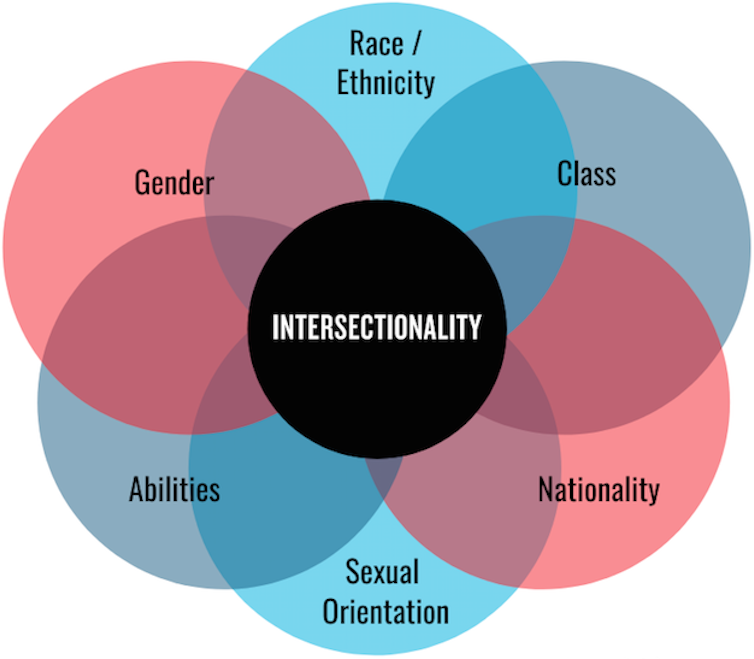
Intersectionality recognises the effect of different combinations of identities and attributes, rather that treating those things discretely.
First Book, CC BY

Even though these organisations didn’t acknowledge intersectionality in their policies and practice, employees were certainly aware of it. One person we spoke to cited the case of a senior manager, a woman born in India:

She’s a smart woman from an Indian background and she’s always being treated like the last wheel.

In another case, one of the people we spoke to talked about two of his Indian colleagues:

You couldn’t bottle them both up and say ‘they’re both Indians’, because they’re completely different. One’s from a rich background and one’s from a poorer background. They’ve got different mentalities and different ambitions. They’re different workers and different people.


Read more:
What is intersectionality? All of who I am


Diversifying diversity

Diversity and inclusion polices and programs are contributing to progress in reducing entrenched forms of discrimination and disadvantage in the workplace. But if these programs are to truly benefit our most disadvantaged groups, such as Indigenous people who come from low socio-economic backgrounds, much more will have to be done.

The way we understand diversity needs to be diversified. If we continue to privilege gender and race as if they are the only ways by which people are treated differently and excluded from leadership, many inequalities will remain.


Read more:
Six misunderstood concepts about diversity in the workplace and why they matter


Our research highlighted the intersectionality of race, gender and class as significant oversights in how we manage diversity. But there are many other intersections to consider – including the treatment of those with different sexual and gender identities, and people with different physical and neurodivergent abilities.

It’s up to all of us to challenge ourselves to understand how we privilege some differences over others. Reducing complex differences to a limited number of simple measurable categories blinds organisations to how privilege and discrimination operate at work.

The Conversation

The authors do not work for, consult, own shares in or receive funding from any company or organisation that would benefit from this article, and have disclosed no relevant affiliations beyond their academic appointment.

ref. It’s not all about gender or ethnicity: a blind spot in diversity programs is holding equality back – https://theconversation.com/its-not-all-about-gender-or-ethnicity-a-blind-spot-in-diversity-programs-is-holding-equality-back-198237

Fashion, sex and drag: Vivienne Westwood’s queer legacy

Source: The Conversation (Au and NZ) – By Robert Wellington, Associate professor, Australian National University


Vivienne Westwood

I was 13 years old when I discovered Vivienne Westwood. The music came first. From the moment I heard the album Never Mind the Bollocks, Here’s the Sex Pistols, I was hooked. Within a few months, I was spending my pocket money on a knock-off Westwood design – tartan bondage trousers. My punk look was completed with ripped t-shirts held together with safety pins, a denim jacket customised with bullet holes in the back, and Doc Martens boots.

It’s only recently that I’ve come to understand that what appealed to me most about the punk aesthetic, pioneered by Vivienne Westwood in the mid-to-late 1970s, was its queerness. From the start of her career in design, Westwood’s clothes challenged and undermined gender norms, and it’s probably for that reason why she is so revered by the LGBTQI+ community.

Westwood began selling clothes at a shop at 430 Kings Road, Chelsea with her then boyfriend, Malcolm McLaren in 1971. The third and most radical incarnation of that shop SEX, sold rubber and leather fetish gear alongside designs by McLaren and Westwood, including the original bondage trousers that I coveted as a teen.

This is where the queer, S&M aesthetic of punk came from.

Picture of SEX scanned from an adult magazine called Gallery International (1976).
Flickr

Queer aesthetic

Queerness as a theoretical and cultural idea was brought into prominence in the 1980s by the French philosopher Michel Foucault. Simply put, queer theory is study of everything that sit outside of the heteronormative.

Heteronormativity places heterosexual desire as the normative (how things ought to be) system of society. This includes the belief in binary gender, and presupposes defined male/female, masculine/feminine behaviour. Anything else, including sexual behaviours perceived as deviant such as sadomasochism, is aberrant (queer).

It was at the shop SEX in 1975 that McLaren and Westwood first sold the iconic gay cowboys T-shirt. A subject chosen more for its shock value than for reason of allyship. It features a design appropriated from American artist Jim French with two men in cowboy clothes without pants, penises almost touching, while one arranges the handkerchief around the neck of his friend.

The text below: “Ello Joe. Been anywhere lately? Nah, it’s all played aht, Bill. Gettin’ too straight”, ironically, mourns the loss of queer spaces. It’s prophetic of the once hidden world of gay subculture that is now exposed to the mainstream.

The iconic gay cowboys tshirt designed by McLaren and Westwood.
Vivienne Westwood website

That t-shirt led to prosecutions for indecency for shop assistant, Alan Jones, and for Westwood and McLaren too. It became a staple of punk uniform worn by Siouxsie Sioux, Sid Vicious, and many others besides.

Challenging the gender binary

Queerness and the challenge to binary gender in fashion have been a part of Westwood’s designs since she moved her clothes from the high street to the high fashion runway.

For her Pirate collection in 1981 the designer let the models, male and female, choose the clothes themselves regardless of gender. It was a style sold at Worlds End the final incarnation of 430 Kings Road, remodelled to suggest a pirate ship. The shop remains a mecca for Westwood devotees today. The pirate look was worn by Malcolm McLaren’s music protégés Adam Ant, Boy George, and Bow Wow Wow: New Romantic dandies who played with gender and androgyny.

Vivienne Westwood runways featured men in skirts and dresses long before, Harry Styles, Sam Smith, and Jaden Smith were wearing non-binary fashions to red-carpet events.

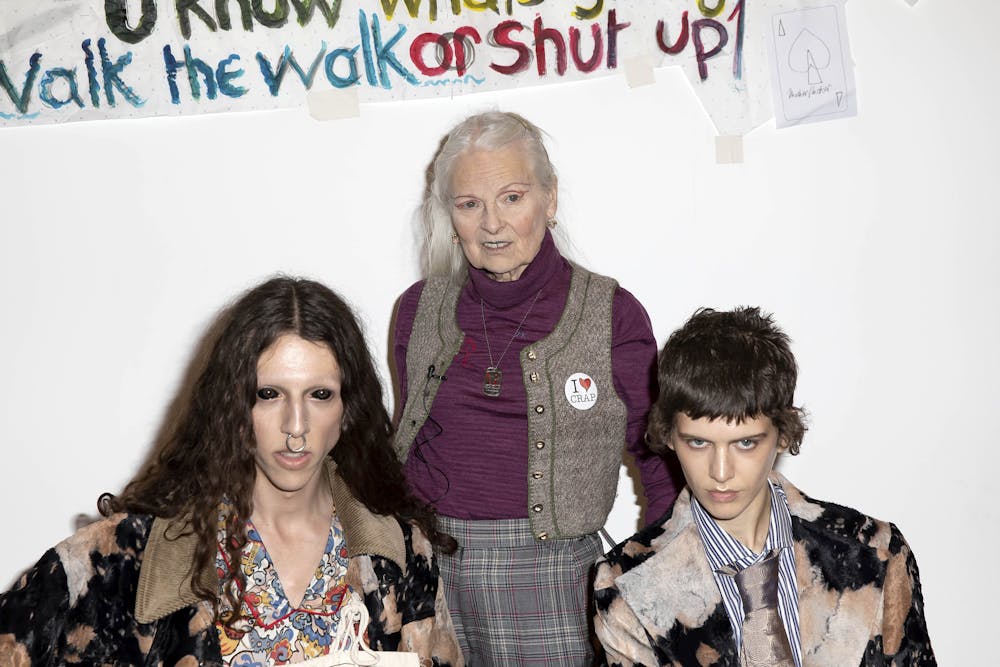
Vivienne Westwood and models pose for photographers at her Autumn/Winter 2020 fashion week showcase in London, Friday, Feb. 14, 2020.
Grant Pollard/Invision/AP

The recent fashion for men wearing pearl necklaces and pearl drop earrings was equally foreshadowed by Westwood who had men in pearls on the runway from the early 1990s. Westwood pearl jewellery has never been more in fashion. Timothée Chalamet cemented his “pretty boy” reputation when he wore a Vivienne Westwood pearl choker to the premier of the film Bones and All in Rome last year.

Westwood and drag culture

When Westwood died on 29 December 2022, tributes flowed from the fashion and entertainment community. Among them were many of the stars of the global reality television hit RuPaul’s Drag Race. This year, RuPaul’s Drag Race launched its 15th season in North America. Its move to MTV (remaining on Stan in Australia) has secured a place in the mainstream for the subversive queer culture of drag.

British drag star Bimini Bom Boulash took to Instagram, posting:

Heartbroken at the news. If only the world was more like Vivienne Westwood. Rest in Power Vivienne. My Inspiration forever.

Winner of the first season of RuPaul’s Drag Race UK, The Vivienne, who takes her name from the designer, posted:

Vivienne Westwood is the woman that showed me I could do anything, I could wear what I wanted, she was an ICON and I lived my life through hers in some sort of way.

Raja Gemini who took the Crown of season three of Drag Race is widely regarded as first and foremost among the fashion queens. Her runway look of episode five: a high-piled powered wig, corset, and trousers printed with pastel forms reminiscent of French Rococo paintings strongly recalls Westwood’s 1991 Portrait collection. If you listen carefully, you can even hear the show’s judge Michelle Visage say “there’s Westwood” as Raja walks out on the mainstage.

Under the creative direction of Westwood’s husband, Andreas Kronthaler, the brand has become a leader in non-binary fashion. Skirts, dresses, and heels are worn by models regardless of their gender identity.

It is under Kronthaler that the former contests and noted fashion queens of Drag Race have become part of the Westwood family. Drag queen Milk was photographed for a Westwood SS2018 campaign by Jurgen Teller to coincide with the opening of a new boutique in New York City in 2018. Queens Miss Fame and Symone sat front row at Vivienne Westwood shows for Paris Fashion Week dressed in the designer’s clothes in 2021.

Miss Fame and Symone attend the Vivienne Westwood Spring-Summer 2022 ready-to-wear fashion show presented in Paris, Saturday, Oct. 2, 2021.
Vianney Le Caer/Invision/AP

Now, some 30 years after I first found out about her work, I’m lucky enough own Westwood clothes. Wearing one of her kilts, a billowing toga shirt, wonky “alcoholic trousers”, and pirate boots raises eyebrows and admiration in equal measure. Westwood once said: “you have a more interesting life if you wear impressive clothes”.

I can attest to that. Her clothes make me feel more authentically myself as a queer person.

The Conversation

Associate Professor Robert Wellington receives funding from the Australian Research Council.

ref. Fashion, sex and drag: Vivienne Westwood’s queer legacy – https://theconversation.com/fashion-sex-and-drag-vivienne-westwoods-queer-legacy-197403

Federal Labor MP warns Alice Springs crime crisis is impeding Voice debate

Source: The Conversation (Au and NZ) – By Michelle Grattan, Professorial Fellow, University of Canberra

The debate over enshrining an Indigenous Voice in the Constitution is being impeded by the Alice Springs crime crisis, according to the Indigenous Labor member for the Northern Territory seat of Lingiari, Marion Scrymgour.

Scrymgour, a strong supporter of the Voice, warned on Monday that until what was happening in Alice Springs and elsewhere in the NT could be fixed, people weren’t going to be interested in having a discussion about the Voice.

A former NT deputy chief minister, Scrymgour blamed the NT government for not acting when the federal alcohol bans expired in the middle of last year. The NT government said it would not support continuing the mandatory alcohol restrictions, which it described as race-based targeting of Aboriginal Territorians. Communities now have to choose to “opt in” to bans.

Police figures recently released for Alice Springs showed a 43% rise in assaults in the year to November 30. There were also big increases in commercial break-ins and property damage.

The federal opposition has seized on the Alice Springs situation to declare the Albanese government should step in. Opposition leader Peter Dutton said the prime minister should go to Alice Springs “tomorrow”.

Asked on Sky what Anthony Albanese could do, Dutton said:

He can implement the grog ban immediately and we would support any parliamentary measure to do that. He can send Australian Federal Police tomorrow. He can provide additional funding for family services workers.

Scrymgour said she “absolutely” backed the Voice. “But I think that we can’t have these conversations if there’s all these issues that are impacting on communities like Alice Springs.

“How do we get Aboriginal people but also communities to have faith and to vote in this referendum if they don’t believe governments are listening to them?”

She said “people are under siege in their own homes”.

“People that I know that might have been sympathetic to constitutional reform and the Voice and looking at the referendum have become really frustrated because nothing has been done,” she told Melbourne radio station 3AW.

“So they’ve gone to the opposite thing of ‘well, why should we support the Voice if we can’t even get police to protect me while I’m sleeping in my own home?’”

Meanwhile, Indigenous leader Noel Pearson has warned of dire consequences if the Voice referendum fails. He said if it were kiboshed by the opposition, the chance for reconciliation would be lost forever.

As the opposition continues to ramp up calls for detail of the Voice model, Pearson dismissed this pursuit as a “complete diversion”. Detail was a matter for legislation, not for the constitution. He also rejected the idea of legislating the Voice before the referendum, saying that would be legislating under the current race provision in the Constitution, when the hook for the Voice needed to be a new provision.

Pearson reduced the issue to the simple question: “Are we going to vote ‘yes’ for reconciliation through constitutional recognition?”

“This year is the most important year in the past 235 […] and this referendum is the most important question concerning Indigenous and non-Indigenous Australians since the first fleet.

“What is at stake is the chance for reconciliation. And if this referendum is kiboshed through game playing and a spoiling game by the opposition, we will lose the opportunity I think forever,” Pearson told the ABC.

If the referendum were lost, “then I can’t see how the future will be anything other than protest. The Indigenous presence in this country will forever be associated with protest”, rather than reconciliation being achieved.

A Saturday Telegraph YouGov poll, done in NSW, found nearly a quarter (24%) of people undecided about the Voice. It showed 46% support for a yes vote, with 30% opposed. The paper reported that more than two-thirds (68%) thought the government had done a poor job in explaining how the Voice would work. The online poll was of 1,069 people.

Albanese, in a round of Monday media appearances, said that at the referendum people would be voting “for two simple things”.

To recognise Aboriginal and Torres Strait Islander people in our constitution and to do it in a way which gives them voice so they are able to provide advice to the parliament on matters that directly affect them, on education, on health, on housing – on the matters [where] we need to close the gap.

The shadow minister for Indigenous Australians, Julian Leeser, said people he’d have expected to be likely to support the referendum were cautious and concerned. “They’re saying to me things like, ‘Look I want to vote yes, but I’m just not sure I can because no one can explain to me how this will work.’”

Leeser, a long-term backer of constitutional recognition, now suggests the government is “in danger of losing me because I just don’t think there’re listening”.

He accused the government of “ignoring the reasonable concerns of reasonable Australians about providing detail about how this will work”.

The Liberals are yet to announce a position on the Voice referendum, which will be held in the second half of the year, although the Nationals have said they will oppose it.

The Conversation

Michelle Grattan does not work for, consult, own shares in or receive funding from any company or organization that would benefit from this article, and has disclosed no relevant affiliations beyond their academic appointment.

ref. Federal Labor MP warns Alice Springs crime crisis is impeding Voice debate – https://theconversation.com/federal-labor-mp-warns-alice-springs-crime-crisis-is-impeding-voice-debate-198312

‘Claims a serious matter’ – lawyer Richard Naidu responds to Sayed-Khaiyum’s attack

ANALYSIS: By Richard Naidu

Who’s broken the law? “Separation of powers” and all that stuff.

Aiyaz Sayed-Khaiyum’s hour-long news conference on Saturday, January 21, seems mostly to have followed the usual FijiFirst party format.

He pontificated at length while his party’s MPs stood silently behind him.

From what I could tell, Sayed-Khaiyum’s speech was a mixture of political criticism and claims about the law. The politicians can respond to the political rhetoric. But claims that the government has broken the law are a more serious matter.

Sayed-Khaiyum has raised a number of complaints suggesting that the new government has broken the law. He has not been very clear about why this is so. However, for the record, let’s go over these complaints (or at least what he seems to be suggesting):

that former Constitutional Offices Commission members were unlawfully removed from office

Wrong. The Commissioners were asked to resign. They did so. No law prevents them from resigning. If they had refused to resign, they would have remained in place (as others have done).

Sayed-Khaiyum says that the PM had “no authority” to ask them to resign. Wrong. Nobody needs “authority” to ask anyone else to commit a voluntary act. The former Constitutional Offices Commissioners are not the property of the FijiFirst party. No law has been broken.

that the Minister for Home Affairs should not have asked the Commissioner of Police to resign

Wrong. It is a free country. The minister may make any request he wants — and the commissioner may accept or refuse that request.

The commissioner refused the minister’s request, saying he wanted the Constitutional Office Commission process be followed. The commissioner remains in place.

No law has been broken.

that prayers at government functions breach the Constitution

The Fiji Times front page 23012023
The Fiji Times front page today . . . featuring lawyer Richard Naidu’s reply on constitutional matters. Image: Screenshot APR

Sayed-Khaiyum read out s.4 of the Constitution (“Secular state”) and claimed that at government functions prayers were now only offered in one religion (presumably the Christian one).

To suggest that this is something new — that this did not happen under the FijiFirst party government — is fantasy. And I too wish that those who offer prayers were sometimes a little more sensitive to other religions.

But that is not the point. The Constitution does not tell any of us how to pray.

No law has been broken.

“not referring to all citizens as Fijians”

The Constitution may refer to all citizens as “Fijians”. But the Constitution also guarantees freedom of speech. There is no law that says we must all call each other “Fijians”. We may call each other what we want.

No law has been broken.

replacing boards of statutory authorities before expiry of their terms

Sayed-Khaiyum should be specific. Which boards is he referring to? If board members have resigned and been replaced, then what I have already said about resignations also applies.

For a number of statutory bodies the minister has, under the relevant law, the power to appoint board members. This power generally includes the power to dismiss them.

Replacing boards or board members mid-term is certainly nothing new. Sayed-Khaiyum may recall a recent example while he was Minister for Housing. He requested the entire Housing Authority board to resign before the expiry of their terms (and they complied).

No law has been broken.

taking back ATS [Air Terminal Services] workers. Sayed-Khaiyum seems to think that because a court decided that ATS is not required to take the workers back, ATS cannot do so.

Wrong. Any parties to litigation — including employers and employees — can decide to settle their differences at any time — including after a court ruling. The new government has requested ATS to take its former employees back. If ATS has a legal problem with this, no doubt it will tell government.

No law has been broken.

that using vernacular languages in Parliament breaches Standing Orders

Other than for the formal process of electing the Speaker and the Prime Minister, Parliament has not yet even sat yet.

The new government wants to allow the use of vernacular languages in Parliament. The current Standing Orders do not permit this.

So, to allow the use of vernacular languages in Parliament, the government will have to propose changes to the Standing Orders and parliamentarians will have to vote for them. That is normal procedure (Standing Order 128).

No law has been broken.

“separation of powers”

Former attorney-general Aiyaz Sayed-Khaiyum during his attack on Fiji's new coalition government claiming breaches of the law and Constitution
Former attorney-general Aiyaz Sayed-Khaiyum during his attack on Fiji’s new coalition government claiming breaches of the law and Constitution. Image: The Fiji Times

Under the FijiFirst party government, this phrase seemed to be thrown around to justify anything. For example, the Parliament Secretariat would frequently refuse to allow opposition MPs to ask questions of government ministers because of “the separation of powers”.

This justification made no sense. Section 91 of the Constitution requires ministers to be accountable to Parliament.

In layman’s terms, “the separation of powers” means only that the legislature (Parliament), the executive (Cabinet and civil servants) and the judiciary (judges and magistrates) should each “stay in their lanes”.

They should not interfere in each other’s functions. Sayed-Khaiyum has made no specific allegations that the new government has breached this concept. What law does he say has been broken?

FijiFirst and the Constitution

Sayed-Khaiyum’s FijiFirst party government applied the Constitution as it suited them.

It never set up the Accountability and Transparency Commission that the Constitution required (s.121) It never set up a Ministerial Code of Conduct as the Constitution required (s.149).

It never set up a Freedom of Information Act as the Constitution required (s.150). This was, after all, his own government’s constitution.

His government treated Parliament — the elected representatives of Fiji’s people — with contempt. Almost all of its laws were passed under urgency (Standing Order 51).

Typically, parliamentarians got two days’ notice of what new laws the government was proposing, sometimes less. That meant no one had time to review the laws
or consult the people on them.

The FFP government treated the people’s laws as its own property. Sayed-Khaiyum complains about board members being removed and public service appointment rules not being followed. He says nothing about the numerous arbitrary terminations of many public servants under the FijiFirst party government, including the Solicitor-General and the Government Statistician.

It was no less than the Fiji Law Society president who this week described rule of law under the FijiFirst government as “sometimes hanging by a thread”.

Against this background, not many lawyers are prepared to listen to Sayed-Khaiyum lecture us on the law.

If you’ve got a problem, go to court

The “separation of powers” doctrine is also clear that if you have a problem with the lawfulness of any government action, the courts are there to solve that problem. It is the
courts who decide if anyone has breached the Constitution. It is not the secretary of the opposition political party.

So, if Sayed-Khaiyum has a complaint that the law has been broken, he should do what the rest of us do — take it to court. That is what he frequently told the Opposition to do when it complained about what his government did.

Sayed-Khaiyum has a little more time on his hands now. He is a qualified lawyer with a practising certificate. So — get on with it. Bring your complaints to court, because
that is where they belong. Should Sayed-Khaiyum really be lecturing us about the law?

Finally, Sayed-Khaiyum has still not explained to anyone how, in the space of three days in January, he got himself kicked out of Parliament by accepting a position on the Constitutional Offices Commission — and then had to resign from the Constitutional Offices Commission when asked how he could continue as general secretary of the Fiji First Party.

Should we really be taking legal advice from him?

Richard Naidu is a Suva lawyer and a columnist. The views in this article are not necessarily the views of The Fiji Times. Republished with permission.

Print Friendly, PDF & Email

Article by AsiaPacificReport.nz

Two months before NSW election, a new poll gives Labor a big lead

Source: The Conversation (Au and NZ) – By Adrian Beaumont, Election Analyst (Psephologist) at The Conversation; and Honorary Associate, School of Mathematics and Statistics, The University of Melbourne

A new poll has given Labor a sizeable 56% to 44% two-party preferred lead over the Coalition, two months ahead of the New South Wales state election on March 25.

It’s an even bigger margin than the Newspoll conducted last September, which gave Labor a 54-46 lead.

The Coalition won the 2019 NSW election by a 52-48 margin after preferences, so this poll represents an 8% swing to Labor.

The YouGov poll for The Sunday Telegraph was conducted January 14-17 from a sample of just over 1,000 people, and recorded primary votes of 39% Labor, 33% Coalition, 11% Greens and 17% for all others. Poll figures and other NSW election news are from The Poll Bludger.

The public seems to be indifferent to the recent revelation by Liberal Premier Dominic Perrottet that he wore a Nazi costume to his 21st birthday party. About 67% of respondents said the scandal made no difference to their vote, while 20% said they would be less likely to vote Coalition, and 8% more likely.

On other topics, the poll found a majority of voters supported cashless gaming cards (61% in favour, 19% opposed). On the party best to deal with the cost of living, 30% selected Labor, 25% the Liberals, and 26% neither. Cost of living was rated the most important issue by 39%, far ahead of the 17% who rated the economy most important.

This YouGov poll found 46% of NSW voters supported a federal Indigenous Voice to Parliament, while 30% did not.

If these recent polls are accurate, the Coalition is likely to be defeated in March after three terms and 12 years in government. If this happens, Labor would govern federally and in all states and territories except Tasmania.

In other NSW election news, former Labor MP Tania Mihailuk has joined One Nation, and will be the party’s second candidate on its upper house ticket. Mark Latham was elected to the NSW upper house for One Nation in 2019 for an eight-year term. However, he has resigned so he can contest this election in an attempt to attract enough voters for One Nation to win a second upper house seat.

NSW Morgan poll: 52-48 to Labor

A Morgan poll, conducted in November from a sample of 1,234 gave Labor a 52-48 lead in NSW, a five-point gain for the Coalition since October. This poll was not released until December 20.

Primary votes were 37% Coalition (up five since October), 35% Labor (down 1.5), 11.5% Greens (up two), 5% One Nation (down 0.5), 1.5% Shooters (up 0.5), 5.5% independents (down three) and 4.5% others (down 2.5).

Morgan began polling NSW in September, and had Labor ahead by 53-47, before a Labor blowout in October to 57-43 and a Coalition recovery in November.

Victorian Narracan supplementary election

Owing to the death of a candidate before the November 26 Victorian state election in the Narracan district in the state’s east, the election there was postponed until Saturday January 28.

Labor and the Nationals will not contest, so the Liberals’ only significant opponents will be independents and the Greens.

Last year’s Freshwater federal poll: 54-46 to Labor

The Poll Bludger reported December 20 that a federal Freshwater poll for The Financial Review, conducted December 16-18 from a sample of 1,209, gave federal Labor a 54-46 lead.

Primary votes were 37% Labor, 37% Coalition, 12% Greens, 4% One Nation and 10% for all others.

Anthony Albanese had an approval rating of 48%, and a 30% disapproval rating. By contrast, Peter Dutton’s approval rating was 29%, and his disapproval rating was 38%. Albanese led Dutton as preferred prime minister 55% to 29%.

In this poll, 50% of voters supported the Indigenous Voice to Parliament, compared to 26% who did not.

Also, 56% said they supported the proposed cap on gas prices, while 20% did not. By 60% to 22%, voters would support extracting and using more domestic gas. Asked to choose between a cap on prices and increasing supply, the cap was just ahead, 40% to 39%.

Federal Morgan poll: 59.5-40.5 to Labor

Morgan’s first weekly federal poll of the new year gave Labor a 59.5-40.5 lead, a one-point gain for Labor since the mid-December Morgan poll. Morgan’s polls have swung strongly to Labor since late November, when Labor only led by 52.5-47.5. The latest poll was conducted January 9-15.

In a Morgan SMS poll that was conducted December 9-12 from a sample of 1,499, the Indigenous Voice to parliament was supported by 53%, to 30% against.

Labor and Greens voters strongly supported the Voice, while Coalition and One Nation voters were strongly opposed. This poll was released December 20.

Republican Kevin McCarthy becomes US House Speaker on 15th ballot

Republicans have a 222-212 majority over Democrats in the United States House of Representatives. To win the speakership, a candidate needs a majority of all votes for candidates, but not necessarily a majority of the House owing to abstentions and “present” votes (which is effectively an abstention).

I covered the January 3-6 Speaker election for The Poll Bludger. It took 15 rounds of voting before Republican Kevin McCarthy was elected Speaker, defeating Democrat Hakeem Jeffries by 216-212 with six Republicans voting “present”, lowering the threshold for a majority to 215.

This was the first time since 1923 that the speaker election had not been won on the first round. In every round, all 212 Democrats voted for Jeffries, while at one stage 21 Republicans were not voting for McCarthy.

Chris Hipkins replaces Jacinda Ardern as NZ Prime Minister

New Zealand Prime Minister Jacinda Ardern announced last week that she would resign as the country’s leader. She also announced that the next NZ election would be held on October 14 this year.

Chris Hipkins was elected by the Labour parliamentary caucus to replace Ardern on Saturday. He was the only nominee.

Ardern’s Labour party narrowly gained power from the conservative National in 2017 thanks to the support of the populist NZ First party. Labour then won a landslide in 2020, owing to the popularity of measures to keep COVID out.

But the combined vote for Labour and the Greens has fallen behind National and the right-wing “ACT” party in the polls.

I wrote for The Poll Bludger on Saturday that Hipkins faces a tough task to win a third term for Labour in October.

The Conversation

Adrian Beaumont does not work for, consult, own shares in or receive funding from any company or organisation that would benefit from this article, and has disclosed no relevant affiliations beyond their academic appointment.

ref. Two months before NSW election, a new poll gives Labor a big lead – https://theconversation.com/two-months-before-nsw-election-a-new-poll-gives-labor-a-big-lead-196876

An imaginative unfolding of a life, a new play asks: would Sidney Nolan have become the artist he became if not for Sunday Reed?

Source: The Conversation (Au and NZ) – By Kate Hunter, Lecturer in Art and Performance, Deakin University

Pia Johnson/Melbourne Theatre Company

Review: Sunday, directed by Anne-Louise Sarks, Melbourne Theatre Company

Sunday is a glimpse into the private world of the philanthropist and art patron Sunday Reed.

Sunday, born into the privileged Baillieu family, was a mobilising force in the revolutionary literary and art movement that became the Angry Penguins.

Structured around a loose interpretation of Sunday’s fractured menage à trois with painter Sidney Nolan and her husband, arts editor John Reed, the play unfolds the story of an unconventional, impulsive and passionate woman whose sheer force of character and talent for recognising and cultivating artistic brilliance helped forge the Modernist movement in mid-century Melbourne.

Set in the Reeds’ home and garden at Heide (later to become the Heide Museum of Modern Art), the play has a solid ensemble cast and a sleek and polished production design.

Fragmented scenes shift backwards and forwards through time to build an absorbing picture of the circle of artists who gathered around the Reeds, largely through Sunday’s determination to resist the constrained social conventions that pervaded Melbourne society at that time.


Read more:
Friday essay: the Melbourne bookshop that ignited Australian modernism


An artistic evolution

Characterised by a kind of quick-witted, Dorothy Parker-style dialogue which rollicks along, the play is enjoyably parochial in its depiction of characters who played such a crucial role in Australia’s – and Melbourne’s – artistic evolution.

The Reeds’ house and garden at Heide became a central focus for a bohemian and unconventional lifestyle, complete with gatherings, events, arguments and love triangles, which fostered the careers of key Australian artists such as Albert Tucker, Joy Hester, Arthur Boyd and John Perceval.

Sunday (Nikki Shiels) was a champion of the particular light the Australian landscape holds: the whites, the greens. Anthony Weigh’s dialogue crackles with in-jokes about the artistic, cultural and economic differences between Melbourne and Sydney.

A blonde woman on stage.
Shiels gives us a strident, sassy and vulnerable performance.
Pia Johnson/Melbourne Theatre Company

Shiels delivers a strident, sassy and vulnerable performance as Sunday Reed. Relaxed and confident, with a lithe physicality, Shiels is self-possessed and specific.

Josh McConville as Sidney Nolan unnerved me at first – he wasn’t at all how I imagined Nolan to be – but his comic timing and diffident, understated likeability grows as the play progresses.

John Reed (Matt Day) gives us a long, detailed critique of the old-boy/girl network, still rife in Melbourne. But his performance feels at odds with the rest of the production: his folksy, wholesome delivery undercuts Shiels’ more centred and dropped-in performance.

Beautiful design

This is a beautiful-looking, pared-back production.

Anna Cordingley’s striking chiaroscuro-washed set in grey tones is edged by a three-sided frame which holds the theatrical images. No fiddly doilies or busy prop-ridden scenes distracted from the action in this slickly-designed work.

Two people on stage
Anna Cordingley’s set design is striking.
Pia Johnson/Melbourne Theatre Company

Signature set pieces descend from the rig or rise through the floor. A single window, a sparkling chandelier, a clawfoot bath: these hint at places and spaces with a beautifully minimalist aesthetic.

The reduced palette is also delightfully manifested in Harriet Oxley’s specific and considered costume design.

The epic sound design by Jethro Woodward is a major player in the work. Birds, bells, synthetic harmonics and low tones are juxtaposed with wild jazz and drums, signifying shifts in time and place. Surtitles assist us to navigate the non-linear trajectory.

Endearing and entertaining

At times, despite the rapid-fire pace of the play (which cracked along for three hours), I found myself craving a deeper engagement with the material: the cloying gender politics of dour 1940s Melbourne; the shifting and complex power structures that underpin the art world.

The play turns a little darker over time as the complex relationships between the characters break down or explode, but the transformation of Sunday’s character from cheerful and witty in act one to desperate and cloying after the interval feels a little unresolved.

Sunday raises important questions about the nature of artistic authorship and the role of the benefactor as facilitator and enabler. Would Sidney Nolan have become the artist he became if not for Sunday Reed?

Two people on stage, a man leans over a painting table.
Who would Sidney Nolan have been without Sunday Reed?
Pia Johnson/Melbourne Theatre Company

These issues are just as relevant now in the increasingly competitive world of contemporary art. But the comedic style of Sunday undermines the potential for a deeper set of considerations that might draw this work into a more contemporary discussion.

Ultimately, however, Sunday is an endearing and entertaining work which is a very Melbourne story. It is an imaginative unfolding of a life, resonating with iconic characters that are embedded in the cultural history of the city.


Read more:
On Sidney Nolan, the painter who re-envisaged the Australian landscape


The Conversation

Kate Hunter does not work for, consult, own shares in or receive funding from any company or organisation that would benefit from this article, and has disclosed no relevant affiliations beyond their academic appointment.

ref. An imaginative unfolding of a life, a new play asks: would Sidney Nolan have become the artist he became if not for Sunday Reed? – https://theconversation.com/an-imaginative-unfolding-of-a-life-a-new-play-asks-would-sidney-nolan-have-become-the-artist-he-became-if-not-for-sunday-reed-196797

Australia’s iconic black swans have a worrying immune system deficiency, new genome study finds

Source: The Conversation (Au and NZ) – By Parwinder Kaur, Associate Professor | Director, DNA Zoo Australia, The University of Western Australia

Conor O’Reagan/Unsplash

For years, scientists have known bird flu kills every black swan it infects. This means if the disease made it to the Australian continent, it would be an existential threat to this iconic Aussie species.

A new study published today in Genome Biology finally reveals the gene contributions that make black swans particularly prone to falling victim to infectious diseases.

The relative geographic isolation of the black swan (Cygnus atratus) may have resulted in a limited immune toolbox, making them more susceptible to the infectious avian diseases Australia has been largely shielded from.

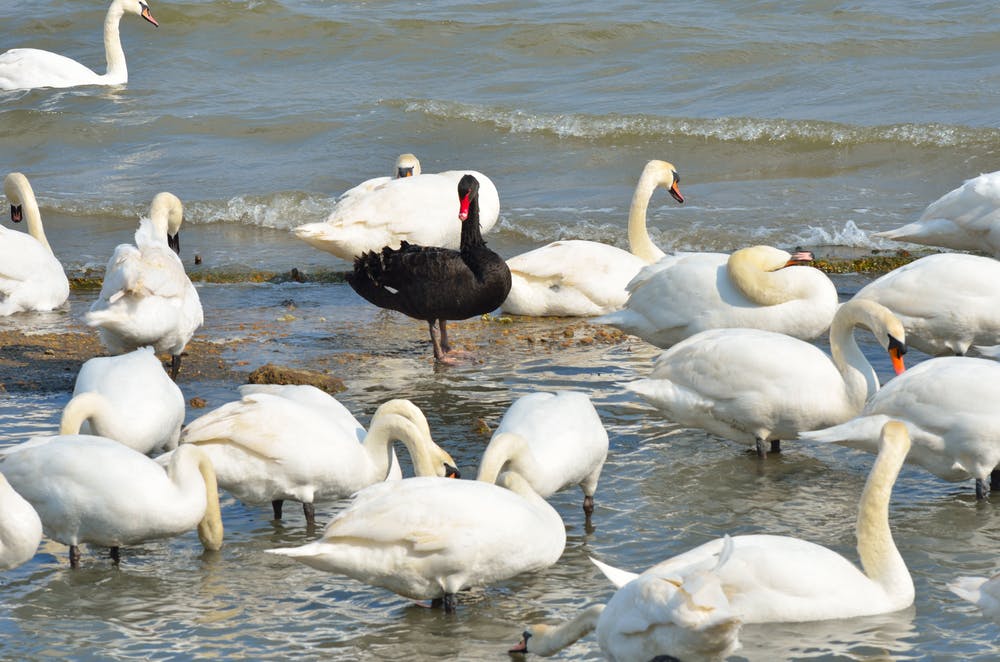
A black swan standing among at least 20 white swans
Mute swans are the iconic white species found throughout the Northern Hemisphere, while black swans are native to Australia.
Paul Wishart/Shutterstock

A DNA puzzle

Unlike mallard ducks (Anas platyrhynchos) and the white-coloured mute swan (Cygnus olor), the black swan is extremely sensitive to highly pathogenic avian influenza or HPAI, commonly known as “bird flu”.

In May 2021 a collaborative effort between University of Western Australia and University of Queensland mapped the DNA puzzle of the black swan, which was released open-source through DNA Zoo.

To understand whether the geographically-isolated black swan has a different immune gene repertoire compared to its relatives, for the past two years we have worked on comparing the black swan genome to that of the closely related – yet genetically distinct – Northern Hemisphere mute swans. This work was done by a large team of scientists from Australia, New Zealand, Sweden, Germany, Japan, USA and UK.

Harnessing the power of high-performance computing, we mapped and compared tens of thousands of genes between the two species, to better understand why black swans fall victim to the virus so easily while mute swans do not. Such work is akin to finding a needle in a haystack.

Our work has now provided insights into how these species diverge genetically in response to the deadly bird flu and other viruses in the same family.

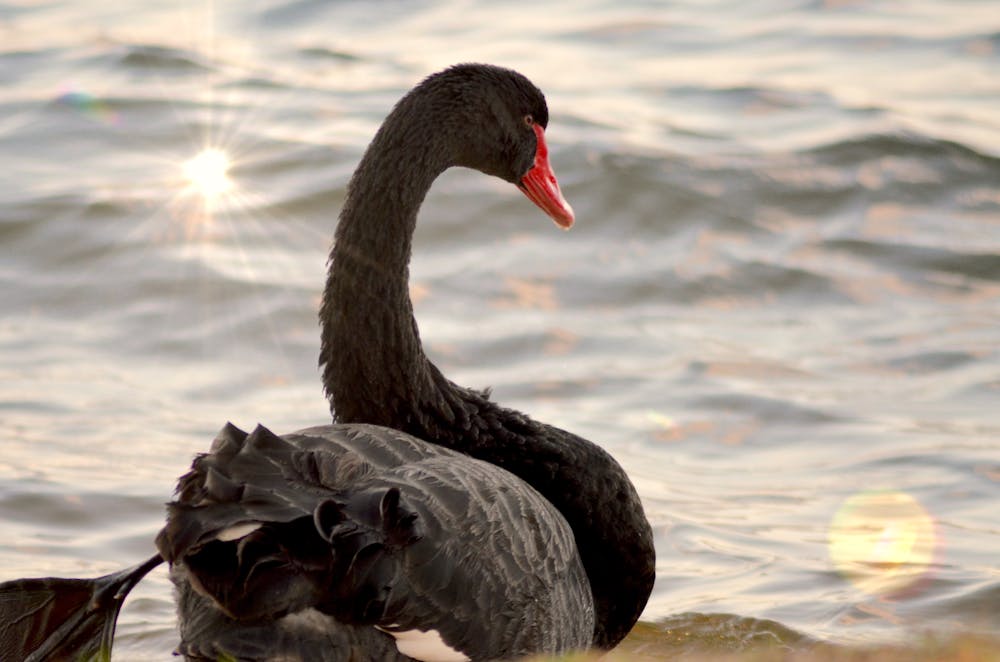
A black swan with a red beak against a light background of rippling water
Black swans aren’t just a different colour from the white ones – the differences in genome run much deeper.
Parwinder Kaur, Author provided

Some missing genes

Notably, we found the black swan showed undetectable gene expression in toll-like receptor (TLR-7), a class of proteins responsible for the immune system’s reaction to foreign viruses. In other words, they have the gene for it, but it’s not turning on for some reason.

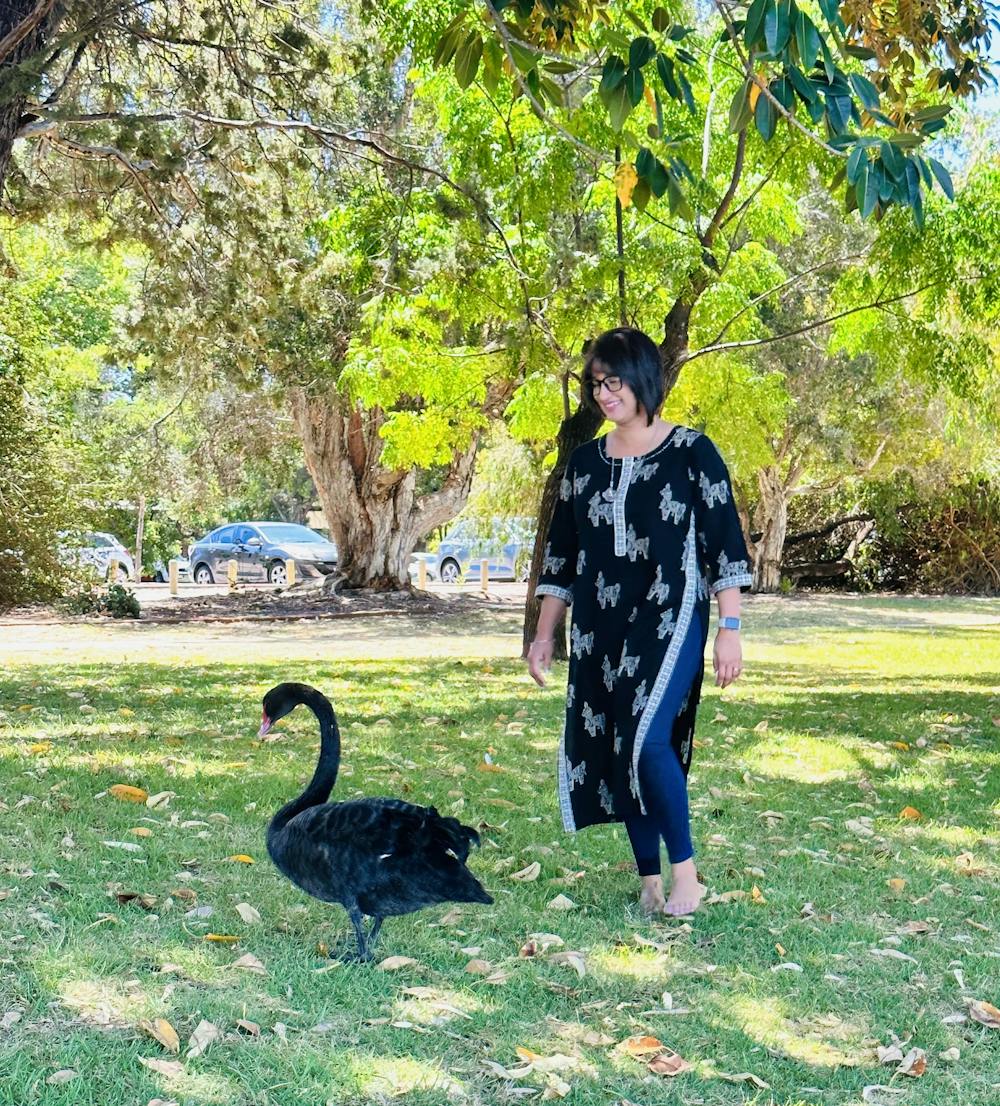
A woman in a dark salwar kameez dress standing next to a black swan on a grassy background
Dr Parwinder Kaur pictured with a black swan in Matilda Bay, Perth. The birds are the subject of a major collaboration in genome comparison studies.
Parwinder Kaur, Author provided

The TLR-7 family has been extensively studied in humans, as it is known to play a role in virus and tumour cell recognition. A 2021 study showed TLR-7 is crucial to the pattern recognition receptors (the molecules that can detect pathogens) of SARS-CoV-2 in humans.

In infected endothelial cells – the cells lining blood vessels and the heart – of the black swan, we found a dysregulated (abnormal) pro-inflammatory response. When the immune system reacts to a threat, some inflammatory response is normal, but it’s possible it can cause a more severe reaction if dysregulated.


Read more:
Black swans and other deviations: like evolution, all scientific theories are a work in progress


Risking a wipe-out

Our work has also found the black swan genome was contractive. This means that from their last common ancestor with mute swans, black swans lost more genes in total than they gained.

Specifically, 39 immune-related gene families of the black swan were contractive as compared to the mute swan. This could be because being relatively isolated in Australia, they were less exposed to infectious bird diseases.

The data gathered by this sequencing project indicate the immune system of the black swan is more susceptible to any avian viral infection if it were to arrive in its native habitat. In other words, bird flu could even risk wiping out this species.

Now that we understand the potential underlying mechanism for black swans’ susceptibility to bird flu – and given TLR-7 is such an extensively studied gene in humans – there are several ways we can save our precious swans.

One way would be to look for natural variation that exists for this particular gene family in different black swan populations across Australia, Tasmania and New Zealand. There are likely to be individuals with higher resistance to bird flu, and we could use them to develop a strategic breeding program for this species.

Otherwise – and a more expensive path – would be to develop immunotherapy treatments, such as we have developed for humans. The good news is we now know what could be done to protect these swans.


Read more:
Friday essay: a rare bird — how Europeans got the black swan so wrong


The Conversation

Parwinder Kaur does not work for, consult, own shares in or receive funding from any company or organisation that would benefit from this article, and has disclosed no relevant affiliations beyond their academic appointment.

ref. Australia’s iconic black swans have a worrying immune system deficiency, new genome study finds – https://theconversation.com/australias-iconic-black-swans-have-a-worrying-immune-system-deficiency-new-genome-study-finds-198159

Want your child to eat more veggies? Talk to them about ‘eating the rainbow’

Source: The Conversation (Au and NZ) – By Emma Beckett, Senior Lecturer (Food Science and Human Nutrition), School of Environmental and Life Sciences, University of Newcastle

Shutterstock

Parents of young children today were raised during some of the most damaging periods of diet culture. From diet and “lite” foods and drinks, to expensive “superfoods”, one constant across these changing trends has been the moralisation of food as “good” or “bad”.

These diet movements have led to many of us having difficult relationships with food, eating and dieting. If this sounds familiar, you might be wondering how to use the fun features of healthy foods to encourage kids to eat more of them.

“Eating the rainbow” means regularly eating a variety of different coloured fruits and vegetables. Encouraging your child to eat a rainbow is backed by the evidence and can start more well-rounded and positive conversations with them about foods.


Read more:
We’re told to ‘eat a rainbow’ of fruit and vegetables. Here’s what each colour does in our body


Encouraging variety

All fruits and vegetables are good for us. Depending on the age and sex of your child, Australia’s dietary guidelines recommend they eat 2–5.5 serves of vegetables and a 0.5–2 serves of fruit each day.

Each fruit and vegetable has it’s own unique profile of nutrients, so the wider variety of fruit and vegetables you eat in those serves, the better.

Eating a variety of fruits and vegetables each day has more benefits than just eating the one type on repeat, so striving for the rainbow can help encourage variety.

Serving variety and colourful meals can also encourage us to eat more. So if you or your kids are struggling to eat enough fruit and vegetables, you can use the rainbow to help get all those serves in.

Sparking adventurousness

Chasing the rainbow can also help kids break out of their comfort zones and can be an early way to encourage adventurousness for new foods.

While kids can benefit from routine, there are links between how adventurous we are with trying new foods and other healthy traits and habits. Those who love trying new things tend to have a higher quality diet than those who hate trying new things.

Mother helps child prepare vegetables
Chasing the rainbow can make kids more adventurious with their food choices.
Pexels/August de Richelieu

Starting early conversations about the complexities of food

Most parents of today’s kids were raised during the “reductionist” era of nutrition. The focus wasn’t on whole, complex foods, but on the key macro and micronutrients they contain. So, bread becomes all about the carbs and citrus becomes all about the vitamin C.

When we think along these lines it’s easy to think bread is “bad” and citrus fruits are only a good source of vitamin C.

But foods are much more complex than this. Nutrients are rarely found in just one food, and each food is seldom made of just one nutrient. And even more importantly, food isn’t just nutrients – it also contains “bioactive compounds”.


Read more:
Let’s untangle the murky politics around kids and food (and ditch the guilt)


These bioactives, which you might also see called phytonutrients or phytochemicals (phyto means from plants), occur naturally in plant foods. They’re not essential for our survival like nutrients are, but they can have healthy benefits.

Often these bioactives are linked to colours, so foods of different colours not only have different nutritional profiles, but they have different bioactive profiles too.

In fact, the pigments that give fruits and vegetables their colours are often bioactives. For example, reds can be lycopenes, linked to heart and blood vessel health and purples can be anothcyanins, linked to improved inflammation.

Kids don’t need to know which bioactive goes with which colour, or what they all do. But you can start conversations about the complexity of our biology and the food that nourishes it.

Plate of colourful food
Pigments can do different things.
Anna Pelzer/Unsplash

Where does fresh food come from?

Survey data regularly shows many kids don’t know where their food comes from, or don’t know which fruits and vegetables are which.

Fruits and vegetables often change colours when they ripen, and different parts of the plants they come from are different colours. So talking about the rainbow can open up conversations about:

  • where food comes from
  • how it grows
  • which parts of each plant are safe to eat
  • which parts of the plants are tasty.

Rainbows go with everything

As children get older, you can start talking about what happens to the colours of foods when when you cook or mix them. Some foods that aren’t very tasty alone might be more palatable when you mix them with some other colours. For example, bitter green leafy vegetables can be tastier if we combine them with sour from citrus or sweetness from berries.

Cooking might make foods brighter or duller, and can release or change nutrients and bioactives.


Read more:
Curious Kids: how do tongues taste food?


Colours can be used in kitchen science experiments – like cabbage or blueberries acting as natural indicators of acidity.

Kids don’t need to know all the details to benefit from eating the rainbow, but talking about colours can spark curiosity. The rainbow is diverse, so it reduces the focus on individual foods, making healthy eating easier and more fun.

The Conversation

Emma Beckett has received funding for research or consulting from Mars Foods, Nutrition Research Australia, NHMRC, ARC, AMP Foundation, Kellogg, and the University of Newcastle. She is a member of committees/working groups related to nutrition or the Australian Academy of Science, the National Health and Medical Research Council and the Nutrition Society of Australia.

ref. Want your child to eat more veggies? Talk to them about ‘eating the rainbow’ – https://theconversation.com/want-your-child-to-eat-more-veggies-talk-to-them-about-eating-the-rainbow-195563

Don’t kill the curl grubs in your garden – they could be native beetle babies

Source: The Conversation (Au and NZ) – By Tanya Latty, Associate professor, University of Sydney

Shutterstock

Have you ever been in the garden and found a large, white, C-shaped grub with a distinctive brown head and six legs clustered near the head?

If so, you’ve had an encounter with the larva of a scarab beetle (family: Scarabaeidae) also known as a “curl grub”.

Many gardeners worry these large larvae might damage plants.

So what are curl grubs? And should you be concerned if you discover them in your garden?

What are curl grubs?

Curl grubs turn into scarab beetles.

There are more than 30,000 species of scarab beetles worldwide. Australia is home to at least 2,300 of these species, including iridescent Christmas beetles (Anoplognathus), spectacularly horned rhinoceros beetles (Dynastinae), and the beautifully patterned flower chafers (Cetoniinae).

While the adults might be the most conspicuous life stage, scarabs spend most of their lives as larvae, living underground or in rotting wood.

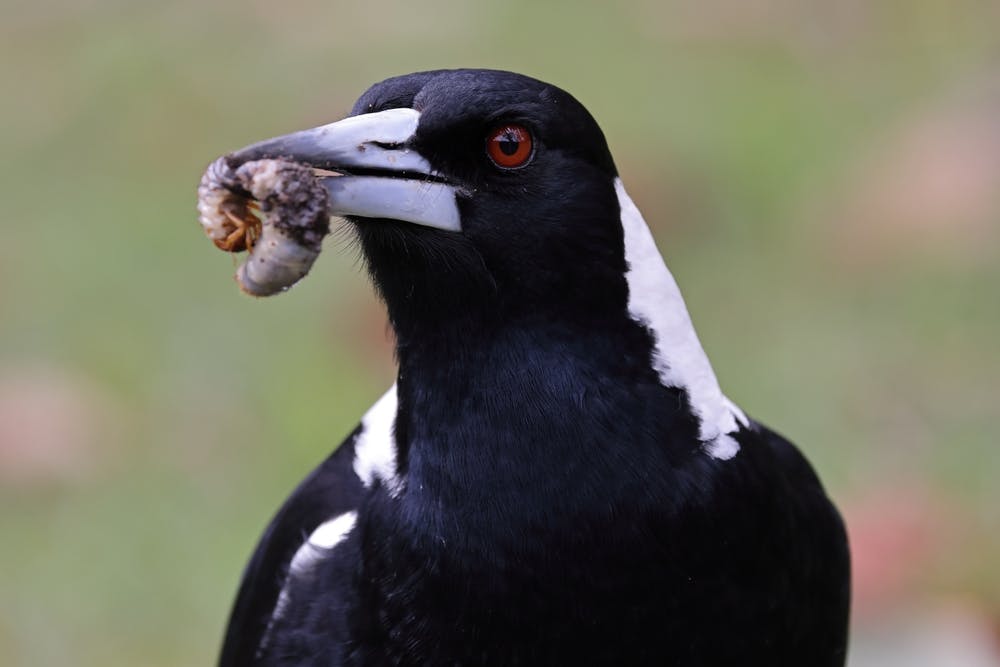
A bird holds a curl grub in its beak.
Curl grubs make an excellent meal for hungry birds.
Shutterstock

Scarab larvae can help the environment

Soil-dwelling scarab larvae can aerate soils and help disperse seeds.

Species that eat decaying matter help recycle nutrients and keep soils healthy.

Most scarab larvae are large and full of protein and fat. They make an excellent meal for hungry birds.

Besides being important for ecosystems, scarabs also play a role in cultural celebrations.

For example, the ancient Egyptians famously worshipped the sun through the symbol of the ball-rolling dung beetle.

In Australia, colourful Christmas beetles traditionally heralded the arrival of the holiday season.

Sadly, Christmas beetle numbers have declined over the last few decades, likely due to habitat loss.

Are the curl grubs in my garden harming my plants?

Most scarab larvae feed on grass roots, and this can cause damage to plants when there’s a lot of them.

In Australia, the Argentine lawn scarab and the African black beetle are invasive pest species that cause significant damage to pastures and lawns.

Native scarab species can also be pests under the right circumstances.

For example, when Europeans began planting sugar cane (a type of grass) and converting native grasslands to pastures, many native Australian scarab species found an abundant new food source and were subsequently classified as pests.

Unfortunately, we know little about the feeding habits of many native scarab larvae, including those found in gardens.

Some common garden species, like the beautifully patterned fiddler beetle (Eupoecila australasiae), feed on decaying wood and are unlikely to harm garden plants.

Even species that consume roots are likely not a problem under normal conditions.

Plants are surprisingly resilient, and most can handle losing a small number of their roots to beetle larvae. Even while damaging plants, curl grubs may be helping keep soil healthy by providing aeration and nutrient mixing.


Read more:
Testing the stress levels of rescued koalas allows us to tweak their care so more survive in the wild


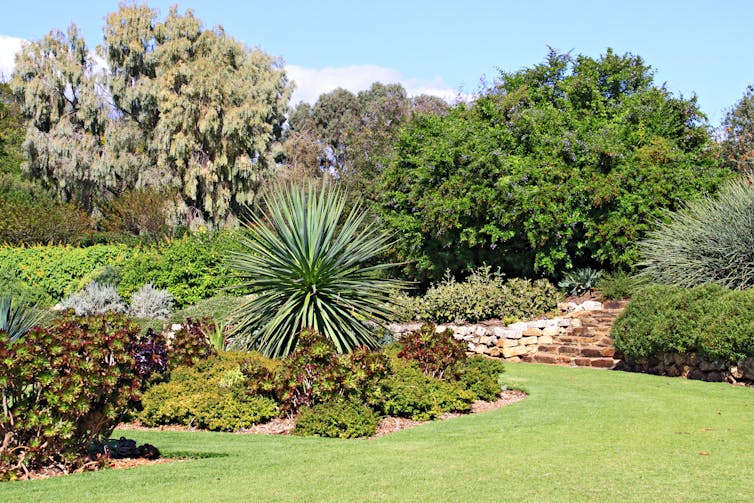
manicured grass and garden
Most plants can handle losing a small number of their roots to beetle larvae.
Shutterstock

How do I know if I have ‘good’ or ‘bad’ beetle larvae in my garden?

Unfortunately, identifying scarab larvae species is challenging. Many of the features we use to tell groups apart are difficult to see without magnification.
While there are identification guides for scarabs larvae found in pastures, there are currently no such identification resources for the scarabs found in household gardens.

Since identification may not be possible, the best guide to whether or not scarab larvae are a problem in your garden is the health of your plants. Plants with damaged roots may wilt or turn yellow.

Since most root-feeding scarabs prefer grass roots, lawn turf is most at risk and damage is usually caused by exotic scarab species.

Unfortunately, identifying scarab larvae species is challenging.
Shutterstock

What should I do if I find curl grubs in my garden?

Seeing suspiciously plump curl grubs amongst the roots of prized garden plants can be alarming, but please don’t automatically reach for insecticides.

The chemicals used to control curl grubs will harm all scarab larvae, regardless of whether or not they are pests.

Many of the most common treatments for curl grubs contain chemicals called “anthranilic diamides”, which are also toxic to butterflies, moths and aquatic invertebrates.

And by disrupting soil ecosystems, using insecticides might do more harm than good and could kill harmless native beetle larvae.


Read more:
Why has my home been overrun by pantry moths and how do I get rid of them? An expert explains


So what to do instead?

Larvae found in decaying wood or mulch are wood feeders and are useful composters; they will not harm your plants and should be left where they are.

Larvae found in compost bins are helping to break down wastes and should also be left alone.

If you find larvae in your garden soil, use your plant’s health as a guide. If your plants appear otherwise healthy, consider simply leaving curl grubs where they are. Scarab larvae are part of the soil ecosystem and are unlikely to do damage if they are not present in high numbers.

If your plants appear yellow or wilted and you’ve ruled out other causes, such as under-watering or nutrient deficiencies, consider feeding grubs to the birds or squishing them. It’s not nice, but it’s better than insecticides.

Lawns are particularly susceptible to attack by the larvae of non-native scarabs.
Consider replacing lawns with native ground covers. This increases biodiversity and lowers the chances of damage from non-native scarab larvae.

Scarab beetles are beautiful and fascinating insects that help keep our soils healthy and our wildlife well fed.

The Conversation

Tanya Latty volunteers for and is affiliated with Invertebrates Australia, a not for profit conservation organisation. She is also affiliated with the Australian Entomological Society and the Australasian Society for the Study of Animal Behaviour. She receives funding from the Australian Research Council

Chris Reid has received funding from a federal Australian Biological Resources Study grant and the NSW Department of Education.

ref. Don’t kill the curl grubs in your garden – they could be native beetle babies – https://theconversation.com/dont-kill-the-curl-grubs-in-your-garden-they-could-be-native-beetle-babies-191771

NZ’s incoming PM Chris Hipkins singles out ‘global inflation pandemic’ as priority

RNZ News

Incoming Prime Minister Chris Hipkins of Aotearoa New Zealand has signalled tackling the “inflation pandemic” will be a top priority for his cabinet’s slimmed-down work programme.

Hipkins and new Deputy Prime Minister Carmel Sepuloni — the first with a Pasifika heritage — will take the reins on Wednesday, following Jacinda Ardern’s sudden announcement last week she was quitting after a challenging five years in the top role.

It was perhaps the cleanest transfer of power in the Labour Party’s recent history, and a far cry from the post-Helen Clark, pre-Ardern years of infighting and headline-grabbing leadership tussles.

“Jacinda Ardern and I are both absolutely committed to providing strong and stable leadership to New Zealand,” Hipkins told RNZ’s Morning Report today.

“I think that’s what they’ve seen from the Labour government over the past five-and-a-half years, and that’s what they’re going to continue to see.”

While in 2020 Ardern led the party to the most comprehensive victory of any in the MMP era and still leads polls for the most-preferred prime minister, those same polls suggest Labour is on track to lose the election later this year.

With polls also showing the cost of living and inflation are far more important to voters than the likes of Three Waters reform and merging state-owned media entities, Hipkins said it was time to “run the ruler” over the government’s work programme.

Need to focus
“We need to focus in on some of those bread-and-butter issues that New Zealanders are certainly focused on at the moment, including issues like the cost of living, the effects of the ongoing global inflation pandemic that we’re experiencing at the moment.

“We just have to make sure that we’re putting our resources into the things that are going to make the biggest difference and that are the most important.”

Asked if tackling inflation could come in the form of “tax relief” or toning down the Labour government’s rapid increases to the minimum wage, Hipkins said he would not make up policy “on the fly”, but would be careful to make “sure that the policy settings that the government has aren’t going to make the inflationary problem worse”.

But he hinted those on the lowest incomes wouldn’t be a target for reining in inflation, which — as he noted with the phrase “inflation pandemic” — is a global problem.

“People on the lowest incomes often feel the pinch from higher inflation more than most because they don’t have a lot of extra disposable income to meet those additional costs.”

As for public servants, many he said were in pay discussions at present so he could not comment.

Another global issue New Zealand has not been immune to is the worker shortage. Hipkins said he would not “simply rely on immigration as being the only answer” to that particular problem.

“They want more skilled workers, but they also want to know that their sons and daughters, and their classmates and so on, are also going to find productive, gainful employment… I don’t think it’s and either-or…

“We’ve got thousands of young New Zealanders at the moment who aren’t doing anything. We’re going to have to have a bigger focus on making sure we activate that potential labour force, which at the moment isn’t there.”

‘Take a breath’
Asked if the Ardern-led government had moved too fast on social issues, Hipkins said while “worthy and valuable, we can’t always progress them all at the same time” and it was time to “take a breath”.

But he would not say which programmes might be scaled back or scrapped, having yet to meet with his new Cabinet.

Opponents of the Three Waters reforms however are likely to be disappointed – Hipkins saying that will still go ahead.

“Some of the rates increases people could see without further reform in this are could be … thousands of dollars a year extra on their rates if we don’t do something to address this issue. I’m not going to walk away from that.

“But I will run the ruler over what we’re currently proposing to make sure that we’re focused in on the right issues.”

A few articles published over the weekend suggested Hipkins’ political views were to the right of Ardern. On having that put to him, Hipkins said labels like that “don’t mean a lot”.

“I’m a Labour politician. I believe in the role of government to support New Zealanders, to make sure that they have opportunity . . .

“I absolutely believe in the values the Labour Party was founded on, which is that we are here for people who are working hard to get ahead and create a better life for themselves and their families.”

This article is republished under a community partnership agreement with RNZ. 

Print Friendly, PDF & Email

Article by AsiaPacificReport.nz

Activists call for US apology, ‘justice’ over Marshall Islands nuclear tests

By Susana Suisuiki, RNZ Pacific journalist

More than 100 activist groups, including Greenpeace, Veterans for Peace, and the Arms Control Association have signed a letter calling on US President Joe Biden to apologise for nuclear tests conducted in the Marshall Islands.

The letter urges Biden to deliver on promises his administration has made regarding justice for those affected by the tests.

And it said this should be done before the Compact of Free Association with Washington is signed by all parties.

So far, Palau and the Marshall Islands have signed memorandums of understanding that outline the frameworks for what will become their third Compact of Free Association, while the Federated States of Micronesia has yet to sign up.

“The US government clearly has an ongoing moral obligation to help address the adverse impacts of nuclear testing in the Marshall Islands,” the letter states.

“We do not believe that any new Compact of Free Association can be considered fair or equitable without fully addressing these issues in a way that is acceptable to the Marshallese people.”

Between 1946 and 1958, 23 nuclear tests were carried out on Bikini Atoll and forty-four near Enewetak Atoll. The weapons tested had an estimated explosive yield equivalent to one-point-seven times that of the bomb dropped on Hiroshima.

Crippling impact
Executive director Daryl Kimball of the Arms Control Association said the US needs to acknowledge the crippling impact of these tests.

“It’s important to remember the past legacy of US nuclear weapons testing,” he said.

Executive Director of the Arms Control Association Daryl Kimball
Arms Control Association executive director Daryl Kimball . . . “The United States an enormous debt to pay for the devastating effects of the 67 United States nuclear weapons tests in the Marshall Islands.” Image: RNZ Pacific

“We feel we have in the United States an enormous debt to pay for the devastating effects of the 67 United States nuclear weapons tests in the Marshall Islands.”

Kimball said the effects of the tests are still present within the Marshallese community today.

“The nuclear testing has led to serious illnesses over time such as radiation poisoning, elevated cancer rates, birth defects, and the contamination of food and water sources continues to this day,” he said.

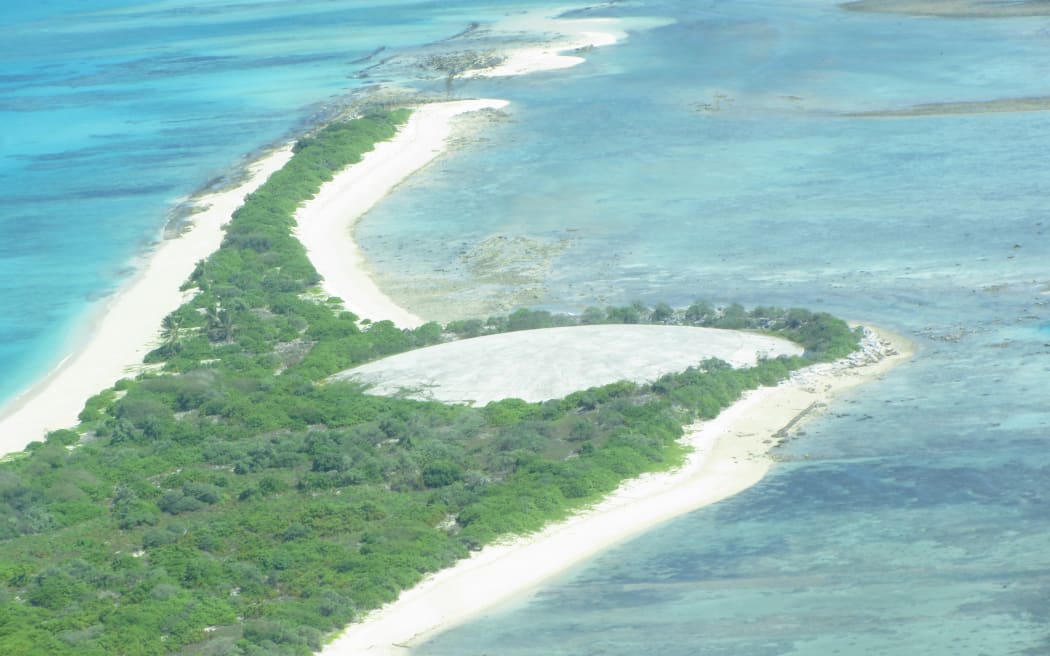
Runeit Dome built by the US on Enewetak Atoll to hold radioactive waste from nuclear tests.
Runit dome built by the US on Enewetak Atoll to hold radioactive waste from nuclear tests. Image: Tom Vance/RNZ Pacific
Runit Dome
A close up of Runit dome. Image: RNZ Pacific

“One of the islands — Runit Island, where waste from the past nuclear test is contained within a dome — has become completely uninhabitable.

“Many of the islands in the Marshall Islands are still contaminated and some may not be able to be fully restored. We have to remember that these islands are low-lying, they’re being affected by climate change and being battered by a number of different forces.”

Actions called for
The activist groups’ letter states that before the Compact can be renewed a number of actions should be taken including:

  • Compensation claims of the Nuclear Claims Tribunal;
  • Expanding access to health care, especially for those with illnesses associated with radiation exposure; and
  • Prompt declassification of all documents relating to the relocation of displaced Marshallese people.

“When the first compact was signed in 1986 it was not clear the extent of the devastation of the damage,” Kimball said.

“The United States has not been as forthcoming as it needs to be about the information to declassify a lot of the records that were late, and frankly the Marshallese people — because of the economic hardships created in large part by the history of the testing — they themselves don’t have the technical capacity to deal with these issues and so we see these issues persisting.

“New efforts need to be taken, additional resources need to be provided to recompense for the damage to health, culture and the economy.”

Kimball said that an apology could not make up for the lives lost and the damage created by the nuclear tests, but “it’s the right thing to do”, he said.

“It would recognise the wrongs that were committed and teach future generations that these wrongs can never be and should never be created.”

This article is republished under a community partnership agreement with RNZ. 

Print Friendly, PDF & Email

Article by AsiaPacificReport.nz

We can still see these 5 traces of ancestor species in all human bodies today

Source: The Conversation (Au and NZ) – By Alice Clement, Research Associate in the College of Science and Engineering, Flinders University

Elia Pellegrini/Unsplash

Many of us are returning to work or school after spending time with relatives over the summer period. Sometimes we can be left wondering how on earth we are related to some of these people with whom we seemingly have nothing in common (especially with a particularly annoying relative).

However, in evolutionary terms, we all share ancestors if we go far enough back in time. This means many features in our bodies stretch back thousands or even millions of years in our great family tree of life.

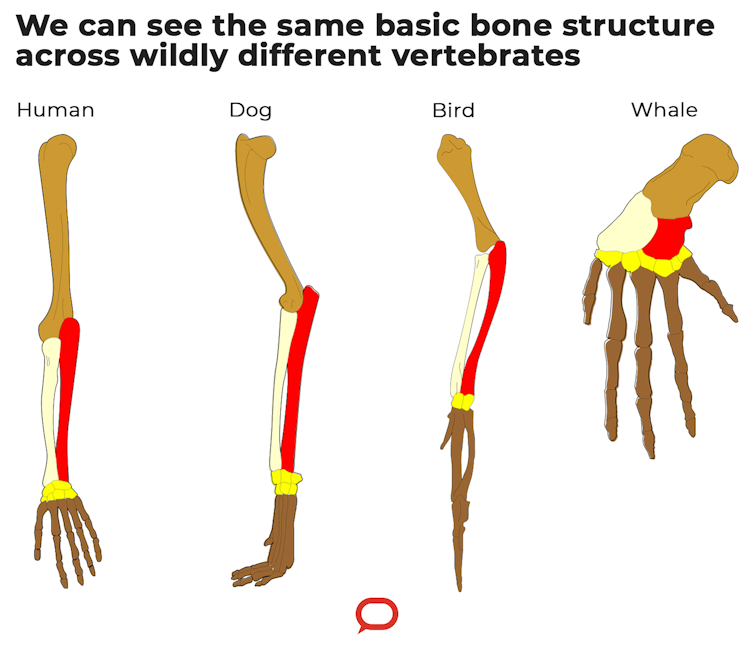
In biology, the term “homology” relates to the similarity of a structure based on descent from a shared common ancestor. Think of the similarities of a human hand, a bat wing and a whale flipper. These all have specialist functions, but the underlying body plan of the bones remains the same.

A graphic showing three shared bone structures across humans, dogs, birds and whales.

Волков Владислав Петрович/Wikimedia Commons, CC BY-SA

This differs from “analogous” structures, such as wings in insects and birds. Although they serve a similar function, the wings of a dragonfly and the wings of a parrot have arisen independently, and don’t share the same evolutionary origin.

Here are five examples of ancient traits you might be surprised to learn are still seen in humans today.

One step ahead

What makes us human? This question has plagued scientists and scholars for centuries. Today it seems relatively straightforward to tell who is a human and who is not, but looking through the fossil record, things very quickly become less clear.

Does humanity begin with the origins of our own species, Homo sapiens, from 300,000 years ago? Or should we stretch things back more than three million years to ancestors such as “Lucy” (Australopithecus afarensis) from eastern Africa? Or even further back to our split from the other great apes?

Whatever line you draw in the sand to pinpoint the birth of humanity, one thing is certain. The act of habitually walking around on two legs, known as “bipedalism”, was one of our ancestors’ greatest steps.

Two naked feet taking a step on a blue gait measuring plate in a laboratory
It’s hard to overestimate the importance of bipedalism in human evolution.
Microgen/Shutterstock

Almost every part of our skeleton was affected by the switch from walking on all fours to standing upright. These adaptations include the alignment and size of the foot bones, hip bones, knees, legs, and vertebral column.

Importantly, we know from fossil skulls that rapid increases in our brain size occurred shortly after we started walking upright. This required changes to the pelvis to allow for our larger-brained babies to fit through a widened birth canal.

Our broadened pelvis (sometimes called iliac flaring) is a homologous feature shared with several lineages of early fossil humans, as well as all those living today.

Those big brains of ours then fuelled an explosion of art, culture and language, important concepts when considering what makes us human.

A hole in your head

In addition to your eyeballs sitting in their orbits, you may be surprised to learn that you have other large holes (known as fenestrae) in your skull.

A single window is found on each side of the human skull, uniting us with our shared common ancestors from over 300 million years ago.

Animals with this single window in their skulls are known as synapsids. The word means “fused arch”, referring to the bony arch found underneath the opening in the skull behind each eye.

Today all mammals, including humans, are synapsids (but reptiles and birds are not).

Other famous synapsids from prehistoric times include the often misidentified Dimetrodon. The sail-backed ancient reptile is commonly mistaken for a dinosaur. However, with its sprawling limbs and single temporal fenestra it instead belongs to a lineage sometimes referred to as “mammal-like reptiles”, although we prefer the more accurate term of synapsid.

Colourful illustration of a green, reptile-like animal with a large semi-circular fin across its entire back
Artist’s impression of a Dimetrodon, a long-extinct animal that was not a dinosaur.
David Roland/Shutterstock

10 little fingers and 10 little toes
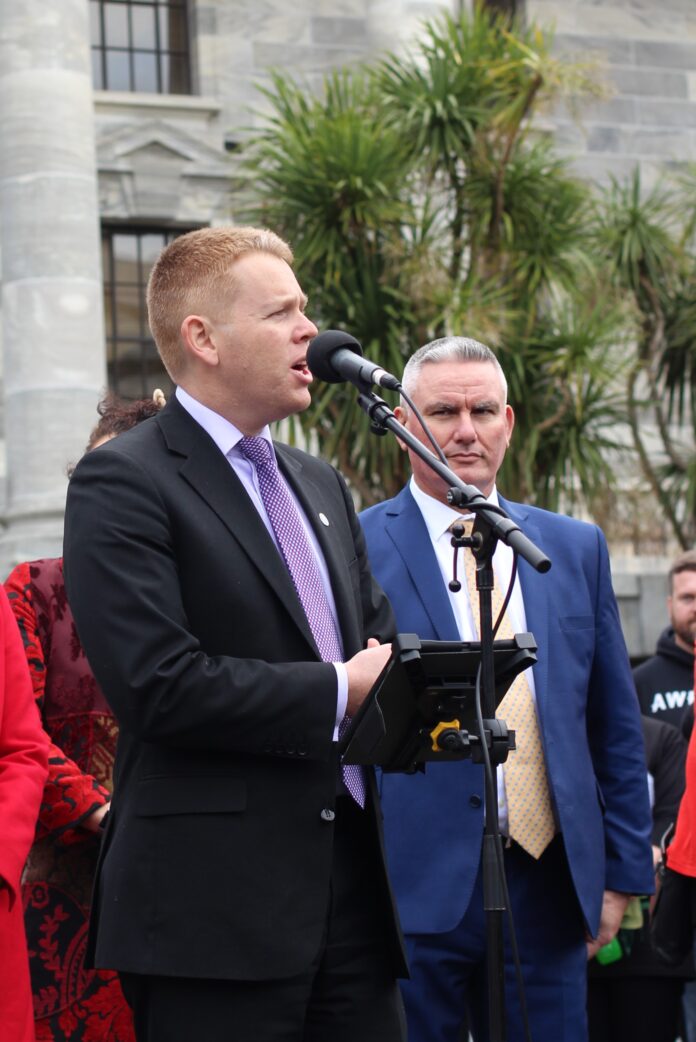
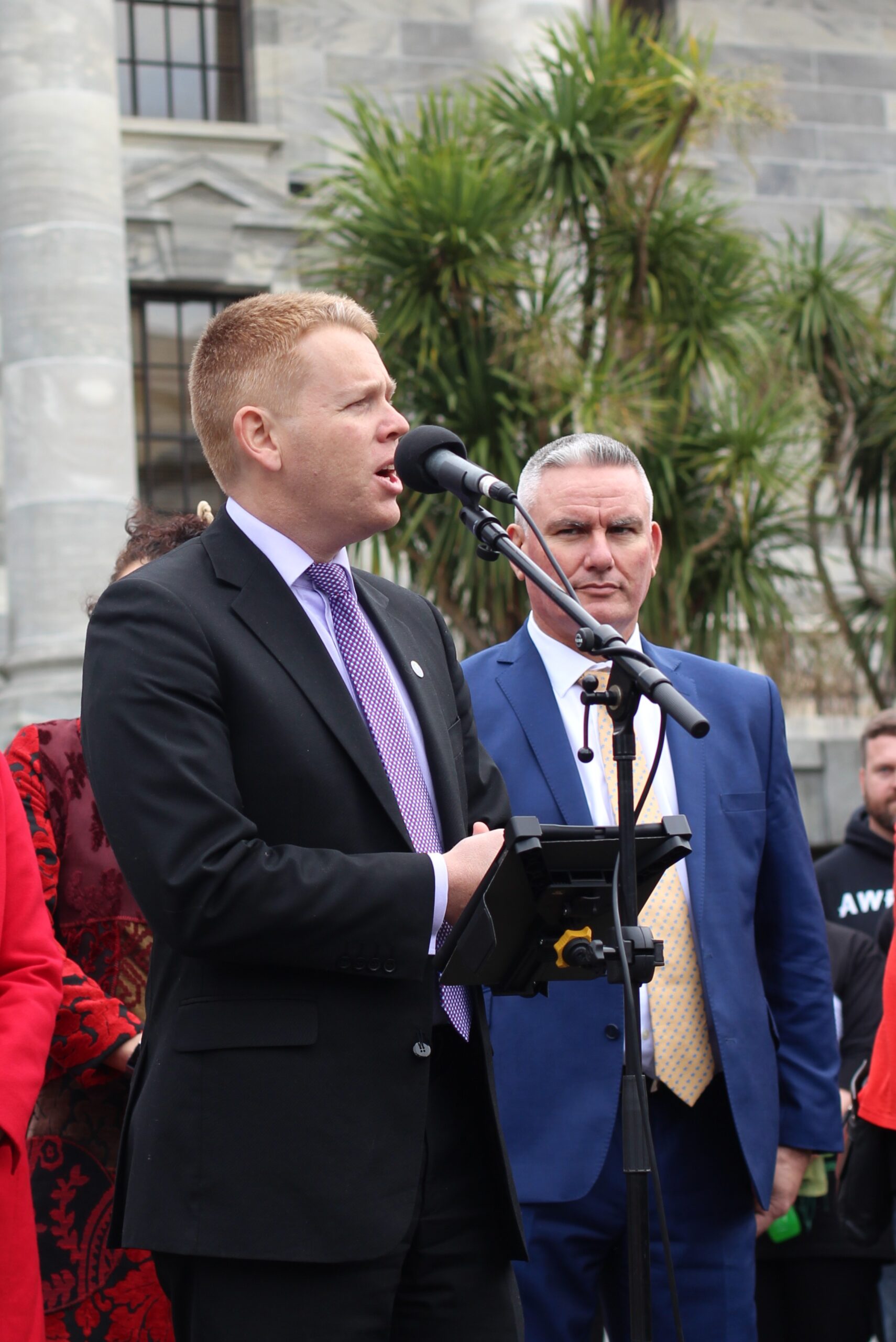
I am typing this article on my computer using ten of my digits (fingers and thumbs; digits also refer to toes but mine don’t reach the keyboard).

This pattern of five digits in the human hand or foot, known as a “pentadactyl limb”, is found in most amphibians, reptiles, birds and mammals.

But fish don’t have fingers and toes, so when was it that digits first evolved?

A recent study by myself and colleagues actually described the first digits found preserved within a fish fin. We used powerful imaging methods to peer inside a 380-million-year-old fossil called Elpistostege from Quebec, Canada, to reveal the oldest fish fingers!

Somewhat surprisingly, the first fish to evolve digits still retained fin rays around them so these bones would not have been visible on the animal externally.

The earliest tetrapods (four-limbed animals with a backbone that eventually moved out of water and onto land) “experimented” with the number of digits, sometimes being found with six, seven or eight of them.

These earliest tetrapods were likely still living in the water. It wasn’t until tetrapods became truly terrestrial that the five-digit limb arrived. This arrangement most likely arose as a practical solution to weight bearing on land.

Long in the tooth

Does your mind wander when you brush your teeth? Well, have you ever considered how evolutionarily old your pearly whites are?

In 2022 a team of palaeontologists described isolated fossil fish teeth from Silurian age rocks in Guizhou province, China. This remarkable discovery pushed the minimum age of teeth back a further 14 million years from previous findings. This means our dentition now harks back to a whopping 439 million years ago.

Close-up of a stone spiral with pointy edges set on a purple background
A fossil of a Helicoprion bessonowi tooth whorl from the Ural Mountains, Russia.
Citron/Wikimedia Commons, CC BY-SA

That new fish, a very early jawed vertebrate, was named Qianodus duplicis and is only known from isolated specialised teeth known as “whorls”. A tooth whorl is a bizarre row of teeth that curls in on itself in a spiral pattern (most famously present in the buzz-saw shark, Helicoprion).

Nevertheless, the teeth in the Chinese jawed fish have a number of features found in other modern jawed vertebrates, which highlight their relevance in understanding the evolution of our very own gnashers. Chomp on that!

Grow a spine

To “grow a spine” means to become emboldened and confident. The first animals to do just that must have surely been courageous to venture out into the perilous ancient seas 500 million years ago.

First, these worm-like animals evolved a “notochord” – a rod built of cartilage running along the back of the body. This enabled the attachment of segmented muscle blocks and a long tail extending beyond the anus. All animals with a notochord are called chordates, and includes everything from sea squirts to sea gulls, comprising more than 65,000 living species.

To get an idea of the first chordates, today we can look to animals such as the lancelet (known as Amphioxus or Branchiostoma). Lancelets look a bit like tiny, primitive fishes without fins. They swim by undulating their body from side to side.

A semi-transparent looking fish with no fins on a dark background
Branchiostoma lanceolatum, a type of lancelet.
Hans Hillewaert/Wikimedia Commons, CC BY-SA

Next come those with well organised heads (craniates), and those in which the notochord is replaced by a backbone in adults (vertebrates).

A backbone is built of individual segmented bones (vertebrae) which fit together in a specific interlocking pattern. We have a few tantalising fossils representing the earliest known examples of vertebrates, such as Metaspriggina known from Canada, or Haikouichthys from China in rocks more than 500 million years old.

So, whether it be your large brain and broad pelvis from walking around upright, skull with a single opening and bony arch, your fingers, toes, teeth or spinal cord, we humans share many ancient features in our bodies.

And so, in the words of the poet and activist Maya Angelou, it may be worth remembering that we are more alike than we are unalike.

The Conversation

Alice Clement receives funding from the Australian Research Council.

ref. We can still see these 5 traces of ancestor species in all human bodies today – https://theconversation.com/we-can-still-see-these-5-traces-of-ancestor-species-in-all-human-bodies-today-197011

When it comes to finding Australia’s future leaders, both the Liberals and Labor have a women problem: new study

Source: The Conversation (Au and NZ) – By Duncan McDonnell, Professor of Politics, Griffith University

Shutterstock

The Liberal Party’s recently published review of the 2022 federal election defeat does not mince words: the party has a problem with women.

The party has struggled to connect with women voters in recent elections, especially from the 18-34 age group. Moreover, just nine of the party’s 42 MPs in the House of Representatives and ten of its 26 senators are women. There have not been so few Liberal women elected to parliament since 1993.

And this is at a time when, overall, there are more women in parliament than ever.

To address the issue, the Liberals’ election review says the party must begin “broadening the membership base with young women, and retaining them”. Doing so, the authors argue, will help to “ensure there is a much larger number of high-quality female candidates” in future elections.

According to our research on the youth wings of political parties in Australia, Italy and Spain, however, this will be no easy task.

Moreover, it is not just the Liberal Party that has a problem attracting young women to its ranks, but also Labor. Our study indicates that both of their youth wings, the Young Liberals and Young Labor, have far fewer women members than men. In addition, the proportion of women members in both youth wings who would like to stand as candidates is far lower than that of men.


Read more:
Sussan Ley says she is listening to women who rejected the Liberals. But will she hear what they are saying?


What our research looked at

Our findings are based on surveys we conducted of six youth wings – three from the centre-left (Young Labor in Australia, Young Democrats in Italy, Socialist Youth in Spain) and three from the centre-right (Young Liberals in Australia, Forza Italia Youth in Italy, New Generations in Spain).

Youth wings are a key part of the political career pipeline in parliamentary democracies like Australia. Take New South Wales, for example. John Howard and Gladys Berejiklian were former presidents of the NSW Young Liberals, while Paul Keating and Anthony Albanese were former presidents of NSW Young Labor.

Several recent prime ministers and government ministers in Italy and Spain have similar political backgrounds.

In total, we surveyed almost 2,000 youth wing members in the three countries, with around 750 respondents from Australia. Ours is the first published academic study of youth wing members in this country.

As the figure below shows, men far outnumber women among our respondents in all six youth wings. This is markedly the case in the two Australian organisations, with women accounting for less than a quarter of the Young Liberals respondents and less than a third of Young Labor ones.

The major Australian parties have long been reluctant to release reliable data about their organisations, so we do not know for certain if our respondents perfectly mirror the full youth wing memberships. However, our results certainly suggest that if the Liberals want to achieve gender parity among their younger members, they have a long way to go.


Gender make-up of youth wing survey respondents.
Author provided

Fewer young women wanting to stand for election

What about the desire to stand for election? To understand the electoral ambitions of youth wing members, we asked respondents whether they agreed or disagreed with the statement, “In the future, I would like to stand as a candidate for the senior party.”

Here, the largest gender gaps are in Australia.

As we can see from the figure below, two-thirds of men in Young Labor say they would like to run for public office one day, but only one-third of women agree. We see a similar 30-point gap in the Young Liberals, with almost three-quarters of men expressing a desire to stand and less than half of women saying likewise.


Gender make-up of respondents who agreed with the statement, ‘In the future, I would like to stand as a candidate for the senior party.’
Author provided

Surprisingly, despite Labor’s implementation of candidate gender quotas – which have facilitated the election of 36 women MPs (out of the party’s 77 total) in the current house – Young Labor women were the least likely of all women in our survey to express a desire to stand for election. They are over ten percentage points behind their counterparts in the Young Liberals, and more than 20 behind young women in the Italian and Spanish parties.

From interviews we’ve conducted with women and men from Young Labor and Young Liberal leadership teams over the past four years, these findings seem to be due to a mixture of factors. They range from the excessively adversarial “boy’s club” culture in both party youth wings to the tendency of men in the senior parties to mentor young men rather than women for electoral careers.


Read more:
Grattan on Friday: Liberal post-mortem urges party to address flight of female vote – but not by quotas


Other political career ambitions

Our results may make depressing reading for Australian political observers. However, when we asked youth wing members about a non-electoral type of ambition – the desire to work for the senior party in the future – we got a very different picture.

As the figure below illustrates, the political ambition gender gap almost entirely disappears among Young Labor members and narrows considerably among Young Liberals.


Gender make-up of respondents who expressed a desire to work in the senior party.
Author provided

In short, our findings suggest it’s not that women in Australian youth wings necessarily lack political ambition. Rather, they may prefer to pursue behind-the-scenes careers, such as party officials and advisers, than stand as candidates at elections.

While we do find some similar patterns in Spain, the shift in the Australian results from electoral to non-electoral ambition is by far the most striking.

Where to go from here

So, what does all this mean for Australia’s major political parties and the women in them? To be sure, while the Liberals have evident problems in terms of attracting women members and candidates, Labor cannot rest on its laurels, either.

Both parties have serious imbalances in terms of the number of young women joining their youth wings compared to men, as well as in the proportion of young women compared to young men who aspire to stand as candidates one day.

Remarkably, despite all its good intentions, the Liberal Party review of the 2022 election does not mention the Young Liberals even once. This is a serious omission. If parties wish to improve their candidate pools of tomorrow, it’s vital they concentrate their efforts on the youth wings of today.

The Conversation

Duncan McDonnell receives funding from the Australian Research Council.

Sofia Ammassari does not work for, consult, own shares in or receive funding from any company or organisation that would benefit from this article, and has disclosed no relevant affiliations beyond their academic appointment.

ref. When it comes to finding Australia’s future leaders, both the Liberals and Labor have a women problem: new study – https://theconversation.com/when-it-comes-to-finding-australias-future-leaders-both-the-liberals-and-labor-have-a-women-problem-new-study-197895

My teen’s vaping. What should I say? 3 expert tips on how to approach ‘the talk’

Source: The Conversation (Au and NZ) – By Joshua Trigg, Research Fellow in Public Health, Flinders University

Olena Bohovyk/Pexels

You’ve dropped your daughter off at her friend’s house and while cleaning the car, you find what looks like a USB drive on the passenger seat. It’s a disposable vape.

You’ve seen the news. Vapes or e-cigarettes are harmful yet increasingly popular with people her age.

You call to ask if the vape’s hers. It is and she’s been vaping occasionally for a few weeks. You say you’ll talk about it later.

But what will you actually say?


Read more:
Should I give my teen alcohol? Just a sip, the whole can, or none at all?


1. Know your facts

It’s important to be across accurate and up-to-date information about vaping. Evidence-based resources for parents and carers in Australia include:

  • the Lung Foundation’s evidence-based resources

  • factsheets, videos and webinars from NSW Health that help dispel any misconceptions parents might have about vaping. This includes whether vapes are likely to contain nicotine and the accuracy of labelling

  • Quit Victoria’s resources for parents and teens, including brief guides that cover the essentials on vaping, including busting a few myths.

A common theme across such resources for parents is to bring home the reality of vaping in terms of how many teens are actually doing it, what current health evidence shows, and why it’s more than just media coverage of incidents at schools.

In a nutshell, vapes are easy to access, teen vaping is common and it’s becoming normalised in this age group.

Our own unpublished research with young people aged 16-26, provides some insights. We’ve heard vaping called a “clean alternative” to smoking (it’s not), and a “social activity” at school or parties. One young participant has seen others “nic sick”, or nauseous from vaped nicotine.

There’s mounting evidence pointing to physical health harms and unknown mental health risks from vaping. There’s no reason for a teen to be vaping, even if adults might take this approach in quitting smoking. Many vapes contain nicotine, whatever the label says, with the potential for dependence or addiction.


Read more:
How can we reverse the vaping crisis among young Australians? Enforce the rules


2. Listen more than speak

It might be tempting to deliver a lecture on the dangers of vaping. But conversations are more likely to be effective if they are clear, open, and constructive, with thought about how to focus on discussing health harms.

Mother discussing tricky topic with disinterested teenage son
It might be tempting to deliver a lecture. But other approaches are more likely to work.
Kindel Media/Pexels, CC BY-SA

So use some of these tips, based on ones from the Alcohol and Drug Foundation:

  • approach the conversation calmly, during a shared activity, such as walking the dog

  • consider questions your teen may ask, and how you want to respond

  • don’t assume, avoid accusations, show trust

  • no judging; really listen to their perspective (listen more than speak) and respect they have a different and unique worldview and opinions. Understand their social life and create an environment where they can discuss this with you

  • don’t exaggerate, just stick to the facts. Remember, your teen may have already received vaping and health resources from school and be aware of the health impacts and uncertainties about long-term health risks of vaping

  • tailor your discussion based on whether your teen vapes occasionally, is addicted and/or wants support to quit

  • respect their privacy

  • show that their health is your focus.


Read more:
A parent’s guide to why teens make bad decisions


3. Support quitting

But what if it’s gone beyond trying vaping, and your teen feels they have a dependency or addiction?

Services such as Quitline, which traditionally provide counselling for people wanting to stop smoking, are increasingly receiving calls from teens struggling with vaping-related nicotine dependence.

Parents can also call Quitline (phone: 13 78 48) to plan the conversation with a teenager about vaping. They can also contact a GP to help their teen treat nicotine dependence and related effects.


Extra resources about vaping for parents and teens are available in New South Wales, Victoria, Queensland, South Australia, Western Australia, Tasmania, Australia Capital Territory and Northern Territory.

The Conversation

Joshua Trigg receives funding from the Medical Research Future Fund, Flinders Foundation and The Australian Prevention Partnership Centre. He is a member of the Australasian Professional Society on Alcohol and other Drugs and Public Health Association of Australia. He has previously worked for Cancer Council South Australia.

Billie Bonevski receives funding from the National Health and Medical Research Council, the Medical Research Future Fund, NSW Ministry of Health, the Hospital Research Foundation SA, Flinders Foundation. She is currently on the Executive Board of the Society for Research on Nicotine and Tobacco (SRNT) as Member Delegate for Asia, Africa, Oceania and Latin America.

ref. My teen’s vaping. What should I say? 3 expert tips on how to approach ‘the talk’ – https://theconversation.com/my-teens-vaping-what-should-i-say-3-expert-tips-on-how-to-approach-the-talk-196205

Exploding carp numbers are ‘like a house of horrors’ for our rivers. Is it time to unleash carp herpes?

Source: The Conversation (Au and NZ) – By Ivor Stuart, Fisheries ecologist, Charles Sturt University

Ivor Stuart/The Conversation

With widespread La Niña flooding in the Murray-Darling Basin, common carp (Cyprinus carpio) populations are having a boom year. Videos of writhing masses of both adult and young fish illustrate that all is not well in our rivers. Carp now account for up to 90% of live fish mass in some rivers.

Concerned communities are wondering whether it is, at last, time for Australia to unleash the carp herpes virus to control populations – but the conversation among scientists, conservationists, communities and government bodies is only just beginning.

Globally, the carp virus has been detected in more than 30 countries but never in Australia. There are valid concerns to any future Australian release, including cleaning up dead carp, and potential significant reductions of water quality and native fish.

As river scientists and native fish lovers, let’s weigh the benefits of releasing the virus against the risks, set within a context of a greater vision of river recovery.


Read more:
Pest plants and animals cost Australia around $25 billion a year – and it will get worse


A house of horrors for rivers

Carp are a pest in Australia. They cause dramatic ecological damage both here and in many countries. Carp were first introduced in the 1800s but it was only with “the Boolarra strain” that populations exploded in the basin in the early 1970s.

Assisted by flooding in the 1970s, carp have since invaded 92% of all rivers and wetlands in their present geographic range. There have been estimates of up to 357 million fish during flood conditions. This year, this estimate may even be exceeded.

Carp are super-abundant right now because floods give them access to floodplain habitats. There, each large female can spawn millions of eggs and young have high survival rates. While numbers will decline as the floods subside, the number of juveniles presently entering back into rivers will be stupendous and may last years.

The impacts of carp are like a house of horrors for our rivers. They cause massive degradation of aquatic plants, riverbanks and riverbeds when they feed. They alter the habitat critical for small native fish, such as southern pygmy perch. And they can make the bed of many rivers look like the surface of golf balls – denuded and dimpled, devoid of any habitat.

Dimpled riverbed
Adult carp usually search for food at the bottom of rivers, stirring up sediment and creating dimples on the riverbed.
Ivor Stuart, Author provided


Read more:
Before and after: see how bushfire and rain turned the Macquarie perch’s home to sludge


Most strikingly, this feeding behaviour contributes to turbid rivers, reducing sunlight penetration and productivity for native plants, fish and broader aquatic communities.

Carp truly are formidable “ecosystem engineers”, which means they directly modify their environment, much like rabbits. Their design leads to aquatic destruction of waterways.

We know when their “impact threshold” exceeds 88 kilograms per hectare of adult carp, we see declines in aquatic plant health, water quality, native fish numbers and other aquatic values. At present, we expect carp to far exceed this impact threshold. For river managers, the challenge is to keep numbers below that level.

Person holding a carp
Carp alter the habitat critical for small native fish.
Ivor Stuart, Author provided

The carp herpes virus

The carp virus (Cyprinid herpesvirus 3) represents one of the only landscape-scale carp control options, although there are some exciting genetic modification technologies also emerging.

Mathematical modelling suggests the carp virus could cause a 40-60% knockdown for at least ten years, which may help tip the balance in favour of native fish. Certainly, there have been some well documented virus outbreaks in the United States resulting in large-scale carp deaths.

The risks and benefits of a potential Australian release of a carp virus are transparently addressed under the federal government’s National Carp Control Plan, released last year. This plan provides some sorely needed leadership in the carp management space.

Piles of dead carp in clamshell pools
Carp account for up to 90% of live fish mass in some rivers.
Katie Doyle, Author provided

Risks the plan identifies include:

  • major logistic challenges in cleaning up dead carp
  • potentially serious short-term deterioration in water quality
  • potential native fish deaths due to poor water quality.

On the other hand, the benefits of releasing the virus include:

  • recovery of aquatic biodiversity populations – fish, plants and invertebrates
  • major long-term improvements to water quality
  • improved social amenity of inland waterways.

As carp continue to destroy Australia’s riverine heritage, it’s time to lay our cards on the table and have a serious conversation about the carp virus. Managing expectations is a key and the confidence of stakeholders and the community is vital for its success.

Like rabbits and other vertebrate pests, carp are emblematic of our inability to deal with entrenched pest animals. There are no silver bullets.


Read more:
Australia’s smallest fish among 22 at risk of extinction within two decades


How else can we manage carp?

Rolling out the carp virus is only one potential pathway away from carp. If we truly want to reduce carp numbers and impacts in the long-term then we need to examine all the roles humans play supporting them.

For example, the series of weir pools in the lower Murray create perfect conditions for carp because they give fish access to floodplains year round.

Strategically lowering and removing weir pools to re-create flowing water habitats would be one solution to help Murray cod and other flowing water specialists, such as silver perch, river snails and Murray crays. This is one of many integrated actions that could help tip the balance against carp.

Also, floodplain structures (which create artificial “floods”) generate static, warm-bathtub conditions that carp, being from Central Asia, prefer, contributing to huge numbers especially in dry years. Few medium or large native fish benefit from these conditions.

Flock of pelicans on a river
Some native animals such as pelicans would be dining on carp in this population boom.
Shutterstock

Another pathway is to seek guidance from increasingly sophisticated environmental modelling, which can identify optimal population trajectories for native fish over carp.

Now the floods have returned, we need to move away from local decisions at the site-scale and instead manage ecosystems across the entire Murray-Darling Basin.

The present flooding also reminds us of the huge potential increases in the numbers of golden perch, frogs, yabbies and water birds. Animals that eat carp (Murray cod, golden perch, pelicans, cormorants) should all be as fat as can be.


Read more:
Floods can be a disaster for humans – but for nature, it’s boom time


Looking beyond carp

Just like the huge numbers of dead native fish from the Darling River fish kills in 2018-2019, the huge numbers of carp is a big wake-up call on the poor state of rivers in the Murray-Darling Basin and how we’re managing them.

Perhaps what has been missing from the whole conversation is a vision for what our rivers should look like in ten or 20 years time. We don’t want to leave a legacy of degraded rivers for future Australians.

River health is an issue all Australian’s, country and city, need to engage with. If we don’t identify a common purpose, then we will likely continue to remain in lock-step with the great armies of carp and rivers of fish kills for generations to come. We need to do better than this. The future of our rivers depends on it.

The Conversation

Ivor Stuart is a fisheries researcher at the Gulbali Institute, Charles Sturt University. He receives funding from the Australian Government to undertake fisheries research in the Murray-Darling Basin. Ivor worked on a national carp biomass estimate as part of the National Carp Control Plan.

John Koehn is an Adjunct Professor at the Gulbali Institute, Charles Sturt University. He currently receives no funding in relation from any organization in relation to this topic but has received funding for ecological research, scientific advice and population modelling for both carp and native fish in the past.

Katie Doyle is a Research Scientist within the Inland Fisheries Research Group, Gulbali Institute, Charles Sturt University and receives funding from the Australian government through the Next Generation Water Management Hub to conduct research into pest fish management and the impacts of water infrastructure on freshwater ecosystems.

Lee Baumgartner is the Executive Director of the Gulbali Institute at Charles Sturt University. He receives funding from the Australian government and various private donors to undertake research into fisheries sustainability in the Murray-Darling Basin and the Lower Mekong region. He also serves as leader of the Inland Fisheries Research Group and director of the Next Generation Water Management Hub.

ref. Exploding carp numbers are ‘like a house of horrors’ for our rivers. Is it time to unleash carp herpes? – https://theconversation.com/exploding-carp-numbers-are-like-a-house-of-horrors-for-our-rivers-is-it-time-to-unleash-carp-herpes-198067

If you haven’t joined a union, it’s time you paid to benefit from union deals

Source: The Conversation (Au and NZ) – By Jim Stanford, Economist and Director, Centre for Future Work, Australia Institute; Honorary Professor of Political Economy, University of Sydney

A long overdue public debate has started in Australia about “free riding” in industrial relations – when non-union members benefit from collective agreements negotiated by union members without contributing (through membership dues or other payments) to their negotiation and administration.

Several union leaders want rules to stop free riding. Without this, they argue, union membership will keep falling, imperilling collective bargaining.

The issue has been given impetus by the latest data on union membership rates. The proportion of employees belonging to a union is now a record low 12.5%. In the private sector it’s just 8%.


Made with Flourish

In the 1980s more than half of the Australian workforce was unionised. Since then Australia has experienced the most dramatic deunionisation of any major industrial country.

That, at least in part, is by design. The Howard government passed laws in the late 1990s and 2000s prohibiting union preferences in hiring, bargaining fees or other structured supports for union membership.

But the idea workers can get something for nothing – enjoying the benefits of collective bargaining, without contributing to its costs – ignores both economic theory and reality.


Read more:
A new way to give an old TB vaccine proves highly effective in monkeys


The economics of free riding

Economists have long grappled with the problem of free riders in many areas of economic life.

The textbook case involves “public goods” – things to which access cannot be limited to paying customers. Examples are clean air and water, infrastructure, policing and national defence.

With public goods, conventional market mechanisms (based on “rational” individual choice) do not work. If something is “free to all”, there will be some people prepared to voluntarily contribute to its cost, and others that won’t.

To address this market failure, economists endorse policy interventions that deliberately interfere with individual “choice”. For government-provided public goods, this usually relies on compulsory contributions (taxes).

Why pay when you get it for free?

Other industries and ventures also encounter free rider problems, and laws have evolved to address them.

For example, unit owners in a residential strata don’t have “free choice” to refuse monthly strata fees. They are required to contribute to the collective costs of running their shared building. The power of the strata to set and collect monthly fees is provided for in Australian law. If strata fees were voluntary, the whole system of strata ownership would collapse.

Nor can individual shareholders in a corporation choose to withhold their share of payments approved by the corporation’s duly elected directors. These provisions are recognised and protected in law.

When it comes to collective bargaining, however, Australian law not only tolerates but effectively encourages free riding.

Under the Fair Work Act, any benefit or entitlement (from higher wages, to working conditions, to rostering systems) negotiated through enterprise bargaining must be equally available to all workers covered by an agreement.

A narrowly “rational” individual might understandably ask why they should join the union when they can get all the benefits of a union-negotiated contract anyway.

Left to individual “choice” in this context, it’s not surprising union membership has fallen.

How other nations deal with the problem

I have catalogued six distinct approaches used by other nations to address this market failure and establish a viable foundation for collective bargaining. All are founded on the presumption that collective bargaining is socially beneficial and should be encouraged.

One approach, informed by traditional conceptions of property rights, is to “close off” access to union-negotiated wages and benefits to dues-paying members only. Varieties of this strategy have been tried in the United States and in New Zealand.

This has generally not worked, however, because employers can still undermine unions by voluntarily offering equal improvements to non-members. It also damages worker solidarity, critical to any collective organisation.

Britain, Canada, India and Japan (among others) allow “closed shop” or “agency shop” arrangements. In any workplace that has been unionised (through some kind of majority decision, like a ballot or petition), all covered workers pay dues to reflect the benefits they receive from the collective agreement. In a closed shop they must join the union. In an agency shop they don’t have to join the union but do have to pay the same fees.

The Philippines, South Africa and the US are among those with a modified agency shop system called “bargaining fees”. Everyone covered by an enterprise agreement (which must be ratified by affected workers) contributes something (usually less than full union dues) to the direct costs of negotiating and administering that agreement.

France and Brazil are among several countries that directly support collective negotiations with public subsidies. Like paying taxes for public goods, this approach directly allocates resources to fund a service (collective bargaining) deemed to be essential for a healthy labour market. New Zealand is taking a similar approach with its new Fair Pay Agreements (in effect since December 2022).

In Germany, Italy and many other European countries, collective bargaining is mandated by law, with employers above a certain size required to establish a workers council and cover the costs. Workers don’t have to join the union but, with such a well-funded infrastructure, collective bargaining remains strong.

Workers gather on Place de la Republique, Paris, to demonstrate against proposed pension changes, Thursday, January 19, 2023.
About 98% of French workers are union members.
Lewis Joly/AP

In the Nordic countries and Belgium, extra support for collective bargaining is provided through union sponsorship of income support and social programs (like unemployment insurance and pensions). Workers are attracted to join their union to get better access to these services. This provides unions with resources and leverage for collective bargaining.

Developing an Australian-made fix

So there is a wide choice of specific ways to fix the free rider problem in industrial relations.

In Australia, however, the right to free ride is fully protected, even celebrated. The result (as intended) has been the steady erosion of union membership. Australia is now quickly converging with the US as one of the least unionised nations in the OECD.

In December, the Albanese government passed its Secure Jobs, Better Pay bill, aimed at strengthening collective bargaining. If these reforms succeed in broadening collective bargaining coverage, the evidence suggests Australia’s abysmal wage growth will pick up.

That alone should enhance workers’ appreciation of the value of collective action, and indirectly strengthen the incentive for union membership.


Read more:
Employers say Labor’s new industrial relations bill threatens the economy. Denmark tells a different story


Eventually, however, it will need to be recognised that collective bargaining is not free, and is being undermined by a legal framework that pretends it is.
We need to develop a made-in-Australia solution to fix it.

The Conversation

Jim Stanford is a member of the Australian Services Union.

ref. If you haven’t joined a union, it’s time you paid to benefit from union deals – https://theconversation.com/if-you-havent-joined-a-union-its-time-you-paid-to-benefit-from-union-deals-197992

Fiji’s Imrana Jalal awarded Justice Ruth Bader Ginsburg medal for defending rule of law

By Rashika Kumar in Suva

Fijian national, jurist and lawyer Imrana Jalal has been awarded the Ruth Bader Ginsburg Medal of Honour by the World Jurists Association.

The award is given in recognition of inspiring women jurists who fight to defend and strengthen the rule of law, and to consolidate society’s advances in gender equity.

She is the first woman from the Australia, New Zealand and Pacific Island region to receive the award.

Jalal said she was stunned to receive the news, and that she was deeply honoured to be one of the recipients.

She said Justice Bader Ginsburg was her hero and one of her dreams was to meet her while she worked in the US at the World Bank but owing to covid that did not happen.

Jalal added that to receive this award in Justice Bader Ginsburg’s name was personally and deeply moving for her.

She will be one of eight women jurists to receive the award in a ceremony in Madrid, Spain, on May 8 and will be hosted by King Felipe VI of Spain at the Rule of Law Centre of the World Jurist Association.

The Ruth Bader Ginsburg Medal of Honour is a new international recognition, established by the World Jurist Association and presented for the first time in 2021.

It will be the second time since the death of the iconic Justice Bader Ginsburg of the Supreme Court of the United States that the award will be presented.

Jalal was selected by an eminent jury comprising members of the World Jurists Association, including the daughter of the Justice Bader Ginsburg, Professor Jane Ginsburg of Columbia Law School, New York, who was the president of the jury.

In 2021, the Medal of Honour was bestowed on eight distinguished female jurists and leaders from around the world including Christine Lagarde, president of the European Central Bank and former IMF head; Luz del Carmen Ibáñez Carranza, vice-president of the International Criminal Court; Maite Oronoz, chief justice of the Supreme Court of Puerto Rico; Navi Pillay, judge of the Supreme Court of South Africa; Rosario Silva de Lapuerta, vice-president of the European Court of Justice; Sujata Manohar, retired judge of the Supreme Court of India; and Young Hye Kim, senior judge, Commissioner at National Human Rights Commission.

Rashika Kumar is a FijiVillage News reporter.

Print Friendly, PDF & Email

Article by AsiaPacificReport.nz

Poor court etiquette, lack of respect ‘show drop in Fiji lawyer ethics’

By Pekai Kotoisuva in Suva

Arriving late to court, poor court etiquette and lack of respect are signs that the level of ethics among  Fiji lawyers has dropped over the years, says the Attorney-General.

Attorney-General Siromi Turaga highlighted this during a panel discussion at the Fiji Law Society (FLS) convention at the Pearl Resort in Pacific Harbour on Friday.

He said ethics was a serious issue that needed to be addressed by the society.

“I have seen a lot of lawyers arriving late to court and having no respect at all while causing unnecessary hassle to the procedures and this is a sign of disrespect,” Turaga said.

“I’ve also come across a lawyer who had placed her leg on a chair in the courthouse. This was shocking to me.

“Another case is when the court opens, we have young lawyers rushing to the front bench where senior lawyers are supposed to sit.”

He said young lawyers should take their cue from their more seasoned peers.

Lawyers ‘lying in court’
“Ethical is just ethical and as a young lawyer, we learn from our senior lawyers and this is something that senior lawyers need to take heed of,” he said.

“We need to see where we are failing in this area and address it as soon as possible.”

Other senior lawyers on the panel discussion were Shailend Krishna, Shoma Devan, Bhupendra Solanki, Roopesh Singh and John Rabuku.

Shoma Devan said: “It’s sad to note and see that some lawyers are deliberately lying to the court.

“I have personally seen some lawyers blatantly lying to court, misrepresenting facts and being dishonest to their own colleagues.

“The public general perception on lawyers is that ‘we are liars’, but, let me remind you that as lawyers you cannot lie and be dishonest.”

She told the lawyers present that if they ever came across a lawyer who was misleading the judge they should “rise up and inform the judge to keep the record straight”.

Devan said lawyers were required to uphold their values and ethics while in the courtroom.

Pekai Kotoisuva is a Fiji Times reporter. Republished with permission.

Print Friendly, PDF & Email

Article by AsiaPacificReport.nz

‘Freedom for Assange and journalism are at stake’ – the Belmarsh Tribunal

ANALYSIS: By Brett Wilkins

As Julian Assange awaits the final appeal of his looming extradition to the United States while languishing behind bars in London’s notorious Belmarsh Prison, leading left luminaries and free press advocates gathered in Washington, DC, on Friday for the fourth sitting of the Belmarsh Tribunal, where they called on US President Joe Biden to drop all charges against the WikiLeaks publisher.

“From Ankara to Manila to Budapest to right here in the United States, state actors are cracking down on journalists, their sources, and their publishers in a globally coordinated campaign to disrupt the public’s access to information,” co-chair and Democracy Now! host Amy Goodman said during her opening remarks at the National Press Club.

“The Belmarsh Tribunal… pursues justice for journalists who are imprisoned or persecuted [and] publishers and whistleblowers who dare to reveal the crimes of our governments,” she said.

“Assange’s case is the first time in history that a publisher has been indicted under the Espionage Act,” Goodman added.

“Recently, it was revealed that the CIA had been spying illegally on Julian, his lawyers, and some members of this very tribunal. The CIA even plotted his assassination at the Ecuadorean Embassy under [former US President Donald] Trump.”

Assange — who suffers from physical and mental health problems, including heart and respiratory issues — could be imprisoned for 175 years if fully convicted of Espionage Act violations.

Among the classified materials published by WikiLeaks — many provided by whistleblower Chelsea Manning — are the infamous “Collateral Murder” video showing a US Army helicopter crew killing a group of Iraqi civilians, the Afghan War Diary, and the Iraq War Logs, which revealed American and allied war crimes.

Arbitrary detention
According to the United Nations Working Group on Arbitrary Detention, Assange has been arbitrarily deprived of his freedom since he was arrested on December 7, 2010. Since then he has been held under house arrest, confined for seven years in the Ecuadorean Embassy in London while he was protected by the administration of former Ecuadorean President Rafael Correa, and jailed in Belmarsh Prison, for which the tribunal is named.

Human rights, journalism, peace, and other groups have condemned Assange’s impending extradition and the US government’s targeting of an Australian journalist who exposed American war crimes.

In a statement ahead of Friday’s tribunal, co-chair and Croatian philosopher Srećko Horvat said:

The First Amendment, freedom of the press, and the life of Julian Assange are at stake. That’s why the Belmarsh Tribunal is landing literally just two blocks away from the White House.

As long as the Biden administration continues to deploy tools like the Espionage Act to imprison those who dare to expose war crimes, no publisher and no journalist will be safe.

Our tribunal is gathering courageous voices of dissent to demand justice for those crimes and to demand President Biden to drop the charges against Assange immediately.

Belmarsh Tribunal participants include Pentagon Papers whistleblower Daniel Ellsberg, US academic Noam Chomsky, British parliamentarian Jeremy Corbyn, former Assange lawyer Renata Ávila, human rights attorney Steven Donziger, and WikiLeaks editor-in-chief Kristinn Hrafnsson.


The Belmarsh Tribunal hearing in Washington DC on January 20, 2023. Video: Democracy Now!

Assange’s father, John Shipton, and the whistleblower’s wife and lawyer Stella Assange, are also members, as are Shadowproof editor Kevin Gosztola, Chip Gibbons of Defending Rights, Selay Ghaffar of the Solidarity Party of Afghanistan, investigative journalist Stefania Maurizi, The Nation publisher Katrina vanden Heuvel, and ACLU attorney Ben Wizner.

First Amendment foundation
“One of the foundation stones of our form of government here in the United States . . . is our First Amendment to the Constitution,” Ellsberg — whom the Richard Nixon administration tried to jail for up to 115 years under the Espionage Act, but due to government misconduct was never imprisoned — said in a recorded message played at the tribunal.

“Up until Assange’s indictment, the act had never been used… against a journalist like Assange,” Ellsberg added. “If you’re going to use the act against a journalist in a blatant violation of the First Amendment… the First Amendment is essentially gone.”

Ávila said before Thursday’s event that “the Espionage Act is one of the most dangerous pieces of legislation in the world: an existential threat against international investigative journalism.”

“If applied, it will deprive us of one of our must powerful tools towards de-escalation of conflicts, diplomacy, and peace,” she added.

“The Belmarsh Tribunal convened in Washington to present evidence of this chilling threat, and to unite lawmakers next door to dismantle the legal architecture that undermines the basic right of all peoples to know what their governments do in their name.”

The Belmarsh Tribunal, first convened in London in 2021, is inspired by the Russell Tribunal, a 1966 event organised by philosophers Bertrand Russell and Jean-Paul Sartre to hold the US accountable for its escalating war crimes in Vietnam.

Brett Wilkins is a staff writer for Common Dreams. Republished under a Creative Commons licence.

Print Friendly, PDF & Email

Article by AsiaPacificReport.nz

Chris Hipkins becomes NZ’s new prime minister – there are two ways it can go from here

Source: The Conversation (Au and NZ) – By Grant Duncan, Associate Professor, School of People, Environment and Planning, Massey University

Getty Images

Following the surprise resignation of Jacinda Ardern on January 19, the New Zealand Labour Party already has a new leader: Chris Hipkins. The handover from Ardern to Hipkins has been achieved with the same efficiency as the handover from Andrew Little to Ardern in 2017. But will it be as successful?

Hipkins entered parliament in 2008 – along with Ardern. Under Ardern’s leadership, he held ministerial portfolios in education, police and public services, and was Leader of the House.

His role as education minister includes a (not altogether successful) centralisation of all the country’s polytechnics under one administrative umbrella – a form of restructuring typical of this Labour government.

He distinguished himself during the COVID pandemic as a hard-working and competent leader who contributed a much-needed clarity and common sense. He’s a dependable and intelligent politician who doesn’t mind being an attack dog when it’s called for.

As leader, however, Hipkins now faces an uphill battle, with his party trailing the opposition National Party in the most recent published polls. But he lacks Ardern’s charisma.

In 2017, there was an instant “Jacindamania” effect when she took the party leadership, and Labour’s polling shot up. One simply can’t imagine a “Chris-mania”, however. But maybe that’s not a bad thing right now.

Jacinda Ardern: charismatic and highly competent but also polarising.
Getty Images

Game over?

There are two ways this could go now. First, the nightmare scenario for Labour: the government continues to be sniped at over controversial and unpopular policies such as the Three Waters programme and the income insurance scheme, economic problems continue to damage household budgets, the opposition leaders (both National’s Christopher Luxon and ACT’s David Seymour) have a field day.

In head-to-head debates with Luxon once the election campaign begins, Hipkins lacks the fire that Ardern was able to show when she needed it, and becomes political roadkill at the ballot box on October 14. Labour supporters wake up in a cold sweat.


Read more:
‘The shoes needing filling are on the large side of big’ – Jacinda Ardern’s legacy and Labour’s new challenge


With Labour’s ongoing slump in the polls, trailing National by around five or six percentage points, this scenario can’t be ruled out. Following defeat, Labour could go into the kind of spiral it endured after Helen Clark’s loss in 2008, with one unsuccessful leader after another.

We can recall the defeat of Labour’s Phil Goff in 2011 and David Cunliffe in 2014 when up against National’s John Key. And, to be fair, National suffered a similarly bad run after Bill English stood down in 2018 and until Luxon became leader in November 2021.

A new hope?

So is there a dream scenario for Labour? With Ardern’s charismatic – and now rather polarising – personality heading for the exit, the party could turn things around.

New leadership licences a significant cabinet reshuffle and (more importantly) a refresh of policy. Labour could now neutralise (or even dump) some policy proposals that are presently causing public dissatisfaction.

Rather than Hipkins having somehow to fill Ardern’s shoes, he could follow his own path in his own trusty trainers.


Read more:
Ardern’s resignation as New Zealand prime minister is a game changer for the 2023 election


An advantage he has is an apparent unanimity of support from his caucus. This suggests his team is focused on beating National rather than beating one another.

But can Labour win back the support of those middle-ground voters who’ve shifted to the centre-right? It appears many of those who’ve swung away from Labour actually liked Ardern. And Ardern remained on top in preferred prime minister polls right up until days before she resigned.

We could infer from this that a leadership change on its own won’t suffice to woo these voters back. The loss of Ardern could indeed precipitate a further drop in polling for Labour.


Read more:
Jacinda Ardern’s resignation: gender and the toll of strong, compassionate leadership


A policy reset

Late in 2022, Ardern had stated that the government’s focus this year would be the economy. And National will inevitably use the line that they (National) are the more competent when it comes to “managing the economy”.

If Labour is serious about winning the 2023 election, then, they need to convince enough voters of the following:

  • they are addressing the real economic concerns that are affecting people presently

  • they have taken heed of people’s disquiet over some current policy changes and are prepared to revise them

  • and they are not going any further with controversial matters, especially co-governance with Māori, without first seeking a wider public understanding and consensus.

Hipkins is a competent and reliable person. If he has his party’s backing to revise or backtrack on policy, then he may have some success. With less focus on personalities this time around, his best hope may be to convince people his government is serious about resetting the country’s direction.

The Conversation

Grant Duncan does not work for, consult, own shares in or receive funding from any company or organization that would benefit from this article, and has disclosed no relevant affiliations beyond their academic appointment.

ref. Chris Hipkins becomes NZ’s new prime minister – there are two ways it can go from here – https://theconversation.com/chris-hipkins-becomes-nzs-new-prime-minister-there-are-two-ways-it-can-go-from-here-198229

Hipkins energised and excited about chance to become NZ’s PM

RNZ News

Chris Hipkins says the opportunity to become Prime Minister of Aotearoa New Zealand is the biggest privilege of his life and his eyes are wide open for the challenges that lie ahead.

Hipkins began a media briefing today by saying: “I can confirm that I have put my name forward to be the next leader of the New Zealand Labour Party and therefore the next Prime Minister of New Zealand.

“I am absolutely humbled and honoured,” Hipkins said about the Labour Party caucus choosing him. He was the only nominee to succeed Jacinda Ardern who announced her resignation this week after almost completing two terms as prime minister.

“There is still a bit to go in this process. There is still a meeting tomorrow and a vote, and I don’t want to get too far ahead of that.

“I do want to thank them for the way the process has been handled. I do think we’re an incredibly strong team. We have gone through this process with unity and we will continue to do that.”

At 44, one of the group of strong young — but highly experienced — leaders in the ruling Labour Party, Chris Hipkins was the stand out choice to lead the party into the election on October 14.

The face of NZ’s covid-19 pandemic response from November 2020 onwards, he is currently serving as Minister of Education, Minister of Police, Minister for the Public Service and Leader of the House.

‘Incredibly optimistic’
Hipkins said he was “incredibly optimistic about New Zealand’s future”.

“I am really looking forward to the job. I am feeling energised and enthusiastic and I am looking forward to getting to the work.

“It’s a big day for a boy from the Hutt,” he told reporters.

Labour’s Chris Hipkins addresses the nation.         Video: RNZ New

“It’s an enormous privilege. It’s also an enormous responsibility and the weight of that responsibility is still sinking in.”

Hipkins said he would avoid comments on positions or policies today, because the process was not yet finished and he was not confirmed as Prime Minister yet.

Asked if Labour can win the election, Hipkins simply says, “Yes.”

He would not address speculation about who his deputy prime minister would be at this time.

Challenging situations
“I thoroughly enjoyed being a minister in Jacinda Ardern’s Cabinet. I think the New Zealand public have seen the work I have done.”

He said he had dealt with some challenging situations and he made mistakes from time to time.

Addressing the journalist Charlotte Bellis MIQ case, in which he disclosed some of her personal details, Hipkins said he had apologised to her and considered the case closed.

“There is nowhere else in the world that I would want to live and want to be raising my kids” than New Zealand, he said. The country was navigating economic turbulence but would come through it.

“The vast bulk of New Zealanders are very proud about what we achieved around covid,” Hipkins says.

“Yes, there’s a vocal minority that would like to rewrite history but actually I think New Zealand as a country would be proud of what we achieved through covid.”

“I acknowledge that the lockdown in Auckland was really hard,” he said.

“I think hopefully New Zealanders know me as someone who is up front, doesn’t mind admitting when they’ve made a mistake, and can laugh at themselves.”

Chris Hipkins speaks to media after being confirmed as sole contender for the Labour Party leadership.
Sole contender for Labour Party leadership Chris Hipkins . . . his aim is to win the October general election. Image: Samuel Rillstone/RNZ News

‘I don’t intend to lose’
Asked if he would stay on as opposition leader if Labour loses the October election, Hipkins said: “I don’t intend to lose.”

“I am here to make sure that New Zealanders who go out there and work hard to make a better life for their famlies can succeed and do so. … That’s what Labour has always stood for and it’s absolutely why I’m in politics.”

He said there was already a reshuffle coming. He had a lot of conversations with his parliamentary colleagues about the position once Ardern resigned and he was very interested in keeping a consensus.

Asked about Ardern being “burned out”, Hipkins said: “I’ve had a good summer break, I’ve absolutely come back energised and refreshed and ready to get into it.”

Asked for a little detail about himself, he said: “I grew up in the Hutt, my parents came from relatively humble beginnings and worked really hard to give a good life to my brother and I.

“I like to cycle, I like to garden. Maybe I don’t have the best fashion sense in Parliament … but I am who I am.”

Asked about the abuse on social media that has been highlighted in the wake of Ardern’s resignation, he said: “I think there has been an escalation of vitriol and some politicians have been a subject of that more than others.”

‘Intolerable’ abuse
He calling some of the abuse Ardern had faced “intolerable”.

“I go into this job with my eyes wide open of knowing what I’ve stepped into.”

“No one’s perfect, and I don’t pretend to be,” Hipkins said.

“Jacinda Ardern has been an incredible Prime Minister for New Zealand. She was the leader for New Zealand at the time that we needed it,” he says, citing her many challenges.

“Jacinda provided calm, reassured leadership which I hope to continue to do. We are different people, though, and I hope that people will see that.”

Hipkins said that if Grant Robertson was happy to stay as finance minister, he was more than welcome to remain.

Asked if he was willing to be called “Prime Minister Chippy,” he said, “people will call me what they call me”.

Pivotal role
Hipkins said the Māori caucus would continue to play a pivotal role in government.

“I’ve got an amazing team to work with and I intend to absolutely make the most of that.

“It is the biggest responsibility and it is the biggest privilege of my life. All of the experiences that I’ve had in my life have contributed to this point.”

Asked if he believed he’d be prime minister one day, Hipkins said, “I don’t really believe in destiny in politics. I actually believe in hard work.”

Hipkins said he had talked to Ardern since the result became clear, and he would be sitting down with her soon as they needed to work out details of the transfer of power.

“I’ve had a lot of messages from my constituency. They’re happy to have the first PM from the Hutt I think for generations.”

Hipkins has also spoken to Australian Prime Minister Anthony Albanese.

“There are so many messages on my phone,” he said.

This article is republished under a community partnership agreement with RNZ. 

Print Friendly, PDF & Email

Article by AsiaPacificReport.nz

‘New Zealand, get me off this island,’ pleads 9-year Iran refugee on Nauru

By Lydia Lewis, RNZ Pacific journalist

A second group of refugees detained in offshore Australian detention camps have arrived in New Zealand.

Four people touched down on a flight yesterday.

“I’m happy for them that they can get their freedom,” a friend of the recent arrivals who is still detained on Nauru, Hamid, said.

Their arrival is part of an offer made by the New Zealand government to resettle up to 150 people who are or have been detained on Nauru each year for three years starting from 2022.

The Australian federal government accepted the offer in March last year and the first six refugees arrived in November.

The total arrivals of 10 is out of 100 refugees who have had their cases for resettlement submitted to Immigration New Zealand (INZ).


‘Kia ora’ Aotearoa, I’m Hamid’
Hamid is from Iran and has been detained for almost a decade.

“The situation here on this island is really hard — not just for me, but for everyone.

“I cannot stand any more time on this island.

“Please help! please help! please help! I need my freedom, I need my life, I need my family!” Hamid said.

He arrived on Christmas Island in 26 July 2013 with his eldest daughter and son. He left his wife and youngest daughter, who was only nine at the time, in Iran.

“In Iran, a lot of people already die, she [my wife] is tired. My daughter, I always worried about her. I give them hope,” he said.

Hamid dreams of being reunited with his family in New Zealand. He dreams of living in Queenstown and having a big Iranian barbecue.

Scattered family
He said his case had just been sent to INZ by the United Nations High Commissioner for Refugees (UNHCR).

While he waits for New Zealand to decide on his future, his wife and youngest child remain in Iran, his son is in Australia and his eldest daughter is in the US.

A family that has gone through so much is now scattered around the world.

“My family, I love them and the time and the day they join me, I cannot wait to be with them, to hug them and give them my love.

“I love them, they are my only love, my one and only, my wife, she is my one and only,” he said.

It takes around six to nine months to assess and process each case, a wait he said is going to be gruelling.

“All cases under the Australia arrangement are subject to having refugee status recognised by the UN High Commissioner for Refugees and being submitted to New Zealand for resettlement. The UNHCR refer these cases to INZ who conduct an interview process with the individuals,” an INZ spokesperson said.

While Hamid was not on yesterday’s flight, INZ said it, “will be in contact with [him] about his situation once his arrangements are finalised”.

Until then, Hamid said he was scrubbing up on his te reo Māori while dreaming of his new life in New Zealand.

He cannot wait to greet people with “Kia ora”.

“I know New Zealand, I love the people,” Hamid said.

A group of refugees at the airport in Nauru.
A group of refugees at the airport in Nauru. Image: Refugee Action Coalition/RNZ Pacific

‘Bereft of hope’
While Hamid did have hope, Amnesty International said others did not.

It is calling on the New Zealand government to speed up the resettlement process.

“The Australian government’s offshore detention regime in Nauru and PNG has destroyed so many lives,” Australia refugee rights campaigner Zaki Haidari said.

“Many people are now so broken they can’t make a decision for themselves and are bereft of hope.”

An Immigration New Zealand spokesperson said it currently had 90 applications to process.

Interviews are underway for the remaining cases.

But the process was simply too slow, Haidari said.

This article is republished under a community partnership agreement with RNZ. 

Print Friendly, PDF & Email

Article by AsiaPacificReport.nz

Fight against crime in PNG’s Oro gains momentum – 22 suspects charged

By Miriam Zarriga in Port Moresby

Since the start of Papua New Guinea’s Operation Stabilising Oro last month, 22 rape, murder and armed robbery suspects have been to date charged — and more are to follow.

There is also an estimated backlog of 105 outstanding cases that will be attended to over the next three to four weeks with more arrests to follow.

“We have confiscated home brew equipment, home and factory-made firearms, wire catapults and large quantities of drugs,” Oro provincial police commander Chief Inspector Ewai Segi said.

“The fight against crime has commenced after several armed robberies, shootings and the tag of ‘cowboy country’ only fueled the rise in crime reports.

“Families, women and girls were victims of the so-called ‘don’t care’ gang who robbed anyone anywhere and struck fear in the hearts of many residents.

“Police have exhausted everything within their power to curb crime but failed miserably because of shortages in manpower and other resources, thus the entry of the support of the Water Police, NCD Forensics and police prosecution to rid crime and also move along criminal cases.

“Traffic enforcement using the latest charge sheet from the National Road Transport Authority are also in full swing where offenders face charges up to K2000 (NZ$890) and defaults of up to K10,000 (NZ$4,450) and or imprisonment and my orders are very concise.”

Joint operations briefing
Chief Inspector Segi made this observation during the joint operations briefing in Popondetta on Saturday, January 14, where he addressed members of the NCD contingent lead by Contingent Commander Justus Baupo and his special operations team.

Governor Gary Juffa who was with the team when they started operations two weeks ago also expressed his gratitude to the local police force for stepping up during very trying times to uphold the rule of law.

“I am proud of our local troops as despite very small numbers they continue to work tirelessly to uphold the law and maintain order in Oro,” Juffa said.

“With this additional support from NCD [National Capital District], I am confident our local troops will be able to triple their current efforts and rid our rural communities and urban settlements of ruthless criminal elements and regain the confidence of the wider community.”

According to Governor Juffa, there are plans already afoot to have support from NCD specific to Forensic and Prosecution to see through a lot of outstanding cases which the PPC had highlighted earlier.

“Operation Stabilising Oro is a full-scale operation where we deployed a traffic team, an Investigative Task Force (ITF) unit backed by an armed team from Water Police,” Chief Inspector Segi Segi said.

“I am very pleased to announce we have made a record number of arrests and charges laid successfully on perpetrators who had been on the run for some time and continuous raids on hotspot areas confiscating home brew implements, home and factory-made firearms, the infamous wire catapult and large quantities of drugs.

Rallied community support
“I have rallied the support of the wider community, especially clans and tribal chiefs, to stand with me and the Governor Gary Juffa to ensure Oro is stabilised and returned to normalcy before the first quarter of 2023 concludes.

“On the investigative task force front, we have made available full support to the joining ITF team through collaboration to reduce the vast number of pending and outstanding cases back some five years or more.

“Our collaboration in terms of information and intel sharing and interview records and access to our case database are priority areas and I am confident we will see successful prosecution in the coming days and weeks.”

Provincial Administrator Trevor Magei confirmed also that a lot of the ongoing criminal challenges were caused by the same known criminal elements.

“They continue to cause havoc because we lacked proper resourcing within our ITF and prosecution, but from my monitoring there is hope for Oro as we have a very good composition of police support from police headquarters,” he said.

Magei is also head of the provincial law and order working committee and has assured Chief Inspector Segi and staff from outside Oro of more collaboration as they continue in the coming weeks.

“The business community, the local chamber of commerce, our Chinese business association together with major employer Sime Darbie are all backing this special operation with whatever support and logistics they can contribute,” he said.

Miriam Zarriga is a senior PNG Post-Courier reporter. Republished with permission.

Print Friendly, PDF & Email

Article by AsiaPacificReport.nz

Former NZ PM Helen Clark calls for rethink on political debate in wake of Ardern resignation

RNZ News

Aotearoa New Zealand has become hugely polarised and it is little wonder Jacinda Ardern has decided to call it a day, says Helen Clark.

The former New Zealand prime minister and Labour Party leader is no stranger to the ups and downs of politics. However, she said current politicians faced vitriol 24/7 thanks to social media.

She said Aotearoa was seeing some of the worst elements of US politics.

Clark, who is in Switzerland at present, said she awoke to find she had received dozens of messages on her phone and was stunned, but, after a moment of reflection, not surprised by Ardern’s decision.

“I’ve seen the public pressures of vitriol and mouthing against Jacinda in a very, very unfair way and at some point, as she said, you’re human, at some point you don’t have any gas left in the tank, and she’s made the call that is absolutely right for her and her family.”

While Clark faced a huge amount of unpleasant criticism during her nine years as prime minister, she told RNZ Morning Report social media had given it more licence.

“The amount of anonymous trolling and venomous commentary is absolutely ghastly.

‘Anti-vaxxers . . . extreme language’
“I was going through the responses to the tweet I put up and the hate brigade is out in force — the anti-vaxxers, the people calling Jacinda a dictator, really just extreme and absurd language.”

In Clark’s time, talkback radio was the dominant outlet for people to express hateful views, but there was not the “24-hour trolling and viciousness on social media”.

Clark said she considered herself lucky to have led the country before the advent of social media which had made the role so much tougher.

She believed Ardern may have had an enjoyable summer and would have seriously considered if she could continue in the face of the antagonism she was experiencing.

The Waitangi Day barbecue had been cancelled late last year for security reasons and demonstrated the level of pressure the prime minister faced, Clark said.

Ardern’s programme could not be announced in advance because of the risk of “these militia-shouting crowds turn up”, she said.

“We haven’t experienced this in New Zealand for the most part. We’ve become very polarised. We’ve taken on a lot of the worst aspects of American politics, I think.

‘Time for society to reflect’
“So I think it is time to reflect as a society how we’re letting ourselves be so divided and polarised by this.”

Clark said normally mild-mannered people were proclaiming vicious views and the country did not used to be like this.

The covid-19 pandemic and the need for vaccinations had been a huge factor in the dissemination of extreme views.

Clark recalled going to school with a boy who had a withered leg, the result of polio, and there was a general acceptance of the need for vaccinations.

“It has been extraordinary to see this deterioration of basic science.”

She was not prepared to say publicly who should take over as Labour leader, but she was in no doubt there were well-qualified candidates within the caucus.

This article is republished under a community partnership agreement with RNZ. 

Print Friendly, PDF & Email

Article by AsiaPacificReport.nz

‘The shoes needing filling are on the large side of big’ – Jacinda Ardern’s legacy

ANALYSIS: By Richard Shaw, Massey University

Well, no one saw that coming. For those in New Zealand relieved that Christmas was over because it means politics resumes, this week held the promise of a cabinet reshuffle, the possible unveiling of some meaty new policy and — if we were really lucky — the announcement of the date of this year’s general election.

We got the last of these (it will be on October 14). What we also got, however, was the announcement that in three weeks’ time one of the most popular — and powerful — prime ministers in recent New Zealand history will be stepping down.

It isn’t difficult to divine why Jacinda Ardern has reached her decision. As she herself put it:

I believe that leading a country is the most privileged job anyone could ever have but also one of the more challenging. You cannot and should not do it unless you have a full tank plus a bit in reserve for those unexpected challenges.

She has had more than her fair share of such challenges: a domestic terror attack in Christchurch, a major natural disaster at Whakaari-White Island, a global pandemic and, most recently, a cost-of-living crisis.

On top of that, of course, she has had to chart a way through the usual slate of policy issues that have bedevilled governments for decades in this country, including the cost of housing, child poverty, inequality and the climate crisis.

Clearly, the Ardern tank is empty.

But it isn’t just about the policy. Along with other women politicians, Ardern faces a constant barrage of online and in-person abuse — from anti-vaxxers, misogynists and sundry others who simply don’t like her.

As others with direct experience of this have written, the deterioration in civic discourse in New Zealand has been profound and disturbing, especially since the violent occupation of the parliamentary precinct in early 2022.

Ardern has spent the past two years right on the frontline of this sort of toxicity. This has taken a toll — on her, on her family, on those close to her — and has played a part in her decision.

A tale of two legacies
In time, however, what people will remember most about Ardern’s term in office is the manner of her response to serious crises. She has faced more than any other New Zealand prime minister in recent history and, in the main, has responded with calmness, dignity and clarity.

There are always competing points of view on these matters, of course. But her refusal to engage in the rhetoric of abuse or disparagement (her recent reference in Parliament to an opposition MP as an “arrogant prick” aside), which has become the stock-in-trade of too many elected representatives, has marked her out in a world in which abuse has become normalised in politics.

Critics may deride this as “mere performance”. But politics is — above all else — a matter of controlling the narrative. And for a long time Ardern and her team were very good at this.

That said, there is plenty she hasn’t achieved. She came to power promising transformation, but inequality and poverty remain weeping sores on the body politic.

Her Labour government has not been able to alleviate the chronic shortage of public housing that has existed for many years, and workforces in public health, education and construction face challenges no future government will relish.

The covid leader: Jacinda Ardern
The covid leader: Ardern fronts her regular televised update during the 2020 height of the pandemic. Image: Getty Images/The Conversation

No obvious successor
Attention now turns to Labour’s leadership and the party’s caucus vote this Sunday. A majority of 60 percent plus one more vote is required to secure the position, and Labour will be hoping this is what happens.

If not, the party’s constitution requires it to establish an electoral college comprising the caucus (which gets 40 percent of the total vote), the wider party membership (40 percent) and affiliate members (20 percent). This would be time-consuming, potentially divisive and a distraction.

Look for a clear-cut decision to be announced on Sunday.

The other big surprise has been Finance Minister and Ardern’s deputy Grant Robertson ruling himself out of the contest. Many people assumed he was the logical successor, but his decision opens the field wide.

Even including Ardern’s inner circle of David Parker, Chris Hipkins and Megan Woods, the bench is not that deep, and none of the candidates has anything like Ardern’s wattage. The shoes needing filling are on the large side of big.

Mixed news for National
Unsurprisingly, Ardern’s announcement has dominated the news cycle in New Zealand, leaving no room for consideration of another important event this week — the National Party’s first caucus of the year.

One might imagine that on hearing news of Ardern’s resignation there might have been jubilation in some sections of the party. Labour’s polling has been falling for some time now, while support for centre-right parties National and ACT has been climbing.

Ardern is still significantly more popular than National’s leader, Christopher Luxon, and he will likely be quietly pleased he won’t have to face Ardern on the campaign trail. She was good at that stuff; he is still learning.

National will be thinking, too, that some of the support for Labour that is tied to Ardern herself — including the support Labour received in 2020 from people who habitually vote for National — can now be peeled off and brought home.

Wider National heads will counsel caution, however. As the covid years have rolled by, Ardern has become an increasingly polarising figure.

By stepping aside now she gives her party plenty of time to instal a new leadership group that can draw a line under the past three years and focus on the future.

The global PM: Jacinda Ardern
The global PM: Ardern speaks at the 77th session of the UN General Assembly in New York, late 2022. Image: Getty Images/The Conversation

It is far too soon to tell, of course, if the country will buy a new narrative in which Ardern is not the key character. But she is giving Labour every chance of having a decent crack at it.

Leaving on her own terms
Are there broader lessons in all of this for international audiences? Depressingly, perhaps the key one concerns the price paid by elected representatives in these times of polarisation and the normalisation of abuse.

Around the world, women politicians in particular have borne the brunt of the toxicity and there are many who will see in Ardern’s departure a silencing of a woman’s voice.

On the upside, perhaps there are also things to be learned about the exercise of political leadership. Ardern has chosen the time and manner of her leaving — she has not lost the position because of internal ructions or because of an election loss.

Her reputation will be burnished as a result, and if anything it will generate even more political capital for her — although whether or not she chooses to distribute that currency on the international stage remains unclear. But you rather suspect she might at some point.

For now, though, she will be looking forward to walking her child to school and finally being able to marry her long-term partner. After a tumultuous and more-than-testing time in office, that may yet be reward enough.The Conversation

Dr Richard Shaw is professor of politics, Massey University. This article is republished from The Conversation under a Creative Commons licence. Read the original article.

Print Friendly, PDF & Email

Article by AsiaPacificReport.nz

The hatred and vitriol NZ’s Jacinda Ardern endured ‘would affect anybody’

“History will judge Jacinda Ardern as a remarkable leader. She is genuinely kind and has an incredible intellect, she’s made more of a contribution than she will ever appreciate. I can’t help but feel like we need to find better ways to support women and mothers in politics.” – union lawyer, columnist and mother Fleur Fitzsimons

By Anusha Bradley, RNZ News investigative reporter

Within hours of New Zealand Prime Minister Jacinda Ardern’s shock resignation announcement in Napier, a small crowd gathered outside the city’s conference centre.

Unlike the steady stream of shocked Labour MPs still coming to terms with the news, these folks were celebrating.

“Ding dong the witch is gone,” a placard read.

Online, there have been similar sentiments to be found among groups bitterly opposed to Ardern. The Freedom and Rights Coalition even takes credit for Ardern’s departure in a post on Facebook: “We can now celebrate the departure of this leader of division. We did it!”

The comments on the post are unfit to repeat here.

Entering what would have been her sixth year, Ardern is the longest-serving Labour Prime Minister after Peter Fraser and Helen Clark. But in an emotional speech to her caucus in Napier she revealed she “no longer had enough in the tank” to do the job.

“It’s time,” she said.

“As much as I have taken great joy in this job, I would be giving a disservice to this country and to the Labour Party if I continued, knowing that I just don’t have enough in the tank for another four years.”

Violent abuse
While it wasn’t explicitly stated, it’s hard to imagine the increasingly violent abuse directed at her was not part of the reason.

“It is no surprise to me at all … she could not, not be affected by this,” says Disinformation Project director Kate Hannah.

Ardern probably tops the list for the amount of vitriol endured by any political leader in this country, Hannah believes.

“In the earlier parts of her first term we got sort of commentary about her looks and her lack of perceived experience. The fact that sort of she was, you know, well spoken, and really good at communicating complex issues was kind of a slur against her.”

Jacinda Ardern was commonly depicted as a tyrant
Jacinda Ardern was commonly depicted as a tyrant – even compared to the worst genocidal leaders in world history. Image: Phil Smith/VNP/RNZ News

But in the last two years the misogyny and violence directed towards Ardern has not only increased in volume, but also become more dangerous, says Hannah, who studies online hate speech and disinformation.

“The language and imagery used to talk about the Prime Minister has become more violent, more vulgar, more crude and repetitive.”

According to a recent study, published just before Christmas, which charts the rise of misogynistic language towards female leaders and women in the public sphere, the most prevalent word used to describe the Prime Minister in these circles is “the C word, and the most prevalent visual image is of witchcraft”.

“And this is old data. This is data from the middle of last year. So it’s actually got worse.”

Grim factoid
Another grim factoid from the paper shows the word “Neve” – referring to Ardern’s pre-school daughter — is also on the most prevalent list.

In June, it was revealed the number of threats towards Ardern has almost tripled in the past three years.

Hannah, who herself has been subjected to similar abuse — including death threats — says she presented the paper’s findings to Ardern and a range of MPs late last year.

How did Ardern react?

“As we all do . . . trying to laugh it off and saying the job is more important . . . and you just have to get on with the job,” says Hannah.

But this is no laughing matter, she says. This new virulent brand of misogyny is on the rise and it affects all women.

“The international disinformation, far right, pro-Putin community is incredibly misogynistic.

‘Incredibly abusive’
“It is incredibly abusive and derogatory, and what it does is attempts to reduce a person to their basic self, and in doing so signals to every other person who shares characteristics with that individual who has been targeted that they are equally worthless, equally base, equally loathed.

“So has this purpose of both targeting individually her as a woman, her role as prime minister, and then all women or all people who share some of those characteristics with her,” says Hannah.

Prime Minister Jacinda Ardern’s biggest moments.    Video: RNZ News

Massey University senior lecturer Dr Suze Wilson, who studies leadership and has examined the vitriol aimed at Ardern, says even the coining of “Jacindamania”, referring to her meteoric rise in popularity as leader served as an early warning of what was to come.

“As if somehow people were losing their heads to be excited by the prospect of a potential Prime Minister, who was young and female and articulate, through to the last couple of years where it’s become increasingly violent, the kind of abuse to which she’s been subjected.”

While the pandemic has been a factor, research also shows that generally it is becoming more challenging for women to be taken seriously, says Wilson.

“Particularly if they are younger and particularly if they don’t cleave to a masculine style, which Ardern does not.”

Worryingly, misogynistic sentiment is also on the rise globally. The latest Reykjavik Index for leadership tracks views about whether a man or woman would be more suitable to a certain position.

Backwards trend
“The most recent data came out just before Christmas, and it is showing that in some countries for the first time that there was actually some backwards moving trends,” says Wilson.

“It was showing, alarmingly, that it’s particularly among younger men, and those are the ones that are being exposed to the likes of Jordan Petersons and Andrew Tates of the world who are learning from them a really just disrespectful and antagonistic view towards women.”

Wilson says she first started noticing a shift in sentiment towards Ardern during the first 2020 lockdown. But it didn’t come from the dark corners of the anti-vax movement, but on the mainstream business social networking site LinkedIn.

‘”I started seeing people, you know like business leaders, using words like tyrant and dictator to describe the prime minister, and I was kind of quite disturbed by that.

“The fact that they can make those kinds of statements and think that somehow that would be a credible statement, tells you kind of something about the shifting norms of what’s considered an OK way to talk about our prime minister.”

'No jab no job no Jacinda say the mob'. Mob is an interesting self-description. Often when people protest against what they see as facism they draw a diagonal through a swastika. At this protest there were many but I saw none crossed out.
These protesters against a requirement to be vaccinated against covid-19 compared Jacinda Ardern’s government to the Nazis. Image: Phil Smith/VNP/RNZ News

Dr Wilson believes this must have taken its toll on Ardern.

“It’s hard to believe that it wouldn’t affect you, right? I mean, it would affect anybody . . . Having people talk about wanting to hang her, wanting to harm her child, the persistent rumours about her partner. She’s human, of course it’s going to take quite a toll.”

‘Look in the mirror’
Ardern herself has rarely acknowledged the abuse publicly. Wilson can understand why.

“I can understand why she doesn’t want to highlight it, because it would be, perhaps for those that are engaged in that behaviour, some kind of reinforcement that what they’re doing is having an effect.

“But really, they should just look in the mirror and be deeply ashamed of their conduct.”

Hannah says it’s also worrying the violent rhetoric towards the prime minister is now considered the “new normal”.

“This type of language and abuse is now so normalised that it’s very hard to pull back from. When people have become accustomed to using the C word, as the most commonly used word to describe the prime minister, then, you know, I just don’t know how we come back from that in any kind of quick way.”

For some, the issue was so pervasive it defined the way they viewed the announcement of her resignation. A number of public figures referred to it in posts on Twitter:

And on the streets of Auckland, kilometres away from the dwindling crowd outside Napier’s conference centre, an emotional Tessa Williams from Taupō, perhaps summed up the view of those most disturbed by the vitriol Ardern received.

“She’s put up with a lot of really tough stuff. I mean, I was surprised that she has hung in kind of as long as she did,” Williams said.

“It was pretty rough how she’s been treated. Yeah, I think it’s a good decision. It was so hard for her. She did a really good job.

“It’s sad that people were so mean to her.”

This article is republished under a community partnership agreement with RNZ. 

Print Friendly, PDF & Email

Article by AsiaPacificReport.nz

Jacinda Ardern’s resignation: gender and the toll of strong, compassionate leadership

Source: The Conversation (Au and NZ) – By Suze Wilson, Senior Lecturer, School of Management, Massey University

Kerry Marshall/Getty Images

“Uneasy is the head that wears the crown”, wrote Shakespeare, way back in the 1500s. It’s not a new idea that top-level leadership jobs are intensely stressful and pose a heavy toll. Extended periods of stress are known to put people at risk of burnout.

Yet probably few of us can ever grasp just how unrelentingly demanding and difficult leading a country actually is. Especially in times of crisis and with our modern media and online environment, every statement and every move a leader makes is subject to extensive scrutiny and commentary.

Increasingly, a troubling feature of the commentary about New Zealand Prime Minister Jacinda Ardern has been its abusive, violent, sexist and misogynistic tenor.

While she has not focused on this as a reason for her decision to resign yesterday, being targeted in this way, and knowing her partner and even her child were also targeted, must surely have made an already difficult job so much more challenging.


Read more:
From ‘pretty communist’ to ‘Jabcinda’ – what’s behind the vitriol directed at Jacinda Ardern?


Crises, kindness and courageous decisions

Crises have long been understood as the most intensive tests of a leader’s skill and character. They involve making weighty decisions, at times about matters that quite literally have life and death implications. Decisions have to be made at speed, but often with insufficient information to confidently predict the consequences of the choices made.

Ardern’s premiership has thrown crisis after crisis her way. And time and time again, she has displayed a strength of character and considerable leadership skills in responding to them.

Her handling of the Christchurch terror attacks won global admiration for her composure, compassion and decisive resolve to ensure such heinous acts could not be repeated here.

Jacinda Ardern hugging a mosque-goer at the Kilbirnie Mosque
Ardern’s handling of the Christchurch terror attacks won her global admiration.
Hagen Hopkins/Getty Images

Her response to the Whakaari White Island eruption garnered similar praise, showing yet again her intuitive grasp that a leader offering support to those caught up in such a distressing event actually makes a difference. That Ardern has sought to combine compassion and kindness with the courage to make tough decisions is a key feature of her style.


Read more:
‘The shoes needing filling are on the large side of big’ – Jacinda Ardern’s legacy and Labour’s new challenge


Unrealistic expectations of a leader

Throughout the pandemic, Arden has repeatedly proved her willingness to make courageous decisions. Combined with her prowess at mobilising the public’s understanding and support for the government’s COVID response, this was critical to the success of the elimination strategy. Many lives and livelihoods have been saved due to her leadership.

When Delta and then Omicron emerged, Ardern sought to continually adapt the government’s policies to a changing context. While tenacity and resilience may number among her many strengths, dogmatism is not one of her weaknesses.

Of course not all decisions proved to be optimal – expecting them to be so would be wildly unrealistic. Some of her decisions have sparked a strong negative response. But it’s foolish to expect perfection from leaders, and the job unavoidably means making tough calls not everyone will agree with.

Rise in sexist and mysogynistic abuse

No leader is omnipotent, especially in a democracy and in a globally interconnected world.

The latest crisis Ardern has been grappling with – the cost of living – is in large measure driven by global forces far beyond the control of any New Zealand prime minister. New Zealand’s situation is better than many other countries, but unfortunately for Ardern this holds little sway for some people.

The reality, then, is that her growing unpopularity has in part been rooted in people having unrealistic expectations of what leaders can and can’t actually do, and needing someone to blame. But there’s also no getting away from the fact that far too much of the criticism directed at her has been coloured by sexist and misogynistic attitudes.

There’s a continuum in how this is expressed. It starts with one C word – Cindy – which is a sexist attempt to belittle her authority and status as an adult woman who is the elected leader of our country.

It ends with the other C word. Research by the Disinformation Project shows its usage is enmeshed within a wider discourse that denigrates other aspects of her identity as a woman and extends to fantasising about her rape and death.

This kind of behaviour is simply inexcusable. It should be to New Zealand’s eternal shame that Ardern has been subjected to this. It cannot be justified by arguing her policies have been controversial and she “deserves” this abuse: that line of reasoning simply replicates the defence long used by rapists and domestic abusers.

Ardern is New Zealand’s third woman prime minister. The glass ceiling for that role is well and truly broken. We now also have equal representation of women within parliament. But the sexist and misogynistic nature of so much of the criticism and abuse directed at Ardern also shows we are a very long way from having equal treatment of women in leadership.

The Conversation

Suze Wilson does not work for, consult, own shares in or receive funding from any company or organisation that would benefit from this article, and has disclosed no relevant affiliations beyond their academic appointment.

ref. Jacinda Ardern’s resignation: gender and the toll of strong, compassionate leadership – https://theconversation.com/jacinda-arderns-resignation-gender-and-the-toll-of-strong-compassionate-leadership-198152

Ardern’s resignation: gender and the toll of strong, compassionate leadership

Source: The Conversation (Au and NZ) – By Suze Wilson, Senior Lecturer, School of Management, Massey University

Kerry Marshall/Getty Images

“Uneasy is the head that wears the crown”, wrote Shakespeare, way back in the 1500s. It’s not a new idea that top-level leadership jobs are intensely stressful and pose a heavy toll. Extended periods of stress are known to put people at risk of burnout.

Yet probably few of us can ever grasp just how unrelentingly demanding and difficult leading a country actually is. Especially in times of crisis and with our modern media and online environment, every statement and every move a leader makes is subject to extensive scrutiny and commentary.

Increasingly, a troubling feature of the commentary about Jacinda Ardern has been its abusive, violent, sexist and misogynistic tenor.

While she has not focused on this as a reason for her decision to resign yesterday, being targeted in this way, and knowing her partner and even her child were also targeted, must surely have made an already difficult job so much more challenging.


Read more:
From ‘pretty communist’ to ‘Jabcinda’ – what’s behind the vitriol directed at Jacinda Ardern?


Crises, kindness and courageous decisions

Crises have long been understood as the most intensive tests of a leader’s skill and character. They involve making weighty decisions, at times about matters that quite literally have life and death implications. Decisions have to be made at speed, but often with insufficient information to confidently predict the consequences of the choices made.

Ardern’s premiership has thrown crisis after crisis her way. And time and time again, she has displayed a strength of character and considerable leadership skills in responding to them.

Her handling of the Christchurch terror attacks won global admiration for her composure, compassion and decisive resolve to ensure such heinous acts could not be repeated here.

Jacinda Ardern hugging a mosque-goer at the Kilbirnie Mosque
Ardern’s handling of the Christchurch terror attacks won her global admiration.
Hagen Hopkins/Getty Images

Her response to the Whakaari White Island eruption garnered similar praise, showing yet again her intuitive grasp that a leader offering support to those caught up in such a distressing event actually makes a difference. That Ardern has sought to combine compassion and kindness with the courage to make tough decisions is a key feature of her style.


Read more:
‘The shoes needing filling are on the large side of big’ – Jacinda Ardern’s legacy and Labour’s new challenge


Unrealistic expectations of a leader

Throughout the pandemic, Arden has repeatedly proved her willingness to make courageous decisions. Combined with her prowess at mobilising the public’s understanding and support for the government’s COVID response, this was critical to the success of the elimination strategy. Many lives and livelihoods have been saved due to her leadership.

When Delta and then Omicron emerged, Ardern sought to continually adapt the government’s policies to a changing context. While tenacity and resilience may number among her many strengths, dogmatism is not one of her weaknesses.

Of course not all decisions proved to be optimal – expecting them to be so would be wildly unrealistic. Some of her decisions have sparked a strong negative response. But it’s foolish to expect perfection from leaders, and the job unavoidably means making tough calls not everyone will agree with.

Rise in sexist and mysogynistic abuse

No leader is omnipotent, especially in a democracy and in a globally interconnected world.

The latest crisis Ardern has been grappling with – the cost of living – is in large measure driven by global forces far beyond the control of any New Zealand prime minister. New Zealand’s situation is better than many other countries, but unfortunately for Ardern this holds little sway for some people.

The reality, then, is that her growing unpopularity has in part been rooted in people having unrealistic expectations of what leaders can and can’t actually do, and needing someone to blame. But there’s also no getting away from the fact that far too much of the criticism directed at her has been coloured by sexist and misogynistic attitudes.

There’s a continuum in how this is expressed. It starts with one C word – Cindy – which is a sexist attempt to belittle her authority and status as an adult woman who is the elected leader of our country.

It ends with the other C word. Research by the Disinformation Project shows its usage is enmeshed within a wider discourse that denigrates other aspects of her identity as a woman and extends to fantasising about her rape and death.

This kind of behaviour is simply inexcusable. It should be to New Zealand’s eternal shame that Ardern has been subjected to this. It cannot be justified by arguing her policies have been controversial and she “deserves” this abuse: that line of reasoning simply replicates the defence long used by rapists and domestic abusers.

Ardern is New Zealand’s third woman prime minister. The glass ceiling for that role is well and truly broken. We now also have equal representation of women within parliament. But the sexist and misogynistic nature of so much of the criticism and abuse directed at Ardern also shows we are a very long way from having equal treatment of women in leadership.

The Conversation

Suze Wilson does not work for, consult, own shares in or receive funding from any company or organisation that would benefit from this article, and has disclosed no relevant affiliations beyond their academic appointment.

ref. Ardern’s resignation: gender and the toll of strong, compassionate leadership – https://theconversation.com/arderns-resignation-gender-and-the-toll-of-strong-compassionate-leadership-198152

Australia’s twice extended deadline for torture prevention is today, but we’ve missed it again

Source: The Conversation (Au and NZ) – By Andreea Lachsz, PhD Candidate, University of Technology Sydney

Today marks the (already twice extended) deadline for Australia to meet its international obligation to implement torture prevention bodies. The role of these bodies is to monitor treatment and conditions in places where people are deprived of their liberty, like prisons and detention centres.

This obligation arises from the United Nations’ Optional Protocol to the Convention against Torture and other Cruel, Inhuman or Degrading Treatment or Punishment, to which the Australian government voluntarily signed up in 2017. The protocol aims to prevent torture and ill-treatment in places of detention, rather than responding to allegations after an incident.

However, despite Australia initially postponing fulfilling its obligation by three years, then securing a further one-year extension, it has not honoured its commitment. And while there are no formal enforcement mechanisms to ensure compliance, there are risks for Australia’s reputation, including its standing as a country with robust human rights protections.

We only deal with torture once it’s actually happened

In Australia, a number of these monitoring bodies have already been appointed at federal, state and territory level. Together they make up what is known as the Australian National Preventive Mechanism. However, this mechanism currently lacks adequate funding and legislation clearly outlining its mission and necessary powers.

Without these things, it will not be feasible for many of the nominated bodies to fulfil their preventive functions. And some governments (Victoria, New South Wales and Queensland) have yet to even nominate their torture prevention bodies.


Read more:
Why has a UN torture prevention subcommittee suspended its visit to Australia?


There are a range of oversight mechanisms which respond to alleged incidents and systemic issues in places of detention. However, these mechanisms focus on action after issues have arisen, rather than prevention. These corrective mechanisms include:

• independent statutory bodies, such as a state ombudsman, which conduct investigations, audits and respond to complaints

• civil litigation, including pursuing compensation (such as the ongoing class action against WA detention centre Banskia Hill) or a particular outcome (like children not being detained at Barwon Prison in Victoria)

coronial inquests following a death in custody

systemic inquiries and royal commissions

criminal prosecutions for alleged wrongdoing by staff who work in places of detention or who have powers to detain

• regulatory bodies, such as those focusing on workplace health and safety for staff, that have coercive and enforcement powers, such as issuing fines.

These mechanisms have varying degrees of efficacy. Their intended function is to seek truth, justice and accountability for ill-treatment. However, they respond after individuals have been harmed or lost their lives.

What would a ‘preventive monitoring body’ actually do?

The National Preventive Mechanism should be empowered and resourced to regularly visit places like prisons and detention centres to identify risks of ill-treatment and propose recommendations to authorities to address those risks.

Torture prevention has been described as “focusing on the root causes of torture and the complex factors allowing torture to happen rather than on the individual level of violations.”

With financial and policy support, the National Preventive Mechanism could examine how factors like racism increase risk of ill-treatment of Aboriginal and Torres Strait Islander people. It could also consider root causes of overcrowding in places of detention, which according to the UN Special Rapporteur on Torture “leads to a decline in the standards of detention”.

This mechanism could also consider how changing restrictive bail laws could increase prison numbers, contributing to the disproportionate numbers of Indigenous people in prison.

The UN Special Rapporteur on Torture has stated avoiding imprisonment is “one of the most effective safeguards against torture and ill-treatment”. This statement echoes the findings of the Royal Commission into Aboriginal Deaths in Custody from more than 30 years ago.


Read more:
Raising the age of criminal responsibility is only a first step. First Nations kids need cultural solutions


Looking at best practices internationally

Raising the age of criminal responsibility, alternatives to imprisonment, and changing current Australian detention practices would offer us the best hope of preventing torture from happening on our shores.

Following the Four Corners report on youth detention at the end of last year, David McGuire, the CEO of NGO Diagrama (an organisation that operates youth detention facilities in Spain), stated “the worst thing you can do to anyone, especially a kid, is to isolate them”.

When I was in Spain, I visited some of the Diagrama-run centres. While I normally focus on issues such as the use of force, restraint and isolation when conducting monitoring visits to places of detention, these did not appear to be issues of concern at these centres.

An outdoors area with trees and a garden.
La Villa, a youth detention facility near Alicante, Spain.
Provided by author, Author provided

McGuire explained Diagrama-run centres are

places where young people feel safe and there are very low levels of disruptions […] Therefore, use of restraint and force are uncommon.

What does the UN say about OPCAT implementation in Australia?

In Australia’s recent appearance before the UN Committee Against Torture, the committee concluded Australia should promptly establish its National Preventive Mechanism across all states and territories, and ensure necessary resources for it to function, including access to all places of deprivation of liberty.

While our international human rights reputation might be in jeopardy as a result of this latest missed deadline, it is people deprived of their liberty who will suffer the most. The old adage certainly applies here – prevention is better than cure. So what are we waiting for?

The Conversation

Andreea Lachsz is currently contracted to the ACT government as the ACT National Preventive Mechanism (NPM) Coordination Director. The opinions expressed herein are those of the author and do not necessarily reflect those of ACT government, ACT NPM or any extant policy.

ref. Australia’s twice extended deadline for torture prevention is today, but we’ve missed it again – https://theconversation.com/australias-twice-extended-deadline-for-torture-prevention-is-today-but-weve-missed-it-again-197793

Would a law banning the Nazi salute be effective – or enforceable?

Source: The Conversation (Au and NZ) – By Josh Roose, Associate Professor of Politics, Deakin University

Amid the growing threat of far-right extremism in Australia, Victoria recently became the first state to ban the Nazi swastika, (known as the Hakenkreuz). Publicly displaying the symbol is now a criminal offence and carries a penalty of up to $22,000, or 12 months of imprisonment.

Other states and territories, including NSW, Queensland, the ACT, Tasmania and most recently, Western Australia, are now taking similar steps.

These moves have been praised as a critical step toward depriving far-right extremists the use of a potent symbol associated with hatred, racism and the horrors of the Holocaust to intimidate and spread fear.

Far-right groups in Australia have also sought to leverage the swastika as a recruitment tool, pulling in young men (in particular) who are attracted to its association with hatred and violence.

But these laws banning Nazi symbols do not (yet) cover the other way far-right extremists espouse their hateful ideology in public spaces and online: the Nazi or “fascist” salute.


Read more:
Does Australia need new laws to combat right-wing extremism?


The Nazi salute as a symbol and recruitment tool

The act of raising an arm in salute dates to the Roman Empire where it was used to display respect or allegiance. This was altered in artwork and culture over time in different contexts, including in France and the United States.

More recently, it was appropriated and altered by propagandists among the National Socialists in Germany and fascists in Italy in the early 20th century as a way to both demonstrate commitment to these groups and unity of purpose.

Today, the salute is used to identify oneself as a white nationalist or “Nazi”. It’s also used in public spaces to intimidate and spread fear. There are many instances of this in Australia, most recently by a group of men in the Melbourne suburb of Elwood (a suburb with a high proportion of Jewish residents) and by a far-right extremist leader after his conviction for assault against a Black security officer.

Importantly, the use of the gesture functions as a recruitment device in the same way the swastika is used.

To the often alienated and angry young men attracted to far-right ideologies, photos of groups of men making the Nazi salute offer a sense of a collective and belonging. Far-right extremists groups know this and their online materials feature many photos of members making salutes.

International efforts to ban the Nazi salute

Some countries have specifically banned the salute, such as Germany and others occupied by the Nazi regime during the second world war (Austria, the Czech Republic, Slovakia and Poland).

Others, such as Switzerland and Sweden, have broader statutes that capture the salute. Authorities in the United Kingdom have more recently used provisions related to causing racially aggravated harassment, harm and distress to prosecute offenders.

Penalties in these jurisdictions range from up to three years imprisonment in Germany to low-level fines. Arguably as important as the punishment is the recording of a conviction, building a track record of participation in far-right extremist movements.

Challenges of enforcement

The Nazi salute is instantly recognisable and the most common far-right extremist hand sign globally. We know it when we see it and debates about interpretation are arguably moot.

However, a successful prosecution depends on a number of factors, including the wording of the particular laws and the evidence available. If a statute is not precise, or is not able to be readily applied by law enforcement, it can allow offenders to escape conviction. This happened in Switzerland in 2014.

It is also important to consider the way far-right extremists respond to these laws. They can change their tactics to evade prosecution, including using the OK symbol instead of a Nazi salute.

This gesture, made by connecting the thumb and index finger to create a circle and spreading the other three fingers apart, can be interpreted as the letters “W” and “P”, standing for white power. But because it’s a common hand gesture, it also offers some form of deniability to those using it.

There’s been a similar debate in France and Switzerland over the use of the “quenelle” hand gesture, which resembles the Nazi salute but has been used in attempts to circumvent hate laws.

And crucially, a successful prosecution requires evidence, such a video or photograph, that a suspected offender actually made the salute. This is why many far-right extremists making the salute cover their faces in online posts.


Read more:
Why Dieudonné’s quenelle gesture poses challenges for Britain and France


What would a ban in Australia look like?

Any laws targeting the Nazi salute are likely to focus on the public use of the salute to intimidate and threaten members of the community, falling under existing or new legislation combating hate or “prejudice motived” crimes.

Such legislation would likely take a similar approach to the new Victorian law banning Nazi symbols, which requires that a symbol is both intentionally used in a public space and that the person ought to have reasonably known making the salute is aligned with Nazi ideology.

In fact, the Victorian government is now reportedly exploring the possibility of expanding its law to include the salute.

Any new law banning the salute would also likely allow for limited exceptions, for example, in the case of artistic parody.


Read more:
Far-right groups have used COVID to expand their footprint in Australia. Here are the ones you need to know about


A logical next step

The Nazi salute, as with the swastika, is inextricably linked with the horrors of the Holocaust and grounded in extreme hatred and violence. It is a symbol that has maintained its power over many decades and is currently weaponised by far-right extremists in our streets (and online) to both inspire fear and recruit.

Enacting new laws to ban the salute would be both logical and an important step in protecting the Australian community, particularly those specifically targeted by far-right extremist ideologies. There would certainly be challenges to overcome, however, requiring such laws to be written carefully and, critically, the will to enforce them.

The Conversation

Josh Roose receives funding from the Australian Research Council.

ref. Would a law banning the Nazi salute be effective – or enforceable? – https://theconversation.com/would-a-law-banning-the-nazi-salute-be-effective-or-enforceable-198143

What do oranges, coffee grounds and seaweed have in common? They outshine cotton in sustainable fashion

Source: The Conversation (Au and NZ) – By Rajkishore Nayak, Associate Professor , RMIT University Vietnam

Shutterstock

Ever considered the carbon footprint of manufacturing your favourite shirt?

The average cotton shirt produces 2.1 kilograms of carbon dioxide – but a polyester shirt produces over twice as much (5.5 kilograms). It might come as no surprise that the fashion industry is responsible for around 5% of global CO₂ emissions.

Some natural fibres can also take a heavy toll on the environment. Last week, for example, an ABC investigation revealed hundreds of hectares of the Northern Territory’s pristine tropical savanna had been cleared to make way for cotton farms, sometimes without permit.

So, are there more sustainable textiles we should be producing and purchasing instead?

Research, including our own ongoing research, points to certain “non-traditional fibres” as new green alternatives. These include fibres produced from wastes – think coffee waste and recycled plastic bottles – as well as seaweed, orange, lotus, corn and mushroom.

Brands such as Patagonia, Mud Jeans, Ninety Percent, Plant Faced Clothing and Afends are among the brands leading the way in incorporating sustainable fibres into their products. But the true turning point will likely come when more of the biggest names in fashion get involved, and it’s high time they invest.

The problems with traditional fibres

There are two types of traditional fibres: natural and synthetic. Natural fibres, such as cotton and flax, have certain advantages over synthetic fibres which are derived from oil and gas.

When sustainability is considered, natural fibres are preferred over the synthetic fibres due to, for instance, their ability to biodegrade and their availability in the environment.

However, some natural fibres (particularly cotton) need a lot of fresh water and chemicals that are toxic to the environment for harvesting. For example, it takes 10,000 litres of water on average to grow just 1 kilogram of cotton.

In comparison, synthetic fibres consume a significantly lower amount of water (about one hundredth), but a significantly higher amount of energy.

Petrochemical fibres made from fossil fuels – such as polyester, nylon and acrylic – are the backbone of fast fashion. Yet another big problem with such products is that they don’t easily decompose.

As they slowly break down, petrochemical fibres release microplastics. These not only contaminate the environment, but also enter the food chain and pose health risks to animals and humans.

You may have also come across blended fabrics, which are produced with a combination of two or more types of fibres. But these pose challenges in sorting and recycling, as it’s not always possible or easy to recover different fibres when they’re combined.

Clothes on racks and strewed on the flood
The fashion industry is responsible for around 5% of global emissions.
Shutterstock


Read more:
Cotton on: one of Australia’s most lucrative farming industries is in the firing line as climate change worsens


Non-traditional fibres: a potential game changer

Amid the overconsumption of traditional fibres, several global fashion brands have started to adopt new fibres derived from seaweed, corn, and mushroom. This includes Stella McCartney, Balenciaga, Patagonia, and Algiknit.

Other emerging natural fibres include lotus, pineapple and banana fibres. Lotus fibres are extracted from the plant stem, banana fibres are extracted from the petiole (the stalk that connects the leaf and stem), and pineapple fibres are extracted from pineapple leaves.

The process of extracting fibres from wastes such as orange peels, coffee grounds, and even from the protein of waste milk, has also been well researched, and clothes have been successfully manufactured from these materials.

All these examples of non-traditional fibres are free from many of the problems mentioned earlier, such as heavy resource consumption (particularly fresh water), use of toxic chemicals, and the use of large amounts of energy (for synthetic fibres).


Read more:
Patagonia’s founder has given his company away to fight climate change and advance conservation: 5 questions answered


Further, these fibres are biodegradable at their end of life and don’t release microplastics when you wash them.

Meanwhile, there has been tremendous growth in the use of recycled synthetic fibres, which reduces the use of virgin materials, energy and chemical consumption. Recycling plastics such as drink bottles to make clothing is also becoming more common. Such innovations can help lower our dependency on raw materials and mitigate plastic pollution.

Plastic water bottle scrunched in a hand
Recycling plastic bottles to create synthetic fibres is a great way to minimise waste.
Shutterstock

What’s more, the selection of appropriate colour combinations during recycling and processing for fabrics can avoid the need for dyeing.

What now?

Fashion companies can reduce the load on the environment through seriously investing in producing sustainable fibres and fabrics. Many are still in research stage or not receiving wider commercial applications.

Fashion manufacturers, large fashion brands and retailers need to invest in the research and development to scale-up production of these fibres. And machine manufacturers also need to develop technologies for large-scale harvesting and manufacturing raw materials, such as sustainable fibre and yarn.

At the same time, you, as a consumer, have an important role to play by demanding information about products and holding brands accountable.


Read more:
Consumers are wise to ‘woke washing’ – but truly ‘transformative branding’ can still make a difference


The Conversation

Rajkishore Nayak does not work for, consult, own shares in or receive funding from any company or organization that would benefit from this article, and has disclosed no relevant affiliations beyond their academic appointment.

ref. What do oranges, coffee grounds and seaweed have in common? They outshine cotton in sustainable fashion – https://theconversation.com/what-do-oranges-coffee-grounds-and-seaweed-have-in-common-they-outshine-cotton-in-sustainable-fashion-196391

Why learning to surf can be great for your mental health, according to a psychologist

Source: The Conversation (Au and NZ) – By Lisa Olive, Senior Research Fellow & Clinical Psychologist, Deakin University

Ferne Millen/Ocean Minds, Author provided

Nothing clears the mind like going for a surf. With the escapism and simplicity of riding waves, it’s no secret that surfing feels good.

Now our preliminary study in children and adolescents adds to growing evidence that surfing really is good for your mental health.

But you don’t have to have a mental illness to get the benefits. Here’s how you can use what we’re learning from our research to boost your own mental health.


Read more:
Big Wednesday: four decades between surfing and myth making


How surfing is good for you

Evidence showing the mental health benefits of surfing ranges from improving self-esteem and reducing social isolation to treating depression and other mental disorders.

Such evidence mainly comes from specific surf therapy programs. These combine supportive surfing instruction with one-to-one or group activities that promote psychosocial wellbeing.

At their core, most of these programs provide participants with the challenge of learning to surf in an emotionally safe environment.

Any benefits to mental health are thought to arise through:

  • an increased sense of social connection

  • a sense of accomplishment that people can transfer to other activities

  • respite from the day-to-day stressors due to the all-encompassing focus required when surfing

  • the physiological response when surfing, including the reduction of stress hormones and the release of mood-elevating neurotransmitters

  • exercising in a natural environment, in particular “blue spaces” (on or near water).

Beach on Victoria's Surf Coast
Exercising in a natural environment, near water, is part of the appeal.
Ferne Millen/Ocean Mind, Author provided


Read more:
Why going for a swim in the ocean can be good for you, and for nature


What we did

Our pilot study aimed to see whether the Ocean Mind surf therapy program improved child and adolescent mental health.

We also wanted to see whether participants accepted surfing as a way to address their mental health concerns.

The study involved 36 young people, 8–18 years old, who were seeking help for a mental health concern, such as anxiety, or a neurodevelopmental disorder (attention deficit hyperactivity disorder or autism spectrum disorder). They were referred by their mental health provider, GP or school counsellor.

Participants were allocated at random to the Ocean Mind surf therapy program or were placed on a waitlist for it. Those allocated to surf therapy continued with their usual care, which included case management from a mental health provider. Those on the waitlist (the control group) also continued with their usual care.

The surf therapy program ran for two hours every weekend for six weeks. Young people were partnered one-to-one with a community mentor who received training in mental health literacy and surf instruction.

Each session included supportive surf instruction and group mental health support, all conducted at the beach. Sessions were run by the program coordinator who was also trained in mental health and surf instruction.

Ocean Mind participant holding surfboard with mentor on beach
Young people in the program were partnered with a mentor.
Ferne Millen/Ocean Mind, Author provided

What we found

By the end of the six-week program, those receiving surf therapy had reductions in depression, anxiety, hyperactivity and inattention symptoms, as well as fewer emotional and peer problems. This was compared with those in the control group, who had increases in these symptoms.

However, any improvements were not sustained six weeks after the program finished.

Those receiving surf therapy also saw it as a suitable, youth-friendly way to manage symptoms of mental ill-health. This was further supported by the high completion rates (87%), particularly when compared with other methods of mental health treatment. For instance, psychotherapy (talk therapy) has been reported to have a 28–75% drop-out rate for children and adolescents.


Read more:
Teen summer reads: 5 novels to help cope with adversity and alienation


It’s early days

These early findings are promising. But given this was a pilot study, more research is needed with larger numbers of participants to confirm these outcomes and see if they generalise to broader populations.

We’d like to identify the best dose of surf therapy in terms of session frequency, duration, and program length.

We also need to understand the factors that maintain these initial positive changes in mental health, so any benefits can be sustained after the program finishes.

The recognition of surfing as a potentially effective and acceptable mental health treatment among young people is also promising. But this finding does not preclude the more conventional clinical treatments, such as talk therapy and medication, which may work better for certain people.

Rather, surf therapy may be seen as an additional form of support alongside these approaches or an alternative for those who do not benefit from more traditional methods.

Learning to surf on land, in a group
Surfers learn on land before heading into the ocean.
Ferne Millen/Ocean Mind, Author provided


Read more:
What can parents do about their teenagers’ mental health?


Tempted to try surfing?

If you think surfing might be for you, remember:

  • surfing requires complete focus due to the ever-changing conditions of the ocean, making it a great way to step away from day-to-day life and wipe out the effects of stress

  • for some people, surfing may reduce barriers to seeking mental health care

  • surfing may not be for everyone, nor can it guarantee to reduce your symptoms. Even the best surfers can suffer from depression and may require external support

  • don’t worry if you cannot access the ocean or a surfboard. Other nature-based activities, such as hiking and gardening, can also benefit your mental health.


If this article has raised issues for you, or if you’re concerned about someone you know, call Lifeline on 13 11 14 or Kids Helpline on 1800 55 1800.

The Conversation

Lisa Olive receives funding from the National Health and Medical Research Council and the Australian Government Department of Social Services. She does not work for, own shares in or receive funding from any company or organisation that would benefit from this article, including Ocean Mind, and has disclosed no relevant affiliations beyond her academic appointment.

ref. Why learning to surf can be great for your mental health, according to a psychologist – https://theconversation.com/why-learning-to-surf-can-be-great-for-your-mental-health-according-to-a-psychologist-196946

In the Year of the Rabbit, spare a thought for all these wonderful endangered bunny species

Source: The Conversation (Au and NZ) – By Emma Sherratt, Senior Research Fellow in Ecology & Evolutionary Biology, University of Adelaide

A black-tailed jackrabbit. ranchorunner/Shutterstock

What do you think when you hear the word “rabbit”? Does your mind conjure images of cartoon bunnies eating carrots? Or the fluffy tails and floppy ears of pet bunnies? Maybe you think about their incredible ability to reproduce.

For many Australians, “rabbit” is synonymous with “pest” because of their infamous introduction and subsequent invasion around 164 years ago. The destruction rabbits cause to Australian landscapes is harmful and serious, but there’s a lot more to bunnies when we cast our thoughts overseas.

With the Year of the Water Rabbit starting in the Chinese calendar on January 22, it’s the perfect time to expand your rabbit knowledge across the far reaches of the globe, highlighting several species that really need our support.

What, if anything, is a rabbit?

Called rabbits and hares in some regions, and cottontails and jackrabbits in others, the long-eared animals we tend to call bunnies and the lesser-known pikas (small mountain-dwelling animals from Asia and North America) form a group of animals known as Lagomorpha.

There are in fact about 108 lagomorph species currently recognised by science, found on all continents except Antarctica. They are the evolutionary cousins of rodents and sit very closely to our primate branch in the tree of life.

A small russet rodent perched on a red rock, it has small round ears but otherwise looks like a rabbit
The mountain-dwelling pikas are closely related to rabbits.
Vladimir Arkhipov/iNaturalist, CC BY-NC

In 2013, researchers found that more than two-thirds of rabbit species were already threatened by climate change.

Since then, the number of species that are endangered or critically endangered has risen from 13 to 16 on the International Union for Conservation of Nature Red List. The rabbits need our help.

Real-world water rabbits

Water rabbits are not just an astrological fancy. The swamp rabbit (Sylvilagus aquaticus) and marsh rabbit (S. palustris) of North America are adapted to living in wetlands and are known to swim. Luckily these species are marked as least concern on the conservation IUCN Red List.

There’s also the riverine rabbit (Bunolagus monticularis), a majestic, reddish-coloured rabbit from South Africa that inhabits the banks of rivers and streams. Critically endangered, this species faces not just the effects of climate change and habitat destruction, but another unexpected threat – other bunnies.

In this case, camera traps have identified Lepus hares are the problem. When resources become scarce, competition is fierce. The hares are larger and generalist in nature. They can eat a broader diet and adapt to more varied environments, and are competitively displacing the riverine rabbits.

A large rabbit with reddish ears and a mottled grey back seen from behind in a grassy field
The riverine rabbit is critically endangered as its native habitat continues to shrink.
Paul Carter/iNaturalist, CC BY-NC

Not all rabbits make endless babies

The breeding capacity of rabbits is notorious, but not all species have the same voracity for reproduction.

On two subtropical islands in southwestern Japan live Amami rabbits (Pentalagus furnessi), sometimes referred to as a “living fossil” because they have primitive characters like small ears and legs better for scurrying than hopping.

Almost black, Amami rabbits inhabit dense tropical forests, and are sadly endangered. This species is unusual among lagomorphs in having only one – rarely two – offspring in a litter. This breeding habit is fitting to an island species with no carnivorous predators (think New Zealand birds). Until, of course, some are introduced.

A dark grey, short-eared bunny sitting on brown leaf litter
The Amami rabbit is almost black, and unusually slow to reproduce compared to its rabbit brethren elsewhere in the world.
orthoptera-jp/iNaturalist, CC BY-NC

To combat snakes, Indian mongoose were introduced on the islands in 1979, which inevitably found the rabbits to be a tasty treat. Authorities are now working on a mongoose eradication program to save the endemic rabbits and birds from extinction.

Mountains as refuges in a changing world

While the islands in Japan have proven treacherous for the Amami rabbit, elsewhere mountains may become islands for species facing a changing climate.

In the Annamite Range mountains of Vietnam and Laos lives another endemic rabbit (Nesolagus timminsi), striped in black and reddish-brown. This endangered species is among the least understood rabbits, but we do know it’s under threat from intensive poaching.

In the mountains of Mexico resides another endangered bunny – the volcano rabbit (Romerolgaus diazi). It is one of the smallest rabbit species in the world, in trouble due to the effects of cattle grazing and land conversion for agriculture.

A very small dark brown rabbit hiding in grass
The tiny and adorable volcano rabbit is endemic to a handful of volcanoes in Mexico.
Saúl Saldaña/iNaturalist, CC BY-NC

Even the European rabbit is in trouble

Rabbits may be at plague proportions in parts of Australia, but in their place of origin they are struggling.

The European rabbit (Oryctolagus cuniculus) is the only species of rabbit-kind to have been domesticated, and their expansive distribution across the world is a result of hungry humans who used them for food.

But in their native range – the Iberian Peninsula – their numbers are dwindling. In fact, we need conservation action because these rabbits are a keystone prey species for the Iberian lynx, which is making its comeback from being the most endangered cat in the world. The recent European LIFE Iberconejo project has been set up for governance, recognising the need for a balance between rabbits in a healthy ecosystem and rabbits as agricultural pests.

A greyscale shot of a round watering hole almost entirely encircled in rabbits
Rabbits on Wardang Island, South Australia during a biological control research trial, 1938.
CSIRO, CC BY

Protecting biodiversity

Many of the endangered lagomorph species have unique traits that are still to be uncovered by scientists. Limited geographical distributions and habitat preferences make them vulnerable to a changing environment and difficult to study.

That is why citizen science is valuable for these species, because local eyes keenly spotting animals is one of the best methods for data collection. So make your Lunar New Year’s resolution to be a bunny advocate.

For example, you can go to the iNaturalist network to familiarise yourself with the diversity of species. And next time you’re on holiday and you see a rabbit, be sure to snap a picture and upload your sighting.

Campaigns like “Begging for Bunnies” by the Endangered Wildlife Trust are also valuable in the effort to preserve our planet’s biodiversity.

The Conversation

Emma Sherratt works for University of Adelaide, is an Honorary Researcher at the South Australian Musueum, and receives funding from the Australian Research Council. She is a member of the World Lagomorph Society.

ref. In the Year of the Rabbit, spare a thought for all these wonderful endangered bunny species – https://theconversation.com/in-the-year-of-the-rabbit-spare-a-thought-for-all-these-wonderful-endangered-bunny-species-197797

Victorians won’t miss myki, but what will ‘best practice’ transport ticketing look like?

Source: The Conversation (Au and NZ) – By Neil G Sipe, Honorary Professor of Planning, The University of Queensland

With fewer people using public transport and more working from home due to the COVID pandemic, public transport agencies need to do everything they can to encourage more people to use their services. An essential step is to make the ticketing and payment process as easy as possible. That means it needs to keep pace with emerging technology and trends.

Some agencies, such as Singapore’s Land Transport Authority, have done so. Others have not – the myki card system in Victoria falls into this category. The state government has announced a “best practice” system will replace myki when its operator’s contract expires later this year.

Myki represented state-of-the-art technology when it replaced paper tickets a decade or so ago. It’s the ticketing system for travelling on trains, trams and buses in Melbourne, on trains from Melbourne to certain regional destinations, and on buses in major regional centres. However, the system now clearly needs to be updated.

This article outlines what a “best practice” replacement should look like. The new system must overcome the limitations that have emerged with myki, add the best features developed in other cities and build in the flexibility to keep up with the evolution of urban transport.


Read more:
Electric on-demand public transport is making a difference in Auckland – now it needs to roll out further


What’s wrong with myki?

The first problem with myki is its restricted payment options. It does not allow direct payment with a credit or debit card when getting onto a train, tram or bus.

In 2019, the system was updated to allow direct payment for a trip using a digital myki on Android phones, but not Apple phones. This means about half of Victoria’s potential public transport users cannot use their phones to pay for their trip. (Nationally, the split is 54% Android and 46% Apple – no city-level data are available.)

While Apple users can now automatically top up their myki card using their phones, they must still buy a physical myki card for $6, or $3 concession.

Second, while not directly impacting users, the myki terminals at public transport stations and on buses and trams use 3G wireless technology. This wireless network is due to be shut down in June 2024. Terminals will have to be updated to the 5G network.

Third, it is not easy for visitors to Victoria to understand the system. Before they can board public transport, they must first stop to buy a myki card for $6 (available at only some stations and retail outlets) and add money to cover the fare.


Read more:
We subscribe to movies and music, why not transport?


What is current best practice?

Contactless payment with a credit card, smartphone or smart watch is becoming standard practice on public transport. The pandemic accelerated this trend because operators wanted to minimise contact points associated with either cash payments or buying a physical ticket or card.

Two large public transport systems in London and Amsterdam are now contactless and cashless. In Australia, Sydney and Adelaide have contactless payment in place.

Woman holds phone as she uses a card to pay for her bus trip
Contactless payment systems typically allow people to pay with a credit or debit card or a phone.
Shutterstock

Sydney’s example is worth noting because, while upgrading to contactless payment options, it has maintained the use of the Opal card as well as the option of buying a single-trip ticket. Thus, Sydney has kept the payment options as broad as possible so as not to disadvantage any potential users. Many systems lack this flexibility — particularly those that have gone contactless and cashless.

Something that is often overlooked, but is a critical feature of exemplary public transport systems, is a well-designed seamless website or app that supports the payment system. Infrastructure Victoria highlighted this issue in its report, Better Public Transport Fares for Melbourne.

And how will public transport evolve?

Mobility as a service (MaaS) is one of the emerging trends in public transport. The goal is to allow users to have access to a range of transport options in a single app. However, COVID has slowed its progress.


Read more:
All your transport options in one place: why mobility as a service needs a proper platform


Most of the cities that have implemented mobility as a service are in Europe. They include: Vienna, Austria; Antwerp, Belgium; Turku, Finland; the West Midlands region in Britain; the Flanders region of Belgium; and all of Switzerland. Tokyo also has it.

However, many cities across the globe are hopeful of implementing the idea. Among them is Sydney, which is trialling the bundling of transport services – including taxis, ride-share vehicles and e-bikes – in one transaction. Public transport agencies are attempting to provide access to the full range of traditional public transport (trains, trams, buses and ferries) and non-traditional options (taxis, e-bikes, e-scooters, rideshares and so on).

Another innovation being trialled in Singapore is “hands free” ticketing. It uses radio frequency identification technology to detect a commuter’s fare card when passing through a sensor. This will do away with the need for pausing to tap on with a phone, card or watch.

Person holds their smart watch against a scanner to pay for their  trip on public transport.
While some public transport systems allow users to pay with a smart watch, Singapore is going a step further to eliminate the need to pause at a scanner.
Marco Verch/Flickr, CC BY


Read more:
For Mobility as a Service (MaaS) to solve our transport woes, some things need to change


3 things Victoria’s new system must deliver

Victoria’s next public transport ticketing contract should deliver the following:

  1. multiple payment options, including smartphones, smart watches, bank cards and single-ticket cash purchases, so users who don’t have smart devices or credit cards aren’t disadvantaged (though this represents a small minority of riders, they are often the most dependent on public transport)

  2. 5G wireless technology to connect the ticketing network

  3. the flexibility to accommodate a MaaS model that allows third-party integration with a single interface where users can pay for all their transport options.

Only a system that does all of the above will deliver on the promise of a “best practice” replacement for myki.

The Conversation

Neil G Sipe has received funding from the Australia Research Council.

ref. Victorians won’t miss myki, but what will ‘best practice’ transport ticketing look like? – https://theconversation.com/victorians-wont-miss-myki-but-what-will-best-practice-transport-ticketing-look-like-197620

How often should you change up your exercise routine?

Source: The Conversation (Au and NZ) – By Mandy Hagstrom, Senior Lecturer, Exercise Physiology. Director of Teaching and Education, School of Health Sciences, UNSW Sydney

Photo by Cliff Booth/Pexels, CC BY

People asking for exercise advice are usually looking for a simple answer. Do this over that. Do this many of that thing, for this long. Get these gains. In reality, things are never that simple.

That’s certainly true for the age old question of how often one should change up one’s exercise routine. Unfortunately, there’s no single, perfectly designed study that answers this question exactly; much depends on things such as how fit you already are, your goals and how you train.

But if you’re thinking about changing your routine, here are some factors to consider.


Read more:
Lift heavy or smaller weights with high reps? It all depends on your goal


A woman does lunges in a park.
Your body adapts fairly quickly to any given exercise if it’s done often enough.
Photo by Gustavo Fring/Pexels, CC BY

Progressive overload and diminishing returns

The notion you should mix up your exercise routine likely comes from the concepts of progressive overload (where you need stimulus to get continued improvements) and the principle of diminishing returns (where the more experienced you are at something, the less you progress with a given stimulus).

One way people people try to incorporate these principles into training is via something called “periodisation”.

That’s where you manipulate certain aspects of a training program, such as exercise volume, intensity and frequency.

Periodisation models typically keep a consistent exercise selection for a designated period of time, usually an eight to 12 week program.

The two main periodisation models are linear and undulating. Linear periodisation involves gradual increase of a variable. For example, over an eight week program, the loads may get heavier but the amount of sets or reps you do gets lower.

Undulating periodisation involves manipulating different variables (usually volume and intensity) on different days. So, Monday you might do some heavy lifting, then Tuesday’s focus would be on higher repetitions, then have an explosive or speed priority for the next day.

Research shows periodised programs seem to outperform their non-periodised counterparts, with no difference between undulating and linear models.

Even if you aren’t knowingly doing a periodised plan, most exercise programs tend to be eight to 12 weeks long and incorporate some of the standard linear progressions mentioned above.

Using a varied selection can enhance motivation.
Shutterstock

It depends on your goals

What about mixing up the actual exercises themselves? Research has shown people gain comparative or greater muscle strength and size when they opt for variable exercise selection compared to fixed exercise selection.

Variable exercise selection is where you don’t always stick to using the same exercise for the same muscles groups. For example, you might swap between a squat, and a leg press the next session. Alternatively, fixed selection means for the duration of your program, you stay with the same exercise (say, the squat).

And using a varied selection can improve motivation.

Conversely, excessive rotation of exercises appears to have a negative influence on muscle gains.

When it comes down to it, many movements are skill-based; by not practising as much, you may not progress as fast. This is likely only applicable to complex multi-joint exercises such as those performed with a barbell (as opposed to, say, gym machines).

Does this matter? If you have a performance-related goal to lift a certain amount, or something similar, then maybe it does. But if you are training for health and wellbeing, it may not be a factor for you.

What about running?

Many of us run the same loop, at the same pace, for weeks and years on end. Is that a problem?

Some researchers recommend increasing your training stimulus after six months of endurance exercise, as most of the benefit occurs between three and six months, then tends to plateau without changing training regimes.

But is it enough for health? Our current national physical activity recommendations do not mention the need to progress or vary exercise. They simply state the amount, intensity, and type of exercise for health benefits. Exercising for performance or ongoing improvement seems to be a different story.

If thinking about how frequently we should be changing up our exercise, consider the time it takes for the body to adapt following exercise.

Research has show muscle growth can occur as early as three weeks into a resistance training program and plateaus at approximately three months in previously untrained people.

Adaptations to cardiovascular fitness can occur as early as approximately one week into a training program but have been shown to plateau within three weeks if no additional progressive overload is applied.

Even following a progressive longer term aerobic program, measurements of cardiovascular fitness tend to plateau around nine months into training.

The best routine is one you like and can stick to.
Shutterstock

Do what you enjoy and can stick to

So what do we make of all of the evidence above?

Adaptation occurs quickly, but also plateaus quickly without ongoing stimulus.

Even so, we do all have a “ceiling” of adaptation, beyond which it will take significant effort to progress.

This comes back to the principle of diminishing returns, where the more you train, the less able you are to improve.

All things considered, the traditional approach of changing your program every 12 weeks might actually make sense in order to prevent plateaus. However, there is no hard and fast rule about how often you should mix it up.

Perhaps the best approach is to do what you are most likely to stick to and what you enjoy the most.

After all, you can’t get gains if you don’t actually do the work.

The Conversation

The authors do not work for, consult, own shares in or receive funding from any company or organization that would benefit from this article, and have disclosed no relevant affiliations beyond their academic appointment.

ref. How often should you change up your exercise routine? – https://theconversation.com/how-often-should-you-change-up-your-exercise-routine-194905

Could feral animals in Australia become distinct species? It’s possible – and we’re seeing some early signs

Source: The Conversation (Au and NZ) – By Bill Bateman, Associate professor, Curtin University

Shutterstock

You might think evolution is glacially slow. At a species level, that’s true. But evolution happens every time organisms produce offspring. The everyday mixing of genes – combined with mutations – throws up new generations upon which “selection pressure” will act.

This pressure is popularly known as survival of the fittest, where fittest means “best adapted” individuals. Tiger snakes with a mutation for a larger head can eat larger prey. Evolution is the zoomed-out version, where species change – or evolve into new ones, better adapted to the environment they find themselves in.

Evolution acts over millennia. But given the right conditions, it can also work surprisingly rapidly. Australia’s isolation produced our distinctive animals. But until recently in a geological sense, it had no camels, cats, toads and dogs. Now it does. Millions of feral animals, birds and amphibians now call Australia home. And their new home is beginning to change them in turn.

Can evolution run fast?

We’ve long thought evolution grinds slowly. But given the right conditions, pressure can bring change much faster. A recent study found evolution acting up to four times faster than previous estimates. On average, species in the study saw an 18.5% increase per generation in their ability to survive and reproduce. This remarkably rapid change suggests many species (not all) may be well able to adapt to rapid environmental changes.

Australia’s feral animal species all arrived through human efforts. Dogs came first through by contact between First Nations peoples and traders from what is now Indonesia. Cats came next, accompanying European colonists in the 1700s (and maybe earlier). Camels in the 1840s. Cane toads came in the 1930s. That’s to say nothing of deer, horses, goats, pigs, water buffalo, mynahs, foxes and rabbits.

Once here, dogs, camels and cats rapidly gave up domestication, becoming dingoes, feral camels and feral cats. With each generation, these animals have become better adapted to their new environments. They are now evolving in Australia.


Read more:
So you want to cat-proof a bettong: how living with predators could help native species survive


Dog or dingo?

The status of the dingo has been heavily contested and we even argue about what to call it. Given it can interbreed with domestic dogs, it’s not a separate species. Recent research suggests it’s an intermediary between wolves and domestic dogs. Dingoes have been implicated in the thylacine’s extinction on the mainland.

Given the dingo’s closest relative is the New Guinea singing dog, which howls like a wolf with overtones of whalesong, the dingo may have already evolved away from its ancestors. There’s certainly evidence of unique selection pressures but nowhere near enough to be considered a separate species. Similarly, dingoes tend to have broader heads than domestic dogs and more flexible joints. They don’t woof but howl.

fraser island dingo
The last pure dingo population lives on Fraser Island. Dingoes elsewhere have some degree of interbreeding with domestic dogs.
Shutterstock

An Australian camel?

It’s a similar story for camels. Australia’s one-humped dromedaries were imported from Afghanistan and Pakistan because of their ability to live in arid environments. It’s no surprise they have thrived. Hundreds of thousands now roam the Red Centre. We may now have the largest wild population of dromedaries in the world. Given their numbers, in time, we may have a uniquely Australian camel.

Though we have a huge population of camels, they have low genetic diversity as they came from a small original population. Low diversity usually means a species is less able to adapt to changes in the environment.


Read more:
Wild animals are evolving faster than anybody thought


Cats are getting larger

Domestication sits lightly on cats, with the difference between a pet cat and a feral just a couple of missed meals.

Cats are one of the most invasive species globally. In Australia, they have done the worst damage, killing everything from native mice to wallabies with abandon and pushing many to the brink of extinction.

Ferals are getting bigger, with reports of 7 kilogram cats now common, well up from their domestic range of 4–5kg. Tales of panther-like felines may well be huge feral cats. Some have been estimated at 12–15kg. Take the estimated 1.5 metre feral killed in 2005 – double the nose-to-tail length of a domestic cat.

What’s going on? One reason is feral cats aren’t desexed, meaning toms can grow as large as a small dingo. But it also seems selection pressures are favouring larger cats. We don’t know if it’s due to genetic changes or the rich diet of endangered animals. Normally, gigantism – where species grow to larger than usual sizes – is associated with islands. Think of the giant Komodo dragon, or of the extinct dodo – in reality, a giant pigeon.

feral cat kill wallaby
Cats can even kill wallabies, as this image shows.
Northern Territory Department of Environment and Natural Resources, CC BY

Cane toads: phase shifters with longer legs

In 1935, the infamous cane toad was brought in to eat the cane beetles plaguing sugar plantations. As we know, cane toads soon figured out there was a lot more to eat. Protected by poisonous glands on their back, they have spread across the tropical north to the Kimberley and down the east coast approaching Sydney.

Toads at the front of the invasion have developed longer legs, making faster travel possible. Remarkably, in some shady gorges in the Kimberley, some have switched from being nocturnal to diurnal.

Adaptation is under way – but will we actually see new species?

Consider too Darwin’s famous Galápagos finches. On these isolated islands, finches calved off into separate species. Seed-eaters evolved thicker beaks, while the vampire finch evolved to drink blood from larger birds.

So could it happen here? Yes – if conditions are right. Let’s speculate that natural selection keeps pushing feral cats to get larger and larger.

Eventually, these giant cats would see any domestic cats fleeing from farms or homes not as mates – but as prey. Once the gene flow from smaller cats was cut off, the gene pool would be limited – and we would be on track for a new species. Perhaps one day, we will have a uniquely Australian cat alongside our uniquely Australian dog.


Read more:
Let’s give feral cats their citizenship


The Conversation

Bill Bateman does not work for, consult, own shares in or receive funding from any company or organization that would benefit from this article, and has disclosed no relevant affiliations beyond their academic appointment.

ref. Could feral animals in Australia become distinct species? It’s possible – and we’re seeing some early signs – https://theconversation.com/could-feral-animals-in-australia-become-distinct-species-its-possible-and-were-seeing-some-early-signs-197522

Reaping what we sow: cultural ignorance undermines Australia’s recruitment of Pacific Island workers

Source: The Conversation (Au and NZ) – By Kaya Barry, Senior Lecturer & ARC DECRA Research Fellow, Griffith University

Alice and Scott* have been running their two-storey pub-turned-backpacker hostel in Queensland’s Wide Bay region, north of Brisbane, for more a decade. Over the years they’ve provided accommodation for thousands of backpackers and itinerant workers who come to the region for fruit-picking jobs.

Before the pandemic, the hostel bustled with backpackers – “mostly from Europe, some Asian backpackers” too, Alice explains. Now they cater exclusively for Pacific Islanders on temporary visas.

We’re sitting in the hostel’s backyard watching a group of men still in their high-vis work gear, barbecuing their dinner. They’re from Vanuatu, Scott says. They’ve been at the hostel for many months. The yard is enclosed by a high wooden fence now. “We had to put that up to stop people looking in, abusing our workers,” Alice says. “People still think these foreigners are taking Aussie jobs.”

They’re not. Australia has had a huge shortage of farm workers since borders were closed in March 2020 and backpacker numbers dried up. Backpacker numbers have not rebounded since the border reopened. In 2019, more than 140,000 young people on the Working Holiday Maker visa flocked to Australia. In 2022, less than half that number had arrived.


Read more:
Australia’s borders are open, so where are all the backpackers?


In response, the federal government has been offering more and more work visas under the Pacific Australia Labour Mobility scheme (PALM), a federal government program that allows farmers (and other eligible employers – in July 2022 the federal government expanded the scheme to the services sector) to recruit workers from nine Pacific Island nations as well as Timor Leste.

In 2019, under the PALM scheme’s predecessor policies, there were 6,753 temporary migrants from Pacific Island nations in Australia. By the end of 2022 it was almost 24,000. By the end of this is year it is expected to be 40,000.


But the switch from dependence on backpackers to Pacific Islanders has been bumpy.

Cultural differences fuel misunderstandings

For a new report published by Griffith University on the state of seasonal farm work in Australia, I interviewed more than 40 stakeholders in business, government and the community sectors about the challenges of farms shifting from backpackers to Pacific Island workers.

It’s a familiar story of the problems that arise with the arrival of a new group of migrants into a community.

Assumptions about “cultural differences” fuel misunderstandings in regional communities. Several pubs in farming towns have imposed blanket bans on Pacific Islanders (on the grounds of excessive drinking and unruly behaviour), whereas backpackers and other workers are still allowed.


Shifting cohorts of migrant workers also change the role of accommodation providers like Alice and Scott. Backpackers would stay for no more than a few months, and could move on when they liked, being free to chose who they worked for. PALM workers can stay for up to nine months on “seasonal” visas and up to four years on long-term visas, and they are bound to their sponsoring employer. This means they need long-term accommodation.


Read more:
New Pacific Australia Labour Mobility scheme offers more flexibility … for employers


With this change, hostels like Alice and Scott’s are also providing more than just housing. They often facilitate the daily transport, supermarket runs, airport pick-ups, as well as providing social activities, general care, and what Alice called “lending an ear”.

“When they first arrive we have to show them everything,” Alice said. “Settle them in, show them how things are done here in Australia. It’s totally different to where they’re from.”

Another hostel manager told me: “We take them to church – there’s three different churches we drop them to at the weekend. Then they go to the local rugby team.”

Informal responses

These informal support services filling a void in formal services.

The PALM scheme does require sponsoring employers to provide “cultural support” – vaguely defined as cultural, social and religious activities – but there are no formal provisions to ensure those employing Pacific Islanders understand the type of cultural support their workers need.

My research indicates those signing up to the scheme are unsure about their obligations and are fumbling through the process.

“There’s no induction, you just get a bunch of Islanders arrive at your doorstep, fresh off the plane,” one hostel operator said. “I had no idea what church they go to, or even how I should refer to them. Can I say ‘Islander’? Is that appropriate?”

With Pacific Islanders becoming an increasingly crucial component of Australia’s rural workforce, building cultural awareness shouldn’t be an afterthought. My report argues that making cultural education part of the PALM scheme can help mitigate tensions and misunderstandings.

Training, awareness and information should be implemented by Pacific people here in regional communities. They know their cultural and social responsibilities, and can ease local Australian businesses and newly arrived Pacific Island workers into meaningful, long-term relationships. As one support service representative said:

Leadership must come from Pacific people themselves, not Australians.

If we are serious about nurturing our “Pacific Family” we can’t expect local businesses to erect high walls around their backyards, sealing off these workers from divided communities.


* Names have been changed.

The Conversation

Dr Kaya Barry works for Griffith University. She is the recipient of an Australian Research Council Discovery Early Career Award (project number DE220100394) funded by the Australian Government.

ref. Reaping what we sow: cultural ignorance undermines Australia’s recruitment of Pacific Island workers – https://theconversation.com/reaping-what-we-sow-cultural-ignorance-undermines-australias-recruitment-of-pacific-island-workers-197910