Page 591

Cyclone Gabrielle: how microgrids could help keep the power on during extreme weather events

Source: The Conversation (Au and NZ) – By Soheil Mohseni, Postdoctoral Research Fellow in Sustainable Energy Systems, Te Herenga Waka — Victoria University of Wellington

Fiona Goodall/Getty Images

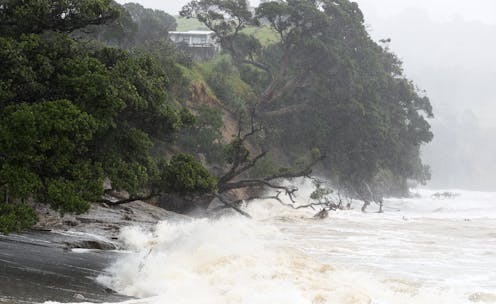
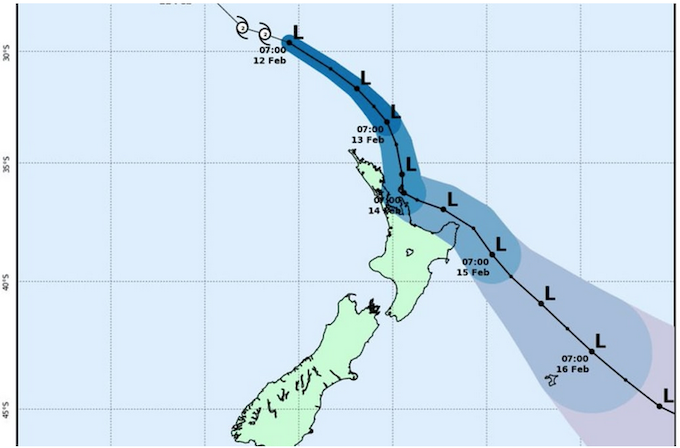
Tens of thousands of homes and businesses are left without power as Cyclone Gabrielle batters New Zealand’s North Island, causing widespread damage to the power network.

The government has declared a national state of emergency (for only the third time in New Zealand history) to coordinate efforts across the regions most affected.

The grid operator Transpower has declared a grid emergency following the loss of power in some regions, advising people “should be prepared to be without power for days to weeks, rather than hours”.

This once again emphasises the vulnerability of centralised power systems to increasingly severe weather events. It is crucial for communities to adopt more resilient energy solutions that can withstand such challenges in the face of a changing climate.

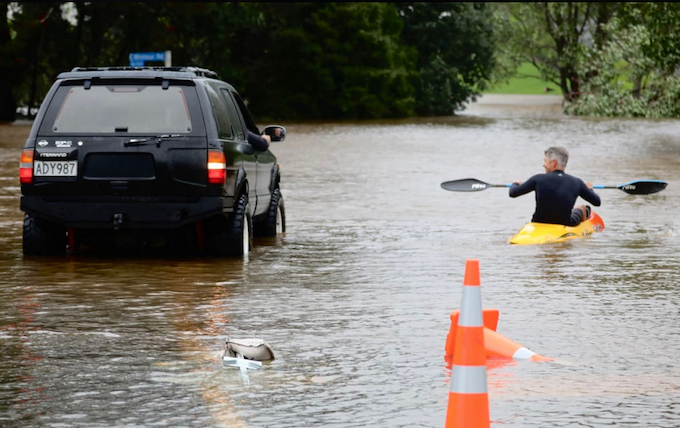
The cyclone is the second significant weather event to hit Auckland and the upper North Island in just a few weeks, following record rainfall and flooding last month.

Our research explores how renewables-based microgrids and peer-to-peer (P2P) energy trading can help mitigate these impacts and increase energy independence and security.


Read more:
Microgrids: how to keep the power on when disaster hits


Vulnerability of centralised power systems

Centralised power systems rely on large power plants and transmission grids. They are susceptible to single points of failure, making them vulnerable to extreme weather events.

Cyclone Gabrielle and the recent flooding in Auckland, which both resulted in widespread power outages, are prime examples of this.

Microgrids (small collections of power-generating assets, often run by communities) and P2P energy systems hold promise for sustainable and resilient energy. Microgrids are self-sufficient and can operate independently or in conjunction with the larger grid. They can run on different types of renewable energy sources, including solar, wind and hydro power.

This illustration shows a typical grid-connected microgrid.
Author provided, CC BY-SA

Microgrids are ideal for communities far from the main grid or in areas prone to extreme weather.

P2P energy systems allow individuals and communities to generate, share and trade energy among themselves. This creates a decentralised energy market and allows for more efficient energy use and distribution.

Case studies

Many microgrid and P2P energy projects across the world show the potential of these solutions. In rural India and sub-Saharan Africa, microgrids powered by solar energy provide electricity to remote communities not connected to the main power grid.

The Brooklyn Microgrid in New York City is also a shining example of a successful project. It allows residents to generate energy, share it and trade it with others in their community. This creates a more efficient and sustainable energy market.


Read more:
Small communities could be buying, selling and saving money on electric power right now – here’s how


Another successful microgrid and P2P energy project can be found in the town of Rock Port, Missouri. There, a community microgrid was established after a tornado destroyed the town’s electricity infrastructure. It is powered by wind and solar and provides stable and reliable energy for the community, even during times of extreme weather.

Hurricane Maria, which devastated Puerto Rico in 2017, serves as a stark reminder of the importance of energy independence and resilience. It caused widespread destruction to the island’s energy infrastructure and left residents without power for months. In the aftermath of the storm, many communities on the island have turned to microgrids as a solution to their energy needs.

As part of its recovery following Hurricane Maria, the Puerto Rican town of Adjuntas is installing solar-based microgrids.

Cost effectiveness and social acceptability

Our research shows that microgrids, both grid-connected and off-grid, can be cost effective when optimised. In Aotearoa New Zealand, they can be on par or even more cost effective than traditional power.

Our case studies from Aotea Great Barrier Island, Rakiura Stewart Island and the town of Ohakune demonstrate this.

The implementation of microgrids and P2P energy systems in these areas has the potential to improve energy resilience and save communities money in their electricity bills.

The social desirability and acceptability of these technologies are crucial factors and will determine their success and widespread adoption. Public perception can sometimes be a barrier to their implementation.


Read more:
Long power outages after disasters aren’t inevitable – but to avoid them, utilities need to think differently


For example, microgrids often require significant amounts of land for the installation of renewable energy sources, such as solar panels or wind turbines. However, some communities may resist the development of these projects due to concerns over land use.

The visual impact on the surrounding area or the potential disruption to wildlife habitats can also be reasons for resistance.

In these cases, it is important for project developers and local authorities to engage with communities. They need to address their concerns and promote a greater understanding of these technologies and their benefits to build support for these projects.

Demonstration projects can also showcase the capabilities and benefits of microgrids and P2P energy solutions. Involving the local community in the development and ownership can increase their social acceptability.

The Conversation

Alan Brent is affiliated with Victoria University of Wellington, a chartered member of Engineering New Zealand and an executive committee member of The Sustainability Society.

Soheil Mohseni does not work for, consult, own shares in or receive funding from any company or organization that would benefit from this article, and has disclosed no relevant affiliations beyond their academic appointment.

ref. Cyclone Gabrielle: how microgrids could help keep the power on during extreme weather events – https://theconversation.com/cyclone-gabrielle-how-microgrids-could-help-keep-the-power-on-during-extreme-weather-events-199665

‘No indication of aliens’: spy balloon saga continues to surprise amid rising US–China tension

Source: The Conversation (Au and NZ) – By Peter Layton, Visiting Fellow, Griffith Asia Institute, Griffith University

Chad Fish / AP

Over the past week, the US has realised and revealed that an active fleet of Chinese spy balloons has been operating across the northern hemisphere for several years.

This all started to become apparent when a Chinese balloon, some 60 metres high and carrying a sensor payload of more than a tonne, was sighted by people in offices and homes in Billings, Montana. The white balloon, highlighted against a bright blue sky, was described as like a second moon.

The saga continues to evolve. After the balloon was shot down off the South Carolina coast, three more objects were similarly engaged in northern Alaska, Canada’s Yukon Territory and over one of the Great Lakes. All three were flying inside territorial airspace.

The nature and origin of these objects is still unclear. US officials say the objects were not manoeuvring or communicating, helpfully noting “there is no indication of aliens or extraterrestrial activity”.

These four shoot-downs are the first in the history of the US-Canadian North American Aerospace Defense Command, originally set up during the early Cold War. In the background, another large Chinese spy balloon was understood to be overflying Costa Rica, Colombia and Venezuela.

A purposeful, ongoing program

The first balloon has already had several impacts. It quickly led to the cancellation of US Secretary of State Antony Blinken’s planned visit to Beijing of which much was hoped.

A minor domestic ruckus erupted as Republicans accused the Biden administration of being soft on China by not shooting the balloon down as early as possible. Congress voted 419-0 to condemn “the Chinese Communist Party’s use of a high-altitude surveillance balloon over United States territory as a brazen violation of United States sovereignty”.

Lastly, the US blacklisted a Chinese research institute and five aviation and defence companies, cutting them off from accessing American technology. The implication is the equipment recovered from the first balloon’s wreckage has revealed the blacklisted organisations were involved in building it.

A photo showing people hauling white cloth aboard a boat at sea.
The US recovered wreckage from the shot-down balloon.
US Navy / Mass Communication Specialist 1st Class Tyler Thompson / EPA

As more comes to light each day, China’s spy balloon program appears purposeful, well-planned, well-funded and ongoing. This was not a slapdash activity by some freelancing Chinese group but a highly organised military activity, at least partly conducted from Hainan Island on the edge of the South China Sea.

The program is likely to continue with its main focus being electronic surveillance, in particular mapping the civil and military communication networks of other countries, presumably to aid monitoring and possible later intrusions. The Pentagon noted that over the past several years Chinese balloons have been spotted operating over Latin America, South America, South-East Asia, East Asia and Europe.

Global wind patterns mean these operations are likely to be restricted to the northern hemisphere unless the balloons are launched off Chinese naval ships.

Hunting balloons

Detecting and shooting down such balloons requires a well-organised national air defence system that most countries do not have. Nevertheless, the sudden shooting down of three more objects immediately after the first suggests the US may have gleaned critical intelligence as it tracked the first balloon while it flew across America.


Read more:
Chinese spy balloon over the US: An aerospace expert explains how the balloons work and what they can see


The first balloon was sending data via a wireless link back to China. This link may be commonly used across the program. Knowledge of the technical characteristics of this link may have allowed the US to locate and track other balloons.

The US is sharing its newly acquired intelligence about the balloons with its allies, partners and friends. This will help others counter Chinese spy balloons over their countries.

An escalating trend

There are some implications for international relations.

First, the Chinese Communist Party doesn’t appear to mind irritating other countries. Much of what the spy balloons are doing can just as easily be done by surveillance satellites, of which China has some 260 in orbit.

In contrast, the balloons are inherently provocative. The response from the Chinese Foreign Ministry and the party’s mouthpiece the Global Times has been to deny, obfuscate and confuse, complain about the US for shooting down the first balloon, and claim the US has sent many similar balloons into Chinese airspace.

A man in a suit stands at a podium.
Chinese Foreign Ministry spokesperson Wang Wenbin said more than 10 US high-altitude balloons have flown in Chinese airspace during the past year without permission.
Liu Zheng / AP

Second, the great hopes that post-COVID China would shift from the wolf-warrior diplomacy of the past several years to become a more responsible member of the international community seem dashed. Instead, an escalating trend seems apparent, when considering other recent Chinese “grey zone” incidents . Looking forward, China seems set on “pushing the envelope” in a future where it is increasingly bellicose.

Bad signs for future crises

The balloon saga has also revealed that, in a crisis, China may be unable to adequately manage a fast-developing situation. The party apparatus may be good at implementing detailed long-range plans, but less adept at managing problems that arise quickly.

In this crisis, only the Americans seem actively involved; the statements from Beijing are at best pro forma, and certainly not meaningful interaction.

US Defense Secretary Lloyd Austin reportedly called China on a dedicated, mutually agreed crisis line, but Chinese Defence Minister Wei Fenghe declined to speak to him. This is a bad omen.


Read more:
Beyond spy balloons: here are 7 kinds of intelligence spies want, and how they get it


In a future US–China crisis only one side might be trying to manage the situation. The Chinese side might again freeze, with senior leaders playing the silent, nobody-home card.

The balloon saga continues helping to drive US-China relations downwards. China’s top leaders appear apathetic, while America’s hawks seem vindicated. It’s a win-win, as Xi Jinping always talks about, but not for the wider world.

The Conversation

Peter Layton does not work for, consult, own shares in or receive funding from any company or organisation that would benefit from this article, and has disclosed no relevant affiliations beyond their academic appointment.

ref. ‘No indication of aliens’: spy balloon saga continues to surprise amid rising US–China tension – https://theconversation.com/no-indication-of-aliens-spy-balloon-saga-continues-to-surprise-amid-rising-us-china-tension-199769

NZ declares national emergency as Cyclone Gabrielle unleashes fury across North Island

The national state of emergency is declared.     Video: RNZ News

The declaration, signed at 8.43am, will apply to the six regions that have already declared a local State of Emergency — Northland, Auckland, Tairāwhiti, Bay of Plenty, Waikato, and Hawkes Bay.

A national state of emergency gives the National Controller legal authority to apply further resources across the country and set priorities in support of a national level response.

Speaking to media at the Beehive, McAnulty said Tararua District had also declared a state of emergency.

‘Significant disaster’
“This is a significant disaster with a real threat to the lives of New Zealanders,” he said.

“Today we are expecting to see more rain and high winds. We are through the worst of the storm itself but we know we are facing extensive flooding, slips, damaged roads and infrastructure.

“This is absolutely not a reflection on the outstanding work being done by emergency responders who have been working tirelessly, local leadership, or civil defence teams in the affected areas.

“It is simply that NEMA’s advice is that we can better support those affected regions through a nationally coordinated approach.”

He said the National Emergency Management Agency (NEMA) met with local civil defence teams early this morning and heard that a national state of emergency would be beneficial for them.

It allowed the government to support affected regions, coordinate additional resources as they are needed across multiple regions and help set the priorities across the country for the response, he said.

“Our message to everyone affected is: safety first. Look after each other, your family and your neighbours. Please continue to follow local civil defence advice and please minimise travel in affected areas.

‘Don’t wait for services’
“If you are worried about your safety — particularly because of the threat of flooding or slips — then don’t wait for emergency services to contact you.

“Leave, and seek safety either with family, friends, or at one of the many civil defence centres that have been opened.”

He said iwi, community groups and many others had opened up shelters and were offering food and support to those in need.

“I also want to acknowledge that there have been reports of a missing firefighter – a volunteer firefighter — who is a professional and highly trained but left their family to work for their communities and the search continues.

“Our thoughts are with the FENZ staff and their families.”

Acting Civil Defence Director Roger Ball said we have had multiple weather warnings and watches in place and the effects of the cyclone will continue to be felt across the country today.

He said that if other regions or areas declared local states of emergency, they would be added to the national declaration.

“Under a state of national emergency, myself as the director and my national controller have authority to direct and control the response under the Civil Defence Emergency Management Act, including allocation of resources and setting priorities.”

He said no effort would be spared.

This article is republished under a community partnership agreement with RNZ.

Flooding of a main road near Waimauku in the Auckland region
Flooding on a main road near Waimauku in the Auckland region. Image: Marika Khabazi

Article by AsiaPacificReport.nz

Our neurodata can reveal our most private selves. As brain implants become common, how will it be protected?

Source: The Conversation (Au and NZ) – By Christina Maher, Researcher, University of Sydney

Shutterstock

“Hello world!”

On December 2021, these were the first words tweeted by a paralysed man using only his thoughts and a brain-computer interface (BCI) implanted by the company Synchron.

For millions living with paralysis, epilepsy and neuromuscular conditions, BCIs offer restored movement and, more recently, thought-to-text capabilities.

So far, few invasive (implanted) versions of the technology have been commercialised. But a number of companies are determined to change this.

Synchron is joined by Elon Musk’s Neuralink, which has documented a monkey playing the computer game Pong using its BCI – as well as the newer Precision Neuroscience, which recently raised US$41 million towards building a reversible implant thinner than a human hair.

Eventually, BCIs will allow people to carry out a range of tasks using their thoughts. But is this terrific, or terrifying?

How do BCIs work?

BCIs can be non-invasive (wearable) or invasive (implanted). Electrical activity is the most commonly captured “neurodata”, with invasive BCIs providing better signal quality than non-invasive ones.

The functionality of most BCIs can be summarised as passive, active and reactive. All BCIs use signal processing to filter brain signals. After processing, active and reactive BCIs can return outputs in response to a user’s voluntary brain activity.

Signals from specific brain regions are considered a combination of many tiny signals from multiple regions. So BCIs use pattern recognition algorithms to decipher a signal’s potential origins and link it to an intentional event, such as a task or thought.

One of the first implanted BCIs treated drug-resistant seizures in some of the 50 million people with epilepsy. And ongoing clinical trials signal a new era for neurologically and physically impaired people.

Outside the clinical realm, however, neurodata exist in a largely unregulated space.


Read more:
Elon Musk claims his Neuralink brain chip could ‘cure’ tinnitus in 5 years. But don’t hold your breath


An unknown middleman

In human interaction, thoughts are interpreted by the person experiencing and communicating them, and separately by the person receiving the communication. In this sense, allowing algorithms to interpret our thoughts could be likened to another entity “speaking” for us.

This could raise issues in a future where thought-to-text is widespread. For example, a BCI may generate the output “I’m good”, when the user intended it to be “I’m great”. These are similar, but they aren’t the same. It’s easy enough for an able-bodied person to physically correct the mistake – but for people who can only communicate through BCIs, there’s a risk of being misinterpreted.

Moreover, implanted BCIs can provide rich access to all brain signals; there is no option to pick and choose which signals are shared.

Brain data are arguably our most private data because of what can be inferred regarding our identity and mental state. Yet private BCI companies may not need to inform users about what data are used to train algorithms, or how the data are linked to interpretations that lead to outputs.

In Australia, strict data storage rules require that all BCI-related patient data are stored on secure servers in a de-identified form, which helps protect patient privacy. But requirements outside of a research context are unclear.

What’s at risk if neurodata aren’t protected?

BCIs are unlikely to launch us into a dystopian world – in part due to current computational constraints. After all, there’s a leap between a BCI sending a short text and interpreting one’s entire stream of consciousness.

That said, making this leap largely comes down to how well we can train algorithms, which requires more data and computing power. The rise of quantum computing – whenever that may be – could provide these additional computational resources.

Current BCIs aren’t advanced enough to quickly and reliably interpret a stream of thoughts — but a growth in computational power may allow this in the future.
Shutterstock

Cathy O’Neil’s 2016 book, Weapons of Math Destruction, highlights how algorithms that measure complex concepts such as human qualities could let predatory entities make important decisions for the most vulnerable people.

Here are some hypothetical worst-case scenarios.

  1. Third-party companies might buy neurodata from BCI companies and use it to make decisions, such as whether someone is granted a loan or access to health care.

  2. Courts might be allowed to order neuromonitoring of individuals with the potential to commit crimes, based on their previous history or socio-demographic environment.

  3. BCIs specialised for “neuroenhancement” could be made a condition of employment, such as in the military. This would blur the boundaries between human reasoning and algorithmic influence.

  4. As with all industries where data privacy is critical, there is a genuine risk of neurodata hacking, where cybercriminals access and exploit brain data.

Then there are subtler examples, including the potential for bias. In the future, bias may be introduced into BCI technologies in a number of ways, including through:

  • the selection of homogeneous training data

  • a lack of diversity among clinical trial participants (especially in control groups)

  • a lack of diversity in the teams that design the algorithms and software.

If BCIs are to cater to diverse users, then diversity will need to be factored into every stage of development.

How can we protect neurodata?

The vision for “neurorights” is an evolving space. The ethical challenges lie in the balance between choosing what is best for individuals and what is best for society at large.

For instance, should individuals in the military be equipped with neuroenhancing devices so they can better serve their country and protect themselves on the front lines, or would that compromise their individual identity and privacy? And which legislation should capture neurorights: data protection law, health law, consumer law, or criminal law?

In a world first, Chile passed a neurorights law in 2021 to protect mental privacy, by explicitly classifying mental data and brain activity as a human right to be legally protected. Though a step in the right direction, it remains unclear how such a law would be enforced.

One US-based patient group is taking matters into its own hands. The BCI Pioneers is an advocate group ensuring the conversation around neuroethics is patient-led.

Other efforts include the Neurorights Foundation, and the proposal of a “technocratic oath” modelled on the Hippocratic oath taken by medical doctors. An International Organisation for Standardisation committee for BCI standards is also under way.


Read more:
Neuralink put a chip in Gertrude the pig’s brain. It might be useful one day


The Conversation

Christina Maher does not work for, consult, own shares in or receive funding from any company or organisation that would benefit from this article, and has disclosed no relevant affiliations beyond their academic appointment.

ref. Our neurodata can reveal our most private selves. As brain implants become common, how will it be protected? – https://theconversation.com/our-neurodata-can-reveal-our-most-private-selves-as-brain-implants-become-common-how-will-it-be-protected-197047

Our research has shown Indigenous peoples’ needs cannot be understood and met, without Indigenous voices

Source: The Conversation (Au and NZ) – By Penny Taylor, Researcher, University of Tasmania

Opponents of an Indigenous Voice to parliament say the Voice is merely symbolic and another pointless layer of bureaucracy. They say that what is needed are “practical measures”.

However decades of government-led “practical measures” have achieved little measurable progress and in some cases, caused considerable harm to Indigenous communities. So the question is, will the Voice, in delivering Indigenous perspectives direct to parliament, make any practical difference to outcomes for Indigenous peoples?

Indigenous people have long been calling for more Indigenous-informed solutions. The current debate on alcohol bans in the Northern Territory is just one recent example.

Our research has found including the perspectives of Indigenous people can disrupt long-held assumptions behind previously accepted policy measures. This indicates mechanisms such as the Voice could help deliver better policy by building better understanding of Indigenous affairs.

We did 180 interviews with 44 Indigenous people in Darwin from diverse socio-economic, age, and gender groups. They spoke about aspects of Australian society they perceive to be harmful to race-relations, and therefore to the wellbeing of Indigenous peoples.

This kind of attention to Indigenous perspectives is central to the proposed structure of the Voice. The current design proposal ensures local and regional voices will have their say.


Read more:
The 1881 Maloga petition: a call for self-determination and a key moment on the path to the Voice


Whose voices are currently being heard in parliament?

Australia’s public and policy spaces are dominated by white Australians, who make up nearly all decision-makers and trusted authorities. By comparison, Indigenous people are underrepresented in every major sphere of influence. This results in top-down, paternalistic policies that have little connection with the reality of Indigenous peoples’ lives.


Studies show that when political discourse and policy development is dominated by one group’s experiences and worldview, it results in racial biases and blind spots. This limits policy discussions and proposed solutions. Failure to incorporate Indigenous perspectives has contributed to decades of misinformed, ineffective policy. The Northern Territory Intervention is a prime example.

One of the participants of our research reflected on this, saying:

they think they understand our values but they don’t understand anything at all. Like, you know, they make all these assumptions without even consulting or discussing or communicating with us anything, you know, of our values or our interests or what we know.

Indigenous voices are important to policy

The observations of the participants in our research illustrate how the lived experience of Indigenous peoples can better inform policies about what issues need to be addressed.

For example, our study found the broader population’s ignorance of Indigenous people was one of the standout problems brought up by participants. This includes ignorance of Indigenous cultures, Australian history, and the complexities of its consequences for Indigenous peoples. Participants said they feel there is a low awareness of the extent of this ignorance in the non-Indigenous population.

One participant stated:

I think there’s a lot of goodwill there, however, with that goodwill, understanding or knowledge doesn’t necessarily go with it…

It is their experience that this ignorance contributes to racist and culturally unsafe attitudes and behaviours – the harms of which are well documented. Participants said their response to this is to disengage and withdraw from spaces dominated by non-Indigenous people. This includes spaces of education, employment, and essential services. This is an issue because it is often assumed, based on misguided stereotypes, that Indigenous people are unmotivated to engage in education and employment. However unsafe environments are a contributing factor.

From this perspective, policies focused on increasing Indigenous participation – including through punitive measures – misunderstand the nature of the problem. Instead, education measures to “close the gap” in Indigenous health and wellbeing need to be broadened to include education of the non-Indigenous population in the areas identified above.

The participants’ perspectives raise many challenges to current policy, and state what is needed is not for Indigenous people to become more like white Australia but for there to be a mutual appreciation of the value of both worldviews and to find ways to work together.


Read more:
The Voice referendum: how did we get here and where are we going? Here’s what we know


The Voice could be good policy

The views of the research participants confirm the goals of the Uluru Statement from the Heart: if policy is to succeed, it must respond to the lived experience of Indigenous peoples.

Because we live it, we see it, whereas, if you don’t live it, you don’t see it.

Our research suggests Indigenous people need to be given space to speak frankly about their lives and for their views to be heard by policy makers. This creates opportunity for better-informed policies and systemic change.

Indigenous people have long demanded a voice to inform policies that affect them. Since invasion, their perspectives have largely been excluded, with disastrous consequences.

The referendum is the result of enormous grassroots efforts by Indigenous people to achieve this basic right. By establishing a national platform that delivers Indigenous voices direct to parliament, the Voice could finally achieve this.

The Conversation

Dr Penny Taylor has received funding from the Australian Research Council and an Australian Government Research Training Program Scholarship.

Daphne Habibis has received funding from the Australian Research Coucil. She is a volunteer with From the Heart.

Kellie Pollard has received funding from ARC, and is a member of the ARC College of Experts.

ref. Our research has shown Indigenous peoples’ needs cannot be understood and met, without Indigenous voices – https://theconversation.com/our-research-has-shown-indigenous-peoples-needs-cannot-be-understood-and-met-without-indigenous-voices-199286

The history of referendums in Australia is riddled with failure. Albanese has much at risk – and much to gain

Source: The Conversation (Au and NZ) – By Frank Bongiorno, Professor of History, ANU College of Arts and Social Sciences, Australian National University

Mick Tsikas/AAP

The Australian summer has not been kind to the proposal for a First Nations Voice to Parliament. A recent Newspoll shows a majority in favour – at 56% – but with half of those only partly in favour and 37% opposed. There is plenty of material for opponents to work with.

That they have been assiduously doing. Some calls for “more detail” are probably a genuine desire for just that – more detail. Others are very likely a cover for outright opposition, or for the holding operation currently being conducted by Opposition Leader Peter Dutton.


Read more:
Albanese’s Newspoll ratings drop but Labor maintains big lead


He knows there is much at stake for him and the opposition in how it responds to this issue. A Liberal Party already seen as out of tune with the increasingly progressive social opinions found among voters in metropolitan seats might yet suffer more damage.

First Nations opinion is said to be overwhelmingly in favour. However, the minority of Aboriginal voices already heard against the proposal – some from the left, others from the right – have ensured the proposal will likely be unable to carry the same amount of moral force as the 1967 referendum.

The “yes” case in that year, which attracted almost 91% of the vote, not only had bipartisan support; it was overwhelmingly understood as the right way to vote if you didn’t want Australia to become another South Africa. You had to vote “yes” if you wanted a decent future for the Aboriginal children whose images featured prominently in the publicity. There was a moral clarity, as well as a sense of mission among supporters, on a question that offered white voters a kind of national redemption.

Supporters of the Voice would like a similar kind of clarity, but it is probably now already out of reach. That means that the “yes” case will need to counter the sowing of fear and doubt, the suspicion of a hidden agenda, that has been the enemy of referendum proposals since the earliest years of the Federation.

The numbers are fairly well known in a society that is usually a bit hazy about the details of its political history. Eight out of 44 – that’s how many referendum proposals have succeeded since 1901. Bipartisanship has come to be seen as essential in getting a proposal accepted, but some bipartisan proposals have also failed.

It is often said the constitutional requirement of a double majority – more than 50% of voters as well as at least four out of six states – makes changing the constitution exceptionally difficult. There is evidence to support this contention.

On five occasions, a proposal achieved a majority of voters but went down because it lacked the requisite majority of states. In 1977, simultaneous elections of the House and Senate achieved over 62% support but fell over because voters in only three states backed it. All the same, proposals have more commonly failed because they gained the support of less than half the national electorate – indeed, sometimes less than a third.


Read more:
Changing the Australian Constitution is not easy. But we need to stop thinking it’s impossible


Both sides of politics have benefited from negativity. In 1951, a time of great tension in the Cold War, Labor leader Herbert Vere Evatt managed between July 9 and September 22 to help turn an 80% majority in favour of banning the Communist Party into a narrow “no” majority. There was also a 3-3 split between the states. He presented the proposal as the thin edge of the wedge, arguing the Menzies government would use the power arbitrarily against people and institutions who were not communists.

In 1988, Hawke government proposals for mostly modest changes achieved embarrassingly poor support. They included a provision for freedom of religion and extension to the states of the right to trial by jury and compensation for compulsory acquisition of property. The Coalition’s “no” campaign, led by Peter Reith, mobilised opposition with great success.

Only a provision for fair and democratic elections received more than about a third of the vote – and that was just 37.6%. The proposal for simultaneous four-year terms for the two houses of parliament – perhaps the most substantial of the proposals in terms of systemic change – managed less than a third of the vote. Not a single state voted in favour of any proposal. (The Australian Capital Territory voted narrowly in favour of fair elections.)

“Anyone who got up in the next 20 years at a Labor Party conference and suggested another referendum would have a very short future,” concluded Bob Hogg, the ALP national secretary. That said, the party under Hawke’s successor, Paul Keating, did champion a republic in the 1990s. A 1999 referendum held after it lost office produced another disappointing result for constitutional reformers.

A “no” vote would be a great blow to the Albanese government. And in light of this history, it is in some respects odd that it has chosen to hitch its wagon so tightly to the cause of constitutional change. It is true they do not usually destroy governments – Menzies survived the 1951 defeat to rule for another decade and a half, and after the 1988 debacle, Labor would win elections in 1990 and 1993. But they do have the potential to undermine leaders and governments. Some commentary, for instance, suggested after the 1951 result that Menzies might leave politics.

The Voice referendum is not lost, but there is sufficient confusion and contention around the proposal to worry supporters. To suggest a good deal of that confusion has been cynically manufactured for political advantage does not much alter the level of danger.

Anthony Albanese’s recent speech at the National Press Club indicates he is seeking to strike a delicate balance. He wants to facilitate debate and consultation – especially with First Nations peoples – without leaving a vacuum to be filled by opponents with misinformation.

That task is likely to test fully the political skills the prime minister has developed over decades in the business.

The Conversation

Frank Bongiorno does not work for, consult, own shares in or receive funding from any company or organisation that would benefit from this article, and has disclosed no relevant affiliations beyond their academic appointment.

ref. The history of referendums in Australia is riddled with failure. Albanese has much at risk – and much to gain – https://theconversation.com/the-history-of-referendums-in-australia-is-riddled-with-failure-albanese-has-much-at-risk-and-much-to-gain-198799

What happens in our brain and body when we’re in love?

Source: The Conversation (Au and NZ) – By Theresa Larkin, Professor of Medical Sciences, University of Wollongong

JustinFollis/Unsplash

Love dominates our popular culture and is the subject of countless songs, movies, and works of literature and art. But what’s happening in our body when we feel love?

Love is difficult to define, but can be described as an intense feeling of deep affection. At the most basic level, science sees love as a cocktail of chemicals released by the brain.

From an evolutionary perspective, romantic love evolved from the primitive animal drive to find and keep preferred mates. Love keeps people bonded and committed to one another, to raise children through infancy. This ensures our species will continue to reproduce, survive and thrive.

However, romantic love is not just about reproduction. Some argue we should consider love a motivation, like hunger, thirst, sleep or sex.

There are many benefits of loving others and being loved. These include better mental health, wellbeing and immune function, and reduced chronic stress and disease.


Read more:
What is love?


What happens when someone initially falls in love?

Falling in love typically begins when someone starts to see another person as special and unique.

The initial phase of falling in love is an extreme neurobiological state, characterised by heightened responses and high passion. Lust and attraction are driven by the sex hormones, estrogen and testosterone, as motivations for sex.

Specific areas of the brain are activated when you fall in love, in particular the limbic system and the reward centres. The limbic system has key roles in emotion and memory. This causes a positive mood and explains why the memories associated with new love are so strong.

A young lesbian couple cuddle in long grass
Memories of early love are strong because the brain’s limbic system is activated.
Masha S/Unsplash

There is also an increase in dopamine and noradrenaline. Dopamine stimulates the reward pathways and increases motivation and obsessive thoughts and behaviours to pursue the love interest. Noradrenaline causes the feelings of euphoria, and the physiological responses of a faster heart rate, butterflies in the stomach and increased energy.

At the same time, other brain areas are deactivated. Reduced activity in the frontal cortex reduces negative emotions and judgements. This explains why initially people may be blind to faults in the person they are in love with.

But while you might be feeling less judgement, there is also increased cortisol, stress and feelings of insecurity in the early phase of falling in love.


Read more:
Love is good for us, so why do lawmakers try to break us up?


How does romantic love change over time?

The initial phase of falling in love and intense infatuation lasts for several months.

During the next phase, there is increased intimacy, commitment and attachment. This is driven by the hormones oxytocin and vasopressin. Oxytocin helps us feel safe and secure after the initial high cortisol and stress of the uncertainty and risk of falling in love. Vasopressin promotes behaviours of vigilance and being territorial and self-protective.

Between oxytocin and vasopressin there is a balance of connecting with others while also protecting the person you are in love with and yourself.

Older couple walk in a forest
Oxytocin helps us feel safe and secure.
Alex Blajan/Unsplash

Oxytocin is often called the “hormone of love” because it facilitates the formation of social bonds and connections. However, new research in animal models suggests oxytocin is not essential for life-long pair-bonding as previously thought.

Sexual activity is distinct from love, but it does reinforce attachment. When we touch, kiss or have sex, oxytocin and vasopressin are released, which promotes love and commitment between a couple.


Read more:
What’s the point of sex? It’s good for your physical, social and mental health


Years into a romantic relationship, there is often a period of transition from passionate love to companion love. High intimacy and commitment help to sustain this love. Some relationships end at this time because of the reduced passion, while other couples remain in the passionate love phase for decades.

What about non-romantic love?

Beyond its role in romantic love, oxytocin is important in all forms of love, including with family, friends and even pets. Positive social relationships and oxytocin have many benefits on human health, wellbeing and longevity.

Person pats cat in bed
Oxytocin plays a role in our love for pets, too.
Chris Abney/Unsplash

In our research, we have shown oxytocin is associated with better quality of life and healthier social connections, among people with and without depression.

So, for the love of your favourite person, people or pet(s), whoever they are, however long you love them for, and however many times you fall in love, relish loving and being loved.

Love might just be nature’s best chemical cocktail. But all the intricacies of the complex behaviour and emotion of love continue to elude science.


Read more:
Love: is it just a fleeting high fuelled by brain chemicals?


The Conversation

The authors do not work for, consult, own shares in or receive funding from any company or organisation that would benefit from this article, and have disclosed no relevant affiliations beyond their academic appointment.

ref. What happens in our brain and body when we’re in love? – https://theconversation.com/what-happens-in-our-brain-and-body-when-were-in-love-198885

Who moves and who pays? Managed retreat is hard, but lessons from the past can guide us

Source: The Conversation (Au and NZ) – By Raven Cretney, Postdoctoral Fellow, University of Waikato

Getty Images

As the cleanup from the Auckland floods continues, and Cyclone Gabrielle hits already saturated parts of the North Island, many people and communities are wondering about the future of their cherished places and homes.

The increasing severity of climate-related disasters, and the vulnerability of ageing stormwater infrastructure, are now tangible and visible realities.

With this, the term “managed retreat” has gone from being a specialist one to something discussed much more widely. And with the growing prospect of repeat events, the urgent need for a national managed retreat framework is very much in focus.

The government’s first National Adaptation Plan, released in August 2022, was lauded as a welcome development in responding to climate change. Central to the plan is the role of managed retreat – the strategic relocation of people, communities, taonga and assets.

As some commentators have pointed out, however, there is an absence of detail in the plan on the enduring questions of who should move, how they will move, and who pays.

Guided by the past

The Auckland floods came as the government is preparing the first draft of its Climate Adaptation Act, part of the repeal of the Resource Management Act. This is the next step in a plan to respond to the growing risks from sea level rise and climate-related disasters.

The legislation (in parallel with the National Built Environment and Strategic Planning bills) aims to address the complex issues associated with managed retreats and how to implement them.


Read more:
New Zealand has launched a plan to prepare for inevitable climate change impacts: 5 areas where the hard work starts now


Our recent research suggests a close examination of the past will help guide these difficult decisions. By analysing academic research, government reports and policies, we traced the historical and political context in which managed – and unmanaged – retreats evolved in Aotearoa.

We pieced together why and how retreats gradually evolved, from being reactive and unmanaged towards being a strategic part of our national risk management framework. These insights shed light on why implementation will still be difficult, and they provide lessons for other countries grappling with similar policy options.

Communities in limbo

This journey is not linear. Decision makers and communities have tested different approaches to retreat and have confronted existing science, law and behavioural norms that supported the status quo. These experiences have all been important in making the case for a more anticipatory mindset when making policy.

Our research emphasises that managed retreat only became a mainstream option due to consistent scientific advocacy and shifts in the understanding and application of risk management over decades. It was the result of a long struggle by many committed groups.


Read more:
Flood warning: NZ’s critical infrastructure is too important to fail – greater resilience is urgently needed


For communities across Aotearoa, however, support and direction to enable effective managed retreat is still a waiting game. The previous pattern of ad hoc policy experiments, often based on trial and error, only increases the political risks associated with an already delicate undertaking.

This history highlights the toll that an absence of clear policy can take on individuals and communities. The examples we’ve analysed emphasise how retreats can be disruptive, produce inequitable outcomes and sever community ties.

The challenges of managing retreat without supportive policies heighten the political risk for decision makers, which means effective action may be deferred until a national framework is in place. This is particularly difficult for communities already in limbo, at risk, and without a plan for the future.

Connections to place: flooding at the historic Okahu Bay cemetery in Auckland.
Getty Images

Transformative opportunities

Importantly, we emphasise that managed retreats encompass more than just physical change. Decisions to live with risk, resist or retreat are shaped by many things. These include different social and cultural relationships to a place, public expectations of state protection or compensation, and data availability.

There are diverse relationships between people, places, land and property. It’s vital that managed retreat processes empower and support communities to make decisions that reflect their specific social, cultural and environmental contexts –
particularly including Te Tiriti o Waitangi and rights to tino-rangatiratanga (self-determination) for Māori land and taonga.


Read more:
Slippery slopes: why the Auckland storm caused so many landslides – and what can be done about it


Policy development will need to encompass these multifaceted relationships, with flexible approaches tailored to local needs. It is also vital to start a national conversation about the role of permanent property rights and land ownership – and how managed retreat challenges the notion of perpetual property rights in certain locations.

Our historical review highlights the importance of strategic planning and support for communities to mitigate the disruptive impact of managed retreats. The right funding mechanisms that address the potential for inequitable outcomes are also necessary.

Ultimately, planning for managed retreats demands that we reform relationships between communities, place and the environment. This is about more than physical relocation. Managed retreats provide transformative opportunities to unmake and remake space, place and property, but current perceptions of permanence cast a long shadow.

We eagerly await the draft Climate Adaptation Act, and the opportunity for Aotearoa to make better planning decisions for the future. But there is still much work to be done to ensure it can be applied equitably.

The Conversation

Raven Cretney receives funding from the Resilience to Nature’s Challenges National Science Challenge: Kia manawaroa – Ngā Ākina o Te Ao Tūro and the Biological Heritage National Science Challenge: Ngā Koiora Tuku Iho.

Christina Hanna receives funding from the Aotearoa New Zealand Government National Science Challenge: Resilience to Nature’s Challenges – Kia manawaroa – Ngā Ākina o Te Ao Tūroa. Christina also receives funding from the Ministry of Business, Innovation and Employment’s Endeavour Fund to research issues connected to flood risk mapping and better decision making.

Iain White receives funding from the Aotearoa New Zealand Government National Science Challenge: Resilience to Nature’s Challenges – Kia manawaroa – Ngā Ākina o Te Ao Tūroa. Iain White also receives funding from the Ministry of Business, Innovation and Employment’s Endeavour Fund to research issues connected to flood risk mapping and better decision making.

ref. Who moves and who pays? Managed retreat is hard, but lessons from the past can guide us – https://theconversation.com/who-moves-and-who-pays-managed-retreat-is-hard-but-lessons-from-the-past-can-guide-us-196038

The real price of gas: massive Santos pipeline would destroy rare native grasslands

Source: The Conversation (Au and NZ) – By Tim Curran, Associate Professor of Ecology, Lincoln University, New Zealand

Shutterstock

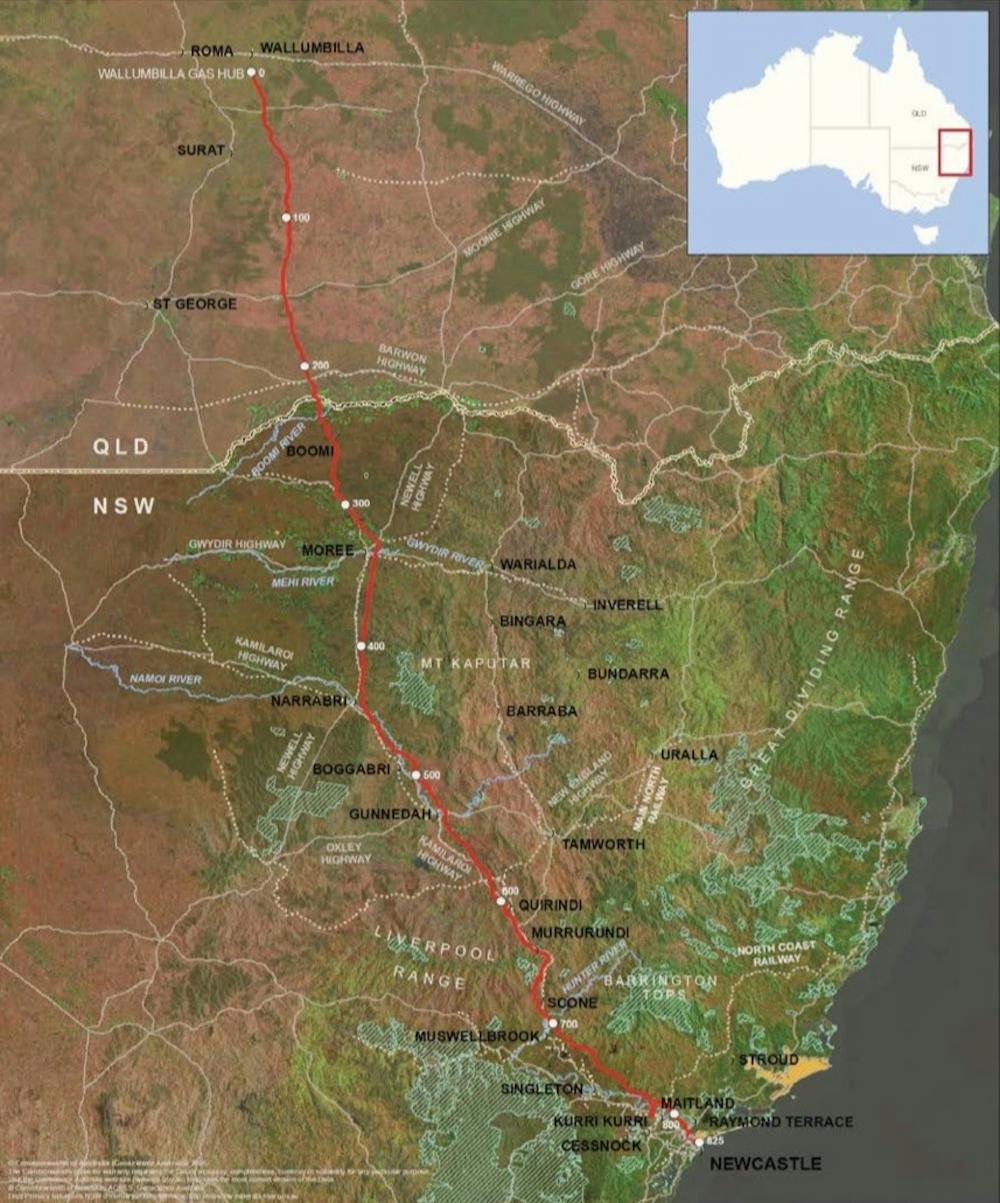
Australian oil and gas giant Santos wants to build an 833-kilometre gas pipeline stretching from southern Queensland to Newcastle in New South Wales. Details released by the company show the project would traverse highly productive farmland, as well as valuable native vegetation.

The pipeline would run underground. Even still, the proposed path is a real risk to threatened species and ecological communities, due to the need to clear a 30m-wide corridor to install the pipeline.

In January, the NSW government granted Santos authority to survey land along the route, with or without permission from landholders. This brings this massive infrastructure project closer to construction.

Many landscapes along the pipeline’s path are already denuded of native vegetation. The threatened ecosystems that remain, including native grasslands, must be protected.

people hold sign reading 'no pipelines, no gas fields'
The pipeline, opposed by many in the community, would traverse highly productive farmland and valuable native vegetation.
Margaret Fleck/AAP

Expanding the gas network across the Liverpool Plains

map showing proposed pipeline route
Map showing the proposed pipeline route.
https://majorprojects.planningportal.nsw.gov.au

The proposed pipeline route passes close to Santos’ controversial Narrabri Gas Project. The company claims the pipeline will help alleviate gas shortages along Australia’s east coast.

The preferred route for the pipeline runs through the fertile Liverpool Plains, which cover more than 1.2 million hectares of inland northern NSW, near the towns of Gunnedah, Quirindi and Boggabri.

The plains’ deep, alluvial clay soils are renowned for high agricultural productivity. Before European settlement, the plains supported extensive tracts of naturally treeless grasslands, dominated by plains grass, native oatgrass and silky browntop.

Most of the grasslands have been cleared for agriculture. It’s estimated that less than 5% remain.

The grasslands were listed as endangered in 2001 in NSW, and as critically endangered nationally in 2009.

Native grassland on Liverpool Plains, south-east of Gunnedah. The tall grass is plains grass (Austrostipa aristiglumis).
Tim Curran

Travelling stock routes and reserves

The proposed pathway for the pipeline includes travelling stock routes and reserves set aside in the late 1800s. Most surviving patches of critically endangered Liverpool Plains grasslands are found along these stock routes.

Yet, Santos has nominated the Pullaming stock route – which runs 25km southeast from near Gunnedah – as a preferred location for the Hunter Gas Pipeline.

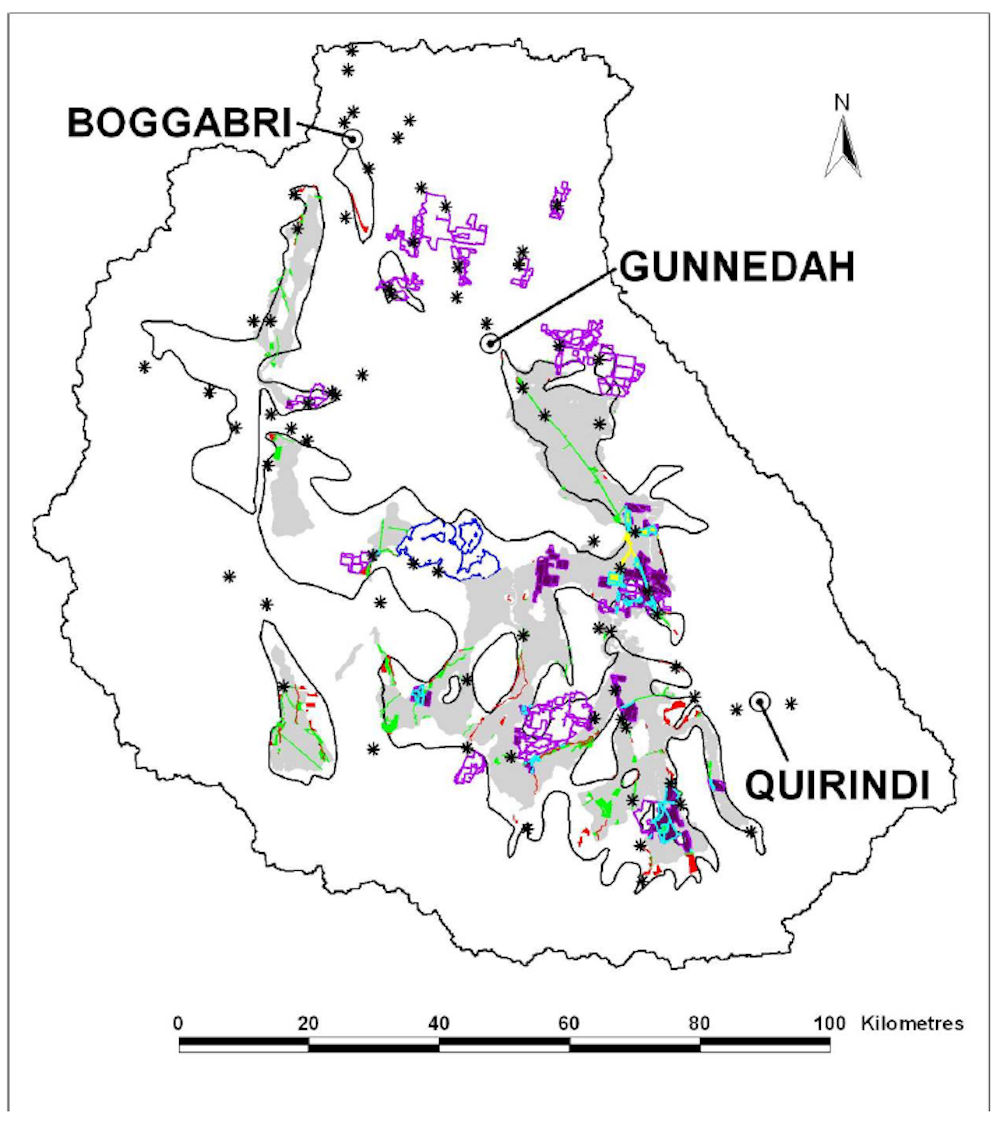
This would require clearing a 30-metre wide strip along one side of the road, removing 75ha of these critically endangered grasslands (almost 1% of the estimated 8,000ha remaining).

The extent of the potential damage is detailed in the map and caption below. The green line running southeast from Gunnedah is the narrow strip of native grassland along the Pullaming stock route.

Map of the Liverpool Plains grasslands prepared by scientists at the Royal Botanic Gardens, Sydney (Allen and Benson, 2012; used with permission). The outer black line shows Liverpool Plains catchment. Inner black line shows estimated naturally treeless grasslands. Grey shows estimated pre-European extent of grasslands. Known remnant stands of grassland are shown in green, purple, light blue, yellow and red. Note the linear nature of many of these stands, reflecting their presence along stock routes, reserves and roadsides.
https://www.researchgate.net/publication/261216605_Floristic_Composition_of_the_Liverpool_Plains_Grasslands_Report_for_printing

It’s not just the direct clearing that will impact these grasslands. Adjacent stands will suffer from weed invasion.

Stock routes also provide other cultural and ecological benefits, such as:

More than ‘minimal impacts’

The NSW state government approved the pipeline in 2009, and this approval was modified in October 2019. It requires the route to, where possible, avoid endangered ecological communities or have minimal impacts. Where damage does occur, this must be offset by biodiversity gains elsewhere.

The proposed clearing of critically endangered grasslands along the Pullaming stock route is hardly a minimal impact.

Biodiversity offsets involve improving biodiversity in one place to compensate for destruction elsewhere. However, offsets are a very controversial tool and are likely to lead to further biodiversity loss if used improperly.

It is much better to avoid the destruction of native vegetation in the first place, especially if that vegetation is critically endangered and essentially irreplaceable. It is not yet known whether Santos plans to use biodiversity offsets for this project.


Read more:
A contentious NSW gas project is weeks away from approval. Here are 3 reasons it should be rejected


A project that’s hard to justify

The likely destruction of endangered grasslands occurs along just 25km of the 833km pipeline. Other travelling stock routes and native vegetation will be affected elsewhere along the route, further impacting biodiversity.

Based on the preferred pipeline route through the Liverpool Plains, this massive infrastructure project will either extensively damage highly productive farmland, or harm endangered ecological communities, or both of these.

Given this, it’s difficult to see why the project should be allowed to proceed.

The Conversation approached Santos for comment but did not receive a statement before the publication deadline. However, the company’s web page about the Hunter Gas Pipeline route says Santos intends to consider the environment as well as landholder preferences and “potential constructability issues” before finalising the exact location of the pipeline and the permanent easement.

The company says it is “committed to finding the right balance so that impacts to landholders are minimised, and sensitive areas are protected”.
Santos says the path of the pipeline can still be changed, under existing approvals, if certain conditions are met.

The Conversation

Tim Curran receives funding from the New Zealand Ministry for Business, Innovation and Employment (MBIE), Fire and Emergency New Zealand, the Miss E L Hellaby Indigenous Grasslands Research Trust, Marlborough District Council, and the Lincoln University Argyle Fund. Tim is the Immediate Past President of the New Zealand Ecological Society.

ref. The real price of gas: massive Santos pipeline would destroy rare native grasslands – https://theconversation.com/the-real-price-of-gas-massive-santos-pipeline-would-destroy-rare-native-grasslands-198795

Success in life is tied to parental education. That’s why we need to track intergenerational school performance

Source: The Conversation (Au and NZ) – By Robert Breunig, Professor of Economics and Director, Tax and Transfer Policy Institute, Crawford School of Public Policy, Australian National University

Shutterstock

The notion of the “fair go” is meant to be central to Australia’s national ethos.

It’s not easy to define, but most of us would agree it means the chance to reach your full potential, regardless of your background. This doesn’t necessarily mean equality, but it does imply social mobility, where you can do better than your parents based on merit.

Education is a major driver of social mobility, with research showing educational attainment explains up to 30% of the transmission of economic advantage between parents and children.

But a Productivity Commission report published last month shows the education system is not doing well in correcting for the disadvantage students face in the classroom.

For example, Year 3 students whose parents did not finish secondary school are an average of 1.3 years behind in numeracy, compared with those whose parents have a bachelors’ degree or higher. By the time these students reach Year 9 this gap widens to almost four years.

The Productivity Commission report was commissioned under the Morrison government to review the 2018 National School Reform Agreement between the federal and state governments to improve student outcomes. The deal came with A$319 billion in extra funding. But after five years, the report concludes, this has so far failed to make any difference in results.

Given the magnitude of the funding, this is troubling on its own. The broader implications for social mobility in Australia are even more concerning.

The commission’s report highlights the need for better data on educational attainment and social mobility. This will enable better analysis of the links between the two – and ultimately more effective education policy.

If policymakers don’t know what works, especially for students from disadvantaged backgrounds, they will spend money on the wrong things.


Read more:
A degree promises a better life but social mobility has a downside too


The importance of longitudinal data

As children from less educated families perform significantly worse than the children of the more educated, it is far less likely their relative economic situation in adulthood will exceed that of their parents.

Unravelling the links between education and social mobility requires longitudinal data – tracking the same individuals over decades.

The best example of longitudinal data in Australia is the Household, Income and Labour Dynamics in Australia (HILDA) survey, conducted by the Melbourne Institute at the University of Melbourne.

Since 2001, HILDA has tracked a nationally representative sample of about 18,000 Australians, asking them about things such as income, employment, health and wellbeing. By surveying the same people, researchers can use this data to understand influences on people’s lives over time.


Read more:
HILDA Survey reveals striking gender and age divide in financial literacy. Test yourself with this quiz


The Australian Taxation Office’s ALife dataset, an anonymised sample of 10% of all Australian taxpayers also provides significant insight into intergenerational income mobility.

By following individuals over decades, researchers can observe and compare the labour market outcomes of parents with those of their children as they grow into adults.

By Year 3, Australian students whose parents did not finish secondary school are 1.3 years behind in numeracy compared with those whose parents have Bachelors' degree or higher.
By Year 3, Australian students whose parents did not finish secondary school are 1.3 years behind in numeracy compared with those whose parents have Bachelors’ degree or higher.
Shutterstock

For example, University of Technology Sydney researchers Tomas Kennedy and Peter Siminski have used HILDA and other survey data to conclude about two-thirds of Australians aged 30-34 have higher incomes than their parents at the same age.

Australian National University researchers Nathan Deutscher and Bhashkar Mazumder have used ALife to conclude about 12% of Australians born into the bottom 20% of family income join the top 20% between the ages of 29 and 35. If a family’s wealth at birth had no bearing on a child’s wealth as an adult, that number would be 20%.

Deutscher has also used ALife to follow individuals over 25 years and calculate the effect of where they lived as a child on their income in adulthood. Where a child grows up has a causal impact on their adult outcomes. This typically matters most during the teenage years.

The question is how much of this relates to their school.

To answer this and other questions, researchers need more comprehensive longitudinal data that enables linking things such as child-care attendance, test scores, and school choice across time and with other data sources.


Read more:
Our top 1% of income earners is an increasingly entrenched elite


Unique student identifier

One important policy initiative of the National School Reform Agreement is the introduction of a “unique student identifier” (USI) to track individual student performance over time. This will enable data on educational outcomes to be more easily linked with other data held by state and federal governments, and provide researchers with a clearer picture of how educational outcomes shapes social, economic and health outcomes later life.

However, the Productivity Commission report notes the rollout of this initiative is well behind schedule.

The USI offers more than mere standardisation. Once in place, researchers will also be better able to evaluate the impact of education policy interventions by conducting randomised control trials, similar to those used by in medicine to assess the efficacy of new drugs and treatments. Such trials are crucial for assessing whether a particular education policy reform, for instance a new teaching method, has a causal impact on learning outcomes.

To date, the dearth of randomised control trials in education policy has held back the Australian education evidence base.

As noted in the University of Newcastle’s Teachers and Teaching Research Centre’s submission to the Productivity Commission, the use of randomised control trials in evaluating education policy is hampered by the expense of collecting data from students via surveys. Better data linkage can help solve this problem.

Building a more effective education system to support, maintain and improve social mobility requires the right tools. Without better integrated data and a more reliable education evidence base, taxpayers are far less likely to see a return on the billions being spent.


This article was co-authored by Matthew Taylor, director of the Centre for Independent Studies’ Intergenerational Program.

The Conversation

Robert Breunig does not work for, consult, own shares in or receive funding from any company or organisation that would benefit from this article, and has disclosed no relevant affiliations beyond their academic appointment.

ref. Success in life is tied to parental education. That’s why we need to track intergenerational school performance – https://theconversation.com/success-in-life-is-tied-to-parental-education-thats-why-we-need-to-track-intergenerational-school-performance-199771

Love languages are hugely popular – but there’s very little evidence they exist at all

Source: The Conversation (Au and NZ) – By Gery Karantzas, Associate professor in Social Psychology / Relationship Science, Deakin University

Shutterstock

Love languages – the concept coined by Baptist pastor Gary Chapman some 30 years ago – has taken the relationships world by storm. It’s often the “go-to” topic on first dates, and for those in relationships love languages are said to provide deep, meaningful and reliable insights into how relationships function. Putting love languages into action is believed to increase relationship happiness.

The concept clearly has appeal. At last count, 20 million copies have been sold worldwide of Chapman’s 1992 book The Five Love Languages: The Secret to Love that Lasts. The book has been translated into 49 languages.

There is only one catch. There is little evidence to support the idea that love languages are “a thing”, or that love languages do much of anything to help improve relationships.

What are the love languages?

According to Chapman, there are five love languages. Each of these love languages is a way to communicate your love to your romantic partner.

In his role as a Baptist pastor, Chapman had been counselling couples for years. It was through his observations of couples that the idea of love languages was born.

He believed love languages were an intuitive and simple way to teach couples about how to tune into each other’s ways of expressing love. And so, he began running seminars for husbands and wives, and the popularity of his seminars grew.

The five love languages are:

(1) acts of service (doing something that helps a partner, such as running an errand)

(2) physical touch (demonstrating physical affection, such as giving your partner a hug or kiss)

(3) quality time (spending time together and giving each other undivided attention)

(4) gifts (giving your partner a present that communicates thoughtfulness, effort, and/or expense)

(5) words of affirmation (such as expressing your admiration, or complimenting your partner).

Chapman suggests that people typically use all love languages, but that most people tend to rely on one love language most of the time. This is referred to as a person’s primary love language.

According to Chapman, people are more satisfied in their relationships when both partners match when it comes to their primary love language. However, people experience less satisfaction in their relationships when both partners do not share the same primary love language.

Another important aspect of the love languages concept is that relationships are likely to deliver the greatest satisfaction when a person can understand their partner’s love language, and act in ways that “speaks to” their partner’s language. In essence, this idea is about tuning in to what a partner wants.

This is an idea that has existed across many models and theories about how relationships function well. That is, responding to a partner in a way that meets their needs and wants makes a person feel understood, validated, and cared for.

The five love languages.
Shutterstock

What does the evidence tell us?

Despite the popularity of the theory of love languages, only a handful of studies have been conducted and reported over the past 30 years. Research is largely inconclusive, although the balance sways more towards refuting rather than endorsing the love languages concept.

Let’s start with how love languages are assessed. In popular culture, the Love Language QuizTM is an online questionnaire that people can complete to find out about their love languages. Despite millions of individuals having taken the quiz (according to 5lovelanguages.com), there are no published findings as to the reliability and validity of the measure.

Researchers have developed their own version of the love languages survey, but the findings did not meet the statistical thresholds to suggest the survey adequately captured the five love languages. Also, their findings did not support the idea that there are five love languages.

Furthermore, a qualitative study in which researchers coded the written responses of undergraduate students to questions about how they express love, suggested there may be six love languages. However, the researchers reported difficulty agreeing on how some of the students’ responses neatly fitted into Chapman’s love languages, particularly in the categories of “words of affirmation” and “quality time”.

Next, let’s turn to research testing a core premise of the love language theory: that couples with matching love languages experience greater satisfaction than those who do not. Evidence for this premise is very mixed.


Read more:
From Chaucer to chocolates: how Valentine’s Day gifts have changed over the centuries


Three studies, including one that used Chapman’s Love Language Quiz, have found that couples with matching love languages were no more satisfied than couples who were mismatched.

However, a more recent study found that partners with matching love languages experienced greater relationship and sexual satisfaction than partners with mismatched love languages. This research also found that men who reported greater empathy and perspective-taking had a love language that better matched the language of their partner.

Finally, what does the research say about whether having a better understanding of your partner’s love language is linked to higher relationship satisfaction? Only two studies have investigated this question. Both found that knowing your partner’s primary love language did predict relationship satisfaction in the present or into the future.

So, as you can see, not only is there very little research investigating love languages, but the research to date doesn’t strengthen belief in the powerful properties of love languages.

The Conversation

Gery Karantzas receives funding from the Australian Research Council. He is a couples therapist and founder of www.relationshipscienceonline.com.

ref. Love languages are hugely popular – but there’s very little evidence they exist at all – https://theconversation.com/love-languages-are-hugely-popular-but-theres-very-little-evidence-they-exist-at-all-198065

View from The Hill: Dutton apologises for missing Apology’s symbolism but how will he see the Voice’s symbolism?

Source: The Conversation (Au and NZ) – By Michelle Grattan, Professorial Fellow, University of Canberra

It wasn’t the first time Peter Dutton had said he was sorry for boycotting Kevin Rudd’s 2008’s historic Apology to the Stolen Generations, but Monday’s reiteration was an important moment for the opposition leader.

Dutton is struggling to chart a course and manage his divided party on the issue of the Indigenous Voice to parliament.

If he ends up supporting the Voice, Monday’s speech will be seen as a step on the way. If he rejects it (as many think he will), his speech will probably be viewed as an empty gesture.

Back in the day, Dutton defended his boycott by saying he didn’t think the Apology would deliver any practical results. He said in 2010: “I regarded it as something which was not going to deliver tangible outcomes to kids who are being raped and tortured in communities in the 21st century”.

At his first news conference after becoming leader in 2022, he said he’d been wrong to boycott. Scrapping off a barnacle, the cynics might say.

Addressing the House of Representatives on the 15th anniversary of the apology, Dutton said on Monday: “I want to speak directly to those in the gallery today and further afield who are part of the Stolen Generation and those who are descendants or are connected to the issue.

“I want to say in an unscripted way, I apologise for my actions […] – that I didn’t attend the chamber for the Apology 15 years ago. I’ve apologised for that in the past and I repeat that apology again today.”

He had “failed to grasp at the time the symbolic significance to the Stolen Generation of the Apology. It was right for Prime Minister Rudd to make the Apology in 2008.”


Read more:
Albanese government announces $424 million to narrow a gap that is not closing fast enough


Now, as he grapples with the issue of the Voice, Dutton has to make a judgement about the symbolic significance of this latest test he faces.

Minister for Indigenous Australians Linda Burney said at the weekend: “I know that some people who boycotted that historic day in 2008 have since expressed their regret. They now admit that it was a mistake. And I say to those people – don’t make the same mistake again.”

While Burney didn’t name Dutton she was applying a political blowtorch to him. But there’s a salutary warning for him here.

Dutton has to ask himself whether, given the journey towards the Voice is well underway, an attempt to erect a roadblock would send the worst of signals.

A signal to Indigenous Australians. A signal to the world. This goes deeper than narrow partisan considerations.

If the referendum passes, the resultant Voice may or may not prove an effective instrument in Indigenous advancement.

But even if he is sceptical, given the symbolism of the Voice, does Dutton really want to risk being shouldered with some of the responsibility if the referendum fails?

Wherever he lands – pro, anti, neutral – Dutton will have a fractured band of party followers.

Prominent Liberal moderates such as Bridget Archer and Andrew Bragg are already out and active in support of the Voice. Rightwingers are strongly against. Dutton won’t be able to herd his cats.


Read more:
Enshrining the Voice gives best chance for Closing the Gap, Albanese says


Meanwhile the Voice debate is being increasingly accompanied by greater attention on what is happening on the ground, which is to be welcomed.

This is partly because the referendum has meant more discussions about Indigenous affairs generally, and particularly due to the publicity about the situation in Alice Springs.

The federal government acknowledges that closing the disadvantage gap is not proceeding fast enough or, in some areas, at all.

Anthony Albanese told parliament on Monday that when the Closing the Gap report was tabled a few months ago “the gaps not only persist but some are getting bigger. The report lays out forensically one lopsided statistic after another, in health, education, incarceration rates and especially damning, life expectancy. These are not gaps, they are chasms.”

In recent days, the PM acted decisively on reimposing alcohol bans in Northern Territory communities. More federal money has been announced for a range of initiatives. That’s all good but, on the basis of history, it won’t be transformational.

Whatever their differences, government and opposition agree that we as a country are falling short. As Dutton said, “Our current actions – for all their good intent – are not bringing about enough practical outcomes for which we can all be proud as a nation”.

It’s hard to avoid the conclusion that these issues actually go beyond more resources, more partnerships, or even more listening to indigenous communities. These are classic “wicked problems”.

Australia’s First Nations people straddle two cultures. How this works for individuals varies dramatically, ranging from those living very traditional lives in remote communities (and wanting to continue doing so) to those committed to their culture and country but with day-to-day existences no different from their non-Indigenous neighbours.

Good policy must respect and accommodate many circumstances. It must underpin the traditional, semi-traditional and town communities with adequate and appropriate services. These (including even clean water) are often lacking now.


Read more:
Enshrining the Voice gives best chance for Closing the Gap, Albanese says


Crucially, good policy must also facilitate choices and social mobility for Aboriginal and Torres Strait Islander people. The young girl born into an Alice Springs camp should have a realistic pathway to becoming an urban IT worker, if that is her aspiration.

The overarching challenge is to support the cultural identity of Indigenous Australians while ensuring them the same equality of opportunity non-Indigenous Australians expect. Multiple rights are involved: their rights as first occupants, their rights as modern citizens. It’s a challenge that in real life produces deep complexities for policy areas. We don’t seem to talk much about this fundamental conundrum, because it can be an uncomfortable conversation that seems just too hard. Perhaps the Voice would.

The Conversation

Michelle Grattan does not work for, consult, own shares in or receive funding from any company or organization that would benefit from this article, and has disclosed no relevant affiliations beyond their academic appointment.

ref. View from The Hill: Dutton apologises for missing Apology’s symbolism but how will he see the Voice’s symbolism? – https://theconversation.com/view-from-the-hill-dutton-apologises-for-missing-apologys-symbolism-but-how-will-he-see-the-voices-symbolism-199788

Changes to temporary protection visas are a welcome development – and they won’t encourage people smugglers

Source: The Conversation (Au and NZ) – By Daniel Ghezelbash, Associate Professor and Deputy Director, Kaldor Centre for International Refugee Law, UNSW Law & Justice, UNSW Sydney, UNSW Sydney

Refugees in Australia on temporary protection visas (TPVs) and Safe Haven Enterprise Visas (SHEVs) now have a pathway to permanent protection, the federal government has confirmed today.

The long-awaited changes will bring much-needed certainty to around 20,000 people who arrived in Australia before January 1 2014, and who were found to be refugees or at risk of serious human rights violations.

These people have endured years in limbo under a policy that research has shown to be unfair, expensive, impractical, and inconsistent with our international obligations.

Temporary protection not only inflicts significant mental harm on asylum seekers, but also created a costly bureaucratic burden for the government. It’s also out of step with the practice of other countries, where temporary protection is reserved for exceptional circumstances.

The changes are a welcome development for people who have lived with uncertainty for a decade, providing them with an opportunity to rebuild their lives with a sense of security. The decision is also highly unlikely to encourage asylum seekers to try to reach Australia by boat.

Yet, the fate of thousands of other refugees and asylum seekers in limbo in Australia remains uncertain.

How did we get here?

The Coalition announced in 2013 that the temporary protection regime would be reintroduced as part of Operation Sovereign Borders.

It was deployed alongside boat pushbacks at sea and offshore processing, with the goal of deterring asylum seekers from travelling by boat to Australia.

The temporary nature of such visas meant refugees had to have their protection claims reassessed every few years. This left refugees in a state of constant fear and anxiety, unsure if they would be allowed to remain in the country or be forced to leave.


Read more:
The trauma of life in limbo for refugees and asylum seekers in immigration detention – podcast


Those on SHEVs who met certain requirements relating to work and study in regional areas were – at least on paper – potentially eligible for other visas. But in practice, those requirements were beyond reach, with only one person ever qualifying.

The changes announced overnight mark a welcome development. But they don’t resolve the precarious fate of all those in the so-called “legacy caseload”. There’s more to do to bring fairness to thousands of other refugees and asylum seekers who remain tangled in Australia’s complex “fast-track” process.

Permanent protection

While the changes fall short of formally abolishing TPV and SHEV visas, people who currently hold such visas will now be able to apply for a “Resolution of Status Visa”. This will allow them to remain permanently in Australia, subject to character, health and security checks.

Permanent residency will provide access to a wide range of rights and benefits that have been out of reach. This includes a pathway to citizenship, access to social security and other benefits, the ability to travel abroad, and access to government subsidised higher education.

After a decade of being separated from their families, such visa holders will now be able to sponsor family members to join them in Australia.

The changes implement a promise the Albanese government took to the 2022 election, widely backed by the Australian public. Polling by the Kaldor Centre for International Refugee Law, the Behavioural Insights Team, and Macquarie University showed three out of four Australian voters supported this pathway to permanency.

The Albanese government’s announcement of A$9.4 million of funding for specialist legal service providers is also welcome. This will allow TPV and SHEV holders to access free legal assistance as they go through the visa application process.

Who misses out?

Regrettably, the changes fall short of an across-the-board solution for all 31,000 people subject to the TPV and SHEV regime, called for by refugees, refugee-led organisations and other experts.

This means the approximately 12,000 people who hadn’t yet been issued a TPV or SHEV will continue to live in limbo.

This includes around 6,000 people who had their initial visa application refused, and who are seeking merits or judicial review of that decision. That process is set to continue, and the good news is that those who succeed at review and are granted a TPV or SHEV will now automatically be able to apply for a permanent visa.

However, a further 2,500 people who had their TPV or SHEV cancelled or refused are left out and expected to leave Australia. Anyone with a new credible claim may be able to request ministerial intervention. But this is a highly discretionary process and remains to be seen how willing the minister may be to exercise this power.

It’s concerning these people are left without a better process, given the well-documented flaws in the so called “fast-track” process that was used to assess these claims. This means there’s a real risk that many people who had their initial claims refused may in fact have valid protection claims.

The changes also don’t apply to anyone who tried to reach Australia by boat after January 1 2014, including the more than 1,000 people transferred from offshore processing facilities to Australia for medical treatment.

The government’s position remains that these people will never be allowed to settle in Australia, and should pursue resettlement options abroad, including through Australia’s arrangements with New Zealand.


Read more:
Aus-NZ refugee deal is a bandage on a failed policy. It’s time to end offshore processing


It won’t encourage people smugglers

The changes also don’t affect asylum seekers who may attempt to reach Australia by boat in the future. Boat pushbacks at sea and offshore processing arrangements with Nauru remain in place, as does the bar on such arrivals applying for protection visas in Australia.

What this means is that TPVs and SHEVs remain on the books for future arrivals and would be available if the minister were to decide to lift that bar in any given case.

This makes claims that the changes could encourage asylum seekers to travel to Australia by boat completely baseless.

Prime Minister Anthony Albanese has expressed a commitment to being strong on borders without being weak on humanity. Today’s announcement is a welcome first step in that direction, but there’s still a great deal left to be done to return a sense of humanity to Australia’s refugee policies.


Refugees affected by the changes can access information about legal assistance here and here.

The Conversation

Daniel Ghezelbash receives funding from Australian Research Council. He is a member of the management committee of Refugee Advice and Casework Services and a Special Counsel at the National Justice Project.

ref. Changes to temporary protection visas are a welcome development – and they won’t encourage people smugglers – https://theconversation.com/changes-to-temporary-protection-visas-are-a-welcome-development-and-they-wont-encourage-people-smugglers-199763

Australia is lagging when it comes to employing people with disability – quotas for disability services could be a start

Source: The Conversation (Au and NZ) – By Damian Mellifont, Honorary Postdoctoral Fellow, Centre for Disability Research and Policy, University of Sydney

Shutterstock

Australia is lagging behind other countries when it comes to employing people with disability.

A gulf exists between the employment rates of working-aged Australians with and without disability. The gap here is 32%, much higher than countries such as Sweden (9.5%), Finland (12.4%), France (9.9%) and Italy (13.3%).

Clearly, Australia needs to do a far better job of employing people with disability. My research, as someone with lived experience of disability, suggests disability services could be a good place to start.

Out of step with an inclusive ethos

The most recent census published by National Disability Services (NDS) – Australia’s peak body for non-government disability services – included new questions about the employment of staff with disability.

Our research team analysed the responses. They indicated many Australian disability services don’t include people with lived experience of disability among their workforce. In fact, almost a quarter of the 288 disability services surveyed said they don’t employ anyone with disability.

Further, only 24% of the organisations said they had someone with disability on their board. Even fewer organisations (19%) employed people with disability in management positions.

This fresh data is timely given the Albanese government’s election promise to include more people with disability as board members and in senior roles. In September, the government appointed Kurt Fearnley as National Disability Insurance Agency chair, along with two new directors: Graeme Innes (former disability discrimination commissioner) and Maryanne Diamond (Australian Network on Disability board member). The appointments brought the number of people with disability on the NDIA board to five.

But with lots of “don’t know” and “we don’t keep records” responses to the NDS census questions, it appears many disability service organisations are not collecting data about employees with disability. By not investing in this data collection, organisations are sending a message they don’t value disability as a part of diversity or inclusion.

This message is out of step with an inclusive ethos which celebrates the contributions Australians with disability make in our communities.

two people sit on sofa drinking coffee, mobility scooter nearby
The lived experience of people with disability should be valued.
Disabled and Here, CC BY


Read more:
A disabled NDIA chair is a great first move in the NDIS reset. Here’s what should happen next


Policy is soft

The NDIS Workforce Capability Framework, which will be rolled out this year, and the NDIS National Workforce Plan: 2021–2025 both recommend employing more people with disability. But both national polices are limited to “soft statements” rather than the steps required to achieve this goal.

For example, the NDIS National Workforce Plan recommends educators promote the demand for disability service workers. This might encourage job seekers with disability to apply. But these kinds of indirect policy approaches lean on the goodwill of the disability services sector.

This soft policy approach also fails to value and support the untapped work potential of people with disability in a sector that is experiencing significant workforce shortages.

Within the disability services sector, lived experience should be valued as a key capability. The National Workforce Plan should be forthright in actions to harness the skills, knowledge and experience of people with disability for roles across the sector.

The Albanese government could also look to its current review of the 1986 Disability Services Act as a legislative mechanism to enforce inclusive action.

Through non-compliance taxation, where companies have to pay additional taxes if they do not employ sufficient numbers of people with disability, the Australian government could encourage disability service organisations to meet disability employment quotas. Initiatives like this have been implemented in many other countries including Italy and France

Quotas are aligned with the concept of “affirmative action”, which aims to achieve equality for groups of people who have historically experienced discrimination, especially in areas such as employment and education.

Alternatively, service providers who currently receive National Disability Insurance Scheme funding could be registered with a condition that requires compliance with disability employment quotas.


Read more:
Low staff turnover, high loyalty and productivity gains: the business benefits of hiring people with intellectual disability


Expect initial resistance

Our research underlines the need for strong policy measures to employ more people with disability. Disability service and leadership roles are a logical place to start this process.

Disability service organisations are missing out on a range of benefits that come from employing more people with lived experience of disability. These benefits include improvements in productivity, staff morale and organisational culture.

The introduction of disability employment quotas might encounter initial resistance. But if the Australian government is serious about improving employment prospects for people with disability, including career prospects within disability services, it will need to take affirmative action.

The Conversation

Damian Mellifont receives funding from NDS.

Jen Smith-Merry receives funding relevant to this article from National Disability Services, the Royal Commission into Violence, Abuse, Neglect and Exploitation of People with Disability, Independent Community Living Australia, the National Health and Medical Research Council, the National Disability Insurance Agency, the NSW Department of Education, the National Disability Research Partnership, Community Options Australia, the Canadian New Frontiers in Research Fund and the Department of Foreign Affairs and Trade.

Kim Bulkeley receives funding from the Australian Research Council; Monash University; ASPECT; MacKillop Family Services; NDS. Kim is affiliated with the Centre for Research Excellence – Disability and Health. Kim is on the Practice Governance Committee for Life Without Barriers. Kim is the president of Disability SPOT.

ref. Australia is lagging when it comes to employing people with disability – quotas for disability services could be a start – https://theconversation.com/australia-is-lagging-when-it-comes-to-employing-people-with-disability-quotas-for-disability-services-could-be-a-start-199405

Electric utes can now power the weekend – and the work week

Source: The Conversation (Au and NZ) – By Hussein Dia, Professor of Future Urban Mobility, Swinburne University of Technology

Shutterstock

Four years ago, then-Prime Minister Scott Morrison famously claimed electric vehicles (EVs) would end the weekend. “It’s not going to tow your trailer. It’s not going to tow your boat. It’s not going to get you out to your favourite camping spot,” he said.

His comments drew on the popular misconception EVs are underpowered relative to petrol, gas or diesel cars. Experts refuted the claims, while video of a Tesla towing a 130-tonne Boeing 787 circulated.

But one part of Morrison’s critique had longer resonance. Could utes ever go electric? These light utility cars are favoured by Australia and New Zealand’s two million strong tradie workforce to take materials and tools to jobs. Ute drivers are more likely to drive longer distances, making range anxiety an obstacle.

The answer is yes, though it may take longer than for cars. Only last week Melbourne company SEA Group announced a deal to turn thousands of conventional utes electric.

At present, new electric utes are still more expensive. But over time, their advantages will make them an easy choice.

How are electric utes different?

Electric utes will have much lower running costs from fuel to maintenance. Electricity is cheaper than petrol or diesel. And doing away with the internal combustion engine means maintenance is much cheaper and less frequent.

They have improved performance, with instant torque and rapid acceleration. This makes them suited for towing and driving in environments where quick manoeuvring and agility are needed.


Read more:
New electric cars for under $45,000? They’re finally coming to Australia – but the battle isn’t over


They have more storage because there’s no large engine, leaving room for a front trunk. Batteries are typically located under the floor.

And for tradies, the large battery means they can charge and run their tools without the need for a generator.

Like other electric vehicles, electric utes have better energy efficiency, converting much, much more of the energy stored in the battery into motion. By contrast, internal combustion engines lose most of the energy in their fuel to heat.

But what about ‘range anxiety’?

The average driver in Australia covers 36 kilometres per day, or around 12,000 kilometres each year.

But averages conceal heavy users. Owners of utes and other light commercial vehicles drive almost 40% more than car drivers.

So, can electric utes handle the extra kilometres? In short – yes. Battery technology improves every year. The average distance an EV can drive on a single charge doubled from 138km to 349km in the decade to 2021, based on US models.

Batteries will get better and cheaper, meaning range will increase. You can charge your electric ute at one of almost 5,000 charging stations around Australia – a number which has almost doubled in just three years. It’s also possible to swap out depleted batteries rather than stopping to recharge.

If there’s power available at a worksite, you can also run a power cable to top up your ute while on the job.

Electric utes will be slower to arrive – but the bigger change is already here

This year, Australia will have 100,000 electric vehicles on its roads for the first time.

After years in the doldrums, electric cars finally arrived in numbers. Last year, almost 40,000 hit the roads for the first time – doubling the total in a single year.

But there’s still a way to go. That’s just 3.8% of all new car sales – well below the global average of 12–14% and far behind world leader Norway, where 87% of vehicles sold are now electric.

Cars are comparatively easy to electrify. Utes and trucks are a harder challenge. Even though they come with major advantages, the higher sticker price will deter buyers.

This matters, because transport is now Australia’s third-largest – and fastest growing – source of emissions, accounting for close to 20% of the nation’s emissions.

Of these emissions, freight trucks are responsible for 23%, and light duty road vehicles – which includes utes –  contribute 18%.

For years, Australia has been at the back of the pack. Our lack of emission standards for vehicles has made us a dumping ground for high-polluting cars and trucks.

Electrifying our whole fleet of vehicles – coupled with clean energy to power them – is essential if we are to meet our legislated emissions targets.

Which electric utes are available now – or coming soon?

Australia’s first electric ute is the LDV eT60. It’s hugely expensive at around A$93,000, almost twice the cost of its diesel counterpart.

Australia’s first electric ute, LDV eT60.
Zecar

So how can we be confident electric utes will take off? Because the technology isn’t standing still. As EVs get better and as worldwide battery production skyrockets, prices will fall. Many other models will soon be available.

States and territories are also introducing policies to reduce the cost of purchase, such as basing the cost of registering a vehicle on its emissions.

Within seven years, electric vans and utes are predicted to make up over 50% of all light duty commercial vehicles. This could come even sooner with supportive government policies.

There’s also a renewed interest in local manufacturing. Queensland’s Ace EV Group plans to launch a small, cheap electric ute with the ability to charge your tools from its battery, while other outfits offer to convert your existing car to electric.

The route to electric utes

The switch to electric is – at last – beginning in earnest. But time is of the essence. To accelerate, we need more variety and more affordable EVs, including light duty vehicles and utes.

One policy setting still holding us back is the lack of mandatory fuel efficiency standards. If we had these, we would see much faster change.

Labor last year promised Australia would at last have ambitious mandatory fuel-efficiency standards. They can’t come soon enough.


Read more:
Australia is failing on electric vehicles. California shows it’s possible to pick up the pace


The Conversation

Hussein Dia receives funding from the Australian Research Council, the iMOVE Cooperative Research Centre, Level Crossing Removal Authority, Transport for New South Wales, Department of Infrastructure, Transport, Regional Development, Communications and the Arts, and Beam Mobility Holdings.

ref. Electric utes can now power the weekend – and the work week – https://theconversation.com/electric-utes-can-now-power-the-weekend-and-the-work-week-199600

What do the NAPLAN test changes mean for schools and students?

Source: The Conversation (Au and NZ) – By Jessica Holloway, Senior Research DECRA Fellow, Institute for Learning Sciences and Teacher Education, Australian Catholic University

Dan Peled/AAP

Australia’s education ministers have just announced changes to NAPLAN that will start right away. These include bringing the testing date forward and changing the way results are reported. According to the ministers:

These new standards will give teachers and parents better information about what a student can do.

What will the changes mean for schools and students?

Remind me, what is NAPLAN?

NAPLAN was introduced in 2008 and is an annual test of all Australian students in years 3, 5, 7 and 9.

It aims to see whether students are developing basic skills in literacy and numeracy.

Earlier testing date

NAPLAN is done by schools in a specific testing window. As of this year, the window will move from May to March.

This year’s test will also be administered entirely online for the first time (with the exception of the Year 3 writing test).

Because it will be done online and completed in term one, results can be made available faster. Parents and schools are due to receive students’ individual reports in July 2023.

Experts have long criticised the late reporting of NAPLAN scores, arguing it did not allow enough time to actually use the results in a given school year. The new approach gives schools more of a chance to work with and respond to NAPLAN data.

What about test prep?

The earlier testing date will mean schools have less time for test preparation. This is not necessarily a negative thing. “Teaching to the test” has always been a significant concern for parents, teachers and researchers because it takes away from more authentic learning opportunities.

With NAPLAN in March, schools have little time to explicitly teach for the test and more of the school year to focus on other content. However, there is a risk it could lead to more intensive test preparation in the first months of the school year for students in years 3, 5, 7 and 9. Or it could see teachers in earlier grades spend more time on test preparation for subsequent years.

New standards

Another key change to NAPLAN is students’ results will now be reported against four levels of achievement instead of the existing ten “proficiency bands”. These new levels are “exceeding”, “strong”, “developing” and “needs additional support”.


Read more:
What parents should and shouldn’t say when talking to their child about NAPLAN results


Some media commentary has suggested the new standards will “water down” existing expectations. However, there will actually be a higher threshold for students to meet the new minimum standard.

For students to be deemed “proficient”, they will have to meet either the “exceeding” or “strong” level, which is designed to “support higher expectations for student achievement”. As such, the changes could actually mean more students (not fewer) are identified as performing below minimum standards.

It is also hoped the new easy-to-read standards will make the results more accessible for students and parents.

However, schools will likely need more resources, such as teacher aides and professional learning, to ensure that students actually receive the extra help they need.

What isn’t being proposed?

The proposed changes are primarily targeted at how NAPLAN data is reported, with a particular focus on more user-friendly forms for teachers, parents and students.

They do not tackle deeper inequalities and achievement disparities in the education system. For example, a recent Productivity Commission report showed 5% to 9% of Australian students in 2021 did not meet NAPLAN minimum standards in reading or numeracy, which translates to “tens of thousands of students” each year.

Blurred image of school students walking over a bridge.
Tens of thousands of Australian students do not meet minimum basic skills standards each year.
Dean Lewins/AAP

The report raised important questions about whether minimum standards are set too low and whether systems and schools are doing enough to identify and support students who are falling behind.

For example, students who are below minimum standards at Year 3 struggle to catch up in later years. Also, more than half of all struggling students are not in identified priority equity cohorts (such as Indigenous or rural students). This could mean they are less likely to be identified as needing additional support.

Will this make a difference?

While the new changes are intended to produce positive impacts, it remains to be seen how meaningful they will be. Theoretically, making it easier to receive and understand results will make it easier to improve student performance.


Read more:
Five things we wouldn’t know without NAPLAN


But measuring student learning and achievement is a very complex process and requires nuanced interpretations. All measurement is prone to errors and blind spots. While the new changes might offer schools and parents simpler reports, we must not assume this automatically means cleaner or more useful data.

The changes will certainly be welcomed by many who have argued for earlier and simpler NAPLAN reporting. Hopefully, they will also lead to better outcomes for students and more fruitful conversations about the purpose and importance of NAPLAN for Australian schools.

The Conversation

Jessica Holloway receives funding from the Australian Research Council.

Glenn C. Savage receives funding from the Australian Research Council.

Steven Lewis receives funding from the Australian Research Council.

ref. What do the NAPLAN test changes mean for schools and students? – https://theconversation.com/what-do-the-naplan-test-changes-mean-for-schools-and-students-199764

There are 60,000 Chinese-made surveillance systems in Australia – how concerned should we be?

Source: The Conversation (Au and NZ) – By Ausma Bernot, Postdoctoral Research Fellow, Australian Graduate School of Policing and Security, Charles Sturt University

Mark Schiefelbein/AP

Australian government offices have begun removing more than 900 Chinese-made surveillance cameras, intercoms, electronic entry systems and video recorders. Last week, a government audit found the technology had been installed in more than 250 departments and agencies.

Concerns over the cameras prompted dire warnings from the shadow cyber-security minister, James Paterson, who has previously called Chinese espionage and foreign interference the greatest threat to Australia’s way of life.

According to Paterson, ASIO Director-General Mike Burgess has expressed similar concerns about the cameras, saying “where data would end up and what else it could be used for would be of great concern to me and my agency”.

China, meanwhile, has reacted to the order to remove the cameras as an “erroneous” action that abuses state power and discriminates against Chinese companies.

So, why are Australian officials so worried about these cameras, and is the level of concern justified?

The world’s largest video surveillance companies

The two China-based companies that supplied these cameras are Hikvision and Dahua. The MIT Technology Review called Hikvision, which is headquartered in China’s eastern city of Hangzhou, “the world’s biggest surveillance company you’ve never heard of”.

Hikvision is indeed the largest manufacturer of video surveillance equipment in the world, selling to around 200 countries. Dahua is Hikvision’s largest global competitor and the second-largest company in this space.

Both companies have authorised dealers to sell their products in Australia and respond to public tenders. In 2021, independent researchers found there were over 60,000 surveillance camera networks from the two companies in Australia – over 41,000 from Hikvision and 18,000 from Dahua.

That’s a small number compared to the companies’ over 700,000 camera networks in the United States and over 800,000 in Vietnam. Removing just 900 is also just a drop in the ocean when you look at the overall number in Australia.

Links to human rights violations

The Australian government’s audit cited the direct links of Dahua and Hikvision to the mass surveillance system that has been set up in the Xinjiang region of China to monitor and control the Uyghur minority.

In 2019, the United States added both companies to its Entity List, which requires foreign companies to file for additional government approvals to continue buying parts or technologies from US companies. (The Biden administration added six more Chinese entities to the blacklist last week, saying they were linked to China’s surveillance balloon program.)


Read more:
Forget spy balloons, the world of surveillance has tried everything from schoolchildren to trained cats


All the Chinese companies on the list have been deemed to be “acting contrary to the national security or foreign policy interests of the United States”. The reasoning was not sugarcoated:

Specifically, these entities have been implicated in human rights violations and abuses in the implementation of China’s campaign of repression, mass arbitrary detention, and high-technology surveillance against Uyghurs, Kazakhs, and other members of Muslim minority groups in the Xinjiang Uyghur Autonomous Region.

Last year, the UK also banned Hikvision surveillance systems from being installed in “sensitive” sites.

Links to the Chinese Communist Party

Both Hikvision and Dahua sell to and work with the Chinese Communist Party and government.

Investigations by the Australian Strategic Policy Institute (ASPI) found that in 2019, Dahua received around US$19.9 million (A$28.8 million) in Chinese government subsidies. Dahua also has its own Communist Party committee and supplies technology for numerous projects linked to the Chinese government.

Similarly, Hikvision has a party branch, which was led by its deputy general manager in 2015, and is an important supplier for the People’s Liberation Army. The company has also been visited by the Chinese leader Xi Jinping.

On its Chinese language website, Hikvision often showcases collaborations with the government’s public security apparatus.

My research shows that through close cooperation with the Chinese Party and government, surveillance companies can access large subsidies to support their domestic and international businesses. Caught between domestic business growth opportunities and international regulations, companies often choose to work in line with party-state policies. The market opportunities are simply larger this way.

Greater scrutiny by countries like the US, UK and Australia may further push Chinese surveillance companies to seek relationships in countries that are perceived as more stable commercial partners. The Chinese government has been calling for a further de-coupling of the economy from its rivals and strengthening collaborations with China-friendly nations.

For example, when the US, Australia and other allies banned Huawei’s 5G equipment several years ago, countries in the Persian Gulf happily stepped in to fill their place.


Read more:
China is accused of exporting authoritarian technology. But the west has done so, too, more covertly


So, would Australian data be safe?

Links to the Communist Party are just part of the concern. So is the potential for data collected by these companies to be transferred to the Chinese government.

Whether these companies do actually transfer data to Chinese intelligence agencies would be hard to either prove or disprove. Paterson acknowledges “we may never know if data is being exfiltrated from these cameras”. In a statement to Time, Hikvision and Dahua representatives rejected claims they store or share user data.

However, Chinese security laws passed in 2017 can compel Chinese organisations to transfer the data they collect to the government. As a senior analyst from ASPI explains, the companies may say the data wouldn’t be accessed, but “if there is a national security or national defence demand for that data, then it would be.”

The recent TikTok example showed that even if a company claims not to send data to the Chinese government, there may be other ways it can be accessed (such as through a company’s cloud storage).

The Australian focus has so far been on identifying “risk” to national security, but only that coming from China. This is despite other countries, such as the United States, previously being connected to espionage via tech providers.

Instead, Australia should take a more systematic approach that guides the use of all critical data-collecting communications technologies and creates rules that all suppliers must adhere to.


Read more:
Even if TikTok and other apps are collecting your data, what are the actual consequences?


The Conversation

Ausma Bernot does not work for, consult, own shares in or receive funding from any company or organisation that would benefit from this article, and has disclosed no relevant affiliations beyond their academic appointment.

ref. There are 60,000 Chinese-made surveillance systems in Australia – how concerned should we be? – https://theconversation.com/there-are-60-000-chinese-made-surveillance-systems-in-australia-how-concerned-should-we-be-199734

Nobody can predict earthquakes, but we can forecast them. Here’s how

Source: The Conversation (Au and NZ) – By Dee Ninis, Earthquake Geologist, Monash University

Lloyd Homer / GNS Science, Author provided

After devastating earthquakes, it’s common to see discussion of earthquake prediction. An earthquake prediction requires, in advance, the specific time, location and magnitude of a future quake.

However, earthquake prediction has never been achieved successfully in a way which could be repeated.

Often, “predictions” are vague, such as describing the future earthquake as happening “sooner or later”, and the underlying methods are not scientifically founded.

That’s not to say we don’t know anything about what earthquakes will happen in the future. While earthquake scientists are not able to predict earthquakes, we are able to forecast them.

What’s the difference between a prediction and a forecast?

A forecast tells you the chance or the probability of a range of future earthquakes in a given region. This includes how big the quakes may be (their magnitude), and how frequently they will occur over a specified time period.

Earthquake forecasts are built on observations of past earthquake activity, which may stretch back decades, centuries or even thousands of years. These observations are analysed and modelled, and we use our understanding of the physics of earthquake occurrence to determine the chances of future seismic activity.

A photo showing a crack running through reddish ground into the distance.
Ground rupture resulting from the magnitude 6.5 earthquake in 1968 at Meckering, Western Australia. Earthquake observations for the last 200 years or so indicate that Australia experiences an earthquake of magnitude 6.0 or greater, on average, about once every six years.
Australian Earthquake Engineering Society

When looking at catalogues of the time, location and magnitude of past earthquakes, it becomes very clear that damaging earthquakes are more likely to strike along the boundaries of the tectonic plates that make up Earth’s crust than in the interior of those plates.

In recent decades, the installation of worldwide networks of seismic recorders has also allowed the detection of much smaller quakes and tremors – including events too small to be perceived by people. These data have revealed important relationships between the relative numbers of small and large earthquakes which underpin earthquake forecasting. Earthquake forecasts can be made for the short term (weeks, months, years) and the long term (decades to centuries).

How little quakes give us clues about big ones

One of the fundamental discoveries of seismology is the fact that, in a given region, there will be on average about ten times as many magnitude 2.0 earthquakes as magnitude 3.0 quakes. There will also be ten times as many magnitude 3.0 as magnitude 4.0, and so on.

This relation allows us to use small earthquakes, which happen often, to forecast less frequent, large earthquakes – which may not yet exist in historical records.

Observations and analysis of major earthquakes from around the world over the past century or more has also helped us to understand their aftershocks. These shocks diminish over time in a statistically characteristic way.


Read more:
Satellite measurements of slow ground movements may provide a better tool for earthquake forecasting


This relationship is used for short-term forecasts of active earthquake sequences, to estimate the magnitude and frequency of earthquakes in the weeks, months and years following the main quake.

In these forecasts, large magnitude aftershocks are always possible, and in some cases, they can be larger than the mainshock. Such forecasts have been used in many countries around the world.

After the magnitude 7.1 earthquake at Ridgecrest, California, in 2019, a series of forecasts were released, and updated as new data was received. Currently, there is a 10% chance of one aftershock of magnitude 5.0 to magnitude 5.9 in the Ridgecrest region in the next year.

Knowing what to expect during an active sequence is important for planning how to respond and recover from a strong earthquake.

Records in rock

An aerial photo of a fault line running down a valley among hills.
The linear surface expression of the Alpine Fault, viewed along the west side of Red Hills, Wairau Valley, Aotearoa New Zealand. There is a 75% chance of a major earthquake on this fault in the next 50 years.
Lloyd Homer / GNS Science, Author provided

Geological investigations extend the record of major earthquakes beyond those captured in earthquake catalogues. These studies look for evidence of ground-rupturing earthquakes along a particular fault.

Take the Alpine Fault, a 600 km section of the boundary of the Pacific and Australian plates in Aotearoa New Zealand. Analysis of rocks along the fault has provided strong evidence that, over the past 8,000 years or so, one ground-rupturing earthquake of around magnitude 8.0 has occurred roughly every 300 years.

The most recent major rupture on the Alpine Fault was in 1717, more than 300 years ago.


Read more:
NZ’s next large Alpine Fault quake is likely coming sooner than we thought, study shows


Using this data, earthquake scientists have estimated that there is a high probability – a 75% chance – of rupture on this fault in the next 50 years. There is an approximately 80% chance that this earthquake will be a magnitude 8.0 or above.

This type of medium- to long-term forecast allows for preparedness such as planning for emergency response. In the case of the Alpine Fault, the AF8 program was put in place to keep the community informed and engaged, and to plan the response and build resilience for the expected future earthquake.

Maps and codes

Our best long-term forecasts use data from earthquake catalogues and geological studies, combined with earthquake behaviour patterns and other knowledge such as geodetic models – which use GPS networks to tell us how Earth’s surface is under strain and moving as tectonic plates shift.

These forecasts typically provide not just the magnitude and location, but also the range of the intensity of ground-shaking from future earthquakes.

A map of the globe with regions highlighted in different colours.
A map of global earthquake hazard showing regions of low earthquake ground-shaking hazard (cool colours) and regions of high hazard (warm colours).
GEM / Pagani et al. 2018; 2020, CC BY-NC

Much like climate forecasts, these forecasts combine multiple models into a single forecast. This is used to map regions of low to high probability of experiencing damaging earthquakes.

These long-term forecasts inform building codes around the world, and guide the design and construction of buildings and infrastructure to withstand strong ground shaking from future earthquakes and, ultimately, to save lives.

The Conversation

Dee Ninis works for the Seismology Research Centre, and is Vice President of the Australian Earthquake Engineering Society.

Matt Gerstenberger is a member of the New Zealand Society for Earthquake Engineering and an Associate Editor for the Bulletin of the Seismological Society of America.

ref. Nobody can predict earthquakes, but we can forecast them. Here’s how – https://theconversation.com/nobody-can-predict-earthquakes-but-we-can-forecast-them-heres-how-199757

What the sci-fi blockbuster Wandering Earth II can teach us about China’s global and local aspirations

Source: The Conversation (Au and NZ) – By Yimin Xu, Ph.D student at School of Humanities & Language, Faculty of Arts, Design & Architecture, UNSW Sydney

CMC Pictures

A prequel to the 2019 film Wandering Earth, the Chinese blockbuster hit Wandering Earth II opens on a futuristic dystopia where the dying Sun is about to explode and engulf Earth.

A survival strategy is proposed: the Wandering Earth Project will build giant engines and use them to propel Earth away from the Sun.

Amid a global crisis, China rises to save the world. Western countries descend into chaos. Using state-of-the-art made-in-China technologies, China carries out the Wandering Earth Project – disregarding the cost of lives lost.

Now released globally, Wandering Earth II has earned more than half a billion dollars in China since it opened on January 22. It has also achieved critical success in its home country, with domestic media saying it exemplifies a “Chinese-style space romance”.

Adapted from a short science fiction story by celebrated Chinese author Liu Cixin, at first sight the plot will seem very familiar to fans of Hollywood.

But this film speaks to China’s growing ambition of leading global governance, and its embrace of collectivism and consequentialism.

Chinese science fiction

These political imaginations are not recent. They are deeply rooted in China’s political traditions, along with the development of science fiction literature in China.

Western science fiction was first translated into Chinese in 1902, at a time when Chinese thinkers called for learning from the West to “subdue” the West: a self-salvation plan to modernise China.

Science fiction was taken as an educational tool to disseminate Western sciences. Science fiction enabled China to imagine a bright future when it achieved national independence from Westerners – or became a new power in international politics.

An early Chinese science fiction book was The New Era, published in 1908. This book envisioned China would rise as a regional power in 1999 and secure peace in the Asian continent.

Chinese science fiction began by learning from Western counterparts at the turn of the 20th century when works of Jules Verne and H.G. Wells were widely translated and read in China.

After 1949, however, the genre followed the footsteps of the Soviet Union in its imagination of how science and technology could be better used in the hands of communists than Western capitalists.


Read more:
China’s Communist Party at 100: revolution forever


East versus West

Wandering Earth II continues this tradition of praising the science possible under communism, and positioning China as a global power. Here, China invests the most resources – technological, financial and human – in saving Earth.

The West is often represented as a rival in Chinese science fiction literature. Alternatively, it serves as a witness to China’s victory: in Wandering Earth II, even the United States has to consult a Chinese diplomat for advice.

This diplomat, Mr Zhou, bears a remarkable resemblance to Zhou Enlai, China’s first premier under Mao Zedong’s leadership. As a diplomat, Zhou Enlai helped China negotiate regional disputes with neighbouring countries.

Today, Xi’s “community of common destiny” is shaking the world order.

China’s leadership in Wandering Earth II’s “united Earth government” echoes the increasingly assertive image of China in global politics.

Chinese collectivism

The Wandering Earth Project exemplifies Chinese collectivism when old astronauts voluntarily join in a suicide mission – although some of them are not given a chance to speak.

Chinese history is permeated with political myths of individual sacrifices, derived from the long-existing authoritarian regime.

After communism won in 1949, “for the people” became supreme doctrine: the new government worked to eliminate remaining bourgeois liberal thoughts, and build revolutionary heroes. Individual interest was reduced to be secondary to service for the nation.

An astronaut stands on the moon
Science fiction has long enabled China to imagine a bright future – Wandering Earth II is no different.
CMC Pictures

A key part of Chinese political life is the collective ideology of conspicuous consequentialism: that is, the morality of an action is measured only in its consequences.

Taking human survival as its goal, the supreme artificial intelligence in the film pushes Earth to the verge of destruction to test the willingness of human unity.

Despite the “good” intentions of this artificial intelligence, it drags everyone’s life into extreme danger and leaves more than half the world’s population on a barren and frozen Earth without atmospheric protection.

No one in Wandering Earth II questions this draconian decision-making logic. Indeed, when the AI’s true purpose is revealed at the end of the film, the human survivors eulogise its intelligence, forgetting the high price they have paid.

Individual sacrifices

There are many parallels to draw between Wandering Earth II and modern Chinese society.

Today in China, the authoritarian bureaucracy emphasises results, while the policy goals – whether extensive economic growth or COVID-zero – lead to a moral dilemma between overall outcome and individual losses in the process.

When the greater good is achieved, individual sacrifices are lightly portrayed as a necessary cost and a “detour” in the development – which, of course, can be forgivable, and then forgettable.

In contrast to Kant’s humans are ends, not means, both Wandering Earth II and Chinese politics conceive the opposite.


Read more:
More lunar missions means more space junk around the Moon – two scientists are building a catalog to track the trash


The Conversation

The authors do not work for, consult, own shares in or receive funding from any company or organisation that would benefit from this article, and have disclosed no relevant affiliations beyond their academic appointment.

ref. What the sci-fi blockbuster Wandering Earth II can teach us about China’s global and local aspirations – https://theconversation.com/what-the-sci-fi-blockbuster-wandering-earth-ii-can-teach-us-about-chinas-global-and-local-aspirations-198785

Turaga applauds Dialogue Fiji media law report, reaffirms review plan

By Geraldine Panapasa in Suva

While steps are being taken behind the scenes by Fiji’s coalition government to review the country’s existing media legislation, civil society organisation Dialogue Fiji says coming up with a law that protects media freedom and safeguards against reporting that can have negative implications is difficult.

Speaking at the launch of the Fiji Media Industry Development Act 2010 – An Analysis report in Lami last week, Dialogue Fiji executive director Nilesh Lal said Fiji’s punitive Media Industry Development Act was promulgated in 2010 and remained in place, although the new Fiji government had expressed its intentions to replace it.

The report was produced by Dialogue Fiji and contained important lessons and insights on the challenging issue of media freedom and regulation in a multiethnic society with conflict dynamics like Fiji.

“We will need to consider elements such as capacity of the Fijian market to sustain a multiplicity of media players. Media ownership has been a key element of the regulatory regime under previous administration and this will need to be looked at,” Lal said.

“The challenges to traditional media posed by social media in a small market context will need to be considered to ensure that media organisations remain financially viable and a robust and diverse media sector is maintained.”

Lal said many lessons had been learnt from the experience of the past 12 years, operating under a highly restrictive and punitive media regulation.

He said it was important that stakeholders be consulted at every stage of the review process of the media legislation, including pre-drafting.

Friction possible
“If the draft does not meet expectations, it is going to unduly create friction between the government, media and other interest groups such as CSOs,” Lal said.

The launch programme also included a panel discussion on the issue of media regulation and features of the media legislation desirable in Fiji.

Lal said as an organisation that championed democratic freedoms, dialogue and deliberations, Dialogue Fiji believed it was important to create opportunities for Fijians to deliberate on issues that affected their lives.

“Media freedom is an important element of freedom of expression. We need the media to be able to exercise this right, which is afforded to them in Fiji’s Constitution,” he said.

The comprehensive analysis on the Act was authored by USP Journalism Programme coordinator Associate Professor Dr. Shailendra Singh, Nilesh Lal and the chief deputy Attorney-General of Arizona (US) Daniel Barr.

Report lead author Dr Shalendra Singh
Report lead author Dr Shalendra Singh . . . “ambiguities” a major complaint against the Act from the media sector. Image: Wansolwara

Dr Singh said a major complaint against the Act from the media sector and observers was the ambiguities in some of the provisions.

“Section 22 is a good example of this. Section 22 states no content must include materials against the public interest, order, national interest or anything that might create disharmony in society,” he said.

National interest ‘subjective’
“The national interest/order can be subjective matters. The question is, who decides what is national interest or public interest, especially when these terms are so ill-defined in the Act.

“The reality is that the media, government and the public all have different viewpoints about what constitutes the national interest in any particular time or year. Vagueness in some of the provisions in the Act is another shortfall when it comes to international benchmarks.”

For issues like hate speech, he said it was important to ensure key terms were first defined.

“The broader the definition, the more it opens the door for arbitrary application of these laws. Some people might say, in all its years of existence, no one has been charged or prosecuted under the Media Act. Sometimes this is touted as a positive development but the problem is, it can be invoked at any time,” Dr Singh said.

“Even though no one might have been charged or cited, it is still like an axe hanging over the news media’s heads. This is why Media Act is accused of instilling a chilling effect on journalism in Fiji.”

Penalties excessive
Dr Singh noted that penalties in the Act were also in breach of some international benchmarks, adding that excessive sanctions should be reserved for exceptional cases. In Fiji’s Media Act, penalties applied across the board regardless of the seriousness of the offence.

He noted that there was little evidence of the separation of powers in the Act and that all powers were invested in the Communications Minister and Attorney-General, breaching international benchmarks on independence of regulatory bodies of government.

“Any national media regulatory body should be independent from the government in a democracy. The A-G and Communications Minister, who have so much power in the Act, are part of government and are expected or required to work in the interest of government first and foremost,” Dr Singh said.

“So two ministers had so much powers and are expected to work in unison, rather than in the interest of media organization,” Dr Singh said.

“What we found peculiar is that, with the previous government, the Communications Minister and A-G positions were held by the same person, one person with two different portfolios controlling everything. When we talk about separation of powers, it was almost non-existent in the Media Act.”

Dr Singh also noted that a core grievance with the Act was the criminalisation of ethics, adding that Fiji was one of the few countries in which journalism ethics had been criminalised.

Under self-regulation, ethics are considered non-punitive breaches but under the Media Act, a breach of ethics is treated as criminal offences.

“Ethics are not set in stone; you cannot have the same response for every ethical dilemma out in the field,” he said.

“Another key analysis in the Act is the lopsided hearing and appeal procedures where the appeal provisions for the media are restricted. It raises some really serious questions, for example, why are complainants against news media given full appeal whereas media can only appeal decisions for penalties more than $50,000?

“There is non-compliance of universal human rights, all should be equal before the law, provided equal protection of the law.”

Dr Singh said the Act was well protected legally so that no court of any kind could entertain any challenges by any person or body in relation to the validity or legality of the Act, and any decision of the Tribunal except for appeals.

“The immunity clause shows how the Act and its entities are bestowed all the powers without being bound by some of the core accountabilities of the justice system,” he said.

Government’s commitment
Attorney-General Siromi Turaga, who joined the panel discussion alongside newsroom editors from Fiji’s mainstream news media, said the coalition government recognised the pivotal role that the media played in Fiji, in terms of ensuring the circulation and responsible reporting of information.

He reaffirmed the government’s support of a free, independent and responsible media and reiterated that the Media Industry Development Act 2010 would be reviewed with the assistance of a committee that would be established for the task.

While there was no set timeframe on the completion of the review, Turaga said this was a priority for government as it continued to encourage robust journalism, urging journalists to also “practise fair and balanced reporting, and most importantly, allow for the right of reply at all times”.

Turaga said the analysis by Dialogue Fiji provided an insightful commentary on the Act and was a helpful resource for the review process.

Republished under the journalism education partnership between Asia Pacific Report and the University of the South Pacific regional journalism programme.

The editors panel during the launch of an analysis report on the Fiji media law
The editors panel during the launch of an analysis report on the Fiji Media Industry Development Act 2010 by Dialogue Fiji last week. Image: Fiji govt
Print Friendly, PDF & Email

Article by AsiaPacificReport.nz

Flood warning: NZ’s critical infrastructure is too important to fail – greater resilience is urgently needed

Source: The Conversation (Au and NZ) – By Suzanne Wilkinson, Professor of Construction Management, Massey University

Getty Images

Flooded roads, our largest international airport underwater, overwhelmed storm water systems and significant sewage discharge into the sea and streams. The recent floods and then cyclone in Auckland are a stark reminder that our basic infrastructure lacks the resilience needed to survive major weather events.

When we talk about infrastructure resilience, we’re talking about an infrastructure system that continues to meet community needs – even after earthquakes, floods or cyclones.

After years of neglect, Auckland’s roads and water systems were simply unable to cope with the unprecedented rainfall and flooding seen in January. While the rainfall may have broken records, there have long been calls to future-proof the city’s infrastructure in the face of climate change.

In large part, this has not happened.

The importance of lifeline utilities

Roads, airports and water systems are included on a list of critical infrastructure described as “lifeline utilities”. These fall under the Civil Defence Emergency Management Act 2002, which requires that the utility is able to function to the fullest possible extent during and after an emergency.

The fact that many of Auckland’s lifeline utilities buckled during the floods points to failures to meet the basic requirements of the Act.

The Auckland Lifelines Group – of which Auckland Council, Auckland Airport, Vector and Watercare are members – falls under the National Lifelines Council. Both organisations have been helping Auckland’s essential utilities develop resilience and keep critical infrastructure running during an emergency.

They have also been calling for more investment in infrastructure resilience, including highlighting the problem in transportation.

Remove profit requirements

According to the 2020 edition of the New Zealand Critical Lifelines Infrastructure National Vulnerability Assessment, significant action is required to prevent lifeline utilities from being locked into inflexible or short-term response options.

The report also took a dim view of the funding and regulatory models for both public and private utility organisations that required a commercial return on resilient infrastructure improvement projects.


Read more:
Slippery slopes: why the Auckland storm caused so many landslides – and what can be done about it


Creating resilience in infrastructure should not require a commercial return on investment. Instead, resilience should be embedded in every decision made regarding infrastructure development and improvement.

The Infrastructure Commission endorses this view in their recently released report. The authors argued that making New Zealand’s infrastructure more resilient and investing in resilience planning will enable quicker recovery from natural and human-created disasters, minimising the impact on our society and economy.

Long-term planning needed

We need to rethink what infrastructure gets built and what gets retrofitted. We also need to reexamine how we incorporate and fund resilience thinking across the organisations that manage our lifeline utilities.

Resilience needs to start at the organisational level by engaging staff in problem solving, scenario planning and by providing training to develop innovative thinking.

Resilience also needs to be embedded at all levels of an organisation. Without training and advice, employees are less likely to be proactive and useful during an event.

During the recent flooding, the response from Auckland Airport, Auckland Transport and Auckland Council showed there was a lack of organisational resilience planning.


Read more:
Auckland floods: even stormwater reform won’t be enough – we need a ‘sponge city’ to avoid future disasters


But there is a more serious issue: we have infrastructure that is ageing, built in unsuitable places or built for today’s population, not the population of the future. Resilience requires an inter-generational approach, which means creating infrastructure that will suit growing populations and changes in the way we live.

Our research on flooding in Northland advocated for better community-led response plans that were integrated with infrastructure improvements and collaboration with councils to reduce the risk of future floods.

The current methods of decision making are not optimal, meaning infrastructure is built without an intergenerational view. We inevitably end up with infrastructure that is not fit for the populations they are supposed to serve, such as new roads that are congested soon after opening.

Nor do our design standards adapt swiftly to new pressures that come with climate change.


Read more:
Climate change is already putting the heat on insurance companies – Auckland’s floods could be a turning point


Robustness and redundancy

Infrastructure needs to have some robustness and redundancy. Robustness means being able to withstand hazard events without significant damage. Redundancy means spare capacity, such as alternative routes for transport.

With both, we have infrastructure that can operate during unusual conditions. For Auckland Transport, for example, this means rethinking routes and creating alternatives before events occur. It also means creating a network strong enough to cope with increased demands beyond business-as-usual traffic levels.

Utility providers don’t have to reinvent the wheel to identify what needs to change. Auckland Lifelines Group, the National Lifelines Council and Massey University’s School of Built Environment have done research to identify critical infrastructure, critical interdependencies between infrastructure and how to build resilient infrastructure.

Critical infrastructure – such as airports, significant roads and our water systems – should be treated as too important to fail. The recent floods are a warning that prioritising resilience for our infrastructure is urgently needed.


Read more:
The Auckland floods are a sign of things to come – the city needs stormwater systems fit for climate change


The Conversation

Suzanne Wilkinson receives funding from The Building Research Association of New Zealand (BRANZ) for research on resilience and zero carbon and the Ministry of Business, Innovation and Employment (MBIE) for an Endeavour Research Programme (CanConstructNZ).

ref. Flood warning: NZ’s critical infrastructure is too important to fail – greater resilience is urgently needed – https://theconversation.com/flood-warning-nzs-critical-infrastructure-is-too-important-to-fail-greater-resilience-is-urgently-needed-198872

Why a NZ pilot is a pawn in the West Papua conflict that the world ignores

ANALYSIS: By Camellia Webb-Gannon, University of Wollongong

“Phil Mehrtens is the nicest guy, he genuinely is — no one ever had anything bad to say about him,” says a colleague of the New Zealand pilot taken hostage last week by members of the West Papuan National Liberation Army (TPN-PB) in the mountainous Nduga Regency.

How such a nice guy became a pawn in the decades-long conflict between West Papua and the Indonesian government is a tragic case of being in the wrong place at the wrong time.

But it is also a symbolic and desperate attempt to attract international attention towards the West Papuan crisis.

A joint military and police mission has so far failed to find or rescue Mehrtens, and forcing negotiations with Jakarta is a prime strategy of TPN-PB.

As spokesperson Sebby Sambom told Australian media this week:

“The military and police have killed too many Papuans. From our end, we also killed [people]. So it is better that we sit at the negotiation table […] Our new target are all foreigners: the US, EU, Australians and New Zealanders because they supported Indonesia to kill Papuans for 60 years.

“Colonialism in Papua must be abolished.”

Sambom is referring to the international complicity and silence since Indonesia annexed the former Dutch colony as it prepared for political independence in the 1960s.

Mehrtens has become the latest foreign victim of the resulting protracted and violent struggle by West Papuans for independence.

Violence and betrayal
The history of the conflict can be traced back to 1962, when the US facilitated what became known as the New York Agreement, which handed West Papua over to the United Nations and then to Indonesia.

In 1969, the UN oversaw a farcical independence referendum that effectively allowed the permanent annexation of West Papua by Indonesia. Since that time, West Papuans have been subjected to violent human rights abuses, environmental and cultural dispossession, and mass killings under Indonesian rule and mass immigration policies.

New Zealand and Australia continue to support Indonesian sovereignty over West Papua, and maintain defence and other diplomatic ties with Jakarta. Australia has been involved in training Indonesian army and police, and is a major aid donor to Indonesia.

Phil Mehrtens is far from the first hostage to be taken in this unequal power struggle. Nearly three decades ago, in the neighbouring district of Mapenduma, TPN-PB members kidnapped a group of environmental researchers from Europe for five months.

Like now, the demand was that Indonesia recognise West Papuan independence. Two Indonesians with the group were killed.

The English and Dutch hostages were ultimately rescued, but not before further tragedy occurred.

At one point, negotiations seemed to have stalled between the West Papuan captors and the International Committee of the Red Cross (ICRC), which was delivering food and supplies to the hostages and working for their release.

Taking matters into their own hands, members of the Indonesian military commandeered a white civilian helicopter that had been used (or was similar to one used) by the ICRC. Witnesses recall seeing the ICRC emblem on the aircraft.

When the helicopter lowered towards waiting crowds of civilians, the military opened fire.

The ICRC denied any involvement in the resulting massacre, but the entire incident was emblematic of the times. It took place several years before the fall of former Indonesian president Suharto, when there was little hope of West Papua gaining independence from Indonesia through peaceful negotiations.

Then, as now, the TPN-PB was searching for a way to capture the world’s attention.

Human rights researcher pleads for West Papuan rebels to free NZ pilot

Losing hope
Since the early 2000s, with Suharto gone and fresh hope inspired by East Timor’s independence, Papuans — including members of the West Papuan Liberation Army — have largely been committed to fighting for independence through peaceful means.

After several decades of wilful non-intervention by Australia and New Zealand in what they consider to be Jakarta’s affairs, that hope is flagging. It appears elements of the independence movement are again turning to desperate measures.

In 2019, the TPN-PB killed 24 Indonesians working on a highway to connect the coast with the interior, claiming their victims were spies for the Indonesian army. They have become increasingly outspoken about their intentions to stop further Indonesian expansion in Papua at any cost.

In turn, this triggered a hugely disproportionate counter-insurgency operation in the highlands where Phil Mehrtens was captured. It has been reported at least 60,000 people have been displaced in the Nduga Regency over the past four years as a result, and it is still not safe for them to return home.

International engagement
It is important to remember that the latest hostage taking, and the 1996 events, are the actions of a few. They do not reflect the commitment of the vast majority of Indigenous West Papuans to work peacefully for independence through demonstrations, social media activism, civil disobedience, diplomacy and dialogue.

Looking forward, New Zealand, Australia and other governments close to Indonesia need to commit to serious discussions about human rights in West Papua — not only because there is a hostage involved, but because it is the right thing to do.

This may not be enough to resolve the current crisis, but it would be a long overdue and critical step in the right direction.

Negotiations for the release of Philip Mehrtens must be handled carefully to avoid further disproportionate responses by the Indonesian military.

The kidnapping is not justified, but neither is Indonesia’s violence against West Papuans — or the international community’s refusal to address the violence.The Conversation

Dr Camellia Webb-Gannon, lecturer, University of Wollongong, and author of Morning Star Rising: The Politics of Decolonisation in West Papua. This article is republished from The Conversation under a Creative Commons licence. Read the original article.

Print Friendly, PDF & Email

Article by AsiaPacificReport.nz

The draw of the ‘manosphere’: understanding Andrew Tate’s appeal to lost men

Source: The Conversation (Au and NZ) – By Ben Rich, Senior lecturer in History and International Relations, Curtin University

Wes Mountain/The Conversation, CC BY-ND

Mega-influencer Andrew Tate is once again back in the news as he battles charges of organised crime and human trafficking in Romania.

Tate gained infamy last year after being banned on most major social media platforms for promoting a variety of aggressively misogynistic positions designed to stir controversy and draw attention to his brand.

But while widespread public attention was drawn to Tate only recently, his reputation as a thought leader and “top g” in the online “manosphere” community has been longstanding.

Indeed, Tate’s ability to stoke and exploit the anxieties and grievances driving the manosphere are unprecedented, and have played a key role in him amassing millions of fans and hundreds of millions of dollars.

The lure of the ‘manosphere’

The manosphere is an overlapping collection of online men’s support communities that have emerged as a response to feminism, female empowerment, and the alienating forces of neoliberalism.

While this is widely understood, a lot less energy has been directed to understanding why and how men are attracted to these extreme communities in the first place.

The manosphere’s appeal can be perplexing, particularly for parents, teachers or friends trying to make sense of how the men in their lives suddenly adopt aggressively misogynistic views.


Read more:
The online ‘hierarchy of credibility’ that fuels influencers like Andrew Tate


But while the community’s content presents deeply concerning perspectives on women, it also offers explanations for, and solutions to, a very real set of issues facing young men.

A tranche of data illustrates these growing challenges. Men are rapidly falling behind in education engagement and outcomes. Rates of young male economic inactivity have risen considerably over the past two decades.

The intimate relations of young men also appear to be in decline. One report suggests rates of sexual activity have dropped by nearly 10% since 2002.

Suicide rates have risen significantly in men in particular over the past decade.

We’re also facing a loneliness crisis, which is particularly concentrated in young people and men.

The manosphere appeals to its audience because it speaks to the very real lives of young men under the above factors – romantic rejection, alienation, economic failure, loneliness, and a dim vision of the future.

The major problem lies in its diagnosis of the cause of male disenfranchisement, which fixates on the impacts of feminism. Here it contrasts the growing challenges faced by men with the increasing social, economic and political success experienced by women. This zero-sum claim posits that female empowerment must necessarily equate to male disempowerment, and is evidenced through simplified and pseudoscientific theories of biology and socioeconomics.

For many young men, their introduction to the manosphere begins not with hatred of women, but with a desire to dispel uncertainty about how the world around them works (and crucially, how relationships work).

The foundations of the manosphere may not strictly centre on misogyny, as is popularly imagined, but in young men’s search for connection, truth, control and community at a time when all are increasingly ill-defined.

Profiteering off anxiety

Since its inception, the manosphere has been rife with predatory influencers seeking to profit off the anxieties unleashed by this ambiguity.

Driven by a desire to reassert a romantic masculine aesthetic ideal in a world of social media unrealities, members of the manosphere often become willing consumers of a wide variety of products and services to “solve” their problems. These range from vitamin and gym supplements, personal coaching, self-help courses, and other subscription-based services.

But the influencers aren’t just capitalising on a sense of crisis passively – they actively cultivate it, as our research shows.

Figures like Tate, Canadian psychologist Jordan Peterson and “alpha” strongman Elliott Hulse expend huge amounts of energy and capital fomenting a sense of crisis around these issues, and positioning themselves at the centre. No more clearly was this illustrated than in Tate’s “Hustler’s University”, which created a series of exclusive chat rooms promising men a solution to their fears and centred on Tate’s personage and teachings.

Such communities solidify the claims made by their leaders, creating feedback loops that contribute to a climate of tension and hysteria. Members are actively encouraged to ridicule those who aren’t willing to acknowledge the “feminist conspiracies” that supposedly underpin the social and political world. Non-believers are seen as contemptible, weak and ignorant, dismissed through an ever-growing newspeak lexicon as “simps”, “cucks” and “betas”.

The community can also be mobilised to spread the message and brand of the influencer to the wider public, as demonstrated by Tate.

Having successfully isolated and indoctrinated community members, influencers can then rely on them as a persistent source of support and revenue, allowing them to further reinvest and continue this cycle of growth. This suggests a key way to push back on the wider effects of the manosphere is the targeted disruption of such feedback loops and the prevention of future ones emerging.

Empathy, patience and support

Tate and the manosphere didn’t manifest spontaneously. They’re symptoms of a deeper set of challenges young men are facing.

These problems won’t be addressed by simply deplatforming people like Tate. While this may often be necessary in the short term, savvier influencers will inevitably emerge, responding to the same entrenched issues and employing the tactics to greater effect, while avoiding the mistakes of their predecessors.


Read more:
‘Toxic masculinity’: what does it mean, where did it come from – and is the term useful or harmful?


In confronting the manosphere we need to understand and take seriously its appeal to lost men and the centrality of influencers in this process. We can be as critical of it as we want to be. But we also need to understand what it provides for many: a community and place of belonging, a defined enemy, direction, certainty, solutions to deep and systemic issues and, perhaps most importantly, hope.

We also need to avoid the kneejerk stigmatising and dismissal of people who fall into the manosphere. Simple ostracism tends only to entrench attitudes and reinforce the narratives of persecution spun by Tate and his ilk.

Instead, we need to use empathy, tolerance and patience to support men in ways that lead them away from these unpleasant boroughs of the internet and make them feel connected with wider society.

The Conversation

Ben Rich has received funding from the US State Department as part of a project on combatting extremism and disinformation. This includes components addressing the manosphere.

Eva Bujalka has received funding from the US State Department as part of a project on combatting extremism and disinformation. This includes components addressing the manosphere.

ref. The draw of the ‘manosphere’: understanding Andrew Tate’s appeal to lost men – https://theconversation.com/the-draw-of-the-manosphere-understanding-andrew-tates-appeal-to-lost-men-199179

Fair health outcomes start with prevention. The new Centre for Disease Control can make it happen

Source: The Conversation (Au and NZ) – By Peter Breadon, Program Director, Health and Aged Care, Grattan Institute

marcelo leal/unsplash, CC BY-SA

For the land of the fair go, Australia has work to do on our health. Although the average Australian’s life expectancy is very high, that’s not true for everyone.

Indigenous Australians, and Australians with little formal education, can expect to die about eight years younger than their fellow citizens. People who live in rural areas will die about two to three years earlier, on average, than people who live in cities.

And because chronic diseases create most of these gaps, these disadvantaged people will spend more years living in ill health than other Australians.

These statistics don’t begin to capture the immense suffering behind the numbers, or the deep injustice of gaping health gaps in a wealthy nation like ours.

The government has promised to set up a Centre for Disease Control (CDC), which will tackle both infectious and chronic disease. A new Grattan Institute report shows how it can be set up to drive down rates of chronic disease. This will help reduce health disparities, especially if the CDC builds equity into its DNA.

Chronic disease lies at the heart of health inequities

Much of the life-expectancy gap between the most and least disadvantaged Australians is explained by skewed rates of chronic disease.

The most disadvantaged fifth of Australians are about 20% more likely to be living with one chronic disease, and about twice as likely to be living with two or more, compared with the most advantaged fifth of Australians.


Rates of chronic disease by disadvantage. Grattan analysis of ABS data (2022).

It’s estimated that about 80% of the gap in life expectancy between Indigenous and non-Indigenous Australians is caused by chronic diseases.

Gaps in health start before sickness

Some chronic diseases are difficult to prevent. There is little we can currently do to stop the onset of type one diabetes or cystic fibrosis, for example.

But other chronic diseases are the result of risk factors such as smoking, alcohol abuse, or being overweight or obese, which we can change.

These so-called modifiable risk factors are the cause of about 40% of the chronic disease burden in Australia. And, like chronic diseases, rates are significantly higher among disadvantaged Australians.

Risk factors for most disadvantaged fifth of the population compared to most advantaged. High alcohol consumption refers to lifetime risk guidelines of no more than two standard drinks per day. Grattan analysis of ABS (2018) and PHIDU (2022).

Compared with the most advantaged fifth of Australians, the most disadvantaged fifth are about 60% more likely to be obese, more than twice as likely to have high psychological distress, almost three times as likely to do no physical activity, and over three times as likely to smoke daily.

This means inequity is already baked in well before people get ill.

Isn’t being healthy a choice?

Modifiable risk factors are sometimes branded as “lifestyle choices”. But this glosses over the fact our choices are heavily influenced by environmental and social factors.

For example, more disadvantaged Australians are more likely to find it hard to get or afford sufficient healthy food, which increases the risk of obesity. The increased and often chronic stress that disadvantage brings is associated with smoking more, and may have links with obesity.

Disadvantage is also intertwined with fewer educational opportunities, and education is strongly linked to health because it provides people with better knowledge of health and healthy behaviours. It shapes employment opportunities and can provide a stronger sense of personal control, which helps people make healthier choices.

Many modifiable risk factors may seem like choices, but the causes are often structural. There’s little Australians living in disadvantage can do about these influences, but they all increase the chance of modifiable risk factors, and sickness.

Man smoking
Environmental and social factors heavily influence modifiable risk factors for health, like smoking.
reza mehrad/unsplash, CC BY

A CDC has a chance to reduce health gaps

The proposed Australian Centre for Disease Control, promised by the Albanese government, is an opportunity to tackle these structural barriers.

The centre has a big job to do. Australia has fallen behind our peers when it comes to prevention. As our report shows, we spend about 2% of the health budget on public health, which is less than one-third of what Canada spends, less than half of what the United Kingdom spends, and far below the OECD average.

While many other countries have introduced sugar taxes or taken action to reduce people’s intake of salt and trans fats, Australia’s prevention progress has largely stalled.

Our report shows that to have an impact, the CDC must be set up for success, with independence and the right role and resources. And the federal and state governments must make a new funding deal to make the investments the centre recommends.


Read more:
How should an Australian ‘centre for disease control’ prepare us for the next pandemic?


A focus on fairness

Reducing risk factors across the population would have a big impact on health inequity. But to make the biggest gains, the communities at highest risk should be the focus. The CDC should understand who those communities are, and what will work for them.

One of its central roles should be providing technical advice to Australian governments. This advice must take equity into account.

When the centre looks at what works in prevention, it should consider who will benefit. Initiatives that disproportionately benefit disadvantaged groups should be valued more highly.

When the centre advises government on progress and targets, it should reflect not just how the average Australian is going, but also the status of groups that have traditionally been left behind.

To help the centre understand health disparities and the perspectives of people who experience them, the staff, leadership and culture of the centre should be diverse and inclusive, representing the broader community. And the centre should also listen to different groups that face the biggest barriers to good health, using a range of consultation and engagement methods.

Narrowing the health gap that divides Australians won’t happen overnight. And not all the structural barriers that create health inequalities can be solved by another government agency.

But for too long, these gaps have received too little attention. A strong, equity-focused CDC can help ensure that, when it comes to their health, all Australians get a fair go.

The Conversation

The authors do not work for, consult, own shares in or receive funding from any company or organization that would benefit from this article, and have disclosed no relevant affiliations beyond their academic appointment.

ref. Fair health outcomes start with prevention. The new Centre for Disease Control can make it happen – https://theconversation.com/fair-health-outcomes-start-with-prevention-the-new-centre-for-disease-control-can-make-it-happen-199387

A mega port in India threatens the survival of the largest turtles on Earth

Source: The Conversation (Au and NZ) – By Divya Narain, PhD Candidate, The University of Queensland

Shutterstock

In a remote archipelago at the southernmost tip of India lies the Great Nicobar Island. This pristine ecosystem is a globally important nesting site of the largest turtles on Earth – leatherback turtles. But now, the site is threatened by a massive infrastructure plan.

The Indian government recently granted key approvals for an international container port on the island, which may prevent leatherback turtles from reaching their nesting sites.

Great Nicobar Island spans about 1,000 square kilometres and lies about halfway between India and Thailand. It is home to the indigenous Shompen and Nicobarese people, and a rich diversity of plant and animal species.

To date, the island has remained relatively untouched by large-scale development. The port proposal would change that.

green-fringed bay
Great Nicobar Island lies at the southernmost tip of India.
Wikimedia

A critically endangered turtle population

Leatherback turtles can grow up to two meters long and weigh as much as 700 kilograms. The species has existed since the age of the dinosaurs, but its numbers are in decline.

The sub-population of turtles that nests at Galathea Bay, where the port would be built, is listed as critically endangered.
The turtles forage in temperate coastal waters in Australia and Africa, before making the long annual journey to the island.

According to the International Union for the Conservation of Nature, loss of nesting sites is one of the key threats to the turtles’ survival. Other threats include fishing activities, collisions with boats, egg collection for human consumption, and ingestion of plastic waste.

Galathea Bay was also heavily damaged by the 2004 tsunami, which destroyed most of the beaches where leatherback turtles nest.


Read more:
Australian endangered species: Leatherback Turtle


an adult leatherback turtle
The plan includes building a international container port on a globally important nesting site of the world’s largest turtle species – the leatherback sea turtle.
Shutterstock

Massive development, massive impact

The huge infrastructure project planned for Great Nicobar Island includes:

  • a mega trans-shipment port, where large volumes of cargo will be moved from one vessel to another for shipping to another port

  • an international airport which will handle 4,000 passengers an hour at its peak

  • a power plant

  • a new township.

Experts have raised concern about the environmental damage the project will cause. In particular, they say the port’s construction and operation is likely to prevent the leatherback turtle from accessing nesting sites.

The plan includes constructing breakwaters – barriers built in the sea to protect the port from waves. The barriers reduce the opening to Galathea Bay by 90% – from 3 kilometres to 300 metres.

Dredging and construction are likely to significantly alter other coastal habitats on the island, including mangroves, coral reefs, sandy and rocky beaches, coastal forests and estuaries.

One media report warned the plan will involve clearing almost a million trees.

The port is also likely to damage the habitat of scores of other rare and endemic species including macaques, shrews and pigeons.


Read more:
India must stop deforesting its mountains if it wants to fight floods


a macaque
The Nicobar long-tailed macaque is among the species likely to lose habitat if the project proceeds.
Shutterstock

How was such a disastrous project approved?

The approvals granted so far rest on a proposal to “offset” the environmental damage caused by the port by improving bioldiversity elsewhere.

In this case, the offset involves planting trees in the Indian state of Haryana, thousands of kilometres from the project site and in a vastly different ecological zone.

This is allowed under Indian law. But it’s a gross violation of the internationally accepted “like for like” principle guiding biodiversity offsetting. This principle requires that the biodiversity affected by a given project be conserved through an ecologically equivalent offset, so no net loss of biodiversity occurs.

The Great Nicobar Island plan will damage complex and diverse tropical and coastal ecosystems and several rare and endemic species. This would purportedly be “offset” by planting trees in a sub-tropical semi-arid ecosystem thousands of kilometres away.

There is no provision in the plan to compensate for damage to turtle nesting. This alone violates the “like for like” principle.

Even more worryingly, research has shown most compensatory tree-planting in India involves monoculture timber species, which does not encourage a wide variety of native plant and animal species.

a fern forest
A forest on Great Nicobar Island. According to some estimates, one million trees could be felled to make way for the port.
Wikimedia

Looking ahead

The approvals granted to the port project contain a number of conditions. They reportedly include:

  • establishing a long-term research unit, focused on sea turtles, including a base at Great Nicobar Island

  • requiring that the company behind the project has a “well laid down environmental policy duly approved by the board of directors”

  • where possible, safeguarding trees that contain nesting holes for endemic owls.

But according to India’s Conservation Action Trust, approvals were granted before important impact assessment studies were carried out. What’s more, the conditions do not stipulate that work must stop if damage occurs to Indigenous communities or the environment.

Any large development project affecting a critically endangered species should meet rigorous environmental standards. This includes ensuring biodiversity offsets are consistent with internationally accepted principles.

And if the harm cannot be adequately offset, the project should not be allowed to proceed.


Read more:
A China-backed dam in Indonesia threatens a rare great ape – and that’s just the tip of the iceberg


The Conversation

Divya Narain does not work for, consult, own shares in or receive funding from any company or organization that would benefit from this article, and has disclosed no relevant affiliations beyond their academic appointment.

ref. A mega port in India threatens the survival of the largest turtles on Earth – https://theconversation.com/a-mega-port-in-india-threatens-the-survival-of-the-largest-turtles-on-earth-197021

Why restoring long-distance passenger rail makes sense in New Zealand — for people and the climate

Source: The Conversation (Au and NZ) – By Robert McLachlan, Professor in Applied Mathematics, Massey University

A recent parliamentary inquiry into passenger rail drew 1700 submissions, suggesting growing support for the return of long-distance trains in Aotearoa.

The government has committed the country to decarbonisation targets that require significant cuts to transport-related emissions. But decarbonising long-distance travel is not part of the plan – the national rail operator KiwiRail remains focused on freight.

We argue the revival of long-distance passenger rail needs to be part Aotearoa’s strategy to bring emissions down.

The arguments for intercity passenger rail centre on connecting communities, equity in transport options, reduced emissions and lower energy use.

The end of the decline?

After a long decline – detailed in André Brett’s history of the New Zealand network Can’t Get There From Here – there were some gains in 2022.

Following initial plans to turn it into a tourist train, the Northern Explorer is back running between Auckland and Wellington. Passenger numbers on Te Huia, a rail service between Auckland and Hamilton, have doubled – helped by half-price fares – since its launch in April 2021.

The commuter train Capital Connection attracts good passenger numbers on its week-day only run between Wellington and Palmerston North, despite old and unreliable rolling stock. Work is underway on improving passenger rail near Wellington.

Campaigning for rail

Several new campaigns are pushing for further improvements to passenger rail.

Save Our Trains is seeking a “comprehensive national strategy for inter-regional passenger rail services built around concerns for climate action, accessibility, affordability and economic development”.

Making Rail Work has developed a proposal to reinstate the Kaimai Express linking Auckland and Tauranga. A report for local government supported the case for more frequent services linking North Island towns.


À lire aussi :
Convenience, comfort, cost and carbon: what’s the best way to travel, save money and cut emissions?


Arguing for the restoration of the Auckland–Wellington night train, public transport planner Nicolas Reid suggested such a service “would have the potential to replace up to 150,000 long-distance car trips or flights per year”.

Most controversially, the group Restore Passenger Rail staged a series of nonviolent direct actions to draw attention to the issue, closing motorways and attempting (unsuccessfully) to address the cross-party inquiry into passenger rail from the top of a motorway gantry.

Rail cuts transport emissions

Transport comprises 45% of Aotearoa’s domestic carbon dioxide emissions, but it is hard to decarbonise. It requires a combination of changes to technology, behaviour and infrastructure. But the significant emission and energy benefits of using intercity and regional rail, rather than driving or flying, are well established globally.

New Zealand’s emissions reduction plan aims for a 20% reduction (per capita) in driving by 2035, through improved urban planning and better travel options. But it does not mention intercity rail.

As half of all kilometres driven are on the state highway network, this is a major omission. Auckland Council’s transport emission reduction plan also aims to reduce domestic aviation emissions by half by 2030, before promised electric or hydrogen-powered planes can make any real impact.

A graph showing carbon dioxide emissions for different modes of transport

Our World in Data, CC BY-SA

Auckland, Wellington and Christchurch are important, but they only comprise half the population. Travel within and between the smaller cities must also be decarbonised, or the whole country will fail its targets.

Transport investments misplaced

To reinstate fast and efficient passenger rail across Aotearoa, large capital and carbon investments are required. But that is partly because the rail network has been run down for decades, while considerable investment has gone into roads.

Yet, these new roads create more traffic. Further road building, such as an expressway between Ōtaki and Levin, is being promoted, even though we know this project has an extremely poor economic return and will induce more driving.


À lire aussi :
Climate explained: does building and expanding motorways really reduce congestion and emissions?


When good services are on offer, people tend to use them. In Auckland, the then rundown suburban train service was used by only one million people each year in 1994. But a range of improvements saw passenger numbers top 20 million in 2017, with further growth expected once the City Rail link is completed.

Demographic changes support the return of passenger rail. Aotearoa has an aging population, especially in its smaller centres. Many lack airports and driving can become problematic for older age groups. Small towns have also lost many services and visits to bigger centres for medical appointments and other services have become more important.

Most towns still have railway lines connecting them to larger centres. The remaining private coach network suffers from infrequent service, poor quality and a lack of connectivity and integrated ticketing. If, in the UK, the rich take trains and the poor take buses, we suspect in Aotearoa the rich fly or drive and the poor take the bus or don’t travel at all.

Not everyone drives, particularly children and old people; and of those who do drive, some would prefer not to. Internationally, we’ve seen a long-term decline in the number of young people gaining drivers’ licences.


À lire aussi :
NZ’s most walkable towns and cities ranked: see how your neighbourhood stacks up


For those living in larger urban centres with good public transport and biking infrastructure or in 15-minute neighbourhoods, there is far less need to own a car. To make the necessary cuts to transport emissions in our larger cities, we need to re-imagine car ownership as an option rather than a necessity.

It might be a lot to lay on the humble train, but civilisation is in a tight spot. We need to collectively halve emissions by 2030, while also laying the groundwork for a truly sustainable future. This means wise use of resources – long-lasting, economical infrastructure based on proven technology, combined with renewable electricity. Trains do that.

The Conversation

Paul Callister is affiliated with organisation.

Save Our Trains group

Robert McLachlan ne travaille pas, ne conseille pas, ne possède pas de parts, ne reçoit pas de fonds d’une organisation qui pourrait tirer profit de cet article, et n’a déclaré aucune autre affiliation que son organisme de recherche.

ref. Why restoring long-distance passenger rail makes sense in New Zealand — for people and the climate – https://theconversation.com/why-restoring-long-distance-passenger-rail-makes-sense-in-new-zealand-for-people-and-the-climate-199381

Open-plan classrooms are trendy but there is little evidence to show they help students learn

Source: The Conversation (Au and NZ) – By Anika Stobart, Senior Associate, Grattan Institute

Shutterstock

If you step into a newly built school these days, chances are you will see classrooms that look very different to the classrooms most of us spent our school years in as children.

On a recent visit to a new primary school in Melbourne, Grattan Institute’s education team entered a large room that contained two classes, separated not by a wall but a wide pillar that left room for teachers and students to move between the two “classroom” spaces.

In the first space, students were leaning forward at their desks, concentrating on their teacher. The room was very noisy. The teacher was only metres from her students, but her voice was all but drowned out by the second “classroom” on the other side.

This appears to be the trend in new classroom buildings around Australia.

For example, in 2017 the New South Wales government committed to building open-plan classrooms, each for up to 120 students, at more than 100 new schools. The Victorian government is building “new flexible learning communities”.

What does the research say about open-plan classrooms?

Arguments in favour of open-plan classrooms use phrases such as “21st century teaching” and “innovative design”.

The idea is to have flexible classroom spaces that can cater for large groups of students, while also allowing students to break into smaller groups, directing their own learning while receiving support from a team of teachers working collaboratively.

But there is limited evidence open-plan classrooms help learning. In 2018 the University of Melbourne published a systematic review that only found 21 relevant studies since the 1960s that evaluated the impact of educational spaces on student learning outcomes. Of these, the studies showed open-plan environments had mixed effects on academic performance.

We do know too much noise is bad for learning. A 2015 Australian study compared speech perception in traditional and open-plan kindergarten classrooms and found noise coming from other classes in the open-plan setting made it more likely for students to misunderstand their teacher. The study found traditional classrooms were the only classroom type to be within or close to recommended noise levels.

Many open-plan learning spaces don’t align with internationally recognised evidence-based strategies for high-impact teaching.

For example, explicit teaching – where the teacher explains key concepts and procedures clearly and models how to solve problems to the whole class – is difficult to do well in a noisy environment. Imagine trying to teach division of fractions to your Year 5 class while the Year 4 class on the other side of the pillar practices their Mandarin oral language presentations.

Too much noise is bad for all students

Of course, traditional classrooms can also be noisy, but a 2013 United Kingdom survey of 2,500 high school students across six schools suggested students at schools with traditional classrooms were more positive about their school acoustics than students at schools with open-plan classrooms.

Too much noise is bad news for all students. But it is particularly worrying for students who have issues with hearing, auditory processing, and other additional learning needs, such as ADHD.

This is also inconsistent with state governments’ stated priorities of ensuring schools are inclusive spaces that cater for students with additional learning needs.

New classrooms should be built using evidence

State governments need to review the existing research – and seek more if needed – and ensure all new classrooms can support the learning of all students. This includes those with additional learning needs and those unlucky enough to be seated at the back of an open-plan classroom.

This is consistent with a 2022 NSW parliamentary inquiry into school infrastructure, which recommended school design should follow evidence, not fads.

Where necessary, state governments should also provide schools with funding to fix existing open-plan classrooms so teachers can reduce noisy distractions. Teachers should not have to build their own classroom walls “with whiteboards and shelving”.


Read more:
Classroom design should follow evidence, not architectural fads


Some state governments are spending significant funds building new schools and upgrading others in coming years. For example, the NSW government is spending A$8.6 billion on school infrastructure over the next four years. Queensland is spending A$2 billion on education infrastructure this year alone.

While investments in school infrastructure are of course welcome, the danger is many classrooms may be built in ways that undermine effective teaching. Classrooms designs should not create more work for teachers, just to make sure their students can hear them – and each other – speak.


Brigette Garbin contributed to the analysis of this piece, and previously worked as a researcher at the Grattan Institute.

The Conversation

Anika Stobart is a senior associate at the Grattan Institute. The Grattan Institute began with contributions to its endowment of $15 million from each of the Federal and Victorian Governments, $4 million from BHP Billiton, and $1 million from NAB. In order to safeguard its independence, Grattan Institute’s board controls this endowment. The funds are invested and contribute to funding Grattan Institute’s activities. Grattan Institute also receives funding from corporates, foundations, and individuals to support its general activities as disclosed on its website.

Jordana Hunter is Education Program Director at the Grattan Institute.

ref. Open-plan classrooms are trendy but there is little evidence to show they help students learn – https://theconversation.com/open-plan-classrooms-are-trendy-but-there-is-little-evidence-to-show-they-help-students-learn-199591

From Chaucer to chocolates: how Valentine’s Day gifts have changed over the centuries

Source: The Conversation (Au and NZ) – By Clare Davidson, Research Associate, Gender and Women’s History Research Centre, Australian Catholic University

Mirror case, ivory, a Lady Crowning her Lover, Paris, France, ca. 1300 Victoria and Albert Museum

For Valentine’s Day, some couples only roll their eyes at each other in mutual cynicism. The capitalisation of love in the modern world can certainly seem banal.

But Valentine’s Day gifts are hardly a contemporary invention. People have been celebrating the day and gifting love tokens for hundreds of years.

We should first turn to Geoffrey Chaucer, the 14th-century poet, civil servant and keen European traveller. Chaucer’s poem from the 1380s, The Parliament of Fowls, is held to be the first reference to February 14 as a day about love.

This day was already a feast day of several mysterious early Roman martyred Saint Valentines, but Chaucer described it as a day for people to choose their lovers. He knew that was easier said than done.

The narrator of the poem is unsuccessful in love, despairing that life is short compared with how long it takes to learn to love well. He falls asleep and dreams of a garden in which all the different birds of the world have gathered.

Nature explains to the assembled flocks that, like every year on St Valentine’s Day, they have come to pick their partners in accordance with her rules. But this process causes confusion and debate: the birds can’t agree what it means to follow her rules because they all value different things in their partners.

A 15th century version of Chaucer’s The Parliament of Fowls.
© The Trustees of the British Museum


Read more:
St Valentine’s – a minor day in a medieval calendar packed with festivals


Legal and emotional significance

Like today, in Chaucer’s time gift-giving could be highly ritualised and symbolise intention and commitment. In Old and Middle English, a “wed” was any sort of token pledged to guarantee a promise. It was not until the 13th century that a “wedding” came to mean a nuptial ceremony.

The same period saw marriage transform into a Christianised and unbreakable commitment (a sacrament of the Church). New conventions of love developed in songs, stories and other types of art.

These conventions influenced broader cultural ideas of emotion: love letters were written, grand acts of service were celebrated, and tokens of love were given.

Author Pierre Sala gave a collection of love poems, the ‘Petit Livre d’Amour’ to his lover Marguerite Builloud, c. 1500.
© The Trustees of the British Museum

Rings, brooches, girdles (belts), gloves, gauntlets (sleeves), kerchiefs or other personalised textiles, combs, mirrors, purses, boxes, vessels and pictures – and even fish – are just some examples of romantic gifts recorded from the late middle ages.

A gold ring
Posy rings, such as this one from 1500-1530, were often given as love gifts, betrothal and wedding rings.
Victoria and Albert Museum

In stories, gifts could be imbued with magical powers. In the 13th century, in a history of the world, Rudolf von Ems recorded how Moses, when obliged to return home and leave his first wife Tharbis, an Ethiopian princess, had two rings made.

The one he gave her would cause Tharbis to forget him. He always wore its pair which kept her memory forever fresh in his mind.

Illustration from a World Chronicle of Moses giving Tharbis the Forgetting Ring, c1400-1410.
J. Paul Getty Museum

Outside of stories, gifts could have legal significance: wedding rings, important from the 13th century, could prove that a marriage had occurred by evidencing the intention and consent of the giver and recipient.


Read more:
Single on Valentine’s Day and happily so


The art of loving

Like Chaucer, 20th-century German psychologist Erich Fromm thought people could learn the art of loving. Fromm thought love was an act of giving not just material things, but one’s joy, interest, understanding, knowledge, humour and sadness.

While these gifts might take some time and practice, there are more straightforward ideas from history. Manufactured cards have dominated since the industrial revolution, taking their place alongside other now traditional presents such as flowers, jewellery, intimate apparel and consumables (now more often chocolates than fish). All can be personalised for that intimate touch.

A Valentine’s Day card from 1836.
Bequeathed by Guy Tristram Little, Victoria and Albert Museum

There have, of course, been weirder examples of love gifts, such as Angelina Jolie and Billy Bob Thornton exchanging necklaces with silver pendants smeared with each other’s blood.

Artist Dora Maar was so upset when her notoriously bad lover Pablo Picasso complained about having to trade a painting for a ruby ring she immediately threw the ring in the Seine. Picasso soon replaced it with another, this one featuring Maar’s portrait.

A good love token can long outlast the feelings that prompt its giving: a flower pressed in a book, a trinket at the bottom of a box, a fading heartfelt card or a bittersweet song that jolts you back to an earlier time. In this way, the meaning of gifts can change as they become reminders that all things pass.


Read more:
Valentine’s Day: the pressures of shopping for romance


The Conversation

Clare Davidson does not work for, consult, own shares in or receive funding from any company or organisation that would benefit from this article, and has disclosed no relevant affiliations beyond their academic appointment.

ref. From Chaucer to chocolates: how Valentine’s Day gifts have changed over the centuries – https://theconversation.com/from-chaucer-to-chocolates-how-valentines-day-gifts-have-changed-over-the-centuries-198512

Albanese government announces $424 million to narrow a gap that is not closing fast enough

Source: The Conversation (Au and NZ) – By Michelle Grattan, Professorial Fellow, University of Canberra

The Albanese government has unveiled a new implementation plan for Closing the Gap with $424 million over several years in additional money for “practical action”.

“The gap is not closing fast enough and on some measures it is going backwards,” the government said in a statement from several ministers and also including the lead convenor of the Coalition of Aboriginal and Torres Strait Islander Peak Organisations, Pat Turner.

The initiatives come amid a spate of publicity about the problems in Alice Springs and elsewhere in the Northern Territory that, while they have been worsened by alcohol, also reflect shortages of housing, a lack of jobs, and other long-standing issues.

New measures in the implementation plan – the second such plan, with the first coming under the former government are –

  • $150 million over four years for water infrastructure, especially targeting communities that at present do not have access to clean drinking water. The money comes from the National Water Grid Fund

  • $111.7 million federal contribution to a new one-year partnership with the Northern Territory government to build remote housing

  • $11.8 million over two years to make food more affordable and accessible in remote communities

  • continued funding of $68.6 million over two years for family violence and prevention legal service providers to deliver legal and non-legal support to women and children

  • $21.9 million over five years to support families affected by family violence and at risk of separation, through the provision of seven “place-based, trauma-aware and culturally responsive healing programs” to intervene early and keep families together

  • $38.4 million over four years to boost on-country education for remote students, including greater access to junior rangers and more choice for families of culturally appropriate distance learning

  • $21.6 million to support quality boarding for rural and remote students for an additional year.

The measures will be delivered in partnership with Indigenous organisations.

Minister for Indigenous Australians Linda Burney said: “We saw the outcomes in the 2022 Closing the Gap Annual Report and know that we need to be doing more as a government.

“This additional funding is a concrete commitment from the Albanese government to prioritise Closing the Gap and see sustained progress.

“Our measures are going to be more specific and more targeted, making real impacts that complement work underway in states and territories, and back-in Aboriginal and Torres Strait Islander community-controlled organisations to lead work in their communities.”

Environment Minister Tanya Plibersek said it was shocking that some communities did not have reliable drinking water.

“Many of these communities are remote, First Nations communities.

“There are towns that are unable to run dialysis machines as there is not enough clean and safe water. There are communities where the heavy metals and minerals in the water are at such concentrations that the water cannot be consumed safely. We want to start to change that with this investment.

“We are targeting $150 million from the National Water Grid Fund to support critical water infrastructure for remote First Nations communities.

“This is only possible because last year we changed the Investment Framework of the National Water Grid to allow investment in town water supply projects.”

Meanwhile Burney has sent a sharp message to Peter Dutton on the Voice, in calling attention to his boycott of the 2008 apology by Kevin Rudd to the stolen generations (something Dutton more recently said he regretting doing).

In a speech on Sunday marking the 15th anniversary of the apology Burney (without naming Dutton) said: “I know that some people who boycotted that historic day in 2008 have since expressed their regret. They now admit that it was a mistake. And I say to those people – don’t make the same mistake again.”

Dutton and the Liberals have yet to say what attitude the party will adopt to the Voice referendum. He is planning to attend another meeting of the referendum working group and says his questions on the Voice have not been adequately answered by the government.

The Conversation

Michelle Grattan does not work for, consult, own shares in or receive funding from any company or organisation that would benefit from this article, and has disclosed no relevant affiliations beyond their academic appointment.

ref. Albanese government announces $424 million to narrow a gap that is not closing fast enough – https://theconversation.com/albanese-government-announces-424-million-to-narrow-a-gap-that-is-not-closing-fast-enough-199750

Boat arrivals on temporary protection visas have access to permanent residency

Source: The Conversation (Au and NZ) – By Michelle Grattan, Professorial Fellow, University of Canberra

original

Thousands of boat arrivals whose futures have been in limbo for a decade or more will be able to apply from Monday to be permanent Australian residents.

The Minister for Home Affairs, Clare O’Neil and the Immigration Minister, Andrew Giles, have announced about 19,000 people on Temporary Protection Visas and Safe Haven Enterprise Visas will be eligible to apply.

The announcement fulfils a Labor election commitment. The decision only applies to people who entered Australia before Operation Sovereign Borders and who hold or have applied for a TPV or SHEV before Tuesday.

SHEV is a variation of a temporary protection visa. It has to be renewed every five years, compared to every three for a TPV. It was introduced some years ago to encourage people to go to regional areas. While in theory it gave a road to permanency, only one SHEV-holder has achieved that.

The ministers said just over 2500 people have had their TPVs or SHEVs refused or cancelled, and they will be expected to leave Australia.

The TPV/SHEV applications of more than 5000 people are in a review process which will continue.

The Home Affairs department will invite people on visas that are about to expire to apply for permanency, while other people will be able to apply online from late next month. Once a permanent visa is granted, the person will immediately become eligible for all social security payments, the National Disability Insurance Scheme (N, and higher education assistance, as well as continuing to have access to Medicare.

They will be eligible for citizenship when they meet the requirements and to sponsor family members under the migration program’s family stream.

Giles said: “There are thousands of TPV and SHEV holders in the community that have endured ten years of uncertainty due to the policies of the previous Liberal government.

“TPV and SHEV holders work, pay taxes, start businesses, employ Australians and build lives in our communities – often in rural and regional areas. Without permanent visas however, they’ve been unable to get a loan to buy a house, build their businesses or pursue further education. It makes no sense – economically or socially – to keep them in limbo.”

The government is anxious that the granting of permanency to this group is not taken by people smugglers as a signal to test its resolve on border protection.

O’Neil said: “Let me be crystal clear – if you try to enter Australia without a valid visa you will be turned back or returned to your port of origin. There is zero chance of settling in Australia under Operation Sovereign Borders.

“The Australian Defence Force are patrolling our waters to intercept and return any boats that try to enter.”

Last week the government had parliament urgently renew the designation of Nauru as a centre for detaining unauthorised arrivals. The designation had inadvertently been allowed to lapse.

The Conversation

Michelle Grattan does not work for, consult, own shares in or receive funding from any company or organization that would benefit from this article, and has disclosed no relevant affiliations beyond their academic appointment.

ref. Boat arrivals on temporary protection visas have access to permanent residency – https://theconversation.com/boat-arrivals-on-temporary-protection-visas-have-access-to-permanent-residency-199751

Thousands without power, evacuations begin as Cyclone Gabrielle hits NZ

RNZ News

Cyclone Gabrielle was battering parts of the North Island of Aotearoa New Zealand with strong winds and heavy rain last night.

Most of the North Island is covered by some kind of Severe Weather Watch or Warning either for wind, rain or both.

Red heavy rain warnings have been issued for Northland, Auckland, the Coromandel and the northern parts of Gisborne Tairāwhiti.

Red strong wind warnings have been issued for Northland, Auckland and the Coromandel.

Vector said at 7pm 15,000 households in the Auckland area were without power last night.

“Our crews are responding as quickly and safely as they can, given the current weather conditions,” said a spokesperson.

Auckland Harbour Bridge closed
In the Coromandel Peninsula, about 11,000 homes were without power.

The storm has cut supply in Port Charles, Waikawau, Manaia, Tairua, Cooks Beach and parts of Whitianga.

Electricity has also been cut to Paeroa on the Hauraki Plains and Pururi, just south of Thames.

The Auckland Harbour Bridge remained closed overnight due to high winds.

Waka Kotahi made the decision to close the bridge just after 3:30pm yesterday afternoon, which was met with criticism from motorists.

National Emergency Response spokesperson Mark Owen said that while safety was its priority, closing the bridge was very challenging.

The bridge will remain closed until further notice.

Self-evacuations in Gisborne
Many families in Gisborne left their homes voluntarily ahead of the severe wind and rain.

Cyclone Gabrielle was set to reach Gisborne last night, bringing gale-force winds and nine metre storm surges and heavy rain.

Up to 450mm was forecast north of Tolaga Bay before Tuesday.

RNZ will continue live coverage from 5am Monday morning and update any major developments overnight.

This article is republished under a community partnership agreement with RNZ.

Prime Minister Chris Hipkins
Prime Minister Chris Hipkins visiting Auckland Transport’s operation centre in Takapuna, North Shore, as Cyclone Gabrielle made landfall. Image: Ashleigh McCaull/RNZ News
Print Friendly, PDF & Email

Article by AsiaPacificReport.nz

Northland declares state of emergency as Cyclone Gabrielle hits NZ

RNZ News

Northland has declared a state of emergency and the Auckland Harbour Bridge has been closed as steady rain and strong winds from Cyclone Gabrielle hit Aotearoa New Zealand today, but MetService says this is just the beginning.

The Northland Regional council said a precautionary state of emergency had been declared for an initial period of seven days, as part of the regional response to Cyclone Gabrielle.

It said emergency declarations were relatively rare in Northland, with only six emergency declarations in the past 50 years, some of which affected only parts of the region.

Meanwhile, Waka Kotahi confirmed all lanes on the Auckland Harbour Bridge were closed due to strong winds at 3.40pm.

Its website said the closure is “until further notice” and motorists were urged to delay their journey or use detours such as the Western Ring Route.

A red heavy rain warning has been issued for Coromandel, Gisborne north of Tolaga Bay, and Auckland, including Great Barrier Island and other islands in the Hauraki Gulf, while strong wind warnings are also in place — including a red one for Coromandel Peninsula, Northland and Auckland.

Speaking at today’s official update, MetService meteorologist Georgina Griffiths said that even with significant wind gusts in Northland already being reported, the weather today was just the start.

“This is the entree. This is not the impact day.”

She said they had not seen pressure this low in 40 years.

“This is a serious event for New Zealand.”

This article is republished under a community partnership agreement with RNZ.

Print Friendly, PDF & Email

Article by AsiaPacificReport.nz

Fiji to probe Korean Grace Road cult land deals – 31 purchases

By Arieta Vakasukawaqa in Suva

The Grace Road Church made 31 acquisitions of land during the reign of the FijiFirst government and it has several other land acquisition applications still pending.

Lands Minister Filimoni Vosarogo revealed this yesterday when responding to queries about a meeting on Friday where he briefed Prime Minister Sitiveni Rabuka about issues surrounding the South Korean church and business group.

He said he would investigate the church’s organisations dealings with the FijiFirst government once it was brought to his attention.

“I’m sure there are a number of applications that are probably in the process of ministerial consent (under the Land Sales Act) so when it gets to my table then I will pay attention, the same as I have given to any other purchaser in relation to compliance,” Vosarogo said.

“I have not looked at each individual dealing the FijiFirst government had with Grace Road in the past and which have been approved. I will be looking into it, but I have not gone through each individual one.

“They have had 31 acquisitions so far during the time of the FijiFirst government.”

He said he felt the purchases of property by Grace Road were unnecessary.

Human rights allegations
Attorney-General Siromi Turaga said he was not aware about the issue.

“It has not been brought to my attention but I’m sure it will come out,” he said.

The Australian Broadcasting Corporation (ABC) reported last year allegations by investigative journalists in the Organised Crime and Corruption Reporting Project (OCCRP) and the Korea Centre for Investigative Journalism (KCIJ-Newstapa) that the church received more than $8.5 million in loans from the Fiji Development Bank.

Four UN Special Rapporteurs claimed in 2020 that they had received information about Grace Road Group members being subjected to abusive and exploitative labour conditions, which could amount to forced labour and asked the group for their response.

Other human rights abuses reported referred to child labour, restricted freedom of movement, obstructed access to healthcare and education, as well as physical and psychological abuse.

Attempts to reach the management of the church proved unsuccessful yesterday.

Arieta Vakasukawaqa is a Fiji Times reporter. Republished with permission.

Print Friendly, PDF & Email

Article by AsiaPacificReport.nz

Red weather warnings as Cyclone Gabrielle makes NZ landfall

RNZ News

Cyclone Gabrielle is already bringing steady rain and strong winds to northern parts of Aotearoa New Zealand after sparing Norfolk Island and MetService warns there is plenty more on the way.

A red heavy rain warning has been issued for Coromandel, Gisborne north of Tolaga Bay, and Auckland, including Great Barrier Island and other islands in the Hauraki Gulf from Sunday to Tuesday.

Northland has a red warning in place until Monday midnight.

An orange rain warning is in place for Gisborne from Tolaga Bay southwards, Wairarapa including the Tararua District, Eastern Marlborough south of Blenheim, including Kaikoura Coast, Bay of Plenty west of Whakatane, and Hawke’s Bay (from Monday to Tuesday).

Strong wind warnings are also in place — including a red one for Coromandel Peninsula and Auckland (including Great Barrier Island and other islands in the Hauraki Gulf) until Tuesday.

MetService meteorologist Lewis Ferris said some areas had already seen up to 10mm of rain in an hour.

Tairāwhiti and the Coromandel were set to be worst hit today with the most severe weather arriving at 3pm, Ferris said.

Top Energy, which manages the electricity lines network in the Far North District, said its teams were working to restore power to nearly 1500 customers in Taupo Bay, Russell and Taheke.

In Auckland, there are outages at Karekare and Henderson in West Auckland, pockets of east Auckland and the North Shore.

Norfolk Island spared
On Norfolk Island — halfway between New Zealand and Australia — winds cut power, brought down trees and blocked roads, but it appears to have been spared the worst.

This article is republished under a community partnership agreement with RNZ.

Cyclone Gabrielle's predicted track 120223
Cyclone Gabrielle’s predicted track as shown by MetService today. Image: MetService /RNZ
Print Friendly, PDF & Email

Article by AsiaPacificReport.nz

Goffin’s cockatoo named third species that carries toolsets around in preparation for future tasks

Source: The Conversation (Au and NZ) – By Rob Heinsohn, Professor of Evolutionary and Conservation Biology, Australian National University

Thomas Suchanek, CC BY-SA

From pocket knives to smart phones, humans keep inventing ever-more-sophisticated tools. However, the notion that tool use is an exclusively human trait was shattered in the 1960s when Jane Goodall observed our closest living relatives, chimpanzees, retrieving termites from holes with stripped twigs.

Tool use among non-human animals is hotly debated. It’s often thought a big brain is needed to understand the properties of objects, how to finely manipulate them, and how to teach this to other members of a species.

Until recently, humans and chimps stood out among tool-using species. They were considered the only species that used “toolsets”, wherein a collection of different tools is used to achieve a task. They were also thought to be the only animals that carried toolsets, in anticipation of needing them later.

A third species joined the exclusive club of toolset makers in 2021, when scientists in Indonesia saw wild Goffin’s cockatoos using three distinct types of tools to extract seeds from fruit. And in research published this week, researchers have shown Goffin’s cockatoos can also take the next leap of logic, by carrying a set of tools they’ll need for a future task.

Goffin’s cockatoos are endemic to the Tanimbar Islands in Indonesia.
Shutterstock

Bright, enigmatic creatures

Parrots have proven to be something of an enigma. They’re known to be highly intelligent creatures, yet they’ve rarely been observed using tools in the wild.

Curiously, the only parrot species known to use tools regularly in the wild is Australia’s own palm cockatoo, which uses them in a very unusual way. Males in northern Australia “manufacture” drumsticks and seedpod tools to use during their complex mating displays. They grasp the drumstick or seedpod in the left foot and beat it against a hollow trunk in a rhythmic performance, with all the hallmarks of human instrumental music.

The 2021 study of wild Goffin’s cockatoos was particularly significant as it showed the birds’ tools were similar in complexity to those made by chimps, meaning their cognitive skills could be directly compared.

A small number of Goffin’s cockatoos were seen crafting a set of tools designed for three different purposes – wedging, cutting, and spooning – and using them sequentially to access seeds in fruits. This requires similar brain power to a chimp’s method of using multiple tools when fishing for termites.

Anticipating problems

An initial stumbling block in interpreting chimps’ use of toolsets was that nobody could show whether they visualised a collection of small tasks as one problem, or used single tools to solve separate problems.

Researchers finally solved this when they observed chimpanzees not only carrying their toolsets with them, but doing this flexibly and according to the exact problems they faced. They must have been thinking it through from start to finish!

This is precisely what Goffin’s cockatoos have now been shown to do (albeit in a captive setting). They’ve been confirmed as the third species that can not only use tools, but can carry toolsets in anticipation of needing them later on.

This panel of photos shows Figaro the cockatoo flying with two tools towards a box with a cashew.
Thomas Suchanek, CC BY-NC-SA

Inspired by the toolsets chimpanzees use and transport in the wild for extracting termites from the ground, the authors of the study designed clever experiments to test Goffin’s cockatoos under similar circumstances.

The birds, initially ten in total, had to extract cashews from boxes that required either one or two tool types. They were tested in various ways to examine their flexibility and innovation, but the pièce de resistance came when reaching the box with the tools required additional movement, including climbing a ladder, and horizontal and vertical flight.

Though only five of the ten birds made it through the earlier experiments, four of those that did tended to transport both tools in one go, in anticipation of needing them to open the two-tool box. In other words, these birds could categorise both tools as a “toolset” and use it accordingly. Mission accomplished!

Nothing wrong with a bird brain

But what about needing a big brain for complex tasks?

Like primates, some bird species have enlarged forebrains that provide them enhanced cognitive abilities including insight and innovation, understanding of others’ mental states, symbolic communication, episodic memory and future planning.

Parrots are especially well endowed with these abilities, so we shouldn’t be surprised they can use toolsets as easily as chimpanzees. Rather, what’s surprising is that more parrots haven’t been seen transporting toolsets for future use.

One has to conclude it’s because wild parrots are rarely presented with problems that require this. Parrots have powerful feet and beaks that allow them to reach the most difficult places and break the hardest fruits and seeds. Yet bright individuals in captivity can spontaneously invent new tools to solve new problems – so there’s no doubting how capable they are.

This new study is further proof parrots belong in the animal world’s exclusive version of Mensa. Between the considered planning shown by Goffin’s cockatoos, and the palm cockatoo’s ability to play instruments, it seems we’ve only scratched the surface of what these remarkable birds can achieve.


Read more:
Polly knows probability: this parrot can predict the chances of something happening


The Conversation

Rob Heinsohn does not work for, consult, own shares in or receive funding from any company or organisation that would benefit from this article, and has disclosed no relevant affiliations beyond their academic appointment.

ref. Goffin’s cockatoo named third species that carries toolsets around in preparation for future tasks – https://theconversation.com/goffins-cockatoo-named-third-species-that-carries-toolsets-around-in-preparation-for-future-tasks-199408

Cyclone Gabrielle closes in on Aotearoa: Warnings and forecasts

RNZ news

Coromandel Peninsula and Gisborne north of Tolaga Bay are now under red heavy rain warnings in Aotearoa New Zealand linked to Cyclone Gabrielle.

MetService says it expects up to 400 mm of rain to fall in the regions, mostly on Monday.

Civil Defence Controller for the Coromandel Garry Towler said that as well as heavy rain, winds of up to 130 km/h were expected and after weeks of severe weather, civil defence officials are very worried.

Towler said the Coromandel was in a fragile state after the extreme weather battering late last month — which left four people dead — and Civil Defence was deploying as many resources onto the Coromandel as it could.

He said a mobile alert would be issued this afternoon, and warnings would go out to people in vulnerable areas.

The storm is due to track across Northland on Sunday before moving south to Auckland, Coromandel, Waikato, Bay of Plenty and Gisborne on Monday and Tuesday.

Forecasters are warning of strong wind, heavy rain and big seas.

Widespread severe weather
MetService meteorologist Lewis Ferris said the cyclone would bring widespread severe weather.

The cyclone had taken a more eastern track over the last few days, but there was still disagreement over where the central point will lie when it made landfall, Ferris said.

“It’s still looking like Monday-Tuesday are going to be the biggest days for the weather with the approaching cyclone. The worst impacts, where they are and when they occur, are still going to be riding on where the track of the cyclone actually eventuates.”

It is possible that even Wellington could see some impacts, MetService said.

The cyclone has been upgraded to category 3.

MetService has issued heavy rain and strong wind watches ahead of its arrival.

Earlier today, MetService issued upgraded orange heavy rain and wind warnings associated with Cyclone Gabrielle.

Orange warnings
The orange warnings covered Northland, Auckland north of Whangaparaoa, including Great Barrier Island, Coromandel Peninsula, Gisborne and Hawke’s Bay.

The rest of the North Island was under a strong wind watch, along with Marlborough, Nelson and Buller north of Seddonville in the South Island.

There was also a heavy swell warning for Wairarapa.

Meanwhile, the government is urging people to avoid non-essential travel in areas that could be hit by Cyclone Gabrielle.

Air New Zealand is offering flight deferrals in affected areas, asking people to postpone air travel unless it was urgent.

Emergency Management Minister Kieran McAnulty said safety trumped the disappointment of scrapping weekend plans.

“We would urge people, despite the inconvenience this would naturally cause, to heed that advice, because it is not given lightly,” he said.

“We are taking this very seriously. Depending on how this tracks it could be quite severe and we’re just asking people to take it seriously.”

McAnulty said he had assurances government agencies and local civil defence services would update their social media channels regularly.

People were also being urged to stock three days’ worth of food and water and prepare for possible power outages.

This article is republished under a community partnership agreement with RNZ.

  • Latest advice from Civil Defence here.
  • Latest MetService warnings are here.
Print Friendly, PDF & Email

Article by AsiaPacificReport.nz

4 die, 700 forced to flee as earthquake hits Papuan capital Jayapura

Jubi News

An earthquake with a magnitude of 5.4 hit Papua’s capital city Jayapura on Thursday afternoon, killing four people, injuring at least five and forcing 700 to flee, emergency officials said.

The shallow earthquake with an epicenter of 10 km deep and located at coordinates 2.60 south and 140.66 east struck at 3.28pm.

Officlals said at least five houses were damaged by the earthquake — three of them heavily and two moderately.

In addition, a cafe collapsed and fell into the sea, while the building of Jayapura’s Dok 2 Hospital, two churches, a mosque, and a hotel were also damaged.

The earthquake collapsed the top part of the Cendrawasih University postgraduate building.

The Jayapura Mall building in the city centre also suffered cracks on one side of the building, and the roof of the 4th floor collapsed.

“As an effort to handle the disaster emergency, the Jayapura City Disaster Management Agency together with the Papua Province BPBD and related agencies have set up emergency tents, provided evacuation sites, public kitchens and basic support for the evacuees,” spokesperson Abdul Muhari said.

“The urgent needs are emergency tents and generators for electricity.”

Republished with permission.

Print Friendly, PDF & Email

Article by AsiaPacificReport.nz

‘I’m just a catalyst for the bigger change’, says exiled USP vice-chancellor back in Fiji

By Geraldine Panapasa of Wansolwara in Suva

The University of the South Pacific’s vice-chancellor and president, Professor Pal Ahluwalia, was given a rousing welcome at Nadi International Airport today returning to Fiji from exile.

He returned two years after he and wife Sandra Price were detained and deported by the former FijiFirst government for allegedly breaching provisions of the Immigration Act.

“We have arrived in Nadi. What a fabulous reception. USP staff, students and so many well wishers to meet us fills out hearts with joy. Beautiful singing and prayer. Thank you Fiji,” he wrote on Twitter, as the couple were received by USP deputy vice-chancellors and vice-presidents, Professor Jito Vanualailai and Dr Giulio Paunga.

USP Council Secretariat representative Totivi Bokini-Ratu, Lautoka campus director Pramila Devi, and representatives from the USP Students Association, USP Staff Association and Association of the USP Staff were also at the airport to greet Professor Ahluwalia.

“I’m so humbled to see everyone. It is an absolute joy to be back and an opportunity for us to continue serving USP,” he said in a statement.

“The support from staff, students and regional governments has just been incredible.

“It was so beautiful to see how much our staff fought. The fight wasn’t just for me; it was for a bigger cause and I’m just a catalyst for the bigger change they wanted to see.”

Next step for students
Professor Ahluwalia said the next step was to work with his senior management team to ensure they got the best out of their students and the region.

He is expected to visit the USP Pacific TAFE Centre in Namaka and Lautoka campus today with other events and meetings scheduled for the coming week, including a launch of the Alumni Relationship Management Service, and the welcoming of international students.

Professor Ahluwalia and wife Sandra Price at Nadi
Professor Ahluwalia and wife Sandra Price at the Nadi International Airport today. Image: USP/Wansolwara

Professor Ahluwalia and his wife’s controversial exile from Fiji followed months of increased tensions between USP and the previous government over allegations of financial mismanagement and corruption.

With the new People’s Alliance-led coalition government in power after ousting the FijiFirst administration in the 2022 general election, Prime Minister Sitiveni Rabuka has vowed to right the wrongs of the past administration.

Last December, he declared that Professor Ahluwalia and Dr Padma Lal, widow of another exiled academic, the late Professor Brij Lal, were free to enter the country.

“I am ready to meet Dr Lal and Professor Ahluwalia personally. I will apologise on behalf of the people of Fiji for the way they were treated,” Rabuka had said.

Working from Samoa
He said prohibition orders against Professor Ahluwalia, Dr Lal and the late Professor Lal, were “unreasonable and inhumane”, and “should never have been made”.

Professor Ahluwalia has been working out of USP’s Samoa campus since 2021, and said he looked forward to working with the coalition government to strengthen the relationship between USP and Fiji.

“As a regional institution, USP will continue to serve its island countries — particularly Fiji — and work hard to shape Pacific futures,” Professor Ahluwalia said.

Meanwhile, USP and the Fijian government are expected to conduct a joint traditional welcome ceremony for Professor Ahluwalia, followed by a thanksgiving service at the Japan-Pacific ICT Multipurpose Theatre, Laucala campus next Tuesday.

Geraldine Panapasa is editor-in-chief of the University of the South Pacific’s journalism newspaper and website Wansolwara News. Republished in collaboration with the USP journalism programme.

Print Friendly, PDF & Email

Article by AsiaPacificReport.nz