Page 587

Australian ant honey inhibits tough pathogens, new research shows

Source: The Conversation (Au and NZ) – By Dee Carter, Professor of Microbiology, University of Sydney

Danny Ulrich and Andrew Dong, Author provided

The medicinal value and potent antimicrobial activity of honey has been a topic of considerable interest in recent years, particularly in light of the alarming rise in antibiotic resistance.

While most honey comes from honey bees (Apis mellifera), other insects such as stingless bees, wasps and even ants can produce honey-like products from plant nectar.

One of these insects is the honeypot ant Camponotus inflatus, found throughout the central desert region of Australia. We set out to determine whether its honey might be medically useful.

Our results, published in PeerJ, show the honey has powerful anti-microbial effects, particularly against certain heat-tolerant yeasts and moulds which resist most current antifungal drugs.

Pots of gold

Honeypot ants are social ant species that develop large nests in the soil. Within these colonies, certain worker ants known as “repletes” serve as living food stores.

The repletes are fed by other members of the colony, who forage for nectar and honeydew in the environment. The repletes accumulate a golden honey-like substance in their flexible abdomens.

The repletes become so engorged with honey they are rendered almost immobile. They hang together from the ceiling of the nest, forming a sort of ant pantry.

Honeypot ant ‘repletes’ store honey for the nest.
Andrew Dong, Author provided

In times of need, other worker ants visit the repletes and stroke their antennae. The repletes cough up some honey in response, and the other workers then distribute it throughout the colony.

Most honeypot ants live in very dry environments. Their unusual lifestyle has been so successful it has evolved multiple times.

Honeypot ants in First Nations culture
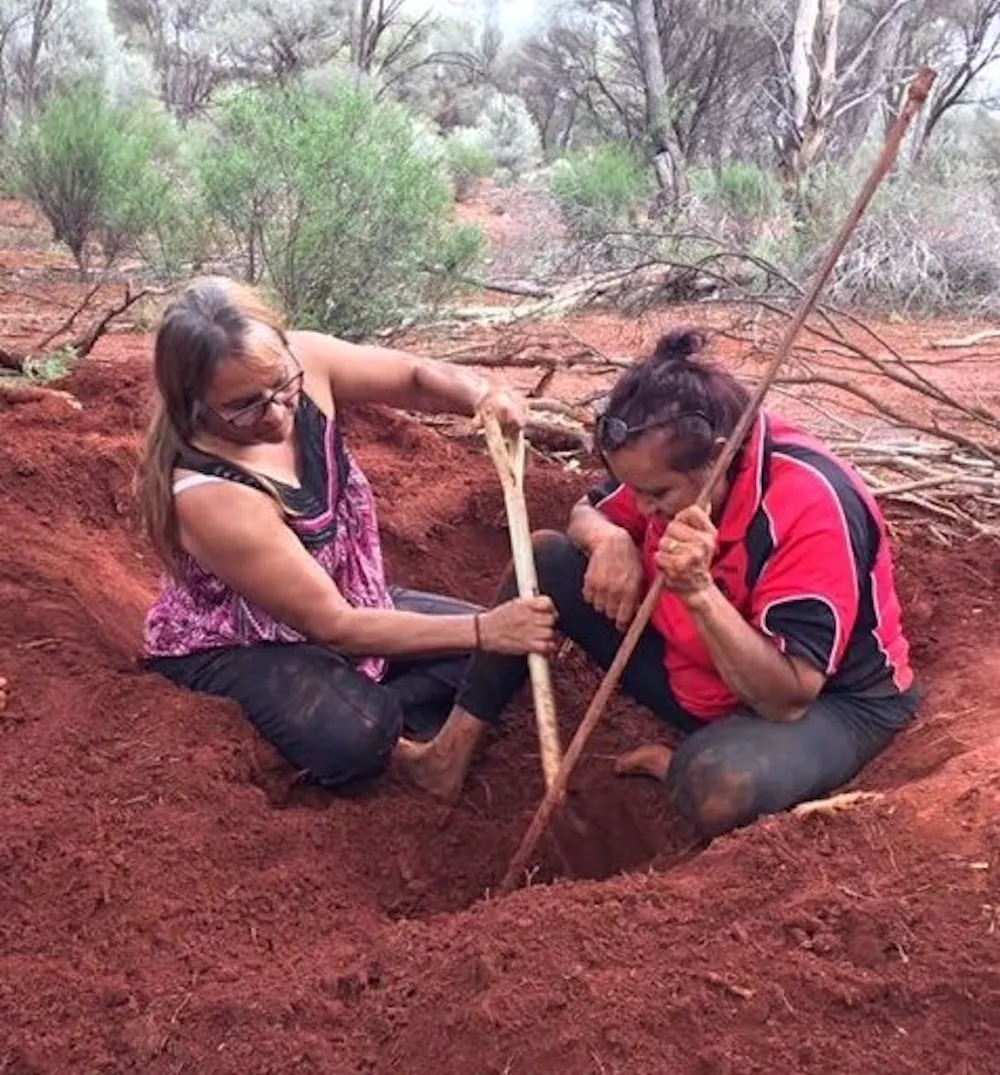
Digging for honeypot ants.
Danny Ulrich, Author provided

In Australia, Camponotus inflatus is found throughout the central desert region and holds cultural and nutritional significance to local Indigenous people.

Danny Ulrich of the Tjupan language group, operator of Goldfields Honey Ant Tours in Kalgoorlie, Western Australia, says

For our people, honey ants are more than just a food source. Digging for them is a very enjoyable way of life. It’s a way of bringing the family together, to connect with each other and nature.

There are also reports of traditional use of honeypot ant honey for treating ailments like colds and sore throats, and possibly as a topical ointment to help keep infections at bay, suggesting potential antimicrobial properties.

Not your usual honey activity

To investigate further, we obtained honeypot ant repletes from Goldfields Honey Ant Tours, collected and pooled the honey from the ants and tested its ability to inhibit various pathogenic bacteria, yeasts and moulds.

We compared this to two well-studied bee honeys with anti-microbial properties: manuka honey from New Zealand, and jarrah honey from Western Australia.

Our results revealed striking differences between the honeypot ant honey and the bee honeys.

Both bee honeys showed broad activity and were able to inhibit every pathogen tested at similar levels. However, the honeypot ant honey showed remarkable potency against certain microbes, but little against others.


Read more:
Science or Snake Oil: is manuka honey really a ‘superfood’ for treating colds, allergies and infections?


Important factors that contribute to the antimicrobial power of bee honey are its high sugar and low water content, which sucks the water out of microbial invaders.

We found honeypot ant honey to have a much higher moisture content than the bee honeys, however, putting it in a range that could support the growth of some microorganisms.

Most bee honeys also contain enzymes that produce hydrogen peroxide, a known antimicrobial compound. However, honeypot ant honey retained most of its activity even after we removed all the hydrogen peroxide.

Finally, some honeys contain antimicrobial proteins and peptides that are derived from the honey bee. These can be destroyed by heat, and when we heated the honeypot ant honey to 90℃ for 10 minutes it lost most of its antimicrobial activity.

We therefore think this unique antimicrobial activity is likely due to proteins or peptides, and these are probably derived from the honeypot ant.

Evolution of antimicrobial activity in the insect world

In the natural environment, animals, plants, and the products they make are exposed to a huge range of microorganisms looking for their next meal. Sweet, nutritious honey is an enticing food source for these microbial scavengers and must be vigorously protected, both to prevent its spoilage and to stop invasion of the hive or nest by rapidly growing moulds.

Intriguingly, we found honeypot ant honey was particularly effective against some pathogens we consider to be quite “tough”. These pathogens are well adapted to living in soils and dry conditions, and can also cause very serious infections in people with severely weakened immune systems.


Read more:
Wasps, aphids and ants: the other honey makers


In particular, the ant honey was able to inhibit heat-tolerant yeasts and moulds that are likely to be present in the honey ant nest and surrounding environment. Importantly, these can be very difficult to kill with most currently available antifungal drugs.

We suggest the evolutionary pressure imposed by these soil microorganisms has resulted in the potent, selective antimicrobial activity of honeypot ant honey.

Science catches up with Indigenous knowledge

Our results clearly support the medicinal use of honeypot ant honey by Australian Indigenous communities and provide a new understanding of the intricate relationship between honeypot ants, their environment, and the remarkable antimicrobial activity exhibited by their honey.

Due to the cultural significance of the ants, and challenges with rearing them at a commercial scale, it is not feasible to domesticate honeypot ants for honey production.

However, honeypot ant honey may provide valuable insights for the development of useful new antimicrobial peptides. These may help expand our arsenal of effective antibacterial and antifungal treatments, which are increasingly needed to combat emerging challenges in healthcare.

The Conversation

Dee Carter has received funding to support work on honey bee honey from The Rural Industries Research and Development Corporation, AgriFutures, the Australian Research Council (Linkage program), and the NSW Government under the Bushfire Industry Recovery Package.

Danny Ulrich is the operator of Goldfields Honey Ant Tours.

Kenya Fernandes conducts research on honey bees and medicinal honey supported by the NSW Government under the Bushfire Industry Recovery Package.

Nural Cokcetin has received funding to support research on honey bees and medicinal honey from AgriFutures Australia and the NSW Government under the Bushfire Industry Recovery Package. She is a member of the NSW Apiarists’ Association.

Andrew Dong does not work for, consult, own shares in or receive funding from any company or organization that would benefit from this article, and has disclosed no relevant affiliations beyond their academic appointment.

ref. Australian ant honey inhibits tough pathogens, new research shows – https://theconversation.com/australian-ant-honey-inhibits-tough-pathogens-new-research-shows-209271


PNG police arrest 101 men in two-city crackdown after local killings
PNG Post-Courier

Papua New Guinea police in Madang and the National Capital District have arrested a total of 101 men suspected of being involved in two separate incidents reported in both provinces over the long weekend.

In Madang, 34 villagers were arrested after they clashed with police over the death of a local man from Korak village identified as Joseph Masul.

After the death of Masul was reported, the villagers along the Bogia-Madang Highway were up in arms and retaliated by blocking the main highway.

The blocking of the highway, according to Madang police, hindered services and movement of people into Madang over the long weekend.

Police moved in after Assistant Commissioner of Police-Northern Peter Guinness assisted with police officers from Lae, who removed the roadblock and picked up 34 suspects.

While in NCD, 67 men were rounded up by police at Gerehu Stage 5 over a fight that erupted after the death of a man was reported during the third game of Australia’s State of Origin rugby league series two weeks ago.

The 67 men were on their way to instigate another fight when police were informed and moved in swiftly, arresting all 67 men and removing their weapons.

Murder suspect in hiding
NCD Metropolitan Superintendent Silva Sika said the suspect in the initial murder case had been hiding from police, angering the victim’s relatives.

The relatives approached a youth who lives at Banana Block who was about to leave for school and questioned him about what had happened a week earlier.

Superintendent Sika said the youth then went to the block, organised his friends who painted their faces black and and marched towards where the deceased’s haus krai (house of mourning) was. They were about to attack the mourners when police stopped them.

He said they would be charged for unlawful assembly, armed with offensive weapons and about to cause a fight in public.

Sika said the men were all armed and were moving in a public place that instilled fear in the public.

While speaking to the suspects at Waigani police station, Superintendent Sika told the suspects that people living Port Moresby must try to respect the rule of law.

‘Respect rule of law’
“I will not hesitate to demolish the areas where you are residing. Moving around in public places with weapons shows no respect for the rule of law,” he said.

“I am happy that the police responded on time to arrest and remove all the weapons from you. If they had not done that it [would] be another disaster in the city where innocent lives and properties will be lost or damaged.

“The weapons that you had in your possession are dangerous and life threatening so you must be charged for that to show others that carrying offensive weapons and moving in groups in public places is against the law.”

Republished with permission.

Print Friendly, PDF & Email

Article by AsiaPacificReport.nz

Underlying inflation has slipped below 6%, but is the slide enough to stop the RBA pushing up rates further?

Source: The Conversation (Au and NZ) – By John Hawkins, Senior Lecturer, Canberra School of Politics, Economics and Society, University of Canberra

Shutterstock

Australia’s inflation rate has fallen for the second consecutive quarter.

After reaching a 30-year high of 7.8% at the end of 2022, annual inflation as measured by the Bureau of Statistics’ quarterly Consumer Price Index slid to 7% in the March quarter of 2023, and fell further to 6% in the June quarter.


The quarterly results are consistent with the newer monthly measure of annual inflation which has also been falling since hitting a high of 8.4% in December.

The monthly measure slid to 5.4% in June.


Helping bring inflation down were state government electricity rebates and cuts in the prices some households paid for medicines.

The prices of new dwellings grew more slowly as demand eased and problems with the supply of materials improved.

Conversely, there were sharp increases in the prices of insurance and some other financial services.

The bureau’s measure of rents (which covers rents paid in distinction to more widely quoted measures of rents advertised) grew by 6.7% in the year to June, up from 4.9% in the year to March, and the most since 2009.


Underlying inflation down

To get a better idea of what would be happening were it not for some of these unusual and outsized moves, the bureau calculates what it calls a trimmed mean measure of “underlying” inflation.

This excludes the 15% of prices that climbed the most in the quarter and the 15% of prices that climbed the least or fell.

This measure, closely watched by the Reserve Bank, is also falling and is now 5.9%.


The fall in Australia’s inflation is in line with falls in other Western nations including the United States, Canada and the United Kingdom. They have been brought about by an easing of supply bottlenecks and slowing economic activity in response to increases in interest rates.

An exception is China, which has almost no inflation.


Much of the slide in Australia’s inflation rate reflects weaker economic growth.

The economy grew only 0.2% in the March quarter. The Reserve Bank believes it grew by only that much again in the June quarter.

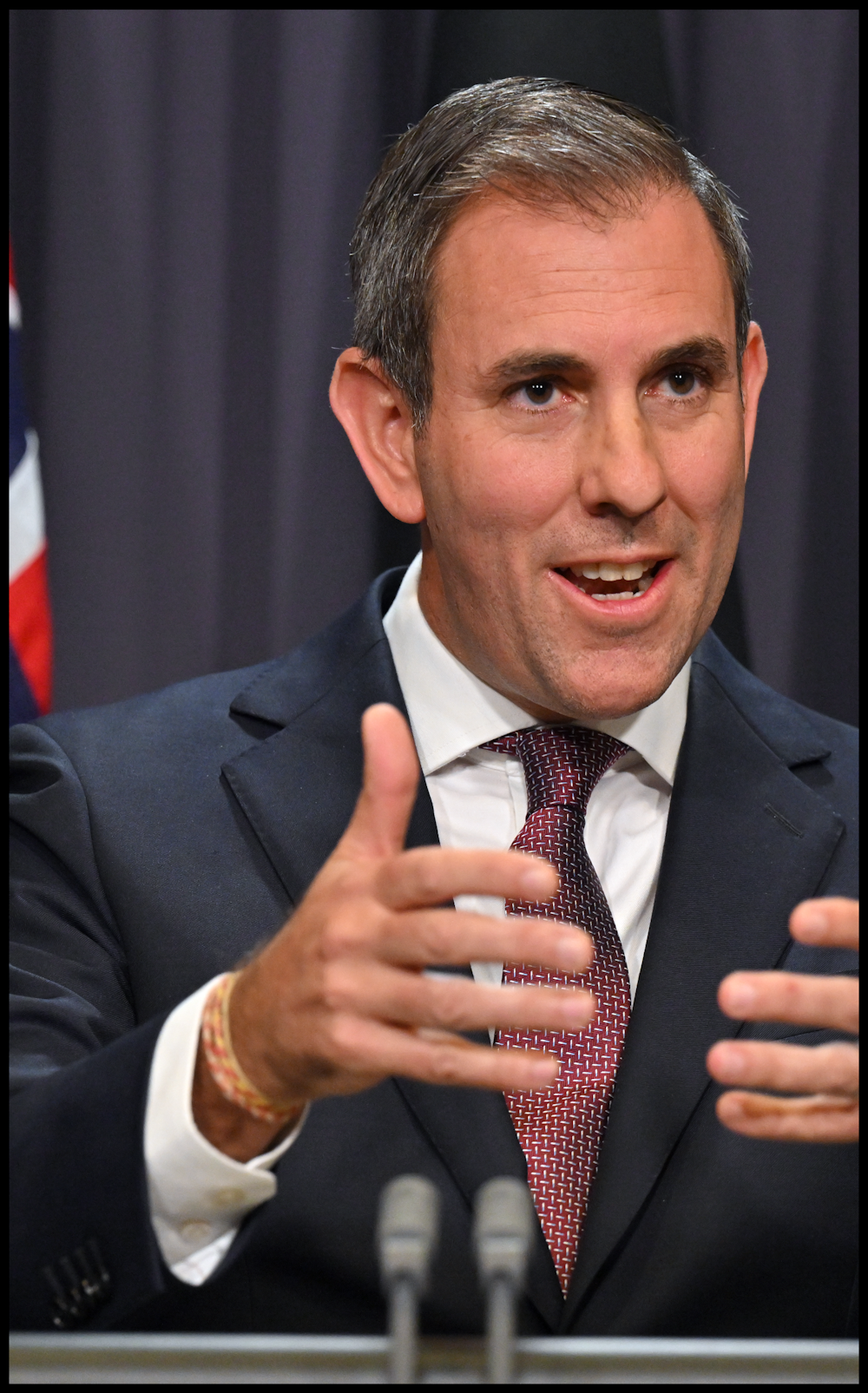
Treasurer Chalmers, keen to highlight the role of budget measures.
AAP

Treasurer Jim Chalmers was keen to highlight the role of his budget cost-of-living package which he said would help with rent, energy bills and childcare.

Many common medicines would become cheaper from September as a result of the government’s decision to allow some people to buy two months’ worth of supply for the price of a single prescription.

Chalmers said inflation was only 0.8% in the June quarter itself, less than half the rate of the quarterly peak in the March quarter of 2022, just before the 2022 election.

While he would prefer inflation to be falling more quickly, Australia was “making progress”.

What does it mean for my mortgage?

The 6% inflation rate is lower than the 6.3% forecast for June in the Reserve Bank’s Statement of Monetary Policy released in May, although that forecast assumed a lower cash rate than the 4.1% the bank lifted its cash rate to in June.

This makes it look as if inflation is falling fast enough to reach the bank’s 2-3% target band by mid-2025, which is a pace the bank had said was acceptable.

Outgoing governor Phil Lowe defended that pace in April, saying

if we can get inflation back to 3% by mid-2025 and preserve many of those job gains that have been delivered in the last few years, that’s a better outcome than getting inflation back to 3% one year earlier and having more job losses.

Incoming governor Michele Bullock has also argued a faster return to target would likely mean unnecessary job losses, saying:

our judgement is that if we can return inflation to target in a reasonable timeframe – while preserving as many of the employment gains as we can – that would be a better outcome.

Today’s news does not suggest the bank needs to lift rates further. It shows it is still on what Lowe calls the “narrow path” to getting things right.


Read more:
The Lowe road – the RBA treads a ‘narrow path’


It is possible that the broad-based increases in the inflation rate for services, driven in part by faster wage growth, might be a concern for the bank. And it is possible the present low unemployment rate could push up wages growth further.

The bank will be scanning reports from its business liaison program for clues.

But it is likely to take comfort from the fact inflation is falling as it expected it to, and at about the expected pace. It will meet to discuss rates next Tuesday.

It certainly isn’t likely to cut rates for quite some time. At 6%, inflation remains well above its 2-3% target.

The Conversation

John Hawkins was formerly an economic analyst and forecaster in the Reserve Bank and Treasury,

He has a bet with a colleague about whether the Bank will raise rates further; the stake is $2.

ref. Underlying inflation has slipped below 6%, but is the slide enough to stop the RBA pushing up rates further? – https://theconversation.com/underlying-inflation-has-slipped-below-6-but-is-the-slide-enough-to-stop-the-rba-pushing-up-rates-further-209852

An expert explains the stranding of 97 pilot whales in WA and their mysterious ‘huddling’ before the tragedy

Source: The Conversation (Au and NZ) – By Kate Sprogis, Adjunct Research Fellow, UWA Oceans Institute, The University of Western Australia

Sad scenes are unfolding in Western Australia after a pod of pilot whales became stranded on a beach late on Tuesday. According to the latest reports, 51 of the whales have died. Some 46 remain beached and authorities are working desperately to get them back out to sea.

Pilot whale strandings unfortunately occur in WA, and other Australian states, from time to time. In recent years they have also occurred in New Zealand and Scotland. But this stranding is unusual because of the behaviour the whales exhibited prior to becoming beached.

The pod of long-finned pilot whales began congregating in the ocean off Cheynes Beach on Monday evening. They remained in a “huddle” on Tuesday, raising fears a stranding was imminent.

I am a marine biologist who specialises in marine mammals. I am based at the University of Western Australia’s Albany campus, about 70 kilometres from where the stranding occurred. Sadly, the chances of survival for the remaining whales is very low – and time is fast running out.

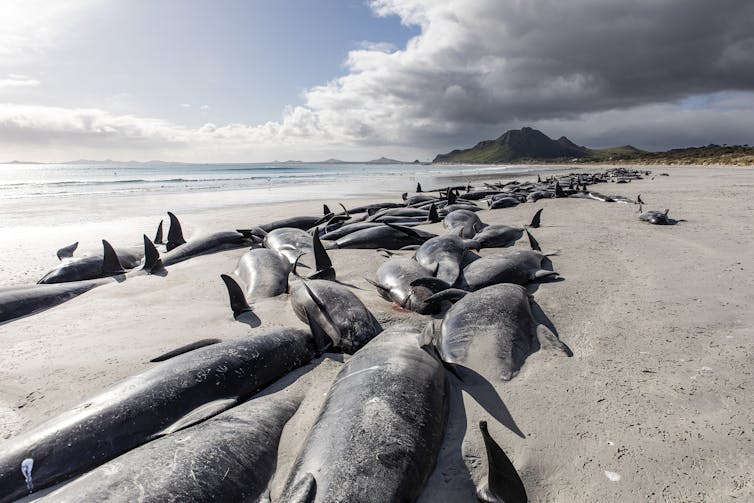
a string of dead pilot whales line the beach
Pilot whale strandings have occurred before. Pictured: a string of dead pilot whales line the beach at Tupuangi Beach in New Zealand’s Chatham Archipelago in October last year.
Tamzin Henderson/AP

Understanding pilot whales

There are two species of pilot whales: short-finned (which live mainly in tropical and warm-temperate regions) and long-finned (generally found in colder waters). As the name suggests, the long-finned pilot whales have longer pectoral fins than their counterparts.

The pilot whales stranded at Cheynes Beach are long-finned. They are generally found offshore, in the deep open ocean. We rarely see them close to the coast. This makes the species hard to study.

Pilot whales are, however, known to inhabit Bremer Canyon, a very deep ocean area 70 kilometres off the WA coast.


Read more:
About 200 dead whales have been towed out to sea off Tasmania – and what happens next is a true marvel of nature


What happened at Cheynes Beach?

The group of whales was spotted swimming in shallow waters at Cheynes Beach late on Monday. An official from the Department of Biodiversity, Conservation and Attractions called me on Tuesday morning, and asked about the strange huddling behaviour. I was immediately concerned.

Healthy pilot whales do not form huddles, so something seemed very wrong. The department’s drone footage showed the pod was forming a very tight ball, then moving into a line, then back into the ball shape. And the pod was in very shallow coastal water, which is odd.

We suspected the behaviour was a precursor to a stranding. The department prepared its whale stranding kit and had officials on standby in case a stranding occurred. Unfortunately, it did.

By 4pm on Tuesday, almost 100 whales had beached themselves. Officials monitored them overnight. By Wednesday morning, 51 had died.

This is unsurprising. And sadly, the chance of survival for the remaining whales is very low. Cold, windy conditions means the whales are susceptible to hypothermia. And if they are already sick – as is sometimes the case with beached whales – this combination of factors can be fatal.

What’s more, whales are not used to the pressure of gravity we experience on land. When whales are stranded, their organs can collapse due to the weight of their own body.

In some cases, long-finned pilot whales have been known to survive after being stranded. But time is of the essence.

Why did the whales beach themselves?

In 2015, another pod of pilot whales beached itself in Bunbury, north of Albany. Sadly, 12 died. At the time, I and a colleague conducted necropsies on the pilot whales, but the findings were inconclusive.

Whale strandings cannot be predicted and we do not know exactly why they occur. But in the case of pilot whales, their social behaviour offers some clues.

Pilot whales are similar to elephants in that they live in tight-knit family groups. It’s thought mass strandings may occur when the matriarch of the group is sick and swims into shallow water, and the others follow, or are “piloted”.

Whales may also become stranded due to an external stress. For example, whales use sound to communicate, navigate and search for food. Loud man-made underwater noises can disrupt this system.


Read more:
What causes whale mass strandings?


What next?

Officials at Cheynes Beach are trying to refloat the whales. Researchers are also taking biopsy samples and nasal swabs from the dead whales.

Experts will examine the swabs and samples, to try and understand more about this stranding event. I anticipate they will look for evidence of illness such as influenza or cetacean morbillivirus, as well as stress from underwater noise.

You might also be wondering what everyday people can do to help. If you observe marine mammals behaving unusually or getting stranded, alert authorities. And please stand aside to let authorities and other experts do their work. This is vital for the welfare of the animals and the safety of both helpers and bystanders.

Right now, I feel a bit helpless. I would like to be able to answer everyone’s primary question: why do pilot whales become stranded? It is a long-standing mystery in marine mammal science, and we don’t really know the answer.

More research is needed. Scientists need funding to attend mass strandings, collect and analyse samples and write up the findings. That gives us the best chance of piecing together this complicated puzzle.


Read more:
Whale-watching guidelines don’t include boat noise. It’s time they did


The Conversation

Kate Sprogis does not work for, consult, own shares in or receive funding from any company or organisation that would benefit from this article, and has disclosed no relevant affiliations beyond their academic appointment.

ref. An expert explains the stranding of 97 pilot whales in WA and their mysterious ‘huddling’ before the tragedy – https://theconversation.com/an-expert-explains-the-stranding-of-97-pilot-whales-in-wa-and-their-mysterious-huddling-before-the-tragedy-210453

An expert explains the stranding of 87 pilot whales in WA and their mysterious ‘huddling’ before the tragedy

Source: The Conversation (Au and NZ) – By Kate Sprogis, Adjunct Research Fellow, UWA Oceans Institute, The University of Western Australia

Sad scenes are unfolding in Western Australia after a pod of pilot whales became stranded on a beach late on Tuesday. According to the latest reports, 51 of the whales have died. Some 46 remain beached and authorities are working desperately to get them back out to sea.

Pilot whale strandings unfortunately occur in WA, and other Australian states, from time to time. In recent years they have also occurred in New Zealand and Scotland. But this stranding is unusual because of the behaviour the whales exhibited prior to becoming beached.

The pod of long-finned pilot whales began congregating in the ocean off Cheynes Beach on Monday evening. They remained in a “huddle” on Tuesday, raising fears a stranding was imminent.

I am a marine biologist who specialises in marine mammals. I am based at the University of Western Australia’s Albany campus, about 70 kilometres from where the stranding occurred. Sadly, the chances of survival for the remaining whales is very low – and time is fast running out.

a string of dead pilot whales line the beach
Pilot whale strandings have occurred before. Pictured: a string of dead pilot whales line the beach at Tupuangi Beach in New Zealand’s Chatham Archipelago in October last year.
Tamzin Henderson/AP

Understanding pilot whales

There are two species of pilot whales: short-finned (which live mainly in tropical and warm-temperate regions) and long-finned (generally found in colder waters). As the name suggests, the long-finned pilot whales have longer pectoral fins than their counterparts.

The pilot whales stranded at Cheynes Beach are long-finned. They are generally found offshore, in the deep open ocean. We rarely see them close to the coast. This makes the species hard to study.

Pilot whales are, however, known to inhabit Bremer Canyon, a very deep ocean area 70 kilometres off the WA coast.


Read more:
About 200 dead whales have been towed out to sea off Tasmania – and what happens next is a true marvel of nature


What happened at Cheynes Beach?

The group of whales was spotted swimming in shallow waters at Cheynes Beach late on Monday. An official from the Department of Biodiversity, Conservation and Attractions called me on Tuesday morning, and asked about the strange huddling behaviour. I was immediately concerned.

Healthy pilot whales do not form huddles, so something seemed very wrong. The department’s drone footage showed the pod was forming a very tight ball, then moving into a line, then back into the ball shape. And the pod was in very shallow coastal water, which is odd.

We suspected the behaviour was a precursor to a stranding. The department prepared its whale stranding kit and had officials on standby in case a stranding occurred. Unfortunately, it did.

By 4pm on Tuesday, 87 whales had beached themselves. Officials monitored them overnight. By Wednesday morning, 51 had died.

This is unsurprising. And sadly, the chance of survival for the remaining whales is very low. Cold, windy conditions means the whales are susceptible to hypothermia. And if they are already sick – as is sometimes the case with beached whales – this combination of factors can be fatal.

What’s more, whales are not used to the pressure of gravity we experience on land. When whales are stranded, their organs can collapse due to the weight of their own body.

In some cases, long-finned pilot whales have been known to survive after being stranded. But time is of the essence.

Why did the whales beach themselves?

In 2015, another pod of pilot whales beached itself in Bunbury, north of Albany. Sadly, 12 died. At the time, I and a colleague conducted autopsies on the pilot whales, but the findings were inconclusive.

Whale strandings cannot be predicted and we do not know exactly why they occur. But in the case of pilot whales, their social behaviour offers some clues.

Pilot whales are similar to elephants in that they live in tight-knit family groups. It’s thought mass strandings may occur when the matriarch of the group is sick and swims into shallow water, and the others follow, or are “piloted”.

Whales may also become stranded due to an external stress. For example, whales use sound to communicate, navigate and search for food. Loud man-made underwater noises can disrupt this system.


Read more:
What causes whale mass strandings?


What next?

Officials at Cheynes Beach are trying to refloat the whales. Researchers are also taking biopsy samples and nasal swabs from the dead whales.

Experts will examine the swabs and samples, to try and understand more about this stranding event. I anticipate they will look for evidence of illness such as influenza or cetacean morbillivirus, as well as stress from underwater noise.

You might also be wondering what everyday people can do to help. If you observe marine mammals behaving unusually or getting stranded, alert authorities. And please stand aside to let authorities and other experts do their work. This is vital for the welfare of the animals and the safety of both helpers and bystanders.

Right now, I feel a bit helpless. I would like to be able to answer everyone’s primary question: why do pilot whales become stranded? It is a long-standing mystery in marine mammal science, and we don’t really know the answer.

More research is needed. Scientists need funding to attend mass strandings, collect and analyse samples and write up the findings. That gives us the best chance of piecing together this complicated puzzle.


Read more:
Whale-watching guidelines don’t include boat noise. It’s time they did


The Conversation

Kate Sprogis does not work for, consult, own shares in or receive funding from any company or organization that would benefit from this article, and has disclosed no relevant affiliations beyond their academic appointment.

ref. An expert explains the stranding of 87 pilot whales in WA and their mysterious ‘huddling’ before the tragedy – https://theconversation.com/an-expert-explains-the-stranding-of-87-pilot-whales-in-wa-and-their-mysterious-huddling-before-the-tragedy-210453

Do rebrands work? Can you trademark an X? An expert answers the burning questions on Musk’s Twitter pivot

Source: The Conversation (Au and NZ) – By Cameron Shackell, Sessional Academic, Visitor, Queensland University of Technology

Shutterstock

To non-moguls, Elon Musk’s (perhaps temporary) rebrand of Twitter to “X” may seem high risk, amateurish, or even capricious. But it is likely doing exactly what he intended: generating enormous global interest, pushing Twitter closer to his other X brands (SpaceX, Tesla Model X, xAI), and clearing the way for a profitable merging of technologies.

What happened to the blue bird?

Last weekend, Musk began the (reversible) changes by renaming the Twitter platform X on its website and replacing the iconic blue bird logo with a crowdsourced “interim” white “X” on a black background.

Later, Musk posted an image of the character projected on the firm’s San Francisco headquarters and tweeted (or is that “X’d”?) that x.com now redirects to twitter.com.

The X bears a strong resemblance to the Unicode character “mathematical double-struck capital X”, derived from the way bold characters are usually written on blackboards in maths lectures. The logo is still undergoing iterations, with a short-lived thickening of the lines going live on July 26, before Musk announced he didn’t like it and would revert.

Linda Yaccarino, Twitter’s CEO and potential scapegoat if the rebrand goes wrong, also confirmed the launch on Sunday, tweeting, “X is here! Let’s do this.”


Read more:
Elon Musk’s ‘hardcore’ management style: a case study in what not to do


Has a radical rebrand ever succeeded?

In 2021, Facebook rebranded its holding company to Meta. But it kept “Facebook”, gave us the metaverse, and didn’t deprive the world of a cute feathery icon and concept of “tweeting”.

Branding experts around the globe have been quick to condemn the Twitter shakeup as too sudden and destructive of brand capital. That’s perhaps because even slight name changes are known to be risky. Kentucky Fried Chicken officially rebranded to KFC. Pepsi was once Pepsi-Cola. These successful adjustments took time and careful management.

Dramatic renaming of a household name has basically never worked. And there’s no doubt a black “X” replacing “Twitter” is dramatic. It smashes the metaphor of birds updating one another in an idyllic blue-sky ecosystem. Sentimental fans holding out for a return to the good old days have now got the memo: Twitter isn’t for you.

But perhaps that’s the point. To me, X – a symbol that can be a cattle marker or an illiterate signature – seems like a probe to perturb and test the market.

Musk isn’t renaming fast food or soft drinks. Twitter is in the hyper-dynamic business of information. Musk is agile and well armed. So maybe new branding rules are being forged.

Musk’s progressive alienation of Twitter’s traditional users could be an attempt to refresh the platform’s demographic – to draw in those true to his other brands, while shaking off unprofitable sceptics. This would certainly fit with the push X gives towards Musk’s other X brands.

Most commentators have latched onto the idea the change is sudden, irreversible, and complete in one day. But Musk’s past business endeavours suggest he is a strategist. The change will take time to play out and can likely be revised, reversed and adjusted as feedback is generated.


Read more:
What will Elon Musk’s ownership of Twitter mean for ‘free speech’ on the platform?


Doesn’t someone else own the “X” trademark?

Trademarking of “X” is probably not pivotal to the Twitter rebrand. But achieving limited ownership of the letter is not as preposterous as it sounds.

Trademarks are granted or refused based on their ability to identify the source of the associated goods or services. This means X can function as a trademark if it clearly identifies Twitter in the minds of the public (provided another Twitter-like service doesn’t currently hold the trademark). Famous brands have advantages: Musk has already garnered enough media attention to ensure X is now a globally recognised term for his company.

Is X a generic term and thus not trademarkable? My own research argues trademarks used by tech firms involved in consumer search and decision making (like Twitter) are inherently generic. But under the 77-year-old Lanham Act that still governs trademarks in the United States, X would have to be a common generic name for all services like Twitter to be refused. It isn’t. It’s mostly just a generic term for the 24th letter of the alphabet.

Speculation about the legality of X as a trademark is one thing. My time writing about trademarks, has taught me the reality in courts and tribunals is another. Both Microsoft and Meta (and many others) have laid claims to X in the past for various goods and services.

Lawsuits over X may be filed, but final determinations could be years in the courts. And if things go badly, Musk has just shown his willingness to pivot.


Read more:
The ‘digital town square’? What does it mean when billionaires own the online spaces where we gather?


What is Musk trying to achieve?

Tech commentators are intrigued by the idea the X rebrand is part of Musk’s plan to create a WeChat-style “everything app” that would converge messaging, search, online shopping and mobile payment. Twitter CEO, Yaccarino, has said as much.

I find that analysis too simplistic, especially given the ongoing focus on antitrust. Musk is arguably in a position to survey (and reshape) the landscape of not just “town square” discourse but space travel, artificial intelligence (AI), transportation and even politics. He operates on a scale incompatible with endgames. I sense the X rebrand is more about a direction of travel. Or even a sacrifice for a greater goal.

The X rebrand could relate to AI (Musk had a role in a data drought this year by restricting Twitter data access). Or it could be testing the waters for a different pivot later in the year. Or it could be an attempt to distract from some other move. There’s no way to know.

Even the phrase “time will tell” is no help. How can we know if an unknown plan succeeds or not? Does Musk care if Twitter disappears? Does he care if he is worth two hundred billion or three hundred billion?

Welcome to the inscrutable world of X.

The Conversation

Cameron Shackell works as a freelance brand and marketing consultant but does not work for any company mentioned in this article. He is a regular contributor to World Trademark Review which is linked to in this article.

ref. Do rebrands work? Can you trademark an X? An expert answers the burning questions on Musk’s Twitter pivot – https://theconversation.com/do-rebrands-work-can-you-trademark-an-x-an-expert-answers-the-burning-questions-on-musks-twitter-pivot-210377

Aboriginal and Torres Strait Islander people must be at the centre, not the margins, of LGBTQIA+ plans and policies

Source: The Conversation (Au and NZ) – By Madi Day, Lecturer, Department of Indigenous Studies, Macquarie University

During Sydney World Pride the federal government committed to a ten-year action plan for LGBTIQA+ health and wellbeing. This included A$26 million in health research.

In the announcement, the minister for health and aged care, Mark Butler, said:

While many LGBTIQA+ people live happy and healthy lives, others continue to experience discrimination, stigma, isolation, harassment and violence – all of which leads to poorer health and mental health.

Our recent report, co-authored with Professor Bronwyn Carlson and Dr Terri Farrelly, showed this cohort is disproportionately impacted by discrimination and disadvantage. The combined impacts of colonialism, racism, homophobia and transphobia result in poorer health and mental health for this group.

Aboriginal and Torres Strait Islander communities are chronically over-researched. Yet there is insufficient data about Aboriginal and Torres Strait Islander LGBTQIASB+ people and mental health. The SB on the end of LGBTQIASB+ stands for Sistergirl and Brotherboy. These are Aboriginal English terms used by Aboriginal and Torres Strait Islander transgender women and men.

Research suggests Aboriginal and Torres Strait Islander LGBTQIASB+ people are at much higher risk of suicide and suicide-related behaviours.


Read more:
What can we learn from the marriage equality vote about supporting First Nations people during the Voice debate?


What did our report find?

Our report found racism, discrimination and violence (including anticipation and fear of violence), social and cultural exclusion, criminalisation, incarceration, and exposure to grief and suicide all heighten the risk of suicide for Aboriginal and Torres Strait Islander LGBTQIASB+ people.

Both Indigenous people and LGBTQIA+ people experience poorer health outcomes and higher rates of health-impacting behaviours. These can arise from minority stress, social exclusion, discrimination and trauma. On top of this, Aboriginal and Torres Strait Islander LGBTQIASB+ people navigate the impacts of colonialism. These include heterosexism within their own communities and racism from non-Indigenous LGBTQIA+ people and services.

The report also found that Aboriginal and Torres Strait Islander LGBTQIASB+-led research, policy, and services are urgently needed to improve mental health and health outcomes for this group.

But when the advisory committee for the national action plan was announced, it included one Aboriginal organisation.

There is very limited data on Indigenous LGBTQIASB+ people

Our report found research and statistics on Aboriginal and Torres Strait Islander LGBTQIASB+ populations are impeded by binary categories of sex. Aboriginal and Torres Strait Islander people are primarily categorised as “male” and “female” in health research, rather than in terms of their gender.

Gender refers to a person’s social and cultural self, while sex is medically assigned to people at the time of their birth.

Gender and sex diverse people are often lost in statistics. Even when data is collected on these groups, non-binary sex and gender is often excluded or overlooked due to small sample sizes. This was the case with the 2021 census. Although the census collected responses on non-binary sex, it did not provide meaningful data.

Data on Aboriginal and Torres Strait Islander LGBTQIASB+ people and suicide-related behaviour is also limited. One factor is that, in Australia, information about sexuality and gender diversity is rarely recorded at death (unless specifically included by a coroner).

When Aboriginal and Torres Strait Islander LGBTQIASB+ people participate in national LGBTQIA+ health research, their involvement is merely noted without adequate discussion or action on the implications of their data.

For example, 3.7% of trans young people who were participants in the Telethon Kids Trans Pathway Report identified as Aboriginal and/or Torres Strait Islander. This is representative of the overall Australian population. However, there was no in-depth exploration of the experiences of this cohort.

This occurs because most non-Indigenous researchers and organisations are not confident or capable in reporting on Indigenous people. That’s why it is essential Aboriginal and Torres Strait Islander LGBTQIASB+ people are involved at every stage of research. This would ensure data is appropriately captured, interpreted, and reported on.


Read more:
New research shows how Indigenous LGBTIQ+ people don’t feel fully accepted by either community


The impact of racism and discrimination

Aboriginal and Torres Strait Islander LGBTQIASB+ people commonly report experiencing racism and discrimination not only in the wider community, but also within LGBTQIA+ communities. They also struggle with acceptance in both Indigenous and LGBTQIA+ spaces.

Our report drew from existing work by Aboriginal LGBTQIASB+ researchers about the difficulties for Aboriginal and Torres Strait Islander LGBTQIASB+ people who often have to choose between either Indigenous or LGBTQIA+ services when accessing mental health support. This means choosing between adequate support as an Indigenous person or an LGBTQIA+ person. Very few services successfully do both.

Our research also demonstrates poor health outcomes and increased vulnerability to suicide are outcomes of racism, discrimination, marginalisation, homophobia and transphobia.

Colonialism is the root cause of discrimination and violence towards Aboriginal and Torres Strait Islander LGBTQIASB+ people. It is also the cause of poor health outcomes for Aboriginal and Torres Strait Islander people more broadly.

Aboriginal and Torres Strait Islander LGBTQIASB+ communities at the forefront

Aboriginal and Torres Strait Islander LGBTQIASB+ people must be treated as a priority group in the national action plan.

Aboriginal and Torres Strait Islander LGBTQIASB+ people need to be able to design and steer research and policy making at every level. Governments should invest in Aboriginal and Torres Strait Islander community-controlled health organisations to improve capacity to service our communities.

If this doesn’t happen, Aboriginal and Torres Strait Islander LGBTQIASB+ people need their own national plan. Improving health and mental health outcomes for Aboriginal and Torres Strait Islander LGBTQIASB+ people is urgent, and we can’t afford another ten plus years at the margins of national LGBTQIA+ policy.

If this article caused distress for readers, these are some available helplines:
13Yarn
Lifeline
QLife

The Conversation

Madi Day received funding from the Australian Institute of Health and Welfare for a publication included in the Indigenous Mental Health & Suicide Prevention Clearinghouse.

Dameyon Bonson received funding from the Australian Institute of Health and Welfare for a publication included in the Indigenous Mental Health & Suicide Prevention Clearinghouse. Dameyon is the Founder of Black Rainbow.

ref. Aboriginal and Torres Strait Islander people must be at the centre, not the margins, of LGBTQIA+ plans and policies – https://theconversation.com/aboriginal-and-torres-strait-islander-people-must-be-at-the-centre-not-the-margins-of-lgbtqia-plans-and-policies-209221

Our cruel and costly offshore processing system was a failure. We have a better solution on asylum policy

Source: The Conversation (Au and NZ) – By Jane McAdam AO, Scientia Professor and Director of the Kaldor Centre for International Refugee Law, UNSW Sydney

It has been over a decade since Australia revived its offshore processing regime for asylum seekers, yet revelations of the policy’s human and financial failures keep coming.

Last weekend, the Nine newspapers reported that the Department of Home Affairs allegedly oversaw the payments of millions of taxpayer dollars to politicians in the Pacific through a chain of suspect contracts.

The Guardian also revealed that the Morrison government had signed a “confidential bilateral agreement” with Papua New Guinea, which promised an undisclosed amount of money in return for welfare and support services for fewer than 80 refugees who remained trapped there.

In the wake of these reports, the Greens have reiterated their call for a royal commission into offshore processing, supported by independent MP Zali Steggall.

These latest reports add to the large amount of research laying bare the human toll of offshore processing.

Offshore processing has had far-reaching consequences beyond our region as well. In the United Kingdom, a similar policy is unfolding, modelled on Australia’s asylum practices. Prime Minister Rishi Sunak’s government has just passed legislation that provides new powers to deport those who seek protection across the Channel.

As the number of people in need of protection grows every year, it is imperative that unlawful and unsustainable efforts to push the problem elsewhere be reversed. Bringing Australia’s offshore processing policy to an end is an important first step.

But Australia must also look ahead to the challenges and opportunities that forced migration will create in the coming decade.

Regional cooperation on asylum

By the end of 2022, there were around 14 million displaced and/or stateless people in the Asia-Pacific region. This included seven million refugees, five million internally displaced people and 2.5 million stateless people.

Violence, conflict and persecution in Afghanistan and Myanmar have produced the largest number of displaced people. Of particular concern are the millions of Rohingya living in extremely precarious conditions in Bangladesh.

Australian policy seems premised on the idea that without strong border controls, all these people would set sail for our shores. The reality, though, is vastly different.

Indeed, since 1975, 90% of refugees displaced in the Asia-Pacific region have stayed as close to home as possible.

However, many lack basic rights to work, health care and education, and are at risk of destitution, detention or exploitation. This means that, without a concerted effort to improve protection for refugees in the region, we will likely see more people in search of their own solutions.

The challenges of displacement are global in nature, and its multi-layered causes mean there are no simple solutions. But we have a better chance of managing displacement with clear-eyed, collaborative and holistic responses, rather than unilateral policies aimed at deterrence and deflection.


Read more:
Rwanda plan is in legal limbo, but history shows such migration deals are unlikely to disappear


What should Australia do?

First, we need to move from a responsibility-shifting to a responsibility-sharing approach.

In recent years, our government has asked countries in the region for help in stopping people from trying to reach Australia. But our credibility and moral authority to promote constructive responses to the problem have been fundamentally undermined by policies such as offshore processing and turning back boats.

Above all, we need to listen, not lecture; to collaborate, not cajole.

By listening to other governments, as well as civil society and refugee-led organisations in the region, we will gain a better understanding of their perspectives and needs.

We need to take a “whole-of-society approach”, engaging a diverse set of stakeholders to meet the needs of asylum seekers collaboratively. The UN High Commissioner for Refugees has recently emphasised that countries must also take a “whole-of-route approach”, ensuring protection at every stage of an asylum seeker’s journey.

In the short term, Australia should work with governments in the region to help provide refugees and other displaced people with basic rights and protections. By improving conditions in these countries, we could reduce the need for onward travel to Australia.

There is considerable goodwill right now, with Indonesia, Malaysia, the Philippines and Thailand all signalling a desire to improve their legal frameworks in this area. For instance, Thailand is developing a new “national screening mechanism” to identify refugees, while the Philippines recently revised its systems for determining refugee and statelessness status and has pending legislation on a number of issues.

In return for governments in Southeast Asia adopting reforms, Australia should significantly increase the number of people it resettles from these countries and create other “complementary pathways” to protection. We should also develop more strategic responses in acute crises, just as we did for people fleeing Ukraine last year.

This would be a win–win. More people would be afforded protection in Australia through orderly programs, and those remaining in the region would have basic rights they currently lack.

We also need to engage in diplomatic efforts to encourage other countries in the region, such as New Zealand, Japan and South Korea, to increase their resettlement quotas.

And Australia should provide better resourcing to UNHCR, as well as to local networks and civil society initiatives, such as the Asia Pacific Refugee Rights Network and the Asia Pacific Network of Refugees.

This is not only the right thing to do, but would also be more effective and efficient than current approaches. It is in our national interest not to ignore or compound the consequences of unresolved displacement in our region.


Read more:
Amid a worsening refugee crisis, public support is high in both Australia and NZ to accept more Rohingya


Achieving better protection outcomes

Over the longer term, we should promote respect for human rights and the rule of law, increase our contributions to aid and development in the region, and work to reduce conflict and the negative effects of climate change.

These efforts could help ease the conditions that force people to leave their homes in search of safety. This could also improve conditions for the safe, dignified and sustainable return of those not in need of protection.

Finally, success should not only be measured by whether a state has ratified a particular refugee treaty or adopted national asylum legislation. Protection outcomes for real people are what matter. In other words, are the needs of displaced people and their host communities being met?

This is why we need to develop a more collaborative approach across the Asia-Pacific to ensure that displaced people can move on with their lives in safety and with dignity – whether that is in Australia or elsewhere in the region.

In so doing, we must ensure the concerns and voices of those most directly impacted are heard and addressed.

The Conversation

Jane McAdam AO receives funding from the Australian Research Council and has provided expert advice to a range of international bodies, including the United Nations High Commissioner for Refugees (UNHCR) and the International Organization for Migration (IOM).

Daniel Ghezelbash receives funding from the Australian Research Council and the NSW Government. He is a member of the management committee of Refugee Advice and Casework Services and a Special Counsel at the National Justice Project.

Madeline has provided advice to the Australian and UK governments about the international law implications of offshore processing.

Brian Barbour is a senior refugee protection advisor for Act for Peace.

Claire Higgins receives funding from the Australian Research Council.

Tristan Harley receives funding from the Gerda Henkel Foundation and Act for Peace. He has previously worked as a consultant for the United Nations High Commissioner for Refugees, the Asia Pacific Refugee Rights Network and the Asia Pacific Network of Refugees.

ref. Our cruel and costly offshore processing system was a failure. We have a better solution on asylum policy – https://theconversation.com/our-cruel-and-costly-offshore-processing-system-was-a-failure-we-have-a-better-solution-on-asylum-policy-210378

New Zealand’s maritime territory is 15 times its landmass — here’s why we need a ministry for the ocean

Source: The Conversation (Au and NZ) – By Elizabeth Macpherson, Associate Professor of Law, University of Canterbury

Unsplash/Rod Long

The recent failure of the proposed Kermadec ocean sanctuary is a striking reminder of the need for leadership around New Zealand’s ocean policies.

The “no take” ocean sanctuary was meant to be one of the world’s largest marine protected areas. But last month Te Ohu Kaimoana (which represents Māori fisheries interests) voted against the latest proposal.

Their opposition was on the basis that the government hadn’t consulted iwi, and the proposal would extinguish iwi rights guaranteed in the 1992 Fisheries Deed of Settlement and the Māori Fisheries Act.

The government response was an admission that our marine policy is not working as it should, and that we need new marine protection tools consistent with te ao Māori and Te Tiriti o Waitangi.

Our new research suggests a different approach to how New Zealand manages competing uses of the marine environment.

It highlights opportunities to align marine policy and its implementation more closely by considering the ocean as an ecosystem with which people have reciprocal relationships.

New Zealand’s vast ocean territory

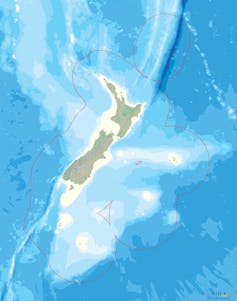
A map showing New Zealand's ocean territory
New Zealand’s ocean territory spans from the Kermadec Islands in the north to the subantarctic Campbell Island in the south.
NIWA, CC BY-ND

Aotearoa is surrounded by a sea territory 15 times the size of its landmass. This extends from the shorelines of the main islands to the Kermadecs (Rangitāhua) in the northwest, the Chathams (Rēkohu) in the east and the subantarctic Campbell Island in the south Pacific ocean.

Two in three New Zealanders live within 5km of the shore and many use the ocean and coasts for recreational and cultural activities. The blue economy provides significant income to New Zealand, including through commercial fisheries, offshore minerals, ports and marinas, maritime transport and coastal tourism.

The Hauraki Gulf alone was recently valued as a NZ$100 billion natural capital asset.

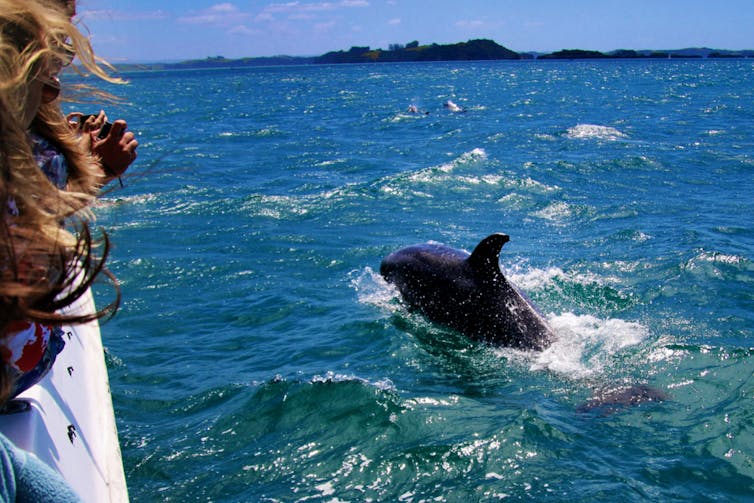
A tourist taking a photograph of a dolphin from a boat.
Two thirds of New Zealanders live within 5km of the coast.
Unsplash/Simon Infanger

Marine and coastal ecosystems are threatened by climate change, as oceans are acidifying, sea levels rising and sea-surface temperatures increasing. But they are also our best line of defence in buffering extreme events, filtering land runoff and storing “blue carbon”.


À lire aussi :
Blue carbon: could a solution to the climate challenge be buried in the depths of fiords?


Māori have cared for their seascapes for generations and have a complex set of reciprocal marine relationships, including protected fishing rights and interests.

But our marine environment is under immense strain. Recent reports highlight a significant decline in marine ecological health, with flow-on impacts for communities.

The range of complex relationships New Zealanders have with the ocean can be difficult to reconcile, especially against an historical context of repeated Crown failures to respect and uphold the rangatiratanga held by iwi and hapū over oceans and fisheries.


À lire aussi :
Why Indigenous knowledge should be an essential part of how we govern the world’s oceans


An ecosystem approach to marine policy

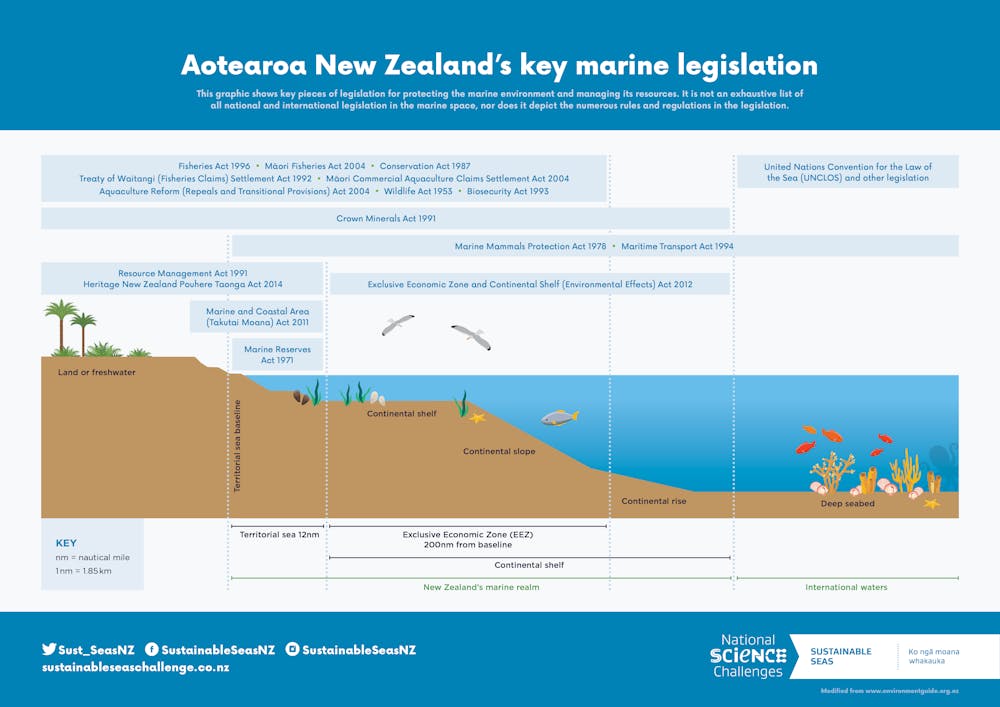
New Zealand’s marine policies are currently dispersed across multiple pieces of legislation and regulatory institutions. They may be working towards different, and sometimes competing, objectives and at various time and geographical scales.

This graphic shows New Zealand's key marine laws and their legislative areas.
New Zealand’s ocean policies are scattered among several pieces of legislation.
Sustainable Seas national science challenge, CC BY-ND

Research conducted within the Sustainable Seas national science challenge looks at ecosystem-based management. This involves managing the marine environment in a way that reconciles competing values without degrading the ocean ecosystem. It also recognises that humans are part of the ecosystem.

A more holistic and relational ecosystem-based approach to managing human activities in the ocean would acknowledge the inter-dependencies between living and non-living marine ecosystem components, including people.

It would move away from siloed or single-sector approaches to instead managing relationships and the cumulative impacts of multiple activities in a way that is flexible and adapts to climate change.


À lire aussi :
Our oceans are in deep trouble – a ‘mountains to sea’ approach could make a real difference


Fundamental principles driving oceans policy

Our research found we already have legal and policy “hooks” (or promising reform initiatives underway) that can support ecosystem-based management across the four key marine policy areas of fisheries, conservation, coastal planning and Māori rights and interests. But these are not always well integrated or aligned.

For example, regional councils are responsible for the coastal marine area under the Resource Management Act (which is currently under reform), but the Ministry of Primary Industries is responsible for the regulation and allocation of fishing rights under the Fisheries Act.

Oceans protection is largely the responsibility of the Department of Conservation, while Māori rights and interests are held by iwi and hapū, subject to a wide range of legal regimes and regulation. Each of these policy areas operates on different time and geographic scales and is working towards (sometimes vastly) different policy objectives, with varying budgets and resources.

To overcome this, our research confirmed we need to agree on fundamental marine principles to “anchor” ecosystem-based management and ensure our policy objectives are complementary and consistent with Te Tiriti o Waitangi. We also need to resource this transition – which requires whole-of-government leadership and coordination.

An aerial view of a coastal section
Recent law reforms have focused on land-based issues, overlooking the interconnected threats facing the ocean.
Unsplash/Look up look down photography

A ministry for the ocean

The current government created a new ministerial portfolio of oceans and fisheries. This doesn’t go far enough.

Marine policy is still spread across multiple laws and institutions working for different purposes. Recent environmental reforms have focused on land-based issues of resource management, conservation and climate adaptation, taking a sector-by-sector approach and overlooking the interconnected threats facing our ocean.

Many have argued we need an oceans agency to support cross-sectoral collaboration and hold the government to account for implementing the rule of law.

We go further and argue Aotearoa needs a ministry for the ocean to match the ministerial portfolio, reflecting the complexity of marine management and departing from the terrestrial bias of our existing laws and institutions. A dedicated ministry could ensure oversight, coordination and alignment of marine policy.

Designing policy and creating institutional arrangements to support ecosystem-based management at central government level is only the beginning. This must also be the catalyst to drive, resource and enable connectivity in governance and management across all levels, to every bay and estuary.

It’s clear the journey for the Kermadec sanctuary is far from over. Te Ohu Kaimoana have proposed an iwi-led Indigenous approach to environmental management – or, as they put it, a relationship with people and nature together, not separated.

It will be interesting to see how this process evolves and whether it might lead to new marine protection tools that reflect our relationships with the ocean for generations to come.


We would like to acknowledge the contribution by Eric Jorgensen, a co-leader of the Sustainable Seas project.


The Conversation

Elizabeth Macpherson receives funding from the Sustainable Seas National Science Challlenge.

Karen Fisher receives funding from the Sustainable Seas National Science Challenge.

ref. New Zealand’s maritime territory is 15 times its landmass — here’s why we need a ministry for the ocean – https://theconversation.com/new-zealands-maritime-territory-is-15-times-its-landmass-heres-why-we-need-a-ministry-for-the-ocean-210123

PNG plans 21-gun salute for Macron in historic visit to an independent Pacific state

PNG Post-Courier

French President Emmanuel Macron jets into Port Moresby late tomorrow for his historic visit to Papua New Guinea and will be met by Prime Minister James Marape with a 21-gun salute and other ceremonies.

Marape yesterday expressed profound enthusiasm for the upcoming visit of President Macron — currently in New Caledonia — considering it a significant milestone in the nation’s global engagement.

President Macron’s visit marks the first time a French president has visited an independent country in the Pacific, showcasing Papua New Guinea’s growing connectivity with the world, Marape said.

“This historic visit by President Macron exemplifies the profound connectivity that Papua New Guinea, under my leadership, is forging with the international community,” he said.

“In today’s interconnected virtual realm of commerce, real-time trade, and foreign relations, the visit by the esteemed French president bodes exceedingly well for PNG.

“We eagerly anticipate strengthening our ties with this influential G7 economy.”

This meeting follows a previous encounter between President Macron and Prime Minister Marape earlier this year in Gabon, Central Africa, during the “One-Forest” Summit.

Bilateral cooperation
The forthcoming visit further cements the amicable relations between the two leaders and enhances bilateral cooperation.

In recent months, the Prime Minister has had fruitful discussions with several world leaders, demonstrating PNG’s growing prominence on the global stage.

A one-day state visit of Indonesia’s President, Joko Widodo, resulted in tangible benefits, including the establishment of direct flights between Port Moresby and Bali.

Discussions with the President of the Republic of Korea, Yoon Suk Yeol, during the Korea-Pacific Islands Summit, fostered constructive engagements and cooperation between the nations.

Papua New Guinea also hosted leaders such as Indian Prime Minister Narendra Modi, US Secretary of State Antony Blinken, and New Zealand Prime Minister Chris Hipkins, further strengthening ties and fostering positive developments.

Leaders of all Pacific countries were also present for the visit of Prime Minister Modi.

Critical issues
Reflecting on these milestones, Marape expressed his commitment to advancing bilateral relations and addressing critical issues of mutual concern with visiting dignitaries.

He hailed the visit of Australian Prime Minister, Anthony Albanese, earlier this year, which marked a turning point in the relationship between Papua New Guinea and Australia after 47 years of independence.

“In anticipation of President Macron’s visit, Papua New Guinea stands ready to engage in productive dialogues and explore new avenues of cooperation with France.

“The visit bears the potential to further elevate PNG’s global presence and unlock new opportunities for mutual growth and prosperity,” Marape said.

President Macron will also be visiting Vanuatu and Fiji.

Republished with permission.

French President Emmanuel Macron pays a tribute at the customary Senate
French President Emmanuel Macron pays a tribute at the customary Senate in New Caledonia yesterday. Image: @EmmanuelMacron
Print Friendly, PDF & Email

Article by AsiaPacificReport.nz

RSV is everywhere right now. What parents need to know about respiratory syncytial virus

Source: The Conversation (Au and NZ) – By Jane Tuckerman, Senior Research Officer, Murdoch Children’s Research Institute

Shutterstock

This winter, we’re having to get our heads around another respiratory virus – RSV.

It’s less well known than COVID or flu, but it’s also responsible for unplanned visits to the GP or emergency department, and days off school, childcare and work.

It’s the most common cause of hospitalisation in infants. Most children have at least one RSV infection by the age of three years and yet, many Australians have not heard of RSV or know little about this potentially serious winter virus.


Read more:
Monday’s medical myth: you can catch a cold by getting cold


What is RSV?

RSV stands for respiratory syncytial (pronounced sin-CITY-al) virus. This common respiratory virus usually causes a mild cold with symptoms such as a fever, runny nose, coughing, decreased appetite and a wheeze.

Adults can be infected infected with RSV but usually recover in a few days.

But in young babies RSV can cause more severe respiratory illnesses such as pneumonia or bronchiolitis. These cause babies to breathe rapidly, stop breathing for a few seconds (apnoeas) and/or feed poorly. RSV in infancy can also potentially affect a child’s long-term health, increasing their risk of asthma, wheezing and allergies.

In Australia, a wave of RSV infections typically begins in late autumn (April-May) and peaks in June-July. Cases are starting to decline in Australia now.

Because health staff have to report cases of RSV, we can keep track of known cases. But we suspect most go unreported as they are mild and/or doctors don’t always test for the virus.


Read more:
Heard of ‘kindy flu’? There’s no such thing. But kids are at risk this flu season for one simple reason


Who’s most at risk?

Both young and old people are most at risk of severe disease.

For children, those most at risk of severe disease include babies under two months old, premature infants, those with other medical conditions, or ones infected with another virus at the same time. First Nations children are three to six times more likely to be hospitalised with bronchiolitis caused by RSV than non-First Nations children.

Otherwise healthy children under 12 months old (usually under six months old) are the ones most often admitted to hospital. Of children admitted to hospital, about a quarter (26%) will be admitted to intensive care.

Male toddler with oxygen mask over face in hospital bed
Young children and the elderly are most at risk.
Shutterstock

Why are we seeing so many cases now?

RSV is spread via coughing and sneezing so it’s easy to see how the virus can spread among children inside during winter months.

But measures earlier in the COVID pandemic limited the spread of RSV.

There was very little RSV circulating in 2020 during the harshest lockdowns. However, in New South Wales and Western Australia (in late 2020) and in Victoria (early 2021) there was an out-of-season re-emergence of RSV, overwhelming hospitals and health-care facilities.

In 2022, RSV settled back into the usual winter peak. However, many states are experiencing a winter surge in cases and hospitalisations attributed to it this year – bigger than before the pandemic.

This may relate to new reporting requirements for RSV and more testing for it.

However, reduced immunity in young infants due to lower maternal and infant exposure may have contributed to the record number of cases.


Read more:
I’ve had COVID and am constantly getting colds. Did COVID harm my immune system? Am I now at risk of other infectious diseases?


Is there a vaccine?

There are no vaccines to protect against RSV in Australia.

Australia’s only currently available preventative medicine is palivizumab, which is a long-acting monoclonal antibody given monthly during the RSV season. Due to its cost, it is reserved for infants at highest risk for severe RSV infection and is usually given in hospital.

However, several new preventative agents are in the pipeline.

In May this year, the US Food and Drug Administration approved the RSV vaccine Arexvy for people aged 60 and over. It is being considered for use in Australia.

Results from clinical trials for RSV vaccines given to pregnant women to protect their baby for the first six months are promising. The maternal Pfizer vaccine has demonstrated greater than 80% effectiveness against severe lower respiratory tract illness in their infants for the 90 days after birth.

However, safety data is being closely examined, including a potential risk of premature birth.

The long-acting monoclonal antibody nirsevimab, (given as a single injection at the beginning of the RSV season) has regulatory approval in Europe and the US. It is currently being considered for Australian children.


Read more:
FDA’s approval of the world’s first vaccine against RSV will offer a new tool in an old fight – 4 questions answered


How can I protect my children in the meantime?

Parents can minimise the risk of RSV by using many of the measures we’ve been using during the COVID pandemic. Encourage children to cover their mouths and noses when coughing or sneezing, and regularly wash their hands.

Ensuring kids stay away from school, childcare or other children when sick helps prevent the spread of many viruses, including RSV.

Viral symptoms to watch out for include difficulty feeding, cough, irritability and/or rapid breathing. If parents notice these signs or are worried about their child they should seek urgent medical assessment and not delay.

The Conversation

Jane Tuckerman is an investigator on a project grant sponsored by Industry. Her institution has received funding from Industry (GSK) for investigator led research. She does not receive any personal payments from Industry.

Ashleigh Rak receives funding from NHMRC and the Victorian Government.

Danielle Wurzel receives funding from NHMRC, MRFF and has received honoraria and/or consultancy fees from MSD, Sanofi, GSK which have been paid into her research fund.

Margie Danchin receives funding from NHMRC, MRFF, WHO, DFAT and the Victorian Government. She is chair, Australian Regional Immunisation Alliance.

ref. RSV is everywhere right now. What parents need to know about respiratory syncytial virus – https://theconversation.com/rsv-is-everywhere-right-now-what-parents-need-to-know-about-respiratory-syncytial-virus-208855

A new TikTok trend has people drinking toxic borax. An expert explains the risks – and how to read product labels

Source: The Conversation (Au and NZ) – By Nathan Kilah, Senior Lecturer in Chemistry, University of Tasmania

Shutterstock

A potentially dangerous trend has gained prominence on TikTok, with a number of people mixing borax into water and drinking it for supposed health benefits.

This isn’t new. Social media platforms have been host to many dangerous “challenges” – and users have been dosing themselves with questionable substances for years.

There’s no evidence to support the latest claims about borax. So how dangerous is it? And how can we assess the safety of the many other substances we use in daily life?

These borax-related topics have been trending on TikTok.
Screenshot/TikTok

What is borax?

Borax, or sodium borate decahydrate, is a salt made of a combination of boron, sodium, oxygen and hydrogen. It comes in the form of a colourless crystalline solid that can easily be dissolved in water.

Borax and the related boric acid are commonly used in household products including laundry cleaning products, wood preservers, fertilisers, contact lens solution and ant killers.

Borax crystals are also widely available in supermarkets, hardware stores and garden centres. These products are typically pure borax, but other additives may be present.

Don’t confuse borax with boron

TikTok users posting videos of themselves ingesting borax and water solution have falsely claimed it can help treat inflammation, joint pain, arthritis, lupus and a range of other conditions.

This is yet another hoax “remedy” in a long list of false hope products. Alternative therapies are often touted as being “natural” and therefore supposedly non-toxic.

But while borax is naturally occurring, this isn’t a guarantee of safety. Arsenic, ricin and the toxin responsible for botulism are also 100% natural, but can be highly toxic to humans.

And although the element boron specifically is considered essential for plants and some animals, its role in the functioning of the human body is less clear. Boron can be found in some of the foods we eat, such as grapes and potatoes, but isn’t classified as an essential nutrient. The very small amount of boron your body may need can be safely obtained by eating a diet rich in fruits and vegetables.

How dangerous is borax?

Borax is not considered safe to ingest.

In toxicology, the median lethal dose, or LD50, is the approximate dose required to kill half the animals in a population being studied.

The LD50 for borax in rats is about 5g per kilogram of body weight. This is a relatively large dose, which means acute toxicity causing death is unlikely in humans. But just because a dose won’t kill, that doesn’t mean it isn’t harmful – and it definitely doesn’t mean it’s good for you.

Borax was used extensively as a food preservative in the early 1900s. That was before the work of Harvey Washington Wiley and his poison squad uncovered a range of side effects to consumption, including headaches, nausea, vomiting, gastric discomfort and more.

Borax is also classified as a reproductive toxin, which means it “may impair fertility” and “may cause harm to the unborn child”. It is banned as a food additive in Australia, the United States and several other countries.

Safety first, last and always

A number of dangerous social media challenges have gone viral over the past decade. One notable example was the “Tide pod challenge”, in which users recorded themselves biting or eating laundry pods.

The consumption of laundry pods has caused a number of deaths (although these can’t necessarily be linked to the Tide pod challenge). From 2013 to 2022, poison centres in the US have managed around 10,000 cases each year related to children age five and under being exposed to laundry detergent packets.

Clearly, we shouldn’t be drinking borax or eating laundry pods. Yet such substances can’t always be avoided – so the best protection is to understand the dangers associated with them.


Read more:
People want to use bleach and antiseptic for COVID and are calling us for advice


Apart from reading the generic safety warnings on a product, such as “CAUTION” or “KEEP OUT OF REACH OF CHILDREN”, consumers can dig a little deeper through the use of resources known as safety data sheets (or SDS).

Every product containing hazardous substances must legally have an SDS. So whether you’re using a shampoo, hand sanitiser, vinegar or borax, there will almost certainly be an SDS available. Here’s the SDS for Johnson’s Baby Shampoo, as an example.

You can find the SDS of a product online by searching the product’s name and “SDS” in Google. These documents follow a standardised format and provide details of hazards associated with a product.

They also include standardised hazard pictograms that represent the associated physical, health and environmental risks. You’ve probably seen these before, such as a “flammable” sign on a deodorant, or a “corrosive” sign on a household cleaner.

The international GHS system consists of nine symbols that represent the hazards associated with a substance.

As far as borax is concerned, the main product shown in the TikTok videos has an SDS that lists the human silhouette and exclamation mark pictograms. These correspond to the listed hazards of skin irritation, serious eye irritation and potential damage to fertility or an unborn child.

A number of precautionary statements follows – with advice on appropriate personal protective equipment, and how to store and dispose of the product.

Further details go beyond the typical consumer information and include composition, first aid information, toxicological information and fire fighting methods. These are helpful for medical professionals treating patients and fire fighters dealing with chemical spills and fires.

Safety data sheets aren’t perfect, but they are a useful resource. So the next time you see an unusual “miracle cure” on social media, or there’s a chemical in your home you aren’t sure about, consider reading the SDS.


If you have been exposed to a potentially harmful substance, call your local poison information centre or seek medical attention.

The Conversation

Nathan Kilah does not work for, consult, own shares in or receive funding from any company or organisation that would benefit from this article, and has disclosed no relevant affiliations beyond their academic appointment.

ref. A new TikTok trend has people drinking toxic borax. An expert explains the risks – and how to read product labels – https://theconversation.com/a-new-tiktok-trend-has-people-drinking-toxic-borax-an-expert-explains-the-risks-and-how-to-read-product-labels-210278

What are ‘Advance’ and ‘Fair Australia’, and why are they spearheading the ‘no’ campaign on the Voice?

Source: The Conversation (Au and NZ) – By Mark Kenny, Professor, Australian Studies Institute, Australian National University

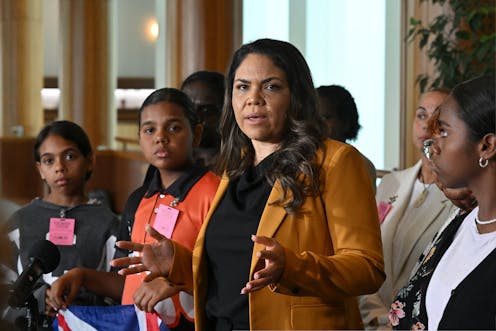
Mick Tsikas/AAP

It never quite lived up to its billing as “the right-wing GetUp!” but five years on, an activist group feted by Australia’s most conservative politicians and backed by some rich but reclusive individuals is a vocal opponent of the Voice to Parliament.

While Advance Australia has not matched the profile of its often-reviled left-wing nemesis, it believes the Voice referendum, expected in October, is its best chance of exercising serious political clout.

Formed in 2018 in the wake of the marriage equality reform, Advance Australia was tasked with mobilising a hitherto disparate conservative citizenry whose adherents blame “wokeism” for everything from the declining authority of the Christian church to gender fluidity, environmentalism, and the Voice to Parliament.

But where the nostalgically minded group might have selected a name that, like its progressive counterpart, sounded a call to action – WakeUP! or StandUP! being obvious choices – it opted instead for marketing subterfuge.

“Advance Australia” – now simply called Advance after the word Australia was mysteriously dropped – is a title that hints at progress and modernisation.

Type “advance” into the most popular search engine, Google, and the first listing is a dictionary definition, to wit: a development or improvement; move forward in a purposeful way; make, or cause to make, progress.

Advance’s anti-Voice campaign also exhibits this abstruse nomenclature, cryptically titled “Fair Australia”.

If that’s not confusing enough, Advance, and FA, are fronted by Peter Dutton’s hand-picked shadow minister for Indigenous Australians, Senator Jacinta Nampijinpa Price.

Also connected to the FA campaign is Tony Abbott, who is an adviser to Advance – the group having unsuccessfully defended him in his then North Shore electorate of Warringah in 2019.

FA’s linked website declares that a

small band of politicians and activists are trying to wreck your Constitution and threaten your democracy with an ‘Indigenous Voice to Parliament’ so let’s build an army of Aussies willing to take the next step and defend our nation […]

Waging war on ‘woke’

Prime targets for Advance’s contempt are what it sees as elite-captured media (except for News Corp), with a particular emphasis on the ABC.

“Thankfully, not every journalist in this country is a woke, green muppet,” one heading on the website reads introducing a piece written by The Australian’s Greg Sheridan.

This “army” of democratic defenders, however, may be less of a “grassroots” movement than it claims. A glance at the Australian Electoral Commission’s transparency register of Significant Third Parties shows Advance has received substantial repeat donations above the $14,500 declaration threshold.

Some of these come from a small number of high-net-worth individuals as well as larger gifts from more opaque entities such as investment vehicles and holding companies.

Advance and FA are by no means the only voices against the Voice. Others include Recognise a Better Way featuring Warren Mundine and ex-politicians John Anderson and Gary Johns – the latter controversially advocating blood tests to prove Aboriginality.
Former Greens senator Lidia Thorpe is also leading a charge against the Voice on behalf of the “Blak Sovereign Movement”.


Read more:
Why is it legal to tell lies during the Voice referendum campaign?


While the “no” campaign’s loudest advocates rail against elite culture, they are often the beneficiaries of privileged backgrounds and university education themselves. Some enjoy high-level political access; others, significant wealth.

“The hypocrisy of elites railing at elites, however, rarely registers with the target audience,” noted Crikey’s Bernard Keane recently. “Claims of sinister elites working against the interests of ordinary people are a well-tested populist trope.”

While the group’s name might be deceptive, it makes no attempt to disguise its revisionist goals describing its core mission as that of reclaiming the balance of Australian policy “once again” on the political middle-ground.

Borrowed from the US

For all its Australiana atmospherics, Advance’s language, methods, and even its pre-occupations seem more at home in the heated grievance invective of Trumpist America than the more temperate vernacular of Australian political exchange.

This may be the influence of a US-headquartered public relations firm, RJ Dunham & Co, which has had wide experience advising right-wing faith groups and movements in America.

It is one of two PR firms advising Advance – the other being Whitestone Strategic, whose website declares itself “Australia’s conservative campaign consultancy […] Equipping candidates and organisations with the experience, up-to-the-minute technology and campaign clout in the fight for Australian values”.

Advance “influences policy and removes far-left control, so that together, we see our nation centred again on the freedom of mainstream values,” visitors to its website are told. The “freedom of mainstream values” may seem like a contradiction in terms, but it only needs to make sense as political messaging.

This imported “freedom” agenda is ably buttressed by two other headings, security and prosperity.

We believe Australia is a free country. But you wouldn’t know it from the way woke politicians and the inner city elites carry on. From attacks on Australia Day and the Anzacs by the ABC to the brutal pandemic lockdowns […]

Elites, it charges, “forget about the threats of Islamic terrorism and the spectre of the aggressive Chinese Communist Party”.


Read more:
Expertise v 10-point arguments: how the ‘yes’ and ‘no’ camps have sold their messages


Under the heading of prosperity it says mainstream Australia “is under siege by stupid laws and woke ideologies like ‘net zero’ or a ‘retirement tax’, cooked up by elites”. Advance, it says, is fighting back.

A broad-based campaign however, this is not. Signatures on its longest-running public petitions reveal its “fightback” is a more of a boutique rebellion than a popular uprising.

Its most signed petition is “Unlock Australia” with just 54,292 signatures despite appearing to have been on the Advance site since the pandemic lockdowns of 2020-21.

It is closely followed by an exhortation to sign “The Freedom Pledge” against big government after the pandemic experience. It secured a similar (and perhaps overlapping) 45,286 signatures. Another, the nakedly populist “Pay cuts for pollies” campaign also secured 40,702 backers.

Another of Advance’s goals is the removal the Left’s most strident political force, the Greens party.

Its “Expose the Greens as a threat to Australia’s freedom, security and prosperity” petition, however, has secured fewer than 10,000 signatures. This may reflect a prosaic truth widely understood by Australian voters that the best place to opine on policy and performance is the ballot box, not a fringe website.

“The woke-left don’t just hate Australia Day. They hate Australia,” says another statement.

This theme of supposed left hatred for Australia runs through much of its attack on the Voice, yet no evidence is provided. Also prominent is the “straw man” argument that the “left” plans to abolish Anzac Day. “In recent years there has been a concerning push from the radical Left to end ANZAC Day,” its campaign petition states.

One wonders how many of its 25,000 signees actually believe this. The case for changing Australia Day has been widely litigated in public, but Anzac Day?

Such conflations are common in political campaigns where one idea is depicted as the thin end of the wedge, leading to much more dramatic changes down the track.

Advance claims it has been “joined by more than 150,000 supporters” and has achieved much already.

We’ve spent the last three years pushing back against radical ideology, holding powerful elites to account and putting your voice front and centre [..] we stopped Daniel Andrews’ power grab, took on the ABC and stood up to the climate commies and their attempts to turn our children against us.

Climate commies?

With rhetoric like that, Advance reveals itself to be perhaps more “front” than “centre”.

The Conversation

Mark Kenny does not work for, consult, own shares in or receive funding from any company or organisation that would benefit from this article, and has disclosed no relevant affiliations beyond their academic appointment.

ref. What are ‘Advance’ and ‘Fair Australia’, and why are they spearheading the ‘no’ campaign on the Voice? – https://theconversation.com/what-are-advance-and-fair-australia-and-why-are-they-spearheading-the-no-campaign-on-the-voice-209390

Governments are failing to share decision-making with Indigenous people, Productivity Commission finds

Source: The Conversation (Au and NZ) – By Michelle Grattan, Professorial Fellow, University of Canberra

Governments have failed to properly share decision-making with Indigenous people to accelerate Closing the Gap, despite formally undertaking to do so, according to a scathing indictment by the Productivity Commission.

The commission says too many government agencies consult Indigenous people “on a pre-determined solution, rather than collaborating on the problem and co-designing a solution”.

The broad-ranging criticism is contained in the commission’s first review of the 2020 “National Agreement on Closing the Gap”.

The Albanese government will use the findings to reinforce its pitch for the Voice – which is that Indigenous people are not being properly heard on what needs to be done to tackle the problems in health, housing, employment, education and other areas of disadvantage.

The review says: “There appears to be an assumption that ‘governments know best’, which is contrary to the principle of shared decision-making in the Agreement.”

The national agreement was put in place in negotiations with the Coalition of Aboriginal and Torres Strait Islander Peak Organisations. Federal, state, territory and local governments and the Coalition of Peaks share accountability for the agreement’s implementation. Then-prime minister Scott Morrison lauded it as a new collaborative way forward.

But Productivity Commission chair Michael Brennan says while the agreement holds significant promise, “so far we are seeing too much business as usual and too little transformation”.

The report points out the agreement “commits governments to building and strengthening structures that empower Aboriginal and Torres Strait Islander people to share decision-making authority with governments”. Partnerships are supposed to be the mechanism to achieve this.

“Some governments have demonstrated a willingness to partner and share decision-making in some circumstances, however this is not observed more widely and, in some instances, there is contradictory practice,” the review finds.

“Governments are not yet sufficiently investing in partnerships or enacting the sharing of power that needs to occur if decisions are to be made jointly,” it says.

“It is too easy to find examples of government decisions that contradict commitments in the Agreement, that do not reflect Aboriginal and Torres Strait Islander people’s priorities and perspectives and that exacerbate, rather than remedy, disadvantage and discrimination. This is particularly obvious in youth justice systems.”

The report warns: “Without stronger accountability for its implementation across all government organisations, the Agreement risks becoming another broken promise to Aboriginal and Torres Strait Islander people”.

The commission met with some 200 groups including 121 Indigenous organisations.

It found the policy of governments did not reflect the value of Aboriginal community-controlled organisations.

A number of these organisations told the commission “they are sometimes treated as passive recipients of government funding” rather than being recognised by governments as “critical partners in delivering government services tailored to the priorities of their communities”.

The report says the agreement requires transformation of mainstream government bodies “to ensure they are accountable for Closing the Gap and are culturally safe and responsive to the needs of Aboriginal and Torres Strait Islander people”.

But there’s a “stark absence” of strategies to drive this transformation.

“We are yet to identify a government organisation that has articulated a clear vision for what transformation looks like, adopted a strategy to achieve that vision, and tracked the impact of actions within the organisation (and in the services that it funds) toward that vision.”

The report says the landscape has changed since the agreement was made. Apart from the agreement, there is now a legislated Indigenous Voice to Parliament in South Australia, legislated Treaty and Truth telling processes in Victoria and Queensland, and the coming constitutional referendum.

“These initiatives may result in new decision-making and accountability structures that could provide a further catalyst for changes to the way
governments work with Aboriginal and Torres Strait Islander people. But, regardless of the outcomes of these processes, governments still have a responsibility to implement what they committed to in the Agreement.”

This is the commission’s draft report. It will get further feedback and submit a final report by the end of the year.

The Conversation

Michelle Grattan does not work for, consult, own shares in or receive funding from any company or organisation that would benefit from this article, and has disclosed no relevant affiliations beyond their academic appointment.

ref. Governments are failing to share decision-making with Indigenous people, Productivity Commission finds – https://theconversation.com/governments-are-failing-to-share-decision-making-with-indigenous-people-productivity-commission-finds-210392

Can’t afford a gym membership or fitness class? 3 things to include in a DIY exercise program

Source: The Conversation (Au and NZ) – By Lewis Ingram, Lecturer in Physiotherapy, University of South Australia

Jonathan Borba/Unsplash

With the rising cost of living, gyms memberships and fitness classes are becoming increasingly unaffordable. But the good news is you can make just as much progress at home.

Cardiovascular endurance, muscle strength and flexibility are the most important components of fitness. And each can be trained with little or no equipment. Let’s look at why – and how – to fit them into your DIY exercise program.

1. Cardiovascular endurance

Cardiovascular endurance exercise (or “cardio”) forces the heart and lungs to increase the supply of oxygen to the working muscles. Heart disease is a leading cause of death and cardiovascular endurance exercise helps keep the heart healthy.

The best thing about cardio is you don’t need any fancy equipment to do it. Walking, jogging and running are great options, as are cycling, skipping rope and swimming.

Older man skips rope
Skipping rope can be a cardio workout.
Shutterstock

There are two approaches to maximise cardiovascular endurance:

  • high-intensity interval training (HIIT) – short bouts of hard exercise (around 80% to 95% of your maximum heart rate) interspersed with lower intensity recovery periods (around 40% to 50% of your maximum heart rate)

  • low-intensity steady-state (LISS) exercise – aerobic activity performed continuously at a low-to-moderate intensity (around 50% to 65% of your maximum heart rate) for an extended duration.

Both are great options. While high-intensity interval training can be more time efficient, low-intensity steady-state training might be more enjoyable and easier to sustain long-term.

No matter what you choose, aim for a minimum of 150 minutes of moderate-intensity or 75 minutes of vigorous-intensity cardiovascular exercise each week. For example, you could try 30 minutes, five days per week of low intensity cardio, or 25 minutes, three days per week of high-intensity activity, or a combination of the two.


Read more:
Don’t have time to exercise? Here’s a regimen everyone can squeeze in


How do you know if you’re exercising at the right intensity?

Smart watches that measure heart rate can help to monitor intensity. Or you can rely on the good old-fashioned talk test. During low-intensity activity, you should be able to speak in full sentences. Conversely, short phrases (initially) or single words (towards the end) should be all that’s manageable during high-intensity exercise.

2. Muscle strength

Next is muscle strength, which we train through resistance exercise. This is important for bone health, balance and metabolic health, especially as we age and our muscle mass and strength declines.

Aim for two days per week of whole-body resistance exercise performed at a moderate or greater intensity. Try to build two weekly sessions that target the major muscle groups. This could include:

  • squats – lower to the ground from standing by bending the hips, knees, and ankles while keeping the chest up tall before returning to standing by straightening the hips, knees and ankles
Man does a squat in his living room
You don’t need any equipment for squats.
Shutterstock
  • hinges – fold forward at the hips by pushing your bottom back to the wall behind you, keeping your back straight. A slight bend in the knees is fine but aim to keep your shins vertical

  • push-ups – if a full push-up is too difficult, you can place your hands on a raised surface such as a step or a chair

  • horizontal and vertical pull ups – using something like a portable chin up bar, which you can buy from sports supply stores

  • vertical pushes – pushing an object (or weight) vertically from the top of your chest to an overhead position.

Woman in wheelchair lifts weights
Vertical pushes involve lifting a weight from chest to over your head.
Shutterstock

Once you have selected your exercises, perform 2–3 sets of 8–12 repetitions at a moderate to greater intensity, with about 90 seconds rest between each set.

As you progress, continue to challenge your muscles by adding an extra set to each exercise, or including dumbbells, changing body position or wearing a backpack with weights. The goal should be to progress slightly each session.

However, if you have any underlying health conditions, disabilities, or are unsure how best to do this, see an exercise physiologist or physiotherapist.


Read more:
Why weightlifting is beneficial before and after the menopause


3. Flexibility

Improved flexibility can increase your range of motion and improve your ability to manage daily life.

While we don’t know the best means of increasing flexibility, the most basic and readily accessible is static stretching. Here, we lengthen the muscle – for example, the hamstrings, until we feel a “stretching” sensation. Hold that position for 15–30 seconds.

People stretch their arms
Stretching can increase your range of motion.
Shutterstock

While the precise intensity of this stretching sensation remains elusive, around 5–10 minutes per week per muscle group, spread across five days, seems to provide the best results.

How to stick with it?

The best exercise is the one that gets done. So, whatever you choose, make sure you enjoy it. After all, it’s about creating an ongoing commitment to exercise that will deliver long-term health benefits.

It’s also important to ensure you’re ready to exercise, especially if you have any underlying health issues, have been previously inactive, or are unsure how to start. A pre-exercise screening can help you to determine whether you should see a doctor or allied health professional before starting an exercise program and for guidance on the next steps.


Read more:
New study: much of what we’re told about gym exercises and resistance training is from studies of males, by men


The Conversation

The authors do not work for, consult, own shares in or receive funding from any company or organisation that would benefit from this article, and have disclosed no relevant affiliations beyond their academic appointment.

ref. Can’t afford a gym membership or fitness class? 3 things to include in a DIY exercise program – https://theconversation.com/cant-afford-a-gym-membership-or-fitness-class-3-things-to-include-in-a-diy-exercise-program-206204

Tourists flock to the Mediterranean as if the climate crisis isn’t happening. This year’s heat and fire will force change

Source: The Conversation (Au and NZ) – By Susanne Becken, Professor of Sustainable Tourism, Griffith Institute for Tourism, Griffith University

Thousands of people on the beach. Children reportedly falling off evacuation boats. Panic. People fleeing with the clothes on their backs. It felt like “the end of the world”, according to one tourist.

The fires sweeping through the Greek islands of Rhodes and Corfu are showing us favourite holiday destinations are no longer safe as climate change intensifies.

For decades, tourists have flocked to the Mediterranean for the northern summer. Australians, Scandinavians, Brits, Russians all arrive seeking warmer weather. After COVID, many of us have been keen to travel once again.

But this year, the intense heatwaves have claimed hundreds of lives in Spain alone. Major tourist drawcards such as the Acropolis in Athens have been closed. Climate scientists are “stunned by the ferocity” of the heat.

This year is likely to force a rethink for tourists and for tourism operators. Expect to see more trips taken during shoulder seasons, avoiding the increasingly intense July to August summer. And expect temperate countries to become more popular tourist destinations. Warm-weather tourist destinations will have to radically change.

What will climate change do to mass tourism?

Weather is a major factor in tourism. In Europe and North America, people tend to go from northern countries to southern regions. Chinese tourists, like Australians, often head to Southeast Asian beaches.

In Europe, the north-south flow is almost hardwired. When Australians go overseas, they often choose Mediterranean summers. Over the last decade, hotter summers haven’t been a dealbreaker.

But this year is likely to drive change. You can already see that in the growing popularity of shoulder seasons (June or September) in the traditional Northern Hemisphere summer destinations.

Many of us are shifting how we think about hot weather holidays from something we seek to something we fear. This comes on top of consumer shifts such as those related to sustainability and flight shame.


Read more:
European heatwave: what’s causing it and is climate change to blame?


What about disaster tourism? While thrillseekers may be flocking to Death Valley to experience temperatures over 50℃, it’s hard to imagine this type of tourism going mainstream.

What we’re more likely to see is more people seeking “last-chance” experiences, with tourists flocking to highly vulnerable sites such as the Great Barrier Reef. Of course, this type of tourism isn’t sustainable long-term.

Tourists at the famous thermometer at Furnace Creek, Death Valley.
Shutterstock

What does this mean for countries reliant on tourism?

The crisis in Rhodes shows us the perils of the just-in-time model of tourism, where you bring in tourists and everything they need –food, water, wine – as they need it.

The system is geared to efficiency. But that means there’s little space for contingencies. Rhodes wasn’t able to easily evacuate 19,000 tourists. This approach will have to change to a just-in-case approach, as in other supply chains.

For emergency services, tourists pose a particular challenge. Locals have a better understanding than tourists of risks and escape routes. Plus tourists don’t speak the language. That makes them much harder to help compared to locals.

Climate change poses immense challenges in other ways, too. Pacific atoll nations like Kiribati or Tuvalu would love more tourists to visit. The problem there is water. Sourcing enough water for locals is getting harder. And tourists use a lot of water – drinking it, showering in it, swimming in it. Careful planning will be required to ensure local carrying capacities are not exceeded by tourism.

So does this spell the end of mass tourism? Not entirely. But it will certainly accelerate the trend in countries like Spain away from mass tourism, or “overtourism”. In super-popular tourist destinations like Spain’s Balearic Islands, there’s been an increasing pushback from locals against overtourism in favour of specialised tourism with smaller numbers spread out over the year.

Is this year a wake-up call? Yes. The intensifying climate crisis means many of us are now more focused on what we can do to stave off the worst of it by, say, avoiding flights. The pressure for change is growing too. Delta Airlines is being sued over its announcement to go carbon neutral by using offsets, for instance.

Mountains not beaches: future tourism may look a lot different

You can already see efforts to adapt to the changes in many countries. In Italy, for instance, domestic mountain tourism is growing, enticing people from hot and humid Milan and Rome up where the air is cooler – even if the snow is disappearing.

China, which doesn’t do things by halves, is investing in mountain resorts. The goal here is to offer cooler alternatives like northern China’s Jilin province to beach holidays for sweltering residents of megacities such as Beijing and Shanghai.

Some mountainous countries are unlikely to seize the opportunity because they don’t want to draw more tourists. Norway is considering a tourist tax.

Forward-thinking countries will be better prepared. But there are limits to preparation and adaptation. Mediterranean summer holidays will be less and less appealing, as the region is a heating hotspot, warming 20% faster than the world average. Italy and Spain are still in the grip of a record-breaking drought, threatening food and water supplies. The future of tourism is going to be very different.


Read more:
We’re in the era of overtourism but there is a more sustainable way forward


The Conversation

The authors do not work for, consult, own shares in or receive funding from any company or organisation that would benefit from this article, and have disclosed no relevant affiliations beyond their academic appointment.

ref. Tourists flock to the Mediterranean as if the climate crisis isn’t happening. This year’s heat and fire will force change – https://theconversation.com/tourists-flock-to-the-mediterranean-as-if-the-climate-crisis-isnt-happening-this-years-heat-and-fire-will-force-change-210282

The feral flying under the radar: why we need to rethink European honeybees

Source: The Conversation (Au and NZ) – By Amy-Marie Gilpin, Research Fellow, Ecology, Western Sydney University

Australia’s national parks, botanic gardens, wild places and green spaces are swarming with an invasive pest that is largely flying under the radar. This is yet another form of livestock, escaped from captivity and left to roam free.

Contrary to popular opinion, in Australia, feral colonies of the invasive European honeybee (Apis mellifera) are not “wild”, threatened with extinction or “good” for the Australian environment. The truth is feral honeybees compete with native animals for food and habitat, disrupt native pollination systems and pose a serious biosecurity threat to our honey and pollination industries.

As ecologists working across Australia, we are acutely aware of the damage being done by invasive species. There is rarely a simple, single solution. But we need to move feral bees out of the “too hard” basket.

The arrival and spread of the parasitic Varroa mite in New South Wales threatens to decimate honeybee colonies. So now is the time to rethink our relationship with the beloved European honeybee and target the ferals.

Closeup photograph of a honeybee collecting pollen from a purple flower
Feral honeybee foraging on native Boronia ledifolia in the World Heritage-listed Blue Mountains National Park.
Amy-Marie Gilpin


Read more:
Buzz off honey industry, our national parks shouldn’t be milked for money


What makes a hive feral?

European honeybees turn feral when a managed hive produces a “swarm”. This is a mass of bees that leaves the hive seeking a new nest. The swarm ultimately settles, either in a natural hollow or artificial structure such as a nesting box.

With up to 150 hives per square kilometre, Australia has among the highest feral honey bee densities in the world. In NSW, feral honeybees are listed as a “key threatening process”, but they lack such recognition elsewhere.

A nesting box installed for native animals filled with feral honeybees (Apis mellifera).
Cormac Farrell

Feral honeybees have successfully invaded most land-based ecosystems across Australia, including woodlands, rainforests, mangrove-salt marsh, alpine and arid ecosystems.

They can efficiently harvest large volumes of nectar and pollen from native plants that would otherwise provide food for native animals, including birds, mammals and flower-visiting insects such as native bees. Their foraging activities alter seed production and reduce the genetic diversity of native plants while also pollinating weeds.

Unfortunately, feral honeybees are now the most common visitors to many native flowering plants.

Are feral bees useful in agriculture?

Feral honeybees can pollinate crops. But they compete with managed hives for nectar and pollen. They can also be an reservoir of honeybee pests and diseases such as the Varroa mite, which ultimately threaten crop production. That’s because many farms rely on honeybees from commercial hives to pollinate their crops.

So reducing feral honeybee density would benefit both honey production and the crop pollination industry, which is worth A$14 billion annually.

Improved management of feral honeybees would not only help to limit the biosecurity threat, but increase the availability of pollen and nectar for managed hives. It would also increase demand for managed honeybee pollination services for pollinator dependent crops.


Read more:
Hear me out – we could use the varroa mite to wipe out feral honey bees, and help Australia’s environment


What are our current options?

Tackling this issue will not be straightforward, due to the sheer extent of feral colony infestation and limited tools at the disposal of land managers.

If the current parasitic Varroa mite infestation in NSW spins out of control, it may reduce the number of feral hives, with benefits for the environment. Fewer feral hives would be good for the honey industry too.

Targeted strategies to remove feral colonies on a small scale do exist and are being applied in the Varroa mite emergency response. This includes the deployment of poison (fipronil) bait stations in areas exposed to the mite.

While this method seems to be effective, the extreme toxicity of fipronil to honeybees limits its use to areas that do not contain managed hives. In addition, the possible effects on non-target, native animals that feed on the bait, or poisoned hive remains, is still unstudied and requires careful investigation.

Where feral hives can be accessed, they can be physically removed. But in many ecosystems feral colonies are high up in trees, in difficult to access terrain. That, and their overwhelming numbers, makes removal impractical.

Another problem with hive removal is rapid recolonisation by uncontrolled swarming from managed hives and feral hives at the edges of the extermination area.

Taken together, there are currently no realistic options for the targeted large-scale removal of feral colonies across Australia’s vast natural ecosystems.

Drone (male) honeybee.
James Dorey

Where to now?

For too long, feral honeybees have had free reign over Australia’s natural environment. Given the substantial and known threats they pose to natural systems and industry, the time has come to develop effective and practical control measures.

Not only do we need to improve current strategies, we desperately need to develop new ones.

One promising example is the use of traps to catch bee swarms, and such work is underway in Victoria’s Macedon Ranges. However, this might be prohibitively expensive at larger scales.

Existing strategies for other animals may be a good starting place. For example, the practice of using pheromones to capture cane toad tadpoles might be applied to drones (male bees) and swarms. Once strategies are developed we can model a combination of approaches to uncover the best one for each case.

Developing sustainable control measures should be a priority right now and should result in a win-win for industry, biosecurity and native ecosystems.

If there is something to learn from the latest Varroa incursion, it is that we cannot ignore the risks feral honeybees pose any longer. We don’t know how to control them in Australia yet, but it is for lack of trying.

We would like to acknowledge the substantial contribution made by environmental scientist and beekeeper Cormac Farrell to the development of this article.


Read more:
A new $2 coin features the introduced honeybee. Is this really the species we should celebrate?


The Conversation

Amy-Marie Gilpin receives funding from Horticulture Innovation Australia and is a member of the IUCN Wild Bee Specialist Group Oceania.

James B. Dorey is affiliated with Flinders University and the University of Adelaide.

Katja Hogendoorn is a member of the board of the Australian Entomological Society and receives funding from the Department of Agriculture, Water and the Environment, HortInnovations, AgriFutures, and the Australian Research Council.

Kit Prendergast is an adjunct at Curtin University and Murdoch University. She has previously received funding from the Federal Government for the Bushfire Recovery Project, from the Forrest Research Foundation for her PhD, and from the Australian Wildlife Society.

ref. The feral flying under the radar: why we need to rethink European honeybees – https://theconversation.com/the-feral-flying-under-the-radar-why-we-need-to-rethink-european-honeybees-207153

What are enabling programs? How do they help Australians get to uni?

Source: The Conversation (Au and NZ) – By Sarah Kate Hattam, Senior Lecturer at Education Futures University of South Australia, University of South Australia

Shutterstock

One of Education Minister Jason Clare’s top priorities for the Universities Accord is encouraging more Australians to go to university. As he notes, “more jobs are going to require a university qualification in the years ahead”.

Alongside this call is the recognition we need to improve access for people from equity cohorts – including Indigenous Australians, those from low socioeconomic and regional and rural backgrounds and people with a disability.

As the accord’s interim report notes, we need a higher education system that no longer prevents “talented people from attaining life-changing qualifications”.

One way to do this is through enabling programs.


Read more:
The universities accord could see the most significant changes to Australian unis in a generation


What are enabling programs?

Enabling programs are run by universities and taught by academics and are also known as “foundation” or “bridging” programs. They are non-award courses (meaning they don’t lead to a degree or other qualification) and aim to prepare students for undergraduate study.

They are not part of secondary school and can run for anywhere between about four weeks to two years. Most students study for about six months.

Many are available both on campus and online, with the option of full-time or part-time study.

The accord interim report calls for funding stability for the university sector for 2024 and 2025. It also says university funding for these years should be “directed towards a range of assistance, such as increased support for students in enabling courses”.

Three students work at desks in a classroom.
Enabling programs are also known as ‘foundation’ or ‘bridging’ programs.
Shutterstock

What do they teach?

The programs are designed to build a range of skills and knowledge students need to succeed in further study.

Courses cover a wide range topics, from generalised study skills to preparation for a specific degree.

Enabling programs can teach academic writing, library research, foundational mathematics, study skills and discipline-specific knowledge.

For example, if a student is interested in gaining entry to a nursing degree, they will need academic communication skills, mathematics, anatomy and digital skills. A future psychology student could benefit from skills and knowledge in social science and statistics.

Who are they for?

Enabling programs are for anyone who needs further preparation before starting university. Commonly, this includes students who left school early, did not get a university entrance rank or did not do as well as they hoped in Year 12.

When applying to university, students can preference enabling programs as a viable “plan B” if they don’t receive an undergraduate offer.

Enrolments in enabling programs have grown from 6,490 students in 2001 to 32,579 in 2020. A large proportion of students come from disadvantaged backgrounds.

For example, 32% of students in enabling programs are from low socioeconomic backgrounds, which is double the proportion of undergraduate students.

Of the 48 enabling programs in Australia, 15 are explicitly for Indigenous students, who represent approximately 6% of all enabling program enrolments. This is more than double comparative undergraduate enrolments.

More than a third of enabling course students are from regional and remote areas.


Read more:
These 5 equity ideas should be at the heart of the Universities Accord


How can you access one?

Universities have enabling programs on their websites and in their program guides for future students.

They are supported by federal funding so they can be offered free to students.

Depending on the program, you can apply directly to the university or through state-based tertiary admissions centres, at the time when you nominate your university preferences.

Why are they so important?

Australian studies show students who complete enabling programs do just as well in undergraduate study as students who enter via traditional pathways, such as directly from high school.

Enabling programs are effective because they are designed to meet the needs of students who want a university qualification but have experienced educational disadvantage. They focus not only on academic skills but also on building confidence to study.

How can we improve them?

In the final Universities Accord report due in December, enabling educators want to see several changes to the way the system works, to make sure anyone who needs this help to go to university can access it.

This means fee-free places need to be demand-driven, with flexible funding to match fluctuations in student enrolments and allowing universities to increase enabling places as demand grows.

In addition to existing payments such as Austudy and ABSTUDY, there should be further financial support for disadvantaged students doing these courses. Students from low socioeconomic backgrounds are over-represented in enabling programs, and struggle find adequate study time while balancing family and financial commitments.

We would also like to see enabling qualifications included in the Australian Qualifications Framework, which regulates education and training qualifications.

This would ensure formal recognition of a student’s achievement and then give them flexibility about which university they enrol in, because it would be recognised Australia-wide.


Read more:
Uncapping uni places for Indigenous students is a step in the right direction, but we must do much more


The Conversation

Sarah Kate Hattam a member of the Executive Committee of the National Association of Enabling Educators of Australia.

Charmaine Davis is an executive member of the National Association of Enabling Educators of Australia.

Tanya Weiler does not work for, consult, own shares in or receive funding from any company or organisation that would benefit from this article, and has disclosed no relevant affiliations beyond their academic appointment.

ref. What are enabling programs? How do they help Australians get to uni? – https://theconversation.com/what-are-enabling-programs-how-do-they-help-australians-get-to-uni-210269

Computer-written scripts and deepfake actors: what’s at the heart of the Hollywood strikes against generative AI

Source: The Conversation (Au and NZ) – By Jasmin Pfefferkorn, Postdoctoral Research Fellow, School of Culture and Communication, The University of Melbourne

For the first time in 60 years, the Writers Guild of America (WGA) and the Screen Actors Guild (SAG) are simultaneously facing off against the Alliance of Motion Picture and Television Producers.

The key points of contention? Working conditions, adequate pay, and the increasing encroachment of artificial intelligence (AI) into their professions.

The use of AI in the film and television industry isn’t new. Many common post-production techniques use AI technology in special effects, colour grading, animation and video editing.

Not only was the Lord of the Rings trilogy a defining moment of the early 2000s, it also illuminated how AI could be used in film production. The Battle of Helm’s Deep features computer-generated AI armies to create one of the most memorable scenes in cinematic history.

But in the current strike, the specific concern is a subset of AI known as generative AI. It is crucial that an equilibrium is reached between protections for creative professionals, and the application of generative AI as a useful tool.


Read more:
How Ronald Reagan led the 1960 actors’ strike – and then became an anti-union president


Remind me, what is generative AI?

Like all AI, a generative AI model is fed existing data (content), using algorithms to process this data, identify patterns and produce outputs – such as an image or a piece of writing. What is significant about generative AI is the capacity to undertake the so-called “learning” process relatively autonomously and to generate original content.

Many of us are most familiar with generative AI as the technical process that gives us increasingly sophisticated deepfakes.

The now infamous image of Pope Francis wearing an oversized puffer jacket? Courtesy of a 31-year-old construction worker using the AI image generator Midjourney.

Generative AI has taken off in the mainstream through companies such as Midjourney, Stable Diffusion, Meta and OpenAI. The latter is now infamous for its large image model Dall-E and large language model ChatGPT.

So what is happening in Hollywood?

Hollywood workers have valid reason for their unease. The fear is AI will not only be used for supporting technical jobs such as colour grading or adding characters in the far background, but it will also replace creative jobs.

For both the WGA and SAG, there is also a legitimate worry that entry level jobs (such as writers’ assistants and background extras on sets) will be largely replaced by AI.

This would significantly reduce opportunities for people entering the workforce to gain necessary expertise in their craft.

With the staggering improvements in each ChatGPT iteration, screenwriters have also been grappling with the possibility they will be sharing creative control over scripts with large language models.

Questions arise around how these works would be attributed, who or what would be given credit, and consequently how payment would be allocated.

These unions aren’t entirely against the use of AI. The WGA has proposed a model for human-AI collaboration where generative AI could produce early versions of a script which human screenwriters will then refine. But many experts and industry professionals see this proposal as alienating writers from the creative process, repositioning writers as copy editors.

One of the most dystopian scenarios to be put on the table by big studios has been termed “performance cloning”. This involves paying background actors a one-off fee to scan their likeness. This likeness can then be owned and used by companies in perpetuity.

While creating a regressive payment model, it also raises issues of consent: what happens if your AI body double is used in a way you would never agree to?

It’s also a question of copyright

With generative AI, consent is closely bound together with issues of copyright.

Comedian Sarah Silverman is currently suing OpenAI and Meta for copyright infringement. She alleges their AI models were trained on her work without her consent, and were consequently able to roughly reproduce her comedy style.

That her oeuvre is part of the machine learning dataset is unsurprising. This dataset encompasses billions of data points – essentially all that has made its way onto the internet.

Though generative AI is said to produce original content, a better way to view this content is as a remix. These models regurgitate what they have been trained on.

If they become foundational to the film and television industry, the originality of our cultural products is up for debate.

Streaming services have already primed audiences in the algorithmic curation of taste. Generative AI extends this existing trajectory. If studios become overly reliant on these technologies, chances are the “new” content offered to us will only echo what has come before. It may even move us further away from equality in representation, with the bias of these AI models well-documented.


Read more:
Actors are demanding that Hollywood catch up with technological changes in a sequel to a 1960 strike


We need collaboration without exploitation

As workers fight for industry regulation to ban the replacement of humans by AI, it is important to reiterate this is not a call to ban the technology outright. Generative AI has already been used in valuable and compelling ways in film.

An early example is David France’s 2020 documentary Welcome to Chechnya, which explores the persecution of LGBTQ+ people in Russia. France did extensive post-production work using AI, producing synthetic voices and superimposed faces to protect his subjects’ anonymity while retaining their humanity.

The question at the heart of copyright – how we balance protecting the rights of creatives with the openness needed for cultural production – resurfaces in this context. We need regulatory measures that enable creative collaboration with generative AI while ensuring creative workers are not exploited to further centralised power.

In June, the Directors Guild of America won protection against being replaced by AI tools in a new labour contract with producers. The hope is that protections will be extended to screenwriters and actors.

Otherwise, in Hollywood, AI might just steal the show.


Read more:
The exploitation of Hollywood’s writers is just another symptom of digital feudalism


The Conversation

Jasmin Pfefferkorn does not work for, consult, own shares in or receive funding from any company or organisation that would benefit from this article, and has disclosed no relevant affiliations beyond their academic appointment.

ref. Computer-written scripts and deepfake actors: what’s at the heart of the Hollywood strikes against generative AI – https://theconversation.com/computer-written-scripts-and-deepfake-actors-whats-at-the-heart-of-the-hollywood-strikes-against-generative-ai-210191

Climate extremes make NZ’s supply chains highly vulnerable – it’s time to rethink how we grow and ship food

Source: The Conversation (Au and NZ) – By Alan Renwick, Professor of Agricultural Economics, Lincoln University, New Zealand

Getty Images

Supermarket customers around New Zealand are noticing gaps in the grocery aisles that have nothing to do with the global pandemic or Ukraine war. It’s clear domestic food supply chains have been increasingly challenged by natural disasters and the ongoing impact of climate change.

Countdown recently warned customers that certain foods would be in short supply due to flooding on the East Coast. Time and again, we have seen such shortages and significant increases in the price of certain foods, particularly fresh produce.

The question is whether we have just been unlucky, or are these disruptions a result of deeper issues in the New Zealand food system? Are we more vulnerable than other countries, and if so, what does this mean for our food security?

Over the decades, New Zealand has centralised its food system and increased the risk that a single regional event could reverberate nationally. But it’s not too late to diversify and increase resilience across our food supply system.

Efficiency over resiliency

Modern food supply chains have largely been optimised for economic efficiency rather than resilience to supply-side shocks.

The agricultural sector has seen a process of increasing scale and specialised production – primarily to increase profitability. In part, this has been driven by land suitability.

The outcome is a relatively small number of large-scale processing factories and the concentration of enterprises in specific regions. For example, around 32% of New Zealand’s horticultural products come from the Bay of Plenty and Hawkes Bay.


Read more:
How to make fragile global supply chains stronger and more sustainable


At the retail end of the chain, large, centralised distribution centres and “just in time” delivery systems keep costs low for the two dominant supermarket chains, which account for between 80% and 90% of the food we consume. Food is brought to just a handful of distribution centres before being dispersed across their networks of stores.

But disruptions in one region can affect the entire country. In the aftermath of the Christchurch earthquake, the distribution centres serving the entire South Island were damaged. Supermarkets were forced to ship supplies from their North Island hubs.

A recent study from the Timaru District Council found that while South Canterbury describes itself as the food bowl of New Zealand, 95% of the commercially-bought food in the district comes from outside the region.

Over-dependence on roads

The current supply chain model is totally reliant on the uninterrupted movement of products across the country through our transport network – in theory, comprised of road, rail, sea and air links.

In practice, just under 93% of freight goes by one mode – road. This compares with 72% in Germany.

Topography coupled with low population densities mean many regions are served by only one or, at most, two main roads suitable for freight trucks. We are nearly totally reliant on roads but our road networks are particularly vulnerable to climatic events and other natural disasters.

Our food distribution system seems to be better set up to get exports out or imports in through ports and airports than to move food around New Zealand. The vast majority of our agricultural products are exported rather than consumed in New Zealand.


Read more:
Why your local store keeps running out of flour, toilet paper and prescription drugs


Resilience in uncertain times

All the evidence suggests climate change is going to increase the challenges in our food system, with more frequent and intense weather events. Projected sea-level rise will also put more strain on our already vulnerable food system at the farm and processing levels, as well as our ability to move it around the country.

Regional councils are clearly concerned, and there is increasing discussion of the concepts of food resilience and local food networks.

But what does a food system designed around resilience rather than optimisation look like? Does it simply mean less choice and higher prices? Or can it tackle other challenges, such as diet and health, environmental concerns and broader food security?

Two possible and compatible paths are evident. The first relates to local food networks and involves diversification of the products produced within each region, at both the farm and processing and manufacturing levels.


Read more:
The key to future food supply is sitting on our cities’ doorsteps


The idea of distributed manufacturing – basically mini-factories dispersed through the country – has been discussed in the forestry sector in New Zealand but could equally be considered for food.

Some emerging technologies that reduce dependence on the local climate for production, such as vertical farming, could be important in local food networks. Aquaponics (farming both fish and plants together), or algae production in ponds, could also diversify local food resources.

The idea of “circularity” could help reduce dependence on external inputs. Food waste products, for example, could be turned into energy as well as fertiliser.

Alternative farming approaches – like vertical farming – could help New Zealand’s food supply resiliency.
Getty Images

From supply chains to systems

Alternatively, we could keep the potential benefits of national scale production, but invest to reduce the vulnerabilities in our transport networks. As recent research highlights, there could be multiple benefits to reducing reliance on roads.

And we don’t need to reinvent the wheel. Only 6% of freight is transported by rail – this could be increased to diversify shipping options.

There may also be opportunities to make more out of coastal shipping routes. At the moment, this largely comprises the movement of bulk products such as fertiliser and cement.

However we tackle the increasing vulnerabilities in our food supply chain, we need to think of it as a food system and not simply a supply chain. The complex interactions in our food system mean changes to one part are likely to have wider economic, environmental, social and cultural impacts.

Tackling our potential vulnerability to climate change needs to be undertaken in the context of a wider strategy for the entire food system.

The Conversation

Alan Renwick does not work for, consult, own shares in or receive funding from any company or organisation that would benefit from this article, and has disclosed no relevant affiliations beyond their academic appointment.

ref. Climate extremes make NZ’s supply chains highly vulnerable – it’s time to rethink how we grow and ship food – https://theconversation.com/climate-extremes-make-nzs-supply-chains-highly-vulnerable-its-time-to-rethink-how-we-grow-and-ship-food-209023

Macron in New Caledonia to bolster France’s Indo-Pacific strategy

By Eleisha Foon, journalist

France has deployed Rafale jet fighters during a military ceremony in New Caledonia, marking President Emmanuel Macron’s first official day in the Pacific.

Macron arrived in Noumea overnight on a visit aimed at bolstering his Indo-Pacific strategy and reaffirming France’s role in the region.

The historic five-day trip includes a visit to Vanuatu and Papua New Guinea. It is the first time a French president has visited independent Pacific Islands, according to French officials.

A big focus will be asserting France’s role in what Macron has called a “balancing force” between the United States and China.

France assumes sovereignty for three Pacific territories: New Caledonia, French Polynesia and Wallis and Futuna.

However, not everyone was happy about the presidential visit.

New Caledonia was politically divided and seeking a way forward after three referendums on independence.

Referendum boycott
The outcome of all three polls was a “no” to independence but the result of the third vote, which was boycotted by Kanaks, was disputed.

Rallies were expected during the French President’s visit.

Local committees of the main pro-independence party the Caledonian Union have called for “peaceful” but determined rallies.

Their presence will be felt particularly when Macron heads north today to the east coast town of Thio, as well as when he gathers the New Caledonian community together tomorrow afternoon for a speech, where he is expected to make a major announcement.

About 40 percent of the population are indigenous Kanak, most of whom support independence. Pro-independence parties, which have been in power since 2017, want full sovereignty by 2025.

Macron is expected to meet with all sides in Noumea this week.

A large delegation has joined Macron on his visit, including Foreign Minister Catherine Colonna and Defence Minister Sébastien Lecornu.

Foreign minister in Suva
Colonna will also travel to Suva, Fiji today, the first visit of a French foreign affairs minister to the country.

She will meet with the Fijian Prime Minister Sitiveni Rabuka and the Pacific Islands Forum Deputy Secretary General Filimon Manoni.

The move was to “strengthen its commitment in the region”, French officials have said.

Meetings have also been set with Papua New Guinea Prime Minister James Marape when the delegation travels there on Friday.

France has investments in PNG to develop its gas resources under French-owned multinational oil and gas company TotalEnergies.

Vanuatu chiefs appeal
Emmanuel Macron will be in Port Vila on Wednesday.

Vanuatu’s Malvatumauri National Council of Chiefs want Prime Minister Ishmael Kalsakau to let President Macron know that the Mathew and Hunter Islands belong to Vanuatu and are not part of New Caledonia.

Tanna chief Jean Pierre Tom said ni-Vanuatu people were expecting his visit to be a “game changer and not a re-enforcement of colonial rule”.

This article is republished under a community partnership agreement with RNZ.

Print Friendly, PDF & Email

Article by AsiaPacificReport.nz

Behavioural ‘experts’ quietly shaped robodebt’s most devilish details – and their work in government continues

Source: The Conversation (Au and NZ) – By Peter Martin, Visiting Fellow, Crawford School of Public Policy, Australian National University

One of the things still worrying me about robodebt was the attention to detail.

By that, I am not referring to the crude system by which hundreds of thousands of Australians on benefits received letters between 2016 and 2019, wrongly demanding they repay Centrelink money they did not owe.

I am referring to the care with which the robodebt letters were designed – and the so-called science behind those devastating design decisions.

‘Nudging’ people to pay at all costs

What Centrelink wanted was for the recipients to quietly pay up, or go online and provide years of payslips they probably didn’t have, rather than jam up its switchboards asking questions.

The robodebt royal commission heard that details as specific as the colours of the letters were decided on after receiving advice from “experts in behavioural science”. (In the end, Centrelink went with black and white.)

An internal email with some words blacked out, discussing redeveloping debt letters using behavioural insights
An email about redeveloping debt letters using ‘behavioural insights’.
Robodebt royal commission

So it made what Royal Commissioner Catherine Holmes found was a “conscious decision” not to include a phone number recipients could use to find out more.

That’s right, the letter didn’t include a phone number – a decision Holmes found was made “with the intention of forcing recipients to respond online”.

Where did the idea come from?

Holmes found it came from “behavioural insights”.

Separately, the royal commission also heard one of the members of the Centrelink team had just come from the Department of Prime Minister and Cabinet, where he had been running its behavioural science team.


No phone number. The Centrelink letter.

The human toll of powerlessness

People left with nowhere to turn and without ready access to, or familiarity with, using the internet felt powerless.

Witnesses told Holmes they wanted to end their lives. Holmes devotes an entire chapter to those who did.

Holmes found that while “behavioural insights” were sought, “no outside parties with an interest in welfare were consulted in order to understand how the scheme might actually affect people”.

Holmes wrote:

The effect on a largely disadvantaged, vulnerable population of suddenly making demands on them for payment of debts, often in the thousands of dollars, seems not to have been the subject of any behavioural insight at all.

And that’s the problem with the relatively new technocratic-sounding science of behavioural economics.

‘Choice architects’ shaping policy

That Centrelink used specialists in behavioural science ought not be surprising.

A year before robodebt began, Prime Minister Malcolm Turnbull set up what he called a Behavioural Economics Team Australia (BETA) unit in his department. It was modelled on the so-called “nudge units” set up by President Barama Obama in the United States and Prime Minister David Cameron in the UK.

A “nudge” is a change destined to get someone to do something, sometimes also known by the Orwellian-sounding name “choice architecture”.

Cass Sunstein helped invent both those terms, coauthored the book Nudge, and headed Obama’s Nudge Unit. In 2015, Sunstein launched Turnbull’s unit.

I was a fan of behavioural economics, back when Turnbull set up his nudge unit.

Now, after robodebt, I’m starting to suspect much of it is no science at all.

Hollow science

A real science examines not only cause and effect, but also develops a theory of the mechanism by which that effect takes place. That’s another way of saying a real science examines more than correlations.

Psychology is one such real science; economics is (usually) another.

But the more I’ve looked at it, the more often behavioural economics seems hollow: not concerning itself enough with what needs to happen for results to be achieved.

The Behavioural Economics Team Australia is still active in the prime minister’s office. Its website is full of dozens of projects that look useful: how to lift organ donation rates, how to make energy bills easier to understand, how to get people to take part in the census.

Yet – and I am aware of the irony – even the best known choice architects have sometimes lacked insight into their own work.

One of the most famous findings in behavioural economics, in a 2012 paper, was that people who signed an honesty declaration at the beginning of a form rather than the end were less likely to lie.

Two years ago the paper was retracted amid allegations the data was false.

Blind to empathy

So widespread are behavioural economics “findings” that cannot be replicated, the prime minister’s BETA unit has done a podcast on that “replication crisis”.

And now, under the Albanese government, there’s another unit. This one is being set up in Treasury under the eye of Competition Minister Andrew Leigh and will be called the Australian Centre for Evaluation (ACE).

Its brief, a bit like BETA, will be to find out what works.

But if it only does that, without examining how it works, it risks being as blind to the potential costs on real people as the “behavioural insights” that shaped the robodebt letters.


Read more:
Victims now know they were right about robodebt all along. Let the royal commission change the way we talk about welfare


The Conversation

Peter Martin does not work for, consult, own shares in or receive funding from any company or organisation that would benefit from this article, and has disclosed no relevant affiliations beyond their academic appointment.

ref. Behavioural ‘experts’ quietly shaped robodebt’s most devilish details – and their work in government continues – https://theconversation.com/behavioural-experts-quietly-shaped-robodebts-most-devilish-details-and-their-work-in-government-continues-210369

Ken’s rights? Our research shows Barbie is surprisingly accurate on how ‘men’s rights activists’ are radicalised

Source: The Conversation (Au and NZ) – By Lucy Nicholas, Associate professor Sexualities and Genders / Sociology, Western Sydney University

Warner Brothers

In the Barbie movie, we open with a picture of a perfect Barbieland where (almost) everyone is happy, diversity and sisterhood are embraced, and Barbies hold all positions of power.

The Kens however, reflecting the popularity of the dolls in the real world, play a mainly decorative role.

Spoilers for Barbie follow.

In the film, we see a disgruntled Ken (played hilariously by Ryan Gosling) follow “Stereotypical” Barbie (Margot Robbie) to the real world where she has to find her human owner. This is all to fix an error that is allowing the real world to seep into Barbie land, with symptoms such as Barbie having an existential crisis.

In the real world, Ken discovers the concept of the patriarchy. This sees him take a journey that is clearly influenced by, and pokes fun at, many aspects of contemporary anti-feminist men’s rights culture.

Barbieland and the matriarchy

It has been proposed that Barbieland is a matriarchy, but I would argue that their attitude to Kens is instead indifference.

Ken was aggrieved that Barbie didn’t notice him and reciprocate his affections. This is not dissimilar to the grievances of some real-life men under contemporary feminism. Why don’t women’s lives revolve around them? And what can they do to address this perceived injustice?

The movie cleverly parallels the emotions, narratives and logics that lead men to extreme antifeminist and misogynistic thinking, and in doing so exposes the flimsiness of their foundations.

Having undertaken research on online antifeminist discourses, Ken’s journey from aggrievement to masculine “enlightenment” parallels themes we found in Men’s Rights Activist spaces.

Radicalisation into this world is often motivated by a feeling among boys and men of being left behind by a feminist world or system that doesn’t value them. This then leads them to long for an imagined natural order of patriarchy where women are back in their place and men regain their entitlements.

These logics underpin incel culture, a movement that is increasingly understood as a terror threat, and has been associated with various acts of terror, such as the 2022 Aotearoa New Zealand Epsom crash case.

Ryan Gosling as redpilled Ken.
Warner Bros.

The manosphere and MRAS

The “manosphere” can be understood as a loose coalition of antifeminist online subcultures.

This includes MRAs (Men’s Rights Activists) who claim reverse discrimination and that feminism has gone too far, and Redpillers who claim to have swallowed the “red pill” to see the truth about feminism’s dominance. PUAs (Pick up Artists) teach men how to manipulate the women they feel they are entitled to, to give them sex; and MGTOWs (Men Going Their Own Way), who are antifeminist separatists (from women).

Some of the most well known members of the manosphere are incels (involuntary celibates) a misogynistic community of self identified “beta-males” who want an end to women’s rights which prevent them from getting sex.


Read more:
Life in plastic, it’s fantastic? How Barbie reimagines a childhood icon through a feminist lens


Ken’s grievances

Like many MRAs, Ken struggles with a sense of entitlement romantically (rather than sexually in genital-free Barbieland), and in attitudes to power and respect.

Ken was being “friend-zoned” by Barbie, who despite being “boyfriend and girlfriend” wouldn’t let him stay over at the Dream House, because “every night is girl’s night”.

This is coupled with a feeling of not being special, as Ken is essentially interchangeable with any other Ken. He is also “alpha’d” by other Kens: in the language of the manosphere, Barbie is a “Stacy” and the other Ken is an alpha “Chad” preventing him from getting what he wants.

In our data we found women are often described as “overlords”, man-haters, misandrists and “feminazis”. Among other concerns, men perceive economic loss due to women’s participation in the workplace, and crucially a lack of men’s sexual access to women brought about by the gains of feminism such as the awareness raised around consent by the #metoo movement.

These men all share a starting point of grievance at women and their perceived indifference towards them.

When Ken goes to the real world, he discovers patriarchy and he LOVES it. He has been “redpilled”. Patriarchy explains his aggrievement, and affirms his feelings. He takes patriarchy back to Barbieland and transforms it to Kendom, where the men change it to a society oriented around men and their power (and horses…).

Redpilled ken

This redpilled Ken is a hilarious parody of the “neomasculinity” of the pick up artist (PUA) movement, that seeks to restore a masculine-centred world.

Neomasculinity is about a belief in biological difference, traditional masculinity and heteronormative gender roles.

The amusing depiction of the Kens trying to perform traditional hypermasculinity and needing their egos stroked – such as in a hilarious scene where the Kens are serenading the Barbies on the beach with an acoustic rendition of Matchbox Twenty’s Push (“I wanna push you around … I wanna take you for granted”) – brilliantly shows the extent to which toxic masculinity is learned.

Additionally, the competition among the Kens (that the Barbies ultimately stoke to overturn the Kentriarchy) is the perfect illustration of the damage toxic models of masculinity does to men. As Australian sociologist Raewyn Connell has long argued, almost no men can live up to masculine ideals, resulting in negative outcomes not just for women but also for men themselves.

Finding the real Ken

The movie ends with Barbie, her human (America Ferrera), “Weird Barbie” (Kate McKinnon) and Allan (Michael Cera) deprogramming the brainwashed Barbies and turning the Kens against each other.

But what of Just Beach Ken? And what can we learn from this for preventing or managing radicalisation of this feeling of aggrievement in real men or boys?

Well, Barbie and Ken reach a middle ground. Barbie encourages Ken to work out who he is outside of his relation to Barbie, and to learn being Just Ken is enough.

This isn’t dissimilar to the methods of men’s behaviour change programs and counselling for men who use violence, which use trauma-informed motivational interviewing, reflect on challenging gender norms and breaking down rigid thought processes, and developing emotional literacy and communication strategies.

In the Barbie film, patriarchy has a negative effect on the Kens, as well as the Barbies.
Warner Bros.

But it also illustrates that men and boys need alternative narratives to make sense of themselves in the world, and alternative communities for affirmation, before it gets to this stage.

In our report, we recommended:

Providing alternative narratives and considering how far-right [or MRA] groups provide men with emotional support networks, with a view to providing better alternatives.

Feminism has consistently been about separating attributes from their gendered associations, breaking down the Barbie/Ken binary. So if there is one thing we can take away from the Barbie movie, it is that hierarchy and rigid gender benefits nobody, and power and social roles have nothing to do with the genitals you are born with.

The Conversation

Lucy Nicholas receives funding from the Victorian Department of Justice and Community Safety.

ref. Ken’s rights? Our research shows Barbie is surprisingly accurate on how ‘men’s rights activists’ are radicalised – https://theconversation.com/kens-rights-our-research-shows-barbie-is-surprisingly-accurate-on-how-mens-rights-activists-are-radicalised-210273

Puppy yoga? Goat meditation? An animal welfare scientist explores what these activities might mean for the cute creatures

Source: The Conversation (Au and NZ) – By Mia Cobb, Research Fellow, Animal Welfare Science Centre, The University of Melbourne

Shutterstock

Puppies! Goats! Kittens! A quick online search suggests you can take a yoga class with just about any cute animal you like.

Operators provide the animals, room and an instructor – people pay to come and enjoy. Don’t forget the obligatory cute post to your socials, or it didn’t happen.

So far, so good. But what do the animals make of it?

As an animal welfare scientist, yoga with animals rings some alarm bells for me: it often seems to be focused on human wellbeing, with animal welfare an afterthought. But research shows how animal-assisted activities like this can be improved, and how we can all play a role in making animal welfare a higher priority.

Ethical issues exposed

The ethics of animal yoga have been a hot topic since a a recent investigation in the United Kingdom exposed distressing practices.

Puppies as young as six weeks old were denied sleep and water while working in puppy yoga sessions. Classes took place in hot rooms for hours at a time, with no capacity for the young pups to opt out of interactions.

People attending the classes were given no guidance on safely handling puppies, and video footage shows squirming young puppies dropping awkwardly to the ground.

Early socialisation can build dogs’ long-term confidence in interactions with people and the world. Bad experiences during this time can influence them to be anxious or fearful.

Similar practices appear to be common in the growing yoga-with-animals industry. An Australian friend told me about a recent goat yoga session:

it left me feeling awful for those poor goats, being grabbed at, chased around the room, and cuddled against their will.

How can science help?

My research centres around understanding the animal experience and using this evidence to inform good practice and policies.

It’s widely agreed animals such as dogs, goats and birds are sentient, which means they experience good and bad feelings – and that matters to their individual wellbeing.


Read more:
Here’s what the science says about animal sentience


With that understanding comes a moral obligation for us to care for animals in a way that includes their mental experiences as well as their physical needs.

Social licence pressure

In modern societies we often expect the animals we rely on will have good lives, not just protection from harm and suffering. When we learn people are failing to safeguard animal wellbeing (for example, through media investigations), there is a public reaction.

These reactions can affect entire industries. A recent example in Australia and New Zealand is the interruption to live export of sheep by sea.

The impact of community attitudes is sometimes called “social licence pressure”. When communities trust and accept that an operator is acting ethically and responsibly, the industry or individual has a “social licence to operate”.

This isn’t a physical licence that can be granted legally or politically. It’s a term from industries such as forestry and mining, where community approval underpins their ongoing operations.

Increasingly, the idea of social licence is becoming relevant to our interactions with animals in contexts such as racing, farming, and now animal yoga.

In many ways, concerns about puppy yoga align with those observed in other animal-assisted practices, such as education, therapy and other allied health settings. Rapidly growing but minimally regulated, these practices generally claim to have positive impacts on people’s lives.

However, the need for animal welfare to be monitored, evaluated and prioritised is often overlooked.

Animal welfare assurance

One approach to make animal-assisted activities more ethical is through “one health” and “one welfare” initiatives, which focus on the interconnectedness of human, animal and environmental wellbeing.

For animal-reliant operations to be sustainable, they need be transparent and proactive in assuring the public that animal wellbeing is a priority. This may require considerable change to historical practices.

Research on human–animal interactions is often limited by a lack of funding for studies of animal experience, which can be used to inform regulation and policy.

An adult hand holds the cheek of a fluffy yellow dog.
Animals should be given a good life.
Maksim Gonchareno/Pexels

The five domains of animal welfare

When assessing indicators of animal welfare, scientists increasingly use the “five domains” framework.

The first four domains are nutrition, physical environment, health, and behavioural interactions (with people, other animals and the environment). All of these directly influence the fifth domain: the animal’s mental state.

For example, a puppy deprived of water in a hot room may feel thirsty, tired and dizzy. A young animal whose sleep is interrupted may feel worried, have reduced concentration, and be more prone to illness. The risk of illness is greater if they are not fully vaccinated, or are exposed to a place visited by many animals. A dropped or mishandled puppy may feel pain and fear, and learn that people should be avoided.

Animals should also have agency – the ability to choose their actions, including whether to interact with people or withdraw.

How to make change

In the UK, the ITV News investigation has led to a rapid escalation of the issue. The Royal Society for the Prevention of Cruelty to Animals and the Kennel Club have condemned the yoga classes, and called on the parliamentary group that monitors animal welfare to ban the practice.

This shows the power of social licence pressure. Closer to home, we can all exert this kind of pressure through the choices we make.

By staying informed about what makes a good life for animals, and not supporting practices that fail to align with it, we can fulfil our moral obligation to animals that rely on us.

The Conversation

Mia Cobb does not work for, consult, own shares in or receive funding from any company or organisation that would benefit from this article, and has disclosed no relevant affiliations beyond their academic appointment.

ref. Puppy yoga? Goat meditation? An animal welfare scientist explores what these activities might mean for the cute creatures – https://theconversation.com/puppy-yoga-goat-meditation-an-animal-welfare-scientist-explores-what-these-activities-might-mean-for-the-cute-creatures-209396

Voice support slips again in national Resolve poll; massive swing in WA puts Libs ahead

Source: The Conversation (Au and NZ) – By Adrian Beaumont, Election Analyst (Psephologist) at The Conversation; and Honorary Associate, School of Mathematics and Statistics, The University of Melbourne

Bianca de Marchi/AAP

A national Resolve poll for Nine newspapers, conducted July 12–15 from a sample of 1,610, had “no” to the Indigenous Voice to parliament leading in a forced choice by 52–48 (51–49 in June). Initial preferences were 42% “no” (up two), 36% “yes” (down six) and 22% undecided (up five). I covered voting intentions and other results from this poll last Friday.

Here is an updated graph of the 2023 Voice polls by pollster that I first published two weeks ago.

Voice polls.

To be successful, a referendum requires at least four of the six states as well as a national majority in favour. Based on June and July Resolve polls from a combined sample of 3,216, “no” is now ahead in four states. The average of the June and July polls should be a three-point national lead for “no”, but rounding could affect this calculation.

“No” led by 58–42 in Queensland and by 51–49 in Western Australia, South Australia and New South Wales. “Yes” led by 52–48 in Victoria and 54–46 in Tasmania (but Tasmania’s figure is unreliable owing to a small sample size).

There are two glimmers of hope for “yes” in this poll. The first is that the rate of national fall has slowed, with “no” only up a point since June after gaining four points from May to June and five from April to May.

The second glimmer of hope is that only Queensland (58–42 “no”) is way below the national figure for “yes”. If “yes” wins a national majority, it’s plausible they would carry all states except Queensland, and win the referendum. But it’s unlikely “yes” wins a national majority.

I previously wrote that just one of 25 Labor-initiated referendums have succeeded, as the Coalition is nearly always opposed. While not succeeding, Labor-initiated referendums have performed much better when held with a general election than as a standalone referendum.


Read more:
While the Voice has a large poll lead now, history of past referendums indicates it may struggle


By 47–31, respondents expected “no” to win (38–30 expected “yes” to win in June). By 44–29, respondents thought it inappropriate for big business to take a side in the Voice campaign, after being told several large companies will either campaign for or donate to the “yes” campaign.

On the Ukraine war, respondents were given a summary of recent developments and Australia’s military support for Ukraine. On Australia’s level of support, 45% thought it should be maintained, 31% increased and 9% decreased or withdrawn.

National Essential poll: Albanese’s ratings slump

In a federal Essential poll, conducted July 19–23 from a sample of 1,150, Labor led by 50–45 on Essential’s two party measure that includes undecided (51–44 last fortnight). This is Labor’s equal lowest lead in Essential this term, tying with a 49–44 lead in March.

Primary votes were 32% Coalition (steady), 31% Labor (down one), 14% Greens (steady), 7% One Nation (down one), 1% UAP (steady), 9% for all Others (up one) and 6% undecided (up one).

Anthony Albanese’s ratings were 48% approve (down six since May) and 41% disapprove (up six), for a net approval of +7, down 12 points. This is his worst net approval in Essential since the 2022 election. Peter Dutton’s net approval improved three points since May to -6.

Politicians ranked last on trust in six professions tested, behind doctors, accountants, lawyers, bankers and journalists.

Of 2023 international sport tournaments, the men’s Ashes had the highest level of “very interested” respondents, but more had some interest in the women’s soccer world cup. This was followed by the women’s Ashes, men’s rugby world cup and women’s netball world cup in interest levels.

By 59–26, respondents thought equal prize money should be awarded for the men’s and women’s soccer world cups. By 41–36, they approved nationally of the Victorian government’s cancellation of the 2026 Commonwealth Games, but this question doesn’t ascertain whether respondents thought Victoria was right to offer to hold the games in the first place.

WA poll: massive swing to Liberals since May puts them ahead

The Poll Bludger reported Sunday on a WA state poll by Utting Research for The West Australian. The Liberals led by 54–46, a huge 15-point swing to the Liberals since the May Utting poll that was taken soon after Mark McGowan announced his retirement as WA premier and member for Rockingham.

Primary votes in this poll were 37% Liberals (up nine), 6% Nationals (up one), 32% Labor (down 20), 10% Greens (up two) and 15% for all Others (up eight). This poll was taken by robopolling from July 18–20 from a sample of 1,000.

Current Labor Premier Roger Cook’s ratings were 37% disapprove (up 11 since May) and 27% approve (down 15), for a net approval of -10, down 26 points. Liberal leader Libby Mettam’s ratings were 31% approve (steady) and 24% disapprove (down nine), for a net approval of +7, up nine points.

There will be a WA state byelection on Saturday in McGowan’s former seat of Rockingham. At the March 2021 WA election, McGowan won Rockingham by an 87.7–12.3 margin, from a primary vote of 82.8%. If this WA state poll is accurate, we would expect a huge swing to the Liberals at the byelection.

In a Voice question from this WA-only poll, “no” led by 58–29. Other polls, such as Resolve, have only had “no” just ahead in WA, so this is evidence of a sample heavily biased to the right in this poll.

If the poll is accurate, I believe the most important reason for Labor’s crash is the retirement of the very popular McGowan. Labor has now governed for six years in a state that normally votes for the Coalition at federal elections (though 2022 was an exception). Concerns about high inflation and interest rates are probably hurting Labor.

Tories lose 2 of 3 UK byelections; right fails to win majority in Spain

Byelections occurred last Thursday in three United Kingdom Conservative-held seats. The Conservatives lost two with very large swings, to Labour and the Liberal Democrats, but held former PM Boris Johnson’s former seat of Uxbridge. I covered these byelections for The Poll Bludger.

At Sunday’s Spanish election, the conservative People’s Party and far-right Vox combined won 169 of the 350 seats in the lower house, short of the 176 needed for a majority. The governing centre-left Socialists and left-wing Sumar won 153 seats, with regionalists, who are mostly left-wing, holding the remainder. The right had been expected to win an outright majority.

The Conversation

Adrian Beaumont does not work for, consult, own shares in or receive funding from any company or organization that would benefit from this article, and has disclosed no relevant affiliations beyond their academic appointment.

ref. Voice support slips again in national Resolve poll; massive swing in WA puts Libs ahead – https://theconversation.com/voice-support-slips-again-in-national-resolve-poll-massive-swing-in-wa-puts-libs-ahead-210252

A changing world needs arts and social science graduates more than ever – just ask business leaders

Source: The Conversation (Au and NZ) – By Richard Shaw, Professor of Politics, Massey University

Getty Images

The headline job loss figures from New Zealand’s university funding crisis are in the public domain: over 100 gone at Otago University, with as many as 250 potentially about to go from Te Herenga Waka–Victoria and Massey. But these are only the losses we know of.

Behind the institutional veil, academic and administrative staff are quietly upping sticks for other, more secure working environments.

The proffered reasons for the proposed cuts include the loss of international students during the COVID-19 years, a steep reduction in the value of the public subsidy for domestic students over the past decade, and a funding model that encourages competition in a shrinking demographic pool.

More broadly, the sector-wide retrenchment is also framed around accountability to the taxpayer. What has not been interrogated more deeply is what price the notional taxpayer will pay over the long term if cuts of this magnitude occur.

The threat to the country’s research and development strategy from underfunded science departments is perhaps clearer. But the risks from losing more staff in the humanities and social sciences (where I work) are arguably less well appreciated.

Thinking critically

Essentially, studying social sciences and humanities subjects is about making sense of things: oneself, the societies in which we live, the connections between past, present and future.

If that sounds a little “ivory tower”, it is in fact a statutory obligation of tertiary institutions to be a “critic and conscience of society”. That is, to enable people to think for themselves, challenge received wisdoms and ask questions of those in positions of power.


Read more:
With campus numbers plummeting due to online learning, do we need two categories of university degree?


More practically, the attributes and dispositions imparted in the humanities and social sciences – the capacities to think critically, synthesise complex information and hold contradictory ideas in balance – are extremely useful in today’s rapidly changing labour market.

Unfortunately, it has been fashionable (at least in New Zealand, less so in more mature societies) to deride the bachelor of arts degree as one that won’t get you far. The old joke that BA stood for “bugger all” never seems to get old.

Business and the humanities

And yet, the hard-headed world of business and commerce is increasingly aware of the value of just such an education. Maybe most famously in New Zealand, the highly successful international property developer Bob Jones has long expressed a preference for employing arts rather than business graduates.

More recently, the former CEO of Westpac Institutional Bank, Lyn Cobley, spoke about the need for the kinds of diverse skills an arts degree can provide:

We’re not focusing as much on the traditional skillset that we once thought was necessary in banking – financial modelling, accounting, commerce – but rather we’re looking for people who display diversity of thought, critical thinking skills, cultural awareness, communication and collaboration skills.

Paul Newfield, philosophy graduate and now CEO of infrastructure company Morrison & Co, is another who is acutely aware of the importance in business of diverse views and backgrounds:

The magic for us is being a culture where people respect different perspectives, and really engage in debate and in the ideas, and then you get good answers.

In other words, workplace-specific skills can be taught on the job. But that’s a lot easier to do when you’re working with curious people possessed of good, nimble minds – the kind of minds fostered in the arts disciplines.


Read more:
Starved of funds and vision, struggling universities put NZ’s entire research strategy at risk


No technical fixes

The sense-making skills cultivated in the humanities and social sciences are valued by employers. But they are even more important in the wider context of a world facing numerous challenges.

Highly complex issues – the climate crisis, the emergence of artificial intelligence, disinformation and political extremism, race and gender prejudice, and social inequality – are not wholly amenable to technical fixes.

Each has fundamentally to do with human behaviour and interactions. And therefore each requires the sorts of practices cultivated in the arts disciplines: careful thought, calm deliberation and meaningful collaboration.


Read more:
NZ music schools under threat: we need a better measure of their worth than money


And this isn’t simply special pleading from those within the threatened disciplines and departments.

Robert May, president of the Royal Society, member of the House of Lords and Chief Scientific Adviser to the British government, put it this way:

I think many of the major problems facing society are outside the realm of science and mathematics. It’s the behavioural sciences that are the ones we are going to have to depend on to save us.

The proposed reductions in staffing within those disciplines in New Zealand universities run counter to that sentiment. Public policy, functioning democracy and social cohesion are all at stake in the longer term.

Archaic assumptions about the “value” of the disciplines of the humanities and social sciences need to be put to rest. We need to acknowledge their importance to the economy and society.

Filling a hole in this year’s budget may only mean the price we pay in years to come will be far larger.

The Conversation

Richard Shaw is a member of the Tertiary Education Union.

ref. A changing world needs arts and social science graduates more than ever – just ask business leaders – https://theconversation.com/a-changing-world-needs-arts-and-social-science-graduates-more-than-ever-just-ask-business-leaders-210194

Australia is touted as a future clean energy ‘superpower’ – but research suggests other nations will outperform us

Source: The Conversation (Au and NZ) – By Paul Graham, Chief economist, CSIRO energy, CSIRO

Addressing climate change means enduring some economic pain in the early part of this century to avoid worse outcomes in the long run. But recently the narrative has shifted from pain to opportunity.

In Australia, there’s much talk of this nation emerging from the net-zero transition as a clean energy superpower.

But many other countries are also racing to expand their renewable energy production. This got us wondering: Australia’s renewable resource potential is vast, but will we actually become the world’s biggest energy exporter?

Analysis by CSIRO examined this question. We found Australia was near the top of the pack on factors such as the quality of renewable resources. But we are not the world’s best, and others are nipping at our heels. There’s still much work to be done.

A superpower-in-waiting

Australia has always been rich in energy. We export far more in the form of gas and coal than we use domestically. And a lot of energy used in Australia goes towards producing goods for export such as minerals and metals.

The threat of climate change means the world must reduce its greenhouse gas emissions. That requires less burning of Australia’s abundant fossil fuels.

Economic modelling produced by federal treasury in 2008 and 2011 revealed a gloomy outlook. It showed key industrial sectors such as coal mining, aluminium and steel would all be significantly smaller in a world that takes action to address climate change.

But a reprieve was in sight. Australia has vast amounts of the cheapest climate change solution available: renewable electricity. And between 2010 and 2020, the cost of electricity generated from wind and solar globally fell by 56% and 85%, respectively.

This turned the issue of addressing climate change from challenge to opportunity. Australia is now touted as a future clean energy superpower. There’s even talk of exporting renewable energy – either in the form of “green” hydrogen, or directly via undersea electricity transmission cables.

Much of the opportunity will come from supplying renewable energy to industry. That’s because electricity is the cheapest way to strip emissions from this polluting part of the economy.

And the opportunity goes deeper. The global transition to low-emissions technology entails an exponential increase in wind and solar plants, energy storage, and the transmission infrastructure to get the energy where it’s needed. Manufacturing this technology requires the production of minerals such as aluminium and lithium, of which Australia has large reserves.

So demand for Australia’s minerals and metals is expected to grow. And these producers will have access to cheap home-grown renewable electricity to power their operations, making them more internationally competitive.


Read more:
Dutton wants Australia to join the “nuclear renaissance” – but this dream has failed before


But how competitive are we?

So far, so good. But many countries are developing a renewable energy capacity. Those that can produce renewable energy at least cost will come out on top. That comes down to three factors:

  1. the quality of renewable resources, for example, how windy or sunny a place is

  2. the cost of installation (which is determined by labour costs and government regulation)

  3. the existence of a low-cost backup energy supply, such as gas or hydro, for when renewables production is low.

So how does Australia fare? To find out, we studied 194 locations around the world in 13 regions. We determined where renewable energy could be produced most cheaply and how costs varied across the land mass.

Based on the lowest cost site in each region, we estimate the three most competitive global regions for producing renewable energy will be India, Western Europe and China. This applies both in 2030 and 2050.

Australia is ranked a close fourth in 2030. But this rank could slip one place in 2050, if Africa can make better use of its good solar sites by then.

So why did three regions rank above Australia? It partly reflects their lower labour costs and the quality of renewable resources. It’s also due to lower costs for companies installing renewable energy technologies. (Cheaper installation can also be the result of lower labour costs or, as in the case of Western Europe, a more competitive installation sector.)

We don’t know why other countries with comparable labour costs can install technologies more cheaply. But it may reflect economies of scale, or more companies competing for work.

We also calculated the average of costs across the land mass of each region. On that measure, Australia’s ranking improves to third place in both 2030 and 2050.

This indicates the deep quality of Australia’s renewable resources: it’s a windy and sunny place, which helps offset Australia’s relatively higher installation costs.

It’s worth noting, however, that other top-ranked countries face risks that Australia does not. In China and India, for example, labour costs are likely to rise faster as their economies develop.

In addition, these nations have much larger populations and so may need to reserve some renewable resources to meet domestic energy needs.


Read more:
The earth might hold huge stores of natural hydrogen – and prospectors are already scouring South Australia for it


people in India work at solar farm
India is the most competitive region for renewable energy generation in 2050, according to the analysis.
Ajit Solanki/AP

Staying competitive

Australia’s potential to produce renewable energy at globally competitive prices promises to negate the economic pain of the energy transition. But we can’t rest on our laurels. Other nations have competitive advantages that outweigh our bounty of wind and sun.

So how does Australia stay at the top of the global pack? The main priority is to make our installation sector more competitive. This may develop naturally as the scale of clean energy deployment grows, attracting more companies to the sector.

We must also identify the necessary workforce skills and produce sufficient labour and training, to ensure Australia keeps pace with the global transition.


Read more:
Australia is facing a 450,000-tonne mountain of used solar panels. Here’s how to turn it into a valuable asset


The Conversation

Paul Graham has been an energy economist for 27 years and during that time has received funding from the Commonwealth government, nearly every state government and many major mining, finance, generation, distribution, transmission, fuel and technology companies as well as non-profit organisations.

ref. Australia is touted as a future clean energy ‘superpower’ – but research suggests other nations will outperform us – https://theconversation.com/australia-is-touted-as-a-future-clean-energy-superpower-but-research-suggests-other-nations-will-outperform-us-209397

Australia is touted as a future clean energy ‘superpower’ – but new research suggests other nations will outperform us

Source: The Conversation (Au and NZ) – By Paul Graham, Chief economist, CSIRO energy, CSIRO

Addressing climate change means enduring some economic pain in the early part of this century to avoid worse outcomes in the long run. But recently the narrative has shifted from pain to opportunity.

In Australia, there’s much talk of this nation emerging from the net-zero transition as a clean energy superpower.

But many other countries are also racing to expand their renewable energy production. This got us wondering: Australia’s renewable resource potential is vast, but will we actually become the world’s biggest energy exporter?

Analysis by CSIRO examined this question. We found Australia was near the top of the pack on factors such as the quality of renewable resources. But we are not the world’s best, and others are nipping at our heels. There’s still much work to be done.

A superpower-in-waiting

Australia has always been rich in energy. We export far more in the form of gas and coal than we use domestically. And a lot of energy used in Australia goes towards producing goods for export such as minerals and metals.

The threat of climate change means the world must reduce its greenhouse gas emissions. That requires less burning of Australia’s abundant fossil fuels.

Economic modelling produced by federal treasury in 2008 and 2011 revealed a gloomy outlook. It showed key industrial sectors such as coal mining, aluminium and steel would all be significantly smaller in a world that takes action to address climate change.

But a reprieve was in sight. Australia has vast amounts of the cheapest climate change solution available: renewable electricity. And between 2010 and 2020, the cost of electricity generated from wind and solar globally fell by 56% and 85%, respectively.

This turned the issue of addressing climate change from challenge to opportunity. Australia is now touted as a future clean energy superpower. There’s even talk of exporting renewable energy – either in the form of “green” hydrogen, or directly via undersea electricity transmission cables.

Much of the opportunity will come from supplying renewable energy to industry. That’s because electricity is the cheapest way to strip emissions from this polluting part of the economy.

And the opportunity goes deeper. The global transition to low-emissions technology entails an exponential increase in wind and solar plants, energy storage, and the transmission infrastructure to get the energy where it’s needed. Manufacturing this technology requires the production of minerals such as aluminium and lithium, of which Australia has large reserves.

So demand for Australia’s minerals and metals is expected to grow. And these producers will have access to cheap home-grown renewable electricity to power their operations, making them more internationally competitive.


Read more:
Dutton wants Australia to join the “nuclear renaissance” – but this dream has failed before


But how competitive are we?

So far, so good. But many countries are developing a renewable energy capacity. Those that can produce renewable energy at least cost will come out on top. That comes down to three factors:

  1. the quality of renewable resources, for example, how windy or sunny a place is

  2. the cost of installation (which is determined by labour costs and government regulation)

  3. the existence of a low-cost backup energy supply, such as gas or hydro, for when renewables production is low.

So how does Australia fare? To find out, we studied 194 locations around the world in 13 regions. We determined where renewable energy could be produced most cheaply and how costs varied across the land mass.

Based on the lowest cost site in each region, we estimate the three most competitive global regions for producing renewable energy will be India, Western Europe and China. This applies both in 2030 and 2050.

Australia is ranked a close fourth in 2030. But this rank could slip one place in 2050, if Africa can make better use of its good solar sites by then.

So why did three regions rank above Australia? It partly reflects their lower labour costs and the quality of renewable resources. It’s also due to lower costs for companies installing renewable energy technologies. (Cheaper installation can also be the result of lower labour costs or, as in the case of Western Europe, a more competitive installation sector.)

We don’t know why other countries with comparable labour costs can install technologies more cheaply. But it may reflect economies of scale, or more companies competing for work.

We also calculated the average of costs across the land mass of each region. On that measure, Australia’s ranking improves to third place in both 2030 and 2050.

This indicates the deep quality of Australia’s renewable resources: it’s a windy and sunny place, which helps offset Australia’s relatively higher installation costs.

It’s worth noting, however, that other top-ranked countries face risks that Australia does not. In China and India, for example, labour costs are likely to rise faster as their economies develop.

In addition, these nations have much larger populations and so may need to reserve some renewable resources to meet domestic energy needs.


Read more:
The earth might hold huge stores of natural hydrogen – and prospectors are already scouring South Australia for it


people in India work at solar farm
India is the most competitive region for renewable energy generation in 2050, according to the analysis.
Ajit Solanki/AP

Staying competitive

Australia’s potential to produce renewable energy at globally competitive prices promises to negate the economic pain of the energy transition. But we can’t rest on our laurels. Other nations have competitive advantages that outweigh our bounty of wind and sun.

So how does Australia stay at the top of the global pack? The main priority is to make our installation sector more competitive. This may develop naturally as the scale of clean energy deployment grows, attracting more companies to the sector.

We must also identify the necessary workforce skills and produce sufficient labour and training, to ensure Australia keeps pace with the global transition.


Read more:
Australia is facing a 450,000-tonne mountain of used solar panels. Here’s how to turn it into a valuable asset


The Conversation

Paul Graham has been an energy economist for 27 years and during that time has received funding from the Commonwealth government, nearly every state government and many major mining, finance, generation, distribution, transmission, fuel and technology companies as well as non-profit organisations.

ref. Australia is touted as a future clean energy ‘superpower’ – but new research suggests other nations will outperform us – https://theconversation.com/australia-is-touted-as-a-future-clean-energy-superpower-but-new-research-suggests-other-nations-will-outperform-us-209397

Employers will resist, but the changes for casual workers are about accepting reality

Source: The Conversation (Au and NZ) – By John Buchanan, Professor, Discipline of Business Information Systems, University of Sydney Business School, University of Sydney

Mick Tsikas/AAP

The Albanese government’s plan to improve the pathway to permanency for casual workers has employers worried, fearful their ability to employ casual workers will be restricted.

Even before the details had been released, there was certainty, in the words of Australian Industry Group chief executive Innes Willox, that there “is simply no justification for further changes to the regulation of casual work”.

In support of this argument are statistics suggesting the casualisation trend has peaked. But that’s by no means certain: the most recent data from the Australian Bureau of Statistics shows casualisation climbing again, with an overall rate of 23.5%.


The counterargument is that entrenched casualisation doesn’t make the status quo right, and that the government’s proposed reforms will give greater recognition to reality. That is, if a worker is effectively working as permanent employee, they have the right to be treated as such.


Read more:
Albanese government to make it easier for casuals to become permanent employees


Rise of the ‘permanent casual’

While casual employment can often suit both employer and employee, the evidence does suggest some employers have exploited the legal ambiguities around definitions and obligations.

Australia’s National Employment Standards – the minimum safety net for all workers – say a casual employee who has worked for their employer for 12 months must be offered the option to convert to full-time or part-time (permanent) employment. But there are significant exemptions, particularly for small business.

Close to 60% of Australia’s casual workers have been with their employer for more than a year, and 45% to 60% report regular hours and pay. This has resulted in the great Australian oxymoron of “the permanent casual”.

There is effectively a class of workers who don’t get holiday and sick pay, no matter how long or regularly they work, simply because their employer deemed them “casual” when they began.


Read more:
The truth about much ‘casual’ work: it’s really about permanent insecurity


The legal landscape

Since the 1990s, workers and their union representatives have challenged these contrivances in industrial tribunals. Several of these decisions have been tested on appeal in the Federal Court.

In two cases in 2018 and 2020, the Federal Court agreed a worker’s employment status should based on the reality of their long-term employment relationship. That is, if there was continuity, based on extended, regular patterns of employment, a worker was a permanent employee. Similar principles applied to those deemed contractors.

However, appeals to the High Court in 2021 and in 2022 overturned these rulings. For the High Court, a formal stipulation of relations written in a contract were all that counted. The reality of life on the job was irrelevant.


Read more:
What defines casual work? Federal Court ruling highlights a fundamental flaw in Australian labour law


Common law versus parliament

The High Court’s decisions – that formal freedom of contract has to be respected irrespective of the realities of bargaining power – reflect a long struggle between the common law and parliament in matters concerning working life.

In the 1700s and 1800s, workers were jailed for meeting to discuss wage campaigns. To this day, commercial common law considers the principle of “freedom of contract” as the foundation for all commercial relations – including those involving employment. Union activity is an illegal restraint of trade.

These principles have never been changed in the courts. It is only by statute (legislation passed by parliament) that trade unions and collective action by workers has been allowed.

The federal Employment and Workplace Relations Minister, Tony Burke, says the government “will legislate a fair, objective definition to determine when an employee can be classified as casual”, and no one will lose their casual status if that is their preference.

There will, no doubt, be opposition, with warnings about threats to productivity and suggestions economic conditions are too fragile.

But there’s a lot to be said in favour of giving greater recognition to reality.

The Conversation

John Buchanan has been applied research based in the university sector for over 30 years. During this time he as undertaken applied research projects for governments of all persuasions, unions, NGOs and employers. His most recent projects have been for the former NSW Government, its workers’ compensation authority (iCare) and the Queensland Nurses and Midwives Union. He is a member of the National Tertiary Education Union. From June 2021 until June 2023 he was a member of the NTEU Bargaining Team that recently settled the University of Sydney Enterprise Agreement. A key feature of that agreement concerns reducing casual academic employment by 20% and increasing the number of full time, continuing roles by 330 positions over the period 2023 – 2026.

ref. Employers will resist, but the changes for casual workers are about accepting reality – https://theconversation.com/employers-will-resist-but-the-changes-for-casual-workers-are-about-accepting-reality-210272

How burgers and chips for lunch can worsen your asthma that afternoon

Source: The Conversation (Au and NZ) – By Evan Williams, Postdoctoral Researcher in Respiratory and Nutritional Biochemistry, University of Newcastle

Shutterstock

Certain foods or dietary patterns are linked with better control of your asthma. Others may make it worse. Depending on what you’ve eaten, you can see the effects in hours.

Food can affect how well your lungs function, how often you have asthma attacks and how well your puffer works.

Here’s what we know about which foods to eat more of, and which are best to eat in smaller amounts, if you have asthma.


À lire aussi :
What causes asthma? What we know, don’t know and suspect


Asthma and inflammation

About one in ten Australians (2.7 million people) have asthma. This makes it the fourth most common chronic (persisting) disease in Australia.

Asthma is an inflammatory disease. When someone is exposed to certain triggers (such as respiratory viruses, dust or exercise), the airways leading to the lungs become inflamed and narrow. This makes it difficult for them to breathe during what’s commonly known as an asthma attack (or exacerbation).

Researchers are becoming increasingly aware of how someone’s diet can affect their asthma symptoms, including how often they have one of these attacks.


À lire aussi :
Passive smoking, synthetic bedding and gas heating in homes show the strongest links to asthma


Thumbs up for fruit and veg

The Mediterranean diet – a diet high in fruit, vegetables and oily fish – is linked with less wheezing in children, whether or not they have been diagnosed with asthma. Some, but not all, of the studies found this was regardless of the children’s body-mass index (BMI) or socioeconomic status.

Eating a diet high in fruits and vegetables is also important for adults with asthma. Two studies found adults who were instructed to eat a diet with few fruits and vegetables (two or fewer servings of vegetables, and one serving of fruit daily) had worse lung function and were twice as likely to have an asthma attack compared to those eating a diet high in fruits and vegetables.

Mediterranean diet pyramid
The Mediterranean diet is rich in antioxidants and soluble fibre.
Shutterstock

Why might the Mediterranean diet, or one rich in fruit and vegetables, help? Researchers think it’s because people are eating more antioxidants and soluble fibre, both of which have anti-inflammatory action:

  • antioxidants neutralise free radicals. These are the damaging molecules produced as a result of inflammation, which can ultimately cause more inflammation

  • soluble fibre is fermented by gut bacteria to produce short-chain fatty acids such as acetate, propionate and butyrate, which reduce inflammation.

The Mediterranean diet is also high in omega-3 fatty acids (from oily fish, such as salmon, mackerel and tuna). However a review looked at five studies that investigated omega-3 intake (through the diet or with a supplement) in adults with asthma. None of the studies showed any benefit associated with omega-3 for asthma.

Of course there is no harm in eating foods high in omega-3 – such as oily fish, flaxseeds, chia seeds and walnuts. This has numerous other benefits, such as lowering the risk of heart disease.


À lire aussi :
Food as medicine: how what you eat shapes the health of your lungs


Thumbs down for saturated fat, sugar, red meat

Saturated fats are found in highly processed foods such as biscuits, sausages, pastries and chocolate, and in fast foods.

Diets high in saturated fats, plus sugar and red meat, can worsen someone’s asthma symptoms.

For instance, one study found a diet high in these foods increased the number of asthma attacks in adults.

Woman clutching throat reaching for asthma inhaler on table
What you eat can affect how well your asthma puffer works.
Shutterstock

Foods high in saturated fat can have an impact in as little as four hours.

One study looked at what happened when adults with asthma ate a meal high in saturated fat (consisting of two hash browns, a sausage and egg muffin, and a sausage muffin) compared with a meal with similar calories but low in saturated fat.

People who ate the meal high in saturated fat had reduced lung function within four hours. Within four hours, their puffer was also less effective.

These worsening symptoms were likely driven by an increase in inflammation. Around the four hour mark, researchers found an increase in the number of the immune cells known as neutrophils, which play a role in inflammation.

It’s still OK to eat a sneaky burger or some hot chips occasionally if you have asthma. But knowing that eating too many of these foods can affect your asthma can help you make choices that might improve your quality of life.


À lire aussi :
Clear evidence for a link between pro-inflammatory diets and 27 chronic diseases. Here’s how you can eat better


What about dairy?

One food type you don’t have to avoid, though, is dairy products.

Although many people with asthma report eating dairy worsens their asthma, evidence shows this to be untrue. In fact, one study in adults with asthma found drinking milk was linked to better lung function.


À lire aussi :
Monday’s medical myth: dairy products exacerbate asthma


The Conversation

Evan Williams receives funding from The John Hunter Charitable Trust Foundation.

ref. How burgers and chips for lunch can worsen your asthma that afternoon – https://theconversation.com/how-burgers-and-chips-for-lunch-can-worsen-your-asthma-that-afternoon-206402

Bees have appeared on coins for millennia, hinting at an age-old link between sweetness and value

Source: The Conversation (Au and NZ) – By Adrian Dyer, Associate Professor, Monash University

NZ Post Collectables

In 2022, the Royal Australian Mint issued a $2 coin decorated with honeybees. Around 2,400 years earlier, a mint in the kingdom of Macedon had the same idea, creating a silver obol coin with a bee stamped on one side.

Over the centuries between these two events, currency demonstrating a symbolic link between honey and money is surprisingly common.

In a recent study in Australian Coin Review, I trace the bee through numismatic history – and suggest a scientific reason why our brains might naturally draw a connection between the melliferous insects and the abstract idea of value.

A Royal Australian Mint 2022 two-dollar coin representing 200 years since the introduction of the honeybee to Australia.

What is currency and why is it important?

Money is a store of value, and can act as a medium of exchange for goods or services. Currency is a physical manifestation of money, so coins are a durable representation of value.

Coins have had central role in many communities to enable efficient trade since ancient times. Their durability makes them important time capsules.

Ancient Malta was famous for its honey. The modern 3 Mils coin (1972-81) celebrates this history with images of a bee and honeycomb. According to the information card issued with the coin set,

A bee and honeycomb are shown on the 3 Mils coin, symbolising the fact that honey was used as currency in Ancient Malta.

A circulating 3 Mils coin from Malta showing a honeybee on honeycomb.

In ancient Greece, bees were used on some of the earliest coins made in Europe. A silver Greek obol coin minted in Macedon between 412 BCE and 350 BCE, now housed in the British Museum, shows a bee on one side of the coin.

An ancient obol from Macedon, dated between 412 BCE and 350 BCE, shows a bee one side.

Bees also feature on coins minted elsewhere in the ancient Greek world, such as a bronze coin minted in Ephesus dated between 202 BCE and 133 BCE.

A bronze coin minted in Ephesus, dated between 202BCE and 133BCE, featuring a honeybee.

The use of bees on ancient coins extended for many centuries including widely circulated bronze coins, and new varieties continue to be discovered.

Why we might like bees on coins

Why have bees appeared so often on coins? One approach to this question comes from the field of neuro-aesthetics, which seeks to understand our tastes by understanding the basic brain processes that underpin aesthetic appreciation.

From this perspective, it seems likely the sweet taste of honey – which indicates the large amount of sugar it delivers – promotes positive neural activity associated with bees and honey.


Read more:
From rock carvings to rock music – the prevalence of bees in art throughout human history


Indeed, primatologist Jane Goodall once proposed that obtaining high-calorie nutrition from bee honey may have been an important step in the cognitive development of primates.

Our brain may thus be pre-adapted to liking bees due to their association with the sweet taste of honey. Early usage of bees on coins may have been a functional illustration of the link between a known value (honey) and a new form of currency: coins as money.

The bee on modern coins

A 1920 Italian bronze ten-centesimi coin featuring featuring an Italian honeybee on a flower.

The use of bees as a design feature has persisted from ancient to modern times. A honeybee visiting a flower is shown on a series of ten-centesimi bronze coins issued in Italy from 1919 to 1937.

(As an aside, the world’s last stock of pure Italian honeybees is found in Australia, on Kangaroo Island, which was declared a sanctuary for Ligurian bees by an act of parliament in 1885.)

A coin from Tonga showing 20 honeybees emerging from a hive.

More recently, a 20-seniti coin from the Pacific nation of Tonga shows 20 honeybees flying out of a hive. This coin was part of a series initiated by the Food and Agriculture Organization of the United Nations to promote sustainable agricultural and cultural development around the world.

Bees are relevant here because their pollinating efforts contribute to about one-third of the food required to feed the world, with a value in excess of US$200 billion per year, and they are threatened by climate change and other environmental factors.


Read more:
Bees face many challenges – and climate change is ratcheting up the pressure


Bees on coins, today and tomorrow

Public awareness of bees and environmental sustainability may well be factors in the current interest in bee coins. The diversity of countries using bees as a design feature over the entire history of coins suggests people have valued the relationship with bees as essential to our own prosperity for a long time.

In Australia, the 2022 honeybee $2 coin is part of a series developed by the Royal Australian Mint. In 2019, the Perth Mint in Western Australia also released coins and stamps celebrating native bees.

Australian native bee coin and stamps released in 2019 by the Perth Mint.

Despite the decline of cash, bee coins still appear to be going strong. The buzzing companions of human society are likely to be an important subject for coin design for as long as coins continue to be used.

The Conversation

Adrian Dyer receives funding from the Australian Research Council and the Alexander von Humboldt Foundation.

ref. Bees have appeared on coins for millennia, hinting at an age-old link between sweetness and value – https://theconversation.com/bees-have-appeared-on-coins-for-millennia-hinting-at-an-age-old-link-between-sweetness-and-value-208912

‘They weren’t there when I needed them’: we asked former prisoners what happens when support services fail

Source: The Conversation (Au and NZ) – By Lise Lafferty, Senior research fellow, UNSW Sydney

When Geoff* left prison after his sentence ended, he was told he would be provided with help to return to the community and get on with this new chapter in life.

They promised a lot. Like you know transitioning to housing, even help with you know finding work and that, but […] none of those promises were met.

The result was sadly predictable. Geoff was unable to access public housing due to a lengthy wait list and he soon found himself rotating between staying with friends or at hostels and living on the street.

Geoff’s story is not uncommon, as we discovered when we interviewed 48 people formerly incarcerated in Victoria (33 men, 15 women) for a study on post-release pathways among people who inject drugs. All had a history of drug use.

We wanted to know more about how they were supported to find housing and work, obtain medical care or, for those wanting to do so, access help to get off drugs. Getting this kind of pre- and post-release support can drastically reduce the risk of the person re-offending.

Our analysis, published in the International Journal of Drug Policy, reveals how services can play a crucial role in post-release success for people leaving prison.

Systemic failures can ultimately perpetuate the “revolving door” of incarceration.

System failure

In 2019‑20, 46% of prisoners released in 2017-18 had returned to prison within two years.

People who inject drugs are disproportionately more likely to return to prison. This suggests a systemic failure; something is going wrong in the way we provide services to this group of people.

For this analysis, “service providers” include actors such as:

  • the state correctional authority (specifically, prison programs staff such as those responsible for pre-release planning and identifying support needs following release)

  • prison health staff

  • community service providers (such as housing providers and Centrelink)

  • mental health, alcohol and other drug services, as well as pharmacies; and

  • non-government organisations.

Systemic failures can ultimately perpetuate the revolving door of incarceration.
Shutterstock

We found experiences within the first day or two of release can dramatically shape a person’s post-release pathway.

For example, when Jidah got out of prison, he needed crucial medication for his opioid dependence. Unfortunately, his prescription was not transferred to his community pharmacy:

When I got released, I was on the Suboxone and I thought everything was
going to be fine in regards to me going straight to my chemist and picking up my dose. And I’ve gone there and nothing was sent through. And I was that frustrated that it caused me to relapse and get back on the heroin.

I felt like I was just left to fend for myself and to be in a vulnerable place, especially when you get out of jail, ‘cause you are relying on these organisations. […] I done what was asked of me, but they weren’t there when I needed it, so it caused me to be in a bad position, in a bad place.

Khish told us he was given some support in getting set up for post-prison life but the help was limited.

Well, they [prison-based staff] made sure that I would be getting Centrelink payments, so they organised for that, for me to talk to people from Centrelink, so that the day of release I would have some money to get a place to stay and stuff like that. That was the only thing that they actually did, yeah.

Trust is key

Being able to trust a service provider is crucial and can enable a smoother transition to community.

However, being honest with a service provider could be a lucky dip for many of our interviewees; in some cases it could lead to necessary support, while others felt it risked reincarceration.

Parole officers can play a crucial role but people’s experiences varied. Dan had a positive experience, saying:

they just try to coach you through it and try to keep you out of jail, which is good, because that’s not helping anyone anyway.

Ben, however, didn’t find his parole officer “useful”, saying:

They’re not really there to help you. They’re just there to discipline you and make sure you do it properly, I suppose. They’re there to watch over you, but they say they can help.

Getting the right support can be ‘life-changing’

We did hear some success stories. Anthony told us:

I’ve always re-offended, relapsed quite hard and everything, but the difference this time was […] even the staff, the corrections staff, down to the magistrate, I can’t explain the level of empathy and effort they put into me is just huge. Yeah, it has been life-changing.

Overseas examples also show what’s possible. A recently adopted philosophy in the US state of Maine (referred to as Maine Model of Corrections) has involved overhauling the way the system supports people during incarceration and preparing for release. The primary goal of the new philosophy is to “rebuild and transform lives”.

Under this new philosophy, Maine’s prisons focus on rehabilitation and growing respect between correctional officers and people who are incarcerated. In these prisons, the words “prisoners” and “inmates” are replaced with “residents”. Drug dependence is treated as a matter of health priority, with all clinically eligible residents given access to medicines for substance use disorder, regardless of their release date.

In contrast to Jidah’s experiences above, the Department of Corrections in Maine has a multi-disciplinary team to ensure continuity of care for residents receiving medicines for substance use disorder prior to release.

Most people leaving prison face an uphill battle of service navigation that is too often deficit-focused, intentionally seeking out the failures of the individual and centred on punitive responses.

Communities of justice-involved people and people who use drugs have been clear about what they need when exiting prison: help with the exhaustion associated with re-entering the community, help to build and retain trust, and help from a competent workforce that can improve people’s post-release chances.

Identifying factors that improve the health of prisoners who inject drugs – Exhaustion. UNSW Community.

A culture of respect and prioritising health needs associated with opioid dependence will help many ex-prisoners transition back into community and break the “incarceration treadmill”.

It can help reduce the chances the prison system is simply reproducing disadvantage and replicating the problems it is ostensibly supposed to solve.

Names have been changed to protect identities. If you or someone you know needs help with exiting prison, you can find a list of resources here. The NSW Users and AIDS Association (NUAA) PeerLine on 1800 644 413 may also be helpful.

The Conversation

Lise Lafferty does not work for, consult, own shares in or receive funding from any company or organisation that would benefit from this article, and has disclosed no relevant affiliations beyond their academic appointment

Carla Treloar has received funding from the NHMRC.

Kerryn Drysdale does not work for, consult, own shares in or receive funding from any company or organisation that would benefit from this article, and has disclosed no relevant affiliations beyond their academic appointment.

ref. ‘They weren’t there when I needed them’: we asked former prisoners what happens when support services fail – https://theconversation.com/they-werent-there-when-i-needed-them-we-asked-former-prisoners-what-happens-when-support-services-fail-208949

Political staffers can make or break election promises – they deserve better management

Source: The Conversation (Au and NZ) – By Jennifer Lees-Marshment, Associate Professor of Politics and International Relations, University of Auckland

Shutterstock

Political parties and candidates spend most of their time proposing policies they promise will improve voters’ lives if elected to government. But actually delivering on those promises requires another kind of political operative: staffers.

These taxpayer-funded employees or advisers play crucial roles, and yet they are often mismanaged. Staffers can be the hidden heroes – or villains – of the political process. When they occasionally make headlines, it is almost invariably for the wrong reasons.

Parliamentary reviews in Australia, Britain and New Zealand have documented various problems. Those who take on these jobs rarely receive effective training, work incredibly long hours, sacrifice their personal lives and experience high levels of stress – if not outright clinical distress.

Public servants themselves have taken the initiative, including offering advice to MPs on managing staff, establishing a Parliamentary Workplace Support Service in Australia, introducing respectful workplace policies in Canada, and establishing behavioural expectations in New Zealand’s parliament.

However, my new research – based on interviews with advisers to former prime ministers Scott Morrison (Australia), Boris Johnson (Britain) and Jacinda Ardern (New Zealand), and Canada’s current leader Justin Trudeau – concludes that political parties need to take the lead if they want to deliver their agenda once elected.

Proper recruitment processes

Better management of political staff requires better planning. As one longstanding chief of staff told me, reflecting on their eight years in government:

If I could whisper in someone’s ear into the future, I’d say really take that time on organisation. How you set things up can make such a difference to your success at delivery.

New governments have to fill a high number of posts all at once. They are a bit like a business start-up, except they are running a country. They often make problematic hires, or start without sufficient staff. As one UK staffer explained:

Parties need to give a lot more thought to year-round recruitment and talent identification, because you can’t just suddenly turn up at Downing Street and put a new machine together.

Parties therefore need to identify potential talent before an election. They also need to look beyond the usual circles to find the right people. Campaign volunteers won’t automatically be suitable. Those with relevant skills may not be lifelong party members.

Scouting talent means having initial conversations followed by professional selection processes. Ultimately, it’s about ensuring those selected are capable of doing the actual job – not simply rewarding loyalty.

Seat of power: ‘You can’t just suddenly turn up at Downing Street and put a new machine together.’
Getty Images

Managing the political workplace

Those likely to be involved in managing staff need to be trained on best practice within a political workplace. This applies not only to chiefs of staff, but to anyone in a senior role or who heads a team.

For example, political staffers need ongoing feedback, and not merely when things go wrong. They also need help with managing the never-ending workload, identifying priorities and where best to focus their time.


Read more:
Parliament is not a normal workplace – anti-bullying policy must start with ethical leadership and accountability


Maintaining wellbeing and avoiding burnout means instigating rules: limiting late-evening contact unless there’s a crisis, for example, and encouraging staff to take occasional but complete breaks from work.

Setting a clear shared purpose will also help people see the difference their work is making over time. One former staffer put it this way:

Maintaining morale is a big part of political management […] things get bad and can get dark in offices.

Orientation and training

Because there is often a lack of human resource management infrastructure for political staffers, parties need effective staff training systems. A senior staffer recalled to me:

I remember walking into the office on the first day after the prime minister was sworn in, and it was empty. It was just me. No handover, nothing.

Some of this is inevitable – parties and leaders just voted out are unlikely to provide much continuity. And the public service is wary of straying into partisan matters. But incoming parties need to take action to fill the gap.


Read more:
NZ has a history of prominent public servants who were also outspoken public intellectuals – what’s changed?


More experienced staffers would ideally spend time mentoring and supporting newer colleagues. Yet a party new to power won’t have many veteran staff to call on. They may need to find former senior staff willing to return and share their wisdom, or make use of relevant research.

Bespoke training programmes relevant to specific roles need to be created. These can include generic topics, such as maintaining respectful workplaces, time and project management, and maintaining resilience. But they should also have political context about advancing party policies and priorities.


Read more:
Why political staffers are vulnerable to sexual misconduct — and little is done to stop it


One community

Finally, all political staffers need to be seen as one community, regardless of which office they work in. It’s much harder to instil positive workplace norms and practices if everyone exists in silos.

People will also support one other and learn from their peers if they are connected through regular events. These can build relationships between staffers in different offices. In turn, this helps advance policy in government.

Anyone serious about becoming prime minister or seeking political office should start thinking about those hidden heroes – political staffers – before an election, not after it.

Winning power is only the beginning, after all.

The Conversation

Jennifer Lees-Marshment does not work for, consult, own shares in or receive funding from any company or organisation that would benefit from this article, and has disclosed no relevant affiliations beyond their academic appointment.

ref. Political staffers can make or break election promises – they deserve better management – https://theconversation.com/political-staffers-can-make-or-break-election-promises-they-deserve-better-management-210268

Working from home has worked for people with disability. The back-to-the-office push could wind back gains

Source: The Conversation (Au and NZ) – By Sue Williamson, Associate Professor, Human Resource Management, UNSW Canberra, UNSW Sydney

Getty

A push is underway to get employees back into the office. The Commonwealth Bank kick-started this conversation recently, with reports the organisation is requiring staff to work at least half the week on-site.

A range of organisations are directing employees to return to the office. These reportedly include Amazon, General Motors, Meta and Disney.

But although COVID lockdowns have ended, many employees want to continue to work from home. Earlier research (by the lead author of this article) shows working from home has particular benefits for employees with disability.

So there may be more at stake for workers with disability when it comes to corporate mandates about where they do their job.


Read more:
Part-time work is valuable to people with disability – but full time is more likely to attract government support


A much shorter commute

We began our research at the height of the pandemic lockdowns in 2020 (with the assistance of the Community and Public Sector Union). We repeated our survey of almost 5,000 public servants (just over a quarter who identified as living with disability) in 2021. We found disabled employees valued working from home highly.

Almost half (47%) of employees with disability would like to work from home two or three days a week. Over 40% want to work from home for four or five days a week.

Our findings tally with other research, including a small survey in the United Kingdom that found more than two-thirds of disabled employees want to work from home four or five days a week.

Why do disabled employees prefer to work from home? As with other employees, not commuting is a significant benefit. This is particularly beneficial for employees who have mobility impairments.

But commuting isn’t the only issue

Working at home also enables better management of health conditions. Our disabled survey respondents experienced reduced negative sensory issues and increased capacity for focus. One respondent told us:

Due to disability, less distractions and calmer environment, [I am] able to manage my conditions better and perform better.

Another person said it means greater working capacity:

I am disabled, and [working from home] reduces fatigue and pain. I have few sensory issues working from home.

Working from home also reduces the time taken to manage disability or chronic health conditions. One respondent mentioned “less time spent trying to use facilities due to mobility issues”. Another asserted she was “no longer wasting time adjusting my environment to suit me”.

Respondents also said their mental health improved thanks to reduced stress, less anxiety and feeling happier at work. Almost two-thirds of disabled employees in our research believed they were more productive when working from home than at an office or external workplace.

Productivity gains are being realised by managers and organisations. We found disabled employees believe managers and organisations support them working from home, and these gains are likely to continue.

people on escalator, one man holds vision assistance cane
The much-shorter commute is one reason many people with disability prefer working from home.
Getty


Read more:
Australia is lagging when it comes to employing people with disability – quotas for disability services could be a start


Benefits to organisations

In a tight labour market, organisations need to keep their workers.

A large study of almost 24,000 people across 27 countries found a quarter of employees said they would quit if forced back to the office. McKinsey researchers found disabled employees were 14% more likely to leave than employees without disability if they could not work in a hybrid way from both home and the office.

Increasing the employment of disabled people enables organisations to access an under-utilised talent pool.

Labour market participation is comparatively low for disabled people. Only 48% of adults with disability are in the labour force, compared to 80% of those without disability. Researchers have found the employment rate for disabled people in Australia has decreased over the past decade.

In the United States, labour shortages post-COVID have reportedly led to increased numbers of disabled people being employed. Australian human resource practices appear to be lagging, with the exception of the public service, which recently announced it would remove the cap on the number of days a week an employee can work from home.

What else can employers do?

Creating inclusive workplaces that value and accept disabled workers means including those working from home. This can be facilitated by:

  • training managers in how to manage hybrid teams (who work from home and a central workplace), hybrid employees and disabled employees working from home
  • assessing the skills and capabilities of disabled employees, rather than focusing on how they fit into a “traditional” workplace
  • allowing employees with disability to work from home to increase their autonomy, productivity and health outcomes
  • enabling managers to approve requests from disabled employees to work from home above any organisational cap. Higher levels of approval can be onerous and may deter employees from requesting to work from home.

Organisations need to take a nuanced approach to working from home. Some employees may benefit from spending more time in the office. For disabled employees, enabling them to exceed a mandatory – and often arbitrary – work-from-home cap may deliver the best outcomes for both organisations and employees.


Read more:
Real-life autism disclosures are complex – and reactions can range from dismissal to celebration


The Conversation

The Community and Public Sector union assisted with the development and distribution of the surveys conducted by the first author and mentioned in the article.

Helen Taylor and Vindhya Weeratunga do not work for, consult, own shares in or receive funding from any company or organisation that would benefit from this article, and have disclosed no relevant affiliations beyond their academic appointment.

ref. Working from home has worked for people with disability. The back-to-the-office push could wind back gains – https://theconversation.com/working-from-home-has-worked-for-people-with-disability-the-back-to-the-office-push-could-wind-back-gains-209870

Could the law of the sea be used to protect small island states from climate change?

Source: The Conversation (Au and NZ) – By Ellycia Harrould-Kolieb, Lecturer and Research Fellow in Ocean Governance, University of Melbourne and Postdoctoral Researcher, UEF Law School, University of Eastern Finland, The University of Melbourne

Oliver Foerstner, Shutterstock

Climate change will wreak havoc on small island developing states in the Pacific and elsewhere. Some will be swamped by rising seas. These communities also face more extreme weather, increasingly acidic oceans, coral bleaching and harm to fisheries. Food supplies, human health and livelihoods are at risk. And it’s clear other countries burning fossil fuels are largely to blame.

Yet island states are resourceful. They are not only adapting to change but also seeking legal advice. The international community has certain legal obligations under the law of the sea. These are rules and customs that divvy up the oceans into maritime zones, while recognising certain freedoms and duties.

So island states are asking whether obligations to address climate change might be contained in the United Nations Convention on the Law of the Sea. This is particularly important as marine issues have not received the attention they deserve within international climate negotiations.

If states do have specific obligations to stop greenhouse gas pollution damaging the marine environment, then legal consequences for breaching these obligations could follow. It is possible small island states could one day be compensated for the damage done.


Read more:
COP26 failed to address ocean acidification, but the law of the seas means states must protect the world’s oceans


Why seek an advisory opinion?

The International Tribunal for the Law of the Sea is an independent judicial body established by the UN Convention on the Law of the Sea. The tribunal has jurisdiction over any dispute concerning the interpretation or application of the convention and certain legal questions requested of it. The answers to these questions are known as advisory opinions.

Advisory opinions are not legally binding, they are authoritative statements on legal matters. They provide guidance to states and international organisations about the implementation of international law.

The tribunal has delivered two advisory opinions in the past: on deep seabed mining and illegal, unreported and unregulated fishing activities. These proceedings attracted submissions from states, international organisations and non-governmental organisations such as the World Wide Fund for Nature (WWF).

Late last year, the newly established Commission of Small Island States on Climate Change and International Law submitted a request for advice to the tribunal. It concerns the obligations of states to address climate change, including impacts on the marine environment.

The tribunal received more than 50 written submissions from states and organisations offering opinions on how it should respond. These submissions, from Australia and New Zealand among others, were recently made public.

While the convention was not designed as a mechanism for regulating climate change, its mandate is broad enough to consider the connection between climate and the oceans. To establish this, the 40-year-old framework agreement must be interpreted in light of changing global circumstances and changing laws, including obligations to strengthen resilience in the high seas. One avenue to achieve this is through an advisory opinion from the tribunal.

The question before the tribunal

The question to the tribunal asks, what are the specific obligations of states:

(a) to prevent, reduce and control pollution of the marine environment in relation to the deleterious effects that result or are likely to result from climate change, including through ocean warming and sea level rise, and ocean acidification, which are caused by anthropogenic greenhouse gas emissions into the atmosphere?

(b) to protect and preserve the marine environment in relation to climate change impacts, including ocean warming and sea level rise, and ocean acidification?

This question invokes specific language from the convention. That provides clues as to which sections of the treaty the tribunal will refer to in its opinion.

The question refers explicitly to the part of the convention entitled “Protection and Preservation of the Marine Environment”. This part sets out the general obligation of states to protect and preserve the marine environment, as well as measures to “prevent, reduce and control pollution”. It also tells states they must not transfer damage or hazards, or transform one type of pollution into another.

Pollution of the marine environment is defined in the convention as:

the introduction by man, directly or indirectly, of substances or energy into the marine environment, including estuaries, which results or is likely to result in such deleterious effects as harm to living resources and marine life, hazards to human health, hindrance to marine activities, including fishing and other legitimate uses of the sea, impairment of quality for use of sea water and reduction of amenities.

What if states do not meet their obligations?

The tribunal will need to answer a key question for the law of the sea: can the convention be understood as referring to the drivers and effects of climate change? And if so, in what ways does the convention require that they be addressed by states?

What the commission’s question does not ask is, what happens when states do not meet their obligations? The answer is particularly important to small island states, who are dissatisfied with ongoing negotiations on addressing loss and damage associated with climate change impacts.

Obligations relating to climate change are contained within other treaties and rules, including the UN Framework Convention on Climate Change and the Paris Agreement. Small island states have sought advice from different courts to clarify these obligations.

The International Court of Justice will consider a wider set of legal issues on climate obligations next year.

The fact that the court has authorised the commission to participate in this separate advisory opinion request signals the UN’s main judicial body will take account of the tribunal’s opinion. It’s also worth noting the tribunal is likely to deliver its views on the law of the sea first, setting the stage for a broader interpretation of international law when it comes to taking responsibility for polluting the atmosphere.

Sustained pressure from small island states is advancing our understanding of the obligations of states to address climate change.


Read more:
The UN is asking the International Court of Justice for its opinion on states’ climate obligations. What does this mean?


The Conversation

Margaret Young receives funding from the Australian Research Council.

Ellycia Harrould-Kolieb does not work for, consult, own shares in or receive funding from any company or organisation that would benefit from this article, and has disclosed no relevant affiliations beyond their academic appointment.

ref. Could the law of the sea be used to protect small island states from climate change? – https://theconversation.com/could-the-law-of-the-sea-be-used-to-protect-small-island-states-from-climate-change-208842

Building houses in factories for the Commonwealth Games was meant to help the housing crisis. What now?

Source: The Conversation (Au and NZ) – By Louise Dorignon, Vice-Chancellor Postdoctoral Research Fellow, RMIT University

Shutterstock

Huge sporting events come with substantial public investment in housing. After Melbourne hosted the 1956 Olympics, about 600 houses in the athlete village became public housing in West Heidelberg. After Melbourne hosted the 2006 Commonwealth Games, the athlete village in Parkville was largely sold off, with 320 houses going to social housing.

Victoria’s now cancelled 2026 Commonwealth Games were meant to have the same effect in the state’s smaller cities. New dwellings were intended to help boost social and private housing supply amid the ongoing housing crisis. Ironically, the broader housing crisis may have contributed to the cancellation, as worker shortages and building material price spikes took their toll.

Importantly, half of these were to be prefabricated and modular buildings. This would speed up construction and demonstrate what’s now possible. While regions like Scotland now do almost all of their construction in factories, Australia is only just beginning.

So is cancellation of the games a blow for prefab construction in Australia? It’s a PR setback, given the attention it would have received. The state government has committed to building 1,300 new homes in the regions, the same number intended for the games. As yet, we don’t know if these will be prefab.

Building the prefab profile

Victoria agreed to host the games only last year. That gave very little lead time – the games will start in just two and a half years, assuming a new host is found. This rapid time frame was why Victoria’s government looked to prefab to provide the thousands of dwellings needed for officials, athletes and workers.

After the games, these houses in Victoria’s fast-growing host cities of Bendigo, Ballarat, Geelong and Shepparton were meant to boost social and affordable housing supply.


Read more:
Turning the housing crisis around: how a circular economy can give us affordable, sustainable homes


The plans were a welcome shot in the arm for Australia’s prefab industry, which was just 5% of new builds this year, though it’s expected to reach 10% by 2030. Scaling up the use of prefabrication will need government support and leadership.

Leading prefab jurisdictions like Scotland and Sweden have needed government support to get to where they are, with prefab accounting for 84%.

Why look to prefab homes at all?

Factories are a way of producing standardised products more cheaply. Bringing these techniques to bear on houses cuts costs, slashes waste by up to half, and can quickly boost housing supply. Waste can be cut by precise standardised measurements and the use of low-carbon materials like timber or hybrid steel-timber reduces environmental impact.

You might think prefab homes would all look the same or lack quality. But standardisation can often be high quality. When construction is done in a factory setting with a controlled environment, it can be easier to ensure it’s airtight, well insulated and meets standards.

Prefab factories can reduce the impact of weather on construction, though it does create another challenge – transporting the dwelling to the site.

It’s not just for single or double-storey buildings. More than 500 apartments were delivered to a vacant site in London using modular systems, which were then slotted into place to build Ten Degrees, the world’s tallest residential modular building to this date. The process cut embodied carbon by up to 40%, according to the building’s designers.

Boosting prefab without the games

In a recent report led by Master Builders Victoria, we examined how experiences of the Birmingham 2022 and Glasgow 2014 Commonwealth Games in the UK helped the construction industry innovate in areas like prefab housing.

Preparations for the Birmingham games faced the unprecedented challenge of the COVID pandemic. As a result, the planned athlete village was never used for athletes, and the units built eventually became private and social housing. Prefab techniques were used to build 430 apartments.

Even with the COVID challenge, these apartments were completed ahead of time. In contrast to traditional construction methods, there was more use of the local workforce.

Why isn’t Australia embracing these techniques?

Inertia. To make prefab housing mainstream in Australia will mean major changes to the way things are done at present. Our construction industry is not always able to take risks, which makes innovation challenging.

One way to get around this is to create the demand for these types of houses. In Victoria, the government’s pledge to still deliver the promised regional housing could be tied to prefabrication, to help deliver high quality, sustainable and affordable housing more quickly and begin reshaping the wider industry.

modular office building
Prefab buildings can be produced to be modular, meaning they can stack or connect, as in this image of a modular office building in Berlin.
Shutterstock

Even with the games gone, other pressures like the rental and housing crisis are only intensifying. Prefab could help here by offering more affordable and sustainable housing as an option, especially outside metropolitan areas where the cost of land makes up a smaller proportion of the cost of a house or as urban infill.

The games would have helped supercharge the prefab industry. But Australia has an urgent need for more housing. Prefab could help deliver this more cheaply and more sustainably.


Read more:
Building in the same old ways won’t end the housing crisis. We need innovation to boost productivity


Former RMIT researcher and Master Builders Victoria adviser Joana Correia contributed to this piece.

The Conversation

Louise Dorignon has received funding from various organisations including the Australian Housing and Urban Research Institute and various industry partners.

Trivess Moore has received funding from various organisations including the Australian Research Council, Australian Housing and Urban Research Institute, Victorian Government and various industry partners. He is a trustee of the Fuel Poverty Research Network.

ref. Building houses in factories for the Commonwealth Games was meant to help the housing crisis. What now? – https://theconversation.com/building-houses-in-factories-for-the-commonwealth-games-was-meant-to-help-the-housing-crisis-what-now-210137

‘What would I say to the face of a student?’ Why some teachers are giving feedback via video

Source: The Conversation (Au and NZ) – By Ameena L. Payne, Doctoral Candidate, Deakin University

Karolina Grabowska/Pexels

It is really important for students to see the human side of their teachers. They need to see them as real and caring people.

This helps students feel like they belong in the classroom, whether in real life or virtually. Building stronger student-teacher connections can also increase their motivation and self-confidence with their studies.

Feedback is a key component of learning.

We know feedback can evoke emotional responses from students. Unfortunately, the design and delivery of assessment feedback is often very impersonal. Perhaps students get a single mark or grade, or a few isolated comments.

Our study looks at how teachers are using video feedback to humanise the feedback process. We spoke with ten university teachers from countries including Australia, Aotearoa/New Zealand, Canada, the United Kingdom, United States, Oman and South Korea.


Read more:
Why do I find my child’s school report so hard to understand?


What is video feedback?

Video feedback can be provided in three ways: via a “talking head”, screen recording or both.

Talking head feedback is simply a recording of the teacher speaking to the camera. Screen-recorded feedback consists of a recording of the teacher’s computer screen, which enables the teacher to go through an assignment or piece of work on their screen.

Using both means the inset of the teacher is displayed within the screen recording.

How long has it been around?

Video has played a part in education since the 1960s, but using it to provide feedback was relatively uncommon until about a decade ago.

Our research looks at video feedback for university students, but it can be used at all stages of education, from as young as primary school.

A woman sits on a couch, looking at her laptop, patting a cat.
Video feedback can be used for all ages and stages or learning.
Sam Lion/Pexels

The steady increase in online learning and the most recent shifts to emergency remote teaching saw more teachers use video to complement written feedback, and to establish or maintain feelings of closeness.

Students have also reported being more reliant on their assignment feedback in online learning than in face-to-face modes of study.

Previous research has shown students like receiving video feedback. They say it feels more conversational, friendly and personal. Research has also shown educators have noted enhanced student engagement and improved marking efficiency and quality.

Our research digs deeper into why it can work.

Using video to provide clear, kind and personalised feedback

Some of our interviewees were motivated to use video feedback, based on their own experiences as students. As Ishaan* told us:

I received feedback, as an undergraduate 20 years ago, and I just looked at it and think I didn’t learn anything from my submissions […] and it kind of pissed me off.

Teachers also used videos to demonstrate to students that they had really looked at their work. And so they could see their work through the eyes of their teacher.

Anthony, a health educator, uses video feedback because it gives students the feeling that

we are [together], you are sitting here with me although you are not really, and we are going through [the assignment].

What should feedback do?

Feedback is not about telling a student they are “wrong” or “right”. Our interviewees wanted students to think beyond mere grades or marks.

They said they wanted their feedback to help students be creative and critical in their learning and provoke self-reflection. As Alannah told us, she wanted to empower students to “solve their own problems and get insight into their own gaps”.

They said they wanted students to be open and receptive to feedback, so they could make use of it. As Marisol explained:

feedback should be ‘feeding-forward’ somewhere or having some value that students see is going to influence the future assignment.

Video can show and tell

Our interviewees said video helped them to give better, more specific feedback. This included being able to show examples and be empathetic in their language.

As Anthony explained:

It’s not a case of being pejorative and saying this is no good […] Sometimes it’s just a matter of saying ‘I can see what you’ve tried to do. Here’s another way you could have done it that would have done what we wanted to do’.

Interviewees recognised students could view feedback as harsh or impersonal when teachers focuses on correction. But video can feel more like a face-to-face conversation. Marisol noticed how her written comments naturally emphasised students’ errors. In contrast, with video feedback, she imagines:

the student watching me. I have the feeling of ‘What would I say to the face of a student?

But video alone is not enough

Our interviewees stressed that video feedback still needed to be underpinned by good design.

They said the feedback process would be improved if it was more interactive. As Otto said, it should be “more like a conversation […] more frequent but less big”. Marisol said there should be opportunities for students to reply.

Interviewees also talked about the need for assignments to connect or build on one another, so students can use the feedback from one assignment to the next and make comparisons with their own previous work.

While video feedback is now built in to most online learning platforms, one in five Australian households only access the internet through a phone. As Farah acknowledged, video feedback may not be not feasible for all students and educators.

We have poor connection in some areas. And some students, they don’t have internet connection.


Read more:
We need to change the way universities assess students, starting with these 3 things


What next?

Our findings should encourage schools and universities to incorporate video into their feedback.

Not only can it engage and encourage students to learn, but it can do so with care, kindness.

*names have been changed

The Conversation

This study was derived from the author’s Master of Education minor thesis at Deakin University. The project team included Professor Rola Ajjawi and Dr. Jessica Holloway.

ref. ‘What would I say to the face of a student?’ Why some teachers are giving feedback via video – https://theconversation.com/what-would-i-say-to-the-face-of-a-student-why-some-teachers-are-giving-feedback-via-video-209235