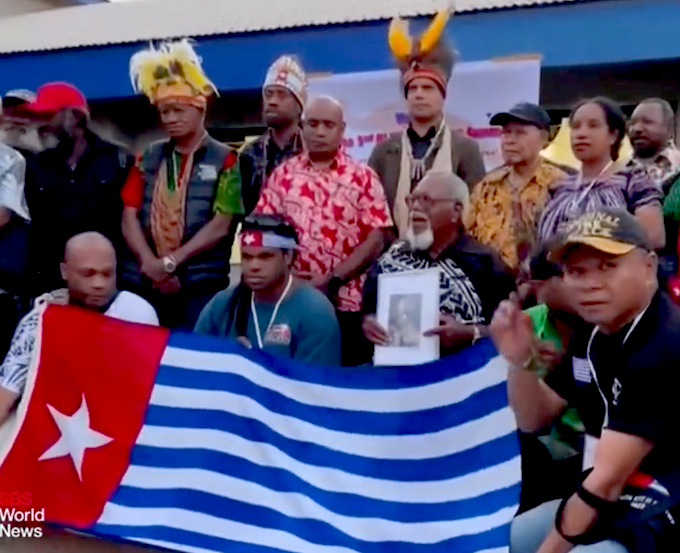
In the coming weeks, Australians will be asked to vote “yes” or “no” to the constitutional amendment to recognise Aboriginal and Torres Strait Islander people through establishing a body known as the Voice.
Anticipating the referendum, the Australian Electoral Commission has started to post to every voter the official “yes” and “no” cases. These cases were approved by the politicians who voted in favour of, or against, the amendment in parliament. They have not been subject to an independent fact check or analysis before publication. The Australian Electoral Commission has not reviewed or endorsed them.
As members of the Gilbert + Tobin Centre of Public Law and the Indigenous Law Centre, we have spent the past few weeks carefully reviewing the substantive claims made in the official “yes” and “no” cases. We wanted to identify where the claims are based on history, facts and research, where the claims need further explanation, and where the claim is misleading or simply unsupported.
Our analysis reveals the claims made to support the “yes” case are accurate. They are based in the historical development of the Voice proposal by Aboriginal and Torres Strait Islander people, and the ongoing support within their communities for the reform. They are supported by significant Australian and international research that practical progress will be made in areas such as health, housing and education when governments listen to Aboriginal and Torres Strait Islander people. This in turn results in better value for money in the long term.
The “yes” claims are informed by the vast weight of opinion from legal experts who have considered the wording of the draft amendment that the Australian people will be voting on. They reflect the government’s publicly agreed commitments for the future design of the Voice.
In contrast, the claims made to support the “no” case are largely misleading. Many of the claims simply ignore the existence of contrary facts and history.
The “no” case ignores, for instance, the views of the vast majority of legal experts that the amendment is not risky, or that significant details have been provided to the Australian people about the constitutional amendment and the future design of the Voice.
It also misrepresents the current position of Aboriginal and Torres Strait Islander people under the Constitution. It implies the Voice will bring discrimination and unequal treatment, whereas human rights experts agree the Voice proposal is consistent with the right to equality and provides recognition for the First Nations’ unique history, culture and connection to land.
The claims misrepresent the Voice as a bureaucracy and ignore the existence of significant research that demonstrates that structural changes such as the Voice will result in better practical outcomes. The “no” case misrepresents the scope and powers of the Voice, inaccurately explaining the constitutional limits on these while ignoring the practical and political limits.
Our analysis reveals that Australian voters need to be wary when reading the official pamphlet and making up their minds on the Voice. They will need to separate out the factual, supported claims from those that are misleading, unsupported or just plain wrong. Our report is designed to help voters with that process.
In our view, the “no” case has failed voters. It does not cater to the millions of Australians who want to hear fair-minded arguments in relation to the constitutional amendment before they make up their minds.
Gabrielle Appleby was a pro bono constitutional consultant to the Regional Dialogues and First Nations Constitutional Convention that delivered the Uluru Statement from the Heart. She is a member of the Indigenous Law Centre (UNSW Law & Justice) and supports the work of the Uluru Dialogues.
Paul Kildea has previously received funding from the Australian Research Council.
Sean Brennan was a member of the pro bono support team to the Regional Dialogues and First Nations Constitutional Convention that delivered the Uluru Statement from the Heart. He is a member of the Gilbert + Tobin Centre of Public Law (UNSW Law & Justice) and supports the work of the Uluru Dialogues.
A national review of primary care workforce regulations is investigating ways to increase Australians’ access to quality health care.
The review is considering how health-care workers can use more of their skills and training, to work to their full scope of practice. This includes exploring who should be allowed to prescribe medications.
Independent pharmacist prescribing is increasing around the world, and now trials are starting in most Australian states.
The review should focus on expanding pharmacists prescribing for stable conditions and long-term medications, under the direction of a GP.
What’s the problem?
It often seems like health workers are at odds, but there’s one thing the professional bodies for doctors, nurses, and allied health workers all seem to agree on: we need more team-based care. Governments agree too.
As rates of complex chronic disease rise, it’s no longer possible for one clinician to provide all the care, advice and support many patients need.
There is good evidence that a team of different kinds of health professionals working together can improve access to and quality of care, and reduce costs.
But Australia lags other countries when it comes to letting primary care professionals use all their skills. Partly as a result, Australia ranks behind most wealthy nations in the share of GPs who say they delegate aspects of care to other workers.
That’s one reason for rushed appointments and long wait times, with nearly one-quarter of Australians saying they wait too long to see a GP, and almost one-third not getting to see their preferred GP.
There are lots of things holding teamwork back. They include workforce shortages in some parts of Australia, cultural barriers, inadequate IT systems, a fee-for-service funding model, and clinics getting too little support to change how they work.
But the rules about who can do what, and who gets paid for doing what, are a big part of the problem. That will be the focus of this review.
Scope to share prescribing
The Pharmaceutical Benefits Scheme funds 215 million prescriptions each year. In the five years to 2021–22, that number rose by an average of 3.3 million prescriptions each year.
Those prescriptions can be written by authorised practitioners, such as doctors, dentists and optometrists, as well as nurse practitioners and midwife practitioners, who have post-graduate degrees.
Trials are underway to share this growing workload with pharmacists. This recognises pharmacists’ expertise in medicines, and their availability on a walk-in basis in most communities around Australia, including those with long waits for GP care.
It also reflects support from pharmacists and patients for a prescribing role.
Victoria’s 12-month pilot is set to begin in October, and will allow pharmacists to prescribe repeat scripts for oral contraceptive pills, as well as treatments for some mild skin conditions and urinary tract infections (UTIs).
Queensland, which already allows pharmacists to prescribe medications for UTIs, will begin a new trial later this year, allowing pharmacists to prescribe for a broader range of common health conditions.
Just a few weeks ago, Western Australia introduced pharmacy prescribing for UTIs.
It’s new here, but in many other countries pharmacist prescribing is well established. Models vary, but pharmacists can write prescriptions in countries including Canada, New Zealand, the United States and the United Kingdom.
In a growing number of countries, pharmacists can prescribe independently. For example, in England all newly qualified pharmacists will soon be able to do so.
An approach that has been around for longer overseas but that isn’t part of trials here, is pharmacists prescribing under a clinical management plan agreed with a patient’s GP.
Under this model, people with stable, long-term conditions that are being successfully managed with medication can get prescriptions renewed by their pharmacist, rather than having to return to the GP.
The evidence shows this type of prescribing can be just as effective as prescribing by doctors.
What approach should Australia take?
The Australian review is an opportunity to follow the evidence and catch up with other countries. If expanding prescribing rights is done carefully, it will improve access to care and reduce costs, without compromising the quality and safety of care.
But if there are too many prescribers working independently, it could increase fragmentation of care in a system that is already disjointed and hard to navigate. This has been one criticism of recent Australian pharmacy prescribing trials, all of which have some component of independent prescribing.
By working in partnership with GPs, pharmacist prescribing could go beyond the narrow range of medicines and conditions covered in independent prescribing schemes. It would complement effective pharmacy services that review medications and advise patients about them.
That’s why the review should focus on collaborative prescribing for stable, chronic conditions. This will help more patients, while keeping GPs at the heart of the primary care team, making sure that the pieces fit together.
As in other countries, additional training will be needed for pharmacist prescribers, and a range of implementation issues need to be considered. This includes ensuring:
pharmacists have sufficient training and skills
efficient systems are in place for sharing clinical information and working with GPs
both the pharmacists and the GPs they work with are paid appropriately.
Getting to the future of team-based care that all the major health professional groups espouse will require compromise. Pharmacy prescribing is already here, and it’s likely to go further. To get the best results for patients, community pharmacists should welcome leadership from GPs, while GPs should support pharmacist prescribing.
Peter Breadon’s employer, Grattan Institute, has been supported in its work by government, corporates, and philanthropic gifts. A full list of supporting organisations is published at www.grattan.edu.au.
Aaron Yin is currently on secondment to the Grattan Institute from the Victorian Department of Health.
Grattan Institute, has been supported in its work by government, corporates, and philanthropic gifts. A full list of supporting organisations is published at www.grattan.edu.au.
Climate change education is increasingly seen as an essential part of schooling.
The main international test of 15-year-olds’ progress (which Australia participates in) has just announced the next round of testing will include environmental knowledge alongside English, maths and science literacy.
Australia’s national curriculum (updated last year under the Morrison government) barely mentions climate change. But as a signatory to the United Nations Sustainable Development Goals and Paris Agreement, we have committed to develop climate change education policies.
In our new research, we interviewed nine primary and high school teachers about how they include climate change in their teaching.
We found teachers are becoming the bearers of bad news in the classroom as young people learn about the climate crisis, and they need better training and more support.
Climate change is a complex social, political, economic and environmental problem. But it is often presented as an issue that requires scientific interpretation and technological solutions.
This means teachers of non-science subjects may feel out of their depth trying to teach it. A number of teachers expressed a lack of confidence speaking in depth about climate change. As one told us:
I am definitely not weak, but I wouldn’t say I’m like a scientist.
But teachers who felt confident with the scientific “facts” of climate change, often felt less equipped to respond to student enquiries about social and emotional dimensions of climate change. This included feelings of sadness or feeling unsupported by older generations.
‘What can the world do?’
Teachers emphasised the importance of moving between the local and global, and individual and societal scales of climate problems and solutions. They described this as a way to support constructive conversations and positive feelings.
As one teacher told us:
Instead of the children feeling like they have the weight of what can they do as individuals, which we’ve discussed […] we’re going to talk about ‘what can the world do?’ As a global citizen, what can everybody do? And working together as a bigger part of the whole, so they’re not feeling that weight on their own shoulders as much, but more what the world is doing [through] solutions-based technology.
Teachers spoke of the importance of pre-designed learning units, the role of community experts and videos and podcasts to engage students and support teachers. As one teacher explained the value of a guest speaker:
I think the kids after a while get a little bit, ‘You’re [a teacher] just a piece of the furniture,’ and they don’t always switch on and listen to you.
‘I try and speak hopefully’
Teachers also talked about the challenge of finding materials that present the “right amount of information that will prompt action as opposed to feeling sad”.
Teachers said they had to be very tuned in to the mood of the class.
If they’re starting to ask questions that potentially sound worried or concerned, that’s usually an indicator that you might need to soften what you’ve delivered.
Teachers in our study were doing their very best to maintain a hopeful and positive message for students, but this often conflicted with their own feelings. As one teacher told us:
Personally, what I have to do is to try and make sure that I speak hopefully, even though it is not hopeful in my opinion […] I try and use language that will encourage students to feel empowered and want to make a change and fight for action […] as opposed to just knowing for the sake of knowing and then feeling sad about it.
Another teacher spoke of the need to be sensitive when talking about looming environmental disasters.
I tend to be very gentle and very careful or I’m very focused on hope.
What is needed?
Teachers need professional development to support their understandings of different aspects of climate change, from the scientific to the economic and social.
Uncertainty over how to talk to children about climate change in a way that is honest but remains hopeful rather than overwhelming is an ongoing challenge for teachers and parents alike.
Students need opportunities to talk about the future in ways that empower them to ask questions and get involved. This can be done via programs such as Curious Climate Schools a free resource, which we have developed for schools in Tasmania.
Specific professional learning is also needed to ensure teachers are able to support themselves and their students in grappling with the emotions that can surface when learning about climate change.
In schools, we need teaching about climate change to be integrated across science and humanities subjects. Climate change needs to be better represented across the curriculum so that teachers have more opportunities to include it in their very busy timetables. Finally, we need innovation from policy makers and school leadership so crucial climate change education is consistently available for all students.
Dr Gabi Mocatta, Dr Rachel Kelly, Charlotte Jones and Deniz Yildiz contributed to the research on which this article is based.
Kim Beasy is affiliated with the Centre of Marine Socioecology.
Chloe Lucas received funding from the Centre for Marine Socioecology, the University of Tasmania, and the Tasmanian Climate Change Office for the research and engagement reported in this article, as part of the Curious Climate Schools program. She is also funded by the Australian Research Council. Chloe is a member of the Centre for Marine Socioecology, the Institute of Australian Geographers and the International Environmental Communication Association, and is a member of the Editorial Board of Australian Geographer.
Gretta Pecl receives funding from the Centre for Marine Socioecology, Australian Research Council, CSIRO, FRDC, DCCEEW, Department of Agriculture Water and the Environment, and Department of Primary Industries NSW.
Source: The Conversation (Au and NZ) – By Dan Andrews, Visiting Fellow and Director – Micro heterogeneity and Macroeconomic Performance program, Crawford School of Public Policy, Australian National University
Shutterstock
Australia has long had far less competition in consumer markets than the US.
New research from the e61 Institute finds that in all but one of 17 broad industry divisions identified by the Australian Bureau of Statistics, Australian industries are on average more concentrated than their counterparts in the United States.
The measure used is “CR4” – the market share of the top four firms.
In 2017, the most recent year for which we could obtain comparable figures, Australia was far more prone to high levels of market concentration, with the top four firms accounting for 80% of some markets and averaging more than 60% across some industry categories.
Average concentration across industry groups, Australia versus United States
Market share of the top four firms, per cent
Importantly, we find market concentration in Australia increasing over time.
Between 2006 and 2020 Australia’s average CR4 measure of concentration increased 3 percentage points, with notable increases in industries that initially had a moderate level of concentration, such as retail and transport.
Concentrated industries don’t welcome new entrants
To be sure, concentrated does not always mean that competition is lacking, especially if there is credible threat of being displaced by dynamic upstarts.
But we found that in highly concentrated industries the four largest firms rarely got dislodged from their top positions over the 14 years between 2007 and 2021.
And those industries that experienced a rise in concentration over the seven years to 2014 recorded a decline in new firm entry over the following seven years.
This might mean we have as many as 6,300 fewer employing firms than we would have, giving Australian workers fewer employment options and suppressing real wage growth. And given that young firms are more innovative, it might mean lower productivity growth.
Concentrated industries break rules more often
Ranking Australian industries by their average concentration, we found the most concentrated had the most infringement notices and enforceable undertakings issued by the Australian Competition and Consumer Commission.
The airline industry, which is famously concentrated, has been hit with 12 such notices and enforceable undertakings over the past 30 years compared to only four for the accommodation industry.
ACCC infringement notices and undertakings versus industry concentration
Infringement notices and enforceable undertakings per 1,000 firms 1993-2023. Industry concentration is defined as the average sales concentration of the top 10 firms over 2007-2021. ABC, ACCC, e61
Concentration means higher prices
To explore the impact of market concentration on prices, we examined margins between retail and wholesale petrol prices in Brisbane and the Gold Coast and their relationship to the number of competing petrol stations within three kilometres.
We found that where petrol stations faced less competition they tended to charge higher margins, and that when wholesale prices rose, they appeared to be quicker in passing on this cost to consumers to maintain margins.
Competitors within 3 kilometres versus average petrol margins
Concentration is happening more quietly
Whereas in the US large mergers have to be reported to regulators, in Australia mergers are more like marriages.
Just as you don’t have to tell your family you are getting married, you don’t have to notify the Australian Competition and Consumer Commission you are about to merge with a competitor.
Companies are encouraged to notify the ACCC if the merged parties make either substitutes or complements and the merged firm will have a market share of more than 20%, but that is a guideline rather than a requirement, and the guidance was relaxed in 2008.
If you are high-profile enough to be listed on the Australian Securities Exchange, the ACCC is going to find out anyway through the media (ASX companies have to disclose significant acquisitions), so in practice most companies planning large mergers ask for the ACCC’s blessing ahead of time to avoid embarrassment.
That means while voluntary notification works well enough for bringing royal-wedding-style mergers to the ACCC’s attention, Vegas-style elopements can go undetected.
Although these small transactions can seem innocuous, their collective impact can be significant. In the US, it is estimated transactions too small to be reported account for 28–47% of the increase in concentration between 2022 and 2016.
In Australia, there is a risk that many of these transactions are going undetected.
e61 has found the number of private mergers (not reported to public financial markets) reviewed by the ACCC has plummeted since the ACCC relaxed the reporting guidelines, from 55 in 2006 to just 12 in 2022
Number of private mergers reviewed by the ACCC per year
The head of the Competition and Consumer Commission Gina Cass-Gottlieb told the National Press Club this year she wanted Australia to move away from voluntary notifications to formal clearances of the kind required overseas where there was
a mandatory requirement to notify the ACCC of mergers above specified thresholds
a requirement for transactions to be suspended from completion prior to ACCC clearance
Parties proposing a non-contentious merger could apply for a notification waiver that, if granted, would mean they wouldn’t need to make a full formal application and the proposal could be dealt with quickly.
Cass-Gottlieb said businesses were increasingly pushing the boundaries of the informal system, giving the ACCC late, incomplete, or incorrect information, and threatening to complete their transactions before it completed its reviews.
At times overseas authorities knew about proposed transactions involving Australian companies before the Australian authorities.
Our research finds that not only are Australian industries concentrated and becoming more so, but mergers might be increasingly flying under the radar.
The government has announced a review of competition policy that will include a review of merger laws as well as non-compete clauses. Our research suggests there’s a strong economic case for taking action on both fronts.
For employers wanting to recruit Indigenous workers, two key factors stand in their way: geography combined with lack of job diversity, and a mismatch between educational qualifications and job opportunities.
We’ve charted this mismatch with the Indigenous Jobs Map, using artificial intelligence to analyse more than 10 million job ads.
The map, is an Indigenous-led project supported by researchers and experts across CSIRO and external organisations.
It identifies three types of Indigenous-related job ads: those seeking an Indigenous candidate; those seeking “cultural capability” (for which a non-Indigenous candidate might also qualify); and jobs for which Indigenous candidates are encouraged to apply.
Using AI to analyse all job ads posted in Australia between 2016 and 2022, we calculate:
about 10% of all ads encouraged Indigenous applicants. These were ads stating that applications from Aboriginal and Torres Strait Islander peoples were welcomed or encouraged.
about 2% were for roles that required Indigenous cultural knowledge, skills and expertise, or experience working with Aboriginal and Torres Strait Islander people.
about 1% were for roles that only Indigenous peoples can apply for (or which give priority to Indigenous applicants in the selection process). These roles typically involve direct interaction with Aboriginal and/or Torres Strait Islander communities.
Of course, Indigenous workers can apply for any job, regardless of whether it specifically targets or encourages Aboriginal and Torres Strait Islander applicants.
However, the 2.3% of job ads for Indigenous people or requiring Indigenous cultural capability reflects the strong demand for Indigenous talent in the Australian labour market.
The number of these advertisements is increasing; in 2016 they represented 1.0% of Australian job ads and by 2022 they had reached 3.6%. Aboriginal and Torres Strait Islander people comprise about 2% of the workforce (either employed or actively seeking work).
So why aren’t these efforts to attract Indigenous workers making more of a difference?
Geographic mismatch
The infographic illustrates how geography limits these efforts. Each bubble represents a region of Australia. The size of the bubble represents the number of Indigenous workers in the region.
Regions above the horizontal black line have a higher-than-average proportion of Indigenous-focused job ads. Regions below this line have fewer Indigenous-focused job postings than average.
Regions to the left of the vertical line have a lower-than-average proportion of Indigenous workers in their labour market. Regions to the right have a higher-than-average proportion of Indigenous workers.
If demand for Indigenous workers was aligned with supply, most regions would be positioned on, or near the red diagonal line.
Instead, we see many regions where demand for Indigenous workers is relatively high but the supply of Indigenous workers is relatively low.
The Ballarat region in Victoria illustrates this disparity, with 2,910 Indigenous- focused job ads compared to an Indigenous workforce of 640 individuals. In contrast, in the New England region of New South Wales, there were 5,821 Indigenous workers and 2,483 Indigenous-focused job ads.
In other words, employers are recruiting for Indigenous talent in the wrong places.
Limited range of job types
There is also a lack of diversity in the roles being advertised. Most are in just three sectors: public administration and safety; health care and social assistance; and education and training. A disproportionate number are for community and personal-service worker roles.
This strong sector-specific demand does not align with the qualifications of the Indigenous workforce.
For example, we counted 7,610 Indigenous focused job ads requiring a qualification in medicine. But the 2021 Census counted just 585 Indigenous people holding their highest qualification in medicine.
The following chart illustrates these demand and supply differences according to educational field.
The size of each bubble reflects the number of Indigenous workers with formal qualifications in this field. The position of the bubble (to the left or right of the vertical line) reflects the proportion of Indigenous-focused job ads that require this qualification.
Employers post job ads seeking Indigenous workers with qualifications in society and culture, health and education. While Indigenous workers are likely to have qualifications in society and culture, they are not well represented in health and education. Indigenous workers are better represented in fields such as agriculture and environment, society and culture and food, hospitality and personal services.
Job ads targeting Indigenous workers are not found across the board. When we look across all jobs ads (not just those targeting Indigenous workers), management and commerce qualifications are in highest demand. The opportunities for Indigenous workers are limited in diversity and often not well-aligned with the educational pathways commonly chosen by Indigenous peoples.
Feast and famine
The effect of this geographic and qualification mismatch is to create a landscape of feast (for some) and famine (for many others).
For instance, in Melbourne there were more than 60,000 Indigenous-focused job ads for each Indigenous worker in the region with an Information Systems qualification.
On the flip side, there were very few employers targeting Indigenous workers with a building qualification. For example, in Townsville there was one Indigenous-focused job ad for the 128 Indigenous workers with a qualification in building.
By understanding the career pathways of Indigenous peoples and tailoring their workforce strategies to align with the locations and qualifications held by Indigenous peoples, employers can do more to ensure that they are successful in their efforts to attract Indigenous workers.
Education is key
Remote work arrangements can help mitigate the geographic mismatch between current demand for and supply of Indigenous talent. But, ultimately, improving job opportunities for Indigenous Australians requires a whole-of-ecosystem approach involving Indigenous communities, educators, employers and policy makers.
The visible growth in employers’ efforts to recruit Indigenous workers represents positive change. The Indigenous Jobs Map reveals how these efforts can be directed more effectively so they translate into employment outcomes.
The data also confirms education is the key pathway to highly skilled and well-paid employment. A Bachelor’s degree is most highly sought after, being required in 22.5% of Indigenous focused job ads. Effort needs to be directed towards improving the number of Indigenous people gaining higher educational qualifications.
By engaging Indigenous students in schools, employers can help students and carers understand how their unique knowledge and approach add value in the workplace. Connecting directly and early with Indigenous communities will improve the pipeline of Indigenous talent and ultimately, achieve a more inclusive labour market.
Claire Mason works for the CSIRO.
Haohui Chen works for CSIRO.
Louisa Warren does not work for, consult, own shares in or receive funding from any company or organisation that would benefit from this article, and has disclosed no relevant affiliations beyond their academic appointment.
After receiving a head injury from a car accident in 2014, I was given support through the Accident Compensation Corporation (ACC) to recover and return to work as a health professional.
But I am keenly aware that those who have brain injuries after medical events – such as a stroke – are often left to negotiate health and rehabilitative services with significantly less support.
To be covered by ACC, your injury has to be caused by an accident. New Zealanders suffering from strokes, cancers or mental health conditions, along with other non-accident injuries, are subsequently disadvantaged by the cause of their health condition. And this can have a considerable financial and emotional toll.
Partly because of my own experience, for my doctoral research I looked at the services that were available to support people with health challenges who did not qualify for ACC – essentially any condition that affects a person’s ability to work or study, but which wasn’t caused by an accident.
I investigated whether they were effective in getting people back into work, and also looked at how we assess the outcomes of these programmes. What I found was the significant gap in resources and services and the need for a wraparound service, or at the very least, targeted support on the road to recovery.
Helping people back to work helps us all
The amount of support available after illness or injury can make a significant difference to a person’s life.
A 2013 study found 79% of people who received ACC support after a brain injury from an accident were in paid work one year after the injury. But this dropped to 50% for those with a similar brain injury not caused by an accident (such as a stroke).
But it’s not just about the money. As one person who was living with a long-term health condition told me:
Work isn’t just for the finances. It’s the people. It gets you out of bed. I miss it. I want to work. I want to be a part of the society that’s around me. I want to walk down the street and feel I am a part of that.
Learning from ACC’s success
The outcomes for those who receive ACC show what can happen when people access tailored support after an injury.
ACC offers a wraparound rehabilitative service targeted to a person’s individual needs to return to working life.
But systems to support people with health conditions and disabilities tend to be siloed into speciality organisations. These are not designed to meet complex individual needs.
So why not apply a wraparound, cross-agency approach to health and injury issues similar to ACC? It could be applied to people receiving the JS-HCD benefit.
The idea is not breaking entirely new ground.
Between 2016 and 2021, Te Whatu Ora-Waikato and the Ministry of Social Development (MSD) partnered to pilot the Realising Employment through Active Coordinated Healthcare (REACH) programme.
The goal of the REACH programme was to remove the barriers experienced by people living with health conditions and disabilities through a “whole person” approach.
Support included a key worker who met with the client regularly to build strategies to manage health and mental wellbeing, as well as a living coach who provided tailored support for reentry into the workforce once their health was stabilised.
People in the REACH programme were also able to access funding for services that were not covered by MSD.
During my 18 month research period, 138 people participated in REACH and 96 completed the programme. Those who had completed the programme were 53% more likely to gain paid employment or enrol in full-time study than those who did not participate.
But funding for REACH was pulled before the outcomes were fully assessed. The pilot ended in 2021, ahead of the restructure of the district health boards into Health New Zealand-Te Whatu Ora and the Māori Health Authority.
A short-term focus misses the growing problem
The number of New Zealanders living with long-term health conditions is growing. Despite many wanting to return to work, this population often falls into the cracks between health and social services.
My research suggests that integrated and individualised services like REACH are effective in helping people with health conditions and disabilities achieve positive outcomes, including returning to work.
But the removal of funding for the REACH programme highlights the bigger barriers for people who don’t qualify for ACC support in getting back to work: ineffective assessment of outcomes and a focus on the short-term costs and benefits.
Replicating the ACC model for people living with health challenges holds potential. But we are going to need sustained and long-term funding for such programmes, as well as patience to achieve the desired results.
Michelle Cameron ne travaille pas, ne conseille pas, ne possède pas de parts, ne reçoit pas de fonds d’une organisation qui pourrait tirer profit de cet article, et n’a déclaré aucune autre affiliation que son organisme de recherche.
Fiji recently lost Dr Meraia Taufa Vakatale, a monumental woman leader who broke many glass ceilings with her numerous firsts. As an educationalist, diplomat and politician, she profoundly impacted on the lives of tens of thousands in Fiji and the Pacific region, particularly young women in politics and anti-nuclear activists.
Dr Vakatale was Fiji’s first woman deputy prime minister, the first woman to be elected as a cabinet minister, the first female to be appointed as a deputy high commissioner, and the first Fijian woman principal of a secondary school in Fiji.
Dr Vakatale was also a fervent anti-nuclear activist. In 1995 she took a costly stand against her party and the then Sitiveni Rabuka government on renewed French nuclear testing on Moruroa Atoll in “French” Polynesia.
Joining a protest march against French testing led to her losing her cabinet position in the Rabuka-led government, in which she served as a member of the Soqosoqo ni Vakavulewa ni Taukei (SVT) party.
She held the portfolio of Education, Science and Technology in two stints — from 1993 to 1995 and then, after being reinstated, from 1997 to 1999. In 1997, she was appointed Deputy Prime Minister.
In 2000, she resigned as President of the SVT party over the 2000 coup fallout.
She was a woman ahead of her time. Dedicated to her principles, she “paid it forward” to Pasifika generations by her fight to keep the Pacific a nuclear-free zone.
Idealism inspired thousands Dr Taufa Vakatale’s spirited and unwavering determination, her activism, idealism and her principles inspired thousands of women and youth to fearlessly pursue their dreams.
The name Taufa Vakatale was first linked to the renowned all-girls Adi Cakobau School when she became a pioneer student there in 1948, aged 10 years. She was also the first female student at the all-male Queen Victoria School.
She completed her 6th form year at Suva Grammar School, where she became the first Fijian female to pass the NZ University Entrance. She entered the University of Auckland and in 1963 was the first Fijian woman to graduate with a Bachelor of Arts degree, privately funding her studies from her wages as a teacher in Fiji.
Taufa Vakatale went on to further studies in the United Kingdom from 1963 to 1971. On return to Fiji, she became the first Fijian woman president of the Fiji YWCA and principal of her old school, the Adi Cakobau School.
The YWCA in Fiji was the driving force of the anti-nuclear protest movement in the early 1970s, while she was president.
In her time as an educator, Dr Vakatale disciplined fairly, understood her students, and entrusted them with positive goals for their future, instructing them to “leave the world better than we found it”.
She was respected and honoured. Her feats helped ease the students’ own steps, to bring to life the Adi Cakobau School motto.
Towering moral stature Of petite and elegant frame, in moral stature Dr Vakatale towered above many. In diplomacy she served as Fiji’s Deputy High Commissioner to the UK in 1980, while single-handedly raising her daughter to become a lawyer.
The University of St Andrews in Scotland awarded her an Honorary Doctorate of Letters for her contribution to the cause of Pacific women, while Fiji bestowed her with the Order of Fiji in 1996.
The extraordinary Dr Meraia Taufa Vakatale died on 24 June 2023, aged 84. She leaves behind her only daughter Alanieta Vakatale, three granddaughters, and many more following in her footsteps to leave this world a better place.
Thirty eight years on from the sinking of the Rainbow Warrior and the adoption of the Pacific nuclear-free zone treaty, the Rarotonga Treaty, and with the imminent release of Japan’s Fukushima nuclear plant radioactive waste into the Pacific ocean, the leadership and sacrifices of Dr Vakatale must be hailed, and her life celebrated.
Asenaca Uluiviti is a community legal officer in Auckland. She has worked as a state solicitor in Fiji and at its diplomatic mission in the UN, and has served as chairperson of Fiji YMCA, and on the NZ board of Greenpeace. She went to the Adi Cakobau School.Sadhana Sen is regional communications adviser at the Development Policy Centre. Republished from the DevPolicy blog through a Creative Commons licence.
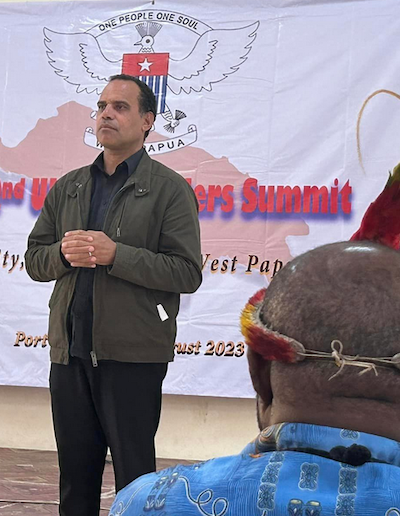
In spite of again being denied full membership of the Melanesian Spearhead Group, the United Liberation Movement for West Papua (ULMWP) has welcomed the call from the MSG Leaders’ Summit in Port Vila last week for Indonesia to allow the long-awaited visit of the UN High Commissioner for Human Rights to West Papua.
“I hope that the MSG chair will honour the commitment to write to Indonesia as a matter of urgency, as every day that international intervention is delayed sees more West Papuans suffer and more Melanesian blood spilt,” ULMWP president Benny Wenda declared.
“Even in the run up to the MSG summit, with the eyes of the Pacific region on human rights in West Papua, Indonesia brutally cracked down on peaceful rallies in favour of ULMWP full membership, arresting dozens and killing innocent civilians,” he said in a statement.
As an associate member of the MSG, Indonesia must respect the chair’s demand, Wenda said.
“If they continue to deny the UN access, they will be in violation of the unified will of the Melanesian region.
“As the leaders’ communique stated, the UN visit must occur this year in order for the commissioner’s report to be put before the next MSG summit in 2024.”
Wenda said he also welcomed the MSG’s commitment that it would write to the Pacific Islands Forum (PIF) chair to ensure that the UN visit was undertaken.
‘Guarantee UN visit’ “The PIF must honour this call and do all they can to guarantee a UN visit,” he said.
United Liberation Movement for West Papua (ULMWP) interim chair Benny Wenda being interviewed by Vanuatu Television during MACFEST2023.
“And yet Indonesia has come no closer to allowing the United Nations access. Mere words are clearly not enough: the MSG Leaders’ Summit must be the trigger for international pressure of such overwhelming force that Indonesia has no choice, but to allow a UN visit.
“Although we are disappointed to have been denied full membership on this occasion, our spirit is strong and our commitment to returning home to our Melanesian family is undiminished.
“We are not safe with Indonesia, and will only find security by standing together with our Pacific brothers and sisters.
“Full membership is our birthright: culturally, linguistically, ethnically, and in our values, we are undeniably and proudly Melanesian.”
6/9) @MsgSecretariat must set terms, that should Indonesia fail to allow & respect the visits of an independent fact-finding mission by PIF, and the UN High Commissioner for Human Rights, then Indonesia must be BANNED from the MSG. pic.twitter.com/FUrJZQSvK0
Youngsolwara Pacific criticises MSG Meanwhile, the Youngsolwara Pacific movement has made a series of critical statements about the MSG communique, including deploring the fact that the leaders’ summit was not the place to discuss human rights violations and reminded the leaders of the “founding vision”.
They called on the MSG Secretariat to “set terms, that should Indonesia fail to allow and respect the visits of an independent fact-finding mission by PIF, and the UN High Commissioner for Human Rights, then Indonesia must be BANNED from the MSG.”
They also demanded “clarity on the criteria for associate members and their respective engagement”.
Indonesia is the only associate member of the MSG while the ULMWP has observer status.
There is a reported apparent rift within cabinet between Foreign Minister Nanaia Mahuta and Defence Minister Andrew Little over Aotearoa New Zealand’s position in the widening conflict between the United States and China.
While at its core it is over relative economic power, the conflict is manifested by China’s increased presence in the Pacific Ocean, including military, and over Taiwan. Both countries have long Pacific coastlines.
However, the United States has a far greater and longstanding economic and military presence (including nuclear weapons in South Korea) in the Pacific.
Despite this disparity, the focus is on China as being the threat. Minister Mahuta supports continuing the longstanding more independent position of successive Labour and National-led governments.
This goes back to the adoption of the nuclear-free policy and consequential ending of New Zealand’s military alliance with the United States in the mid-1980s.
On the other hand, Minister Little’s public utterances veer towards a gradual shift away from this independent position and towards a stronger military alignment with the United States.
This is not a conflict between socialist and capitalist countries. For various reasons I struggle with the suggestion that China is a socialist nation in spite of the fact that it (and others) say it is and that it is governed by a party calling itself communist. But that is a debate for another occasion.
Core and peripheral countries This conflict is often seen as between the two strongest global economic powers. However, it is not as simple as that.
Whereas the United States is an imperialist country, China is not. I have discussed this previously in Political Bytes (31 January 2022): Behind the ‘war’ against China.
In coming to this conclusion I drew upon work by Minqi Li, professor of economics at the University of Utah, who focussed on whether China is an imperialist country or not.
He is not soft on China, acknowledging that it ” . . . has developed an exploitative relationship with South Asia, Africa, and other raw material exporters”.
But his concern is to make an objective assessment of China’s global economic power. He does this by distinguishing between core, semi-periphery, and periphery countries:
“The ‘core countries’ specialise in quasi-monopolistic, high-profit production processes. This leaves ‘peripheral countries’ to specialise in highly competitive, low-profit production processes.”
This results in an “…unequal exchange and concentration of world wealth in the core.”
Minqi Li describes China’s economy as:
“. . . the world’s largest when measured by purchasing power parity. Its rapid expansion is reshapes the global geopolitical map leading western mainstream media to begin defining China as a new imperialist power.”
Consequently he concludes that China is placed as a semi-peripheral county which predominately takes “. . . surplus value from developed economies and giving it to developing economies.”
In my January 2022 blog, I concluded that:
“Where does this leave the ‘core countries’, predominately in North America and Europe? They don’t want to wind back capitalism in China. They want to constrain it to ensure that while it continues to be an attractive market for them, China does not destablise them by progressing to a ‘core country’.”
Why the widening conflict now? Nevertheless, while neither socialist nor imperialist, China does see the state playing a much greater role in the country’s economy, including increasing its international influence. This may well explain at least some of its success.
So why the widening conflict now? Why did it not occur between the late 1970s, when China opened up to market forces, and in the 1990s and 2000s as its world economic power increased? Marxist economist and blogger Michael Roberts has provided an interesting insight: The ‘New Washington Consensus’.
Roberts describes what became known as the “Washington Consensus” in the 1990s. It was a set of economic policy prescriptions considered to constitute the “standard” reform package promoted for economically struggling developing countries.
The name is because these prescriptions were developed by Washington DC-based institutions such as the International Monetary Fund, World Bank and the United States Treasury.
The prescriptions were based on so-called free market policies such as trade and finance liberalisation and privatisation of state assets. They also entailed fiscal and monetary policies intended to minimise fiscal deficits and public spending.
But now, with the rise of China as a rival economic global power globally and the failure of the neoliberal economic model to deliver economic growth and reduce inequality among nations and within nations, the world has changed.
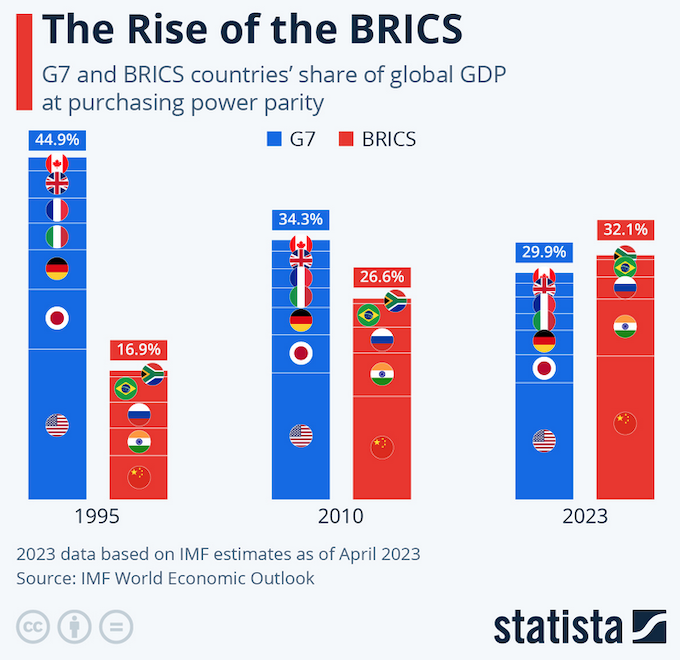
The rise of the BRICS. Graph: Statista 2023
What World Bank data reveals Roberts draws upon World Bank data to highlight the striking nature of this global change. He uses a “Shares in World Economy” table based on percentages of gross domestic production from 1980 to 2020.
Whereas the United States was largely unchanged (25.2 percent to 24.7 percent), over the same 40 years, China leapt from 1.7 percent to 17.3 percent. China’s growth is extraordinary. But the data also provides further insights.
Economic blocs are also compared. The G7 countries declined from 62.5 percent to 47.2 percent while the Organisation for Economic Cooperation and Development (OECD) also fell — from 78 percent to 61.7 percent.
Interestingly while experiencing a minor decline, the United States increased its share within these two blocs — from 40.3 percent to 52.3 percent in G7 and from 32.3 percent to 40 percent in OECD. This suggests that while both the G7 and OECD have seen their economic power decline, the power of the United States has increased within the blocs.
Roberts use of this data also makes another pertinent observation. Rather than a bloc there is a grouping of “developing nations” which includes China. Over the 40 year period its percentage increased from 21.5 percent to 36.4 percent.
But when China is excluded from the data there is a small decline from 19.9 percent to 19.1 percent. In other words, the sizeable percentage of growth of developing countries is solely due to China, the other developing countries have had a small fall.
In this context Roberts describes a “New Washington Consensus” aimed at sustaining the “. . . hegemony of US capital and its junior allies with a new approach”.
In his words:
“But what is this new consensus? Free trade and capital flows and no government intervention is to be replaced with an ‘industrial strategy’ where governments intervene to subsidise and tax capitalist companies so that national objectives are met.
“There will be more trade and capital controls, more public investment and more taxation of the rich. Underneath these themes is that, in 2020s and beyond, it will be every nation for itself — no global pacts, but regional and bilateral agreements; no free movement, but nationally controlled capital and labour.
“And around that, new military alliances to impose this new consensus.”
Understanding BRICS This is the context that makes the widening hostility of the United States towards China highly relevant. There is now an emerging potential counterweight of “developing countries” to the United States’ overlapping hegemons of G7 and the OECD.
This is BRICS. Each letter is from the first in the names of its current (and founding) members — Brazil, Russia, India, China and South Africa. Around 40 countries have expressed interest in joining this new trade bloc.
These countries broadly correspond with the semi-periphery countries of Minqi Li and the developing countries of Roberts. Predominantly they are from Africa, Asia, Middle East, and Central and South America.
Geoffrey Miller of the Democracy Project has recently published (August 21) an interesting column discussing whether New Zealand should develop a relationship with BRICS: Should New Zealand build bridges with BRICS?
Journalist Julian Borger, writing for The Guardian (August 22), highlights the significant commonalities and differences of the BRICS nations at its recent trade summit: Critical BRICS trade summit in South Africa.
Al Jazeera (August 24)has updated the trade summit with the decision to invite Argentina, Egypt, Ethiopia, Iran, Saudi Arabia and the United Arab Emirates to join BRICS next January: The significance of BRICS adding six new members .
Which way New Zealand? This is the context in which the apparent rift between Foreign Minister Nanaia Mahuta and Defence Minister Andrew Little should be seen.
It is to be hoped that that whatever government comes into office after October’s election, it does not allow the widening conflict between the United States and China to water down Aotearoa’s independent position.
The dynamics of the G7/OECD and BRICS relationship are ongoing and uncertainty characterises how they might play out. It may mean a gradual changing of domination or equalisation of economic power.
After all, the longstanding British Empire was replaced by a different kind of United States empire. It is also possible that the existing United States hegemony continues albeit weakened.
Regardless, it is important politically and economically for New Zealand to have trading relations with both G7 and developing countries (including the expanding BRICS).
Ian Powell is a progressive health, labour market and political “no-frills” forensic commentator in New Zealand. A former senior doctors union leader for more than 30 years, he blogs at Second Opinion and Political Bytes, where this article was first published. Republished with the author’s permission.
In our new study, published on Tuesday, we surveyed 701 migrant and refugee women in Australia and found nearly half had experienced sexual harassment in the workplace over the past five years.
This harassment was overwhelmingly perpetrated by men in senior positions, or men who were clients and customers.
These women most often experienced workplace sexual harassment when they were in insecure employment, in temporary, casual or contract positions.
We asked the women in our study what they perceived was the motivation for the harassment: they consistently identified sex and gender as a key motivation, as well as race and religion.
It was very rare for participants to have reported sexual harassment in the workplace to a formal authority. It was most common for these women to disclose the experience to friends and family, or informally to someone at work.
The primary reason for respondents not reporting was because they “felt responsible”. Other reasons were uncertainty about where to go, and fears about what reporting would mean for their job security.
Why did we study this?
In November 2022, Sex Discrimination Commissioner Kate Jenkins launched the fifth national survey on sexual harassment in Australian workplaces. This report, and previous editions, did not capture migrant and refugee women’s voices or experiences in any detail.
These reports rely on the single variable of “language spoken at home” as a marker of cultural and linguistic diversity. Also, they’re only conducted in English and don’t ask specific questions designed to capture aspects of migrant and refugee experiences.
Few studies have captured the experiences of workplace sexual harassment among migrant and refugee women (although the Diversity Council of Australia is examining intersections of gender and race at work).
The survey was available in six languages: Arabic, English, Farsi, Swahili, Chinese (Simplified) and Dari.
About 11% of respondents completed the survey in a language other than English. This reaffirms the importance of making the survey available in multiple languages to capture diverse voices.
The majority of respondents were Australian citizens (63%), while 19% were permanent residents and 18% were temporary residents. About 88% were born outside Australia; almost three-quarters of the sample had a bachelor’s degree or higher; and the participant ages ranged between 18 and 70 years.
What we found
Just under 70% of migrant and refugee women in this study had experienced at least one form of sexual harassment in the past five years in Australia.
And 46% of migrant and refugee women in this study had experienced this in the workplace.
The most commonly reported forms of sexual harassment in the workplace were:
indecent phone calls or messages of a sexual nature (71%)
sexually suggestive comments or jokes (53%)
intrusive questions about private life or physical appearance (49%)
staring or leering that was intimidating (48%).
Men were most frequently the harassers. There was often more than one person harassing the respondent in the workplace.
Next steps
This research highlights key issues that need to inform ongoing conversations about what sustains workplace sexual harassment, and how it specifically impacts migrant and refugee women.
Our research suggests focusing only on reporting mechanisms will not impact workplace culture or women’s safety. It’s also important to recognise that insecure work is one factor that contributes to migrant and refugee women being a target for sexual harassment in the workplace.
The understanding that workplace sexual harassment and racial and religious discrimination are deeply intertwined requires ongoing attention, particularly given the tendency for these issues to be treated as separate policy issues.
The findings from this report are part of a larger ongoing study. We’ve begun the second phase, speaking to migrant and refugee women in interviews and focus groups across Australia to explore these findings and their implications in more detail.
Marie Segrave receives funding from the Australian Research Council and the Australia’s National Research Organisation for Women’s Safety.
Chloe Keel receives funding from Australian Research Council and Australia’s National Research Organisation for Women’s Safety (ANROWS).
Rebecca Wickes receives funding from the Australian Research Council, Australia’s National Research Organisation for Women’s Safety Limited. The Victoria Department of Justice and Community Safety and The Social Sciences and Humanities Research Council, Canada.
Shih Joo Tan receives funding from Australian Research Council and Australia’s National Research Organisation for Women’s Safety (ANROWS).
Last week, the Queensland parliament voted to override its own human rights law in order to enable children to continue to be detained in police watch houses and adult detention facilities.
This was not the first time it had taken such a step. In March, the parliament passed amendments to override the state’s Human Rights Act to create an offence for children who breach bail conditions, require a sentencing court to consider a child’s bail history, and enable a child to be declared a serious repeat offender.
These moves have attracted a significant amount of criticism because they come so soon after the state’s Human Rights Act was adopted. And they are serious because children’s rights are the ones being trampled – twice – and children are among the most vulnerable members of our community, even when they commit crimes.
In addition, overriding the Human Rights Act twice could create a pattern we should be extremely concerned about.
International human rights protections
International conventions broadly obligate parties to make the best interests of children a primary consideration in all actions concerning them. These conventions and applicable international standards also assert that the incarceration of children should be a last resort and juveniles should be treated in an age-appropriate way in criminal justice proceedings.
The Queensland government relied on these specific international human rights protections when it drafted its Human Rights Act, which I have extensively reviewed in my new book (written with Peter Billings).
For instance, section 33 protects children’s rights in the criminal justice process, including a child’s right to be segregated from adults in detention and a convicted child’s right to receive age-appropriate treatment.
In addition, section 32(3) provides that a child charged with a criminal offence has the right to procedures that are age-appropriate and rehabilitation-focused.
These rights recognise that children are entitled to special protection because of their younger age, different needs and relative immaturity. Everyone detained by the government is vulnerable, but children are particularly so.
Although Australia has ratified both international conventions, it has done so with objections. These include giving “responsible authorities” some discretion to decide that segregation of child and adult detainees might not be beneficial if it separates children from their families.
However, this objection does not seem relevant to the recent legislative moves in Queensland because detaining youth offenders alongside adults is unlikely to benefit the children concerned.
Youth offenders and detention
Recent news stories about the alleged criminal offences committed by juveniles in Queensland are immeasurably sad. Yet, in many respects, everyone is on the same page about these issues. No one has said a child who commits a serious crime should not face consequences.
But consequences for youth offenders must take into account their age, intellectual and physical development and disabilities, and potential for rehabilitation.
Even when a child who has committed a serious offence is sentenced to a significant term of imprisonment, the Victorian Supreme Court has noted his or her prospects for rehabilitation are “very much more advanced” by serving the term in youth detention rather than an adult prison.
In other words, youth offenders should not be held in detention facilities with adults. Police watch houses and adult detention centres are not safe places for any young person.
The Youth Advocacy Centre reports that more children are incarcerated in Queensland than in any other state. This is an appalling statistic, especially because many young offenders have themselves been victims of crime, trauma or abuse, were raised in unsafe families or out of home care, or have severe disabilities.
The Queensland government claims the recent legislative moves to override the Human Rights Act will enhance community safety and clarify administrative arrangements for youth detention. However, there is overwhelming evidence that youth detention does not necessarily make communities safer or deter or rehabilitate young offenders. In fact, it may increase the likelihood of reoffending.
Concerning trend of legislative overrides
Rather, these amendments in Queensland are largely serving a political purpose. This is because any move by a parliament to override an established law should only be done in exceptional circumstances, such as a war, state of emergency or crisis threatening public safety, health or order.
In Victoria, the override provision in the Charter of Human Rights and Responsibilities has been used in the past in situations that did not appear to meet the exceptional circumstances threshold. In 2015, a review of the charter recommended the repeal of the override power, calling it unnecessary and unhelpful.
Surprisingly, no such overrides were declared either in Victoria or Queensland – the two states that have human rights laws with this provision – during the COVID-19 public health emergency.
As the Queensland parliament’s actions demonstrate, legal protections for human rights remain frail and subject to the whims of governments or the prevailing moods of their electorates. The Human Rights Act itself is an ordinary law, which means future governments could dilute, amend or even repeal it. (Hopefully, Queenslanders would not stand for this.)
The Act can also be weakened if the parliament overrides its protections too many times. Queensland has now done it twice in six months. This must be taken seriously. Let’s hope we don’t see a pattern of these types of actions – it would make a mockery of human rights protections in Queensland.
Nicky Jones no recibe salario, ni ejerce labores de consultoría, ni posee acciones, ni recibe financiación de ninguna compañía u organización que pueda obtener beneficio de este artículo, y ha declarado carecer de vínculos relevantes más allá del cargo académico citado.
In 1993, frogs were found dying en masse in Far North Queensland. When scientists analysed their bodies, they found something weird. Their small bodies were covered in spores.
It was an epidemic. An aquatic fungus had eaten the keratin in their skin, compromising its function and leading to cardiac arrest. And worse, the amphibian chytrid fungus (Batrachochytrium dendrobatidis) had been quietly spreading around the world, from South America to Europe, killing frogs wherever it went.
It doesn’t look lethal – but looks can be deceiving. This is a chytrid zoosporangium, which will release zoospores that propel themselves through water in search of amphibian hosts. CSIRO/Wikimedia, CC BY-ND
Likely native to the Korean Peninsula, it was first detected in Australia in the late 1970s. As it spread, it caused the extinction of at least four Australian frog species and probably three others.
This lethal pathogen is a selective killer. As our new research shows, it effectively makes some areas a no-go zone for susceptible frog species. The fungus doesn’t like hot conditions. But in cooler environments – such as in southern Australia and higher up in mountain ranges – it flourishes. Mortality rates in these environments can approach 100% for some frog species.
Pushed from the highlands
Australia is rich in frogs, with 247 surviving species at last count. Most are endemic to the continent – and many are spectacularly beautiful or, like the turtle frog, bizarre.
The turtle frog (Myobatrachus gouldii) is one of Australia’s strangest. Stephen Zozaya/Wikimedia, CC BY-ND
The gorgeous Australian lace-lid treefrog was once widespread across the rainforests of Queensland’s Wet Tropics, which run from Townsville to Cooktown, stretching from sea level up to Queensland’s highest mountain, the 1,622 metre Mt Bartle Frere.
Lace-lid treefrogs once lived throughout these forests, whether on mountains or down near sea level. But they have been driven from rainforests above 400 metres. Down lower, the heat makes it harder for chytrid to kill, and the frog’s higher breeding rate can outpace deaths from the disease.
No-go zones
Australians know full well about the damage introduced species can do. Cane toads kill native predators like quolls who aren’t used to their toxin. Cats and foxes have driven many small mammals to extinction.
But even when a species survives contact with an introduced species, it can be forever changed.
That’s because of less visible effects introduced species like chytrid fungus can have, such as shrinking the areas where native species can survive. When this happens, our species can be pushed into smaller parts of their original range, known as environmental refuges.
As our research shows, it’s not just geographic range that changes. It also changes their niche – the set of environmental conditions where species can survive. Introduced species can actually force much larger contractions to a native species’ niche than to its geographic range.
You might wonder how that can be. It’s because the damage done by introduced species can vary a lot depending on the environment. Introduced species have their own niche – climates and environments where they thrive, and areas where they don’t.
Frog species that survived the initial epidemics don’t just persist in random parts of their old range. Hotter, wetter areas or those with less temperature variability become refuges. Chytrid is still widespread here, but it’s less lethal.
Part of the puzzle is also the fact these refuge areas are naturally easier places for frogs to survive and reproduce. Where populations thrive, they have greater resilience and stand a better chance of surviving the fungus.
Pushed into refuges
The pattern we document isn’t just seen in frogs. Researchers suspect similar changes have been forced on many native species impacted by introduced species.
Consider the bush-stone curlew – a long-legged, endearing bird with eerie night cries. Many of us will have seen them haunting parks and beer gardens across northern Australia. But the same bird is now extinct or critically endangered in southern Australia, where it used to roam. Why?
Bush-stone curlews are lanky, unusual birds with a distinctive call. Shutterstock
Habitat loss has played a role, but this species is highly susceptible to foxes. Foxes don’t much like the humidity of tropical and subtropical Australia. As a result, the curlew has been pushed out of the drier parts of its niche.
Niche contractions due to introduced species are likely to be widespread but little-studied.
If a species has a shrinking niche, it may change where conservationists direct their efforts. To give threatened species the best chance of survival, we might have to direct our energies to safeguarding them in their environmental refuges, safe from introduced predators or diseases.
When scientists assess how a species is going, we often look at changes in geographic range to gauge the level of risk to the species, from vulnerable through to extinct in the wild.
But this can have limitations. What our work has shown is that the survivable niche for species can shrink much more than its geographic range, reducing resilience to new environmental challenges. If frog species are forced out of upland areas, they may be at more risk from climate change, given higher elevations are likely to be most resilient to climate change.
There’s a silver lining here, though. Species can be more resilient than we assume in the face of new threats. Some populations may be hard hit, while others escape. Understanding why that is will be key to give our native species the best chance of surviving an uncertain future.
Geoffrey Heard is a member of the Terrestrial Ecosystem Research Network at the University of Queensland, which is funded under the National Collaborative Research Infrastructure Strategy (NCRIS). The Threatened Species Index, of which Geoffrey Heard is a Science Advisor, has received co-funding from the Department of Climate Change, Energy, the Environment and Water of the Australian Government.
Benjamin Scheele receives funding from the Australian Research Council.
Conrad Hoskin receives funding from the Department of Environment and Science (Queensland Government) and the Australian Research Council (ARC). He is affiliated with the College of Science and Engineering, James Cook University (Townsville, Australia).
Jarrod Sopniewski is supported by a Hackett Postgraduate Research Scholarship at the University of Western Australia.
Jodi Rowley has received funding from the Department of Agriculture, Water and the Environment, the Australian Museum Foundation and other state, federal and philanthropic agencies.
What if nearly everything that’s been written about this month’s Intergenerational Report is wrong?
I’ll explain. But first, here’s a sample oftheheadlines: “Young Australians at risk of a poorer future”, “Fewer workers to shoulder soaring income tax”, “Ageing population driving $140 billion blowout in spending”, and so on.
On radio it was worse. One ABC presenter referred to a “ticking tax bomb”.
The picture painted is one of a future in which (old) dependants have far fewer people of working age to care for them, in which tax climbs dramatically to pay for the care of the elderly, and in which the next generation is poorer than this one is.
And to be fair to the people who’ve said these things, some of the language in the Intergenerational Report is like that, but not the numbers.
Each report less scary than the one before
Let’s start with the most fundamental problem identified in the report: that in 40 years’ time (each Intergenerational Report looks forward 40 years) there will be many fewer Australians of traditional working age for each Australian aged 65 and over – what the report calls the “old-age dependency ratio”.
Back in 2002 the government’s first intergenerational report found that whereas there were 5.3 Australians of working age for each Australian aged 65 and over at the time, by 2042 there would be only half as many – just 2.5.
This latest report finds that whereas there are now 3.7 Australians of such age for each of us aged 65 and over, by 2063 there will be 2.6. While not quite as dramatic as the fall projected in first report, and happening two decades later, this is still a big stepdown.
Except that ratio is not a useful guide to the ratio of people of working age to the people they’ll need to support. That’s because young people need support too.
Australia will be older, but also less young
Whereas old people need aged care workers, young people need child care workers; and they both need workers to make the goods and services they use. What matters is the total dependency ratio: old and young combined.
Examining only half the ratio (the half that look worse as the population ages) without also examining the other half (the half that looks better as the population ages) is hard to justify – unless the argument is that the Commonwealth is responsible for aged care and the states for schools.
But that ought not be relevant when talking about the supply of workers.
Less childcare, more aged care. Shutterstock
Australia will need more aged care workers as a proportion of the population in 40 years’ time, but it is also going to need fewer teachers.
What will matter is the ratio of potential workers to all people aged (say) under 15 as well as aged 65 and older, both old and young.
That total dependency ratio also told a dramatic story in the first report. The number of Australians of traditional working age to those aged either under 15 or 65 and older was set to slide from 2 to 1.55.
But the slide isn’t big as this time. The ratio is set to slip from 1.82 (which we are finding manageable) to 1.57, but over 40 years.
Old people will find it easier to find jobs
One of the reasons why the “fewer workers to dependents” story has much less sting than it was going to is we have had many more migrants than we were going to, and the migrants and students we have let in are nearly all aged 15 to 64.
Another, and this would have happened regardless of migration, is that as people of traditional working age become more scarce, people of non-traditional age (65 and over) are taking up and staying in paid work. Back at the time of the first report, only 5% of Australians aged 65 and older were employed. Now it’s 11.5%.
Partly this is because of a rule change (the pension age is now 67), partly it is because work is less physically demanding (an awful lot of us have office jobs) and partly it is because employers are no longer as prejudiced – they’ve had to accept applications from older workers and have discovered they are not too bad.
On present projections we will be much, much richer
As for the idea that young Australians face a poorer future, that’s unlikely to be the case if we do indeed run short of workers (and have to pay them more) and it certainly isn’t what’s projected in the Intergenerational Report.
The report has living standards, as measured by real GDP per person, an extraordinary 57% higher in 2042, even with lower-than-previously-assumed productivity growth.
That’s right, although things won’t be the same for everyone, on average the report has future generations better off materially than present generations, just as they are better off materially than generations 40 years earlier.
It ought to be noted that the first intergenerational report in 2002 predicted an even bigger growth in living standards, and this one says climate change could trim its projections, although the numbers in the report are woolly and the Treasury is still building up the capaicty to properly model climate change.
But 57% – or even 50% or 40% – is still an enormous increase in living standards.
On the numbers in the report, intergenerational inequity will be the opposite of what’s usually claimed: the next generation will be so much better off financially it will be easily able to stump up a few more dollars in tax.
We will easily be able to stump up extra tax
And the extra tax the next generation is asked to stump up won’t be “soaring”, despite what the headlines say.
The projections in the report suggest we might have to pay an extra 3.9% of GDP in tax to fund the things we will need, but not all at once, and not the full amount until 2063. By that time (as mentioned) GDP per person will be much higher.
Most of the extra projected government spending (60%) is unrelated to ageing. A lot of it is to fund the cost of new and better health treatments, of the kind we’re pretty certain to want given our higher living standards.
I’ve read the 300-odd pages of the report pretty carefully, and (with the exception of the section on climate change) I’m yet to find anything particularly alarming.
Peter Martin does not work for, consult, own shares in or receive funding from any company or organisation that would benefit from this article, and has disclosed no relevant affiliations beyond their academic appointment.
News reports this morning describe how shocked doctors removed a live worm from a woman’s brain in a Canberra hospital last year. The woman had previously been admitted to hospital with stomach symptoms, dry cough and night sweats and months later experienced depression and forgetfulness that led to a brain scan.
In the case study published in Emerging Infectious Diseases journal, doctors describe removing the live 8cm-long nematode (roundworm) from the brain of the 64-year-old woman who was immunosuppressed. The worm was identified as O. robertsi which is native to Australia, where it lives on carpet pythons. The woman may have come into contact with worm eggs via snake faeces while foraging for Warrigal greens to eat.
It’s important to note this is an extremely rare event and headlines about brain worms can be alarming. But there are more common parasites which can infect your body and brain. And there are ways you can minimise your risks of being infected with one.
Common parasites and how they get in
Parasitic infection is extremely common. Arguably the most widespread type is pinworm (Enterobius vermicularis also called threadworm), which is thought to be present in over a billion people worldwide, especially children. Pinworms grow to around 1cm in length and are specific to human hosts. They cause intense bottom itching and get passed from person-to-person. It’s a myth that you can get it from pets.
Giardia (Giardia duodenalis) is also very common and can contaminate food, water and surfaces. This water-borne parasite is associated with poor sanitation and causes stomach symptoms like diarrhoea, cramps, bloating, nausea and fatigue. Giardia cysts (little sacs of immature parasite) spread disease and are passed out in faeces, where they can remain viable in the environment for months before being consumed by someone else. They can also be ingested via foods (such as sheep meat) that is raw or undercooked.
Two types of hookworm – Necator americanis and Ancylostoma duadonale – are found in soil. Only Ancylostoma duodenale is an issue in Australia and is typically found in remote communities.
When a person is infected (usually via barefeet or contaminated footwear) these worms enter the bloodstream and then hit the lungs. From the bronchi in the upper lungs, they are swallowed with secretions. Once in the gut and small bowel they can cause anaemia (low iron). This is because they are consuming nutrients and affecting iron absorption. They also release an anticoagulant that stops the human host’s blood clotting and causes tiny amounts of blood loss.
Fortunately, these very common parasites do not infect the brain.
Across the world, it’s estimated 30–50% of people are infected with Toxoplasma. Most people will be asymptomatic but many carry the signs of infection.
The parasites can remain in the body for years as tiny tissue cysts. These cysts can be found in brain, heart and muscle. Infants can be born with serious eye or brain damage if their mothers are infected during pregnancy. People with compromised immunity – such as from AIDS or cancer treatment – are also at risk of illness from infection via pet cats or uncooked meat.
Toxoplasmosis can be transmitted by cats. Shutterstock
Tapeworms can infect different parts of the body including the brain. This is called neurocysticercosis and is the leading cause of epilepsy worldwide. Neurocysticercosis is uncommon in the Western world and infection is usually via eating pork that is uncooked or prepared by someone who is infected with tapeworm (Taenia solium). It is more likely in locations where pigs have contact with human faeces via sewerage or waterways.
A brain scan of someone infected with pork tapeworm. Shutterstock
Tapeworm larvae can infect muscle and soft tissue. Brain tissue can provide a home for larvae because it is soft and easy to get to via blood vessels. Brain infection can cause headaches, dizziness, seizures, cognitive impairment and even dementia, due to an increase in cerebral spinal fluid pressure.
Naegleria fowleri is an amoeba found in lakes, rivers and springs in warm climates including in Australia. People swimming in infected waters can have the parasite enter their body through the nose. It then travels to the brain and destroys brain tissue. The condition is almost always fatal.
That all sounds very scary. And we know being infected by a snake parasite is very rare – finding one alive in someone’s brain is even rarer. But parasites are all around us. To minimise your risk of infection you can:
1. avoid uncooked or raw pork. Freezing meat first may reduce risks (though home freezers may not get cold enough) and it must be cooked to a high internal temperature. Avoid pork if you are travelling in places with poor sanitation
2. avoid jumping or diving into warm fresh bodies of water, especially if they are known to carry Naegleria fowleri. Although only a handful of cases are reported each year, you should assume it’s present
3. practise good hand hygiene to reduce the risk of rare and common infections. That means washing hands thoroughly and often, using soap, scrubbing for at least 20 seconds, rinsing and drying well. Clip and clean under fingernails regularly
4. to avoid soil-borne parasites wear shoes outside, especially in rural and remote regions, wash shoes and leave them outside.
Vincent Ho does not work for, consult, own shares in or receive funding from any company or organisation that would benefit from this article, and has disclosed no relevant affiliations beyond their academic appointment.
If you test positive for COVID and you’re eligible for antivirals, you’ll likely ask your GP for a script to protect you from severe disease.
Antivirals are also available to fight influenza viruses, via a doctor’s prescription. But they have a mixed history, with their benefits at times overstated.
It can be difficult to get an appointment to see your GP. So when should you make the effort to see a GP for a prescription for influenza antivirals? And how effective are they?
The flu is primarily a viral infection of the respiratory system that can spread through sneezing, coughing, or touching contaminated objects then touching your nose or mouth.
Common symptoms include headache, sore throat, fever, runny or blocked nose and body aches that last a week or more.
Influenza is actually a group of viruses, divided into several sub-groups. Flu A and B are the most common groups that circulate in humans.
What are flu antivirals?
Influenza antivirals, target specific parts of the viral life cycle, which prevents the virus replicating and spreading.
Most flu antivirals target neuraminidase, an important enzyme the virus uses to release itself from cells.
On the other hand, COVID antivirals work by inhibiting other parts of the viral life cycle involved in the virus replicating itself.
Three influenza antivirals are used in Australia. Relenza (zanamivir) is an inhaled powder and Tamiflu (oseltamivir) is a capsule; both are five-day treatments. Rapivab (peramivir) is a single injection.
These antivirals may also come with side effects, such as a headache, vomiting, cough, or fever.
Tamiflu and Relenza generally cost A$40-50 in Australia, plus the cost of the consultation fee with your doctor, if applicable.
Antivirals have the greatest effect if started 24-72 hours after symptoms. This is to prevent the virus from reaching high levels in the body.
Among healthy adults, if Relenza or Tamiflu are started within 48 hours from your first symptoms, they can reduce the duration of symptoms such as cough, blocked nose, sore throat, fatigue, headache, muscle pain and fever by just under a day.
For people who have developed severe flu symptoms or who have existing health conditions such as heart disease or chronic obstructive pulmonary disease (COPD), antivirals that start later (but still before day five of symptoms) can still reduce the severity of infection and reduce the chance ofhospitalisation and death.
In a study from the 2009 swine flu (H1N1) pandemic in the United States, treatment with antivirals (Tamiflu and Relenza) reduced the chance of needing to be hospitalised. Around 60% of hospitalisations prevented were among 18-64 years olds, around 20% in children 0-17 years, and 20% in adults aged over 65.
The research is less clear about whether antivirals prevent the development of flu complications such as secondary bacterial pneumonia. They might, but so far the data aren’t clear.
Are flu antivirals becoming less effective?
Antiviral resistance to Tamiflu has been reported around the world, mostly in immunocompromised people, as they have a weakened immune system that allows higher viral loads and prolonged viral shedding.
The impact of the antiviral resistance is unclear but there is evidence indicating resistant strains can uphold their ability to replicate effectively and spread. So far it’s not clear if these stains cause more severe disease.
However, government agencies and surveillance programs are constantly monitoring the spread of antiviral resistance. Currently there is minimal concern for strains that are resistant to Tamiflu or Relenza.
Many health agencies around the world recommend “prophylactic” treatment for high-risk patients in hospitals or age care setting when people have been in contact with others infected with influenza.
Antivirals can stop people who have been exposed to influenza from developing severe illness. Anna Shvets/Pexels
So who should talk to their GP about a prescription?
Doctors can also consider treatment for people at higher risk of developing severe disease from influenza. This includes:
adults aged 65 years or older
pregnant women
people with certain chronic conditions (heart disease, Down syndrome, obesity, chronic respiratory conditions, severe neurological conditions)
people with compromised immunity
Aboriginal and Torres Strait Islander people
children aged five years or younger
residents of long-term residential facilities
homeless people.
Doctors can prescribe antivirals for the prevention of influenza in vulnerable people who have been exposed to the virus.
Antiviral treatment also can be considered for otherwise healthy symptomatic patients who have confirmed or suspected influenza, if they can start treatment within 48 hours of developing symptoms.
In some instances a doctors can make a clinical diagnosis of influenza based on the symptoms and known close flu positive contacts of the patient. However, it is preferred to have flu diagnosed by one of the approved diagnostic tests, such as a rapid antigen test (RAT) or the more accurate PCR test, similar to what is perfomed for COVID. There are also now combo tests that can distinguish between SARS-CoV-2 and influenza virus.
Remember, the flu can cause severe illness or death, particularly among people from the high-risk groups. So if you think you might have the flu, wear a mask and stay away to avoid spreading the virus to others.
Wesley Freppel and Yong Qian Koo do not work for, consult, own shares in or receive funding from any company or organisation that would benefit from this article, and have disclosed no relevant affiliations beyond their academic appointment.
New Zealand Parliament Buildings, Wellington, New Zealand.
New Zealand Politics Daily is a collation of the most prominent issues being discussed in New Zealand. It is edited by Dr Bryce Edwards of The Democracy Project.
The Boston University CTE Center today reported the results of the largest-ever study of chronic traumatic encephalopathy (CTE) in young athletes.
The study, examining autopsied tissue, found signs of CTE in 63 out of 152 young athlete brains. The subjects of the study competed in youth, high school and college competitions, and all died before the age of 30.
This case series includes the first American woman athlete diagnosed with the disease, just months after the Australian Sports Brain Bank reported the world’s first case of CTE in a female athlete.
The results of this study have major implications for sporting leagues around the globe. Like other dementias, CTE is often assumed to be a disease that develops later in life, but as neuropathologist and Boston University CTE Centre Professor Ann McKee says, “this study clearly shows that the pathology of CTE starts early”.
These latest findings come as Australia’s Senate is due to report the findings of its inquiry into concussions and repeated head trauma in contact sport.
This should push sporting organisations to do more to protect the brains of all athletes, especially in junior and recreational competitions.
CTE and young athletes
CTE is a devastating and currently incurable form of dementia which causes neurodegeneration of the brain. The disease has longbeen associated with contact sport participation.
Dementias like CTE are often thought of as diseases of the elderly. However, some high-profile cases of CTE have been identified among younger athletes.
In Australia, much-loved NRL player and coach Paul Green was 49 when he died and was later found to have CTE. Former AFL star Shane Tuck was 38 when he died with the disease. Former AFLW player Heather Anderson was only 28. A recent study in the United States also found CTE in the brain of an 18-year-old athlete.
The disease is known to cause mood disorders and behaviour changes. People with CTE may be at higher risk of suicide.
These cases and the latest Boston University study indicate the risk of developing CTE is not restricted to those in their middle or older years. Although there is some evidence developing brains are more vulnerable to trauma – it creates a chronic inflammatory response affecting brain development – the pathology of CTE is still being studied.
The risk factors for young athletes are complex and multifaceted but it is likely that playing junior contact sport heightens an athlete’s risk of developing neurodegenerative diseases as an adult.
The strongest predictor for developing CTE is cumulative exposure to repeated brain trauma, rather than the number of diagnosable concussions. Prolonged exposure to repeated low-level impacts appears to produce a greater lifetime volume of brain trauma when compared with athletes who sustain a small number of more forceful injuries.
Again, the reasons for this dynamic require further study. One potential explanation is that low-level impacts, which often do not reach the clinical threshold for a concussion diagnosis, are easier to ignore and play through.
For the athletes in the Boston University study to develop CTE before the age of 30, it is likely they were exposed to repeated brain trauma from an early age through youth sport.
Improved oversight would go some way toward reducing the serious health risks of mild traumatic brain injury (concussion). These include post-concussion syndrome (where symptoms do not resolve within the expected time period of about one month) and second impact syndrome (where a young athlete who has previously been concussed receives a second impact either on the same day or up to a week later, resulting in catastrophic outcomes).
Although professional athletes are increasingly subject to monitoring for brain injuries, these practices are not consistently in place for participants in semi-professional, club or junior competitions. It is essential that sports bodies implement the same reporting, monitoring and exclusion protocols all the way through their competitions, especially in junior sport.
Some codes have introduced restrictions to protect young players. Shutterstock
First steps
Existing concussion guidelines are not designed to account for the types of sub-concussive injuries (where an impact does not result in observable symptoms) most strongly associated with CTE. To protect them from the disease, contact sporting bodies must reduce young athletes’ lifetime exposure to brain trauma. One way to do this would be to restrict contact in training and games for juniors.
Some sporting bodies have already taken the initial steps. Australian Rules football players are restricted to modified tackling until the age of 12. The National Rugby League will soon implement a ban on tackling until midway through under-7s competitions.
The US Soccer Federation prohibits children under 11 from heading the ball. The UK Football Association will trial a ban on deliberate heading before age 12 – a clear acknowledgement of the dangers of repetitive low-grade brain trauma.
The prevalence of CTE in this study from the US, where athletes routinely wear helmets to play football and ice hockey, is further evidence helmets do not protect young players from concussions or the risk of CTE.
Changes to tackling rules were met with resistance by those who fear they would “soften” the games. Further measures to protect athletes will require courage from contact sports administrators.
This new study shows CTE can develop in young brains and builds off previous research suggesting the origins of this pathology may lie in junior contact sport. To protect players from neurodegenerative diseases like CTE, sports must reduce cumulative exposure to brain trauma for all athletes, beginning with the junior leagues. In Australia, where children have at least four football codes to choose from, this message must be received with particular urgency.
If this article has raised issues for you, or if you’re concerned about someone you know, call Lifeline on 13 11 14. The National Dementia Helpline number is 1800 100 500.
Alan Pearce is currently unfunded. Alan is a non-executive unpaid director for the Concussion Legacy Foundation. He has previously received funding from Erasmus+ strategic partnerships program (2019-1-IE01-KA202-051555), Sports Health Check Charity (Australia), Australian Football League, Impact Technologies Inc., and Samsung Corporation, and is remunerated for expert advice to medico-legal practices.
Kathleen Bachynski is a member of the Pink Concussions professional advisory board.
Stephen Townsend does not work for, consult, own shares in or receive funding from any company or organization that would benefit from this article, and has disclosed no relevant affiliations beyond their academic appointment.
Earth scientists and technical staff are in scope for potential job losses at New Zealand universities as part of a wider cost-cutting exercise. As a geologist, I find these mooted redundancies stupefying.
New Zealand faces multiple natural hazards, the geotechnical industry is already struggling to recruit graduates, and the demand can only grow as we tackle multifaceted global problems such as climate change and reliable energy supplies.
We need geoscientists more than ever, and here are three big reasons why.
Construction demand
Most of the land in New Zealand is “greenfield” and undeveloped. We are either building new houses and infrastructure or rebuilding damaged houses and infrastructure following natural hazard events.
A prerequisite for any new construction is a ground investigation to understand the subsurface. This is to identify any potential ground hazards – subsidence, flooding, groundwater, slips, weak soils and rocks – and to mitigate any geotechnical “ground risks” through sound land-use planning and zoning, and appropriate building design.
Geoscientists respond to natural disasters and climate events to advise on recovery efforts. Getty Images/Phil Yeo
Geohazards and climate
New Zealand straddles a convergent plate boundary and is surrounded by mid-latitude oceans creating a humid climate. We are in the gun barrel of several natural hazards. In a warming world, New Zealand will also experience more extreme weather events.
When a construction site, house, road, rail line or water pipeline is affected by natural hazards, we need geologists to respond. They advise on mitigation so that temporary works can occur, and they provide information to inform longer-term engineering design solutions.
Demand is high and rising for earth science and civil engineering graduates to deal with these large-scale environmental management issues. Graduates at my department all receive multiple job offers, including from overseas, and universities are struggling to supply domestic needs.
Critical minerals
In addition to the above roles, geoscientists are also in demand in the minerals and energy sectors, both vital industries to mitigate climate change and provide us with technology. In New Zealand, we tend to conveniently ignore the minerals that facilitate our everyday existence.
Take the 14 different minerals (at least) used in a typical smartphone. The tantalite that provides the tantalum used in smartphone capacitor anodes comes from the Democratic Republic of Congo and is recognised as a conflict mineral.
The beryllium used to make the battery contacts either comes from Mozambique, China or the US. Cassiterite is mined for the tin used to solder components together and likely comes from a mine in Myanmar or Indonesia.
Brushing your teeth tonight? That’s flourite, diatomite, calcite, quartz, barite and rutile in your toothpaste. If your toothbrush handle is made of plastics, it likely originated in a Middle East oil field.
Some of these minerals exist in New Zealand’s rocks in sufficient concentrations to make mining viable, but we shift environmental and social impacts to other countries. This allows New Zealand to claim a “clean and green” image, but reflects badly on us as global citizens.
The extraction of some of our own minerals with targeted precision mining is surely more appropriate, especially given the uncertainty of global supply chains.
Environmental management legislation
An additional demand for geoscience graduates will emerge with the reform of the Resource Management Act 1991 (RMA), the main law that determines how people interact with New Zealand’s natural resources. It sets out the rules about air, soil, freshwater and coastal and marine areas, as well as regulating land use and the allocation of scarce resources.
The RMA is being replaced by three bills. The Natural and Built Environment Bill and the Spatial Planning Bill have both passed their third readings in parliament this month. A third bill focuses on climate adaptation.
All three new laws will create new compliance requirements that will need to be negotiated. Geoscientists, including those with geospatial skills, are fundamental to that process.
Much of the above creates domestic demands for geoscience graduates in environmental management and geotechnical sectors. This is irrespective of additional demands by Australian mining companies.
If we were to get serious about geoscience, it would be prudent for the government to develop an updated National Geospatial Strategy (NGS). As the Norwegian NGS states:
Good quality geospatial information is a core part of the knowledge base for many processes in society.
The New Zealand NGS was developed in 2006. It has been superseded by a range of technological advances in software, computing and satellite sensor platforms. It’s no longer fit for purpose.
Apart from an updated strategy, a national geotechnical engineering office should take overall responsibility for the range of geotechnical activities related to the safe and economic use and development of land in New Zealand. It could be modelled on Hong Kong’s geotechnical engineering office.
At present we have Auckland Council and EQC funding the nationwide New Zealand landslides database. Surely, a national body should be overseeing this as well as other geological hazard data sets and mitigation initiatives, under one umbrella.
Notwithstanding all of the above, if the work of geoscientists is to be effective, we also need social scientists, many of whom are also facing redundancies, to consult with communities, with the necessary skills in cultural awareness and diversity of thought.
Martin Brook is a Chartered Geologist and receives funding from the Ministry of Business, Employment and Innovation (MBIE), Toka Tū Ake EQC, and the Royal Society Te Apārangi.
Humans are not the only animals that go to war. Ants do so too, and on a similarly catastrophic scale.
Battles play out daily – in human conflicts, among animals in nature, and across the virtual worlds of video games. How these battles progress depends on the combatants involved and what their battlefields are like.
In a new study published in PNAS today, we used mathematical models on video game simulations to test how battlefield dynamics change warfare outcomes. We then confirmed these concepts in the real world – using ant battles.
The mathematics of a battle
Despite the horror of war, it occupies a prominent place in public imagination. In the early 1900s, English engineer Frederick William Lanchester developed a mathematical model that described the outcome of battles as dependent on the individual strength of each soldier in opposing armies, and on the size of each army.
To this day, Lanchester’s laws remain valuable tools for evaluating battles. Investing in a few strong soldiers should be more effective when battles resemble a series of one-on-one duels. On the other hand, investing in large armies should be more effective when they can surround their enemies and concentrate their attacks.
Later research by evolutionary biologists Nigel Franks and Lucas Partridge revealed it’s not just the soldiers. The complexity of the battlefield itself can also tip the balance in favour of one strategy over another.
When fighting in tunnels, alleyways, or difficult terrain, it’s harder for large armies to surround their opponents, so small forces of strong or savvy soldiers can succeed. Such tactics are the basis for the story of Spartans holding off hundreds of thousands of Persian soldiers at the Battle of Thermopylae in 480 BCE.
Age of Empires II versus ants
In our study, we first used the video game Age of Empires II to assess the importance of battlefield complexity.
This game allows players to arrange different soldier types, build maps and fight against computer-driven enemies. In featureless battlefields, small armies of strong infantry units (Teutonic Knights) could defeat up to 50 weaker units (Two-Handed Swordsmen), but no more.
A small army of Teutonic Knights (blue) are surrounded and overwhelmed by 60 Two-Handed Swordsmen in a simple battlefield in the strategy game, Age of Empires II. Age of Empires II
However, in complex battlefields, nine Knights could slay up to 70 Swordsmen. We found that video game wars, even though not explicitly programmed to do so, clearly followed Lanchester’s laws. But how relevant are these laws to real-world battles?
In a complex battlefield, the same army of Swordsmen are unable to surround the Knights, and are instead funnelled between barriers of water. Now, the Knights have fewer Swordsmen to face at any one time. Age of Empires II
Most animals do not engage in warfare on the same scale as humans. This is because there’s no evolutionary incentive in risking their lives for a cause in which they don’t necessarily have a direct stake.
Social insects such as ants are an exception, because through warfare, the evolutionary future of the sterile worker ants who do the fighting is invested in the greater good of the colony.
Testing Lanchester’s laws required two ant species that clearly differed in their fighting prowess. Our first combatant was the Australian meat ant, Iridomyrmex purpureus. These large and beautiful ants, with their conspicuous gravelly nests, are familiar to many people in regional Australia as they are dominant in undisturbed or remnant bushland habitats.
As their enemies, we selected the notorious Argentine ant, Linepithema humile. These aggressive invasive ants are comparatively tiny but live in extremely large, hyper-cooperative colonies.
Because of the size difference, meat ants always defeat Argentine ants in one-on-one duels. We formed small armies of 20 meat ants, and opposed them in the lab to increasingly large armies of up to 200 Argentine ants.
These battles took place either in simple arenas (featureless plastic containers) or complex arenas (the same containers with narrow wooden strips glued to the floor).
As predicted by Lanchester’s laws and by our video gaming, fewer large meat ants died in battle in complex arenas compared to simple ones.
A meat ant grapples with two smaller Argentine ant adversaries, while a fellow meat ant watches on. Bruce Webber, CC BY-SA
Understanding ant invasions
Experiments like this can inform us about the dynamics between native and non-native invasive ants. Non-native invasive ants are some of the worst pests on the planet, costing the global economy tens of billions of dollars per year. Ecosystem managers are keenly interested in new ways to manipulate the competitive success of these invaders.
One of the unifying features of non-native invasive ants is that, like our Argentine ants, they are generally individually smaller than non-invasive species in the areas they invade, while living in extremely large colonies. It has also been observed that non-native invasives are particularly dominant in disturbed environments.
While there are many possible reasons for this, disturbed environments are often simplified at ground level, with the removal of undergrowth and natural debris creating open battlefields.
The fact that small but numerous non-native invasive ants are more successful against their large native competitors in simplified environments makes sense, in light of our experimental study of ant warfare.
It also suggests that adding ground-level complexity, such as natural debris, may tip the balance in favour of larger native species. Just like for humans (and in computer games), the outcome of ant wars depends on the nature of the battlefield.
Samuel Lymbery was supported by a Forrest Prospect Fellowship from the Forrest Research Foundation.
Bruce Webber is supported by CSIRO Health & Biosecurity.
Raphael Didham does not work for, consult, own shares in or receive funding from any company or organization that would benefit from this article, and has disclosed no relevant affiliations beyond their academic appointment.
As the general election nears, the campaign focus so far has been almost exclusively on domestic issues. And yet, over the past two months, no fewer than five government documents have been released outlining the significant defence and security challenges the country now faces.
If there is one theme that unites these reports, it is captured in the Defence Policy and Strategy Statement’s observation that “New Zealand is facing a more challenging strategic environment than it has in decades”.
That assessment matches other national security reports, defence reviews and Indo-Pacific strategies released in the past 12 months by Australia, Germany, Japan, Britain and South Korea.
All support the essential pillars of the post-1945 international system – including the US alliances in Europe and the Indo-Pacific, the United Nations system, and the basic international capitalist economic framework – that have underpinned stability and prosperity.
That stability is now under sustained challenge from a combination of forces: US-China rivalry, Russian expansionism, nationalism, ethnic conflict, populist domestic politics, as well as climate change and possible future pandemics.
The situation is complicated by the deep economic relationships shared by those powers challenging aspects of the existing international order and those seeking to defend it: Russia is Germany’s key energy supplier and its fourth-largest non-European Union trade partner; China is the top trade partner of Australia, Japan, New Zealand and South Korea (and Germany’s second-largest).
No new Cold War
As this complex picture has evolved, there has been careless talk of a “new Cold War” – but it’s a flawed comparison.
Unlike the Soviet Union, which dominated Eastern Europe after the second world war, Russia cannot even secure victory against a state on its periphery. Moscow’s Ukraine war is a strategic defeat that confirms its decline as a major power – not least by reinvigorating NATO.
At the same time, the US relationship with China is fundamentally different from its Cold War relationship with the Soviet Union. Six years after the then US president, Donald Trump, declared a “trade war” with China, interdependence has actually increased.
The US and China are now each other’s top trading partner. In contrast, the Soviet Union and the US had significantly lower levels of trade.
During the Cold War, the Soviet Union and the US had formidable global alliance systems. In 2023, the US has expanded its alliances into Eastern Europe and the Indo-Pacific, while China has only one formal ally, North Korea.
The rise of ‘strategic competition’
That said, the stakes of current US-China “strategic competition” are difficult to overstate. It will shape the character and rules of the international system for the 21st century and beyond.
China is a formidable competitor seeking to balance US power, not least in the Indo-Pacific, the powerhouse of the world economy. As the 2022 US National Security Strategy states:
[…] the post-Cold War era is definitely over and a competition is underway between the major powers to shape what comes next [… The US] will partner with any nation that shares our basic belief that the rules-based order must remain the foundation for global peace and prosperity.
Essentially, the US view is that alliances and partnerships will determine the course of world politics, even more than during the Cold War.
Membership of this sphere will yield privileges, while non-membership risks economic and military costs (something New Zealand will need to consider in its decision on joining pillar two of the AUKUS security pact).
There are two important implications for New Zealand and its key partners (including Australia, most of the ASEAN nations, the EU, UK, Japan and South Korea).
The first involves the objective decline in US power since the 2008 global financial crisis and the rise of its allies and partners.
The stability and fortunes of the international order that Washington has constructed will increasingly hinge on the willingness of those allies and partners to defend key principles that underpin the system.
These include the defence of state sovereignty through cooperative relationships with international institutions, and the free flow of trade and investment.
It is notable, too, that New Zealand’s recent defence and security statements – like those from Australia, Britain, South Korea and Japan – use the US concept of “strategic competition” to characterise the central dynamic of this new era.
China’s national security planners will not have failed to notice this.
Speaking truth to power
The second implication involves the role America’s allies and partners expect it to play in the world. These countries are critical in sustaining the existing economic and political order, and expect US restraint in its defence of it.
An enlightened understanding of America’s own national interest is consistent with those expectations. For example, most reasonable observers in the US would now agree with the Helen Clark government’s position of “speaking truth to power” in not backing the invasion of Iraq in 2003.
And there is strength in numbers. The sooner the US internalises the view that constructive feedback from allies and partners is an asset in the age of strategic competition, the more likely it is that the current international order can last.
The next New Zealand government faces the most challenging set of circumstances and decisions since the breakdown of the ANZUS alliance in the mid-1980s. It will have to define more clearly how the country’s independent foreign policy is reinforced by closer cooperation with allies and partners.
And it will no longer be able to use that idea of independence as a reason to avoid long overdue but necessary decisions on the funding of foreign policy and defence.
Nicholas Khoo has received funding from the Asia New Zealand Foundation, the Australian National University, Columbia University, the New Zealand Contemporary China Research Centre, and the University of Otago.
Since the start of the COVID pandemic, there has been more attention given to problems of mental ill-health including depression than ever before. A new therapeutic option, especially for depression, transcranial magnetic stimulation, is slowly helping to address some of these considerable unmet needs in our community.
Research is also exploring the use of transcranial magnetic stimulation in many other conditions, including obsessive compulsive disorder, autism, attention deficit hyperactivity disorder, chronic pain and perhaps to slow the progression of dementia symptoms.
What do we know so far about this emerging form of treatment? And is it living up to its promise for people with depression?
Transcranial magnetic stimulation involves the application of a series of magnetic pulses through a coil placed on the scalp. While the patient sits in a chair awake and relaxed, the magnetic field activates nerve cells in the brain, gradually changing the activity of brain circuits disrupted in depression. This is thought to help restore the normal interaction between brain regions.
Side effects are usually mild and temporary. They may include scalp discomfort, headache, tingling or facial twitching, and feeling lightheaded for a short time after a treatment session.
There is consistent evidence for the effectiveness of transcranial magnetic stimulation treatment for acute episodes of depression. Its use is supported by many clinical trials as well as real-world studies showing benefits in more than 50% of patients receiving treatment. It attracted Medicare funding several years ago and is now being progressively rolled out around Australia.
But there are several remaining problems with the use of transcranial magnetic stimulation treatment. First, it involves a patient coming into the clinic daily, Monday to Friday, for four to six weeks. This is inefficient and costly.
Both these problems may ultimately be solved through the development of what are referred to as “accelerated” protocols – treatments that give higher doses on fewer days. A patient may have four or five days of high-dose treatment in one week rather than having all of the treatment dose spread out over a month or more.
Studies both locally and overseas have started to show more efficient delivery and very rapid clinical benefits with these new treatment regimes.
The lasting effects and need for maintenance doses of transcranial magnetic stimulation need further study. Shutterstock
What about for other conditions?
Alongside the clinical rollout of transcranial magnetic stimulation for depression, research is increasingly demonstrating its potential value in other conditions.
A series of studies have demonstrated that a somewhat different type of transcranial magnetic stimulation, which is able to stimulate deeper regions of the brain but which still comes from a scalp based coil, can be effective in the treatment of symptoms in some patients with obsessive compulsive disorder (OCD). This is a critical development as many patients with OCD fail to improve with medication and psychological treatments and there are few new therapies in development for the condition.
Transcranial magnetic stimulation for OCD has been approved for clinical use in the United States and is available in a limited number of clinical services in Australia.
The treatment is showing promise for addiction disorders, including the development of an approach using transcranial magnetic stimulation to help patients stop smoking. The initial trial of this approach showed at least a doubling of the percentage of patients who did not smoke over the first six weeks.
Transcranial magnetic stimulation may also help people manage chronic pain. Multiple approaches that use the technology show promise and guidelines are emerging, but a consistent clinical pathway has not yet been well defined.
A group of researchers across the country, led by Professor Peter Enticott in Melbourne, are conducting world-leading research trying to develop ways of using transcranial magnetic stimulation to help adolescent and adult patients with autism, especially to improve capacity for social understanding and interaction.
Research has already demonstrated transcranial magnetic stimulation may improve, at least temporarily, thinking abilities in a range of disorders including Alzheimer’s disease. This is now being applied to see if it can improve attention for patients with ADHD. For now, this research remains in its infancy.
So far, the quality of the evidence on the persistence of effects and the need for maintenance treatment with the use of transcranial magnetic stimulation in depression is patchy. Research is looking at whether ongoing transcranial magnetic stimulation less often (for example one treatment every two weeks) may prevent the recurrence of depression in patients who have responded well. Preliminary studies suggest maintenance treatment is effective, but there there have been insufficient high-quality studies to convince Medicare to provide a subsidy for it.
Medicare funding also does not fund the provision of transcranial magnetic stimulation for patients who experience the return of their depression on more than one occasion.
This is highly unusual. Patients with depression can have multiple courses of antidepressant medication, psychotherapy or electroconvulsive therapy based on similar levels of evidence. This is also true of most other medical therapies.
In clinical practice, and from the limited evidence available, it seems clear that if a patient has responded on one occasion to transcranial magnetic stimulation, they are likely to again. Until this is resolved, patients are in an unenviable situation. They know there is an effective treatment that has worked for them already, but they can only access it at considerable expense or via lengthy private hospital admission.
Paul Fitzgerald is a founder of TMS Clinics Australia / Monarch Mental Health Group which provides rTMS therapy through 21 clinics in three states of Australia. He has received grant funding from the NHMRC to support clinical trials into the use of rTMS. He was the author of several applications to the Medicare Services Advisory Committee seeking an item number for rTMS therapy for depression which led to the current approval.
Source: The Conversation (Au and NZ) – By Kate Highfield, Senior Lecturer, Deputy Head of School (ACT and regional NSW), Australian Catholic University
At this time of year many parents and carers are asking a familiar set of questions.
Should I send my child to school next year? Are they ready? Would it be better to hold them back?
These are complex questions. Here are some factors for parents to consider.
You need to be at school by the age 6
In Australia, primary and secondary school are compulsory between the ages of 6 and 16, however there are varying cut-off dates between states and territories.
For example, children in NSW can start school the year they turn five if their birthday is before July 31, and must be enrolled before they turn six.
In the Australian Capital Territory and Victoria the cut-off date is April 30, in South Australia it is May 1, in Queensland and the Northern Territory it is June 30.
This means a class in the first year of school can have a big difference in ages. Some will start school while they are still four, others could be six.
So depending on when your child’s birthday is, you may have a choice to send them this year or next.
Although the school start decision is ultimately placed at the feet of parents, government policies and support are essential considerations for families.
Some parents cannot wait to send their children to school because it means they will no longer need to pay childcare fees.
As the cost of living continues to be a concern for many Australian families, parents will no doubt be comparing the ongoing cost of childcare with the lack of fees in the public school system.
However for some, the July 2023 boost to the childcare subsidy may mean school is no longer a radically cheaper option.
Children need to go to school by the time they are six. Shutterstock
Is it better to ‘hold them back?’
Research shows wealthier families are more likely to delay starting school, to give their children more time to develop physically, academically and emotionally.
Certainly there is no shortage of news reports featuring parents who decide to “hold them back” in the belief it is beneficial. There is some evidence this is more often the case for boys.
But research only shows a slight benefit in academic and socio-behavioural outcomes in the early years of school. Australian research suggests delayed school entry does not have a lasting influence on basic reading and maths skills in middle primary school and the early years of high school.
Nevertheless, the option to delay starting school is particularly important for children who may need more time to develop. This includes children from culturally and linguistically diverse backgrounds as well as children who have specific inclusion needs. Parents of these children also need more support as they prepare their children for school.
School learning today has a focus on teaching students to think for themselves and values play. Shutterstock.
The education system and the way childhood is viewed by schools has also changed in recent decades. Instead of seeing children as “blank slates” to be filled with knowledge, contemporary ideas see children as active learners, with rights to play and agency or choice.
Learning today is about ways of thinking, ways of working and ways of living.
This means specific subject knowledge – such as children knowing letters and sounds – is now considered just one of the skills children learn.
Think about these questions
Unsurprisingly, our ideas about “school readiness” have also changed. When educators think about whether a child is ready to start school they consider these sorts of issues:
executive function: can your child stay focused and retain bits of information?
self-regulation: can they manage their emotions?
asking for help: can they ask for help if they need it to understand an instruction or deal with a problem in the playground?
wellbeing: does your child have good self-esteem and how do they manage if things aren’t going well?
These aspects of children’s development have been found to be closely linked with success in educational contexts.
Transitions matter more than the age
It can seem like there is huge pressure on parents to “get it right” over school starting age. But it is worth remembering starting school is just one of the transitions children will make in their lives.
Also remember you are not alone. Many people are also grappling with these questions.
If you are unsure of your child’s development in these areas – talk to your “educational village”. These are your child’s early childhood educators, maternal and child health team and the school you are considering. They are here to help.
With colleagues, Kate Highfield receives funding from the Australian Research Council. She is a member of Early Childhood Australia, and the Head of Discipline (Early Childhood Education) at Australian Catholic University.
Victoria Minson is affiliated with Australian Journal of Early Childhood as an Assistant Editor
What does a drought in Central America have to do with Australia’s cost of living? Quite a lot, if the drought affects the Panama Canal.
The 425 square kilometre Gatun Lake was built in the early 1900s to store water for the Panama Canal. Water is needed to float ships so they can navigate the canal. Now drought has severely affected the lake’s water levels.
Because of this the Panama Canal Authority has had to cut the number of ships using it. Hundreds of ships have queued up to wait their turn.
In June, Newsweek magazine drew attention to a Canal Authority graph showing the water levels in the lake dropping to unprecedented lows.
Water levels are now rising – but slowly. The Panama Control Authority says it will maintain restrictions on the passage of ships for a year.
The impact of delays
Delays mean higher costs. These in turn flow on to prices charged by wholesalers and retailers. We see it in the prices we now pay for the goods we buy.
Supply chain disruptions are only one of the many reasons why the cost of living is going up. The Panama Canal problem is not even the most severe disruption at present. That dubious honour goes to the Russian invasion of Ukraine.
It is worth noting droughts and similar events are becoming more frequent due to global heating. Severe disruptions are moving from unusual to commonplace.
The Panama Canal Authority says of the drought that its “current severity and its recurrence has no historical precedence”.
Unprecedented, but not unexpected. Climate scientists, the United Nations, the Intergovernmental Panel on Climate Change and others have been warning for years about extreme weather events due to global heating.
My own report last year on food supply chains warned about the impact of global warming and the likelihood that disruptions in supply chains would lead to increased food prices.
What has the Panama Canal got to do with Australia?
You may wonder how something as far away as the Panama Canal can affect Australian retail costs. A good question. The answer is that today’s supply chains are global and interconnected.
A 2021 study by the Productivity Commission on supply chains noted they are complex. It said
modern supply chains often rely on inputs from across the globe and can consist of thousands of firms. The Dell supply chain, for example, was estimated to consist of over 7,000 suppliers in 2019.
Yes Panama, at 1,000 kilometres north of the equator, is in the northern hemisphere. For trading, it is more important to America and northern Asia.
But Australia will still be affected by the disruption. Our supply chains are connected. Ripple spread through supply chains through prices. Even if products we buy or sell are not physically in the affected part of a supply chain, when their prices increase ours do too.
That is because buyers and sellers can shift goods depending on market conditions. Buyers move things to where the prices are cheaper, sellers to where the prices are higher. If a firm sells in one market, that affects a seller in the next market.
Shortages are reflected in prices
Each firm’s shortages or surpluses have an impact on prices. They in turn trade with other markets in different regions. Knock on effects spread across the globe.
Australia is an island, highly reliant on shipping for trade – both imports and exports. Imports include not only finished goods but also many of the inputs to our industries, including packaging and parts.
Let’s consider how delays at the Panama Canal affect these. If a spare part for a manufacturer in the US or Japan is delayed by the shipping queue, the buyer will go to another supplier to avoid holding up their production line. Generally, this means paying a higher price.
If those suppliers sell to Australia, we end up paying higher prices too.
Sometimes the costs of a disruption filter into markets slowly, especially for items that are not traded very often and have few substitutes.
Sometimes it is fast for the opposite reason. Eventually though the costs of delays catch up to everyone in both the direct and flow on supply chains.
Given extreme weather is becoming more common, and affecting our cost of living, what should be our response?
A proposed course of action
Most important of course is to reduce our contribution to global heating. If governments do not meet their targets for emissions reduction the problems and costs will multiply.
However, temperatures have already risen. Extreme weather is becoming more common. Strategies for dealing with the unavoidable impacts on supply chains include diversifying.
This would mean having more suppliers, all using different chains, so that if one fails, we have other options.
Shortening chains by using more local suppliers where possible, would also help, as would embracing the joy of substitution – if one product becomes more expensive or unavailable, often there is another just as good.
And finally, take note of lessons from events far away.
Stephen Bartos does not work for, consult, own shares in or receive funding from any company or organization that would benefit from this article, and has disclosed no relevant affiliations beyond their academic appointment.
Mother and Son has long been regarded as one of Australia’s greatest sitcoms. First airing in 1984, the tale of the ageing Maggie Beare and her hapless son, Arthur, was not only very funny, but revealed the pain, frustration and love that underpinned their relationship.
For anyone who has cared for an ageing parent – or faced the diminution of their autonomy as they have aged – Mother and Son still strikes a nerve.
As Australia’s population ages, and more of us grapple with the challenges of caring for ageing relatives, it is unsurprising that Mother and Son has been revived by the ABC. As our media and entertainment industries churn out remakes, franchises and revivals, refashioning a beloved program like Mother and Son makes some sense: a large portion of the ABC’s ageing audience will tune in, if only to complain that the remake can’t hold a candle to the original.
However, the revival has some fresh things to say about the fraught but loving bonds between adult children and their ageing parents in the 21st century.
The original Mother and Son
Mother and Son premiered on the ABC in 1984 and ran for six seasons until 1994. Both critically acclaimed and widely loved by viewers, the series made Ruth Cracknell a beloved national treasure and allowed Garry McDonald, who became famous as Norman Gunston in the 1970s, to show a different set of comic skills.
The show’s premise was simple: 35-year-old journalist Arthur moves in with his mum, Maggie, who is showing signs of cognitive decline – or is she? Maggie’s absent-mindedness frustrates Arthur and generates much of the comedy, but her ability to emotionally blackmail her son and get her own way balances the power in their dynamic.
At the time Mother and Son was first broadcast, Australian sitcoms were thin on the ground. Australian television had long succeeded in the realm of topical, satirical sketch comedy, from The Mavis Bramston Show to The Gillies Report and Fast Forward. Mother and Son represented a significant departure from the sketch comedies, soaps and serial dramas that featured on 1980s television.
In many ways it resembled the British sitcoms that were a staple part of the ABC’s viewing schedule, with live audiences, a single set and multiple cameras.
Ageing parents and adult children
Re-watching Mother and Son, (currently available on iView), I was struck by how well it captures the complex emotions of both ageing parents and their adult children.
The series never shied away from Arthur’s guilt and frustration, or Maggie’s loneliness and feelings of loss. It is a resonant depiction of the often-messy emotions that come with being a carer, while not losing sight of the feelings of the person being cared for.
In spite of everything, Maggie and Arthur still love each other. In an early episode, after a fight, Maggie is caught shoplifting a bottle of oysters – one of Arthur’s favourite foods. She’s arrested and when Arthur arrives at the police station to take her home, he asks her why she stole the oysters. Maggie replies simply: “because I thought it would make you like me again”.
Cracknell’s subtle, dignified performance gave moments like these a genuine pathos. The series showcased both a complex portrayal of an older woman (a rare thing on television) and also a male carer. In a society where care of children and the elderly was (and still is) typically regarded as “women’s work”, this was significant.
A new mother and son
Where the original series featured a baby boomer looking after his mother, in the new series, it’s a millennial looking after his boomer mum – a story being played out in homes across the nation.
In the 2023 Mother and Son, Maggie (Denise Scott) is a free-spirited eccentric who almost burned down the family home while cooking dinner for her grandchildren. Childless, unmarried Arthur (Daniel Okine), meanwhile, is attempting to start a web business.
In both series, Arthur’s return to the family home is seen as a product of his failure to establish his own family. In the revival, Arthur wants a wife and family but has neither, and spends much of his day playing computer games. This Arthur is caught in perpetual adolescence, unlike McDonald’s original character. His mercenary sister, Robbie (a gender flip from the original) wants to move their mother into aged care so they can sell her home: a very 2020s tale.
Scott’s Maggie has a more anarchic energy than Cracknell’s character. She is uninhibited (making her first appearance on the show naked) and rebellious: when Arthur takes her on a tour of an assisted living facility, a resident waves at her and she flips the bird in response.
Scott conveys the frustration experienced by older people who can no longer live independently – she is resentful about not seeing her grandchildren and angry about the ways her life is “shrinking”. Her spiky portrayal gives Maggie more agency and a likely point of connection with an older viewing audience.
The new Mother and Son is likeable, gentle comedy. It has a diverse, multicultural cast and the writing is largely well-observed. Yet in remaking a much-loved classic comedy, the creators have set themselves an impossibly high bar: Scott and Okine, while charming, are no match for Cracknell and McDonald.
While it can’t hope to match the brilliance of the original, this reimagined Mother and Son offers an sympathetic, honest portrayal of ageing parents and their harried adult children – something we don’t see enough of on our television screens.
Michelle Arrow receives funding from The Australian Research Council.
Source: The Conversation (Au and NZ) – By Noam Peleg, Senior Lecturer, Faculty of Law and Justice; Associate, the Australian Human Rights Institute, UNSW Sydney
Climate change is not just an environmental crisis, it’s a human rights crisis. And the humans to be most affected by climate catastrophe are the youngest ones: children.
We have seen children directly impacted in the Northern Hemisphere’s unprecedented heatwaves this year. In Greece, 1,200 children were evacuated when a wildfire threatened their holiday camps.
In the United States, children were swept away by floodwaters in Kentucky after torrential rain, while an extreme heatwave swamped the West Coast. In Australia, this summer is expected to be hot, dry and dangerous but that’s nothing compared to what is to come.
So what are the responsibilities of governments to reduce the harm climate change will wreak on the lives of children?
A statement from the United Nations (UN) released today seeks to clarify this. It clearly stipulates why and how the rights of children are compromised by climate change – including the very basic right to life. It also details the steps necessary to mitigate this catastrophe.
The statement comes from a UN body of 18 experts that monitors how national governments are implementing the UN Convention on the Rights of the Child. This is an international agreement on a broad range of human rights as they relate to children, including their health, education, development, best interests and living standards.
From time to time, UN human rights committees publish a new interpretation of the treaty they oversee. These are known as “general comments”.
General comments are significant because they provide authoritative guidance to the governments of the 196 countries that have ratified the convention, with Australia being one of them. They also provide a globally agreed standard against which governments and businesses can be assessed.
This new comment follows nearly two years of consultation with more than 7,000 children from 103 countries, as well as governments and relevant experts.
It’s not merely an aspirational statement. Rather, it’s a practical “how-to” guide to action. This document will help children, young people and their advocates hold governments and others accountable for their decisions.
So what does the document say?
The general comment says governments have obligations to respect, protect and fulfil children’s rights. It states the “adverse effects of climate change” on the enjoyment of children’s rights “give rise to obligations of states to take actions to protect against those effects”. It adds the committee overseeing the convention aims to:
i) Emphasise the urgent need to address the adverse effects of environmental harm and climate change on children;
ii) Promote a holistic understanding of children’s rights as they apply to environmental protection;
iii) Clarify the obligations of States parties to the Convention and provide authoritative guidance on legislative, administrative and other appropriate measures to be undertaken with respect to environmental issues, with a special focus on climate change.
The general comment also identifies children as agents in their own lives. By extension, this means children have a right to participate in the drafting of environmental policies or laws that will affect them.
Here are the committee’s points that are most relevant to Australia.
1. Best interests of the child
A key principle of the treaty is the best interests of the child should be a primary consideration when making decisions on their behalf. These decisions include laws, regulations, budgets and international agreements. The general comment expands on this, saying:
the best interests of the child shall be a primary consideration in the adoption and implementation of environmental decisions affecting children.
It says this process should take into account “the specific circumstances that make children uniquely vulnerable in the environmental context”.
This “best interests” approach stands in stark contrast to that taken by the full bench of the Federal Court in Australia. In 2022, the court accepted the federal government’s argument that it has no duty of care for children, and that the best interests principle is not something it ought to consider when making decisions about the environment.
Indigenous children and their communities are particularly vulnerable to climate change.
For example, a recent study found Indigenous communities in New South Wales were disproportionately exposed to a range of climate extremes such as heat, drought and flooding. They also experienced higher rates of climate-sensitive health conditions and socioeconomic disadvantages.
The comment says states are obliged to ensure the right to life, survival and development of Indigenous children. They are also expected to “engage with Indigenous children and their families in responding to climate change by integrating, as appropriate, Indigenous cultures and knowledge in mitigation and adaptation measures”.
In Australia, it means the state, territory and federal governments have the duty to listen to Indigenous communities – especially to their younger members – and to take their perspective into account when crafting any policy or law that might have an impact on their livelihood and culture.
3. Actions of the business sector
The general comment says governments should require businesses to conduct “due diligence” to assess how their current and future actions might affect the climate and the rights of children.
Where the impacts of a business cross national boundaries, governments are expected to ensure businesses operate at “environmental standards aimed at protecting children’s rights from climate-related harm”.
The comment also expects governments to encourage investment in and use of zero-carbon technologies, particularly when the assets are publicly owned or funded. Governments should also protect the rights of children when implementing tax regimes and procuring goods and services from the private sector.
Facing up to the challenge
The general comment makes it clear states should no longer ignore the impacts of the climate crisis on children and future generations because they have legal duties to rectify it.
The UN committee articulates the responsibilities of states and details how children’s rights should be protected by all levels of government. Despite the fact the Convention on the Rights of the Child was adopted decades before environmental rights became a topic of discussion, the new general comment is a good reference for everyone from on-the-ground, grassroots local advocacy groups to international non-government organisations and UN organisations like UNICEF.
In this bold new statement, the committee has pushed the interpretation of the convention almost to the maximum, and like other international treaties, the real test will be in its implementation.
Noam Peleg does not work for, consult, own shares in or receive funding from any company or organisation that would benefit from this article, and has disclosed no relevant affiliations beyond their academic appointment.
One of Fiji’s three deputy prime ministers, Viliame Gavoka, has appealed to the country’s prime minister to review his stance on Japan’s disposal of treated nuclear wastewater into the Pacific Ocean.
Prime Minister Sitiveni Rabuka supports Japan’s compliance with safety protocols outlined by the UN’s International Atomic Energy Agency.
However, Rabuka also spoke about the need for an independent scientific assessment.
He has also signed off on the Melanesian Spearhead Group’s Udaune Declaration on Climate Change, in which his fellow prime ministers of Papua New Guinea, Solomon Oslands and Vanuatu, and spokersperson of FLNKS of New Caledonia, “strongly urged Japan “not to discharge the treated water into the Pacific Ocean until and unless the treated water is incontrovertibly proven scientifically to be safe to do so and seriously consider other options like use in concrete”.
Japan has, however, already begun the release of the treated nuclear wastewater in spite of strong condemnation from the region and across the world.
Gavoka, who is also leader of the Social Democratic Liberal Party (SODELPA), further highlighted the concerns of his party’s Youth section which also implored Rabuka to reconsider his position.
Fiji Prime Minister Sitiveni Rabuka (sitting middle, flanked by host Vanuatu PM Ishmael Kalsakau, left, and Solomon Islands PM Manasseh Sogavare) signs up to the Udaune Declaration on Climate Change and the Efate Declaration on Security at the 22nd Melanesian Spearhead Group Leader’s Summit in Port Vila. last week. Image: RNZ Pacific/Kelvin Anthony
The SODELPA leader acknowledged the diversity of opinions within the coalition government and the allowance for conscience votes, underlining the dynamics of political relationships.
SODELPA general-secretary Viliame Takayawa is also concerned, particularly noting the view that Rabuka has taken on the role of a national leader.
He confirmed that the party intends to communicate directly with the prime minister on Tuesday to raise this pressing issue.
This article is republished under a community partnership agreement with RNZ.
At the weekend a V-22 Osprey aircraft crashed on Melville Island north of Darwin. Of the 23 US Marine Corps personnel onboard, three died, five were taken to Darwin hospital in a serious condition, and some others had more minor injuries.
The craft was part of the Marine Rotational Force – Darwin, a unit of up to 2,500 US marines that has been based in the Northern Territory from April to October each year since 2012. This is the most serious accident in that 11-year period.
The Osprey is a relatively new type of aircraft, with a patchy track record for safety. But the advantages it offers for the military – and perhaps for civilians – mean we will only be seeing more of it in the future.
What is the V-22 Osprey?
The Osprey has long been controversial, initially for its high cost and long development time, and in recent years for safety concerns.
These issues reflect the revolutionary design of the craft: it is a kind of plane–helicopter hybrid called a tiltrotor, which means the wing tilts upward for takeoff and landing and back down again for level flight. If this sounds complex, it is.
The Osprey is at the leading edge of aviation technology, with nothing else in operational service like it. The aircraft was built to replace helicopters and is used by the US Air Force, Navy and Marine Corps, and the Japanese Ground Self-Defense Force.
A US Marines V-22 Osprey at the Naval Air Station Miramar, California. Shutterstock
Why is the Osprey so useful?
The Marine Corps is by far the largest user, being attracted to the aircraft’s much longer range, much higher speed and good carrying capacity compared to conventional helicopters.
The Marine Corps is famous for landing soldiers across beaches during combat but in the modern era this is difficult. Potential adversaries now have excellent beach defences, and bringing ships close enough to shore to land soldiers via traditional naval landing craft or conventional helicopters is becoming unrealistic.
The Osprey solves this by allowing amphibious ships to remain hundreds of kilometres at sea and launch assaults onto the beach “from over the horizon”. A landing can now surprise an enemy, while the Osprey’s range allows many more possible landing sites to be accessed.
The Marines first brought the Osprey into service in 2007, and it has been central to the adoption of a whole new way of war. They have dispensed with heavy mechanised forces like tanks in favour of rapid manoeuvres, light vehicles, long-range missile technology and island hopping.
This approach of so-called Expeditionary Advanced Base Operations (EABO) is the Marine Corps answer to China’s growing assertiveness in East Asia and to keeping the Corps relevant in the modern era. The Marines in Darwin now practise EABO.
Why is the Osprey’s safety record so patchy?
That’s the upside. The downside of being leading-edge technology is having little historical experience of similar aircraft to fall back on.
Every Osprey flight is a learning event for the pilots, the maintenance personnel and the aircraft’s manufacturer.
For example, the US Air Force grounded their Ospreys for two weeks last year over worries about gearbox matters. This has been an ongoing problem that seems to get worse the more an aircraft is flown and the gearbox used; technical fixes are in the works.
The central concern today is flying safety and here the Osprey has a mixed record. The aircraft had four crashes and 30 deaths during its initial development.
Since entering operational service in 2007 there have been an additional ten crashes and 24 deaths.
Two of these ten were on combat operations where the cause was uncertain. The others were due to pilot error or technical problems.
The cockpit of a V-22 Osprey on display at Dubai Airshow in 2015. Shutterstock
Will the Osprey get safer?
As the Osprey has flown more, more knowledge has been gained and the accident rate has declined. However, its accidents have tended to come in bunches. In the eight months from December 2016 to September 2017 there were three crashes; in the 18 months from March 2022 to now, there have been another three.
This all compares very unfavourably with American civil aviation, which has a much better safety record. In 2020, a report by the National Commission on Military Aviation Safety said the main culprits for the US military’s air accidents were insufficient flying hours to keep aircrew proficient, inadequate personnel training, inconsistent funding for spare parts supply and risky maintenance practices.
The implication is that safety can be improved. It just needs to be properly addressed.
Historically, the safety record of revolutionary aircraft like the Osprey improves as more operating experience is gained and unknown technical problems are found and addressed. That was certainly the Australian experience with the F-111 strike aircraft, which had an early run of crashes followed by many years of safe operation.
Will we see more tiltrotors like the Osprey in future?
This is important as the Osprey looks set to be the first of its type, not the last. The US Army has chosen a new generation tiltrotor, the V-280 Valor, to replace its ageing Blackhawk helicopters.
Over time, the Valors will inevitably be deployed to Australia on training exercises. Meanwhile, Australia is acquiring Blackhawks to replace the Australian Army’s Taipan helicopters, which are apparently difficult to maintain.
When those new Blackhawks eventually are themselves replaced, it is likely Australia will go the way of the US and buy tiltrotors too. Civil aviation is getting interested in tiltrotors as well.
Tiltrotors like the Osprey and its successors are likely to fly in Australian skies well into the future.
Peter Layton does not work for, consult, own shares in or receive funding from any company or organization that would benefit from this article, and has disclosed no relevant affiliations beyond their academic appointment.
Source: The Conversation (Au and NZ) – By Noel Morada, Director (Regional Diplomacy and Capacity Building) Asia Pacific Centre for the Responsibility to Protect, The University of Queensland
LCPL Riley Blennerhassett/Australian Department of Defence/AP
At the end of last week, 1,200 Australian troops took part in a joint military exercise in the Philippines with hundreds of Filipino and American forces. Their mission: simulating the retaking of an island by a hostile force, presumably in the South China Sea.
Australian Defence Minister Richard Marles joined Filipino President Ferdinand Marcos Jr. to observe the drills, reportedly the largest ever between the two nations. Marles then announced Australia would begin joint maritime patrols with the Philippines in the contested South China Sea very soon.
Next week, Prime Minister Anthony Albanese will also visit the Philippines, with maritime issues, defence and security on the agenda.
Although Marles was careful not to reference China directly during a press conference in the Philippines, Australia’s push to deepen its strategic ties with Manila comes at a time of heightened tensions with Beijing in the South China Sea. (It’s known as the West Philippine Sea in the Philippines).
In early August, a Chinese coast guard vessel used a water cannon against a Filipino coast guard boat that was attempting to deliver supplies to soldiers manning a grounded naval vessel on Second Thomas Shoal (or Ayungin in the Philippines).
Manila maintains the shoal is in its exclusive economic zone. China, meanwhile, claims it falls within its sovereign territory.
The incident is just the latest in a series of aggressive, harassing actions by the Chinese coast guard and maritime militia in the area since the beginning of the year.
So, with tensions running so high in the sea, why is Australia getting involved by deepening its military ties with the Philippines? What impact could this have on the region?
The Philippines is among five other competing claimants in the South China Sea, along with Brunei, Malaysia, Vietnam, Taiwan and China. Unlike China, which claims sovereignty over the entire South China Sea using the so-called “nine-dash line”, the others assert only limited sovereignty in the area.
In 2016, the Philippines won a landmark case against China in an international tribunal in The Hague that declared the “nine-dash line” invalid and a violation of the United Nations Convention on the Law of the Sea. China did not recognise the ruling and has been continuing its military build-up in the sea and harassment of Philippine vessels.
Although the Philippines gained widespread international support with the ruling, it remains militarily weak and limited in its ability to thwart Chinese incursions in its exclusive economic zone.
This has been a main focus of the Marcos administration since taking office in June 2022. During a visit to the White House in May, Marcos and US President Joe Biden agreed to new guidelines on the countries’ 1951 Mutual Defence Treaty.
This treaty commits both parties to respond in the event of an attack on either one “anywhere in the South China Sea”. Notably, the guidelines also acknowledge the threats posed by “grey zone tactics”, such as blockades, intimidation and harassment.
This year, the Philippines also agreed to add four more military bases the US can access under a separate defence agreement.
Due to China’s aggressive actions in the South China Sea and adamant refusal to recognise the tribunal ruling on the “nine-dash line”, public opinion in the Philippines now shows a high level of distrust towards China (67%). In contrast, there is a high level of trust towards the US (89%), Australia (79%) and Japan (78%).
This lack of trust towards China is shared by many in the Philippine government, defence establishment and legislature.
Why deeper ties with Australia matter
At the same time it has re-pivoted towards the US, the Philippines government has also been busy enhancing its defence and diplomatic ties with Australia.
In May, Foreign Minister Penny Wong visited Manila and announced Australia’s readiness to elevate their relationship to a “strategic partnership”. She also reiterated Australia’s commitment to continue its presence in the South China Sea to promote peace and stability, as well as freedom of navigation.
Marles pointed out last week that much of Australia’s trade goes through the South China Sea and Australia is committed to upholding the international rules-based order in the region.
Defence Minister Richard Marles, left, met with Philippine National Defence Secretary Gilberto Teodoro Jr. last week before the joint military drills. Philippine DND Defence Communications Service and AFP Public Affairs Office/AP
Albanese’s upcoming visit to Manila will build on these diplomatic overtures. The two countries are expected to sign agreements that will formalise their strategic partnership. These will cover defence and maritime security cooperation, as well as enhanced economic, trade and cultural ties.
These stronger ties don’t come out of nowhere. While Australia doesn’t have the same kind of mutual defence treaty with Manila, it has a deep defence relationship with the Philippines dating back to the second world war.
Australia and the US are also the only two countries with a “visiting forces” agreement with the Philippines, which provides a legal framework for Australian and American troops to be in the country.
Given Australia has recently sought to steady its rocky relationship with China, this cooperation with the Philippines could come at a cost. As expected, China voiced its displeasure over last week’s military drills.
Over the long term, both Australia and the Philippines should also be aware of the risks posed by their security alliances with the US, which could potentially involve them both in a conflict with China over Taiwan or the South China Sea.
As the military drills last week make clear, Australia seems prepared to take that risk and step up its cooperation with a key regional ally nonetheless. As Marles pointedly said in Manila, the global rules-based order is “deeply connected to our respective national interests” and “collective security”.
Noel Morada is a Senior Research Fellow at the Asia Pacific Centre for the Responsibility to Protect, which receives funding from the Department of Foreign Affairs and Trade (DFAT).
Source: The Conversation (Au and NZ) – By Cameron Shackell, Sessional Academic and Visitor, School of Information Systems, Queensland University of Technology
Having skills in using natural language (such as English) to “prompt” useful content out of AI models such as ChatGPT and Midjourney seems like something many employers would value. But is it as simple as doing a short course and riding the wave to a six-figure salary?
A Washington Post article published in February did a lot to seed the notion that prompt engineers are “AI whisperers” who “program in prose”. It dropped some big salary numbers and quoted a job ad by Silicon Valley company Anthropic calling for people who have “a creative hacker spirit and love solving puzzles”.
And to complete the transition from geek to chic, several influencers jumped on board to portray prompt engineering as a gold rush open for anyone willing to study and learn a few tricks.
Are there really that many jobs?
That Anthropic ad is still hanging around. Six months later, it seems more like a corporate publicity stunt than a search for talent.
As many commentators predicted, prompt engineering hasn’t exploded as a standalone career. At the time of writing this article, there wasn’t a single advertisement for a “prompt engineer” role on the main job sites in Australia. And only four listings mentioned prompt engineering in the job description.
The situation seems better in the United States. But even there, the new profession has largely been subsumed into other roles such as machine learning engineer or AI specialist.
There are few reliable statistics on the growth (or lack of growth) in prompt engineering. Most data are anecdotal. The reality is further clouded by consulting firms such as Deloitte promoting it as “the dawn of a new era” as part of their AI business drive.
What’s the reality?
A lot of the confusion about whether prompt engineering is useful comes from not recognising that there are two different types of value creators: domain experts and technical experts.
Domain experts
The germ of truth in the “anyone can do it” narrative is that experts in a particular subject are often the best prompters for a defined task. They simply know the right questions to ask and can recognise value in the responses.
For example, in branding and marketing, generative AI is taking off for what I have dubbed generic or “G-type” creative tasks (such as making the Pepsi logo in the style of Picasso). When advertising experts start hacking away at prompting, they quickly invent ways to do things even the most skilled AI gurus can’t. That’s because technical gurus often don’t know much about copyrighting or marketing.
Technical experts
On the other hand, tech gurus who grapple “under the hood” with the enormous complexity of AI models can also add value as prompt engineers. They know arcane things about how AI models work.
They can use that knowledge, for example, to improve results for everyone using AI to obtain data from a company’s internal documents. But they typically have little domain knowledge outside of AI.
Both domain expert and technical expert prompt engineers are valuable, but they have different skill sets and goals. If an organisation is using generative AI at scale, it probably needs both.
Why is prompting hard?
Generative AI ultimately produces outputs for people. Advertising copy, an image or a poem is not useful or useless until it succeeds or fails in the real world. And in many real-world scenarios, domain experts are the only ones who can judge the usefulness of AI outputs.
Nonetheless, these evaluations are ultimately subjective. We know 2 + 2 = 4. So it’s simple to test prompts that stop AI from hallucinating that the answer is 5. But how long does it take to work out if an AI-designed ad campaign is more or less effective than a human-designed one (even if you do have a domain expert on hand)?
In my past research, I have suggested the evaluation of generative AI should move closer to semiotics – a field that can connect natural language to the real world. This could help narrow the evaluation gap over time.
Is prompt engineering worth learning?
Beyond playing with some tips and tricks, formally learning how to write prompts seems a bit pointless for most people. For one thing, AI models are constantly being updated and replaced. Specific prompting techniques that work now may only work in the short term.
People looking to get rich from prompt engineering would be better advised to focus on pairing AI and problem formulation in their area of expertise. For example, if you’re a pharmacist you might try using generative AI to double check warning labels on prescriptions.
Along the way you’ll sharpen your expository writing, acquire the basic generative AI skills (which employers might appreciate), and maybe strike gold with a killer application for the right audience.
Eventually, boasting that you know how to prompt AI will become resumé furniture. It will be comparable to boasting you know how to use a search engine (which wasn’t always so intuitive) – and may paint you as a dinosaur if mentioned.
Cameron Shackell does not work for, consult, own shares in or receive funding from any company or organisation that would benefit from this article, and has disclosed no relevant affiliations beyond their academic appointment.
Many of us love seeing an echidna. Their shuffling walk, inquisitive gaze and protective spines are unmistakable, coupled with the coarse hair and stubby beak.
They look like a quirky blend of hedgehog and anteater. But they’re not related to these creatures at all. They’re even more mysterious and unusual than commonly assumed.
Australia has just one species, the short-beaked echidna (Tachyglossus aculeatus), which roams virtually the entire continent. But it has five subspecies, which are often markedly different. Tasmanian echidnas are much hairier and Kangaroo Island echidnas join long mating trains.
Here are four things that make echidnas remarkable.
1: They’re ancient egg-laying mammals
Short-beaked echidnas are one of just five species of monotreme surviving in the world, alongside the platypus and three worm-eating long-beaked echidna species found on the island of New Guinea.
Our familiar short-beaked echidnas can weigh up to six kilograms – but the Western long-beaked echidna can get much larger at up to 16kg.
These ancient mammals lay eggs through their cloacas (monotreme means one opening) and incubate them in a pouch-like skin fold, nurturing their tiny, jellybean-sized young after hatching.
Scientists believe echidnas began as platypuses who left the water and evolved spines. That’s because platypus fossils go back about 60 million years and echidnas only a quarter of that.
Remarkably, the echidna still has rudimentary electroreception. It makes sense the platypus relies on its ability to sense electric fields when it’s hunting at the bottom of dark rivers, given electric fields spread more easily through water. But on land? It’s likely echidnas use this ability to sense ants and termites moving through moist soil.
It probably got its English name in homage to the Greek mythological figure Echidna, who was half-woman, half-snake, and the mother of Cerberus and Sphinx. This was to denote the animal’s mix of half-reptilian, half-mammal traits. First Nations groups knew the echidna by many other names, such as bigibila (Gamilaraay) and yinarlingi (Warlpiri).
2: From deserts to snow, echidnas are remarkably adaptable
There are few other creatures able to tolerate climate ranges as broad. You can find echidnas on northern tropical savannah amid intense humidity, on coastal heaths and forests, in arid deserts and even on snowy mountains.
The five subspecies of short-beaked echidna have distinct geographic regions. The one most of us will be familiar with is Tachyglossus aculeatus aculeatus, widespread across Queensland, New South Wales, South Australia and Victoria. You can think of this as “echidna classic”.
Then there’s Kangaroo Island’s T. aculeatus multiaculeatus, Tasmania’s T. aculeatus setosus, the Northern Territory and Western Australia’s T. aculeatus acanthion and the tropical subspecies T. aculeatus lawesii found in Northern Queensland and Papua New Guinea.
You might think subspecies wouldn’t be too different – otherwise they’d be different species, right? In fact, subspecies can be markedly different, with variations to hairiness and the length and width of spines.
Kangaroo Island echidnas have longer, thinner, and paler spines – and more of them, compared to the mainland species. Tasmanian echidnas are well adapted to the cold, boasting a lushness of extra hair. Sometimes you can’t even see their spines amidst their hair.
3: Mating trains and hibernation games
Remarkably, the subspecies have very different approaches to mating. You might have seen videos of Kangaroo Island mating trains, a spectacle where up to 11 males fervently pursue a single female during the breeding season. Other subspecies do this, but it’s most common on Kangaroo Island. Scientists believe this is due to population density.
Pregnancy usually lasts about three weeks after mating for Kangaroo Island echidnas, followed by a long lactation period of 30 weeks for the baby puggle.
But Tasmanian echidnas behave very differently. During the winter mating season, males seek out hibernating females and wake them up to mate. Intriguingly, females can put their pregnancy on hold and go back into hibernation. They also have a shorter lactation period, of only 21 weeks.
What about the echidna subspecies we’re most familiar with? T. aculeatus aculeatus has a similarly short lactation period (23 weeks), but rarely engages in mating train situations. After watching the pregnancies of 20 of these echidnas, my colleagues and I discovered this subspecies takes just 16–17 days to go from mating to egg laying.
4: What do marsupials and monotremes have in common?
Marsupials bear live young when they’re very small and let them complete their development in a pouch. Despite this key difference with monotremes, there’s a fascinating similarity between Australia’s two most famous mammal families.
At 17 days after conception, the embryo of the tammar wallaby (Macropus eugenii) hits almost exactly the same developmental milestone as echidna embryos. Both are in the somite stage, where paired blocks of tissue form along the notochord, the temporary precursor to the spinal cord, and each have around 20 somites.
What’s remarkable about this? Monotremes branched off from other mammals early on, between 160 and 217 million years ago. Marsupials branched off later, at around 143–178 million years ago.
Yet despite millions of years of evolutionary pressure and change, these very different animals still hit a key embryo milestone at the same time. This striking parallel suggests the intricate process has been conserved for over 184 million years.
In echidnas, this milestone is tied to egg-laying – the embryo is packaged up in a leathery egg the size of a grape and laid into the mother’s pouch. The baby puggle hatches 10–11 days later. In tammar wallabies, the embryo continues to develop in-utero for another 9–10 days before being born.
So the next time you spot the humble echidna, take a moment to appreciate what a remarkable creature it is.
With the nation feeling the pressures of a housing crisis, some believe the Australian government needs to ease housing demand by limiting international migration.
To others, this sentiment comes across as xenophobic. They dismiss it outright, based on moral grounds. How can a nation of settlers, built on unceded Indigenous land, contemplate the notion of closing its borders to new migrants?
Leaving the moral arguments aside, it is worth looking at the data to find out if there is any merit to the idea of limiting housing demand by curbing migration – as opposed to increasing housing supply to make housing more affordable.
The evidence from pandemic-era data and longer-term migration and housing trends provides little support for the idea that curbing migration is a solution. And the future impacts on the economy and an ageing population would be costly for Australia, as the latest Intergenerational Report reminds us.
First off, it is crucial to understand that Australia’s international migration program is not driven by charity. For a start, the percentage of humanitarian migrants is minuscule, about 10% of Australia’s permanent migrant intake. And, compared to other OECD countries, it is very difficult for migrants to bring family members, such as parents or siblings, to Australia.
Among non-refugees, younger and highly skilled migrants dominate the lot. They provide much-needed labour skills and sustain the economy. Migrants help Australia as much as Australia helps them achieve their life goals.
Clearly, limiting international migration is not a realistic policy option.
The level of overseas migration is very high at present so, yes, migrants are contributing to housing demand in the short term.
However, this situation is only temporary. Much of it is so-called “recuperation migration” to make up for border closures that all but halted immigration during the pandemic. In 2020-21, Australia experienced a veritable exodus, with a net population loss of 85,000 people. Very few migrants were allowed in until late 2022.
The annual overseas migration intake is expected to peak at 400,000 people in 2022-23 before returning to 260,000 in 2024-25. This will be close to the long-term average before the pandemic. It will not fully make up for the lost population growth during the pandemic.
The housing crisis has been decades in the making. Housing prices were on an upward trend while the annual overseas migration intake remained constant in the decade leading to COVID-19.
Tellingly, even as Australia lost population during the pandemic, the real estate industry estimates that “from September 2020 to April 2022, the nation experienced the sharpest recorded upswing in home values (28.6%)”.
This shows that factors other than migration have been at play.
Let’s look beyond international migration numbers and compare the net population growth to the housing supply. According to former senior Reserve Bank economist Tony Richards, the national dwelling stock stopped expanding in line with overall population growth in 2001. That’s also when the number of property investors began to increase.
Since 2001, the demand for housing has far exceeded the supply. The shortfall has been especially marked in the most populous states – New South Wales, Victoria and Queensland. By 2021, the national dwelling shortfall was more than 1.3 million units.
Yes, but not by much. Until the COVID-19 pandemic, about 40% of population growth in Australia was through natural increase and 60% through international migration. Recuperation migration means migrants are contributing a bit more to the mix now.
Overall in Australia, the average number of children per woman reached a historical low of 1.58 in 2021. Birth rates among international migrants are similar to the national average. This is because migrants tend to be highly skilled, particularly in cities, and people in that group are more career-focused and have fewer children.
However, the nation is recording about 300,000 births a year. This figure has been constant for a decade. Our population is youthful relative to other OECD countries, with a median age of 42. This means housing demand is not about to stop.
What about internal migration?
In some regions, like South-East Queensland, the internal migration of Australian residents is compounding the impact of immigration. This is not new.
The graph below shows data from 2021-22. At the time, Brisbane and its surroundings were particularly attractive as other states struggled to contain the pandemic.
But historic data from the 1980s onward show Queensland has long been a net population receiver. The state owes its longstanding popularity to its warmer climate and lower housing prices.
The recent spike in interstate migration to South-East Queensland combined with international migration to create a perfect storm. While Sydney’s and Melbourne’s housing markets have been notoriously unaffordable for a while, Brisbane is the latest arrival on the front lines of the housing affordability battle.
International migration contributes to the housing demand but it’s hardly the only, or even the main, cause of the housing crisis. The problem cannot be solved by curbing migration.
To make Australian housing affordable again, we need to increase housing supply in line with demand. We also need to stop inflationary investments in existing housing by abolishing tax rules such as negative gearing and capital gains tax.
Dorina Pojani has received research grant funding from a variety of domestic and international organisations, including the Australian Research Council.
Aude Bernard currently receives funding from the Australian Research Council.
Source: The Conversation (Au and NZ) – By Andrew Whitehouse, Bennett Chair of Autism, Telethon Kids Institute, The University of Western Australia
Professor Bruce Bonyhady is often described as the architect of the National Disability Insurance Scheme (NDIS) and is co-chair of the panel reviewing it. He spoke last week about the sustainability challenges faced by the scheme.
Among the key issues identified was that 20% of Australian children experience learning difficulties, developmental concerns, developmental delay or are found to have disability. Bonyhady said this made it a “mainstream issue”. He added the NDIS was never designed to be the main support system for the majority of these children.
With the NDIS review due to report to state and federal ministers in October, the comments signal a re-calibration of the scheme.
This presents another challenge: which government systems outside the NDIS will embrace the large number of children who need developmental support?
What is a developmental delay?
Developmental delay is a general term that refers to young children who are slower to develop communication, physical, social, emotional and cognitive skills than typically expected. The pace of a child’s development can be measured in many ways, one of which is comparing their development to established milestones, such as when they learn their first word or when they learn to walk.
Many things can cause developmental delay. These include biological differences (such as genetic conditions), environmental challenges (including deprivation) or a combination of both. In many cases, the causes of a child’s developmental delay remain unknown.
Developmental delay is a term commonly used in clinical practice, but not included in official diagnostic manuals like the Diagnostic and Statistical Manual. This is because developmental delay is viewed as a temporary state in child development. It is most often used for children under five.
As children grow older, some developmentally catch up with their peers. Others continue to lag behind. At a certain point in development – typically around five – children in the latter group will start to be referred to having a developmental disability.
Developmental disabilities are included in official diagnostic manuals and include autism, attention deficit hyperactivity disorder (ADHD), intellectual disability, specific learning disorders, communication disorders and developmental coordination disorder.
Around 11% of all NDIS participants are classified as having a developmental delay. There are also a significant number of children with developmental delay who are not within the NDIS. Taken together, these groups make up about 20% of Australian children under five.
While there is a general community view that developmental delay is an increasing issue in Australia, there is a lack of data tracking over time to understand if this view is accurate.
The latest available data indicate there are now slightly fewer children who are “developmentally on track” (down from 55.4% in 2018 to 54.8% in 2021) and an increase in the number of children who are “developmentally vulnerable” in any one area of development (up from 21.7% in 2018 to 22% in 2021).
There has always been a large number of children experiencing developmental delay. But the fragmentation across state/territory and Commonwealth health and disability systems has meant the true scale of children struggling with development has not been clear. The unified system of the NDIS has made the percentage of children with delays clearer.
But, as Bonyhady notes, the NDIS was not designed to support all these children. The NDIS was meant to complement existing systems such as health and education, and to provide additional support to children with the most significant disability impacts. This figure is estimated to be a small proportion of the 20% of children who meet criteria for developmental delay.
The NDIS is rightly described as a policy miracle, and has benefited hundreds of thousands of Australians – with millions more to come. Its future thriving is highly dependent on how our community supports children with developmental delay.
The NDIS has accelerated a trend for the medicalisation of development supports. Children with developmental delays receive supports within clinics, rather than in the natural settings in which they live and function every day.
This has weakened major protective factors known to support child development, such as community connection and parental empowerment.
Building capacity to support children with developmental delay in their everyday contexts – at home, in childcare, kindergartens or preschools, in the local community – will be crucial to ensuring children with developmental delay and their families thrive into later childhood.
And it will help the NDIS remain the life-changing system it is.
Andrew Whitehouse is the Director of CliniKids, which is the community health arm of the Telethon Kids Institute. Children accessing CliniKids may be supported through the NDIS. Andrew receives research funding from NHMRC, ARC, the Autism CRC, and the Angela Wright Bennett Foundation
New Zealand Parliament Buildings, Wellington, New Zealand.
New Zealand Politics Daily is a collation of the most prominent issues being discussed in New Zealand. It is edited by Dr Bryce Edwards of The Democracy Project.
Even as an economics student at university, I remember heading into town on a Friday night knowing what I needed to pay the bills before I could spend on socialising. But despite having the financial literacy to know better, Monday could still sometimes begin with a trip to the bank to ask for an overdraft extension.
So it was encouraging to hear that financial education has become a political talking point ahead of this year’s election. Both Labour and National are promising to deliver compulsory financial literacy classes as part of the school curriculum.
Labour’s proposed financial literacy programme would include the basics of budgeting, financial concepts and how to be good with money. It would also include explanations of interest rates, retirement savings, insurance, debt and borrowing.
And when Prime Minister Chris Hipkins said “it shouldn’t matter what circumstances you were born into, you should still be able to learn concepts to help you”, he was right. Improved financial literacy can only be a good thing for New Zealand.
With the country in a recession, New Zealanders are facing both ballooning debt and a legacy of poor saving. The average household debt in New Zealand is now more than 170% of gross household income. This is higher than the United Kingdom (133%), Australia (113%) or Ireland (96%).
And yet, researchers remain divided over whether financial education can actually have a positive impact on financial behaviour in the long term. In New Zealand and elsewhere, it seems factors closer to home have a greater influence on a person’s financial literacy than anything learned at school.
Education, borrowing and debt
One 2014 meta-analysis of 188 research papers and articles concluded financial literacy interventions had a positive impact on increasing savings, but had no impact on reducing loan defaults.
A second analysis of 126 studies, published in 2017, found financial education positively affected financial behaviour – but this had limits for lower-income families. Much like the earlier study, the researchers found borrowing behaviour was more difficult to change with formal education than saving behaviour.
An important caveat is that these analyses measured the short-term response to hypothetical questions, not long-term behaviour.
But even when examining the impact of financial education on short-term behaviour, researchers found it was difficult to influence how people handled debt. Compulsory financial education did not improve the likelihood of getting into debt, or the likelihood of defaulting on loans.
Home and financial knowledge
In his famous work on social learning theory, psychologist Albert Bandurra proposed that observation and modelling play a primary role in how and why people learn. They are particularly relevant to the development of financial attitudes, confidence and behaviour.
Specifically, young people learn from the financial behaviour modelled by their parents, discussions about money in the home, and from receiving pocket money.
It has been suggested the differences in how money and finances are dealt with in the home are linked to why women generally score lower on financial literacy quizzes, as do people from lower socio-economic backgrounds.
Parents’ education and their financial sophistication – whether they have stocks, for example – have been shown to affect their offspring’s financial literacy. Women are also found to have lower financial confidence, even when they have the right knowledge.
In a New Zealand study of over 1,200 young people aged 14 and 15, the age of the first financial discussion between parent and child was found to be an important influence on future financial knowledge, attitudes and intentions.
The study found boys, on average, had their first financial discussion in the home at a younger age than girls. The age at which these initial discussions happen influence a person’s financial literacy levels at tertiary education age and beyond, even accounting for other demographic variables.
These findings suggest the way parents talk and manage finances in the home may be subject to a gender bias, contributing to different levels of financial literacy – and confidence – between girls and boys.
So, as we consider adding financial education to New Zealand’s curriculum, it’s important to consider all of the factors that will feed into a student’s money literacy – and not just focus on test results in a classroom setting.
Stephen Agnew does not work for, consult, own shares in or receive funding from any company or organisation that would benefit from this article, and has disclosed no relevant affiliations beyond their academic appointment.
The more people take up private health insurance, the less pressure on the public hospital system, including shorter waiting lists for surgery. That’s one of the key messages we’ve been hearing from government and the private health insurance industry in recent years.
Governments encourage us to buy private hospital cover. They tempt us with carrots – for instance, with subsidised premiums. With higher-income earners, the government uses sticks – buy private cover or pay the Medicare Levy Surcharge. These are just some of the billion-dollar strategies aimed to shift more of us who can afford it into the private system.
But what if private health insurance doesn’t have any meaningful impact on public hospital waiting lists after all?
That’s what we found in our recent research. Our analysis suggests if an extra 65,000 people buy private health insurance, public hospital waiting lists barely shift from the average 69 days. Waiting lists are an average just eight hours shorter.
In other words, we’ve used hospital admission and waiting-list data to show private health insurance doesn’t make much difference.
Our work looked at data from 2014-2018 on hospital admissions and waiting lists for elective surgery in Victoria.
The data covered all Victorians who were admitted as an inpatient in all hospitals in the state (both public and private) and those registered on the waiting list for elective surgeries in the state’s public hospitals.
That included waiting times for surgeries where people are admitted to public hospitals (as an inpatient). We didn’t include people waiting to see specialist doctors as an outpatient.
The data was linked at the patient level, meaning we could track what happened to individuals on the waiting list.
We then examined the impact of more people buying private health insurance on waiting times for surgeries in the state’s public hospitals.
We did this by looking at the uptake of private health insurance in different areas of Victoria, according to socioeconomic status. After adjusting for patient characteristics that may affect waiting times, these differences in insurance uptake allowed us to identify how this changed waiting times.
We looked at all people waiting for elective surgery. Shutterstock
What we found
In our sample, on average 44% of people in Victoria had private health insurance. This is close to the national average of 45%.
We found that increasing the average private health insurance take-up from 44% to 45% in Victoria would reduce waiting times in public hospitals by an average 0.34 days (or about eight hours).
This increase of one percentage point is equivalent to 65,000 more people in Victoria (based on 2018 population data) taking up (and using) private health insurance.
The effects vary slightly by surgical specialty. For instance, private health insurance made a bigger reduction to waiting times for knee replacements, than for cancer surgery, compared to the average. But again, the difference only came down to a few hours.
Someone’s age also made a slight difference, but again by only a few hours compared to the average wait.
Given the common situation facing public and private hospitals across all states and territories, and similar private health insurance take-up in many states, our findings are likely to apply outside Victoria.
While our research did not address this directly, there may be several reasons why private health insurance does not free up resources in the public system to reduce waiting lists:
people might buy health insurance and not use it, preferring to have free treatment in the public system rather than risk out-of-pocket costs in the private system
specialists may not be willing to spend more time in the public system, instead favouring working in private hospitals
there’s a growing need for public hospital services that may not be available in the private system, such as complex neurosurgery and some forms of cancer treatment.
Government policies designed to get more of us to buy private health insurance involve a significant sum of public spending.
Each year, the Australian government spends about $A6.7 billion in private health insurance rebates to reduce premiums.
In the 2020-21 financial year, Medicare combined with state and territory government expenditure provided almost $6.1 billion to fund services provided in private hospitals.
There might be an argument for this public spending if the end result was to substantially take pressure off public hospitals and thereby reduce waiting times for treatment in public hospitals.
But the considerable effort it takes to encourage more people to sign up for private health insurance, coupled with the small effect on waiting lists we’ve shown, means this strategy is neither practical nor effective.
Given the substantial costs of subsidising private health insurance and private hospitals, public money might be better directed to public hospitals and primary care.
In addition, people buying private health insurance can skip the waiting times for elective surgery to receive speedier care. These people are often financially well off, implying unequal access to health care.
What’s next?
The Australian government is currently reviewing private health insurance.
So now is a good time for reforms to optimise the overall efficiency of the health-care system (both public and private) and improve population health while saving taxpayer money. We also need policies to ensure equitable access to care as a priority.
When it comes to reducing hospital waiting lists, we’ve shown we cannot rely on increased rates of private health insurance coverage to do the heavy lifting.
Yuting Zhang receives funding from the Australian Research Council, Department of Veterans’ Affairs, the Victorian Department of Health, and National Health and Medical Research Council. In the past, Professor Zhang has received funding from several US institutes including the US National Institutes of Health, Commonwealth fund, Agency for Healthcare Research and Quality, and Robert Wood Johnson Foundation. She has not received funding from for-profit industry including the private health insurance industry.
Jongsay Yong and Ou Yang do not work for, consult, own shares in or receive funding from any company or organisation that would benefit from this article, and have disclosed no relevant affiliations beyond their academic appointment.
Even though it’s still winter, the fire season has already started in Australia’s arid centre. About half of the Tjoritja West MacDonnell National Park west of Alice Springs has burnt this year.
The spread of buffel grass (Cenchrus ciliaris) has been seen as a key factor. This invasive grass has been ranked the highest environmental threat to Indigenous cultures and communities because of the damage it can do to desert Country.
Widespread rains associated with the La Niña climate cycle trigger a boom in plant growth. When the dry times come again, plants and grasses dry out and become potential fuel for massive desert fires.
These fires often don’t get much notice because nearly all Australians live near the coast. But they can be huge. In 2011, over 400,000 square kilometres burnt – about half the size of New South Wales.
After three years of La Niña rains, we’re in a similar situation – or potentially worse. Fire authorities are warning up to 80% of the Northern Territory could burn this fire season.
That’s why dozens of Indigenous ranger groups across 12 Indigenous Protected Areas have been hard at work in an unprecedented collaboration, burning to reduce the fuel load before the summer’s heat. So far, they’ve burned 23,000 square kilometres across the Great Sandy, Tanami, Gibson and Great Victoria Deserts.
Yilka Rangers burning using drip torches. Rohan Carboon/Indigenous Desert Alliance, CC BY-ND
Burning the arid lands
Australia now has 82 Indigenous Protected Areas, covering over 87 million hectares of land. That’s half of the entire reserve of protected lands, and they’re growing fast as part of efforts to protect 30% of Australia’s lands and waters by 2030. These areas are managed by Indigenous groups – and fire is a vital part of management.
This animation shows landscape burns conducted by Indigenous rangers in the Tanami Desert in 2023. North Australia Fire Information, firenorth.org.au.
The goal is to protect against devastating summer bushfires, which are more destructive. Without Indigenous rangers expertly managing the deserts through landscape-scale fire management, these protected lands would be at risk of decline.
As Braeden Taylor, Karajarri Ranger Coordinator, says:
A big wildfire just destroys everything, it destroys Country. The first aim is to do a bit of ground burning and then aerial burning, that way we know everything is protected. Using the helicopter and plane, we can access Country that’s hard to get to in a vehicle. It might not have been burnt in a long time and we can break it up
It’s good working with other groups. Fires that start on their side might come over to us and fires on ours might go to them. Working together we protect each other, looking after neighbours.
Ngurrara Ranger Regina Thirkall and Hannah Cliff from Indigenous Desert Alliance and Ngurrara Ranger Sumayah Surprise at Kuduarra preparing for aerial incendiary burning. Tom Montgomery/Indigenous Desert Alliance, CC BY-ND
So how do the rangers cover such distances? These protected areas are extremely remote. There is often no or very limited road access. So rangers work from the sky – and, where possible, the ground. The ranger fire program relies on helicopters and incendiaries [fire starting devices]. This year, rangers have spent 448 hours in the air, covering 58,457 kilometres and dropping 299,059 incendiaries.
When the incendiaries hit the ground, they begin burning. Not every incendiary hits the right spot, so it takes time to guarantee a good burn is under way. These arid lands tend to have more grass than trees, so the fires move along the ground and don’t get too intense.
This image shows flight lines from aerial prescribed burns (APBs) in 2022 and 2023. Indigenous Desert Alliance, CC BY-ND
Rangers couple aerial burning with fine-scale ground burning using drip torches around sensitive areas. That’s to ensure protection of cultural sites and threatened species like the bilby, night parrot and great desert skink.
This is vitally important, given about 60% of desert mammal species have already gone extinct over the last 250 years, while many others have seen their range reduce. Changes to fire regimes are a major factor in these declines.
View from a helicopter during an aerial planned burn on Haasts Bluff Aboriginal Land Trust. Indigenous Desert Alliance, CC BY-ND
Fire can forge community
These desert-spanning fire projects give Traditional Owners the ability to see remote Country, practice culture and transfer knowledge down the generations.
As Ronald Hunt, Ngaanyatjarra Ranger, says:
When we burn it cleans up all the spinifex grass and when the rain comes it all grows up fresh. It’s good for the animals, the bushfood and all. Its good using the helicopter, going places that it’s hard to get to. It’s good to work together with other groups, sharing stories and looking after the Country. They have their stories, and we have ours, and then we come together to work.
Watching the burn from the ground with Anangu Luritjiku Ranger Preston Kelly on Haasts Bluff Aboriginal Lands Trust. Andre Sawenko, CC BY-ND
In recent years, there has been a surge of interest in Indigenous fire management – especially after the devastation of the Black Summer fires of 2019–2020.
The goal is to shift from wrong-way fire – where fuel builds up until large, damaging bushfires ignite – to right-way fire, culturally informed fire regimes led by Traditional Owners.
A Sentinel 2 satellite image of burns in the Great Sandy Desert on 21st March this year. Contains modified Copernicus Sentinel data (2023), processed by EO Browser, CC BY-ND
These fires are done regularly, with small fires of varying intensity producing a fine-scale mosaic of vegetation at different stages of recovery and maintaining long-unburned vegetation as safe harbours for wildlife and plants.
Recent research shows the return to these right-way fire regimes at a landscape scale is having a real effect. In areas where this is done, the desert landscape is returning to a complex, pre-colonisation pattern of mosaic burns.
These large-scale efforts should make Country healthier and bring reprieve from dangerous fire.
Source: The Conversation (Au and NZ) – By Lucas Walsh, Professor and Director of the Centre for Youth Policy and Education Practice, Monash University
Shutterstock
As we pass the half way mark in term 3, many students in Year 12 will be thinking more and more about their future.
Universities and TAFEs are having open days and no doubt, teachers, friends and family will be asking, “what are you going to do next year?”
As educators, parents and carers, we know these are difficult questions. But if anything, they are becoming more difficult for young people in an unpredictable and competitive job market
Our research shows young people are uncertain and worried about next steps after school. So we have also developed a questionnaire to help parents and teachers talk to school leavers and understand their thoughts and feelings about careers and life after school.
Our research
We recently analysed survey data collected in 2018 from nearly 2,800 Victorian school students in Years 10 to 12. This asked about their career aspirations, decision-making processes and intentions following school.
More than one third (33.8%) “agreed” or “strongly agreed” they “did not know what careers best suited them”. Another 40.5% often felt they “had no career direction”.
Just under half (41.5%) worried their studies would not lead to a “real” career, with 34.3% worried they would not be employable when they had completed their studies. Meanwhile 29% “agreed” or “strongly agreed” they often felt down or worried about selecting a career. This increased to 59.3% of respondents when “not sure” responses were included.
‘Overwhelming’
To further understand these findings, we asked four young people who had recently finished school to explain their decision making around this time.
Riana*, who studied at university before working with a non-government organisation, said thinking about the next step beyond Year 12 “felt overwhelming”. She spoke of indecision about her career choice.
Meanwhile, Candice said she was aware of needing to make a pragmatic decision but also stay true to her interests.
[…] there were so many things to consider. I would like to pick a major I like but at the same time I need to consider whether it is easy to find a job after I graduate or will it lead to a well-paid job.
Andrew said he made a clear goal of getting into two, specific different degrees (and a certain ATAR) to combat his feelings of overwhelm.
I knew I needed to have a goal before beginning Year 12. Otherwise it would be too difficult to maintain momentum and motivation.
Andrew also told us he sought advice from parents, teachers, university open days and student recruitment officers at universities. Riana also spoke of the importance of getting advice, of exploring options and being “curious different career pathways”.
But even when goals are in place, students grapple with uncertainty. This leads many students to reach for what is familiar.
After completing Year 12, Yasmin, lacked “a clear vision for my future career” and chose teaching “simply because it was a familiar job to me”.
Yasmin’s experience is echoed in OECD research, which shows teenagers tend to confine their choices to ten occupational fields (law, engineering, psychology, medicine, teaching, veterinary science, physiotherapy, nursing, business management, architecture). This is despite the emergence of new fields in the digital economy, as well as growth in areas such as health services.
Yasmin now said she would have benefited from “having a deeper understanding of what choosing a major and a career path truly means to me”.
Having supportive, thorough career conversations is important for young people. This helps them express their true feelings and make sense of all the information and choices.
When young people have these conversations with parents, teachers and career advisers, they have lower levels of career uncertainty and anxiety.
So we have developed the short questionnaire below to stimulate careers conversations and help teenagers become more aware of their feelings around next steps.
This can be the starting point of a conversation covering young people’s awareness of their own interests and strengths, career goals and preferences, knowledge of the requirements of different pathways, as well as their ideas about transitioning from education to work.
These conversations can be challenging. They might exacerbate personal issues, such as existing mental health conditions, that need to be considered.
If you work together with your child or student to create goals and plans, this will allow them to feel as if the conversations are both purposeful and productive.
The aim is for conversations to be safe and positive for young people, where their responses are respected, and they feel heard in the discussions.
*Names have been changed.
If you are a child, teenager or young adult who needs help and support, you can call Kids Helpline on 1800 55 1800.
Lucas Walsh currently receives funding from The Paul Ramsay Foundation and the Australian Research Council. He does not work for, consult, own shares in or receive funding from any company or organisation that would benefit from this article.
Joanne Gleeson does not work for, consult, own shares in or receive funding from any company or organisation that would benefit from this article, and has disclosed no relevant affiliations beyond their academic appointment.
These shoes are perfect, made for me! I have to get them! But really, I should be paying off my car loan instead. I can’t justify this purchase. Or can I …?
We all know this feeling, this tension between what you really want to do and what you really should, or shouldn’t, do. What you are experiencing is cognitive dissonance.
It’s a psychological discomfort we feel when our behaviours and our values or beliefs do not match. Not to worry, we can make that discomfort simply disappear with a good dose of #GirlMaths!
So what is #GirlMaths?
GirlMaths recently became a viral phenomenon on TikTok after New Zealand FVHZM radio hosts Fletch, Vaughan and Hayley used #GirlMaths to justify one host’s mother’s expensive dress purchase as basically free because the dress was going to be worn at least four times.
Since then, influencers have added to the #GirlMaths trend with gems such as “If I buy it for $100, wear it, and then resell it for $80 then I basically wore it for free”, “If I pay with cash, it means it’s free”, and “If I just returned something, then purchase something new for the same amount of money, then it’s free”.
The reason #GirlMaths resonates so well with everyone and allows it to go viral is that we are very familiar with this type of thinking. The mental gymnastics of #GirlMaths needed to justify cost-per-wear or cash-is-free is a perfect display of behavioural biases and heuristics, such as confirmation bias and denomination bias, being applied to everyday consumption decisions.
The psychology of decision-making
Behavioural biases and heuristics are shortcuts in our thinking that help us make decisions quicker and easier, and are great for reducing the cognitive dissonance we sometimes experience.
Our brain has a lot of decisions to make in a day and simply doesn’t have the power to scrutinise every little detail of every decision. These shortcuts in our thinking may facilitate the decision making process, but they don’t always mean we make the most optimal decisions.
Confirmation bias is a bias where you justify your decisions by considering only the evidence that supports what you want and ignore the evidence that would mean you’d have to make a different decision. Cost-per-wear does sound quite financially savvy. It is just like bulk-buying pantry essentials, right?
The issue is you are ignoring the facts such as: 1) your disposable income does not match this expense in light of your utility bills, 2) you could rewear a cheaper dress all the same, and 3) by spending money on a fancy dress, you lose the opportunity to spend the money on other better investments for wealth accumulation, or to pay off your car loan.
The financial and social costs
But it’s all a bit of innocent fun, right? Surely people won’t take #GirlMaths that seriously? We beg to differ.
First, the term is unnecessarily gendered. Gendered language operates to reinforce societal expectations with a particular gender and can promote stereotypes, biases and binary categories.
In this case, the term “girl maths” reinforces problematic stereotypes that equate women with consumption, frivolity and extravagant spending. When stereotypes are reinforced within our own social circles, we are more likely to internalise these as part of our identity.
The term ‘girl maths’ reinforces the idea that women are frivolous with money. Shutterstock
By representing women in a less favourable way, the term operates to both demean and discriminate on a gendered basis. This is heightened by the use of “girl” as opposed to “woman”, which implies someone is childlike or lacking in knowledge or experience. It also begs the question what “boy maths” – set up as something opposing and different – might connote.
Second, the #GirlMaths trend reminds us of the power of “finfluencers” – social media content creators amassing huge online followings by sharing advice on anything from budgeting to buying a house, to investing.
These online gurus appeal to Gen Z and millennials, simplifying complex financial concepts into digestible nuggets, much like #GirlMaths simplifies purchases based on cost-per-wear or cash-as-free.
Just as regulators such as ASIC repeatedly warn us of the dangers of buy-now-pay-later services, we must caution the #GirlMaths trend as a dangerous cocktail for young women who are susceptible to the “advice” of finfluencers.
The trend resembles BNPL by breaking down expenses into smaller, more palatable portions, making purchases seem justifiable and affordable at the moment.
Denomination bias describes this tendency to spend more money when it is denominated in small amounts rather than large amounts. We find it much easier to spend $50 four times than $200 all at once.
However, the convenience of these shortcuts in our thinking can obscure the hidden financial risks. You may overlook the bigger picture of your financial health, and spend more than what you can afford. That’s why a large number of BNPL users find themselves ending up in a modern debt trap.
The perils of #GirlMaths
The danger of #GirlMaths to young women lies in the cocktail of feeling oddly familiar and reinforced in this biased thinking, the problematic stereotypes that shape identities, and the the power of finfluencers, who wield increasing influence over the financial choices and decision-making of young women.
While the term may initially come across as innocent fun, it’s crucial not to underestimate its potential harms. Instead, let’s champion the use of inclusive language in finance that doesn’t perpetuate gender biases.
And if you’re a staunch supporter of #GirlMaths, we strongly urge you to take into account the possible adverse financial consequences of these quick-fix spending habits.
The authors do not work for, consult, own shares in or receive funding from any company or organisation that would benefit from this article, and have disclosed no relevant affiliations beyond their academic appointment.
After seven decades as a visual satirist provoking Australia as it is and might be, Bruce Petty passed away at 93 on April 6 this year.
His career as a political cartoonist started with a trip to London in the late 1950s, then a stint at young Rupert Murdoch’s afternoon paper in Sydney, the Mirror.
He had a lead role as The Australian’s political cartoonist during the newspaper’s radical first decade, until it turned right during the Whitlam dismissal and Larry Pickering was promoted to favoured cartoonist.
Petty then moved to The Age in its glory days, where he was the acknowledged godfather of the troupe of brilliant cartoonists there at the time. He stayed until 2016, with Malcolm Turnbull his last prime minister, by which time the collapse of the broadsheet model was well advanced.
Throughout the decades, he moonlighted as an animator and author of books we might now call graphic essays or even novels, always at the cutting edge of thought and technology.
Inevitably, profiles stress he won an Academy Award for animation with Leisure (1976), but his deepest cultural intervention in the story of post-Menzies Australia came during the Vietnam War years. Australia changed and he was one of the major prophets of change.
With a handful of others like Les Tanner and George Molnar, he woke editorial cartooning from a sleepy period telling fairly anodyne jokes and turned it into a mode of serious – if also often hilarious – satirical commentary on politics and society.
Flinders University Museum of Art has a remarkable collection of 73 cartoon originals and sketches from Petty’s most formative period. They were a characteristically generous gift by the artist, for a university then only three years old, and solicited by inaugural fine arts lecturer Robert Smith.
Among them are these five particularly vivid cartoons published in The Australian between May 1966 and September 1967.
These fragile objects, sometimes stuck together with glue when he changed a line of thought, take us straight into the maelstrom of the Vietnam War before the moratorium marches, when Prime Minister Harold Holt won the 1966 election in a landslide.
Petty was in the vanguard of a small but vocal opposition, drawing the war as a deep tragedy for the Vietnamese and a reckless farce perpetrated by the West.
One cartoon, Getting there is half the fun, about President Lyndon B. Johnson’s imperial triumph of a visit to Australia, marks the contrast.
The jagged black blob, which covers about half of the box, colours the movement from farce to tragedy arrestingly black.
Petty’s busy line attracted more than its fair share of the “my grandchild could draw better than that” sort of criticism, but it was entirely deliberate and brilliantly expressive. He doesn’t aim to please visually. He wants to stop readers with a shock of the unfamiliar and make them think. He is also a humane but stern critic of fools and villains.
Look at Hospitals – regrettable, but in the name of democracy, don’t hit a polling booth.
Are Johnson and his adipose generals conscious villains, or merely fools being driven by murderous ideas and scarcely sublimated self-interest?
I think Petty gives them the benefit of the doubt, just. But then he drives home the fact that being venal fools does not excuse them from the crime of bombing innocent people.
Something similar happens with the privileged women under the hairdryers in the cartoon, Who says we women aren’t interested in politics?
Is this the moral fecklessness of consumer society projected onto women, or is it the dawn of concern for the people ravaged by a needless imperial war? As so often for Petty, it is both.
A large part of the power of these cartoons comes from Petty’s deep engagement with people forced to live with the war. His first book, Australian Artist in South East Asia (1962), is a graphic account of his journey through seven countries. He went to Vietnam again during the war as a cartoonist-correspondent.
He is drawing the Other – how could it be otherwise for a still White Australian audience? – but he is doing it with an intimate sympathy born of real knowledge.
I must say, I’ve found the first day of democracy a little disappointing is a wry and ironic cartoon about the debauched South Vietnamese election then under way, but it takes you to the people actually affected.
Finally, Peace Feeler, published in 1967.
Johnson talked peace with South Vietnamese generals in Honolulu, even while continuing to bomb the Viet Cong with huge and brutal firepower.
Publish this cartoon unchanged today, and everyone would see it as about the war in Ukraine. Sadly, great satire like Petty’s keeps finding its moment.
Robert Phiddian receives funding from the Australian Research Council for “Cartoon Nation: Australian Editorial Cartooning – Past, Present, and Future” DP230101348.
The United Liberation Movement for West Papua has responded cautiously over the Melanesian Spearhead Group’s surprise denial of full membership at its leaders summit last week, welcoming the communique while calling for urgent action over Indonesia’s grave human rights violations.
In a statement released today by President Benny Wenda after the second ULMWP leaders’ summit in Port Vila, the movement said the MSG had “misinterpreted” its founding principles based on the “inalienable right” of colonised countries for independence.
Strong speeches in support of the West Papuan struggle were made at the ULMWP summit by Vanuatu’s Ralph Regenvanu, the current Climate Minister and a former foreign minister, and Barak Sope, a former prime minister.
Vanuatu’s Climate Change Minister Ralph Regenvanu . . . one of the speakers at the ULMWP leaders’ summit. Image: Joe Collins/AWPA
Wenda said the ULMWP agreed to the MSG chair asking the Pacific Islands Forum (PIF) to ensure that the requested visit of the UN Human Rights Commissioner to Indonesia takes place, and to asking Jakarta to allow the commissioner to visit West Papua and have the report considered at the next MSG summit in 2024.
But he added the hope that the MSG chair would “honour” these commitments urgently, “given the grave human rights violations on the ground in West Papua, including the recent warnings on human rights issues from the UN Special Advisor on Genocide”.
The ULMWP also expressed:
Scepticism about the impact of the renewed call for a UN visit, given that the visit had been continually denied in spite of the 2019 calls by the Pacific islands Forum (PIF) and the Organisation of African, Caribbean and Pacific States (OACPS);
Reservation on the possibility of future dialogue with the Indonesia government. Full MSG membership was a precondition;
Reservation on the discussion of “closer collaboration” with the Indonesian government when the people of West Papua had asked for full MSG membership; and
Reservation on the statement: “Membership must be limited only to sovereign and independent states, with special arrangements for FLNKS”.
On the FLNKS statement, Wenda said: “This appears to be a misinterpretation of the founding principles of the Melanesian Spearhead Group which state that, ‘having come together, the Melanesian Spearhead Group commit themselves to the principles of, respect for, and promotion of, independence as the inalienable right of colonial countries and people.’”
Port Moresby’s Governor Powes Parkop with the West Papuan Morning Star flag … “Our heritage is that we defend our land and our people.” Image: Filbert Simeon
Meanwhile, as condemnation of the MSG’s position on West Papua has grown since the “disappointing” summit last week, Governor Powes Parkop of Papua New Guinea’s capital Port Moresby, has made renewed criticism.
“I am totally disappointed but I will never give up until my last breath,” he told Asia Pacific Report.
“Our heritage is that we defend our land and our people. For thousands of years we defeated the Melayu people of Indonesia or the various Muslim and Hindu empires which tried to enter our ancestral land.
“They never succeeded. We only were overwhelmed by European superior weapons and abilities in 1800s and subsequently Indonesians took over after arming themselves with these superior weapons left by colonial powers and the Japanese invading army,” said Parkop, who has long been a critic of Papua New Guinea’s failure to take a stronger stance over Indonesia.
“I will honour our heritage and our ancestors by continuing to challenge Indonesian rule over West Papua our ancestral land. We have lost many battles, heroes and heroines, but Indonesia has and will never win the war.
“We are fighting for our rights, our dignity and our heritage and nothing Indonesia does will dent that drive and energy.”
ULMWP president Benny Wenda (red shirt) with supporters in Port Vila, including a former Vanuatu prime minister, Barak Sope. Image: SBS World News screenshot APR