Page 495

Be wary of the ‘vibes’: positive investor sentiment doesn’t necessarily match the true value of stocks

Source: The Conversation (Au and NZ) – By Jedrzej Bialkowski, Professor and Head of Department, Economics and Finance, University of Canterbury

Global stock prices dropped across the board late last year, by between 10% and 15% in a matter of weeks.

Fears of a recession took hold after a series of interest rate increases, stubborn inflation and geopolitical tensions in Europe and the Middle East. Uncertainty gripped the market and eroded investor sentiment, only for markets to bounce back and finish the year on a high.

Stockmarket history is full of similar periods characterised by either extreme levels or dramatic changes in stock prices. This creates patterns that are difficult to reconcile with asset-pricing models. These models are based on the assumption that prices always reflect reasonable expectations about future cash flows determined by rational investors.

But investors are not always rational. Rather, a large body of academic literature shows market-wide sentiment can cause prices to depart from their true values.

In an ongoing collaboration between the University of Canterbury and the New Zealand Shareholder Association (NZSA), we have developed the NZ Retail Investor Sentiment Index as a representative survey of retail investors in New Zealand.

The goal is to understand the behaviour of New Zealand’s investors and how they compare with their overseas colleagues when predicting the patterns of the stockmarket.

Measuring market sentiment

Market sentiment refers to the overall attitude of investors. It is commonly summarised as bullish (expecting increasing prices), bearish (expecting decreasing prices), or neutral (expecting no or only little changes in price). Such sentiment is not always based on fundamentals such as revenue, profitability and growth opportunities.

Several studies show investor sentiment predicts stock returns and can be used as a contrarian signal since subsequent returns tend to be relatively high when sentiment is low and vice versa. Therefore, a contrarian investor would buy stocks when sentiment is low and sell stocks when sentiment is high.


Read more:
Mood, music and money: what our Spotify playlists reveal about the emotional nature of financial markets


Every week since January 2020, we asked registered members of the NZSA whether they expected the stockmarket to increase (bullish), decrease (bearish) or stay the same (neutral) over the next six months. The NZSA has about 1,200 members, a quarter of whom receive email invitations to participate in the survey.

Our index is constructed similarly to those in the United States and Europe, which are often cited in the media and widely used in research. All these benchmarks provide insights into the mood of investors and shed light on the short-term outlook for the local equity market.

2024 forecast for the NZ equity market

During the first four weeks of this year, expectations that stock prices will rise over the next six months remained elevated at 40%. In other words, 40% of the surveyed investors believe the NZ equity market will increase in the first six months of 2024. At the same time, bearish sentiment, expectations that stock prices will fall over the next six months, fluctuated around 16%.

So, despite the mounting global and local uncertainties, retail investors are optimistic about the equity market. Bullish sentiment is stronger and bearish sentiment weaker than the historical average levels of 28% and 36%, respectively.

On the back of last year’s strong market performance and a better-than-expected economy, investor optimism carries forward.

However, since sentiment is known to be a contrarian indicator, informed investors should be cautious going further into the new year.

Why investor sentiment matters

In general, investor sentiment affects the demand (buying) and supply (selling) of stocks. At the aggregate level, this can affect stock prices and volatility.

Understanding the level and changes in the overall attitude or mood of investors therefore has important implications for investors to make better investment decisions.

At the same time, policymakers should monitor and include investor sentiment in their decision-making to reduce undue market volatility. Research has shown sentiment as a determinant of stock prices is driven by rational factors, such as inflation, overall market return and dividend yield, and less rational factors.


Read more:
It’s the ‘vibe’ of the thing: the critical art of measuring business and consumer confidence


Regulators typically focus on the former, which by extension contributes to maintaining stability in sentiment and associated price volatility induced by fundamentals.

But changes in sentiment unrelated to fundamentals are just as important. They can occur without warning and spread widely through the market. This has been found to play an important role for price run-ups and corresponding corrections that can have negative impacts on the functioning of the financial market and asset price bubbles and monetary policy.

Considering the importance of investor behaviour for the wider economy, the patterns identified by our index give us a road map to better understand the ups and downs of the New Zealand stock exchange.

The Conversation

Prof Jedrzej Bialkowski is a member of the American Finance Association (AFA), European Finance Association (EFA), Financial Management Association (FMA), Western Finance Association (WFA) and Institute of Finance Professionals New Zealand (INFINZ).

Moritz Wagner is a member of the American Finance Association (AFA), European Finance Association (EFA), Financial Management Association (FMA), Institute of Finance Professionals New Zealand (INFINZ) and the Nez Zealand Shareholder Association (NZSA).

ref. Be wary of the ‘vibes’: positive investor sentiment doesn’t necessarily match the true value of stocks – https://theconversation.com/be-wary-of-the-vibes-positive-investor-sentiment-doesnt-necessarily-match-the-true-value-of-stocks-223861

Australian music festivals are increasingly impacted by climate change. But is the industry doing enough to mitigate its impact?

Source: The Conversation (Au and NZ) – By Milad Haghani, Senior Lecturer of Urban Mobility, Public Safety & Disaster Risk, UNSW Sydney

Maxwell Collins/Unsplash

The Pitch Music and Arts Festival in Moyston, Victoria, was cancelled while festival-goers were already on site this weekend, after an extreme fire danger warning was issued.

Cancellations like these have become all too familiar.

The live music and festival industry is currently struggling with significant challenges, including expensive insurance premiums and the cost of living crisis impacting ticket sales.

In particular are the challenges associated with climate change, as extreme weather events becoming more frequent, severe and unpredictable.

I looked at news reports over 2022 and 2023 and found at least 22 music festivals in Australia cancelled or disrupted due to extreme weather conditions.

This trend of weather-related interruptions appears to be on the rise: over the seven years between 2013 and 2019, only ten music festivals in Australia were affected by extreme weather.

Severe weather impacts on music festivals and concerts have ranged from delays and cancellations, to the evacuation of venues and areas mid-festival or mid-performance. This will be a growing challenge for the industry.


Read more:
Climate change is transforming Australia’s cultural life – so why isn’t it mentioned in the new national cultural policy?


Death, injury and cancellations

This is not limited to Australia, and not all extreme weather-related events result in a cancellation. In my research, I also looked at where and why events were being cancelled in the United States, finding at least 21 cancellations in 2022–23.

I also found similar cases in New Zealand, Canada, the United Kingdom, Spain and the Netherlands.

In November, we saw the tragic death of a fan due to extreme heat at Taylor Swift’s Eras Tour in Brazil.


Read more:
Taylor Swift’s Brazil concert was hammered by extreme heat. How to protect crowds at the next sweltering gig


There were more than 100 hospitalisations following a hailstorm at a Louis Tomlinson concert in Colorado last June.

At a Taylor Swift performance in Sydney, fans were temporarily evacuated and the show was delayed due to lightning strikes.

In Australia, severe weather has recently led to the postponement of major events such as the abrupt ending to Sydney’s Good Things festival due to a storm in December, and cancellation the of Strawberry Fields festival, scheduled for October 2022, due to flooding in southern NSW.

Extreme weather events are closely linked to climate change. This trend is likely going to get worse. Australia has witnessed a marked increase in the intensity, frequency and duration of heatwaves over the past 67 years, with a significant uptick observed in recent decades.

The environmental impact of festivals

There has not yet been a comprehensive carbon footprint audit of the Australian music industry, but we do know how much music can contribute to carbon emissions through research in the UK.

The UK’s live music industry produces 405,000 tonnes of greenhouse gas emissions annually.

The primary sources of these emissions are audience travel, accounting for 43%, and the operations of live music venues, contributing another 23%. This means nearly three-quarters of industry’s emissions are linked to live music performances.

The average touring DJ is responsible for 35 tonnes of CO₂ a year – more than 15 times the personal carbon budget recommended for individuals and nearly eight times the average.

In 2019 alone, 1,000 touring DJs took more than 51,000 flights around the world, generating as much CO₂ as over 20,000 households.

Music festivals can make a change

There are signs of a growing consciousness within the live music industry towards mitigating environmental impacts.

The UK’s live music sector has committed to reaching net-zero emissions by 2030.

In Australia Woodford Folk Festival and WOMADelaide have banned single-use plastics and promote recycling to minimise waste.

The live music industry can reduce its environmental impact by adopting more renewable energy, and using sustainable transport options for artists and audiences.

Engaging audiences in sustainability efforts, such as incentivising carbon offset contributions, can also amplify impact.

Other environmental concerns at festivals are less obvious but also important. Attendees often enjoy wearing glitter, not realising it is made of microplastics. Switching to biodegradable glitter is a practical solution.

Festivals also see waste from abandoned low-quality camping gear. These one-time-use tents and accessories contribute to environmental degradation and create waste management challenges. There needs to be more efforts in educating attendees on the importance of sustainable camping practices and encouraging the use of high-quality, reusable camping gear.


Read more:
The environmental cost of abandoning your tent at a music festival


Tree planting has emerged as a popular strategy for music festivals and bands to offset their carbon footprint and contribute positively to the environment.

Incorporating carbon offsets into ticket pricing or offering them as voluntary options presents strategy for festivals and artists to mitigate their environmental impact.

Challenges such as rising supply chain costs and the cost of living are testing the viability of festivals. Amid these challenges, severe weather can introduce additional uncertainties.

It is important the event industry and festival-goers acknowledge their contributions to these escalating challenges, and take proactive steps towards greening music festivals.

The Conversation

Milad Haghani receives funding from the Australian Research Council (Grant No. DE210100440).

ref. Australian music festivals are increasingly impacted by climate change. But is the industry doing enough to mitigate its impact? – https://theconversation.com/australian-music-festivals-are-increasingly-impacted-by-climate-change-but-is-the-industry-doing-enough-to-mitigate-its-impact-225183

Better immunisation coverage needed to prevent Pacific measles, says WHO

By Caleb Fotheringham, RNZ Pacific journalist

Surveillance and better vaccine coverage is needed to prevent another measles outbreak in the Pacific, says the World Health Organisation’s (WHO) Western Pacific regional director.

Dr Saia Ma’u Piukala said many children missed out on routine vaccinations — including measles and rubella — during the covid-19 pandemic.

According to WHO, measles cases jumped by 225 percent — from just over 1400 cases in 2022 to more than 5000 last year — in the Western Pacific region.

“I think the health workforce were concentrating on covid-19 vaccinations and forgot about routine vaccinations, not only for measles, but other routine immunisation schedule,” Piukala told RNZ Pacific.

“People are going back to fill the gaps.”

From 2022 to 2023, 11 countries in the Western Pacific, including Fiji, Kiribati, Marshall Islands, the Federated States of Micronesia, Palau and Papua New Guinea, conducted nationwide measles and rubella vaccination campaigns.

Catch-up successful
Piukala said the catch-up campaigns had been successful.

“That will definitely reduce the risk,” he said.

“No child should get sick or die of measles.”

In 2019, Samoa had an outbreak that killed 83 people off the back of an outbreak in Auckland.

WHO Regional Director for the Western Pacific Dr Saia Ma’u Piukala
WHO Regional Director for the Western Pacific Dr Saia Ma’u Piukala . . . “No child should get sick or die of measles.” Image: Pierre Albouy/WHO

Piukala said the deaths made people understand the importance of measles and rubella vaccinations for their children.

Fiji, Guam, French Polynesia and New Caledonia are the only countries or territories that have local testing capacity for measles, with most nations sending samples to Melbourne for testing.

Piukala said WHO plans for Samoa, the Cook Islands, and the Solomon Islands to have testing capacity by 2025.

“The PCR machines that were made available in Pacific Island countries during the covid pandemic can also be used to detect other respiratory viruses, including the flu, LSV, and measles and rubella.”

This article is republished under a community partnership agreement with RNZ.

Print Friendly, PDF & Email

Article by AsiaPacificReport.nz

What can we expect from six more years of Vladimir Putin? An increasingly weak and dysfunctional Russia

Source: The Conversation (Au and NZ) – By William Partlett, Associate professor of public law, The University of Melbourne

There is very little drama in Russia’s upcoming presidential election this weekend. We all know Vladimir Putin will win. The only real question is whether he will receive more than 75% of the vote.

It could be tempting to see these results as a sign of the strength of the Russian system. Recent gains by the Russian army in Ukraine seem to further support this.

But my own research – soon to be published in a forthcoming book – shows the election results and Russia’s military gains in Ukraine hide a much more problematic reality for the country.

Russia’s system of government is not only undemocratic, rights abusing and unpredictable. It is also increasingly dysfunctional, trapped in a cycle of poor quality and weak governance that cannot be solved by one man, no matter how much power he has.

The constitutional dark arts

The weakness stems from the hyper-centralisation of power in Russia around the president.

This centralisation is the product of an increasingly common logic that I call the “constitutional dark arts”. This logic generally holds that democracy and rights protection are best guaranteed in a constitutional system that centralises authority in one elected leader. This line of thinking is present in many populist, authoritarian countries, such as Hungary and Turkey.

The foundation of this kind of system in Russia is the 1993 Constitution. It was drafted by then-President Boris Yeltsin and his supporters (many in the West) as an expedient for dismantling communism and implementing radical economic reforms. As such, it contains a number of rights provisions and democratic guarantees, alongside provisions that centralise vast power in an elected Russian president.

Yeltsin (and his Western supporters) described this system as democratic because it made the president answerable to the people. They also argued that rights provisions would allow courts to limit any abuses by the centralised state.

These reformers hoped Yeltsin could use this concentrated power to build democracy in Russia. Thirty years later, however, we can see how this use of the “constitutional dark arts” backfired spectacularly.

Since 2000, Putin has ruthlessly deployed this centralised authority to eliminate any checks on power. He has also transformed elections, the media and the courts from sources of accountability into mechanisms to project the image of strong presidential power.

The upcoming presidential election is just the most recent example.

Poor quality governance in Russia

Although this centralised system has allowed Putin to dominate politics, it fosters weak and poor governance, particularly outside Moscow. At least two factors are at play.

First, centralised decision-making in Russia is often made using incomplete or false information. Russia’s full-scale invasion of Ukraine in 2022 is an example. It was based on intelligence that the operation would be over quickly and Ukrainians would likely welcome Russian forces.

Second, centralised directives are delegated to under-resourced, incompetent and weak institutions. Russia’s response to the COVID-19 pandemic was disastrous, in large part due to the poorly resourced regional authorities who were overwhelmed by a crisis of this scale.

This dysfunction has been a central message of the political movement led by the opposition leader Alexei Navalny. Before his death last month, Navalny and his team harshly criticised the corruption and weakness of the Russian regime and its inability to fix roads, provide health care and adequately pay teachers or doctors.

This message was potent, making Navalny the first opposition politician to build a broad coalition that spanned Russia’s 11 time zones.

This broad coalition frightened the Kremlin to such an extent that it led to Navalny’s poisoning in August 2020. Although it remains to be seen how his political movement responds to his death, this central criticism of the government remains one of its most potent messages.

Although it’s impossible to get independent polling on domestic issues during the Ukraine war, it does appear Putin and his administration are concerned about this weakness. In his February 29 address to parliament, Putin tacitly acknowledged these problems, promising new national projects to improve infrastructure, support families and enhance the quality of life.

These kind of promises, however, are unlikely to be implemented. Putin has traditionally promised these kinds of changes around presidential elections. But, when it comes to implementing them, Russia’s regional sub-units are often given no resources to do so.

With so much money now going to the war, it is unlikely the latest set of promises will be any different.


Read more:
Alexei Navalny had a vision of a democratic Russia. That terrified Vladimir Putin to the core


An increasingly dysfunctional Russia

With Putin soon to start his fifth presidential term, this centralisation and personalisation of power is only going to increase.

Externally, this centralisation is likely to produce an increasingly unpredictable Russia, led by a man making decisions on the basis of an increasingly paranoid world view and incorrect or manipulated information. As former German Chancellor Angela Merkel once described Putin, he is really “living in another world”.

This is likely to lead to more foreign policy adventurism and aggression. It will likely foster harsher repression of any dissenting voices inside Russia, as well.

We are also likely to see an increasingly dysfunctional Russia, one in which roads, housing, schools, health care and other infrastructure will continue to deteriorate, particularly outside of Moscow.


Read more:
More corrupt, fractured and ostracised: how Vladimir Putin has changed Russia in over two decades on top


This extends to the military, which remains weak despite its recent battlefield gains. For instance, Russia’s overly centralised command structure has decimated the officer class and led to stunning losses of equipment. Although Russia has managed to muddle through by relying on its vast human and industrial resources, these systemic problems are taking a serious toll on its fighting capacity.

Despite escalating repression, these problems pose an opportunity for a democratic challenger, particularly when Putin is inevitably replaced by another leader.

Russia’s dysfunctional government is also an important reminder for Western media, policymakers and commentators. While it should not serve as a reason for complacency, highlighting Russia’s poor governance is an important tool in combating the Kremlin’s carefully curated image of power and control.

The Conversation

William Partlett does not work for, consult, own shares in or receive funding from any company or organisation that would benefit from this article, and has disclosed no relevant affiliations beyond their academic appointment.

ref. What can we expect from six more years of Vladimir Putin? An increasingly weak and dysfunctional Russia – https://theconversation.com/what-can-we-expect-from-six-more-years-of-vladimir-putin-an-increasingly-weak-and-dysfunctional-russia-224259

An apple cider vinegar drink a day? New study shows it might help weight loss

Source: The Conversation (Au and NZ) – By Evangeline Mantzioris, Program Director of Nutrition and Food Sciences, Accredited Practising Dietitian, University of South Australia

Shutterstock

Made from fermented apples and naturally high in acetic acid, apple cider vinegar has been popular in recent years for its purported health benefits – from antibacterial properties to antioxidant effects and potential for helping manage blood sugars.

Its origins as a health tonic stretch much further back. Hippocrates used it to treat wounds, fever and skin sores.

An experimental study, released today, looks into whether apple cider vinegar could be effective for weight loss, reduce blood glucose levels and reduce blood lipids (cholesterol and triglycerides).

The results suggest it could reduce all three – but it might not be as simple as downing an apple cider vinegar drink a day.


Read more:
Is apple cider vinegar really a wonder food?


What did they do?

A group of scientists in Lebanon did a double-blinded, randomised, clinical trial in a group of overweight and obese young people aged from 12–25 years.

Researchers randomly placed 30 participants in one of four groups. The participants were instructed to consume either 5, 10 or 15ml of apple cider vinegar diluted into 250ml of water each morning before they ate anything for 12 weeks. A control group consumed an inactive drink (a placebo) made (from lactic acid added to water) to look and taste the same.

Typically this sort of study provides high quality evidence as it can show cause and effect – that is the intervention (apple cider vinegar in this case) leads to a certain outcome. The study was also double-blinded, which means neither the participants or the scientists involved with collecting the data knew who was in which group.

So, what did they find?

After a period of three months apple cider vinegar consumption was linked with significant falls in body weight and body mass index (BMI). On average, those who drank apple cider vinegar during that period lost 6–8kg in weight and reduced their BMI by 2.7–3 points, depending on the dose. They also showed significant decreases in the waist and hip circumference.

The authors also report significant decreases in levels of blood glucose, triglycerides, and cholesterol in the apple cider groups. This finding echoes previous studies. The placebo group, who were given water with lactic acid, had much smaller decreases in weight and BMI. There were also no significant decreases in blood glucose and blood lipids.

From animal studies, it is thought the acetic acid in apple cider vinegar may affect the expression of genes involved in burning fats for energy. The new study did not explore whether this mechanism was involved in any weight loss.

Is this good news?

While the study appears promising, there are also reasons for caution.

Firstly, study participants were aged from 12 to 25, so we can’t say whether the results could apply to everyone.

The statistical methods used in the study don’t allow us to confidently say the same amount of weight loss would occur again if the study was done again.

And while the researchers kept records of the participants’ diet and exercise during the study, these were not published in the paper. This makes it difficult to determine if diet or exercise may have had an impact. We don’t know whether participants changed the amount they ate or the types of food they ate, or whether they changed their exercise levels.

The study used a placebo which they tried to make identical in appearance and taste to the active treatment. But people may still be able to determine differences. Researchers may ask participants at the end of a study to guess which group they were in to test the integrity of the placebo. Unfortunately this was not done in this study, so we can’t be certain if the participants knew or not.

Finally, the authors do not report whether anyone dropped out of the study. This could be important and influence results if people who did not lose weight quit due to lack of motivation.

open glass of liquid with cloudy substance at bottom, surrounded by apples
Is that you mother? The enzymes in apple cider vinegar might be health-giving.
Shutterstock


Read more:
Turns out the viral ‘Sleepy Girl Mocktail’ is backed by science. Should you try it?


Any other concerns?

Apple cider vinegar is acidic and there are concerns it may erode tooth enamel. This can be a problem with any acidic beverages, including fizzy drinks, lemon water and orange juice.

To minimise the risk of acid erosion some dentists recommend the following after drinking acidic drinks:

  • rinsing out your mouth with tap water afterwards
  • chewing sugar-free gum afterwards to stimulate saliva production
  • avoiding brushing your teeth immediately after drinking because it might damage the teeth’s softened top layer
  • drink with a straw to minimise contact with the teeth.
woman holds glass of water and has full cheeks
Rinsing with water could prevent acid damaging your teeth.
Shutterstock


Read more:
Apple cider vinegar: is drinking this popular home remedy bad for your teeth? A dentist explains


Down the hatch?

This study provides us with some evidence of a link between apple cider vinegar and weight loss. But before health professionals can recommend this as a weight loss strategy we need bigger and better conducted studies across a wider age range.

Such research would need to be done alongside a controlled background diet and exercise across all the participants. This would provide more robust evidence that apple cider vinegar could be a useful aid for weight loss.

Still, if you don’t mind the taste of apple cider vinegar then you could try drinking some for weight loss, alongside a healthy balanced and varied dietary intake. This study does not suggest people can eat whatever they like and drink apple cider vinegar as a way to control weight.


Read more:
Great time to try: pickling


The Conversation

Evangeline Mantzioris is affiliated with Alliance for Research in Nutrition, Exercise and Activity (ARENA) at the University of South Australia. Evangeline Mantzioris has received funding from the National Health and Medical Research Council, and has been appointed to the National Health and Medical Research Council Dietary Guideline Expert Committee.

ref. An apple cider vinegar drink a day? New study shows it might help weight loss – https://theconversation.com/an-apple-cider-vinegar-drink-a-day-new-study-shows-it-might-help-weight-loss-225567

Pacific Islanders have long drawn wisdom from the Earth, the sky and the waves. Research shows the science is behind them

Source: The Conversation (Au and NZ) – By Patrick D. Nunn, Professor of Geography, School of Law and Society, University of the Sunshine Coast

One afternoon last year, we sat in a village hall in Fiji chatting to residents about traditional ways of forecasting tropical cyclones. One man mentioned a black-winged storm bird known as “manumanunicagi” that glides above the land only when a cyclone is forming out to sea. As the conversation continued, residents named at least 11 bird species, the odd behaviour of which signalled imminent changes in the weather.

As we were leaving later that evening, an elder took us aside. He was pleased we had taken their beliefs seriously and said many older Pacific people won’t talk about traditional knowledge for fear of ridicule.

This reflects the dominance of science-based understandings in adapting to climate change and its threats to ways of life. Our new research suggests this attitude should change.

We reviewed evidence on traditional knowledge in the Pacific for coping with climate change, and found much of it was scientifically plausible. This indicates such knowledge should play a significant role in sustaining Pacific Island communities in future.

A proven, robust system

Our research was co-authored with 26 others, most Pacific Islanders with long-standing research interests in traditional knowledge.

People have inhabited the Pacific Islands for 3,000  years or more and have experienced many climate-driven challenges to their livelihoods and survival. They have coped not by luck but by design – through robust systems of traditional knowledge built by diverse groups of people over time.

The main short-term climate-related threats to island livelihoods in the Pacific are tropical cyclones which can damage food crops, pollute fresh water and destroy infrastructure. Prolonged droughts – common during El Niño events in the southwest Pacific – also cause widespread damage.

Traditional knowledge in the Pacific explains the causes and manifestations of natural phenomena, and identifies the best ways to respond. It is commonly communicated orally between generations.

Here, we describe such knowledge relating to animals, plants, water and sky – and show how these beliefs make scientific sense.

It’s important to note, however, that traditional knowledge has its own intrinsic value. Scientific explanations are not required to validate it.


Read more:
Secrets in the canopy: scientists discover 8 striking new bee species in the Pacific


Reading the ocean and sky

Residents of Fiji’s Druadrua Island interpret breaking waves to predict a cyclone as long as one  month before it hits. In Vanuatu’s Torres Islands, 13 phrases exist to describe the state of the tide, including anomalies that herald uncommon events.

These observations make scientific sense. Distant storms can drive ocean swells onto coasts long before the winds and rain arrive, changing the usual patterns of waves.

In Samoa, ten types of wind are recognised in traditional lore. Winds that blow from the east (matā ‘upolu) indicate the imminent arrival of heavy rain, possibly a tropical cyclone. The south wind (tuā’oloa) is most feared. It will cease to blow, it is said, only when its appetite for death is sated.

Many Pacific Island communities believe a cloudless, dark blue sky signals the arrival of a tropical cyclone. Other signs include unusually rapid cloud movements and the appearance of “short rainbows”.

These beliefs are supported by science. Rainbows are sometimes “shortened” or partly obscured by a distant rain shower. And Western science has long recognised changes in clouds and winds can signal the development of cyclones.

In Vanuatu, a halo around a moon signals imminent rainfall. Again, this belief is scientifically sound. According to Western science, high thin cirrus clouds signal nearby storms. The clouds contain ice crystals through which moonlight is filtered, creating a halo effect.


Read more:
‘Teaching our children from books, not the sea’: how climate change is eroding human rights in Vanuatu


The wisdom of animals and plants

As mentioned above, birds are are said to herald weather changes across the Pacific.

In Tonga, when the frigate bird flies across the land – unusual behaviour for an ocean species – it signals a tropical cyclone is developing. This traditional knowledge is captured in the logo of the Tonga Meteorological Service. Birds are similarly interpreted in Fiji and northern Vanuatu.

This belief stacks up scientifically. One study in North America, for example, showed golden-winged warblers dodged tornadoes by detecting shifts in infrasound. Another study, which included data on frigate birds in the Pacific, found seabirds appeared to circumvent cyclones, probably by sensing wind strength and direction.

plantain tree in field
When the central shoot of the plantain is curled, people know a cyclone is developing.
Patrick Nunn

Traditional knowledge about insect behaviour in the Pacific Islands is also used to predict wet weather.

Bees, wasps and hornets usually build nests in tree branches. When nests are built close to the ground, Pacific Islanders know the forthcoming wet season will be wetter than normal, probably due to more tropical cyclones. This type of nest-building may prompt residents to make appropriate preparations such as storing food.

Studies suggest insect behaviour can predict changes in weather. For example, a study of wasp nesting in French Guiana found their ability to quickly move nests to more sheltered locations may help them survive wet years.

Across the Pacific, common signs of impending wet weather are found in the behaviours of some plants. The central shoot of the plantain, for example, will be conspicuously curled instead of straight.

This can be explained scientifically by a process in which plant leaves close to protect their reproductive organs from extreme weather.

Planning for a warmer future

Since colonisation imposed Western worldviews around the world, traditional knowledge has been sidelined. This is true of the Pacific Islands, where in some places, traditional knowledge is all but forgotten.

But both Western and traditional knowledges have their pros and cons. Science-based knowledge, for example, is generic and often can’t realistically be applied at local scales.

As climate change impacts worsen, optimal planning for island peoples should combine both approaches. This will require open-mindedness and a respect for diverse sources of knowledge.

The Conversation

Patrick D. Nunn receives funding from the Department of Foreign Affairs and Trade (DFAT) via the Australia Pacific Climate Partnership (APCP), the Australian Research Council, and the Asia-Pacific Network for Global Change Research.

Roselyn Kumar receives funding from the Department of Foreign Affairs and Trade (DFAT) via the Australia Pacific Climate Partnership (APCP)

ref. Pacific Islanders have long drawn wisdom from the Earth, the sky and the waves. Research shows the science is behind them – https://theconversation.com/pacific-islanders-have-long-drawn-wisdom-from-the-earth-the-sky-and-the-waves-research-shows-the-science-is-behind-them-225088

All of Us Strangers buys into tropes of tragic queer lives – but there is hope there, too

Source: The Conversation (Au and NZ) – By Natalie Krikowa, Senior Lecturer in Communication, University of Technology Sydney

This article contains spoilers and discussions of trauma and homophobia.


On the surface, All of Us Strangers, directed by Andrew Haigh, is a dark and twisty love story. Underneath, there is the often-present storyline seen in queer cinema: that of trauma and tragedy.

All of Us Strangers follows lonely middle-aged gay man Adam (Andrew Scott), struggling to come to terms with his tragic past and sexuality. Adam is a screenwriter, attempting to use his craft to work through his trauma, but his solitary life is interrupted by his new neighbour Harry (Paul Mescal).

Through a dreamworld-like exploration, Adam experiences the companionship and love accepting his homosexuality would bring, all the while visiting his dead parents in an “I see dead people” Sixth Sense fashion.

Ultimately, the story ends with the realisation Harry, like Adam’s parents, was actually dead all along, and the film leaves us wondering if Adam himself is a ghost, too.

LGBTIQA+ audiences are accustomed to seeing themes of loss, grief, homophobia and tragedy play out on screen, and this film is no exception. While it explores these themes through a beautiful, haunting ghost story, gorgeous cinematography, affective music score and captivating performances, it still reinforces the narrative queer people cannot live happy lives.


Read more:
All of Us Strangers: coming to terms with the grief and trauma of being gay in the 1980s


Queer representation

Queer representation in mainstream media has historically been marred by negative stereotypes, tokenistic representation and death. In my recent interactive documentary, Queer Representation Matters, queer media scholars and queer screen storytellers share how queer characters are often relegated to roles characterised by tragedy or trauma, perpetuating harmful tropes like “bury your gays”.

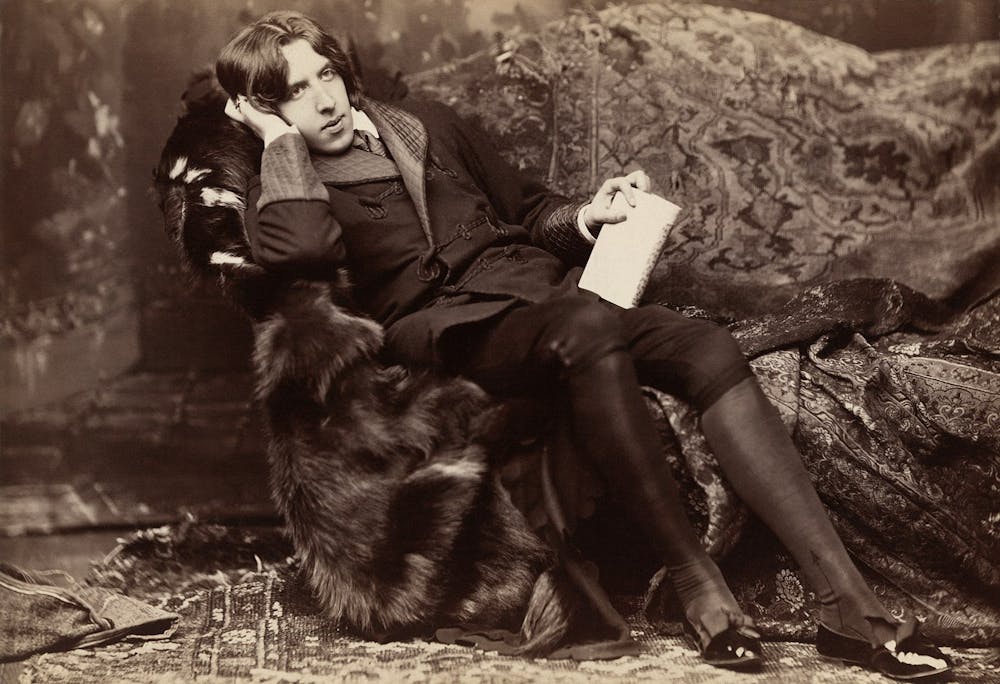
Bury your gays is a storytelling trope that sees LGBTQI+ characters die, often to propel the story forward for a cis, heterosexual character. We can first find these stories in late 19th century literature such as Oscar Wilde’s The Picture of Dorian Gray (1890).

Oscar Wilde lounges.
Oscar Wilde’s The Picture of Dorian Gray could be considered an early example of ‘bury your gays’.
Library of Congress

It gained traction in the early 20th century, in Lillian Hellman’s The Children’s Hour (1934) and Vin Packer’s Spring Fire (1956) (although she doesn’t die, just ends up institutionalised), and continues to appear in novels, plays, films and on television.

Films such as The Hours (2002), Philadelphia (2003), Brokeback Mountain (2005), A Single Man (2009) and Black Swan (2010) are all films about a queer character who suffers and dies.

You may remember some of these much-loved, yet killed-off TV characters: Villanelle from Killing Eve (2018–2022), Poussey Washington from Orange is the New Black (2013–2019) and Lexa from The 100 (2014–2020).

Online queer news site, Autostraddle, have compiled a list of the 230+ dead queer female TV characters, which continues to be updated with each death.

Essentially, for queer people, it starts to feel like you can’t have queer representation without someone dying tragically at the end.

A 2023 report from Screen Australia shows only 7.4% of main or recurring characters on Australian scripted TV from 2016–2021 were identifiably LGBTQI+, and although there have been improvements in representing more complex and inclusive queer stories on Australian television, we remain quite conservative in depicting queer sex and diverse genders.

Queer people will have different and complicated responses to queer death on screen. The result of the bury your gays trope is many queer people are left feeling that being queer means you are destined for tragedy. Witnessing another queer death on screen can make us revisit past wounds and experiences.


Read more:
We studied two decades of queer representation on Australian TV, and found some interesting trends


We need diverse stories

Tropes will always exist in storytelling, but by having more diverse queer filmmakers telling more diverse queer stories, audiences will have a more balanced narrative about queer life (and life expectancy).

So, do these themes of trauma, tragedy and queer death mean films like All of Us Strangers fall into the bury your gays trope? Not necessarily, no. Here, Harry’s death is not propelling a straight character’s story forward.

It is also necessary to have sad stories about queer characters. Stories that show the queer experience in different social and historical contexts are important to understanding the struggle for LGBTQI+ liberation.

While All of Us Strangers may reinforce the narrative queer people cannot live happy lives, there are moments of tenderness, vulnerability and hope in the film. The true value of the story lies in its creation by gay filmmaker Haigh.

When a gay man is able to tell the story his way, the story becomes more authentic.

Haigh’s ability to create truthful conversations between Adam and his parents, cross-generational romance, and the desire to heal persisting wounds, demonstrates the value of the authentic lived experience.

It is important to reflect the tragic queer lived experiences. But when these stories are saturating our big and small screens we are not seeing the alternative – the queer resilience, resistance, joy, hope, creativity, potential and triumph.

We need to see stories that challenge the narrative that being queer ultimately leads to pain, trauma and tragedy. We need to see we can also live long and happy lives, so we can believe we can have the happy ever after.


Read more:
All of Us Strangers: heartbreaking film speaks to real experiences of gay men in UK and Ireland


The Conversation

Natalie Krikowa does not work for, consult, own shares in or receive funding from any company or organisation that would benefit from this article, and has disclosed no relevant affiliations beyond their academic appointment.

ref. All of Us Strangers buys into tropes of tragic queer lives – but there is hope there, too – https://theconversation.com/all-of-us-strangers-buys-into-tropes-of-tragic-queer-lives-but-there-is-hope-there-too-224853

New evidence for an unexpected player in Earth’s multimillion-year climate cycles: the planet Mars

Source: The Conversation (Au and NZ) – By Adriana Dutkiewicz, ARC Future Fellow, University of Sydney

Dietmar Muller

Our existence is governed by natural cycles, from the daily rhythms of sleeping and eating, to longer patterns such as the turn of the seasons and the quadrennial round of leap years.

After looking at seabed sediment stretching back 65 million years, we have found a previously undetected cycle to add to the list: an ebb and flow in deep sea currents, tied to a 2.4-million-year swell of global warming and cooling driven by a gravitational tug of war between Earth and Mars. Our research is published in Nature Communications.

Milankovitch cycles and ice ages

Most of the natural cycles we know are determined one way or another by Earth’s movement around the Sun.

As the German astronomer Johannes Kepler first realised four centuries ago, the orbits of Earth and the other planets are not quite circular, but rather slightly squashed ellipses. And over time, the gravitational jostling of the planets changes the shape of these orbits in a predictable pattern.

These alterations affect our long-term climate, influencing the coming and going of ice ages. In 1941, Serbian astrophysicist Milutin Milankovitch recognised that changes in the shape of Earth’s orbit, the tilt of its axis, and the wobbling of its poles all affect the amount of sunlight we receive.

Known as “Milankovitch cycles”, these patterns occur with periods of 405,000, 100,000, 41,000 and 23,000 years. Geologists have found traces of them throughout Earth’s deep past, even in 2.5-billion-year old rocks.

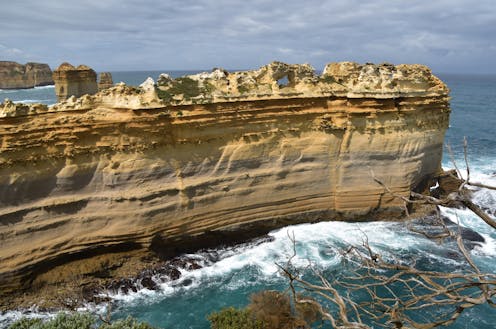
A photo shows rocky pillars and cliffs in the ocean.
Fine layering in the Port Campbell Limestone by the Great Ocean Road in Victoria is the product of Earth’s orbital eccentricity and obliquity.
Adriana Dutkiewicz

Earth and Mars

There are also slower rhythms, called astronomical “grand cycles”, which cause fluctuations over millions of years. One such cycle, related to the slow rotation of the orbits of Earth and Mars, recurs every 2.4 million years.

Diagram showing the orbits of Earth and Mars around the Sun.
The orbits of Earth and Mars exert a subtle influence on each other in a cycle that repeats every 2.4 million years.
NASA

The cycle is predicted by astronomical models, but is rarely detected in geological records. The easiest way to find it would be in sediment samples that continuously cover a period of many millions of years, but these are rare.

Much like the shorter Milankovitch cycles, this grand cycle affects the amount of sunlight Earth receives and has an impact on climate.

Gaps in the record

When we went hunting for signs of these multimillion-year climate cycles in the rock record, we used a “big data” approach. Scientific ocean drilling data collected since the 1960s have generated a treasure trove of information on deep-sea sediments through time across the global ocean.

In our study, published in Nature Communications, we used sedimentary sequences from more than 200 drill sites to discover a previously unknown connection between the changing orbits of Earth and Mars, past global warming cycles, and the speeding up of deep-ocean currents.

Most studies focus on complete, high-resolution records to detect climate cycles. Instead, we concentrated on the parts of the sedimentary record that are missing — breaks in sedimentation called hiatuses.


Read more:
How plate tectonics, mountains and deep-sea sediments have maintained Earth’s ‘Goldilocks’ climate


A deep-sea hiatus indicates the action of vigorous bottom currents that eroded seafloor sediment. In contrast, continuous sediment accumulation indicates calmer conditions.

Analysing the timing of hiatus periods across the global ocean, we identified hiatus cycles over the past 65 million years. The results show that the vigour of deep-sea currents waxes and wanes in 2.4 million year cycles coinciding with changes in the shape of Earth’s orbit.

Astronomical models suggest the interaction of Earth and Mars drives a 2.4 million year cycle of more sunlight and warmer climate alternating with less sunlight and cooler climate. The warmer periods correlate with more deep-sea hiatuses, related to more vigorous deep-ocean currents.

Warming and deep currents

Our results fit with recent satellite data and ocean models mapping short-term ocean circulation changes. Some of these suggest that ocean mixing has become more intense over the last decades of global warming.

Deep-ocean eddies are predicted to intensify in a warming, more energetic climate system, particularly at high latitudes, as major storms become more frequent. This makes deep ocean mixing more vigorous.

Deep-ocean eddies are like giant wind-driven whirlpools and often reach the deep sea floor. They result in seafloor erosion and large sediment accumulations called contourite drifts, akin to snowdrifts.

Can Mars keep the oceans alive?

Our findings extend these insights over much longer timescales. Our deep-sea data spanning 65 million years suggest that warmer oceans have more vigorous eddy-driven circulation.

This process may play an important role in a warmer future. In a warming world the difference in temperature between the equator and poles diminishes. This leads to a weakening of the world’s ocean conveyor belt.


Read more:
Even temporary global warming above 2℃ will affect life in the oceans for centuries


In such a scenario, oxygen-rich surface waters would no longer mix well with deeper waters, potentially resulting in a stagnant ocean. Our results and analyses of deep ocean mixing suggest that more intense deep-ocean eddies may counteract such ocean stagnation.

How the Earth-Mars astronomical influence will interact with shorter Milankovitch cycles and current human-driven global warming will largely depend on the future trajectory of our greenhouse gas emissions.

The Conversation

Adriana Dutkiewicz receives funding from the Australian Research Council.

Dietmar Müller and Slah Boulila do not work for, consult, own shares in or receive funding from any company or organisation that would benefit from this article, and have disclosed no relevant affiliations beyond their academic appointment.

ref. New evidence for an unexpected player in Earth’s multimillion-year climate cycles: the planet Mars – https://theconversation.com/new-evidence-for-an-unexpected-player-in-earths-multimillion-year-climate-cycles-the-planet-mars-225454

AI is creating fake legal cases and making its way into real courtrooms, with disastrous results

Source: The Conversation (Au and NZ) – Authors: Michael Legg, Professor of Law, UNSW Sydney, and, Senior Research Associate, Centre for the Future of the Legal Profession, UNSW Sydney.

We’ve seen deepfake, explicit images of celebrities, created by artificial intelligence (AI). AI has also played a hand in creating music, driverless race cars and spreading misinformation, among other things.

It’s hardly surprising, then, that AI also has a strong impact on our legal systems.

It’s well known that courts must decide disputes based on the law, which is presented by lawyers to the court as part of a client’s case. It’s therefore highly concerning that fake law, invented by AI, is being used in legal disputes.

Not only does this pose issues of legality and ethics, it also threatens to undermine faith and trust in global legal systems.


Read more:
Lawyers are rapidly embracing AI: here’s how to avoid an ethical disaster


How do fake laws come about?

There is little doubt that generative AI is a powerful tool with transformative potential for society, including many aspects of the legal system. But its use comes with responsibilities and risks.

Lawyers are trained to carefully apply professional knowledge and experience, and are generally not big risk-takers. However, some unwary lawyers (and self-represented litigants) have been caught out by artificial intelligence.

ChatGPT on a smartphone screen in front of the same website on a laptop screen
Generative AI tools, like ChatGPT, can provide incorrect information.
Shutterstock

AI models are trained on massive data sets. When prompted by a user, they can create new content (both text and audiovisual).

Although content generated this way can look very convincing, it can also be inaccurate. This is the result of the AI model attempting to “fill in the gaps” when its training data is inadequate or flawed, and is commonly referred to as “hallucination”.

In some contexts, generative AI hallucination is not a problem. Indeed, it can be seen as an example of creativity.

But if AI hallucinated or created inaccurate content that is then used in legal processes, that’s a problem – particularly when combined with time pressures on lawyers and a lack of access to legal services for many.

This potent combination can result in carelessness and shortcuts in legal research and document preparation, potentially creating reputational issues for the legal profession and a lack of public trust in the administration of justice.

It’s happening already

The best known generative AI “fake case” is the 2023 US case Mata v Avianca, in which lawyers submitted a brief containing fake extracts and case citations to a New York court. The brief was researched using ChatGPT.

The lawyers, unaware that ChatGPT can hallucinate, failed to check that the cases actually existed. The consequences were disastrous. Once the error was uncovered, the court dismissed their client’s case, sanctioned the lawyers for acting in bad faith, fined them and their firm, and exposed their actions to public scrutiny.


Read more:
AI is everywhere – including countless applications you’ve likely never heard of


Despite adverse publicity, other fake case examples continue to surface. Michael Cohen, Donald Trump’s former lawyer, gave his own lawyer cases generated by Google Bard, another generative AI chatbot. He believed they were real (they were not) and that his lawyer would fact check them (he did not). His lawyer included the cases in a brief filed with the US Federal Court.

Fake cases have also surfaced in recent matters in Canada and the United Kingdom.

If this trend goes unchecked, how can we ensure that the careless use of generative AI does not undermine the public’s trust in the legal system? Consistent failures by lawyers to exercise due care when using these tools has the potential to mislead and congest the courts, harm clients’ interests, and generally undermine the rule of law.

What’s being done about it?

Around the world, legal regulators and courts have responded in various ways.

Several US state bars and courts have issued guidance, opinions or orders on generative AI use, ranging from responsible adoption to an outright ban.

Law societies in the UK and British Columbia, and the courts of New Zealand, have also developed guidelines.

In Australia, the NSW Bar Association has a generative AI guide for barristers. The Law Society of NSW and the Law Institute of Victoria have released articles on responsible use in line with solicitors’ conduct rules.

Many lawyers and judges, like the public, will have some understanding of generative AI and can recognise both its limits and benefits. But there are others who may not be as aware. Guidance undoubtedly helps.

But a mandatory approach is needed. Lawyers who use generative AI tools cannot treat it as a substitute for exercising their own judgement and diligence, and must check the accuracy and reliability of the information they receive.


Read more:
Do you trust AI to write the news? It already is – and not without issues


In Australia, courts should adopt practice notes or rules that set out expectations when generative AI is used in litigation. Court rules can also guide self-represented litigants, and would communicate to the public that our courts are aware of the problem and are addressing it.

The legal profession could also adopt formal guidance to promote the responsible use of AI by lawyers. At the very least, technology competence should become a requirement of lawyers’ continuing legal education in Australia.

Setting clear requirements for the responsible and ethical use of generative AI by lawyers in Australia will encourage appropriate adoption and shore up public confidence in our lawyers, our courts, and the overall administration of justice in this country.

The Conversation

Vicki McNamara is affiliated with the Law Society of NSW (as a member).

Michael Legg does not work for, consult, own shares in or receive funding from any company or organisation that would benefit from this article, and has disclosed no relevant affiliations beyond their academic appointment.

ref. AI is creating fake legal cases and making its way into real courtrooms, with disastrous results – https://theconversation.com/ai-is-creating-fake-legal-cases-and-making-its-way-into-real-courtrooms-with-disastrous-results-225080

China’s green steel push could crush Australia’s dirty iron ore exports

Source: The Conversation (Au and NZ) – By Charlie Huang, Co-leader, Sustainable Global Business Operations and Development Research Group, School of Management, RMIT University

Zhao Jian Kang/Shutterstock

Australia’s largest export, iron ore, has long been a powerhouse of economic growth. Over the past two decades, its contribution to our national income has surged from just A$8 billion in 2005 to over A$124 billion today.

But the Australian iron ore industry faces a major challenge as its biggest customers – China’s steel mills – move to drastically reduce their carbon footprint.

The issue lies in the purity of our product. Most of Australia’s current iron ore exports are not classed as high grade. Typically, the lower the iron content of an ore is, the more energy is required to refine it.

Our competitors – countries such as Brazil and Guinea with higher-grade ores in relative abundance – are positioned to become the steel industry’s suppliers of choice.

Australia could adapt its production to meet this change in demand. But if it doesn’t do so quickly, it may find itself left behind in the new green economy.

Iron ore’s biggest customer cleans up its act

China is the largest importer of Australian iron by a hefty margin. Australia shipped 736 million tonnes – more than 80% of iron ore exports – to China in 2022.

Last year, China’s steel mills made up the majority of global steel production. But they were also a major polluter, accounting for about 15% of China’s total greenhouse gas emissions.

They’re now facing a double whammy of decarbonisation pressures.

At home, the Chinese government has mandated the steel industry reduce its emissions as part of China’s wider “dual carbon” goals. These will require emissions to peak before 2030 and for the country to become carbon neutral by 2060.

And internationally, upcoming tariffs on carbon-intensive steel imports are set to make producing “dirty” steel much costlier.

Australian ore doesn’t make the grade

Making steel with low-grade iron ore isn’t at all carbon friendly.

For one, it consumes vastly more energy in the traditional steelmaking process. My analysis shows that using one tonne of low-grade ore can emit over 200 kilograms more carbon dioxide in a blast furnace than high-grade.

A high level of impurities in low-grade ore also significantly reduces the efficiency of the process.

Reducing the use of low-grade ore has become a priority for Chinese steel mills, significantly affecting iron ore’s demand profile.

Much of the iron ore exported by competing nations like Brazil and Guinea is high-grade, containing more than 65% iron. But most of Australia’s current exports fall below that threshold, between 56% and 62%.

New technologies

A number of new and emerging steelmaking technologies offer the promise of significantly lower emissions.

But common to all of them is a need for higher-grade iron ore than Australia produces.

There are four new steelmaking technologies in use or under construction by a number of Chinese steel corporations, including the world’s biggest steelmaker – China Baowu Group. These include:

Here’s how these technologies could help China reduce its carbon emissions:

Increased use of steel scraps

Global demand for steel is forecast to increase to 2.2 billion tonnes by 2050.

But that won’t all translate into greater demand for our iron ore.

Overall demand for iron ore could be reduced by the increasing availability and use of steel scraps or “recycled steel”, such as scrapped vehicles, white goods and machinery.

Using one tonne of recycled steel for steelmaking saves 1.4 tonnes of iron ore and avoids about 1.5 tonnes of carbon dioxide emissions.

New tariffs on carbon

A number of legislative measures are on the horizon for the global steel industry, which produced about 7% of global greenhouse gas emissions in 2022.

One such international measure, the European Union’s Cross-Border Adjustment Mechanism (CBAM), has further accelerated a global drive toward sustainable steelmaking.

This legislation acts as a carbon tariff on imports to the EU, initially aimed at carbon-intensive products such as steel. It will be fully in force by 2026.

EU importers of steel products will be required to pay an import carbon tax, at a price set by the EU, based on the differences in carbon emissions between traditional steel mills and the EU’s emission benchmarks.

Being forced to charge higher prices for carbon-intensive steel products will incentivise non-European steel mills to accelerate their transition to green steel.

What lies ahead

The global transition to green steelmaking is bound to shape the future of Australia’s iron ore industry. Reduced demand for Australia’s low-grade iron ore could put pressure on its producers’ revenue, or even force some smaller iron ore miners to shut down.

But it also presents opportunities. Here are two ways Australia could ride the wave:

1. Substantially increase production and export of magnetite.

Australia is abundant in magnetite, an ore type which differs in composition from hematite or “direct shipping ore” (DSO). Magnetite has a low iron content (between 30 and 40%), but can be processed to a higher grade through a process of removing impurities known as “beneficiation”. This process is energy intensive, but could become economically viable if we continue to see rapid uptake of renewable energy.

2. Build direct reduction plants here in Australia.

Unlike the traditional blast furnace process, which uses coal as a source of energy, the direct reduction process uses hydrogen to reduce iron ore into iron without melting it.

There has been much hype around Australia’s potential to produce cheap hydrogen with renewable energy. But if we pull it off, we could stand at the forefront of the green steel revolution as a global production hub of direct reduced iron.

Decisions made by Australia’s major iron ore producers and political leaders will shape the outcome of this global shift. Rather than fear the transition, Australia could take on a leading role.


Read more:
‘Green’ or ‘blue’ hydrogen – what difference does it make? Not much for most Australians


The Conversation

Charlie Huang does not work for, consult, own shares in or receive funding from any company or organisation that would benefit from this article, and has disclosed no relevant affiliations beyond their academic appointment.

ref. China’s green steel push could crush Australia’s dirty iron ore exports – https://theconversation.com/chinas-green-steel-push-could-crush-australias-dirty-iron-ore-exports-219299

‘Applying for a home felt harder than applying for a job’: NZ private rentals won’t solve need for emergency housing

Source: The Conversation (Au and NZ) – By Jessica Terruhn, Senior Research Fellow, University of Waikato

The number of people living in emergency housing in Aotearoa New Zealand has grown exponentially over the last eight years – but plans to rely on the private rental sector ignore fundamental realities of renting.

Established in 2016, the emergency housing programme – short-term housing for people with nowhere to stay – was meant to be a stop-gap measure. There are now 3,000 active tenancies as a lack of affordability and shortages in housing place pressure on low-income renters.

The coalition government recently announced a “shake-up” of the sector. People seeking access to emergency housing will need to prove they have made “a reasonable effort” to secure a home in the private rental sector. The government will also be cutting back on the length of emergency housing grants.

Our research on the factors that shape people’s housing outcomes, experiences and journeys shows the private rental sector can often exacerbate housing precarity.

The government’s proposals don’t take into account the realities of households or the way the private rental sector itself is a key contributor to housing inequalities. Private renting cannot be viewed as an easy solution for the emergency and wider housing crisis.

Housing discrimination is widespread

Our survey of 800 residents across seven neighbourhoods in Auckland, Hamilton and Christchurch revealed experiences of housing discrimination are widespread in Aotearoa New Zealand.

A staggering 70% of renters in our survey felt people were treated unfairly when trying to rent or buy a home in Aotearoa New Zealand. Nearly half of all renters reported directly experiencing discrimination when trying to rent a home.

The study also showed discrimination is intersectional. Socio-economic status, family status as well as race/ethnicity combined to create clear disadvantages for people trying to secure a home. Notably, Māori and Pasifika respondents were more likely overall to report experiences of discrimination.


Read more:
As NZ struggles to resolve its long-running housing crisis, investors should be taxed for keeping homes empty


When asked for examples to illustrate their experiences of discrimination, renters and owners alike provided stories of struggling to secure private rental housing at some point in their lives. These included being judged, dismissed and ignored by landlords or property managers as well as a sense of “not having a chance” in a housing market in which “applying for a home felt harder than applying for a job”.

Being a low-income household, a Work and Income New Zealand client, a family with a larger number of children or a sole parent and being Māori or Pasifika, often contributed to the experience of being excluded from much of the private rental sector.

The instability of renting

This situation is made worse by the instability of rental housing.

Renters are frequent movers. Our survey results show a mere 12% of private rental tenants have lived in only one home over the past ten years. This stands in stark contrast to 47% of owner-occupiers but also 39% of public housing tenants. Conversely, 40% of all renters have lived in four or more homes over the past ten years.

This high mobility is closely entwined with insecure tenancies. Having a tenancy ended by the landlord was one of the most common reasons survey respondents provided for moving house.

As such, renters’ housing journeys are severely constrained by the imbalance between them and private landlords. Not only may renters find themselves on the move when they did not wish to, but they are forced into securing a new rental under pressure and at their own cost.

It takes time and effort to secure a home, especially one that is affordable and suitable for a household’s needs.

Our survey shows 27% of renters took four months or more to find their current home – longer than the most common notice period of 90 days, which the government is planning to reduce to 42 days in some circumstances. Close to a quarter of renters viewed 11 homes or more and 25% applied for more than ten rental properties.

These periods of time and number of applications suggest that even renters who are not on the cusp of dire housing need take months to find a rental home.

Private rental sector is not a solution

Our survey adds to international research that demonstrates the impact of housing precarity.

Recent research in Aotearoa and the United Kingdom has shown private renting adversely affects renters’ health and wellbeing.

These effects were primarily attributed to the stress caused by insecure tenancies. Moreover, a Western Australian initiative to require public housing applicants to prove they had tried to get a private rental was dismantled following a 2004 inquiry.

The inquiry revealed evidence of discrimination against Aboriginal and Torres Strait Islander applicants. It concluded “it was humiliating for [Aboriginal people] to face often blatant discrimination from agents or owners”.


Read more:
Yes, NZ landlords gain from the repeal of interest deductibility rules – but it was a flawed law from the outset


In all likelihood, these issues will also be disproportionately felt by Māori who are more likely to be renters and experience severe housing deprivation.

The emergency housing crisis can only be responded to through immediate secure housing support for those in need and a medium and long-term focus on building safe, secure and stable housing for all New Zealanders.

Responding to the emergency housing crisis with greater reliance on the private rental sector amounts to fighting fire with fire. It seeks stability where none exists.

The government’s proposal that people seeking emergency housing demonstrate “reasonable effort” to find private housing risks exposing people to more housing deprivation, stress and discrimination that will, in all likelihood, lead some to homelessness.

The Conversation

Jessica Terruhn receives funding from the Ministry of Business, Innovation and Employment for the WERO research programme. She is affiliated with Renters United.

Francis L Collins receives funding from the Ministry of Business, Innovation and Employment and the Canadian Social Sciences and Humanities Research Council. He has previously received other funding from Te Apārangi Royal Society of New Zealand.

ref. ‘Applying for a home felt harder than applying for a job’: NZ private rentals won’t solve need for emergency housing – https://theconversation.com/applying-for-a-home-felt-harder-than-applying-for-a-job-nz-private-rentals-wont-solve-need-for-emergency-housing-225459

Warning signs have been flashing, PNG police housing needs ignored

By Scott Waide in Lae, Papua New Guinea

Ten days into 2024, Port Moresby descended into chaos as opportunists looted and burned shops in Waigani, Gerehu and other suburbs.

That morning, police, military and correctional service personnel gathered at the Unagi Oval in protest over deductions made to their pays that fortnight. Unsatisfied with the explanations, they withdrew their services and converged on Parliament to seek answers.

It took just a few hours for the delicate balance between order and chaos to be tipped to one side.

In the absence of police, people took to the streets. They looted shops nearest to them and forced the closure of the entire city. Several people died during the looting.

The politicians — the lawmakers — were left powerless as the enforcers of the law became spectators allowing the mayhem to worsen.

While many saw the so-called Black Wednesday, 10 January, 202, as a one off incident caused by “disgruntled” members of the services, the warning signs had been flashing for many years and had been largely ignored.

Two weeks back, I asked a constable attached with one of Lae’s Sector Response Units (SRU) about his take home pay. It is an uncomfortable discussion to have.

Living conditions
But it is necessary to understand the pay and living conditions of the men and women who maintain that delicate balance in Papua New Guinea.

He said his take home pay was about K900 (NZ$385). When the so-called “glitch” happened in the Finance Department, many RPNGC members like him had up to one third of their pay deducted. That’s a sizable chunk for a small family.

Policemen and women won’t talk about it publicly.

They also won’t talk about the difficulties and frustrations they face at home when there’s a pay deduction like the one in January.

Black Wednesday showed the culmination of frustrations over years of unpaid allowances, poor living conditions and successive governments that have ignored basic needs in favour of grand announcements and flashy deployments that prop up political egos.

Why am I raising this? What does Black Wednesday have to do with anything?

That incident showed just how important the lowest paid frontline cops are in the socioeconomic ecosystem that we live in. The politicians, make the laws, they “maintain law and order” and we’re supposed to obey.

Oath of service
Police, military and correctional service personnel, entrust their welfare to the state when they sign an oath of service. This means the government is obliged to care for them, while they SERVE the state and the people of Papua New Guinea.

But for decades, successive governments seem to have forgotten their obligations.

Out of sight. Out of mind.

Politicians have opted for short term adhoc welfare “pills” like paying for deployment allowances while ignoring the long term needs like housing and general living conditions.

Let me bring your attention now to 17 police families living in dormitories at at a condemned training center owned by the Department of Agriculture and Livestock at 3-mile in Lae.

The policemen who live with their families didn’t want to speak on record. But their wives spoke for their families. Many have little option but to remain there. Rent is expensive. Living in settlements puts their policemen husbands at risk.

Here’s the question
There’s no running water or electricity.

Here’s the question: How does the government expect a constable to function when his or her family is unsafe and unwell?

The Acting ACP for the Northern Division, Chris Kunyanban has seen it play out time and time again. He said, as a commander, it is difficult to get a cop who is struggling to fix his rundown police housing to work 12 hour shifts while there’s a leaking roof and a sick child.

It’s that simple.

The government says it is committed to increasing police numbers. Recruitments are ongoing. But there is still a dire shortage of housing for police.

Republished from Lekmak with permission.

Print Friendly, PDF & Email

Article by AsiaPacificReport.nz

Activist criticises Western feminist ‘silence’ on Palestine’s brave women

Jana Fayyad, a Palestinian activist, had some sharp words about “the silence of Western feminists” at International Women’s Day, asking in her address to the Palestine rally in Sydney last Saturday: “Are you only progressive until Palestine?”

No Palestinian speaker had been asked to address the annual protest the previous day and Fayyad did not mince her words.

“Save your corporate high teas, your bullshit speeches, your ridiculous and laughable social media posts on this International Women’s Day!” she said.

“We don’t think of Margaret Thatcher or Ursula Von der Leyen or Hillary Clinton.

“We think of Besan [Helasa], we think of Dr Amira al Assori, we think of Hind Khoudary —  we think Plestia [Alaqad], we think of Lama Jamous.

“We think of the women that we honour — the women in Gaza.

“And beyond the women of Gaza, we think of Leila Khaled and Hanan Ashrawi and Fadua Tuqan and Amira Hass and Dr Mona el Farrah — the women at the forefront of Palestinian liberation.”

She said considering that 9000 women had been “slaughtered by the terrorist state of Israel”, the silence of Western feminists had been deafening.

“The silence has been deafening — the silence on the 15,000 children slaughtered; the silence on the sexual assault and the rape that woman in Gaza have been subjected to; the silence on the horrific conditions that 50,000 pregnant women face having to do C-sections without anesthesia; and the silence on the mothers having to pick up their children in pieces,” Fayyad said.

“The silence is deafening!”

“Where is your feminism?” she asked.

“I don’t see it anywhere! I don’t hear of it! Where are your voices? Or are you only progressive until Palestine?”

Republished from Green Left with permission.

Article by AsiaPacificReport.nz

‘The Forever War’ – ABC Four Corners reports on the assault on Gaza

The War on Gaza will be etched in the memories of generations to come — the brutality of Hamas’s 7 October 2023 attack, and the ferocity of Israel’s retaliation.

In this Four Corners investigative report, The Forever War, broadcast in Australia last night, ABC’s global affairs editor John Lyons asks the tough questions — challenging some of Israel’s most powerful political and military voices about the country’s strategy and intentions.

The result is a compelling interview-led piece of public interest journalism about one of the most controversial wars of modern times.

Former prime minister Ehud Barak says Benjamin Netanyahu can’t be trusted, former Shin Bet internal security director Ami Ayalon describes two key far-right Israeli ministers as “terrorists”,  and cabinet minister Avi Dichter makes a grave prediction about the conflict’s future.

Is there any way out of what’s beginning to look like the forever war? Lyons gives his perspective on the tough decisions for the future of both Palestinians and Israelis.


‘The Forever War’ – ABC Four Corners.      ABC Trailer on YouTube

Article by AsiaPacificReport.nz

View from the Hill: Dutton sledges Bowen as today’s Rex Connor – but who remembers Rex?

Source: The Conversation (Au and NZ) – By Michelle Grattan, Professorial Fellow, University of Canberra

In his strongest speech yet on the Coalition’s commitment to pursuing nuclear power, Peter Dutton dug deep into the past to try to discredit Climate Change and Energy Minister Chris Bowen.

“Our nation is diminished in having Chris Bowen as the federal Energy Minister”, Dutton told a business conference in Sydney on Tuesday. Apart from showing “complete irreverence for the truth”, Bowen was “a modern-day Rex Connor”.

Dutton inserted a qualification to his disparaging of the one-time minerals and energy minister: Connor “believed in nuclear energy”.

The potency of invoking the Connor name to sledge Bowen is dubious. Most people in the general community today wouldn’t have heard of him, unless they’re seniors, mining industry buffs, or know their Whitlam government history.

Connor was at the centre of that government’s notorious loans affair, hanging around a telex late in the night seeking (unsuccessfully) a huge foreign loan through a shady intermediary. He was boldly ambitious in policy – though those ambitions were often unrealised and unrealistic – and politically divisive. He was conventionally known as “The Strangler”.

Bowen is the minister driving the massive energy transformation modern Australia is undergoing. The Connor sledge might be over-the-top, but Dutton and Bowen are in each other’s sights, and it will be an “anything goes” battle until the election.

Dutton told his audience the government didn’t have “a credible pathway” to zero emissions by 2050.

“I believe that too many leaders, CEOs, and inner-city advocates have burrowed so deeply down this rabbit hole to a renewables wonderland that they have lost all sense of objectivity,” he said.

“Instead of having a proper debate about what’s in our country’s best interests, Mr Bowen acts like a child and dismisses everything he disagrees with as a ‘scare campaign’.

“His behaviour is symptomatic of his government whose energy policy is grounded in ideology rather than pragmatism.”

With his ever-more enthusiastic embrace of nuclear, Dutton is making the energy transition a point of the sharpest difference between the government and opposition for the 2025 election.


Read more:
View from The Hill: Peter Dutton talks up nuclear replacements for coal-fired generators


“Under the Coalition’s plan, Australians will get cheaper power, consistent power and increasingly cleaner power,” he said.

Undeterred by pushback from Labor and scepticism from many experts about cost and impracticability, Dutton said: “If there was ever a time to consider nuclear energy, it is now”.

Not that he’s promising a quick fix.

“Of course, we can’t switch on a system tomorrow. It’s a long journey ahead,” which would involve a Coalition government ramping up gas.

Earlier, when the Coalition was focused on small nuclear reactors, a “DO YOU WANT A REACTOR IN YOUR BACK YARD?” scare campaign was obvious. Now Dutton is talking about a limited number of nuclear facilities at sites where coal-fired power stations will be closing down.

He said there would be only “in the vicinity of about six sites where new nuclear technologies could be placed”. These would be “on, or near the sites, of decommissioned or retiring coal-fired power plants using the existing grid”, thus avoiding the currently planned massive roll-out of new transmission lines.

Labor paints the opposition as ideologically opposed to renewables. Dutton maintained it supported renewables having a significant role in the system. But the government’s “renewables only” policy was “an engineering feat of pure fantasy”, and “economically and environmentally damaging”.

“Labor sees nuclear power as a competitor to renewables.

“We see nuclear power as a companion to renewables.”

Tapping into the discontent in some regional about transmission lines and windfarms, Dutton also sought to bring morality into the mix.

“There’s a moral element to this argument as well – pitching one Australian against the other, whether you live in a capital city or whether you live in a regional area.”

Dutton contested the critics’ argument about price; as for waste, he said “all the used-fuel produced by the US nuclear industry since the 1950s would fit in the area the size of a football field, to a depth of about nine meters”.

“Australia is the only country in the top 20 economies which hasn’t embraced domestic nuclear power or is taking steps to do so,” he said.

The Conversation

Michelle Grattan does not work for, consult, own shares in or receive funding from any company or organisation that would benefit from this article, and has disclosed no relevant affiliations beyond their academic appointment.

ref. View from the Hill: Dutton sledges Bowen as today’s Rex Connor – but who remembers Rex? – https://theconversation.com/view-from-the-hill-dutton-sledges-bowen-as-todays-rex-connor-but-who-remembers-rex-225563

Talks herald Wapenamanda massacre ceasefire in PNG tribal warfare

PNG Post-Courier

A ceasefire is expected on the battlefields of Wapenamanda in Papua New Guinea’s Enga Province that has claimed hundreds of lives and caused massive destruction to properties in three constituencies.

According to lead peace negotiator and Enga Provincial Administrator Sandis Tsaka, a ceasefire agreement is anticipated to be signed this week among three parties to solve the crisis.

These parties are the state and two warring tribal leaders to make way for the peace process to start.

The leaders of both warring factions are currently involved in intense negotiations with the State Conflict Resolution team led by key negotiator and Chief Magistrate Mark Pupaka in Port Moresby.

The state negotiating team comprises Deputy Police Commissioner (Operations) Dr Philip Mitna; Assistant Commissioner of Police Julius Tasion; newly appointed Enga provincial police commander Chief Superintendent Fred Yakasa; Enga Provincial Administrator Sandis Tsaka and Chief Magistrate Pupaka.

The government negotiators are meeting and having discussions separately with each faction.

According to the state team, the roundtable conference was brought to Port Moresby because a ceasefire agreement and subsequently a Preventive Order issued in September last year failed.

Guerrilla-style warfare
The preventive order did not work when the tribal factions took up arms in guerrilla-style warfare.

The conference will ensure that both parties, including the allies of 25 tribes from Tsaka valley, Aiyale valley and Middle Lai constituencies, agree to an amicable resolution in consultations with neighbouring tribes.

The Yopo tribe’s leader Roy Opone Andoi of Tsaka valley apologised in a public statement to the state for damaging government properties and for the lives lost in the three-year tribal conflict.

The Yopo tribal alliance leader Roy Andoi (centre)
The Yopo tribal alliance leader Roy Andoi (centre) accompanied by tribal leaders presenting their position paper to the state team in Port Moresby yesterday. Image: PNG Post-Courier

Andoi said it was regrettable to see a “trivial” tribal conflict that started with his Yopo tribe and neighbouring Palinau tribe in Tsaka valley escalate to “unimaginable proportions”, displacing more than 40,000 people.

“I want to apologise to the state, rival tribes and neighbouring communities and the country for all the damage, including negative images portrayed through the media during the course of the conflict,” he said.

Andoi said he would like to take the opportunity to thank the government for appointing the state team, comprising Police Commissioner David Manning, Tsaka and Pupaka, to conduct roundtable discussions towards restoring peace and normalcy.

He said the government’s intervention came in following the latest casualties, including a massacre of more than 50 men from the Palinau allies by Yopo allies during an intensified battle on February 28 near Birip and Hela Opone Technical College on the border of Wapenamanda and Wabag districts.

Andoi said that with the help of the state team, he was hoping for a better outcome to bring back normalcy in the district and the province.

Republished from the PNG Post-Courier with permission.

Print Friendly, PDF & Email

Article by AsiaPacificReport.nz

Does intermittent fasting have benefits for our brain?

Source: The Conversation (Au and NZ) – By Hayley O’Neill, Assistant Professor, Faculty of Health Sciences and Medicine, Bond University

Shutterstock

Intermittent fasting has become a popular dietary approach to help people lose or manage their weight. It has also been promoted as a way to reset metabolism, control chronic disease, slow ageing and improve overall health.

Meanwhile, some research suggests intermittent fasting may offer a different way for the brain to access energy and provide protection against neurodegenerative diseases like Alzheimer’s disease.

This is not a new idea – the ancient Greeks believed fasting enhanced thinking. But what does the modern-day evidence say?


Read more:
I want to eat healthily. So why do I crave sugar, salt and carbs?


First, what is intermittent fasting?

Our diets – including calories consumed, macronutrient composition (the ratios of fats, protein and carbohydrates we eat) and when meals are consumed – are factors in our lifestyle we can change. People do this for cultural reasons, desired weight loss or potential health gains.

Intermittent fasting consists of short periods of calorie (energy) restriction where food intake is limited for 12 to 48 hours (usually 12 to 16 hours per day), followed by periods of normal food intake. The intermittent component means a re-occurrence of the pattern rather than a “one off” fast.

Food deprivation beyond 24 hours typically constitutes starvation. This is distinct from fasting due to its specific and potentially harmful biochemical alterations and nutrient deficiencies if continued for long periods.

4 ways fasting works and how it might affect the brain

The brain accounts for about 20% of the body’s energy consumption.

Here are four ways intermittent fasting can act on the body which could help explain its potential effects on the brain.

1. Ketosis

The goal of many intermittent fasting routines is to flip a “metabolic switch” to go from burning predominately carbohydrates to burning fat. This is called ketosis and typically occurs after 12–16 hours of fasting, when liver and glycogen stores are depleted. Ketones – chemicals produced by this metabolic process – become the preferred energy source for the brain.

Due to this being a slower metabolic process to produce energy and potential for lowering blood sugar levels, ketosis can cause symptoms of hunger, fatigue, nausea, low mood, irritability, constipation, headaches, and brain “fog”.

At the same time, as glucose metabolism in the brain declines with ageing, studies have shown ketones could provide an alternative energy source to preserve brain function and prevent age-related neurodegeneration disorders and cognitive decline.

Consistent with this, increasing ketones through supplementation or diet has been shown to improve cognition in adults with mild cognitive decline and those at risk of Alzheimer’s disease respectively.


Read more:
Does it matter what time of day I eat? And can intermittent fasting improve my health? Here’s what the science says


2. Circadian syncing

Eating at times that don’t match our body’s natural daily rhythms can disrupt how our organs work. Studies in shift workers have suggested this might also make us more prone to chronic disease.

Time-restricted eating is when you eat your meals within a six to ten-hour window during the day when you’re most active. Time-restricted eating causes changes in expression of genes in tissue and helps the body during rest and activity.

A 2021 study of 883 adults in Italy indicated those who restricted their food intake to ten hours a day were less likely to have cognitive impairment compared to those eating without time restrictions.

older man playing chess
Matching your eating to the active parts of your day may have brain benefits.
Shutterstock

3. Mitochondria

Intermittent fasting may provide brain protection through improving mitochondrial function, metabolism and reducing oxidants.

Mitochondria’s main role is to produce energy and they are crucial to brain health. Many age-related diseases are closely related to an energy supply and demand imbalance, likely attributed to mitochondrial dysfunction during ageing.

Rodent studies suggest alternate day fasting or reducing calories by up to 40% might protect or improve brain mitochondrial function. But not all studies support this theory.

4. The gut-brain axis

The gut and the brain communicate with each other via the body’s nervous systems. The brain can influence how the gut feels (think about how you get “butterflies” in your tummy when nervous) and the gut can affect mood, cognition and mental health.

In mice, intermittent fasting has shown promise for improving brain health by increasing survival and formation of neurons (nerve cells) in the hippocampus brain region, which is involved in memory, learning and emotion.

medical clinician shows woman a sheet of brain scans
What we eat can affect our brain, and vice versa.
Shutterstock

There’s no clear evidence on the effects of intermittent fasting on cognition in healthy adults. However one 2022 study interviewed 411 older adults and found lower meal frequency (less than three meals a day) was associated with reduced evidence of Alzheimer’s disease on brain imaging.

Some research has suggested calorie restriction may have a protective effect against Alzheimer’s disease by reducing oxidative stress and inflammation and promoting vascular health.

When we look at the effects of overall energy restriction (rather than intermittent fasting specifically) the evidence is mixed. Among people with mild cognitive impairment, one study showed cognitive improvement when participants followed a calorie restricted diet for 12 months.

Another study found a 25% calorie restriction was associated with slightly improved working memory in healthy adults. But a recent study, which looked at the impact of calorie restriction on spatial working memory, found no significant effect.


Read more:
Yes, intermittent fasting can boost your health, but how and when to restrict food consumption is crucial


Bottom line

Studies in mice support a role for intermittent fasting in improving brain health and ageing, but few studies in humans exist, and the evidence we have is mixed.

Rapid weight loss associated with calorie restriction and intermittent fasting can lead to nutrient deficiencies, muscle loss, and decreased immune function, particularly in older adults whose nutritional needs may be higher.

Further, prolonged fasting or severe calorie restriction may pose risks such as fatigue, dizziness, and electrolyte imbalances, which could exacerbate existing health conditions.

If you’re considering intermittent fasting, it’s best to seek advice from a health professional such as a dietitian who can provide guidance on structuring fasting periods, meal timing, and nutrient intake. This ensures intermittent fasting is approached in a safe, sustainable way, tailored to individual needs and goals.

The Conversation

Alongside her academic role, Hayley O’Neill works as a wellness consultant.

ref. Does intermittent fasting have benefits for our brain? – https://theconversation.com/does-intermittent-fasting-have-benefits-for-our-brain-223181

Yes, Kate Middleton’s photo was doctored. But so are a lot of images we see today

Source: The Conversation (Au and NZ) – By T.J. Thomson, Senior Lecturer in Visual Communication & Digital Media, RMIT University

The Conversation/Instagram/X

Rumours and conspiracies have been swirling following the abdominal surgery and long recovery period of Catherine, Princess of Wales, earlier this year. They intensified on Monday when Kensington Palace released a photo of the princess with her three children.

The photo had clear signs of tampering, and international wire services withdrew the image amid concerns around manipulation. The princess later apologised for any confusion and said she had “experimented with editing” as many amateur photographers do.

Image editing is extremely common these days, and not all of it is for nefarious purposes. However, in an age of rampant misinformation, how can we stay vigilant around suspicious images?

What happened with the royal photo?

A close look reveals at least eight inconsistencies with the image.

Two of these relate to unnatural blur. Catherine’s right hand is unnaturally blurred, even though her left hand is sharp and at the same distance from the camera. The left side of Catherine’s hair is also unnaturally blurred, while the right side of her hair is sharp.

These types of edits are usually made with a blur tool that softens pixels. It is often used to make the background of an image less distracting or to smooth rough patches of texture.

At least eight logical inconsistencies exist in the doctored image the Prince and Princess of Wales posted on social media.
Photo by the Prince of Wales/Chart by T.J. Thomson

Five of the edits appear to use the “clone stamp” tool. This is a Photoshop tool that takes part of the same or a different image and “stamps” it onto another part.

You can see this with the repeated pattern on Louis’s (on the left) sweater and the tile on the ground. You can also see it with the step behind Louis’s legs and on Charlotte’s hair and sleeve. The zipper on Catherine’s jacket also doesn’t line up.

The most charitable interpretation is that the princess was trying to remove distracting or unflattering elements. But the artefacts could also point to multiple images being blended together. This could either be to try to show the best version of each person (for example, with a smiling face and open eyes), or for another purpose.

How common are image edits?

Image editing is increasingly common as both photography and editing are increasingly becoming more automated.

This sometimes happens without you even knowing.

Take HDR (high dynamic range) images, for example. Point your iPhone or equivalent at a beautiful sunset and watch it capture the scene from the brightest highlights to the darkest shadows. What happens here is your camera makes multiple images and automatically stitches them together to make an image with a wider range of contrast.

While face-smoothing or teeth-whitening filters are nothing new, some smartphone camera apps apply them without being prompted. Newer technology like Google’s “Best Take” feature can even combine the best attributes of multiple images to ensure everyone’s eyes are open and faces are smiling in group shots.

On social media, it seems everyone tries to show themselves in their best light, which is partially why so few of the photos on our camera rolls make it onto our social media feeds. It is also why we often edit our photos to show our best sides.

But in other contexts, such as press photography, the rules are much stricter. The Associated Press, for example, bans all edits beyond simple crops, colour adjustments, and “minor adjustments” that “restore the authentic nature of the photograph”.


Read more:
Three images that show wartime photographs can have greater impact than the written word


Professional photojournalists haven’t always gotten it right, though. While the majority of lens-based news workers adhere to ethical guidelines like those published by the National Press Photographers Association, others have let deadline pressures, competition and the desire for exceptional imagery cloud their judgement.

One such example was in 2017, when British photojournalist Souvid Datta admitted to visually plagiarising another photographer’s work within his own composition.

Concerns around false or misleading visual information are at an all-time high, given advances in generative artificial intelligence (AI). In fact, this year the World Economic Forum named the risk of misinformation and disinformation as the world’s greatest short-term threat. It placed this above armed conflict and natural disasters.

What to do if you’re unsure about an image you’ve found online

It can be hard to keep up with the more than 3 billion photos that are shared each day.

But, for the ones that matter, we owe it to ourselves to slow down, zoom in and ask ourselves a few simple questions:

1. Who made or shared the image? This can give clues about reliability and the purpose of making or sharing the image.

2. What’s the evidence? Can you find another version of the image, for example, using a reverse-image search engine?

3. What do trusted sources say? Consult resources like AAP FactCheck or AFP Fact Check to see if authoritative sources have already weighed in.


Read more:
Deepfakes: How to empower youth to fight the threat of misinformation and disinformation


The Conversation

T.J. Thomson receives funding from the Australian Research Council. He is an affiliate with the ARC Centre of Excellence for Automated Decision Making & Society. Thomson collaborated with the Australian Associated Press in 2021 to produce fact-checking resources for its “Check the Facts” campaign.

ref. Yes, Kate Middleton’s photo was doctored. But so are a lot of images we see today – https://theconversation.com/yes-kate-middletons-photo-was-doctored-but-so-are-a-lot-of-images-we-see-today-225553

What will aged care look like for the next generation? More of the same but higher out-of-pocket costs

Source: The Conversation (Au and NZ) – By Hal Swerissen, Emeritus Professor, La Trobe University

pikselstock/Shutterstock

Aged care financing is a vexed problem for the Australian government. It is already underfunded for the quality the community expects, and costs will increase dramatically. There are also significant concerns about the complexity of the system.

In 2021–22 the federal government spent A$25 billion on aged services for around 1.2 million people aged 65 and over. Around 60% went to residential care (190,000 people) and one-third to home care (one million people).

The final report from the government’s Aged Care Taskforce, which has been reviewing funding options, estimates the number of people who will need services is likely to grow to more than two million over the next 20 years. Costs are therefore likely to more than double.

The taskforce has considered what aged care services are reasonable and necessary and made recommendations to the government about how they can be paid for. This includes getting aged care users to pay for more of their care.

But rather than recommending an alternative financing arrangement that will safeguard Australians’ aged care services into the future, the taskforce largely recommends tidying up existing arrangements and keeping the status quo.

No Medicare-style levy

The taskforce rejected the aged care royal commission’s recommendation to introduce a levy to meet aged care cost increases. A 1% levy, similar to the Medicare levy, could have raised around $8 billion a year.


Read more:
Government’s aged care report proposes older Australians pay more but eschews a levy


The taskforce failed to consider the mix of taxation, personal contributions and social insurance which are commonly used to fund aged care systems internationally. The Japanese system, for example, is financed by long-term insurance paid by those aged 40 and over, plus general taxation and a small copayment.

Instead, the taskforce puts forward a simple, pragmatic argument that older people are becoming wealthier through superannuation, there is a cost of living crisis for younger people and therefore older people should be required to pay more of their aged care costs.

Separating care from other services

In deciding what older people should pay more for, the taskforce divided services into care, everyday living and accommodation.

The taskforce thought the most important services were clinical services (including nursing and allied health) and these should be the main responsibility of government funding. Personal care, including showering and dressing were seen as a middle tier that is likely to attract some co-payment, despite these services often being necessary to maintain independence.

The task force recommended the costs for everyday living (such as food and utilities) and accommodation expenses (such as rent) should increasingly be a personal responsibility.

Aged care resident eats dinner from a tray
Aged care users will pay more of their share for cooking and cleaning.
Lizelle Lotter/Shutterstock

Making the system fairer

The taskforce thought it was unfair people in residential care were making substantial contributions for their everyday living expenses (about 25%) and those receiving home care weren’t (about 5%). This is, in part, because home care has always had a muddled set of rules about user co-payments.

But the taskforce provided no analysis of accommodation costs (such as utilities and maintenance) people meet at home compared with residential care.

To address the inefficiencies of upfront daily fees for packages, the taskforce recommends means testing co-payments for home care packages and basing them on the actual level of service users receive for everyday support (for food, cleaning, and so on) and to a lesser extent for support to maintain independence.

It is unclear whether clinical and personal care costs and user contributions will be treated the same for residential and home care.

Making residential aged care sustainable

The taskforce was concerned residential care operators were losing $4 per resident day on “hotel” (accommodation services) and everyday living costs.

The taskforce recommends means tested user contributions for room services and everyday living costs be increased.

It also recommends that wealthier older people be given more choice by allowing them to pay more (per resident day) for better amenities. This would allow providers to fully meet the cost of these services.

Effectively, this means daily living charges for residents are too low and inflexible and that fees would go up, although the taskforce was clear that low-income residents should be protected.


Read more:
We need a new way to pay for aged care. But it can’t shut out those on low incomes


Moving from buying to renting rooms

Currently older people who need residential care have a choice of making a refundable up-front payment for their room or to pay rent to offset the loans providers take out to build facilities. Providers raise capital to build aged care facilities through equity or loan financing.

However, the taskforce did not consider the overall efficiency of the private capital market for financing aged care or alternative solutions.

Instead, it recommended capital contributions be streamlined and simplified by phasing out up-front payments and focusing on rental contributions. This echoes the royal commission, which found rent to be a more efficient and less risky method of financing capital for aged care in private capital markets.

It’s likely that in a decade or so, once the new home care arrangements are in place, there will be proportionally fewer older people in residential aged care. Those who do go are likely to be more disabled and have greater care needs. And those with more money will pay more for their accommodation and everyday living arrangements. But they may have more choice too.

Although the federal government has ruled out an aged care levy and changes to assets test on the family home, it has yet to respond to the majority of the recommendations. But given the aged care minister chaired the taskforce, it’s likely to provide a good indication of current thinking.


Read more:
Lump sum, daily payments or a combination? What to consider when paying for nursing home accommodation


The Conversation

Hal Swerissen is Deputy Chair of the Bendigo Kangan Institute which provides training in aged care

ref. What will aged care look like for the next generation? More of the same but higher out-of-pocket costs – https://theconversation.com/what-will-aged-care-look-like-for-the-next-generation-more-of-the-same-but-higher-out-of-pocket-costs-225551

Respect and disrespect clash throughout 37 – a brilliant new play exploring Australian Rules Football

Source: The Conversation (Au and NZ) – By Julie Andrews, Professor and Academic Director (Indigenous Research), La Trobe University

Pia Johnson/MTC

Guernsey number 37 belonged to Aboriginal star football player Adam Goodes when he played for Sydney Swans. Goodes was loved by the AFL and spectators, admired for his skill and leadership for most of his outstanding career. Goodes loved his job and he was a role model for younger generations.

But something went wrong.

It was May 2013, the “Indigenous Round”. Goodes’ team was playing against Collingwood. A 13-year-old Collingwood fan yelled at Goodes and called him “an ape”.

Overhearing this, Goodes asked security to have the girl removed from the stadium. There were supporters of Goodes and supporters of the girl. The media focus was intense.

In 2014, Goodes was awarded Australian of the Year. This fitted the climate: get things back on track; do something positive.

In 2015, after kicking a goal, Goodes celebrated with a cultural dance in front of Collingwood fans. The dance ended when Goodes threw an imaginary spear. Performed by Aboriginal men across Australia, the “spear dance” symbolises when men are facing other men from a different clan/tribe for war – like teams facing each other before the siren.

The dance was mistaken to represent something else by AFL spectators across Australia: a war dance and spearing all white people.

From then, Goodes was booed across Australia whenever he played. The intensity of the media and the debates raging made him hate being on the football field.

After 18 years of playing elite football – 372 games, 464 goals, two Brownlow Medals, two premierships – Goodes left the game in silence.

Today Goodes is a mentor and a cultural warrior outside the game. He has established a foundation to support youth with their identity and culture while at school and university.

The incidents are referenced in the play 37, from playwright Nathan Maynard. We watch a local football team gathered around a television to watch the game that ended it all for Goodes.

The best player of the team, Jayma (Ngali Shaw), is Aboriginal, and arrives to watch the game proudly wearing the Swans Indigenous Round guernsey with 37 on the back. Jayma is confronted by negative comments made about Goodes.

Then they watch Goodes celebrate with the spear dance.

The banter is no longer funny and the tension and disregard to the Aboriginal player honouring his idol is an insult to the team.


Read more:
The AFL sells an inclusive image of itself. But when it comes to race and gender, it still has a way to go


Pushed to the edge

Australia loves sport – even more so with a good drama. 37 has it all and more: history, gems of insight into black and white aspirations, cultural dance, swearing, sporty actors, young and old men in their element as they bond to play football with hopes of winning a premiership.

Men sit on benches.
37 is set in the locker room of a local football club.
Pia Johnson/MTC

Directed by Isaac Drandic, 37 opens with Jayma showing us the Marngrook, the Gunditjmara/Aboriginal word for a team game kicking and marking a possum-skin ball. The game would go on for days. Jayma and Sonny (Tibian Wyles) identify as “Marngrook cousins”; a minority in a majority non-Aboriginal team.

Like Goodes, the team starts out great: they bond and have a great time. As the play progresses, Aboriginal and white relations change and mateship is put to the test.

The team dream about winning the premiership, and we watch them in the locker room where the players change pre- and post-game. There are hopes and aspirations for every team member, but the Aboriginal players carry burdens the other team members do not.

Ngali Shaw and Tibian Wyles sit on the edge of the stage.
The Aboriginal players carry burdens the other team members do not.
Pia Johnson/MTC

The Jayma’s father has a history with the football club – he was a star player in the team – but didn’t show up for the final game – costing the club a premiership. There are other stories of parents and their behaviour. The team learns of the contract the Aboriginal players signed to be paid for playing; Sonny explains the contract is helping his family to pay rent, buy food and items for the kids.

The highs and lows of 37 are centred around winning the premiership. As the season progresses they are winning, but the mateship becomes less friendly. What starts as happy banter changes. The jokes take on a sinister tone. How long will these team mates tolerate such personal comments? Even the coach, “The General” (Syd Brisbane), gets pushed to the edge when his wife is targeted.

When the siren sounds, aggression on the footy fields subsides – but for the Aboriginal players, the confusion and disappointment lingers.

Levelling the playing field

Maynard tackles difficult topics, using his talent to poke and prod the audience to witness the uncomfortable perspectives around the Goodes incident, raising ideas about family, success and trauma.

The coach yells at the team.
Maynard tackles difficult topics, using his talent to poke and prod the audience.
Pia Johnson/MTC

It is a wonderfully athletic cast – a spectacular fast warm-up shows the cast’s sporting skills, and Drandic carefully plays with tension. We observe how Aboriginal and non-Aboriginal team mates try to support each other against other team members’ comments that leave us stunned – but then another comment is made and we’re even more stunned.

But some things said can not be diffused, not even by the cultural awareness program a team member was ordered to attend.

Among the racial backlash, and in a tribute to Goodes, the Marngrook Cousins perform a mesmerising spear dance to illustrate their pride and strength.

Respect and disrespect clash throughout the play leaving us guessing and bracing ourselves – even, perhaps, embarrassed. I walked away from the show in awe of Maynard’s ability to apply history to the stage. I hope audiences can keep learning about Goodes, and continue levelling the playing field against racism in sport.

37 is at the Melbourne Theatre Company until April 5.


Read more:
The long and complicated history of Aboriginal involvement in football


The Conversation

Julie Andrews is a member of the Rumbalara Aboriginal Football and Netball Association.

ref. Respect and disrespect clash throughout 37 – a brilliant new play exploring Australian Rules Football – https://theconversation.com/respect-and-disrespect-clash-throughout-37-a-brilliant-new-play-exploring-australian-rules-football-225340

Respect and disrespect clash throughout 37 – a brilliant new play exploring a local football team

Source: The Conversation (Au and NZ) – By Julie Andrews, Professor and Academic Director (Indigenous Research), La Trobe University

Pia Johnson/MTC

Guernsey number 37 belonged to Aboriginal star football player Adam Goodes when he played for Sydney Swans. Goodes was loved by the AFL and spectators, admired for his skill and leadership for most of his outstanding career. Goodes loved his job and he was a role model for younger generations.

But something went wrong.

It was May 2013, the “Indigenous Round”. Goodes’ team was playing against Collingwood. A 13-year-old Collingwood fan yelled at Goodes and called him “an ape”.

Overhearing this, Goodes asked security to have the girl removed from the stadium. There were supporters of Goodes and supporters of the girl. The media focus was intense.

In 2014, Goodes was awarded Australian of the Year. This fitted the climate: get things back on track; do something positive.

In 2015, after kicking a goal, Goodes celebrated with a cultural dance in front of Collingwood fans. The dance ended when Goodes threw an imaginary spear. Performed by Aboriginal men across Australia, the “spear dance” symbolises when men are facing other men from a different clan/tribe for war – like teams facing each other before the siren.

The dance was mistaken to represent something else by AFL spectators across Australia: a war dance and spearing all white people.

From then, Goodes was booed across Australia whenever he played. The intensity of the media and the debates raging made him hate being on the football field.

After 18 years of playing elite football – 372 games, 464 goals, two Brownlow Medals, two premierships – Goodes left the game in silence.

Today Goodes is a mentor and a cultural warrior outside the game. He has established a foundation to support youth with their identity and culture while at school and university.

The incidents are referenced in the play 37, from playwright Nathan Maynard. We watch a local football team gathered around a television to watch the game that ended it all for Goodes.

The best player of the team, Jayma (Ngali Shaw), is Aboriginal, and arrives to watch the game proudly wearing the Swans Indigenous Round guernsey with 37 on the back. Jayma is confronted by negative comments made about Goodes.

Then they watch Goodes celebrate with the spear dance.

The banter is no longer funny and the tension and disregard to the Aboriginal player honouring his idol is an insult to the team.


Read more:
The AFL sells an inclusive image of itself. But when it comes to race and gender, it still has a way to go


Pushed to the edge

Australia loves sport – even more so with a good drama. 37 has it all and more: history, gems of insight into black and white aspirations, cultural dance, swearing, sporty actors, young and old men in their element as they bond to play football with hopes of winning a premiership.

Men sit on benches.
37 is set in the locker room of a local football club.
Pia Johnson/MTC

Directed by Isaac Drandic, 37 opens with Jayma showing us the Marngrook, the Gunditjmara/Aboriginal word for a team game kicking and marking a possum-skin ball. The game would go on for days. Jayma and Sonny (Tibian Wyles) identify as “Marngrook cousins”; a minority in a majority non-Aboriginal team.

Like Goodes, the team starts out great: they bond and have a great time. As the play progresses, Aboriginal and white relations change and mateship is put to the test.

The team dream about winning the premiership, and we watch them in the locker room where the players change pre- and post-game. There are hopes and aspirations for every team member, but the Aboriginal players carry burdens the other team members do not.

Ngali Shaw and Tibian Wyles sit on the edge of the stage.
The Aboriginal players carry burdens the other team members do not.
Pia Johnson/MTC

The Jayma’s father has a history with the football club – he was a star player in the team – but didn’t show up for the final game – costing the club a premiership. There are other stories of parents and their behaviour. The team learns of the contract the Aboriginal players signed to be paid for playing; Sonny explains the contract is helping his family to pay rent, buy food and items for the kids.

The highs and lows of 37 are centred around winning the premiership. As the season progresses they are winning, but the mateship becomes less friendly. What starts as happy banter changes. The jokes take on a sinister tone. How long will these team mates tolerate such personal comments? Even the coach, “The General” (Syd Brisbane), gets pushed to the edge when his wife is targeted.

When the siren sounds, aggression on the footy fields subsides – but for the Aboriginal players, the confusion and disappointment lingers.

Levelling the playing field

Maynard tackles difficult topics, using his talent to poke and prod the audience to witness the uncomfortable perspectives around the Goodes incident, raising ideas about family, success and trauma.

The coach yells at the team.
Maynard tackles difficult topics, using his talent to poke and prod the audience.
Pia Johnson/MTC

It is a wonderfully athletic cast – a spectacular fast warm-up shows the cast’s sporting skills, and Drandic carefully plays with tension. We observe how Aboriginal and non-Aboriginal team mates try to support each other against other team members’ comments that leave us stunned – but then another comment is made and we’re even more stunned.

But some things said can not be diffused, not even by the cultural awareness program a team member was ordered to attend.

Among the racial backlash, and in a tribute to Goodes, the Marngrook Cousins perform a mesmerising spear dance to illustrate their pride and strength.

Respect and disrespect clash throughout the play leaving us guessing and bracing ourselves – even, perhaps, embarrassed. I walked away from the show in awe of Maynard’s ability to apply history to the stage. I hope audiences can keep learning about Goodes, and continue levelling the playing field against racism in sport.

37 is at the Melbourne Theatre Company until April 5.


Read more:
The long and complicated history of Aboriginal involvement in football


The Conversation

Julie Andrews is a member of the Rumbalara Aboriginal Football and Netball Association.

ref. Respect and disrespect clash throughout 37 – a brilliant new play exploring a local football team – https://theconversation.com/respect-and-disrespect-clash-throughout-37-a-brilliant-new-play-exploring-a-local-football-team-225340

Ever been on a lousy leadership course? Good leadership training needs these 5 ingredients

Source: The Conversation (Au and NZ) – By Gregory Harper, Pro Vice Chancellor, Centre for Organisational Change and Agility, Torrens University Australia

Shutterstock

Many of us have done leadership training for work, come back to the office and thought: “That was a huge waste of time”. Or returned with the best of intentions but realised, six months on, we never actually used any of skills we learned on the course.

So, what makes leadership development programs effective?

We spent months researching leadership and management courses, in an effort to develop a new way of thinking about it.

Our new paper, published in the journal Humanities & Social Sciences Communications, argues there are five key ingredients needed to make leadership training worthwhile.

So, what do managers need to know before spending money and time on sending their staff off to leadership training?


Read more:
3 things we need to get right to ensure online professional development works


1. The employee must want to be there

Effective leaders are self-motivated learners. Basically, if the staff member isn’t motivated, they won’t learn. So there is no point in managers sending unwilling staff members off to leadership training.

Our research suggests staff need to self-nominate for leadership development courses. Those who put their hand up to this kind of training will be intrinsically motivated learners.

A woman looks bored at work.
There is no point sending a staff member to leadership training if they don’t want to be there.
Shutterstock

2. Managers need to let staff use their new leadership skills at work

Many leadership courses give guidance on how to approach certain challenges at work, such as managing conflict or leading a change process.

But this guidance is of little value if the staff member doing the training can’t practise their newfound skills.

Managers need to ensure the skills staff members learn at training can be applied and practised. That means giving your staff the time, opportunities and support to use what they learned at leadership training.

Managers need to give their staff who have done leadership training the opportunity to take on new challenges at work in a psychologically safe context (staff will also need their regular workload reduced so they can do this new work).

For example, the leadership program could run concurrently with a workplace change such as implementing a new system or process. The person doing the leadership training could be supported by their boss to take carriage of this implementation.

3. Managers need to cultivate a continuous learning mindset

Effective learning at work requires a combination of skills. These include:

  • self-awareness about one’s learning style

  • being open to new learning methods and technologies

  • being able to change the way you do things at work when new opportunities arise

  • being able to regularly reflect on learning experiences, successes and failures.

In practice, this means managers need to treat leadership training not as a one-off but as part of a broader culture of learning at work.

Managers can support this culture of learning this by, for example, having monthly meetings at which staff can talk openly and constructively about what’s worked lately, what hasn’t, and why. Managers can also ensure staff are given adequate training on new technologies, so they feel more confident about technological change at work.

Managers may also want to find ways to offer different types of learning opportunities at work. Some staff members will thrive in a group work environment; others will prefer to study a manual themselves, watch an instructional video or do a short online course.

If managers cultivate a culture of continuous learning at work, it means that when staff go off to leadership training, they will be more able to absorb and apply the lessons.

Staff members sit round a table and discuss work.
Do you have a culture of constructive feedback at work?
Shutterstock

4. Managers need to ensure training is delivered by good facilitators

A crucial feature of leadership training is ensuring there is a high-quality facilitator.

A good course facilitator doesn’t just give a lecture and then answer questions. They also help participants find appropriate applied learning projects, help them learn self-reflection skills, and provide coaching and feedback.

They also play a crucial role in supporting individual and group learning.

In practice, this means managers need to do some due diligence before sending staff off to a leadership training course.

That might involve reading reviews, getting feedback from people who have already done the course, and carefully checking the credentials of the facilitator.

5. Organisations need both individual leaders and collective leadership

Successful organisations don’t just have good individual leaders. They also need collective leadership. That means developing a culture at work that values:

  • learning

  • innovation

  • being adaptable

  • being able to deal with continuous change.

Managers can foster this culture of collective leadership at work by facilitating honest, safe conversations about innovation and change.

It means making all staff aware it’s everyone’s job to identify ways the organisation can improve, rather than just relying on one or two leaders.

It’s crucial managers find leadership training courses that can embed this message into their training.

Change is all around us, whether that’s climate change, economic change or technological change with the development of AI. The workplaces that will survive and thrive in this era of rapid change are those that take skills development seriously.

Treating leadership training as a box-ticking exercise won’t cut it. Good leadership training is crucial to developing good leadership, but managers need to make sure the course is actually worth it in the first place.


Read more:
Elon Musk’s ‘hardcore’ management style: a case study in what not to do


The Conversation

Ros Cameron is a fellow of AHRI Australian Human Resources Institute.

Gregory Harper does not work for, consult, own shares in or receive funding from any company or organisation that would benefit from this article, and has disclosed no relevant affiliations beyond their academic appointment.

ref. Ever been on a lousy leadership course? Good leadership training needs these 5 ingredients – https://theconversation.com/ever-been-on-a-lousy-leadership-course-good-leadership-training-needs-these-5-ingredients-210711

Respect and disrespect clash throughout 37 – a brilliant new play exploring Aussie rules football

Source: The Conversation (Au and NZ) – By Julie Andrews, Professor and Academic Director (Indigenous Research), La Trobe University

Pia Johnson/MTC

Guernsey number 37 belonged to Aboriginal star football player Adam Goodes when he played for Sydney Swans. Goodes was loved by the AFL and spectators, admired for his skill and leadership for most of his outstanding career. Goodes loved his job and he was a role model for younger generations.

But something went wrong.

It was May 2013, the “Indigenous Round”. Goodes’ team was playing against Collingwood. A 13-year-old Collingwood fan yelled at Goodes and called him “an ape”.

Overhearing this, Goodes asked security to have the girl removed from the stadium. There were supporters of Goodes and supporters of the girl. The media focus was intense.

In 2014, Goodes was awarded Australian of the Year. This fitted the climate: get things back on track; do something positive.

In 2015, after kicking a goal, Goodes celebrated with a cultural dance in front of Collingwood fans. The dance ended when Goodes threw an imaginary spear. Performed by Aboriginal men across Australia, the “spear dance” symbolises when men are facing other men from a different clan/tribe for war – like teams facing each other before the siren.

The dance was mistaken to represent something else by AFL spectators across Australia: a war dance and spearing all white people.

From then, Goodes was booed across Australia whenever he played. The intensity of the media and the debates raging made him hate being on the football field.

After 18 years of playing elite football – 372 games, 464 goals, two Brownlow Medals, two premierships – Goodes left the game in silence.

Today Goodes is a mentor and a cultural warrior outside the game. He has established a foundation to support youth with their identity and culture while at school and university.

The incidents are referenced in the play 37, from playwright Nathan Maynard. We watch a local football team gathered around a television to watch the game that ended it all for Goodes.

The best player of the team, Jayma (Ngali Shaw), is Aboriginal, and arrives to watch the game proudly wearing the Swans Indigenous Round guernsey with 37 on the back. Jayma is confronted by negative comments made about Goodes.

Then they watch Goodes celebrate with the spear dance.

The banter is no longer funny and the tension and disregard to the Aboriginal player honouring his idol is an insult to the team.


Read more:
The AFL sells an inclusive image of itself. But when it comes to race and gender, it still has a way to go


Pushed to the edge

Australia loves sport – even more so with a good drama. 37 has it all and more: history, gems of insight into black and white aspirations, cultural dance, swearing, sporty actors, young and old men in their element as they bond to play football with hopes of winning a premiership.

Men sit on benches.
37 is set in the locker room of a local football club.
Pia Johnson/MTC

Directed by Isaac Drandic, 37 opens with Jayma showing us the Marngrook, the Gunditjmara/Aboriginal word for a team game kicking and marking a possum-skin ball. The game would go on for days. Jayma and Sonny (Tibian Wyles) identify as “Marngrook cousins”; a minority in a majority non-Aboriginal team.

Like Goodes, the team starts out great: they bond and have a great time. As the play progresses, Aboriginal and white relations change and mateship is put to the test.

The team dream about winning the premiership, and we watch them in the locker room where the players change pre- and post-game. There are hopes and aspirations for every team member, but the Aboriginal players carry burdens the other team members do not.

Ngali Shaw and Tibian Wyles sit on the edge of the stage.
The Aboriginal players carry burdens the other team members do not.
Pia Johnson/MTC

The Jayma’s father has a history with the football club – he was a star player in the team – but didn’t show up for the final game – costing the club a premiership. There are other stories of parents and their behaviour. The team learns of the contract the Aboriginal players signed to be paid for playing; Sonny explains the contract is helping his family to pay rent, buy food and items for the kids.

The highs and lows of 37 are centred around winning the premiership. As the season progresses they are winning, but the mateship becomes less friendly. What starts as happy banter changes. The jokes take on a sinister tone. How long will these team mates tolerate such personal comments? Even the coach, “The General” (Syd Brisbane), gets pushed to the edge when his wife is targeted.

When the siren sounds, aggression on the footy fields subsides – but for the Aboriginal players, the confusion and disappointment lingers.

Levelling the playing field

Maynard tackles difficult topics, using his talent to poke and prod the audience to witness the uncomfortable perspectives around the Goodes incident, raising ideas about family, success and trauma.

The coach yells at the team.
Maynard tackles difficult topics, using his talent to poke and prod the audience.
Pia Johnson/MTC

It is a wonderfully athletic cast – a spectacular fast warm-up shows the cast’s sporting skills, and Drandic carefully plays with tension. We observe how Aboriginal and non-Aboriginal team mates try to support each other against other team members’ comments that leave us stunned – but then another comment is made and we’re even more stunned.

But some things said can not be diffused, not even by the cultural awareness program a team member was ordered to attend.

Among the racial backlash, and in a tribute to Goodes, the Marngrook Cousins perform a mesmerising spear dance to illustrate their pride and strength.

Respect and disrespect clash throughout the play leaving us guessing and bracing ourselves – even, perhaps, embarrassed. I walked away from the show in awe of Maynard’s ability to apply history to the stage. I hope audiences can keep learning about Goodes, and continue levelling the playing field against racism in sport.

37 is at the Melbourne Theatre Company until April 5.


Read more:
The long and complicated history of Aboriginal involvement in football


The Conversation

Julie Andrews is a member of the Rumbalara Aboriginal Football and Netball Association.

ref. Respect and disrespect clash throughout 37 – a brilliant new play exploring Aussie rules football – https://theconversation.com/respect-and-disrespect-clash-throughout-37-a-brilliant-new-play-exploring-aussie-rules-football-225340

LATAM flight 800 ‘just dropped’ in mid-flight, injuring dozens. An expert explores what happened, and how to keep yourself safe

Source: The Conversation (Au and NZ) – By Doug Drury, Professor/Head of Aviation, CQUniversity Australia

Shutterstock

On Monday, LATAM Airlines flight 800 from Sydney to Auckland experienced what officials are describing as a “technical fault” that meant the Boeing 787-9 Dreamlinerjust dropped” without any warning.

The aircraft pitched downward very quickly, causing some passengers and crew members who were not wearing seatbelts to hit the ceiling, and leaving at least 50 people injured. The flight landed without further incident and the injured passengers and crew were transferred to local hospitals.

So what happened? And should air passengers be concerned?

The short answer is there’s no need to worry – if anything, it seems the plane’s safety systems worked as intended. The real takeaway from the story is you should always wear your seatbelt while seated, just like the cabin crew have been telling you.

Keep perspective

When we plan a trip, we usually have adventure or work on our minds as we wing our way to our destination. We think about what types of activities we’ll do, like hiking or water sports, and where we can find great meals.

Most of us never think about what is happening up front in the cockpit as we watch a movie or enjoy the in-flight meal. We generally don’t feel the need to worry about the flights as we feel confident we’ll get to our destination without a problem. Airline incidents are rare when you consider how much travelling is taking place around the globe.


Read more:
Could climate change have played a role in the AirAsia crash?


On peak travel days, there can be more than 16,000 planes in the air at any time. There are around 4 billion air travel passengers each year, and the number is expected to double by 2035 by some estimates.

The vast majority of these flights pass without incident. However, when an emergency does occur it receives a lot of attention – a lot more attention than the far more frequent crashes or other accidents that happen on our roads, for example.

So when you do hear about an incident on a plane, the first thing to do is keep it in perspective.

What happened on LATAM 800?

Authorities have not released a lot of detail on the cause of the incident, beyond saying it was a “technical fault”. As LATAM Flight 800 originated in Australia, the transportation investigation teams from Australia, New Zealand, Boeing and LATAM will scrutinise the incident to better understand what happened.

Modern airliners have redundant systems for flight-critical controls. If one fails, it can be transferred to the backup automatically or manually by the flight crew.

One passenger stated that one of the pilots said his instruments went blank, he lost control briefly, and the backup system returned the aircraft back to normal operations.

If the aircraft experienced a sudden loss of electrical power – from a generator failure, for example – it would cause the autopilot to fail as well. This could have caused the aircraft to abruptly change its flight configuration and descend rapidly.

Whatever happened in this case, it seems the redundant systems on the 787, which includes six backup generators, were able to rapidly return all systems to normal.

Wear your seatbelt

LATAM 800 is an example of why we should always wear seatbelts when we are seated on an airplane. While technical faults of this kind are rare, turbulence is a much more common occurrence that can lead to injuries for unsecured passengers.

The US Federal Aviation Administration has reported that, in the United States, 30 passengers and 116 crew members were hospitalised due to in-flight injuries caused by turbulence between 2009 and 2021.

Crew members are most susceptible due to the nature of their job. The Federal Aviation Administration states the annual cost to the global aviation industry due to turbulence injuries is US$100 million.

Climate change and turbulence

With climate change heating up our atmosphere every year, we can expect more turbulence. Wind speeds at the altitudes where most aircraft fly are increasing, causing more turbulence.


Read more:
What is air turbulence?


This type of turbulence is known as “clear air turbulence” and is difficult to predict or see with current aircraft technologies. Researchers have found that severe clear air turbulence over the North Atlantic increased by 55% from 1979 to 2020.

For airlines, more turbulence will mean more wear and tear on aircraft. But for travellers, the bottom line is clear: always follow the safety instructions from the cabin crew, and keep your seatbelt fastened at all times when seated.

The Conversation

Doug Drury does not work for, consult, own shares in or receive funding from any company or organisation that would benefit from this article, and has disclosed no relevant affiliations beyond their academic appointment.

ref. LATAM flight 800 ‘just dropped’ in mid-flight, injuring dozens. An expert explores what happened, and how to keep yourself safe – https://theconversation.com/latam-flight-800-just-dropped-in-mid-flight-injuring-dozens-an-expert-explores-what-happened-and-how-to-keep-yourself-safe-225554

PNG police investigate bomb threat at Goroka courthouse in Highlands

By Miriam Zarriga in Port Moresby

Papua New Guinea police in Eastern Highlands are investigating a bomb threat that was sent via an email to the Goroka courthouse yesterday morning.

Goroka police station commander Chief Inspector Timothy Pomoso confirmed the incident and threat.

According to information received by the PNG Post-Courier, the email from someone by the name of “Adams Jailer” stated in the email that a “bomb will detonate at Goroka Court house today”.

The email also said: “I am innocent, justice not served.”

The threat added: “You don’t believe me, try mock me and see”.

The email was signed off as “Kumul” — a bird of paradise in Tok Pisin.

Chief Inspector Pomoso said: “Someone sent a threatening email that there’s a bomb planted at the Goroka courthouse.”

“Police were deployed including our local task force and criminal investigation division units to clear the courthouse area by first removing everyone out.

“We are investigating,” he added.

More than a month ago, a bomb threat was also sent to another organisation which was attended to by police in Port Moresby.

The emailed bomb threat
The emailed bomb threat. Image: PNG Post-Courier

A senior police officer said that a new trend of sending threats electronically was now occurring in Papua New Guinea.

Miriam Zarriga is a PNG Post-Courier reporter. Republished with permission.

Print Friendly, PDF & Email

Article by AsiaPacificReport.nz

We studied two decades of queer representation on Australian TV, and found some interesting trends

Source: The Conversation (Au and NZ) – By Damien O’Meara, PhD Candidate, Media and Communications, Swinburne University of Technology

IMDB

Television is experiencing a boom of queer representation, and Australian series are no exception. Our new study reveals how trends in lesbian, gay, bisexual, transgender and nonbinary (gender and sexually diverse) scripted stories have developed onscreen over the 2000s and 2010s.

In the 1970s and ‘80s, Australia was considered relatively radical in its representations of gender and sexually diverse people. We’re credited with the first positive portrayal of a gay man, Don Finlayson (Joe Hasham), in the soap opera Number 96 (1972–77).

We also portrayed the first lesbian kiss, between Vicki Stafford (Judy Nunn) and Felicity Baker (Helen Hemingway) in the pilot episode of The Box (1974–77), two weeks before the UK’s first televised lesbian kiss.

Australian TV drama The Box (1974) became the first in the world to show a lesbian kiss.
Youtube

By the 1990s, queer character appearances shifted to predominantly once-off stories in medical and crime dramas. But things have changed substantially since then.

Gay and bisexual men

Between 2000 and 2019, Australian-scripted television represented gay men more regularly than bisexual men. Specifically, our research found 44 series featuring gay men and only three featuring bisexual men.

Similar to trends in US television throughout the 2000s, many of these examples focused on characters “coming out” as gay – a popular storytelling device.

While bisexual coming-out narratives were rare, one notable exception was the character Sammy Lieberman (Thom Green) in Dance Academy (2010–13), who rejects labels others try to put on him.

Sammy Lieberman in ABC’s Dance Academy came out as bisexual.
IMDB

Although we found a prominence of coming-out narratives, we also saw an increase in already out characters. Previously, gay and bisexual men were commonly written into one-off storylines in which coming out seemed like the only available narrative. Now they’re often shown with complex lives and other sources of drama.

The avoidance of gay intimacy onscreen remains prominent; we noted a tendency to use camera movements and cuts to avoid showing gay sex scenes. But some series are pushing these boundaries. For instance, season three of Please Like Me included a meaningful and critically acclaimed sex scene between Josh (Josh Thomas) and Arnold (Keegan Joyce).


Read more:
With Moonlight’s Oscar win, Hollywood begins to right old wrongs


Lesbian and bisexual women

While there is a significant number of lesbian and bisexual women in Australian scripted television, they appear in fewer series overall compared with gay and bisexual men. Of a total 38 series, we found 32 with lesbians and 15 with bisexual women. Nine of the series included both.

Trends for lesbian and bisexual women often focus on characters who are assured of their sexuality, or who engage in temporary exploration as a “passing phase”. Coming-out narratives are rare for these women.

For example, Charlie Buckton (Esther Anderson) in Home and Away (1988–) temporarily explores attraction to out lesbian Joey Collins (Kate Bell). The relationship isn’t mentioned again after Joey is written out and Charlie returns to dating men.

Alongside this theme of temporary attraction is a troubling trend of unnamed bisexuality, wherein we identified bisexual women, but the bisexuality wasn’t clearly named.

That said, we do note instances where this is due to a resistance to labels. As Bridget (Libby Tanner) tells Bea (Danielle Cormack) in Wentworth (2013–21): “Fuck the labels.”

Prison drama Wentworth had several lesbian and bisexual woman characters.
IMDB

There are also several examples of lesbian and bisexual women raising families. In 2003, a two-part episode of Blue Heelers (1994–2006) focuses on a custody dispute between a lesbian couple and their sperm donor. These stories often incorporate themes of same-sex IVF and adoption, reflecting legal changes in Australia throughout the decades.

However, in All Saints (1998–2009), Charlotte Beaumont (Tammy Macintosh) – who is originally written as a lesbian and later rewritten as bisexual – becomes pregnant after sleeping with a man.

Transgender and non-binary people

Until recently, and with rare exceptions, out gender-diverse characters have been largely invisible in Australian scripted television.

We found eight series with transgender women, three with transgender men, and one with a non-binary person. Within our study, only one of these characters appeared before 2010.

Most transgender storylines included some focus on self-identity, with the character either coming out or asserting their identity with others. Some stories also included romantic attraction, although almost all were in a heterosexual framing. One exception was Chris (Harvey Zielinski) in Starting From… Now (2014–16) – a trans man who is pansexual.

From 2018 onwards, all gender-diverse characters were portrayed by out actors who aligned with their identity. Before this, only Robyn Ross (Carlotta) in Number 96 and Chris in Starting From… Now were played by out transgender actors.

The emergence of queer story worlds

Australian scripted television has moved away from representing solitary gay or lesbian figures, and towards more inclusive representations that portray queer characters belonging to a shared community. We found increasing instances of these characters appearing in regular, recurring and one-off stories in the same series.

We also found an increase in series that are set in queer story worlds. Outland (2012) was the first Australian series to feature an entirely gay and lesbian ensemble of characters.

Similarly, Starting From… Now is a web series that follows a group of lesbian women living in Sydney’s Newtown. The final two seasons were picked up by SBS in 2016 and, along with Wentworth, contribute significantly to the number of lesbian and bisexual women appearing onscreen.

The queer story world has been featuring even more from 2020 onward, in particular through digital-first and pilot initiatives for talent from underrepresented communities. These initiatives are giving more opportunities to queer creatives, resulting in series such as Iggy & Ace 5eva (2021) and All My Friends Are Racist (2021).

The appearances of gender and sexually diverse stories in Australian television continue to change. We hope our research can provide a starting point for further analysis of these decades and those to come.


Read more:
Peppa Pig has introduced a pair of lesbian polar bears, but Aussie kids’ TV has been leading the way in queer representation


The Conversation

The authors do not work for, consult, own shares in or receive funding from any company or organisation that would benefit from this article, and have disclosed no relevant affiliations beyond their academic appointment.

ref. We studied two decades of queer representation on Australian TV, and found some interesting trends – https://theconversation.com/we-studied-two-decades-of-queer-representation-on-australian-tv-and-found-some-interesting-trends-224645

Art of the moment: experiencing Marina Abramović and Laurie Anderson at the Adelaide Festival

Source: The Conversation (Au and NZ) – By Catherine Speck, Emerita Professor, Art History and Curatorship, University of Adelaide

Andrew Beveridge/Adelaide Festival

Ruth Mackenzie is the new artistic director of the Adelaide Festival of Arts, and for her first Adelaide gig she has brought in two heavyweights: performance artist Marina Abramović and avant-garde artist and musician Laurie Anderson. Both were major events, very much of the moment.

The Marina Abramović Institute’s Takeover featured nine performance artists over three days.

To begin at the beginning, audience members are instructed to arrive at 11am each day. We are ushered into a compelling virtual presentation, where Abramović inducts us into being a participative community.

She tells us performance is the most difficult of the art forms, that you need to abandon time and surrender to the moment. Then she runs the audience through a series of Tibetan breathing exercises to make us attuned to reading the mysteries and personal language of performance artists.

Durational performance

Mike Parr’s Portrait of Marina Abramović is the most extreme. A blind painting event, his eyes remain closed for the entire 12 hours. His aim was to paint four black squares, one on each side of a constructed white cube gallery space, in homage to Russian constructivist painter Kazimir Malevich’s 1915 Black Square.

Like Malevich, Parr says his blind painting is the creation of nothingness with a view to a rebirth. But he departs from Malevich: Parr is currently driven by the reality of the shocking events in Gaza, as set out in the painted text which starts on the walls of the show: “free Palestine” and “Gaza is a Warsaw ghetto”.

You can just see the word 'Gaza' from behind red paint.
Mike Parr’s work started with words looking at the war in Gaza.
Andrew Beveridge/Adelaide Festival

These sentiments are amplified in his “vision” statement distributed at the performance. His impassioned text says:

the Jewish diaspora rise up to join hands, to relinquish the obscene policies of its political leadership […] to demand justice, freedom, prosperity for the Palestinian people and an end to the oppression and antisemitism of the apartheid.

Over the next 12 hours, Parr paints four black squares – at times from perilously high up on a ladder – to be covered with red paint in homage to Abramović’s former Yugoslavian communist background, then covered again with black. The painted squares, complete with drips of red paint running down to the floor, remained after the performance for viewers to ponder their meaning, along with a video of the entire event.

Place and Country

Less sensational but equally demanding was the durational performance by Collective Absentia, a Bangkok-based group in a work entitled Our Glorious Past, Our Glorious Present, Our Glorious Future: Our Glorious Spring.

A man sits with a covered head.
One performer meditated on non-violent forms of resistance to ongoing political events in Myanmar.
Andrew Beveridge/Adelaide Festival

A member of their collective sat with his head covered and immobile in the middle of a passage-way, meditating on non-violent forms of resistance to ongoing political events in Myanmar.

All attendees at the event had to walk past and around this performance. Most stopped and connected with the sentiment of non-violent forms of resistance. One person even sat directly opposite the performer and meditated.

Christian Thomson’s postcolonial performance, Wait in Gold, involved him slowly and methodically pinning gold painted native daisies to every item of his exterior clothing so that he transforms from human into a larger flower form connected to Country. In this moving performance, he is responding to the denial of a voice as a result of the 2023 referendum outcome, and seeking refuge in the safety of Country.

A man covered in gold flowers.
Christian Thomson seeks refuge in the safety of Country.
Andrew Beveridge/Adelaide Festival

In Indonesian performance artist Melati Suryodarmo’s absorbing durational work, Amnesia, she slowly covers a large black board with a set of chalk markings. At each mark made, she utters “I’m sorry”.

The mark making is interspersed with her taking off her black shirt, placing it with other discarded shirts, and sewing a new one to put on. At other times she abandons mark making and moves across the floor, writhing as if in deep remorse, again uttering “I’m sorry”.

A woman draws counting marks on a wall.
Indonesian performance artist Melati Suryodarmo’s absorbing durational work, Amnesia.
Andrew Beveridge/Adelaide Festival

The promotional material accompanying her performance points to the work as an inner exploration of “untold narratives and forgotten realities of the past”. Her felt emotion in the performance is deeply persuasive, but I kept wondering about the amnesia from which Suryodarmo is recoiling: is it a deeply personal journey, or more?


Read more:
Marina Abramović retrospective celebrates the grand dame of performance art – but questions the genre’s future


Encounters with AI

In a different vein, Laurie Anderson’s exhibition I’ll be your mirror is an encounter with AI. Taking phrases from her song O Superman and her late husband Lou Reed’s song I’ll be your mirror, Anderson has generated intriguing text which hangs in five panels in the Adelaide Circulating Library, the city’s original lending library.

A large text and two portrait photographs inside a library.
I’ll be your mirror uses AI building off songs from Laurie Anderson and Lou Reed.
Roy VanDerVegt/Adelaide Festival

The AI generated conversations between Anderson and Reed, who passed away in 2013, oscillate between the surreal and the eerie with phrases such as

There’s a mirror in the room
And when I look at night
It reflects nothing back to me.

The Bible is on display and open at Psalms 84-88, but hanging above the Bible is AI generated text based on biblical phrases, displayed as Genesis 1: 26-31.

A section from that text reads:

Some nights now Noah dreams he sees his boat leave the dock
It’s just another day on planet Earth
Only this time it’s with an animal friend.

As an adjunct to the exhibition of 21st century textual artefacts set amid 19th texts, Anderson held a virtual public conversation with the machine generating gurus she worked in Adelaide – the takeaway message being what machines generate depends on the input.

The exhibition is utterly intriguing, but novice viewers need an introduction to what they are about to encounter.


Read more:
From Duchamp to AI: the transformation of authorship in art


The Conversation

Catherine Speck, with Joanna Mendelssohn, Catherine De Lorenzo and Alison Inglis, has received funding from the ARC to investigate Australian art exhibitions.

ref. Art of the moment: experiencing Marina Abramović and Laurie Anderson at the Adelaide Festival – https://theconversation.com/art-of-the-moment-experiencing-marina-abramovic-and-laurie-anderson-at-the-adelaide-festival-223455

Australia’s restrictive vaping and tobacco policies are fuelling a lucrative and dangerous black market

Source: The Conversation (Au and NZ) – By James Martin, Senior Lecturer in Criminology, Deakin University

Australia currently has the most restrictive tobacco and vaping policies in the developed world. Australian smokers are taxed at one of the highest rates among comparable nations, with taxes set to further increase at rate of 5% per year. Meanwhile, Australia is the only country to have a prescription model for accessing vaping products.

These policies have begun to attract international attention. The UK government, for example, recently announced increased taxes on tobacco and vaping products, while the Labour opposition has vowed to emulate Australia’s prescription model if it wins this year’s election.

Australia’s policies have been backed by some medical experts as a means to drive down and eventually eliminate smoking and vaping. There has been much alarm around youth vaping, in particular.

While arguably well-intentioned, the increasing taxes and restrictions on cigarettes and vaping products have resulted in an unintended and dangerous outcome – the rise of a lucrative and expanding black market for these products.


Read more:
Albanese government launches war on vaping, declaring it the ‘number-one behavioural issue in high schools’


Tobacco ‘war’ unfolding in Victoria

Emerging black markets tend to attract established organised crime groups, which have the capacity to use violence to enforce contracts, collect debts and threaten competitors.

Over the past six months, for instance, there have been more than 40 firebombings of stores selling illicit tobacco and vapes across Victoria. In October, police said the killing of Melbourne man in a drive-by shooting was also linked to the underworld war over illegal tobacco products. Reports of standover tactics and extortion targeting tobacco shop owners are also on the rise.

According to police, this serious criminal activity is being committed at the behest of rival criminal networks who are engaged in a “turf war” for control of the lucrative trade.

Since October, police have searched almost 70 stores believed to be involved in the illegal tobacco trade, seizing more than 100,000 vapes with an estimated street value of A$3.2 million, along with 3.2 million cigarettes.

While most of the violence associated with the black market appears to be taking place in Victoria, this is a national problem. Last month in Sydney, health authorities seized over 30,000 vapes and 118,000 cigarettes with a estimated street value of $1.1 million.

These numbers may sound impressive, but they represent a drop in the ocean of the total black market. Authorities estimate the size of the illicit vape market could be worth up to $500 million in Victoria alone.

The economics of the black market

The black market for illicit tobacco and vaping products has been driven by economic forces on both the supply and demand side.

On the demand side, smokers are disproportionately concentrated among lower socio-economic groups. Many are unable or unwilling to pay the ever-increasing prices for cigarettes.

People who vape are also largely rejecting the government’s prescription model, with 87% reporting they source their vapes illegally.

Vaping rates are on the increase, particularly among younger adults.
Shutterstock

This demand is only likely to increase as cigarette prices increase further and prescription vapes become even less appealing with the introduction of new flavour restrictions.

On the supply side, economic models suggest traffickers of illicit products are attracted to opportunities that present the lowest risks and highest rewards.

Similar to drugs like cocaine, the importation of illicit tobacco offers attractive profits. The difference is that while importing large quantities of cocaine can lead to substantial prison sentences, the penalties for the importation of illicit tobacco are not as severe.

Vapes are similarly low risk and highly profitable. They can be purchased wholesale from China for as little as $2.50 and sold “on the street” in Australia for more than ten times that amount.

The limits and dangers of prohibition

These economic realities suggest it is unlikely law enforcement agencies will be able to effectively tackle the black market under current government settings.

The Australian Border Force is already stretched beyond capacity tackling the booming illicit drug market. So, even if eight out of ten consignments of illicit vapes are intercepted at the border (an unrealistically high proportion on the best of days), the two that make it through are sufficient for traffickers to make a profit.

And while law enforcement agencies have made inroads with arrests of black marketeers and seizures of their products, these are often quickly replaced so trafficking operations can continue unabated.


Read more:
How bad is vaping and should it be banned?


As previous examples of prohibition on alcohol and other drugs have demonstrated, the dangers of black markets extend beyond systemic violence. Other harms include the influx of inferior and adulterated products, which can pose even more health risks than legal tobacco products. Young people also have greater access to vapes as black market retailers ignore restrictions on sales to minors. (It should be noted, though, that many retailers may be doing so under duress.)

Added to this is the risk of criminalisation of consumers. A teenager in NSW was recently arrested, for example, following an altercation with police over his possession of a vape.

Then there is the lost tax revenue from tobacco goods sold under the counter, which the Taxation Office estimated at $2.3 billion in 2021-22.

The Australian public and policymakers, as well as other countries considering emulating our policies, need to be mindful of these risks and the implacable economic forces that are driving the black market.

Australia’s tobacco and vaping policies have transformed two largely legal and peaceful markets into increasingly dangerous and uncontrolled ones. The situation could even get worse in the absence of meaningful legislative reform, enhanced multi-agency cooperation, nationally consistent policy platforms and the winding back of some restrictions.

As the history of prohibition has taught us time and again, there is a “sweet spot” in restricting the sale of harmful products – one that limits access and reduces harm, but is not so onerous as to create a large black market. The violence unfolding on our streets suggests our current tobacco and vaping polices are failing to strike this balance.

The Conversation

Dr Martin has received funding from the Australian Institute of Criminology and the National Health and Medical Research Centre for research into illicit markets.

David Bright receives funding from the Australian Research Council and the Australian Institute of Criminology.

ref. Australia’s restrictive vaping and tobacco policies are fuelling a lucrative and dangerous black market – https://theconversation.com/australias-restrictive-vaping-and-tobacco-policies-are-fuelling-a-lucrative-and-dangerous-black-market-225279

Pacific journalist Barbara Dreaver challenges TVNZ chief over job cuts

Pacific Media Watch

Television New Zealand’s chief executive has been challenged by the public broadcaster’s Pacific correspondent Barbara Dreaver at a fiery staff meeting over job cuts and axing of high profile programmes, reports The New Zealand Herald.

Writing in his Media Insider column today, editor-at-large Shayne Currie reported that Dreaver, one of TVNZ’s most respected and senior journalists, had made the challenge over the planned layoffs and axing of shows such as the current affairs Sunday and consumer affairs Fair Go.

Dreaver reportedly asked chief executive Jodi O’Donnell if she would apologise to staff — “apparently for referring to her watch during an earlier staff meeting on Friday”.

“TVNZ would not confirm specific details last night, but it is understood O’Donnell pushed back during yesterday’s meeting, along the lines that perhaps she might also be owed an apology,” wrote Currie, a former Herald managing editor.

“One source said she talked at one stage about the response she had been receiving.”

Media Insider quoted a TVNZ spokeswoman as saying: “We expect sessions like this to be robust, but to give all TVNZers the opportunity to be free and frank in their participation, we don’t comment on the details of these internal meetings to the media.”

Dreaver told 1News last night: “We need really strong leadership and we expect to get it. And I’m quite happy to call out and challenge it [and] my own bosses when we don’t get that, just as I would a politician or any other person who deserves it.”

A ‘legend, icon, queen’
Media Insider
reported that in a social media post today, Sunday journalist Kristin Hall had described Kiribati-born Dreaver as a “legend, icon, queen” for her Pacific reporting.

In November 2022, Dreaver was named Reporter of the Year at the New Zealand Television Awards and in 2019 she won two awards at the Voyager Media Awards for her coverage of the Samoa measles outbreak.

In this year’s New Year Honours, Dreaver was appointed an Officer of the New Zealand Order of Merit for services to investigative journalism and Pacific communities.

Yesterday’s TVNZ meeting came amid a strained relationship between the TVNZ newsroom and management over the way the company has handled the announcement of up to 68 job cuts, as least two-thirds of them journalists.

The shock news followed a week after the US-based Warner Bros Discovery announced that it would be closing its entire Newshub newsroom at the end of June.

Print Friendly, PDF & Email

Article by AsiaPacificReport.nz

PNG MP Allan Bird on death threats: ‘Picking on me isn’t a smart thing to do’

By Eleisha Foon, RNZ Pacific senior journalist

Papua New Guinea’s rising voice as opposition candidate for prime minister, East Sepik Governor Allan Bird, has pushed back after addressing recent death threats.

Bird told RNZ Pacific he has declined police protection and is opting to use his own security after his nomination as opposition candidate for prime minister resulted in alleged threats to his personal safety.

“I was informed about 10 days ago of the threats against my life. I’ve heard a few more threats are in fact active,” he said.

“So I thought, probably the best way to declare it would be to put it out in the public domain.”

He said three senior government ministers informed him about the death threats and were no longer contacting him, due to concerns his phone was “being monitored”.

Bird was confident in his security to keep him safe and said whoever was behind the threats had picked on the wrong person.

“My people served with the allied forces in the Second World War. So my grandfather did that. He was uneducated. So picking on me is not a smart thing to do.”

RNZ Pacific has contacted the PNG police for comment after Bird accused authorities of illegally monitoring his phone and looking for dirt to charge and arrest him.

“I have nothing to hide. So, apparently, they haven’t found any dirt.”

PNG riots aftermath
“I do understand that they’re trying to connect me as one of the masterminds behind the Black Wednesday day events in Port Moresby.”

He said it would be “almost impossible because I was out of the country prior to that happening. And then I understand they’re looking now at all my travel allowances, so they’re looking at that to see what they can find.”

Regarding the threats, he said: “I’m not too stressed. These are some of the things you expect in PNG, otherwise you wouldn’t be in PNG.”

Bird said he did not trust the country’s police and declined their offer for protection, opting to use his own personal security instead.

“If things get pretty bad in the capital, I will just go back home. But for now, I’m just keeping a low profile, not really moving around, just restricting movements.”

He addressed sceptics who criticised him for attempting to boost his profile to become PNG’s next prime minister.

Bird said he had accepted the nomination as candidate out of “respect to his colleagues.”

‘Asked by my caucus’
“I didn’t put my hand up. I was asked by my caucus.”

He said, the country needed change, even if it was at the expense of his safety.

“Who wants to run around with security guards all the time?

“Whoever gets into the hot seat, whether it’s me or someone else, in all seriousness and honesty will soon to have to deal with these problems, the problems that are begging for solutions, and these are personal criticisms of Prime Minister Marape.”

He said supporters of the nation’s current leader James Marape lacked proper education and said it was “like a cult following”.

This article is republished under a community partnership agreement with RNZ.

Print Friendly, PDF & Email

Article by AsiaPacificReport.nz

As the air-raid sirens sound, I am studying Ukrainian culture with new fervour. I’m far from alone

Source: The Conversation (Au and NZ) – By Anastasiya Byesyedina, PhD Candidate, Department of Government and International Relations, Sessional Teacher and Student Writing Fellow, University of Sydney

I’m an Australian-Ukrainian researcher and I moved back to Kyiv from Sydney in 2022 after the full-scale Russian invasion. My life in a war zone has given me the chance to witness firsthand Russia’s brutality and Ukraine’s limitless bravery.

In late 2022, Russians began targeting critical infrastructure in major cities. Many residents were left without access to electricity, heat and water. My cousins spent most of their school days in shelters.

I spent many winter nights writing my dissertation by candlelight, while searching for Wi-Fi and mobile hotspots and hot meals for my grandma and mother. The sounds of air-raid sirens and missile explosions were as ubiquitous as the sounds of birds chirping in Australia.

In the past year, Russian attacks on large cities have intensified in frequency and volume. Last month, for example, my family woke to a massive explosion. The impact of the missile was so close that my bedroom walls were shaking.

I ran outside to witness the horrendous scene. An apartment building just next to ours was engulfed by flames. Shocked residents were covered in soot, clenching their cats and dogs while watching their homes burn.

Four people died in the strike. A few days later, Anastasiya Nosova, the godmother of a friend who lived in the building, died in intensive care. On March 6, Anastasiya’s father Yurii also died, becoming the sixth victim of the attack.


Read more:
An inside look at the dangerous, painstaking work of collecting evidence of suspected war crimes in Ukraine


Challenging Putin’s notions of Ukrainian identity

Ukrainians are understandably fatigued by Russia’s war. According to a poll in September 2023, just 60% of respondents believed the country should continue fighting until it won – a 10% decrease from a year earlier – while 30% favoured negotiations with Russia.

Despite this exhaustion, Ukrainians remain deeply committed to safeguarding and fortifying their national identity in the face of Russian attempts to erase it.

I research the ways in which Ukraine’s various forms of identity, such as religion, collective memory, language and education, have changed during times of unrest. The study and conservation of Ukrainian identity matters now more than ever because it directly challenges Russian President Vladimir Putin’s chauvinistic and derogatory ideology of Russkiy mir (“Russian world”), which has fuelled his justification for the invasion.

In 2021, Putin published an essay on the “historical unity of Russians and Ukrainians”, foreshadowing his imperial ambitions for Ukraine. For example, he conveniently distorts language to challenge Ukrainian sovereignty by referring to it as a “periphery” state, from the Old Russian word okraina.

In reality, the name “Ukraine” means “country” or “piece of land” in Ukrainian, which clearly connotes sovereignty.

Guardians of Ukrainian language

In its attempts to erase Ukrainian identity, Russia is specifically targeting the use of the Ukrainian language in the regions it now illegally occupies.

Following the invasion, Russia’s Ministry of Enlightenment began developing and introducing “classic Ukrainian” textbooks in these regions. However, Russia has fabricated a language that is not Ukrainian in any shape or form. It is presented and taught as a Ukrainian dialect of the Russian language.

What this means is that Russia has actively rewritten the Ukrainian language in a way that mimics the Russian language, erasing the understanding of Ukrainian as a language of its own. As such, Russia is blatantly detaching Ukrainian children from their roots.


Read more:
In Russia’s war against Ukraine, one of the battlegrounds is language itself


This is not a new effort. There is a long history of oppressive Russification policies, dating back to the Russian empire (1793-1917), that aimed to destroy Ukrainian nationalism. In 1876, for example, Tsar Alexander II banned book publications in the Ukrainian language.

When Ukraine became a part of the Soviet Union in 1922, the new government mandated the Russian language be used in administrative, educational and social spaces. While Ukrainian language was still taught in schools, Russian was the dominant language of instruction.

Since the invasion in 2022, I have observed everyday Ukrainians becoming new custodians of the Ukrainian language. My neighbours, friends and family who have spoken Russian their whole lives have made efforts to practise and relearn Ukrainian with great vigour.

Across the unoccupied regions of the country, around 71% of Ukrainians now report using Ukrainian in their daily lives, up from 64% in 2021.

Furthermore, Ukrainians have changed the way they value the Ukrainian language. Those who considered Ukrainian as their native language grew from 57% in 2012 to 76% in 2022. And 83% believe Ukrainian should be the only official language.

These efforts to speak the language in social and private spaces should not be overlooked because this is a conscious practice of reasserting Ukrainian identity to actively reverse some effects of Russian colonialism.

A cultural rebirth

Ukrainian perceptions of cultural self-worth have also changed, signalling a departure from a culture once dominated by Russian history, philosophy, literature and the arts.

For instance, Ukrainians have made changes in their home libraries. Since 2022, I have witnessed many Kyiv bookstore initiatives for customers to recycle Soviet-era and Russian literature. Last year, I recycled an entire dusty shelf of family-owned, Soviet-era literature that propagated Russian imperial rhetoric and misconceptions of history and Ukraine.

In 2023, two-thirds of Ukrainians reported being more interested in Ukrainian history than before the war, opting for books in Ukrainian instead of Russian.

A revival of Ukrainian culture has also taken place in the arts. For instance, the patriotic 1875 song Oh, the Red Viburnum in the Meadow has made a viral comeback thanks to a new variation by Ukrainian musician Andriy Khlyvnyuk. It has inspired Ukrainians to sing a song that was once banned under Soviet rule.

A Latvian film of people around the world singing Oh, the Red Viburnum in the Meadow.

And last year, a children’s animated film, Mavka: The Forest Song, was released. It tells the story of Ukrainian forest mythology based on a 1918 play written by the poet Lesya Ukrainka.

The official trailer for Mavka: The Forest Song.

Memorialising Ukrainian heroism

Every morning at 9am sharp, I hear the Ukrainian national anthem echo through my neighbourhood. All Ukrainians share a minute of silence to remember and reflect on the loss of Ukrainian life in the war.

Military farewell and burial ceremonies also take place every single day in cities across Ukraine. Last month, my neighbours gathered to farewell Oleksiy Zahrebel’nyy, a Ukrainian soldier who died in battle.

There are many other ways in which the war and acts of bravery are being memorialised to reaffirm Ukrainian historical narratives and identity. For instance, Ukrainians have appealed to their local authorities to change the names of streets to commemorate fallen soldiers. Last year, my neighbourhood changed a street from “Marshal Yakubovsky” (marshal of the Soviet Union) to “Heroes of Mariupol”, commemorating the soldiers who died in one of the bloodiest battles in the war.

Similarly, the artist Volodymyr Manzhos (Waone Interesni Kazki) has painted murals across Ukraine and Europe depicting acts of Ukrainian bravery and Russian aggression. Ukrainians have also become enthusiastic collectors of postage stamps illustrating Ukrainian heroism and events from the war.

Such examples demonstrate how Ukrainians are creating new national narratives that challenge the Soviet history that has long dominated society. This, in turn, is writing a new history for the country for future generations.

The Conversation

Anastasiya Byesyedina does not work for, consult, own shares in or receive funding from any company or organisation that would benefit from this article, and has disclosed no relevant affiliations beyond their academic appointment.

ref. As the air-raid sirens sound, I am studying Ukrainian culture with new fervour. I’m far from alone – https://theconversation.com/as-the-air-raid-sirens-sound-i-am-studying-ukrainian-culture-with-new-fervour-im-far-from-alone-224508

Can earth-covered houses protect us from bushfires? Even if they’re a solution, it’s not risk-free

Source: The Conversation (Au and NZ) – By Alan March, Professor of Urban Planning, Faculty of Architecture, Building and Planning, The University of Melbourne

Helitak430/Wikimedia Commons, CC BY-SA

As extreme fire weather becomes more common across ever larger areas of Australia, we need new options for living with the risk of bushfire. Underground or earth-sheltered housing is one possibility. While still unusual, these homes are being built in bushfire-prone areas.

But before we embrace this form of housing as a widespread solution to increasing bushfire risks, we need to consider its complexities. Things to weigh up include the challenges of designing and building these homes, their costs and occupants’ behaviour. We also have limited real-world evidence of how such homes perform in bushfires.

A broader question is whether we should allow more people to live in bushfire-prone areas. If we let that happen it will lead to more deaths and injuries.


Read more:
Australian building codes don’t expect houses to be fire-proof – and that’s by design


What does building such homes involve?

Earth-sheltered houses are often built into slopes, but can be built on flat ground, either by excavating or by mounding earth over the building. In Australia, concrete is generally used for the building structure to provide enough strength to allow soil to cover the roof and walls. The earth-covered areas can be vegetated.

Because of the amount of earth in contact with the exterior, care is needed to ensure the building is watertight and structurally sound.

The house usually has one main wall of windows facing away from the earth-covered side to provide natural light. To meet building regulations for ventilation, these buildings include rear windows in light wells or vents.

One advantage of earth-sheltered buildings is that their internal temperature remains quite stable. They use much less energy – up to 84% less for cooling and up to 48% less for heating – to maintain comfortable temperatures. (These figures are for all climates, compared to buildings with black roofs.)

These buildings can also offer greater opportunities for improved aesthetics (as the home blends into the landscape), landscaping, productive gardens and recreation. These benefits can offset having limited windows and constraints on building layouts.


Read more:
How ‘Earthships’ could make rebuilding safer in bushfire zones


What about bushfire resistance?

Bushfires present complex risks. Earth-sheltered buildings are likely to be a useful but somewhat expensive and limited niche solution on challenging legacy sites where housing already exists.

Few such buildings have been subjected to fires so we have limited evidence of their efficacy. However, it is clear they can be engineered to resist the main ways bushfires attack buildings: heat, flames and embers.

Since earth largely covers the building, the most vulnerable parts are windows and other openings. These can be designed to resist heat and flame, depending on the modelled levels.

Bushfire-resistant measures are estimated to add costs of between $53,000 and $273,000 (2020 values) compared to a typical home construction, depending on the site. Glass is often a key component. Because they are highly susceptible to heat, the cost of windows that can withstand a worst-case fire is often prohibitive.

An earth-shelter build usually costs much more than standard once one adds up the engineering, excavation, concrete and construction costs.

Most earth-sheltered structures rely on one side of the building having large windows to admit enough natural light inside. This window side is typically oriented downhill towards views, with the rear built into the slope. Bushfires increase speed and intensity when moving uphill, so the window side usually receives the most intense bushfire attack.

On sites with limited space, this challenge is often difficult to resolve. Sometimes the only solution is to remove large amounts of natural vegetation. This is done at the expense of ecological goals. The loss of plants whose roots bind the soil could also increase landslip risks.


Read more:
How our bushfire-proof house design could help people flee rather than risk fighting the flames


Should people even be in high-risk places?

While it is possible to engineer a bushfire-resistant structure with a low risk of destruction, that doesn’t eliminate the risks created by people themselves.

Human factors greatly increase risks, even in well-designed bushfire-resistant structures. Poor maintenance or later modification can put a property at risk. Examples include unsafe storage of gas bottles and fuel, woodpiles, and modification of or failure to secure doors, windows or shutters.

Residents may also modify vegetation around an earth-covered home in ways that increase risks. They might, for example, plant highly flammable species, or allow fuel loads to build up, including mulch they might have laid down.

Despite education campaigns, warnings and alerts, people continue to put themselves in many risky situations before and during bushfires. Reasons include alert fatigue, expenses of evacuation, dangers while driving, being in unfamiliar locations such as holiday houses, retrieving children, protecting livestock and pets, or protecting underinsured or uninsured property. If more people live in bushfire-prone areas, there will be more bushfire-related deaths and injuries among both residents and bushfire responders.

The psychological impacts on people affected by extreme fires are significant. Nearly three-quarters suffered anxiety for two years after Australia’s 2019-20 Black Summer bushfires. Even if a structure survives, the emotional burdens of isolation while under duress, loss of communications and the heat, smoke, darkness and noise of extreme fires are powerful and underestimated.

Yet people’s differing levels of awareness and ability are often ignored as a factor in bushfire risk.


Read more:
Before we rush to rebuild after fires, we need to think about where and how


There’s a wider context to consider

It makes little sense to put more people in bushfire-prone locations that will likely become riskier over time. Solutions such as earth-sheltered buildings may be part of a suite of ways to reduce risks in existing bushfire-prone residential areas.

However, at a wider scale, building low-density housing in bushfire-prone areas is unnecessarily risky. It also conflicts with the compelling need to build at much higher densities in existing areas to house Australia’s growing population. Higher-density housing will allow better and more affordable access (because of economies of scale) to services, infrastructure, jobs and public transport.

The Conversation

Alan March receives funding from the Australian Research Council.

ref. Can earth-covered houses protect us from bushfires? Even if they’re a solution, it’s not risk-free – https://theconversation.com/can-earth-covered-houses-protect-us-from-bushfires-even-if-theyre-a-solution-its-not-risk-free-216449

Indigenous fire management began more than 11,000 years ago: new research

Source: The Conversation (Au and NZ) – By Cassandra Rowe, Research Fellow, James Cook University

Wildfire burns between 3.94 million and 5.19 million square kilometres of land every year worldwide. If that area were a single country, it would be the seventh largest in the world.

In Australia, most fire occurs in the vast tropical savannas of the country’s north. In new research published in Nature Geoscience, we show Indigenous management of fire in these regions began at least 11,000 years ago – and possibly as long as 40,000 years ago.

Fire and humans

In most parts of the planet, fire has always affected the carbon cycle, the distribution of plants, how ecosystems function, and biodiversity patterns more generally.

But climate change and other effects of human activity are making wildfires more common and more severe in many regions, often with catastrophic results. In Australia, fires have caused major economic, environmental and personal losses, most recently in the south of the country.


Read more:
In a bad fire year, Australia records over 450,000 hotspots. These maps show where the risks have increased over 20 years


One likely reason for the increase of catastrophic fires in Australia is the end of Indigenous fire management after Europeans arrived. This change has caused a decline in biodiversity and the buildup of burnable material, or “fuel load”.

Infographic showing the process of extracting and analysing a sediment core.
How sediment coring works.
Emma Rehn, Haidee Cadd, Kelsey Boyd / Centre of Excellence for Australian Biodiversity and Heritage

While southern fires have been particularly damaging in recent years, more than two-thirds of all Australia’s wildfires happen during the dry season in the tropical savannas of the north. These grasslands cover about 2 million square kilometres, or around a quarter of the country.

When Europeans first saw these tropical savannas, they believed they were seeing a “natural” environment. However, we now think these landscapes were maintained by Indigenous fire management (dubbed “firestick farming” in the 1960s).

Indigenous fire management is a complex process that involves strategically burning small areas throughout the dry season. In its absence, savannas have seen the kind of larger, higher-intensity fires occurring late in the dry season that likely existed before people, when lightning was the sole source of ignition.

We know fire was one of the main tools Indigenous people used to manipulate fuel loads, maintain vegetation and enhance biodiversity. We do not know the time frames over which the “natural” fire regime was transformed into one managed by humans.

A 150,000-year record of fire and climate

To understand this transformation better, we took an 18-metre core sample from sediment at Girraween Lagoon on the outskirts of Darwin. Using this sample, we developed detailed pollen records of vegetation and charcoal, and paired them with geochemical records of climate and fire to reveal how fire patterns have changed over the past 150,000 years.

Now surrounded by suburbs, Girraween Lagoon (the “Place of Flowers”) is a significant site to the Larrakia and Wulna peoples. It is also where the crocodile-attack scene in the movie Crocodile Dundee was filmed.

The lagoon was created after a sinkhole formed, and has contained permanent water ever since. The sediment core we took contains a unique 150,000-year record of environmental change in Australia’s northern savannas.

The core records revealed a dynamic, changing environment. The vegetation around Girraween Lagoon today has a tall and relatively dense tree canopy with a thick grass understory in the wet season.


Read more:
People once lived in a vast region in north-western Australia – and it had an inland sea


However, during the last ice age 20,000–30,000 years ago, the site where Darwin sits now was more than 300 km from the coast due to the sea level dropping as the polar ice caps expanded. At that time, the lagoon shrank into its sinkhole and it was surrounded by open, grassy savanna with fewer, shorter trees.

Photo of a collection of clear tubes filled with dark sediment.
Sediment cores retrieved from Girraween Lagoon.
Michael Bird / James Cook University

Around 115,000 years ago, and again around 90,000 years ago, Australia was dotted with gigantic inland “megalakes”. At those times, the lagoon expanded into a large, shallow depression surrounded by lush monsoon forest, with almost no grass.

When human fire management began

The Girraween record is one of the few long-term climate records that covers the period before people arrived in Australia some 65,000 years ago, as well as after. This unique coverage provides us with the hard data indicating when the natural fire regime (infrequent, high-intensity fires) switched to a human-managed one (frequent, low-intensity fires).

The data show that by at least 11,000 years ago, as the climate began to resemble the modern climate that established itself after the last ice age, fires became more frequent but less intense.

Frequent, low-intensity fire is the hallmark of Indigenous fire regimes that were observed across northern Australia at European arrival. Our data also showed tantalising indications that this change from a natural to human-dominated fire regime occurred progressively from as early as 40,000 years ago, but it certainly did not occur instantaneously.

Photo showing green shoots of plant life springing up in a burnt landscape.
Vegetation recovering after a human-ignited ‘cool’ fire.
Cassandra Rowe / James Cook University

Unlocking Girraween’s secrets with modern scientific techniques has provided unprecedented insights into how the tropical savannas of Australia, and their attendant biodiversity, coevolved over millennia under this new Indigenous fire regime that reduced risk and increased resources.

The rapid change to a European fire regime – with large, intense fires occurring late in the dry season – abruptly regressed patterns to the pre-human norm. This ecosystem-scale shock altered a carefully nurtured biodiversity established over tens of thousands of years and simultaneously increased greenhouse gas emissions.

Reversing these dangerous trends in Australia’s tropical savanna requires re-establishing an Indigenous fire regime through projects such as the West Arnhem Land Fire Abatement managed by Indigenous land managers. By implication, the reintroduction of Indigenous land management in other parts of the world could help reduce the impacts of catastrophic fires and increase carbon sequestration in the future.

The Conversation

Cassandra Rowe receives funding from the Australian Research Council

Corey J. A. Bradshaw receives funding from the Australian Research Council.

Michael Bird receives funding from the Australian Research Council.

ref. Indigenous fire management began more than 11,000 years ago: new research – https://theconversation.com/indigenous-fire-management-began-more-than-11-000-years-ago-new-research-225263

We looked at all the recent evidence on mobile phone bans in schools – this is what we found

Source: The Conversation (Au and NZ) – By Marilyn Campbell, Professor, School of Early Childhood & Inclusive Education, Queensland University of Technology

Mobile phones are currently banned in all Australian state schools and many Catholic and independent schools around the country. This is part of a global trend over more than a decade to restrict phone use in schools.

Australian governments say banning mobile phones will reduce distractions in class, allow students to focus on learning, improve student wellbeing and reduce cyberbullying.

But previous research has shown there is little evidence on whether the bans actually achieve these aims.

Many places that restricted phones in schools before Australia did have now reversed their decisions. For example, several school districts in Canada implemented outright bans then revoked them as they were too hard to maintain. They now allow teachers to make decisions that suit their own classrooms.

A ban was similarly revoked in New York City, partly because bans made it harder for parents to stay in contact with their children.

What does recent research say about phone bans in schools?

Our study

We conducted a “scoping review” of all published and unpublished global evidence for and against banning mobile phones in schools.

Our review, which is pending publication, aims to shed light on whether mobile phones in schools impact academic achievement (including paying attention and distraction), students’ mental health and wellbeing, and the incidence of cyberbullying.

A scoping review is done when researchers know there aren’t many studies on a particular topic. This means researchers cast a very inclusive net, to gather as much evidence as possible.


Read more:
Why a ban on cellphones in schools might be more of a distraction than the problem it’s trying to fix


Our team screened 1,317 articles and reports as well as dissertations from masters and PhD students. We identified 22 studies that examined schools before and after phone bans. There was a mix of study types. Some looked at multiple schools and jurisdictions, some looked at a small number of schools, some collected quantitative data, others sought qualitative views.

In a sign of just how little research there is on this topic, 12 of the studies we identified were done by masters and doctoral students. This means they are not peer-reviewed but done by research students under supervision by an academic in the field.

But in a sign of how fresh this evidence is, almost half the studies we identified were published or completed since 2020.

The studies looked at schools in Bermuda, China, the Czech Republic, Ghana, Malawi, Norway, South Africa, Spain, Sweden, Thailand, the United Kingdom and the United States. None of them looked at schools in Australia.

A young boy looks at his smart phone in class.
We looked at 22 studies where phones had been banned in schools around the world.
RDNE Stock Project/ Pexels, CC BY

Academic achievement

Our research found four studies that identified a slight improvement in academic achievement when phones were banned in schools. However, two of these studies found this improvement only applied to disadvantaged or low-achieving students.

Some studies compared schools where there were partial bans against schools with complete bans. This is a problem because it confuses the issue.

But three studies found no differences in academic achievement, whether there were mobile phone bans or not. Two of these studies used very large samples. This masters thesis looked at 30% of all schools in Norway. Another study used a nationwide cohort in Sweden. This means we can be reasonably confident in these results.

Mental health and wellbeing

Two studies in our review, including this doctoral thesis, reported mobile phone bans had positive effects on students’ mental health. However, both studies used teachers’ and parents’ perceptions of students’ wellbeing (the students were not asked themselves).

Two other studies showed no differences in psychological wellbeing following mobile phone bans. However, three studies reported more harm to students’ mental health and wellbeing when they were subjected to phone bans.

The students reported they felt more anxious without being able to use their phone. This was especially evident in one doctoral thesis carried out when students were returning to school after the pandemic, having been very reliant on their devices during lockdown.

So the evidence for banning mobile phones for the mental health and wellbeing of student is inconclusive and based only on anecdotes or perceptions, rather than the recorded incidence of mental illness.

A person with painted nails and rings holds a mobile phone.
Some studies on the impact of mobile phone bans on mental health are based on parent and teacher perceptions – not students’ own views.
Priscilla Du Preez/Unsplash, CC BY

Bullying and cyberbullying

Four studies reported a small reduction in bullying in schools following phone bans, especially among older students. However, the studies did not specify whether or not they were talking about cyberbullying.

Teachers in two other studies, including this doctoral thesis, reported they believed having mobile phones in schools increased cyberbullying.

But two other studies showed the number of incidents of online victimisation and harassment was greater in schools with mobile phone bans compared with those without bans. The study didn’t collect data on whether the online harassment was happening inside or outside school hours.

The authors suggested this might be because students saw the phone bans as punitive, which made the school climate less egalitarian and less positive. Other research has linked a positive school climate with fewer incidents of bullying.

There is no research evidence that students do or don’t use other devices to bully each other if there are phone bans. But it is of course possible for students to use laptops, tablets, smartwatches or library computers to conduct cyberbullying.

Even if phone bans were effective, they would not address the bulk of school bullying. A 2019 Australian study found 99% of students who were cyberbullied were also bullied face-to-face.


Read more:
Banning mobile phones in schools: beneficial or risky? Here’s what the evidence says


What does this tell us?

Overall, our study suggests the evidence for banning mobile phones in schools is weak and inconclusive.

As Australian education academic Neil Selwyn argued in 2021, the impetus for mobile phone bans says more about MPs responding to community concerns rather than research evidence.

Politicians should leave this decision to individual schools, which have direct experience of the pros or cons of a ban in their particular community. For example, a community in remote Queensland could have different needs and priorities from a school in central Brisbane.

Mobile phones are an integral part of our lives. We need to be teaching children about appropriate use of phones, rather than simply banning them. This will help students learn how to use their phones safely and responsibly at school, at home and beyond.


Read more:
School phone bans seem obvious but could make it harder for kids to use tech in healthy ways


The Conversation

The authors do not work for, consult, own shares in or receive funding from any company or organisation that would benefit from this article, and have disclosed no relevant affiliations beyond their academic appointment.

ref. We looked at all the recent evidence on mobile phone bans in schools – this is what we found – https://theconversation.com/we-looked-at-all-the-recent-evidence-on-mobile-phone-bans-in-schools-this-is-what-we-found-224848

Prefabricated and build-to-rent houses could help bring rents down

Source: The Conversation (Au and NZ) – By Ameeta Jain, Associate Professor, Deakin Business School, Deakin University

This article is part of The Conversation’s series examining the housing crisis. Read the other articles in the series here.


Australia’s rental vacancy rate has hit a historic low of close to zero. The latest estimate from SQM Research is 1.1%. The latest estimate from the property listing firm Domain is 0.7%.

As would be expected with hardly any of Australia’s rental properties vacant and available for rent, rents have soared – at first in 2022 only for newly advertised properties, and later for properties in general as measured by average rents.

The Bureau of Statistics measure of average capital city rents climbed 7.3% throughout 2023. It would have climbed by more – by 8.5% – had the bureau not taken account of the increased rent assistance in the May budget, which depressed recorded rents by 1.2%.

Demand surged while new supply sank

Vacancy rates have fallen and rents have climbed because the demand for living space has surged; at first in the aftermath of lockdowns as Australians sought accommodation with fewer housemates and more home office space, and later as borders reopened and Australia’s population swelled.

At the same time, the number of dwellings completed dived in response to shortages of both labour and materials.

Before COVID about 50,000 new dwellings were completed per quarter. Since then, completions have rarely exceeded 45,000.


Tweaking tax concessions would do little to help

While the Australian Greens are pressing the government to wind back capital gains tax concessions and limit negative gearing in order to wind back home prices, there’s little reason to think the changes would do much to reduce rents.

Half of all Australian landlords negatively gear by making a net loss on rental income in order to profit later from concessionally taxed capital gains. Attacking these tax concessions would be likely to cause some of them to reconsider being landlords.

But if they sold, more renters would be able to buy and stop renting, leaving the balance of renters and properties for rent little changed.

Rent assistance and caps won’t much help either

While there is popular support for increasing rent assistance, and while it has materially cut rents paid over the past year, it won’t create more rental properties.

Very big increases in rent assistance might even lift rents further by increasing the amount renters are able to pay. However, the effect is unlikely to be big because Commonwealth rent assistance is restricted to welfare recipients.

Rent caps or freezes don’t increase supply either, and run the risk of encouraging a black market in bidding to pay rents over the legally sanctioned cap.

What’s needed is more homes, in the right places

The government’s new Housing Australia Future Fund and associated agreements are intended to support the delivery of 20,000 new social and 20,000 new affordable homes over the next five years.

Separately, the Commonwealth and the states have agreed to an ambitious target of 1.2 million “new well-located homes” over the next five years, up from 918,200 over the past five years.

The Commonwealth has set aside A$3 billion for “performance-based funding” to the states paid at the rate of $15,000 for each new well-located home they deliver in excess of their share of 1 million new homes in five years.


Read more:
National Cabinet’s new housing plan could save renters billions


If the states and territories are able to deliver 1.2 million homes over five years rather than 1 million, Grattan Institute analysis suggests rents will be 4% lower than they would have been.

NSW is displaying the sort of initiative that will be needed. The state is allowing developers of projects worth more than A$75 million to build taller buildings with more accommodation as long as they use 15% of the floor space for affordable housing.

NSW is also allowing denser development within 400 metres of 31 train stations.

Build-to-rent would help

In Australia, most rental properties (even apartments) are owned by individual so-called “mum and dad” investors.

Overseas in the United States and Europe, they are more likely to be owned by corporations who build entire blocks to lease.

These corporations are more concerned about long-term returns than individual owners who want the flexibility to sell, so they tend to offer long-term leases on better terms.

In last year’s budget the government offered build-to-rent tax rules which the Property Council of Australia says could create thousands of extra homes.

On one hand, they are unlikely to be homes for low-income renters. Developers require commercial returns. On the other hand, an increasing number of renters have high incomes.

The Australian Housing and Urban Research Institute says while in 1996 households with incomes worth $140,000 a year or more in today’s dollars accounted for only 8% of renters, by 2021 they accounted for 24%.

Pre-fabs could also help, and more apprentices

Another thing that would help is encouraging the use of prefabrication to cut construction times and costs, using locally sourced materials.

Prefabricated homes were used to house migrants after the second world war. More recently they have been used to house NSW flood victims.

They will still require skilled builders and tradespeople, who are in short supply. Only about half of enrolled apprentices complete their training, and the dropout rate has been climbing.

The government has announced an in-depth review of Australia’s system of apprenticeship support. It’s due to report later this year.

It might also help to prioritise the migration of tradespeople. It’s hard to build more homes in the right places, but that’s what we need.


Read more:
The government’s Help to Buy scheme will help but it won’t solve the housing crisis


The Conversation

Ameeta Jain does not work for, consult, own shares in or receive funding from any company or organisation that would benefit from this article, and has disclosed no relevant affiliations beyond their academic appointment.

ref. Prefabricated and build-to-rent houses could help bring rents down – https://theconversation.com/prefabricated-and-build-to-rent-houses-could-help-bring-rents-down-223839

Mother’s little helper: interviews with Australian women show a complex relationship with alcohol

Source: The Conversation (Au and NZ) – By Maree Patsouras, PhD Candidate, Centre for Alcohol Policy Research, La Trobe University

Syda Productions/Shutterstock

Men have historically, and still do, drink more than women. But in recent years there has been an uptick in women’s drinking, particularly among women in their late 30s through to their 60s.

This is concerning, as no level of alcohol is considered safe for our health, and women are especially susceptible to alcohol’s long-term health harms (for example, cancer and heart disease).

We’ve also seen the emergence of the “wine mum” in popular culture and greater social acceptance of women’s drinking.

But women still drink differently to men, and there are some important reasons why – particularly for women who juggle both paid work and motherhood.

In 2022, we conducted interviews with 22 Australian working mothers aged 36 to 51, to learn more about their daily lives and the role alcohol played. Most of the women were middle-class professionals. Many were partnered to men, some were single, and all had school-aged children they looked after alongside their jobs.

We’ve recently published two new papers exploring what we found.

Modern working mothers

Now, more than ever, women are entering the workforce and developing careers. At the same time, many also have to meet the demands of having children. While we like to think we’re moving towards a more equal society, women are still expected to do the majority of childcare and domestic duties.

This means many women are having to do “double shifts” of paid and unpaid labour, increasing the chance they’re stressed, and limiting how much time they have to relax, unwind, and pursue hobbies. This is where alcohol comes in.


Read more:
‘Oh well, wine o’clock’: what midlife women told us about drinking – and why it’s so hard to stop


Most women we talked to felt over-committed because of their competing roles. Whether they had partners or not, they were often taking on the “default” caregiver role. This involved tasks such as getting kids ready for school, cooking, cleaning, and organising appointments.

At the same time, their jobs could be mentally or emotionally stressful, such as working in health care or project management.

And it wasn’t uncommon for these two worlds to overlap. For example, some women talked about needing to send emails or make calls from home outside work hours, or feeling there was an expectation for them to take time off work to take kids to appointments.

Many women were fatigued, and they felt a sense of guilt at not being able to commit fully to either role. As Mia, a full-time employed, partnered mother said:

You’ll spend your life feeling compromised, doing a half job as a parent, and a half job as a worker.

A woman in the kitchen with two children talking on the phone.
For many women, work and home life overlaps.
Onjira Leibe/Shutterstock

When participants talked about drinking alcohol, it was something accessible they could do alongside their home duties. For example, a glass of wine while cooking dinner was almost ubiquitous. Drinking helped women manage busy days, and the amount they drunk was not always something they had the capacity to be mindful of. As Caroline, a full-time employed, separated mother explained:

We don’t sit down and stand around like the boys do drinking, with the beer cans round our feet. We drink a glass of wine while we cook tea […] while we’re sitting doing the kids’ homework or arguing with them about, ‘where’s your sock? Where’s your library book?’ […] it makes it very easy to think ‘I’ve only had one glass of wine’ when you’ve had three or four, because you’re not mindful of what you’re doing.

Many of the women we talked to also described feeling under-supported. This included at work, where they felt there wasn’t always enough flexibility to accommodate their parental obligations, and at home, where their partners were not always around to share the workload.

These stresses and pressures meant alcohol became a “prize” or “reward” for getting through the day. And when participants felt particularly stressed or under-supported (which was often), the reward of a drink at the end of the day was all the more important. According to Penelope, a part-time employed, separated mother:

I think that I reach out to drinking at the end of the day because I’m really quite overwhelmed, or quite exhausted mentally and physically from the day.


Read more:
Did you look forward to last night’s bottle of wine a bit too much? Ladies, you’re not alone


What about the pandemic?

Things became even more complicated during the COVID pandemic. Women suddenly took on “triple shifts” – mothering, working and home-schooling – leaving many feeling even more overwhelmed. As Belle, a partnered mother who worked part time, said:

We were all working and trying to home school, and it was just so awful […] so I guess my girlfriends were going through that too, the ones with kids, and they were all definitely drinking a lot more.

A woman at a kitchen bench drinking a glass of red wine.
The chaos of the pandemic left working mothers feeling even more overwhelmed.
Gorodenkoff/Shutterstock

Alcohol was classified as an “essential service” during lockdowns (bottle shops remained open while many other retail stores closed), and against this backdrop, participants felt it became even more normalised. They talked about seeing media depictions and advertising of alcohol, including online memes that made wine out as a way to cope with the pandemic. Belle said:

Everyone would send each other little memes of women just drinking, and it definitely became […] a socially acceptable way of getting through that really shit time.

Hobbies and exercise activities they would previously turn to to relieve stress were often restricted because of the pandemic. As such, alcohol became one of the few things left. Many women we talked to were either drinking more, more often, or felt an increased desire to drink, especially during the height of the pandemic and when they were home-schooling.


Read more:
Women are drinking more during the pandemic, and it’s probably got a lot to do with their mental health


To understand why and how modern working mothers drink alcohol, it’s also important to consider how the alcohol industry targets women, often framing alcohol as a symbol of relief and relaxation among busy working mothers.

But it’s equally important to realise being a modern working mother is tough, especially as traditional gender expectations of women as carers persist. Almost 60 years ago, the Rolling Stones sang about “mother’s little helper” in reference to women using substances to manage everyday life.

Until we see changes in the way women are supported at work and home, alcohol may continue being “mother’s little helper” for many working mothers.

The Conversation

Maree Patsouras receives funding from an Australian Government Research Training Program Scholarship and the Australian Research Council.

Cassandra Wright receives salary funding from the Australian Research Council. She also receives funding from the Medical Research Future Fund, Northern Territory Motor Accident Compensation Commission, Music NT and Menzies School of Health Research internal grant scheme.

Emmanuel Kuntsche receives funding from La Trobe University, the Victorian Health Promotion Foundation (VicHealth), the National Health and Medical Research Council (NHMRC), the Australian Research Council (ARC), and the University of Bayreuth Centre of International Excellence “Alexander von Humboldt”. Emmanuel Kuntsche serves as that Secretary of the Australasian Professional Society on Alcohol and other Drugs (APSAD).

Gabriel Caluzzi receives funding via the Australian Research Council and the Victorian Health Promotion Foundation.

Sandra Kuntsche receives funding from the Australian Research Council.

ref. Mother’s little helper: interviews with Australian women show a complex relationship with alcohol – https://theconversation.com/mothers-little-helper-interviews-with-australian-women-show-a-complex-relationship-with-alcohol-225285

Strange rock formations beneath the Pacific Ocean could change our understanding of the early Earth

Source: The Conversation (Au and NZ) – By Simon Lamb, Associate Professor in Geophysics, Te Herenga Waka — Victoria University of Wellington

NASA, CC BY-SA

Our world may seem fragile, but Earth has been around for a very long time. If we ventured far back into the past, would we reach a time when it looked fundamentally different?

The answer lies in some of the earliest extensive relics of Earth’s surface, found in a remote corner of southern Africa’s highveld – a region known to geologists as the Barberton Greenstone Belt.

The geological formations in this region have proved difficult to decipher, despite many attempts. But our new research has shown the key to cracking this code lies in geologically young rocks laid down on the seafloor of the Pacific Ocean off the coast of New Zealand.

This has opened up a new perspective on what our planet looked like when it was still young.

Our work began with a new, detailed geological map (by Cornel de Ronde) of part of the Barberton Greenstone Belt. This has revealed a fragment of the ancient deep seafloor, created some 3.3 billion years ago.

There was, however, something very strange about this seafloor, and it has taken our study of rocks laid down in New Zealand, at the other end of the Earth’s long history, to make sense of it.


Read more:
Earth’s early evolution: fresh insights from rocks formed 3.5 billion years ago


We argue that the widely held view of the early Earth as a hotter place, free of earthquakes and with a surface so weak it was unable to form rigid plates is wrong.

Instead, the young Earth was continually rocked by large earthquakes, triggered as one tectonic plate slid beneath another in a subduction zone as part of plate tectonics – just like New Zealand today.

Landscape of Barberton Makhonjwa mountains in southern Africa
The geological formations of the Barberton Greenstone Belt have proved difficult to decipher.
Shutterstock/Instinctively RDH

Jumbled rocks

Geologists have long found it hard to interpret the ancient rocks of the Barberton Greenstone Belt.

Layers that formed on land or in shallow water – for example, beautiful crystals of barite that had crystallised as evaporites, or the remains of bubbling mud pools – are found sitting on top of rocks that accumulated on the deep seafloor. Blocks of volcanic rock, chert, sandstone and conglomerate lie topsy turvy and jumbled up.

A block of black chert found in the Barberton Makhonjwa mountains.
Blocks of black chert can be found in the Barberton mountains.
Shutterstock/Beate Wolter

We realised this map looked remarkably similar to a geological map (by Simon Lamb) made of the aftermath of much more recent submarine landslides. These were triggered by great earthquakes along New Zealand’s largest fault, the megathrust in the Hikurangi subduction zone.

The bedrock is made of a jumble of sedimentary rocks, originally laid down on the seafloor off the coast of New Zealand some 20 million years ago. This region lay on the edges of the deep oceanic trench, where the Pacific tectonic plate is sliding down in a subduction zone triggering frequent large earthquakes.


A sketch profile through the New Zealand subduction zone
This sketch profile through the New Zealand subduction zone shows how the bedrock in the shallow shelf region is sliding down into deeper water, where huge blocks pile up on top of each other.
Simon Lamb, CC BY-SA

The rocks in New Zealand are the key to reading the geological record in the Barberton Greenstone Belt.

What was once thought to be untranslatable turns out to be a remnant of a gigantic landslide containing sediments deposited both on land or in very shallow water, jumbled with those that accumulated on the deep seafloor.

A detail of a new map by Cornel de Ronde of the Barberton Greenstone Belt shows jumbled rocks with the remains of underwater landslides consisting of huge slide blocks.
This detail of a new map by Cornel de Ronde of the Barberton Greenstone Belt shows jumbled rocks with the remains of underwater landslides consisting of huge slide blocks. We think it is the inevitable consequence of one tectonic plate sliding beneath another in a subduction zone, periodically rocked by great earthquakes.
Cornel de Ronde, CC BY-SA

The importance of this lies in the fact that New Zealand’s geological record is uniquely created by the profound effects of large earthquakes in a subduction zone. This is still happening today, most recently in November 2016, when the magnitude 7.8 Kaikoura earthquake set off vast submarine landslides and debris avalanches that flowed down into deep water.

We found the oldest record of these earthquakes, hidden in the highveld of southern Africa.

The key to other mysteries

Our work may have unlocked other mysteries, too, because subduction zones are also associated with explosive volcanic eruptions.

In January 2022, Tonga’s Hunga Tonga-Hunga Ha’apai volcano erupted with the energy of a 60 Megaton atomic bomb, sending a vast cloud of ash into space. Over the next 11 hours, more than 200,000 lightning strikes flashed through this cloud.

In the same volcanic region, underwater volcanoes are erupting an extremely rare type of lava called boninite. This is the closest modern example of a lava that was common in the early Earth.


Read more:
Origin of life: lightning strikes may have provided missing ingredient for Earth’s first organisms


The vast amounts of volcanic ash found in the Barberton Greenstone Belt may be an ancient record of similar volcanic violence. Perhaps the associated lightning strikes created the crucible for life where the basic organic molecules were forged.

Hidden deep in the south-west Pacific are echoes of our planet not long after it was created. They provide unexpected clues about the origins of the world we know today, and possibly life itself. The key to this turns out to be the subduction of tectonic plates.

The Conversation

Simon Lamb receives funding from Victoria University of Wellington, New Zealand.

Cornel de Ronde does not work for, consult, own shares in or receive funding from any company or organisation that would benefit from this article, and has disclosed no relevant affiliations beyond their academic appointment.

ref. Strange rock formations beneath the Pacific Ocean could change our understanding of the early Earth – https://theconversation.com/strange-rock-formations-beneath-the-pacific-ocean-could-change-our-understanding-of-the-early-earth-223718

Albanese and NT governments to spend $4 billion over a decade to tackle Indigenous housing

Source: The Conversation (Au and NZ) – By Michelle Grattan, Professorial Fellow, University of Canberra

A $4 billion ten-year agreement between the federal and Northern Territory governments that aims to see up to 270 houses built annually in remote Indigenous communities will be unveiled by Prime Minister Anthony Albanese on Tuesday.

The federal government is contributing $2.1 billion, of which about $844 million is new money.

While most of the funding is for new houses, the Commonwealth is committing $120 million over three years to match the NT government’s annual investment for housing and infrastructure upgrades in homelands.

Albanese will make the announcement when he visits the community of Binjari near Katherine. The federal cabinet is meeting in Darwin on Wednesday.

A partnership agreement will be set up, to support the delivery of the housing, between the two governments and Aboriginal Housing NT, the NT’s peak First Nations housing body, and Aboriginal Land Councils.

Albanese said in a statement released ahead of the announcement the “landmark agreement” would help close the gap between Indigenous and other Australians.

“The Northern Territory has the highest level of over-crowding in the country which we are working to halve by building 270 houses each year,” the Prime Minister said.

Minister for Indigenous Australians Linda Burney described the agreement as “an historic investment”. “Increasing housing supply will ease overcrowding which we know is a major barrier to closing he gap,” she said.


Read more:
New commissioner will focus on vexed issue of Indigenous children in out-of-home care


Northern Territory Chief Minister Eva Lawler said the agreement would “achieve unprecedented housing outcomes across the Territory. The commitment to build 2700 homes in ten years means new homes for more than 10,000 people.

“This is a game changer for the Territory, as this investment goes straight into the hands of our remote communities and Territory businesses.”

The closing the gap national target on housing is to increase the proportion of Indigenous people living in appropriately sized, not overcrowded, housing to 88% by 2031. There has been improvement but it is not on track.

Since the failure of the Voice referendum the Albanese government is looking to roll out practical measures on closing the gap. The housing announcement follows a $700 million Remote Jobs program aimed at creating 3000 jobs over three years.

The NT government faces an election this year. It has been plagued with problems, including the high rate of crime in the territory and internal scandals.

The Conversation

Michelle Grattan does not work for, consult, own shares in or receive funding from any company or organisation that would benefit from this article, and has disclosed no relevant affiliations beyond their academic appointment.

ref. Albanese and NT governments to spend $4 billion over a decade to tackle Indigenous housing – https://theconversation.com/albanese-and-nt-governments-to-spend-4-billion-over-a-decade-to-tackle-indigenous-housing-225466

Government’s aged care report proposes older Australians pay more but eschews a levy

Source: The Conversation (Au and NZ) – By Michelle Grattan, Professorial Fellow, University of Canberra

A government-instituted taskforce has proposed older Australians should pay more of the cost of their aged care, while steering clear of politically fraught options such as a levy or touching the family home to help finance the sector.

Under the recommendations from the Aged Care Taskforce, refundable accommodation deposits (RADs) would eventually be phased out, replaced by a rental-only model. A co-contribution-for-service model for home care would be established.

The taskforce, chaired by Aged Care Minister Anika Wells and with representation from the sector, was charged with examining how funding can be put on a more sustainable basis.

The report says with an ageing population more funding will be needed from both government and participants in the home and residential care sectors.

It contains no costings and the government has not provided its response.

A Royal Commission into the sector under the Morrison government favoured a levy to assist with aged care funding but the commissioners were split over the model. The Albanese government does not want to stir that hornet’s nest.

The report says that over the next 40 years, the number of people over 80 is set to triple to more than 3.5 million.

Government spending on aged care as a proportion of GDP is projected to grow from 1.1% in 2021-22 to 2.5% in 2062-63.

It is estimated that $37 billion investment (in today’s dollars) would be needed to build the extra aged care rooms required in 2050.

Over the decade to 2030 additional investment of about $5.5 billion would be needed to refurbish and upgrade existing aged care rooms, increasing to $19 billion by 2050.

“Current funding arrangements will not deliver the required amount of capital funding,” the report says.

The demand for home care has been increasing strongly: over the next 20 years an average annual increase of 44,000 participants is forecast, totalling nearly two million older people using home care by 2042, compared with about one million now.

“To meet this demand, the home care sector will need to be financially stable and administratively efficient,” the report says.

There are three components in relation to residential care funding: for the care itself, for living costs (food, cleaning, laundry, etc), and for accommodation.

In residential care, the government should continue to focus on care costs, “with a significant role for resident co-contributions in non-care components,” the report says.

At present the government pays for most of the care component (some 94%) and the report suggests taking this to 100%. It wants the daily living component that residents pay boosted, subject to a safety net.

Backing its case for more user-pays, the taskforce says older people are wealthier than in earlier generations, while the tax burden “is being shared among an increasingly smaller group of people as the proportion of the working age population declines”.

“It is appropriate older people make a fair co-contribution to the cost of their aged care based on their means,” the report says.

The report says aged care providers are on average losing $4 per resident a day on daily living costs. They have little flexibility to get more revenue for this.

“There is therefore a critical need for increased funding towards everyday living expenses. The Taskforce believes this should be largely paid for through greater resident co-contributions to ensure sustainability, but with a strong means tested safety net for those who cannot pay a higher rate, such as full-rate pensioners with no other income or assets.”

For residents to meet their daily living costs the taskforce recommends a Basic Daily Fee and a supplement.

The Basic Daily Fee already exists – the taskforce is recommending this continues but with the supplement increased to meet the full cost of everyday living expenses and also means tested so that wealthier residents contribute more towards everyday living.

The taskforce is critical of Refundable Accommodation Deposits, under which people pay an amount which is refundable when they die or leave.

“Phasing out RADs would improve simplicity and equity for residents and reduce liquidity risks for providers.

“RADs create inequity between residents based on how they pay for their accommodation. Wealthier residents who can afford a RAD receive their deposit back in full when they leave care and make no direct contribution to their accommodation costs, while DAP [Daily Accommodation Payment] payers make a significant annual contribution.

“Phasing out RADs will mean all incoming residents will pay using a rental model, making outcomes for residents more consistent, and fees easier for older people to understand.”

The taskforce says that after an independent review in 2030, by 2035 the sector should no longer accept RADs, moving to a rental model. That would be subject to the review finding there was appropriate financial sustainability for the sector and care was affordable for consumers.

In the near term, providers should retain a portion of the RAD to make an immediate improvement in the sector’s financial sustainability, the report recommends.

The Conversation

Michelle Grattan does not work for, consult, own shares in or receive funding from any company or organisation that would benefit from this article, and has disclosed no relevant affiliations beyond their academic appointment.

ref. Government’s aged care report proposes older Australians pay more but eschews a levy – https://theconversation.com/governments-aged-care-report-proposes-older-australians-pay-more-but-eschews-a-levy-225462