The Voynich manuscript has long puzzled and fascinated historians and the public. This late-medieval document is covered in illustrations of stars and planets, plants, zodiac symbols, naked women, and blue and green fluids. But the text itself – thought to be the work of five different scribes – is enciphered and yet to be understood.
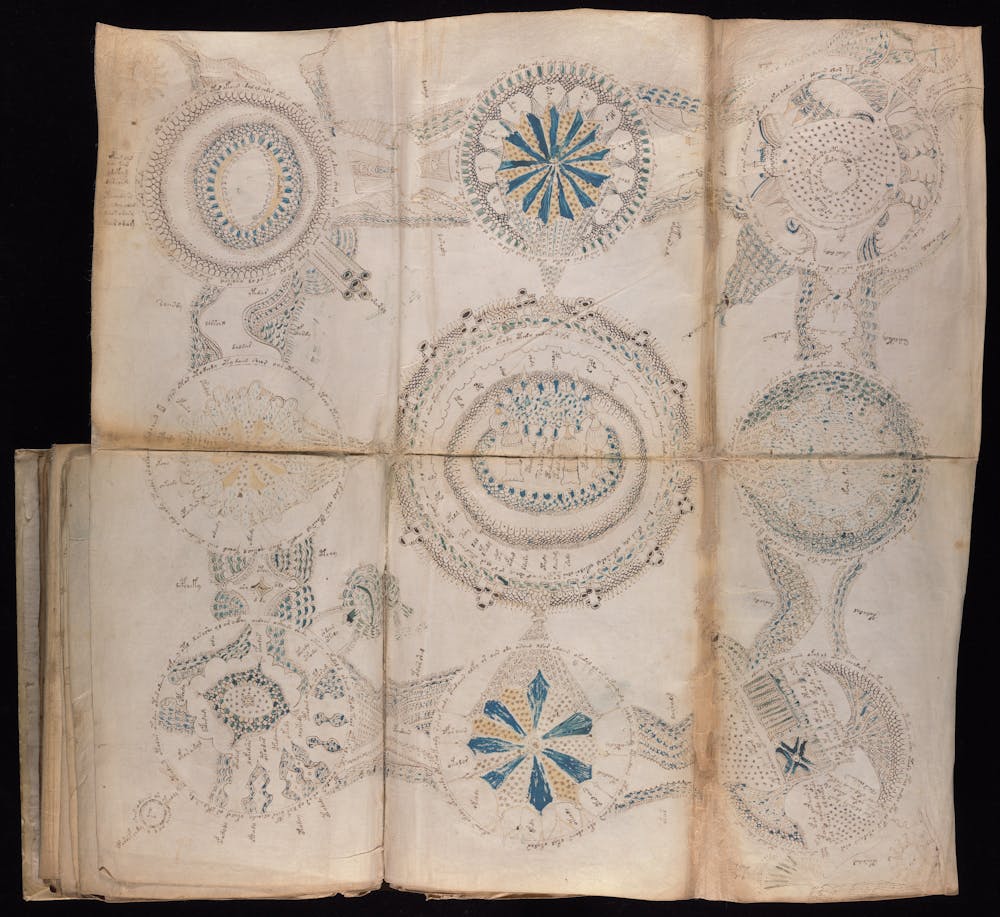
In an article published in Social History of Medicine, my coauthor Michelle L. Lewis and I propose that sex is one of the subjects detailed in the manuscript – and that the largest diagram represents both sex and conception.
Manuscript 408, also called the Voynich manuscript, is held at a Yale University library. Yale University Library
Research on the Voynich manuscript has revealed some clues about its origins.Carbon dating provides a 95% probability the skins used to make the manuscript come from animals that died between 1404 and 1438. However, its earliest securely known owner was an associate of Holy Roman Emperor Rudolf II, who lived from 1552 to 1612, which leaves more than a century of ownership missing.
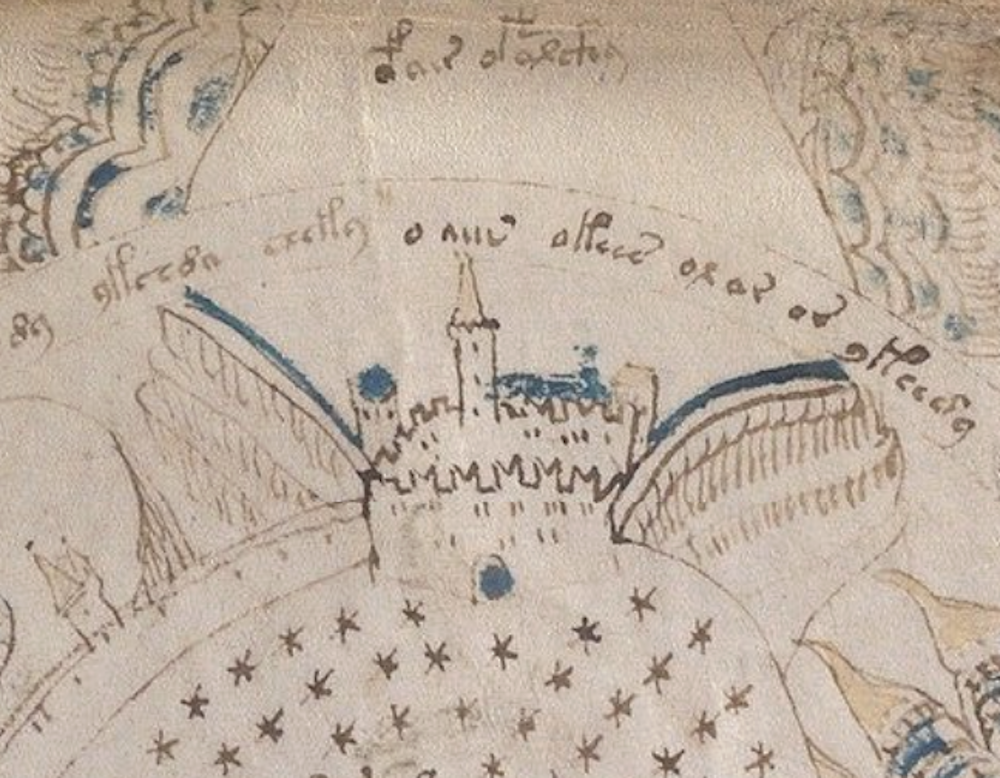
Certain illustrations (the zodiac symbols, a crown design and a particular shape of castle wall called a swallowtail merlon) indicate the manuscript was made in the southern Germanic or northern Italian cultural areas.
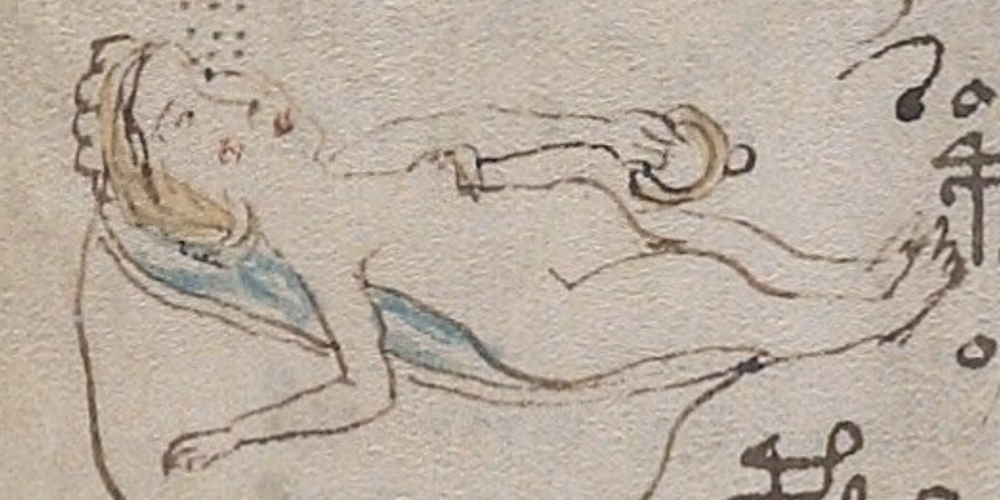
One section contains illustrations of naked women holding objects adjacent to, or oriented towards, their genitalia. These wouldn’t belong in a solely herbal or astronomical manuscript. To make sense of these images, we investigated the culture of late-medieval gynaecology and sexology – which physicians at the time often referred to as “women’s secrets”.
Women illustrated in the manuscript are shown holding unidentified objects towards their genitalia. Yale University Library
First we looked at Bavarian physician Johannes Hartlieb (circa 1410–68), who lived around the time and place the Voynich manuscript was made.
Hartlieb wrote about plants, women, magic, astronomy and baths. He also recommended the use of “secret letters” (such as a cipher, secret alphabet, or similar) to obscure medical recipes and procedures that may result in contraception, abortion or sterility.
Although his secret alphabet hasn’t survived, analysing his work has helped us understand the attitudes that would have inspired the use of encipherment at the time. For instance, Hartlieb felt a strong apprehension about “women’s secrets” becoming widely known. He worried his writings could facilitate extramarital sex and that God would condemn him if this happened.
In his un-enciphered writings, he either refuses or hesitates to write about certain topics, such as post-partum vaginal ointments, women’s sexual pleasure, claims of women giving birth to animals, the “correct” coital positions for conception, libido-altering dietary advice, and information about poisonous, hallucinogenic, contraceptive or abortive plants.
Writing for male aristocrats in vernacular Bavarian (rather than academic Latin), Hartlieb says such knowledge should be restricted from sex workers, commoners, children, and in some cases from women themselves – who were becoming increasingly literate.
As a man who valued heterosexual marriage and women’s “modesty”, and who condemned lust, promiscuity and prostitution, he was perfectly conventional for his milieu.
If such attitudes were widespread back then, was the censorship of women’s secrets also widespread? The short answer is: yes.
During our research, we decoded a number of ciphers from this period (but none from the Voynich manuscript). The longest was a 21-line cipher from late-medieval northern Italy that obscured a recipe with gynaecological uses, including abortion.
We also found many examples of authors self-censoring, or of readers erasing or destroying information in gynaecological and/or sexological texts. Censors would often only obscure a few words, usually genital terms or plant names in recipes – but sometimes they would remove entire pages or chapters.
One Bavarian manuscript includes recipes for invisibility and magic spells for sexually coercing women, after which two pages have been removed. The censor writes this removal was done “not without reason”.
The Rosettes
By analysing the Voynich illustrations through this lens, we propose the Rosettes – the manuscript’s largest and most elaborate illustration – represents a late-medieval understanding of sex and conception.
Our proposal is in keeping with the patriarchal culture of the time and resolves many of the manuscript’s apparent contradictions. It also allows us to identify several of the illustration’s features.
The Rosettes illustration consists of circles, tubes, dots, bulbs, passageways, castles and town walls. Yale University Library
In late-medieval times the uterus was believed to have seven chambers, and the vagina two openings (one external and one internal).
We believe the nine large circles of the Rosettes represents these, with the central circle representing the outer opening, and the top-left circle representing the inner opening. The eight outer circles have smooth edges since they represent internal anatomy, while the central circle has a shaped edge since it represents external anatomy.
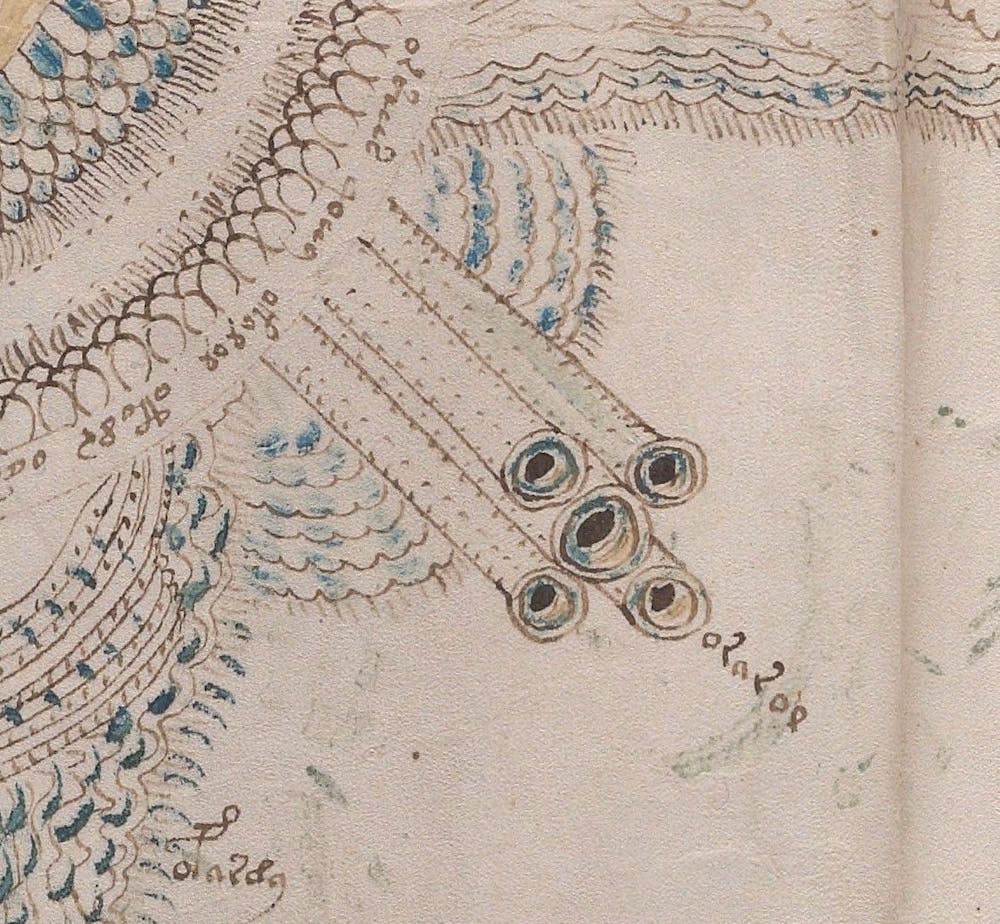
Abu Bakr Al-Rāzī, a Persian physician who influenced late-medieval European medicine, wrote that five small veins exist in the vaginas of virgins. We see these running from the top-left circle towards the centre.
The five veins running from the top-left to the central circle. Yale University Library
Physicians back then also believed a male and female component were necessary for conception, and both of these were called “sperm”. These are shown in yellow (male) and blue (female). Women were thought to receive pleasure from the motion of the two sperms in the uterus, which is depicted through the lines and patterns.
It was also thought the uterus had two horns or spikes, which we can see on the top-right and bottom-right circles.
A closeup of the bottom ‘horn’. Yale University Library
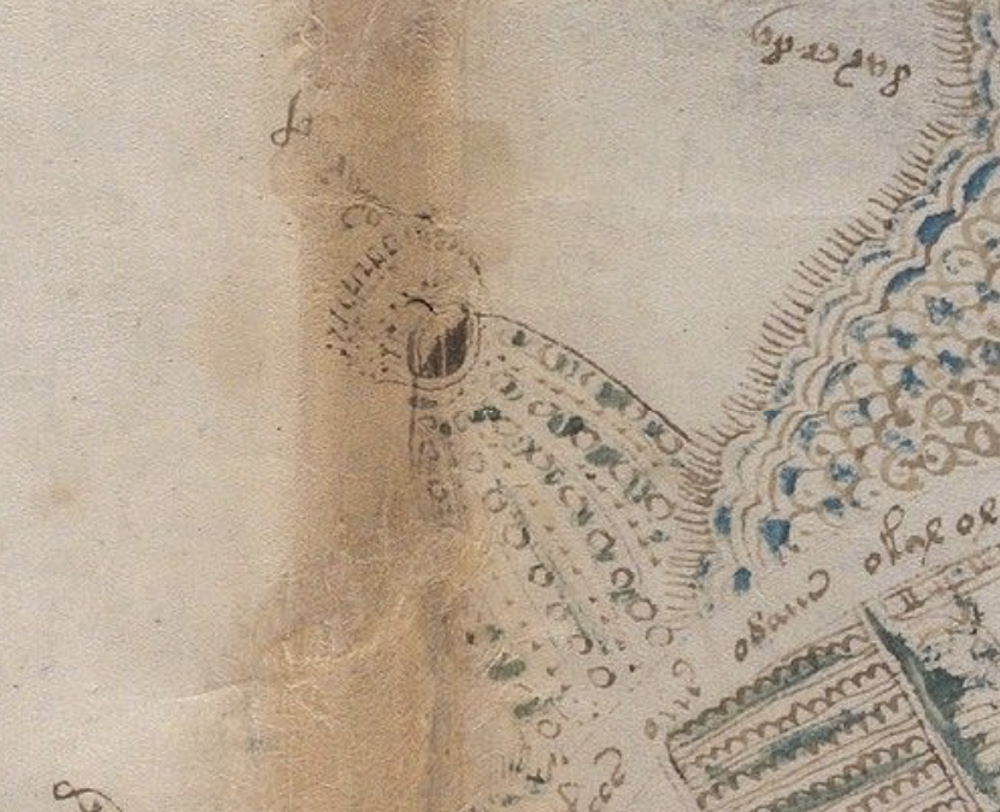
The castles and town walls may represent wordplay on the German term schloss, which had meanings including “castle”, “lock”, “female genitalia” and “female pelvis”.
A closeup of a castle embedded in the illustration. Yale University Library
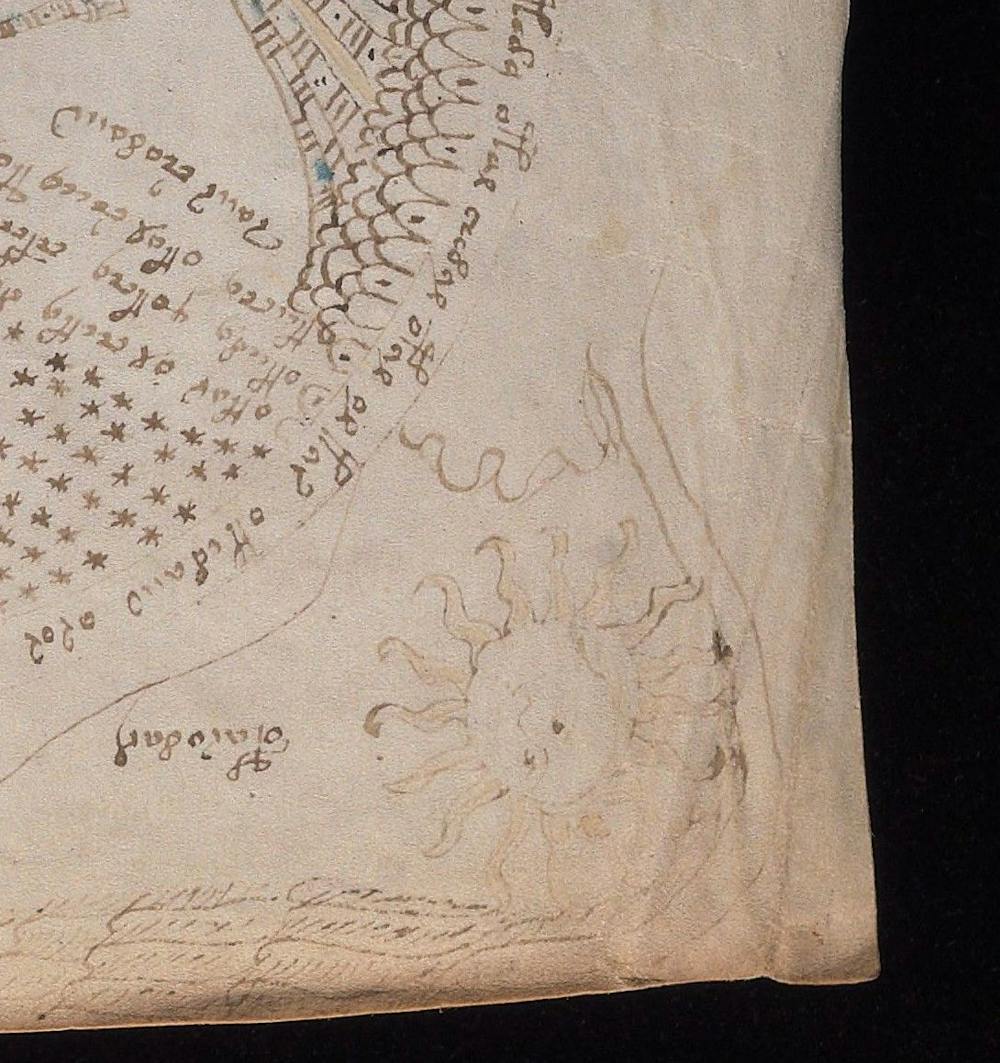
And the two suns in the far top-left and bottom-right likely reflect Aristotle’s belief that the Sun provides natural heat to the embryo during its early development.
Aristotle thought the Sun provided natural heat to the embryo. Yale University Library
While many features of the illustration are yet to be understood, our proposal is worth close scrutiny. We hope future research into the manuscript will approach it through a similar lens. Perhaps, with enough clues, we might find a way to finally decode this elusive text.
Keagan Brewer receives funding from a Macquarie University Research Fellowship.
Earlier this year, Neuralink implanted a chip inside the brain of 29-year-old US man Noland Arbaugh, who is paralysed from the shoulders down. The chip has enabled Arbaugh to move a mouse pointer on a screen just by imagining it moving.
In May 2023, US researchers also announced a non-invasive way to “decode” the words someone is thinking from brain scans in combination with generative AI. A similar project sparked headlines about a “mind-reading AI hat”.
Can neural implants and generative AI really “read minds”? Is the day coming when computers can spit out accurate real-time transcripts of our thoughts for anyone to read?
Such technology might have some benefits – particularly for advertisers looking for new sources of customer targeting data – but it would demolish the last bastion of privacy: the seclusion of our own minds. Before we panic, though, we should stop to ask: is what neural implants and generative AI can do really “reading minds”?
The brain and the mind
As far as we know, conscious experience arises from the activity of the brain. This means any conscious mental state should have what philosophers and cognitive scientists call a “neural correlate”: a particular pattern of nerve cells (neurons) firing in the brain.
So, for each conscious mental state you can be in – whether it’s thinking about the Roman Empire, or imagining a cursor moving – there is some corresponding pattern of activity in your brain.
So, clearly, if a device can track our brain states, it should be able to simply read our minds. Right?
Well, for real-time AI-powered mind-reading to be possible, we need to be able to identify precise, one-to-one correspondences between particular conscious mental states and brain states. And this may not be possible.
Rough matches
To read a mind from brain activity, one must know precisely which brain states correspond to particular mental states. This means, for example, one needs to distinguish the brain states that correspond to seeing a red rose from the ones that correspond to smelling a red rose, or touching a red rose, or imagining a red rose, or thinking that red roses are your mother’s favourite.
One must also distinguish all of those brain states from the brain states that correspond to seeing, smelling, touching, imagining or thinking about some other thing, like a ripe lemon. And so on, for everything else you can perceive, imagine or have thoughts about.
To say this is difficult would be an understatement.
Take face perception as an example. The conscious perception of a face involves all sorts of neural activity.
But a great deal of this activity seems to relate to processes that come before or after the conscious perception of the face – things like working memory, selective attention, self-monitoring, task planning and reporting.
Winnowing out those neural processes that are solely and specifically responsible for the conscious perception of a face is a herculean task, and one that current neuroscience is not close to solving.
Even if this task were accomplished, neuroscientists would still only have found the neural correlates of a certain type of conscious experience: namely, the general experience of a face. They wouldn’t thereby have found the neural correlates of the experiences of particular faces.
So, even if astonishing advances were to happen in neuroscience, the would-be mind-reader still wouldn’t necessarily be able to tell from a brain scan whether you are seeing Barack Obama, your mother, or a face you don’t recognise.
That wouldn’t be much to write home about, as far as mind-reading is concerned.
But what about AI?
But don’t recent headlines involving neural implants and AI show some mental states can be read, like imagining cursors move and engaging in inner speech?
Not necessarily. Take the neural implants first.
Neural implants are typically designed to help a patient perform a particular task: moving a cursor on a screen, for example. To do that, they don’t have to be able to identify exactly the neural processes that are correlated with the intention to move the cursor. They just need to get an approximate fix on the neural processes that tend to go along with those intentions, some of which might actually be underpinning other, related mental acts like task-planning, memory and so on.
Thus, although the success of neural implants is certainly impressive – and future implants are likely to collect more detailed information about brain activity – it doesn’t show that precise one-to-one mappings between particular mental states and particular brain states have been identified. And so, it doesn’t make genuine mind-reading any more likely.
Now take the “decoding” of inner speech by a system comprised of a non-invasive brain scan plus generative AI, as reported in this study. This system was designed to “decode” the contents of continuous narratives from brain scans, when participants were either listening to podcasts, reciting stories in their heads, or watching films. The system isn’t very accurate – but still, the fact it did better than random chance at predicting these mental contents is seriously impressive.
So, let’s imagine the system could predict continuous narratives from brain scans with total accuracy. Like the neural implant, the system would only be optimised for that task: it wouldn’t be effective at tracking any other mental activity.
How much mental activity could this system monitor? That depends: what proportion of our mental lives consists of imagining, perceiving or otherwise thinking about continuous, well-formed narratives that can be expressed in straightforward language?
Not much.
Our mental lives are flickering, lightning-fast, multiple-stream affairs, involving real-time percepts, memories, expectations and imaginings, all at once. It’s hard to see how a transcript produced by even the most fine-tuned brain scanner, coupled to the smartest AI, could capture all of that faithfully.
The future of mind reading
In the past few years, AI development has shown a tendency to vault over seemingly insurmountable hurdles. So it’s unwise to rule out the possibility of AI-powered mind-reading entirely.
But given the complexity of our mental lives, and how little we know about the brain – neuroscience is still in its infancy, after all – confident predictions about AI-powered mind-reading should be taken with a grain of salt.
The authors do not work for, consult, own shares in or receive funding from any company or organisation that would benefit from this article, and have disclosed no relevant affiliations beyond their academic appointment.
Conservation “good news” stories – the release of native birds into new habitats, for example – are always welcome. They recognise the work of conservation staff and volunteers who do the hard slog of checking trap lines and removing weeds.
The reality is, however, that Aotearoa New Zealand’s environment is in deep trouble. Talk of a “crisis” can be unhelpful if it encourages a sense of hopelessness. But with the government’s Fast-track Approvals Bill approaching rapidly, now is arguably the time to use the word.
The bill encourages development, but gives government ministers the power to circumvent key environmental planning and protection processes for (as yet unnamed) infrastructure projects.
By emphasising short-term economic gain, it risks eroding the country’s already fragile natural capital and pushing biodiversity further into decline.
With public submissions on the bill closing at the end of this week, there are numerous reasons to call for caution and a pause. These can be divided into five broad categories.
1. Much has been lost already
Ecosystems cannot be restored. Once destroyed, they are gone forever. This is known in restoration ecology as the “Humpty Dumpty effect”. Here are just some of the facts:
only 22% of Aotearoa’s original vegetation remains
at least 79 species extinctions have been recorded
remaining species currently threatened or at risk include 94% of reptiles, 90% of seabirds, 74% of land birds, 76% of freshwater fish and 46% of plants
90% of our wetlands have been lost, as well as 80% of our active sand dune ecosystems
The science of restoration ecology is relatively young. We can plant trees and shrubs, and reintroduce some animals previously present in a restoration area. But we do not currently have the knowledge to restore lichens, mosses, fungi and invertebrate communities.
These all play a major role in the functioning of ecosystems, including decomposition and nutrient cycling.
2. Habitats are fast disappearing
New Zealanders often imagine native vegetation is well protected and the wholesale land clearance practised by earlier generations has stopped.
But many terrestrial ecosystems are still being cleared today for development. Between 2012 and 2018, almost 13,000 hectares (the equivalent of 13,000 rugby fields) of native vegetation was lost due to development.
The Department of Conservation is underfunded and has not been able to assess and reclassify more than 2.7 million hectares of stewardship land. Much of this contains rare ecosystems. But it has the lowest protection and may be a prime target for development under the proposed fast-track legislation.
3. Unique NZ has international obligations
Around 80% of most native species – 81% of insects, 100% of reptiles, frogs and bats, 84% of plants, 72% of birds, and 88% of freshwater fish – are found nowhere else in the world. New Zealand has been designated one of 25 global biodiversity “hot spots” for conservation priority.
However, more than 33% of New Zealand species are classified “data deficient”, meaning we don’t know enough to determine whether they are threatened with extinction.
We’re also discovering new species every day. Only an estimated 50% of insect species have been scientifically described, including just 30% of Hymenoptera (wasps, ants and bees – including pollinators and natural biocontrol agents).
4. Environment underpins economy, health and culture
Biodiversity and healthy ecosystems provide critical services that prop up human populations. They regulate the climate, prevent erosion, cycle nutrients, filter air particles and water, and mitigate floods.
Ecosystem processes, such as pollination and soil formation, underpin primary production and provide pest and disease resilience. They contributed an estimated NZ$57 billion (27% of the country’s GDP) to human welfare in 2012.
Failing to recognise the value of New Zealand’s natural capital – which has previously often been regarded as value-less economically – risks leaving future generations with even less to support their economy, health and wellbeing.
Degraded ecosystems can reach a tipping point, when they collapse and stop functioning – for example, the “eutrophication” of freshwater systems, which become nutrient-rich and depleted of oxygen.
There is now extreme pressure on the biodiversity that supports healthy ecosystems. The economic loss from soil erosion alone (192 million tonnes lost annually) is estimated at NZ$250-$300 million each year. It takes a thousand years to generate three centimetres of topsoil – and it is running out rapidly.
Degraded ecosystems are less resilient to disturbance and are vulnerable to invasive species. Roads and tracks created during development can prevent the movement of native animals, while creating “highways” for weeds, pests and diseases.
These affect native ecosystems as well as farms and orchards, adding to the country’s already very high pest management bill.
Taken together, the potential long-term costs on ecosystems and the vital services they provide need to be carefully considered before the proposed legislation comes into force.
Margaret Stanley has received funding for technical advice from the Ministry for Primary Industries and the Ministry for Environment, and for research from the Ministry of Business, Innovation & Employment’s National Science Challenges.
It also means important income for Stuff, but it will also stretch the company’s staff, finances and technology.
Stuff will provide a one-hour bulletin each weekday and a half-hour on weekends.
Stuff will also retain a live Newshub website.
Warner Bros Discovery chief executive and Stuff publisher Sinead Boucher confirmed the arrangement at a joint news conference today.
Boucher had told her staff the company will “definitely be bringing some Newshub staff” to produce the 6pm bulletins.
She then told reporters she was unsure how many staff would be required, but it would be fewer than “40 to 50” specified in a “stripped back” proposal from Newshub’s own staff.
‘We are digital first’ “We’re not getting into the TV business. We are a digital first multimedia company building a new 6pm product for Warner Brothers,” she said.
Mediawatch understands many media companies approached WBD with proposals to provide news after the company first proposed the cost-saving closure in late February.
However, by the time of the confirmation earlier this month most of those had been rejected by WBD.
Sky TV was also reported to be in the running. It currently runs a Newshub-produced bulletin at 5:30pm each weekday on the free-to-air channel Sky Open and would require a replacement. It also had plenty of TV production facilities.
Sinead Boucher said a Sky bulletin was not included in the deal, but she hoped there would be discussions about that.
Negotiations were carried out in secret both before and after Warner Bros Discovery (WBD) confirmed the complete closure of Newshub on July 5, leaving the company with no news presence.
Stuff refused to comment during the process and Stuff journalists told RNZ Mediawatch on Monday night they were unaware of an impending announcement.
“We didn’t want to raise expectations for Newshub staff when we weren’t sure what would be required,” Boucher told reporters today, explaining that the deal had been done in haste.
Why do the deal – and what’s it worth? The money WBD is putting into the deal is confidential but it is certain to be just a fraction of the current cost of running Newshub, which would run to tens of millions of dollars a year.
WBD was clearly determined to carve that cost off the bottom line of its loss-making local operation. The financial benefit for Stuff may not be great taking the set-up and running costs into account.
WBD’s Glen Kyne said neither company would comment on specific commercial details, but when asked about the possible profit margin for Stuff, Boucher said: “Both parties are satisfied with where we have ended up.”
But while the audience for TV news bulletins is declining — and the ad revenue has fallen accordingly — it is still substantial for TVNZ 1 and Three. The “appointment viewing” time of 6pm creates a viewing peak which the TV broadcasters use to hold viewers for the entertainment or factual programmes that follow.
Former Newshub chief Hal Crawford told Mediawatch the overall audience for Three could collapse without news in the evening.
“There’s still a reason that the 1 and the 3 on remotes around the country are worn down. News is the one programme that runs 365 days a year . . . which the schedule is going to rely on to lead into prime time. So the rest of your schedule is going to dwindle. Ratings are gonna fall off and everything is going to go to pieces,” Crawford told Mediawatch.
“The loss of the newsroom represents the loss of the ability to respond to any event in real time. That is the heart and soul of a traditional TV broadcaster.”
Why Stuff? Stuff has journalists in more places around the country than any other news publisher.
Stuff’s publisher Sinead Boucher recently told a parliamentary committee it had journalists in 19 locations, even after years of cuts and successive retrenchments.
“We have replatformed our business and have new ways of working. We look at this as starting this bulletin afresh rather than using the broadcast-heavy technology of today,” she told reporters at today’s news conference.
It also has audio and video production facilities at some sites and some senior journalists with TV reporting and presenting experience, such as former Newshub political editor Tova O’Brien, former TV3 current affairs reporter Paula Penfold and senior journalist Andrea Vance.
But Stuff video ventures have not endured. It launched its own free online video platformPlay Stuff in mid-2019. It also hired key former TV3 current affairs staff for its own longform video productions but disbanded the Stuff Circuit team earlier this year.
When the Stuff app and website were refreshed recently, short vertical videos were added as a feature, called Stuff Shorts.
Stuff’s weakness has in the past been a dependence on newspaper advertising. It was only last year that Stuff launched its first paywalls for online news for three of its mastheads.
Stuff’s main rival NZME has half the country’s radio networks in addition to newsrooms supplying its newspapers and websites. NZME’s New Zealand Herald has been getting revenue from “premium content” digital subscriptions for four years.
After Boucher acquired Stuff in 2020, Stuff embarked on a digital transition creating more digital audio and video content. It has hired executives from multimedia companies such as Nadia Tolich (ex-NZME now Stuff Digital managing director) and former NZME digital leader Laura Maxwell, now Stuff’s chief executive.
Can you remember a time when you felt stressed leading up to a big life event and then afterwards felt like a weight had been lifted? This process – the ramping up of the stress response and then feeling this settle back down – shows completion of the “stress cycle”.
Scientists and researchers refer to the “stress response”, often with a focus on the fight-or-flight reactions. The phrase the “stress cycle” has been made popular by self-help experts but it does have a scientific basis.
The stress cycle is our body’s response to a stressful event, whether real or perceived, physical or psychological. It could be being chased by a vicious dog, an upcoming exam or a difficult conversation.
The stress cycle has three stages:
stage 1 is perceiving the threat
stage 2 is the fight-or-flight response, driven by our stress hormones: adrenaline and cortisol
stage 3 is relief, including physiological and psychological relief. This completes the stress cycle.
Different people will respond to stress differently based on their life experiences and genetics.
Remaining in stage 2 (the flight-or-flight response), can lead to chronic stress. Chronic stress and high cortisol can increase inflammation, which damages our brain and other organs.
When you are stuck in chronic fight-or-flight mode, you don’t think clearly and are more easily distracted. Activities that provide temporary pleasure, such as eating junk food or drinking alcohol are unhelpful strategies that do not reduce the stress effects on our brain and body. Scrolling through social media is also not an effective way to complete the stress cycle. In fact, this is associated with an increased stress response.
The prefrontal cortex is responsible for higher-order control of our thoughts, behaviours and emotions, and is goal-directed and rational. The amygdala is involved in reflexive and emotional responses. Higher amygdala activity and lower prefrontal cortex activity explains why we are less rational and more emotional and reactive when we are stressed.
There are five types of activities that can help our brains complete the stress cycle?
It can help to understand how the brain encounters stress.
When you exercise, there is more blood flow to the brain and higher activity in the prefrontal cortex. This is why you can often think more clearly after a walk or run. Exercise can be a helpful way to relieve feelings of stress.
Exercise can also increase the volume of the hippocampus. This is linked to better short-term and long-term memory processing, as well as reduced stress, depression and anxiety.
Overly negative thinking can trigger or extend the stress response. In our 2019 research, we found the relationship between stress and cortisol was stronger in people with more negative thinking.
Higher amygdala activity and less rational thinking when you are stressed can lead to distorted thinking such as focusing on negatives and rigid “black-and-white” thinking.
Activities to reduce negative thinking and promote a more realistic view can reduce the stress response. In clinical settings this is usually called cognitive behaviour therapy.
At home, this could be journalling or writing down worries. This engages the logical and rational parts of our brain and helps us think more realistically. Finding evidence to challenge negative thoughts (“I’ve prepared well for the exam, so I can do my best”) can help to complete the stress cycle.
3. Getting creative – a pathway out of ‘flight or fight’
Creative activities can be art, craft, gardening, cooking or other activities such as doing a puzzle, juggling, music, theatre, dancing or simply being absorbed in enjoyable work.
Flow is a state of full engagement in an activity you enjoy. It lowers high-stress levels of noradrenaline, the brain’s adrenaline. When you are focussed like this, the brain only processes information relevant to the task and ignores non-relevant information, including stresses.
4. Getting social and releasing feel-good hormones
Talking with someone else, physical affection with a person or pet and laughing can all increase oxytocin. This is a chemical messenger in the brain that increases social bonding and makes us feel connected and safe.
Laughing is also a social activity that activates parts of the limbic system – the part of the brain involved in emotional and behavioural responses. This increases endorphins and serotonin and improves our mood.
5. Self-soothing
Breathing exercises and meditation stimulate the parasympathetic nervous system (which calms down our stress responses so we can “reset”) via the vagus nerves, and reduce cortisol.
A good cry can help too by releasing stress energy and increasing oxytocin and endorphins.
Emotional tears also remove cortisol and the hormone prolactin from the body. Our prior research showed cortisol and prolactin were associated with depression, anxiety and hostility.
Whether it’s watching a funny or sad movie, exercising, journalling, gardening or doing a puzzle, there is science behind why you should complete the stress cycle.
Doing at least one positive activity every day can also reduce our baseline stress level and is beneficial for good mental health and wellbeing.
Importantly, chronic stress and burnout can also indicate the need for change, such as in our workplaces. However, not all stressful circumstances can be easily changed. Remember help is always available.
If you have concerns about your stress or health, please talk to a doctor.
If this article has raised issues for you, or if you’re concerned about someone you know, call Lifeline on 13 11 14 or Kids Helpline on 1800 55 1800.
The authors do not work for, consult, own shares in or receive funding from any company or organisation that would benefit from this article, and have disclosed no relevant affiliations beyond their academic appointment.
Former Spanish football federation chief Luis Rubiales may face significant consequences for his non-consensual kiss of Spanish soccer star Jenni Hermoso.
But this is not the norm for perpetrators of gender-based violence in sport. Our research – which reviewed 25 years of studies examining women’s experiences of gender-based violence in sport – found perpetrators are rarely held to account.
More commonly, they are free to continue abusing victims with impunity.
Luis Rubiales, the former Spanish football federation chief, has been charged with one count of sexual assault and one of coercion.
The shocking reality of gender-based violence in sport
Women’s sport is championed as a platform for empowerment and equality but previous studies have shown gender-based violence is highly prevalent, ranging from 26 to 75% across psychological, physical and sexual violence, depending on how the violence has been defined and measured.
There have been many historical and contemporary cases of abuse, bringing to light some of the concerns about how perpetrators were able to continue their abuse for so long.
Our research systematically gathered and analysed the collective voices of women who experienced gender-based violence in sport to understand their experiences better and to inform future prevention and response initiatives. Participants included current and former athletes, coaches, umpires and managers.
The research found women in sport experience multiple types of violence (sexual, physical, psychological, financial), often by more than one perpetrator. Coaches or other authority figures are the most common perpetrators, followed by male athletes or members of the public.
We found a “normalisation” of these violent behaviours in the sporting context; they were seen as expected and were routinely excused in order to get results.
When women do speak up and complain, our research highlighted that organisational responses are impotent at best, actively malevolent and cruel at worst.
Complaints often go nowhere, codes of conduct may not exist, and there is a strong lack of confidentiality because “everyone knows everyone”.
In some cases, women were mocked and told they’d imagined the abuse, a deliberate strategy by the organisation to put “success” and “winning” before the safety of women.
Justice is sometimes only achieved when women act as a group to voice their experiences and confront abusers.
Importantly, our research found the unique context of sport as an extended or surrogate family created the conditions for “sporting family violence”.
Athletes spend significant time within the sporting family unit, creating close relationships with their coach, other authority figures and teammates.
The coach as a father figure
The coach as a father figure was a consistent theme across several studies, with some athletes stating the coach knew more about them than their parents.
If a coach was regarded as “the best”, often no one questioned him. This gave coaches enormous power, which they used to isolate women they abused from both the sport family and their actual family, exerting coercive control to maintain an environment of secrecy and dominance.
Finally, our research found women are still seen as inferior to men and treated as “other” in the sporting context. Consequently, there is a hostility to women, who are perceived as a threat to the hegemonic masculinity of sport.
This was a particularly strong theme in non-traditional female sports such as judo and boxing, and for women in management or official roles.
Power is a key factor running through all our findings, and while women may be able to exercise some power through collective resistance, power often remains with men and sports institutions that are complicit.
Initiatives to address gender-based violence in sport must recognise the many forms of violence women experience, and the different ways in which power and violence play out.
Of course, this still shows the extent of the collective voice needed to push for change.
While we applaud this and the reckoning of Rubiales’ actions, and cheer for the collective voice standing with women like Jenni Hermoso, it would be negligent to forget the many silenced women’s voices in sport who bear the brunt of violence within a space often considered their family.
Fiona Giles occasionally volunteers for the national and state Greens on election days.
Kirsty Forsdike receives funding from the Australian Sports Commission, the Olympic Foundation for Culture and Heritage and the Department of Jobs, Precinct and Regions of the State Government of Victoria.
When the people of Solomon Islands go to the polls on Wednesday, they will be voting for more than just a new prime minister. The election will also be a referendum on whether the country continues with incumbent Prime Minister Manasseh Sogavare’s growing strategic alliance with China.
Sogavare has remained secretive about the details of the security pact his government recently signed with China and is deeply sensitive to critique, particularly from the Australian media. In 2022, for example, he threatened to ban ABC journalists investigating the country’s links with China.
US Admiral John Aquilino on why a security deal between Solomon Islands and China is so concerning.
The security pact is just one small part of China’s sprawling Belt and Road Initiative, which has resulted in an expansion of Chinese influence across the region. This includes a focus on media. China has funded the training of Pacific journalists and their travel to China, and provided local media with syndicated content and financial support for infrastructure and vehicles.
There are allegations this funding has come with strings attached. The ABC reported last year that Solomon Islands’ oldest newspaper had received money from China in exchange for favourable coverage. (The Solomon Star’s editor said the newspaper maintained its independence – and had tried for years to obtain funding from Australia.)
The influence of Beijing is now so significant, the longtime journalist and Pacific specialist Sue Ahearn has said China is winning the information war in the Pacific.
Yet, according to research conducted by the ABC last year, Pacific islanders still overwhelmingly rely on – and trust – Australian media more than any other country’s media. In fact, five of six islands polled said ABC was the most valued and preferred international broadcaster.
Australia can’t rest on its laurels. It needs to build on this trust.
The concern about China’s influence on Pacific media comes as the international broadcasting section at the ABC is trying to reboot. This comes after it made redundancies and cuts to services as part of efficiencies forced on it by the former Coalition government. Although the ABC maintained some broadcasting to the Pacific under the Coalition government, its international division had become a shadow of its former self.
The Albanese government has refocused efforts on the Pacific more broadly, pledging A$2 billion in the last budget to boost Australia’s security efforts in the region. It also boosted funding to the ABC’s international division with a $32 million grant, and invested another $8.5 million through 2027–28 to increase the reach of the ABC and other Australian media content across the region.
The funding boost has sent the ABC into a local recruitment drive to hire broadcast staff, particularly those who come from the region. It is also commissioning more “bespoke” lifestyle and sport content for the region.
The ABC and the Solomon Islands Broadcasting Corporation signed a memorandum of understanding last month. It formalised their “commitment to collaboration and support, with an emphasis on content sharing and media development programs”.
However, this funding has not yet allowed the ABC to provide a basic, reliable news service specifically for the Pacific to complement local services.
Solomon Islands media challenges
However, news outlets in Solomon Islands and, indeed, the wider Pacific still face entrenched challenges.
Some of these challenges are due to the small population base in many countries, limited advertising revenue and marginal profits. Research from the University of the South Pacific has found the Pacific has among the highest journalist attrition rates in the world. News outlets are mostly staffed by young, inexperienced and underqualified journalists, who are tasked with reporting on extremely complex issues.
Another challenge is the cultural system of wantok – broadly meaning “one talk” in the Pijin language of Solomon Islands, which means a network of kin and connection. Because of wantok, many stories remain untold due to conflicts of interest involving journalists writing critical stories on their own families.
However, that hasn’t stopped all fearless reporting. A year-long investigation involving Solomon Islands journalists working for an international organisation, the Organized Crime and Corruption Reporting Project, reported last week that Sogavare has built at least eight new houses in and around the capital, Honiara, despite earning a modest salary. Sogavare did not respond to questions for the report, but has defended his land purchases in the past, saying he received loans from banks.
But this story, which is clearly of significance to voters heading to the polls, is not widely known and has mostly been distributed via Facebook on a volunteer-run news site, The Pacific Newsroom.
In such an environment, there is a clear need for a greater Australian media presence, not only to provide unbiased information to Solomon Islands voters and support the local media, but also to report on elections and other domestic issues for regional audiences.
This is why the ABC needs guaranteed funding for its international services – free from further government or managerial interference – to ensure this role in supporting Pacific media isn’t lost again.
The authors do not work for, consult, own shares in or receive funding from any company or organisation that would benefit from this article, and have disclosed no relevant affiliations beyond their academic appointment.
A pro-independence activist in New Caledonia is warning France to immediately halt its planned constitution amendments or face “war”.
The call for a u-turn follows proposed constitutional changes to voting rights which could push the number of eligible anti-independence voters up.
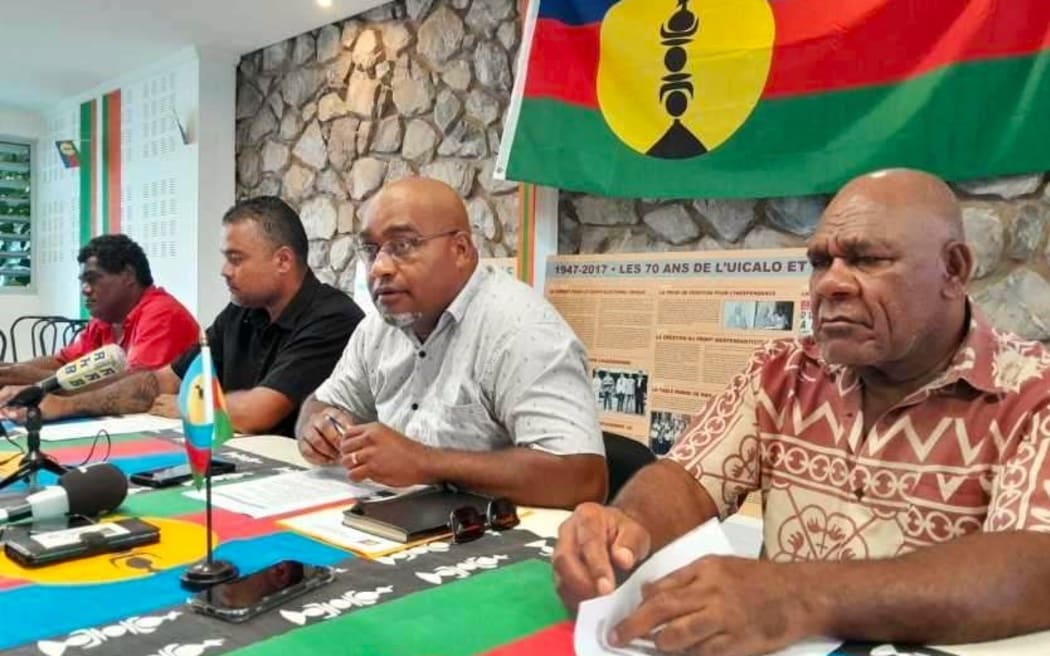
Pacific Independence Movement (le Mouvement des Océaniens indépendantistes) spokesperson Arnaud Chollet-Léakava was one of the thousands who took to the streets in Nouméa in protest last Saturday.
He told RNZ Pacific that tensions were high.
“We are here to tell them we must not make this mistake,” Chollet-Léakava said.
“Step by step, I think there will be war.”
Anti-independence supporters with French flags gathered on Nouméa’s Baie de la Moselle last Saturday. Image: RRB/RNZ
A nearby counter-protest in Nouméa also had a large turnout.
People there wore the French flag, a contrast to the sea of blue, red, green and yellow representing the Kanak flag at the pro-independence rally.
A dog wearing a Kanak flag at the pro-independence rally last Saturday. Image: RNZ Pacific/Lydia Lewis
Solange Ponija was one of thousands at the pro-independence rally in Nouméa.
The constitutional change — if pushed through — will tip the balance of voting power onto the French side, she said.
She feared the indigenous people of New Caledonia — the Kanak people — will lose in their fight for independence:
“They want to make us a minority . . . it will make us a minority!
“The law will make the Kanaky people a minority because it will open the electoral body to other people who are not Kanaky and who will give their opinion on the accession of Caledonia to full sovereignty,” Ponija said.
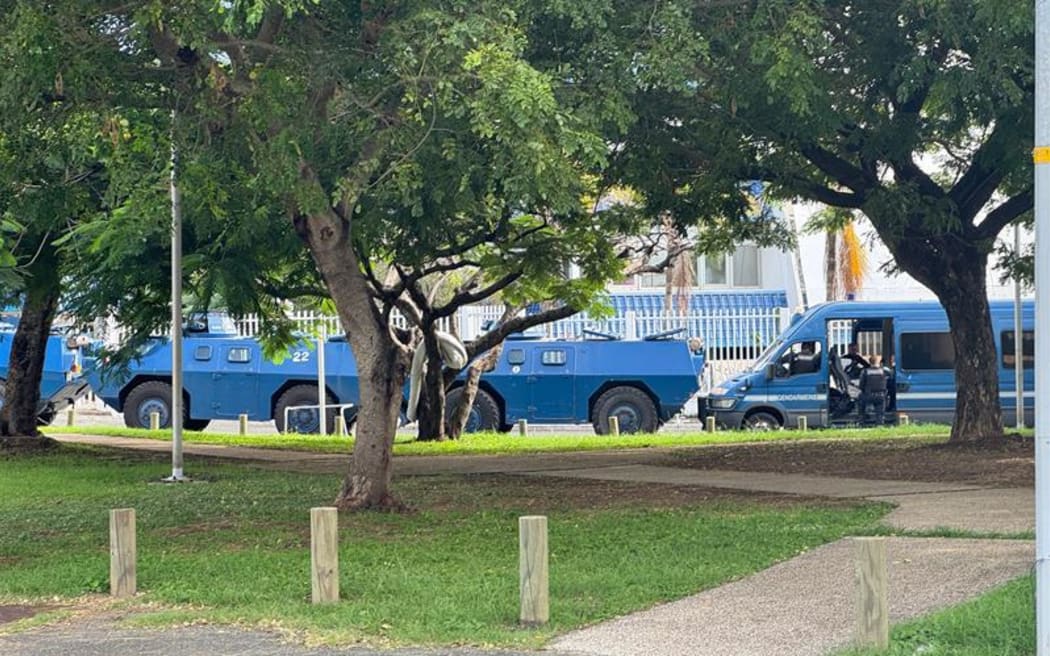
Security was high last weekened with more than 100 additional security forces sent from France for the protest and counter-protest. Image: RNZ Pacific/Lydia Lewis
‘Heading towards a civil war’ A French man who has lived in New Caledonia for two decades said independence or not, he just wanted peace.
The man — who wanted to remain anonymous out of fear of retribution — said he moved to New Caledonia knowing he would be living on colonised land.
Having experienced violence in 2019, the man begged both sides to be amicable.
“[It’s] very complicated and very serious because if the law is not withdrawn and passed. We are clearly heading towards a civil war,” he said.
“We hope for peace and we hope that we find a common agreement for both parties.
“People want peace and we don’t want to move towards war.”
The constitutional bill was endorsed by the French Senate on April 2.
The next stage is for the bill to be debated, which has been set down for May 13.
Then both the Senate and the National Assembly will gather in June to give the final stamp of approval.
This would allow any citizen who has lived in New Caledonia for at least 10 years to cast their vote at local elections.
The Kanaky New Caledonia pro-independence rally last Saturday. Image: RNZ Pacific/Lydia Lewis
This article is republished under a community partnership agreement with RNZ.
Source: The Conversation (Au and NZ) – By Andy Ward, Senior Lecturer in Music, School of Business and Creative Industries, University of the Sunshine Coast
Shutterstock
What’s that sound you hear – a combination of down-tempo hip-hop, menacing bass, distorted drums and plucky synths? It’s phonk!
Still have no idea what we’re talking about? You’ve probably heard it if you’re on TikTok, awkwardly played over a Peaky Blinders or Jordan Peterson clip that has snuck into your algorithm.
TikTok user Shortbadger certainly cuts to the chase explaining the genre in one of their videos: “creators wanted people to not just hear their words, but feel their words”. Shortbadger also uses comedy to hint at phonk’s subversive (and sometimes troubling) nature.
Actually, Phonk has an altogether more interesting history. On the surface it seems to be another musical resurgence story driven by the social media economy – a bit like Sophie Ellis-Bextor’s Murder on the Dancefloor or Kate Bush’s Running up that Hill, both of which re-entered the charts after years of relative obscurity.
But once you dig a little deeper, you’ll find government censorship, online rebellion and the disruption of American-dominated popular culture.
By smashing together components of hip-hop, EDM, metal and dubstep, phonk is placed as one of the most prominent new genres of music. And with it comes a subversion of popular music taste-making – and a whole lotta politics.
While you may not be directly familiar with the ’90s Memphis hip-hop scene, you will have felt its influence in popular music from recent decades. Known for its expert and nuanced use of the Roland 808 drum machine (particularly pitched kick-drums and snappy hi-hats), styles such as trap and other modern EDM and hip-hop movements owe a lot of their stylistic choices to this scene.
Artists such as DJ Screw, a hip-hop DJ originally from Texas, initially championed phonk by using this palette of sounds in their mixtapes – and helped popularise the style through the mid-’90s.
But it wasn’t until rapper and producer SpaceGhostPurrp started releasing his SUMMA PHONK mixtapes in the early 2010s that phonk really gained attention. He then worked as a producer for hip-hop stars ASAP Rocky and Wiz Khalifa, helping to cement the stylistic elements of phonk in the hip-hop zeitgeist.
The rise of phonk through racing culture
Fast-forward to early 2020: COVID is dominating the world news; lockdowns have led to an uptick in social media use; the post-truth era of Trumpism marches forward; and Spotify dominates music streaming through its self-serving, exploitative model of music commerce.
This was the perfect storm in which phonk could be repositioned as the soundtrack of the TikTok generation. By the last quarter of 2020, TikTok had amassed more than 700 million global users, overtaking Spotify to become the main outlet through which music promotion (and exploitation) could occur.
Much like the DIY expansion of dubstep that took place some ten years ago, young artists such as KORDHELL and $WERVE! brought millions of ears to their phonk music by attracting attention from talent scouts, including at Spotify.
Incidentally, 2020 was also the year Spotify launched in Russia as a new platform for the proliferation of Russian underground music. This scene had also started embracing the stylistic ethos of phonk from the US.
In fact, what you’re most likely to identify as phonk today is actually a sub-movement called “drift phonk”, championed by Russian producers in the early 2020s. The name comes from the marriage of the music with TikTok videos of drift car racing.
Drift phonk’s ominous rhythms and detuned (shifted from the original pitch) melodies are a perfect match for the adrenaline-fuelled culture of underground street racing. The relationship between phonk and racing videos helped spread the style across social media. It even extended to the Fast and Furious franchise, with the release of Drift Tape (Phonk Vol 1).
Much like hip-hop and punk before it, phonk’s use of distorted and aggressive sounds engages young audiences struggling with anxiety brought about by the state of the world. It’s a subversive soundtrack to a generation rallying against authority in a challenging geopolitical landscape.
Phonk’s future is assured
In early 2022, in the midst of its invasion of Ukraine, the Russian Kremlin clamped down on TikTok by banning all non-Russian content. A state-owned company even tried (and ultimately failed) to develop a rival video platform of its own.
Less than a month after the start of the invasion, the Russian government had legislation on “fake news” that made any anti-Russian military content illegal and punishable by imprisonment. Spotify pulled its availability in March 2022, citing the new law as its key reason.
Meanwhile, TikTok still remains available in Russia, but with significant content restrictions, so Russian makers of drift phonk may have had their market pathways severed.
Nonetheless, phonk lives on – ringing loudly in the ears of social media platforms. And while it’s often tied to critiques of our ever-shrinking attention span (given how widely it’s consumed through TikTok), it has undoubtedly become a part of our cultural zeitgeist.
From the meme-level phonk walk that is so 2023, to fresh 2024 Oscars content, creators are continuously finding new, inventive ways to use this music.
The authors do not work for, consult, own shares in or receive funding from any company or organisation that would benefit from this article, and have disclosed no relevant affiliations beyond their academic appointment.
In the wake of witnessing tragic events, many people turn to online communities such as Reddit to discuss and process their experiences. A common bit of advice users give each other is to play Tetris to help combat traumatic memories.
Where does this idea come from, and can this iconic computer game really help in the treatment of conditions like post-traumatic stress disorder?
The answer is a partial “yes”, but with caveats. It depends on several factors, such as the specific symptoms, the timing of the event and also receiving other types of psychological treatment.
Millions of people have played some of the many iterations of Tetris over the decades. Aedrian/Unsplash
Firstly, what is Tetris?
A deceptively simple computer game, Tetris first appeared in 1985. Today, it remains one of the most popular games in history, available for free online and on numerous gaming platforms.
The puzzle game involves a simple visuospatial task (that is, relating visual information to physical space). A series of randomly generated block shapes float down from the top of the screen, and the player’s goal is to create “lines” with the shapes by rotating and moving them. A completed line is cleared from the screen, reducing a potential pile-up of shapes.
The longer you can keep going, the higher the score. The simplicity of this puzzle format is both mindful and engaging.
While most people who witness a traumatic event won’t require treatment, the psychological harm of a powerfully distressing event can have lasting effects in some.
In PTSD, a single traumatic event or series of traumas create a collection of distressing symptoms. This can include reliving the event through nightmares and flashbacks, a sense of the world being a darker, more complicated place, as well as hypervigilance and fear. The brain is seemingly inoculated by the trauma and sensitised to anticipate further trauma.
How might playing Tetris help PTSD?
The human brain has limited capacity to process or recall memories of events. In 2009, researchers at the University of Oxford proposed that playing Tetris when the brain is trying to store visual memories would overload its capacity and “distract” the visual memory circuits.
Therefore, playing Tetris shortly after a distressing event could interrupt these processing centres within the brain. In turn, this would reduce the recurrence of unwanted visual memories – intrusions – associated with the trauma.
It has also been proposed Tetris may be helpful when reactivating memories of historical trauma during treatment with a psychologist.
Essentially, Tetris is thought to work as a “cognitive vaccine” for intrusive visual memories of trauma.
Research on the effects of Tetris on PTSD is still evolving.
The initial study in 2009 successfully resulted in three times fewer intrusions than the non-Tetris group. However, this work was conducted in laboratories by showing participants films of traumatic events, playing Tetris for ten minutes shortly after watching the videos, and measuring the number of intrusions experienced over the following week.
Although encouraging, this initial research was done in a highly controlled setting and may not apply in the real world.
However, several clinical studies have been conducted since 2017, and summarised in a recent literature review. These relatively small studies showed that playing Tetris reduced the number of intrusions in women experiencing birth trauma, people involved in vehicle accidents, war refugees and war veterans.
Although most studies involved participants playing Tetris for 10–40 minutes shortly after a traumatic event (between 30 minutes and 72 hours), recent research shows there may be benefits up to seven years after childbirth-related trauma – by reactivating the intrusive visual memory and playing Tetris for 20 minutes.
While these results are encouraging, we need more robust research with larger groups of participants to be more certain of the effects of Tetris, particularly in the real world.
All earlier studies involved playing the game with professional guidance, so we don’t know how it works without this support.
Using Tetris to help with intrusive memories stems from the idea our brains can only process a limited amount at once. cottonbro studio/Pexels
Would other visuospatial games be helpful?
Any game with a focus on visuospatial tasks may possibly help. Limited studies directly compare Tetris with other games. However, a study involving 54 volunteers compared the effects of playing Tetris versus word games versus no games.
Both the Tetris and the word gaming groups reported relatively fewer intrusive memories than the non-gaming group.
So, should I play Tetris if I experience a traumatic event?
The current evidence of Tetris’ efficacy is limited to studies where people were supported by professionals. This evidence indicates that:
playing Tetris (or perhaps a similar game) for around 20 minutes in the hours after experiencing a traumatic event may help to reduce subsequent intrusive memories
playing Tetris at the point of recalling a previous traumatic experience may also reduce intrusions and distress
Tetris may be used as part of a treatment strategy by a healthcare professional.
Remember, Tetris is not a panacea for trauma. Intrusive memories are not completely eradicated by playing the game and PTSD includes several symptoms that won’t improve via gameplaying. If someone experiences PTSD-type symptoms, they likely need professional help.
The authors do not work for, consult, own shares in or receive funding from any company or organisation that would benefit from this article, and have disclosed no relevant affiliations beyond their academic appointment.
When former prime minister Helen Clark spoke out against New Zealand potentially compromising its independent foreign policy by joining pillar two of the AUKUS security pact, foreign minister Winston Peters responded bluntly:
On what could she have possibly based that statement? […] And I’m saying to people, including Helen Clark, please don’t mislead New Zealanders with your suspicions without any facts – let us find out find out what we’re talking about.
Pillar one of AUKUS involves the delivery of nuclear submarines to Australia, making New Zealand membership impossible under its nuclear-free policy.
But pillar two envisages the development of advanced military technology in areas such as artificial intelligence, hypersonic missiles and cyber warfare. By some reckonings, New Zealand could benefit from joining at that level.
Peters denies the National-led coalition government has committed to joining pillar two. He says exploratory talks with AUKUS members are “to find out all the facts, all the aspects of what we’re talking about and then as a country to make a decision.”
But while the previous Labour government expressed a willingness to explore pillar two membership, the current government appears to view it as integral to its broader foreign policy objective of aligning New Zealand more closely with “traditional partners”.
Official enthusiasm
During his visit to Washington last week, Peters said New Zealand and the Biden administration had pledged “to work ever more closely together in support of shared values and interests” in a strategic environment “considerably more challenging now than even a decade ago”.
In particular, he and US Secretary of State Antony Blinken agreed there were “powerful reasons” for New Zealand to engage practically with arrangements like AUKUS “as and when all parties deem it appropriate”.
Declassified documents reveal the official enthusiasm behind such statements and the tightly-curated public messaging it has produced.
A series of joint-agency briefings provided to the New Zealand government characterise AUKUS pillar two as a “non-nuclear” technology-sharing partnership that would elevate New Zealand’s longstanding cooperation with traditional partners and bring opportunities for the aerospace and tech sectors.
But any assessment of New Zealand’s strategic interests must be clear-eyed and not clouded by partial truths or wishful thinking.
Traditional allies: NZ foreign minister Winston Peters meets US Secretary of State Antony Blinken for talks in Washington, April 11. Getty Images
Beyond great power rivalry
First, the current government inherited strong bilateral relations with traditional security partners Australia, the US and UK, as well as a consistent and cooperative relationship with China.
Second, while the contemporary global security environment poses threats to New Zealand’s interests, these challenges extend beyond great power rivalry between the US and China.
The multilateral system, on which New Zealand relies, is paralysed by the weakening of institutions such as the United Nations Security Council, Russian expansionism in Ukraine and a growing array of problems which do not respect borders.
Those include climate change, pandemics and wealth inequality – problems that cannot be fixed unilaterally by great powers.
Third, it is evident New Zealand sometimes disagrees with its traditional partners over respect for international law.
In 2003, for example, New Zealand broke ranks with the US (and the UK and Australia) over the invasion of Iraq. More recently, it was the only member of the Five Eyes network to vote in the UN General Assembly for an immediate humanitarian truce in Gaza.
Role of the US
In a robust speech to the UN General Assembly on April 7, Peters said the world must halt the “utter catastrophe” in Gaza.
He said the use of the veto – which New Zealand had always opposed – prevented the Security Council from fulfilling its primary function of maintaining global peace and security.
However, the government has been unwilling to publicly admit a crucial point: it was a traditional ally – the US – whose security council veto and unconditional support of Israel have led to systematic and plausibly genocidal violations of international law in Gaza, and a strategic windfall for rival states China, Russia and Iran.
Rather than being a consistent voice for justice and de-escalation, the New Zealand government has joined the US in countering Houthi rebels, which have been targeting commercial shipping in the Red Sea.
The world has become a more complex and conflicted place for New Zealand. But it would be naive to believe the US has played no part in this and that salvation lies in aligning with AUKUS, which lacks a coherent strategy for addressing multifaceted challenges.
There are alternatives to pillar two of AUKUS more consistent with a principled, independent foreign policy, centred in the Pacific, and which deserve to be seriously considered.
On balance, New Zealand involvement in pillar two of AUKUS would represent a seismic shift in the country’s geopolitical stance. The current government seems bullish about this prospect, which has fuelled concerns membership may be almost a done deal.
If true, it would be the government facing questions about transparency.
Marco de Jong is affiliated with Te Kuaka, an independent foreign policy group advocating a progressive role for Aotearoa in the world.
Robert G. Patman does not work for, consult, own shares in or receive funding from any company or organisation that would benefit from this article, and has disclosed no relevant affiliations beyond their academic appointment.
India’s prime minister, Narendra Modi, is favoured to win reelection when India’s 970 million voters start heading to the polls on April 19 in the country’s massive, six-week general election.
However, recent polling indicates significant voter discontent over inflation and unemployment. While 44% of respondents want the Modi government to return to power, a sizeable 39% do not want his Bhartiya Janata Party (BJP) to be reelected.
Moreover, Modi’s election campaign has been tainted by several events in recent weeks:
the arrest of a major opposition leader in what his party says was a “conspiracy” by Modi’s government
These incidents have raised concerns about how free and fair India’s election will actually be.
India’s democratic decline
For much of its history as an independent state, India has been an electoral democracy, defying political sociologist Seymour Lipset’s theory that democratic institutions and cultures usually only thrive in affluent societies.
Barring a period of emergency rule in the 1970s when elections were suspended, India has met the threshold for free and fair elections throughout its history.
Voter turnout in elections has typically been high, at around 70%. A complex electoral structure has also been put in place to ensure electoral integrity, involving:
phased voting over a number of weeks
a model code of conduct governing how parties and candidates must behave in elections
travelling electoral and security officials to oversee the voting process and reach all voters
Since 2018, however, there has been a steep decline in the quality of India’s electoral democracy. The V-Dem Institute, which tracks democratic freedom around the globe, now considers India to be an electoral autocracy, which means it still holds regular elections but its government is increasingly autocratic.
V-Dem also says India does not have sufficient safeguards in place to ensure free and fair elections.
What makes elections free and fair?
To safeguard electoral integrity, governments must ensure the free participation of all parties and voters in elections and maintain an independent election commission. All candidates must have equal access to the media, which should act as a watchdog. Incumbents should not have a large financial advantage over opponents.
Of particular concern is long-term electoral manipulation that results in the lack of a level playing field. This involves political financing that favours one party over others, the political persecution of opposition politicians and journalists, media dominance by incumbents and the erosion of independent electoral institutions.
On February 15, an opaque system of political financing introduced under the Modi government in 2017 was declared unconstitutional by the Supreme Court. In this “electoral bonds” system, individuals and companies were permitted to make unlimited and anonymous donations to political parties through the purchase of bonds from the State Bank of India.
The Supreme Court ordered the release of the names of donors and recipients despite resistance from the bank.
These data revealed Modi’s BJP as the prime beneficiary of hundreds of millions of dollars of donations by corporations and individuals since 2019.
Thirty-three corporations donated electoral bonds worth more than their profits, raising questions about the true source of these funds. And three-quarters of these donations went to the BJP.
Thirty corporate donors were also found to have purchased electoral bonds after India’s Enforcement Directorate, which investigates economic crimes, and the Tax Department launched investigations against them for money laundering and tax violations.
In addition, Indian media reported that companies donating large amounts to the BJP were later awarded major government contracts.
Targeting the opposition
Opposition leaders allege the Modi government is also misusing state agencies to target them.
For instance, a media report revealed that 95% of investigations by the Enforcement Directorate since the BJP came into power in 2014 have focused on the opposition. There has also been a five-fold increase in the number of money laundering investigations by the body since 2014.
The Enforcement Directorate has been unable to prove most of these cases. In fact, it has a less than a 0.5% conviction rate dating back to 2005.
Modi has denied accusations he has used the body to target the opposition. However, Indian media have found corruption investigations involving 23 of 25 opposition politicians were shelved after they defected to the BJP.
In recent days, a popular opposition leader and anti-corruption campaigner, Delhi Chief Minister Arvind Kejriwal, was also jailed on allegations he received kickbacks from the Delhi government’s attempt to privatise the liquor industry. The Enforcement Directorate has yet to provide evidence of his guilt.
Monitoring the election
Once considered a robustly independent institution, the Indian Election Commission’s reputation has been tarnished by questions about its impartiality.
It has failed to adequately address criticisms of its weakening of verification processes in the electronic voting system, as well as allegations of voter suppression of Muslims, Dalits and women.
Indian democracy is not, however, dying in darkness. While the Supreme Court’s independence has been questioned, its persistence in challenging the government on the issue of electoral bonds provides some reassurance that it has not yet become an “executive court”.
Despite being subjected to tax investigations, censorship and arrests, independent journalists and media organisations continue to hold the government to account. They have pooled their resources to investigate the electoral bonds scandal and provide critical election coverage in the recent Karnataka election, which the BJP lost.
The electoral bonds scandal also came to light thanks to the dogged efforts of “right to information” (RTI) activists in the face of efforts by the government to weaken the RTI Act.
And though YouTube has emerged as source of disinformation and hate speech, it has also been a venue for journalists and influencers to provide fact checking and critical commentary on the government. A video by a popular young influencer, Dhruv Rathee, accusing Modi of cultivating a dictatorship recently went viral with 25 million views.
Meanwhile, a new citizens’ initiative, the Independent Panel for Monitoring Elections is issuing weekly bulletins documenting violations of the Model Code of Conduct, media bias and voter exclusion.
If India is the “mother of democracy”, as Modi likes to claim, it is this unbowed civil society that will ensure its survival.
Priya Chacko receives funding from the Australian Research Council.
Hundreds of thousands of people worldwide are taking drugs like Ozempic to lose weight. But what do we actually know about them? This month, The Conversation’s experts explore their rise, impact and potential consequences.
Drugs like Ozempic are very effective at helping most people who take them lose weight. Semaglutide (sold as Wegovy and Ozempic) and tirzepatide (sold as Zepbound and Mounjaro) are the most well known in the class of drugs that mimic hormones to reduce feelings of hunger.
But does weight come back when you stop using it?
The short answer is yes. Stopping tirzepatide and semaglutide will result in weight regain in most people.
So are these medications simply another (expensive) form of yo-yo dieting? Let’s look at what the evidence shows so far.
If you have a bacterial infection, antibiotics will help your body fight off the germs causing your illness. You take the full course of medication, and the infection is gone.
For obesity, taking tirzepatide or semaglutide can help your body get rid of fat. However it doesn’t fix the reasons you gained weight in the first place because obesity is a chronic, complex condition. When you stop the medications, the weight returns.
Perhaps a more useful comparison is with high blood pressure, also known as hypertension. Treatment for hypertension is lifelong. It’s the same with obesity. Medications work, but only while you are taking them. (Though obesity is more complicated than hypertension, as many different factors both cause and perpetuate it.)
Therefore, several concurrent approaches are needed; taking medication can be an important part of effective management but on its own, it’s often insufficient. And in an unwanted knock-on effect, stopping medication can undermine other strategies to lose weight, like eating less.
Why do people stop?
Research trials show anywhere from 6% to 13.5% of participants stop taking these drugs, primarily because of side effects.
But these studies don’t account for those forced to stop because of cost or widespread supply issues. We don’t know how many people have needed to stop this medication over the past few years for these reasons.
Understanding what stopping does to the body is therefore important.
So what happens when you stop?
When you stop using tirzepatide or semaglutide, it takes several days (or even a couple of weeks) to move out of your system. As it does, a number of things happen:
you start feeling hungry again, because both your brain and your gut no longer have the medication working to make you feel full
blood sugars increase, because the medication is no longer acting on the pancreas to help control this. If you have diabetes as well as obesity you may need to take other medications to keep these in an acceptable range. Whether you have diabetes or not, you may need to eat foods with a low glycemic index to stabilise your blood sugars
weight regain will mostly be in the form of fat, because it will be gained faster than skeletal muscle.
While you were on the medication, you will have lost proportionally less skeletal muscle than fat, muscle loss is inevitable when you lose weight, no matter whether you use medications or not. The problem is, when you stop the medication, your body preferentially puts on fat.
Is stopping and starting the medications a problem?
People whose weight fluctuates with tirzepatide or semaglutide may experience some of the downsides of yo-yo dieting.
When you keep going on and off diets, it’s like a rollercoaster ride for your body. Each time you regain weight, your body has to deal with spikes in blood pressure, heart rate, and how your body handles sugars and fats. This can stress your heart and overall cardiovascular system, as it has to respond to greater fluctuations than usual.
Interestingly, the risk to the body from weight fluctuations is greater for people who are not obese. This should be a caution to those who are not obese but still using tirzepatide or semaglutide to try to lose unwanted weight.
Fear of regaining weight when stopping these medications is valid, and needs to be addressed directly. As obesity has many causes and perpetuating factors, many evidence-based approaches are needed to reduce weight regain. This might include:
exercising in a way that builds and maintains muscle. While on the medication, you will likely have lost muscle as well as fat, although this is not inevitable, especially if you exercise regularly while taking it
addressing emotional and cultural aspects of life that contribute to over-eating and/or eating unhealthy foods, and how you view your body. Stigma and shame around body shape and size is not cured by taking this medication. Even if you have a healthy relationship with food, we live in a culture that is fat-phobic and discriminates against people in larger bodies
eating in a healthy way, hopefully continuing with habits that were formed while on the medication. Eating meals that have high nutrition and fibre, for example, and lower overall portion sizes.
Many people will stop taking tirzepatide or semaglutide at some point, given it is expensive and in short supply. When you do, it is important to understand what will happen and what you can do to help avoid the consequences. Regular reviews with your GP are also important.
Read the other articles in The Conversation’s Ozempic series here.
Natasha Yates does not work for, consult, own shares in or receive funding from any company or organisation that would benefit from this article, and has disclosed no relevant affiliations beyond their academic appointment.
The effects of ocean warming are profound and well-documented. But sometimes changes in the patterns of winds and ocean currents cause seawater to suddenly cool, instead.
Surface temperatures can plummet rapidly — by 10ºC or more over a day or two. When these conditions persist for several days or weeks, the area experiences a “coldwave”, which is the opposite of more familiar marine heatwaves.
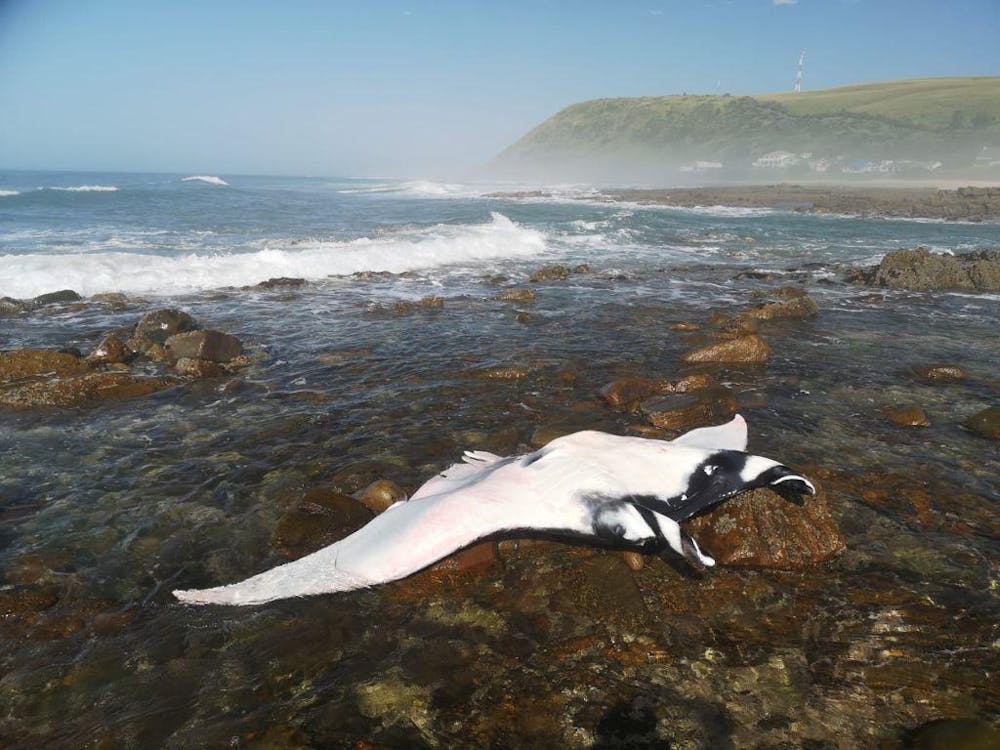
When a “killer coldwave” manifested along South Africa’s southeast coast in March 2021, it killed hundreds of animals across at least 81 species. More worrying still was the fact these deaths included vulnerable manta rays and even specimens of notoriously robust migratory bull sharks. In southern Africa, bull sharks, whale sharks and manta rays have previously washed up dead following such sudden cold events, especially over the past 15 years.
As we report in Nature Climate Change, the conditions that can drive these killer coldwaves have grown increasingly common over the past four decades. Ironically, strengthening winds and currents as a result of climate change can also make these deadly localised coldwaves more likely in places such as the east coasts of South Africa and Australia, potentially putting even highly mobile species such as sharks in harm’s way.
What’s going on?
Certain wind and current conditions can cause the sea surface to cool, rather than warm. This happens when winds and currents force coastal waters to move offshore, which are then replaced from below by cold water from the deep ocean. This process is known as upwelling.
In some places, such as California on the US west coast, upwelling happens regularly along hundreds of kilometres of coastline. But localised upwelling can occur seasonally on a smaller scale, too, often at the edges of bays on the east coasts of continents due to interactions of wind, current and coastline.
Previous research had shown climate change induced changes in global wind and current patterns. So we investigated the potential consequences at particular locations, by analysing long-term wind and temperature data along the south-eastern coast of South Africa and the Australian east coast.
This revealed an increasing trend in the number of annual upwelling events over the past 40 years. We also found an increase in the intensity of such upwelling events and the extent to which temperatures dropped on the first day of each event – in other words, how severe and sudden these cold snaps were.
During the extreme upwelling event along the southeast coast of South Africa in March 2021, at least 260 animals from 81 species died. These included tropical fish, sharks and rays.
To investigate the ramifications for marine fauna, we took a closer look at bull sharks. We tagged sharks with tracking devices that also record depth and temperature.
Bull sharks are a highly migratory, tropical species that only tend to travel to upwelling regions during the warmer months. With the onset of winter, they migrate back to warm, tropical waters.
Being mobile, they should have been able to avoid the local, cold temperatures. So why were bull sharks among the dead in this extreme upwelling event?
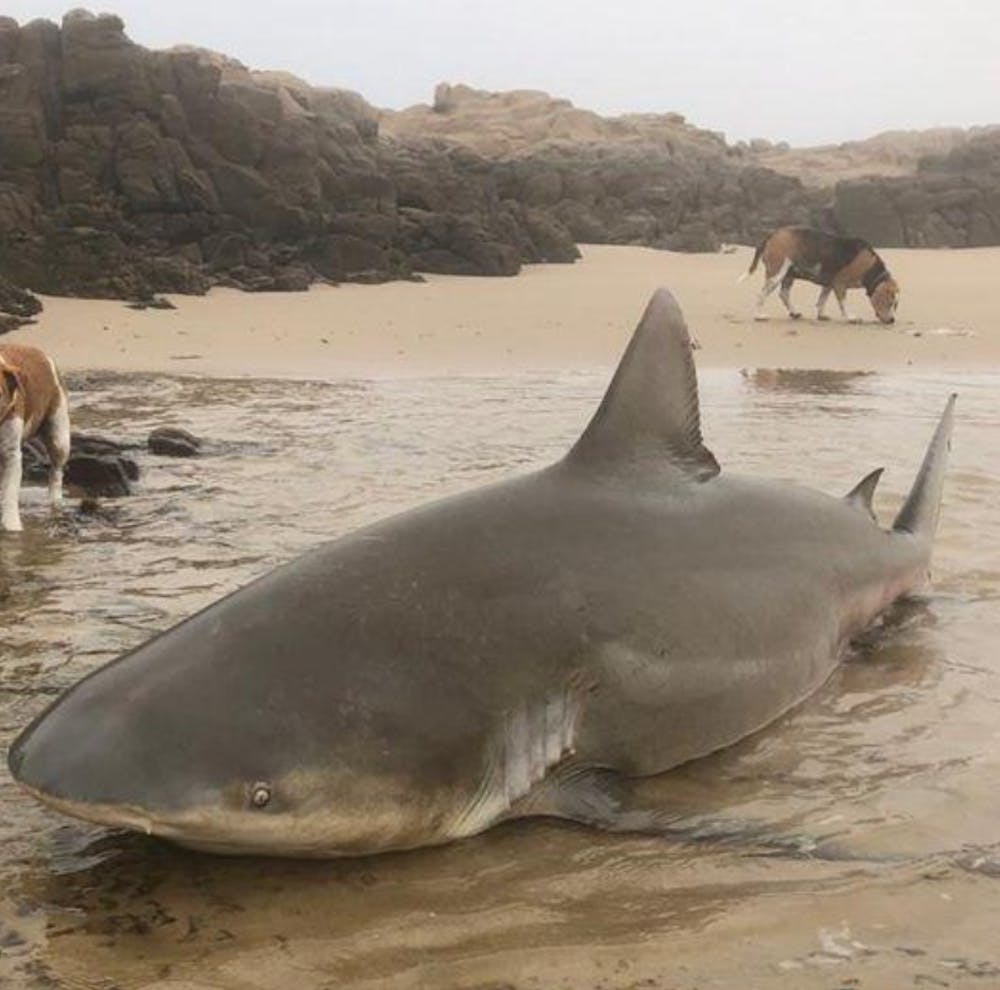
One of the dead bull sharks that washed up after an extreme upwelling event in South Africa. Ryan Daly
When running and hiding isn’t enough
Bull sharks survive environmental conditions that would kill most other marine life. For example, they’re often found several hundred kilometres up rivers, where other marine life would not venture.
Our shark tracking data from both South Africa and Australia showed bull sharks actively avoid areas of upwelling during their seasonal migrations up and down the coast, even when upwelling isn’t too intense. Some sharks take shelter in warm, shallow bays until the water warms again. Others stick close to the surface where the water is warmest, and swim as fast as they can to get out of the upwelling.
But if marine coldwaves continue to become more sudden and intense, fleeing or hiding may no longer be enough even for these tough beasts. For example, in the event in South Africa that caused the death of manta rays and bull sharks water temperatures dropped from 21°C to 11.8°C in under 24 hours while the overall event lasted seven days.
This sudden, severe drop paired with the long duration made this event particularly deadly. If future events will continue to become more severe, mass deaths of marine life could become a more common sight – especially along the world’s mid-latitude east coasts.
Manta rays were among the dead after the extreme upwelling event. Ryan Daly
Overall, our oceans are warming. The ranges of tropical and subtropical species are extending towards the poles. But along some major current systems, sudden short-term cooling can make life difficult for these climate migrants, or even kill them. Especially if events like the one in South Africa become more common. Tropical migrants would increasingly be living on the edge of what they are comfortable with in these areas.
Our work emphasises that climate impacts can be unexpected or even counterintuitive. Even the most resilient life forms can be vulnerable to its effects. While we do see an overall warming, changes in weather and current patterns can cause extreme cold events as well.
This really shows the complexity of climate change, as tropical species would expand into higher-latitude areas as overall warming continues, which then places them at risk of exposure to sudden extreme cold events. In this way, species such as bull sharks and whale sharks may very well be running the gauntlet on their seasonal migrations.
The need to limit our impacts on the planet by reducing greenhouse-gas emissions has never been more urgent, nor has been the need for research into what our future might hold.
David Schoeman receives funding from the Australian Research Council.
Nicolas Benjamin Lubitz does not work for, consult, own shares in or receive funding from any company or organisation that would benefit from this article, and has disclosed no relevant affiliations beyond their academic appointment.
Many parents know it is important for their teenagers to have breakfast before they go to school. Even though young people can be reluctant to eat it, breakfast provides the energy the brain and body need to function through the day.
In our new research we looked at what impact breakfast has on students’ motivation to learn and their academic achievement at school.
We also looked at whether it matters if they have a healthy breakfast, an unhealthy breakfast or no breakfast at all.
Why did we study breakfast?
As educational psychology researchers we look at ways to improve how students learn.
Unlike factors beyond a student’s control (such as teaching quality) or those that can take time to improve (such as study skills), eating breakfast is something students may have some immediate control over.
It is also something that could be quickly addressed by schools.
Breakfast provides energy for the brain and body to function throughout the day. Ryan Pouncy/ Unsplash, CC BY
We wanted to know if eating breakfast affects students’ motivation and achievement. We also wanted to know if it mattered whether the breakfast was a healthy one.
So, as part of an Australian Research Council project, we studied 648 Australian high school students from five private schools in New South Wales. Two of these schools were single-sex boys’ schools, two were single-sex girls’ schools and one was co-educational.
Students were in Years 7 to 9, with an average age of 13–14 years.
We conducted our study during students’ science lessons. It was made up of three main components.
First, students completed an online survey of their breakfast habits. We asked if they had eaten breakfast that morning and what types of food they usually eat for breakfast.
Drawing on national dietary guidelines, we created a score for how often students consumed healthy foods for breakfast, such as fruit and vegetables, dairy and protein, wholegrains and cereals and water. We also asked how often they had an unhealthy breakfast, with items such as sugary soft drinks, processed meat, fast food, unhealthy bakery goods and unhealthy snacks. A higher score reflected typically eating a healthier breakfast.
Second, they rated their motivation in science lessons, including how confident they were in doing science schoolwork, how much they valued the subject and were focused on learning.
Third, students did a test based on content in the NSW science syllabus.
In this way, our study was a snapshot of one day in the life of students.
We also asked questions about their personal background, how well they usually perform in science, and also features of the classroom (including the time of the lesson in the day) so we could account for these in our findings.
Students in our study were asked what they ate for breakfast, their motivation to learn and then tested on their academic achievement in science. Lisa Fotion/Pexels, CC BY
We found students who ate a healthy breakfast on the morning of the study demonstrated higher levels of motivation and achievement.
This means, for example, they were more confident about and focused on their science lessons. And they scored higher results in the test of their science knowledge.
In comparison, students who ate no breakfast had lower levels of motivation and achievement.
This was not unexpected. But what did surprise us was students who had no breakfast had similarly low levels of motivation and achievement to those students who had an unhealthy breakfast.
This suggests eating an unhealthy breakfast could be as disruptive to motivation and achievement as not eating breakfast at all.
Because we also looked at students’ previous science results, the study showed that even if they had previously performed well in science, they could still score low in motivation and achievement if they had not had breakfast or had eaten an unhealthy one.
Although our study could not dig into specific reasons for this, it is likely because eating the wrong kinds of foods does not properly fuel the mind or body for what is needed to optimally “switch on” academically.
It is also important to note the students in our study were from private schools. Although we took a student’s family background into account, the socioeconomic aspect of eating breakfast requires further investigation. It could be that the benefits of a healthy breakfast are larger in a more diverse sample of students.
What does this mean?
Our findings emphasise the importance of students eating a healthy breakfast each and every morning.
Schools can help ensure this by
offering a healthy breakfast to students
offering a healthy morning snack
teaching students about the importance of a healthy breakfast (for example, as part of health and wellbeing syllabus units)
giving parents information about the importance of healthy breakfasts, meal ideas and strategies for giving this to their children.
Students who ate unhealthy breakfasts performed similarly poorly in terms of motivation and achievement as those who had skipped the meal. Leigh Patrick/ Pexels, CC BY
Barriers to breakfast
But schools will need to be mindful of and address barriers to a healthy breakfast. For example, there will be situations where school-provided breakfasts and morning snacks will need to be free. In such cases, it is also possible some students may not want a free breakfast if there is a stigma attached to it (if it is seen as only being for kids from disadvantaged backgrounds).
It is also worth recognising some students may have body image concerns and not want to eat a snack or breakfast at school. In addition, cultural and dietary differences may mean some foods are not appropriate for some students.
If these barriers are effectively managed, our study shows a small and relatively achievable change in a student’s life – a healthy breakfast each day – can have a positive academic impact.
Andrew J. Martin has received funding from Australian Research Council in partnership with the Future Project at The King’s School, the International Boys’ Schools Coalition, and NSW Department of Education.
Emma Burns was employed as a postdoctoral researcher from funding by Australian Research Council in partnership with The Future Project at The King’s School
Joel Pearson receives funding from ARC & NHMRC, including from the ARC in partnership with the Future Project at The King’s School.
Keiko C.P. Bostwick was employed as a postdoctoral researcher from funding by Australian Research Council in partnership with The Future Project at The King’s School.
Roger Kennett received a doctoral scholarship from funding by Australian Research Council in partnership with The Future Project at The King’s School
Last week, Indian rideshare giant Ola announced that it would abruptly cease operations in Australia, New Zealand and the UK.
A competitor to Uber, the company had been operating in Australia since 2018 and served most of our major cities – Sydney, Melbourne, Brisbane, Gold Coast, Adelaide, Canberra and Perth.
Ola versus Uber wasn’t exactly a David and Goliath story. In India, Ola dominates the rideshare market, with revenues three times greater than Uber’s. But its international takings have always been far more modest. Now, preparing to list on India’s stock exchanges, the company says its international withdrawal reflects a reassessment of priorities.
For Australia, there will now be less competition in an already concentrated market. Ola had been our third-largest rideshare provider after Uber and Didi.
But Uber remains in a league of its own, with annual revenue more than 45 times that of Didi. Is Australia’s rideshare market now destined to become a monopoly?
Under pressure at home
Some have argued that Ola’s business model has increasingly been under pressure in India, its largest and most important market.
Like many other ridesharing companies, the company took a big hit during the pandemic.
But it has also struggled to attract and retain drivers. Many Ola drivers in India can also work for hyperlocal delivery services such as Zomato, Swiggy and Dunzo, which can be done with a bike instead of a car. With similar earnings potential and lower operating costs, for many, running deliveries is a more attractive option than driving Ola.
Riding bikes for a delivery company can incur lower operating costs than maintaining a car for ridesharing. Pradeep Gaurs/Shutterstock
A second issue has arisen from Ola’s inevitable price increases. To first establish itself in the market, the company had offered huge discounts to encourage ridership. When these discounts ceased, Ola became far less competitive, prompting some users to buy a car or use carpooling apps instead.
With rival Uber continuing to apply pressure on Ola’s market share in India, it makes sense the company would simplify operations and shift its focus home.
Impact on Australia
Ola’s departure represents further concentration in Australia’s rideshare market. Prior to it, seven ridesharing companies were operating here: Uber, Didi, Ola, Shebah, InDrive, Bolt and GoCatch. This was down from a peak of 11 firms operating in 2022.
Uber continues to dominate the Australian market, accounting for 80% of all rides in 2023.
Uber’s Australian rideshare revenue in 2023 – A$646 million – dwarfed that of its nearest rivals Didi (A$14.3 million) and Ola (A$7.1 million) combined.
Uber’s heavy venture capital backing – more than US$24 billion (A$37 billion) globally since its founding in 2010 – has helped it secure a strong footing. Ola, in comparison, has raised just over US$4 billion (A$6.2 billion).
Such strong venture capital backing has allowed Uber to survive despite earning no profits from its ridesharing operations until last year.
Uber looks increasingly unassailable
Because of Uber’s sheer size, and its recent move into profitability, it has the resources to innovate and further cement its hold on the Australian market.
But Uber also has the resources to withstand class action lawsuits. One such lawsuit was filed in Victoria by 8,000 taxi and hire-car drivers impacted by Uber’s move into the Australian market.
Last month, just prior to the scheduled start of the trial, Uber agreed to a settlement of A$271.8 million, the fifth-largest class action settlement in Australian history.
Despite these legal challenges, there is little doubt that Uber will continue to dominate the Australian ridesharing market. And that market will continue to expand. Projections suggest that ridesharing company revenues will grow by more than 2% annually over the next four years.
In the near future, we could well see the number of Australian rideshare operators continue to fall.
That doesn’t mean Australians will stop using ridesharing. But with less competition, the cost of doing so could rise.
Neil G Sipe has received funding from the Australian Research Council.
Source: The Conversation (Au and NZ) – By Isaac A. R. Kerr, Research Assistant at Flinders University Palaeontology Laboratory, Flinders University
Artist’s impression of the prehistoric landscape and creatures that Protemnodon would have walked among.Peter Schouten
For millions of years, giant animals or megafauna roamed the lands that are now Australia and New Guinea. Many were like much larger versions of modern animals.
There was a four-metre goanna called Megalania (Varanus priscus), for example, which likely ambushed its prey. This beast disappeared by around 40,000 years ago along with almost all the other megafauna aside from remnants such as the red kangaroo and the saltwater crocodile.
Some of the now-vanished kangaroo species were quite massive. The short-faced kangaroo Procoptodon goliah grew as tall as three metres and may have weighed more than 250 kilograms.
There was another genus of extinct kangaroos, Protemnodon, which were more like the grey and red roos we know today, but little has been known about their lives. In a new study, my colleagues and I describe three new species of these vanished marsupials – and shed some light on where they lived and how they got around.
A 150-year puzzle
The first species of Protemnodon were described in 1874 by the British naturalist Richard Owen. As was standard at the time, Owen focused chiefly on fossil teeth. Seeing minor differences between teeth from different fragmentary specimens, he described six species of Protemnodon.
However, Owen’s species have not stood the test of time. Our study agrees with only one of his species — Protemnodon anak. The first specimen of P. anak to be described, called the holotype, still resides in the Natural History Museum in London.
Fossils of individual Protemnodon bones are not uncommon, but more complete skeletons are rare. This has hampered palaeontologists’ efforts to study the creatures.
The question of how many species there were, and how to tell them apart, has not been fully answered. This has made it hard to say how the species differed in their size, geographic range, movement and adaptations to their natural environments.
Digging up a skeleton of Protemnodon viator at the dry Lake Callabonna. Aaron B Camens
I set out to solve this problem in my PhD project. With fellow PhD student Jacob van Zoelen, I visited the collections of 14 museums in four countries to gather data.
We have now seen just about every piece of Protemnodon that exists above ground, photographing, scanning, measuring, comparing and describing more than 800 specimens collected from all over Australia and New Guinea.
Finding the key
Among all this study, the key to the Protemnodon problem turned out to be buried in the dry bed of Lake Callabonna in northeastern South Australia. Three expeditions to Lake Callabonna from 2013 to 2019 found a megafaunal boneyard: complete skeletons of giant kangaroos, giant wombats, and Genyornis newtoni, a 250kg flightless bird, were scattered among the remains of hundreds of Diprotodon optatum, a rhino-sized marsupial herbivore. This lake likely preserves animals that died while searching for water during prolonged drought.
I accompanied the 2018 trip, which returned with all manner of amazing articulated fossils. These fossils allowed me, then a PhD student in my first year, to begin the process of picking apart the identities of the kangaroos.
Two of Richard Owen’s species, Protemnodon brehus and Protemnodon roechus, were only known from their teeth, which were extremely similar. We unearthed and compared several kangaroos with teeth that could have belonged to either of Owen’s species, but the skeletons didn’t match.
By the international rules of species naming, this meant we had to describe two new species. These are Protemnodon viator from central Australia and Protemnodon mamkurra from southern Australia.
Big kangaroos with big differences
Our study reviews all species of Protemnodon, finding surprising differences. We concluded that there are seven species in the genus, adapted to live in very different environments and even hopping in different ways. This level of variation is unusual within a single genus of kangaroo.
The newly described species Protemnodon viator was bigger than its relative P. anak, and much bigger than the red and Eastern grey kangaroos we know today. Traci Klarenbeek
Protemnodon viator was a large, long-limbed kangaroo that could hop fairly quickly and efficiently. Its name, viator, is Latin for “traveller” or “wayfarer”. Its elongated hind limbs were muscular and narrow, perfect for supporting the kangaroo as it hopped long distances.
Protemnodon viator was well-adapted to its arid central Australian habitat, living in similar areas to the red kangaroos of today. Protemnodon viator was much bigger, however, weighing up to 170 kg, about twice as much as the largest male red kangaroos.
Our study suggests two or three species of Protemnodon may have been mostly quadrupedal, moving something like a quokka or potoroo – bounding on four legs at times, and hopping on two legs at others.
The newly described Protemnodon mamkurra is likely one of these. A large but thick-boned and robust kangaroo, it was probably fairly slow-moving and inefficient. It may have hopped only rarely, perhaps just when startled.
The best fossils of this species come from southeastern South Australia, on the land of the Boandik people. The species name, mamkurra, was chosen by Boandik elders and language experts in the Burrandies Corporation. It means “great kangaroo” in Bunganditj language.
The third of our newly described species is Protemnodon dawsonae, a woodland-dwelling kangaroo from eastern Australia and the probable ancestor of P. viator and P. mamkurra. It is named for kangaroo palaeontologist Lyndall Dawson.
By about 40,000 years ago, despite their many differences, all Protemnodon were extinct on mainland Australia. We don’t yet know why they died out when similar animals such as wallaroos and grey kangaroos survived – but our study may open the door for further Protemnodon research that will find out more about how they lived and why they died.
Isaac A. R. Kerr receives funding from the Australian Research Council, Flinders University, the Australia & Pacific Science Foundation, and the Royal Society of South Australia.
Bruce Lehrmann has lost his defamation suit against Channel Ten and journalist Lisa Wilkinson after the media defendants proved, on the balance of probabilities, that Lehrmann raped his colleague Brittany Higgins in Parliament House in 2019.
After a trial lasting around a month, Federal Court Justice Michael Lee – an experienced defamation judge – concluded that both Lehrmann and Higgins had credibility issues, but ultimately he was persuaded that Lehrmann raped Higgins, as she’d alleged and he’d denied.
Ordinarily, charges like rape would be resolved through the criminal courts, but Lehrmann’s criminal trial was aborted in October 2022 after juror misconduct. The charges against him were soon dropped, nominally over concerns for Higgins’ mental health.
Higgins, however, foresaw civil proceedings and offered to testify should they arise. That they did, as Lehrmann, free from the burden of any proven crime, sued several media outlets for defamation over their reporting into the allegations (the ABC and News Corp both settled out of court).
Like Ben Roberts-Smith’s recent defamation suit against the former Fairfax papers, this became another case of civil proceedings testing grave allegations in the absence of a criminal law outcome.
The form of proceedings made for some key differences with the aborted criminal trial. In criminal cases, prosecutors are ethically bound to act with moderation in pursuing a conviction, which requires proof beyond a reasonable doubt, while defendants have the right to silence. By contrast, this trial featured detailed accounts from both sides as each sought to convince, in essence, that their contentions were likely to be correct.
Also like the Roberts-Smith case, live streaming of the trial generated very high levels of public engagement. Today’s stream reached audiences of more than 45,000 people. It gave us the chance to assess who and what we believe, and to scrutinise the parties’ claims and the media’s reporting. The Federal Court doesn’t have juries, but we, the public, acted as a de facto panel of peers.
We saw accusations and denials, revealing cross-examination of the protagonists, witness testimony from colleagues, CCTV footage from nightclubs to Parliament House complete with lip-reading, expert testimony on alcohol consumption and consent, and lawyers constructing timelines which supported or poked holes in competing versions of events.
The complexity of high-stakes legal proceedings was on display, with Justice Lee issuing many interim decisions on questions of procedure and evidence. Whenever transparency was at stake, it won.
The preference for full disclosure led to the case being re-opened at the eleventh hour to call former Channel 7 producer Taylor Auerbach as a witness, providing a denouement that the judge called “sordid”, but which had little relevance to the final result.
An argument over the truth
Lehrmann had the burden of proving that the defendants published matter harmful to his reputation. That matter was Wilkinson’s interview with Higgins on Channel Ten’s The Project in which the allegations were made.
A statement is only defamatory if it’s untrue, but in Australian law, the publisher bears the burden of proving truth, should they opt for that defence. And more serious allegations usually require more compelling proof, as the law views them as inherently more unlikely.
This can be onerous for a defamation defendant, but it also involves risk for the plaintiff, should the defendant embark on an odyssey of truth-telling yet more damaging to the plaintiff’s image. That happened to Ben Roberts-Smith and it happened to Lehrmann here.
On the other hand, if the media hasn’t done their homework, as in Heston Russell’s case against the ABC (also presided over by Justice Lee), the complainant can be vindicated.
This case was a manifestation of Lehrmann’s professed desire to “light some fires”. Few players in this extended saga have emerged without scars, and here he burned his own fingers, badly.
As Justice Lee put it, Lehrmann, “having escaped the lion’s den [of criminal prosecution], made the mistake of coming back to get his hat”.
How was the case decided?
Lehrmann denied having sex with Higgins, whereas Higgins alleged there had been non-consensual sex. The defamatory nature of the publication centred on the claim of rape, so that was what the media defendants sought to prove.
This left open the curious possibility that consensual sex might have taken place: if so, Lehrmann would have brought his case on a false premise (there had been no sex), but the media would have failed to defend it (by not proving a lack of consent), resulting in a Lehrmann win.
That awkward scenario did not arise. The court found sex did in fact take place, Higgins in her heavily-inebriated and barely-conscious state did not give consent, and Lehrmann was so intent on his gratification that he ignored the requirement of consent.
Justice Lee found Lehrmann to be a persistent, self-interested liar, whereas Higgin’s credibility issues were of lesser degree, some symptomatic of a person piecing together a part-remembered trauma. The judge drew strongly on the evidence of certain neutral parties who could testify to incidents or words spoken in close proximity to the events.
Defamation laws favour the aggrieved
Australian defamation law has historically favoured plaintiffs and, despite recent rebalancing attempts, it remains a favoured legal weapon for those with the resources to use it.
This includes our political class, who sue their critics for defamation with unhealthy frequency for a democracy. In the United States, public figures don’t have it so easy: to win they must prove their critics were lying.
In Australia, the media sometimes succeeds in proving truth, but contesting defamation proceedings comes at great financial cost and takes an emotional toll on the journalists involved.
Nor can a true claim always be proven to a court’s satisfaction, given the rules of evidence and the fact that sources may be reluctant to testify or protected by a reporter’s guarantee of confidentiality.
But this case demonstrates that publishers with an appetite for the legal fight can come out on top.
Brendan Clift does not work for, consult, own shares in or receive funding from any company or organisation that would benefit from this article, and has disclosed no relevant affiliations beyond their academic appointment.
Source: The Conversation (Au and NZ) – By James Ogloff, University Distinguished Professor of Forensic Behavioural Science & Dean, School of Health Sciences, Swinburne University of Technology
The man who killed six people and injured countless others at a Bondi shopping centre on Saturday, 40-year-old Joel Cauchi, reportedly had “mental health issues”, police explained soon after the tragic event, while ruling out terrorism.
Cauchi had reportedly been diagnosed with a mental illness at age 17 years and had received treatment in the public and private sector. But Queensland Police said Cauchi’s mental health had declined in recent years.
No matter the circumstances, such acts of violence must be condemned. If mental health issues contribute to such acts, they need to be understood and prevented.
However it’s important to note the vast majority of people with mental illness do not pose a risk of violence to others.
Tragically, there is still an unacceptable level of stigma and misunderstanding of mental illness, including the mistaken belief that people with mental illness are violent. People may draw conclusions from cases such as the Bondi attack, where people with histories of mental illness engage in violence.
So is there a link between mental illness and violent crime? Here’s what the evidence says.
For most people with mental illness, there’s no increase in violence
Research from Australia and overseas shows a small percentage of people with serious forms of mental illness may be at increased risk for violence.
Our research in Victoria, for example, shows 10% of people with schizophrenia (a serious form of mental illness where the person can be so unwell as to be out of touch with reality) have perpetrated a violent crime. This compares with about 2.4% of the general population. So, while the people who have schizophrenia were more likely to have a violent offence, the vast majority of them did not.
The findings are mixed regarding a direct relationship between more common mental illnesses, such as anxiety and depression, and violence.
Although the reasons that anyone – including people with psychiatric illnesses – offends vary, we identify three categories of people with mental illness who engage in violence.
1. Irrational thinking and beliefs
The first is the very small group of people with a serious mental illness, typically schizophrenia, who act violently as a direct result of symptoms of mental illness.
For these people, their illnesses leads to irrational thinking and beliefs that can increase the likelihood of them behaving violently. A person may develop delusional beliefs that they are being targeted or that their lives are in danger if they do not act violently against perceived enemies.
For these people, if they did not have the particular symptoms of mental illness, they would not offend.
People in this category may be found not guilty by reason of mental impairment. They are then typically held in secure hospitals or prisons where they are treated and eventually released, when they are no longer found to be a risk to others.
2. Overlap with social factors
The second category is much larger, and more varied. For this group, people do not offend because of their mental illnesses, per se, but due to the related individual and social issues that may accompany mental illness.
People with some forms of mental illness may be more likely to engage in substance misuse, for example, which may, in turn, contribute to offending.
Many of the negative social factors associated with serious forms of mental illness overlap with the negative social factors that increase the probability of being violent.
People with serious forms of mental illness who have backgrounds characterised by social and family disruption and disadvantage together with abuse, behavioural disturbances, substance use and educational failure and disengagement are significantly more likely to offend than people with mental illnesses who do not have such disturbances in their backgrounds.
Of course, most people with a psychotic illness do not come from such disadvantaged backgrounds.
Research and clinical experience also show factors related to offending within this group are similar to those who do not have mental illness. In addition to substance abuse, this can include violent attitudes, exposure to trauma and violence, association with people who are antisocial, and poor family and professional support.
3. Mental illness isn’t related
The final group of people with mental illness who offend do so irrespective of their mental illness. People in this group are typically characterised by early onset antisocial and illegal behaviour.
They differ from other offenders with mental illness by having a pervasive and stable pattern of offending regardless of their mental state. This behaviour almost always precedes the onset of mental illness.
Mental health care can reduce the chance of violence
It’s not the mental illness per se that causes people to be violent. Rather, it’s symptoms of the illnesses and related factors.
There is good evidence therefore that providing psychiatric and psychological care can help manage symptoms of mental illness and reduce the likelihood of violence.
It’s also important to address the broader factors that are related to offending and violence among people who are mentally ill.
Unfortunately, partly as a result of the pressures on mental health services, staff have few resources to help address the array of factors that can lead to one behaving violently. Continued investment and education is required to boost the services and address the factors that lead to violence among people with mental illness.
While we have made some progress in the recognition that mental illness affects a large percentage of the population, individual acts of violence committed by someone with mental illness must not lead us to jump to conclusions that all people with mental illness are violent.
James Ogloff receives funding from the National Health and Medical Research Council and the Australian Research Council for his research. He is a Strategic Advisor to the Victorian Institute of Forensic Mental Health (Forensicare) in Victoria.
For those who have followed the tortuous path of Australian climate policy over recent decades, a recent report by the Australian Energy Market Commission of a “shadow price” of A$70 a tonne of carbon dioxide equivalent elicits some painful memories.
The announcement is a reminder of what we lost in 2013 when the Abbott government scrapped the Carbon Pollution Reduction Scheme, better known as the “carbon tax” or the “carbon price”. It was the first time globally a carbon price had ever been introduced and subsequently removed.
In 2024, the shadow carbon price described by the commission is not a cost to be paid by carbon emitters. It’s an estimate of the cost to the world of each tonne of carbon emissions. The $70/tonne figure will be included when calculating the benefits and costs of rule changes.
In 2013, it wasn’t the first time Tony Abbott had defeated an attempt to introduce a carbon price. In 2009, after many months of negotiation, then Prime Minister Kevin Rudd and opposition leader Malcolm Turnbull agreed on an emissions trading scheme.
Abbott rejected the idea and challenged Turnbull for the leadership, ultimately prevailing by a single vote. Although his public position was equivocal at the time, Abbott has since emerged as a fully fledged denier of climate science. Last year, he became a director of the anti-science Global Warming Policy Foundation.
Rudd persisted with emissions trading as agreed with Turnbull and refused to consider any changes proposed by the Greens, who ultimately voted against it. This episode has poisoned relations between the two left-of-centre parties ever since.
The scheme was deferred indefinitely, and Rudd was replaced by Julia Gillard shortly afterwards.
Gillard also sought to abandon the emissions trading scheme, but was forced to change tack after the 2010 election produced a minority government dependent on Greens support.
The result was the carbon pollution reduction scheme. This was an emissions trading scheme, but because it began operating with a fixed price of $23 a tonne, it was functionally equivalent to a carbon tax.
Gillard had ruled out such a tax before the election, and lost a great deal of credibility when she admitted the scheme was, in effect, a tax. This contributed to Labor’s defeat in 2013.
Despite its difficult birth, the carbon price worked effectively in the two years it was operating.
Emissions fell by about 2%, with no perceptible effect on the economy as a whole. Nevertheless, Tony Abbott described the tax as a “wrecking ball” through the economy. He scrapped it soon after winning power.
After the repeal, Australia ended up with a series of ad hoc policy responses, most notably the Abbott government’s safeguard mechanism. Introduced as a form of “direct action”, the safeguard mechanism remains at the centre of climate policy to this day. Labor has moved to strengthen it, not abandon it.
It’s now clear if either the emissions trading or the carbon pricing scheme had been maintained, Australia would be better placed.
Researchers recently found the “continuation of the carbon tax could have enabled a smoother energy transition”.
Europe launched its own emissions trading scheme in 2005 and has persisted despite initial difficulties (at one point the carbon price fell close to zero). The results are clear – across the 31 countries and regions involved, coal’s share of electricity generation has fallen sharply. Last year, just 12% of electricity in these nations came from coal, with further declines on the way.
What’s the point of a shadow price?
Following Labor’s defeat in the 2019 election, neither major party has been willing to look at imposing a price on carbon emissions.
It’s against this backdrop that Australia’s energy market commission has announced its future decisions will use a shadow price on carbon, set initially at $70/tonne.
That’s significantly higher, in real terms, than the $26 price on carbon set in 2012. Moreover, the price is set to increase to $420/tonne by 2050, when the aim is to achieve net zero emissions.
That sounds promising but, for most of us, the announcement will raise more questions than answers.
First, what is the Australian Energy Market Commission? It’s part of the confusing alphabet soup of agencies involved in overseeing our energy supply.
The commission has the job of setting the rules under which markets operate, including national electricity, gas and retail rules, and provides market development advice to governments.
These rules cover everything from the approval of proposals for new transmission lines to the installation of smart meters for customers.
Second, what is a shadow price?
A shadow price is not a cost to be paid by emitters, as was the case with the carbon price. Rather, it’s an estimate of how much each tonne of CO₂ equivalent costs the world as a whole.
Will it have any effect in the real world? Yes. It means this cost will be included when the commission calculates the benefits and costs of rule changes.
Consider a change to transmission network rules to make it easier for new wind and solar projects to connect to the grid while reducing demand for coal-fired electricity.
In the absence of a shadow price, the costs of the rule change might be assessed as exceeding the benefits. With a shadow price, a benefit beginning at $70 per tonne would be added to account for reduced emissions from the change. If this adjustment was large enough, the rule change would be assessed as beneficial and would go ahead.
None of this would be necessary if we had an economy-wide carbon price.
But rigid opposition from the Coalition and the political caution (some might say cowardice) of Labor mean we won’t see a real price on carbon any time soon.
In the meantime, at least our market rules will take proper account of the damage done by the millions of tonnes of emissions vented into atmosphere for free.
In a pandemic, bushfire or flood, people need high quality safety and crisis information. Getting emergency messages quickly can help people know how to prepare, what rules to follow, where dangers are, where to gather safely and when help is on the way.
This life-saving potential exists for everyone – including people with disability, who may be particularly affected by climate change. So it is important that crisis information is accessible and its meaning is clear for everyone.
Yet, the disability royal commission and advocates say people with disability have not been provided with enough thorough, timely and up to date, accessible information during recent crises.
For example, the government’s accessible information about the early dangers of COVID was not made available at the same time as the standard information and didn’t include enough different types of accessible information.
With climate change making extreme weather events more common and more intense, we asked 17 accessible information provider organisations what could improve accessible crisis communication for people with disability.
What is accessible information?
Accessible information can come in a range of types, including Auslan, captions, Easy Read and Easy English (which both use pictures as well as simpler language) and braille.
Beyond specific formats, information is accessible when it is:
• made for a specific audience
• matched to their technical requirements
• co-designed with and user tested by people with disability
• easy to locate and distribute to people who need it
• to the point and practical
• up to date, accurate and verified
• delivered with a “human touch”.
Who makes accessible information?
There is a small group of provider organisations who make accessible information. Some are specialist accessibility businesses and others are disability advocacy organisations. They usually work from project to project to develop individual accessible products with payment from commissioning bodies, such as government, councils, community organisations and private businesses.
This is important work, yet the piecemeal nature of it means it is hard to build and expand information accessibility businesses between projects. It is also hard to ensure there is accessible information to cover everything people with disability need to know, let alone keep it updated and make sure it is produced under best-practice conditions.
These challenges are even more serious in a crisis. If accessible crisis information is not accurate, complete, up to date and high quality, there can be life and death consequences for people with disability in a bushfire, flood or pandemic.
Four ways to improve accessible crisis information
Accessible information provider organisations told us four things that could help:
1. A direct source of information
Keeping up with constantly changing details in a crisis is difficult for accessible information provider organisations. Having a direct source (such as a government or emergency services contact) of correct information to “translate” into accessible formats would help.
2. Subject matter experts
Accessible information provider organisations are experts on style and accessibility – not crises. There needs to be support from subject matter experts (such as doctors or emergency service personnel) to check accuracy.
3. Not waiting for a crisis
Making high quality, accessible information takes time, money and skilled staff. Ensuring the required workplace, professional learning and human resources conditions are in place is a long term task. Sufficient resourcing for accessible information provider organisations is important from way before a crisis.
4. Upskilling agencies
Not all accessible crisis information can be made by provider organisations. Sometimes crisis information – like evacuation orders or information about approaching fire – needs to be available immediately. Emergency services need more thorough baseline accessibility skills to make this information themselves.
New rules and resources could help
Clearer and more comprehensive national legislation requiring the production of accessible information would give people with disability the information they need to stay safe in times of crisis. Such laws should clearly outline all situations in which accessible information must be provided (including crises), formats to be considered and the standard necessary.
There are different options for how to make this legislation. In its final report, the disability royal commission said information accessibility should be covered in a new Disability Rights Act. Our report shows information accessibility requirements should also be clearly and consistently included in the governing legislation of sectors like emergency response and health.
Accessible information provider organisations should also have reliable, ongoing funding (not only project to project payments), with capacity for expansion during weather emergencies and public health disasters. This would ensure the workforce and systems are in place to expand workflow quickly when needed and get messages out rapidly to people with disability.
And everyone – from media organisations to designers, businesses and service providers – needs to get on board. The more people who prioritise accessible information, the safer people with disability can be in a crisis.
Dr Ariella Meltzer is a Board member of an organisation who makes accessible information. She received funding for this research from the UNSW Disability Innovation Institute, as well as grants from other parties for projects unrelated to this research.
She would like to acknowledge her co-authors on the report on which this article is based – Emma Barnes and Ayah Wehbe. She would also like to thank the organisations who have supported this research – partner organisation IDEAS Disability Information and funder UNSW Disability Innovation Institute, as well as the UNSW Centre for Social Impact.
There is nothing like a wedding episode. Bluey’s first 28-minute special, The Sign, was the ultimate wedding television.
Full of family, and family-friendly, the wedding between Bluey’s godmother Frisky and uncle Radley was the sticky cake that held longer-than-average toddler attention spans and drew in broad audiences around and beyond Australia.
If you think of Bluey as a sitcom, they all have a wedding episode, so I fancied a crack. The idea lodged in my head and the story grew from there.
Bluey’s huge international success is due its creators’ ambition to make more than just a kids’ show. By drawing on tropes of other television shows like wedding episodes, as well as developed character arcs and references to pop culture, it has become some of the best Australian storytelling of all time, of any genre.
This process of creating “easter eggs” – hidden references for the audience to look for – is a tactic a variety of television makers now use to reward audiences of all ages.
The Sign rewarded longtime viewers of Bluey. Aunty Brandy had been wanting a baby, and now seems to finally be pregnant. Nana and Grandpa Bob are doing a flossing dance they learned in series one. Bingo’s “big girl bark” has finally developed, and baby Socks is now able to talk. Instead of Nutbush City Limits or other standard wedding music, we had “dance mode” and everyone’s favourite fictional cartoon-within-a-cartoon theme song (and earworm), Catsquad.
The wedding march also built to include a guitar solo a little reminiscent of 80s Oz Rock – a nod to Angry Anderson’s Suddenly for Scott and Charlene, perhaps?
Scott and Charlene walking down the aisle in Neighbours marked a generation of weddings for some of us. Kath Day and Cal Knight’s Pumpkin-style coach in Kath and Kim was the pinnacle for others. Both were huge ratings winners locally and internationally.
Audiences love TV weddings because they are spectacular. Amid the “flow” of broadcasting, wedding episodes draw us in by design. In the age of streaming, wedding episodes still have the potential to be appointment television.
From Joanie and Chachi in Happy Days to The Doctor and River Song in Doctor Who to David and Patrick in Schitt’s Creek, the appeal is the coming together of the couple – but also an excuse to draw together different groups around them.
Weddings can create big “television moments”, sometimes even overshadowing the couple at the centre. The multi-award winning second series of Phoebe Waller-Bridge’s Fleabag built its entire storyline (and excuse for new character of Andrew Scott’s “hot priest”) on the upcoming wedding of her father and godmother. Building to a “love is awful” speech by the priest, it was a plot device to underpin an ultimately doomed relationship.
Even when the characters aren’t entirely fictional, a “wedding episode” is almost always successful.
Prince Charles and Lady Diana Spencer broke broadcast records with their 1981 wedding. Even though the wedding itself only lasted 15 years, the 40th anniversary of the broadcast was marked with a “wedding of the century” documentary.
Reality, documentary and other forms of semi- or non-scripted television also use weddings to gain audiences: Married at First Sight is now in its 11th season in Australia.
Bluey’s wedding episode drew on events that many screen weddings deal with: a dramatic fight between the bride and groom; a sweet reunion; charming if not slightly sozzled family members and kids stealing the show with impossible cuteness. The supersized episode also provided some other big plot twists (was it a “sign” that the show might end for a while?), and promises of new beginnings.
An archive of weddings
The National Film and Sound Archive’s Australian Screen collection includes a huge range of wedding related pieces – both real and fictional.
Real weddings are captured in the 1914 silent clip “society wedding” of an unknown but clearly very upper-class couple and their family, clips from a 1950s Greek wedding reception in Canberra, and the 1973 ABC documentary series Chequerboard episode called It’s A Big Day In Any Girl’s Life.
The archive includes clips of beloved
fictional weddings such as Muriel’s Wedding, and explorations of the value of marriage like in Brides of Christ.
Other worthy examples not yet in the archive are 2019’s Top End Wedding and Neighbours’ first same sex wedding for David and Aaron in 2018, officiated by Jemima Davies-Smythe (played by Magda Szubanski).
Surely The Sign is destined to join these forebears as part of the history of Australian screen weddings. As my children and I watched Bluey, we talked about my wedding to their dad and the weddings of family and friends. We talked about what makes a great story and having to wait to see an episode of television – something they are really not used to anymore.
During the episode we had a good laugh, we had a little cry, and a big dance – just like weddings “for real life”, as Bluey would say.
Liz Giuffre does not work for, consult, own shares in or receive funding from any company or organisation that would benefit from this article, and has disclosed no relevant affiliations beyond their academic appointment.
The family of Ash Good, one of the Bondi stabbing victims and the mother of the nine-month-baby who was also stabbed, issued a plea overnight for media to stop reproducing photos of Ash, her partner and their baby without consent.
Good, 38, was an osteopath who liked to exercise, post photographs of her young family and share thoughts on new motherhood: the endless nights and blurry days, the joy, the anxiety, the “indescribable love”.
Journalists discovered this from “mining” her (and her friends’ and family’s) social media accounts.
As well as Good’s family, federal politician Allegra Spender, whose electorate of Wentworth covers Westfield Bondi Junction, posted on social media a plea for “the media and everyone” to respect the wishes of those affected by the “tragedy at Bondi Junction”.
She wrote: “I have been contacted by Ash’s family. They have asked the media not to publish personal images from social media. I ask the media and everyone to respect their wishes.”
But will the victims’ privacy be respected? My research indicates that is unlikely.
The practice of journalists taking photos from social media, both with and without consent, is now commonplace, and is sanctioned in Australia by law and by professional codes, with some caveats.
Journalists are exempted from the Privacy Act “in the course of journalism”, and while advice from professional bodies such as the Australian Press Council and the Australian Communications and Media Authority (ACMA) is to tread with caution when reproducing images from social media, they do permit publication “in the public interest”. So do the guidelines of media companies, including the ABC.
The ethical code that binds member journalists in Australia, the MEAA Code of Ethics, also advises journalists to respect privacy and grief. It gives them the right not to intrude, but tempers this advice with a “guidance clause” about their capacity to override standards if publication is in the public interest.
The “public interest” is a nebulous concept that increasingly extends to “what the public is interested in”.
The modern-day ‘death knock’
As citizens and news consumers, we want information about everyone who is impacted, and it is the job of news reporters to feed the hungry beast that is digital news. How can they resist the intensely personal content that is shared on “public” social media accounts which gives such a human face to tragedy? Is it reasonable to expect them to?
These are questions I am exploring though my PhD research into the practice journalists informally (and perhaps unpalatably) call the “death knock”.
On hearing of a newsworthy death (or crime or major incident), journalists will do whatever they can to get information about the people impacted – the perpetrators, victims, and witnesses.
The job of gathering news is to find the most credible sources, and, in addition to expert voices (such as police, ambulance, health authorities and politicians), those who know something about the event or the people impacted.
Should journalists ask for permission?
Increasingly, in the digital age, newsgathering starts (and sometimes ends) with journalists mining social media.
Journalists use social media as a tool to find people they want to interview, but also as a source of information, images and tributes.
If people’s accounts are set to “public”, there is nothing to stop journalists using the photos and comments they find there in their stories.
Some journalists will pause and ask for permission, but not all will, and most do not feel compelled to.
However, my research indicates that journalists, by and large, are not thoughtless when it comes to what some view as stealing images from social media. They face enormous pressure to do so, from colleagues, editors and competitors.
Many argue that if images are in the public domain, they are fair game. And if everyone else is doing it, why wouldn’t they? They may ask themselves “how can I tell my boss I’m not going to do it when our competitors have already done it? If I pause to ask for permission, will I be scooped? What if I don’t hear back? What if permission is refused?”
In the UK, where protections from media harassment are arguably stronger, people impacted by tragedy are advised to check their social media privacy settings or delete material altogether.
This though assumes users are social media-literate, but journalists are “very adept at finding ways around privacy settings, and won’t hesitate to do so in pursuit of a story or photo”.
Reporting on tragedy is routine work for many journalists, but it can take its toll, sometimes in the form of moral injury, when they feel compelled to break their own moral code.
My research indicates journalists want better preparation, guidance, and support from their employers in reporting tragedy, and they want to be listened to about the impacts of this work on them.
However, in the realm of the “digital death knock” – the use of social media to report on tragedy – some argue that an ethical approach alone cannot stem what some believe is egregious behaviour, and that legislative (citizen privacy protections) and normative (stronger advice from professional bodies) approaches may be needed to protect journalists from themselves – and better protect people who fall victim to tragedy.
Alysson Watson does not work for, consult, own shares in or receive funding from any company or organisation that would benefit from this article, and has disclosed no relevant affiliations beyond their academic appointment.
It is the final day of election campaigning in Solomon Islands and there is a palpable sense of anticipation in the country, which is holding national and provincial elections simultaneously for the first time this year.
There is also significant international interest this year in the outcome of the National Election, as it is the first to be held since 2019 when Taiwan cut its decades-long diplomatic ties with the country — leaving Honiara in the lurch as it moved to formally establish diplomatic relations with Beijing.
The elections this week were officially scheduled to take place last year but were postponed, somewhat controversially, so that the country could host the Pacific Games.
Most of the voters RNZ Pacific has spoken to in Honiara so far seem both excited and determined to exercise their democratic right.
In and around the capital, stages are being erected for final campaign rallies and all manner of vehicles are being decked out for colourful and noisy float parades.
Overnight, down at the main Point Cruz wharf, hundreds of voters were still boarding ferries paid for by election candidates trying to shore up their numbers.
Many of the ships are not actually designed for passengers — they are converted fishing or cargo vessels purchased through Special Shipping Grants given to MPs to help meet transportation needs for their constituents.
Voter ferries One such vessel is the MV Avaikimaine run by Renbel Shipping for the Rennell and Bellona constituency.
Standing room only . . . voters aboard the MV Avaikimaine in Honiara before departing for Rennell and Bellona Province yesterday. Image: RNZ Pacific/Koroi Hawkins
The man in charge of boarding last night, Derek Pongi, said voters for all election candidates were allowed to travel on the vessel.
Pongi said some people had their fares paid for by the candidates they support, while others meet their own travel costs.
He said the vessel had completed four trips carrying 400 or more passengers each time.
“It’s important because people from Rennell and Bellona can go back and participate in these elections and exercise their right to vote for their member of Parliament and the members of the Provincial Assembly,” Pongi said.
But not all vessels have such an open policy — some of the wealthier candidates in larger constituencies either charter or call in favours to get potential voters to the polls.
A couple of jetties over from the Avaikimaine was the bright neon green-coloured Uta Princess II.
Her logistics officer, Tony Laugwaro, explained the vessel was heading to the Baegu Asifola constituency and that most of the people on board were supporters of the incumbent MP John Maneniaru.
Three trips He said they had made three trips already, but had to be wary of remaining within the campaign expenses’ maximum expenditure limit.
“It’s only around SBD$500,000 (US$58,999) for each candidate to do logistics, so we have to work within that amount for transporting and accommodating voters,” Tony Laugwaro said.
According to Solomon Islands electoral laws, candidates are also only allowed to accept donations of up to SBD$50,000 (US$5900) for campaigning.
As each ship pulls away from the jetty and disappears into the night, another appears like a white ghost out of the darkness and begins the process of loading more passengers.
The official campaign period ends at midnight today, followed immediately by a 24-hour campaign blackout.
Polls open on Wednesday at 7am and close at 4pm. Counting is expected to continue through until the weekend.
Depending on the official results, which will be announced by the Governor-General, lobbying to form the national and provincial governments could last anywhere from a few days to several weeks.
This article is republished under a community partnership agreement with RNZ.
There has been a rise in the number of people diagnosed with “neurodivergence” in adulthood over the past decade. This trend has been noted both internationally and in New Zealand. But exact rates of diagnoses in this country are difficult to quantify.
Neurodivergence is an umbrella term that typically includes autistic spectrum disorder (ASD), attention-deficit hyperactivity disorder (ADHD) and specific learning disorders (SLD) – sometimes referred to as dyslexia.
The rise in these diagnoses when people are already in the workforce presents a challenge for employers. Business owners can be left wondering how they can support neurodivergent employees without causing issues for the wider business.
Understanding neurodivergence is underpinned by the view that ASD, ADHD, and SLD reflect differences in how a person’s brain is “wired” rather than being an underlying “disorder”.
This changing view appears to have increased awareness of neurodivergence. It has also reduced the stigma associated with it, leading more people to seek support as adults.
This rising tide of adults seeking to better understand their differences – and potentially seek treatment – has presented challenges for businesses and employers.
But employers need not fear hiring those who are neurodivergent. Viewing neurodivergence as a difference rather than a disability contributes to an inclusive workplace where people’s strengths are recognised and celebrated.
Some people with ADHD, for example, work very effectively in a fast-paced environment with tight deadlines and rapidly changing content, such as journalism. People with ASD often have very specialised areas of interest that, if matched to the right work environment, can lead them to be experts in their fields.
But it would be naive to say neurodivergence doesn’t bring with it some challenges for individuals and their workplaces. A person with ADHD may appear quite disorganised to others (and to themselves), and at times “put their foot in their mouth” through impulsively saying something they haven’t fully thought through.
Those with ASD often report challenges in navigating social relationships at work, or may have particular sensory sensitivities (finding the general hubbub of open-plan offices anxiety-provoking, for example). They may struggle to process large amounts of written or verbal information, resulting in confusion and anxiety.
Businesses need awareness
Businesses and organisations looking to support neurodivergence in the workplace should initially focus on increasing awareness and understanding among leaders and managers.
Managers need to work with individual staff who have self-identified as neurodivergent to understand and implement what is needed to support them.
There may be some very practical steps that can be taken, such as having designated low-stimulus areas, providing noise-cancelling headphones, or understanding how best to communicate clearly and simply with an individual. Some staff may wish to take up psychological support via their workplace to help them develop skills in areas they find difficult.
Technically, neurodivergence is likely to fall under the Employment Relations Act, which prohibits businesses from discriminating against people with these conditions. Indeed, the legislation requires an employer to make reasonable allowances in the workplace.
Perhaps the worst thing an employer can do is overlook neurodivergence as being present in the workplace. Ignorance, whether wilful or not, will lead to inaction.
That said, it would also be a mistake for an employer to unilaterally refer a staff member for an assessment of suspected neurodivergence. To suggest someone is neurodivergent and requires a psychological assessment may lead to personal distress and potentially breach employment law.
Employers should also be aware of the lengthy and complicated pathway to an adult diagnosis, due to factors such as lack of clear adult diagnostic criteria and shortage of trained clinicians. Employers can support staff in this process by allowing flexibility in work hours to attend specialist appointments, or even funding access to assessments in the private sector.
The rise of awareness about neurodivergence mirrors the rise in awareness of mental health conditions in the workplace generally.
Although this increased visibility can be confusing for some staff and organisations, recognition and understanding of neurodivergence can only be good for businesses in the long term.
Helping people operate to their full potential by understanding their strengths and challenges will ultimately lead to thriving and productive workplaces.
Dougal Sutherland is a Teaching Fellow at Te Herenga Waka – Victoria Univeristy of Wellington. He is also CEO of Umbrella Wellbeing
New Caledonia’s capital was on Saturday flooded by two simultaneous waves of French and Kanaky flags with two rival demonstrations in downtown Nouméa, only two streets away from each other and under heavy security surveillance.
The French High Commission in Nouméa provided an official count of the magnitude of the demonstrations.
It said the number of participants to the two marches was about 40,000 — 15 percent of New Caledonia’s population of 270,000.
The total was about equally divided between pro-France and pro-independence marchers.
This was described as the largest crowd since the quasi-civil war that erupted in New Caledonia in the 1980s.
Organisers of the marches claim as many as 58,000 (pro-independence) and 35,000 (pro-France).
One of the marches was organised by a pro-independence field action coordination committee (CCAT) close to Union Calédonienne (UC), one of the components of the pro-independence FLNKS umbrella.
The other was called by two pro-France parties, the Rassemblement and Les Loyalistes, who urged their supporters to make their voices heard.
Controversial constitutional amendment Both marches were over a French proposed constitutional amendment which aims at changing the rules of voters eligibility for New Caledonia and to allow citizens who have been residing the for at least 10 uninterrupted years to cast their votes at local elections — for the three provincial assemblies and for the local Congress.
An estimated 20,000 wave of anti-independence supporters with French flags gathered on Nouméa’s Baie de la Moselle on Saturday. Image: RRB
It is estimated the new system would open the door to about 25,000 more voters.
Until now, and since 1998 as prescribed by the 1998 Nouméa Accord, New Caledonia’s electoral roll for local elections was more restricted, as it only allowed citizens born or who had resided there before 1998 to vote in local elections.
The controversial text was endorsed, with amendments, by the French Senate (Upper House) on April 2.
As part of its legislative process, it is scheduled to be debated in the Lower House (National Assembly) on May 13 and then should again be put to the vote at the French Congress (a special gathering of both Upper and Lower Houses) sometime in June, with a required majority of three fifths.
The constitutional amendment, however, is designed to be interrupted if, at any time, New Caledonia’s leaders can produce an agreement on the French entity’s political future resulting from inclusive bipartisan talks.
But over the past months, those talks have stalled, even though French Home Affairs and Overseas Minister Gérald Darmanin — who initiated the Constitutional process — travelled to New Caledonia half a dozen times over the past 12 months.
The current legislative process also caused the postponement of New Caledonia’s provincial elections from May to mid-December “at the latest”.
‘Paris, hear our voice!’ In a tit-for-tat communications war, organisers on both sides also intended to send a strong message to sway Paris MPs from all sides of the political spectrum ahead of their debates.
New Caledonia’s pro-France parties were marching on Saturday in support of the constitutional amendment project, brandishing French tricolour flags, singing the French national anthem “La Marseillaise” and claiming “one man, one vote” on their banners.
Other banners read “This is our home!”, “No freedom without democracy!”, “Unfreeze is democracy” or “proud to be Caledonians, proud to be French”.
Les Loyalistes pro-France party leader Sonia Backès, in a brief speech, declared :”Paris, hear our voice”.
Nicolas Metzdorf, New Caledonia’s representative MP at the National Assembly, told local media: “It’s probably the largest demonstration that ever took place in New Caledonia . . . this gives us strength to pursue in our efforts to implement this electoral roll unfreezing. And the message I want to send to FLNKS is, ‘Don’t be afraid of us. We want to work with you, we want to build with you, but please stop the threats and the insults, it doesn’t help.”
‘Peace is at threat’ – Wamytan The pro-independence march waved Kanaky flags in opposition to the constitutional amendment, saying this could make indigenous Kanaks a minority on their own land.
They are denouncing the whole process as being “forced” upon them by France and are asking for the constitutional amendment to be scrapped altogether.
Instead, they want a French high-level “dialogue mission” be sent to New Caledonia. It is suggested that speakers of both the National Assembly and the Senate should lead the mission.
“Peace is at threat because the (French) state is no longer impartial. It has touched a taboo and we must resist,” charismatic pro-independence eader and local Congress chair Roch Wamytan told the crowd, referring to the future of the indigenous Kanak people.
“Unfreezing this electoral roll is leading us to death.”
Wamytan is a prominent member of Union Calédonienne, which is one of the components of the multiparty pro-independence umbrella FLNKS.
Other members of the FLNKS group, PALIKA (Kanak Liberation Party) and UPM (Melanesian Progressive Union) parties have often expressed reservations about the UC-led confrontational approach and have consistently taken part in talks with Darmanin and other local parties.
Similarly, on the pro-French side (which did not associate itself with Saturday’s march), leader Philippe Gomès said they were concerned with the current confrontational and escalating atmosphere.
“Where is this going to lead us? Nowhere”, he told a press conference on Friday.
Gomès said the marches were a de facto admission that talks have failed.
He also called on Paris to send a dialogue mission to mediate between New Caledonia’s parties.
Security reinforcements had been sent from Paris to ensure that the two crowds did not come into contact at any stage.
No incident was reported and the two marches took place peacefully.
Darmanin at UN Decolonisation Committee Meanwhile, on Friday, French minister Darmanin was to appear before the United Nations’ Special Decolonisation Committee as part of the regular monitoring of New Caledonia’s situation.
Before heading to New York UN headquarters, his entourage indicated that he wanted to underline France’s commitment for “respect of international law in New Caledonia” where a “legislative and constitutional process is currently underway to organise local elections under a new system”.
Darmanin maintains that New Caledonia’s electoral roll present restrictions, which were temporarily put in place as part of implementation of the 1998 Nouméa Accord, were no longer tenable under France’s democracy.
The proposed changes, still restrictive, are an attempt to restore “a minimum of democracy” in New Caledonia, he says.
This article is republished under a community partnership agreement with RNZ.
We used three-dimensional imaging of ocean waves to capture freakish seas that produce a notorious phenomenon known as rogue waves. Our results are now published in Physical Review Letters*.
Rogue waves are giant colossi of the sea – twice as high as neighbouring waves – that appear seemingly out of nowhere. Stories of unimaginable mountains of water as tall as ten-storey buildings have populated maritime folklore and literature for centuries.
Recent technology has allowed scientists to spot rogue waves out at sea, making legend become reality. The first and most famous measurement was of the Draupner wave, a 25.6-metre monster recorded in the North Sea on January 1 1995.
Despite observations, we still don’t know how often rogue waves occur, or if we can predict them. A record of a rogue wave doesn’t include specific features that distinguish the sea around it, so we can’t make comparisons or predict the conditions needed.
Ocean surface during a storm somewhere in the Southern Ocean. Alessandro Toffoli
What creates rogue waves?
In the random environment of ocean waves, several mechanisms give rise to rogue ones. One primary source involves the overlap of multiple waves at the same location and time. This results in concentrated energy, leading to tall waves.
Under consistent ocean conditions, rogue waves generated this way may occur once every two days at a set location. But the ocean is dynamic, so conditions are rarely consistent for long – making it less likely for rogue waves to occur. The overlap of waves may be minimal or non-existent even during prolonged and intense storms.
Numerical and laboratory studies suggest strong winds also contribute to the development of rogue waves, because they push harder on some already tall wave forms. But wind has seldom been considered in rogue wave analysis.
Wind prompts ocean waves to grow progressively higher, longer and faster. During this stage, waves are “young” and hungry for wind input. When waves go faster than wind, they stop being accelerated by it and reach a “mature” stage of full development.
Through this process, the wind creates a chaotic situation where waves of different dimensions and directions coexist.
Our recent observations show that unique sea conditions with rogue waves can arise during the “young” stage – when waves are particularly responsive to the wind. This suggests wind parameters could be the missing link. However, there’s even more to consider.
Powerful waves amplify each other
Ocean waves are one of the most powerful natural forces on Earth and could become even more powerful in the future due to climate change. If the wave field possesses an extreme amount of energy – when waves are steep and most of them have a similar amplitude, length and direction – another mechanism can trigger the formation of rogue waves.
This mechanism involves an exchange of energy between waves that produces a “self-amplification”, where one wave grows disproportionately at the expense of its neighbours. Theoretically, studies show this could increase the likelihood of rogue waves ten-fold.
Recent experiments suggest wind can make extreme events like rogue waves more common. But this aspect has not been thoroughly explored.
What did we find in the Southern Ocean?
We used a new three-dimensional imaging method for scanning the ocean surface throughout the expedition. It mimics human vision: closely located sensors record sequences of simultaneous images. Computer algorithms then match pairs of them to reconstruct the three-dimensional depths – the wavy surface.
As our ship passed through several storms, the sensors captured data during various phases of wave growth – from the early stages of young waves fuelled by the wind, to mature waves that aren’t influenced by it.
Our results show young waves display signs of self-amplification and an increased likelihood of rogue waves. We recorded waves twice as high as their neighbours once every six hours.
This mirrors what lab models have reported: sea conditions theoretically more prone to self-amplification would produce more rogue waves.
In contrast, mature seas don’t show an increased probability of rogue waves. We detected none under those conditions.
Our findings challenge previous thinking: that self-amplification doesn’t change the likelihood of rogue waves in the ocean. We have also shown that when developing tools for predicting rogue waves, we need to take wind into thorough consideration. After all, it’s a natural feature of the open sea.
Alessandro Toffoli receives funding from the Australia Research Council.
Source: The Conversation (Au and NZ) – By Jenny Gore, Laureate Professor of Education, Director Teachers and Teaching Research Centre, University of Newcastle
Australian schools are facing unsustainable pressures. There are almost daily reports of too many students falling behind and not enough teachers to teach them. Meanwhile, the teachers we do have are stressed, overworked and lack adequate support in the classroom.
Governments are well aware of these challenges and there is no shortage of efforts to tackle them. We have tutoring schemes for students who are struggling, wellbeing programs for burnt-out teachers, and leadership programs to develop senior teachers.
But this approach is uneven: some measures improve, others don’t, some schools see success, others don’t.
Over more than two decades we have refined a process to help teachers improve their teaching. Over the past five years we have been rigorously testing its impact on Australian students and schools.
Our findings suggest it will not only improve teaching but boost teachers’ morale and lift student outcomes at the same time.
More than 20 years ago, we developed a framework called the Quality Teaching Model. This is based on decades of research on what kinds of teaching make a difference to student learning. The model is centred on three big ideas:
intellectual quality: students develop a deep understanding of important knowledge
quality learning environment: classrooms are positive and boost learning
significance: learning is connected to students’ lives and the wider world.
Each of these three ideas contains six elements, which are explained in detail in an accompanying guide.
How teachers learn the approach
We then developed “Quality Teaching Rounds”. This is a professional development program in which teachers learn to embed the Quality Teaching Model in the way they teach.
It bring any four teachers together face-to-face or online, within or across schools. They observe and analyse each other’s lessons based on our model. Then they discuss ways to improve their teaching and teaching and learning throughout their school.
It requires at least two teachers per school to attend a two-day workshop followed by four teachers participating in four days of rounds, with no further external input.
The Quality Teaching Rounds program treats teachers as professionals, building on what they already know and do, and honouring the complexity of teaching. It aims to create a non-threatening environment for their development.
It does not dictate particular teaching methods but focuses attention on teachers’ core business: ensuring high-quality student learning experiences.
As a teacher in a regional primary school explains:
It’s increased our [student] engagement because suddenly every component of the lesson is differentiated properly. It’s focused on [students’] own knowledge and building up their knowledge to the next part.
Our approach enables teachers to work with each other in a non-threatening environment. Tim Gouw/Unsplash, CC BY
Testing our approach
After a 2014–15 study, we knew Quality Teaching Rounds improved teaching quality and morale. It improved their understanding of good teaching and their professional relationships with colleagues.
But we didn’t yet know if it improved student outcomes.
So, between 2019 and 2023, we have been extensively testing Quality Teaching Rounds. We have tested it using the “gold standard” for research: randomised controlled trials.
This sees participants randomly allocated to either the new or standard (“control”) situation. This allows us to compare whether the new approach makes a difference.
Randomised controlled trials are common in medicine. But they are much rarer in education and require very large samples and are very expensive to run (they are not possible without major government or philanthropic support*).
Our trials involved 1,400 teachers and 14,500 students from 430 schools across New South Wales, Victoria and Queensland.
Our trials measured student achievement in maths and reading in years 3, 4, 5 and 6. We compared results between students whose teachers had been randomly allocated to do Quality Teaching Rounds and control groups of students whose teachers did whatever other professional development was happening in their school.
As well as randomised controlled trials, our research also included case studies, longitudinal research (where we tracked teachers over several years) and evaluation of whole-school approaches embedding Quality Teaching Rounds. This helped understand not only if the approach worked, but how and why.
Across the entire five-year research program, we conducted more than 65,000 student achievement tests, almost 1,500 lesson observations, and more than 27,000 surveys and 400 interviews with students, teachers and school leaders.
We believe no other intervention has been so thoroughly tested in Australian schools or amassed such a comprehensive body of evidence.
Our trials measured student achievement in maths and reading in years 3, 4, 5 and 6. Greg Rosenke/ Unsplash, CC BY
Our findings
Backing up the 2014–15 trial, we found participation in Quality Teaching Rounds significantly improved teaching quality, teacher morale, teacher efficacy and school culture.
Most importantly, three of the four trials also produced robust evidence of positive effects on student achievement.
This amounted to 2–3 months of additional growth in maths and reading compared with the control groups. Across the studies, such effects were found for students from Year 3 to Year 6, and in both NSW and Queensland. These results were slightly stronger in disadvantaged schools, signalling the potential of Quality Teaching Rounds to contribute to greater equity in education.
As a teacher in a metropolitan primary school told us:
For my students, I’ve already seen so many improvements in their confidence and in the quality of the work that they’re producing.
Our broader research found this is because the model gives teachers a shared language for understanding good teaching. The rounds then provide sustained time to work on improving teaching, while respecting and empowering teachers.
Because it focuses on the quality of teaching, it works for teachers across different subjects, faculties and school types. In our study, it has been implemented in public and private schools, primary and secondary schools and even universities.
So far, the federal government has funded 1,600 early-career teachers to do Quality Teaching Rounds between 2023 and 2026, as part of its response to teacher shortages. This is providing access for schools right around the country.
We are also now focusing on a new project designed to support 25 disadvantaged NSW public schools.
Australian governments and education experts know major changes are needed to improve schooling.
Our research shows the Quality Teaching approach has clear potential to address the most pressing concerns – supporting the teaching workforce and achieving excellence and equity for Australian students.
It would cost A$242 million over three years for every teacher in NSW to participate in Quality Teaching Rounds. For comparison, the NSW government invested about $900 million over three years for the catch-up tutoring program for students post-COVID. A December 2023 evaluation found so far, this has had “minimal effect” on student learning.
Schools would still need to make time for teachers to engage in the program. In the middle of a teacher shortage that’s not always simple.
But our research shows the payoffs are worth it. Teachers in our study have already embraced the Quality Teaching Rounds approach: it helps them feel more confident and connected. Perhaps even more importantly, it enhances their work and improves outcomes for their students.
*Our Quality Teaching research has been supported by a philanthropic donation from the Paul Ramsay Foundation and the NSW Department of Education.
Jenny Gore receives funding from the Paul Ramsay Foundation, NSW Department of Education, Australian Research Council and the Australian Government.
Andrew Miller receives funding from the Paul Ramsay Foundation, NSW Department of Education, Australian Research Council and the Australian Government.
There was plenty of fanfare and goodwill across the Australian Rules football community when the AFL’s 19th team, the Tasmania Devils, officially launched in mid-March.
Tasmania’s debut season has been pencilled in for 2028, but nothing is set in stone until the team’s controversial new stadium has been locked in after the state’s recent election, which resulted in a hung parliament.
That is all still to play out, but assuming Tasmania does become the league’s 19th team, where will the 20th be based?
In May 2023, when announcing Tasmania had finally won its bid, then AFL CEO Gillon McLachlan said it was “most likely” the competition would eventually return to an even number of teams.
This means either an expansion to 20, or a reduction to 18 through a merger or relocation, which has historically been painful and political for players, administrators and fans.
Let us put mergers and relocations aside for the moment and look at expansion.
In Australian Rules folklore, the “Barassi line” traces the divide between Australian Rules and rugby (league and union) on the Australian continent.
Named after the great VFL champion Ron Barassi, the line is based on the River Murray border separating NSW and Victoria, up to the Gulf of Carpentaria where Queensland meets the NT.
Historically, anyone south or west of the Barassi line played Aussie rules, and anyone north and east, rugby league or rugby union.
So, will the AFL look to add a new team in “footy heartland” – perhaps the Northern Territory (NT) or a third club in South Australia (SANFL powerhouse Norwood has already made a bold bid), or Western Australia?
Or will the AFL look to further expand into areas where rugby league is strong, such as in New South Wales (NSW), Queensland or the Australian Capital Territory (ACT)? Coaching legend Kevin Sheedy has talked up Newcastle as a possibility, while other suggestions have included Sunshine Coast in Queensland, Central Coast in NSW and Cairns in Far North Queensland.
Darwin and Canberra: the logical options?
The NT government has already set up a taskforce – co-chaired by NT Sports Minister Kate Worden and experienced football administrator Peter Jackson, formerly of Essendon and Melbourne – to develop a business case to push for the 20th license.
Darwin is seen by many as a sentimental favourite, as a team in the NT would make the AFL a truly national competition. The NT has produced so many great players and the side could be based in Darwin, with a few games played in Alice Springs (and even potentially Cairns if the team encompassed Northern Australia).
However, any club in the NT would have to overcome the hurdles of a low population, the economics of a new or renovated TIO Stadium, which holds just 12,500 spectators, and an unsuitable climate. Darwin is exceptionally humid in wet season, making the ball slippery and games often unattractive.
One solution may be to play early-season games in Alice until the dry season arrives in Darwin in May.
The Northern Territory is hoping to join the AFL as its 20th team.
What about Canberra, which first put its hand up to join the VFL in 1981?
Canberra was originally more of an Aussie Rules town before the Canberra Raiders (NRL) and ACT Brumbies (Super Rugby) took a foothold. This is because when Canberra was founded, many public servants were from Melbourne who took their favourite footy code with them when Australia’s capital was moved from Melbourne to Canberra in 1913.
The main obstacle to a new team in Canberra is the fact the AFL’s 18th team, the Greater Western Sydney Giants, have already put their flag down in the ACT, with three home games a year plus an academy and a growing membership base.
It would be tough for the AFL to take the ACT off the Giants after all the work they have done.
The power of population and participation
When former VFL boss Ross Oakley kick-started football’s forays outside of Victoria in the 1980s, he set a rule of thumb for expansion: for locations south-west of the Barassi line, a population of 500,000+ was required, while for the north-east, a population of 1.5 to 2 million was needed.
Oakley also said a good 20-25 years of investment was required to make expansion work in traditional rugby league territory.
So the variables often cited are population and demographics, ‘footy-readiness’, alternatives in the market and infrastructure.
In terms of population and demographics, James Coventry’s book “Footballistics” details Australia’s population by football codes:
Even adjusting for population increase, NT is still a small market. But it often comes top in terms of participation rates – more than 13% of Territorians participate in AFL programs compared to 8% in WA, 6% in SA and 2% in Victoria and 1.9% for NSW/ACT combined.
The NT is also top in terms of adult participation and top four in terms of children’s participation.
By contrast ACT is 6th, but still ahead of Queensland and NSW in terms of the kids participation rates.
At AFL level, the NT produces 56 elite AFL players per million people with only Victoria and SA ahead. ACT produces 17 ahead of Queensland, NSW and Ireland (the only major source of AFL talent beyond our shores).
What about infrastructure?
In terms of infrastructure, both Perth and Adelaide have ready-made stadiums. In SA, the likely third team Norwood already has Norwood Oval that hosts AFL matches during Gather Round. They could also play at Adelaide Oval.
In Perth, Optus Stadium is world class. Darwin and Canberra, though, would need significant upgrades to current grounds, if not the development of new stadiums.
And the winner is…
The decision of where the 20th team should be based is not as clear-cut as Tasmania claiming the 19th license.
The NT is a feel-good story but a small population, difficult climate and financial considerations are hurdles.
Canberra is perhaps second favourite, but a sticking point is GWS’ foothold there, which is an important element for a recent expansion club still needing as much support as it can get.
Third teams in WA and SA are viable but do not add much to the competition in terms of new frontiers.
It’s an intriguing landscape, but there is no hurry. As the AFL has said, they need time to bed down Tasmania first as the 19th club before contemplating the 20th.
Tim Harcourt does not work for, consult, own shares in or receive funding from any company or organisation that would benefit from this article, and has disclosed no relevant affiliations beyond their academic appointment.
In a groundbreaking declaration earlier this month, Indigenous leaders of New Zealand and the Cook Islands signed a treaty, He Whakaputanga Moana, to recognise whales as legal persons.
Aotearoa New Zealand has already granted legal personhood to a river (Te Awa Tupua Whanganui River), land (Te Urewera) and a mountain (Taranaki maunga), but He Whakaputanga Moana differs from these earlier processes. It is based in customary law, or tikanga Māori, rather than Crown law.
The declaration seeks to protect the rights of whales (tohorā) to migrate freely and to use mātauranga Māori alongside science for better protections. It also aims to set up a dedicated fund for whale conservation.
But a core concept of legal personhood is the idea that the “person” (in this case, whales) can sue to protect their rights.
The declaration was signed by King Tuuheitia Pootatau Te Wherowhero VII of the Kiingitanga movement, Lisa Tumahai who chairs the Hinemoana Halo Ocean initiative, and the Cook Islands leader Kaumaiti Nui Travel Tou Ariki.
It recognises traditional Māori and Pasifika ideas about the importance of whales as ancestral beings. King Tuuheitia described it as “a woven cloak of protection for our taonga”, noting the presence of whales “reflects the strength of our own mana”.
While He Whakaputanga Moana is not a pan-Māori declaration, mana is a shared core concept of tikanga Māori, representing authority and power.
The declaration seeks to protect the rights of whales and give them better protection. Getty Images/Francois Gohier
What is legal personhood?
Over the past few hundred years, legal personhood has been developed for companies as a way for individual shareholders to avoid liability. This means a company can go to court, rather than its shareholders.
In the past decade, Aotearoa New Zealand has led the way in developing legal personhood for things in nature into a tool used as part of settlements under Te Tiriti o Waitangi/Treaty of Waitangi. It is important to note that these ideas have been recognised and implemented by the Crown in partnership with Māori.
As part of the signing of the Tūhoe settlement in 2014, the former national park Te Urewera was granted legal personhood. In 2017, legal personhood for the Whanganui river was also part of a settlement. And last year, this idea was extended to Mount Taranaki. The Taranaki Maunga Collective Redress Bill passed its first reading in parliament last week.
These natural features are now not owned by people or the Crown, but by themselves.
Legal personhood has been praised in New Zealand and overseas by people interested in using it to protect the environment.
There is currently a shift in the legal system to recognise tikanga as a key source of law alongside statute and common law (the kind of customary law New Zealand inherited from England).
In the recent case of Ellis v R, the Supreme Court recognised and applied ideas about mana. In deciding to overturn the conviction of Peter Ellis posthumously, the court held that Mr Ellis’ mana was affected by the convictions, even after his death.
He Whakaputanga Moana is based on customary concepts like mana rather than being a Crown-drafted piece of law. It is likely it could be recognised by the courts as part of the growing wave of tikanga jurisprudence.
Marine mammals in New Zealand’s territorial waters are protected absolutely by the Marine Mammals Protection Act 1978 (as has recently been highlighted when the Sail GP regatta was held in a marine sanctuary and races were delayed because dolphins were present).
But He Whakaputanga Moana recognises legal personhood above and beyond that legislation.
So what if whales went to court? What if whales sued for plastic pollution in their habitat, the dumping of waste in the oceans or climate change causing warmer waters and depleting their food stocks?
In this case, He Whakaputanga Moana could potentially give a human interest group, perhaps the Kiingitanga, the legal standing to sue on behalf of whales.
In addition to recognising tikanga as a source of law, the Supreme Court has also opened the door to climate change focused litigation, such as the case of Smith v Fonterra.
Here, activist Mike Smith has sued seven major New Zealand polluters for their greenhouse gas emissions. The defendants said the claim could not succeed and applied for a “strike out”, but the Supreme Court has allowed it go to trial.
Among other findings, the court found the litigation should proceed, as it might involve ideas of tikanga and tikanga-based loss that should be tested at trial. This suggests that if the courts were to recognise the validity of He Whakaputanga Moana in customary law, this case might allow those representing whales to run a claim against ocean polluters.
A ruling in favour of whales could have significant ramifications for the health and wellbeing of our oceans, and perhaps the very existence of their species.
Rachael Evans previously worked for Te Kura Taka Pini Ltd, of which the co-chair was Lisa Tumahai, the former Chair of Ngāi Tahu, mentioned in the article.
Perth has just had its driest six months on record, while Western Australia sweltered through its hottest summer on record. Those records are remarkable in their own right. But these records are having real consequences.
Unlike us, trees and shrubs can’t escape the heat and aridity. While we turn up the air conditioning, they bear the full brunt of the changing climate. Our previous research has shown plants are more vulnerable to heatwaves than we had thought.
Beginning in February 2024, large areas of vegetation started to turn brown and die off. With no real relief in sight, we unfortunately expect this mass plant death event to intensify and expand.
Just like a coral bleaching event, WA’s plants are responding to the cumulative stress of the unusually long, hot and dry summer. And just like bleaching, global heating is likely to cause more regular mass plant deaths. The last time this happened in 2010-11, almost 20% of trees and shrubs in affected areas died.
This is in line with climate change models, which pinpoint south-western Australia as a warming and drying hotspot.
Patches of forest have begun to die. Joe Fontaine, CC BY-NC-ND
Which trees and shrubs are dying and where?
We have received reports from community members, colleagues, and authorities of dead and dying shrubs and trees spanning approximately 1,000 km from the Zuytdorp Cliffs near Shark Bay down to Albany on the southern coast.
This year’s die-off is wide ranging, from Shark Bay to Albany (a) and across many types of plant, from jarrah forest (b,d), southern wet forests near granites (c), and shrublands and woodlands north of Perth (e) Joe Fontaine, CC BY-NC-ND
In areas along the west coast where it was hottest, dead or dying patches are larger while further south in the forests, the damage is so far limited to pockets of dead trees and shrinking tree canopies.
At present, the die-off seems to have affected plants on and around shallow soils, including trees near granite outcrops and coastal heath.
While February heatwaves directly killed some plants, it is likely the long, dry period finished the job. Despite some patchy rain last week, no substantial rain is forecast until May. It’s likely more areas will be hit, including our iconic wet forests in the south.
Coastal heath shrublands are dying. Joe Fontaine, CC BY-NC-ND
How hot has it been?
Perth once again smashed temperature records this summer with a record thirteen days over 40°C in 2024 to date. Even in April, we had a 37°C day.
This comes off the back of last year’s spring heatwaves, which broke monthly maximum and minimum temperature records in both September and November.
While much of Australia’s east coast had more than enough rain, the west largely missed out.
Rainfall has been below or very much below average over the past year, with the biggest rainfall deficits seen from Shark Bay’s Gascoyne region right down to the southwest corner at Cape Leeuwin.
Hot and dry: these decile maps show a. 12-month rainfall, b. maximum temperature, and c. minimum temperatures in Western Australia from April 2023 to March 2024. Australian Bureau of Meteorology, CC BY-NC-ND
The summer’s heatwaves came from baking desert air, as high pressure systems directed hot dry easterly winds from Australia’s arid interior over the region, just as we saw during the hot summer of 2021-2022,
Long hot and dry periods are expected to become more common as a result of our warming climate.
Declining rainfall will hit the historically wetter southwest hardest. This pocket of Australia is unique, cut off from the rest of the continent by desert. Here and only here live honey possums and numbats, towering karri and jarrah trees and red flowering gums. But it’s the southwest which has lost most rainfall so far, with annual levels already 20% lower than 50 years ago.
Over the summer of 2010-2011, we saw a similar event sweep south-western Australia. It came about when a winter drought gave way to widespread heatwaves over summer. The result: die-off of forests and vegetation throughout the southwest.
On land, the effects extended over a smaller area than we are seeing now.
How bad was it? Pretty bad. Averaging across the region’s affected areas, 19% of trees and shrubs died, while the forests of the south-west lost approximately 16,000 hectares of canopy, about 1.5% of the forest.
When forests die, the effects ripple through the ecosystem. The endangered Carnaby’s black cockatoo population crashed, declining by 60%, while the jarrah forest east of Perth was so hard hit it was categorised at “risk of collapse” by the Intergovernmental Panel on Climate Change.
This time, the summer has been longer and hotter, with impacts on plants more widespread. Climate change is steadily warming the world. Last year was the hottest on record, with temperatures shooting past predictions.
What can we do?
Our trees and shrubs will keep browning off and dying until we get substantial rain. That means there’s no way to tell when our extraordinary range of forest and shrubland species will have the opportunity to recover.
The longer term trend is not good. As with coral bleaching, the situation will worsen until we reverse climate change. Large-scale plant die-offs like this will become more likely.
What we do need are eyes on the ground to track what’s happening across this enormous state. Our ability to understand, model and respond is hampered by a lack of field data.
If you want to help, take photos of dead or dying trees and upload them to the Dead Tree Detectives citizen science project hosted on the Atlas of Living Australia.
Joe Fontaine receives funding from the Australian Research Council and WA Department of Biodiversity, Conservation, and Attractions.
Jatin Kala receives funding from the Australian Research Council, the Department of Water and Environmental Regulation (WA), and the Department of Primary Industries and Rural Development (WA)
Nate Anderson receives funding from the Australian Flora Foundation, and a PhD stipend from the Department of Education.
George Matusick and Kerryn Hawke do not work for, consult, own shares in or receive funding from any company or organisation that would benefit from this article, and have disclosed no relevant affiliations beyond their academic appointment.
See the word “musician” on a resume and you might not immediately think “stellar employee” or “exceptional leader”.
Perhaps the word evokes the image of a rock star, in trouble for chucking a television out of a hotel room window. Or else someone struggling along in life, who should have picked a “real job”.
But is there more to the profession than meets the stereotype?
It is well known many musicians work simultaneously in arts and non-arts roles, often to create some income security. Less understood is just how well the extensive skillset developed in music transfers to a non-arts, professional workplace.
My nationwide survey sought to find out. I began by conducting 15 in-depth interviews with musicians simultaneously working dual-careers – one in music, and one somewhere else.
The preliminary findings, which are yet to be peer-reviewed, showed dual-career musicians have a plethora of distinctive workplace skills that had been enabled by their musical education and experience. This was verified by their non-musician co-workers.
The discovery sparked an ongoing second stage of research, investigating the experience of a larger group. These include:
dual-careerists
musicians who have exited the profession
musically-educated individuals who never pursued a music career.
With 165 respondents so far, the emerging results are significant – music education and experience lays the foundation for high levels of future aptitude in a range of workplaces.
Practice makes perfect
One of the most powerful traits instilled by a music education is a deep sense of professionalism. 85% of survey participants identified the trait as the skill that most influenced expectations of themselves and others, and the quality of their work.
A common industry saying about rehearsal reflects this attitude of consistency and punctuality – “early is on time, on time is late, and late is left behind.”
Other notable skills included autonomy and self-direction, resilience and perseverance, and creativity.
Learning an instrument fosters disciplined, focused attention, a highly valuable skill in other contexts. ArtBitz/Shutterstock
Participants attributed the development of these strengths to the disciplined and focused attention required to learn music, and the intrinsic motivation needed to practise and perfect an instrument over a long period of time.
This is increasingly relevant in an age where screens and social media steal our concentration and cost employers’ productivity.
Interviews with non-musician colleagues showed that out-of-the-box thinking was particularly prevalent amongt jazz musicians, singer-songwriters and composers.
It takes a whole orchestra to play a symphony
Participants unanimously said ensemble work – playing in bands, chamber music, orchestras and so on – has contributed positively to their workplace team dynamics.
As one respondent put it:
It taught me how to be part of something bigger than myself.
Experiences in music translated to a greater appreciation of diversity and inclusivity, exceptional leadership and deep listening skills, and the ability to manage “difficult” conversations respectfully within a team.
Those who play in group ensembles develop excellent listening and teamwork skills. Samuel Sianipar/Unsplash
Respondents said an ongoing passion for music improved their mental health and workplace resilience. Unsurprisingly, their non-musician co-workers reported better workplace morale and an infectious positive energy from their musical colleagues.
Growth mindset
All respondents reported a healthy relationship with failure – experiences in music had taught them to remain curious, embrace learning and “fail forward” while owning errors.
This attitude directly enhances one’s ability to upskill in a non-music careers, something many respondents have had to do. 82% of the exited and dual-career musicians had re-accredited, and 71% admitted to “learning on the job”.
Their live performance experiences cemented their ability to work under pressure in a variety of situations – public presentations, deadlines, project management. To them it was a no-brainer: “the show must go on.”
Co-workers’ perceptions further verified the musicians’ transferable skills, suggesting they possessed high professional values, a strong work ethic, high intelligence, willingness to learn, and the ability to take the initiative.
Survey respondents work in a much greater variety of fields than you might expect, including:
health
science and academia
building and engineering
business and finance
law
technology
government
transportation
administration
and religion.
Many also hold leadership positions. Economically, these findings suggest having a musician on the books may be linked to increased productivity, innovation, and profitability.
Lessons for educators and policymakers
The skills of our country’s musically educated are relevant to far more than just the arts. Employers and recruiters need to respect and appreciate the professional contributions of the musically trained.
But the ongoing decline in school music programs and nominal music teacher training, as well as a shift in tertiary training focus to STEM at the expense of the arts, suggest we’re heading the wrong direction.
Music education training has reached an all time low in Australia. Yan Krukau/Pexels
Including a well-informed understanding of music skills in the proposed National Skills Passport would be a big step forward. So would ensuring all school children have access to proper music education, and that school leavers are not discouraged from pursuing further music training.
Who knows, when the next pandemic comes, it could be a musician who designs the next life-saving vaccine.
Blooper reels are very popular, with some videos on YouTube racking up tens of millions of views. It’s a curious thing: why are videos of mistakes sometimes getting as much attention (or more!) as clips from the actual TV and movie productions?
From a psychological standpoint, the concept of “benign violation theory” can be applied to understand why bloopers are often found funny. This theory suggests that, for something to be found funny, it must violate some kind of norm or expectation while also being perceived as non-threatening or benign.
Bloopers fit this description perfectly. They are unexpected and violate the norm of a flawless performance, yet they are benign. Another take can be done, or the news show can move on to the next topic.
Here are three key reasons you might find bloopers so funny – and why they can be so good for you to watch.
1. Making mistakes is relatable
Bloopers can evoke a sense of schadenfreude, a German term meaning pleasure derived from another person’s misfortune. In the context of bloopers, this isn’t typically a malicious joy, but rather a light-hearted recognition of the shared human experience of making mistakes.
When viewers see actors or news presenters break character or mess up their lines, it’s a reminder they are fallible human beings just like you and me.
Bloopers can be particularly endearing when the response from the people involved is laughter or good-natured embarrassment, as it reflects a natural human response to error, showcasing their personalities.
The strong reaction to bloopers by the actors making the error might sometimes feel exaggerated. However, when we consider the mental effort required in acting, it is perhaps not so surprising that breaking character can produce a strong reaction.
Sometimes blooper reels contain footage of actors deliberately trying to make their co-workers break character or laugh. This can show off a playfulness to their real personality, endearing in its own way. This can be particularly fun to watch when a person breaks character when they are supposed to be playing a serious role, or keep a straight face during comedy, or putting on a serious face for news delivery.
This can further make media figures more relatable as in many workplaces colleagues can engage in some joking around. For example, office workers having a laugh together during a dull online meeting.
This aspect of bloopers is particularly interesting because it aligns with the concept of parasocial relationships, a term used in psychology to describe the kind of one-sided relationships we develop with media figures. Seeing actors in unguarded moments can enhance these parasocial bonds, making the figures more relatable and endearing.
Another reason it is no surprise the most popular blooper videos are where the people involved are laughing at themselves is we feel compelled to laugh along with them, which feels nice.
When we see other people laughing and having a good time, mirror neurons in our brain are activated, which are responsible for empathy and understanding others’ emotions. This neural mirroring can trigger a similar emotional response in us, leading to shared laughter.
This is why there is a long history of TV comedy shows including a canned laughter track in their production. Research has shown the use of such laughter tracks can influence the audience to find the show funnier. But observing real laughter, like in blooper reels, has a more powerful influence on us.
When we laugh, this is associated with the release of chemicals in our brain (serotonin, dopamine and endorphins). These chemicals are part of the underlying physiological mechanisms that create the psychological experience of feeling good. This is why, from a physiological and psychological standpoint, experiencing laughter is a good form of stress relief and is good for your mental health.
Some research suggests even the simple act of hearing others laugh can relieve stress.
3. They demystify the magic of television
Television, film, and news programs require a lot of effort to produce the polished productions we enjoy watching.
For us not in the entertainment industry, it is somewhat mysterious how entertainment shows are produced.
Many blooper reels include footage of equipment and people in the production team behind the scenes. This can provide some insights into how our favourite shows get made. Gaining knowledge of things we are curious about is an enjoyable experience and therefore is an additional pleasure people can gain from watching blooper reels.
A core part of television culture
In essence, blooper reels are popular because they can provide insights behind the curtain of television production, revealing the more authentic and human side of the people involved.
This glimpse into the real personalities enhances relatability and endears these figures to the audience.
Coupled with the inherent psychological benefits of laughter, it’s clear why bloopers hold a special place for many TV viewers.
Shane Rogers does not work for, consult, own shares in or receive funding from any company or organisation that would benefit from this article, and has disclosed no relevant affiliations beyond their academic appointment.
Like many, I watched the reports of the violent attack at Bondi Junction yesterday with shock, horror and disbelief. My heart goes out to the people involved, the courageous first responders and to those who have lost loved ones in this tragic event.
I also feel for those who witnessed the horror and will be working out how to get through the initial shock and, over time, put it behind them.
Distress and strong emotional reactions are common after these types of mass violent events.
But different people will have different emotional reactions – and some may experience a range of shifting emotions.
The first few days and weeks
In the days and weeks after traumatic events like these, people often experience a range of emotions: from fear and anxiety, anger, sadness and grief, disbelief and numbness, guilt and worry about safety. They may be jittery, more irritable or on edge, or it may affect their sleep.
For many, their sense of risk may be heightened, particularly as such random violence occurred during such an ordinary event – shopping on a Saturday afternoon. This can lead to a heightened awareness of danger and concern for safety.
For most people, as they begin to process and make sense of what happened, these feelings will gradually reduce in intensity and people will begin to recover. Research shows the majority of people recover from mass violent events within the initial few months.
However, for people with more direct exposure to the trauma, these events and reactions may be more difficult to process. Some people may go on to develop mental health difficulties, most commonly anxiety, depression and post-traumatic stress disorder (PTSD).
Understandably, those more at risk are people who were present during the trauma and experienced a direct threat, as well as those who witnessed the violence or aftermath, first responders (paramedics and police) and those who had loved ones injured or lost during the event.
People who had more intense emotional responses during the trauma, or previous psychological difficulties or traumatic experiences, may also be at greater risk.
What helps – and hinders – your recovery?
To help process these traumatic events and promote recovery, social support is particularly important.
Spending time with trusted family and friends can help people process the events and their emotional reactions. Talking about your feelings with supportive people can help you understand and accept them. But even if you don’t want to talk about your feelings, spending time with loved ones is helpful.
It is also fine to need some time to be alone, but try not to isolate yourself or withdraw.
If you can’t talk about your feelings, try not to bottle them up or deal with them by using alcohol or drugs. Find another way to express them – whether through writing, art or music, or exercise.
Give yourself permission and time to feel these emotions. Remind yourself you have just been through something extremely traumatic, take things day by day, and don’t expect too much of yourself. Try not to judge yourself for your actions or how you are coping.
Keep some structure in your day, setting small goals, and increase your self-care: eat well, rest (even if you can’t sleep well), try yoga or relaxation. When you’re ready, try to get back to your normal routine.
Seek out information from trusted sources, but try to avoid being saturated by images or stories about the trauma, particularly graphic footage or speculation common on social media.
What if children have witnessed it, too?
If your children have been impacted, reassure them that they are safe and loved. When they are ready, talk to them gently about the trauma, acknowledge it and answer their questions.
Encourage them to express their feelings and spend more time together doing family activities.
Importantly, try to limit their exposure to graphic footage and images of the events in the media, and on social media.
Reach out for professional mental health support if you experience ongoing difficulty with your emotional reactions, or if you’re having distressing memories of the trauma, difficulty sleeping or nightmares, or you want to avoid things that remind you of the traumatic event.
Not everyone requires professional mental health support, but if you are experiencing these types of post-traumatic stress reactions a few weeks after the trauma, it’s important to speak to your GP to seek out professional support from psychologists or counselling services.
If this article has raised issues for you, or if you’re concerned about someone you know, call Lifeline on 13 11 14.
Kim Felmingham receives funding from the National Health and Medical Research Council.
Close to midnight on April 13, hundreds of military drones were launched from both Iran and Iraq toward Israel. Subsequently, several waves of ballistic missiles, cruise missiles and rockets followed, originating from Iran, Iraq, Yemen and Lebanon – all directed at Israel.
This unprecedented multi-front attack on Israel constitutes a de facto declaration of war and marks the first direct assault against Israel from Iranian soil. However, despite the scale of the operation, it appears to be a tactical failure.
Only minor damage occurred at the Nevatim Airbase (near Be’er Sheva in the south). A 7-year-old girl was seriously injured by shrapnel, possibly from an intercepting unit.
Why Iran felt it had to act
The attack was a direct response to the killing of Iranian General Mohammad Reza Zahedi (also known as Hassan Mahdawi) in Israeli airstrikes on April 1.
Zahedi, a senior commander in the Iranian Islamic Revolutionary Guard Corps (IRGC) Quds Force in Syria and Lebanon, was allegedly responsible for terror attacks against Israel and the arming of Iranian proxies in the region. His death occurred while he was in a building adjacent to Iran’s consulate in Damascus – a location the Iranians claimed is protected by international law.
This incident represents a tipping point. The regime in Tehran, incensed by Zahedi’s death, vowed strong retaliation against Israel. In Tehran’s collective memory, Israel’s history of attacks includes numerous strikes on Iranian nuclear sites, assassinations of scientists within Iran, and actions against Iranian proxies in Syria, Lebanon, Iraq and Yemen.
Despite these provocations, Iran’s counter-strikes against Israel have been so far minimal or insignificant. Iran’s response to the US assassination of Iranian general Qassem Soleimani in 2020, for instance, was feeble.
Due to the pressure the extremist leadership in Tehran is facing, it evidently felt it could no longer ignore such insults. The regime is increasingly concerned about its own stability, grappling with a failing economy battered by decades of sanctions.
Despite violent oppression and an increasing number of executions, internal dissent persists. This has been fuelled by years of popular protests (most recently following the 2022 death of 22-year-old Iranian woman Mahsa Amini) and ISIS-affiliated terror attacks within the country.
But this weekend’s attack appears to be a grave miscalculation by the leadership in Tehran. The US and other countries in the West swiftly rallied to support Israel. Although tensions between Israeli Prime Minister Benjamin Netanyahu and US President Joe Biden are high due to the ongoing war in Gaza, Washington still strongly and unequivocally stands by Israel.
Most of the Iranian projectiles were intercepted through a coordinated effort by Israel and the US, UK and France militaries. Notably, Jordan also intercepted the Iranian drones despite threats from Tehran not to intervene after weeks of Iranian attempts to destabilise the country.
Both sides would rather avoid a war
Israeli officials were quick to promise a robust response to the attack. The government cannot tolerate another blatant infringement on Israel’s sovereignty, reminiscent of what Hamas tragically achieved in its October 7 attacks.
Israel has an array of retaliation options, including cyberattacks, long-range missile strikes on Iranian soil, aerial operations using jets and drones, and covert operations.
A strong action would be crucial to sending a powerful message to Iran and the broader region: “Don’t mess with us.” Despite Iranian officials’ desperate attempts to contain the situation, declaring the score with Israel is settled, Israel’s response is expected to be severe, as its Middle Eastern allies anticipate, and maybe even hope for.
The risk of escalation toward an all-out war remains real. However, both sides would prefer to avoid it. Israel’s military is already stretched thin with the war in Gaza and rocket attacks from Iran’s Lebanese proxy Hezbollah in the north.
Tehran would likely be worried about Israel striking its advanced nuclear program sites, which have been exposed as a cover for nuclear weapons development.
Meanwhile, the US is wary of being further entangled in the regional conflict, since it is already dealing with the Iran-aligned Houthi rebels attacks on ships in the Red Sea.
In addition, Biden reportedly does not trust Netanyahu’s judgement. Washington does not believe Israel was fully transparent with the US on its operational plans in Gaza and the killing of the Iranian general this month.
Too many Palestinian civilian deaths are also creating a moral and political problem for Biden’s re-election campaign. Biden promptly contacted the Israeli PM when this weekend’s attack began, cautioning against an Israeli counterattack.
The upcoming days will be crucial – a test of the international community’s ability to stabilise the tormented Middle East. Unfortunately, the signs at the moment are not encouraging.
Ran Porat is a Research Associate at The Australia/Israel & Jewish Affairs Council (AIJAC) and Research Fellow at the International Institute for Counter-Terrorism, Reichman University, Herzliya, Israel. He is affiliated with Australian Centre for Jewish Civilization, Monash University,
Treasurer Jim Chalmers has flagged substantial public investment, likely tax breaks and other incentives in next month’s budget to encourage industry, while stressing there won’t be a “free-for-all” of public funds.
“We’re talking about incentivising private investment rather than replacing it,” he said, as debate rages about Anthony Albanese’s announcement last week of his new interventionist policy.
Chalmers also said he will soon unveil reforms to the government’s foreign investment guidelines. These will streamline processes for some bids but make the rules tougher for others.
The May 14 budget is still expected to have a surplus. But poor growth in the Chinese economy and a tumble in the iron ore price have produced headwinds.
Chalmers told the ABC the treasury had downgraded the forecast for China’s growth.
China’s growth was expected to have “a four in front of it, for three consecutive years,” Chalmers said. That would be the slowest period of growth in China since that country began opening in the late 1970s. More figures on the Chinese economy will be out on Tuesday.
The plunge in iron ore prices has delivered a hit to the budget’s bottom line. The price has gone from more than US$130 a tonne in January to the low US$90s. According to treasury, this fall has reduced the upgrade to the nominal economy by A$35 billion and cut the upgrade to tax receipts by nearly AU$9 billion over the forward estimates.
A major reason for the price plunge has been concern about demand for steel from China.
Chalmers sought to play down criticism of the government’s industry policy from the head of the Productivity Commission, Danielle Wood, whom he appointed. Wood last week warned of the danger of support becoming entrenched and urged there be an exit strategy.
“Danielle Wood made some important points but some obvious points about making sure we get value for money. We’ve got strict frameworks, we’ve got exit strategies and off-ramps and we’re taking into consideration the impact of these plans on the economy more broadly.”
Chalmers said the policy would align Australia’s national and economic security interests. “It’s how we deliver another generation of prosperity, by making ourselves an indispensable part of the global push to net zero.
“When it comes to public and private investment, it’s really important to remember that what we’re talking about here isn’t some kind of free‑for‑all of public funds, we’re talking about incentivising private investment rather than replacing it.
“The heavy lifting will still be overwhelmingly done by the private sector but there’s an important role to play by governments and by public investment as well.
“That will still only be a sliver of the hundreds of billions of dollars that we need to land this energy transformation, to make ourselves a renewable energy superpower and to secure our place in a future which will be dominated by the net zero economy.”
Chalmers said there would be “substantial” public investment in the budget.
“But it still won’t be the biggest piece of the story here and that’s why the budget will also have a very big focus on how we attract and deploy and absorb private sector investment as well in the service of these really important national economic objectives.”
Whatever is done on tax won’t include a cut in the company tax rate, the Treasurer said.
Chalmers will visit Washington this week for a round of economic meetings.
Michelle Grattan does not work for, consult, own shares in or receive funding from any company or organisation that would benefit from this article, and has disclosed no relevant affiliations beyond their academic appointment.
This week the two biggest TV broadcasters in Aotearoa New Zealand confirmed plans to cut news programmes by midyear – and the jobs of a significant proportion of this country’s journalists.
Many observers said this had been coming but few seemed to have a plan for it, including the government.
Mediawatch looks at what viewers will lose, efforts to resist the cuts and talks to the news chief at Newshub which is set to close completely. By Colin Peacock, RNZ Mediawatch presenter
On the AM show last Wednesday, newsreader Nicky Styris suffered a frog in the throat at the wrong time.
Host Melissa Chan Green took over her bulletin while Styris quickly recovered. Minutes later Styris had to take the place of no-show panel guest Paula Bennett.
Just before that, viewers saw co-host Lloyd Burr on his knees fixing the studio flat-pack furniture with a drill.
Three hours later they were at an all-staff meeting at which executives from offshore owner Warner Bros Discovery (WBD) confirmed the complete closure of Newshub by midyear.
On TVNZ’s Midday news soon after, reporter Kim Baker-Wilson was live from the scene of the announcement of Newshub’s demise.
The previous day the roles were reversed, with Newshub’s Simon Shepherd outside TVNZ’s building reporting TVNZ’s Midday had been scrapped, along with the late news Tonight and Fair Go.
On Wednesday TVNZ also confirmed flagship current affairs show Sunday will cease next month.
So as things stand, it’s the end of the line for all news bulletins on TVNZ other than 1 News at 6, though the news-like shows Breakfast and Seven Sharp survive because they accommodate lucrative sponsored content (“activations” in the ad business) as well as ads.
And TV channel Three will be entirely news-free for the first time in its 35-year history.
Senior journalists led by investigations editor Michael Morrah presented a proposal for a stripped-back and shortened news bulletin to keep the Newshub name alive (and some jobs) but while WBD took it seriously, it eventually turned the idea down.
Another media player to fill the Newshub void? There have been rumours and reports that other media companies were talking to WBD about filling the Newshub at 6 news void.
Initially light-on-detail reports of lifelines suggested a possible sale of Newshub to another media company. Then there were reports of other media companies pitching to make news for WBD on a much-reduced budget.
Among the names mentioned in media despatches was NZME, which has radio and video studios and journalists around the country, though most of them are north of Taupo.
NZME told Stuff “it was not currently part of the process”.
However when Stuff itself reported on Wednesday that Stuff was “understood to be a likely contender,” a spokesperson for Stuff declined to comment to Stuff’s reporter on whether Stuff had been in talks with WBD — or not.
RNZ said it wasn’t in the frame for this. (It recently killed off the video version of its only daily news show with pictures, Checkpoint).
Sky TV has production facilities galore and its free-to-air TV channel Sky Open currently runs a Newshub-made news bulletin at 5:30 each weekday. Sky has only said it was an “interesting idea” — or words to that effect.
“At this point there is no deal,” WBD local boss Glen Kyne told reporters after confirming the closure of Newshub on Wednesday.
Kyne also said the company’s “door has been open to all internal and external feedback and ideas, and we will continue to be”.
But anyone opening that door clearly isn’t willing to do it in daylight — or tell the rest of the media about it.
Lifelines likely?
Senior journalists led by investigations editor Michael Morrah presented a proposal for a stripped-back and shortened news bulletin to keep the Newshub name alive. Image: RNZ/Marika Khabazi
If there is to be any kind of “Newshub-lite” lifeline, a key question is: what is WBD prepared to pay for the programme?
Presumably not much, given that they said they had no choice but to carve the cost of Newshub — amounting to tens of millions a year — from its bottom line in line with its reducing revenue.
So is it worth any major media company’s while to commit to making news in video for another outlet? And it would have to be done in a hurry because the last Newshub bulletins screen on July 5.
When Newshub’s owners first announced they wanted to get rid of it in late February, its former chief editor Hal Crawford told Mediawatch the problem with finding a buyer was that minimum viable cost for a credible TV news operation was greater than anyone here was prepared to spend.
Longtime TV3 news boss Mark Jennings (now co-editor of Newsroom) said any substitute service on the fraction of the current budget would have another problem — TVNZ’s 1 News.
“You’re up against a sophisticated TVNZ product so viewers will have an immediate comparison. Probably that won’t be favorable for Warner Brothers,” he told RNZ.
TVNZ has its own news production problems after the cuts they confirmed this week.
“We’re proposing to establish a new long-form team within our news operation, which would continue to bring important current affairs and consumer affairs stories to Aotearoa in a different way on our digital platforms.”
TVNZ declined Mediawatch‘s request to speak to TVNZ’s news chief Phil O’Sullivan about that at this time.
Newshub’s news boss responds
Newshub news boss Richard Sutherland . . . “The so-called legacy news operations have almost done too good a job of keeping the lights on and papering over the cracks.” Image: RNZ/Marika Khabazi
One who did though is Newshub news boss Richard Sutherland — appointed as interim senior director of news at Newshub in January.
It was his second spell at Newshub, during a career in broadcast news spanning four decades at almost every significant national news outlet in the country, including RNZ, where he stepped down as head of news a year ago.
In that time he’s experienced many a financial crisis in the business — but did he see this one coming?
“The last couple of weeks has been coming for quite some time. I think that the so-called legacy news operations have almost done too good a job of keeping the lights on and papering over the cracks. And we just got to a point [the industry] couldn’t paper over the cracks any longer.
“But when you look at audience behaviour and the fall off and revenue, particularly in the advertising market, then that doesn’t surprise me that we’ve got to where we’ve got to.”
But if the audience was big, the ad revenue would be too?
“It’s certainly by no means as big as it once was simply because people have other options available to them. The cliche is that you’re not in a war with the other media, but in a war for people’s attention.”
“It’s not so much the audience has changed so much as the dynamics of the advertising market that has really changed over the last sort of 10 to 15 years. The digital advertising — and the big two main players in that space, Facebook and Google — are eating everybody’s lunch.”
TV ad income on the slide Annual advertising stats that came out this very week show media in 2023 attracted $3.36 billion across the whole of the media industry — about the same as in 2022.
But TV advertising revenue of $517 million in 2022 slumped to $443 million last year.
“That’s why what the TV industry has found is that can’t cut its costs fast enough to meet the falloff in the advertising income,” Sutherland told Mediawatch.
Digital-only ad revenue rose by $88 million in 2023 — but it’s Google and Facebook which secures the vast bulk of that.
But if this has been coming for a number of years, as Sutherland says, has there been enough planning for it?
After the closure of Newshub was mooted by its owner last month, seven of Sutherland’s colleagues led by investigations editor Michael Morrah put together a transition plan to keep Newshub on air in a few days.
Shouldn’t this sort of transition planning have been done at high levels over recent years right across the television business?
“Every media company that I’ve worked for or have observed over the last few years has been trying to innovate and get to a more sustainable level. The revenue was just collapsing far faster than anyone ever anticipated.”
“It annoys me when I hear people say older media haven’t innovated enough. We’ve done a lot of innovation. That’s pretty lazy politics to just say: ‘You need to innovate.’
“It’s also lazy politics to say, the government should just come in and bail everyone out. New Zealand Incorporated needs to have a big conversation about what it wants to do with the media and how it wants to fund it.
“For the past few years the industry has been like so many rats in a sack, fighting with each chasing a smaller and smaller amount of ad dollars. We need to get together and work out how we get ourselves collectively out of the sack,” Sutherland told Mediawatch.
Shortly before TVNZ and Newshub announced their cuts, there was a meeting of chief executives including Newshub’s owners Warner Bros Discovery to discuss a shared new service. TVNZ rejected the idea.
“But a lot has changed in the last couple of months. And I would like to think that eventually we’ll get to a point where we can actually have honest and productive conversations about what we can do to help each other as well as maintaining a degree of competition, but also realising that if we just keep fighting with each other, we’re not going to have a sustainable industry,” Sutherland said.
Would Sutherland want to work for a low-budget alternative to Newshub stave off the complete closure? And would Kiwis want such a service?
“There is a segment of the audience that appreciates a very highly produced, well-curated news bulletin every night. And there’s large numbers of people who no longer see that as part of their media diet.
“The trick is to provide options so that people can get what they want when they want it.
“It’s not really for me to say what a possible replacement for Newsub might look like. I’m well away from those negotiations.
“If we reach a stage where the media scene here withers away to nothing, there’ll be no-one to tell the stories. The media uncovers a lot of shady stuff in this country.
“And the fear of media coverage prevents people in positions of power and authority at all levels doing a lot of shady stuff. So it is important to document the ructions of the New Zealand media scene just like we do in other parts of the country.”
Minister in a corner
Photo: RNZ / Angus Dreaver
The day the axe fell at Newshub and at TVNZ, New Zealand’s screen producers’ guild Spada said “while the newsroom cuts have dominated media coverage to date, it is actually the whole production sector being impacted”.
“While TVNZ and Three aren’t giving definitive numbers at this time, Spada has calculated that we are looking at around $50 million coming out of our sector,” said president Irene Gardiner.
Spada is also asking the government to exempt screen funding agencies from the percent public spending cuts and to force the international streaming platform to support local production.
Spada called for” swift and decisive action” from the government on this.
Should they be holding their breath?
When confronted by reporters for a response to the current TV news crisis, Broadcasting Minister Melissa Lee said: “If only I was a magician, if I could actually just snap up a solution, that would be fantastic.
“But I’m not a magician, and I’m trying to find a solution to modernise the industry . . . there is a process happening.”
But the media are not expecting magic — just a plan rather than assertions of a process with no timeline.
She has repeatedly said she’s preparing policy in a paper to take to cabinet, but refused to give any details.
On RNZ’s Checkpoint, persistent and pointed questions from Lisa Owen yielded few further clues.
Newstalk ZB Drive host Heather du Plessis-Allan told Melissa Lee she was being “weird and shady” and the next morning ZB’s Mike Hosking told her she was using “buzzwords that don’t mean anything” and was doomed to fail.
Stuff’s Tova O’Brien reported that the need to consult coalition allies on policy means it can’t be progressed until after Winston Peters returns from overseas at the end of the month.
The under-wraps media policy is also not in the government’s recently-released quarterly action plan.
Meanwhile this week, our two biggest TV news broadcasters ran out of time.
Ex-minister leading resistance to cuts
E tū union negotiator Michael Wood . . . “There is a bit of a delicate dance which has to happen when media companies themselves are making these decisions. And media need to report on that.” Image: RNZ
After his unenlightening on-air interview with minister Melissa Lee on Thursday morning, Mike Hosking’s ZB listeners told him she reminded them of ministers in the last government.
Coincidentally, one of them was also one of few people who did speak out about the crisis while it was unfolding.
Michael Wood represented TVNZ journalists from the E tū union as its negotiations specialist.
E tū is now taking legal action against TVNZ, claiming it failed to abide by the conditions of their employment agreement.
Could that reverse or wind back any of the cuts TVNZ has announced?
“That does remain to be seen. The collective agreement has very clear processes around what should happen if TVNZ wants to move forward and make changes. It requires [staff members] to be involved throughout the process, and for the company to try and reach agreement with them. Our very strong view is that that hasn’t happened.”
“Staff have said: ‘Look, five years ago, we came to you and said we want to do these things with our shows to make sure they have a sustainable future to make sure that they have a strong online platform.’ And [TVNZ] frankly has not demonstrated strategy and leadership around those things.”
“These are still shows that are very, very popular. Canceling them will reduce costs, but based on TVNZ’s own information that they’ve provided, it will reduce revenue by more.”
It’s been difficult to get any media company executives or even journalists at the two companies affected by these cuts to talk about them, even off-the-record.
Wood is one of the few people who has spoken frankly to broadcasters’ executives, albeit confidentially behind closed doors.
“There is a bit of a delicate dance which has to happen when media companies themselves are making these decisions. And media need to report on that.
“So I have some sympathy, but these aren’t just individual employment issues. This is a public policy issue . . . about whether we have a functioning and vibrant Fourth Estate.”
Wood was until last year a minister in the Labour government which could have averted the TVNZ cuts.
It spent more than $16 million planning a new public media entity to replace TVNZ and RNZ with a not-for-profit public media entity — but then scrapped it weeks before it was due to begin.
“You’ve just identified one of the core things that we’ve got to deal with. TVNZ, in terms of its statutory form, is neither one thing nor the other. It has a commercial imperative and it also has some other obligations in terms of public good.
“News and current affairs should be at the heart of that — and that is something that we should be much clearer about.”
This article is republished under a community partnership agreement with RNZ.
There are few scenes more shocking than random acts of extreme violence against people simply going about their daily lives. Yet this is what Australians are coming to terms with after a man went on a rampage through a Bondi shopping centre on Saturday afternoon, killing six people and injuring at least 12 others, including a baby. The attacker was also killed at the scene.
Police have named the attacker as 40-year-old Joel Cauchi, who was originally from Queensland and had a history of mental health issues.
There are many questions yet to be answered about the attack. But cases of mass murder are so shocking in part because they are relatively rare in Australia.
How common are such events in Australia?
To answer this, we first need to look at what we mean by the term “mass murder”, of which there are various definitions around the world. The US Federal Bureau of Investigation (FBI), for instance, describes mass murder as an incident in which four or more people are murdered, within one event, and in one or more locations in close geographical proximity.
These include the Bourke Street incident in Melbourne in 2017, when the driver of a stolen car drove into pedestrians, killing six people and injured many other. Another occurred in 2019, when a gunman shot and killed four people during a rampage across the Darwin CBD.
Perhaps the most notorious, though, was the Port Arthur massacre in 1996, when Martin Bryant shot and killed 35 people, and injured many others in the Tasmanian town. A 2017 study identified that Australia had 14 mass shootings incidents between 1964 and 2014.
In mass murders, most focus is on the use of firearms. However, the use of knives in homicide is significant. The latest national homicide report from the Austalian Institute of Criminology shows that in 2020-21, knives and other sharp instruments were used in 38% of murders, followed by firearms (11%) and hands and feet (9%).
The report notes that:
Knives and other sharp instruments have consistently been the primary homicide
weapon in Australia between 1989‒90 and 2020‒21, with 35 percent […] of all homicide incidents committed with this weapon type.
The 2023 United Nations Global Study on Homicide showed that around the world, sharp objects accounted for 22% of homicides, while firearms were the most commonly used murder weapon at 40%. Australia’s tight guns laws, introduced in the wake of the Port Arthur massacre, would most likely explain the prevalence of knives as weapons in Australia.
In recent years, we have seen increased efforts to fight knife crime. In Queensland, new laws and a media campaign were rolled out in 2023 to try to reduce the number of young people carrying knives.
In Victoria, gang members using knives as weapons has become increasingly problematic , with the chief commissioner giving evidence to a parliamentary committee and describing knife crime as being a significant issue for police.
In New South Wales, legislation was passed to double the penalties for people carrying knives in public, despite the executive director of the states Bureau of Crime Statistics and Research (Bocsar) stating that use of knives in crime was at historically low levels.
An Active Armed Offender is defined as an armed offender who is actively engaged in killing or attempting to kill people, and who demonstrated their intention to continue to do so while having access to additional potential victims.
In 2014, NSW Police, in collaboration with academics, adopted new policy responses to active armed offenders, with more than 10,000 officers trained in the new procedures.
The characteristics of such attacks can involve groups or lone offenders, who may be armed with firearms, knives or other weapons.
The selection of a major shopping centre on a weekend is in line with the methodology of active armed offenders in that they will chose a crowded environment that gives them freedom of movement and ready access to victims in order to achieve maximum harm.
The heroic actions of shopkeepers taking people into their shops, shoppers confronting the offender and the lone police officer who confronted and shot the offender would all have contributed to reducing the ability of the offender to kill or harm more victims.
As the terrorism committee noted in their guidelines, time plus freedom of movement equals increased casualties. The offender was denied this at Bondi.
What happens now?
The tragic events at Bondi will now be subject of a coronial inquest. The entire shopping centre has been declared a crime scene, which will likely take days to process. The investigation will be ongoing for months as police interview hundreds of witnesses and collate CCTV and private video footage of the incident.
Most crucially, police will now need to look at the history of the deceased offender, to try to determine his motivation in carrying out such an attack.
At sometime in the future the bravery of the civilians and first responders will also have to be acknowledged and celebrated for the many lives that were saved.
Terry Goldsworthy does not work for, consult, own shares in or receive funding from any company or organisation that would benefit from this article, and has disclosed no relevant affiliations beyond their academic appointment.
Australia’s top economists overwhelmingly want Prime Minister Anthony Albanese to scrap a special deal with Western Australia that’s set to deliver it an extra A$40 billion in Commonwealth funding by the end of the decade.
Albanese pledged to maintain the special treatment for Western Australia in a visit to Perth in February. He even signed a promise on a newspaper front page and a reporter’s arm with a marker pen.
The deal was struck in 2018 by the then Western Australian premier, Mark McGowan, and then federal treasurer, Scott Morrison. It gives Western Australia a much greater share of the centrally collected goods and services tax than it is entitled to under the formula administered by the Commonwealth Grants Commission.
In place in various forms since Federation, the formula distributes funds in such a way as to ensure each state and territory would be able to deliver comparable services if it made a similar effort to raise revenue from its own resources. It has been used to distribute GST collections since 2000.
For most of the past 100 years the formula has delivered more to the smaller states (including Western Australia) than would be expected on the basis of population, and less to the larger states of New South Wales and Victoria.
In the leadup to 2018, the mining boom changed that. The amount of GST delivered to Western Australia was pushed down to only 45% of what it would have got if the GST was split on the basis of population, in recognition of its much greater ability to raise revenue.
Morrison and McGowan’s deal phased in a floor under how much of the GST each state could get. In June it will climb to 75% of what the state would get on the basis of population, and from 2026 to no less than the strongest of Victoria and NSW get, no matter how strong the state’s economy.
Haul of $30 billion to $50 billion
The extra payments to Western Australia will initially be funded from general Commonwealth tax revenue, rather than by cutting GST payments to other states.
Estimates of the cost by 2030 range from $30 billion to $50 billion. Independent economist Saul Eslake puts the cost at $39.2 billion, assuming the iron ore price falls in line with budget assumptions.
Asked whether the long-standing method of distributing GST revenue in accordance with need and ability to pay is broadly the best one, 25 of the 38 top economists who responded to the Economic Society of Australia poll said yes.
Ten said no, five of them saying it would be better to move towards a system where revenue was distributed on the basis of population or gross state product.
Asked whether the 2018 changes that advantaged Western Australia should be kept or scrapped, 28 of the 38 wanted them scrapped.
Only four wanted them kept.
The 38 experts who took part are recognised by their peers as leaders in fields including tax and budget policy. Two are from Western Australia.
Several observed that the natural resources with which Western Australia is endowed are a matter of luck, “even acknowledging that it takes skill and effort to extract them”.
Sue Richardson from the University of Adelaide argued that minerals were a national rather than a local resource and it undermined the integrity of the nation to have the benefits from mining them concentrated in the part of the nation in which they sat.
Eslake said that even if Australia had no state governments and just one central government, as did Japan and New Zealand, it would still make sense to distribute resources to the parts of the nation with the greatest need in much the same way as the Grants Commission has traditionally done.
Consultant Rana Roy said that distributing resources away from the rich states in order to make the poorer states more liveable was actually in the rich states’ best interests.
“Paris would not benefit if an impoverished rest-of-France were to decamp to Paris,” he said. “And London would not benefit if an impoverished rest-of-Britain were to decamp to London.”
Tasmania’s Hugh Sibly added that Australians move between states and many retire in a different state to the one in which they paid taxes, giving the entire nation an interest in ensuring all parts of the nation were liveable.
Equalisation good, but complex
Others surveyed said the calculations used to deliver what was once known as “full equalisation” and since 2018 has been known as “reasonable equalisation” were complicated – “almost farcical” – and should be replaced by something simpler, even if it made the system less fair.
One suggestion was that GST revenue should be allocated on the basis of the size of each state’s economy. Another was that it be allocated on the size of each state’s population, with top-up grants used to meet particular needs.
Former OECD official Adrian Blundell-Wignall said the needs of Indigenous Australians in particular should be addressed directly rather than by GST distributions as the governments that got GST money on the basis of their high Indigenous populations did a very poor job of spending it on those populations.
Two of the economists surveyed suggested a Commonwealth resource tax of the kind promoted by former Treasury head Ken Henry who said earlier this month Australia should stop revering plunder and dumb luck, and abandon its “finders keepers” approach to minerals.
The Productivity Commission will review the Western Australian deal in 2026.
Individual responses. Click to open:
Peter Martin is Economics Editor of The Conversation and serves on the Central Council of the Economic Society of Australia.
Security forces reinforcements were sent from France ahead of two rival marches in the capital Nouméa today, at the same time and only two streets away one from the other.
One march, called by Union Calédonienne party (a component of the pro-independence FLNKS umbrella) and its CCAT (field action group), was protesting against planned changes to the French Constitution to “unfreeze” New Caledonia’s electoral roll by allowing any citizen who has resided in New Caledonia for at least 10 years to cast their vote at local elections — for the three Provincial assemblies and the Congress.
The other march was called by pro-France parties Rassemblement and Les Loyalistes who support the change and intend to make their voices heard by French MPs.
The constitutional bill was endorsed by the French Senate on April 2.
However, as part of the required process before it is fully endorsed, the constitutional bill must follow the same process before France’s lower House, the National Assembly.
Debates are scheduled on May 13.
Then both the Senate and the National Assembly will be gathered sometime in June to give the final approval.
Making voices heard Today, both marches also want to make their voices heard in an attempt to impress MPs before the Constitutional Bill goes further.
The pro-France march is scheduled to end at Rue de la Moselle in downtown Nouméa, two streets away from the other pro-independence march, which is planned to stop on the Place des Cocotiers (“Coconut square”).
The pro-independence rally in the heart of Nouméa today. Image: @knky987
At least 20,000 participants were estimated to take part.
Security forces reinforcements have been sent from France, with two additional squads (140) of gendarmes, French High Commissioner Louis Le Franc said yesterday.
While acknowledging the “right to demonstrate as a fundamental right”, Le Franc said it a statement it could only be exercised with “respect for public order and freedom of movement”.
“No outbreak will be tolerated” and if this was not to be the case, then “the reaction will be steadfast and those responsible will be arrested,” he warned.
Le Franc also strongly condemned recent “blockades and violence” and called for everyone’s “calm and responsibility” for a “Pacific dialogue in New Caledonia”.
CCAT spokesman Christian Téin, Arnaud Chollet-Leakava (MOI), Dominique Fochi (UC) and Sylvain Boiguivie (Dus) during a press conference on Thursday at the Union Calédonienne headquarters. Image: LNC
Tight security to avoid a clash New Caledonia’s Southern Province vice-president and member of the pro-France party Les Loyalistes, Philippe Blaise, told Radio Rythme Bleu he had been working with security forces to ensure the two opposing marches would not come close at any stage.
“It will not be a long march, because we are aware that there will be families and old people,” he said.
“But we are not disclosing the itinerary because we don’t want to give bad ideas to people who would like to come close to our march with banners and whatnot.
“There won’t be any speech either. But there will be an important security setup,” he reassured.
Earlier this week, security forces intervened to lift roadblocks set up by pro-independence militants near Nouméa, in the village of Saint-Louis, a historical pro-independence stronghold.
The clash involved about 50 security forces against militants.
Tear gas, and stones Teargas and stones were exchanged and firearm shots were also heard.
On March 28, the two opposing sides also held two marches in downtown Nouméa, with tens of thousands of participants.
No incident was reported.
The UC-revived CCAT (Field Actions Coordination Cell, cellule de coordination des actions de terrain), which is again organising today’s pro-independence march to oppose the French Constitutional change, earlier this month threatened to boycott this year’s planned provincial elections.
CCAT head Christian Tein said they were demanding that the French Constitutional amendment be withdrawn altogether, and that a “dialogue mission” be sent from Paris.
“We want to remind (France) we will be there, we’ll bother them until the end, peacefully”, he said.
“Those MPs have decided to kill the Kanak (Indigenous) people . . . this is a programmed extermination so that Kanaks become like (Australia’s) Aborigines,” he told local media.
“Anyone can cause unrest, but to stop it is another story . . . now we are on a slippery slope,” he added.
War of words, images over MPs Pro-France leader Sonia Backès, during a the March 28 demonstration, had also alluded to “causing unrest” from their side and its ability to “make noise” to ensure their voices are heard back in the French Parliament.
“The unrest, it will come from us if someone tries to step on us,” she lashed out at that rally.
“We have to make noise, because unfortunately, the key is the image,” she said.
“But this little message with the ballot box and Eloi Machoro’s picture, this is provocation.
“I am receiving death threats every day; my children too,” she told Radio Rythme Bleu.
The CCAT movement is placing a hatchet on a ballot box, recalling the Eloi Machoro protest. Image: 1ère TV screenshot APR
Hatchet and ballot box – the ghosts of 1984 During the CCAT’s press conference earlier this month, a ballot box with a hatchet embedded was on show, recalling the famous protest by pro-independence leader Eloi Machoro, who smashed a ballot box with a hatchet to signify the Kanak boycott of the elections on 18 November 1984.
The iconic act was one of the sparks that later plunged New Caledonia in a quasi civil war until the Matignon Accords in 1988. Both pro-France leader Jacques Lafleur and Lanak leader Jean-Marie Tjibaou shook hands to put an end to a stormy period since described as “the events”.
On 12 January 1985, Machoro was shot by French special forces.
The territorial elections day in New Caledonia on 18 November 1984 when Eloi Machoro smashed a ballot box in the small township of Canala. Image: RNZ/File
This article is republished under a community partnership agreement with RNZ.