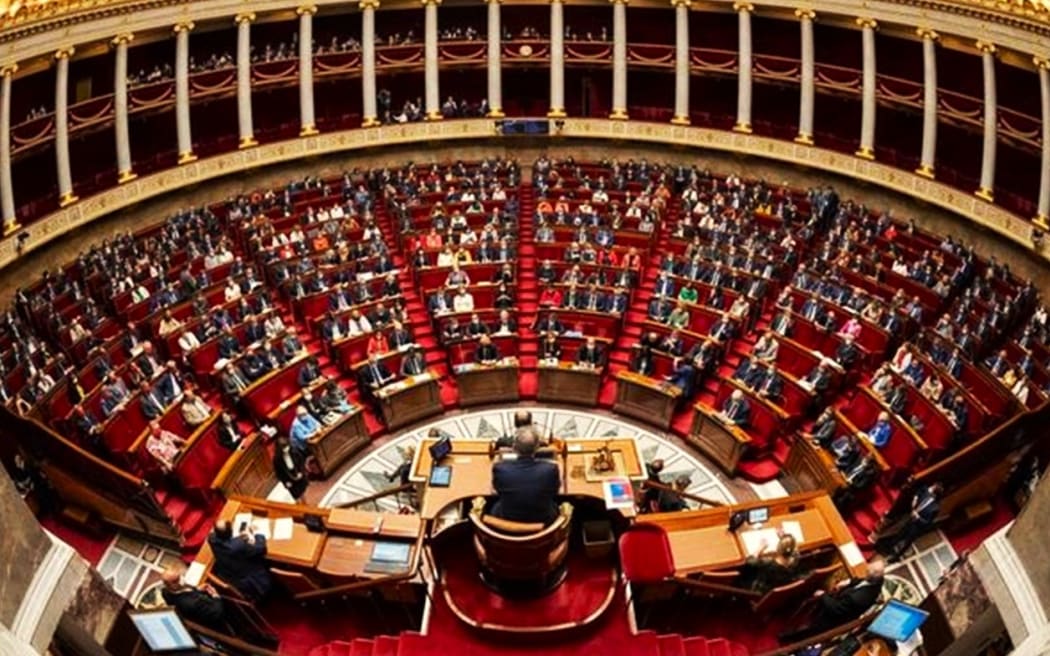
They were sparked by anger at a proposed new law that would allow French residents who have lived there for more than 10 years to vote — which critics say will weaken the Kanak vote.
Since then, five people have died, including two police officers, and hundreds have been injured in the French Pacific territory.
Late on Friday there were reports of clashes between police and rioters around a domestic airport near Nouméa, as New Caledonia’s capital entered its fourth night under curfew.
Local media reported rioters on the airfield at Magenta airport threw hammers and stones at police, and police responded with tear gas and stun grenades.
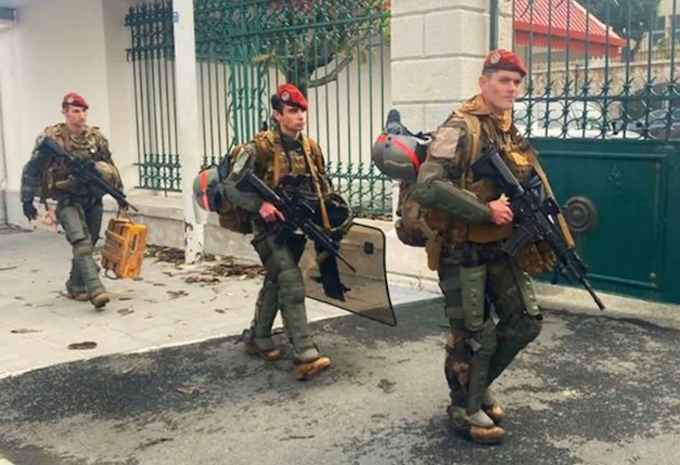
Police warned the military was authorised to use lethal weapons if they could not contain the situation otherwise. A local told RNZ Pacific the Kanaks were not going to back down, and things could get “nasty” in the coming days if the army could not contain the crisis.
New Zealanders feeling marooned Four friends from North Canterbury landed in Nouméa on Monday as part of a “lifetime dream” trip.
Shula and Wolf Guse, and Sarah and William Hughes-Games, were celebrating Shula’s birthday and Sarah and William’s 40th wedding anniversary.
But fresh off their flight, it became clear their celebrations would not be going ahead.
“As we left the airport, there were blocks just everywhere . . . burning tyres, and people stopping us, and lots of big rocks on the road, and branches, and people shouting, waving flags,” Shula Guse said.
They wanted to get out of there, but had barely heard a peep from New Zealand government organisation SafeTravel, Sarah Hughes-Games said.
“All they’ve done is send us a . . . general letter, nothing specific,” she said.
“We’ve contacted the New Zealand Consulate here in Nouméa, and they are closed. This is the one time they should be open and helping people.”
It was not good enough, she said.
“We’ve basically been just abandoned here, so we’re just feeling a little bit fed up about the situation, that we’ve just been left alone, and nobody has contacted us.”
It was unclear when they would be able to leave.
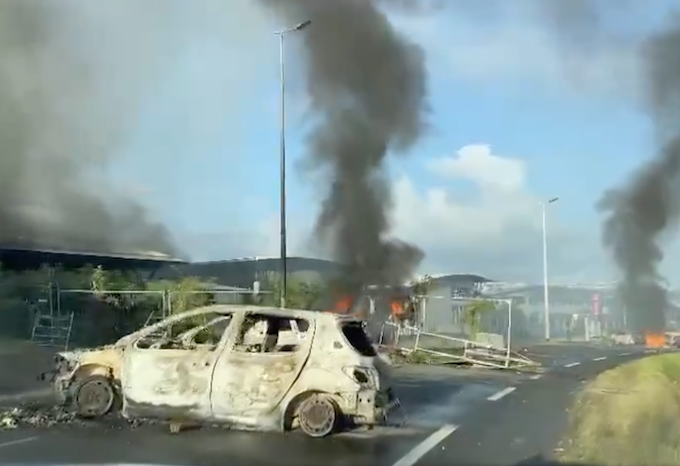
A looted supermarket in Nouméa’s Kenu-In neighbourhood. Image: NC la 1ère TV/RNZ
Struggling to find food Meanwhile, another person told RNZ they had family stuck in Nouméa who had registered on SafeTravel, but had heard nothing more from the government. They were struggling to find food and were feeling uneasy, they said.
“They don’t know where to go now and there seems to be no help from anywhere.”
“Even when the airport does reopen, Air New Zealand will only operate into Nouméa when we can be assured that the airport is safe and secure, and that there is a safe route for our ground staff and customers to reach the airport,” it said.
MFAT in ‘regular contact’ with impacted New Zealanders The Ministry of Foreign Affairs and Trade said it had activated its emergency crisis system, and consular officials in Nouméa were in regular contact with impacted New Zealanders, New Caledonia authorities, and “international partners”.
The Consulate-General was open, but staff were working remotely because it was hard to get around, it said. Those who needed immediate consular assistance should contact the 24/7 Consular Emergency line on +64 99 20 20 20.
“An in-person meeting was held for a large group of New Zealanders in Nouméa yesterday [Thursday, 16 May 16] and further meetings are taking place today,” a spokesperson said.
“Consular officials are also proactively attempting to contact registered New Zealanders in New Caledonia to check on their situations, and any specific health or welfare concerns.
“Regular SafeTravel messages are also being sent to New Zealanders — we urge New Zealanders to register on SafeTravel to receive direct messages from consular officials.”
The ministry was also speaking regularly with New Caledonian authorities about airport operations and access, and access to critical supplies like food and medicine.
“New Zealanders in New Caledonia should stay in place and avoid all protests, monitor local media for developments, and comply with any instructions and restrictions issued by local authorities.”
There are currently 219 New Zealanders registered on SafeTravel as being in New Caledonia.
Meanwhile, Foreign Affairs Minister Winston Peters told RNZ Morning Report the government was doing all it could to get New Zealanders home.
That could include using the Air Force, he said.
The Defence Force confirmed there had been discussions with officials.
This article is republished under a community partnership agreement with RNZ.
Jean-Marie Tjibaou, a revered Kanak visionary, was inspirational to indigenous Pacific political activists across Oceania, just like Tongan anthropologist and writer Epeli Hao’ofa was to cultural advocates.
Tragically, he was assassinated in 1989 by an opponent within the independence movement during the so-called “les événements” in New Caledonia, the last time the “French” Pacific territory was engulfed in a political upheaval such as experienced this week.
His memory and legacy as poet, cultural icon and peaceful political agitator live on with the impressive Tjibaou Cultural Centre on the outskirts of the capital Nouméa as a benchmark for how far New Caledonia had progressed in the last 35 years.
However, the wave of pro-independence protests that descended into urban rioting this week invoked more than Tjibaou’s memory. Many of the martyrs — such as schoolteacher turned security minister Elöi Machoro, murdered by French snipers during the upheaval of the 1980s — have been remembered and honoured for their exploits over the last few days with countless memes being shared on social media.
Among many memorable quotes by Tjibaou, this one comes to mind:
“White people consider that the Kanaks are part of the fauna, of the local fauna, of the primitive fauna. It’s a bit like rats, ants or mosquitoes,” he once said.
“Non-recognition and absence of cultural dialogue can only lead to suicide or revolt.”
And that is exactly what has come to pass this week in spite of all the warnings in recent years and months. A revolt.
Among the warnings were one by me in December 2021 after a failed third and “final” independence referendum. I wrote at the time about the French betrayal:
“After three decades of frustratingly slow progress but with a measure of quiet optimism over the decolonisation process unfolding under the Nouméa Accord, Kanaky New Caledonia is again poised on the edge of a precipice.”
As Paris once again reacts with a heavy-handed security crackdown, it appears to have not learned from history. It will never stifle the desire for independence by colonised peoples.
New Caledonia was annexed as a colony in 1853 and was a penal colony for convicts and political prisoners — mainly from Algeria — for much of the 19th century before gaining a degree of autonomy in 1946.
“Kanaky Palestine – same combat” solidarity placard. Image: APR screenshot
Here are my five takeaways from this week’s violence and mayhem:
1 Global failure of neocolonialism – Palestine, Kanaky and West Papua
Just as we have witnessed a massive outpouring of protest on global streets for justice, self-determination and freedom for the people of Palestine as they struggle for independence after 76 years of Israeli settler colonialism, and also Melanesian West Papuans fighting for 61 years against Indonesian settler colonialism, Kanak independence aspirations are back on the world stage.
Neocolonialism has failed. French President Emmanuel Macron’s attempt to reverse the progress towards decolonisation over the past three decades has backfired in his face.
2 French deafness and loss of social capital
The predictions were already long there. Failure to listen to the Kanak and Socialist National Liberation Front (FLNKS) leadership and to be prepared to be patient and negotiate towards a consensus has meant much of the crosscultural goodwill that been developed in the wake of the Nouméa Accord of 1998 has disappeared in a puff of smoke from the protest fires of the capital.
The immediate problem lies in the way the French government has railroaded the indigenous Kanak people who make up 42 percent pf the 270,000 population into a constitutional bill that “unfreezes” the electoral roll pegging voters to those living in New Caledonia at the time of the 1998 Nouméa Accord. Under the draft bill all those living in the territory for the past 10 years could vote.
Kanak leaders and activists who have been killed . . . Jean-Marie Tjibaou is bottom left, and Eloï Machoro is bottom right. Image: FLNKS/APR
This would add some 25,000 extra French voters in local elections, which would further marginalise Kanaks at a time when they hold the territorial presidency and a majority in the Congress in spite of their demographic disadvantage.
Under the Nouméa Accord, there was provision for three referendums on independence in 2018, 2020 and 2021. The first two recorded narrow (and reducing) votes against independence, but the third was effectively boycotted by Kanaks because they had suffered so severely in the 2021 delta covid pandemic and needed a year to mourn culturally.
The FLNKS and the groups called for a further referendum but the Macron administration and a court refused.
3 Devastating economic and social loss New Caledonia was already struggling economically with the nickel mining industry in crisis – the territory is the world’s third-largest producer. And now four days of rioting and protesting have left a trail of devastation in their wake.
At least five people have died in the rioting — three Kanaks, and two French police, apparently as a result of a barracks accident. A state of emergency was declared for at least 12 days.
But as economists and officials consider the dire consequences of the unrest, it will take many years to recover. According to Chamber of Commerce and Industry (CCI) president David Guyenne, between 80 and 90 percent of the grocery distribution network in Nouméa had been “wiped out”. The chamber estimated damage at about 200 million euros (NZ$350 million).
Twin flags of Kanaky and Palestine flying from a Parisian rooftop. Image: APR
4. A new generation of youth leadership As we have seen with Generation Z in the forefront of stunning pro-Palestinian protests across more than 50 universities in the United States (and in many other countries as well, notably France, Ireland, Germany, The Netherlands and the United Kingdom), and a youthful generation of journalists in Gaza bearing witness to Israeli atrocities, youth has played a critical role in the Kanaky insurrection.
Australian peace studies professor Dr Nicole George notes that “the highly visible wealth disparities” in the territory “fuel resentment and the profound racial inequalities that deprive Kanak youths of opportunity and contribute to their alienation”.
A feature is the “unpredictability” of the current crisis compared with the 1980s “les événements”.
“In the 1980s, violent campaigns were coordinated by Kanak leaders . . . They were organised. They were controlled.
“In contrast, today it is the youth taking the lead and using violence because they feel they have no other choice. There is no coordination. They are acting through frustration and because they feel they have ‘no other means’ to be recognised.”
According to another academic, Dr Évelyne Barthou, a senior lecturer in sociology at the University of Pau, who researched Kanak youth in a field study last year: “Many young people see opportunities slipping away from them to people from mainland France.
“This is just one example of the neocolonial logic to which New Caledonia remains prone today.”
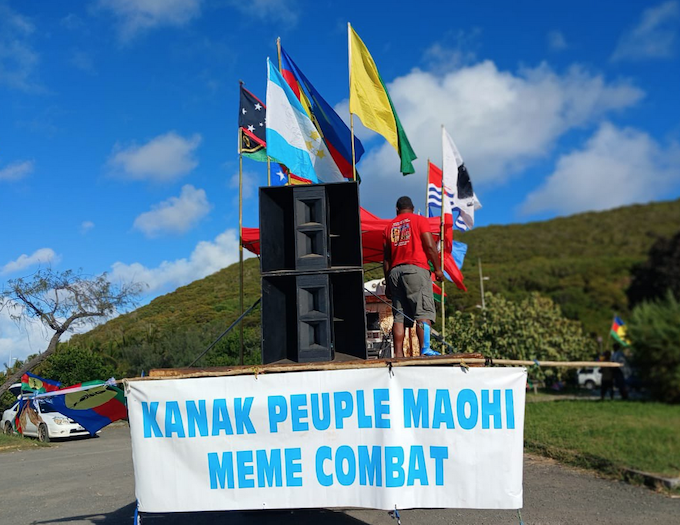
Pan-Pacific independence solidarity . . . “Kanak People Maohi – same combat”. Image: APR screenshot
5. Policy rethink needed by Australia, New Zealand
Ironically, as the turbulence struck across New Caledonia this week, especially the white enclave of Nouméa, a whistlestop four-country New Zealand tour of Melanesia headed by Deputy Prime Minister Winston Peters, who also has the foreign affairs portfolio, was underway.
The first casualty of this tour was the scheduled visit to New Caledonia and photo ops demonstrating the limited diversity of the political entourage showed how out of depth New Zealand’s Pacific diplomacy had become with the current rightwing coalition government at the helm.
Heading home, Peters thanked the people and governments of Solomon Islands, Papua New Guinea, Vanuatu and Tuvalu for “working with New Zealand towards a more secure, more prosperous and more resilient tomorrow”.
The delegation is now heading home ✈️
Many thanks to the people and governments of Solomon Islands, Papua New Guinea, Vanuatu & Tuvalu for their kind hospitality – and for working with New Zealand towards a more secure, more prosperous & more resilient tomorrow.
His tweet came as New Caledonian officials and politicians were coming to terms with at least five deaths and the sheer scale of devastation in the capital which will rock New Caledonia for years to come.
News media in both Australia and New Zealand hardly covered themselves in glory either, with the commercial media either treating the crisis through the prism of threats to tourists and a superficial brush over the issues. Only the public media did a creditable job, New Zealand’s RNZ Pacific and Australia’s ABC Pacific and SBS.
In the case of New Zealand’s largest daily newspaper, The New Zealand Herald, it barely noticed the crisis. On Wednesday, morning there was not a word in the paper.
Thursday was not much better, with an “afterthought” report provided by a partnership with RNZ. As I reported it:
“Aotearoa New Zealand’s largest newspaper, the New Zealand Herald, finally catches up with the Pacific’s biggest news story after three days of crisis — the independence insurrection in #KanakyNewCaledonia.
“But unlike global news services such as Al Jazeera, which have featured it as headline news, the Herald tucked it at the bottom of page 2. Even then it wasn’t its own story, it was relying on a partnership report from RNZ.”
Also, New Zealand media reports largely focused too heavily on the “frustrations and fears” of more than 200 tourists and residents said to be in the territory this week, and provided very slim coverage of the core issues of the upheaval.
With all the warning signs in the Pacific over recent years — a series of riots in New Caledonia, Papua New Guinea, Solomon Islands, Timor-Leste, Tonga and Vanuatu — Australia and New Zealand need to wake up to the yawning gap in social indicators between the affluent and the impoverished, and the worsening climate crisis.
These are the real issues of the Pacific, not some fantasy about AUKUS and a perceived China threat in an unconvincing arena called “Indo-Pacific”.
Dr David Robie covered “Les Événements” in New Caledonia in the 1980s and penned the bookBlood on their Bannerabout the turmoil. He also covered the 2018 independence referendum.
Loyalist French rally in New Caledonia . . . “Unfreezing is democracy”. Image: A PR screenshot
Those were the unkind words of a colleague commenting on the subject of Vincent Namatjira’s acrylic painting, Gina. Every one of the prominent Australians and cultural heroes in Namatjira’s ensemble Australia in Colour (2021) is subject to his trademark distortions.
When the painter gets to work interpreting the press photographs that his main source, resemblance is always stretched. No one comes out unscathed: Tony Abbott looks just as scary as Angus Young from AC/DC; a grimacing Queen Elizabeth as grisly as a roaring Cathy Freeman. Indeed, in the 2023 volume on Namatjira there are no fewer than four paintings of Gina Rinehart – and they look like four different people.
Do we expect a portrait to be a moral physiognomy, the ancient pseudoscience that assumes the way someone has lived their life shapes their features and appearance?
Roman emperors were shown to be ideal types: the heroic portrait. Who knows what these men actually looked like? In the case of King Charles III, whose new portrait by Jonathon Yeo was unveiled this week, we can compare his likeness to the myriad photographic and filmic images.
Newspaper caricature, popular since the 1700s, works hard to point out imperfections, posit animal likenesses, and exaggerate specific facial features to satirise public figures.
Namatjira brushes with caricature even when depicting himself.
Can you control your image?
I think Rinehart should be flattered to be one of Namatjira’s favourites. The wits in the twittersphere have in the past 24 hours shown several more of his Ginas, and it turns out there are also at least half a dozen colour portraits of her by other artists.
They range from Scottie Marsh’s mural on a Sydney wall of a matronly Rinehart giving the breast to infant Barnaby Joyce (with apologies to Raphael), to Xavier Ghazi’s demonic hard-hatted Gina giving Australians the finger – it’s in newspaper caricature mode, his entry in the Bald Archies competition for 2023.
Although Rinehart has reportedly called for Namatjira’s painting to be taken down, the initiative apparently comes from members of the Australian swimming team and their former coach (Rinehart is that sport’s major private sponsor).
I suspect their discomfort comes from reading Namatjira’s Gina as a moral portrait; that is, ugliness of appearance projects an ugly spirit (whereas for them she is the epitome of generosity).
It’s an interesting idea that the fresh-faced teenage daughter of Lang Hancock in old news photos has changed not just because times takes beauty away (as we all know), but because of the impact of things she inherited from her father: not just the extreme wealth and the jawline, but the conservative views, and the ways she has used her money and power.
Her control of vast tracts of (unceded) grazing land across western and central Australia give reason to reflect on what Western Aranda man Namatjira might think of her.
And yet what about commissions?
When can a sitter control their portrait image? Only when they commission the work. Art history has plenty of cases in which a sitter has rejected their portrait. Monet in the 1860s painted his brother Leon, who so disliked the canvas he locked it in an attic, from which it emerged 150 years later.
Portrait paintings have had to be altered, payment refused, or be paid for then destroyed. The commissioned portrait, it’s assumed, must flatter the sitter or at least offer a fair and non-judgemental likeness.
The British royal family has historically been very forgiving about portraits, and has the sophistication to know it is futile to protest a likeness. Doing so invokes the perverse “Streisand effect”, as we see happening with Namatjira’s Gina.
There are dozens of depictions of Elizabeth II and Charles III in Namatjira’s pantheon – including one of the late queen alongside Rinehart in Australia in Colour. Namatjira has a family link to Elizabeth and Prince Philip, who met Albert Namatjira (the painter’s great grandfather) on their 1954 tour of Australia.
But no one is asking for Queen Bess to be removed from the National Gallery of Australia.
As a mark of noblesse oblige, King Charles has accepted the newly unveiled commissioned portrait of himself by Jonathon Yeo. It is an absolute shocker, and he should have sent it back.
The King, de-aged by 20 years, looks pleasantly out at us from a floor-to-ceiling fog of strawberry- and cerise-coloured paint that covers his dress uniform. The joke, of course, is that the red colouration can be read as a reference to “tampongate”, the product of an infamous case of tabloid phone-hacking in 1993.
It’s a case of a portrait generating an unintended consequence – just as Namatjira surely did not expect to provoke international headlines today with his Gina, whom he’s been depicting for years.
Fittingly, wise heads have rejected calls for the gallery to remove the canvas, starting with director Nick Mitzevich’s measured statement, seconded by the National Association for the Visual Arts whose press release insists on freedom of expression.
Finally, late yesterday, Namatjira, resisting myriad calls for interviews, issued a statement in the pithy mode of his book texts. Let him have the last word:
I paint people who are wealthy, powerful, or significant – people who have had an influence on this country, and on me personally, whether directly or indirectly, whether for good or for bad. Some people might not like it, other people might find it funny, but I hope people look beneath the surface and see the serious side too.
Roger Benjamin receives funding from the Australian Research Council.
Our government has great aspirations. It has committed to end extinctions and expand our protected areas to cover 30% of every Australian ecosystem by 2030. This is part of its Nature Positive Plan, aligned with the 2022 Kunming-Montreal global biodiversity pact. The goal is not just to conserve nature but to restore what is being lost.
But how can these goals be reconciled with a budget that allocated more public money to carbon capture and storage than biodiversity?
This week’s federal budget was a new low point for investment in nature. Environmental groups roundly criticised the “bad budget for nature”, which delivered next-to-no money to protect and recover Australia’s unique and threatened biodiversity.
Research has shown Australians want at least 2% of the federal budget spent on nature. Instead, less than 0.1% of the budget spend will support biodiversity in some way. Over the past decade, biodiversity funding has gone down 25% relative to GDP.
Let’s say the government decided it was finally time to roll up the sleeves and do something. How would they go about it? What would it take to actually reverse the decline, as the government says it wants to in its Nature Positive approach?
Our threatened species populations have been declining by about 2-3% a year over the past 20 years. The first step is to stop the fall. Then the challenge is to restore dwindling species and ecosystems.
The Dow Jones for threatened species goes down, down, down
Australia now has a Threatened Species Index. Think of it like the Dow Jones for wildlife. It uses trend data from bird, mammal and plant species collected from over 10,000 sites to measure progress for nature in Australia.
Last year, Treasurer Jim Chalmers talked up the index as part of the first national “wellbeing budget”, which aimed to measure Australia’s progress across a range of social, health and sustainability indicators.
What does the index tell us? You can see for yourself. The health of our threatened species has fallen by about 2-3% a year since the turn of the century.
If, as is likely, the trend continues, it will lead to the extinction of many more of our unique native animals and plant species. It will signal the failure of the government’s Nature Positive policy and a global biodiversity tragedy.
Given we have had decades of successive decline, what would be needed to reach the goal of nature positive?
halt and reverse nature loss measured from a baseline of 2020, through increasing the health, abundance, diversity and resilience of species, populations and ecosystems so that by 2030 nature is visibly and measurably on the path of recovery.
This definition gives us a clear, measurable timeline for action, often described as nature’s answer to net zero.
To reach nature positive means halting biodiversity loss by 2030 so that in the future there is much more biodiversity, relative to a 2020 baseline.
What would that look like using the Threatened Species Index? To get on track with nature positive, we would have to stop the index declining, stabilise, and then increase from 2030 onwards.
But we also need to invest in restoring what has been lost. Scientists think this is possible with $2 billion a year to recover our most threatened native plants and animals, and another $2 billion annually to drive ecosystem restoration across Australia.
The budget is not nature positive
In the budget papers, the government uses the Threatened Species Index as a performance measure for its nature positive goal. It expects the trajectory of the index to be “maintained or improved” out to 2027-28.
But given our species and ecosystems are steadily declining, year after year, to maintain a trajectory is simply to embrace the decline. It’s not nature positive at all. The government could make minor improvements, slowing the collapse, and claim it was improving the lot of nature.
Imagine if our GDP growth was negative and the government’s goal was merely to slow its decline over the next five years – there would be national uproar.
If the government is serious about nature positive – which is an excellent goal – it would be setting more ambitious targets. For instance, the goal could be for the index to climb back up to 2020 levels by the end of the decade.
Instead, Labor is planning for biodiversity decline to continue, while describing it as “nature positive”.
Watching over the steady decline of our species and calling it nature positive makes about as much sense as opening up new gas fields and calling it net zero.
In coming weeks, the government will introduce bills to parliament to establish two new agencies, Environment Information Australia and Environmental Protection Australia. But there will be one bill missing – the reformed federal environment laws, intended to give teeth to the nature positive push.
But let’s be generous and say these laws finally make it to parliament after the next election. Would they be enough to stop our species losses and put the Threatened Species Index onto a nature positive trajectory?
Australia’s reformed environmental laws are described as Nature Positive. Are they? Department of Climate Change, Energy, the Environment and Water, CC BY-NC-ND
The consultation documents show the government is aiming to deliver “net positive outcomes”, whereby development impacts to threatened species and ecosystems are more than compensated for.
But we don’t know the detail. How much improvement is the government aiming for? In the draft laws, this figure is listed simply as “at least X%”.
not shy away from difficult problems or accept environmental decline and extinction as inevitable.
But we cannot give up. As the plight of nature worsens, even iconic species such as the koala and platypus are now at risk. As ecosystems collapse, our food security, health and wellbeing, communities and businesses will suffer.
Perhaps one day we will have a government able to grasp the nettle and actually tackle the nature crisis – for the sake of all of us.
Megan C Evans has received funding from various sources, including the Australian Research Council through a Discovery Early Career Research Award (2020-2023), the Australian Conservation Foundation, the Department of Agriculture, Water and the Environment, WWF Australia, and the National Environmental Science Program’s Threatened Species Recovery Hub.
Brendan Wintle has received funding from The Australian Research Council, the Victorian State Government, the NSW State Government, the Queensland State Government, the Commonwealth National Environmental Science Program, the Ian Potter Foundation, the Hermon Slade Foundation, and the Australian Conservation Foundation. Wintle is a Board Director of Zoos Victoria and a lead councillor of the Biodiversity Council.
Hugh Possingham works for the University of Queensland, Accounting for Nature, and the Biodiversity Council. He currently receives grant funding from the Australian Research Council. He is affiliated with over 20 organisations providing pro-bono or limited renumeration, board or committee level advice. These include: BirdLife Australia (vice-President), The University of Adelaide (Environment Institute Board Chair), various state and federal governments, the Terrestrial Ecosystem Research Network (Board Chair), AgForce, and several NGOs, etc.
This year the National Rugby League (NRL) opened its season in Las Vegas. It was an audacious move by the league’s ambitious head honcho Peter V’Landys to showcase the game in the United States – and perhaps to attract some gambling industry attention too.
While the NRL was stateside, the Australian Football League (AFL) opened its 2024 season in New South Wales (NSW) and Queensland – rugby league heartland.
The battle between the NRL and AFL for football supremacy has always been intriguing – where is the battle headed next?
A history of expansion
In terms of football participation and support, Australia is divided by a “Barassi line” between the north-east and south-west of the country.
Both codes have expanded over the years. It started in 1982 when the then-Victorian Football League sent the South Melbourne Swans to Sydney and the New South Wales Rugby League (NSWRL) established the Canberra Raiders (making the ACT a rugby league stronghold rather than the predominantly Aussie rules city it originally was).
The NSWRL added teams in Newcastle, Illawarra, Brisbane, Melbourne and Gold Coast, and later Auckland and North Queensland. The AFL added sides from WA and SA, as well as Brisbane and Gold Coast and later, Greater Western Sydney. Tasmania will soon become the 19th club, and the AFL may ponder a 20th team – in Darwin, Canberra or perhaps a third club in WA or SA.
The first option is the resurrection of the North Sydney Bears – but in a different location. The old Sydney club exited the NRL in 1999 after 90 years in the premier competition, but V’Landys has ruled they won’t be based at North Sydney as there are too many clubs in that city.
Some have therefore suggested the Bears relocate to the Central Coast, given that area is rugby league heartland and boasts a great stadium in Gosford where NRL fixtures regularly attract good crowds.
There’s also a proposal to bring back the club as the Perth Bears. WA did have the Western Reds in the mid-90s but the team was axed at the end of the Super League war in 1997.
The Perth Bears would be a rare foray for the NRL on the other sides of the Barassi line, but they would have the advantage of an historic North Sydney connection – although Sydney fans would find it easier to see their side on the Central Coast, an hour or two away, than on the other side of the Nullarbor Plain.
Exploring New Zealand
The second option is New Zealand.
Given the popularity of the Auckland-based Warriors, there is a push for a second team, either in Wellington, as the Orcas, or Christchurch, to be known as the South Island Kea.
In New Zealand, rugby union talent is spread through the many local provincial sides and ultimately, the All Blacks. But rugby league talent flows through to only the Warriors. Given the growth in popularity of rugby league (particularly among Maori and Pacific youth) the Warriors may not be able to accommodate all the athletes who want to stay in NZ and still play at the highest level.
While rugby league is traditionally strongest on the north island, hence the push for Wellington, there is an opportunity to open up the South Island with a Christchurch team playing at the new covered multi-function stadium.
A bold new horizon up north
The third and most interesting option is Papua New Guinea.
Rugby league is the most popular sport in PNG and Prime Minister James Marape describes the sport as part of a national project to “unite the most diverse nation on the face of the planet.”
Australian Prime Minister Anthony Albanese sees sport as an important part of the bilateral relationship between Australia and PNG. In a speech to the PNG parliament last year he said:
I want to see a PNG-based team competing in the national rugby league competition.
The PNG bid is part of “soft diplomacy” or “sports diplomacy” in the Pacific in response to geo-political tensions in the region.
The benefits are economic and diplomatic but there are risks too – there have been warnings that safety and security concerns in PNG could affect players, fans, officials and support staff.
There is also a view the NRL bid may crowd out other development assistance that’s of vital importance to PNG, although this ignores the economic and social flow-on benefits of sporting participation.
The NRL is considering a pitch for a team to be based in PNG.
A fourth option closer to home
Finally, there could be another team in Brisbane, based around the Ipswich area.
Given the growth of Brisbane and South East Queensland, and the popularity of rugby league in the area, the Ipswich or Brisbane Jets may be a safe option. It would however be more of a consolidation than expansion option, as it would mean three teams in greater Brisbane and five in Queensland in total.
The NRL’s big decisions
The NRL currently has 17 clubs and like the AFL, wants to get to a 20-team competition.
The Central Coast Bears would be a safe option, along with a second team in NZ and another in Ipswich. That would be sticking safely to rugby league territory.
A more radical (but exciting) approach would be to bring the Bears back in Perth, go for a PNG club and a second New Zealand team.
It’s a big decision for the NRL but knowing the drive and political instincts of V’Landys, something is going to happen, and happen soon.
Tim Harcourt does not work for, consult, own shares in or receive funding from any company or organisation that would benefit from this article, and has disclosed no relevant affiliations beyond their academic appointment.
The budget includes A$8.6 million for a program called Revive Live:
to provide essential support to live music venues and festivals showcasing Australian bands and artists – to ensure the long-term sustainability of the live music sector.
Music was clearly a priority for Revive, with the creation of Music Australia, a dedicated body inside Creative Australia, “to support and invest in the Australian contemporary music industry”.
The money included in this week’s budget shows the government has been paying attention to issues in the live music sector.
But will this new investment be enough to save an industry in crisis?
Australian live music industries in crisis
Multiple festivals have been cancelled over the last year, due to factors such as increased operational costs, sluggish ticket sales, risks from extreme weather, and changing audience behaviours.
Live music venues are in jeopardy. Beloved venues like Brisbane’s The Zoo have closed their doors. Others continue to be threatened by residential development.
Industry bodies are concerned skills shortages in live music production and touring crews, following pandemic-related departures, will lead to further cancellations.
In such a fragile environment, an extra $8.6 million could make a big difference on the ground. However, the budget documents have not outlined the specifics of how this money will be spent.
The documents dedicate this money in 2024–25 for:
support to live music venues and festivals showcasing Australian bands and artists, including to improve accessibility and inclusion at live music performances.
The question then becomes what strategies and initiatives will Revive Live prioritise?
How can the extra money help?
Bold thinking is required, for both how this money could be allocated and what legislative change could help the sector.
Targeted funding may help to ease the pressures of increasing insurance, property and maintenance costs for our struggling – but essential – small venues.
We can look internationally for new models of venue ownership. In the United Kingdom, Music Venue Properties is a charity that crowdsources funding to collectively buy small venues.
Revive Live could assist venues to buy their freeholds in collaboration with community groups and local councils. This would reduce overheads and bring in further community oversight and involvement. Programs like this offer alternative models for engaging with contemporary music that do not rely on alcohol sales.
Capping public liability insurance for promoters and venues would also ease pressures.
Funding could also be used to drive desired changes to the culture of the industry.
Music Victoria’s 10,000 Gigs initiative provides venues with up to $10,000 a year to cover artist fees, where each performer must be paid a minimum of $250 per performance. This ensures artists are paid, while supporting venues to program talent and attract audiences.
The budget’s intention to “improve accessibility and inclusion at live music performances” responds to urgent needs, including access for people with disabilities, and gender-based violence and harassment at events. New funding should be conditional upon reaching KPIs in these critical areas, ensuring diversity and inclusion – including, vitally, among performers on stage.
Other significant reforms could include levies on big-ticket events with revenue redistributed to grassroots music venues, laws guaranteeing international performers include an Australian artist among their opening acts, and local content or “bannerhead” quotas for streaming platforms to ensure they promote Australian artists to Australian audiences.
The live music sector contributes an estimated $5.7 billion to the Australian economy. Although the budget’s $8.6 million isn’t a lot when compared to the size of the industry, if accompanied by targeted structural reforms it could be the seed funding needed to begin a process of transition and renewal.
No doubt this process will be heavily informed by the current parliamentary inquiry. Its outcomes may have serious implications for the sector’s long-term viability.
Ultimately, the sustainability of the live music sector requires fundamental adaptations to the way business has been done in the past. Audience behaviours are changing and new technologies continue to disrupt the industry. Revive Live may be an important and positive step in the right direction if it is used effectively.
Catherine Strong receives funding from the Australian Research Council and the Victorian Music Development Office.
Ben Green receives funding from the Australian Research Council and the Australasian Performing Right Association.
Sam Whiting receives funding from Creative Australia and the Australasian Performing Right Association. He is a member of the Australian Labor Party.
The 2024 federal budget contains A$110 million for Indigenous education. This includes funding for various different organisations to represent and help Indigenous people as well as scholarships in a bid to close the gap between Indigenous and non-Indigenous learning and achievement.
But what are these measures based on?
There is a strong body of evidence about what works in Indigenous education. But this year, as in other years, budget allocations seem to ignore research that says we need to listen to Indigenous people when it comes to making policies that will have an impact on their lives.
What is the context for Indigenous education in this budget?
It has never been more important to look at what works because we are not seeing the progress we need in Indigenous education.
The 2023 Closing the Gap report showed key measures such as “students achieve their full learning potential” and “young people are engaged in employment or education” are improving but not on track.
At the same time, there is wide recognition within government about the need to put Aboriginal and Torres Strait Islander people at the centre of planning and evaluating policies about the issues that affect us. As the Productivity Commission noted in 2020, “policies need to draw on [Indigenous] perspectives, priorities and knowledges”.
As our research has also shown, when policymakers and politicians are deciding what evidence matters, they inevitably do so with their own biases.
What is in the budget for Indigenous education?
The education portfolio’s budget media release talks about “investing in First Nations education outcomes to Close the Gap”.
In total, there is A$110 million over four years to “accelerate action” on Closing the Gap in education. This includes $27.5 million over three years to extend an Indigenous education scholarship program and English language learning for Indigenous children.
But the largest single amount is $32.8 million over two years for the Clontarf Foundation to support “up to 12,500 First Nations boys and young men and their engagement in education in 2025”.
The Clontarf Foundation is a not-for-profit organisation founded by former footballer Gerard Neesham (who is not Indigenous). It uses sport to “attract [Indigenous boys] to school, and then keep them coming”.
The foundation’s website says it not a sporting program per se, but about “developing the values, skills and abilities that will assist the boys to transition into meaningful employment and achieve better life outcomes”.
What about Indigenous girls?
The Clontarf program has been going since 2000 and this is not the first time it has been funded in a budget. But there are several issues with this allocation. This is the single largest investment in Indigenous education in 2024, and yet it only services one gender and a relatively small number of young Indigenous people.
The then Labor education spokesperson Tanya Plibersek questioned funding for the Clontarf Foundation under the Morrison government in 2020, asking “why do Indigenous girls miss out?”.
There were also community concerns at the time. Djirribal woman and researcher Lee Sheppard said her research had found Clontarf’s model to be based on “Eurocentric and paternalistic values”.
Students need to be enrolled at a school to attend the Clontarf program, which includes mentoring “on a range of behavioural and lifestyle issues” and activities. As its website currently says,
[…] participants must continue to work at school and embrace the objectives of the Foundation.
What does the research say?
Studies on improving outcomes in Indigenous education say schools should be developing localised approaches in partnership with Indigenous communities and affirming students’ identities within their schools.
This means transforming schools into places where Indigenous students feel a sense of belonging and strength in their identities. It also means providing a wide range of role models that show Indigenous young people success across every field, not just sports.
The research does not emphasise funding external bodies to come into schools. Rather, it calls for investment to improve schools’ capacities to educate their Indigenous students.
When asked why the Clontarf Foundation was funded in the budget, a spokesperson for the Department of Education said:
The Clontarf Foundation’s program plays a pivotal role in engaging First Nations students through a combination of sports and education and is attributed to increased attendance, retention and overall academic performance.
Asked if this was based on any evidence of the program’s success, the spokesperson said:
There have been at least ten separate reviews or evaluations of the Clontarf Academy Program since it commenced in 2000. These evaluations and previous performance information has demonstrated that Clontarf Academies can have a positive impact on students.
Information on the new policy so far talks about “forging new partnerships” and “close engagement” with “key First Nations stakeholders”. A further $29.1 million over four years was announced to support First Nations peak education bodies.
While this emphasis and funding is welcome, it needs to result in a change in the way governments listen to Indigenous peoples when making funding allocations.
This means new announcements need to be backed by research and supported by the relevant peak bodies. Where we don’t have the evidence, budgets should include provisions for independent, rigorous, Indigenous-led evaluation of new education programs.
Marnee Shay receives funding from the Australian government, the Australian Research Council and the Australian Institute of Aboriginal and Torres Strait Islander Studies. She is a member of the Queensland Aboriginal and Torres Strait Islander Education and Training Advisory Committee with the Department of Education Queensland.
Grace Sarra receives funding from the Australian Research Council.
Air New Zealand has confirmed Nouméa’s Tontouta International airport in New Caledonia is closed until Tuesday.
The airline earlier told RNZ it would update customers as soon as it could.
Earlier today, Foreign Affairs Minister Winston Peters told RNZ Morning Report government officials had been working on an “hourly basis” to see what could be done to help New Zealanders wanting to leave.
That included RNZ Air Force or using a commercial airline.
More than 200 New Zealanders were registered as being in the French Pacific territory. His advice to them was to stay in place and keep in contact.
RNZ Pacific said there were food and fuel shortages as well as problems accessing medications and healthcare services.
Biggest concerns Before the closure of the airport, Wellington researcher Barbara Graham — who has been in Nouméa for five weeks — said the main issue was “the road to the airport . . . and I understand it still impassable because of the danger there, the roadblocks and the violent groups of people”.
Airlines were looking to taking bigger planes to get more people out and were working with the airport to ensure the ground crew were also available, Graham said.
She said she was reasonably distant from the violence but had seen the devastation when moving accommodation.
Wellingtonian Emma Royland was staying at the University of New Caledonia and hoped to wait out the civil unrest, if she could procure enough food.
“Ideally the university will step in to take care of us, ideally although we must admit that the university themselves are also under a lot of hardship and they also will be having difficulties sourcing the food.”
The couple of hundred students at the university were provided with instant noodles, chips and biscuits, Royland said.
She went into town to try and find food but there were shortages and long queues, she said.
“It probably is one of my biggest concerns is actually being able to get into the city, as I stand here I can see the smoke obscuring the city from last night’s riots and it is a very big concern of being able to get that food, that would be the only reason that I would have to leave New Caledonia.”
This article is republished under a community partnership agreement with RNZ.
Australia’s unprecedented Black Summer bushfires in 2019–20 created ideal conditions for misinformation to spread, from the insidious to the absurd.
It was within this context that a bizarre story went viral on social media.
This was a tale of heroic wombats herding other animals into their fireproof burrows to save them from the flames. At the time, we explained this story was largely inaccurate. But now we’ve investigated in more detail, and confirmed it may contain a kernel of truth.
The burrows of common wombats are deep and complex. They can be over 15 metres long with multiple entrances and chambers. So, even if wombats don’t shepherd wildlife into their homes, their burrows might act as “fire refuges” – providing vital shelter, food, and even drinking water during and after a bushfire.
Cameras reveal wombat burrows can be safe havens after fire (Charles Sturt University)
Wombat burrows are not just for wombats
We set up 56 cameras in forests north of Albury, New South Wales, which burned during the Black Summer bushfires. Some areas suffered more than others, so we were careful to select sites that varied in how severely they burned.
Half of the cameras were pointed at wombat burrows and the other half were set up nearby – in areas with the same types of plants, but no burrows. Then we monitored the burrows from June 2021 to April 2022 to see which animals used them, and how.
We found 56 animal species at wombat burrow sites (19 mammal species, 33
bird and four reptile).
Wombat expert Barbara Triggs, who literally wrote the book on wombats, had seen several of these species “scurrying away from burrow entrances” and emerging “from small crevices in the the walls” of wombat burrows. So our results are supported by her, and others’, observations.
Overall, burrows were hotspots of mammal activity, with more mammal species recorded at burrows than control sites. These tended to be smaller mammals, presumably because they can use the burrows without bothering the wombats.
Bigger animals such as kangaroos and wallabies tended to avoid the burrows. They may have been wary of a encountering a cantankerous wombat. Wombats are known to defend their territories.
Cameras captured a variety of animals interacting with the wombat burrows. Top row, L to R: red-necked wallaby, short-beaked echidna, lace monitor. Bottom row, L to R: grey shrike-thrush, superb lyrebird, swamp wallaby. Grant Linley
We observed some fascinating behaviour at wombat burrows. In total, 31 species were found interacting with the burrows. This included 30 species inspecting the entrance, 11 foraging (feeding in or directly around the lip of the burrow), and ten entering or emerging from burrows.
We also saw animals drinking and even bathing in pools at burrow entrances that temporarily filled with water after rain.
While water was not scarce during our study period, this suggests wombat burrows are providing a valuable ecosystem function that might help other wildlife. It’s an
interesting observation that warrants further investigation.
Burrow use by several native wildlife species was highest in areas that burned most severely. This supports the idea that wombat burrows act as a kind of refuge for native wildlife after fire.
Underground networks
Our results are just the tip of the iceberg. Globally, many burrowing species provide habitat for others. From the American badger to the giant armadillo, burrows provide shelter and resources for species across many ecosystems.
Closer to home, sand goanna burrows provide shelter for at least 28 animal species. And bilby burrows have been described as an “outback oasis” for their role in supporting birds, reptiles and mammals.
We’re not the first to find animal burrows offer refuge after fire. A US study published in 2018 found gopher tortoise burrows in burned areas had 8.5 times more wildlife species than burrows in nearby unburned areas.
Wombats are the largest burrowing marsupials in the world. Grant Linley
Our research adds to a growing body of evidence that suggests protecting wombats will benefit various species across many Australian ecosystems.
As large and severe fires become more common in forests across southeastern Australia, our wildlife will need all the help they can get – including the humble wombat burrow.
Grant Linley receives funding from WWF-Australia and the Ecological Society of Australia.
Dale Nimmo receives funding from WWF-Australia, the Australian Research Council, Western Australia’s Department of Biodiversity, Conservation and Attractions, and Victoria’s Department of Energy, Environment and Climate Action.
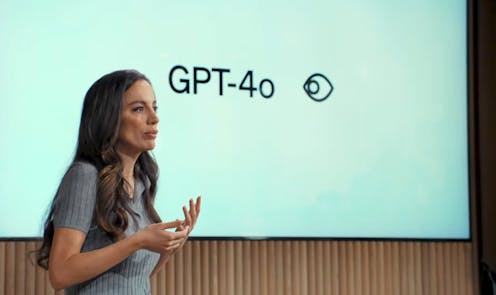
OpenAI executive Mira Murati launching GPT-4o.OpenAI
Earlier this week OpenAI launched GPT-4o (“o” for “omni”), a new version of the artificial intelligence (AI) system powering the popular ChatGPT chatbot. GPT-4o is promoted as a step towards more natural engagement with AI. According to the demonstration video, it can have voice conversations with users in near real-time, exhibiting human-like personality and behaviour.
This emphasis on personality is likely to be a point of contention. In OpenAI’s demos, GPT-4o sounds friendly, empathetic and engaging. It tells “spontaneous” jokes, giggles, flirts and even sings. The AI system also shows it can respond to users’ body language and emotional tone.
Launched with a streamlined interface, OpenAI’s new version of the ChatGPT chatbot appears designed to increase user engagement and facilitate the creation of new apps based on its text, image and audio capabilities.
GPT-4o is another leap forward for AI development. However, the focus on engagement and personality raises important questions about whether it will truly serve the interests of users, and the ethical implications of creating AI that can simulate human emotions and behaviours.
The personality factor
OpenAI envisions GPT-4o as a more enjoyable and engaging conversational AI. In principle, this could make interactions more effective and increase user satisfaction.
Studies show users are more likely to trust and cooperate with chatbots exhibiting social intelligence and personality traits. This could prove relevant in fields such as education, where studies have indicated AI chatbots can boost learning outcomes and motivation.
However, some commentators worry users may become overly attached to AI systems with human-like personalities or emotionally harmed by the one-way nature of human-computer interaction.
The Her effect
GPT-4o immediately inspired comparisons – including from OpenAI boss Sam Altman – to the 2013 science-fiction movie Her, which paints a vivid picture of the potential pitfalls of human-AI interaction.
In the movie, the protagonist, Theodore, becomes deeply fascinated and attached to Samantha, an AI system with a sophisticated and witty personality. Their bond blurs the lines between the real and the virtual, raising questions about the nature of love and intimacy, and the value of human-AI connection.
While we should not seriously compare GPT-4o to Samantha, it raises similar concerns. AI companions are already here. As AI becomes more adept at mimicking human emotions and behaviours, the risk of users forming deep emotional attachments increases. This could lead to over-reliance, manipulation and even harm.
While OpenAI demonstrates concern with ensuring its AI tools behave safely and are deployed in a responsible way, we have yet to learn the broader implications of unleashing charismatic AIs onto the world. Current AI systems are not explicitly designed to meet human psychological needs – a goal that is hard to define and measure.
GPT-4o’s impressive capabilities show how important it is that we have some system or framework for ensuring AI tools are developed and used in ways that are aligned with public values and priorities.
Expanding capabilities
GPT-4o can also work with video (of the user and their surrounds, via a device camera, or pre-recorded videos), and respond conversationally. In OpenAI’s demonstrations, GPT-4o comments on a user’s environment and clothes, recognises objects, animals and text, and reacts to facial expressions.
Google’s Project Astra AI assistant, unveiled just one day after GPT-4o, displays similar capabilities. It also appears to have visual memory: in one of Google’s promotional videos, it helps a user find her glasses in a busy office, even though they are not currently visible to the AI.
GPT-4o and Astra continue the trend towards more “multimodal” models that can work with text, images, audio and video. GPT-4o’s predecessor, GPT-4 Turbo, can process text and images together, but not audio and video. The original version of ChatGPT, released less than two years ago, was based only on text.
GPT-4o is also significantly faster than its predecessor.
The ability to work across audio, vision and text in real time is considered crucial to develop advanced AI systems that can understand the world and effectively achieve complex and meaningful goals.
But some critics argue that GPT-4o’s text capabilities are only incrementally better than GPT-4 Turbo and competitors such as Google’s Gemini Ultra and Anthropic’s Claude 3 Opus.
Will major AI labs be able to sustain the recent rapid pace of improvement by continuing to built bigger and more sophisticated models? This is a hot topic of debate among experts, and the outcome will determine the impact of the technology over the coming years.
Wider access
A less flashy but significant aspect of GPT-4o’s launch is that, unlike its GPT-4 family precursors, the new AI system is available to all users in the free version of ChatGPT, subject to usage limits.
This means millions of users worldwide just got an upgrade from GPT-3.5 to a more powerful AI system with more features. GPT-4o is significantly more useful than GPT-3.5 for various purposes, such as work and education. The impact of this development will become more apparent over time.
What’s next?
OpenAI’s unveiling of GPT-4o disappointed enthusiasts for ever more powerful AI systems, who hoped GPT-5’s arrival was imminent after over a year since GPT-4’s launch.
Instead, this week’s unveiling of GPT-4o and Google’s latest AI announcements emphasise the features being incorporated into their products. These new developments point to possibilities such as more sophisticated virtual assistants capable of performing complex tasks on behalf of users, involving richer interaction and planning.
Marcel Scharth does not work for, consult, own shares in or receive funding from any company or organisation that would benefit from this article, and has disclosed no relevant affiliations beyond their academic appointment.
Source: The Conversation (Au and NZ) – By Treasure McGuire, Assistant Director of Pharmacy, Mater Health SEQ in conjoint appointment as Associate Professor of Pharmacology, Bond University and as Associate Professor (Clinical), The University of Queensland
Menopause is a natural biological process that marks the end of a woman’s reproductive years, typically between 45 and 55. As women approach or experience menopause, common “change of life” concerns include hot flushes, sweats and mood swings, brain fog and fatigue.
But many women may not be aware of the long-term effects of menopause on the heart and blood vessels that make up the cardiovascular system. Heart disease accounts for 35% of deaths in women each year – more than all cancers combined.
What should women – and their doctors – know about these risks?
Hormones protect hearts – until they don’t
As early as 1976, the Framingham Heart Study reported more than twice the rates of cardiovascular events in postmenopausal than pre-menopausal women of the same age. Early menopause (younger than age 40) also increases heart risk.
Before menopause, women tend to be protected by their circulating hormones: oestrogen, to a lesser extent progesterone and low levels of testosterone.
These sex hormones help to relax and dilate blood vessels, reduce inflammation and improve lipid (cholesterol) levels. From the mid-40s, a decline in these hormone levels can contribute to unfavourable changes in cholesterol levels, blood pressure and weight gain – all risk factors for heart disease.
4 ways hormone changes impact heart risk
1. Dyslipidaemia– Menopause often involves atherogenic changes – an unhealthy imbalance of lipids in the blood, with higher levels of total cholesterol, triglycerides, and low-density lipoprotein (LDL-C), dubbed the “bad” cholesterol. There are also reduced levels of high-density lipoprotein (HDL-C) – the “good” cholesterol that helps remove LDL-C from blood. These changes are a major risk factor for heart attack or stroke.
2. Hypertension – Declines in oestrogen and progesterone levels during menopause contribute to narrowing of the large blood vessels on the heart’s surface, arterial stiffness and raise blood pressure.
3. Weight gain – Females are born with one to two million eggs, which develop in follicles. By the time they stop ovulating in midlife, fewer than 1,000 remain. This depletion progressively changes fat distribution and storage, from the hips to the waist and abdomen. Increased waist circumference (greater than 80–88 cm) has been reported to contribute to heart risk – though it is not the only factor to consider.
4. Comorbidities – Changes in body composition, sex hormone decline, increased food consumption, weight gain and sedentary lifestyles impair the body’s ability to effectively use insulin. This increases the risk of developing metabolic syndromes such as type 2 diabetes.
While risk factors apply to both genders, hypertension, smoking, obesity and type 2 diabetes confer a greater relative risk for heart disease in women.
So, what can women do?
Every woman has a different level of baseline cardiovascular and metabolic risk pre-menopause. This is based on their genetics and family history, diet, and lifestyle. But all women can reduce their post-menopause heart risk with:
regular moderate intensity exercise such as brisk walking, pushing a lawn mower, riding a bike or water aerobics for 30 minutes, four or five times every week
a healthy heart diet with smaller portion sizes (try using a smaller plate or bowl) and more low-calorie, nutrient-rich foods such as vegetables, fruit and whole grains
plant sterols (unrefined vegetable oil spreads, nuts, seeds and grains) each day. A review of 14 clinical trials found plant sterols, at doses of at least 2 grams a day, produced an average reduction in serum LDL-C (bad cholesterol) of about 9–14%. This could reduce the risk of heart disease by 25% in two years
less unhealthy (saturated or trans) fats and more low-fat protein sources (lean meat, poultry, fish – especially oily fish high in omega-3 fatty acids), legumes and low-fat dairy
less high-calorie, high-sodium foods such as processed or fast foods
a reduction or cessation of smoking (nicotine or cannabis) and alcohol
The decision to recommend oestrogen alone or a combination of oestrogen plus progesterone hormone therapy depends on whether a woman has had a hysterectomy or not. The choice also depends on whether the hormone therapy benefit outweighs the woman’s disease risks. Where symptoms are bothersome, hormone therapy has favourable or neutral effects on coronary heart disease risk and medication risks are low for healthy women younger than 60 or within ten years of menopause.
Depending on the level of stroke or heart risk and the response to lifestyle strategies, some women may also require medication management to control high blood pressure or elevated cholesterol levels. Up until the early 2000s, women were underrepresented in most outcome trials with lipid-lowering medicines.
The Cholesterol Treatment Trialists’ Collaboration analysed 27 clinical trials of statins (medications commonly prescribed to lower cholesterol) with a total of 174,000 participants, of whom 27% were women. Statins were about as effective in women and men who had similar risk of heart disease in preventing events such as stroke and heart attack.
Every woman approaching menopause should ask their GP for a 20-minute Heart Health Check to help better understand their risk of a heart attack or stroke and get tailored strategies to reduce it.
Treasure McGuire does not work for, consult, own shares in or receive funding from any company or organisation that would benefit from this article, and has disclosed no relevant affiliations beyond their academic appointment.
For decades, Australia has exported uranium – but not used it, other than in the Lucas Heights research reactor. But change is coming.
We now face a rapidly deepening commitment to the nuclear industry, through nuclear submarines (bipartisan support) or nuclear reactors (Coalition support).
The Albanese government was quick to accept the Coalition’s AUKUS deal, which looks likely to bring the first nuclear-powered submarine to our ports in about eight years.
Nuclear subs offer strong military deterrence. But they come with a hard problem: how to manage the especially nasty radioactive waste at the end of a submarine’s life.
Last night, Opposition Leader Peter Dutton pulled both together in his budget reply speech, asking:
Why is the technology which is safe for our submariners unsafe for our citizens?
The Coalition is giving us clear indications it will take a plan to build nuclear power stations to next year’s election, though it is coy on where.
That would face a string of hurdles, not just changing Commonwealth and state laws currently banning nuclear power, but also needing to find communities willing to have a nuclear reactor. Like it or not, nuclear is appearing in Australia’s future for the first time.
How did we get here?
Nuclear power has never been cost-effective in Australia. When the industry was starting in the US and UK in the 1950s, each Australian state had its own power grid, each too small scale for nuclear reactors.
The short-lived Gorton government proposed one on Commonwealth land at Jervis Bay, but the tenders for the project showed it was uneconomic.
Worldwide, the disastrous nuclear accidents at Chernobyl in 1986 and Fukushima in 2011 have led to understandable resistance from communities slated for a reactor.
Then there’s the almost intractable problem of radioactive waste.
In Australia, successive governments have failed to find permanent storage for our low-level waste from nuclear medicine and research, much of it from the Lucas Heights research reactor. The most recent plan to store waste at Kimba, in South Australia, failed last year.
If this waste is buried under a few metres of earth, the radiation levels at the surface are not significantly above the background levels we all live with.
Even so, no community has yet been willing to have that waste buried in their area.
First Nations groups on remote Country are well aware of the damage done to people and natural areas by British nuclear weapons tests at Emu Fields and Maralinga in South Australia in the 1960s, so they are very reluctant to accept even low-level waste.
What’s the issue with nuclear submarine waste?
Last year, Defence Minister Richard Marles said a waste dump would be located on current or future defence land. This might avoid some community pushback but is unlikely to quell fears.
This week, a Labor-chaired parliamentary committee called for the government to rule out accepting high-level waste from the submarines – specifically, the reactors and spent fuel from decommissioned submarines.
After fifty years of using this technology, many countries are still struggling with what to do with the resulting waste. Finland will soon open the world’s first deep geological nuclear waste storage, a facility meant to last a million years. But countries such as the United States cannot find an acceptable location.
Because the submarine reactors use highly enriched, weapons-grade nuclear fuel, the waste is much nastier even than the “high-level waste” from nuclear power stations, with high levels of radioactive isotopes of cobalt and nickel.
Neither the US nor the United Kingdom have a long-term solution for dealing with their own nuclear sub waste.
Those countries could, under the wording of the draft AUKUS laws, argue for their waste to be stored in Australia, too.
This would be unpopular. When the 2016 South Australian Royal Commission proposed storing high-level waste from overseas nuclear power stations as a new source of revenue, a citizens’ jury rejected the plan, concluding the risks were unacceptable.
Realistically, our government will do what US and UK governments have done for decades: store the waste temporarily and kick the can down the road.
Australia will have nuclear submarines within a decade. This photo shows the March 2024 visit of the US nuclear sub, USS Annapolis, to the HMAS Stirling naval base in Perth. U.S Embassy Australia/Flickr, CC BY-NC-ND
What about nuclear power?
Since losing office in 2022, the Coalition has become pro-nuclear power. Political analysts see this positioning as a way for the Liberal and National parties to slow the renewable build, prolong coal power for the decades needed to build nuclear power, and attack Labor.
But while the politics are clear, the Coalition’s position on nuclear is opaque.
For a few months late last year, the Coalition was in favour of “small modular reactors” rather than the expensive and slow-to-build large reactors built in the northern hemisphere. That plan ran into two problems. First, these reactors are still a gleam in the eyes of nuclear technologists. They do not yet exist. The American design promoted by the Coalition was cancelled due to cost blowouts.
The second problem is there really are economies of scale with nuclear reactors. France and the UK have concentrated on large reactors because doubling the size of reactors does not double the cost of generating electricity.
Even so, large reactors are now struggling to be economically competitive, even in countries such as France with significant cross-subsidies from nuclear weapons programs.
Old nuclear reactors which have written off the cost of construction are being closed because the operating and maintenance costs make their power more expensive than can be obtained from solar farms and wind turbines.
This year, the Coalition has switched back to old-fashioned large reactors.
Electricity from nuclear reactors costs three to four times as much as what can be provided by solar farms or wind turbines. Even adding storage to firm renewables leads to a price tag less than half that of nuclear. Reactors often take decades to build.
It is difficult to see the electoral appeal of a platform promising extra risks, more expensive energy and a slow build.
Where does that leave us? It’s very unlikely Australia will ever have nuclear power. But it is very likely we will have to grapple with the spectre of high-level nuclear waste for the first time.
Ian Lowe was a member of the expert advisory committee to the South Australia Nuclear Fuel Cycle Royal Commission and for several years a member representing the public interest on the nuclear regulator’s advisory body. He was president of the Australian Conservation Foundation from 2004 to 2014.
Over 350 million surgeries are performed globally each year. For most of us, it’s likely at some point in our lives we’ll have to undergo a procedure that needs general anaesthesia.
Even though it is one of the safest medical practices, we still don’t have a complete, thorough understanding of precisely how anaesthetic drugs work in the brain.
In fact, it has largely remained a mystery since general anaesthesia was introduced into medicine over 180 years ago.
Our study published in The Journal of Neuroscience today provides new clues on the intricacies of the process. General anaesthetic drugs seem to only affect specific parts of the brain responsible for keeping us alert and awake.
Brain cells striking a balance
In a study using fruit flies, we found a potential way that allows anaesthetic drugs to interact with specific types of neurons (brain cells), and it’s all to do with proteins. Your brain has around 86 billion neurons and not all of them are the same – it’s these differences that allow general anaesthesia to be effective.
The first are what we call “excitatory” neurons, generally responsible for keeping us alert and awake. The second are “inhibitory” neurons – their job is to regulate and control the excitatory ones.
In our day-to-day lives, excitatory and inhibitory neurons are constantly working and balancing one another.
When we fall asleep, there are inhibitory neurons in the brain that “silence” the excitatory ones keeping us awake. This happens gradually over time, which is why you may feel progressively more tired through the day.
General anaesthetics speed up this process by directly silencing these excitatory neurons without any action from the inhibitory ones. This is why your anaesthetist will tell you that they’ll “put you to sleep” for the procedure: it’s essentially the same process.
A special kind of sleep
While we know why anaesthetics put us to sleep, the question then becomes: “why do we stay asleep during surgery?”. If you went to bed tonight, fell asleep and somebody tried to do surgery on you, you’d wake up with quite a shock.
To date, there is no strong consensus in the field as to why general anaesthesia causes people to remain unconscious during surgery.
Over the last couple of decades, researchers have proposed several potential explanations, but they all seem to point to one root cause. Neurons stop talking to each other when exposed to general anaesthetics.
While the idea of “cells talking to each other” may sound a little strange, it’s a fundamental concept in neuroscience. Without this communication, our brains wouldn’t be able to function at all. And it allows the brain to know what’s happening throughout the body.
Colourised neurons in the brain of a fly. Adam Hines
What did we discover?
Our new study shows that general anaesthetics appear to stop excitatory neurons from communicating, but not inhibitory ones. This concept isn’t new, but we found some compelling evidence as to why only excitatory neurons are affected.
For neurons to communicate, proteins have to get involved. One of the jobs these proteins have is to get neurons to release molecules called neurotransmitters. These chemical messengers are what gets signals across from one neuron to another: dopamine, adrenaline and serotonin are all neurotransmitters, for example.
We found that general anaesthetics impair the ability of these proteins to release neurotransmitters, but only in excitatory neurons. To test this, we used Drosophila melanogaster fruit flies and super resolution microscopy to directly see what effects a general anaesthetic was having on these proteins at a molecular scale.
Part of what makes excitatory and inhibitory neurons different from each other is that they express different types of the same protein. This is kind of like having two cars of the same make and model, but one is green and has a sports package, while the other is just standard and red. They both do the same thing, but one’s just a little bit different.
Neurotransmitter release is a complex process involving lots of different proteins. If one piece of the puzzle isn’t exactly right, then general anaesthetics won’t be able to do their job.
As a next research step, we will need to figure out which piece of the puzzle is different, to understand why general anaesthetics only stop excitatory communication.
Ultimately, our results hint that the drugs used in general anaesthetics cause massive global inhibition in the brain. By silencing excitability in two ways, these drugs put us to sleep and keep it that way.
Adam D Hines does not work for, consult, own shares in or receive funding from any company or organisation that would benefit from this article, and has disclosed no relevant affiliations beyond their academic appointment.
Music pumps; lights pulsate; two sweaty bodies sway together, touching, breathing in each other’s scent.
A male body framed by downlight restlessly shifts between stances and gestures. He undresses. The intensity of music, movement and light builds while his naked body performs a spiritual act of transformation, of unbecoming.
Two bodies lie onstage among a pile of upended chairs, human and plastic legs intertwined.
These are fleeting glimpses of my experience at Homo Pentecostus. Moments that have stuck themselves to my body, my memory, challenging me to make sense of them.
Homo Pentecostus is a collaboration between actor-dancer-writer Joel Bray, performer Peter Paltos and theatre-maker Emma Valente.
These three are powerhouses of Melbourne theatre, each working across mainstage and independent sectors, and all identifiably queer. Weaving together personal experiences of growing up queer in religious institutions, the performance takes shape as a two-hander for Bray and Paltos.
Chasing a spiritual experience
The show consists of interwoven conversations, storytelling, vignette, dance and song. It moves fluidly across modes that are presentational, representational and didactic. At times the performers interact with the audience.
Together we sing Cher’s late-’90s classic, Believe. Bray teaches us dance moves designed to open ourselves to the Holy Spirit while Paltos helps us with lyrics. It’s hard in this moment to ignore the human desire for spiritual connection. Collectively belting out Cher and physically moving together in such a way promises to deliver on such a potential.
Together we sing Cher’s late-’90s classic, Believe. Gianna Rizzo/Malthouse
The elusiveness of spiritual transformation is a theme thrumming through the show. Seeing mum in full glamour for the first time (a “chanteuse”), the first gay kiss as a teenager, and a months-long sexcapade with a Swiss: each stands in for spiritual encounters Bray and Paltos, as queer people, have failed to experience through religious rituals and blessings.
Gay bars – or queer clubs – emerge thematically through sound, light and movement, implicitly signalling the euphoric and utopic possibilities of these spaces as queer spiritual institutions.
Ancestry and intimacy
Bray, a Wiradjuri man, reflects openly on his past in the Pentecostal church. For Bray, the church is synonymous with colonisation and the patriarchy.
Paltos’ Armenian and Greek ancestry and history in Christian churches are similarly laid bare. Stories shared are personal, often deeply painful, with layers of ambivalence sitting underneath. With an unhalting delivery, Paltos tells us his childhood church considered being gay comparable to paedophilia, so as a child he was afraid he was a paedophile.
Such moments are like staring into the sun: it is unbearable not to wince and look away.
Bray and Paltos are delightful together. Their chemistry is the beating heart of the show. Gianna Rizzo/Malthouse
Bray and Paltos are delightful together. Their chemistry is the beating heart of the show. They hold each other in a uniquely intimate, care-giving and sensual manner. There is a gentleness in their physical language, proximity and touch, and they constantly lean into and onto each other.
At points the energy becomes sexual, especially with Bray being fully naked for much of the show, but the intimacy and delicacy of their onstage relationship is most striking.
A queer Pentecostal aesthetic
In his artist’s note for the production, Bray describes how making the show led to a self-discovery:
Pentecostal aesthetics, and ways of being, moving and communicating are coded into my very DNA.
Bray’s notion of Pentecostal aesthetics is interesting given how it overlaps with queer aesthetics in this production.
Set and costume designer Kate Davis offers a giant wall of vertical blinds. The stage otherwise contains 60 white, stackable plastic chairs and an overhead projector on a movable stand. At points the blinds serve as a screen for projected images, which are controlled and scribbled over by Paltos to create striking visual effects.
Projected images are controlled and drawn over by Paltos to create striking visual effects. Gianna Rizzo/Malthouse
The DIY look and feel of the work, Bray’s naked body in Christian iconographic poses, the abstract setting of a church or community hall, the desire for visibility and community acceptance, and the fusing of “low” art forms with theatre and dance styles in the production’s staging all nudge towards an aesthetic that is simultaneously queer and Pentecostal.
Lighting by Katie Sfetkidis punctuates the stage with colour, vibrancy and movement, siloing and spotlighting action. Marco Cher-Gibard’s music and sound design runs a gamut from camp pop to atmospheric background tracks to nature sounds. The theatrical elements work in harmony; the effect is exuberant, joyful and at times meditative.
Navigating the emotional wreckage of their lives (made physical by the upending and piling of chairs), Bray and Paltos find and hold onto one another. In all, the show gives rise to ideas of queer intimacies, kinship and the human need for connection.
If you’re in need of a queerly spiritual intervention, or more simply looking for a show that will stay with you, I urge you to experience the rise of Homo Pentecostus.
Homo Pentecostus is at Malthouse Theatre, Melbourne, until May 25.
Jonathan Graffam does not work for, consult, own shares in or receive funding from any company or organisation that would benefit from this article, and has disclosed no relevant affiliations beyond their academic appointment.
At some point, you or someone else will need to make a decision about your “send-off”.
Most Australians die in an institution, such as a hospital or aged care facility.
This situation often puts pressure on next-of-kin to make hasty funeral arrangements. Most contact their local funeral director and tee up a conventional service plus burial or cremation.
But what if your loved one wanted something different? We’ve researched the funeral industry for years. Here are some of the interesting options we’ve learned about along the way.
The requirements for burial on your own land differ from state to state.
If in New South Wales, your property must be at least five hectares and you still need permission from the local council to ensure the burial site doesn’t contaminate a water source or interfere with access.
The family of media mogul Kerry Packer successfully sought permission to bury him on his 27,000 hectare property near Scone, in NSW.
In Victoria, you need permission from the secretary of the Department of Health for burials outside cemeteries. Permission will generally only be granted if there are other burials on the land.
There are other considerations too, including size of the land, the depth of the interment, and how you’ll care for the burial site.
In South Australia and Tasmania, local council permission is also required. While there is no minimum property size stipulated, an urban block of land is deemed unsuitable in both states.
In Western Australia, burial on your own land is more restrictive. Only under exceptional circumstances will you be granted permission to be buried outside a cemetery.
These circumstances include a significant historical or cultural association with the land.
Want to be buried on your own land? Check your state’s rules first. fencifd/Shutterstock
What if I want to be buried in the bush or in a forest?
While burying someone on public land is generally not permitted in Australia, you can scatter ashes in many places. But you might need permissionfirst from landowners, land managers or councils.
Remember: human remains create around two kilograms of ashes or “cremains”. That’s a lot of material to scatter! Some people like to scatter half in one place and retain the rest for burial.
What if I want to be buried at sea?
Burial at sea requires a permit issued by the federal government at a cost of A$1,675.
Applicants need a valid reason, such as the deceased person having been a fisherman or surfer or having served in the navy.
Sea burials require specific preparation; using a burial shroud made of biodegradable material and an ocean site at least 3,000 metres deep.
These requirements, combined with boat hire, can make sea burials expensive.
What if I want to donate my body to science? What do I need to know?
There are two types of body donation.
First is body donation to a university for teaching or research. This requires consent from the donor while living. If your body is accepted, it may be used in the study of anatomy or forensic science.
Second, you can donate your body for organ and tissue harvesting for transplantation. Organ donation is heavily regulated and not everyone is eligible.
However, the donation of certain body parts and tissue (known as an allograft) is another option. Allografts can potentially improve the quality of life for others.
For example, your muscles, joints, bones and ligaments could help others in orthopaedic surgery. Your skin could help severe burn victims (such as runner Turia Pitt, who was burned in a bushfire). Heart valves and veins may be used in cardiac surgery.
This option does not preclude you from having normal funeral arrangements as well, since the body parts are harvested within 24 hours of death.
What about an environmentally-friendly option?
While new green technologies such as human composting and freeze drying are available in other countries, currently in Australia the lowest environmental impact option is water cremation (also known as alkaline hydrolysis).
This is where water and chemicals break down the body’s flesh and organs. These are disposed of. Remaining bone material is ground into powder and returned to next-of-kin.
It’s worth remembering many urban cemeteries only offer limited tenure. At the end of the lease any memorial is removed from the grave site and in a process known as “lift and deepen”, the coffin is lifted from the plot and the deceased person’s remains removed. The burial site is then deepened and the remains placed at the bottom, allowing a new burial on top.
What do you want to have happen to your body when you die? There are myriad choices.
Make your wishes clear to the executor of your will or next-of-kin.
Vanuatu Prime Minister Charlot Salwai — who is also Chairman of the Melanesian Spearhead Group — has reaffirmed MSG’s support of the pro-independence umbrella group Kanak and Socialist National Liberation Front (FLNKS) stance opposing the French government’s constitutional bill “unfreezing” the New Caledonia Electoral Roll.
It is also opposed to the proposed changes to the citizens’ electorate and the changes to the distribution of seats in Congress, reports the Vanuatu Daily Post.
In a statement yesterday, he expressed “sadness” over the “unfortunate happenings that have befallen New Caledonia over the last few days”, referring to the riots sparked by protests over the French law changes.
Vanuatu Prime Minister Charlot Salwai . . . support for the FLNKS independence movement. Image: Loop Vanuatu
Salwai expressed support for the FLNKS call for calm, and shared the FLNKS’s condemnation of the violence.
The MSG Chair said in the statement that the indiscriminate destruction of property would affect New Caledonia’s economy in a “very big way” and that would have a “debilitating cascading effect on the welfare and lives of all New Caledonians, including the Kanaks”.
Consistent with the support recorded during the MSG Senior Officials Meeting and the MSG Foreign Ministers Meeting in March this year, Salwai reaffirmed that the French government “must withdraw or annul the Constitutional Bill that has precipitated these regrettable events in New Caledonia”.
“These events could have been avoided if the French government had listened and not proceeded to press forward with the Constitutional Bill aimed at unfreezing the electoral roll, modifying the citizen’s electorate, and changing the distribution of seats in Congress,” the statement said.
“There is [a] need for the French government to return to the spirit of the Noumea Accord in its dealings relating to New Caledonia,” Salwai said.
The MSG Chair added that there was an urgent need now for France to agree to the proposal by the FLNKS to establish a dialogue and mediation mission to discuss a way forward so that normalcy could be restored quickly and an enduring peace could prevail in New Caledonia.
The statement was signed by Salwai and Vanuatu’s Deputy Prime Minister and Foreign Affairs Minister Matai Seremaiah.
The suspected ringleaders of the unrest in New Caledonia have been placed in home detention and the social network TikTok has been banned as French security forces struggle to restore law and order.
Four people have now been confirmed dead, Charles Wea, a spokesperson for international relations for the president’s office, said.
The death toll has been revised today to five people after officials confirmed the death of a second police officer. However, RNZ Pacific understands it was an accidental killing which occurred as troops were preparing to leave barracks.
A newly introduced state of emergency has enabled suspected ringleaders to be placed in home detention, as well as a ban on Tiktok to be put in place.
French High Commissioner Louis Le Franc said Nouméa remained the “hottest spot” with some 3000-4000 rioters still in action on the streets of the capital Nouméa and another 5000 in the Greater Nouméa area.
Wea told RNZ Pacific the demonstrators “were very angry when their friends and families had been killed”.
‘Shops still closed’ “Shops are still closed. Many houses have been burnt. The international airport is closed, only military planes are allowed to land from Paris.”
Reports RNZ Pacific are receiving from the capital paint a dire picture. Shops are running out of food and hospitals are calling for blood donations.
Enforcing the state of emergency in New Caledonia. Video: [in French] Caledonia TV
“This morning [Thursday] a few shops have been opened so people can buy some food to eat,” Wea said.
RNZ Pacific former news editor Walter Zweifel, who has been covering the French Pacific territory for over three decades, said New Caledonia had not seen unrest like this since the 1980s.
The number of guns circulating in the community was a major problem as people continued to carry firearms despite a government ban, he said.
“There are so many firearms in circulation, attempts to limit the number of weapons have been made over the years unsuccessfully.
“We are talking about roughly 100,000 arms or rifles in circulation in New Caledonia with a population of less than 300,000.”
French armed forces started to arrive in Nouméa yesterday in the wake of the rioting. Image: NC la 1ère screenshot APR
More details about fatalities One of the four people earlier reported dead was a French gendarme, who was reported to have been shot in the head.
“The other three are all Melanesians,” Le Franc said.
One was a 36-year-old Kanak man, another a 20-year-old man and the third was a 17-year-old girl.
The deaths occurred during a clash with one of the newly formed “civil defence” groups, who were carrying guns, Le Franc said.
“Those who have committed these crimes are assassins. They are individuals who have used firearms.
“Maintaining law and order is a matter for professionals, police and gendarmes.”
Le Franc added: “We will look for them and we will find them anyway, so I’m calling them to surrender right now . .. so that justice can take its course.”
‘Mafia-like, violent organisation’ French Home Affairs and Overseas minister Gérald Darmanin told public TV channel France 2 he had placed 10 leaders of the CCAT (an organisation linked to the pro-independence FLNKS movement and who Darmanin believed to be the main organiser of the riots) under home detention.
“This is a Mafia-like body which I do not amalgamate with political pro-independence parties . . . [CCAT] is a group that claims itself to be pro-independence and commits looting, murders and violence,” he said.
Similar measures would be taken against other presumed leaders over the course of the day [Thursday French time].
“I have numerous elements which show this is a Mafia-like, violent organisation that loots stores and shoots real bullets at [French] gendarmes, sets businesses on fire and attacks even pro-independence institutions,” Darmanin told France 2.
Massive reinforcements were to arrive shortly and the French state would “totally regain control”, he said.
The number of police and gendarmes on the ground would rise from 1700 to 2700 by Friday night.
Darmanin also said he would request that all legitimate political party leaders across the local spectrum be placed under the protection of police or special intervention group members.
Pointing fingers Earlier on Thursday, speaking in Nouméa, Le Franc targeted the CCAT, saying there was no communication between the French State and CCAT, but that “we are currently trying to locate them”.
“This is a group of hooligans who wish to kill police, gendarmes. This has nothing to do with FLNKS political formations which are perfectly legitimate.
“But this CCAT structure is no longer relevant. Those who are at the helm of this cell are all responsible. They will have to answer to the courts,” he said.
Burnt out cars in New Caledonia during the civil unrest. Image: Twitter/@ncla1ere
However, CCAT has said it had called for calm.
Wea said the CCAT “did not tell the people to steal or break”.
The problem was that the French government “did not want to listen”, he said.
“The FLNKS has said for months not to go through with this bill.
France ‘not recognising responsibility’ “It is easy to say the CCAT are responsible, but the French government does not want to recognise their responsibility.”
Wea said he was hopeful for a peaceful resolution.
The FLNKS had always said that the next discussion with the French government would need to be around the continued management and organisation of the country for the next five years, he said.
The FLNKS also wanted to talk about the process of decolonisation.
“It is important to note that the [Pacific Islands Forum] and also the Melanesian Spearhead Group have always supported the independence of New Caledonia because independence is in the agenda of the United Nation.”
The Melanesian Spearhead Group and Vanuatu’s Prime Minister Charlot Salwai called on the French government to withdraw or annul the proposed constitutional amendments that sparked the civil unrest.
French President Emmanuel Macron said from Paris, where a meeting of a national defence council was now taking place every day, that he wished to hold a video conference with all of New Caledonia’s political leaders in order to assess the current situation.
A looted supermarket in Nouméa’s Kenu-In neighbourhood. Image: NC la 1ère TV/RNZ
But Wea said the problem was that “the French government don’t want to listen”.
“You cannot stop the Kanak people claiming freedom in their own country.”
He said concerns were mounting that Kanak people would “become a minority in their own country”.
That was why it was so important that the controversial constitutional amendments did not go any further, he said.
Economic impact In the face of massive damage caused to the local economy, Southern Province President Sonia Backès has pleaded with French Prime Minister Gabriel Attal for a “special reconstruction fund” to be set up for New Caledonia’s businesses.
“The local Chamber of Commerce estimates that initial damage to our economy amounts to some 150 million euros [NZ$267 million],” she wrote.
All commercial flights in and out of Nouméa-La Tontouta International Airport remain cancelled.
This article is republished under a community partnership agreement with RNZ.
A central focus of this week’s budget is the treasury’s forecast for inflation.
By this time next year, inflation is projected to be back within the Reserve Bank’s 2-3% target range.
Inflation has dropped dramatically from its peak of 7.8% just 18 months ago, but the last mile – getting from the present 3.6% to less than 3% – was always going to be the hardest.
Treasury believes its measures to bring down the prices of rents, medicines and energy will cut the consumer price index by 0.5% percentage points.
But here, the plan hits an obvious snag. Providing relief on these expenses gives people access to the funds they would have spent on them. This, in turn, allows people to spend the money elsewhere, potentially adding to inflation.
So why does the treasury expect inflation to fall?
Some might save the budget handouts
Some people may not spend all of the money they save on rent, energy and medicines.
Reserve Bank researchers have found the government payments most likely to be spent are those that permanently boost incomes,
especially those of lower-income households. The boost to rent assistance is one of those payments.
Temporary bonuses, such as the energy bill price relief, are less likely to be all spent and more likely to be saved.
In addition, as the budget measures mechanically push down the consumer price index, they will also limit increases in government benefits that are linked to the index. This restrains future spending – and its effect on inflation.
Forecasts show the economy weak
But the main reason the treasury is confident its measures will restrain inflation lies deeper in the budget forecasts.
Two years of rising prices and interest rates have taken their toll on large numbers of Australians. As have two years of the government properly banking extra revenue in budget surpluses rather than providing more support to households.
Treasury has revised down its forecast of real household consumption growth this financial year from 1.5% in the last budget to just 0.25%, despite strong migration.
This means that, on average, each Australian is expected to buy less than they did a year ago, and substantially less than was previously expected.
Commonwealth Bank customer data shows working-age Australians have cut back dramatically on spending in the first three months of this year, with only Australians aged 65 or more spending more in real terms. Many of these older Australians have been cushioned by owning their homes and having wealth that earns more when interest rates climb.
This is a pretty grim picture. One redeeming feature (until now) has been that unemployment has stayed low and employment has continued to grow, as it did in April, according to the figures released on Thursday.
But the labour market is showing signs of cooling. Average hours worked have fallen 3.5% over the past year. Fewer employers are planning to hire, fewer are saying they find it hard to get new workers, and fewer are advertising.
Treasury expects unemployment to climb, moving from 4.1% to 4.5% by the middle of next year. Although the unemployment rate would still be low by historical standards, the move up to 4.5% is a critical part of the inflation puzzle.
The budget also paints a pretty weak picture for the global economy, forecasting the longest stretch of below-average economic growth since the early 1990s. This will bear down on the Australian economy, alongside any disruptions to trade as a result of geopolitical tensions around the world.
The lagged impact of the budget tightening over the past two years, growing unemployment and the subdued global outlook are all part of why the treasury is expecting inflation to come down and stay down.
More than mechanical
So, it isn’t just the mechanical effect of the budget measures on recorded prices. According to the treasury, the economy is set to cool as these measures are put in place, making knock-on spending pressures less likely than they would be in better times.
Forecasting is far from a precise science. Forecasting inflation is especially weird, given the role expectations about inflation play in bringing about actual inflation.
And forecasting turning points in the economy – such as when an economy that is overheating turns into one that is heading toward a recession – is especially difficult.
In this week’s budget, Treasurer Jim Chalmers has made a call that things are set to turn and he needs to change gears.
It’s a brave call, perhaps a fateful one with an election in the coming year. Only time will tell if its the economically wise one.
The Grattan Institute began with contributions the Federal and Victorian Governments, BHP Billiton, and NAB. In order to safeguard its independence, Grattan Institute’s board controls this endowment. Grattan Institute also receives funding from corporates, foundations, and individuals to support its general activities as disclosed on its website.
Cities across Aotearoa New Zealand are trying to solve a housing crisis, with increasing residential density a key solution. But not everyone is happy about the resulting loss of natural habitats and biodiversity.
Some homeowners in Dunedin, for example, are vehemently opposed to potential higher-density development in their area. They fear the loss of nature and increased use of concrete and other non-permeable surfaces it might entail.
One developer acknowledged the “juggling act” councils can face when trying to balance the need for more homes with preserving natural environments.
However, we argue that incorporating nature within built environments is not just possible, it’s essential.
Density with biodiversity
Urban nature helps buffer the devastating impacts of increasingly frequent and serious climate-related events in cities, such as flooding and heat waves.
By embracing nature-based solutions, we can lessen the impact of these events while enjoying biodiverse surroundings (which are also beneficial to human wellbeing).
Initiatives in other countries can be a guide. Melbourne, for example, has a goal of planting 3,000 trees a year to achieve a 40% tree canopy cover by 2040. This is to combat increasing temperatures and improve biodiversity.
Toronto has policies to address air quality, the urban “heat island” effect, and stormwater management. The most significant is a green-roof bylaw requiring all high-density developments to have 20-60% of their roof area vegetated.
Unfortunately, New Zealand has not been good at creating biodiverse residential developments. Higher density often results in less green space and more hard surfaces.
Hard facts: medium-density often means a loss of permeable areas, including green spaces. Getty Images
Urban nature has value
Our research group, Aotearoa BiodiverCity (part of the publicly-funded People, Cities, Nature research programme) explores how to achieve more biodiverse cities through better and more strategically designed medium-density development.
As part of this ongoing and yet-to-be published work, we have examined 25 developments of different sizes across four New Zealand cities. This revealed considerable variation in how well developers had integrated biodiversity. The majority were glaringly deficient in healthy, ecologically meaningful vegetation.
Our analysis revealed that shifts to medium-density often mean a loss of nearly two-thirds of the original permeable area, including green spaces vital for stormwater management and biodiversity.
We’ve discovered numerous barriers and challenges to achieving nature-rich cities. Fundamental is a lack of national policy and regional strategies that specifically consider biodiversity in residential development.
Instead, the focus is on protecting significant indigenous habitats, reflecting an apparent assumption that biodiversity in residential areas has no value. In fact, it has enormous potential to contribute to city-wide biodiversity, and is vital to human wellbeing and climate change adaptation.
Set targets and measure outcomes
The lack of guidelines also creates large differences between council standards for developments. How much space is left for planting, for example, is dictated by the maximum building coverage on a site. This can range from 35% in Upper Hutt to as high as 50-60% in Lower Hutt, Wellington and Dunedin.
When district plans and residential design guidelines do call for maintaining or increasing vegetation, there are no specific biodiversity goals or targets. Nor are there plans to measure and monitor biodiversity during or after construction.
Professionals working on urban built environments reveal a tangle of barriers to implementing greening strategies. Cost is a big one, with developers perceiving a safer return on investment from prioritising dwellings or car parking, despite many people being willing to pay more for homes in greener neighbourhoods.
Design guidelines, including landscaping specifications, are often subject to developer discretion. This can mean they adhere to few environmental mitigation measures, and potentially neglect the natural environment.
More broadly, New Zealand has few precedents for incorporating green elements in denser developments. Solutions such as vegetated roofs and water-sensitive urban design are seen as experimental and risky rather than mainstream.
Strengthening council district plans to include requirements for preserving and enhancing urban green spaces should be a priority. This would include clear and attainable biodiversity targets, with quantifiable outcomes.
Rooftop vegetation is one solution to balancing nature with residential development. Getty Images
A new tool to score developments
Our team is developing the New Zealand Biodiversity Factor (NZBF), an assessment tool tailored for residential neighbourhoods. Once available, it will offer clear guidance on integrating nature into new developments, and provide performance scores and practical improvement suggestions.
Using urban design principles sensitive to biodiversity, the NZBF will score developments on a variety of features: extent of permeable area, vegetation quality in public and private spaces, and street layout.
Driveways and roads are the “monsters” eating up valuable permeable space. Prioritising good public and other transport options over car parking outside every home helps create a more biodiverse living environment.
Loss of permeable space can be mitigated at the planning stage by exploring housing layouts, building higher, and fostering greener urban landscapes.
Councils have many things to consider beyond biodiversity, of course, as well as limited financial resources for maintaining natural areas. This could be offset by enabling residents to manage their own neighbourhood green spaces, as has been successfully implemented overseas.
But attaching biodiversity targets to residential development will be a necessary first step. As urban populations grow, we’ll have to adapt to higher-density living. That does not mean we have to miss out on nearby nature.
Yolanda van Heezik receives funding from the Ministry of Business, Innovation & Employment’s Endeavour Fund.
Christopher K. Woolley receives funding from the Ministry of Business, Innovation & Employment’s Endeavour Fund.
Jacqueline Theis receives funding from the Ministry of Business, Innovation & Employment’s Endeavour Fund.
Maibritt Pedersen Zari receives funding from the Ministry of Business, Innovation & Employment’s Endeavour Fund.
For years, the electricity sector has been the poster child for emissions cuts in Australia. The sector achieved a stunning 26% drop in emissions over the past 15 years, while other sectors have hardly budged. The share of renewable energy has gone from 7.5% to more than 30% in that time.
But unfortunately, this impressive pace is not fast enough.
Investments in renewable energy plants slowed in 2023 – financial approvals for new solar farms shrank more than a third and no new wind farms won backing. By the end of that year, Australia had 56 renewable energy projects under construction, down from 72 a year earlier.
For Australia to achieve the federal government’s 43% emissions cut target by 2030, and the deeper and swifter cuts required after that, we need to accelerate. The federal government wants the electricity sector to be generating at least 82% from renewable sources by 2030. The electricity sector needs to be clean enough by that year to make electrification the better choice for sectors heavily dependent on fossil fuels, from transport to heavy industry to household gas.
And it won’t end there. After 2030, when other sectors start to electrify en masse, the electricity sector will need to keep building more and more new renewable capacity to keep up.
If it doesn’t, it simply won’t be possible to eliminate the remaining 56% of our emissions that come from producing and burning fossil fuels. And that’s before Australia even starts looking at expanding its industrial base to become a so-called “renewable superpower”.
There are three reasons the electricity sector isn’t achieving the required pace at the moment.
Not enough poles and wires
New wind and solar farms need new transmission lines to get their electricity to users. That’s because the good sources of wind and sunshine aren’t in the same places as the existing transmission network. And even if they were, we’d still need to upgrade and build transmission because of the growth in demand.
The Australian Energy Market Operator estimates 50% of the transmission needed to deliver a clean, reliable, affordable energy supply in 2050 needs to be constructed in the next six years.
But most of these transmission lines are yet to be built.
This chart shows the planned build by five year time period for transmission and utility scale renewables, based on the AEMO Draft 2024 Integrated System Plan, Step Change scenario. Grattan Institute, CC BY-NC-ND
Instead, renewable generators have had to connect to existing lines, which have become congested. So even when new renewable installations get approvals for construction, their output can be curtailed because they can’t get it to consumers. This has hit developer finances hard.
And many rural communities aren’t happy with the new transmission lines planned for their regions. While many of the required lines have been known about in the energy sector for years, the communities that will host them are only finding out about them now. Understandably, many object.
As well, bottlenecks in the planning approval bureaucracy mean things are slow to get built. This isn’t just about transmission lines: it also applies to new renewable generators and even upgrading roads so equipment and machinery can be used safely.
Coal hanging on
There’s still uncertainty about when coal generators will leave the market.
We need to build replacement capacity for ageing coal generators before they retire but no one wants to build new generators to replace the coal if they aren’t sure when demand for their electricity will emerge.
Generators are required to declare their earliest exit date if that date is less than three-and-a-half years away, but there’s nothing to stop them pushing that date out. That’s what Delta Electricity did last year, when it changed the closure date for the Vales Point power station in New South Wales from 2029 to 2033.
On top of this, nervous state governments have started making opaque deals to pay coal power stations to stay open, as insurance against the slow pace of the renewables build.
Every state government on the east coast has a renewable energy target. So does the federal government. But these targets were set as arbitrary percentages linked to arbitrary dates, not chosen to deliver the cleanest, most reliable, cheapest energy system for consumers.
State and federal governments choose their targets in isolation, which drives up overall costs. To give just one example: both New South Wales and Queensland have established “renewable energy zones” in New England shire, located right across the border from each other. Developing these areas as a single zone should cost less overall, but no such interstate efficiency has emerged. Each state has gone its own way.
Is there a way out?
All of the above has led to a policy quagmire that has bogged down Australia’s energy transition.
In our report released last month, my colleagues and I argue the best way forward is to temporarily put aside a desire for neat, market-driven policies. Instead, we think governments and industry need to accept an approach that could feel ad hoc or disorganised at times in the next decade while coal exits are taking place.
During this time, governments will probably need to intervene regularly to coordinate new transmission, new generation, and coal exits, so the lights stay on.
Once coal is a no longer a substantial part of the market, it will be time for governments to step back. Beyond 2030, electricity demand is expected to keep growing, and the renewables building task will continue.
If current forecasts are right, coal will fall below 10% of our electricity production by 2032. ‘Storage’ includes utility and consumer storage. This is based on AEMO’s 2023 Integrated System Plan, Step Change scenario. Grattan Institute, CC BY-NC-ND
Governments need to start designing the rules that will govern this new electricity system. It requires asking a fundamental question: what will the respective roles, rights, and responsibilities of energy consumers, industry, and governments be in the future?
Keeping the system reliable will be a fundamentally different task when the amount of electricity generated depends on the weather. Market rules must change to ensure there is always sufficient generation available to meet demand in this new electricity system.
And carbon pricing – a political taboo for so long – will need to be discussed again. Even when the coal generators have closed, a vital share of our electricity will come from gas. The electricity sector needs a clear and enduring carbon price for the energy sector to guide gas-plant entries and exits, and ensure they pay for their emissions.
Governments will need to better integrate and orchestrate all forms of distributed energy resources, from rooftop solar panels to electric vehicles, particularly as electric vehicles become able to use their batteries to help power the grid.
Australia may be able to muddle through the next few years, but voters will not forgive their political leaders if they mess up the post-coal era and fail to deliver the trifecta of clean, affordable, and reliable energy. The hard work starts now.
Since 2008, Grattan Institute has been supported in its work by government, corporates, and philanthropic gifts. A full list of supporting organisations is published at www.grattan.edu.au.
Alison Reeve does not work for, consult, own shares in or receive funding from any company or organisation that would benefit from this article. In addition to her role at Grattan Institute she is also a Visiting Fellow at the Australian National University’s Institute for Climate, Energy and Disaster Solutions.
The pyramids at Giza, like dozens of others, are located several kilometres west of the current path of the Nile.Alex Cimbal / Shutterstock
The largest field of pyramids in Egypt – consisting of 31 pyramids built over a millennium, including the famous Great Pyramid at Giza – lies along a narrow strip of land in the desert several kilometres west of the Nile River.
The Nile was at the heart of ancient Egyptian civilisation, and the location of so many pyramids some distance away from the river has until now not been fully explained.
In a new study published in Communications Earth & Environment, we addressed this puzzle. When the pyramids were built they sat next to a now-vanished branch of the Nile, which likely provided transport for workers and their materials.
A changing river
Like other rivers, the Nile adjusts and changes over time in response to climate change, floods and droughts. People and places also move with the river. In the past, civilisations fell and rose on its ebb and flow.
The Nile has not always looked or functioned the way it does now. By reading the landscape in Egypt, traces of the former river and its branches can be found hidden just beneath the land surface.
Now obscured by areas of cultivation and urban settlements, buried by centuries of mud from the modern river, the old channels and their stories have largely been lost to time. Once a mosaic of waterways and wetlands, the Nile is ready to share its secrets again.
Many scholars have discussed and sought answers to the mysteries of the Nile. Previous research has documented evidence for the existence of parts of ancient waterways or wetlands, particularly near the Giza pyramids.
Upstream near Luxor, Nile migration patterns have been investigated, and downstream abandoned channels have been discovered in the Nile Delta. Yet until now we did not have a comprehensive map and understanding of the waterways that fed the extensive pyramid chain from Lisht to Giza in the past.
The Ahramat Branch
The water course of the ancient Ahramat Branch borders a large number of pyramids dating from the Old Kingdom to the Second Intermediate Period, spanning between the Third Dynasty and the Thirteenth Dynasty. Eman Ghoneim et al.
Using satellite imagery, high-resolution digital elevation data and historical maps, we identified and traced the long path of a previously unknown channel of the Nile. What we have called the Ahramat Branch once flowed along the Western Desert margin of the Nile floodplain, close to the ancient pyramids.
Many of the pyramids, built during the Old Kingdom (roughly 2700–2200 BCE) and the Middle Kingdom (2050–1650 BCE), have causeways that lead to the branch. Many of these paths terminate in temples that may have acted as river docks in the past.
This suggests the Ahramat Branch was active during multiple phases of pyramid construction and was probably used as a transportation waterway for workmen and building materials to the sites.
Some pyramids have longer or differently angled causeways than others, indicating the builders adapted their construction approaches to the changing riverscape and local conditions at the desert margin.
Members of the research team stand in front of the pyramid of Unas’s Valley Temple, which acted as a river harbour in antiquity. Eman Ghoneim
Other pyramids were connected to inlets associated with tributaries of the Ahramat Branch on the edge of the Western Desert. In all, analysis of the ground elevation of 31 pyramids and their proximity to the floodplain helped explain the position and relative water level of the Ahramat Branch during the time between the Old Kingdom and the Second Intermediate Period (roughly 2649–1540 BCE).
Digging deep
Once we had mapped the Ahramat Branch, we surveyed the landscape and its shape, and took deep core samples of soil and sediment to study the structure and sedimentology of the former river. We also worked with archaeologists, scientists and members of local communities to gather more context for our work.
The path of the defunct waterway lies between 2.5 and 10.25 kilometres west of the modern Nile river.
Our research suggests the branch ran for about 64 kilometres, was between two and eight metres deep, and between 200 and 700 metres wide. This is similar to the width of the river today.
At one of the sites we examined, near the town of Jirzah, the Ahramat Branch has a symmetrical channel shape. It has also been filled in with muddy and sandy sediment different to other surrounding deposits and the underlying bedrock. This indicates that the old channel has been slowly buried by fine sediment deposited by floods, as the main flow diverted towards the path of the modern river.
What happened to the Ahramat Branch?
Over time, the Ahramat Branch moved eastward and eventually water stopped flowing along it. We don’t know exactly why. Perhaps the Ahramat Branch and its daughter, the modern river, were active together for a time.
The river may have gradually moved to the lower-lying floodplain, towards the current location of the Nile. It is also possible that tectonic activity tilted the whole floodplain to the northeast.
Eman Ghoneim studies the surface topography of the section of the ancient Ahramat Branch located in front of the Pyramids of Giza and the Great Sphinx. Eman Ghoneim
A third possibility is that an increase in windblown sand may have filled up the river’s channel. Increases in sand deposition are most likely related to periods of desertification in the Sahara desert in North Africa.
The movement and diminishing of the Ahramat Branch might also be explained by an overall reduction in water flow due to reduced rainfall and greater aridity in the region, particularly during the end of the Old Kingdom.
This research shows that a multidisciplinary approach to river science is needed to gain a better understanding of dynamic river landscapes. If we want to understand and protect the rivers we have today – and the environmentally and culturally significant sites to which they are inextricably tied – we need a greater appreciation of the interconnected factors that affect rivers and how they can be managed.
Timothy J. Ralph receives funding from the National Science Foundation, the Australian Research Council, NSW government environment agencies, and Macquarie University.
Eman Ghoneim receives funding from the National Science Foundation and the University of North Carolina Wilmington.
Suzanne Onstine receives funding from the National Science Foundation, and the University of Memphis.
Source: The Conversation (Au and NZ) – By Sarah Diepstraten, Senior Research Officer, Blood Cells and Blood Cancer Division, Walter and Eliza Hall Institute
But how likely is it to get cancer for a second time?
Why can cancer return?
While initial cancer treatment may seem successful, sometimes a few cancer cells remain dormant. Over time, these cancer cells can grow again and may start to cause symptoms.
This is known as cancer recurrence: when a cancer returns after a period of remission. This period could be days, months or even years. The new cancer is the same type as the original cancer, but can sometimes grow in a new location through a process called metastasis.
Actor Hugh Jackman has gone public about his multiple diagnoses of basal cell carcinoma (a type of skin cancer) over the past decade.
The exact reason why cancer returns differs depending on the cancer type and the treatment received. Research is ongoing to identify genes associated with cancers returning. This may eventually allow doctors to tailor treatments for high-risk people.
What are the chances of cancer returning?
The risk of cancer returning differs between cancers, and between sub-types of the same cancer.
New screening and treatment options have seen reductions in recurrence rates for many types of cancer. For example, between 2004 and 2019, the risk of colon cancer recurring dropped by 31-68%. It is important to remember that only someone’s treatment team can assess an individual’s personal risk of cancer returning.
For most types of cancer, the highest risk of cancer returning is within the first three years after entering remission. This is because any leftover cancer cells not killed by treatment are likely to start growing again sooner rather than later. Three years after entering remission, recurrence rates for most cancers decrease, meaning that every day that passes lowers the risk of the cancer returning.
Every day that passes also increases the numbers of new discoveries, and cancer drugs being developed.
What about second, unrelated cancers?
Earlier this year, we learned Sarah Ferguson, Duchess of York, had been diagnosed with malignant melanoma (a type of skin cancer) shortly after being treated for breast cancer.
Although details have not been confirmed, this is likely a new cancer that isn’t a recurrence or metastasis of the first one.
Australian research from Queensland and Tasmania shows adults who have had cancer have around a 6-36% higher risk of developing a second primary cancer compared to the risk of cancer in the general population.
Who’s at risk of another, unrelated cancer?
With improvements in cancer diagnosis and treatment, people diagnosed with cancer are living longer than ever. This means they need to consider their long-term health, including their risk of developing another unrelated cancer.
Reasons for such cancers include different types of cancers sharing the same kind of lifestyle, environmental and genetic risk factors.
The increased risk is also likely partly due to the effects that some cancer treatments and imaging procedures have on the body. However, this increased risk is relatively small when compared with the (sometimes lifesaving) benefits of these treatment and procedures.
While a 6-36% greater chance of getting a second, unrelated cancer may seem large, only around 10-12% of participants developed a second cancer in the Australian studies we mentioned. Both had a median follow-up time of around five years.
Similarly, in a large US study only about one in 12 adult cancer patients developed a second type of cancer in the follow-up period (an average of seven years).
The kind of first cancer you had also affects your risk of a second, unrelated cancer, as well as the type of second cancer you are at risk of. For example, in the two Australian studies we mentioned, the risk of a second cancer was greater for people with an initial diagnosis of head and neck cancer, or a haematological (blood) cancer.
People diagnosed with cancer as a child, adolescent or young adult also have a greater risk of a second, unrelated cancer.
What can I do to lower my risk?
Regular follow-up examinations can give peace of mind, and ensure any subsequent cancer is caught early, when there’s the best chance of successful treatment.
Maintenance therapy may be used to reduce the risk of some types of cancer returning. However, despite ongoing research, there are no specific treatments against cancer recurrence or developing a second, unrelated cancer.
But there are things you can do to help lower your general risk of cancer – not smoking, being physically active, eating well, maintaining a healthy body weight, limiting alcohol intake and being sun safe. These all reduce the chance of cancer returning and getting a second cancer.
Sarah Diepstraten receives funding from the Victorian Cancer Agency.
Terry Boyle has received funding from National Health and Medical Research Council, the Medical Research Future Fund as part of the Rapid Applied Research Translation programme undertaken by Health Translation SA, Cancer Council Western Australia, Breast Cancer Research Centre WA, the Canadian Institutes of Health Research, and Michael Smith Health Research BC.
An open letter to The New Zealand Herald has challenged a full page Zionist advertisement this week for failing to acknowledge the “terrible injustices” suffered by the Palestinian people in Israel’s seven-month genocidal war on Gaza.
In the latest of several international reports that have condemned genocide against the people of Gaza while the International Court of Justice continues to investigate Israel for a plausible case for genocide, a human rights legal network of US universities has concluded that “Israel has committed genocidal acts of killing” and sought to “bring about the physical destruction of Palestinians in Gaza”.
The University Network for Human Rights, along with the International Human Rights Clinic at Boston University School of Law, the International Human Rights Clinic at Cornell Law School, the Centre for Human Rights at the University of Pretoria, and the Lowenstein Human Rights Project at Yale Law School, conducted a legal analysis and the 100-page damning report, “Genocide in Gaza: Analysis of International Law and its Application to Israel’s Military Actions since October 7, 2023.”
The Israeli military have killed more than 35,000 people — mostly women and children — and more than 78,000 people and the UN General Assembly voted by an overwhelming 134-9 votes to back Palestinian statehood on May 11.
The full page Zionist advertisement in The New Zealand Herald this week, 14 May 2024. Image: NZH screenshot APR
In the full page Zionist advertisement in The New Zealand Herald on Tuesday, senior pastor Nigel Woodley of the Flaxmere Christian Fellowship Church in Hastings claimed “the current painful war is another episode in Israel’s history for survival” with no acknowledgement of the massive human cost on Palestinians.
The open letter by Reverend Chris Sullivan in response — dated the same day but not published by The Herald — says:
An advertisement in the Herald supports the creation of the State of Israel.
For the same reasons we should also support the creation of a Palestinian state; don’t Palestinians also deserve their own nation state?
Just as we decry Hitler’s Holocaust, so too must we raise our voices against the killing of 35,000 people in Gaza (most of them innocent civilians), the destruction of 70 percent of the housing, and imminent famine.
It is disingenuous to focus solely on the Arab invasions of Israel, without looking at their cause — the killing and ethnic cleansing of Palestinians which accompanied the creation of the modern state of Israel.
It is never too late for both sides to turn away from violence and war and build a lasting peace, based on mutual respect and a just solution to the terrible injustices the Palestinian people have suffered.
When he was opposition leader, Bill Shorten faced Coalition criticism for attacking “the top end of town”, a phrase he used in his 2019 budget reply.
Now Peter Dutton is finding the line “billions of dollars for billionaires” has a useful ring about it, as he resorts to populism, with a distinct anti-big business slant in his denunciation of this week’s budget.
In his budget reply on Thursday night, Dutton tapped into the electorally emotive issues of housing and immigration, with the new measures he put forward. It was a logical path to take.
The housing crisis is deep, with many young and not-so-young Australians unable to get into the market because of the cost and shortage of properties. There is a separate but related crisis in the rental market.
There are too many people for too few homes. The government has a raft of policies to try to deal with this, but it won’t meet its own target of 1.2 million new homes over five years.
The crisis has turned the public’s eyes onto immigration, which soared post-pandemic.
Immigration is always a sensitive issue and Labor tries to accuse Dutton of “dog whistling”.
This doesn’t wash – because the government itself recognised the level of immigration has become a major problem. It is taking steps to get the numbers down to a more manageable intake, especially by capping overseas student enrolments, with a link to investment in student accommodation. Dutton would go further on immigration numbers.
It is not a question of whether we should have a debate about immigration. It is a matter of what changes should be made to its components, especially to ensure adverse or unintended consequences are avoided.
Australia draws immense benefits from migration and whatever is done, we need to continue to get the people with the skills we require. And, as a rich nation, we also need to meet our humanitarian obligations.
Dutton in his budget reply proposed cutting the permanent migration program from 185,000 to 140,000 for two years, with modest rises after that to 160,000. He said there’d be visas for those needed in construction. But what about other skills?
The Dutton pitch on immigration will likely go down well with many voters. But there are more details the opposition will have to provide in coming days, as the experts dissect his proposal.
Regardless of that, his plan to slash the refugee intake by thousands is not where Australia should be going.
Immediately after the budget, the Coalition homed in on two measures – the $300 energy relief, because it wasn’t means tested, and the promised tax breaks for green hydrogen and critical minerals processing.
The fact the $300 goes to everybody received some community blowback, and the opposition chimed in. Dutton told an interviewer: “I don’t understand why you and I, on high incomes, need to get that assistance. Frankly, I think the money would be better provided by way of support to those more in need.”
The government argues there is no existing mechanism to means test. More importantly, however, if many fewer people received the relief, its impact on reducing inflation – a key objective of the government – would be much reduced.
In his budget reply, Dutton reconfirmed that, despite its criticism, the Coalition won’t oppose the universal energy relief. It’s a very different matter with the tax breaks for green energy projects.
In a major swipe at some of the big miners, Dutton told the ABC earlier this week: “I just think people like Clive Palmer and people like Twiggy Forrest and others at the moment are great business people – they know how to milk a pretty weak government, and I think that’s what they’re doing at the moment.”
He said in his budget reply: “Magic pudding spending and a $13.7 billion on corporate welfare for billionaires doesn’t help the economy, or make your life easier”.
He said the Coalition “will not spend $13.7 billion on corporate welfare for green hydrogen and critical minerals. These projects should stand up on their own without the need for taxpayer’s money.”
Admittedly, the opposition faced a dilemma in relation to these tax breaks. It is critical of the government’s Future Made in Australia interventionist industry policy and the proposed tax breaks are at the heart of that policy.
On the other hand, to go in so hard against them, signalling it will fight the legislation, will come at a political cost that potentially could be substantial. Some would see this as crazy brave, given the likely popularity of the measure in Western Australia – the state where Dutton needs to regain some of the clutch of seats Labor won in 2022.
Dutton has already found himself at odds with the federal opposition’s counterparts in WA.
WA Opposition Leader Shane Love (a National) said this week the production tax incentive for critical minerals “has been long called for by the opposition and the resources sector”.
“This incentive has the potential to provide much-needed relief to get our critical minerals industry back into the game.” Love’s complaint was it wouldn’t start until 2027.
WA Liberal Leader Libby Mettam also backed the critical minerals move. “It’s something that I will raise with my federal colleagues,” she said. “We will always stand up for Western Australia.”
It’s not surprising the WA Liberals and Nationals are speaking out. Those in WA politics are always first and foremost flag carriers for their state’s interests. And there is a state election in the west early next year.
WA federal Liberal backbencher Rick Wilson, with nickel jobs under threat in his O’Connor electorate, was also supportive of the subsidy.
The other problem for Dutton is the strategic importance of critical minerals. The Americans will welcome Australia encouraging processing – although the subsidies will be in competition with their own – because of the grip the Chinese have on the critical minerals supply chain.
Once again, heat will come on Dutton for not saying in his budget reply what he would do on central issues such as tax.
For an opposition to hold back key policies can be a sound strategy. But only if, when eventually produced, those policies measure up.
Dutton’s earlier intention to release the nuclear policy before the budget, and his subsequent failure to do so for unexplained reasons, has generated a real doubt. Is this opposition up to the policy rigour that it needs to have to be credible at the election?
Michelle Grattan does not work for, consult, own shares in or receive funding from any company or organisation that would benefit from this article, and has disclosed no relevant affiliations beyond their academic appointment.
Worried New Caledonian expats in Aotearoa admit they are “terrified” for friends and family amid ongoing violence and civil unrest in the French Pacific territory.
The death toll remained at four tonight, and hundreds have been injured after electoral changes sparked widespread rioting by pro-independence supporters in the capital of Nouméa.
French President Emmanuel Macron has declared a 12-day state of emergency and about 1200 police enforcements are due to arrive from France.
Many worried locals have been confined to their homes.
New Zealand-based New Caledonians have explained how the situation in their homeland has left them on edge.
Pascale Desrumaux and her family have been in Auckland for two years.
With parts of the country in turmoil, she said she was scared for her family and friends back home in Nouméa.
“I’m terrified and I’m very stressed,” Desrumaux said.
“[My family] are afraid for their lives.”
‘Locked in’ The precarious situation is illustrated by the fact her family cannot leave their homes and neighbouring stores have been ransacked then torched by protesters.
“They are locked in at the moment, so they can’t move — so they feel anxiety of course,” Desrumaux said.
“On top of that, shortly they will run out of food.
“The situation is complex.”
Cars on fire in Nouméa during the latest political unrest. Image: @ncla1ere
Desrumaux is checking in with family members every few hours for updates.
Amid the current climate, she said she had mixed emotions about being abroad.
“This shared feeling of being relieved to be here in New Zealand and grateful because my kids and husband are not in danger,” she said.
“At the same time I feel so bad for my friends and family over there.”
‘A beautiful place’ She stressed her home country remained “a beautiful place” and hoped the crisis could be resolved peacefully.
Fellow Auckland-based New Caledonian Anais Bride said she had been left distraught by what was unfolding.
In the past 48 hours, her parents have vacated their Nouméa home to stay with Bride’s sister as tensions escalated.
Based on her conversations with loved ones, she said that international news coverage had not fully conveyed the fluid crisis facing citizens on the ground.
“It took my mother a little while for her to accept the fact that it was time to leave, because she wanted to stay where she lives.
“My sisters’ just told her ‘at the end of the day, it’s just your house, it’s material’.
“It’s been hard for my parents.”
One supermarket standing She said there was only one supermarket left standing in Nouméa, with many markets destroyed by fire.
Kevin, who did not want his surname to be published, is another New Caledonian living in New Zealand.
While his family has not seen much unrest first hand, explosions and smoke were constant where they were, he said.
He said it was hard to predict how the unrest could be straightened out.
“It’s hard to tell,” he said.
“The most tragic thing of course is the four deaths, and many businesses have been burned down so many people will lose their job.
“The main thing is how people rebuild connections, peace and of course the economy.”
‘Timely exit’ from Nouméa Christchurch woman Viki Moore spent a week in New Caledonia before making a “timely exit” out of Nouméa on Monday as civil tension intensified.
Some of the strong law enforcement presence at the airport in Nouméa on Monday. Image: Viki Moore/RNZ
“There was a heavy police presence out at the airport with two [armoured vehicles] at the entrance and heavily armed military police roaming around.
“Once we got into the airport we were relieved to be there in this sort of peaceful oasis.
“We didn’t really have a sense of what was still to come.”
She admitted that she did not fully comprehend the seriousness of it until she had left the territory.
An armoured vehicle on the road amid unrest in New Caledonia, on Monday. Image: Viki Moore/RNZ
Warnings for travellers Flights through Nouméa are currently grounded.
Air New Zealand said it was monitoring the situation in New Caledonia, with its next flight NZ932 from Auckland to Nouméa still scheduled for Saturday morning.
Chief Operational Integrity and Safety Officer Captain David Morgan said this “could be subject to change”.
“The safety of our passengers, crew, and airport staff is our top priority and we will not operate flights unless their safety can be guaranteed,” he said.
“We will keep passengers updated on our services and advise customers currently in Nouméa to follow the advice of local authorities and the New Zealand Ministry of Foreign Affairs and Trade.”
This article is republished under a community partnership agreement with RNZ.
French President Emmanuel Macron has declared a state of emergency in New Caledonia after several days of civil unrest in the capital.
Four people are dead due to the unrest and violence in the capital, Nouméa.
France TV reports that a 22-year-old gendarme who had been seriously wounded has become the fourth death. The other three were reportedly Kanaks killed by vigilantes.
Macron posted on X, formerly Twitter, a message saying the nation was thinking of the gendarme’s family.
Hundreds of others have been injured with more casualties expected as French security forces struggle to restore law and order in Nouméa amid reports of clashes between rioters and “militia” groups being formed by city residents.
According to local media, the state of emergency was announced following a defence and national security council meeting in Paris between the Head of State and several government members, including the Prime Minister and ministers of the Armed Forces, the Interior, the Economy and Justice.
In a press conference last evening in Nouméa, France’s High Commissioner to New Caledonia, Louis Le Franc, told reporters he would call on the military forces if necessary and that reinforcements would be sent today.
Local leaders called for state of emergency The state of emergency declaration came after the deteriorating crisis on Wednesday prompted Southern Province President Sonia Backès to call on President Macron to declare an emergency to allow the army to back up the police.
“Houses and businesses are being burnt down and looted — organised gangs are terrorising the population and putting at risk the life of inhabitants,” Backes said.
French High Commissioner to New Caledonia Louis Le Franc . . . 12-day state of emergency declared. Image: RNZ
“Law enforcement agents are certainly doing a great job but are obviously overwhelmed by the magnitude of this insurrection . . . Night and day, hastily formed citizen militias find themselves confronted with rioters fuelled by hate and the desire for violence.
“In the next few hours, without a massive and urgent intervention from France, we will lose control of New Caledonia,” Sonia Backès wrote.
She added: “We are now in a state of civil war.”
Backès was later joined by elected MPs for New Caledonia’s constituency, MP Nicolas Metzdorf and Senator Georges Naturel, who also appealed to the French President to declare a state of emergency.
“Mr President, we are at a critical moment and you alone can save New Caledonia,” they wrote.
More than 1700 law enforcement officers deployed During a press conference on Wednesday evening, French High Commissioner Louis Le Franc said two persons had died from gunshot wounds and another two were seriously injured during a clash between rioters and a local “civil defence group”.
He said the gunshot came from one member of the civil defence group who “was trying to defend himself”.
Other reliable sources later confirmed to RNZ the death toll from the same clash was at least three people.
High Commissioner Le Franc said that in the face of an escalating situation, the total number of law enforcement personnel deployed on the ground, mainly in Nouméa, was now about 1000 gendarmes, seven hundred police, as well as members of SWAT intervention groups from gendarmerie (GIGN) and police (RAID).
Le Franc said that a dusk-to-dawn curfew had been extended for another 24 hours.
“People have to respect the curfew, not go to confrontations with weapons, not to burn businesses, shops, pharmacies, schools.”
Police reinforcements have arrived in New Caledonia where three days of violent unrest has hit the capital Nouméa. Image: FB/info Route NC et Coup de Gueule Route
Armed groups formed on both sides All commercial flights to and from the Nouméa-La Tontouta international airport remained cancelled for today, affecting an estimated 2500 passengers to and from Auckland, Sydney, Brisbane, Nadi, Papeete, Tokyo and Singapore.
The situation on the ground is being described by local leaders as “guerrilla warfare” bordering on a “civil war”, as more civilian clashes were reported yesterday on the outskirts of Nouméa, with opposing groups armed with weapons such as hunting rifles.
“We have now entered a dangerous spiral, a deadly spiral . . . There are armed groups on both sides and if they don’t heed calls for calms — there will be more deaths,” French High Commissioner Louis Le Franc warned.
“I sense dark hours coming in New Caledonia . . . The current situation is not meant to take this terrible twist, a form of civil war.”
Le Franc said if needed, he would call on “military” reinforcements.
Also yesterday, a group of armed rioters heading towards Nouméa’s industrial zone of Ducos, prompted an intervention from a RAID police squad.
As Nouméa residents woke up today the situation in Noumea remained volatile as, over the past 24 hours, pro-France citizens have started to set up “civil defence groups”, barricades and roadblocks to protect themselves.
Some of them have started to call themselves “militia” groups.
Political leaders call for calm On the political front, there have been more calls for calm and appeasement from all quarters.
After New Caledonian territorial President Louis Mapou appealed on Tuesday for a “return to reason”, the umbrella body for pro-independence political parties, the FLNKS, yesterday also issued a release appealing for “calm and appeasement” and the lifting of blockades.
While “regretting” and “deploring” the latest developments, the pro-independence umbrella group recalled it had called for the French government’s proposed amendment on New Caledonia’s electoral changes to be withdrawn to “preserve the conditions to reach a comprehensive political agreement between all parties and the French State”.
“However, this situation cannot justify putting at risk peace and all that has been implemented towards a lasting ‘living together’ and exit the colonisation system,” the FLNKS statement said.
The FLNKS also noted that for the order to be validated, the controversial amendment still needed to be put to the vote of the French Congress (combined meeting of the Assembly and the Senate) and that French President Macron had indicated he would not convene the gathering of both Houses of the French Parliament immediately “to give a chance for dialogue and consensus”.
“This is an opportunity FLNKS wishes to seize so that everyone’s claims, including those engaged in demonstrations, can be heard and taken into account,” the statement said.
The President of the Loyalty Islands province, Jacques Lalié (pro-independence) on Wednesday called for “appeasement” and for “our youths to respect the values symbolised by our flag and maintain dignity in their engagement without succumbing to provocations”.
“Absolute priority must be given to dialogue and the search for intelligence to reach a consensus,” he said.
Paris vote which sparked unrest Overnight in Paris, the French National Assembly voted 351 in favour (mostly right-wing parties) and 153 against (mostly left-wing parties) the proposed constitutional amendments that sparked the ill-fated protests in Noumea on Monday.
French National Assembly in session . . . controversial draft New Caledonia constitutional electoral change adopted by a 351-153 vote. Image: Assemblée Nationale
This followed hours of heated debate about the relevance of such a text, which New Caledonia’s pro-independence parties strongly oppose because, they say, it poses a serious risk and could shrink their political representation in local institutions (New Caledonia has three provincial assemblies as well as the local parliament, called its Congress).
New Caledonia’s pro-independence parties had been calling for the government to withdraw the text and instead, to send a high-level “dialogue mission” to the French Pacific archipelago.
The text, which is designed to open the restricted list of voters to those who have been residing in New Caledonia for an uninterrupted 10 years, has not completed its legislative path.
After its endorsement by the Senate (on 2 April 2024, with amendments) and the National Assembly (15 May 2024), it still needs to be put to the vote of the French Congress (a joint sitting of France’s both Houses of Parliament, the National Assembly and the Senate) and obtain a required majority of 60 percent.
The result of Tuesday’s controversial New Caledonia vote in the French National Assembly . . . 351 votes for the wider electoral roll with 153 against. Image: Assemblée Nationale
The bigger picture The proposed constitutional amendments were tabled by the French Minister for Home Affairs and Overseas, Gérald Darmanin.
Darmanin has defended his bill by saying the original restrictions to New Caledonia’s electoral roll put in place under temporary measures prescribed by the 1998 Nouméa Accord needed to be readjusted to restore “a minimum of democracy” in line with universal suffrage and France’s Constitution.
The previous restrictions had been a pathway to decolonisation for New Caledonia inscribed in the French Constitution, which only allowed people who had been living in New Caledonia before 1998 to vote in local elections.
Those principles were at the centre of the heated discussions during the two days of debate in the National Assembly, where strong words were often exchanged between both sides.
More than 25 years after its implementation, the Accord– a kind of de facto embryonic Constitution for New Caledonia — is now deemed by France to have reached its expiry date after three self-determination referendums were held in 2018, 2020 and 2021, all resulting in a rejection of independence, although the last vote was highly controversial.
The third and final referendum — although conducted legally — was boycotted by a majority of the pro-independence Kanak political groups and their supporters resulting in an overwhelming “no” vote to Independence from France, a stark contrast to the earlier referendum results.
Results of New Caledonia referenda
2018: 56.67 percent voted against independence and 43.33 percent in favour.
2020: 53.26 percent voted against independence and 46.74 percent in favour.
2021: 96.5 percent voted against independence and 3.5 percent in favour. (However, However, the third and final vote in 2021 — during the height of the covid pandemic — under the Nouméa Accord was boycotted by the pro-indigenous Kanak population. In that vote, 96 percent of the people voted against independence — with a 44 percent turnout.)
Since the third referendum was held, numerous attempts have been made to convene all local political parties around the table to come up with a successor pact to the Nouméa Accord.
This would have to be the result of inclusive and bipartisan talks, but those meetings have not yet taken place, mainly because of differences between — and within — both pro-independence and pro-France parties.
Darmanin’s attempts to bring these talks to reality have so far failed, even though he has travelled to New Caledonia seven times over the past two years.
From the pro-independence parties’ point of view, Darmanin is now regarded as not the right person anymore and has been blamed by critics for the talks stalling.
This article is republished under a community partnership agreement with RNZ.
This week’s budget was Treasurer Jim Chalmers’ third and – for practical purposes – final for the current parliamentary term.
Even if the 2025 election is delayed long enough to give Labor another budget, that speech would represent more of an election manifesto than any deliverable legislation.
We are therefore now in a position to assess the Albanese government’s record on public spending and taxation.
Most strikingly, the Albanese government’s electoral strategy has constrained it to do little more than tweak the policy settings it inherited from the previous government, and adopt them as its own.
There’s nothing new about opposition parties campaigning on a “small target” strategy. Howard, Rudd and Abbott all did the same. But on attaining office, those prime ministers all became notably bolder.
In stark contrast, the Albanese government appears to have acted less ambitiously in office than it did when seeking election.
This softness is likely due in part to the size of the commitments Labor made to eliminate any policy differences that could have cost the party votes in the 2022 election.
On the revenue side, Albanese rejected all the revenue-enhancing measures Labor had fruitlessly taken to the 2019 election.
What remained were the massively expensive Stage 3 tax cuts, which ensured the ratio of tax revenue to the size of the economy would shrink over the government’s term in office. This was only exacerbated by a decline in export earnings for coal and iron ore.
The restructuring of the Stage 3 tax cuts – hastily announced in the lead-up to the Dunkley by-election – did make them much less regressive.
But the modified version will only partially offset the the expiry of the low and middle income earners tax offset, and by my calculations will still deliver big gains to the top 40% of earners. More relevantly, at least in the budget context, the cuts’ cost in terms of tax revenue was unchanged.
The government is also constrained on the expenditure side. Albanese’s enthusiastic embrace of the AUKUS agreement commitment has loaded the budget with hundreds of billions of dollars in future commitments, with several billion already allocated in the current budget.
The failure of successive governments to find new sources of funding for the National Disability Insurance Scheme has only added to these difficulties.
Yet despite all these constraints, the government has been unable to resist a few (it hopes) vote-grabbing extravagances. Perhaps the most lavish was the decision to provide federal funding for a new football stadium in Hobart.
More recently, the government announced it would spend a billion dollars to chase the dream of a quantum computer, one of those revolutionary technologies that has been “just over the horizon” for decades.
And of course, the headline item in the current budget, a once-off $300 discount on every household’s energy bills.
Labor doesn’t look like Labor anymore
The combination of these constraints with an imperative to deliver budget surpluses means little – if anything – has been put aside to pursue the traditional goals of a Labor government.
Instead, we’ve seen largely symbolic measures puffed up to appear impressive. Most of these are better viewed as adjustments to keep policy set by the previous government on course.
An automatic inflation adjustment for welfare benefits was touted by the prime minister as “the biggest increase to the pension in 30 years”.
But meanwhile, the government has steadfastly resisted pressure to raise Jobseeker benefits to a liveable level, reluctantly squeezing out an extra $20 a week last year (Scott Morrison gave $50).
The Housing Australia Future Fund is presented as a $10 billion program to deliver over 30,000 houses. But it will be delivered as a modest subsidy of just $500 million annually, enough to build perhaps 2,000 modest homes per year. The program has since been overtaken by more extensive action at the state level.
For university students, the government has materially changed the HECS indexation formula. But it has left in place the Job Ready Graduates fee structure, a poorly thought out increase in the cost of degrees in the humanities and other subjects pushed out in the dying days of the Morrison government by Education Minister Dan Tehan.
On top of this, the underfunding of public schools has if anything become worse, with the ambitions of the Gonski program indefinitely deferred.
On health, the government has taken measures to arrest the alarming fall in bulk billing which began under the Morrison government. But it’s yet to return rates to the levels present when it took office.
More ambitious proposals – like free cancer treatment and dental care for pensioners – were abandoned after the 2019 election, and have not resurfaced.
No guarantee of a second term
The “three-term” theory pushed by the Albanese government’s supporters was that a solid performance in the first term of office would lay the groundwork for more transformative policies in the (assumed guaranteed) second and third terms.
Leaving aside the fact that a second term no longer appears certain, there seems to be no evidence this is actually happening.
John Quiggin does not work for, consult, own shares in or receive funding from any company or organisation that would benefit from this article, and has disclosed no relevant affiliations beyond their academic appointment.
HIV prevention was allocated A$43.9 million over three years in this week’s federal budget. Some $26m of this is for “PrEP” for people without access to Medicare.
PrEP means pre-exposure prophylaxis – the preventative use of antiretroviral medication in people who don’t have HIV, but who are at risk of it.
Antiretroviral medications are the drugs used to treat HIV, but if used before exposure, can prevent someone acquiring the virus.
Here’s why this extra funding is so important, what it means for people at risk of HIV, and for public health more broadly.
Why take PrEP?
PrEP is highly effective at preventing HIV. It does this by stopping HIV replicating in the body, preventing the establishment of a chronic (long-term) infection.
It has some major advantages over other ways to prevent acquiring HIV, such as condoms.
First, it allows people to plan their HIV prevention ahead of time and not have to use something in the heat of the moment. Second, it enables a person who has receptive sex – whether anal, vaginal or both – to be in control of their own protection, and not have to rely on the actions of their partner(s).
There are different types
Currently, there are two ways to take PrEP in Australia – as a daily pill or “on demand”. There is an injectable form, but this is not yet widely available.
“On demand” involves four tablets. You take two pills immediately before sex, one a day afterwards, and another the day after that. It is fiddlier than daily dosage, but good for people who have risky sex periodically.
For most gay and bisexual men, the efficacy of these three types of PrEP is roughly equivalent. But “on demand” PrEP is less effective for vaginal sex because the drug concentration is lower in the vagina. “On demand” PrEP is also not useful for people with chronic hepatitis B, because the episodic use of PrEP drugs could increase the risk of resistance to hepatitis B treatment.
PrEP is currently subsidised under the Pharmaceutical Benefits Scheme for people with access to Medicare. And there are high levels of uptake in Australian-born gay and bisexual men.
But access for overseas-born gay and bisexual men has been an issue. Many temporary residents and visitors to Australia are not eligible for Medicare. This is a problem not only for someone who might be at risk of acquiring HIV, but also for public health.
Funding PrEP for people not eligible for Medicare is part of a suite of interventions that aims to optimise Australia’s HIV response.
Australia is aiming to eliminate HIV transmission by 2030. This means reducing HIV transmission to below 91 new cases a year, at which point it is deemed no longer a public health threat.
Early diagnosis is vital
While HIV diagnoses in Australia are low, 44% of them in 2022 were classified as “late” diagnoses. This means that by the point of diagnosis people had already sustained significant immune damage, indicating they had likely been living with HIV for some years.
Early diagnosis of HIV means people can access effective treatment. This treatment stops immune suppression, meaning people can live long, healthy lives. Treatment also means they can’t transmit HIV to their sexual partners. But a late diagnosis means people did not seek testing for many years, did not know they were living with HIV, and may have inadvertently exposed others. This is bad for the individual, and for public health.
HIV testing, then, is the cornerstone of an effective HIV response. The provision of new money in this week’s federal budget to expand testing options is therefore welcome.
One of these initiatives is $3.8m to make HIV self-tests from vending machines more widely available. Another $2.5 million has been allocated to expand self-testing kits available by mail.
Both these programs provide a discreet way for people to access testing without having to face another person. They are intended to address the barrier of shame or stigma some people may fear in accessing in-person services. They also avoid the expense of seeing a GP for testing.
How our HIV response has changed
Over the past 40 years there have been major highlights in the response to HIV: the advent of combination therapy, which transformed a life-threatening infection to a chronic, manageable illness; the discovery that antiretrovirals could work as prevention; and the treatment that prevents people with HIV from transmitting to sexual partners.
In comparison, these new initiatives may seem modest, but that would underestimate their importance. In responding to barriers that could exclude people from the prevention and care services they need, this funding supports the lofty goal of eliminating HIV.
Bridget Haire has received funding from Australia’s National Health and Medical Research Council. She is a former president of the Australian Federation of AIDS Organisations (now called Health Equity Matters).
HIV prevention was allocated A$43.9 million over three years in this week’s federal budget. Some $26m of this is for “PrEP” for people without access to Medicare.
PrEP means pre-exposure prophylaxis – the preventative use of antiretroviral medication in people who don’t have HIV, but who are at risk of it.
Antiretroviral medications are the drugs used to treat HIV, but if used before exposure, can prevent someone acquiring the virus.
Here’s why this extra funding is so important, what it means for people at risk of HIV, and for public health more broadly.
Why take PrEP?
PrEP is highly effective at preventing HIV. It does this by stopping HIV replicating in the body, preventing the establishment of a chronic (long-term) infection.
It has some major advantages over other ways to prevent acquiring HIV, such as condoms.
First, it allows people to plan their HIV prevention ahead of time and not have to use something in the heat of the moment. Second, it enables a person who has receptive sex – whether anal, vaginal or both – to be in control of their own protection, and not have to rely on the actions of their partner(s).
There are different types
Currently, there are two ways to take PrEP in Australia – as a daily pill or “on demand”. There is an injectable form, but this is not yet widely available.
“On demand” involves four tablets. You take two pills immediately before sex, one a day afterwards, and another the day after that. It is fiddlier than daily dosage, but good for people who have risky sex periodically.
For most gay and bisexual men, the efficacy of these three types of PrEP is roughly equivalent. But “on demand” PrEP is less effective for vaginal sex because the drug concentration is lower in the vagina. “On demand” PrEP is also not useful for people with chronic hepatitis B, because the episodic use of PrEP drugs could increase the risk of resistance to hepatitis B treatment.
PrEP is currently subsidised under the Pharmaceutical Benefits Scheme for people with access to Medicare. And there are high levels of uptake in Australian-born gay and bisexual men.
But access for overseas-born gay and bisexual men has been an issue. Many temporary residents and visitors to Australia are not eligible for Medicare. This is a problem not only for someone who might be at risk of acquiring HIV, but also for public health.
Funding PrEP for people not eligible for Medicare is part of a suite of interventions that aims to optimise Australia’s HIV response.
Australia is aiming to eliminate HIV transmission by 2030. This means reducing HIV transmission to below 91 new cases a year, at which point it is deemed no longer a public health threat.
Early diagnosis is vital
While HIV diagnoses in Australia are low, 44% of them in 2022 were classified as “late” diagnoses. This means that by the point of diagnosis people had already sustained significant immune damage, indicating they had likely been living with HIV for some years.
Early diagnosis of HIV means people can access effective treatment. This treatment stops immune suppression, meaning people can live long, healthy lives. Treatment also means they can’t transmit HIV to their sexual partners. But a late diagnosis means people did not seek testing for many years, did not know they were living with HIV, and may have inadvertently exposed others. This is bad for the individual, and for public health.
HIV testing, then, is the cornerstone of an effective HIV response. The provision of new money in this week’s federal budget to expand testing options is therefore welcome.
One of these initiatives is $3.8m to make HIV self-tests from vending machines more widely available. Another $2.5 million has been allocated to expand self-testing kits available by mail.
Both these programs provide a discreet way for people to access testing without having to face another person. They are intended to address the barrier of shame or stigma some people may fear in accessing in-person services. They also avoid the expense of seeing a GP for testing.
How our HIV response has changed
Over the past 40 years there have been major highlights in the response to HIV: the advent of combination therapy, which transformed a life-threatening infection to a chronic, manageable illness; the discovery that antiretrovirals could work as prevention; and the treatment that prevents people with HIV from transmitting to sexual partners.
In comparison, these new initiatives may seem modest, but that would underestimate their importance. In responding to barriers that could exclude people from the prevention and care services they need, this funding supports the lofty goal of eliminating HIV.
Bridget Haire has received funding from Australia’s National Health and Medical Research Council. She is a former president of the Australian Federation of AIDS Organisations (now alled Health Equity Matters).
New Caledonia’s capital city, Noumea, has endured widespread violent rioting over the past 48 hours. This crisis intensified rapidly, taking local authorities by surprise.
Peaceful protests had been occurring across the country in the preceding weeks as the French National Assembly in Paris deliberated on a constitutional amendment that would increase the territory’s electoral roll. As the date for the vote grew closer, however, protests became more obstructive and by Monday night had spiralled into uncontrolled violence.
Since then, countless public buildings, business locations and private dwellings have been subjected to arson. Blockades erected by protesters prevent movement around greater Noumea. Four people have died. Security reinforcements have been deployed, the city is under nightly curfew, and a state of emergency has been declared. Citizens in many areas of Noumea are now also establishing their own neighbourhood protection militias.
To understand how this situation has spiralled so quickly, it’s important to consider the complex currents of political and socioeconomic alienation at play.
The political dispute
At one level, the crisis is political, reflecting contention over a constitutional vote taken in Paris that will expand citizens’ voting rights. The change adds roughly 25,000 voters to the electoral role in New Caledonia by extending voting rights to French people who’ve lived on the island for ten years. This reform makes clear the political power that France continues to exercise over the territory.
The death toll has now increased to four.
The current changes have proven divisive because they undo provisions in the 1998 Noumea Accord, particularly the restriction of voting rights. The accord was designed to “rebalance” political inequalities so the interests of Indigenous Kanaks and the descendants of French settlers would be equally recognised. This helped to consolidate peace between these groups after a long period of conflict in the 1980s, known locally as “the evenements”.
A loyalist group of elected representatives in New Caledonia’s parliament reject the contemporary significance of “rebalancing” (in French “rééquilibrage”) with regard to the electoral status of Kanak people. They argue after three referendums on the question of New Caledonian independence, held between 2018 and 2021, all of which produced a majority no vote, the time for electoral reform is well overdue. This position is made clear by Nicolas Metzdorf. A key loyalist, he defined the constitutional amendment, which was passed by the National Assembly in Paris on Tuesday, as a vote for democracy and “universalism”.
Yet this view is roundly rejected by Kanak pro-independence leaders who say these amendments undermine the political status of Indigenous Kanak people, who constitute a minority of the voting population. These leaders also refuse to accept that the decolonisation agenda has been concluded, as loyalists assert.
Instead, they dispute the outcome of the final 2021 referendum which, they argue, was forced on the territory by French authorities too soon after the outbreak of the COVID pandemic. This disregarded the fact that Kanak communities bore disproportionate impacts of the pandemic and were unable able to fully mobilise before the vote. Demands that the referendum be delayed were rejected, and many Kanak people abstained as a result.
In this context, the disputed electoral reforms decided in Paris this week are seen by pro-independence camps as yet another political prescription imposed on Kanak people. A leading figure of one Indigenous Kanak women’s organisation described the vote to me as a solution that pushes “Kanak people into the gutter”, one that would have “us living on our knees”.
Beyond the politics
Many political commentators are likening the violence observed in recent days to the political violence of les événements of the 1980s, which exacted a heavy toll on the country. Yet this is disputed by local women leaders with whom I am in conversation, who have encouraged me to look beyond the central political factors in analysing this crisis.
Some female leaders reject the view this violence is simply an echo of past political grievances. They point to the highly visible wealth disparities in the country. These fuel resentment and the profound racial inequalities that deprive Kanak youths of opportunity and contribute to their alienation.
Women have also told me they’re concerned about the unpredictability of the current situation. In the 1980s, violent campaigns were coordinated by Kanak leaders, they tell me. They were organised. They were controlled.
In contrast, today it is the youth taking the lead and using violence because they feel they have no other choice. There is no coordination. They are acting through frustration and because they feel they have “no other means” to be recognised.
There’s also frustration with political leaders on all sides. Late on Wednesday, Kanak pro-independence political leaders held a press conference. They echoed their loyalist political opponents in condemning the violence and issuing calls for dialogue. The leaders made specific calls to the “youths” engaged in the violence to respect the importance of a political process and warned against a logic of vengeance.
The women civil society leaders I have been speaking to were frustrated by the weakness of this messaging. The women say political leaders on all sides have failed to address the realities faced by Kanak youths. They argue if dialogue remains simply focused on the political roots of the dispute, and only involves the same elites that have dominated the debate so far, little will be understood and little will be resolved.
Likewise, they lament the heaviness of the current “command and control” state security response. It contradicts the calls for dialogue and makes little room for civil society participation of any sort.
These approaches put a lid on grievances, but they do not resolve them. Women leaders observing the current situation are anguished and heartbroken for their country and its people. They say if the crisis is to be resolved sustainably, the solutions cannot be imposed and the words cannot be empty.
Instead, they call for the space to be heard and to contribute to a resolution. Until that time they live with anxiety and uncertainty, waiting for the fires to subside, and the smoke currently hanging over a wounded Noumea to clear.
Nicole George does not work for, consult, own shares in or receive funding from any company or organisation that would benefit from this article, and has disclosed no relevant affiliations beyond their academic appointment.
Should you be denied life insurance or have to pay extra if you have a genetic risk for certain diseases? Should insurance companies even have access to your genetic data in the first place? This is known as “genetic discrimination”, a practice already banned in some countries, including Canada.
But this legislation doesn’t just have implications for genetic discrimination. Genetic testing underpins vital branches of medical science. Our research shows the question of who can assess a person’s genomic data directly influences public trust in future genomic research in Australia.
What is genomic research?
Human genomic research holds promise for the development of cures and treatments for cancers and heritable diseases. To achieve this, researchers rely on people willingly donating their genomic data. This is your DNA code derived from something like a blood sample. Genomic data is particularly useful when linked with lifestyle – diet, exercise, habits – and health records.
If researchers have access to this data from thousands of people, they can look for patterns to see if certain genes might be linked to certain illnesses or diseases. Treatments or cures can then be developed to target the gene or genes involved.
To assist with making genomic research viable and accessible for researchers, national-level biobanks exist, such as in the United Kingdom. These biobanks can store data from hundreds of thousands of people.
Australia does not yet have a national biobank, but some researchers in Australia do conduct studies that involve the collection of genomic data.
Can we trust biobanks?
Previous research has found people are generally supportive of genomic research and biobanks. They recognise the potential for new treatments or cures such research can bring.
However, trust in biobanks decreases substantially if there is any commercial involvement in biobank management or research. This poses a problem, as commercial involvement in biobanking is increasingly likely. Running these repositories, conducting research and bringing new treatments to market is expensive.
People who express such distrust often cite concerns that profit will be put ahead of the public good. One common issue is the perceived unfairness of “big pharma” hypothetically making large profits from freely donated genomic data.
Another primary concern, that is often a dealbreaker when it comes to hypothetically donating data, is that data will be sold to insurance companies who will then deny cover or increase premiums.
If people are unwilling to donate to biobanks due to the perceived risk of genetic discrimination from insurance companies, the scope of genomic research may suffer.
People are most trusting of biobanks if they are managed by universities and hospitals, who then also conduct the research. This is because these types of public institutions are not typically seen to be profit driven.
If their genomic data isn’t exploited for profit, most people are supportive of donating it for research. Healthy Definition/Shutterstock
Would Australians trust a biobank?
Our research explored the required conditions for a trusted Australian national biobank. Specifically, we examined what Australians think about genomic research and sources of distrust. We also examined different legal safeguards that could be implemented to enhance trust and willingness to donate.
We started by surveying a statistically representative sample of 1,000 Australians. We found four groups Australians can be categorised into based on their attitudes towards genomic research:
highly supportive and willing to donate to a national biobank (approximately 23% of the population if you extrapolate from our sample)
supportive and open to donating but wary of commercial involvement (37%)
supportive and open to donating but wary of commercial and governmental involvement (26%)
completely unwilling to donate under any circumstances (14%)
In a follow-up study we interviewed 39 people from these groups. Across the four groups, including those who were willing to donate, there were clear concerns about genetic discrimination from insurers or employers. Concern about corporate profiteering was also widespread. However, respondents maintained a pragmatic view that pharmaceutical companies necessarily need to make some profit.
Based on the interviews, and a third experimental survey, it was clear a national biobank should be managed by a public institution. Additionally, we should have a data access committee comprising relevant experts.
This committee would assess applications from researchers attempting to access the data. For example, data access would be allowed only for researchers from established commercial or public organisations. Additionally, researchers would be compelled to only use data for ethical human health research and make no effort to identify donors.
Overall, Australians generally do support genomic research – they recognise its potential to give us much-needed new medical treatments and even cures.
But this support is undermined if people feel that genetic discrimination is a likely risk for themselves or their blood relatives.
Legislation that reduces this risk targets a main source of distrust that can make people unwilling to donate genomic data. A law preventing genetic discrimination could therefore indirectly benefit genomic research and support for a national biobank, should one exist in the future.
The author would like to acknowledge research collaborators Jarrod Walshe from Swinburne University of Technology, Dianne Nicol from the University of Tasmania and Mark Taylor from the University of Melbourne. The research project was based on a Medical Research Future Fund grant that was awarded to Professor Christine Critchley who sadly passed in 2020.
Brad Elphinstone received funding from a Medical Research Future Fund grant.
Barely a day has gone by this month without politicians or commentators talking about online harms.
There have been multiple high-profile examples spurring on the conversation. There was the circulation of videos of Bishop Mar Mari Emmanuel being stabbed in the Sydney church attack. The normalisation of violent content online has also been central to the discussion of the domestic violence crisis.
Then, of course, there’s the expressions of disdain for the Australian legal system by X (formerly Twitter) owner Elon Musk.
Inevitably, there are calls to “do something” and broad public appetite for changes in regulations. A new parliamentary committee will explore what that change should look like, but will have to contend with a range of legal, practical and ethical obstacles along the way.
On May 1 and May 10, the government made two major announcements.
The first was a Commonwealth response to some of the online harms identified by National Cabinet. At the May 1 meeting, the Commonwealth promised to deliver new measures to address violent online pornography and misogynistic content targeting children and young people. This included promised new legislation to ban deepfake pornography and to fund a pilot project on age-assurance technologies.
The second was an announcement establishing a Joint Parliamentary Select Committee to look into the influence and impacts of social media on Australian society. The government wants the committee to examine and report on four major issues:
the important role of Australian journalism, news and public-interest media in countering misinformation and disinformation on digital platforms
the algorithms, systems and corporate decision-making of digital platforms in influencing what Australians see, and the impacts of this on mental health
other issues in relation to harmful or illegal content disseminated over social media, including scams, age-restricted content, child sexual abuse and violent extremist material.
However, the final terms of reference will be drafted after consultation with both the Senate crossbench and the opposition, so they may change a bit.
Why would they do this?
Asking the committee to review the Meta decision is an odd move.
In practice, Financial Services Minister Stephen Jones can “designate” Meta without a referral to the parliament. That is, the minister can decide all of the obligations of the News Media Bargaining Code apply to Meta.
However, a sounding by the committee may help to ensure Meta keeps concentrating on the issue. It also provides the opportunity to restate the underlying principles behind the code and the parlous state of much of the Australian news media.
In relation to harmful or illegal content disseminated over social media, there is already a review of the Online Safety Act underway. The terms of reference seem to ask the committee to provide input into the review.
The issue of misinformation and disinformation has also been the subject of review. The government released a draft of a proposed bill to combat misinformation and disinformation in June 2023. It would give the Australian Communications and Media Authority (ACMA) power to enforce an industry code, or to make one if the industry cannot.
That draft was criticised by the opposition at the time. However, there have been shifts since then and the committee might be a vehicle for the introduction of an amended version of the bill.
An age-old issue
Online age verification is a simple idea that is hard to implement unless there are significant consequences for non-compliance on a service provider.
Work in this area by the UK’s communications regulator, Ofcom, and the UK Information Commissioner’s Office are often cited as leading practice. However, the commissioner’s website notes “age assurance is a complex area with technology developing rapidly”.
Measures to limit children’s access to social media will be investigated by the committee. Shutterstock
One approach is for the minor to identify themselves to a platform by uploading a video or to send a photograph of their ID. This is entirely contrary to the eSafety Commissioner’s messaging on online safety. The Commissioner advises parents to make sure children do not share images or videos of themselves and to never share their ID.
In practice, the most effective age identification for minors requires parents to intervene. This can be done by using software to limit access or by supervising screentime. If children and teenagers can get around the rules simply by borrowing a device from a school friend, age verification might not do much.
As the International Association of Privacy Professionals has found, age verification and data protection are far harder than they look. It is particularly difficult if the age barrier is not one already in place – such as the adult rights that those over the age of 18 possess – but rather a seemingly arbitrary point in the mid-teens. Other than online, the most important age to verify is 18 for things such as alcohol sales and credit. It is also the age at which contracts can be enforced.
Countries vs companies
One issue that is often raised about social media platforms is how Australia can deal with a global business.
Here, the European approach in the Digital Markets Act provides some ideas. The act defines companies with a strong market position as “gatekeepers” and sets out rules they must follow. Under the act, important data must be shared as directed by the user to make the internet fairer and to ensure different sites and software can communicate with each other. It also calls for algorithms to be made more transparent, though these rules are a bit more limited.
In doing so, it limits the power of gatekeeper companies, including Alphabet (Google), Amazon, Apple, ByteDance (TikTok), Meta and Microsoft.
Obviously, Australia can’t harness the collective power of a group of nations in the same way the European Union does, but that doesn’t preclude some of the measures from being useful here.
There is considerable public support for governments to “do something” about online content and social media access, but there are both legal and practical obstacles to imposing new laws.
There is also the difficulty of getting political consensus on such measures, as seen with the debate surrounding the misinformation bill.
But it’s clear in Australia, both citizens and governments have been losing patience with letting tech companies regulate themselves and shifting responsibility to parents.
Rob Nicholls receives funding from the Australian Research Council.
Terry Flew receives funding from the Australian Research Council.
Source: The Conversation (Au and NZ) – By Alexandra Allen-Franks, Lecturer and Co-director of the New Zealand Centre for Human Rights Law, Policy and Practice, University of Auckland, Waipapa Taumata Rau
At first sight, the battle between a Manawatū fish-and-chip shop and a Louisiana-based chicken joint over the name “Popeye’s” reads like a classic David and Goliath battle. An international giant pushing out the little guy with the threat of an expensive, and potentially lengthy, court case.
But in reality, it’s a little more complicated.
It’s a story about the intricacies of New Zealand’s trademark rules, missed opportunities, and just how proactive some international businesses have been in protecting their interests across the globe.
To understand why a small takeaway business in the middle of New Zealand was forced to change its name, it’s important to be aware of the intricacies of New Zealand’s trademark legislation, and what it means for global brands like In-N-Out Burger and local treasures such as Georgie Pie.
Protecting the brand
A trademark can be a whole range of things – a word, a name, a logo, a shape, a smell, a sound – as long as it provides a message to consumers that the trademarked item comes from a particular source. The makers of Mother energy drinks and V energy drinks, for example, battled it out in court for five years over a particular shade of green.
Anyone can apply to register a trademark with the Intellectual Property Office of New Zealand IPONZ. Once the office receives an application, it’s checked against the register to see whether it’s similar in any way to other trademarks.
Dates are very important in trademark law. Older trademarks almost always take precedence over newer ones. One exception to this rule is that the older trademark’s owner can consent to registration of the newer trademark. The newer trademark holder can also try to prove “honest concurrent use” alongside the older mark.
Importantly, IPONZ publishes details of the applications it’s considering to allow for challenges from other businesses.
New Zealand law doesn’t tend to allow trademark registration if it’s simply descriptive of the goods or services being applied for. Someone couldn’t trademark the word “juice”, for example. But the owner of the Just Juice trademark will have provided evidence to show the public associates their brand name with their particular juice and not all juices in general.
In-N-Out Burger maintains its trademark in New Zealand by opening pop-up stores for a few hours once every few years. Robert Gauthier/Getty Images
But what happens if the owner of a trademark never uses it? Trademarks can be challenged and removed. One ground of challenge is where a company can show the owners of the trademark haven’t genuinely used the mark in the three-year period leading up to the challenge.
The fact registered but unused trademarks are vulnerable for removal is why New Zealand occasionally sees pop-up restaurants from companies that may be unlikely to permanently set up shop.
In-N-Out Burger has had a New Zealand trademark registration for its logo since 1991, for example. No other food-related business can call itself “In-N-Out”.
But there are no actual In-N-Out restaurants in New Zealand. The trademark continues to exist because every few years In-N-Out opens a temporary pop-up restaurant. This happened for six hours in 2023, for three hours in 2020, and for 90 minutes in 2013.
It’s also one of the reasons why McDonald’s, which has 21 trademarks related to its Georgie Pie brand, with the oldest dating back to 1976, occasionally has limited releases of Georgie Pie products.
International businesses with New Zealand trademarks know they are at risk of losing their rights if they don’t use their marks. The pop-ups and limited releases are steps to prevent that from happening.
NZ businesses must be vigilant
Popeyes’ trademark registrations in New Zealand date back to 1976. As Popeyes only recently opened in New Zealand, it’s likely there were significant periods over the past 48 years when the 1976 trademark wasn’t being used.
Had someone made an application to remove it, it’s likely it would’ve been removed from the register. But that didn’t happen and it’s now too late. Popeyes is officially using its trademark and can’t be removed for being inactive.
The lesson for New Zealand-based businesses is that it’s necessary to search the trademarks register to see whether there are existing claims over the name they want to use, and to be active if they believe a trademark has fallen dormant.
Once an international business gets a registration in New Zealand, it can keep that registration alive for decades – even if it only uses the mark for a couple of hours every few years.
Alexandra Allen-Franks does not work for, consult, own shares in or receive funding from any company or organisation that would benefit from this article, and has disclosed no relevant affiliations beyond their academic appointment.
The topic of homophobia in sport has recently made headlines in Australia, with a series of homophobic incidents involving men’s AFL players.
These homophobic incidents are usually well-reported in news media, but research has rarely explored the impact on participation for LGBTQI+ people.
Fresh research into the problem
Our new research is one of the first pieces of academic research in Australia to document how many LGBTQI+ people play and engage with sport. We also explored current levels of discrimination across sport in Australia, and the barriers and enablers of participation for young LGBTQI+ people.
Our research focused specifically on LGBTQI+ people aged 16-25 across community sport and movement settings (including gyms and leisure spaces), and was funded by VicHealth.
Previous research has shown young LGBTQI+ people are targeted with homophobia and transphobia in school and youth sport environments, and this affects them in several ways.
Specifically, it affects their mental health, with an increased risk of depression and anxiety, and forces them to drop out of sport – with many choosing to not play sport as adults.
The decline of LGBTQI+ youth participation
Our research showed 47% of LGBTQI+ youth were registered to a sports club between 2019 and 2022. Then, in 2023, just 33% of our sample said they currently participate in some form of competitive sport.
Comparable data from AusPlay show around 60% of young people across the broader population play sport.
Within different segments of the LGBTQI+ community, our data show just 31% of gay men and 29% lesbians play competitive sport, and even fewer within trans and gender diverse groups.
Therefore, our data support previous research from the United States that show young LGBTQI+ people engage with sport at half the rate of non-LGBTQI+ youth.
Research shows LGBTQI+ people are less likely to participate in sports.
Trying to find a reason why
There is often much discussion within media about why there are very few openly gay men in professional sport. Our data highlight one of the reasons – gay men are less likely to play sport in the first place.
Some of the key barriers identified by participants were a lack of safe spaces, negative or traumatic early experiences, and discrimination.
Of those participants who do play sport, only 49% openly share their LGBTQI+ identity with teammates and coaches.
Ongoing discrimination is a key driver of why LGBTQI+ youth disengage from playing sport, and a reason why young people reported little-to-no sense of belonging within sports environments.
Some improvements seen but not for gay men
Overall, our research showed 53% of LGBTQI+ youth have witnessed discrimination (through homophobia, biphobia or other transphobia), and 40% have experienced discrimination.
These levels of discrimination show some marked improvement since the last major study in 2014 exploring homophobia in Australian sport, in which about 80% of respondents reported witnessing homophobia.
However, our data showed 76% of gay men have witnessed homophobia in sport, which shows little marked improvement in a decade.
Across our focus groups, young people spoke of negative early experiences in school sport, and the negative effects of ongoing debates related to LGBTQI+ issues in sport (such as trans athlete bans, or participation in pride games).
Most striking across our focus groups was the desire for young people to be able to be themselves when playing sport and “just exist”.
The notion of having freedom and to not have their identity challenged, questioned, ridiculed or invalidated while navigating sporting spaces was discussed extensively.
Hopes for the future
Young people discussed the ways in which sport organisations could work towards making them feel safer and included.
They also had strong views towards pride efforts, raising issues with “rainbow washing”, a lack of engagement with LGBTQI+ communities, and minimal commitment to addressing discrimination.
One young person in our study expressed:
“I would like to see a little bit more effort, instead of chucking us in a box saying ‘it’s too difficult to work out’. ‘We’re going to include you’ would be a good next step. But I think a lot of work needs to be done to feel welcomed again.”
Our data show targeted efforts and programs are urgently needed to ensure sport and movement settings do not continue to cause harm and force LGBTQI+ youth to drop out from sport.
Additionally, the data raise significant challenges for the broader sport sector and its ongoing sustainability.
Every sport wants new players and fans, but the sport sector risks losing a whole generation of young people unless it fully commits to reducing and eradicating discrimination towards LGBTQI+ people.
Sport organisations must take immediate steps to ensure their environments are fully inclusive of LGBTQI+ people.
This can be done through good policy development and effective implementation, anti-homophobia initiatives and campaigns, and engaging LGBTQI+ sport communities.
Ryan Storr consults to Proud2Play. He receives funding from VicHealth. He is affiliated with Proud2Play.
Carleigh Yeomans consults to and conducts research for a number of organisation across Australia. Her research has received funding from organisations including VicHealth.
Kath Albury receives funding from the Australian Research Council, FORTE (the Swedish Research Council for Health, Working Life and Welfare, and VicHealth.
The topic of homophobia in sport has recently made headlines in Australia, with a series of homophobic incidents involving men’s AFL players.
These homophobic incidents are usually well-reported in news media, but research has rarely explored the impact on participation for LGBTQI+ people.
Fresh research into the problem
Our new research is one of the first pieces of academic research in Australia to document how many LGBTQI+ people play and engage with sport. We also explored current levels of discrimination across sport in Australia, and the barriers and enablers of participation for young LGBTQI+ people.
Our research focused specifically on LGBTQI+ people aged 16-25 across community sport and movement settings (including gyms and leisure spaces), and was funded by VicHealth.
Previous research has shown young LGBTQI+ people are targeted with homophobia and transphobia in school and youth sport environments, and this affects them in several ways.
Specifically, it affects their mental health, with an increased risk of depression and anxiety, and forces them to drop out of sport – with many choosing to not play sport as adults.
The decline of LGBTQI+ youth participation
Our research showed 47% of LGBTQI+ youth were registered to a sports club between 2019 and 2022. Then, in 2023, just 33% of our sample said they currently participate in some form of competitive sport.
Comparable data from AusPlay show around 60% of young people across the broader population play sport.
Within different segments of the LGBTQI+ community, our data show just 31% of gay men and 29% lesbians play competitive sport, and even fewer within trans and gender diverse groups.
Therefore, our data support previous research from the United States that show young LGBTQI+ people engage with sport at half the rate of non-LGBTQI+ youth.
Research shows LGBTQI+ people are less likely to participate in sports.
Trying to find a reason why
There is often much discussion within media about why there are very few openly gay men in professional sport. Our data highlight one of the reasons – gay men are less likely to play sport in the first place.
Some of the key barriers identified by participants were a lack of safe spaces, negative or traumatic early experiences, and discrimination.
Of those participants who do play sport, only 49% openly share their LGBTQI+ identity with teammates and coaches.
Ongoing discrimination is a key driver of why LGBTQI+ youth disengage from playing sport, and a reason why young people reported little-to-no sense of belonging within sports environments.
Some improvements seen but not for gay men
Overall, our research showed 53% of LGBTQI+ youth have witnessed discrimination (through homophobia, biphobia or other transphobia), and 40% have experienced discrimination.
These levels of discrimination show some marked improvement since the last major study in 2014 exploring homophobia in Australian sport, in which about 80% of respondents reported witnessing homophobia.
However, our data showed 76% of gay men have witnessed homophobia in sport, which shows little marked improvement in a decade.
Across our focus groups, young people spoke of negative early experiences in school sport, and the negative effects of ongoing debates related to LGBTQI+ issues in sport (such as trans athlete bans, or participation in pride games).
Most striking across our focus groups was the desire for young people to be able to be themselves when playing sport and “just exist”.
The notion of having freedom and to not have their identity challenged, questioned, ridiculed or invalidated while navigating sporting spaces was discussed extensively.
Hopes for the future
Young people discussed the ways in which sport organisations could work towards making them feel safer and included.
They also had strong views towards pride efforts, raising issues with “rainbow washing”, a lack of engagement with LGBTQI+ communities, and minimal commitment to addressing discrimination.
One young person in our study expressed:
“I would like to see a little bit more effort, instead of chucking us in a box saying ‘it’s too difficult to work out’. ‘We’re going to include you’ would be a good next step. But I think a lot of work needs to be done to feel welcomed again.”
Our data show targeted efforts and programs are urgently needed to ensure sport and movement settings do not continue to cause harm and force LGBTQI+ youth to drop out from sport.
Additionally, the data raise significant challenges for the broader sport sector and its ongoing sustainability.
Every sport wants new players and fans, but the sport sector risks losing a whole generation of young people unless it fully commits to reducing and eradicating discrimination towards LGBTQI+ people.
Sport organisations must take immediate steps to ensure their environments are fully inclusive of LGBTQI+ people.
This can be done through good policy development and effective implementation, anti-homophobia initiatives and campaigns, and engaging LGBTQI+ sport communities.
Ryan Storr consults to Proud2Play. He receives funding from VicHealth. He is affiliated with Proud2Play.
Carleigh Yeomans consults to and conducts research for a number of organisation across Australia. Her research has received funding from organisations including VicHealth.
Kath Albury receives funding from the Australian Research Council, FORTE (the Swedish Research Council for Health, Working Life and Welfare, and VicHealth.
New Zealand has upgraded its SafeTravel alert for parts of New Caledonia.
All commercial flights to and from the Nouméa-La Tontouta international airport have been cancelled and many holiday makers have been stuck in Nouméa.
Aucklander Mike Lightfoot is one of those people. He arrived in Nouméa in Monday and described the scenes in the city for RNZ Morning Report.
Lightfoot said that as he and his wife started to make their way to their hotel they saw protesters, some with machetes, but they were not too worried.
‘Intersections on fire’ “It was very peaceful, we thought at the time, but as we got closer into town we could certainly see there was unrest.
“There was intersections on fire . . . as we came into the town itself there were the Gendarmerie in full gear . . . we thought this was getting serious.”
Burning cars at a Nouméa protest barricade today. Image: NC 1ère TV screenshot APR
Lightfoot said his wife needed a doctor for a chest condition and as they were in the doctor’s surgery “we heard explosions and gunshots very close to us”.
“They were rioting right through town, the town was on fire. Fortunately our taxi driver pulled down a side street, stopped for a second, got himself together. There were people running around our car and carrying on and he took off.
“We climbed up in through the suburbs and as we came down to try and get back to our hotel we came to a roundabout and they had the roundabout completely blocked off, there would have been, we estimate, around 150 of them there protesting.
“The whole roundabout was on fire, they had big blocks in the middle of the road.
“As we edged through, the smoke was so black we couldn’t really see the road. One of them whacked the car as we went through but yeah, it was pretty unsettling . . . ”
‘Be prepared to evacuate’ His hotel, Chateau Royal have asked people staying there not to step foot outside of the complex and “they’ve asked us to be prepared, that we may need to evacuate”.
About 51 New Zealanders were staying at the hotel, he said.
“We’re sort of feeling that people in New Zealand are really not understanding how serious this is and it’s quite unsettling for us all here, in fact we want out of here very quickly to be fair.”
Lightfoot said the airlines were keeping them informed.
“As soon as we are able to get to the airport they’ve [one airline] said that we are definitely on one of those planes. Air New Zealand at this point are planning to have a flight here on Saturday, if that goes ahead they also have us listed on that flight to get us out.”
Supplies in the issue were a problem and staff were living on site for their own safety, he said.
RNZ Pacific’s Koroi Hawkins said some Kanak leaders have told him they seem to have lost control of the youth.
Other residents in the city of Nouméa, some of them pro-French, have began to arm themselves as vigilantes.
Unrest a concern – Sepuloni Labour Party’s deputy leader Carmel Sepuloni told RNZ’s First Up the growing unrest in New Caledonia was a concern.
Sepuloni said it was a worry, but she was not sure whether New Zealand would have any involvement in trying to bring the situation in the French territory under control.
At last year’s Pacific Leaders Forum, French Polynesian representatives were already expressing concern about how some policies from the French government might affect its inidgenous population, she said.
Glimmer of hope, says former envoy A former Australian consul-general for New Caledonia Denise Fisher said measures in the French territory could hopefully fix the immediate security problem, but this was not the core issue.
“The key issue that set off the situation was about representation, who can vote in local elections.
“And it seems such an esoteric issue but it’s a critical issue, especially for the independence supporters.”
Fisher said 40 years ago, when peace agreements were reached after four years of violence, the key issue for the Kanak independence leaders was to constrain voting to only those with long term residence in New Caledonia.
“So it’s a core issue with the breaking down and the expiry of these agreements. We’re now in a political kind of a vacuum and talks about this haven’t got very far.”
She said there was a glimmer of hope on Wednesday.
“Some independence parties and some loyalist parties issued a joint communiqué calling for peace
“They’ve been having, as they have at the end of last year, informal talks, that they think they can talk and come to some sort of agreement to put to the French in the next couple of weeks.”
Denise Fisher, a visiting fellow at Australian National University, gives her assessment on New Caledonia in detail in this Asia Pacific Report article.
This article is republished under a community partnership agreement with RNZ.
France has declared a state of emergency on the Pacific territory of New Caledonia — New Zealand’s closest neighbour — after four people, including a police officer, have been killed in pro-independence riots over voting changes that further marginalise indigenous Kanaks, news agencies report.
The move came as the French government confirmed an additional 500 members of the French national police and gendarmerie were being sent to the territory to reinforce the 1800 already there and to try and quell the violence.
The state of emergency will last 12 days and give authorities additional powers to ban gatherings and forbid people from moving around the French-ruled territory.
The last time France imposed such measures on one of its overseas territories was in 1985 — also in New Caledonia in the middle of a similar upheaval known as “Les événements“, the Interior Ministry said.
Rioters torched vehicles and businesses and looted stores and this video below (in French) from the local Caledonia TV shows the destruction in the wake of the protests.
Deaths amid the third day of rioting. Video: Caledonia TV
Source: The Conversation (Au and NZ) – By Wendy Marie Cumming-Potvin, Associate Professor/ Director of Research (School of Education), Murdoch University
Language for diverse genders and sexualities is continually changing. LGBTQI+ allyship is part of this change. But what is allyship?
Allyship refers to people outside of a group – say, straight people – who actively support and work with people inside a group – say, LGBTQI+ people.
It can also mean people from different groups working together to support each other’s goals. A key example of this was at the Stonewall riots in 1969, when lesbians, gay men and transgender people joined with Black Panthers and civil rights activists in New York City to protest against police brutality.
But defining allyship can be challenging. Some people disagree about who an ally is. Others disagree about what an ally does.
What is an ally?
The term “ally” first appeared in US universities among students in the early 1990s. It was used to describe how majority group members (straight students) helped minorities (gay, lesbian and bisexual students), by advocating to end sexuality-based oppression in higher education.
For many years, scholars have seen straight allyship for lesbian, gay and bisexual people as helpful for activism. Straight allies have played important roles in policy and in combating prejudice on high school and university campuses.
Research has shown university and high school gay–straight alliances have contributed to more positive campus environments and a reduction in gender- and sexuality-based discrimination.
Gay-straight alliances contribute to more positive campus environments. Shutterstock
Over many years, gay–straight teacher alliances have successfully used inquiry groups to combat homophobia and explore intersectionality (the way different facets of someone’s identity intersect) within their schools. These groups highlighted LGBTQI-themed literature in English class, and encouraged teachers to be outspoken in their support by attending community events, such as pride parades.
But allyship can be exclusionary. While early perspectives of allyship focused on helping gay or lesbian university students, transgender or non-binary folk were often ignored.
There is also contention about how much “work” a straight ally has to do to earn recognition. Some people say that for someone to be called an ally they need to actively work for change, not just say they support others.
As allies, we are continually learning. And sometimes we get it wrong. When we make mistakes, it’s important to apologise and continue supporting those we wish to serve.
Allyship from within the community
Many current definitions of allyship only encompass allies outside of the group they are supporting. But a broadened definition of allyship would be useful.
LGBTQI+ people, especially with leadership roles, can be strong allies in their communities. Laverne Cox uses her stardom to advocate for her community of transgender women of colour and other LGBTQI+ people. Georgie Stone made medical processes easier for transgender children in Australia.
Because identities can shift, identifying who sits inside and outside LGBTQA+ communities can be challenging. Sometimes, there are clear social group insiders. Sometimes, there are clear outsiders. Other times, things are less clear. A person might hover inside and outside minority groups. They may not identify as straight, but they may not live publicly as LGBTQI+. Or a bisexual person may live in a straight relationship for many years.
This means allyship is also dynamic. It shifts depending on power, privilege and life experiences. For example, in one social context, a white, heterosexual woman may have power as a LGBTQI+ ally. But in a professional setting where the majority of attendees are white heterosexual men, this same woman may not be as powerful.
An intersectional process
Allyship needs to understand that many people’s gender and sexuality interact with language fluency, class, geography, race, age and disability.
This means that despite victories such as marriage equality, LGBTQI+ people who are homeless, transgender or people of colour may face significant barriers in society. For example, as of May 2024, 550 anti-trans bills have been introduced in US legislatures.
Because of discrimination, racism and a silencing around Black queer history, LGBTQA+ Aboriginal and Torres Strait Islander people can receive inappropriate services, for example, in healthcare and education.
Understanding the multiple identities of LGBTQI+ people will support strong allyship to reduce negative health outcomes for Aboriginal communities.
What’s next for allyship?
Recent Canadian work has grouped researchers, school boards and teacher federations to make ally resources for supporting trans and gender-diverse students in Ontario.
This tool kit includes modules for having conversations about gender identity and teaching about transgender policy. The final module introduces action plans for supporting transgender students through whole school approaches.
History has shown coming together can lead to social transformation and better outcomes for marginalised groups. In 2016, US President Barack Obama designated the Stonewall Inn a national US monument to celebrate gay history.
Apart from acknowledging evolving ideas about gender and sexuality, future LGBTQI+ allyship needs to be intersectional. This means that factors like age, social class, geography, race, language and disability count. And when barriers are broken down across sectors, like healthcare, education and housing, allies become stronger.
Wendy Marie Cumming-Potvin previously received research funding from the Young and Well Co-operative Research Centre.
Wendy is a volunteer for Out for Australia and a member of GLBT Rights in Aging Inc. She is also a member of the Ally Collective at Murdoch University and the Queering the Curriculum Community of Practice in WA.
Dust storm blowing off the Australian east coast over the South Pacific.Jeff Schmaltz/NASA GSFC, Author provided
The Southern Ocean, a region critical to Earth’s climate, hosts vast blooms of microscopic ocean plants known as phytoplankton. They form the very basis of the Antarctic food web.
Using a fleet of robotic floats, our study published in Nature today reveals that windblown dust delivers enough iron to support a third of the Southern Ocean’s phytoplankton growth. Knowing this will help us understand how global warming will affect key climate processes phytoplankton are involved in.
The Southern Ocean acts as a climate “shock absorber”. Its cold waters and vast area capture up to 40% of human-generated carbon dioxide (CO₂) absorbed by the planet’s oceans each year.
Human-generated CO₂ mainly enters the ocean as it dissolves at the surface. However, biological processes that transfer vast quantities of CO₂ from the surface to the deep ocean play a critical role in the ocean’s natural carbon cycle.
Even slight changes to these processes in the Southern Ocean could weaken or strengthen the climate shock absorber. This is where phytoplankton play a key role.
Like plants on land, phytoplankton convert CO₂ into biomass through photosynthesis. When phytoplankton die, they sink into the deep ocean. This effectively locks away the carbon for decades, or even hundreds of years. This is known as the biological carbon pump, and it helps to regulate Earth’s climate.
Phytoplankton need nutrients and light to flourish. Nitrogen, in the form of nitrate, is one of these essential nutrients and is plentiful in the Southern Ocean. During the bloom period in spring and summer, phytoplankton consume nitrate.
This offers scientists a unique opportunity – by measuring how much nitrate disappears seasonally, they can calculate the growth of phytoplankton and the carbon sequestered in their biomass.
But there’s a twist. Iron, another essential nutrient, is in short supply in the Southern Ocean. This shortage stunts phytoplankton growth, lowering the efficiency of the biological carbon pump.
Iron is commonly found in soil. Winds carry iron-rich dust from the continents to the oceans. This supply of dust-derived iron can trigger phytoplankton blooms, greening stretches of the ocean and strengthening the carbon pump.
Historically, to study the effects of iron fertilisation on phytoplankton – whether the iron came from dust, other natural sources, or was deliberately added – scientists had to embark on expensive research voyages to the remote Southern Ocean.
However, insights from such experiments were restricted to small regions and short periods during certain seasons. Little was known about the impact of dust on phytoplankton all year round across the whole of the Southern Ocean.
To address this gap, we turned to robots.
Ocean robots follow the trail of dust
Over the past decade, research organisations have deployed a fleet of robotic ocean floats worldwide. These robots tirelessly track ocean properties, including the nitrate concentration.
In our study, we analysed nitrate measurements at 13,600 locations in the Southern Ocean. We calculated phytoplankton growth from nitrate disappearance and combined these growth estimates with computer models of dust deposition.
With this new approach, we uncovered a direct link between the supply of dust-derived iron and phytoplankton growth. Importantly, we also found the dust doesn’t just coincide with phytoplankton growth – it actually fuels it by supplying iron.
We used this relationship to build productivity maps of the Southern Ocean — past, present or future. These maps suggest that dust supports roughly a third of the phytoplankton growth in the Southern Ocean today.
During ice ages, a combination of drier conditions, lower sea levels and stronger winds meant dust deposition on the Southern Ocean was up to 40 times greater than today.
When we apply dust simulations of the last ice age to our newfound relationship, we estimate that phytoplankton growth was two times higher during these dustier times than it is today.
So, by fuelling phytoplankton growth, dust likely played an important role in keeping atmospheric CO₂ concentrations low during ice ages.
These shifts would have important consequences for ocean ecosystems and fisheries, and our research provides the tools to help forecast these changes.
To keep global warming below 1.5˚C, it is imperative that we find safe and effective methods for actively removing CO₂ from the atmosphere. One proposed and controversial strategy involves fertilising the Southern Ocean with iron, mimicking the natural processes that decreased CO₂ during ice ages.
Our results suggest such a strategy could boost productivity in the least dusty parts of the Southern Ocean, but uncertainties remain around the ecological consequences of this intervention and its long term effectiveness in capturing carbon.
Jakob Weis receives funding from the Australian Research Council Centre of Excellence for Climate Extremes (CLEX).
Robotic floats used in the study were deployed mostly under the Southern Ocean Carbon and Climate Observations and Modeling project (SOCCOM), part of the international biogeochemical Argo (BGC-Argo) effort.
Andrew Bowie receives funding from the Australian Research Council and the Australian Antarctic Program Partnership through the Australian Government Antarctic Science Collaboration Initiative.
Christina Schallenberg receives funding from the Australian Research Council and the Integrated Marine Observing System (IMOS).
Peter Strutton receives funding from the Australian Research Council and Australia’s Integrated Marine Observing System (IMOS).
Zanna Chase receives funding from the Australian Research Council and the Australian Centre for Excellence in Antarctic Science (ACEAS).
One in three of us will develop cancer at some point in our lives. But survival rates have improved to the point that two-thirds of those diagnosed live more than five years.
This extraordinary shift over the past few decades introduces new challenges. A large and growing proportion of people diagnosed with cancer are living with it, rather than dying of it.
In our recently published research we examined the cancer experiences of 81 New Zealanders (23 Māori and 58 non-Māori).
We found survivorship not only entailed managing the disease, but also “wrangling” a complex health system.
Surviving disease or surviving the system
Our research focused on those who had lived longer than expected (four to 32 years since first diagnosis) with a life-limiting or terminal diagnosis of cancer.
Common to many survivors’ stories was the effort it took to wrangle the system or find others to advocate on their behalf, even to get a formal diagnosis and treatment.
By wrangling we refer to the practices required to traverse complex and sometimes unwelcoming systems. This is an often unnoticed but very real struggle that comes on top of managing the disease itself.
The common focus of the healthcare system is on symptoms, side effects of treatment and other biological aspects of cancer. But formal and informal care often falls by the wayside, despite being key to people’s everyday experiences.
Survival is often linked to someone’s social connections and capacity to access funds. Getty Images
The inequities of cancer survivorship are well known. Analyses show postcodes and socioeconomic status play a strong role in the prevalence of cancer and survival.
Less well known, but illustrated in our research, is that survival is also linked to people’s capacity to manage the entire healthcare system. That includes accessing a diagnosis or treatment, or identifying and accessing alternative treatments.
Survivorship is strongly related to material resources, social connections, and understandings of how the health system works and what is available. For instance, one participant who was contemplating travelling overseas to get surgery not available in New Zealand said:
We don’t trust the public system. So thankfully we had private health insurance […] But if we went overseas, health insurance only paid out to $30,000 and I think the surgery was going to be a couple of hundred thousand. I remember Dad saying and crying and just being like, I’ll sell my business […] we’ll all put in money. It was really amazing.
Assets of survivorship
In New Zealand, the government agency Pharmac determines which medications are subsidised. Yet many participants were advised by oncologists or others to “find ways” of taking costly, unsubsidised medicines.
This often meant finding tens of thousands of dollars with no guarantees. Some had the means, but for others it meant drawing on family savings, retirement funds or extending mortgages. This disproportionately favours those with access to assets and influences who survives.
But access to economic capital is only one advantage. People also have cultural resources – often described as cultural capital.
In one case, a participant realised a drug company was likely to apply to have a medicine approved. They asked their private oncologist to lobby on their behalf to obtain the drug through a compassionate access scheme, without having to pay for it.
Others gained community support through fundraising from clubs they belonged to. But some worried about where they would find the money, or did not want to burden their community.
I had my doctor friend and some others that wanted to do some public fundraising. But at the time I said, “Look, most of the people that will be contributing are people from my community who are poor already, so I’m not going to do that option”.
Accessing alternative therapies, almost exclusively self-funded, was another layer of inequity. Some felt forced to negotiate the black market to access substances such as marijuana to treat their cancer or alleviate the side effects of orthodox cancer treatment.
Cultural capital is not a replacement for access to assets, however. Māori survivorship was greatly assisted by accessing cultural resources, but often limited by lack of material assets.
Persistence pays
The last thing we need when faced with the possibility of cancer is to have to push for formal diagnosis and care. Yet this was a common experience.
One participant was told nothing could be found to explain their abdominal pain – only to find later they had pancreatic cancer. Another was told their concerns about breathing problems were a result of anxiety related to a prior mental health history, only to learn later their earlier breast cancer had spread to their lungs.
Persistence is another layer of wrangling and it often causes distress.
Once a diagnosis was given, for many people the public health system kicked in and delivered appropriate treatment. However, experiences were patchy and variable across New Zealand.
Issues included proximity to hospitals, varying degrees of specialisation available, and the requirement of extensive periods away from home and whānau. This reflects an ongoing unevenness and lack of fairness in the current system.
When facing a terminal or life-limiting diagnosis, the capacity to wrangle the system makes a difference. We shouldn’t have to wrangle, but facing this reality is an important first step.
We must ensure it doesn’t become a continuing form of inequity, whereby people with access to material resources and social and cultural connections can survive longer.
Kevin Dew receives funding from the Marsden Fund
Alex Broom receives funding from the Australian Research Council.
Kerry Chamberlain receives funding from the Marsden Fund.
Chris Cunningham, Elizabeth Dennett, and Richard Egan do not work for, consult, own shares in or receive funding from any company or organisation that would benefit from this article, and have disclosed no relevant affiliations beyond their academic appointment.