Page 464

Successful city parks make diverse communities feel safe and welcome − this Minnesota park is an example

Source: The Conversation (Au and NZ) – By Dan Trudeau, Professor of Geography, Macalester College

‘Meditation,’ by Lei Yixin, near the picnic pavilion in Lake Phalen Regional Park City of Saint Paul, CC BY-ND

What makes a city a good place to live? Practical features are important, such as well-maintained streets, good public transit and reliable trash collection. So are amenities that make cities attractive and interesting, such as museums and public parks. Access to green space is especially valuable for residents who may not be able to travel easily beyond city limits.

On May 22, 2024, the nonprofit Trust for Public Land released its annual ParkScore report which ranks U.S. cities based on the quality of their parks. Beyond tallying how many parks a city has, the rankings also consider the share of residents who live within 10 minutes’ walk of a park. This recognizes that in the U.S. and other wealthy countries, affluent white neighborhoods often have more parks than low-income areas and communities of color.

Access is important, but I believe making people feel included and welcome is equally important. If parks do this well, people will be more willing to use them.

I am an urban geographer and study how parks affect social interaction in diverse communities. My students and I are examining how people interact with the built environment of Phalen Regional Park in St. Paul, Minnesota, to understand what leads people to experience this park as a welcoming and inclusive space. I believe Phalen Park offers useful strategies that other cities can emulate.

A statue is unveiled in Phalen Regional Park on July 30, 2023, honoring gymnast and St. Paul native Sunisa Lee, the first Hmong American Olympian. Lee won three medals at the 2020 Olympic Games, including the individual all-around gold.

Something for everyone

Phalen Park is among St. Paul’s largest parks, covering 494 acres (2 square kilometers) – three times the size of Disneyland. It includes a 198-acre lake encircled by a trail, watercraft rentals, scenic views, a golf course, an amphitheater, sculptures, a playground and two pavilions for picnics, performances and other gatherings.

One important feature is St. Paul’s sole public beach with lifeguard services. Many low-income households around the park don’t have access to places where they can swim for free. Providing a safe place to swim helps reduce this inequity.

Four young girls face the camera, hip-deep in a lake, smiling and holding hands.
Girls enjoying the water at Lake Phalen Beach.
City of Saint Paul, CC BY-ND

People in the Twin Cities use parks in a variety of ways. For example, Asian American park visitors are 2.5 times more likely than others to attend family events in parks, while Black park visitors are 1.75 times more likely than others to go fishing there. In surveys and interviews I have conducted, people from many social groups report that they use Phalen Park because there are so many things to do there and there are diverse groups of people in the park.

Community organizations use the park’s green spaces and shoreline for year-round public events and festivals. The park hosts cultural performances, community gatherings such as movie screenings, and regional events such as freshwater stewardship activities and dragon boat races.

These free events cater to many different age groups, attract diverse crowds and promote cultural learning and positive interracial encounters. Phalen Park is one of the most-visited parks in the Twin Cities, with an estimated 1.1 million visits in 2021.

People conduct a ceremony at a large open Chinese pavilion with an upturned roof. Several people play musical instruments.
The Xiang Jiang Pavilion is part of Phalen Regional Park’s China Friendship Garden, which celebrates Saint Paul’s sister city relationship with Changsha, China.
City of Saint Paul, CC BY-ND

Investing in parks is good for cities

There are many practical reasons for cities to invest in public parks. Studies have found that visiting green spaces reduces stress and that people who live within half a mile of a public park tend to get more exercise than those who lack access to safe places for walking, biking and recreation. Public parks provide spaces where people can gather for free, or sometimes for a nominal permit fee.

However, it’s important for visitors to feel safe and welcome. Due to a legacy of racial segregation, and to uneven investment in parks, that doesn’t always happen.

In Chicago, for example, white and Hispanic groups have clashed over using certain segments of The 606, an elevated park that follows the path of an old rail line. These encounters have led some Hispanic visitors to avoid using parts of the park. In turn, white visitors say this distancing makes them feel suspicious of groups of Hispanic people in the park.

Seven people walk along a paved trail under large leafy trees
People stroll on a trail in Phalen Regional Park.
City of Saint Paul, CC BY-ND

A visitor mix that looks like St. Paul

The Twin Cities typically perform well in ParkScore ratings – for 2024, Minneapolis ranks second among U.S. cities, followed by Saint Paul – but there’s still room to improve. The Trust for Public Land has identified significant differences in park access between people of color and white residents in Minneapolis and St. Paul. Neighborhoods in St. Paul where people of color are the predominant group have access to 24% less park space per person than the city’s average neighborhood.

St. Paul has a diverse population that measures 54.3% white, 18.3% Asian, 15.6% Black and 8.6% Hispanic, according to 2023 census estimates. Neighborhoods within a mile of Lake Phalen Park are comparably mixed, with 34.8% white residents, 34.4% Asian residents, 14% Black residents and 11.2% identifying as Hispanic.

I analyzed data from StreetLightData.com, which gathers mobile phone user data, to study visitor demographics at Phalen Park from 2019 to 2021. During that time, 54.8% of visitors were white, 23.9% were Asian, 11.8% were Black and 8.9% identified as Hispanic. These findings show that the park attracts a mix of people that mirrors St. Paul’s demographics.

What else would increase the park’s appeal as a place for diverse communities to gather? Visitors say they want more restroom facilities in the park and want them to be cleaner. Restroom availability affects how long people will stay at a park or whether they will even come. Perceptions that a park’s restrooms are dirty threaten visitors’ sense of safety and welcome.

People also want clearer guidance about park amenities, such as signs explaining public art and offering multilingual directions for using the beach, boat ramps and trails. Addressing these concerns can help reduce uncertainty and foster a sense of safety and belonging.

Expanding or improving paved trails can reduce conflicts over common spaces, such as clashes between cyclists and pedestrians. The master plan for Phalen Regional Park calls for widening the park’s trails and separating walking from biking. These changes have occurred in a few locations but not throughout the park.

Parks are like a city’s living room. Designing, building and managing them well makes people more likely to go there and stay a while. Investing resources to make parks attractive to different groups and inviting for everyone is a sure way to boost inclusion. As city leaders digest this year’s ParkScore ratings, Phalen Park offers a model for other diverse urban communities.

The Conversation

Dan Trudeau is a volunteer member of the Minnesota Parks and Trails Legacy Advisory Committee, which works with government agencies that invest in and manage state and regional parks and trails.

ref. Successful city parks make diverse communities feel safe and welcome − this Minnesota park is an example – https://theconversation.com/successful-city-parks-make-diverse-communities-feel-safe-and-welcome-this-minnesota-park-is-an-example-226869

Vanuatu minister calls for referendum voters in spite of Nouméa crisis

By Tensly Sumbe

Vanuatu’s Elections Minister Johnny Koanapo is urging every Ni-Vanuatu person living in New Caledonia to take part in the upcoming vote for the national referendum next Wednesday.

He highlighted that the current situation in New Caledonia presented exceptional circumstances that could impact on people’s participation on polling day — May 29 — but recent adopted amendments to the Referendum Act address any special circumstances that may arise.

The amendment to the referendum act states, “The Electoral Commission may, on the advice of the Principal Electoral Officer, extend the timing and date of voting in specified polling stations if the Electoral Commission is satisfied that there are special circumstances in those locations.”

Koanapo said the Vanuatu Electoral Commission would collaborate with the government of New Caledonia through the Vanuatu Consulate-General in Nouméa to ensure that Vanuatu citizens residing in New Caledonia can participate in the referendum.

“We want to make sure that all Vanuatu citizens living in New Caledonia can exercise their rights and participate in this national referendum,” he said.

Tensly Sumbe is a Vanuatu Daily Post reporter. Republished with permission.

Print Friendly, PDF & Email

Article by AsiaPacificReport.nz

Solidarity action group calls on NZ to support Kanak, Papuan independence

Asia Pacific Report

A New Zealand solidarity action group has called on the New Zealand government to back indigenous independence calls in the Pacific and press both France to grant Kanaks sovereignty and Indonesia to end its rule in West Papua.

Catherine Delahunty, a former Green Party MP and spokesperson for West Papua Action Aotearoa, said today it would be good timing to exert pressure on Paris with French President Emmanuel Macron visiting the New Caledonian capital Nouméa this week.

“France is not living up to its commitments under the Noumea Accord and not meeting its responsibilities towards a country listed on the UN Decolonisation Committee,” she said in a statement.

The West Papua Action Aotearoa network was standing in solidarity with the Kanak people who were struggling for independence from French rule, she said.

“The New Zealand government could show support for both the end of French rule in Kanaky and Indonesian rule in West Papua.

“Both these countries should withdraw their military and prepare to hand over executive power to the indigenous citizens of Kanaky and West Papua.”

Nouméa rioting ‘unsurprising’
Delahunty said that the rioting last week against the French authorities in Kanaky New Caledonia was “completely unsurprising” as the threats to an independent future by pushing through a a constitutional electoral bill to include more non-indigenous residents of Kanaky had caused outrage.

“Much like West Papua the colonial control of resources and government in Kanaky is oppressive and has created sustained resistance,” she said.

“Peace without justice maybe be temporarily restored but our government needs to call on France to do more than dialogue for the resumption of French control.

“Kanaky and West Papua deserve to be free.”

Print Friendly, PDF & Email

Article by AsiaPacificReport.nz

Journalists challenge PNG government over ‘media control’ policy

By Stephen Wright of BenarNews

The Papua New Guinea government’s push for news organisations to become its cheer-leading squad is under further scrutiny this week as Parliament hears testimony from journalists and top officials.

The effort to wield influence over the news, first announced last year as a “media development policy”, has been watered down in the face of strong opposition.

Despite the changes, the policy still contains avenues for politicians and officials to undermine the watchdog role of the Pacific island country’s media.

“When we say media development we are saying media should be a tool for development because we are a developing nation,” said Steven Matainaho, Secretary of the Department of Information Communication Technology, which devised the media regulation plans.

“In a more advanced and mature economy it could be used as a Fourth Estate for balance and check, but in a developing economy every stakeholder should work together to develop the country — that includes the media,” he told the Committee on Communications’ hearing at Parliament House.

Papua New Guinea’s global ranking in the annual Reporters Without Borders press freedom index deteriorated to 91st place this year from 59th last year. In 2019 it was placed 38th out of the 180 nations assessed.

“We’re calling it the ‘media control policy’, not the ‘media development policy’,” Scott Waide, a senior Papua New Guinea journalist, told BenarNews.

“We didn’t agree with it because it was trying to make the media an extension of the government public relations mechanism,” he said.

Amid the criticism, the parliamentary committee on Wednesday asked the Media Council of Papua New Guinea to amend its submission to include a proposal that it takes the leading role in drafting any media policy.

Ricky Morris, Marsh Narewec; and Sam Basil Jr .
Papua New Guinea’s parliamentary Committee on Communications members (from left) Ricky Morris, chairman Marsh Narewec; and deputy chairman Sam Basil Jr listen to evidence on 22 May 2024 in Port Moresby. Image: Harlyne Joku/BenarNews

Marape threatened media
Prime Minister James Marape has threatened to hold journalists accountable for news reports he objected to and has frequently criticised coverage of his government’s failings and Papua New Guinea’s social problems.

The government has an at times tenuous hold over the country, which in the past few months has suffered economically ruinous riots in the capital, spasms of deadly tribal violence in the highlands and a succession of natural disasters.

The fifth and latest draft of the policy argues that a government framework is needed for the growth of a successful media industry, which currently suffers from low salaries, insufficient training, competition for readers with social media and, according to a government survey, a high level of public distrust.

The media policy is also needed to justify providing funds from the government budget to bolster journalism training at universities, according to Matainaho.

It envisages a National Media Commission that would report to Parliament and oversee the media industry, including accreditation of journalists and media organisations. A Government Media Advisory Committee would sit inside the commission.

A separate National Media Content Committee would “oversee national content” and a National Information Centre would “facilitate the dissemination of accurate government information” by overseeing a news website, newspaper and 24-hour news channel.

It also aims to make existing state-owned media a more effective conduit for government news.

Government role ‘too much’
Neville Choi, president of the Media Council of PNG representing the major mainstream broadcasters and publishers, said the plans still give far too much of a role to the government.

Neville Choi
Neville Choi, president of the Media Council of Papua New Guinea, speaking to a parliamentary committee in Port Moresby on government plans to regulate the media on May 21, 2024. Image: Harlyne Joku/BenarNews

He said the council is concerned about the long-term risk to democracy and standards of governance if the state became the authority for accreditation of journalists, determining codes of practice, enforcing compliance with those codes and adjudicating complaints against media.

“One must consider how future actors might interpret or administer the policy with political intent,” he said in the council’s submission to the committee.

“The proposed model would allocate too much centralised power to government,” he said.

Waide said the main focus of a media development policy should be on training and providing adequate funding to university journalism programmes.

Media, he said, “is a tool for development in one respect, in that we need to promote as much as possible the values of Papua New Guinean society.

“But there has to be a healthy mix within the media ecosystem,” he said. “Where opinions are expressed, opinions are not suppressed and not everyone is for the government.”

Call to develop ‘pathways’
Although the policy mentions the importance of press freedom in a democracy and freedom of expression enshrined in the country’s constitution, other comments point to different priorities.

“It is necessary to review, update and upgrade how we do business in the media space in PNG. This must be with the mindset of harnessing and enhancing the way we handle media information and news for development,” Minister of Communications and Information Technology Timothy Masiu said in the document.

It is timely to develop “pathways” for developing the industry and “holding media in general responsible and accountable,” he said.

And according to Matainaho: “The constitution protects the rights of the citizens, we must not take that away from the citizens, but at the same time we need to find a balance where we still hold the media accountable.”

His department had studied Malaysia — which ranks lower than Papua New Guinea in the press freedom index and has draconian laws used to threaten journalists — when it was developing the media policy, Matainaho said.

Media’s rights under the constitution are not absolute rights, he said.

Harlyne Joku contributed to this report from Port Moresby. Copyright ©2015-2024, BenarNews. Republished with the permission of BenarNews.

Article by AsiaPacificReport.nz

Are some routes more prone to air turbulence? Will climate change make it worse? Your questions answered

Source: The Conversation (Au and NZ) – By Doug Drury, Professor/Head of Aviation, CQUniversity Australia

Trinity Moss/Unsplash

A little bit of turbulence is a common experience for air travellers. Severe incidents are rare – but when they occur they can be deadly.

The recent Singapore Airlines flight SQ321 from London to Singapore shows the danger. An encounter with extreme turbulence during normal flight left one person dead from a presumed heart attack and several others badly injured. The flight diverted to land in Bangkok so the severely injured passengers could receive hospital treatment.

Air turbulence can happen anywhere, but is far more common on some routes than on others.

Climate change is expected to boost the chances of air turbulence, and make it more intense. In fact, some research indicates turbulence has already worsened over the past few decades.

Where does turbulence happen?

Nearly every flight experiences turbulence in one form or another.

If an aircraft is taking off or landing behind another aircraft, the wind generated by the engine and wingtips of the lead aircraft can cause “wake turbulence” for the one behind.

Close to ground level, there may be turbulence due to strong winds associated with weather patterns moving through the area near an airport. At higher altitudes, there may be wake turbulence again (if flying close to another aircraft), or turbulence due to updraughts or downdraughts from a thunderstorm.


Read more:
What is air turbulence?


Another kind of turbulence that occurs at higher altitudes is harder to predict or avoid. So-called “clear-air turbulence” is invisible, as the name suggests. It is often caused by warmer air rising into cooler air, and is generally expected to get worse due to climate change.

At the most basic level turbulence is the result of two or more wind events colliding and creating eddies, or swirls of disrupted airflow.

It often occurs near mountain ranges, as wind flowing over the terrain accelerates upward.

Turbulence also often occurs at the edges of the jet streams. These are narrow bands of strong, high-altitude winds circling the globe. Aircraft often travel in the jet streams to get a speed boost – but when entering or leaving the jet stream, there may be some turbulence as it crosses the boundary with the slower winds outside.

What are the most turbulent routes?

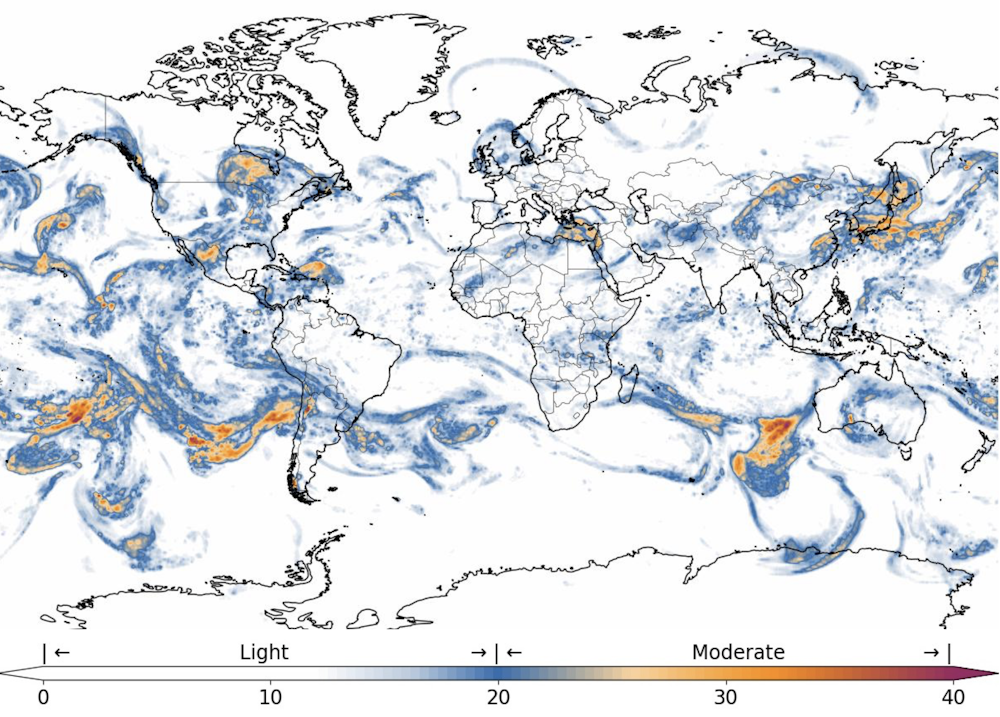
It is possible to map turbulence patterns over the whole world. Airlines use these maps to plan in advance for alternate airports or other essential contingencies.

Map showing air turbulence.
A map of estimated clear-air turbulence around the world, current as of 3:00PM AEST (0500 UTC) on May 22 2024.
Turbli

While turbulence changes with weather conditions, some regions and routes are more prone to it than others. As you can see from the list below, the majority of the most turbulent routes travel close to mountains.

In Australia, the highest average turbulence in 2023 occurred on the Brisbane to Sydney route, followed by Melbourne to Sydney and Brisbane to Melbourne.

Climate change may increase turbulence

How will climate change affect the future of aviation?

A study published last year found evidence of large increases in clear-air turbulence between 1979 and 2020. In some locations severe turbulence increased by as much as 55%.

A map of the world with different areas shaded in red.
A map showing changes in the chance of clear-air turbulence across the globe between 1979 and 2020. Darker red indicates a higher chance of turbulence.
Prosser et al. (2023), Geophysical Research Letters

In 2017, a different study used climate modelling to project that clear-air turbulence may be four times as common as it used to be by 2050, under some climate change scenarios.

What can be done about turbulence?

What can be done to mitigate turbulence? Technology to detect turbulence is still in the research and development phase, so pilots use the knowledge they have from weather radar to determine the best plan to avoid weather patterns with high levels of moisture directly ahead of their flight path.

Weather radar imagery shows the pilots where the most intense turbulence can be expected, and they work with air traffic control to avoid those areas. When turbulence is encountered unexpectedly, the pilots immediately turn on the “fasten seatbelt” sign and reduce engine thrust to slow down the plane. They will also be in touch with air traffic control to find better conditions either by climbing or descending to smoother air.

Ground-based meteorological centres can see weather patterns developing with the assistance of satellites. They provide this information to flight crews in real time, so the crew knows the weather to expect throughout their flight. This can also include areas of expected turbulence if storms develop along the intended flight route.

It seems we are heading into more turbulent times. Airlines will do all they can to reduce the impact on planes and passengers. But for the average traveller, the message is simple: when they tell you to fasten your seatbelt, you should listen.

The Conversation

Doug Drury does not work for, consult, own shares in or receive funding from any company or organisation that would benefit from this article, and has disclosed no relevant affiliations beyond their academic appointment.

ref. Are some routes more prone to air turbulence? Will climate change make it worse? Your questions answered – https://theconversation.com/are-some-routes-more-prone-to-air-turbulence-will-climate-change-make-it-worse-your-questions-answered-230666

How risky is turbulence on a plane? How worried should I be?

Source: The Conversation (Au and NZ) – By Hassan Vally, Associate Professor, Epidemiology, Deakin University

Melnikov Dmitriy/Shutterstock

The Singapore Airlines turbulence incident that has sadly left one person dead and others hospitalised has made many of us think about the risks of air travel.

We’ll hear more in coming days about how the aircraft came to drop so suddenly on its route from London to Singapore earlier this week, injuring passengers and crew, before making an emergency landing in Thailand.

But thankfully, these types of incidents are rare, and much less-common than injuries from other types of transport.

So why do we sometimes think the risk of getting injured while travelling by plane is higher than it really is?

How common are turbulence injuries?

Turbulence is caused by the irregular movement of air, leading to passengers and crew experiencing abrupt sideways and vertical jolts.

In the case of the Singapore Airlines flight, this type of turbulence is thought to be a severe example of “clear-air turbulence”, which can occur without warning. There are several other types.

About 25 in-flight turbulence injuries are reported to the Australian Transport Safety Bureau each year, although it is thought many more are un-reported. Some of these reported injuries are serious, including broken bones and head injuries. Passengers being thrown up and out of their seat during turbulence is one of the most common type of head injury on a plane.

Other injuries from turbulence are caused by contact with flying laptops, or other unsecured items.

In one example of clear-air turbulence that came without warning, cabin crew, passengers and meal trolleys hit the ceiling, and landed heavily back on the floor. Serious injuries included bone fractures, lacerations, neck and back strains, a dislocated shoulder and shattered teeth. Almost all of those seriously injured did not have their seat belts fastened.

But we need to put this into perspective. In the year to January 2024, there were more than 36 million passengers on international flights to Australia. In the year to February 2024, there were more than 58 million passengers on domestic flights.

So while such incidents grab the headlines, they are exceedingly rare.

Why do we think flying is riskier than it is?

When we hear about this recent Singapore Airlines incident, it’s entirely natural to have a strong emotional reaction. We might have imagined the terror we might feel if we were on the aircraft at the time.

But our emotional response alters our perception of the risk and leads us to think these rare incidents are more common than they really are.

Thinking, Fast and Slow

Penguin Press

There is a vast body of literature addressing the numerous factors that influence how individuals perceive risk and the cognitive biases we are all subject to that mislead us.

Nobel Prize-winning economist Daniel Kahneman covers them in his bestselling book Thinking, Fast and Slow.

He describes the way we respond to risks is not rational, but driven by emotion. Kahneman also highlights the fact that our brains are not wired to make sense of extremely small risks. So these types of risks – such as the chance of serious injury or death from in-flight turbulence – are hard for us to make sense of.

The more unusual an event is, and this was a very unusual event, Kahneman says the more impact it makes on our psyche and the more likely we are to overestimate the risk.

Of course, the more unusual the event, the more likely it is for it to be in the media, amplifying this effect.

Similarly, the easier it is to imagine an event, the more it affects our perception and the more likely we are to respond to an event as if it were much more likely to occur.

How can we make sense of the risk?

One way to make sense of activities with small, hard-to-understand risks is by comparing their risks to the risks of more familiar activities.

If we do this, the data shows very clearly that it is much more risky to drive a car or ride a motorbike than to travel by plane.

While events such as the Singapore Airlines incident are devastating and stir up lots of emotions, it’s important to recognise how our emotions can mislead us to over-estimate the risk of this happening again, or to us.

Apart from the stress and anxiety this provokes, overestimating the risks of particular activities may lead us to make bad decisions that actually put us at greater risk of harm.

The Conversation

Hassan Vally does not work for, consult, own shares in or receive funding from any company or organisation that would benefit from this article, and has disclosed no relevant affiliations beyond their academic appointment.

ref. How risky is turbulence on a plane? How worried should I be? – https://theconversation.com/how-risky-is-turbulence-on-a-plane-how-worried-should-i-be-230665

Labor takes a hit in Resolve polls in Queensland and Victoria

Source: The Conversation (Au and NZ) – By Adrian Beaumont, Election Analyst (Psephologist) at The Conversation; and Honorary Associate, School of Mathematics and Statistics, The University of Melbourne

The Queensland state election will be held in October. A Resolve poll for The Brisbane Times, conducted over four months from February to May from a sample of 947, gave the Liberal National Party 43% of the primary vote (up six since September to December), Labor 26% (down seven), the Greens 13% (up one), One Nation 8% (up one), independents 8% (up one) and others 2% (steady).

Resolve doesn’t usually give a two-party figure, but The Poll Bludger estimated the LNP would lead in this poll by 56–44.

A Queensland YouGov poll in April gave the LNP a 56–44 lead and a March Newspoll gave them a 54–46 lead. So this poll is another indicating Labor is headed for a heavy defeat in October.

Labor Premier Steven Miles had a net likeability of -15, compared with former premier Annastacia Palaszczuk’s -17 in December. LNP leader David Crisafulli’s net likeability improved five points to +14. Crisafulli led Miles by 39–28 as preferred premier (39–34 against Palaszczuk in December).

Victorian Labor also slumps

A Victorian state Resolve poll for The Age, conducted with the federal Resolve polls in mid-April and mid-May from a sample of 1,104, gave the Coalition 37% of the primary vote (up two since March), Labor 28% (down five), the Greens 13% (steady), independents 16% (up four) and others 6% (down one).

Analyst Kevin Bonham estimated this poll would be a 50–50 tie after preferences, a three-point gain for the Coalition since March.

The 16% “independent” vote is very likely exaggerated, as a suitable independent won’t stand in all seats at a general election. The surge for independents likely reflects disgruntled former Labor voters who currently say they will vote independent but may change their minds by the next election, which isn’t due until 2026.

Labor Premier Jacinta Allan led the Liberals’ John Pesutto as preferred premier by 31–26 (34–25 in March). Treasurer Tim Pallas had a 38–26 poor over good rating. By 52–32, voters thought taking away funding from major infrastructure projects promised at the last election was a broken promise over a practical change.

Federal Freshwater poll remains tied

A national Freshwater poll, conducted May 17–19 from a sample of 1,000, had a 50–50 tie, unchanged from April. Primary votes were 40% Coalition (steady), 32% Labor (up one), 14% Greens (up one) and 14% for all Others (down two).

These primary votes suggest an increased two party vote for Labor that was presumably lost in rounding. Freshwater has been leaning to the Coalition this term relative to other pollsters.

Albanese’s net approval was down two to -9, with 45% unfavourable and 37% favourable. Dutton’s net approval was steady at -9. Albanese led Dutton as preferred PM by 46–37 (45–39 in April).

The Coalition had a three-point lead over Labor on cost of living and a ten-point lead on economic management, but Labor improved on both since April by three to four points.

On the effect of the May 14 budget on household finances, 24% thought they would be better off, 46% no different and 23% worse off. On the budget’s effect on interest rates, 39% thought they would increase, 28% have no effect and 11% decrease.

Essential poll: Coalition retains narrow lead

A national Essential poll, conducted May 15–19 from a sample of 1,149, gave the Coalition a 47–46 lead including undecided, unchanged from early May. Primary votes were 34% Coalition (steady), 31% Labor (steady), 10% Greens (down three), 8% One Nation (up one), 1% UAP (steady), 8% for all Others (up one) and 6% undecided (down one).

By 64–27, voters did not think the budget would make a meaningful difference on cost of living. On the A$300 electricity bill rebate, 60% thought only those on low and middle incomes should receive it, 35% all households and 5% nobody.

On government intervention in the economy, 48% said the government should intervene more, 16% less and 36% thought the current level of intervention about right.

By 44–17, voters supported the government’s plan for the approval of new gas projects to 2050 and beyond. On renewables vs gas, 74% thought we need a long-term gas supply for times when renewables are unable to meet demand, while 26% thought allowing the gas industry to continue only delays the transition to renewables.

Morgan poll: Labor down but just ahead

A national Morgan poll, conducted May 13–19 from a sample of 1,674, gave Labor a 50.5–49.5 lead, a 1.5-point gain for the Coalition since the May 6–12 Morgan poll. Primary votes were 37% Coalition (steady), 30.5% Labor (down 1.5), 14.5% Greens (up one), 5.5% One Nation (steady), 8.5% independents (up one) and 4% others (down 0.5).

Additional Resolve questions

I previously covered the weak post-budget Resolve poll for Labor, which was conducted for Nine newspapers. On the immigration level of 528,000 people last year, 66% thought it too high, 23% about right and 2% too low.

On the forecast immigration of 260,000 per year, 50% thought it too high, 35% about right and 4% too low. The too high number on the forecast dropped five points since December.

By 41–29, voters rated Treasurer Jim Chalmers’ performance good over poor, down from a 47–20 good rating after the May 2023 budget. Former Liberal Treasurer Josh Frydenberg had a 53–28 good rating after the March 2022 budget, but the Coalition still lost the May 2022 election.

By 57–31, voters agreed that if they had a major expense of a few thousand dollars, they would struggle to afford it (55–34 in April). This is the highest level of agreement in Resolve’s polls on this question. By 52–24, voters thought interest rate rises more about domestic factors in Australia than international factors beyond the government’s control (48–26 in April).

The Conversation

Adrian Beaumont does not work for, consult, own shares in or receive funding from any company or organisation that would benefit from this article, and has disclosed no relevant affiliations beyond their academic appointment.

ref. Labor takes a hit in Resolve polls in Queensland and Victoria – https://theconversation.com/labor-takes-a-hit-in-resolve-polls-in-queensland-and-victoria-230415

Chickens, ducks, seals and cows: a dangerous bird flu strain is knocking on Australia’s door

Source: The Conversation (Au and NZ) – By Michelle Wille, Senior research fellow, The University of Melbourne

A dangerous strain of avian influenza (bird flu) is now wreaking havoc on every continent except Australia and the rest of Oceania. While we remain free from this virus for now, it’s only a matter of time before it arrives.

Penguins in Antarctica, pelicans in Peru, sea lions in South America and dairy cows in the United States have all been hit by fast-spreading and often lethal high pathogenicity avian influenza, known as HPAI H5N1.

Indeed, avian influenza is knocking on our door right now. Just today, a case of avian influenza was reported in a return traveller, and Victorian authorities have confirmed avian influenza on an egg farm. Importantly, authorities have confirmed the virus affecting chickens is not the virus we are most worried about. Authorities are responding and we expect more information to come in the days ahead.

Researchers and biosecurity authorities are on high alert, monitoring poultry farms and testing wildlife. They could do with our help. Anyone who comes across dead or dying birds – or mammals – should report them to the Emergency Animal Disease Watch Hotline.

The rise of an animal pandemic

Avian influenza is a viral disease that infects birds, but can infect other animals.

There isn’t just one strain of avian influenza found in wild birds – there’s a diversity of subtypes and strains. Most cause no disease at all, and are naturally found in wild birds, including in Australia.

But others are deadly. The HPAI H5N1 clade was first detected in a goose in China, back in 1996. HPAI viruses cause high levels of sickness and death in both wild birds and poultry. It spreads rapidly and kills many of the birds – and animals – it infects.

HPAI H5N1 has been endemic in poultry in Asia for decades, driving virus evolution and the emergence of a diversity of different virus clades (a clade is similar to a variant).

In 2005 we saw the first mass mortality event in wild birds. The virus spread to Europe and Africa through both poultry trade and potentially wild birds.

In 2014 the virus again entered Europe with wild birds, with spread to North America the same year, and in 2016, to Africa.

But the real change came in 2020. The number of outbreaks in poultry and wild birds dramatically increased. In 2021, reports streamed in of mass mortality events in Europe and the virus rapidly travelled the world. The world was in the grip of a “panzootic” – a global pandemic in animals.

This particularly lethal clade of the virus jumped the Atlantic and reached North America around October 2021. A few months later, it again jumped to North America, but this time across the Pacific. In around October 2022, the virus entered South America, where it travelled an astonishing 6,000 kilometres to the southern tip of the continent in approximately six months.

The first cases were detected on the sub-Antarctic islands in October 2023 in brown skuas, scavenging birds. It’s since been found in penguins, elephant seals, fur seals and Antarctic terns. By February this year, the virus was detected on the Antarctica Peninsula).

Globally, millions of wild birds are likely to have been affected. In South America alone, about 650,000 wild birds were reported dead. Many more are never reported.

This virus is threatening the survival of entire species. For example, 40% of all Peruvian pelicans in Peru have died. Scientists spent years trying to bring back Californian condors from extinction, only to watch them succumb in 2023.

It will take years to fully comprehend the impact this panzootic has had around the world. Some populations of birds and even entire species may never recover.

Scientists are especially concerned about Antarctic wildlife.

Most Antarctic species are found nowhere else on Earth. Many live in large colonies, which makes it easier for the virus to spread.

Questions remain over whether the virus will persist in Antarctica over winter and how it will spread in spring or summer.

Deadly bird flu is leaving a ‘trail of destruction’ in Antarctica and has scientists on edge | ABC 7.30

From birds to mammals

More than 50 species of predatory and scavenging mammals have now been recorded dying from avian influenza, most likely after eating dead birds.

Particularly concerning are the deaths of 30,000 South American sea lions, 18,000 southern elephant seal pups in Argentina and dairy cows on at least 51 farms across the US.

A recent study from Uruguay shows sea lions were dying before mass bird deaths, suggesting mammal-to-mammal spread may be driving outbreaks in coastal South America.

Since the virus appeared in dairy cows in America, it has spread to herds across ten US states. We are still learning about how the virus affects cows, but infected cows produce less milk because of infection in their udders. A recent study suggests this is because udders have receptors similar to those found in birds.

The US Food and Drug Administration states pasteurisation is effective against this virus.

Globally, only 13 human cases have been confirmed due to this particular variant of HPAI H5N1, but noting that over 800 cases have been recorded since 2005. So far, one dairy worker is known to have caught the virus from cows.

The World Health Organization considers the risk of human infection to be low although the risk is higher (low to medium) for poultry farmers and other animal-exposed workers. There is no sign of human-to-human transmission.

Australia, the lucky country

To date, Australia and New Zealand have avoided HPAI H5N1. Australia has a nationally coordinated surveillance system for wild birds. This includes long-distance migratory birds such as shorebirds and seabirds.

Millions of migratory birds arrive from northern Asia each year in spring. That means August to November will be our highest risk period.

In response, in both 2022 and 2023 we collected almost 1,000 samples from recently arrived migratory birds without detecting the virus. Routine testing of dead birds by others around Australia has also come back negative.

We know migratory birds have arrived carrying other strains of avian influenza into Australia. It is only a matter of time before this HPAI H5N1 arrives.

Ducks have played a crucial role in moving the virus from place to place in the Northern Hemisphere. Studies in Asia and North America have shown some duck species are able to migrate while infected, as not all ducks die from the infection. One reason we think that Australia may have been spared so far because no ducks migrate here from Asia.

When the virus does arrive, it will likely threaten entire species. Black swans are highly susceptible. Overseas, pelicans, cormorants, penguins, gannets, terns, gulls and seals have been amongst the hardest hit.

This spring, please look out for sick or dead wild birds or marine mammals and report it. Surveillance could help us manage the virus.


Read more:
The next pandemic? It’s already here for Earth’s wildlife


The Conversation

Michelle Wille receives project funding from the Victorian Department of Health, and has previously received funding from Wildlife Health Australia, Department of Agriculture Fisheries and Forestry and the Australian Research Council.

ref. Chickens, ducks, seals and cows: a dangerous bird flu strain is knocking on Australia’s door – https://theconversation.com/chickens-ducks-seals-and-cows-a-dangerous-bird-flu-strain-is-knocking-on-australias-door-230013

Chickens, ducks, seals and cows: a dangerous bird flu strain is everywhere but Australia, for now

Source: The Conversation (Au and NZ) – By Michelle Wille, Senior research fellow, The University of Melbourne

A dangerous strain of avian influenza (bird flu) is now wreaking havoc on every continent except Australia and the rest of Oceania. While we remain free from this virus for now, it’s only a matter of time before it arrives.

Penguins in Antarctica, pelicans in Peru, sea lions in South America and dairy cows in the United States have all been hit by fast-spreading and often lethal high pathogenicity avian influenza, known as HPAI H5N1.

Indeed, avian influenza is knocking on our door right now. Just today, a case of avian influenza was reported in a return traveller, and Victorian authorities have confirmed avian influenza on an egg farm. Importantly, authorities have confirmed the virus affecting chickens is not the virus we are most worried about.

Researchers and biosecurity authorities are on high alert, monitoring poultry farms and testing wildlife. They could do with our help. Anyone who comes across dead or dying birds – or mammals – should report them to the Emergency Animal Disease Watch Hotline.

The rise of an animal pandemic

Avian influenza is a viral disease that infects birds, but can infect other animals.

There isn’t just one strain of avian influenza found in wild birds – there’s a diversity of subtypes and strains. Most cause no disease at all, and are naturally found in wild birds, including in Australia.

But others are deadly. The HPAI H5N1 clade was first detected in a goose in China, back in 1996. HPAI viruses cause high levels of sickness and death in both wild birds and poultry. It spreads rapidly and kills many of the birds – and animals – it infects.

HPAI H5N1 has been endemic in poultry in Asia for decades, driving virus evolution and the emergence of a diversity of different virus clades (a clade is similar to a variant).

In 2005 we saw the first mass mortality event in wild birds. The virus spread to Europe and Africa through both poultry trade and potentially wild birds.

In 2014 the virus again entered Europe with wild birds, with spread to North America the same year, and in 2016, to Africa.

But the real change came in 2020. The number of outbreaks in poultry and wild birds dramatically increased. In 2021, reports streamed in of mass mortality events in Europe and the virus rapidly travelled the world. The world was in the grip of a “panzootic” – a global pandemic in animals.

This particularly lethal clade of the virus jumped the Atlantic and reached North America around October 2021. A few months later, it again jumped to North America, but this time across the Pacific. In around October 2022, the virus entered South America, where it travelled an astonishing 6,000 kilometres to the southern tip of the continent in approximately six months.

The first cases were detected on the sub-Antarctic islands in October 2023 in brown skuas, scavenging birds. It’s since been found in penguins, elephant seals, fur seals and Antarctic terns. By February this year, the virus was detected on the Antarctica Peninsula).

Globally, millions of wild birds are likely to have been affected. In South America alone, about 650,000 wild birds were reported dead. Many more are never reported.

This virus is threatening the survival of entire species. For example, 40% of all Peruvian pelicans in Peru have died. Scientists spent years trying to bring back Californian condors from extinction, only to watch them succumb in 2023.

It will take years to fully comprehend the impact this panzootic has had around the world. Some populations of birds and even entire species may never recover.

Scientists are especially concerned about Antarctic wildlife.

Most Antarctic species are found nowhere else on Earth. Many live in large colonies, which makes it easier for the virus to spread.

Questions remain over whether the virus will persist in Antarctica over winter and how it will spread in spring or summer.

Deadly bird flu is leaving a ‘trail of destruction’ in Antarctica and has scientists on edge | ABC 7.30

From birds to mammals

More than 50 species of predatory and scavenging mammals have now been recorded dying from avian influenza, most likely after eating dead birds.

Particularly concerning are the deaths of 30,000 South American sea lions, 18,000 southern elephant seal pups in Argentina and dairy cows on at least 51 farms across the US.

A recent study from Uruguay shows sea lions were dying before mass bird deaths, suggesting mammal-to-mammal spread may be driving outbreaks in coastal South America.

Since the virus appeared in dairy cows in America, it has spread to herds across ten US states. We are still learning about how the virus affects cows, but infected cows produce less milk because of infection in their udders. A recent study suggests this is because udders have receptors similar to those found in birds.

The US Food and Drug Administration states pasteurisation is effective against this virus.

Globally, only 13 human cases have been confirmed due to this particular variant of HPAI H5N1, but noting that over 800 cases have been recorded since 2005. So far, one dairy worker is known to have caught the virus from cows.

The World Health Organization considers the risk of human infection to be low although the risk is higher (low to medium) for poultry farmers and other animal-exposed workers. There is no sign of human-to-human transmission.

Australia, the lucky country

To date, Australia and New Zealand have avoided HPAI H5N1. Australia has a nationally coordinated surveillance system for wild birds. This includes long-distance migratory birds such as shorebirds and seabirds.

Millions of migratory birds arrive from northern Asia each year in spring. That means August to November will be our highest risk period.

In response, in both 2022 and 2023 we collected almost 1,000 samples from recently arrived migratory birds without detecting the virus. Routine testing of dead birds by others around Australia has also come back negative.

We know migratory birds have arrived carrying other strains of avian influenza into Australia. It is only a matter of time before this HPAI H5N1 arrives.

Ducks have played a crucial role in moving the virus from place to place in the Northern Hemisphere. Studies in Asia and North America have shown some duck species are able to migrate while infected, as not all ducks die from the infection. One reason we think that Australia may have been spared so far because no ducks migrate here from Asia.

When the virus does arrive, it will likely threaten entire species. Black swans are highly susceptible. Overseas, pelicans, cormorants, penguins, gannets, terns, gulls and seals have been amongst the hardest hit.

This spring, please look out for sick or dead wild birds or marine mammals and report it. Surveillance could help us manage the virus.


Read more:
The next pandemic? It’s already here for Earth’s wildlife


The Conversation

Michelle Wille receives project funding from the Victorian Department of Health, and has previously received funding from Wildlife Health Australia, Department of Agriculture Fisheries and Forestry and the Australian Research Council.

ref. Chickens, ducks, seals and cows: a dangerous bird flu strain is everywhere but Australia, for now – https://theconversation.com/chickens-ducks-seals-and-cows-a-dangerous-bird-flu-strain-is-everywhere-but-australia-for-now-230013

Age verification for social media would impact all of us. We asked parents and kids if they actually want it

Source: The Conversation (Au and NZ) – By Justine Humphry, Senior Lecturer in Digital Cultures, University of Sydney

Shutterstock

This month the Australian government announced a A$6.5 million commitment to trial an age-verification program that will restrict children’s exposure to inappropriate online content, including pornography and potentially social media. The announcement came out of a National Cabinet meeting geared towards addressing gender-based violence in Australia.

Much has been said about age-checking technologies in the weeks since. Experts point out implementing these tools effectively (so they aren’t easily by-passed) will be complicated – and any such system could come with data security risk. Internet freedom groups have criticised the decision on account of its potential to erode privacy.

There is, however, an important dimension missing from these discussions: the voice of young people and parents. In our research into social media use and online harms affecting Australian teenagers, we asked young people and their parents what they themselves thought about age verification. We found mixed reactions from both groups.

Our findings suggest age verification is generally supported, but participants think it likely would not work. Instead, they said more safety education, face-to-face dialogue, and accountability from social media companies would be better approaches to keeping young people safe online.

Young Australians and social media

Young Australians use social media for a variety of reasons, from keeping in touch with friends and family, to seeking information and entertainment.

Our latest research found almost a quarter of young people 12 to 17 use WhatsApp daily. One in two are daily Snapchat users. Instagram and YouTube are the most frequently used platforms, used daily by 64% and 56% of young people respectively.

These patterns are especially significant for culturally and linguistically diverse Australians, who are more likely to use social media to socialise, maintain familial and cultural ties and learn about the world.

That said, social media and the internet more broadly do present risks to young people. These risks include online bullying, grooming and unsolicited contact, privacy breaches, misinformation and content that is pornographic, racist, sexist, homophobic and/or violent.

Studies have found associations between social media use and poor mental health and self-esteem, although direct causation is difficult to establish. It’s also important to note risk doesn’t equate with harm, and young people themselves commonly demonstrate skills, judgement and agency in negotiating online risks.

In an environment of heightened concern, decisions are now being made that will have significant impacts on both young people and their parents. These decisions are being fuelled by media brands, celebrities and ex-politicians seeking to influence discourse.

Elsewhere in the world, the UK’s Online Safety Bill is attempting to restrict young people’s access to online pornography, through either government-issued documents or biometrics. The UK regulator Ofcom is set to publish guidance on age-assurance compliance in early 2025. France has also been testing a system to verify age based on a user intermediary, after it enacted a law in 2023 to restrict social media use for people under 15.

The details of the trial in Australia haven’t yet been released, but it could use one or a combination of approaches.

The missing perspective

Our research, which focused on Australian teenagers aged 12–17 and their parents, drew from focus groups and a national survey in 2022–23. Overall, the survey showed broad support for age verification. Specifically, 72% of young people and 86% of parents believed more effective age limits would improve online safety for young people.

But we also heard about several drawbacks. For instance, young people saw age verification as something that would benefit adults. One participant said:

I guess it benefits parents who want to be in the right mindset that their kids are safe on social media.

Another young person said:

I feel like in the case of lot of controlling parents it would be bad for the kid because then if the parents are controlling and they don’t have any social media to talk to people, I feel like that could negatively impact the kid. Maybe they’d get lonely, or they wouldn’t be able to use it as an outlet.

Some young people noted they could find ways around age-verification tools:

It would be simple just to get a VPN and change my country if it was going to create this obstacle.

They also pointed out such tools don’t account for evolving maturity levels and differing capabilities among young individuals.

Parents shared concerns about the burden of providing proof of their age and managing consent:

I mean depending on what kind of site it is would you be comfortable providing your passport information or your driver’s licence?

Both groups were worried about the risk of data breaches and leaks of sensitive information. As one parent told us:

Well, it certainly makes you think about it a lot more. What are they using that data for? Is it really just for age verification, or is it for something more nefarious?

Another young person also had privacy concerns:

But if I would say that I was OK with it, I think I’d be lying. Because, I’m a really private person, privacy really matters. And yeah, I do think to be safe, I think we really should be having our own privacy as well.

So what should be done?

Governments, parents, educators and platforms all have an important role to play in ensuring young people’s safety online.

Beyond age verification, there’s a growing consensus social media companies should be doing more to ensure users’ safety. Until that happens, the best approach is for parents and children to talk to each other to determine the appropriate age for a child to be on social media. By working together, families can develop guidelines and expectations for appropriate use.

Schools can also help by developing young people’s digital literacy and online safety skills.

Ultimately, if we want young people to thrive in online environments, we need to involve them in the decisions that will directly affect them.

The Conversation

Justine Humphry has received funding from the Office of the eSafety Commissioner under the Online Safety Grants Program.

Catherine Page Jeffery has received funding from the Office of the eSafety Commissioner under the Online Safety Grants Program. She is affiliated with Children and Media Australia.

Jonathon Hutchinson received funding from the eSafety Commissioner to conduct this research.

Olga Boichak received research funding from the eSafety Commissioner Online Safety Grants Program.

ref. Age verification for social media would impact all of us. We asked parents and kids if they actually want it – https://theconversation.com/age-verification-for-social-media-would-impact-all-of-us-we-asked-parents-and-kids-if-they-actually-want-it-230539

Age verification for porn and social media would impact all of us. We asked parents and kids if they actually want it

Source: The Conversation (Au and NZ) – By Justine Humphry, Senior Lecturer in Digital Cultures, University of Sydney

Shutterstock

This month the Australian government announced a A$6.5 million commitment to trial an age-verification program that will restrict children’s exposure to inappropriate online content, including pornography and potentially social media. The announcement came out of a National Cabinet meeting geared towards addressing gender-based violence in Australia.

Much has been said about age-checking technologies in the weeks since. Experts point out implementing these tools effectively (so they aren’t easily by-passed) will be complicated – and any such system could come with data security risk. Internet freedom groups have criticised the decision on account of its potential to erode privacy.

There is, however, an important dimension missing from these discussions: the voice of young people and parents. In our research into social media use and online harms affecting Australian teenagers, we asked young people and their parents what they themselves thought about age verification. We found mixed reactions from both groups.

Our findings suggest age verification is generally supported, but participants think it likely would not work. Instead, they said more safety education, face-to-face dialogue, and accountability from social media companies would be better approaches to keeping young people safe online.

Young Australians and social media

Young Australians use social media for a variety of reasons, from keeping in touch with friends and family, to seeking information and entertainment.

Our latest research found almost a quarter of young people 12 to 17 use WhatsApp daily. One in two are daily Snapchat users. Instagram and YouTube are the most frequently used platforms, used daily by 64% and 56% of young people respectively.

These patterns are especially significant for culturally and linguistically diverse Australians, who are more likely to use social media to socialise, maintain familial and cultural ties and learn about the world.

That said, social media and the internet more broadly do present risks to young people. These risks include online bullying, grooming and unsolicited contact, privacy breaches, misinformation and content that is pornographic, racist, sexist, homophobic and/or violent.

Studies have found associations between social media use and poor mental health and self-esteem, although direct causation is difficult to establish. It’s also important to note risk doesn’t equate with harm, and young people themselves commonly demonstrate skills, judgement and agency in negotiating online risks.

In an environment of heightened concern, decisions are now being made that will have significant impacts on both young people and their parents. These decisions are being fuelled by media brands, celebrities and ex-politicians seeking to influence discourse.

Elsewhere in the world, the UK’s Online Safety Bill is attempting to restrict young people’s access to online pornography, through either government-issued documents or biometrics. The UK regulator Ofcom is set to publish guidance on age-assurance compliance in early 2025. France has also been testing a system to verify age based on a user intermediary, after it enacted a law in 2023 to restrict social media use for people under 15.

The details of the trial in Australia haven’t yet been released, but it could use one or a combination of approaches.

The missing perspective

Our research, which focused on Australian teenagers aged 12–17 and their parents, drew from focus groups and a national survey in 2022–23. Overall, the survey showed broad support for age verification. Specifically, 72% of young people and 86% of parents believed more effective age limits would improve online safety for young people.

But we also heard about several drawbacks. For instance, young people saw age verification as something that would benefit adults. One participant said:

I guess it benefits parents who want to be in the right mindset that their kids are safe on social media.

Another young person said:

I feel like in the case of lot of controlling parents it would be bad for the kid because then if the parents are controlling and they don’t have any social media to talk to people, I feel like that could negatively impact the kid. Maybe they’d get lonely, or they wouldn’t be able to use it as an outlet.

Some young people noted they could find ways around age-verification tools:

It would be simple just to get a VPN and change my country if it was going to create this obstacle.

They also pointed out such tools don’t account for evolving maturity levels and differing capabilities among young individuals.

Parents shared concerns about the burden of providing proof of their age and managing consent:

I mean depending on what kind of site it is would you be comfortable providing your passport information or your driver’s licence?

Both groups were worried about the risk of data breaches and leaks of sensitive information. As one parent told us:

Well, it certainly makes you think about it a lot more. What are they using that data for? Is it really just for age verification, or is it for something more nefarious?

Another young person also had privacy concerns:

But if I would say that I was OK with it, I think I’d be lying. Because, I’m a really private person, privacy really matters. And yeah, I do think to be safe, I think we really should be having our own privacy as well.

So what should be done?

Governments, parents, educators and platforms all have an important role to play in ensuring young people’s safety online.

Beyond age verification, there’s a growing consensus social media companies should be doing more to ensure users’ safety. Until that happens, the best approach is for parents and children to talk to each other to determine the appropriate age for a child to be on social media. By working together, families can develop guidelines and expectations for appropriate use.

Schools can also help by developing young people’s digital literacy and online safety skills.

Ultimately, if we want young people to thrive in online environments, we need to involve them in the decisions that will directly affect them.

The Conversation

Justine Humphry has received funding from the Office of the eSafety Commissioner under the Online Safety Grants Program.

Catherine Page Jeffery has received funding from the Office of the eSafety Commissioner under the Online Safety Grants Program. She is affiliated with Children and Media Australia.

Jonathon Hutchinson received funding from the eSafety Commissioner to conduct this research.

Olga Boichak received research funding from the eSafety Commissioner Online Safety Grants Program.

ref. Age verification for porn and social media would impact all of us. We asked parents and kids if they actually want it – https://theconversation.com/age-verification-for-porn-and-social-media-would-impact-all-of-us-we-asked-parents-and-kids-if-they-actually-want-it-230539

‘France lost the plot’ – journalist David Robie on Kanaky New Caledonia riots

By Lydia Lewis, RNZ Pacific journalist

Liberation “must come” for Kanaky New Caledonia, says one of the few New Zealand journalists who have worked consistently on stories across the French Pacific territories.

Journalist David Robie was arrested at gunpoint by French police in January 1987, and is no stranger to civil unrest in New Caledonia.

Writing his first articles about the Pacific from Paris in 1974 on French nuclear testing when working for Agence France-Presse, Robie became a freelance journalist in the 1980s, working for Radio Australia, Islands Business, The Australian, Pacific Islands Monthly, Radio New Zealand and other media.

The Asia Pacific Report editor, who has been on the case for 50 years now, arrived at his interview with RNZ Pacific with a bag of books packed with images and stories from his days in the field.

“I did get arrested twice [in Kanaky New Caledonia], in fact, but the first time was actually at gunpoint which was slightly unnerving,” Robie explained.

“They accused me of being a spy.”

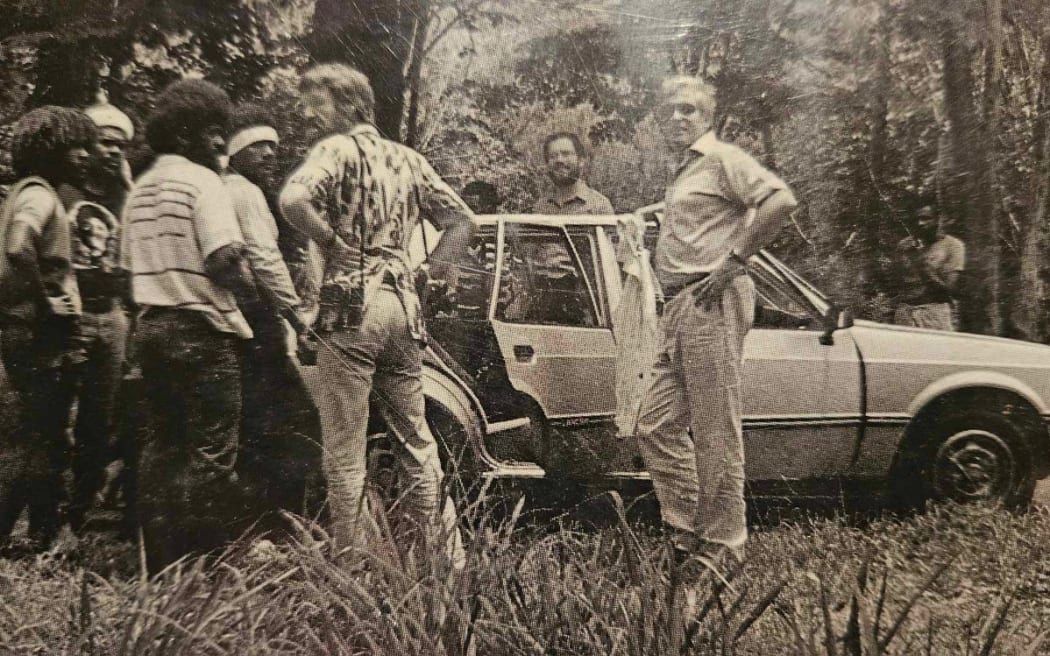
David Robie standing with Kanak pro-independence activists and two Australian journalists at Touho, northern New Caledonia, while on assignment during the FLNKS boycott of the 1984 New Caledonian elections. (David is standing with cameras strung around his back).
Dr David Robie standing with Kanak pro-independence activists and two Australian journalists at Touho, northern New Caledonia, while on assignment during the FLNKS boycott of the 1984 New Caledonian elections. (Robie is standing with cameras strung around his back). Image: Wiken Books/Back Cover

Liberation ‘must come’
Robie said liberation “must come” for Kanaky New Caledonia.

“It’s really three decades of hard work by a lot of people to build, sort of like a future for New Caledonia, which is part of the Pacific rather than part of France,” Robie said.

He said France has had three Prime Ministers since 2020 and none of them seem to have any “real affinity” for indigenous issues, particularly in the South Pacific, in contrast to some previous leaders.

“From 2020 onwards, basically, France lost the plot,” after Édouard Philippe was in office, Robie said.

He called the current situation a “real tragedy” and believed New Caledonia was now more polarised than ever before.

“France has betrayed the aspirations of the indigenous Kanak people.”

Robie said the whole spirit of the Nouméa Accord was to lead Kanaky towards self determination.

New Caledonia on UN decolonisation list
New Caledonia is listed under the United Nations as a territory to be decolonised — reinstated on 2 December 1986.

“Progress had been made quite well with the first two votes on self determination, the two referendums on independence, where there’s a slightly higher and reducing opposition.”

In 2018, 43.6 percent voted in favour of independence with an 81 percent voter turnout. Two years later 46.7 percent were in favour with a voter turnout of 85.7 percent, but 96.5 percent voted against independence in 2021, with a voter turnout of just 43.8 percent.

Robie labelled the third vote a “complete write off”.

Blood on their Banner: Nationalist Struggles in the South Pacific
Dr David Robie’s book Blood on their Banner: Nationalist Struggles in the South Pacific, the Philippines edition. Image: APR

France maintains it was legitimate, despite first insisting on holding the third vote a year earlier than originally scheduled, and in spite of pleas from indigenous Kanak leaders to postpone the vote so they could properly bury and mourn the many members of their communities who died as a result of the covid-19 pandemic.

Robie said France was now taking a deliberate step to “railroad” the indigenous vote in Kanaky New Caledonia.

He said the latest “proposed amendment” to the constitution would give thousands more non-indigenous people voting rights.

“[The new voters would] completely swamp indigenous people,” Robie said.

‘Hope’ and other options
Robie said there “was hope yet”, despite France’s betrayal of the Kanaks over self-determination and independence, especially over the past three years.

French President Emmanuel Macron is under increasing pressure to scrap proposed constitutional reform by Pacific leaders which sparked riots in New Caledonia.

Pacific leaders and civil society groups have affirmed their support for New Caledonia’s path to independence.

Robie backed that call. He said there were options, including an indefinite deferment of the final stage, or Macron could use his presidential veto.

“So [I’m] hopeful that something like that will happen. There certainly has to be some kind of charismatic change to sort out the way things are at the moment.”

“Charismatic change” could be on its way with talk of a dialogue mission.

Having Édouard Philippe — who has always said he had grown a strong bond with New Caledonia when he was in office until 2020 — on the mission would be “a very positive move”, said Robie.

“Because what really is needed now is some kind of consensus,” he said.

‘We don’t want to be like the Māori in NZ’
New Caledonia could still have a constructive “partnership” with France, just like the Cook Islands has with New Zealand, Robie said.

“The only problem is that the French government doesn’t want to listen,” New Caledonia presidential spokesperson Charles Wea said.

“You cannot stop the Kanak people from claiming freedom in their own country.”

Despite the calls, Wea said concerns were setting in that Kanak people would “become a minority in their own country”.

“We [Kanak people] are afraid to be like Māori in New Zealand. We are afraid to be like Aboriginal people in Australia.”

He said those fears were why it was so important the controversial constitutional amendments did not go any further.

Robie said while Kanaks were already a minority in their own country, there had been a pretty close parity under the Nouméa Accord.

Vote a ‘retrograde step’
“Bear in mind, a lot of French people who’ve lived in New Caledonia for a long time, believe in independence as well,” he said.

But it was the “constitutional reform” that was the sticking point, something Robie refused to call a “reform”, describing as “a very retrograde step”.

In 1998, there was “goodwill” though the Nouméa accord.

“The only people who could participate in New Caledonian elections, as opposed to the French state as a whole, were indigenous Kanaks and those who had been living in New Caledonia prior to 1998,” something France brought in at the time.

Robie said a comparison can be drawn “much more with Australia”, rather than Aotearoa New Zealand.

“Kanak people resisting French control a century and a half ago were executed by the guillotine,” he said.

To Robie, Aotearoa was probably the better example of what New Caledonia could be.

“But you have to recall that New Caledonia began colonial life just like Australia, a penal colony,” he said.

Robie explained how Algerian fighters were shipped off to New Caledonia, Vietnamese fighters were also sent during the Vietnam War, among other people from other minority groups.

“A lot of people think it’s French and Kanak. It’s not. It’s a lot more mixed than that and a lot more complicated.”

The media and the blame game
As Robie explained the history, another issue became apparent: the lack of media interest and know-how to cover such events from Aotearoa New Zealand.

He said he had been disappointed to see many mainstream outlets glossing over history and focusing on the stranded Kiwis and fighting, which he said was significant, but needed context.

He said this lack of built-up knowledge within newsrooms and an apparent issue of “can’t be bothered, or it’s too problematic,” was projecting the indigenous population as the bad guys.

“There’s a projection that basically ‘Oh, well, they’re young people… looting and causing fires and that sort of thing’, they don’t get an appreciation of just how absolutely frustrated young people feel. It’s 50 percent of unemployment as a result of the nickel industry collapse, you know,” Robie explained.

When it came to finger pointing, he believed the field activist movement CCAT did not intend for all of this to happen.

“Once the protests reached a level of anger and frustration, all hell broke loose,” said Robie.

“But they [CCAT] have been made the scapegoats.

“Whereas the real culprits are the French government, and particularly the last three prime ministers in my view.”

Dr David Robie’s updated book on the New Caledonia troubles, news media and Pacific decolonisation issues was published in 2014, Don’t Spoil My Beautiful Face: Media, Mayhem and Human Rights in the Pacific (Little Island Press).

Print Friendly, PDF & Email

Article by AsiaPacificReport.nz

Worried your address, birth date or health data is being sold? You should be – and the law isn’t protecting you

Source: The Conversation (Au and NZ) – By Katharine Kemp, Associate Professor, Faculty of Law & Justice, UNSW Sydney

Jevanto Productions/Shutterstock

Australians don’t know and can’t control how data brokers are spreading their personal information. This is the core finding of a newly released report from the Australian Competition and Consumer Commission (ACCC).

Consumers wanting to rent a property, get an insurance quote or shop online are not given real choices about whether their personal data is shared for other purposes. This exposes Australians to scams, fraud, manipulation and discrimination.

In fact, many don’t even know what kind of data has been collected about them and shared or sold by data firms and other third parties.

Our privacy laws are due for reform. But Australia’s privacy commissioner should also enforce an existing rule: with very limited exceptions, businesses must not collect information about you from third parties.

What are data brokers?

Data brokers generally make their profits by collecting information about individuals from various sources and sharing this personal data with their many business clients. This can include detailed profiles of a person’s family, health, finances and movements.

Data brokers often have no connection with the individual – you may not even recognise the name of a firm that holds vast amounts of information on you. Some of these data brokers are large multinational companies with billions of dollars in revenue.

Consumer and privacy advocates provided the ACCC with evidence of highly concerning data broker practices. One woman tried to find out how data brokers had got hold of her information after receiving targeted medical advertising.

Although she never discovered how they obtained her data, she found out it included her name, date of birth and contact details. It also included inferences about her, such as her retiree status, having no children, not having “high affluence” and being likely to donate to a charity.

ACCC found another data broker was reportedly creating lists of individuals who may be experiencing vulnerability. The categories included:

  • children, teenage girls and teenage boys
  • “financially unsavvy” people
  • elderly people living alone
  • new migrants
  • religious minorities
  • unemployed people
  • people in financial distress
  • new migrants
  • people experiencing pain or who have visited certain medical facilities.

These are all potential vulnerabilities that could be exploited, for example, by scammers or unscrupulous advertisers.

How do they get this information?

The ACCC notes 74% of Australians are uncomfortable with their personal information being shared or sold.

Nonetheless, data brokers sell and share Australian consumers’ personal information every day. Businesses we deal with – for example, when we buy a car or search for natural remedies on an online marketplace – both buy data about us from data brokers and provide them with more.

The ACCC acknowledges consumers haven’t been given a choice about this.

Attempting to read every privacy term is near impossible. The ACCC referred to a recent study which found it would take consumers over 46 hours a month to read every privacy policy they encounter.

The approximate length and time it would take to read an average privacy policy in Australia per month.
ACCC Digital Platform Services Inquiry interim report

Even if you could read every term, you still wouldn’t get a clear picture. Businesses use vague wording and data descriptions which confuse consumers and have no fixed meaning. These include “pseudonymised information”, “hashed email addresses”, “aggregated information” and “advertising ID”.

Privacy terms are also presented on a “take it or leave it” basis, even for transactions like applying for a rental property or buying insurance.

The ACCC pointed out 41% of Australians feel they have been pressured to use “rent tech” platforms. These platforms collect an increasing range of information with questionable connection to renting.

A first for Australian consumers

This is the first time an Australian regulator has made an in-depth report on the consumer data practices of data brokers, which are generally hidden from consumers. It comes ten years after the United States Federal Trade Commission (FTC) conducted a similar inquiry into data brokers in the US.

The ACCC report examined the data practices of nine data brokers and other “data firms” operating in Australia. (It added the term “data firms” because some companies sharing data about people argue that they are not data brokers.)

A big difference between the Australian and the US reports is that the FTC is both the consumer watchdog and the privacy regulator. As our competition and consumer watchdog, the ACCC is meant to focus on competition and consumer issues.

We also need our privacy regulator, the Office of the Australian Information Commissioner (OAIC), to pay attention to these findings.

There’s a law against that

The ACCC report shows many examples of businesses collecting personal information about us from third parties. For example, you may be a customer of a business that only has your name and email address. But that business can purchase “data enrichment” services from a data broker to find out your age range, income range and family situation.

The current Privacy Act includes a principle that organisations must collect personal information only from the individual (you) unless it is unreasonable or impracticable to do so. “Impracticable” means practically impossible. This is the direct collection rule.

Yet there is no reported case of the privacy commissioner enforcing the direct collection rule against a data broker or its business customers. Nor has the OAIC issued any specific guidance in this respect. It should do both.

Time to update our privacy laws

Our privacy law was drafted in 1988, long before this complex web of digital data practices emerged. Privacy laws in places such as California and the European Union provide much stronger protections.

The government has announced it plans to introduce a privacy law reform bill this August.

The ACCC report reinforces the need for vital amendments, including a direct right of action for individuals and a rule requiring dealings in personal information to be “fair and reasonable”.

The Conversation

Katharine Kemp has received funding from the UNSW Allens Hub for Technology, Law and Innovation. She is a Member of the Expert Panel of the Consumer Policy Research Centre, and the Australian Privacy Foundation.

The ACCC referred to the joint research of Katharine Kemp and the Consumer Policy Research Centre in this report.

ref. Worried your address, birth date or health data is being sold? You should be – and the law isn’t protecting you – https://theconversation.com/worried-your-address-birth-date-or-health-data-is-being-sold-you-should-be-and-the-law-isnt-protecting-you-230540

Telstra says slashing almost a tenth of its workforce will help save $350 million. Why is the business under pressure?

Source: The Conversation (Au and NZ) – By Mark A Gregory, Associate Professor, School of Engineering, RMIT University

On Tuesday, Telstra announced it will be cutting up to 2,800 jobs as part of a major restructure.

Of these layoffs, 377 will take effect immediately from within the Telstra Enterprise business unit. Most of the remaining cuts will be announced in detail soon and finalised by the end of the year.

The announcement followed a review of the company’s enterprise division, which services large business and government clients.

Providing voice calls and other network services to these clients has historically been an important part of Telstra’s business. But recently, low-cost internet-based competitors have been whittling away at this revenue.

Speaking at a press conference, Telstra CEO Vicki Brady said while the company continues to see solid growth across its mobile network, it now faces a changing business landscape:

Our industry and the world we are operating in are changing. We have new and different competitors. We have rapid advances in technologies happening. Our customer needs continue to evolve and we have ongoing inflationary and cost pressures.

But it’s possible these job cuts are also part of a strategy to boost Telstra’s flagging share price, which fell to a low of A$3.57 the day of the announcement.

This was down from its 52-week high of $4.46 and well below its ten-year high of $6.61 in February 2015.

How did we get here?

In February, Telstra reported a 66.7% drop in EBITDA – an important measure of earnings – for its fixed-enterprise business unit.

Telstra said this fall-off was the result of a continued decline in income from call charges, business connectivity, network applications and services.

It’s possible the slowing Australian economy may have exacerbated the decline, impacting businesses’ spending on telecommunications products and services.

landline phone on table
Business demand for Telstra’s call services has dropped off significantly in recent years.
chainarong06/Shutterstock

Telstra has been under pressure to find savings under its ambitious “T25” target to achieve a $500 million reduction in net costs by the end of financial year 2024–25.

Telstra expects this major restructure to incur a one-off cost of between $200 million to $250 million over this period.

The company also said it would focus on reducing other cost categories, including non-labour-related costs. One such cost is energy usage, a major expense for telcos.

Now, the company expects to achieve $350 million of its cost reduction target by the 2025 deadline.

Telstra hasn’t directly tied this latest round of cuts to the broader adoption of artificial intelligence (AI). But the company has been exploring ways of using the technology.

Telstra announced in February it was moving forward with AI technologies it had developed in-house, following pilot trials with frontline team members.

The company was at pains to point out that these particular technologies aim to assist existing human staff, for example, by summarising interactions with customers or better searching for information from internal databases.

Down the line, however, further adoption of AI could eventually impact employee numbers as Telstra and other telecommunications companies aim to ramp up and exploit cost-cutting uses of the technology.

Mobile tells a stronger story

Telstra’s core mobile business has meanwhile performed strongly, with subscriber numbers growing steadily over the last year.

The company’s latest announcement included a significant change to the terms of its postpaid mobile plans.

Prices of these plans have historically been automatically indexed to the consumer price index each financial year. That will no longer happen, bringing postpaid mobile plans into line with most of Telstra’s other products. There will be no increase this July.

Brady said the move would give the company greater flexibility:

This approach reflects there are a range of factors that go into any pricing decision, and will provide greater flexibility to adjust prices at different times and across different plans based on their value propositions and customer needs.

The change does mean consumers might see relief from large automatic price increases when the consumer price index is high.

But it will likely cause concern among consumer groups. There will now be uncertainty on the exact timing of price changes for postpaid mobile plans, and their size and direction will be largely up to Telstra.

Telstra’s future direction remains unclear

payphone in rural Australia
Telstra has a strong market foothold in rural and regional Australia.
Sam Bianchini/Shutterstock

There are other pressures looming for Telstra.

Before the next election, the government is expected to announce the outcome of a review into the universal service obligation (USO), a consumer protection that guarantees Australians “reasonable access to fixed telephone and payphone services”.

Telstra is Australia’s nominated USO provider, and this delivery contract has been a key driver of its dominant position in regional and remote areas. But there’s no guarantee it will be renewed with Telstra in 2032.

Telstra says its restructuring aims to put the company in better financial shape. But the announcement does not offer strong guidance on how Telstra plans to grow its business in coming years.

Telstra is facing increasing competition in a maturing market and its growth appears to be based primarily on expanding its customer base rather than introducing new products and services.

In the short term, Telstra continues to struggle to reduce costs at a time of what it calls “higher-than-expected inflation” and high energy costs.

The Conversation

Mark A Gregory received funding from the Australian Research Council, the Australian Communications Consumer Action Network and the AuDA Foundation.

ref. Telstra says slashing almost a tenth of its workforce will help save $350 million. Why is the business under pressure? – https://theconversation.com/telstra-says-slashing-almost-a-tenth-of-its-workforce-will-help-save-350-million-why-is-the-business-under-pressure-230533

He won Indonesia’s election in a landslide. Now, backroom meetings and horse-trading will determine whether Prabowo can govern

Source: The Conversation (Au and NZ) – By Stephen Sherlock, Visiting Fellow, Department of Political and Social Change, Coral Bell School of Asia Pacific Affairs, Australian National University

Indonesia’s president-elect, Prabowo Subianto, won February’s presidential election in a landslide victory of nearly 59% of the nationwide vote, more than double his nearest challenger.

But his party, Gerindra, fell far short of a majority in the parliamentary elections that took place at the same time. Gerindra was founded by Prabowo and its political fortunes are inseparable from his personal popularity. Yet, the party won just 14.8% of the seats in Indonesia’s House of Representatives (DPR).

And even the addition of all the parties that supported Probowo’s presidential candidacy only brings his numbers up to 48% of the seats in the assembly. This support is also not a given when it comes to legislation or approval of budgetary allocations.

So, is this a recipe for confrontation and deadlock after the new president and parliament are sworn into office in October?

What’s on Prabowo’s agenda?

Under Indonesia’s presidential system, Prabowo does not need a parliamentary majority to stay in office, but a troublesome parliament would be a major impediment for his government.

The parliament can be a check on executive power and the president’s fiscal initiatives, as well as a tool for contesting his legislative program. Prabowo will therefore need to build a coalition of parties to back him.

In the previous two elections he lost to Joko “Jokowi” Widodo in 2014 and 2019, he waged divisive campaigns. He presented himself as an ultra-nationalist strongman figure and mobilised extreme elements of Indonesia’s majority Islamic community. This was approach was seen by many analysts as threatening the traditionally inclusive nature of Indonesian politics and society.

In this year’s election, however, Prabowo projected a more moderate image and largely committed himself to a continuation of Jokowi’s programs. He did not campaign on major new policy initiatives or structural reforms.

Jokowi’s programs have largely emphasised economic development, especially infrastructure, such as the construction of a new capital city, Nusantara, on Borneo.

Prabowo has also been a vocal advocate for the economic nationalist policies embraced by Jokowi. These include restrictions on the import of rice and other agricultural commodities to support local production and restrictions on the export of minerals to encourage domestic downstream processing.

Also in Prabowo’s favour: the composition of the new parliament is remarkably similarly to the one elected in 2019.

Former President Megawati Sukarnoputri’s party, Indonesian Democratic Party of Struggle (or PDI-P), will be the largest in the parliament to be inaugurated in October, with 110 seats. Next is the Golkar Party with 102 seats and then Prabowo’s Gerindra with 86.

None of the parties are opposed to the economic nationalist consensus that has long dominated Indonesian policy, including under Jokowi.

The only issues that generate real policy debate among the parties relate to sensitive questions over the state’s involvement in religious affairs, especially regarding the status of women in public and private life.

Defence could be contentious

Given these factors, is Prabowo’s lack of a parliamentary majority really a problem?

It can be. If Prabowo and his ministries do not manage their relationships with lawmakers the right way, it can be a source of irritation and even obstruction.

Party loyalties can be tenuous and legislators are notorious for being mostly concerned with pork-barrelling and patronage in their own constituencies. They often use their seats to advance their own personal business interests.

For example, Prabowo could encounter problems in one of the few areas where his administration may try to make a mark: defence policy and procurement. As a former military officer and defence minister, he appears committed to building up Indonesia’s military capability and asserting a leading role in regional security and the ASEAN bloc.

But when it comes to major defence budget allocations, his administration will need to satisfy powerful lawmakers who are linked to domestic contractors and others who benefit from military spending.

His controversial decision as defence minister to purchase outdated fighter jets from Qatar in 2023 was shelved after being criticised in parliament. His apparently off-the-cuff proposal for a Russia-Ukraine peace plan at a conference in June 2023 was criticised, as well.

Let the politicking begin

So, how will Prabowo manage the problem of the parliament?

He will almost certainly follow the same approach of his predecessors – tempt as many parties as possible into his tent by giving out attractive ministerial positions.

This is where the politicking for parliamentary positions and jockeying for cabinet posts are directly related. A party’s numbers in the parliament are its main bargaining chip for a place in cabinet. And the gifting of a ministerial post is the key to the president gaining support from rivals.

If experience is any guide, most parties will join his alliance if a ministry is on offer. The majority of parties did this under Susilo Bambang Yudhyono’s administration from 2004–14, as well as during Jokowi’s time in office. Prabowo benefited himself when Jokowi gave him the defence portfolio in 2019.

So far, no parties have come forward to publicly lobby for a post in Prabowo’s government, but this is undoubtedly part of the game of playing hard-to-get.

It is possible that Megawati’s party, PDI-P, may stay out of the cabinet and attempt to lead a parliamentary opposition. She likely still feels jilted by Jokowi, a former member of PDI-P, after he decided to support Prabowo instead of his own party’s presidential candidate during the campaign.

But other parties are likely to be receptive to cabinet posts. While it is true that a healthy legislature requires a healthy opposition, most Indonesian parties are more attracted by a share of the spoils of government than they are by the notion of keeping government accountable in opposition.

So, from now until the October inauguration, we will see a flurry of backroom meetings, flirtations and negotiations between Prabowo and the leaders of the parties to patch together a cabinet. Then, for Prabowo, comes the even harder task of trying to govern with such an unwieldy coalition, while maintaining some semblance of policy coherence and coordination.

The Conversation

Stephen Sherlock does not work for, consult, own shares in or receive funding from any company or organisation that would benefit from this article, and has disclosed no relevant affiliations beyond their academic appointment.

ref. He won Indonesia’s election in a landslide. Now, backroom meetings and horse-trading will determine whether Prabowo can govern – https://theconversation.com/he-won-indonesias-election-in-a-landslide-now-backroom-meetings-and-horse-trading-will-determine-whether-prabowo-can-govern-228405

‘I’m looking for a man in finance’: how a sampled sound bite can turn a dance track into an earworm

Source: The Conversation (Au and NZ) – By Timothy Byron, Lecturer in Psychology, University of Wollongong

“I’m looking for a man in finance,” the TikTok user, @girl_on_couch, says blandly, looking around the room and then into the camera. “Trust fund. 6’5. Blue eyes. Finance.” In the caption, she urges someone to turn her sound bite into “an actual song plz”.

From this little bit of spoken audio sprang the song that’s suddenly everywhere on social media: I’m looking for a man in finance.

A quick browse on Spotify reveals several music producers, such as Billen Ted, Hiko and Ketno, have since featured this spoken phrase on various dance tracks. Billen Ted even show how they did it.

The result is undeniably an earworm – a song that all-too-easily gets stuck in your head. On TikTok and Instagram, users are making their versions of the song, dancing to it around lounge rooms or dance festivals, or muttering adaptations of it as they work or multitask.

Sampled speech in song

It is, of course, not the first time a little bit of spoken audio has formed the central pillar of a wildly popular dance track.

Remember Get on the Beers? This viral track sampled a then-Victorian Premier Dan Andrews speech imploring people to stay home during the early days of the COVID pandemic. The song, by Mashd N Kutcher, was later described as “an unofficial anthem for Melbournians coming out of lockdown”.

Older readers will remember Pauline Pantsdown’s I don’t like it, which cheekily included unauthorised vocal samples from conservative politician Pauline Hanson.

Another memorable example is The Avalanches’ hugely acclaimed song Frontier Psychiatrist, with its surreal mix of samples and repeated spoken refrain: “that boy needs therapy”.

So what makes a great speech sample in a song, and why are they often so memorable?

Recogniseable but recontextualised

I’m a music researcher with a special interest in earworms, and wrote about memorable audio samples in my book with Jadey O’Regan, Hooks in Popular Music.

As we argue in our book, an audio sample such as “I’m looking for a man in finance” has to capture our attention and be memorable to be a hook. There is a barrage of noise on the internet and in our phones. For a sample to rise above that barrage, it has to have attention-grabbing audio properties, but also fit with our expectations and desires.

One way to become salient and memorable in this way is by being recognisable but recontextualised. If we already have some memory of a particular bit of spoken word, then hearing it in a new context such as a dance song will more easily capture our attention. We respond to what we recognise. Many people had seen and heard the original @girl_on_couch TikTok, so recognised it readily in the dance tracks that sampled it.

Another way to become salient and memorable is to reflect the way we feel, or the way we want to feel. Get on the Beers is another great example.

Australians were glued to their TVs to hear the daily speeches of state premiers during COVID lockdowns. It was a tense time. A lot of the big hits in that lockdown era were quite sad songs about being lonely, such as The Weeknd’s Blinding Lights and Heatwaves by Glass Animals.

Then Get on the Beers, which originally came out in 2020, experienced a surge of popularity as lockdowns ended. Thanks to some creative remixing, Dan Andrews seemed now to urge us to get to the pub asap. His soundbite was recognisable but recontextualised, in a track that felt cathartic for a populace very sick of lockdowns.

Accent, cadence and rhythm

The other thing that can make a speech sound bite memorable and ripe for remix in a song has to do with patterns of speech. That includes tone of voice and accent (there’s something catchy about @girl_on_couch’s deliberately hammed-up valley girl Californian accent, with all its vocal fry).

A staccato rhythm, an accidental rhyme, the cadence of a sentence – factors like these can conspire to create a line that is unusual, memorable and endlessly repeatable.

Southend’s song The Winner Is…, which focuses on the moment it was announced Sydney would host the 2000 Olympics, is another example. It captures a moment of celebration and release.

It’s hard to know whether this song would have been as popular if it wasn’t for the brilliantly memorable way former Olympics chief Juan Antonio Samaranch, originally from Spain, pronounced the word “Sydney”.

Speech as music

When you sample some speech and put it on a loop, people stop paying attention to the meaning of the words. They start paying attention to the sound, rhythm and melody of the voice. People hear speech as music.

This is what Diana Deutsch, a professor of psychology at the University of California, called the “speech-to-song illusion”. Her research looked at how the phrase “sometimes behave so strangely” suddenly
appears “to burst into song”, even if no other musical elements are added.

That is playing a role in all successful spoken samples. The effect is even stronger once you emphasise the rhythm of speech by putting it to a dance beat.

Add in the viral power of TikTok, which makes it easier than ever for users to rework and recontextualise video and audio, and it’s no great surprise I’m looking for a man in finance has become such an earworm.

The Conversation

Timothy Byron does not work for, consult, own shares in or receive funding from any company or organisation that would benefit from this article, and has disclosed no relevant affiliations beyond their academic appointment.

ref. ‘I’m looking for a man in finance’: how a sampled sound bite can turn a dance track into an earworm – https://theconversation.com/im-looking-for-a-man-in-finance-how-a-sampled-sound-bite-can-turn-a-dance-track-into-an-earworm-230542

RSF calls on French authorities to guarantee journalist safety in Kanaky New Caledonia

Pacific Media Watch

The Paris-based global media freedom watchdog Reporters Without Borders (RSF) has called for guaranteed safety for journalists in the French Pacific territory of Kanaky New Capedonia after an increase in intimidation, threats, obstruction and attacks against them.

After a week of violence that broke out in the capital of Nouméa following a controversial parliamentary vote for a bill expanding the settler electorate in New Caledonia, RSF said in a statement that the crisis was worrying for journalists working there.

RSF called on the authorities and “all the forces involved” to ensure their safety and guarantee the right to information.

While covering the clashes in Nouméa on Friday, May 17, a crew from the public television channel Nouvelle-Calédonie La 1ère, consisting of a journalist and a cameraman, were intimidated by about 20 unidentified hooded men.

They snatched the camera from the cameraman’s hands and threatened him with a stone, before smashing the windows of the journalists’ car and trying to seize it.

“The public broadcaster’s crew managed to escape thanks to the support of a motorist. France Télévisions management said it had filed a complaint the same day,” RSF reported.

According to a dozen accounts gathered by RSF, working conditions for journalists deteriorated rapidly from Wednesday, May 15, onwards.

Acts of violence
As the constitutional bill amending New Caledonia’s electoral body was adopted by the National Assembly on the night of May 14/15, a series of acts of violence broke out in the Greater Nouméa area, either by groups protesting against the electoral change or by militia groups formed to confront them.

The territory has been placed under a state of emergency and is subject to a curfew from which journalists are exempt.

RSF is alerting the authorities in particular to the situation facing freelance journalists: while some newsrooms are organising to send support to their teams in New Caledonia, freelance reporters find themselves isolated, without any instructions or protective equipment.

“The attacks on journalists covering the situation in New Caledonia are unacceptable. Everything must be done so that they can continue to work and thus ensure the right to information for all in conditions of maximum safety, said Anne Bocandé,
editorial director of RSF.

“RSF calls on the authorities to guarantee the safety and free movement of journalists throughout the territory.

“We also call on all New Caledonian civil society and political leaders to respect the integrity and the work of those who inform us on a daily basis and enable us to grasp the reality on the ground.”

While on the first day of the clashes on Monday, May 13, according to the information gathered by RSF, reporters managed to get through the roadblocks and talk to all the forces involved — especially those who are well known locally — many of them are still often greeted with hostility, if not regarded as persona non grata, and are the victims of intimidation, threats or violence.

“At the roadblocks, when we are identified as journalists, we receive death threats,” a freelance journalist told RSF.

“We are pelted with stones and violently removed from the roadblocks. The situation is likely to get worse”, a journalist from a local media outlet warned RSF.

As a result, most of the journalists contacted by RSF are forced to work only in the area around their homes.

“In any case, we’re running out of petrol. In the next few days, we’re going to find it hard to work because of the logistics,” said a freelance journalist contacted by RSF.

Distrust of journalists
The 10 or so journalists contacted by RSF — who requested anonymity against a backdrop of mistrust — have at the very least been the target of repeated insults since the start of the fighting.

According to information gathered by RSF, these insults continue outside the roadblocks, on social networks.

The majority of the forces involved, who are difficult for journalists to identify, share a mistrust of the media coupled with a categorical refusal to be recognisable in the images of reporters, photographers and videographers.

On May 15, President Emmanuel Macron declared an immediate state of emergency throughout New Caledonia. On the same day, the government announced a ban on the social network TikTok.

President Macron is due in New Caledonia today to introduce a “dialogue mission” in an attempt to seek solutions.

To date, six people have been killed and several injured in the clashes.

Pacific Media Watch collaborates with Reporters Without Borders.

Print Friendly, PDF & Email

Article by AsiaPacificReport.nz

Diddy is just the latest in a long line of musical abusers. How should fans respond?

Source: The Conversation (Au and NZ) – By Catherine Strong, Associate Professor, Music Industry, RMIT University

The perennial question of what to do with musicians and their work when they are found to have been abusive has arisen again this week, as distressing video footage of rapper Sean “Diddy” Combs assaulting his then girlfriend Cassandra Ventura in a hotel in 2016 was released by CNN.

Last year, Combs settled a lawsuit brought against him by Ventura, which accused him of sexual and physical violence over the course of more than a decade.

Following the video’s release, Combs posted an apology video in which he states “My behaviour […] is inexcusable. I take full responsibility for my actions in that video”. This is at odds with a 2023 post in which he wrote “I did not do any of the awful things being alleged. I will fight for my name, my family and for the truth”.

But why does it matter if artists are abusers? And what impact does it have on fans when these cases emerge?

A crisis of men’s violence

High-profile cases can play an important role in shaping community understandings of gender-based violence, although unfortunately commentary often reproduces problematic understandings about men’s violence, such as calling sexual violence “sex”, or by blaming the victim for the violence they experienced.

At a time when gender-based violence is at crisis levels in many places, how Combs’ actions are framed, and society’s subsequent response, can send a powerful message about our tolerance of men’s violence, and whether men who use violence will be held to account for their actions.

A long history

There is a long history of musicians being implicated in gender-based violence and domestic abuse, but nevertheless being protected by the industry.

Decades ago, abusive behaviour towards women was often hidden behind “sex, drugs and rock’n’roll” mythologies or excused as part of their artistic “genius”.

In the #MeToo era, we have seen many women come forward with experiences of abuse, assault and sexual harassment, often committed by our favourite artists, directors or actors.

This has not stopped abuse from happening. Artists and record labels have various legal tactics they can deploy to prevent information about abuse being circulated and keep survivors silent, including quick payouts with non-disclosure clauses attached to defamation lawsuits.

Protecting the reputation – and commercial value – of artists has been central to such tactics. Their success can be seen in the number of artists whose abuse has been described as an “open secret” continuing until the weight of evidence becomes overwhelming.

How do fans respond?

Some fans argue they can separate art from an artist’s alleged misconduct, whereby an artist’s actions will have little to no bearing on how the music is consumed. Allegations, no matter how well supported by evidence, will not affect their fandom or relationship to the music.

Other fans see the artist and the art they create as inseparable. They will no longer listen to their music, and will get rid of any merchandise and memorabilia.

For these fans, learning of allegations about an artist might lead to extreme measures, such as removing or covering up any tattoos they have dedicated to the artist. In this way, depending on the strength of their fandom, disconnecting from an artist can have implications for fans’ self-identity.

A fan’s response may also depend on how important it is for them to be seen as an ally for victims, as well as their own social position in relation to both the victim and perpetrator.

Research on fans has found that race and musical genre play a role in how perpetrators are framed and what the fans’ reactions to their misdeeds are. Hip hop fans’ understanding of the struggles of black artists and the ways the media frames black men as more violent than white men can lead to a sympathetic, if not entirely forgiving, approach to their actions.

These perspectives suggest holding an artist to account does not necessarily entail a punitive response.

A long way to go

As fans, we have power to shape the narrative. Do we respond in a way that minimises and excuses the actions of men who use violence and the industry that enables them, or act in solidarity with survivors?

A refusal to listen to the music of abusive artists can be a powerful political response. However, it’s clear many fans do continue to listen. Given this, two of us have argued elsewhere that, if we do continue to listen, we have an ethical obligation to listen with an awareness of the broader social and political context in which violence is perpetrated.

We must listen with an obligation: not to excuse or ignore the violence of these artists; to meaningfully listen and engage with the experiences of survivors; and to challenge and disrupt the complicity of the music industry.

This can be done by incorporating the stories of survivors into the histories of these artists, an important first step in ensuring these misdeeds are not so easily forgotten.

We can still recognise an artist’s work or achievements, but at the same time ensure they remain accountable for their actions. And we must not forget the survivors and their stories, which might also fall out of focus if an abuser is shunned and forgotten.

It is not the sole responsibility of individual fans to hold artists to account. There is an urgent need for structural change within the music industry to ensure perpetrators of gender based violence are no longer given a “free pass”, and to ensure violence is not normalised within the industry.

As in wider society, we still have a long way to go on these issues.

The Conversation

Catherine Strong receives funding from the Australian Research Council and the Victorian Music Development Office.

Bianca Fileborn receives funding from the Australian Research Council and the City of Sydney.

Paige Klimentou does not work for, consult, own shares in or receive funding from any company or organisation that would benefit from this article, and has disclosed no relevant affiliations beyond their academic appointment.

ref. Diddy is just the latest in a long line of musical abusers. How should fans respond? – https://theconversation.com/diddy-is-just-the-latest-in-a-long-line-of-musical-abusers-how-should-fans-respond-230426

Turning the outback into post-apocalyptic wasteland: what Mad Max films tell us about filming in the Australian desert

Source: The Conversation (Au and NZ) – By Melanie Ashe, PhD Candidate, School of Media, Film & Journalism, Monash University

Courtesy of Warner Bros. Pictures

The Mad Max films are set in an arid, barren, post-apocalyptic world known in the movies as “the wasteland”. This is a world of environmental and civil collapse caused by humans. Resources like water are scarce. Clothes, food and transport – such as the film’s famous customised cars – are cobbled together from found and scavenged objects.

The films present a future of mega drought: a possible future scenario for climate change.

The latest film in the franchise, Furiosa, hits cinemas this week. What does the wasteland have to tell us about the role the Australian environment has played in shaping the Mad Max films?

A colonised wasteland

Film scholar Ross Gibson argued the landscape shown on Australian film reflects how white settlers saw the land when they first arrived: hostile, barren and lifeless. Mad Max’s wasteland is a classic example of this, alongside films like Wake in Fright (1971) or Wolf Creek (2005).

This understanding is shaped by problematic attitudes that see the Australian environment as a “wilderness” devoid of life and structure. These attitudes deny the liveliness of the land and deny the fact that Indigenous people have lived on the continent for tens of thousands of years.

The Mad Max wasteland uses this colonial lens in a knowing way. The films state the wasteland was created through resource extraction and conflict. All but one of the Mad Max films were shot in Australia, and they were similarly filmed in places that have been impacted by heavy resource extraction.

By using settings that are visibly degraded by these industries, Mad Max suggests the apocalyptic wasteland is only “barren” and “lifeless” due to recent human impact.

Behind the scenes.
Furiosa was shot on location in far west New South Wales near Broken Hill.
Jasin Boland/Warner Bros

Mad Max 2 (1981) and Furiosa were shot on location in far west New South Wales near Broken Hill. This region is known for its silver, lead and zinc mining history. The spaces around the town were majorly transformed in the 1800s through tree clearing and degradation caused from mining, including major soil erosion.

Rather than a landscape which has always been devoid of structure and people, Furiosa presents a landscape that shows heavy impact through recent industry. The vast expanses of desert horizon that vehicles tear across in the film are bare, but they show a damaged environment caused by humans since colonisation.

Both in the film and in the real world, this is a post-mining landscape.

Greening the desert

Broken Hill is in a semi-arid biosphere known for having a “boom and bust” ecosystem. While this area may look like “the wasteland” after years of drought, the region is also prone to sudden and heavy rainstorms. With the rain arrives a wave of dense, lush desert greenery.

Mad Max: Fury Road (2015) was originally planned to shoot around Broken Hill, but they relocated after the area was “too green” post heavy rainfall in 2011.

“The Mad Max landscape looks like Wales”, director George Miller reported. The production relocated to the sparse and arid environment of Namibia.

But Mad Max 2 was shot in 1981 around Broken Hill under similar circumstances. Following record rainfall, Broken Hill was lush and green, with plants and shrubs clearly seen in behind the scenes footage.

To deal with this issue, the production team used colour grading: where the tones of the film shot are altered to create a different image quality. This gave an onscreen landscape which was more washed out and warm in tone.

During the shooting of Furiosa in 2022, the area was again looking verdant after months of rain. To transform into “the wasteland” while shooting an epic chase scene on location at a local pastoral station, teams removed wide stretches of green desert shrubbery and extra detail in the background was removed with post-production visual effects.

To shoot in Australia, or not?

There is a complex and sometimes fractious relationship between the economic bottom line, on-location film production and the Australian environment.

Given Furiosa and Mad Max 2 came up with creative solutions to film in the unexpectedly green Broken Hill, why did Fury Road relocate away from the region?

These three films demonstrate the environment is easily shaped for film production when convenient and cost effective. Both Mad Max 2 and Furiosa received tax rebates or government funding packages which made filming in Australia attractive, even when the environment needed to be physically changed during production or in post-production.

Behind the scenes of Furiosa
The production crew had to remove greenery from the unusually verdant desert.
Jasin Boland/Warner Bros

Fury Road, on the other hand, was in pre-production in 2011 when the Australian dollar was almost on parity with the United States dollar, and any grants or tax benefits the film could receive for shooting in Australia would be offset by increased production costs. This means it made sense financially to relocate offshore where the film could be made cheaper.

The future of Australian screen

The wasteland of Mad Max films comment on the tradition of the Australian landscape as “barren”: this stereotype is actually due to recent human development and industry.

Understanding the environmental rhythms of the location behind the wasteland helps to think about how the geophysical world shaped the franchise. While these environments may be impacted by human industry, they are still very much alive. Rain and plant growth have shifted production through changing set and location design processes.

With the boom and bust cycle intensifying due to our changing climate, thinking about how environment shapes film production will be vitally important for the future of Australian screen.

Understanding how Mad Max’s wasteland was produced on screen reveals the underlying realities of climate catastrophe.

The Conversation

Melanie Ashe receives funding from Australian Research Council Discovery Projects funding scheme (project DP190101178).

ref. Turning the outback into post-apocalyptic wasteland: what Mad Max films tell us about filming in the Australian desert – https://theconversation.com/turning-the-outback-into-post-apocalyptic-wasteland-what-mad-max-films-tell-us-about-filming-in-the-australian-desert-229632

We tracked secret Russian missile launchers in Ukraine using public satellite data

Source: The Conversation (Au and NZ) – By Adam Bartley, Postdoctoral Fellow, RMIT Centre for Cyber Security Research and Innovation, RMIT University

In the occupied far east of Ukraine, Russian forces are aiming waves of missiles against Ukrainian civilian targets. Each of Russia’s state-of-the-art missile launch systems costs more than US$100 million (A$150 million). They allow Russia to launch attacks from safe positions many kilometres behind the front lines.

The S-300 surface-to-air missile launcher is designed to avoid detection. Their locations are closely guarded secrets. However, using publicly available satellite images, we have detected telltale signs of the operation of these weapons that give away their location.

This is just one example of why the strategic and tactical use of publicly available data on the internet has become an increasing source of concern for militaries. So-called “open-source intelligence” (or OSINT) has become a top priority of intelligence agencies worldwide.

As more and more data is digitised and placed online, open-source intelligence has become a powerful tool. Social media platforms, satellite images and leaked data can all be sources of intelligence information.

We have seen significant use of open-source intelligence via social media in the Ukraine conflict. The movements of soldiers and military vehicles have been widely documented. Russian information operations attempting to falsely portray Ukrainian forces as targeting civilians have also been exposed.

Open-source intelligence is a cheap and efficient way for analysts to inform decision-making. In a conflict such as the Russia–Ukraine war, open-source intelligence can act as a force multiplier.

Tracking missile systems online

In 2018, researchers discovered an unexpected use of the Sentinel-1 satellite, a public-access scientific satellite operated by the European Space Agency. It could reveal the location of the United States’ Patriot surface-to-air missile systems. The Sentinel-1 picks up radar emissions from the missile system’s radar, which shows up as bands of interference in the imagery.

Surface-to-air missile systems are usually designed to be highly mobile, so they can be deployed anywhere to surprise enemies. Open-source intelligence means anyone with an internet connection may now be able to locate these assets.

This poses new challenges for military leaders. The strategies and processes they have developed to protect civilians, soldiers and critical infrastructure – as well as their own weapons and other assets – from enemy drones, missiles, or targeted ground assaults may no longer be effective.

How vulnerable are Russian systems?

For Russia and Ukraine, these challenges are playing out in real time. We used Sentinel-1 to locate active and mobile Russian S-300 surface-to-air missile systems in Eastern Ukraine – and if we can find them, so can anyone else.

How did we do it? First, we analysed multiple social media sources for confirmed locations of S-300s. We then viewed Sentinel-1 imagery of these locations and increased the sensitivity to reveal radar interference from the missile systems. The interference patterns show the radar source sits along a certain line.

False-colour satellite image showing interference bands and marked to show the location of a missile launcher
The interference signature of an S-300 system in the Kherson Oblast, a Russian-occupied region of Ukraine.
ESA/Tom Saxton

The above image shows how it works. With a known location, it took only a few minutes to acquire the image and reveal the radar interference. This image shows an S-300 system from the Kherson Oblast, a Russian-occupied region of Ukraine, which was neutralised days after the satellite captured the interference.

The S-300 is widely regarded as Russia’s counterpart to the US Patriot system. In Russia’s war on Ukraine, it is tasked with defending against missiles and aircraft but has recently been used to target Ukrainian civilians.

To date, only around nine Russian S-300 missile launchers have been confirmed destroyed over the course of the war. This illustrates how rare and highly protected they are, reserved for protecting the most vital assets and regions of the Russian military.

For better and worse

The S-300 is exported to Iran, China and many other nations. Russia’s is not the only military that may be compromised by the location of S-300 systems through public satellite imagery. Of course, these systems need to be in operation to emit interference.

This grants advantages to non-state combatants and states with less sophisticated militaries. These forces may be able to locate and potentially destroy hundred-million-dollar assets with publicly available data.

Ukraine’s military has shown how efficient low-cost drones can be in destroying expensive air defence systems. Open-source data, such as the electronic emissions collected from scientific satellites, illustrates how ordinary and even innocuous tools can be used for warfare.

The overall ethical implications of open-source intelligence are mixed. Public data may be used by malicious non-state actors or terrorist groups, for example.

On the other hand, analysts and journalists can use such processes and methods of data gathering and analysis to investigate war crimes and abuses of human rights or create more accurate reporting of events. The Institute for the Study of War, for instance, has employed satellite imagery and social media documentation to demonstrate Russia’s military buildup on Ukraine’s borders in 2021 and 2022, thereby exposing Russian intentions.

The future of open-source intelligence

Open-source intelligence, and the critical skills required to examine public data, have become increasingly important for militaries and intelligence organisations. However, open-source data platforms, such as satellite imagery provided by the European Space Agency, are likely to produce ongoing challenges for militaries.

How will the world respond? Institutions, business, government sites and other bodies may decide to cut off the flow of public data in order to reduce its unintentional impact.

This too would create challenges. Censorship of publicly available data would pose risks to transparency of information and degrade public trust in companies and public institutions. Removing public access to information would mean people and organisations with less money could no longer access it.

The Conversation

The authors do not work for, consult, own shares in or receive funding from any company or organisation that would benefit from this article, and have disclosed no relevant affiliations beyond their academic appointment.

ref. We tracked secret Russian missile launchers in Ukraine using public satellite data – https://theconversation.com/we-tracked-secret-russian-missile-launchers-in-ukraine-using-public-satellite-data-230424

Underage vaping is on the rise: here’s how young New Zealanders are finding it so easy to access

Source: The Conversation (Au and NZ) – By Anna DeMello, Research Fellow, University of Otago

Getty Images

Despite measures to reduce young people’s access to vapes, many countries are recording rising use by underage adolescents, especially since refillable “pod mods” and disposable devices have become widely available.

Vapes on display in a shop
In New Zealand, the legal age for buying vapes is 18.
Getty Images

Vapes appeal to young people because of their sleek designs and flavours, but these products also carry risk. Vapes containing nicotine can cause addiction and non-smoking young people who vape are more likely to take up cigarette smoking.

Some countries have set a minimum legal sales age to curb underage use. In New Zealand, vapes are a notifiable product and, like tobacco products, must not be sold to people under 18. Australia has gone further, requiring a prescription to access nicotine-containing vapes.

However, youth vaping has continued to rise in Canada, the United Kingdom, Australia and in New Zealand, where the latest health survey found 20% of people between 15 and 17 had vaped in the past month. Nearly 28% of Māori youth vaped regularly, which suggests inequities similar to those observed in tobacco smoking.

We wanted to know how underage youth obtain vapes. We reviewed international research and found “social sourcing” (sharing between friends) was the most common access route. Underage vape users were also able to buy from commercial retailers, and some steal vapes.

Teenagers using vapes
Sharing is the most common route to vaping for underage youth.
Getty Images

Sharing appears rampant and opportunistic

We also conducted interviews with 30 New Zealand adolescents (aged 16-17) who vape to probe how they accessed vaping products. This research explains the varied ways these adolescents obtain nicotine-containing vapes and exposes serious gaps in current policy.

All participants reported sharing vapes with friends and family members, work acquaintances or people they met socially. Sharing helped participants bond more deeply with their friends and connect to new social groups.

We all try each other’s [vapes …] I can’t even explain how big [this] is […] If I’m with my friends, I’m probably not using my vape, I’m using theirs.

Sharing others’ vapes allowed some participants to avoid owning their own device (or purchasing infrequently, on special occasions). They felt uncommitted to vaping and in control of their use.

I still just do it socially […] for fun. In the three years I’ve been vaping, I’ve never owned one. I’ve tried to keep it under control, not let it affect me too much.

Relying on ‘proxies’ to purchase vapes

Most participants asked “proxies” (older friends or siblings over 18) to purchase vapes for them. Once participants had an established buyer they tended to rely on this person, who would often supply a wider underage peer group.

There’s always [someone with] an older sibling or [person] that’s fine with buying for them. [So] everybody will ask them whenever they want [product].

Proxies typically supplied people they knew at no extra cost, but sometimes charged a fee (up to NZ$10 above the cost of the vapes and e-liquid refills).

There’s that one 18-year-old at school always doing it. He charges $5 more than what a vape costs […] that’s why they come to him. They know he’ll be available, no questions asked.

A minority asked “randoms” (people they did not know) who they met on social media to buy vapes for them. Alternatively, some approached people they saw outside retail shops and asked if they would purchase products for them.

Outside of a shop selling e-cigarettes
Some shops sell vapes without asking for an ID.
Getty Images

Underage youth purchase vapes themselves

Nearly all participants knew of retailers who sold to underage people; many had bought vaping products from a “dodgy dairy” that did not ask them for an ID. Several knew peers who used fake IDs.

There [are] certain dairies that people always know of [by] word of mouth. Someone would go in and not get ID’d, then tell people.

Many also knew of younger adolescents who had purchased vapes in person.

There’s so many kids who do that. That’s how the 13 and 14-year-olds get it, because they wouldn’t be friends with 18-year-olds. They just try their luck.

Our study found access routes sit on a continuum from spontaneous sharing to “proxy” purchasing to self-purchasing.

Reports that underage people buy vapes directly from small shops support the government’s proposal to introduce escalating retailer fines. But it also suggests we need stronger retailer monitoring and enforcement.

It is also crucial to disrupt social supply routes, including sharing and proxy purchasing. We believe we need upstream policy measures that reduce the widespread availability and appeal of vaping products, including the following:

  • limiting product sales to age-restricted specialist shops

  • capping vape retailer numbers to lower density

  • restricting all (current and future) general and specialist vape retailers from operating within 500 metres of schools and marae

  • monitoring the impact of a ban on sales of disposable vapes (as the government plans to do) to ensure this measure is not undermined by, for instance, allowing new low-cost refillable devices to enter the market.

The Conversation

Janet Hoek receives funding from the Heatlh Research Council and NZ Cancer Society; she has previously received funding from the Royal Society Marsden Fund. She is a member of several advisory committees, including the Health Coalition Aotearoa and international government and NGO groups. She has received travel support to speak at international conferences and small gifts in recognition for having spoken at conferences.

Anna DeMello does not work for, consult, own shares in or receive funding from any company or organisation that would benefit from this article, and has disclosed no relevant affiliations beyond their academic appointment.

ref. Underage vaping is on the rise: here’s how young New Zealanders are finding it so easy to access – https://theconversation.com/underage-vaping-is-on-the-rise-heres-how-young-new-zealanders-are-finding-it-so-easy-to-access-230384

Exercise, therapy and diet can all improve life during cancer treatment and boost survival. Here’s how

Source: The Conversation (Au and NZ) – By Rob Newton, Professor of Exercise Medicine, Edith Cowan University

PeopleImages.com – Yuri A/Shutterstock

With so many high-profile people diagnosed with cancer we are confronted with the stark reality the disease can strike any of us at any time. There are also reports certain cancers are increasing among younger people in their 30s and 40s.

On the positive side, medical treatments for cancer are advancing very rapidly. Survival rates are improving greatly and some cancers are now being managed more as long-term chronic diseases rather than illnesses that will rapidly claim a patient’s life.

The mainstays of cancer treatment remain surgery, chemotherapy, radiation therapy, immunotherapy, targeted therapy and hormone therapy. But there are other treatments and strategies – “adjunct” or supportive cancer care – that can have a powerful impact on a patient’s quality of life, survival and experience during cancer treatment.

Keep moving if you can

Physical exercise is now recognised as a medicine. It can be tailored to the patient and their health issues to stimulate the body and build an internal environment where cancer is less likely to flourish. It does this in a number of ways.

Exercise provides a strong stimulus to our immune system, increasing the number of cancer-fighting immune cells in our blood circulation and infusing these into the tumour tissue to identify and kill cancer cells.

Our skeletal muscles (those attached to bone for movement) release signalling molecules called myokines. The larger the muscle mass, the more myokines are released – even when a person is at rest. However, during and immediately after bouts of exercise, a further surge of myokines is secreted into the bloodstream. Myokines attach to immune cells, stimulating them to be better “hunter-killers”. Myokines also signal directly to cancer cells slowing their growth and causing cell death.

Exercise can also greatly reduce the side effects of cancer treatment such as fatigue, muscle and bone loss, and fat gain. And it reduces the risk of developing other chronic diseases such as heart disease and type 2 diabetes. Exercise can maintain or improve quality of life and mental health for patients with cancer.

Emerging research evidence indicates exercise might increase the effectiveness of mainstream treatments such as chemotherapy and radiation therapy. Exercise is certainly essential for preparing the patient for any surgery to increase cardio-respiratory fitness, reduce systemic inflammation, and increase muscle mass, strength and physical function, and then rehabilitating them after surgery.

These mechanisms explain why cancer patients who are physically active have much better survival outcomes with the relative risk of death from cancer reduced by as much as 40–50%.

Mental health helps

The second “tool” which has a major role in cancer management is psycho-oncology. It involves the psychological, social, behavioural and emotional aspects of cancer for not only the patient but also their carers and family. The aim is to maintain or improve quality of life and mental health aspects such as emotional distress, anxiety, depression, sexual health, coping strategies, personal identity and relationships.

Supporting quality of life and happiness is important on their own, but these barometers can also impact a patient’s physical health, response to exercise medicine, resilience to disease and to treatments.

If a patient is highly distressed or anxious, their body can enter a flight or fight response. This creates an internal environment that is actually supportive of cancer progression through hormonal and inflammatory mechanisms. So it’s essential their mental health is supported.

several people are lying on recliners with IV drips in arms to receive medicine.
Chemotherapy can be stressful on the body and emotional reserves.
Shutterstock

Putting the good things in: diet

A third therapy in the supportive cancer care toolbox is diet. A healthy diet can support the body to fight cancer and help it tolerate and recover from medical or surgical treatments.

Inflammation provides a more fertile environment for cancer cells. If a patient is overweight with excessive fat tissue then a diet to reduce fat which is also anti-inflammatory can be very helpful. This generally means avoiding processed foods and eating predominantly fresh food, locally sourced and mostly plant based.

two people sit in gym and eat high protein lunch
Some cancer treatments cause muscle loss. Avoiding processed foods may help.
Shutterstock

Muscle loss is a side effect of all cancer treatments. Resistance training exercise can help but people may need protein supplements or diet changes to make sure they get enough protein to build muscle. Older age and cancer treatments may reduce both the intake of protein and compromise absorption so supplementation may be indicated.

Depending on the cancer and treatment, some patients may require highly specialised diet therapy. Some cancers such as pancreatic, stomach, esophageal, and lung cancer can cause rapid and uncontrolled drops in body weight. This is called cachexia and needs careful management.

Other cancers and treatments such as hormone therapy can cause rapid weight gain. This also needs careful monitoring and guidance so that, when a patient is clear of cancer, they are not left with higher risks of other health problems such as cardiovascular disease and metabolic syndrome (a cluster of conditions that boost your risk of heart disease, stroke and type 2 diabetes).

Working as a team

These are three of the most powerful tools in the supportive care toolbox for people with cancer. None of them are “cures” for cancer, alone or together. But they can work in tandem with medical treatments to greatly improve outcomes for patients.

If you or someone you care about has cancer, national and state cancer councils and cancer-specific organisations can provide support.

For exercise medicine support it is best to consult with an accredited exercise physiologist, for diet therapy an accredited practising dietitian and mental health support with a registered psychologist. Some of these services are supported through Medicare on referral from a general practitioner.


For free and confidential cancer support call the Cancer Council on 13 11 20.

The Conversation

Rob Newton receives funding from NHMRC, Cancer Council WA, Cancer Australia, World Cancer Research Foundation.

ref. Exercise, therapy and diet can all improve life during cancer treatment and boost survival. Here’s how – https://theconversation.com/exercise-therapy-and-diet-can-all-improve-life-during-cancer-treatment-and-boost-survival-heres-how-226720

NZ’s first New Caledonia evacuation flight lands in Auckland

By Maia Ingoe, RNZ News journalist

A NZ Defence Force plane carrying 50 New Zealanders evacuated from New Caledonia landed at Auckland International Airport last night.

The Ministry of Foreign Affairs and Trade said it would be working with France and Australia to ensure the safe departure of several evacuation flights amid civil unrest in the island state.

The efforts came as RNZ Pacific’s French Pacific correspondent Patrick Decloitre reported that President Emmanuel Macron would be flying to New Caledonia within hours to install a “dialogue mission” in the French Pacific dependency in the wake of violent riots for the past eight days.

The first flight took off from the capital of Nouméa after a short turnaround at Magenta local airport at 7pm, and landed in Auckland at about 10pm.

Those arriving to Auckland Airport on the NZ Defence Force plane said they were relieved to be back.

Many reunited with loved ones, while others were sent onto hospital for urgent medical treatment.

Some of the passengers on the special flight out of New Caledonia, after they had landed at Auckland Airport.
Some of the passengers on the special flight out of New Caledonia, after they had landed at Auckland Airport. Image: RNZ/Marika Khabazi

Chris and Mike Riley were arriving back from New Caledonia from what was meant to be a week-long trip.

‘Fireworks and gunfire’
Chris Riley said they heard lots of explosions, fireworks and gunfire from where they were.

“We were in a lovely place actually, it was quite peaceful, but we were trapped because we couldn’t get through because of all the troubles that were there,” she said.

Mike Riley said they were both relieved to be home.

“We’re not in a hurry to go anywhere apart from Kerikeri,” he said.

Carl, who did not provide a last name, was in a tourist area of New Caledonia for the past two weeks, which he said was sheltered from the riots.

He said it felt great to get on the Defence Force flight.

“It was a bit of a different type of trip back to New Zealand, but it was fun.”

Some of the passengers on the special flight out of New Caledonia, after they had landed at Auckland Airport.
Some of the passengers on the special flight out of New Caledonia, after they had landed at Auckland Airport. Image: RNZ/Marika Khabazi

La Tontouta still closed
Noumea’s La Tontouta International Airport remains closed.

Foreign Affairs Minister Winston Peters said the New Zealanders on the flight would have had a security escort to the airport.

Pacific Island nations were among those which had sought New Zealand’s help to evacuate citizens, he said.

Peters said there would be more flights over the next few days to get all 250 New Zealanders out of the French Pacific territory, which has been in the grip of riots and political unrest between anti- and pro-independence groups.

He hoped another flight would leave for New Caledonia this morning.

This article is republished under a community partnership agreement with RNZ.

Print Friendly, PDF & Email

Article by AsiaPacificReport.nz

We’re helping farmers access future climate projections as easily as checking the weather

Source: The Conversation (Au and NZ) – By Stephen Snow, Research Scientist, CSIRO

CSIRO

How often do you check your local weather forecast? How about your local climate projections for 2050? For many farmers, the answer to the first question is all the time. But the answer to the second is almost certainly less than that, even though this information is crucial for understanding climate-related risks and opportunities on their patch.

We know climate change could slash Australian farm profits by as much as 32% if agriculture continues as usual. Fortunately, farmers are very good at adapting to other challenges. Developing a better understanding of how the climate will change over the coming decades will help farmers prepare and adapt.

The decision-making process will vary depending on the location and the nature of the business, but it will become increasingly important to engage and respond to climate-related risks. These may include drought, flood, fire, extreme heat or greater rainfall variability. The changing climate can also present opportunities, such as being able to branch out into growing crops or varieties not previously suited to that area.

We wanted to present this information to farmers in a more engaging and meaningful way. So we designed a free tool called My Climate View.

We also interviewed farmers to find out if (and how) My Climate View might help them identify or safeguard against future climate risks. Armed with this knowledge, they might respond by shoring up on-farm water security, diversifying their farming, or adapting their future investment decisions. Whatever the case may be, our tool can get farmers thinking and talking about climate in a different way. And that’s a great start.

Introducing My Climate View (Bureau of Meteorology)

Making climate risks personal

Many Australian farmers are experts at using weather information. But they tend to be less familiar with long-term climate projections, to 2050 and beyond.

My Climate View is a collaborative project developed by CSIRO and the Bureau of Meteorology to help Australian farmers and producers better understand the risks and opportunities they face over the next 50 years.

It is part of the A$29 million Climate Services for Agriculture program funded through the Australian government’s Future Drought Fund.

My Climate View provides past climate data, seasonal forecasts and future climate projections at a 5-square-kilometre resolution across Australia.

Users set their location and what they produce. Then they receive commodity-specific information about the future climate in their area.

They can also modify many of the variables, such as growing season length or extreme heat thresholds to see how the output changes, further increasing the relevance of the information to their own farm’s circumstances.

In our new research, we asked 24 Australian farmers about the biggest climate risks they face before and after a demonstration of My Climate View.

We found My Climate View clarified the risks and made the whole issue far more relevant to them (we call that reducing the “psychological distance”).

After the demonstration, perceptions of future climate risks became less ambiguous and more tangible. The farmers began to discuss ways to adapt, such as switching varieties, increasing water security or changing management practices.

Why including end-users in design matters

The ability to discuss risks in this way with farmers depends on the projections being relevant and usable to them in the first place.

This is why it’s so important to involve the end users in the product design process. We need to make sure future climate information is presented in a way that is useful, understandable and actionable to farmers and farm advisors.

We also found farmers to be an untapped source of expertise. They are highly familiar and sometimes even a little bit obsessed with the weather.

Farmers interpret weather information in the context of their knowledge of the land. We want to enable users to apply their local knowledge in My Climate View as well. We can facilitate this by allowing users to tailor the climate projections to what they know works for their farm, such as setting their own thresholds for heatwaves or adjusting the “growing season” months to match their own.

When discussing early prototypes of My Climate View, we found farmers valued the information, but found the original interface “data-heavy”. These insights informed efforts to streamline and simplify the interface into its current form, making it more inclusive and user-friendly.

Farmer holding smartpphone outdoors. Sheep at grazing pasture in background.
Most farmers are a little bit obsessed with the weather, so why not climate change?
M_Agency, Shutterstock

Kickstarting the climate conversation

Online tools are designed for people to access on their own, anytime and anywhere. But deciding how to adapt to climate change is rarely a purely individual decision. It’s often a collaborative process, with decisions shaped by conversations with advisors, family and peers. That’s because climate risk and adaptation is complex.

There are so many variables to consider, such as market factors, local circumstances (such as farm type, soil type, finances) and personal capacity for change. Climate information is most engaging when it relates directly to someone’s own location and livelihood.

Talking through the on-farm options is much more powerful than reading a report or looking at a trend line on a graph. This discussion might be with a researcher, an advisor, an industry group, a neighbour or family. Including farm advisors – as well as farmers – in design, helps My Climate View kickstart conversations and inform discussions.

Adapting to a distant and uncertain future climate is difficult. But our research shows interactive tools such as My Climate View can help farmers start making difficult decisions around adapting to future climate risks right now.

An exciting new chapter

Being able to access future climate projections as easily as checking the weather represents an exciting new chapter in climate science communication.

It’s no longer enough to simply provide the latest information on climate science. To tackle this challenge effectively, we all need to work together.

We need to start conversations, listen to farmers, work with farm advisers and find new ways to leverage all of this expertise. Only then can we make tools that are truly accessible, inclusive and useful to help future-proof Australian agriculture.


Read more:
Every Australian will be touched by climate change. So let’s start a national conversation about how we’ll cope


The Conversation

Aysha Fleming receives funding from the Department of Agriculture, Forestry and Fisheries.

Yuwan Malakar receives funding from the Department of Agriculture, Forestry and Fisheries (DAFF).

Stephen Snow does not work for, consult, own shares in or receive funding from any company or organisation that would benefit from this article, and has disclosed no relevant affiliations beyond their academic appointment.

ref. We’re helping farmers access future climate projections as easily as checking the weather – https://theconversation.com/were-helping-farmers-access-future-climate-projections-as-easily-as-checking-the-weather-227761

France to blame for ‘constructing’ Kanaky crisis, says Kia Mau

Pacific Media Watch

A Māori supporter of Pacific independence movements claims the French government has “constructed the crisis” in New Caledonia by pushing the indigenous Kanak population to the edge, reports Atereano Mateariki of Waatea News.

A NZ Defence Force Hercules is today evacuating about 50 New Zealanders stranded in the French Pacific island territory by riots that broke out last week over a plan to give mainland settlers voting rights after 10 years’ residence.

Sina Brown-Davis from Kia Mau Aotearoa said Kanak leaders had worked patiently towards independence since the last major flare-up in the 1980s, but the increased militarisation of the Pacific seemed to have hardened the resolve of France to hang on to its colonial territory.

“Those rights to self-determination, those rights to independence of the Kanak people as an inalienable right are the road block to the continued militarisation of our region and of those islands,” she said.

Print Friendly, PDF & Email

Article by AsiaPacificReport.nz

Gordon Campbell: Israel’s political split, and the New Caledonia crisis

COMMENTARY: By Gordon Campbell

The split opening up in Israel’s “War Cabinet” is not just between Prime Minister Benjamin Netanyahu and his long-term rival Benny Gantz. It is actually a three-way split, set in motion by Defence Minister Yoav Gallant.

It was Gallant’s open criticism of Netanyahu that finally flushed Gantz out into the open.

What Gallant wanted from Netanyahu was a plan for how Gaza is to be governed once the fighting ends and an assurance that the Israel Defence Force will not end up being Gaza’s de facto civil administrator.

To that end, Gallant wanted to know what Palestinian entity (presumably the Palestinian Authority) would be part of that future governing arrangement, and on what terms.

To Gallant, that is essential information to ensure that the IDF (for which he is ultimately responsible) will not be bogged down in Gaza for the duration of a forever war. By voicing his concerns out loud, Gallant pushed Gantz into stating publicly what his position is on the same issues.

What Gantz came up with was a set of six strategic “goals” on which Netanyahu has to provide sufficient signs of progress by June 8, or else Gantz will resign from the war Cabinet.

Maybe, perhaps. Gantz could still find wiggle room for himself to stay on, depending on the state of the political/military climate in three weeks time.

The Gantz list
For what they’re worth, Gantz’s six points are:

  1. The return of the hostages from Gaza;
  2. The overthrow of Hamas rule, and de-militarisation in Gaza;
  3. The establishment of a joint US, European, Arab, and Palestinian administration that will manage Gaza’s civilian affairs, and form the basis for a future alternative governing authority;
  4. The repatriation of residents of north Israel who were evacuated from their homes, as well as the rehabilitation of Gaza border communities;
  5. The promotion of normalisation with Saudi Arabia; and
  6. The adoption of an outline for military service for all Israeli citizens. [Gantz has already tabled a bill to end the current exemption of Hadadim (i.e. conservative Jews) from the draft. This issue is a tool to split Netanyahu away from his extremist allies. One of the ironies of the Gaza conflict is that the religious extremists egging it on have ensured that their own sons and daughters aren’t doing any of the fighting.]

Almost instantly, this list drew a harsh response from Netanyahu’s’ office:

“The conditions set by Benny Gantz are laundered words whose meaning is clear: the end of the war and a defeat for Israel, the abandonment of most of the hostages, leaving Hamas-rule intact and the establishment of a Palestinian state.

“Our soldiers did not fall in vain and certainly not for the sake of replacing Hamastan with Fatahstan,” the PM’s Office added.

In reality, Netanyahu has little or no interest in what a post-war governing arrangement in Gaza might look like. His grip on power — and his immunity from criminal prosecution — depends on a forever war, in which any surviving Palestinians will have no option but to submit to Gaza being re-settled by Israeli extremists. (Editor: ICC Prosecutor Karim Khan has today filed an application for arrest warrants for crimes against humanity by Israeli Prime Minister Benjamin Netanyahu and Defence Minister Yoav Gallant, along with three Hamas leaders for war crimes.)

Gantz, no respite
Palestinians have no reason to hope a Gantz-led government would offer them any respite. Gantz was the IDF chief of staff during two previous military assaults on Gaza in 2012 and 2014 that triggered accusations of war crimes.

While Gantz may be open to some minor role for the Palestinian Authority (PA) in helping to run Gaza in future, this would require the PA to be willing to duplicate in Gaza the same abjectly compliant security role it currently performs on behalf of Israel on the West Bank.

So far, the PA has shown no enthusiasm for helping to run Gaza, given that any collaborators would be sitting ducks for Palestinian retribution.

In sum, Gantz is a centrist only when compared to the wingnut extremists (e.g. Itamar Ben-Gvir and Bezalel Smotrich) with whom Netanyahu currently consorts. In any normal democracy, such public dissent by two senior Cabinet Ministers crucial to government stability would have led directly to new elections being called.

Not so in Israel, at least not yet.

Counting the cost in Nouméa
A few days ago, the Chamber of commerce in Noumea estimated the economic cost of the ongoing unrest in New Caledonia — both directly and to rebuild the country’s trashed infrastructure — will be in excess of 200 million euros (NZ$356 million).

Fixing the physical infrastructure though, may be the least of it.

The rioting was triggered by the French authorities preparing to sign off on an expansion of the eligibility criteria for taking part in decisive votes on the territory’s future. Among other things, this measure would have diluted the Kanak vote, by extending the franchise to French citizens who had been resident in New Caledonia for ten years.

This thorny issue of voter eligibility has been central to disputes in the territory for at least three decades.

This time around, the voting roll change being mooted came hard on the heels of a third independence referendum in 2021 that had been boycotted by Kanaks, who objected to it being held while the country was still recovering from the covid pandemic.

With good reason, the Kanak parties linked the boycotted 2021 referendum — which delivered a 96 percent vote against independence — to the proposed voting changes. Both are being taken as evidence of a hard rightwards shift by local authorities and their political patrons in France.

An inelegant inégalité
On paper, New Caledonia looks like a relatively wealthy country, with an annual per capita income of US$33,000 __ $34,000 estimated for 2024. That’s not all that far behind New Zealand’s $US42,329 figure, and well in excess of neighbours in Oceania like Fiji ($6,143) Vanuatu $3,187) and even French Polynesia ($21,615).

In fact, the GDP per capita figures serve to mask the extremes of inequality wrought since 1853 by French colonialism. The country’s apparent prosperity has been reliant on the mining of nickel, and on transfer payments from mainland France, and both these sources of wealth are largely sealed off from the indigenous population;

The New Caledonian economy suffers from a lack of productivity gains, insufficient competitiveness and strong income inequalities… Since 2011, economic growth has slowed down due to the fall in nickel prices… The extractive sector developed relatively autonomously with regard to the rest of the economy, absorbing most of the technical capabilities. Apart from nickel, few export activities managed to develop, particularly because of high costs..[associated with] the narrowness of the local market, and with [the territory’s] geographic remoteness.

No doubt, tourism will be hammered by the latest unrest. Yet even before the riots, annual tourism visits to New Caledonia had always lagged well behind the likes of Fiji, and French Polynesia.

Over the past 50 years, the country’s steeply unequal economic base has been directly manipulated by successive French governments, who have been more intent on maintaining the status quo than on establishing a sustainable re-balance of power.

History repeats
The violent unrest that broke out between 1976-1989 culminated in the killing by French military forces of several Kanak leaders (including the prominent activist Eloï Machoro) while a hostage-taking incident on Ouvea in 1988 directly resulted in the deaths of 19 Kanaks and two French soldiers.

Tragically in 1989, internal rifts within the Kanak leadership cost the lives of the pre-eminent pro-independence politician Jean-Marie Tjibaou and his deputy.

Eventually, the Matignon Accords that Tjibaou had signed a year before his death ushered in a decade of relative stability. Subsequently, the Noumea Accords a decade later created a blueprint for a 20-year transition to a more equitable outcome for the country’s various racial and political factions.

Of the 270,000 people who comprise the country’s population, some 41 percent belong to the Kanak community.

About 24 percent identify as European. This category includes (a) relatively recent arrivals from mainland France employed in the public service or on private sector contracts, and (b) the politically conservative “caldoches” whose forebears have kept arriving as settlers since the 19th century, including an influx of settlers from Algeria after France lost that colony in 1962, after a war of independence.

A further 7.5 percent identify as “Caledonian” but again, these people are largely of European origin. Some 11.3% of the population are of mixed race. Under the census rules, people can self-identify with multiple ethnic groups.

In sum, the fracture lines of race, culture, economic wealth and deprivation crisscross the country, with the Kanak community being those most in need, and with Kanak youth in particular suffering from limited access to jobs and opportunity.

Restoring whose ‘order’?
The riots have been the product of the recent economic downturn, ethnic tensions and widely-held Kanak opposition to French rule. French troops have now been sent into the territory in force, initially to re-open the international airport.

It is still a volatile situation. As Le Monde noted in its coverage of the recent rioting, New Caledonia is known for its very high number of firearms in relation to the size of the population.

If illegal weapons are counted, some 100,000 weapons are said to be circulating in a territory of 270,000 inhabitants.

Even allowing for some people having multiple weapons, New Caledonia has, on average, a gun for every three or four people. France by contrast (according to Franceinfo in 2021) had only 5.4 million weapons within a population of more than 67 million, or one gun for every 12 people.

The restoration of “order” in New Caledonia has the potential for extensive armed violence. After the dust settles, the divisive issue of who should be allowed to vote in New Caledonia, and under what conditions, will remain.

Forging on with the voting reforms regardless, is now surely no longer an option.

Republished with permission from Gordon Campbell’s column in partnership with Scoop.

Print Friendly, PDF & Email

Article by AsiaPacificReport.nz

Will government investment make green hydrogen a reality in Australia?

Source: The Conversation (Au and NZ) – By Kylie Turner, System Lead, Sustainable Economies, Climateworks Centre

atk work/Shutterstock

In the budget last week, the government was keen to talk about its efforts to turn Australia into a renewable superpower under the umbrella of the Future Made in Australia policies.

Future Made is a framework that sets out how to target green subsidies to drive investment in everything from solar to critical minerals to green hydrogen. The policy lands at a time when the world is racing towards a future green economy. America has its Inflation Reduction Act, while the European Union has its Green Deal and China has powered ahead with green technologies.

The government hopes to make the most of Australia’s comparative advantage in this global context. Over 50 countries now have policies like this.

Future Made includes $1.9 billion in new funding for the Australian Renewable Energy Agency, $7 billion in tax incentives for critical mineral producers, and $1.5 billion for solar panel and battery manufacturing. Each of these has proven themselves. The renewable agency funded some of our first large-scale solar farms. Critical minerals such as lithium, cobalt and rare-earth elements are in demand to make electric vehicle batteries. And Australia is the world leader in rooftop solar, but makes almost none of the panels.

But what about green hydrogen, an industry still in its infancy? Future Made now has about $8 billion on offer to help kickstart Australia’s green hydrogen industry. Subsidies would cover the initial difference between the cost of production and current market price, until economies of scale kick in and the subsidy is phased out.

Renewable hydrogen is essential to make green iron, green steel and green ammonia, which we can use here or export.

Government-backed hydrogen?

Economists have long been critical of governments picking winners. To avoid this problem, Australia’s government has included a series of tests which have to be passed before it will invest public money. This rigour is worth praising.

These tests include how competitive the company is, how it will contribute to net zero, how it builds the capability of people and regions and how it would deliver value for money. As the government moves to become more interventionist, these tests act as a net zero filter, allocating public funds to enterprises which pass these tests. Scaled up, it will begin to shape the economy in ways compatible with net zero.

When applied to green hydrogen, these tests suggest it would be much more economic to produce green iron close to where green hydrogen is produced. That’s because hydrogen is difficult to transport.

You can make green hydrogen by using renewable electricity to split water – even better if you do it in the day, to soak up cheap solar power. The primary technology – machines called electrolysers – is becoming cheaper and more readily available.

Climateworks has modelled different emission reduction scenarios for the whole economy and found green hydrogen can play a role in the race to net zero – especially in sectors it’s not technically possible or too expensive to electrify, such as ammonia production, iron ore production, and heavy transport.

Making commercially viable green hydrogen at scale will be essential if we are to get to net zero. But without established local and global demand, public investment is needed to kickstart this industry at scale. That way, when the momentum builds for green hydrogen, Australia will be positioned to make best use of our comparative advantages and move from a smattering of pilot plants to large scale production.

If we get this right, we will be in demand globally. With our established export relationships, green hydrogen and the products it can help us make will be big ticket export items.

Right now, there’s a chicken and egg problem. Companies are reluctant to front up the initial capital costs if there’s uncertainty about who will buy the product. To scale up, then, means a mixture of grants and concessional finance to encourage entrants.

And because green hydrogen is trying to displace fossil fuels, manufacturers need to persuade buyers to shift. Steel magnate Sanjeev Gupta is confident many buyers will pay a little extra for green steel made with hydrogen with no need for subsidies, but we can’t yet see this in any uptick in demand.

Without established local and global demand, public investment is needed to kick start this industry at scale. The Future Made in Australia net zero filter sets out questions about competitiveness, emissions and more which must be asked and answered for Australia to spend public dollars efficiently. Applying these tests consistently will help us avoid the problems which come when we pick winners without enough evidence.

Under Climateworks’ modelling for a 1.5°C scenario, local renewable hydrogen production could grow steadily until 2030 and then accelerate rapidly to 2045.

It is true green hydrogen is having a sluggish start. Worldwide, electrolyser capacity is currently far outstripping demand, except in China. In part, this is because green hydrogen will have most use in industry, which has been slower to decarbonise.

Future Made and similar policies around the world offer a chance – not a certainty – of cracking the chicken and egg problem. If done well, Future Made could be the running start Australia needs to gain the benefits from our comparative advantages in world class solar and wind resources, critical minerals, a skilled workforce, established export relationships and the sheer size of our landmass and coastline to host large scale projects.

The managers of almost half of the world’s privately managed money have pledged to invest in line with limiting global warming to 1.5°C. It’s time for us to put Australia’s public investment to work. On green hydrogen, we could shoot to the front of the pack. It’s still up for grabs.


Read more:
Green industry yes, conservation no: a budget for people, not for nature


The Conversation

Kylie Turner is an employee of Climateworks Centre which receives funding from philanthropy and project-specific financial support from a range of private and public entities including federal, state and local government and private sector organisations and international and local non-profit organisations. Climateworks Centre works within Monash University’s Sustainable Development Institute. Kylie Turner was most recently the program impact manager for the Australian Industry Energy Transitions Initiative funded by ARENA, philanthropy and industry participants, developing decarbonisation pathways to limit warming to 1.5℃.

Luke Brown is an employee of Climateworks Centre which receives funding from philanthropy and project-specific financial support from a range of private and public entities including federal, state and local government and private sector organisations and international and local non-profit organisations. Climateworks Centre works within Monash University’s Sustainable Development Institute.

ref. Will government investment make green hydrogen a reality in Australia? – https://theconversation.com/will-government-investment-make-green-hydrogen-a-reality-in-australia-230202

Peter Dutton makes Labor’s case. Tax breaks for landlords should be restricted to those who build homes

Source: The Conversation (Au and NZ) – By Peter Martin, Visiting Fellow, Crawford School of Public Policy, Australian National University

Opposition Leader Peter Dutton might have done us a favour.

As part of his budget reply speech on Thursday night he promised to stop foreigners buying existing Australian homes.

He didn’t only want to stop foreigners buying existing homes to live in, something they are able to do while here temporarily, as long as they they sell within three months of moving out.

He also wanted to stop them buying existing Australian homes to let to renters. He wanted to stop them being landlords. Not because landlords deprive us of homes to live in (they don’t) but because they deprive us of homes to own.

Every existing home that is owned by a landlord is a home that isn’t owned by an owner-occupier. It’s maths.

Foreign investors outbid residents

It was, Dutton said, pretty unfair to be at an auction “bidding against somebody who has very deep pockets and somebody who’s not an Australian citizen”.

Stopping foreign investors would help restore the “dream of home ownership”.

Here’s the favour. Dutton has pointed out something that’s true for all investors. By bidding against people who want to buy existing homes to live in, they are pushing up the price of those homes. When they succeed in buying an extra home, they ensure an owner-occupier does not.

Dutton has spelled out the maths.

He has acknowledged that, for foreign investors, the numbers aren’t big. It’s already hard for them to buy existing properties. In 2021-22, the most recent year for which we have figures, only 1,339 foreign investors bought existing properties.

But he told 3AW’s Tom Elliott that if there was anything that could be done, no matter how little, he would “jump at it”.

Local investors also outbid residents

There is something much bigger that could be done, which is to extend his idea to all would-be investors – every one of them who turns up at an auction for an existing property and bids against someone who wants to buy it to live in.

It’s hard to think of reasons why investors should be supported to bid against intending homebuyers. In the quarter century since the headline rate of capital gains tax was halved in 1999, investors have been supported by a particularly effective blend of negative gearing and capital gains tax concessions.

An extraordinary 2.2 million Australians now own investment properties – one in every six taxpayers. Seventy percent of them own two investment properties or more.

In the census before the change, 25.5% of households headed by someone aged 35-54 rented. In the most recent census it was 33.7%.

This isn’t because of a shortage of supply. It’s because a bigger chunk of the supply has been grabbed by landlords at the expense of Australians who in earlier years would have owned.

Had that bigger chunk not been grabbed, hundreds of thousands more Australians would own the homes they live in.

No one objects to investors who build new homes, increasing supply – certainly not Dutton. The two-year ban he put forward in his budget reply speech would have only stopped foreign investors buying existing properties. There would be nothing to stop them building and letting out new ones.

That’s how you would design a grander Dutton-style plan that applied to all investors. Labor put one forward at the 2016 and 2019 elections.

Labor had a plan like Dutton’s

Under Labor’s 2019 plan, negative gearing – the tax break that allows investors to write off losses they make from renters against their wage income – would no longer be available to new investors, except those who actually provided new homes.

Labor planned to

put negative gearing to work by limiting it to new investment properties to help boost housing supply and jobs

Negative gearing isn’t being put to work right now.

In March, the most recent month for which we have statistics, only 2,048 of Australia’s 16,948 property investment loans were for building new homes. Most of the rest went to investors who were going to compete against would-be residents to buy existing properties.

Labor says that’s no longer its plan. On ABC Q&A on Monday Treasurer Jim Chalmers said he “wasn’t attracted” to the idea of changing negative gearing.

Yet he repeatedly said there was “no substitute for building new homes”

What Labor proposed in 2016 and 2019 would have directed investors towards building new homes.

It’s worth doing both because it would help create new homes and because it would reduce the number of would-be landlords going up against would-be homeowners at auctions.

Jessica Whitby, outbid at auction, on Q&A.
ABC

One of those intending homebuyers, Jessica Whitby, who was outbid at an auction in Chalmers’ electorate, asked him on Monday to “disincentivise people who are purchasing multiple investment properties to assist first home buyers to get into the market sooner”.

Chalmers replied the thing that mattered most was supply, but he didn’t mention that what Whitby was proposing used to be Labor Party policy, didn’t acknowledge that it would encourage supply, and didn’t acknowledge that (in theory at least) Dutton appears to agree with him.

Support from many quarters

And not only Dutton. Scott Morrison expressed concern about the “excesses” of negative gearing as treasurer in 2016. His predecessor, Joe Hockey, said on leaving parliament that negative gearing should be skewed toward new housing so there was “an incentive to add to the housing stock”.

It’s as if almost everyone can see the sort of thing that needs to be done.

Australia’s negative gearing and capital gains tax concessions are incredibly expensive. The treasury costs negative gearing alone at $2.7 billion per year.

At least in principle, there’s agreement about how to make it work for us.

The Conversation

Peter Martin is Economics Editor of The Conversation.

ref. Peter Dutton makes Labor’s case. Tax breaks for landlords should be restricted to those who build homes – https://theconversation.com/peter-dutton-makes-labors-case-tax-breaks-for-landlords-should-be-restricted-to-those-who-build-homes-230518

‘No one can act with impunity’: ICC arrest warrants in Israel-Hamas war are a major test for international justice

Source: The Conversation (Au and NZ) – By Amy Maguire, Associate Professor in Human Rights and International Law, University of Newcastle

The request by Karim Khan, chief prosecutor of the International Criminal Court (ICC), for arrest warrants for Israeli and Hamas leaders is a significant step in the effort to bring justice to the victims of international crimes in Israel and Palestine.

Khan has asked ICC judges to issue warrants on charges of crimes against humanity and war crimes against Yahya Sinwar (head of Hamas in Gaza), Mohammed Diab Ibrahim Al-Masri (also known as Mohammed Deif, the commander of the military wing of Hamas) and Ismail Haniyeh (head of Hamas’ political bureau, based in Qatar).

They are alleged to bear responsibility for international crimes on Israeli and Palestinian territory at least since October 7 2023.

Khan has also requested arrest warrants against Israeli Prime Minister Benjamin Netanyahu and Defence Minister Yoav Gallant, again for war crimes and crimes against humanity. They are alleged to be responsible for crimes in the Gaza Strip since October 8 2023.

What have they been accused of?

Sinwar, Al-Masri and Haniyeh are charged in relation to the attacks on Israeli civilians on October 7, in which an estimated 1,200 Israeli civilians were killed and at least 245 taken hostage.

In addition, the Hamas leaders are accused of other crimes in the context of the ongoing conflict in Gaza. These include:

Khan said in his statement:

I saw the devastating scenes of these attacks and the profound impact of the unconscionable crimes charged in the applications filed today. Speaking with survivors, I heard how the love within a family, the deepest bonds between a parent and a child, were contorted to inflict unfathomable pain through calculated cruelty and extreme callousness. These acts demand accountability.

Khan noted his office conducted extensive investigations, including site visits and interviews with victim survivors, and relied on evidence relating to the conditions in which Israeli hostages have been held in Gaza.

Netanyahu and Gallant are alleged to be criminally responsible for a number of international crimes since Israel launched its military action against Hamas in Gaza on October 8, including:

The prosecutor said the alleged crimes:

… were committed as part of a widespread and systematic attack against the Palestinian civilian population pursuant to state policy. These crimes, in our assessment, continue to this day.

Noting the horrific suffering of civilians in Gaza, including tens of thousands of casualties and catastrophic hunger, Khan alleged that the means Netanyahu and Gallant chose to pursue Israel’s military aims in Gaza

…namely, intentionally causing death, starvation, great suffering, and serious injury to body or health of the civilian population – are criminal.

What does this mean in practice?

The next step in this process is for three judges in the ICC pre-trial chamber to decide if there are reasonable grounds to believe war crimes and crimes against humanity have been committed. If so, they will issue arrest warrants. It could take months for the judges to make this assessment.

If arrest warrants are issued, however, they are very unlikely to be executed. And if none of the accused can be arrested, then no trial will take place because the ICC does not try people in absentia.

So, why is it unlikely the accused will be arrested? There are several reasons.

First, none of the accused will hand themselves in for prosecution. Netanyahu was outraged by Khan’s decision, calling it “a moral outrage of historic proportions” and accusing him of antisemitism.

Hamas has issued a statement strongly denouncing the issuing of arrest warrants against its leaders, claiming it equates “the victim with the executioner”.


Read more:
There has been much talk of war crimes in the Israel-Gaza conflict. But will anyone actually be prosecuted?


Second, none of the accused are likely to put themselves in a position to be arrested and turned over to the ICC. Israel is not a signatory to the Rome Statute that established the ICC. Its chief ally, the United States, is also not a member. This would guarantee Netanyahu and Gallant could travel to the US without fear of arrest.

Meanwhile, Haniyeh is based in Qatar, which is also not an ICC member state. He may need to curtail travel to other states to avoid risk of arrest. The other two accused Hamas leaders are believed to be hiding in Gaza – they appear more at risk of being killed by Israeli forces than arrest.

However, Palestine is an ICC member state, so technically it is obliged to cooperate with the court. In practice, though, it is hard to see how this will happen.

Third, the ICC relies on its member states to enforce its actions. It has no independent police force or capacity to execute arrest warrants.

The ICC has 124 state parties, while the United Nations has 193 member states. This disparity makes clear the gap between what the ICC seeks to achieve – namely, universal accountability for international crimes – and what it can practically achieve when it lacks the support of implicated or nonaligned countries.

What does this mean for the ICC?

Khan’s move is unprecedented in one respect. This is the first time the prosecutor’s office has brought charges against a head of state who is supported by Western nations.

The move triggered a predictable response from the US. President Joe Biden called it “outrageous” and added:

…there is no equivalence — none — between Israel and Hamas. We will always stand with Israel against threats to its security.

But Khan emphasised the importance of the ICC’s independence and impartiality, as well as the equal application of law.

No foot soldier, no commander, no civilian leader – no one – can act with impunity.

The ICC has previously confirmed its jurisdiction over crimes allegedly committed by the five leaders this week. The prosecutor will be confident the pre-trial chamber will issue the arrest warrants, based on the highly visible nature of the alleged crimes and the volume of evidence available to show reasonable grounds for prosecution.

The request for arrest warrants undoubtedly complicates relations between Israel and its allies that are ICC member states. In such a politically charged context, it is fair to describe this effort as a test of the international community’s commitment to the goal of ending impunity for international crimes.

The Conversation

Amy Maguire receives funding from the Australian Research Council. She is a member of Australian Lawyers for Human Rights.

ref. ‘No one can act with impunity’: ICC arrest warrants in Israel-Hamas war are a major test for international justice – https://theconversation.com/no-one-can-act-with-impunity-icc-arrest-warrants-in-israel-hamas-war-are-a-major-test-for-international-justice-230522

The budget pledged $12.5 million for free menstrual products in Indigenous communities. Here’s why it’s needed

Source: The Conversation (Au and NZ) – By Nina Lansbury, Associate Professor in Public Health, The University of Queensland

Prostock-studio/Shutterstock

Last week’s federal budget committed A$12.5 million over four years to deliver tampons, pads and other period care products to people who menstruate in rural and remote Indigenous communities.

The provision of these products will be coordinated by the National Aboriginal Community-Controlled Health Organisation (NACCHO), the peak body for Indigenous-controlled health clinics in Australia. These clinics are often highly trusted and well-attended by people in rural and remote Indigenous communities due to their culturally sensitive and holistic approaches to health and wellbeing.

This move follows financial support for menstrual products more broadly over the past few years, including the provision of free period products in public schools across all Australian states and territories.

But people who menstruate in rural and remote Indigenous communities face a unique set of challenges, and have a particular need for better access to period products.

Menstruation in Indigenous communities

One of us (Minnie King) is an Indigenous woman. I have seen members of my family and community challenged at times during menstruation by a lack of period products, as a result of low availability and choice, and high cost. I’ve also witnessed limited knowledge among young people of their changing bodies.

All of these issues are exacerbated by remoteness, which increases costs and reduces access to services.

Hands holding a menstrual cup and a tampon.
Menstrual products aren’t always easy to access in remote Indigenous communities.
fornStudio/Shutterstock

To open a positive discussion of this natural cycle, the two of us, together with other colleagues, have been involved in a research project on menstrual health in Indigenous communities. We spoke to students and women in these communities about the challenges they face in managing their periods.

Participants have told us about being unable to store period products in their crowded homes, and of other barriers to accessing and using period products, such as cost. In many cases this has meant using alternatives such as wads of toilet paper or cut up clothing.

Reusable products

The advent of reusable period care products in the past decade, including reusable cups, underwear and pads, has offered more options for people who menstruate. Quality products can wash and wear for up to ten years. In essence, this means they’re “inflation-proof”.

Participants in our research talked about not knowing about or being able to purchase reusable options such as pads, cups and underwear.

Our work has distributed both single-use and reusable period care products to people who menstruate in remote Indigenous communities.

When school students in remote Western Cape York trialled reusable period underwear and pads, they told us these products were discreet to wear. They also saw advantages such as the fact reusable products remove the need for waste disposal (with both convenience and environmental benefits), are cheaper over the long term, and can always be available.

These findings suggest NACCHO may wish to offer reusable as well as single-use period products with the budget funding.

Why the budget announcement is needed

Too often, remote and Indigenous voices are not heard by decision-makers. The specific menstruation challenges and costs these people face are likely to be unfamiliar to those living in cities or financially privileged settings.

We were therefore very pleased to see funding in the budget to provide free menstrual products in these communities.

Yet this doesn’t resolve the many associated issues affecting menstrual health in remote Indigenous communities, such as the need for culturally targeted and timely education about menstrual health. This is an opportunity for community-led efforts.

We are currently writing a free teaching guide on menstrual health based on remote and Indigenous students’ views and requests for what they would like to know. This includes information about the types, use, availability and disposal of period care products. It also includes information about the biological reasons for periods and ways that local students have shared to manage the challenges of mood swings and discomfort.

Our teaching guide will augment the existing, non-Indigenous and minimal period education that exists in the Australian curriculum. It will be released later this year.

A step towards ‘period parity’

Providing free menstrual products through NACCHO in remote and rural Indigenous communities is pertinent to the first outcome in the broader target of the National Agreement on Closing the Gap in Indigenous inequity: that Aboriginal and Torres Strait Islander people enjoy long and healthy lives.

Appropriate period care products can enable girls, women and other people who menstruate to participate in school, work, family and recreation, whatever day of the month.

The budget funding for period products through the community-oriented networks of NACCHO supports our aspiration for menstrual health equity, or “period parity”, for all.

The Conversation

Nina Lansbury’s research is supported with funding from the NHMRC, the Federal Government, Health Translation Queensland and the University of Queensland.

Minnie King does not work for, consult, own shares in or receive funding from any company or organisation that would benefit from this article, and has disclosed no relevant affiliations beyond their academic appointment.

ref. The budget pledged $12.5 million for free menstrual products in Indigenous communities. Here’s why it’s needed – https://theconversation.com/the-budget-pledged-12-5-million-for-free-menstrual-products-in-indigenous-communities-heres-why-its-needed-230118

Liberation for New Caledonia’s Kanak people ‘must come’, says educator

RNZ Pacific

A New Zealand author, journalist and media educator who has covered the Asia-Pacific region since the 1970s says liberation “must come” for Kanaky/New Caledonia.

Professor David Robie sailed on board Greenpeace’s flagship Rainbow Warrior until it was bombed by French secret agents in New Zealand in July 1985 and wrote the book Eyes of Fire: The Last Voyage of the Rainbow Warrior.

He has also been arrested at gun point in New Caledonia while on a mission reporting on the indigenous Kanak uprising in the 1980s and wrote the book Blood on their Banner: Nationalist Struggles in the South Pacific.

The Asia Pacific Report editor told RNZ Pacific’s Lydia Lewis France was “torpedoing” any hopes of Kanaky independence.

Professor David Robie
Professor David Robie before retirement as director of the Pacific Media Centre at AUT in 2020. Image: AUT
Print Friendly, PDF & Email

Article by AsiaPacificReport.nz

Farewell Anchor, Fresh’n Fruity and Mainland: what’s behind Fonterra’s decision to sell its consumer brands?

Source: The Conversation (Au and NZ) – By Alan Renwick, Professor of Agricultural Economics, Lincoln University, New Zealand

Fonterra caught the business world by surprise last week with plans to sell off its consumer brands and businesses – including supermarket mainstays such as Anchor, Fresh’n Fruity and Mainland. The move has been described as the “most dramatic major structural change” in the company’s 23-year history.

There are several possible explanations for this shift in direction for the dairy giant.

Consumer markets have long been a cornerstone of Fonterra’s business strategy. In 2023, the cooperative reported NZ$3.3 billion in revenue earnings from its consumer brands. This benefited Fonterra and farmers alike.

Fonterra now hopes to use the sale of its consumer brands to invest in the business-to-business side of the company. Economic conditions may have played a part in the decision – but it is clearly not the only reason.

High inflation and low economic growth have put pressure on food brands, both in New Zealand and globally. This has been reflected in the performance of the consumer side of Fonterra’s business, which lost $164 million after tax in 2023.

That said, the ongoing visibility and growth of Fonterra’s brands in emerging economies such as Sri Lanka, China and Southeast Asia, and improved performance in this financial year, seem to indicate all is not lost with the consumer market.

Branding the essentials

One of the fundamental challenges for Fonterra is the nature of what they sell. Core products such as milk, butter and cheese are seen as commodities by consumers. Shoppers generally believe there is little difference in quality between generic or supermarket labels and branded alternatives.

When finances are tight, purchasing decisions will be driven by price. To maintain (and justify) higher prices, branded products need to continually communicate their value and brand story.

This can be time consuming and costly. And there can be a fine line between adding value and simply adding costs. If investment is focused on other parts of the business, there is an increased risk of the brands losing value – especially in the face of intense competition.

So the move away from consumer products may not actually mean a move away from adding value for Fonterra.

Food manufacturers like Fonterra can add value by building partnerships with other businesses. The dairy cooperative may gain more from working with other companies to develop new products, or by helping them solve technical challenges, than it can from simply selling the ingredients themselves.

Irish food manufacturer the Kerry Group has developed innovation centres in Ireland and overseas – including in Australia, for example. A focus on partnerships and innovation has paid dividends for Fonterra as well.

Implications for New Zealand

Farmers could earn up to a potential $3.4 billion from the sale of Fonterra’s consumer businesses. They could benefit further from the simplified focus on selling high-value ingredients to food service customers.

However, losing such iconic brands domestically and internationally is a risk. Fonterra is, in essence, becoming an ingredient supplier dependent on the strategies of other businesses.

This could become an issue as competition from alternative proteins grows. While food manufacturers may find it easy to replace dairy as an ingredient in their products, it would be more difficult to eliminate an entire category such as butter or milk from the supermarket aisle.

Cow eating grass
Fonterra’s strategic shift has been described as the most dramatic major structural change in the company’s 23-year history.
William West/Getty Images

It’s expected Fonterra would keep supplying milk for its former brands after they are sold. But there is no requirement for the new owners to source their milk from New Zealand.

When Fonterra sold the rights to the Anchor brand in Europe, the butter was initially sourced from New Zealand. After a relatively short time, manufacturing moved to the United Kingdom.

Some have suggested the sell-off could result in higher prices for consumers, on the basis that foreign owners might have less loyalty to the local community than Fonterra. But this argument is flawed.

Fonterra is a global business and has not kept prices low for New Zealanders in the past. In fact, some argue the opposite has happened.

The relationship between New Zealand’s two dominant supermarkets (Woolworths and Foodstuffs) and the two main suppliers of dairy products (Fonterra and Goodman Fielder) has been described as cosy. Critics have argued this has kept prices high.

Continued dominance of the dairy industry

Understanding the impact on consumers is made more complex by the competition landscape in New Zealand. Fonterra is required to supply milk to their main competitor, Goodman Fielder, at a price set by the Dairy Industry Regulation Act.

How the actual market will work if Fonterra sells its consumer side is unclear, although it’s likely the price will still be regulated to prevent Fonterra exploiting its monopoly position.

But a new entrant could also source at least some of its supply from other processors. This will depend, in part, on who the buyer is.

Any interest from Goodman Fielder is likely to attract the interest of the Commerce Commission. Earlier consolidation has been approved by the Commission but this would be on a different scale.

It’s more likely transnational companies such as Nestlé or Danone will be interested in buying the consumer side of Fonterra’s business, with an eye to growing markets across the globe.

As noted by Fonterra itself, there is the potential for these companies to extract greater value from the brand. Adding the products to their existing portfolios may enable greater economies of scale and scope, reducing marketing and logistics costs.

A move away from the consumer side may seem a radical change in strategy. But if Fonterra is doing this because it sees its business-to-business operation as having more growth and profit potential than branded consumer products, perhaps it’s again moving to the most attractive part of the value chain.

In that case, its underlying strategy hasn’t changed at all.

The Conversation

The authors do not work for, consult, own shares in or receive funding from any company or organisation that would benefit from this article, and have disclosed no relevant affiliations beyond their academic appointment.

ref. Farewell Anchor, Fresh’n Fruity and Mainland: what’s behind Fonterra’s decision to sell its consumer brands? – https://theconversation.com/farewell-anchor-freshn-fruity-and-mainland-whats-behind-fonterras-decision-to-sell-its-consumer-brands-230401

Déjà vu in New Caledonia: why decades of political failure will make this uprising hard to contain

Source: The Conversation (Au and NZ) – By David Small, Senior lecturer, Above the Bar School of Educational Studies and Leadership, University of Canterbury

With an air force plane on its way to rescue New Zealanders stranded by the violent uprising in New Caledonia, many familiar with the island’s history are experiencing an unwelcome sense of déjà vu.

When I first visited the island territory in 1983, I interviewed Eloi Machoro, general secretary of the largest pro-independence party, L’Union Calédonienne. It was a position he had held since his predecessor, Pierre Declerq, was assassinated less than two years earlier.

Machoro was angry and frustrated with the socialist government in France, which had promised independence while in opposition, but was prevaricating after coming to power.

Tension was building, and within 18 months Machoro himself was killed by a French military sniper after leading a campaign to disrupt a vote on France’s plans for the territory.

I was in New Caledonia again last December, 40 years after my first visit, and Kanak anger and frustration seemed even more intense. On the anniversary of the 1984 Hienghène massacre, in which ten Kanak activists were killed in an ambush by armed settlers, there was a big demonstration in Nouméa.

Staged by a new activist group, the Coordination Unit for Actions on the Ground (CCAT), it focused on the visit of French defence minister Sébastien Lecornu, who was hosting a meeting of South Pacific defence ministers.

This followed the declaration by French president Emmanuel Macron, during a visit in July 2023, that the process set out in the 1998 Nouméa Accords had been concluded: independence was no longer an option because the people of New Caledonia had voted against it.

The sense of betrayal felt by the independence movement and many Kanak people was boiling over again. The endgame at this stage is unclear, and a lot will ride on talks in Paris later this month.

End of the Nouméa Accords

The Nouméa Accords had set out a framework the independence movement believed could work. Pro- and anti-independence groups, and the French government, agreed there would be three referendums, in 2018, 2020 and 2021.

A restricted electoral college was established that stipulated new migrants could still vote in French national elections, but not in New Caledonia’s provincial elections or independence referendums.

The independence movement had reason to trust this process. It had been guaranteed by a change to the French constitution that apparently protected it from the whims of any change of government in Paris.

The 2018 referendum returned a vote of 43% in favour of independence, significantly higher than most commentators were predicting. Two years later, the 47% in favour of independence sparked jubilant celebrations on the streets of Nouméa.

Arnaud Chollet-Leakava, founder and president of the Mouvement des Océaniens pour l’Indépendance (and member of CCAT), said he’d seen nothing like the spontaneous outpouring after the second referendum.

It was a party atmosphere all over Nouméa, with tooting horns and Kanak flags everywhere. You’d think we had won.

There was overwhelming confidence the movement had the momentum to achieve 50% in the final referendum. But in 2021, the country was ravaged by COVID, especially among Kanak communities. The independence movement asked for the third referendum to be postponed for six months.

Macron refused the request, the independence movement refused to participate, and the third referendum returned a 97% vote against independence. On that basis, France now insists the project set out in the Nouméa Accords has been completed.

Consensus and crisis

The current turmoil is directly related to the dismantling of the Nouméa Accords, and the resulting full electoral participation of thousands of recent immigrants.

France has effectively sided with the anti-independence camp and abandoned the commitment to consensus that had been a hallmark of French policy since the Matignon Accords in 1988.

Kanak and Socialist National Liberation Front (FLNKS) president Jean-Marie Tjibaou returned to New Caledonia after the famous Matignon handshake with anti-independence leader Jacques Lafleur. It took Tjibaou and his delegation two long meetings to convince the FLNKS to endorse the accords.

The Ouvéa hostage crisis that claimed 19 Kanak lives just weeks earlier had reminded people what France was capable of when its authority was challenged, and many activists were in no mood for compromise. But the movement did demobilise and commit to a decades-long consensus process that was to culminate in an independence vote.

With France unilaterally ending the process, the leaders of the independence movement have emerged empty-handed. That is what has enraged Kanak people and led to young people venting their anger on the streets.

A new kind of uprising

Unlike those of the 1980s, the current uprising was not planned and organised by leaders of the movement. It is a spontaneous and sustained popular outburst. This is also why independence leaders have been unable to stop it.

It has gone so far that Simon Loueckhote, a conservative Kanak leader who was a signatory of the Nouméa Accords for the anti-independence camp, wrote a public letter to Macron on Monday, calling for a halt to the current political strategy as the only way to end the current cycle of violence.

Finally, all this must be seen in even broader historical context. Kanak people were denied the right to vote until the 1950s – a century after France annexed their lands.

Barely 20 years later, New Caledonia’s then prime minister, Pierre Messmer, penned a now infamous letter to France’s overseas territories minister. It revealed a deliberate plan to thwart any potential threat to French rule in the colony by ensuring any nationalist movement was outnumbered by massive immigration.

And now France has brought new settlers into the country, and encouraged them to feel entitled to vote. Until a lasting solution is found, either by reviving the Nouméa Accords or agreement on a better model, more conflict seems inevitable.

The Conversation

David Small is affiliated with the Kanaky Aotearoa Solidarity group.

ref. Déjà vu in New Caledonia: why decades of political failure will make this uprising hard to contain – https://theconversation.com/deja-vu-in-new-caledonia-why-decades-of-political-failure-will-make-this-uprising-hard-to-contain-230397

Plane heading for New Caledonia to bring NZ visitors home

A New Zealand government plane is heading to New Caledonia to assist with bringing New Zealanders home.

Foreign Affairs Minister Winston Peters today confirmed it was the first in a series of proposed flights.

Peters said the flight would carry around 50 passengers with the most pressing needs from Nouméa to Auckland.

Passengers for subsequent flights will be prioritised by consular staff.

“New Zealanders in New Caledonia have faced a challenging few days — and bringing them home has been an urgent priority for the government,” Peters said.

“We want to acknowledge the support of relevant authorities, both in Paris and Nouméa, in facilitating this flight.”

Peters said the situation in New Caledonia was “dynamic” and New Zealand officials were working with French counterparts and other partners, like Australia, to learn what was needed to ensure safety of their people there.

“In cooperation with France and Australia, we are working on subsequent flights in coming days.”

Update SafeTravel details
Peters said New Zealanders in New Caledonia were urged to make sure their details on SafeTravel were up to date.

This would allow officials to be in touch with further advice.

Meanwhile, a New Zealander desperate to return home said it was heartening to know that a flight was on its way.

Barbara Graham, who was due to fly home from a research trip in New Caledonia on Monday, had been on holiday there with her husband and six-year-old son last month.

She said she was desperate to get home to them, but knew others were in greater need.

“It’s really really heartening to hear that the flights have started and I’m extremely pleased they’re prioritising the people that really really need to get home, you know parents and children.

“I can’t imagine what it would’ve been like if my son had still been here in this situation.”

A nearby bakery was selling rationed bread to residents and visitors, Graham said.

This article is republished under a community partnership agreement with RNZ.

Article by AsiaPacificReport.nz

We still don’t know the extent of the MediSecure breach, but watch out for these potential scams

Source: The Conversation (Au and NZ) – By Paul Haskell-Dowland, Professor of Cyber Security Practice, Edith Cowan University

Yavdat/Shutterstock

On Thursday last week, Australian media began reporting that an unnamed “commercial health information organisation” had been targeted by cyber criminals.

Within hours, reports quickly confirmed that data relating to digital prescriptions for Australian patients had been caught up in a ransomware incident at the Melbourne-based MediSecure.

The public may be concerned at the lack of information shared to date, with the Australian government still saying it is in the preliminary stages of its response, and investigations are ongoing.

It is quite normal for such investigations to take time. In fact, it’s likely to be several days (even weeks) before we have a full picture of the impact.

While these investigations progress, it is important to be alert to opportunistic scams that are likely to emerge in the coming days – even if you have never received a digital prescription.

Am I a victim of the MediSecure breach?

MediSecure provided digital prescription (eScript) services across Australia until late 2023. The company would have held personal details and some limited medical data relating to prescriptions.

If you received a prescription (via email or SMS) prior to November, it is possible your medical practice was using the MediSecure prescription system. You can potentially check this by consulting older scripts and seeing if the hyperlink was issued via MediSecure.

However, there is currently no information that would allow us to determine who is affected. For many, this will be disappointing as there would obviously be records that would indicate which healthcare practices were using the prescription service from MediSecure.

It is, however, possible this data is currently inaccessible due to the ransomware incident. Alternatively, the government may be working with providers to plan communications with those who are affected. This could be a good way to manage the sharing of information with these people, if handled in a timely fashion.

What about more recent prescriptions?

From November 15 2023, MediSecure ceased processing prescriptions in Australia after a tender process allocated the contract to a single company, eRx. Almost 190 million digital prescriptions were issued in the last four years between the two providers.

The government has provided assurance that services provided by eRx have not been affected:

People should keep accessing their medications and filling their prescriptions. This includes prescriptions (paper and electronic) that may have been issued up until November 2023.

Look out for potential scams

The priority at the moment is to determine the level of the breach. Investigations will reveal if the company has simply been locked out of its systems, or if data was also stolen.

Meanwhile, there is potential for scams to start appearing – including ones that originate from completely unrelated criminal groups.

Criminals won’t miss an opportunity to capitalise on a public interest story, including significant events. Following the Optus data breach, it did not take long before criminals were establishing new campaigns to manipulate the public in the wake of a major security issue.

It is highly likely we will soon see scams that use the MediSecure story as a “hook”. This could be as simple as providing a link to “find out if you are a victim” or even offering to help alleged victims reclaim their data and/or identity.

If, however, the criminals behind the MediSecure ransomware have taken the data for their own use, we are potentially facing much bigger issues.

With access to personal information, prescription data and (possibly) a person’s Medicare card number, scammers can add an air of authenticity to their campaigns.
Imagine receiving an official-looking email that includes the final four digits of your Medicare card to “verify” the email is genuine. The email might even assure you it is genuine by saying it has not included the full number for “your security”.

If stolen data is then released (likely on the dark web), there is potential for other criminals to use the data in campaigns. This recently happened following the Optus data breach.

What next?

The investigation will be continuing for the coming weeks. The primary aim is to determine how much data has been accessed, if it has been copied and how many people are affected.

So far, we have been assured no identity documentation is at risk, as Medicare records contain limited information that would not allow for identity theft.

The most important message at the moment is to be alert. We are likely to see scams emerging over the coming days that will leverage this incident. Many will likely be very convincing.

If you receive direct communications claiming to be from MediSecure, stop. Refer to the Home Affairs website which will be updated with the latest information.

The Australian Competition and Consumer Commission’s Little Black Book of Scams is a great reference to raise awareness of the techniques used by cyber criminals.

The Conversation

Paul Haskell-Dowland does not work for, consult, own shares in or receive funding from any company or organisation that would benefit from this article, and has disclosed no relevant affiliations beyond their academic appointment.

ref. We still don’t know the extent of the MediSecure breach, but watch out for these potential scams – https://theconversation.com/we-still-dont-know-the-extent-of-the-medisecure-breach-but-watch-out-for-these-potential-scams-230402

Can Iran avoid a political crisis after its president’s death?

Source: The Conversation (Au and NZ) – By Ali Mamouri, Research fellow, Middle East studies, Deakin University

The death of President Ebrahim Raisi in a helicopter crash this week occurred during one of the Islamic Republic of Iran’s most challenging periods.

Raisi, a prominent figure in the political elite, held substantial sway over Iran’s domestic policies. He was also central to Iran’s recent moves to improve relations with its rivals in the region.

Given his sizeable influence, what will his absence mean for the country’s domestic affairs? And how will it impact the country’s relations in the region?

Maintaining stability at a perilous time

Raisi’s government was very conservative and had a close relationship to the Supreme Leader, Ayatollah Ali Khamenei. There were almost no conflicts or disagreements between the two sides, which contrasts with previous governments, most of which had some distance or tension with the leader.

Raisi was also considered one of the leading candidates to succeed the 85-year-old Khamenei, who has held the office of Supreme Leader for 35 years. His broad influence within the country’s conservative circles made him a significant figure in shaping the future of Iran’s leadership.

However, his death, which occurred a year before the conclusion of his second term, came amid a backdrop of domestic, regional and international challenges.

Iran remains under severe sanctions imposed by the United States for its nuclear program, which have caused significant damage to the economy and had a profound impact on people’s lives.

The country also witnessed one of the most significant protest movements in its history over the death of 22-year-old Mahsa Amini in September 2022, following her arrest by the morality police.

There have been local protests in different parts of the country as well, mostly over the economic crisis and some of the government’s domestic policies.

Moreover, parliamentary elections in March of this year saw one of the lowest voter turnout rates in the country’s history. As a result, the holding of new elections, which is mandated within 50 days of Raisi’s death, poses a significant challenge for the regime at a time when its public legitimacy is at its lowest.

In addition, the recent escalation in the ongoing shadow war with Israel has presented serious security concerns and given rise to a host of conspiracy theories. Rumours have gained traction with the public suggesting the president’s helicopter crash was the result of electronic warfare, a drone attack or even a ground assault by Israel. (The IRNA state news agency said the crash was due to a “technical failure”.)

Despite these challenges, however, the transfer of power is unlikely to significantly impact the country’s stability due to the nature of power dynamics in Iran. The Iranian political system consists of multiple interconnected circles under the guidance of the Supreme Leader. Losing one main player would not cause a major disruption when there are several others ready to fill the void.

Vice President Mohammad Mokhber has stepped in as acting president until new elections are held. It is expected the conservative inner circle close to the Supreme Leader will select its preferred candidate for the poll, aiming for a smooth transition with minimal challenges. As Khamenei posted on X:

The nation doesn’t need to be worried or anxious, as the administration of the country will not be disrupted.

However, a historical analysis of leadership in the Islamic Republic suggests a recurring pattern of power shifting between conservatives and reformists, which creates a sense of balance in Iranian politics and boosts the regime’s public legitimacy.

Hence, even though Raisi’s successor will be nominated and supported by a conservative inner circle, he may embody somewhat of a moderate stance. Figures like the current parliament speaker, Mohammad Bagher Ghalibaf, or former speaker Ali Larijani, who are both moderate conservatives, fit this description.

What will it mean for Iran’s neighbours?

During his tenure, Raisi shifted the country’s foreign policy more towards the Middle East, making it the top priority. This marked a departure from his predecessor, Hassan Rouhani, who had prioritised strengthening relationships with European countries and normalising ties with other Western nations.

During Raisi’s presidency, for instance, Iraq hosted five rounds of negotiations between Iran and Saudi Arabia, culminating in the historic normalisation of relations between the two in early 2023.

As a former advisor of strategic communication to the then-Iraqi prime minister, it became evident to me that Iran was earnest about forging a strategic, long-term, robust relationship with its neighbours.

The outcome of these negotiations marked the end of a lengthy civil war in Yemen, facilitated the normalisation of Arab countries’ relations with Syria, and contributed to enhanced stability in Iraq.

Additionally, Iran has recently engaged in substantial negotiations with Jordan and Egypt, facilitated again by Iraq. These initiatives offered a chance to move past the sectarian conflicts that have long dominated the region and lay the groundwork for greater cooperation.

Iran also grew closer with both China and Russia also during Raisi’s presidency, reflecting a strategic, long-term pivot towards the East endorsed by the Supreme Leader. However, Iran also continued negotiations with Western powers over its nuclear program, employing different tactics compared to Rouhani’s tenure.


Read more:
Why the potential for another Donald Trump presidency is making Iran very nervous


Iran’s foreign policy looks likely to remain the same under a new president. The appointment of Ali Bagheri Kani as acting foreign minister following the helicopter crash (which also claimed the life of the current foreign minister) reinforces this continuity. Kani, who played a key role in leading the nuclear negotiations under Raisi, aligns with the country’s established foreign policy direction.

In addition, Iran’s closer relations with its neighbours signals a more permanent shift away from isolation. This will likely continue to improve in the short term.

The Conversation

Ali Mamouri does not work for, consult, own shares in or receive funding from any company or organisation that would benefit from this article, and has disclosed no relevant affiliations beyond their academic appointment.

ref. Can Iran avoid a political crisis after its president’s death? – https://theconversation.com/can-iran-avoid-a-political-crisis-after-its-presidents-death-230406

‘When I’m 80, I want to remember how f***ing hot I looked’: why Bridgerton’s steamy carriage scene breaks new ground

Source: The Conversation (Au and NZ) – By Andrea Waling, Senior Lecturer & Research Fellow, Sex, Health and Society, La Trobe University

Netflix

There has been much excitement in the lead up to the first four episodes of Bridgerton’s season three, featuring leading couple Penelope Featherington (Nicola Coughlan) and Colin Bridgerton (Luke Newton).

For anyone who tuned-in to previous seasons, you’ll know Penelope is none other than the famed gossiper Lady Whistledown. With this intriguing backstory, and two seasons’ worth of investment into her character, it’s no wonder she is being described as Bridgerton’s “most compelling protagonist to date”.

But this season is also important for another reason: it provides a rare example of a larger woman as being sexually desirable, wanted and erotic.

The premise

In season three (the rest of which is due on June 13) Penelope is heartbroken in overhearing Colin – someone she loves – tell other men he would never court her.

She sets off to find herself a husband. A makeover sparks some interest from potential suitors, but her confidence falters in social settings. Since Colin feels guilty about what Penelope overheard, he decides to give her “lessons” to develop her confidence. Soon enough, her charm shines through and Penelope finds herself a match in the wealthy and aloof naturalist Lord Debling (Sam Phillips).

Importantly, Penelope’s “makeover” does not involve weight loss, nor is her weight framed as an obstacle to her finding a suitor in the show (as it is in the book series).

Actress Nicola Coughlan didn’t undergo a ‘weight loss transformation’ for her role in season three.
Netflix

Fat stigma in the media

Fat stigma refers to hatred, bias and prejudice targeted at someone on the basis of their body-weight and size.

Research has found it significantly impacts people whose bodies don’t fit a certain size or norm. In fact, it’s so common many people think it’s okay to engage in discrimination against those with larger bodies on the premise of being “concerned for their health” (a phenomenon known as “healthism”). This so-called concern is often cited as the reason for a lack of representation of larger bodies in media.

Fat discrimination is particularly challenging when it comes to sex. In Western culture, desiring a larger person is often regarded as a fetish rather than a legitimate interest, which can result in shame for those feeling the attraction.

Larger women can experience a variety of challenges in sex and dating, such as men refusing to date them in public, or introduce them to loved ones. They may be treated poorly in sexual encounters, or told to settle for abusive or unfulfilling relationships on the premise that they can’t have high expectations for love, sex and romance.

In mainstream media, larger women tend to serve as tropes for humour – even when they have sexual interests. One example is Rhonda (Cynthia LaMontagne) from That 70’s Show (1998–2006), who was regarded as too big and too boyish for her boyfriend, Fez (Wilmer Valderrama).

Eddie Murphy’s Norbit (2007), in which Murphy dons a fat suit to play his character’s wife, Rasputia, is another problematic example. Rasputia is characterised as being tyrannical and sadistic, and her large body is consistently used as a site of horror for comedic purposes.

More contemporary examples have pushed back against these mean-spirited representations. Side characters such as Fat Amy (Rebel Wilson) in Pitch Perfect (2012), Donna Meagle (Retta) in Parks and Recreation (2009-2015) and Detective Shannon Mullins (Melissa McCarthy) in The Heat (2013) are loud, funny, sexual, witty, confident and crass.

This is a step forward from previous media, in which larger women are either non-existent, or are used as a humorous plot device. But at the same time, these characters aren’t romantic leads. Even in Netflix’s Sex Education (2019-2023) – a show praised for its diversity in representing sex and sexuality – doesn’t feature larger people as romantic interests.

On the rare occasion a larger woman is cast as a romantic lead, we don’t see much sexual activity. She may be kissed, but anything further is usually absent.

A celebration of sex and romance

Bridgerton is, at its heart, a story about love, sex and romance. And season three is so far remarkable in its depiction of all of these.

Despite her feelings, Penelope is trying to move on from Colin and wants to find herself a sensible and practical match. Colin, however, grows more despondent as Penelope becomes close to Lord Debling – a handsome, kind and solid match for her.

Colin has erotic dreams about Penelope. He continously seeks her out at social events. He even interrupts an almost-proposal from Lord Debling. All of this is in stark contrast with the common trope of larger girls only experiencing unrequited love.

Penelope and Colin’s NSFW carriage scene is transgressive as a depiction of sex in which the larger woman receives (rather than gives) pleasure and is framed as the subject of love and desire. Not only does Colin desire Penelope, he does so in a way that centres her pleasure and consent. The resulting moment is highly intimate.

The carriage pulls over, interrupting the pair as they arrive at Colin’s house. Colin helps Penelope fix herself up and extends a hand to help her out, but she is worried his family will see her. In response, he simply asks Penelope to marry him.

This detail also goes against the portrayal of larger women as not being suitable to desire in public.

Empowerment for one and all

Actress Nicola Coughlan told interviewers she specifically wanted to film one particular nude scene (to come in later episodes):

It just felt like the biggest ‘fuck you’ to all the conversation surrounding my body; it was amazingly empowering. I felt beautiful in the moment, and I thought: ‘When I’m 80, I want to look back on this and remember how fucking hot I looked!’

Indeed, Bridgeton’s focus on an erotic romance with a larger heroine is an important push-back against society’s dislike of “big” bodies. It challenges a harmful narrative that seeks to dictate who is and is not worthy of love, sex and desire.

Spoiler alert: we all are.

The Conversation

Andrea Waling receives funding from the Australian Research Council, the Commonwealth Department of Health, and the Medical Research Future Fund.

ref. ‘When I’m 80, I want to remember how f***ing hot I looked’: why Bridgerton’s steamy carriage scene breaks new ground – https://theconversation.com/when-im-80-i-want-to-remember-how-f-ing-hot-i-looked-why-bridgertons-steamy-carriage-scene-breaks-new-ground-230395

Australian teenagers are curious but have some of the most disruptive maths classes in the OECD

Source: The Conversation (Au and NZ) – By Lisa De Bortoli, Senior Research Fellow, Australian Council for Educational Research

Taylor Flowe/Unsplash, CC BY

Australian teenagers have more disruptive maths classrooms and experience bullying at greater levels than the OECD average, a new report shows.

But in better news, Australian students report high levels of curiosity which is an important for both enjoyment and achievement at school.

The report, by the Australian Council for Educational Research (ACER) analysed questionnaire responses from more than 13,430 Australian students and 743 principals, to understand how their school experiences impact on maths performance.

What is the research?

This is the second report exploring Australian data from the 2022 Programme for International Student Assessment (PISA).

PISA examines how 15-year-old students are able to apply their knowledge in maths, reading and science for real-world problem solving. It is one of three major international tests Australia participates in. Students complete a computer-based test and a questionnaire.

A first report released last December showed Australian students’ performance in maths has not changed significantly over the past seven years. However, when compared to when PISA results were first reported about 20 years ago, there has been a decrease of 37 points.

This new report compares 24 countries out of the 81 countries who did the PISA test. The 24 were chosen because they performed higher or at the same level as Australia in maths.

Are students listening to their teachers?

Students were asked to note how frequently students are not listening to the teacher, there is noise and students are distracted by digital devices. A “disciplinary climate index” was then constructed for each country.

While Japan had the most favourable climate, Australian students’ reported one of the least favourable among the comparison countries. All but two countries (Sweden and New Zealand) had a more favourable disciplinary climate than Australia.

Tasmania and the Northern Territory has the least favourable scores and Victoria and New South Wales had the best. For example, more students in Tasmania than in all other states and territories reported “there is noise and disorder in most classes”.

Being left out and made fun of

The study also created an “exposure to bullying index” by asking students how often certain things happened to them. This included “other students left me out of things on purpose,” “other students made fun of me,” “I was threatened by other students,” as well as acts of physical digression.

Here, Australian students reported higher exposure to bullying than all comparison countries except Latvia. They also reported similar exposure to bullying as students in New Zealand and the United Kingdom.

Students in Tasmania reported the highest levels of bullying and those in Victoria reported the lowest.

However, Australian students’ exposure to bullying score decreased between this PISA and previous test in 2018.

The advantage gap

ACER’s first PISA 2022 report showed students from disadvantaged socioeconomic backgrounds were six times more likely to be low performers in maths than advantaged students.

It also showed the achievement gap between these two groups had grown by 19 points (or about one year of learning) since 2018.

This second report provides more insight into the challenges faced by disadvantaged students.

It shows a greater proportion of this group report learning in a less favourable disciplinary climate, experience lower levels of teacher support and feel less safe at school than their more advantaged peers.

Girls are more worried than boys

In last year’s report, the mean score for maths performance across OECD countries was nine points lower for girls than it was for boys. In Australia, the difference was 12 points.

The new report also showed differences in wellbeing. In 2022, a greater number of girls reported they panicked easily (58% compared to 32% of boys), got nervous easily (71% compared to 39%) and felt nervous about approaching exams (75% compared 49%).

Almost double the percentage of girls reported feeling anxious when they didn’t have their “digital device” near them (20% compared to 11%). Whether this was a phone, tablet or computer was not specified.

Overall, students who reported feeling anxious when they did not have their device near them scored 37 points lower on the maths test than those who reported never feeling this way or feeling it “half the time”.

Curiosity a strong marker for performance

Curiosity was measured for the first time in PISA 2022. This included student behaviours such as asking questions, developing hypotheses, knowing how things work, learning new things and boredom.

Students in Singapore, the highest performing country in PISA 2022, showed the greatest levels of curiosity, followed by Korea and Canada. These were the only comparison countries to have a significantly higher curiosity score than Australia, with the Netherlands showing the lowest curiosity score overall.

As ACER researchers note: “curiosity is associated with greater psychological wellbeing” and “leads to more enjoyment and participation in school and higher academic achievement”.

They found Australia’s foreign-born students reported being more curious than Australian-born students, with 74% compared to 66% reporting that they liked learning new things.

What next?

Their findings highlight concerns for Australian education, such as persistently poor outcomes for disadvantaged students and higher stress levels experienced by girls. We need to better understand why this is happening.

But they also identify behaviours and conditions – such as high levels of curiosity – that contribute to a good maths performance and can be used by schools and policymakers to plan for better outcomes.

The Conversation

Lisa De Bortoli does not work for, consult, own shares in or receive funding from any company or organisation that would benefit from this article, and has disclosed no relevant affiliations beyond their academic appointment.

ref. Australian teenagers are curious but have some of the most disruptive maths classes in the OECD – https://theconversation.com/australian-teenagers-are-curious-but-have-some-of-the-most-disruptive-maths-classes-in-the-oecd-230411

Flu vaccines are no longer free for all under-12s in NZ – children living in poverty and at higher risk will bear the brunt

Source: The Conversation (Au and NZ) – By Samantha Marsh, Senior Research Fellow in Public Health, University of Auckland, Waipapa Taumata Rau

Christoph Soeder/dpa

New Zealand’s decision to no longer offer free influenza vaccines for all children under 12 will likely wipe out recent gains in uptake. And it will disproportionately affect those living in deprived areas and with a high risk of disease.

Influenza accounts for more than half of all potentially vaccine-preventable hospitalisations of children under 14 in New Zealand. But those living in poorer areas are three times more likely to be hospitalised due to a lung infection.

Health New Zealand recommends annual vaccination for all children from the age of six months. During the 2022 winter season, New Zealand’s medicines funding agency Pharmac made flu vaccines free for all children aged three to 12. In 2023, this was extended to start at six months of age.

But in 2024, the funding was cut back to the previous criteria. This means only children with a history of significant respiratory illness, certain long-term medical conditions, or those hospitalised for any respiratory illness when aged under four are eligible for free vaccines.

We compared how many New Zealand children received the flu vaccine before (2018-21) and during (2022-23) universal funding and found substantially higher uptake when vaccines were free.

A step backwards

In 2018, before the COVID pandemic and free influenza vaccines for all children, only 4.4% of those under five received the vaccine. The uptake was lower in tamariki Māori (1.9%) and Pacific children (3.1%).

Flu vaccine uptake increased in 2020, likely because of general concern about respiratory illness during the first year of the COVID pandemic. But it declined again in 2021 to below 2018 levels.

Following universal funding in 2022, uptake almost tripled for under-fives (4.4% in 2018 to 12% in 2023). However, there were substantial differences by ethnicity. Uptake was highest in Asian children (21.3%) and lowest in Pacific children (8.0%) and tamariki Māori (4.9%).

The trends by age group give some insight into the impact of funding. In 2022, uptake increased more than two-fold in age groups where all children were eligible for free vaccines. In 2023, we saw a three-fold increase in uptake in the only newly eligible age group (six to 12 months). Overall, 12% of children of all ages except the oldest (nine to 12) were vaccinated.

Focusing flu vaccination funding only on those at the highest risk is a step backwards for New Zealand and will likely reduce uptake. In contrast, Australia has funded flu vaccines for all children aged six months to five years since 2019.

Influenza in children

Acute respiratory hospitalisations from any cause are almost three times higher in New Zealand than in comparable countries. A recent report shows influenza accounted for 56% of all potentially vaccine-preventable hospitalisations between 2016 and 2020 in children under 14 years. This is more than varicella, measles, whooping cough and meningococcal disease combined.

A young child being examined with a stethoscope.
In New Zealand, influenza accounts for more than half of potentially vaccine-preventable hospitalisations.
Christian Charisius/Getty Images

It is not just children with medical conditions who get severely sick from influenza. In Australian children under five, less than half of those hospitalised due to influenza had long-term medical conditions, although these children were more likely to require intensive care.

While deaths from influenza are rare in children, over half of US children who died from it during the 2023-2024 winter season were previously healthy.

Vaccination remains the best protection

The effectiveness of the influenza vaccine varies from season to season, depending on circulating strains and how well that year’s vaccine is matched. But vaccination remains the main way to protect against severe influenza.

Studies in children found the influenza vaccine reduces the risk of hospitalisation by about 50%, and even higher for some influenza strains and years.

Studies in countries comparable to New Zealand (UK, Italy and Finland) looking at the cost effectiveness of flu vaccines found universal funding to be highly cost-effective compared with a high-risk approach.

In 2024, Pharmac stated:

We considered widening access to the flu vaccine […] we would like to fund in the future, depending on available budget.

In contrast, the comparable Australian advisory committee concluded in 2019 that universal influenza vaccination for children under five met its cost-effectiveness criteria.

Where to next

Influenza causes more illness in young children, including severe disease requiring hospitalisation, than we generally recognise. An age-based universal programme would almost certainly result in substantially higher uptake, including in higher-risk children, than a targeted approach.

We believe the high and inequitable burden of influenza in young New Zealand children and the low cost of influenza vaccines, compared to other vaccines currently funded, should prompt urgent reconsideration of universal funding, at least for children below the age of five.

If universal funding is not considered affordable in the Pharmac budget, the case for restoring free vaccines for all Māori and Pacific children is strong given their high burden of disease.

As for the influenza immunisation programme in general, it is not just about funding. We must engage with the community to raise awareness of the severity of flu in children and the effectiveness and safety of vaccines, along with improving access to immunisation services.


We would like to acknowledge the contribution from colleagues Ewan Smith and Emily Dwight.


The Conversation

Samantha Marsh receives funding from the Health Research Council of New Zealand and CureKids, and Flu Lab (a US philanthropic funder not linked to vaccine manufacturers) for research into influenza.

Peter McIntyre receives funding from Health Research Council for research in measles vaccine methods and from Flu Lab (a US philanthropic funder not linked to vaccine manufacturers) for research into influenza

Rajneeta Saraf receives funding from Flu Lab (a US philanthropic funder not linked to vaccine manufacturers) for research into influenza.

Janine Paynter does not work for, consult, own shares in or receive funding from any company or organisation that would benefit from this article, and has disclosed no relevant affiliations beyond their academic appointment.

ref. Flu vaccines are no longer free for all under-12s in NZ – children living in poverty and at higher risk will bear the brunt – https://theconversation.com/flu-vaccines-are-no-longer-free-for-all-under-12s-in-nz-children-living-in-poverty-and-at-higher-risk-will-bear-the-brunt-228095

People with dementia aren’t currently eligible for voluntary assisted dying. Should they be?

Source: The Conversation (Au and NZ) – By Ben White, Professor of End-of-Life Law and Regulation, Australian Centre for Health Law Research, Queensland University of Technology

Inside Creative House/Shutterstock

Dementia is the second leading cause of death for Australians aged over 65. More than 421,000 Australians currently live with dementia and this figure is expected to almost double in the next 30 years.

There is ongoing public discussion about whether dementia should be a qualifying illness under Australian voluntary assisted dying laws. Voluntary assisted dying is now lawful in all six states, but is not available for a person living with dementia.

The Australian Capital Territory has begun debating its voluntary assisted dying bill in parliament but the government has ruled out access for dementia. Its view is that a person should retain decision-making capacity throughout the process. But the bill includes a requirement to revisit the issue in three years.

The Northern Territory is also considering reform and has invited views on access to voluntary assisted dying for dementia.

Several public figures have also entered the debate. Most recently, former Australian Chief Scientist, Ian Chubb, called for the law to be widened to allow access.

Others argue permitting voluntary assisted dying for dementia would present unacceptable risks to this vulnerable group.

Australian laws exclude access for dementia

Current Australian voluntary assisted dying laws exclude access for people who seek to qualify because they have dementia.

In New South Wales, the law specifically states this.

In the other states, this occurs through a combination of the eligibility criteria: a person whose dementia is so advanced that they are likely to die within the 12 month timeframe would be highly unlikely to retain the necessary decision-making capacity to request voluntary assisted dying.

This does not mean people who have dementia cannot access voluntary assisted dying if they also have a terminal illness. For example, a person who retains decision-making capacity in the early stages of Alzheimer’s disease with terminal cancer may access voluntary assisted dying.

What happens internationally?

Voluntary assisted dying laws in some other countries allow access for people living with dementia.

One mechanism, used in the Netherlands, is through advance directives or advance requests. This means a person can specify in advance the conditions under which they would want to have voluntary assisted dying when they no longer have decision-making capacity. This approach depends on the person’s family identifying when those conditions have been satisfied, generally in consultation with the person’s doctor.

Another approach to accessing voluntary assisted dying is to allow a person with dementia to choose to access it while they still have capacity. This involves regularly assessing capacity so that just before the person is predicted to lose the ability to make a decision about voluntary assisted dying, they can seek assistance to die. In Canada, this has been referred to as the “ten minutes to midnight” approach.

But these approaches have challenges

International experience reveals these approaches have limitations. For advance directives, it can be difficult to specify the conditions for activating the advance directive accurately. It also requires a family member to initiate this with the doctor. Evidence also shows doctors are reluctant to act on advance directives.

Particularly challenging are scenarios where a person with dementia who requested voluntary assisted dying in an advance directive later appears happy and content, or no longer expresses a desire to access voluntary assisted dying.

Older man looks confused
What if the person changes their mind?
Jokiewalker/Shutterstock

Allowing access for people with dementia who retain decision-making capacity also has practical problems. Despite regular assessments, a person may lose capacity in between them, meaning they miss the window before midnight to choose voluntary assisted dying. These capacity assessments can also be very complex.

Also, under this approach, a person is required to make such a decision at an early stage in their illness and may lose years of otherwise enjoyable life.

Some also argue that regardless of the approach taken, allowing access to voluntary assisted dying would involve unacceptable risks to a vulnerable group.

More thought is needed before changing our laws

There is public demand to allow access to voluntary assisted dying for dementia in Australia. The mandatory reviews of voluntary assisted dying legislation present an opportunity to consider such reform. These reviews generally happen after three to five years, and in some states they will occur regularly.

The scope of these reviews can vary and sometimes governments may not wish to consider changes to the legislation. But the Queensland review “must include a review of the eligibility criteria”. And the ACT bill requires the review to consider “advanced care planning”.

Both reviews would require consideration of who is able to access voluntary assisted dying, which opens the door for people living with dementia. This is particularly so for the ACT review, as advance care planning means allowing people to request voluntary assisted dying in the future when they have lost capacity.

Holding hands
The legislation undergoes a mandatory review.
Jenny Sturm/Shutterstock

This is a complex issue, and more thinking is needed about whether this public desire for voluntary assisted dying for dementia should be implemented. And, if so, how the practice could occur safely, and in a way that is acceptable to the health professionals who will be asked to provide it.

This will require a careful review of existing international models and their practical implementation as well as what would be feasible and appropriate in Australia.

Any future law reform should be evidence-based and draw on the views of people living with dementia, their family caregivers, and the health professionals who would be relied on to support these decisions.

The Conversation

Ben White has received funding from the Australian Research Council, the National Health and Medical Research Council, and Commonwealth and state governments for research and training about the law, policy and practice relating to end-of-life care. In relation to voluntary assisted dying, he (with colleagues) has been engaged by the Victorian, Western Australian and Queensland governments to design and provide the legislatively mandated training for health practitioners involved in voluntary assisted dying in those states. He (with Lindy Willmott) has also developed a model bill for voluntary assisted dying for parliaments to consider. He is a sessional member of the Queensland Civil and Administrative Tribunal, which has jurisdiction for some aspects of this state’s voluntary assisted dying legislation. Ben is a recipient of an Australian Research Council Future Fellowship (project number FT190100410: Enhancing End-of-Life Decision-Making: Optimal Regulation of Voluntary Assisted Dying) funded by the Australian government.

Casey is a research fellow at the Australian Centre for Health Law Research. She has been employed on multiple projects as a research fellow, including the Australian Research Council Future Fellowship (project number FT190100410: Enhancing End-of-Life Decision-Making: Optimal Regulation of Voluntary Assisted Dying) funded by the Australian Government and the Western Australian Government’s Review of the Voluntary Assisted Dying Act 2019. She was also previously engaged as a legal writer for the Voluntary Assisted Dying Training in Queensland.

Lindy Willmott receives or has received funding from the Australian Research Council, the National Health and Medical Research Council and Commonwealth and state governments for research and training about the law, policy and practice relating to end-of-life care. In relation to voluntary assisted dying, she (with colleagues) has been engaged by the Victorian, Western Australian and Queensland governments to design and provide the legislatively mandated training for health practitioners involved in voluntary assisted dying in those states. She (with Ben White) has also developed a model bill for voluntary assisted dying for parliaments to consider. Lindy Willmott is also a member of the Queensland Voluntary Assisted Dying Review Board, but writes this piece in her capacity as an academic researcher. She is a former board member of Palliative Care Australia.

Rachel is a postdoctoral research fellow at the Australian Centre for Health Law Research. She is also employed on End of Life Law for Clinicians, a training program for clinicians about end of life law, funded by the Commonwealth Government. Rachel was previously engaged as a clinical consultant for the Voluntary Assisted Dying Training Education Module for Healthcare Workers in Queensland.

ref. People with dementia aren’t currently eligible for voluntary assisted dying. Should they be? – https://theconversation.com/people-with-dementia-arent-currently-eligible-for-voluntary-assisted-dying-should-they-be-224075