The A$140 million aid agreement between Australia and Nauru signed last week is a prime example of the geopolitical tightrope vulnerable Pacific nations are walking in the 21st century.
The deal provides Nauru with direct budgetary support, stable banking services, and policing and security resources. In return, Australia will have the right to veto any pact Nauru might make with other countries – namely China.
The veto terms are similar to the “Falepili Union” between Australia and Tuvalu signed late last year, which granted Tuvaluans access to Australian residency and climate mitigation support, in exchange for security guarantees.
And just last week, more details emerged about a defence deal between the United States and Papua New Guinea, now revealed to be worth US$864 million. In exchange for investment in military infrastructure development, training and equipment, the US gains unrestricted access to six ports and airports.
Also last week, PNG signed a ten-year, A$600 million deal to fund its own team in Australia’s NRL competition. In return, “PNG will not sign a security deal that could allow Chinese police or military forces to be based in the pacific nation”.
These arrangements are all emblematic of the geopolitical tussle playing out in the Pacific between China and the US and its allies.
This strategic competition is often framed in mainstream media and political commentary as an extension of “the great game” played by rival powers. From a traditional security perspective, Pacific nations can be depicted as seeking advantage to leverage their own development priorities.
But this assumption that Pacific governments are “diplomatic price setters”, able to play China and the US off against each other, overlooks the very real power imbalances involved.
The risk, as the authors of one recent study argued, is that the “China threat” narrative becomes the justification for “greater Western militarisation and economic dominance”. In other words, Pacific nations become diplomatic price takers.
Defence diplomacy
Pacific nations are vulnerable on several fronts: most have a low economic base and many are facing a debt crisis. At the same time, they are on the front line of climate change and rising sea levels.
The costs of recovering from more frequent extreme weather events create a vicious cycle of more debt and greater vulnerability. As was reported at this year’s United Nations COP29 summit, climate financing in the Pacific is mostly in the form of concessional loans.
At the country level, government systems often lack the capacity to manage increasing aid packages, and struggle with the diplomatic engagement and other obligations demanded by the new geopolitical conditions.
In August, Kiribati even closed its borders to diplomats until 2025 to allow the new government “breathing space” to attend to domestic affairs.
In the past, Australia championed governance and institutional support as part of its financial aid. But a lot of development assistance is now skewed towards policing and defence.
Kiribati: threatened by sea level rise, the nation closed its borders to foreign diplomats until 2025. Getty Images
Lack of good faith
At the same time, many political parties in Pacific nations operate quite informally and lack comprehensive policy manifestos. Most governments lack a parliamentary subcommittee that scrutinises foreign policy.
The upshot is that foreign policy and security arrangements can be driven by personalities rather than policy priorities, with little scrutiny. Pacific nations are also susceptible to corruption, as highlighted in Transparency International’s 2024 Annual Corruption Report.
Behind these developments, of course, lies the evolving AUKUS security pact between Australia, the US and United Kingdom, a response to growing Chinese presence and influence in the “Indo-Pacific” region.
The response from Pacific nations has been diplomatic, perhaps from a sense they cannot “rock the submarine” too much, given their ties to the big powers involved. But former Pacific Islands Forum secretary-general Meg Taylor has warned:
Pacific leaders were being sidelined in major geopolitical decisions affecting their region and they need to start raising their voices for the sake of their citizens.
Unless these partnerships are grounded in good faith and genuine sustainable development, the grassroots consequences of geopolitics-as-usual will not change.
Sione Tekiteki has provided advisory services to Pacific governments.
Now aged 95, Yayoi Kusama for many decades has been considered one of the most influential contemporary artists. She works across a wide range of art forms, including sculpture and installations, painting, graphic arts, fashion, video art, performance and writing.
Kusama’s immersive infinity rooms have mesmerised audiences around the world. The National Gallery of Victoria’s blockbuster exhibition sets out to rewrite the history books in its unveiling of her most recent infinity mirror work, My Heart is Filled to the Brim with Sparkling Light, together with nearly 200 other pieces by the artist, many never previously shown in Australia.
The earliest works in the show date from the 1930s and the most recent were made in 2024.
Kusama’s art has the rare ability to transform a personal nightmare into a vision of paradise – one that has no boundaries and defies definition through a rational intellect.
She translates her pumpkins, polka dots, river stones and flowers into a boundless universe of sensory experiences. There is no boundary between the animate and inanimate. Everything has a voice and spirit.
‘Lost in thought’
Kusama grew up on a plant nursery and flower and vegetable seed-propagating farm in rural Japan. In her autobiography, she recalls a childhood memory:
From a very young age I used to carry my sketchbook down to the seed-harvesting grounds. I would sit among the bed of violets, lost in thought.
[…]
One day I suddenly looked up to find that each and every violet had its own individual, human-like facial expression, and to my astonishment they were talking to me. The voices grew in number and volume, until the sound of them hurt my ears. I had thought that only human beings could speak, so I was surprised that the violets were using words to communicate. They were all like little human faces looking at me. I was so terrified that my legs began shaking.
Her life is punctuated with numerous hallucinations, bouts of self-doubt and depression and her desire to obliterate herself.
She reflected:
I fight pain, anxiety, and fear every day, and the only method I have found that relieved my illness is to keep creating art.
Since 1973 Kusama has lived voluntarily in a psychiatric hospital. On a daily basis, she travels to her studio to work on her art.
A profoundly moving exhibition
As with many of Kusama’s exhibitions, the show at the NGV is overwhelming. It occupies virtually the entire ground floor space of NGV International on St Kilda Road.
The immersive infinity rooms are a mind-bending experience. The recent one made in 2024, Infinity Mirrored Room – My Heart is Filled to the Brim with Sparkling Light, is mesmerising and having its international premiere here in Melbourne.
The earlier piece, The Hope of the Polka Dots Buried in Infinity Will Eternally Cover the Universe (2019), with its six-metre-high black tentacular forms covered in yellow polka dots is a highlight of the show, also premiering in Australia at this exhibition.
What are we to make of Kusama’s oeuvre as assembled in this huge and profoundly moving exhibition? What I did not expect from this exhibition was the sense of a prolonged cry of pain with the artist consciously seeking self-obliteration through her art.
Having experienced a traumatic childhood and being forced by her mother to spy on the infidelities of her father, Kusama expressed a revulsion to sex and in the 1960s and 1970s produced numerous works covered with flabby penises, including Ceremony for Suicide (1975–76).
Also having experienced hallucinations from an early age, by remaking these hallucinations in her art she could maintain her sanity. Although this strategy did not always work and she attempted suicide on a number of occasions.
Kusama has marketed herself as an extrovert character in her red wig, a little like Andy Warhol in his platinum wig.
Kusama appears in this guise in her video performance piece in this show, Song of a Manhattan suicide addict (2010).
Behind the extrovert glitter that runs throughout the exhibition, there is the sound of a suppressed scream of pain and the desire to lose identity by melting into infinity through the multiplicity of images endlessly repeated.
The Spirit of the Pumpkins Descended to the Heavens (2017) is one of her most obsessive and memorable pieces, where through a small viewing window you catch a glimpse of yourself endlessly repeated until you are completely obliterated and lost in infinity.
With about ten immersive pieces in the NGV show with their kaleidoscopic infinity rooms and with very few people permitted to enter at any one moment, queues will be long and the clatter of the selfies deafening.
Yayoi Kusama is an exhibition that everyone will want to see; those who don’t will spend a lifetime regretting it.
Yayoi Kusama is at NGV International until April 21 2025.
Sasha Grishin does not work for, consult, own shares in or receive funding from any company or organisation that would benefit from this article, and has disclosed no relevant affiliations beyond their academic appointment.
My doctoral research sought to understand this from the perspective of LGBTQ+ people of diverse cultural backgrounds in Australia. I spoke with 14 people aged 50 and above about their hopes and fears of ageing.
Together, we discussed photographs they owned or have taken to represent their thoughts.
What they shared both extended and challenged existing perceptions of ageing well.
Confronting loneliness
Being alone, lonely and vulnerable is the opposite of ageing well.
Paulo told me:
I’m staging a dreadful idea of life, losing my partner, being there by myself, growing old and lonely and powerless.
Taken at the front porch of his and his partner’s home, Paulo’s black and white photograph captures the helplessness and loneliness of ageing alone without partner and loved ones.
This fear is heightened by discrimination. Ninu* said
as a gender diverse person, I’m really worried about being treated respectfully as I age. Having my pronouns used, being mis-gendered.
Dion said:
It’d be wonderful to have an Aboriginal and Torres Strait Islander care provider who was LGBTIQ or open […] Because there’s nothing worse than [talking] about your partner and they say ‘oh, what’s her name?’ and I go ‘Steven’ [laughs].
This means not seeing LGBTQIA+, Aboriginal and Torres Strait Islander, and culturally and linguistically diverse older people as three distinct groups, but understanding people can identify as belonging to more than one of these identities.
A time of change
Ageing is a time for transformation and growth.
As mopoke* said:
a lot of the words that are now in common use […] words like genderfluid, genderqueer, nonbinary […] We didn’t have these words growing up. When I look back, I’ve always considered myself nonbinary, but I never had the word for it.
Many I spoke to built a more authentic identity in the second half of their lives.
Stephanie’s photograph and poem powerfully illustrate this:
the mother of all lost souls knits another web of threads that say again I am here
I am me
let’s dance
and no
I’ll not linger in the seventh circle of hell for the sins of those who wrote the book
I’ll burn so hot you can warm the ice that set in your veins
and together we’ll build a new world
brick by brick
In the photograph, Stephanie looks intently and directly at the camera as if to bare her soul for everyone to see or to judge. The poem highlights her struggle when transitioning, having to rebuild everything but also emerging stronger and better.
Many participants embraced their queer identities in recent years, looking forward to growth in the years ahead.
Paulo described this prospect after finally moving to Australia to be with his partner:
it’s much healthier mentally and hopefully physically. I would say there’s a much more solid perspective of growth over here from what I’m envisaging so far than in Brazil.
Among the photographs Paulo sent is one of him in his cycling gear, enjoying a sunny day. A perfectly ordinary photograph, depicting a chance to finally lead a peaceful life away from homophobia and discrimination.
Finding family
Maintaining diverse kinship and support networks are crucial. Some participants had children and maintained close ties with their biological families. Some, like Daniel in this photograph, forged new ties through lifelong partnership:
After 25 years, we’re actually celebrating together. We don’t need […] the hassle of family Christmases with all that façade and that crap or anything like that. We really want to spend it the way we want to, and that’s with each other, where we want to. That’s just us going away for Christmas, just sharing our time with each other.
Others like Masaru*, who migrated alone to Australia, found non-biological, chosen networks of support crucial:
I don’t have any immediate family here, right? Just [my] partner and I. Only us. That is why we joined [a group] to expand our LGBTQ network […] They are like our chosen family.
Queer intergenerational and multicultural community, purposefully nurtured, keeps the people I spoke to hopeful about ageing.
Participants aspired to create community living or co-living where chosen and biological family could support them as they aged and needed increased support.
Ninu spoke of imagining:
an old folks’ home that was queer and was built […] so that you had your own space looking out but also had this veranda all around that connected.
Dion imagined “one big house” where his community could live together.
These co-living aspirations differ from current residential care, which moves people into places away from kin. They are not home care, where people are supported in their own homes. Instead, they relocate communities and kinship to support ageing in place.
Ageing well
So, what does ageing well mean? Seen through the lenses of LGBTQ+ people from diverse cultural backgrounds, it is more than eating, moving, thinking and connecting well.
It is about being able to create communities and homes with diverse kin, being treated respectfully and growing on your own terms.
As John succinctly shared, talking about his photograph of a sunset:
As a metaphor, we’re getting older, in the latter part of the cycle of our lives. If you think about it, a sunset is the latter part of the day going into night. But sunsets are magnificent, absolutely magnificent, and they shouldn’t be written off otherwise you miss scenes like this. It reminds me that okay, the best is still ahead. It’s not all over.
And it is about us as a society removing barriers and creating opportunities for this to happen, for older people, LGBTQ+, multicultural or otherwise.
*Some names have been changed.
Jinwen Chen does not work for, consult, own shares in or receive funding from any company or organisation that would benefit from this article, and has disclosed no relevant affiliations beyond their academic appointment.
Men are killing themselves on the roads in large numbers. Currently, policymakers fail to recognise the different ways men and women use roads, and the resulting ways they are killed or injured.
The road toll is largely a male problem. In Australia in the 12 months to the end of October 2024, 1,295 people were killed on our roads, of whom 989 were male. Between January and September 2024, males were 81% of the drivers killed on the roads, but only 50% of the car passengers. Men were 96% of the motorcyclists and 90% of the cyclists killed on the roads.
Of the women who died in cars, only 52% were the driver (compared with 81% for men). The statistics for serious injuries on the roads are similar.
Even considering that men tend to drive more often and longer distances (and most cyclists and motorcyclists are men), these figures are startling. Here’s what contributes to this situation and how the roads can be made safer for everyone.
Different driving behaviour
The road fatality statistics do not show who was at fault in each case, but we should interpret them in conjunction with other research that shows men are more likely to speed, to drive under the influence of alcohol or drugs, and to not wear seatbelts. All these factors significantly contribute to deaths and injuries on the roads.
Women have high rates of distraction, such as texting or eating while driving, and have just as many minor injuries as men.
Men are less likely than women to wear a seatbelt while driving. Shutterstock
The difference in men’s and women’s behaviours that cause injury or death highlight the need for different driver education campaigns.
Advertising companies have long understood the link between traditional masculinity, powerful cars and dangerous driving.
On the one hand, many road safety advertisements have specifically targeted men. A memorable example is the Australian advertising campaign that cast doubt on the penis size of men who speed.
On the other hand, advertising primarily sells cars to men, depicting cars in terms of power, virility, toughness and ability to protect one’s family.
Governments fund advertising campaigns that discourage men from speeding and drink driving, yet their policies that prioritise keeping traffic moving only reinforce the dominance of cars and speed in our society.
For example, the South Australian and federal governments are putting billions of dollars into a North–South Corridor to ensure cars and trucks move freely through Adelaide’s suburbs. The New South Wales government is putting at least $20 billion into Westconnex projects in Sydney.
We shouldn’t forget the large number of Australian children killed and injured on our roads. Policymakers’ choices to prioritise car use and speed affects children’s lives, including limiting their freedom of movement.
But we also know cars are used in acts of domestic violence and coercive control.
For example, Hannah Clarke was burned to death with her children in her car by her estranged husband in 2020.
Other examples involve men deliberately running over their partners, although they are often charged with causing death by dangerous driving so the deliberate violence is under-reported.
All this is despite the fact that safety features such as seatbelts and airbags are designed for the average adult male body. Crash test dummies have traditionally been modelled on men. More research is needed with women’s bodies in mind to ensure women are equally protected when involved in an accident.
The traditional male dominance of the trucking industry and the masculine associations of large utes and four-wheel drives fuels this connection between masculinity, driving and speed (and sometimes drink driving).
State-supported car racing only entrenches these associations and encourages speeding.
And it’s not just about keeping male drivers safe from themselves. Government policy also fails to prioritise the safety of children in car parks, the safety of women on public transport, or the right to mobility of older people or people with disability.
Australian governments could look to the example of some European cities such as Vienna, which has implemented a range of “gender-sensitive” city design ideas such as improving street lighting, prioritising pedestrians at traffic lights, adding seating, widening footpaths and removing barriers to using prams.
It is time to acknowledge the associations between masculinity, power and speed are killing men and putting limits on the lives of women and children.
The author would like to acknowledge the assistance of research assistant Kate Leeson in preparing this article.
Margaret Brown does not work for, consult, own shares in or receive funding from any company or organisation that would benefit from this article, and has disclosed no relevant affiliations beyond their academic appointment.
Source: The Conversation (Au and NZ) – By Konstantine Panegyres, McKenzie Postdoctoral Fellow, researching Greco-Roman antiquity, The University of Melbourne
The Greek philosopher Plutarch of Chaeronea (1st-2nd century AD) observed that our lives are divided between relaxation and exertion.
For example, there are times when we are working and times when we are on holidays. He said rest was important:
Rest gives relish to labour.
In ancient Greece and Rome, many people also recognised that taking a holiday was an opportunity to restore the health of the body and mind.
However, not everyone was convinced holidays were healthy or even a good idea.
Take a holiday. It’ll do you good
In the ancient world, people sometimes went on holidays to try to improve their mental and physical condition. This usually meant moving from one climate to another, hoping this would help.
In one of his letters, the Roman writer and jurist Pliny the Younger (1st-2nd century AD) writes about how he tried to cure a man called Zosimus of an illness that made him spit blood.
Pliny sent him on a holiday to Egypt. Zosimus returned after a long holiday “with his health restored”.
However, Zosimus became sick again. So Pliny sent him on another holiday, this time to Gallia Narbonensis (in modern day southern France). Pliny tells us in his letter:
the air is healthy there and the milk excellent for treating this kind of [illness].
People also sought out or avoided specific places, depending on whether the places were considered healthy or not.
The physician Galen (about 129-216AD) tells us the water at Mytilene, on the Greek island of Lesbos, had qualities to treat various illnesses, including hydrops, a type of fluid build-up that leads to swelling:
This water is suitable both for those with hydrops and for the other swellings, being strongly drying. Similarly, it is also suitable for those who are obese, and particularly when someone also compels them to swim more in it quickly, and after bathing more, not to drink or eat immediately […].
Doctors also advised people to seek out or avoid specific modes of travel.
Sea voyages imperceptibly and gradually open the bodily pores, give rise to a burning effect by reason of the saltiness of the sea, and, by working a change, repair the bodily condition. We must try to arrange voyages to places where the climate is mild and the north wind prevails, conditions the opposite of those which can aggravate the disease.
Voyages on rivers, bays, and lakes are considered unsuitable, since they cause the head to become moist and cold by reason of the exhalation from the earth.
It’s easy to overdo it on holiday
Not everyone in antiquity thought holidays were healthy. Some thought holidays could be harmful, because we sometimes drank or ate too much.
For example, the physician Galen complained about how people on holidays tended to make their health worse rather than better.
In his work Hygiene, Galen observed that people who are unwell because of their difficult work routine, such as slaves, needed the opportunity to restore their health by having a holiday.
But Galen noted these people did not always use holidays to restore their health because they used holidays to eat and drink too much:
They are able to make such provision for themselves during those days on which there is some public festival, when they free themselves from the services of a slave. But due to lack of control they not only do nothing to correct those things collecting deleteriously in the body, but they also fill themselves full of these things by eating badly.
The Greek writer Athenaeus (2nd-3rd century AD) mentions how “everyone […] eagerly awaits festivals”, because on festive holidays the tables are full of drink and food. Clearly, it was easy to eat and drink too much.
Holidays waste time and are only for the lazy
In the ancient world, people sometimes complained holidays were a waste of precious time.
The philosopher Seneca (1st century BC-1st century AD) said the religious practice of taking every Sunday away from work meant people wasted “a seventh of their life”.
Similarly, the writer Claudius Aelian (2nd-3rd century AD) said holidays were simply devised as an excuse to be lazy:
Look at you men – devising endless pretexts and excuses for idling!
How do you want to spend your time?
While many of us will use our holidays to rest and recover, others will need to, or choose to, work this festive season.
The ancients would have said that holidays present new possibilities, not just for our health but for other things too. For example, Pliny the Younger sometimes used holidays to study Greek. It’s hard to disagree with that.
Konstantine Panegyres does not work for, consult, own shares in or receive funding from any company or organisation that would benefit from this article, and has disclosed no relevant affiliations beyond their academic appointment.
The Common Bronzewing is one of the birds that has increased beak size in response to climate changeRyan Barnaby.
For wildlife, climate change is a bit like the “final boss” the protagonist faces in a video game: big, hulking and inescapable.
This formidable enemy has forced wildlife to alter where and how they live. Higher temperatures exert so much stress on wildlife that over generations, they are forced to change and adapt.
We wanted to better understand how this pattern of change was playing out in Australian birds.
Our two pieces of recent research identified that, in response to warming, more than 100 species of Australian birds have developed smaller bodies and bigger beaks over time.
Shape-shifting wildlife
When we talk about shape-shifting, we’re not talking about werewolves or Ant-Man. Rather, we are referring to body size getting smaller and appendages such as beaks, tails and limbs getting bigger.
This enables animals to shed excess heat more efficiently by providing more surface area to do so – something engineers know when designing radiators, for instance.
Just as the hot water pipes in radiators help dissipate internal heat through the periphery, bird beaks are perforated with blood vessels that transfer heat from the body’s core to the beak surface, where it is then lost to the environment.
This way, for both a radiator and a beak, increasing the surface area of the structure (while minimising the distance the heat has to travel from the core) maximises the heat loss.
The link between body shape and heat loss has led to the prediction that animals will change body shape over time, in response to climatic warming.
Three years ago, Deakin University researchers published a paper showing examples of such changes occurring in a handful of diverse species all across the world.
Now, we significantly expand on this with two recently published studies focusing on Australian birds. We identified decreasing body sizes and increasing beak sizes over time, in response to climatic warming. Combined, the studies include over 100 species of birds from across Australia.
What we did and what we found
Our studies used two different data sets and methods to detect shrinking and shape-shifting.
Their monitoring includes measurements such as bill length, wing length and body mass in more than 100,000 individual birds. The data allowed us to identify increasing beak sizes and decreasing body sizes in both resident and migratory species of shorebirds in northern and southern Australia.
For example, iconic migrants like red knots and sharp-tailed sandpipers have both increased beak size over the last 50 years.
The second dataset, collected by Deakin researchers, used 3D scans of museum specimens to measure the beak surface area of specimens from the past century.
Through this approach, more than 5,000 specimens were measured for beak surface area, which was supplemented by measurements of wing length.
The results showed the same pattern of bigger beaks and smaller body sizes were identified across a vast range of birds, all the way from ducks to songbirds.
For example, the chip-stealing silver gull and dazzling common bronzewing have both increased beak size over the past century.
Australia is heating up. The shape-shifting and shrinking that we see in birds indicate ways in which they may be adapting to cope with these higher temperatures.
Short-term weather versus long-term trends
One surprising aspect, reflected in both studies, is that short-term spells of excessive heat can cause responses in bird shape that contradict the long-term trends.
While body size decreases in response to shorter-term periods of higher temperature, bill size also shrank.
Since beak sizes increase over the long-term because of climatic warming, why would they decrease in response to short-term bursts of higher temperature?
Climatic warming does not only affect the temperature birds experience, but also their environment.
In an environment with high baseline temperatures, such as Australia, periods of high temperature may mean less food. This can hamper the growth of young birds.
In this way, both body and beak size would decrease after hot temperatures due to stunted growth as food gets more scarce.
And in short-term periods of extreme temperatures, having a big beak can be a liability. Hot air from the environment will actually move into the beak, causing the bird to heat up too much, with potentially fatal consequences.
Whatever their cause, the contrasting trends between short and long-term responses to hot environments show things are complex in a changing climate.
A question of survival
It might be tempting to view shrinking and shape-shifting as proof animals are successfully adapting to climate change.
However, that would be a premature conclusion: it shows us that some species are responding, but we don’t know how these changes impact their survival prospects.
Such questions are difficult to answer but form the focus of our current research.
Importantly, while both studies show bigger beaks and smaller bodies across species overall, both also show certain species are adapting more than others.
And many are not shrinking or shape-shifting at all in response to climate change.
Is that because these species don’t need to adapt, or because they can’t?
If the former, we can breathe a small sigh of relief. If the latter, we should be very concerned.
In the aftermath of COP29, the UN Climate Change Conference in November in Azerbaijan, discussion of how climate change impacts fauna should be high on everyone’s agenda.
Sara Ryding does not work for, consult, own shares in or receive funding from any company or organisation that would benefit from this article, and has disclosed no relevant affiliations beyond their academic appointment.
Matthew Symonds receives funding from the Australian Research Council (Discovery Program).
Alexandra McQueen does not work for, consult, own shares in or receive funding from any company or organisation that would benefit from this article, and has disclosed no relevant affiliations beyond their academic appointment.
The wait is finally over. Year 12 students around Australia are receiving their Year 12 results. Victorian and Queensland students got their ATARs last week, with other states and territories finding out this week.
This is a really significant time for young people after a long and challenging year. It’s also one with lots of emotions and questions.
So after receiving your results, the next steps can feel both exhilarating and daunting.
First, take a moment
Take a moment to process your feelings – whether it’s joy, surprise, relief or disappointment.
This will help you better understand yourself and how to respond in a considered and thoughtful way.
It is important to keep things in perspective. The ATAR may seem like a “portal to your future career” but it is just a number and one that can lose its relevance very quickly.
If you go on to university or other kind of study, those results and the experience you gain (including things such as internships) will become the key things employers want to know.
If in any doubt, ask your teachers or other adults in your life how relevant their Year 12 results are to them today. Their year 12 results are likely a distant memory.
As the Universities Admission Centre notes, “many students don’t go straight into their first preference in their first year of tertiary study”.
If you think your results won’t qualify you for your chosen course, there are plenty of back ups.
Maybe this involves doing a different course of study, maybe you take a gap year, apply for a job or do some vocational training.
You can also consider alternative pathways to uni. These can include applying for special consideration from a chosen university, summer programs or a course that uses a non-ATAR admissions process (such as a portfolio).
Also remember, the ATAR system may not accurately reflect all your diverse talents. It tends to favour students who perform well in exams.
You’re in control of what you share with friends and family.
There is no obligation to share your ATAR, and it is entirely up to you who you share this information with.
Instead of asking your classmates direct questions like, “what’s your ATAR”, you may like to check in with “how are you feeling about your result?” first.
Getting your results can clarify your thinking about plans for next year and beyond.
You can re-order and add preferences through your university admissions centre account (the processes vary between states – in Victoria, the deadline to change preferences for the initial round of offers closed on Saturday).
Also check you are within individual university dates and deadlines. A word of caution before you delete preferences – some of these might have an early closing date and can’t be re-added.
University websites also have specific information for Year 12 students and offer help over the phone, online and in person.
You can also reach out to your school’s career teacher or your Year 12 coordinator.
And remember, it might feel like your ATAR is supposed to determine your entire life, but it really won’t. You are in charge of that.
Kellie Tobin does not work for, consult, own shares in or receive funding from any company or organisation that would benefit from this article, and has disclosed no relevant affiliations beyond their academic appointment.
This article is part of The Conversation’s “Retirement” series where experts examine issues including how much money we need to retire, retiring with debt, the psychological impact of retiring and the benefits of getting financial advice.
By the time they retire, women typically have about one third less superannuation than men.
This can amount to more than $500,000 when wages and super are combined over their lifetime.
The gendered super gap has narrowed over the last few decades, as women have joined the workforce in increasing numbers and the superannuation system has matured.
But progress is too slow. If we keep tracking as we are, we can’t expect parity until 2070. So why is the gap so persistent?
Making super compulsory
For most of the 20th century, Australia’s retirement incomes system produced more equal outcomes because the age pension is not linked to a person’s lifetime earnings.
But the introduction of compulsory super in 1992 linked lifetime earnings and retirement income.
The gender super gap arises because women and men have different patterns of paid work and earning over their lifetimes. Women have 14% lower average weekly earnings than men. This is due to three factors:
women are much more likely to have unpaid care responsibilities. As a result, they take career breaks, work fewer hours, or work in jobs incommensurate with their skills
discrimination, bias and lack of workplace flexibility mean better pay and career outcomes for men and fewer opportunities for people to combine work and career with care responsibilities
occupational segregation means women are concentrated in female-dominated industries, which tend to attract lower wages than male-dominated ones.
Over a lifetime, these factors limit women’s capacity to earn and to accumulate super.
Many women earn less over a lifetime as the ones most likely to fill caring roles. Stock photo/Shutterstock
On average, a woman in full-time permanent employment accumulates 17.7% less superannuation per year than a man in an equivalent role. That amounts to A$1,540 less per year. This annual shortfall compounds over time resulting in a wide gender super gap by the time women retire.
How does this work in practice?
The interruptions to work caused by providing unpaid care reduces people’s opportunities for accumulating superannuation. For example, having a child leads to substantial reductions in mothers’ workforce participation and earnings. Women’s earnings fall by an average of 55% in the first five years after entry into parenthood.
In contrast, research suggests men’s earnings are unchanged, or even increase, after they become parents. So parenthood has a much greater impact on a mothers’ super than a fathers’. One estimate suggests having a child reduces a woman’s superannuation balance at age 60 by about $50,000 and a man’s by $5,000.
It’s not just parenthood. One in 10 Australians provide care for an ageing relative or person with a disability or chronic illness. Women do most of this unpaid care. Unpaid carers often reduce their working hours, withdraw from work, or put their careers on hold. Among primary carers only 58% are in paid work.
According to a recent study, on average, by age 67, primary carers have lost $392,500 in lifetime earnings and $175,000 in super.
Some older workers, especially women, also care for their grandchildren. More than a quarter of grandparents of a child aged 13 or under provide care for the child in a typical week, usually while the parents work.
In a recent study, 70% of grandparents, mostly grandmothers, providing regular childcare reported they adjusted their work to accommodate it. One in three reported it had negative impacts on their financial security as they aged.
These factors compound over a lifetime. Many Australians provide care for multiple family members simultaneously, or at different times throughout their lives.
Women in employment are more likely to be in lower paid positions, and lower paid industries and occupations. Employees in feminised industries such as community services (including paid care workers) and retail have among the lowest median super balances, less than half of those of managers and professionals.
What is the solution?
The gender super gap reflects deep inequalities in the distribution of work, incomes and care responsibilities between women and men across their lives. How do we fix it?
Policy and public debate has focused on boosting women’s workforce participation. More women in work, means higher incomes and more saving, reducing the gender super gap, right?
More women in the workforce means higher incomes but isn’t enough to close the gender gap. Stock photo/Shutterstock
But we also know in Australia, we have a preference for some family care of young children, and for care of adults with disability and older people in the community. This means many parents and carers will continue to have at least some interruptions to paid work, reducing their super contributions.
We also know when women are encouraged to enter paid work, care responsibilities are often “redistributed” to other women. When mothers enter or re-enter paid work it’s often grandmothers who step in, frequently reducing their incomes and super. For care of ageing parents it is often non-working female siblings that step in.
As the savings potential of one group of women increases, the savings potential of another decreases.
Where care can’t be redistributed to other women within the family, it is redistributed to paid early childhood education and care, disability support, and aged care services. All of these services are dominated by women. As a highly feminised industry, the caring roles are poorly remunerated, so those doing the care, while paid, are themselves limited to save enough super.
Boosting women’s workforce participation is an important step. But another is to pay super contributions to parents during the time they are off work providing childcare, as recently agreed by the federal government.
But we need an equivalent for other kinds of unpaid carers.
Even so, as long as care continues to circulate between different groups of women – older women, low paid women – and as long as care isn’t valued for the large social and economic contribution it makes, the gender super gap will persist.
To close the persistent gender gap, we need to go further, encouraging greater men’s involvement in care, and providing better recognition and remuneration of unpaid and paid care.
Myra Hamilton receives funding from the Australian Research Council. She sits on the NSW Carers Advisory Council, partners with Carers NSW on research projects, and is on the Board of Council of the Ageing NSW.
Wednesday’s mid-year budget update will downgrade company tax receipts by $8.5 billion over the four years to 2027-28, and show “slippage’ in the bottom line in some years of the forward estimates, Treasurer Jim Chalmers says.
The company tax downgrade is the first since 2020 and reflects weaker volumes in commodity sales as the Chinese economy faces problems.
Mining exports will be downgraded by more than $100 billion over the four years to 2027-28.
Chalmers said “the global economy is uncertain, the global outlook is unsettling and that’s weighing heavily on our economy”.
The budget bottom line is also being hit with extra spending in a range of areas.
The update will include an extra $1.8 billion in payments to veterans’ “as we clear the Liberals’ claims backlog.”
Chalmers said on Sunday the update included “a number of spending pressures in areas that are very important to us, which are putting substantial pressure on the budget”.
Apart from the spending on veterans, the treasurer said there were a handful of other “very big estimates variations”, including in disaster funding, early childhood education, Medicare and some other areas.
“A combination of these things, slowing growth, a write‑down in mining exports, a write‑down in company taxes, combined with upward pressure on spending in these important areas means that there will be some slippage in some of the bottom lines over the forward estimates – even as we work very hard to get the bottom line in the current year into slightly better nick,” he said.
Chalmers also said he would announce the members of the two new Reserve Bank boards on Monday or soon after.
The opposition has accused him of wanting to stack the monetary policy board that will set interest rates.
Chalmers has offered all members of the existing Reserve Bank board a place on the monetary board and most will transition to it, although there will be room for some new members. This left a number of vacancies on the new governance board for him to also fill.
Michelle Grattan does not work for, consult, own shares in or receive funding from any company or organisation that would benefit from this article, and has disclosed no relevant affiliations beyond their academic appointment.
Fiji’s Ministry of Health has confirmed all seven foreigners who had consumed a cocktail at the Warwick Resort on the Coral Coast and became sick have now been transferred to Lautoka hospital.
The ministry said out of the seven, four were Australians, one American, and two other nationalities who are residing in Fiji.
The Ministry of Health and Medical Services said in a statement this afternoon, the seven had been taken to the Sigatoka Hospital last night with nausea, vomiting and neurological symptoms after consuming a cocktail drink prepared at a bar at the resort.
The affected patients’ age ranges from 18 to 56 years, and two patients had been transferred to Lautoka Hospital due to the severity of their condition, said the ministry.
Australia’s Department of Foreign Affairs and Trade said in a travel advisory this afternoon for Australians to be alert to the “potential risks around drink spiking and methanol poisoning through consuming alcoholic drinks”.
Police and health inspectors were reported to be investigating.
Anish Chand is managing editor digital of The Fiji Times. Republished with permission.
The remaining five members of the Bali Nine – Matthew Norman, Scott Rush, Martin Stephens, Si Yi Chen, and Michael Czugaj – arrived back in Australia from Indonesia on Sunday.
Despite earlier suggestions, and Indonesia’s preference, the men will not serve any further prison time here, because there is no legal framework to allow that. Australia does not have a prisoner swap agreement with Indonesia. The Australian government has given no quid pro quo in the negotiations for the return of the five.
Some weeks ago Special Minister of State Don Farrell said: “The proposal isn’t, as I understand it, to release these people. They would continue to serve their sentence, except they’re serving them in Australia”.
But in the end the Indonesian government was willing to accept the men’s undertaking they would continue their rehabilitation back in their home country.
The freeing of the five follows sustained representations from the Australian government including Prime Minister Anthony Albanese most recently to Indonesia’s new president Prabowo Subianto on the sidelines of APEC.
The men were sentenced to life imprisonment for their role in a heroin smuggling plot in 2005. Two of the “Bali nine” were executed, one died, and the only woman was freed some years ago.
In a statement Albanese, Foreign Minister Penny Wong and Immigration Minister Tony Burke expressed “deep appreciation” to the Indonesian government for facilitating the men’s repatriation “on humanitarian grounds”.
“This reflects the strong bilateral relationship and mutual respect between Indonesia and Australia,” they said.
The government said the men would “have the opportunity to continue their personal rehabilitation and reintegration in Australia”.
They arrived on a commercial flight and have been taken to accommodation where they will have access to medical and other services to help them begin their new lives.
Albanese said he had “conveyed my personal appreciation” to the president.
“Australia respects Indonesia’s sovereignty and legal processes and we appreciate Indonesia’s compassionate consideration of this matter.
“The five men committed serious offences.
“Australia shares Indonesia’s concern about the serious problem illicit drugs represents. The government will continue to cooperate with Indonesia to counter narcotics trafficking and transnational crime,” Albanese said.
He said these Australians had served more than 19 years and “it was time for them to come home”.
Michelle Grattan does not work for, consult, own shares in or receive funding from any company or organisation that would benefit from this article, and has disclosed no relevant affiliations beyond their academic appointment.
“Offshore operators are consolidating a significant market share of New Zealand betting — and the revenue which New Zealand’s racing industry relies on is certainly not guaranteed,” Peters told Parliament in support of the Bill.
But offshore tech companies have also been pulling the revenue rug out from under local news media companies for years, and there has been no such speedy response to that.
Digital platforms offer cheap and easy access to unlimited overseas content — and tech companies’ dominance of the digital advertising systems and the resulting revenue is intensifying.
Profits from online ads shown to New Zealanders go offshore — and very little tax is paid on the money made here by the likes of Google and Facebook.
“As the government we must ensure regulatory settings are enabling the best chance of success,” he said in a statement.
The media have been crying out for this low-hanging fruit for years — but the estimated $6 million boost is a drop in the bucket for broadcasters, and little help for other media.
The big bucks are in tech platforms paying for the local news they carry.
Squeezing the tech titans In Australia, the government did it three years ago with a bargaining code that is funnelling significant sums to news media there. It also signalled the willingness of successive governments to confront the market dominance of ‘big tech’.
When Goldsmith took over here in May he said the media industry’s problems were both urgent and acute – likewise the need to “level the playing field”.
The government then picked up the former government’s Fair Digital News Bargaining Bill, modelled on Australia’s move.
But it languishes low down on Parliament’s order paper, following threats from Google to cut news out of its platforms in New Zealand – or even cut and run from New Zealand altogether.
(The News Bargaining Incentive announced on Thursday could allow the Australian government to tax big digital platforms if they do not pay local news publishers there)
Meanwhile, news media cuts and closures here roll on.
The lid keeps sinking in 2024
The Spinoff’s Duncan Greive . . . “The members’ bucket is pretty solid. The commercial bucket was going quite well, and then we just ran into a brick wall.” Image: RNZ Mediawatch
“I’ve worked in the industry for 30 years and never seen a year like it,” RNZ’s Guyon Espiner wrote in TheListener this week, admitting to “a sense of survivor’s guilt”.
Just this month, 14 NZME local papers will close and more TVNZ news employees will be told they will lose jobs in what Espiner described as “destroy the village to save the village” strategy.
Whakaata Māori announced 27 job losses earlier this month and the end of Te Ao Māori News every weekday on TV. Its te reo channel will go online-only.
Digital start-ups with lower overheads than established news publishers and broadcasters are now struggling too.
Spinoff founder Duncan Grieve has charted the economic erosion of the media all year at The Spinoff and on its weekly podcast The Fold.
In a recent edition, he said he could not carry on “pretending things would be fine” and did not want The Spinoff to go down without giving people the chance to save it.
“We get some (revenue) direct from our audience through members, some commercial revenue and we get funding for various New Zealand on Air projects typically,” Greive told RNZ Mediawatch this week.
“The members’ bucket is pretty solid. The commercial bucket was going quite well, and then we just ran into a brick wall. There has been a real system-wide shock to commercial revenues.
“But the thing that we didn’t predict which caused us to have to publish that open letter was New Zealand on Air. We’ve been able to rely on getting one or two projects up, but we’ve missed out two rounds in a row. Maybe our projects . . . weren’t good enough, but it certainly had this immediate, near-existential challenge for us.”
Critics complained The Spinoff has had millions of dollars in public money in its first decade.
“While the state is under no obligation to fund our work, it’s hard to watch as other platforms continue to be heavily backed while your own funding stops dead,” Greive said in the open letter.
The open letter said Creative NZ funding had been halved this year, and the Public Interest Journalism Fund support for two of The Spinoff’s team of 31 was due to run out next year.
“I absolutely take on the chin the idea that we shouldn’t be reliant on that funding. Once you experience something year after year, you do build your business around that . . . for the coming year. When a hard-to-predict event like that comes along, you are in a situation where you have to scramble,” Grieve told Mediawatch.
“We shot a flare up that our audience has responded to. We’re not out of the woods yet, but we’re really pleased with the strength of support and an influx of members.”
Paddy Gower outside the Newshub studio after news of its closure. Image: RNZ/Marika Khabazi
Newshub shutdown A recent addition to The Spinoff’s board — Glen Kyne — has already felt the force of the media’s economic headwinds in 2024.
“It was heart-wrenching because we had looked at and tried everything leading into that announcement. I go back to July 2022, when we started to see money coming out of the market and the cost of living crisis starting to appear,” Kyne told Mediawatch this week.
“We started taking steps immediately and were incredibly prudent with cost management. We would get to a point where we felt reasonably confident that we had a path, but the floor beneath our feet — in terms of the commercial market — kept falling. You’re seeing this with TVNZ right now.”
Warner Brothers Discovery is a multinational player in broadcast media. Did they respond to requests for help?
“They were empathetic. But Warner Brothers Discovery had lost 60-70 percent of its share price because of the issues around global media companies as well. They were very determined that we got the company to a position of profitability as quickly as we possibly could. But ultimately the economics were such that we had to make the decision.”
Smaller but sustainable in 2025? Or managed decline?
Glen Kyne is a recent addition to the Spinoff’s board . . . “It’s slightly terrifying because the downward pressures are going to continue into next year.” Image: RNZ/Nick Monro
He is one of a handful of people who know the sums, but Stuff is certainly producing ThreeNews now with a fraction of the former budget for Newshub.
Can media outlets settle on a shape that will be sustainable, but smaller — and carry on in 2025 and beyond? Or does Kyne fear media are merely managing decline if revenue continues to slump?
“It’s slightly terrifying because the downward pressures are going to continue into next year. Three created a sustainable model for the 6pm bulletin to continue.
“Stuff is an enormous newsgathering organisation, so they were able to make it work and good luck to them. I can see that bulletin continuing to improve as the team get more experience.”
No news is really bad news If news can’t be sustained at scale in commercial media companies even on reduced budgets, what then?
Some are already pondering a “post-journalism” future in which social media takes over as the memes of sharing news and information.
How would that pan out?
“We might be about to find out,” Greive told Mediawatch.
“Journalism doesn’t have a monopoly on information, and there are all kinds of different institutions that now have channels. A lot of what is created . . . has a factual basis. Whether it’s a TikTok-er or a YouTuber, they are themselves consumers of news.
“A lot of people are replacing a habit of reading the newspaper and listening to ZB or RNZ with a new habit — consuming social media. Some of it has a news-like quality but it doesn’t have vetting of the information and membership of the Media Council . . . as a way of restraining behaviour.
“We’ve got a big question facing us as a society. Either news becomes this esoteric, elite habit that is either pay-walled or alternatively there’s public media. If we [lose] freely-accessible, mass-audience channels, then we’ll find out what democracy, the business sector, the cultural sector looks like without that.
“In communities where there isn’t a single journalist, a story can break or someone can put something out . . . and if there’s no restraint on that and no check on it, things are going to happen.
“In other countries, most notably Australia, they’ve recognised this looming problem, and there’s a quite muscular and joined-up regulator and legislator to wrestle with the challenges that represents. And we’re just not seeing that here.”
They are in Australia.
In addition to the News Bargaining Code and the just-signalled News Bargaining Incentive, the Albanese government is banning social media for under-16s. Meta has responded to pressure to combat financial scam advertising on Facebook.
To-do in 2025 “There are fairly obvious things that could be done that are being done in other jurisdictions, even if it’s as simple as having a system of fines and giving the Commerce Commission the power to sort of scrutinise large technology platforms,” Greive told Mediawatch.
“You’ve got this general sense of malaise over the country and a government that’s looking for a narrative. It’s shocking when you see Australia, where it’s arguably the biggest political story — but here we’re just doing nothing.”
Not quite. There was the holiday ad reform legislation this week.
“Allowing broadcasting Christmas Day and Easter is a drop in the ocean that’s not going to materially change the outcome for any company here,” Kyne told Mediawatch.
“The Fair Digital News Bargaining bill was conceived three years ago and the world has changed immeasurably.
“You’ve seen Australia also put some really thoughtful white papers together on media regulation that really does bring a level of equality between the global platforms and the local media and to have them regulated under common legislation — a bit like an Ofcom operates in the UK, where both publishers and platforms, together are overseen and managed accordingly.
“That’s the type of thing we’re desperate for in New Zealand. If we don’t get reform over the next couple of years you are going to see more community newspapers or radio stations or other things no longer able to operate.”
Grieve was one of the media execs who pushed for Commerce Commission approval for media to bargain collectively with Google and Meta for news payments.
Backing the Bill – or starting again? Local media executives, including Grieve, recently met behind closed doors to re-assess their strategy.
“Some major industry participants are still quite gung-ho with the legislation and think that Google is bluffing when it says that it will turn news off and break its agreements. And then you’ve got another group that think that they’re not bluffing, and that events have since overtaken [the legislation],” he said.
“The technology platforms have products that are always in motion. What they’re essentially saying — particularly to smaller countries like New Zealand — is: ‘You don’t really get to make laws. We decide what can and can’t be done’.
“And that’s quite a confronting thing for legislators. It takes quite a backbone and quite a lot of confidence to sort of stand up to that kind of pressure.”
The government just appointed a minister of rail to take charge of the current Cook Strait ferry crisis. Do we need a minister of social media or tech to take charge of policy on this part of the country’s infrastructure?
“We’ve had successive governments that want to be open to technology, and high growth businesses starting here.
“But so much of the internet is controlled by a small handful of platforms that can have an anti-competitive relationship with innovation in any kind of business that seeks to build on land that they consider theirs,” Greive said.
“A lot of what’s happened in Australia has come because the ACCC, their version of the Commerce Commission, has got a a unit which scrutinises digital platforms in much the same way that we do with telecommunications, the energy market and so on.
“Here there is just no one really paying attention. And as a result, we’re getting radically different products than they do in Australia.”
This article is republished under a community partnership agreement with RNZ.
Marwan Bishara, Al Jazeera’s senior political analyst, has condemned Israel’s extensive airstrikes on Syrian installations — reportedly 500 times in 72 hours, comparing them to historic Israeli actions justified as “security measures”.
He criticised the hypocrisy of Israel’s security pretext endorsed by Western powers.
Asked why Israel was bombing Syria and encroaching on its territory just days after the ousting of the Bashar al-Assad regime after 54 years in power, he told Al Jazeera: “Because it can get away with it.”
Al Jazeera analyst Marwan Bishara . . . Israel aims to destabilise and weaken neighbouring countries for its own security. Image: AJ screenshot APR
Bishara explained that Israel aimed to destabilise and weaken neighbouring countries for its own security.
He noted that the new Syrian administration was overwhelmed and unable to respond effectively.
Bishara highlighted that regional powers like Egypt and Saudi Arabia had condemned Israel’s actions, even though Western countries had been largely silent.
He said Israel was “taking advantage” of the chaos to “settle scores”.
“One can go back 75 years, 80 years, and look at Israel since its inception,” he said.
“What has it been? In a state of war. Continuous, consistent state of war, bombing countries, destabilising countries, carrying out genocide, war crimes, and ethnic cleansing.
“All of it for the same reason — presumably it’s security.
A “Palestine will be free” placard at today’s Auckland solidarity rally for Palestine. Image: David Robie/APR
“Under the pretext of security, Israel would carry [out] the worst kind of violations of international law, the worst kind of ethnic cleansing, worst kind of genocide.
“And that’s what we have seen it do.
“Now, certainly in this very particular instance it’s taking advantage of the fact that there is a bit of chaos, if you will, slash change, dramatic change in Syria after 50 years of more of the same in order to settle scores with a country that it has always deemed to be a dangerous enemy, and that is Syria.
“So I think the idea of decapitating, destabilising, undercutting, undermining Syria and Syria’s national security, will always be a main goal for Israel.”
“They tried to erase Palestine from the world. So the whole world became Palestine.” . . . a t-shirt at today’s Auckland solidarity rally for Palestine. Image: David Robie/APR
In an Auckland Tāmaki Makaurau solidarity rally today, protesters condemned Israel’s bombing of Syria and also called on New Zealand’s Christopher Luxon-led coalition government to take a stronger stance against Israel and to pressure major countries to impose UN sanctions against Tel Aviv.
A prominent lawyer, Labour Party activist and law school senior academic at Auckland University of Technology, Dr Myra Williamson, spoke about the breakthrough in international law last month with the International Criminal Court (ICC) arrest warrants being issued against Israeli Prime Minister Benjamin Netanyahu and former Defence Minister Yoav Gallant for alleged war crimes and crimes against humanity in Gaza.
Lawyer and law school academic Dr Myra Williamson speaking at the Auckland rally today. Video: Asia Pacific Report
“What you have to be aware of is that the ICC is being threatened — the individuals are being threatened and the court itself is being threatened, mainly by the United States,” she told the solidarity crowd in Te Komititanga Square.
“Personal threats to the judges, to the prosecutor Karim Khan.
“So you need to be vocal and you need to talk to people over the summer about how important that work is. Just to get the warrants issued was a major achievement and the next thing is to get them on trial in The Hague.”
ICC Annual Meeting — court under threat. Video: Al Jazeera
AMY GOODMAN: We begin today’s show in Syria, where tens of thousands of people gathered at the Great Mosque of Damascus for the first Friday prayers since longtime authoritarian President Bashar al-Assad was toppled by opposition fighters.
DAMASCUS RESIDENT: [translated] Hopefully this Friday is the Friday of the greatest joy, a Friday of victory for our Muslim brothers. This is a blessed Friday.
AMY GOODMAN: Syria’s new caretaker Prime Minister Mohammed al-Bashir was among those at the mosque. He’ll act as prime minister until March.
This comes as the World Food Programme is appealing to donors to help it scale up relief operations for the approximately 2.8 million displaced and food-insecure Syrians across the country. That includes more than 1.1 million people who were forcibly displaced by fighting since late November.
Israel’s Defence Minister has told his troops to prepare to spend the winter holding the demilitarized zone that separates Syria from the Israeli-occupied Golan Heights. Earlier today, Prime Minister Netanyahu toured the summit of Mount Haramun in the UN-designated buffer zone. Netanyahu said this week the Golan Heights would “forever be an inseparable part of the State of Israel”.
On Thursday, UN Secretary-General António Guterres called for an urgent deescalation of airstrikes on Syria by Israeli forces, and their withdrawal from the UN buffer zone.
In Ankara, US Secretary of State Antony Blinken met with Turkey’s Foreign Minister and the President, Recep Tayyip Erdoğan. Blinken said the US and Turkey would [work] to prevent a resurgence of the Islamic State group in Syria. Meanwhile, Erdoğan told Blinken that Turkey reserves the right to strike the US-backed Syrian Democratic Forces, led by the Kurdish People’s Protection Units (YPG), which Turkey considers “terrorist”.
For more, we go to Damascus for the first time since the fall of longtime authoritarian President Bashar al-Assad, where we’re joined by the Associated Press investigative reporter Sarah El Deeb, who is based in the Middle East, a region she has covered for two decades.
Sarah, welcome to Democracy Now! You are overlooking —
SARAH EL DEEB: Thank you.
AMY GOODMAN: — the square where tens of thousands of Syrians have gathered for the first Friday prayers since the fall of Assad. Describe the scene for us.
Report from Damascus: Searching for loved ones in prisons and morgues. Video: Democracy Now!
SARAH EL DEEB: There is a lot of firsts here. It’s the first time they gather on Friday after Bashar al-Assad fled the country. It’s the first time everyone seems to be very happy. I think that’s the dominant sentiment, especially people who are in the square. There is ecstasy, tens of thousands of people. They are still chanting, “Down with Bashar al-Assad.”
But what’s new is that it’s also visible that the sentiment is they’ve been, so far, happy with the new rulers, not outpour — there is no criticism, out — loud criticism of the new rulers yet. So, I’d say the dominant thing is that everyone is happy down there.
HAYAT AL-TURKI: [translated] I will show you the photo of my missing brother. It’s been 14 years. This is his photo. I don’t know what he looks like, if I find him. I don’t know what he looks like, because I am seeing the photos of prisoners getting out. They are like skeletons.
But this is his photo, if anyone has seen him, can know anything about him or can help us. He is one of thousands of prisoners who are missing. I am asking for everyone, not only my brother, uncle, cousin and relatives.”
AMY GOODMAN: Talk about this mad search by Syrians across the country.
SARAH EL DEEB: This is the other thing that’s been dominating our coverage and our reporting since we arrived here, the contrast between the relief, the sense of relief over the departure of Bashar al-Assad but then the sadness and the concern and the no answers for where the loved ones have gone.
Thousands — also, tens of thousands of people have marched on Sednaya [prison]. It’s the counter to this scene, where people were looking for any sign of where their relatives have been. As you know really well, so many people have reported their relatives missing, tens of thousands, since the beginning of the revolt, but also before.
I mean, I think this is a part of the feature of this government, is that there has been a lot of security crackdown. People were scared to speak, but they were — because there was a good reason for it. They were picked up at any expression of discontent or expression of opinion.
So, where we were in Sednaya two, three days ago, it feels like one big day, I have to say. When we were in Sednaya, people were also describing what — anything, from the smallest expression of opinion, a violation of a traffic light. No answers.
And they still don’t know where their loved ones are. I mean, I think we know quite a lot from research before arriving here about the notorious prison system in Syria. There’s secret prisons. There are security branches where people were being held. I think this is the first time we have an opportunity to go look at those facilities.
What was surprising and shocking to the people, and also to a lot of us journalists, was that we couldn’t find any sign of these people. And the answers are — we’re still looking for them. But what was clear is that only a handful — I mean, not a handful — hundreds of people were found.
Many of them were also found in morgues. There were apparent killings in the last hours before the regime departed. One of them was the prominent activist Mazen al-Hamada. We were at his funeral yesterday. He was found, and his family believes that — he was found killed, and his family believes his body was fresh, that he was killed only a few days earlier. So, I think the killing continued up until the last hour.
AMY GOODMAN: I was wondering if you can tell us more about —
SARAH EL DEEB: What was also — what was also —
AMY GOODMAN: — more about Mazen. I mean, I wanted to play a clip of Mazen’s nephew, Yahya al-Hussein.
YAHYA AL-HUSSEIN: [translated] In 2020, he was taken from the Netherlands to Germany through the Syrian Embassy there. And from there, they brought him to Syria with a fake passport.
He arrived at the airport at around 2:30 a.m. and called my aunt to tell her that he arrived at the airport, and asked for money. When they reached out to him the next day, they were told that air intelligence had arrested him.
AMY GOODMAN: That’s Mazen’s nephew, Yahya al-Hussein. Sarah, if you can explain? This was an activist who left Syria after he had been imprisoned and tortured — right? — more than a decade ago, but ultimately came back, apparently according to assurances that he would not be retaken. And now his body is found.
SARAH EL DEEB: I think it’s — like you were saying, it’s very hard to explain. This is someone who was very outspoken and was working on documenting the torture and the killing in the secret prisons in Syria. So he was very well aware of his role and his position vis-à-vis the government. Yet he felt — it was hard to explain what Mazen’s decision was based on, but his family believes he was lured into Syria by some false promises of security and safety.
His heart was in Syria. He left Syria, but he never — it never left him. He was working from wherever he was — he was in the Netherlands, he was in the US — I think, to expose these crimes. And I think this is — these are the words of his family: He was a witness on the crimes of the Assad government, and he was a martyr of the Assad government.
One of the people that were at the funeral yesterday was telling us Mazen was a lesson. The Assad government was teaching all detainees a lesson through Mazen to keep them silent. I think it was just a testimony to how cruel this ruling regime, ruling system has been for the past 50 years.
People would go back to his father’s rule also. But I think with the revolution, with the protests in 2011, all these crimes and all these detentions were just en masse. I think the estimates are anywhere between 150,000 and 80,000 detainees that no one can account for. That is on top of all the people that were killed in airstrikes and in opposition areas in crackdown on protest.
So, it was surprising that at the last minute — it was surprising and yet not very surprising. When I asked the family, “Why did they do that?” they would look at me and, like, “Why are you asking this question? They do that. That’s what they did.” It was just difficult to understand how even at the last minute, and even for someone that they promised security, this was — this would be the end, emaciated and tortured and killed, unfortunately.
AMY GOODMAN: Sarah, you spoke in Damascus to a US citizen, Travis Timmerman, who says he was imprisoned in Syria. This is a clip from an interview with Al Arabiya on Thursday in which he says he spent the last seven months in a prison cell in Damascus.
TRAVIS TIMMERMAN: My name is Travis.
REPORTER: Travis.
TRAVIS TIMMERMAN: Yes.
REPORTER: So, [speaking in Arabic]. Travis, Travis Timmerman.
TRAVIS TIMMERMAN: That’s right.
REPORTER: That’s right.
TRAVIS TIMMERMAN: But just Travis. Just call me Travis.
REPORTER: Call you Travis, OK. And where were you all this time?
TRAVIS TIMMERMAN: I was imprisoned in Damascus for the last seven months. … I was imprisoned in a cell by myself. And in the early morning of this Monday, or the Monday of this week, they took a hammer, and they broke my door down. … Well, the armed men just wanted to get me out of my cell. And then, really, the man who I stuck with was a Syrian man named Ely. He was also a prisoner that was just freed. And he took me by the side, by the arm, really. And he and a young woman that lives in Damascus, us three, exited the prison together.
SARAH EL DEEB: I spent quite a bit of time with Travis last night. And I think his experience was very different from what I was just describing. He was taken, he was detained for crossing illegally into Syria. And I think his description of his experience was it was OK. He was not mistreated.
He was fed well, I mean, especially when I compare it to what I heard from the Syrian prisoners in the secret prisons or in detention facilities. He would receive rice, potatoes, tomatoes. None of this was available to the Syrian detainees. He would go to the bathroom three times a day, although this was uncomfortable for him, because, of course, it was not whenever he wanted. But it was not something that other Syrian detainees would experience.
His experience also was that he heard a lot of beating. I think that’s what he described it as: beating from nearby cells. They were mostly Syrian detainees. For him, that was an implicit threat of the use of violence against him, but he did not get any — he was not beaten or tortured.
AMY GOODMAN: And, Sarah, if you could also —
SARAH EL DEEB: He also said his release was a “blessing.” Yeah.
AMY GOODMAN: If you could also talk about Austin Tice, the American freelance journalist? His family, his mother and father and brothers and sisters, seem to be repeatedly saying now that they believe he’s alive, held by the Syrian government, and they’re desperately looking for him or reaching out to people in Syria. What do you know?
SARAH EL DEEB: What we know is that people thought Travis was Tice when they first saw him. They found him in a house in a village outside of Damascus. And I think that’s what triggered — we didn’t know that Travis was in a Syrian prison, so I think that’s what everyone was going to check. They thought that this was Tice.
I think the search, the US administration, the family, they are looking and determined to look for Tice. The family believes that he was in Syrian government prison. He entered Syria in 2012. He is a journalist. But I think we have — his family seems to think that there were — he’s still in a Syrian government prison.
But I think, so far, we have not had any sign of Tice from all those released. But, mind you, the scenes of release from prisons were chaotic, from multiple prisons at the same time. And we’re still, day by day, finding out about new releases and people who were set free on that Sunday morning.
U.N. Calls on Israel to Stop Bombing Syria and Occupying Demilitarized Zone https://t.co/iHNIkKKOrs
I want to turn to Gaza. Tell us about the Palestinians searching for their family members who went missing during raids and arrests by Israeli soldiers in the Gaza Strip. And talk about the lack of accountability for these appearances. You begin your piece with Reem Ajour’s quest to find her missing husband and daughter.
SARAH EL DEEB: I talked to Reem Ajour for a long time. I mean, I think, like you said, this was a pivot, but the themes have been common across the Middle East, sadly. Reem Ajour last saw her family in March of 2024. Both her husband and her 5-year-old daughter were injured after an Israeli raid on their house during the chaotic scenes of the Israeli raids on the Shifa Hospital.
They lived in the neighborhood. So, it was chaotic. They [Israeli military] entered their home, and they were shooting in the air, or they were shooting — they were shooting, and the family ended up wounded.
But what was striking was that the Israeli soldiers made the mother leave the kid wounded in her house and forced her to leave to the south. I think this is not only Reem Ajour’s case. I think this is something we’ve seen quite a bit in Gaza. But the fact that this was a 5-year-old and the mom couldn’t take her with her was quite moving.
And I think what her case kind of symbolises is that during these raids and during these detentions at checkpoints, families are separated, and we don’t have any way of knowing how the Israeli military is actually documenting these detentions, these raids.
Where do they — how do they account for people who they detain and then they release briefly? The homes that they enter, can we find out what happened in these homes? We have no idea of holding — I think the Israeli court has also tried to get some information from the military, but so far very few cases have been resolved.
And we’re talking about not only 500 or 600 people; we’re talking about tens of thousands who have been separated, their homes raided, during what is now 15 months of war in Gaza.
AMY GOODMAN: Sarah El Deeb, we want to thank you for being with us, Associated Press investigative reporter based in the Middle East for two decades, now reporting from Damascus.
Next up, today is the 75th day of a hunger strike by Laila Soueif. She’s the mother of prominent British Egyptian political prisoner Alaa Abd El-Fattah. She’s calling on British officials to pressure Egypt for the release of her son. We’ll speak to the Cairo University mathematics professor in London, where she’s been standing outside the Foreign Office. Back in 20 seconds.
The global media freedom watchdog Reporters Without Borders (RSF) has revealed an “alarming intensification of attacks on journalists” in its 2024 annual roundup — especially in conflict zones such as Gaza.
Gaza stands out as the “most dangerous” region in the world, with the highest number of journalists murdered in connection with their work in the past five years.
Since October 2023, the Israeli military have killed more than 145 journalists, including at least 35 whose deaths were linked to their journalism, reports RSF.
Also 550 journalists are currently imprisoned worldwide, a 7 percent increase from last year.
“This violence — often perpetrated by governments and armed groups with total impunity — needs an immediate response,” says the report.
“RSF calls for urgent action to protect journalists and journalism.”
Asia second most dangerous Asia is the second most dangerous region for journalists due to the large number of journalists killed in Pakistan (seven) and the protests that rocked Bangladesh (five), says the report.
“Journalists do not die, they are killed; they are not in prison, regimes lock them up; they do not disappear, they are kidnapped,” said RSF director-general Thibaut Bruttin.
“These crimes — often orchestrated by governments and armed groups with total impunity — violate international law and too often go unpunished.
“We need to get things moving, to remind ourselves as citizens that journalists are dying for us, to keep us informed. We must continue to count, name, condemn, investigate, and ensure that justice is served.
“Fatalism should never win. Protecting those who inform us is protecting the truth.
A third of the journalists killed in 2024 were slain by the Israeli armed forces.
A record 54 journalists were killed, including 31 in conflict zones.
In 2024, the Gaza Strip accounted for nearly 30 percent of journalists killed on the job, according to RSF’s latest information. They were killed by the Israeli army.
More than 145 journalists have been killed in Palestine since October 2023, including at least 35 targeted in the line of duty.
RSF continues to investigate these deaths to identify and condemn the deliberate targeting of media workers, and has filed four complaints with the International Criminal Court (ICC) for war crimes committed against journalists.
RSF condemns Israeli media ‘stranglehold’ Last month, in a separate report while Israel’s war against Gaza, Lebanon and Syria rages on, RSF said Israel’s Communications Minister Shlomo Karhi was trying to “reshape” Israel’s media landscape.
Between a law banning foreign media outlets that were “deemed dangerous”, a bill that would give the government a stranglehold on public television budgets, and the addition of a private pro-Netanyahu channel on terrestrial television exempt from licensing fees, the ultra-conservative minister is augmenting pro-government coverage of the news.
RSF said it was “alarmed by these unprecedented attacks” against media independence and pluralism — two pillars of democracy — and called on the government to abandon these “reforms”.
On November 24, two new proposals for measures targeting media critical of the authorities and the war in Gaza and Lebanon were approved by Netanyahu’s government.
The Ministerial Committee for Legislation validated a proposed law providing for the privatisation of the public broadcaster Kan.
On the same day, the Council of Ministers unanimously accepted a draft resolution by Communications Minister Shlomo Kahri from November 2023 seeking to cut public aid and revenue from the Government Advertising Agency to the independent and critical liberal newspaper Haaretz.
‘Al Jazeera’ ban tightened The so-called “Al-Jazeera law”, as it has been dubbed by the Israeli press, has been tightened.
This exceptional measure was adopted in April 2024 for a four-month period and renewed in July.
On November 20, Israeli MPs voted to extend the law’s duration to six months, and increased the law’s main provision — a broadcasting ban on any foreign media outlet deemed detrimental to national security by the security services — from 45 days to 60.
“The free press in a country that describes itself as ‘the only democracy in the Middle East’ will be undermined,” said RSF’s editorial director Anne Bocandé.
RSF called on Israel’s political authorities, starting with Minister Shlomo Karhi and Prime Minister Benyamin Netanyahu, to “act responsibly” and abandon these proposed reforms.
Inside Israel, journalists critical of the government and the war have been facing pressure and intimidation for more than a year.
What we are witnessing is not just the end of a regime but quite possibly the destruction of the Syrian state.
We are being told by the Western media that we should join Benjamin Netanyahu, Joe Biden and the Europeans in celebrating what risks being the creation of yet another failed state in the Middle East/West Asia.
I shed no tears for Assad — nor would I if any of the US’s preferred family dictatorships in the region fell. I’m happy for the prisoners who have been freed; could we also free those in Guantanamo Bay, Israel and all the US torture/black sites in places like Jordan, Thailand, Poland, Romania, Lithuania and Kosovo?
People liberating themselves from a dictator is admirable; state destruction, in contrast, is a grave crime against humanity. Image: www.solidarity.co.nz
When I see that most of the destruction to the country has occurred after Assad has left and that Israel is in the lead in destroying the military and administrative foundations of a viable state, there seems little to give me hope that Syria will be united, sovereign and free any time soon.
Political scientists say that “state monopoly on violence” — the concept that the state alone has the right to use or authorise the use of force (and has the means to ensure compliance within its territory) — is a sine qua non of a viable state.
Assad has fled, the armed forces have vanished yet the Israelis, in particular, by their massive ongoing air strikes on the country’s navy, air force, military installations and arms depots, are ensuring the incoming government will struggle to defend itself against aggressors foreign or domestic.
Permanent dismemberment could easily follow, with Israel already over-running the UN buffer zone and taking territory in the south, and the US and its Kurdish allies holding a huge swathe of the northeast.
Syria risks dismemberment . . . Israeli troops seize a Syrian military post. Image: www.solidarity.co.nz
The extent of Turkish ambitions is unclear and whether the Russians hold on to their bases in Tartus and at Khmeimim is unresolved. The fate of the two million Alawites and other minorities is also unsure. The country is awash in arms and factions.
People liberating themselves from a dictator is admirable; state destruction, in contrast, is a grave crime against humanity because it robs millions of people of the ability to meet even the most basic needs of existence.
Israeli tanks invade Syria. Video: Kanal 13
Look at Libya. In 2011, the US-NATO bombing campaign turned the tide against the Gaddafi regime. US drones spotted Gaddafi’s motorcade fleeing Sirte and signalled to French jets to strike the convoy. Locals finished the job.
As Hillary Clinton, the US Secretary of State, said with a chuckle during a TV interview hours afterwards: “We came. We saw. He died.” A sick variant of “Veni, vidi, vici” (I came, I saw, I conquered), Julius Caesar’s cocky phrase for one of his swift victories.
There was nothing swift for the Libyans, however, other than their fall from being one of Africa’s wealthiest societies with excellent health, education, housing and infrastructure to being a zone of endless civil war, criminality, desperate poverty and insecurity from 2011 to the present day.
And here we are, yet again, the amnesiac West celebrating another lightning quick victory — like the fall of Kabul, the fall of Tripoli and the fall of Baghdad. Mission Accomplished.
Like the fall of Kabul, the fall of Tripoli and the fall of Baghdad. Mission Accomplished. Image: www.solidarity.co.nz
Talking of Julius Caesar and cocky imperialism, the US named their highly-successful, crushing economic, energy and food sanctions against Syria “The Caesar Sanctions”. Imposed and maintained since 2019, they helped hollow out the Syrian economy, making it easy meat for hyenas, such as the Israelis, to work on the carcass.
A couple of years ago I listened to Dana Stroul, the US Deputy Assistant Secretary of Defense for the Middle East talking to an audience at the Center for Strategic and International Studies in Washington. Perhaps because she was in a friendly place Stroul was remarkably candid, boasting that the US “owned” a third of Syria — which they do to this day.
During the “civil war” America seized the wheat and oil fields in Northern Syria and are unlikely to give them back anytime soon. This, perhaps more than any single factor, is the root cause of the collapse of the Assad regime.
Most people in the West don’t even know that the US holds this chokehold on the country. It uses a Texas oil company to pump Syria’s oil out of the ground, sell it on the international market and use the proceeds to pay their Kurdish fighters.
By seizing the breadbasket of Syria and its oil, the US gained what Stroul described as “compelling leverage to shape an outcome that was more conducive to US interests”.
“But it wasn’t just about the one-third of Syrian territory that the US and our military owned,” Stroul said. The US was isolating the Assad regime, preventing embassies from returning to Damascus and blocking reconstruction.
The US used some of the looted oil money for civil projects in northern Syria but Stroul boasted: “The rest of Syria is rubble. What the Russians want and what Assad wants is economic reconstruction — and that is something that the United States can basically hold a card on via the international financial institutions and our cooperation with the Europeans.”
That’s called saying the quiet part out loud: the US and the EU prevented measures to improve the lives of millions of Syrians and ensured millions of refugees could not return home, all in order to weaken the regime and ensure popular discontent remained high. Nice.
There are more than 10 million Syrian refugees — most are hated “Others” in Europe and Turkey. The war, with so much blood on Assad’s hands, was in part fuelled and funded by the US and the EU to weaken a geostrategic adversary.
It created the largest refugee and displacement crisis of our time, affecting millions of people and spilling into surrounding countries. More than 15 million Syrians needed emergency assistance in 2023, more than 90 percent live below the poverty line and some 12 million suffer food insecurity, but the US has the chutzpah to view Syria as a geostrategic success story because it robbed the country of any chance at reconstruction over the last several years.
For the moment the Western media is promoting Abu Mohammad al-Jalani, the leader of Hayʼat Tahrir al-Sham (HTS), whose forces took Damascus last weekend, as a kind of Woke Al Qaeda leader who has embraced Western values. More cynical commentators like Pepe Escobar refer to him as “an Al-Qaeda head-chopper with a freshly-trimmed beard and a Zelensky suit”.
I have no opinion either way; time will tell.
I’m perplexed, however, that within hours of his Turkish-trained, Qatari-funded, Western armed troops crossing out of Idlib province, al-Jalani was on CNN; it smacked of a K Street/Washington PR exercise. Clearly al-Jalani is astute enough to know that being friends with America is a sensible survival strategy for the time being.
He may even have had his own Road to Damascus moment. Let’s hope.
Hayʼat Tahrir al-Sham is still designated a terror group by both the UN Security Council and the US, the latter posted a $10 million bounty on al-Jalani’s head some years ago. But that didn’t stop the US keeping close contact with him via diplomats like James Jeffrey, Special Envoy to Syria from 2018-2020, who described HTS as a US “asset”.
From the Obama administration onwards, the US poured arms and dollars into al-Qaeda and other Islamist groups, via secret multi-billion dollar programmes like Operation Timber Sycamore. The jihadists were the most effective fighters undermining the Assad regime. Back in 2012 Jake Sullivan wrote to his boss Hilary Clinton to famously clarify that “AQ [al-Qaeda)] is on our side in Syria.” Thanks, again, Wikileaks.
President Biden, like Netanyahu, says that his country played a vital role in bringing down the Assad regime. Fair enough: then apply the Pottery Barn Rule: If you break it, you own it — and you should fix it.
Several hundred billion dollars in reparations, and the return of the oil and wheat fields would be a start. In reality, I think peace will only come to the region once the Americans and Europeans are driven out.
Balkanisation — the fragmenting of the country into hostile statelets — is the great risk for Syria. Let’s hope for something better for the Syrian people. Map: Al Jazeera
I hope Hayʼat Tahrir al-Sham lives up to its promise to respect other ethnic and religious groups. I hope Israel withdraws. I hope for lots of good things for Syria but I’m not optimistic, despite being told daily by BBC, The Guardian, The New York Times and others that something wonderful has just happened.
Balkanisation — the fragmenting of the country into hostile statelets — is the great risk for Syria. Let’s hope for something better for the Syrian people — that they are allowed to form a state that is united, sovereign and free.
Eugene Doyle is a writer based in Wellington. He has written extensively on the Middle East, as well as peace and security issues in the Asia Pacific region. He hosts the public policy platform solidarity.co.nz and contributes to Café Pacific.
The Coalition has released long-awaited detail on its nuclear energy policy, claiming its plan to build seven nuclear power stations would be A$263 billion cheaper than Labor’s renewables-only approach.
The figures are contained in an analysis prepared by Frontier Economics. I’ve conducted preliminary analysis of the document, and found key assumptions that differ from other similar analyses, including that from Australia’s premier science organisation, CSIRO.
What’s more, the analysis is lacking crucial information about how the figures were calculated. This prevents researchers and the public from understanding the full implications of the Coalition’s policy.
A successful transition to clean energy is vital if Australia is to tackle the climate crisis. It’s also central to addressing rising power bills and keeping the economy on track. There is more than one way to lower Australia’s emissions, but the Coalition has work to do before next year’s election to show voters it has a reliable plan.
The Coalition goes nuclear
The Coalition’s nuclear plan involves building seven nuclear reactors at the sites of former or current coal plants.
The Coalition says under its plan, Australia’s energy mix in 2050 would comprise 54% renewables, 38% nuclear and the rest a mix of storage and gas. In contrast, Labor’s plan would have Australia running almost entirely on renewable energy by mid-century.
The Coalition’s plan could increase emissions and allow polluting coal-fired power stations to continue running for longer than currently forecast.
The Coalition’s plan would extend the life of coal in Australia’s electricity mix. Shutterstock
The thorny question of cost
The cost of the Coalition’s proposal is a key point in the debate. According to CSIRO analysis, “nuclear power does not currently provide the most cost-competitive solution for low-emission electricity in Australia”. This position is at odds with the Coalition’s claims.
Earlier this week, CSIRO released its draft GenCost report. It estimates the cost of building new electricity generation, storage, and hydrogen production in Australia out to 2050.
The analysis involves calculating average costs over the plant’s life, which takes into account the costs of both building and running it. This calculation is formally known as the “levelised cost”.
The levelised cost helps investors understand how much the plant’s electricity must sell for, if they are to get a return on their investment.
The Frontier Economics report does not contain a levelised-cost estimate or a “capacity factor”, which captures how often a plant is running at maximum power. This makes it difficult to probe the figures it provides. This oversight must be corrected to allow robust scrutiny of the Coalition’s costings.
The scenario presented by Frontier Economics also reportedly assumes the Coalition plan will not need notable additions of transmission infrastructure to transport electricity under its plan. This is because the proposed nuclear plants would be built at the sites of old coal-fired power stations, where transmission infrastructure already exists.
The Coalition has used this purported benefit when promoting its plan, and says the transmission infrastructure needed under Labor’s renewables policy would be prohibitively expensive.
However, as others have noted, the Coalition may need to build substantial new transmission infrastructure. This is because Australia’s electricity demand is forecast to surge in coming decades, and transmission infrastructure will have to be upgraded to cope.
Analysis also suggests the Coalition’s plan will not reduce consumers’ power bills. The Institute for Energy Economics and Financial Analysis found household electricity bills could rise by $665 a year, on average, if nuclear energy were introduced in Australia. For a four-person household, the bill rise would be $972 a year.
The institute also noted the tendency for huge cost overruns among nuclear power plants built overseas.
A time-critical issue
CSIRO’s GenCost analysis assumes nuclear power plants operate for 30 years. Frontier Economics assumes capital construction costs are averaged out over 50 years, which could partly explain its lower cost estimate.
Meanwhile, the Coalition claims the plants would operate for 80-100 years.
Long lifetimes are possible for nuclear reactors. For example, in the United States, 20 reactors are expected operate for up to 80 years. But many reactors have retired long before this age.
The time required to build the seven nuclear plants is also fiercely debated. CSIRO says the quickest possible time frame for developing and building a nuclear reactor in Australia is 15 years.
In the Frontier report, the first nuclear reactors would come online from 2036 and production would ramp up between 2040 and 2050.
Australian voters will decide
The Coalition says adding nuclear power to the energy mix will make electricity cheaper, cleaner and more reliable. But it has not yet provided solid evidence to support these claims.
What’s more, we don’t yet know how the Coalition plans to overcome community opposition to nuclear power, how it plans to store nuclear waste, and how it will get around state government bans on nuclear energy. Having reliable water sources will also be important, as France discovered during drought.
Clearly, the debate has a long way to run before voters make their choice at the ballot box next year. Let’s hope by that time, we have the information we need.
Thomas Longden has recently received funding from James Martin Institute for Public Policy, Energy Consumers Australia, World Wide Fund for Nature Australia, and Original Power – a community-focused, Aboriginal organisation. He is a member of the ACT Climate Change Council and the NSW branch of the Economic Society of Australia.
Source: The Conversation (Au and NZ) – By Nicole Lee, Adjunct Professor at the National Drug Research Institute (Melbourne based), Curtin University
After the fall of the al-Assad regime in Syria, large stockpiles of the illicit drug captagon have reportedly been uncovered.
The stockpiles, found by Syrian rebels, are believed to be linked to al-Assad military headquarters, implicating the fallen regime in the drug’s manufacture and distribution.
But as we’ll see, captagon was once a pharmaceutical drug, similar to some of the legally available stimulants we still use today for conditions including attention-deficit hyperactivity disorder (ADHD).
Captagon was once a pharmaceutical
Captagon is the original brand name of an old synthetic pharmaceutical stimulant originally made in Germany in the 1960s. It was an alternative to amphetamine and methamphetamine, which were both used as medicines at the time.
Captagon has similar effects to amphetamines. It increases dopamine in the brain, leading to feelings of wellbeing, pleasure and euphoria. It also improves focus, concentration and stamina. But it has a lot of unwanted side effects, such as low-level psychosis.
The drug was originally sold mostly in the Middle East and parts of Europe. It was available over the counter (without a prescription) in Europe for a short time before it became prescription-only.
It was approved only briefly in the United States before becoming a controlled substance in the 1980s, but was still legal for the treatment of narcolepsy in many European countries until relatively recently.
The illegally manufactured version is usually referred to as captagon (with a small c). It is sometimes called “chemical courage” because it is thought to be used by soldiers in war-torn areas of the Middle East to help give them focus and energy.
For instance, it’s been reportedly found on the bodies of Hamas soldiers during the conflict with Israel.
Black-market captagon is now nearly exclusively manufactured in Syria and surrounding countries such as Lebanon. It’s mostly used in the Middle East, including recreationally in some Gulf states.
A recent report suggests captagon generated more than US$7.3 billion in Syria and Lebanon between 2020 and 2022 (about $2.4 billion a year).
What we know about illicit drugs generally is that any seizures or crackdowns on manufacturing or sale have a very limited impact on the drug market because another manufacturer or distributor pops up to meet demand.
So in all likelihood, given the size of the captagon market in the Middle East, these latest drug discoveries and seizures are likely to reduce manufacture only for a short time.
Nicole Lee works as a paid consultant to the alcohol and other drug sector. She has previously been awarded grants by state and federal governments, NHMRC and other public funding bodies for alcohol and other drug research. She is a Board member of The Loop Australia.
Activist/educator Tina Ngata (Ngati Porou) has warned proposed changes to Aotearoa New Zealand’s Treaty of Waitangi principles would undermine indigenous Māori sovereignty, rights, and protections, and risk corporate exploitation and environmental harm.
Ngata is a member of Koekoeā, a tāngata whenua and tāngata tiriti rōpu which brings accessible information and workshops for select committee submissions for the Treaty Principles Bill.
“[ACT leader and Minister for Regulation] David Seymour is saying, ‘it’s just the principles, not the text, so is it really a big deal?’” Ngata said.
Advocate Tina Ngata (Ngati Porou) . . . “The principles are enshrined in the Treaty of Waitangi Act, which came about in 1975 as a result of that generation undertaking hīkoi and protests calling for our land rights and for the Crown to honour Te Tiriti.” Image: Michelle Mihi Keita Tibble
“The Crown commitments are framed within the principles so, when you affect the principles, it has the same legal effect as redefining the Treaty itself.”
Ngata said the principles were the strongest tool to ensure the Crown as a Treaty partner was including and consulting with Māori.
What are the Treaty principles Seymour hopes to redefine? “The principles are enshrined in the Treaty of Waitangi Act, which came about in 1975 as a result of that generation undertaking hīkoi and protests calling for our land rights and for the Crown to honour Te Tiriti,” Ngata said.
The Treaty of Waitangi Act 1975 introduced the concept of treaty principles, which were commitments for the Crown to uphold Te Tiriti o Waitangi. The act established the Waitangi Tribunal.
The principles were often referred to as the “three P’s” — partnership, participation and protection — but there were others such as tino rangatiratanga, ōritetanga as duty to act reasonably.
Over time the principles became more and more defined, particularly in 1987 in a court case where the Māori Council took the Crown to court for trying to sell Aotearoa’s natural assets and privatise them, which was where the principle of consultation came about.
There are no two versions of the Treaty Ngata said the principles were put into the act to resolve the conflict between what were believed to be two versions that were equally valid but conflicted — often known as the English version, which only 39 Māori signed, and the Māori version, which between 530 and 540 signed.
She said the idea of two versions had a flawed premise.
The Treaty of Waitangi drafted by Captain William Hobson was supposedly translated into Te Tiriti o Waitangi but Ngata said it didn’t qualify as a translation as the two were radically different.
“Even our Māori activists in 1975 were calling the English text the ‘Treaty of fraud’. They were very clear that there was only one valid treaty,” Ngata said.
By valid she means valid by definition where a treaty is an agreement signed between two sovereign nations, and she said the only definition that applied to was Te Tiriti o Waitangi.
Incremental journey towards treaty justice Ngata said the principles themselves did not represent Treaty justice but were reflective of the time.
In 1989 Ngāti Whātua leader and respected scholar Sir Hugh Kawharu translated the te reo Māori document into English. She said even that translation was caught up in the time because it said Te Tiriti gave permission for the Crown to form a government. But more recent research had found Te Tiriti allowed for a limited level of governance and not a government.
Ngata described the principles as the strongest tool to ensure the Crown as Treaty partner was upholding its commitments but, even with those principles, there were consistent breaches.
“Even though [the principles] are not truly justice, Māori have taken them and used them to protect ourselves, protect our families, protect our mokopuna rights,” Ngata said.
“Often many times to protect Aotearoa’s natural resources from corporate exploitation.”
She said that point was important to remember, that the principles had been a road block. Arguably, the drive to replace those principles was to make it easier for corporate exploitation.
Overall, the Treaty Principles Bill was taking New Zealand back before 1975 and in reverse from that journey towards treaty justice, Ngata said
The principles in the new bill The Treaty Principles Bill dumps the old principles and introduces three new ones. The proposed principles are below, and Ngata explained the problems in each principle.
Civil government — the government of New Zealand has full power to govern, and Parliament has full power to make laws. They do so in the best interests of everyone, and in accordance with the rule of law and the maintenance of a free and democratic society.
Rights of hapū and iwi Māori — the Crown recognises the rights that hapū and iwi had when they signed the Treaty/te Tiriti. The Crown will respect and protect those rights. Those rights differ from the rights everyone has a reasonable expectation to enjoy only when they are specified in Treaty settlements.
Right to equality — everyone is equal before the law and is entitled to the equal protection and equal benefit of the law without discrimination. Everyone is entitled to the equal enjoyment of the same fundamental human rights without discrimination.
Māori never ceded sovereignty In 2014, the Waitangi Tribunal found Māori never ceded sovereignty.
Thus the first principle, “the government has full power to govern and Parliament has full power to make laws” negated Māori sovereignty, Ngata said.
In article one, Te Tiriti o Waitangi gave a limited level of governance for the Queen to make laws through a governor but it was not a cessation of sovereignty.
She argued that article three said Māori had the same rights and privileges as those who were British subjects of the Queen.
“If article 1 was a cessation of sovereignty to the Queen over Māori, then why would we need to explicitly say that we then get the same rights and privileges as those who are subjects of the Queen? That would have been inherent within that article.”
Indigenous peoples’ rights to self-determination She said this principle was also not in alignment with how the international community understood human rights.
“The second principle the bill is suggesting is that the Crown will recognise the rights of hapū and iwi but only in so far as they are the same rights as everybody else, unless they are rights that have been enshrined within a settlement act,” Ngata said.
But Ngata said Māori rights did not stem from the Treaty of Waitangi Act, and Māori rights did not stem from Te Tiriti. Instead they were inherent.
The United Nations Declaration on the Rights of Indigenous Peoples recognised the right of Indigenous peoples to self-determination.
UNDRIP included rights for Indigenous people to freely determine their political status, maintain distinct political, legal, economic, social and cultural institutions, and participate in decision-making processes that affected them.
“It’s preposterous to say that our rights can only come into effect if they’ve been subject to a Treaty settlement.”
Earlier in the year, Ngata told Te Ao Māori News the government was implementing assimilation policies, which Raphael Lemkin, who coined the term “genocide”, included as part of the broader spectrum of genocide.
One of the examples of assimilation policy was the disestablishment of Te Aka Whai Ora, the Māori Health Authority, which was created to ensure better health outcomes for Māori and provide te ao Māori approaches, meaning cultural differences rather than simply based on race.
She said the Crown had a long-standing history of treating Māori unequally: “Colonial governments will only deliver unequal treatment.”
“If you were treating the Treaty with Maori equally, you would not be undertaking this process in the first place.”
The impacts the bill would have Ngata said Māori would be impacted in a “whole ecosystem impact of te ao Māori — across housing, whenua, natural resources, waterways, transport and health”.
She said the bill would impact other marginalised groups and the environment and, therefore, everybody.
She said the bill was being pushed to remove the roadblock to protect the natural environment from corporate exploitation.
It was clear the bill was being driven by multinational corporate interests in accessing natural resources and thus once enacted, there would be environmental degradation.
Ngata said the language and rhetoric David Seymour was using on the topic was reminiscent of and in some cases a direct import of the same rhetoric used to negate treaty rights in Canada and the US.
She cited New Zealand having one of the world’s largest exclusive economic zones (EEZ) (the maritime area a nation has exclusive rights to explore, use and manage natural resources). That zone would be of interest to corporates and, in the past, the Treaty principles had blocked corporations from extracting natural resources.
Ngata said there were international dimensions, and there were parallels with other colonial governments, such as France in Kanaky and Indonesia in West Papua, who “ran roughshod” over Indigenous rights to extract natural resources for profit.
Eighteen-year-old Indian prodigy Gukesh Dommaraju has become the new world chess champion, winning the final game of the title match after a dramatic blunder from the reigning champ, China’s Ding Liren.
Gukesh is now the youngest world champion in chess history, and the first Indian to hold the title since Vishwanathan Anand lost it to Magnus Carlsen in 2013.
Considering [my play], it’s a fair result to lose in the end. I have no regrets. I will continue to play, and I hope I can show the strength like this time.
For Gukesh, the victory fulfilled a childhood dream. At the age of 11, in a video clip that later went viral, he told an interviewer “I want to be the youngest world chess champion.”
In a post-match press conference, Gukesh said spotting Ding’s blunder “was probably the best moment of my life”.
The road to the title
Ding became world champion in 2023 after an unlikely journey. He almost missed qualifying due to COVID lockdowns in China, and even then only made it into the championship match when Russian grandmaster Sergey Karjakin was disqualified over his support for Russia’s invasion of Ukraine.
Ding is renowned for his kind demeanour and defensive skills, having once achieved a record-breaking 100-game unbeaten streak. However, after defeating Ian Nepomniachtchi to claim the champion’s title in 2023, he struggled both on and off the board. Plagued by fatigue and depression, he dropped to 23rd in the world rankings.
In stark contrast, Gukesh has been a force of nature in 2024. He led the Indian team to an historic gold medal at the biennial Chess Olympiad, personally achieving a performance rating of 3,056 – the highest at the event, winning the gold medal on the top board.
Drama on the board
The championship match – a series of 14 games held in Singapore and sponsored by Google – was marked by twists and turns. Ding was regarded as the clear underdog before play began, but he set the tone for tense battle when he pulled off a shock victory in game 1, playing black. In chess, the player with the white pieces has an advantage, so when games at the top level are not drawn it is usually the white player who comes out ahead.
Before game 14, Ding and Gukesh were tied with two wins each. It was widely expected the game would be a draw, setting the scene for a round of high-speed games to break the tie.
When the game began, Ding – playing white – achieved a small advantage out of the opening, but was unable to capitalise on it and instead settled for a technically equal endgame.
However, after four hours of play, just as the game seemed destined for a draw, Ding made a catastrophic blunder, handing Gukesh a decisive advantage.
On his 55th move, Ding offered a trade of rooks, attempting to simplify the position and steer the game towards a draw. However, this offered an opening for the young challenger to also trade off the remaining bishops and reach a winning king-and-pawn endgame. In the process, he secured his place as the 18th world chess champion.
Elite commentators such as former world champions Magnus Carlsen and Vladimir Kramnik and grandmasters Fabiano Caruana and Hikaru Nakamura criticised the quality of play throughout the match, with both players missing several key opportunities.
Following the final game, Carlsen labelled Ding’s fatal mistake “one of the worst blunders we’ve seen in a world championship.” Because the final position is a textbook chess endgame studied by all grandmasters in their youths, many expressed shock at the abrupt and anticlimactic conclusion to the sport’s most elite contest.
Yet the sheer drama of the three-week match, with its high stakes and emotional rollercoasters, kept millions of fans riveted across the globe.
The Carlsen question
Hanging over the world chess championship is the presence of 34-year-old Norwegian Magnus Carlsen, widely regarded as the greatest chess player of all time. (Disclosure: I once played a drawn game with Carlsen, at the 2016 Chess Olympiad.) In 2022, citing a lack of motivation, Carlsen relinquished the title of world champion.
However, Carlsen continues to play chess, and he is still number one in the International Chess Federation (FIDE) rankings. His presence casts doubt on the idea that the winner of the championship is “the best player in the world”.
Gukesh’s victory, while historic, doesn’t resolve this debate. With a chess rating of 2,777 after this match, he will remain outside the world’s top three by rating. (Chess ratings are based on the Elo system, a complicated method for calculating the relative skill levels of players based on their previous wins and losses.)
Remarkably, he is not even the highest-rated Indian. His 21-year-old compatriot, Arjun Erigaisi, is rated 2,801.
Yet Gukesh’s win may signal something larger: a generational shift, and the emergence of a new star in the chess universe.
In his post-match press conference, Gukesh acknowledged that “becoming the World Champion doesn’t mean that I’m the best player in the world – there’s obviously Magnus”.
Carlsen himself remarked that Gukesh had shown the potential to “establish himself as the number-two player in the world”, before adding “and who knows, maybe in the not-too-distant future, the number one”.
What’s next for chess?
The triumph of the 18-year-old Gukesh represents the dawn of a new era. His victory also underscores the growing influence of India – the gold medallists for both the Open and Women’s competitions at the recent chess Olympiad – in global chess.
For Ding, the defeat is a heartbreaking end to a short, challenging reign. Yet his resilience in reaching this stage, despite his personal struggles, has not gone unnoticed by fans around the world.
The championship itself, as a showdown between players from China and India – two nations with over a billion people each – has captured global attention and highlighted the game’s surging popularity. Chess has experienced a renaissance in recent years, fuelled by the pandemic-induced shift to online play and pop-culture events such as the Netflix drama The Queen’s Gambit.
Platforms such as Chess.com and Lichess have turned the game into a spectator sport, with live commentary from grandmasters such as Carlsen and Nakamura drawing huge audiences. For India, Gukesh’s victory could ignite a new wave of chess enthusiasm, cementing the country’s status as a rising superpower in the game.
As chess fans celebrate the rise of a prodigy, the future of the sport looks brighter than ever.
David Smerdon is a chess grandmaster who has represented Australia at eight Chess Olympiads.
There are many great traditions of Christmas performances, mostly European and American in origin, where the occurrence of Christmas in deep winter means it is more likely that people will want to be inside watching a show.
Christmas pantomimes emerging from the 16th century Commedia dell’ Arte in Italy have been reimagined across British stages each year and are designed for enthusiastic audience participation.
Christmas special cabaret-style events, often streamed on television, usually feature a blend of comedy sketches and Christmas songs hosted by a celebrity (see Sabrina Carpenter’s A Nonsense Christmas on Netflix right now for a good example).
In Australia, we have the annual tradition of Christmas carol concerts, from local outdoor community events to the nationally televised Carols by Candlelight.
This year, Malthouse Theatre brings audiences a new kind of Christmas variety show created by the exceptional artistic team of Fat Fruit (Sarah Ward and Bec Matthews) and Susie Dee.
F Christmas is a camp Christmas pageant, taking a playful but uncomfortable aim at the corporate architecture that underpins Christmas and bringing a queer, feminist and highly subversive perspective to advent cheer.
The show questions the great myth of yuletide togetherness and exposes the tensions underpinning many of our Christmas traditions, and the harm these traditions can perpetuate for people who sit outside the status quo.
The show questions the great myth of yuletide togetherness. Gregory Lorenzutti/Malthouse Theatre
Naughty, often naked, deeply wild
The show begins in the foyer, with a ridiculous Santa photo set up overseen by a rowdy punk elf wearing a sleigh costume (Nicci Wilks). A PVC-clad version of the Elf on the Shelf (Seth Sladen) congratulates me when I collect my ticket from the box office saying I am, indeed, on the naughty list.
Inside the theatre, the striking set by Romanie Harper is a rich glittering spectacle of red and green with a thoughtful but punchy approach to sustainability.
An archway stretches across the space, adorned with dead Christmas trees (presumably from last year – they are VERY dead), discarded wrapping paper and tinsel and broken bits of Christmas wreaths and baubles.
A red and green skip to the side of the stage is full of more Christmas debris, and used from time to time throughout the show for the performers to discard props and emerge from the bin itself. The band, led by Matthews, is also on stage.
Our punk elf from the foyer kicks things off, descending from a rope and letting us know we are not here for a traditional Christmas celebration and that the clue to the naughty, often naked, deeply wild show was in the name – so we really shouldn’t be surprised.
The set, spectacle of red and green, has a thoughtful but punchy approach to sustainability. Gregory Lorenzutti/Malthouse Theatre
What follows is an eclectic mix of sketches. We have solo circus tricks with hoops and rings by Circus Oz alumni Jess Love. The fabulous Dale Woodbridge-Brown is outrageously funny in a routine as a small boy too naughty to get any presents this year. A range of ensemble routines are fabulously choreographed by Gabi Barton.
Throughout, the show is anchored by two hosts, Andrew (John Marc Desengano) and Geraldine (Ward) who take the familiar and make it strange. They appear in suits and frocks visibly held together by hair clips, taking aim at the Carols by Candlelight tradition and its alarmingly white and gendered context.
Raucous solidarity
Throughout the beautifully choreographed chaos, tricks, dancing, nudity and laughter, the message of the show resounds. Christmas is a tricky time, and right now the requirement to celebrate is harder on some than on others.
The show mentions the cost of living crisis and how that can come into painful acuteness for people during Christmas. It references the ongoing climate catastrophe (in one memorable moment, a despondent polar bear is wheeled across the stage as Ward sings a stunning dirge). It reminds us not all family togetherness is happy, or even safe.
In a stunningly moving tribute to the children who have died from genocide and war, and later, the appearance of cardboard cut-outs of Trump, Elon Musk and Peter Dutton on stage as part of a transgressive nativity scene, the show also reminds us we are in a time of deep political and global unrest.
Toward the end of the show, Ward dedicates the performance to her brother, who, she explains, won’t be at Christmas this year. She sends love to all those for whom someone will be missing at their Christmas table.
F Christmas is a joyous gift at the time of year when many of us need it most. Gregory Lorenzutti/Malthouse Theatre
You probably know someone who needs to see this show. It may even be you. I was grateful for the opportunity to experience the raucous solidarity of F Christmas with my fellow audience members, and to laugh and reflect as the silly season descends and the hectic pace of this time of the year takes over.
F Christmas is a joyous gift at the time of year when we need it most. I hope it becomes an annual Christmas tradition to provide a contrast to some of our more conservative traditions.
F Christmas is at Malthouse Theatre, Melbourne, until December 15.
Sarah Austin does not work for, consult, own shares in or receive funding from any company or organisation that would benefit from this article, and has disclosed no relevant affiliations beyond their academic appointment.
But two new treaties, adopted in 2024 by member states of the World Intellectual Property Organization (WIPO), include provisions to address some interests of Indigenous peoples.
The Treaty on Intellectual Property, Genetic Resources and Associated Traditional Knowledge (GRT) relates to patents and received widespread coverage in the media when it was adopted in May.
The Riyadh Design Law Treaty (DLT), which relates to design rights, was adopted in November.
Patents versus design rights
Compared to the fanfare that followed the adoption of the GRT, the DLT has flown largely under the radar.
This is possibly because patents generally get more attention than design rights. Patents protect things like pharmaceuticals and vaccines, and directly affect people’s access to them.
Design rights usually only protect the way something looks, but not the thing itself.
Furthermore, the purpose of the DLT is to create consistency in processes and procedures around applying for design rights in different jurisdictions. This is not “sexy”.
In fact, the GRT is also purely procedural. Both treaties are about disclosures that applicants must make, which will then be used to determine if an invention is novel or inventive, or a design is new or original.
Contracting parties are to require patent applicants to disclose the country of origin or source of genetic resources and related traditional knowledge that their invention is based on.
This is supposed to deal with “biopiracy” – when researchers or research organisations take and use biological resources from less wealthy countries or marginalised peoples, without the free and prior informed consent of the source community. Biopiracy has become an issue both globally and in Aotearoa New Zealand.
Instead, it defensively prevents others from patenting Indigenous peoples’ genetic resources and associated knowledge – but this shouldn’t be happening anyway.
The GRT represents a watered-down agreement that was “palatable” to developed nations with strong patent interests. Member states such as the United States, United Kingdom and Switzerland, opposed stronger disclosure of origin requirements on the basis it would hinder innovation.
Similarly, compromise was also made to achieve a comparable provision in the DLT.
The DLT states that contracting parties may require that applicants for design rights disclose “information on traditional cultural expressions and traditional knowledge, of which the applicant is aware, that is relevant to the eligibility for registration of the industrial design”.
If implemented, this could potentially prevent the registration of designs that are not new or original in relation to mātauranga Māori (Māori knowledge), or of designs considered to be contrary to morality due to te ao Māori (Māori worldview).
The two disclosure requirements are similar, though the GRT mandates a disclosure requirement, whereas the DLT permits it.
But while the official record shows there were six New Zealand delegates registered for the final negotiations of the GRT, New Zealand did not register anyone for the final negotiations of the DLT.
Missed opportunities?
A further likely explanation for the tense negotiations of the GRT (compared to the adoption of the DLT) is that patents are considered to be the most powerful and valuable form of intellectual property.
Patents are seen as being about invention, innovation and industry. Patents contribute to GDP and economies, and are seen as “must haves”.
designs and designers and the gift they have in using color, form, shape, beauty and aesthetics to delight our senses, enrich our lives, promote our heritage and transform our culture.
Designs are considered to be only about appearance. Designs are associated with luxury. They are viewed as being about the “nice to haves”.
So, while the GRT was widely lauded as a way forward, a disclosure requirement in design law could also prevent aspects of cultural misappropriation. As design rights are increasing in importance, they should not be ignored.
Many thanks to Sarah Barclay for her thoughts on an earlier version of this piece.
Jessica C Lai receives funding from Te Apārangi The Royal Society of New Zealand as a Rutherford Discover Fellow.
Can artificial intelligence (AI) tell whether you’re happy, sad, angry or frustrated?
According to technology companies that offer AI-enabled emotion recognition software, the answer to this question is yes.
But this claim does not stack up against mounting scientific evidence.
What’s more, emotion recognition technology poses a range of legal and societal risks – especially when deployed in the workplace.
For these reasons, the European Union’s AI Act, which came into force in August, bans AI systems used to infer emotions of a person in the workplace – except for “medical” or “safety” reasons.
In Australia, however, there is not yet specific regulation of these systems. As I argued in my submission to the Australian government in its most recent round of consultations about high-risk AI systems, this urgently needs to change.
A new and growing wave
The global market for AI-based emotion recognition systems is growing. It was valued at US$34 billion in 2022 and is expected to reach US$62 billion by 2027.
These technologies work by making predictions about a person’s emotional state from biometric data, such as their heart rate, skin moisture, voice tone, gestures or facial expressions.
Someone’s skin moisture is not a reliable predictor of their emotional state. Domenico Fornas
inTruth Technologies founder Nicole Gibson has said this technology can be used by employers to monitor a team’s “performance and energy” or their mental health to predict issues such as post-traumatic stress disorder.
She has also said inTruth can be an “AI emotion coach that knows everything about you, including what you’re feeling and why you’re feeling it”.
Emotion recognition technologies in Australian workplaces
There is little data about the deployment of emotion recognition technologies in Australian workplaces.
However, we do know some Australian companies used a video interviewing system offered by a US-based company called HireVue that incorporated face-based emotion analysis.
This system used facial movements and expressions to assess the suitability of job applicants. For example, applicants were assessed on whether they expressed excitement or how they responded to an angry customer.
However, scholars have raised concerns that these systems involve a return to the discredited fields of phrenology and physiognomy. That is, the use of a person’s physical or behavioural characteristics to determine their abilities and character.
Emotion recognition technologies are heavily reliant on theories which claim inner emotions are measurable and universally expressed.
However, recent evidence shows that how people communicate emotions varies widely across cultures, contexts and individuals.
In 2019, for example, a group of experts concluded there are “no objective measures, either singly or as a pattern, that reliably, uniquely, and replicably” identify emotional categories. For example, someone’s skin moisture might go up, down or stay the same when they are angry.
In a statement to The Conversation, inTruth Technologies founder Nicole Gibson said “it is true that emotion recognition technologies faced significant challenges in the past”, but that “the landscape has changed significantly in recent years”.
Infringement of fundamental rights
Emotion recognition technologies also endanger fundamental rights without proper justification.
They have been found to discriminate on the basis of race, gender and disability.
In one case, an emotion recognition system read black faces as angrier than white faces, even when both were smiling to the same degree. These technologies may also be less accurate for people from demographic groups not represented in the training data.
Research has shown emotion recognition technology discriminates on the basis of race, gender and disability. Christian Bertrand/Shutterstock
Gibson acknowledged concerns about bias in emotion recognition technologies. But she added that “bias is not inherent to the technology itself but rather to the data sets used to train these systems”. She said inTruth is “committed to addressing these biases” by using “diverse, inclusive data sets”.
As a surveillance tool, emotion recognition systems in the workplace pose serious threats to privacy rights. Such rights may be violated if sensitive information is collected without an employee’s knowledge.
There will also be a failure to respect privacy rights if the collection of such data is not “reasonably necessary” or by “fair means”.
Workers’ views
A survey published earlier this year found that only 12.9% of Australian adults support face-based emotion recognition technologies in the workplace. The researchers concluded that respondents viewed facial analysis as invasive. Respondents also viewed the technology as unethical and highly prone to error and bias.
In a US study also published this year, workers expressed concern that emotion recognition systems would harm their wellbeing and impact work performance.
They were fearful that inaccuracies could create false impressions about them. In turn, these false impressions might prevent promotions and pay rises or even lead to dismissal.
As one participant stated:
I just cannot see how this could actually be anything but destructive to minorities in the workplace.
Natalie Sheard has previously received funding from La Trobe University (PhD scholarship). She is currently working at LexisNexis.
But unlike Packer’s breakaway competition, this latest revolution began overseas, with the emergence of T20 cricket in England and the Indian Premier League (IPL) – competitions that shook up world cricket both in terms of the sport itself and the economics.
The BBL’s early years
The BBL began in 2011–12, partly in response to developments beyond our shores.
But it was also a response to local conditions in Australian cricket.
Before the BBL, fans’ focus was the Australian team and the Sheffield Shield – high quality cricket that often didn’t draw huge crowds. They didn’t have the legions of fans following them like in the mega domestic Australian winter sports, the Australian Football League (AFL) and the National Rugby League (NRL).
The BBL started with states, like the Sheffield Shield and 50-over competitions. But domestic cricket needed professional clubs and rivalries, so the Melbourne Stars, Melbourne Renegades, Sydney Sixers, Sydney Thunder, Adelaide 36ers, Perth Scorchers, Hobart Hurricanes and Brisbane Heat were born.
The BBL started with a bang.
It was fresh, it was exciting and attracted huge stars like the late great Shane Warne and imports like West Indian big hitter Chris Gayle and South African-born Englishman Kevin Pietersen.
The early matches steered away from the genteel nature of longer-format cricket, featuring match-day entertainment, music, eye-catching uniforms and other gimmicks. Importantly, the cricket was attacking, entertaining and high quality – the formula applied successfully by Packer a generation before.
There were initial fears that its popularity could wipe out Test cricket, but these concerns were exaggerated.
TV broadcasters, unsure at first, jumped on board. In 2013, Network 10 paid $A100 million for BBL rights over five years, marking the channel’s first foray in elite cricket coverage.
Network 10’s BBL coverage became a regular feature of Australian summers, attracting an average audience of more than 943,000 people nationally in 2014–15, including a peak of 1.9 million viewers for the final between the Perth Scorchers and Sydney Sixers.
Ten was pretty happy the following season when the BBL attracted an average audience of 1.13 million for each match in Australia, an 18% increase. The final peaked at 2.24 million viewers – the first time ratings for a BBL match crossed the two million mark.
In 2018, BBL coverage was taken over by the Seven Network on free to air in conjunction with Fox Cricket.
The six-year deal was extended in 2024, with Foxtel and Seven West Media paying $1.5 billion, as part of a package that included Test cricket, women’s international matches as well as BBL and Women’s BBL (WBBL).
Crowd-wise, the average attendance started at 17,749 spectators per game in 2011–12, peaked at 30,122 in the amazing season of 2016–17, slumped to a COVID-affected 7,371 in 2021–22 before bouncing back to a healthy 21,505 in 2023–24.
The biggest crowd for a BBL game was 80,883 at the MCG on January 2, 2016 for the Melbourne derby between the Stars and Renegades.
A mid-inning slump
After a strong first decade, the BBL hit a slump.
It was partly COVID-related, which affected all professional sports, but there were signs even before then.
The Big Bash has become a staple of the Australian summer, but it’s not without issues.
The timing of the schedule meant star players were not available for finals, often due to international duties. There was a lack of marquee international stars (partly due to travel-related COVID restrictions) and also a view that players were just transactional rather than loyal to a club or state.
This was partly due to cricketers’ ability to play in T20 tournaments globally – in India, England, the Caribbean, South Africa and the UAE.
But it was also a domestic matter, as players switched teams regularly. For instance, Dan Christian played for four BBL teams: the Sydney Sixers, Brisbane Heat, Hobart Hurricanes and Melbourne Renegades, as well as playing overseas.
Accordingly, Cricket Australia looked to revive and recharge the BBL, by reducing the number of games which allowed more flexibility for Australian Test players to be available for finals.
Ahead of BBL 13, the season was shortened from 61 games to 43 at the time Foxtel and Seven extended the TV rights deal to 2031 (worth around $1.5 billion).
They also started playing WBBL matches before men’s games to maximise exposure for the women’s game. And they took the game to regional venues like Geelong and Coffs Harbour.
What might the future hold?
What’s next? As with the AFL and NRL, expansion may be on the horizon.
There’s talk of possible expansion to Canberra, the Gold Coast and even New Zealand to make the BBL a Trans-Tasman competition.
There’s also likely to be further tweaks with new rules to keep the game fresh and exciting and continued efforts to attract star overseas players while still nurturing local talent.
The changes to the BBL are likely to be more evolutionary than revolutionary though.
Its biggest challenge may be trying to preserve its place in an increasingly hectic international cricket calendar.
Tim Harcourt does not work for, consult, own shares in or receive funding from any company or organisation that would benefit from this article, and has disclosed no relevant affiliations beyond their academic appointment.
It’s the time of year for workplace Christmas parties, and gatherings with family and friends. Maybe you’ll drink a lot in one go.
Then you feel your heart beating fast or irregularly. Maybe there’s a flutter in your chest or neck. Maybe you feel dizzy or short of breath. You may feel so concerned you go to the emergency department.
After a few tests, you’re told you have “alcohol-induced atrial arrhythmia”. In plain English, that’s an irregular heartbeat brought on by excessive, or binge drinking.
The condition is common at this time of year. That’s why it’s also called “holiday heart”.
People often present with a fast or irregular heartbeats associated with binge drinking, overeating, dehydration and increased stress over the silly season – all contributing factors.
We’ve known about holiday heart (or holiday heart syndrome) for almost 50 years. Back in the 1970s, it was described as an abnormal heart rhythm (or arrythmia) in healthy people without heart disease after binge drinking alcohol. Doctors often saw this after weekends and public holidays, including the festive season.
But an abnormal heart rhythm related to alcohol isn’t limited to the holidays and weekends. We also see it in people who binge drink at any time of year, or in people who drink heavily over many years.
For instance, when alcohol disrupts your nervous system, it can lead to dehydration and inflammation. In turn, this can cause disruption to the heart’s electrical system, which can lead to an irregular heartbeat.
People may go to hospital with heart flutters, chest pain, fainting or passing out (syncope) and shortness of breath (dyspnoea). But an irregular heartbeat can also occur without symptoms, and may only be discovered when investigating other health issues.
If you have symptoms, go to your emergency department or GP. Health professionals will likely run some tests to diagnose heart-related rhythm problems.
These include monitoring the heart’s rhythm using an ECG or electrocardiogram. This simple and non-invasive test involves attaching some electrodes to your chest, arms and legs to produce a graph of electrical signals from the heart. Clinicians are often interested in the “p wave”, which represents the electrical activation of the upper chambers of the heart.
You may also have a blood test to look at your electrolyte levels (essential minerals in your blood). A blood test may also test for markers of clotting and inflammation, as well as kidney and liver function.
You’ll likely have an ECG or electrocardiogram to monitor the electrical activity in your heart. BearFotos/Shutterstock
Why are we concerned about it?
The vast majority of people diagnosed with holiday heart will recover, especially if treated early or if they stop or limit drinking alcohol.
However, some people will be diagnosed with atrial fibrillation – the most common heart rhythm disorder in Australian adults, affecting 1.4-5.5% of the population.
If so, this may require medicines to restore a regular heartbeat (known as cardioversion), electrical cardioversion (using a defibrillator to apply an electric shock to the heart) or a procedure called cardiac ablation.
If atrial fibrillation is left untreated, there’s an increased risk of blood clots, stroke and a heart attack.
How can you prevent it?
There is no definitive number of drinks known to trigger holiday heart. So our best advice to prevent it is to avoid binge drinking. Australian guidelines recommend women and men limit alcohol to no more than ten standard drinks a week and no more than four standard drinks on any one day.
We’d also recommend drinking water between alcoholic drinks. This can help reduce the dehydrating effects of alcohol and reduce the risk of alcohol-induced heart rhythm complications.
Then do your best to reduce stress, keep up with exercise and eat a diet that’s good for your heart – all general advice for looking after your heart, whether or not you’re drinking alcohol.
Taking these steps will help reduce your risk of holiday heart and keep your heart healthy this festive season.
Information about alcohol and the heart is available from the Heart Foundation. If your GP is closed over the holidays and you need health advice, call healthdirect on 1800 022 222, NURSE-ON-CALL in Victoria on 1300 60 60 24 or 13HEALTH in Queensland on 13 43 25 84. In an emergency in Australia, call 000.
Professor Caleb Ferguson receives funding from the National Health and Medical Research Council, Medical Research Future Fund, Heart Foundation (Australia) and Stroke Foundation (Australia). He is a Board Director of the Cardiac Society of Australia and New Zealand and Chair of the Cardiovascular Nursing Council. He is Associate Editor for European Journal of Cardiovascular Nursing and Heart Lung and Circulation. He was a co-author of the Australian Heart Foundation & Cardiac Society of Australia and New Zealand clinical guidelines for the management of atrial fibrillation.
Sabine Allida is a working group member for the Australasian Living Stroke Guidelines.
Internationally acclaimed Chinese artist Cao Fei’s first retrospective in Australia, My City is Yours at the Art Gallery of New South Wales, sets out to disorient and overstimulate the senses.
In the exhibition introduction, Cao describes “a show that’s boisterous like the mall or the market”. It bombards you with documentaries and sci-fi films, virtual reality (VR) games and vintage arcade machines, neon lights contrasting industrial metal scaffolds, electronica jamming hip-hop music.
Yet, this city-scape of an exhibition has been designed with care. You could take these all in: sitting in a vintage cinema chair by some beach sand, perhaps submerged in sponge blocks; lounging on a sofa in a family living room; hunching on a bunk bed in a factory; resting on the vinyl padded chrome chair of a Cantonese yum-cha restaurant.
Cao embraces this mix of pleasure, convenience, banality, challenge and alienation condensed into the nostalgic, dazzling yet future-craving contemporary life.
Retro-perspective
The entrance of the show replicates the reception of the now demolished Hongxia Theatre in Beijing, built in 1957 for workers employed to build China’s first computers, with the aid of the Soviet Union.
The gilt Chinese inscriptions on the scarlet signboard — “Splendid Galaxy” and “Human World Motion Pictures” — set the retro-futuristic tone that permeates the exhibition.
Through the doors, the gallery space transforms into offices and a cinema furnished with Hongxia Theatre’s chairs, desks and chandeliers. Behind a curtain of a retro wardrobe flashes portraits of current residents.
Cao rented the theatre as a studio between 2015 and 2021. Her time roaming the once cultural hotspot for China’s early techno-optimists results in installations, two documentaries and a sci-fi film, as well as VR work. Through this range of media, the ambitious project connects past and future, as the exhibition section title, Enter the Wormhole, suggests.
The documentary Postscript of Hongxia (2023) captures the memories and fights of the residents and the buildings being brutally bulldozed. Another video work, An Elegy to Hongxia (2023), plays the overly optimistic folk music The Morning Sun at Eight and Nine O’clock (composed by Chinese contemporary indie musician Xiongxiong Homework). The music takes its title from a famous quote by Chairman Mao stressing young people’s vigour, yet the accordion player performs this elegy amid the ruins of the cinema, farewelling a lost socialist dream.
This lost dream and accordion music rebirth in Cao’s 2019 sci-fi film NOVA. In this imagined town Nova, a Chinese computer scientist and a Soviet expert fall in love, dancing to Soviet folk and propaganda music, Katyusha. But this collective dream ends again in tragedy. Their love child dissolves into a digital soul trapped in a virtual realm.
He is trekking China’s past, present and future socialisms, perhaps forever.
Factory disco and Canto-humour
Moving toward the Factory Zone, the doubt on techno progression in NOVA is replaced by a disco frenzy in the film Asia One (2018).
This story sets in the world’s first fully automated storage and distribution centre in Kunshan, outskirt of Shanghai. Workers dressed in Maoist period style dance in the empty gigantic warehouse.
A red banner in yellow Chinese characters reads “Humans and machines, hand in hand creating miracles”. The rebellious spirit and optimism in Asia One on one hand evoke connection to China’s recent revolution, on another hand suggest some hope of a future collaborating with machines.
This retro fantasy could be Cao’s iconic Canto-humour, influenced by 1990s Hong Kong films such as Stephen Chow’s mo lei tau (nonsense) comedies.
Such films were once screened in the Harbour City Cinema, in Sydney’s Chinatown, and Cao has selected movie posters to exhibit alongside the Hongxia project.
The same kind of absurdist Cantonese humour can be found in her earliest DV video work Imbalance 257 (1999). Youngsters from the Guangzhou Academy of Fine Arts act out scenes in the studio, toilet, dormitory and video game arcade.
This is the work that caught the attention of the art world, bringing Cao to a global audience two decades ago.
This video work, together with other early DV videos like Rabid Dog (2002) and San Yuan Li (2003, with Ou Ning) are played on retro CRT TVs. You could watch these DVs on the tables surrounding dim-sum trolleys salvaged from the old Haymarket Marigold restaurant.
Sydney’s Asian-Australian community is celebrated in the newly commissioned work, Hip Hop: Sydney. It is part of Cao’s ongoing series featuring amateur locals dancing on the streets of Guangzhou, New York, Fukuoka and now Sydney.
For this iteration, cosplayers dance in dress-up photo booths; tour guides dance in front of the Haymarket Chinatown ceremonial archway; 90-year-old George Wing Kee dances in front of the Sydney sensation Emperor’s Garden Cakes & Bakery; shoppers dance between aisles of Asian food in Market City’s Thai Kee supermarket; writer and broadcaster Benjamin Law cameos as a waiter. He dances in front of the famous Chinatown Chinese Noodle Restaurant while its boss, Xiaotang Qin, plays Jingle Bells on his violin.
Exiting the exhibition with this seasonal number still ringing in your ears, you walk fittingly into the gift shop. It appropriately decks out in an assortment of Chinese-cyber-sci-fi-inspired gifts, seemingly mirroring the boisterous market.
Yet, beyond the alluring frantic façade, Cao grapples with questions of techno-optimism, social and urban transformation, virtual identities and their commidifcation.
In other words, this is an exhibition about this brave new human condition we are each coming to terms with.
Cao Fei: My City is Yours 曹斐: 欢迎登陆 is at the Art Gallery of New South Wales until April 13 2025.
Shuxia Chen is affiliated with Australian and New Zealand Journal of Art and The Asian Arts Society of Australia. She is also recently contracted by Museum of Chinese in Australia, as consultant curator for its inaugural history exhibition.
New Plymouth has admitted it has investments in companies active in illegal Israeli settlements on occupied Palestinian land, contrary to New Zealand government foreign policy and United Nations rulings.
The revelation comes a week after Mayor Neil Holdom refused a request from Parihaka Pā and all the district’s iwi to make sure the council was not invested in companies profiting from the settlements.
The shareholdings sparked a hostile debate with Holdom accusing councillor Bali Haque of politicising the district’s nest-egg for virtue signalling, and Haque in turn questioning the mayor’s honesty and integrity.
The investments were made from New Plymouth District Council’s $400 million Perpetual Investment Fund (PIF).
The money is managed by Mercer in a passive fund, which automatically follows an index of companies and chooses which shares to buy.
Eight companies invested in by Mercer have been named by the UN as enabling and profiting from the expansion of Israeli settlements in Palestinian Occupied Territories:
Motorola Solutions — the security arm of the mobile phone maker.
Travel companies Expedia, Airbnb, and Booking Holdings which owns Booking.com and other sites.
French multinational railways manufacturer Alstom
Three Israeli banks, including the country’s first and third biggest — which often offer concessionary loans to settlers.
Less than $1m involved Less than a million dollars is involved, just a quarter of one percent of New Plymouth’s PIF.
Haque wanted Mercer to be told that NPDC strongly disagrees with investing in companies active in the settlements and wants the investments ended as soon as possible.
He also proposed that the council-owned company overseeing the fund — the PIF Guardians — bring more advice on the process and cost of divestment if Mercer did not act.
“We need to do something,” Haque said.
“It’s small, I understand less than a million we’re talking about, but it is significant in terms of the impact . . . This is something we can actually do and control.”
Mayor Neil Holdom repeated his explanation to the Parihaka delegation for opposing any action.
“Given the deeply sensitive and complex nature of the Israeli-Palestine conflict we’ve gotta approach this with a great deal of care and it’s my view that supporting this could be seen as taking a position in a dispute that has profound emotional and personal significance for members of our community on both sides.”
‘A terrible conflict’ The Mayor then turned to Haque.
“It is clear councillor Haque cares deeply about this issue and wants this debate and in the desperation to signal his personal conviction now wants to start playing politics with the PIF.
“It’s a terrible conflict, it’s a disaster for everybody involved but now someone wants to drag our community’s $400 million investment fund into this and make it a political football, to make a political point.”
Haque, clearly shocked, said it was Holdom himself who had told him to bring the motion to the Council Controlled Organisations committee.
“I’m staggered that now you have now done an about face and turned the tables . . . You were the very person who encouraged me to put this very motion to this committee and now you are attacking me personally for actually acting on the basis of what you asked me to do.
“So my respect — with respect — has declined in your honesty and integrity.”
Neil Holdom: “Wow! Wow, unbelievable.”
Chair Marie Pearce: “Yeah”
Councillor Murray Chong “He didn’t attack you at all
Councillor Anneke Carlson Mathews: “That was a full-on attack!”
Pearce barely kept control of the meeting.
‘Getting out of hand’ “This is getting totally out of hand.”
Councillor Bali Haque is questioning the mayor’s integrity over the council’s treatment of investments. Image: RNZ/John Gerritsen
Once tempers cooled, the Mayor explained that advice from the PIF Guardians was that the low-cost passive fund offered no control over Mercer’s decision and putting the funds in different management could cost up to $3.2 million a year in higher fees.
Holdom said he had told Haque of the advice.
Haque said that he had adjusted his proposal in response and read Holdom’s text message advising him to bring a proposal to instruct Mercer to comply with UN resolutions.
“We heard that it might be expensive but I’d quite like to know what it is we’re up for if Mercer decides not to act on the basis of what we’re saying,” said Haque.
Councillors Haque, Carson Matthews, and Bryan Vickery voted for Haque’s proposal.
They were defeated by Mayor Holdom and councillors Pearce, Murray Chong and Max Brough.
Councillor David Bublitz abstained, wanting the PIF to divest shares linked to any conflict anywhere in the world.
NZ co-sponsored Resolution 2334 New Zealand in 2016 co-sponsored UN Security Council Resolution 2334, declaring Israeli settlements in Palestine a violation of international law.
The resolution obliges states and entities “to withdraw all recognition, aid and assistance to Israel’s illegal presence in the occupied Palestine territory.”
In July this year, the International Court of Justice (ICJ) ruled that Israel’s settlements in Gaza and West Bank are illegal and ordered Israel to stop building new settlements and evacuate existing ones.
In September, the UN General Assembly — including Foreign Minister Winston Peters — called on all States to make sure their people, companies and entities and authorities “do not act in any way that would entail recognition or provide aid or assistance in maintaining the situation created by Israel’s illegal presence in the Occupied Palestinian Territory.”
LDR is local body journalism co-funded by RNZ and NZ On Air. Asia Pacific Report is a community partner of both RNZ and LDR.
Significant attempts were made from overseas to hack into the government’s central network a few weeks ago, Prime Minister Mark Brown has revealed.
However, the Prime Minister said that the government’s robust firewall security systems were able to fend off these attempts.
Brown revealed this while speaking in support of the Financial Transactions Reporting Amendment Bill 2024, which was passed in Parliament last week.
The hacking attempts from overseas had, however, affected a couple of local companies in the hospitality industry in which their systems were compromised, he said.
“We were able to provide support to reduce any damage caused by these cyber security threats,” Brown said.
The Financial Transactions Reporting Amendment Bill’s primary purpose is to implement the recommended actions put forth by the Global Forum on Transparency and the Exchange of Information for Tax Purposes.
This Forum conducts peer reviews and assessments across over 130 jurisdictions in which Cook Islands is a member of. The aim of these reviews is to evaluate the country’s ability to cooperate effectively with established standards, Brown explained.
‘Increasing collaboration’ “The financial transactions reporting requirements that our country have signed up to is an example of the increasing collaboration among international jurisdictions to share information. Additionally, the need to protect the integrity of our financial centres and enhance our cybersecurity measures will only intensify as the world increasingly moves toward digital currencies.
“Our initial peer reviews took place in 2017, and the Cook Islands received a very positive rating for its capacity to exchange information.
“In light of the subsequent growth and improvements in both the quality and quantity of information exchanges, as well as enhancements to the standards themselves, a second round of assessment was initiated just last year. This latest round includes a legal framework assessment and peer reviews that also cover technical, operational, and information security aspects.”
Brown said that during this process several gaps in the legal framework were identified, and the Global Forum provided recommendations aimed at helping the country maintain a positive rating.
He said Cook Islands is required to address these recommendations by implementing the necessary legislative amendments by the 31st of this month in order to qualify for another round of onsite assessments and reviews in 2025.
The Prime Minister said the security of information is very important, and the security of tax information, in particular, is of significant importance to the Global Forum.
He added that some of the areas identified for improvement extend beyond legislative requirements.
Security codes “For example, all doors in the RMD (Revenue Management Division) office that hold tax information must have security codes. The staff that work there must have proper identification cards with ID cards to swipe and allow access to these rooms,” Brown said.
“It is a big change from how our public service has operated for many years and maybe we do not see the actual need for this level of security. However, the Global Forum has its standards to maintain and we are obligated to maintain those standards, so we must follow suit.
“Not only that but now there’s also a requirement for proper due diligence to be conducted on employees or people who will work inside these departments. It is these sorts of requirements that compels us in our government agencies, many of them now to change the way we do things and to be mindful of increased security measures that are being imposed on our country. ”
Justice Minister Vaine “Mac” Mokoroa, who presented the Bill to Parliament, said: “The key concern here is to ensure that the Cook Islands continues to be a leader in the trust industry . . . our International Trust Act has been at the forefront of the Cook Islands Offshore Financial Services Industry since its enactment 40 years ago, establishing the Cook Islands as a leader in wealth protection and preservation.”
“At that time, these laws were seen as innovative and ground-breaking, and their success is evident in the growth and development of the sector, as well as in the number of jurisdictions that have copied them, either in whole or in part.”
Mokoroa said that the Cook Islands Trust Companies Association, which comprises seven Trustee Companies licensed under the Trustee Companies Act, along with the Financial Supervisory Commission, conducted a thorough review of the International Trust Act and recommended necessary changes. These changes were reflected in the Financial Transactions Reporting Amendment Bill.
Canada and New Zealand share an important approach to gun control: both countries view firearms as a privilege, not a right.
The similarities don’t end there, either. Both have strong and legitimate firearms-owning communities, and both have problems with self-harm and rapidly changing technologies.
They also face similar threats, including young people and violent extremism, and rising firearm violence in general. Both have a tragic history of mass shootings.
But both can learn from each other. Canada’s recent Mass Casualty Commission, which followed an armed rampage in Nova Scotia in 2020 that left 22 people dead, highlighted the dangers of ignoring warning signs of gender-based violence and the need for better community policing.
Similarly, New Zealand’s royal commission inquiry into the 2019 Christchurch terror attacks has lessons for Canada around the challenges of identity-based extremism.
With amendments to New Zealand’s firearms control laws before parliament now, here are five broad aspects of the Canadian experience New Zealand policymakers should consider.
A robust gun registry
One thing made clear to me from visits to multiple Canadian police agencies was the need for New Zealand’s gun registration system to rise above politics.
Registration of restricted firearms has been a long-standing practice in Canada. But following the horrific École Polytechnique massacre in 1989, when 14 women were killed, the registry was extended to include “long guns” (rifles and other non-pistol types).
But budget problems and debates about its merits saw the long-gun registry canned in 2012 – despite police agencies accessing records over 17,000 times a day.
The loss now makes it harder for police to assess risks when responding to calls, distinguish between legal and illegal firearms, trace the source of registered firearms found at crime scenes, and identify and return stolen and lost firearms to their owners.
The lesson for New Zealand, which is currently rebuilding a comprehensive firearms registry, is that a transparent and efficient registry is essential for the safety of the public and frontline police officers.
People mark the anniversary of the 1989 École Polytechnique massacre in Montréal. Getty Images
Mandatory reporting
The province of Quebec is unique not only for its language and culture, but for its approach to firearms regulation. It is also bucking wider trends, with a violent gun crime rate below other provinces.
Quebec has invested the equivalent of more than NZ$100 million in Operation Centaur, a dedicated initiative between law enforcement, community agencies and researchers, focused on reducing gun violence.
The province maintains its own comprehensive firearms register. But it also introduced legislation known as “Anastasia’s Law” after the death of 18-year-old Anastasia De Sousa in a shooting incident.
The law created gun-free zones, prohibiting them from all educational institutions and public transport.
Medical and other professionals concerned about the behaviour of someone with access to a firearm can report them to authorities without fear of repercussion. And, unlike in New Zealand, it became mandatory for health providers to report all firearms injuries to the authorities.
Finally, the law says anyone responsible for a shooting club or range “must immediately report to the police any behaviour of a member or user with a firearm that may compromise the safety of that person or another person”.
As New Zealand writes new laws around its gun ranges and clubs, Anastasia’s Law has particular relevance. The gunman responsible for De Sousa’s death was an active member of a gun club prior to the attack, as was the Christchurch terrorist before his attack.
Gang pathologies
Gang members are responsible for 23% of all firearms-related crime in New Zealand. Canada, too, has seen more firearms violence in public spaces linked to gangs, more projectiles being shot, and younger ages of gang members involved.
But the two countries are approaching the problem differently. New Zealand is pursuing a “big stick” policy, banning gang patches, dispersing gatherings of gang members in public places, and prohibiting firearms from being licenced to gang members.
Canada, however, has committed significant and dedicated funding to understanding and potentially breaking the links between gangs and guns.
A 2022 Canadian parliamentary report shows a focus on strong laws and stiff penalties for gun violence. But it also aims to establish evidential and systemic explanations for the problem and its cultural context, and to encourage greater cooperation between public safety agencies.
Within this, there is a strong emphasis on focused deterrence programmes to divert or exit young adults from gang life and violence before it’s too late.
Ghost guns: 3D-printed pistols are increasingly easy to make but hard to detect. Getty Images
‘Ghost gun’ regulation
So-called “ghost guns” are a looming crisis: privately and anonymously manufactured firearms, untraceable and often undetectable by security systems, including 3D-printed guns.
New Zealand has really only just begun to address the problem with new but somewhat generic laws governing “offences relating to illegal manufacturing of certain arms items”.
The Canadians have gone further, with recent changes to firearms law making it a crime to access or download manufacturing plans or graphics. Knowingly sharing or selling such data online for manufacturing or trafficking is also a crime, with penalties of up to ten years in prison.
The new rules also require licences to import or acquire parts and accessories that could be used to illegally manufacture firearms.
Limits on pistols
Canada has just introduced a national freeze on the sale, purchase and transfer of handguns. Also, as a general rule, the maximum magazine capacity for most handguns is ten cartridges.
The same applies in Australia, but New Zealand has neither a freeze on handguns nor maximum magazine capacity rules.
As the government rewrites firearms law, it can learn from its Commonwealth cousin’s experiences – both good and bad – to help craft robust rules that make everyone safer.
The author thanks Clementine Annabell for assisting with the research for this article.
Alexander Gillespie is a recipient of a Borrin Foundation Justice Fellowship to research comparative best practice in the regulation of firearms. He is also a member of the Ministerial Arms Advisory Group. The views expressed here are his own and not to be attributed to either of these organisations. He has submitted on this subject to the select committee examining reform of part 6 of the Arms Act.
As the holiday season approaches, COVID cases are rising again in Australia, particularly in Victoria and Tasmania.
This is now the fourth year running with a summer rise of COVID, and the second year with a roughly six-month gap between waves.
Will we see a wave every six months from now on?
And what can we expect from COVID this Christmas?
Cases are rising
Nationally, we’re seeing more indicators of increasing COVID infection, such as rises in the number of reported cases and the percentage of PCR tests that come back positive. We’re also seeing more outbreaks in aged care.
But the extent to which this is a wave varies markedly around the nation.
For instance, in Victoria notified cases are almost as high now as during the winter peak.
It’s a similar story in Tasmania, where notified cases in late November were as high as its winter peak.
However in Western Australia, notified cases, hospitalisations and detection of SARS-CoV-2 (the virus that causes COVID) in wastewater only show small rises so far.
So in summary, all jurisdictions for which we have data have seen a rise in COVID activity but only Tasmania and Victoria have seen a clear surge or wave.
Which variants are circulating?
Spread of the COVID variant XEC seems to be causing the recent rise in cases. Estimates suggest XEC has risen from 10% to 60% of circulating SARS-CoV-2 in the past two months.
XEC is a recombinant variant, meaning it’s a hybrid of two existing variants. In this case it’s derived from two distinct descendants (KP.3.3 and KS.1.1) of the JN.1 variant that spread worldwide last Christmas.
Recent preliminary laboratory evidence suggests XEC is better at evading our antibody responses than the KP.3 variants that predominated until recently.
XEC is better at spreading than other current variants, but it’s not so fast spreading as JN.1 last summer.
So can XEC cause a wave? Yes, but that depends on a number of factors other than just out-competing other variants. This includes the scale of previous COVID waves and resulting short-term increases in population immunity.
For example, the United Kingdom saw a significant COVID wave this northern hemisphere autumn. Despite the growing proportion of XEC infections, cases have continued to decline.
Will we get waves every 6 months from now on?
This leads us to back to how often we should expect COVID waves in the future.
Australia entered its Omicron period from 2022, and Omicron variants of SARS-CoV-2 continue to circulate to this day. In 2022 we had four waves (except for WA, which avoided the first one), in 2023 we had two waves and in 2024 at least in jurisdictions such as Victoria, there have been two clear waves.
Epidemic theory predicts that the spacing of waves depends on the inherent transmissibility of SARS-CoV-2, how quickly immunity is lost, as well as seasonal changes in transmission.
Respiratory viruses usually spread more easily in winter in temperate climates, perhaps because we spend more time indoors. This seasonality in transmission usually leads to a single winter peak for viruses like influenza and respiratory syncytial virus (or RSV).
However, we haven’t seen that yet for COVID. Instead, we see influential viral mutations crop up every few months. These can lead to sudden increases in transmission, enough to start new waves in summer and winter.
This suggests the potential for two waves a year continues. However, as seasonal factors tend to increase transmission of respiratory viruses in winter, we can generally expect winter waves to be larger than summer ones.
How about Christmas 2024?
Australia-wide we can expect a moderate level of COVID circulation over the holiday period. Activity is currently highest in Victoria and Tasmania but recent Victorian surveillance data indicates the wave may have peaked.
In other jurisdictions, activity is lower but appears to be slowly increasing. For instance Queensland has seen a slow steady rise since the beginning of October.
Overall, though, there probably won’t be as much COVID around at Christmas as either of the past two years.
How do I protect myself and others?
Although cases are expected to be lower this Christmas than in recent years, you can still protect yourself and others.
For instance, if you’re catching up with elderly relatives or people with weak immune systems, be cautious if you have respiratory symptoms. Good quality masks and using RAT tests are still an option. And regardless of your symptoms, gathering in a well ventilated room (or outside) will reduce your chance of infection and infecting others.
James Wood receives funding from the NHMRC for research on modelling and surveillance relating to respiratory pathogens. He previously received funding from the WHO and state and federal health departments between 2020 and 2023. He is a voting member of ATAGI.
Alexandra Hogan receives funding from the Australian National Health and Medical Research Council. She has previously received funding from the World Health Organization for research relating to COVID-19. Alexandra Hogan is currently a member of the WHO Immunization and vaccines related implementation research advisory committee (IVIR-AC).
While we’re busy preparing for Christmas, many Australian native plants and animals are also busy – growing, flowering and raising their young. What better time to celebrate this explosion of life?
Let’s set aside the holly, snowmen and reindeer this Christmas and decorate our homes with some of Australia’s most remarkable species instead.
Drawing on themes from our research on wildlife, ecology and astronomy, we’ve prepared this handy guide to an Aussie festive season.
It’s not too late to get crafty and deck the halls with Christmas beetle baubles and paper parrots for a Christmas with a difference.
Christmas beetle baubles
As their name suggests, Christmas beetles would have to be our most notable Christmassy insect. These little beauties give our eucalyptus trees their own little baubles. The trees provide food for the beetles, which become most abundant at this time of year.
Have you heard about the Christmas Beetle Count? This project is tracking Christmas beetle populations across Australia through the power of citizen science. People have recorded nearly 15,000 observations of beetles, including some not seen in decades.
By gaining more knowledge of which species of beetles are around, we can learn how they are doing in the face of a changing climate and urbanisation. It can also help us understand what needs to be preserved in order for Christmas beetles to thrive in future ecosystems.
Put some spines among pines (or gum leaves)
The echidna is one of only two egg-laying mammals in Australia. The other is the egg-laying and venomous playtpus.
Fun fact: relative to body size, the short-beaked echidna is the mammal with the world’s largest prefrontal cortex. This area of the brain is crucial for decision-making. Perhaps these humble, bumbling balls of spikes make better choices than we humans do?
Clay models of this marvellous monotreme make wonderful additions to any table or tree. Make your own with some clay for the body, some sticks for the spines and a couple of small gumnuts for eyes.
Making a Christmas echidna will be a delightful way to introduce a bit of sensory play into your home. Shannon Drayton-Taylor
Swap the reindeer for tree kangaroos
For a local substitution for flying reindeer, why not consider kangaroos in the treetops?
In the far north, two species of tree kangaroos bound and crash through the treetops of our tropical rainforests.
The powerful Lumholtz and Bennett’s tree kangaroos are built for climbing. They can also jump up to 15 metres from the treetops to the ground, unharmed.
Create your own by cutting little kangaroo-shaped silhouettes out of cardboard, and draw on a face and put it on your Christmas tree.
A female tree kangaroo is best, because then you can tuck special treats like chocolates into their pouch. It’s the ultimate wildlife advent calendar.
Just don’t despair if these guys leap off the tree, as this is quite normal behaviour.
Elegant Yuletide Eclectus parrots
Better than matching knitted jumpers, Eclectus parrots make the ultimate Christmas couples. These parrots from Cape York come in vivid green (male) and stunning two-tone blue and red (female).
Males seek to impress females with their plumage and vocal repertoire. If successful, they’ll engage in acrobatic aerial displays by showing off their colourful feathers, prior to mating. Several males will bring food to a single female while she incubates eggs in a deep tree hollow.
The colours of eclectus parrots are festive. Males are green, females blue and red.
Make your own origami bird decorations using coloured paper. Once the bird is folded, add some ribbon so they can be placed on your tree. Consider creating a whole family of adults and chicks, just as they would in the wild.
You can even use recycled paper and colour it to suit other Christmas-coloured birds such as king parrots, rosellas or lorikeets.
If you’re into backyard or street cricket, you could even take advantage of time spent waiting around when you’re fielding to do a bird count using the citizen science app eBird. Download the app, count the birds you see and contribute to citizen science.
Making origami eclectus parrots can be a simple way to add some native birds to your Christmas tree. Shannon Drayton-Taylor
Look up to the sky for inspiration
The “Great Celestial Emu” is a beautiful feature of the night sky in the southern hemisphere.
Indigenous Australian stories about the Emu in the Sky come from all over the country.
Compared to constellations named by Babylonian and Ancient Greek astronomers, the emu is unique. In this case the name is not given to a group of stars forming a recognisable pattern. Instead, the emu shape is a silhouette made up of dark patches of gas and dust blocking light from the Milky Way. This is the Dark Emu in the title of Bruce Pascoe’s bestselling book.
The head is the dark Coalsack Nebula next to the Southern Cross and the neck extends through the middle of the “pointer stars” (Alpha and Beta Centauri). In December, the head of the emu is visible in the early morning before dawn.
We added the Great Celestial Emu to our Christmas tree by sprucing up a silver bauble with glitter.
The ‘Great Celestial Emu’ or ‘Emu in the Sky’. Left: an image of the night sky captured at the Elvina engraving site in Ku-ring-gai Chase National Park, near Sydney, annotated with an outline of the emu shape. Right: an the Emu in the Sky bauble made out of an old silver bauble, some glue, and some glitter. Barnaby Norris & Ray Norris (Emu in the Sky, left), Dr Laura Driessen (bauble, right)
Finish with some gardening and foraging
We can bring the outside in, or we can head out to enjoy nature in all its glory.
Many Australian plants will be flowering over summer, and they can be collected, dried, and placed in clear baubles to create simple, beautiful decorations for your tree.
Or you can get planting and grow your own Christmas tree, such as a cypress pine local to your area or even a Christmas bush.
To make a festive Australian bauble, you need some clear fillable baubles, and then collect whatever pieces of nature you like. Caitlyn Forster A foraged Christmas bauble is the ultimate way to sustainably change the look of your Christmas tree every year. Caitlyn Forster
Caitlyn Forster received funding from the Australian Research Council. She volunteers in the communication space for Invertebrates Australia
Euan Ritchie is a councillor within the Biodiversity Council, a member of the Ecological Society of Australia and the Australian Mammal Society, and President of the Australian Mammal Society
Laura Nicole Driessen is an ambassador for the Orbit Centre of Imagination at the Rise and Shine Kindergarten, in Sydney’s Inner West
This article is part of The Conversation’s “Retirement” series where experts examine issues including how much money we need to retire, retiring with debt, the psychological impact of retiring and the benefits of getting financial advice. Read the rest of the series here.
Many Australians, particularly those on lower incomes, are often characterised as lacking knowledge or interest in superannuation.
Research by the Association of Superannuation Funds of Australia (ASFA) confirms this.
It found only 51% have sought any sort of financial advice before retiring.
Financial advice plays a critical role in helping people maximise their super. But most of us don’t seek professional guidance.
To make matters worse, superannuation experts say those with small amounts of super are the least likely to seek it.
Financial literacy
The failure of households to approach super like experienced asset managers is often attributed to poor financial literacy.
Better knowledge, it is often reasoned, would help lower income households make financially savvy decisions. This would help give them a better chance of achieving a comfortable retirement.
Getting professional advice about managing retirement savings is a first step towards knowing what you don’t know. Learning to trust independent advice can optimise risk and returns, even if those decisions conflict with our instincts.
ASFA research found while trust in super funds was relatively high, only 12% sought information or advice from the funds.
Career interruptions
Some households might have little superannuation because their hourly wages are low and they have long breaks from the workforce. This might be due to raising children, personal illness or caring for others.
Taking breaks from the workforce to care for others can leave women with low super balances. picselstock/Shutterstock
Instead of being able to rely on public healthcare or pay others to provide this support, they are required to reduce or abandon paid work to do it themselves. This group consists overwhelmingly of women
They are also unlikely to have benefited from high employer contribution rates, such as those of federal public servants or university employees, who have long earned a standard 17%.
Tax and other benefits
Low balance households are also unlikely to have paid large sums into super to avoid income tax. One in every four dollars contributed to super is deposited as voluntary contributions, which attract a low tax rate.
But most of these low tax contributions are made by the 20% with the highest incomes.
Research shows those with the lowest balances believe superannuation is a largely a tool for high income earners to avoid tax.
And while financial advice will always be more useful to those who are able to use super as a tax minimisation strategy, even for low-balance households – getting financial advice is worthwhile.
Financial advice can help households choose investments that optimise the risk/return profile of superannuation at each stage of the life cycle.
It can help avoid unnecessary fees and taxes and help people make the best decisions about spending in retirement so they can get the most out of their super.
Financial advice can help people get the most out of their super and maximise retirement savings. SewCreamStudio
Potential sticking points
The 2017 royal commission into banking and finance misconduct revealed major conflicts of interest in the advice sector. This only made some people more wary about trusting a stranger with their life savings.
At between $4,000 and $12,000 for a personal financial plan, independent financial advice is not cheap. There is free counselling to manage debts but there is no free, independent advice for longer-term financial planning.
Recent regulatory efforts to better position superannuation funds to provide free financial advice to households will improve access for many.
But these efforts won’t resolve the conflict of interest issue, given there is little incentive for funds to suggest investment strategies using other providers. This is particularly important during the draw down phase.
This is where people start using their super which they receive as either a lump sum or income stream. The products offered by any single super fund to set this up are limited.
Superannuation balances can be seriously eroded by unnecessary fees, inappropriate investments and poorly planned draw down strategies. This is particularly damaging when low balances are involved.
Facing poverty in retirement
As a result, failure to seek financial advice can increase the risk of elderly poverty, especially if people retire without having bought or paid off a home.
Any savings that can be preserved can make a meaningful difference to the capacity of such households to have a dignified retirement.
For these reasons, access to free and independent advice is critically important for the superannuation system to better serve low-balance households. But free, independent advice is still not available in the superannuation system.
It is not surprising low-balance households are reticent to engage in super given the lack of accessible advice. But the peripheral role of low-balance households in a system dominated by Australia’s wealthiest households may play a role in that reticence as well.
Antonia Settle does not work for, consult, own shares in or receive funding from any company or organisation that would benefit from this article, and has disclosed no relevant affiliations beyond their academic appointment.
It’s no secret that many different drugs, whether illicit or regulated and legal, are often consumed together or share a similar group of users.
But the way people consume drugs together can vary, both with changes in their price and across different age groups.
Our recent research, published in the Journal of Population Economics, examined these dynamics between two of the most commonly used drugs in Australia – cannabis and tobacco.
We found younger people appear to use cannabis and tobacco together, meaning a rise in tobacco prices leads to a decrease in consumption of both tobacco and cannabis.
For those aged over 50, on the other hand, we see the opposite effect. Increasing the price of tobacco causes cannabis use to increase significantly.
These economic relationships are important to understand. Policies aimed at one drug can have unintended effects on the consumption of the other.
Drugs are often consumed in what’s called a “consumption bundle”, a combination of drugs a consumer chooses to purchase and consume. Tobacco and cannabis are one such bundle.
In 2023, 41% of Australians aged 14 and older reported having used cannabis at least once in their lifetime. About 2.5 million people reported consuming it in the past year.
Tobacco use has fallen significantly in Australia, but this has been offset somewhat by the rise of vaping. Natali Brillianata
Tobacco use has seen a significant decline in Australia in recent decades, but vape and e-cigarette use has risen sharply, particularly among young people.
Like any two products, two different drugs in a consumption bundle can be described as complements (meaning they’re used together) or substitutes (they’re used in place of each other).
If the price of the first drug goes up and the demand for it falls, and demand for the second drug falls as well, the two drugs are complements.
If, however, a price increase for the first causes an increase in demand for the second drug, then the two drugs are substitutes.
Mixed messages
Much of the existing research on the economic relationship between tobacco and cannabis has suggested they are complements.
But other studies have suggested these drugs may have no such economic relationship, or could even be substitutes. Given these mixed results, our research aimed to investigate this phenomenon.
Our research hypothesis was that consumption patterns for cannabis and tobacco are likely to change with age, which could possibly explain these disparate findings.
There’s conflicting evidence on whether cannabis and tobacco are economic complements or substitutes. nokturn/Shutterstock
Our research
Using data from the National Drug Strategy Household Survey (NDSHS) on just under 100,000 individuals, we modelled the relationship between cannabis consumption and tobacco price (along with numerous other factors).
Our model shows that when tobacco prices increase, cannabis consumption decreases for Australians under 40 years of age. For this age group, both drugs are complements.
For the age group 40 to 50, there is no evidence of any economic relationship between the two drugs.
However, for Australians aged 50 and over, increasing tobacco prices led to increased cannabis consumption. As such, both drugs are substitutes for this age group.
What might explain the difference?
Several factors may be contributing to the varying relationships between drugs across the age spectrum.
Younger users are less likely to be risk-averse, consuming drugs in bundles. They often roll cannabis and tobacco together in a joint “spliff” or “mulled cigarette”, using the two drugs as complements.
Older individuals, on the other hand, tend to be more risk-averse and consume a smaller drug bundle.
They may also self-impose some limits on the total amounts they consume, meaning an increase in the price of tobacco could increase cannabis consumption as a substitute.
Our modelling suggests cannabis and tobacco are more likely to be substitutes for older users. wernimages/Shutterstock
Lessons for policymakers
Our findings can be used by policymakers and public health experts to estimate how cannabis consumption may change in response to changes in tobacco prices – and the possible unintended effects.
The government’s main lever for changing tobacco prices is the excise tax rate on tobacco. Australia’s excise rates are higher than in the US and UK, but lower than those of France, Finland and New Zealand.
Using our model, we conducted a simulation to assess the impact on cannabis comsumption if the price of tobacco was increased. The results suggest that across the entire population, a 10% increase in the price of tobacco would lead to about 240,000 fewer people consuming cannabis.
But this net decrease is a result of a substantial decrease of 340,000 for the under-40 age group and a modest increase of 68,000 for the over-50 age group. The remainder represents those aged 40 to 50.
The authors do not work for, consult, own shares in or receive funding from any company or organisation that would benefit from this article, and have disclosed no relevant affiliations beyond their academic appointment.
A Dutton government would keep coal working hard for much longer under its nuclear policy, while renewables would provide only a little over half the electricity generated in 2050.
The opposition has finally put in place the last piece of its controversial nuclear policy, with modelling claiming its alternative would come in substantially cheaper than Labor’s transition path to net zero.
The Coalition policy ensures the issues of coal and climate change will be strongly contested at next year’s election.
The key breakdown in the opposition policy is that by 2050, renewables would provide 54% of electricity generation and nuclear 38%, with 8% a combination of storage and gas.
This compares with Labor’s transition plan for renewables to provide nearly all the generation by then (and 82% by 2030).
The modelling, done at no charge by Frontier Economics, costs the Coalition plan for the transition of the National Electricity Market (which covers the east coast and South Australia but excludes Western Australia) at $263 billion (about 44%) cheaper than its estimate for Labor’s transition. It includes nuclear construction costs.
The modelling, including a range of assumptions (the same assumptions as Australian Energy Market Operator except for inclusion of nuclear), puts the cost of Labor’s transition in the National Electricity Market at $594 billion and that of the Coalition’s at $331 billion.
A central feature of the plan is to keep existing coal-fired power stations going for longer. Then the first of them would be replaced by nuclear generation, in the mid-2030s. The Coalition policy is for seven publicly-owned nuclear plants spread around the country although the modelling is on the basis of units in Queensland, New South Wales and Victoria.
The Coalition argues coal-fired power stations do not need to be, and should not be, phased out as soon as is now planned by AEMO. Prolonging their lives as compared to AEMO assumptions would save money, it says.
Another important saving, the Coalition says, is that its plan to have its nuclear plants located at or near existing power plant sites does away with the need for a huge new transmission grid.
Peter Dutton says: “Nuclear energy is at the heart of our plan, providing the ‘always-on’ power needed to back up renewables, stabilise the grid, and keep energy affordable”.
“The Coalition’s approach integrates zero-emissions nuclear energy alongside renewables and gas, delivering a total system cost significantly lower than Labor’s. This means reduced power bills for households, lower operating costs for small businesses, and a stronger, more resilient economy,” Dutton says.
The release of the costings unleashes a tsunami of claims and counterclaims about numbers. That debate will be eye-glazing for many voters.
Not to worry. We are talking the span of a generation. Numbers that stretch out to 2050 don’t mean a great deal. Hundreds of things – in technology and politics, for starters – can and will change as the years pass.
Moreover, numbers from modelling have an extra layer of complexity and uncertainty. They depend heavily on their assumptions that are, in many cases, necessarily arbitrary.
Anyone inclined to take modelling at face value should reflect on the Labor experience. Before the 2022 election it released modelling that gave it the basis to promise a $275 reduction in household power bills by next year. We all know what happened to that.
Regardless of the problems in attempting to be precise, the broad debate about nuclear’s cost will be intense.
The opposition’s plan is up against, for example, the recently released GenCost report, prepared by the CSIRO. This gave a thumbs down to the nuclear option in cost terms. The opposition attempted to cast doubt on the CSIRO’s expertise, but that is unlikely to fly.
The Coalition policy will go down differently according to which constituency is judging it.
Most obviously, given its reliance on extending the life of coal, it will be unpopular with those for whom climate change is a top-line issue. Teal MPs and candidates will hope to get mileage out of that. Under the Coalition plan emissions would remain higher for longer than under Labor’s transition.
On the other hand, in some regional communities where there has been a bad reaction to the planned new power grid and to wind farms, the policy is likely to be well received.
The question is how it will play in the outer suburban electorates that Dutton hopes will help him cut deeply into Labor’s majority.
For these voters, stressed by the cost of living, climate change is probably less of a priority than it once might have been. And nuclear is less scary than in bygone years.
But whether they will see the Coalition policy as more practical than Labor’s, or as a pie-in-the-sky nuclear dream – that’s too early to say.
Climate Change and Energy Minister Chris Bowen was dismissive when the Coalition first promoted nuclear. But Labor would be unwise to be complacent, especially in what’s shaping as a difficult election for the Albanese government.
Labor’s strongest arguments will be on climate change – the evils of the extension of the use of coal – and cost (relying on GenCost findings and the like).
But it is vulnerable in its rejection of calls to lift the ban on nuclear. Bowen argues to do this would be a “distraction”, potentially harming investment in renewables.
That’s a weak argument. To suggest those looking to invest very large sums are likely to be distracted if there wasn’t a ban on the nuclear option is simplistic.
Firstly, this underestimates the financial nous of such investors.
On Labor’s own argument, they wouldn’t want to invest in nuclear because it wouldn’t be profitable to do so. Secondly, investors currently
know if there were a change of government, the Coalition would lift the ban (notwithstanding the present opposition of various states).
The strongest reason Labor won’t contemplate lifting the ban is politics. Any such move would outrage the left of the party, and also risk driving voters to the Greens. It would also require a change in the Labor’s party platform, which says Labor will “prohibit the establishment of nuclear power plants and all other stages of the nuclear fuel cycle in Australia”.
With households highly focused on their immediate power bills, the government has been tipped to extend more relief as it burnishes its cost-of-living credentials for the election. The Coalition would have to decide whether to match this. It would be hard not to do so.
The Coalition’s plan for nuclear power is a big idea, of which we don’t see that many in our current politics. It will test Dutton’s ability to cope with detail under the pressure of a campaign. There will be another test. If the Coalition remains in opposition, will it throw its grand plan into the policy dust bin, so the nuclear debate will be gone for another decade or two?
Michelle Grattan does not work for, consult, own shares in or receive funding from any company or organisation that would benefit from this article, and has disclosed no relevant affiliations beyond their academic appointment.
The United Nations General Assembly has voted overwhelmingly to demand an immediate ceasefire in the Gaza Strip — but three of the isolated nine countries that voted against are Pacific island states, including Papua New Guinea.
The assembly passed a resolution yesterday demanding an immediate, unconditional and permanent ceasefire in Gaza, which was adopted with 158 votes in favour from the 193-member assembly and nine votes against with 13 abstentions.
Of the nine countries voting against, the three Pacific nations that sided with Israel and its relentless backer United States were joined by Nauru, Papua New Guinea and Tonga.
The other countries that voted against were Argentina, Czechia, Hungary and Paraguay.
Thirteen abstentions included Fiji, which had previously controversially voted with Israel, Micronesia, Palau. Supporters of the resolution in the Pacific region included Australia, New Zealand, and Timor-Leste.
#BREAKING UN General Assembly ADOPTS resolution A/ES-10/L.33 demanding an immediate, unconditional and permanent ceasefire in Gaza as well as the immediate and unconditional release of all hostages
In a separate vote, 159 UNGA members voted in favour of a resolution affirming the body’s “full support” for the United Nations Relief and Works Agency for Palestine Refugees in the Near East.
UNRWA has been the target of diplomatic and financial attacks by Israel and its backers — which have baselessly accused the lifesaving organisation of being a “terrorist group” — and literal attacks by Israeli forces, who have killed more than 250 of the agency’s personnel.
Nine UNGA members opposed the measure — including Nauru, Papua New Guinea and Tonga — while 11 others abstained. Security Council resolutions are legally binding, while General Assembly resolutions are not, and are also not subject to vetoes.
#BREAKING UN General Assembly ADOPTS resolution A/ES-10/L.32 affirming its full support for the mandate of the UN Relief and Works Agency @UNRWA and deploring the legislation adopted by the Israeli Knesset on 28 October 2024
The US has six times vetoed Security Council resolutions in favour of a ceasefire in the past 14 months.
The UN votes yesterday took place amid sustained Israeli attacks on Gaza including a strike on a home sheltering forcibly displaced Palestinians in Deir al-Balah that killed at least 33 people, including children, local medical officials said.
This followed earlier Israeli attacks, including the Monday night bombing of the al-Kahlout family home in Beit Hanoun that killed or wounded dozens of Palestinians and reportedly wiped the family from the civil registry.
“We are witnessing a massive loss of life,” said Dr Hussam Abu Safiya, director of Kamal Adwan Hospital in Beit Lahia, reports Common Dreams.
AMY GOODMAN: We begin today’s show with Syria and the aftermath of the historic collapse of the Assad regime. Israeli forces are continuing to attack key military sites, airports and army air bases in cities across Syria, including the capital Damascus.
In just the last 48 hours, Israel has carried out 340 airstrikes, according to the Syrian Observatory for Human Rights. A resident from Qamishli in northeastern Syria described the strikes that took place Monday night.
ABDEL RAHMAN MOHAMED: [translated] The strikes happened at night. We went out after hearing the sounds, and we saw a fire there. Then we realized that Israel struck these locations. We didn’t get a break from Turkey, and now Israel came. Israel has been striking the area for a while now.
AMY GOODMAN: Turkey and the United States have also continued to strike targets in Syria since the lightning offensive led by Hayat Tahrir al-Sham (HTS).
In a message posted to Telegram on Tuesday, the rebel commander Ahmed al-Sharaa vowed to hold senior officials in the Assad regime accountable for “torturing the Syrian people”.
As different factions of armed groups vie for power and their international backers defend their interests, Syrians are grappling with the enormity of what has happened to their country and what comes next.
In 13 years of war, more than 350,000 people have been killed, according to the United Nations, more than 14 million displaced.
President Bashar al-Assad has fled to Russia, where he has been granted political asylum with his family. Syrians are adjusting to the new reality of life after 50 years of rule by the Assad family, Hafez al-Assad and his son Bashar.
MAHMOUD HAYJAR: [translated] Today we don’t give our joy to anyone. We have been waiting for this day for 50 years. All the people were silenced and could not speak out because of this tyranny. Today we thank and ask God to reward everyone who contributed to this day, the day of liberation.
We were living in a big prison, a big prison that was Syria. It’s been 50 years during which we couldn’t speak, nor express ourselves, nor express our worries. Anyone who spoke out was detained in prisons, as you saw in Sednaya.
AMY GOODMAN: For more on the dramatic changes in Syria, we’re joined by Omar Dahi, Syrian American economics professor at Hampshire College, director of the Security in Context research network, where he focuses on political economy in Syria and the social and economic consequences of the war.
He was born and raised in Syria and involved in several peace-building initiatives since the conflict began. Professor Omar Dahi joins us now from Amherst, Massachusetts.
Professor, welcome to Democracy Now! First, your response to Assad’s departure, him fleeing with his family to Russia, and what this means for Syria?
In Syria, what’s next? Video: Democracy Now!
OMAR DAHI: Hi, Amy. Thank you so much for having me.
Yeah, I’ve been watching, like many others from outside the country, in shock and disbelief in this past two weeks, and with mixed emotions in many ways. First, shock and disbelief at the collapse of the Syrian regime and the way it happened after 13 or more years of conflict, where there were frontlines that were frozen for the past several years, but suddenly they disappeared.
Of course, incredible joy at the personal level and also for millions of Syrians who were directly hurt by the regime, both through the violence of the war, the displacement, the killings and tortures that were taking place, as well as previously, before the war.
It’s been incredible watching the scenes of the liberation of prisoners from prisons like Sednaya, which have been referred to, I think correctly, as “human slaughterhouses.” It’s been incredibly moving to see people celebrating in the streets, people saying that they can finally go home, they can finally speak their mind.
So, all that has been really a joy to watch and witness as we kind of see the sequence of events unfold with the — you know, Bashar al-Assad fleeing to Russia.
Thankfully, this process, which we can talk more about, happened, finally, with as minimal bloodshed as possible, even though there was plenty of bloodshed over the past years. But in the way it had happened, it actually provided a possibility for positive change, at least at the moment.
But this joy is also tempered with lots of other feelings, as well, primarily the costs at which this happened. And I would say the costs are the human costs, that you outlined, which may be even more in terms of the people killed.
Entire generations have been destroyed. There is a generation of Syrians that grew up in displacement, in refugee camps, the destruction that happened to the country. All the human cost and the physical cost, I think, it’s hard to say that it was not too high. It’s impossible to say that it was OK that all this happened.
There are other costs, of course. The other cost is the loss of sovereignty of Syria, which has been a process ongoing for 10 years. Syria was occupied and invaded by the United States, by Turkey, on the opposition side. And on the Syrian government side, it drew on its allies to defend itself, Russia and Iran, which came to place the regime in a position of dependency.
So, there were multiple foreign types of occupations in the country, which we see what is happening now in the Israeli airstrikes as a continuation of that loss of sovereignty. And I think this is something that Syrians have to grapple with.
There are other costs of the war, as well. There are the empowerment of actors that are not acceptable to a wide variety of Syrian society. Not that there isn’t some backing for them, particularly because they have a certain legitimacy for many Syrians because they fought the government.
But the current government in power or the current, you know, HTS, is not acceptable to large parts of Syrian society, and there’s already warnings that it’s acting as a de facto power, and people are warning against that.
And, of course, there’s the final thing, which is that this is tempered by the regional context, which is the ongoing Israeli genocide in Palestine that is empowered by the US And we’ve seen over the past couple days a complete destruction of what was remaining of Syrian Army military assets by Israel, with complete impunity.
So, all of those, we’re trying to take all those contradictions together — joy for the people, joy for the moment that many millions had dreamed of, which is the departure of the Assad family from power, and the feeling that politics is finally possible in Syria.
Despite all these contradictions, there is a chance for political life to resume. There’s a chance for advocacy for a collectively better future. And this is something that we all have to try and hold and support.
JUAN GONZÁLEZ: Professor, I’m wondering if you could talk briefly about your own family’s history. In the 1990s, your father helped smuggle out names of political prisoners, many of them accused of belonging to the League of Communist Labor, yet the Ba’athist party and the government of your country often talked about being socialist.
OMAR DAHI: Yeah, this was a kind of a spur-of-the-moment post that I did on social media to share these documents that I received after my father passed away three or four years ago. And basically, my father was a lawyer and was among two or three or maybe four lawyers who stepped up in the 1990s to defend a large group of political prisoners, many of them communists, many of them who were accused of being members of the Muslim Brotherhood.
They were basically detained without a trial — or not even just a trial, but without a formal charge. They were accused of belonging to this outlawed party of Communist Labor, which was accused by the government of mounting an insurrection against it in the late 1970s and 1980s. So, most of those who were detained were detained in the 1980s. They had been “disappeared”.
Their families didn’t know anything about them. Most people didn’t know — like many of the people we’re discovering in Sednaya prison today, were not aware whether they were dead or alive or their whereabouts.
So, my father would basically meet with some of those prisoners, when allowed to do so. And really, it was the courage of the prisoners to assemble a lot of this data, to write down their names, their dates of birth, their professions, where they were — when they were arrested, what’s their charge, where they were being held — mostly, in this case, in Sednaya prison — and also if they were in — you know, they needed medical attention, they were traumatised or they were injured in some way.
And I asked my dad why he did this, actually, because, you know, there was no sense that these prisoners would be freed. So, most of them ended up being put on trial en masse and convicted. So, he told me that he had no expectation of justice at that time, but that he felt it was necessary to do it, to use any opening and any chance to expose the hypocrisy of the government, for the same reasons that you mentioned, that he didn’t expect them to actually be — you know, receive a fair trial, which they didn’t, but there has to be a chance to basically put the government’s declared principles against its actions and expose the government.
So, this was a historical document that I was kind of moved to share when the images of the prisoners who were being released from Sednaya. Most of those names in those documents have either, unfortunately, passed away or were released from the prison, so I didn’t expect that there would be some of those people actually there.
But, yeah, that’s why I shared that.
JUAN GONZÁLEZ: Yeah, I wanted to ask you also — you mentioned the foreign presence in Syria. Hasn’t the country, effectively, during this civil war been already partitioned, with Turkish troops creating a buffer zone in the north, the Israelis not only recently, in the past few days, entering Syrian territory, but conducting military operations in the territory previous to that, with the Kurds backed by the US, ISIS still controlling portions of territory, and the Russian bases in the country?
Do you have any sense of the integrity of the country being reconstituted anytime soon?
OMAR DAHI: I don’t think so. I think it’s going to be a long-term struggle, and partly because of the reasons you mention, because this is something that has been happening for a decade, and there are kind of entrenched interests that have developed, not just in terms of a foreign occupation, but in terms of the connection of various parts of Syrian society and their ties to those countries in ways that they’ve come to basically be affiliated or allied with them.
And this is reminiscent, for people who observe Syria, of the post-independence period in Syrian history, when Syria was a site of struggle by external powers because it was weak, it was politically divided, and various regional powers basically came to have significant influence in the country through Syrian political elites.
This was transformed by the Assad family and the Ba’ath Party in ways that actually flipped this around, where Syria consolidated its power and projected its power, at least regionally. But it came at a price, I think, that was high and unsustainable, particularly for Syrian society.
Now this is actually completely shattered. And I think there’s going to be an attempt to rewrite the history of the Syrian conflict in ways that pin the blame completely on the Assad regime, which I don’t think is the case. I think they are primarily at fault for this, not just because of their governance, which was brutal and tyrannical and maintained an exclusive monopoly on power for decades, without recognising any dissent, without recognising any political opposition; not just because of their reaction to the uprising when it first started, where they completely closed down any meaningful political transition; but also because even after they won the war, they spent many years refusing any political initiative to reconcile, after they had, with the help of Russia and Iran, won the war, basically.
So, the frontlines had been frozen for many years.
But all the other international actors also contributed to the destruction of the country. I think there were ways in which, you know, this fragmentation didn’t just imply an obvious loss of sovereignty in the abstract sense, but also destroyed the economy and fragmented the Syrian national economy.
It created kind of perverse war economies in the country. And as you said, Israel has been bombing Syria for the past decade. This bombing escalated after the collapse of the government. They further invaded Syrian territory, and we saw the incursions and the devastation that took place in the last couple days.
AMY GOODMAN: If you can talk about who Mohammed al-Bashir is, the man who’s been appointed the temporary prime minister right now of Syria, and also HTS, its role, listed as a terrorist movement by the US, the EU, the UK and Turkey — the UN special envoy for Syria told The Financial Times that international powers seeking a peaceful transition in the country would have to consider lifting this designation — who Abu Mohammad al-Julani now is — his birth name is Ahmed al-Sharaa?
OMAR DAHI: Yes. Well, I mean, I’m not an expert on Ahmed al-Sharaa’s personal history. Some of that has come out in recent days about his birth in Syria. He claims he was radicalised by the Palestinian intifada, and he joined al-Qaeda in Syria and Iraq.
And Hayat Tahrir al-Sham is basically a splinter group from al-Qaeda that had basically come — it was based in Iraq and then came back to Syria after the uprising started. And there was a period of time, which maybe your audience will remember, when Syria fragmented into various militias.
And there was just as much infighting among those militias, among themselves, between the opposition groups, just as much as they were fighting the Syrian government. So, basically, groups similar to Hayat Tahrir al-Sham were fighting each other. And then there was a period of reconsolidation, particularly in the aftermath of the attack on ISIS, and the kind of permanent or the, you know, more or less, consolidation of Syria into various spheres of influence, with a US presence and Kurdish-led political and military groups in the northeast, Turkish control in the northwest.
Under the areas that were generally under Turkish influence, there were areas that were directly tied to Turkey and areas in which Turkey had influence, and this is the area that came to be consolidated by Hayat Tahrir al-Sham. So, they have a bloody history not just prior to the war, but actually during the war, with respect to even other opposition groups, and kind of, basically, you know, during the time of the rule in the province of Idlib.
Right now and during these past two weeks, there’s been a lot of positive signs in terms of the way they approached the collapse of the Syrian regime, the signs that were verbal, the signs that were actually in actions in terms of trying to protect all government institutions, all public institutions, despite the fact that there have been incidents of looting and sabotage in various ways, but at least they’ve been trying to speak of a national interest in some ways.
That, of course, has to be put to the test. There’s already critiques of their rule, because they unilaterally imposed a transitional government on Syria, which most Syrians would reject as something that they don’t have the authority to do.
It’s also happening in a context where, of course, Syria is still under economic sanctions, so you’ve had devastation from many years of the war, and you’ve had also devastation of Syrian society because of the crippling economic sanctions, primarily imposed by the U.S. and the European Union. So —
AMY GOODMAN: We just have 30 seconds.
OMAR DAHI: So, all of that is really going to be, basically, coming into play over the coming days, basically, and months. And we’ll see how the regional context basically influences what’s happening domestically.
AMY GOODMAN: We want to thank you so much for being with us. Of course, we’re going to continue to follow what happens with Syria. Omar Dahi, Syrian American economics professor at Hampshire College and director of the Security in Context research network.
Coming up, we go to the West Bank to a new report by B’Tselem. As thousands of Syrians are being released from Syrian prisons, we’ll look at a new report on Palestinian prisoners in Hebron, in the occupied West Bank. It’s called “Unleashed: Abuse of Palestinians by Israeli Soldiers in the Center of Hebron.”
The federal government has revealed a new bargaining chip in the gamble to bring big tech back to the table with news publishers.
The “news media bargaining incentive” is essentially a new levy issued by the Australian Tax Office to digital platforms. Platforms that renew or initiate deals with news publishers to pay for news content will be able to offset the levy.
Platforms that refuse to come to the bargaining table will still have to pay – regardless of whether they host news content on their sites.
Assistant Treasurer Stephen Jones and Communications Minister Michelle Rowland suggested at a media conference on Thursday that this will leave organisations such as Meta and Google with a bill far larger than if they had simply entered into agreements.
‘Four-dimensional chess’
The incentive aims to bolster the Morrison government’s 2021 news media bargaining code. That scheme gave the federal treasurer the power to “designate” an eligible digital platform to enter into a commercial agreement with news publishers to pay for news content appearing online.
A review of the code in 2022 suggested the legislation was a success without ever having been enacted. The threat of designation prompted Meta and Google to make 34 deals amounting to more than A$200 million across the media sector.
Google has extended the deals it struck. But earlier this year, Meta announced it would not renew any of the 13 deals it made three years ago with Australian news media companies. Those deals were worth millions of dollars.
The federal government was left with a conundrum. Should it designate platforms and risk what has happened in Canada, where Meta responded to government pressure to pay for journalism by simply removing all Canadian news content from its platforms? Or should Australia take a different approach?
Jones has admitted to playing the equivalent of “four-dimensional chess” to figure out the government’s next move.
No doubt he and Rowland were playing with one eye on Canada, where the government played hardball – and lost.
The Australian code was criticised for not immediately designating digital platforms, which essentially allowed platforms to pick and choose which publishers they negotiated with – meaning small or niche publishers largely lost out of funding.
Instead, the Canadian government insisted its Online News act would be the first legislation to compel Meta and Google to pay for third-party news content on their sites.
But the strongarm tactics didn’t work.
The legislation was only hours old before Meta announced it would simply block Canadians from accessing and sharing news on all of its platforms.
While the Canadian government was able to bring Google back to negotiations, Meta has used Bill C-18 as a global example to other governments considering similar legislation. It has made good on its threat to pull news content from its sites.
The effects on the Canadian news industry have been widely felt.
Most Canadian news publishers have reported disastrous declines in online traffic, audience engagement and overall revenue, traced back to bans on news content on Facebook.
The Canadian Media Ecosystem Observatory reported that one year after Meta blocked news access on Facebook and Instagram for Canadian users, about one third of small, local news providers are now inactive online.
In the face of such dire consequences for public interest journalism, the Australian federal government chose a business incentive approach.
Will the incentive work?
Crucially, the incentive charge announced on Thursday applies to digital platforms regardless of whether they host news content.
That means digital platforms would pay more if they did not enter into agreements with news publishers – or they would have to consider the economic value of pulling their entire operations from Australia to avoid paying the levy.
The federal government is rolling the dice on a “designation-like” scheme, with the sweetener of ensuring big tech can offset their deals with Australian news publishers.
There are caveats. Jones said big tech companies would not be able to fulfil their obligations simply by doing one big deal. However, existing deals would be recognised under the new scheme.
While the incentive looks promising, questions remain.
Responding to a reporter’s question on Thursday, Jones appeared to suggest the number and value of any deals could be made public. However, this is unlikely.
Under the news media bargaining code, commercial-in-confidence provisions have meant publishers and platforms aren’t required to report the number or value of deals.
News publishers were not keen to announce how they invested the money they received or whether that investment aligned with the news media bargaining code’s policy aim of supporting public interest journalism.
This means previous research showing the news media bargaining code created “winners and losers” among news publishers will not change with the new incentive-based scheme. Smaller publishers will continue to lose out.
Platforms will continue to pick and choose who they negotiate with, how much money they contribute, and in some cases, even what content they want to see produced.
The elephant in the room
The federal government is yet to address the Meta-sized elephant in the room: what if digital platforms continue to withdraw from negotiations with news publishers?
While the federal government has yet to finalise the scheme, the announcement comes off the back of consultation with digital platforms, and a briefing for the incoming US government.
A public consultation paper detailing the structure of the incentive will be released in early 2025.
This will undoubtedly give Meta time to consider its next move.
Diana Bossio does not work for, consult, own shares in or receive funding from any company or organisation that would benefit from this article, and has disclosed no relevant affiliations beyond their academic appointment.
The Conversation received funding from Google under the previous news media bargaining code. The Conversation and SBS were two significant publishers that did not receive funding from Meta under the code.
It has been a busy year for defamation lawyers. There has been a mixed bag of outcomes, too.
The two highest profile cases delivered different results: a win for independent MP Alex Greenwich in his suit against fellow parliamentarian Mark Latham, but a loss for Bruce Lehrmann in his defamation action against Network Ten and journalist Lisa Wilkinson.
The latest case (which began in the Federal Court in September this year) has seen a win for Moira Deeming, a former Liberal Legislative Council MP, who sued a fellow Liberal, Victoria’s Opposition Leader John Pesutto. She was seeking damages for comments he made in reference to her appearance at an anti-trans rights rally in March 2023.
The rally, under the banner “Let Women Speak”, featured international anti-trans activist Kellie-Jay Keen.
As it happened, the rally was gate-crashed by neo-Nazis. Pesutto made remarks that the court today found conveyed the imputation that Deeming associates with Nazis.
He said shortly after the rally that he would move a motion to expel her as a member of the parliamentary Liberal Party.
Why did it end up in court?
Deeming denied any connection with Nazism. Pesutto’s words, she said, were damaging to her reputation and satisfied the legal requirements of defamation law in that right-minded Australians would now think less of her.
The hateful, private messages sent to Deeming that followed the comments of her leader were evidence of that, she argued.
Many of the spiteful ripostes that were posted on social media in the days and weeks following Pesutto’s critique of his colleague are found in Justice David O’Callaghan’s judgment. They make for appalling reading.
Ultimately, she was expelled from the parliamentary Liberal Party in May 2024 after she threatened legal action against Pesutto. She now sits in parliament on the crossbench.
Pesutto’s legal team rejected the claims, saying he had not called Deeming a neo-Nazi, nor a white supremacist or anything similar.
In matters such as this, Justice O’Callaghan (who had also presided over the Greenwich vs Latham case) had the task of determining whether the comments had caused, or were likely to cause, serious harm to her reputation.
In the end, he was satisfied Deeming had proved that defamatory imputations had been conveyed to the ordinary reasonable reader, listener or viewer.
He concluded:
The imputations that I have found to have been carried are very serious ones. In my view […] they were inherently likely, using mass media to communicate a message to the general public in Victoria, to cause serious harm to Mrs Deeming’s reputation. That is especially so in circumstances where the leader of her own Parliamentary party was moving for her expulsion from it.
Because he decided the comments did cause serious harm, Justice O’Callaghan then had to decide whether Pesutto could rely upon one of the defences found in the Victorian Defamation Act. In this case, the relevant defences were public interest and honest opinion. He determined that they had failed:
In the case of the media release, the 3AW and ABC interviews and the press conference, when bandying around words like “Nazi” and “Nazi sympathisers” and people who “associate” with them or “help” them and the like, it was incumbent on Mr Pesutto to be careful not to convey a meaning that he did not intend.
The judge said “the use of loose language provides greater opportunity for the ordinary reasonable reader to infer adverse meaning from the published matter than the use of precise and unambiguous language. And Mr Pesutto knew as much”.
He awarded Deeming A$300,000 in damages for non-economic loss and as “reparations for the harm done to Mrs Deeming’s reputation and the need for vindication of it”.
What is the lesson from this case?
There is always the potential for a defamatory imputation when imprecise language is used.
Free speech is an important part of our political and social landscape, evidenced by the defences in defamation law of honest opinion, public interest, qualified privilege and contextual truth.
But its dominance can easily be lost when that speech slips into maligning people who justifiably enjoy the confidence of their peers.
It is incumbent on all speakers in the public sphere to be very clear in their language about what they are and are not saying. If not, the law will provide a remedy.
Saying anything at all that conveys the imputation a person associates with Nazism is a dangerous game. Indeed, Victoria was the first Australian jurisdiction to criminalise the salute that is now a federal crime.
As this case has shown, one cannot play fast and loose with politically-loaded slurs.
The authors do not work for, consult, own shares in or receive funding from any company or organisation that would benefit from this article, and have disclosed no relevant affiliations beyond their academic appointment.
Big tech companies would have to either do deals with news organisations to help fund journalism or pay a charge to the Australian government, under a new plan announced by the Albanese government on Thursday.
The new plan follows the Morrison government-era system introduced in 2021 known as the news media bargaining code, which saw companies such as Google and Meta (which owns Facebook, Instagram and Whatsapp) pay news organisations to help fund journalism.
A press release issued on Thursday by Assistant Treasurer Stephen Jones and Communications Minister Michelle Rowland said the federal government is:
establishing a News Bargaining Incentive to encourage digital platforms to enter into or renew commercial deals with news publishers. Australia does not intend to raise revenue from this policy.
Platforms that choose not to enter or renew commercial agreements with news publishers will pay the charge. Platforms with these agreements will, however, be able to offset their liability.
The incentive will apply to large digital platforms operating significant social media or search services irrespective of whether or not they carry news.
The design of the scheme is yet to be finalised, and the government says a public consultation paper is expected to be released in early 2025.
So, how did we get here – and what might happen if Meta failed to comply?
How did we get here?
The news media bargaining code worked well for its first three years, but Meta has now taken the view it should not be paying for news. It announced earlier this year it would not renew the news media contracts it had in place.
In contrast, Google has contracts that have been renewed for at least a year. It has decided it is still worth paying for news; if you did a Google search and news didn’t come up at all, it would be a pretty poor search engine.
So we have Meta saying no, and this is consistent with Meta’s approach in Canada; Canadian news has been blocked from Meta platforms since August last year.
Only companies that are “designated” under the bargaining code have to comply with the provisions in the code. The Albanese government has taken the view that if it designates Meta under the news media bargaining code, it is likely Meta would cease offering news services in Australia in the same way it did for a few weeks in 2021, and the same way it has done in Canada.
So the federal government is thinking of a different approach.
A different approach: an ‘incentive charge’
The new approach is to say to big tech firms, basically, “If you have contracts with news media businesses, then just carry on. If you don’t, then you need to pay a charge.”
It’s a bit like the system with private health insurance in Australia; if you don’t have private health insurance, you pay a slightly higher Medicare levy. And if you do have it, you don’t have to pay the higher Medicare levy.
So today’s announcement would mean very large online platforms that don’t have deals in place for news would pay this new charge. The revenue would then be used for public interest journalism or in a way that pays the news media businesses that otherwise would have been paid if they did have deals with big platforms.
Either way, news media organisations will get some money out of the big platforms.
This new plan is taking the view that the news bargaining code from 2021 worked OK for a while and it worked OK for some businesses, but it didn’t work for Meta, so we need another approach.
This new approach is similar to an idea colleagues and I proposed in our submission to a parliamentary committee examining this and other online issues.
Regulating big platforms
Another part of the plan would be to create a new system that requires the big platforms to be subject to the new regime.
The government says that it will consult on this, and has set a threshold that means only platforms with Australian revenue above $250 million per year will be affected.
One option that may flow from the consultation is licensing, in the same way we license telcos.
There was no mention of licensing in today’s press release. But, in theory, the government could just say to Meta and Google, and other firms like it, that in order to operate the type of business you have in Australia you need to comply with the obligations.
It could say that one of the conditions of your licence in Australia is that you follow the rules about either paying news media organisations, or paying the charge.
Would Meta comply?
Under this new system Meta would have to ask itself: do we still want to do business in Australia or not?
The vast amount of advertising revenue they get in Australia suggests that failing to comply would be cutting off their nose to spite their face. Rather than pay the charge, they would exit and forgo all that ad revenue.
So my expectation is they would rather just pay the charge.
It was interesting to note that the new “incentive charge” announced today will apply to large digital platforms operating significant social media or search services “irrespective of whether or not they carry news”.
In other words, even if it refused to have news media content on Facebook or Instagram or Whatsapp, Meta would still have to pay the charge (unless they did deals with news media organisations).
The government appears to be very keen to take on this fight. In the lead up to the election there are no votes to be lost in kicking supermarket bosses and Meta bosses.
Rob Nicholls also works for the Association for Data-driven Marketing. He receives funding from the Australian Research Council. The Conversation has received funding from Google negotiated under the Australian government’s News Media Bargaining Code. It has also previously received grant funding from Google.
Source: The Conversation (Au and NZ) – By Toby Murray, Associate Professor of Cybersecurity, School of Computing and Information Systems, The University of Melbourne
A major outage is affecting users of popular social media and messaging services including Facebook, Instagram and WhatsApp around the globe. All these platforms are run by the social media giant Meta.
As news of the outage spread, we learned that it affected almost all of Meta’s products, including Messenger and Threads, as well as Meta’s business products, such as Facebook Ads Manager and the Messenger API for Instagram.
Most services are beginning to come back online. But what went wrong, and what can we learn from this massive outage?
The outage was first reported in the US on Wednesday (around 12.30pm in New York, 5.30pm in London, or 4.30am Thursday in Sydney).
Five hours later, Meta posted to X to say it was 99% of the way to resolving the outage.
What might have caused it?
At the moment, there has been no official word on the cause of the outage. However, we can make some educated guesses based on its scope.
From reporting so far, the outage covered not only Meta’s major social media platforms and messaging services, but also some of its business products. It also affected Meta’s Login with Facebook service, which allows users to log in to third-party sites using their Facebook username and password.
Meta’s business product status page showed outages in several services. Meta
In other words, there seem to be very few Meta products this outage did not impact.
That suggests that whatever went wrong was a single point of failure: something relied upon by all of Meta’s services, without which the services can’t function.
Design for reliability
These kinds of outages are rare. That’s because major internet platforms are designed to be highly reliable.
The main way reliability is achieved is through replication. When you visit Instagram, for example, your computer connects to a server that sends back your Instagram feed. In fact, Instagram content is not stored on just one computer but is replicated across a massive array of computers known as a content delivery network (or CDN).
Practically all major web platforms, including news sites such as The Conversation, large companies, and online services such as YouTube and Google, use content delivery networks to increase the reliability and efficiency of their websites.
The idea behind a content delivery network is that if one computer in the network has a problem, another can take over in its place. This is what makes the networks reliable.
Content delivery networks also help when websites are under heavy demand. If many people are trying to request the same content, those requests can be spread out between many computers in the network, allowing each to be handled efficiently.
The widespread nature of Meta’s outage suggests it might have happened in a part of Meta’s systems that wasn’t replicated. However, we’ll have to wait for word from Meta on the causes before we will know for sure.
Lessons to be learned
Meta’s outage comes in the wake of the major outage caused earlier this year by CrowdStrike’s Falcon security software. Falcon’s design meant it was deeply entangled with Microsoft Windows. That made Falcon a single point of failure so that, when it crashed, it brought down Windows as well – in spectacular fashion.
A key lesson from this outage was that invasive security software such as Falcon should be re-engineered to operate at arm’s length of Windows. This idea is known as fault isolation, which says that systems should be built as a collection of separate components so that if one component fails it cannot cause the entire system to fail.
This is the reason why modern ships are designed to have multiple internal compartments, with mechanisms to try to make each compartment watertight. That way, if the ship’s hull is breached, water cannot flood the entire ship.
Meta’s outage is a timely reminder of the need to engineer critical systems to maximise their reliability, including minimising central points of failure and employing engineering principles like fault isolation.
Looking ahead
In the meantime, the precise cause of Meta’s outage remains to be determined.
Many people all over the world rely on Meta’s services. These include businesses using Instagram as their primary platform for engaging customers online, or merchants using Facebook Marketplace as a key revenue stream. For many families, WhatsApp has become an indispensable way to keep in contact, especially during times of crisis.
We can only hope Meta will be forthcoming about the causes of this outage and the measures it will put in place to make sure it cannot happen again.
Toby Murray has previously received funding from Facebook. He is the director of the Defence Science Institute, which receives state and Commonwealth funding.








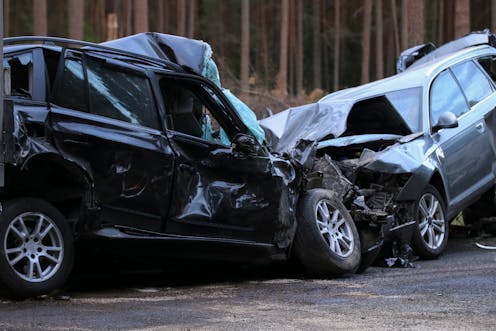




























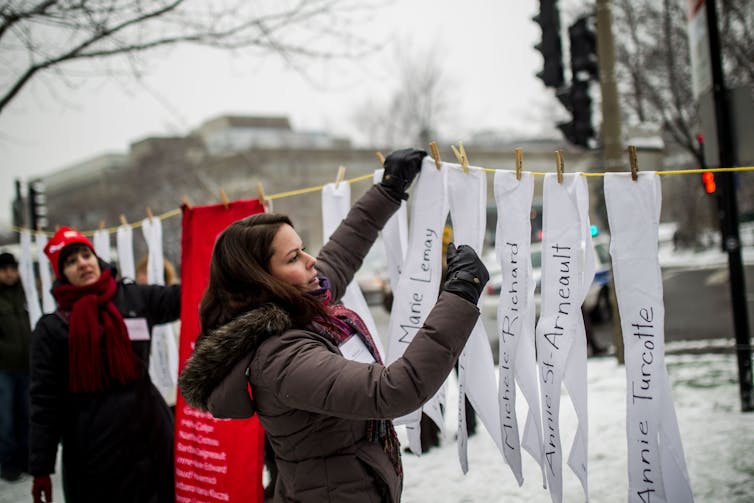

















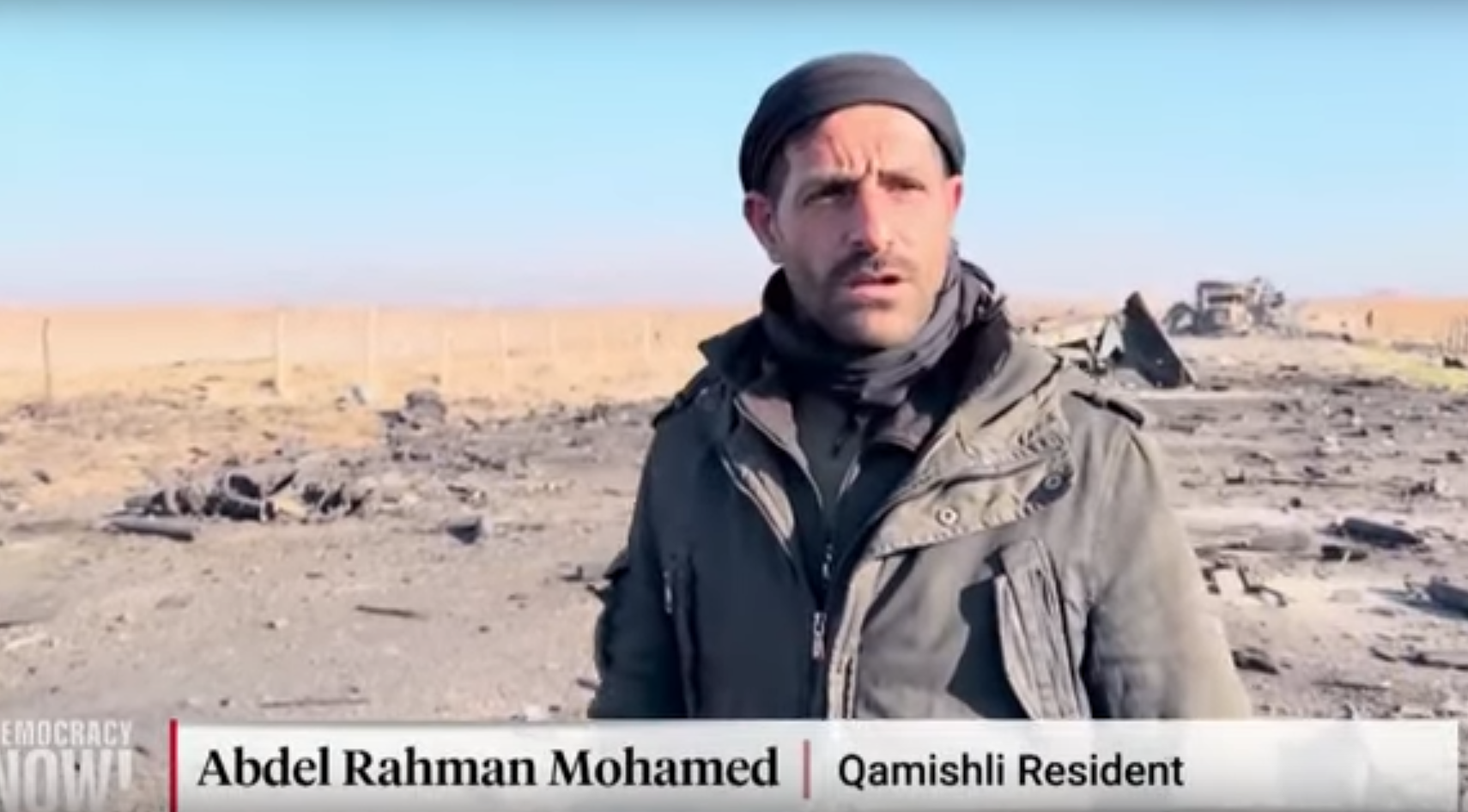






.jpg)