During the pandemic, midwives faced what researchers call a “pragmatic paradox” – a situation where contradictory demands are imposed on individuals who can neither refuse nor fulfil the demands.
Midwives needed to care for women and babies despite the risk of infecting them with the virus. Their experiences shed important light on how we can think about no-win situations in the workplace.
In our recently published research, we surveyed 215 New Zealand midwives about their experiences of working through COVID lockdowns and how they coped with what felt at times like a no-win situation.
The absurdity of contradictory demands
Pragmatic paradoxes place workers in absurd, no-win situations. They can occur simply because of leadership issues or glitches in management bureaucracies. They can also happen during unique crises – such as the pandemic.
But many workers are so used to feeling powerless that they may not recognise – much less question – the absurdity of contradictory demands.
When the pandemic struck, midwives’ professional roles suddenly entailed an inherent contradiction they had no opportunity to question.
They were contractually obligated to protect societal wellbeing by providing ongoing maternity services. Yet due to the fast evolving situation and initial shortages of safety equipment, providing those services entailed risking public wellbeing by exposing themselves and their clients to the virus.
As one of our research participants explained:
I felt that I was in a very difficult situation. I was connecting with multiple “bubbles” on a daily basis. I was scared that I could be in a position to pass COVID on to vulnerable people.
As expected, most midwives in our study felt disempowered by the tensions of this situation:
I felt extremely vulnerable. As a lead maternity carer midwife, considered an essential service, I had no control over whether I could just not work.
But surprisingly, a small number of midwives were seemingly motivated by it. As one explained,
[My family] thought I was “brave” and “courageous” to keep working – but this was simply my job! I felt like I had a duty to pregnant women to front up and continue as per normal.
During the pandemic, midwives faced a pragmatic paradox – they were expected to enter multiple people’s homes while also preventing the spread of COVID-19. metamorworks/Shutterstock
Recognised and supported?
Why would some midwives feel motivated by their contractual obligations to fulfil contradictory demands?
The crux, we found, was not whether they were aware of the contradiction inherent in their situation, but whether that awareness was accompanied by a sense of professional recognition and support.
If midwives felt like they were recognised and supported in their ongoing efforts – like valuable members in the “team of five million” – they framed and accepted their contradictory situation as part of a societal duty.
Midwives placed particular importance on recognition and support from the government and the public. As one explained,
I felt the love. Heading out on the motorway I would see the sign thanking essential workers. And the government was always mentioning us and thanking us.
In contrast, if they felt like health system leaders and the public were oblivious to their situation, they interpreted contradictory work demands as stressful and disempowering.
Another midwife said,
I became very angry and felt midwives were like lambs to the slaughter – we had no PPE, we were being told to carry on working, in the media we were invisible. Our professional body seemed to put the women we cared for ahead of our wellbeing.
Managing pragmatic paradoxes
There are two ways to look at the implications of our findings. One is to suggest pragmatic paradoxes are not as bad as they initially seem.
Contradictions abound in contemporary society, so it may be inevitable people face conflicting yet unrefusable demands in their jobs. But if leaders and managers can motivate workers to embrace those demands – or at least recognise the difficulty of the tasks – the outcome can be positive.
An alternative reading is workers who feel motivated by pragmatic paradoxes are casualties of something akin to gaslighting. According to this logic, contradictory demands are imposed by those at the top of their respective organisations and societies, so that’s where the demands ought to be dealt with.
For example, the government could have minimised the risks midwives faced during the pandemic by better access to protective equipment, thereby resolving their contradictory situation. Suggesting contradictory demands should be passed down to lower-level workers is therefore equivalent to accepting a certain level of oppression.
Whichever interpretation resonates more, our research underscores the importance of communication as a means of ensuring workers are not disempowered by pragmatic paradoxes.
Over the course of the pandemic, healthcare workers worldwide eventually improved their contradictory situation by posting on social media and talking to the press. Political leaders and health management recognised the workforce needed greater support to navigate the contradictory demands of risking wellbeing to protect wellbeing.
The broader lesson is when people face contradictory directives, they should be able to discuss and challenge them.
Research suggests that in interpersonal situations, humour may be an effective means of doing so without directly threatening the power or competence of those in charge.
Of course, this brings us to one final paradox: that encouraging humour and employee voice requires fostering the type of environment where pragmatic paradoxes are unlikely to thrive in the first place.
Tago Mharapara receives funding from Auckland University of Technology
James Greenslade-Yeats does not work for, consult, own shares in or receive funding from any company or organisation that would benefit from this article, and has disclosed no relevant affiliations beyond their academic appointment.
So what is vitamin B6, where is it found and how much is too much? Here’s what you need to know about this essential nutrient.
What is vitamin B6?
Vitamin B6 (also known as pyridoxine) is a group of six compounds that share a similar chemical structure.
It is an essential nutrient, meaning we need it for normal body functions, but we can’t produce it ourselves.
Adults aged 19–50 need 1.3mg of vitamin B6 per day. The recommended dose is lower for teens and children, and higher for those aged 51 and over (1.7mg for men and 1.5mg for women) and people who are breastfeeding or pregnant (1.9mg).
Most of us get this in our diet – largely from animal products, including meat, dairy and eggs.
The vitamin is also available in a range of different plant foods, including spinach, kale, bananas and potatoes, so deficiency is rare, even for vegetarians and vegans.
The vitamin B6 we consume in the diet is inactive, meaning the body can’t use it. To activate B6, the liver transforms it into a compound called pyridoxal-5’-phosphate (PLP).
In this form, vitamin B6 helps the body with more than 140 cellular functions, including building and breaking down proteins, producing red blood cells, regulating blood sugar and supporting brain function.
Despite being readily available in the diet, vitamin B6 is also widely included in various supplements, multivitamins and other products, such as Berocca and energy drinks.
Vitamin B6 toxicity is extremely rare. It almost never occurs from dietary intake alone, unless there is a genetic disorders or disease that stops nutrient absorption (such as coeliac disease).
This is because all eight vitamins in the B group are water-soluble. If you consume more of the vitamin than your body needs, it can be excreted readily and harmlessly in your urine.
However, in some rare cases, excessive vitamin B6 accumulates in the blood, resulting in a condition called peripheral neuropathy. We’re still not sure why this occurs in some people but not others.
Peripheral neuropathy occurs when the sensory nerves – those outside our brain and spinal cord that send information to the central nervous system – are damaged and unable to function. This can be caused by a wide range of diseases (and is most well known in type 2 diabetes).
The most common symptoms are numbness and tingling, though in some cases patients may experience difficulty with balance or walking.
We don’t know exactly how excess vitamin B6 causes peripheral neuropathy, but it is thought to interfere with how the neurotransmitter GABA sends signals to the sensory nerves.
Vitamin B6 can cause permanent damage to nerves. Studies have shown symptoms improved when the person stopped taking the supplement, although they didn’t completely resolve.
What is considered excessive? And has this changed?
Until 2022, only products with more than 50mg of vitamin B6 were required to display a warning about peripheral neuropathy. But the Therapeutic Goods Administration lowered this and now requires any product containing more than 10mg of vitamin B6 to carry a warning.
The Therapeutic Goods Administration has also halved the daily upper limit of vitamin B6 a product can provide – from 200mg to 100mg.
These changes followed a review by the administration, after receiving 32 reports of peripheral neuropathy in people taking supplements. Two thirds of these people were taking less than 50mg of vitamin B6.
The Therapeutic Goods Administration acknowledges the risk varies between individuals and a lot is unknown. Its review could not identify a minimum dose, duration of use or patient risk factors.
But I thought B vitamins were good for me?
Too much of anything can cause problems.
The updated guidelines are likely to significantly lower the risk of toxicity. They also make consumers more aware of which products contain B6, and the risks.
The Therapeutic Goods Administration will continue to monitor evidence and revise guidelines if necessary.
While vitamin B6 toxicity remains very rare, there are still many questions about why some people get peripheral neuropathy with lower dose supplements.
It could be that some specific vitamin B compounds have a stronger effect, or some people may have genetic vulnerabilities or diseases which put them at higher risk.
So what should I do?
Most people don’t need to actively seek vitamin B6 in supplements.
However, many reports to the Therapeutic Goods Administration were of vitamin B6 being added to supplements labelled as magnesium or zinc – and some weren’t aware they were consuming it.
It is important to always check the label if you are taking a new medicine or supplement, especially if it hasn’t been explicitly prescribed by a health-care professional.
Be particularly cautious if you are taking multiple supplements. While one multivitamin is unlikely to cause an issue, adding a magnesium supplement for cramping, or a zinc supplement for cold and flu symptoms, may cause an excessive vitamin B6 dose over time, and increase your risk.
Importantly, pay attention to symptoms that may indicate peripheral neuropathy, such as pins and needles, numbness, or pain in the feet or hands, if you do change or add a supplement.
Most importantly, if you need advice, you should talk to your doctor, dietitian or pharmacist.
The authors do not work for, consult, own shares in or receive funding from any company or organisation that would benefit from this article, and have disclosed no relevant affiliations beyond their academic appointment.
The Chinese artificial intelligence (AI) company DeepSeek has rattled the tech industry with the release of free, cheaply made AI models that compete with the best US products such as ChatGPT.
Users are rushing to check out the new chatbot, sending DeepSeek’s AI Assistant to the top of the iPhone and Android app charts in many countries.
However, authorities have sounded a note of caution. US officials are examining the app’s “national security implications”. Australia’s former cybersecurity minister said national security agencies will soon issue formal guidance for users.
Why are governments and security experts so concerned? The main issue is the app is made in China and stores data there – but that doesn’t mean all the worry is just xenophobia.
What information does DeepSeek record?
DeepSeek does not appear to be spyware, in the sense it doesn’t seem to be collecting data without your consent. However, like many online services, it clearly tells you it will record a lot of data about you and your behaviour.
Specifically, the company’s privacy policy says it collects three categories of information.
First, there is information you provide directly, such as your name and email address and any text you type in or files you upload.
Next, there is automatically collected information, such as what kind of device you are using, your IP address, details of how you use the services, cookies, and payment information.
Finally, there is information from other sources, such as Apple or Google login services, or third-party advertising and analytics companies.
This is broadly similar to the data collected by ChatGPT and Claude.
What does DeepSeek do with the information?
DeepSeek says it uses this information for a range of purposes: to provide services, enforce terms of use, communicate with users, and review and improve performance.
The policy also contains a rather sweeping clause saying the company may use the information to “comply with our legal obligations, or as necessary to perform tasks in the public interest, or to protect the vital interests of our users and other people”.
DeepSeek also says it may share this information with third parties, including advertising and analytics companies as well as “law enforcement agencies, public authorities, copyright holders, or other third parties”.
DeepSeek will also keep the information “for as long as necessary” for a broad range of purposes.
Again, this is all fairly standard practice for modern online services.
Causes for concern
Much of the cause for concern around DeepSeek comes from the fact the company is based in China, vulnerable to Chinese cyber criminals and subject to Chinese law.
DeepSeek stores the information it collects “in secure servers located in the People’s Republic of China”. The company says it maintains “commercially reasonable technical, administrative, and physical security measures” to protect the information.
However, we should keep in mind that China is one of the most cyber crime-prone countries in the world – ranking third behind Russia and Ukraine in a 2024 study.
So even if DeepSeek does not intentionally disclose information, there is still a considerable risk it will be accessed by nefarious actors.
China is home to a sophisticated ecosystem of cyber crime organisations that often build detailed profiles of potential targets. Microsoft and others have accused the Chinese government of collaborating with cybercrime networks on cybercrime attacks.
These organisations can use personal information to craft convincing targeted phishing attacks, which try to trick people into revealing more sensitive information such as bank details.
Should you download DeepSeek?
So, should you download DeepSeek?
If you are an experienced user who is familiar with online privacy and the capabilities of modern AI systems, go ahead – but proceed with caution and be very wary about what information you share.
And if you’re less experienced – if you’re a casual user who is less internet-savvy – my expert advice is to stay well away. DeepSeek won’t give you much you can’t get from other chatbots such as ChatGPT or Claude, and it might make your data vulnerable to Chinese cyber criminals and subject to Chinese law.
Mohiuddin Ahmed does not work for, consult, own shares in or receive funding from any company or organisation that would benefit from this article, and has disclosed no relevant affiliations beyond their academic appointment.
Tens of thousands of fish have died off northwestern Australia, as a large and long-lasting marine heatwave intensifies.
The fish kill at Gnoorea Beach near Karratha is concerning our team of scientists, as the hot mass of water heads south towards Ningaloo Reef and the seagrass gardens in Shark Bay. That’s because we’ve seen this before. An enormous marine heatwave in 2010-11 devastated fisheries and ecosystems further down the WA coast.
This marine heatwave began in September, with temperatures up to 3°C warmer than usual off Broome. There’s no end in sight.
The heatwave comes as oceans worldwide experience recordbreaking heat, driven by climate change. More than 90% of all heat trapped by greenhouse gases goes into the oceans.
The fish kill is a visible way to glimpse a disaster often out of sight and out of mind. But these marine heatwaves do much more, from wiping out seagrass meadows and kelp beds to trashing fisheries.
Marine heatwaves are periods of at least five consecutive days when ocean temperatures are significantly higher than the long-term average for the region and season.
Since September 2024, temperatures off Australia’s northwest coast have been high enough to be considered a heatwave.
In late December, the area of hotter water expanded southward along the Pilbara coast and became more intense. Temperatures hit 4–5°C above normal at the surface. Our research group has gathered data from satellite measurements, which tells us it’s hotter than usual. Data from autonomous ocean gliders also show unusual levels of heat as far down as 200 metres.
In January, this heatwave has become bad enough to be classified in some areas as a severe marine heatwave.
There’s no relief in sight yet. The Bureau of Meteorology forecasts marine heatwave conditions to continue through February.
On the left, the marine heatwave on the Northwest Shelf is visible in dark red. On the right, the intensity of the heatwave is shown over time on the Northwest Shelf and further south in Central Western Australia. Author provided, CC BY
Will it be worse than the 2010 heatwave?
The current marine heatwave is, so far, the second-worst in Western Australia’s recorded history.
Over the 2010–11 summer, a severe marine heatwave devastated seas off the state. Temperatures hit up to 5°C above average, peaking in February and March.
The worst-hit areas were seas off the central West Australian coastline, leaving those to the north largely unaffected. But the heatwave stretched 2,000 kilometres, from the Pilbara all the way down to Denmark in the southwest.
The reason the 2010 heatwave spread so far south was due to the Leeuwin Current, which was stronger than usual due to weak southerly winds linked to a low pressure system off the coast.
The 2010-11 marine heatwave hit Central West Australian waters hardest. The Leeuwin Current ferried heat southward. Author provided, CC BY
The heat led to local extinction of kelp species along a 100km stretch of coastline. Scallop and blue swimmer crab fisheries had to close. Seagrass meadows in Shark Bay collapsed. Tropical species were sighted in new areas. And coral bleached at Ningaloo.
By contrast, this current marine heatwave has concentrated on the northern coastline, but may spread south in coming weeks.
Unfortunately, there are strong similarities between the 2010–11 heatwave and this one. Both occurred during a La Niña year.
A similar low pressure system in December 2024 weakened southerly winds during this heatwave, though not as pronounced as in 2010-11. We can expect to see the Leeuwin Current intensify and carry more warm water than usual south, but perhaps not as far as in 2010–11.
Weather systems at present are developing slightly differently to 2010–11, but they could still lead to weaker southerly winds and produce a stronger current channelling heat.
What does this mean for ocean life?
Marine heatwaves at this size and intensity can profoundly damage marine ecosystems and fisheries. The Karratha fish kill is the most visible sign of ecosystem distress.
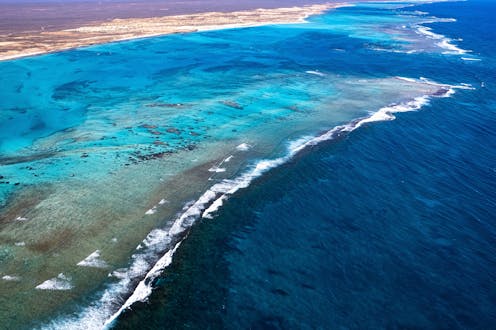
We have already seen signs of bleaching in the coral reefs of the Kimberley region, while corals are experiencing heat stress at world-famous Ningaloo Reef.
The heat is now affecting the Gascoyne region between Carnarvon and Exmouth, and is likely to head further south.
Damage from the heatwave could threaten valuable industries such as the rock lobster fishery and marine tourism on the Coral Coast.
Bleached corals in Cygnet Bay north of Broome. Photo taken on 16th January. Kayleigh Foste, CC BY
More heatwaves will come
As the climate changes, modelling indicates marine heatwaves will hit more often and to intensify.
Worldwide, marine heatwaves have devastated ecosystems. One of the worst, the Pacific “blob” heatwave of 2014-2016, killed an estimated 100 million Pacific cod and four million birds from a single seabird species, as well as contributing to the starvation of about 7,000 humpback whales. The intense heat killed off cold-loving species and paved the way for tropical species to enter and even thrive.
While there is a clear link between the 2010-11 marine heatwave and climate change, we cannot conclusively say this current heatwave off Western Australia is linked to climate change.
That’s because we don’t have enough data about what’s happening under the surface. Temperatures in the ocean vary greatly by depth, and a hot surface doesn’t always mean heat has reached deeper water.
So while we know a marine heatwave is in progress, we don’t know how bad it is or how far down the heat has reached in different regions. We need better ways to measure temperatures at depth, to be able to gauge how bad a heatwave is. Installing more temperature sensors along the WA coastline would allow us to better monitor and respond to temperature extremes.
The earlier we know about a heatwave, the more we can do to prepare. The 2010-2011 heatwave made many people aware of what damage heat can do to an ocean, as fishing boats sat idle and tourists steered clear of dying coral.
More, and worse, is likely to come. Better conservation and management of our oceans can help. But tackling the root cause of intensifying heat – unchecked greenhouse gas emissions – is still far and away the most important challenge.
Matt Rayson receives funding from the Australian Research Council and the Western Australian government. .
Nicole L. Jones receives funding from Australian Research Council and the Western Australian government.
Sina Pinter does not work for, consult, own shares in or receive funding from any company or organisation that would benefit from this article, and has disclosed no relevant affiliations beyond their academic appointment.
A Twenty20 cricket contest featuring a women’s team made up of refugees from Afghanistan who now live in Australia may “only” be an exhibition game, but it could be the beginning of something much more.
It is the first time the women will play as a team since migrating to Australia after the Taliban takeover in 2021. The group has since settled in Canberra and Melbourne.
Regardless of the result, it could be a step towards Afghanistan’s women’s team entering international cricket.
Before I explain why, though, it’s important to rewind a bit.
International cricket and Afghanistan
The International Cricket Council (ICC) claims it has “one of the toughest” policies on anti-discrimination in world sport.
promote and encourage participation at all levels regardless of race, colour, religion, descent, culture, ethnic origin, nationality, sex, gender, sexual orientation, disability, marital status and/or maternity status and to ensure that there is no discrimination in the sport.
In the case of its member federation, the Afghanistan Cricket Board, the ICC’s refusal to uphold its own policy is providing both actual and implied support to the Taliban’s gender apartheid regime.
The ICC admitted Afghanistan as a full voting member in 2017, despite being “the only full member to have received that status without having an operational women’s team in place.”
As a full member, Afghanistan was, according to the ICC’s funds disbursement model: “expected to get around $US40 million ($A64 million) for the 2016-23 commercial rights cycle based on projected ICC revenues of $US2.7 billion ($A4.32 billion).”
Meanwhile, the other ICC, the International Criminal Court, recently issued arrest warrants against two of the Taliban leaders for crimes against women.
The Taliban’s policies against women go far beyond sport and make it more reason for the International Cricket Council to act.
On any reading, the ICC’s membership rules on governance ethics requirements in relation to Afghanistan are in breach.
From Afghanistan to Australia
Ironically, it was the Afghanistan Cricket Board’s reluctant and token measure taken to build a women’s team, by issuing contracts to 25 women in 2020, that has allowed them to now play cricket in Australia.
In August 2021, the Taliban took over Afghanistan and banned women’s sports. Athletes were intimidated, harassed and warned of ramifications if they continued playing.
That situation sparked action from a handful of passionate volunteers, including myself, ex-Australian cricketer Mel Jones, and Emma Staples (formerly the head of diversity and community engagement at Cricket Victoria). We knew we needed to get these women out of Afghanistan.
We applied to the Australian government to issue emergency humanitarian visas to the contracted women’s cricketers, with the applications granted.
Now, all they want is a chance to represent their country as a team, and to send a message of hope back to their sisters suffering under the oppression of Afghan gender apartheid.
Put simply, the Afghan women’s team is desperate to be given the same opportunities as its male counterparts.
It’s not clear what its terms of reference are, or if they have even met.
Possible solutions
Cricket Australia has chosen not to play bilateral matches against Afghanistan, citing the Taliban’s human rights restrictions for women and girls since returning to power.
But boycotts often impact athletes more than government policies.
Instead, the focus should be on supporting Afghan women who want to play cricket. The ICC could implement targeted actions including:
replacing Afghanistan’s cricket board with ICC-appointed administrators, including women
adjusting Afghanistan’s funding to reflect they are only developing cricket for less than half the population
setting up a global development fund for Afghan girls and women to identify talent and to provide coaching.
There are several international sport models – for example, FIFA’s Normalisation Committees and the IOC’s independence requirements – that could serve as models for the ICC requiring Afghanistan’s Cricket Board to comply with the its anti-discrimination policies.
A chance to compete
On Thursday, these Afghan women finally get to play as a team, in the exhibition game organised by Cricket Australia.
The team is keen for this to be an ongoing opportunity to develop skills and represent their nation, not just a one-time event.
The Olympic movement’s model of refugee teams could inspire the creation of a refugee team for Afghan women in cricket, allowing them to participate in future youth and summer Olympic Games and other competitions.
Catherine Ordway voluntarily represented the Afghan women’s cricket team to evacuate them to Australia following the Taliban re-occupation in August 2021, and continues to provide ongoing support to the women, the staff and their families.
The release of the new DeepSeek-R1 artificial intelligence (AI) model has shocked the tech world.
Launched on January 20 with little fanfare, the Chinese AI model was reportedly developed at only a fraction of the cost of OpenAI’s GPT-4o, and over a much shorter period of time. One Chinese commentator has called its release a “Pearl Harbor attack” on the AI world.
Though the reference to an “attack” may be a strong word, it alludes to the growing competition between the United States and China over dominance in the AI sphere, which the US had been leading thus far.
Indeed, people across China were celebrating a homegrown success story on Wednesday, as DeepSeek’s AI app soared to the top of the Apple and Google stores in the US.
So, what does the emergence of DeepSeek’s model say about US-China competition in this space?
Chinese government control
First, DeepSeek’s success is undoubtedly sending a message to the Chinese government that excessive control kills innovation.
Until mid-2023, enthusiasm for innovation in China’s tech companies had been stifled by increasingly restrictive regulations. The Chinese government had embarked on a sweeping crackdown of tech companies like Alibaba and others in order to prevent the spread of rampant entrepreneurial capitalism in China.
The launch of ChatGPT in 2023 promised to open up exciting new frontiers for the development of AI in the West. But it must have come as a rude shock to China’s tech companies. The Chinese government changed tact and reassured them that it recognised the crucial role of the digital economy as a key driver of economic growth. It soon began to relax its tight grip over the sector.
But the elephant in the room is how DeepSeek – and China’s AI companies in general – will deal with censorship.
As it stands, politically sensitive words and questions seem to be no-go areas for DeepSeek. When asked what happened on June 4 1989 in Tiananmen Square (the site of the government’s crackdown on democracy protesters), the chatbot’s answer was along the lines of, “Sorry, that’s beyond my current scope. Let’s talk about something else.”
This raises the question: can a Chinese AI tool be truly competitive in the global tech race without a solution to the challenge of censorship?
US efforts to contain Chinese tech development
Meanwhile, the US has adopted a wide array of measures aiming at curbing China’s AI development over the past few years. These included the Biden administration’s attempts to restrict China’s access to the advanced chips needed for AI, as well as the export of chip-making equipment and other technology to China.
The US has also blacklisted a large number of Chinese entities that it has identified as having both military and commercial technology.
The launch of DeepSeek raises questions over the effectiveness of these US attempts to “de-risk” from China in relation to scientific and academic collaboration.
For one, DeepSeek was able to evade US restrictions on advanced chips by stockpiling downgraded chips made by Nvidia before the Biden administration moved to ban them.
Western observers have often portrayed China’s AI initiatives as limited due to these US controls. However, these observers have somehow failed to take seriously the emergence of a new generation of Chinese entrepreneurs who prioritise foundational research and long-term technological advancement over quick profits.
DeepSeek is a good example of this approach. It has embraced open-source methods, pooling collective expertise and fostering collaborative innovation. This approach not only mitigates resource constraints, but also accelerates the development of cutting-edge technologies.
Another common assumption in the West is that Chinese companies are mere followers or imitators. DeepSeek’s achievements likewise challenge this perception. As the company’s chief executive, Liang Wenfeng, said to one Chinese media outlet:
Innovation such as ours happens all the time in the US. The Americans are surprised by us, mainly because we are a Chinese company, and we are entering their game as an innovator with original contribution, not as followers.
DeepSeek’s success also calls into question the legislation supported by both the Biden and Trump administrations that aims to prevent Chinese graduate students from attending universities in the US.
The assumption behind what researchers call “STEM talent de-coupling” is that the Chinese government may use some of these students to engage in knowledge and technology transfer when they return to China.
Liang, however, never studied outside China. And he recruited graduates and students from top Chinese universities to staff his research team. None studied overseas.
These developers belong to a generation of young, patriotic Chinese who harbour personal ambition, as well as a broader commitment to advancing China’s position as a global innovation leader.
What does this mean for Australia?
In Australia, the initial reaction to DeepSeek’s AI chatbot has been one of
caution, even concern. Clare O’Neil, the former cyber security minister, said the government would examine more closely how the app works before providing guidance to Australians on potential data security concerns.
But DeepSeek may also be a reminder that Australia’s scientific collaborations should be guided primarily by research excellence rather than geopolitical considerations. To stay competitive and reduce its reliance on external technology providers, Australia needs to invest in its own AI research infrastructure and build its own talent pool.
A narrow focus on political alignments and a growing paranoia about partnering with Chinese researchers means that Australia risks missing out on the next wave of breakthrough technologies.
The authors do not work for, consult, own shares in or receive funding from any company or organisation that would benefit from this article, and have disclosed no relevant affiliations beyond their academic appointment.
A national Palestine advocacy group has hit back at critics of its “genocide hotline” campaign against soldiers involved in Israel’s war against Gaza, saying New Zealand should be actively following international law.
“Why is concern for the sensitivities of soldiers from a genocidal Israeli campaign more important than condemning the genocide itself?,” asked PSNA national chair John Minto in a statement.
The Minister of Foreign Affairs Winston Peters, the Chief Human Rights Commissioner Stephen Rainbow and the New Zealand Jewish Council have made statements “protecting” Israeli soldiers who come to New Zealand on “rest and recreation” from the industrial-scale killing of 47,000 Palestinians in Gaza until a truce went into force on January 19.
“We are not surprised to see such a predictable lineup of apologists for Israel and its genocide in Gaza from lining up to attack a PSNA campaign with false smears of anti-semitism,” Minto said.
He said that over 16 months Peters had done “absolutely nothing” to put any pressure on Israel to end its genocidal behaviour.
“But he is full of bluff and bluster and outright lies to denounce those who demand Israel be held to account.”
Deny illegal settler visas Minto said that if Peters was doing his job as Foreign Minister, he would not only stop Israeli soldiers coming to Aotearoa New Zealand — as with Russian soldiers in the Ukraine war — he would also deny visas to any Israeli with an address in an illegal Israeli settlement in the Occupied Palestinian Territories.
“Our campaign has nothing to do with Israelis or Jews — it is a campaign to stop Israeli soldiers coming here for rest and recreation after a campaign of wholesale killing of Palestinians in Gaza,” Minto said.
“To imply the campaign is targeting Jews is disgusting and despicable.
“Some of the soldiers will be Druse, some Palestinian Arabs and others will be Jews.”
The five-year-old Palestinian girl Hind Rajab, shot 355 times by Israeli soldiers on 29 January 2024. Image: @Onlyloren/Instagram
Israeli soldiers are facing a growing risk of being arrested abroad for alleged war crimes committed in Gaza, with around 50 criminal complaints filed so far in courts in several countries around the world.
Earlier this month, a former Israeli soldier abruptly ended his holiday in Brazil and was “smuggled” out of the country after a Federal Court ordered police to open a war crimes investigation against him. The man fled to Argentina.
A complaint lodged by the Belgium-based Hind Rajab Foundation (HRF) included more than 500 pages of court records linking the suspect to the demolition of civilian homes in Gaza.
‘Historic’ court ruling against soldier The foundation called the Brazilian court’s decision “historic”, saying it marked a significant precedent for a member country of the International Criminal Court (ICC) to enforce Rome Statute provisions domestically in the 15-month Israeli war on Gaza.
The foundation is named in honour of five-year-old Palestinian girl Hind Rajab who was killed on 29 January 2024 by Israel soldiers while pleading for help in a car after her six family members were dead.
According to The New Arab, the foundation has so far tracked and sent the names of 1000 Israeli soldiers to the ICC and Interpol, and has been pursuing legal cases in a number of countries, including Belgium, Brazil, Cyprus, France, Thailand, Sri Lanka, Thailand, the Netherlands, and the United Kingdom.
In November, the ICC issued arrest warrants for Israeli Prime Minister Benjamin Netanyahu and former Defence Minister Yoav Gallant, together with a former Hamas commander, citing allegations of war crimes and crimes against humanity.
Minto accused the New Zealand Jewish Council of being “deeply racist” and said it regularly “makes a meal of false smears of anti-semitism”.
“It’s deeply problematic that this Jewish Council strategy takes attention away from the real anti-semitism which exists in New Zealand and around the world.
“The priority of the Jewish Council is to protect Israel from criticism and protect it from accountability for its apartheid policies, ethnic cleansing and genocide.
Australia’s headline inflation rate dropped to a three-year low of 2.4% in the December quarter, according to the Consumer Price Index, adding to pressure for an interest rate cut by the Reserve Bank as soon as next month.
Since it peaked at 7.8% in December 2022, inflation has now fallen for seven out of eight quarters.
The closely watched core inflation measure dropped sharply to 3.2% from 3.6%, below market expectations, but the central bank is concerned about how sustainable the fall in inflation will be. Strength in the labour market is also weighing against the need for a cut in interest rates.
The long-running quarterly measure of the CPI is a better indicator than the more volatile monthly version. But the monthly rate is currently very similar; it ended the year at 2.5%.
Why did inflation fall?
A main reason headline inflation fell was the electricity rebates, which led to the price of electricity falling by 25.2% during 2024.
The fall in global oil prices, which led to petrol prices dropping 7.9% during 2024, also contributed to the decline in inflation.
The rental market is easing, with rents slowing from growth of 7.3% during 2023 to 6.4% during 2024. Increases in Commonwealth Rent Assistance contributed to the deceleration. This still leaves a lot of families facing rental stress.
Home builders offering discounts have moderated the “new dwellings” component of the CPI. It increased by only 2.9% during 2024, a marked deceleration from the growth rates of around 20% seen in 2022.
Urban transport fares also fell during 2024.
Working against the downward trend were increases to the tobacco excise, in addition to the standard indexation, which led to tobacco prices rising by 12.2% during 2024.
Insurance costs continue to rise, increasing by 11% during 2024. If the Californian fires lead to insurers revising up their assessment of the risks posed by climate change, insurance premia could rise further.
The decline in the Australian dollar, while not as alarming as some media reports would suggest, would have added to the price of some goods, particularly those imported from the United States or whose price is denominated in US dollars.
The “underlying” rate of inflation, which looks through temporary measures such as the electricity subsidies and is the preferred measure of the central bank, has also declined. It is now 3.2%.
Australia’s inflation performance is similar to that in comparable countries. It is slightly lower than inflation in the United Kingdom (2.5%) and the same as in the euro area. It is higher than in New Zealand (2.2%) and Canada (1.8%).
The fall in inflation to a rate significantly below the 3.5% at which wages are increasing means that the cost of living crisis is abating, although not yet over.
The quarterly increases in the CPI during 2024 were 1.0% in March and June and 0.2% in September and December. As the large increases in the first half of 2024 are replaced, the annual rate should drop further in coming quarters.
What does it mean for interest rates?
The current Reserve Bank board meets next on February 18. By the following meeting, on April 1, the decisions will be taken by the new monetary policy board, which will have two new members.
This is the second consecutive quarter that inflation has been within the Reserve Bank’s medium-term target band of 2–3%. It is now just below the mid-point of the band.
Inflation is also below the Bank’s latest forecasts of 2.6% (and 3.4% for the “underlying” rate).
But the bank has stated it will only cut interest rates when “members are confident that inflation is moving sustainably towards target”.
Inflation that is low just because of temporary electricity subsidies may not be regarded as ‘sustainable’. That is why the Bank places more emphasis on the underlying inflation measure. While not yet within the target band, underlying inflation has been steadily heading there and is now only just above it. This may be enough to give the Bank board members the confidence they seek. Financial markets now think so.
The government would dearly like to see rates coming down before the election, likely to be in April or May. It faces a nervous wait.
John Hawkins was formerly a senior economist at the Reserve Bank and Treasury.
Source: The Conversation (Au and NZ) – By Vincent Hurley, Lecturer in Criminology. Police and policing. Dept of Security Studies & Criminology, Macquarie University
When you watch the news, one phrase usually comes up as soon as crime is mentioned: “police have established a crime scene”.
If you’re a fan of the forensics crime drama CSI: Crime Scene Investigation, it will conjure up images of police waving a blue, fluorescent UV light in a darkened room looking for blood, saliva, fingerprints, footprints or tooth impressions.
CSI has influenced an entire generation – this year, the franchise will celebrate its 25th anniversary. But the reality of crime scene investigation is far more complex.
As a criminology lecturer and ex-police officer, I know a thing or two about crime scenes, having managed hundreds of them. I have even been a crime scene myself. Here’s what they really entail.
There’s usually more than one crime scene
In the early 20th century, French forensic science pioneer Edmond Locard noted it’s impossible for criminals to act “without leaving traces of this presence”. No matter where a criminal steps or what they touch, they leave behind, even unconsciously, evidence that serves as a silent witness against them.
The idea that criminals will leave something behind at the crime scene while taking something with them is known today as Locard’s principle.
Crime scenes are incredibly diverse. They don’t just involve the physical location. A person’s body and any objects found in relation to the crime are also part of a crime scene.
The primary crime scene is where the event took place – for example, where a murder, arson attack or drive-by shooting occurred.
There will be several additional crime scenes, too. In the course of the investigation, a second crime scene might be established where the criminal planned the crime. If they dumped a getaway vehicle, that’s a third crime scene. If they stashed a weapon, clothes or other objects in a safe house after the crime, that’s a fourth crime scene.
A fifth crime scene will be established when the criminal is arrested – they themselves are also a crime scene. Their hair, clothing and fingernails will be tested for various residues, such as the skin or blood of a victim, or even illicit substances if the crime involves drug trafficking.
Lastly, the victim is a crime scene, too. They may have body fluids, skin, hair and other material from the criminal on them.
In my detective career, I myself have been a crime scene when I found a badly injured abduction victim who collapsed in my arms. At that point, traces of the offender’s blood and hair transferred onto my clothing. I had to take the clothes off and they were kept as evidence.
Shows like CSI often portray crime scenes as neat and clear cut, with evidence easily obtained.
In reality, crime scenes are chaotic. They are full of clutter and the police don’t know what’s relevant and what’s not.
During a crime scene search, police have to speculate about what happened, as often there are no eyewitnesses. A bullet casing or a bloody knife would be obvious. But what of the more common household items in the house or room? Who owns the shirt or jumper? Why is the bedroom in disarray, is that normal? What did the criminal touch or not touch? Was there just one criminal or two? What belongs to the victim?
Unlike on TV, police don’t always know what they are looking for because often they don’t know how the crime occurred. The cause of a death can be obvious, but how it unfolded is not.
Crime scenes are fragile
With a murder on a TV show, the CSI team usually arrives at a home or an outdoor crime scene, surrounded by crime scene tape. The first thing they do is lift the tape and walk straight to the body.
This is the worst possible crime scene practice.
The detectives would be walking directly on and over the same entry or exit path the offenders used. This would destroy fragile microscopic residues of blood, dirt or plant vegetation.
In reality, walking in and out of a crime scene this way does not happen. Prior to entering any crime scene, police look around and try to figure out which way the offender may have come and gone.
Once weighing up the advantages and disadvantages of each option, they’ll pick a specific entry and exit point, and stick to that until the scene has been completely examined.
Lifting the police tape and walking straight to the body is bad practice – the tape is there for a reason. Gordenkoff/Shutterstock
A systematic search – and not just for DNA
Crime scenes are also searched in different ways.
One way to ensure no evidence is missed is with a “grid and height” search. This means searching one square metre at a time. As the police get closer to the walls of the room, they start looking from the floor up to the height of their knees.
Once this is done, they go from their knee to their waist, then from their waist to their shoulder, then their shoulder to the top of their head, and then from the top of their head to a metre above it – until they reach the ceiling. Then they examine the ceiling.
Police don’t look solely for the holy grail of DNA. Rather, they are trying to piece together a jigsaw puzzle of what happened, why it happened, and what the criminal unintentionally left behind.
Decades of forensic TV dramas have resulted in the “CSI effect” – the idea that finding, collecting and analysing evidence at a crime scene is straightforward, and that the evidence is infallible. This is not so. But shows like CSI have also spawned a generation of people interested in becoming real crime scene investigators and forensic scientists.
Vincent Hurley does not work for, consult, own shares in or receive funding from any company or organisation that would benefit from this article, and has disclosed no relevant affiliations beyond their academic appointment.
US President Donald Trump isn’t happy about the way some countries are taxing American citizens and companies. He has made clear he’s willing to retaliate, threatening to double taxes for their own citizens and companies.
Can Trump really do that, unilaterally, as president? It turns out he can, under a 90-year-old provision of the US tax code – Section 891.
In an executive memo signed on January 20 outlining his “America First Trade Policy”, Trump instructed US Treasury to:
investigate whether any foreign country subjects United States citizens or corporations to discriminatory or extraterritorial taxes pursuant to Section 891 of Title 26, United States Code.
A sweeping power
Section 891 of the US Internal Revenue Code is short, but it is in sweeping terms.
If the president finds that US citizens or corporations are being subjected to “discriminatory or extraterritorial taxes” under the laws of any foreign country, he “shall so proclaim” this. US income tax rates on the citizens or corporations of that country are then automatically doubled.
The extra tax that could be collected is capped at 80% of the US taxable income of the taxpayer. The president can revoke a proclamation, if the foreign country reverses its “discriminatory or extraterritorial” taxation.
Section 891 is an extraordinary provision – but it has never been applied. As far as I know, no other country has legislated such a rule. Importantly, it would only apply to a person or business subject to income taxation by the US.
Take, for example, a foreign national earning a wage in the US. If this individual’s home country became subject to a proclamation under Section 891, their individual tax rate in the US would be doubled – to as much as 74%.
A foreign company earning taxable profits in the US would face a doubling of the company tax rate from 21% to 42%.
A bit of history
A version of Section 891 has been in the US tax code since 1934, an earlier troubled time of tax disputes and economic depression.
It was signed into law by Democratic President Franklin D. Roosevelt on May 10 1934, amid a tax dispute between the US and France.
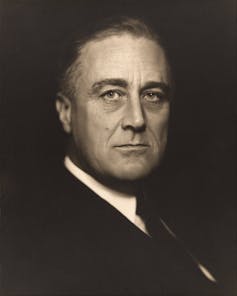
US President Franklin D. Roosevelt signed Section 891 into law in 1934, putting pressure on France to end a tax dispute. Vincenzo Laviosa/Wikimedia Commons
According to US tax historian Joseph Thorndike, the move followed attempts by France to levy additional taxes on US companies operating there, beginning in the mid-1920s.
France had tried to use an 1873 law to tax US companies operating in France on profits earned in the parent company back in the US, and in other subsidiaries around the world, not just the French company profits.
The aim was to counter international profit-shifting, which could be used to reduce the tax payable by US subsidiaries operating in France by claiming deductions or shifting income to other group companies outside France.
The dispute was long-standing and France tried to assess taxes going back decades for some US companies. The potentially massive tax bill (it seems the tax was never actually collected) became a geopolitical issue, and the companies asked the US government to intervene on their behalf.
Thorndike explains that a bilateral tax treaty was negotiated between the US and France to remedy this “double tax” situation. But the French legislature refused to ratify it.
In retaliation, US Congress passed Section 891, and six months later, France ratified its bilateral tax treaty with the US.
Parallels with today
In 1934, there were no digital multinational enterprises like Meta or Google. But that tax dispute nevertheless has parallels with modern concerns about taxing companies internationally.
The French government was trying, with a rather heavy hand, to counter international profit-shifting by large US multinationals.
Section 891 was re-enacted in later US tax codes, up to today, with minor amendments and no attempt to invoke it. It has remained in the background as a potential exercise of US fiscal and market power, supported by both sides of US politics.
Tax professor Itai Grinberg, who worked in the Biden administration on the OECD tax deal, suggested it could be applied to the European Union decision that taxes Apple in Ireland.
The US tech giants are only the latest in a long line of powerful American multinational corporations. Tada Images/Shutterstock
What might Trump do?
President Trump has specifically targeted the OECD global tax negotiations with this threat, just a month after Australia has legislated the global minimum tax under “Pillar Two” of the OECD Global Tax Deal.
The OECD deal aims to ensure large multinational enterprises pay a minimum 15% effective tax rate in all the jurisdictions in which they operate, by applying a top-up tax and under-taxed profit tax.
Trump asserted in a memorandum that the OECD Global Tax Deal is “extraterritorial”, instructing the US Secretary of the Treasury and the US Trade Representative to investigate it.
Could Australia be singled out?
Trump’s memorandum also ordered an investigation into “other discriminatory foreign tax practices” that may harm US companies.
This includes whether any foreign countries are not complying with their US tax treaties or have, or are likely to put in place, any tax rules that “disproportionately affect American companies”.
Under this proposal, digital platforms (many of which are US-owned) would have to pay a new levy, which could be offset if they negotiate or renew deals with Australian news media publishers to pay for hosting news content.
Section 891 could apply to such taxes if they were found by Trump to be “discriminatory” against US companies. What “discriminatory” means is not clear.
Its been suggested that foreign citizens or companies could be protected from Section 891 by their country’s tax treaty with the US, under the standard approach that a later treaty prevails over an older code section. But Australia’s tax treaty with the US took effect in 1983, before the most recent re-enactment of Section 891 in the US tax code.
Miranda Stewart receives funding from the Australian Research Council. Miranda is on the Permanent Scientific Committee of the International Fiscal Association.
Do schools and trees mix? You may have memories of shady playing areas and shelter belts by playing fields, but our recent study suggests this is increasingly an exception rather than a rule.
Trees are often seen as a health and safety risk, whether from branches or the whole thing falling, or from children falling out of them. Many schools have banned pupils from climbing trees as a result.
Beyond that, trees are often seen as an optional “nice to have”. New Zealand’s current education minister criticised extensive landscaping and bespoke design when announcing a review of school properties in early 2024.
But the benefits of trees and other vegetation in urban areas are well known, and increasingly important as housing density increases. Schools can play a significant role in encouraging the growth of “urban forests”.
Unfortunately, there are also large differences in tree canopy cover in New Zealand cities (and elsewhere in the world), with low socioeconomic areas often having low tree canopy cover.
Very little is known about green spaces on local school grounds. So, our research set out to survey the quantity and quality of green spaces in 64 urban primary schools in Auckland.
We conducted the survey in the context of several known factors about the role and place of nature in education:
greening a school improves children’s appreciation for their daily environment and increases social wellbeing
highly vegetated schools provide a big opportunity to boost physical and mental health benefits for children, particularly in suburbs with low tree canopy cover
trees and other vegetation can improve air quality at school, provide shade and UV protection from the sun.
Because schools are fairly evenly distributed throughout cities, and can have a large spatial footprint, there’s also an opportunity to enhance wider native biodiversity, create ecological corridors and maintain cultural connections.
Fields but few trees
Unfortunately, our survey found the green spaces of most Auckland primary schools are dominated by sports fields.
While it’s good news that children have access to these, adding trees and shrubs around the edges of the fields could provide many benefits without compromising existing play spaces.
Native biodiversity was also lacking. In fact, 33% of school ground contained environmental weeds, such as woolly nightshade. There were also many more introduced plant species than native species, and most schools lacked a shrub layer.
The most common native tree by far was pōhutakawa. But planting a monoculture of pōhutakawa is a big risk if a disease (such as myrtle rust) has a big impact on that species.
Diversity is key. Planting other native species such as pūriri, karaka, rewarewa or tītoki would increase plant diversity, attract native birds and other species, as well as provide sun shade.
Room for improvement
There was some good news, however. Of the 64 schools surveyed, 36% had a forest patch. This gives the children access to an outdoor learning resource that may be lacking from their immediate neighbourhood.
It was heartening to find every school had at least one species associated with weaving, with both harakeke and tī kōuka present at 83% of schools.
If this was a report card, Auckland’s school green spaces would not be high-achieving. But there are plenty of opportunities to improve. Adding more diversity, more native plants, and planting trees around the edges of sports fields will provide a wealth of benefits to both children and the city’s overall biodiversity.
Using outdoor spaces for learning will increase natural and cultural connections and improve children’s wellbeing. That is much more than a “nice to have”.
The authors do not work for, consult, own shares in or receive funding from any company or organisation that would benefit from this article, and have disclosed no relevant affiliations beyond their academic appointment.
What will happen to Australia — and New Zealand — once the superpower that has been followed into endless battles, the United States, finally unravels?
With President Donald Trump now into his second week in the White House, horrific fires have continued to rage across Los Angeles and the details of Elon Musk’s allegedly dodgy Twitter takeover began to emerge, the world sits anxiously by.
The consequences of a second Trump term will reverberate globally, not only among Western nations. But given the deeply entrenched Americanisation of much of the Western world, this is about how it will navigate the after-shocks once the United States finally unravels — for unravel it surely will.
Leading with chaos Now that the world’s biggest superpower and war machine has a deranged criminal at the helm — for a second time — none of us know the lengths to which Trump (and his puppet masters) will go as his fingers brush dangerously close to the nuclear codes. Will he be more emboldened?
The signs are certainly there.
President Donald Trump 2.0 . . . will his cruelty towards migrants and refugees escalate, matched only by his fuelling of racial division? Image: ABC News screenshot IA
So far, Trump — who had already led the insurrection of a democratically elected government — has threatened to exit the nuclear arms pact with Russia, talked up a trade war with China and declared “all hell will break out” in the Middle East if Hamas hadn’t returned the Israeli hostages.
Will his cruelty towards migrants and refugees escalate, matched only by his fuelling of racial division?
This, too, appears to be already happening.
Trump’s rants leading up to his inauguration last week had been a steady stream of crazed declarations, each one more unhinged than the last.
Denial of catastrophic climate consequences And will Trump be in even further denial over the catastrophic consequences of climate change than during his last term? Even as Los Angeles grapples with a still climbing death toll of 25 lives lost, 12,000 homes, businesses and other structures destroyed and 16,425 hectares (about the size of Washington DC) wiped out so far in the latest climactic disaster?
The fires are, of course, symptomatic of the many years of criminal negligence on global warming. But since Trump instead accused California officials of “prioritising environmental policies over public safety” while his buddy and head of government “efficiency”, Musk blamed black firefighters for the fires, it would appear so.
Will the madman, for surely he is one, also gift even greater protections to oligarchs like Musk?
“…pave the way for my Administration to dismantle government bureaucracy, slash excess regulations, cut wasteful expenditures and restructure Federal agencies”.
So, this too is already happening.
All of these actions will combine to create a scenario of destruction that will see the implosion of the US as we know it, though the details are yet to emerge.
The flawed AUKUS pact sinking quickly . . . Australian Prime Minister Anthony Albanese with outgoing President Joe Biden, will Australia have the mettle to be bigger than Trump. Image: Independent Australia
What happens Down Under? US allies — like Australia — have already been thoroughly indoctrinated by American pop culture in order to complement the many army bases they house and the defence agreements they have signed.
Though Trump hasn’t shown any interest in making it a 52nd state, Australia has been tucked up in bed with the United States since the Cold War. Our foreign policy has hinged on this alliance, which also significantly affects Australia’s trade and economy, not to mention our entire cultural identity, mired as it is in US-style fast food dependence and reality TV. Would you like Vegemite McShaker Fries with that?
So what will happen to Australia once the superpower we have followed into endless battles finally breaks down?
‘Trump has promised chaos and chaos is what he’ll deliver.’
His rise to power will embolden the rabid Far-Right in the US but will this be mirrored here? And will Australia follow the US example and this year elect our very own (admittedly scaled down) version of Trump, personified by none other than the Trump-loving Peter Dutton?
If any of his wild announcements are to be believed, between building walls and evicting even US nationals he doesn’t like, while simultaneously making Canadians US citizens, Trump will be extremely busy.
There will be little time even to consider Australia, let alone come to our rescue should we ever need the might of the US war machine — no matter whether it is an Albanese or sycophantic Dutton leadership.
It is a given, however, that we would be required to honour all defence agreements should our ally demand it.
It would be great if, as psychologists urge us to do when children act up, our leaders could simply ignore and refuse to engage with him, but it remains to be seen whether Australia will have the mettle to be bigger than Trump.
Republished from the Independent Australia with permission.
It all begins innocently – a late-night peek at your favourite social media site before bed. You catch a headline that grabs your attention with “breaking news” you can’t afford to miss.
Like following digital breadcrumbs, one click leads to another. Before you know it, you’re tumbling down a rabbit hole of endless updates and emotionally charged social media posts. Two hours later, your shoulders are tense, your stomach is in knots, but you can’t put your phone down.
This endless scrolling through bad news – known as “doomscrolling” – sneaks up on us.
It’s important to stay in touch with what’s happening in the world. Being informed helps us make better decisions, engage meaningfully in our communities, and respond effectively to changes that affect our lives and those around us.
But just like a healthy diet, we must be smart about our news consumption to avoid it taking a toll on our health.
The good news is there are proven ways to stay informed without letting it take over your life. Research shows setting clear boundaries around your news consumption can make a huge difference. So, how can you strike the right balance?
How to set boundaries with news consumption
It’s worth considering why you feel compelled to stay constantly informed. Ask yourself: “will this information change what I can do about it?”.
Research shows scrolling through negative news can disrupt your sleep and increase anxiety. To make sure your media consumption is intentional, there are a few steps you can take.
Be picky with the news sources you read. Choose a few trusted outlets instead of letting social media algorithms decide what you see. It’s like sticking to a balanced meal plan, but for your mind.
While engaging with the news, pay close attention to how you’re feeling. When you notice physical signs of anxiety or emotional distress, that is your cue to take a break.
Set aside time earlier in the day with clear boundaries around your news consumption: maybe with your morning coffee or during your lunch break, whatever works for your schedule. Consider implementing a “digital sunset”, too. This is a cut-off time for news and social media, ideally an hour or two before bedtime, to give your mind time to process what you have learned without disrupting your sleep.
The world will always be there, but you will be in a better head space to process what is happening.
You don’t have to feel helpless
Taking breaks from consuming news is not burying your head in the sand – it’s practising self care. Studies have shown that people who set healthy boundaries around news consumption are often better equipped to engage meaningfully on important issues and take constructive action when needed.
When you check the news, be an active consumer. Instead of endless scrolling:
choose one or two in-depth articles to read thoroughly
discuss the news with colleagues, friends and family to process your feelings
look for solution-focused news stories that highlight positive change
take meaningful action on issues you care about.
There are also various apps and tools that can help you form healthier digital habits. Productivity apps use various approaches to help you stay focused, providing ways to snap you out of mindless scrolling.
News curation apps and apps that allow you to save articles to read later can help you establish a balanced news diet, and remove the urgent need to read everything immediately.
Many smartphones now come equipped with screen time management features, such as Apple’s Screen Time or Android’s Digital Wellbeing. You can use these to monitor your scrolling habits and to manage how much time you spend on social media or news apps.
One useful feature is to block apps from use during certain times of day or after you’ve used them for a set amount of time.
Screen time management features allow you to pause or block apps from use. The Conversation
Stay mindful, stay engaged
Staying informed doesn’t mean staying constantly connected. By mindfully setting boundaries and using supportive tools, you can keep up with important events while protecting your wellbeing.
If you’re trying productivity apps and other tools, start small. Choose one tool that resonates with you rather than trying everything at once. Set realistic goals that fit your life, and use these apps’ insights to understand your habits better.
Pay attention to what triggers your doomscrolling and adjust your settings accordingly. Remember, these tools work best when combined with offline activities you enjoy.
The goal isn’t to disconnect completely, but to find a sustainable balance between staying informed and maintaining peace of mind. With thoughtful boundaries and the right support tools, you can stay engaged with the world while keeping your mental health intact.
Lisa Harrison does not work for, consult, own shares in or receive funding from any company or organisation that would benefit from this article, and has disclosed no relevant affiliations beyond their academic appointment.
Source: The Conversation (Au and NZ) – By Eylem Altuntas, Postdoctoral Researcher, Speech & Language Development, The MARCS Institute for Brain, Behaviour and Development, Western Sydney University
Babies are like little detectives, constantly piecing together clues about the world around them. If you’ve ever noticed your baby staring at you while you talk, it’s because they’re picking up on more than just sounds — they’re learning how those sounds are made.
Our recent study, published in Developmental Science, shows this amazing process starts as early as four months old, shaking up the old belief that babies learn these patterns only after tuning in to their native language between 6 and 12 months of age.
It also gives us an earlier window to help children who might be at risk of speech or language delays.
Sorting through a buffet of sounds
By their first birthday, babies are already fine-tuning their ears to the sounds of their native language in a process called perceptual attunement. Think of it like their brain sorting through a buffet of sounds to focus on the ones that matter most.
But in their first six months, babies can tell apart sounds from languages they’ve never even heard. For example, they might distinguish certain Hindi contrasts that are challenging for adult English speakers or identify unique tones in Mandarin, even if they’re growing up in an English-speaking household.
This incredible ability doesn’t last forever. Between six and 12 months, babies start narrowing their focus to the sounds they hear most often. For vowels, this fine-tuning kicks in at around six months while consonants follow at closer to ten months.
Think of it as babies zooming in on the sounds that matter, such as the difference between the “r” and “l” in English, while losing sensitivity to sounds they don’t hear regularly.
Until now, researchers thought this narrowing process was needed for babies to start learning more complex language skills, such as figuring out that the “b” in “bin” and the “d” in “din” differ because one is made with the lips and the other with the tongue tip.
But our study found babies as young as four months are already learning how sounds are physically made, long before this narrowing begins.
Here’s an example to picture this. Imagine you’re listening to someone speak a language you don’t know. Even if you don’t understand the words, you might notice how their lips or tongue move to make sounds. Four-month-old babies can do this too.
To demonstrate this, we conducted an experiment with 34 babies, aged four to six months, whose parents had provided consent to participate. We created a “match-the-pattern” game using two made up mini-languages.
One language had words with lip sounds like “b” and “v”, while the other used tongue-tip sounds like “d” and “z”. Each word, like “bivawo” or “dizalo”, was paired with a cartoon image — a jellyfish for lip words and a crab for tongue-tip words. A recording of a word was played at the same time its paired image was shown.
Why cartoons? Because babies can’t exactly tell us what they’re thinking, but they can form associations in their brains. These images helped us see if the babies could link each mini-language to the correct picture.
After the babies learned these mini-languages and their picture pairings, we mixed things up.
Instead of hearing the words, they watched silent videos of a person’s face saying new words from the same mini-languages.
In some videos, the face matched the cartoon they had learned earlier. In others, it didn’t. We then tracked how long the babies looked at the videos — a common method researchers use to see what grabs their attention. Babies tend to look longer at things that surprise or interest them and shorter at things they find familiar, helping us understand how they process and recognise what they see.
The results were clear: babies looked significantly longer at the videos where the face matched what they’d learned. This showed they weren’t just passively listening earlier — they were actively learning the rules of the mini-languages and linking that knowledge to what they saw.
The experiment involved pairing certain words with a cartoon image of a jellyfish and a crab. Eylem Altuntas
Connecting the dots
In simple terms, this means four-month-old babies can connect the dots between sound and sight. This early ability to spot patterns in how sounds are made is the foundation for learning language later on. It’s like their brains are already laying the groundwork for saying their first words.
This discovery changes what we thought we knew about babies’ early language learning. It suggests babies start figuring out patterns at four months, well before they begin perceptually attuning to the sounds of their native language between six and 12 months.
That opens up exciting new possibilities for helping children who might struggle with speech or language. If we can help earlier, we might make a big difference.
These findings raise several interesting questions. For example, can babies learn other differences such as voicing – whether a sound is made with a buzzing vibration, like the difference between “b” (buzzing) and “p” (no buzzing) – as early as four months? How does growing up in a bilingual home affect this ability? Could babies use this skill to learn patterns in entirely new languages?
By exploring these questions, we’ll keep uncovering the amazing ways babies’ brains set the stage for learning one of the most complex human skills: language.
Eylem Altuntas is a researcher at the BabyLab within the MARCS Institute for Brain, Behaviour, and Development at Western Sydney University.
It has now been four years since the Myanmar military launched its cataclysmic coup against the democratically elected government of Aung San Suu Kyi on February 1 2021, starting a civil war that has devastated the country.
Suu Kyi remains locked up, as do countless other activists and regime opponents. There is no easy resolution in sight.
Indeed, the country is at a nadir. The war has sparked an economic crisis that has destroyed Myanmar’s health and education systems. Half the population now lives in poverty, double the rate from before the coup. The deteriorating electricity network causes widespread blackouts.
According to the United Nations, more than 5,000 civilians have been killed and 3.3 million people have been displaced by the fighting. More than 27,000 people have also been arrested, with reports of sexual violence and torture rife.
Nevertheless, opposition forces – including ethnic armies and the People’s Defence Force militias drawn from the civilian population – have been gathering strength, with a string of victories against the junta’s army.
The regime now controls less than half the country. And recent strategic losses are weighing heavily on the military leaders, raising questions about whether the government could suddenly collapse like the Assad regime in Syria late last year.
As the war enters a fifth year, there are two significant things to watch that could determine the country’s future – the battleground gains made by the opposition forces and the state of the failing economy.
Junta under pressure on the battlefield
Following the opposition Three Brotherhood Alliance’s battleground successes in late 2023, China brokered a ceasefire between the junta and alliance in northern Shan State.
When that ceasefire ended last June, the Myanmar National Democratic Alliance Army (MNDAA), one of the members of the alliance, captured the key trading town of Lashio, as well as the junta’s nearby Northeast Regional Military Command. It was the first time one of the 14 regional military commands had fallen to an opposition group in more than 50 years of military rule.
China has recently brokered another ceasefire between the MNDAA and the military, according to the Chinese foreign ministry. The terms have not been made public, but unless the insurgents relinquish Lashio and the military command – which is unlikely – it won’t alter the balance of power.
In December, the military lost another command centre in Rakhine State in western Myanmar to the Arakan Army, another member of the Three Brotherhood Alliance. The Arakan Army now controls 14 of that state’s 17 townships.
The Arakan Army, too, said recently it is open to political dialogue to potentially end the fighting. But it, too, is only likely to stop its military offensives for extremely favourable terms.
In a major study undertaken in late 2024, the BBC assessed the junta only had full control of 21% of Myanmar’s territory. Ethnic armies and other opposition forces controlled 42% of the country, while the remaining areas were contested.
In response, the junta has intensified its “scorched earth” tactics in areas outside its control, including indiscriminate and deliberate strikes against civilians. With dwindling reserves of willing fighters, air power is the main combat advantage it holds over the opposition forces.
Myanmar is now experiencing a full-blown economic and currency crisis.
The incremental gains in economic development, education, nutrition and health care of recent decades have been reversed very quickly. Three-quarters of the population is now living a subsistence existence.
Many young people are fleeing abroad, joining resistance groups, or eking out dangerous livelihoods on the margins. To make matters worse, the junta activated a longstanding but dormant conscription law last February to boost its dwindling forces. Those who refuse the draft face five years in prison.
In response to the Arakan Army’s successes, the junta is also isolating much of Rakhine State. This is contributing to widespread poverty and a looming famine, which could affect two million people.
And in an attempt to control the digital space, the junta enacted a sweeping new cybersecurity law earlier this month. People can now be imprisoned for using a virtual private network or sharing information from banned websites, among many other offences.
Could Myanmar fall apart?
The ASEAN regional bloc, chaired by Malaysia this year, has done little to solve the crisis, although it hasn’t accepted the junta’s hollow plans to hold elections this year.
Disagreements among the ASEAN members over strategy have ensured that little progress has been made. Thailand recently broke ranks to invite the junta’s foreign minister to regional talks about border security, even though the junta currently controls few of the country’s borders.
An accelerated economic deterioration could contribute to further unrest and drive even more migrants to neighbouring countries. Already, the millions of Myanmar migrants living in Thailand have precipitated anti-migrant protests and mass arrests.
So, given the combustible state of the country, could the junta’s hold on power suddenly collapse like the Assad regime in Syria last year?
It’s not likely. Unlike Syria, the opposition in Myanmar is not heavily backed by major international players. China’s support for various insurgent actors comes and goes depending on political calculations, while the United States and European Union have provided little material support.
In addition, the military has been effectively running Myanmar for 60 years and is well practised in counterinsurgency strategies. Although defections from the military continue, the conscription law is bolstering its numbers of – mostly reluctant – soldiers.
However, the fall of Syria’s oppressive government – as well as the government in Myanmar’s neighbour, Bangladesh – demonstrates how fragile long-standing regimes can be, particularly when faced with persistent challenges from armed groups and a motivated population.
And as in Syria, there are fears – particularly within China – that Myanmar could splinter along ethnic lines. The deteriorating security situation has led China to send its own private security corporations to secure its strategic investments in the country and become an active ceasefire deal-maker.
Even if the junta can be ousted, creating a workable federal system that involves power-sharing among the complex patchwork of ethnic groups will be a difficult task. The question of how to reintegrate nearly a million Rohingya displaced across the border in Bangladesh is another daunting challenge.
However, for the first time in years, there is optimism that opposition forces could eventually succeed in vanquishing the junta. Then begins the arduous task of rebuilding a shattered nation.
As a pro vice-chancellor at the University of Tasmania, Nicholas Farrelly engages with a wide range of organisations and stakeholders on educational, cultural and political issues, including at the ASEAN-Australia interface. He has previously received funding from the Australian government for Southeast Asia-related projects and from the Australian Research Council. Nicholas is on the advisory board of the ASEAN-Australia Centre, which is a new Australian government body, and also deputy chair of the board of NAATI, Australia’s government-owned accreditation authority for translators and interpreters. He writes in his personal capacity.
Adam Simpson does not work for, consult, own shares in or receive funding from any company or organisation that would benefit from this article, and has disclosed no relevant affiliations beyond their academic appointment.
With one in four Australian adults experiencing problems with incontinence, some people look to supplements for relief.
With ingredients such as pumpkin seed oil and soybean extract, a range of products promise relief from frequent bathroom trips.
But do they really work? Let’s sift through the claims and see what the science says about their efficacy.
What is incontinence?
Incontinence is the involuntary loss of bladder or bowel control, leading to the unintentional leakage of urine or faeces. It can range from occasional minor leaks to a complete inability to control urination and defecation.
This condition can significantly impact daily activities and quality of life, and affects women more often than it affects men.
Some people don’t experience bladder leakage but can sometimes feel an urgent need to go to the bathroom. This is known as overactive bladder syndrome, and occurs when the muscles around the bladder tighten on their own, which greatly reduces its capacity. The result is the person feels the need to go to the bathroom much more frequently.
There are many potential causes of incontinence and overactive bladders, including menopause, pregnancy and child birth, urinary tract infections, pelvic floor disorders, and an enlarged prostate. Conditions such as diabetes, neurological disorders and certain medications (such as diuretics, sleeping pills, antidepressants and blood-pressure drugs) can also contribute.
A number of supplements are available in Australia that include ingredients used in traditional medicine for urinary incontinence and overactive bladders. The three most common ingredients are:
Cucurbita pepo (pumpkin seed extract)
glycine max (soybean extract)
an extract from the bark of the Crateva magna or nurvala (Varuna) tree.
Soybean extracts are rich in isoflavones, especially daidzen and genistein. Like olieic acid, these are thought to act on the muscles around the bladder. Because isoflavones are similar in structure to the female hormone oestrogen, soy extracts may be most beneficial for postmenopausal women who have overactive bladders.
Crateva extract is rich in lupeol- and sterol-based chemicals which have strong anti-inflammatory effects. This has benefits not just for enlarged prostates but possibly also for reducing urinary tract infections.
Do they actually work?
It’s important to note that the government has only approved these types of supplements as “listed medicines”. This means the ingredients have only been assessed for safety. The companies behind the products have not had to provide evidence they actually work.
A 2014 clinical trial examined a combined pumpkin seed and soybean extract called cucurflavone on people with overactive bladders. The 120 participants received either a placebo or a daily 1,000mg dose of the herbal mixture over a period of 12 weeks.
By the end of study, those in the cucurflavone group went to the bathroom around three fewer times per day, compared with people in the control group, who only went to the bathroom on average one fewer time each day.
In a different trial, researchers examined a combination of Crateva bark extract with herbal extracts of horsetail and Japanese evergreen spicebush, called Urox.
For the 150 participants, the Urox formulation helped participants go to the bathroom less frequently when compared with placebo treatment.
After eight weeks of treatment, participants in the placebo group were going to the bathroom to urinate 11 times per day. Those in the Urox group were only going around to 7.5 times per day. And those who took Urox also needed to go to the bathroom one fewer time during the night.
Finally, another study also examined a Creteva, horsetail and Japanese spicebush combination, but this time in children. They were given either a 420mg dose of the supplement or a placebo, and then monitored for how many times they wet the bed.
After two months of taking the supplement, slightly more than 40% of the 24 kids in the supplement group wet the bed less often.
While these results may look promising, there are considerable limitations to the studies which means the data may not be reliable. For example, the trials didn’t include enough participants to have reliable data. To conclusively provide efficacy, final-stage clinical trials require data for between 300 and 3,000 patients.
From the studies, it is also not clear whether some participants were also taking other medicines as well as the supplement. This is important, as medications can interfere with how the supplements work, potentially making them less or more effective.
Otherwise, your GP may give you strategies or exercises to improve your bladder control, prescribe medications or devices, or refer you to a specialist.
If you do decide to take a supplement, discuss this with your doctor and local pharmacist so they can check that any product you choose will not interfere with any other medications you may be taking.
Nial Wheate in the past has received funding from the ACT Cancer Council, Tenovus Scotland, Medical Research Scotland, Scottish Crucible, and the Scottish Universities Life Sciences Alliance. He is a fellow of the Royal Australian Chemical Institute, a member of the Australasian Pharmaceutical Science Association and a member of the Australian Institute of Company Directors. Nial is the chief scientific officer of Vaihea Skincare LLC, a director of SetDose Pty Ltd (a medical device company) and was previously a Standards Australia panel member for sunscreen agents. Nial regularly consults to industry on issues to do with medicine risk assessments, manufacturing, design, and testing.
As the 2019-2020 megafires took hold across eastern Australia, many of us reeled at the sight of animals trying and often failing to flee. Our screens filled up with images of koalas with burned paws and possums in firefighter helmets.
The death toll was staggering, estimated at up to three billion wild animals killed or displaced. Millions more were severely injured. Tens of thousands of domesticated animals were killed or had to be euthanised.
In fighting these fires, authorities focused almost entirely on protecting human lives and property, other than targeted rescue efforts for the last remaining wild stand of Wollemi pine. The role of rescuing and caring for domesticated and wild animals fell almost entirely to community groups and individual carers, who stepped up to fill the gap at significant cost to themselves – financially, emotionally and sometimes even at a risk to their safety.
Our new research draws on more than 60 interviews with wildlife carers and groups in the Shoalhaven region south of Wollongong in New South Wales. These people spontaneously organised themselves to care for thousands of domesticated, farm and wild animals, from evacuating them from fire zones to giving them shelter, food, water and healthcare.
The lengths our interviewees went to were extraordinary. But these rescue efforts were largely invisible to authorities – and, as our interviewees told us, sometimes even condemned as irresponsible.
What did our interviews tell us?
The standard view in Australia is that only humans matter in the face of bushfires. But the way affected communities reached out to save as many animals as they could shows many people think we ought to be acting differently.
One interviewee told about screaming for “her babies” as Rural Fire Service firefighters evacuated her. In response, the firies searched the house for human babies to no avail. When they found out she meant her wombat joeys, they laughed in relief. But to our interviewee, the joeys were like her babies. The joeys were safe inside her house.
People cared for a wide range of species, from horses, chickens, bees and cows to native birds, possums, wombats and wallabies. Despite this, we found common themes.
Many people felt the system had let them down when it came to protecting animals. This is why many of them felt they had to take matters into their own hands to ensure that animals survived.
As one interviewee told us:
one thing that you have to realise, is people’s animals are their children, and they are their life. If you let someone think that their animal isn’t safe, they will put themselves in danger to try and get to that animal or save that animal […] That’s one thing the firies — you know, if they’re not an animal compassionate person, they don’t get that.
While some guidance on disaster preparation talks about how to protect pets such as cats and dogs, wildlife carers, farmers and horse owners often found themselves facing incoming fires with little or no information or support.
People also told us about a lack of information on how to care for different types of animals during disasters. Information was often nonexistent or hard to locate, making decision-making during the crisis very difficult.
As one farmer told us:
there’s not any information on realistically what you do with your animals in a case of […] a massive disaster. I mean, it’s like someone said about cutting the fences. But now you’ve got stocking cattle running through the bush and they don’t know where the fire’s going to turn or what’s going to happen.
The needs of animals differ significantly. It’s harder to find shelter for a horse than a smaller animal, for instance. Wildlife being cared for already need assistance, due to being orphaned, injured or ill. It’s harder to evacuate injured animals or joeys who need regular feeding than it is to evacuate healthy adult animals.
Our interviewees reported price spikes for transport, food, temporary fencing and medicines during the 2019-2020 emergency season. Caring for animals always comes with costs, but the cost burden intensified over the Black Summer and afterwards.
Caring for animals came with another cost too, to mental health. Many of our interviewees told us they still felt traumatised, even though our interviews were two or three years after the fires.
As one interviewee told us:
the people at Lake Conjola […] said it was like an apocalypse. They said there was dead birds dropping out of the sky. Kangaroos would come hopping out of the bush on fire […] I know it really heavily affected most people on the beach, the horrific things that they saw.
Despite facing a lack of formal support and with limited information, people organised themselves very quickly into networks to share access to safe land, transport, food, labour and information. Dedicated people set up social media groups to allocate tasks, call for help and so on. This unsung animal rescue effort was almost entirely driven by volunteers.
What should we do before the next megafires?
Australia will inevitably be hit by more megafires, as climate change brings more hot, dry fire weather and humidity falls over land.
What would it mean to include animals in our planning? To start with, more and better information for wildlife carers, farmers, pet owners and the wider community. It would mean directing more funds to animal care, both during and after disasters, and including animal care in local, state and federal disaster planning. It would mean improving communication networks so people know where to go.
To this end, we developed a new guide for communities wanting to be better prepared to help animals in the next disaster. We prototyped an app designed to help communities organise themselves in order to help animals during disasters.
The scale of the Black Summer fires found governments and communities largely
unprepared. But we are now in a position to learn from what happened.
As authorities prepare for the next fires, they should broaden how they think about disaster preparation. Our research suggests disaster planning needs to take place at a community level, rather than a focus on individual households. And vitally, authorities need to think of communities as made up of both humans and animals, rather than just humans.
This research project was funded by the Australian government via a Bushfire Recovery Grant from the Department of Industry, Science, Energy and Resources. It was conducted in partnership with the Shoalhaven City Council. This article was prepared solely by the University of Sydney research team and reflects our research and analysis only.
This research project was funded by the Australian government via a Bushfire Recovery Grant from the Department of Industry, Science, Energy and Resources. It was conducted in partnership with the Shoalhaven City Council.
From January 31, Sydney’s Museum of Contemporary Art (MCA) will reintroduce ticketed entry, charging adults $20 for general admission and $35 for combined special exhibitions and museum entry. Entry will remain free for Australian students and people under 18.
This decision, which reverses 24 years of free general entry to the museum, reflects broader challenges faced by museums globally.
Driven by philanthropy
The MCA was opened in 1991, established through the bequest of Australian expatriate artist John Power. As an independent, not-for-profit organisation, its administrative and financial structure is different from major cultural institutions in Sydney.
Unlike the Art Gallery of New South Wales and Australian Museum, which are statutory bodies of the NSW government, the MCA receives a far smaller proportion of state funding.
For 2023-2024, the NSW government delivered A$46.2 million in recurrent funding to the Art Gallery of NSW and $47.4 million to the Australian Museum. The MCA received $4.2 million, which represented just 16% of its total revenue.
This funding disparity has always required the MCA to secure the bulk of its budget through other revenue streams. Corporate and philanthropic partnerships have been vital.
In 2000, financial support from Telstra allowed the museum to offer free admission. In 2012, philanthropists including Simon and Catriona Mordant contributed greatly to fund the museum’s expansion.
The MCA has also been proactive in leveraging its venue to maximise income. In 2023, 41% of revenue was earned through commercial services including venue hire, retail and commercial leases.
Why there’s no more free entry
Despite reducing its opening hours to six days a week post-COVID and scaling back audience engagement, the MCA’s financial pressures continued. According to director Suzanne Cotter, the museum “didn’t have any choice” but to implement an admission fee.
While ticketed admission creates a financial barrier, it also provides visitors a way to invest directly in the museum’s future and sustainability.
The MCA has consistently demonstrated its value, generating impressive visitor numbers. In 2019, attendance surpassed one million visitors, setting the museum ahead of many international peers.
But the effects of the COVID pandemic have lingered. In 2022-23, the museum attracted 859,386 visitors – a 15% decline compared to 2019.
In comparison, the Art Gallery of NSW welcomed almost two million visitors to its expanded campus in 2023, representing a 51% increase from pre-COVID figures.
The MCA isn’t struggling alone
Internationally, there are clear signs of an industry under immense pressure.
Major US institutions such as The Metropolitan Museum of Art (The Met), The Museum of Modern Art (MoMA) and the Guggenheim and Whitney have all increased general adult admission fees to US$30.
The Met’s shift away from a pay-what-you-can model to fixed admission for most visitors in 2018 was driven by speculation of a US$40 million deficit. However, New York state residents and students, as well as New Jersey and Connecticut students, can still pay what they wish – even as little as one cent.
Similarly, at the Whitney, a US$2 million donation last year by Trustee and artist Julie Mehretu has helped enable free entry for under-25s.
These examples show how paying visitors can support a museum’s sustainability while preserving subsidised access for priority groups.
Across Europe, major museums including the Louvre and Uffizi are also increasingprices, though many retain periodic free days to ensure accessibility.
Meanwhile, commentators such as cultural historian Ben Lewis argue major institutions such as the British Museum should start charging general admission fees to supplement stagnant government funding and decrease dependence on potentially unethical corporate donors.
This would allow the museums to pay competitive wages and fund essential work, Lewis argues.
Lewis’s concerns about corporate donations accord with debates taking place internationally and in Australia around the role of big oil, mining and pharmaceutical companies that use the arts to “greenwash” their public brand.
Can accessiblity be prioritised in Australia?
The MCA’s situation, which reflects international trends, raises questions about arts funding and access.
Both the NSW and federal governments’ arts policies recognise the value of providing access to the arts. As the NSW government’s Creative Communities policy notes, “the right to participate in arts, cultural and creative activities is a fundamental human right.”
The MCA excelled in this regard under its free admission policy, attracting a diverse audience that other museums often struggled to reach. In 2023, about half of the museums on-site visitors were under 35, and 45% were from culturally and linguistically diverse backgrounds.
The NSW government’s policy – along with its national counterpart Revive – also emphasises the importance of telling Australian stories. This is another area the MCA has excelled in.
The question then is: if the state and federal governments value equitable access to the arts and appreciates the platforming of Australian stories, will they commit to a more sustainable funding arrangement for organisations like the MCA?
Without such a commitment, the gap between those who can afford to attend museums and those who can’t will continue to widen – compromising the democratic ideal of an accessible cultural sector.
The authors do not work for, consult, own shares in or receive funding from any company or organisation that would benefit from this article, and have disclosed no relevant affiliations beyond their academic appointment.
Companies like Meta, Google, Microsoft, Amazon, X Corp, and OpenAI (all based in the United States) now operate beyond the control of most governments. Countries like New Zealand are increasingly struggling to keep these companies in check.
In the past decade, New Zealand has taken several measures to curb the influence of powerful tech companies through voluntary agreements and tax legislation.
But the digital age has fundamentally changed national sovereignty – the right of individual countries to decide the rules within their own borders.
Big tech companies are gradually taking on functions traditionally reserved for government institutions. For example, these companies have begun to function as the arbiters of speech, controlling the visibility of certain ideas and comments.
And as was widely covered in the media, Amnesty International released a report claiming that Facebook’s algorithms “proactively amplified” anti-Rohingya content in Myanmar, substantially contributing to human rights violations against the ethnic group.
New Zealand’s attempts to regulate big tech
A number of governments are now facing the question of how to temper the influence of these companies within their current legal frameworks.
As New Zealand (among others) has discovered in the past decade, influencing the behaviour of these companies is easier said than done. It has repeatedly found itself struggling to effectively manage big tech’s impact on its society and economy.
In 2018, for example, New Zealand’s Privacy Commissioner said Facebook had failed to comply with its obligations under the New Zealand Privacy Act. The company told the commission the Privacy Act did not apply to it.
When the Christchurch terrorist attack was livestreamed on Facebook (owned by Meta), New Zealand authorities found themselves largely powerless to prevent the video’s spread across global platforms.
This crisis prompted then-prime minister Jacinda Ardern to launch the Christchurch Call initiative aimed at combating online extremism by fostering collaboration between governments and tech companies.
The goal was to develop and enforce measures such as improved content moderation, removal of extremist material, and the creation of safer online environments.
While gaining support from more than 120 countries and tech companies, its effect depends on voluntary ongoing cooperation. Recent events suggest this ongoing cooperation is unlikely.
While these proposals signify important steps toward holding big tech accountable, their implementation remains uncertain.
Although the relevant tax provisions have been adopted in New Zealand, the law includes clauses allowing tax collections to be deferred until as late as 2030.
The proposed law seeks to foster fair competition, prevent price gouging, and give smaller tech and news companies a chance to thrive in a landscape increasingly dominated by global giants.
The legislation would grant the Australian Competition and Consumer Commission the authority to investigate and penalise companies with fines of up to A$50 million for restricting competition.
The targeted behaviour includes tactics such as restricting data transfers between platforms (for example, moving contacts or photos from iPhone to Android) and limiting third-party payment options in app stores.
The proposed law aims to put an end to these unfair advantages, ensuring a level playing field where businesses of all sizes can compete and consumers have more choices.
Democractic governance in the digital age
The growing power of tech platforms raises critical questions about democratic governance in the digital age.
There is an urgent need to reconcile the global influence of tech companies with local democratic processes and to create mechanisms that safeguard individual and national sovereignty in an increasingly digital world.
Governments need to recognise these platforms are not immutable forces of nature, but human-created systems that can be challenged, reformed or dismantled. The same digital connectivity that has empowered these corporations can become the very tool of their transformation.
Alexandra Andhov is conducting research on Big Tech Governance, funded by the Independent Research Fund Denmark under the Inge Lehmann Programme. The author is grateful for this support and wishes to acknowledge that the research was conducted entirely independently.
After lengthy, torrid and emotional debate a critical decision for the future of Auckland Tāmaki Makaurau is being made in March. One party will celebrate; the other will slink back to the drawing board. But will it really settle the great Auckland stadium debate?
SPECIAL REPORT:By Chris Schulz
It resembles a building from Blade Runner. It looks like somewhere the Avengers might assemble. It is, believes Paul Nisbet, the future.
“It’s innovative, it’s groundbreaking, it’s something different,” says the driving force behind Te Tōangaroa, a new stadium mooted for downtown Auckland.
He has spent 13 years dreaming up this moon shot, and it shows. “We have an opportunity here to deliver something special for the country.”
Located behind Spark Arena, Te Tōangaroa — also called “Quay Park” — is Nisbet’s big gamble, the stadium he believes Tāmaki Makaurau needs to sustain the city’s live sport and entertainment demands for the next 100 years.
His is a concept as grand as it gets, a U-shaped dream with winged rooftops that will sweep around fans sitting in the stands, each getting unimpeded views out over the Waitematā Harbour and Rangitoto Island.
Located behind Spark Arena, Te Tōangaroa is also called “Quay Park”. Image: Te Tōangaroa
Nisbet calls his vision a “gateway for the world,” a structure so grand he believes it would attract the biggest sports teams, stars and sponsors to Aotearoa while offering visitors a must-see tourist destination. Nestled alongside residential areas, commercial zones and an All Blacks-themed hotel, designs show a retractable roof protecting 55,000 punters from the elements and a sky turret towering over neighbouring buildings.
He’s gone all in on this. Nisbet’s quit his job, assembled a consortium of experts — called Cenfield MXD — and attracted financial backers to turn his vision into a reality. It is, Nisbet believes, the culmination of his 30-year career working in major stadiums, including 11 years as director of Auckland Stadiums.
“I’ve had the chance to travel extensively,” he says. “I’ve been to over 50 stadiums around the world.”
Tāmaki Makaurau, he says, needs Te Tōangaroa — urgently. If approved, it will be built over an ageing commercial space and an unused railway yard sitting behind Spark Arena, what Nisbet calls “a dirty old brownfields location that’s sapping the economic viability out of the city”.
He calls it a “regeneration” project. “You couldn’t mistake you’re in Auckland, or New Zealand, when you see images of it,” he says.
The All Blacks are on board, says Nisbet, and they want Te Tōangaroa built by 2029 in time for a Lions tour. (The All Blacks didn’t respond to a request for comment, but former players John Kirwan and Sean Fitzpatrick have backed the team moving to Te Tōangaroa.)
Concert promoters are on board too, says Nisbet. He believes Te Tōangaroa would end the Taylor Swift debacle that’s seen her and many major acts skip us in favour of touring Australian stadiums.
“It will be one of those special places that international acts just have to play,” he says.
The problem? Nisbet’s made a gamble that may not pay off. In March, a decision is due to be made about the city’s stadium future. Building Te Tōangaroa, with an estimated construction time of six years and a budget of $1 billion, is just one option.
The other, Eden Park, has 125 years of history, a long-standing All Blacks record and a huge number of supporters behind it — as well as a CEO willing to do anything to win.
The stadium standing in Te Tōangaroa’s way Stand in Eden Park’s foyer for a few minutes and history will smack you in the face. It’s there in the photos framed on the wall from a 1937 All Blacks test match. It’s sitting in Anton Oliver’s rugby boots from 2001, presumably fumigated and placed inside a glass case.
More recent history is on display too, with floor-to-ceiling photographs showing off concerts headlined by by Ed Sheeran and Six60, a pivot only possible since 2021.
Soon, the man in charge of all of this arrives. “Very few people have seen this space,” says Nick Sautner, the Eden Park CEO who shakes my hand, pulls me down a hallway and invites me into a secret room in the bowels of Eden Park. With gleaming wood panels, leather couches and top-shelf liquor, Sautner’s proud of his hidden bar.
“It’s invite-only . . . a VIP experience,” says Sautner, whose Australian accent remains easily identifiable despite seven years at the helm of Eden Park.
The future of Eden Park if a refurb is granted. Image: YouTube
This bar, he says, is just one of the many innovations Eden Park has undertaken in recent years. Built in 1900, the Mt Eden stadium remains the home of the All Blacks — but Eden Park is no longer considered a specialty sports venue.
Up to 70 percent of the stadium’s revenue now comes from non-sporting activities, Sautner confirms. You can golf, abseil onto the rooftops and stay the night in dedicated glamping venues. It’s also become promoters’ choice for major concerts, with Coldplay and Luke Combs recently hosting multiple shows there. “We will consider any innovation you can imagine,” Sautner tells me. “We’re a blank canvas.”
Throughout our interview, Sautner refers to Eden Park as the “national stadium”. He’s upbeat and on form, rattling off statistics and renovations from memory. His social media feeds — especially LinkedIn — are full of posts promoting the stadium’s achievements. He’ll pick up the phone to anyone who will talk to him.
“Whatsapp is the best way of contacting me,” he says. Residents have his number and can call directly with complaints. After our interview, Sautner passes me his business card then follows it up with an email making sure I have everything I need. “My phone’s always on,” he assures me.
He may not admit it, but Sautner’s doing all of this in an attempt to get ahead of what’s shaping up as the biggest crisis of Eden Park’s 125 years. If Te Tōangaroa is chosen in March, Eden Park — as well as Albany’s North Harbour Stadium and Onehunga’s Go Media Stadium – will all take a back seat.
If Eden Park loses the All Blacks and their 31-year unbeaten record, then there’s no other word for it: the threat is existential.
Called Eden Park 2.1, Sautner is promoting a three-stage renovation plan. Image: YouTube
Ask Sautner if he’s losing sleep over his stadium’s future and he shakes his head. To him, Te Tōangaroa’s numbers don’t stack up. “If someone can make the business model work for an alternative stadium in Auckland, I’m all for activating the waterfront,” he says.
Then he poses a series of questions: “How many events a year would a downtown stadium hold? Forty-five?” he asks. “So 320 other days a year, what’s going to be in that stadium?”
He is, of course, biased. But Sautner believes upgrading Eden Park is the right move. Called Eden Park 2.1, Sautner is promoting a three-stage renovation plan that includes building a $100 million retractable rooftop. A new North Stand would lift Eden Park’s capacity to 70,000, and improved function facilities and a pedestrian bridge would turn the venue into “a fortress . . . capable of hosting every event”.
He’s veering into corporate speak, but Sautner sees the vision clearly. With his annual concert consent recently raised from six to 12 shows, he already thinks he’s got it in the bag, “Eden Park has the land, it has the consent, it has the community, it has the infrastructure,” he says. “I’m very confident Eden Park is going to be here for another 100 years.”
Instead of a drink, Sautner offers RNZ a personal stadium tour that takes us through the exact same doors that open when the All Blacks emerge onto the hallowed turf. There, blinking in the sunlight, Sautner sweeps his arms around the stadium and grins. “I get up every day and I think of my family,” he says. “Then I think, ‘How can I make Eden Park better?”
The stadium debate: ‘It began when the dinosaurs died out’ It is, says Shane Henderson, an argument for the ages. It never seems to quit. How long have Aucklanders been feuding about stadiums? “It began when the dinosaurs died out,” jokes Henderson.
For the past year, he’s been chairing a working group that will make the decision on Auckland’s stadium future. That group whittled four options down to the current two, eliminating a sunken waterfront stadium, and another based in Silo Park.
He’s doing this because Wayne Brown asked him to. “The mayor said, ‘We need to say to the public, ‘This is our preferred option for a stadium for the city.’” It’s taken over Henderson’s life. Every summer barbecue has turned into a forum for people to share their views.
“People say, “Why don’t you do this?’” he says. Henderson won’t be drawn on which way he’s leaning ahead of March’s decision, but he’s well aware of the stakes. “We’re talking about the future of our city for generations to come,” he says. “It’s natural feelings are going to run high.”
That’s true. As I researched this story, the main parties engaged in a back-and-forth discussion that became increasingly heated. Jim Doyle, from Te Tōangaroa’s Cenfield MXD team, described Eden Park’s situation as desperate.
“Eden Park can’t fund itself . . . it’s got no money, it’s costing ratepayers,” he said. Doyle alleged the stadium “wouldn’t be fit for purpose”. “You’re going to have to spend probably close to $1 billion to upgrade it.” Asked what should happen to Eden Park should the decision go Te Tōangaroa’s way, Doyle shrugged his shoulders. “Turn it into a retirement village.”
Eden Park’s Sautner immediately struck back. Yes, he admits Eden Park owes $40 million to Auckland Council, calling that debt a “legacy left over from the Rugby World Cup 2011”. But he denied most of the consortium’s claims.
“Eden Park does not receive any funding or subsidies from Auckland ratepayers,” Sautner said in a written statement. He confirmed renovations had already begun. “Over the past three years, the Trust has invested more than $30 million to enhance infrastructure and upgrade facilities . . . creating flexible spaces to meet evolving market demands.”
Sautner said Doyle’s statement was evidence of his team’s inexperience. “We are extremely disappointed that comments of this nature have been made,” he said. “They are factually incorrect and highlight Quay Park consortium’s lack of understanding of stadium economics.”
Do we even need to do this? As the stadium debate turns into a showdown, major stars continue to skip Aotearoa in favour of huge Australian shows, with Katy Perry, Kylie Minogue and Oasis all giving us a miss this year. New Zealand music fans are reluctantly spending large sums on flights and accommodation if they want to see them. Until Metallica arrives in November, there are no stadium shows booked; just three of Eden Park’s 12 allotted concert slots are taken this year.
Yet, Auckland City councillors will soon study feasibility reports being submitted by both stadium options.
On March 24, Henderson, the working group chair, says councillors will come together to “thrash it out” and vote for their preferred option. There will only be one winner, and The New Zealand Herald reports either building Te Tōangaroa or Eden Park 2.1 is likely to cost more than $1 billion. Either we’re spending that on a brand new waterfront stadium, or we’re upgrading an old one.
“Is that the best use of that money?” asks David Benge. The managing director for events company TEG Live doesn’t believe Tāmaki Makaurau needs another stadium because it’s barely using those it already has. He has questions.
“I understand the excitement around a shiny new toy, but to what end?” he asks. “Can Auckland sustain a show at Go Media Stadium, a show at Western Springs, a show at Eden Park, and a show at this new stadium on the same night — or even in the same week?”
Benge doesn’t believe Te Tōangaroa would entice more artists to play here either. “I’m yet to meet an artist who’s going to be swayed by how iconic a venue is,” he says. Bigger problems include the size of our population and the strength of our dollar.
No matter the venue, “you’re still incurring the same expenses to produce the show,” he says. Instead, he suggests Pōneke as the next city needing a new venue. “If you could wave a magic wand and invest in a 10,000-12,000-capacity indoor arena in Wellington, that would be fantastic,” he says.
Would a new stadium really lure big artists to NZ? Image: Te Tōangaroa
Live Nation, the touring juggernaut that hosts most of the country’s stadium shows, didn’t respond to a request for comment. Other promoters canvassed by RNZ offered mixed views. Some wanted a new stadium, while others wanted a refurbished one. Every single one of them said that any new stadium needed to be built with concerts — not sport — in mind.
“We’re fitting a square peg in a round hole,” one said about the production costs involved in trucking temporary stages into Eden Park or Go Media Stadium. “Turf replacement can add hundreds of thousands — if not $1 million — to your bottom line,” said another.
Some wanted something else entirely. Veteran promoter Campbell Smith pointed out Auckland Council is seeking input for a potential redevelopment of Western Springs. One mooted option is turning it into a home ground for the rapidly rising football club Auckland FC. Smith doesn’t agree with that. “I think it’s a really attractive option for music and festivals,” he says. “It’s got a large footprint, it’s easily accessible, it’s close to the city … It would be a travesty if it was developed entirely for sport.”
One thing is for certain: a decision on this lengthy, torrid and emotional topic is being made in March. One party will celebrate; the other will slink back to the drawing board. Will it finally end the great Auckland stadium debate? That’s a question that seems easier to answer than any of the others.
Chris Schulz is a freelance entertainment journalist and author of the industry newsletter, Boiler Room. This article was first published by RNZ and is republished with the author’s permission.Asia Pacific Report has a community partnership agreement with RNZ.
Source: The Conversation (Au and NZ) – By Michael J. Davern, Professor of Accounting & Business Information Systems, The University of Melbourne
Almost A$1 trillion (US$600 billion) was wiped off the value of artificial intelligence microchip maker Nvidia overnight on Monday, when a little-known Chinese start up, DeepSeek, threatened to upend the US tech market.
While Nvidia suffered the biggest one-day loss in sharemarket history, other tech giants – Microsoft, Alphabet and Amazon, who are investing heavily in competing AI tools including ChatGPT and Gemini – were also hit.
The rout was caused by investors’ shock at the claimed performance of DeepSeek’s new R1 chatbot. The Chinese AI was reported to be more advanced than its competitors and less expensive to develop.
DeepSeek R1 has soared, becoming the top free downloaded app on Apple’s app store, as US technology and related stock prices fell dramatically.
Why tech stocks took a deep dive
The market was surprised by DeepSeek providing what amounts to cheaper technology but comparable performance.
This has dramatically changed the market’s expectations of computing power, showing more can be done for less. It has also compromised the competitiveness of the US tech companies’ existing AI products and developments.
Stock prices are driven by market expectations. The claimed performance of DeepSeek R1 prompted a major revision of expectations about what was technologically possible and about how cheaply AI could be developed and operated.
Investors have rapidly incorporated the news of a low-cost Chinese AI competitor into stock prices, anticipating this new entrant could disrupt the market and erode the competitive advantage of existing leaders.
Who is DeepSeek and what is R1?
DeepSeek was founded in 2023 by Chinese hedge fund High Flyer, which had been exclusively using AI in trading since 2021.
DeepSeek develops large language models (LLMs) that can underpin chatbots and other AI-based tools. R1 is the latest iteration of DeepSeek’s chatbot and underlying model. It builds on earlier versions of generative AI models developed by DeepSeek, and considerable amounts of data, but is a surprising leap forward in performance and cost.
The model underlying R1 operates in a much less intensive manner. It is much cheaper to develop and run, requiring less data and computing power.
The training of the model was possible despite the US export ban preventing Chinese companies such as DeepSeek from accessing chips from US companies such as Nvidia. The Biden administration had introduced laws restricting the sale of certain computer chips and machinery to China, in a move intended to block its rival from accessing some of the world’s most advanced technology.
The training data and data uploaded to R1 sit on servers in China. Given concerns about data privacy and intellectual property have already been raised about US-based companies, having data under jurisdiction of the Chinese Communist Party (CCP) is arguably even more concerning.
The chatbot program code is free to download, read and modify, unlike ChatGPT. This is however somewhat a false transparency – what matters more is the underlying model, not the Chatbot code.
R1 is known to censor its responses in line with Chinese Communist Party values.
The future of AI and tech stocks
It is unknown whether this crash in price of tech stocks is an irrational panic that will reverse, or whether it simply reflects correct pricing. The future costs and benefits of AI are still uncertain.
This is both a technological and an economic question.
In technological terms, it is yet to be seen whether R1 really does require less computing power and less data to train and use.
Economically, there are potential winners and losers. AI users may win with cheaper access to AI, and LLMs in particular, leading to increased adoption and associated productivity gains. Existing producers such as Nvidia may lose out in what was a market with few real competitors.
More broadly, society may benefit from less computationally intensive, and therefore more energy-efficient, AI. However, the geopolitical risk of a single country capturing the market, together with concerns about data privacy, intellectual property and censorship may outweigh the benefits.
Michael J. Davern has previously received funding from CPA Australia for industry research into Artificial Intelligence.
Matt Pinnuck does not work for, consult, own shares in or receive funding from any company or organisation that would benefit from this article, and has disclosed no relevant affiliations beyond their academic appointment.
Source: The Conversation (Au and NZ) – By Tongliang Liu, Associate Professor of Machine Learning and Director of the Sydney AI Centre, University of Sydney
Chinese artificial intelligence (AI) company DeepSeek has sent shockwaves through the tech community, with the release of extremely efficient AI models that can compete with cutting-edge products from US companies such as OpenAI and Anthropic.
Founded in 2023, DeepSeek has achieved its results with a fraction of the cash and computing power of its competitors.
DeepSeek’s “reasoning” R1 model, released last week, provoked excitement among researchers, shock among investors, and responses from AI heavyweights. The company followed up on January 28 with a model that can work with images as well as text.
So what has DeepSeek done, and how did it do it?
What DeepSeek did
In December, DeepSeek released its V3 model. This is a very powerful “standard” large language model that performs at a similar level to OpenAI’s GPT-4o and Anthropic’s Claude 3.5.
While these models are prone to errors and sometimes make up their own facts, they can carry out tasks such as answering questions, writing essays and generating computer code. On some tests of problem-solving and mathematical reasoning, they score better than the average human.
V3 was trained at a reported cost of about US$5.58 million. This is dramatically cheaper than GPT-4, for example, which cost more than US$100 million to develop.
DeepSeek also claims to have trained V3 using around 2,000 specialised computer chips, specifically H800 GPUs made by NVIDIA. This is again much fewer than other companies, which may have used up to 16,000 of the more powerful H100 chips.
On January 20, DeepSeek released another model, called R1. This is a so-called “reasoning” model, which tries to work through complex problems step by step. These models seem to be better at many tasks that require context and have multiple interrelated parts, such as reading comprehension and strategic planning.
The R1 model is a tweaked version of V3, modified with a technique called reinforcement learning. R1 appears to work at a similar level to OpenAI’s o1, released last year.
DeepSeek also used the same technique to make “reasoning” versions of small open-source models that can run on home computers.
This release has sparked a huge surge of interest in DeepSeek, driving up the popularity of its V3-powered chatbot app and triggering a massive price crash in tech stocks as investors re-evaluate the AI industry. At the time of writing, chipmaker NVIDIA has lost around US$600 billion in value.
How DeepSeek did it
DeepSeek’s breakthroughs have been in achieving greater efficiency: getting good results with fewer resources. In particular, DeepSeek’s developers have pioneered two techniques that may be adopted by AI researchers more broadly.
The first has to do with a mathematical idea called “sparsity”. AI models have a lot of parameters that determine their responses to inputs (V3 has around 671 billion), but only a small fraction of these parameters is used for any given input.
However, predicting which parameters will be needed isn’t easy. DeepSeek used a new technique to do this, and then trained only those parameters. As a result, its models needed far less training than a conventional approach.
The other trick has to do with how V3 stores information in computer memory. DeepSeek has found a clever way to compress the relevant data, so it is easier to store and access quickly.
What it means
DeepSeek’s models and techniques have been released under the free MIT License, which means anyone can download and modify them.
While this may be bad news for some AI companies – whose profits might be eroded by the existence of freely available, powerful models – it is great news for the broader AI research community.
At present, a lot of AI research requires access to enormous amounts of computing resources. Researchers like myself who are based at universities (or anywhere except large tech companies) have had limited ability to carry out tests and experiments.
More efficient models and techniques change the situation. Experimentation and development may now be significantly easier for us.
For consumers, access to AI may also become cheaper. More AI models may be run on users’ own devices, such as laptops or phones, rather than running “in the cloud” for a subscription fee.
For researchers who already have a lot of resources, more efficiency may have less of an effect. It is unclear whether DeepSeek’s approach will help to make models with better performance overall, or simply models that are more efficient.
Tongliang Liu does not work for, consult, own shares in or receive funding from any company or organisation that would benefit from this article, and has disclosed no relevant affiliations beyond their academic appointment.
Headlines about Screen Australia’s latest annual Drama Report have highlighted one particular figure: a 29% drop in total industry expenditure compared to the year before.
But a closer look suggests this isn’t the most concerning finding. The report also reveals a significant chunk (42%) of the A$803 million spent on producing Australian TV drama in 2023–24 was funded by taxpayers.
What’s more – watching half of the Australian TV drama hours broadcast in 2024 required a streaming subscription. Watching all of them required seven different subscriptions.
With Australians’ funding of this commercial, for-profit sector on the rise, we can’t help but ask: what do Australian viewers get in return?
Screen production challenged globally
Screen sectors globally are experiencing significant downturns because of changes in audience behaviour and advertiser spending. Various analyses suggest between 14% and 25% of all viewing is now comprised of videos from YouTube, TikTok, Facebook and Instagram.
Traditionally, commissions from the three commercial broadcasters have supported Australia’s drama production sector. However, in 2021 the government significantly watered-down their quota obligations. As a result, networks Seven, Nine and Ten commissioned just nine hours of new, non-soap drama in 2024.
The loss of commercial broadcasters from the production ecosystem has radically changed the sector’s dynamics. Streamers such as Netflix and Stan are now the largest investors in Australian drama, followed by the ABC.
Government subsidies for the sector have also grown considerably, partly due to rising production costs. Over the ten years leading up to 2023–24, federal spending on local TV drama production more than tripled, increasing by an average of 16.9% each year.
Yet, during that same period, the hours of TV drama produced fell by an average of 5.7% each year. In other words, we’re spending more on less. And as mentioned above, much of this declining TV drama slate – which is heavily subsidised by government money – is ending up behind streamer paywalls.
The problem with current policy
Too much of Australia’s current screen funding is going towards stories that can’t be watched without a paid subscription.
Also, many of these stories have little to no connection to Australia. For instance NBC Universal’s Young Rock, which was produced in Australia, is about the childhood of American celebrity Dwayne “The Rock” Johnson. Similarly, Nautilus, which Disney originally commissioned and which was made in Australia, is loosely based on Jules Verne’s maritime adventure novel, 20,000 Leagues Under The Sea.
Since the 2000s, our screen industry has become far more global than national. Current policy largely funds television projects through tax rebates on production budget. And any scripted production made in Australia (and with a certain minimum budget) is eligible for this funding.
These rebates, combined with a lack of local content quotas for broadcasters and streamers, mean our current policy risks generously funding titles made by global corporations for international viewers.
The 2024 Drama Report highlights a need to carefully consider whether Australia’s policy for the sector is delivering for Australians.
It’s time to update the conditions of support, which were designed back when commercial broadcasters reliably commissioned some 300 hours of Australian drama each year. This is no longer the case.
Solutions for more Australians stories
So what needs to change? For a start, policy must offer greater support for dramas that tell compelling Australian stories in all their diversity.
Such dramas, which deliver significant cultural value to audiences, should receive higher levels of rebates than international stories filmed in Australia. The ABC and the SBS could lead the way in commissioning this content, as per their charter obligations.
The 2021 changes to Australian content regulations left the ABC as the principal provider of free local drama and children’s programs – but the ABC has limited resources. Rather than supporting international productions, local audiences might be better served if the government increased the ABC’s funding to produce minimum amounts of drama and children’s programs.
We also have to bring Australian drama out from behind streamer paywalls if they receive any kind of government support. They should be made available to local audiences for free within two years of their release.
This could be done through free-to-air television services, like ABC iView or SBS On Demand, or on a free platform built specifically for local content.
Policymakers will need to define production sector sustainability in a 21st century context. Australia has historically had many small production companies. However, the steep decline in local drama being produced suggests only a few companies will remain viable in the long term.
The scale of disruption facing local broadcasters and production companies needs to be matched by policy that’s fit for purpose, and which returns value to Australian communities.
Anna Potter receives funding from the Australian Research Council.
Amanda Lotz receives funding from the Australian Research Council.
Marion McCutcheon receives funding from the Australian Research Council.
State asset sales have been a political dividing line in New Zealand for decades now, and it seems voters are again being asked to decide which side they’re on.
In his state-of-the-nation speech last week, ACT Party leader David Seymour advised New Zealanders to “get past their squeamishness about privatisation” and ask themselves:
If we want to be a first world country, then are we making the best use of the government’s half-a-trillion-dollars–plus worth of assets? If something isn’t getting a return, the government should sell it so we can afford to buy something that does.
No doubt this appealed to ACT’s core constituency. But the available evidence suggests many New Zealanders view the privatisation of state assets with scepticism, not squeamishness.
The most rigorous available data are from the New Zealand Election Study: just under 50% of those surveyed in 2020 either “somewhat” or “strongly” agreed with the proposition that “privatisation has gone too far”.
Just over 9% either somewhat or strongly disagreed with that statement. In other words, those who oppose state asset sales comfortably outnumber those who support them.
It seems reasonable to suggest this reflects the sizeable proportion of New Zealanders who remember the asset sales experience of the 1980s and 1990s under both Labour and National governments.
Writing in 2000, during the heights of this bipartisan privatisation boom, economic analyst Brian Gaynor argued:
By selling 100 per cent shareholdings in state assets, the New Zealand Government has allowed a small group of investors, mainly offshore, to make enormous profits. With just a little foresight these profits could have been kept for the benefit of domestic investors and taxpayers.
At the same time, voters have watched levels of wealth inequality rise, and the transfer of public wealth into private hands. And while asset sales can improve efficiency, they can also reduce access to services for those on limited incomes or experiencing higher unemployment.
More broadly, some New Zealanders will also question Seymour’s assertion that state assets should provide a return on investment.
Aside from it not being possible to turn a profit on many of the assets a government needs to serve the needs of its citizens, there are costs associated with putting a market value on certain social goods and services.
[W]hen money comes increasingly to govern access to the essentials of the good life – decent health care, access to the best education, political voice and influence in campaigns – when money comes to govern all of those things, inequality matters a great deal.
Furthermore, there is ample evidence of the ethical and operational shortcomings of applying the profit motive to public institutions such as prisons, hospitals and schools.
Nor are markets themselves value-free, self-correcting mechanisms. In the material economy, they have a propensity to fail. When they do, the people who suffer most tend to be those least well positioned to defend themselves.
That is why the state performs certain functions: to make sure those unable to pay for privately provided goods and services are not denied them.
The nature and extent of what the state should provide is quite properly a matter for debate. But those decisions affect everyone and should be decided in the public domain, not left to the managers and owners of private companies.
Prime Minister Christopher Luxon: open to a conversation about priviatisation. Getty Images
Public versus private debt
Seymour also suggested a return to asset sales was justified by the country’s current levels of public debt. He referred to “the other tribe” who are
building a majority for mediocrity – who would love nothing more than to go into lockdown again, make some more sourdough, and worry about the billions in debt another day.
the real risk in New Zealand is our very high levels of private debt, which includes household debt like mortgages, student loans, credit card, hire purchases, to buying a car in instalments […] Compared to our relatively low levels of public debt our current household debt stands at 95% of GDP.
According to the Treasury, current public debt levels are “prudent”, although “an ageing population, climate change and historical trends mean governments have important choices to make”.
The risk of renewed asset sales and privatisation is that public debt might be reduced but at the expense of private debt increasing.
Prime Minister Christopher Luxon has responded by saying he was open to a conversation about selling state assets. While it was “not something on our agenda right now”, he said, he hinted National may campaign on it ahead of next year’s election.
A niche party such as ACT can safely take policy positions that have little appeal beyond its core supporters. But that’s not a luxury available to its major coalition partner, which started the year behind in the polls.
On the other hand, National does not want to be outflanked any further by ACT. Asset sales, it seems, are destined to remain a perennial political fault line.
Richard Shaw does not work for, consult, own shares in or receive funding from any company or organisation that would benefit from this article, and has disclosed no relevant affiliations beyond their academic appointment.
However, when it comes to sport, the Australian calendar has long been dominated by two seasons: cricket and football.
Traditionally, cricket has been played from October to March when the weather is suitable, and Australian rules football and rugby league from April to September.
But in recent years, a lack of international cricket in Australia after January – coupled with earlier start dates for the AFL and NRL seasons – has resulted in football receiving more local media coverage and attention from fans during the summer.
For many Australian cricket fans, the season will be finished once the Big Bash League and women’s Ashes conclude in early February.
In February and March, the Australian men’s and women’s cricket teams will play matches overseas and the Australian states will play each other in one-day and four-day games.
However, the reduced media attention and free-to-air TV coverage of cricket in Australia means many sports fans turn their attention to other sports, usually football or rugby league.
Cricket has been played in Australia for more than 200 years. While Australian rules football was initially developed to keep cricketers fit through the winter, football competitions such as the AFL and NRL have now arguably become more dominant across the sporting calendar.
The 2024 AFL season was the longest in the sport’s history. The 2025 season will be exactly the same length, stretching nearly seven months, from March 6 to September 27.
The 2025 NRL season will be even longer. It starts in Las Vegas on March 2 and doesn’t finish until the Grand Final on October 5.
The 2025 AFLW and NRLW seasons will also be the longest ever, finishing as late as November 30.
Football seasons are starting earlier
While an AFL Grand Final in late September and an NRL Grand Final leading into NSW’s Labour Day in early October are well established, the start of the season has been slowly creeping forward over the decades.
Twenty years ago, the AFL season started in late March, 50 years ago it was early April, and 80 years ago it was late April. The first AFL (VFL) season in 1897 started on May 8.
The start of the NRL season has also moved forward over time. The first NRL (NSWRL) season in 1908 started on April 20.
While these historical season start dates did not overlap with the cricket season, that is no longer the case.
This year, the AFL and NRL will have completed three premiership rounds before the Sheffield Shield final ends the Australian domestic cricket season in late March.
And then there are the AFL and NRL pre-season competitions, with games starting as early as February 7.
Why are football seasons getting longer?
Some of the factors that have contributed to extensions of football seasons include:
the introduction of more teams that all need to play each other
AFL and NRL players have cited fatigue because of the long seasons. Consequently, some players’associations and coaches have advocated for shorter seasons.
However, playing fewer games would likely mean less money for the AFL and NRL, and for players and clubs.
Adding more teams to the AFL and NRL and extending the AFLW and NRLW seasons may allow for more flexibility with future season lengths, as football codes can be played any time of year.
Unless your stadium has an expensive roof, cricket cannot because of the threat of rain.
What does this mean for cricket?
While Australians can still play both cricket and football at junior and community levels, this is no longer possible at representative levels because of the overlap between seasons.
The encroachment of football into traditional cricket months means increased competition for players, often forcing talented young athletes to make a decision about which sport to pursue.
Greater perceived opportunities to play at the elite level may convince some players to prioritise football.
For example, the six Australian state cricket teams generally contract 20 to 25players each season. In comparison, the 17 NRL teams each have 30 contracted players and the 18 AFL clubs can have 44 players in their squads.
Current AFL players such as Stephen Coniglio, Caleb Serong and Brent Daniels all represented their state in underage cricket before choosing football. Manly lock Nathan Brown and retired star Braith Anasta are NRL examples.
Luckily for cricket, current players such as AlexCarey (GWS under-18 captain 2010), MitchMarsh (under-18 WA AFL team 2008) and WillSutherland (under-18 Victorian Metro AFL team 2017) are examples of young players choosing cricket after successful underage football careers.
Venue availability and scheduling conflicts
The extended football seasons pose logistical challenges for venues. Iconic stadiums such as the Melbourne Cricket Ground (MCG) and Sydney Cricket Ground (SCG) traditionally host both cricket and football matches and now face increased scheduling pressure with the seasons overlapping.
For instance, in 2024, the MCG only had a 22-day turnaround between hosting the AFL Grand Final and the Victoria vs NSW Sheffield Shield match.
Hosting concerts at these venues increases revenue but also adds to scheduling difficulties.
It all adds up to a difficult juggling act for venues, which will be made even trickier if the football codes creep even further into the traditional cricket season.
Cricket, too, has a battle on its hands to stay relevant to fans, broadcasters, commercial partners and even participants as the AFL and NRL seasons continue to expand.
The authors do not work for, consult, own shares in or receive funding from any company or organisation that would benefit from this article, and have disclosed no relevant affiliations beyond their academic appointment.
Have you ever taken the time to stop and listen to nature? Deeply, quietly and patiently?
If not, don’t worry, there’s still time to learn. Deep listening is a skill that can be developed.
There’s much more to it than simply recognising the call or song of a particular species. To listen deeply to nature is to become aware of behaviours, relationships and patterns of interaction between multiple species, and to learn from what we hear.
This is what Indigenous people have been doing for many thousands of years, in Australia and overseas.
Under the supervision and guidance of Indigenous knowledge holders of Karulkiyalu Country, my PhD research, explores ways to embed this Indigenous approach to deep listening in Australia’s education system.
The project builds on previous work showing positive results for student and teacher wellbeing, as well as an increased understanding of and desire to care for the natural world.
The Rufous whistler is an Australian virtuoso. Andrew Skeoch
What is deep listening?
If you’d like to try deep listening, take some time to visit a natural place and find a quiet spot where you won’t be disturbed. Turn off your electronic devices.
Close your eyes, and extend your sense of hearing into the landscape around you. Try focusing your listening in each direction, then above and even below. How far you can hear?
At first you will hear the voices of individual creatures, perhaps one then another. After a while, you may begin to notice interactions and patterns of communication between them. Be curious. Does one respond to another? How, and why?
Hearing all the interconnected activity going on around you in that moment can help you comprehend the living system as a whole.
Acoustic ecologist Andrew Skeoch recording the sounds of nature in the Australian bush. Andrew Skeoch
What can we learn from nature by listening?
People often simplify complex relationships down to perceptions of either cooperation or competition.
But listening to nature affirms that cooperative partnerships play a far greater role than meets the eye. Relationships between species that accommodate each other’s needs are ubiquitous throughout the biosphere.
For instance, multiple species of birds forage efficiently and safely in mixed flocks, by communicating and alerting each other to information about food and threats. This practice of foraging collectively is so worthwhile it’s encountered the world over.
Listening to the animated twittering of these flocks – which continually communicates and affirms each bird’s location – reminds us how beneficial cooperation can be. More importantly, cooperation is most advantageous when it embraces diversity.
So there is an urgent need to embrace and celebrate our differences. Listening to mixed-species flocks reminds us that diversity can be a source of great strength.
Lessons about competition
Listening can also tell us about competitive interactions, particularly between members of the same species.
In the morning twilight of the breeding season, songbirds join the dawn chorus – singing with repertoire and behaviours not heard at other times of day or year. It’s also clear they are listening to each other.
At dawn, songbirds use formal vocal interactions to negotiate their most essential relationships. These include defining home ranges, establishing and maintaining pair bonds, acknowledging neighbours and affirming community identities.
In this way, the dawn chorus is a sonic expression of a widespread principle in nature: that while the potential for competition exists, life-threatening aggression is risky, inefficient and costly.
Many animals have developed specialised behaviours to sort out their relationships and status while minimising the risks of serious harm. For instance “boxing” kangaroos engage in scrapping or sparring rather than injurious fighting.
While these physical behaviours are found widely throughout the animal world, songbirds have evolved their own trick: they use song to negotiate their interactions. Listening to them singing at dawn reminds us that competitive behaviours and aggression are not advantageous. Negotiation, mutual acknowledgement and respect are more successful ways of living.
Learning through deep listening was integral to the education system in Australia for thousands of years. It allowed First Nations peoples to understand the ecological community around them and how to live with these groups of species.
In this education system, Country and Earth-Kin, (such as plants and animals) were both central knowledge holders and teachers. Humans (primarily grandparents) provided support for childrens’ learning from these knowledge holders. In this way children came to know, understand and care for land.
Research is demonstrating how this old teaching and learning method can work in modern schooling. More than 120 educators across the ACT are involved in the Country as Teacher project. Cultivating a practice of deep listening to Earth-Kin and Country helped teachers and students develop an improved sense of wellbeing, as well as knowledge and understanding of the places they live.
The research argues that teachers first need to cultivate their own practice of listening. Then they can embed this process in their approach to education. By slowing down, developing nuanced awareness, following curiosity, listening empathically to other beings and opening to being affected emotionally, teachers can cultivate their own deeper sense of care, appreciation and understanding. From their personal listening journey, educators can then facilitate these experiences for their students.
Deep listening to Earth-Kin or Country as Teacher offers an old and new pathway to return to a valuable and important way of being for our schools and society.
This path offers us the chance to come to appreciate and care for the ecological communities of the Earth. Through listening we can learn the ways in which species across the Earth adapt, survive and thrive, providing guidance for our own cultures as we confront increasing social and environmental uncertainty.
This article was written in collaboration with acoustic ecologist Andrew Skeoch.
Monty Nixon receives funding from The ACT Affiliated Schools Network.
This article was written before The Electronic Intifada’s founding editor Ali Abunimah was arrested in Switzerland on Saturday afternoon for “speaking up for Palestine”. He has since been released and deported.
SPECIAL REPORT:By Ali AbunimahIsrael smuggled one of its soldiers out of Cyprus, apparently fearing his detention on charges related to the genocide in Gaza, according to Dyab Abou Jahjah, the co-founder of The Hind Rajab Foundation.
Abou Jahjah, a Belgian-Lebanese political activist and writer, told The Electronic Intifada livestream last week that his organisation was stepping up efforts all over the world to bring to justice Israeli soldiers implicated in the slaughter of tens of thousands of men, women and children over the last 15 months.
Gaza Ceasefire Day 5. Video: The Electronic Intifada
Speaking from Gaza, Electronic Intifada contributor Donya Abu Sitta told us how people there are coping following the ceasefire, especially those returning to devastated homes and finding the remains of loved ones.
She shared a poem inspired by the hopes and fears of the young children she continued to teach throughout the genocide.
Despite the ceasefire, Israel has continued to attack Palestinians in some parts of Gaza. That was among developments covered in the news brief from associate editor Nora Barrows-Friedman, along with the efforts to alleviate the dire humanitarian situation.
Contributing editor Jon Elmer covered the latest ceasefire developments and the resistance operations in the period leading up to it.
We also discussed whether US President Donald Trump will force Israel to uphold the ceasefire and what the latest indications of his approach are.
‘There is an openness to the glee and celebration of genocidal violence in Israel that I think goes beyond anything we saw during the Iraq war or during apartheid in South Africa.’
And this writer took a critical look at Episcopal Bishop of Washington Mariann Edgar Budde.
She has been hailed as a hero for urging Donald Trump to respect the rights of marginalised groups, as the new president sat listening to her sermon at Washington’s National Cathedral.
But over the last 15 months, Budde has parroted Israeli atrocity propaganda justifying genocide, and has repeatedly failed to condemn former President Joe Biden’s key role in the mass slaughter and did not call on him to stop sending weapons to Israel.
Pursuing war criminals In the case of the soldier in Cyprus, The Hind Rajab Foundation filed a complaint, and after initial hesitation, judicial authorities in the European Union state opened an investigation of the soldier.
“When that was opened, the Israelis smuggled the soldier out of Cyprus,” Abou Jahjah said, calling the incident the first of its kind.
“And when I say smuggling, I’m not exaggerating, because we have information that he was even taken by a private jet,” Abou Jahjah added.
The foundation is named after Hind Rajab, a 6-year-old Palestinian girl who was in a car with members of her family, trying to escape the Israeli onslaught in Gaza City, when they were attacked.
The story of Hind, trapped all alone in a car, surrounded by dead relatives, pleading over the phone for rescue, a conversation that was recorded by the Palestinian Red Crescent, is among the most poignant and brazen crimes committed during Israel’s genocide.
According to Abou Jahjah, lawyers and activists determined to seek justice for Palestinians identified a gap in the efforts to hold Israel accountable that they could fill: pursuing individual soldiers who have in many cases posted evidence of their own crimes in Gaza on social media.
The organisation and its growing global network of volunteers and legal professionals has been able to collect evidence on approximately 1000 Israeli soldiers which has been handed over to the International Criminal Court (ICC).
In addition to filing cases against Israeli soldiers traveling abroad, such as the one in Cyprus, and other recent examples in Brazil, Thailand and Italy, a main focus of the foundation is individuals who hold both Israeli and another nationality.
“Regarding the dual nationals, we are not under any restraint of time,” Abou Jahjah explained. “For example, if you’re Belgian, Belgium has jurisdiction over you.”
Renouncing their second nationality cannot shield these soldiers, according to Abou Jahjah, because courts will take into account their citizenship at the time the alleged crime was committed.
Abou Jahjah feels confident that with time, war criminals will be brought to justice. The organisation is also discussing expanding its work to the United States, where it may use civil litigation to hold perpetrators accountable.
Unsurprisingly, Israel and friendly governments are pushing back against The Hind Rajab Foundation’s work, and Abou Jahjah is now living under police protection.
“Things are kind of heavy on that level, but this will not disrupt our work,” Abou Jahjah said. “It’s kind of naive of them to think that the work of the foundation depends on a person.”
“We have legal teams across the planet, very capable people. Our data is spread across the planet,” Abou Jahjah added. “There’s nothing they can do. This is happening.”
Resistance report In his resistance report, Elmer analysed videos of operations that took place before the ceasefire, but which were only released by the Qassam Brigades, the military wing of Hamas, after it took effect.
He also previewed Saturday, 25 January, when nearly 200 Palestinian prisoners were released in exchange for four Israeli female soldiers.
Will Trump keep Israel to the ceasefire? Pressure from President Trump was key to getting Israel to agree to a ceasefire deal it had rejected for almost a year. But will his administration keep up the pressure to see it through?
There have been mixed messages, with Trump recently telling reporters he was not sure it would hold, but also intriguingly distancing himself from Israel. “That’s not our war, it’s their war.”
We took a look at what these comments, as well as a renewed commitment to implementing the deal expressed by Steve Witkoff, the president’s envoy, tell us about what to expect.
As associate editor Asa Winstanley noted, “this ceasefire is not nothing.” It came about because the resistance wore down the Israeli army, and statements from Witkoff hinting that the US may even be open to talking to Hamas deserve close attention.
‘Largely silent’ By her own admission, Bishop Mariann Budde has remained “largely silent” about the genocide in Gaza, except when she was pushing Israeli propaganda or engaging in vague, liberal hand-wringing about “peace” and “love” without ever clearly condemning the perpetrators of mass slaughter and starvation of Palestinians, demanding that the US stop the flow of weapons making it possible, or calling for accountability.
This type of evasion serves no one.
You can watch the programme on YouTube, Rumble or Twitter/X, or you can listen to it on your preferred podcast platform.
At one time or another, you’ve probably come across someone who is lactose intolerant and might experience some unpleasant gut symptoms if they have dairy. Maybe it’s you – food intolerances are estimated to affect up to 25% of Australians.
Meanwhile, cow’s milk allergy is one of the most common food allergies in infants and young children, affecting around one in 100 infants.
But what’s the difference between food allergies and food intolerances? While they might seem alike, there are some fundamental differences between the two.
A food allergy happens when the body’s immune system mistakenly reacts to certain foods as if they were dangerous. The most common foods that trigger allergies include eggs, peanuts and other nuts, milk, shellfish, fish, soy and wheat.
Mild to moderate signs of food allergy include a swollen face, lips or eyes; hives or welts on your skin; or vomiting. A severe allergic reaction (called anaphylaxis) can cause trouble breathing, persistent dizziness or collapse.
What is an intolerance?
Food intolerances (sometimes called non-allergic reactions) are also reactions to food, but they don’t involve your immune system.
For example, lactose intolerance is a metabolic condition that happens when the body doesn’t produce enough lactase. This enzyme is needed to break down the lactose (a type of sugar) in dairy products.
Food intolerances can also include reactions to natural chemicals in foods (such as salicylates, found in some fruits, vegetables, herbs and spices) and problems with artificial preservatives or flavour enhancers.
Lactose intolerance is caused by a problem with breaking down lactose in milk. Pormezz/Shutterstock
Symptoms of food intolerances can include an upset stomach, headaches and fatigue, among others.
Food intolerances don’t cause life-threatening reactions (anaphylaxis) so are less dangerous than allergies in the short term, although they can cause problems in the longer term such as malnutrition.
We don’t know a lot about how common food intolerances are, but they appear to be more commonly reported than allergies. They can develop at any age.
It can be confusing
Some foods, such as peanuts and tree nuts, are more often associated with allergy. Other foods or ingredients, such as caffeine, are more often associated with intolerance.
Meanwhile, certain foods, such as cow’s milk and wheat or gluten (a protein found in wheat, rye and barley), can cause both allergic and non-allergic reactions in different people. But these reactions, even when they’re caused by the same foods, are quite different.
For example, children with a cow’s milk allergy can react to very small amounts of milk, and serious reactions (such as throat swelling or difficulty breathing) can happen within minutes. Conversely, many people with lactose intolerance can tolerate small amounts of lactose without symptoms.
There are other differences too. Cow’s milk allergy is more common in children, though many infants will grow out of this allergy during childhood.
Lactose intolerance is more common in adults, but can also sometimes be temporary. One type of lactose intolerance, secondary lactase deficiency, can be caused by damage to the gut after infection or with medication use (such as antibiotics or cancer treatment). This can go away by itself when the underlying condition resolves or the person stops using the relevant medication.
Whether an allergy or intolerance is likely to be lifelong depends on the food and the reason that the child or adult is reacting to it.
Allergies to some foods, such as milk, egg, wheat and soy, often resolve during childhood, whereas allergies to nuts, fish or shellfish, often (but not always) persist into adulthood. We don’t know much about how likely children are to grow out of different types of food intolerances.
Allergy tests help doctors find out which foods might be causing your allergic reactions (but can’t diagnose food intolerances). There are two common types: skin prick tests and blood tests.
In a skin prick test, doctors put tiny amounts of allergens (the things that can cause allergies) on your skin and make small pricks to see if your body reacts.
A blood test checks for allergen-specific immunoglobulin E (IgE) antibodies in your blood that show if you might be allergic to a particular food.
Food intolerances can be tricky to figure out because the symptoms depend on what foods you eat and how much. To diagnose them, doctors look at your health history, and may do some tests (such as a breath test). They may ask you to keep a record of foods you eat and timing of symptoms.
A temporary elimination diet, where you stop eating certain foods, can also help to work out which foods you might be intolerant to. But this should only be done with the help of a doctor or dietitian, because eliminating particular foods can lead to nutritional deficiencies, especially in children.
Is there a cure?
There’s currently no cure for food allergies or intolerances. For allergies in particular, it’s important to strictly avoid allergens. This means reading food labels carefully and being vigilant when eating out.
However, researchers are studying a treatment called oral immunotherapy, which may help some people with food allergies become less sensitive to certain foods.
Whether you have a food allergy or intolerance, your doctor or dietitian can help you to make sure you’re eating the right foods.
Victoria Gibson, a Higher Degree by Research student and Research Officer at the School of Nursing, Midwifery and Social Work at the University of Queensland, and Rani Scott-Farmer, a Senior Research Assistant at the University of Queensland, contributed to this article.
Jennifer Koplin receives funding from the National Health and Medical Research Council of Australia. She is a member of the Executive Committee for the National Allergy Centre of Excellence (NACE), which is supported by funding from the Australian government. She was a named investigator on a grant from Sanofi Regeneron for unrelated research and has received a research award from the Stallergenes Greer Foundation.
Desalegn Markos Shifti is supported by a Postdoctoral Fellowship funded through the Centre for Food Allergy Research Centre of Research Excellence.
Kiribati President Taneti Maamau was unable to meet New Zealand Foreign Minister Winston Peters because he had “a pre-planned and significant historical event”, a Cabinet minister in Kiribati says.
Alexander Teabo, Education Minister in Maamau’s government, told RNZ Pacific that “it is important for the truth to be conveyed accurately” after the “diplomatic tiff” between the two nations was confirmed by Peters as reported.
Maamau is currently in Fiji for his first state visit to the country.
Peters said New Zealand could not commit to ongoing monetary aid in Kiribati after three cancelled or postponed visits in recent months.
A spokesperson from Peters’ office said the Deputy Prime Minister’s visit to Tarawa was set to be the first in over five years and took a “month-long effort”. However, the NZ government was informed a week prior to the meeting that Maamau was no longer available.
His office announced that, as a result of the “lack of political-level contact”, Aotearoa was reviewing its development programme in Kiribati. It is a move that has been described as “not the best approach” by Victoria University’s professor in comparative politics Dr Jon Fraenkel.
Minister Teabo said that Peters’ visit to Kiribati was cancelled by the NZ government.
“It is correct that the President was unavailable in Tarawa due to a pre-planned and significant historical event hosted on his home island,” he said.
Date set ‘several months prior’ “This important event’s date was established by the Head of the Catholic Church several months prior.”
He said Maamau’s presence and support were required on his home island for this event, and it was not possible for him to be elsewhere.
Teabo pointed out that Australia’s Deputy Prime Minister was happy to meet with Kiribati’s Vice-President in a recent visit.
“The visit by NZ Foreign Minister was cancelled by NZ itself but now the blame is on the President of Kiribati as the reason for all the cuts and the impacts to be felt by the people.
“This is unfair to someone who is doing his best for his people who needed him at any particular time.”
‘Tried several times’ – Luxon The New Zealand aid programme is worth over NZ$100 million, but increasingly, Kiribati has been receiving money from China after ditching its diplomatic ties with Taiwan in 2019.
Prime Minister Christopher Luxon said the country was keen to meet and work with Kiribati, like other Pacific nations.
Luxon said he did not know whether the lack of communication was due to Kiribati and China getting closer.
“The Foreign Minister has tried several times to make sure that as a new government, we can have a conversation with Kiribati and have a relationship there.
“He’s very keen to meet with them and help them and work with them in a very constructive way but that hasn’t happened.”
New Zealand’s Minister of Defence Judith Collins agrees with Peters’ decision to review aid to Kiribati.
Collins said she would talk to Peters about it today.
“I think we need to be very careful about where our aid goes, how it’s being used and I agree with him. We can’t have a disrespectful relationship.”
This article is republished under a community partnership agreement with RNZ.
Papua New Guinea’s cabinet has officially given the green light to the PNG media policy, which will soon be presented to Parliament for formal enactment.
Minister for Information and Communication Technology (ICT) Timothy Masiu believes this policy will address ongoing concerns about sensationalism, ethical standards, and the portrayal of violence in the media.
In an interview with NBC News in Port Moresby, Masiu outlined the urgent need for a shift in the nation’s media practices.
PNG’s Information and Communication Technology Minister Timothy Masiu . . . “It’s time for Papua New Guinea’s media to evolve and reflect the values that truly define us.” Image: NBC News
“We must be more responsible in how we report and portray the issues that matter most to our country. It’s time for Papua New Guinea’s media to evolve and reflect the values that truly define us,” he said.
“Sensational headlines, graphic images of violence, and depictions of suffering do nothing to build our national identity. They only hurt our reputation globally.”
Minister Masiu said the policy aimed to regulate sensitive contents and shift towards “more constructive and informative” coverage.
According to Masiu, the policy’s long-term goal was to protect the public from harmful content while empowering journalists to play a positive role in nation-building.
“This policy isn’t about stifling press freedom. It’s about ensuring that media in Papua New Guinea serves the public good by upholding the highest standards of integrity and professionalism,” Masiu said.
Meanwhile, the policy also acknowledged the media’s significant influence on public opinion and its role in national development.
Masiu added that once the policy was passed into law, it would become a guiding framework for media institutions across the nation, laying the foundation for a new era of journalism in Papua New Guinea.
Republished from NBC News.
Persistent criticism Pacific Media Watch reports that the draft media policy law and consultation process have been controversial and faced persistent criticisms from journalists, the PNG Media Council (MCPNG) and Transparency international PNG.
Version 5 of the policy is here, but it is not clear whether that is the version Masiu says is ready.
Civicus references an incident last August when a PNG journalist was barred from a press briefing by the visiting Indonesian president-elect Prabowo Subianto and said this came “amid growing concern about the government’s plan to regulate the press under its so-called media development policy”.
Whether with crumbled feta or poached eggs, you’d be challenged to find a cafe in Australia or farther afield that doesn’t have avocado somewhere on the menu.
This fruit (yep, it’s a fruit from a tree, not a vegetable) is widely associated with brunch culture and other trendy eating habits.
The Australian avocado industry developed in the 1960s, 30 years after the start of the first large-scale production in California. Orchards producing avocados now span all parts of Australia, except Tasmania, Australian Capital Territory and the Northern Territory.
Avocados are considered a monoculture crop: they’re grown on the same land each year, making them more susceptible to pests and creating a need for increased fertiliser use. The carbon footprint of avos is almost twice as high as that of apples, but much lower than many animal food sources.
There are now over 50 different avocado types globally, but only a few are grown commercially.
Not all avos are the same
You may not notice a difference when you get your avocado toast at a cafe. But at the shops or the market, a striking difference occurs each year in Australia.
In autumn, the familiar dark purple Hass avocado disappears and is replaced with the lighter green Shepard variety. In Australia, this typically happens between February and May.
If you don’t know the difference between the two, you may expect Shepard avos to perform the same way as Hass – and be left disappointed. There are some important differences.
Hass avocados are known for their dark, pebbly-looking skin that appears almost black when ripe. They have an ovoid shape with a slight pear-like appearance. The thick skin can be a challenge to peel, often requiring a sharp knife or avocado slicer.
Hass avocado flavour is rich, creamy and buttery, with nutty undertones. Their texture is ideal for mashing, blending and spreading, creating a creamy texture in dips, guacamole and smoothies.
Hass avocados ripen – and darken in colour – slowly over several days. They remain firm to the touch when ripe, and will feel squishy when overripe. A slight give when pressed confirms Hass avos are ready to eat.
Available in Australia from May to January, Hass are the dominant variety of commercially grown avocado worldwide. They were cultivated by horticulturalist Rudolph Hass in California in the 1920s.
Shepard avocados
Shepard avocados have smooth, green skin that remains green even when they are fully ripe. They are round to slightly oblong in shape and have a slightly milder and sweeter taste, with less pronounced nutty undertones.
Shepard avocados ripen more quickly than Hass, but you won’t be able to tell that by the colour. Instead, check for softness – Shepard avocados are very soft when ripe. What might feel overripe when handling a Hass will likely be ideal ripeness if it’s a Shepard. The thin, smooth skin makes them easy to peel by hand or with a gentle squeeze.
Their buttery soft texture is firm and creamy, and they hold their shape well when cut, making them ideal for slicing, dicing and spreading despite being structurally firm.
Interestingly, Shepard avocados brown much more slowly than Hass, making them perfect for garnishes. Their milder flavour also makes Shepard avos well suited to sweet dishes, such as chocolate mousse.
Shepard avos account for approximately 10–15% of Australian avocados and are in season from February to April each year while there is a gap in the Hass season.
We now know that a majority of this fat is oleic acid, a monounsaturated (healthy) fat that helps to reduce cholesterol and improve heart health.
Additionally, only 1% of an avocado is made up of carbohydrates, making the fruit popular with people following a ketogenic (keto) diet of low carbs and high fat.
People who consume avos also tend to follow a better pattern of eating in general. They eat more whole grains, fruit and vegetables and fewer discretionary or takeaway foods.
As an energy-dense food, consuming a whole avocado is about the same as eating 2.5 whole apples. Per 100 grams, avocado actually gives you less energy than an equivalent amount of cooked white rice.
As avocado dishes are visually appealing and often featured in food photography, they have become a symbol of modern eating habits.
Yasmine Probst receives funding from Multiple Sclerosis Australia and has previously received funding from various industry groups including the Hass Avocado Board. She is presently affiliated with the National Health and Medical Research Council, Multiple Sclerosis Plus and Multiple Sclerosis Limited.
Source: The Conversation (Au and NZ) – By Marian Sawer, Emeritus Professor, School of Politics and International Relations, Australian National University
In December 1972, the same month the Whitlam government was first elected, the United Nations General Assembly proclaimed 1975 as International Women’s Year (IWY). This set in train a series of world-changing events, in which Australia was to play a significant part.
The aim of IWY was to end discrimination against women and enable them to participate fully in economic, social and political life. Fifty years later, such participation has become an indicator of development and good governance. But the full promise of International Women’s year has yet to be fulfilled, hampered by pushback and the scourge of gender-based violence.
‘The greatest consciousness-raising event in history’
Dubbed “the greatest consciousness-raising event in history”, the UN’s first World Conference on Women took place in Mexico City in June 1975. Consciousness-raising had been part of the repertoire of women’s liberation. Now it was taken up by government and intergovernmental bodies.
The Mexico City conference was agenda-setting in many ways. The Australian government delegation, led by Elizabeth Reid, helped introduce the world of multilateral diplomacy to the language of the women’s movement. As Reid said:
We argued that, whenever the words “racism”, “colonialism” and “neo-colonialism” occurred in documents of the conference, so too should “sexism”, a term that had not to that date appeared in United Nations documents or debates.
Reid held the position of women’s adviser to the prime minister. In this pioneering role, she had been able to obtain government commitment and funding for Australia’s own national consciousness-raising exercise during IWY.
A wide range of small grants promoted attitudinal change – “the revolution in our heads” – whether in traditional women’s organisations, churches and unions, or through providing help such as Gestetner machines to the new women’s centres.
IWY grants explicitly did not include the new women’s services, including refuges, women’s health centres and rape crisis centres. Their funding was now regarded as an ongoing responsibility for government, rather than suitable for one-off grants.
IWY began in Australia with a televised conversation on New Year’s Day between Reid and Governor-General John Kerr on hopes and aspirations for the year. On International Women’s Day (March 8), Prime Minister Gough Whitlam’s speech emphasised the need for attitudinal change:
Both men and women must be made aware of our habitual patterns of prejudice which we often do not see as such but whose existence manifests itself in our language and our behaviour.
The Australian postal service celebrated the day by releasing a stamp featuring the IWY symbol, showing the spirit of women breaking free of their traditional bonds. At Reid’s suggestion, IWY materials, including the symbol, were printed in the purple, green and white first adopted by Emmeline Pankhurst in 1908 and now known as the suffragette colours.
Author supplied
Policy power
Inside government, Reid had introduced the idea that all Cabinet submissions needed to be analysed for gender impact. After the Mexico City conference, this idea became part of new international norms of governance.
Following the adoption at the conference of the World Plan of Action, the idea that governments needed specialised policy machinery to promote gender equality was disseminated around the world.
Given the amount of ground to be covered, IWY was expanded to a UN Decade for Women (1976–85). By the end of it, 127 countries had established some form of government machinery to advance the status of women. Each of the successive UN world conferences (Copenhagen 1980, Nairobi 1985, Beijing 1995) generated new plans of action and strengthened systems of reporting by governments.
The Fourth World Conference on Women in Beijing was a high point. Its “platform for action” provided further impetus for what was now called “gender mainstreaming”. By 2018, every country recognised by the UN except North Korea had established government machinery for this purpose.
The global diffusion of this policy innovation was unprecedented in its rapidity. At the same time, Australia took the lead in another best-practice innovation. In 1984, the Commonwealth government pioneered what became known as “gender budgeting”. This required departments to disaggregate the ways particular budgetary decisions affected men and women.
As feminist economists pointed out, when the economic and social division of labour was taken into account, no budgetary decision could be assumed to be gender-neutral. Governments had emphasised special programs for women, a relatively small part of annual budgets, rather than the more substantial impact on women of macro-economic policy.
Standard-setting bodies such as the OECD helped promote gender budgeting as the best way to ensure such decisions did not inadvertently increase rather than reduce gender gaps.
By 2022, gender budgeting had been taken up around the world, including in 61% of OECD countries. Now that it had become an international marker of good governance, Australian governments were also reintroducing it after a period of abeyance.
Momentum builds
In addition to such policy transfer, new frameworks were being adopted internationally. Following IWY, the UN Convention on the Elimination of All Forms of Discrimination against Women (CEDAW) was adopted in 1979. CEDAW became known as the international bill of rights for women, and has been ratified by 189 countries. This is more than any other UN Convention except that on the rights of the child.
All state parties to CEDAW were required to submit periodic reports to the UN on its implementation. Non-government organisations were encouraged to provide shadow reports to inform the questioning of government representatives. This oversight and dialogue relating to gender equality became part of the norm-building work of the UN.
However, this very success at international and regional levels helped fuel “anti-gender movements” that gathered strength after 1995. No more world conferences on women were held, for fear there would be slippage from the standards achieved in Beijing.
In Australia, the leveraging of international standards to promote gender equality has been muted in deference to populist politics. It became common to present the business case rather than the social justice case for gender-equality policy, even the cost to the economy of gender-based violence (estimated by KPMG to be $26 billion in 2015–16).
The battle continues
Fifty years after IWY, Australia is making up some lost ground in areas such as paid parental leave, work value in the care economy, and recognition of the ways economic policy affects women differently from men.
However, all of this remains precarious, with issues of gender equality too readily rejected as part of a “woke agenda”.
The world has become a different place from when the Australian government delegation set out to introduce the UN to the concept of sexism. In Western democracies, women have surged into male domains such as parliaments. Australia now has an almost equal number of women and men in its Cabinet (11 out of 23 members).
But along with very different expectations has come the resentment too often being mobilised by the kind of populist politics we will likely see more of in this election year.
Marian Sawer does not work for, consult, own shares in or receive funding from any company or organisation that would benefit from this article, and has disclosed no relevant affiliations beyond their academic appointment.
Source: The Conversation (Au and NZ) – By Ben White, Professor of End-of-Life Law and Regulation, Australian Centre for Health Law Research, Queensland University of Technology
Voluntary assisted dying is lawful in all Australian states. This allows terminally ill adults who are suffering and have decision-making capacity to choose to receive help to die.
Victoria’s law was the first, coming into effect in 2019. New South Wales was the last state, with its voluntary assisted dying law beginning in late 2023.
While the vast majority of Australians now live in jurisdictions where voluntary assisted dying is permitted, accessing voluntary assisted dying depends on knowing it’s a legal option. But our new research suggests many Australians don’t know this.
A study in Queensland
Voluntary assisted dying became legal in Queensland on January 1, 2023. We conducted an online survey of 1,000 Queensland adults in mid-2024 to find out if the community knew about this new end-of-life choice.
We set quotas for age, gender and geographical location to ensure the people we surveyed represented the overall Queensland population.
First, we asked whether people thought voluntary assisted dying was legal in Queensland. Only one-third (33%) correctly identified it was. Of the 67% who didn’t, 41% thought voluntary assisted dying was illegal and 26% said they didn’t know.
People who did know voluntary assisted dying was legal had generally found out in one of three ways:
from the media
from professional experience (for example, working in health care)
from personal experience (for example, knowing someone who had asked about, requested or accessed voluntary assisted dying).
We then told our survey participants voluntary assisted dying was legal in Queensland and asked if they would know how to go about accessing it if they wished to. Only one-quarter (26%) answered yes.
The survey also asked people where they might look for information about voluntary assisted dying. Most people said they would seek this information online, but asking health practitioners, especially doctors, was also important.
Perhaps it’s not surprising so few members of the surveyed public know voluntary assisted dying is a legal choice. It’s still a relatively new law. But there are specific barriers in Australia that can prevent people finding out about it.
One major barrier is health practitioners are often not able to freely discuss voluntary assisted dying with their patients. The laws in all states control how conversations about voluntary assisted dying can occur.
For example, in Queensland, only doctors and nurse practitioners can raise voluntary assisted dying and only if they also discuss available treatment and palliative care options and their likely outcomes.
But the most problematic are Victorian and South Australian laws which prohibit health practitioners from raising the topic with patients altogether. Many people rely on their doctor to tell them about treatment options, so it’s a problem if the onus is on the patient to bring it up first.
Conscientious objection is another significant barrier. Some doctors are opposed to voluntary assisted dying and even if they practise in a state where they can legally raise it, may choose not to tell their patients about it. This is another reason patients may not know voluntary assisted dying could be a choice for them.
It’s important to note our study was only done in Queensland, so we can’t be confident the findings represent the wider Australian population. But given these barriers to knowing about voluntary assisted dying, it’s reasonable to anticipate similar trends in other states.
A national challenge
Raising community awareness of voluntary assisted dying is a challenge around the country. Voluntary assisted dying oversight boards from five states (Queensland, Tasmania, Victoria, Western Australia and South Australia) have all discussed this issue in their most recent annual reports.
In addition, Western Australia recently reviewed its voluntary assisted dying laws, identifying lack of community knowledge as a problem. The review called for a strategy to fix this.
We see this challenge as one of “voluntary assisted dying literacy”. Greater voluntary assisted dying literacy will enable members of the public to know the options available to them, and how to make the choices they want.
Raising community awareness about voluntary assisted dying is a challenge nationally. Tero Vesalainen/Shutterstock
What can we do about this?
We need community awareness initiatives to increase knowledge that voluntary assisted dying is legal and ensure people know where to find information about this option. Information about voluntary assisted dying is already available from all state government health departments, but more action is needed to ensure it reaches more people.
Respondents in our survey suggested using social media campaigns, advertising, and sharing information through Centrelink, health clinics and other trusted community channels.
We also propose targeted information for particular patient groups who may be eligible for voluntary assisted dying, such as people with cancer or neurodegenerative diseases. This means they will know voluntary assisted dying may be one of the treatment options available to them, and how to navigate the process should they wish to.
These initiatives would need to be designed sensitively with a focus on providing information to avoid any perception that people could feel induced or directed to access voluntary assisted dying.
Training for health practitioners is also important. This is particularly needed for GPs and specialists working in end-of-life care. Training will support health practitioners to facilitate informed discussions with patients and families.
Strong community support was a key argument in legalising voluntary assisted dying in Australia. The public wanted this as an end-of-life choice. But that choice is only a real one if people know it exists.
Our online resource End of Life Law in Australia has more information about voluntary assisted dying and contact points for accessing it in each state.
Ben White has received funding from the Australian Research Council, the National Health and Medical Research Council, Commonwealth and state governments, and philanthropic organisations for research and training about the law, policy and practice relating to end-of-life care. In relation to voluntary assisted dying, he (with colleagues) has been engaged by the Victorian, Western Australian and Queensland governments to design and provide the legislatively mandated training for health practitioners involved in voluntary assisted dying in those states. He (with Lindy Willmott) has also developed a model bill for voluntary assisted dying for parliaments to consider. Ben is a recipient of an Australian Research Council Future Fellowship (project number FT190100410: Enhancing End-of-Life Decision-Making: Optimal Regulation of Voluntary Assisted Dying) funded by the Australian government. He is also a Chief Investigator on a current Australian Research Council Linkage Project on voluntary assisted dying (partnering with Voluntary Assisted Dying (Review) Boards and/or Departments of Health in five Australian States. The research this article discusses was funded by Queensland Health.
Lindy Willmott receives or has received funding from the Australian Research Council, the National Health and Medical Research Council and Commonwealth and state governments for research and training about the law, policy and practice relating to end-of-life care. She is a Chief Investigator on an Australian Research Council Linkage Project on voluntary assisted dying (partnering with Voluntary Assisted Dying (Review) Boards and/or Departments of Health in five Australian States. She (with colleagues) has been engaged by the Victorian, Western Australian and Queensland governments to design and provide the legislatively mandated training for health practitioners involved in voluntary assisted dying in those states. She (with Ben White) has also developed a model bill for voluntary assisted dying for parliaments to consider. Lindy Willmott is also a member of the Queensland Voluntary Assisted Dying Review Board, but writes this piece in her capacity as an academic researcher. She is a former board member of Palliative Care Australia.
Rachel Feeney receives funding from the Australian Research Council for research about voluntary assisted dying. Rachel has been employed on multiple research projects as a research fellow at the Australian Centre for Health Law Research. She is also employed on End of Life Law for Clinicians, a training program for clinicians about end of life law, funded by the Commonwealth government. Rachel was previously engaged as a clinical consultant for the Voluntary Assisted Dying Training Education Module for Healthcare Workers in Queensland.
If you’ve ever made kombucha, you will be familiar with the term SCOBY – a symbiotic culture of bacteria and yeast. It’s impossible to miss – it’s the floating biofilm on top of your delicious drink.
While a SCOBY looks gross, it is remarkably versatile. If you feed it on sugar and tea or coffee in large vats, it grows rapidly. The reason you need tea or coffee is because caffeine contains nitrogen, which stimulates microorganism growth. Species of bacteria in the SCOBY such as komagataeibacter xylinus have the curious ability to eat sugars and produce bacterial cellulose.
The reason we and other researchers are focused on this unusual substance is because cellulose is extremely useful. Cotton is largely cellulose, as is flax, which we use to produce linen. Cellulose from bacteria has the advantage of being about ten times stronger than cotton.
Traditional methods of making the world’s clothes comes at a large environmental cost. If we can scale up production of bacterial cellulose using common materials such as sugar and tea, we might produce a new kind of versatile, sustainable textile. In our new research, we use this cellulose to make wallets and canvases for painting.
What’s so good about bacterial cellulose?
Deriving cellulose from bacteria isn’t new. It was first discovered back in 1886. Since then, the main use we’ve found for it has been in food and drink.
Kombucha – sometimes known as tea-mushroom – is thought to have been invented in China. In the Philippines, people have long fermented pineapple juice or coconut water to produce enough SCOBY to make chewy, gelatinous desserts. But this source of cellulose could be used for much more.
In recent years, researchers have looked into using food waste to make this cellulose.
Bacterial cellulose is made by cultivating a SCOBY in sugared tea, just like kombucha. But instead of the drink, what we are after is the SCOBY itself. As the microbes feed on the sugar, they spin out cellulose fibre and form a dense mat able to be harvested and processed.
Despite not being from plants, the bacterial cellulose is remarkably similar to cellulose from cotton. In some ways, it might be better – it is incredibly pure, highly absorbent and boasts impressive tensile strength. It’s natural, nontoxic, has a low environmental footprint and is biodegradable.
These traits make it potentially suitable for a range of uses, from clothing through to biomedical use in gauze bandages due to natural antibacterial properties. It can be dyed, sewed and treated to make different textures. It can be used to replace leather in clothing, footwear and accessories.
But clothing is the main game. Researchers have found ways of growing this cellulose in moulds shaped like pieces of clothing to avoid the 15-20% of material wasted by cutting fabric.
Bacterial cellulose might offer a way to reduce our reliance on the fibres we use to make clothes, which come with substantial environmental costs regardless of whether they are natural or synthetic.
Farming cotton requires huge volumes of water and plentiful pesticides and insecticides. To make one kilo of cotton fibre requires between 8,000 and 22,000 litres of fresh water. Synthetic fabrics such as polyester and nylon are made from oil, a fossil fuel.
The textile industry is highly polluting, consuming vast amounts of water and energy. As fashion gets ever faster, many of these clothes have a short lifespan before becoming waste. Synthetic fibres shed huge volumes of microplastics at every step of their lifespans.
The challenge of fermentation
In recent years, there’s been great interest in precision fermentation – using the rapid growth rate of microbes to produce foods and materials we want, such as milk grown without cows.
One of the big challenges with these approaches is scale. Bacterial cellulose is a similar form of fermentation. As a result, it faces similar challenges around scalability and efficiency. While the material has promise, the question is whether it can be produced cheaply and at scale.
To date, we haven’t yet found how to scale bacterial cellulose up to the level needed to meet the demand of large clothing manufacturers. And at present, the fermentation process is water intensive. Fermentation makes the water acidic, meaning it can’t be easily reused.
This fibre could readily replace cotton, but doesn’t have the same extreme durability and elasticity as some synthetic fibres.
Which way forward?
The way we currently make clothes comes at a huge environmental cost. Bacterial cellulose could offer one way to make clothes at vastly lower cost to the planet.
While there are still questions over whether it’s possible to make it competitive, researchers in several countries – including our research group – are coming at the problem from different angles. If they succeed, we might one day see a future where clothes and shoes come from sugar and tea.
Rajkishore Nayak works for RMIT University Vietnam. We received Tier II funding from the the office of Research & Innovation at RMIT University Vietnam & CSIRO Australia.
Donna Cleveland works for RMIT University Vietnam. She received funding from a Tier II grant from the the office of Research & Innovation at RMIT University Vietnam & CSIRO Australia..
Source: The Conversation (Au and NZ) – By Rachel Leslie, Lecturer in Curriculum and Pedagogy with a focus on Educational Psychology, University of Southern Queensland
It’s back-to-school season around Australia. While many students will be excited to reunite with friends, or have some nerves about the first day, others may feel an overwhelming sense of dread about school.
This can be confusing and worrying for parents.
We are researching child and parent perspectives about what is making school too stressful to attend. We have found it is useful to think about school attendance as a spectrum that may look like reluctance at one end and emotional distress at the other.
Understanding the difference can help you to know which supports to seek for your child.
School attendance in Australia
Last week, new national figures showed school attendance continues to be an issue in Australian schools post-COVID.
In 2024, school attendance rates (the number of days students attend) for Years 1–10 was 88.3%. This is down slightly from 88.6% in 2023. Student attendance levels (the percentage of students who go for more than 90% of the time) was 59.8% in 2024, down from 61.6% in 2023.
In 2019, national attendance rates were 91.4% and attendance levels were 73.1%.
While these reports don’t tell us why the figures are dropping, we know school refusal is a common and growing issue. A 2023 Senate inquiry heard how family requests for support to groups such as School Can’t Australia have almost doubled every year since 2014.
A 2023 Greens-commissioned survey of 1,000 families found 39% said their child had been unable to attend school in the past year because of anxiety or stress.
What is school reluctance?
Sometimes children and young people will not want to go to school but it is not school refusal.
When this is temporary and tied to a specific stressor, such as a test, social conflict, sports lesson or event like a camp or swimming carnival, it can be described as “school reluctance”.
Signs can include clinginess in younger children or teenagers, as well as complaints of seemingly minor ailments such as a tummy ache, headache or “feeling sick”.
In these cases, it is important for parents to validate a child’s feelings. Using phrases such as “I can see you’re nervous about starting a new class” can make children feel seen and heard.
Families should also set up predictable morning routines to help children build self-regulation skills. If you celebrate small wins, such as completing the day, or getting to school on time, you can help boost motivation and confidence.
These early interventions can help avoid escalation into more significant school-related distress.
But at other times, a child’s issues with school are more serious and a child feels overwhelmed by stressors that make attending school feel threatening, unsafe and impossible. This is what is seen as “school refusal”, although some families and researchers are now using the term “school can’t” to reframe the issue and avoid blaming children in these situations.
Some signs this could be happening to your child include:
spending significant portions of the school day in the office or sick bay
extreme difficulty in getting ready in the morning, even with basic tasks such as dressing or making breakfast
physical symptoms such as nausea or dizziness that worsen on school days, but may also be evident on weekends
persistent absences from school, even with encouragement and support
If your child is refusing or can’t go to school, they need your empathy and support. Listen to them and be their advocate. Remember, you know them best. You can also:
seek professional help. A psychologist may help uncover and address the root causes of their distress
work with the school. Talk to teachers and staff about accommodations such as flexible schedules or sensory breaks, and how else they may offer inclusive, affirming and supportive learning environments
If this article has raised issues for you, or if you’re concerned about someone you know, call Lifeline on 13 11 14 or Kids Helpline on 1800 55 1800.
Rachel Leslie is affiliated with the Queensland Guidance and Counselling Association of Queensland and the Australian Psychologists and Counsellors in Schools association. She is working with family support and advocacy organisation School Can’t Australia as part of her research.
Annette Brömdal receives funding from the Medical Research Future Fund; Queensland Mental Health Commission; Queensland Sexual Health Research Fund; the Department of Education, Queensland; and the Australian Association of Gerontology. Annette is affiliated with Lifeline Darling Down and South West QLD Ltd as a volunteer Board Director. She is working with family support and advocacy organisation School Can’t Australia as part of her research.
Cris Townley is working with family support and advocacy organisation School Can’t Australia as part of their research. They are also a member of the the School Can’t Australia support network, and of the advocacy network Parents for Trans Youth Equity (P-TYE).
Glenys Oberg is working with family support and advocacy organisation School Can’t Australia as part of her research.
Returning to work after a summer break can be jarring, especially for the many workers dissatisfied with their jobs. Almost half report high levels of job-related stress.
Dissatisfaction can be tied to an unhealthy, even toxic workplace where negative behaviour and poor leadership harm employee wellbeing and productivity.
Key indicators include bullying, harassment, lack of trust, poor communication and high job strain.
The impact of toxic workplaces
If you think your workplace is toxic, it is worth considering the impact it is having on your mental health. You might also consider how committed your organisation is to supporting its employees’ mental health.
Toxicity can develop gradually through subtle patterns of micromanagement, exclusion, or eroding morale. These dynamics create a draining environment that undermines individual wellbeing and business success.
According to Safe Work Australia, mental health-related workers’ compensation claims have increased by over a third since 2017-2018.
In 2021-2022, there were 11,700 accepted claims relating to mental health conditions. These cases proved highly costly for employers, with the median compensation paid being A$58,615.
The International Standards Organisation released a global standard in 2021 to help manage psychological health and safety risks in workplaces.
A number of countries, including Canada and Australia, have introduced laws and standards making employers responsible for preventing and managing work-related stress.
To support a safe workplace, some researchers (including one of the authors) have recommended an integrated, multidisciplinary approach to ensure companies respond appropriately to mental health risks.
What your employer is doing in the following three areas can show how committed they are to protecting mental health.
1. Preventing, minimising or managing the negatives
Most work, health and safety legislation and standards in Australia relates to protecting employees from physical hazards, including slips, trips and falls.
More recently, attention has turned to psychosocial hazards.
Safe Work Australia and Comcare, as well as state and territory regulators, keep a list of common hazards.
These include bullying, excessive workloads, low job control, lack of role clarity and exposure to traumatising events, for example, witnessing an accident.
These lists are not exhaustive and there are some problems unique to specific jobs. For instance, teachers are often isolated from their colleagues, face big administrative loads and sometimes have to deal with abusive students and/or parents.
Most employers can make necessary improvements including creating fairer workloads, redefining job roles and providing more support to individual employees.
2. Responding to employee mental health issues
Despite efforts to minimise the impact of psychosocial hazards, some employees will nonetheless experience mental health issues.
Employers should not try to treat an employee’s mental health problems. They should support them and direct them to appropriate mental health care.
Managers can also help by identifying signs of distress, having sensitive conversations with workers about the impact of mental illness and making reasonable changes to their roles.
Giving employees access to support services through employee assistance programs, which can offer confidential short-term counselling, can also help.
Making counselling available to employees can help staff mental health and workplace morale. kmpzzz/Shutterstock
Establishing a critical incident investigation procedure for events that have compromised employee mental health can help identify the cause of incidents and shape responses.
3. Promoting the positive
As well as managing the negative aspects of work, organisations can create conditions that promote employee mental health and wellbeing.
One approach for doing this is to provide flexible working arrangements, such as hybrid work, which can offer employees greater choice in work location and scheduling.
The SMART model suggests employees will be most satisfied in jobs that provide stimulation (for example, solving meaningful problems), mastery (receiving mentoring or constructive feedback), autonomy (creative freedom), social relationships (supportive colleagues) and tolerable demands (lack of psychosocial hazards).
Should I stay or should I go?
Making the decision to leave a workplace requires careful consideration.
In addition to your own wellbeing, you should consider whether your organisation prioritises mental health and how comfortable you would feel initiating a discussion about mental health.
Remember while changing jobs is a big step, staying in a toxic workplace can have serious long-term consequences for both mental and physical health.
Whatever you decide, prioritising your mental health and wellbeing should be central to your decision making.
Timothy Colin Bednall holds a part-time appointment as Head of Data Science with FlourishDx, a consultancy focused on workplace mental health. He receives funding from the National Mental Health Commission.
Kathryn Page has previously received research funding from WorkSafe Victoria, SuperFriend, VicHealth, and the NHMRC in the areas of workplace mental health. In addition to her Adjunct Professor role at Swinburne University she works full time as a Leadership Partner with ByMany. ByMany is a leadership consultancy. It does not do psychosocial risk assessments.
Source: The Conversation (Au and NZ) – By Ming Gao, Research Scholar of East Asia Studies, Gender and Women’s History Research Centre, Australian Catholic University
Red envelopes, known as hongbao in Mandarin, are a cherished cultural tradition in China and many other parts of Asia.
In China, the vibrant red colour symbolises good fortune and joy. Hongbao can be given during many various festive and joyful occasions, and they are a prominent feature of Lunar New Year.
Receiving a hongbao is something most Chinese people, particularly children, eagerly anticipate every Lunar New Year. It was also one of my fondest childhood memories. But what’s the history behind this tradition?
A historical tradition
The origins of hongbao can be traced back to the Han dynasty (206 BCE–220 CE) when amulet-like items in the shapes of coins were worn.
Early practices resembling money giving took place in the Tang dynasty court (618–907 CE), where coins were scattered in springtime as part of celebrations.
Giving children money during celebrations became an established custom during the Song and Yuan dynasties (960–1368). In the Ming and Qing dynasties (1368–1911/12), this tradition evolved further with money being given to children threaded on red string.
In the Ming and Qing dynasties money was given to children threaded on red string. Nataliia K/Shutterstock
The modern concept of hongbao emerged in early 20th-century China. Elders would give money wrapped in red paper to children during the Lunar New Year as a talisman against evil spirits, known as sui (祟).
The red envelopes given to children, or in some cases unmarried adults, during Lunar New Year are also called ya sui qian.
Colloquially, ya sui qian translates to “suppressing age money”, as sui (岁) also means age. Ya sui qian reflects the belief this money could ward off misfortune and slow ageing.
In traditional contexts, the amount of money inside the envelope carries symbolic meaning.
Even numbers, except for the number four (considered unlucky due to its phonetic similarity to the word for “death” in Chinese), are regarded as lucky. Six (symbolising smooth progress) and eight (symbolising prosperity) are particularly favoured.
Beyond monetary value, the act of giving and receiving hongbao represents a gesture of goodwill, reinforcing social bonds and conveying respect and care.
The digital revolution
Today, hongbao straddle the worlds of tradition and modernity, adapting to societal changes while preserving their cultural essence.
Super-apps like WeChat and AliPay have transformed this age-old practice from a physical tradition into a digital, virtual experience.
Red packet designs available on WeChat. Screenshot/Ming Gao
WeChat popularised the concept of “digital red envelopes” in 2014, incorporating gamified elements such as randomised monetary amounts and group exchanges.
In 2017, WeChat recorded a staggering 14.2 billionhongbao transactions on the eve of Lunar New Year alone. While the initial excitement around the digital hongbao has waned over time, the practice remains popular. On Lunar New Year’s Eve in 2024, WeChat users recorded approximately 5.08 billion digital hongbao transactions.
The shift to digital formats aligns with our increasingly cashless society, making it easier for people to participate in the custom, even across great distances. Families separated by migration can partake in this tradition in real time, maintaining connections that might otherwise weaken over long distances.
My child doesn’t get to see my parents very often, but my mother promised to send a “large” hongbao to her grandchild on the eve of the Lunar New Year this year. Despite the geographical distance spanning the ocean between Australia and China, the tradition of giving hongbao transcends borders, connecting our family members across continents every Lunar New Year.
Societal significance
The enduring popularity of hongbao highlights its importance in Chinese culture. It serves not only as a means of giving but also as a way to uphold tradition amid rapid modernisation.
The act of giving hongbao, whether physical or digital, reinforces intergenerational ties and preserves cultural heritage. Parents and grandparents giving hongbao to children during Lunar New Year continue to embody the traditional values of family and unity.
The act of giving hongbao reinforces intergenerational ties and preserves cultural heritage. SeventyFour/Shutterstock
But the digitisation of hongbao has sparked debates about its impact on traditional values. Some argue the ease of sending digital hongbao reduces the personal touch and thoughtfulness inherent in the physical exchange.
Others view it as an evolution that keeps the practice relevant and accessible in a fast-paced world.
Regional variations
While hongbao is most closely associated with Chinese culture, similar traditions exist across Asia, each with notable regional variations.
In Korea, during the Lunar New Year (Seollal), elders give money to young or unmarried adults after receiving their New Year’s bow (sebae). One legend suggests the Korean tradition originates from China. However, unlike the red envelopes used in Chinese culture, the money in Korea can be presented in white envelopes, as whiteness in Korean culture symbolises purity and new beginnings.
Similar traditions exist across Asia. These red envelopes are hanging in Ho Chi Minh City, Vietnam. Marie Shark/Shutterstock
In Singapore, where a diverse population blends Chinese, Malay and Indian traditions, the giving of hongbao (also known as ang bao or ang pow in Hokkien) is a common practice. This tradition has extended beyond the Chinese population, reflecting the cultural influence of Chinese diasporic communities.
While red envelopes are traditional, envelopes in other colours, such as pink or gold, are also considered acceptable.
The Future of hongbao
As technology continues to shape societal norms, the practice of giving hongbao is likely to further evolve.
The enduring appeal of hongbao lies in its core values: the celebration of relationships, the sharing of blessings, and the preservation of cultural heritage.
As the Lunar New Year of the Snake approaches, it’s wise to have some hongbao ready, whether digital or physical, to avoid being caught off guard by a playful youngster cheerfully exclaiming, “May you be prosperous, now hand over the red envelope!” (“gong xi fa cai, hong bao na lai”). This light-hearted and catchy greeting cleverly combines good wishes with a cheeky request for a hongbao.
Ming Gao does not work for, consult, own shares in or receive funding from any company or organisation that would benefit from this article, and has disclosed no relevant affiliations beyond their academic appointment.
UN President Donald Trump’s idea of mass expulsion of Palestinians in Gaza to Jordan and Egypt has been dismissed by analysts as unaccepable “ethnic cleansing” and rejected by the governments of both neigbouring countries.
Middle East analyst Mouin Rabbani, a nonresident research fellow at the Middle East Council on Global Affairs and commentator specialising in Palestinian affairs and the Arab-Israeli conflict, said the US and Israel would “fail” over such a plan.
President Trump’s suggestion had been to “clean out” Gaza and move 1.5 million Palestinians to Jordan and Egypt.
“Even if [President Trump] applies pressure on Jordan and Egypt, I think their leaderships will recognise the price of going along with Trump is going to be much greater than the price of resisting him — in terms of the survival of their leaderships for participating in something like this,” Rabbani told Al Jazeera, referring to Trump’s plan as “ethnic cleansing”.
The rebuttals to the Trump idea came as Gaza experienced an historic day with jubilant scenes as tens of thousands of Palestinians crossed the so-called Netzarim Corridor to return home in the north showing their determination to survive under the 15-month onslaught by Israel’s military.
Al Jazeera journalist Tamer al-Misshal said it was a “significant and historic moment” for the Palestinians.
“It’s the first time since 1948 those who have been forced out of their homes and land managed to get back — despite the destruction and despite the genocide,” he said.
He quoted one Palestinian man who returned as saying he would erect a tent on his destroyed home, “which is much better than being forcibly displaced from Gaza”.
Al-Misshal noted Hamas recently said 18 more Israeli captives were alive and would be returned each Saturday in exchange for Palestinian prisoners over the next few weeks.
He said the next main step was to get the Rafah land crossing opened so aid could flow and thousands of badly wounded Palestinians could get medical treatment abroad.
‘Blanket refusal’
Analyst Mouin Rabbani . . . “Israel is not going to succeed in ethnically cleansing the Gaza Strip after a war.” Image: Middle East Council on Global Affairs
Analyst Mouin Rabbani told Al Jazeera about the Trump displacement idea: “This isn’t going to happen because Israel is not going to succeed in ethnically cleansing the Gaza Strip after a war, after having failed to do so during a war.”
When former US Secretary of State Antony Blinken went on a tour of Arab states to promote this idea late last year, he had been met with a “blanket refusal”, Rabbani added.
Meanwhile, in Tel Aviv Prime Minister Benjamin Netanyahu was feeling the heat from his coalition partners over the ceasefire deal who view the Israeli leader as succumbing to US demands, the analyst said.
“I think there’s a kind of a mix of personal, political and ideological factors at play,” Rabbani said.
“Day of victory” . . . How Al Jazeera reported the return of Palestinians to north Gaza today. Image: AJ screenshot APR
“But ultimately, I think the key relationship to look at here is not that between Netanyahu and his coalition partners, or between Israelis and Palestinians, but between Washington and Israel — because Washington is the one calling the shots, and Israel has no choice but to comply.”
A senior Hamas official, Basem Naim, has described the “return” day as “the most important day in the current history of this conflict”.
He said that Israel was “for the first time” obliged to allow Palestinians to return to their houses after being forced “by the resistance”, in a similar way that it was “forced to release” Palestinian prisoners.
Al Jazeera’s Hani Mahmoud reporting on the “Day of Return” for Palestinians going back to north Gaza. Image: AJ screenshot APR
‘Very symbolic day’ in conflict “This is, I think, a very symbolic day,” he said. “This is a very important day in how to approach this conflict with the Israelis, which language they understand.”
Naim also reaffirmed Hamas’s commitment to the ceasefire agreement and said the group was “ready to do the maximum to give this deal a chance to succeed”.
He also accused Netanyahu and the Israeli government of playing “dirty games” in a bid to “sabotage the deal”.
It “rejected any infringement on those inalienable rights, whether by settlement or annexation of land, or by the depopulation of that land of its people through displacement, encouraged transfer or the uprooting of Palestinians from their land, whether temporarily or long-term.”
The 1948 Nakba . . . more than 750,000 Palestinians were forced to leave their homeland and become exiles in neighbouring states and in Gaza. Many dream of their UN-recognised right to return. Image: Wikipedia
Foreign Minister Winston Peters has confirmed New Zealand’s aid for Kiribati is being reviewed after its President and Foreign Minister cancelled a meeting with him last week.
Terms of Reference for the review are still being finalised, and it remains unclear whether or not funding will be cut or projects already under way would be affected, with Peters’ office saying no decisions would be made until the review was complete.
His office said Kiribati remained part of the RSE scheme and its eligibility for the Pacific Access Category was unaffected — for now.
Peters had been due to meet with President Taneti Maamau last Tuesday and Wednesday, in what was to be the first trip by a New Zealand foreign minister to Kiribati in five years, and part of his effort to visit every Pacific country early in the government’s term.
Kiribati has been receiving increased aid from China in recent years.
In a statement, a spokesperson for Peters said he was informed about a week before the trip President Maamau would no longer be available.
“Around a week prior to our arrival in Tarawa, we were advised that the President and Foreign Minister of Kiribati, Taneti Maamau, was no longer available to receive Mr Peters and his delegation,” the statement said.
‘Especially disappointing’ “This was especially disappointing because the visit was to be the first in over five years by a New Zealand Minister to Kiribati — and was the result of a months-long effort to travel there.”
The spokesperson said the development programme was being reviewed as a result.
“New Zealand has been a long-standing partner to Kiribati. The lack of political-level contact makes it very difficult for us to agree joint priorities for our development programme, and to ensure that it is well targeted and delivers good value for money.
“That’s important for both the people of Kiribati and for the New Zealand taxpayer. For this reason, we are reviewing our development programme in Kiribati. The outcomes of that review will be announced in due course.
“Other aspects of the bilateral relationship may also be impacted.”
New Zealand spent $102 million on the development cooperation programme with Kiribati between 2021 and 2024, including on health, education, fisheries, economic development, and climate resilience.
Peters’ office said New Zealand deeply valued the contribution Recognised Seasonal Employer workers made to the country, and was committed to working alongside Pacific partners to ensure the scheme led to positive outcomes for all parties.
Committed to positive outcomes “However, without open dialogue it is difficult to meet this commitment.”
They also said New Zealand was committed to working alongside our Pacific partners to ensure that the Pacific Access Category leads to positive outcomes for all parties, but again this would be difficult without open dialogue.
The spokesperson said the Kiribati people’s wellbeing was of paramount importance and the terms of reference would reflect this.
New Zealand stood ready “as we always have, to engage with Kiribati at a high level”.
This article is republished under a community partnership agreement with RNZ.
Source: The Conversation (Au and NZ) – By Adrian Beaumont, Election Analyst (Psephologist) at The Conversation; and Honorary Associate, School of Mathematics and Statistics, The University of Melbourne
A national Newspoll, conducted January 20–24 from a sample of 1,259, gave the Coalition a 51–49 lead, a one-point gain for the Coalition since the previous Newspoll in early December. Primary votes were 39% Coalition (steady), 31% Labor (down two), 12% Greens (up one), 7% One Nation (steady) and 11% for all Others (up one).
In three of the last four Newspolls, the Coalition has had a 51–49 lead. This is the consensus of the polls at the moment, as can be seen from the graph below. The federal election is not due until May, and this position is recoverable for Labor, but they would probably lose now. I had more comments on this last Thursday.
The worst news from Newspoll for Labor was Anthony Albanese’s ratings, which slumped six points since December to a term-low net approval of -20, with 57% dissatisfied and 37% satisfied.
Peter Dutton’s net approval increased one point to -11. Albanese led Dutton by 44–41 as better PM (45–38 in December). This three-point margin for Albanese is a term low.
The graph below shows Albanese’s Newspoll ratings this term. The individual polls are marked with plus signs and a smoothed line has been fitted.
There have been five polls in January of leaders’ ratings from Freshwater, YouGov, Resolve, Essential and Newspoll. On average, Albanese is at -15 net approval and Dutton at -3.2. If not for a net zero approval from Essential, Albanese’s ratings would be worse.
Additional Resolve questions
I previously covered the mid-January Resolve poll for Nine newspapers that gave Dutton a 39–34 preferred PM lead over Albanese. In additional questions, by 61–24, voters supported keeping Australia’s national day on January 26 over changing to another date (47–39 in January 2023).
The thumping defeat of the October 2023 Voice referendum has damaged the push to change the date. By 52–24, voters supported legislating so that January 26 is enshrined in law as Australia’s national day.
By 54–9, respondents thought there had been more antisemitism over more Islamophobia in recent months (32–14 in October). By 51–24, they thought the conflict in the Middle East had made Australia a less safe place (45–26 in October).
Victorian Resolve poll: Labor’s primary plunges to 22%
A Victorian state Resolve poll
for The Age, conducted with the federal December and January Resolve polls from a sample of over 1,000, gave the Coalition 42% of the primary vote (up four since November), Labor 22% (down six), the Greens 13% (steady), independents 17% (up three) and others 6% (down one).
Resolve doesn’t usually give a two-party estimate, but The Age’s article said that on 2022 election preference flows, the Coalition would have a 55.5–44.5 lead. Independents would be unlikely to get 17% at an election, but they are on the readout everywhere in Resolve polls until after nominations close.
In late December, Brad Battin was elected Liberal leader in a party room vote, replacing John Pesutto. From just the January sample, Battin led Labor incumbent Jacinta Allan as preferred premier by 36–27 (30–29 to Pesutto in November).
Victorian Labor’s unpopularity is hurting federal Labor in Victoria. The Poll Bludger’s BludgerTrack has a 5.3% swing against Labor in Victoria, with swings in the other mainland states at 2% or less.
By the November 2026 election, Labor will have governed in Victoria for 12 successive years and for 23 of the 27 years since 1999. An “it’s time” factor is probably contributing to Labor’s woes.
State byelections will occur on February 8 in Labor-held Werribee and Greens-held Prahran. At the 2022 election, Labor won Werribee by a 60.9–39.1 margin against the Liberals, while the Greens won Prahran by 62.0–38.0 against the Liberals.
In Prahran, which Labor is not contesting, Tony Lupton, who was the Labor MP from 2002 to 2010, is running as an independent. The Liberals and Lupton will swap preferences on their how to vote material. Voters can choose their own preferences instead of following their candidate’s recommendations, but many will follow those recommendations.
Germany and Canada
I covered German and Canadian electoral developments for The Poll Bludger on Saturday. The German federal election is in about four weeks, on February 23. Polls are bleak for the left, with big gains likely for the far-right AfD.
Justin Trudeau announced he would resign as Canadian Liberal leader and PM on January 6 once a new Liberal leader had been elected, which will occur on March 9. The Conservatives had a big lead in last Monday’s update to the CBC Poll Tracker, but there’s a new poll that gives the Conservatives just a 3.8-point lead. Trudeau promised to reform Canada’s electoral system before he won the October 2015 election, but did nothing.
Adrian Beaumont does not work for, consult, own shares in or receive funding from any company or organisation that would benefit from this article, and has disclosed no relevant affiliations beyond their academic appointment.