Both Egypt and Jordan have stated that this is a non-starter and will not happen.
Israeli extremists have welcomed Trump’s comments with the hope that the forced expulsion of Palestinians would pave the way for Jewish settlements in Gaza.
But the truth is that Israeli leaders likely feel deceived by Trump more than anything else. Benjamin Netanyahu and most of Israeli society were once clamouring for Donald Trump.
Since then, Israeli leaders and Israeli society, are seemingly taken aback by Trump’s more restrained approach toward the Middle East and desire for a ceasefire.
While the current ceasefire in place is a precarious endeavour at best, Israeli reactions to the cessation of hostilities highlight a profound point: not only did Netanyahu misread Trump’s intentions, but the entire Israeli political system itself seemingly only thrives during conflict in which the US provides it with unfettered military and diplomatic support.
Geostrategic calculus Firstly, Israel believed that Trump’s second term would likely be a continuation of his first — where the US based its geostrategic calculus in the Middle East around Israel’s interests. This gave Israeli leaders the impression that Trump would give them the green light to attack Iran, resettle and starve Gaza, and formally annex the West Bank.
Trump blessing an Israel-Iran showdown seems to be off the table. Trump himself stated this and is backing up his words by appointing Washington-based analyst Mike DiMino as a top Department of Defence advisor.
The Trump effect As it pertains to his vision for the Middle East, Trump has been adamant about expanding the Abraham Accords, deepening US military ties with Saudi Arabia, and possibly pioneering Saudi-Israeli “normalisation”.
While there is an explicit pro-Israel angle to all these components, none of Trump’s objectives for the Middle East would be feasible if the genocide in Gaza continued or if the US allowed Israel to formally annex the occupied West Bank, something Trump stopped during his first term.
Witkoff’s willingness to meet with PA, along with the quiet yet growing relationship between Trump and Abbas, was likely something Netanyahu did not anticipate and may have also factored into Netanyahu’s acquiescence in Gaza.
Of equal importance, the Gaza ceasefire deal proves that Israeli politics can only survive if it’s engaged in perpetual war.
Brutal occupation This is evidenced by its brutal occupation of the Palestinians, destroying Gaza, and attacking its neighbours in Syria and Lebanon. Now that Israel is forced to stop its genocide in Gaza, at least for the time being, fissures within the Israeli government are already growing.
Such dynamics within the Israeli government and its necessity for conflict are only possible because the US allows it to happen.
In providing Israel with unfettered military and diplomatic support, the US allows Israel to torment the Palestinian people. Now that Israel cannot punish Gaza, it has shifted their focus to the West Bank.
Since the ceasefire’s implementation, the Israeli army has engaged in deadly raids in the Jenin refugee camp which had displaced over 2000 Palestinians. The Israeli army has also imposed a complete siege on the West Bank, shutting down checkpoints to severely restrict the movement of Palestinians.
All of Israel’s genocidal practices are a direct result of the impunity granted to them by the Biden administration; who willingly refused to impose any consequences for Israel’s blatant violation of US law.
Joe Biden could have enforced either the Leahy Law or Section 620 I of the Foreign Assistance Act at any time, which would ban weapons from flowing to Israel due to their impediment of humanitarian aid into Gaza and use of US weapons to facilitate grave human rights abuses in Gaza.
Instead, he chose to undermine US laws to ensure that Israel had everything it facilitate their mass slaughter of Palestinians in Gaza.
The United States has always held all the cards when it comes to Israel’s hawkish political composition. Israel was simply the executioner of the US’s devastating policies towards Gaza and the broader Palestinian national movement.
Abdelhalim Abdelrahman is a freelance Palestinian journalist. His work has appeared in The New Arab, The Hill, MSN, and La Razon. Tis article was first published by The New Arab and is republished under Creative Commons.
A West Papuan advocacy group is calling for an urgent international inquiry into allegations that Indonesian security forces have used the chemical weapon white phosphorus against West Papuans for a second time.
The allegations were made in the new documentary, Frontier War,by Paradise Broadcasting.
In the film, West Papuan civilians give testimony about a number of children dying from sickness in the months folllowing the 2021 Kiwirok attack.
They say that “poisoning . . . occurred due to the bombings”, that “they throw the bomb and . . . chemicals come through the mouth”, said United Liberation Movement for West Papua (ULMWP) interim president Benny Wenda.
They add that this was “the first time they’re throwing people up are not dying, but between one month later or two months later”, he said in a statement.
Bombings produced big “clouds of dust” and infants suffering the effects could not stop coughing up blood.
“White phosphorus is an evil weapon, even when used against combatants. It burns through skin and flesh and causes heart and liver failure,” said Wenda.
‘Crimes against defenceless civilians’ “But Indonesia is committing these crimes against humanity against defenceless civilians, elders, women and children.
“Thousands of Papuans in the border region were forced from their villages by these attacks, adding to the over 85,000 who are still internally displaced by militarisation.”
Journalists uncovered that victims were suffering deep burns down to the bone, typical with that weapon, as well as photographing yellow tipped bombs which military sources confirmed “appear to be incendiary or white phosphorus”.
The same yellow-tipped explosives were discovered in Kiwirok, and the fins from the recovered munitions are consistent with white phosphorus.
“As usual, Indonesia lied about using white phosphorus in Nduga,” said Wenda.
“They have also lied about even the existence of the Kiwirok attack — an operation that led to the deaths of over 300 men, women, and children.
“They lie, lie, lie.”
Frontier War/ Inside the West Papua Liberation Army Video: Paradise Broadcasting
Proof needed after ‘opening up’ Wenda said the movement would not be able to obtain proof of these attacks — “of the atrocities being perpetrated daily against my people” — until Indonesia opened West Papua to the “eyes of the world”.
“West Papua is a prison island: no journalists, NGOs, or aid organisations are allowed to operate there. Even the UN is totally banned,” Wenda said.
Indonesia’s entire strategy in West Papua is secrecy. Their crimes have been hidden from the world for decades, through a combination of internet blackouts, repression of domestic journalists, and refusal of access to international media.”
Wenda said Indonesia must urgently facilitate the long-delayed UN Human Rights visit to West Papua, and allow journalists and NGOs to operate there without fear of imprisonment or repression.
“The MSG [Melanesian Spearhead Group], PIF [Pacific Islands Forum] and the OACPS [Organisation of African, Caribbean and Pacific States] must again increase the pressure on Indonesia to allow a UN visit,” he said. “The fake amnesty proposed by [President] Prabowo Subianto is contradictory as it does not also include a UN visit. Even if 10, 20 activists are released, our right to political expression is totally banned.”
Wenda said that Indonesia must ultimately “open their eyes” to the only long-term solution in West Papua — self-determination through an independence referendum.
Scenes from the Paradise Broadcasting documentary Frontier War. Images: Screenshots APR
On 27 December last year, astronomers using the ATLAS survey telescope in Chile discovered a small asteroid moving away from Earth. Follow up observations have revealed that the asteroid, 2024 YR4, is on a path that might lead to a collision with our planet on 22 December 2032.
In other words, the newly-discovered space rock poses a significant impact threat to our planet.
It sounds like something from a bad Hollywood movie. But in reality, there’s no need to panic – this is just another day living on a target in a celestial shooting gallery.
So what’s the story? What do we know about 2024 YR4? And what would happen if it did collide with Earth?
A target in the celestial shooting gallery
As Earth moves around the Sun, it is continually encountering dust and debris that dates back to the birth of the Solar system. The system is littered with such debris, and the meteors and fireballs seen every night are evidence of just how polluted our local neighbourhood is.
But most of the debris is far too small to cause problems to life on Earth. There is far more tiny debris out there than larger chunks – so impacts from objects that could imperil life on Earth’s surface are much less frequent.
The most famous impact came some 66 million years ago. A giant rock from space, at least 10 kilometres in diameter, crashed into Earth – causing a mass extinction that wiped out something like 75% of all species on Earth.
Impacts that large are, fortunately, very rare events. Current estimates suggest that objects like the one which killed the dinosaurs only hit Earth every 50 million years or so. Smaller impacts, though, are more common.
On 30 June 1908, there was a vast explosion in a sparsely populated part of Siberia. When explorers later reached the location of the explosion, they found an astonishing site: a forest levelled, with all the trees fallen in the same direction. As they moved around, the direction of the fallen trees changed – all pointing inwards towards the epicentre of the explosion.
The Tunguska event flattened trees over an area of around 2,200 square kilometres. Leonid Kulik / Wikimedia
In total, the Tunguska event levelled an area of almost 2,200 square kilometres – roughly equivalent to the area of greater Sydney. Fortunately, that forest was extremely remote. While plants and animals were killed in the blast zone, it is thought that, at most, only three people perished.
Estimates vary of how frequent such large collisions should be. Some argue that Earth should experience a similar impact, on average, once per century. Others suggest such collisions might only happen every 10,000 years or so. The truth is we don’t know – but that’s part of the fun of science.
The explosion, about 30 kilometres above the Earth’s surface, generated a powerful shock-wave and extremely bright flash of light. Buildings were damaged, windows smashed, and almost 1,500 people were injured – although there were no fatalities.
It served as a reminder, however, that Earth will be hit again. It’s only a question of when.
Which brings us to our latest contender – asteroid 2024 YR4.
The 1-in-77 chance of collision to watch
2024 YR4 has been under close observation by astronomers for a little over a month. It was discovered just a few days after making a relatively close approach to our planet, and it is now receding into the dark depths of the Solar system. By April, it will be lost to even the world’s largest telescopes.
The observations carried out over the past month have allowed astronomers to extrapolate the asteroid’s motion forward over time, working out its orbit around the Sun. As a result, it has become clear that, on 22 December 2032, it will pass very close to our planet – and may even collide with us.
At present, our best models of the asteroid’s motion have an uncertainty of around 100,000 kilometres in its position at the time it would be closest to the Earth. At around 12,000 kilometres in diameter, our planet falls inside that region of uncertainty.
Calculations suggest there is currently around a 1-in-77 chance that the asteroid will crash into our planet at that time. Of course, that means there is still a 76-in-77 chance it will miss us.
When will we know for sure?
With every new observation of 2024 YR4, astronomers’ knowledge of its orbit improves slightly – which is why the collision likelihoods you might see quoted online keep changing. We’ll be able to follow the asteroid as it recedes from Earth for another couple of months, by which time we’ll have a better idea of exactly where it will be on that fateful day in December 2032.
But it is unlikely we’ll be able to say for sure whether we’re in the clear at that point.
Recent observations of 2024 YR4 – the faint unmoving dot in the centre of the image. ESO, CC BY
Fortunately, the asteroid will make another close approach to the Earth in December 2028 – passing around 8 million kilometres from our planet. Astronomers will be ready to perform a wide raft of observations that will help us to understand the size and shape of the asteroid, as well as giving an incredibly accurate overview of where it will be in 2032.
At the end of that encounter, we will know for sure whether there will be a collision in 2032. And if there is to be a collision that year, we’ll be able to predict where on Earth that collision will be – likely to a precision of a few tens of kilometres.
How big would the impact be?
At the moment, we don’t know the exact size of 2024 YR4. Even through Earth’s largest telescopes, it is just a single tiny speck in the sky. So we have to estimate its size based on its brightness. Depending on how reflective the asteroid is, current estimates place it as being somewhere between 40 and 100 metres across.
What does that mean for a potential impact? Well, it would depend on exactly what the asteroid is made of.
The most likely scenario is that the asteroid is a rocky pile of rubble. If that turns out to be the case, then the impact would be very similar to the Tunguska event in 1908.
The asteroid would detonate in the atmosphere, with a shockwave blasting Earth’s surface as a result. The Tunguska impact was a “city killer” type event, levelling forest across a city-sized patch of land.
Meteor Crater in Arizona is believed to have been created by a 50m metallic meteorite impact around 50,000 years ago. NASA Earth Observatory / Wikimedia
A less likely possibility is that the asteroid is made of metal. Based on its orbit around the Sun, this seems unlikely – but we can’t rule it out.
In that case, the asteroid would make it through the atmosphere intact, and crash into Earth’s surface. If it hit on the land, it would carve out a new impact crater, probably more than a kilometre across and a couple of hundred metres deep – something similar to Meteor Crater in Arizona.
Again, this would be quite spectacular for the region around the impact – but that would be about it.
Living in a remarkable time
This all sounds like doom and gloom. After all, we know that the Earth will be hit again – either by 2024 YR4 or something else. But there’s a real positive to take out of all this.
There has been life on Earth for more than 3 billion years. In all that time, impacts have come along and caused destruction and devastation many times.
But there has never been a species, to our knowledge, that understood the risk, could detect potential threats in advance, and even do something about the threat. Until now.
In just the past few years, we have discovered 11 asteroids before they hit our planet. In each case, we have predicted where they would hit, and watched the results.
We have also, in recent years, demonstrated a growing capacity to deflect potentially threatening asteroids. NASA’s DART mission (the Double Asteroid Redirection Test) was an astounding success.
For the first time in more than 3 billion years of life on Earth, we can do something about the risk posed by rocks from space. So don’t panic! But instead, sit back and watch the show.
Jonti Horner does not work for, consult, own shares in or receive funding from any company or organisation that would benefit from this article, and has disclosed no relevant affiliations beyond their academic appointment.
One of United States President Donald Trump’s more startling claims since taking office for his second term – and there have been many – is his insistence that the US will take control of Greenland.
Both prior to taking office and since, Trump has spoken about a desire for the US to acquire Greenland, an autonomous territory that is part of Denmark. This revives a proposal he floated in 2019, and is now being advanced with serious intent.
Trump’s interest in Greenland is framed around US security. The island is strategically located in the GIUK (Greenland-Iceland-United Kingdom) Gap. The gap gained prominence during the Cold War as an area where Soviet nuclear submarines could operate in the Atlantic Ocean proximate to the US and its NATO partners. Denmark’s limited naval capacity meant these Soviet submarine incursions were uncontested.
Washington has always appreciated the strategic significance of Greenland. It was used during the second world war as a US military staging point due to its relative safety from the European theatre of war and its capacity as a stopover for aircraft to refuel.
Later, during the Cold War, the Thule US Airbase was constructed on its northwest coast, later becoming the Pituffik Space Base.
Trump is particularly concerned about Russian and Chinese ships operating offshore near Greenland in the Arctic Ocean, and with ensuring US access to rare earth minerals on the island.
All of these are legitimate US security and strategic interests. It is often forgotten that the US is an Arctic nation by virtue of Alaska, and Greenland is adjacent to North America.
However, Greenland is not terra nullius ripe for American colonisation. It is recognised as Danish territory. Any dispute over a Danish claim to the island was resolved by an international court in 1933, and since that time Denmark has overseen Greenlandic affairs without challenge. Any suggestion Denmark’s sovereignty over Greenland is contested has no foundation.
While Denmark has been a colonial power, there has been an active process underway to grant the 57,000 Greenlanders increased autonomy from Copenhagen. Home rule has been granted, a legislature has been created, and a road map exists for self-determination that may eventually see the emergence of an independent Greenland.
Seeking to honour the responsibility Copenhagen feels for ushering Greenlanders through this process, Denmark has made clear that Greenland is not for sale.
The most breathtaking aspect of Trump’s Greenland territorial ambitions has been the refusal to rule out the US using economic or military means to acquire it.
This ignores the fact that Greenland is part of Denmark (a NATO member) and that indigenous Greenlanders possess a right of self-determination. Moreover, any use of US military force to take Greenland would be in violation of both the 1949 North Atlantic Treaty on which NATO is founded and the 1945 United Nations Charter.
Respect for territorial integrity was one of foundations on which the UN Charter was built. The intention of the UN’s founders during the San Francisco Conference was to ensure military force could not be used to acquire territory through an act of aggression resulting in the annexation of territory.
Other than Denmark, its Scandinavian neighbours and some NATO members, Trump’s Greenland territorial ambitions have been met with diplomatic silence. What is taking place behind closed doors and in the foreign ministries of US allies and partners can only be imagined.
For Australia, this raises fundamental issues regarding the US alliance. Would Australia be prepared to stand beside the US if it used its economic and military might to acquire Greenland?
Australia has a bipartisan position of both supporting the American alliance and the “rules-based” international order on which the UN is based. AUKUS is founded on these assumptions. Any US economic or military aggression over Greenland may force Australia into making a choice between America or the rule of law.
Donald Rothwell receives funding from the Australian Research Council.
Young people’s access to gender-affirming medical care has been making headlines this week.
Today, federal Health Minister Mark Butler announced a review into health care for trans and gender-diverse children and adolescents. The National Health and Medical Research council will conduct the review.
Yesterday, The Australian published an open letter to Prime Minister Anthony Albanese calling for a federal inquiry, and a nationwide pause on puberty blockers and hormone therapy for minors.
This followed Queensland Health Minister Tim Nicholls earlier this week announcing an immediate pause on access to puberty blockers and hormone therapies for new patients under 18 in the state’s public health system, pending a review.
In the United States, President Donald Trump signed an executive order this week directing federal agencies to restrict access to gender-affirming care for anyone under 19.
This recent wave of political attention might imply gender-affirming care for young people is risky, controversial, perhaps even new.
But Australian courts have already extensively tested questions about its legitimacy, the conditions under which it can be provided, and the scope and limits of parental powers to authorise it.
What are puberty blockers?
Puberty blockers suppress the release of oestrogen and testosterone, which are primarily responsible for the physical changes associated with puberty. They are generally safe and used in paediatric medicine for various conditions, including precocious (early) puberty, hormone disorders and some hormone-sensitive cancers.
International and domestic standards of care state that puberty blockers are reversible, non-harmful, and can prevent young people from experiencing the distress of undergoing a puberty that does not align with their gender identity. They also give young people time to develop the maturity needed to make informed decisions about more permanent medical interventions further down the line.
Young people in Australia need a medical diagnosis of gender dysphoria to receive this care. Gender dysphoria is defined as the psychological distress that can arise when a person’s gender identity does not align with their sex assigned at birth. This diagnosis is only granted after an exhaustive and often onerous medical assessment.
After a diagnosis, treatment may involve hormones such as oestrogen or testosterone and/or puberty-blocking medications.
Hormone therapies involving oestrogen and testosterone are only prescribed in Australia once a young person has been deemed capable of giving informed consent, usually around the age of 16. For puberty blockers, parents can consent at a younger age.
Gender dysphoria comes with considerable psychological distress. slexp880/Shutterstock
Can a child legally access puberty blockers?
Gender-affirming care has been the subject of extensive debate in the Family Court of Australia (now the Federal Circuit and Family Court).
In research for my forthcoming book, I found the Family Court has heard at least 99 cases about a young person’s gender-affirming care since 2004. Across these cases, the court examined the potential risks of gender-affirming treatment and considered whether parents should have the authority to consent on their child’s behalf.
When determining whether parents can consent to a particular medical procedure for their child, the court must consider whether the treatment is “therapeutic” and whether there is a significant risk of a wrong decision being made.
However, in a landmark 2017 case, the court ruled that judicial oversight was not required because gender-affirming treatments meet the standards of normal medical care.
Sometimes parents disagree with decisions about gender-affirming care made by their child, or each other.
As with all forms of health care, under Australian law, parents and legal guardians are responsible for making medical decisions on behalf of their children. That responsibility usually shifts once those children reach a sufficient age and level of maturity to make their own decisions.
However, in another landmark case in 2020, the court ruled gender-affirming treatments cannot be given to minors without consent from both parents, even if the child is capable of providing their own consent. This means that if there is any disagreement among parents and the young person about either their capacity to consent or the legitimacy of the treatment, only a judge can authorise it.
In such instances, the court must assess whether the proposed treatment is in the child’s best interests and make a determination accordingly. Again, these principals apply today.
Across the at least 99 cases the court has heard about gender-affirming care since 2004, 17 have involved a parent opposing the treatment and one has involved neither parent supporting it.
Regardless of parental support, in every case, the court has been responsible for determining whether gender-affirming treatment was in the child’s best interests. These decisions were based on medical evidence, expert testimony, and the specific circumstances of the young person involved.
In all cases bar one, the court has found overwhelming evidence to support gender-affirming care, and approved it.
Supporting transgender young people
The history of Australia’s legal debates about gender-affirming care show it has already been the subject of intense legal and medical scrutiny.
If this article has raised issues for you, or if you’re concerned about someone you know, call Lifeline on 13 11 14. For LGBTQIA+ peer support and resources, you can also contact Switchboard, QLife (call 1800 184 527), Queerspace, Transcend Australia (support for trans, gender-diverse, and non-binary young people and their families) or Minus18 (resources and community support for LGBTQIA+ young people).
Matthew Mitchell has a contract with Bristol University Press for a forthcoming book on the legal regulation of gender-affirming hormones for transgender young people in Australia.
Long live the king and long may he reign, so goes the traditional proclamation. In Tonga, King Tupou VI has shown he has every intention of doing that.
After a tumultuous and tense year of the chess board of politics, the monarch appears to have won, with ordinary citizens and democratic rule taking a backward step.
With the swearing in of Tonga’s new cabinet, including the appointment of his son Crown Prince Tupouto’a ‘Ulukalaka from outside Parliament to the defence and foreign affairs portfolios, the king has triumphed.
It’s almost 12 months since the king withdrew “confidence and consent” in then prime minister Siaosi Sovaleni, as armed forces minister, along with Fekita ‘Utoikamanu, the country’s first female foreign affairs minister. The move appeared to overstep the reduced royal powers outlined in the country’s 2010 constitution.
No details for the withdrawal of confidence and consent were disclosed. Noticeably neither Sovaleni or ‘Ulukalaka are aristocrats and the roles of foreign affairs and defense have traditionally been held by a male noble or members of the royal family.
Last February, Tupou VI acted against Sovaleni while he was overseas, seeking medical treatment. His cabinet responded by rejecting the king’s position, issuing a legal opinion from Tonga’s attorney general stating it was “contrary” to the constitution.
One thing seemed to be clear, that Tupou VI was reasserting his role in the affairs of state in a way not seen since the constitutional reform in 2010.
King has his way A year later, and the king has had his way. Solaveni stood down as prime minister on Christmas Eve as he faced a no confidence motion in Parliament. It would likely have passed with the support of a bloc of noble MPs, appointed by the king, allied with opposition members.
Now Tonga faces an uncertain nine months with newly elected Prime Minister ‘Aisake Eke at the reins until elections in November. The 65-year-old was formally appointed by Tupou VI as Tonga’s 19th prime minister at the Nuku’alofa Palace, after he was elected by Parliament in December.
The much awaited announcement of who would be in cabinet was delayed several times, with the process of getting the king to approve each minister taking much longer than usual or expected.
The prime minister has the power to recommend up to four people outside parliament to his ministry, and he did, including the crown prince. He also recommended two women — ‘Ana ‘Akau’ola as Minister of Health and Sinaitakala Tu’itahi as Minister of Internal Affairs — the most ever in cabinet.
Tonga in 2010 amended its constitution to remove many of the monarch’s powers and allowed elections after more than 150 years of absolute rule. The move to greater democracy occurred with the cooperation of the then monarch George V.
The nation of about 107,000 people is the only Pacific island nation with an Indigenous monarch.
Previously, the monarch had almost absolute power with the right to appoint the prime minister, cabinet ministers and members of parliament, except nine MPs elected as the peoples’ representatives.
King retains some powers Under the new constitution, cabinet ministers are appointed or removed by the king on the prime minister’s recommendation, or a vote of no confidence in Parliament. But the king — defined as a sacred person in Tonga’s constitution — retained some powers including veto over government legislation and the right to appoint about a third of Parliament’s members, who are nobles.
Another major constitutional change was to increase the number of elected people’s representatives from nine to 17, while the number of noble representatives remained at nine. This meant that if the people’s representatives could stand together on any issue, they could form a majority and dominate the 26-seat chamber.
But that has not often been the case in the past 15 years, with the people’s representatives at odds with each other. As a result the nobles have held the balance of power, as in the recent standoff in Parliament over the proposed vote of no confidence that led to the eventual resignation of Sovaleni.
The group of MPs that came together to eventually force his exit were not united by a political vision, and were not so much “pro-Eke” as “anti-Sovaleni.”
Seven of the nine nobles voting against then former prime minister Sovaleni in December was a clear sign of the involvement of the king in this latest political turmoil. The nobles almost always act in Parliament according to what they understand as “the wish of His Majesty.”
“I hope there will be a time when we’ll work together,” he said pointedly, acknowledging the noble representatives.
‘There’s still enslavement’ “I thought this land had been granted freedom, but there’s still enslavement,” Sovaleni continued through tears. He added that he was quitting “for the good of the country and moving Tonga forward.”
Sovaleni suggested that the people’s representatives should see this as an opportunity to collaborate. “If the nobles can pull themselves together, I don’t know why can’t we overcome our differences,” he said.
Eke after his election travelled to New Zealand for an audience with the king, but the king decided to take his time. What used to be a prompt and routine formality to swear in the government and cabinet was delayed. And a month later the king now has what he sought in February last year.
The late George V declared that the 2010 reform was to make Tonga “more democratic”. Despite these changes, Tonga’s taste of democracy under his brother has, in the past 15 years, been a bitter-sweet journey that started with good intentions, but has now turned from bad to ugly.
Tongan-born Kalafi Moala has been a journalist and author for 35 years, establishing the country’s first independent newspaper, Taimi ‘o Tonga, writing on the country’s social, cultural and political history, and campaigning for media freedom at home and in the Pacific region. This article was first published by BenarNews and is republished with permission.
On Wednesday night US time, a passenger jet and US Army helicopter collided at a low altitude near Ronald Reagan Washington National Airport, and crashed into the the Potomac River.
A total of 60 passengers – including US and Russian champion figure skaters – and four crew were on board the American Airlines flight AA5342 from Wichita, Kansas. Three military personnel were in the chopper, which was conducting a routine training flight. Authorities say no one on board either aircraft survived.
This crash comes just over a month after a passenger jet crashed in South Korea – possibly as a result of a bird strike – killing all but two of the 181 people on board. The two incidents have focused attention on aviation safety around the world.
In the case of the most recent tragedy in the US, technology exists that is designed to help pilots avoid midair collisions with other aircraft. It is known as the Traffic Collision Avoidance System – or TCAS.
So how does it work? And why might it have failed to prevent disaster in this case?
What is a TCAS?
A TCAS is an aircraft safety system that monitors the airspace around a plane for other aircraft equipped with transponders. These are devices that listen for and respond to incoming electronic signals.
The system – also sometimes referred to as an ACAS (Airborne Collision Avoidance System) – operates independently of an external air traffic control system. Its purpose is to alert pilots immediately to nearby aircraft and potential midair collisions.
Since the technology was developed in 1974, it has undergone a number of advances.
The first generation technology, known as TCAS I, monitors what’s around an aircraft. It provides information on the bearing and altitude of any nearby aircraft. If there is a risk of collision, it generates what’s known as a “Traffic Advisory” – or TA. When a TA is issued, the pilot is notified of the threat, but must themselves determine the best evasive action to take.
The second generation technology, known as TCAS II, goes a step further: it provides a pilot with specific instructions on how to avoid a collision with a nearby aircraft or conflict with traffic, either by descending, climbing, turning or adjusting their speed.
These newer systems are also able to communicate with each other. This ensures the advice given to each aircraft is coordinated.
Any aircraft used for commercial purposes must be equipped with a TCAS in accordance with international regulations under what’s known as the Chicago Convention. There are specific provisions under the convention for noncommercial aircraft.
Military helicopters are not subject to the provisions of the Chicago Convention (although they are subject to domestic laws and regulations). And there are reports the military helicopter did not have a TCAS system on board.
Limitations of TCAS at low altitudes
Regardless of whether the military helicopter involved in the crash was fitted with a TCAS, the technology still has limitations. In particular, it is inhibited at altitudes below roughly 300 metres.
The last recorded altitude of American Airlines flight AA5342 was roughly 90 metres. The last recorded altitude of the US military helicopter that collided with the plane was roughly 60 metres.
It is not an accident that a TCAS is inhibited at low altitudes. In fact, this is part of the design of the technology.
This is primarily because the system relies on radio altimeter data, which measures altitude and becomes less accurate near the ground. This could potentially result in unreliable collision-avoidance instructions.
Another issue is that an aircraft at such a low altitude cannot descend any further to avoid a collision.
The site of several near misses
Ronald Reagan Washington National Airport is one of the busiest airports in the United States. Commercial, military and private aircraft share very limited airspace and corridors.
For example, in April 2024, a commercial plane pilot coming into land had to take evasive action to avoid a helicopter that was roughly 100 metres beneath it. In an incident report, the pilot said:
We never received a warning of the traffic from (air traffic control) so we were unaware it was there.
Many people, including Democratic US senator Tim Kaine, pointed to this near miss as evidence of why a plan to allow more flights into Ronald Reagan Washington National Airport should not proceed. Despite this, the plan was approved the following month.
All of this will undoubtedly be examined as part of the investigation by the National Transportation Safety Board into this disaster.
Chrystal Zhang does not work for, consult, own shares in or receive funding from any company or organisation that would benefit from this article, and has disclosed no relevant affiliations beyond their academic appointment.
Source: The Conversation (Au and NZ) – By Sharon McLennan, Senior Research and Teaching Fellow, School of Health, Te Herenga Waka — Victoria University of Wellington
Fiji’s minister of health declared an official HIV outbreak in January, citing 1,093 new cases from January to September 2024 – triple the number from the same period in 2023.
The World Health Organization defines a disease outbreak based on the number of cases being in excess of normal expectations. Similar to an epidemic, an outbreak typically refers to a more limited geographic area.
Declaring an outbreak enables prompt public health response measures and mobilises domestic and international resources to respond to the crisis.
Preliminary Ministry of Health data show half of the newly diagnosed individuals receiving anti-retroviral therapy contracted HIV through injecting drugs.
However, the crisis extends beyond drug use. Increasing urbanisation, homelessness and unemployment, coupled with disconnection from traditional land and culture, contribute to risky health behaviours.
Low HIV awareness and social stigma compound these factors. Many Fijians are reluctant to get tested and, if positive, to receive care. Knowledge of HIV prevention is low: a 2021 survey found less than a third of those aged between 15 and 24 had comprehensive HIV knowledge.
Fiji is a regional hub for education and business, attracting students and economic migrants from across the region. There’s a real risk the virus will spread to other island nations via returning workers and students, potentially undetected for long periods.
Fiji is also a major tourist destination. Unsuspecting visitors, whose fun in the sun extends to drug use or unsafe sexual activities, may be at risk.
There is also a risk of reputational damage for the tourism industry, whose success relies on marketing Fiji as a safe and happy destination. With Fiji still recovering from COVID’s impact on tourism, the new crisis is a major threat.
Fiji is also experiencing significant outward migration (5% net in 2023), mostly to Australia and New Zealand. This raises the risk of virus spread through established migration pathways, including labour mobility policies such as the Pacific Australia Labour Mobility scheme and New Zealand’s Recognised Seasonal Employer schemes.
The HIV surge will be costly for the country and the region. HIV/AIDS strains household finances through lost income and increased healthcare costs, diverts public spending from other areas, with flow-on impacts for national and regional economies.
What is being done to combat the outbreak?
The Ministry of Health’s 90-day HIV Outbreak Response Plan fast-tracks high-impact interventions. These include harm-reduction programs, condom distribution, and prophylactic pre-exposure treatment.
This complements the HIV Surge Strategy 2024–2027, a long-term road map for strengthening Fiji’s health system based on the United Nations’ global “95-95-95” targets: 95% rates of testing, treatment and viral suppression in the population.
However, as the health minister noted, the outbreak declaration “reflects the alarming reality that HIV is evolving faster than our current services can cater for”.
Funding is starting to trickle down to the front lines. For example, with support from Australia and New Zealand, the Fiji Reproductive and Family Health Association is working with experts on awareness, prevention and care strategies to reverse the surge.
Duty of care: Australian Prime Minister Anthony Albanese at the Pacific Islands Forum in Suva, 2022. Getty Images
What can Australia and New Zealand do at home?
Both countries bear particular responsibility and face specific risks. Their domestic drug markets drive regional trafficking, fuelling Fiji’s meth crisis and the HIV outbreak.
Continued support for regional anti-narcotics initiatives is crucial, as is addressing domestic drug demand.
As beneficiaries of Fijian labour migration, Australia and New Zealand also have a duty of care for migrants. This includes education, screening and treatment for Pacific communities, and access to preventive treatments which are currently not funded for migrants in either country.
Finally, tourists and travellers need to be educated about the risks, and take precautions.
The outbreak declaration demonstrates Fiji’s commitment to addressing the crisis but success will require regional cooperation.
Australia and New Zealand are key stakeholders whose domestic policies and support can significantly affect the outbreak’s trajectory, contribute to a unified Pacific response and protect regional public health.
Sharon McLennan gratefully acknowledges the valuable input and guidance of Avendra Prakash (Chair, Reproductive & Family Health Association of Fiji), Dr Akisi Ravono (University of Fiji) and Dr Johanna Thomas-Maude (Victoria University of Wellington).
Sharon McLennan receives funding from the Royal Society Te Apārangi.
As night falls over Australia’s forests, grasslands and backyards, the hidden world of nocturnal insects stirs to life. In many ecosystems, overall insect activity actually peaks at night, especially in warmer regions of the world.
These nighttime creatures play essential roles in ecosystems, providing services such as pollination, waste decomposition, and pest control. Here are some of the remarkable insects that come out after dark – and why they matter.
Moths: the stars of the night shift
While their flashier daytime relatives, the butterflies, often steal the spotlight, moths are the hidden stars of the night shift.
An estimated 22,000 species of moth call Australia home, and most are nocturnal, although some are diurnal (day active) or crepuscular (active at dawn and dusk).
Many species feed on flower nectar using their long, straw-like mouthparts, transferring pollen between flowers as they go.
In the Snowy Mountains, for instance, scientists found moths carry pollen from 19 different plant species.
While some moths feed on a wide variety of plants, others have evolved highly specialised relationships with specific flowers.
For instance, more than 500 species of leaf flower trees (Phyllanthus) across tropical Asia, Africa, Australia, and the Pacific are dependent on tiny leaf flower moths (Epicephala) for their pollination.
The trees’ flowers attract moths by producing nectar at night, when the moths are most active.
The larvae of moths, caterpillars, also play a vital role in ecosystems. For example, the larvae of Mallee moths (Oecophoridae) feed on dry leaves in the leaf litter, making them essential for the decomposition of tough, dry plant material.
Without their tireless work breaking down organic matter, leaf litter can accumulate to problematic levels.
Although most caterpillars feed on plant material, some have unusual diets. Trisyntopa neossophila caterpillars, for example, feeds on the faeces of parrots nesting in termite mounds.
Some caterpillars are even predators. The larvae of the brown scale moth (Mataeomera coccophaga), for instance, eats scale insects.
Once so abundant they famously blanketed the 2000 Sydney Olympics, large bogong swarms have become increasingly rare, putting at risk species that depend on them for essential nutrients.
Busy night beetles
Seeing the tiny, flashing lights of fireflies dancing through the darkness on a summer night is a magical experience.
Fireflies are actually beetles in the family Lampyridae, and 25 species call Australia home.
Each firefly species uses its own distinctive flash pattern to communicate with potential mates.
When large numbers of the same species gather, they can synchronise their light pulses, creating a breathtaking light show.
The fireflies’ distinctive light is produced through a biochemical reaction involving a molecule called luciferin and an enzyme called luciferase. When these interact in the presence of oxygen, they emit light.
Adult fireflies do not eat but firefly larvae mostly eat snails, which helps keep snail populations under control.
Beetles in the scarab family are often active at night. Large numbers of Christmas beetles (Anoplognathus spp) flying around porch lights used to be a common sight, but numbers appear to be in decline.
Some native dung beetles, such as the five-horned dung beetle (Onthophagus pentacanthus), are also nocturnal. Hardworking dung beetles play a vital role by breaking down animal dung, helping to recycle nutrients and improve soil health.
Lacewings and mantisflies
Lacewings belong to an ancient group of insects (Neuroptera) named for the delicate, lace-like net pattern of veins on their wings.
Most adult lacewings are nocturnal predators, feeding on smaller insects using their hollow, scissor-shaped mouthparts to catch and suck the nutrients from their prey.
Several lacewing species are effective pest controllers and are used in agriculture to manage pests such as aphids and mealybugs.
Mantid lacewings, also known as mantisflies, resemble a strange hybrid between a mantis and a fly but are actually in the same group as lacewings.
The larvae of mantisflies are poorly studied, but most species are believed to be predators of insects, although some are predators of spider eggs. By eating other insects, mantisflies may play a role in controlling pest populations.
Protecting these night shift workers
Artificial lights at night are causing serious disruption to insects on the night shift.
Insects often become disoriented, flying in endless circles around bright lights, burning energy they cannot afford to lose. This confusion can lead to exhaustion or death.
Artificial lighting at night can also disrupt nocturnal insect reproduction. And, predators such as owls and bats may learn to hunt around artificial lights where prey becomes more concentrated and vulnerable.
The exact reasons why nocturnal insects are drawn to light remain unclear, but recent research suggests that some nocturnal insects use light to maintain stable, level flight by orienting their bodies so light hits their upper surface.
This system works well when the only lights present at night are the Moon and stars, but fails when artificial lights disrupt the night.
We can help protect nocturnal insects by:
turning off unnecessary outdoor lights at night, especially during summer when many insects are breeding
using motion-activated lights to reduce light pollution
reducing or eliminating the use of insecticides in our gardens.
Small changes can make a big difference to help protect the insects working hard overnight to keep our ecosystems healthy.
Tanya Latty co-founded and volunteers for conservation organisation Invertebrates Australia, is former president of the Australasian Society for the Study of Animal Behaviour and is on the Education committee for the Australian Entomological Society. She receives funding from the Australian Research Council, NSW Saving our Species, and Agrifutures Australia.
We were polarised by the United States last week, but in the same way that a windscreen wiper distracts you from the rain, our Pacific news cycle and local coconut wireless became dominated by a whirlwind of speculation after New Zealand’s Deputy Prime Minister and Foreign Affairs Minister Winston Peters announced a review of New Zealand’s aid to Kiribati.
This followed what was perceived as a snub by our President Taneti Maamau.
The New Zealand media, in its typical fashion, seized the opportunity to patronise Kiribati, and the familiar whispers about Chinese influence began to circulate.
Amidst this media manufactured drama, I found myself reflecting on “that” recent experience which offered stark contrast to the geopolitical noise.
We had the privilege of attending the ordination of a Catholic Priest in Onotoa, where the true spirit of Kiribati was exemplified in the splendour of simplicity. Despite limited resources, the island community, representing various faiths, came together to celebrate this sacred event with unparalleled joy, hilariousness and hospitality from silent hands that blessed you with love.
Hands that built thatched huts for us to sleep in, wove mats, cooked food, made pillows and hung bananas in maneabas to provide for guests from all over Kiribati and Nauru. Our President, himself a Protestant, had prioritised and actively participated, embodying by example, the unity and peace that Bishop Simon Mani so eloquently spoke of.
We laughed, we cried, and we felt the spirit of our loving God.
Spirit of harmony That spirit of harmony and hope we carried from recent experiences felt shaken overnight by news of New Zealand’s potential aid withdrawal. Social media in Kiribati erupted with questions and concerns, fuelled by an article claiming that New Zealand was halting aid due to President Maamau “snubbing” of Deputy Prime Minister Peters.
Importantly: President Maamau would never in a millennium intentionally “snub” New Zealand or any foreign minister. The reality is far more nuanced.
At the end of 2024, President Maamau announced to his Cabinet Ministers that he would delegate international bilateral engagements to Vice-President Dr Teuea Toatu or other Ministers and Ambassadors appropriately. Thereby enabling him to focus intently on domestic matters, including the workplan for our national necessities outlined in the KV20 vision and 149 deliverables of his party manifesto.
NZ’s Foreign Minister Winston Peters . . . his spat with Kiribati described as a “storm in a teacup”. Image: RNZ/Reece Baker
While the Vice-President was prepared to receive the New Zealand delegation, it seems Minister Peters was insistent on meeting with the President himself, leading to the cancellation of his trip.
This insistence on bypassing established protocol is not only unusual but also, well let’s just say it with as much love as possible: It’s disrespectful to Kiribati’s sovereignty.
It is also worth noting that the Deputy Prime Minister of Australia recently visited Kiribati and engaged with the Vice-President and Cabinet Ministers without any such reluctance.
New Zealand’s subsequent announcement of an aid review, including a potential threat to the $2 million funded RSE scheme, has understandably caused serious anxiety in Kiribati.
Devastating impact The potential loss of funding for critical sectors like health, education, fisheries, economic development and climate resilience would of course have a devastating impact on our people.
After committing $102 million between 2021-2024 these are major threats to public health where $20 million was invested in initiatives like rebuilding the Betio Hospital, training doctors, building clinics, NCD strategic planning and more, $10 million in education, $4 million in developing the fisheries sector, it’s an expansive and highly impactful list of critical support for capacity strengthening to our country.
While New Zealand has every right to review its aid programme to Kiribati or any developing country, it is crucial that these kinds of decisions are based on genuine development processes and not used as a tool for political pressure.
Linking Pacific aid to access to political leaders sets a questionable precedent and undermines the principles of partnership, mutual respect and “mana” that underpins the inextricably linked relationships between Pacific nations.
The reference to potential impacts on I-Kiribati workers in New Zealand under the RSE scheme is particularly concerning. These hardworking individuals contribute significantly to the New Zealand economy in a mutually beneficial arrangement.
We deserve to be treated with fairness and respect, not weaponised to cut at the heart of what drives our political motivations — providing for our people, who are providing for our children.
Despite this unfortunate situation, I believe that dialogue and understanding along with truth and love will prevail.
Greater humility needed In the spirit of the “effectiveness, inclusiveness, resilience, and sustainability” that upholds New Zealand’s own development principles, we should all revisit this issue with greater humility and a commitment to resolving such misunderstandings.
As a New Zealand-born, Australian/Tuvaluan, I-Kiribati politician representing the largest constituency in Kiribati, I have zero pride or ego and will never be too proud to beg for the needs of the people I serve, who placed their faith in a government that would put them first.
We would love to host Deputy Prime Minister Winston Peters and a New Zealand government delegation in Kiribati, and we are indescribably grateful for the kinds of support provided since we gained independence in 1979. Our history stretches back even further than that, when New Zealand’s agricultural industry was nourished by phosphate from Banaba, and we continue to treasure the intertwined links between our nations.
Let us prioritise cooperation and mutual respect over ego and political posturing. Let’s drink fresh coconuts and eat raw fish together and talk about how we can change the world by changing ourselves first.
The “tea party” of Pacific partnership must continue to strengthen, and deepen, ESPECIALLY when challenged to overcome misunderstandings. It should always be one where Pacific voices are heard and respected lovingly, while we work towards a collective vision of health, peace and prosperity for all.
But if development diplomacy ever fails, we’ll remember that I-Kiribati people are some of the most determined and resilient on this planet. Our ancestors navigated to these “isolated isles of the Pacific” surrounded by 3.5 million km of ocean and found “Tungaru” which means “a place of JOY”.
We arrived in this world with nothing, and we’ll leave it with nothing, and we get to live our whole lives not feeling sorry for ourselves in this island paradise of ours, this place of joy, where we are wealthy in ways that money cannot buy.
We will survive
Ruth Maryanne Cross Kwansing was elected an independent member of Parliament in Kiribati in 2024. She later joined the Tobwaan Kiribati Party.
If you scroll through YouTube and watch sporting contests from yesteryear, one of the first things you’ll likely notice is how slow the games are compared to modern sports.
Not just the athletes’ speed (or lack of), but the pace of ball movement.
There is no universal definition of game speed, but it is often measured using metrics such as passing rate, ball velocity or average player movement speed during games.
Faster ball and average player speeds have been shown in many field sports including AFL, soccer and basketball.
Faster action followed by longer recovery breaks is the way many sports have evolved over the past few decades.
In National Hockey League ice hockey games, for example, there are around 300 player rotations (shifts) per team. Shift lengths decreased by 7% to about 45 seconds each during a 10-year period to 2010 as the game sped up.
Shorter shifts mean higher game speed before players can recover on the bench.
Spectators report a preference for fast action and seem happy to have this interrupted by longer breaks as players catch their breath.
What about speed in soccer?
I recently studied this phenomenon in World Cup soccer matches. I found passing rates and ball speed were consistently increasing for both men and women over multiple World Cup tournaments.
The study showed passing rates increased by 19% for men and 26% for women across the past nine tournaments. Average ball speed increased by 7% for men and 18% for women over the same time.
It is clear men’s and women’s soccer matches are speeding up.
The benefits of fast attacking play
The need for speed is driven by scoring benefits: if a team can move the ball often and with accuracy, this reduces the time for opposition teams to organise defensively.
Disorganised defensive structures are easier to penetrate, as gaps open among opposition players.
For example, faster passing rates in basketball have been linked to more scoring attempts and baskets scored. This is especially crucial after a turnover, when defences are poorly organised.
Faster play requires quick and precise decision-making, such as perfect timing to move to the best position to receive the ball, or to draw dangerous opposition players away from the action.
This quicker play requires delivering better skills at high speeds, such as catching or trapping the ball on the run. It involves anticipating where to move and when to react with stealth-like movements.
It also involves greater physical fitness and the ability to repeat high-intensity efforts – a fitter player can recover quicker and accumulate less fatigue. This can help the athlete use optimal power and with fewer skill errors.
On top of that, evidence shows player “density” is increasing in many field sports, which both reduces the time to react and mandates superior skills in the congested player traffic.
Accurate passing and precision timing through this crowded space is essential.
Even moving your own body through clogged space requires agility and power. Because of this, much of the training time for professionals is dedicated to games on reduced field space to improve these requirements and to refine decision-making skills.
In elite sport, those who are efficient in these areas generally remain in the sport while others fall by the wayside.
Managers in the English Premier League look for a minimal passing efficiency (finding a teammate with each pass) of 70%. Less than this can have disastrous consequences for the athlete.
Moving offensively with speed means the attacking team is also vulnerable to counterattack if they lose possession: when an attacking team turns the ball over, they, in turn, are out of (defensive) position and vulnerable to quick movement by the opposition.
So knowing when to move fast and when to progress more steadily are also key skills and regularly rehearsed.
Colliding with opposition players involves increased kinetic energy that must be absorbed by athletes’ bodies. This can result in bone fractures and concussion rates that are elevated with fast impact forces.
The increasing speed of sports could have several impacts in the future, namely in the talent identification and player recruitment space, and in women’s sports.
Due to genetic constraints, athletes generally can’t improve their speed as easily as other physical attributes like endurance or strength. This means recruiters are likely to prioritise fast athletes in a spiralling pace race.
In some sports, including our soccer study, the speed of women’s sport was found to be increasing at a faster rate than men’s.
Over a comparatively short history of professional sport, women have demonstrated dramatic and impressive gains. This may mean the speed and style of women’s sports will increasingly resemble the speed and style of the men’s games.
Kevin Norton has received funding from sporting organisations including AFL, NRL, ARU, IRB, ESL.
In February 1995, a small research organisation known as the SETI Institute launched what was then the most comprehensive search for an answer to a centuries-old question: are we alone in the universe?
This Sunday marks the 30th anniversary of the first astronomical observations conducted for the search, named Project Phoenix. These observations were done at the Parkes Observatory on Wiradjuri country in the central west of New South Wales, Australia – home to one of the world’s largest radio telescopes.
But Project Phoenix was lucky to get off the ground.
Three years earlier, NASA had commenced an ambitious decade-long, US$100 million Search for Extra-Terrestrial Intelligence (SETI). However, in 1993, the United States Congress cut all funding for the program because of the growing US budget deficit. Plus, SETI sceptics in Congress derided the program as a far-fetched search for “little green men”.
Fortunately, the SETI Institute secured enough private donations to revive the project – and Project Phoenix rose from the ashes.
Listening for radio signals
If there is life elsewhere, it is natural to assume it evolved over many million years on a planet orbiting a long-lived star similar to our Sun. So SETI searches usually target the nearest Sun-like stars, listening for radio signals that are either being deliberately beamed our way, or are techno-signatures radiating from another planet.
Techno-signatures are confined to a narrow range of frequencies and produced by the technologies an advanced civilisation like ours might use.
Astronomers use radio waves as they can penetrate the clouds of gas and dust in our galaxy. They can also travel over large distances without excessive power requirements.
As the largest single-dish radio telescope in the southern hemisphere, it is also the natural facility to use for SETI targets in the southern skies.
While Project Phoenix planned to use several large telescopes around the world, these facilities were undergoing major upgrades. So it was at Parkes that the observing program started.
On February 2 1995, Murriyang pointed towards a carefully chosen star 49 light-years from Earth in the constellation of, naturally, Phoenix. This was the first observation conducted as part of the project.
The focus cabin of Murriyang, the Parkes telescope, with the Flag of Earth, much favoured by SETI researchers. CSIRO Radio Astronomy Image Archive, CC BY-NC
A logistical and technological success
Project Phoenix was led by Jill Tarter, a renowned SETI researcher who spent many long nights at Parkes overseeing observations during the 16 weeks dedicated to the search. (Jodie Foster’s character in the 1998 movie Contact was largely based on Jill.)
The Project Phoenix team brought a trailer full of computers with state-of-the-art touch screen technology to process the data.
Bogong moths caused some early interruptions to the processing. These large, nocturnal moths were attracted to light from computer screens, flying into them with enough force to change settings.
Over 16 weeks, the Project Phoenix team observed 209 stars using Murriyang at frequencies between 1,200 and 3,000 mega-hertz. They searched for both continuous and pulsing signals to maximise the chance of finding genuine signals of alien life.
Jill Tarter in the Parkes telescope control room. CSIRO Radio Astronomy Image Archive, CC BY-NC
Radio telescopes are able to detect the faint radio emissions from distant celestial objects. But they are also sensitive to radio waves produced in modern society (our own techno-signatures) by mobile phones, Bluetooth connections, aircraft radar and GPS satellites.
These kinds of local interference can mimic the kinds of signal SETI searches are looking for. So distinguishing between the two is crucial.
To do this, Project Phoenix decided to use a second radio telescope some distance away for an independent check of any signals detected. CSIRO provided access to its 22 metre Mopra radio telescope, about 200 kilometres north of Parkes, to follow up signal candidates in real time.
Over the 16 weeks, the team detected a total of 148,949 signals at Parkes – roughly 80% of which could be easily dismissed as local signals. The team checked a little over 18,000 signals at both Parkes and Mopra. Only 39 passed all tests and looked like strong SETI candidates. But on closer inspection the team identified them as coming from satellites.
Although no evidence for an [extraterrestrial intelligence] signal was found, no mysterious or unexplained signals were left behind and the Australian deployment was a logistical and technological success.
From left to right: journalist Robyn Williams, Jill Tarter, Australia Telescope National Facility Director, Ron Ekers, and Parkes Observatory Officer-in-Charge, Marcus Price, prior to the start of Project Phoenix. CSIRO Radio Astronomy Image Archive, CC BY-NC
The next generation of radio telescopes
When Project Phoenix ended in 2004, project manager Peter Backus concluded “we live in a quiet neighbourhood”.
But efforts are continuing to search for alien life with greater sensitivity, over a wider frequency range, and for more targets.
Breakthrough Listen aims to examine one million of the closest stars and 100 closest galaxies.
One unexpected signal detected at Parkes in 2019 as part of this project was examined in painstaking detail before it was concluded that it too was a locally generated signal.
The next generation of radio telescopes will provide a leap in sensitivity compared to facilities today – benefitting from greater collecting area, improved resolution and superior processing capabilities.
Examples of these next generation radio telescopes include the SKA-Low telescope, under construction in Western Australia, and the SKA-Mid telescope, being built in South Africa. They will be used to answer a wide variety of astronomical questions – including whether there is life beyond Earth.
the most fascinating, interesting thing you could find in the universe is not another kind of star or galaxy … but another kind of life.
Project Phoenix used Murriyang, the CSIRO Parkes radio-telescope, under contract for the work described in this article. I work for CSIRO, but joined in 2006 after this project had been completed.
Source: The Conversation (Au and NZ) – By Shelley J. Walker, Postdoctoral Research Fellow in Justice Health, National Drug Research Institute, Curtin University
Many of us have tried to move on quickly from the pandemic, putting lockdowns and restrictions far behind us.
But for some Australians, this hasn’t been possible. Among the pandemic’s lingering impacts is the burden of outstanding fines, issued for breaking COVID restrictions.
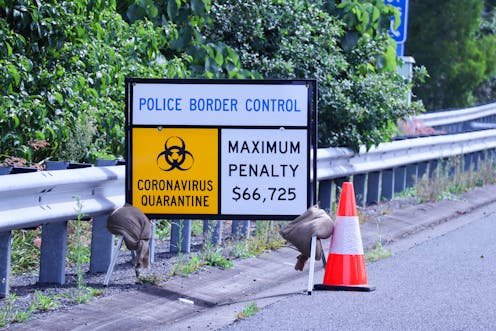
Our new research involved surveys and in-depth interviews with people who used drugs during the pandemic. They reported feeling targeted by police and even harassed while trying to access drug treatments – and years later, many still have fines they’re unable to pay.
This is not the case in Victoria. In June 2023, around 30,000 fines were outstanding in Victoria, and to our knowledge the situation hasn’t changed since then.
Feeling targeted
We know that people who use drugs already face increased police scrutiny in general, due to the criminalisation of drug use.
We conduct two long-term studies with people who use drugs in Victoria, which involves participating in an annual survey.
During the pandemic we asked additional questions about people’s interactions with police. Between March 2020 and May 2022, 1,130 participants responded to our survey.
Our new research found one in ten reported being stopped by police.
A third of these received at least one COVID-related fine – mostly for breaking curfews, failing to wear a face mask or breaching travel restrictions – a rate we calculated as nearly three times higher than the general population.
However, this is a crude estimate, as accurate data on the numbers of fines in the general population is not publicly available.
Of those who received fines, most were unemployed, more than a quarter were in unstable housing or homeless, and more than half had been to prison.
We also did in-depth interviews with 76 participants. Many told us they felt the pandemic gave police an “excuse” to target them, leading to serious and lasting effects on their lives.
Fined while accessing services
Interactions with police were described as fraught with discrimination and harassment. Participants reported being stopped, searched and fined while trying to go about their daily lives. This may be partly because their circumstances meant they were more likely to be using public spaces – and therefore were more visible to police.
Daniel, aged 41, was fined $1,652 for breaching COVID rules he told us he didn’t understand. He said:
it was so obvious they were looking for drugs – it felt like they were doing everything they could to find a reason to fine us.
For people who use drugs, accessing harm-reduction services and drug treatment programs (such as methadone to replace opioids) is vital to their health. Some participants told us they were fined while doing so, despite carrying medical exemptions.
Natasha, aged 39, was homeless. She said she was fined while travelling to a needle and syringe program, despite being within the permitted travel zone.
Police issued her a fine for leaving the home for non-essential purposes. Natasha found the situation absurd, asking “how can you be (fined for being) outside if you sleep outside?”
Ryan, aged 45, was fined $1,800 while collecting methadone. He described the encounter as “humiliating” and unnecessary, saying police appeared more interested in finding drugs than enforcing public health measures.
The financial and emotional toll
In our study, the financial burden of COVID fines was devastating.
Most could not afford to pay fines or lacked the confidence to navigate appeals processes to contest them, leading to further entanglement with the criminal legal system.
For example, Sally, who received multiple fines while collecting her methadone during the pandemic, said:
at the end of the day, they’re government authority and I’m a nobody – the chances of me winning would be slim to none.
As a result, unpaid fines for some reportedly led to court orders, some were arrested, and a few even reported serving prison time.
The emotional toll was equally severe, with feelings of being targeted and harassed by police further eroding their trust in public institutions.
The Conversation contacted Victoria Police about our study, noting participants thought police were using the pandemic as an excuse to target them.
In response, a police spokesperson said: “At the time officers were performing duties on behalf of the Chief Health Officer’s direction.”
The burden can be lifted
Public health responses should be designed to protect people, not punish them. As we move forward, it is crucial to address the lasting impacts of COVID fines.
Shelley Walker is the recipient of an ARC Discovery Early Career Award (project number DE240101056) funded by the Australian Government. The study presented in this article was funded by the National Health and Medical Research Council NHMRC (#2003255). The SuperMIX and VMAX studies are funded by the NHMRC; #545891, #1126090, #1148170)
Paul Dietze receives funding from the NHMRC and government and non-government organisations for the conduct of research into the impacts of alcohol and other drug use.
Lisa Maher does not work for, consult, own shares in or receive funding from any company or organisation that would benefit from this article, and has disclosed no relevant affiliations beyond their academic appointment.
I’m at the park with my daughter, who is jumping in and out of puddles, splashing, shrieking at me (Mum! Look what I can do!), as I read frantically, taking one-handed notes on my phone (Mum! Look at this!). Part of me wishes I could enjoy with her this moment of pleasure in movement. The other, more insistent part is thinking about this essay: where to start, what to say, how to sum up the extraordinary legacy of the book I’m re-reading, Virginia Woolf’s Mrs Dalloway, which this year marks 100 years since its first publication in 1925. How am I supposed to write about this book?
If you were to read a synopsis, it might seem like a book purely for an academic specialist (which, admittedly, I am). One day in London in June 1923, an ageing rich woman, Clarissa Dalloway, prepares to give a party. Across town, a shell-shocked Great War veteran, Septimus Warren Smith, loses his grip on sanity. Between them oscillate other characters: Clarissa’s former lover Peter Walsh, Clarissa’s husband Richard and daughter Elizabeth, Elizabeth’s tutor Doris Kilman, Septimus’s wife Rezia, and his doctors Holmes and Bradshaw.
Like that other modernist monument, James Joyce’s Ulysses (1922), Mrs Dalloway is explicitly quotidian. It follows ordinary people through ordinary activities on an ordinary day – shopping, walking in the park, riding the bus, going to appointments, mending a dress. As Woolf’s characters go about their day, scenes and impressions are filtered through their individual consciousnesses, threaded together with language, images and memories.
The novel opens with the famous line “Mrs Dalloway said she would buy the flowers herself”, a sentence remarkable for its banality, as well as for its commitment to the in medias res plunge into life that Woolf was so keen on. The iconic status of the line is demonstrated by the number of online parodies it inspires, perhaps only surpassed by William Carlos Williams’s poem This Is Just To Say, which has become a verified meme.
A new seam
On Good Friday 1924, Woolf wrote on a page of the manuscript she was drafting – then called “The Hours” – that “I will write whatever I want to write.” She could write whatever she wanted to write because she owned her own publishing house, The Hogarth Press. The actual press was in the basement of her suburban Richmond home.
Mrs Dalloway was the second of Woolf’s novels to be self-published in this way. Being a small-press publisher allowed her to experiment formally in ways that would have been impossible if she was working with a mainstream publisher. In A Writer’s Diary, she describes her process as both exploratory and technical. On August 30, 1923, she wrote: “I dig out beautiful caves behind my characters”. Later, in October 1924: “I practise writing; do my scales”.
I recently co-hosted a conference here in Hobart, which included a panel on contemporary Tasmanian experimental writing. The writers who spoke that day talked of the struggle to place work that pushed the boundaries of form and genre. A hundred years after Woolf’s efforts to unearth what she called a new “seam”, commercial imperatives continue to constrain writers and their work.
Despite Woolf’s refusal to compromise with mainstream tastes, Mrs Dalloway was well received. Her contemporaries recognised the novel’s importance immediately. “An intellectual triumph”, proclaimed P.C. Kennedy in the New Statesman; “a cathedral”, pronounced E.M. Forster in the New Criterion.
It sold moderately well: 1,500 copies within about a month of its publication on May 14 – more than her prior novel, Jacob’s Room, had sold in a year. Her biographer Hermione Lee records that in 1926 income from writing allowed Woolf and her husband Leonard to install a hot water range and toilet at their country home.
Woolf’s novel was revolutionary for its depiction of same-sex attraction and mental illness, as well as for its challenge to the novel form and representation of time. Clarissa remembers the jolt of desire she felt as an 18-year-old for her friend Sally Seton, who kisses her on the terrace of her house at Bourton:
the most exquisite moment of her whole life passing a stone urn with flowers in it. Sally stopped; picked a flower; kissed her on the lips. The whole world might have turned upside down! The others disappeared; there she was alone with Sally. And she felt that she had been given a present, wrapped up, and told just to keep it, not to look at it – a diamond, something infinitely precious, wrapped up, which, as they walked (up and down, up and down), she uncovered, or the radiance burnt through, the revelation, the religious feeling!
Clarissa, made “virginal” in middle age by illness and marital boredom, is surprised by this irrupting memory. She connects it to her sense of joy in life itself: “the moment of this June morning on which was the pressure of all the other mornings […] collecting the whole of her at one point”.
Clarissa and Septimus Smith – though they never meet – are shadow versions of each other. Both have beaky noses, thin pale birdlike bodies, and histories of illness.
Septimus, so capable as a soldier in the Great War, buries the trauma of seeing his commanding officer Evans killed, only to have it resurface in visual and aural hallucinations, of Evans behind the trees, and birds singing in Greek. He perceives, as Clarissa does, the burden of the past upon the present, and he suffers as a result of the coercion of the social system – what Woolf’s narrator ironises as the sister goddesses Conversion and Proportion.
“Worshipping proportion […] made England prosper”, because proportion forbids despair, illness, and emotional extremes. Conversion, the strong arm of Empire, “offers help, but desires power; smites out of her way roughly the dissentient, the dissatisfied”. Conversion “loves blood better than brick, and feasts most subtly on the human will”. Together, they suck the life from those who cannot or will not comply with them.
For Septimus, who has witnessed the dreadful disproportion of the war, ordinary social life becomes a torturous pressure cooker, a “gradual drawing together of everything to one centre before his eyes, as if some horror had come almost to the surface and was about to burst into flames”. A reviewer for the Times Literary Supplement emphasised this aspect of its experimentalism:
Watching Mrs Woolf’s experiment, certainly one of the hardest and very subtly planned, one reckons up its cost. To get the whole value of the present you must enhance it, perhaps, with the past.
Watching my daughter lark about is shadowed by the two surgeries she had in early childhood to correct her developmental hip dysplasia. I hear her screech with joy in the park, rocketing about freely; I hear her scream in pain in the hospital, encased in plaster from the midsection down. As Woolf knew, the past and the present are experienced within us simultaneously.
Doubled experience
“In this book I have almost too many ideas,” Woolf wrote in her diary on June 19, 1923. “I want to give life and death, sanity and insanity; I want to criticise the social system, and to show it at work, at its most intense.”
Woolf’s ideas have inspired scores of interpretations, focusing on time, space, reality, psychology, domesticity, history, sexual relations, politics, fashion, the environment, health and illness. She is now probably the most written-about 20th century English author. I can remember vividly first reading this novel as an undergraduate, after which I devoured Woolf’s revolutionary 1929 essay A Room of One’s Own, which criticised the educational, economic and social constraints that prevented women, in many instances, from writing anything at all.
Cover of the first edition of A Room of One’s Own (1929). Public domain.
Woolf, of course, could and did write. This was a function, as she knew, of her financial and class privilege. Feminist politics has progressed beyond Woolf, but she laid one of the foundation stones. In her fiction, she modelled a method of writing that critiques patriarchal thinking. She focuses our attention on overlooked individuals and their inner lives, and she splendidly undoes the Victorian conception of plot.
The same year Woolf published Mrs Dalloway, she also published her important collection of essays, The Common Reader. The first piece in that book, on the medieval letters of the Paston family, describes the illumination cast by these ordinary, non-literary pieces of writing:
Like all collections of letters, they seem to hint that we need not care overmuch for the fortunes of individuals. The family will go on, whether Sir John lives or dies. It is their method to heap up in mounds of insignificant and often dismal dust the innumerable trivialities of daily life, as it grinds itself out, year after year. And then suddenly they blaze up; the day shines out, complete, alive, before our eyes.
Mrs Dalloway encompasses this doubled experience of insignificance and blazing life. Woolf writes of the past emerging into the present day and the present’s capacity to reshape the past. In her diary, she called this her “tunnelling process, by which I tell the past in instalments, as I have need of it”.
In tunnelling through narrative, digging out caves behind her characters, Woolf flung out a lot of what seems to be dust – buying flowers, ogling girls, table manners and weight gain, advertising, letter writing, doctor’s appointments, eating eclairs in a department store cafe. The novel reminds us of these moments’ triviality, and their significance, through repeated reference to the bells and clocks of London striking the hour.
This is why the opening line – and the novel as a whole – is so remarkable. It catches drops of shimmering reality from moments that can so easily go unremarked. This, Woolf knew, was what writing needed to do: to stop time. As she wrote of the Pastons’ letters: “There is the ancient day, spread out before us, hour by hour.”
Her metaphor shows that Woolf’s thinking about time also had a spatial dimension. These two dimensions of space and time structure Mrs Dalloway’s theme and method, As David Daiches explained in his 1939 book The Novel and the Modern World, Woolf first links a series of different perspectives through a single shared moment in time – marked by the sound of the bells – then switches to an individual perspective, anchored in space, and moves through that individual’s memories.
Woolf wrote in her diary that “the caves shall connect and each comes to daylight at the present moment.” Daiches diagrammed these relations in time and space as a series of connected trees, arguing that they illustrated the novel’s concern with “the importance of contact and at the same time the necessity of keeping the self inviolable, of the extremes of isolation and domination”.
A legacy of inspiration
Since its publication, Mrs Dalloway has continued to inspire. For second-wave feminism, Woolf was a touchstone. Since the 1970s, she has enjoyed an unparalleled position in the history of 20th century letters, inspiring the recovery of other contemporaneous women writers connected with the Bloomsbury group.
Michael Cunningham’s The Hours, Robin Lippincott’s Mr Dalloway and John Lanchester’s Mr Phillips all appeared in the three years between 1998 and 2000, all of them reflecting Woolf’s legacy, tacitly or explicitly.
Because of the Oscar-winning film adaptation by Stephen Daldry, Cunningham’s novel is the most recognisable of these three. The Hours revises Mrs Dalloway through the stories of three women: Virginia Woolf herself; Laura Brown, a 1950s housewife who reads Mrs Dalloway; and Clarissa Vaughan, nicknamed Mrs Dalloway by her former lover Richard, for whom she throws a literary party.
Cunningham’s novel counterpoints, as Woolf did, the work of living with the work of art. The homemaker Laura Brown tries to bake a cake to equal a work of art, hoping “to be as satisfied and as filled with anticipation as a writer putting down the first sentence, a builder beginning to draw the plans.” Later, her delirious dying son Richard regrets what he views as the failure of his art to compete with simply living:
I wanted to create something alive and shocking enough that it could stand beside a morning in somebody’s life. The most ordinary morning. Imagine trying to do that. What foolishness.
More recently, Michelle Cahill’s Daisy & Woolf (2023) and Miranda Darling’s Thunderhead (2024) have wrestled with Mrs Dalloway the character, and with Woolf’s legacy. Darling’s novel revives a new “Mrs” Dalloway, Winona, a wealthy Sydney suburban writer, wife and mother, who struggles to break through “to something more real” than the constraint of middle class domestication.
Cahill’s Daisy & Woolf explores a minor character from Mrs Dalloway, whom Woolf failed to make properly live: Daisy Simmons, Peter Walsh’s Anglo-Indian fiancee. In Woolf’s novel, Daisy exists entirely offstage. She is a romantic memory of Peter’s, “dark, adorably pretty”. Daisy, writes Cahill, is
trapped in the past, in a moment, a vignette, but not the kind that would enter a room, open a window, to a life inside, a life in the mind, as it does for Clarissa with a squeak of hinges on the very first page of Mrs Dalloway! Not a real girl, Daisy, too arch perhaps, the air not stirring for her, seeing as she has no present tense.
Cahill’s present-day narrator Mina, writing back to Woolf, sees Daisy as a fully fleshed character: a mixed-race woman living in Calcutta in the twilight of Empire, as the Indian independence movement grows in strength. In recovering Daisy’s rich personal and political history, narrated through letters to Peter, Cahill reclaims interiority for this marginalised character.
In her 1937 essay Craftsmanship, the BBC broadcast of which is the only surviving recording of her voice, Woolf wrote: “Words, English words, are full of echoes, of memories, of associations.”
Mrs Dalloway shows us the ways that words can both connect and sever. Characters pass each other on the street, muse on a shared past, or witness the same event from different vantage points and through different filters of personality and psyche. As Hermione Lee explained, for Woolf “the really important life was ‘within’”.
Peter remembers Clarissa’s theory of life, which is expounded on top of a bus going down Shaftesbury Avenue:
She felt herself everywhere; not here here here; […] but everywhere. […] so that to know her, or any one, one must seek out the people who completed them; even the places […] since our apparitions, the part of us which appears, are so momentary compared with the other, the unseen part of us, which spreads wide, the unseen might survive, be recovered somehow attached to this person or that, or even haunting certain places, after death.
Late in the book, Septimus’s suicide is reported to Clarissa at the party. “Oh,” she thinks, “in the middle of my party, here’s death”. And in the middle of her party, Clarissa feels not only the disaster of death – “her disaster, her disgrace […] and she forced to stand here in her evening dress” – but the deep pulsing joy of life. “Nothing could be slow enough; nothing last too long.”
In certain lights – to paraphrase Michael Cunningham – Mrs Dalloway might look like the book of one’s own life, a book that will locate you, parent you, arm you for life’s changes. As an undergraduate, I was mesmerised by Woolf’s language and her grasp on the inner life.
Though Clarissa Dalloway is 52, Woolf turned 43 the year her novel was published. I’m turning 43 this year, too. Woolf, ravaged by long periods of illness and partially toothless, thought of herself as elderly. I do not, though I am no longer young. But to re-read this novel at this age reminds me to relish these long hours and short years: to sniff flowers, feel the lift of the gusting wind, jump and splash with my children, read the patterns made by the clouds. To seize the day.
Naomi Milthorpe does not work for, consult, own shares in or receive funding from any company or organisation that would benefit from this article, and has disclosed no relevant affiliations beyond their academic appointment.
Ecosystems and species across the natural world are in serious trouble. The vast majority of Australians want more government action, but it’s not being delivered.
Take, for example, the federal government commitment to end extinctions via its Nature Positive plan. Or consider its promise to overhaul Australia’s environmental legislation and create a new independent regulator. Progress on both hasfaltered.
The biodiversity crisis calls for systemic change in humanity’s relationship with nature. This requires bold policy action from governments. Our new research examined how everyday people can help achieve this.
We mined the insider knowledge of politicians, senior public servants and environmental advocates. The participants were Victoria-based, but their advice applies more broadly.
Here, we present a recipe for achieving real, lasting change for the natural world.
1. Be prepared for a long haul
Change can take a long time. Be willing and able to see out the process. As one government interviewee told us:
[Change] is not going to happen by one research paper, one meeting, one event, it’s gonna be a whole range of things over a sustained period of time.
Also, find support. Our interviewees told us the most successful campaigns often happen when like-minded individuals band together. This provides the social support needed to stay the course.
Remember, change is possible. As one government interviewee told us, this is especially true in marginal seats, where “constant ongoing campaigning at every level” can shift the dial.
There is very likely a community group advocating for nature near you. These groups sometimes link up with larger, better-funded environment groups, to access their resources and networks.
Identify who you need to influence. The person holding the lever might not be a politician, but a public servant. Or public servants might rally for a cause internally, sometimes partnering with community groups.
So how do you find this key person? Build your networks. Start talking to people in your community and get to know your local elected representatives. Find out what they care about and pitch your message to appeal to their values and concerns.
One interviewee told us community groups would benefit from knowing more about how the system works:
What are the bits that can actually change? […] Community members can be a bit aggressive in trying to drive through their challenge without understanding why they’ve been ignored in the past, or feel that they’ve been ignored.
As another government interviewee told us:
People don’t see how much power they have if they just use their voice and use it in a constructive way.
3. Be strategic
Choose whether to work with the government, or challenge it publicly.
Environmental advocates can work alongside government to design solutions together. For example, a community group might work with their local council to design and implement management of a bush reserve. Big non-government environment groups often work in this way, relying on strong relationships with government insiders to achieve change.
The opposite strategy is an “outsider” approach, which, at the extreme end, might include physically disrupting industry. Think chaining yourself to a tree in a forest pegged for logging or ramming a ship into a commercial whaling vessel.
A less extreme outsider approach might be seeking to get your issue into the media to build public interest to get something on the political agenda.
Both approaches have their merits in the right context. As one staff member of an environment group told us:
We’re going to put on the suits […] and we’re not going to scale their buildings and release confidential information that they’ve given us to the media […] I don’t judge those that have that theory of change, because we need both, we need the really extreme advocacy to make us look mainstream and medium and reasonable.
4. Seize the moment
Identify when your advocacy might be most effective. It might be an upcoming election or budget, or when a policy is being reviewed.
Or it might be something less predictable, such as a bushfire, flood or other environmental disaster. In those cases, nature conservation issues are suddenly all over the media. It might be a chance for real change.
Effective advocates know how to identify, create, and be prepared for these windows. As one staff member at an environmental group told us:
Some organizations talk about making change. But that’s a harder exercise. Often it’s a sort of a
catching a wave of something else, or waiting for the opportunity.
The upcoming federal election is one such opportunity. The lead up is a good time to advocate for nature. Speak with your local politician and their competitors about the change you want to see.
If not us, who?
These are well-tested, effective actions you can use to achieve positive policy change for the environment. But remember, the system is dynamic. New methods and approaches will emerge as technologies, modes of communication and other factors evolve.
Governments, however, are a permanent fixture in the system. They stand to benefit politically by engaging with community and advocacy groups. So there is enormous potential for everyday people to genuinely make a difference.
Environmental crises can seem overwhelming, but we can – and must – try to make a difference. Because, as the old adage goes: if not us, who? And if not now, when?
The authors acknowledge Fern Hames and Kim Lowe for their contributions to this article.
Lily van Eeden receives funding from the Australian Research Council. Lily was previously employed by the Victorian government.
Liam Smith is a Councillor on the Biodiversity Council.
Sarah Bekessy receives funding from the Australian Research Council, the National Health and Medical Research Council, the Ian Potter Foundation and the European Commission. She is a Lead Councillor with The Biodiversity Council, a board member of Bush Heritage Australia, a member of the WWF Eminent Scientists Group and an advisor to ELM Responsible Investment, the Living Building Challenge and Wood for Good.
This rhetorical and ideological vagueness obscures a pivotal point: there is no such thing as a singular form of democracy.
The ACT Party is behind both bills, and its leader David Seymour has also justified the Treaty Principles Bill – now before select committee – as upholding and protecting democracy. He asks, “are we a modern democracy where all citizens have equal rights?”.
But democracy takes various forms, and has done for millennia. Derived from the Ancient Greek “demos” (people) and “kratos” (power or rule), the word broadly means “rule by, or power of, the people”. And this can be realised in a number of ways.
The classical Greek form was direct democracy, also known as deliberative or participatory democracy. This involved male citizens participating equally and directly in political decisions.
In contrast, the ancient Roman form was indirect, representative democracy. Representatives elected by eligible citizens made decisions on their behalf. This was the basic model enacted in the 1852 New Zealand Constitution Act, as in most modern democracies.
Other models exist, too. But the point is that democracy is an evolving concept. It’s wrong to assert that any type of governance or decision-making other than our existing system of representative democracy (one person, one vote, underpinned by the rule of law) is undemocratic or anti-democratic.
Tyranny of the majority
Many of the political mechanisms the current government wishes to dismantle – such as Māori wards and consultation processes – were established because of the problems associated with representative democracy.
It is widely accepted that political representation should reflect the different characteristics of a community. But what has been called the “tyranny of the majority” can lead to minorities being constantly outvoted.
Unable to gain representation in proportion to their population, their interests are excluded. In short, it is entirely possible for democracy to be applied in ways that promote inequality rather than equality.
The common interpretation of equality as meaning “sameness” – everybody receiving the same resources and opportunities – underlies the insistence that laws and policies must be applied regardless of individual and group difference. Anything else is unfair or “special” treatment.
However, these assertions overlook the bias of our institutions towards members of the dominant or majority culture, and the unequal outcomes (in health and elsewhere) for Māori people that have resulted in marginalisation and disadvantage.
Correcting that imbalance is a political challenge. As others have argued, “protecting minority rights is an equal characteristic of genuine democracy”.
Contentious legislation: the hīkoi (protest march) against the Treaty Principles Bill arrives at parliament, November 2024. Getty Images
Tino rangatiratanga and democracy
The term “equity” refers to this recognition of the inequalities that exist between people. Where these inequalities are avoidable and unfair, resources and opportunities need to be allocated to reach an equal outcome.
For Māori, the unfairness extends beyond unequal health and other socioeconomic outcomes. It involves the disregarded guarantees pledged by the Crown in te Tiriti o Waitangi/Treaty of Waitangi in 1840.
These included Māori rights of self-determination, or tino rangatiratanga, which is the source of so much contemporary debate.
Tino rangatiratanga challenges the singular base of power assumed by the Crown, and a “one size fits all” system of representation. But despite claims to the contrary, others argue upholding tino rangatiratanga is entirely possible within the realms of democracy.
The idea of “rule of and by the people” may take many forms, as the work of Matike Mai, the Independent Working Group on Constitutional Transformation, tries to demonstrate.
In proposing constitutional change, Matike Mai describes a sphere of influence based on the Māori-Crown relationship where “conciliatory and consensual democracy” operates.
Difference and equity
It has been argued that te Tiriti is “of its time” and should therefore be subject to reinterpretation. And yet the same argument is rarely made about notions of democracy and equality that have been with us since 1852.
This is relevant to many communities which experience avoidable and unfair health and social inequalities, not only Māori.
In September last year, a Cabinet Office circular required public sector agencies to ensure “services are not arbitrarily allocated on the basis of ethnicity or any other aspect of identity”.
On the face of it, this is a call for fair and equal treatment based on need. But the language suggests difference is about how an individual chooses to identify, rather than how their identity and circumstances cause them to be treated differently in the first place.
As long as this is the case, those differences and their associated needs will always be underserved.
Annabel Ahuriri-Driscoll does not work for, consult, own shares in or receive funding from any company or organisation that would benefit from this article, and has disclosed no relevant affiliations beyond their academic appointment.
Source: The Conversation (Au and NZ) – By Natasa Gisev, Clinical pharmacist and Scientia Associate Professor at the National Drug and Alcohol Research Centre, UNSW Sydney
However, there are no new safety concerns when paracetamol is used as directed. And children’s products are not affected.
What is paracetamol?
Paracetamol is commonly sold under brand names such as Panadol, Dymadon and Panamax. It’s used to treat mild pain and fever for short periods or can be prescribed for chronic (long-term) pain.
Millions of packs of this cheap and accessible medicine are sold in Australia every year.
Small packs (up to 20 tablets) have been available from supermarkets and other retailers such as petrol stations. Larger packs (up to 100 tablets) are only available from pharmacies.
Paracetamol is relatively safe when used as directed. However, at higher-than-recommended doses, it can cause liver toxicity. In severe cases and when left untreated, this can be lethal.
Why are the rules changing?
In 2022, we wrote about how the Therapeutic Goods Administration (TGA) was considering changes to paracetamol access because of an increase in people going to hospital with paracetamol poisoning.
An expert review it commissioned found there were about 40-50 deaths every year from paracetamol poisoning between 2007 and 2020. Between 2009-10 and 2016-17, hospital admissions for this increased (from 8,617 to 11,697), before reducing in 2019-20 (8,723). Most admissions were due to intentional self-poisonings, and about half of these were among people aged ten to 24.
After the report, the TGA consulted with the public to work out how to prevent paracetamol poisonings.
Options included reducing pack sizes, limiting how many packs could be bought at once, moving larger packs behind the pharmacy counter and restricting access by age.
Responses were mixed. Although responses supported the need to prevent poisonings, there were concerns about how changes might affect:
people with chronic pain, especially those in regional areas, where it may be harder to access pharmacies and, therefore, larger packs
people on limited incomes, if certain products were made prescription-only.
Although deaths from paracetamol poisoning are tragic and preventable, they are rare considering how much paracetamol Australians use. There is less than one death due to poisoning for every million packs sold.
Because of this, it was important the TGA addressed concerns about poisonings while making sure Australians still had easy access to this essential medicine.
If you buy large packs of paracetamol for chronic pain, you’ll need to go to the pharmacy counter. StratfordProductions/Shutterstock
So what’s changing?
The key changesbeing introduced relate to new rules about the pack sizes that can be sold outside pharmacies, and the location of products sold in pharmacies.
From February 1, packs sold in supermarkets and places other than pharmacies will reduce from a maximum 20 tablets to 16 tablets per pack. These changes bring Australia in line with other countries. These include the United Kingdom, which restricted supermarket packs to 16 tablets in 1998, and saw reductions in poisonings.
In all jurisdictions except Queensland and Western Australia, packs sold in pharmacies larger than 50 tablets will move behind the pharmacy counter and can only be sold under pharmacist supervision. In Queensland and WA, products containing more than 16 tablets will only be available from behind the pharmacy counter and sold under pharmacist supervision.
In all jurisdictions, any packs containing more than 50 tablets will need to be sold in blister packs, rather than bottles.
Several paracetamol products are not affected by these changes. These include children’s products, slow-release formulations (for example, “osteo” products), and products already behind the pharmacy counter or only available via prescription.
What else do I need to know?
These changes have been introduced to reduce the risk of poisonings from people exceeding recommended doses. The overall safety profile of paracetamol has not changed.
Paracetamol is still available from all current locations and there are no plans to make it prescription-only or remove it from supermarkets altogether. Many companies have already been updating their packaging to ensure there are no gaps in supply.
The reduction in pack sizes of paracetamol available in supermarkets means
a pack of 16 tablets will now last two days instead of two-and-a-half days if taken at the maximum dose (two tablets, four times a day). Anyone in pain that does not improve after short-term use should speak to their pharmacist or GP.
For people who use paracetamol regularly for chronic pain, it is more cost-effective to continue buying larger packs from pharmacies. As larger packs (50+ tablets) need to be kept out of sight, you will need to ask at the pharmacy counter. Pharmacists know that for many people it’s appropriate to use paracetamol daily for chronic pain.
Natasa Gisev receives funding from the National Health and Medical Research Council.
Ria Hopkins receives funding from the National Health and Medical Research Council.
As January lingers on, families may find themselves struggling with what a friend of mine has labelled the “electronic nanny”.
Children have been out of their normal routines for weeks during the holidays. Some are still yet to go back to school. Meanwhile, parents are back at work and needing to juggle those commitments with bored kids.
How can families encourage healthy screen use as we ease back into the routine of a new school year?
Parental monitoring recommended
While screen use guidelines provide time limits, there is now a broader move among experts towards “curation over duration”.
This means it matters what children are watching – not simply how long they are watching it for.
Is the content age-appropriate? Is it educational or inspiring? Has it been well-reviewed)?
This means parents should play an active role in what content kids are viewing or engaging with. An easy way to do so is to view with children, or at a minimum be present in the same room and alert to what they are watching.
When you are “interactive co-viewing”, you not only watch together, you also discuss the content. This helps children engage with what they are watching and then make connections off-screen.
For example, if you are interested in a sea creature you see on Octonauts, you could go and find a book about it in the local library. Or you could discuss a moral dilemma you see on SpongeBob SquarePants: should SpongeBob have quit his job after another chef was mean about his cooking?
For older children, you could discuss plot points in films or strategies in games.
If possible, try to watch programs with your child and talk about what you are watching. Kevin Woblick/ Unsplash, CC BY
There are also lots of ways to use screens that can build skills and encourage critical thinking and creativity. Some things to try include:
producing a short film, or stop-motion animation, all the way from idea, to script, shooting and editing
taking and editing photos to make a calendar
exploring an area of interest, such as dinosaurs, the Titanic or ballet dancing, using sites such as ABC Education or PBS LearningMedia.
investigating generative artificial intelligence (AI). For example, test the capabilities of ChatGPT by asking it a question your child knows the answer to, and evaluating the response together. Does it contain all the relevant information? Is it fair and balanced?
exploring how easy it is to edit an image, and consider what this tells us about the potential for online misinformation.
Research shows interactive screen use – such as playing games or using educational apps – is more beneficial for kids than just passively viewing content. It can can even support literacy, numeracy and academic persistence.
You can also use screens to encourage physical activity. For example, these holidays, my little ones have enjoyed “shaking their sillies out” with dance-along videos by Danny Go!. They have also done “yoga in space” with Cosmic Kids.
Older kids may enjoy the dance fitness program Zumba, boxing or sports competitions on the Nintendo Switch.
It’s also important for kids to see parents doing things other than using phones and other screens when they have downtime. Parents play a powerful role modelling time away from screens.
Make sure your kids see you enjoy offline activities too, such as reading, playing sport and socialising. If you are struggling to do this as a family – and we all know it is is hard – think about revisiting some of the old standards. You could:
And remember, you are certainly not the only family telling your kids “this is the very last episode”. If today has been a struggle, take tomorrow to recharge and reconnect as a family. Screens are part of our lives today, and we are all striving to find balance.
Jennifer Stokes does not work for, consult, own shares in or receive funding from any company or organisation that would benefit from this article, and has disclosed no relevant affiliations beyond their academic appointment.
Gaming is no longer a niche activity reserved for a select few – it’s a global pastime enjoyed by people of all ages, backgrounds and interests. In fact, studies show 81% of Australians engage in some form of gaming.
But for those who don’t consider themselves “gamers”, it can be hard to know where to start. The idea of picking up a complex, console-focused title might feel intimidating.
But fear not. Whether you’re looking for a game that’s mentally stimulating, addictive enough to help kill time, or simply something everyone can enjoy, there are plenty of options. Here are our top picks for beginners.
1. Real Bird Fake Bird
Since Wordle’s meteoric rise in 2022, we’ve seen a wave of daily browser games, including Tradle, Vulture’s Cinematrix and the New York Times’ Connections.
The Melbourne-based developers behind the critically acclaimed Scrabble-esque Gubbins have created the newest addition to this list: Real Bird Fake Bird.
The premise is simple. Each day you’re given a topic, and are supposed to guess whether seven different things are “real” or “fake” examples of that topic. For instance, Adele is a real example of a Grammy winner, but “sun condemnation” is a fake example of a yoga pose.
Sounds simple, right? It’s harder than it seems. The lists often have devilish examples of fakes that seem real, and real things that seem fake, leaving you second-guessing.
And just like with Wordle, you can share your score with friends once you’ve made all seven guesses. It’s a great way to spend a minute of your day.
You can share your Real Bird Fake Bird score with your friends. Studio Folly
Then there’s a hypnotic re-imagining of the card game poker, Balatro, (playable everywhere).
Each round involves playing poker hands to hit a points target, but these hands can be upgraded and augmented by a deck of “jokers” that favour particular poker hands or combinations of cards. Hands swiftly ascend to scoring tens of thousands (if not millions) of points per hand, in a near-perfect gameplay loop that combines card-game logic with the immersive flow of games like Tetris.
Balatro, largely developed by a single, anonymous developer, was one of 2024’s biggest hits. It sold more than 3,500,000 copies, won best indie game and best mobile game at the Game Awards 2024, and even secured a surprise nomination for game of the year.
This is the gaming equivalent of an anonymous independent filmmaker getting a nod for Best Picture at the Oscars.
3. The Case/Rise of the Golden Idol
This recommendation is targeted at mystery lovers. If you, or someone you know, can’t get enough of films like Knives Out (2019) or mystery books like The Thursday Murder Club, then the Golden Idol series (2022 and 2024) may be the perfect fit.
Each level shows the moment of a crime and it’s up to the player to interact with the characters and environment to fill in the blanks on a file explaining what happened.
With simple controls and a retro art style recalling the classic LucasArts adventure games, much of the joy in the Golden Idol games comes from the devious logic puzzles the cases provide.
One case revolves around placing the locations of all the house guests at an estate party, while another involves interpreting an entire language made out of dance moves. Combine these puzzles with a delightful sense of humour and a slightly mystical meta-narrative and these games will keep your inner detective occupied for hours.
The original and sequel are both Netflix games, and are available through Netflix on mobile and tablet.
4. Mouthwashing
Heavily inspired by the films Alien (1979) and The Shining (1980) – and not for the faint-of-heart – Mouthwashing (2024) is perfect for horror fans who want to dip their toes into the gaming world.
The cargo spaceship Tulpar is deliberately crashed by its captain mid-voyage. Unable to call for help, its five crew members can do nothing but wait for rescue. They open the hold in search of food or medicine, but instead find millions of bottles of mouthwash. Lost in space with minimal supplies, the crew begin to turn on each other – and wonder why their beloved captain crashed the ship in the first place.
A haunting story of human fallibility, Mouthwashing tells its tale through “walking sim” gameplay: the player simply wanders around the wreck of the Tulpar, interacting with objects and characters, without any complicated controls.
With a compelling cast, gorgeously surreal art direction and a focus on dread and despair (rather than jump scares), Mouthwashing is a wonderful introduction to the renaissance happening in horror games right now.
For those who have endless bird facts on hand, can identify a bird at a glance and look forward to the Aussie Bird Count each year, Wingspan is the perfect game.
The goal of this competitive, card-driven board game (which also has a videogame version) is to attract the best birds to various habitats by gathering food and laying eggs. Each player also has a randomly determined individual goal, which they can use to score extra points, making Wingspan very re-playable.
The best aspects of the game include the beautiful art and the delightful facts on each bird card. There is even an Oceania expansion, so you can gather and admire Australian birds, too!
Wingspan is a relaxing and captivating strategy card game about birds. Steam
Although Wingspan was released in 2018, last year its publisher, Stonemaier Games, also released Wyrmspan – a spiritual successor which focuses on hatching dragons instead of birds. Wyrmspan is more complex than Wingspan, though, and offers a steeper learning curve for less-experienced board game players.
Acknowledgement: we would like to acknowledge the contributions of Mads Mackenzie to this article, director of the upcoming game Drăculești and co-director of the Freeplay Independent Games Festival.
Marcus Carter is a recipient of an Australian Research Council Future Fellowship (#220100076) on ‘The Monetisation of Children in the Digital Games Industry’. He has previously received funding from Meta, TikTok and Snapchat, and has consulted for Telstra. He is a current board member, and former president, of the Digital Games Research Association of Australia.
Taylor Hardwick is employed under funding by the Australian Research Council (Future Fellowship #220100076; DECRA #240101275). She is a board member of Freeplay, a Melbourne-based independent games festival.
Finn Dawson and Ryan Stanton do not work for, consult, own shares in or receive funding from any company or organisation that would benefit from this article, and have disclosed no relevant affiliations beyond their academic appointment.
Palestinian politician, MP and activist Khalida Jarrar . . . AFTER being jailed by the Israeli military and released last Sunday as part of the ceasefire deal. Image: www.solidarity.co.nz
COMMENTARY:By Eugene Doyle
Watching footage of Palestinian parliamentarian and hostage Khalida Jarrar emerge from Israeli captivity was jarring — a far, muffled cry from the sense of happiness and relief most of us felt seeing the young female Israeli soldiers released by Hamas around the same time.
What a study in contrast.
Khalida was clearly emaciated, traumatised and had turned, in the same period of time, from a powerful dynamic woman into a fragile, elderly human being who moved with difficulty.
What a difference it makes who holds you captive. It goes without saying I didn’t see this on any mainstream news outlet.
In a previous period of imprisonment — for being a member of the PFLP, a proscribed organisation — the Israelis wouldn’t even allow Khalida Jarrar to attend the funeral of her own daughter.
Instead she sent a message that was read at Suha’s funeral in 2021:
I am in so much pain, my child, only because I miss you. I am in so much pain, my child, only because I miss you.
From the depths of my agony, I reached out and embraced the sky of our homeland through the window of my prison cell in Damon Prison, Haifa. Worry not, my child. I stand tall, and steadfast, despite the shackles and the jailer. I am a mother in sorrow, from yearning to see you one last time.
Suha, my precious.
They have stripped me from bidding you a final goodbye kiss. I bid you farewell with a flower. Your absence is searingly painful, excruciatingly painful. But I remain steadfast and strong, Like the mountains of beloved Palestine.
No mainstream coverage I searched online and found no mainstream outlet had covered Khalida’s release amid the flood of stories about the Israeli hostages. A search to see if Australian or New Zealand MPs had called for the release of their fellow legislator netted zero results.
To them, she is no doubt a non-person. Yet, Khalida Jarrar is a leading political activist and one of dozens of legislators imprisoned by the Israelis. She endured. She remained steadfast.
“The entire system of political imprisonment is based on suppressing Palestinian organising,” said Charlotte Kates, coordinator of Samidoun, the Palestinian Prisoner Support Network.
The four female Israeli “Offence” Force (IDF) soldiers, according to all the many images and reports, were fit, happy and well-fed after their 15 months in Hamas captivity.
The four female IDF soldiers, according to all the many images and reports, were fit, happy and well-fed after their 15 months in Hamas captivity. Images: Al Jazeera/www.solidarity.co.nz
In contrast Palestinian prisoners typically had lost 16kg by the time they were freed. The Israelis with all the food and resources in the world made a policy — an actual policy — of mistreating prisoners, reducing food to a minimum, often beating them, finding perverse ways to humiliate them and on many occasions sexually assaulting men, women, boys and girls who had been dragged into their custody without charge.
Many, an unknown number, died at their hands.
Israeli Minister of National Security, Itamar Ben-Gvir, called months ago for legislation to allow the execution of Palestinian prisoners “with a shot in the head” and said he would provide minimal food to them until the law was enacted. I couldn’t find a single Western leader who called for him to be arrested.
Our media has a lot to answer for — for what was done to the thousands of Palestinian hostages because of its starring role in silencing Palestinian voices and hiding from view the realities of the Israeli prison system. Thousands were never charged with any crime — other than being Palestinian.
Entire congregations in mosques, groups of people in refugee centres, were indiscriminately swept up and tossed into Israeli concentration camps.
Were future historians to look back on these times and only have the mainstream media to go by, they would have lots of wonderful photos of the Israeli hostages, know them by name, see family hugs, biographical details, and listen to interviews with friends and relatives. In contrast, the Palestinians would turn towards History and we would see blank faces, erased of personality, all the detail of their stories rubbed out.
That’s why it is imperative to find better sources of news and information, like Middle East Eye, Palestine Chronicle, Electronic Intifada and Pearls & Irritations, that can enrich our understanding of our times and the experience of the victims of Western genocidal violence.
In his excellent article “The Other Hostages”, human rights lawyer Jonathan Kuttab says: “From the Palestinian perspective: there are about 13,000 Palestinian prisoners and detainees in Israeli jails who are just as worthy of our concern and also merit our sympathy, and whose families will rejoice at their long-awaited release.”
Turning a blind eye to Israeli mistreatment of prisoners — and the mainstream media bias in favour of all things Israeli — goes back decades. But let’s look at the months since October 7th.
No fact-checking All the mainstream media and servile politicians raced to report without fact-checking the lies the Israelis and Americans, including President Biden, told about beheaded babies and mass rapes. Few had the decency to walk back the calumnies even after official retractions and international investigations disproved them.
Within a month of October 7, eight BBC journalists wrote to Al Jazeera saying “the corporation is failing to humanise Palestinians . . . investing greater effort in humanising Israeli victims compared with Palestinians, and omitting key historical context in coverage.”
CNN staff told British colleagues last year that their network’s pro-Israel slant amounts to “journalistic malpractice”.
Hats off to Novara Media, one of the larger alternative news and analysis platforms for its exposure of bias. What they found was that Palestinians are “killed” whereas Israelis are “massacred” or “slaughtered”.
Checking over 1000 articles by the UK’s supposedly progressive, left-leaning outlets — The Guardian, The Independent, Daily Mirror – Novara found that “all three publications favoured Israeli lives, narratives and voices.”
Taking a list of emotive words they cross-checked and found that 77 percent were about violence against Israelis and only 23 percent about Palestinians. Well over 95 percent of victims of violence are Palestinians, 100 percent of land thefts are by Israelis. Facts matter.
Journalism ‘used’ for racist war crimes This is journalism being used in the service of racist war crimes, used to normalise the mistreatment of prisoners and other Palestinian untermenschen.
In the case of The Independent, it ran 70 stories on Israeli hostages (who at peak numbered about 250) and just one story on a Palestinian hostage (they number over 10,000).
British journalist Owen Jones deserves a medal for reports like: “BBC in Civil War over Gaza.” The report details the efforts of journalists within the organisation to deliver more balanced coverage but the extent to which those efforts are thwarted by powerful pro-Israel operatives within the corporation who ensure “systematic pro-Israel propaganda at the corporation.”
Palestinian lawmaker Khalida Jarrar (centre) with her daughter Suha. This story appeared in Electronic Intifada. Its author Ali Abunimah was arrested in Switzerland this week to prevent him giving a speech. Image: www.solidarity.co.nz
“This unprecedented slaughter could not have happened without powerful cheerleaders,” Jones said in a recent piece about media co-conspirators with Israel in the genocide. “Hold them to account.”
Damn right. I pray to whatever gods may be that justice will one day be served on all those who by their actions or by their “journalism” allowed these crimes to be committed.
I’ll give the last word to Khalida Jarrar as I wish her a full and speedy recovery:
“All I wanted was to bid my daughter a final farewell – with a kiss on her forehead and to tell her I love her as much as I love Palestine.”
When Peter Dutton was asked this week whether a Coalition government would continue to foster trade relations with China, he declared unequivocally that “the relationship with China will be much stronger than it is under the Albanese government”.
Two points stood out: Dutton’s own positive rhetoric, and his apparent confidence about the future of Australia-China relations.
It’s not unusual for opposition leaders to undertake a makeover, to their person or policy, as an election approaches. Anthony Albanese lost weight and acquired new glasses. Earlier, he’d made Labor a small policy target.
Dutton is simultaneously attempting a softening on some fronts – while retaining the “hard man” image on others.
Mid-last year Dutton said: “I’m pro-China and the relationship that we have with them. I want that trading relationship to increase. […] We need to make sure we strengthen the trading relationship because there are many businesses here who rely on it. But we have to be realistic about working to keep peace […] we live in a very uncertain time. The Prime Minister also says that we live in the most precarious period since the Second World War, and he’s right, and we need to work hard at peace as well.”
Contrast Dutton as defence minister in 2021. “Does the Chinese government wish to occupy other countries? Not in my judgement. But they do see us as tributary states. And that surrender of sovereignty and abandonment of any adherence to the international rule of law is what our country has fought against since Federation.”
It’s not that Dutton has changed his views on China. Rather, he’s camouflaged them with a softer tone, and in what he chooses to emphasise. Of course circumstances have changed – Australia now has a much better relationship with China. But significantly, Dutton needs to appeal to the local Chinese-Australian voters.
At the 2022 election, the Liberals took a big hit among voters of Chinese heritage.
The party’s review of its election performance, undertaken by former party director Brian Loughnane and frontbencher Jane Hume, said: “In the top 15 seats by Chinese ancestry the swing against the Party (on a 2PP basis) was 6.6%, compared to 3.7% in other seats. There are more than 1.2 million people of Chinese heritage living in Australia today. Rebuilding the Party’s relationship with the Chinese community must be a priority during this term of Parliament.”
Marginal Labor seats that are targets for the Liberals, where the Chinese vote is significant, include Reid and Bennelong in NSW and Chisholm and Aston in Victoria.
Dutton (and the PM) will attend a Lunar New Year celebration in Box Hill in Melbourne this weekend.
It’s notable that David Coleman, named by Dutton last weekend as the opposition’s new spokesman on foreign affairs, has worked extensively with the Chinese community. One of the contenders for the post was the high-performing James Paterson. There may have been stronger arguments for keeping Paterson in home affairs, but his very hawkish stand on China might have been in the mix.
Talking up the positive side of the Coalition’s record on China, Dutton harked back to the signing of the free trade agreement under the Abbott government, and said “we want there to be mutual respect in the relationship”.
Over its years in government the Coalition’s relationship with China has varied between pragmatic friendship and suspicious negativity. After relatively smooth sailing in the Abbott period, things soured when the Turnbull government called China out over foreign interference, introducing legislation, and banned Huawei from the 5G network. Then relations plunged dramatically when the Morrison government demanded an inquiry into the origins and handling of the outbreak of COVID in Wuhan.
Despite Dutton’s confidence, it’s more than possible that managing the China relationship after the election could be trickier than it has been during this one, no matter who is in power.
The Albanese government can claim the greatly-improved bilateral relationship as one of its major foreign policy achievements. China has brought Australia out of the deep freeze, lifting the $20 billion worth of trade barriers it had imposed. Dialogue and ministerial exchanges have resumed. Anthony Albanese has been welcomed in China.
But this week’s speculation relating to the new Chinese artificial intelligence platform DeepSeek is just the latest reminder of perennial security suspicions about the penetration of Chinese technology.(Incidentally, Dutton has an account on the Chinese-owned TikTok – despite it being banned from official government devices – in part to engage with the local Chinese community, as well as with younger people generally.)
Australia’s minerals industry is potentially vulnerable to Chinese displeasure. The Senate in the next fortnight will consider the government’s Future Made in Australia legislation, that provides a tax incentive for processing critical minerals. The Chinese have a global stranglehold on this processing – and have shown a willingness to weaponise it, for example against Japan. China’s multi-billion dollar funding of nickel processing in Indonesia has had a dire impact on producers here in Australia.
The change of government in Australia certainly facilitated the improvement in the bilateral relationship, but that improvement was also strongly driven by China’s own interests. Similarly, the future of the relationship is more in China’s hands than in Australia’s.
China expert Richard McGregor, from the Lowy Institute, says:“ Relations with China are inherently volatile.
“The day-by-day relationships have returned to a degree of normality. But all of the structural stresses which created antagonism are still there.”
These include China’s “military assertiveness in the region, competition between the US and China, Australia’s concern about foreign interference and hacking, China’s efforts to build their power in the Pacific at the expense of Australia. None of that has gone away,” McGregor says. The single biggest change of recent years “is that “China has become much more powerful and is far more willing to throw its weight around”.
Separate to any hiccups in the bilateral relationship, Australia could find itself caught in the crossfire if there is a serious deterioration in the US-China relationship under Donald Trump – notably if his tariff policy leads to a trade war. Simon Jackman, from the University of Sydney, warns that if US policy hit the (already struggling) Chinese economy, that would affect Australian exporters.
“US tariffs or import bans that slowed China’s economy would cause some short to medium headaches for Australian exporters,” Jackman says. “As in Trump Mark 1 and COVID, Australian export industries would find themselves looking for opportunities elsewhere, if global supply chains had to re-equilibrate in response to an upheaval in the US-China trade relationship.”
Ironically, the earlier search for diversified markets when the Chinese imposed their restrictions on Australian producers would have helped prepare exporters for such a contingency.
Michelle Grattan does not work for, consult, own shares in or receive funding from any company or organisation that would benefit from this article, and has disclosed no relevant affiliations beyond their academic appointment.
Mike Burgess, head of the Australian Security Intelligence Organisation, has issued a stark warning following the discovery of explosives in a caravan in northwest Sydney, alongside a note bearing the address of a Sydney synagogue.
We have seen a disturbing escalation in the targeting of Jewish interests, and a disturbing escalation in the severity and recklessness of the targeting.
In response to the recent spate of antisemitic incidents in Sydney – which include a childcare centre being set alight and graffitied – NSW Premier Chris Minns has also pledged to strengthen the state’s hate laws.
Changes to these laws would bring NSW in line with other states. However, they will have limited impact on a serious social problem. Both nationally and in the states, many existing laws can be used to prosecute people for these crimes, including incitement to violence on the basis of religion, race or ethnicity.
Responding quickly to the growing crisis around antisemitic attacks is understandable, but greater long-term investments must also be made to prevent extreme, hateful beliefs from developing in our communities in the first place.
What crimes are being committed?
Different laws can be triggered depending on the nature of a particular offence.
Other hateful acts can be charged as arson, property damage or serious vilification.
For conduct to be treated as terrorism, it must be done for the purpose of advancing a political, religious or ideological cause.
Extreme right-wing or neo-Nazi beliefs can certainly satisfy this. But whether an individual case will be treated as terrorism depends on whether there is enough evidence of an underlying ideological motive.
Serious vilification offences apply when someone incites others to cause harm on the basis of race, religion, sexuality or gender identity.
Both nationally and in the states, new offences also apply for displaying Nazi symbols. Neo-Nazis who were arrested after a march in Adelaide this month, for example, were charged with various offences, including failing to cease loitering and displaying a Nazi symbol.
The biggest change would be to section 93Z of the NSW Crimes Act.
Section 93Z is a serious vilification offence, but it applies only to the incitement of violence. Equivalent offences in other states are broader because they also include incitement to hatred, serious contempt or severe ridicule.
In Queensland, this requires threats or inciting threats of physical harm. In Victoria, changes likely to pass in parliament soon would remove a similar harm requirement.
In NSW, vilification on broader grounds is still unlawful, but it falls under civil law. Complaints can be made to Anti-Discrimination NSW and this may lead to lawsuits and potential compensation – but not criminal prosecution.
It makes sense for NSW to match section 93Z to equivalent laws in other states. But this would go against the very recent recommendations of the NSW Law Reform Commission.
In its report last November, the commission concluded that strengthening laws is not always the best way to address underlying social issues. It said the low prosecution rate for section 93Z could be explained by police preferring other, more serious offences for these types of crimes.
Still, it appears Minns may go ahead with the reforms, saying an antisemitic attack “begins with hateful, racist language”.
If I can stop it at its source with changes to the law, that’s exactly what we’ll do.
Would these changes make a difference?
The proposed changes are quite technical and are unlikely to have a significant impact on the growing threat of antisemitism.
Widening section 93Z could generate some additional prosecutions for hate speech that falls below inciting violence. But in most cases, other, more serious offences are already available to prosecutors.
Ultimately, in addition to the ongoing investigations, there needs to be greater investment in efforts to understand extremism in Australian society. This includes developing clearer answers to these questions:
why extreme, hateful beliefs are thriving in our communities
who is most likely to develop these beliefs and act on them, and
how extremist narratives can best be countered, in our communities and online.
Countering violent extremism programs are improving over time. These include interventions for at-risk youth and broader efforts to educate communities. But investments in these approaches have never kept pace with changes to the criminal law.
Antisemitism has no place in Australian society, and changing the law in NSW will send a quick message that the government is taking the problem seriously. But taking it seriously also means doing whatever else we can as a society to ensure no one experiences hate or violence for who they are or what they believe.
Keiran Hardy receives funding from the Australian Research Council for a Discovery Project on conspiracy-fuelled extremism.
In an election pitch last week, Prime Minister Anthony Albanese announced new incentive payments of $10,000 for eligible apprentices in residential construction.
The federal government has committed to an ambitious target of building 1.2 million new homes over the next five years through the National Housing Accord. That means it urgently needs to boost Australia’s construction workforce.
But a recent strategic review into incentives for Australian apprentices and trainees found cost-of-living pressures were a major barrier to apprenticeship entry and completion.
Only about half of apprentices currently finish their apprenticeships.
The new program has been touted as the federal government’s initial response. It will target 62,690 apprentices and cost $627 million.
But previous attempts to attract new apprentices with cash payments have had mixed results. A similar 2023 scheme to get more tradies into “green jobs” only attracted about 2,200 sign-ups in the first year.
There are also concerns the new scheme may have unintended consequences, such as diverting talent from important sectors of the new economy – including the previous “green jobs” scheme.
From July 1, eligible apprentices in the new Housing Construction Apprenticeship Program will receive five payments of $2,000 each: after six, 12, 24 and 36 months, and upon completion. The payments are staged to encourage apprentices to complete their training.
Cash payments won’t be the only new financial incentive. There’ll also be a boost to the Living Away From Home Allowance to help cover the costs of relocating, while an increase in the Disability Australian Apprentice Wage Support payment provides financial support to employers who hire apprentices with disability.
The government’s previous attempts to address chronic labour shortages through cash incentives have had mixed results.
Introduced in 2023, the New Energy Apprenticeships Program also offers $10,000 in staged payments to apprentices in priority green roles, such as electric vehicle technicians.
Despite 2,200 apprentices joining in the first year, the program was deemed too restrictive by the industry. That was despite employers themselves receiving $15,000 per apprentice (which is also what is proposed for the construction scheme).
As part of the strategic review, the Centre for International Economics was commissioned to conduct an international literature review. It found that financial incentives such as wage or training subsidies and incentives were only “somewhat relevant” to the Australian context, and there was mixed support, at best, for their effectiveness.
A major factor behind the mixed results may be the crowding-out effect in economic theory.
This suggests that increasing public spending (by giving financial incentives) could undermine the intended effect by reducing or even eliminating private-sector investment. And it does not address apprehension among employers, especially small and medium-sized enterprises, about taking on more apprentices.
More than six months after the government expanded eligibility for clean energy work, the green energy sector continues to face significant skills shortages.
While these payments may help in the long run, their staggered nature over three years won’t provide immediate relief.
The plan will likely only contribute to the government’s home-building targets by 2029, if and when more Australians enrol and complete their apprenticeships in the construction sector.
Will this have effects outside the construction industry?
More strategically, by shifting the focus from “new economy” industries outlined in the Future Made in Australia policy, this scheme risks weakening efforts to transform Australia’s economy.
The cash incentive for apprentices in home-building comes at a time when there is intense global competition for skills in “new industries”.
However, despite the many state and federal government initiatives for fee-free TAFE courses since the COVID pandemic, recently released data indicates a continued trend of long-term decline in Vocational Education and Training (VET) enrolments.
Albanese was asked about the government’s commitment to technology and digital innovation, with increasing global competition in artificial intelligence.
He responded by discussing the government’s commitment to the “new economy”.
However, the construction sector has until now not been identified as an essential part of the new economy’s priority industries by the government.
Instead, expanding incentives to construction apprentices marks a shift away from the priorities on green energy and new industries, and towards more traditional trades.
So, despite the lack of evidence that cash incentives work, and the fact they may cause unintended effects, the proposed incentive payments appear to be a pitch addressing cost-of-living/cost-of-building concerns for the upcoming election.
The authors do not work for, consult, own shares in or receive funding from any company or organisation that would benefit from this article, and have disclosed no relevant affiliations beyond their academic appointment.
This week the World Health Organization (WHO) released new guidelines recommending people switch the regular salt they use at home for substitutes containing less sodium.
But what exactly are these salt alternatives? And why is the WHO recommending this? Let’s take a look.
A new solution to an old problem
Advice to eat less salt (sodium chloride) is not new. It has been part of international and Australian guidelines for decades. This is because evidence clearly shows the sodium in salt can harm our health when we eat too much of it.
Excess sodium increases the risk of high blood pressure, which affects millions of Australians (around one in three adults). High blood pressure (hypertension) in turn increases the risk of heart disease, stroke and kidney disease, among other conditions.
The WHO estimates 1.9 million deaths globally each year can be attributed to eating too much salt.
The WHO recommends consuming no more than 2g of sodium daily. However people eat on average more than double this, around 4.3g a day.
In 2013, WHO member states committed to reducing population sodium intake by 30% by 2025. But cutting salt intake has proved very hard. Most countries, including Australia, will not meet the WHO’s goal for reducing sodium intake by 2025. They WHO has since set the same target for 2030.
The difficulty is that eating less salt means accepting a less salty taste. It also requires changes to established ways of preparing food. This has proved too much to ask of people making food at home, and too much for the food industry.
The main lower-sodium salt substitute is called potassium-enriched salt. This is salt where some of the sodium chloride has been replaced with potassium chloride.
Potassium is an essential mineral, playing a key role in all the body’s functions. The high potassium content of fresh fruit and vegetables is one of the main reasons they’re so good for you. While people are eating more sodium than they should, many don’t get enough potassium.
The WHO recommends a daily potassium intake of 3.5g, but on the whole, people in most countries consume significantly less than this.
Potassium-enriched salt benefits our health by cutting the amount of sodium we consume, and increasing the amount of potassium in our diets. Both help to lower blood pressure.
Switching regular salt for potassium-enriched salt has been shown to reduce the risk of heart disease, stroke and premature death in large trials around the world.
Modelling studies have projected that population-wide switches to potassium-enriched salt use would prevent hundreds of thousands of deaths from cardiovascular disease (such as heart attack and stroke) each year in China and India alone.
The key advantage of switching rather than cutting salt intake is that potassium-enriched salt can be used as a direct one-for-one swap for regular salt. It looks the same, works for seasoning and in recipes, and most people don’t notice any important difference in taste.
In the largest trial of potassium-enriched salt to date, more than 90% of people were still using the product after five years.
If fully implemented, this could be one of the most consequential pieces of advice the WHO has ever provided.
Millions of strokes and heart attacks could be prevented worldwide each year with a simple switch to the way we prepare foods. But there are some obstacles to overcome before we get to this point.
First, it will be important to balance the benefits and the risks. For example, people with advanced kidney disease don’t handle potassium well and so these products are not suitable for them. This is only a small proportion of the population, but we need to ensure potassium-enriched salt products are labelled with appropriate warnings.
A key challenge will be making potassium-enriched salt more affordable and accessible. Potassium chloride is more expensive to produce than sodium chloride, and at present, potassium-enriched salt is mostly sold as a niche health product at a premium price.
If you’re looking for it, salt substitutes may also be called low-sodium salt, potassium salt, heart salt, mineral salt, or sodium-reduced salt.
A review published in 2021 found low sodium salts were marketed in only 47 countries, mostly high-income ones. Prices ranged from the same as regular salt to almost 15 times higher.
An expanded supply chain that produces much more food-grade potassium chloride will be needed to enable wider availability of the product. And we’ll need to see potassium-enriched salt on the shelves next to regular salt so it’s easy for people to find.
In countries like Australia, about 80% of the salt we eat comes from processed foods. The WHO guideline falls short by not explicitly prioritising a switch for the salt used in food manufacturing.
Stakeholders working with government to encourage food industry uptake will be essential for maximising the health benefits.
Bruce Neal receives funding from the National Health and Medical Research Council of Australia and MTP Connect, for research on potassium-enriched salts. All funds are administered by UNSW Sydney and The George Institute for Global Health.
Xiaoyue (Luna) Xu does not work for, consult, own shares in or receive funding from any company or organisation that would benefit from this article, and has disclosed no relevant affiliations beyond their academic appointment.
In a fervent appeal to the global community, Prime Minister James Marape of Papua New Guinea has called on US President Donald Trump to “rethink” his decision to withdraw from the Paris Agreement and current global climate initiatives.
Marape’s plea came during the World Economic Forum Annual Meeting held in Davos, Switzerland, on 23 January 2025.
Expressing deep concern for the impacts of climate change on Papua New Guinea and other vulnerable Pacific Island nations, Marape highlighted the dire consequences these nations face due to rising sea levels and increasingly severe weather patterns.
“The effects of climate change are not just theoretical for us; they have real, devastating impacts on our fragile economies and our way of life,” he said.
The Prime Minister emphasised that while it was within President Trump’s prerogative to prioritise American interests, withdrawing the United States — the second-largest emitter of carbon dioxide– from the Paris Agreement without implementing measures to curtail coal power production was “totally irresponsible”, Marape said.
“As a leader of a major forest and ocean nation in the Pacific region, I urge President Trump to reconsider his decision.”
He went on to point out the contradiction in the US stance.
US not closing coal plants “The United States is not shutting down any of its coal power plants yet has chosen to withdraw from critical climate efforts. This is fundamentally irresponsible.
“The science regarding our warming planet is clear — it does not lie,” he said.
Marape further articulated that as the “Leader of the Free World,” Trump had a moral obligation to engage with global climate issues.
PNG Prime Minister James Marape’s plea to President Trump. Video: PNGTV
“It is morally wrong for President Trump to disregard the pressing challenges of climate change.
He must articulate how he intends to address this critical issue,” he added, stressing that effective global leaders had a responsibility not only to their own nations but also to the planet as a whole.
In a bid to advocate for small island nations that are bearing the brunt of climate impacts, PM Marape announced plans to bring this issue to the upcoming Pacific Islands Forum (PIF).
He hopes to unify the voices of PIF member countries in a collective statement regarding the US withdrawal from climate negotiations.
US revived Pacific relations “The United States has recently revitalised its relations with the Pacific. It is discouraging to see it retreating from climate discussions that significantly affect our region’s efforts to mitigate climate change,” he said.
Prime Minister Marape reminded the international community that while larger nations might have the capacity to withstand extreme weather events such as typhoons, wildfires, and tornadoes, smaller nations like Papua New Guinea could not endure such impacts.
“For us, every storm and rising tide represents a potential crisis. Big nations can afford to navigate these challenges, but for us, the stakes are incredibly high,” he said.
Marape’s appeal underscores the urgent need for collaborative and sustained global action to combat climate change, particularly for nations like Papua New Guinea, which are disproportionately affected by environmental change.
Dotted across northern Australia are 21 saltwater crocodile farms, home to around 130,000 crocodiles. Their skins are turned into crocodile leather, long sought for use in luxury handbags, belts and other items.
While fur lost favour due to welfare concerns about animals such as mink, chinchillas and arctic foxes raised for their skins, crocodile leather has kept selling. Australia dominates the global market of saltwater crocodile skins, producing almost 60% of all such skins traded internationally.
But the industry now faces real headwinds. Major retailers and fashion events in Australia and internationally are phasing out or banning crocodile and other exotic skins due to growing concerns over animal welfare.
The Northern Territory government’s crocodile farming plan acknowledges shifting consumer demand and increasing scrutiny as the industry’s largest threat.
Early animal rights activists in the 19th century focused on feathers due to concern about the enormous environmental damage done by plume hunters killing ostriches and egrets. Only later did activists turn their focus to fur.
In the early 20th century, countries such as the United States and Britain enacted bans or restrictions on feathers. In this century, sentiment has largely turned against wearing real fur, though faux fur and vintage fur are still popular.
But even as feathers went out of fashion, new animal products were arriving. By 1928, exotic skins such as crocodile, alligator and snake began commercialisation in Europe and the US. By the 1970s, they were widely used in fashion.
That looks to be changing.
By 2026, department store David Jones will phase out all exotic skins, including ostrich, crocodile, alligator, lizard and snake. The move builds on the company’s existing animal welfare policies, which already prohibit the sale of fur, angora rabbit wool and foie gras (duck or goose liver).
The 2025 Melbourne Fashion Festival will also ban exotic leathers, while London Fashion Week will be the first of the “Big Four” fashion weeks to follow suit.
In recent years, the kangaroo leather industry has also come under pressure due to concerns over animal welfare. California banned it altogether, and a full US ban is under consideration.
Feathers are also under increasing scrutiny, with fashion weeks in Copenhagen, Helsinki and Melbourne announcing feather bans starting this year.
These decisions reflect a growing shift toward ethical fashion, driven by consumer demand and rising awareness of animal welfare.
Crocodile leather is described as an “exotic” skin, even though saltwater crocodiles are native to Australia.
Two-thirds of Australia’s skins come from the Northern Territory, while Queensland and Western Australia have smaller industries.
Crocodile farms operate by harvesting eggs from the wild and raising the animals in captivity. In the wild, they are protected from hunting. But in farms, they are legally considered stock or production animals, which means they lose these protections.
When we farm animals, it’s common to think of them as resources waiting to be used for our purposes.
But the fashion backlash suggests another way of thinking is emerging. My research points to a more animal-centric perspective on how animal-derived materials are produced for fashion.
Crocodile farms emerged as a way to protect these reptiles from being hunted to extinction. But the industry is now under increasing scrutiny. RWK007/Shutterstock
From unregulated hunting to farmed crocodiles
Skin hunters nearly drove the saltwater crocodile to extinction in Australia. An estimated 300,000 animals were killed for their skins between 1945 and 1970. Saltie populations fell as low as 3,000 animals before authorities acted.
Freshwater crocodiles, too, were hunted for their skins from 1959. After both species were protected in the 1970s, their populations rebounded.
But this agreement doesn’t rule out uses for fashion. As crocodile experts at the International Union for Conservation of Nature write:
[…] crocodile farming was seen not only as a way to reduce pressure on the wild populations, but also as a means through which commercial incentives for the conservation of crocodilians could be generated.
As the website of one Australian crocodile farm states, crocodiles are a “natural renewable resource with considerable potential for sustainable commercial use”.
By 2018, the crocodile farming industry was worth A$26.7 million to the Northern Territory’s economy. Around 100,000 juvenile crocodiles are raised annually on farms. The NT industry plans to expand in coming years, with a target of 50,000 skins annually.
Trends in fashion heavily influence how crocodiles are farmed. While saltwater crocodiles can live up to 70 years in the wild, it takes three to four years for a crocodile to reach 1.5 metres, at which point their skins can make larger fashion items.
But in recent years, crocodiles have been slaughtered at around two years. Their smaller skins are used for smaller accessories.
Welfare concerns
The crocodile farming industry promotes its sustainability and positive economic impacts on First Nations communities. But this has come under question in recent years, with the release of documentaries featuring ex-crocodile farm workers, while activists from the Farm Transparency Project flew drones over crocodile farms and released footage of slaughtering practices in an effort to increase scrutiny and draw media coverage.
This image of a crocodile in a Northern Territory farm was taken by activists using a drone. Farm Transparency Project, CC BY
Animal welfare organisations such as the RSPCA have long opposed the practice.
In 2023, the federal government announced an update of the code of humane treatment of wild and farmed crocodiles to incorporate new science and techniques, according to Environment Minister Tanya Plibersek. The updated code was expected late last year but has not been released.
In response, NT Crocodile Farmers Association chief Jodi Truman said the industry “supports independent audits to ensure humane treatment”. She added:
[…] animal rights activists have made clear that they are against all farms and the farming of all animals.
This drone image taken by animal activists shows the slaughter of crocodiles at a NT farm. Farm Transparency Project, CC BY
What’s likely to happen?
While commercial operators and governments plan to expand, there are now real barriers to the industry’s growth.
For decades, animal derived products such as fur, feathers and leather have been prized in fashion. But consumers are increasingly less comfortable with how these products are made. That’s the thing about fashion – it changes.
The author has previously been a member and lower-house candidate for the Animal Justice Party in Victoria.
Source: The Conversation (Au and NZ) – By Hannah Dahlen, Professor of Midwifery, Associate Dean Research and HDR, Midwifery Discipline Leader, Western Sydney University
A vaginal birth after caesarean (known as a VBAC) is when a woman who has had a caesarean has a vaginal birth down the track.
In Australia, about 12% of women have a vaginal birth for a subsequent baby after a caesarean. A VBAC is much more common in some other countries, including in several Scandinavian ones, where 45-55% of women have one.
So what’s involved? What are the risks? And who’s most likely to give birth vaginally the next time round?
What happens? What are the risks?
When a woman chooses a VBAC she is cared for much like she would during a planned vaginal birth.
However, an induction of labour is avoided as much as possible, due to the slightly increased risk of the caesarean scar opening up (known as uterine rupture). This is because the medication used in inductions can stimulate strong contractions that put a greater strain on the scar.
In fact, one of the main reasons women may be recommended to have a repeat caesarean over a vaginal birth is due to an increased chance of her caesarean scar rupturing.
This is when layers of the uterus (womb) separate and an emergency caesarean is needed to deliver the baby and repair the uterus.
Uterine rupture is rare. It occurs in about 0.2-0.7% of women with a history of a previous caesarean. A uterine rupture can also happen without a previous caesarean, but this is even rarer.
However, uterine rupture is a medical emergency. A large European study found 13% of babies died after a uterine rupture and 10% of women needed to have their uterus removed.
The risk of uterine rupture increases if women have what’s known as
complicated or classical caesarean scars, and for women who have had more than two previous caesareans.
Most care providers recommend you avoid getting pregnant again for around 12 months after a caesarean, to allow full healing of the scar and to reduce the risk of the scar rupturing.
National guidelines recommend women attempt a VBAC in hospital in case emergency care is needed after uterine rupture.
During a VBAC, recommendations are for closer monitoring of the baby’s heart rate and vigilance for abnormal pain that could indicate a rupture is happening.
If labour is not progressing, a caesarean would then usually be advised.
There are also risks with repeat caesareans. These include slower recovery, increased risks of the placenta growing abnormally in subsequent pregnancies (placenta accreta), or low in front of the cervix (placenta praevia), and being readmitted to hospital for infection.
Women reported birth trauma and post-traumatic stress more commonly after a caesarean than a vaginal birth, especially if the caesarean was not planned.
Women who had a traumatic caesarean or disrespectful care in their previous birth may choose a VBAC to prevent re-traumatisation and to try to regain control over their birth.
We looked at what happened to women
The most common reason for a caesarean section in Australia is a repeat caesarean. Our new research looked at what this means for VBAC.
We analysed data about 172,000 low-risk women who gave birth for the first time in New South Wales between 2001 and 2016.
We found women who had an initial spontaneous vaginal birth had a 91.3% chance of having subsequent vaginal births. However, if they had a caesarean, their probability of having a VBAC was 4.6% after an elective caesarean and 9% after an emergency one.
We also confirmed what national data and previous studies have shown – there are lower VBAC rates (meaning higher rates of repeat caesareans) in private hospitals compared to public hospitals.
We found the probability of subsequent elective caesarean births was higher in private hospitals (84.9%) compared to public hospitals (76.9%).
Our study did not specifically address why this might be the case. However, we know that in private hospitals women access private obstetric care and experience higher caesarean rates overall.
What increases the chance of success?
When women plan a VBAC there is a 60-80% chance of having a vaginal birth in the next birth.
The success rates are higher for women who are younger, have a lower body mass index, have had a previous vaginal birth, give birth in a home-like environment or with midwife-led care.
For instance, an Australian study found women who accessed continuity of care with a midwife were more likely to have a successful VBAC compared to having no continuity of care and seeing different care providers each time.
An Australian national survey we conducted found having continuity of care with a midwife when planning a VBAC can increase women’s sense of control and confidence, increase their chance to be upright and active in labour and result in a better relationship with their health-care provider.
With the rise of caesareans globally, including in Australia, it is more important than ever to value vaginal birth and support women to have a VBAC if this is what they choose.
Our research is also a reminder that how a woman gives birth the first time greatly influences how she gives birth after that. For too many women, this can lead to multiple caesareans, not all of them needed.
Hannah Dahlen receives funding from NHMRC, ARC and MRFF.
Hazel Keedle and Lilian Peters do not work for, consult, own shares in or receive funding from any company or organisation that would benefit from this article, and have disclosed no relevant affiliations beyond their academic appointment.
As rising seas lap at its shore, Tuvalu faces an existential threat. In an effort to preserve the tiny island nation in the middle of the Pacific Ocean, its government has been building a “digital twin” of the entire country.
Digital twins are exactly what they sound like – a virtual double or replica of a physical, real-world entity. Scientists have been creating digital twins of everything from molecules, to infrastructure, and even entire planets.
It’s also now possible to construct a digital twin of an individual person. In other words, a “digital doppelganger”.
A doppelganger is someone who looks spookily like you but isn’t. The word originated in German, and literally means a “double walker”. A number of industries are now using digital doppelgangers for a range of reasons. These include enhancing athletic performance, offering more personalised healthcare and improving workplace safety.
But although there are benefits to this technology, there are significant risks associated with its development. Having digital doppelgangers also forces us to reflect on which of our human attributes can’t be digitally replicated.
Modelling complex systems
The development of digital twins has been enabled by advances in environmental sensors, camera vision, augmented reality and virtual reality, as well as machine learning and artificial intelligence (AI).
A digital twin allows us to build and test things in cyberspace – cheaply and without risk – before deploying in the real world.
For example, we can build and stress-test infrastructure such as bridges or water supply pipes under a variety of conditions. Once built, we can use digital models to maintain the infrastructure proactively and prevent disastrous and costly structural breakdowns. This technology is a game-changer for planning and engineering, not only saving billions of dollars, but also supporting sustainability efforts.
Of course, replicating individual humans requires much more complex modelling than when building digital twins of bridges or buildings.
For a start, humans don’t live in a structured world, but rather inhabit complex social and physical environments. We are variable, moody and motivated by any number of factors, from hunger to tiredness, love to anger. We can change our past patterns with conscious thought, as well as act spontaneously and with creativity, challenging the status quo if needed.
Because of this, creating perfect digital twins of humans is incredibly challenging – if not impossible. Nevertheless, digital doppelgangers are still useful for a number of purposes.
The digital patient
Clinicians increasingly use scans to create virtual models of the human body, with which to plan operations or create artificial body parts.
By adding extra biometric information (for example, blood chemistry, biomechanics and physiological responses), digital models can also mirror real-world bodies, live and in real time.
Creating digital patients can optimise treatment responses in a move away from one-size-treats-all healthcare. This means drugs, dosages and rehabilitation plans can be personalised, as well as being thoroughly tested before being applied to real people.
Digital patients can also increase the accessibility of medical expertise to people living in remote locations. And what’s more, using multiple digital humans means some clinical trials can now be performed virtually.
Scaled up further, this technology allows for societal-level simulations with which to better manage public health events, such as air pollution, pandemics or tsunamis.
The digital athlete
Imagine being able to train against a digital replica of an upcoming opponent.
Sports scientists are increasingly working with digital athletes to trial and optimise strength and conditioning regimes, as well as test competitive play. This helps to increase the chances of winning as well as prevent injuries.
Researchers at Griffith University have been pioneers in this space, creating models of real athletes. They have also trialled wearable sensors in patches or smart clothing that can measure a range of biomarkers: blood pressure and chemistry, temperature, and sweat composition.
As well as building virtual replicas of sports people, scientists at CSIRO have also being building virtual simulations of employees in various workplaces, including offices and construction sites.
This is helping them analyse movements, workflows and productivity – with the broader aim of preventing workplace injuries. For example, scientists can use a model of a digital worker to assess how heavy items are lifted in order to better understand how this puts strain on different parts of the body.
With 6.1 million Australians impacted by musculoskeletal conditions, preventing workplace injuries can not only improve lives, but save the economy billions of dollars.
Building a digital doppelgangers requires a lot of very personal data. This can include scans, voice and video recordings, or performance and health data.
The power of this technology is inspiring. But ensuring a future in which we live happily alongside our digital doppelgangers will require governments, technology developers and end-users to think hard about issues of consent, ethical data management and the potential for misuse of this technology.
The authors do not work for, consult, own shares in or receive funding from any company or organisation that would benefit from this article, and have disclosed no relevant affiliations beyond their academic appointment.
Source: The Conversation (Au and NZ) – By Kate Fitz-Gibbon, Professor (Practice), Faculty of Business and Economics, Monash University, Monash University
In a major setback in the fight against gender-based violence, Argentinian President Javier Milei’s government has announced it will repeal the crime of femicide from the penal code.
In a speech at the World Economic Forum in Davos last week, Milei dismissed femicide laws as a product of “woke” culture and called “radical feminism” a distortion of the concept of equality.
Repealing the law could have a ripple effect across the region, encouraging other countries to weaken their legal protections. This would be devastating for women and girls across Latin America.
Efforts to end violence against women and girls must remain a priority — in Argentina and around the world.
In 2023 alone, an estimated 85,000 women and girls were intentionally killed worldwide. Of these, 60% were murdered by an intimate partner or family members.
This equates to one woman or girl killed every ten minutes at the hands of someone they know and likely trusted.
Why femicide laws are important
Femicide is broadly defined as the gender-based killing of women or girls, typically due to misogyny, discrimination or intimate partner violence. It differs from other homicides due to its roots in systemic gender inequality and the intent to exert control or punishment over women.
At least 18 of the 33 countries in Latin America and the Caribbean have adopted femicide laws since 2007.
Before these laws were enacted, the killing of women and girls were treated under the broad category of homicide in many of these countries, with a focus on intent rather than the gendered nature of the crime.
These broader laws fail to recognise how inequality, abuse and power dynamics often fuel violence against women. They often render patterns of abuse invisible.
Femicide laws sought to change that. They explicitly recognise when women are killed because of their gender and acknowledge these crimes as part of a broader pattern of violence rooted in inequality.
These laws have often been introduced in response to public outrage following the killing of women and an acknowledgement of widespread inaction by authorities.
This has been seen a vital step toward justice, particularly in a region where violence against women has long been treated with relative impunity.
What countries have a femicide law?
The laws vary significantly across Latin America.
In Chile, for example, femicide applies to killings by a current or former partner.
In Costa Rica, it is similarly limited to only include killings involving a victim and perpetrator who are married or related by common law.
Ecuador, by contrast, defines femicide more broadly, focusing on power dynamics and the gendered nature of the crime, regardless of the relationship between the victim and perpetrator.
In Argentina, femicide is an aggravated form of homicide, defined as a murder committed by a man against a woman in the context of gender-based violence.
Countries beyond Latin America have been slower to adopt specific femicide laws, despite advocacy efforts for them to follow suit. In recent years, Croatia, Malta and Cyprus have all introduced specific femicide laws.
The effectiveness of femicide laws continues to be the subject of debate. There have been few comprehensive evaluations of their impact.
A 2024 report on Mexico’s femicide law highlighted that legislation alone will not prevent gender-related killings.
The report also noted that, in practice, femicide laws often focus predominantly on killings committed by intimate partners or family members. While this focus is critical, it has inadvertently led to the under-reporting and invisibility of femicides occurring in other contexts.
These include the killing of older women and deaths linked to female genital mutilation and organised crime. The killing of Indigenous women also continues to be unreported and under-investigated.
Such recognised limits do not support the repeal of femicide laws but rather underline the need for more effective implementation and embedding of these laws in society.
The benefit of femicide laws
While challenges remain in implementation and enforcement, femicide laws have brought critical change in countries where violence against women has long been ignored. By explicitly acknowledging gender, power and control as a factor in these killings, the laws send a powerful message this violence requires targeted solutions.
In several countries, for example, the introduction of femicide laws has led to the creation of specialised police units, judicial training programs and harsher penalties for these acts of violence.
Femicide laws have also improved data collection. With these laws in place, governments can better understand the scope of the issue and direct resources towards evidence-based prevention, early intervention and response mechanisms.
Without such laws, these crimes are not tracked or are misclassified.
Beyond the legal and systemic benefits, femicide laws have driven cultural change and public awareness. They have elevated the discourse on gender-related killings and reinforced the urgent need for systemic change to protect women and girls.
A step backward
Repealing Argentina’s femicide law would risk undoing years of progress. It would make these crimes less visible and send a message that tackling the crisis of violence against women and girls is not a priority. This can have a direct impact on dissuading victims from seeking justice and emboldening perpetrators.
Femicide laws represent more than legal protections. They are a commitment to accountability in societies where women’s lives have too often been disregarded.
This is not “woke”. It is a matter of justice, safety and human rights.
Kate has received funding for family violence and femicide-related research from the Australian Research Council, Australian Institute of Criminology, Australia’s National Research Organisation for Women’s Safety, the Victorian, Queensland and ACT governments, the Commonwealth Department of Social Services and the Victorian Women’s Trust. This piece is written by Kate Fitz-Gibbon in her role at Monash University and is wholly independent of Kate Fitz-Gibbon’s role as chair of Respect Victoria.
Source: The Conversation (Au and NZ) – By Nicola Gaston, Director of the MacDiarmid Institute for Advanced Materials and Nanotechnology, University of Auckland, Waipapa Taumata Rau
Billed as the most significant change to the science system in 30 years, last week’s announcement of major structural changes to scientific research institutions was objectively a big deal.
But the devil will be in the details. The proposed reforms are focused on the economic impact of the science sector and are based on the first of two reports from the Science System Advisory Group (SSAG).
Success will depend on how they are implemented and, most of all, on the sector receiving sufficient funding.
The government’s reforms include:
the merger of seven public Crown Research Institutes to create three larger Public Research Organisations (PROs)
the creation of a fourth new PRO focused on “advanced technology” such as artificial intelligence, synthetic biology and potentially cleantech
the disestablishment of Callaghan Innovation and the creation of a new agency called “Invest New Zealand” to target international investment
the creation of a new national intellectual property policy, meaning scientists working in PROs and in the university system are on a level playing field when it comes to commercialisation
the establishment of a Prime Minister’s Science, Innovation and Technology Advisory Council to provide strategic direction and oversight.
As the reforms move forward, the government will have to answer several questions. For example, how will the expertise relating to advanced technologies, much of which currently sits within our university sector, be moved into the new PRO?
And how will the funding model be changed as these new PROs are established?
Long running issues
Overall, the higher level changes are positive. Reforms have been a long time coming and are based on years of discussion within the crown research sector.
But we need to look at the reforms in the context of the science advisory group’s first report.
The report is strongly and deliberately focused on the potential economic impact of science and research. The authors outline how this must be supported by a properly functioning system.
According to the authors, a lack of strategy from the highest level of government is a barrier for the sector.
It is clear the advisory group recommends structural change (such as the PRO model). But it is also explicit that sufficient research funding is a necessary condition for these reforms to work:
The SSAG stands firmly of the view that our parsimonious attitude to research funding is a core reason that New Zealand has become an outlier in performance on productivity growth.
Barriers to progress
The advisory group identified certain cultural attitudes, such as New Zealand’s “number-eight wire” thinking, as a reason the country doesn’t value research as it should. The group also strongly advocated for bipartisan agreement on funding systems and investment levels.
The group had strongly positive things to say about research in the social sciences and mātauranga Māori through the lens of economic growth.
There is no debate that research into Māori culture and knowledge is an obligation of the New Zealand research system and that this should be largely determined by experts in mātauranga Māori. We will be recommending a distinct funding stream in the proposed National Research Foundation.
Unfortunately, this government’s defunding of the social sciences and humanities, announced in December, suggests it has already made its mind up on the value of these disciplines.
Missing the bigger picture
Reading the full report, there is the sense that while the government announcement has taken the most visible recommendations for change, it has missed the bigger picture: the need for sufficient funding to strengthen the sector as a whole and help New Zealand become internationally competitive.
This means we need to benchmark ourselves against other countries and their economic and scientific performance. According to the report:
The international analysis is clear: we are spending significantly less than comparable countries spend from the public purse on [research and development].
The authors emphasise that for countries with low expenditure, improved research and development activity is especially important for GDP growth. New Zealand should take note – it is an outlier both as a low investor and a poor economic performer.
These messages are not new.
Steven Joyce, science minister in the National-led government between 2011 and 2016, advocated for the National Science Challenges as a way to justify increased government investment to the sector. But issues with the implementation costs effectively killed off his promise of increased funding.
Labour’s science minister between 2022 and 2023, Ayesha Verrall, had a similar argument about needing to establish research “priorities” in order to justify increased spending. Again, it never happened.
It is possible the current reforms will be more effective in providing justification for increased investment.
But this time we need to put the horse before the cart by investing money in the system – one that has been underfunded for years and which has only recently seen further funding cuts and job losses.
And this has to happen before the system absorbs the implementation costs of these reforms.
Nicola Gaston receives funding from TEC as Director of the MacDiarmid Institute for Advanced Materials and Nanotechnology, and from the Marsden fund administered by the Royal Society Te Apārangi.
What does it mean to tell the truth? And how do we, as consumers of media, differentiate truth from fabrication? Optics, a new comedy series from the ABC, asks these questions through the setting of a public relations firm.
The show expertly balances humour with quick-wit, social media vernacular, and a level of marketing wordsmithing that make you question if the news has ever told you a true story.
The show is based in the PR firm Fritz & Randell and opens with the death of its aging CEO Frank Fritz (Peter Carroll), in a men-only board meeting no less.
After Frank’s death, the son of the cofounder, Ian Randell (Charles Firth) makes a bid for top spot. But the owner of the firm, Bobby Bahl (Claude Jabbour) is concerned with “optics”, so he puts two young women in charge instead.
Each episode follows a PR scandal, and we watch as the new heads of the company – Greta Goldman (Vic Zerbst) and Nicole Kidman (Jenna Owen) – grapple with difficult clients and, occasionally, even more difficult coworkers.
Greta and Nicole are put in charge in every way, other than with the official promotion attached.
Their young, spunky attitude and social media prowess is seen as a massive advantage. And it is. But it soon becomes apparent this move is much more than a feminist fresh-take for the firm – and is rather a bid to push some skeletons further back in the closet.
With outrageous lines such as “is there an emoji for miscarriage”, you are guaranteed an entertaining watch.
A familar cast
You will probably recognise the show’s characters, either from your own office experiences, or your friend’s stories: the ageing CEO, people who act like they know more than they actually do, and young people talking about trends who may as well be speaking a different language.
Ian, who wants to appear as if he has all the answers, seems to have no idea how to say a politically correct sentence. Greta and Nicole have such a deep knowledge of social media trends and memes that their quick banter leaves Ian with whiplash.
The PR scandals that form the basis of each episode will feel relatable to a broad Australian audience. These characters – and the bizarre situations they find themselves in – effectively parody Australian contemporary media.
Perfect timing
It should be no surprise Vic Zerbst (playing Greta), Jenna Owen (playing Nicole) and Charles Firth (playing Ian) put on a consistently convincing and funny performance.
The release of the show is also poetically timed with global conversations around online censorship, content moderation, algorithms and reliable news sources.
While focusing on a variety of PR emergencies, Optics takes us on a riveting exploration of marketing and language. For instance, one crisis involving an AFL player who drunkenly punches a priest is flipped into him learning a lesson about toxic masculinity.
We see Greta and Nicole craft apology video scripts and find convenient medical explanations for workplace outbursts.
As a social media researcher and user, their approach to an apology video felt particularity familiar to me. Their redemption strategy is one I have seen used a thousand times by social media stars and celebrities.
Two sides to each story
The show’s writers balance ideas of truth and fabrication in a way that’s not only hilarious, but also very believable. When Greta and Nicole meet with Qualitus, an airline accused of scamming their customers, the Qualitus team presents them with an alternate story of clever marketing.
In the captain’s lounge, surrounding by celebrities and the elite, Greta and Nicole negotiate deals and flip the narrative on Qualitus’ scams, helping the airline evade public scrutiny.
Optics pays homage to the work PR professionals do everyday to save reputations and negotiate what information is shared with the public and what never sees the light of day.
The show will have you questioning the stories you yourself are presented through news outlets. Further still, it will make you wonder how many hands those stories passed through before they hit the papers and screens.
Optics is streaming now on ABC iView.
Edith Jennifer Hill does not work for, consult, own shares in or receive funding from any company or organisation that would benefit from this article, and has disclosed no relevant affiliations beyond their academic appointment.
In October 2020, a van-sized robotic spacecraft briefly touched down on the surface of Bennu, a 525-metre-wide asteroid 320 million kilometres from Earth.
As part of NASA’s OSIRIS-REx mission, the spacecraft not only spent two years orbiting and imaging the asteroid, it also collected a precious sample of dust and small rocks from Bennu’s rubbly surface.
In September 2023, a capsule containing the pristine asteroid sample returned to Earth, landing in the Utah desert in the United States.
Since then, an international team of scientists – of which we are members – have been busy studying the roughly 120 grams of material collected from Bennu.
Our findings are revealed in two new papers published in Nature and Nature Astronomy today. They indicate that water may have once been present on Bennu’s parent body, and offer new insights into the chemistry of the early Solar System.
Pristine remnants of rocks from deep time
Asteroids are fragmentary remnants of pre-existing parent bodies from early in our Solar System’s history that have since been destroyed by collisions with other objects. They orbit the Sun and come in many different shapes, sizes and chemical compositions.
Asteroid Bennu was targeted for the OSIRIS-REx mission because remote sensing observations from Earth indicated it as a B-type asteroid. These asteroids are rich in carbon and hydrated clay minerals, possibly sharing similarities to the most primitive group of meteorites on Earth, known as carbonaceous chondrites.
Unlike meteorite samples, samples collected from asteroids have not been physically or chemically modified by Earth’s atmosphere and biosphere. This allows us to tackle key questions about the evolution of the early Solar System, planet formation, and the ingredients for life.
Another aim of the OSIRIS-REx mission is to link findings from samples in the laboratory to those from remote sensing techniques. This helps us corroborate astronomical observations of asteroids to improve our surveys of the Solar System.
Curation teams process the sample return capsule from NASA’s OSIRIS-REx mission in a cleanroom. Keegan Barber/NASA
Tiny crystals of salt minerals
To prevent contamination, the sealed capsule containing the sample was stored and handled in a huge glass box when it was returned to Earth. This tank had rubber gloves feeding into it from the side so scientists could handle the samples without directly touching them. It had also been purged with nitrogen to keep out moisture and oxygen from Earth’s atmosphere.
When we analysed the interior of Bennu’s dust particles, we were surprised to find tiny crystals of the salt minerals known as halite and sylvite.
This was a breakthrough discovery.
Halite is extremely rare in meteorites. It has only been found in three out of hundreds of thousands of known meteorites on Earth. We also know that halite is highly soluble. It can degrade quickly when exposed to air or water on Earth.
Other members of the OSIRIS-REx sample analysis team identified a variety of other salt minerals in the Bennu sample. These included sodium carbonates, phosphates, sulphates and fluorides.
These minerals can form by the evaporation of brines – similar to deposits that form in Earth’s salt lakes.
By comparing these results with the chemical makeup of salt lakes on Earth, a picture began to emerge of brines evaporating on the parent body of asteroid Bennu, leaving behind salts as evidence.
Tiny crystals of several minerals including sodium carbonate (pictured here) were found in samples of the asteroid Bennu. Timothy McCoy/Smithsonian
A variety of organic compounds
This discovery provides a new insight into water activity during the earliest times in our Solar System. But the presence of salt minerals is significant for another reason.
On Earth, these minerals are a catalyst for the formation of organic compounds such as nucleobases and nucleosides – the prebiotic building blocks of terrestrial biology.
And indeed, in a separate analysis of the Bennu sample, other colleagues on the OSIRIS-REx mission identified a wide variety of organic compounds present on the carbon- and nitrogen-rich asteroid.
These compounds include 14 of the 20 amino acids we also find in Earth’s biological processes. They also include several amino acids that are absent in known biology, ammonia, and all five nucleobases found in RNA and DNA.
Even though no life was detected on Bennu, the two new studies show that a briny, carbon-rich environment on Bennu’s parent body was suitable for assembling the building blocks of life.
In September 2023, a capsule containing the pristine sample from Bennu returned to Earth, landing in the Utah desert in the United States. Keegan Barber/NASA
Ongoing investigations
The findings from returned samples of asteroid Bennu may provide researchers insight into what happens on distant icy bodies in our Solar System.
Some of these bodies include Saturn’s moon Enceladus and the dwarf planet Ceres in the asteroid belt between Mars and Jupiter.
Both Enceladus and Ceres have subsurface brine oceans. Could they possibly harbour life?
We are continuing to investigate Bennu using the pristine samples collected back in 2020. We are currently researching the timing of the Bennu parent body breakup event and looking for evidence of impacts recorded by various minerals in the samples.
The authors of this article acknowledge the contribution of the following people to the research at Curtin University: Fred Jourdan, Steven Reddy, David Saxey, Celia Mayers, and Xiao Sun, as well as the entire OSIRIS-REx team.
William Rickard receives funding from the Australian Research Council, Australia Government
Nick Timms and Phil Bland do not work for, consult, own shares in or receive funding from any company or organisation that would benefit from this article, and have disclosed no relevant affiliations beyond their academic appointment.
Democracies worldwide are suffering from legitimacy problems. This is reflected in low levels of public trust in key political institutions, the polarisation of politics, and the erosion of public confidence in the capacity of governments to address societal concerns.
According to the 2024 Edelman Trust Barometer, only 50% of people worldwide trust their government, and the tally is even lower in many developed countries such as the United States and United Kingdom. A study by the Pew Research Center found only 20% of Americans trust their national government to do what is right “just about always” or “most of the time”.
Citizens almost everywhere view their elected officials and public institutions with suspicion. They believe decisions are made to serve special interests rather than the common good. This culture of discontentment is leading to reduced civic engagement, increased polarisation, the rise of identity politics, and a general sense of disillusionment with the political process. It has also sparked an upsurge in speculation as to whether democracy is dying, in recession or crisis.
The findings of the New Democratic Audit of Australia have just been published. They provide a timely and comprehensive evaluation of the current state of Australian democratic life.
The audit promises to bridge significant gaps in our understanding of Australia’s democracy.
A team of leading academics from universities in every state and territory deploys an audit approach to assess the democratic performance of federal, state and territory-level political institutions. It then examines how they have enabled or undermined Australian political life.
For instance, the monopoly of Australian governance by Coalition and Labor parties has only just begun to adjust to growing disillusionment with the two-party system.
To date, Australia has successfully avoided both rancorous populist politics (as in the US) and serious governance decline (as in the UK). However, the Voice to Parliament referendum and continued pandering to regressive immigration policies suggests populism could well be on the rise.
So what did the New Democratic Audit find?
Democracy under stress
1. Declining public trust in government. Trust in Australian political institutions is in decline. Only 30% of Australians report trust in government officials, according to the Australian Election Study.
The main concerns driving the decline in trust are lack of transparency in decision-making, perceptions of public sector inefficiency, political corruption, and the disconnection between politicians and citizens. Australians also express concerns about poor communication of policies. Furthermore, they believe governments have failed to deliver solutions to pressing issues such as the cost of living, wage stagnation and climate action.
A significant proportion of the population believes the country has become more divided. Major sources of division are the perception of the rich and powerful as a major dividing force (72%), followed by hostile foreign governments (69%), journalists (51%), and government leaders (49%).
2. Strong public satisfaction with democracy. Despite low trust in government, the 2024 World Values Survey shows that support for democratic values in Australia — such as free and fair elections, the rule of law, and representative democracy — remains strong. There is also a growing emphasis post-pandemic on the need for governments to address long-term challenges such as climate change and income inequality.
3. Australia is viewed internationally as a leading liberal democracy. Despite the challenges, Australia is assessed in most global rankings as one of the leading liberal democracies, with continuous economic growth, a strong federal system, and competitive elections. Its institutions have generally performed well, even in the face of global challenges such as the COVID pandemic. Australia is classed as one of only 24 “full democracies”.
4. The “protective power of democracy” is under pressure. The audit emphasises economist Amartya Sen’s concept of the “protective power of democracy as critical to achieving high quality democratic governance”. This relies on four components: electoral integrity, participatory opportunities, liberal values and good democratic governance.
5. Electoral integrity. Australia’s elections are free and fair, thanks to an independent election commission. However, concerns about government advertising and political donations undermine the fairness of elections, giving incumbent governments an advantage.
6. Public participation. Australia performs poorly in facilitating citizen participation beyond voting. Opportunities for civil society engagement, through localism, citizen juries or assemblies, are limited. Parliaments at various levels are not adequately representative in terms of gender and ethnicity, and regional policy concerns are often ignored.
7. Liberal values. Australia has made improvements in protecting civil rights, especially concerning LGBTQ+ issues and gender equality. But there remain significant gaps in protecting the rights of the most vulnerable groups, including Indigenous communities, differently abled people, and refugees. Australia lacks a comprehensive charter of human rights, and there are ongoing issues with the erosion of civil liberties.
8. Good democratic governance. This component refers to the instrumental importance of governments being responsible and accountable, responsive to the needs of the citizenry in service terms, and free from corruption. This is where the performance or supply of government matters most.
The audit finds Australia’s institutions are generally effective and adaptive, as seen in responses to the bushfires and the COVID pandemic. However, the federal government wields disproportionate power, which undermines traditional checks and balances. Public perception of corruption in politics and the public sector is also a growing public concern.
Reimagining Australian democracy
The audit concludes that Australia remains a full democracy, but faces critical challenges that require reflection and reinvention.
To renew its democracy, Australia must make its system of government more representative, accountable and responsive to the needs of citizens. There is a need for a stronger focus on integrity in politics, ensuring governments act transparently, empathetically and in ways that deliver tangible outcomes for the public. Public dissatisfaction with political corruption, inefficiency and a lack of responsiveness must be addressed to restore trust in political institutions.
While Australia continues to be a leading democracy, it faces pressing challenges that could undermine the sustainability of its democratic institutions if not addressed. The audit calls for a period of democratic reinvention, with an emphasis on improving governance to better serve citizens and maintain public trust in democracy.
The New Democratic Audit is free for download at: https://press.lse.ac.uk/site/books/e/10.31389/lsepress.ada/
Mark Evans has received funding and in-kind support to complete democratic audits in the United Kingdom (Joseph Rowntree Charitable Trust) and Australia (Museum of Australian Democracy at Old Parliament House, Canberra).
Source: The Conversation (Au and NZ) – By Karin Hammarberg, Adjunct Senior Research Fellow, Global and Women’s Health, School of Public Health & Preventive Medicine, Monash University
Every now and then we see media reports about celebrities in their mid 40s having surprise pregnancies. Or you might hear stories like these from friends or relatives, or see them on TV.
Menopause signals the end of a woman’s reproductive years and happens naturally between age 45 and 55 (the average is 51). After 12 months with no periods, a woman is considered postmenopausal.
While the chance of pregnancy is very low in the years leading up to menopause – the so called menopausal transition or perimenopause – the chance is not zero.
So, what do we know about the chance of conceiving naturally after age 45? And what are the risks?
Is there a spike in fertility before menopause?
The hormonal changes that accompany perimenopause cause changes to the menstrual cycle pattern, and some have suggested there can be a “surge” in fertility at perimenopause. But there’s no evidence this exists.
In the years leading up to menopause, a woman’s periods often become irregular, and she might have some of the common symptoms of menopause such as hot flushes and night sweats.
This might lead women to think they have hit menopause and can’t get pregnant anymore. But while pregnancy in a woman in her mid 40s is significantly less likely compared to a woman in her 20s or 30s, it’s still possible.
The stats for natural pregnancies after age 45
Although women in their mid- to late 40s sometimes have “miracle babies”, the chance of pregnancy is minimal in the five to ten years leading up to menopause.
The monthly chance of pregnancy in a woman aged 30 is about 20%. By age 40 it’s less than 5% and by age 45 the chance is negligible.
We don’t know exactly how many women become pregnant in their mid to late 40s, as many pregnancies at this age miscarry. The risk of miscarriage increases from 10% in women in their 20s to more than 50% in women aged 45 years or older. Also, for personal or medical reasons some pregnancies are terminated.
According to a review of demographic data on age when women had their final birth across several countries, the median age was 38.6 years. But the range of ages reported for last birth in the reviewed studies showed a small proportion of women give birth after age 45.
Having had many children before seems to increase the odds of giving birth after age 45. A study of 209 women in Israel who had conceived spontaneously and given birth after age 45 found 81% had already had six or more deliveries and almost half had had 11 or more previous deliveries.
There’s no reliable data on how common births after age 45 are in Australia. The most recent report on births in Australia show that about 5% of babies are born to women aged 40 years or older.
However, most of those were likely born to women aged between 40 and 45. Also, the data includes women who conceive with assisted reproductive technologies, including with the use of donor eggs. For women in their 40s, using eggs donated by a younger woman significantly increases their chance of having a baby with IVF.
What to be aware of if you experience a late unexpected pregnancy
A surprise pregnancy late in life often comes as a shock and deciding what to do can be difficult.
Depending on their personal circumstances, some women decide to terminate the pregnancy. Contrary to the stereotype that abortions are most common among very young women, women aged 40–44 are more likely to have an abortion than women aged 15–19.
This may in part be explained by the fact older women are up to ten times more likely to have a fetus with chromosomal abnormalities.
There are some extra risks involved in pregnancy when the mother is older. More than half of pregnancies in women aged 45 and older end in miscarriage and some are terminated if prenatal testing shows the fetus has the wrong number of chromosomes.
This is because at that age, most eggs have chromosomal abnormalities. For example, the risk of having a pregnancy affected by Down syndrome is one in 86 at age 40 compared to one in 1,250 at age 20.
Apart from the increased risk of chromosomal abnormalities, advanced maternal age also increases the risk of stillbirth, fetal growth restriction (when the unborn baby doesn’t grow properly), preterm birth, pre-eclampsia, gestational diabetes and caesarean section.
However, it’s important to remember that since the overall risk of all these things is small, even with an increase, the risk is still small and most babies born to older mothers are born healthy.
Multiple births are also more common in older women than in younger women. This is because older women are more likely to release more than one egg if and when they ovulate.
A study of all births in England and Wales found women aged 45 and over were the most likely to have a multiple birth.
The risks of babies being born prematurely and having health complications are higher in twin than singleton pregnancies, and the risks are highest in women of advanced maternal age.
What if you want to become pregnant in your 40s?
If you’re keen to avoid pregnancy during perimenopause, it’s recommended you use contraception.
But if you want to get pregnant in your 40s, there are some things you can do to boost your chance of conceiving and having a healthy baby.
If you get good news, talking to a doctor about what to expect and how to best manage a pregnancy in your 40s can help you be prepared and will allow you to get personalised advice based on your health and circumstances.
Karin Hammarberg does not work for, consult, own shares in or receive funding from any company or organisation that would benefit from this article, and has disclosed no relevant affiliations beyond their academic appointment.
A golden bandicoot (_Isoodon auratus_)Colleen Sims/Department of Biodiversity, Conservation and Attractions, CC BY-SA
Before species go extinct, their populations often shrink and become isolated. Healthy populations tend to have a large gene pool with many genetic variants circulating. But the path to extinction erodes genetic diversity, because a species’ gene pool shrinks as the population declines. Losing genetic diversity limits the ability of populations to adapt to threats such as disease and climate change.
So, what is the state of genetic diversity in animals, plants, fungi and algae worldwide? And how could focusing on this crucial level of biodiversity help build resilience in the face of global change? We explore these questions in our new study, published today in Nature.
Our team of 57 scientists from 20 countries trawled through more than 80,000 scientific articles across three decades to summarise evidence of genetic change in populations in 141 countries.
Alarmingly, we found genetic diversity is being lost globally across many species, especially birds and mammals. This loss was most severe in studies reporting changes in habitat, new diseases, natural disasters, and human activities such as hunting or logging.
But there’s hope. Our study suggests conservation strategies can help maintain or even increase genetic diversity.
Isolated populations of the endangered Scandinavian arctic fox (Vulpes lagopus) have become inbred. Jonatan Pie, Unsplash
What is genetic diversity and why does it matter?
At the core of every cell lies a copy of the instruction manual for living things. This is the genetic code, made up of DNA molecules. But its sequence varies enormously, separating a moth from a tree from a bacterium. Even within a species, we see distinct genetic differences between individuals. These genetic differences contribute to differences in their traits, which is why we get individuals who are taller or shorter, faster or slower, bolder or more cautious.
This genetic diversity stems from mutations. Often, these mutations are not helpful. But at times, they can enable populations to adapt to change.
For example, golden kelp (Ecklonia radiata) likes colder water. But in a population, some individuals will have mutations suited for warm water. When a devastating marine heatwave hit the West Australian coast in 2011, individuals with warm-water mutations were more likely to survive and reproduce. This genetic diversity enabled the kelp population to adapt to the warmer conditions.
This is why genetic diversity is so important – it gives species more resilience in a rapidly changing world. This priority has been recognised in Australia’s Strategy for Nature, and in goals and targets discussed at the United Nations biodiversity summit COP16.
How can we safeguard or restore genetic diversity for threatened species?
To answer this question, we used a technique called meta-analysis to look for patterns. From more than 80,000 published articles, we identified 882 studies which measured changes in genetic diversity over time. These studies came from right around the globe and across the entire “tree of life”.
They show there are many ways to conserve genetic diversity. Here are five promising strategies to help keep species resilient.
Scientists from 20 countries came together to read thousands of papers and collect data on genetic diversity during in-person and online workshops. Robyn Shaw
Action 1: Adding individuals
Adding individuals to an existing population is known as supplementation. Our research found supplementation was the only action linked to a significant increase in genetic diversity, especially in birds.
Supplementation can help reduce the harmful effects of inbreeding, which is common in small, isolated populations. For example, conservationists working to safeguard New Zealand’s South Island robins (Petroica australis) moved female birds between isolated islands. The offspring of parents from different islands had stronger immune systems, higher survival rates, and improved reproductive health compared to their inbred counterparts.
Supplementation is key for boosting genetic diversity, improving population health and building resilience.
Action 2: Population control
Doing the opposite – removing individuals – can actually improve outcomes for the population as a whole in some circumstances, by, for instance, reducing competition.
But genetic diversity results varied a lot in studies using population control. So how can this strategy be used effectively?
In one case, conservationists in the United States used population control of coaster brook trout (Salvelinus fontinalis) in a hatchery to prevent any single family from breeding too much. This meant multiple genetic lineages were maintained, increasing genetic diversity.
Action 3: Restoration
Ecosystem restoration can include planting trees, rehabilitating wetlands or restoring natural patterns of fire and water. We found genetic diversity was often maintained over time when ecological restoration was used.
Restoration efforts, alongside supplementation, are important to the survival of the greater prairie-chicken (Tympanuchus cupido), which had lost much habitat. Researchers report restoring and expanding suitable habitat is proving crucial to sustain genetic diversity and achieving long-term recovery.
Found in the US and Canada, greater prairie-chickens are known for their courtship dance. Danita Delimont/Shutterstock
Action 4: Control of other species
Feral, pest or overabundant species can outcompete, eat, or graze on species under threat. Controlling these species was linked to maintenance of genetic diversity in the studies we analysed overall.
For example, control of red fox numbers helped the Arctic fox(Vulpes lagopu) recover in Sweden. The technique reduced competition over resources such as food while new foxes from Norway were added to the wild population. Inbreeding was reduced, and survival improved.
Action 5: Conservation introductions and reintroductions
Establishing new populations at new sites is known as a conservation introduction, while a reintroduction means restoring populations where they previously existed.
We found mixed results for genetic diversity when these actions were reported. So, what factors contribute to success?
In Western Australia, a large number of golden bandicoots (Isoodon auratus) from a robust island population were reintroduced to three sites. After six generations, genetic diversity at these sites remained similar to the original source population. Success came from careful planning to ensure the new populations had a large gene pool to start from.
Overall, our study revealed many cases of genetic diversity loss. But we also found evidence that conservation action – especially supplementation – can improve the genetic health of a species.
Researchers, conservation managers and volunteers helped grow seedlings and establish new populations of the critically endangered feather-leaved banksia near Albany in Western Australia. David Coates
What can you do?
Supporting genetic diversity can be done at home.
If you have a garden, you can plant native species to support habitat connectivity.
Growing heirloom vegetables and rare fruit trees, or breeding heritage chooks can maintain genetic diversity in our food system.
Join community or botanic garden groups, or work with conservation groups to improve habitat or bolster numbers of threatened species.
While enjoying nature, avoid accidentally moving plants, seeds, or soil to new areas to reduce the spread of pests and diseases.
These small actions add up, helping to safeguard biodiversity at all levels – including genetic diversity.
Robyn Shaw was supported during the study by funding from the Australian Research Council. The project workshop was sponsored by the European Cooperation in Science and Technology Action ‘Genomic Biodiversity Knowledge for Resilient Ecosystems’. She is a member of the Coalition for Conservation Genetics and the IUCN Conservation Genetics Specialist Group.
Catherine Grueber’s research into the conservation genetics of threatened species receives funding from the Australian Research Council and the University of Sydney (Robinson Fellowship). She is a member of the Coalition for Conservation Genetics, and the IUCN Conservation Genetics Specialist Group.
Katherine Farquharson was supported during the study by funding from the Australian Research Council Centre of Excellence for Innovations in Peptide and Protein Science. She is affiliated with Koala Conservation Australia.
Source: The Conversation (Au and NZ) – By Darcy Watchorn, Threatened Species Biologist, Wildlife Conservation & Science Department, Zoos Victoria, and Visiting Scholar, School of Life & Environmental Science, Deakin University
Darcy Watchorn
It’s a cold, drizzly night in a forest west of Melbourne. I’m sitting on a damp log, clutching a thermos of lukewarm tea and watching a koala snooze on a branch above me. Suddenly, it lifts its head. I sit up straight, pen poised to record what happens. But the koala simply yawns and resumes the blob position. I sigh and take another sip of tea.
Why am I doing this? To research the social behaviour of koalas and hopefully learn more about what they do at night, when they are most active.
After many nights, and many sips of tea, I witness something truly unexpected: male koalas engaging in affectionate behaviours with each other, such as play and grooming. I was shocked. Adult koalas are normally solitary, so observations such as this are exceedingly rare.
My new research paper presents these findings. It provides the most detailed account of these behaviours to date, and offers a unique glimpse into how social dynamics between koalas may change when they are forced to live in close quarters.
An adult female koala (right) and her very large joey (left) on a tree in Cape Otway, Victoria Darcy Watchorn
Why are these behaviours so surprising?
Most animals exhibit some type of social behaviour. These can include mating, vocalising to communicate, or defending their territory. But some highly social, group-living animals – such as wolves, primates and dolphins – will also display friendly and peaceful acts between individuals, such as grooming each other and playing.
These are known as “affiliative” behaviours, and they are key to social relationships between animals, and to maintaining complex social hierarchies.
Adult koalas, though, are generally solitary (except, obviously, when mating). They are usually widely spread over an area and rarely come face-to-face, instead interacting over long distances by vocalising and leaving their scent.
And when male koalas do physically interact, it is usually a violent affair. More than once, I’ve seen male koalas scratched and bloodied — missing chunks of fur and even a claw — after fighting with a rival male.
That’s why my observations of affection between young male koalas were so surprising.
What I saw after dark
Over three painstaking weeks, I studied a koala population in the woodlands of Cape Otway, southern Victoria. Each night, I went out between 9pm and 2am to track and observe the males. I used a red-light spotlight to avoid disturbing them. If I saw something interesting, I filmed it. You can watch the video below.
After two weeks, I observed three males engaging in unexpected “affiliative” behaviours. They were grooming each other, sniffing each other’s genitals and vocalising to each other in soft, high-pitched calls, similar to the sounds baby koalas make.
They also appeared to be playing. They would gently — but perhaps provocatively — bite one another on the arm and ear, a bit like cheeky puppies do.
These interactions weren’t brief, either. I watched the koalas for two hours before finally giving in to sleep. When I went back at lunchtime the next day, they were still at it.
What’s behind these affectionate behaviours?
This type of social interaction between wild koalas had only been observed once before, more than 30 years ago, in a high-density koala population on French Island off Victoria.
Like that earlier observation, the koalas I recorded were young adult males, roughly aged between three and five years. Hormonal activity can surge at this life stage, leading to an increase in social behaviours such as play and boldness.
But if the affectionate behaviours were solely the result of teenage hormones, you’d expect it to be observed more often in many koalas in this age group. But that’s not the case.
Instead, these behaviours are most likely a result of the large koala populations.
Typically, fewer than two koalas are found per hectare. At Cape Otway, there were 15 koalas per hectare. This number can reach up to 20 in parts of South Australia and Victoria.
This high density means the home ranges of koalas are more likely to overlap and their interactions will be more frequent. It also means competition for food, space and mates can be especially high.
So young males might use affectionate behaviours — such as grooming and playing — to reduce conflict and manage stress. It may help individuals become familiar with their neighbours, establish hierarchies and avoid aggressive encounters.
Genetics may also play a role. Like many high-density koala populations, this population had low genetic diversity, meaning there was a high degree of relatedness among individuals.
The causes of low genetic diversity in high-density koala populations are complex. The species was almost hunted to extinction. This meant a vastly reduced number of koalas could pass on their genes to the next generation. To make matters worse, habitat destruction can prevent koalas from dispersing over a wide area.
Koalas are listed as endangered in New South Wales, Queensland and the ACT. But high-density koala populations, such as the one I observed in Cape Otway, also present major conservation challenges.
Too many koalas feeding in an area puts pressure on preferred tree species. This can result in mass tree death, and habitat loss for koalas and other species. In some cases, koalas can starve.
Unfortunately, there are no quick and easy solutions to this issue. Moving koalas from crowded areas to places where they are endangered often isn’t possible, due to differences in climate and the unique gut bacteria koalas need for their local food trees.
Other interventions, such as fertility control, can be effective. But this takes many years of intensive effort and significant funding, making it vulnerable to budget cuts and shifting priorities.
Some experts say culling could be used to control koala numbers and conserve the surrounding habitat, as it is for kangaroos. However, this is likely to draw widespread public opposition.
These complex challenges offer an unexpected silver lining, however. As my experience shows, high-density koala populations provide unique opportunities to observe rare social behaviours in this iconic species. All you need is curiosity, a big cup of tea, and patience.
Darcy Watchorn works for Zoos Victoria, a not-for-profit zoo-based conservation organisation. He is a member of the Ecological Society of Australia, the Australian Mammal Society, and the Society for Conservation Biology.
The start of the school year means some parents will asking a big question: is it time for a child’s first phone?
Safety concerns, particularly around travel to and from school, or being home after school without a parent, often drive this decision. There can also be huge social pressure if many of a child’s friends have a phone.
But it doesn’t have to be inevitable. How can you tell if your child is ready for a smartphone? What are the alternatives? And how do you set achievable, healthy boundaries if your child does get a phone?
Why a phone is a big decision
Many parents will be aware of the concerns about children’s wellbeing around technology, including potential harms to mental health, if they are exposed to inappropriate content, bullying or simply use the phone too much.
Having a phone can pose risks to your child if they are not ready for it. Body Stock/ Shutterstock
How do you know if your child is ready for a phone?
Appropriate phone ownership does not necessarily depend on a child’s age but on a child’s readiness and family circumstances.
Recent studies show children who receive phones based on readiness rather than age show better long-term digital habits. These include managing the constant distraction of phones and good judgement around the content they regularly browse and engage with.
You can look at a child’s child’s readiness for a phone in several ways:
how responsible are they with the technology they already use?
do they follow family guidelines around screen time?
how willing are they to discuss their online experiences with you? Do they come to you if there is a problem or something they don’t understand?
do they have a basic understanding of digital privacy and security?
what’s their decision-making like offline? What are they like with family, friends and other responsibilities?
Non-phone options
If you decide yes, your child is ready, they don’t necessarily have to go straight to a smartphone with all the bells, whistles and apps.
For basic safety requirements, such as travel to school, a smartwatch or basic phone can allow your child to receive and make calls and texts, but without accessing the internet.
If you want to prioritise social connection (so a child isn’t left out with friends), you could might start with a shared family tablet featuring supervised messaging apps. This allows children to maintain friendships within set boundaries.
Instead of a smart phone for your child you could start with a smart watch. NADKI/ Shutterstock
How to manage the transition to a phone
As children demonstrate growing independence and digital maturity, they can progress to restricted smartphones with parental controls, gradually earning more privileges through demonstrated responsibility.
Or your child you have a smartphone with regular “check ins”. Here parents and the child discuss and review common challenges such as managing notifications, apps the child is permitted to use and where the phone can be used.
This approach acknowledges full smartphone access isn’t an immediate necessity but rather the final stage in a thoughtful digital progression.
Research indicates families who implement this graduated approach report fewer conflicts around technology as well as better long-term digital habits in their children.
The key lies in matching technology access to genuine needs rather than perceived social pressure, while maintaining clear boundaries and open communication.
3 vital ‘new phone’ conversations to have
Even though many schools now have phone restrictions during school hours, planning for healthy use outside of school is extremely important.
There are three vital “new phone” conversations to have with your child, to make sure things get off to the right start.
1. Friend requests: these can be over the top and often overwhelm children and parents. You do not have to say yes to all of them. Decide how to manage the continuous stream of requests and how to cull unnecessary contacts.
2. Screen time: there will likely be a “screentime spike” when your child gets their own device. This is exacerbated by the constant temptation to just zone out and browse content. Decide together on workable “no-tech” times and zones in the home. For example, no phones in the car and no phones after 9pm, or restrictions on browsable content such as YouTube or Tiktok. Parents can assist children to use in-built screentime features in the phone that shut down such apps during restriction times.
3. Notifications: because of multiple group chats and new friends, there will be never-ending pings and notifications. This will encourage even more screen time, sometimes well into the night. Go into the phone settings with your child and together decide which notifications to turn off (ideally, most of them). This will mean children have fewer distractions and more sleep, and the entire household will be more peaceful.
Joanne Orlando receives funding from eSafety Commissioner.
During the pandemic, midwives faced what researchers call a “pragmatic paradox” – a situation where contradictory demands are imposed on individuals who can neither refuse nor fulfil the demands.
Midwives needed to care for women and babies despite the risk of infecting them with the virus. Their experiences shed important light on how we can think about no-win situations in the workplace.
In our recently published research, we surveyed 215 New Zealand midwives about their experiences of working through COVID lockdowns and how they coped with what felt at times like a no-win situation.
The absurdity of contradictory demands
Pragmatic paradoxes place workers in absurd, no-win situations. They can occur simply because of leadership issues or glitches in management bureaucracies. They can also happen during unique crises – such as the pandemic.
But many workers are so used to feeling powerless that they may not recognise – much less question – the absurdity of contradictory demands.
When the pandemic struck, midwives’ professional roles suddenly entailed an inherent contradiction they had no opportunity to question.
They were contractually obligated to protect societal wellbeing by providing ongoing maternity services. Yet due to the fast evolving situation and initial shortages of safety equipment, providing those services entailed risking public wellbeing by exposing themselves and their clients to the virus.
As one of our research participants explained:
I felt that I was in a very difficult situation. I was connecting with multiple “bubbles” on a daily basis. I was scared that I could be in a position to pass COVID on to vulnerable people.
As expected, most midwives in our study felt disempowered by the tensions of this situation:
I felt extremely vulnerable. As a lead maternity carer midwife, considered an essential service, I had no control over whether I could just not work.
But surprisingly, a small number of midwives were seemingly motivated by it. As one explained,
[My family] thought I was “brave” and “courageous” to keep working – but this was simply my job! I felt like I had a duty to pregnant women to front up and continue as per normal.
During the pandemic, midwives faced a pragmatic paradox – they were expected to enter multiple people’s homes while also preventing the spread of COVID-19. metamorworks/Shutterstock
Recognised and supported?
Why would some midwives feel motivated by their contractual obligations to fulfil contradictory demands?
The crux, we found, was not whether they were aware of the contradiction inherent in their situation, but whether that awareness was accompanied by a sense of professional recognition and support.
If midwives felt like they were recognised and supported in their ongoing efforts – like valuable members in the “team of five million” – they framed and accepted their contradictory situation as part of a societal duty.
Midwives placed particular importance on recognition and support from the government and the public. As one explained,
I felt the love. Heading out on the motorway I would see the sign thanking essential workers. And the government was always mentioning us and thanking us.
In contrast, if they felt like health system leaders and the public were oblivious to their situation, they interpreted contradictory work demands as stressful and disempowering.
Another midwife said,
I became very angry and felt midwives were like lambs to the slaughter – we had no PPE, we were being told to carry on working, in the media we were invisible. Our professional body seemed to put the women we cared for ahead of our wellbeing.
Managing pragmatic paradoxes
There are two ways to look at the implications of our findings. One is to suggest pragmatic paradoxes are not as bad as they initially seem.
Contradictions abound in contemporary society, so it may be inevitable people face conflicting yet unrefusable demands in their jobs. But if leaders and managers can motivate workers to embrace those demands – or at least recognise the difficulty of the tasks – the outcome can be positive.
An alternative reading is workers who feel motivated by pragmatic paradoxes are casualties of something akin to gaslighting. According to this logic, contradictory demands are imposed by those at the top of their respective organisations and societies, so that’s where the demands ought to be dealt with.
For example, the government could have minimised the risks midwives faced during the pandemic by better access to protective equipment, thereby resolving their contradictory situation. Suggesting contradictory demands should be passed down to lower-level workers is therefore equivalent to accepting a certain level of oppression.
Whichever interpretation resonates more, our research underscores the importance of communication as a means of ensuring workers are not disempowered by pragmatic paradoxes.
Over the course of the pandemic, healthcare workers worldwide eventually improved their contradictory situation by posting on social media and talking to the press. Political leaders and health management recognised the workforce needed greater support to navigate the contradictory demands of risking wellbeing to protect wellbeing.
The broader lesson is when people face contradictory directives, they should be able to discuss and challenge them.
Research suggests that in interpersonal situations, humour may be an effective means of doing so without directly threatening the power or competence of those in charge.
Of course, this brings us to one final paradox: that encouraging humour and employee voice requires fostering the type of environment where pragmatic paradoxes are unlikely to thrive in the first place.
Tago Mharapara receives funding from Auckland University of Technology
James Greenslade-Yeats does not work for, consult, own shares in or receive funding from any company or organisation that would benefit from this article, and has disclosed no relevant affiliations beyond their academic appointment.
So what is vitamin B6, where is it found and how much is too much? Here’s what you need to know about this essential nutrient.
What is vitamin B6?
Vitamin B6 (also known as pyridoxine) is a group of six compounds that share a similar chemical structure.
It is an essential nutrient, meaning we need it for normal body functions, but we can’t produce it ourselves.
Adults aged 19–50 need 1.3mg of vitamin B6 per day. The recommended dose is lower for teens and children, and higher for those aged 51 and over (1.7mg for men and 1.5mg for women) and people who are breastfeeding or pregnant (1.9mg).
Most of us get this in our diet – largely from animal products, including meat, dairy and eggs.
The vitamin is also available in a range of different plant foods, including spinach, kale, bananas and potatoes, so deficiency is rare, even for vegetarians and vegans.
The vitamin B6 we consume in the diet is inactive, meaning the body can’t use it. To activate B6, the liver transforms it into a compound called pyridoxal-5’-phosphate (PLP).
In this form, vitamin B6 helps the body with more than 140 cellular functions, including building and breaking down proteins, producing red blood cells, regulating blood sugar and supporting brain function.
Despite being readily available in the diet, vitamin B6 is also widely included in various supplements, multivitamins and other products, such as Berocca and energy drinks.
Vitamin B6 toxicity is extremely rare. It almost never occurs from dietary intake alone, unless there is a genetic disorders or disease that stops nutrient absorption (such as coeliac disease).
This is because all eight vitamins in the B group are water-soluble. If you consume more of the vitamin than your body needs, it can be excreted readily and harmlessly in your urine.
However, in some rare cases, excessive vitamin B6 accumulates in the blood, resulting in a condition called peripheral neuropathy. We’re still not sure why this occurs in some people but not others.
Peripheral neuropathy occurs when the sensory nerves – those outside our brain and spinal cord that send information to the central nervous system – are damaged and unable to function. This can be caused by a wide range of diseases (and is most well known in type 2 diabetes).
The most common symptoms are numbness and tingling, though in some cases patients may experience difficulty with balance or walking.
We don’t know exactly how excess vitamin B6 causes peripheral neuropathy, but it is thought to interfere with how the neurotransmitter GABA sends signals to the sensory nerves.
Vitamin B6 can cause permanent damage to nerves. Studies have shown symptoms improved when the person stopped taking the supplement, although they didn’t completely resolve.
What is considered excessive? And has this changed?
Until 2022, only products with more than 50mg of vitamin B6 were required to display a warning about peripheral neuropathy. But the Therapeutic Goods Administration lowered this and now requires any product containing more than 10mg of vitamin B6 to carry a warning.
The Therapeutic Goods Administration has also halved the daily upper limit of vitamin B6 a product can provide – from 200mg to 100mg.
These changes followed a review by the administration, after receiving 32 reports of peripheral neuropathy in people taking supplements. Two thirds of these people were taking less than 50mg of vitamin B6.
The Therapeutic Goods Administration acknowledges the risk varies between individuals and a lot is unknown. Its review could not identify a minimum dose, duration of use or patient risk factors.
But I thought B vitamins were good for me?
Too much of anything can cause problems.
The updated guidelines are likely to significantly lower the risk of toxicity. They also make consumers more aware of which products contain B6, and the risks.
The Therapeutic Goods Administration will continue to monitor evidence and revise guidelines if necessary.
While vitamin B6 toxicity remains very rare, there are still many questions about why some people get peripheral neuropathy with lower dose supplements.
It could be that some specific vitamin B compounds have a stronger effect, or some people may have genetic vulnerabilities or diseases which put them at higher risk.
So what should I do?
Most people don’t need to actively seek vitamin B6 in supplements.
However, many reports to the Therapeutic Goods Administration were of vitamin B6 being added to supplements labelled as magnesium or zinc – and some weren’t aware they were consuming it.
It is important to always check the label if you are taking a new medicine or supplement, especially if it hasn’t been explicitly prescribed by a health-care professional.
Be particularly cautious if you are taking multiple supplements. While one multivitamin is unlikely to cause an issue, adding a magnesium supplement for cramping, or a zinc supplement for cold and flu symptoms, may cause an excessive vitamin B6 dose over time, and increase your risk.
Importantly, pay attention to symptoms that may indicate peripheral neuropathy, such as pins and needles, numbness, or pain in the feet or hands, if you do change or add a supplement.
Most importantly, if you need advice, you should talk to your doctor, dietitian or pharmacist.
The authors do not work for, consult, own shares in or receive funding from any company or organisation that would benefit from this article, and have disclosed no relevant affiliations beyond their academic appointment.
The Chinese artificial intelligence (AI) company DeepSeek has rattled the tech industry with the release of free, cheaply made AI models that compete with the best US products such as ChatGPT.
Users are rushing to check out the new chatbot, sending DeepSeek’s AI Assistant to the top of the iPhone and Android app charts in many countries.
However, authorities have sounded a note of caution. US officials are examining the app’s “national security implications”. Australia’s former cybersecurity minister said national security agencies will soon issue formal guidance for users.
Why are governments and security experts so concerned? The main issue is the app is made in China and stores data there – but that doesn’t mean all the worry is just xenophobia.
What information does DeepSeek record?
DeepSeek does not appear to be spyware, in the sense it doesn’t seem to be collecting data without your consent. However, like many online services, it clearly tells you it will record a lot of data about you and your behaviour.
Specifically, the company’s privacy policy says it collects three categories of information.
First, there is information you provide directly, such as your name and email address and any text you type in or files you upload.
Next, there is automatically collected information, such as what kind of device you are using, your IP address, details of how you use the services, cookies, and payment information.
Finally, there is information from other sources, such as Apple or Google login services, or third-party advertising and analytics companies.
This is broadly similar to the data collected by ChatGPT and Claude.
What does DeepSeek do with the information?
DeepSeek says it uses this information for a range of purposes: to provide services, enforce terms of use, communicate with users, and review and improve performance.
The policy also contains a rather sweeping clause saying the company may use the information to “comply with our legal obligations, or as necessary to perform tasks in the public interest, or to protect the vital interests of our users and other people”.
DeepSeek also says it may share this information with third parties, including advertising and analytics companies as well as “law enforcement agencies, public authorities, copyright holders, or other third parties”.
DeepSeek will also keep the information “for as long as necessary” for a broad range of purposes.
Again, this is all fairly standard practice for modern online services.
Causes for concern
Much of the cause for concern around DeepSeek comes from the fact the company is based in China, vulnerable to Chinese cyber criminals and subject to Chinese law.
DeepSeek stores the information it collects “in secure servers located in the People’s Republic of China”. The company says it maintains “commercially reasonable technical, administrative, and physical security measures” to protect the information.
However, we should keep in mind that China is one of the most cyber crime-prone countries in the world – ranking third behind Russia and Ukraine in a 2024 study.
So even if DeepSeek does not intentionally disclose information, there is still a considerable risk it will be accessed by nefarious actors.
China is home to a sophisticated ecosystem of cyber crime organisations that often build detailed profiles of potential targets. Microsoft and others have accused the Chinese government of collaborating with cybercrime networks on cybercrime attacks.
These organisations can use personal information to craft convincing targeted phishing attacks, which try to trick people into revealing more sensitive information such as bank details.
Should you download DeepSeek?
So, should you download DeepSeek?
If you are an experienced user who is familiar with online privacy and the capabilities of modern AI systems, go ahead – but proceed with caution and be very wary about what information you share.
And if you’re less experienced – if you’re a casual user who is less internet-savvy – my expert advice is to stay well away. DeepSeek won’t give you much you can’t get from other chatbots such as ChatGPT or Claude, and it might make your data vulnerable to Chinese cyber criminals and subject to Chinese law.
Mohiuddin Ahmed does not work for, consult, own shares in or receive funding from any company or organisation that would benefit from this article, and has disclosed no relevant affiliations beyond their academic appointment.