Anthony Albanese is set to announce on Friday that Australians will go to the polls on May 3, after he makes an early morning visit to Governor-General Sam Mostyn.
The prime minster’s timing means Thursday night’s budget reply from Opposition Leader Peter Dutton will be quickly overshadowed. A day of Senate estimates scrutiny of the budget will be also be scrapped.
In his budget reply, Dutton announced a raft of proposed spending cuts and several new measures. The one big handout, a year-long halving of the fuel excise rate, had been foreshadowed ahead of the speech.
Dutton announced a Coalition government would introduce a National Gas Plan to secure a domestic supply of gas, and invest $1 billion in a Critical Gas Infrastructure Fund.
The gas plan would be aimed at ensuring the local supply, putting downward pressure on prices in the medium term.
Meanwhile, Dutton’s proposal to cut the excise on petrol and diesel came under sharp attack on Thursday from the government.
The excise plan is the opposition’s counter to the government’s $17 billion tax cuts announced in Tuesday’s budget, which were rushed through parliament on Wednesday night. Dutton said the “so called tax cut ‘top up’ is simply a tax cut cop-out”.
Other Coalition initiatives announced by Dutton include a new target of 400,000 apprentices and $400 million for youth mental health.
A Coalition government would cut Labor’s $20 billion Rewiring the Nation Fund, the $10 Housing Australia Future Fund and the $16 billion production tax credits. It would also reverse the 41,000 increase in Canberra-based public service.
In his speech, Dutton declared the election was “as much about leadership as it’s about policy”.
“The choice is clear at the next election,” he said, declaring he would be “a strong leader and a steady hand – just as John Howard was.
“I will make the tough decisions – not shirk them. I will put the national interest first. I will lead with conviction – not walk both sides of the street.”
He said he had “real life experience”, pointing to his police force service and time as a small business owner. He was “someone who came from a working-class background and knows the value of hard-work and the aspiration that drives Australians.”
Dutton declared the Coalition would “provide the moral and political leadership needed to restore law, order, and justice”.
“Under Labor, you will get the same weakness of leadership that has compounded crime and emboldened antisemitism on our streets,” Dutton said.
He said that “All too often, this prime minister is too weak, too late, and too equivocal”.
Homing in on the energy issue, Dutton said “under the Coalition, energy will become affordable and reliable again”.
He said “the only way to drive down power prices quickly is to ramp-up domestic gas production.
The Coalition would “prioritise domestic gas supply, address shortfalls, and reduce energy prices for Australians”.
“We will immediately introduce an east coast gas reservation.
“This will secure an additional 10% to 20% of the east coast’s demand – gas which would otherwise be exported.
“Gas sold on the domestic market will be de-coupled from overseas markets to protect Australia from international price shocks.
“And this will drive down new wholesale domestic gas prices from over $14 per gigajoule to under 10 per gigajoule.”
The Coalition’s investment of $1 billion in a Critical Gas Infrastructure Fund would increase gas pipeline and storage capacity,
“We will put in place ‘use it or lose it’ stipulations for gas drilling companies – so offshore gas fields are not locked-up for years.
“And we will ensure we will have a fit-for-purpose gas trigger to safeguard supply.
“This plan will deliver lower wholesale gas prices which will flow through the economy.”
Dutton said this election was “sliding doors moment for our nation”.
“A returned Albanese Government in any form won’t just be another three bleak years. Setbacks will be set in stone.”
Michelle Grattan does not work for, consult, own shares in or receive funding from any company or organisation that would benefit from this article, and has disclosed no relevant affiliations beyond their academic appointment.
The opposition has unveiled its response to Labor’s A$17 billion “top-up” tax cuts outlined in Tuesday night’s federal budget: cheaper fuel for Australians.
Opposition Leader Peter Dutton will take to the election a policy to halve the fuel excise for 12 months. It would drop from 50.8 cents a litre to 25.4 cents, costing the government $6 billion.
It is a revival of the six-month reduction by the Morrison government ahead of the 2022 election.
So, how much might people save at the fuel pump? Shadow Treasurer Angus Taylor is touting savings of around $1,500 over 12 months for families who fill up (not just top up) two cars every week.
But few households consume anywhere near this much petrol. Households with electric cars – or no car at all – will get no direct benefit.
Lowering petrol and diesel prices also shows a lack of commitment to climate action. It reduces the incentive for people to switch to electric cars, use public transport or drive less.
Cutting petrol prices is not a well-targeted way of helping those people doing it tough. On average, high-income households spend more on petrol than low-income households. There’s also significant variation by area.
By updating modelling we did at the time of the Morrison government fuel excise cuts, we find that under Dutton’s proposal, the average inner-city household in Sydney, Melbourne, Brisbane and Adelaide will save around $270 over 12 months. The average outer suburban household in these cities will save $450.
Inner-city dwellers drive less as they have more ability to use public transport, or even walk or ride to work. It is people on the urban fringe, and some inner regional areas, who typically face long commutes.
Across inner regional Australia, areas relatively close to major cities, the average household saves $410. For outer regional, remote and very remote areas, total savings fall in the range between $370 and $410.
Effects on inflation
If the cut to the excise of about 25 cents is fully passed on, the retail petrol price should drop from around $1.80 to $1.55, around 15%. As petrol has a weight of 3.7% in the consumer price index, the direct impact would be to reduce the CPI by around 0.5% when it is introduced and increase it by 0.5% a year later.
There will be some, likely much smaller, indirect effects. Retailers may pass on some of the reduced cost of having goods delivered to them. Tradies may pass on some of their reduced cost of driving. As a very visible price, there may be some impact on inflationary expectations.
On the other hand, the increased purchasing power – and therefore spending – by some households may push up other prices.
As the impact is temporary, and will not be reflected in the trimmed mean measure of underlying inflation, it is unlikely to have much effect on interest rate decisions by the Reserve Bank.
What will be the effect on the federal budget?
Dutton claims his policy will cost the budget around $6 billion.
But this assumes the cut remains temporary. It is unlikely that households will feel cost-of-living pressures have gone away by mid-2026. A Dutton government would be under pressure to extend the cut in the May 2026 budget to avoid petrol prices going back up.
History shows governments find it hard to reverse cuts once implemented. In 2001, for example, the Howard government was panicked by poor opinion polls into suspending indexation of the petrol excise when prices reached $1 a litre.
With this policy, it would appear Dutton is giving up on trying to regain the former Liberal seats lost to the Teals. Voters in these inner city seats drive less than the average and are more concerned about climate change.
He seems instead to be concentrating his campaign on outer suburban seats and what were termed in the Abbott era “Tony’s tradies”.
So, is it a good idea?
In 2022, the Economic Society of Australia asked 46 leading economists whether they thought cutting the fuel excise would be good economic policy. Not a single one thought it was a good idea. It’s unlikely that sentiment has changed.
John Hawkins was formerly a senior economist with Treasury and the Reserve Bank.
Yogi Vidyattama has previously received funding from The Department of Infrastructure, Transport, Regional Development, Communications and the Arts to do research related to fuel excise and road pricing in 2016-2017.
Since taking office in January, the Trump administration has adopted a heavy-handed approach to cutting any perceived wasteful spending in the US government.
One of the more recent institutions targeted by Trump’s team, Voice of America, holds a potentially staggering implication: the end of American soft power.
Soft power earned the US government a significant amount of goodwill over the course of the 20th century, with Voice of America one of the most effective conduits. Taking VOA off the airwaves could signify a new era in geopolitics.
A short history of Voice of America
The Voice of America (VOA) has been in operation for over 80 years and was one of the first major campaigns conducted by the American government to promote positive sentiments towards the US as a leader of the free world.
The government-funded radio station began as a method of keeping US troops informed during the Second World War and was administered by the Office of War Information.
After WWII, Congress passed the Smith-Mundt Act of 1948, which aimed to promote a “better understanding” of the US around the world and to “strengthen cooperative international relations”.
This act put the VOA under the domain of the United States Information Agency (USIA). It became one of the US government’s many assets in combating Soviet propaganda during the Cold War.
The VOA was essentially a method of generating soft power, an invaluable tool in international diplomacy made famous by the American political scientist, Joesph Nye.
As Nye believed, a nation can use military intervention (“hard power”) to achieve its foreign policy aims, or it can create familiarity with other nations by promoting its culture, educational institutions and ideology (“soft power”).
During the Cold War, VOA broadcasts were an invaluable method of cultivating soft power. People all over the world relied on them as a source of news and commentary, especially in countries where the media was state-controlled.
Additionally, Voice of America effectively became an advertisement for the American way of life. The Music USA program, for instance, took Western popular culture to a global audience. This was especially effective in the Eastern Bloc, where jazz, in particular, became incredibly popular.
Voice of America and the other US-funded radio stations operating during the Cold War, such as Radio Free Europe/Radio Liberty, had their share of critics. The majority came from the Eastern Bloc. Some, however, were American.
In the 1970s, Senator William J. Fulbright, for instance, maintained that radio broadcasts such as VOA hindered diplomacy with the Soviet Union by disseminating American propaganda. He called them “Cold War relics”.
They were not mere propaganda mouthpieces, though. Although these stations and many of the other radio outlets under the control of the United States Agency for Global Media (USAGM) were funded by the American government, they demonstrated a reliance on journalistic integrity.
The VOA has also not shied away from reporting on negative aspects of American society. This is likely one reason why Trump has been so critical of its mandate.
The end of US soft power?
The short-term implications of Voice of America’s potential demise are worrying. Many journalists are out of work and a respected institution promoting international diplomacy hangs in the balance.
The long-term geopolitical implications, however, could be far greater. First, Voice of America and other stations managed by USAGM have long provided an alternative to state-run media in countries such as Russia and China.
Outlets like Russia’s Sputnik news organisation, which was recently removed from the airwaves in Washington for promoting antisemitic content and misinformation about the war in Ukraine, will now face fewer challenges reaching a global audience.
Taking VOA off the air also signals the Trump administration is done with soft power as a diplomatic tool and has little regard for the harm this will cause America’s reputation on the global stage.
If the US abandons the principles of appealing to other governments through soft power, it could resort to other means to achieve its geopolitical aims. This includes hard power.
One soft power advocate, General James Mattis, told Congress in 2013 when he was overseeing US military operations in Iraq and Afghanistan, “If you don’t fund the State Department fully, then I need to buy more ammunition ultimately.”
The Trump administration’s rejection of soft power as a diplomatic tool could also allow China, in particular, to take its place.
As Nye himself pointed out in a recent Washington Post essay, polling in 24 countries in 2023 found the US was viewed much more positively than China. Another survey showed the US had the advantage over China in 81 of 133 countries surveyed.
Nye concluded: “If Trump thinks he will easily beat China by completely forgoing soft power, he is likely to be disappointed. And so will we.”
Ben Hammond has received funding from the Harry S. Truman Foundation and the Dwight D. Eisenhower foundation.
This came after a 100-day review by the Games Independent Infrastructure and Coordination Authority (GIICA).
More than 5,000 submissions were received from the general public. The review included topics such as precincts and transport systems, while evaluating topics such as demand and affordability.
So, what’s going to be happening in Queensland before, during and after the games?
The main event: venues
Get ready for the likes of Taylor Swift, Pink, Coldplay and others to finally come to Brisbane with the announcement of a new world-class 63,000 seat Olympic Stadium to be built in Victoria Park in Brisbane.
All indications are major codes, such as the Australian Football League (AFL) and cricket, are also very pleased, as they will have a new home replacing the outdated Gabba.
Other venues, both in South East Queensland and in regional areas such as the Gold Coast, Sunshine Coast, Cairns and Townsville, were also outlined.
As Australia is a swimming powerhouse with major medal hauls expected in 2032, this news was well received.
However, a few of the GIICA recommendations were not accepted. The government has announced rowing will take place in Rockhampton – and not interstate – in an existing flat water venue.
Why the delays?
There had been plenty of criticism of the decision-making delays on facilities and their locations. But the Queensland government’s 2032 Games Delivery Plan indicates there is no need to panic.
Previously, the International Olympic Committee chose a host city seven years out, but under new protocols, Los Angeles in 2028 and Brisbane in 2032 have been given 11 years to finalise planning.
Previous Australian games (Melbourne in 1956 and Sydney in 2000) only had seven years to organise their events.
In the case of Melbourne, several controversies erupted due to the costs of building a new stadium at proposed sites such as the Royal Showgrounds or Princes Park.
Eventually, politics and economics intervened, and a refurbished Melbourne Cricket Ground within an impressive Olympic Park precinct was agreed on.
In the case of Sydney, the original idea back in the 1960s was to host either the Commonwealth Games or the Olympic Games at Moore Park, an inner-city region home to the Sydney Cricket Ground, a golf course and parklands.
But many local residents were vehemently opposed to that suggestion, so other sites were sought.
Eventually, the uninhabited Homebush site was chosen in 1973. This was an unexpected decision because it was the most polluted environment in Australia and its remediation, however noble, would be an enormous challenge.
And so it proved.
When Sydney was awarded the games in 1993, timeline pressures prompted organisers to bulldoze toxic waste into mounds on site, where they were covered with clay and landscaped.
All that said, the Sydney games provided tangible legacies. The Olympic Village is now the suburb of Newington, there are parklands and cycle paths for visitors, and from a sport perspective several facilities remain in use today. In 2024, more than 10 million people visited the Sydney Olympic Park precinct, attending sport, concerts, or participating in social activities.
Opportunities and hurdles
The initial hiccups associated with the Brisbane games have resulted in some interesting and healthy debate, but this major project now has a positive vibe.
There is more than enough time to build the new facilities (including the athletes’ villages), upgrade existing ones, build the necessary transport infrastructure, and ensure community engagement.
The “Queensland way” seems not only to be referring to a better games, but also the legacy that comes with it.
Generational infrastructure (for example, the upgrade of transport connectivity), housing (such as the conversion of the RNA Showgrounds and a multimillion dollar investment into grassroots clubs can enable the next generations of Queenslanders to compete.
Tourism and regionalisation of the games through a 20-year plan should ensure the impact of the games goes far beyond 2032.
Some fine-tuning is expected the next few years though, and there may be unforeseen issues that arise – here are some.
1. Beyond the 31 core sports that must feature, will new sports necessitate changes or additions to proposed venues? Host cities are now allowed to have 4-5 sports added to the program which could cause increases to the budget.
2. Will the federal government fund the games on the currently agreed 50-50 basis with the Queensland government? This currently sits at around $7 billion split two ways, but it is likely to rise based on cost over-runs on virtually all major builds across Australia.
3. Will there be some tweaking of chosen venues due to local issues, lobbying by Olympic sports, political decisions and other factors?
4. Will a global health issue (such as COVID during the Tokyo 2021 games) or a major world problem (such as the current Gaza or Ukraine conflicts) impact the games in some way?
The Brisbane games are following the footsteps of Melbourne 1956 (affectionately referred to as the “friendly games”) and Sydney 2000 (the “best games ever”).
The eventual Brisbane label has yet to be determined. But the Brisbane games will no doubt add to the Olympic folklore of Australia in their own unique way.
Björn is a PhD Candidate in Olympic Coaches’ Learning at the University of Queensland and a casual academic in Sports Coaching subjects.
Daryl Adair and Richard Baka do not work for, consult, own shares in or receive funding from any company or organisation that would benefit from this article, and have disclosed no relevant affiliations beyond their academic appointment.
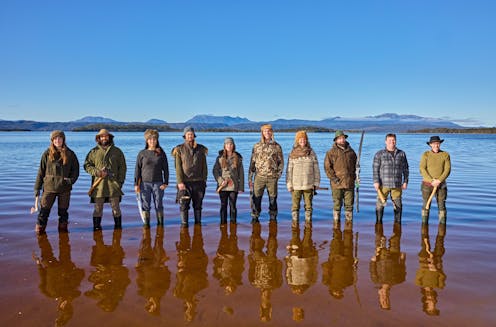
Alone Australia is back this week for a third season on SBS. And its ten contestants are learning what it means to be really hungry.
They’ve been dropped alone into separate areas of the Tasmanian wilderness to film their experiences of the elements, isolation and hunger. The person who lasts the longest wins the A$250,000 prize.
The contestants are trying various methods to find food. But not everyone’s had success in fishing, trapping and foraging. And the effects on their bodies and minds are already evident.
Here’s what happens when hunger and starvation kick in.
Shelter, water, food
After shelter and water, food is a main concern for long-term survival – not just for Alone Australia contestants.
Many of us are familiar with the feeling of hunger – discomfort caused by a lack of food. Hunger is a complex process that involves regulation of blood glucose levels and release of hormones that control appetite and how full you feel. For instance, when we are hungry, the stomach produces the hormone ghrelin, telling us it’s time to eat.
Starvation is a much more serious state. It’s a long period without enough food that results in severe disruption to how the body normally works.
A healthy person may be able to survive without foodforaround one to two months. However, the length of time is likely to be affected by many factors including age, sex, fitness, health, sleep and access to clean drinking water.
Last year’s winner of Alone Australia made it to 64 days, much of it without enough food.
But even successful survivalists can struggle to find and eat enough food to meet their requirements. One previous contestant lost as much as 11 kilograms over eight days.
Hunger is already an issue for contestants, most of whom are struggling to find food.
What happens if you don’t have enough food?
A lack of food doesn’t just affect your body size. It also affects the way your body functions. People can experience extreme tiredness, have trouble remembering recent events, and feel colder due to a drop in body temperature.
Prolonged starvation can also have psychological impacts and affect the way you think, reason and make decisions.
We have some clues from a study that would be unethical to reproduce today.
The Minnesota Starvation Experiment started in 1944 to examine the effects of starvation on the body. The idea was to replicate the degree of starvation experienced in areas of Europe during world war two.
Thirty-six healthy young men who were conscientious objectors to war service volunteered to undergo a six-month semi-starvation phase where their calorie intake was halved, followed by a three-month rehabilitation.
Data showed they lost an average of one-quarter of their body weight (including a reduced heart mass).
But other impacts included depression, fatigue and irritability. One participant said:
little things that wouldn’t bother me before or after would really make me upset.
Participants had difficulty concentrating, and their attitudes towards food changed dramatically. They had constant thoughts about food, hoarded food and even started collecting cookbooks. Many of these attitudes and behaviours lasted even after rehabilitation back to a normal diet.
Yes, feeling ‘hangry’ is real
Most Australians will be fortunate to never experience the same levels of starvation as in the Minnesota experiment or in Alone Australia.
But even skipping a meal can have an impact on our wellbeing. We become
“hangry” – when hunger leads us to be irritable or angry.
A study of 64 participants from Europe tracked their hunger and emotions over 21 days. The more hungry the participants were, the more hangry they felt and the more unpleasant feelings they reported (for example, feeling depressed or stressed versus feeling relaxed or excited).
When people are hungry, they are also more likely to have intrusive, mind-wandering thoughts.
In a complex reading and comprehension task, the minds of people who hadn’t eaten for five hours wandered more than the minds of people who had eaten recently. Those who were hungry also performed worse on the task.
So in Alone Australia, it’s easy to see how hunger can lead people to lose focus on what they’re doing, and their minds wandering. Rather than focusing on the best spot to go fishing, contestants’ minds can wander to feelings of self-doubt.
Muzza from Victoria caught some fish early on. But will his success continue? Credit Narelle Portanier/SBS
Hunger also affects decision making
Feeling hungry also affects how you make rational decisions, but there’s conflicting evidence.
Hungry people are more likely to make impulsive decisions about food. In Alone Australia, this might result in a decision to eat fish raw rather than cooking it first, a more hazardous choice due to an increased risk of infection from parasites.
However, hungry people can show better judgement when making complex decisions with uncertain outcomes – like a gambling task. So being mildly hungry (in this study, overnight fasting) might sharpen your survival instincts. In Alone Australia, hungrier contestants may make better decisions around where to place hunting traps.
But hunger’s effect on decision making is likely to depend on the context. It may make people more impulsive in some situations, but more strategic and willing to take risks in others.
For the contestants in Alone Australia, some risk taking will be required to secure an ongoing food supply. This will be crucial to successfully surviving in the Tasmanian wilderness.
Therese O’Sullivan does not work for, consult, own shares in or receive funding from any company or organisation that would benefit from this article, and has disclosed no relevant affiliations beyond their academic appointment.
Keith Rankin, trained as an economic historian, is a retired lecturer in Economics and Statistics. He lives in Auckland, New Zealand.
Analysis by Keith Rankin.
Keith Rankin, trained as an economic historian, is a retired lecturer in Economics and Statistics. He lives in Auckland, New Zealand.
While World War Two (WW2) always was a set of intersecting conflicts – with Japan fighting a war of imperialism in East Asia and the Western Pacific – the war in Europe has been cast as the ultimate battle of ‘Good’ versus ‘Evil’. Hence the narrative of the Good War. Further, it has been personalised, with Adolf Hitler becoming the personalisation of Evil and Winston Churchill the personalisation of Good.
It always was nonsense. Wars are fought over territories and hegemony, between various peoples (nationalities), empires, religions, ideologies etc.; in the vast majority of cases between Bad and Bad, albeit various shades of bad (although the Hitler’s Nazis and Joseph Stalin’s Communists were close to having been equally Bad). The Bad versus Good narrative remains compelling to the human mind, however. Once you can find a compelling Evil – without or within, over there or over here – then our brains want to tell us that whoever opposes that ‘bad’ must be ‘good’. (In the old days, the ‘good’ said: ‘God was on our side’. Typically, their opponents thought something similar.)
Winston Churchill was neither a Good leader nor a competent leader. He didn’t start WW2, though there is an argument that the United Kingdom did. Nevertheless, Churchill, as a charismatic rhetorician and narcissist, had some sway over political discourse in Britain for half a century. (His important career began in 1904, when he became a party-hopping backbencher. He resigned from his second stint as Prime Minister in 1955; he was an MP for 61 years, and PM for 9 years.) That’s why there are so many more cited quotations from him than from any other British back-bench MP in the late 1930s.
Churchill, as a war-leader, was an ultra-imperialist who fought imperialist wars under the cover of World Wars One and Two. He was responsible for numerous atrocities, including appeasements of Stalin that were more problematic than Neville Chamberlain’s appeasement of Hitler in 1938. In his speeches in 1938 and 1939, Churchill may have been alluding to Eastern Europe, but he was thinking about Italy and its threat to British ‘assets’ in and around the Mediterranean Sea.
WW2: Germany versus Soviet Russia, with the United Kingdom as stoker and as kingmaker
World War Two was round two of the Germany versus Russia conflict; this time as ‘Nazi’ Germany against ‘Communist’ Russia, the Third Reich versus the Soviet Union. The centrality of the Germany versus Russia conflict – indeed a conflict between them for the territories of Ukraine and the oilfields to the southeast of Ukraine – becomes more apparent when WW1 and WW2 are seen as one. World War One clearly started as a conflict between Germany and Russia; albeit triggered as a conflict between proxies, Austria and Serbia. And World War Two ended with the defeat of Germany by Soviet Russia; and after the entry of Russia into the Pacific War (which henceforth became the Cold War between Soviet Russia and the United States of America).
Technically, WW2 became a world war (rather than a regional war) when the United Kingdom and France (and their empires) ‘declared war’ on Germany on 1 Sep 1939. The trigger issue was the possibility of Germany invading Poland. But what mischief was the United Kingdom upto with distant Poland? Why did a British ghost-war go horribly wrong? And why did open warfare between the two principal belligerents in Europe – Berlin and Moscow – not commence until June 1941?
My reading of British and French ‘diplomacy’ between March and August 1939 is that these notional allies, United Kingdom in particular, wanted there to be a major regional showdown between Berlin and Moscow; both powers would be substantially weakened as a result, thereby enhancing British and French control of the Mediterranean and the ‘Middle East’.
The British and the French ‘tried’ to do a deal with Stalin, in March 1939, with respect to protecting Poland from German aggression. (On 15 March 1939, Germany annexed the Czech part of Czechoslovakia.) They revealed their military weakness (especially Britain’s), or at least the paucity of the military contribution they were willing to make towards the security of Poland.
Britain and France subsequently went on to sign a treaty guarantee with Poland; a guarantee that both would declare war against Germany if Poland was attacked by Germany. Stalin already knew that the United Kingdom would not back-up such a declaration with any action to defend Poland.
The reason for the guarantee appears to have been to deter Poland from negotiating a peace deal with Germany. Further, Britain was maintaining diplomatic communication with Germany until August 1939. The inference would appear to be that Britain was trying to start a ‘nothing-war’ between itself and Germany, while stoking a ‘something war’ between Germany and Soviet Russia. Britain had no intention of doing anything in Poland, and was expecting that France would provide a substantial defensive barrier between Germany and Great Britain; this was all in the context that Britain and France would be helping their own security by nudging Germany into ‘pushing’ East (as was always Germany’s apparent plan) rather than ‘West’.
However, Britain and France were nonplussed by the non-aggression pact – the Molotov-Ribbentrop Pact – signed between Moscow and Berlin in the last week of August 1939. Further, there was a secret sub-pact. Moscow and Berlin would carve up Poland, and which effectively – and subsequently – meant the Soviet annexation of Lithuania, Latvia and Estonia. Germany invaded Poland on 1 September 1939, activating that secret deal. Despite having nineteenth-century precedents for a pragmatic backing out from a signed-up deal, the United Kingdom and France – at least notionally – honoured their guarantee and declared war on Germany.
For France, this meant further shoring-up of its border with Germany, and – virtue signalling –making a small and brief incursion into Germany (the Saar Offensive). For Britain it meant further rearmament, but really to build up its navy to shore up its imperial interests, and building up its Air Force to defend itself from possible German attack. And it sent an army into France, as a show of support for France, more to be seen to be doing something than to actually be doing anything.
But the clear sense is that Britain still expected Germany to negotiate peace with Britain while consolidating its annexations of the Czech lands and Poland. The ‘phoney war’ proceeded, though it was far from phoney to the people of Poland and other Eastern European countries. The United Kingdom was launched into war proper in May 1940, with the lightning conquest of France by Germany, a conquest made possible by Germany’s temporary truce with the Soviet Union. (Though that was preceded, by a month, by Germany’s invasion of Norway; a matter for Britain’s navy rather than army.)
Adolf Hitler abandoned the Molotov-Ribbentrop Pact in June 1941, embarking Nazi Germany on a full-scale invasion of the Soviet Union, his main plan all along. He had secured his western border in 1940; though his plans were somewhat scuppered by a need to attend to the military failings of Mussolini’s Italian forces in the Eastern Mediterranean, hence the war in Greece which involved New Zealand.
The Bloodlands and their toll of political murder: 1932-1945
The atrocities of the Nazis took place during a world war; those of Stalin were mostly during peace-time. Timothy Snyder, in his 2010 book Bloodlands, “conservatively” estimates that fourteen million civilians and prisoners-of-war were politically murdered in a set of contiguous territories – between Germany and Russia-proper – by either the Moscow-based Soviet Communist regime or the Berlin-based National Socialist regime. This includes ‘The Holocaust’, or at least most of it.
As real estate, Snyder defines the Bloodlands as the pre-WW2 territories of Ukraine and Belarus (within the Soviet Union), Poland, the Baltic States (Lithuania, Latvia, and Estonia), and the part of Russia close to Leningrad (now St Petersburg). The murders included in his tally were inflicted by deliberate starvation, guns, and gas. The cases of starvation were not due to famine in the conventional sense of that term. In the Ukrainian ‘famine’ of 1932/33, the food grown on Ukrainian farms – among the most productive lands in Europe – was confiscated and exported to Russian cities and to other countries in return for foreign currency. In the Siege of Leningrad – 1941 to 1944 – the German military prevented food from entering the city.
The worst-affected areas of the Bloodlands are today in western Ukraine and western Belarus. This land was in Eastern Poland before World War Two, and therefore in the Soviet-annexed territories of pre-war Poland. These lands were annexed or occupied by the Soviet Union in 1939, Germany in 1941, and the Soviet Union again in 1944. Each annexation saw its own round of political mass murder.
The murders of citizens of Poland and the Soviet Union took place on a vastly larger scale than any comparable atrocities committed on West Europeans; including the Holocaust, for which the vast majority of victims were Jews resident in Eastern Europe (not Germany; not the West). Snyder summarises the Bloodlands murder toll as:
3.3 million deliberately starved mostly in Ukraine in the 1932/33 Holodomor
0.7 million murdered in the Great Terror of 1937/38
0.2 million murdered in occupied Poland in 1939-1941 (disproportionately highly educated people; many killed by the notorious Einsatzgruppen, Nazi loyalists with PhD degrees)
4.2 million Soviet citizens starved by German occupiers in 1941-1944
5.4 million Jews (mostly Polish or Soviet citizens) shot or gassed by Germans in 1941-1944
0.7 million citizens (mostly Belarussians or Poles) shot by Germans in reprisals in 1941-1944
To what extent would have these (or equivalent numbers of) deaths have happened anyway, regardless of how the war actually started in Poland? Stalin’s victims, mostly already dead, represented about 40 percent of these fourteen million. The majority of Stalin’s victims were killed in the Ukrainian Holodomor which peaked in 1932 and 1933; or in the Great Terror of 1937 and 1938, which targeted the ‘kulak’ class of peasants and former peasants, ethnic Poles, and Russia’s political class (including many Bolshevik allies of the paranoid Stalin; communists who had come to be seen as potential threats to him).
Before September 1939, Hitler’s attempts at political murder were puny at best, when compared to Stalin’s ‘peace-time’ terror campaigns. Stalin murdered Soviet citizens. So, to a large extent did Hitler; Hitler killed comparatively few Germans, before or during the war.
Those who died in the Bloodlands after August 1939 might have experienced different fates had the war not been started then and there. Certainly, in 1940, a group of Hitler’s scientists – led by a leading agronomist – devised the ‘Hunger Plan’, which, if implemented in full, would have led to the murder of thirty of forty million Soviet citizens, to be replaced by German Aryan settlers. (While Hitler used ‘capitalist’ and ‘communist’ Jews as convenient scapegoats, Nazi racism should be understood as pro-Aryan rather than specifically anti-Jewish.) This was probably a racist and supremacist Nazi fantasy, unlikely to be able to be realised in full, and which was not prevented by the declaration of war by the United Kingdom against Germany in 1939.
It’s hard to see that the eventual victory of the Soviet Union over Germany in 1945 made the world a better, freer or more democratic place than it otherwise would have been; with fewer deaths and sufferings after 1939 than there actually were. Would a German victory over the Soviet Union have led to a less inhumane outcome for many millions of people, in the Bloodlands and elsewhere? We’ll never know, but it’s possible. It seems unlikely that the extremes of German National Socialism could have lasted for as long as the extremes of Soviet and Maoist Communism. And we know that most oppressive regimes do come to an end eventually; just as Hitler thought the Third Reich was forever (or for 1,000 years), so did Stalin and his successors believe of the Soviet Union.
World War Two morphed into the Cold War
Mostly, the Cold War – between the United States and the Soviet Union, and their proxies and alleged proxies – was ‘fought’ between the First World and the Second World; but its many victims were mostly in the ‘Third World’, now called the ‘Global South’. The way the Pacific War morphed into the Cold War is glaringly obvious, with the nuclear attack on Japan by the United States representing the end of the one war and the beginning of the next. (And note The bombing of Hamburg foreshadowed the horrors of Hiroshima.)
The Cold War began in Europe too, when the ‘victorious’ western ‘powers’, most particularly the United States, ‘suggested’ that the Russian ‘liberators’ of Eastern Europe were planning to overrun Western Europe as well (and turn the conquered into ‘communists’). The result was a tensely divided Europe until 1990, unnecessarily so; many European lives were blighted by politico-military suppression for 45 years. Further, that east-west divide has reappeared; just look at the results of the recent general election in Germany.
Finally, the costs ain’t over yet
Just as the World War came in two episodes, so too is the Cold War now in its second episode. (In the case of the World War, the second episode was explicitly ideological; communism versus fascism. In the Cold War, it was the first episode that was explicitly ideological; communism versus liberal capitalism.) Further, with signs that the United States might be withdrawing early, the second Cold War (CW2?) is looking like becoming, at its core, the Fourth Reich (aka the European Union) versus Russia (the new Russian Empire?), and with the territories of contention once again being Ukraine and the Black Sea.
The World War could have ended in 1918 or 1919 after the Great War (later known as World War One) – understood then to be the ‘War to End All Wars’ – if the ‘great powers’ had learned the appropriate lessons. Sadly, the ‘powers-that-were’ and the ‘powers-that-would-be’ learned, if anything, the wrong lessons. World War Two was not a Good War; it was grubbier and crueller than probably all its predecessors, and all sides – including the Anglo-side – contributed to that grubbiness and cruelty.
Imperialism was very much the problem, not the solution. The ‘rules-based-world-order’, devised in 1919 by the then-victorious powers – shonky new-nation national-borders and all – proved to be just another variation of great-power imperialism. We live in a world today of powers (some more ‘super’ than others), their proxies, and nations in the Global South saddled with borders which ensure forever conflicts.
We live in a world in which the Global West sees itself as morally and culturally superior, even though manifestly it isn’t. And we live in a world in which the Global East – in its various ethnic and cultural shades – rejects the supremacist assumptions and liberal presumptions of the West. And we live in a world in which those powers gamble with global war, just as the British gambled in 1939. And we live in a world in which the militaries contribute vastly to very real climate change, partly from military emissions of greenhouse gasses, partly because the immediate (eg 2020s) security concerns of the world outweigh concerns about the climate future (eg 2040s) concerns, and partly because we behave as if the goals to prevent or adapt to global warming are unwinnable.
There is a lot happening in the world at the moment, including tensions within Europe that would lead few people to be confident that – in 2050 – the present political architecture of Europe would still exist. Germany coveted Ukraine in the first half of the twentieth century. Indeed, Germany occupied Ukraine in 1918 and in the middle years of World War Two. Will the second quarter of the twenty-first century once again see German control of Ukraine? I wouldn’t bet against it. I see a stronger belligerence today in Germany towards having influence in Ukraine than I see in any other western country.
The biggest threat to peace is war; not Russia, not China, not Germany, not the United States of America, not Iran, not the hapless United Kingdom. Wars are a problem, not a solution.
The worst things happen during wars, or as a result of wars. There is one important exception. As we have seen, the Soviet Union – a Marxian ‘scientific utopia’ – destroyed many of its own people in the 1930s, in ‘peacetime’, and while the liberal world was looking the other way. Something similar, maybe worse, happened in China in the 1960s.
The lessons to learn are: avoid war, and the drum-beating that precedes it. And avoid technocratic utopian groupthink; avoid ideologies masquerading as science. The Nazi Hunger Plan was devised by an agronomist, Herbert Backe. War leads to such ideologies; and such ideologies lead to war.
*******
Keith Rankin (keith at rankin dot nz), trained as an economic historian, is a retired lecturer in Economics and Statistics. He lives in Auckland, New Zealand.
Source: The Conversation (Au and NZ) – By Kristen Sobeck, Research Fellow, Tax and Transfer Policy Institute, Crawford School of Public Policy, Australian National University
Labor’s tax changes this week do not tackle tax reform, or why we desperately need it. They only address the amount collected from personal income tax, which is the largest source of tax revenue.
Real tax reform would review taxes such as the GST, taxes on savings (including housing and super), and personal and corporate income tax – and ensure they are sustainable over the long term.
Tax cuts and tax revenue relate to the amount of tax the government collects. Reform needs to tackle both the amount of tax and how we collect it.
It involves redesigning how we collect tax revenue in a way that is efficient, equitable, simple and resilient, to improve the well-being of all Australians.
And the quantum – how much we collect as part of tax reform – depends on the demand for government services, which is growing, with structural budget deficits forecast for the next 10 years.
So how does the income tax system work?
When you earn a salary from your job, every dollar earned above A$18,200 is taxed. Income earned between $18,201 to $45,000 is taxed at 16 cents per dollar. Three higher tax brackets follow, as the table below shows. This is known as a progressive tax system, where the tax rate increases as your income rises.
Mathematically, this means that if a worker named Jane has a $130,000 salary, the first $18,200 of her income is tax free, the next $26,800 of her salary is taxed at 16 cents for each dollar and so on. Her total income tax bill is $29,788.
In the budget, the Labor government announced from July 1 2026, it would cut the 16 cents marginal income tax rate to 15 cents and from July 1 2027 to 14 cents. As the example above shows, the proposed reductions will affect all Australian income taxpayers, not just low income earners.
The legislation passed parliament late on Wednesday night, but the Coalition has said it will repeal the cuts if it wins the election.
What is bracket creep?
Workers generally receive an increase in their wage each financial year. But in recent years, the increase in wages received by some workers hasn’t been enough to keep up with inflation (changes in prices).
This is the case for our imaginary worker, Jane. Where she lives, prices have increased by 10%. Her employer has offered her a wage increase of 5%, so now she earns $136,500. However, everything where Jane lives is now 10% more expensive, so while her salary has increased, the purchasing power of her wage has declined.
Unfortunately for Jane, the income tax system completely disregards her decline in living standards. Since her salary has increased she owes more income tax.
This is what’s referred to as bracket creep. It’s also known as fiscal drag. It arises when our income tax bill goes up, our take-home pay (our disposable income) goes down as a result, and our standard of living declines.
Sometimes inflation can push a person into a higher income tax bracket. This is the case for Jane, who now pays 37 cents per dollar on $555 of her income. However it also applies if a taxpayer remains in the same income tax bracket (since their salary still goes up and they owe more income tax).
Is bracket creep a good or a bad thing?
For workers, bracket creep is bad news because it reduces their after-tax income while their standard of living declines.
However, for governments it can be a useful tool.
First, bracket creep allows governments to collect more revenue than they would in the absence of inflation. Higher inflation means more revenue. This approach enables governments to increase expenditure and/or offer tax cuts to offset bracket creep. The government is doing the latter even in a period of budget deficit.
Second, bracket creep can be useful for governments during periods of high inflation. Governments need to rein in spending to reduce high inflation and bracket creep is one way of achieving this goal.
Given these benefits, Australia is not alone among developed countries that opt to change their income tax thresholds on a discretionary basis. Just over half (55%) of OECD countries took this approach in 2022 for their personal income tax systems.
The remaining OECD countries (45%) applied automatic indexation in 2022. Indexation ensures that taxpayers’ income tax bills only increase (in real terms) when their wages increase by more than inflation.
But ensuring tax brackets keep pace with inflation is only one part of the tax picture. Neither side of politics is addressing the sort of major tax reforms needed to make the tax system more sustainable and match fit for the 21st century. But the Tax and Transfer Policy Institute is prepared with ideas when they are.
Kristen Sobeck does not work for, consult, own shares in or receive funding from any company or organisation that would benefit from this article, and has disclosed no relevant affiliations beyond their academic appointment.
Tennessee Williams (1911-1983) is widely regarded as one of America’s greatest playwrights. A prolific and unabashedly autobiographical writer, Williams’ career spanned four decades of the 20th century.
The Glass Menagerie, which premiered in Chicago on December 26 1944, was the writer’s first major success. It won scores of national theatrical awards and catapulted Williams to enduring fame.
An engrossing new production of the classic play, currently running at Sydney’s Ensemble Theatre, does more than simply revive the famous piece of theatre. It revitalises it for modern audiences.
A troubled family from St. Louis
The Glass Menagerie is a lyrical exploration of memory, longing and familial obligation.
Set in the 1930s in St. Louis, the play revolves around three adult members of the Wingfield family: Tom, a restless and possibly closeted young man torn between duty and desire; Laura, his painfully shy sister, whose physical disability and introversion leave her isolated from the world; and Amanda, their domineering but fragile mother who clings to faded Southern dreams.
The plot is simple, and draws direct inspiration from Williams’ troubled family life. The Wingfields are struggling to get by. They live in a cramped apartment, in the shadow of an absent patriarch who we hear “fell in love with long distances” a long time ago.
Amanda is desperate to secure a future for Laura. She pins her hopes on the arrival of a “gentleman caller”, convinced that marriage is the only hope for her daughter’s security.
The plot follow the Wingfields, a small family struggling to get by in the 1930s in St. Louis. Prudence Upton
When Tom – who is also the play’s narrator (a cutout for Williams himself) – invites a colleague to dinner, the overbearing Amanda seizes the opportunity to present Laura in the best possible light. Suffice to say, things do not end well.
Lifting lyricism to its highest level
Potted plot summaries don’t really do The Glass Menagerie justice.
As Liesel Badorrek, director of the new production at Sydney’s Ensemble Theatre, points out, “Williams wanted to break with the prosaic realism that he felt had dominated the American theatre” and fashion a new, more symbolic approach to theatre, where memory and emotion take precedence over conventional forms of dramatic action.
According to Williams himself, his aim was to demonstrate
that truth, life, or reality is an organic thing which the poetic imagination can represent or suggest, in essence, only through transformation, through changing into other forms than those which were merely present in appearance.
To bring his vision to life, Williams combined heightened poetic dialogue, repeated musical motifs and unconventional stagecraft. In doing so, he intentionally blurred the lines between reality and memory, allowing the audience to experience the emotional truth of the characters, rather than a literal depiction of events.
This innovative approach to dramatic form was revolutionary at the time and became a hallmark of Williams’ mature work. As Arthur Miller once wrote:
The Glass Menagerie in one stroke lifted lyricism to its highest level in our theatre’s history, but it broke new ground in another way. What was new in Tennessee Williams was his rhapsodic insistence that form serve his utterance rather than dominating and cramping it.
Ensemble Theatre revives Williams’ play in a way that is both timeless and transcendent. Prudence Upton
A fresh take with remarkable depth
Miller’s observations about poetic rhapsody and form are worth keeping in mind when discussing the Ensemble Theatre’s impressive take on The Glass Menagerie.
One of the great merits of the production is how it does justice to Williams’ formal innovations while also engaging the audience on an emotional level.
Making excellent use of expressionistic lighting (Verity Hampson) and sound design (Maria Alfonsine and Damian de Boos-Smith), Badorrek’s production strikes a fine balance between preserving the play’s delicate, dreamlike structure and grounding its characters in charged performances that feel immediate and often painfully real.
Deftly blending humour and pathos, the cast of four delivers strong performances that ensure the play’s vivid lyricism enhances (but does not overwhelm) its emotional core.
Blazey Best’s Amanda delivers a tour de force performance. Prudence Upton
Blazey Best’s Amanda is in equal measure maddening and charming, a true tour de force. Her verbal sparring with Danny Ball’s Tom was an early high point of the evening. One particularly striking moment was staged entirely in silhouette – elongated shadows stretching across the stage’s backdrop.
That said, to me the true standouts were Bridie McKim and Tom Rogers, whose interpretations of Laura and the gentleman caller, Jim, lifted the entire production.
In particular, McKim, who has called for greater disability representation in Australian theatre, brings remarkable depth and dynamism to the role of Laura. She imbues Laura with vulnerability and, crucially, strength.
McKim imbues Laura with both vulnerability and strength. Prudence Upton
McKim and Rogers breathe new life into this 81-year old staple of the dramatic canon. Their performances render Williams’ work fresh and contemporary, ensuring the play feels as urgent today as it would have in its post-war heyday.
Alexander Howard does not work for, consult, own shares in or receive funding from any company or organisation that would benefit from this article, and has disclosed no relevant affiliations beyond their academic appointment.
You might know South Australia’s iconic Coorong from the famous Australian children’s book, Storm Boy, set around this coastal lagoon.
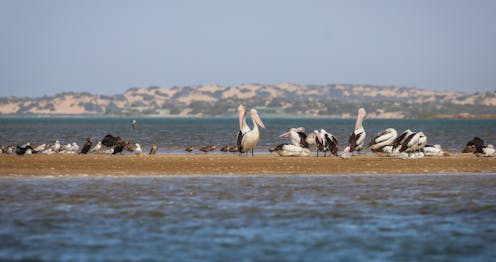
This internationally important wetland is sacred to the Ngarrindjeri people and a haven for migratory birds. The lagoon is the final stop for the Murray River’s waters before they reach the sea. Tens of thousands of migratory waterbirds visit annually. Pelicans, plovers, terns and ibises nest, while orange-bellied parrots visit and Murray Cod swim. But there are other important inhabitants – trillions of microscopic organisms.
You might not give much thought to the sedimentary microbes of a lagoon. But these tiny microbes in the mud are vital to river ecosystems, quietly cycling nutrients and supporting the food web. Healthy microbes make for a healthy Coorong – and this unassuming lagoon is a key indicator for the health of the entire Murray-Darling Basin.
For decades, the Coorong has been in poor health. Low water flows have concentrated salt and an excess of nutrients. But in 2022, torrential rains on the east coast turned into a once-in-a-century flood, which swept down the Murray into the Coorong.
In our new research, we took the pulse of the Coorong’s microbiome after this huge flood and found the surging fresh water corrected microbial imbalances. The numbers of methane producing microbes fell while beneficial nutrient-eating bacteria grew. Populations of plants, animals and invertebrates boomed.
We can’t just wait for irregular floods – we have to find ways to ensure enough water is left in the river to cleanse the Coorong naturally.
Under a scanning electron micrograph, the mixed community of microbes in water is visible. This image shows a seawater sample. Sophie Leterme/Flinders University, CC BY
Rivers have microbiomes, just like us
Our gut microbes can change after a heavy meal or in response to dietary changes.
In humans, a sudden shift in diet can encourage either helpful or harmful microbes.
In the same way, aquatic microbes respond to changes in salinity and freshwater flows. Depending on what changes are happening, some species boom and others bust.
As water gets saltier in brackish lagoons, communities of microbes have to adapt or die. High salinity often favours microbes with anaerobic metabolisms, meaning they don’t need oxygen. But these tiny lifeforms often produce the highly potent greenhouse gas methane. The microbes in wetlands are a large natural source of the gas.
While we know pulses of freshwater are vital for river health, they don’t happen often enough. The waters of the Murray-Darling Basin support most of Australia’s irrigated farming. Negotiations over how to ensure adequate environmental flows have been fraught – and long-running. Water buybacks have improved matters somewhat, but researchers have found the river basin’s ecosystems are not in good condition.
Wetlands such as the Coorong are a natural source of methane. The saltier the water gets, the more environmentally harmful microbes flourish – potentially producing more methane. Vincent_Nguyen
The Coorong is out of balance
A century ago, regular pulses of fresh water from the Murray flushed nutrients and sediment out of the Coorong, helping maintain habitat for fish, waterbirds and the plants and invertebrates they eat. While other catchments discharge into the Coorong, the Murray is by far the major water source.
Over the next decades, growth in water use for farming meant less water in the river. In the 1930s, barrages were built near the river’s mouth to control nearby lake levels and prevent high salinity moving upstream in the face of reduced river flows.
In 2022, torrential rain fell in many parts of eastern Australia. Rainfall on the inland side of the Great Dividing Range filled rivers in the Murray-Darling Basin. That year became the largest flood since 1956.
We set about recording the changes. As the salinity fell in ultra-salty areas, local microbial communities in the sediment were reshuffled.
The numbers of methane-producing microbes fell sharply. This means the floods would have temporarily reduced the Coorong’s greenhouse footprint.
Christopher Keneally sampling for microbes in the Coorong in 2022. Tyler Dornan, CC BY
When we talk about harmful bacteria, we’re referring to microbes that emit greenhouse gases such as methane, drive the accumulation of toxic sulfide (such as Desulfobacteraceae), or cause algae blooms (Cyanobacteria) that can sicken people, fish and wildlife.
During the flood, beneficial microbes from groups such as Halanaerobiaceae and Beggiatoaceae grew rapidly, consuming nutrients such as nitrogen, which is extremely high in the Coorong. This is very useful to prevent algae blooms. Beggiatoaceae bacteria also remove toxic sulfide compounds.
The floods also let plants and invertebrates bounce back, flushed out salt and supported a healthier food web.
On balance, we found the 2022 flood was positive for the Coorong. It’s as if the Coorong switched packets of chips for carrot sticks – the flood pulse reduced harmful bacteria and encouraged beneficial ones.
While the variety of microbes shrank in some areas, those remaining performed key functions helping keep the ecosystem in balance.
From 2022 to 2023, consistent high flows let native fish and aquatic plants bounce back, in turn improving feeding grounds for birds and allowing black swans to thrive.
When enough water is allowed to flow down the Murray to the Coorong, ecosystems get healthier.
But the Coorong has been in poor health for decades. It can’t just rely on rare flood events.
Next year, policymakers will review the Murray-Darling Basin Plan, which sets the rules for sharing water in Australia’s largest and most economically important river system.
Balancing our needs with those of other species is tricky. But if we neglect the environment, we risk more degradation and biodiversity loss in the Coorong.
As the climate changes and rising water demands squeeze the basin, decision-makers must keep the water flowing for wildlife.
Christopher Keneally receives funding from the Australian Government Department of Climate Change, Energy, the Environment and Water. His research is affiliated with The University of Adelaide and the Goyder Institute for Water Research. Chris is also a committee member and former president of the Biology Society of South Australia, and a member of the Australian Freshwater Sciences Society.
Matt Gibbs receives funding from the Australian Government Department of Climate Change, Energy, the Environment and Water.
Sophie Leterme receives funding from the Australian Research Council (ARC). Her research is affiliated with Flinders University, with the ARC Training Centre for Biofilm Research & Innovation, and with the Goyder Institute for Water Research.
Justin Brookes does not work for, consult, own shares in or receive funding from any company or organisation that would benefit from this article, and has disclosed no relevant affiliations beyond their academic appointment.
Australia’s defence spending is on the rise. The future defence budget has already been increased to 2.4% of GDP. There is pressure from the new Trump administration in the United States to raise this further to at least 3%.
However, it is unclear whether the money will be spent wisely. Our recent research found that current defence planning may leave the Australian Defence Force (ADF) poorly prepared for future conflicts.
To keep up, Australia must develop capabilities for contemporary “grey zone” operations (coercive statecraft activities that blur the line between peace and war, or fall short of war), as well as future 21st-century conflicts. Priority areas are cyber, information and space technologies.
Positive signs and missteps
In the past two years, we have seen a slew of announcements about the current and future capabilities of the ADF.
Defence experts have complained of “a lack of clear purpose and intent, a lack of direct connection between strategic objectives and industry policy, and a continuing project-by-project approach”.
The ADF acknowledges the need for advanced technological capabilities. However, in practice it is still too focused on platforms and hardware suited more for the conflicts of the past.
The current context and challenges
Several Defence reviews over the past 50 years have found that the ADF procurement and acquisition system lacks the agility and resources to adapt to changes in the strategic environment.
Defence spending as a share of GDP has been declining in Australia since the end of the Vietnam War. Notably, the ADF has focused on reducing costs, lowering errors in defence procurement, outsourcing to industry, and speeding up acquisition.
Despite the recent plans to increase defence budgets, critics argue the strategy is too little, too late. It delays the acquisition of most new capabilities to beyond five years from now.
On October 30 2024, Defence Industry Minister Pat Conroy announced a major acquisition of missiles, other guided weapons and explosive ordnance. Many of these acquisitions were simply plugging existing gaps, and would not be ready until at least 2029.
Many of the acquisitions (such as missiles, 155mm ammunition and submarines) did not quite align with the government’s Defence Innovation, Science and Technology Strategy (DISTS) launched the previous month.
The hard task of planning ahead
Making plans for defence procurement is a difficult task. The strategic environment changes quickly, and technology can move even faster. As a result, planned acquisitions may be irrelevant by the time they arrive.
However, there are ways to get better at forecasting. These include horizon scanning, to spot potentially important developments early, and systemic design for a big-picture approach. These approaches can also be combined with AI-supported analysis tools including scientometrics (which analyses the amount of research in different areas and how it is all linked) and natural language processing.
In our first project, we conducted a comprehensive horizon scan of emerging technologies, focusing on cyber, internet of things (or networked smart devices), AI, and autonomous systems.
We used scientometric research methods, which provide a bird’s-eye view of research into disruptive and converging technologies.
This was supplemented by a survey asking industry professionals and experts to evaluate emerging technologies. In particular, we asked about their potential impact, likelihood of deployment or utilisation, extensiveness of use, and novelty of use in future conflicts.
The survey data was analysed using a qualitative, machine-driven, AI-based, data analysis tool. We used it for text mining, thematic and content analyses.
We found the likelihood of deployment and utilisation of cyber technologies in conflict is very high in the near term, reflecting the growing challenges in this area. Similarly, AI technologies were also singled out for their immediate potential and urgency.
We concluded that to maintain a competitive edge, the ADF must invest significantly in these priority areas, particularly cyber, network communications, AI and smart sensors.
Designing better systems
Our second project was a systemic design study evaluating Australia’s opportunities and barriers for achieving a technological advantage in light of regional military technological advancement.
The study highlighted ten specific technologies or trends as potential force multipliers for the ADF. We found three areas with immediate potential and urgency: cybersecurity of critical infrastructure, optimisation and other algorithmic technologies, followed by space technologies.
These findings were reinforced in further research supported by the Army Research Scheme. It found the ADF’s capabilities for operating effectively in the “grey zone” will be strongly facilitated by ensuring it is maintaining its technological edge in the integration of its cyber capabilities and information operations.
A widespread challenge
The ADF is not alone in these challenges. For example, successive UK governments have also identified persistent challenges in defence acquisition. These have included issues with budgetary planning due to limited competition, significant barriers to entry for new enterprises, and the constantly evolving geopolitical landscape.
The ADF should focus on fostering emerging technologies and enabling the development of disruptive military capabilities to deliver asymmetric advantage for the ADF. As Australia’s Chief Defence Scientist notes, this will help get emerging technologies into the hands of our war fighters faster.
The authors would like to acknowledge the following people from Edith Cowan University who contributed to the research: Helen Cripps, Jalleh Sharafizad, Stephanie Meek, Summer O’Brien, David Suter and Tony Marceddo.
Pi-Shen Seet received funding from the Australian Department of Defence’s Strategic Policy Grant Program and the Australian Army Research Scheme.
Anton Klarin receives funding from the Australian Department of Defence’s Strategic Policy Grant Program and the Australian Army Research Scheme.
Janice Jones receives funding from the Australian Department of Defence’s Strategic Policy Grant Program and the Australian Army Research Scheme
Mike Johnstone receives funding from the Australian Department of Defence’s Strategic Policy Grant Program and the Australian Army Research Scheme.
Violetta Wilk receives funding from the Australian Department of Defence’s Strategic Policy Grant Program and the Australian Army Research Scheme.
Jason, a 42-year-old father of two, has been battling back pain for weeks. Scrolling through his phone, he sees ad after ad promising relief: chiropractic alignments, acupuncture, back braces, vibrating massage guns and herbal patches.
His GP told him to “stay active”, but what does that even mean when every movement hurts? Jason wants to avoid strong painkillers and surgery, but with so many options (and opinions), it’s hard to know what works and what’s just marketing hype.
If Jason’s experience sounds familiar, you’re not alone. Back pain is one of the most common reasons people visit a doctor. It can be challenging to manage, mainly due to widespread misunderstandings and the overwhelming number of ineffective and uncertain treatments promoted.
We assessed the best available evidence of non-drug and non-surgical treatments to alleviate low back pain. Our review – published today by the independent, international group the Cochrane Collaboration – includes 31 Cochrane systematic reviews, covering 97,000 people with back pain.
It shows bed rest doesn’t work for back pain. Some of the treatments that do work can depend on how long you’ve been in pain.
Is back pain likely to be serious?
There are different types of low back pain. It can:
be short-lived, lasting less than six weeks (acute back pain)
linger for a bit longer, for six to twelve weeks (sub-acute)
stick around for months and even years (chronic, defined as more than 12 weeks).
In most cases (90-95%), back pain is non-specific and cannot be reliably linked to a specific cause or underlying disease. This includes common structural changes seen in x-rays and MRIs of the spine.
For this reason, imaging of the back is only recommended in rare situations – typically when there’s a clear suspicion of serious back issues, such as after physical trauma or when there is numbness or loss of sensation in the groin or legs.
Many people expect to receive painkillers for their back pain or even surgery, but these are no longer the front-line treatment options due to limited benefits and the high risk of harm.
International clinical guidelines recommend people choose non-drug and non-surgical treatments to relieve their pain, improve function and reduce the distress commonly associated with back pain.
So what works for different types of pain? Here’s what our review found when researchers compared these treatments with standard care (the typical treatment patients usually receive) or no treatment.
What helps for short-term back pain
1. Stay active – don’t rest in bed
If your back pain is new, the best advice is also one of the simplest: keep moving despite the pain.
Changing the way you move and use your body to protect it, or resting in bed, can seem like to right way to respond to pain – and may have even been recommended in the past. But we know know this excessive protective behaviour can make it harder to return to meaningful activities.
This doesn’t mean pushing through pain or hitting the gym, but instead, trying to maintain your usual routines as much as possible. Evidence suggests that doing so won’t make your pain worse, and may improve it.
2. Multidisciplinary care, if pain lingers
For pain lasting six to 12 weeks, multidisciplinary treatment is likely to reduce pain compared to standard care.
This involves a coordinated team of doctors, physiotherapists and psychologists working together to address the many factors contributing to your back pain persisting:
neurophysiological influences refer to how your nervous system is currently processing pain. It can make you more sensitive to signals from movements, thoughts, feelings and environment
psychological factors include how your thoughts, feelings and behaviours affect your pain system and, ultimately, the experience of pain you have
occupational factors include the physical demands of your job and how well you can manage them, as well as aspects like low job satisfaction, all of which can contribute to ongoing pain.
It’s important to keep up your normal routines when you have low back pain. Raychan/Unsplash
What works for chronic back pain
Once pain has been around for more than 12 weeks, it can become more difficult to treat. But relief is still possible.
Exercise therapy
Exercise – especially programs tailored to your needs and preferences – is likely to reduce pain and help you move better. This could include aerobic activity, strength training or Pilates-based movements.
It doesn’t seem to matter what type of exercise you do – it matters more that you are consistent and have the right level of supervision, especially early on.
Multidisciplinary treatment
As with short-term pain, coordinated care involving a mix of physical, occupational and psychological approaches likely works better than usual care alone.
Psychological therapies
Psychological therapies for chronic pain include approaches to help people change thinking, feelings, behaviours and reactions that might sustain persistent pain.
These approaches are likely to reduce pain, though they may not be as effective in improving physical function.
Acupuncture
Acupuncture probably reduces pain and improves how well you can function compared to placebo or no treatment.
While some debate remains about how it works, the evidence suggests potential benefits for some people with chronic back pain.
The review found that many commonly advertised treatments still have uncertain benefits or probably do not benefit people with back pain.
Spinal manipulation, for example, has uncertain benefits in acute and chronic back pain, and it likely does not improve how well you function if you have acute back pain.
Traction, which involves stretching the spine using weights or pulleys, probably doesn’t help with chronic back pain. Despite its popularity in some circles, there’s little evidence that it works.
There isn’t enough reliable data to determine whether advertised treatments – such back braces, vibrating massage guns and herbal patches – are effective.
How can you use the findings?
If you have back pain, start by considering how long you’ve had it. Then explore treatment options that research supports and discuss them with your GP, psychologist or physiotherapist.
Your health provider should reassure you about the importance of gradually increasing your activity to resume meaningful work, social and life activities. They should also support you in making informed decisions about which treatments are most appropriate for you at this stage.
Rodrigo Rossi Nogueira Rizzo receives funding from the Australian Government’s Medical Research Future Fund (MRFF).
Aidan Cashin receives funding from a National Health and Medical Research Council Investigator Grant
In January, the Trump administration ordered a broad pause on all US funding for foreign aid.
Among other issues, this has significant effects on US funding for HIV. The United States has been the world’s biggest donor to international HIV assistance, providing 73% of funding in 2023.
What’s more, recent funding cuts for international HIV assistance go beyond the US. Five countries that provide the largest amount of foreign aid for HIV – the US, the United Kingdom, France, Germany and the Netherlands – have announced cuts of between 8% and 70% to international aid in 2025 and 2026.
Together, this may mean a 24% reduction in international HIV spending, in addition to the US foreign aid pause.
We wanted to know how these cuts might affect HIV infections and deaths in the years to come. In a new study, we found the worst-case scenario could see more than 10 million extra infections than what we’d otherwise anticipate in the next five years, and almost 3 million additional deaths.
What is HIV?
HIV (human immunodeficiency virus) is a virus that attacks the body’s immune system. HIV can be transmitted at birth, during unprotected sex or thorough blood-to-blood contact such as shared needles.
If left untreated, HIV can progress to AIDS (acquired immunodeficiency syndrome), a condition in which the immune system is severely damaged, and which can be fatal.
HIV was the world’s deadliest infectious disease in the early 1990s. There’s still no cure for HIV, but modern treatments allow the virus to be suppressed with a daily pill. People with HIV who continue treatment can live without symptoms and don’t risk infecting others.
A sustained global effort towards awareness, prevention, testing and treatment has reduced annual new HIV infections by 39% (from 2.1 million in 2010 to 1.3 million in 2023), and annual deaths by 51% (from 1.3 million to 630,000).
Most of that drop happened in sub-Saharan Africa, where the epidemic was worst. Today, nearly two-thirds of people with HIV live in sub-Saharan Africa, and nearly all live in low- and middle-income countries.
We wanted to estimate the impact of recent funding cuts from the US, UK, France, Germany and the Netherlands on HIV infections and deaths. To do this, we used our mathematical model for 26 low- and middle-income countries. The model includes data on international HIV spending as well as data on HIV cases and deaths.
These 26 countries represent roughly half of all people living with HIV in low- and middle income countries, and half of international HIV spending. We set up each country model in collaboration with national HIV/AIDS teams, so the data sources reflected the best available local knowledge. We then extrapolated our findings from the 26 countries we modelled to all low- and middle-income countries.
For each country, we first projected the number of new HIV infections and deaths that would occur if HIV spending stayed the same.
Second, we modelled scenarios for anticipated cuts based on a 24% reduction in international HIV funding for each country.
Finally, we modelled scenarios for the possible immediate discontinuation of PEPFAR in addition to other anticipated cuts.
With the 24% cuts and PEPFAR discontinued, we estimated there could be 4.43 million to 10.75 million additional HIV infections between 2025 and 2030, and 770,000 to 2.93 million extra HIV-related deaths. Most of these would be because of cuts to treatment. For children, there could be up to an additional 882,400 infections and 119,000 deaths.
In the more optimistic scenario in which PEPFAR continues but 24% is still cut from international HIV funding, we estimated there could be 70,000 to 1.73 million extra new HIV infections and 5,000 to 61,000 additional deaths between 2025 and 2030. This would still be 50% higher than if current spending were to continue.
The wide range in our estimates reflects low- and middle-income countries committing to far more domestic funding for HIV in the best case, or broader health system dysfunction and a sustained gap in funding for HIV treatment in the worst case.
Some funding for HIV treatment may be saved by taking that money from HIV prevention efforts, but this would have other consequences.
The range also reflects limitations in the available data, and uncertainty within our analysis. But most of our assumptions were cautious, so these results likely underestimate the true impacts of funding cuts to HIV programs globally.
Sending progress backwards
If funding cuts continue, the world could face higher rates of annual new HIV infections by 2030 (up to 3.4 million) than at the peak of the global epidemic in 1995 (3.3 million).
Sub-Saharan Africa will experience by far the greatest effects due to the high proportion of HIV treatment that has relied on international funding.
In other regions, we estimate vulnerable groups such as people who inject drugs, sex workers, men who have sex with men, and trans and gender diverse people may experience increases in new HIV infections that are 1.3 to 6 times greater than the general population.
The Asia-Pacific received US$591 million in international funding for HIV in 2023, which is the second highest after sub-Saharan Africa. So this region would likely experience a substantial rise in HIV as a result of anticipated funding cuts.
Notably, more than 10% of new HIV infections among people born in Australia are estimated to have been acquired overseas. More HIV in the region is likely to mean more HIV in Australia.
But concern is greatest for countries that are most acutely affected by HIV and AIDS, many of which will be most affected by international funding cuts.
Rowan Martin-Hughes receives funding from the National Health and Medical Research Council of Australia. He has previously received funding to conduct HIV modelling studies from the Australian government Department of Health and Aged Care, Gates Foundation, Global Fund to Fight AIDS, Tuberculosis and Malaria, UNAIDS, UNFPA, UNICEF, World Bank and World Health Organization.
Debra ten Brink has previously received funding to conduct HIV modelling studies from the Australian government Department of Health and Aged Care, Gates Foundation, Global Fund to Fight AIDS, Tuberculosis and Malaria, UNAIDS, UNFPA, UNICEF, World Bank and World Health Organization.
Nick Scott receives funding from the National Health and Medical Research Council of Australia. He has previously received funding to conduct HIV modelling studies from the Australian government Department of Health and Aged Care, Gates Foundation, Global Fund to Fight AIDS, Tuberculosis and Malaria, UNAIDS, UNFPA, UNICEF, World Bank and World Health Organization.
Source: The Conversation (Au and NZ) – By Linda Mussell, Senior Lecturer, Political Science and International Relations, University of Canterbury
Paremoremo Maximum Security Prison near Auckland.Getty Images
With the government’s Sentencing (Reform) Amendment Bill about to become law within days, New Zealand’s already high incarceration rate will almost certainly climb even higher.
This and other law changes are effectively putting more people in prison for longer. By 2035, imprisonment numbers are expected to increase by 40% from their current levels, with significant cost implications. Last year, the Corrections budget was NZ$1.94 billion, up $150 million from the previous year.
New Zealand’s imprisonment rate is already high at 187 per 100,000 people. That’s double the rate of Canada (90 per 100,000), and well above Australia (163 per 100,000) and England (141 per 100,000).
Accounting for imprisonment and population projections, New Zealand’s prisoner ratio could be between 238 and 263 per 100,000 by 2035. That is higher than the current imprisonment rate in Iran (228 per 100,000).
Remand prisoner numbers are projected to nearly equal sentenced prisoners in 2034. Among women and young people, remand numbers are already higher than for sentenced prisoners.
Some 30% of those on remand are not convicted. Of those who are, data released to RNZ last year showed 2,138 people (15% of remand prisoners) were not convicted of their most serious change, almost double the 2014 figure of 1,075 people.
Significant court delays can mean people are remanded for a long time. By 2034, it is projected the average remand time will be 99 days, compared with 83 days in February 2024. As well as being a human rights concern, this is very expensive.
Minister of Corrections Mark Mitchell: prisoner numbers could reach 13,900 over the next decade. Getty Images
Putting more people away for longer
Crime and imprisonment rates fluctuate independently of each other, as the former Chief Science Advisor acknowledged in a 2018 report. Increasing imprisonment rates are the result of political decisions, not simple arithmetic.
The Bail Amendment Act 2013 reversed the onus of proof in certain cases, meaning the default rule is that an accused person will not be granted bail. This results in more people being sent to prison while awaiting a hearing, trial or sentencing.
When this week’s changes to the Sentencing Act come into effect, they will further constrain judges’ discretion, capping sentence reductions for mitigating factors at 40% (unless it would be “manifestly unjust”).
At the same time, it has become more difficult for prisoners to return to the community. For example, some are kept in prison or recalled because they do not have stable housing. (Dean Wickliffe, currently on a hunger strike over an alleged assault by prison staff, was arrested for breaching parole by living in his car.)
Last year, Corrections received $1.94 billion in operating and capital budget, a $150 million increase to account for rising imprisonment numbers and prison expansion. There was no meaningful increase in funding for rehabilitation programmes or investment in legal aid.
Imprisoning people is expensive. The cost of a person on custodial remand has almost doubled since 2015, from $239 a day to $437. For sentenced prisoners, it is $562 per day. This comes to between $159,505 and $205,130 per year to confine one person.
Former corrections minister Kelvin Davis acknowledged this before the first 600-bed expansion of Waikeria prison, costed at $750 million in 2018. By June 2023, that had increased by 22% to $916 million.
There will be other costs for facilities maintenance, asset management services and financing. And there can be unanticipated costs, too. For example, the government’s partner in the Waikeria expansion, Cornerstone, claimed $430 million against Corrections in 2022 for “time and productivity losses” due to COVID-19.
These overall trends are happening while the government is also cutting funding for important social services. Shifting resources to improve social supports would be a better option – and one that has worked in Finland – than pouring more money into expanding prisons.
Linda Mussell does not work for, consult, own shares in or receive funding from any company or organisation that would benefit from this article, and has disclosed no relevant affiliations beyond their academic appointment.
The year 2000 marked an inflection point for many Western countries, including Australia, in their outlook towards the world.
The focus began to shift away from the peacekeepinginterventions that had dominated the previous decade to one shaped by counter-terrorism operations and deployments to the Middle East.
The threat of terrorism hasn’t gone away. But Australia is much more preoccupied by threats of a different nature 25 years later, largely emanating from China. These include cyber attacks, economic coercion, political interference, and the harassment of Australian Defence Force (ADF) ships, aircraft and personnel.
Though our international outlook has changed a lot over the past quarter century, Australia’s alliance with the US has remained a constant throughout.
However, as our militaries have grown closer, the US-China competition has also intensified. Combined with the array of unpredictable and destabilising decisions coming from the second Trump administration, this closeness has caused some unease in Australia.
Evolving threats and challenges
In December 2000, the Howard government released its first Defence White Paper. This marked the beginning of a period of major change in Australia’s international outlook and presence.
It emphasised that “two interrelated trends seem likely to shape our strategic environment most strongly – globalisation and US strategic primacy”. It also noted that “military operations other than conventional war [were] becoming more common.”
The paper was prescient in respect to China’s rise, as well. It said:
The United States is central to the Asia-Pacific security system […] It will be in Asia that the United States is likely to face the toughest issues in shaping its future strategic role – especially in its relationship with China.
There is a small but still significant possibility of growing and sustained confrontation between the major powers in Asia, and even of outright conflict. Australia’s interests could be deeply engaged in such a conflict, especially if it involved the United States.
Yet, nine months after that document’s release, the terrorist attacks of September 11 2001, followed by the Bali bombings of 2002, began to dramatically reshape the global security outlook.
A few days after the September 11 attack, Howard invoked the ANZUS Treaty for the first and only time, joinging US President George W. Bush’s “war on terror”. Australian forces then deployed to Afghanistan as part of the US-led invasion in October 2001.
By the time the 2003 Foreign Policy White Paper was released, it highlighted “terrorism, the proliferation of weapons of mass destruction, regional disorder and transnational crimes such as people smuggling” as the key features of Australia’s “more complex security environment”.
A month later, Australia joined the US-led “coalition of the willing” to invade Iraq to overthrow the regime of Saddam Hussein and locate and destroy stockpiles of weapons of mass destruction believed to be there. (It later emerged that evidence of the existence of these weapons was erroneous.)
Australia contributed 2,000 troops to the mission. Our soldiers remained actively engaged in training, reconstruction and rehabilitation work in Iraq until July 2009.
Both of these events tied Australia’s foreign policy interests to the US to a greater degree than any time since the Vietnam War.
Although the relationship with the US had been critical to Australian defence and foreign policy for decades, it had become less prominent in Australia’s strategic planning in the years following the end of the Cold War.
US support – and diplomatic pressure on Indonesia – had been vital in securing the post-referendum presence of Australian peacekeepers in East Timor in 1999. However, it was the “war on terror” that really re-centred the relationship as core to Australian foreign policy.
In fact, Australia was even referred to as the US’ “deputy sheriff” in the Asia-Pacific – a nickname used by Bush in 2003 that caused some unease at home and in the region.
This image has since gone on to have significant staying power, and it’s proved difficult for Australia to dislodge.
History repeating?
Though the accusations of war crimes levelled against Australian special forces in Afghanistan continue to reverberate, our foreign policy focus has shifted firmly back to our own region.
This change was driven in large part by the perceived threat posed by a rising China. While the need to focus more on China was acknowledged as early as the 2009 Defence White Paper, this emphasis became most pronounced under Scott Morrison’s leadership.
The 2024 National Defence Strategy portrayed Australia as facing “its most challenging strategic environment since the Second World War”.
It advocated for a significant change in the ADF’s strategic objectives and structure, noting the optimism of the 1990s had been “replaced by the uncertainty and tensions of entrenched and increasing strategic competition between the US and China”.
Today, the military ties between the US and Australia are arguably as close as they have ever been.
The ADF operates top-tier US platforms like the F-35 combat aircraft, P-8 maritime patrol aircraft, M1 Abrams tanks, and AH-64 Apache helicopters. Defence Minister Richard Marles has gone so far as to say the ADF should not only interoperable with the US, but interchangeable.
If all goes to plan, Australia will also build and operate its own fleet of nuclear-powered submarines under the AUKUS partnership in the coming decades.
At the same time, US President Donald Trump’s “America First” positioning has made the US’ closest allies nervous.
His early moves have put paid to the notion that globalisation is the goal all major states are pursuing. In fact, some argue that deglobalisation may be taking hold as the US aggressively enacts tariffs against its allies, pursues economic onshoring and withdraws from key international bodies.
These actions have led to many to question whether Australia has become too dependent on its major ally and if we need to emphasise a more self-reliant defence posture. However, this is much easier said than done.
Looking back, the year 2000 represented the beginning of a period of major change for Australian foreign policy. Such is the pace of change now, we may view 2025 in the same light in another quarter century.
Whether Australia’s alliance with the US will face long-term harm is yet to be seen. No matter how the bilateral relationship may change, the Indo-Pacific region will continue to be at the core of Australia’s foreign policy outlook, much as it was at the turn of the century.
This piece is part of a series on how Australia has changed since the year 2000. You can read other pieces in the series here.
David Andrews has not personally received funding from any relevant external bodies, but he has previously worked on projects funded by the Departments of Foreign Affairs and Trade, Home Affairs, and Defence. David is a member of the Australian Labor Party and Australian Institute of International Affairs, and previously worked for the Department of Defence.
In the wild, dogs spend a lot of their time chewing on bones, carcasses, sticks and kernels. For example, Australian dingoes can feed for up to 108 minutes in a single session.
But most domestic dogs chew far less than their free-roaming counterparts. This is largely because of the introduction of easy-to-eat, processed pet foods such as kibble, which now comprises the majority of domestic dogs’ diet.
This is a problem because although chewing carries some risks, overall it has significant benefits for dogs.
As our new review, published in Frontiers in Veterinary Science, demonstrates, it enriches the physical, psychological and emotional health of dogs in many interconnected ways.
1. Food acquisition and nourishment
Dogs chew primarily to nourish themselves.
Their large canine, premolar and molar teeth and wide gape help them to capture and dismember prey. Chewing whole carcasses provides them access to marrow, fibre and minerals that would otherwise be inaccessible.
When they are not chowing down on body parts, free-ranging dogs forage on nuts, berries, and insects – a portion of which are also hidden in kernels, shells or exoskeletons and require chewing.
The action of chewing promotes resident bugs that comprise a healthy microbiome and reduces harmful microbes, both in the oral cavity and in the lower intestine.
The microbes of the microbiome work for their own survival and also for that of their dog host, for whom they help maintain healthy oral hygiene and gut health.
For dogs already suffering some loss of cognitive function, chewing, with its variety and manipulative challenges, may be a valuable management tool to help sustain quality of life.
9. Positive welfare
The pet industry supplies myriad chewable products ranging from toys, dried or fresh animal products and commercially made chews.
They are meeting the market populated by carers who’ve noticed their dogs relish chewing.
Dogs usually become enlivened when offered chews, seeking them out and playing with them.
Some even find a chew so highly valuable that they risk breaking bonds with dog or human family members by exhibiting resource-guarding behaviours.
When we fail to provide chewables, dogs will instead select other less appropriate articles to serve their purpose. In the smorgasbord of potential targets in our homes, leather shoes are often toward the top of the menu.
Providing dogs with healthy chewables will help stop them chewing on our shoes instead. Reddogs/Shutterstock
10. Happy dogs make happy humans
The very latest study on dog-human relationships has revealed a correlation between dogs’ cardiac responses to positive interactions and those of their human guardians.
Although this study focussed on co-operative breed types, such as herding dogs, known to be highly responsive to humans, it demonstrated that cardiac activity of dogs and their owners mirrored each other. It also indicated cross-species connections comparable to those found in attachment relationships between humans.
So, providing your dog with a way to de-stress can have the same benefits for your own emotional and physiological state.
Incorporating chewing into the daily lives of our dogs may be one simple yet important way to ensure they are living happy and healthy lives. Note that chewing ability is individual and advice on the type of chew and its suitability for your dog should be sought from your veterinarian.
We would like to acknowledge the enormous contribution of Rimini Quinn to this article.
Paul McGreevy has received funding from the Australian Research Council, RSPCA Australia and animal welfare focussed philanthropy. He is a member of the British Veterinary Association and currently sits on the NSW Veterinary Practitioners Board.
Kathryn Mills is affiliated with University of Sydney School of Veterinary Science
Most brain surgery requires doctors to remove part of the skull to access hard-to-reach areas or tumours. It’s invasive, risky, and it takes a long time for the patient to recover.
We have developed new, tiny robotic surgical tools that may let surgeons perform “keyhole surgery” on the brain. Despite their small size, our tools can mimic the full range of motion of a surgeon’s wrist, creating new possibilities for less-invasive brain surgery.
Tiny tools for brain surgery
Robotic surgical tools (around 8 millimetres in diameter) have been used for decades in keyhole surgery for other parts of the body. The challenge has been making a tool small enough (3mm in diameter) for neurosurgery.
In a project led by the University of Toronto, where I was a postdoctoral fellow, we collaborated with The Hospital for Sick Children (SickKids) in Canada to develop a set of very small neurosurgery tools.
Their extremely small size is possible as they are powered not by motors but by external magnetic fields.
Three magnetic tools: a cutter, a gripper and forceps. Changyan He
Current robotic surgical tools are typically driven by cables connected to electric motors. They work in much the same way as human fingers, which are manipulated by tendons in the hand connected to muscles in the wrist.
However, pulleys smaller than several millimetres wide to control the instruments are weak and prone to friction, stretch and fracture. This creates challenges in scaling down the instruments, because of difficulties in making the parts of the system, assembling the mechanisms and managing friction in the cables.
Magnetic controls
The new robotic system consists of two parts. The first is the tiny tools themselves: a gripper, a scalpel and a set of forceps. The second part is what we call a “coil table”, which is a surgical table with several electromagnetic coils embedded inside.
In this design, the patient would be positioned with their head on top of the embedded coils, and the robotic tools would be inserted into the brain via a small incision.
Patients would lie on a ‘coil table’ containing magnets which are used to control the surgical tools. Changyan He
By altering the amount of electricity flowing into the coils, we can manipulate the magnetic fields, causing the tools to grip, pull or cut tissue as desired.
In open brain surgery, the surgeon relies on their own dexterous wrist to pivot the tools and tilt their tips to access hard-to-reach areas, such as removing a tumour inside the central cavity of the brain. Unlike other tools, our robotic neurosurgical tools can mimic this with “wristed” movements.
Surprising precision
We tested the tools in pre-clinical trials where we simulated the mechanical properties of the brain tissue they would need to work with. In some tests, we used pieces of tofu and raspberry placed inside a model of the brain.
We compared the performance of these magnetically operated tools with that of standard tools handled by trained surgeons.
We found the cuts made with the magnetic scalpel were consistent and narrow, with an average width of 0.3–0.4mm. That was even more precise than those from traditional hand tools, which ranged from 0.6 to 2.1mm.
The magnetic scalpel, shown slicing some tofu inside a model of the brain, can make cuts more precise than those done with traditional tools. Changyan He
As for the grippers, they could pick up the target 76% of the time.
The magnetic grippers (shown here picking up some raspberry) were successful 76% of the time. Changyan He
From the lab to the operating room
We were surprised by how well the robotic tools performed. However, there is still a long way to go until this technology could help patients. It can take years, even decades, to develop medical devices, especially surgical robots.
This study is part of a broader project based on years of work led by Eric Diller from the University of Toronto, an expert on magnet-driven micro-robots.
Now, the team wants to make sure the robotic arm and magnetic system can fit comfortably in a hospital operating room. The team also wants to make it compatible with imaging systems such as fluoroscopy, which uses x-rays.
After that, the tools may be ready for clinical trials.
We’re excited about the potential for a new era of minimally invasive neurosurgical tools.
Changyan He does not work for, consult, own shares in or receive funding from any company or organisation that would benefit from this article, and has disclosed no relevant affiliations beyond their academic appointment.
Source: The Conversation (Au and NZ) – By Matthew Hobbs, Associate Professor and Transforming Lives Fellow in Spatial Data Science and Planetary Health, Sheffield Hallam University
We integrated air pollution data with existing longitudinal data from the Christchurch Health and Development Study (CHDS). The CHDS has followed more than 1,200 children born in the city in 1977, with a strong focus on developmental and mental health outcomes.
Our aim was to examine how exposure to air pollution shapes development and mental health in later childhood and adolescence. We found an increased risk of attention problems, conduct issues, lower educational attainment and substance abuse in adolescence associated with higher exposure.
Existing evidence often focuses on adulthood. However, by tracking air pollution exposure from the prenatal period to the age of ten, and linking this data to subsequent cognitive and mental health outcomes, we were able to highlight the long-term consequences of growing up in polluted environments.
Air pollution is one of the leading environmental contributors to disease, especially respiratory and cardiovascular conditions. Children are especially vulnerable to air pollution because their brains and bodies are developing.
A growing body of evidence suggests air pollution could affect brain development, educational attainment and mental health, contributing to depression, anxiety and conduct or attention problems. Despite this, few studies have tracked long-term exposure to air pollution from early childhood.
Patterns of exposure
We chose to conduct this research in Christchurch because the city is a historical air-pollution hotspot, with a documented history of measurements, and because of its long-running birth cohort study.
The CHDS collects detailed information on participants’ health, development, education and family backgrounds from prenatal into adulthood.
The city of Christchurch now enjoys much better air quality, but it was an air-pollution hotspot in the past. Flickr/Larry Koester, CC BY-SA
For this study, we linked historical air-pollution data, measured as the concentration of black smoke from 1977 to 1987, to residential locations of birth cohort members. This allowed researchers to estimate each child’s annual exposure to air pollution during key developmental periods.
We found four distinct patterns of air-pollution exposure across childhood (see graph below):
consistently low (these children had the lowest levels of air pollution throughout childhood)
consistently high (this groups had the highest levels of air pollution from birth to the age of ten)
elevated preschool (exposure peaked between ages three to six and then declined)
high prenatal and postnatal (high exposure before and immediately after birth, but declining later).
We then examined whether children in the higher exposure groups were more likely to experience adverse impacts on cognition, educational achievement and mental health in later childhood and adolescence.
We adjusted for a range potential confounders such as socioeconomic status, neighbourhood disadvantage and parental characteristics.
We found children with elevated pre-school exposure had poorer educational attainment and a higher likelihood of conduct disorders and substance abuse problems. High prenatal and postnatal exposure was linked to a greater risk of attention problems as well as substance abuse in adolescence.
Children with persistently high air-pollution exposure were more likely to develop attention problems and had higher odds of substance abuse issues in adolescence.
Researchers identified four different trajectory patterns of exposure to air pollution from the prenatal period through to the age of ten. Author provided, CC BY-SA
What these findings mean
The effects of air pollution on several outcomes were small at an individual level, but they could be highly important at a population level.
This is because even small shifts in cognitive and mental health outcomes, when applied to entire populations of children exposed to poor air quality, could have major consequences affecting future educational achievement, workforce productivity and public health burdens.
These findings support previous research suggesting air pollution could affect brain function by causing inflammation, oxidative stress and affecting neurodevelopmental pathways. Importantly, they reinforce the idea that certain developmental periods, such as the prenatal period and early childhood, may be especially sensitive to pollution exposure.
We need further research to confirm our findings but potential considerations include reducing children’s exposure to air pollution and improving urban air quality by cutting emissions from vehicles, industry and residential heating.
We should also promote cleaner energy sources to decrease exposure to harmful pollutants such as nitrogen dioxide and fine particulate matter. Providing better access to green spaces may mitigate the impact of air pollution.
To strengthen public health and policy measures, we need stricter air quality regulations, particularly around schools and childcare centres. We should also implement air-quality monitoring in urban areas to identify high-risk zones for children.
Better public information is crucial to minimise indoor and outdoor pollution exposure. This could include the use of air purifiers for indoor activies or limiting outdoor exposure during peak pollution periods.
Further research and action
Our study highlights the need for more research on air pollution’s effects on children’s mental health and cognition, particularly in different environmental and socioeconomic contexts.
Policymakers, educators and healthcare professionals must consider air pollution as a potential risk factor for developmental challenges, not just a physical health concern.
Air pollution may not be visible in the same way as poor housing or inaccessible healthcare, but its impact on child development could be important at a population level.
Given the rising prevalence of mental ill health in young people and adults, tackling air pollution could be an overlooked but essential public health strategy for protecting future generations.
Associate Professor Matthew Hobbs receives funding from Health Research Council of New Zealand and the Clare Foundation, New Zealand.
Joseph Boden receives funding from the New Zealand Ministry of Business, Innovation and Enterprise, and the Health Research Council of New Zealand.
Lianne Jane Woodward and Susie (Bingyu) Deng do not work for, consult, own shares in or receive funding from any company or organisation that would benefit from this article, and have disclosed no relevant affiliations beyond their academic appointment.
Labor has committed A$690 million over four years to cut the maximum cost of medicines on the Pharmaceutical Benefits Scheme (PBS) to $25. The Coalition has matched the promise, which is estimated to save Australians $200 million a year.
But consumers could save even more if an existing policy met its potential.
In 2023, the federal government introduced 60-day prescribing. This meant consumers could get twice as many pills per script, with fewer trips to the pharmacist (and to the doctor for a script).
The government announced that consumers would save up to $190 a year for a single medicine, and up to $46 for a concession card holder, compared to the costs of a 30-day script.
It took political courage, and government spending, to get this change.
Data on political donations show pharmaceutical interests make up the vast bulk of donations from the health sector. The Pharmacy Guild, which represents pharmacy owners, spent the most by far. These donations are an attempt to wield influence behind the scenes. When that fails, the guild isn’t afraid to attack governments in public.
The federal government stared down a histrionic scare campaign against 60-day prescribing. The guild claimed pharmacies would close due to reduced dispensing fees. It also claimed medicines would run out, and children would overdose due to pill hoarding.
The government pushed through the policy, but directly compensated rural pharmacies with ongoing payments worth $20 million a year.
The government also brought forward negotiation of the eighth Community Pharmacy Agreement, which sets how much the government pays pharmacists for dispensing, medication management, and other services. The agreement was signed last year and added $3 billion in new spending.
A long wait for longer scripts
After all that conflict and cost, our analysis of PBS data shows the uptake of longer scripts has been painfully slow.
About 300 drugs for chronic health conditions have been added to the eligibility list in three stages.
For the first stage of medicines, the 60-day option became available in late 2023. This included common medications such as statins for high cholesterol, perindopril for high blood pressure, and alendronate for osteoporosis.
More than a year later, in November 2024, only 30% of eligible stage one medicines dispensed were from a 60-day script.
That’s well short of expectations. The Department of Health and Aged Care predicted 60-day uptake would reach 45% in 2023–24, 58% in 2024–25, and 63% in 2026–27, if fully implemented.
Across all medicines eligible for 60-day prescribing, including those added in the second and third stages, just 21% of medicines dispensed were from a 60-day script.
Even at these low rates, we estimate the policy has saved consumers more than $110 million so far. Higher uptake, closer to the rates the department predicted, would mean even more savings.
Millions of people are missing out. In 2024, there were about 28 million 30-day scripts for statins, compared to about 5 million 60-day scripts. If half of these patients had a 60-day script, they would have saved an extra $27 million a year.
If half of all eligible medicines were dispensed for 60 days, we estimate patients would have saved an extra $310 million a year. That’s more than the $200 million in expected savings from the $25 medicines promise.
And while the government spends money on the $25 medicines policy, it saves money from 60-day scripts, by paying pharmacists fewer dispensing fees.
We estimate the government has already saved $141 million from 60-day prescribing. It could save an extra $297 million a year if uptake increased to 50%.
So why aren’t more GPs writing longer scripts?
Despite the Pharmacy Guild’s efforts to undermine the reform, low uptake is more about doctors than pharmacists: the GP who writes the script determines its duration, not the pharmacist.
Risks for patients aren’t the problem. While 60-day prescribing won’t be right for all patients, experts selected the eligible drugs because prescribing them for 60 days is usually appropriate and safe.
While there’s some variation in 60-day prescribing rates for different medicines, it’s low across the board. That suggests the problem isn’t about GPs being much more cautious with some drugs than with others.
The culprit is probably inertia. GP practice software generates default prescriptions when a patient has had a drug before. With most people still getting 30-day prescriptions, that will be the default for most repeat scripts. And many patients might not be aware the new 60-day option is available.
It’s time to get results
With cost-of-living and health system pressures never far from the headlines, making progress on 60-day prescribing should be a priority.
The benefits for patient and government budgets are obvious. But the benefits of freeing up time for busy clinicians shouldn’t be overlooked. Longer scripts means less GP time to write them, and less pharmacist time to fill them.
As Australia gets older and sicker, the need for GP and pharmacist care grows, and there are severe primary care shortages in many parts of the country.
Every second of GP time that can be freed up for diagnosis, treatment, and to help patients manage their conditions is precious.
There is also good evidence pharmacists can provide cost-effective medication reviews, chronic disease management advice and other services. Shifting their time from retail to services is a great way to take pressure off the health system.
So what can be done?
Fortunately, there are some easy shortcuts to longer scripts.
Providers of GP software should make 60-day prescribing the default for relevant medicines.
The Royal Australian College of General Practitioners, the professional body for GPs, should continue to encourage GPs to write longer scripts.
Primary Health Networks, the regional bodies responsible for improving primary care, should tell GPs how they compare with their peers, giving a nudge to GPs with low rates of 60-day prescribing.
Finally, the federal government and consumer groups should run campaigns to inform patients about their options.
Longer scripts are a triple win: savings on medicines for patients, budget savings for the government, and more time for GPs and pharmacists. Few reforms tick all those boxes, so it’s important this one makes its way from good policy to standard practice.
Grattan Institute has been supported in its work by government, corporates, and philanthropic gifts. A full list of supporting organisations is published at www.grattan.edu.au.
Source: The Conversation (Au and NZ) – By Jill Sheppard, Senior Lecturer, School of Politics and International Relations, Australian National University
With another election campaign unofficially underway, voters may feel it hasn’t been long since they were last at the voting booth.
every House of Representatives shall continue for three years from the first meeting of the House, and no longer, but may be sooner dissolved by the Governor-General.
This allows the sitting government to call an election sooner than three years after taking office, but recent norms are for governments to use the full term length available to them.
But how do politicians and the public feel about this format, and could this change anytime soon?
Early elections
In 1998, the John Howard Liberal government called an early election seeking voters’ support for its ambitious plans to introduce a goods and service tax. It came very close to defeat, but clawed its way to victory and nine more years of power.
In 2016, the Malcolm Turnbull Liberal government took a similar punt, calling an early double dissolution election ostensibly on the issue of union corruption. Again, it came very close to defeat but clawed its way to victory (and six more years of power).
Despite their reasons for calling early elections, both Howard and Turnbull faced declining global economic conditions and arguably moved tactically to avoid campaigning in the worst of the headwinds.
Most governments have less appetite for capitalising on external events – like interest rate cuts – when calling an election. Voters already largely distrust politicians, and cynical early elections will only confirm their beliefs.
Fixed versus non-fixed parliamentary terms
The ability of a government to unilaterally decide the election date is unusual.
The political systems most similar to Australia – New Zealand, Canada, the United Kingdom, the United States – all have fixed election dates. Australian states and territories have also increasingly moved to fixed dates, where the government of the day has no discretion over election timing.
As prime minister, Julia Gillard effectively relinquished her right to manipulate the 2013 election date in her favour. She announced it more than seven months ahead of time. Her government lost the subsequent election.
Unsurprisingly, there is little political will to move to fixed dates for federal elections. Only current Special Minister of State Don Farrell has expressed even passing support for the idea (and then, only if voters were clearly in favour).
Fixed terms would undoubtedly benefit voters, who could plan their calendars well in advance. They would also benefit non-government parties and independent candidates, who could budget and plan campaigns around a known election date.
Who wants longer terms?
Prime Minister Anthony Albanese supports four-year terms, reflecting long-term Labor Party policy.
The Liberal Party has generally been more ambivalent. Howard was supportive but “not mad keen” in 2005 and supportive, but resigned to failure in 2024.
Current leader Peter Dutton also backs longer terms, but observes that, among voters, “generally, there is a reluctance to do anything that makes the life of a politician easier”.
Beyond voters’ reluctance to grant a one-year extension to politicians’ tenure, the issue of senate term lengths is an obstacle to reform.
Current tradition sets senate terms twice the length of House of Representatives terms, however, Penny Wong has argued that eight-year terms are too long.
Both New South Wales and South Australia have experience with eight-year terms in their upper houses, but no other states have yet followed.
How could (and will) terms be changed?
Any change to federal parliamentary terms would require a successful referendum. The question has been put to Australians once before, in 1988. Only 33% of voters supported the proposal, and no state achieved majority support.
Polling from April 2024 finds only 38% support, with 18% unsure. Independent and minor party voters – the fastest growing group in Australian politics – were also the most strongly opposed to longer terms.
As Dutton noted, voters have been reluctant to support “politician-friendly” referendums in the past. There seems almost no chance the 48th parliament would consider a referendum on the issue.
Would 4-year terms make politics better?
David Coleman, recently promoted to the Liberal Party’s frontbench, has confidently declared “businesses and consumers tend to hold off on investment during election periods and the phoney war that precedes them”, and so longer terms would improve the domestic economy.
Are they right? And what about non-economic outcomes?
Academic research backs up the assumption governments are less likely to announce major tax reforms in the months leading into an election. Shorter terms might also make governments less likely to introduce austerity (strict cost-cutting) measures.
The weight of academic evidence suggests that whichever party is in power matters far more than the length of the electoral cycle.
Researchers have struggled to find differences in how politicians with longer terms (usually four years) behave from those with shorter terms (usually two years). Activity levels for the shorter-term politicians appear slightly more frenetic – more fundraising and expenditure, more campaigning – but the outcomes are similar.
Longer terms do not seem destined to fix Australia’s political malaise.
Jill Sheppard receives funding from the Australian Research Council.
Opposition leader Peter Dutton will promise in his Thursday budget reply that a Coalition government would immediately halve the fuel excise on petrol and diesel.
The cut, which would take the excise from 50.8 cents a litre to 25.4 cents, would be for a year, at a cost of A$6 billion.
The opposition says the measure would mean a household with one vehicle filling up once a week would save about $14 weekly, on average. This would amount to about $700 to $750 over the year, based on a 55 litre tank.
A two-car household would save about $28 a week on average – nearly $1500 over the year.
Legislation for the excise cut would be introduced on the first parliamentary sitting day after the election so it could come into effect “as quickly as possible”.
Dutton contrasted the immediate relief with the longer time frame before people received the tax cuts announced in the budget.
Under the tax changes, taxpayers will receive a tax cut of up to $268 from July 1 next year and up to $536 every year from July 1 2027.
The $17.1 billion income tax package was being rushed through the Senate on Wednesday night, as the parliament readies to rise for the election, that could be called as early as Friday for May 3.
The government wanted to pass the legislation immediately to put the Coalition, which opposed the bill and voted against it in parliament, on the spot.
Also, having the tax cuts in law gives greater certainty to them, as Labor promotes them in the coming campaign.
Dutton said of his proposed excise cut: “If elected, we will deliver this cost of living relief immediately – whereas people have to wait 15 months for Labor’s 70 cent a day tax tweak.”
“This cost of living relief will make a real difference to families and small businesses – everyone from tradies, to mums and dads, to older Australians, and to transport delivery workers,” he said.
“The commute to work, taking the kids to school or sport, the family drive, or the trip to the shops will all cost less under the Coalition. Our plan will save many hundreds of dollars for families across Australia.
“Lowering costs to small businesses, means lower costs for goods and services at the checkout.”
The Morrison government introduced a six-month cut to fuel excise in 2022. The Albanese government declined to extend it when it expired.
Michelle Grattan does not work for, consult, own shares in or receive funding from any company or organisation that would benefit from this article, and has disclosed no relevant affiliations beyond their academic appointment.
As the election starter’s gun is about to be fired, Tuesday’s budget announced modest income tax cuts as the government’s latest cost-of-living measure. The Coalition has opposed the tax relief, with Peter Dutton’s Thursday budget reply to put forward his policy counters on the cost of living.
Meanwhile, the domestic economic debate is being conducted as President Donald Trump prepares to unveil more tariffs, which are likely to produce further uncertainty in the world economy.
On this podcast we are joined by Treasurer Jim Chalmers and Shadow Treasurer Angus Taylor.
Chalmers says the government is making every last-minute effort to argue against Australia being hit with more US tariffs. He’s ready to make personal representations if that’s thought useful.
I’ve been discussing that with Don Farrell, the minister for trade, whether or not that would be helpful to some of the efforts that he’s currently engaged in. So we’re working as a team on it. We’re working out the best [and] most effective ways to engage with the Americans. Again, speaking up for and standing up for our national interest.
We’re not uniquely impacted by the tariffs either already imposed or proposed. But we’ve got a lot of skin in the game here. We’re a trading nation, we generate a lot of prosperity on global markets.
A criticism from some about the budget was that climate change wasn’t mentioned explicitly. Chalmers takes issue with that.
I would have thought that an extra A$3 billion for green metals, which is about leveraging our traditional strengths and resources, our developing industries and the energy transformation to create something that the world needs, I think that’s a climate change policy.
And also the Innovation Fund, another $1.5 billion or so for the Innovation Fund in terms of sustainable aviation fuels, that’s a climate policy and also we’re recapitalising another couple of billion for the Clean Energy Finance Corporation.
So in every budget, we’ve made new investments in climate change and in energy and this week’s budget was no different in that regard.
Angus Taylor is scathing about Labor’s “top-up” tax cuts, which were the budget’s centrepiece, saying:
A government that has overseen an unprecedented collapse in our living standards, unrivalled by any other country in the world, and they’re trying to tell Australians that 70 cents a day, more than a year from now, is a solution to that problem?
It’s laughable, it is not even going to touch the sides, it’s Band-Aid on a bullet wound. It’s a cruel hoax. And frankly, the idea that this is good government is absolutely laughable.
On what change of approach a Coalition government would take, Angus Taylor points to the “fiscal rules that we adhered to when we were last in government”.
They were on the back of the rules that were established in the Charter of Budget Honesty that was established by Peter Costello in the 1990s to make sure your economy grows faster than your spending. That doesn’t mean spending doesn’t grow, it just means your economy grows faster.
So both of those things matter, a faster growing economy and managing your spending so that it’s not growing faster. Jim Chalmers doesn’t get that.
Michelle Grattan does not work for, consult, own shares in or receive funding from any company or organisation that would benefit from this article, and has disclosed no relevant affiliations beyond their academic appointment.
Ruby Ekkel does not work for, consult, own shares in or receive funding from any company or organisation that would benefit from this article, and has disclosed no relevant affiliations beyond their academic appointment.
Around one in three Australians delayed their visit to a dentist in the last financial year – or didn’t go at all – due to cost.
Given it doesn’t look like dental treatment is being added to Medicare any time soon, what can you do?
Most oral and dental diseases are preventable, if you take care of your teeth and mouth. In-between visits to the dentist, here’s what you can do to avoid preventable issues – and blow-out costs.
What causes diseases in your mouth?
More than 1,000 species of microbes live in the mouth. Most dental and oral diseases are due to an imbalance or overgrowth in these microbes within the plaque (or “biofilm”).
Plaque gathers on the hard surfaces inside the mouth (your teeth), as well as soft surfaces (such as your tongue). Removing plaque manually with brushing and flossing is the most effective way to maintain oral health.
Plaque starts to form immediately after brushing, which is why you should remove it regularly.
Things to do
1. Brush twice a day
Use a toothbrush with soft bristles (either electric or manual). Soft bristles remove plaque without damaging the teeth or gums. A fluoridated toothpaste will help strengthen the teeth.
Brush for at least two minutes, using a sweeping and scrubbing motion, away from the gums. It’s a good idea to start at the back teeth and work your way through to the front teeth. Don’t forget to scrub the biting surface of the teeth.
2. Floss
Don’t skip this step – it’s crucial to clean in-between the teeth where a toothbrush can’t reach. Once a day should be enough.
Whether you use floss, a pick, a bottle brush or other devices may depend on the space between your teeth.
3. Clean your tongue
To completely remove the microbes, it’s also important to clean your tongue regularly (twice daily). You can use a toothbrush while you’re already brushing, or a special tongue scraper – just don’t brush or scrape too hard.
Water is the best choice to drink with your meals. Sparkling and soda water are acidic and can lead to mineral loss from the teeth, even when they are unflavoured. There is evidence flavoured sparkling water can be as harmful as orange juice.
2. Tobacco and vaping
Smoking or using smokeless tobacco (such as chewed tobacco or snuff pouches) is linked to oral cancer.
This is true for both smoking and smokeless tobacco (such as chewed tobacco or snuff pouches).
Vaping also increases your risk of developing cavities and gum disease.
3. Too much alcohol, tea and coffee
Drinking a lot of coffee, tea or red wine can stain your teeth. So if you’re concerned about your teeth appearing yellow or brown, it’s best to limit your intake.
Drinking alcohol is also linked to an increased risk of developing oral cancers, which most commonly affect the tongue, floor of the mouth, cheek and palate.
Your mouth’s health is linked to your overall health
Leaving oral diseases untreated (such as gum disease) has been linked to developing other conditions, such as liver disease, and pre-existing conditions getting worse.
This is particularly evident if you have diabetes. Evidence shows it’s easier to manage blood sugar levels when gum diseases are properly treated.
You can keep an eye on symptoms, such as bleeding gums which may be an early sign of gum disease. If symptoms that worry you, talk to your GP or diabetes educator. They may be able to refer you to a dentist if needed.
Dileep Sharma receives funding from Dental Council of NSW, International Association for Dental, Oral, and Craniofacial Research, Australian Government Department of Foreign Affairs and Trade, International College of Dentists and Tropical Australian Academic Health Centre for his dental research projects. He is affiliated with The International Association for Dental, Oral, and Craniofacial Research and Australian Dental Association.
The Labor government used this week’s budget to announce it plans to ban non-compete agreements for employees on less than A$175,000 per year, a move that will affect about 3 million Australian workers.
Describing them as “unfair”, a media release by federal Treasurer Jim Chalmers said non‑compete clauses “are holding back Australian workers from switching to better, higher‑paying jobs”. Banning non-compete clauses could lift the wages of affected workers by up to 4%, the government has said.
The Australian Chamber of Commerce and Industry quickly called the measure “heavy-handed”, arguing that very few employees, according to businesses, turn down employment due to non-compete clauses.
However, research I did with colleagues from Melbourne and Monash universities showed very few employees signing a new job contract ever think about the end of the relationship and what might happen after.
Workers often accept non-compete clauses with little understanding or regard for their practical implications.
What the law currently says
The current law says contractual clauses that stop departing workers from taking a new job in their preferred line of work, often for long periods of time, are – in principle – unenforceable.
That is, however, unless a court says a particular non-compete clause is “reasonably required” to protect a “legitimate interest”.
Therein lies the problem: it is hard to predict when, where or under what circumstances a court will find a particular clause is “reasonably required”.
Our research concluded this uncertainty favoured employers with greater nous and resources.
These employers have the advantage over employees, who are rarely willing or able to go to court arguing their non-compete clause is invalid.
This has a chilling effect on the mobility of employees. In other words, these clauses make it harder for workers to change jobs.
That’s detrimental to labour market competition and can hold back knowledge-sharing and economic growth.
Global efforts to ban non-compete clauses
In California, non-compete clauses have long been banned. Many economists have identified this as among the key reasons for the success of the Californian knowledge economy. This example also featured in a submission I made (with researcher Caitlyn Douglas) to a 2024 Treasury review into non-compete clauses in Australia.
US research from 2021 also found non-compete clauses can hinder labour mobility. They can impede fundamental freedoms such as freedom of employment and freedom of general competition.
In 2024, under President Biden, the US Federal Trade Commission banned non-competes clauses across the US.
However, the ban has been blocked due to legal challenges in the US Federal Court. It’s also been reported the Trump administration may kill off these reforms altogether.
The UK government proposed in 2023 limiting non-competes to a maximum of three months.
Holding employees back
Unlike in some countries, Australian law does not require employers to compensate their ex-employee for loss of income during their non-compete period.
This means that if workers comply and do not work in the field they’re most skilled for, they will take a serious financial hit for months or more.
This is another detrimental effect of non-compete clauses. They really hurt if the worker in question is lower paid and has very specific skills (such as hairdressers or dental assistants).
In that respect, Labor’s mooted ban on such clauses for employees on less than $175,000 is well conceived.
Courts will usually only enforce a non-compete clause if its terms are reasonable to protect a legitimate interest, such as trade secrets an employee has learned during their employment.
However, it’s mostly higher-ranked employees that have access to really significant trade secrets, such as technical information, confidential business plans or pricing structures.
Higher paid employees are also more often the “public face of the business”. A court might decide it’s fair to say such workers can’t leave and the next day turn up as the main face of a competing business.
And the new government proposal won’t leave employers without any recourse against employees who take their genuine trade secrets and pass them on to their new employers. They will still be able to sue for breach of confidence.
Non-competes really hurt if the worker in question is lower paid and has very specific skills (such as hairdressers or dental assistants). Dorde Krstic/Shutterstock
Challenges for reform
The proposed reforms are well supported by authoritative legal and economic research.
The federal government will have to consider carefully how to make sure the prohibition cannot be easily circumvented.
And they’ll have to ensure these reforms don’t make it more likely judges will find restraints valid for those on more than A$175,000. Labour and knowledge mobility remain crucially important for them too.
Another key challenge will be ensuring a ban doesn’t encourage practices or clauses restricting competition to emerge or become too prevalent.
That could include “garden leave” clauses. These give a departing employee a long notice period, during which they are paid but do not work and are isolated from their employment (and instead “doing the gardening” at home).
The risk is that if employers can no longer include non-compete clauses in contracts, they might use long garden leave provisions more often.
Although it is good that “garden leave” employees get paid during that period (unlike during a non-compete term), they are still isolated from their work, stagnating in their skills and unable to move to new employment.
William van Caenegem received funding from the Australian Research Council a decade ago for some of the research referred to in this article.
Commentators have branded last night’s federal budget as an attempt to win over typical Australian voters concerned about the cost of living, ahead of what is expected to be a tightly fought federal election.
The budget’s big-ticket items included tax cuts and energy bill relief, plus measures to make childcare and healthcare cheaper.
There was little in the budget dedicated to stemming Australia’s environmental crises. Given this, one might assume the average voter cares little for action on conservation and curbing climate change. But is this true?
Polling suggests the clear answer is “no”. Voters consistently say they want more government action on both conservation and climate change. As the federal election looms, Labor is running out of time to show it cares about Australia’s precious natural environment.
What environmental spending was in the budget?
The main spending on the environment in last night’s budget had been announced in the weeks before. It includes:
These measures are welcome. However, the overall environment spending is inadequate, given the scale of the challenges Australia faces.
Australia’s protected areas, such as national parks, have suffered decades of poor funding, and the federal budget has not rectified this. It means these sensitive natural places will remain vulnerable to harms such as invasive species and bushfires.
More broadly, Australia is failing to stem the drivers of biodiversity loss, such as land clearing and climate change. This means more native species become threatened with extinction each year.
Experts say conserving Australia’s threatened species would cost an extra $2 billion a year. Clearly, the federal budget spending of an extra $50 million a year falls well short of this.
Contrary to what the federal budget priorities might suggest, Australians are concerned about these issues.
What does the average voter think about the environment?
Results from reputable polling provide insight into what the average voters want when it comes to environmental policy and spending.
When it comes to conservation, the evidence is clear. Polling by YouGov in October last year (commissioned by two environment groups) estimated that 70% of Australians think the Labor government should do more to “protect and restore nature”. The vast majority of voters (86%) supported stronger national nature laws.
Essential Research polling in October 2023 found 53% of voters think the government is not doing enough to preserve endangered species. About the same proportion said more government action was needed to preserve native forests, and oceans and rivers.
On climate change, the average voter appears to have views significantly out of step with both major parties. The Australia Institute’s Climate of the Nation report last year found 50% of voters believed the government was not doing enough to prepare for and adapt to climate impacts.
The report also found 50% of voters supported a moratorium on new coal mines in Australia, 69% support charging companies a levy for each tonne of carbon pollution they emit, and 69% are concerned about climate change.
Also in 2024, a Lowy Institute poll found 57% of Australians supported the statement that “global warming is a serious and pressing problem, and that we should take steps now to mitigate it even if it involves significant costs”.
There’s a caveat here. As the cost-of-living crisis has worsened, the issue has edged out all others in terms of voter concerns at the upcoming election.
For example, in January this year, Roy Morgan polling found 57% of voters considered cost of living one of their top-three issues of concern. Only 23% considered global warming a top-three issue.
However, global warming was still more of a concern for voters than managing the economy (22%), keeping interest rates down (19%) and reducing taxes (15%). It was tied with reducing crime (23%).
It’s also important to note that climate change and cost-of-living pressures are not separate issues. Research suggests that as climate change worsens, it will cause inflation to worsen.
Labor’s unmet election promises
The singular focus on the cost of living in last night’s federal budget means environmental spending has been neglected.
The government could have used this budget to repair its environmental credentials going into the next election – but it didn’t. The many voters concerned about the environment might well wonder if Labor considers the environment a policy priority at all.
The upcoming election result may show whether minor parties and independents better reflect the Australian electorate’s views on this important issue.
Timothy Neal does not work for, consult, own shares in or receive funding from any company or organisation that would benefit from this article, and has disclosed no relevant affiliations beyond their academic appointment.
For decades, researchers examined work and home life as separate domains. If they were taken together it was usually to study so-called work-life balance.
But these days, the reality is more complex. Our work and home lives are more seamlessly integrated than ever, largely because of communications technology and the work-from-home trend.
This can mean we deal with a work matter and a bit of domestic or family business virtually simultaneously, shifting attention and focus from one to the other within seconds.
We’ve dubbed this phenomenon “zigzag working” to describe how employees blend work and family roles within times and spaces that might once have been separate.
During and in the immediate aftermath of the pandemic, this became more common as many working parents had to perform their paid work at home. But as workers increasingly return to the office, has zigzag working become the new normal?
In our research, we studied zigzag working beyond COVID to test support for it, and to understand its effects on conflict and happiness. Our study used a survey with two samples: 318 employees and 373 managers.
Zigzag working in action
Zigzag working provides a unique way to examine the blending of work and life. Frequent interspersing of family and work happens regularly. But what does it look like?
Consider Raj, a senior banking professional and solo parent of a 14-year-old. Here’s how a couple of hours of interspersing work and family while in the office unfold:
11:02 am. While listening to the CEO’s update, Raj messages his son, encouraging him to play basketball in the school break instead of gaming. His son responds with “whatever”.
11:09 am. Raj replies: “Yes, whatever – go have a run.”
11:48 am. He dashes out to buy lunch, remembering school camp fees are due by 5 pm.
11:54 am. Heading back to his office, he takes a call from a colleague.
12:02 pm. Back at his desk, Raj checks his diary while on the call, realising it’s his mother’s birthday.
12:11 pm. Raj orders flowers for her, remembering he often said “whatever” as a teenager. He starts a message to his son but is interrupted when pulled into an urgent meeting.
12:27 pm. As the meeting unfolds, Raj realises it has minimal impact on his division. Multitasking, he messages his son, replies to an email and mentally reviews his to-do list, including the camp fees.
12.43 pm. Working on a product proposal, he notices no replies from his son or the florist, but his mother has messaged telling him not to bring anything for dinner since he’s so busy.
Technology has allowed employees to blend work and family roles simultaneously. GaudiLab/Shutterstock
Zigzag working results
After speaking with employees and managers, we were able to identify several key points.
• Zigzag working, characterised by frequent small transitions between work and family responsibilities, occurs throughout the workday.
• Both men and women regularly zigzag between work and family responsibilities during the day. Gender differences were tested for, finding no significant variation in zigzagging behaviour. This contrasts with prior research that often finds gender differences in work-family conflict.
• Managers zigzag more than employees.
• Zigzag working is more prevalent for those working from home. This aligns with the idea that remote work environments make it easier for employees to switch rapidly between work and personal responsibilities.
• Even those not working from home still reported moderate levels of zigzag working, suggesting this phenomenon is not limited to remote work.
• Zigzag working was linked to both work-family conflict and happiness, underscoring its unique impact. While managing multiple responsibilities can be challenging, it can also be rewarding – especially when individuals feel a sense of control over their time and tasks.
The key takeaway? Zigzagging exists, and it is practised across genders, levels of seniority and locations. While it makes workers busier, our research found it also makes them happier.
Employers should embrace zigzag working
Recognising zigzagging as a normal work dynamic can foster a more supportive workplace, enhancing employee wellbeing, focus and overall performance. Employers can promote discussions about zigzagging to challenge rigid work-life boundaries.
Encouraging men to share their zigzagging experiences broadens the conversation beyond the assumption that openly juggling work and family is primarily a women’s issue. Normalising work-family intersections can make them feel more manageable and even gratifying.
Zigzagging is not a one-size-fits-all approach. Employers should recognise that zigzagging can vary by job role, time constraints and caregiving responsibilities, differing across professions and individuals.
Technology can further support zigzag working, enabling staff to efficiently manage both work and family responsibilities.
Zigzagging provides a fresh perspective on the blend of work and family, revealing the interplay between work and family can be simultaneously both beneficial and detrimental. Zigzaggers may be busy, but they are also happy – working as masters of their own universes.
The authors do not work for, consult, own shares in or receive funding from any company or organisation that would benefit from this article, and have disclosed no relevant affiliations beyond their academic appointment.
Source: The Conversation (Au and NZ) – By Simon Coghlan, Senior Lecturer in Digital Ethics, Centre for AI and Digital Ethics, School of Computing and Information Systems, The University of Melbourne
Every day, users ask search engines millions of questions. The information we receive can shape our opinions and behaviour.
We are often not aware of their influence, but internet search tools sort and rank web content when responding to our queries. This can certainly help us learn more things. But search tools can also return low-quality information and even misinformation.
AI-enhanced search is marketed as convenient. But, together with other changes in the nature of search over the last decades, it raises the question: what is a good search engine?
Our new paper, published in AI and Ethics, explores this. To make the possibilities clearer, we imagine four search tool models: Customer Servant, Librarian, Journalist and Teacher. These models reflect design elements in search tools and are loosely based on matching human roles.
The four models of search tools
Customer Servant
Workers in customer service give people the things they request. If someone asks for a “burger and fries”, they don’t query whether the request is good for the person, or whether they might really be after something else.
The search model we call Customer Servant is somewhat like the first computer-aided information retrieval systems introduced in the 1950s. These returned sets of unranked documents matching a Boolean query – using simple logical rules to define relationships between keywords (e.g. “cats NOT dogs”).
Librarian
As the name suggests, this model somewhat resembles human librarians. Librarian also provides content that people request, but it doesn’t always take queries at face value.
Instead, it aims for “relevance” by inferring user intentions from contextual information such as location, time or the history of user interactions. Classic web search engines of the late 1990s and early 2000s that rank results and provide a list of resources – think early Google – sit in this category.
Journalists go beyond librarians. While often responding to what people want to know, journalists carefully curate that information, at times weeding out falsehoods and canvassing various public viewpoints.
Journalists aim to make people better informed. The Journalist search model does something similar. It may customise the presentation of results by providing additional information, or by diversifying search results to give a more balanced list of viewpoints or perspectives.
Teacher
Human teachers, like journalists, aim at giving accurate information. However, they may exercise even more control: teachers may strenuously debunk erroneous information, while pointing learners to the very best expert sources, including lesser-known ones. They may even refuse to expand on claims they deem false or superficial.
LLM-based conversational search systems such as Copilot or Gemini may play a roughly similar role. By providing a synthesised response to a prompt, they exercise more control over presented information than classic web search engines.
They may also try to explicitly discredit problematic views on topics such as health, politics, the environment or history. They might reply with “I can’t promote misinformation” or “This topic requires nuance”. Some LLMs convey a strong “opinion” on what is genuine knowledge and what is unedifying.
No search model is best
We argue each search tool model has strengths and drawbacks.
The Customer Servant is highly explainable: every result can be directly tied to keywords in your query. But this precision also limits the system, as it can’t grasp broader or deeper information needs beyond the exact terms used.
The Librarian model uses additional signals like data about clicks to return content more aligned with what users are really looking for. The catch is these systems may introduce bias. Even with the best intentions, choices about relevance and data sources can reflect underlying value judgements.
The Journalist model shifts the focus toward helping users understand topics, from science to world events, more fully. It aims to present factual information and various perspectives in balanced ways.
This approach is especially useful in moments of crisis – like a global pandemic – where countering misinformation is critical. But there’s a trade-off: tweaking search results for social good raises concerns about user autonomy. It may feel paternalistic, and could open the door to broader content interventions.
The Teacher model is even more interventionist. It guides users towards what it “judges” to be good information, while criticising or discouraging access to content it deems harmful or false. This can promote learning and critical thinking.
But filtering or downranking content can also limit choice, and raises red flags if the “teacher” – whether algorithm or AI – is biased or simply wrong. Current language models often have built-in “guardrails” to align with human values, but these are imperfect. LLMs can also hallucinate plausible-sounding nonsense, or avoid offering perspectives we might actually want to hear.
Staying vigilant is key
We might prefer different models for different purposes. For example, since teacher-like LLMs synthesise and analyse vast amounts of web material, we may sometimes want their more opinionated perspective on a topic, such as on good books, world events or nutrition.
Yet sometimes we may wish to explore specific and verifiable sources about a topic for ourselves. We may also prefer search tools to downrank some content – conspiracy theories, for example.
LLMs make mistakes and can mislead with confidence. As these models become more central to search, we need to stay aware of their drawbacks, and demand transparency and accountability from tech companies on how information is delivered.
Striking the right balance with search engine design and selection is no easy task. Too much control risks eroding individual choice and autonomy, while too little could leave harms unchecked.
Our four ethical models offer a starting point for robust discussion. Further interdisciplinary research is crucial to define when and how search engines can be used ethically and responsibly.
Damiano Spina has received funding from the Australian Research Council and is an Associate Investigator of the ARC Centre of Excellence for Automated Decision-Making and Society (ADM+S).
Falk Scholer has received funding from the Australian Research Council and is an Associate Investigator of the ARC Centre of Excellence for Automated Decision-Making and Society (ADM+S).
Hui Chia and Simon Coghlan do not work for, consult, own shares in or receive funding from any company or organisation that would benefit from this article, and have disclosed no relevant affiliations beyond their academic appointment.
Source: The Conversation (Au and NZ) – By Toby Murray, Professor of Cybersecurity, School of Computing and Information Systems, The University of Melbourne
Yesterday, The Atlantic magazine revealed an extraordinary national security blunder in the United States. Top US government officials had discussed plans for a bombing campaign in Yemen against Houthi rebels in a Signal group chat which inadvertently included The Atlantic’s editor in chief, Jeffrey Goldberg.
This is hardly the first time senior US government officials have used non-approved systems to handle classified information. In 2009, the then US Secretary of State Hilary Clinton fatefully decided to accept the risk of storing her emails on a server in her basement because she preferred the convenience of accessing them using her personal BlackBerry.
Much has been written about the unprecedentednature of this latest incident. Reporting has suggested the US officials involved may have also violated federal laws that require any communication, including text messages, about official acts to be properly preserved.
But what can we learn from it to help us better understand how to design secure systems?
A classic case of ‘shadow IT’
Signal is regarded by many cybersecurity experts as one of the world’s most secure messaging apps. It has become an established part of many workplaces, including government.
Even so, it should never be used to store and send classified information. Governments, including in the US, define strict rules for how national security classified information needs to be handled and secured. These rules prohibit the use of non-approved systems, including commercial messaging apps such as Signal plus cloud services such as Dropbox or OneDrive, for sending and storing classified data.
The sharing of military plans on Signal is a classic case of what IT professionals call “shadow IT”.
It refers to the all-too-common practice of employees setting up parallel IT infrastructure for business purposes without the approval of central IT administrators.
This incident highlights the potential for shadow IT to create security risks.
Government agencies and large organisations employ teams of cybersecurity professionals whose job it is to manage and secure the organisation’s IT infrastructure from cyber threats. At a minimum, these teams need to track what systems are being used to store sensitive information. Defending against sophisticated threats requires constant monitoring of IT systems.
In this sense, shadow IT creates security blind spots: systems that adversaries can breach while going undetected, not least because the IT security team doesn’t even know these systems exist.
It’s possible that part of the motivation for the US officials in question using shadow IT systems in this instance might have been avoiding the scrutiny and record-keeping requirements of the official channels. For example, some of the messages in the Signal group chat were set to disappear after one week, and some after four.
However, we have known for at least a decade that employees also build shadow IT systems not because they are trying to weaken their organisation’s cybersecurity. Instead, a common motivation is that by using shadow IT systems many employees can get their work done faster than when using official, approved systems.
Usability is key
The latest incident highlights an important but often overlooked lesson in cybersecurity: whether a security system is easy to use has an outsized impact on the degree to which it helps improve security.
To borrow from US Founding Father Benjamin Franklin, we might say that a system designer who prioritises security at the expense of usability will produce a system that is neither usable nor secure.
The belief that to make a system more secure requires making it harder to use is as widespread as it is wrong. The best systems are the ones that are both highly secure and highly usable.
The reason is simple: a system that is secure yet difficult to use securely will invariably be used insecurely, if at all. Anyone whose inbox auto-complete has caused them to send an email to the wrong person will understand this risk. It likely also explains how The Atlantic’s editor-in-chief might have been mistakenly added by US officials to the Signal group chat.
While we cannot know for certain, reporting suggests Signal displayed the name of Jeffrey Goldberg to the chat group only as “JG”. Signal doesn’t make it easy to confirm the identity of someone in a group chat, except by their phone number or contact name.
In this sense, Signal gives relatively few clues about the identities of people in chats. This makes it relatively easy to inadvertently add the wrong “JG” from one’s contact list to a group chat.
Signal is one of the most secure messaging apps, but should never be used to store and send classified information. Ink Drop/Shutterstock
A highly secure – and highly usable – system
Fortunately, we can have our cake and eat it too. My own research shows how.
In collaboration with Australia’s Defence Science and Technology Group, I helped develop what’s known as the Cross Domain Desktop Compositor. This device allows secure access to classified information while being easier to use than traditional solutions.
It is easier to use because it allows users to connect to the internet. At the same time, it keeps sensitive data physically separate – and therefore secure – but allows it to be displayed alongside internet applications such as web browsers.
One key to making this work was employing mathematical reasoning to prove the device’s software provided rock-solid security guarantees. This allowed us to marry the flexibility of software with the strong hardware-enforced security, without introducing additional vulnerability.
Where to from here?
Avoiding security incidents such as this one requires people following the rules to keep everyone secure. This is especially true when handling classified information, even if doing so requires more work than setting up shadow IT workarounds.
In the meantime, we can avoid the need for people to work around the rules by focusing more research on how to make systems both secure and usable.
Toby Murray receives funding from the Department of Defence. He is Director of the Defence Science Institute, which is funded by the Victorian, Tasmanian and Commonwealth Governments. He previously worked for the Department of Defence.
This week’s budget will come as a relief to Australia’s neighbours in the Indo-Pacific that rely on development assistance. The Albanese government did not follow the lead of US President Donald Trump and UK Prime Minister Keir Starmer in cutting its foreign aid.
The Trump administration froze foreign assistance and dismantled the US Agency for International Development (USAID) when it came into office. Meanwhile, the UK announced 40% aid cuts of its own.
It is to Australia’s credit this has not happened here. Australia’s development budget remains intact this year and in forward estimates.
Sensible policymakers seem to recognise that Australia’s strategic circumstances are different. As a nation surrounded by low- and middle-income countries, Australia cannot vacate the field on development issues without enormous reputational, diplomatic and strategic damage.
The details of the development budget show Australia has been listening to its partners to identify critical gaps and reprioritise funds.
In the Pacific, funding has risen to a historic high, with no country receiving less aid. There have been changes in focus to respond to the US funding cuts, including programs on HIV/AIDS in Papua New Guinea and Fiji and gender-based violence in the Pacific.
This fits with Australia’s desire to be a partner of choice – and to prevent an increased Chinese presence in the region.
In Southeast Asia, Australia has increased its aid to all countries and has shifted funding, particularly in health where the US was a major donor.
Funds have also been reallocated to support civil society organisations working in vital areas like media freedom and human rights, which would have been a casualty in the US cuts.
There was also a shift in humanitarian funding to Myanmar and Bangladesh, where the US aid withdrawal has left Rohingya refugees in a desperate state.
Importantly, the Department of Foreign Affairs and Trade is helping local organisations survive US cuts by allowing temporary flexibility in the use of grant funding to help them continue to deliver essential services.
Beyond these reprioritisations, the other heartening thing about the budget is its normality.
It maintains funding for assistive technology for people with disabilities and an Inclusion and Equality Fund to support LGBTQIA+ civil society organisations and human rights defenders. There are programs on maternal health, including reproductive rights.
The future is still precarious
However, it would be wrong to think this budget will fill the gaps left by the US withdrawal.
The ANU Development Policy Centre estimates that traditional OECD donors will cut at least 25% of their aid by 2027. It said, “when that much of a thing goes missing, it’s clearly at risk of collapse”.
Some development organisations will close their doors, potentially including household names that Australians have donated to for years. This is a time of huge transformation for the sector.
Another future problem will be maintaining multilateral institutions that rely on US funding – including the World Health Organization, World Food Programme, World Bank and Asian Development Bank. This will require a concerted effort with other countries.
So, while the Australian budget shows a government deploying current funding as intelligently as possible, there will eventually be limits to this approach.
In the “new world of uncertainty” described in the treasurer’s budget speech, it simply won’t be possible to meet Australia’s strategic aims and keep development spending at its current rate. It is still far away from 1% of the federal budget.
At some point, Australia must rethink the trajectory of its international commitments.
Analysis by the Development Intelligence Lab, a think tank working on development cooperation in the Indo-Pacific, has shown that over the last 25 years, the international parts of the federal budget – defence, intelligence, diplomacy and development – have held steady at around 10%.
Those in the foreign aid sector can celebrate Australia has not pulled back on its commitments like the US and UK. At the same time, we should expect the next government will inevitably be called on to do more.
Melissa Conley Tyler is Executive Director at the Asia-Pacific Development, Diplomacy & Defence Dialogue (AP4D), an initiative funded by the foreign affairs and defence portfolios and hosted by the Australian Council for International Development..
A national Palestinian advocacy group has called on the Aotearoa New Zealand government to immediately condemn Israel for its resumption today of “genocidal attacks” on the almost 2 million Palestinians trapped in the besieged Gaza enclave.
Media reports said that more than 320 people had been killed — many of them children — in a wave of predawn attacks by Israel to break the fragile ceasefire that had been holding since mid-January.
The renewed war on Gaza comes amid a worsening humanitarian crisis that has persisted for 16 days since March 1.
This followed Israeli Prime Minister Netanyahu’s decision to block the entry of all aid and goods, cut water and electricity, and shut down the Strip’s border crossings at the end of the first phase of the ceasefire agreement.
“Immediate condemnation of Israel’s resumption of attacks on Gaza must come from the New Zealand government”, said co-national chair John Minto of the Palestine Solidarity Network Aotearoa (PSNA) in a statement.
“Israel has breached the January ceasefire agreement multiple times and is today relaunching its genocidal attacks against the Palestinian people of Gaza.”
Israeli violations He said that in the last few weeks Israel had:
refused to negotiate the second stage of the ceasefire agreement with Hamas which would see a permanent ceasefire and complete withdrawal of Israeli troops from Gaza;
Issued a complete ban on food, water, fuel and medical supplies entering Gaza — “a war crime of epic proportions”; and
Cut off the electricity supply desperately needed to, for example, operate desalination plants for water supplies.
“The government is out of touch with New Zealanders but in touch with US/Israel.
“Foreign Minister Winston Peters seems to be explaining his silence as ‘keeping his nerve’.
Minto said that for the past 17 months, minister Peters had condemned every act of Palestinian resistance against 77 years of brutal colonisation and apartheid policies.
“But he has refused to condemn any of the countless war crimes committed by Israel during this time — including the deliberate use of starvation as a weapon of war.
“Speaking out to condemn Israel now is our opportunity to force it to reconsider and begin negotiations on stage two of the ceasefire agreement Israel is trying to walk away from.
“Palestinians and New Zealanders deserve no less.”
A Netanyahu “Wanted” sign at last Saturday’s pro-Palestinian rally in “Palestinian Corner”, Auckland . . . in reference to the International Criminal Court arrest warrants issued last November against the Israeli Prime Minister and former defence minister Yoav Gallant. Image: APR
‘Devastating sounds’ Al Jazeera reporter Maram Humaid said from Gaza: “We woke up to the devastating sounds of multiple explosions as a series of air attacks targeted various areas across the Gaza Strip, from north to south, including Jabalia, Gaza City, Nuseirat, Deir el-Balah and Khan Younis.”
Protesters picket outside the US Consulate in Auckland today in protest against Israel resuming air strikes on the besieged Gaza enclave. Image: Kathy Ross/APR
“The strikes hit homes, residential buildings, schools sheltering displaced people and tents, resulting in a significant number of casualties, including women and children, especially since the attacks occurred during sleeping hours.
The Palestinian Ministry of Health in Gaza said at least 232 people had been killed in today’s Israeli raids.
The Palestinian resistance group Hamas called on people of Arab and Islamic nations — and the “free people of the world” — to take to the streets in protest over the devastating attack.
Hamas urged people across the world to “raise their voice in rejection of the resumption of the Zionist war of extermination against our people in the Gaza Strip”.
Hill says the framework focuses too much on addressing gender inequality and changing attitudes, while overlooking crucial opportunities to address drivers of violence such as child maltreatment, alcohol and gambling.
So what does the evidence say works to prevent violence against women?
Australia’s plan to reduce and prevent violence
The World Health Organisation RESPECT framework guides most global intervention programs and includes seven specific strategies to prevent violence against women:
Relationship skills strengthening
Empowerment of women
Services ensured
Poverty reduced
Environments (schools, workplaces, public spaces) made safe
Child and adolescent abuse prevented
Transformed attitudes, beliefs and norms.
These are embedded in the 12 actions of Australia’s prevention framework, called Change the Story, but are not explicitly listed.
Interventions are usually separated into three complementary, but overlapping approaches: primary (prevention), secondary (early intervention) and tertiary (responses).
Primary prevention in Change the Story is aimed at addressing the underlying drivers of violence before it occurs. But most interventions have dual purposes of reducing or preventing current and future violence, as we transform into a violence-free community.
Australia’s national plan includes reducing the harmful use of alcohol, support for children to live free from violence, holding perpetrators to account, changing the law, and promoting gender equality in public and private lives.
Together, these strategies chip away at harmful underlying attitudes that drive domestic violence.
Systematic reviews of interventions to prevent or reduce violence against women and girls find that sufficient investment into the right programs can address the core drivers of violence and lead to a significant reduction and prevention of violence.
The reviews identify that most successful interventions do not typically separate out prevention from early intervention and response. They focus on gender dynamics, power and control, and locally relevant social structures that disempower women and girls.
The global program What Works to Prevent Violence against Women and Girls, for example, reviewed 96 evaluations of interventions. Of these, seven interventions had positive effects across all three domains of responding to, reducing and preventing domestic violence.
None of the effective interventions were the same, but they had common features.
One of the common indicators of success was that they addressed multiple drivers of violence while being relevant to what was important in the participants’ lives, such as an intervention to reduce HIV or couples counselling. These two interventions were designed to challenge gender inequity and the use of violence, while empowering couples with improved communications skills.
Effective interventions also commonly included support for survivors, for things such as mental health support, safe spaces, empowerment activities and mediation skills.
Effective interventions incldue support for survivors and empowerment activites. Oleg Elkov/Shutterstock
Equally important was including work with perpetrators or key influencers, such as other family members or local leaders. One example developed in Tajikistan involved in-laws, which enabled young women to attend and implement ideas from the program into their family life.
The final two key components of successful interventions were related to implementation of the programs: having the ability to deliver the program with sufficient, well-trained and supported staff, and for a length of time allowing reflection and learning through experience.
The Transforming Masculinities program in the Democratic Republic of Congo promoted gender equality and positive masculinity within faith communities. Careful selection of staff and volunteers was crucial to the intervention’s success.
Effective interventions were delivered over 15 to 30 months. They included a combination of community activities and weekly workshops, allowing facilitators to build on content from previous sessions.
Putting this all together, the most effective programs were rigorously planned and suitable to the client group. They focused on multiple core drivers of violence against women and girls. They worked with perpetrators and community influencers. They also worked with and supported survivors.
Elements which prevented programs from being effective included short-term or inadequate funding, and a lack of sufficient planning to ensure the intervention was adapted to the client’s context.
We have clear evidence about they types of programs that can prevent and reduce violence against women and girls, both internationally and in Australia. We also have service providers and program leaders who have been sharing evidence with governments for more than five decades. What we need now is the will and commitment for intensive programming.
Kristin Diemer has received funding from the Australian Research Council, ANROWS, the Department of Social Services, the Victorian Government and is on the Advisory Group for the Australian National Community Attitudes towards Violence against Women Survey.
Source: The Conversation (Au and NZ) – By Henry Cutler, Professor and Director, Macquarie University Centre for the Health Economy, Macquarie University
Less than two months from an election, the Albanese government last night presented a budget that aims to swing the voting pendulum its way.
$8.5 billion to encourage more GP bulk billing and to train doctors and nurses
$1.7 billion to help public hospitals reduce their waiting lists
$644 million to establish 50 more urgent care clinics
$689 million to reduce the price of prescriptions to $25 for non-concessional patients
$793 million for women’s health, to provide greater access to contraception, treatment for urinary tract infections and greater access to perimenopause and menopause care.
These announcements were already strategically made over the past month to maximise media coverage and build election momentum.
Australians want more access to affordable health care – and the budget delivers this for many. But it doesn’t push the process of health reform forward, which is needed to secure the health system’s long-term sustainability.
How does this compare to previous health budgets?
While the budget contains large health expenditure items, a significant amount was not strictly new funding, but already provided for by the government.
Consequently, the budget only allocates an additional $7.7 billion to health compared to actual spending for 2024-25.
This increase aligns with steady long-term spending trends from previous years. It reflects a 6.6% increase in nominal spending (when inflation is included), but only a 3.9% increase in real spending (when inflation is taken out).
Actual and estimated expenditure from the health portfolio
Health spending as a proportion of the budget is reducing. Treasury
The proportion of the budget spent on health could be considered historically low, projected to be 15.9% for 2025-26.
It’s unclear whether Australians want more of the budget allocated to health, but there is certainly a need for greater investment.
Will this health budget improve Australians’ health?
The Albanese government is trying to kill three birds with one stone with this health budget. It wants to reduce the cost of living, improve health outcomes, and win an election.
Keeping the cost of living down and improving health services are the top two most important issues for this election. Headline health announcements directly address these two issues.
However, they also deliver a political benefit by shifting the media spotlight away from Opposition leader Peter Dutton. He was unable to legitimately counter attack headline health announcements given his unpopularity when he was a health minister. Instead, he promised to match some health announcements if elected.
Increasing bulk-billing rates and reducing prescription prices will directly reduce out-of-pocket costs for many Australians. This will mostly be for people without a concession card.
Increasing access to urgent care clinics will also help reduce cost of living pressures because they deliver services free of charge.
Making health care cheaper for patients will also improve health outcomes. Many Australians sometimes choose not to access health care because of its cost, which can lead to worse health outcomes and expensive hospital care.
The magnitude of any health improvement will depend on how patients respond to cheaper health care.
More health benefit will go to patients who start seeing their GP rather than staying at home and trying to manage their condition themselves.
The health benefit will be less for patients who start seeing their GP instead of an emergency department or urgent care clinic, because they are substituting one place of care for another.
Is this good health policy?
There is an “opportunity cost” every time the government spends money. Using the health budget to reduce the cost of living means less money to improve the health system elsewhere.
In that context, this health budget has missed an opportunity to build a more sustainable health system.
Medicare is not the best way to fund community care from GPs, nurses and allied health providers. It imposes barriers to establishing seamless multidisciplinary team-based care. These include restricting the types of services non-GP clinicians deliver, and not funding enough care coordination. People with chronic disease, such as diabetes and heart disease, often fall through the cracks and become sicker.
A review of general practice incentives submitted to the health department last year recommended transition towards new funding models. This could include funding models that pay for a bundle of services delivered together as a team, rather than a fee for every service delivered by each team member.
But payment reform is extremely hard. Medicare has not substantially changed since 1984 when it was first introduced.
Given this budget allocated $7.9 billion to increase bulk billing alone, and $2.4 billion ongoing, this budget has a missed opportunity to start the payment reform process. This extra funding will reinforce current payment structures, and could have been used as leverage to get GPs over the line on reforming Medicare.
The government also missed an opportunity to start reforming the health workforce. An independent review, also submitted last year, sought to improve access to primary care, improve care quality, and improve workforce productivity.
It outlined 18 recommendations, including payment reform, to remove barriers to increase access to care delivered by multidisciplinary teams of doctors, nurses and allied health providers such as psychologists and physiotherapists.
Again, there was nothing in this budget to suggest this will be pursued in 2025-26.
What happens next?
What next usually depends on which party wins the election.
In this case, Dutton has agreed to match the health budget spending on bulk billing and price reductions for PBS scripts. But the Coalition has not committed to 50 more urgent care clinics.
Whichever party wins, there is an urgent need to substantially reform health care if our health system is to remain one of the world’s best.
Henry Cutler was a member of the Expert Advisory Panel that delivered its final review of general practice incentives mentioned in this article. He received remuneration from the Department of Health and Aged Care for this role.
To mark 10 years since Netflix began operating in Australia, we and our colleagues at the Streaming Industries and Genres Network have published a report that looks at the state of Australia’s streaming industry today – and back at the platforms that have failed over the years.
It once seemed like Netflix was the be-all and end-all of streaming in Australia. But a decade of competition with other streamers, and stress on local content, paint a very different picture.
The streaming wars rage on
Australia’s “streaming wars” kicked off in early 2015 with the arrival of Stan and Netflix, joining smaller players already on the scene. At the time, some industry insiders predicted the new streaming video-on-demand services would quickly consolidate – that there was room for only two major players: Netflix and one other.
These early assumptions were proven wrong. Instead, Australia has sustained numerous streamers of different sizes, audiences and ownership. The larger, more generalist services such as Netflix, Prime Video and Disney+ compete directly with each other for exclusive content.
Other niche genre players such as Shudder (horror) and Hayu (reality TV) have managed to stay afloat by catering to a specific audience segment and keeping their prices low.
There have also been a few fatalities along the way. Quickflix and Presto were early to the market. Both services had gained considerable ground by 2014, with Quicklix leading the way. But they were eventually viewed as sluggish and limited in comparison to Netflix.
Netflix always on top
Netflix has always been the most popular streaming service in Australia. One million users had access to the platform within just three months of its arrival in 2015.
In 2020, analytics firm Ampere Analysis identified Australia as the most highly-penetrated Netflix market in the world, then available in 63% of Australian homes, compared to 50% in the United States.
In the first half of 2024, it was used by 67% of Australian adults, including some 800,000 people with an ad-tier subscription.
The global behemoth has produced some notable local titles.
In January of last year, the series adaptation of Boy Swallows Universe became Netflix’s most successful Australian-made show in its first two weeks on the platform.
Later in April, the second season of the Heartbreak High reboot debuted at number one in Australia and stayed on the Global Top 10 English TV Series list for three consecutive weeks.
Collectively, Netflix, Prime Video, Disney+, Paramount+ and Stan spent A$225.2 million on 55 commissioned or co-commissioned Australian programs in the 2023–24 financial year.
That said, their commitment to the local production sector over the last decade has been limited, as they have no obligation to invest in local content.
The introduction of multi-national streamers has radically shifted financing practices in Australia, leaving our production sector in distress.
Last year, we partnered with ACMI to pull together a symposium where streaming industry insiders discussed the deeper implications of streaming on local genres, as well as the opportunities and challenges ahead.
We heard from Andy Barclay, manager of business and legal affairs at Screen Producer Australia, who said the traditional “jigsaw puzzle” of finance planning based on international territories was all but gone in favour of major streamers offering full funding and “a little premium” upfront.
But this comes at a cost, as the streamers then control global distribution and hold a tight grip on viewership data. It also means local production can become beholden to the whims of US business interests. As Barclay explain:
These huge [streaming] companies, their Australian businesses […] we don’t drive their business decisions. It’s what happens over in the United States that drives their business decisions.
Nonetheless, having fresh, cash-rich and risk-taking players in the Australian content market has led to opportunities for some local creators.
As Sam Lingham of Australian comedy group Aunty Donna remarked on the same panel:
Netflix, creatively, were pretty hands-off. We pitched them the show and they were like, ‘yeah, go do that’.
What’s on the horizon?
The streaming sector in Australia is now poised to splinter even further.
Warner Bros Discovery will launch its streaming platform, Max, next week. It will be a real blow to the Foxtel-owned streamer, Binge, which has long touted its exclusive rights to much of the Warner catalogue.
There are also concerns about the access and affordability of sport. This year, a new AFL broadcast agreement with Fox Sports and Channel Seven saw Saturday night games move behind a paywall. People will now need Kayo Sports or Foxtel to watch these games live.
Big streamers have also entered the fray. Back in 2016, Netflix said it had no intention of investing in live sport. But we’re now seeing it and other players such as Prime Video, Apple TV+ and YouTube buy into sports rights around the world.
According to Free TV Chief Executive Bridget Fair
we saw it [in 2023] with Amazon hoovering up the whole of the World Cup cricket and it’s going to keep happening […] people who previously got a lot of stuff for free are going to have to start paying.
Finally, many streamers – Netflix, Binge, Prime Video and Stan – have introduced or announced that they will introduce ad-tier subscriptions. Streamers can expect to see better profit margins on their advertising-supported offerings, compared to the monthly subscription model.
Cheaper, ad-supported subscriptions may prove to be a popular option for viewers stacking multiple subscriptions. Already, 800,000 Australians have signed up to Netflix’s A$7.99 + ads option. But this does make for a disrupted, broadcast-like viewing experience (and one you still have to pay for).
As the last 10 years of streaming in Australia has shown, the future can be hard to predict when it comes to new players entering established markets. One thing seems certain though – Netflix is here to stay.
The authors do not work for, consult, own shares in or receive funding from any company or organisation that would benefit from this article, and have disclosed no relevant affiliations beyond their academic appointment.
The prime ministers of New Zealand and Papua New Guinea have signed a new statement of partnership marking 50 years of bilateral relations between the two countries.
The document — which focuses on education, trade, security, agriculture and fisheries — was signed by Christopher Luxon and James Marape at the Beehive in Wellington last night.
It will govern the relationship between the two countries through until 2029 and replaces the last agreement signed by Marape in 2021 with then-Prime Minister Jacinda Ardern.
Marking the signing, Luxon announced $1 million would be allocated in response to Papua New Guinea’s aspirations to strengthen public sector institutions.
“That funding will be able to support initiatives like strengthen cooperation between disaster preparedness institutions and also exchanging expertise in the governance of state owned enterprises in particular,” Luxon said.
In his response Marape acknowledged the long enduring relationship between the government and peoples of New Zealand and Papua New Guinea.
He said the new statement of partnership was an important blueprint on how the two countries would progress their relationship into the future.
“Papua New Guinea brings to the table, as far as our relationship is concerned, our close proximity to Asia. We straddle the Pacific and Southeast Asia, we have an affinity to as much as our own affinity with our relations in the Pacific,” Marape said.
“Our dual presence at APEC continues to ring [sic] home the fact that we belong to a family of nations and we work back to back on many fronts.”
Meeting Peters Today, Marape will meet with Foreign Affairs Minister Winston Peters and leader of the opposition Chris Hipkins.
Later in the week, Marape is scheduled to travel to Hamilton where he will meet with the NZ Papua New Guinea Business Council and with Papua New Guinea scholarship recipients at Waikato University.
James Marape is accompanied by his spouse Rachael Marape and a ministerial delegation including Foreign Minister Justin Tkatchenko, Trade Minister Richard Maru, Minister for Livestock Seki Agisa and Higher Education Minister Kinoka Feo.
This is Marape’s first official visit to New Zealand following his re-election as prime minister in the last national elections in 2022.
According to the PNG government, the visit signals a growing relationship between the two countries, especially in trade and investment, cultural exchange, and the newly-added Recognised Seasonal Employer (RSE) scheme that New Zealand has extended to Papua New Guineans to work in Aotearoa.
This article is republished under a community partnership agreement with RNZ.
Treasurer Jim Chalmers has described the income tax cuts in this week’s federal budget as a “top-up”. They will amount to roughly one cup of coffee a week for every taxpayer in the first year.
But they will add another A$17 billion to the deficit over coming years, in addition to a raft of previously announced spending measures and very little savings.
That is against a backdrop of the most uncertain global economic outlook since the Global Financial Crisis of 2007–08. Australia may face a real economic shock if trade wars trigger recessions in our major trading partners.
We asked five experts if this is the right budget for these economic times. Only two agreed, with three saying much more is needed to address long-term structural debt and meaningful economic reform.
The Help to Buy program provides shared-equity loans to first-time homebuyers so they can purchase properties with smaller deposits. Under this program, the government buys a portion of the property to lower the required mortgage amount for buyers.
Under the initial terms of the scheme, the Commonwealth offered up to 30% of the price for existing homes and 40% for new constructions, while restricting eligibility to households within specific income and property value ranges.
Now, the Albanese government has raised cap levels to enable more people to become eligible. The income ceiling for single buyers will increase from $90,000 to $100,000, while the maximum income limit for couples and single parents will rise from $120,000 to $160,000.
These higher caps mean more than five million Australian properties would fall under the scheme’s scope, significantly expanding buyers’ choice.
2-Investing in prefabricated and modular homes:
In November 2024, the Albanese government announced a $900 million productivity fund to reward states and territories that boost housing supply by removing barriers to prefab and modular construction.
And now, the Albanese government is budgeting another $54 million for the advanced manufacturing of prefab and modular housing industry. This includes $5 million to create a national certification system to streamline approvals and eliminate red tape.
This aims to speed up home construction through off-site manufacturing technologies, which produce components in factories before assembling them on-site.
Minister for Industry and Science Ed Husic claims these homes can be finished in half the time of conventional construction. Even a 20–30% time saving would be significant.
These buildings are also more energy efficient, more resilient and cheaper.
The big picture problem is, Australia has simply not been building enough homes for its growing population.
According to the Urban Development Institute of Australia’s State of the Land Report 2025, the federal government will fail (by 400,000 dwellings) to meet its target of constructing 1.2 million new homes by 2029.
Some countries use it much more: Sweden boasts more than 100 years of prefab construction experience, where more than 80% of homes are produced in factories and then assembled at their destinations.
Modular housing can be described as a promising step forward. But while they offer potential improvements in speed and cost efficiency, it cannot solve the massive housing deficit on its own without structural policy reforms in the near future.
What about the Help to Buy scheme?
Shared-equity loans tackle a different side of the problem: affordability for buyers.
While its impact on general house prices and universal housing affordability is minimal, policymakers worry that programs like these unintentionally push up prices by boosting demand.
State governments control planning, zoning and most of the levers that determine how quickly homes can be approved and built (such as releasing land for development or approving apartment projects).
The federal government mainly controls funding and high-level programs, so the success of the Albanese government’s plan will depend a lot on cooperation with the states and territories.
However, there’s some inherent tension here: Canberra can set targets and provide incentives (funding), but it can’t directly build houses or force local councils to approve projects faster.
That’s one reason behind the prefab certification idea: it removes one potential regulatory hurdle at a national level.
Political timing
The timing of this housing plan announcement is no coincidence.
Australia will have a federal election by May 2025. Most voters will likely consider housing costs and cost-of-living to be primary issues.
The expansion of Help to Buy enables Labor to target first-home buyers, which may be important in the election.
The new housing plan is ambitious in scope and certainly a welcome effort to turn the tide on housing affordability.
However, renters and prospective buyers are unlikely to experience quick benefits from these housing initiatives, as it will require sustained action and cooperation well beyond the upcoming election cycle.
The Help to Buy program will begin later in 2025, and the positive effects of investing in prefabricated/modular housing will require a period of time before they become apparent.
It is unclear whether these measures will effectively persuade voters and produce substantial improvements.
Dr. Ehsan Noroozinejad has received funding from both national and international organisations to support research addressing housing and climate crises. His most recent funding on integrated housing and climate policy comes from the James Martin Institute for Public Policy.
A bill introduced to parliament this week, if passed, would limit the government’s power to reconsider certain environment approvals when an activity is harming the environment.
It fulfils Prime Minister Anthony Albanese’s promise last month to introduce new laws to allow salmon farming to continue in Tasmania’s Macquarie Harbour. This salmon farming is currently mooted for reconsideration.
There’s no doubt Australia’s nature laws need reform. The latest review found “Australians do not trust that the EPBC Act is delivering for the environment, for business or for the community”.
But stopping the government from reconsidering a past decision is no way to fix these flaws. Reconsidering decisions is necessary if new evidence shows the activity is causing much more harm to nature, or a different kind of harm, than anticipated.
Salmon farming in Macquarie Harbour
Salmon have been farmed in Macquarie Harbour for almost 40 years, but activity has increased over the past decade.
But then-Environment Minister, Tony Bourke, declared no further consideration was needed and the action could proceed, because the proposal was not
“a controlled action”. Under the Act, a controlled action is any activity likely to impact on a matter of national environmental significance, such as a threatened species. A project or development deemed a controlled action then requires approval from the environment minister.
However, Bourke’s decision was subject to conditions – most importantly, to ensure no significant impacts to the Maugean skate.
In late 2023, Environment Minister Tanya Plibersek received a series of requests to reconsider Bourke’s 2012 decision.
New evidence comes to light
The power to request a reconsideration is available to anyone. If substantial new information justifies it, the minister may revoke the original decision and make a new one.
In the Macquarie Harbour case, these reconsideration requests relied on scientific studies completed after 2012. One highlighted the skate’s vulnerability to changing water conditions. Another released last month showed a strong correlation between more intense salmon farming and increased extinction risk for the skate.
Plibersek has not made a decision yet. However, documents her office released under Freedom of Information laws show new evidence. This evidence supports a declaration that salmon farming in Macquarie Harbour should be reconsidered. That could trigger a full review of salmon farming in the Harbour.
However, the bill Labor has introduced would strip the minister’s powers to reconsider the earlier decision.
Prime minister promises law change to protect salmon farms, February 2025 (ABC News)
This bill is very specific – it’s a minor change, with extremely strict criteria – focused on giving Tasmanian workers certainty while government investments protect the Maugean Skate. The existing laws apply to everything else, including all new proposals for coal, gas, and land clearing.
But we disagree. The bill describes the circumstances in which the minister can reconsider a decision. These are cases (such as Macquarie Harbour) where an activity is allowed to proceed without full assessment and approval, in a “particular manner”. The “particular manner” must include complying with a state or territory management arrangement. For example, the salmon farmers have to comply with a Tasmanian government plan for Macquarie Harbour. Finally, these activities must be currently underway, and ongoing in that way, for at least five years.
It is not uncommon for “particular manner” decisions to require compliance with state or territory management arrangements. So the new legislation will catch more than just the Macquarie Harbour project in the “net”.
For instance, our quick search of the EPBC Act portal revealed a similar particular manner decision. This means that, after five years of operation, this second decision will also be immune from challenge.
There would be more where that came from. The bill will not only protect salmon farming in Macquarie Harbour.
What’s more, reconsideration powers have been used sparingly – there seems no reason to limit their use further. A search of the EPBC Act public portal reveals only 52 reconsideration requests since the Act began, averaging just two a year. Many of these requests were made by proponents, disgruntled with a “controlled action” decision made in relation to their own projects.
One bad bill after another
This may sound familiar, because Labor’s bill is similar to Liberal Senator Richard Colbeck’s private bill proposed in December, which also concerned protecting salmon farming jobs in Macquarie Harbour.
The Senate’s Environment and Communications Legislation Committee made a single recommendation on that bill: that it not be passed.
The majority report (from Labor, Greens and Independent senators) provided sensible reasons for recommending the bill be abandoned. It noted the power to request a reconsideration already has “appropriate safeguards”.
Furthermore, these “safeguards strike an appropriate balance by providing industry with confidence and certainty that a decision made will not be easily reversed, while allowing decisions to be reconsidered should new and significant information relating to the decision arise”.
Just four months later, these remain compelling reasons for maintaining the power to reconsider decisions.
We don’t have time to go backwards
This amendment will not achieve the comprehensive reforms the EPBC Act needs. In fact, it will actively undermine these goals. It has been rushed through after years of effort to improve nature laws, on the eve of an election, in a marginal electorate, and has been put to Parliament on the day of a budget lockup.
Despite removing this scrutiny, the bill is unlikely to resolve the controversy in Macquarie Harbour.
Phillipa McCormack receives funding from the Australian Research Council, the National Environmental Science Program, Natural Hazards Research Australia, Green Adelaide and the ACT Government. She is a member of the National Environmental Law Association and an affiliated member of the Centre for Marine Socioecology.
Justine Bell-James receives funding from the Australian Research Council, the Queensland Government, and the National Environmental Science Program. She is a Director of the National Environmental Law Association and a member of the Wentworth Group of Concerned Scientists.
Critics have long accused the agency — and its affiliated outlets such as Voice of America, Radio Free Europe and Radio Free Asia — of being a propaganda arm of US foreign policy.
But to the current president, the USAGM has become a promoter of “anti-American ideas” and agendas — including allegedly suppressing stories critical of Iran, sympathetically covering the issue of “white privilege” and bowing to pressure from China.
Propaganda is clearly in the eye of the beholder. The Moscow Times reported Russian officials were elated by the demise of the “purely propagandistic” outlets, while China’s Global Times celebrated the closure of a “lie factory”.
Meanwhile, the European Commission hailed USAGM outlets as a “beacon of truth, democracy and hope”. All of which might have left the average person understandably confused: Voice of America? Wasn’t that the US propaganda outlet from World War II?
Well, yes. But the reality of USAGM and similar state-sponsored global media outlets is more complex — as are the implications of the US agency’s demise.
For the better part of a century, Voice of America has broadcast into countries whose governments censored free information. The Trump administration has dismantled VOA’s parent organization, put all of its employees on leave and ended funding for independent media agencies.… pic.twitter.com/TzagYQwNIx
Public service or state propaganda? The USAGM is one of several international public service media outlets based in Western democracies. Others include Australia’s ABC International, the BBC World Service, CBC/Radio-Canada, France Médias Monde, NHK-World Japan, Deutsche Welle in Germany and SRG SSR in Switzerland.
Part of the Public Media Alliance, they are similar to national public service media, largely funded by taxpayers to uphold democratic ideals of universal access to news and information.
Unlike national public media, however, they might not be consumed — or even known — by domestic audiences. Rather, they typically provide news to countries without reliable independent media due to censorship or state-run media monopolies.
On the other hand, the independence of USAGM outlets has been questioned often, particularly as they are required to share government-mandated editorials.
Leaving a void Ultimately, these global media outlets wouldn’t exist if there weren’t benefits for the governments that fund them. Sharing stories and perspectives that support or promote certain values and policies is an effective form of “public diplomacy”.
Yet these international media outlets differ from state-controlled media models because of editorial systems that protect them from government interference.
The Voice of America’s “firewall”, for instance, “prohibits interference by any US government official in the objective, independent reporting of news”. Such protections allow journalists to report on their own governments more objectively.
In contrast, outlets such as China Media Group (CMG), RT from Russia, and PressTV from Iran also reach a global audience in a range of languages. But they do this through direct government involvement.
Though RT states it is an autonomous media outlet, research has found the Russian government oversees hiring editors, imposing narrative angles, and rejecting stories.
A Voice of America staffer protests outside the Washington DC offices on March 17, 2025, after employees were placed on administrative leave. Image: Getty Images/The Conversation
Other voices get louder The biggest concern for Western democracies is that these other state-run media outlets will fill the void the USAGM leaves behind — including in the Pacific.
Worryingly, the differences between outlets such as Voice of America and more overtly state-run outlets aren’t immediately clear to audiences, as government ownership isn’t advertised.
An Australian senator even had to apologise recently after speaking with PressTV, saying she didn’t know the news outlet was affiliated with the Iranian government, or that it had been sanctioned in Australia.
Switched off Trump’s move to dismantle the USAGM doesn’t come as a complete surprise, however. As the authors of Capturing News, Capturing Democracy: Trump and the Voice of America described, the first Trump administration failed in its attempts to remove the firewall and install loyalists.
This perhaps explains why Trump has resorted to more drastic measures this time. And, as with many of the current administration’s legally dubious actions, there has been resistance.
But for many of the agency’s journalists, contractors, broadcasting partners and audiences, it may be too late. Last week, The New York Times reported some Voice of America broadcasts had already been replaced by music.
Source: The Conversation (Au and NZ) – By Peter Ellerton, Senior Lecturer in Philosophy and Education; Curriculum Director, UQ Critical Thinking Project, The University of Queensland
Transgender female runner who beat 14,000 women at London Marathon offers to give medal back
Read about the event elsewhere and it turns out the athlete was also beaten by thousands of people and it was a participation medal. While the Fox News headline is true, it is framed to potentially elicit a negative reaction.
Misinformation is on the rise. We’re told we need to think critically when we read things online, but how can we recognise such situations? And what does it mean to think critically anyway?
What is critical thinking?
Critical thinking is based on the idea that if all ideas are equal, then all ideas are worthless. Without this assumption, there can be nothing to be critical of.
When we think critically, we focus on the quality of our reasoning and the factors that can influence it. In other words, thinking critically primarily means being critical of your own thinking.
Importantly, critical thinking is not strongly correlated with intelligence. While some believe intelligence is basically fixed (though there is debate around this), we can learn to think critically.
Other factors being equal, there’s also no evidence thinking critically is an innate ability. In fact, we have evidence critical thinking can be improved as a skill in itself, and it is transferrable to other contexts.
The tools of argumentation
Many factors can affect the quality of your thinking. They include things like cognitive biases (systemic thinking errors), prior beliefs, prejudices and worldviews, framing effects, and how much you know about the subject.
To understand the quality of our reasoning, we can use the concepts and language of argumentation.
People often think “arguments” are about conflicting views. A better way to understand argumentation is to view it as a way of making our thinking visible and accessible to each other.
Arguments contain premises, those things we think are true about the world, and conclusions, which is where we end up in our thinking. Moving from premises to conclusions is called inferring, and it is the quality of these inferences that is the concern of critical thinking.
For example, if I offer the premises
P1: All Gronks are green
P2: Fred is a Gronk
Then you have already inferred the conclusion
C: Fred is green
You don’t even need to know what a Gronk is to make that inference.
All our rational judgements and decisions are made up of chains of inferences. Constructing, evaluating and identifying types of arguments is the core business of critical thinking.
Argumentation is not about conflicting views – it’s making your thinking accessible. John Diez/Pexels
How can we improve our critical thinking skills?
To help us get better at it, we can understand critical thinking in three main ways.
First, we can see critical thinking as a subject we can learn. In this subject, we study how arguments work and how our reasoning can be influenced or improved. We also learn what makes for good thinking by using ideas like accuracy, clarity, relevance, depth and more. These are what we value in good thinking. By learning this, we start to think about how we think, not just what we think about.
Second, we improve our critical thinking by using what we’ve learned in real situations. This helps us build important thinking skills like analysing, justifying, evaluating and explaining.
Third, we can also think of critical thinking as a habit or attitude – something we choose to practice in our everyday lives. This means being curious, open-minded and willing to question things instead of just accepting them. It also means being aware of our own biases and trying to be fair and honest in how we think.
When we put all three of these together, we become better thinkers – not just in educational contexts, but in life.
Practical steps to improving critical thinking
Since critical thinking centres on the giving and taking of reasons, practising this is a step towards improvement. There are some useful ways to do this.
1. Make reasoning – rather than conclusions – the basis of your discussions with others.
When asking for someone’s opinion, inquire as to why they think that. And offer your thinking to others. Making our thinking visible leads to deep and meaningful conversations in which we can test each other’s thinking and develop the virtues of open-mindedness and curiosity.
2. Always assess the credibility of information based on its source and with a reflection on your own biases.
The processes of our thinking can shape information as we receive it, just as much as the source can in providing it. This develops the virtues of carefulness and humility.
3. Keep the fundamental question of critical inquiry in mind.
The most important question in critical thinking is: “how do we know?”. Continually testing the quality of your inquiry – and therefore thinking – is key. Focusing on this question gives us practice in applying the values of inquiry and develops virtues such as persistence and resilience.
You are not alone!
Reasoning is best understood as a social competence: we reason with and towards each other. Indeed, to be called reasonable is a social compliment.
It’s only when we have to think with others that we really test the quality of our thinking. It’s easy to convince yourself about something, but when you play in the arena of public reasoning, the bar is much higher.
So, be the reasonable person in the room.
That doesn’t mean everyone has to come around to your way of thinking. But it does mean everyone will get closer to the truth because of you.
Use online resources
There are many accessible tools for developing critical thinking. Kialo (Esperanto for “reason”), brings together people from around the world on a user-friendly (and free) platform to help test our reasoning in a well-moderated and respectful environment. It is an excellent place to practice the giving and taking of reasons and to understand alternative positions.
The School of Thought, developed to curate free critical thinking resources, includes many that are often used in educational contexts.
There’s also a plethora of online courses that can guide development in critical thinking, from Australian and international universities.
Peter Ellerton is affiliated with the Rationalist Society of Australia.
Source: The Conversation (Au and NZ) – By Vita Pilkington, Research Fellow, PhD Candidate in men’s experiences of sexual trauma, The University of Melbourne
In Australia, it’s estimated almost one in five boys (18.8%) experience child sexual abuse. And at least one in 16 men (6.1%) experience sexual violence after age 15.
However, many boys and men don’t tell others about these experiences. Studies show men are less likely to disclose sexual abuse and assaults than women.
It also takes boys and men longer to first disclose sexual abuse or assaults. On average, men wait 21 years before telling anyone about being abused.
We wanted to understand what prevents boys and men from telling others about sexual abuse and assaults (or “sexual trauma”). So we conducted a systematic review, where we pooled together evidence from a range of studies on the topic.
We found 69 relevant studies, which included more than 10,500 boys and men who had experienced sexual trauma from around the world. Studies were published in 23 countries across six continents, with most studies from the United States, Canada and the United Kingdom. Two studies were published in Australia.
Our new findings offer clues as to how we can break down the barriers preventing men and boys from discussing sexual trauma.
Many boys and men don’t tell anyone if they’ve been victim to sexual violence. gpointstudio/Shutterstock
Upending masculine identities
We found across countries and cultures, boys’ and men’s sexual trauma affected their masculine identities. This included feeling as though they are not “real men”, or that they’re weak for having been targeted and assaulted.
Sexual abuse to a man is an abuse against his manhood as well.
Almost universally, boys and men suffered intense feelings of shame and guilt about being victimised, and many blamed themselves for years to decades.
Many boys and men said they were worried others would think they were gay if they disclosed being abused or assaulted. This harmful stereotype reflects widespread homophobic attitudes as well as mistaken beliefs about survivors of abuse and assaults.
Sexual abuse against boys and men has been long been overlooked, dismissed and misunderstood. The taboo nature of the issue was felt by participants. As a therapist who supported male survivors of abuse said in one study:
We don’t have a cultural place for men as victims.
LGBTQIA+ men face additional barriers to disclosure. Some experienced distress surrounding concerns abuse or assaults somehow cause, or contribute to, their sexualities. Many also reported receiving unsupportive and homophobic responses when they disclosed abuse and assaults to others. This includes their stories being minimised and dismissed, or suggestions they must have consented given their attraction to other men.
Others were discouraged from speaking out about their experiences again. In some countries, people tell boys and men not to talk about being abused or assaulted because this is seen as bringing shame on themselves and their families.
Boys and men who were assaulted by women were often told their experiences can’t be classified as abuse or assaults, or aren’t bad enough to warrant support.
Understanding why men don’t talk
Many of these barriers to disclosure are linked to harmful myths about sexual abuse and assaults among boys and men. These include mistaken beliefs that men are not abused or assaulted, and that only gay men are abused or assaulted.
What’s more, many people believe experiencing sexual abuse or assaults is at odds with socially-held ideas about how men “should” behave: for example, constantly demonstrating physical strength, dominance, self-reliance and toughness.
Receiving unsupportive and stigmatising responses when they try to seek help only makes these issues worse, and adds to cycles of silence and shame.
We must break down barriers that stop boys and men disclosing these traumatic experiences. Doing so could save lives.
Helping boys and men disclose sexual trauma isn’t just about encouraging them to come forward. We need to make sure other people are prepared to respond safely when they choose to speak up.
There are many ways to raise awareness of the fact sexual abuse and assault happens to boys and men. For example, television shows such as Baby Reindeer helped put this issue at the forefront of conversation. Public health campaigns that explicitly bring boys and men into discussions about sexual trauma can also be helpful.
We also need to do more to make sure boys and men who experience sexual trauma have suitable places to go for support. Australia has some services doing vital work in this space, such as the Survivors & Mates Support Network. However, more funding and support is crucial so men across the country have safe spaces to discuss and recover from their experiences.
The National Sexual Assault, Family and Domestic Violence Counselling Line – 1800 RESPECT (1800 737 732) – is available 24 hours a day, seven days a week for any Australian who has experienced, or is at risk of, family and domestic violence and/or sexual assault.
Vita Pilkington led this project and receives funding from the Melbourne Research Scholarship and the Margaret Cohan Research Scholarship, both awarded by the University of Melbourne.
Sarah Bendall has been awarded a NHMRC Investigator Grant to support research surrounding understanding and treating trauma in young people with mental health difficulties. She has previously held a NHMRC Early Career Fellowship and a McCusker Philanthropic Foundation Fellowship. She advises government on trauma and youth mental health policy, including Victoria’s statewide trauma service (Transforming Trauma Victoria).
Zac Seidler receives funding from an NHMRC Investigator Grant. He is also the Global Director of Research with the Movember Institute of Men’s Health.