Page 347

Location-sharing apps are enabling domestic violence. But young people aren’t aware of the danger

Source: The Conversation (Au and NZ) – By Maria Atienzar-Prieto, PhD Candidate, School of Health Sciences and Social Work, Griffith University

The Conversation/Snapchat

Location-sharing apps are shaping how we connect and communicate – especially among younger people. Snap Map, a popular feature within Snapchat, is widely used by teens and young adults to stay in the loop and facilitate real-time meet-ups with friends and partners.

Meanwhile, Life360 markets itself as “Australia’s number one family safety app”. It offers parents peace of mind through continuous, sophisticated location tracking.

These apps determine a person’s real-time location primarily with GPS technology that’s already in a phone. The convenience and sense of security they provide might be appealing to many people. But they can also enable stalking and other forms of coercive control.

The recent inquest into the murder of Lilie James starkly highlighted these risks. However, our research on young people’s perceptions of technology-facilitated abuse has shown many of them are not aware of the danger.

A meticulously planned murder

In October 2023, James, a 21-year-old water polo coach, was killed by her 24-year-old ex-boyfriend, Paul Thijssen, in a bathroom at St Andrew’s Cathedral School in Sydney.

James had been in a brief relationship with Thijssen. But she ended it when he became obsessed.

The coronial inquest revealed Thijssen had meticulously planned the murder. He had also used a range of coercively controlling behaviours in the lead up to his crime. For example, he physically stalked James by driving past her home on multiple occasions.

He also tracked James’s location on Snapchat to monitor her whereabouts and asked a mutual friend to keep “an eye on her” during a party she attended.

The court also heard about Thijssen’s use of abusive digital behaviours as a pattern of coercive control across his previous relationships.

Not a sign of love and care

A friend of James and Thijssen misinterpreted his tracking of her location as a sign of love and care. Young people are generally at risk of making similar mistakes, as our recent research highlights.

As part of Maria’s PhD thesis, the research included surveys with more than 1,000 respondents and follow-up focus groups with 28 young people (aged 16–25). We asked these young people about their perceptions of technology-facilitated coercive control in dating relationships.

Every young person who participated in the focus groups had either used location-sharing apps in their own relationships or knew someone who had. This reflected a high level of normalisation regarding the use of location sharing between dating partners.

Many participants underestimated the risks associated with these behaviours.

In fact, most young people in our study misinterpreted tracking a partner via Snapchat, the “Find My” app and Life360 as a protective behaviour and a sign of care and trust.

There is a high level of normalisation regarding the use of location sharing between dating partners.
Tom Wang/Shutterstock

It starts at home

According to the young people in our study, initial experiences with location tracking often start in the family home.

In an attempt to ensure their children’s safety, parents are increasingly adopting tracking apps to monitor their children’s movements.

Our findings suggest the widespread use of location sharing within families normalises its adoption outside the home. This can lead to a greater acceptance of surveillance among young people in friendships and romantic relationships.

This observation is unsurprising when considering research from November 2024 by the eSafety Commissioner on broader community attitudes towards location sharing. It found one in ten Australians believe it is “reasonable to expect to track a partner using location-sharing apps”.

Young people in our research were able to identify common red flags of harmful location tracking – for example, obsessively monitoring a partner’s whereabouts. But they described how the normalisation of location sharing makes it challenging for them to “opt out” of sharing their location with friends and partners.

Location sharing is perceived as a demonstration of commitment in young relationships. Therefore, when someone in a relationship decides to stop sharing their location, it is seen as a sign of distrust or a breach of shared dating norms. And it may lead to displays of anger, as seen in the example of Thijssen’s earlier controlling relationships.

Apps such as Snapchat include location-sharing features.
Diego Thomazini/Shutterstock

Negotiating digital boundaries early on

Location sharing is often normalised in the family context without informed conversations about the associated risks in other relationships. But opting out of location sharing with friends or partners requires the skills and confidence to have such conversations.

The Australian Government is investing A$77.6 million in respectful relationships education. This will be delivered in partnership with states, territories and non-government school sectors.

However, for this initiative to be successful, both parents and young people should be educated about digital behaviours. These behaviours include location sharing in various contexts, such as with family members, partners and friends.

Parents need to be informed about the potential risks associated with location sharing and its normalisation. Beyond learning how to use parental controls to ensure their children’s online safety, it is equally important that parents are equipped with skills to have informed conversations with their children about the risks associated with these features.

Young people also require skills to navigate difficult conversations about their own digital boundaries.

Solely relying on more education around the risks and protective measures related to location sharing, such as online stalking or increasing awareness of privacy controls, will not achieve this. We must equip young people with crucial knowledge and skills to recognise the need for, and negotiate, digital boundaries early on in their relationships.

Setting boundaries in response to experiences of technology-facilitated coercive control may require additional safeguards, including the awareness and support of family and friends.

Where technology-facilitated coercive control behaviours persist or escalate, national helplines and local domestic violence services can offer vital support, information and referral pathways.


The National Sexual Assault, Family and Domestic Violence Counselling Line – 1800 RESPECT (1800 737 732) – is available 24 hours a day, seven days a week for any Australian who has experienced, or is at risk of, family and domestic violence and/or sexual assault.

Silke Meyer receives funding from Australia’s Research Organisation for Women’s Safety (ANROWS) and state government funding for research into domestic, family and sexual violence.

Maria Atienzar-Prieto does not work for, consult, own shares in or receive funding from any company or organisation that would benefit from this article, and has disclosed no relevant affiliations beyond their academic appointment.

ref. Location-sharing apps are enabling domestic violence. But young people aren’t aware of the danger – https://theconversation.com/location-sharing-apps-are-enabling-domestic-violence-but-young-people-arent-aware-of-the-danger-253932

Tools like Apple’s photo Clean Up are yet another nail in the coffin for being able to trust our eyes

Source: The Conversation (Au and NZ) – By T.J. Thomson, Senior Lecturer in Visual Communication & Digital Media, RMIT University

Apple Clean Up highlights photo elements that might be deemed distracting. T.J. Thomson

You may have seen ads by Apple promoting its new Clean Up feature that can be used to remove elements in a photo. When one of these ads caught my eye this weekend, I was intrigued and updated my software to try it out.

The feature has been available in Australia since December for Apple customers with certain hardware and software capabilities. It’s also available for customers in New Zealand, Canada, Ireland, South Africa, the United Kingdom and the United States.

The tool uses generative artificial intelligence (AI) to analyse the scene and suggest elements that might be distracting. You can see those highlighted in the screenshot below.

Apple uses generative AI to identify elements, highlighted here in red, that might be distracting in photos. It then allows users to remove these with the tap of a finger.
T.J. Thomson

You can then tap the suggested element to remove it or circle elements to delete them. The device then uses generative AI to try to create a logical replacement based on the surrounding area.

Easier ways to deceive

Smartphone photo editing apps have been around for more than a decade, but now, you don’t need to download, pay for, or learn to use a new third-party app. If you have an eligible device, you can use these features directly in your smartphone’s default photo app.

Apple’s Clean Up joins a number of similar tools already offered by various tech companies. Those with Android phones might have used Google’s Magic Editor. This lets users move, resize, recolour or delete objects using AI. Users with select Samsung devices can use their built-in photo gallery app to remove elements in photos.

There have always been ways – analogue and, more recently, digital – to deceive. But integrating them into existing software in a free, easy-to-use way makes those possibilities so much easier.

Using AI to edit photos or create new images entirely raises pressing questions around the trustworthiness of photographs and videos. We rely on the vision these devices produce in everything from police body and traffic cams to insurance claims and verifying the safe delivery of parcels.

If advances in tech are eroding our trust in pictures and even video, we have to rethink what it means to trust our eyes.

How can these tools be used?

The idea of removing distracting or unwanted elements can be attractive. If you’ve ever been to a crowded tourist hotspot, removing some of the other tourists so you can focus more on the environment might be appealing (check out the slider below for an example).

But beyond removing distractions, how else can these tools be used?

Some people use them to remove watermarks. Watermarks are typically added by photographers or companies trying to protect their work from unauthorised use. Removing these makes the unauthorised use less obvious but not less legal.

Others use them to alter evidence. For example, a seller might edit a photo of a damaged good to allege it was in good condition before shipping.

As image editing and generating tools become more widespread and easier to use, the list of uses balloons proportionately. And some of these uses can be unsavoury.

AI generators can now make realistic-looking receipts, for example. People could then try to submit these to their employer to get reimbursed for expenses not actually incurred.


Read more:
Can you spot a financial fake? How AI is raising our risks of billing fraud


Can anything we see be trusted anymore?

Considering these developments, what does it mean to have “visual proof” of something?

If you think a photo might be edited, zooming in can sometimes reveal anomalies where the AI has stuffed up. Here’s a zoomed-in version of some of the areas where the Clean Up feature generated new content that doesn’t quite match the old.

Tools like Clean Up sometimes create anomalies that can be spotted with the naked eye.
T.J. Thomson

It’s usually easier to manipulate one image than to convincingly edit multiple images of the same scene in the same way. For this reason, asking to see multiple outtakes that show the same scene from different angles can be a helpful verification strategy.

Seeing something with your own eyes might be the best approach, though this isn’t always possible.

Doing some additional research might also help. For example, with the case of a fake receipt, does the restaurant even exist? Was it open on the day shown on the receipt? Does the menu offer the items allegedly sold? Does the tax rate match the local area’s?

Manual verification approaches like the above obviously take time. Trustworthy systems that can automate these mundane tasks are likely to grow in popularity as the risks of AI editing and generation increase.

Likewise, there’s a role for regulators to play in ensuring people don’t misuse AI technology. In the European Union, Apple’s plan to roll out its Apple Intelligence features, which include the Clean Up function, was delayed due to “regulatory uncertainties”.

AI can be used to make our lives easier. Like any technology, it can be used for good or bad. Being aware of what it’s capable of and developing your visual and media literacies is essential to being an informed member of our digital world.

T.J. Thomson receives funding from the Australian Research Council. He is an affiliated researcher with the ARC Centre of Excellence for Automated Decision-Making & Society.

ref. Tools like Apple’s photo Clean Up are yet another nail in the coffin for being able to trust our eyes – https://theconversation.com/tools-like-apples-photo-clean-up-are-yet-another-nail-in-the-coffin-for-being-able-to-trust-our-eyes-253942

Current major party policies fall short for Indigenous communities. Here’s a better path forward

Source: The Conversation (Au and NZ) – By Bartholomew Stanford, Senior Lecturer of Indigenous Studies, Indigenous Education and Research Centre, James Cook University

Since the Voice to Parliament referendum in 2023, the Indigenous Affairs portfolio has not featured prominently in policy debates at the national level.

As the election campaign continues, there’s yet to be much substantive discussion about how to improve the lives of First Nations people.

But what do we know about Indigenous policy under a continuing Albanese Labor government, or a new one led by Peter Dutton?

And more importantly, what does the evidence suggest the government, regardless of persuasion, should do with the Indigenous Affairs portfolio and areas where Indigenous policy needs reform to meet international standards?

What’s happened since the referendum?

The government has all but walked away from the Uluru Statement from the Heart since the referendum.

The statement was the result of unprecedented, widespread consultation with Indigenous people nationwide in 2016 and 2017.

Anthony Albanese committed to implementing the statement in full. It includes two other principles in addition to the Voice to Parliament: a Truth-Telling Commission and Treaty.

But the government appears to have no appetite for these matters at the moment. The failure of the referendum is also something the prime minister would likely want to distance his government from in the re-election bid.

After the referendum in October 2023, the government made a significant change in direction from Indigenous rights to economic initiatives for Indigenous communities. In December of that year, the government began public consultations to investigate how to strengthen the Indigenous Procurement Policy.

In February 2025, the government announced reforms to the policy. It committed to new procurement targets, with an intention of reaching 4% of all Commonwealth procurement being from Indigenous businesses by 2030.

There have been criticisms of this policy and the Indigenous business sector however, with concerns about Indigenous identity fraud and misuse of the policy.

What has Labor pledged?

Labor has committed to a continuation of efforts to close the gap. This is despite clear deficiencies within the policy to address socioeconomic disadvantage and the growing incarceration rates of Indigenous Australians.

The government has flagged the potential for more economic based policies instead of returning to the prior focus on Indigenous rights, recognition and truth-telling.

Labor has also committed to more Indigenous engagement at the international level. This is mostly through the Department of Foreign Affairs and Trade’s First Nations Ambassador initiatives, Indigenous foreign policy and public diplomacy.

What about the Coalition?

The Liberal and National parties are using the referendum outcome as a barometer to gauge the public’s attitudes towards Indigenous affairs. They are largely opposed to increased Indigenous rights and recognition.

This has already started at a state level. The Queensland Liberal National Party, for instance, walked back their support for a state treaty just a week after the referendum result.

The federal Coalition has since been vocal about curtailing Indigenous recognition and placing greater scrutiny on Indigenous funding and programs.

Peter Dutton has expressed an interest in removing the Aboriginal and Torres Strait Islander flags at government press conferences. He also wants to scrap the First Nations ambassador role.

Shadow Minister for Indigenous Affairs Jacinta Nampijinpa Price wants the Coalition to audit government spending on Indigenous programs. She also wants a royal commission into sexual abuse in Indigenous communities.


Read more:
A royal commission won’t help the abuse of Aboriginal kids. Indigenous-led solutions will


It’s safe to assume the Coalition will have no interest in revisiting any aspects of the Uluru Statement.

Dutton has indicated, however, that a referendum on Indigenous constitutional recognition could be reconsidered, if it had bipartisan support.

But he seems very uncertain on this issue. It’s unclear if he or the Coalition would even support this.

The direction of conservative politics in Australia is following trends happening in New Zealand. Indigenous rights there are very much in the crosshairs of policy debate and political attack.

The missing policy pieces

So what does the evidence say about what politicians should be doing to improve outcomes for First Nations people?

The first thing to do is come up with a plan. We, as a nation, must move past the referendum result and present a clear roadmap for addressing Indigenous rights and ongoing marginalisation.

Second, work on implementing the Uluru Statement remains unfinished. Truth and Treaty can still be acted on. The recognition so resoundingly called for in the statement remains elusive.

And if not a Voice to Parliament, government needs to work with First Nations people to determine a path forward for legislating a representative Indigenous national body that both sides of politics will support.

The Closing the Gap policy needs also needs massive overhaul. Of the 19 targets, only five are on track to be met.

The Productivity Commission, which monitors the progress on the targets, has said the program will fail “without fundamental change”.

Some improvements have been made, but closing the gap in life expectancy and addressing the over-representation of Indigenous people in incarceration continue to be areas of vital concern.

Finally, Australia has not yet lifted Indigenous policy to international standards. The United Nations Declaration of the Rights of Indigenous Peoples (UNDRIP) has existed since 2007. Australia officially endorsed it in 2009.

But, according to the Law Council of Australia, legal recognition of the declaration, and the rights it accords, is only recognised in a “piecemeal manner”.

This means there is no comprehensive or consistent legal provision for Indigenous rights in Australia.

And with no Treaty, there are limited safeguards for Indigenous cultures, creating further uncertainty which perpetuates and exacerbates Indigenous disadvantage.

Bartholomew Stanford receives funding from the Australian Research Council.

ref. Current major party policies fall short for Indigenous communities. Here’s a better path forward – https://theconversation.com/current-major-party-policies-fall-short-for-indigenous-communities-heres-a-better-path-forward-253331

Good boy or bad dog? Our 1 billion pet dogs do real environmental damage

Source: The Conversation (Au and NZ) – By Bill Bateman, Associate Professor, Behavioural Ecology, Curtin University

William Edge/Shutterstock

There are an estimated 1 billion domesticated dogs in the world. Most are owned animals – pets, companions or working animals who share their lives with humans. They are the most common large predator in the world. Pet cats trail far behind, at about 220 million.

We are all too aware of the negative effects of cats, both owned and feral, on wildlife. Feral dogs too are frequently seen as threats to biodiversity, although dingoes can have a positive role. By contrast, our pet dogs often seem to get a free pass.

This is, unfortunately, based more on feelings than data. Our beloved pet dogs have a far greater, more insidious and more concerning effect on wildlife and the environment than we would like to be the case.

In our new research, we lay out the damage pet dogs do and what can be done about it.

Dogs are predators. They catch many types of wildlife and can injure or kill them. Their scent and droppings scare smaller animals. Then there’s the huge environmental cost of feeding these carnivores and the sheer quantity of their poo.

We love our pet dogs, but they come with a very real cost. We have to recognise this and take steps to protect wildlife by leashing or restraining our animals.

The predator in your home

Dogs are domesticated wolves, bred to be smaller, more docile and extremely responsive to humans. But they are still predators.

Pet dogs are responsible for more reported attacks on wildlife than are cats, according to data from wildlife care centres, and catch larger animals.

Pet dogs off the leash are the main reason colonies of little penguins are nearing collapse in Tasmania.

In New Zealand, a single escaped pet dog is estimated to have killed up to 500 brown kiwis out of a total population of 900 over a five-week period.

Once off the leash, dogs love to chase animals and birds. This may seem harmless.
But being chased can exhaust tired migratory birds, forcing them to use more energy. Dogs can kill fledglings of beach-nesting birds, including endangered birds such as the hooded plover.

The mere presence of these predators terrifies many animals and birds. Even when they’re on the leash, local wildlife are on high alert. This has measurable negative effects on bird abundance and diversity across woodland sites in eastern Australia.

In the United States, deer are more alert and run sooner and farther if they see a human with a leashed dog than a human alone.

Several mammal species in the United States perceived dogs with a human as a bigger threat than coyotes.

Dogs don’t even have to be present to be bad for wildlife. They scent-mark trees and posts with their urine and leave their faeces in many places. These act as warnings to many other species. Researchers in the US found animals such as deer, foxes and even bobcats avoided areas dogs had been regularly walked compared to dog exclusion zones, due to the traces they left.

Beach-nesting birds such as hooded plovers are vulnerable to off-leash dogs, who can easily trample eggs, kill hatchlings or scare off the parents.
Martin Pelanek/Shutterstock

Keeping dogs healthy and fed has a cost

The medications we use to rid our pet dogs of fleas or ticks can last weeks on fur, and wash off when they plunge into a creek or river. But some of these medications have ingredients highly toxic to aquatic invertebrates, meaning a quick dip can be devastating.

Researchers have found when birds such as blue tits and great tits collect brushed-out dog fur to line their nests, it can lead to fewer eggs hatching and more dead hatchlings.

Then there’s the poo. In the US, there are about 90 million pet dogs, while the UK has 12 million and Australia has 6 million.

The average dog deposits 200 grams of faeces and 400 millilitres of urine a day. This translates to a tonne of faeces and 2,000 litres of urine over a 13 year lifespan. Scaled up, that’s a mountain of waste.

This waste stream can add to nitrogen pollution in waterways, alter soil chemistry and even spread diseases to humans and other wildlife. More than 80% of the pathogens infecting domesticated animals also infect wildlife.

Dogs largely eat meat, meaning millions of cows and chickens are raised just to feed our pets. Feeding the world’s dogs leads to about the same emissions as the Philippines and a land use “pawprint” twice the size of the UK.

No one likes thinking about this

People love their dogs. They’re always happy to see us. Their companionship makes us healthier, body and mind. Many farms couldn’t run without working dogs. We don’t want to acknowledge they can also cause harm.

Dogs, of course, are not bad. They’re animals, with natural instincts as well as the domesticated instinct to please us. But their sheer numbers mean they do real damage.

Many of us have a large dog-shaped blind spot. Little Brutus wouldn’t have done something like that, we think. But Brutus can and does.

Choosing to own a dog comes with responsibilities. Being a good dog owner means caring not just for the animal we love, but the rest of the natural world.

The authors do not work for, consult, own shares in or receive funding from any company or organisation that would benefit from this article, and have disclosed no relevant affiliations beyond their academic appointment.

ref. Good boy or bad dog? Our 1 billion pet dogs do real environmental damage – https://theconversation.com/good-boy-or-bad-dog-our-1-billion-pet-dogs-do-real-environmental-damage-252726

Labor made plenty of promises at the last election. Did they deliver?

Source: The Conversation (Au and NZ) – By Frank Rindert Algra-Maschio, PhD Candidate, Social and Political Sciences, Monash University

Election promises are a mainstay of contemporary politics. Governments cite kept commitments as proof they can be trusted, while oppositions pounce on any failure to deliver.

But beyond the politics, campaign pledges are also central to representative democracy. They telegraph what to expect from a party in government and create a moral obligation for it to follow through.

Democratic governments across the globe fulfil, on average, roughly two-thirds of their promises, but most voters believe it is far fewer. Since voters will punish governments for breaking promises, it’s vital they have accurate information on their government’s record.

We set out to provide Australians with that information through RMIT’s Election Promise Tracker. We assessed 66 major promises made by Labor before the last election.

By presenting evidence through an interactive timeline that follows all the twists and turns since 2022, the tracker allows voters to form their own judgements during the 2025 campaign.

Tracking election promises

Our team compiled a long list of promises during the last election campaign by scouring public statements made by both major parties.

For this, we kept to the definition of an “election promise” used by the Comparative Pledges Project, a research network that employs a common approach to studying promises.

After the election, we narrowed Labor’s list to 66 promises — based on newsworthiness, coverage of policy areas and, later, feedback from the audience of ABC News.


The tracker was originally launched as a project of RMIT ABC Fact Check, and it applies a methodology of fact-check journalism that prioritises impartiality and transparency.

We laid out, from the start, the criteria by which we would eventually assess each promise, to ensure only those that could be assessed by the end of the electoral term were included.

Three years on, we determined whether those criteria had been met, marking promises as “delivered”, “thwarted” or “broken”. In a few cases, some remain “in progress” or “stalled”.

Mostly good news for the government

Overall, the government delivered at least 46 of the promises (roughly 70%) we tracked. Many of these are in areas typically seen as Labor strengths.

These include key promises in health and aged care, such as funding pay rises for aged care workers, requiring aged care homes to keep a registered nurse on site 24/7, and mandating minimum “care minutes” for their residents.

On education, employment and social services, the government boosted childcare subsidies and increased workplace protections for gig workers. It also delivered funding for 450,000 fee-free TAFE places and for the states to hire 500 support workers for women in crisis.

Integrity was a key theme of the 2022 election, and the government has since followed through on establishing an anti-corruption commission, delivering a royal commission into Robodebt and implementing all the recommendations of the Respect@Work report that fell within its remit.

And on the all-important cost of living, Labor cut the maximum price for Pharmaceutical Benefits Scheme (PBS) scripts, boosted payments for disabled veterans, increased the low-and-middle income tax offset by $420 and – following a Senate standoff with the Greens and Coalition — established a $10 billion Housing Australia Future Fund.

And some bad news

But it was not all smooth sailing for the government. It failed to deliver on at least 14 pledges (roughly 20%), including a promise to increase real wages above pre-election levels. It’s pledged to address real wages through a submission to the Fair Work Commission this time around.

Arguably, it was unlucky on defence spending. Despite injecting $10 billion over its first three years, Labor is poised to miss its target of spending “at least” 2% of gross domestic product on defence, due to an uptick in GDP.

In other cases, the government never really got close. After promising to deliver 450 gigalitres of environmental water under the Murray Darling Basin Plan, it only managed 27.5GL.

And some deadlines were simply missed, with the government belatedly establishing 50 urgent care clinics and introducing a new Pacific Engagement Visa.

Among the most controversial issues was Labor’s restructuring of the stage three tax cuts, having previously pledged to implement the cuts exactly as the Coalition had formulated them. But polling showed voters may forgive the “breaking” of a pledge if they agree with the outcome.

The government also retreated from its promise to establish a Makarrata Commission following the defeated Voice referendum, providing an example of how changed political circumstances can come to haunt promises made years earlier.

Not always an easy answer

Despite the best intentions, some promises don’t fit neatly into the “delivered” or “broken” binary.

For example, Labor promised Australia would make a joint bid with Pacific Island countries to host a United Nations climate conference. But the government can’t formally submit a bid unless Turkey bows out of the race, meaning this pledge has been “thwarted”.

And it remains to be seen whether households will receive a much-touted $275 cut to their annual electricity bill (on 2021 levels) by mid-2025. The necessary data won’t arrive until after the election, and Labor’s energy rebates have complicated the picture.

Prime Minister Anthony Albanese may not have delivered on “every single thing” he promised, but of the promises we tracked, far more were kept than broken.

This suggests the Albanese government has performed on a fairly level footing with other comparative countries, as well as with the Gillard Labor government.

But voters will have different views on which promises are most important, so as ever, it’s the details that matter.

The Conversation

Lisa Waller receives funding from The Australian Research Council

David Campbell and Frank Rindert Algra-Maschio do not work for, consult, own shares in or receive funding from any company or organisation that would benefit from this article, and have disclosed no relevant affiliations beyond their academic appointment.

ref. Labor made plenty of promises at the last election. Did they deliver? – https://theconversation.com/labor-made-plenty-of-promises-at-the-last-election-did-they-deliver-251481

Australia urgently needs to get serious about long-term climate policy – but there’s no sign of that in the election campaign

Source: The Conversation (Au and NZ) – By Frank Jotzo, Professor, Crawford School of Public Policy and Head of Energy, Institute for Climate Energy and Disaster Solutions, Australian National University

The federal election should be an earnest contest over the fundamentals of Australia’s climate and energy policies.

Strong global action on climate change is clearly in Australia’s long-term national interest. But it has fallen prey to US President Donald Trump’s disruption of the world order, which has drained global attention from other crucial issues, including climate change.

The Trump administration’s anti-climate actions might energise some to counteract it, but its overall affect will be chilling.

Election reality

A comprehensive platform to strengthen and broaden Australian climate policy towards net zero is needed more than ever.

But the political reality playing out in the election campaign is very different, with the overriding focus on the cost of living, and the usual emphasis on electoral tactics rather than long-term strategies.

Even a policy like Labor’s subsidised home batteries is being framed as a hip-pocket measure, rather than as a small contribution to energy infrastructure.

Likewise, the Coalition’s pledge to halve fuel excise is aimed squarely at easing price pressures at the pump. In fact, the policy would slightly delay progress towards low emissions transport.

The vexed question of how to ensure sufficient gas supplies for south eastern Australia is also cloaked in energy affordability. We are already seeing industry push back against the Coalition’s policy to require gas companies to withhold a share of production for the domestic market.

Off target

Regardless of who wins the election, Australia’s 43% emissions reduction target by 2030 will be difficult to achieve unless there is a change of pace.

The government’s projections assume sharp
cuts during 2027–30. But national emissions have flatlined at around 28% below 2005 levels for four years.

Several houses with rooftop solar panels set against a bush background
Labor will subsidise the cost of solar batteries if its re-elected on May 4.
Kathie Nichols/Shutterstock

Under the Paris Agreement, a 2035 target commitment is required this year. The Climate Change Authority will give its advice to the new government after the election. It has previously floated a reduction range of 65–75%

This would be compatible with the global goal of keeping warming below 2°C. Yet it might look highly ambitious under current political and international circumstances.

Renewables reloaded

The shift from coal to clean energy sources in the power sector is well underway. In 2024, renewables accounted for 39% of the national energy market, three times the share a decade ago.

But progress has slowed at the same time as older coal plants have become unreliable and costly to run.

It is clear that the future of an affordable, secure power supply in Australia is mostly wind and solar, supported by energy storage and some gas.

But progress needs to be much faster. Many renewable projects, transmission lines and also Snowy 2 energy storage, are behind schedule. This is due to supply chain constraints, regulatory clogging and community opposition.

Blueprint for action

Deep emission reductions can still be achieved over the next ten years, but only if we pull out all the stops. That would mean:

  • going much faster on electricity transition
  • strengthening incentives and regulation to cut industrial and resource sector emissions
  • getting serious about a transition to clean transport
  • meaningful action towards low-emissions agriculture including changes to land use.

A re-elected Labor government would likely do more on renewable power, while also strengthening action on industrial and resource emissions through the Safeguard Mechanism.

But more will be needed to prepare for the 2030s. If the Teals hold the balance of power in a hung parliament, they would push Labor to be more ambitious.

By contrast, a Dutton government might dial back the existing ambition and adopt a lower 2035 target than labor.

Nuclear means more coal

The initial focus of the Coalition’s energy policy going into the campaign has been to build nuclear power stations.

Nuclear power would be far more expensive than the alternatives, costing hundreds of billions of dollars for only a small share of future power supply. It would need enormous subsidies, probably through government ownership.

Deployment would inevitably be a very long time off. The near term affect would be to delay the transition to more renewable energy.

The Coalition’s modelling assumes ageing coal-fired power plants would keep running beyond their announced closure dates. That would mean burning more coal and keeping Australia’s national carbon emissions higher for longer.

The future of resource exports is green

Australia’s intrinsic interest in limiting climate change remains urgent. Our opportunity as a green commodity producer and exporter remains solid.

Green industry policy has been on the rise under the Albanese government, through support for green hydrogen and green iron. But we will not be able to subsidise our way to greatness in clean export industries.

What is needed is international green commodity markets for Australian supplies of green ammonia, iron and other products. This is best achieved through carbon pricing in commodity importing countries, coupled with border carbon adjustments which give exporters of cleanly produced products an edge in those markets.

A strong Australian 2035 emissions target would help send a signal to investors and overseas markets that we are serious about the transition.

A COP in Australia

Australia has a strong chance of hosting the 2026 UN climate conference. Labor wants it, but the Coalition doesn’t.

COP31 would be a big chance for Australia to demonstrate positive leadership. It would also create pressure to do more for developing countries, given the conference would be hosted jointly with Pacific island states.

Disappointment is likely, as rich countries will probably fail to meet expectations. In any case, Australia will be pushed by our Pacific neighbours to do more on climate change.

We could do with the encouragement.


This is the fourth article in our special series, Australia’s Policy Challenges. You can read the other articles here

The Conversation

Frank Jotzo leads various research projects on climate policy. He is a commissioner with the NSW Net Zero Commission, chairs the Queensland Clean Economy Expert Panel and led the federal government’s Carbon Leakage Review.

ref. Australia urgently needs to get serious about long-term climate policy – but there’s no sign of that in the election campaign – https://theconversation.com/australia-urgently-needs-to-get-serious-about-long-term-climate-policy-but-theres-no-sign-of-that-in-the-election-campaign-250637

1 in 10 tunnel workers could develop silicosis, our new research shows

Source: The Conversation (Au and NZ) – By Kate Cole, Occupational Hygienist, PhD Candidate, University of Sydney

Around 10% of underground tunnel workers in Queensland could develop silicosis, our new study has found.

Silicosis is a serious, incurable lung disease caused by inhaling small particles of silica dust. You might have heard about it in people who work with engineered stone. But silica is more widespread.

Silica is found in rocks and concrete, so workers in industries such as construction, mining and tunnelling are at high risk if proper safety measures aren’t in place.

When silica dust is breathed in, it gets trapped in the lungs, causing inflammation and scarring. Over time, this scarring makes it harder to breathe and can be fatal.

As symptoms of silicosis can take decades to appear, workers may not realise they’re sick until long after they’ve started working, or even after they stop.

But silicosis is preventable.

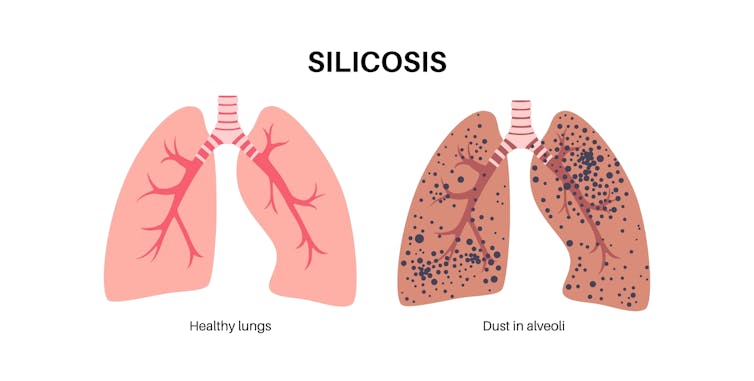
A diagram of a healthy pair of lungs, alongside a pair of lungs affected by silicosis.
When silica dust is breathed in, it gets trapped in the lungs in tiny air sacs (the alveoli), causing inflammation and scarring.
Pikovit/Shutterstock

How does silicosis affect tunnel workers?

Thousands of people are involved in tunnelling projects in Australia.

Tunnelling involves breaking up large amounts of silica-containing rock with heavy machinery.

Tunnel workers rely on advanced ventilation systems to provide fresh air underground, water systems to keep the rocks wet and suppress dust, and they wear respirators on their face to keep the air they breathe clean. But some people have raised concerns these measures do not always work properly.

There are also national legal limits in place for silica dust exposure, currently 0.05 milligrams per cubic metre over an eight-hour work day.

However, a media investigation last November revealed one-third of air monitoring tests from a Sydney tunnel project were above legal limits.

While air monitoring tests are required by law, the results of routine air monitoring tests are often not made public.

An expert taskforce has recently been set up in New South Wales to address the silica-related health risks for tunnel workers, promising to make high silica results above legal limits publicly available.

But while attention has been focused on tunnel workers in Sydney, the problem of lung disease in underground workers is more widespread.

Our Queensland study

The results of air monitoring tests are important because they show whether legal silica dust limits are being adhered to.

Another valuable use of this data is it can help us predict future disease risk. Instead of waiting to see how many workers develop silica-related diseases such as silicosis and lung cancer, this data can be used to estimate cases in advance.

In 2017, a Queensland parliamentary inquiry raised concerns about the health of Brisbane’s tunnel workers, particularly regarding the harmful effects of exposure to silica dust.

We worked through the parliamentary inquiry documents to uncover the results of hundreds of individual air monitoring tests conducted on three major Queensland tunnel projects between 2007 and 2013.

We analysed this data to estimate how many workers were exposed to silica dust and at what levels. We then modelled how many cases of silicosis and lung cancer would occur over the workers’ lifetimes.

We estimated that in a group of around 2,000 workers involved in these Queensland tunnel projects, 200 to 300 would develop silicosis over their lifetime as a result of silica dust exposure (roughly one in every ten workers).

We also estimated between 20 to 30 workers would develop lung cancer due to their exposure.

We had limited information on workplace conditions in the specific projects, so we made a number of assumptions based on publicly available information and our own experience. These included assumptions around the use and protective nature of masks. The fact we had to make some assumptions could be a limitation of our study. Due to the lack of data transparency we don’t know if these figures apply more broadly to tunnel workers throughout Australia.

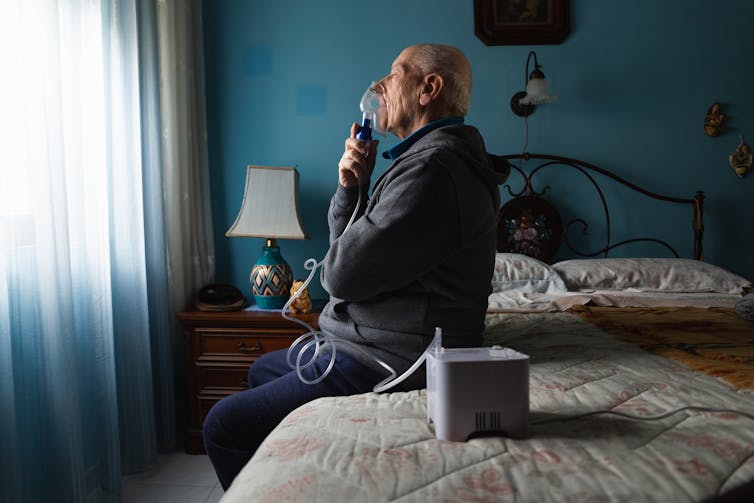
A man sitting on a bed using a breathing machine.
Silicosis can appear decades after occupational exposure.
Marco Di Stefano/Shutterstock

Our projected rate of silicosis, 10%, is the same as the rate of silicosis recorded by a government inquiry in 1924 which investigated silicosis among workers who built Sydney’s sewers.

So it doesn’t seem things are any better in terms of silicosis risk in underground work than a century ago.

We need to do more to protect tunnel workers

Continued secrecy around silica dust data reduces our ability to understand the scale of the problem and respond effectively. Nonetheless, the small amount of data that has been made available supports the need for urgent action.

With Australia’s ongoing infrastructure expansion, policymakers must act now. This should include enforcing stricter legal limits for silica dust exposure. There is concern among health experts that current limits don’t sufficiently protect workers’ health.

Policymakers should also ensure protective measures such as advanced ventilation and dust suppression systems are in place for all tunnel projects, set up national tunnel worker health surveillance, and make exposure data available to workers and the public.

There are several examples where things are done better. Internationally, Norway and Switzerland have strong systems to protect tunnel workers’ health such as air and health monitoring being conducted by an independent government agency. In Switzerland, this agency also insures the project. Noncompliance results in higher insurance premiums or, in some cases, the withdrawal of insurance, effectively stopping the project.

Nationally, Australia’s mining industry is more heavily regulated than tunnelling, with stricter enforcement of compliance.

Without immediate intervention, thousands of tunnel workers will continue to face serious health risks and Australia will face a growing wave of preventable occupational diseases.

The Conversation

Kate Cole receives higher degree by research funding from The University of Sydney; is a member of the Asbestos and Silica Safety Eradication Council; the NSW Dust Diseases Board; the Chair of the External Affairs Committee for the Australian Institute of Occupational Hygienists; and acts as an expert witness for law firms concerning silica-related diseases in tunnel workers.

Renee Carey has previously received funding from the Australian Council of Trade Unions. She is a member of the Occupational Lung Disease Network Steering Committee formed by Lung Foundation Australia.

Tim Driscoll has acted as an expert witness, and written government reports, in relation to silica exposure but not specifically connected to tunnelling. He chairs the Occupational and Environmental Cancer Committee of Cancer Council Australia and chairs the Occupational Lung Disease Network Steering Committee of Lung Foundation Australia.

ref. 1 in 10 tunnel workers could develop silicosis, our new research shows – https://theconversation.com/1-in-10-tunnel-workers-could-develop-silicosis-our-new-research-shows-252186

Here’s how a ‘silent’ tax hike is balancing the budget – with the heaviest burden on the lowest paid

Source: The Conversation (Au and NZ) – By Chris Murphy, Visiting Fellow, Economics (modelling), Australian National University

With just over three weeks to go until the federal election, both major parties are trying to position themselves as Australia’s better economic managers.

Labor was able to hand down two consecutive budget surpluses in its current term. But the most recent federal budget shows a return to deficit this financial year.

After the deficit peaks – at 1.5% of gross domestic product (GDP) next financial year – it will then take a decade to balance the budget. My own economic forecasts also imply the budget can return to balance in this time frame.

However, this slow budget repair work is done silently by “bracket creep”, not by policy actions of the government.

Under a progressive tax system, as incomes rise with inflation, the additional income is taxed more heavily.

For example, a worker on average, annual wages of A$79,000 pays 20.3% of that in tax. But they pay tax of 32% (including the medicare levy) on any wage increases, even if those wage increases are only just enough to keep pace with inflation.

The higher tax rate on additional wages pushes up average tax rates – known as bracket creep. This piece explains it well.

Bracket creep has the political advantage of being a silent way of gradually increasing average tax rates. Both major parties are heavily relying on it. But is it good economic policy?

The ‘silent’ tax hike

Though Australia’s personal income tax system is progressive, it’s possible to work out the average tax rate faced by Australians collectively. This is total personal income tax paid as a percentage of total taxable income.

In the first two decades of this century, personal income tax accounted for an average of 22.9% of taxable incomes. There was no clear trend.

Since then, the trend has been up, because announced tax cuts haven’t been enough to offset silent bracket creep.

The average tax rate this financial year, 2024-25, is estimated to be 24.3%.


In the latest budget, the government reduced the lowest marginal tax rate – from 16% to 15% in 2026-27, then to 14% in 2027-28 and beyond.

This almost stabilises the average tax rate for two years. However, it then resumes its upward trend under the silent influence of bracket creep, reaching 28.1% in 2035-36.

This will be an all-time high average tax rate. Living standards will be squeezed and incentives to work and save will diminish.

Some countries limit bracket creep by indexing personal income tax brackets to price inflation. This stops price inflation alone pushing workers into higher tax brackets.

To illustrate how indexing could work, if inflation was 2%, all of the tax thresholds would move up by 2%. For example, the tax free threshold of $18,200 would increase to $18,564.

A worker whose pay had increased by 2% would similarly pay only 2% extra tax, keeping their average tax rate unchanged.

However, most of the time wages rise faster than prices because of productivity growth.

Why bracket creep is unfair

The unfairness of bracket creep can be illustrated with examples.

Under the budget, the average rate of tax (for everyone) rises over the next 11 years by 3.8% points of income.

The average wage earner with an annual income of $79,000 fares a little better. Their average tax rate goes from 20.3% in 2024-25 to 23.6% in 2035-36, an increase of 3.3% points of income, as noted in the recent budget.

However, a low wage earner, with an annual income of $45,000 fares worse. Their average tax rate jumps from 10.8% to 17.3%, an increase of 6.5% points of income.

Do we think it is fair that someone with an annual income of only $45,000 today should have to pay about 17% of their income in income tax in 11 years time?

While this is an extreme example, it illustrates the fact that bracket creep is regressive and has serious unintended consequences.

Less of a “Robin Hood” effect

All of this has implications for the fairness of our tax system overall.

To measure how much a country’s personal income tax system reduces inequality in income distribution, economists use something called the “Reynolds-Smolensky redistribution index”. Let’s call it the “R” index.

A higher R index for a country means a stronger “Robin Hood” element in its tax system – that the system is doing more to redistribute income.

closeup of business people walking up stairs
Bracket creep disproportionately affects those on low incomes.
muse studio/Shutterstock

The International Monetary Fund reports that in 2018, the R index for Australia was 6.8%, compared to the average for OECD countries of under 5%. In 2024-25, the Australian R index is already a little lower at 6.5%.

The R index can also be used to measure how benefits reduce inequality, but here, we’re only using it for personal income tax.

Without any budget measures, the regressive nature of bracket creep would have caused the R index to fall further to a value of 6.3% in 2035-36.

However, this budget’s “top-up tax cut” to the lowest marginal tax rate limited this fall to 6.4%, because it was a progressive tax change.


Time for indexation

Politicians from both major parties should stop relying so much on their silent partner, bracket creep, to slowly repair budget deficits.

Instead of misleading announcements of tax cuts in only some budgets, my modelling shows how we could benefit from automatically indexing the tax brackets to prices in every budget.

This will mean that the average rate of personal income tax will rise more modestly over the next 11 years, from 24.3% to 25.5%, instead of to 28.1%. Indexation also limits the fall in the R index to a value of 6.4%.

The resulting revenue shortfall could be filled in ways that are more transparent, efficient and fairer than bracket creep.

Possible ways include better priorities and higher efficiency in government spending, more reliance on indirect taxes such as the GST and expanding the tax base itself through reforms to boost productivity.

The Conversation

Chris Murphy does not work for, consult, own shares in or receive funding from any company or organisation that would benefit from this article, and has disclosed no relevant affiliations beyond their academic appointment.

ref. Here’s how a ‘silent’ tax hike is balancing the budget – with the heaviest burden on the lowest paid – https://theconversation.com/heres-how-a-silent-tax-hike-is-balancing-the-budget-with-the-heaviest-burden-on-the-lowest-paid-253442

Our ancestors didn’t eat 3 meals a day. So why do we?

Source: The Conversation (Au and NZ) – By Rob Richardson, Senior Lecturer in Culinary Arts & Gastronomy, Auckland University of Technology

Shutterstock

Pop quiz: name the world’s most famous trio? If you’re a foodie, then your answer might have been breakfast, lunch and dinner. It’s an almost universally accepted trinity – particularly in the Western world.

But how did it come about?

The first meals

Early humans were nomadic. Forming small communities, they would travel with the seasons, following local food sources.

While we can only guess what daily mealtimes rhythms looked like, evidence dating back 30,000 years from the South Moravia region, Czech Republic, shows people visited specific settlements time and again. They gathered around hearths, cooking and sharing food: the first signs of human “commensality”, the practice of eating together.

One of the best-preserved hunter-gatherer sites we’ve found is Ohalo II – located on the shores of the modern-day Sea of Galilee (also called Lake Tiberias or Lake Kinneret) in Israel, and dating back some 23,000 years.

In addition to several small dwellings with hearths, it provides evidence of diverse food sources, including more than 140 types of seeds and nuts, and various birds, fish and mammals.

The development of agricultural knowledge some 12,000 years ago gave rise to permanent settlements. The earliest were in the Levant region (across modern-day Iraq, southwestern Iran and eastern Turkey), in an area called the “Fertile Crescent”.

The fertile crescent covers the rich, biodiverse valleys of the Tigris, Euphrates and Jordan rivers.
Shutterstock

Permanent agriculture led to the production of a surplus of food. The ability to stay in one place with food on-hand meant the time it took to cook no longer mattered as much.

It quickly became common to eat one light meal early in the day, followed by a larger hearth-prepared meal later on. The specific timings would have varied between groups.

Eating together as a rule

The communal nature of foraging and hunting, and later farming, meant humans almost always ate their meals in the company of others. In the ancient city-state of Sparta, in the 4th century BCE, these practices were codified as common main meals called syssitia (meaning “eating together”).

These meals were consumed at the end of the day in communal dining halls. Food was served by young boys to tables of 15 or so men who lived together and fought in the same military division. The men gradually shared generational knowledge with the young boys, who themselves would join the tables by age 20.

In the 5th century BCE, Greek historian Herodotus wrote about how syssitia evolved from a Spartan military practice to having deep political meaning in society. Similarly, Plato wrote common meals were an integral component of civil society, and that missing a meal without good reason was a civic offence.

By dining in full view of the rest of society, citizens were compelled to maintain self-discipline. Mealtime was also an opportunity for social linkage, and important discussions ranging from business deals to politics.

The eating habits of Spartan women are missing in the texts, although it is implied they ate at home.

Bunches of lunches

Counter to the tough Spartan way of life, the Romans enjoyed their main meal, cena, earlier in the day, followed by a lighter meal just before bed.

The northern European tribes tended towards two larger meals per day, as more sustenance is required in colder climes. To the Vikings, these meals were known as dagmal and nattmal, or day meal and night meal. Nattmal was the cooked evening meal, while dagmal usually consisted of leftover nattmal with the addition of bread and beer or mead.

In Australia, evidence suggests Aboriginal peoples tended toward a daily single meal, which aligns with the predominant method of cookery: slow-cooking with hot coals or rocks in an earth oven. This underground oven, used by Aboriginal and also Torres Strait Islander communities, was referred to as a kup murri or kap mauri by some groups.

This is similar to other Indigenous preparations throughout the Pacific, such as the New Zealand Māori hāngī, Hawaiian imu, Fijian lovo, and even the Mayan píib.

The once-daily meal would have been supplemented with snacks throughout the day.

Three’s the magic number

The timing of meals was heavily influenced by class structure, local climate and people’s daily activities. Practicality also played a part. Without reliable lighting, meals had to be prepared and eaten before dark. In settled parts of Northern Europe, this could be as early as 3pm.

So how did we go from one or two main meals, to three? The answer may lie with the British Royal Navy.

Since its inception in the 16th century, the navy served three regular meals to align with the shipboard routine. This included a simple breakfast of ship’s biscuits, lunch as the main meal, and dinner as more of a light supper.

Some sources suggest the term “square meal” may have come from the square wooden trays meals were served in.

Initially, sailors recieved a daily gallon of beer with meals. This was later changed to watered-down rum, the infamous ‘grog’, which is being handed out in this 1940 photo taken aboard HMS King George V.
Imperial War Museums, CC BY-NC

The Industrial Revolution, which started around 1760, arguably also played a role in formalising the concept of three specific mealtimes across the Western world.

The cadence of breakfast, lunch and dinner matched the routine of the longer, standardised workdays. Workers ate breakfast and dinner at home, before and after work, while lunch was eaten with coworkers at a set time.

With minimal breaks, and no time for snacking, three substantial meals became necessary.

The fall of the holy trinity

Today, many factors impact the time and frequency of our meals, from long work commutes to juggling hobbies and social obligations.

The ways in which we eat and share food continue to evolve alongside our societies and cultures.
Shutterstock

The COVID pandemic also impacted how and what we eat, leading us to eat larger amounts of higher calorie foods. The rapid growth of delivery services also means a meal is no more than a few minutes away from most people.

All of this has resulted in mealtimes becoming less rigid, with social meals such as brunch, elevenses and afternoon teas expanding how we connect over food. And mealtimes will continue to evolve as our schedules become ever more complicated.

The Conversation

The authors do not work for, consult, own shares in or receive funding from any company or organisation that would benefit from this article, and have disclosed no relevant affiliations beyond their academic appointment.

ref. Our ancestors didn’t eat 3 meals a day. So why do we? – https://theconversation.com/our-ancestors-didnt-eat-3-meals-a-day-so-why-do-we-250773

Tripped at the first hurdle: fees-free changes could put some students off tertiary study altogether

Source: The Conversation (Au and NZ) – By Wendy Ann Alabaster, PhD candidate, University of Canterbury

skynesher/Getty Images

The door to tertiary education will likely close for some students now changes have kicked in for the fees-free policy.

In 2017, the Labour government introduced a fee holiday for students’ first year of academic study, or two years of training in a work-based setting. This was meant to help those who had been put off tertiary study because of the cost. It was also intended to boost the number of people going into higher education.

But students who started university or other tertiary training in 2025 will instead have to wait until their final year for the fees holiday under a policy change by the current coalition government.

According to Tertiary Education Minister Penny Simmonds, the goal was to incentivise “hard working learners, businesses and tertiary providers” and help those “most in need of support to access tertiary education and training”.

However, my research suggests the change will likely compound existing inequalities in access to tertiary education for students from low-income backgrounds.

Through repeated in-depth interviews with students throughout their first year of study, I examined the impact of the fees free policy on their attitudes and behaviours. What I found is for students from low-income backgrounds, the policy is going to make entering study harder.

Fees free as an entry point

My study focused on ten students from low-income backgrounds or who were first in their family to undertake tertiary study. They were interviewed three times: on enrolment, mid-year and at the end of their first year.

Five of the ten students said they could not have imagined beginning their studies without the first year fees-free support. One student said,

If it had cost, I wouldn’t have gone.

Another said,

I don’t think I would have [studied], to be honest.

And a third said,

I’m definitely not one to have debt. No, I don’t think I would have [studied].

The students in my study were also worried about the debt associated with a student loan. As of December 2024, the total student loan debt in New Zealand was around NZ$15.6 billion, with the median loan balance being $17,949.

One student said she did not want the debt from a student loan. Another commented,

It was always the thought that, oh, uni, there’s a massive student loan that you’re going to end up with later down the line. I don’t want to end up stuck in debt and then, you know, never be able to pay off things like that.

A third said,

It’s daunting because it was only recently that my mum’s paid off her student loan or her debt.

Throughout the interviews, the students suggested other changes that could help how low-income students approached tertiary study.

These included improving access to career education advice, assistance and mentoring in navigating the tertiary environment (including application processes), and increased health and wellbeing support.

Despite Labour’s fees-free policy, there has been a persistent decline in the number of students from low socioeconomic backgrounds entering tertiary study.
Phil Walter/Getty Images

The participants in this study found it difficult to access help with scholarship and enrolment applications. One student commented,

[High school staff] were very passionate about people to go to uni so it looked good on their reports, but not like helping people apply or anything like that. So it was quite one sided.

Another student was frustrated with trying to navigate Studylink, the student loan and assistance provider. She said,

I don’t know why [Studylink] make it so hard for everybody.

It was difficult for low-income and first-in-family students to communicate with their families about their struggles. One student said,

Coming from a low-income family meant I was the first in my family to attend tertiary study. It was hard to communicate to my family the struggles of tertiary education and I found it difficult to connect with them and feel like they understood my experience.

Ongoing unequal access

Despite the fees free policy, there has been a persistent disparity in the background of students who go on to study at university or other tertiary institutions.

In 2021, the proportion of students undertaking tertiary study from decile one schools (those with the highest number of students from low-income backgrounds) was under 4%. The proportion from decile 10 schools was closer to 16%. (The decile system has since been replaced by the Schooling Equity Index).

Regardless of the fees free programme’s original goals, the percentage of students accessing tertiary education from the schools with the lowest five deciles has decreased from 38% in 2017 to 28% in 2021. At the same time, the number of students from the highest five decile schools has increased from 62% to 72%.

Improving access for students

Research in 2019 and 2020 revealed that students who were more influenced by the fees-free policy may need extra support to complete qualifications and have a successful tertiary experience.

The students who were more influenced by the fees-free policy were approximately 1.67 times more likely to struggle during the transition to university and show an interest in early departure within the first few weeks of study.

My study suggests free fees in the first year allowed students from low-income families to feel they had a right to study.

Rather than being a reward for students at the end of their study, it is more likely the shift of the fees-free year will discourage low-income students from taking the risk to commit to study at the tertiary level.

The authors do not work for, consult, own shares in or receive funding from any company or organisation that would benefit from this article, and have disclosed no relevant affiliations beyond their academic appointment.

ref. Tripped at the first hurdle: fees-free changes could put some students off tertiary study altogether – https://theconversation.com/tripped-at-the-first-hurdle-fees-free-changes-could-put-some-students-off-tertiary-study-altogether-253613

Europe tops global ranking of dynamic and sustainable cities – here’s why

Source: The Conversation (Au and NZ) – By Pascual Berrone, Head of Strategic Management Department and Chair of Sustainability and Business Strategy, IESE Business School (Universidad de Navarra)

London, New York and Paris have been named the world’s most dynamic and liveable cities. This is according to a new ranking of global cities that highlights Europe’s ability to balance sustainability and growth in its urban centres.

The IESE Cities in Motion index looks at 183 cities in 92 countries, and ranks them in nine key areas: human capital, social cohesion, economy, governance, environment, mobility and transportation, urban planning, international profile and technology. It’s different from other indices in that it takes into account so many metrics – more than 100 – on everything from ease of starting a business to number of museums and art galleries, internet speed and commute times.

The idea is to systematically gauge what makes a city the sort of place where people want to live and work. This is important not just for the quality of life of habitual residents, but also because location is vital for attracting global talent, especially among younger generations.

What makes the winners?

The top 10 cities in the 2025 edition were London, New York, Paris, Tokyo, Berlin, Washington DC, Copenhagen, Oslo, Singapore and San Francisco.

The top three all do particularly well in human capital, which includes features like educational and cultural institutions. They also score highly on international profile, which looks at indicators of global interest, such as the number of airport passengers and hotels.

Beyond those two areas, London cements its status as a global hub of high-level innovation and development, also standing out for governance and urban planning. The UK capital is somewhat weaker in social cohesion, where it came 20th, though not nearly as bad as second-place New York, which ranked 127th out of 183 cities in this category – among the lowest of developed countries. New York does, however, stand out for its economic performance, and does very well in mobility and transportation.

Paris, meanwhile, performs well across many metrics, including urban planning as well as international profile and human capital.

What Europe gets right

We’ve been calculating the index for a decade now, and European cities consistently perform well. This year, five of the top 10 cities – London, Paris, Berlin, Copenhagen and Oslo – are European.

We adjust the index on a regular basis in order to make sure that we’re measuring what’s relevant. For example, this year we introduced new metrics on women’s leadership, renewable energy sources and green spaces, as well as on availability of coworking spaces.

There’s no single reason behind Europe’s success, but there are patterns. Its large global metropolises, such as London and Paris, offer advanced technology, international communities and diversified economies in services, technology and finance. They have generally stable political systems and reasonable urban planning, along with advanced public and private transport options. However, while highly diverse, they also suffer from income inequalities.

In addition to these mega cities, Europe is home to a large number of sustainable and culturally vibrant cities of many sizes. All the Spanish cities included in the index (10 in total, including Madrid and Barcelona) are part of this cluster.

These are mature economies that prioritise sustainability over rapid growth, seeking to balance liveability and stability. They also have steady political systems, a commitment to green policies and urban planning strategies that give weight to sustainable infrastructure that enhances liveability.

They do well in social cohesion, with high levels of integration and relatively low levels of inequality. In terms of technology, they are steady adopters but they are not, for the most part, trailblazing innovators.

It’s also interesting to note the performance of North American cities, which show that economic might and technological prowess don’t always translate into more liveable metropolises. US cities dominate the economic dimension – eight of the top 10 in economic performance are American – but there’s not a single American city in the top 10 for social cohesion or environment. They do well in our ranking – New York, Washington, San Francisco, Chicago and Boston are all in the top 20 – as would be expected of high-income cities, but their performance in different areas varies widely.

Meanwhile, developing countries continue to struggle to break into the top ranks. In Latin America, the highest-ranked city is Santiago (89th), followed by Buenos Aires (117th) and Mexico City (118th). In Africa, Cape Town (156th) is the top-ranked city. At the very bottom of the ranking are Lagos, Lahore and Karachi.

Recommendations for cities

In this tenth edition, we are starting to see greater homogeneity of cities, suggesting that urban planners are learning how to confront similar social, economic and geopolitical challenges. Here are some of our recommendations for how they can improve further:

  • Adaptive and participatory planning: Cities should adopt an approach to planning that is both inclusive and adaptive. This means actively engaging residents, businesses and organisations in identifying priorities, and establishing mechanisms to respond to unexpected developments.

  • Sustainability as a core principle: A commitment to environmental sustainability and innovation in urban planning is key. Cities should pursue policies that reduce carbon emissions, such as adopting renewable energy. Their strategies must also factor in environmental impact and preparedness for extreme climate events, such as wildfires or floods.

  • Economic and social resilience: To address economic inequalities and a lack of social cohesion, cities should implement policies that foster economic equity, such as incentives for small businesses and job training programs that improve access to employment. They should also develop community support networks that strengthen social ties and promote the integration of vulnerable groups.

  • Inclusive technology: To close the digital divide, cities should develop a robust technological infrastructure that ensures connectivity across all urban areas and provides digital skills training for residents. Open data platforms that enhance transparency and encourage citizen participation can play a key role in this.

  • International cooperation: Cities should actively participate in international networks to foster mutual learning and best practices, and to collaborate on joint projects.

  • Continuous measurement: Metrics are essential, both to track progress and to benchmark against other cities with similar characteristics. While cities should develop their own performance dashboards with relevant indicators, our index can serve as an initial framework for identifying key dimensions and the most important indicators.

Las personas firmantes no son asalariadas, ni consultoras, ni poseen acciones, ni reciben financiación de ninguna compañía u organización que pueda obtener beneficio de este artículo, y han declarado carecer de vínculos relevantes más allá del cargo académico citado anteriormente.

ref. Europe tops global ranking of dynamic and sustainable cities – here’s why – https://theconversation.com/europe-tops-global-ranking-of-dynamic-and-sustainable-cities-heres-why-253887

Election Diary: Chalmers and Taylor quizzed on personal flaws during animated treasurers’ debate

Source: The Conversation (Au and NZ) – By Michelle Grattan, Professorial Fellow, University of Canberra

Perhaps the most compelling moment, at least for non-economists, in Wednesday night’s debate between Treasurer Jim Chalmers and his “shadow” Angus Taylor was when each man was forced to respond to what critics see as their personal flaws.

Moderator Ross Greenwood, Sky’s business editor, put to Chalmers that people say “you’ve got a bit of a glass jaw, that you don’t cop criticism well”.

“I think over time I’ve learned to understand that you take the good with the bad,” Chalmers responded, looking taken aback. “I think I’ve learnt over time to focus on the objective observers of the job that I’m doing and I think ultimately the Australian people will judge that rather than the kind of partisan commentators from time to time.”

Taylor was told that “some people suggest that maybe you don’t put the work in”.

“Well, you know, there’s lots of free advice in this game,” Taylor said. “You get it, Jim gets it, we all get it. But I tell you what, I work every single day for those hardworking Australians who work in Jim’s electorate, in my electorate, right around Australia […] I come from a hardworking family.”

In the debate – a livelier encounter than Tuesday’s one between the leaders – the weapons of past promises were liberally deployed. Taylor invoked Labor’s unrealised $275 cut in power bills. Chalmers reached back to Tony Abbott’s pledge of no cuts to health and education, alleging a secret plan for cuts to pay for the Coalition’s nuclear scheme.

The hour was filled with claims, counter claims, disputed figures, and accusations of lies.

In the judgement of University of Canberra economist John Hawkins, Chalmers performed the better of the two.

“He stayed on message, arguing the economy was improving, and the budget was in better shape than what he inherited. Given times of global uncertainty, he argued for a steady hand,” Hawkins said.

“Angus Taylor was critical of economic conditions over the past three years but weak on what needed to be done differently, other than a temporary cut to the fuel tax and lower immigration. He did not effectively rebut Chalmers’ repeated claim that the Coalition stood for higher income tax, lower wages and no ongoing cost of living relief.

“Taylor repeated [Opposition Leader Peter] Dutton’s unconvincing claim that under the Liberals, Australia would be virtually the only country in the world exempted from the Trump tariffs.

“Chalmers thought the global tariff war would reduce Australia’s economic growth but not push us into recession. I thought he may have pointed out that in the global financial crisis Australia was one of the few OECD countries to avoid recession – and he was one of [former treasurer] Wayne Swan’s key advisers at the time, giving him some very relevant experience.”

Business feels neglected

Business, especially big business, is feeling somewhat neglected in this election. On April 20, business groups are joining to call for a commitment to a pro-business agenda.

In letters to Prime Minister Anthony Albanese, Dutton and parliamentarians generally, the groups argue Australia has “one of the least competitive tax systems among comparable nations. We’ve burdened our economic engine room with countless new pieces of regulation and red tape. And the prosperity of all Australians suffers while our productivity lags.”

Who fired up US senator Mark Warner on Australia’s tariff woes?

Australia is bracing for a fresh tariff strike from US President Donald Trump, after he declared this week that “we’re going to be announcing a major tariff on pharmaceuticals”.

Australia exports about $2 billion in pharmaceuticals to the United States, including $1.8 billion of blood products. These exports make up less than 0.3% of our goods exports to the world.

Pharmaceuticals were set aside in last week’s tariff round for later consideration. In that round, Australia was only subject to the 10% general tariff.

The US pharmaceutical industry hates the Australian Pharmaceutical Benefits Scheme, under which the government purchases drugs, leading to prices for Australians being cheaper than in the US. Both sides of politics say they wouldn’t compromise the PBS.

Meanwhile, in Washington, Australia’s cause for an exemption from the 10% tariff has found a friend in Democratic Senator Mark Warner.

In the Senate finance committee on Tuesday (Washington time) Warner quizzed US trade representative Jamieson Greer on why an ally had been badly treated.

Why did Australia get “whacked”, Warner wanted to know, given the US has a trade surplus with it, and a free trade agreement. Besides, “they are an incredibly important national security partner”.

Greer was unmoved. “Despite the agreement, they ban our beef, they ban our pork, they’re getting ready to impose measures on our digital companies.”

So who is Warner, and why is he standing up for us? Bruce Wolpe, senior fellow at the US Studies Centre at the University of Sydney and author of Trump’s Australia, says Warner, a long-time senator with a background in the tech industry, is a “low-key moderate”. He is a member of the Senate Finance Committee, which has jurisdiction over trade, and the Select Committee on Intelligence. Warner is a supporter of AUKUS.

“Someone briefed his staff [on the treatment of Australia] and it paid off,” Wolpe speculates. “Someone saw this was a chance the confront the US trade representative about Australia. They did a great job. It was terrific. It was a direct hit.” No one knows whether the hand of Kevin Rudd might have been involved.

Industry Minister Ed Husic told the ABC: “I reckon I might see if I can get an honorary Order of Australia for senator Warner. Good on him. I like the cut of his jib. It was very defensive of Australia, but we heard the actual administration’s perspective running up the score against us.”

Michelle Grattan does not work for, consult, own shares in or receive funding from any company or organisation that would benefit from this article, and has disclosed no relevant affiliations beyond their academic appointment.

ref. Election Diary: Chalmers and Taylor quizzed on personal flaws during animated treasurers’ debate – https://theconversation.com/election-diary-chalmers-and-taylor-quizzed-on-personal-flaws-during-animated-treasurers-debate-253734

Politics with Michelle Grattan: Hugh White on what the next PM should tell Trump and defending Australia – without the US

Source: The Conversation (Au and NZ) – By Michelle Grattan, Professorial Fellow, University of Canberra

The Trump ascendancy has forced international economic issues and the future strategic outlook onto the Australian election agenda, even if they are at the margins.

This campaign – while dominated by domestic issues, notably the cost of living – is being conducted against the background of an extraordinarily volatile external situation, with major implications for Australia’s future.

To discuss these issues, we were joined on the podcast by Hugh White, Emeritus Professor of Strategic Studies at the Australian National University. White is one of Australia’s foremost thinkers on defence policy, China and the region. His long career includes serving as an adviser to then federal defence minister Kim Beazley.

White regards US President Donald Trump as a “revolutionary figure”:

I think Trump is a genuinely revolutionary character, and not just his impact on American domestic politics and economics, I also think he has a huge impact on global strategic affairs. And the reason for that is that he does have a fundamentally different view of America’s place in the world than that of what we might call a Washington establishment.

Donald Trump is really a kind of an old-fashioned isolationist. That is, he believes America’s strategic focus should be on the Western Hemisphere […] For example, in Ukraine he’s happy to see Russia assert itself as a great power in Eastern Europe. In Asia, I think, despite his reputation as a China hawk on economic issues, he doesn’t have any problem with China asserting itself as a great power in East Asia. He’s for these other great powers to dominate their backyards, just the way he wants America to dominate its backyard in the Western Hemisphere.

Yet White doesn’t believe either Labor or the Coalition is taking defence seriously in this election.

It’s not being treated as a real issue in the campaign, and that’s because both sides have determined that it won’t, and what underpins that is the absolutely rock-solid bipartisanship between the two of them on every significant issue. And I think that’s a very serious problem for Australia because at a time when our strategic circumstances are changing dramatically […] neither side has any inclination to have a serious conversation about what that means, why it’s happening, what we should be doing about it,

A lot of the blame for that lies with the Labor Party, because it seems to me Labor’s political approach to the whole question of foreign affairs and defence for a very long time now has focused on minimising differences with the Coalition.

While White agrees Australia needs new submarines, and quickly, he doesn’t think they should be nuclear-powered, as promised under AUKUS. He thinks we should leave AUKUS.

We should have started building replacements for the [Collins-class submarine] around about 2010 or 2012. So we’re well over a decade late and I do think there’s a real risk that we’re going to lose our submarine capability altogether. But the way to solve that is not to push ahead spending billions and billions of dollars on a project which, even if it works, delivers the submarines we don’t need, and which is very unlikely to deliver any submarines at all.

We’re past looking for a perfect submarine. We just need to get any submarine at all so we can keep some capability running and then once we have that running, we need to have a really focused programme. We need ministers to really tell Defence what to do, focus programmes to develop a follow on to the Collins-class design, because that’s the design we already know best in the world and to start building a new class of evolved Collins.

After the May 3 election, when the next prime minister meets the US president to talk trade, defence and more, what should Anthony Albanese or Peter Dutton tell Trump? White says:

Trump is very hard to handle. I don’t think there’s any magic formula that an Australian prime minister can utter, which makes Trump into either a more acceptable, economic partner for Australia or a more reliable strategic partner for Australia, because the forces that are driving America out of Asia are much bigger than Donald Trump.

The most important thing an Australian political leader could say to Trump when he first meets him is, look, we understand where you’re coming from. We are happy to take responsibility for our own security. We don’t expect you to stay engaged in Asia to look after us in future. What we want you to do is to help us manage that transition as best we can and we’re prepared to pay for what we get.

Michelle Grattan does not work for, consult, own shares in or receive funding from any company or organisation that would benefit from this article, and has disclosed no relevant affiliations beyond their academic appointment.

ref. Politics with Michelle Grattan: Hugh White on what the next PM should tell Trump and defending Australia – without the US – https://theconversation.com/politics-with-michelle-grattan-hugh-white-on-what-the-next-pm-should-tell-trump-and-defending-australia-without-the-us-254197

The Coalition’s domestic gas plan would lower prices – just not very much

Source: The Conversation (Au and NZ) – By Samantha Hepburn, Professor, Deakin Law School, Deakin University

A LNG carrier departs Gladstone. Ivan Kuzkin/Shutterstock

It surprised many Australians when the Coalition announced a plan straight from the progressive side of politics: force large gas companies to reserve gas for domestic use – at a lower cost than they could sell it for overseas.

As a populist move during a cost-of-living election, it’s a good one. Australia’s gas producers sell 70% of gas extracted on the east coast overseas under long-term contracts, even as southeastern states such as Victoria face possible gas shortages. Western Australia has long had an effective policy requiring up to 15% of offshore gas to be reserved for domestic use.

After a fortnight’s delay, the Coalition has now publicly released the modelling behind its policy. Undertaken by Frontier Economics, the modelling indicates that reserving 50 to 100 petajoules of gas in the first year would cut wholesale prices by 23%. This would mean a 15% drop in prices for large-scale users – but only a 7% fall for household gas bills and a 3% fall in electricity bills.

This doesn’t sound like much, because it isn’t. Gas prices soared during the Ukraine war and haven’t yet returned to their pre-war levels. Labor has dubbed the plan “gaslighting”, and will rely instead on a gas policy released last year to open up more gasfields and build import terminals. Gas producers don’t like the Coalition’s plan, and neither does billionaire Liberal benefactor Gina Rinehart. Dutton’s plan isn’t crazy – it’s just not likely to make a big difference.

queensland gasfield.
Most of Queensland’s gas is exported at present.
Chris Andrews Fern Bay/Shutterstock

How would this gas reservation policy work?

The Coalition has proposed what it calls an East Coast Reservation Scheme, with the goal of progressively decoupling Australia’s east coast gas market from the volatile international market.

It has two parts. First, it would require new exporters, in the first year of operation, to reserve an additional 50–100 petajoules for the domestic market. Second, it would create a gas security charge, to be imposed on gas producers seeking to export “additional” (non-contracted) gas on the international market.

This would give gas producers an incentive to sell non-contracted gas to the domestic market, because they would get greater profits selling in Australia, even at a lower base price.

Further, the policy would prevent gas producers from charging domestic buyers international prices, setting a competitive price.

In effect, the gas security charge is akin to a levy or a reverse tariff. The levy can be avoided if producers supply up to 100 petajoules to domestic markets. That’s about as much gas as New South Wales’ gas pipelines deliver each year – 101 petajoules (PJ) as of 2022–23, or the equivalent of 26 full liquefied natural gas (LNG) carriers, which hold about 3.8 PJ on average.

What are the issues with this plan?

There are legitimate concerns. First, the policy does not directly address domestic gas pricing and won’t help with the cost of living crisis. Over time, it could create a more competitive domestic market, but the fact producers could make marginally more money selling gas on the domestic market doesn’t guarantee change.

Second, the policy does not directly address the looming gas supply crisis. That’s because existing gas producers would not be legally obliged to commit to more gas domestically – they could still export it. The obligation to commit an additional 50-100 petajoules to the domestic market only applies to gas exporters in their first year of operation.

If policymakers want to solve the supply crisis, they would be better served by imposing direct export controls in the form of a clear gas reservation mandate. This works, as Western Australia’s long experience shows.

How did we get here?

When Russia invaded Ukraine in 2022, it led to huge spikes in global gas prices and shortages in Europe as the world moved away from Russian gas.

In the 2010s, Australia had already been ramping up gas production. But in the wake of the Ukraine war, Australia became a major gas exporter. Producers traded as much gas as possible on the international market, selling it for over A$40/GJ. Meanwhile, Australia’s coal production was falling.

Domestic gas demand shot up, and prices went from $8 to $30 a gigajoule. In response, the Albanese government introduced an emergency price cap for the wholesale gas market, prohibiting producers from entering into supply contracts with domestic purchasers for prices above a cap, currently set at $12/GJ. While the cap did partly insulate domestic consumers, it was always intended as a temporary measure.

The Australian Competition and Consumer Commission recently predicted a gas supply shortfall of up to 40 petajoules in the southern states as early as September due to declining production in Victoria and South Australia as well as higher demand. Without access to uncontracted Queensland gas, supply will run very low. This is a significant energy security risk, and one the Coalition’s gas policy doesn’t directly address.

hand turning on gas stove.
Victorian residents are more reliant on gas than other states – and shortfalls are looming.
M-Production/Shutterstock

What’s next?

Australia is one of the world’s top three LNG exporters. The fact a gas giant could be facing domestic shortages is both unnecessary and embarrassing. Reaching this point represents decades of policy failure.

Reserving gas for domestic use works for the west coast, and it would work for the east. But the Coalition’s plan is not quite a gas reservation scheme. It doesn’t create a comprehensive reservation mandate and questions remain about its capacity to address domestic pricing and supply.

At present, it seems like a lot of effort without great benefit. Will households really notice their gas bill is 7% cheaper?

The Conversation

Samantha Hepburn does not work for, consult, own shares in or receive funding from any company or organisation that would benefit from this article, and has disclosed no relevant affiliations beyond their academic appointment.

ref. The Coalition’s domestic gas plan would lower prices – just not very much – https://theconversation.com/the-coalitions-domestic-gas-plan-would-lower-prices-just-not-very-much-254194

Can you spot a financial fake? How AI is raising our risks of billing fraud

Source: The Conversation (Au and NZ) – By Matthew Grosse, Director of the Master of Business Analytics, Senior Lecturer, Accounting, University of Technology Sydney

Along with the many benefits of artificial intelligence – from providing real time navigation to early disease detection – the explosion in its use has increased opportunities for fraud and deception.

Large and small businesses and even the Australian Taxation Office (ATO) may be hit with fraudulent reimbursement claims, which are almost impossible to distinguish from legitimate receipts and invoices.

Individuals also need to be wary.

Look at the photos of the receipts shown below. One documents a genuine transaction. The other was created using ChatGPT. Can you spot the fake?

Now have a look at this one.

You possibly couldn’t – and that’s exactly the point. Systems which can reproduce near perfect counterfeits of legitimate financial documents are increasingly prevalent and sophisticated.

Last week, OpenAI released an improved image generation model which can create images with photorealistic outputs including text.

Why should we care?

Fraud involving fake financial documents is a massive global issue. The international Association of Certified Fraud Examiners estimate organisations lose approximately 5% of revenue to fraud each year.

In its 2024 report, the association documents losses exceeding US$3.1 billion across 1,921 cases. Billing and expense fraud constitute 35% of asset misappropriation cases, with firms reporting median losses of US$150,000 per incident.

Most concerning, fraudsters primarily conceal these crimes by creating fake documents or altering files, exactly what AI now simplifies.

Fake documents enable fraud in various ways. An employee might create a fictitious receipt for a business lunch that never happened, or a contractor might fabricate receipts for expenses never incurred. In each case, the fraudster uses counterfeit documentation to extract money they’re not entitled to.

This problem is likely more widespread than recognised. A 2024 survey revealed 24% of employees admitted to expense fraud, with another 15% considering it.

Even more concerning, 42% of UK public sector decision makers confessed to submitting fraudulent claims.

AI removes barriers to deception

Understanding how AI technology may lead to a surge in potential fraud requires examining the classic “fraud triangle”. This explains that fraud requires three elements: incentives, rationalisation and opportunity.

Historically, technical barriers limited the ability to create fake documentation even when motivation existed.

AI eliminates these barriers by making fake documentation easy to create. Research confirms when opportunity expands, fraud increases.

When fake claims become everyone’s problem

When fake receipts support tax deductions, we all pay.

Consider a marketing consultant earning $120,000, who uses an AI image generator to create several convincing receipts for non-existent expenses totalling $4,000. At their marginal tax rate of 30%, this fraud saves them about $1,200 in taxes – if they are not caught.

The Australian Taxation Office estimates a $2.7 billion annual annual gap from incorrectly over-claimed deductions by small businesses. With digital forgery becoming more accessible, this gap could widen significantly.

Fake receipts and invoices

Consumers are also becoming increasingly vulnerable to scammers using AI-generated receipts and invoices.

Imagine receiving what looks like an official invoice from your energy provider. The only difference? The payment details direct funds to a scammer’s account.

This is already occurring. The Australian Competition and Consumer Commission reported more than $3.1 billion lost to scams in 2023, with payment redirection fraud growing rapidly.

As AI tools make creating and editing convincing business documentation easier, these scam numbers have the potential to increase.

The growing threat

This vulnerability for both businesses and consumers is amplified by our increasing reliance on digital documentation.

Today, many businesses issue receipts in digital formats. Expense management systems typically require employees to submit photos or scans of receipts. Tax authorities also accept electronically stored documentation.

With paper receipts becoming increasingly rare and paper’s physical security features gone, digital forgeries become nearly impossible to spot through visual inspection alone.

Is digital authentication the answer?

One potential countermeasure is the Content Provenance and Authenticity (C2PA) standard. The C2PA standard embeds AI generated images with verifiable information about file origin.

However, a major weakness remains, as users can remove metadata by taking a screenshot of an image. For businesses and tax authorities, digital authentication standards are just part of the answer to sophisticated digital forgery. Yet reverting to paper documentation isn’t feasible in our digital era.

Seeing is no longer believing

AI’s ability to create realistic fake financial documents fundamentally changes our approach to expense verification and financial security.

The traditional visual inspection of receipts and invoices is rapidly becoming obsolete.

Businesses, tax authorities and individuals need to adapt quickly by implementing verification systems that go beyond simply looking at documentation.

This might include transaction matching with bank records, and automated anomaly detection systems that flag unusual spending patterns. Perhaps the use of blockchain technology will expand to help verify transactions.

The gap between what AI can create and what our systems can reliably verify continues to widen. So how do we maintain trust in financial transactions in a world where seeing is no longer believing?

Matthew Grosse does not work for, consult, own shares in or receive funding from any company or organisation that would benefit from this article, and has disclosed no relevant affiliations beyond their academic appointment.

ref. Can you spot a financial fake? How AI is raising our risks of billing fraud – https://theconversation.com/can-you-spot-a-financial-fake-how-ai-is-raising-our-risks-of-billing-fraud-253912

Running for parliament is still a man’s world, with fewer female candidates – especially in winnable seats

Source: The Conversation (Au and NZ) – By Elise Stephenson, Deputy Director, Global Institute for Women’s Leadership, Australian National University

Despite progress towards gender equality in Australian elections, women remain underrepresented among candidates vying for office on May 3. They are also overrepresented in “glass cliff” seats, which are the ones that are difficult to win and precarious to hold.

The Global Institute for Women’s Leadership at the Australian National University has analysed 591 candidates in the election by gender, political party, and the seats they are contesting.

Our report published today finds that while the major parties are increasing the number of women they pre-select, they are more likely to be running in harder-to-win seats.

From the glass ceiling to the glass cliff

Women are inching towards gender parity and now make up 45% of candidates across all parties and independents.

Labor has made the strongest gains. More than half (56%) of its candidates are women, a jump of about 10 percentage points on the previous election. By comparison, only 32% of Coalition candidates are female, an increase of just 3% on the 2022 poll.

Coalition women are not only outnumbered two to one by male candidates – 84% of them are running in risky glass cliff seats.

Contesting from opposition necessarily means Coalition candidates are coming from a more challenging starting point. Indeed, by comparison, 50% of female Labor candidates are running in safe seats, compared to 57% of their male collegaues.

Nonetheless, Labor women are also more likely to be running in unsafe seats than Labor men. This persistent glass cliff across both major parties continues to disadvantage women in politics.

A woman’s place in the current parliament

Women make up approximately 39% of the current House of Representatives. Labor is closest to parity, with women accounting for 47% of the caucus.

By comparison, the Coalition continues to languish with four times the number of male MPs: 80% men to 20% women.

And there are stark differences in gender balance across states and territories, with Queensland and South Australia lagging the furthest behind. Queensland fares the worst, with nearly five times as many men than women representing the state in federal parliament (83% men to 17% women).

This reflects a strong gender imbalance across both major parties. Our report shows that in Queensland, 80% of Labor and 86% of Coalition MPs are men.

Western Australia and the Northern Territory are the only two states or territories to have equal or more women MPs elected in the 2022 federal election – at 53% and 50%, respectively.

Diversity and the 2025 election

According to our analysis, 21% of the nearly 600 declared candidates self-identified as diverse. This includes:

  • culturally and linguistically diverse (CALD) people
  • people from First Nations backgrounds
  • people with disabilities
  • people belonging to the LGBTIQ+ community.
How well do the candidates in the federal election represent Australia’s diverse community?

Diversity is fairly evenly spread across the parties, at around 26% of Labor’s candidates, 24% of the Coalition’s and 30% of the Greens’.

Men are much more likely to self-identify as “diverse” than women at this election. This could reflect the unique barriers faced by minoritised women. For example, women of colour, First Nations women and women with disability can be discouraged or find it harder to seek public office.

Our findings reflect the added challenges diverse women and non-binary people face, particularly when in the public eye.

For instance, our research on the 2022 election found that while LGBTIQ+ politicians faced similar rates of online harassment during the campaign, they were more targeted by personal vitriol throughout. They suffered nasty, queer-specific slurs, transphobic messages and ableist language – commentary that had nothing to do with their policies or politics.

Are we making progress?

Yes, progress is being made with more women running for election. That is particularly true of the Labor Party and the Greens, where 56% and 50% of candidates are women respectively. Plus some who are beyond the gender binary.

And the fact that 80% of “teal” candidates are female is a noted characteristic of the community independents movement.

However, achieving true gender and diversity parity in politics requires more than increasing candidate numbers. It demands a fundamental shift in how, and where, women and diverse candidates are positioned to compete.

This is a message for political parties to take seriously going into future elections. Are parties always putting the same people up for the same seats?

Without addressing these systemic barriers, representation in parliament will continue to fall short of reflecting the electorate’s true and growing diversity.

Elise Stephenson receives funding from the Australian Government and Australian Research Council. She is affiliated with Women in International Security Australia. The Global Institute for Women’s Leadership is a non-partisan research institute at the ANU.

ref. Running for parliament is still a man’s world, with fewer female candidates – especially in winnable seats – https://theconversation.com/running-for-parliament-is-still-a-mans-world-with-fewer-female-candidates-especially-in-winnable-seats-254187

Adam Bandt says the Greens can deliver ‘real change’ – but the party should choose its battles more wisely

Source: The Conversation (Au and NZ) – By Kate Crowley, Adjunct Associate Professor, Public and Environmental Policy, University of Tasmania

Federal Greens leader Adam Bandt says the federal election offers “an opportunity for real change”, saying his party would use the balance of power in the next parliament to help deliver serious policy reforms.

In a speech to the National Press Club on Wednesday, Bandt outlined the party’s election priorities and said the poll represents:

A once-in-a-generation chance to create a country where everyone has a right to the basics – food, health, and a home. A safe climate and a healthy environment. An economy which puts people before the profits of the obscenely wealthy and the excessively profitable.

The Greens broke new ground at the last federal election, snatching three new lower house seats and winning the balance of power in the Senate. The gains suggested the Greens were moving beyond their roots as a party of protest, and becoming a true policy force.

But the Greens broadly failed to make the most of its greater political presence this term. In the next parliament, it should focus on building political capital and picking its battles more wisely.

Meagre parliamentary success this term

As a traditional party of protest, the Greens have historically tended to stick firmly to the party’s policy agenda rather than make major concessions to the government of the day.

However, as the new Labor government focused on delivering its mostly modest reform agenda this term, the Greens party was forced to negotiate on its demands, much as the Teals have done.

The Greens helped Labor pass its signature climate change policy, the safeguard mechanism, which seeks to limit emissions from Australia’s most polluting companies. In return, Labor agreed to the Greens’ call for a hard cap on emissions under the scheme. But it refused to bow to Greens demands for a ban on new gas and coal projects, and limiting the use of carbon credits.

The Greens were then tested by Labor’s housing agenda – specifically, two schemes to make buying or renting a home more affordable.

The Greens’ initially teamed up with the Coalition to block the laws, arguing they would drive up housing prices and give tax breaks to property developers. The party’s opposition was at odds with public opinion, including most Greens voters.

The party eventually waved the housing bills through in November last year without winning any concessions from Labor, and after burning much political capital.

The chastened Greens helped pass a flurry of other legislation late in 2024, including Reserve Bank governance reforms and a supermarket code of conduct. In return, Labor offered Greens fairly piecemeal concessions, including more money for social housing electrification and a ban on fossil fuel subsidies under the Future Made in Australia scheme.

The Greens also offered to help salvage Labor’s troubled proposal to reform Australia’s environmental protection laws. It shelved its calls for a “climate trigger” – which would force regulators to consider the potential climate damage of a proposal before it was approved. Instead, the Greens insisted only on stronger protections for native forests.

However, Prime Minister Anthony Albanese intervened at the eleventh hour to scuttle the deal.

All this suggests the Greens party is yet to strike the right balance between pursuing its own policy agenda and supporting Labor to the extent that a healthy working relationship is achieved. So far, it has gained only meagre concessions, and its policy grandstanding has not worked.

Flare-ups outside parliament

Scoring political points outside parliament can be easier for the Greens than influencing policy within it.

Environmental conflict has always fuelled the Greens’ vote, and the party continues to campaign on issues such as protecting Tasmania’s native forests, opposing salmon farming and calling for a ban on new coal and gas projects.

But outside parliament this term, the Greens have faced controversies that may hurt them at the ballot box.

Greens senator Lidia Thorpe quit the party over its support for the Voice referendum, and Bandt copped criticism for allegedly failing to confront bullying claims against West Australian Greens senator Dorinda Cox.

The Gaza conflict triggered significant ruptures between the Greens and the pro-Israel movement. There were also reports that a new Muslim political movement may siphon votes from the Greens and hurt them electorally.

There is no ready formula, then, for the Greens to shore up – let alone expand – its vote outside parliament.

What’s next for the Greens?

The Guardian’s polls tracker suggests the Greens’ primary vote has increased since the 2022 election, from 12.3% to 14%.

However, the party faces several tough political contests to retain or extend the gains it won in 2022. And its disappointing results at recent elections in Queensland and the Australian Capital Territory suggest the party has its work cut out.

As ABC election analyst Antony Green has noted, Labor holds three seats with margins below 5% where the Greens have a chance. However, the Greens also hold seats on slim margins that Labor or another candidate could win.

The Greens’ lower-house gains at the last election came in the inner-Brisbane seats of Ryan, Brisbane and Griffith. The Greens will have to fight hard to retain all three next month.

The most recent polls suggest Labor will be returned by a narrow margin at the May 3 election – probably helped along by the return of United States’ President Donald Trump.

On Wednesday Bandt said the Greens “are within reach of winning seats right across the country and, in the minority government, we can make things happen”.

However, seven new Independents won lower house seats at the last election. Should that trend continue, and if Labor does need to form a minority government, the Greens may find themselves fighting for the balance of power on a crowded crossbench.

Picking fights or delivering policy?

If the Greens party wants to be seen as a serious political force, it must decide if its traditional political approach – hard-nosed policy opposition and picking political fights – is still the best strategy.

Bandt’s mentor, former Greens leader Christine Milne, got results from minority pacts with both sides of politics. She believed the Greens’ role was to build political capital and then, when an opportunity such as minority government arose, to spend that capital on achieving significant policy outcomes.

On Wednesday, Bandt indicated a willingness to work towards meaningful policy outcomes in the next parliament. He claimed the Greens were willing to compromise in the event of minority government, saying:

we understand the need to cooperate and to come up with an arrangement that forms stable, effective and progressive government […] We will go into any discussions with goodwill and with [an] open mind.

The Conversation

Kate Crowley does not work for, consult, own shares in or receive funding from any company or organisation that would benefit from this article, and has disclosed no relevant affiliations beyond their academic appointment.

ref. Adam Bandt says the Greens can deliver ‘real change’ – but the party should choose its battles more wisely – https://theconversation.com/adam-bandt-says-the-greens-can-deliver-real-change-but-the-party-should-choose-its-battles-more-wisely-253851

Don’t let embarrassment stop you – talking about these anal cancer symptoms could save your life

Source: The Conversation (Au and NZ) – By Suzanne Mahady, Gastroenterologist & Clinical Epidemiologist, Senior Lecturer, Monash University

sarkao/Shutterstock

Anal cancer doesn’t get a lot of attention. This may be because it’s relatively rare – anal cancer affects an estimated one to two Australians in every 100,000. As a comparison, melanomas affect around 70 in every 100,000 people.

But it’s also likely due to embarrassment. Anal cancer is an abnormal growth in the cells lining the anus, the last few centimetres of the bowel. Many people feel awkward talking about this part of their body.

So, when symptoms appear – such as bleeding or itchiness – they may delay speaking to a doctor. But it’s crucial to know what to look for, because if anal cancer is caught early the chances of treating it are much higher.

Diagram showing the human gastrointestinal tract.
The anus is the last few centimetres of the bowel.
Designua/Shutterstock

Do we know what causes it?

Up to nine in ten anal cancers are caused by human papillomavirus (HPV), a sexually transmitted infection.

HPV is common – more than 80% of people who have ever been sexually active will be infected at some point with a strain (there are more than 150).

Most HPV strains won’t cause any problems. But some, particularly HPV16, are higher risk. Persistent infection can cause changes in the anal lining and this can progress to anal cancer. This can happen even if you don’t have anal sex.

Vaccination against HPV is a highly effective method to reduce the risk of cancers related to HPV infection such as anal and cervical cancer.

Since the national HPV vaccination program began in Australia in 2007, there has been a substantial drop in diseases linked to HPV (such as genital warts). While it’s too early to say, it is hoped that over time cancer rates will also fall due to vaccination.

Other factors that increase your risk for anal cancer include:

  • being older
  • a history of smoking
  • a weakened immune system (for example from medication or HIV)
  • sexual activity (having anal sex or multiple sexual partners)
  • a history of cervical, vulval or vaginal cancer.
Gloved hands write on a clipboard next to box of the vaccine Gardasil.
Only some HPV strains are linked to cancer.
wisely/Shutterstock

What are the symptoms?

Sometimes anal cancer doesn’t cause any symptoms. A doctor may instead detect the cancer visually during a colonoscopy or another examination.

Other times, symptoms may include bleeding from the bottom (you might see blood on the toilet paper), a new anal lump, or feeling non-specific discomfort or itchiness in your anus.

You may also have an unusual sensation that you can’t pass a stool as “fully” or easily as before.

If you have any of these symptoms – particularly if they are new or getting worse – it is important to speak with your doctor.

The symptoms of anal cancer can be very similar to common conditions such as haemorrhoids, so it’s best to get them checked by a doctor to get the diagnosis right.

It’s understandable you might be embarrassed. But for doctors, this is all part of routine practice.

Catching it early improves your chances

Survival rates are much better for anal cancer caught in the early stages.

Around 90% of people diagnosed with stage one anal cancer will live five years or more. That drops to 60% if the diagnosis is made when the cancer has developed to stage three.

The test may be as simple as a quick anal examination. Or it may require other investigations such as anoscopy (looking inside the bottom with a slim tube) or specialised ultrasounds or scans.

Most tests involve only a small amount of discomfort or none at all. They can rule out anything serious, giving you peace of mind.

If a cancer is detected, treatment usually involves radiotherapy, chemotherapy or surgery, or a combination.

The bottom line

If you need another reason to get symptoms checked out, here’s one: they could also indicate bowel cancer.

Bowel cancer (also known as colon or colorectal cancer) is the fourth most common cancer diagnosed in Australia, and the second most common cause of cancer death, with similar symptoms such as bleeding from the bottom.

So, it’s crucial to not to let awkwardness get in the way. Speak to your doctor if any symptoms concern you. Starting the conversation early could save your life.

The Conversation

Suzanne Mahady does not work for, consult, own shares in or receive funding from any company or organisation that would benefit from this article, and has disclosed no relevant affiliations beyond their academic appointment.

ref. Don’t let embarrassment stop you – talking about these anal cancer symptoms could save your life – https://theconversation.com/dont-let-embarrassment-stop-you-talking-about-these-anal-cancer-symptoms-could-save-your-life-249570

Gold rush Melbourne and post-war boom: how Australia overcame housing shortages in the past

Source: The Conversation (Au and NZ) – By Rachel Stevens, Lecturer, Institute for Humanities and Social Sciences, Australian Catholic University

As part of their federal election campaign, the Coalition announced plans to limit the number of international students able to commence study each year to 240,000, “focused on driving […] housing availability and affordability”.

This announcement was criticised as a “fact free zone” by the Property Council.

The Coalition proposal falsely equates high immigration with housing shortages. Studies indicate limiting international students will have minimal impact on housing supply. Most international students stay in student housing or share house accommodation, not suitable or desirable for many Australians to live in.

History shows us Australia has previously gone through periods of high migration and economic uncertainty. But history also shows us, if we are willing to adapt and innovate, high immigration and housing affordability can co-exist.

Lessons from Australia’s gold rush

The discovery of gold in Victoria caused Melbourne’s population to explode.

In 1851, Melbourne’s population was 77,000. Within a decade, that figure had more than quadrupled to 540,000.

As a young colony, the Victorian government actively recruited British and Irish migrants, subsidising fully or partially the cost of the sea voyage to Australia.

It wasn’t all smooth sailing: competition across migrant groups developed, and new Chinese immigrants in particular were singled out. Europeans staged violent anti-Chinese riots, which included the murder of three Chinese migrants.

To accommodate new migrants, the Victorian colonial government expanded housing supply in two ways.

Watercolour sketch of a line of tents.
‘Canvas Town’ was built on the banks of the Yarra in South Melbourne, captured in this illustration from the 1850s.
State Library Victoria

First, in 1852 Lieutenant-Governor Charles La Trobe permitted the establishment of Canvas Town, essentially a tent city on the southern bank of the Yarra River.

There were problems in Canvas Town: disease was common, sanitation nonexistent, and crime rife. But Canvas Town provided newcomers protection from the elements. Canvas Town was officially disbanded in 1854, although people continued to live in tents across Melbourne as they awaited the construction of more permanent housing.

Second, prefabricated iron houses were imported to Melbourne from Britain to overcome supply shortages. These British-built “kit homes” were dismantled, every component labelled and then shipped to Australia for assembly.

Rapidly-built homes appeared in Port Melbourne, North Melbourne, Fitzroy, Collingwood and Richmond. Three such examples still exist today in South Melbourne.

Watercolour sketch. Houses and a church.
A portable town for Australia erected at Hemming’s Patent Portable House Manufactory, Bristol.
National Library of Australia

Gold Rush Victoria reminds us of the importance of nimble government intervention in the housing market to offset housing pressures and mitigate anti-foreigner sentiments.

Responding to migrants after World War II

One hundred years later, Australia was again facing an immigration and population boom. Australia faced housing shortages in the post-World War II years, as the population grew from 7.6 million to 10.5 million people between 1947 and 1961.

In the era of post-war shortages and rationing, Australians worried about the impacts of the new arrivals on employment and social issues such as crime.

The arrival of displaced persons and assisted migrants from Europe strained existing housing stock. Some new and existing Australians resorted to squatting and other forms of temporary housing.

Commonwealth and state governments took leading roles in housing construction.

Men in a factory.
Houses were pre-fabricated in the United Kingdom, like in this photograph from 1947, before being shipped to Australia.
State Library Victoria

Between 1947 and 1961, Australia’s housing stock increased by 50% compared with a 41% increase in population. Australian governments directly contributed to 24% of this increase in stock, or 221,700 homes.

As the minister for immigration, Harold Holt said in 1950, “migrant labour was helping to solve Australia’s housing problems, not aggravating it” by working in essential industries that produce housing materials.

Once again, prefabricated homes were part of the solution.

Black and white photo: men building a brick wall.
British migrant bricklayers work on building new State Housing Trust houses in Elizabeth, South Australia, in 1958.
National Archives of Australia

But on-site construction also had a role to play and could capitalise on the skills of new migrants, particularly in the new migrant town of Elizabeth, South Australia.

Migrants also pooled their resources and constructed homes for their community.

In Wexcombe, Western Australia, 12 British families formed a building group. Within three years, they had built new homes for each family.

Eras of innovation

In the 1850s and 1950s, increased immigration triggered bigotry and xenophobia. However, governments at this time were focused on nation building.

A man and two young kids.
Bill Wilson from Belfast making a footpath around his new home in Wexcombe, Western Australia, in 1960.
National Archives of Australia

Even if this was largely focused on supporting new white migrants, many politicians resisted the temptation to fan social divisions for political gain.

Instead, during the Gold Rush and post-World War II eras, Australian governments assisted individuals to adapt and innovate to new circumstances and create novel forms of housing.

Australian history gives us episodes where we see our society under strain and yet capable of addressing social issues with innovation and adaptability, while welcoming migrants.

The Conversation

Rachel Stevens works for the Australian Catholic University, which will be impacted by the proposed reforms on international students discussed in this article.

ref. Gold rush Melbourne and post-war boom: how Australia overcame housing shortages in the past – https://theconversation.com/gold-rush-melbourne-and-post-war-boom-how-australia-overcame-housing-shortages-in-the-past-253952

ER Report: A Roundup of Significant Articles on EveningReport.nz for April 9, 2025

ER Report: Here is a summary of significant articles published on EveningReport.nz on April 9, 2025.

Chinese-Australian voters were key to Labor’s win in 2022. Are some now swinging back to the Liberals?
Source: The Conversation (Au and NZ) – By Wanning Sun, Professor of Media and Cultural Studies, University of Technology Sydney Chinese-Australian voters were pivotal to Labor’s win in the 2022 election, with the swing against the Liberals in several key marginal seats almost twice that of other seats. Many traditionally pro-business Liberal supporters switched sides

The ‘monogamy superiority myth’: new research suggests unconventional relationships are just as satisfying
Source: The Conversation (Au and NZ) – By Joel Anderson, Associate Professor in LGBTIQA+ Psychology, La Trobe University Pixel-Shot/Shutterstock From The Bachelor to Married at First Sight, reality TV sells us the idea that one perfect partner will complete us. The formula is familiar: find “the one,” lock it down and live happily ever after.

‘Germany is back’: 3 ways NZ can benefit from Europe’s renewed centre of power
Source: The Conversation (Au and NZ) – By Mathew Doidge, Senior Research Fellow, National Centre for Research on Europe, University of Canterbury Getty Images It’s unlikely many New Zealanders paid close attention to Foreign Minister Winston Peters’ statement late last year that “New Zealand and Germany are committed to enhancing their partnership”. Peters had been

Bringing manufacturing back from overseas isn’t an easy solution to Trump’s trade war
Source: The Conversation (Au and NZ) – By Susan Stone, Credit Union SA Chair of Economics, University of South Australia Shutterstock The past week has seen the United States single-handedly rewrite the underlying paradigm for global trade. And while it is fair to say that the methods are extreme, the underlying goal of the policy

How to build a cinematic universe: the secret to Marvel’s enormous success among a history of failures
Source: The Conversation (Au and NZ) – By Vincent Tran, Academic Tutor at Swinburne University of Technology, Swinburne University of Technology Since Iron Man hit the big screen in 2008, the Marvel Cinematic Universe (MCU) has made more than US$30 billion, from films to series, to merchandise and comics. As scholars and the press have

ChatGPT just passed the Turing test. But that doesn’t mean AI is now as smart as humans
Source: The Conversation (Au and NZ) – By Zena Assaad, Senior Lecturer, School of Engineering, Australian National University Hanna Barakat & Cambridge Diversity Fund/Better Images of AI, CC BY-SA There have been several headlines over the past week about an AI chatbot officially passing the Turing test. These news reports are based on a recent

A grab bag of campaign housing policies. But will they fix the affordability crisis beyond the election?
Source: The Conversation (Au and NZ) – By Michelle Cull, Associate professor, Western Sydney University Secure and affordable housing is a fundamental human right for all Australians. Therefore, it is unsurprising the election campaign is being played out against a backdrop of heightened voter anxiety about rental stress and housing affordability. A growing number of

These complementary therapies may soon be eligible for private health insurance rebates
Source: The Conversation (Au and NZ) – By Jon Wardle, Professor of Public Health, Southern Cross University Rui Dias/Pexels Private health insurers may soon be able to offer rebates for seven complementary therapies previously prohibited. This includes some movement therapies – Pilates, yoga, tai chi and Alexander technique, which teaches body awareness and posture –

Winston Peters at 80: the populist’s populist clocks up 50 years of political comebacks
Source: The Conversation (Au and NZ) – By Grant Duncan, Teaching Fellow in Politics and International Relations, University of Auckland, Waipapa Taumata Rau Getty Images Winston Peters turns a venerable 80 on April 11, but he showed no sign of retiring as New Zealand’s archetypal populist during his recent state of the nation speech. He

Cities that want to attract business might want to focus less on financial incentives and more on making people feel safe
Source: The Conversation (Au and NZ) – By Kaitlyn DeGhetto, Associate Professor of Management, University of Dayton To attract business investment, American cities and states offer companies billions of dollars in incentives, such as tax credits. As the theory goes, when governments create a business-friendly environment, it encourages investment, leading to job creation and economic

Election Diary: The election’s first debate was disaster-free but passion-free too
Source: The Conversation (Au and NZ) – By Michelle Grattan, Professorial Fellow, University of Canberra The election’s first debate, on Sky News on Tuesday night, was disappointingly dull. Viewers who’d been following the campaign would have learned little. There was minimal spontaneity. Among the 100 undecided voters in the room, 44 said Anthony Albanese won,

Reality check: coral restoration won’t save the world’s reefs
Source: The Conversation (Au and NZ) – By Corey J. A. Bradshaw, Matthew Flinders Professor of Global Ecology and Node Leader in the ARC Centre of Excellence for Indigenous and Environmental Histories and Futures, Flinders University A coral ‘rope’ nursery in the Maldives Luca Saponari/University of Milan, CC BY-ND Coral reefs are much more than

No major gaffes and no knockout punch: the first leaders’ debate was a pedestrian affair
Source: The Conversation (Au and NZ) – By Andy Marks, Vice-President, Public Affairs and Partnerships, Western Sydney University Prime Minister Anthony Albanese and Opposition Leader Peter Dutton have faced off in the first leaders’ debate of the 2025 federal election. The debate, hosted by Sky News and The Daily Telegraph, was held at the Wenty

Politics aside, new research shows there are good financial reasons to back working from home
Source: The Conversation (Au and NZ) – By Dorina Pojani, Associate Professor in Urban Planning, The University of Queensland Fizkes/Shutterstock In the pre-industrial era, people often lived and worked in the same building. This removed the need to travel to work. The separation of home and work occurred much later, during the Industrial Revolution. Factories

Labor’s $1 billion for mental health is good news for young people in particular – but leaves some gaps
Source: The Conversation (Au and NZ) – By Sebastian Rosenberg, Associate Professor, Health Research Institute, University of Canberra, and Brain and Mind Centre, University of Sydney mooremedia/Shutterstock The Labor government has announced it would invest A$1 billion in mental health if re-elected to provide more Australians – particularly young people – with “free, public mental

We’re hardwired to laugh – this is why watching comedians try to be the ‘Last One Laughing’ is so funny
Source: The Conversation (Au and NZ) – By Fergus Edwards, Lecturer in English, University of Tasmania Amazon MGM Studios Last One Laughing is a battle royale for stand-ups. Ten comedians, one room, surrounded by cameras. Laugh once and they’re warned. Laugh again, and they’re out. Last comic left wins. It is an international TV phenomenon,

Here’s a simple, science-backed way to sharpen your thinking and improve your memory
Source: The Conversation (Au and NZ) – By Ben Singh, Research Fellow, Allied Health & Human Performance, University of South Australia Centre for Ageing Better/Unsplash Many of us turn to Sudoku, Wordle or brain-training apps to sharpen our minds. But research is increasingly showing one of the best ways to boost memory, focus and brain

If Australia switched to EVs, we’d be more reliant on China’s car factories – but wean ourselves off foreign oil
Source: The Conversation (Au and NZ) – By Hussein Dia, Professor of Future Urban Mobility, Swinburne University of Technology Prapat Aowsakorn/Shutterstock Australia has huge reserves of coal and gas – but very little oil. Before the 20th century, this didn’t matter – trains ran on local coal. But as cars and trucks have come to

ER Report: A Roundup of Significant Articles on EveningReport.nz for April 8, 2025
ER Report: Here is a summary of significant articles published on EveningReport.nz on April 8, 2025.

Chinese-Australian voters were key to Labor’s win in 2022. Are some now swinging back to the Liberals?

Source: The Conversation (Au and NZ) – By Wanning Sun, Professor of Media and Cultural Studies, University of Technology Sydney

Chinese-Australian voters were pivotal to Labor’s win in the 2022 election, with the swing against the Liberals in several key marginal seats almost twice that of other seats.

Many traditionally pro-business Liberal supporters switched sides in protest against the Coalition’s anti-China rhetoric under then-Prime Minister Scott Morrison. This exacerbated the widespread anti-Chinese racism many people felt in the wake of the COVID pandemic.

A new survey by Sydney Today, a digital Chinese-language media outlet, suggests Labor will most likely retain the support of many of these Chinese-Australian voters.

Nearly two-thirds (64%) of the 3,000 respondents in the ongoing survey have said they would vote for Labor in the upcoming federal election, while just 27% were backing the Liberals, 2% the Greens and 5% independents.

If these results mirror the views of the wider Chinese-Australian community, it bodes well for Labor’s prospects, at least in seats with a high concentration of Chinese-Australian voters.

However, Labor may not succeed in improving on its performance in the last election. One in five voters said they would vote differently this time compared to 2022, with 55% of this group indicating they would switch from Labor to the Coalition and just 18% going the other way.

When asked why they were changing their vote, 51% said economic management, while 26% said Australia–China relations.

Survey respondents were predominantly first-generation migrants from China. Nearly four in five were born outside Australia, but have lived here for more than ten years. Most (73%) were Australian citizens and eligible to vote.

What issues are most important

The 2021 census counted approximately 1.39 million Australian residents with Chinese heritage, around 536,000 of whom were born in mainland China. As this group continues to grow rapidly, first-generation Chinese-Australians are becoming a significant political force.

The survey results reveal a complex and shifting picture of party loyalties and preferences among these voters.

Participants were asked to identify one issue out of a list of 17 that concerns them most in this election. This list included things such as housing, income, taxes, welfare, health, education, immigration and the environment. The economy ranked first with 14% of respondents, followed closely by Australia–China relations (12%).

The fact that many Chinese-Australians see the Liberals as better economic managers may account for the shift back to the party among some swing voters.

Yet, most Chinese-Australians seem to agree Labor has handled Australia–China relations much better than the Liberals. This may be why the majority of respondents overall have preferred to stick with Labor.

About 70% of respondents said they would consider voting for a party that is friendly to Chinese-Australian communities, while 72% said they would consider voting for a party that adopts a moderate approach to China.

Opposition Leader Peter Dutton, long a hardline critic of the Chinese Communist Party, has attempted to soften his stance in the lead-up to this election. He said last year, for instance, he was “pro-China” and wanted to see the trade between the two countries double.

In recent days, however, he has attacked Prime Minister Anthony Albanese for his “weak” response to the presence of a Chinese research vessel off the coast of Australia.

Some Chinese-Australian voters would prefer Australia to adopt a more independent foreign policy that is less reliant on the US for its national security. Research suggests Chinese-Australians tend to be more critical of the bipartisan AUKUS agreement with the United States and United Kingdom than the general public.

And I’ve observed anecdotal evidence in conversations with Chinese-Australian voters suggesting some are unhappy with both major parties’ positions on China and the US. This is convincing a small number of rusted-on Labor supporters to consider voting for the Greens, minor parties or independents.

Support for Chinese candidates not a guarantee

There is a widespread assumption that ethnic voters tend to vote for a candidate who shares their cultural or ethnic background. This seems to be the thinking behind both major parties’ choice of candidates to run in electorates with high concentrations of Chinese voters.

The Liberals’ preselection of Grange Chung (Reid), Scott Yung (Bennelong), and Howard Ong (Tangney) are cases in point.

But the survey indicates this may not be a foolproof strategy. When asked whether they would support a candidate on the basis of their Chinese or Asian appearance, respondents were split down the middle. Only slightly more than half (52%) said they would.

Much can change between now and election day on May 3. Whether the Liberals can retain the small swing they seem to have gained among Chinese-Australians may depend on Dutton’s stance on China. They will no doubt be watching closely to see what he says.

The Conversation

Wanning Sun does not work for, consult, own shares in or receive funding from any company or organisation that would benefit from this article, and has disclosed no relevant affiliations beyond their academic appointment.

ref. Chinese-Australian voters were key to Labor’s win in 2022. Are some now swinging back to the Liberals? – https://theconversation.com/chinese-australian-voters-were-key-to-labors-win-in-2022-are-some-now-swinging-back-to-the-liberals-254052

The ‘monogamy superiority myth’: new research suggests unconventional relationships are just as satisfying

Source: The Conversation (Au and NZ) – By Joel Anderson, Associate Professor in LGBTIQA+ Psychology, La Trobe University

Pixel-Shot/Shutterstock

From The Bachelor to Married at First Sight, reality TV sells us the idea that one perfect partner will complete us.

The formula is familiar: find “the one,” lock it down and live happily ever after.

But behind the rose ceremonies and fairytale weddings lies a very different reality.


Read more:
Is reality TV ‘harmful’? We asked 5 experts – including an ex-reality TV participant


Monogamy as a gold standard?

A new meta-analysis challenges the long-held belief that monogamous relationships are more satisfying than non-monogamous ones.

The study used data from more than 24,000 people from around the world, including Australia. It reported no significant difference in relationship or sexual satisfaction between people in monogamous and consensually non-monogamous relationships.

This changes the way we can think about relationships.

For years, people have assumed monogamy (the exclusive romantic and sexual commitment to one person) is the gold standard.

But it turns out the secret to fulfilling relationships might not be about exclusivity at all. It seems to be more about honesty, communication and mutual agreement – regardless of how many people are involved.

A long-held assumption

The belief that monogamy leads to more satisfying relationships feels like common sense for most people.

It’s consistently reinforced by our experiences of the world, ranging from childhood fairytales to government policies – there’s no “polyamorous” box on your tax return, for example. Most movies end with one couple walking off into the sunset together to live happily ever after.

Popular culture hasn’t done much to challenge this assumption.

Non-monogamous relationships are rarely depicted on screen and when they are – like in Wanderlust or You Me & Her – they’re often shown as chaotic, emotionally fraught and destined to collapse.

These ideas create what we have called the “monogamy-superiority myth”: the assumption monogamous relationships are more satisfying, more loving and more stable than alternative forms of relationships.

So what is consensual non-monogamy?

Consensual non-monogamy comes in many forms but the key aspect is everyone involved agrees that having multiple romantic or sexual partners is okay.

The explicit awareness of all involved means these relationships are grounded in consent, communication and mutual respect.

They come in many forms, such as:

  • open relationships: where couples may have sex with others but maintain a strong emotional bond to each other
  • polyamory: where people may have multiple romantic or emotional partnerships at the same time
  • monogamish: where mostly monogamous couple allow some degree of sexual activity with others, usually with clear, consensual boundaries (such as when travelling)
  • swinging: where committed couples engage in sexual activities with other people, often in a social or party setting.

These relationships typically involve detailed conversations about values, needs and boundaries.

As a result, people in these relationships often report higher levels of trust, communication and intentionality in their relationship.

Two men and a woman, all dressed in dressing gowns, chat happily.
New research suggests non-traditional relationships can be just as satisfying as monogamous ones.
NDAB Creativity/Shutterstock

What our study found

Our recent meta-analysis explored how people in monogamous and non-monogamous relationships compare on a range of relationship and sexual satisfaction dimensions. These included intimacy, passion, trust, sexual fulfilment and overall relationship happiness.

We concluded people in non-monogamous relationships are just as satisfied as those in monogamous ones.

The study also found this to be true for both heterosexual and LGBTQIA+ participants, challenging another stereotype: that non-monogamy is a “lifestyle choice” for queer people, rather than a legitimate relationship preference.

So if non-monogamous relationships aren’t less satisfying, why do people think they are?

Openness and stigmas

In many monogamous relationships, the most common cause of dissatisfaction or breakup is cheating: when exclusivity is assumed but not upheld, trust can be shattered.

Consensual non-monogamy relationships, by contrast, build openness into their structure. By agreeing on boundaries from the start, partners may avoid some of the betrayals that hurt monogamous relationships most.

People in these relationships often face stigma, discrimination and systemic barriers. They may be less likely to disclose their relationship status to doctors, therapists, or employers, fearing judgement or misunderstanding.

Their relationships are rarely recognised legally and social assumptions often paint them as unstable, overly sexual, or emotionally detached.

Yet many people in non-monogamous relationships are thriving despite the stigma – most likely because of the trust and communication these relationships require.

The secret to satisfaction

These findings are not suggesting everyone should be non-monogamous; monogamy works well for lots of people.

But this research shows us that relationship satisfaction doesn’t depend on exclusivity – it depends on whether partners feel seen, supported and aligned in their values.

Health-care providers, educators and policymakers should be aware that not all families or partnerships follow a traditional relationship structure – and that’s OK.

Recognising consensual non-manogamy relationships can help reduce stigma, improve access to support, and promote wellbeing for people in all types of partnerships.

Love and relationships simply aren’t a one-size-fits-all situation.

While reality TV may keep trying to churn out monogamous fairytales, real life is a lot more diverse and, as it turns out, just as fulfilling.

The Conversation

Joel Anderson receives funding from the Australian Research Council.

ref. The ‘monogamy superiority myth’: new research suggests unconventional relationships are just as satisfying – https://theconversation.com/the-monogamy-superiority-myth-new-research-suggests-unconventional-relationships-are-just-as-satisfying-253443

‘Germany is back’: 3 ways NZ can benefit from Europe’s renewed centre of power

Source: The Conversation (Au and NZ) – By Mathew Doidge, Senior Research Fellow, National Centre for Research on Europe, University of Canterbury

Getty Images

It’s unlikely many New Zealanders paid close attention to Foreign Minister Winston Peters’ statement late last year that “New Zealand and Germany are committed to enhancing their partnership”.

Peters had been visiting Berlin two weeks after Donald Trump’s US election victory, but well before the real contours of the second Trump administration came into focus.

The foreign minister’s diplomatic tone may have suited the less heated atmosphere of the time, but 2025 is a very different place. With the pillars of the international system New Zealand depends on crumbling, strong ties with an active Germany at the heart of Europe begin to look more important.

Germans, too, are grappling with the same uncertainties – not least Friedrich Merz, the Christian Democratic Union party leader who is all but certain to be the new chancellor when coalition negotiations conclude.

Among the most pro-American of Europe’s leaders, Merz will enter the Chancellery at a time when US relations are fraught. Even before the February election results were finalised, he acknowledged this new reality, calling to “strengthen Europe as quickly as possible so that […] we can really achieve independence from the USA”.

With Trump’s reversal of US support for Ukraine, his “might is right” foreign policy and hostile trade tariffs, Germany and the European Union have begun to reassess their place in the new world order. New Zealand will be watching closely.

Easing the ‘debt brake’

Former German Chancellor Olaf Scholz called Russia’s 2022 invasion of Ukraine a Zeitenwende – a watershed moment from which “the world afterwards will no longer be the same as the world before”. Trump 2.0 has only reinforced this rupture.

Responding to events even before assuming office, Merz (supported by the Social Democratic Party and the Greens) reformed Germany’s “debt brake”, or Schuldenbremse.

Restricting government borrowing to 0.35% of GDP, the brake was introduced by former chancellor Angela Merkel in 2009 to limit indebtedness following the global financial crisis. It achieved its aim, but contributed significantly to the current parlous state of German infrastructure and defence.

The reform allows greater borrowing for defence and establishes a €500 billion infrastructure fund (with €100 billion for climate and economic transformation as the price for Green support).

This is the first step in Merz’s goal to transform Germany from “a sleeping middle power to a leading middle power again”, and exercise greater leadership in the European Union alongside France and Poland.

With Emmanuel Macron’s French presidency ending in 2027, and France’s far-right gaining strength (Marine Le Pen’s recent embezzlement conviction notwithstanding), a strong Germany at the heart of Europe is essential to the maintenance of the EU and its approach to world affairs.

As an important – perhaps vital – partner for New Zealand and the Pacific, three key considerations stand out.

Friedrich Merz holding a microphone in front of a political banner.
A leading middle power: Friedrich Merz addressing Christian Democratic Union supporters in Berlin on election night, February 23.
Getty Images

Pacific re-engagement

Germany’s ties with Samoa and the Pacific may be a century old, but it has recently begun looking south again, including opening an embassy in Suva in August 2023.

Now, the Trump administration’s axing of USAID has put foreign aid in the region under a cloud. Pacific states are not eligible for German bilateral development support, but are covered by more general climate change and disaster preparedness programmes.

Since stepping up Pacific engagement in 2022, Germany has also joined the Partners in the Blue Pacific and been an advocate for Pacific projects within the EU’s Global Gateway Initiative (a framework for global infrastructure investment).

Importantly, Germany does not intend to establish significant independent Pacific aid projects. Rather, it sees itself as a “force multiplier”, partnering with other donors to support their efforts. New Zealand therefore has an opportunity to both strengthen relations with Germany and add impact to its own Pacific projects.

Climate resilience

Climate change is the single greatest security threat to Pacific island states, and yet another area the US is pulling back from. But while Germany has been a strong player on climate policy, Merz has been a critic of the Greens and environmental policy in general.

The balance of power in the new Bundestag may now force a change of mindset. Merz’s coalition will hold just 328 seats in the 630-seat chamber, meaning Green support cannot be discounted. A more serious commitment to climate policy will be the price.

There is a base to work from, too. Germany co-founded the UN Group of Friends on Climate and Security with Nauru in 2018, and has identified climate issues as a driving force behind its Pacific engagement. Again, this is an area where New Zealand’s interests can be served by closer engagement with Germany.

The rules-based order

Ultimately, the international trade system and multilateral frameworks for cooperation and conflict resolution are crucial pillars of the Germany-New Zealand relationship.

With the US no longer a reliable backstop, Germany and the EU are also the bulwark for a rules-based order grounded in international law. Merz’s debt brake reform, seen as strengthening Europe, was framed in these terms:

Our friends in the EU are looking to us just as much as our adversaries and the enemies of our democratic and rules-based order.

“Germany is back,” Merz said in March. We may well see New Zealand’s foreign minister back in Germany before long, too.

The Conversation

Mathew Doidge does not work for, consult, own shares in or receive funding from any company or organisation that would benefit from this article, and has disclosed no relevant affiliations beyond their academic appointment.

ref. ‘Germany is back’: 3 ways NZ can benefit from Europe’s renewed centre of power – https://theconversation.com/germany-is-back-3ways-nz-can-benefit-from-europes-renewed-centre-of-power-253926

Bringing manufacturing back from overseas isn’t an easy solution to Trump’s trade war

Source: The Conversation (Au and NZ) – By Susan Stone, Credit Union SA Chair of Economics, University of South Australia

Shutterstock

The past week has seen the United States single-handedly rewrite the underlying paradigm for global trade. And while it is fair to say that the methods are extreme, the underlying goal of the policy is not unique to the US.

Indeed, the push to support, and expand, domestic manufacturing through policy intervention is experiencing a resurgence not seen since the 1970s.

Many people believe the COVID pandemic exposed weaknesses in global supply chains. In reality, the pandemic simply accelerated an existing trend of slowing of integration.

Growing concerns around trade wars and risks from climate shock existed prior to COVID with both policymakers and firms rethinking globalisation strategies.

Countries were also becoming concerned about the manufacturing dominance of China and the potential weaponisation of economic activity.

The risks of rising concentration

The expansion of international trade has led to massive efficiencies in production.

But it has also led to concentration of certain sectors in certain regions. Examples include software development in Silicon Valley, semiconductor manufacturing in Taiwan and critical minerals processing in China.

The Apple campus in Silicon Valley:
The Apple campus in Silicon Valley: no other country has been able to match the tech hub.
Shutterstock

This geographic concentration started to raise concerns for many countries. Reasons include climate events disrupting supply chains, pandemics and increasingly, geopolitical concerns.

In response to the rise in economic concentration, countries as diverse as Japan, South Korea, the European Union, India, Brazil and the US introduced policy actions to promote or return certain critical sectors to domestic production.

Australia’s Future Made In Australia plan is a prime example of this.

Trade disruptions

Even before the Trump tariffs, the US and other countries were alarmed by China’s control over key manufacturing sectors, and its associated ability to disrupt trade and commerce.

Australia experienced this first-hand when China imposed significant tariffs on wine and barley in response to Australia’s call for a COVID inquiry.

China’s willingness to use its economic position was demonstrated on Friday when it announced not just retaliatory tariffs, but export restrictions on seven categories of rare earth minerals. These are critical to strategic US sectors affecting companies like Apple and defence contractor Lockheed Martin.

Government support on the rise

This shift to increased economic resilience through self-reliance has led to a big surge in government intervention through industrial policies.

The objective of industrial policy is to target certain sectors in order to change the structure of economic activity within a country. It uses government policy to promote investment in sectors deemed under-served by markets.

While all countries have used some level of industrial policy, historically it was mainly confined to developing economies. It has been used sparingly since the 1970s. Between 2009 and 2017, the total number of industrial policies used by countries was less than 200.

Between 2017 and 2023 the use of industrial policy increased nine-fold. In 2023, there were roughly 2,500 industrial policy interventions put in place with two-thirds introduced by advanced economies. Almost 48% were concentrated in three: China, the EU and the US.

Intervening in markets

Generally, industrial policy has been out of favour with mainstream economists. It is very hard to get right as it relies on an in-depth knowledge of industries as well as an ability to predict the future.

Providing funding for one sector means less funding available for others. This could undermine new technologies or other as-yet unseen opportunities. It involves shifting resources from existing, efficient uses to less efficient uses.

It rarely works. A prime example are the many countries that have spent billions of dollars trying to recreate a domestic Silicon Valley with no success.

However, Trump is trying to do just that, on an economy-wide scale, mainly through tariffs. The tariffs announced also imply the US will go it alone. The approach takes fragmentation to a new level, where bilateral negotiations are the name of the game.

Shifting global alliances

Meanwhile the response from other nations such as Canada, Southeast Asian economies and even Europe, is to diversify and form new alliances without the US.

Indeed, the Canadian Prime Minister’s first trip overseas was not, as tradition dictates, to the US, but to Europe and the UK, whom he dubbed “reliable” partners.

Becoming more isolated and pushing other countries to China may not be what the US intends, but it is happening.

Last week, Japan and South Korea announced a joint strategy with China to promote regional trade. The EU’s trade representative went to Beijing shortly after the tariff announcement where the two nations announced plans to “deepen trade and investment” ties.

The risks of highly integrated supply chains in the face of security concerns, or changes in a trading partner’s domestic policy, have become glaringly clear.

How countries choose to address these concerns, especially through the widespread use of industrial policy, will create further disruption to markets. While it is considered politically expedient for security concerns, this will raise prices and limit choice in domestic markets. As the old adage reminds us, there is no free lunch.

The Conversation

Susan Stone does not work for, consult, own shares in or receive funding from any company or organisation that would benefit from this article, and has disclosed no relevant affiliations beyond their academic appointment.

ref. Bringing manufacturing back from overseas isn’t an easy solution to Trump’s trade war – https://theconversation.com/bringing-manufacturing-back-from-overseas-isnt-an-easy-solution-to-trumps-trade-war-253744

How to build a cinematic universe: the secret to Marvel’s enormous success among a history of failures

Source: The Conversation (Au and NZ) – By Vincent Tran, Academic Tutor at Swinburne University of Technology, Swinburne University of Technology

Since Iron Man hit the big screen in 2008, the Marvel Cinematic Universe (MCU) has made more than US$30 billion, from films to series, to merchandise and comics. As scholars and the press have noted, key to its success is the use of a highly gripping and elaborate “shared universe”.

A number of shared universes have popped up since the MCU, including Legendary Pictures’ MonsterVerse (featuring Godzilla and King Kong), James Wan’s Conjuring universe, the Star Wars universe and the rebooted DC Universe.

You might be surprised to hear they’ve actually been around for a very long time – but most of them fail to really get off the ground.

The Marvel Cinematic Universe’s roaring success has set a high bar for other projects.
IMDB

What is a shared universe?

The definition of a “shared universe” is a bit tricky to pin down, as it overlaps heavily with related concepts such as spin-offs, crossovers and franchises.

At its simplest, you can think of a shared universe as a narrative world made up of at least two texts (such as film, television, video games or books) that are distinct, but with overlapping narrative elements.

The texts may have different main characters, different stories, or even different settings – but there will be, at the minimum, some evidence they take place within the same broader world.

Early shared universes

Shared universes have been a staple in storytelling since the dawn of mass media – and not just in cinema.

One of the first shared universes was The Human Comedy (La Comédie humaine) series (1829–48) by French novelist and playwright Honoré de Balzac.

Honoré de Balzac’s (1799-1850) novel sequence La Comédie humaine presents a panorama of post-Napoleonic French life.
Wiki

Set against the French Restoration, following the fall of Napoleon Bonaparte, Balzac’s sprawling world spans more than 90 novels and charts the complexity of post-revolution life.

Another early example from literature is L. Frank Baum’s Oz universe. After Baum grew tired of the Oz books, he wrote The Sea Faeries (1911) as the start of a new series. Its lack of critical reception forced him to return to Oz, but not before bringing some Sea Faerie characters along to the Oz universe with him.

The shared universe trend continued in the early 1900s with writers such as Isaac Asimov, Robert E. Howard and H.P. Lovecraft, and would become a mainstay in sci-fi and fantasy.

However, it was arguably television that made shared universes mainstream. This started as early as the 1960s with The Danny Thomas Show and its spin-off The Andy Griffith Show. Other notable examples include the Cheers spin-offs, the Law & Order franchise and the Vampire Diaries universe.

Television’s episodic form – perpetually stuck in the second act – lends itself to spin-offs. Why risk time and money on something new when a fan-favourite character can get their own show, with the prestablished audience (hopefully) migrating over?

Before Marvel came thundering along

One of the earliest cinematic universes was Universal’s original Monsters franchise, beginning in 1931 with the films Dracula and Frankenstein.

This universe was made up of horror characters including Dracula, Frankenstein’s monster and the Wolf Man. Crossover offerings included Frankenstein Meets the Wolf Man (1943) and House of Frankenstein (1944).

Frankenstein Meets the Wolf Man stars Lon Chaney Jr. as The Wolf Man and Bela Lugosi as Frankenstein’s monster.
IMDB

But this attempt at a coherent world was haphazard. Continuity was often ignored or contradicted, with post-editing decisions cutting out crucial story connectivity.

For example, in The Ghost of Frankenstein (1942), Ygor’s brain transplant is what allows the monster to speak, yet this element is omitted from later films.

Difficult beginnings

Only a handful of cinematic universes have been truly successful. Following the MCU’s triumph, Warner Bros. attempted a King Arthur universe with King Arthur: Legend of the Sword (2017), but it flopped.

Sony then tried (and failed) to begin a franchise with Robin Hood (2018) that would spin off to his many merry men.

And it would be remiss to not mention Univeral’s attempt at recapturing its original Monster universe with Tom Cruise’s The Mummy (2017). This film was supposed to be the beginning of the so-called “Dark Universe” which – you guessed it – never happened.

The trifecta you need for success

One cultural character with great success in cinematic universes is Godzilla. The radioactive reptile has been a hit in two separate shared universes: first in Toho Studios’ Japanese live action films, and more recently in Legendary Pictures’ MonsterVerse.

The latter has grossed more than US$2 billion worldwide, and given us five major films including Godzilla (2014) and Kong: Skull Island (2017), as well as two spin-off shows that have begun production on their second seasons.

An experienced screenwriter explained what makes a successful franchise to media scholar Henry Jenkins:

When I first started, you would pitch a story because without a good story, you didn’t really have a film. Later, once sequels started to take off, you pitched a character because a good character could support multiple stories. And now, you pitch a world because a world can support multiple characters and multiple stories across multiple media.

It is the trifecta of story, characters and world that gives rise to a successful shared universe. And the MCU and MonsterVerse both provide captivating worlds in which more characters and stories can always be added.

Marvel films are by no means groundbreaking, as they follow the typical heroes journey of good versus evil. But they leverage comic book characters that had already captivated fans through a different medium.

Also, the MCU was meticulously planned from the beginning: one universe populated with several heroes was always the endgame. As a result, Marvel has managed to transform C- and D-list superheroes into household names.

Meanwhile, the MonsterVerse draws audiences in with the sheer spectacle of massive titans – who were also already well-known – engaging in action-packed battles.

In both cases, there are always more heroes to appear, and more titans to fight.

So, can we expect major studios to continue to try and capture lighting in a bottle, like Disney has with the MCU? Unequivocally, yes. But what might change is the approach.

Failed cinematic universe attempts from the past had many reasons for failing – whether it was media constraints, or trying to capitalise on the hype instead of actually delivering a compelling fictional world. Creators of the future have a higher bar to meet.

The Conversation

Vincent Tran does not work for, consult, own shares in or receive funding from any company or organisation that would benefit from this article, and has disclosed no relevant affiliations beyond their academic appointment.

ref. How to build a cinematic universe: the secret to Marvel’s enormous success among a history of failures – https://theconversation.com/how-to-build-a-cinematic-universe-the-secret-to-marvels-enormous-success-among-a-history-of-failures-250510

ChatGPT just passed the Turing test. But that doesn’t mean AI is now as smart as humans

Source: The Conversation (Au and NZ) – By Zena Assaad, Senior Lecturer, School of Engineering, Australian National University

Hanna Barakat & Cambridge Diversity Fund/Better Images of AI, CC BY-SA

There have been several headlines over the past week about an AI chatbot officially passing the Turing test.

These news reports are based on a recent preprint study by two researchers at the University of California San Diego in which four large language models (LLMs) were put through the Turing test. One model – OpenAI’s GPT-4.5 – was deemed indistinguishable from a human more than 70% of the time.

The Turing test has been popularised as the ultimate indicator of machine intelligence. However, there is disagreement about the validity of this test. In fact, it has a contentious history which calls into question how effective it really is at measuring machine intelligence.

So what does this mean for the significance of this new study?

What did the study find?

The preprint study by cognitive scientists Cameron Jones and Benjamin Bergen was published in March, but has not yet been peer-reviewed. It tested 4 LLMs: ELIZA, GPT-4o, LLaMa-3.1-405B, and GPT-4.5.

The tests consisted of participants completing eight rounds of conversations in which they acted as an interrogator exchanging text messages with two witnesses simultaneously. One witness was a human and the other an LLM. Some 284 participants were randomly assigned to be either the interrogator or the witness.

Participants were required to interact with both witnesses simultaneously across a split screen for five minutes, with the test interface mimicking that of a conventional messaging interface. Following this interaction, they decided which witness was a human, and which was an AI chatbot.

Participants judged GPT-4.5 to be the human 73% of the time, and LLaMa-3.1-405B to be the human 56% of the time. The other two models (ELIZA and GPT-4o) only fooled participants 23% and 21% of the time respectively.

Participants in the study judged OpenAI’s GPT-4.5 to be human 73% of the time.
Ascannio/Shutterstock

What exactly is the Turing Test?

The first iteration of the Turing test was presented by English mathematician and computer scientist Alan Turing in a 1948 paper titled “Intelligent Machinery”. It was originally proposed as an experiment involving three people playing chess with a theoretical machine referred to as a paper machine, two being players and one being an operator.

In the 1950 publication “Computing Machinery and Intelligence”, Turing reintroduced the experiment as the “imitation game” and claimed it was a means of determining a machine’s ability to exhibit intelligent behaviour equivalent to a human. It involved three participants: Participant A was a woman, participant B a man and participant C either gender.

Through a series of questions, participant C is required to determine whether “X is A and Y is B” or “X is B and Y is A”, with X and Y representing the two genders.

Alan Turing in 1951.
Elliott & Fry/Wikipedia

A proposition is then raised: “What will happen when a machine takes the part of A in this game? Will the interrogator decide wrongly as often when the game is played like this as he does when the game is played between a man and a woman?”

These questions were intended to replace the ambiguous question, “Can machines think?”. Turing claimed this question was ambiguous because it required an understanding of the terms “machine” and “think”, of which “normal” uses of the words would render a response to the question inadequate.

Over the years, this experiment was popularised as the Turing test. While the subject matter varied, the test remained a deliberation on whether “X is A and Y is B” or “X is B and Y is A”.

Why is it contentious?

While popularised as a means of testing machine intelligence, the Turing test is not unanimously accepted as an accurate means to do so. In fact, the test is frequently challenged.

There are four main objections to the Turing test:

  1. Behaviour vs thinking. Some researchers argue the ability to “pass” the test is a matter of behaviour, not intelligence. Therefore it would not be contradictory to say a machine can pass the imitation game, but cannot think.
  2. Brains are not machines. Turing makes assertions the brain is a machine, claiming it can be explained in purely mechanical terms. Many academics refute this claim and question the validity of the test on this basis.
  3. Internal operations. As computers are not humans, their process for reaching a conclusion may not be comparable to a person’s, making the test inadequate because a direct comparison cannot work.
  4. Scope of the test. Some researchers believe only testing one behaviour is not enough to determine intelligence.
Even though GPT-4.5 may have passed the Turing test, this doesn’t mean it’s as intelligent as humans.
fizkes/Shutterstock

So is an LLM as smart as a human?

While the preprint article claims GPT-4.5 passed the Turing test, it also states:

the Turing test is a measure of substitutability: whether a system can stand-in for a real person without […] noticing the difference.

This implies the researchers do not support the idea of the Turing test being a legitimate indication of human intelligence. Rather, it is an indication of the imitation of human intelligence – an ode to the origins of the test.

It is also worth noting that the conditions of the study were not without issue. For example, a five minute testing window is relatively short.

In addition, each of the LLMs was prompted to adopt a particular persona, but it’s unclear what the details and impact of the “personas” were on the test.

For now it is safe to say GPT-4.5 is not as intelligent as humans – although it may do a reasonable job of convincing some people otherwise.

Zena Assaad does not work for, consult, own shares in or receive funding from any company or organisation that would benefit from this article, and has disclosed no relevant affiliations beyond their academic appointment.

ref. ChatGPT just passed the Turing test. But that doesn’t mean AI is now as smart as humans – https://theconversation.com/chatgpt-just-passed-the-turing-test-but-that-doesnt-mean-ai-is-now-as-smart-as-humans-253946

A grab bag of campaign housing policies. But will they fix the affordability crisis beyond the election?

Source: The Conversation (Au and NZ) – By Michelle Cull, Associate professor, Western Sydney University

Secure and affordable housing is a fundamental human right for all Australians.

Therefore, it is unsurprising the election campaign is being played out against a backdrop of heightened voter anxiety about rental stress and housing affordability. A growing number of people are unable to access housing that meets their needs.

And it’s not just low-income earners who are affected by housing pressures. It is also the millions of people who make up middle Australia; the very group that will help determine the election outcome.

The solution to Australia’s housing problem is complex. We need to start thinking differently about what reform might look like.

No cheap rents

For most Australians, housing is their biggest and most unavoidable bill.

The average national weekly rent for a unit is A$566 a week. It is even higher in capital cities. To afford this comfortably, renters need an annual income of $130,000.

But for someone on the median income of $72,592 (or $58,575 after tax) half their pay packet is being swallowed by their weekly rent.

This significantly exceeds the 30% benchmark that is a useful measure of housing affordability stress.

Million-dollar homes

The raw numbers are just as eye-watering for home ownership.

The mean price of a residential dwelling in Australia is around $977,000. For house hunters in New South Wales, the figure is even higher at $1.2 million.

Rapidly rising house prices over the past few years have contributed to larger home loans and more people with a mortgage.

Only 13% of homes sold in 2022–23 were affordable for a median income household, with housing prices increasing more rapidly than wages.

The cascading price pressures mean first home buyers are finding it harder to save for a deposit.

Policy options

There is an urgent need for housing reform to overcome the affordability and accessibility challenges. There is no shortage of options available to policymakers.

For starters, planning rules and zoning regulations could be eased to facilitate more construction. Vacant commercial properties and office spaces could be repurposed as housing.

Another option includes removing barriers to constructing prefabricated homes, which are more efficient and affordable to build.

Time to be bold

Housing reform often involves debate around negative gearing and capital gains tax concessions for property investors. There are mixed results regarding how they would impact housing affordability and accessibility. The unpopularity of such policies at the 2016 and 2019 elections have since hindered any changes.

But more radical reforms could be considered. They include applying negative gearing to first home buyers, who would benefit by claiming the mortgage interest on their property against their income. The United States allows home-owner couples to claim mortgage interest on the first US$750,000 (A$1.19 million) of their loan to help them secure a home.


Read more:
The government is reviewing negative gearing and capital gains tax, but this won’t be enough to fix our housing shortage


Overseas experience

The US policy highlights how high housing costs are not exclusive to Australia.

We could learn from other initiatives adopted overseas. For example, a bylaw passed in Montreal, Canada, requires new developments to include 20% social housing, 20% affordable housing and 20% family units.

Further, Vienna is known for its progressive social housing policies, which include rental caps and housing security. The housing is high quality and often includes access to communal pools, child care, libraries and other facilities.

Here in Australia, the major political parties are mindful that the high cost of housing is political kryptonite. They are fighting the May election armed with policies aimed at improving affordability and availability. But will these policies go far enough?


Read more:
The government is reviewing negative gearing and capital gains tax, but this won’t be enough to fix our housing shortage


What the major parties are offering

Labor plans to increase housing supply by 1.2 million homes over five years by changing zoning and planning rules. This includes 20,000 social housing homes and 10,000 affordable rentals for front-line workers such as police and nurses. It will also increase tax incentives for the build-to-rent program to increase rental supply.

These policies are likely to improve affordability and accessibility for lower income earners. However, there will be a wait while homes are constructed. It is also expensive at around $10 billion.

To increase supply, Labor will invest in prefabricated and modular homes, including a national certification system to streamline approvals.

Labor will also expand the Help-to-Buy scheme so more Australians can purchase their first home, although this may push-up prices through increased demand.

The Liberal Party’s policy centrepiece is $5 billion to fast track essential housing infrastructure such as water and sewage, to unlock up to 500,000 homes.

The Coalition is also vowing to free up more housing by reducing immigration by 25% and capping the number of international students.

For first home buyers, the Liberals want to allow early access to superannuation of up to $50,000, but studies suggest this could backfire by increasing house prices and hurting retirement savings.

Dream turns to a nightmare

Voters may find merit in one or more of the proposed policies, but bipartisanship will be essential if we are to solve the housing crisis, regardless of the election outcome.

And genuine reform involves more than sugar-hit policies that might find favour during election campaigns. It requires bold, decisive action with investment in areas that benefit those most in need.

Without genuine reform, even more Australians will struggle to put a roof over their heads. The ramifications will be devastating to Australia’s social and economic future.

The Australian dream of owning a home will be at risk of becoming an even bigger nightmare.


This is the third article in our special series, Australia’s Policy Challenges. You can read the other articles here and here

Michelle Cull is a member of CPA Australia, the Financial Advice Association Australia and President Elect of the Academy of Financial Services in the United States. Michelle is an academic member of UniSuper’s Consultative Committee. Michelle Cull co-founded the Western Sydney University Tax Clinic which has received funding from the Australian Taxation Office as part of the National Tax Clinic Program. Michelle has previously volunteered as Chair of the Macarthur Advisory Council for the Salvation Army Australia.

ref. A grab bag of campaign housing policies. But will they fix the affordability crisis beyond the election? – https://theconversation.com/a-grab-bag-of-campaign-housing-policies-but-will-they-fix-the-affordability-crisis-beyond-the-election-252185

These complementary therapies may soon be eligible for private health insurance rebates

Source: The Conversation (Au and NZ) – By Jon Wardle, Professor of Public Health, Southern Cross University

Rui Dias/Pexels

Private health insurers may soon be able to offer rebates for seven complementary therapies previously prohibited.

This includes some movement therapies – Pilates, yoga, tai chi and Alexander technique, which teaches body awareness and posture – as well as naturopathy, shiatsu (Japanese massage) and Western herbal medicine.

These are the recommendations from a government-commissioned review chaired by former Chief Medical Officer Michael Kidd. I was part of a committee supporting the review.

The review assessed 16 natural therapies that are currently prohibited from private health insurance cover.

It recommended nine therapies stay on the prohibited list because the evidence doesn’t support their use:

  • aromatherapy (which uses essential oils for treatment)
  • Bowen therapy (where pressure is applied in small movements on parts of the body)
  • the Buteyko method (breath training)
  • Feldenkrais (movement therapy)
  • homeopathy (where practitioners give patients diluted substances)
  • iridology (studying patterns in the eye)
  • kinesiology (studying body movement)
  • reflexology (where pressure is applied to the feet)
  • Rolfing (hands-on manipulation of the body).

Therapies were recommended for re-inclusion where there was “moderate certainty evidence of their clinical effectiveness for at least one health outcome in one health condition”.

In other words, therapies recommended for inclusion “probably” or “are likely to” work for at least one condition, compared to not using any treatment.

But they weren’t included on the list for re-inclusion if they “might” work in some conditions.

You won’t be able to claim for aromatherapy on your private health insurance.
Pexels/Mark Production

Why the reassessment?

The 16 therapies were originally prohibited from private health insurance coverage in 2019. This followed a 2015 government review which found the therapies didn’t have significant evidence showing they were clinically effective.

However, a number of commentators, including me, had identified a number of concerns that the methods used may not have accurately captured the relevant evidence. Much research on shiatsu, for example, is labelled as acupressure or massage. And there were many other inconsistencies across the reviews.


Read more:
Going to the naturopath or a yoga class? Your private health won’t cover it


To ensure a robust and rigorous review, then-health minister Greg Hunt asked the National Health and Medical Research Council to convene a panel of research experts to help coordinate and compile review. An advisory panel was also set up, which included experts in natural therapies, consumer perspectives and research.

To improve transparency and inform future decisions, all parts of the review process are available online.

What happens next?

This doesn’t necessarily mean your private health insurer will start covering previously excluded natural therapies.

For one thing, the minister still needs to sign off on recommendations before they can be implemented in practice.

Lifting of the prohibition will only allow your insurer to cover the therapy, not require it. The decision on whether your insurer will start to cover naturopathy, Pilates, yoga or the other therapies on the list will be up to individual insurers.

When will the decision be reviewed?

It’s unclear how, or if, ongoing evaluations will consider whether natural therapies are included in private health insurance. This will depend on how the government implements these recommendations.

However, the panel chair recommended the review should form a foundation for better understanding the role of natural therapies.

There may be a future role for some therapies but only in specific circumstances.

The 2015 review, for example, spoke relatively positively about the potential for the Buteyko method in reducing reliance on medication use in asthmatics. But this alone did not meet the criteria for re-inclusion in either the previous or current review.

Improving research and practice

The review also identified several quality and reporting issues across natural therapies research that require further work to address.

Work will be needed to continue to improve practice in the therapies added to the eligibility list.
Robert Kneschke/Shutterstock

Researchers conducting natural therapy trials aren’t always required to provide detailed descriptions of therapies. This can impact evaluation.

It’s difficult to answer, for example, whether an Alexander technique trial used a trained or untrained practitioner. Or whether a myofascial release study was delivered in Rolfing or physiotherapy practice. Or whether a herbal medicine study was really a study of naturopathic practice.

Making all the work and documents of the review publicly available (even the data considered out of scope) will help strengthen future research and practice. It can also help researchers and policymakers identify the role these therapies have outside private health insurance – or whether they should have any role at all.

Even for those therapies that may be reintroduced, work will be needed to continue to improve practice, educational accreditation, registration for some therapists, and better accountability of standards.

With more than half of Australians using some form of natural therapy, we need an evidence-based approach.

Jon Wardle was part of the both the National Health and Medical Research Council Natural Therapies Working Committee and the Department of Health Natural Therapies Review Expert Advisory Panel which suppported Professor Kidd in conducting the review. However, this article represents his personal academic opinion and does not represent the opinions of either of these organisations.

He is Foundation Director of the National Centre for Naturopathic Medicine and the Maurice Blackmore Chair of Naturopathic Medicine at Southern Cross University, which provides education to one of the therapies that was included in this review (naturopathy). He has received funding from multiple foundations and agencies to conduct research on several of the therapies included in this review.

ref. These complementary therapies may soon be eligible for private health insurance rebates – https://theconversation.com/these-complementary-therapies-may-soon-be-eligible-for-private-health-insurance-rebates-253841

Winston Peters at 80: the populist’s populist clocks up 50 years of political comebacks

Source: The Conversation (Au and NZ) – By Grant Duncan, Teaching Fellow in Politics and International Relations, University of Auckland, Waipapa Taumata Rau

Getty Images

Winston Peters turns a venerable 80 on April 11, but he showed no sign of retiring as New Zealand’s archetypal populist during his recent state of the nation speech. He especially enjoyed the hecklers, gleefully telling them one by one to get out.

As ever, his detractors became extras in the Winston Peters show – something of a trademark in his long political career. As well as a milestone birthday, 2025 will mark 50 years since Peters’ first election campaign in 1975.

In that first attempt, he ran unsuccessfully as the National Party candidate for the Northern Māori seat. In 1978, he won in Hunua, but only after a judicial recount. Already we can see a pattern: a dogged determination to come back and a lawyer’s litigious streak.

His political instincts were formed in that era between 1975 and 1984 under prime minister Robert Muldoon, National’s original, pugnacious populist. It implanted pride in his nation, economic protectionism, and a belief in old-fashioned “common sense” politics.

Those characteristics could also be his undoing. In 1991, Peters was sacked from Jim Bolger’s National cabinet for publicly criticising cabinet colleagues. He was later kicked out of the National caucus entirely and then vacated his seat.

As his party website explains in retrospect, he’d questioned “the neoliberal policy agenda” and paid the price. He formed NZ First in 1993 and won back the seat of Tauranga. Ever since, the party known mockingly as “Winston First” has been inextricably identified with its (thus far) one and only leader.

Winston Peters waving from a podium at an election night event.
Winston Peters thanks supporters after winning the Tauranga seat for NZ First in 1993.
Getty Images

Coalitions of the willing

Any mention of Winston Peters’ name gets a reaction, be it love, loathing or wry admiration. For the political scientist, though, his career is remarkable for its many ups and downs, and for sheer longevity.

In New Zealand’s first proportional representation election in 1996, NZ First, still only three years old, won all of the (then five) Māori electorates. With 13.4% of the party vote (its best result ever), NZ First gained 17 seats, handing Peters a kingmaker role in the government formation negotiations.

The upshot was a National-NZ First coalition, which broke up acrimoniously in 1998 after a disagreement about a proposal to sell Wellington Airport brought existing tensions between the parties to a head.

At the 1999 election, NZ First lost the five Māori seats and its party vote plummeted to 4.3%. It got back into parliament only thanks to Peters holding Tauranga by a fingernail: a mere 63 vote majority.

Dumped by Māori voters, he turned his attention to New Zealand’s growing retirement generations and climbed on board the anti-immigration bandwagon. In 2003, Peters launched an attack on “Third World immigrants” that rattled the National Party’s cage so hard it felt compelled to launch its own populist campaign.

Then National leader Don Brash’s infamous speech at Orewa in 2004 centred around an alleged “dangerous drift towards racial separatism”. The country became polarised around Māori aspirations and the Treaty of Waitangi, not dissimilar to the effect today of the Treaty Principles Bill.

Being a populist, Peters is sometimes mischaracterised as far right. But the more significant aspect of his career has been his centrist aptitude for collaborating with either National or Labour, depending on the political wind.

Between 2005 and 2008, Peters supported Helen Clark’s Labour-led government, enjoying the plum job of foreign minister. But in 2008, National’s John Key categorically refused to work with Peters in government, and NZ First fell to 4.1% at the election.

With no local electorate win this time, Peters was banished to the political wilderness. Many thought (or hoped) this would spell the end of his career. But he was back in 2011, aiming to be in opposition against Key’s National government. He succeeded in this – and confounded his critics – with a party vote of 6.6%.

Winston Peters and Jacinda Ardern at podiums.
Winston Peters and Labour’s Jacinda Ardern sign the coalition agreement in 2017.
Getty Images

COVID and comebacks

The strategy of seeing out the Key (and successor Bill English) years on the cross benches worked well, with the 2014 election delivering a party-vote boost to 8.7%.

Peters’ next big break came after the 2017 election when he once again played kingmaker. Although National won the most seats, Peters chose a coalition with Jacinda Ardern’s Labour, with support from the Greens.

But NZ First’s voter-base had been evenly split over supporting a National-led or Labour-led government. Inevitably, the party would be punished for choosing to go with either major party. And indeed, its share dropped from 7.2% in 2017 to 2.6% in the 2020 election – its worst result ever.

Once again, Peters was cast out into the wilderness, to the undoubted delight of his many detractors. It was over, surely? As the 2023 election approached, there was considerable doubt about Peters making yet another comeback.

His party was polling better than in 2011, however, and in the end romped home with 6.1% of the vote. Peters used his bargaining power to become foreign minister and deputy prime minister in the current National-led coalition.

Some may have wondered how the wily old fox found his way back into the coop. But we can trace at least some of the reason back to a stroll Peters took through the COVID protest camp in parliament grounds in February 2022.

He said he was there to listen, whereas the Ardern government’s refusal to talk with protestors was “just going to make things much worse”. To make his day, parliament’s speaker Trevor Mallard had Peters trespassed from parliament, which only boosted his maverick reputation – and helped pave the way back to power.

Not his first rodeo

Peters courted an anti-vax, anti-globalist constituency, promising to “defend freedom” by ending vaccine mandates and holding “a credible fully independent inquiry into New Zealand’s COVID-19 response”.

Both things were going to happen anyway. But Peters won votes that might otherwise have gone to fringe protest parties, none of which got more than 1.2%.

Like a Pied Piper in a double-breasted pinstripe suit, he led the disgruntled all the way to the ballot box. One campaign video featured him in cow-cocky gear, mounting a horse and boasting “this is not our first rodeo”. Among the current generation of politicians, only he could have pulled that off.

Peters possesses a canny political instinct that combines opportunism with attention-grabbing rhetoric. He can drum up enough enthusiasm from target audiences to get his party over (or back over) the 5% MMP threshold.

His recent declaration of a “war on woke” shows he’s doing it again. He zeros in on a political pain-point to energise a support base and simultaneously enrage opponents. The latter – along with “the mainstream media” – are used as props as he campaigns from one provincial community hall to the next.

At 80, Peters is as well adapted to posting on Elon Musk’s X as he is to old-school hustings politics. And he’s showing no sign of calling it a day as he prepares to hand over the office of deputy prime minister to ACT’s David Seymour later this year.

As the 2026 election draws nearer, one thing will be certain – you can’t rule him out. Don’t be surprised if one day we see an AI-generated Winston Peters telling us this is neither his first nor his last rodeo.

The Conversation

Grant Duncan does not work for, consult, own shares in or receive funding from any company or organisation that would benefit from this article, and has disclosed no relevant affiliations beyond their academic appointment.

ref. Winston Peters at 80: the populist’s populist clocks up 50 years of political comebacks – https://theconversation.com/winston-peters-at-80-the-populists-populist-clocks-up-50-years-of-political-comebacks-253322

Cities that want to attract business might want to focus less on financial incentives and more on making people feel safe

Source: The Conversation (Au and NZ) – By Kaitlyn DeGhetto, Associate Professor of Management, University of Dayton

To attract business investment, American cities and states offer companies billions of dollars in incentives, such as tax credits. As the theory goes, when governments create a business-friendly environment, it encourages investment, leading to job creation and economic growth.

While this theory may seem logical on its face, it’s a bit of a chicken-and-egg situation. Business investment follows employees, not just the other way around. In fact, our research suggests workers care less about whether a city has business-friendly policies and more about how safe they feel living in it. And interestingly, we found that politics influence people’s risk perceptions more than hard data such as crime statistics.

Our findings have major implications for cities and businesses. If people choose where to live and work based on perceived safety rather than economic incentives, then entrepreneurs and city leaders may need to rethink how they approach growth and investment.

The many faces of risk

We are management professors who surveyed more than 500 employees and entrepreneurs from across the country to better understand how they rate 25 large U.S. cities on various dimensions of risk.

We asked about three different types of risk: risk related to crime, government function and social issues. Risk related to government function includes corruption and instability, while risk related to social issues includes potential infringements on individual rights.

We found that people’s views of risk weren’t driven primarily by objective statistics, such as FBI crime data. Instead, they were shaped by factors such as media representations, word of mouth and geographic stereotypes.

For example, studies suggest that crime in Denver has been rising, and U.S. News and World Report recently ranked it as the 10th most dangerous city based on FBI crime reports. However, the employees and entrepreneurs we surveyed ranked Denver as the safest city in the country.

It’s all politics

We found that political perspectives were the main factor biasing the rankings. For example, conservative-leaning employees and entrepreneurs believed that Portland, Oregon, is dangerous, ranking it as America’s ninth-riskiest city. In contrast, those who are liberal-leaning ranked it as the second-safest city in the country.

Both of these beliefs can’t be accurate. Instead, when basing the ranking on objective crime data from the FBI, U.S. News ranked Portland the 15th most dangerous city in the country.

When assessing risk related to how the government functions, conservatives praised politicians in Nashville, Charlotte and Dallas, while the liberals praised those in Denver, Minneapolis and Portland. Similarly, when considering risk related to social issues, conservatives said New York City, Los Angeles and San Francisco were “risky,” while the liberals said Tampa, Miami and Houston should be avoided.

Our findings also suggest that political perspectives influence the types of risk that employers and employees care about. For example, conservatives tend to care more about crime-related risk than liberals, and liberals care more about risk related to social issues.

Now what?

We’re not advocating that city leaders drop financial incentives altogether, or that employers ignore them. Evidence suggests that financial incentives and other business-friendly policies may be effective at attracting businesses and strengthening local economies.

However, our research suggests that when individuals are making important life decisions about where to live, work and invest, a city’s level of risk matters. Importantly, beliefs about risk are subjective and are biased by political perspectives.

In our view, city leaders must recognize and address concerns about crime, governance and social issues while actively working to improve public perceptions of their cities. Likewise, businesses may want to consider investing in cities that are less politically polarized when making investment decisions.

The Conversation

The authors do not work for, consult, own shares in or receive funding from any company or organization that would benefit from this article, and have disclosed no relevant affiliations beyond their academic appointment.

ref. Cities that want to attract business might want to focus less on financial incentives and more on making people feel safe – https://theconversation.com/cities-that-want-to-attract-business-might-want-to-focus-less-on-financial-incentives-and-more-on-making-people-feel-safe-250247

Election Diary: The election’s first debate was disaster-free but passion-free too

Source: The Conversation (Au and NZ) – By Michelle Grattan, Professorial Fellow, University of Canberra

The election’s first debate, on Sky News on Tuesday night, was disappointingly dull. Viewers who’d been following the campaign would have learned little. There was minimal spontaneity.

Among the 100 undecided voters in the room, 44 said Anthony Albanese won, 35 thought Peter Dutton came out ahead and 21 were undecided.

Both camps will be satisfied, because each leader’s main aim was to avoid disaster. A bad mistake, an undisciplined moment, can sour the following day.

The Liberals will be especially relieved. After difficult days for Dutton, with Trump wading into the campaign and the fiasco over the work-from-home policy, the opposition leader needed to perform creditably. He did that, with commentators scoring the result variously (in some cases in line with the scorer’s political leaning).

Dutton was under added pressure – just before the two men faced off he learned his father Bruce had been taken to hospital.

Both leaders were well prepared, and carefully polite. Questions canvassed the “Trump pandemic”, education, health, cost of living, immigration, Albanese’s tax cuts, Dutton’s fuel excise promise, and Gaza.

When moderator Kieran Gilbert asked audience members to raise their hands if they were “doing it pretty tough” about half did so.

Albanese seemed to have more material to work with, and made sure he homed in on Dutton’s nuclear policy and his time as health minister.

Naturally, we saw Albanese’s well-worn Medicare card again.

The PM dodged an awkward reference to NSW premier Chris Minns’ returning public servants to the office, pivoting to Dutton’s dumping his working from home policy. “Peter hasn’t been able to stand up for his own policy, so I don’t know how he can stand up for Australia.”

Albanese had a good zinger countering Dutton’s spiel on gas: “The only gas policy that the Coalition have is the gaslighting of the Australia public.”

Dutton had a cut-through point on the PM’s promise to subsidise solar batteries. “He’s asking you to provide a subsidy or to support a subsidy for people on higher incomes like me to buy a battery at a subsidised price and I don’t believe that’s fair.”

Rather bizarrely, the Coalition used the cover of the debate to release its delayed modelling for its gas reservation policy, sending it out just as the debate started, embargoed until its finish.

“Modelling conducted by Frontier Economics has concluded that the Coalition’s National Gas Plan will see a 23% reduction in wholesale gas prices,” the statement said. This would “progressively mean

  • 15% reduction in retail gas bills for industrial customers
  • 7% reduction in retail gas bills for residential customers
  • 8% reduction in wholesale electricity prices
  • 3% reduction in residential electricity prices.”

And do the debates matter anyway?

Australian election debates are punctuation points in the campaign. They don’t necessarily carry much weight, although they can affect a candidate’s immediate momentum.

Ian McAllister, director of the ANU’s Australian Election Study, says fewer and fewer people are watching these debates. In 1993, about seven in ten voters watched; in 2022 only a third did.

McAllister also says our debates are low grade compared to some overseas. For example, in France, the two candidates sit across from each other, with two moderators and “go for it”. In Australia, debates are “stylised” and the candidates rely heavily on prepared answers.

Winning or losing the debates is not necessarily a guide to the election result. As the table shows John Howard performed better in elections than in debates.

NSW Premier Minns defends a back-to-the-office policy

Peter Dutton took a serious fall over his now-abandoned plan to force Canberra public servants back to the office. But Chris Minns already has many state bureaucrats back at their desks, and on Tuesday declared firmly he won’t be for turning.

The Minns policy, announced last year, admittedly has had a bumpy start, including problems with the unions. But Minns’ “sell” is very different from the Coalition’s unsuccessful attempt.

The federal opposition, which often seems obsessed with Canberra public servants, left the impression these bureaucrats working from home were ripping off the system and needed to be brought into line.

Contrast the positive spin from Minns on Tuesday. After noting most NSW public servants can’t work from home – they’re on the front line – for the rest: “We believe it’s the only way of mentoring the next generation of people, to come through offices and ensure that they’ve got good modelled behaviour, a sense of shared mission and an idea of where they’re going collectively together.

“In order for us to fulfil the mission of government and public service, it means that you’ve got to build a team culture. And that can really only be done in the workplace.

“I think our policy is different to Peter Dutton’s, but I just don’t want to mince words. We’ve got to be clear and consistent and we’re not changing our policy.

“I don’t want any ambiguity about our position. We made that call last year. It was the right decision. And in terms of the mentoring role that a senior person plays in a workplace, whether they’re a manager or not, if they’ve got years under their belt and they’ve got experience, it’s amazing the positive impact they will have on a junior recruit that we’ve just got into the public service and that doesn’t happen on zoom and it doesn’t happen on YouTube and it doesn’t happen over the phone.”

Minns has consistently proved himself a strong communicator. He often ran rings around Anthony Albanese in responding to the antisemitism crisis.

Jim Chalmers does the rounds on the tariff crisis

Treasurer Jim Chalmers is making the most of incumbency in the wake of the Trump tariff upheaval, undertaking an intense round of official activity.

Chalmers will convene a meeting on Wednesday of the Council of Financial Regulators to discuss the impact globally and locally. Those attending will include the heads of the Reserve Bank, the Australian Securities and Investments Commission, the Australian Prudential Regulation Authority, Treasury and the Australian Competition and Consumer Commission.

He will also meet the heads of the Future Fund and the ASX. On Thursday, he will have talks with major employers.

Chalmers has already convened and attended a Treasury briefing for the prime minister. He has talked with Reserve Bank Governor Michele Bullock, and been in touch with the CEOs of the major banks and superannuation funds representatives.

Chalmers is due to debate shadow treasurer Angus Taylor on Wednesday evening.

The Conversation

Michelle Grattan does not work for, consult, own shares in or receive funding from any company or organisation that would benefit from this article, and has disclosed no relevant affiliations beyond their academic appointment.

ref. Election Diary: The election’s first debate was disaster-free but passion-free too – https://theconversation.com/election-diary-the-elections-first-debate-was-disaster-free-but-passion-free-too-183208

Reality check: coral restoration won’t save the world’s reefs

Source: The Conversation (Au and NZ) – By Corey J. A. Bradshaw, Matthew Flinders Professor of Global Ecology and Node Leader in the ARC Centre of Excellence for Indigenous and Environmental Histories and Futures, Flinders University

A coral ‘rope’ nursery in the Maldives Luca Saponari/University of Milan, CC BY-ND

Coral reefs are much more than just a pretty place to visit. They are among the world’s richest ecosystems, hosting about a third of all marine species.

These reefs also directly benefit more than a billion people, providing livelihoods and food security, as well as protection from storms and coastal erosion.

Without coral reefs, the world would be a much poorer place. So when corals die or become damaged, many people try to restore them. But the enormity of the task is growing as the climate keeps warming.

In our new research, we examined the full extent of existing coral restoration projects worldwide. We looked at what drives their success or failure, and how much it would actually cost to restore what’s already been lost. Restoring the reefs we’ve already lost around the world could cost up to A$26 trillion.

Closeup of a bleached (white) coral in blue water
Bleached Acropora corals in the Maldives.
Davide Seveso/University of Milan

Global losses

Sadly, coral reefs are suffering all over the world. Global warming and marine heatwaves are the main culprits. But overfishing and pollution make matters worse.

When sea temperatures climb above the seasonal average for sustained periods, corals can become bleached. They lose colour as they expel their symbiotic algae when stressed, revealing the white skeleton underneath. Severe bleaching can kill coral.

Coral bleaching and mass coral deaths are now commonplace. Last month, a massive warm-water plume bleached large areas of Ningaloo Reef on Australia’s northwest coast just as large sections of the northern Great Barrier Reef were bleaching on the northeast coast.

Since early 2023, mass coral bleaching has occurred in throughout the tropics and parts of the Indian Ocean.

Over the past 40 years, the extent of coral reefs has halved. As climate change continues, bleaching events and coral deaths will become more common. More than 90% of coral reefs are at risk of long-term degradation by the end of the century.

Underwater view of dead corals in the Maldives, with a few small fish in the distance.
Dead corals in the Maldives following a bleaching event.
Simone Montano/University of Milan

Direct intervention

Coral reef restoration can take many forms, including removing coral-eating species such as parrot fish, transferring coral spawn, or even manipulating the local community of microbes to improve coral survival.

But by far the most common type of restoration is “coral gardening”, where coral fragments grown in nurseries are transplanted back to the reef.

The problem is scale. Coral restoration can only be done successfully at a small scale. Most projects only operate over several hundred or a few thousand square metres. Compare that with nearly 12,000 square km of loss and degradation between 2009 and 2018. Restoration projects come nowhere near the scale needed to offset losses from climate change and other threats.

Conservationists work to garden coral and help preserve these unique life forms.

Sky-high costs

Coral restoration is expensive, ranging from around $10,000 to $226 million per hectare. The wide range reflects the variable costs of different techniques used, ease of access, and cost of labour. For example, coral gardening (coral fragments grown in nurseries transplanted back to the reef) is relatively cheap (median cost $558,000 per hectare) compared with seeding coral larvae (median $830,000 per hectare). Building artificial reefs can cost up to $226 million per hectare.

We estimated it would cost more than $1.6 billion to restore just 10% of degraded coral areas globally. This is using the lowest cost per hectare and assuming all restoration projects are successful.

Even our conservative estimate is four times more than the total investment in coral restoration over the past decade ($410 million).

But it’s reasonable to use the highest cost per hectare, given high failure rates, the need to use several techniques at the same site, and the great expense of working on remote reefs. Restoring 10% of degraded coral areas globally, at $226 million a hectare, would cost more than $26 trillion – almost ten times Australia’s annual GDP.

It is therefore financially impossible to tackle the ongoing loss of coral reefs with restoration, even if local projects can still provide some benefits.

Two divers tend coral (_Acropora tenuis_ and _Acropora muricata_) 'rope' nurseries in the Maldives
Rope nurseries nurture coral fragments until they’re ready to be planted out.
Luca Saponari/University of Milan

Location, location, location

Our research also looked at what drives the choice of restoration sites. We found it depends mostly on how close a reef is to human settlements.

By itself, this isn’t necessarily a bad thing. But we also found restoration actions were more likely to occur in reefs already degraded by human activity and with fewer coral species.

This means we’re not necessarily targeting sites where restoration is most likely to succeed, or of greatest ecological importance.

Another limitation is coral gardening normally involves only a few coral species – the easiest to rear and transplant. While this can still increase coral cover, it does not restore coral diversity to the extent necessary for healthy, resilient ecosystems.

Measuring ‘success’

Another sad reality is that more than a third of all coral restoration efforts fail. The reasons why can include poor planning, unproven technologies, insufficient monitoring, and subsequent heatwaves.

Unfortunately, there’s no standard way to collect data or report on restoration projects. This makes it difficult – or impossible – to identify conditions leading to success, and reduces the pace of improvement.

Succeed now, fail later

Most coral transplants are monitored for less than 18 months. Even if they survive that period, there’s no guarantee they will last longer. The long-term success rate is unknown.

When we examined the likelihood of extreme heat events immediately following restoration and in coming decades, we found most restored sites had already experienced severe bleaching shortly after restoration. It will be difficult to find locations that will be spared from future global warming.

A coral tree nursery in the Maldives with bleached _Pocillopora verrucosa_ between healthy _Acropora tenuis_ colonies.
Sometimes the young coral is bleached before the restoration project is complete.
Davide Seveso/University of Milan

No substitute for climate action

Coral restoration has the potential to be a valuable tool in certain circumstances: when it promotes community engagement and addresses local needs. But it is not yet – and might never be – feasible to scale up sufficiently to have meaningful long-term positive effects on coral reef ecosystems.

This reality check should stimulate constructive debate about when and where restoration is worthwhile. Without stemming the pace and magnitude of climate change, we have little power to save coral reefs from massive losses over the coming century and beyond.

Other conservation approaches such as establishing, maintaining and enforcing marine protected areas, and improving water quality, could improve the chance a coral restoration project will work. These efforts could also support local human communities with incentives for conservation.

Reinforcing complementary strategies could therefore bolster ecosystem resilience, extending the reach and success of coral restoration projects.


Read more:
Coral restoration is a speculative, feel-good science that won’t save our reefs


The Conversation

Corey J. A. Bradshaw receives funding from the Australian Research Council.

Clelia Mulà receives funding from the Australian Institute of Marine Science.

Giovanni Strona does not work for, consult, own shares in or receive funding from any company or organisation that would benefit from this article, and has disclosed no relevant affiliations beyond their academic appointment.

ref. Reality check: coral restoration won’t save the world’s reefs – https://theconversation.com/reality-check-coral-restoration-wont-save-the-worlds-reefs-251055

No major gaffes and no knockout punch: the first leaders’ debate was a pedestrian affair

Source: The Conversation (Au and NZ) – By Andy Marks, Vice-President, Public Affairs and Partnerships, Western Sydney University

Prime Minister Anthony Albanese and Opposition Leader Peter Dutton have faced off in the first leaders’ debate of the 2025 federal election. The debate, hosted by Sky News and The Daily Telegraph, was held at the Wenty Leagues Club in Sydney’s western suburbs, where an audience of 100 undecided voters asked questions of both leaders.

All the expected topics were canvassed, including the cost of living, the economy, housing, health and education, immigration, the war in Gaza, and of course US President Donald Trump. So how did the two leaders shape up? Three expert authors give their analysis.


Andy Marks, Western Sydney University

A funny thing happened on the way to the “people’s forum”. It reverted to a festival of rhetoric. The first federal election leaders’ debate between Anthony Albanese and Peter Dutton began personably.

The Sky News debate saw Anthony and Peter – yes, first names only – take questions from the floor. It could have been the local sports team’s AGM. It wasn’t.

“Who’s doing it tough?” Sky News host Kieren Gilbert asked the audience. A sprinkle of hands, some reluctant, some defiant, rose.

“That was a very confronting scene,” Dutton remarked. “To see that many hands go up”, he added, reflected what he had seen throughout the government’s term: “people in tears” because they couldn’t cope with rising costs.

Albanese took a different approach. “Wages are up. Unemployment is low,” he said. The election, he argued, is about “what happens next”. The road ahead, he commented, was uncertain. “The world has thrown a lot of challenges at us. We’ve responded the Australian way.”

The focus was on ideal versus experience. “All you need is your Medicare card, not your credit card,” Albanese assured a questioner of his commitment to lift bulk-billed healthcare.

Dutton turned that proposition around, asking the questioner, “What’s your experience? Do you use your Medicare card, or your credit card too?” It was his most effective moment.

Albanese went full-Rudd zinger on energy. “The only gas policy the Coalition has is the gaslighting of the Australian public.”

When Albanese and Dutton were unleashed on each other, the debate descended into the usual contest over conflicting accounts of surplus records.

When it mattered, however – when audience members had the floor – it was a forum on what voters were experiencing, and which leader proved the better listener. That won’t be answered until polling day.


Andrea Carson, La Trobe University

Dutton faced a tough start to the first televised leaders’ debate of the 2025 federal election campaign, with reports his father had been rushed to hospital shortly before the cameras rolled.

But if he was rattled, he didn’t show it. Dutton wasted no time speaking to what he saw as Labor’s weaknesses, beginning with cost of living: power bills up, businesses going bust, grocery prices climbing.

Meanwhile, Albanese began with a few stammers, but quickly dispelled memories of his 2022 gaffes by confidently rattling off numbers that told a story of economic recovery amid the COVID-induced cost-of-living crisis.

With the primary vote share at record lows for both major parties, and with more Australians voting for minor parties and independent candidates, this is a crucial time to capture Australian’s attention before early voting opens next Tuesday.

Whether this debate reaches enough voters behind the News Corp paywall is questionable, but the debate’s soundbites will likely have a longer life than the 60-minute broadcast.

Using the tricks of the trade, Albanese repeated questioner’s names and thanked them for their service as school teachers and truckies, for caring for children, and for keeping Australia moving. He came ready with a well-worn prop – waving his green and gold Medicare card to spruik his plans to increase bulk billing for GP visits.

But Dutton wasn’t having a bar of it, stating he had seen the stunt before and that “the Mediscare campaign” continues. Albanese retorted by pointing to Dutton’s track record as health minister, claiming bulk billing was then in freefall. Women in the audience nodded in agreement. It was a little win for Albanese.

Predictably, both leaders kept to their areas of perceived strength: healthcare and education for Labor; the economy and keeping a lid on immigration for the Coalition. Both skirted the tricky question on the Gaza war – and avoided direct criticism of Trump.

The debate covered plenty of ground – solar power, fuel excise, cuts to universities’ foreign student numbers – but featured little mention of regional Australia or global security.

Albanese finished his pitch on a message of “staying the course”. Dutton returned to where he started: the economy, promising the Coalition could do it better, weaving in the threat of a Labor/Greens coalition government.

There were no fatal blows. Just like the polls, it was too close to call an outright winner. But not to worry. There will be another debate next week, this time on the ABC.


Emma Shortis, RMIT University

As someone who spends far too much time focused on US politics, it was a little bit refreshing to watch a debate that was a little bit … boring. Two blokes in suits, badly lit, talking about actual policy. In quite a bit of detail!

We often worry, with good reason, that Australian politics is being Americanised. Tonight showed that isn’t necessarily the case – in fact, the Trump administration’s dismantling of US democracy didn’t feature much this evening.

And there certainly weren’t many of the outrageous features of US politics – there was some bluster, of course, and some pretty concerning rhetoric around “immigration” – but this wasn’t anything like the corrosive, paranoid politics of America today.

Albanese opened the debate by noting that “the world has thrown a lot of challenges at Australia”, without mentioning the United States. That’s despite the fact the second Trump administration has effectively set the agenda of Australian politics for the past week at least.

But the very first question was about the “Trump pandemic”. Albanese was right to say in his response that Trump’s tariffs are an act of “economic self-harm” by the US. It does seem a stretch to suggest Australia got “a better deal” on tariffs because of representations made by the Australian government. Given what we know about the second Trump administration and its treatment of traditional allies, that seems unlikely.

Dutton once again made the argument that he would be better placed to negotiate with Trump because of his experience with Trump mark 1. But again, given how the Trump administration is treating America’s traditional allies, that’s not particularly convincing.

Surprisingly, the AUKUS submarine pact only got a mention right at the end. Albanese affirmed Labor’s support for the deal and said the government wouldn’t link the tariff issue to defence. That might be politically desirable, but it will be increasingly difficult as Trump continues to put pressure on the alliance. If Trump places no value in Australia’s free trade agreement with the US, what reason is there to believe he places any value in any other agreements?

As more and more attention is focused on what “security” actually means, those arbitrary dividing lines to which Australian politics has been so accustomed – such as the one between our defence and trade relationship with the US – might be becoming a little bit blurrier.

The Conversation

Emma Shortis is also Director of the Australia Institute’s International & Security Affairs Program.

Andrea Carson and Andy Marks do not work for, consult, own shares in or receive funding from any company or organisation that would benefit from this article, and have disclosed no relevant affiliations beyond their academic appointment.

ref. No major gaffes and no knockout punch: the first leaders’ debate was a pedestrian affair – https://theconversation.com/no-major-gaffes-and-no-knockout-punch-the-first-leaders-debate-was-a-pedestrian-affair-253711

Politics aside, new research shows there are good financial reasons to back working from home

Source: The Conversation (Au and NZ) – By Dorina Pojani, Associate Professor in Urban Planning, The University of Queensland

Fizkes/Shutterstock

In the pre-industrial era, people often lived and worked in the same building. This removed the need to travel to work.

The separation of home and work occurred much later, during the Industrial Revolution. Factories and offices were grouped in designated areas and residential zoning was invented.

Even then, people typically spent about 60 to 90 minutes travelling each day, no matter how technology or urban layouts changed. This is known as Marchetti’s constant.

The rise of the internet in the 1990s – and more recently, the COVID-19 pandemic – sparked a rethink of commuting. As we head towards the polls in Australia’s largest federal election, working from home has become a hot-button issue.

Labor and the Coalition have been polarised for and against working from home, citing research and even anecdotes backing their positions.

That was until this week. Opposition Leader Peter Dutton swung from insisting all public servants would have to return to the office five days a week under the Coalition to saying current arrangements would remain unchanged.

But beyond political squabbles, what does the latest research – including our own on workers in Brisbane – show?

Impacts of working from home

Working from home impacts multiple areas including transport, housing, business and health. A systematic literature review on working from home – covering international studies between 2000 and 2022 – shows it:

  • reduces traffic congestion and saves commuting time. However, it financially strains public transport operators due to lower demand.

  • boosts regional growth as workers relocate in search of larger homes with home-office space. But this raises regional housing demand and prices.

  • helps employers cut costs and increase productivity and job satisfaction rates. It can, however, limit promotion opportunities for remote workers.

  • cuts traffic pollution and improves work-life balance. But it may cause social isolation, overwork, strained family relationships and musculoskeletal problems if ergonomic furniture isn’t used.

These are short-term effects, which may eventually disappear as society adjusts. The long-term effects are harder to predict because government and workplace policies change, as do economic conditions.

While working from home reduces the need for daily commuting, people may reallocate this saved time to off-peak trips for shopping or recreation.

As households move from urban cores, urban sprawl increases, resulting in less frequent but longer trips. This may lead to increased overall travel, offsetting environmental benefits. Marchetti’s constant may no longer hold.

The redistribution of activity zones may create new economic dynamics. Suburbs and regional centres may gain from more local spending, while areas with fewer shops may rely more on online shopping. Traditional CBDs could decline, needing new uses for office spaces.

New research on Brisbane workers

Our new research – to be published in a forthcoming book in Elsevier’s series “Advances in Transport Policy and Planning” – assesses the short-term costs and benefits of working from home for individuals, the private and the public sectors in Brisbane.

Here, a big shift to working from home occurred during the pandemic. We’ve used secondary and proxy data from 2020-2021 when working from home peaked. During that time, Brisbane was in and out of lockdowns.

We’ve created an accounting tool that lists the costs and benefits of working from home. The net impact is calculated by subtracting total costs from total benefits, allowing us to measure tangible and, when possible, intangible effects.


We found individuals and the private sector gained the most, while the public sector has felt the greatest losses. Employees have enjoyed more benefits from working from home than expected, while employers have cut spending in CBDs and seen increased revenues in suburbs.

In Brisbane the total annual working from home (for individuals, the private and public sector) costs amounted to A$557.5 million, while the total benefits reached $4.1 billion. These benefits outweigh costs by a factor of seven.

However, this is a preliminary look, rather than a comprehensive account. It is important to remember the cost-benefit balance may evolve over time, depending on technological advances, corporate culture and generational preferences.

Should Australia continue to support working from home?

Based on our findings and assuming other state capitals perform like Brisbane, we recommend keeping work from home arrangements. But what about public sector losses?

While public transport revenues have been lower due to working from home, it doesn’t seem to be a major issue for South East Queensland. Here, 50 cent fares were introduced before the last state election and have since become permanent.

However, the budgets of public transport operators in other states might be different. In those cases, more proactive measures might be needed. This might involve shifting from peak-hour services to frequent all-day routes and adjusting fares for vulnerable customers.

Some agencies might offer demand-responsive services, like ride-sharing. If all public transport becomes financially unsustainable, community-based cooperatives could step in.

These shifts in transport patterns may prompt land-use changes. For instance, businesses relying on daily commuters, like restaurants and shops in city centres, may move to the suburbs or pivot to delivery, take-out or meal-prep kits.

In any case, not all jobs can be done remotely. Certain sectors, such as manufacturing, healthcare, justice and hospitality will continue to require employees to be physically present.

The Conversation

Dorina Pojani has received funding from the Australian Research Council, the Australian Urban Research Infrastructure Network (AURIN), the Queensland Department of Transport and Main Roads (TMR), and iMOVE Australia Cooperative Research Centre.

Neil G Sipe has received funding from the Australian Research Foundation.

Ying Lu does not work for, consult, own shares in or receive funding from any company or organisation that would benefit from this article, and has disclosed no relevant affiliations beyond their academic appointment.

ref. Politics aside, new research shows there are good financial reasons to back working from home – https://theconversation.com/politics-aside-new-research-shows-there-are-good-financial-reasons-to-back-working-from-home-253629

Labor’s $1 billion for mental health is good news for young people in particular – but leaves some gaps

Source: The Conversation (Au and NZ) – By Sebastian Rosenberg, Associate Professor, Health Research Institute, University of Canberra, and Brain and Mind Centre, University of Sydney

mooremedia/Shutterstock

The Labor government has announced it would invest A$1 billion in mental health if re-elected to provide more Australians – particularly young people – with “free, public mental health care”.

The package includes:

  • $225 million to either build or upgrade 31 Medicare mental health centres

  • more than $200 million to build or upgrade 58 headspace services for young people

  • $500 million to establish 20 youth specialist centres for young people with complex needs

  • $90 million to support more than 1,200 training places for mental health professionals and peer workers.

This is good news – but there are some important things that are left out.

A focus on youth

Some 75% of severe mental health problems develop before a person turns 25. We know intervening early improves clinical outcomes as well as prospects for completing education and maintaining employment in the future.

So this focus on youth mental health is really welcome and needed. If we can execute it properly, it represents an investment not just in young people and their families, but will also see longer-term benefits for communities and the economy.

Australia’s continued investment in a network of youth mental health services, headspace, is unique and positive. That said, multiple reviews have found there are often issues finding enough staff to provide appropriate care for the young people accessing these services.

It’s crucial to ensure existing and new headspace centres have properly trained staff to deliver the required services. The new training places are welcome in this regard but will of course will take time to come on stream.

The youth specialist centres would be new, and could fill an important gap.

At present, we have federally funded Medicare services for mental health, such as GPs and psychologists. At the other end of the spectrum there are state-funded hospital inpatient and outpatient services for people with more severe problems.

What has been missing is much in the middle, in the way of community mental health services. The new specialist centres for young people with complex needs may go some way to filling this gap, but we need more detail about how they’ll operate.

The importance of holistic care

This funding package has focused on new provisions for clinical and medical mental health care. While this is important, it neglects psychosocial care.

Psychosocial services help keep people in stable housing, in employment, at school and enjoying some quality of life. This is what really matters to most people.

The psychosocial workforce can be found in some of the non-government and charitable organisations providing mental health and community services. It includes people with a range of qualifications, with staff such as social workers, peer workers and others, who can help young people stay connected across these social determinants of health, while they receive treatment from clinical staff for their mental illness.

Of those needing help for their mental health, a large proportion of young people face multiple concerns, including drugs and alcohol, sexual health or other issues such as unstable housing. So rather than simply seeing one clinician, someone with an eating disorder, for example, may need a team including a psychologist, a GP, a social worker, a dietitian, a nurse and others.

It’s unclear whether the youth specialist centres would bring together multidisciplinary teams such as this, but it’s important they do, including professionals who can provide psychosocial care.

Young adults speak to each other in a circle.
A young person with a mental illness may also need help with everyday issues.
ultramansk/Shutterstock

Psychosocial support services have traditionally been very poorly funded in Australia. One option could be to set up new Medicare mental health centres to be managed by community sector organisations already using team-based service delivery models.

Ultimately, while having more services is great, we need to think imaginatively and flexibly about who has the skills to best respond to young people’s needs. A heavy reliance on clinical and medical care, without psychosocial care, is a bit like trying to fight with one arm behind our back.

A national analysis found that in 2022–23, 335,800 people aged 12–64 with severe mental illness would benefit from 21.9 million hours of psychosocial support services. A further 311,500 people with moderate mental illness would benefit from 3.3 million hours.

Other questions we need answered

Different groups face different levels of need and different barriers to accessing mental health care. So if we’re establishing new centres, we need to understand clearly things such as where the highest levels of psychological distress are, and what services will need to look like in areas where a high proportion of young people speak English as a second language.

What’s more, young women are more likely to seek mental health care than young men. We need to ask what’s making accessing services less appealing to young men and address these issues.

In a nutshell, we need to develop models of care tailored to local circumstances. This should involve working with local communities, rather than looking to impose centralised, one-size-fits-all solutions.

We also need to know how well new services will be linked to existing services, such as hospitals, GPs, and non-government organisations providing psychosocial care. If we don’t invest properly in coordination, these changes could risk perpetuating the fragmentation which often hampers our current mental health system.

Finally, we need a new level of accountability so we can tell whether what we’re doing is helping or not. We need regularly reported outcomes – such as hospital admissions among young people with mental illness – so we can understand system quality and performance, address any issues, and build our collective confidence that we’re meeting the needs of Australia’s young people.

Without this, we risk well-intentioned investments failing to deliver better support.

The Conversation

Sebastian Rosenberg does not work for, consult, own shares in or receive funding from any company or organisation that would benefit from this article, and has disclosed no relevant affiliations beyond their academic appointment.

ref. Labor’s $1 billion for mental health is good news for young people in particular – but leaves some gaps – https://theconversation.com/labors-1-billion-for-mental-health-is-good-news-for-young-people-in-particular-but-leaves-some-gaps-254054

We’re hardwired to laugh – this is why watching comedians try to be the ‘Last One Laughing’ is so funny

Source: The Conversation (Au and NZ) – By Fergus Edwards, Lecturer in English, University of Tasmania

Amazon MGM Studios

Last One Laughing is a battle royale for stand-ups. Ten comedians, one room, surrounded by cameras. Laugh once and they’re warned. Laugh again, and they’re out. Last comic left wins.

It is an international TV phenomenon, in 29 countries from Australia to Iran.

The latest season is from the United Kingdom, hosted by Jimmy Carr and featuring comedians like Bob Mortimer, Sara Pascoe and Joe Lycett.

But why do we, whatever our linguistic or cultural background, love watching comedians trying desperately hard not to laugh at each other?

It works because it’s funny – but it’s not about comedy. It’s about laughter. Philosophers and psychologists have spent hundreds of years thinking about what makes us laugh.

Here’s what they’ve had to say about laughter – and what they, perhaps, would have to say about Last One Laughing.

What makes us laugh?

Comedy takes time, but laughter can take less than a moment. Last One Laughing shows us the three major theories of humour that try to explain moments of spontaneous laughter.

The oldest is “superiority theory”. English philosopher Thomas Hobbes explained in is 1651 book Leviathan we “maketh those Grimaces called LAUGHTER” when we realise we’re better off than someone else. We “suddenly applaud” ourselves when we recognise our superiority.

In the new Last One Laughing series, Richard Ayoade nearly catches out two players when, asked what his childhood hobbies were, he replies: “I don’t know. I cried a lot?”

Irish philosopher Francis Hutcheson disagreed with Hobbes and suggested an alternative: “incongruity theory”.

In Reflections Upon Laughter (1750) he maintains we laugh in surprise at “bringing resemblances from subjects of a quite different kind from the subject to which they are compared”.

This happens when we meet one word with two meanings, like in every Christmas cracker joke, or Rob Beckett asking “What did one plate say to the other plate?” and answering “Dinner’s on me”.

In Jokes and Their Relation to the Unconscious (1905), Austrian founder of psychoanalysis Sigmund Freud suggests our subconscious works to stop us from consciously understanding something that might be socially unacceptable. If we allow ourselves to acknowledge what we think we’re seeing, the energy we had been using to repress ourselves is then “discharged by laughter”.

Last One Laughing has many, mostly unprintable, moments that illustrate Freud’s relief theory of humour. No-one is at ease when Bob Mortimer’s magic act features a napkin rising into the air at groin height.

The art of not laughing

In Anatomy of the Gag (1963), the Czech playwright – and politician – Václav Havel suggests a gag has two phases. We see something and think we know what it is. Then, we see the same thing again – but we recognise it as something different. But the two interpretations can’t both be true! So we know we’ve made a mistake.

We laugh because of a “surprising quality” that “stems not from the revelation of the unknown, but from the unexpected look at the known”. We laugh because now we know we’re properly seeing the world as it is.

Comedians laugh at their own jokes because they experience this fresh look at the world before they’ve put it into words. This explains why Mortimer laughs at his own teeth, and Lou Sanders is laughing before she reaches her own punchline. Or, indeed, her own set-up.

But Last One Laughing doubles our laughs. We watch the actual joke, we get it, we laugh. And then we see comedians desperately trying not to laugh – but we know that they get the joke too! And so we get an unexpected second look at the joke.

Comedians not laughing when it’s expected is, in itself, a second gag. Our doubled laugh lets us express our understanding of this rather odd thing that’s happening. We’re reassuring ourselves, and anyone with us, that we know what’s going on.

Understanding the world

Douglas Robinson’s work in linguistics and Antonio Damasio’s work in neuropsychology suggests our brain and our body learn to respond to the world before our mind has kicked in. We’re physically laughing before we’ve mentally processed what’s funny. We see this response in babies, and it stays with us throughout our lives.

The feedback that tells us that we’ve understood the world correctly comes from other human beings. So it’s unsurprising we are 30 times more likely to laugh in company. It’s unsurprising that laughter is infectious. And it should be unsurprising that the winning moment of Last One Laughing comes from a game we play with newborns: “peek-a-boo”.

Last One Laughing helps us understand why we laugh at our own jokes, why we can’t always explain what’s funny, and why gags don’t need words. We’re watching professional comedians get the joke (as we do!) without laughing (as we expect?) but we know that it’s all OK. And, however briefly, we glimpse the world anew.

The Conversation

Fergus Edwards does not work for, consult, own shares in or receive funding from any company or organisation that would benefit from this article, and has disclosed no relevant affiliations beyond their academic appointment.

ref. We’re hardwired to laugh – this is why watching comedians try to be the ‘Last One Laughing’ is so funny – https://theconversation.com/were-hardwired-to-laugh-this-is-why-watching-comedians-try-to-be-the-last-one-laughing-is-so-funny-253935

Here’s a simple, science-backed way to sharpen your thinking and improve your memory

Source: The Conversation (Au and NZ) – By Ben Singh, Research Fellow, Allied Health & Human Performance, University of South Australia

Centre for Ageing Better/Unsplash

Many of us turn to Sudoku, Wordle or brain-training apps to sharpen our minds. But research is increasingly showing one of the best ways to boost memory, focus and brain health is exercise.

Our new research reviewed data from more than 250,000 participants across 2,700 studies. We found exercise helps boost brain function – whether it’s walking, cycling, yoga, dancing, or even playing active video games such as Pokémon GO.

Moving your body improves how we think, make decisions, remember things and stay focused – no matter your age.

What the science says

Our review adds to a growing body of research that shows regular physical activity improves three key areas of brain function:

  • cognition, which is your overall ability to think clearly, learn and make decisions

  • memory, especially short-term memory and the ability to remember personal experiences

  • executive function, which includes focus, planning, problem-solving and managing emotions.

We conducted an umbrella review, which means we looked at the results of more than 130 high-quality research reviews that had already combined findings from many exercise studies. These studies usually involved people starting a new, structured exercise program, not just tracking the exercise they were already doing.

To assess the effects on cognition, memory and executive function, the original studies used a range of brain function tests. These included things like remembering word lists, solving puzzles, or quickly switching between tasks – simple activities designed to reliably measure how well the brain is working.

The improvements were small to moderate. On average, exercise led to a noticeable boost in cognition, with slightly smaller but still meaningful gains in memory and executive function.

The benefits showed up across all age groups, though children and teens saw major gains in memory.

People with attention-deficit hyperactivity disorder (ADHD) showed greater improvements in executive function after physical activity than other population groups.

The brain started responding fairly quickly – many people experienced improvements after just 12 weeks of starting regular exercise.

Generally, the greatest benefits were seen in those doing at least 30 minutes of exercise on most days of the week, aiming for a total of about 150 minutes per week.

Beach yoga class
Many people notice the difference after 12 weeks.
Isaac Takeu/Unsplash

What’s happening in the brain?

Activities such as walking or cycling can increase the size of the hippocampus, the part of the brain responsible for memory and learning.

In one study, older adults who did aerobic exercise for a year grew their hippocampus by 2%, effectively reversing one to two years of age-related brain shrinkage.

More intense workouts, such as running or high-intensity interval training, can further boost neuroplasticity – the brain’s ability to adapt and rewire itself. This helps you learn more quickly, think more clearly and stay mentally sharp with age.

Another reason to get moving

The world’s population is ageing. By 2030, one in six of people will be aged over 60. With that comes a rising risk of dementia, Alzheimer’s disease and cognitive decline.

At the same time, many adults aren’t moving enough. One in three adults aren’t meeting the recommended levels of physical activity.

Adults should aim for at least 150 of moderate exercise – such as brisk walking – each week, or at least 75 minutes of more vigorous activity, like running.

It’s also important to incorporate muscle-strengthening exercises, such as lifting weights, into workouts at least twice a week.

Older woman exercises on a gym's cross trainer
Adults need 75 minutes of vigorous activity a week, or 150 minutes of moderate exercise – plus two sessions of strength training.
Centre for Ageing Better/Unsplash

Everyday movement counts

You don’t need to run marathons or lift heavy weights to benefit. Our study showed lower-intensity activities such as yoga, tai chi and “exergames” (active video games) can be just as effective – sometimes even more so.

These activities engage both the brain and body. Tai chi, for instance, requires focus, coordination and memorising sequences.

Exergames often include real-time decision-making and rapid response to cues. This trains attention and memory.

Importantly, these forms of movement are inclusive. They can be done at home, outdoors, or with friends, making them a great option for people of all fitness levels or those with limited mobility.

Although you may already be doing a lot through daily life – like walking instead of driving or carrying shopping bags home – it’s still important to find time for structured exercise, such as lifting weights at the gym or doing a regular yoga class, to get the full benefits for your brain and body.

Real-life applications

If you’re a grandparent, consider playing Wii Sports virtual tennis or bowling with your grandchild. If you’re a teenager with signs of ADHD, try a dance class, and see if it impacts your concentration in class. If you’re a busy parent, you might be more clear-headed if you can squeeze a 20-minute yoga video session between meetings.

In each of these cases, you’re not just being active, you’re giving your brain a valuable tune-up. And unlike most brain-training apps or supplements, exercise delivers far reaching benefits, including improved sleep and mental health.

Workplaces and schools are starting to take note. Short movement breaks are being introduced during the workday to improve employee focus.

Schools that incorporate physical activity into the classroom are seeing improvements in students’ attention and academic performance.

Exercise is one of the most powerful and accessible tools we have for supporting brain health. Best of all, it’s free, widely available and it’s never too late to start.

The Conversation

Ashleigh E. Smith receives grant funding from the National Health and Medical Research Council, the Medical Research Future Fund and is a Henry Brodaty mid-career fellow awarded from Dementia Australia Research Foundation.

Ben Singh does not work for, consult, own shares in or receive funding from any company or organisation that would benefit from this article, and has disclosed no relevant affiliations beyond their academic appointment.

ref. Here’s a simple, science-backed way to sharpen your thinking and improve your memory – https://theconversation.com/heres-a-simple-science-backed-way-to-sharpen-your-thinking-and-improve-your-memory-253751

If Australia switched to EVs, we’d be more reliant on China’s car factories – but wean ourselves off foreign oil

Source: The Conversation (Au and NZ) – By Hussein Dia, Professor of Future Urban Mobility, Swinburne University of Technology

Prapat Aowsakorn/Shutterstock

Australia has huge reserves of coal and gas – but very little oil. Before the 20th century, this didn’t matter – trains ran on local coal. But as cars and trucks have come to dominate, Australia has become more and more reliant on imported oil.

Imports now account for around 80% of total refined fuel consumption, the highest level on record.

If the flow of oil stopped due to war or economic instability, Australia would have about 54 days worth in storage before we ran out. That would be a huge problem.

But as more drivers switch from petrol and diesel to electric cars, this equation will change. We can already see this in China, where a rapid uptake of electric vehicles has seen oil demand begin to fall.

On one level, ending Australia’s dependence on foreign oil makes sense at a time of great geopolitical uncertainty. But on the other, going electric would lead to more reliance on China, now the world’s largest manufacturer of EVs.

Reducing reliance on oil makes clear sense for climate and national security reasons. But going electric has to be done carefully, to ensure Australia isn’t reliant on just one country.

oil tanker sydney harbour.
If the oil tankers stopped, Australia would have just one month of fuel.
Ryan Fletcher/Shutterstock

Importing oil makes us vulnerable

In recent years, almost all of Australia’s refineries have closed. The government spent billions keeping the Geelong and Brisbane refineries open, as well as other fuel security measures, such as boosting domestic fuel reserves and building more storage.

The last two refineries rely on imported crude oil, as Australian oil from the North-West Shelf largely isn’t suitable for local refining.

As a result, Australia is more reliant than ever on importing fuels from large refineries in Asia such as South Korea, Singapore and Malaysia. In 2023, around 45,000 megalitres of fuel were imported from these nations.

Almost three-quarters (74%) of these liquid fuels are used in transport, across road, rail, shipping and air transport. But road transport is the big one – our cars, trucks and other road vehicles use more than half (54%) of all liquid fuels.

This reliance presents clear energy security risks. If war, geopolitical tension, economic turmoil or price volatility slows or stops the flow of oil, Australia’s cities and towns would grind to a halt.

In January, Australia had 30 days worth of petrol. Our stores of all types of oil are a bit higher, at 54 days worth. But that’s still well short of the 90 days the International Energy Agency (IEA) requires of member nations.

Electricity made locally

Shifting to electric vehicles promises cleaner air and far lower ongoing costs for drivers, as electricity is much cheaper than petrol or diesel and maintenance is far less.

But there’s another factor – the energy source. Australia’s electricity is all produced and consumed inside its borders, using local resources (sun, wind, water, coal and gas).

In this respect, electric vehicles offer much greater energy security. A war in the Middle East or a trade war over tariffs would not bring Australia to a halt. This is one reason why China has so aggressively gone electric – to end its soaring dependence on foreign oil.

Mainstreaming EVs in Australia will mean accelerating production of renewable electricity further so we can power not just homes and industry but charge cars, trucks and buses, too.

Doing this would boost our energy security, break our dependency on imported oil and drive down emissions.

EV manufacturing is expanding rapidly with more models, lower purchase prices, improved battery charging times and increasing consumer adoption.

Globally, over 17 million EVs (battery and plug-in hybrids) were sold in 2024, including 91,000 battery and 23,000 plug-in hybrids in Australia.

IEA data shows electric vehicles are already reducing oil demand globally, as are electric bikes and mopeds.

Ending our dependence on oil will be slow. Australia Institute research estimates 8% of imported fuels could be replaced by local electricity once EVs make up 25% of the passenger car fleet. At 100% EVs, we would reduce oil demand by 33%.

The other two-thirds of demand is largely from trucks, planes and ships. Electric trucks are coming, but the sector isn’t as mature as electric cars. It’s a similar story for planes and cargo ships.

woman hand charging electric car.
All electricity in Australia is produced locally. For transport, that’s a boon to energy security.
Marian Weyo

Energy security and EVs

Australia doesn’t manufacture EVs at scale. As a result, we import EVs from the top manufacturing nations. China is far and away the leader, building 80% of Australia’s new EVs.

Australia is a major producer of critical minerals essential to the manufacture of EVs, as well as other green technologies such as lithium, cobalt and nickel. But China dominates much of the global supply chain for refining these minerals and manufacturing batteries.

There’s a risk in relying largely on one country for EVs, especially given the present geopolitical instability.

cars and a car transporter ship.
Australia’s EVs are imported from the top EV nation China and other suppliers.
Rangsarit Chaiyakun/Shutterstock

Balancing security and sustainability

EVs unquestionably offer large benefits for Australia’s energy security by steadily reducing our reliance on imports from volatile global oil markets.

But this has to be balanced with other security concerns, such as a heightened reliance on China, as well as the privacy and security risks linked to data collection from digitally connected EVs.

A balanced approach would see authorities emphasise energy independence through renewables and strong support for vehicle electrification through legislative and regulatory frameworks.

Under this approach, policymakers would work to diversify supply chains, strengthen cybersecurity and encourage local manufacturing of EV components.

This approach would reduce new security risks while unlocking the environmental and economic benefits of widespread EV adoption.

The Conversation

Hussein Dia receives funding from the Australian Research Council, the iMOVE Australia Cooperative Research Centre, Transport for New South Wales, Queensland Department of Transport and Main Roads, Victorian Department of Transport and Planning, and Department of Infrastructure, Transport, Regional Development, Communications and the Arts.

ref. If Australia switched to EVs, we’d be more reliant on China’s car factories – but wean ourselves off foreign oil – https://theconversation.com/if-australia-switched-to-evs-wed-be-more-reliant-on-chinas-car-factories-but-wean-ourselves-off-foreign-oil-252388

ER Report: A Roundup of Significant Articles on EveningReport.nz for April 8, 2025

ER Report: Here is a summary of significant articles published on EveningReport.nz on April 8, 2025.

The latest update on NZ’s state of the environment is sobering – but there are glimmers of progress
Source: The Conversation (Au and NZ) – By Christina McCabe, PhD Candidate in Interdisciplinary Ecology, University of Canterbury Shutterstock/synthetick If left unaddressed, many environmental changes in Aotearoa New Zealand could threaten livelihoods, health, quality of life and infrastructure for generations to come, according to the latest update on the state of the environment. The Ministry for the Environment and StatsNZ produce an environmental assessment every three years, collating data and trends on air quality, freshwater and marine environments, the land and climate. The latest report shows that long-term drivers of change – including international influences, economic demands and climate change

‘Never our intention to mock Jesus’ – Naked Samoans respond to backlash over controversial poster
By Susana Suisuiki, RNZ Pacific journalist Pasifika comedy troupe Naked Samoans is facing a backlash from some members of the Pacific community over its promotional poster. In the image, which has now been taken down, the Naked Samoans depicted themselves as the 12 disciples surrounding Jesus, a parody of The Last Supper. Several Pasifika influencers condemned the image online, with one person labelling it “disrespectful”. However, Naked Samoan group member Oscar Kightley told RNZ Pacific Waves he did not anticipate the uproar. Oscar Kightley talking to RNZ Pacific Waves. The award-winning writer has addressed the backlash as they gear up

Here’s who topped the rankings in this year’s scorecard for sustainable chocolate – and which confectionery giant refused to participate
Source: The Conversation (Au and NZ) – By Stephanie Perkiss, Associate professor in accounting, University of Wollongong Jiri Hera/Shutterstock With the Easter weekend now around the corner, the sixth edition of the Global Chocolate Scorecard has just been released. This is an annual initiative produced by Be Slavery Free, in collaboration with two Australian universities and a wide range of consultants and sustainability interest groups. It ranks companies across the entire chocolate sector – from major multinational producers through to retailers – on a wide range of sustainability policies and practices. This year, there have been some improvements across the

This Easter, check out which chocolate brands are most ethical
Source: The Conversation (Au and NZ) – By Stephanie Perkiss, Associate professor in accounting, University of Wollongong Jiri Hera/Shutterstock With the Easter weekend now around the corner, the sixth edition of the Global Chocolate Scorecard has just been released. This is an annual initiative produced by Be Slavery Free, in collaboration with two Australian universities and a wide range of consultants and sustainability interest groups. It ranks companies across the entire chocolate sector – from major multinational producers through to retailers – on a wide range of sustainability policies and practices. This year, there have been some improvements across the

Open letter to NZME board – don’t allow alt-right Canadian billionaire to take over NZ’s Fourth Estate
NZME directors ‘have concerns’ about businessman Jim Grenon taking editorial control NZME’s directors have fired their own shots in the war for control of the media company, saying they have concerns about a takeover bid including the risk of businessman Jim Grenon taking editorial control. In a statement to the NZX, the board said it was delaying its annual shareholders meeting until June and opening up nominations of other directors. NZME . . . RNZ report on NZME’s directors “firing their own shots in the war for control of the media company”. Grenon, a New Zealand resident since 2012, bought

Why are some cats more allergenic than others? It’s not their coat length
Source: The Conversation (Au and NZ) – By Jazmine Skinner, Lecturer in Animal Science, University of Southern Queensland evrymmnt/Shutterstock Allergies can be debilitating for those who have them – even more so when the cause of the allergic reaction is a beloved pet. Second only to dust mites, the humble domestic house cat is one of the major causes of indoor allergens for people. But what is the actual source of the allergic response? And are certain breeds less allergenic than others? There are many myths and misconceptions related to cat allergens, so let’s debunk a few. Cats produce several

Australia’s innovative new policies are designed to cut smoking rates – here are 6 ideas NZ could borrow
Source: The Conversation (Au and NZ) – By Janet Hoek, Professor in Public Health, University of Otago Shutterstock/chayanuphol At the start of this month, when denicotinisation would have been due to come into effect in Aotearoa New Zealand (had the government not repealed smokefree laws), Australia introduced innovative smokefree policies to change the look, ingredients and packaging of tobacco products. New Zealand’s current goal is to reduce smoking prevalence to no more than 5% (and as close to zero as possible) among all population groups. However, realising this goal now seems very unlikely. Latest figures show 6.9% of the general

Trump has Australia’s generic medicines in his sights. And no-one’s talking about it
Source: The Conversation (Au and NZ) – By Deborah Gleeson, Associate Professor in Public Health, La Trobe University PeopleImages.com – Yuri A/Shutterstock While Australia was busy defending the Pharmaceutical Benefits Scheme against threats from the United States in recent weeks, another issue related to the supply and trade of medicines was flying under the radar. Buried on page 19 of the Trump’s administration’s allegations of barriers to trade was a single paragraph related to Australia’s access to generic medicines. These are cheaper alternatives to branded medicines that are no longer under patent. The US is concerned about how much notice

New research shows digital technology is linked to reduced wellbeing in young kids. So what can parents do?
Source: The Conversation (Au and NZ) – By Jacquelyn Harverson, PhD Candidate, School of Psychology, Deakin University Alex Segre/ Shutterstock Once upon a time, children fought for control of the remote to the sole family television. Now the choice of screen-based content available to kids seems endless. There are computers, tablets, phones and gaming consoles offering streaming services, online content and apps. Children also use devices at school, with digital literacy part of the Australian curriculum from the start of school. The speed and scale of this change has left parents, researchers and policymakers scrambling to catch up. And it

3.5 million Australians experienced fraud last year. This could be avoided through 6 simple steps
Source: The Conversation (Au and NZ) – By Gary Mortimer, Professor of Marketing and Consumer Behaviour, Queensland University of Technology Zigres/Shutterstock About 14% of Australians experienced personal fraud last year. Of these, 2.1 million experienced credit card fraud, 675,300 were caught in a scam, 255,000 had their identities stolen and 433,000 were impersonated online. According to the Australian Bureau of Statistics latest Personal Fraud Survey, between July 2023 and June 2024, Australians lost A$2.1 billion through credit card fraud. This was up almost 9% from the previous year. Even after reimbursements, the loss was still $477 million. These figures do

What do medieval puzzles and the New York Times Connections have in common?
Source: The Conversation (Au and NZ) – By Emma Knowles, Lecturer, Western Civilisation Program, Australian Catholic University Getty The New York Times Connections game asks players to categorise 16 words into four groups of four. For example, in one collection of 16, a category included “blow”, “cat”, “gold” and “sword”: these are all words that might come before “fish”. As described by puzzle editor Wyna Liu, completing the puzzle should feel “challenging and satisfying”. Players are encouraged to “think flexibly”. Liu says her job as puzzle designer is “to trick you”. Challenging word-based games are not a modern invention. In

Selling your old laptop or phone? You might be handing over your data too
Source: The Conversation (Au and NZ) – By Ritesh Chugh, Associate Professor, Information and Communications Technology, CQUniversity Australia berdiyandriy/Shutterstock You’re about to recycle your laptop or your phone, so you delete all your photos and personal files. Maybe you even reset the device to factory settings. You probably think your sensitive data is now safe. But there is more to be done: hackers may still be able to retrieve passwords, documents or bank details, even after a reset. In fact, 90% of second-hand laptops, hard drives and memory cards still contain recoverable data. This indicates that many consumers fail to