Is a “side hustle” really the only thing separating you from the life you desire? Listening to some influencers on social media could certainly have you thinking so.
Side hustles encompass a range of self-directed entrepreneurial activities undertaken while also working a job. For young people with limited access to capital, they’re the most accessible opportunity to engage in entrepreneurship.
Yet, we still know very little about who takes them on and why, and what kind of impact they have on working life in economies like Australia.
In our first year of data collection, we surveyed 1,497 side hustlers aged 18-34 and interviewed a further 68. Our findings raise questions about the merits of entrepreneurship as a solution to youth unemployment or a pathway to financial freedom.
What makes a side hustle?
To be included in our project, a young person had to be employed, but also carrying out some form of entrepreneurship.
We defined entrepreneurship as self-directed economic activity, where the side hustler has some measure of control over when they work, who they work for and what they charge.
The most popular side hustle among participants was selling goods (42.9%). Others included:
services such as gardening, dog-walking or moving furniture (29.2%)
creating media content (16.5%)
creative work such as graphic design or photography (11.3%).
Side hustling could include some “gig work” through online platforms, but only when these platforms allow workers to negotiate prices with clients and make choices about their work. As such, we excluded rideshare and food delivery drivers from the project.
While some people may assume that young people start a side hustle out of financial stress, we found side hustlers are actually a relatively privileged cohort.
They are a well-educated group. Almost two-thirds of our sample had university degrees and many of the remainder were studying. They also generally report their financial wellbeing as comfortable.
Why is this? Side hustles often don’t make much money, cost money to set up, and carry risk – all of the hallmarks of entrepreneurship.
Median hourly earnings from their side hustles are less than what they would make working in retail or hospitality, and on average they are about 50% what they make in their main job.
As one e-commerce side-hustler put it:
If I really put my time and energy into the consideration, I would say we’re not making much money at all […] It’s just something I enjoy doing in my free time.
Their side-hustle earnings are also uncertain: 65% say they are unsure what their earnings will look like in three months.
In other words, you need to be financially secure already to even contemplate a side hustle.
Passion over pay
Side hustles don’t make enough to help someone who is really financially struggling, and they are unlikely to be a pathway out of the employment “rat race”.
Despite this, our participants are overwhelmingly satisfied with their side hustles and say they have good work-life balance. So what motivates them?
Side hustlers often earned less than they would taking on a second job. BAZA Production/
The top motivation reported in our study is passion and enjoyment. Side hustlers say they want work that relates to their interests and enjoy the autonomy and flexibility that a side hustle allows.
Even though side hustles are often less profitable than a second job, the second-highest motivation was still money.
That’s likely because they offer a way of making some supplementary income in a way that is flexible and autonomous.
They’re often a source of “play money”. One 33-year-old man with an e-commerce side hustle told us:
If I was to pick up a second job, like […] Uber driving at night time, I won’t be happy, I’ll be tired, I’ll be stressed out trying to do that
Whereas, I think because I’ve got the passion for it here, I’m happy to do it because, like I said, I’m doing it at my own pace.
Pressure to be productive
Our research suggests that rather than being a pathway out of unemployment, side hustles actually represent a broader social and economic trend: more and more of young people’s lives are being encompassed by work.
Interviewees frequently talked about feeling like they needed to make their time outside of work productive in some way. For some, it was as though they could not justify leisure time unless it was financially profitable.
One participant told us:
You obviously want to enjoy life and have a bit of a chill time, but some days you just go like, “What am I doing? Just sitting at home and just relaxing watching Netflix or whatever. I should probably be out there making more money”.
Blurring work life boundaries?
Most participants were also not very concerned about growing their side hustles into businesses.
Instead, they aspired for balanced working lives with a side hustle offering passion, flexibility and autonomous work, and paid employment supporting them financially and offering the option of a traditional career.
They also did not necessarily see the time spent on their side hustles as work, being much more personally invested and self-directed in their side hustles than in their paid jobs.
But this means that much of their “leisure” time looks very much like work, and more and more of their lives are dedicated to being productive.
David Farrugia receives funding from the Australian Research Council.
Brendan Churchill receives funding from the Australian Research Council.
Kim Allen receives funding from the ESRC
Stephanie Patouras does not work for, consult, own shares in or receive funding from any company or organisation that would benefit from this article, and has disclosed no relevant affiliations beyond their academic appointment.
It’s May! Where did the year go? It must be all the amazing TV we’re watching that’s making the time whiz by. This month’s lineup of expert picks is packed with standout shows across all genres.
Whether you’re in the mood for laugh-out-loud comedies, powerful historical fiction, or sci-fi that will leave your brain rattling for days, there’s something binge-worthy waiting for you.
MobLand
Paramount+
Lately, I’ve found myself counting down the days each week for a new episode of MobLand to drop on Paramount+ on Sunday afternoon. The crime series is executive produced (and the first two episodes directed) by Guy Ritchie, and stars Tom Hardy, Pierce Brosnan and Helen Mirren – along with a heavyweight supporting cast – in a story about two rival mob families in London.
When tensions escalate after a night out, Hardy’s “fixer” character, Harry, works to keep the peace between the Harrigans and the Stevensons – be it with a quiet word or brutal force.
MobLand is as twisty, gruesome and fun as we’ve come to expect from Ritchie’s popular gangster titles. But while others have been regularly criticised for their lack or limited portrayal of female characters, MobLand benefits from the scheming and swearing of the inimitable Helen Mirren as matriarch Maeve Harrigan, and the quiet fury of Joanne Froggatt as Harry’s wife, Jan, as she tries to force the enforcer into marriage counselling.
The series has been a huge success for Paramount+ in Australia – becoming the largest launch in the platform’s history. And while some may find the weekly episode drop frustrating, for me it adds to the suspense.
– Alexa Scarlata
The Residence
Netflix
Faced with Donald Trump, show makers turn to alternative visions of leadership. The latest: a gay president, who is only a bit of a player, in a ridiculously entertaining picture of a crime within the White House.
At a US state dinner for visiting Australian Prime Minister Stephen Roos (Julian McMahon), the dead body of the chief usher is discovered, and the world’s greatest detective, Cordelia Cupp (Uzo Aduba), is called in. Not only is Cupp an avid bird-watcher, she is also an Agatha Christie devotee who likes to assemble all her suspects for a prolonged denouement.
The Residence is full of oblique references to current US politics. One former senator, Al Franken, plays a fictional senator named Aaron Filkins. And Tripp Morgan (Jason Lee), US President Perry Morgan’s odious brother, has several real-life precursors.
The series is also a guide to the White House itself, complete with the sort of lavish detail we’d expect from Shondaland productions. And it’s nice to see Netflix acknowledging Australians. Even if they couldn’t persuade Hugh Jackman to actually show up, there’s plenty of other home-grown talent – including cameos by Kylie Minogue.
– Dennis Altman
Last One Laughing UK
Prime Video
Last One Laughing is a battle royale for stand-ups. Ten comedians, one room, surrounded by cameras. Laugh once and they’re warned. Laugh again, and they’re out. Last comic left wins.
An international TV phenomenon in 29 countries, the latest season is from the United Kingdom, hosted by Jimmy Carr and featuring comedians like Bob Mortimer, Sara Pascoe and Joe Lycett.
Comedy takes time, but laughter can take less than a moment. Richard Ayoade nearly catches out two players when, asked what his childhood hobbies were, he replies: “I don’t know. I cried a lot?”
Last One Laughing doubles our laughs. We watch the actual joke, we get it, we laugh. And then we see comedians desperately trying not to laugh – but we know that they get the joke too! And so we get an unexpected second look at the joke.
Last One Laughing helps us understand why we laugh at our own jokes, why we can’t always explain what’s funny, and why gags don’t need words. We’re watching professional comedians get the joke (as we do!) without laughing (as we expect?) but we know that it’s all OK. And, however briefly, we glimpse the world anew.
Based on a popular podcast by Molly Kochan and Nicki Boyer, Dying for Sex is a funny, raunchy, heartfelt exploration of pleasure and death.
When Molly (Michelle Williams) finds out her cancer is back and this time it is terminal, she seeks out sexual desire and satisfaction in unusual places, making profound discoveries along the way.
The show is rated R for good reason: the depiction of sexual acts is graphic, but not exploitative or voyeuristic. Rather it embraces the messiness of having a body that is dying but seeking joy.
While Molly’s sexual adventures feature heavily (and explicitly), the heart of the show is Molly’s friendship with Nicki (Jenny Slate), which feels achingly real. Molly and Nicki are long-term friends, as such they adore and encourage each other’s idiosyncrasies and perceived flaws.
Williams is luminous and well-matched with Slate, who brings a levity and longing to caring for her best friend and supporting her new goals. Despite its relatively short runtime of just eight 30 minute episodes, we are treated to nuanced renderings of Molly’s complex relationships with her mother (Sissy Spacek), husband (Jay Duplass) and neighbour (Rob Delaney).
Dying for Sex is infuriating and heartbreaking, as well as absurdly funny – kinda like death.
– Jessica Ford
Black Mirror, season seven
Netflix
The seventh season of Black Mirror is an ominous return to the dark world of modern technology. This season comprises six new episodes, two of which are sequels to episodes from previous seasons.
Common People is a powerful opening to the season, starring two of the most famous actors to appear throughout. Amanda (Rashida Jones) and Mike (Chris O’Dowd) are an ordinary suburban couple struck by tragedy in the form of a serious medical emergency – a narrative turn that is compounded by an unexpected departure from Jones and O’Dowd’s comedic reputations. The collapse of their life reaches greater and greater depths, before culminating in a horrifying final scene.
The other five episodes of the season are not as dismal. USS Callister: Into Infinity, in particular, provides some resolution that the earlier episode USS Callister had not. Plaything, the sequel to the interactive film Bandersnatch, echoes USS Callister’s interest in video gaming, but takes its invasion of human life to an even more powerful conclusion. Bête Noire similarly toys with the idea of mind control.
Hotel Reverie and Eulogy are quieter episodes, and not as overtly critical of technological advance as the others. Both are very moving, and like Common People, are interested in the lengths one might go to for the people they love.
Black Mirror’s seventh season is both a warning and a guide for how to be human – and how not to.
– Jessica Gildersleeve
The Wheel of Time, season three
Prime Video
The Wheel of Time is Prime’s most recent entry into the increasingly popular epic fantasy genre. Despite a lacklustre first two seasons, season three finally rewards fans for their patience.
Adapted from Robert Jordan’s sprawling 14-book series, the new season begins full throttle with a violent battle between the all-female One Power-wielding Aes Sedai. While some episodes lag due to overly complicated exposition and agonising character development (just embrace the wolf already, Perrin), for the most part showrunner Rafe Judkins maintains the propulsive momentum established in the spectacular opening.
Episode four, The Road to the Spear, is a standout sure to please die-hard Jordan fans and new audiences alike. Cinematic in scope, the episode faithfully recounts Rand (Josha Stradowski) and Moiraine’s (Rosamund Pike) journey to Rhuidean in the Aiel Waste where Rand is confirmed as the Dragon Reborn.
Pike continues to provide much-needed gravitas as the steely Moiraine and Stradowski is a revelation. It doesn’t hurt that the episode makes good use of its deliciously vampy leather-clad villain Lanfear (Natasha O’Keeffe).
No doubt references to Jordan’s expansive lore might continue to baffle some viewers. However, the sumptuous costumes, increasingly assured performances and modernised relationships suggest the series has finally found its footing.
Long may The Wheel of Time continue to turn.
– Rachel Williamson
The Narrow Road to the Deep North
Prime Video
The Narrow Road to the Deep North stands as some of the most visceral and moving television produced in Australia in recent memory, marking a new accessibility and confidence to director Justin Kurzel.
Dorrigo Evans (Jacob Elordi/Ciarán Hinds) is a doctor sent to World War II. Captured during the Battle of Java he is taken as a prisoner of war (POW), where he is forced to lead his Australian soldiers on the building of the Burma-Thailand Railway.
Rather than an executor of violence, he is a pacifist and victim. Ultimately he has to make peace with his own trauma and guilt of survival when many around him perished – some of whom he knowingly sent to their inevitable death to ensure his own survival.
Faithfully adapted from Richard Flanagan’s novel in a screenplay by Shaun Grant, this production effectively creates interchanging timelines (seamlessly edited by Alexandre de Francesch) including prewar, war and postwar, and then flashes forward to Dorrigo in his mid-70s.
Structurally immaculate, The Narrow Road to the Deep North is not defined by its brutal torture of the POWs or comradeship of the starving soldiers (though they are powerful to watch). Instead, it points us towards the quieter visions of characters having to sit alone with their distorted memories.
Andor returns for a second season, as we follow the early days of the Rebel Alliance leading up to events in Rogue One.
One year after the events of season one, we open with Cassian (Diego Luna) impersonating an Imperial test pilot so he can steal a prototype Imperial ship. After stealing the ship, he must navigate a ragtag brigade whose infighting becomes violent.
Elsewhere on planet Mina-Rau, Bix (Adria Arjona) and other undocumented farm workers await Cassian’s arrival with the ship. Over on Chandrila, Imperial Senator Mon (Genevieve O’Reilly) navigates the diplomacy of her daughter’s wedding while continuing to discreetly support the rebellion.
The most chilling scenes in the opening episodes are perhaps those that show Imperial supervisor Dedra Meero (Denise Gough) attend a top-secret meeting where they strategise how best to cleanse the population of Gorman so they can mine a rare mineral.
As film academic Daniel Golding notes in an article about how Andor takes on the era of Trump 2.0, showrunner Tony Gilroy takes inspiration from several real world revolutionary events. Given Russia’s invasion of Ukraine, Israel’s assault on Gaza and Trump’s increasing authoritarianism, it will be interesting to see how the revolution in this season continues to reflect real-world precarity.
I recommend refreshing your memory of season one before diving in, as the new season’s complexity relies on considerable assumed knowledge.
– Stuart Richards
The authors do not work for, consult, own shares in or receive funding from any company or organisation that would benefit from this article, and have disclosed no relevant affiliations beyond their academic appointment.
“Theories are like toothbrushes,” it’s sometimes said. “Everybody has their own and nobody wants to use anybody else’s.”
It’s a joke, but when it comes to the study of consciousness – the question of how we have a subjective experience of anything at all – it’s not too far from the truth.
In 2022, British neuroscientist Anil Seth and I published a review listing 22 theories based in the biology of the brain. In 2024, operating with a less restrictive scope, US public intellectual Robert Kuhn counted more than 200.
It’s against this background that Nature has just published the results of an “adversarial collaboration” from a group called the Cogitate Consortium focused on two prominent theories: global neuronal workspace theory and integrated information theory.
Two big theories go head to head
With so many ideas floating around and inherently elusive subject matter, testing theories has been no easy task. Indeed, debate between proponents of different theories has been vigorous and, at times, acrimonious.
At a particularly low point in 2023, after the initial announcement of the results Cogitate has formally published today, many experts signed an open letter arguing that integrated information theory was not only false but doesn’t even qualify as scientific.
Nevertheless, global neuronal workspace theory and integrated information theory are two of the “big four” theories that dominate current discussions of consciousness. (The others are higher-order representation theories, and the local re-entry – or recurrency – theory.)
The theories are hard to summarise, but both tie consciousness to the activity of neurons in different parts of the brain.
Advocates of these two theories, together with a number of unaligned theorists, generated predictions from the two theories about the kinds of brain activity one would expect to be associated with consciousness.
Predictions and results
The group agreed that integrated information theory predicts conscious perception should be associated with sustained synchronisation and activity of signals in a part of the brain called the posterior cortex.
On the other hand, they said global neuronal workspace theory predicts that a process of “neural ignition” should accompany both the start and end of a stimulus. What’s more, it should be possible to decode what a person is conscious of from activity in their prefrontal cortex.
The posterior cortex consists of the parietal, temporal, and occipital lobes. The prefrontal cortex is the front part of the frontal lobe. Refluo/Shutterstock
These hypotheses (among others) were tested by “theory-neutral” teams from across the globe.
The results were not decisive. Some were in line with predictions of one or other of the theories, but other results generated challenges.
For example, the team failed to find sustained synchronisation within the posterior cortex of the kind predicted by integrated information theory. At the same time, global neuronal workspace theory is challenged by the fact that not all contents of consciousness could be decoded from the prefrontal cortex, and by the failure to find neural ignition when the stimulus was first presented.
A win for science
But although this study wasn’t a win for either theory, it was a decisive win for science. It represents a clear advance in how the consciousness community approaches theory-testing.
It’s not uncommon for researchers to tend to look for evidence in favour of their own theory. But the seriousness of this problem in consciousness science only became clear in 2022, with the publication of an important paper by a number of researchers involved in the Cogitate Consortium. The paper showed it was possible to predict which theory of consciousness a particular study supported based purely on its design.
The vast majority of attempts to “test” theories of consciousness have been conducted by advocates of those very theories. As a result, many studies have focused on confirming theories (rather than finding flaws, or falsifying them).
No changing minds
The first achievement of this collaboration was getting rival theorists to agree on testable predictions of the two theories. This was especially challenging as both the global workspace and integrated information theories are framed in very abstract terms.
Another achievement was to run the the same experiments in different labs – a particularly difficult challenge given those labs were not committed to the theories in question.
Kahneman said not to expect the results to change anyone’s mind, even if they decisively favoured one theory over another. Scientists are committed to their theories, he pointed out, and will cling to them even in the face of counter-evidence.
The usefulness of irrationality
This kind of irrational stubbornness may seem like a problem, but it doesn’t have to be. With the right systems in place, it can even help to advance science.
Given we don’t know which theoretical approach to consciousness is most likely to be right, the scientific community ought to tackle consciousness from a variety of perspectives.
The research community needs ways to correct itself. However, it’s useful for individual scientists to stick to their theoretical guns, and continue to work within a particular theory even in the face of problematic findings.
A hard nut to crack
Consciousness is a hard nut to crack. We don’t yet know whether it will yield to the current methods of consciousness science, or whether it requires a revolution in our concepts or methods (or perhaps both).
What is clear, however, is that if we’re going to untangle the problem of subjective experience, the scientific community will need to embrace this model of collaborative research.
I’m a co-director with Liad Mudrik of CIFAR’s “Brain, Mind, and Consciousness” program.
Source: The Conversation (Au and NZ) – By Nicholas Biddle, Professor of Economics and Public Policy, ANU College of Arts and Social Sciences, Australian National University
Minority governments have been part of Australia’s political history since Federation.
In the country’s early decades, Prime Ministers Edmund Barton, Alfred Deakin, Chris Watson, George Reid and Andrew Fisher all led without commanding a majority in the House of Representatives. Since the second world war, majority governments have become the norm at the national level, underpinned by the two-party system of Labor and the Liberal-National Coalition.
Minority government has been rare, with the notable exception of Julia Gillard’s Labor government from 2010 to 2013. However, at the state/territory level, minority governments are far more common.
The 2025 federal election could mark another shift. While Labor has pulled ahead in the polls over the course of the campaign, a minority government remains a real possibility.
Even if a slim majority is achieved, the trend of falling primary votes for both major parties suggests minority governments could become more common in the years ahead.
We have examined new data from more than 3,600 respondents in the March/April wave of the 2025 Election Monitoring Survey Series (EMSS) from the School of Politics and International Relations (SPIR) at the ANU. The results shed light on how Australians feel about the prospect of minority government, and how these attitudes could shape political expectations.
Australians are more accepting of minority governments
When respondents were asked whether they found the idea of a minority government acceptable, more said they did (39.3%) than said they did not (32.6%).
This pattern is especially strong among Labor voters, minor party supporters, and those undecided about their vote. Only among Liberal voters was a minority government viewed more negatively, with a majority (51.8%) saying it would be unacceptable.
These findings suggest that minority government does not present the widespread illegitimacy and inefficiency to the electorate that is sometimes claimed by political leaders.
Fears of instability, but hopes for accountability
Despite growing acceptance, Australians are divided about the likely consequences of a minority government.
When asked whether a minority government would make politics more unstable or more representative and accountable, the country was split. About 42.7% expected more instability, while 37.6% expected greater representativeness. Another 19.6% believed it would make no real difference.
Again, partisan divides are stark. Coalition voters overwhelmingly expect instability (62.3%), whereas minor party supporters are more optimistic about minority government delivering better accountability.
These mixed expectations suggest while many suspect minority government will be a rocky ride, most expect little to no change. This is in contrast to recent claims a return to minority government would either further damage democracy or revitalise it by forcing change.
Public supports reforms to make minority government work
If a minority government emerges post-election, institutions will need to adapt. Some changes will be legislative, others cultural, some political.
Recognising the challenges that minority governments can bring, Australians are supportive of modest reforms to help them function more effectively.
Nearly half (47.6%) support establishing an independent body to oversee power-sharing agreements between major parties and crossbench MPs. A significant share (42.7%) also back requiring minority governments to sign formal agreements with the independents or minor parties they rely on.
These preferences suggest Australians are pragmatic: if minority governments are to become more common, they want safeguards and structures to ensure stability and transparency.
Trust varies across parties – and independents score well
Australians remain relatively confident in key institutions, particularly when compared to the polarisation in other democracies. Trust is also a key factor in how Australians view different political actors in a minority government setting.
When asked how much trust they have in different groups to act responsibly in a minority parliament, Labor emerges with the highest broad trust levels (50.4%), compared to the Liberal Party (43.0%). The Greens are the least trusted (35.7%). Trust in Independents is relatively high (45.7%).
It is also interesting to note recent research tracking trends in non-major party voting. These find the Greens are increasingly likely to win seats from the ALP, while the Independents are more likely to win seats from the LNP.
This matters. Who holds the balance of power has implications for maintaining trust in government. These results would indicate that if independents hold the balance of power, it may not undermine, but may actually contribute to, broader trust.
A preference for majority rule remains
Despite growing openness to minority governments, Australians still show a strong attachment to the traditional model of majority government in the House of Representatives.
When asked whether “stable and effective government requires a majority of seats for one of the two major parties within the House of Representatives”, 53.8% agreed or strongly agreed. Only 16% disagreed.
Support for this statement was strongest among Coalition voters (70.9%), but even a majority of Labor voters (54.7%) agreed. Only among minor party voters was disagreement more common.
These findings suggest Australians prefer majority government (qualified by a desire for accountability) over minority government (particularly if that majority is led by their own party!).
It will be interesting to track these attitudes in future EMSS should a minority government occur after May 3.
What it means for the 2025 election – and beyond
The 2025 federal election could be a turning point. If Labor wins a majority, it may delay a broader shift toward minority government politics. But if another minority parliament emerges, it will test the resilience of Australia’s political institutions and the evolving attitudes of voters.
Australians appear ready to give minority government a chance – but they want it to work.
Our only concrete reference point is the Gillard government. It was recognised for its negotiation, legislative success and running full term, but widely viewed as a political failure. What this revealed is the importance of minority government that adopts a pragmatic, inclusive and flexible approach to governance.
Whatever the result, Australian electoral trends tell us minority governments are no longer the outlier they once were in Australian politics. Voters, political leaders, and importantly public institutions may need to adapt to a new norm in Australian politics.
The authors do not work for, consult, own shares in or receive funding from any company or organisation that would benefit from this article, and have disclosed no relevant affiliations beyond their academic appointment.
Donald Trump is everywhere, inescapable. His return to power in the United States was always going to have some impact on the Australian federal election. The question was how disruptive he would be.
The answer is very – but not in the ways we might have thought.
As soon as Trump was elected president, the political debate in Australia focused on whether Prime Minister Anthony Albanese or Opposition Leader Peter Dutton would be best suited to managing him – and keeping the US-Australia security alliance intact.
Initially, at least, this conversation was predictable.
The Coalition looked set to continue an ideological alignment with Trumpism that had flourished under the prime ministership of Scott Morrison. Dutton prosecuted the argument that given his party’s experience with the first Trump administration, it would be better placed than Labor to handle the second.
Albanese, meanwhile, appeared caught off guard by Trump’s victory and timid in his response.
But as has become all too clear, the second Trump administration is radically different from the first. That has rattled the right of Australian politics and worked to Labor’s advantage.
A turning point at the White House
In January, the Coalition announced that NT Senator Jacinta Nampijinpa Price had been appointed shadow minister for government efficiency – a direct importation of the Department of Government Efficiency (DOGE) being led by Elon Musk in the US.
In a barely disguised imitation of the Trump administration’s attacks on “diversity, equity and inclusion” (DEI) measures, members of the Coalition, including Price, singled out Welcome to Country ceremonies as evidence of the kind of “wasteful” spending it would cut.
When the Coalition seemed to be riding high in the polls, Dutton, too, nodded at “wokeism” and singled out young white men feeling “disenfranchised”.
Soon after, however, this began to change. The first few weeks of Trump’s second term were marked by a cascade of executive actions targeting trans people, climate action and immigration. Trump and his new appointees began the process of radically reshaping the United States and its role in the world.
In February, polling by the independent think tank The Australia Institute found Australians saw Trump as a bigger threat to world peace than Russian President Vladimir Putin or Chinese leader Xi Jinping.
And then Volodymyr Zelensky went to the White House.
The Ukrainian president was humiliated in an Oval Office meeting with Trump and Vice President JD Vance, laying bare how the administration was willing to treat the leader of an ally devastated by a war it hadn’t started.
Trump’s territorial threats towards Canada and Greenland, in addition to his dismissive statements about European allies, shattered the long-held assumptions about the US as a force for stability in the world.
MAGA ideology isn’t ‘pick and choose’
After this incident, Dutton was careful to distance himself from Trump’s abandonment of Ukraine. He even went so far as to say that leadership might require “standing up to your friends and to those traditional allies because our views have diverged”.
it’s hard to see America made great again if the Trump administration’s message to the world is that the strong do what they will and the weak suffer what they must.
Therein lies the bind for the Coalition – an ideological alignment with “Make America Great Again” cannot be fully reconciled with a nationalism that puts Australian interests first.
MAGA ideology is all-or-nothing, not pick-and-choose.
During the election campaign, the Coalition attempted to walk the path of “pick-and-choose”. And Labor quite successfully used this against them. Assertions the opposition leader was nothing but a “Temu Trump”, or “DOGE-y Dutton”, stuck because they had at least a ring of truth to them.
The opposition’s pledge to dramatically reduce the size of the public service, for example, was clearly linked to Musk’s efforts at DOGE to take a chainsaw to the public service in the US. This idea has been deeply unpopular with Australian voters, and the Coalition has faced innumerable questions about it.
For all the talk of “shared values” and how essential the US alliance is to Australian security, this campaign shows that Australia is not like America.
Most Australians concerned about Trump’s impact
When Trump’s tariffs arrived on “Liberation Day” in early April, both leaders claimed they were best placed to negotiate.
Albanese insisted Australia had got one of the best results in the world, while Dutton asserted, without evidence, that he would be able to negotiate a better one.
More broadly, the Trump tariffs have contributed to a growing sense of unease in the electorate.
A recent YouGov poll found that 66% of Australians no longer believe the US can be relied on for defence and security. According to Paul Smith, the director of YouGov, this is a “fundamental change of worldview”.
In the same poll, 71% of Australians also said they were either concerned or very concerned Trump’s policies would make Australia worse off.
While neither party has signalled it would make a fundamental shift in Australia’s alliance with the US if elected, that doesn’t mean changes aren’t possible.
Independents and minor parties may well play a significant role in the formation of the next government. Some, like Zoe Daniel and Jacqui Lambie, are increasingly vocal about the risks the Trump administration poses to Australia.
A limit to Trumpism’s appeal
As election day approaches, many of the assumptions driving conventional Australian political thinking are under pressure.
Labor’s recovery in the polls, and the Liberals’ election win in Canada, suggest assumptions about the dangers of incumbency might have been misplaced. The dissatisfaction with incumbent governments last year may have had more to do with unresponsive political parties and systems.
There’s evidence emerging, instead, that in more responsive democracies with robust institutions like Australia and Canada, Trumpism does not have great appeal.
The idea that “kindness is not a weakness” may yet prove to be a winning political strategy.
Emma Shortis is Director of International and Security Affairs at The Australia Institute, an independent think tank.
Seeing is no longer believing in the age of images and videos generated by artificial intelligence (AI), and this is having an impact on elections in New Zealand and elsewhere.
Ahead of the 2025 local body elections, voters are being warned by overseas politicians and local experts not to automatically trust that what they are looking at is real.
Deepfakes – images or video created with the use of AI to mislead or spread false information – were used in last year’s United States presidential election. Early in the campaign, a deepfake voice clip impersonating then president Joe Biden told voters not to cast a ballot vote in New Hampshire’s primaries.
But the worry is not just that deepfakes will spread lies about politicians or other real people. AI is also used to create “synthetic deepfakes” – images of fake people who do not exist.
Using artificially generated images and videos of both real and fake people raises questions around transparency and the ethical treatment of cultural and ethnic groups.
While New Zealand has several voluntary frameworks to address the growing use of AI in media, there are no explicit rules to prevent its use in political campaigns. To avoid cultural offence and to offer transparency, it is crucial for political parties to establish and follow clear ethical standards on AI use in their messaging.
Existing frameworks
The film industry is a good starting point for policymakers looking to establish a clear framework for AI in political messaging.
In my ongoing research about culture and technology in film production, industry workers have spoken about New Zealand’s world-leading standards on culturally aware film production processes and the positive impact this had on shaping AI standards.
Released in March 2025, the New Zealand Film Commission’s Artificial Intelligence Guiding Principles takes a “people first” approach to AI which prioritises the needs, wellbeing and empowerment of individuals when developing and implementing AI systems.
The principles also stress respect for matauranga Māori and transparency in the use of AI so that audiences are “informed about the use of AI in screen content they consume”.
The government’s Public Service AI framework, meanwhile, requires government agencies to publicly disclose how AI systems are used and to practice human-centred values such as dignity and self-determination.
AI in NZ politics
Meanwhile, the use of AI by some of New Zealand’s political parties has already raised concerns.
During the 2023 election campaign, the National Party admitted using AI in their attack advertisements. And recent social media posts using AI by New Zealand’s ACT party were criticised for their lack of transparency and cultural sensitivity.
An ACT Instagram post about interest rate cuts featured an AI generated image of a Māori couple from the software company Adobe’s stock photo collection.
Act whip Todd Stephenson responded that using stock imagery or AI-generated imagery was not inherently misleading. But he said that the party “would never use an actor or AI to impersonate a real person”.
My own search of the Adobe collection came up with other images used by ACT in its Instagram posts, including an AI generated image labelled as “studio photography portrait of a 40 years old Polynesian woman”.
There are two key concerns with using AI like this. The first is that ACT didn’t declare the use of AI in its Instagram posts. A lack of transparency around the use of deepfakes of any kind can undermine trust in the political system. Voters end up uncertain about what is real and what is fake.
Secondly, the images were synthetic fakes of ethnic minorities in New Zealand. There have long been concerns from academics and technology experts that AI generated images reproduce harmful stereotypes of diverse communities.
Legislation needed
While the potential for cultural offence and misinformation with faked content is not new, AI alters the scale at which such fakes can be created. It makes it easier and quicker to produce manipulative, fake and culturally offensive images.
At a minimum, New Zealand needs to introduce legalisation that requires political parties to acknowledge the use of AI in their advertising. And as the country moves into a new election season, political parties should commit to combating misinformation and cultural misrepresentation.
Bronwyn Isaacs is a member of the Association of Social Anthropologists of Aotearoa/New Zealand.
When it comes to our health, we’re constantly being warned about being taken in by misinformation. Yet for most of us what we believe ultimately comes down to who we trust, including which “experts” we trust.
The problem is that not everyone who presents themselves as an expert is actually an expert. And an expert in one area isn’t necessarily an expert in everything.
The reality is that we often rely on superficial cues to decide who to trust. We’re often swayed by how confidently someone speaks, their perceived authority, or how compelling their story sounds. For some, it’s simply the loudest voice that carries the most weight.
Even if we feel we have some understanding of science, few of us have the time or the capacity to verify every claim made by every so-called “expert”.
So how can we distinguish credible experts from those that are not? Here are four things I look out for.
1. Dodgy experts don’t acknowledge uncertainty
One thing that separates trustworthy experts from dodgy ones, is their humility. They have a healthy respect of the limitations of science, the gaps in the evidence, and even the limitations of their own expertise.
In contrast, one of the most common characteristics of the dodgy expert is they are misleadingly certain. They often present issues in overly simplistic, black-and-white terms, and they draw conclusions with misplaced confidence.
This, of course, is part of their appeal. A neat clear-cut message that downplays uncertainty, complexity and nuance can be persuasive – and often even more persuasive than a messy but accurate message.
One of the clearest examples of unfounded certainty was the confident claim by some “experts” early in the pandemic that COVID was no worse than the flu, a conclusion which ignored uncertainties in the emerging data.
2. The dodgy experts doesn’t strive to be objective
Credible experts follow a well-established and disciplined approach when communicating science. They present their understanding clearly, support it with evidence, and endeavour to remove emotion and bias from their thinking.
A core principle of scientific thinking is striving for objectivity – and language reflects this. Experts generally aim to provide high-quality information to assist the public to make informed decisions for themselves, rather than manipulating them to reach specific conclusions.
Dodgy experts often rely on overly emotional language, inject political agendas, or resort to personal attacks against critics in order to elicit strong emotions. This is a powerful tool for manipulating opinions when the evidence is lacking.
One of the most harmful examples of this is the use of emotional testimonials by dodgy experts who claim people have “beaten cancer naturally”, offering false hope and often leading patients to abandon proven treatments.
3. Dodgy experts cherry-pick evidence
Despite what those seeking to mislead you would have you believe, scientists only reach consensus when a large body of high-quality evidence points in the same direction.
So one of the most crucial skills experts possess is the ability to critically evaluate evidence. That means understanding its strengths and weaknesses, assessing its reliability, and synthesising what the full evidence base indicates. This task requires a deep understanding of their area of expertise.
Dodgy experts don’t do this. They tend to dismiss inconvenient evidence that contradicts their narrative and readily embrace flawed, or even discredited, studies. In short: they often cherry-pick evidence to suit their position.
Unfortunately, this tactic can be hard to spot if you don’t have an understanding of the full evidence base, which is something dodgy experts exploit.
Scientists only reach consensus when a large body of evidence points in the same direction. Matej Kastelic/Shutterstock
A red flag that you are being misled by a dodgy expert is when there is a clear over-reliance on a single study, despite its low quality.
Perhaps the most well-known example of cherry-picking is the way dodgy experts rely on a single, discredited study to push the false claim that the MMR (measles, mumps and rubella) vaccine causes autism, while ignoring the vast body of high-quality evidence that clearly shows no such link.
4. Dodgy experts don’t change their mind when the evidence changes
Dodgy experts are often rigidly attached to their beliefs, even when new evidence emerges.
In contrast, genuine experts welcome new evidence and are willing to change their views accordingly. This openness is often unfairly portrayed as weakness, but it reflects an expert’s desire to understand the world accurately.
A striking example of this is the shift in our understanding of stomach ulcers. For years, ulcers were blamed on stress and spicy food, but that changed when Australian gastroenterologist and researcher Barry Marshall, in a bold move, swallowed Helicobacter pylori to demonstrate its potential role.
His self-experiment (which is generally not recommended!) was the first step in a broader body of research that ultimately proved bacteria, not lifestyle, was the primary cause of ulcers. This ultimately led to Marshall and his colleague pathologist and researcher Robin Warren being awarded a Nobel Prize.
As this example highlights, when presented with the evidence, clinicians and scientists acknowledged they’d got the underlying cause of stomach ulcers wrong. Clinical practice subsequently improved, with doctors prescribing antibiotics to kill the ulcer-causing bacteria.
This is how science informs practice so we can continually improve health outcomes.
In a nutshell
True expertise is marked by intellectual humility, a commitment to high-quality evidence, a willingness to engage with nuance and uncertainty, flexibility, and a capacity to respectfully navigate differing opinions.
In contrast, dodgy experts claim to have all the answers, dismiss uncertainty, cherry-pick studies, personally attack those who disagree with them, and rely more on emotion and ideology than evidence.
Hassan Vally does not work for, consult, own shares in or receive funding from any company or organisation that would benefit from this article, and has disclosed no relevant affiliations beyond their academic appointment.
When a downburst’s winds hit the ground, they shoot out horizontally in all directions, sometimes with enough force to shatter windows and overturn vehicles.
These winds behave in complicated ways, particularly in cities, as our latest research shows. Downburst winds can deflect off tall buildings, increasing the pressure on neighboring buildings’ windows and walls. The result can blow out glass and chip off facade. Even buildings designed to survive hurricanes can suffer major damage in a downburst.
As engineers, we study downbursts with the goal of designing buildings, components such as solar panels and windows, and infrastructure such as power lines that can stand up to that powerful force. To do this, informed by field measurements, we create our own powerful downbursts using a hurricane simulator known as the Wall of Wind at Florida International University.
An illustration of how the winds of a downburst fan out in open space. In a city with tall buildings, the wind can deflect off buildings, causing damage in unexpected ways. NASA/Wikimedia Commons
What is a downburst?
Downbursts can be as destructive as tornadoes, but their winds develop in a very different way.
A downburst forms when a thunderstorm pulls cooler, heavier air down from high in the atmosphere. As this rain-cooled air rushes downward, it gains speed. Once it slams into the ground, it has nowhere to go but outward, sending strong winds in all horizontal directions.
Dust in the air shows the curling rotation of a downburst’s winds. NOAA
The wind speed in a downburst can reach over 150 miles per hour. That’s the strength of a Category 4 hurricane and strong enough to knock down trees and power lines, damage buildings and flip vehicles.
These winds also rotate, but not in the same way tornadoes do. Downburst winds are typically considered straight-line winds, but they rotate around a horizontal axis as the wind curls upward after hitting the ground. Tornadoes, in contrast, spin around a vertical axis.
Powerful storm systems known as derechos are often made up of multiple downburst clusters, each containing many smaller downbursts, sometimes called microbursts.
Recreating Houston’s downburst in a warehouse
On May 16, 2024, a derecho hit Houston with a downburst that was so strong, it blew out windows in several high-rise buildings that had been built to survive Category 4 hurricanes. The winds also pried off chunks of buildings’ facades.
Two months later, Hurricane Beryl hit Houston with similar wind speeds, yet it left minimal damage to the downtown buildings.
When a downburst hit downtown Houston on May 16, 2024, it shattered windows on some sides of buildings but not others, and not always in the line of the storm. The damage offered clues to how downbursts interact with tall buildings. Cécile Clocheret/AFP via Getty Images
To understand how a downburst like this can be so much more destructive – and what cities and building designers can do about it – we simulated both the Houston downburst winds and Hurricane Beryl’s winds in the Wall of Wind.
The test facility is equipped with a dozen jet fans, each almost as tall as the workers who run them and powerful enough to simulate a Category 5 hurricane. Our team used these fans to recreate powerful downburst winds that hit horizontally with the maximum wind speeds near ground level. Then, we put several models of buildings to the test to see how roofs, windows, facades and the structures of power lines reacted under that force.
How the Wall of Wind’s fans mimic a downburst’s horizontal force.
In the Houston derecho, a downburst hit downtown with 100 mph winds. It cracked some lower windows, likely with blowing debris, but it also caused widespread unexpected damage midway up some of the buildings.
The Chevron Building Auditorium actually suffered the most damage on a side that wasn’t directly in the line of the storm but was facing another tall building. That left some intriguing questions. It suggested that the way the buildings channel the wind may have created a strong suction that blew out windows midway up the tower. Another burning question is whether building design codes are outdated when it comes to how well their cladding can stand up to these localized winds.
Using the Wall of Wind, we were able to test those pressures on models of the Houston buildings and see how downburst winds increased the pressured on a tall building model with excessive forces near the ground level.
The ability to simulate these winds is important for improving engineers’ understanding of the differences in how downbursts and other wind events exert force on buildings. The results ultimately inform building standards to help create more resilient and better-protected communities.
Building better power lines
Big storms, like downbursts, can also take down power lines.
Power lines extend hundreds of miles between cities and states, making them more susceptible to a hit from a localized severe storm, such as a downburst. If one of the towers falls, it can cause a chain reaction, like dominoes falling one after another. That can knock out power for large numbers of people.
The derecho that hit Houston with a downburst also crumpled transmission towers in Texas. AP Photo/David J. Phillip
Low-rise and mid-rise buildings are also vulnerable to downbursts, but the effects are less well understood. Downburst winds are most intense between 10 and 300 feet above the ground, meaning the roofs and walls of some low-rises can be hit with intense horizontal wind.
Recent building codes have offered design guidelines to help ensure these buildings can withstand tornadoes. However, the way downbursts rotate in a short time around a building or a community of buildings puts pressure on the walls and the roof in different ways. Similar to straight-line winds, we expect high suction on the roof. Due to their short duration, varying wind direction and intense wind speed, downbursts may also cause excessive vibrations and varying pressure distribution on the roof components.
How microbursts form.
We’re now testing downburst damage to low- and mid-rise buildings to better understand the risks and help highlight changes that can make buildings more resilient.
As populations grow, cities are adding more buildings. At the same time, powerful storms are becoming more frequent and more intense. Understanding the effects of different types of storms will help engineers construct high-rises, low-rises and power lines that are better able to withstand extreme weather.
Amal Elawady receives funding from the National Science Foundation.
Fahim Ahmed, Mohamed Eissa, and Omar Metwally do not work for, consult, own shares in or receive funding from any company or organization that would benefit from this article, and have disclosed no relevant affiliations beyond their academic appointment.
The Australian counter-drone weapons system seen at a weapons demonstration in Israel recently is actually just one of a few that were sold by the Canberra-based company Electro Optic Systems (EOS) and sent through its wholly-owned US subsidiary to Israel, Declassified Australia can reveal.
It was the ABC who broke the news of the EOS weapons system being provided for the demonstration trial. In response, Prime Minister Anthony Albanese continued to insist, as he has since the war in Gaza began, that Australia does not sell weapons to Israel.
However the weapon displayed wasn’t just provided on loan for the demonstration – the weapon has been “sold” to the Israelis. Declassified Australia can reveal that EOS, by its own admission, sold more than one of its R400 weapons systems to the Israelis prior to the demonstration.
READ MORE: Other Declassified Australia reports
An EOS company presentation, titled “2024 Full Year Results”, describes a “potential new customer” for the R400 weapon in the “Middle East” (page 36). The presentation, prepared for EOS shareholders and lodged with the Australian Stock Exchange, is dated 25 February 2025.
EOS describes this potential new customer for its R400 as a “Preliminary” stage opportunity, valued at less-than-A$100 million, and states that more than one weapon was sold:
The company also points out a sense of urgency with the potential sale:
“Potential to accelerate due to operational requirements.”
In another section of the report (page 16), EOS reports a single entry in the “Preliminary” stage of a potential sale of R400 weapons, with the “Bid being prepared or submitted”.
EOS states (page 36) the “estimated opportunity size” of the sale is up to “$100 million”. At a unit price per system of A$1.55 million that potential contract is enough to purchase 60 of the R400 counter-drone system.
Under the heading “Notable Demonstrations” (page 15), EOS refers to “Counter Drone evaluation testing with New Customer”, held in January 2025, with an accompanying photograph of its R400 counter-drone cannon with five senior Israeli defence leaders posing beside it at the testing site.
EOS itself has revealed that the new customer is clearly Israel.
EOS states it had “supported a local prime [a major local weapons company] to demonstrate counter-drone capabilities in a high profile local demonstration”. EOS states that its R400 weapon system had “performed extremely well, earning high praise from the organisers.”
An extract from the Electro Optic Systems (EOS) company document titled “2024 Full Year Results”, showing a photograph of the EOS R400 counter-drone weapon system that was demonstrated to gathered Israeli defence and industry officials in January 2025. Image: Electro Optic Systems
The location of the demonstration of the Australian weapon is verified as being in Israel’s southern Negev Desert by a 5 February press release about the weapon testing, released by Israel’s Ministry of Defence. [Note: Since publication of this article, the Press Release has been taken down from the Israeli Defense Ministry website, but is still available here, for now.]
An Israel Defense Force photograph included with the press release, is the same photo of the R400 weapon and Israeli officials, as published in the EOS document. Israel’s Ministry of Defence also posted this video of the final demonstration event, with a firing of the EOS R400 weapons system appearing at 01:06.
In the photograph standing behind the Australian company’s weapon are four senior Israeli defence officials, together with an Israeli defence industry CEO.
A photo distributed with an Israel Ministry of Defense press release showing the EOS R400 counter-drone weapons system at operational trials testing advanced counter-drone technologies organised by the Directorate of Defence Research & Development in January 2025. Pictured: Acting director-general of the Israel Ministry of Defence, Itamar Graf (from left); Israeli Defence Minister, Israel Katz; CEO of Israel Aerospace Industries (IAI), Boaz Levy; Head of Israel Defence Force’s Planning and Force Build-Up Directorate, Maj.Gen. Eyal Harel; Head of the Israel Directorate of Defence Research & Development, Brig.Gen. (retd) Dr Daniel Gold. Image: Israel Ministry of Defense
Countering drone attacks EOS’ powerful R400 remote weapons system has a 2km range and is renowned for its lethality and precision in targeting. Using a sophisticated gimbal, its accuracy is maintained even when the system is mounted and used atop a moving vehicle. The weapon can be seen in use on a moving vehicle here in this video clip.
The EOS R400 is not solely a counter-drone weapons system. It can be configured to fire weapons ranging from machine guns, to 30mm cannons, automatic grenade launchers, anti-tank guided missiles and 70mm rockets, meaning it can be used against multiple types of targets in addition to drones — including people, buildings, armoured vehicles, and tanks.
The R400 Slinger variation is marketed by EOS as a system designed solely to counter modern drone threats with a single, lethal shot.
The Australian company’s customer in Israel is noted in the EOS company document as being an Israeli “local prime” arms manufacturer. Both Israel Aerospace Industries (IAI) and Elbit Systems participated in the demonstration trials, each demonstrating a Counter Unmanned Aerial System (C-UAS) that incorporated a 30mm cannon.
EOS sees a big future for the R400 and its suite of remote weapons systems. The EOS 2024 Financial Report was lodged with ASX on 25 February 2025. In the “Market Overview”section, it discusses weapons contracts signed in 2024, and notes (page 8) that:
“[EOS] Defence Systems is in active discussions and contract negotiations for the provision of RWS [Remote Weapons Systems] and related components with other potential customers.”
“Assuming the evaluation of these systems progresses positively, EOS would hope to move to sell larger, commercial quantities to these customers.”
EOS R-400S Mk 2 30mm Remote Weapons Station being fired while mounted to a tactical vehicle. Image: Video screen shot/Defence Technology Review Magazine
Australia obliged to act on defence transfers In October 2024, the UN’s Independent International Commission of Inquiry on the Occupied Palestinian Territory reported on the implementation of the International Court of Justice’s (ICJ) findings that Israel may be committing “genocide”.
As reported by Kellie Tranter in Declassified Australia in November, the Australian government’s international legal responsibilities extend to investigating and regulating individuals and corporate entities who act in and from Australia to support the legally proscribed conduct of the Israeli State.
The Commission stated:
“Thus, the Commission recommends that any State engaged in such transfer or trade to Israel shall cease its transfer or trade until the State is satisfied that the goods and technology subject to the transfer or trade are not contributing to maintaining the unlawful occupation or to the commission of war crimes or genocide and thereafter throughout any period when the State is not so satisfied.” [Emphasis added]
The UN Commission makes clear what trade it refers to:
“On the issue of arms and military transfer and trade relating to Israel’s military capability, States have a duty to conduct a due diligence review of all transfer and trade agreements with Israel, including but not limited to equipment, weapons, munitions, parts, components, dual use items and technology, to determine whether the goods or technology subject to the transfer or trade contribute to maintaining the unlawful occupation or are used to commit violations of international law.” [Emphasis added]
If the government becomes aware of an impending military transfer of weapons or technology defined above, to Israel – as the stated intentions of EOS reported here make clear – it is obliged to investigate and if necessary intervene to halt the transfer:
“This includes both preexisting agreements and future transfers to Israel. States are obliged to demonstrate that any transfer or trade relating to military capability is not being used by Israel to maintain the unlawful occupation or commit violations of international law.” [Emphasis added]
Words are not enough The Australian government and the Defence Department have continued their obfuscation of Australia’s weapons trade with Israel, as Declassified Australia has been reportingrepeatedly.
ABC television has reported how the government continues to insist no weapons or ammunition had been supplied “directly to Israel” since its latest genocidal war on Gaza began. The addition of the word “directly” is a notable change to the government’s wording, since this EOS news emerged.
In response to the ABC report, Prime Minister Albanese said: “We do not sell arms to Israel . . . We looked into this matter and the company has confirmed with the Department of Defence that the particular system was not exported from Australia. Australia does not export arms to Israel.”
Declassified Australia has previously reported on the Albanese Government’s repeated and misleading use of the phrase “to Israel”. Arms companies are known for exporting their weaponry, or parts and components thereof, via third party countries in an attempt to cover their tracks.
A defence industry source told the ABC the Australian-made components of the EOS R400 remote weapons system were assembled at the company’s wholly-owned US subsidiary in Alabama USA, before being shipped to Israel without an Australian export approval.
Military exports, including ammunition, munitions, parts and components, do not need to travel ‘directly’ to Israel to be prohibited under the Arms Trade Treaty.
Governments are required to find out where their weapons will, or may, end up and then make responsible decisions that comply with the treaty. A government must consider and assess the potential ‘end users’ of its military exports.
A UN expert panel has issued repeated demands that States and companies cease all arms transfers to Israel or risk complicity in international crimes, possibly including genocide. It stated:
“An end to transfers must include indirect transfers through intermediary countries that could ultimately be used by Israeli forces, particularly in the ongoing attacks on Gaza.…” [Emphasis added.]
Greens’ defence spokesperson, Senator David Shoebridge, has said, “What we might be seeing here is the impact of what’s called AUKUS Pillar 2, the removal of any controls for the passage of weapons between Australia and the United States, and then Australia permitting the United States to send Australian weapons anywhere”.
The EOS R400 remote weapon system integrated with the Oshkosh Joint Light Tactical Vehicle. Image: US Army
Not the first time EOS has a history of supplying its remote weapons systems to military regimes accused of extensive war crimes.
During the catastrophic Yemen war which started in 2014, despite significant evidence of war crimes, EOS sold its weapons systems to both Saudi Arabia and the United Arab Emirates. EOS enjoyed the full support of the Turnbull coalition government and its defence industry minister Christopher Pyne.
In early 2019, ABC TV reported, Saudi Arabia awarded Australian weapons manufacturer EOS a contract to supply it with 500 of its R400 Remote Weapons Systems.
The company has also benefited from the government-industry ‘revolving door’. Former chief of army, Peter Leahy, was on the EOS board from 2009 until late 2022, encompassing the period of the Yemen war. He served as the company’s chair from mid-2021 until his departure.
The two longest-serving current members of the EOS board are former chief of air force, Geoff Brown (joined 2016) and former Labor senator for the ACT, Kate Lundy (joined 2018).
The release of a Human Rights Watch (HRW) report in 2023 raised serious concerns about EOS and its Saudi Arabian arms deals.
HRW’s report revealed that hundreds, possibly thousands, of unarmed migrants and asylum-seekers had been killed at the Yemen-Saudi border in the 15 months between March 2022 and June 2023, allegedly by Saudi officers.
Human Rights Watch says it identified on Google Earth what looks like “a Mine-Resistant Ambush Protected (MRAP) vehicle” near a Saudi border guard posts north of the Yemeni refugee trail in January 1, 2023.
The vehicle has what appears to be “a heavy machine gun mounted in a turret on its roof”. This description closely matches the military equipment that Australia sold to Saudi Arabia a few years earlier.
Declassified Australia put a number of questions to EOS, the Department of Defence, and the offices of the Prime Minister, the Defence Minister, and the Foreign Minister. None responded to our questions on this matter.
Michelle Fahy is an independent writer and researcher, specialising in the examination of connections between the weapons industry and government, and has written in various independent publications. She is on X @FahyMichelle, and on Substack at UndueInfluence.substack.com. This article has been republished from Declassified Australia with permission.
And I certainly did not expect Peter Dutton — amid an election campaign, one with citizens heading to the polls on World Press Freedom Day — to come out swinging at the ABC and Guardian Australia, telling his followers to ignore “the hate media”.
I’m not saying Labor is likely to be the great saviour of the free press either.
The ALP has been slow to act on a range of important press freedom issues, including continuing to charge journalism students upwards of $50,000 for the privilege of learning at university how to be a decent watchdog for society.
Labor has increased, slightly, funding for the ABC, and has tried to continue with the Coalition’s plans to force the big tech platforms to pay for news. But that is not enough.
The World Press Freedom Index has been telling us for some time that Australia’s press is in a perilous state. Last year, Australia dropped to 39th out of 190 countries because of what Reporters Without Borders said was a “hyperconcentration of the media combined with growing pressure from the authorities”.
We should know on election day if we’ve fallen even further.
What is happening in America is having a profound impact on journalism (and by extension journalism education) in Australia.
‘Friendly’ influencers We’ve seen both parties subtly start to sideline the mainstream media by going to “friendly” influencers and podcasters, and avoid the harder questions that come from journalists whose job it is to read and understand the policies being presented.
What Australia really needs — on top of stable and guaranteed funding for independent and reliable public interest journalism, including the ABC and SBS — is a Media Freedom Act.
My colleague Professor Peter Greste has spent years working on the details of such an act, one that would give media in Australia the protection lacking from not having a Bill of Rights safeguarding media and free speech. So far, neither side of government has signed up to publicly support it.
Australia also needs an accompanying Journalism Australia organisation, where ethical and trained journalists committed to the job of watchdog journalism can distinguish themselves from individuals on YouTube and TikTok who may be pushing their own agendas and who aren’t held to the same journalistic code of ethics and standards.
I’m not going to argue that all parts of the Australian news media are working impartially in the best interests of ordinary people. But the good journalists who are need help.
The continuing underfunding of our national broadcasters needs to be resolved. University fees for journalism degrees need to be cut, in recognition of the value of the profession to the fabric of Australian society. We need regulations to force news organisations to disclose when they are using AI to do the job of journalists and broadcasters without human oversight.
And we need more funding for critical news literacy education, not just for school kids but also for adults.
Critical need for public interest journalism There has never been a more critical need to support public interest journalism. We have all watched in horror as Donald Trump has denied wire services access for minor issues, such as failing to comply with an ungazetted decision to rename the Gulf of Mexico to the Gulf of America.
And mere days ago, 60 Minutes chief Bill Owens resigned citing encroachments on his journalistic independence due to pressure from the president.
The Committee to Protect Journalists is so concerned about what’s occurring in America that it has issued a travel advisory for journalists travelling to the US, citing risks under Trump administration policies.
Those of us who cover politically sensitive issues that the US administration may view as critical or hostile may be stopped and questioned by border agents. That can extend to cardigan-wearing academics attending conferences.
While we don’t have the latest Australian figures from the annual Reuters survey, a new Pew Research Centre study shows a growing gap between how much Americans say they value press freedom and how free they think the press actually is. Two-thirds of Americans believe press freedom is critical. But only a third believe the media is truly free to do its job.
If the press isn’t free in the US (where it is guaranteed in their constitution), how are we in Australia expected to be able to keep the powerful honest?
Every single day, journalists put their lives on the line for journalism. It’s not always as dramatic as those who are covering the ongoing conflict in the Middle East, but those in the media in Australia still front up and do the job across a range of news organisations in some fairly poor conditions.
If you care about democracy at all this election, then please consider wisely who you vote for, and perhaps ask their views on supporting press freedom — which is your right to know.
Alexandra Wake is an associate professor in journalism at RMIT University. She came to the academy after a long career as a journalist and broadcaster. She has worked in Australia, Ireland, the Middle East and across the Asia Pacific. Her research, teaching and practice sits at the nexus of journalism practice, journalism education, equality, diversity and mental health.
It used to be de rigueur for the prime minister and opposition leader to turn up to the National Press Club in the final week of the election campaign. But now Liberal leaders are not so keen.
Scott Morrison gave it a miss in 2022, although he was there in 2019. Nobody expected Peter Dutton, who has often been reluctant to face the Canberra press gallery in the past three years, to front the club this week.
It’s also happened in the past that a leader has said something significantly newsworthy during the Q&A session on these final big occasions.
Bob Hawke, days away from becoming prime minister in 1983, flagged he would be willing to break election promises if he found, on reaching office, that fiscal circumstances were different from what was anticipated. They were, and he did.
Anthony Albanese on Wednesday made his appearance, but he was not going to grab a headline with anything unexpected.
He delivered a spirited stump speech concentrating on everything Labor is offering voters – improvements to Medicare, tax cuts all round, and much else. He played and replayed his familiar mantra about nobody being left behind or held back. When it came to questions, the prime minister defended and deflected.
Are Australians better off than before he was elected? Well, they’d be worse off if Dutton had had his way.
Will whoever is in government need to increase the tax base in the next decade? “We’ll have not one but two income tax cuts.”
Would he consider a compromise on Labor’s plan to tax unrealised capital gains on some superannuation balances? “We have our policy.”
Is there something he regrets from the last three years? “I don’t pretend to be perfect.” So no regrets? “I’m not saying that at all.”
What he is saying is that the final sprint of the campaign is not the time to enter the confessional.
With the polls, and even most Liberals, at least privately, expecting Albanese to still be PM next week, whether in minority or majority government, he knows he has two challenges in these last days: to avoid being caught on any sticky paper, and to continue to project a sense of momentum by going full tilt (Labor people remember Bill Shorten easing up just before polling day in 2019). He is visiting every state, before he votes in his home electorate of Grayndler where, he indicated, his talisman dog Toto will accompany him to the polling booth on Saturday.
Before his press club appearance, Albanese had encouraging news from the latest consumer price index quarterly figures, which showed underlying inflation falling to 2.9%. This points to another cut in interest rates.
Westpac said, “Inflationary pressures have moderated, and the door is open for a rate cut in May”.
The Reserve Bank doesn’t meet until May 19-20, but the prospect of a cut can be a mood lifter for stretched households – just as the pre-campaign February decrease was.
Also able to be cast positively, US President Donald Trump, who has proved elusive in the face of the government’s attempts to get him to pick up the phone to discuss a tariff deal, confirmed a call would come. Asked whether he would speak to Albanese about trade, the president said, “they are calling, and I will talk to him, yes.”
There is no detail of whether, or what, deal could be in the offing, but Trump, by signalling the call, has given (inadvertently) another bit of help to the government in an election in which the “Trump factor” has played all Albanese’s way.
Instead of the press club, Dutton had done an hour’s “Ask Me Anything” appearance on Tuesday with Paul Murray on Sky, taking around a dozen viewers’ questions. It was an easy, friendly gig, directed squarely at his base. That might be one thing if he’s seeking the preferences of those voting One Nation or Trumpet of Patriots, but it is not where the middle-ground swinging voters are.
In this last week, Dutton has put his anger at a section of the media on display. Earlier in the week he lashed out at the ABC, Guardian and “other hate media”.
On Wednesday he doubled down, in a bit of pointed but embittered humour on FM radio when quizzed on tips for a good election night party. “I think alcohol is the first essential ingredient, I’m sure of that. Responsible drinking as well, but not watching the ABC would be a good start. For any young ones listening at home, forget the ABC.”
Dutton’s disdain for the ABC is long-standing and well-known. But in an election campaign, why he thinks it is a good tactic to expose it so blatantly is a mystery. It shows questionable judgement and a lack of discipline.
Michelle Grattan does not work for, consult, own shares in or receive funding from any company or organisation that would benefit from this article, and has disclosed no relevant affiliations beyond their academic appointment.
New Zealand’s Broadcasting Standards Authority (BSA) has upheld complaints about two 1News reports relating to violence around a football match in Amsterdam between local team Ajax and Israel’s Maccabi Tel Aviv.
The authority found an item on “antisemitic violence” surrounding the match, and another on heightened security in Paris the following week, breached the accuracy standard.
In a majority decision, the BSA upheld a complaint from John Minto on behalf of Palestine Solidarity Network Aotearoa (PSNA) about reporting on TVNZ’s 6pm 1News bulletin on 9 November 2024.
This comprised a trailer reporting “antisemitic violence”, an introduction by the presenter with “disturbing” footage of violence against Israeli fans described by Amsterdam’s mayor as “an explosion of antisemitism”, and a pre-recorded BBC item.
TVNZ upheld one aspect of this complaint over mischaracterised footage in the trailer and introduction. This was originally reported as showing Israeli fans being attacked, but later corrected by Reuters and other outlets as showing Israeli fans chasing and attacking a Dutch man.
“The footage contributed to a materially misleading impression created by TVNZ’s framing of the events, with an emphasis on antisemitic violence against Israeli fans without acknowledging the role of the Maccabi fans in the violence – despite that being previously reported elsewhere,” the BSA found.
A majority of the authority found TVNZ did not make reasonable efforts to ensure accuracy.
It considered the background to the events was highly sensitive and more care should have been taken to not overstate or adopt, without question, the antisemitic angle.
The minority considered it was reasonable for TVNZ to rely on Reuters, the BBC and Dutch officials’ description of the violence as “antisemitic”, in a story developing overseas in which not all facts were clear at the time of broadcast.
The authority considered TVNZ should have issued a correction when it became aware of the error with the footage. It therefore found the action taken was insufficient, but considered publication of the BSA’s decision to be an adequate remedy in the circumstances.
Western media’s embarrassing failures on Amsterdam violence. Video: AJ’s The Listening Post
In a separate decision, the authority upheld two complaints about a brief 1News item on 15 November 2024 reporting on heightened security in Paris in the week following the violence.
The item reported: “Thousands of police are on the streets of Paris over fears of antisemitic attacks . . . That’s after 60 people were arrested in Amsterdam last week when supporters of a Tel Aviv football team were pursued and beaten by pro-Palestinian protesters.”
TVNZ upheld both complaints under the accuracy standard on the basis the item “lacked the nuance” of earlier reporting on Amsterdam, by omitting to mention the role of the Maccabi fans in the lead-up to the violence.
The authority agreed with this finding but determined TVNZ took insufficient action to remedy the breach.
“The broadcaster accepted more care should have been taken, but did not appear to have taken any action in response, or made any public acknowledgement of the inaccuracy,” the BSA said.
The authority found the framing and focus careless, noting “the role of both sides in the violence had been extensively reported” by the time of the 15 November broadcast. TVNZ had also aired the mischaracterised footage again, not realising Reuters had issued a correction several days earlier.
As TVNZ was not monitoring the Reuters fact-check site, the correction only came to light when the complaints were being investigated.
Other standards raised in the three complaints were not breached or did not apply, the authority found.
The BSA did not consider an order was warranted over the item on November 15 – deciding publication of the decision was sufficient to publicly acknowledge and correct the breach, censure the broadcaster and give guidance to TVNZ and other broadcasters.
Source: The Conversation (Au and NZ) – By Ang Li, ARC DECRA and Senior Research Fellow, NHMRC Centre of Research Excellence in Healthy Housing, Melbourne School of Population and Global Health, The University of Melbourne
Across Australia, communities are grappling with climate disasters that are striking more frequently and with greater intensity. Bushfires, floods and cyclones are no longer one-off events. And this pattern is predicted to worsen due to climate change.
As it becomes more common to face climate disasters again and again, what does this mean for the mental health and wellbeing of people affected?
In a new study published today in the Lancet Public Health, we found experiencing repeated disasters leads to more severe and sustained effects on mental health compared to experiencing a single disaster.
Specifically, our study involved data from 1,511 people who experienced at least one disaster. We tracked them from the year before the first disaster, at the first disaster, and, where applicable, each subsequent disaster, and a few years after each disaster.
We also included 3,880 people who did not experience disasters during this time but shared similar demographic, socioeconomic, health and place-based characteristics for comparison.
We measured exposure to climate disasters based on whether respondents reported a weather-related disaster (for example, flood, bushfire or cyclone) damaged or destroyed their home in the previous year.
Our results show mental health declines became more severe with repeated disasters.
The graph below plots the mental health trajectories for everyone in our study who experienced at least one disaster, and the control group who did not experience any disasters. We looked at a maximum of three disasters in the study due to data availability.
It shows experiencing one disaster led to a decline in mental health during the disaster year, followed by a recovery to pre-disaster levels in the post-disaster period.
However, with repeated disasters, mental health trajectories declined further and it took longer to recover to pre-disaster levels.
We also found experiencing an additional disaster close to a previous disaster (for example, one or two years apart) was linked to greater mental health declines than disasters that were spaced further apart.
Some risk factors
We observed that certain factors consistently shaped mental health outcomes. For instance, having social support was consistently a protective factor, while having a long-term health condition consistently increased the risk of poorer mental health. This was true regardless of the number of disasters someone experienced.
On the other hand, some risk factors became stronger with each disaster. In particular, households with lower incomes, those in rural areas, and younger people appeared to experience greater effects of cumulative disasters.
There are some limitations to our research. For example, the data we had did not detail the type or severity of each disaster. It also was limited in what it could tell us about the mental health effects of three or more disasters.
Nonetheless, our study provides novel insights into the mental health consequences of multiple climate disasters. This highlights the need for better support for communities facing an increasing number of emergencies.
At the same time, our findings add a new perspective by showing how trajectories can change over time. People’s mental health often recovers to pre-disaster levels after a single disaster, but repeat disasters can delay or halt this recovery.
Why might repeated disasters lead to worse mental health?
Repeated disasters, especially when they occur in close succession, can lead to cumulative stress driven by trauma and uncertainty. This can create a reinforcing cycle. People already facing social disadvantages – such as poor health and low income – are more likely to be exposed to disasters. In turn, these events disproportionately affect those facing existing disadvantages.
The result is a compounding effect that can contribute to worsening mental health outcomes and slower recovery over multiple disasters. This means disasters are an issue of social equity and must be considered in efforts to reduce poverty and improve social outcomes, as well as health outcomes.
Repeated disasters in particular can drain financial, social and community resources. They can exacerbate existing strain on household savings, disrupted social ties due to displacement, and reduced access to services after disasters – especially in rural areas.
What can we do to support people through multiple disasters?
We need to transform the way we think about disasters. It’s estimated children born today will experience up to seven times the number of extreme weather events across their lifetimes than someone born in 1960.
We are starting to get a better picture of what people need to recover from climate disasters. Our research points to the need for clinical services (for example, GPs) to screen for past disaster exposures in mental health assessments.
Emergency services need to plan services to reach at-risk groups during disasters. They also need to ensure recovery planning considers the effects of past disasters, for example by making sure support programs are not just tied to one disaster, but can be used across multiple.
The current approach to emergency services that looks at “one disaster at a time” doesn’t work anymore. As the climate continues to change, we urgently need to consider the effects of multiple disasters in public health, welfare and disaster services.
Ang Li receives funding from the Australian Research Council.
Claire Leppold does not work for, consult, own shares in or receive funding from any company or organisation that would benefit from this article, and has disclosed no relevant affiliations beyond their academic appointment.
It would be impossible at this stage in the election campaign to be unaware that housing is a critical, potentially vote-changing, issue. But the suite of policies being proposed by the major parties largely focus on young, first home buyers.
What is glaringly noticeable is the lack of measures to improve availability and affordability for older people.
Modern older lives are diverse, yet older people have become too easily pigeonholed. No more so than in respect to property, where a perception has flourished that older people own more than their fair share of housing wealth.
While the value of housing has no doubt increased, home ownership rates among people reaching retirement age has actually declined since the mid-1990s.
Older people can also face rental stress and homelessness – with almost 20,000 homeless people in Australia aged over 55. Severe housing stress is a key contributing to those homelessness figures.
It’s easy to blame older Australians for causing, or exacerbating, the housing crisis. But doing so ignores the fact that right now, our housing system is badly failing many older people too.
No age limits
Owning a home has traditionally provided financial security for retirees, especially ones relying on the age pension. This is so much so, that home ownership is sometimes described as the “fourth pillar” of Australia’s retirement system.
But housing has become more expensive – to rent or buy – for everyone.
Falling rates of home ownership
combined with carriage of mortgage debt into retirement, restricted access to shrinking stocks of social housing, and lack of housing affordability in the private rental market have a particular impact on older people.
Housing rethink
Housing policy for older Australians has mostly focused on age-specific options, such as retirement villages and aged care. Taking such a limited view excludes other potential solutions from across the broader housing system that should be considered.
Furthermore, not all older people want to live in a retirement village, and fewer than 5% of older people live in residential aged care.
More than 20,000 older Australians are homeless, blamed in part on severe housing stress. Michael Heim/Shutterstock
During my Churchill Fellowship study exploring alternative, affordable models of housing for older people, I discovered three cultural themes that are stopping us from having a productive conversation about housing for older people.
Australia’s tradition of home ownership undervalues renting and treats housing as a commodity, not a basic need. This disadvantages older renters and those on low income.
There’s a stigma regarding welfare in Australia, which influences who is seen as “deserving” and shapes the policy responses.
While widely encouraged, “ageing-in-place” means different things to different people. It can include formal facilities or the family home that needs modifications to make it habitable as someone ages.
These themes are firmly entrenched, often driven by policy narratives such as the primacy of home ownership over renting. In the past 50 years or so, many have come to view welfare, such as social housing, as a last resort, and have aimed to age in their family home or move into a “desirable” retirement village.
Variety is key
A more flexible approach could deliver housing for older Australians that is more varied in design, cost and investment models.
The promises made so far by political parties to help younger home buyers are welcome. However, the housing system is a complex beast and there is no single quick fix solution.
First and foremost, a national housing and homelessness plan is required, which also involves the states and territories. The plan must include explicit consideration of housing options for older people.
Funding for housing developments needs to be more flexible in terms of public-private sector investment and direct government assistance that goes beyond first home buyer incentives.
International models
For inspiration, we could look to Denmark, which has developed numerous co-housing communities.
Co-housing models generally involve self-managing communities where residents have their own private, self-contained home, supported by communal facilities and spaces. They can be developed and designed by the owner or by a social housing provider. They can be age-specific or multi-generational.
Australian policy makers could look to the success of social housing developments in Copenhagen, Denmark. ToniSo/Shutterstock
Funding flexibility, planning and design are key to their success. Institutional investors include
so-called impact investors, who seek social returns and often accept lower financial returns
community housing providers
member-based organisations, such as mutuals and co-operatives.
Government also plays a part by expediting the development process and providing new pathways to more affordable ownership and rental options.
Europe is also leading the way on social housing, where cultural attitudes are different from here.
In Vienna, Austria, more than 60% of residents live in 440,000 socially provided homes. These homes are available for a person’s entire life, with appropriate age-related modifications permitted if required.
At over 20% of the total housing stock, social housing is also a large sector in Denmark, where the state and municipalities support the construction of non-profit housing.
Overcoming stereotyes
Our population is ageing rapidly, and more older people are now renting or facing housing insecurity.
If policymakers continue to ignore their housing needs, even more older people will be at risk of living on the street, and as a result will suffer poor health and social isolation.
Overcoming stereotypes – such as the idea that all older people are wealthy homeowners – is key to building fairer, more inclusive solutions.
This isn’t just about older Australians. It’s about creating a housing system that works for everyone, at every stage of life.
Victoria Cornell is employed by Flinders University, and received The AV Jennings Churchill Fellowship to investigate alternative, affordable models of housing that could help older Australians to age-in-place
Australia’s headline inflation rate held steady at a four-year low of 2.4% in the March quarter, according to official data, adding to the case for a cut in interest rates at the next Reserve Bank board meeting in May.
A key measure of underlying inflation closely watched by the RBA fell to 2.9%, returning to within the 2-3% inflation target band for the first time since 2021.
Financial markets are pricing in a quarter-percentage point cut in the cash rate to 3.85% in May.
The inflation report was the last piece of major economic data before Saturday’s federal election.
Prices are still rising, just at a slower rate
A fall in inflation does not mean prices are falling. Overall, prices are continuing to rise, but at a slower pace.
Moreover, prices continue to rise at a higher rate for some things people notice most, such as meat, fruit and vegetables. Concerns about the high cost of living will not go away. But it is good news for households that prices are now rising less than wages, which are growing by 3.2%.
Some of the CPI components rising fastest are services such as health, which rose 4.1% in the year to March, and education, up 5.7%.
Rents increased by 5.5% over the year, still rapid but less than in 2023 and 2024. The movements differed across the country. Rents were up almost 9% in Perth but fell in Hobart.
New home prices only rose by 1.4% over the year as project-home builders made promotional offers to attract buyers in a more subdued market.
Some of the recent fall in inflation represents the effect of government measures such as temporary electricity rebates and lower public transport fares. These represent some relief for households from cost-of-living pressures. But they may obscure trends in underlying inflationary pressures.
The Reserve Bank’s preferred measure of underlying inflation, the trimmed mean measure, removes such impacts by excluding items with the largest price movements up or down. This measure of inflation has fallen to 2.9%, back within the central bank’s target, from 3.3%.
Green light for an interest rate cut
Headline inflation is around the middle of the Reserve Bank’s 2-3% medium-term target band. The large 1% quarterly increase in the June quarter of 2024 will drop out of the next annual calculation. So inflation may soon be below the bottom of the band. This has been forecast by Westpac’s economics team (headed by former RBA assistant governor Luci Ellis), for example.
In its most recent published forecast the Reserve Bank expected inflation to be 2.4% in June. So it may be pleased to see it already there for two quarters. It would also be relieved to see the underlying rate back within the target band.
In February, Reserve Bank Governor Michele Bullock conceded the bank had arguably been “late raising interest rates on the way up”. It did not want to be late on the way down.
At its April 1 meeting, the Reserve Bank board called the May 19-20 meeting “an opportune time to revisit the monetary policy setting with the benefit of additional data about inflation” and other factors.
The outlook for global economic activity has weakened as the US’s trade war with China has escalated. The International Monetary Fund cut its forecast for global economic growth in 2025 from 3.3% to 2.8%.
The negative outlook for the global economy and rising business uncertainty certainly adds weight to the case for an official interest rate cut. It would help Australian businesses weather a possible downturn.
Tariff rises will push up inflation in the US. But there is a bipartisan commitment in Australia not to engage in retaliatory tariff increases. This means there will not be any such inflationary impetus here.
Indeed, as Bullock pointed out in her April press conference, if China diverts exports that are effectively blocked from entering the US to Australia, then the US tariffs may lower inflationary pressures here.
Concerns about the inflationary impact of a weaker Australian dollar have eased in recent days. The currency has rebounded to 64 US cents from its early April low of 59.5 US cents.
The Reserve Bank will, as always, consider a wide range of information in deciding whether to cut interest rates in May. But the single most important piece of information is now giving it the green light.
Market economists expect another couple of rate cuts in 2025 after May, depending on the impact of the erratic US economic policies on the global economy.
What does it mean for the election?
After the CPI release, Treasurer Jim Chalmers noted core inflation was at a three-year low. “This is a powerful demonstration of the progress that Australians have made together in the economy,” he said.
Chalmers will be hoping the Reserve Bank and the electorate share his view. Labor is more likely to be re-elected if voters regard the cost-of-living pressures as abating.
John Hawkins was previously a senior economist in the Reserve Bank.
Stephen Bartos does not work for, consult, own shares in or receive funding from any company or organisation that would benefit from this article, and has disclosed no relevant affiliations beyond their academic appointment.
One of the highlights of the school year is an overnight excursion or school camp. These can happen as early as Year 3.
While many students are very excited about the chance to go away with their classmates, some may experience anxiety and even fear about being away from home and their usual routines.
Anxiety disorders are the second most common mental disorder among children and adolescents in Australia. One in 14 young people are affected.
Separation anxiety (fear or dread about being separated from caregivers) is the most common anxiety disorder amongst young people in Australia. This affects about 4% of young people aged four to 17. Students with anxiety may refuse to attend the camp. Or they may go and not participate in activities or have periods of intense anxiety.
While these trips are a small part of a young person’s school year, positive and negative experiences can form important beliefs about their self-confidence and independence.
Here are four ways to prepare your anxious child to attend and enjoy camp.
1. Understand the anxieties
Anxiety isn’t a one-size-fits-all condition. For one child, it may be the fear of not fitting in or the dread of being homesick. For another, it may be the fear of being away from parents, believing something bad will happen.
So the first step is to really listen to a child about their anxietty.
Asking open-ended questions, such as “what is the one thing about going to camp that worries you most?” can help to determine their core fear.
Instead, reflect what you hear so they feel understood. For example, “I hear you a really worried about what it will be like to spend the night away from us. You’ve never done this before.”
Ask your child what they are worried about. Maybe it’s a certain activity on camp. Andrew Angelov/Shutterstock
2. Understand the ‘cycle of avoidance’
Anxious people tend to overestimate the likelihood of something terrible happening and underestimate their ability to cope if it occurred.
When a young person sidesteps something scary, they feel initial relief. But this avoidance prevents them from learning the feared situation may not be as dangerous as think. Importantly, they do not get the opportunity to test their coping skills and build confidence. This inadvertently increases their anxiety.
It can help to talk to your child about how avoiding camp might feel better in the short term but it makes fun activities – such as sleepovers or trips – harder in the future.
4. Build the ‘bravery muscle’
You also might want to talk about how you can build the “bravery muscle”.
This involves gradually exposing a child to their fears and building confidence in their ability to cope. This way fears lose their power.
Start with easier tasks. For example, if the main worry is “something bad will happen to mum and dad if I am not with them at night”, start with your child staying with a grandparent while you go out for dinner. Then you could try staying overnight at a grandparent or a trusted friend’s house.
You can also pair these tasks with coping tools. Your child could do a breathing exercise or a grounding excercise, where they focus on things around them, rather than the thoughts and feelings distressing them.
Parents and caregivers are not in this alone. So make sure you talk to your class teacher or year group leader if you haven’t already. Some helpful tips are:
organise a “camp buddy” for the bus ride or to share a tent/room with
organise a “go-to” teacher for your child to gain support from during camp
access information about the accommodation and activities as soon as possible so you can practice. This could include your child camping in a tent with a friend, bike riding, or bush walking.
It’s not expected the steps above will erase your child’s anxiety entirely – that is not realistic. But they can give them coping tools to face their anxiety and come out the other side stronger. School camps can be an exciting experience where a young person may discover they are braver than they thought.
Micah Boerma does not work for, consult, own shares in or receive funding from any company or organisation that would benefit from this article, and has disclosed no relevant affiliations beyond their academic appointment.
Something tells me US president Donald Trump would love to be a Roman emperor. The mythology of unrestrained power with sycophants doing his bidding would be seductive.
But in fact, Roman emperors were heavily constrained by institutions, the economy and popular mood. Yes, some challenged and sidelined the institutions of their day – but this often sparked a powerful backlash.
As someone who’s studied Ancient Rome for years, I’ve recently been asked which Roman emperor was most like Donald Trump. In some ways he’s a pastiche of several Roman leaders.
Julius Caesar
Of course, Julius Caesar was never an emperor. He was a military leader and politician when the Roman Republic was in its death throes.
While Trump has no military experience, some have compared him with Caesar.
English classicist Mary Beard explains the appeal of this comparison for Trump’s foes and supporters alike.
The Roman Republic was originally a system of shared political authority. The Senate, the people and elected magistrates shared power.
But in the first century BC, powerful and charismatic figures became more prominent. The old power-sharing arrangements broke down.
Caesar was the most significant of these figures. He was the ultimate populist who overthrew the conventional means of Republican government. Due to his military successes, vast fortune and enormous popular appeal, Caesar broke the system entirely.
Caesar fast-tracked the development of executive power in one person. This doomed the Roman Republic itself.
Trump has also sidelined key institutions and increased the powers of singular executive government. Threatening judges and the chair of the Federal Reserve are further examples of over-reach.
Trump draws on popular appeal to escape ramifications for these actions. His TV career, political rallies and domination of the news cycle contribute to a cult of personality.
Caesar paid the ultimate price for concentrating executive power in himself. He was stabbed to death by a group of angry senators. The republic, however, was beyond saving.
Caesar and the Roman Republic were different to Trump and America. Caesar was a blue-blood patrician, which Trump isn’t. Rome had its most powerful centuries ahead of it, while America is in decline.
Octavian: the man who became Augustus
Caesar didn’t manage the transition from Republic to autocracy. It was his nephew, Octavian, who did that.
After more than a decade of civil wars following Caesar’s murder in 44 BCE, Octavian became Augustus (27 BCE–14 CE) or emperor.
While he claimed to restore the republic, Augustus exercised ultimate power over the army, political institutions and the courts. He finished the process Caesar and others began, dominating the Senate and once-powerful positions such as consulships.
Augustus’ domination of the entire political system draws parallels with Trump. Some observers liken Trump to Augustus. They see similarities in Trump’s intimidation of institutions (including the courts and media) that provide checks on presidential power.
Augustus also developed a cult of personality, which is a feature of Trump’s rise.
Nero: from populist to pariah
Nero (54–68 CE), a colourful successor of Augustus, employed advisors with no political backgrounds. Epaphroditus, for example, was a former slave who became Nero’s secretary. He controlled the flow of information to and from the emperor. He became very wealthy and was intensely loyal to Nero.
Trump has shown similar instincts. Think of the wide-ranging powers to cut government programs granted to Elon Musk and his inexperienced team.
Like Trump, Nero could entertain a crowd. He publicly sang and recited poetry, which previous emperors never did. The elites detested this but the broader population loved it. Nero also put on lavish palace banquets.
But by the time of his death by suicide aged 30, Nero had isolated everyone.
It’s too simplistic, though, to say Trump is a Nero, as others have done. Trump remains connected to a large support base, as evidenced by his two presidential election victories.
While Roman emperors dominated the institutions of state, they were still constrained by them. Some who fell foul of the army, the most important state institution, met ignominious ends.
Emperor Severus Alexander was murdered in 235 CE by his own troops while clutching his mother’s knees.
Some speculate the US army might intervene to protect the Constitution against Trump. But the army’s relationship to the US government is more complex than in ancient Rome.
Some emperors became unpopular due to their arrogance toward the Senate, court officials and their own bodyguards.
In 96 CE, Domitian was killed in a conspiracy of the court chamberlain. His death was cheered by many due to his autocratic style.
And Emperor Commodus, once popular due to his eccentric antics and public games, was murdered by a champion wrestler in 192 CE. His mistress, Praetorian prefect and court chamberlain arranged it. The Senate declared Commodus a public enemy.
The creeping power of executive authority
The over-reach of executive authority will likely define Trump’s second term. But there are many constraints he can’t ignore. Some of the most powerful operate outside America. Bond-holders, of whom China is the second largest, are a notable example.
The eventual displeasure of support bases may hasten the demise of the Trump phenomenon. I sincerely hope it doesn’t end with the brutality some of the emperors met with.
Executive over-reach and intimidation of key institutions may permanently damage America’s reputation. In the case of ancient Rome, we know the outcomes. What comes next in America is the great unknown.
Peter Edwell receives funding from the Australian Research Council.
ER Report: Here is a summary of significant articles published on EveningReport.nz on April 30, 2025.
Locked up for life? Unpacking South Australia’s new child sex crime laws Source: The Conversation (Au and NZ) – By Xanthe Mallett, Criminologist, CQUniversity Australia Melnikov Dmitriy/Shutterstock It’s election time, which means the age old “tough on crime” rhetoric is being heralded by many politicians aiming to score votes. Opposition leader Peter Dutton is pushing for a national public sex offender register. Currently only Western Australia has
Why do dogs eat poo? A canine scientist explains Source: The Conversation (Au and NZ) – By Mia Cobb, Research Fellow, Animal Welfare Science Centre, The University of Melbourne nygi/Unsplash When miniature dachshund Valerie was captured after 529 days alone in the wilds of Australia’s Kangaroo Island, experts speculated she survived partly by eating other animals’ poo. While this survival tactic may have saved
On ‘moral panic’ and the courage to speak – the West’s silence on Gaza Palestinians do not have the luxury to allow Western moral panic to have its say or impact. Not caving in to this panic is one small, but important, step in building a global Palestine network that is urgently needed, writes Dr Ilan Pappé ANALYSIS: By Ilan Pappé Responses in the Western world to the genocide
Sick of eating the same things? 5 ways to boost your nutrition and keep meals interesting and healthy Source: The Conversation (Au and NZ) – By Clare Collins, Laureate Professor in Nutrition and Dietetics, University of Newcastle Loquellano/Pexels Did you start 2025 with a promise to eat better but didn’t quite get there? Or maybe you want to branch out from making the same meal every week or the same lunch for work
Peace in our time? Why NZ should resist Trump’s one-sided plan for Ukraine Source: The Conversation (Au and NZ) – By Robert G. Patman, Professor of International Relations, University of Otago GettyImages Getty Images Is it possible to reconcile increased international support for Ukraine with Donald Trump’s plan to end the war? At their recent meeting in London, Christopher Luxon and his British counterpart Keir Starmer seemed to
‘A living collective’: study shows trees synchronise electrical signals during a solar eclipse Source: The Conversation (Au and NZ) – By Monica Gagliano, Research Associate Professor in Evolutionary Biology, Southern Cross University Zenit Arti Audiovisive Earth’s cycles of light and dark profoundly affect billions of organisms. Events such as solar eclipses are known to bring about marked shifts in animals, but do they have the same effect on
Greenpeace slams deep sea mining bid as ‘rogue’ disregard for global law By Reza Azam Greenpeace has condemned an announcement by The Metals Company to submit the first application to commercially mine the seabed. “The first application to commercially mine the seabed will be remembered as an act of total disregard for international law and scientific consensus,” said Greenpeace International senior campaigner Louisa Casson. “This unilateral US
State of the states: the campaign is almost over, so how has it played out across Australia? Source: The Conversation (Au and NZ) – By David Clune, Honorary Associate, Government and International Relations, University of Sydney While many Australians have already voted at pre-poll stations and by post, the politicking continues right up until May 3. So what’s happened across the country over the past five weeks? Here, six experts analyse how
‘No compassion… just blame’: how weight stigma in maternity care harms larger-bodied women and their babies Source: The Conversation (Au and NZ) – By Briony Hill, Deputy Head, Health and Social Care Unit and Senior Research Fellow, Monash University Kate Cashin Photography According to a study from the United States, women experience weight stigma in maternity care at almost every visit. We expect this experience to be similar in Australia, where
Renewables, coal or nuclear? This election, your generation’s energy preference may play a surprising role Source: The Conversation (Au and NZ) – By Magnus Söderberg, Professor & Director, Centre for Applied Energy Economics and Policy Research, Griffith University Christie Cooper/Shutterstock In an otherwise unremarkable election campaign, the major parties are promising sharply different energy blueprints for Australia. Labor is pitching a high-renewables future powered largely by wind, solar, hydroelectricity and
Trump says diversity initiatives undermine merit. Decades of research show this is flawed Source: The Conversation (Au and NZ) – By Paula McDonald, Professor of Work and Organisation, Queensland University of Technology Pixel-Shot/Shutterstock US President Donald Trump declared earlier this year he would forge a “colour blind and merit-based society”. His executive order was part of a broader policy directing the US military, federal agencies and other public
Housing affordability is at the centre of this election, yet two major reforms seem all but off-limits Source: The Conversation (Au and NZ) – By Matt Garrow, Editorial Web Developer This federal election, both major parties have offered a “grab bag” of policy fixes for Australia’s stubborn housing affordability crisis. But there are still two big policy elephants in the room, which neither side wants to touch. The first is negative gearing.
Willis warns of a ‘tight’ budget to come, but NZ should be going for productivity, not austerity Source: The Conversation (Au and NZ) – By Dennis Wesselbaum, Associate Professor, Department of Economics, University of Otago Hagen Hopkins/Getty Images Finance Minister Nicola Willis has warned her 2025 “Growth Budget” will be “one of the tightest budgets in a decade”, with plans to reduce spending by billions. It’s clear New Zealand is following a
50 years after the ‘fall’ of Saigon – from triumph to Trump 30 April 1975. Saigon Fell, Vietnam Rose. The story of Vietnam after the US fled the country is not a fairy tale, it is not a one-dimensional parable of resurrection, of liberation from oppression, of joy for all — but there is a great deal to celebrate. After over a century of brutal colonial oppression
Labor maintains clear lead in all polls and is likely to win election Source: The Conversation (Au and NZ) – By Adrian Beaumont, Election Analyst (Psephologist) at The Conversation; and Honorary Associate, School of Mathematics and Statistics, The University of Melbourne Labor leads by between 52–48 and 53–47 in four new national polls from Resolve, Essential, Morgan and DemosAU. While Labor’s vote slumped from a high 55.5–44.5 in
Election Diary: Albanese will be encouraged by ‘Trump’ effect in helping Canadian Liberals to victory Source: The Conversation (Au and NZ) – By Michelle Grattan, Professorial Fellow, University of Canberra Labor will be encouraged by the Liberals’ victory in Canada’s election, undoubtedly much helped by US President Donald Trump. Trump’s extraordinary attack on the United States’ northern ally, with his repeated suggestion Canada should be the 51st American state, galvanised
French Minister Valls warns New Caledonia is ‘on a tightrope’, pleads for ‘innovative’ solutions By Patrick Decloitre, RNZ Pacific correspondent French Pacific desk French Minister for Overseas Manuel Valls, who is visiting New Caledonia this week for the third time in two months, has once again called on all parties to live up to their responsibilities in order to make a new political agreement possible. Failing that, he said
Did ‘induced atmospheric vibration’ cause blackouts in Europe? An electrical engineer explains the phenomenon Source: The Conversation (Au and NZ) – By Mehdi Seyedmahmoudian, Professor of Electrical Engineering, School of Engineering, Swinburne University of Technology The lights are mostly back on in Spain, Portugal and southern France after a widespread blackout on Monday. The blackout caused chaos for tens of millions of people. It shut down traffic lights and
Tarakinikini appointed as Fiji’s ambassador-designate to Israel By Anish Chand in Suva Filipo Tarakinikini has been appointed as Fiji’s Ambassador-designate to Israel. This has been stated on two official X, formerly Twitter, handle posts overnight. “#Fiji is determined to deepen its relations with #Israel as Fiji’s Ambassador-designate to Israel, HE Ambassador @AFTarakinikini prepares to present his credentials on 28 April, 2025,” stated
It’s election time, which means the age old “tough on crime” rhetoric is being heralded by many politicians aiming to score votes.
Opposition leader Peter Dutton is pushing for a national public sex offender register. Currently only Western Australia has a registry that is open to the public.
Automatic indefinite detention is a significant change.
Previously, the South Australian attorney-general could apply to the Supreme Court to request an offender be indefinitely detained, if the offender was considered to remain a danger to children and could not be rehabilitated.
The courts would then decide if they would grant the request, basing their decision on medical and other expert evidence.
The changes in SA mean those found guilty of a second serious sexual offence against anyone younger than 17 now receive automatic indefinite detention.
To be considered for release under the new law, an offender needs to show they can control their sexual instincts – so the onus is on them to prove they are not at risk of reoffending.
To achieve this, two court-selected psychologists would have to provide reports demonstrating the offender was both willing and able to resist committing further sex offences.
And if they are ever released, they will be electronically monitored for the rest of their lives.
In addition, registered child sex offenders would be banned from working with anyone under 18.
The new law also strengthens “Carly’s Law”, which focuses on reducing the sexual grooming of children online by adult predators.
Inconsistencies across Australia
The age of legal consent is 16 across Australia, except SA and Tasmania, where it is 17.
In 2024, an Australian Institute of Criminology report highlighted many of the inconsistencies across the country, including terminology and definitions of sexual offences, despite efforts to achieve national regularity.
Each state and territory approaches the problem of child sexual abuse differently.
However, one consideration in sentencing in NSW is whether the sentence could have a “crushing” effect on the offender, and whether they may be entitled to an “element of mercy”.
Certainly, a full life sentence is a significant departure from this position.
Why now?
There is little doubt this is a political move, as these changes were first promised by Labor in the build-up to the 2022 SA election.
Then in January 2025, Labor announced it planned to introduce them in March – right before the federal election.
On the face of it, toughening laws aimed at reducing sexual violence against children is a good thing. No one would argue.
However, the legislation has been fast-tracked in the wake of a number of cases where those previously convicted of a sexual offence against a child reoffended.
One such case is Dylan Lloyd, who is alleged to have assaulted a 12-year-old girl while she travelled alone on a train. Lloyd had previously been convicted of assaulting a 10-year-old girl in 2021, and since then more alleged victims have come forward to police.
Cases such as Lloyd’s are preventable, as in this case Lloyd should still be imprisoned. This is one step forward. But consistency across states is needed and the long-term consequences need considering more fully.
Whether these laws will have the desired deterrent effect has not been answered.
We need to ensure personal and societal factors affecting crime rates, and which influence peoples’ attitudes and behaviours, are not overlooked.
Will the laws be good for the community?
These changes do have the potential to have a meaningful impact, but changing the behaviour of potential offenders is far more complex.
Potential offenders usually don’t consider the law. At a micro level, their behaviour is most affected by biological and psychological factors, including alcohol, drug addiction and mental health issues, as well as social and environmental factors.
In addition, there are numerous human rights and constitutional issues with permanent detention or lifelong monitoring, and the SA government may be walking into a legal minefield now they have removed the possibility of parole.
It would be better to allow judges options for discretion, as the context in which the offending happened is crucial in determining the likelihood of someone being successfully rehabilitated.
Mandatory full life sentences ignore the fact many sex offenders can be successfully rehabilitated.
One study in Queensland, which considered local and global evidence, indicated sexual recidivism can be significant reduced when offenders complete sex offender treatment programs.
Although it costs money to run these programs, the savings outweigh the costs of ongoing incarceration – particularly if we consider indefinite detention.
Black-and-white laws with little room for movement produce unintended and harmful outcomes.
It will be interesting to see how the new laws in SA play out in court and if any other states and territories follow suit.
The authors do not work for, consult, own shares in or receive funding from any company or organisation that would benefit from this article, and have disclosed no relevant affiliations beyond their academic appointment.
While this survival tactic may have saved the resilient sausage dog, it highlights a behaviour that makes many dog owners cringe.
This type of “recycling” is surprisingly common in our canine companions. But why would dogs, even those with full food bowls, choose to indulge in such a revolting habit?
Here’s why some dogs can’t resist a faecal feast, known more technically as coprophagia.
What is coprophagia?
Coprophagia or coprophagy is the scientific term for eating faecal matter (poo). It’s a behaviour displayed across a number of animal species.
Around half of all dogs try eating poo at some stage – either their own, another dog’s, or other animals’. Research suggests about one in four dogs have made it a regular habit.
In wild canids like foxes and wolves, mothers will eat their puppies’ stools to keep dens clean and reduce scents that might attract predators.
As unpalatable as it might seem to us, poo still contains considerable nutrients that offer valuable compounds as a food source when times are tough.
Dogs do have different preferences to us in terms of texture, taste and odour of their food, so we should not be hasty to dismiss what might appeal to them.
Medical reasons
The links between diet, gut flora and diseases that might influence behaviours like coprophagia are still emerging. At this stage, there seems to be no apparent link with age or diet.
There could be underlying health reasons for your dog seeking out a sneaky snack, so do mention it to your vet and get a health check if your dog is known to frequent the kitty litter box, for example.
Punishment in toilet training, living conditions that don’t provide enough to do or room to explore (like kennel facilities), and psychological distress have all been linked to dogs eating their own poo.
Shelters and kennel facilities are often built for hygiene and safety, not to keep dogs’ minds and bodies active. Evgenii Bakhchev/Shutterstock
A strain on relationships
Our typical response to seeing dogs eat any kind of poo ranges from disgust to concern. At best it makes us less likely to want a lick to the face, at worst it can really strain our human-animal bonds.
One study from the United Kingdom showed that dogs eating their own poo after rehoming was in the top ten reasons for the adoption failing in the first four weeks when dogs were returned to the shelter.
Dogs can potentially transmit parasites and bacteria to humans through licking, regardless of whether they eat poo. This serves as a good reminder to ensure your dog receives appropriate parasite control and encourage all household members to follow good hygiene practices, like washing hands before eating.
While Valerie’s tale of survival shows us coprophagia may be life-saving in extreme situations, most of our doggo companions aren’t facing wilderness survival challenges.
Thankfully, coprophagia is often manageable.
Understanding why our dogs might eat poo – whether based on evolutionary instinct, medical issues or psychological triggers – can help us address this canine behaviour with compassion rather than just disgust.
If your dog indulges often, providing appropriate stimulation through regular exercise, social connection with people and other dogs, offering toys and safe chews can help. Sometimes, a trip to the vet might be needed to rule out any underlying health issues.
Offering fun activities is one way to reduce the chance of your dog eating poo. Kojirou Sasaki/Unsplash
Dogs reprimanded for toileting accidents might eat the evidence to avoid future punishment, creating a new problem behaviour. Instead, rewarding your puppy or dog for toileting in the right location (and giving them frequent opportunities to do so) is likely to establish toileting routines you will approve of, making coprophagia less likely.
By the same token, dogs can’t eat what isn’t left lying around. Regular poo-pickups in your yard, dog park, kitty litter box and other likely locations will remove temptation and help set your dog up for success.
If Valerie has taught us anything, it’s that what might be considered our dogs’ most revolting habits are actually remarkable adaptations that deserve our understanding and empathy, even if we can’t rally enthusiastic support.
Mia Cobb does not work for, consult, own shares in or receive funding from any company or organisation that would benefit from this article, and has disclosed no relevant affiliations beyond their academic appointment.
Palestinians do not have the luxury to allow Western moral panic to have its say or impact. Not caving in to this panic is one small, but important, step in building a global Palestine network that is urgently needed, writes Dr Ilan Pappé
ANALYSIS:By Ilan Pappé
Responses in the Western world to the genocide in the Gaza Strip and the West Bank raise a troubling question: why is the official West, and official Western Europe in particular, so indifferent to Palestinian suffering?
Why is the Democratic Party in the US complicit, directly and indirectly, in sustaining the daily inhumanity in Palestine — a complicity so visible that it probably was one reason they lost the election, as the Arab American and progressive vote in key states could, and justifiably so, not forgive the Biden administration for its part in the genocide in the Gaza Strip?
This is a pertinent question, given that we are dealing with a televised genocide that has now been renewed on the ground. It is different from previous periods in which Western indifference and complicity were displayed, either during the Nakba or the long years of occupation since 1967.
During the Nakba and up to 1967, it was not easy to get hold of information, and the oppression after 1967 was mostly incremental, and, as such, was ignored by the Western media and politics, which refused to acknowledge its cumulative effect on the Palestinians.
But these last 18 months are very different. Ignoring the genocide in the Gaza Strip and the ethnic cleansing in the West Bank can only be described as intentional and not due to ignorance.
Both the Israelis’ actions and the discourse that accompanies them are too visible to be ignored, unless politicians, academics, and journalists choose to do so.
This kind of ignorance is, first and foremost, the result of successful Israeli lobbying that thrived on the fertile ground of an European guilt complex, racism and Islamophobia. In the case of the US, it is also the outcome of many years of an effective and ruthless lobbying machine that very few in academia, media, and, in particular, politics, dare to disobey.
The moral panic phenomenon This phenomenon is known in recent scholarship as moral panic, very characteristic of the more conscientious sections of Western societies: intellectuals, journalists, and artists.
Moral panic is a situation in which a person is afraid of adhering to his or her own moral convictions because this would demand some courage that might have consequences. We are not always tested in situations that require courage, or at least integrity. When it does happen, it is in situations where morality is not an abstract idea, but a call for action.
This is why so many Germans were silent when Jews were sent to extermination camps, and this is why white Americans stood by when African Americans were lynched or, earlier on, enslaved and abused.
What is the price that leading Western journalists, veteran politicians, tenured professors, or chief executives of well-known companies would have to pay if they were to blame Israel for committing a genocide in the Gaza Strip?
It seems they are worried about two possible outcomes. The first is being condemned as antisemites or Holocaust deniers. Secondly, they fear an honest response would trigger a discussion that would include the complicity of their country, or Europe, or the West in general, in enabling the genocide and all the criminal policies against the Palestinians that preceded it.
This moral panic leads to some astonishing phenomena. In general, it transforms educated, highly articulate and knowledgeable people into total imbeciles when they talk about Palestine.
It disallows the more perceptive and thoughtful members of the security services from examining Israeli demands to include all Palestinian resistance on a terrorist list, and it dehumanises Palestinian victims in the mainstream media.
On ‘Moral Panic’ and the Courage to Speak – Professor Ilan Pappé examines how fear of professional consequences silences Western voices in the face of genocide in Gaza — and what this reveals about power, complicity, and moral responsibility.
— The Palestine Chronicle (@PalestineChron) April 18, 2025
Lack of compassion The lack of compassion and basic solidarity with the victims of genocide was exposed by the double standards shown by mainstream media in the West, and, in particular, by the more established newspapers in the US, such as The New York Times and The Washington Post.
When the editor of The Palestine Chronicle, Dr Ramzy Baroud, lost 56 members of his family — killed by the Israeli genocidal campaign in the Gaza Strip — not one of his colleagues in American journalism bothered to talk to him or show any interest in hearing about this atrocity.
On the other hand, a fabricated Israeli allegation of a connection between the Chronicle and a family, in whose block of flats hostages were held, triggered huge interest by these outlets.
This imbalance in humanity and solidarity is just one example of the distortions that accompanies moral panic. I have little doubt that the actions against Palestinian or pro-Palestinian students in the US, or against known activists in Britain and France, as well as the arrest of the editor of the Electronic Intifada, Ali Abunimah, in Switzerland, are all manifestations of this distorted moral behaviour.
A similar case unfolded just recently in Australia. Mary Kostakidis, a famous Australian journalist and former prime-time weeknight SBS World News Australia presenter, has been taken to the federal court over her — one should say quite tame — reporting on the situation in the Gaza Strip.
The very fact that the court has not dismissed this allegation upon its arrival shows you how deeply rooted moral panic is in the Global North.
But there is another side to it. Thankfully, there is a much larger group of people who are not afraid of taking the risks involved in clearly stating their support for the Palestinians, and who do show this solidarity while knowing it may lead to suspension, deportation, or even jail time. They are not easily found among the mainstream academia, media, or politics, but they are the authentic voice of their societies in many parts of the Western world.
The Palestinians do not have the luxury of allowing Western moral panic to have its say or impact. Not caving in to this panic is one small but important step in building a global Palestine network that is urgently needed — firstly, to stop the destruction of Palestine and its people, and second, to create the conditions for a decolonised and liberated Palestine in the future.
Dr Ilan Pappéis an Israeli historian, political scientist, and former politician. He is a professor with the College of Social Sciences and International Studies at the University of Exeter in the United Kingdom, director of the university’s European Centre for Palestine Studies, and co-director of the Exeter Centre for Ethno-Political Studies.This article is republished from The Palestine Chronicle, 19 April 2025.
Did you start 2025 with a promise to eat better but didn’t quite get there? Or maybe you want to branch out from making the same meal every week or the same lunch for work almost every day?
Small dietary changes can make a big difference to how you feel, how your body functions and health indicators such as blood pressure, blood sugar and cholesterol levels.
But you also need a variety of foods to get enough vitamins, minerals and phytonutrients from plant foods. Phytonutrients have antioxidant, anti-inflammatory, anti-cancer and other functions that help keep you healthy.
Use these five dietary tweaks to boost your nutrient intake and add variety to what you eat.
1. Include different types of bran to boost your fibre intake
Different types of dietary fibre help improve bowel function through fermentation by gut microbes in the colon, or large bowel. This creates larger, softer bowel motions that then stimulate the colon to contract, leading to more regular bowel movements.
Add different types of dietary fibre – such as oat bran, wheat bran or psyllium husk – to breakfast cereal or add some into recipes that use white flour:
psyllium husk is high in soluble fibre. It dissolves in water forming viscous gel that binds to bile salts, which get excreted and your body is then not able to convert them into cholesterol. This helps lower blood cholesterol levels as well as with retaining water in your colon, making bowel motions softer. Soluble fibre also helps slow the digestive process, making you feel full and slows the normal rise in blood sugar levels after you eat
wheat bran is an insoluble fibre, also called roughage. It adds bulk to bowel motions, which helps keep your bowel function regular
oat bran contains beta-glucan, a soluble fibre, as well as some insoluble fibre.
Try keeping small containers topped up with the different fibres so you don’t forget to add them regularly to your breakfast.
Psyllium husk is high in soluble fibre, which dissolves in water and slows digestion. Shawn Hempel/Shutterstock
2. Add a different canned bean to your shopping list
Dried beans are a type of legume. From baked beans to red kidney beans and chickpeas, the canned varieties are easy to use and inexpensive. Different colours and varieties have slightly different nutrient and phytonutrient profiles.
Canned beans are very high in total dietary fibre, including soluble fibre and resistant starch, a complex carbohydrate that resists digestion in the small intestine and then passes into the colon where it gets fermented.
The body digests and absorbs the nutrients in legumes slowly, contributing to their low glycemic index. So eating them makes you feel full.
Regularly eating more legumes lowers blood sugar levels, and total and LDL (bad) cholesterol.
Add legumes to dishes such as bolognese, curry, soups and salads (our No Money No Time website has some great recipes).
3. Try a different wholegrain, like buckwheat or 5-grain porridge
Wholegrain products contain all three layers of the grain. Both the inner germ layer and outer bran layer are rich in fibre, vitamins and minerals, while the inner endosperm contains mostly starch (think white flour).
Wholegrains include oats, corn (yes, popcorn too), rye, barley, buckwheat, quinoa, brown rice and foods made with wholegrains, like some breads and breakfast cereals such as rolled oats, muesli and five-grain porridge.
Try adding a new or different vegetable or salad item to your weekly meals, such as rainbow coleslaw, canned beetroot, raw carrot, red onion, avocado or tomatoes.
Or try a stir-fry with bok choy, celery, capsicum, carrot, zucchini and herbs.
The more variety, the more colour, flavour and textures – not to mention phytonutrients.
5. Go nuts
Cashews, walnuts, almonds, macadamias, pecans and mixed nuts make a great snack.
(Peanuts are technically a legume because they grow in the ground but we count them as nuts because their nutrient profile is very similar to the tree nuts.)
Nuts are energy-dense, due to their high fat content. A matchbox portion size (30 grams) contains about 15 grams of fat, 5 grams of protein and 740 kilojoules.
While some people think you need to avoid nuts to lose weight, a review of energy restricted diets found people who ate nuts lost as much weight as those who didn’t.
My colleagues and I at the University of Newcastle have created a free Healthy Eating Quiz where you can check your diet quality score, see how healthy your usual eating patterns are and how your score compares to others. You can also get some great ideas to make your meals more interesting .
Clare Collins AO is a Laureate Professor in Nutrition and Dietetics at the University of Newcastle, NSW and a Hunter Medical Research Institute (HMRI) affiliated researcher. She is a National Health and Medical Research Council (NHMRC) Leadership Fellow and has received research grants from NHMRC, ARC, MRFF, HMRI, Diabetes Australia, Heart Foundation, Bill and Melinda Gates Foundation, nib foundation, Rijk Zwaan Australia, WA Dept. Health, Meat and Livestock Australia, and Greater Charitable Foundation. She has consulted to SHINE Australia, Novo Nordisk, Quality Bakers, the Sax Institute, Dietitians Australia and the ABC. She was a team member conducting systematic reviews to inform the 2013 Australian Dietary Guidelines update, the Heart Foundation evidence reviews on meat and dietary patterns and current Co-Chair of the Guidelines Development Advisory Committee for Clinical Practice Guidelines for Treatment of Obesity.
Is it possible to reconcile increased international support for Ukraine with Donald Trump’s plan to end the war? At their recent meeting in London, Christopher Luxon and his British counterpart Keir Starmer seemed to think so.
Starmer thanked New Zealand for its “support” for a “coalition of the willing” that would safeguard the implementation of a potential peace deal concluded by the Trump administration.
But unless something drastically changes in the near future, all the signs point to the US president envisaging a Ukraine peace settlement on Russian president Vladimir Putin’s terms.
According to that view, peace can only be achieved if Ukraine is prepared to accept that territories wholly or partially annexed by Russia now belong to Moscow.
In 2014, Russia seized Crimea on the Black Sea. Following the illegal 2022 invasion, Russia claimed four parts of eastern and southern Ukraine as its own – Donetsk, Luhansk, Kherson and the Zaporizhzhia region.
At the same time, Trump’s peace deal includes a provision that rules out NATO membership for Ukraine. This meets a key Russian demand that seeks to deny Ukraine’s sovereign right to choose its own security arrangements.
According to Trump, Putin’s major concession is the promise that Russia will not annex the rest of Ukraine – something Moscow has been trying to do for the past three years.
To accept this, however, liberal democracies such as New Zealand and Britain would be tacitly signalling they share common values and interests with the Trump administration and its apparent enthusiasm for a geopolitical partnership with Putin’s dictatorship.
And in some ways, Trump’s Ukraine peace initiative is a bigger challenge for New Zealand than it is for Britain.
Keir Starmer and Christopher Luxon speak to the media during a visit to a UK military base training Ukrainian troops, April 22. Getty Images
Lessons of the past
Like Britain, New Zealand fought in two world wars in the 20th century to advance, among other things, certain key international principles. These included state sovereignty and a prohibition on the use of force to change borders, principles subsequently enshrined in the United Nations Charter.
But unlike Britain, New Zealand is a relatively small state that does not have a veto in the UN Security Council to protect its interests. Consequently, it is even more dependent on an international rules-based order for its security and prosperity.
For New Zealand, Trump’s current Ukraine peace plan is a clear and present danger because it would set such a terrible precedent.
Under the 1994 Budapest Memorandum, Ukraine gave up its nuclear weapons (left over from when it was part of the Soviet Union) in return for assurances from Russia, the US and UK that recognised Ukrainian independence and the inviolability of its existing borders.
The Trump administration’s plan, however, insists Ukraine must accept the illegal and partial dismemberment of its territory to attain peace with Russia.
Rewarding Russian aggression in this way is tantamount to a failure to learn the historical lessons of the 20th century. In particular, it seems to forget the period during the 1930s when Britain tried in vain to appease an expansionist Nazi regime in Germany.
Trump’s peace plan basically endorses the idea that “might is right” and that it is fine for great powers or big countries to steal land from smaller countries.
Adjusting NZ foreign policy
In Trump’s top-down world view, multilateral institutions and international law are regarded as superfluous at best and an enemy at worst.
In such a world, relatively small powers such as New Zealand, with “no cards to play” at the top table, must either submit to the dominance of great powers (including the US) or suffer the consequences.
Moreover, there is a real risk that Trump’s stance toward Putin’s regime will be viewed as weakness by China, Russia’s most important backer. This could embolden Beijing to increasingly assert itself in the Indo-Pacific, including the Pacific Islands region, where New Zealand has core strategic interests.
Trump’s plan for Ukraine brings into sharp focus what has already been evident from other recent trends: a domestic slide toward autocracy in Washington, the unilateral imposition of tariffs, and territorial threats against close allies Canada and Denmark.
As European Union Commission President Ursula von der Leyen put it, “The West as we knew it no longer exists.”
The transactional nature of Trump’s leadership – including that peace in Ukraine can be bought with mineral rights and territorial trade-offs – suggests the US can no longer be relied on to provide a security guarantee for liberal democracies in Europe or elsewhere.
The current New Zealand government needs to find the self-confidence and resolve to admit Trump is backing Putin’s imperial project in Ukraine. And it needs to adjust its foreign policy accordingly.
This does not mean Wellington should weaken its traditional friendship with the US.
On the contrary, many Americans might expect and welcome the prospect of New Zealand clearly and publicly standing against their president’s dangerous alignment with an authoritarian regime at Ukraine’s expense.
Robert G. Patman does not work for, consult, own shares in or receive funding from any company or organisation that would benefit from this article, and has disclosed no relevant affiliations beyond their academic appointment.
Earth’s cycles of light and dark profoundly affect billions of organisms. Events such as solar eclipses are known to bring about marked shifts in animals, but do they have the same effect on plants?
During a solar eclipse in a forest in Italy’s Dolomites region, scientists seized the chance to explore that fascinating question.
The researchers were monitoring the bioelectrical impulses of spruce trees, when a solar eclipse passed over. They left their sensors running to record the trees’ response to the eclipse – and what they observed was astonishing.
The spruce trees not only responded to the solar eclipse – they actively anticipated it, by synchronising their bioelectrical signals hours in advance.
This forest-wide phenomenon, detailed today in the journal Royal Society Open Science, reveals a new layer of complexity in plant behaviour. It adds to emerging evidence that plants actively participate in their ecosystems.
Lead author Monica Gagliano discusses the research findings.
Do trees respond collectively?
The research was led by Professor Alessandro Chiolerio of the Italian Institute of Technology, and Professor Monica Gagliano from Australia’s Southern Cross University, who is the lead author on this article. It also involved a team of international scientists.
A solar eclipse occurs when the Moon passes between the Sun and Earth, fully or partially blocking the Sun’s light.
An eclipse can inspire awe and even social cohesion in humans. Other animals have been shown to gather and synchronise their movements during such an event.
But scientists know very little about how plants respond to solar eclipses. Some research suggests the rapid transitions from darkness to light during an eclipse can change plant behaviour. But this research focuses on the responses of individual plants.
The latest study set out to discover if trees respond to a solar eclipse together, as a living collective.
Alessandro Chiolerio and Monica Gagliano at the site of the study. Simone Cargnoni
The electrical activity is primarily driven by the movement of ions across cell membranes. It creates tiny currents that allow organisms, including humans, to coordinate their body and communicate.
The researchers wanted to investigated the electrical signals of spruce trees (Picea abies) during a partial solar eclipse on October 25, 2022. It took place in the Costa Bocche forest near Paneveggio in the Dolomites area, Italy.
The study took place in the Dolomites in northeast Italy. Monica Gagliano
The scientists set out to understand the trees’ electrical activity during the hour-long eclipse. They used custom-built sensors and wired them to three trees. Two were healthy trees about 70 years old, one in full sun and one in full shade. The third was a healthy tree about 20 years old, in full shade.
They also attached the sensors to five tree stumps – the remnants old trees, originally part of a pristine forest, but which were devastated by a storm several years earlier.
For each tree and stump, the researchers used five pairs of electrodes, placed in both the inner and outer layers of the tree, including on exposed roots, branches and trunks. The electrodes were connected to the sensors.
This set-up allowed the scientists to monitor the bioelectrical activity from multiple trees and stumps across four sites during the solar eclipse. They examined both individual tree responses, and bioelectrical signals between trees.
In particular, the scientists measured changes in the trees’ “bioelectrical potentials”. This term refers to the differences in voltage across cell membranes.
The scientists attached electrodes and sensors to the trees to monitor their electrical activity. Zenit Arti Audiovisive
What did they find?
The electrical activity of all three trees became significantly more synchronised around the eclipse – both before and during the one-hour event. These changes occur at a microscopic level, such as inside water and lymph molecules in the tree.
The two older trees in the study had a much more pronounced early response to the impending eclipse than the young tree. This suggests older trees may have developed mechanisms to anticipate and respond to such events, similar to their responses to seasonal changes.
Solar eclipses may seem rare from a human perspective, but they follow cycles which can occur well within the lifespan of long-lived trees. The scientists also detected bioelectrical waves travelling between the trees. This suggests older trees may transmit their ecological knowledge to younger trees.
Such a dynamic is consistent with studies showing long-distance signalling between plants can help them coordinate various physiological functions in response to environmental changes.
The two older spruce trees in the study had a much more pronounced early response to the impending eclipse than the young tree. Zenith Audiovisual Arts
The researchers also detected changes in the bioelectrical responses of the stumps during the eclipse, albeit less pronounced than in the standing trees. This suggests the stumps were still alive.
The research team then used computer modelling, and advanced analytical methods including quantum field theory, to test the findings of the physical experiment.
The results reinforced the experimental results. That is, not only did the eclipse influence the bioelectrical responses of individual trees, the activity was correlated. This suggests a cohesive, organism-like reaction at the forest scale.
The researchers also detected changes in the bioelectrical responses of the stumps during the eclipse. Zenit Arti Audiovisive
Understanding forest connections
These findings align with extensive priorresearch by others, highlighting the extent to which trees in forest ecosystems are connected.
These behaviours may ultimately influence the forest ecosystem’s resilience, biodiversity and overall function, by helping it cope with rapid and unpredictable changes.
The findings also underscore the importance of protecting older forests, which serve as pillars of ecosystem resilience – potentially preserving and transmitting invaluable ecological knowledge.
This research is featured in a documentary, Il Codice del Bosco (The Forest Code), premiering in Italy on May 1, 2025.
The findings underscore the importance of protecting older forests. Pictured: the Dolomites region. Zenith Audiovisual Arts
Monica Gagliano received funding for this research from the Templeton World Charity Foundation.
Prudence Gibson does not work for, consult, own shares in or receive funding from any company or organisation that would benefit from this article, and has disclosed no relevant affiliations beyond their academic appointment.
Greenpeace has condemned an announcement by The Metals Company to submit the first application to commercially mine the seabed.
“The first application to commercially mine the seabed will be remembered as an act of total disregard for international law and scientific consensus,” said Greenpeace International senior campaigner Louisa Casson.
“This unilateral US effort to carve up the Pacific Ocean already faces fierce international opposition. Governments around the world must now step up to defend international rules and cooperation against rogue deep sea mining.
“Leaders will be meeting at the UN Oceans Conference in Nice in June where they must speak with one voice in support of a moratorium on this reckless industry.”
Greenpeace Aotearoa spokesperson Juressa Lee said: “The disastrous effects of deep sea mining recognise no international borders in the ocean.
“This will be another case of short-term profits for a very few, from the Global North, with the Pacific bearing the destructive impacts for generations to come.”
Bypassed ISA rules Trump’s action bypasses the International Seabed Authority (ISA), the regulatory body which protects the deep sea and decides whether deep sea mining can take place in international waters.
“The Metals Company and Donald Trump are wilfully ignoring the rules-based international order and the science that deep sea mining will wreak havoc on the oceans,”said Lee.
“Pacific Peoples have deep cultural ties to the ocean, and we regard ‘home’ as more ocean than land. Our ancestors were wayfarers and ocean custodians who have traversed the Pacific and protected our livelihoods for future generations.
“This is the Indigenous knowledge we should be led by, to safeguard our planet and our environment. Deep sea mining is not the answer to the green transition away from carbon-based fossil fuels — it’s another false solution.”
President Trump’s order follows negotiations in March at the ISA, at which governments refused to give wannabe miners The Metals Company a clear pathway to an approved mining application via the ISA.
Thirty two countries around the world publicly support a moratorium on deep sea mining.
Millions of people have spoken out against this dangerous emerging industry.
While many Australians have already voted at pre-poll stations and by post, the politicking continues right up until May 3.
So what’s happened across the country over the past five weeks?
Here, six experts analyse how the campaign has looked in New South Wales, Queensland, South Australia, Tasmania, Victoria and Western Australia.
New South Wales
David Clune, honorary associate, government and international relations, University of Sydney
The campaign in NSW is concluding much as it began, largely mirroring the Australia-wide trend with little evidence of localism.
The main themes of both sides remain similar: cost-of-living alleviation, improved health care and housing affordability. Both leaders quickly matched each other’s promises: it could be described as the “Albanutton” campaign.
Opposition Leader Peter Dutton’s campaign continued to be hampered by slip-ups and a lack of focus, detail and discipline. Although the government’s record had given him plenty of scope, Dutton struggled to land a blow.
Prime Minister Anthony Albanese had his share of gaffes, but appeared more coherent and convincing. Labor’s negative campaign to portray Dutton as a local Trump clone seems to have been effective.
Some in the Liberal Party argue there’s pent-up resentment against the government in Western Sydney that hasn’t been picked up by opinion polls. Whether this hypothetical backlash turns into seats on polling day remains to be seen.
Bennelong (notionally Liberal after the redistribution) and Gilmore, seem the most likely Liberal gains. Parramatta, Reid, Paterson, Robertson and Werriwa are also in play. There is speculation about an independent threat in the safe Labor seat of McMahon.
The Coalition has a fight on its hands to retain Cowper and Bradfield, with strong independent challenges in both seats. There is a tight three-way contest in Calare between former National turned independent, Andrew Gee, a National and a Teal.
As there is little real policy differentiation between the major parties; it seems to come down to which side the voters find more credible and trustworthy in uncertain times.
According to a Newspoll published on April 27, Albanese led Dutton as preferred prime minister by 51% to 35%. Only 39% of those surveyed believed the government deserved to be re-elected. However, 62% believed the Coalition was not ready to govern.
An aggregate of polling data showed in NSW, as at April 28, Labor’s two-party preferred vote was 53.0%, an increase since the March Budget of 2.8% and of 1.6% since the 2022 election.
Queensland
Paul Williams, associate professor of politics and journalism, Griffith University
In the campaign’s closing week, Queensland remains largely inconsequential as to whether Albanese or Dutton will call The Lodge home.
But that doesn’t mean the Liberal National Party (LNP) isn’t concerned about its prospects north of the Tweed.
While the LNP still leads Labor in the two party-preferred vote, 54 to 46, across Queensland – roughly the 2022 result – last week’s YouGov poll found that result to be a three-point fall for the LNP from the previous week.
While Labor is hardly going to blitz Queensland, some LNP seats are nonetheless more vulnerable than at any time over the past decade. These include the regional seats of Leichhardt (3.4 %) and Flynn (3.8%), the outer suburban seats of Dickson (held by Dutton by just 1.7%), Longman (3.1%), Forde (4.2%) and Petrie (4.4%), and the middle-suburb mortgage-belt seat of Bonner (3.4%).
Independent Suzie Holt might also worry the LNP in the usually safe seat of Groom, around Toowoomba.
But the last-minute “rescue” of the LNP by Pauline Hanson’s One Nation (PHON) – Hanson (reciprocating the LNP’s preferencing of PHON) pulped existing how to vote cards and printed new ones placing the LNP second in most seats – might just save the opposition.
However, the campaign has offered little clarity on the prospects in other key Queensland contests: the battles for three Greens-held inner-urban seats of Brisbane, Ryan and Griffith.
But a mid-April DemosAU poll found the Greens’ primary vote falling by 1.7 points to 29%, a figure exactly tied with Labor’s, which has risen 2.7% since 2022.
Problematically for Dutton, the LNP, whose primary vote remains locked at 36%, appears not to have capitalised on cost-of-living angst in inner Brisbane.
Despite 58% of inner Brisbane leaning centre-left, these figures suggest the LNP may fail to win any Greens seats, with the contest a close one between the Greens and Labor only. The result rests on who runs third: Labor or the Greens. There could be a mere 100 votes in these must-watch seats.
In the Northern Territory, the seat of Lingiari, which takes in Alice Springs and Katherine, is held by Labor’s Marion Scrymgour by 1.7%. In 2022, just one in three enrolled voters cast a ballot in the electorate, prompting the Australian Electoral Commission to try to increase voter turnout. In the wash-up, it will be interesting to see if this improves.
South Australia
Rob Manwaring, associate professor of politics and public policy, Flinders University
Given SA is home to only a handful of marginal seats, it’s not a well-trodden part of the campaign trail. That’s typical of most federal elections.
What’s not so typical is the overall feel of the campaign. The rhythms of Australian elections are changing. On one level, there are the familiar tropes and activities; TV debates, campaign launches and letter box blitzes in key marginal seats.
Yet, on the other hand, voters behave differently than they used to. Data from the Australian Election Study(AES) tells us far fewer voters have made their decision “a long time ago” (55% in 2007, down to 36% in 2022).
This means the number of “soft” voters is probably much higher as major parties have fewer “lifetime voters”. Voters are much more transactional.
Voters are more distanced from parties, too. The study shows fewer voters use how to vote cards (51% used them in 2007, 31% in 2022). We can’t rely on traditional metrics in the same way, such as the national two-party preferred vote given the number of “non-traditional seats”.
In short, it’s now harder to more know how the campaigns are tracking. So while the Coalition campaign has been beset by a number of mis-steps, how this is playing out is far less clear.
Further, a strange paradox of the emergence of the Teals and other independents is there is a stronger local focus on representation, rather than broader policy debates. Again, AES data suggests most voters tend to vote for policy reasons (like the economy or health) but the current media focus on the major parties, especially through the TV debates, actually seems to narrow the broader policy discussions.
So while the proof will be in the pudding when the votes are counted, it may be high time to reflect on what campaign strategies work best for politics in 2025.
Tasmania
Robert Hortle, deputy director of the Tasmanian Policy Exchange, University of Tasmania
In Lyons, Tassie’s most marginal electorate (ALP by 0.9%), the latest polls have swung behind the ALP’s Rebecca White. Her popularity as a state MP for the electorate has been bolstered by some crucial slip ups from Liberal candidate Susie Bower.
One potentially vote-winning policy announcement that has gone under the radar nationally is Labor’s commitment of $24 million to guarantee the continued operation of the Boyer Paper Mill in Lyons, an important employer and regional symbol of economic activity.
Franklin has been full of drama. 19-year-old Greens candidate Owen Fitzgerald had to withdraw his candidacy after it emerged that he is likely to still be a New Zealand citizen. It seemed like the Greens would encourage their voters to preference independent anti-salmon candidate Peter George.
However, when the party’s how to vote cards were published, they said “Vote 1 – Owen Fitzgerald”.
According to the Greens, this was to make sure that voters completed their ballot correctly. The Liberal Party argued the Greens were just trying to secure public funding.
The result is likely to rest on how Liberal voters feel about salmon farming and how this influences their preferences. Are they so anti-Labor that they will preference Peter George ahead of Julie Collins despite his anti-salmon stance? Or will they put Collins ahead of George based on Labor’s support for the industry?
In Braddon, where salmon farming is again a key issue, Labor’s Anne Urquhart has been more visible on the campaign trail than Liberal Mal Hingston. Although the margin at the last election was 8% in favour of the Liberals, last-minute polling (albeit with a small sample size) has offered Labor hope of winning the crucial seat.
Bridget Archer, Liberal MP for Bass, has had a solid if unspectacular campaign. She was helped by Labor selecting a low-profile first-time candidate, Jess Teesdale, who the party sees as “one for the future”. Teesdale revealed her “greenness” – in both senses of the word – by accidentally contradicting the ALP’s position on native forest logging, which is always a flashpoint in Tassie.
Victoria
Zareh Ghazarian, senior lecturer in politics, school of social sciences, Monash University
With just days to go in this campaign, Victoria still looks like a key state that will determine who governs for the next three years. Many seats across the state have new boundaries following the AEC redistribution.
Victoria is also home to the most marginal seat in the country. Deakin, which covers the eastern suburbs of Melbourne, is held by Liberal Michael Sukkar with a margin of just 0.02%, according to ABC Election Analyst Antony Green.
Deakin will be the seat to watch on election night. If the Liberal Party can’t hold on to Deakin, it would be unlikely to be able to win government.
There are also other seats that will provide a fascinating contest on Saturday night. Labor will face its own test in trying to retain Chisholm and Aston, both in the eastern suburbs of Melbourne.
Chisholm is a swinging seat. It has been won by both Labor and Liberal parties over the past 40 years and is currently held by Labor with a margin of 3.3%. It has had a significant redistribution, losing strong Labor booths in the north and south parts of the electorate.
Aston is also on a similarly slim margin of 3.6% and was famously won by Labor at the by-election in 2023. Holding onto Aston will be a crucial test for Labor. Losing this seat may threaten Labor’s chances of forming a majority government after the election.
There are also the two seats held by the independents which promise to be tight contests. The previously safe Liberal seats of Kooyong and Goldstein, which were won by Monique Ryan and Zoe Daniel respectively, have been targeted by the Liberal Party. The independents will face a significant battle and, if successful, will demonstrate a significant shift in voting behaviour has occurred in these electorates.
Western Australia
Narelle Miragliotta, associate professor in politics, Murdoch University
The idea that WA would determine the outcome of government has been a persistent theme throughout the campaign, reinforced by four visits from Albanese and three from Dutton. The amount of attention WA has received from the major party leaders was more than any state or territory other than the three big population states: NSW, Victoria and Queensland. Even then, Albanese made one more visit to WA than he did Queensland at the time of writing.
Both major parties brought their big guns on the campaign trail. Former Liberal PM John Howard visited Curtin, Tangney and Bullwinkel. The newly re-elected WA Labor Premier Roger Cook campaigned heavily with Albanese during his visits. And in the final days of the campaign, Mark McGowan, the popular former premier, was seen on the hustings with Labor candidates in four marginal seats.
Neither major party leader ventured to places where they might receive an unwelcome reception. Dutton’s intention to steer clear of the Shire of Collie, particularly the town of Muja, the proposed site of the one of the seven nuclear power plants, was signalled early in the campaign. Albanese avoided electorates in the state’s southwest opposed to coastal wind farms.
There were no significant candidate blunders. However, questions were raised about the whereabouts of Andrew Hastie, shadow defence minister and (putative) future Liberal leader. Hastie was also questioned about the missing party logo (as against party authorisations) on his campaign materials.
The competition between the Nationals and Liberals in the seat of Bullwinkel was without major media incident. This includes when the Nationals’ candidate, Mia Davies, broke with the federal coalition over support for Labor’s production tax credits plan.
The contest for Curtin attracted outsized local media attention. In the final days of the campaign, there were renewed efforts to link the independent incumbent, Kate Chaney, to the Greens. All the proof the West Australian newspaper required was Chaney’s connection to a senior Greens party official, evidenced by a 2024 donation totalling $104, a photo and an author’s credit.
To what extent has the leader visits and the campaign moved the needle? A recent study found party leader visits make only a modest impact on the vote. Polling for Labor and the Liberals in WA has remained very steady. This doesn’t mean some seats won’t change, but to which party or candidate remains unclear.
Paul Williams is a research associate with the T.J. Ryan Foundation.
David Clune, Narelle Miragliotta, Rob Manwaring, Robert Hortle, and Zareh Ghazarian do not work for, consult, own shares in or receive funding from any company or organisation that would benefit from this article, and have disclosed no relevant affiliations beyond their academic appointment.
According to a study from the United States, women experience weight stigma in maternity care at almost every visit. We expect this experience to be similar in Australia, where more than 50% of women of reproductive age live in larger bodies.
Weight stigma can present as stereotyping, negative attitudes and discriminatory actions towards larger-bodied people.
It occurs in other areas of health care and in society at large. But our research is focused on weight stigma in maternity care, which can cause significant harm for larger-bodied women and their babies.
What does weight stigma look like in maternity care?
Sometimes weight stigma is explicit, or on purpose. Explicit weight stigma includes health-care professionals having negative attitudes towards caring for larger-bodied pregnant women. This might present, for instance, when health professionals make negative comments about weight or accuse women of dishonesty when they discuss their dietary intake.
Sometimes weight stigma is implicit, or unintentional. Implicit weight stigma includes maternity care providers avoiding physical touch or eye contact during consultations with larger-bodied women.
Policies, guidelines and environments also contribute to weight stigma. Women in larger bodies frequently report feeling stigmatised and unable to access the type of maternity care they would prefer. Lack of availability of adequately fitting hospital clothing or delivery beds are other notable examples.
In a review published last year, we looked at weight stigma from preconception to after birth. Our results showed larger-bodied women are sometimes automatically treated as high-risk and undergo extra monitoring of their pregnancy even when they have no other risk factors that require monitoring.
This approach is problematic because it focuses on body size rather than health, placing responsibility on the woman and disregarding other complex determinants of health.
One doctor told me I was terrible for getting pregnant at my weight, that I was setting up my baby to fail […] I was in tears, and he told me I was being too sensitive.
A 2023 Australian paper written by women who had experienced weight stigma in maternity care recounted their care as hyper-focused on weight and dehumanising, robbing them of the joy of pregnancy.
According to one woman, “there was no compassion or conversation, just blame”.
Beyond making women feel humiliated and disrespected, weight stigma in maternity care can affect mental health. For example, weight stigma is linked to increased risk of depressive symptoms and stress, disordered eating behaviours and emotional eating.
One of the key reasons why weight stigma is so damaging to pregnant women’s health is because it’s closely linked to body image concerns.
Society unfairly holds larger-bodied women up to unrealistic ideals around their body shape and size, their suitability to be a mother, and the control they have over their weight gain.
Self stigma occurs when women apply society’s stigmatising narrative – from people in the community, the media, peers, family members and health-care providers – to themselves.
Larger-bodied pregnant women can face stigma from health-care professionals and society at large. antoniodiaz/Shutterstock
While we know these things can also be linked to higher body weight, emerging evidence shows weight stigma may have a stronger link with some outcomes than body mass index.
There are a variety of possible reasons for these links. For example, weight stigma may result in delayed access to and engagement with health-care services, and, as shown above, poorer mental health and reduced confidence. This may mean a woman is less likely to initiate and seek help with breastfeeding, for example.
In turn, the adverse effects of weight stigma can also affect the baby’s health. For example, gestational diabetes has a range of potential negative outcomes including a higher likelihood of premature birth, difficulties during birth, and an increased risk of the child developing type 2 diabetes.
But the burden and blame should not fall on women. Pregnant and postpartum women should not have to accept experiences of weight stigma in health care.
Weight stigma in maternity care has been linked to a higher likelihood of caesarean birth. photosoria/Shutterstock
What can we do about it?
While it’s essential to address weight stigma as a societal issue, health services can play a key role in undoing the narrative of blame and shame and making maternity care more equitable for larger-bodied women.
Addressing weight stigma in maternity care can start with teaching midwives and obstetricians about weight stigma – what it is, where it happens, and how it can be minimised in practice.
We worked with women who had experienced weight stigma in maternity care and midwives to co-design resources to meet this need. Both women and midwives wanted resources that could be easily integrated into practice, acted as consistent reminders to be size-friendly, and met midwives’ knowledge gaps.
The resources included a short podcast about weight stigma in maternity care and images of healthy, larger-bodied pregnant women to demonstrate the most likely outcome is a healthy pregnancy. Midwives evaluated the resources positively and they are ready to be implemented into practice.
There is a long road to ending weight stigma in maternity care, but working towards this goal will benefit countless mothers and their babies.
Briony Hill receives funding from the Australian Research Council. Some research reported in this article was funded by the Australian Prevention Partnership Centre. The Australian Prevention Partnership Centre was supported through the NHMRC partnership centre grant scheme with the Australian Government Department of Health, ACT Health, Cancer Council Australia, NSW Ministry of Health, Wellbeing SA, Tasmanian Department of Health, and VicHealth. It is administered by the Sax Institute.
Haimanot Hailu does not work for, consult, own shares in or receive funding from any company or organisation that would benefit from this article, and has disclosed no relevant affiliations beyond their academic appointment.
Source: The Conversation (Au and NZ) – By Magnus Söderberg, Professor & Director, Centre for Applied Energy Economics and Policy Research, Griffith University
In an otherwise unremarkable election campaign, the major parties are promising sharply different energy blueprints for Australia. Labor is pitching a high-renewables future powered largely by wind, solar, hydroelectricity and batteries. The Coalition wants more gas and coal now, and would build nuclear power later.
So how might these two competing visions play out as Australia goes to the polls this Saturday?
Research shows clear generational preferences when it comes to producing electricity. Younger Australians prefer renewables while older people favour coal and gas. The one exception is nuclear power, which is split much more on gender lines than age – 51% of Australian men support it, but just 26% of women.
While many voters are focused squarely on the cost of living, energy prices feed directly into how much everything costs. Research has shown that as power prices rise, the more likely it is an incumbent government will be turfed out.
Coal, renewables or nuclear?
About half of young Australians (18–34) want the country powered by renewables by 2030, according to a 2023 survey of energy consumers. Only 13% of the youngest (18–24) group think there’s no need to change or that it’s impossible. But resistance increases directly with age. From retirement age and up, 29% favour a renewable grid by 2030 while 44% think there’s no need or that it’s impossible.
On nuclear, the divide is less clear. The Coalition has promised to build Australia’s first nuclear reactors if elected, and Coalition leader Peter Dutton has claimed young people back nuclear. That’s based on a Newspoll survey showing almost two-thirds (65%) of Australians aged 18–34 supported nuclear power.
But other polls give a quite different story: 46% support for nuclear by younger Australians in an Essential poll compared to 56% support by older Australians. A Savanta poll put young support at just 36%.
There’s a gender component too. The demographic most opposed to nuclear are women over 55.
Younger voters remain strongly committed to environmental goals – but they’re also wary of cost blowouts and electricity price rises. Some see nuclear as a zero emissions technology able to help with the clean energy transition.
Older Australians are more likely to be sceptical of nuclear power. This is likely due to nuclear disasters such as Chernobyl as well as the prospect of nuclear war during the Cold War.
It’s an open question how robust support for nuclear would be if the Coalition was elected and began the long, expensive process of construction. New findings by the National Climate Action Survey shows almost 40% of Australians would be “extremely concerned” if a nuclear power plant was built within 50 kilometres of their homes and another 16% “very concerned”.
These energy preferences aren’t just found in Australia. In recent research my co-authors and I found a clear divide in Sweden: younger favour renewables and nuclear, older favour fossil fuels. Why the difference? Sweden already gets about 40% of its power from nuclear, while renewables now provide about 40% of Australia’s power.
We found younger Swedes strongly favoured renewables – but also supported nuclear power, especially when electricity prices rose. That is because nuclear is perceived to stabilise the supply of electricity. They wanted clean energy, as long as it was reliable and affordable. Our study found older people were not necessarily pro-fossil fuels, but were more focused on keeping energy affordable – especially for businesses and industry.
When electricity prices rose in Sweden, our survey respondents broadly became less concerned about climate change and more likely to be favourable to nuclear energy.
In Australia, the cost of the clean energy transition has crept up. While solar and wind offer cheap power once built, there are hidden costs.
If electricity prices keep rising, we should expect to see declining support for the clean energy transition.
Overcoming the energy divide
During Australia’s decade-long climate wars from roughly 2012 to 2022, climate change was heavily politicised and energy became a political football. Under a Coalition government in 2014, Australia became the first nation to abolish a carbon tax.
Labor took office in 2022 pledging to end the climate wars and fast-track the clean energy transition. But the Coalition has opened up a new divide on energy by proposing nuclear power by the 2040s and more gas and coal in the meantime.
This election, the cost of living is the single biggest issue for 25% of voters in the ABC’s Vote Compass poll. But climate change is still the main concern for about 8% of voters, energy for 4% and the environment 3.5%. Here, Coalition backing for fossil fuels and nuclear may attract some older and younger voters but repel others. Labor’s renewable transition may attract younger voters but lose older energy traditionalists.
Energy preferences could play out through a cost of living lens. Parties pushing too hard on green policies this election risk alienating older voters concerned about rising costs. But going nuclear would be very expensive, and keeping old coal plants going isn’t cheap. Downplaying climate action or dismissing nuclear outright could alienate some younger Australians, who are climate-conscious and energy-savvy.
Policymakers should resist framing energy as a zero-sum game. There is a path forward which can unite generations: coupling ambitious climate targets with pragmatic policies to protect consumers. Transitional supports such as energy rebates, time-of-use pricing or community-scale renewables and batteries can soften any economic impact while building public trust.
Our research suggests electricity price rises can quickly erode support even for well-designed energy policies.
As Australia navigates a complex and costly transition, keeping both younger and older generations on board may be the greatest political – and moral – challenge of all.
Magnus Söderberg does not work for, consult, own shares in or receive funding from any company or organisation that would benefit from this article, and has disclosed no relevant affiliations beyond their academic appointment.
US President Donald Trump declared earlier this year he would forge a “colour blind and merit-based society”.
His executive order was part of a broader policy directing the US military, federal agencies and other public institutions to abandon diversity, equity and inclusion (DEI) initiatives.
Framing this as restoring fairness, neutrality and strength to American institutions, Trump argued DEI programs “discourage merit and leadership” and amounted to “race-based and sex-based discrimination”.
In Australia too, debates over gender quotas and “the war on woke” have repeatedly invoked meritocracy as a rallying cry against affirmative action.
The narrative of rewards going to the most qualified people is compelling. Yet decades of research show this is flawed. Far from being the great equaliser, an uncritical reliance on “merit” can perpetuate bias and inequality.
The myths of meritocracy
The merit rhetoric invokes the ideal of a neutral, objective system rewarding talent and effort, regardless of identity.
In theory, merit-based evaluations such as exams, performance reviews, employee recruitment processes and competitive bids, should be impartial.
In practice however, there are several myths associated with the notion of merit.
1. Merit is purely objective or unbiased. In the employment context for example, studies show that even so-called objective and standardised cognitive or aptitude tests can systematically favour men due to the type of questions asked.
Decision-makers may unknowingly redefine merit to fit whoever already belongs to a favoured group. A study of elite law firms, for example, found male applicants were rated as more qualified than identical resumes from women.
This is known as “plasticity of merit”, meaning the criteria of excellence can bend to preference, all while appearing objective.
Supposedly merit-based judgments can reflect unconscious bias, or comfort with candidates who fit a traditional mould. Over time, preference may be given to a particular type of candidate irrespective of their actual contribution. Privilege and prejudice can be baked into merit-based evaluations.
In reality however, past inequalities shape present opportunities. What counts as merit is dynamic and socially shaped, not an eternal universal standard.
For example, during the second world war there was a shortage of male workers. Qualities women brought to jobs previously held by men such as capacity for teamwork were suddenly deemed meritorious. But these same qualities were downgraded when the men returned.
Merit is often defined in masculine terms. For example, physicality or hyper-competitive traits have long been seen as prerequisites for military service and policing.
Merit is often defined in masculine terms commonly associated with military, policing and firefighting services. Charnsitr/Shutterstock
This alignment of masculine norms with standards of merit has been termed “benchmark man”.
Science careers too were built in an era when women were largely excluded. They were predicated on long-hours work and total availability – requirements that clash with caregiving responsibilities. The result is women in STEM careers leave or are pushed out.
3. Outcomes are the result of personal choice or deficiencies, not structural barriers. Meritocracy carries a moral narrative: those at the top earned their place while those left behind didn’t measure up or chose not to compete.
Research shows, for example, that when women don’t advance, it’s explained as lifestyle choices, or they lack ambition, or have opted out to prioritise caregiving.
This narrative wilfully overlooks the structural constraints impacting choices. When a woman “chooses” a lower-paying, flexible job, it may be less about preference than inadequate social supports.
By accepting unequal outcomes as the natural result of individual choices, institutions can conveniently obscure disadvantage and discrimination and erase responsibility to correct inequities.
How the merit mandate undermines equality
Trump’s vision is to remove equity initiatives and programs that monitor or encourage fair hiring and promotion, cease training that alerts employees to hidden biases, and fire or reassign DEI staff.
This is conceptually flawed and will actually entrench the very biases and barriers that have kept institutions unequal.
In the military, for example – an area highlighted by Trump – leaders have recognised they need to foster more inclusive cultures.
For years, defence forces have grappled with sexual harassment, recruitment shortfalls and retention of skilled personnel. In Australia, the Australian Defence Force undertook major reviews to identify violent and sexist subcultures, understanding a more inclusive force is a more effective force.
Yet Trump’s order bars the Pentagon from even acknowledging historical sexism in the ranks.
Favouring the in-group
Removing equity measures under a banner of neutrality means hiring and promotion will increasingly rely on informal networks and subjective judgements. These can tilt in favour of the in-group – usually white, male and affluent.
DEI initiatives can increase representation of women, or people from diverse racial or cultural backgrounds, in an organisation or occupational group.
However, without challenging the norms of merit, or without broadening the definitions of talent and leadership, people in those groups may continue to feel like outsiders.
Australian experts and business leaders increasingly acknowledge objective merit is mythical.
Redefining merit
Fair rewards for effort can improve performance. However, we need to stop pitting merit against diversity. True fairness requires acknowledgement structural inequality exists and bias affects evaluations.
Organisations need to re-imagine merit in ways that work with inclusion, rather than against it. This includes refining hiring and promotion criteria to focus on competencies that are measurable and relevant.
Paula McDonald currently receives funding from the Australian Research Council.
This federal election, both major parties have offered a “grab bag” of policy fixes for Australia’s stubborn housing affordability crisis. But there are still two big policy elephants in the room, which neither side wants to touch.
The first is negative gearing. This can apply to business losses relating to any investment. But in the context of housing, it allows property investors to claim annual losses incurred renting out an investment property as deductions against their taxable income.
Proponents argue this boosts the supply of rental housing by encouraging investment. Critics say it’s an unfair tax break that disproportionately benefits the wealthy while driving up house prices.
This situation has been controversial for a long time. The Hawke government tried to implement major reforms in the 1980s but these were reversed soon afterwards.
The second “elephant”, which some economists argue “put a rocket under” housing prices, is the 50% capital gains tax discount for assets held for longer than a year. This was introduced by the Howard government at the turn of the millennium.
In 2019, the then Labor leader Bill Shorten learned the hard way what can happen when you bring negative gearing and capital gains tax reform to an election as part of a “big target” platform. Yet these tax concessions remain highly contentious.
Whom do they benefit most? Are they behind the housing crisis? Is keeping them fair on the rest of us? We invited four experts to unpack this debate. Here are the elements they told us are most crucial:
Digital Storytelling Team does not work for, consult, own shares in or receive funding from any company or organisation that would benefit from this article, and has disclosed no relevant affiliations beyond their academic appointment.
The Vietnam War (1955–1975) was more than just a chapter in the Cold War.
For some, it was supposed to achieve Vietnam’s right to self-determination. For others, it was an attempt to found a nation-state independent of both capitalist and communist influences.
In the 50 years since the war ended, the stories we’ve heard about it have struggled to convey these many different views. Cinema – in Hollywood and in Vietnam – offers some insight into this struggle, which we continue to face today.
A war by any other name
The war is known by many names, and each one highlights the different objectives of the forces involved.
For the United States, “The Vietnam War” was one battleground against the Soviet Union during the Cold War. To prevent communism from spreading, the US sent resources to establish the Republic of Vietnam (known informally as South Vietnam) as its proxy. It had already used this strategy with West Germany and South Korea.
The Communist Party of Vietnam thought of US involvement as a form of colonialism.
By calling the conflict “the sacred resistance against the US to salvage the country” (Cuộc Kháng Chiến Chống Mỹ, Cứu Nước), or “the American war” (Chiến Tranh Mỹ) for short, the communist party encouraged the perception of the war as a stepping stone towards Vietnam’s full independence following Chinese imperialism (circa 111 BCE–939 CE), French colonialism (1862–1954) and Japanese occupation (1940-45).
The communist objective was to “liberate” South Vietnam from the US and its puppet administration, and reunify the country. This is why, in Vietnam, April 30 is called “Reunification Day” or “Independence Day”, to commemorate the communists’ victory in capturing Saigon.
However, former citizens of South Vietnam call April 30 the “Day of National Mourning” (Ngày Quốc Hận), as it marks the Republic’s defeat and the beginning of decades of political persecution and refugee displacement. Although the South Vietnamese were pluralistic in their political beliefs, they were united in their anti-communism.
For them, the conflict was “the Civil War” (Nội Chiến), fought between communists and anti-communists over the future of Vietnam. After the Republic fell, many grieved (and still do) the vision of what South Vietnam could have become.
Apocalypse then
While the US eventually lost control over South Vietnam, it continued to influence how Vietnam was thought of in the West through Hollywood.
Francis Ford Coppola’s Apocalypse Now is loosely based on Joseph Conrad’s classic novel, Heart of Darkness. Shutterstock
In the 1970-80s, Vietnam War films such as Francis Ford Coppola’s Apocalypse Now (1979), Stanley Kubrick’s Full Metal Jacket (1987) and Oliver Stone’s Platoon (1987) established these directors as household names.
The films focus on US soldiers’ psyche and discontent with incompetent leadership, pushing the Vietnamese people and their struggles for independence into the background. They frame the war as something done to American society, rather than something the US orchestrated.
This victimhood fostered what became known as “the Vietnam syndrome” – an unofficial condition in American mindset characterised by feelings of woundedness and a loss of trust in the capability of the US.
In Vietnam, early communist-controlled cinema in the north depicted the Vietnamese as an oppressed people who must band together to defeat Western corruption. Wartime films such as Along the Same River (1959) and 17th Parallel, Days and Nights (1972) leaned into melodramatic love stories to allegorise the divided Vietnam as separated lovers who must be reunited.
As directors in the north slowly gained some freedom from the communist party, films increasingly dealt with the war’s immense impact and questioned the party’s ability to bring about the classless society it had promised. The Girl on the River (1987) and Living in Fear (2005) are two good examples.
Living in Fear (Sống trong sợ hãi) trailer.
Meanwhile, filmmakers in the south were independents who occasionally collaborated with the state or military, as seen with the classic 1971 film Faceless Lover (also known as Warrior, Who Are You?).
South Vietnamese people saw film as a medium to negotiate their fledgling national identity. For them, it was important to establish and safekeep an identity that was distinct from the “foreign ally” (the US) and the “domestic foe” (the communists).
This is why films from the south often portrayed love triangles, where the hero must choose between the vessels of modern Vietnamese femininity and Western excess. Some examples include Afternoon Sun (1972) and Late Night’s Dew (1972).
Apocalypse now
New perspectives on the war are emerging as historically marginalised groups gain footing in Western media. And some of these challenge early portrayals.
Spike Lee’s Da 5 Bloods (2020) was the first major production to show the war through Black American veterans’ eyes. Hollywood neglected to do this, despite the over-representation of Black soldiers in conscription, combat and casualties during wartime.
Although Da 5 Bloods still fails to account for the Vietnamese’s fight for self-determination, it acknowledges Black Americans’ and the Vietnamese people’s mutual suffering under white supremacy.
One independent feature from a son of refugees, Journey from the Fall (2006), conveys the resentment many exiled South Vietnamese people feel towards the communist party. It also explores the trauma of leaving Vietnam by boat and resettlement in the US.
Most recently, the 2024 TV series The Sympathizer, adapted from Viet Thanh Nguyen’s novel, moved the needle by probing at complex issues such as wartime loyalty, complicity and authenticity.
Communist narratives persist
In Vietnam today, the scale of communist party-funded movies has grown immensely, with many films resembling Hollywood blockbusters. But the messages have become more conservative.
Films such as The Scent of Burning Grass (2012) and The Legend Makers (2013) continue to support the communist party narrative by omitting South Vietnam’s anti-communist objective. They also undermine women’s contributions to the war efforts, whereas earlier films put women at the centre of community organisation.
A new generation of filmmakers is challenging these narratives through collaboration with international production companies and distributors. Features such as Viet and Nam (2024) experiment with film form to show the true costs of war, including the widening wealth disparity in Vietnam, and the lengths many would go to close this gap.
Viet and Nam trailer.
Scarlette Nhi Do does not work for, consult, own shares in or receive funding from any company or organisation that would benefit from this article, and has disclosed no relevant affiliations beyond their academic appointment.
Complicating the economic picture for the government are Donald Trump’s tariffs and his trade war with China. In early April, financial services company J.P. Morgan Research said there was a 60% probability of the United States experiencing a recession in 2025 — with a 40% chance of a global recession.
Despite this uncertain economic future, the idea that New Zealand’s debt-to-GDP ratio requires immediate and drastic austerity-like measures is not supported by the evidence.
The ratio measures the government’s debt compared to its gross domestic product (GDP). Currently, New Zealand’s ratio is about 47%. This is substantially higher than before the pandemic (32% in 2019) and higher than Australia (35%).
But it is at the lower end compared with other advanced economies. The 2023 debt-to-GDP ratio in the US was 112%, 101% in the United Kingdom, and about 50% in Canada, Ireland and South Korea.
Rather than tightening the belt to reduce debt and increase fiscal balance, New Zealand needs to focus on boosting productivity, investing in education, building strong and resilient infrastructure and supporting health and wellbeing.
Lowering debt and creating fiscal space are legitimate goals. But they should be viewed as a means to an end, not an end in itself.
A necessary medicine
Austerity is often presented as necessary medicine during an economic crisis. The logic is seemingly straightforward: reduce government spending and debt to not overstimulate the economy, create fiscal resilience for future shocks, support low and stable inflation, and signal fiscal responsibility to international markets.
Several countries adopted austerity measures in response to high deficits following the global financial crisis.
Greece implemented deep spending cuts, tax hikes and pension reforms under the terms of a bailout from the European Union and International Monetary Fund (IMF). This reduced its deficit but caused a severe economic contraction and social unrest.
Italy’s austerity measures involved pension reforms and tax hikes, achieving modest fiscal improvement but sparking political instability.
The UK focused on reducing public spending and welfare support, significantly lowering its deficit while putting pressure on public services and increasing inequality. Research found UK’s austerity measures led to hundreds of thousands of avoidable deaths.
While in many cases austerity helped restore fiscal balance, it often came with heavy economic and social costs, particularly in terms of unemployment, growth and public welfare.
In March, people in the United Kingdom took to the streets to protest ongoing austerity measures. Mike Kemp/Getty Images
Productivity is the key
Research indicates that debt-to-GDP ratios above about 80% tend to be associated with lower growth. But below this threshold, the ratio tends to be associated with increases in growth.
It is clear that deficits are neither always bad for economic growth, nor that they always lead to inflation, when combined with a credible fiscal strategy to return to surpluses in the future.
To raise the future wellbeing of all New Zealanders we need to avoid the heavy costs of austerity and rather focus on stimulating economic growth. And this comes with a price tag.
Using debt to finance investments into capital, which in turn increases our productivity, is key to fostering economic growth. This goes hand-in-hand with targeted industrial policies, reduction in regulation, increases in government efficiency and trade liberalisation
Importantly, public investment boosts economic growth mainly through two channels: efficiency (how much infrastructure is actually delivered for the money spent) and productivity (how well that infrastructure supports economic activity).
Research from the IMF suggests an increase in public investment of one percentage point of GDP is associated with an increase in output of about 0.2% in the same year and 1.2% four years later.
All-of-government focus
What New Zealand needs is a long-term growth strategy and an all-of-government focus on lifting productivity. This must be grounded in fiscal responsibility – one that boosts government efficiency. But not at the cost of delaying high-impact investments or leaving growth opportunities on the table.
Maintaining discipline while strategically investing in the drivers of long-term prosperity is essential for securing New Zealand’s economic future.
The path ahead requires careful navigation, not a rush towards austerity.
By thoughtfully balancing the need for fiscal prudence with the importance of investing in our productivity, human capital and infrastructure, we can ensure a more resilient and prosperous future for all New Zealanders.
Dennis Wesselbaum does not work for, consult, own shares in or receive funding from any company or organisation that would benefit from this article, and has disclosed no relevant affiliations beyond their academic appointment.
30 April 1975. Saigon Fell, Vietnam Rose. The story of Vietnam after the US fled the country is not a fairy tale, it is not a one-dimensional parable of resurrection, of liberation from oppression, of joy for all — but there is a great deal to celebrate.
After over a century of brutal colonial oppression by the French, the Japanese, and the Americans and their various minions, the people of Vietnam won victory in one of the great liberation struggles of history.
It became a source of inspiration and of hope for millions of people oppressed by imperial powers in Central & South America, Asia, Africa, the Middle East and Eastern Europe.
Civil war – a war among several The civil war in Vietnam, coterminous with the war against the Western powers, pitted communists and anti-communists in a long and pitiless struggle.
Within that were various strands — North versus South, southern communists and nationalists against pro-Western forces, and so on. As various political economists have pointed out, all wars are in some way class wars too — pitting the elites against ordinary people.
As has happened repeatedly throughout history, once one or more great power becomes involved in a civil war it is subsumed within that colonial war. The South’s President Ngô Đình Diệm, for example, was assassinated on orders of the Americans.
By 1969, US aid accounted for 80 percent of South Vietnam’s government budget; they effectively owned the South and literally called the shots.
Donald Trump declared April 2 “Liberation Day” and imposed some of the heaviest tariffs on Vietnam because they didn’t buy enough U.S. goods! Image: www.solidarity.co.nz
US punishes its victims This month, 50 years after the Vietnamese achieved independence from their colonial overlords, US President Donald Trump declared April 2 “Liberation Day” and imposed some of the heaviest tariffs on Vietnam because they didn’t buy enough US goods!
As economist Joseph Stiglitz pointed out, they don’t yet have enough aggregate demand for the kind of goods the US produces. That might have something to do with the decades it has taken to rebuild their lives and economy from the Armageddon inflicted on them by the US, Australia, New Zealand and other unindicted war criminals.
Straight after they fled, the US declared themselves the victims of the Vietnamese and imposed punitive sanctions on liberated Vietnam for decades — punishing their victims.
Under Gerald Ford (1974–1977), Jimmy Carter (1977–1981), Ronald Reagan (1981–1989), George H.W. Bush (1989–1993) right up to Bill Clinton (1993–2001), the US enforced the Trading with the Enemy Act (TWEA) of 1917.
The US froze the assets of Vietnam at the very time it was trying to recover from the wholesale devastation of the country.
Tens of millions of much-needed dollars were captured in US banks, enforced by the International Emergency Economic Powers Act (IEEPA). The US also took advantage of its muscle to veto IMF and World Bank loans to Vietnam.
Countries like Australia and New Zealand, to their eternal shame, took part in both the war, the war crimes, and imposing sanctions and other punitive measures subsequently.
The ‘Boat People’ refugee crisis While millions celebrated the victory in 1975, millions of others were fearful. The period of national unification and economic recovery was painful, typically repressive — when one militarised regime replaces another.
This triggered flight: firstly among urban elites — military officers, government workers, and professionals who were most closely-linked to the US-run regime.
You can blame the Commies for the ensuing refugee crisis but by strangling the Vietnamese economy, refusing to return Vietnamese assets held in the US, imposing an effective blockade on the economy via sanctions, the US deepened the crisis, which saw over two million flee the country between 1975 and the 1980s.
More than 250,000 desperate people died at sea.
Đổi Mới: the move to a socialist-market economy In 1986, to energise the economy, the government moved away from a command economy and launched the đổi mới reforms which created a hybrid socialist-market economy.
They had taken a leaf out of the Chinese playbook, which under the leadership of Deng Xiaoping (1978 –1989), had moved towards a market economy through its “Reform and Opening Up” policies. Vietnam saw the “economic miracle” of its near neighbour and its leaders sought something similar.
Vietnam’s economy boomed and GDP grew from $18.1 billion in 1984 to $469 billion by 2024, with a per capita GDP at purchasing power parity (PPP) of $15,470 (up from about $300 per capita in the 1970s).
After a sluggish start, literacy rates soared to 96.1 percent by 2023, and life expectancy reached 73.7 years, only a few short of the USA. GDP growth is around 7 percent, according to the OECD.
An unequal society Persistent inequality suggests the socialist vision has partially faded. A rural-urban divide and a rich-poor divide underlines ongoing injustices around quality of life and access to services but Vietnam’s Gini coefficient — a measure of income inequality — puts it only slightly more “unequal” as a society than New Zealand or Germany.
Corruption is also an issue in the country.
Press controls and political repression As in China, political power resides with the Party. Freedom of expression — highlighted by press repression — is severely limited in Vietnam and nothing to celebrate.
Reporters Without Borders (RSF) rates Vietnam as 174th out of 180 countries for press freedom and regularly excoriates its strongmen as press “predators”. In its country profile, RSF says of Vietnam: “Independent reporters and bloggers are often jailed, making Vietnam the world’s third largest jailer of journalists”.
Vietnam is forging its own destiny What is well worth celebrating, however, is that Vietnam successfully got the imperial powers off its back and out of its country. It is well-placed to play an increasingly prosperous and positive role in the emerging multipolar world.
It is part of the World Trade Organisation (WTO), and the ASEAN network, and borders China, giving Vietnam the opportunity to weather any storms coming from the continent of America.
Vietnam today is united and free and millions of ordinary people have achieved security, health, education and prosperity vastly better than their parents and grandparents’ generations were able to.
In the end the honour and glory go to the Vietnamese people.
Ho Chi Minh, the great leader of the Vietnamese people who reached out to the United States, and sought alliance not conflict. Image: www.solidarity.co.nz
I’ll give the last word to Ho Chi Minh, the great leader of the Vietnamese people who reached out to the United States, and sought alliance not conflict. He was rebuffed by the super-power which had a different agenda.
On September 2, 1945, Ho Chi Minh proclaimed the independent Democratic Republic of Vietnam in Hanoi’s Ba Dinh square:
“‘All men are created equal. They are endowed by their Creator with certain inalienable rights, among them are Life, Liberty, and the pursuit of Happiness.’
“This immortal statement was made in the Declaration of Independence of the United States of America in 1776. In a broader sense, this means: All the peoples on the earth are equal from birth, all the peoples have a right to live, to be happy and free.
“… A people who have courageously opposed French domination for more than eight years, a people who have fought side by side with the Allies against the Fascists during these last years, such a people must be free and independent.
“For these reasons, we, members of the Provisional Government of the Democratic Republic of Vietnam, solemnly declare to the world that Vietnam has the right to be a free and independent country — and in fact is so already. The entire Vietnamese people are determined to mobilise all their physical and mental strength, to sacrifice their lives and property in order to safeguard their independence and liberty.”
And, my god, they did.
To conclude, a short poem attributed to Ho Chi Minh:
“After the rain, good weather.
“In the wink of an eye,
the universe throws off its muddy clothes.”
Eugene Doyle is a community organiser and activist in Wellington, New Zealand. He received an Absolutely Positively Wellingtonian award in 2023 for community service. His first demonstration was at the age of 12 against the Vietnam War. This article was first published at his public policy website Solidarity and is republished here with permission.
Source: The Conversation (Au and NZ) – By Adrian Beaumont, Election Analyst (Psephologist) at The Conversation; and Honorary Associate, School of Mathematics and Statistics, The University of Melbourne
Labor leads by between 52–48 and 53–47 in four new national polls from Resolve, Essential, Morgan and DemosAU. While Labor’s vote slumped from a high 55.5–44.5 in Morgan to 53–47, such a slide hasn’t been seen in any other poll. Labor remains the likely winner of the election this Saturday.
A national Resolve poll for Nine newspapers, conducted April 23–28 from a sample of 2,010 by online and telephone polling, gave Labor a 53–47 lead, a 0.5-point gain for the Coalition since the mid-April Resolve poll. Telephone polling by Resolve appears to only be used for their final polls before a federal election.
Primary votes were 35% Coalition (up one), 31% Labor (steady), 14% Greens (up one), 7% One Nation (up one), 8% independents (down four) and 5% others (steady). The 53–47 two-party result was achieved whether preferences were allocated as at the 2022 election or by respondents.
In this poll, Resolve is using seat-specific candidate lists, which Morgan and YouGov are now also doing. This resulted in a drop in the independent vote, as not all seats have viable independents.
Here is the graph of Labor’s two-party share in national polls. There was a 2.5-point drop for Labor in Morgan, but no other poll this week has had such a large change. Although Labor is slightly down, they are likely to win Saturday’s election. This graph does not include the DemosAU poll.
Anthony Albanese’s net approval in Resolve was steady at +1, with 45% saying he was doing a good job and 44% a poor job. Peter Dutton’s net approval slumped six points to -24. Albanese maintained a 47–31 lead over Dutton as preferred PM (46–30 previously).
The change in voting intentions and leaders’ ratings since the late February Resolve poll is dramatic. The February poll had given the Coalition a 55–45 lead by respondent preferences. Albanese’s net approval was -22, Dutton’s was +5 and Dutton led Albanese as preferred PM by 39–35.
The Liberals led Labor on economic management by 37–29 (36–31 previously). On keeping the cost of living low, the Liberals led by 31–28 (tied at 30–30 previously).
Final Essential poll: Labor leads by 52.1–47.9
The Guardian reported Tuesday that the final Essential poll, conducted April 23–27 from a sample of 2,241 gave Labor a 52.1–47.9 lead by respondent preferences with undecided removed, from primary votes of 34% Coalition, 32% Labor, 13% Greens, 10% One Nation, 2% Trumpet of Patriots and 9% for all Others,
In Essential’s usual methods that include undecided, Labor led by 49.6–45.6 (50–45 in mid-April). Primary votes were 32% Coalition (steady), 31% Labor (steady), 12% Greens (down one), 9% One Nation (steady), 2% Trumpet of Patriots (steady), 9% for all Others (steady) and 5% undecided (up one). By 2022 election flows, Labor would lead by about 52.5–47.5.
Albanese’s net approval was steady at -3, with 47% disapproving and 44% approving. Dutton’s net approval dropped three points to -12, a record low for him in this poll. By 52–31, voters thought Australia was on the wrong track (50–33 previously).
A total of 81% rated cost of living one of the top three most important issues, including 49% who rated it the top issue. By 68–32, voters did not think the elected government would make a meaningful difference on cost of living.
Morgan poll: Labor drops to a 53–47 lead
A national Morgan poll, conducted April 21–27 from a sample of 1,524, gave Labor a 53–47 lead by headline respondent preferences, a 2.5-point gain for the Coalition since the April 14–20 Morgan poll.
Primary votes were 34.5% Coalition (up 0.5), 34% Labor (down 0.5), 13% Greens (down 1.5), 7.5% One Nation (up 1.5), 1.5% Trumpet of Patriots (up one), 2% teal independents and 7.5% for all Others. By 2022 election flows, Labor led by 54–46, a 1.5-point gain for the Coalition.
By 52.5–34, voters thought the country was going in the wrong direction (48–34 previously). Morgan’s consumer confidence index was down 2.1 points to 83.4, its lowest for more than six months.
DemosAU poll 52–48 to Labor with low major party primary votes
A national DemosAU poll, conducted April 22–23 from a sample of 1,073, gave Labor a 52–48 lead after a forced choice question for the 14% who were initially undecided.
Primary votes after forcing were 31% Coalition, 29% Labor, 14% Greens, 9% One Nation, 7% independents and 10% others. DemosAU used seat-specific polls, reading the candidate list as it appears on the ballot paper. Other pollsters get higher primary votes for the major parties as those parties are listed first on seat-specific polls.
Albanese led Dutton by 43–34 as preferred PM.
DemosAU poll of outer metro Brisbane seats
DemosAU collectively polled the five seats of Longman, Dickson, Petrie, Bonner and Forde on April 18–23 from a sample of 1,053 for The Financial Review. The Liberal National Party led Labor by 53–47 (53.4–46.6 to the LNP across these five seats at the 2022 election).
Primary votes were 40% LNP, 27% Labor, 13% Greens, 7% One Nation, 2% Trumpet of Patriots and 11% for all Others.
Adrian Beaumont does not work for, consult, own shares in or receive funding from any company or organisation that would benefit from this article, and has disclosed no relevant affiliations beyond their academic appointment.
Labor will be encouraged by the Liberals’ victory in Canada’s election, undoubtedly much helped by US President Donald Trump.
Trump’s extraordinary attack on the United States’ northern ally, with his repeated suggestion Canada should be the 51st American state, galvanised voters. Former banker Mark Carney, seen as best able to deal with Trump, won the internal race to succeed Justin Trudeau as PM, and now has clinched the election. The Conservatives, favourites a few months ago, couldn’t compete.
The Trump factor is not so dramatic in our election, but it is present and working for Labor. In a time of instability, some potential swinging voters are more inclined to opt for the status quo.
Anthony Albanese said on Tuesday, “Mark Carney has stood for Canada’s national interests, just as I stand up for Australia’s national interest”.
Australians don’t like Trump or his policies. A recent Lowy poll found people’s trust in the US to act responsibly in the world has dropped 20 points in a year, although they were nearly equally divided on whether Albanese or Peter Dutton would be better to handle the US and Trump.
After initially thinking Trump’s election could assist the Coalition, Dutton has not been able to shake off the “Trump factor” since it became clear it was a drag.
Meanwhile, Dutton was having another difficult day on the campaign trail on Tuesday. His electorate office had been vandalised (again) in the early hours. Then, when he visited a sporting ground in the highly marginal seat of Gilmore on the NSW south coast, three local unionists, outfitted in protective gear, turned up to play for the cameras at finding a spot for a nuclear reactor.
In Gilmore former NSW transport minister Andrew Constance is making another run, after being narrowly pipped by Labor at the 2022 election.
Dutton had planned to hold his news conference at the ground, but cancelled it and moved on. When the press conference finally happened, it was short but not sweet. Both leader and press pack were, by that stage, tetchy.
Unlike his unfortunate experience on Sunday with the price of eggs, Dutton did pass the test when asked the inflation rate. He quickly answered 2.7%. This is not the headline rate, which is 2.4%, but it is the trimmed mean rate. That’s the rate preferred by the Reserve Bank, so he would get a tick from Governor Michele Bullock, even if his choice caused some confusion in the media. On Wednesday we get the March quarter CPI figures.
How the leaders’ debates rated
Nine won by a whisker the “ratings” contest among TV stations in the leaders’ debates, followed by the ABC. These are considered high figures for election debates. What we don’t know is how many viewers watched all four debates. Now that took some stamina!
How voters rate former PMs
Essential Research’s latest poll has an interesting table of people’s ratings of former prime ministers, with John Howard and Bob Hawke filling the first two spots.
Howard, 85, remains in demand for Liberal campaigning. Speaking to The Conversation, he reels off quite a round of seats he’s visited, including Curtin, Tangey, Bullwinkel and Hasluck in Western Australia (all in a day and a half); Wentworth, Mackellar, Robertson, Warringhah and Bennelong (his old seat) in NSW, and Bruce in Melbourne. He agrees the campaign cycle is faster these days, but he obviously still relishes the smell of the political grease paint.
Michelle Grattan does not work for, consult, own shares in or receive funding from any company or organisation that would benefit from this article, and has disclosed no relevant affiliations beyond their academic appointment.
French Minister for Overseas Manuel Valls, who is visiting New Caledonia this week for the third time in two months, has once again called on all parties to live up to their responsibilities in order to make a new political agreement possible.
Failing that, he said a potential civil war was looming.
“We’ll take our responsibilities, on our part, and we will put on the table a project that touches New Caledonia’s society, economic recovery, including nickel, and the future of the younger generation,” he told a panel of French journalists on Sunday.
He said that he hoped a revised version on a draft document — resulting from his previous visits in the French Pacific territory and new proposals from the French government — there existed a “difficult path” to possibly reconcile radically opposing views expressed so far from the pro-independence parties in New Caledonia and those who want the territory to remain part of France.
The target remains an agreement that would accommodate both “the right and aspiration to self-determination” and “the link with France”.
“If there is no agreement, then economic and political uncertainty can lead to a new disaster, to confrontation and to civil war,” he told reporters.
“That is why I have appealed several times to all political stakeholders, those for and against independence,” he warned.
“Everyone must take a step towards each other. An agreement is indispensable.”
Valls said this week he hoped everyone would “enter a real negotiations phase”.
He said one of the ways to achieve this will be to find “innovative” solutions and “a new way of looking at the future”.
This also included relevant amendments to the French Constitution.
Local parties will not sign any agreement ‘at all costs’ Local parties are not so enthusiastic.
In fact, each camp remains on their guard, in an atmosphere of defiance.
And on both sides, they agree at least on one thing — they will not sign any agreement “at all costs”.
Just like has been the case since talks between Valls and local parties began earlier this year, the two main opposing camps remain adamant on their respective pre-conditions and sometimes demands.
The pro-independence Kanak and Socialist National Liberation Front (FLNKS), largely dominated by the Union Calédonienne, held a convention at the weekend to decide on whether they would attend this week’s new round of talks with Valls.
They eventually resolved that they would attend, but have not yet decided to call this “negotiations”, only “discussions”.
They said another decision would be made this Thursday, May 1, after they had examined Valls’s new proposals and documents which the French minister is expected to circulate as soon as he hosts the first meeting tomorrow.
FLNKS reaffirms ‘Kanaky Agreement’ demand During their weekend convention, the FLNKS reaffirmed their demands for a “Kanaky Agreement” to be signed not later than 24 September 2025, to be followed by a five-year transition period.
The official line was to “maintain the trajectory” to full sovereignty, including in terms of schedule.
On the pro-France side, the main pillar of their stance is the fact that three self-determination referendums have been held between 2018 and 2021, even though the third and last consultation was largely boycotted by the pro-independence camp.
All three referendums resulted in votes rejecting full sovereignty.
One of their most outspoken leaders, Les Loyalistes party and Southern Province President Sonia Backès, told a public rally last week that they had refused another date for yet another referendum.
“A new referendum would mean civil war. And we don’t want to fix the date for civil war. So we don’t want to fix the date for a new referendum,” she said.
However, Backès said they “still want to believe in an agreement”.
“We’re part of all discussions on seeking solutions in a constructive and creative spirit.”
Granting more provincial powers One of their other proposals was to grant more powers to each of the three provinces of New Caledonia, including on tax collection matters.
“We don’t want differences along ethnic lines. We want the provinces to have more powers so that each of them is responsible for their respective society models.”
Under a draft text leaked last week, any new referendum could only be called by at least three-fifths of the Congress and would no longer pose a “binary” question on yes or no to independence, but would consider endorsing a “project” for New Caledonia’s future society.
Another prominent pro-France leader, MP Nicolas Metzdorf, repeated this weekend he and his supporters “remain mobilised to defend New Caledonia within France”.
“We will not budge,” Metzdorf said.
Despite Valls’s warnings, another scenario could be that New Caledonia’s political stakeholders find it more appealing or convenient to agree on no agreement at all, especially as New Caledonia’s crucial provincial elections are in the pipeline and scheduled for no later than November 30.
Concerns about security But during the same interview, Valls repeated that he remained concerned that the situation on the ground remained “serious”.
“We are walking on a tightrope above embers”.
He said top of his concerns were New Caledonia’s economic and financial situation, the tense atmosphere, a resurgence in “racism, hatred” as well as a fast-deteriorating public health services situation or the rise in poverty caused by an increasing number of jobless.
“So yes, all these risks are there, and that is why it is everyone’s responsibility to find an agreement. And I will stay as long as needed and I will put all my energy so that an agreement takes place.
“Not for me, for them.”
Valls also recalled that since the riots broke out in May 2024, almost one year ago, French security and law enforcement agencies are still maintaining about 20 squads of French gendarmes (1500 personnel) in the territory.
This is on top of the normal deployment of 550 gendarmes and 680 police officers.
Valls said this was necessary because “any time, it could flare up again”.
Outgoing French High Commissioner Louis Le Franc said in an interview recently that in case of a “new May 13” situation, the pre-positioned forces could ensure law enforcement “for three or four days . . . until reinforcements arrive”.
If fresh violence erupts again, reinforcements could be sent again from mainland France and bring the total number to up to 6000 law enforcement personnel, a number similar to the level deployed in 2024 in the weeks following the riots that killed 14 and caused some 2.2 billion euros (NZ$4.2 billion) in damage.
Carefully chosen words Valls said earlier in April the main pillars of future negotiations were articulated around the themes of:
“democracy and the rule of law”;
a “decolonisation process”;
the right to self-determination;
a “fundamental law” that would seal New Caledonia’s future status;
the powers of New Caledonia’s three provinces; and a future New Caledonia citizenship with the associated definition of who meets the requirements to vote at local elections.
Valls has already travelled to Nouméa twice this year — in February and March.
Since his last visit that ended on April 1, discussions have been maintained in conference mode between local political stakeholders and Valls, and his cabinet, as well as French Prime Minister François Bayrou’s special advisor on New Caledonia, constitutionalist Eric Thiers.
This article is republished under a community partnership agreement with RNZ.
Source: The Conversation (Au and NZ) – By Mehdi Seyedmahmoudian, Professor of Electrical Engineering, School of Engineering, Swinburne University of Technology
The lights are mostly back on in Spain, Portugal and southern France after a widespread blackout on Monday.
The blackout caused chaos for tens of millions of people. It shut down traffic lights and ATMs, halted public transport, cut phone service and forced people to eat dinner huddled around candles as night fell. Many people found themselves trapped in trains and elevators.
Spain’s prime minister, Pedro Sánchez, has said the exact cause of the blackout is yet to be determined. In early reporting, Portugal’s grid operator REN was quoted as blaming the event on a rare phenomenon known as “induced atmospheric vibration”. REN has since reportedly refuted this.
But what is this vibration? And how can energy systems be improved to mitigate the risk of widespread blackouts?
How much does weather affect electricity?
Weather is a major cause of disruptions to electricity supply. In fact, in the United States, 83% of reported blackouts between 2000 and 2021 were attributed to weather-related events.
The ways weather can affect the supply of electricity are manifold. For example, cyclones can bring down transmission lines, heatwaves can place too high a demand on the grid, and bushfires can raze substations.
Wind can also cause transmission lines to vibrate. These vibrations are characterised by either high amplitude and low frequency (known as “conductor galloping”), or low amplitude and high frequency (known as “aeolian vibrations”).
These vibrations are a significant problem for grid operators. They can place increased stress on grid infrastructure, potentially leading to blackouts.
To reduce the risk of vibration, grid operators often use wire stabilisers known as “stock bridge dampers”.
What is ‘induced atmospheric vibration’?
Vibrations in power lines can also be caused by extreme changes in temperature or air pressure. And this is one hypothesis about what caused the recent widespread blackout across the Iberian peninsula.
Due to extreme temperature variations in the interior of Spain, there were anomalous oscillations in the very high voltage lines (400 kV), a phenomenon known as “induced atmospheric vibration”. These oscillations caused synchronisation failures between the electrical systems, leading to successive disturbances across the interconnected European network.
In fact, “induced atmospheric vibration” is not a commonly used term, but it seems likely the explanation was intended to refer to physical processes climate scientists have known about for quite some time.
In simple terms, it seems to refer to wavelike movements or oscillations in the atmosphere, caused by sudden changes in temperature or pressure. These can be triggered by extreme heating, large-scale energy releases (such as explosions or bushfires), or intense weather events.
When a part of Earth’s surface heats up very quickly – due to a heatwave, for example – the air above it warms, expands and becomes lighter. That rising warm air creates a pressure imbalance with the surrounding cooler, denser air. The atmosphere responds to this imbalance by generating waves, not unlike ripples spreading across a pond.
These pressure waves can travel through the atmosphere. In some cases, they can interact with power infrastructure — particularly long-distance, high-voltage transmission lines.
These types of atmospheric waves are usually called gravity waves, thermal oscillations or acoustic-gravity waves. While the phrase “induced atmospheric vibration” is not formally established in meteorology, it seems to describe this same family of phenomena.
What’s important is that it’s not just high temperatures alone that causes these effects — it’s how quickly and unevenly the temperature changes across a region. That’s what sets the atmosphere into motion and can cause power lines to vibrate. Again, though, it’s still unclear if this is what was behind the recent blackout in Europe.
Understanding how the atmosphere behaves under these conditions is becoming increasingly important. As our energy systems become more interconnected and more dependent on long-distance transmission, even relatively subtle atmospheric disturbances can have outsized impacts. What might once have seemed like a fringe effect is now a growing factor in grid resilience.
Under growing environmental and electrical stress, centralised energy networks are dangerously vulnerable. The increasing electrification of buildings, the rapid uptake of electric vehicles, and the integration of intermittent renewable energy sources have placed unprecedented pressure on traditional grids that were never designed for this level of complexity, dynamism or centralisation.
Continuing to rely on centralised grid structures without fundamentally rethinking resilience puts entire regions at risk — not just from technical faults, but from environmental volatility.
The way to avoid such catastrophic risks is clear: we must embrace innovative solutions such as community microgrids. These are decentralised, flexible and resilient energy networks that can operate independently when needed.
Strengthening local energy autonomy is key to building a secure, affordable and future-ready electricity system.
The European blackout, regardless of its immediate cause, demonstrates that our electrical grids have become dangerously sensitive. Failure to address these structural weaknesses will have consequences far worse than those experienced during the COVID pandemic.
Mehdi Seyedmahmoudian does not work for, consult, own shares in or receive funding from any company or organisation that would benefit from this article, and has disclosed no relevant affiliations beyond their academic appointment.
Filipo Tarakinikini has been appointed as Fiji’s Ambassador-designate to Israel.
This has been stated on two official X, formerly Twitter, handle posts overnight.
“#Fiji is determined to deepen its relations with #Israel as Fiji’s Ambassador-designate to Israel, HE Ambassador @AFTarakinikini prepares to present his credentials on 28 April, 2025,” stated the Fiji at UN twitter account.
Tarakinikini is also Fiji’s current Ambassador to the United Nations.
In a separate post, Deputy Director-General Eynat Shlein of Israel’s international development cooperation agency said she was “honoured” to meet Tarakinikini.
“We discussed the vast cooperation opportunities, promoting & enhancing sustainable development, emphasizing investment in capacity building & human capital,” she said on X.
Centre of controversy Pacific Media Watch reports that Lieutenant-Colonel Tarakinikini was at the centre of controversy in Fiji in 2005 when he was declared a “deserter” by the Fiji military.
Great honor to have have this timely briefing @EynatShlein, Ambassador Roi @IsraelMFA#Fiji is determined to deepen its relations with #Israel as Fiji’s Ambassador-designate to Israel, HE Ambassador @AFTarakinikini prepares to present his credentials on 28 April, 2025 🇮🇱 🤝 🇫🇯… https://t.co/mGPKjYM5Qc
Beginning in 2003, he was the UN Department for Security and Safety’s (UNDSS) Chief Security Adviser in Jerusalem, as well as in Kathmandu, Nepal, from 2006 to 2008.
From 2008 to 2018, he served in numerous United Nations integrated assessment missions, programme working groups, restructuring and redeployments and technical assessment missions.
‘Weapons of war’ Yesterday, the International Court of Justice (ICJ) began week-long hearings at The Hague into global accusations of Israel using starvation and humanitarian aid as “weapons of war” and failing to meet its obligations to the Palestinian people in Gaza as the occupying power in its genocidal war on the besieged enclave.
Forty countries are expected to give evidence.
The ICJ has been tasked by the UN with providing an advisory opinion “on a priority basis and with the utmost urgency”.
Although the ICJ judges’ opinion is not binding, it provides clarity on legal questions.
In January 2024, the ICJ ruled that Israel must take “all measures” to prevent a genocide in Gaza.
Then in June, it said in an advisory opinion that Israel’s occupation of the West Bank, East Jerusalem and Gaza was illegal.
Both Israeli Prime Minister Benjamin Netanyahu and former Defence Minister Yoav Gallant are wanted on arrest warrants by the International Criminal Court (ICC) to face charges of war crimes and crimes against humanity.
Source: The Conversation (Au and NZ) – By Amin Saikal, Emeritus Professor of Middle Eastern and Central Asian Studies, Australian National University; and Vice Chancellor’s Strategic Fellow, Victoria University
India and Pakistan are once again at a standoff over Kashmir. A terror attack last week in the disputed region that killed 26 tourists – mostly Indian – has brought the two nuclear-armed South Asian rivals close to a devastating conflict.
India claims the incident was an act of cross-border terrorism supported by Pakistan and has vowed to hunt down and punish the perpetrators. In retaliation, it has suspended the Indus Waters Treaty to deprive Pakistan of water from the Indus River, which runs through the Indian-controlled region of Jammu and Kashmir.
Pakistan has condemned India’s action as an “act of war”.
Both sides have put their forces on alert as low-level clashes have broken out along the “Line of Control”, the de facto border established in the region following the first Indo-Pakistan war in 1947–48.
Pakistan’s defence minister now says a “military incursion” by India is imminent. Can all-out war between the two sides be averted?
A long-simmering dispute
At the time of the painful partition of British India in the 1940s, the country’s Muslim minority were given the option of joining the newly created state of Pakistan. Kashmir’s Hindu ruler initially wanted independence for the region, but in fear of invaders from Pakistan, decided to join India.
This laid the foundations for an enduring, bitter dispute over control of the Muslim-majority region. Attempts at a resolution have been hard to come by.
The dispute has also become intrinsically linked to the political and strategic postures of the two protagonists.
New Delhi has vehemently opposed any nationalist demands for independence in Jammu and Kashmir. It fears this would set a precedent for many other minorities who want autonomy in multi-ethnic India.
Initially, the region was given a special autonomous status under Article 370 of the Indian constitution. But since 2014, the ruling Hindu nationalist Bharatiya Janata Party (BJP) under Prime Minister Narendra Modi has forcefully sought to bring Jammu and Kashmir under New Delhi’s control.
In 2019, it revoked Article 370 and isolated the region from the rest of India and the outside world.
Modi’s government argued this was necessary to bring progress and prosperity to the people of Jammu and Kashmir. In reality, it was aimed at squashing separatist movements and easing the way for more Hindus to move to the territory.
Pakistan condemned the scrapping of Article 370, exacerbating the tensions between the two regional powers.
New Delhi has also accused Pakistan of involvement in cross-border terrorist acts over the years. Islamabad has refuted New Delhi’s claims and castigated it for human rights violations in Jammu and Kashmir and for denying the people their right to self-determination.
Nuclear deterrence has been effective
India and Pakistan fought two wars in 1965 and 1971, the latter resulting in the dismemberment of Pakistan and creation of the state of Bangladesh.
In 1999, the two rivals came very close to a nuclear exchange in the limited Kargil War in Kashmir, but pulled back from the brink. As I wrote at the time, the consequences of a nuclear war played a crucial role in both sides eventually backing down.
This is also the main reason the protagonists have not fought another all-out war in five decades, notwithstanding periodic clashes along the Line of Control and the Kargil conflict. And nuclear deterrence may once more prove effective in preventing the two sides from escalating the current conflict.
Pakistan is also going through a very politically, economically and socially fragile period in its history.
The country has been in political turmoil since the ousting and arrest of popular Prime Minister Imran Khan in 2023. The economy is in the doldrums. And the government faces a renewed threat from the Pakistani Taliban, amid growing tensions between Pakistan and Afghanistan.
The main force holding Pakistan together is the military and the powerful Inter-Services Intelligence (ISI) agency.
India is facing its own challenges, despite being in a more stable position. The Modi government’s Hindu nationalism has marginalised minority groups, in particular the country’s Muslim population. And income inequality is growing, with the richest 1% of the country holding 58% of the wealth.
Neither country can afford a war right now – particularly one with potentially catastrophic consequences.
Amin Saikal does not work for, consult, own shares in or receive funding from any company or organisation that would benefit from this article, and has disclosed no relevant affiliations beyond their academic appointment.
Many Australians struggle to keep themselves cool affordably and effectively, particularly with rising electricity prices. This is becoming a major health concern, especially for our most vulnerable people such as the elderly, pregnant women and people with cardiovascular diseases.
Air conditioning is often seen as the only solution to this problem. But relying too heavily on aircon has major downsides. These include hefty electricity bills, increased greenhouse gas emissions, strain on an already weak electricity grid, and dumping heat from buildings to the outside – further heating the outdoor air.
Our latest research, published in the Medical Journal of Australia, highlights a simple yet effective solution: a “fan-first” cooling approach.
The approach is simple: use electric fans as your first cooling strategy, and only turn on air conditioning when the indoor temperature exceeds 27°C.
Fan-First Cooling: The Smart Way to Beat Australia’s Heat Crisis (Federico Tartarini)
The solution: ‘fan-first’ cooling
Electric fans can make you feel more comfortable on a hot day simply by moving the air around you. This helps our body release heat in two ways: improving the transfer heat from your body into the air, and increasing the evaporation of sweat from your skin.
A gentle breeze can make you feel up to 4°C cooler, even when the weather is very hot and humid.
This allows you to increase the aircon set-point (the temperature at which cooling turns on) from 23-24°C to 27-28°C. This simple change can significantly reduce the amount of time your aircon is running, leading to substantial energy savings.
For example, in our previous research we showed raising the office air conditioning set-point from 24 to 26.5°C, with supplementary air movement from desk and ceiling fans, reduced energy consumption by 32%, without compromising thermal comfort.
Don’t fans still use electricity to run?
Yes fans still use electricity, but it’s as little as 3% of the electricity used to run air conditioning. That means you can run more than 30 fans with the same amount of energy it takes to run a single aircon unit.
A basic pedestal fan is cheap to buy (A$20 to $150), requires no installation and minimal maintenance, and can be easily moved around to keep you cool in any part of your house. Simply turn on the fan as soon as you start feeling slightly warm.
We also previously showed that using fans rather than airconditioning is a more effective emissions reduction strategy than switching from old-fashioned incandescent light bulbs to LED lighting.
Beyond the financial burden, the environmental impact of aircon is substantial. In Australia, electricity mainly comes from burning fossil fuels, creating greenhouse gas emissions. Even with the growth of renewable energy, the sheer demand for aircon cooling could strain the transition and the grid.
Furthermore, the refrigerants used in most aircon units are potent greenhouse gases. It will also take time to replace older and less efficient aircon units.
Aircon units also release heat into the outdoor environment, worsening the urban heat island effect – the phenomenon where cities are significantly warmer than surrounding rural areas.
Annual sales of air conditioning units have more than tripled globally since 1990. aapsky, Shutterstock
Using fans safely and effectively
While fans offer numerous benefits, it’s important to use them correctly, especially in very hot indoor conditions.
There’s a common misconception that fans should be turned off above 35°C because they might blow hot air onto the skin. This ignores the crucial role fans play in evaporating sweat.
Based on our field and lab research, we suggest five simple steps to using fans for managing heat at home:
consider buying pedestal or ceiling fans
point the fan at your body and adjust the speed to your liking
wear light clothing and stay hydrated
if you have aircon, increase the set-point to 27-28°C
enjoy a reduced energy bill and increased comfort.
You may also want to ask your employer to install fans at your workplace and share this “fan-first” cooling strategy with family and friends.
Let’s work together towards a more sustainable future by reducing our reliance on energy-intensive air conditioning. This will lead to lower electricity costs, reduced greenhouse gas emissions, and increased resilience to heat.
Federico Tartarini is affiliated with the American Society of Heating, Refrigerating and Air-Conditioning Engineers (ASHRAE).
Angie Bone is a Board Member of Doctors for the Environment Australia.
Ollie Jay receives funding from National Health and Medical Research Council (NHMRC) and Wellcome Trust (UK).



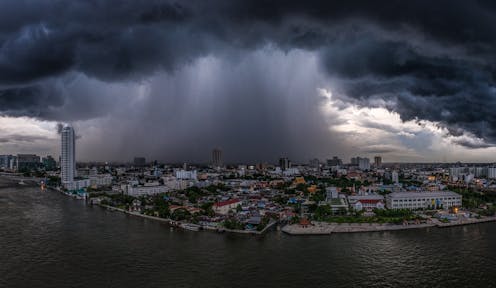
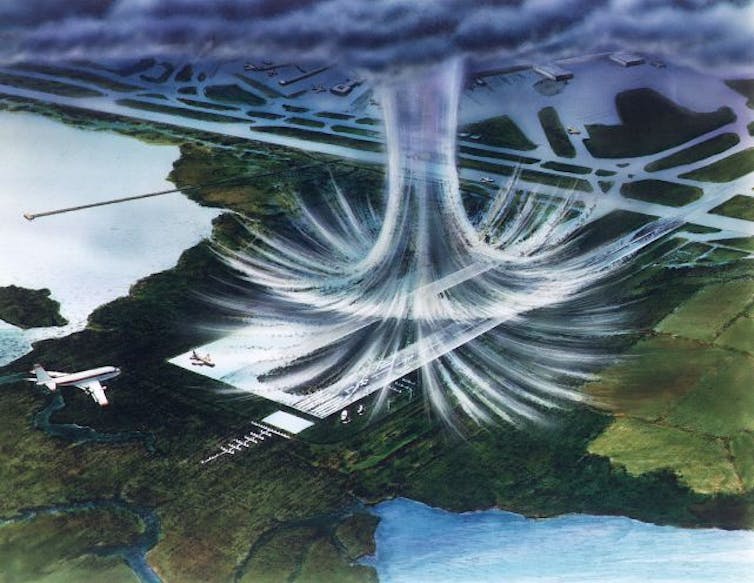


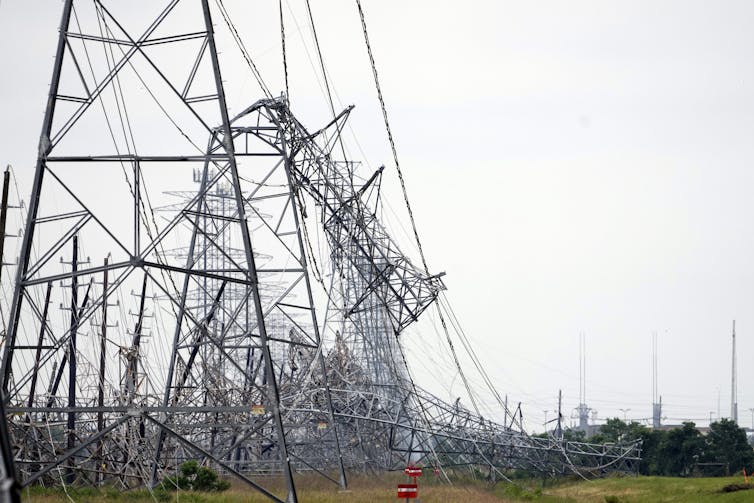

































.jpg)