The power of the war photograph is that it won’t let you look away. And nowhere is this proving truer than in Gaza.
One recent example portrayed a skeletal boy, Muhammad Zakariya Ayyoub al-Matouq, held in his mother’s arms. Palestinian photographer Ahmed al-Arini captured the boy and his mother in the iconic pose of the Madonna and child.
Photographs coming out of Gaza since October 2023 have communicated the severity of the destruction: collapsed buildings, bodies in shrouds, dead and maimed children, and bombed-out hospitals and shelters. There have also been viral AI-generated images, such as All Eyes on Rafah.
Between April and July, more than 20,000 people in Gaza were hospitalised for malnutrition, including 3,000 children in life-threatening condition.
The photo of Muhammad is a visual condensation of collective suffering that is impossible to ignore or deny. This is what makes it so powerful.
Drawing from religious imagery
War photography is often impactful because it communicates the brutalities of war with visual mastery.
Photographic elements such as composition, timing, tone, colour and light combine to create a visual story that is full of intent.
This is what American photographer and curator John Szarkowski called “the photographer’s eye”, and what French photographer Henri Cartier Bresson coined as “the decisive moment”. It is to know where to point the camera, when to release the shutter and how to select the “right” image to release into the world.
An iconic war photograph often reproduces a pose or gesture that is familiar to the popular imagination – particularly through iconic religious imagery. Think of the horrifying photos that came out of Abu Ghraib prison during the Iraq War, where one tortured prisoner was photographed in the pose of Christ on the cross.
Prisoner Abdou Hussain Saad Faleh is standing on the box with wires attached to his left and right hand. Wikimedia
Such photographs can change the course of war. They often shape how wars are remembered, even when there is controversy around their truthfulness and authorship, as we have seen with the contested image of Kim Phúc.
It purports to show a soldier shot dead mid-fall during the Spanish Civil War. But historians suggest the man might have been posing, not dying.
Whether it is real or staged remains unresolved. Still, it circulates as though it is true – reminding us that the myths of war are just as important as the facts when it comes to how war is remembered.
Photos are limited by their inability to convey sound, smell, or any broader context. A staged photo might, at times, be even more effective than an unstaged one in conveying the lived experience of a war – even if the ethics of the staging are dubious.
The weaponisation of war imagery
Photos and video from Gaza continue to circulate on social media, despite Israel barring foreign journalists from entering Gaza.
Israeli authorities have killed Palestinian journalists in record numbers. Yet this visual censorship has not stopped citizen journalists and organisations such as Activestills
from sharing the atrocities in Gaza.
In Gaza, control over imagery has become part of the conflict. Al Jazeera was banned from operating inside Israel. Social media platform Meta has been found silencing posts from Palestinian accounts, with graphic images increasingly being labelled with warnings such as “sensitive content”.
What does it mean to be advised to look away from something someone else is living?
As we know from the second world war, images are powerful evidence. The photographs of starved concentration camp survivors during the Holocaust were used to prosecute Nazis at the Nuremberg Trials.
But the meaning of war photographs also depends on timing, context, who controls what is shown, and where the photos are distributed.
While these photos can communicate the horrors of a conflict, they are also entangled in acts of violence. In Abu Ghraib, American soldiers used photography to turn their war crimes into visual souvenirs. Similarly, Al Jazeera is collecting such “trophies” shared by Israeli soldiers as evidence of their war crimes.
Eliciting grief
American gender studies scholar Judith Butler argues Western media weaponise images to construct a hierarchy of grief that determines whose life is publicly mourned.
Publishing a war photograph is not just an act of documentation – it’s an act of interpretation. It shapes what others think is happening. In their book Picturing Atrocity (2012), Nancy Miller and colleagues ask us how we can witness suffering without turning it into spectacle.
The book raises important ethical questions. Who owns an image of someone suffering? What if the person photographed has died? What if the image perpetuates violence that hurts those closest to it?
A war photograph does not stop a missile. It does not feed a starving child. But it can interrupt denial and silence.
It can insist that something happened – and reinforce, as many of the placards on the Harbour Bridge said, “you cannot say you didn’t know”.
The authors do not work for, consult, own shares in or receive funding from any company or organisation that would benefit from this article, and have disclosed no relevant affiliations beyond their academic appointment.
One student was routinely punished for her “ADHD behaviours” at school, another was locked in a classroom, while another was sent home 85 times in a single year.
These are just some of the responses we had in a new survey of parents and caregivers about their disabled children’s experiences in Australian schools.
We also heard from students who described “being picked last for everything”, teasing and physical pushing as well as students and staff saying they were “faking” their disability.
In two reports released today for advocacy group, Children and Young People with Disability Australia (CYDA), we reveal alarming rates of bullying and exclusion in Australian schools.
Tracking the lived experiences of students with disability
Since 2010, CYDA has done formal surveys of students with disability and their parents. National data on bullying is not comprehensively collected, making these results both rare and significant.
We conducted the two latest national reports on behalf of CYDA. This new round of surveys repeats the last survey done in 2022, so we can track trends.
The parent survey was conducted from December 2024 to February 2025, with 253 respondents, tracking issues such as bullying, inclusion, restrictive practices and complaints.
The student survey was collected in parallel, hearing directly from 118 primary and high school students with disability about safety, belonging, friendships, and participation in their time at school. Students attended a mix of mainstream, distance schools and special schools.
Both surveys combined quantitative data with free-text responses to show not just how many students are affected, but how deeply bullying and exclusion impact their lives.
A bullying crisis
The results from parents and caregivers paint a troubling picture: 60% reported their child had been bullied at school, representing a 10% increase from 2022.
Estimates of bullying in the general school population vary but are not as high as we found for students with disability. For example, according to federal governments estimates, one in four students say they have been bullied in person.
Bullying in our survey included verbal, physical, social and cyberbullying, with many reports of staff as perpetrators. Some students were “bullied to the point that [they] also now bully,” showing the cyclical harm caused by unaddressed victimisation.
One parent described how
several teachers were clearly antagonistic to my son and didn’t believe in ADHD […] Essentially gave the impression they thought we were just pandering to him and he was ‘playing’ us.
The accounts from young people are equally concerning. Of those surveyed, 39% said they do not feel welcome or included at school. Many described being singled out, left out of group activities, and targeted by peers with little or no intervention by staff.
As one young person told us:
Most of my peers they don’t have basic and correct knowledge about hidden disabilities. They see me as weird, so they refuse me to join for the group work.
Being excluded from camps, excursions and class
The bullying documented in these reports cannot be separated from broader patterns of exclusion, restrictive practices, and low expectations.
More than half (57%) of parents reported their child was excluded from school activities such as excursions or camps. As one child explained in the youth survey:
The school was too scared to let me go on a trip because they
did not believe that I was capable enough to participate, even with my own and doctor’s reassurances.
Almost 30% of parents reported the use of restrictive practices by staff, up from 25% in 2022. Restrictive practices use force to limit a student’s ability to move, such as strapping someone to a chair, holding someone down or locking someone’s wheelchair.
Meanwhile, 25% reported seclusion, such as being locked in a room on their own or put in offices on their own. This figure is up from 19% in 2022. Some students reported dedicated wellbeing and low sensory spaces were repurposed as spaces for such punishment.
Respondents also linked bullying to students experiencing mental health crises, disengagement from learning and school refusal. The link between bullying and later mental health disorders is well established in research.
As one young person told us:
Some teachers would make me feel really stupid and I left as I
didn’t need an HSC [Year 12 certificate] for the career I’m pursuing.
How the bullying rapid review can help
Our findings come as the federal government conducts a rapid review into school bullying, making this research a crucial evidence base for reform.
The reports show how bullying of students with disability is not an isolated problem but is entrenched in a wider pattern of systemic discrimination.
This has several lessons for the rapid review:
schools need targeted anti-bullying strategies that specifically include students with disability, not just generic approaches that may overlook their abilities and capabilities
staff training must focus on recognising and responding to bullying of students with disability, including addressing situations where staff themselves are the perpetrators
schools need accountability measures to ensure bullying complaints are addressed transparently and safely.
Every student should be able to learn
Beyond bullying, both reports show how for many students with disability, educational experiences are stagnant or worsening. High rates of exclusion, inadequate teacher training, and unsafe complaints processes point to a system in urgent need of reform.
Every student with disability deserves to be safe, welcome, and able to learn alongside their peers. The data is clear, the stories are heartbreaking, and the need for action has never been more urgent.
Catherine Smith has previously received research funding from Children and Young People with Disability Australia (CYDA).
Helen Dickinson receives funding from Australian Research Council, National Health and Medical Research Council, Medical Futures Fund and Australian governments.
The consequences of the Israeli genocide in Gaza will be dire. An event of this degree of barbarity, sustained by an international conspiracy of moral inertia and silence, will not be relegated to history as just another “conflict” or a mere tragedy.
The Gaza genocide is a catalyst for major events to come. Israel and its benefactors are acutely aware of this historical reality.
This is precisely why Israeli Prime Minister Benjamin Netanyahu is in a race against time, desperately trying to ensure his country remains relevant, if not standing, in the coming era. He pursues this through territorial expansion in Syria, relentless aggression against Lebanon, and, of course, the desire to annex all occupied Palestinian territories.
But history cannot be controlled with such precision. However clever he may think he is, Netanyahu has already lost the ability to influence the outcome.
He has been unable to set a clear agenda in Gaza, let alone achieve any strategic goals in a 365-square-kilometer expanse of destroyed concrete and ashes. Gazans have proven that collective sumud can defeat one of the most well-equipped modern armies.
Indeed, history itself has taught us that changes of great magnitude are inevitable. The true heartbreak is that this change is not happening fast enough to save a starving population, and the growing pro-Palestinian sentiment is not expanding at the rate needed to achieve a decisive political outcome.
Our confidence in this inevitable change is rooted in history. The First World War was not just a “Great War” but a cataclysmic event that fully shattered the geopolitical order of its time. Four empires were fundamentally reshuffled; some, like the Austro-Hungarian and Ottoman, were erased from existence.
The new world order resulting from the First World War was short-lived. The modern international system we have today is a direct outcome of the Second World War. This includes the United Nations and all the new Western-centric economic, legal, and political institutions that were forged by the Bretton Woods Agreement in 1944.
This includes the World Bank, the IMF, and ultimately NATO, thus sowing the seeds of yet more global conflicts.
The fall of the Berlin Wall was heralded as the singular, defining event that resolved the lingering conflicts of the post-WWII geopolitical struggle, supposedly ushering in a new, permanent global realignment, or, to some, the “end of history.”
The Arab, the Left and those who remained silent: History will not forgive you
History, however, had other plans. Not even the horrific September 11 attacks and the subsequent US-led wars could reinvent the global order in a way that was consistent with US-Western interests and priorities.
Gaza is infinitely small when judged by its geography, economic worth, or political import. Yet, it has proven to be the most significant global event defining this generation’s political consciousness.
The fact that the self-proclaimed guardians of the post-WWII order are the very entities that are violently and brazenly violating every international and humanitarian law is enough to fundamentally alter our relationship with the West’s championed “rule-based order.”
This may not seem significant now, but it will have profound, long-term consequences. It has largely compromised and, in fact, delegitimised the moral authority imposed, often by violence, by the West over the rest of the world for decades, especially in the Global South.
This self-imposed delegitimisation will also impact the very idea of democracy, which has been under siege in many countries, including Western democracies. This is only natural, considering that most of the planet feels strongly that Israel must end its genocide and that its leaders must be held accountable.
Yet, little to no action follows.
The shift in Western public opinion in favor of Palestinians is astounding when considered against the backdrop of total Western media dehumanisation of the Palestinian people and Western governments’ blind allegiance to Israel. More shocking is that this shift is largely the result of the work of ordinary people on social media, activists mobilizing in the streets, and independent journalists, mostly in Gaza, working under extreme duress and with minimal resources.
A central conclusion is the failure of Arab and Muslim nations to factor into this tragedy befalling their own brethren in Palestine. While some are engaged in empty rhetoric or self-flagellation, others subsist in a state of inertia, as if the genocide in Gaza were a foreign topic, like the wars in Ukraine or Congo.
This fact alone shall challenge our very collective self-definition — what it means to be an Arab or a Muslim, and whether such definitions carry supra-political identities. Time will tell.
The Left, too, is problematic in its own way. While not a monolith, and while many on the Left have championed the global protests against the genocide, others remain splintered and unable to form a unified front, even temporarily.
Some leftists are still chasing their own tails, crippled by the worry that being anti-Zionist would earn them the label of antisemitism. For this group, self-policing and self-censorship are preventing them from taking decisive action.
History does not take its cues from Israel or Western powers. Gaza will indeed result in the kind of global shifts that will affect us all, far beyond the Middle East.
For now, however, it is most urgent that we use our collective will and action to influence one single historical event: ending the genocide and the famine in Gaza.
The rest will be left to history, and to those who wish to be relevant when the world changes again.
Dr Ramzy Baroud is a journalist, author and the editor of The Palestine Chronicle. He is the author of six books. His forthcoming book,Before the Flood, will be published by Seven Stories Press. His other books include Our Vision for Liberation, My Father was a Freedom Fighter and The Last Earth. Dr Baroud is a non-resident senior research fellow at the Centre for Islam and Global Affairs (CIGA). Republished with permission. His website is www.ramzybaroud.net
A New Zealand policeman pushed over an elderly man who was doing nothing but waving a Palestinian flag at a solidarity rally in Ōtautahi yesterday.
Yes the man employed to protect the public committed a violent assault. Not a wee shove, a great big push that caused the man to fall the ground – onto hard tarmac.
It comes on top of a woman being fatally shot this week by police and her partner being shot and injured. In that case a knife was involved but it’s kind of like paper-scissors-rock, is it not?
Police wear protective clothing and where are the tasers?
I have experienced their brutality directly while filming their brutality. Like the Israeli Defence Force (IDF) they see journalists who film their offensive actions as the enemy.They used pepper spray against me illegally to stop me filming their perversity.
But look, it’s a hard job so they need how-not-to-be-thugs training.
Pre-trained as thugs Some young men are already pre-trained to be thugs and they seem to be out at the front. They feel great in this mostly white gang.
I have witnessed police haul people off the pavement, beat them up, and then arrest the victims of their assaults “for assault”.
False accusations to protect themselves? Twisting the narrative completely to hide their own violence?
False arrests when they themselves should face arrest.
I think we’ve had enough.
Some of the boys in blue really really need to grow up.
They need training that teaches them that manning or womaning up (some women cops play the thug game too) doesn’t mean training to be a wanker white supremacist.
Self awareness Good training means teaching police to be self aware, aware of thoughts and feelings, not just learning cognitive behavioural tools but applying them.
They are in the community to protect the community. They should not see people who are supporting human rights or kids attending a party as their opposition, their enemy.
These thug police need to unlearn their thuggery and learn instead, how to relate to the people. They are not defending themselves against the public. They must not view people — real human beings — as their enemy.
The thug cops are adept at dehumanising others. They need to learn to see people as individuals and this includes people attending group functions like parties or protests or club activities. People have human rights.
This includes the right to be respected and treated with dignity.
The perpetrators of violent crime are — far too often — the police. I’ve seen it happen with no provocation time and again. Too many times to count.
They don the black gloves and black sunnies and wear bullet proof vests and feel what?How do they feel when they gear up? Threatened or threatening?
Public protection Questions need to be asked.
The public needs protection from some — not all — of our police.
And the legal system, the justice system — (I’m trying not use an ironic tone here) needs to be applied to violent crimes, including the police crims who assault members of the public.
I worry for unseen victims too. I worry for their wives and children because if they assault with no provocation on the street what do they do at home?
Do people who behave like street devils turn into angels at home?
Investigations must be held about why our police are assaulting bystanders and peaceful protesters.
Tragedy investigation I guess there wll be an investigation into the bullets against knife tragedy. But we need other investigations too.
I know the footage of what happened to our innocent elderly protester will be posted on social media.
New footage emerges of policeman pushing partygoer (2021 1News video)
In the meantime, here’s other footage above of Christchurch police doing what they are in danger of doing best.
This footage is four years ago but this alarming, aggressive behaviour continues as demonstrated yesterday by a cop shoving to the ground an unarmed, unprotected, elderly man waving a Palestinian flag whom they then — so wrongly — charged with assault!
Saige England is an Aotearoa New Zealand journalist, author, and poet, member of the Palestinian Solidarity Network of Aotearoa (PSNA), and a contributor to Asia Pacific Report. This commentary was first published on her social media.
Source: The Conversation (Au and NZ) – By Matthew Sussex, Associate Professor (Adj), Griffith Asia Institute; and Fellow, Strategic and Defence Studies Centre, Australian National University
The bizarre summit between Donald Trump and Vladimir Putin in Alaska should sway all but the most credulous doubters that the White House is more interested in friendly relations with Russia’s dictator than achieving a lasting peace in Ukraine.
An abridged program saw the two leaders swiftly conclude the meeting earlier than had been expected. They then heaped praise on one another at a press conference that didn’t feature any questions from the press.
Worryingly, Trump is still as unconcerned about handing Putin symbolic victories as he is unwilling to put any real pressure on the Russian leader.
Symbolic ‘wins’ for Putin
The venue itself was telling. Russia has long carped that Alaska, which it sold to the US in the 1860s, is rightfully still its territory. Prior to the meeting, Kremlin mouthpieces made much of Putin’s team taking a “domestic flight” to Anchorage, recalling billboards that went up in Russia in 2022 proclaiming “Alaska is ours!” That wasn’t helped by yet another Trump gaffe prior to the meeting when he said he would “go back to the United States” if he didn’t like what he heard.
When Putin’s plane landed, US military personnel kneeled to fix a red carpet for the Russian president to walk across – as a respected leader, rather than an indicted war criminal. Putin was then invited to ride along with Trump in his limousine.
Beyond the optics, Trump handed Putin a number of other wins that will shore up his support at home and reinforce to the world that US-Russia relations have been normalised.
A summit is typically offered as a favour – an indication of an earnest desire to improve relations. By inviting him to Alaska, Trump gave Putin a stage to meet the American president as an equal. There was no criticism of Russia’s appalling human rights abuses, its increasingly violent attempts to fragment the transatlantic alliance, or its desire to reshape its fortunes by conquest.
Instead, Trump sought again to portray Putin and himself as victims. He complained that both had been forced to “put up with the ‘Russia, Russia, Russia’ hoax” that Moscow had interfered in the 2016 US presidential election.
He then gifted Putin yet another win, putting the onus for accepting Russian terms to end the war in Ukraine back onto the Ukrainian government and Europe, by observing “it’s ultimately up to them”.
Putin got exactly what he could have hoped for. Aside from the photo ops, he framed any solution to the conflict around the “root causes” – code for NATO being to blame rather than Putin’s unprovoked war of imperial aggression.
He also dodged any prospect of vaguely threatened US sanctions, with Trump returning to his familiar refrain of needing “two weeks” to think about them again.
And then, having pocketed both a symbolic and diplomatic bonanza, Putin promptly skipped lunch and flew home, presumably also accompanied by the bald-headed American eagle ornament that Trump had presented to him.
What does this mean moving forward?
After Trump’s subsequent call with European leaders to brief them on the summit, details about a peace proposal began to leak out.
Putin is reportedly prepared to fix the front lines as they stand in the Kherson and Zaporizhzhia regions of Ukraine, provided Kyiv agrees to cede all of Luhansk and Donetsk, including territory Russia doesn’t currently hold. There would be no immediate ceasefire (which is Europe’s and Ukraine’s preference), but a move towards a permanent peace, which aligns with the Kremlin’s interests.
Make no mistake: this is a thinly disguised trap. It amounts to little more than Putin and Trump slinging a dead cat at Ukraine and Europe, then blaming them as laggards and warmongers when they object.
For one thing, Ukraine still controls a sizeable portion of Donetsk. Giving up Donetsk and Luhansk would not only cede coal and mineral reserves to Moscow, but also require abandoning vital defensive positions that Russian forces have been unable to crack for years.
It would also position Russia to launch potential future incursions, opening the way to Dnipro to the west and Kharkiv to the north.
Trump’s apparent backing for Russia’s demands that Ukraine cede territory for peace – which NATO’s European members reject – means Putin is succeeding in further fracturing the transatlantic partnership.
There was also little mention of who would secure the peace, or how Ukraine can be reassured Putin will not simply use the breathing space to rearm and try again.
Given the Kremlin has opposed NATO membership for Ukraine, would it really agree to European forces securing the new line of control? Or American ones? Would Ukraine be permitted to rearm, and to what extent?
And, even in the event of a firmer US line in a future post-Trump era, Putin will still have achieved a land grab that would be impossible to undo. That, in turn, reinforces the message that conquest pays off.
One apparently brighter note for Ukraine is the hint the US is prepared to offer it a “non-NATO” security guarantee.
But that should also be viewed with caution. The Trump administration has already expressed public ambivalence about US commitments to defend Europe via NATO’s Article 5, which has called its credibility as an ally into question. Would the US really fight for Ukraine if there were a future Russian invasion?
To their credit, European leaders have responded firmly to Trump’s dealings with Putin.
They have welcomed the attempt to resolve the conflict, but told Ukrainian President Volodymyr Zelensky they will continue to back him if the deal is unacceptable. Zelensky, who is due to meet Trump in Washington on Monday, has already rejected the notion of ceding the Donbas region (Donetsk and Luhansk) to Russia.
But Europe will have to face the reality that not only must it do more, but it must also provide sustained leadership on security issues, rather than just reacting to repeated crises.
Trump’s deeper motivations
Ultimately, the Alaska summit shows that peace in Ukraine is only part of the broader picture for the Trump administration, which is dedicated to achieving warmer ties with Moscow, if not outright alignment with it.
In that sense, it matters little to Trump how peace is attained in Ukraine, or how long it lasts. What’s important is he receives credit for it, if not the Nobel Peace Prize he craves.
And while Trump’s vision of splitting Russia away from China is a fantasy, it is nonetheless one he has decided to entertain. That, in turn, compels America’s European partners to respond accordingly.
Already there is plenty of evidence that having failed to win a trade war with China, the Trump administration is now choosing to feast on America’s allies instead. We see this in its fixation with tariffs, its bizarre desire to punish India and Japan, and the trashing of America’s soft power.
Even more sobering, Trump’s diplomatic forays continue to see him treated as sport by authoritarian leaders.
That, in turn, provides a broader lesson for America’s friends and partners: their future security may well rest on America’s good offices, but it is foolish to assume that automatically places their fortunes above the whims of the powerful.
Matthew Sussex has received funding from the Australian Research Council, the Atlantic Council, the Fulbright Foundation, the Carnegie Foundation, the Lowy Institute and various Australian government departments and agencies.
This morning there is no article on the political page of The New Zealand Herald about the plight of people in Gaza, the same is the case at The Post and at RNZ. Even the 1News political page is Gaza free but what may stun you over a Sunday morning coffee is the fact that there is also no mention of Gaza on the “World Pages” of any of these so-called news organisations.
It’s not news in the world of our mainstream media journalists.
Instead, there is articles about “no deal” between Trump and Putin, 300 dead in Pakistan, Trump will meet Zelenskyy, Stone Age Humans were picky about what stones they used . . . and other things — in fact the only article in the “big ” New Zealand mainstream media “World” pages about Gaza is at Stuff and it’s a link to a three minute news video item from yesterday’s Auckland protest about Neil Finn supporting Green Party co-leader Chlöe Swarbrick.
Chlöe said the evidence is pretty clear and you don’t kill journalists for no reason when Israel laughed off claims that people in Gaza were starving.
Last night, TVNZ 1News broadcast a news item that led with Neil Finn singing “Don’t Dream it’s Over” and Simon Mercep interviewing Chlöe about her stance on an apology.
The news Chlöe would be back next week at Parliament probably shocked Duncan Garner but there was precious little coverage of what was said in protest speeches because the limitations of broadcasting news concision (a sequence of soundbites) prevent the New Zealand public from hearing too much about Gaza from our own mainstream news services.
Gordon’s action list Over on social media many people are sharing Gordon Campbell’s article around — where he details the actions you could take and points out how the people of Gaza don’t have time for symbolic stances and the kinds of actions that might help — like sanctions and UN peacekeeping intervention on the ground.
Gordon Campbell has “a go at” the stance taken by the NZ government that “it’s not a matter of if, but when” by adding “but not now” and why not now?
One reason for “but not now” pitched by Campbell is that with Todd McClay now heading over to the US to beg for a return to 10 percent tariffs, New Zealand is stalling and playing a wait and see game — watching whether Australia will be punished for backing a Palestinian state and whether tariffs will be part of the game.
G News on yesterday’s Palestine solidarity rally in Te Komititanga Square, Auckland.
A map of the nations in the world who support a Palestinian state shows most of it in green — and the holdouts in white — with New Zealand holding out in white as we recite “Not if, but when, but not now”.
The editorial at The New Zealand Herald this morning is about how Labour MPs should have shown up and performed publicly at the Covid Circus Phase 2 Royal Commission of Inquiry in the opinion of the Herald (run by Steven Joyce and cookers from The Centrist) — because an urgent Taxpayers’ Union Poll claims 53 percent say so with a giant margin for error not even mentioned — nor how the Royal Commission has all the information it needs from the previous government but it needs the same questions answered in public.
The priorities and partisanship of The NZ Herald are on show as it campaigns hard against Labour and the left bloc even while there’s an unfolding genocide taking place in the world and it’s “World” pages are empty about this — while decent people cancel their subscriptions.
Many of us are still aghast at the way senior political correspondent Audrey Young wished Chlöe would go away when all she was doing was asking National MPs to act with their conscience and Speaker Gerry Brownlee had taken offence and dished out injustice — which now has backfired at grassroots level across the nation and media starve us all of the real content in those speeches.
Chlöe has said from the start this is not about her and she was telling people this again yesterday as folks thanked her for taking an unapologetic stand.
Green Party’s Chlöe Swarbrick has said from the start this is not about her and she was telling people this again yesterday as folks thanked her for taking an unapologetic stand. Image: Stuff screenshot APR
Who controls the spotlight? Media! We wanted to hear from Chlöe and we wanted to hear those speeches.
I personally felt I had let down the show yesterday because my cell and sound gear seized up in the bitter cold wind and rain so I missed Chlöe’s speech and some of the other messages — Hey Now Don’t Dream it’s Over — but with no umbrella, no raincoat and standing in the rain my frozen fingers took some time to come right and I sat on a ferry in cold wet clothes like a failure afterwards but it is what it is.
My apologies for not being better prepared.
It was pointed out in speeches at the rally (there has almost been 100 of them now) how NZ journalists do not support their colleagues who are being murdered for doing their jobs in Gaza and when I got home and warmed up we discussed the way Al Jazeera is a good news channel and how crap things are in New Zealand media.
Gordon Campbell and a few other notable exceptions keep the faith and his observation “but not now” has done the thinking for many of us about the spineless government who are stalling and pretending this is complex and needs to take weeks while every day more people starve to death, get shot going for food. And it all just happens as if — it’s “a mystery” – while our government names Hamas strongly but nobody else.
Criticism of State Terror is more toned down and we care more about our US relationship than anything much else it seems — putting our own interests first and not reporting much about the facts.
RNZ has finally published “Spine and Punishment: A review of Swarbrick v Brownlee” because the media spotlight was on this local issue and the history of Speakers’ rulings versus “a new decency” because Gerry was offended and overreached.
Gerry must withdraw In my opinion, Gerry has got to withdraw and apologise or step down and any more stick about this towards Chlöe is going to further the focus on National MPs who are silent and hiding behind “But not now”.
If only six of 68 National MPs voted with their conscience and not their party “but not now” instructions then we’d be actively progressing a new law to sanction Israel — and our actions would speak louder than merely words and symbolic gestures.
The unfolding genocide in Gaza seems to be going to plan as NZ news media also lack a spine and any kind of support for their dead colleagues while this one term government clings to “Not if, but when — but not now”.
Might as well carry on starving until September.
“He’s lost the plot” – “but not now”.
Because this government and its sycophantic media need more time to argue about this very “complex” issue.
Gerard Otto is a digital creator and independent commentator on politics and the media through his G News column and video reports. Republished with permission.
ER Report: Here is a summary of significant articles published on EveningReport.nz on August 17, 2025.
Luxon ‘grow a spine’ chants as big rallies call for NZ to recognise Palestine state Report by Dr David Robie – Café Pacific. – “Grow a spine for Palestine!” was a frequent theme among about 5000 people protesting in the heart of New Zealand’s largest city today as the protesters demanded that the coalition government should recognise the state of Palestine and stop supporting impunity for Israel. More than 62,000
Luxon ‘get a spine’ chants as big rallies call for NZ to recognise Palestine state Asia Pacific Report “Grow a spine for Palestine!” was a frequent theme among about 5000 people protesting in the heart of New Zealand’s largest city today as the protesters demanded that the coalition government should recognise the state of Palestine and stop supporting impunity for Israel. More than 62,000 people, mostly women and children, have
“Grow a spine for Palestine!” was a frequent theme among about 5000 people protesting in the heart of New Zealand’s largest city today as the protesters demanded that the coalition government should recognise the state of Palestine and stop supporting impunity for Israel.
More than 62,000 people, mostly women and children, have been killed in Israel’s war on Gaza in the past 22 months and the country’s military have doubled down on their attacks on residential areas in the besieged enclave.
Several speakers, including opposition parliamentarians, spoke at the rally, strongly condemning Israel for its genocidal policies and crimes against humanity.
Many children took part in the rally at Te Komititanga Square and the return march up Queen Street in spite of the bitterly wet and cold weather. Many of them carried placards and Palestinian flags like their parents.
One young boy carried a placard declaring “Just a kid standing in front of his PM asking him to grow a heart and a spine”. The heart was illustrated as a Palestinian flag.
Other placards included slogans such as “Wanted MPs with a spine” and “Grow a spine for Palestine”, and “They try to bury us forgetting we are seeds” with the resistance watermelon symbol.
Many placards demanded sanctions and condemned Israel, saying “Gaza is starving. Words won’t feed them — sanction Israel now”, “NZ government: Your silence is complicity with Israeli genocide” and “Free Palestine now”.
Disillusionment with leaders One poster expressed disillusionment with both the coalition government and opposition Labour Party leaders, Prime Minister Christopher Luxon and Chris Hipkins, denouncing “apologists for genocide”.
Another poster challenged both Hipkins and Luxon over “what values” they stood for. It said:
“Our ‘leaders’ have refused to call for a ceasefire even after 10,000+ innocent civilians have been brutally murdered in their own homes, including 4000+ CHILDREN all under the name of “Kiwi values”.
“They, like a lot of other world politicians, are apologists for genocide.”
A “Palestine forever” banner at the head of the Auckland march today as it prepares to walk up Queen Street. Image: APR
Frustration has been growing among the public with the government’s reluctance to declare support for Palestinian statehood after 96 consecutive weeks of protests organised by the Palestinian Solidarity Network Aotearoa (PSNA) and other groups, not just in the largest city of Auckland and the capital Wellington, but also in Christchurch and in at least 20 other towns and communities across the motu.
The “spine” theme in chants and posters followed just days after Parliament suspended Green Party co-leader Chlöe Swarbrick following a fiery speech about Gaza when she said government MPs should grow a spine and sanction Israel for its atrocities.
She had refused to apologise to the House and supporters at the rally today gave her rousing cheers in support of her defiance.
‘We need your help’ Te Pati Māori co-leader Debbie Ngarewa-Packer told the crowd: “We need you to help her put the pressure on so that we can fight together in that place [Parliament] for our people to free, free Palestine; from the river to the sea, Palestine will be free.
“Return our dignity Aotearoa. Stand up for what is right. There is only one side to support in genocide, only one side. And Te Pati Māori will only work with those.”
When Swarbrick spoke to the crowd, she repeated her goal to find six government MPs “with a spine” to support her bill to “sanction Israel for its war crimes”.
She also said the Palestinian people were being “starved and slaughtered by Israel” in Gaza, adding that their breath was being “stolen from them” by the IDF (Israeli “Defence” Force).
“It is our duty, all human beings with breath left in our lungs, with the freedom to chant and to move and to demand action from our politicians, to do all that we can to fight for liberation for all peoples,” she said.
Other politicians speaking were Orini Kaipara, the Te Pati Māori candidate for the Tāmaki Mākaurau byelection, and Kerrin Leoni, mayoral candidate for Tamaki.
Targeted assassinations Earlier, the targeted assassinations of six journalists by the Israeli military last Sunday — taking the toll to 272 — was condemned by independent journalist and Asia Pacific Report editor Dr David Robie. He also criticised the NZ media silence.
Noting that New Zealand journalists had not condemned the killings or held a vigil as the Media Alliance (MEAA) had done in Australia, he cited an Al Jazeera journalist, Hind Khoudary, whose message to the world was:
“We are being hunted and killed in Gaza while you watch in silence. For two years, your fellow journalists here have been slaughtered.
What did you do? Nothing.”
Green Party co-leader Chlöe Swarbrick (left) and Te Pati Māori co-leader Debbie Ngarewa-Packer at today’s rally in Te Komitanga Square, Auckland. Image: APR
A recent poll on whether New Zealanders want sanctions to be imposed on Israel, showed that of those who gave an opinion, 60 percent favoured sanctions.
The PSNA commissioned survey by Talbot Mills in July with 1216 respondents gave a similar result to one commissioned by Justice for Palestine a year ago.
Popular support for sanctions PSNA co-chair John Minto said the numbers showed strong popular support for sanctions. The 60 percent overall rose to 68 percent for the 18–29 year category.
“The government is well out of step with public opinion and ignores this message at its peril. There is popular support for sanctions against Israel,” he said.
“People see that Israel is committing the worst atrocities of the 21st century with impunity. It is starving a whole population.
“It has destroyed just about every building in Gaza. It is assassinating journalists. It holds 7000 Palestinian hostages in its jails without charge. Its goal of occupying all of Gaza and ethnically cleansing its people into the Sudan desert, is all public knowledge.”
Minto said Israel’s “depraved Prime Minister” who was wanted by the International Criminal Court (ICJ) for war crimes and crimes against humanity, had boasting that if Israel was really committing genocide, “it could have killed everyone in Gaza in a single afternoon”.
“The poll shows New Zealand First supporters are most opposed to sanctions against Israel (59 percent of those who gave an opinion were opposed) so it’s little surprise Winston Peters is dragging the chain.”
“Just a kid” with his blunt message to Prime Minister Christopher Luxon. Image: APR
“Grow a spine for Palestine!” was a frequent theme among about 5000 people protesting in the heart of New Zealand’s largest city today as the protesters demanded that the coalition government should recognise the state of Palestine and stop supporting impunity for Israel.
More than 62,000 people, mostly women and children, have been killed in Israel’s war on Gaza in the past 22 months and the country’s military have doubled down on their attacks on residential areas in the besieged enclave.
Several speakers, including opposition parliamentarians, spoke at the rally, strongly condemning Israel for its genocidal policies and crimes against humanity.
Many children took part in the rally at Te Komititanga Square and the return march up Queen Street in spite of the bitterly wet and cold weather. Many of them carried placards and Palestinian flags like their parents.
One young boy carried a placard declaring “Just a kid standing in front of his PM asking him to grow a heart and a spine”. The heart was illustrated as a Palestinian flag.
Other placards included slogans such as “Wanted MPs with a spine” and “Grow a spine for Palestine”, and “They try to bury us forgetting we are seeds” with the resistance watermelon symbol.
Many placards demanded sanctions and condemned Israel, saying “Gaza is starving. Words won’t feed them — sanction Israel now”, “NZ government: Your silence is complicity with Israeli genocide” and “Free Palestine now”.
Disillusionment with leaders One poster expressed disillusionment with both the coalition government and opposition Labour Party leaders, Prime Minister Christopher Luxon and Chris Hipkins, denouncing “apologists for genocide”.
Another poster challenged both Hipkins and Luxon over “what values” they stood for. It said:
“Our ‘leaders’ have refused to call for a ceasefire even after 10,000+ innocent civilians have been brutally murdered in their own homes, including 4000+ CHILDREN all under the name of “Kiwi values”.
“They, like a lot of other world politicians, are apologists for genocide.”
A “Palestine forever” banner at the head of the Auckland march today as it prepares to walk up Queen Street. Image: APR
Frustration has been growing among the public with the government’s reluctance to declare support for Palestinian statehood after 96 consecutive weeks of protests organised by the Palestinian Solidarity Network Aotearoa (PSNA) and other groups, not just in the largest city of Auckland and the capital Wellington, but also in Christchurch and in at least 20 other towns and communities across the motu.
The “spine” theme in chants and posters followed just days after Parliament suspended Green Party co-leader Chlöe Swarbrick following a fiery speech about Gaza when she said government MPs should grow a spine and sanction Israel for its atrocities.
She had refused to apologise to the House and supporters at the rally today gave her rousing cheers in support of her defiance.
‘We need your help’ Te Pati Māori co-leader Debbie Ngarewa-Packer told the crowd: “We need you to help her put the pressure on so that we can fight together in that place [Parliament] for our people to free, free Palestine; from the river to the sea, Palestine will be free.
“Return our dignity Aotearoa. Stand up for what is right. There is only one side to support in genocide, only one side. And Te Pati Māori will only work with those.”
When Swarbrick spoke to the crowd, she repeated her goal to find six government MPs “with a spine” to support her bill to “sanction Israel for its war crimes”.
She also said the Palestinian people were being “starved and slaughtered by Israel” in Gaza, adding that their breath was being “stolen from them” by the IDF (Israeli “Defence” Force).
“It is our duty, all human beings with breath left in our lungs, with the freedom to chant and to move and to demand action from our politicians, to do all that we can to fight for liberation for all peoples,” she said.
Other politicians speaking were Orini Kaipara, the Te Pati Māori candidate for the Tāmaki Mākaurau byelection, and Kerrin Leoni, mayoral candidate for Tamaki.
Targeted assassinations Earlier, the targeted assassinations of six journalists by the Israeli military last Sunday — taking the toll to 272 — was condemned by independent journalist and Asia Pacific Report editor Dr David Robie. He also criticised the NZ media silence.
Noting that New Zealand journalists had not condemned the killings or held a vigil as the Media Alliance (MEAA) had done in Australia, he cited an Al Jazeera journalist, Hind Khoudary, whose message to the world was:
“We are being hunted and killed in Gaza while you watch in silence. For two years, your fellow journalists here have been slaughtered.
What did you do? Nothing.”
Green Party co-leader Chlöe Swarbrick (left) and Te Pati Māori co-leader Debbie Ngarewa-Packer at today’s rally in Te Komitanga Square, Auckland. Image: APR
A recent poll on whether New Zealanders want sanctions to be imposed on Israel, showed that of those who gave an opinion, 60 percent favoured sanctions.
The PSNA commissioned survey by Talbot Mills in July with 1216 respondents gave a similar result to one commissioned by Justice for Palestine a year ago.
Popular support for sanctions PSNA co-chair John Minto said the numbers showed strong popular support for sanctions. The 60 percent overall rose to 68 percent for the 18–29 year category.
“The government is well out of step with public opinion and ignores this message at its peril. There is popular support for sanctions against Israel,” he said.
“People see that Israel is committing the worst atrocities of the 21st century with impunity. It is starving a whole population.
“It has destroyed just about every building in Gaza. It is assassinating journalists. It holds 7000 Palestinian hostages in its jails without charge. Its goal of occupying all of Gaza and ethnically cleansing its people into the Sudan desert, is all public knowledge.”
Minto said Israel’s “depraved Prime Minister” who was wanted by the International Criminal Court (ICJ) for war crimes and crimes against humanity, had boasting that if Israel was really committing genocide, “it could have killed everyone in Gaza in a single afternoon”.
“The poll shows New Zealand First supporters are most opposed to sanctions against Israel (59 percent of those who gave an opinion were opposed) so it’s little surprise Winston Peters is dragging the chain.”
“Just a kid” with his blunt message to Prime Minister Christopher Luxon. Image: APR
ER Report: Here is a summary of significant articles published on EveningReport.nz on August 16, 2025.
Gordon Campbell: The lack of spine in New Zealand’s foreign policy on Gaza ANALYSIS: By Gordon Campbell The word “Gaza” is taking on similar connotations to what the word “Auschwitz” meant to a previous generation. It signifies a deliberate and systematic attempt to erase an entire people from history on the basis of their ethnic identity. As a result, Israel is isolating itself as a pariah state on
‘I believe I can’: Elizabeth Palin runs for Bougainville North women’s seat By Don Wiseman, RNZ Pacific senior journalist Elizabeth Tako Palin is one of five women contesting the Bougainville North women’s reserved seat next month. It was previously held by Amanda Masono, who has chosen to contest the open Atolls seat, which was once held by her father. The autonomous Papua New Guinea region is holding
Keith Rankin Analysis – Goodies and Baddies? Lessons since the World War of 1914 Analysis by Keith Rankin. World War One is really the first conflagration of a Great World War which lasted between 1914 and 1945. That great war was a ‘”game” of two halves’ with an extended and less violent mid-war phase; total war, with an interregnum which exacerbated rather than resolved the trigger issues of early
Greens may be a problem for Labor in next week’s Tasmanian no-confidence vote Source: The Conversation (Au and NZ) – By Adrian Beaumont, Election Analyst (Psephologist) at The Conversation; and Honorary Associate, School of Mathematics and Statistics, The University of Melbourne The Liberals won 14 of the 35 lower house seats at the July 19 Tasmanian state election, Labor ten, the Greens five, independents five and the Shooters,
A rare ‘brain-eating amoeba’ has been detected in Queensland water. Can I catch it by drinking tapwater? Or in the shower? Source: The Conversation (Au and NZ) – By Ian A. Wright, Associate Professor in Environmental Science, Western Sydney University Nico De Pasquale Photography/Getty Images One of the world’s most dangerous water-borne microorganisms, commonly called a “brain-eating amoeba”, has recently been detected in two drinking water supplies in south-west Queensland. Both affected towns are about 750
Do hot drinks really give you cancer? A gut expert explains Source: The Conversation (Au and NZ) – By Vincent Ho, Associate Professor and Clinical Academic Gastroenterologist, Western Sydney University Kira auf der Heide/Unsplash When you order a coffee, do you ask for it to be “extra hot”? Whether you enjoy tea, coffee or something else, hot drinks are a comforting and often highly personal ritual.
Not quite angels: why we should stop calling these small winged children ‘cherubs’ Source: The Conversation (Au and NZ) – By Philip C. Almond, Emeritus Professor in the History of Religious Thought, The University of Queensland Raphael, Sistine Madonna (detail), between c. 1512 and c. 1513. Wikimedia Commons We are all familiar with cherubs – small, winged children that have a status in Western art history as angels.
‘Stop killing journalists’ in Gaza plea by media alliance advocates Pacific Media Watch Union members of Australia’s Media, Entertainment and Arts Alliance (MEAA) have made a video honouring the 242 Palestinian journalists and media workers killed by the Israeli military since October 2023 — many of them targeted. The death toll has been reported by the Gaza Media Office since the latest killing of six
The global plastics treaty process has fallen flat. Here’s what went wrong, and how you can help Source: The Conversation (Au and NZ) – By Melanie MacGregor, ARC Future Fellow and Matthew Flinders Fellow in Chemistry, Flinders University Progress towards a legally binding global treaty on plastics pollution stalled and went into reverse this week. The United Nations Intergovernmental Negotiating Committee meeting in Geneva, Switzerland, ran overtime. It’s likely to conclude this
Australia used to lead the world on shorter work hours – we could do it again Source: The Conversation (Au and NZ) – By John Buchanan, Professor in Working Life, Discipline of Business Information Systems, University of Sydney Business School, University of Sydney In the 1850s, when Melbourne stonemasons won the eight-hour day, employers of the day prophesied economic ruin. These standardised hours then flowed into other industries. Far from ruin,
The word “Gaza” is taking on similar connotations to what the word “Auschwitz” meant to a previous generation. It signifies a deliberate and systematic attempt to erase an entire people from history on the basis of their ethnic identity.
Overall 186 journalists have died at the hands of the IDF since October 7, 2023, and at least 1400 medical staff as of May 2025.
On Monday night a five-year-old disabled child starved to death. Reportedly, he weighed only three kilograms when he died. Muhammad Zakaria Khudr was the 101st child among the 227 Palestinians now reported to have died from starvation.
Meanwhile, Prime Minister Christopher Luxon and Foreign Minister Winston Peters keep on saying that with regard to New Zealand recognising a Palestinian state, it is a matter of “Not if, but when.” Yet why is “ but not now” still their default position?
At this rate, a country that used to pride itself on its human rights record — New Zealand has never stopped bragging that this is where women won the right to vote, before they did anywhere else — will be among the last countries on earth to recognise Palestine’s right to exist.
What can we do? Some options:
Boycott all Israeli goods and services;
Engage with the local Palestinian community, and support their businesses, and cultural events;
Donate financial support to Gaza. Here’s a reliable link to directy support pregnant Gaza women and their babies;
Lobby your local MP, and Immigration Minister Erika Stanford — to prioritise the inclusion of hundreds of Gazans in our refugee programme, just as we did in the wake of the civil war in Syria, and earlier, in Sudan;
Write and phone your local MP, and urge them to support economic sanctions against Israel. These sanctions should include a sporting and cultural boycott along the lines we pursued so successfully against apartheid South Africa
Contact your KiwiSaver provider and let it be known that you will change providers if they invest in Israeli firms, or in the US, German and UK firms that supply the IDF with weapons and targeting systems. Contact the NZ Super Fund and urge them to divest along similar lines;
Identify and picket any NZ firms that supply the US/Israeli war machines directly, or indirectly;
Contact your local MP and urge him or her to support Chloe Swarbrick’s private member’s bill that would impose economic sanctions on the state of Israel for its unlawful occupation of the West Bank and Gaza. Swarbrick’s Bill is modelled on the existing Russian sanctions framework.If 61 MPs pledged support for Swarbrick’s Bill, it would not have to win a private members ballot before being debated in Parliament. Currently 21 MPs (the Greens and TPM) formally support it. If and when Labour’s 34 MPs come on board, this will still require another six MPs (from across the three coalition parties) to do the right thing. Goading MPs into doing the right thing got Swarbrick into a world of trouble this week. (Those wacky Greens. They’re such idealists.);
We should all be lobbying our local MPs for a firm commitment that they will back the Swarbrick Bill. Portray it to them as being in the spirit of bi-partisanship, and as them supporting the several UN resolutions on the status of the occupied territories. And if they still baulk ask them flatly: if not, why not?
Email/phone/write to the PM’s office, and ask him to call in the Israeli ambassador and personally express New Zealand’s repugnance at Israel’s inhumane actions in Gaza and on the West Bank. The PM should also be communicating in person New Zealand’s opposition to the recently announced Israeli plans for the annexation of Gaza City, and expansion of the war in Gaza.
Write to your MP, to the PM, and to Foreign Minister Winston Peters urging them to recognise Palestinian statehood right now. Inquire as to what further information they may need before making that decision, and offer to supply it. We need to learn how to share our outrage; and
Learn about the history of this issue, so that you convince friends and family to take similar actions.
This map showing (in white) the countries that are yet to recognise Palestinian statehood speaks volumes:
Those holdout nations in white tend to have been the chief enablers of Israel’s founding in 1948, a gesture of atonement driven by European guilt over the Holocaust.
This “homeland” for the Jews already had residents known to have had nothing to do with the Holocaust. Yet since 1948 the people of Palestine have been made to bear all of the bad consequences of the West’s purging of its collective guilt.
Conditional justice The same indifference to the lives of Palestinians is evident in the belated steps towards supporting the right of Palestinians to self-determination. Even the recognition promised by the UK, Canada, France and Australia next month is decked out with further conditions that the Palestinians are being told they need to meet. No equivalent demands are being made of Israel, despite the atrocities it is committing in Gaza.
There’s nothing new about this. Historically, all of the concessions have been made by the Palestinians, starting with their original displacement. Some 30 years ago, the Palestine Liberation Organisation (PLO) formally recognised Israel’s right to exist. In response, Israel immediately expanded its settlements on Palestinian land, a flagrant breach of the commitments it made in the Oslo Accords, and in the Gaza-Jericho Agreement.
In a 1993 exchange of letters, the Palestine Liberation Organization’s chairman, Yasir Arafat, recognized the “right of the State of Israel to exist in peace and security” and committed the PLO to peaceful negotiations, renouncing terrorism and amending the Palestinian charter to reflect these commitments. In return, Israel would merely recognize the PLO as the representative of the Palestinian people — and only “in light of” Mr Arafat’s commitments. Palestinian sovereignty remained remote; Israeli occupation continued apace.
This double standard persists:
This fundamental unfairness has informed every diplomatic effort since. The rump Palestinian government built the limited institutions it was permitted under the Oslo Accords, co-operated with Israeli security forces and voiced support for a peace process that had long been undermined by Israel. Led by then-Prime Minister Salam Fayyad, the Palestinian Authority’s statehood campaignin the 2000s was entirely based on playing the game according to rules set by Israel and the Western-dominated international community. Yet recognition remained stalled, the United States blocked Palestine’s full membership in the United Nations — and still, no conditions were placed on the occupying power.
That’s where we’re still at. Luxon, Peters and David Seymour are demanding more concessions from the Palestinians. They keep strongly denouncing the Hamas October 7 atrocities — which is valid — while weakly urging Israel to abide by the international laws and conventions that Israel repeatedly breaches.
When a state deploys famine as a strategic weapon, doesn’t it deserve to be condemned, up front and personal?
Instead, the language that New Zealand uses to address Israel’s crimes is almost invariably, and selectively, passive. Terrible things are “happening” in Gaza and they must “stop.” Children, mysteriously, are “starving.” This is “intolerable.”
It is as if there is no human agent, and no state power responsible for these outcomes. Things are just somehow “happening” and they must somehow “cease.” Enough is enough, cries Peters, while carefully choosing not to name names, beyond Hamas.
As mentioned, Israel is publicly discussing its plans for Gaza’s “voluntary emigration” and for the permanent annexation of the West Bank. Even when urged to do so by Christopher Luxon, it seems that Israel is not actually complying with international law, and is not fulfilling its legal obligations as an occupying power. Has anyone told Luxon about this yet?
Two state fantasy, one state reality At one level, continuing to call for a “two state” solution is absurd, given that the Knesset formally rejected the proposal a year ago. More than once, Israeli PM Benjamin Netanyahu has publicly denounced it while also laying Israel’s claim to all of the land west of Jordan, which would include the West Bank and Gaza.
Evidently, the slogan “ from the river to sea” is only a terrorist slogan when Hamas uses it. Yet the phrase originated as a Likud slogan.Moreover, the West evidently thinks it is quite OK for Netanyahu to publicly call for Israeli hegemony from the Jordan River to the Mediterranean Sea.
Basic rule of diplomacy: bad is what they do, good is what we do, and we have always been on Team Israel.
Over the course of the three decades since the Oslo Accords were signed, the West has kept on advocating for a two state solution, while acting as if only one of those states has a right to exist. On what land do Luxon and Peters think that a viable Palestinian state can be built?
One pre-condition for Palestinian statehood that Luxon cited to RNZ last week required Israel to be “not undermining the territorial integrity that would then undermine the two state solution.” Really? Does Luxon not realise that this is exactly what Israel has been doing for the past 30 years?
Talking of which . . . are Luxon and Peters genuinely expecting Israel to retreat to the 1967 borders? That land was agreed at Oslo and mandated by the UN as the territory needed for a viable Palestinian state. Yet on the relatively small area of the West Bank alone, 3.4 million Palestinians currently subsist on disconnected patches of land under occupation amid extreme settler violence, while contending with 614 Israeli checkpoints and other administrative obstacles impeding their free movement.
Here’s what the land left to the Palestinians looks like today:
A brief backgrounder on Areas A, B and C and how they operate can be found here. Obviously, this situation cannot be the template for a viable Palestinian state.
What is the point? You might well ask . . . in the light of the above, what is the point of recognising Palestine as a state? Given the realities on the ground, it can only be a symbolic gesture. The reversion to the 1967 borders (a necessary step towards a Palestinian state) can happen only if the US agreed to push Israel in that direction by withholding funds and weaponry.
That’s very hard to imagine. The hypocrisy of the Western nations on this issue is breath-taking. The US and Germany continue to be Israel’s main foreign suppliers of weapons and targeting systems. Under Keir Starmer’s leadership as well, the UK sales of military equipment to Israel have sharply increased.
New export licensing figures show that the UK approved licenses for £127.6 million worth of military equipment to Israel in single issue licenses between October to December 2024. This is a massive increase, with the figure in this three-month period totaling more than 2020-2023 combined.
Thanks to an explicitly enacted legal exemption, the UK also continues to supply parts for Israel’s F-35 jets.
UK industry makes 15% of every F-35 in contracts [estimated] to be worth at least £500 million since 2016, and [this] is the most significant part of the UK arms industry [relationship]with Israel . . . at least 79 companies [are] involved in manufacturing components.
These are the same F-35 war planes that the IDF has used to drop 2000 pound bombs on densely populated residential neighbourhoods in Gaza. Starmer cannot credibly pose as a man of peace.
So again . . . what exactly is the point of recognising Palestine as a state? No doubt, it would boost Palestinian morale if some major Western powers finally conceded that Palestine has a right to exist. In that narrow sense, recognition would correct a historical injustice.
There is also optimistic talk that formal Palestinian statehood would isolate the US on the Security Council (Trump would probably wear that as a badge of honour) and would make Israel more accountable under humanitarian law. As if.
Theoretically, a recognition of statehood would also enable people in New Zealand and elsewhere to apply pressure to their governments to forthrightly condemn and sanction Israel for its crimes against a fellow UN member state. None of this, however, is likely to change the reality on the ground, or prevent the calls for Israel’s “accountability” and for its “compliance with international law” from ringing hollow.
As the NYT also says:
After almost two years of severe access restrictionsand the dismantling of the UN-led aid system in favour of amilitarised food distribution that has leftmore than 1300 Palestinians dead, [now 1838 dead at these “aid centres” since late May, as of yesterday] . . . The 15 nations [at a UN meeting in late July that signed a declaration on Gaza] still would not collectively say “Israel is responsible for starvation in Gaza”. If they cannot name the problem, they can hardly hope to resolve it.
In sum . . . the world may talk the talk of Palestinian statehood being a matter of “not if, but when” and witter on about the “irreversible steps” being taken toward statehood, and finally — somewhere over the rainbow — towards a two state solution. Faint chance:
“For those who are starving today, the only irreversible step is death. Until statehood recognition brings action — arms embargoes, sanctions, enforcement of international law — it will remain a largely empty promise that serves primarily to distract from Western complicity in Gaza’s destruction.
Exactly. Behind the words of concern are the actions of complicity. The people of Gaza do not have time to wait for symbolic actions, or for sanctions to weaken Israel’s appetite for genocide. Consider this option: would New Zealand support an intervention in Gaza by a UN-led international force to save Gaza’s dwindling population, and to ensure that international humanitarian law is respected, however belatedly?
Would we be willing to commit troops to such a force if asked to do so by the UN Secretary-General? That is what is now needed.
Footnote One: On Gaza, the Luxon government has a high tolerance for double standards and Catch 22 conditions. We are insisting that the Palestinians must release the remaining hostages unconditionally, lay down their arms and de-militarise the occupied territories. Yet we are applying no similar pre-conditions on Israel to withdraw, de-militarise the same space, release all their Palestinian prisoners, allow the unrestricted distribution of food and medical supplies, and negotiate a sustainable peace.
Understandably, Hamas has tied the release of the remaining hostages to the Israeli cessation of their onslaught, to unfettered aid distribution, and to a long-term commitment to Palestinian self-rule. Otherwise, once the Israeli hostages are home, there would be nothing to stop Israel from renewing the genocide.
We are also demanding that Hamas be excluded from any future governing arrangement in Gaza, but – simultaneously – Peters told the House recently that this governing arrangement must also be “representative.” Catch 22. “Representative” democracy it seems, means voting for the people pre-selected by the West. Again, no matching demands have been made of Israel with respect to its role in the future governance of Gaza, or about its obligation to rebuild what it has criminally destroyed.
Footnote Two: There is only one rational explanation for why New Zealand is currently holding back from joining the UK, Canada, France and Australia in voting next month to recognise Palestine as a full UN member state. It seems we are cravenly hoping that Australia’s stance will be viewed with such disfavour by Donald Trump that he will punish Canberra by lifting its tariff rate from 10%, thereby erasing the 5% advantage that Australia currently enjoys oven us in the US market.
At least this tells us what the selling price is for our “independent” foreign policy. We’re prepared to sell it out to the Americans – and sell out the Palestinians in the process – if, by sitting on the fence for now, we can engineer parity for our exports with Australia in US markets. ANZAC mates, forever.
Elizabeth Tako Palin is one of five women contesting the Bougainville North women’s reserved seat next month.
It was previously held by Amanda Masono, who has chosen to contest the open Atolls seat, which was once held by her father.
The autonomous Papua New Guinea region is holding a single-day poll on 4 September to elect a new 46-member House.
A record 34 women are standing, including 14 in the three seats reserved for women.
Former teacher Palin ran in 2020 and has wide political experience at the local level.
She spoke with RNZ Pacific.
(This transcript has been edited for brevity and clarity.)
Elizabeth Palin: I was a former chair lady in the local level government, community government, and I just resigned to contest the seat. I served in the community government and at the ward assembly system for 10 years. But prior to that I was a teacher by profession,
Don Wiseman: Being in the local level government. Is that a full time activity, is it for you?
EP: It is, yes.
DW: What does it involve?
EP: It involves chairing the local level government at the community base level, and also taking care of the five wards within the respective community government that I’m heading.
And, formally, in the first establishment of the first House of Assembly, I was the vice-chair lady. So as one of the ward members in the five wards under the urban council, urban community government. I contested the fourth House and I came second. I came back to be with the community, and then I worked with the people.
I went contested [a second election] and I became the ward member and also lobbied for the chair position, and I became the chairperson.
DW: So you want to be in the ABG [Autonomous Bougainville Government]. What is it you want to achieve there?
EP: Being in the local level government, I have experienced a lot where we do not see the link. We do not really see that link from the top level of leadership down to the local level. We do not really feel it in some sense.
Therefore, I decided that maybe I can be able to contest and get that leadership, and in experiencing my leadership at the ward level and community government level, I believe that I can be able to take that leadership and build that link from the top down to the ward assembly level, which includes the community government and vice versa, from the community government up to the top.
This is what I experienced, and that is the main reason why I am contesting the seat. Also, I believe in my leadership because I have been with the local level government, and I believe I can perform at a much higher level as well.
DW: Yes, well, you will have been campaigning now for weeks, because it’s such a long period of campaigning, isn’t it? How are people reacting to you?
EP: Oh, I have been receiving positive responses from the people, from the voters, in terms of the way I present my campaign strategy, my platform, especially.
I have so far received very positive response from the general public and the voters in the region, and from all the locations that I have conducted my campaign.
DW: Yes, I wouldn’t expect a politician to say anything else going into an election. Independence for Bougainville is, it would seem, very close. How important is it to you that it’s sorted sooner rather than later?
EP: Being a leader, a woman leader in having gone through my people’s experience in terms of fighting for their rights and for their independence, this coming independence, and what we we have been standing for as our political agenda is very, very crucial to me as with the general population of Bougainville.
I cannot say no to that. I do understand a lot of work to do in terms of getting us prepared, in terms of demonstrating the indications and so forth, that we are able to get independence and we are independently ready. But based on the fights of our forefathers and our people and having lost the 20,000 lives, I stand for that.
I believe that such a person like me, a woman with a strong voice at the political scene, in the political scene and level, I can be able to work as a team with the other leaders of Bougainville to get that independence.
But having said that, it does not really mean that that is it. We are ready. As leaders, on the ground and at the different levels of governance, we need to work, and we have this how many years that have been given within the time frame for us to work in order to show that we’re able to be an independent, sovereign state, and that is what I believe in.
Keith Rankin, trained as an economic historian, is a retired lecturer in Economics and Statistics. He lives in Auckland, New Zealand.
Analysis by Keith Rankin.
Keith Rankin, trained as an economic historian, is a retired lecturer in Economics and Statistics. He lives in Auckland, New Zealand.
World War One is really the first conflagration of a Great World War which lasted between 1914 and 1945. That great war was a ‘”game” of two halves’ with an extended and less violent mid-war phase; total war, with an interregnum which exacerbated rather than resolved the trigger issues of early twentieth century ideologies.
These mid-war events – in particular (but not only) the rise of the Stalin and Hitler regimes in Russia and Germany – could not have happened as they did without their being embedded in the Great World War. These regimes epitomised socialist and nationalist social pseudoscientific belief systems; two of the great pseudoscientific Utopias, Marxist Historicism and Social Darwinism. To them we may add the capitalist social pseudoscience (economic liberalism; liberal mercantilism; ‘Social Newtonism’ to coin a new label) which gave the Euro-dominant world the calamitous Great Depression of the early 1930s. These three potentially catastrophic ‘scientific’ Utopias dominated the intellectual ether, so to speak, before 1914. They manifested in their various deeply problematic and distorted ways within the context of the 1914-1945 world war experience. Fascism and economic liberalism had their roots in biology and physics. The socialist pseudoscience – aka Marxism – had its roots in historical materialism, a conflation of (Ricardian) classical economics and Hegelian historicism, an attempt to create a social science of history.
In this regard, we may see the denouement (WW2) of the Great World War as a battle between three problematic personalities: Stalin, Churchill, and Hitler. Each representing their own false depiction of the world as ‘scientific’ Utopia: Marxian Socialism (aka ‘Communism’, in its pejorative sense), Economic Liberalism, and National Ethno-Supremacism. (And we note that each of these pseudoscientific belief-systems carried seeds of each other. For example, Winston Churchill’s liberal mercantilist worldview was imperial, nationalist, and deeply racist. Adolf Hitler [with no interest in appeasing aristocratic or bourgeois interests] pitched his ‘Aryan’ nationalist poison to the German working precariat. And Josef Stalin terrorised and starved his own people, especially but not only in the 1930s while the world was distracted, as the mismatch between reality and Marxian ‘science’ became increasingly evident.)
(We note that, for the post-great-war generation, these issues of the three Utopias were practically resolved in ‘The West’, through for example decolonisation, Keynesian economics, and non-Marxian socialism. Though the Stalinist Utopia took on an even more demonic second phase in Mao Zedong’s China. The Social Darwinist Utopia took on a new life in South Africa and Israel; and for a while continued to inform the Dixie states of the US south. Racism never really left the United States. And Economic Liberalism – initially as neoliberalism, now as Liberal Mercantilism – returned to the world with a vengeance in the 1980s. Today, just as Stalin could not reconcile Marxism with reality; our western liberal elites cannot reconcile the diktats of the prevailing [and increasingly mercantilist] capitalist ideology with reality.)
Were there Goodies and Baddies in 1914?
However we choose to see this 1914 to 1945 period of widespread humanicide, it’s difficult to see a clear group of ‘Goodies’ and a clear group of ‘Baddies’ in June 1914. Thus, we can at least start our analysis of this war without succumbing to the ‘Goodies’ versus ‘Baddies’ (Good versus Evil) narrative. I would argue that the emergence of this as the predominant narrative of modern warfare, and its conflation with Winner versus Loser (‘we won, you lost, eat that!’) narrative, were themselves the single biggest cause of the world’s greatest conflagration to date. (For interest, see this New Zealand Journal of Historyreview of Paul Goldsmith’s book We Won, You Lost. Eat That!; a book which derives its title from the late Michael Cullen, former Minister of Finance of New Zealand. Indeed it is Goldsmith who is easily the most qualified current politician in New Zealand to be Minister of Finance.)
Nevertheless, there is a compelling argument that Germany was ‘The Bad Guy’ in WW1 because it was the ‘principal aggressor’, evidenced by the fact that most of the fighting took place on other countries’ territories. True, but the story of aggressor versus aggressee – invader versus invaded – is more nuanced than that. Two comments here: the most significant battle in 1914 – in August 1914 – was the Battle of Tannenberg, fought in Germany (East Prussia); and much of the important action of the war was fought in Germany’s proxy territory, the lands of Austria-Hungary. Though almost none of these battle-sites are in modern Austria, Hungary, or Germany. On the western front, the earliest battles were fought in Alsace-Lorraine, territory then held by Germany.
In reality, the three-way war that ended inconclusively and abruptly in November 1918 (albeit with a clear but not huge ‘advantage’ to the Western Powers) was ‘settled’ as if there had been a decisive military victory to The West. (For the first half of 1918, Germany had won the war in the East and was winning the war in the West.) Victors’ justice soon followed, although the Americans prevented it from descending to show trials of war criminals only the losing side. (We note that a similar process had taken place on the Eastern Front, with Germany able to impose victors’ justice over Russia; indeed the German state had done all that it could to facilitate the second [Bolshevik] Russian Revolution of 1917. Leon Trotsky signed the humiliating Brest-Litovsk Treaty in March 1918, which among other things granted most of Ukraine to Germany. Further, the Western Powers then [ie early in 1918] involved themselves in the subsequent Russian Civil War; see The Allied Intervention.)
In WW1, the victors – the western powers – became ‘The Good’; the ‘victors’ usurped the narrative (as victors do), and would consequently place themselves in the predominant position to determine how the subsequent ‘peace’ would play out.
In WW2, the sequence was reversed. Rather than the victors becoming The Good, ‘The Good’ became the victors (but not the only victors). Indeed from 1944 The Good puzzled over why it took so long for their adversaries to see ‘the writing on the wall’. The answer was largely obvious, the English-speaking ‘Good’ (aka The West) waged relentless terror campaigns against ‘The Bad’; most of The Bad had presumed they were The Good (and fought hard on that basis). The Good had (inadvertently?) reinforced the belief that The West was The Bad, through their malicious and relentless bombing of civilians. Who would surrender to such aerial firebombers; what other kinds of evil could they cook up? In reality The War – as are most wars – was waged between The Bad and The Bad; or – as in the Great World War, it became The Bad versus The Bad versus the Bad versus the Bad (now including Japan). In the end it was victor’s justice that prevailed, posing as the Judgement of The Bad by The Good. The West and Soviet Russia got away with their many pre-war crimes and war crimes, scot-free.
World War One was not a decisive victory on either front
In the land war, while in a stalemate on the western front in 1916 and 1917, Germany had the military upper hand in the first half of 1918. In the end though, the most vital factor was the British naval blockade, and the associated economic war. Germany was being starved. Yet the worst of the food shortages in Germany were in the winter of 1916/17. By early 1918, Germany was able to redeploy battle-hardened troops from the Eastern to the Western Front. And Germany now had access to food supplies from Ukraine.
On the adverse side for Germany, however, was the arrival of American troops into France. These were ‘green’ troops who could not compete with Germans in direct military combat. But they did bring with them, unintentionally, the lethal weapon which may have won the war for the West: influenza.
As I see it, Germany lost its advantage in World War One for three reasons: the economic blockade, the lack of strategic vision of what ‘success’ on the Western Front actually meant, and the influenza brought by the American troops. (The 1918 influenza pandemic was most likely due to a hybrid novel H1N1 virus, forged in France as a result of a combination of the lethal influenza strain traced back to military barracks in Kansas in 1917 and a severe seasonal strain of ‘Asian flu’ already present in France.)
With the lack of strategic direction and military setbacks from July 1918, the German leadership – a dynamic flux, with an overall focus on civilianisation – sought to freeze (or even make concessions in the form of withdrawals from occupied territories) the western frontline so that it could end the war with its eastern gains intact. To this end, a new liberal Chancellor – Prinz Maximillian von Baden (interestingly, in light of later Nazi developments, a known homosexual) – was appointed early in October 1918. Also interesting, Prinz Baden and half a million other German civilians, became “seriously ill” with influenza that spring.
Returning soldiers from the western front were the main transmission vectors of the 1918 influenza pandemic, the ‘Black Flu’, the misleadingly named ‘Spanish Flu’. It is very hard to avoid the conclusion that the influenza, brought in initially by the American troops, played a vital role in Germany’s military setbacks in the late-summer and spring of 1918.
There seems to be very little written about the contribution of either the influenza or the naval blockade to Germany’s truce (a truce which began through Germany’s leaders reaching out to US President Woodrow Wilson; but which morphed into a substantial political defeat) which, to the West, ended the war, but which to many Germans looked very much like a ‘stab in the back’. Hence, from the German point of view, scapegoats had to be found, and the events which led to an eventual continuation of the Great World War were set in train. This was not helped by poorly considered attempts (especially at Versailles in 1919) by France and Britain to make Germany – now firmly ensconced in the western mind as a comprehensive Loser – pay for the war. And, perhaps most significantly, Germany being stripped by the Western powers of the full suite of its military gain in the East. Ukraine and other German-acquired territories were returned to the Russian Empire; now in the form of the ‘Communist’ Soviet Union, although in 1919 very much in a state of a civil war in which the West had intervened.
These events clearly represent the foundations of the Nazi doctrine of Lebensraum; more than anything, Germany wanted Ukraine back. Germany’s main weakness in World War One had been its resource base, especially its inability to feed itself. Germany, from the 1870s onwards, had become a food importer following its rapid industrialisation and imperial outreach (which included Samoa and New Guinea). And Germany also needed time to repopulate, to breed a new generation who could fill and administer what it saw as its ‘rightful’ empire in the west, and in the world.
We can clearly see Germany’s growing vision to replace its former far-flung empire by acquiring – as a proxy empire – France’s overseas territories. We saw this play out in 1940, with the creation of ‘Vichy France’ a nominally independent client state of Nazi Germany, and to whom the whole of the French Empire was designated. (In this light, had Germany’s military plans worked out in the early 1940s, France’s interests in the Northern Levant – Syria and Lebanon today – represented a possible solution for the alleged ‘Jewish problem’ of Eastern Europe. The West had a similar ‘Jewish problem’, which was resolved initially in 1924 by shutting down Jewish immigration to the United Kingdom and United States; that shutdown was still in place post-1945, meaning that The West used the Southern Levant as a repository for its erstwhile Jewish immigrants.)
We might note that, today, Germany is very well aware that it has the same resource vulnerability that it had from 1914 to 1940; and must look East for a solution. In addition, many people in Germany are well aware of a new form of demographic ‘crisis’ that Germany is facing, and that immigration from Eastern Europe (and a further degree of proxy absorption of Eastern Europe) represents its only plausible hope for an ‘ethnic European’ future.
What Happens if The Bad wins a World War (or any war for that matter)?
In 1918 the politically victorious West was able to create a Goody-Baddy narrative, facilitating a victors’ justice by presenting it as Good judging and punishing Bad. One consequence, reinforced by the western campaign of terror over Germany, half of which took place from November 1944 to April 1945. (Documents which have since come to light suggest that this bombing campaign – with the loss of 800,000 German civilian lives through horrible fiery deaths – was a failed genocide. The Morgenthau Plan, for example, advocated what amounted to bombing Germany ‘into the stone age’ – an expression which, applied to Vietnam, resurfaced in the 1960s – reducing Germany’s population from 80 million in 1939 to 30 million. 80 million people standing side-by-side along the equator-line would complete a circle of the world; now imagine randomly executing five-of-every eight people in that circle. Nuclear weapons were one means of making that genocide of civilians and refugees ‘more efficient’, as was actually done in Japan. Britain’s genocide plans included Operation Vegetarian, a dastardly scheme of biological warfare.)
In the end The Good was able to conceal most of its many very Bad contemplations, in large part because it was becoming more concerned to turn its killing attentions onto its erstwhile ally, Stalin’s Russia. Interestingly, as A C Grayling noted in Among the Dead Cities, the British leader of its terror-bombing force equated his efforts (killing 800,000 civilians in Germany) with the numbers of civilians estimated to have died of starvation or malnutrition in World War One as a result of the naval blockade.
Of course, whoever ‘wins’ a world war will use the victors’ prerogative to call themselves The Good. But, if, during a world war, ‘we’ have fully convinced ourselves that we are The Good, and we are suffering unsustainable losses, at what point do we (aka The Good) surrender to The Bad? Do we fight on, futilely, to the last man and woman, as it seemed the Germans and the Japanese were doing in 1945? Do we call a truce, as ‘we’ did eventually in Korea in 1953, and in Vietnam in 1972? Looking back, we are truly grateful that we did end those two Asian wars, one with a result that would be called a ‘draw’, the other becoming a clear defeat in 1975.
In the Good versus Evil narrative, Good never capitulates to Evil; not even if the alternative is the nuclear destruction of all life on Earth.
Truth and Reconciliation versus Accountability and Retribution
As we have seen at the end of World War One, an attempt by Germany at reconciliation to end the conflagration – including a willingness to have war crimes assessed and adjudicated in an international court – turned into a humiliation of Germany; that humiliation, in turn, ensured that the conflagration would recommence at a time of Germany’s choosing.
Fortunately, we have the South African experience of the end of Apartheid as a template for another way: Truth and Reconciliation. The former can always win out over the latter. Processes of humiliation and punishment are accompanied by large-scale processes of evasion and concealment; the incentives are to conceal rather than reveal the evidence of what really happened. It is better to know and not punish, than to punish a few scapegoats and to conceal the rest.
The best outcome is Remembrance, not Punishment and Vengeance. Sunlight is the strongest disinfectant. And to remember all; not to over-remember some things while severely under-remembering most things. For most younger people in the world today, World War One is understood as gritty soldiering in the trenches of the Somme, or under the cliffs at Gallipoli. And World War Two is reduced to Adolf Hitler’s genocidal mania, and Winston Churchill’s ‘heroic’ campaigns to defeat Goering, Rommel and Hitler (thereby, though too late, to save the Jews). Even the Pacific War is largely forgotten, except for reminders every five-years or so of Pearl Harbour and Hiroshima; the rest is unfathomable nuance.
Today
The western powers have tried hard to present themselves as ‘The Good’ in a biblical struggle through their Ukraine client regime, against Vlad ‘The Bad’. Yet the paucity of western Goodness has been so deeply exposed by the western alliance’s complicity in the genocide by Israelis of their co-semitic Palestinians, with whom they share the land known from 1918 to 1948 by some as ‘Mandatory Palestine’ and by others as ‘Eretz Israel’. Whatever we think of the virtue of the various western alliances (starting with the French-British Entente of 1904), clearly they are not ‘The Good’. Like all the other dirty wars in the twentieth and twenty-first century, the contests are between The Grubby and The Grubby, each looking for an opportunity to impose victor’s justice over the other.
Israel is trying to create a nationalist ethno-Utopia in accordance with the principles of Lebensraum. Israel has been doing so since the newly formed United Nations inflicted WW2 victor’s justice upon an indigenous third party in 1948.
Truth and Reconciliation is the answer; researching what happened and how and why, noting the root of the word ‘publication’ is ‘public’. Not one-sided Accountability and Retribution.
Conflicts will always exist. If we can get past the Good versus Bad narratives, we can make deals which are never perfect for either party; but better for all three parties (noting that world wars have major impacts on third parties, such as the indigenous people of the Levant; and such as the birds, bees, people and trees, all of whom will lose big-time in the case of a self-inflicted extinction event).
Two Interesting Historical Deals
In the Napoleonic Wars – World War Zero – we had the British on one side defending the ancien regime European orders of feudalism and merchant capitalism; versus the French side which (under Napoleon Bonaparte) both advocated for and subsequently destroyed the new revolutionary liberalism.
As in World War One, the British Navy played a major role. Important territories for France were the Indian Ocean islands of Isle de France (now Mauritius) and La Réunion. In 1810, Réunion Island was captured by the British. In 1814 a deal was done. Réunion was swapped for the more economically valuable Isle de France. Great Britain had the military advantage of having captured the less populated part of this ‘France in the Indian Ocean’. Hence, Britain in 1814, leveraging off its relative military success, instigated a swap deal; Britain gained Mauritius (reverting to its former Dutch name), and Réunion was restored to France. (As usual in those times, indigenous people didn’t get a look in!) For France, the only alternative was to continue the fight; in that event, France would eventually have lost both islands. Pragmatism prevailed; the 1814 swap took place.
A second event – also an allegory for our present times – involved a genocide; an event in the Banda Islands (in present Indonesia) described by Bengali writer Amitav Ghosh, in his 2021 book The Nutmeg’s Curse: Parables for a Planet in Crisis. This particularly problematic genocide was perpetrated by the Dutch East India Company (Dutch abbreviation ‘VOC’; Abel Tasman’s employer) in the 1620s. (Mauritius was then also part of the VOC territory; indeed that’s who ruled Mauritius when the dodo became extinct, in 1662.) At that time, England and the Netherlands were the great mercantile rivals in the North Sea, Atlantic Ocean and Indian Ocean spheres. England had possessed one of the more remote Banda Islands, Rhun. To settle the second Anglo-Dutch War in 1667, the Dutch formalised a land-swap deal which at the time seemed very advantageous to them (Manhattan or Pulau Rhun? In 1667, Nutmeg Made the Choice a No-Brainer, New York Times, 2024). England got the last laugh, however. It had acquired Manhattan Island; and, as they say, the rest was history – world history – the island in which fortunes were made from real estate deals.
*******
Keith Rankin (keith at rankin dot nz), trained as an economic historian, is a retired lecturer in Economics and Statistics. He lives in Auckland, New Zealand.
Source: The Conversation (Au and NZ) – By Adrian Beaumont, Election Analyst (Psephologist) at The Conversation; and Honorary Associate, School of Mathematics and Statistics, The University of Melbourne
The Liberals won 14 of the 35 lower house seats at the July 19 Tasmanian state election, Labor ten, the Greens five, independents five and the Shooters, Fishers and Farmers one.
Liberal Jeremy Rockliff was the premier before this election, and he was reappointed on August 6 pending next Tuesday’s sitting of the Tasmanian parliament. Labor will move a vote of no-confidence when parliament sits. If this motion succeeds and a motion of confidence is then passed in Labor, Labor will govern Tasmania for the first time since 2014.
On Tuesday, Greens leader Rosalie Woodruff said the Greens would not support Labor in the confidence vote “at this stage”, saying Labor leader Dean Winter had not shown any intention to compromise on issues the Greens said they’d fight for.
To get a majority, 18 votes are required. Analyst Kevin Bonham said the Greens have ruled out abstaining on the no-confidence motion. If Labor can’t win over the Greens, the Liberals will retain government as the 14 Liberals and five Greens add to 19 votes.
To win government, Labor will need support from the Greens and at least three of the six others. I wrote on August 4 that, with five of the six others being left-leaning, it was easier for Labor to form government than the Liberals.
None of the six others have firmly committed to backing either Labor or the Liberals in the no-confidence motion. After the election, the Liberals proposed phasing out greyhound racing. According to Bonham, this has not pleased the one Shooter, who says he won’t support the Liberals unless they reverse this policy.
Labor was last in power in Tasmania from 1998 to 2014, governing in majority from 1998 to 2010 and with the Greens from 2010 to 2014. The Liberals heavily defeated Labor at the 2014 election, and Labor has been reluctant to deal with the Greens since.
Labor probably hopes that the Greens are bluffing, and that they will reluctantly back Labor in the no-confidence motion rather than prop up the Liberals. At the 2025 federal election, nearly 90% of Tasmanian Greens’ preferences went to Labor over the Coalition. If the Tasmanian Liberals retained government on Greens votes, the Greens’ supporters may be angry.
Federally and in most mainland states, single-member systems are used for lower house elections and proportional systems for upper house elections (Queensland has no upper house), but Tasmania uses a proportional system for its lower house elections.
At this election, the Liberals defeated Labor by 40–26 on statewide vote shares. Although Labor can take power with support from the Greens and left-leaning independents, I believe Labor needs to negotiate more with them and possibly make deals to get a workable government that can last a significant portion of a four-year term.
NSW: MP resigns ahead of expulsion vote
Gareth Ward was the New South Wales state Liberal MP for Kiama from 2011 to 2019. At the 2023 state election, he retained Kiama as an independent despite allegations of sexual assault on two young men. Ward was convicted of these allegations by a jury in July and he resigned on August 8 ahead of an expulsion motion that was certain to succeed.
Labor expects to contest the ensuing September 13 byelection in Kiama. ABC election analyst Antony Green said at the 2023 election, Ward defeated Labor by 50.8–49.2 from primary votes of 38.8% Ward, 34.4% Labor, 12.0% Liberals and 11.1% Greens. On upper house votes in that seat, Labor would have beaten the Liberals, so Labor is the favourite to win the byelection.
Labor won 45 of the 93 NSW lower house seats at the March 2023 election, two short of a majority. It was able to form a minority government. A win in Kiama would put Labor just one seat short of majority.
Federal polls
A national Wolf+Smith poll for The Financial Review, conducted July 18–30 from a sample of 5,000, gave Labor a 57–43 lead, from primary votes of 36% Labor and 30% Coalition with no other party’s primary vote given.
Albanese led Ley as preferred PM by 45–35. By 47–18, respondents opposed increasing the GST rate or broadening the GST base. On income tax cuts, 56% thought they should be paid for by higher company taxes.
A national DemosAU poll, conducted July 31 from a sample of 1,079, had 45% supporting Australia formally recognising a Palestinian state with 23% opposed (35–22 support in May 2024).
US gerrymandering
I wrote for The Poll Bludger last Saturday about attempts by Republicans to grab five extra United States federal House of Representatives seats by gerrymandering Texas, and about retaliatory attempts by Democrats to gerrymander California. I also covered Donald Trump’s US ratings and the July 20 Japanese upper house election.
Adrian Beaumont does not work for, consult, own shares in or receive funding from any company or organisation that would benefit from this article, and has disclosed no relevant affiliations beyond their academic appointment.
One of the world’s most dangerous water-borne microorganisms, commonly called a “brain-eating amoeba”, has recently been detected in two drinking water supplies in south-west Queensland.
Both affected towns are about 750 kilometres west of Brisbane: Augathella (population roughly 300) and Charleville (population 3,000).
During an analysis of water samples commissioned by Queensland Health, Naegleria fowleri was detected in the water systems of two health facilities, one in Charleville and one in Augathella, as well as in the incoming town water supply at both facilities.
The Shire Council of Murweh, which takes in the two affected locations, issued a health notice for residents and visitors on August 7 warning of the detection of N. fowleri in the water supplies.
So what is this organism? And how significant is the risk likely to be in these Queensland towns, and elsewhere?
It’s rare – but nearly always fatal
The N. fowleri amoeba is a microscopic organism found around the world. It only lives in warm freshwater, generally between 25 and 40°C. This can include ponds, lakes, rivers, streams and hot springs.
If someone is infected with N. fowleri, it causes what’s called primary amoebic meningoencephalitis, a serious infection of the brain.
Symptoms include a sore throat, headache, hallucinations, confusion, vomiting, fever, neck stiffness, changes to taste and smell, and seizures.
The incubation period of primary amoebic meningoencephalitis – the time between infection and symptoms appearing – typically ranges from three to seven days.
Tragically, this illness is nearly always fatal, even if someone receives medical attention quickly. Death typically occurs about five days after symptoms begin.
Fortunately though, cases are very rare. In the United States, there were 167 reported cases of primary amoebic meningoencephalitis between 1962 and 2024, according to the Centers for Disease Control and Prevention. Only four survived.
A global review of the disease up to 2018 reported that, of 381 known cases, Australia accounted for 22, the fifth highest number, after the US, Pakistan, Mexico and India. Some 92% of people died.
So how does someone get infected?
The route of infection is very unusual and quite specific. N. fowleri infects the brain through a person’s nose. The amoeba then passes through a protective membrane called the nasal epithelium.
This is an important physical barrier and allows the amoeba to travel to the brain through the olfactory nerve, which is responsible for our sense of smell. The infection then kills brain tissue and causes swelling of the brain, termed cerebral oedema.
Infections occur in people when infected water travels up their nose. Most cases involve children and young people who have swum in infected waters. The majority of cases occur in males, with an average age of 14.
Even water sports in affected waterways can be dangerous. A person is currently in intensive care in Missouri after it’s believed they became infected while water skiing.
Regarding the recent detection in Queensland water supply systems, the source of the infection has not been reported. It’s possible a fresh waterway, or groundwater, which feeds into the affected drinking water systems, was contaminated with N. fowleri, and the amoeba travelled from there. But this will likely be determined with further investigation.
But any activity that allows infected water to enter a person’s nose is potentially dangerous. This can happen during a bath or a shower.
Some people flush their nasal passages to clear congestion related to allergies or a viral infection. This has been linked to infections with N. fowleri. If you’re going to flush your nasal passages, you should use a sterile saline solution.
Even young children playing with hoses, sprinklers or water activities could be at risk. A 16-month-old child was fatally infected following an incident involving a contaminated water “splash pad” in the US in 2023. Splash pads are water-based recreation activities, primarily for young children, that involve splashing or spraying water.
If the organism is detected, advice should be sought from the relevant health authority or drinking water regulator.
The guidelines also provide recommendations on how to disinfect water supplies and control N. fowleri, using chlorine and other chemical compounds.
All public town water supplies across Australia are regularly tested to ensure that water is safe to drink.
We don’t yet know the exact cause of the detection of the amoeba N. fowleri in these Queensland towns’ water supplies. But drinking or cooking with water contaminated with this amoeba will not cause an infection.
Any activity that allows potentially contaminated water to go up the nose should be navigated carefully for now in the affected areas.
Contamination of a town drinking water supply from this amoeba is very rare and is unlikely in other Australian town water supplies.
How about swimming?
To reduce your risk in potentially infected warm, fresh waters you should keep your head above water while swimming. And don’t jump or dive in. You can use a nose-clip if you want to swim with your head under water.
The amoeba cannot survive in salt water, so there’s no risk swimming in the ocean. Also, properly maintained swimming pools should be safe from the organism. New South Wales Health advises that the amoeba cannot survive in water that is clean, cool and adequately chlorinated.
Ian A. Wright receives research and consulting funding from industry, local and state government bodies.
When you order a coffee, do you ask for it to be “extra hot”?
Whether you enjoy tea, coffee or something else, hot drinks are a comforting and often highly personal ritual. The exact temperature to brew tea or serve coffee for the best flavour is hotly debated.
But there may be something else you’re not considering: your health.
Yes, hot drinks can be too hot – and are even linked to cancer. So, let’s take a look at the evidence.
What’s the link between hot drinks and cancer?
There is no evidence for a link between hot drinks and throat cancer and the evidence for a link between hot drinks and stomach cancer is unclear. But there is a link between hot drinks and cancers of the “food pipe” or oesophagus.
In 2016, the International Agency for Research on Cancer classified drinking very hot beverages, meaning above 65°C, as “probably carcinogenic to humans” – this is the same risk category as emissions from indoor wood smoke or eating a lot of red meat.
The agency’s report found it was the temperature, not the drinks, that were responsible.
This is based mainly on evidence from South America, where studies found a link between drinking a lot of maté – a traditional herbal drink usually drunk at around 70°C – and a higher risk of oesophageal cancer.
Similar studies in the Middle East, Africa and Asia have also supported the link between drinking very hot beverages and developing oesophageal cancer.
However, until recently we didn’t have substantial research exploring this link in Europe and other Western populations.
This year, a large study of almost half a million adults in the United Kingdom confirmed drinking higher amounts of very hot drinks (tea and coffee) was associated with oesophageal cancer.
The study found that someone who drank eight or more cups a day of very hot tea or coffee was almost six times more likely to develop oesophageal cancer, compared to someone who didn’t drink hot drinks.
How do hot drinks cause cancer?
Drinking a lot of very hot drinks can damage cells in the oesophagus lining, and it’s believed over time this can lead to cancer developing. Researchers first proposed this link almost 90 years ago.
What we know about how hot drinks can damage the oesophagus mainly comes from animal studies.
Very hot water may accelerate cancer growth. One animal study from 2016 studied mice that were prone to developing cancer. Mice given very hot water (70°C) were more likely to develop precancerous growths in the oesophagus, and sooner, compared to mice given water at lower temperatures.
Another theory is that heat damage to the oesophagus lining weakens its normal barrier, increasing the risk of further damage from gastric acid reflux (from the stomach). Over time, this chronic damage can increase the chance of oesophageal cancer developing.
Does how much you drink matter?
The risk of cancer may depend on how much hot liquid you drink in one sitting and how quickly. It seems drinking a lot in one go is more likely to damage the oesophagus by causing a heat injury.
In one study, researchers measured the temperature inside the oesophagus of people drinking hot coffee at different temperatures.
They found the size of the sip the person took had more impact than how hot the drink was. A very big sip (20 millilitres) of 65°C coffee increased the temperature inside the oesophagus by up to 12°C. Over time, large sips can lead to sustained heat injury that can damage cells.
The occasional small sip of coffee at 65°C isn’t likely to result in any long-term problems. But over years, drinking large amounts of very hot drinks could very well increase the risk of oesophageal cancer.
So, what’s a safe temperature?
The brewing temperatures for drinks such as coffee are very high – often close to the boiling point of water.
For example, takeaway hot drinks may be sometimes be served at very high temperatures (around 90°C) to allow for cooling when people drink them later at the office or home.
One study from the United States calculated the ideal temperature for coffee, factoring in the risk of heat injury to the oesophagus while preserving flavour and taste. The researchers came up with an optimum temperature of 57.8°C.
Tips to consume hot drinks safely
Slow down, take your time and enjoy.
Allowing time for a very hot drink to cool is important and research has shown a hot drink’s temperature can drop by 10–15°C in five minutes.
Finally, small sips are a good idea to test the temperature, given we know having a large amount has a significant impact on the temperature inside the oesophagus and potential damage to its lining.
Vincent Ho does not work for, consult, own shares in or receive funding from any company or organisation that would benefit from this article, and has disclosed no relevant affiliations beyond their academic appointment.
Source: The Conversation (Au and NZ) – By Philip C. Almond, Emeritus Professor in the History of Religious Thought, The University of Queensland
Raphael, Sistine Madonna (detail), between c. 1512 and c. 1513.Wikimedia Commons
We are all familiar with cherubs – small, winged children that have a status in Western art history as angels.
But did you know this image you hold in your head of a cherub is completely unlike the cherubs of the biblical and medieval traditions?
Here’s what you should know about these mythical creatures.
Cherubs were originally fearsome
The Cherubs in the book of Ezekiel in the Old Testament were fearsome creatures.
Each had four faces – those of a human, a lion, an ox and an eagle – and four wings.
By the 4th century within Christianity, angels had become creatures with two wings, sufficient to enable them to travel from heaven, where they usually resided, to earth, generally to bring messages from God to us.
In the order of heavenly beings constructed by Pseudo-Dionysius in the late 5th century, Cherubs were second in importance to the Seraphs, followed by Thrones, Dominions, Virtues, Powers, Principalities, Archangels and Angels.
The biblical cherub has four faces, as depicted in this engraving from 1773. Wikimedia Commons
So, in the Dionysian order, Cherubs aren’t even angels, but are way above them, close to God. There, they supported the divine throne or the divine chariot by means of which God travelled around.
In a later tradition they, along with the archangel Gabriel, guarded the entrance to the Garden of Eden.
Cherubs as we know them come from Putti
What we now call Cherubs in Christian art were originally depictions of Putti – chubby, male children – from Ancient Greece and Rome. We are most familiar with a Putto as Eros, Amor or Cupid, usually naked, winged and with arrows used to incite love.
In his art, the Putti were spiritelli – what we would call “sprites” or “elves”. They were little creatures – playful, lively and mischievous – often associated with love.
Suddenly, the Putti were everywhere. They especially adorned churches, playing with their Putti friends in childish glee, singing and dancing to the music of the lute or mandolin, climbing on fountains, pouring water through a vase or through the mouth of a fish.
Madonna with Four Cherubs, Donatello, c. 1440. Staatliche Museen zu Berlin, Skulpturensammlung und Museum für Byzantinische Kunst / Antje Voigt, CC BY-SA
The wings of the Putti suggested angelic status to Christian artists. And so, within the history of Christian art, these Putti have been and are still called “Cherubs”. But we do not know how they came to be known by this name.
The Putti became child-angels
In the 15th century, when the classical Putti were introduced into Christian art, they were looked upon as child-angels rather than as Putti. That is, they were Christianised.
We find child-angels with haloes and multi-coloured wings surrounding Mary and Jesus in Bernardino Fungai’s The Virgin and Child with Cherubim, painted around the end of the 15th century.
We know child-angels best of all as the two playful infantile figures of the Sistine Madonna (1514) with coloured wings, where Raphael has added them into the painting almost, it appears, just for the fun of it or as an afterthought.
Even Cherubs are not always Cherubs
Although we now might refer to all of these winged child-angels as Cherubs, the artists who painted them likely divided them into various celestial creatures, classified in some cases by the colour of the clothing they wore.
Cherubs often appear in blue clothing and with Mary, the mother of Jesus – their blue clothing perhaps reflecting her traditional blue clothes.
Child-angels dressed in blue are often paired with child-angels in red, the traditional colour of the Seraphs, those of a higher angelic order than the Cherubs.
In the French court painter Jean Fouquet’s Virgin and Child (1452), Mary the Queen of Heaven and Jesus are surrounded by naked red Seraphs and, behind them, naked blue Cherubs. So here we have the two highest orders of celestial creatures, surrounding Mary and Jesus.
On occasion, we find Seraphic infants only in attendance on Mary, now as winged heads, with no Cherubic children present at all.
Giovanni Bellini, in a 1485 painting known as Madonna of the Red Cherubim – but better titled “the Madonna of the red Seraphs” – has red winged, red-headed child-angels, their bodies in the clouds surrounding the head of Mary. It wasn’t until the 19th century that the name “Cherub” became common for all these baby angels.
But to call these child-angels all “Cherubs” is a misnomer, still perpetrated in Western art history.
Most artists just depicted child-angels or even infant-angels, with no connection to the biblical Cherub. That said, some, when dressed in blue, are probably intended as Cherubs; others, when dressed in red, are likely meant as Seraphs.
The history of the Western art of celestial creatures needs to be rewritten as a consequence.
Philip C. Almond does not work for, consult, own shares in or receive funding from any company or organisation that would benefit from this article, and has disclosed no relevant affiliations beyond their academic appointment.
Union members of Australia’s Media, Entertainment and Arts Alliance (MEAA) have made a video honouring the 242 Palestinian journalists and media workers killed by the Israeli military since October 2023 — many of them targeted.
The death toll has been reported by the Gaza Media Office since the latest killing of six media workers last Sunday, four of them from the Qatar-based global television channel Al Jazeera.
This figure is higher than the 180 deaths recorded by the International Federation of Journalists (IFJ) and other media freedom agencies.
“While international media remains locked out of Gaza, Palestinian journalists work under fire, starvation and sickness to report the reality on the ground,” says the MEAA.
“Targeting journalists is a war crime.
“As colleagues, we remember them.”
In this video, MEAA members say the names of many Gazan journalists who have been killed by the Israeli military.
Music in the MEAA “Stop Killing Journalists” video is composed by Connor D’Netto and performed by Jayson Gillham. The video is edited by Jack Fisher and (A)manda Parkinson for MEAA and was released on YouTube yesterday.
Progress towards a legally binding global treaty on plastics pollution stalled and went into reverse this week. The United Nations Intergovernmental Negotiating Committee meeting in Geneva, Switzerland, ran overtime. It’s likely to conclude this evening, without agreement.
This is an incredibly disappointing result. As a member of the Scientists’ Coalition for an Effective Plastics Treaty, I was hoping for action to genuinely curb plastic pollution. Our priorities included considering the whole life cycle rather than just disposal, setting targets to reduce plastic production, and regulating the use of harmful additives to reduce risks to human health.
Unfortunately, vested interests hijacked the negotiations. Countries with major petrochemical producers resisted caps on virgin plastic production. We’ve seen this before. Legitimate scientific concerns about harm have been downplayed by powerful interests time and time again — with tobacco, PFAS, asbestos, and climate change.
When it comes to plastics — especially the micro- and nanoplastics now invading our bodies — awareness and early action could make all the difference. But we can still take action into our own hands as consumers, to minimise exposure and reduce waste. It we act together, we can also send a powerful message to the plastics manufacturing industry.
We cannot recycle our way out of this mess (The Scientists’ Coalition)
Why do we need a plastics treaty?
An ambitious plastic treaty could have a positive, lasting impact on the environment and human health.
The Montreal Protocol, adopted in 1987 to phase out ozone-depleting aerosols, is a great example of what can be achieved.
The original Kyoto Protocol for reducing greenhouse gas emissions, on the other hand, was not ambitious enough. It had fewer signatories and its effectiveness varied between countries. The plastics treaty is at a similar crossroads.
This treaty is a unique opportunity. It could ensure harmful additives are disclosed, new materials are proven safe before use, and upstream measures — such as reducing production and simplifying plastic chemistry — are prioritised.
Dissecting the changes
A promising draft treaty, circulated in December after two years of negotiations, was revised at the end of the first week of the summit, and then cut in half midway through the second week. All items of contention had been removed.
Words such as “target”, “chemicals”, “harmful” and “phase out” were absent. Article 19 — the one addressing human health — was deleted altogether. References to public awareness disappeared from the waste-management section.
Gone are plans to globally phase out specific products such as plastic bags and straws. So is the section on sustainable production and reduction targets. There is no mention of chemicals of concern, or transparency around additives. Even basic language about improving recycling rates, banning open burning and dumping, or encouraging behaviour change has been removed.
On a positive note, the revised draft still encourages innovation and research. But without safeguards, there’s a risk efforts will simply consist of finding loopholes to dodge penalties. We’ve seen this before too: replacing one banned chemical with another unregulated, equally harmful one.
What can we do as consumers?
In the absence of a strong treaty — at least for now — we shouldn’t underestimate the power and influence we have as consumers.
Industry does respond to public demand. Just look at what happened with plastic microbeads. These tiny pieces of plastic were once common in personal care products such as exfoliants, body scrubs and toothpastes. But when people started to reject products containing microbeads, recognising them as a source of microplastics, manufacturers took note.
Governments also stepped in. The Netherlands was the first country to ban them, soon followed by many others. Eventually, manufacturers phased plastic microbeads out of their product lines worldwide.
That shift was largely driven by popular pressure. It’s a small win, but a telling one — a reminder that our choices can make a difference.
Did you know some of the biggest sources of microplastics are synthetic textiles and tyres? Together they contribute more than 60% of primary microplastics. Microplastics are released not just when an item is discarded and decays in the oceans, but every time it’s worn or washed.
Seemingly small actions – such as buying fewer clothes, choosing natural fibres where possible, washing less often, and walking or cycling instead of driving – can make a difference if we all act collectively.
It’s also worth looking at other sources of microplastics in our surroundings, to limit exposure. Carpets are generally made of synthetic fibres that constantly shed microplastics. Exposure is significantly higher indoors, including inside cars – another reason to walk.
We don’t need to wait for a treaty to start curbing plastic pollution in our own lives. If we get serious about changing our ways, manufacturers may be forced to take notice.
Melanie MacGregor receives funding from the Australian Research Council.
Source: The Conversation (Au and NZ) – By John Buchanan, Professor in Working Life, Discipline of Business Information Systems, University of Sydney Business School, University of Sydney
In the 1850s, when Melbourne stonemasons won the eight-hour day, employers of the day prophesied economic ruin. These standardised hours then flowed into other industries.
Far from ruin, Australians went on to enjoy one of the highest living standards on the globe by the later 19th century, even after the deep depression of the 1890s.
Again, in the late 1940s and early 1950s, with the achievement of the 40-hour week employers predicted economic decline. Instead, in the 1950s and 1960s Australia enjoyed a rate of economic and productivity growth that is yet to be matched.
Fast forward to this week, and the Australian Council of Trade Unions (ACTU) has reignited this age-old debate. It has proposed that shorter working hours – such as a four-day week – must be central to next week’s productivity roundtable in Canberra.
But at the core of this proposal for shorter hours is a simple truth: improved productivity performance cannot be separated from how increased prosperity is shared.
Second, productivity gains, arising from both technological advancement and better ways of deploying and combining labour and capital, should be shared in the form of shorter hours, not just higher profits or pay.
And third, the way these hours are shortened should be sector-specific. In some industries, the four-day work week may be appropriate. In others, different models could include offering employees more rostered days off or additional annual leave.
Much media commentary has focused on the proposal for a four-day work week. This approach to working time reform is relatively new. Concern with the relationship between working hours and productivity, however, has deep roots in the history of capitalist societies in general and unions in particular.
When people think of productivity, they commonly assume technological advances are crucial. For example, as water wheels and fossil fuels replaced human energy, more textiles and clothing could be produced with less human effort in the late 18th and early 19th century.
Over the past two centuries, it is important to recognise that around the world, productivity advances – and especially the fairer distribution of the gains made – have not just been an artefact of technological advancement. Social factors, especially union campaigns and government taxes and regulations, have also played a crucial role.
Professor Robert J. Gordon produced one of the most definitive studies of these dynamics. His seminal work, The Rise and Fall of American Growth, examined how living standards in the United States changed since the Civil War in the 1860s.
One of his key findings was union and government initiatives were critical to the golden era of productivity growth in the 20th century.
Some of the most significant initiatives emerged as part of US President Franklin D. Roosevelt’s “New Deal” economic program of the 1930s. This helped recovery from the depression by expanding extensive public works to create jobs and upgraded income support for vulnerable citizens, especially the unemployed.
Key New Deal laws also promoted unionisation, which Gordon argues:
directly and indirectly contributed to a sharp rise in real wages and a shrinkage in average weekly hours. In turn both higher real wages and shorter hours helped boost productivity growth […]
It has long been recognised that well-designed union and government policies provide what is referred to as a “productivity whip”. That’s because they cut off the simple route to boosting profits based on cutting wages and working conditions.
It is no coincidence that those countries with strong unions or social democratic governments – such as Germany, the Nordic countries and France – enjoy the shortest paid working hours in the world, while maintaining healthy economies with high material living standards.
Could the ACTU’s proposal work?
The ACTU cites two recentstudies of the impact of the four-day work week experiments in a limited number of organisations. The results of these studies are positive for reported productivity and work-life balance – but they are openly recognised as small scale.
What is more important is the long history noted above and the most considered analyses of the challenges facing us today.
He argues the stagnation of US productivity growth of recent times is most likely not an aberration. As he notes, the impact of things – such as improving public health by removing horse manure from streets and introducing mass clean water and sewerage systems – have profound impacts that cannot be easily replicated for impact in future generations.
He also notes there are a number of major “headwinds” that make further productivity advances in countries such as the US and Australia on the scale of recent modern history difficult. Prime among these is deepening inequality. This is a problem in Australia as well as the US.
Clearly, issues of distribution of productivity gains must be central to any future policy mix directed at improving productivity. Shorter working hours can play an important role in that mix. For one, sharing productivity gains as shorter hours protects them from being eroded by inflation.
For Australia, it’s important to remember the challenge isn’t just to “boost productivity”. We also have to think about how we do so in ways that ensure we live lives involving more than just work and consumption.
John Buchanan has undertaken extensive paid, applied research for unions, employers and state and federal governments on the question of working time over the past four decades. He is a member of the National Tertiary Education Union.
ER Report: Here is a summary of significant articles published on EveningReport.nz on August 15, 2025.
New research shows WWII dominates Australians’ knowledge of military history. But big gaps remain Source: The Conversation (Au and NZ) – By Nicole Townsend, Lecturer in History, UNSW Sydney Eighty years ago this week, Japan surrendered after nearly four years of war in the Asia-Pacific. For Australia, this meant the end of not only the war in the Pacific, but also the second world war that had begun six
Many Australians secretly use AI at work, a new report shows. Clearer rules could reduce ‘shadow AI’ Source: The Conversation (Au and NZ) – By Guzyal Hill, Research fellow, The University of Melbourne Australian workers are secretly using generative artificial intelligence (Gen AI) tools – without knowledge or approval from their boss, a new report shows. The “Our Gen AI Transition: Implications for Work and Skills” report from the federal government’s Jobs
‘We need to be involved’: Pasifika candidates running in Auckland local election By Grace Tinetali-Fiavaai, RNZ Pacific journalist Former Pacific candidates and new faces are putting their names forward for this year’s Auckland local government election in Aotearoa. The final confirmed list of candidates is out. In the Manukau ward, Councillor Lotu Fuli, one of three current Auckland councillors of Pacific descent, has also served on the
NSW’s ‘renovictions’ loophole could undermine the progress made with no-grounds evictions Source: The Conversation (Au and NZ) – By Alan Morris, Professor, Institute for Public Policy and Governance, University of Technology Sydney There was much cause for celebration when no-grounds evictions were abolished in New South Wales on May 19. Keeping a pre-election promise, the NSW government amended the state’s Residential Tenancies Act to end no-grounds
Contractor or employee? How a proposed law change will favour Uber over its drivers Source: The Conversation (Au and NZ) – By Amanda Reilly, Senior Lecturer in Commercial Law, Te Herenga Waka — Victoria University of Wellington Hispanolistic/Getty Images Ride share company Uber has faced legal challenges around the world over whether its drivers should be classified as employees or contractors. New Zealand is no exception, with the most
Does your maternity cover leave you with surprise bills? Here’s one plan to fix it Source: The Conversation (Au and NZ) – By Yanan Hu, Postdoctoral Research Associate, Health Services Management, University of Technology Sydney Moyo Studio/Getty Have you received multiple, unexpected bills during your pregnancy, sometimes by text message just hours before a procedure? You’re not alone. Each year, about 70,000 Australian women give birth in the private system.
Cherry blossoms and eucalypts: this Japanese war cemetery remembers fallen Australians Source: The Conversation (Au and NZ) – By Anoma Darshani Pieris, Professor of Architecture, The University of Melbourne After the Great War, Australians made pilgrimages to distant battlefields of Gallipoli and northern France. They paid their respects to the fallen soldiers who shaped our national identity. After the second world war, new places emerged such
Friday essay: who was Anne Frank? Source: The Conversation (Au and NZ) – By Jan Lanicek, Associate Professor in Modern European History and Jewish History, UNSW Sydney Anne Frank in December 1941. Public domain, via Wikimedia Commons Everyone knows her photo. For some it shows the cheeky smile of a young girl, “Miss Quack Quack”. For others, the image represents an
Does AI really boost productivity at work? Research shows gains don’t come cheap or easy Source: The Conversation (Au and NZ) – By Jake Goldenfein, Senior Lecturer, The University of Melbourne Wikimedia/Pexels/The Conversation Artificial intelligence (AI) is being touted as a way to boost lagging productivity growth. The AI productivity push has some powerful multinational backers: the tech companies who make AI products and the consulting companies who sell AI-related
Why has trust in news fallen? The answer is more complicated than we thought Source: The Conversation (Au and NZ) – By Greg Treadwell, Senior Lecturer in Journalism, Auckland University of Technology Getty Images We live in an age of declining trust in public institutions: parliament, the health and education systems, courts and police have all suffered over the past decade, both in New Zealand and internationally. And, of
Australia, why are you still obsessed with freeways – when they’re driving us away from net zero? Source: The Conversation (Au and NZ) – By Crystal Legacy, Associate Professor of Urban Planning, The University of Melbourne From Melbourne’s proposed Outer Metropolitan Ring Road to Sydney’s recently completed Westconnex, Australia’s addiction to mega roads continues despite the spectre of climate change. The stream of projects shows Australia’s approach to urban transport is stuck
The West is in panic as Israel’s plan for ‘full control’ of Gaza heralds a new Nakba Netanyahu’s mass ethnic cleansing strategy pulls the rug out from under the West’s cherished pretext for supporting Israeli criminality: the fabled two-state solution. ANALYSIS: By Jonathan Cook If you thought Western capitals were finally losing patience with Israel’s engineering of a famine in Gaza nearly two years into the genocide, you may be disappointed. As
Grattan on Friday: Can Jim Chalmers reap a healthy crop with the help of his big worm farm? Source: The Conversation (Au and NZ) – By Michelle Grattan, Professorial Fellow, University of Canberra One observer describes next week’s economic roundtable this way: “Chalmers has opened a can of worms – and everybody has got a worm”. Even those close to the roundtable are feeling overwhelmed by the extent of the worm farm. There
David Stratton was always ‘doing it for the audience’. In this, he had a huge impact on Australian film Source: The Conversation (Au and NZ) – By Steven Maras, Associate Professor in Media and Communication, The University of Western Australia Franco Origlia/Getty Images Celebrated film critic David Stratton has died at the age of 85. He leaves an indelible mark on Australian film culture, and Australian film culture left an indelible mark on him.
View from The Hill: Albanese was naive to think Hamas wouldn’t welcome Palestinian recognition Source: The Conversation (Au and NZ) – By Michelle Grattan, Professorial Fellow, University of Canberra If Anthony Albanese thought the government’s decision to recognise a Palestinian state would be a relatively smooth operation in terms of politics, he’s had a quick wake-up call. Following Hamas’ predictable welcoming of his action, the prime minister now finds
Politics with Michelle Grattan: union boss Sally McManus on the push for shorter work hours in the age of AI Source: The Conversation (Au and NZ) – By Michelle Grattan, Professorial Fellow, University of Canberra Sitting beside Treasurer Jim Chalmers at next week’s three-day economic reform roundtable will be a handpicked list of invited business, policy and union “thought leaders” – all coming with their own ideas for what needs to change. Among them will
What is creatine? What does the science say about its claims to build muscle and boost brain health? Source: The Conversation (Au and NZ) – By Evangeline Mantzioris, Program Director of Nutrition and Food Sciences, Accredited Practising Dietitian, University of South Australia If you’ve walked down the wellness aisle at your local supermarket recently, or scrolled the latest wellness trends on social media, you’ve likely heard about creatine. Creatine is a compound our
‘Australiana’ images made by AI are racist and full of tired cliches, new study shows Source: The Conversation (Au and NZ) – By Tama Leaver, Professor of Internet Studies, Curtin University ‘An Aboriginal Australian’s house’ generated by Meta AI in May 2024. Meta AI Big tech company hype sells generative artificial intelligence (AI) as intelligent, creative, desirable, inevitable, and about to radically reshape the future in many ways. Published by
After 4 years of repressive Taliban rule, Afghans are suffering in silence. Is the world still watching? Source: The Conversation (Au and NZ) – By Niamatullah Ibrahimi, Senior Research Fellow, Initiative for Peacebuilding, The University of Melbourne On August 15 2021, Afghanistan’s democratic republic collapsed. As the last US and NATO troops departed the country, the Taliban swept back into power and the Afghan people braced for an uncertain future. Despite promises
Eighty years ago this week, Japan surrendered after nearly four years of war in the Asia-Pacific. For Australia, this meant the end of not only the war in the Pacific, but also the second world war that had begun six years earlier, in September 1939.
In that time, around one million Australians – approximately 15% of the population – served in the armed forces. Over half served overseas, with nearly 40,000 killed and more than 66,000 wounded.
But what do Australians today know about this epochal moment in our history? We surveyed 1,500 Australians aged 18 and older to find out.
Our study
The survey was conducted from late February to early March 2025 as part of our work at the War Studies Research Group, with the aim of measuring public understanding of Australian military history.
It covered the major conflicts in which Australians have been involved, from the Frontier Wars and colonial wars through to the more recent wars in Afghanistan and Iraq. We asked a range of questions to determine Australians’ knowledge of and engagement with national military history, how they learn about it, and their opinions on the commemoration of military events today.
Our survey data revealed that between 40% and 70% of respondents (depending on age group) had not formally studied Australian military history. This means it provides a good insight into how the average Australian views the country’s military history.
Australia’s most well-known conflict
Nearly 90% of our respondents were aware of the second world war. Around 80% were also aware that Australians had been involved in the conflict.
There were no significant differences by any demographic.
The first world war was the next most well-known conflict, ahead of the Vietnam War, indicating the dominance of these three conflicts in Australian popular memory.
Most of our respondents (55%) also indicated their desire to learn more about the second world war — and they think Australian schoolchildren should, too. More than two-thirds support its inclusion in the Australian school curriculum.
In this, the second world war is the exception. Respondents were not particularly interested in learning more about other events in Australian military history.
The second world war is also the only conflict for which a majority believe Australian involvement was in the national interest.
Pacific War dominates
Australians served globally during the war, from the Asia-Pacific to the Mediterranean, Europe, and the Middle East. However, our survey confirmed that although our respondents indicated they were aware of the second world war, their knowledge of key events within it varies.
The most well-known event in the Mediterranean was the siege of Tobruk, which was known by approximately 41% of respondents, well ahead of the battle of El Alamein (28%) in second position.
More surprising was the fact that another 42% of our respondents had not heard of any of the listed events. This included the siege of Tobruk, which is a hallmark event in Australian military history.
By contrast, the Pacific was more well-known. Fewer than one in five respondents indicated they had not heard of any listed event from the war in the Pacific.
The top three events in the Pacific were the Japanese attack on Pearl Harbor (67%), the bombing of Darwin (59%), and the atomic bombings of Japan (57%).
Still, there were some unexpected findings. We expected Kokoda to rank highly, but it ranked outside the top three.
Younger Australians less knowledgeable
A deeper dive into the demographic data, however, highlights stark differences among age cohorts when it comes to what they know about the second world war.
Awareness of events increased consistently in line with respondents’ age. Older Australians are more knowledgeable across the board. This means greater knowledge among those aged 60 and over lifted the overall average response across the board.
Over two-thirds of those aged 60 and over knew of the siege of Tobruk. By contrast, only 23% of those aged 30–39 were aware of the siege. The youngest cohort (18–29) fared only slightly better, with around one-third (31%) aware of Tobruk.
Likewise, around 90% of respondents aged 60 and over knew of the attack on Pearl Harbor, compared to just over half of those aged 18–29. In fact, Pearl Harbor was the only key event from the war that garnered majority recognition among respondents aged 18–49.
Kokoda and the prisoner of war experiences of Changi, the Thai-Burma Railway, and Sandakan were all little known among those aged under 50.
Younger respondents were also at times more than twice as likely not to have heard of any listed event in this theatre.
However, the youngest cohorts were not always the least knowledgeable. For instance, 10% of those aged 18–29 knew of the battle of Milne Bay, compared to only 3% of those aged 40–49.
Australian military history needs to be bolstered
Our survey shows the second world war now dominates Australians’ understanding of their military history. But Australians know little about events outside the Pacific, and knowledge is also significantly decreasing with each generation.
This suggests the need for a stronger focus on the broader narrative of Australia’s involvement in the second world war, especially in school curricula, if this pattern is to be reversed.
It’s important public awareness of these events goes beyond the major events and encompasses diverse perspectives. This will allow future generations to better understand our past and the complexities of war, and its impact on our world today.
Nicole Townsend is a Director of the Second World War Research Group, Asia-Pacific.
Australian workers are secretly using generative artificial intelligence (Gen AI) tools – without knowledge or approval from their boss, a new report shows.
The “Our Gen AI Transition: Implications for Work and Skills” report from the federal government’s Jobs and Skills Australia points to several studies, showing between 21% to 27% of workers (particularly in white collar industries) use AI behind their manager’s back.
Why do some people still hide it? The report says people commonly said they:
“feel that using AI is cheating”
have a “fear of being seen as lazy”
and a “fear of being seen as less competent”.
What’s most striking is this rise in unapproved “shadow use” of AI is happening even as the federal treasurer and Productivity Commission urge Australians to make the most of AI.
The new report results highlight gaps in how we govern AI use at work, leaving workers and employers in the dark about the right thing to do.
As I’ve seen in my work – both as a legal researcher looking at AI governance and as a practising lawyer – there are some jobs where the rules for using AI at work change as soon as you cross a state border within Australia.
Risks and benefits of AI ‘shadow use’
The 124-page Jobs and Skills Australia report covers many issues, including early and uneven adoption of AI, how AI could help in future work and how it could affect job availability.
Among its most interesting findings concerned workers using AI in secret – which is not always a bad thing. The report found those using AI in the shadows are sometimes hidden leaders, “driving bottom-up innovation in some sectors”.
However, it also comes with serious risks.
Worker-led ‘shadow use’ is an important part of adoption to date. A significant portion of employees are using Gen AI tools independently, often without employer oversight, indicating grassroots enthusiasm but also raising governance and risk concerns.
The report recommends harnessing this early adoption and experimentation, but warns:
In the absence of clear governance, shadow use may proliferate. This informal experimentation, while a source of innovation, can also fragment practices that are hard to scale or integrate later. It also increases risks around data security, accountability and compliance, and inconsistent outcomes.
Real-world risks from AI failures
The report calls for national stewardship of Australia’s Gen AI transition through a coordinated national framework, centralised capability, and a whole-of-population boost in digital and AI skills.
This mirrors my own research, showing Australia’s AI legal framework has blind spots, and our systems of knowledge, from law to legal reporting, need a fundamental rethink.
Even in some professions where clearer rules have emerged, too often it’s come after serious failures.
In Victoria, a child protection worker entered sensitive details into ChatGPT about a court case concerning sexual offences against a young child. The Victorian information commissioner has banned the state’s child protection staff from using AI tools until November 2026.
Yet another example – involving misleading information created by AI for a Melbourne murder case – was reported just yesterday.
But even for lawyers, the rules are patchy and differ from state to state. (The Federal Court is among those still developing its rules.)
For example, a lawyer in New South Wales is now clearly not allowed to use AI to generate the content of an affidavit, including “altering, embellishing, strengthening, diluting or rephrasing a deponent’s evidence”.
However, no other state or territory has adopted this position as clearly.
This article is part of The Conversation’s series on jobs in the age of AI. Leading experts examine what AI means for workers at different career stages, how AI is reshaping our economy – and what you can do to prepare.
Clearer rules at work and as a nation
Right now, using AI at work lies in a governance grey zone. Most organisations are running without clear policies, risk assessments or legal safeguards. Even if everyone’s doing it, the first one caught out will face the consequences.
If employers don’t want workers using AI in secret, what can they do? If there are obvious risks, start by giving workers clearer policies and training.
One example is what the legal profession is doing now (in some states) to give clear, written guidance. While it’s not perfect, it’s a step in the right direction.
But it’s still arguably not good enough, especially because the rules aren’t the same nationally.
We need more proactive national AI governance – with clearer policies, training, ethical guidelines, a risk-based approach and compliance monitoring – to clarify the position for both workers and employers.
Without a national AI governance policy, employers are being left to navigate a fragmented and inconsistent regulatory minefield, courting breaches at every turn.
Meanwhile, the very workers who could be at the forefront of our AI transformation may be driven to use AI in secret, fearing they will be judged as lazy cheats.
Guzyal Hill is a practising lawyer, but wrote this article in her role as a researcher working on AI governance and national uniform legislation.
In the Manukau ward, Councillor Lotu Fuli, one of three current Auckland councillors of Pacific descent, has also served on the local board and is seeking re-election.
“Currently, we only have three Pasifika councillors at the governing body table — the mayor and 20 councillors. Out of 21, only myself, Councillor Bartley and Councillor Filipaina, who Is half Samoan, sit around that very important decision-making table,” Fuli said.
She said she feels the weight of responsibility of her role.
“I know that I’m here in this space to speak up and advocate for them, because with all due respect to the mayor and to our other councillors from other areas, they don’t know what it’s like for a Pasifika person growing up in Aotearoa New Zealand — in Manukau, in Otara, in Papatoetoe, in Magele [Māngere], or Otahuhu or Maungakiekie, Glen Innes.
“They don’t know because they haven’t lived that experience.
“They haven’t lived that struggle, and so they can’t really, truly relate to it.”
One Pasifika mayoral candidate Twelve individuals have put their names forward for the mayoralty, including current mayor Wayne Brown. Ted Johnston is the only mayoral candidate with Pasifika links.
Each Auckland ward has a set number of council seats. For example, in Manukau, there are only two seats, currently held by incumbents Alf Filipaina and Lotu Fuli.
In the Manurewa-Papakura ward, there are two seats, and in Maungakiekie-Tāmaki there is one, held by Josephine Bartley. For local board nominations, the number of seats varies.
Those elected make decisions about things like community funding, sports events, water quality, and even dog walking regulations.
Vi Hausia, one of the youngest Pacific candidates this year, is running for the Ōtara-Papatoetoe Local Board (Papatoetoe subdivision). He said he was born and raised in south Auckland.
“Growing up I’ve always had the sense of, ‘oh, it is what it is. It’s always been like that’. And then you get a bit older and you realise that actually things isn’t ‘is what it is’.
“It’s been as a result of people who make decisions in important forums, like local board.”
Strengthening youth engagement Safety and strengthening youth engagement are issues for him.
“Ensuring that when kids come out of high school there’s a strong pathway for them to get into work or into training, whether that’s a vocational training like builder apprenticeship or university, because that’s the link to ensure that our people, particularly our Pacific people, are engaged within our society, and are able to to find who they are and to be able to contribute back to society.”
He said Māori and Pasifika youth were overrepresented in the statistics of high school leavers who come out of high school and there’s quite a high number of people who go straight onto welfare.
“So we’ve got a responsibility on the local board as well as central government, to be able to understand what the issues are, and to ensure that young people are having the opportunity to be able to be the best versions of themselves.”
Another current Auckland councillor, Josephine Bartley, said it was vital that Pasifika were at the table.
“It’s important because if you look at the make-up of the city, we have a large percentage of Pasifika, and we need to be active. We need to be involved in the decision-making that affects us, so at a local board level and at a city council, at a governing body level.”
She said she was hopeful voter registrations would go up.
“It’s always difficult for people to prioritise voting because they have a lot on their plate.
“But hopefully people can see the relevance of local government to their daily lives and make sure they’re enrolled to vote and then actually vote.”
‘Stop blaming’ Pasifika Reflecting on Pacific representation in mayoral races, Ōtara-Papatoetoe Local Board chairperson Apulu Reece said the 2022 race, where Fa’anana Efeso Collins came second to now-mayor Wayne Brown, could have had a different outcome.
Apulu said it was time to stop blaming communities for low turnout and instead question the structure.
“There’s probably some value or truth in the fact that we needed to get more people out voting for Efeso and Māori and Pacific people often too busy to worry about the voting paper that they’ve left on the fridge.
“But I want to twist that and and ask: why didn’t the white people vote for Efeso? Why is it always put on us Pacific people and say, ‘oh, it’s your fault?’ when, actually, he was one of the best candidates out there.
“In fact, one of the candidates, the palagi [Pākeha] lady, dropped out so that her supporters could vote for Wayne Brown.
“So no one talks about the tactics that the palagis (Pākeha) did to not get Efeso in.
“That’s his legacy is us actually looking at the processes, looking at how voting works and and actually dissecting it, and not always blaming the brown people, but saying, ‘hey, this system was built by Pākeha for Pākeha’.”
There is a total of 12 mayoral candidates, 80 council ward candidates, 386 local board candidates and 80 licensing trust candidates.
Voting papers will be posted in early September.
This article is republished under a community partnership agreement with RNZ.
Keeping a pre-election promise, the NSW government amended the state’s Residential Tenancies Act to end no-grounds evictions and add new reasonable grounds for termination instead.
In doing so, NSW joined the ACT and South Australia, which had recently abolished no-grounds evictions. Since then Victoria has also legislated to end no-grounds evictions.
Queensland has joined Tasmania in ending no-grounds eviction in periodic tenancies and the National Cabinet has adopted “genuine reasonable grounds for eviction” as part of its “better deal for renters” reform agenda.
But now, the NSW government has created a loophole for so-called “renovictions” that is big enough to drive a ute through.
Grounds for termination
In states and territories that have scrapped no-grounds evictions, landlords must have reasonable grounds to evict tenants before the rental agreement period is set to end.
The grounds include if a tenant has failed to pay rent or otherwise breached the terms of their tenancy agreement. They also include if the landlord is selling the property to someone who requires the premises to be vacant.
These grounds have been part of the law for decades.
Now NSW’s new grounds for termination include if the landlord:
will make significant repairs or renovations to the premises
is going to live in the premises (or a family member will)
is offering the premises for sale regardless of who is buying it or whether they are prepared to retain the tenant
will not use the premises as rented residential premises for 12 months.
These grounds mean landlords still enjoy a lot of control over their properties – and their tenants’ homes.
For example, if they want to evict the tenants to put the premises on Airbnb, they can, using the “no longer used as rented residential premises” ground.
And if they want to evict the tenant to make it easier to market the premises for sale – as Prime Minister Anthony Albanese controversially did last year – they can use the “offering for sale” ground.
And if they want to renovate, they can use that ground.
The ‘renoviction’ loophole
When the NSW government scrapped no-grounds evictions, landlords who wanted to use renovations as a premise for ending a tenancy were required to provide a written statement and at least one piece of evidence, such as a development application or a quote from a licensed builder or tradesperson.
However, on June 20, the requirement to provide evidence was quietly scrapped: a landlord now only has to provide a written statement signalling they intend to renovate the property.
The opposition, Greens and independent MPs tried in parliament to reverse the changes, but were defeated by the government’s numbers in the Legislative Assembly.
The change is yet to be debated in the upper house.
Some 30 organisations working with tenants released a joint statement on July 19 criticising the change, stating:
Without the full evidence requirements for this prescribed ground for termination, there is a real risk that the government’s commitment to end no-grounds evictions and ensure renters have the rights and security they need will be undermined.
Other shortcomings that can impact tenants
Besides the problems associated with renoviction, there are other shortcomings in the new laws.
In eviction proceedings on the new grounds, there is no scope for the NSW Civil and Administrative Tribunal to decline to terminate a tenancy because of hardship and other circumstances. Only if the tenant can prove the termination notice is motivated by retaliation – a hard thing to prove – can the tribunal refuse to evict.
The tribunal should be able to balance the interests of a landlord against the hardship that will be experienced by the tenant – and decline to evict if the hardship is too great.
Victoria’s Residential Tenancies Act gives its tribunal scope to consider whether an eviction is “reasonable and proportionate”. This consideration has resulted in the tribunal refusing to evict families on the “offering for sale” ground, because the tenants could not find alternative accommodation and would likely be homeless.
Our research
We have studied tenants who had been evicted or threatened with eviction in the private rental sector, and found no-grounds evictions created enormous anxiety.
One interviewee had recently been evicted. He graphically expressed the disempowerment and frustration associated with landlords’ capacity to evict tenants without the need to give a reason:
The unbelievable rights that landlords have over you creates a constant state of anger and you feel violated. I live in a constant state of fear around housing security. There’s nothing you can do.
Our interviews illustrated that tenants, especially low-income tenants, were acutely aware they would struggle to secure alternative accommodation and could find themselves homeless if they were evicted.
Another interviewee, who was single and reliant on the disability support pension, captured this anxiety:
The fear of homelessness is so much closer now than it has ever been in my whole experience with renting in Australia because it’s just so unstable. You have no leg to stand on. You’re always unsure, and you could just get an email from the landlord at any time, or from the real estate agent, and just like that your whole reality’s shifted.
Our study highlighted just why abolishing no-grounds evictions was a major positive reform for tenants.
However, the possibility of renoviction, the various other grounds for eviction and the limited discretion of the tribunal means the power of landlords in NSW is still excessive.
Alan Morris receives funding from The Australian Research Council.
Chris Martin receives funding from the Australian Housing and Urban Research Institute (AHURI) and the Australian Research Council. He has previously received research funding from the Tenants’ Union of NSW.
Ride share company Uber has faced legal challenges around the world over whether its drivers should be classified as employees or contractors. New Zealand is no exception, with the most recent case heard before the Supreme Court in July.
If enacted, the suite of amendments would clarify the distinction between employment and contracting arrangements, alter how personal grievance remedies are assessed, introduce a high-income threshold for unjustified dismissal claims, and abolish the “30-day rule” for workplaces with collective agreements.
Under the proposed law, whether a worker is a contractor would depend on a “gateway test”. This covers whether the contract describes the person as a contractor, whether they can work for other companies, whether they are required to work specific shifts, and whether their contract can be terminated for declining extra work.
Presented as a way of clarifying the legal status of platform-based workers such as Uber or DoorDash drivers, the changes may end up making it easier for employers to misclassify employees – and is out of step with other countries.
Under current New Zealand law, employees – those who work under the direction of an employer – are entitled to protections such as the minimum wage, paid sick leave and safeguards against unfair dismissal.
Contractors, by contrast, are considered to be in business on their own account and do not receive such protections. This creates an incentive for some employers to misclassify workers.
This is important, given the new forms of work that have emerged in the past decade. Platform workers on services such as Uber, Lyft and DoorDash don’t fit neatly into existing categories of employee or contractor.
For example, Uber has argued it’s not a transport provider and that it does not employ drivers per se, but merely connects them with passengers. It also claims drivers enjoy more freedom than traditional employees, as they are not required to log on to the app.
Drivers, however, argue they are in fact working for Uber’s business, not their own. They point to the company’s pricing controls and other restrictions as evidence that they are, in practice, employees.
The proposed law would resolve this dispute in favour of platform owners. It would allow companies to draft contracts that define workers as contractors on a “take it or leave it” basis – terms that may be difficult, if not impossible, to challenge.
Vulnerable contractors
It has long been acknowledged that some contractors are vulnerable. They may be economically dependent on a single client, or technically able to take other work but practically constrained from doing so.
These workers need more support and protection than the current law offers. Recognising this, other countries, including the European Union, have taken a different approach.
Australia, for example, has created a new category of “employee-like” workers. These are not employees, but are still entitled to protections such as the right not to be unfairly disconnected from a platform and the right to challenge unfair contract terms.
The new law would also affect more than just Uber drivers and other platform workers. It would impose regulatory costs on businesses, which would need to seek legal advice and review their contracting arrangements.
Rather than preventing the misclassification of workers, the law changes may make it easier. They do little to address the challenges vulnerable contractors face, fail to tackle the structural problems of platform work, and disregard how other countries are modernising their laws.
Lynne Coker, Senior Lecturer at the Ara Institute of Canterbury, contributed to this article which is based on a forthcoming analysis in the New Zealand Journal of Employment Relations.
The authors do not work for, consult, own shares in or receive funding from any company or organisation that would benefit from this article, and have disclosed no relevant affiliations beyond their academic appointment.
Have you received multiple, unexpected bills during your pregnancy, sometimes by text message just hours before a procedure? You’re not alone.
Each year, about 70,000 Australian women give birth in the private system. Many are hit with surprise costs, often with no clear explanation or upfront discussion. Some women may be afraid to question unexpected charges, fearing it could delay care and put their own or their baby’s health at risk.
There has to be a better way.
Now private health insurers have a plan to provide pregnant women with more certainty about the out-of-pocket costs for scans, blood tests and the like. The idea is to provide a “bundle” of maternity care that you pay for up front as a fixed cost.
We’re two health economists with a special interest in women’s health. Here’s why we believe bundled maternity care could help take the stress and financial guesswork out of having a baby.
The high cost of pregnancy
Our research shows that, on average, women had 11 outpatient visits and accessed 39 out-of-hospital services throughout pregnancy. These include GP and specialist consultations, scans, therapies and tests. Each of these services may incur out-of-pocket costs, and none is allowed to be covered by private health insurance.
These add to average out-of-pocket costs of A$4,285 for women giving birth in the private system.
Here’s an example of the types of costs we’re talking about. The image below shows an actual fee schedule that women received at their first private obstetric appointment.
This gives women a clear estimate of fees charged by the specialist obstetrician. Additional services, such as scans, blood or urine tests, anaesthesia, or care for the newborn may incur further costs. But the fee schedule provides no details of how much these might be.
Women are left in the dark about how much they will be charged in total. Author provided
What do private health insurers propose?
Private Healthcare Australia is calling for major reform in how maternity care is funded in the private system, called “a bundled payment”.
Think of it like a travel package, but for your entire pregnancy. Instead of receiving separate bills from multiple health-care providers, you would pay one fixed price that covers all your pregnancy and birth-related care. No surprise bills. No confusion. Just one agreed cost, up front.
Women would choose a lead practitioner, such as an obstetrician, midwife, or GP, who coordinates all necessary services and handles payments to other providers. In return, women receive a single invoice covering everything from initial consultation to postnatal care.
In cases where births are complex and require additional services beyond the standard package, lead practitioners could charge more, but only under strict conditions, and with full disclosure. This helps maintain flexibility while still setting clear expectations up front.
What else can we expect?
Clinicians, including obstetricians, midwives, and GPs would be able to join the bundled care scheme by offering full-service packages to women. They’d collaborate with other health-care providers to deliver care and share funding.
This could spark healthy competition, where providers offer packages with clear pricing and service options. The aim would be to offer women more choice, better value, and improved care coordination.
Bundled care could be a win for the public health system too.
To support the reform, Private Healthcare Australia is proposing both private insurers and the Australian government contribute a minimum of $3,000 each to the lead clinician, covering coordination tasks and helping reduce out-of-pocket costs for families.
Rolling out this funding model would cost the government $246 million over four years. This is far less than the roughly $1,851 million it may otherwise face over the same period if these women shift from private to public maternity care.
Not everyone agrees this would work
However, not all health-care providers are on board. Earlier this year, the Royal Australian and New Zealand College of Obstetricians and Gynaecologists questioned whether bundled maternity payments would really save women money. It said the lead provider of maternity care would bear the burden of indemnity responsibility for all services within the bundle, making the service prohibitively expensive to provide and so unlikely to be financially viable.
However, we’d argue that the payment to the lead provider should be set in consultation with health-care providers to ensure it adequately covers any additional legal liability and coordination burden.
The out-of-pocket costs may still be significant under this funding model. But it would give families greater certainty about fees and more confidence in planning for a baby.
If clinicians’ concerns about legal liability and other practical issues can be managed, this type of reform could make private maternity care a more realistic option for more families.
The authors do not work for, consult, own shares in or receive funding from any company or organisation that would benefit from this article, and have disclosed no relevant affiliations beyond their academic appointment.
After the Great War, Australians made pilgrimages to distant battlefields of Gallipoli and northern France. They paid their respects to the fallen soldiers who shaped our national identity.
After the second world war, new places emerged such as the Kokoda Track, Papua New Guinea; Changi, Singapore; and the Thai-Burma railway. They became synonymous with Australia’s wartime sacrifices in Asia and the Pacific.
However, few know about Yokohama War Cemetery – the only Commonwealth war cemetery in mainland Japan. This unique site was collaboratively designed and built by Australian and Japanese architects, horticulturists and contractors in the years following the war.
It marks one of the first acts of reconciliation between the two nations after hostilities ceased.
Reimagining the cemetery
Yokohama War Cemetery was established as the final resting place for more than 1,500 Allied servicemen and women. Most had died as prisoners of war in Japan and China, including 280 Australians.
About six kilometres west of Yokohama’s historic port, the cemetery sits within a thick pine and cherry tree landscape. After the war ended, Australian and American war graves teams scoured Japan to locate and identify the remains of the fallen. They were often found in the care of local temples near prisoner-of-war camps.
This painting from 1950, by George Colville, shows the Australian war graves section of the cemetary. Australian War Memorial
Between 1946 and 1951, a small team of Australian architects and horticulturists designed and constructed the cemetery. They were from the Melbourne-based Anzac Agency of the Imperial War Graves Commission (now known as the Office of Australian War Graves).
Many of these designers were recently returned servicemen.
They include young architects Peter Spier, Robert Coxhead, Brett Finney and Clayton Vize. All trained at the University of Melbourne’s Architectural Atelier, their fledgling careers interrupted by years of war service and at the agency. Others, such as Alan Robertson, endured years as a prisoner of war in Singapore then Japan.
These architects reimagined the flat expanse of the traditional British war cemetery. They arranged a 27-acre former children’s amusement park into five national burial grounds: for the United Kingdom, Australia, New Zealand–Canada, pre-Partition India, and a post-war section.
Eucalyptus trees towering above the mature foliage clearly identify the cemetery as an Australian endeavour.
Another important contributor was Alec Maisey, a former merchant seaman and New Guinea veteran. Maisey took on the horticultural duties for the Anzac Agency’s numerous war cemeteries. In New Guinea, Borneo, Indonesia, New Caledonia, the South Pacific and across mainland Australia, he left behind a lasting landscape legacy for the thousands of visitors.
An international collaboration
Australian designers collaborated with their Japanese counterparts to create a memorial landscape. They embedded the commission’s established lawn cemetery template into a Japanese style “hide and reveal” garden that conceals and reveals the view as you walk through it.
Japanese-American Michael Iwanaga was the principal local architect for the cemetery and introduced the Australians to the social and cultural norms of Japanese funerary architecture.
Troops from Australia and New Zealand pay tribute to fallen comrades during the 1954 Anzac Day Ceremony. Australian War Memorial
The main contractor on the project, Yabashi Marble, was associated with Japan’s modernist architecture renaissance. They installed the interior stone for Japan’s parliament building.
Tokio Nursery was initially an importer and exporter of seeds, bulbs and plants. They turned to landscaping after the war, becoming the cemetery’s principal gardening and maintenance contractor.
These tentative first steps towards reconciliation between Australia and Japan were made through design.
The result was a war cemetery unique to Asia, combining Asian and Western funereal features and aesthetics in its design.
The 1954 Anzac Day Ceremony in the Australian/New Zealand section of the cemetery. Australian War Memorial
Through these encounters, the Australian designers’ gained a deeper understanding of Japan’s materials, flora and landscape. Working closely with Japanese architects, nurseries and contractors, their approach to and perception of their profession and Japan was transformed.
Among many cemeteries they designed throughout Asia, Yokohama was the place they often returned to and drew inspiration from in their personal lives.
Enduring reminders
War does not end with a victory or a battle. Some of the most difficult tasks are carried out by the seemingly obscure units of the Australian army. The Australian war graves services, undertook the recovery of the war dead, providing for their dignified burial in designated cemeteries.
Many of these spaces were designed and created during the last stages of the conflict.
An arched stone bridge in the gardens of the Yokohama Cemetery, 1952. Australian War Memorial
War cemeteries are often activated only during commemorative anniversaries. Yet, they persist in serving as enduring reminders of the futility of war and the scale of a nation’s sacrifice. They trigger intergenerational memories for Australians.
Yokohama War Cemetery stands as a testament to the collaborative efforts of Australian and Japanese designers in the aftermath of the second world war. It offers a unique perspective on the journey towards reconciliation and the power of design to bridge cultural divides.
The exhibition Eucalypts of Hodogaya is at the Shrine of Remembrance, Melbourne, until August 2026.
The authors do not work for, consult, own shares in or receive funding from any company or organisation that would benefit from this article, and have disclosed no relevant affiliations beyond their academic appointment.
Everyone knows her photo. For some it shows the cheeky smile of a young girl, “Miss Quack Quack”. For others, the image represents an enigmatic veil of mystery, similar to Leonardo Da Vinci’s Mona Lisa.
Millions have read her diary, watched various renditions in theatres and on the screen, or visited exhibitions devoted to her story. Thousands queue in front of the house in Amsterdam, where she spent 760 days in the secret annex, hiding from the Gestapo and their Dutch collaborators.
People quote the most famous sentence from her diary, immortalised in the Hollywood film, saying that “in spite of everything I still believe that people are really good at heart”.
The sentence was written in July 1944 by 15-year-old Jewish girl Anne Frank, three weeks before the capture of her family by the Nazis. It represents the innocence, perhaps naivety of an adolescent, who after the war became one of the most iconic symbols of the Nazi Holocaust.
The quote carries a universal message that good will eventually prevail. This has turned Anne’s legacy into an easily adoptable trope, serving activists and political agendas. But who, actually, was Anne Frank? And how did she differ from the “Anne Franks” that have emerged since the end of the war?
The Many Lives of Anne Frank – Ruth Franklin (Yale University Press)
Acclaimed author Ruth Franklin explores these probing questions in her newest book. She is to be commended for her sensitive treatment of a difficult subject and an attempt to get as close as possible to Anne’s personality and nature.
Franklin follows two paths. First, she reconstructs Anne’s life based on the diary and recollections of people who knew her. In the second part, she reveals the afterlife of the diary and “Anne Frank”, in different contexts and on different platforms.
She concludes that the “Anne” most people know, or imagine, differs quite significantly from the girl who lived in the secret annex and penned the diary.
The story
Annelies Marie Frank was born in 1929 in Frankfurt am Main to an affluent assimilated German-Jewish family. After the rise of Hitler and the introduction of the first racial laws, her parents Otto and Edith decided to take Anne and her older sister Margot to the Netherlands. They continued to live in Amsterdam despite the growing threat, even after the German invasion in 1940. Attempts to emigrate to the United States failed.
The mounting persecution kept restricting their lives. In early 1942, the Nazis began to plan deportations of the Jews to the east. In July, when Margot received a call to the transport to occupied Poland, the family decided to go into hiding.
They spent over two years in the secret annex, eventually accepting four more fugitives: the van Pels family, including their teenage son Peter, and dentist Fritz Pfeffer. They were supported by a group of people, including, most famously, Miep and Jan Gies.
The group, experiencing the constant tensions of living in the claustrophobic space, ran out of luck in early August 1944. They were betrayed, and the Nazis sent them to the transit camp of Westerbork, from where they continued on the very last train to Auschwitz. After a month, Margot and Anne were separated from their mother and sent to Bergen-Belsen in central Germany.
Their physical and mental state soon deteriorated. A survivor of Belsen later remembered the “two thin, shaven-headed figures” who “looked like freezing little birds”.
Shortly before the end of the war, typhus erupted in the overcrowded camp and Anne and Margot became its victims. Otto, liberated from Auschwitz, was the only survivor from the eight who hid in the secret annex.
Jan and Miep Gies in 1980. Dutch National Archives, via Wikimedia Commons, CC BY
The diary
Anne got the red-checkered diary on her 13th birthday, shortly before moving to the secret annex. She wrote only occasionally, but soon the diary turned into her constant companion. It was a place where she could express her feelings.
Written in the form of letters to an imaginary friend Kitty (identified by Franklin as a character in Cissy van Marxveldt’s popular books for children), the diary offers a vivid reconstruction of life in hiding, describing in detail the daily routine. It also allowed Anne to vent frustration from constant conflicts with her mother, Mrs. van Pels and Pfeffer.
Another prominent feature, dominating later representations, was her evolving relationship with Peter, which eventually turned romantic.
In March 1944, Anne heard a radio broadcast by the exiled Dutch education minister Gerrit Bolkestein, who asked listeners to keep documentary evidence about their life under the Nazis. Anne began to rewrite her diary, now with the intention of making it public. Franklin suggests that this turned the book into a memoir in the form of diary entries.
Anne had not finished when the raid stopped her efforts. Not all parts of the diary survived. At least one of the original volumes, covering over a year, is missing; it does, however, exist in the version Anne wrote after March 1944.
Several versions
Otto returned to Amsterdam in June 1945. After they received a confirmation that Anne did not survive, Miep Gies handed over Anne’s papers, which she had found in the annex. Otto decided to publish the diary but, in what Franklin calls “the most confusing and contested” aspect of Anne’s story, “betrayed” her legacy.
Otto combined both versions of the diary. He returned to the manuscript sections that Anne removed, including details of her romance with Peter. He softened the criticism of Anne’s mother and of Mr. and Mrs. van Pels.
Franklin believes Otto did so out of respect for victims. The last surviving pages from Anne’s diary, offering critical comments about her parents’ marriage, were made public only after Otto’s death decades later.
It took almost 40 years before a critical edition, comparing all the versions of the diary, was published by Dutch researchers. This necessarily raises the question of how far the Anne Frank people know from Otto’s version is different from Anne who lived in hiding and perished in Belsen.
Afterlife and projection
Despite initial scepticism, the diary immediately became a hit, especially in the United States. Soon there were efforts to turn it into a theatre play and film. Otto agreed, because he needed money to preserve the house with the annex.
The Broadway play premiered in 1955 and the Hollywood feature film in 1959. In the following decades, Anne’s story inspired scores of authors, but also activists who referred to the public icon in support of their agenda.
The immense publicity did not come without controversies. It has led, according to Franklin, to Anne becoming “whoever and whatever we need her to be”. Such efforts keep surfacing. Franklin is right to criticise those who deliberately aim to provoke, for example, by using Anne’s image in anti-Zionist campaigns.
The original theatre and film representations, according to some, intentionally universalised Anne’s story, suppressing her Jewish identity. This, according to Franklin, made the story more palatable to the American audience and reflected the American Jewish ideal at that time of full assimilation into American society.
Yet although Anne’s diary can speak to a multitude of audiences, it is a deeply Jewish story. Anne’s relation with her Jewish identity and Zionism was ambiguous, though she was aware of her background and wrote that they “will always remain Jews”. Margot, her sister, wanted to go to Mandatory Palestine as a maternity nurse; Otto in his later life was supportive of the Zionist project.
Another affair, more recently, focused on the parts of the diary where Anne expressed her desire to touch her female friend’s breast and kiss her. She also wrote about her attraction to female nudity in art.
There were accusations that Otto censored these parts of the diary, in an effort to deny the coming out of his daughter. This is unfair criticism. As Franklin shows, Otto included the entries, slightly modified, in the first US edition, even though Anne had removed them from the rewritten version of her diary.
Ironically, conservative circles in the United States have called for a ban of a graphic novel based on the book, calling it “Anne Frank pornography”. Franklin cautions us against such projections and reading too much into these comments. We simply don’t know enough about Anne and about how her sexuality would develop. In the diary, she repeatedly expressed attraction to several boys, including Peter van Pels.
The raid
These efforts only show how the popularised image of Anne keeps attracting attention. We still want to know more about her and solve all mysteries. In 2022, a Canadian author Rosemary Sullivan, in cooperation with a former FBI special agent, published a book that claimed to solve the mystery of Anne’s betrayal.
Until today, the culprit has not been identified. According to Sullivan, the Annex eight were betrayed by a member of the Dutch Jewish Council. This compulsory community body has often been accused of collaboration.
The publication triggered a quick response from Dutch Holocaust historians who, in a long rebuttal, rejected Sullivan’s claim, calling it a baseless fabrication. Dutch and German publishers withdrew the book.
Is it the girl who penned the first version of her diary to cope with the persecution and isolation in the annex? Is it the young woman, author of the second version, who matured too quickly because of a lack of contact with her peers? Is it the Anne that Otto, grieving after the loss of his whole family, reconstructed from the pages saved by Miep Gies?
Or is she one of the versions of her story produced at Broadway, Hollywood, by countless writers, and now even political activists?
We all suffer from cognitive dissonance. The only photos we have of Anne are those of a young girl from the time before the family went into hiding. But the Anne who wrote the diary was older, almost womanlike, physically and mentally. Miep Gies recalled that “she had arrived a girl, but she would leave a woman”.
Reading the diary, even though we know the end, we hope she will survive. We don’t want to know what happened after their capture. We don’t want to see her bald and emaciated in Auschwitz or Belsen.
At the same time, we know the story will end there. Franklin bitterly remarks that “readers already perceive Anne as if she were a figure in a book rather than a real person. To just about everyone, her life is of secondary importance to what we make of it.”
Perhaps we should just conclude, together with Franklin that Anne was a talented girl and “an accomplished and sophisticated writer – a deliberate, literary witness to Nazi persecution”. She had many virtues and vices.
She can inspire us, we need to learn about her, but we should respect her. We should not project onto her our current agenda, concerns or political views. We should “restore her as a human being”, and that’s exactly what Franklin does.
Jan Lanicek receives funding from the Australian Research Council and is co-president of the Australian Association for Jewish Studies.
Artificial intelligence (AI) is being touted as a way to boost lagging productivity growth.
The AI productivity push has some powerful multinational backers: the tech companies who make AI products and the consulting companies who sell AI-related services. It also has interest from governments.
Next week, the federal government will hold a roundtable on economic reform, where AI will be a key part of the agenda.
However, the evidence AI actually enhances productivity is far from clear.
To learn more about how AI is working and being procured in real organisations, we are interviewing senior bureaucrats in the Victorian Public Service. Our research is ongoing, but results from the first 12 participants are showing some shared key concerns.
Our interviewees are bureaucrats who buy, use and administer AI services. They told us increasing productivity through AI requires difficult, complex, and expensive organisational groundwork. The results are hard to measure, and AI use may create new risks and problems for workers.
Introducing AI can be slow and expensive
Public service workers told us introducing AI tools to existing workflows can be slow and expensive. Finding time and resources to research products and retrain staff presents a real challenge.
This article is part of The Conversation’s series on jobs in the age of AI. Leading experts examine what AI means for workers at different career stages, how AI is reshaping our economy – and what you can do to prepare.
Not all organisations approach AI the same way. We found well-funded entities can afford to test different AI uses for “proofs of concept”. Smaller ones with fewer resources struggle with the costs of implementing and maintaining AI tools.
In the words of one participant:
It’s like driving a Ferrari on a smaller budget […] Sometimes those solutions aren’t fit for purpose for those smaller operations, but they’re bloody expensive to run, they’re hard to support.
‘Data is the hard work’
Making an AI system useful may also involve a lot of groundwork.
Off-the-shelf AI tools such as Copilot and ChatGPT can make some relatively straightforward tasks easier and faster. Extracting information from large sets of documents or images is one example, and transcribing and summarising meetings is another. (Though our findings suggest staff may feel uncomfortable with AI transcription, particularly in internal and confidential situations.)
But more complex use cases, such as call centre chatbots or internal information retrieval tools, involve running an AI model over internal data describing business details and policies. Good results will depend on high-quality, well-structured data, and organisations may be liable for mistakes.
However, few organisations have invested enough in the quality of their data to make commercial AI products work as promised.
Without this foundational work, AI tools won’t perform as advertised. As one person told us, “data is the hard work”.
Privacy and cybersecurity risks are real
Using AI creates complex data flows between an organisation and servers controlled by giant multinational tech companies. Large AI providers promise these data flows comply with laws about, for instance, keeping organisational and personal data in Australia and not using it to train their systems.
However, we found users were cautious about the reliability of these promises. There was also considerable concern about how products could introduce new AI functions without organisations knowing. Using those AI capabilities may create new data flows without the necessary risk assessments or compliance checking.
If organisations handle sensitive information or data that could create safety risks if leaked, vendors and products must be monitored to ensure they comply with existing rules. There are also risks if workers use publicly available AI tools such as ChatGPT, which don’t guarantee confidentiality for users.
How AI is really used
We found AI has increased productivity on “low-skill” tasks such as taking meeting notes and customer service, or work done by junior workers. Here AI can help smooth the outputs of workers who may have poor language skills or are learning new tasks.
But maintaining quality and accountability typically requires human oversight of AI outputs. The workers with less skill and experience, who would benefit most from AI tools, are also the least able to oversee and double-check AI output.
In areas where the stakes and risks are higher, the amount of human oversight necessary may undermine whatever productivity gains are made.
What’s more, we found when jobs become primarily about overseeing an AI system, workers may feel alienated and less satisfied with their experience of work.
We found AI is often used for questionable purposes, too. Workers may use AI to take shortcuts, without understanding the nuances of compliance within organisational guidelines.
Not only are there data security and privacy concerns, but using AI to review and extract information can introduce other ethical risks such as magnifying existing human bias.
In our research, we saw how those risks prompted organisations to use more AI – for enhanced workplace surveillance and forms of workplace control. A recent Victorian government inquiry recognised that these methods may be harmful to workers.
Productivity is tricky to measure
There’s no easy way for an organisation to measure changes in productivity due to AI. We found organisations often rely on feedback from a few skilled workers who are good at using AI, or on claims from vendors.
One interviewee told us:
I’m going to use the word ‘research’ very loosely here, but Microsoft did its own research about the productivity gains organisations can achieve by using Copilot, and I was a little surprised by how high those numbers came back.
Organisations may want AI to facilitate staff cuts or increase throughput.
But these measures don’t consider changes in the quality of products or services delivered to customers. They also don’t capture how the workplace experience changes for remaining workers, or the considerable costs that primarily go to multinational consultancies and tech firms.
The authors thank the research participants for sharing their insights, the researchers who contributed their expertise to the initial analysis of interview transcripts, and the Office of the Victorian Information Commissioner for supporting participant recruitment.
Jake Goldenfein receives funding from the Australian Research Council Centre of Excellence for Automated Decision-Making and Society (ADM+S). This research was conducted with assistance from the Office of the Victorian Information Commissioner which is a Partner Organisation in ADM+S.
Fan Yang is employed as a Research Fellow at the ARC Centre of Excellence for Automated Decision-Making and Society (ADM+S). This research is conducted with assistance from the Office of the Victorian Information Commissioner which is a Partner Organisation in ADM+S.
We live in an age of declining trust in public institutions: parliament, the health and education systems, courts and police have all suffered over the past decade, both in New Zealand and internationally.
And, of course, trust in the news has declined precipitously, according to regular surveys, including our own research.
So, it might be tempting to roll declining trust in news media into this wider decline of trust in public institutions in general. But this is where our research disagrees.
News isn’t just another institution like the state, a corporation or a non-profit organisation. Ideally, it’s the democratic expression of the public interest in these things.
An institutional approach may help us explore the structural issues democracies face (for example, critiquing the nature of media ownership). But it also generalises, and risks obscuring the specifics of the trust problem public interest journalism faces.
Nor does it recognise the distinctiveness of the “social contract of the press” – the necessary bond of trust between journalism and its audiences, which is key to the success of the wider social contract between the public and its institutions.
News is out of sync
Our research shows trust in news has plummeted from 58% of New Zealanders agreeing they can trust “most of the news most of the time” in 2020, to just 32% in 2025.
Survey respondents tell us they perceive the news to be politically biased (both left and right), and because too much seems to be opinion masquerading as news.
To differentiate journalism’s trust issues, we explored whether falling trust in news was (or wasn’t) linked to declines in trust in other social institutions. We looked at research from the Reuters Institute for the Study of Journalism and the global Edelman Trust Barometer, as well as our own research.
We found the trajectories of trust levels for other social institutions – governments, business, NGOs – showed clear links to each other as they rose and fell, more or less in sync, over time.
Trust in news, however, has been in its own lane, perhaps influenced by the others, but clearly not tethered to them. A fall in trust in government and politics, in other words, is not a predictor of a fall in trust in news.
Global levels of trust
Globally, we found trust in government, business and NGOs fell and then rose, roughly together, from 2020 to 2024.
While not tracking each other exactly, there’s a clear grouping of data points. From 2020, trust in all of them (including media in general – television, internet, radio and movies) fell rapidly and levelled out in 2021 before rising again slightly by 2024.
Trust in news itself, however, behaved in almost exactly opposite ways, rising from 2020 to 2021 before falling again and levelling out in 2023.
Given its impact, the global pandemic is likely a cause for these changes in 2020. However, as trust in government fell, news media – to which the public has historically turned in a crisis – actually rose.
Trust levels in Aotearoa New Zealand
In Aotearoa New Zealand, things were very different. While it fell globally, trust in institutions in New Zealand rose from 2020, before falling in 2022.
Trust in news, however, was not rising in the early days of the pandemic as it was elsewhere. It was falling. And it continued to fall steadily until 2023. (In 2024, it would fall even more dramatically, but that data was not captured by this study.)
Both sets of data – global and local – show trust in news doing largely the opposite of what trust in government and other institutions has been doing, rising when they were falling and vice versa.
When journalism does its job well and exposes failings in government, we would indeed expect one to rise and the other to fall.
So, we can see there may well be links between changes in levels of trust. But we can also see trust levels are not responding in unison to external sociopolitical pressures.
In focus groups, we explored if there were connections between trust in news and trust in government.
Older New Zealanders who didn’t trust the news told us there were institutions they mistrusted: banks, insurance companies and universities, some to very high levels, and mostly born from personal experience.
But they did not particularly mistrust government as an institution. And we found no direct link between their mistrust of news and their mistrust of other social institutions.
Which supports the evidence we found in the global and local trust data trends. It seems the trust problems democracies have with their news services need to be addressed on their own terms, not as part of an overall picture.
Merja Myllylahti is a trustee of the Better Public Media Trust.
Greg Treadwell does not work for, consult, own shares in or receive funding from any company or organisation that would benefit from this article, and has disclosed no relevant affiliations beyond their academic appointment.
From Melbourne’s proposed Outer Metropolitan Ring Road to Sydney’s recently completed Westconnex, Australia’s addiction to mega roads continues despite the spectre of climate change.
The stream of projects shows Australia’s approach to urban transport is stuck in the car-obsessed past. It’s an approach at odds with state planning policies that prioritise other less-polluting transport modes, such as train and tram extensions, bike lane infrastructure and better pedestrian footpaths.
As the Intergovernmental Panel on Climate Change (IPCC) has warned, roads hinder national efforts to meet climate targets. They “lock in” emissions, by establishing long-term infrastructure that commits societies to greenhouse gas emissions for decades to come.
Expanding freeway networks undermines efforts to reduce emissions and encourage cleaner transport. It points to a deep-seated flaw in Australia’s urban planning systems which must be solved.
The IPCC says roads hinder national efforts to meet climate targets. Pictured: a freeway network in LA. Visions of America/Joe Sohm/Universal Images Group via Getty Images
Here, we examine the Melbourne project in more detail.
Globally, roads account for 69% of transport emissions. James Gourley/Getty Images
Melbourne’s mega ring road
The Outer Metropolitan Ring Road would involve a 100-kilometre freeway orbiting Melbourne’s north and west. With a current price tag of A$31 billion, it would be among the most expensive road projects in an Australian city.
Rationales for the decision included that the project passes through land extensively disturbed in the past, and because sustainability implications had been considered in overarching state planning blueprints.
It is unclear whether, given the time that has lapsed, whether the project will be reconsidered for environmental approval – and if so, what level of scrutiny would be applied.
Given the project’s potential contribution to transport emissions, authorities should reverse the exemption and ensure it is subject to the highest environmental scrutiny. This is vital to ensure the public is fully aware of – and can object to – the project’s climate impacts.
Our research has previously identified such issues involving public consultation and major road projects. They include Melbourne’s East West Link and West Gate Tunnel, and Sydney’s Westconnex . In the case of Westconnex, the “public interest” was narrowly defined and inadequate in addressing climate change concerns.
A 2017 Victorian Auditor-General Report also found a power imbalance between project proponents and community participants. For instance, proponents usually had legal representation while community members did not.
What’s more, emissions reduction must be central to the policies governing Australia’s built environments, as we discuss below.
A map showing the proposed route of Melbourne’s Outer Metropolitan Ring Road. Infrastructure Australia
Climate must be key
Residents in Australia’s capital cities are largely car-dependent. More climate-friendly transport modes, such as walking and cycling, can be difficult due to long distances between destinations, and lack of supporting infrastructure such as bike paths.
The IPCC recommends minimising emissions generated in cities through:
infill development (building on unused land in urban areas)
increasing density (the number of people living in a certain area)
improving public transport
supporting walking, cycling and other “active” transport options.
State planning blueprints in Australia typically consider land use and transport together.
Victoria, for example, wants more homes built in established areas, close to public transport, services and jobs. Transport plans in states such as NSW and Queensland have similar goals.
As Australian cities continue to grow, the demand for travel will also increase. But new freeway projects are not the answer – they will only make climate change worse.
Reform is needed to ensure emissions reduction is at the heart of transport investment in our cities.
Crystal Legacy receives funding from the Australian Research Council to support her research on infrastructure planning, public participation and the future of urban transport governance. She has also previously received research from the Henry Halloran Trust and the Social Sciences and Humanities Research Council (Canada).
Anna Hurlimann received funding from the Australian Research Council Discovery Grant for research on climate change action in cities. She is a member of the Planning Institute of Australia.
Eric Keys is affiliated with the Victorian Transport Action Group.
Netanyahu’s mass ethnic cleansing strategy pulls the rug out from under the West’s cherished pretext for supporting Israeli criminality: the fabled two-state solution.
ANALYSIS:By Jonathan Cook
If you thought Western capitals were finally losing patience with Israel’s engineering of a famine in Gaza nearly two years into the genocide, you may be disappointed.
As ever, events have moved on — even if the extreme hunger and malnourishment of the two million people of Gaza have not abated.
Western leaders are now expressing “outrage”, as the media call it, at Israeli Prime Minister Benjamin Netanyahu’s plan to “take full control” of Gaza and “occupy” it.
At some point in the future, Israel is apparently ready to hand the enclave over to outside forces unconnected to the Palestinian people.
The Israeli cabinet agreed last Friday on the first step: a takeover of Gaza City, where hundreds of thousands of Palestinians are huddled in the ruins, being starved to death. The city will be encircled, systematically depopulated and destroyed, with survivors presumably herded southwards to a “humanitarian city” — Israel’s new term for a concentration camp — where they will be penned up, awaiting death or expulsion.
At the weekend, foreign ministers from the UK, Germany, Italy, Australia and other Western nations issued a joint statement decrying the move, warning it would “aggravate the catastrophic humanitarian situation, endanger the lives of the hostages, and further risk the mass displacement of civilians”.
Germany, Israel’s most fervent backer in Europe and its second-biggest arms supplier, is apparently so dismayed that it has vowed to “suspend” — that is, delay — weapons shipments that have helped Israel to murder and maim hundreds of thousands of Palestinians over the past 22 months.
Netanyahu is not likely to be too perturbed. Doubtless, Washington will step in and pick up any slack for its main client state in the oil-rich Middle East.
Meanwhile, Netanyahu has once again shifted the West’s all-too-belated focus on the indisputable proof of Israel’s ongoing genocidal actions — evidenced by Gaza’s skeletal children — to an entirely different story.
Now, the front pages are all about the Israeli prime minister’s strategy in launching another “ground operation”, how much pushback he is getting from his military commanders, what the implications will be for the Israelis still held captive in the enclave, whether the Israeli army is now overstretched, and whether Hamas can ever be “defeated” and the enclave “demilitarised”.
We are returning once again to logistical analyses of the genocide — analyses whose premises ignore the genocide itself. Might that not be integral to Netanyahu’s strategy?
Life and death It ought to be shocking that Germany has been provoked into stopping its arming of Israel — assuming it follows through — not because of months of images of Gaza’s skin-and-bones children that echo those from Auschwitz, but only because Israel has declared that it wants to “take control” of Gaza.
It should be noted, of course, that Israel never stopped controlling Gaza and the rest of the Palestinian territories — in contravention of the fundamentals of international law, as the International Court of Justice (ICJ) ruled last year. Israel has had absolute control over the lives and deaths of Gaza’s people every day — bar one — since its occupation of the tiny coastal enclave many decades ago.
On 7 October 2023, thousands of Palestinian fighters briefly broke out of the besieged prison camp they and their families had endured after Israel momentarily dropped its guard.
Gaza has long been a prison that the Israeli military illegally controlled by land, sea and air, determining who could enter and leave. It kept Gaza’s economy throttled, and put the enclave’s population “on a diet” that saw rocketing malnourishment among its children long before the current starvation campaign.
Trapped behind a highly militarised fence since the early 1990s, unable to access their own coastal waters, and with Israeli drones constantly surveilling them and raining down death from the air, the people of Gaza viewed it more as a modernised concentration camp.
But Germany and the rest of the West were fine supporting all that. They have continued selling Israel arms, providing it with special trading status, and offering diplomatic cover.
Only as Israel carries through to a logical conclusion its settler-colonial agenda of replacing the native Palestinian people with Jews, is it apparently time for the West to vent its rhetorical “outrage”.
Two-state trickery Why the pushback now? In part, it is because Netanyahu is pulling the rug out from under their cherished, decades-long pretext for supporting Israel’s ever-greater criminality: the fabled two-state solution.
Israel conspired in that trickery with the signing of the Oslo Accords in the mid-1990s.
The goal was never the realisation of a two-state solution. Rather, Oslo created a “diplomatic horizon” for “final status issues” — which, like the physical horizon, always remained equally distant, however much ostensible movement there was on the ground.
Lisa Nandy, Britain’s Culture Secretary, peddled precisely this same deceit last week as she extolled the virtues of the two-state solution. She told Sky News: “Our message to the Palestinian people is very, very clear: There is hope on the horizon.”
UK Government Minister Lisa Nandy:
‘Our message to the Palestinian people is very clear. There is hope on the horizon.’
Palestinians are expected to believe words of ‘hope’ from a Minister of a government that has aided and supported Israel’s genocide against them pic.twitter.com/appizVm0QY
Every Palestinian understood her real message, which could be paraphrased as: “We’ve lied to you about a Palestinian state for decades, and we’ve allowed a genocide to unfold before the world’s eyes for the past two years. But hey, trust us this time. We’re on your side.”
In truth, the promise of Palestinian statehood was always treated by the West as little more than a threat — and one directed at Palestinian leaders. Palestinian officials must be more obedient, quieter. They had to first prove their willingness to police Israel’s occupation on Israel’s behalf by repressing their own people.
Hamas, of course, failed that test in Gaza. But Mahmoud Abbas, head of the Palestinian Authority (PA) in the occupied West Bank, bent over backwards to reassure his examiners, casting as “sacred” his lightly armed security forces’ so-called “cooperation” with Israel. In reality, they are there to do its dirty work.
Nonetheless, despite the PA’s endless good behaviour, Israel has continued to expel ordinary Palestinians from their land, then steal that land — which was supposed to form the basis of a Palestinian state — and hand it over to extremist Jewish settlers backed by the Israeli army.
Former US President Barack Obama briefly and feebly tried to halt what the West misleadingly calls Jewish “settlement expansion” — in reality, the ethnic cleansing of Palestinians — but rolled over at the first sign of intransigence from Netanyahu.
Israel has stepped up the process of ethnic cleansing in the occupied West Bank even more aggressively over the past two years, while global attention has been on Gaza — with the Israeli newspaper Ha’aretzwarning this week that settlers have been given “free rein”.
A small window into the impunity granted to settlers as they wage their campaign of violence to depopulate Palestinian communities was highlighted at the weekend, when B’Tselem released footage of a Palestinian activist, Awdah Hathaleen, inadvertently filming his own killing.
Extremist settler Yinon Levi was released on grounds of self-defence, even though the video shows him singling out Hathaleen from afar, taking aim and shooting.
Alibi gone It is noticeable that, having stopped making reference to Palestinian statehood for many years, Western leaders have revived their interest only now — as Israel is making a two-state solution unrealisable.
That was graphically illustrated by footage broadcast this month by ITV. Shot from an aid plane, it showed the wholesale destruction of Gaza — its homes, schools, hospitals, universities, bakeries, shops, mosques and churches gone.
Apocalyptic scenes in Gaza Video: ITV News
Gaza is in ruins. Its reconstruction will take decades. Occupied East Jerusalem and its holy sites were long ago seized and Judaised by Israel, with Western assent.
Suddenly, Western capitals are noticing that the last remnants of the proposed Palestinian state are about to be swallowed whole by Israel, too. Germany recently warned Israel that it must not take “any further steps toward annexing the West Bank”.
US President Donald Trump is on his own path. But this is the moment when other major Western powers — led by France, Britain and Canada — have started threatening to recognise a Palestinian state, even as the possibility of such a state has been obliterated by Israel.
Australia announced it would join them this week after its foreign minister, a few days earlier, said the quiet part out loud, warning: “There is a risk there will be no Palestine left to recognise if the international community don’t move to create that pathway to a two-state solution.”
That is something they dare not countenance, because with it goes their alibi for supporting all these years the apartheid state of Israel, now deep into the final stages of a genocide in Gaza.
That was why British Prime Minister Keir Starmer desperately switched tack recently. Instead of dangling recognition of Palestinian statehood as a carrot encouraging Palestinians to be more obedient — British policy for decades — he wielded it as a threat, and a largely hollow one, against Israel.
He would recognise a Palestinian state if Israel refused to agree to a ceasefire in Gaza and proceeded with the West Bank’s annexation. In other words, Starmer backed recognising a state of Palestine – after Israel has gone ahead with its complete erasure.
Extracting concessions Still, France and Britain’s recognition threat is not simply too late. It serves two other purposes.
Firstly, it provides a new alibi for inaction. There are plenty of far more effective ways for the West to halt Israel’s genocide. Western capitals could embargo arms sales, stop intelligence sharing, impose economic sanctions, sever ties with Israeli institutions, expel Israeli ambassadors, and downgrade diplomatic relations. They are choosing to do none of those things.
And secondly, recognition is designed to extract from the Palestinians “concessions” that will make them even more vulnerable to Israeli violence.
According to France’s Foreign Affairs Minister, Jean-Noel Barrot: “Recognising a State of Palestine today means standing with the Palestinians who have chosen non-violence, who have renounced terrorism, and are prepared to recognise Israel.”
In other words, in the West’s view, the “good Palestinians” are those who recognise and lay down before the state committing genocide against them.
Western leaders have long envisioned a Palestinian state only on condition that it is demilitarised. Recognition this time is premised on Hamas agreeing to disarm and its departure from Gaza, leaving Abbas to take on the enclave and presumably continue the “sacred” mission of “cooperating” with a genocidal Israeli army.
As part of the price for recognition, all 22 members of the Arab League publicly condemned Hamas and demanded its removal from Gaza.
Boot on Gaza’s neck How does all of this fit with Netanyahu’s “ground offensive”? Israel isn’t “taking over” Gaza, as he claims. Its boot has been on the enclave’s neck for decades.
While Western capitals contemplate a two-state solution, Israel is preparing a final mass ethnic cleansing campaign in Gaza.
Starmer’s government, for one, knew this was coming. Flight data shows that the UK has been constantly operating surveillance missions over Gaza on Israel’s behalf from the Royal Air Force base Akrotiri on Cyprus. Downing Street has been following the enclave’s erasure step by step.
Netanyahu’s plan is to encircle, besiege and bomb the last remaining populated areas in northern and central Gaza, and drive Palestinians towards a giant holding pen — misnamed a “humanitarian city” — alongside the enclave’s short border with Egypt. Israel will then probably employ the same contractors it has been using elsewhere in Gaza to go street to street to bulldoze or blow up any surviving buildings.
The next stage, given the trajectory of the last two years, is not difficult to predict. Locked up in their dystopian “humanitarian city”, the people of Gaza will continue to be starved and bombed whenever Israel claims it has identified a Hamas fighter in their midst, until Egypt or other Arab states can be persuaded to take them in, as a further “humanitarian” gesture.
Then, the only matter to be settled will be what happens to the real estate: build some version of Trump’s gleaming “Riviera” scheme, or construct another tawdry patchwork of Jewish settlements of the kind envisioned by Netanyahu’s openly fascist allies, Bezalel Smotrich and Itamar Ben Gvir.
There is a well-established template to be drawn on, one that was used in 1948 during Israel’s violent creation. Palestinians were driven from their cities and villages, in what was then called Palestine, across the borders into neighbouring states. The new state of Israel, backed by Western powers, then set about methodically destroying every home in those hundreds of villages.
Over subsequent years, they were landscaped either with forests or exclusive Jewish communities, often engaged in farming, to make Palestinian return impossible and stifle any memory of Israel’s crimes. Generations of Western politicians, intellectuals and cultural figures have celebrated all of this.
Former British Prime Minister Boris Johnson and former Austrian President Heinz Fischer are among those who went to Israel in their youth to work on these farming communities. Most came back as emissaries for a Jewish state built on the ruins of a Palestinian homeland.
An emptied Gaza can be similarly re-landscaped. But it is much harder to imagine that this time the world will forget or forgive the crimes committed by Israel — or those who enabled them.
Jonathan Cook is a writer, journalist and self-appointed media critic and author of many books about Palestine. Winner of the Martha Gellhorn Special Prize for Journalism. This article was first published Middle East Eye and republished from the author’s blog with permission.
One observer describes next week’s economic roundtable this way: “Chalmers has opened a can of worms – and everybody has got a worm”.
Even those close to the roundtable are feeling overwhelmed by the extent of the worm farm. There are many hundreds of submissions, five Productivity Commission reports, Treasury background papers, and stakeholders in the media spruiking their opinions ahead of the event.
Business, unions and the welfare sector have largely settled into their predictable wish lists.
In areas such as the housing crisis, it’s actually not difficult to say what should be done – you hardly need this meeting to tell you. It just seems near impossible to get the relevant players (whether they be states, local councils, the construction industry) to do it, or be able to do it.
On issues of deregulation generally, when it comes to specifics, a lot is contested. As the ACTU’s Sally McManus, who’ll be at the roundtable, says, “one person’s regulations are another person’s rights”.
As much as Treasurer Jim Chalmers might like to project the sunny side of Australia’s situation, independent economist Chris Richardson (who will be at the summit’s day three tax session) puts it more bluntly.
“We have a problem: the average Australian saw their living standards rise by just 1.5% over the past decade,” he posted on X.
“That’s embarrassingly shy of the 22% lift in living standards enjoyed across the rich world as a whole, and way below what Australians achieved in times past.
“You’d have hoped that both sides would have talked about tackling that challenge at the last election, but they didn’t.”
Richardson is hoping the roundtable can achieve “enough consensus to change some things”, which the government can use as a springboard. But he’s worried the meeting could underperform, given its “lead-up hasn’t seen much consensus”,
Economist Richard Holden from UNSW says to be successful, the roundtable needs to get “broad agreement on some version of the ‘Abundance agenda’ [a reference to a currently fashionable book focusing on loosening regulatory blocks] – especially as it applies to housing.
“In addition, to be successful would require that big issues like federation and tax reform are referred to Treasury for serious consideration and to present the government with options by year’s end.”
There are two approaches for a government that wants to promote economic reform.
It can, as then treasurer Paul Keating did at the 1985 tax summit, put up a model and see how much it can make fly.
Or it can, as Chalmers is doing, ask a wide range of participants for their ideas, and then decide how much of what emerges to pursue – in terms of what has wide support and what fits the government’s agenda.
The closer we get to the meeting, the harder it becomes to anticipate its likely import (or lack of). Signposts are there, but they could be false signals, or ignored later.
Despite all the talk about tax, the government – specifically the prime minister – has flagged it doesn’t have the stomach for radical reform. Certainly not this term.
Anthony Albanese said last week, “The only tax policy that we’re implementing is the one that we took to the election”. This doesn’t rule out new initiatives this term – the phrasing is carefully in the present tense – but from what we know of the PM’s approach they would likely be limited rather than sweeping.
Independent economist Saul Eslake said that a few weeks ago he was optimistic the summit would give Chalmers the licence to spend some of the vast political capital the election yielded.
“But the prime minister has made it clear he is not getting that licence. The government is not prepared to venture much beyond its limited mandate from the election.
“The best that can be hoped for is a willingness to have an adult conversation with the electorate between now and the next election with a view to seeking a bold mandate in 2028,” Eslake says.
Predictably, the roundtable is putting the spotlight on the Albanese-Chalmers relationship. This can be summed up in a couple of ways. The PM is more cautious when it comes to economic reform, the treasurer is more ambitious. In political terms, it’s that “old bull, young bull” syndrome.
The different styles are clear. The “old bull” is blunt, sounding a touch impatient, for example, when he’s asked about tax. The “young bull” is publicly deferential to his leader.
One of the most potentially significant discussions at the roundtable will be around AI. Unlike many well-worn issues, this is a relatively new, and quickly changing, area of policy debate. There are varying views within government about whether firm or light guardrails are needed and whether they should be in a separate new act or just via changes to existing laws.
Chalmers is in favour of light-touch regulation. The unions are not on the same page as Chalmers’ regulatory preference, and they want a say for workers.
The unions were the winners from the 2022 jobs and skills summit – the government delivered to them in spades at the meeting, and later. It’s not clear they are in as strong a position this time. Their big claim for the roundtable – a four-day working week – has already been dismissed by the government. The ACTU doesn’t seem much fussed by the rejection – it is on a long march on that one.
Regardless of the diversity of views among those rubbing shoulders in the cabinet room next week, one man will stand out as something of an oddity. Ted O’Brien, shadow treasurer, invited as a participant, will be as much an observer.
O’Brien might say he wants to be constructive, but his role means he will want to be critical. But he has to tread carefully. Others in the room, and outside observers, will be making judgements about him. For O’Brien, the gathering should be a networking opportunity more than an occasion for performative display.
Michelle Grattan does not work for, consult, own shares in or receive funding from any company or organisation that would benefit from this article, and has disclosed no relevant affiliations beyond their academic appointment.
Celebrated film critic David Stratton has died at the age of 85. He leaves an indelible mark on Australian film culture, and Australian film culture left an indelible mark on him.
Over a long career, he had an intimate relationship with cinema, finding it a place of connection and a kind of shelter. It was where he spent time with his grandmother and time away from the family grocery business that loomed large over his future.
Stratton’s migration to Australia in 1963 as a 10 pound pom became permanent as he took on the role of director of the Sydney Film Festival from 1966 to 1983.
In that role, he shaped a generation of young filmmakers who would come to define the Australian New Wave. He found a new sense of belonging.
His 1980 book, The Last New Wave, is explicitly a homage to
the men and women who work in the Australian film industry [who] make up as fine a group of people as anyone would want to know.
Becoming a critic
The festival director role led to his relationship with SBS, who hired Stratton as a part-time feature film consultant from 1980 – an arrangement which he translated into on screen introductions for what became Movie of the Week, as well as Cinema Classics in 1983.
Here, he met producer Margaret Pomeranz, who became his professional collaborator, co-presenter and loyal friend. Their on-air partnership, lasting 28 years across the SBS and the ABC program, At the Movies, made them icons of Australian film culture.
In writing my book on At the Movies, I heard numerous versions of the question, “are you a Margaret or a David?” The collection of their reviews on Letterboxd can be searched by the tags “Oh, David” and “Oh, Margaret”.
A cultural icon
The words “cultural icon” can be over-used, but in the case of Stratton, the emphasis was on substance over show. He never finished high school or studied at university, but wrote three books on Australian cinema, two movie guides, and a biography, I Peed on Fellini (2008).
He was passionate and protective of film, no more so than when he was battling censorship. In the case of Ken Park (2002), because of restrictions on the viewing of the film, few could argue with the decision on the facts of the case. However, Stratton, who had seen the film, declared “We’re being lied to”.
Stratton was a seasoned critic and performer, and knew how to manage his persona. He worked as a film reviewer for The Weekend Australian for 33 years, was a regular reviewer for Variety from 1984 to 2003, using the moniker “Strat”, while also making contributions to The Age and segments on radio station 2UE.
Following the end of At the Movies, he ventured into reviewing on the internet through “David Stratton Recommends” a collaboration with art house film exhibitors in Melbourne, Sydney and Perth, and he ran a history of world cinema course at the University of Sydney’s Centre for Continuing Education, which he concluded in 2023.
Underpinning all of this is a commitment to the audience. He noted in interview:
I think everybody who is writing about film or talking about film is doing it for the audience that is reading or listening.
In praise of cinema
When I interviewed Stratton in 2019, giving generously of his time, he established quickly that he would only tolerate so much academic jargon and pretentiousness.
When we did The Movie Show, and I think Margaret would back me up, we were never wanting to intellectualise any of this. We wanted to get across to a wide television audience our love of film, or our disappointment in certain things. We always liked to praise films more than to not praise them, and we didn’t have the time or the inclination to analyse them in too much detail.
A cinephile before the age of DVDs and streaming, Stratton retained a certain puritanical approach to film, guarding its preciousness:
When I was growing up, films were hard to see. I would go to see a film in the cinema and very often that film, if it was not a huge success and therefore would be revived, you might not see it again, ever, unless it came on television.
This led to his famously obsessive system of notetaking and cataloguing.
This informed a certain conservativism, most famously expressed in his dislike of badly used hand-held cameras, but manifested in other ways.
It always amazes me when I see people watching movies on their mobile phone on the train and then they say they’ve seen the film. They haven’t seen the film obviously. If somebody thinks they’ve seen Joker on a phone, well good luck to them but they haven’t.
Stratton increasingly saw television reviewing as a demand on his other pursuits, not to mention his habit of watching a film a day.
A final farewell
We have in a sense been saying an extended farewell since the end of At the Movies in 2014.
Attempting to sum up a career is always difficult, but it is a responsibility Stratton lived with constantly. This is captured in one comment, perhaps the closest we will come to his philosophy of reviewing:
the reviewer has a big responsibility I think, a very big responsibility. Because after all it’s only their opinion, they’re obviously being honest – well they should be honest – with their opinion, but it only is their opinion and you’re talking about possibly destroying something that the people who created it spent years of their lives working on. It’s a pretty big responsibility.
This article draws on the author’s book At the Movies, Film Reviewing, and Screenwriting: Selective Affinities and Cultural Mediation, published by Intellect Press.
Steven Maras is the author of At the Movies, Film Reviewing, and Screenwriting: Selective Affinities and Cultural Mediation, published by Intellect Press.
If Anthony Albanese thought the government’s decision to recognise a Palestinian state would be a relatively smooth operation in terms of politics, he’s had a quick wake-up call.
Following Hamas’ predictable welcoming of his action, the prime minister now finds himself deep in a controversy that has exposed a degree of naivety in how he and his government are conducting foreign policy.
The pros and cons of recognising a Palestinian state at this point always involved matters of judgement rather than being straightforward.
Israel’s appalling overreach in Gaza invited the response from France, Britain, Canada and now Australia. As Chris Luxon, the conservative leader of New Zealand (now also considering recognition) put it, Israeli Prime Minister Benjamin Netanyahu has “lost the plot”.
On the other hand, it was obvious Hamas could argue recognition of Palestine just showed what its October 2023 attack had achieved. And there was no reason to think Israel would be influenced by what these countries did. After all, most countries globally have already recognised a state of Palestine. It appears only the United States holds the power to sway Israel.
The pressure on Albanese to recognise a Palestinian state mounted over months. It fitted with his own inclinations, held from when he was a young radical, and with Labor’s rank-and-file stance, reflected in the party platform. Foreign Minister Penny Wong had been leaning in for a year.
Crucially, the worse the conflict in Gaza became, the more a sizeable section of the public seemed sympathetic to making the gesture. Then came the stands by the three like-minded countries.
In the end, the prime minister just seems to have wanted to get it done. “We just can’t keep going the same way. The world is watching. People are sick of it. It’s horrific watching that,” he said this week.
The stipulations he spelled out just weeks ago, when he signalled recognition was not imminent, were no longer preconditions.
He’d said then, “How do you exclude Hamas from any involvement there? How do you ensure that a Palestinian state operates in an appropriate way which does not threaten the existence of Israel?”
Instead, in announcing recognition this week, Albanese relied on assurances from the Palestinian Authority, in its public statements and a phone call he had with its leader Mahmoud Abbas. He also took to heart the Arab League backing a call for Hamas to disarm.
Australian recognition, which Albanese said would come at the United nations General Assembly in September, became unconditional.
Here’s where the naivety kicks in. If he’s really relying on the Palestinian Authority’s word, that is flawed, on two grounds.
History indicates its word is hardly its bond. And even if it were, there is no reason to think it could deliver its various undertakings, including its own reform. Moreover, the assumption of its dominance in a post-war Gaza depends on a lot of “ifs”. One of these “ifs” is the expectation of elections. But even then, Hamas might find a way to survive and win.
Things got messy for Albanese when Hamas reacted to his announcement. The prime minister had predicted that “Hamas will be totally opposed to this decision” on the grounds it didn’t support a two-state solution.
That always seemed unlikely. Hamas is taking what it can get at the moment.
The first reaction was from Hamas co-founder Hassan Yousef, who lauded the “political courage” of the decision, in a statement from his office to the Sydney Morning Herald.
Hamas would later deny any statement could have been issued by Yousef, something quickly picked up by Albanese, who warned the media against Hamas “propaganda”.
Then in a formal statement to the ABC, Hamas praised the move (saying it was “better late than never”) but wanted more. “We call on the Australian government to translate this recognition into concrete actions – by exerting diplomatic pressure to end the Israeli occupation.”
This will feed into the calls from the left to impose sanctions on Israel. (The government has already sanctioned two extreme-right Israeli ministers.)
The recognition announcement has closed off one issue, but opened others.
The opposition has been predictable in its rejection of the recognition. But the shadow cabinet’s decision to go further and say that in office it would reverse the recognition, rather than leaving that decision for the future, was unnecessary and unwise. By the time the Coalition finally gets back into power, who knows what the situation will be in the Middle East?
Incidentally, Opposition Leader Sussan Ley’s choice of Michaelia Cash as shadow foreign minister was a strange one. Maybe Cash, who is the Liberal leader in the Senate, pitched very hard for it. Whatever the reason, she is an unnuanced political operator in a portfolio that often requires nuance.
The Albanese government’s decision on recognition has put further distance between Australia and the Trump administration. While the PM might think the dysfunction in this relationship doesn’t matter much because of Australians’ low regard for Trump, it remains important to get it back on an even keel.
That is something Albanese should address when he is in the US in September – when he has promised to meet Abbas – whether or not he lands a meeting with Trump himself.
Michelle Grattan does not work for, consult, own shares in or receive funding from any company or organisation that would benefit from this article, and has disclosed no relevant affiliations beyond their academic appointment.
Sitting beside Treasurer Jim Chalmers at next week’s three-day economic reform roundtable will be a handpicked list of invited business, policy and union “thought leaders” – all coming with their own ideas for what needs to change.
Among them will be the Australian Council of Trade Unions’ Secretary, Sally McManus, who made headlines again this week with the unions’ push for a shorter working week – including a four-day week in some workplaces.
This followed other reform ideas for the roundtable, including changes to negative gearing and changes to how much we tax our mineral wealth.
So is the ACTU is being too ambitious, by bringing so many big reform proposals to the roundtable? McManus says it’s the right time to do it.
You can’t come to the table and not have solutions that are appropriate in that circumstance. So the things we’re putting forward we think are things that should be discussed in terms of solutions or ways forward to address those bigger issues.
So we didn’t think, ‘oh, well, we’re gonna go in there with no ideas’. The union movement really never does that. And we’re going to have a different view of the world, obviously, to others. But that’s always a positive thing though too, isn’t it? Like having different views, a clash of ideas out of all of that. Hopefully something good comes out of it.
Despite the government seeming negative on the idea of a four-day work week, McManus says having the discussion remains important – even if change never happens overnight.
To be clear, we weren’t asking for a change to the workplace laws, for the government to do something. We were raising this in the context of a discussion, both around productivity and around AI, as an important part of the distribution of benefits of […] productivity growth out of less jobs out of AI. So that’s the context we’re raising this particular issue in. And it’s not as if it’s a new idea […] Unions are out in lots of industries arguing for shorter working hours as we speak.
On AI, McManus remains agnostic on how the technology should be regulated, but warns acting soon is crucial – because the longer we wait, the more tech companies are getting away with.
We want to see everyone benefit from new technology, not just the big tech companies that will certainly benefit. And I’m concerned that they like the fact that there’s delay on any action in terms of what they’re doing.
At the moment obviously they’re hoovering up data, all of our data […] and the work of a whole lot of people and using it to train their models […] They are the ones that will then benefit from [that], not the rest of us.
Michelle Grattan does not work for, consult, own shares in or receive funding from any company or organisation that would benefit from this article, and has disclosed no relevant affiliations beyond their academic appointment.
Source: The Conversation (Au and NZ) – By Evangeline Mantzioris, Program Director of Nutrition and Food Sciences, Accredited Practising Dietitian, University of South Australia
If you’ve walked down the wellness aisle at your local supermarket recently, or scrolled the latest wellness trends on social media, you’ve likely heard about creatine.
Creatine is a compound our body naturally makes to deliver energy to our muscles during exercise. Most (95%) is stored in muscle, with small amounts stored in the brain.
We use about 1–3 grams of creatine a day. Our body makes around half of this and we get the rest from protein-rich foods, such as meat and fish.
Creatine supplements come as powders, tablets and other forms, with doses ranging from 3–5g a day, to up to 20g. It’s difficult to get these levels from diet alone: you would need to eat about 1kg of meat to get 5g of creatine.
But can consuming greater levels of creatine help you build muscle, improve athletic performance or boost brain health, as social media influencers claim?
Athletic performance
Creatine increases the rate at which the body re-synthesises a molecule called adenosine triphosphate, or ATP, which provides us with energy. When we use ATP for energy, it’s broken down to another molecule, adenosine diphosphate, or ADP.
To be used as ATP again, ADP needs phosphate. This is where creatine helps. Creatine enters cells and adds the phosphate which was lost. The newly formed creatine phopshate then helps to very quickly re-synthesise ADP back to ATP.
Other energy systems we have to create ATP are comparatively slower.
Because of this quick action, creatine helps with short bursts of activities such as jumping and lifting weights.
This has an indirect effect on muscle-building and sports performance by allowing increased training that leads to improved strength, speed and power.
The evidence shows creatine is an effective nutritional supplement for athletes who want to improve physical performance and function in response to their training.
And you don’t have to be an elite athlete: gym-goers and weekend warriors can get similar benefits.
What about muscle and bone health in older adults?
Most of the research on creatine outside of athletes has been in older adults. This is due to its ability to indirectly help with muscle gain and reduce sarcopeania (age-related muscle wasting).
There is good evidence that creatine supplements (5–20g per day) can improve muscle mass and strength when combined with resistance training in older people.
A review of the research, which included 22 studies in people aged 57–70, found it improved muscle mass by 1.4kg and resulted in a small increase in strength.
Another review of 12 studies considered older adults taking 3–20 grams of creatine supplements a day. It found combining creatine with resistance training 2–3 times per week resulted in more muscle and strength gains compared to resistance training alone.
When it comes to bone health and improving bone density, the evidence is not clear. Some studies show benefits, while others don’t. An overall analysis of five studies found there was no effect.
Another review looked at the impact on cognitive function across 16 studies. Participants were aged 20 to 77 years and were either healthy or had conditions such as fibromyalgia, mild cognitive impairment associated with Parkinson’s disease, and schizophrenia.
The reviewers found creatine supplementation (5–20g a day) had positive effects on memory, attention time and information processing speed. The benefits were greater in people with disease, those aged between 18 and 60, and among women.
Another review of eight studies also showed creatine improved memory in healthy people, with greater improvements in older adults aged 66 to 76. The effect was similar between those who took high (20g) and low doses (3g).
An earlier review showed similar improvements with memory and reasoning among healthy people who consumed 5-20g of creatine for between five days and six weeks.
What about for other adults?
A 2021 review of creatine across the lifespan indicates creatine maybe useful for pre- and post-menopausal women to improve strength and brain function, and reduce mental fatigue.
For adults aged over 60, supplementation may provide some benefits for cognitive and muscle mass, particularly if you’re physically active.
But there isn’t an evidence base to support its general use across the younger population, beyond athletic performance.
What are the risks?
Creatine is generally considered to be safe. Some users report side effects, mostly related to gastrointestinal problems such as nausea and stomach upset. Some people also experience headaches and muscle cramps when they change the amount or frequency.
Creatine may lead to temporary water gain, seen with a small increase in weight. But this subsides after a few days of supplementation.
The evidence is not clear yet for creatine supplementation for certain people, including those who are pregnant, breastfeeding, have kidney disease or liver disease, or who have psychiatric disorders.
As with any supplement, and in particular if you have underlying health conditions, talk to your doctor if you’re considering taking creatine.
What should you look out for?
Creatine as a supplement is synthetically made from sarcosine and cyanamide (no, it’s not related to cyanide). There are different forms of creatine supplements, but the research uses a type called creatine monohydrate.
There is no difference between brands that manufacture creatine monohydrate and you don’t need to buy it with added ingredients.
If you do want to try creatine, monitor your use over 4–8 weeks to see if you notice an improvement. And if you don’t, you might want to save your money.
Evangeline Mantzioris is affiliated with Alliance for Research in Nutrition, Exercise and Activity (ARENA) at the University of South Australia. Evangeline Mantzioris has received funding from the National Health and Medical Research Council, and has been appointed to the National Health and Medical Research Council Dietary Guideline Expert Committee.
Anas al-Sharif, killed in an Israeli strike in Gaza, last Sunday has triggered protests around the world, including journalists in Israel. He left behind a powerful farewell message — his final testament to his people, his family, and the world.
‘An Aboriginal Australian’s house’ generated by Meta AI in May 2024.Meta AI
Big tech company hype sells generative artificial intelligence (AI) as intelligent, creative, desirable, inevitable, and about to radically reshape the future in many ways.
Published by Oxford University Press, our new research on how generative AI depicts Australian themes directly challenges this perception.
We found when generative AIs produce images of Australia and Australians, these outputs are riddled with bias. They reproduce sexist and racist caricatures more at home in the country’s imagined monocultural past.
Basic prompts, tired tropes
In May 2024, we asked: what do Australians and Australia look like according to generative AI?
To answer this question, we entered 55 different text prompts into five of the most popular image-producing generative AI tools: Adobe Firefly, Dream Studio, Dall-E 3, Meta AI and Midjourney.
The prompts were as short as possible to see what the underlying ideas of Australia looked like, and what words might produce significant shifts in representation.
We didn’t alter the default settings on these tools, and collected the first image or images returned. Some prompts were refused, producing no results. (Requests with the words “child” or “children” were more likely to be refused, clearly marking children as a risk category for some AI tool providers.)
Overall, we ended up with a set of about 700 images.
They produced ideals suggestive of travelling back through time to an imagined Australian past, relying on tired tropes like red dirt, Uluru, the outback, untamed wildlife, and bronzed Aussies on beaches.
‘A typical Australian family’ generated by Dall-E 3 in May 2024.
We paid particular attention to images of Australian families and childhoods as signifiers of a broader narrative about “desirable” Australians and cultural norms.
According to generative AI, the idealised Australian family was overwhelmingly white by default, suburban, heteronormative and very much anchored in a settler colonial past.
‘An Australian father’ with an iguana
The images generated from prompts about families and relationships gave a clear window into the biases baked into these generative AI tools.
“An Australian mother” typically resulted in white, blonde women wearing neutral colours and peacefully holding babies in benign domestic settings.
‘An Australian Mother’ generated by Dall-E 3 in May 2024. Dall-E 3
The only exception to this was Firefly which produced images of exclusively Asian women, outside domestic settings and sometimes with no obvious visual links to motherhood at all.
Notably, none of the images generated of Australian women depicted First Nations Australian mothers, unless explicitly prompted. For AI, whiteness is the default for mothering in an Australian context.
‘An Australian parent’ generated by Firefly in May 2024. Firefly
Similarly, “Australian fathers” were all white. Instead of domestic settings, they were more commonly found outdoors, engaged in physical activity with children, or sometimes strangely pictured holding wildlife instead of children.
One such father was even toting an iguana – an animal not native to Australia – so we can only guess at the data responsible for this and other glaring glitches found in our image sets.
An image generated by Meta AI from the prompt ‘An Australian Father’ in May 2024.
Alarming levels of racist stereotypes
Prompts to include visual data of Aboriginal Australians surfaced some concerning images, often with regressive visuals of “wild”, “uncivilised” and sometimes even “hostile native” tropes.
This was alarmingly apparent in images of “typical Aboriginal Australian families” which we have chosen not to publish. Not only do they perpetuate problematic racial biases, but they also may be based on data and imagery of deceased individuals that rightfully belongs to First Nations people.
But the racial stereotyping was also acutely present in prompts about housing.
Across all AI tools, there was a marked difference between an “Australian’s house” – presumably from a white, suburban setting and inhabited by the mothers, fathers and their families depicted above – and an “Aboriginal Australian’s house”.
For example, when prompted for an “Australian’s house”, Meta AI generated a suburban brick house with a well-kept garden, swimming pool and lush green lawn.
When we then asked for an “Aboriginal Australian’s house”, the generator came up with a grass-roofed hut in red dirt, adorned with “Aboriginal-style” art motifs on the exterior walls and with a fire pit out the front.
Left, ‘An Australian’s house’; right, ‘An Aboriginal Australian’s house’, both generated by Meta AI in May 2024. Meta AI
The differences between the two images are striking. They came up repeatedly across all the image generators we tested.
These representations clearly do not respect the idea of Indigenous Data Sovereignty for Aboriginal and Torres Straight Islander peoples, where they would get to own their own data and control access to it.
Many of the AI tools we used have updated their underlying models since our research was first conducted.
On August 7, OpenAI released their most recent flagship model, GPT-5.
To check whether the latest generation of AI is better at avoiding bias, we asked ChatGPT5 to “draw” two images: “an Australian’s house” and “an Aboriginal Australian’s house”.
Image generated by ChatGPT5 on August 10 2025 in response to the prompt ‘draw an Australian’s house’. ChatGPT5. Image generated by ChatGPT5 on August 10 2025 in response to the prompt ‘draw an Aboriginal Australian’s house’. ChatGPT5.
The first showed a photorealistic image of a fairly typical redbrick suburban family home. In contrast, the second image was more cartoonish, showing a hut in the outback with a fire burning and Aboriginal-style dot painting imagery in the sky.
These results, generated just a couple of days ago, speak volumes.
Why this matters
Generative AI tools are everywhere. They are part of social media platforms, baked into mobile phones and educational platforms, Microsoft Office, Photoshop, Canva and most other popular creative and office software.
In short, they are unavoidable.
Our research shows generative AI tools will readily produce content rife with inaccurate stereotypes when asked for basic depictions of Australians.
Given how widely they are used, it’s concerning that AI is producing caricatures of Australia and visualising Australians in reductive, sexist and racist ways.
Given the ways these AI tools are trained on tagged data, reducing cultures to clichés may well be a feature rather than a bug for generative AI systems.
Tama Leaver receives funding from the Australian Research Council. He is a chief investigator in the ARC Centre of Excellence for the Digital Child.
Suzanne Srdarov receives funding from the Australian Research Council. She is a research fellow in the ARC Centre of Excellence for the Digital Child.






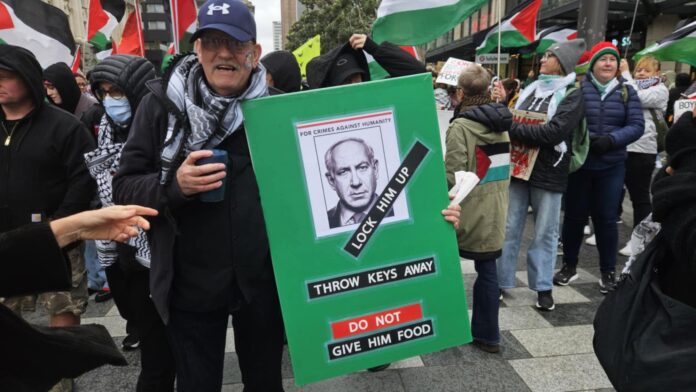
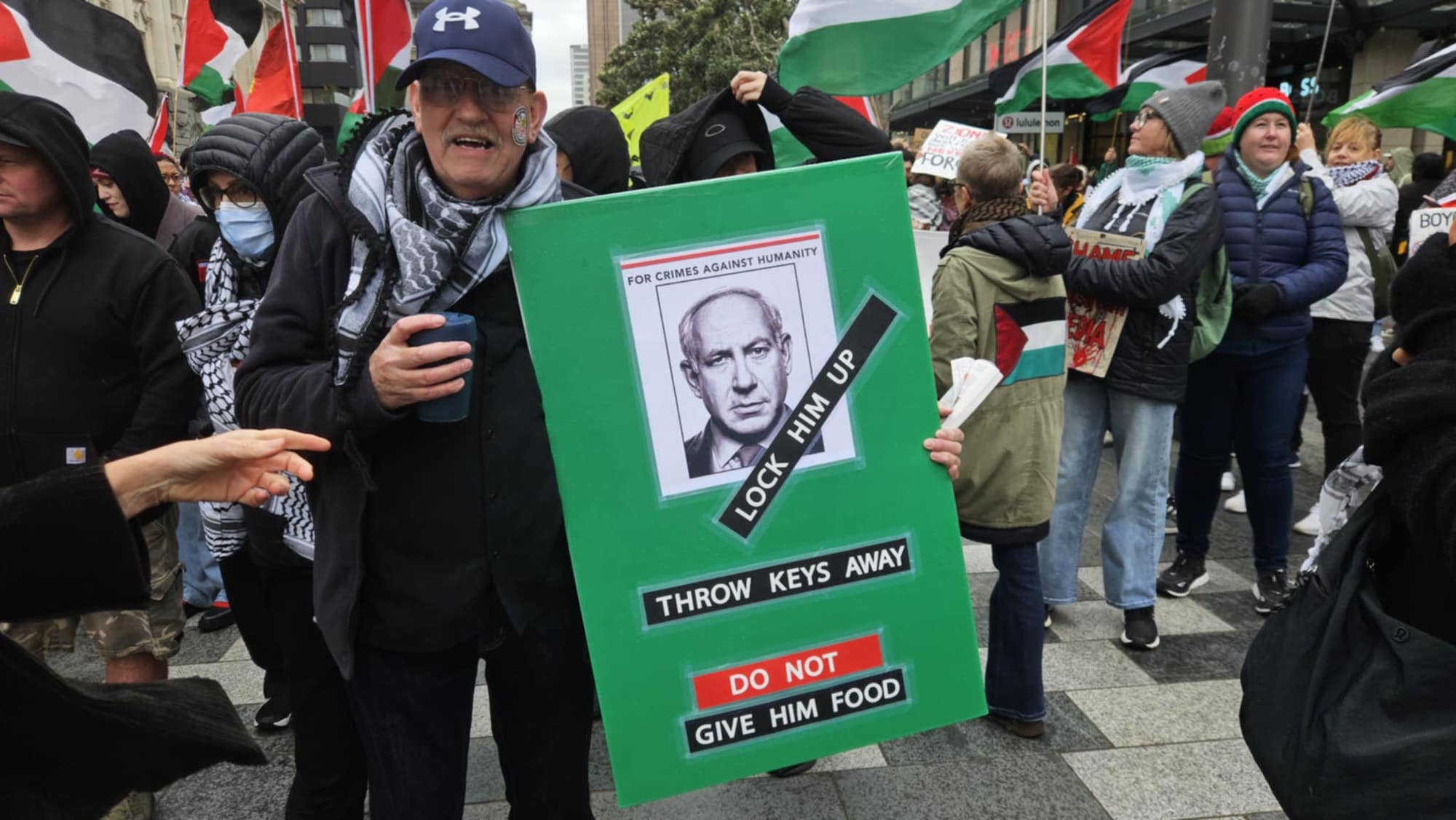


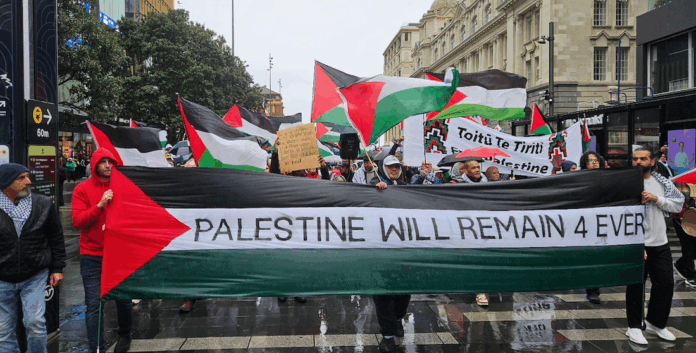
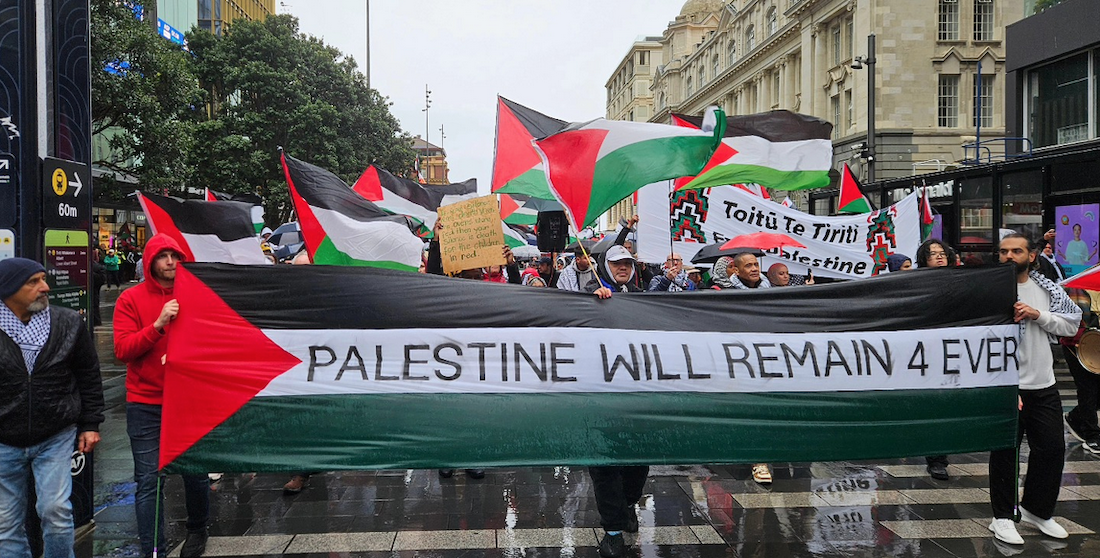








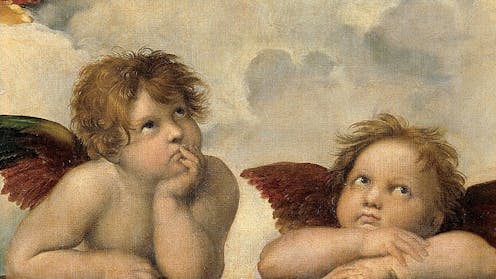







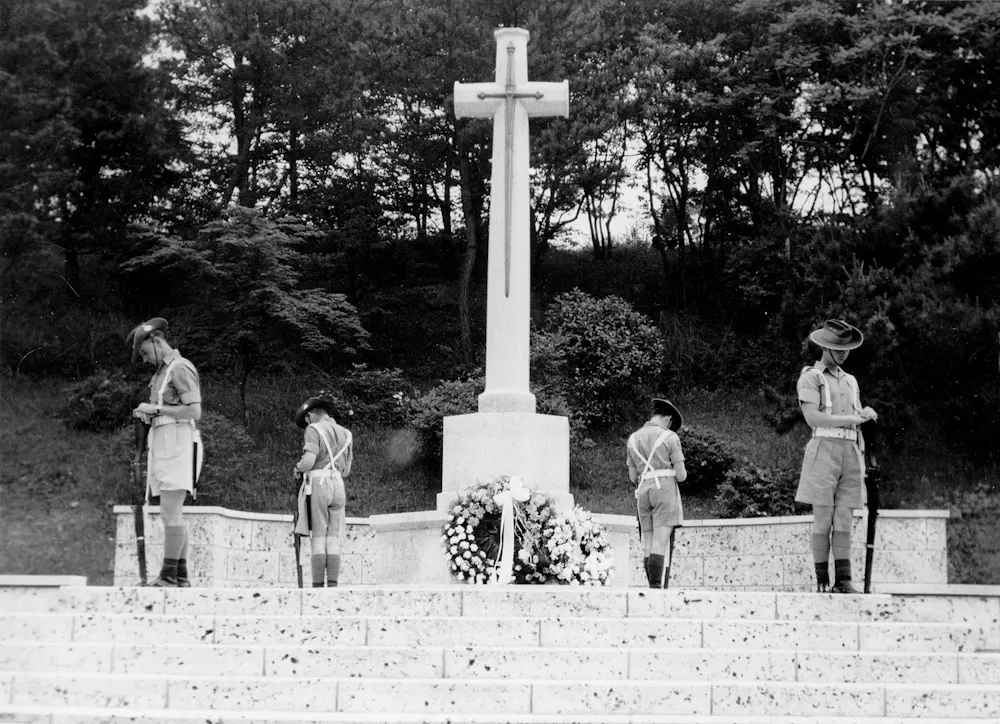












.jpg)


_Madonna_dai_cherubini_rossi_-_Giovanni_Bellini_-_gallerie_Accademia.jpg)


