
Page 309

Palestinian journalists treated like ‘robots’ by Western media, says Gaza reporter in wake of latest Israeli killings

Pacific Media Watch

An Al Jazeera journalist who has documented Israel’s trail of atrocities for almost the past two years has condemned Western news agencies covering the war on Gaza as treating Palestinian reporters like “robots”.

“You see how Palestinian journalists are treated. There’s no protection when they are alive,” Hind Khoudary told Al Jazeera from Deir el-Balah in central Gaza.

“And after they are killed, no one even mentions them.”

She said today was a “very, very angry morning” after five journalists were killed yesterday among at least 21 people, including medical workers, at al-Nasser Medical Centre in a “double tap” strike by the Israeli military.

The slain news professionals have been named as Hossam al-Masri, a freelance photographer for the Reuters news agency; Mariam Abu Daqqa, freelance journalist for The Independent and the Associated Press (AP); Moaz Abu Taha, correspondent for the American broadcasting network NBC; Mohamad Salama, press photographer for Al Jazeera; and Ahmed Abu Aziz, freelance journalist working for Middle East Eye and the Tunisian radio station Diwan FM, who died later from his injuries.

“Palestinian journalists do not know how to mourn their five colleagues and there’s a wave of anger at the international news agencies.

“Many news outlets [that the killed journalists worked for] did not even mention their contributors. The Reuters news agency did not mention in their headline their cameraman who had been working for them for months.

“In their article, they simply described him as a Reuters ‘contractor’.

‘Not mentioned’
As for Moaz Abu Taha [another journalist killed in the Nasser medical centre attack], not a single news organisation that he was working for said he was working for them,” she said.

A moment just after the second strike hit the journalists at the al-Nasser Medical Centre in southern Gaza yesterday. Image: Reporters Without Borders

“Palestinian journalists have been risking their lives for 23 months now, and after they are killed, they are not even mentioned in headlines.

“In the end, they are mentioned as ‘contractors’, as ‘freelancers’ – while, when they were alive, they were working 24/7 to produce, fix and document for these news outlets.

“This is how most Palestinian journalists feel — that we’re just being used as robots to report on what’s going on because there are no foreign journalists.

“We get killed and then everyone forgets about us.”


Gaza’s silenced voices.     Video: Al Jazeera

RSF ‘fiercely condemns’ killings
The Paris-based media freedom watchdog Reporters Without Borders (RSF) “fiercely condemned” the latest killings, saying they came after the murder of Khaled al-Madhoun on Saturday, 23 August 23.

This was a toll of six journalists killed in two days. It follows the killing of six other journalists two weeks ago on August 10.

According to RSF information, all were deliberately targeted. RSF again called for an emergency UN Security Council meeting to “end this massacre of journalists”.

Thibaut Bruttin, director-general of RSF, said: How far will the Israeli armed forces go in their gradual effort to eliminate information coming from Gaza? How long will they continue to defy international humanitarian law?

“The protection of journalists is guaranteed by international law, yet more than 200 of them have been killed by Israeli forces in Gaza over the past two years.

“Ten years after the UN Security Council adopted Resolution 2222, which protects journalists in times of conflict, the Israeli army is flouting its application.

“RSF calls for an emergency UN Security Council meeting to ensure this resolution is finally respected, and that concrete measures are taken to end impunity for crimes against journalists, protect Palestinian journalists, and open access to the Gaza Strip to all reporters.”

Al Jazeera’s Hind Khoudary . . . reporting from Deir el-Balah in central Gaza. Image: AJ screenshot APR

‘Suicide drone’
According to Al Jazeera, the first strike on the live broadcast post that killed Hossam al-Masri was carried out using a loitering munition — also known as a “suicide drone” — typically equipped with a camera and an explosive charge.

Reuters article also confirmed the death of its contractor, Hussam al-Masri.

The second strike 8 minutes later targeted the hospital yet again after rescue teams and journalists had arrived.

The Al-Nasser complex is a well-known gathering place for displaced journalists in Gaza who, since October 2023, have been living in tents around the hospital to access information on injured and deceased patients, as well as available facilities.

Article by AsiaPacificReport.nz

View from The Hill: Growing push for early decision on climate policy wedges Ley

Source: The Conversation (Au and NZ) – By Michelle Grattan, Professorial Fellow, University of Canberra

Sussan Ley is resisting growing internal pressure for the Coalition to quickly discuss and determine the future of its policy on net zero.

A number of Liberals and Nationals urged the debate be brought forward and the process for decision making clarified, at the Liberal and Coalition party meetings on Tuesday.

The pressure reflects the surge in support especially in the Nationals – but also in parts of the Liberal Party – for dumping the 2050 net zero commitment. More generally, it is becoming increasingly politically untenable for the Coalition to remain in limbo over its policy.

The opposition’s hand is also being forced by the fact the government will announce within weeks Australia’s 2035 emissions reduction target under the Paris agreement. This target, which may be a range rather than a particular number, appears likely to between 65% and 75%, on previous indications. Australia’s 2030 target is a 43% reduction on 2005 emissions.

Sources said Tuesday’s push started in the Liberal party room meeting with the matter raised by South Australian conservative Tony Pasin and then continued at the joint party meeting.

A range of speakers including both conservatives and moderates, with differing positions on net zero, argued the Coalition needed to get on with settling a position.

Initially, the need for a position was about a 2035 target and then broadened into the need to settle its position on net zero.

Pasin later told Sky he had sought clarification on the process for making the decisions but didn’t get it. He said the opposition could not wait 12-18 months to decide a policy.

High profile Nationals Matt Canavan and Barnaby Joyce are running an intense campaign to change the Coalition’s policy. The government is ensuring Joyce’s private member’s bill to remove legislative references to net zero is regularly debated in the time given each week to private member’s bills.

The Nationals seem certain to dump net zero sooner rather than later, while the Liberals are divided and Ley is trying to stick to her timetable of a comprehensive Coalition review before a decision is made.

The review team includes representation from the Nationals, and is chaired by Victorian Liberal Dan Tehan, who is energy spokesman.

Tehan told Sky on Tuesday, “I’ve said quite clearly on the record a number of times that I support net zero by 2050”.

Last Friday the Queensland Liberal National Party convention overwhelmingly rejected net zero. Meetings of the Liberal organisations in South Australia and Western Australia had done so earlier.

While the party organisation can’t impose policy on the Liberal parliamentary party, the stands increase the pressure on MPs, who have an eye to their preselections.

Frontbencher Andrew Hastie is not waiting for the review. He
told the ABC on Tuesday, “I believe in a sovereign, secure, competitive and prosperous Australia, and I think net zero undermines that very thing”. Hastie has been outspoken on the issue before.

The Liberal leader in the senate, and fellow Western Australian, Michaelia Cash, has backed the WA motion against net zero.

Labor predictably capitalised on the Coalition’s problems with its energy policy, with Energy Minister Chris Bowen telling parliament, “What we have is two parties, one Coalition, and many, many ways of killing net zero”.

Ley told a news conference Labor’s coming announcement of its 2035 targets would give the opposition an opportunity to ask the government to demonstrate what these targets will cost, how it would deliver on promises and what they would mean for manufacturing businesses and Australian households.

Deciding the 2035 target finds the government caught between ambition and practicality. For the opposition, the government’s announcement will put it on the spot – but, if the internal heat becomes too much, it would also provide an opportunity to deal with the net zero issue. That would mean, however, dramatically accerelating the Tehan review and the policy-making process.

Whether she sticks to her present timetable or revises it, Ley finds herself in a corner. And that’s just over timing. On the substance of the issue, she is caught between the strong anti net zero lobby within the Coalition and the need to appeal to urban voters and young people, who mostly consider net zero a no brainer.

The Conversation

Michelle Grattan does not work for, consult, own shares in or receive funding from any company or organisation that would benefit from this article, and has disclosed no relevant affiliations beyond their academic appointment.

ref. View from The Hill: Growing push for early decision on climate policy wedges Ley – https://theconversation.com/view-from-the-hill-growing-push-for-early-decision-on-climate-policy-wedges-ley-263435

For the first time, scientists observed the ‘hidden swirls’ that affect the flow of sand, rocks and snow

Source: The Conversation (Au and NZ) – By Itai Einav, Professor in Geomechanics, University of Sydney

MeSSrro/Unsplash

What looks like ordinary sand, rocks or snow flowing in one direction can actually hide swirling currents that move in multiple directions beneath the surface.

When grains move in a landslide, most follow the steepest downhill path. This is the “primary flow”, where particles largely follow the herd. But some grains move sideways or swirl in hidden patterns, forming “secondary flows” that subtly influence how far and fast the material travels.

Understanding how grains move beneath the surface could help explain the physics of avalanches and landslides, and even improve how we handle everyday materials like wheat in silos or powders in pharmaceuticals.

However, nobody has been able to observe these hidden swirls – until now. In a study published in Nature Communications today, we have captured secondary flows inside granular materials for the first time with our advanced X-ray imaging setup.

A bulldozing experiment

The idea these secondary flows exist isn’t new. Researchers have seen these hidden movements in powerful computer simulations of grains between rotating cylinders or in landslides that model each particle’s movement using basic laws of physics. But that’s a purely theoretical way to study them.

Observing the flows in real granular materials – such as sand, snow or similar – has been almost impossible. To look inside the flow, you’d either have to keep stopping the grains for standard X-ray scans or add a liquid that makes them see-through. Unfortunately, both approaches change how the grains naturally behave.

We set out to study the flow of glass beads (a perfect granular material for a lab setting) in a bulldozing experiment, where a conveyor belt pushes grains into a wall, causing them to pile up.

The glass beads used in the bulldozing experiments and mapped with X-rays.
Andrés Felipe Escobar Rincón

In our lab, we have developed an entirely new method called X-ray rheography which can take three-dimensional images of moving grains. Called DynamiX, this setup allows us to see what’s really happening beneath the surface.

To our surprise, the test revealed ripples on the surface, which earlier studies had linked to hidden secondary flows.

These flows had never been directly observed in three dimensions without stopping the motion or altering the material with fluid.

We could watch these hidden currents in action without disturbing the movement of the glass beads. Yet the complex geometry meant we could capture only the magnitude of the flow in one direction, along the conveyor belt as the primary direction, leaving the rest of the three-dimensional picture incomplete.

High angle of DynamiX during an experiment with bulldozed glass beads.
Andrés Felipe Escobar Rincón

What we discovered underneath

To really pin down the secondary flows, we went further than just watching the grains with DynamiX.

We developed another X-ray method to map the surface of the flowing heap from X-ray images, linking tiny ripples on top to the swirling motion underneath. We also measured how grains move through the full depth of the pile, including sideways motions.

The main flow goes all in the same direction. So, the sideways movements we detected were the first direct experimental proof of secondary flows.

By looking inside these hidden flows, we are revealing the surprising versatility of granular materials. They can behave like solids that support buildings or like complex fluids with intricate internal currents.

Movement of the secondary flow mapped with algorithms.
Andrés Felipe Escobar Rincón

Swirling motions are common

While we didn’t study landslides directly, our experiments on bulldozed particles reveal something important.

We now know secondary flows are at play whenever particles are pushed, such as when ploughing snow or moving grains in agriculture, for example. The swirling motions we observed appear to be ubiquitous in complex particle flows.

What does this mean for landslides? Detailed experiments like ours provide crucial data that can be used to validate and improve mathematical models. Current models often ignore secondary flows and cannot predict them.


Read more:
What causes landslides? Can we predict them to save lives?


Our work offers the experimental foundation for future modelling. Understanding and modelling these secondary flows could help engineers better predict the destructive power of landslides, including runouts that are currently underestimated.

It could also improve industrial processes, from powder handling in pharmaceuticals to snow clearing and beyond.

While our results are specific to bulldozed grains, they point to a broader principle – secondary flows are a fundamental feature of particle motion which must be considered in any realistic model of granular behaviour.

Beneath the surface of any moving pile of grains, hidden swirling currents are shaping the flow. Recognising these movements is key to understanding everything from avalanches to industrial particle handling.

The Conversation

Itai Einav receives funding from Australian Research Council.

ref. For the first time, scientists observed the ‘hidden swirls’ that affect the flow of sand, rocks and snow – https://theconversation.com/for-the-first-time-scientists-observed-the-hidden-swirls-that-affect-the-flow-of-sand-rocks-and-snow-262959

French PM’s confidence vote hits New Caledonia’s political negotiations

By Patrick Decloitre, RNZ Pacific correspondent French Pacific desk

French Prime Minister François Bayrou’s surprise announcement yesterday that he will call for a parliamentary confidence vote in his government is set to further complicate protracted talks in New Caledonia on the French territory’s political future.

The announcement comes as French Minister for Overseas Manuel Valls has extended his stay in New Caledonia, where he has supervised a “drafting committee” to translate a “Bougival Accord” signed in July to set the path for major political reforms for New Caledonia.

In a surprise and “risky” announcement yesterday, Bayrou said a confidence vote in his government would take place on September 8.

He said this was in direct relation to his budget, which contains planned sweeping cuts of around 44 billion euros (NZ$87.6 billion) to tackle the “danger” of France plunging further into “over-indebtedness”.

“Yes it’s risky, but it’s even riskier not to do anything,” he told a press conference.

According to article 49.1 of the French Constitution, if a majority of parties votes in defiance, then Bayou and his minority government automatically fall.

Reacting to the announcement, parties ranging from far right, far left to the Greens have already indicated they would express defiance towards Bayrou and his cabinet.

‘End of the government’
Far-right Rassemblement National (RN) party chief Jordan Bardella said Bayrou, by calling for the vote, had effectively announced “the end of his government”.

Radical left France Unbowed (La France Insoumise) also said the vote would mark the end of the government.

This will place the Socialist MPs, whose votes could make the difference, in a crucial position.

Socialist party spokesman MP Arthur Delaporte, deplored Bayrou for remaining “deaf to the demands of the French” and appeared to remain “quite stubborn”.

“I don’t see how we could vote the confidence,” Delaporte told reporters.

To further compound the situation in France, a national “block everything” strike has been called on September 12, with the active support and backing from the far left parties and a number of trade unions.

Valls is still in New Caledonia, after he extended his stay twice and is now set to fly back to Paris later today.

Bid for FLNKS talks
The extension was an attempt to resume talks with the pro-independence FLNKS (Kanak and Socialist National Liberation Front), which has attended none of the three sessions of the “drafting committee” on August 21, 23 and 35.

French Overseas Minister Manuel Valls . . . at New Caledonia’s drafting committee meeting launched at the French High Commission. Image: Photo: Haut-commissariat de la République en Nouvelle-Calédonie/RNZ Pacific

Talks within the committee were reported to be not only legal (with the help of a team of French high officials, including constitutionalists, but also highly political.

Valls announced a last-ditch session today with FLNKS before he flies back to Paris.

All of the other parties, both pro-independence and pro-France, took part in the committee sessions, which is now believed to have produced a Constitutional reform Bill that was to be tabled at both France’s Parliament chambers (the National Assembly and the Senate) and later before a special meeting of both houses (a “Congress”).

The Constitutional Bill would cover a large spectrum of issues, including the creation, for the first time in France, of a “State of New Caledonia”, as well as a dual France/New Caledonia citizenship.

Two other documents, an organic law and a fundamental law (a de facto constitution) are also being prepared for New Caledonia.

The Bougival deal signed on July 12 near Paris was initially agreed to by all of New Caledonia’s political parties represented at the local Parliament, the Congress.

Rejected ‘in block’
But it was later denounced and rejected “in block” by the FLNKS.

Valls has consistently stressed that his door “remains open” to the FLNKS.

Several local parties across the political chessboard (including the Wallisian-based Eveil Océanien and moderate pro-France Calédonie Ensemble) have already expressed doubts as to whether the implementation of the Bougival deal could carry any value if they had taken place without the FLNKS.

In the face of urgent initial plans to have New Caledonia’s texts urgently tabled before French Parliament, Bayrou’s confidence challenge is highly likely to further complicate New Caledonia’s political negotiations.

The plan was to have the freshly-produced text scrutinised by the French State Council, then approved by the French Cabinet on September 17.

Before the end of 2025, it would then be tabled before the French National Assembly, then the Senate, then the French special Congress sitting.

And before 28 February 2026, the same text would finally be put to the vote by way of a referendum for the people of New Caledonia.

Pro-France leader and former French cabinet member Sonia Backès however told local media she remained confident that even if the Bayrou government fell on September 8, “there would still be a continuity”.

“But if this was to be followed by a dissolution of Parliament (and snap elections), then, very clearly, this would impact on the whole (New Caledonian) process,” she said.

This article is republished under a community partnership agreement with RNZ.

Article by AsiaPacificReport.nz

Why do hamstring injuries happen so often and how can they be prevented?

Source: The Conversation (Au and NZ) – By Max Andrews, Associate Lecturer of Sports Science, The University of Queensland

In a recent clash against the Melbourne Storm, the Brisbane Broncos endured a nightmare rarely seen in professional sport — three players tore their hamstrings in a single game. Two players, Adam Reynolds and Ezra Mam, went down in the same play.

Hamstring strains are the most common non-contact muscle injury in running sports such as rugby league. One in three players will suffer the same injury again.

So why do they happen and what can be done to stop them?

The Brisbane Broncos suffered three hamstring injuries in one game against the Melbourne Storm.

Hamstrings are a huge issue for athletes

More than 80% of all hamstring injuries in sport occur during sprinting, while others occur during stretching movements such as kicking.

The danger point is usually the “late swing” phase of sprinting: the split second before the foot strikes the ground when the leg is swinging forward at high speed.

At this moment, the hamstrings are contracting while also lengthening.

The hamstrings’ job is to slow the leg and prepare it for ground contact. This requires very high forces at long muscle lengths — a combination that increases vulnerability to injury.

It is not just speed that is dangerous.

Using the recent Storm-Broncos game as an example, when Xavier Coates intercepted the ball, and Mam and Reynolds suddenly accelerated to chase him down, their hamstrings were actually stretched further and faster than if they were running at a steady pace, even at much higher speeds.

Think of your hamstrings like a rubber band: during constant speed running the muscles stretch gradually, but yank it suddenly (as during acceleration) and it stretches faster — making it more likely to snap.

In fact, accelerating while running at only half your top speed puts the same stretch on your hamstrings as running constantly at nearly 90% of your maximum speed.

How to reduce hamstring injury risk

While no strategy can completely eliminate risk, there is evidence that two approaches reduce hamstring injuries: sprinting and eccentric strength training.

Eccentric strength training involves exercises where the muscle lengthens under tension, such as slowly lowering a weight.

Eccentric training, particularly the Nordic hamstring exercise, can cut hamstring injuries by more than 50% when done regularly.

This exercise puts the hamstrings under high force while they are lengthening, triggering structural and functional changes that make them more resilient.

Regular sprint training may help protect against hamstring injury by preparing the muscles for the exact demands they face in competition.

But if athletes go long periods without sprinting, a sudden spike in sprinting load can greatly increase their risk.

Consistency is crucial

Eccentric training can lengthen muscle fibres within 2-3 weeks, mainly from stretching existing sarcomeres (tiny building blocks inside each muscle fibre that allow it to contract and stretch).

This short-term (two to three weeks) change may not provide much real protection from injury.

However, with longer-term training (around nine weeks), new sarcomeres are added, creating longer fibres that can better withstand the big stretches of sprinting.

This difference helps explain why short pre-season training blocks may be insufficient and why consistent eccentric training is needed to build lasting protection.

Eccentric training also increases strength by building the size of the muscles.

Bigger hamstrings are stronger and can cope better with the huge forces they face during sprinting.

These two changes — longer fibres and greater strength — appear to be the main reasons eccentric training cuts injury risk by half.

It’s also possible other changes play a role, like the muscles switching on more quickly or the tendons and connective tissues getting stronger but research in this area is still limited.

Researchers have explored the effects of nine weeks of Nordic hamstring exercises.

Challenges for athletes and teams

The protective changes from eccentric training are not permanent.

Fibre length and added sarcomeres begin to regress within three weeks of stopping.

This is a major challenge in professional sport, where busy schedules and muscle soreness from eccentric exercise mean few teams stick with these prevention strategies in-season.

The good news is muscles quickly adapt to eccentric training, so soreness diminishes over time. Once players build up a tolerance to eccentric training, just four Nordic reps per week may be enough to maintain the protective benefits without overloading athletes.

Teams that consistently use these exercises experience fewer injuries than those that don’t.

An issue that shouldn’t be ignored

Even with world-class sports science support, hamstring injuries are still the number one cause of time loss from training and competition in professional football codes.

Predicting and preventing hamstring injuries remains a challenge. But eccentric strength training and regular sprinting can provide protection.

Effective prevention requires not just using eccentric strength training exercises but doing them consistently, alongside careful management of load, recovery and other risk factors.

Putting this into practice in elite sport is difficult, which may help explain why hamstring injury rates are not decreasing.

The Conversation

Anoosha Pai S receives funding from Stanford Graduate Fellowship, Wu Tsai Human Performance Alliance

Anthony Shield has received funding from the Queensland Academy of Sport.

Matthew Bourne is a recipient of an Advance Queensland Industry Research Fellowship in partnership with VALD.

Max Andrews and Patricio Pincheira do not work for, consult, own shares in or receive funding from any company or organisation that would benefit from this article, and have disclosed no relevant affiliations beyond their academic appointment.

ref. Why do hamstring injuries happen so often and how can they be prevented? – https://theconversation.com/why-do-hamstring-injuries-happen-so-often-and-how-can-they-be-prevented-263038

Erin Patterson is a triple murderer. That’s no excuse for inhumane prison conditions

Source: The Conversation (Au and NZ) – By Thalia Anthony, Professor of Law, University of Technology Sydney

The media spotlight is once again on the issue of prison conditions, as sentencing looms for Erin Patterson – convicted for three murders after serving a beef Wellington laced with death cap mushrooms.

The prosecution has called for a sentence of life imprisonment.

The defence has drawn attention to the harmful conditions of prison isolation, which Patterson has endured for approximately 400 days.

Supreme Court Judge Beale has said he would give “weighty consideration” to her prison conditions in determining the sentence, noting Patterson’s prison conditions do not “sound very humane”.

A principle of modern democracies where the rule of law prevails, such as Australia, is that people are sent to prison as punishment – not for punishment.

The Dame Phyllis Frost Centre

For more than a year Patterson has been held in the Dame Phyllis Frost Centre, a maximum-security women’s prison in the western suburbs of Melbourne.

For most of this time, she has been in the Gordon Unit. This is a protected area where women are held in solitary confinement without meaningful human contact for almost the entire day.

Patterson has been locked in her cell alone for between 22 and 24 hours, and can only speak to one other inmate.

Jenny Hosking, the assistant commissioner for the sentence management division at Corrections Victoria, provided the sentencing court with details about Patterson’s custody conditions.

It was following this evidence that Justice Beale noted Patterson’s prison conditions do not “sound very humane”.

The Gordon Unit is notorious for high suicide risk. Prisoners are confined to a small space and rarely given more than an hour outside their cells.

One prisoner who was in the Gordon Unit, Ashleigh Chapman, has described being locked up for 23 to 24 hours each day. She reported water from the tap turning the sink and shower floor green.

Government documents obtained by the ABC revealed at least 106 lockdowns between July 2024 and June 2025.

This included, according to one prisoner log, a 43-hour lockdown.

Inhumane conditions

In 2017, the Victorian Ombudsman made damning findings of cruel, inhumane and degrading treatment at Dame Phyllis Frost Centre. It noted

some practices used to maintain order in prisons pose a high risk of torture or degrading treatment if used improperly: these include the use of force and restraint, prolonged solitary confinement and strip searches.

It recommended the Victorian government “consider options for replacing” the solitary confinement unit.

It also recommended improvement of health services.

However, between 2020 and 2021, five women died at Dame Phyllis Frost Centre.

In 2025, the ABC reported on a cluster of suicide attempts at the Dame Phyllis Frost Centre after rolling lockdowns due to staff shortages.

Women with physical and mental health conditions have reportedly been denied medical appointments, legal appointments and family visits.

Indigenous women particularly bear the burden of poor care in prison.

One notable case involved Gunditjmara, Dja Dja Wurrung, Wiradjuri and Yorta Yorta woman Veronica Nelson, who was imprisoned having been denied bail for shoplifting-related charges. She died alone in a cell at the Dame Phyllis Frost Centre in 2020 after being denied healthcare, despite her repeated cries for assistance.

Another case involved Yamatji, Noongar, Wongi and Pitjantjatjara woman Heather Calgaret, who had been denied parole due to a lack of accommodation. She died in 2021 at the Dame Phyllis Frost Centre after being given a Buvidal injection (as part of opiate replacement therapy).

Both inquests found serious flaws in the health care women received during their time in prison.

Solitary confinement and international law

Following its visit to Australian prisons in 2022, the United Nations Subcommittee on Prevention of Torture and Other Cruel, Inhuman and Degrading Treatment or Punishment condemned the prolonged use of solitary confinement. It recommended that

solitary confinement is used only in exceptional cases as a last resort, for as short a time as possible and subject to independent review, and only pursuant to the authorization by a competent authority.

It urged compliance with international laws, including the United Nations Standard Minimum Rules for the Treatment of Prisoners (also known as the Nelson Mandela Rules).

These provide for at least one hour of access to open air for exercise, clean drinking water, and a ban on prolonged solitary confinement in excess of 15 consecutive days.

An appetite for punishment?

Media stories have overwhelmingly focused on Erin Patterson’s access to a hair straightener, crochet materials, a television, a computer, books and a fan. The implication is that Patterson is on a good wicket in prison.

However, this narrative likely misrepresents the reality of prison conditions for Patterson – and for the many other women on much lesser charges who also face lockdowns and a lack of health support.

Prison conditions should comply with human rights obligations and avoid cruel, inhumane, degrading treatment of prisoners.

When a crime affronts the moral fibre of society, such as the triple murder committed by Erin Patterson, it is common for society, the media and institutions to respond with moral outrage.

Such instincts, however, can run against the standards for civilised treatment of people in prison.


If this article has raised issues for you, or if you’re concerned about someone you know, call Lifeline on 13 11 14.

13YARN is a free and confidential 24/7 national crisis support line for Aboriginal and Torres Strait Islander people who are feeling overwhelmed or having difficulty coping. Call 13 92 76.

The Conversation

Thalia Anthony receives funding from the Australian Research Council.

ref. Erin Patterson is a triple murderer. That’s no excuse for inhumane prison conditions – https://theconversation.com/erin-patterson-is-a-triple-murderer-thats-no-excuse-for-inhumane-prison-conditions-263906

Could a ‘cortisol cocktail’ really reduce stress and boost energy?

Source: The Conversation (Au and NZ) – By Theresa Larkin, Associate Professor of Medical Sciences, University of Wollongong

F.J. Jimenez/Getty Images

Have you heard of a “cortisol cocktail”? Rather than something you might order at a bar, this drink is one of the latest wellness trends floating around social media.

Proponents claim the drink – which is made with ingredients including orange juice, coconut water and salt – can lower high cortisol levels and help with “adrenal fatigue”. This in turn is supposed to lead to a range of benefits, from reduced stress to improved energy levels.

But can a cortisol cocktail really achieve these things? And do we actually need to lower our cortisol levels in the first place? Let’s see what the evidence says.

First, what is cortisol?

Cortisol is often portrayed as being bad for us, but we couldn’t live without it.

Cortisol is a hormone produced by the adrenal glands. The adrenal glands also produce many other hormones including adrenaline, sex hormones and aldosterone (this helps balance salt in the body and affects blood pressure).

Cortisol is regulated by the brain in response to stress. Physical stress (for example, injury or sleep deprivation) and psychological stress (such as work pressures or grief) stimulate the stress response – also known as the fight-or-flight response – and cortisol secretion.

We often hear cortisol described as “the stress hormone”. But cortisol has many other important functions too – it increases glucose (sugar) in the blood to provide energy, regulates metabolism and reduces inflammation.

Our bodies constantly produce cortisol but the level changes with the daily light-dark cycle. It increases just before we wake, is highest during the morning, drops off in the afternoon and is lowest overnight.

We want high cortisol in the morning to wake us up and release energy. We also want higher cortisol in stressful situations, for example if we need to run for a train or be alert during an important discussion. On the flip side, we want low cortisol overnight to help us sleep.


Read more:
No, you can’t blame all your health issues on ‘high cortisol’. Here’s how the hormone works


But there’s often misunderstanding about high versus low cortisol.

Many symptoms regularly blamed on high cortisol, such as weight gain and tiredness, are in fact linked to low cortisol. People with chronic fatigue syndrome frequently have low cortisol.

Chronic stress can lead to higher cortisol secretion, but ongoing stress can also cause low cortisol.

Notably, adrenal fatigue, which is not a medically recognised condition, means the adrenal glands produce less cortisol.

So it doesn’t make sense to suggest a cortisol cocktail could help with both high cortisol and adrenal fatigue (low cortisol).

What’s in a cortisol cocktail?

Recipes vary, but typically the ingredients are half a cup each of orange juice and coconut water, around one-quarter of a teaspoon of salt, and sometimes extra potassium or magnesium powders.

The health claims are linked to the vitamin C from the orange juice, the potassium from the coconut water, the added magnesium, and the sodium from the salt.

Vitamin C, an essential nutrient with a range of health benefits, has been linked to healthy adrenal gland function and cortisol balance.

Coconut water (and sometimes cream of tartar) is included as a source of potassium. Potassium is essential for healthy cell functioning, and maintaining a regular heartbeat.

Potassium won’t affect cortisol, but can help with some of the effects of chronic stress and high cortisol such as high blood pressure.

Sometimes magnesium powder is added. Magnesium is essential for energy production, and relevant to chronic stress which uses a lot of energy and depletes magnesium.

One-third of Australians don’t get enough magnesium. Good food sources of magnesium include leafy green vegetables, whole grains, nuts and seeds, legumes and meat.

However, any claim sodium is good for high cortisol or your adrenal glands is incorrect. High salt intake is linked with many chronic diseases, and increases cortisol levels in mice and humans.

Too much salt and sugar makes this trend risky for some people

While the cortisol cocktail contains some essential vitamins and minerals, it’s unlikely to meaningfully lower your cortisol levels, and is high in sugar and salt.

It contains around 16 grams of sugar (11 grams from the orange juice and about 5 grams from the coconut water). This is around one-third of the recommended daily limit of sugar.

Due to its sugar content, a cortisol cocktail may not be suitable for people with diabetes.

One-quarter of a teaspoon of salt is one-quarter of the recommended daily limit. Excessive salt intake is common and should especially be avoided by people with high blood pressure.

The high potassium content of a cortisol cocktail is also risky for people with heart disease, diabetes and kidney disease.

How can I maintain healthy cortisol levels?

Reducing stress is the best way to keep our adrenal glands and cortisol levels healthy. In a large meta-analysis, mindfulness, meditation and relaxation were the best ways to lower high cortisol.

In a previous article, I described five types of activities which can help to reduce stress: exercise, cognitive and creative activities, socialising and self-soothing (for example, breathing exercises and meditation).

Dedicating time for at least one of these every day could offer benefits. But even short resets to de-stress during the day can help, such as taking a few minutes to slow your breathing, chat to a friend, stretch, or do a quick puzzle.

As for the cortisol cocktail, its benefits are questionable. Instead of the orange juice, salt and mineral powders, eating an orange and some nuts or seeds will give you the nutritional benefits without the high sugar and salt content.

Theresa Larkin does not work for, consult, own shares in or receive funding from any company or organisation that would benefit from this article, and has disclosed no relevant affiliations beyond their academic appointment.

ref. Could a ‘cortisol cocktail’ really reduce stress and boost energy? – https://theconversation.com/could-a-cortisol-cocktail-really-reduce-stress-and-boost-energy-263277

The Islamic Revolutionary Guard Corps will be proscribed as a terrorist organisation. What does this mean?

Source: The Conversation (Au and NZ) – By Keiran Hardy, Associate Professor, Griffith Criminology Institute, Griffith University

In a joint press conference, ASIO Director-General Mike Burgess and Prime Minister Anthony Albanese announced Iran orchestrated two antisemitic attacks on Australian soil: the October 2024 attack on Sydney’s Lewis Continental Kitchen and the firebombing of the Adass Israel synagogue in Melbourne in December 2024.

As part of its response, the Australian government will list the Islamic Revolutionary Guard Corps (IRGC) as a terrorist organisation.

The listing triggers various offences that people can be charged with, including being a member, supporting or meeting with members of the organisation.

It will place the IRGC alongside al-Qaeda, Islamic State, and neo-Nazi and other far-right groups as a recognised, criminal terrorist organisation under Australian law.

What is a proscribed terrorist organisation?

Under division 102 of the Criminal Code Act, the Australian government has the power to designate an organisation as a “terrorist organisation”.

The governor-general can make a regulation to this effect if the home affairs minister is satisfied on reasonable grounds that an organisation is either:

  • directly or indirectly engaged in, preparing, planning, assisting in or fostering the doing of a terrorist act

  • advocates the doing of a terrorist act.

The IRGC listing has not happened yet, so the government’s full reasons are not available. Based on the recent announcement, it is likely the IRGC will be listed under the first of these grounds.

There are currently 31 terrorist organisations on the government’s list. Most of these are Islamist fundamentalist organisations in the mould of al-Qaeda and Islamic State.

Hezbollah was listed in 2021 and Hamas in 2022, though their paramilitary wings had been listed and re-listed since 2003.

Four far-right groups were recently added: National Socialist Order, Sonnenkrieg Division, The Base, and Terrorgram.

Terrorgram was listed in June 2025. It is more of an online network than a clearly defined organisation. The banning of an online group, and now the IRGC – a branch of another country’s armed forces – suggests that listings under division 102 will evolve in line with the changing nature of terrorism.

As Burgess has explained, threats to Australia’s national security are becoming more “dynamic, diverse and degraded”.

In the past, threats of terrorism came from a smaller number of groups that were heavily influenced by al-Qaeda. Now, terrorist threats involve mixed and unclear ideologies, conspiracy thinking, anti-government beliefs, state-sponsored terrorism and foreign interference.

What offences does the listing trigger?

Once an organisation is proscribed under division 102, this triggers a series of criminal offences.

It is a crime, punishable by up to 25 years in prison, to direct the activities of a terrorist organisation – or to recruit for, train with, fund or support one. Being a member of a terrorist organisation is punishable by 10 years in prison.

It is even an offence, punishable by three years imprisonment, to “associate with” a member of a terrorist organisation. The association must take place on two or more occasions and provide support to the organisation. This offence could be used, for example, to charge proxy criminals who meet with members of the IRGC or another terrorist group.

Strictly speaking, an official listing is not needed for these offences to be prosecuted. Prosecutors can also prove in court, as an element of the offence, that a group of people is a terrorist organisation. This happened in the Benbrika case, when a group of men in Melbourne were found by a jury to be members of a terrorist organisation.

Still, listing a group makes it easier to prosecute these offences, as the fact that the group is a terrorist organisation does not need to be separately proven in court.

In this case, it also sends a clear signal from the government and ASIO that foreign interference on Australian soil will not be tolerated.

The Conversation

Keiran Hardy receives funding from the Australian Research Council for a Discovery Project on conspiracy-fuelled extremism.

ref. The Islamic Revolutionary Guard Corps will be proscribed as a terrorist organisation. What does this mean? – https://theconversation.com/the-islamic-revolutionary-guard-corps-will-be-proscribed-as-a-terrorist-organisation-what-does-this-mean-263922

Australia says Iran was behind two antisemitic attacks; Iranian ambassador expelled

Source: The Conversation (Au and NZ) – By Michelle Grattan, Professorial Fellow, University of Canberra

Australia’s national security service has determined the Iranian government directed at least two antisemitic attacks in Australia – on Lewis Continental Kitchen in Sydney, and the Adass Israel synagogue in Melbourne.

It’s likely the regime has been behind more attacks, according to the Australian Security Intelligence Organisation (ASIO).

Prime Minister Anthony Albanese announced on Tuesday the Iranian ambassador to Australia is being expelled, as well as three other officials. They will have seven days to leave the country.

The operation of the Australian embassy in Iran has been suspended and its staff moved to a third country for their safety.

The Lewis Continental Kitchen at Bondi was set on fire in October 2024. The Adass Synagogue in Ripponlea was firebombed and extensively damaged in December 2024.

ASIO informed the federal government on Monday of its assessment, and Iran was informed of the action around lunchtime Tuesday.

Albanese announced the decision at a joint news conference with the head of ASIO Mike Burgess, Foreign Minister Penny Wong and Home Affairs Minister Tony Burke.

The prime minister also said the government would legislate to list Iran’s Revolutionary Guard Corps (the IRGC) as a terrorist organisation.

The IRGC represents the most powerful branch of the Iranian armed forces, and is independent of Iran’s regular army.

Burgess said ASIO assessed the Iranian government had likely directed more attacks on Jewish interests in Australia than the two that had been specified.

“Our painstaking investigation uncovered and unpicked the links between the alleged crimes and the commanders in Iran’s Revolutionary Guard Corps, the IRGC,” Burgess said.

“The IRGC used a complex web of proxies to hide its involvement.”

He said there was a “layer-cake of cut-outs between IRGC and the person or the alleged perpetrators conducting crimes.

“In between them, they tap into a number of people, agents of IRGC, and people that they know in the criminal world, and work through there, so it’s a series of chains.

“There’s an organised crime element offshore in this. But that’s not to suggest organised crime are doing it. They’re just using cut-outs, including people who are criminal and members of organised crime gangs to do their bidding or direct their bidding.”

Burgess said ASIO was still investigating possible Iranian involvement in other attacks. But he stressed he did not believe the Iranian regime was responsible for every antisemitic attack in Australia.

Wong said this was the first time in the postwar period that Australia had expelled an ambassador, “Iran’s actions are completely unacceptable. We’ll continue to maintain some diplomatic lines to advance the interests of Australians.”

She said Australia had had an embassy in Iran since 1968. “At that time and since that time it’s never been an endorsement of the regime, it’s been a channel to advocate for our interests and for our people.

“However, the government has now taken the step to withdraw our ambassador to Iran and we have suspended the operations of our embassy in Iran for the safety of our officials and Australians’ broader security.”

Wong urged any Australian who might be considering travelling to Iran not to do so, and any Australian in Iran to leave if it was safe to do so.

Burke said this was “an unprecedented attack on our society.

“It’s aimed at creating fear, stoking internal divisions, and eroding social cohesion.”

Michelle Grattan does not work for, consult, own shares in or receive funding from any company or organisation that would benefit from this article, and has disclosed no relevant affiliations beyond their academic appointment.

ref. Australia says Iran was behind two antisemitic attacks; Iranian ambassador expelled – https://theconversation.com/australia-says-iran-was-behind-two-antisemitic-attacks-iranian-ambassador-expelled-263916

I’m a woman approaching middle age, do I need to get my hormones checked?

Source: The Conversation (Au and NZ) – By Susan Davis, Chair of Women’s Health, Monash University

If you’re a woman approaching middle age and you’re on social media, you might have been urged to get your hormones checked.

These posts often highlight troubling symptoms of perimenopause. Then they flag blood tests as a way to help you understand what’s going on and to guide treatment.

Some women are now turning to wellness providers and online services seeking these types of tests, often at substantial expense.

But these tests don’t provide any benefits. An editorial in the British medical journal BMJ has raised an alert about these tests. The authors conclude they’re unnecessary and shouldn’t guide treatment decisions.

So what hormonal changes occur in the transition to menopause? And why is hormonal testing mostly unhelpful?

What do hormones do during menstrual cycles?

The key hormones the ovaries produce before menopause are oestrogens (mostly as oestradiol, but also as oestrone) together with progesterone and testosterone.

The amount of each hormone produced changes during the menstrual cycle.

Blood oestradiol levels double around the time of ovulation. This is followed by an increase in progesterone.

Testosterone blood levels also increase around ovulation, but the increase is less than about 10%.

What’s the difference between menopause and perimenopause?

Menopause happens when the ovaries have lost the capacity to produce an egg.
After menopause, oestrogen and progesterone blood levels are dramatically lower than before menopause.

Perimenopause is the time between being pre-menopausal, through to the first 12 months after having the last menstrual bleed. But the end of perimenopause is difficult to determine if you don’t menstruate, for example after a hysterectomy or when you have a hormonal intra-uterine device (IUD).

Testosterone blood levels don’t meaningfully change at natural menopause; they slowly decline with age.

What are the symptoms of perimenopause?

During the transition to menopause, the ovaries function haphazardly. So oestrogen and progesterone blood levels can be unpredictably very high or very low.

Hot flushes and night sweats, also known as vasomotor symptoms, commonly start in early perimenopause and may persist for many years. Vasomotor symptoms occur intermittently during perimenopause and persist after menopause.

Perimenopause is identified by irregular periods (cycles closer together or further apart) or changed bleeding patterns (bleeding becoming scant or heavy), together with the onset of vasomotor and other symptoms such as:

  • increased abdominal fat
  • low mood
  • vaginal irritation and dryness
  • urinary symptoms, such as bladder irritability
  • memory difficulties, or “brain fog”. This seems to relate to the fluctuations in oestrogen levels and mostly resolves in the early postmenopausal years.

Our recent study shows the onset of vasomotor symptoms is the hallmark of perimenopause, and should also be used to diagnose perimenopause in women not menstruating (after hysterectomy or for other reasons).

Can a blood test tell you’re perimenopausal?

Blood oestradiol and progesterone levels are continually fluctuating during perimenopause. A blood test cannot be “timed” to any specific part of the cycle, as cycles vary in length and frequency.

So the results can’t generally be interpreted and are therefore not helpful.

However, it’s sensible to have blood tests to check for common causes of fatigue (under-active thyroid or iron deficiency) and palpitations and overheating (over-active thyroid).

How is perimenopause managed?

Treating perimenopause is not the same as treatment after menopause. Perimenopause is a time of hormonal chaos, rather than deficiency. So standard menopause hormone therapy (also called MHT) can make things worse.

Adding in an extra layer of hormones with the MHT that’s used after menopause will ease symptoms during the hormone lows, but often worsens symptoms during hormone highs (heavy bleeding, breast tenderness, fluid retention).

Instead, getting on top of perimenopause requires managing heavy and unscheduled bleeding, symptom relief, and, where needed, contraception, as the ovaries are still randomly producing eggs.

Can blood tests individualise hormone therapy?

No. Blood hormone tests can’t determine whether you might benefit from menopause hormone therapy or what dose you might need.

People’s oestrogen receptors have different levels of sensitivity and are turned up and down by other proteins and hormones in the cells. So even achieving the same blood oestradiol level with oestrogen therapy can have completely different effects in different people.

Individuals also respond differently to prescribed oestrogen, whether it’s tablet or through the skin. For transdermal patches or gels, the temperature of the skin, exercise, skin hydration and site of application affect absorption.

After absorption, oestradiol is metabolised rapidly to other oestrogens which are not measured in a standard blood test. So the total amount of oestrogen circulating is not determined by simply measuring blood oestradiol.

Do you need a blood test to check your dose?

No. There is no target blood oestradiol level that is right for everyone, and no established blood level that will prevent bone loss, heart disease or dementia.

Nor is there a perfect time of day to measure oestradiol, as the pattern of absorption of oestrogen over 24 hours varies, especially with transdermal oestradiol.

Plus, different commercial laboratories use different measurement systems so you cannot always directly compare test results between laboratories.

What about progestogen and testosterone?

Progestogens, including progesterone, are required to protect against thickening of the uterine lining by oestrogen.

The type and dose of progestogen needed can vary substantially and this cannot be predicted, or fine tuned, by a blood test.

For testosterone, there is no cut-off below which a woman can be diagnosed as having “insufficient testosterone”.

Whether hormone therapy involves oestrogen, progesterone or testosterone, for women who experience natural menopause after the age of 45, diagnosis and treatment is determined on symptoms, not blood hormone levels.

The Conversation

Susan Davis has served on Advisory Boards for Theramex, Astellas, Abbott Laboratories, and Besins Healthcare, and as a consultant to Besins Healthcare. She receives funding from the NHMRC, Medical research Future Fund, MS Australia and the Heart Foundation and has received research support from Lawley pharmaceuticals paid to Monash University. She is affiliated with the Australian Academy of Health and Medical Sciences.

ref. I’m a woman approaching middle age, do I need to get my hormones checked? – https://theconversation.com/im-a-woman-approaching-middle-age-do-i-need-to-get-my-hormones-checked-263541

We’re still not measuring our reliance on nature as we rush to boost productivity

Source: The Conversation (Au and NZ) – By Michael Vardon, Associate Professor at the Fenner School, Australian National University

Andrew Merry/Getty

Human economies are made possible through natural capital – stocks of land, fresh water, oceans, biodiversity and soils, among others. Farming isn’t possible without soil or water. Manufacturing isn’t possible without raw materials to convert into products. Service industries aren’t possible without reliable food.

This may seem like stating the obvious. But what’s obvious isn’t always acted upon. At last week’s high-profile Economic Reform Roundtable, natural capital was conspicuously absent. At the table were bankers, unionists, housing experts and business groups – but only one environmental advocate, former treasury secretary Ken Henry.

The government’s goals were to make the economy more productive and resilient and the budget more sustainable. The health of our natural capital underpins all of these.

This missed opportunity is symptomatic of a wider challenge. The very real risks we face if natural capital degrades are mostly ignored, virtually unmonitored and not part of mainstream economic discussions. Small wonder environment groups launched their own alternative roundtable to make the economic case for nature.

In the mid-20th century, economists and policymakers commonly assumed nature had no limits. By the end of the century, it was abundantly clear this wasn’t true. In the 21st century, this view is patently absurd. Nature has hard limits. Water can be used up. Fisheries can be fished out. Pollinators can die out. The environment and the economy are not separate – one enables the other.

Natural capital underpins the economy

Other countries have moved faster in recognising how fundamental natural capital is to a thriving economy. The United Kingdom’s 2021 Dasgupta Report is one of the best-known explanations. Many businesses recognise the risks of declining natural capital through taskforces on nature-related and climate-related financial disclosures.

Integrating the environment into economic thinking is crucial. It lets us think about these limited resources and ecological systems alongside other factors such as factories, roads, financial capital, labour and knowledge.

Natural capital matters for productivity in many ways, some obvious and others less so. In cities, trees reduce temperatures and cut air pollution. This in turn helps human health, increases productivity and reduces the need for air conditioners and hospitals, lowering energy costs and boosting public finances.

Human wellbeing is improved by access to nature and the services it delivers. When we’re well and happy, we’re more productive at work and take less time off.

view of pristine lake in Tasmania, trees behind lake.
Nature boosts human health, which in turn boosts productivity.
artherng/Getty

We need data on nature

When making economic decisions, properly accounting for the value of functioning natural systems requires starting with good information.

The Bureau of Statistics provides voluminous economic data, from GDP to jobs to building approvals to inflation and more. But these are no longer enough.

What’s needed is “natural capital accounting” – tracking the health of natural systems and the size of the stocks. It shows how much is in our natural capital bank, how it is being used, and what value we derive from it. Many examples exist in projects in Australia and internationally, such as in water and forests.

In 2018, the Australian government adopted this approach, using the internationally agreed System of Environmental-Economic Accounting.

In 2020, the approach was backed by the sweeping Samuel Review into Australia’s main environment laws, and in 2022, the government’s Nature Positive Plan adopted it.

While several natural capital accounts have been produced, their potential has gone largely unrealised.

Faster approvals may boost productivity – but damage nature faster

One widely publicised outcome from the roundtable is a focus on faster approvals for developments. This week, Federal Environment Minister Murray Watt announced updated environment laws will be brought to parliament before the end of the year.

This is welcome. Linking revised laws to boosted economic productivity may be worthwhile. But without natural capital accounting, there’s no guarantee it will work.

If we relied on 20th-century thinking to assess productivity, it would be simple to assume speeding up approvals by cutting red and green tape would be a step forward. But this century is one of environmental consequences.

At present, environmental approvals for big developments allow companies to make natural capital withdrawals – such as converting habitat to a warehouse – even if nature is approaching thresholds of no return, such as the extinction of species or the disappearance of ecosystems. This is a key reason why box-gum grassy woodlands remain critically endangered.

We could avoid this by using natural capital accounting. If the stocks of natural capital are known, developers can avoid wasting time applying for approvals where stocks are too low, while regulators can make faster assessments if the development will consume too much. What defines “too much” would be set in the planned national environmental standards.

This would flip the development process from reactive to proactive. Need more homes? Let’s identify areas with enough natural capital to build them and avoid areas that don’t, such as threatened woodland ecosystems or grasslands. This would save time and money for everyone.

Policymakers already use this approach in banking. Banks have to keep some funds to buffer against unexpected losses, under the Australian Prudential Regulation Authority’s requirements. Surely we can imagine similar requirements for natural capital.

The age of environmental consequences

If we draw down on natural capital without knowing how much we have, how much is needed, or how it contributes to the economy or wellbeing, we risk what Henry calls “intergenerational bastardry” – worsening the lives of future generations through our actions today.

To achieve productivity in a sustainable way, we need 21st-century thinking, better information and long-term reform based on a clear understanding of how the natural environment and the human economy intersect. Let’s hope policymakers are up to the challenge.

Acknowledgements: Carl Obst contributed to this article.

The Conversation

Michael Vardon has received funding from the Commonwealth Department of Climate Change, Energy, Environment and Water (DCCEEW) and serves on the department’s Technical Advisory Panel for Environmental-Economic Accounting.

ref. We’re still not measuring our reliance on nature as we rush to boost productivity – https://theconversation.com/were-still-not-measuring-our-reliance-on-nature-as-we-rush-to-boost-productivity-263716

Iran drove at least two antisemitic attacks – Albanese government expels ambassador

Source: The Conversation (Au and NZ) – By Michelle Grattan, Professorial Fellow, University of Canberra

Australia’s national security service has determined the Iranian government directed at least two antisemitic attacks in Australia – on Lewis Continental Kitchen in Sydney, and the Adass Israel synagogue in Melbourne.

It’s likely the regime has been behind more attacks, according to the Australian Security Intelligence Organisation (ASIO).

Prime Minister Anthony Albanese announced on Tuesday the Iranian ambassador to Australia is being expelled, as well as three other officials. They will have seven days to leave the country.

The operation of the Australian embassy in Iran has been suspended and its staff moved to a third country for their safety.

The Lewis Continental Kitchen at Bondi was set on fire in October 2024. The Adass Synagogue in Ripponlea was firebombed and extensively damaged in December 2024.

ASIO informed the federal government on Monday of its assessment, and Iran was informed of the action around lunchtime Tuesday.

Albanese announced the decision at a joint news conference with the head of ASIO Mike Burgess, Foreign Minister Penny Wong and Home Affairs Minister Tony Burke.

The prime minister also said the government would legislate to list Iran’s Revolutionary Guard Corps (the IRGC) as a terrorist organisation.

The IRGC represents the most powerful branch of the Iranian armed forces, and is independent of Iran’s regular army.

Burgess said ASIO assessed the Iranian government had likely directed more attacks on Jewish interests in Australia than the two that had been specified.

“Our painstaking investigation uncovered and unpicked the links between the alleged crimes and the commanders in Iran’s Revolutionary Guard Corps, the IRGC,” Burgess said.

“The IRGC used a complex web of proxies to hide its involvement.”

He said there was a “layer-cake of cut-outs between IRGC and the person or the alleged perpetrators conducting crimes.

“In between them, they tap into a number of people, agents of IRGC, and people that they know in the criminal world, and work through there, so it’s a series of chains.

“There’s an organised crime element offshore in this. But that’s not to suggest organised crime are doing it. They’re just using cut-outs, including people who are criminal and members of organised crime gangs to do their bidding or direct their bidding.”

Burgess said ASIO was still investigating possible Iranian involvement in other attacks. But he stressed he did not believe the Iranian regime was responsible for every antisemitic attack in Australia.

Wong said this was the first time in the postwar period that Australia had expelled an ambassador, “Iran’s actions are completely unacceptable. We’ll continue to maintain some diplomatic lines to advance the interests of Australians.”

She said Australia had had an embassy in Iran since 1968. “At that time and since that time it’s never been an endorsement of the regime, it’s been a channel to advocate for our interests and for our people.

“However, the government has now taken the step to withdraw our ambassador to Iran and we have suspended the operations of our embassy in Iran for the safety of our officials and Australians’ broader security.”

Wong urged any Australian who might be considering travelling to Iran not to do so, and any Australian in Iran to leave if it was safe to do so.

Burke said this was “an unprecedented attack on our society.

“It’s aimed at creating fear, stoking internal divisions, and eroding social cohesion.”

Michelle Grattan does not work for, consult, own shares in or receive funding from any company or organisation that would benefit from this article, and has disclosed no relevant affiliations beyond their academic appointment.

ref. Iran drove at least two antisemitic attacks – Albanese government expels ambassador – https://theconversation.com/iran-drove-at-least-two-antisemitic-attacks-albanese-government-expels-ambassador-263916

Here’s what pausing the National Construction Code means for builders and home buyers

Source: The Conversation (Au and NZ) – By Ehsan Noroozinejad, Senior Researcher and Sustainable Future Lead, Urban Transformations Research Centre, Western Sydney University

Following last week’s economic reform roundtable in Canberra, the federal government has announced it will be pausing changes to the National Construction Code until mid-2029.

The code is the national rulebook for how we design and build. It sets minimum standards for safety, health, amenity, accessibility and sustainability. It’s updated on a cycle (typically every three years) and states and territories adopt it.

The aim of the pause is to give builders a stable rulebook, so more homes can be approved and built faster. Importantly, essential safety and quality updates can still go ahead during the pause.

Here’s what the changes mean – and what the government will have to get right to make the most of the pause.

What’s actually being paused?

The latest version of the National Construction Code is from 2022. The Australian Building Codes Board, which develops the code, had already flagged the 2025 edition would not follow the usual timetable of being previewed in February and commencing in May.

The 2025 version is being finalised. When this is complete, the pause means no new residential code changes will be added before 2029, other than urgent safety or quality updates.

The federal government has confirmed existing strong standards, such as 7-star energy efficiency, will be maintained.

The board is also currently consulting on a voluntary certification scheme for modern, prefabricated methods of construction. This scheme would reduce the risk of non-compliant components and manufacturing in Australia and forms part of the exclusions already announced by the federal government.

The problem to solve

The government argues a stable period will cut red tape so builders spend more time on site and less time re-learning rules.

Housing approvals and delivery have been too slow for years. Each code change can add new paperwork, new checks, and new training requirements. Frequent changes can make it harder for small builders to keep up.

Many in the construction industry welcomed the pause. A stable code can reduce confusion, reduce the need for re-designs, and help hold prices steady. That can support supply.


Read more:
Australia is forecast to fall 262,000 homes short of its housing target. We need bold action


The impact on building sites

What will the pause actually mean for builders on the ground? Here are some of the possible impacts.

Faster approvals: when rules change halfway through the design and approval stage – “mid-stream” – designers often have to change their drawings and re-submit them. The pause means less redoing and reloading, so plans already underway can be approved sooner.

Easier compliance: stable rules mean designers and certifiers can standardise details and templates on home design without chasing a moving target. That should cut some of the back-and-forth and reduce errors.

Lowering some costs: stability helps suppliers and builders plan. It may ease some cost pressure caused by repeated product changes or the need for re-training. However, it won’t address land costs, labour shortages or financing stress.

Preserving quality and safety: the pause does not stop urgent fixes. Regulators can still act on safety or serious quality issues.

Preserving energy and comfort standards: current minimums remain. New improvements in performance are delayed, but not reversed. Homes approved under today’s rules must still meet today’s standards.

Existing energy efficiency standards will remain in place.
Jakub Zerdzicki/Pexels

Making the most of the pause

Pausing the code will only help if we use the time well. Here are practical steps that can speed up building, without lowering standards.

1. Create one national adoption timetable

States and territories sometimes adopt the code at different times or with different tweaks. A single timetable for future editions (and any urgent safety or quality amendments) and fewer variations between jurisdictions would reduce confusion for builders who work across state borders.

2. Make the most of technology

The government has talked about using better tech – such as artificial intelligence – to help navigate the 2,000-page code. Such work should be focused on simple tools builders actually use.

3. Consider approval time or fee incentives for designs that go beyond minimums

Systems could be created to incentivise better energy performance, accessible designs or proven low-defect systems, without forcing new rules mid-cycle.

4. Low-friction fixes for known pain points

If, for example, a balcony waterproofing detail keeps failing, The Australian Building Codes Board could publish a national “fix sheet” and allow it as a “deemed-to-satisfy” option, meaning a pre-approved solution that automatically meets the code when followed exactly. That’s a quality gain that doesn’t need a full code rewrite.

5. Clear, “ready-to-use” pathways for modern methods of construction such as prefab and modular

Modern, offsite construction methods can cut build time and defects. The Australian Building Codes Board’s proposed voluntary certification for manufacturers should be simple, trusted and fast.


Read more:
A prefab building revolution can help resolve both the climate and housing crises


Help for first-home buyers

In other housing news this week, the federal government also announced it would bring forward the start date of its expanded First Homebuyer Guarantee to October 1.

This will allow all first-home buyers to purchase a property with just a 5% deposit, without having to pay lenders mortgage insurance.

This move could increase demand for new homes. On its own, that can raise prices if supply can’t respond and only makes sense if more homes can be delivered quickly and safely. This measure needs to work together with any streamlining of the construction code.

Pausing the code is a pragmatic move. A calmer rulebook should help approvals flow, reduce re-work, and give builders certainty. But a pause is not a cure-all. It will not fix land costs, trade shortages, or interest rates.

And it must not become a holiday from quality. Regulators should use the safety and quality exemptions whenever needed.

Ehsan Noroozinejad has received funding from both national and international organisations. His most recent funding on integrated housing and climate policy comes from the Australian Public Policy Institute (APPI). He also serves in a voluntary capacity as the Director of Research, Policy and Advocacy at Prefab Council Australia, a not-for-profit organisation that provides independent, high-level policy advice to government and industry on modern methods of construction. This role is unpaid and does not involve any commercial interests.

ref. Here’s what pausing the National Construction Code means for builders and home buyers – https://theconversation.com/heres-what-pausing-the-national-construction-code-means-for-builders-and-home-buyers-263812

‘All destroyed’: Fire engulfs Marshall Islands parliament complex

RNZ Pacific

Fire engulfed the Marshall Islands Nitijela (Parliament building) just after midnight on last night with firefighters risking their lives as they battled the blaze early today in a bid to save the complex.

“Sometime around midnight or shortly after this morning, the Parliament building in Majuro caught fire, started burning,” RNZ Pacific’s correspondent in the Marshall Islands Giff Johnson said.

“The fire department here is pretty nonexistent, except for an airport fire fighting team, which was called in, but they weren’t able to get there for over an hour.”

Marshall Islands firefighters try to contain the fire. Image: Chewy Lin Photo & Film/Chewy Lin/RNZ Pacific

Johnson said the building was completely engulfed by the time the fire truck arrived on site.

He said the Parliament chamber and offices, the library and all the archives, “have been all destroyed”.

“Everything’s wiped out. All the records are gone,” he said.

“A lot of the structure, which is concrete, is still standing, but it’s now noontime (Tuesday, NZT), and it’s still smoking. Firefighters are still on site, trying to quell it.

‘Alternative plans’
“The building is no longer usable, and already, alternative plans are being talked about, about where they’re going to hold Parliament, because Parliament is actually in session right now.

“Fortunately, the fire started late overnight so no indication that anybody was harmed.”

Johnson said the Marshall Islands did not have much capacity in firefighting and fire inspection processes, making it difficult to determine the cause of the fire.

He said a lot of entities in the Marshall Islands did not have back-ups and it would take people weeks to figure out what they had lost and what they could access.

“From purely a records point of view, and just getting their system back up and running, it’s going to be a while because everything has been digitised at the Parliament, and it’s a really complicated situation.”

Nitjela up in flames. Image: Chewy Lin Photo & Film/Chewy Lin

The Marshall Islands Cabinet was holding an emergency meeting and was expected to make a statement later today.

Article by AsiaPacificReport.nz

Some victim-survivors take their own lives. We need to better understand how suicide and family violence are linked

Source: The Conversation (Au and NZ) – By Stefani Vasil, Lecturer in Criminology and Criminal Justice, Australian Catholic University

Unsplash, CC BY

In 2024, a young mother in Victoria ended her own life. As family violence services and Victoria Police pointed out, there were key circumstances that may have contributed to her death.

Her former partner was about to be released from prison. He had been serving time for a criminal conviction for abusive behaviour towards her.

This case is not an isolated one. Media coverage in November last year reported other young women who died by suicide whose partners had been alleged abusers.

There is mounting evidence about the role family violence can play in suicides. Last year, data from the Victorian Coroners Court revealed family violence was present in one in four (24.5%) suicides recorded between 2009 and 2016.

Data also highlight family violence was more likely to be present in the lives of women who died by suicide than men.

But there’s still a lot we don’t know about these issues. Our study, released today, examines the circumstances surrounding women’s deaths by suicide following experiences of family violence in Victoria.

Our findings point to ways systems could be improved to better understand how family violence and suicide might be linked. These may help prevent women’s deaths.

Taking a broad view

We conducted interviews with 20 people working across the family violence, health and justice sectors in Victoria and the United Kingdom.

We found there needs to be greater attention paid to understanding how experiences of family violence contribute to suicide risk. This is in line with international research.

In our interviews, participants described women’s experiences of entrapment and their fear of the perpetrator. Some women often didn’t have many options to seek help and they experienced the cumulative effects of violence over time.

This pain and fear often stayed with them after a relationship, sometimes for a very long time.

Professionals interviewed also raised concerns about how the link between family violence and suicide may be missed. This is especially the case where other factors are also present, such as drug or alcohol dependencies, or mental ill health.

The current approach to investigating these cases often focuses on immediate, recently reported and/or clearly evidenced links. There is an opportunity for police and coronial investigations to be broadened to better understand the full and longer term impacts of family violence.

Better screening for risk

Our study found current approaches to risk identification and assessment may not effectively identify or respond to a victim’s risk of suicide.

One limitation is how systems respond when women seek help and how this shapes the support they receive. We were told that women with alcohol and other drug dependencies may not have their past or ongoing experiences of family violence adequately identified or addressed.

The risk assessment process also may not effectively capture the cumulative impact of family violence when combined with other vulnerabilities. These can include economic pressures, mental health conditions and other health challenges.

Recognising mental health, suicide and family violence as interconnected experiences may help women to get appropriate help sooner. In order to do this, different sectors would need to collaborate more to make support timely and effective.

Victoria, alongside other Australian state and territories, has undertaken significant reforms to risk assessment and management practices in recent years. Our study points to further opportunities to enhance current practices and the frameworks used.

Safer places to live

Victim-survivors of family violence need access to safe and supported accommodation when leaving abusive relationships. Experts have increasingly called for this in recent years.

The use of motels as a short-term safe housing option when there is no specialist housing available is unstable and unsafe for many women. Short stays in motels can compound feelings of isolation and fail to connect the victim-survivor with suitable support services.


Read more:
Crisis accommodation is failing women fleeing domestic violence. Here’s how to fix it


During our interviews, we were told that motels are a particularly unsuitable option for women thinking of taking their own lives.

There is an urgent need for long-term, sustainable housing solutions for family violence victim-survivors. Moving away from a reliance on emergency motel accommodation is an important first step.

Getting the full picture

In 2024, the Australian government commissioned a rapid review of prevention approaches to gender-based violence. It found improving understanding of, and responses to, suicides related to family violence must become state and national priorities.

Delivering on this recommendation requires:

  • sustained investment in prevention

  • better data collection

  • long-term government support for changing these systems.

Since the 2022 release of the family violence national plan, significant attention has been paid, rightly so, to the ongoing killing of women allegedly by men’s violence across Australia.

But we are yet to grapple with the full spectrum of those deaths. Doing so requires a better understanding of how women who experience family violence die by suicide.

That understanding can improve system responses, prevention work and ultimately, help save lives.


The National Sexual Assault, Family and Domestic Violence Counselling Line – 1800 RESPECT (1800 737 732) – is available 24 hours a day, seven days a week for any Australian who has experienced, or is at risk of, family and domestic violence and/or sexual assault. For mental health support, you can call call Lifeline on 13 11 14.

The Conversation

Stefani has received funding from Respect Victoria, the Department of Foreign Affairs and Trade, the e-Safety Commissioner and the Victorian Women’s Trust.

Kate has received funding for research on violence against women and children from a range of federal and state government and non-government sources, including Australia’s National Research Organisation for Women’s Safety (ANROWS), South Australian Government, ACT Government, Australian Childhood Foundation, and the Victorian Women’s Trust. This article is written by Kate Fitz-Gibbon in her role with Monash University, and is wholly independent of Kate Fitz-Gibbon’s role as chair of Respect Victoria and membership on the Victorian Children’s Council.

Marie Segrave receives funding from the Australian Research Council. She is a board member of inTouch Multicultural Centre Against Family Violence.

ref. Some victim-survivors take their own lives. We need to better understand how suicide and family violence are linked – https://theconversation.com/some-victim-survivors-take-their-own-lives-we-need-to-better-understand-how-suicide-and-family-violence-are-linked-262111

From fear to fluency: what our students learned when they used AI across an entire course

Source: The Conversation (Au and NZ) – By Alexander Richter, Professor of Information Systems, Te Herenga Waka — Victoria University of Wellington

KTStock/Getty Images

When artificial intelligence (AI) enters the classroom, the focus is often on the risk of plagiarism or shortcuts.

But in a postgraduate business analysis course on digital innovation and strategy, taught in early 2025, we tried a different approach. Students were asked to use AI purposefully at every stage of the digital innovation process, reflect on the outcomes and assess where it genuinely added value.

Their end-of-course feedback told a clear story: students shifted from seeing AI as a task robot to viewing it as a partner in innovation – albeit one that had to be governed carefully.

This aligns with our recently published research, which finds that although AI lacks consciousness, it can act as a meaningful collaborator, making complementary contributions to teams.

A broader view of AI

Many students began the course with a narrow perspective on AI, seeing it as either a threat or as a tool for basic automation.

By the end, most described it as a way to augment the human element and unlock new forms of value, such as providing data-driven insights to support the development of ideas. As one student put it:

My view shifted from “will AI take over jobs?” to “how can humans and AI work together?”

These reflections stemmed from an assignment that required students to document their AI use, critique outputs and link those experiences to strategic decisions.

Two mindset shifts stood out:

1. From tool to partner

The students worked on a case study in recruiting. They began by exploring using AI as a simple tool for isolated tasks, such as screening hundreds of CVs for keywords.

They then began seeing it as a collaborative partner to ask more fundamental questions: how do we identify the skills that predict long-term success? How can we uncover hidden talent from unconventional backgrounds?

This partnership led to a deeper realisation: the right strategic move wasn’t just for a company to use an AI tool, but to build a new business where the AI is part of the product.

Their conversation shifted from using AI to make hiring faster, to designing a recruitment service whose entire business model was an AI platform that matched a company’s culture with a candidate’s potential. We saw a narrow, tool-based mindset replaced by a more holistic and strategic perspective.

One student wrote:

Instead of seeing AI as something to bolt on, I now see it as a core design decision.

2. From blind trust to responsible use

Initial enthusiasm for AI also gave way to critical habits. Students checked sources, spotting “AI hallucinations” and debated trade-offs around privacy, bias and accountability. One student wrote:

Earlier, I more or less blindly trusted AI results. Now I understand the need for credibility checks.

Students repeatedly raised concerns about transparency, fairness and the absence of clear organisational guardrails in the workplace.

Several concluded that how AI is deployed mattered as much as what it can do. Rather than treating ethics as an afterthought, they framed it as integral to design: what intent drove the use case, what data was touched, who was affected, and how decisions could be explained.

As one noted:

Responsible innovation requires deliberate choices guided by ethics and contextual awareness.

When some AI tools produced confident yet inaccurate outputs, students encountered the risks firsthand. That friction fostered healthy scepticism and a habit of testing AI against domain knowledge and external evidence.

Their reflections showed a shift from passive use to active evaluation and a mindset of responsibility.

Many students said they planned to continue building their skills while maintaining a critical eye, and to bring these lessons into family firms and small businesses, where even modest AI tools can improve service and decision making.

As one student put it:

I now see myself as a professional who must apply AI thoughtfully.

We believe this mindset is the course’s real outcome: informed, responsible use. AI is not merely about efficiency – it raises ethical questions and demands thoughtful governance.

Why this matters beyond the classroom

Workplaces today face two simultaneous realities. AI can accelerate routine work and also shift how and where value is created. The approach we took with students entering the workforce applies equally to organisations. Here are some suggestions:

  • Anchor AI in intent. Start with the outcome, then choose tools and data accordingly.

  • Treat ethics as design, not compliance. Embed checks for bias, privacy and provenance within the workflow. Be transparent about decision making when AI is involved.

  • Invest in fluency, not just tools. Exposure to multiple systems created adaptable thinkers who knew when to trust, verify or pivot – deepening their digital literacy.

  • Measure value at the business model level. Gains often come from new revenue streams or reduced risk, not just saved time.

The Conversation

The authors do not work for, consult, own shares in or receive funding from any company or organisation that would benefit from this article, and have disclosed no relevant affiliations beyond their academic appointment.

ref. From fear to fluency: what our students learned when they used AI across an entire course – https://theconversation.com/from-fear-to-fluency-what-our-students-learned-when-they-used-ai-across-an-entire-course-263805

ER Report: A Roundup of Significant Articles on EveningReport.nz for August 26, 2025

ER Report: Here is a summary of significant articles published on EveningReport.nz on August 26, 2025.

Israel’s call-up of 130,000 reservists raises legal risks for dual citizens and their home countries
Source: The Conversation (Au and NZ) – By Shannon Bosch, Associate Professor (Law), Edith Cowan University Senior Israeli Defence Force (IDF) officials have announced that around 130,000 reservists will take part in Israel’s planned military operation to take over Gaza City. Fighting is expected to continue well into 2026. The first set of 40,000–50,000 reservists

Medicinal cannabis is most often prescribed for pain, anxiety and sleep. Here’s what the evidence says
Source: The Conversation (Au and NZ) – By Suzanne Nielsen, Professor and Deputy Director, Monash Addiction Research Centre, Monash University Vilin Visuals/Getty Images Medicinal cannabis use has increased rapidly in recent years in Australia. Since access pathways were expanded in 2016, more than 700,000 prescription approvals have been issued. The vast majority of medicinal cannabis

Universities have lost their way, but cost-cutting and consultants are not the answer
Source: The Conversation (Au and NZ) – By Michelle Arrow, Professor of History, President, Australian Historical Association, Macquarie University Last week in Sydney, we saw a melodrama acted out that could stand in for the state of Australian universities more generally. Inside Sydney’s swish Fullerton Hotel, a glittering cast of vice-chancellors, politicians, public servants, journalists,

More Countries Condemn Trump’s ‘Imperialist’ Saber-Rattling Against Venezuela
Source: Council on Hemispheric Affairs – Analysis-Reportage China and members of an alliance of Latin American and Caribbean nations in recent days joined countries including Brazil and Colombia and anti-war voices around the world in denouncing the Trump administration’s deployment of US warships off the coast of Venezuela. At least three US Navy guided missile

Children First: A Campaign to Reunite 66 Venezuelan Kids with Their Parents
Source: Council on Hemispheric Affairs – Analysis-Reportage By William Camacaro New York One of the casualties of Washington’s get-tough immigration policy is the plight of children separated by U.S. authorities from their parents. The political party of “family values” has caused needless trauma for these migrant children and round the clock anxiety for parents desperately

No room for the timid: setting Australia’s 2035 emissions target is a daring tightrope act
Source: The Conversation (Au and NZ) – By Frank Jotzo, Professor, Crawford School of Public Policy and Director, Centre for Climate and Energy Policy, Australian National University Any week now, Australia will set its 2035 emissions target. It must signal the nation’s strong ambition on climate action, to drive policy and investment. And it must

Why the International Criminal Court is under attack – it must be defended
COMMENTARY: By Greg Barns If it were China or Russia, the imposition of sanctions and threats of harm to prosecutors and judges of the International Criminal Court would be front page news in Australia- and in New Zealand. The Australian’s headline writers and columnists, for example, would be apoplectic. Prime Minister Albanese, Attorney-General Michelle Rowland

Kids with ‘developmental delay’ will be diverted from the NDIS. But how do you know if your child is delayed?
Source: The Conversation (Au and NZ) – By Elizabeth Hill, Speech Pathologist and Senior Lecturer, School of Allied Health, Curtin University From mid-2027, the government will divert children with mild and moderate developmental delay and autism away from the NDIS and onto a program called Thriving Kids. The government is also considering new Medicare items

Australia has banned 3 ‘forever chemicals’ – but Europe wants to ban all 14,000 as a precaution
Source: The Conversation (Au and NZ) – By Bhavna Middha, ARC DECRA Senior Research Fellow in Environmental Sociology, RMIT University Last month, Australia’s ban on the import, use and manufacture of three types of “forever chemical” came into effect. These chemicals – PFOA, PFOS and PFHxS – have long lifespans and resist breaking down. They’re

Gearing up for the 2025 Samoan general election – three-way split?
COMMENTARY: By Asofou So’o Although seven political parties have officially registered to contest Samoa’s general election this Friday, three have been politically visible through their campaign activities and are likely to share among them the biggest slice of the Parliament’s 51 seats. The question on everyone’s lips is: which one of them will win enough

5 million small business employees now have a right to disconnect from work unless it’s ‘unreasonable’. What does that mean?
Source: The Conversation (Au and NZ) – By Huong Le, Associate Professor, Human Resource Management, CQUniversity Australia Mart Production/Pexels, CC BY From August 26, 5.4 million Australians working for small businesses will have the “right to disconnect”. This means they can refuse contact about work – such as emails, texts or calls – outside work

Impressive performances and production values – but Joanna Murray-Smith’s The Talented Mr. Ripley doesn’t quite land
Source: The Conversation (Au and NZ) – By Kirk Dodd, Lecturer in English and Writing, University of Sydney Prudence Upton/Sydney Theatre Company Playwright Joanna Murray-Smith has a long held fascination with the brilliance of Patricia Highsmith, who published the classic novel The Talented Mr. Ripley in 1955. In 2014, Murray-Smith’s Switzerland explored Highsmith’s life, directed

Destiny is a fierce new stage show exploring love, loss and rebellion under the shadow of apartheid South Africa
Source: The Conversation (Au and NZ) – By Sarah Austin, Senior Lecturer in Theatre, The University of Melbourne Pia Johnson Award-winning playwright and actor Kristy Marillier’s new work, Destiny, is an ensemble drama set in 1976 South Africa, against a backdrop of rising resistance to the apartheid regime. Commissioned and developed through Melbourne Theatre Company’s

Buckling rails and lines underwater: how Australia’s ageing train networks are crumbling as the climate changes
Source: The Conversation (Au and NZ) – By Haoning Xi, Lecturer (Assistant Professor), Newcastle Business School, University of Newcastle A derailed train near Gympie in Queensland after flooding in February 2022. Bradley Kanaris / Getty Images Last week’s torrential rain disrupted several Sydney train lines, in what is becoming a familiar story for commuters. Almost

Australia has banned 3 ‘forever chemicals’ – but Europe wants to ban all 14,000. This precautionary approach makes clear sense
Source: The Conversation (Au and NZ) – By Bhavna Middha, ARC DECRA Senior Research Fellow in Environmental Sociology, RMIT University Last month, Australia’s ban on the import, use and manufacture of three types of “forever chemical” came into effect. These chemicals – PFOA, PFOS and PFHxS – have long lifespans and resist breaking down. They’re

ER Report: A Roundup of Significant Articles on EveningReport.nz for August 25, 2025
ER Report: Here is a summary of significant articles published on EveningReport.nz on August 25, 2025.

Israel’s call-up of 130,000 reservists raises legal risks for dual citizens and their home countries

Source: The Conversation (Au and NZ) – By Shannon Bosch, Associate Professor (Law), Edith Cowan University

Senior Israeli Defence Force (IDF) officials have announced that around 130,000 reservists will take part in Israel’s planned military operation to take over Gaza City. Fighting is expected to continue well into 2026.

The first set of 40,000–50,000 reservists are due to show up for duty on September 2.

Our research, to be published in a forthcoming book, shows the call-up plans raise significant legal issues for countries that permit their dual-Israeli nationals to serve in the IDF — whether through voluntary enlistment programs such as Mahal and Garin Tzabar, or compulsory reserve duty.

Compulsory service and dual citizenship

Under Israeli law, every citizen or permanent resident must serve in the IDF for between 18 to 36 months (based on their age, marital status and gender), followed by ten years of reserve duty.

Dual citizens living abroad are not exempt and are expected to settle their conscription status through Israeli consulates and embassies.

Following the October 7 2023 Hamas attacks, Israel expanded compulsory service to three years, boosting the IDF to 169,500 active troops and 465,000 reservists.

While many reservists are currently residents in Israel, significant numbers also live overseas.

What the ICJ and UN experts have said

In July 2024, the International Court of Justice (ICJ) handed down an advisory opinion on the legal consequences of Israel’s occupation of Palestinian territory. The court advised that all UN member states are obligated to refrain from providing assistance to Israel in maintaining the occupation.

This came after the ICJ had already issued a preliminary ruling saying Palestinians in Gaza had a plausible right to protection from genocide in Gaza.

In response to the ICJ’s July 2024 opinion, 40 independent UN experts advised that states should be taking steps to prevent their dual Israeli citizenship from serving in the IDF to avoid being potentially complicit in war crimes or crimes against humanity.

And earlier this year, an independent international commission established by the UN Human Rights Council urged UN member states to investigate and prosecute those accused of committing crimes in Gaza, either under their own domestic laws or using universal jurisdiction.

These opinions and reports have intensified the debate over the legal obligations of states that allow their dual Israeli nationals to enlist in the IDF.

How other countries view serving in foreign armies

The countries with the largest Jewish populations have done little to restrict IDF recruitment.

The United States, France, Canada, Germany and the United Kingdom all have laws against foreign enlistment. However, they allow IDF recruitment through exemptions, treaties or permissive interpretations of the laws.

Australian law prohibits citizens from engaging in foreign conflicts as mercenaries, but permits enlistment in foreign armies. Recruiting Australians to join a foreign military, that aligns with Australia’s defence or international interests may be permitted by the Attorney General, but the Criminal Code Act of 1995 does however prohibit Australian nationals entering foreign military zones where a designated terrorist organisation is engaged.

South Africa has a law against its citizens fighting in foreign wars without permission. It has also explicitly threatened to prosecute those who join the IDF. Yet, enforcement has been rare and selective. .

Civil society mobilisation

In Canada, the Royal Canadian Mounted Police confirmed in June it was investigating possible war crimes in Gaza. Many believed this was targeted at dual national IDF reservists.

In May 2024, the Hind Rajab Foundation, a Palestinian advocacy group based in Belgium, submitted a dossier of evidence to the International Criminal Court alleging war crimes committed by some
1,000 IDF soldiers, including a number of dual citizens.

A related group also filed a complaint with the ICC about dual Dutch-Israeli soldiers allegedly committing war crimes in Gaza.

And in April 2025, UK advocacy groups submitted a dossier to the Metropolitan Police war crimes team targeting ten British nationals for alleged war crimes and crimes against humanity in the war.

Meanwhile, in Australia, a legal group called the Australian Centre for International Justice has been monitoring about 20 dual nationals who have served in the IDF.

In response to the group, the government urged Australians seeking to serve in foreign armies to “carefully consider their legal obligations and ensure their conduct does not constitute a criminal offence”.

Obligations of countries

All ten countries we surveyed — the US, UK, Canada, France, Germany, Australia, Brazil, Argentina, Russia and South Africa — are parties to the Geneva Conventions, the Convention against Torture, and the Genocide Convention. These treaties impose obligations on members to not only punish violations, but prevent them.

Israel’s mobilisation of 130,000 reservists dramatically increases the potential that more dual nationals will be drawn into operations that have been condemned by the UN and ICJ as unlawful.

For dual citizens, the risks are profound. Not only can they be involved in a protracted conflict, but they can also be potentially exposed to future prosecution for grave crimes.

For states, the stakes are just as high – silence and inaction may amount to complicity in genocide. The question now is whether governments will uphold their obligations and effectively warn their citizens about fighting in Gaza, and investigate and prosecute them, where necessary.

The Conversation

The authors do not work for, consult, own shares in or receive funding from any company or organisation that would benefit from this article, and have disclosed no relevant affiliations beyond their academic appointment.

ref. Israel’s call-up of 130,000 reservists raises legal risks for dual citizens and their home countries – https://theconversation.com/israels-call-up-of-130-000-reservists-raises-legal-risks-for-dual-citizens-and-their-home-countries-263783

Medicinal cannabis is most often prescribed for pain, anxiety and sleep. Here’s what the evidence says

Source: The Conversation (Au and NZ) – By Suzanne Nielsen, Professor and Deputy Director, Monash Addiction Research Centre, Monash University

Vilin Visuals/Getty Images

Medicinal cannabis use has increased rapidly in recent years in Australia. Since access pathways were expanded in 2016, more than 700,000 prescription approvals have been issued.

The vast majority of medicinal cannabis products on the market have not been registered on the Australian Register of Therapeutic Goods. But medical practitioners can apply to the Therapeutic Goods Administration (TGA) for approval to prescribe them to patients.

Data shows the three most common conditions for which scripts are approved are chronic pain, anxiety and sleep disorders.

Although many patients report benefits, professional bodies and regulators have raised concerns about whether prescribing is outpacing the evidence.

So what does the evidence actually say? Does medicinal cannabis work for the conditions for which it’s most commonly prescribed?

Medicinal cannabis for pain

Medicinal cannabis refers to cannabis products that are legally prescribed to treat a medical condition. This can be the plant itself, or natural compounds extracted from the plant. Some compounds similar to or the same as those found in cannabis (for example, dronabinol and nabilone) are made in a lab.

Two of the most common compounds in the plant are THC (tetrahydrocannabinol) and CBD (cannabidiol), known as cannabinoids.

These are commonly found at various concentrations in medicinal cannabis products which come in forms including oils, capsules, dried flower (used in a vaporiser), sprays and gummies.

Chronic pain is the most common reason for medicinal cannabis use. But as we’ve written in a previous article, research shows only modest benefits, with limited improvements in pain and physical functioning.

The TGA says there’s limited evidence medicinal cannabis provides clinically significant pain relief for many conditions, and should only be tried if other standard therapies haven’t helped.

Does medicinal cannabis work for anxiety?

Beside chronic pain, a growing number of people are now turning to medicinal cannabis for anxiety.

Multiple reviews have examined whether it works for this purpose and have come to similar conclusions. For THC-based products the evidence is mixed, with some patients finding relief, while others report their symptoms are worse.

There is emerging evidence for CBD, however it’s too soon to recommend medical cannabis as a first-line treatment for anxiety. So far, studies of CBD in anxiety have been small, only measured effects under experimental conditions designed to induce stress, had no comparison group, or only tested a one-off dose. Because of these limitations, the studies can’t tell us if CBD is effective for ongoing anxiety management.

A recent review found CBD had positive effects on anxiety, but these effects were seen in studies deemed to have problems with their methods, and not in studies that were more rigorously designed and conducted.

Similarly, a small Australian study (with no control group) demonstrated positive effects of CBD in young people with anxiety who had already tried other treatments. However, the authors stated more rigorous trials were still needed.

What’s more, there are recent case reports of acute psychosis arising from medicinal cannabis use. Taken together with the ambiguous evidence, the role for cannabinoids for anxiety remains far from clear.

How about sleep disorders?

The evidence for cannabis in the treatment of sleep disorders and insomnia is perhaps even more limited, with neither CBD or THC having shown clear benefits reducing the number of awakenings or time spent awake during the night, or improved sleep quality. That said, some people do report they have fewer symptoms of insomnia when using medicinal cannabis.

Similar to anxiety, many of the studies have major weaknesses in their study design which make it difficult to draw strong conclusions. There are also few studies that compare medicinal cannabis to proven treatments for sleep disorders and insomnia. This makes it hard to make recommendations for treatment based on the current research evidence.

THC can make you drowsy, and in the short term, may help people fall asleep, or feel like they’re getting more sleep. But there are some important downsides to consider, too.

For example, if you take medicinal cannabis regularly to fall asleep your body can get used to it, making it harder to fall asleep without it. In the long term, medicinal cannabis can also affect the amounts of light and deep sleep a person will have, which can result in poorer sleep quality.


Read more:
Cannabinoid products may reduce total sleep time in adults with insomnia: new study


There is good evidence for some conditions

Some of the strongest evidence for medicinal cannabis products are for rare forms of epilepsy that don’t respond to existing treatments, and for treating symptoms associated with multiple sclerosis.

The only TGA-approved medicinal cannabis products are for these conditions.

There’s also evidence medicinal cannabis can help with chemotherapy-induced nausea and vomiting. Though as newer medications with fewer side effects are now available, medicinal cannabis products are not considered first-line treatments.

Risks and side effects

Common side effects with THC in the short term include drowsiness, anxiety, dry mouth, nausea, vomiting and appetite changes. For some people, these effects reduce over time.

Some people with preexisting health conditions such as schizophrenia, psychosis or heart conditions may be more prone to experiencing side effects.

An estimated one in four people using medical cannabis meet the criteria for dependence (known as cannabis use disorder). In the longer term, dependence appears more common with medical use, particularly when combined with non-medical use.

If you are suffering with anxiety, sleep problems or chronic pain, and are wondering what treatments might be most effective for you, speak to your regular GP.

The Conversation

Suzanne Nielsen receives funding from the Australian National Health and Medical Research Council, and has previously received funding from Worksafe and the Therapeutic Goods Administration to provide independent evidence reviews on medical cannabis. She is the president-elect of the Australasian Society for Professionals on Alcohol and other Drugs.

Myfanwy Graham receives funding from the Australian National Health and Medical Research Council, alongside government and university institutes. Myfanwy has served as a consultant for the UNODC, WHO and NASEM. She is an appointed member of the Therapeutic Goods Administration’s Medicinal Cannabis Expert Working Group. This article does not represent the views of the TGA or the Expert Working Group.

ref. Medicinal cannabis is most often prescribed for pain, anxiety and sleep. Here’s what the evidence says – https://theconversation.com/medicinal-cannabis-is-most-often-prescribed-for-pain-anxiety-and-sleep-heres-what-the-evidence-says-262429

Universities have lost their way, but cost-cutting and consultants are not the answer

Source: The Conversation (Au and NZ) – By Michelle Arrow, Professor of History, President, Australian Historical Association, Macquarie University

Last week in Sydney, we saw a melodrama acted out that could stand in for the state of Australian universities more generally. Inside Sydney’s swish Fullerton Hotel, a glittering cast of vice-chancellors, politicians, public servants, journalists, and consultants deliberated at a higher education summit, sponsored by the Australian Financial Review and consultancy Nous Group.

Teaching-only casual staff, who do the bulk of teaching in many universities, were not represented in the official line up of speakers. Instead, academics and students remained outside, protesting in the rain against staff cuts and governance issues facing the sector.

It started with the public good

This is not where the modern Australian university began. The expansion of the system in the decades after the second world war was animated by a profound sense of the university’s mission of pursuing the public good. New universities were established to advance nation-building but also to strengthen civil society and a common culture.

Prime Minister Robert Menzies, who played a crucial role in this expansion, expressed this vision eloquently in 1942. He saw universities not as “mere technical schools” but devoted to

the preservation of pure learning, bringing in its train not merely riches for the imagination but a comparative sense for the mind, and leading to what we need so badly — the recognition of values which are other than pecuniary.

We seem to have arrived at the antipodes of that vision.

There is a steady stream of stories about exorbitant executive salaries, and universities across the country are currently cutting courses, jobs and research, mostly on the grounds these endeavours are not financially “responsible”.

Three ways out of the crisis

If there is any way out of the present crisis, it it unlikely to come from current university leaders, who have shown little capacity to manage complex change.

Many vice-chancellors are on million dollar-plus packages and have the job of advancing the corporate interests of their own institution in competition with others.

Scholars and researchers apply a different lens. They tend to identify three ways of thinking about the current problems of the sector, and the way out of them.

  • The first we call a “policy” approach. Proponents of this idea agree that universities could do better, even much better, and the problems of the sector are amenable to good policy. Contributions of this kind have come from former Melbourne University vice-chancellor Glyn Davis and foreign policy academic Michael Wesley. They agree universities could do better and the key is to get the policy settings right. The problems of the sector are amenable to better policy, they argue, clarifying their purpose and enabling greater diversity within the sector.

  • The second response is the “public good” approach. Cultural studies academic Graeme Turner’s recent book Broken: Universities, Politics and the Public Good is an example. As the book’s title indicates, Turner sees the system as broken, rather than merely flawed. Universities serve the public good and need to be publicly funded on that basis.

  • A third approach is “radical-democratic”. Advocates of this approach, such as sociologist Raewyn Connell and historian Hannah Forsyth, argue universities need to be reorganised as democratic institutions. This should encompass everyone in the university community and its whole workforce, not just the academics. They need to provide spaces and opportunities for dissenting forms of knowledge and action, seeking to transform society to make it more educated, equal and just. The erosion of democratic university governance, they argue, has led to widespread exploitation and diminished quality of education.

We argue we need elements of all of these approaches. But current university leaders rarely manage to get beyond the first – the policy approach – and even then their cupboard looks pretty bare.

Losing the ‘social licence’

There is a growing anxiety about Australian universities’ loss of “social licence” – or the idea that a community trusts and supports an organisation to operate.

There is a view universities have become businesses devoted to the budget bottom line rather than places of learning and research devoted to the public good.

This is a problem of governance as much as of finance. University councils are dominated by business people, not academics.

University executives routinely delegate decision-making to consultants. Decisions are frequently hidden from public scrutiny, let alone input.

The trouble is thinking about universities through the lens of the balance sheet has left those in charge unable to advocate for the institutions they oversee, the staff who work there, and the students they educate in terms of their contribution to society in all of its aspects. This includes the social, cultural and civic.

Once you have surrendered that territory, the loss of social licence quickly follows.

Who are the experts?

Professors are no longer seen as experts, but merely as “expensive” and targets for redundancy. Tutorials – the place where much university learning occurs – are cut or reduced because they’re costly to run.

Courses critical to maintaining our national capabilities – like languages and public health – are cut on the grounds they are “unviable”. Prestigious, long-running national projects, such as the Australian National Dictionary and the Australian Dictionary of Biography, both at the Australian National University, are dismissed as financially “unsustainable”.

What are universities really for?

Universities educate students, but they are also incubators of new knowledge and discovery. They have obligations to preserve knowledge for the nation. For example, by supporting areas of research that might not be economically “efficient” but which will be required for our future.

So, yes, we need better policy that shifts the incentives for universities so they build critical national capabilities like linguistic and cross-cultural knowledge and skills, rather than cutting them. And we need to recognise that universities, in this way and many others, serve the public good.

Even that, however, is not enough. Planning must look beyond just financial sustainability to consider sustainability and value in a broader sense. We live in a world of rapid technological, geostrategic and political transformation. Our universities, as they are now run, are not fit for purpose in this environment.

We might be historians, but the point of all this isn’t a history lesson. We’re not advocating a return to a mythical golden age. Education is fundamentally about the future and our aspirations for it.

A good start would be a serious debate about what sort of expertise, capabilities and qualities we need to be a successful nation in this world where no one owes us a living, the democratic system of government we cherish is being abandoned by our major ally, and our social cohesion is in seeming decline.

Universities cannot solve these problems alone, but they are undoubtedly part of the solution. They need to be at the table when the nation’s problems and future are being discussed.

Michelle Arrow receives funding from the Australian Research Council. She is currently the President of the Australian Historical Association. She works at Macquarie University, which is currently proposing to cut 75 academic jobs and numerous courses.

Anna Clark works at UTS where staff cuts are proposed and courses have been suspended.

Frank Bongiorno is employed by the Australian National University, whose management is proposing cuts to humanities, arts and social sciences degrees, courses and staff.

ref. Universities have lost their way, but cost-cutting and consultants are not the answer – https://theconversation.com/universities-have-lost-their-way-but-cost-cutting-and-consultants-are-not-the-answer-263728

More Countries Condemn Trump’s ‘Imperialist’ Saber-Rattling Against Venezuela

Source: Council on Hemispheric Affairs – Analysis-Reportage

China and members of an alliance of Latin American and Caribbean nations in recent days joined countries including Brazil and Colombia and anti-war voices around the world in denouncing the Trump administration’s deployment of US warships off the coast of Venezuela.

At least three US Navy guided missile destroyers and thousands of Marines are currently off the coast of Venezuela, with Pentagon officials citing President Donald Trump’s January executive order designating drug cartels as foreign terrorist organizations and his directiveauthorizing military force to combat narcotraffickers abroad.

On Thursday, Chinese Foreign Ministry spokesperson Mao Ning saidthat “China opposes any move that violates the purposes and principles of the [United Nations] Charter and a country’s sovereignty and security.”

“We oppose the use or threat of force in international relations and the interference of external forces in Venezuela’s internal affairs under any pretext,” she added. “We hope that the United States will do more things conducive to peace and security in Latin America and the Caribbean region.”

Mao’s remarks came on the same day that members of the 11-nation Bolivarian Alliance for the Peoples of Our America-Peoples’ Trade Treaty (ALBA-TCP) issued a declaration during the group’s virtual 13th Extraordinary Summit of Heads of State and Government condemning the Trump administration’s “imperialist policy of harassment and destabilization” and demanding “the immediate cessation of military threat or action” against Venezuela.

The declaration expresses support for Venezuelan President Nicolás Maduro and decries the “groundless, mythomaniacal accusations with no legal basis” against him by the Trump administration, which alleges that Maduro is one of the world’s leading drug traffickers. Trump recently doubled the Biden administration’s bounty on Maduro from $25 million to $50 million.

In 2020, the first Trump administration’s Department of Justice charged Maduro and 14 Venezuelan officials with narco-terrorism and conspiracy to import cocaine into the US, accusations the South American leader denies. The charges followed Trump’s formal recognition in 2019 of an opposition coup leader as the legitimate president of Venezuela—a policy continued by the Biden administration—and the imposition of a full economic embargo on Caracas.

The ALBA-TCP declaration asserts that the Trump administration “seeks to delegitimize sovereign governments and pave the way for foreign intervention.”

“These practices not only constitute a direct attack on Venezuela’s independence, but also a threat to the stability and self-determination of all the peoples of Latin America and the Caribbean,” the alliance added.

Addressing the summit Thursday, Cuban President Miguel Díaz-Canel said that “Cuba firmly denounces this new demonstration of imperial force and makes a call to ALBA-TCP and from here to all the peoples of the world to condemn this irrational attack by the Trump administration,” according to Venezuelanalysis.

“The issue is not only Cuba, the whole region is under threat and only with integration can we fight against that because the United States intends to define the options to subjugate us or be objects of aggression,” Díaz-Canel added.

As Common Dreams reported, other Latin American leaders also condemned Trump’s military deployment, with Colombian President Gustavo Petro telling his Cabinet Wednesday that “the gringos are mad if they think invading Venezuela will solve their problem” and Celso Amorim, a foreign policy adviser to Brazilian President Luiz Inácio Lula da Silva, warning of “the risk of an escalation” and reiterating that “the principle of nonintervention is fundamental” to international order.

Although Trump has been a vocal critic of the regime change policies of past administrations—especially that of fellow Republican George W. Bush—he and members of his Cabinet have floated the idea of ousting Maduro, including via US invasion.

The United States has been meddling in Venezuela’s affairs since the 19th century, citing the dubious Monroe Doctrine to assist coups, support brutal dictatorships, and pursue policies of economic strangulation in an effort to exert control over the country and its immense petroleum resources.

Brett Wilkins is a staff writer for Common Dreams.

Children First: A Campaign to Reunite 66 Venezuelan Kids with Their Parents

Source: Council on Hemispheric Affairs – Analysis-Reportage

By William Camacaro

New York

One of the casualties of Washington’s get-tough immigration policy is the plight of children separated by U.S. authorities from their parents. The political party of “family values” has caused needless trauma for these migrant children and round the clock anxiety for parents desperately waiting to be reunited with their loved ones. 

The Venezuelan government, which has a longstanding policy–vuelta a la patria–of assisting the repatriation of their citizens– has reported that at least 66 children have been illegally held  in the United States since their parents were deported to Venezuela. At this writing the author has been unable to obtain information as to their circumstances or whereabouts. 

The most well-known case of a Venezuelan child held in the U.S. after her mother was deported is that of a two-year-old girl, Maikelys Espinoza. After an international campaign brought her plight to light, the United States repatriated Maikelys to Caracas on May 14, 2025 returning her to her mother’s embrace. Today, families’ pleas for the return of their children recall her story and have stirred the sympathy of the Venezuelan public.

This situation recalls the case of Cuban citizen Elián González, who, as a child, was known as “the raft boy,” and found himself at the center of a major international incident in 2000. He was found adrift on an inner tube after the boat carrying him, his mother, and other migrants en route from Cuba to the United States capsized. The child’s custody became the subject of a dispute between his father in Cuba (who was offered money by the U.S. to come and live here) and his relatives in Miami. The case caused an international uproar, filled with legal and media battles between Cuban and North American authorities. He was finally reunited with his father on June 28, 2000. Today Elián is a leading voice for resistance to more than a half a century of economic warfare waged by Washington against the Caribbean island.

The present case is also fraught with political complications. Given Washington’s antipathy toward the Bolivarian revolution, President Maduro’s administration has been under relentless attack since 2013, having to endure threats of direct military intervention, fanciful accusations of drug trafficking, and a previously unheard-of bounty of $50 million for the arrest of  Venezuela’s president. Despite these threats, Caracas has remained steadfast in defending Venezuelan migrants and seeking the return of all of the children who are being held in the United States against the will of their families.

So far, 21 children have been repatriated to Venezuela. This is in addition to the 252 Venezuelan migrants who were deported by the United States to a maximum-security prison in El Salvador and released on July 18 after a humanitarian exchange. According to government official Camilla Fabri Saab, Deputy Minister of International Communication of the Venezuelan Foreign Ministry and leader of the campaign to bring the children home, more than 10,631 Venezuelan migrants have been repatriated so far this year.

Each day that these children are separated from their families robs them of parental love during their formative years. For both the minors and their families time is of the essence. Accordingly, Caracas persists in demanding that they be reunited with their families, calling demonstrations and orchestrating a broad media campaign across official outlets.

A group of parents has issued the following open letter addressed to the First Lady, Melania Trump

Open Letter Page 1

Open Letter Page 2

Open Letter Page 3

William Camacaro is a  Senior Analyst for the Council on Hemispheric Affairs (COHA). He is a co-founder of  the Venezuela solidarity network and holds a Master’s Degree of Fine Arts and a Master’s Degree in Latin American Literature from City University of New York. He has published in the Monthly Review, Counterpunch, COHA, the Afro-America Magazine, Ecology, Orinoco Tribune and other venues. He has organized delegations to Ecuador, Bolivia and Venezuela.

Banner Photo: Credit – María Isabel Batista/Ultimas Noticias

Photo: Elián González, Reunited with his father in Cuba. Credit – Granma

No room for the timid: setting Australia’s 2035 emissions target is a daring tightrope act

Source: The Conversation (Au and NZ) – By Frank Jotzo, Professor, Crawford School of Public Policy and Director, Centre for Climate and Energy Policy, Australian National University

Any week now, Australia will set its 2035 emissions target. It must signal the nation’s strong ambition on climate action, to drive policy and investment. And it must avoid being seen as either unrealistic or too costly. The decision is not an easy one for Prime Minister Anthony Albanese and his cabinet.

If any Australian government has had a clear runway for ambitious climate policy, it is this one. A successful first term, and a landslide win in an election partly fought over climate and energy policy, gives the Albanese government an opportunity for a lasting legacy.

But the tightrope the government must walk spans a wide gulf. The Climate Change Authority’s draft advice floated emissions reduction of 65-75% by 2035. Environment groups are gunning for the high end of the range; some business groups agree, but others won’t.

Yet even a 65% target, at the low end of the range, would mean halving Australia’s current emissions.

The challenge is formidable – but now is not a time for timidity on Australia’s climate policy.

A 65% target would mean halving Australia’s current emissions.
Brook Mitchell/Getty Image

A huge task ahead

Under the Paris Agreement, Australia’s 2035 emissions target is due by the end of September.

Our 2030 target is a 43% emissions reduction, based on 2005 levels. Australia is far from reaching that goal. It can still be achieved, but quick, drastic change is needed.

Australia’s national emissions are at around 28% below 2005 levels. They fell 1.4% over the last year, to almost the same level as three years ago.

Any emissions reduction target of 60% or more for 2035 will be highly ambitious. It would require deep, rapid emissions cuts across the economy.

But it’s technically possible. And it’s desirable economically – to attract investment and position Australia for long-term success.

It’s all about follow-through

The main question is not precisely what 2035 target the government sets. Rather, it’s whether the government follows through – with stronger and extra policies – and if business will get on board.

Useful policies were enacted during the last term of government – for industry, renewables supply and cars. But these are tender beginnings compared to what’s needed.

An economy-wide carbon price at a sizeable level would be ideal. However, the eternally adverse politics under the “carbon tax” label seem to rule it out.

Instead, the government could deploy and calibrate a range of policies in all sectors to achieve a comparable effect. These include emissions markets, regulation, tax and subsidies.

The Productivity Commission has called for a nationally consistent emissions-reduction approach guided by a set of “national carbon values”, representing the implied carbon prices needed to meet Australia’s net-zero goals.

The higher the implied carbon price, the greater the incentive for businesses and others to reduce emissions. These benchmarks would be used by government to ensure efforts are efficient, coordinated and on-target.

Any implied carbon price would need to rise far beyond levels in Australia’s carbon credit markets – currently about A$30-40 per tonne of carbon dioxide.

The European Union’s emissions trading price, for example, has recently been around €70 or A$130 per tonne.

Australia’s fuel excise, converted to carbon terms, is about $190 and rising. Infrastructure Australia, which now requires greenhouse gas emissions to be valued in project proposals, pegs the carbon value at more than $200 a tonne for the 2030s, and rising.

Clean energy gridlock

Old coal power plants are being replaced by wind, solar and energy storage. But progress in the clean energy transition is much slower than what’s needed.

The government’s underwriting scheme takes care of investor worries about low wholesale power prices in future, by guaranteeing a base level of revenue. But proposed power line and clean energy projects are stuck in the quicksand of objections and assessments.

State and federal governments must snap out of the business-as-usual approach to regulation and approval, which is not geared for rapid change.

The tightrope here is between jumping in to rebuild the power supply system as an urgent national priority, and bowing to fears and grumbles – some amplified by politicians – about higher electricity bills, power lines and wind turbines.

Balancing emissions and industry pain

For industry, the tightrope spans necessary modernisation on one side, and the risk of industrial closures on the other.

The Safeguard Mechanism encourages businesses to cut emissions, by requiring them to buy carbon credits if they exceed a certain limit. But the credit market prices are far too low to drive the required investment.

Reform is needed. It could mean tightening rules for carbon credits produced by projects that store carbon in the land sector. It might mean limiting industry’s use of carbon credits and increasing the rates of emissions reduction by each facility. Or it might involve setting a minimum price for carbon credits in the market, and increasing the maximum price.

Land sector lagging on climate action

In land use, forestry and agriculture, very little is being done to reduce emissions.

Much could and should be done. The current carbon credit scheme is inherently limited. Governments must get much more active.

That may mean buying marginal lands for conservation. It might mean regulating land use and forestry more actively, and combining biodiversity projects with carbon storage. It might also mean subsidising new green practices in agriculture.

The tightrope is between creating greener and more efficient land-based industries, and fears of leaving farmers and rural communities stranded.

Shifting gears on transport reform

The government’s new vehicle emissions standards will help make electric cars and smaller cars cheaper. But low-carbon transport policy is not all about the price of cars.

Australia urgently needs an extensive, reliable electric vehicle (EV) charging network, better urban public transport, and more and better rail lines. We should start using carbon-neutral aviation fuels, and charge carbon levies on jet fuel.

And mining and agricultural machinery must electrify and become more efficient. To that end, the fuel excise could ultimately be extended to all fuel use in the economy, covering also aviation, mining and agriculture.

The government’s mooted road user charge should be merely the beginning of reform in this area.

The challenge here is to do tax reform that can fund future public transport infrastructure, when there are many competing budget priorities.

A crossroads for Australia’s climate future

If things go well, Australia’s 2035 emissions target will be strong and broadly accepted as a desirable ambition by the community and by business. This will give a licence for much stronger emissions reduction policies across the economy, spurring investment and economic modernisation.

If things go badly, a strong political constellation for meaningful progress towards net zero emissions would be squandered.

Against the backdrop of Australia’s climate wars, most actions needed to meet an ambitious 2035 target will be seen as politically difficult. But now is the time for decisiveness in the nation’s long-term interest.

Frank Jotzo leads research projects on climate, energy and industry policy. He advises state governments including as a commissioner with the NSW Net Zero Commission and chair of the Queensland Clean Economy Expert Panel. He also led the Carbon Leakage Review for the federal government.

ref. No room for the timid: setting Australia’s 2035 emissions target is a daring tightrope act – https://theconversation.com/no-room-for-the-timid-setting-australias-2035-emissions-target-is-a-daring-tightrope-act-263802

Why the International Criminal Court is under attack – it must be defended

COMMENTARY: By Greg Barns

If it were China or Russia, the imposition of sanctions and threats of harm to prosecutors and judges of the International Criminal Court would be front page news in Australia- and in New Zealand.

The Australian’s headline writers and columnists, for example, would be apoplectic. Prime Minister Albanese, Attorney-General Michelle Rowland and Foreign Minister Penny Wong would issue the strongest possible warnings to those countries about consequences.

But, of course, that’s not happening because instead it is the US that is seeking to put the lives and well-being of the ICC’s staff in danger, the reasons the ICC has rightly issued arrest warrants against undoubted war criminals and genocide enablers such as Israeli Prime Minister Benjamin Netanyahu and his former defence minister Yoav Gallant.

Last week, US Secretary of State Marco Rubio, purely a slavish appendage of the worst US president on record, Donald Trump, announced sanctions on two judges and two prosecutors at the ICC.

Rubio issued a statement calling the ICC “a national security threat that has been an instrument for lawfare” against the US and Israel. A statement that, no doubt, war criminals around the world will be applauding.

These are not the first attacks on the ICC.

In February this year, Trump issued an order that said the US “will impose tangible and significant consequences on those responsible for the ICC’s transgressions, some of which may include the blocking of property and assets, as well as the suspension of entry into the US of ICC officials, employees, and agents, as well as their immediate family members, as their entry into our nation would be detrimental to the interests of the US”.

The ICC was established in 2002 to administer the Rome Statute, the international law that governs war crimes, crimes against humanity, genocide and other crimes.

Leading atrocity nations
Australia is a signatory, but the US and Israel have not signed up in the case of the former, and failed to ratify in the case of the latter, because they are, of course, leading nations when it comes to committing atrocities overseas and — in the case of Israel — within its own borders, through what many scholars say is a policy of apartheid inflicted on Arab Israelis.

So, despite the relatively muted interest in Australia today at the latest outrage against the international order by the corrupt thugs in the Trump Administration, what should the Albanese government do?

Trump’s shielding of Netanyahu and his advisers from criminal proceedings through sanctions and threats to members of the court is akin to both aiding and abetting crimes under the Rome Statute and clearly threatening judges, prosecutors and court officials.

This means Australia should make it very clear, in very public terms, that this nation will not stand for conduct by a so-called ally, which is clearly running a protection racket.

Australia has long joined with the US and other allies in imposing sanctions on regimes around the world.

When it comes to Washington, those days are over.

Sarah Dehm of UTS and Jessica Whyte of the University of New South Wales, writing in The Conversation in December last year, referenced Trump and Rubio’s thuggery towards the ICC among other sanctions outrages, and observed correctly that “Australian sanctions law and decision-making be reoriented towards recognising core principles of international law, including the right of all people to self-determination”.

A ‘trigger mechanism’
Dehm and Whyte argued this “could be done through ‘a trigger mechanism’ that automatically implements sanctions in accordance with decisions of the International Court of Justice concerning serious violations and abuses of human rights”.

What the Albanese government could do immediately is make it abundantly clear that any person subject to an ICC arrest warrant would be detained if they set foot in Australia. This would obviously include Netanyahu and Gallant.

And further, that Australia stands to contribute to protection for any ICC personnel.

Not only that, but given the Rome Statute is incorporated into domestic law in Australia via the Commonwealth Criminal Code, a warning should be given by Attorney-General Rowland that any person suspected of breaches of the Rome Statute could be prosecuted under Australian law if they visit this country.

What Australia could also do is make it mandatory, rather than discretionary, for the attorney-general to issue an arrest warrant if Netanyahu and others subject to ICC warrants came to this country.

As Oxford international law scholar, Australian Dane Luo, has observed, while Foreign Minister Wong has said in relation to the Netanyahu and Gallant warrants that “Australia will act consistently with our obligations under international law and our approach will be informed by international law, not by politics”, this should not be taken as an indication that Rowland would have them arrested.

The Trump administration must be told clearly Australia will not harbour international criminals. And while we are at it, tell Washington we are imposing economic, cultural, educational and other sanctions on Israel.

Greg Barns SC is a former national president of the Australian Lawyers Alliance. This article was first published by Pearls and Irritations : John Menadue’s public poiicy journal.

Article by AsiaPacificReport.nz
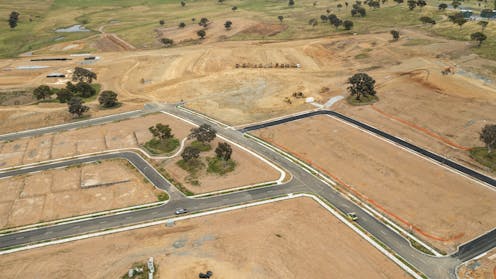
Kids with ‘developmental delay’ will be diverted from the NDIS. But how do you know if your child is delayed?

Source: The Conversation (Au and NZ) – By Elizabeth Hill, Speech Pathologist and Senior Lecturer, School of Allied Health, Curtin University

From mid-2027, the government will divert children with mild and moderate developmental delay and autism away from the NDIS and onto a program called Thriving Kids.

The government is also considering new Medicare items for allied health services when children need additional support. This may include occupational therapy, speech pathology and psychosocial (psychological and social) therapy.

But what exactly is a developmental delay?


Read more:
‘Thriving Kids’ could help secure the future of the NDIS. But what will the program mean for children and families?


Progressing more slowly than their peers

Developmental delay is a general label for a range of conditions. Developmental refers to something arising during development and delay means a child is progressing in the expected way, just more slowly.

Up to 24% of children are considered “developmentally vulnerable”. This means they haven’t met a key milestone and are at risk in one or more areas, including speech and language, motor skills, thinking and learning, social and emotional development, and everyday life skills.

A child might be delayed in their speech and not speak in sentences by the age of three.

A child might not crawl or walk by around 18 months or may have difficulty using their hands to play with toys or feed themselves.

Thinking skills such as memory and problem-solving may develop more slowly. Or a child might have more trouble controlling their emotions or interacting with parents or siblings than others their age.

Everyday tasks such as dressing, going to the toilet and brushing teeth can also be difficult for children with developmental delay.

It ranges in severity

When a child shows difficulty in one area, it’s called a specific delay.

When multiple areas are impacted, it’s called a global delay. Around 1–3% of children experience global developmental delay.

Developmental delays are usually identified as a result of parental concern, observations at daycare, or during routine milestone checkups by a family GP and/or child health nurse. They’re then confirmed by a GP, paediatrician, or allied health provider.

Delays are described as mild, moderate, or severe. Mild delays occur when a child is developing at less than about one-third of their actual age, moderate between one-third and two-thirds, and severe at less than two-thirds.

In reality, judging severity is complicated. Children’s abilities can vary from day to day. Assessment tools may not fully capture their strengths and needs, especially if the child is shy, tired, or unfamiliar with the environment.

This means severity labels don’t always fully reflect a child’s abilities or the support they require.

Do kids grow out of it?

Some children with developmental delays will “catch up” over time. A child who has had fewer opportunities to hear and use language, for example, may make progress with the right support. Early intervention can be highly effective.

However, a large proportion of children won’t grow out of their difficulties.

The term developmental delay is frequently criticised for failing to recognise that delayed development is often associated with long-term difficulties (not just a lag). And it can be difficult to identify which young children have delays that will improve over time.

Globally, around 15% of children are diagnosed with a developmental disorder: lifelong conditions that affect how they grow and participate in the world.

Developmental disorders include autism spectrum disorder, Down syndrome, intellectual disability, cerebral palsy, attention-deficit hyperactivity disorder (ADHD), specific learning disorders (for example, dyslexia), and developmental language disorder, which impacts a child’s ability to use and understand language.

If a child is still having difficulties by the time they are four or five, they would be considered to meet criteria for a developmental disorder.

How should children be supported?

Whether a child has a developmental delay or disorder, research shows a strong link between early support and better outcomes. Support often comes from a team of specialists such as:

  • occupational therapists. They help children develop skills such as dressing, playing and managing emotions

  • speech pathologists. They help with feeding and support children to express their wants and needs, and to be understood clearly

  • physiotherapists. They focus on movement and physical skills, helping children improve their balance, coordination and strength for activities such as walking and playing

  • psychologists. They implement strategies to help children and families manage difficult behaviours and emotions, and improve daily functioning

  • audiologists. They assess and support hearing difficulties that can contribute to developmental delays in communication and social skills

  • specialist teachers in schools and early learning settings. They have extra training and experience in supporting children with additional needs.

Intervention should begin as soon as difficulties are noticed, rather than waiting to see what happens and should be tailored to the needs and preferences of each child and their family.

Therapists work directly with children individually or in small groups, either in clinics, at home, or at daycare or school, where they collaborate with teachers to embed strategies such as visual supports or play-based activities.

This can be combined with helping family members and other professionals (such as teachers) develop the skills to support the child. However, coaching others takes time and training to ensure success.

Therapists also provide advocacy and systems support, helping families navigate services, school and funding pathways to ensure children receive the right help at the right time.

The best outcomes for children with developmental differences, whether delay or disorder, are achieved by a combination of one-on-one as well as systems-level support. It’s important policymakers keep this in mind as they design the Thriving Kids program and new Medicare items.


Read more:
Occupational therapists tackle obstacles in the home, from support to cook a meal, to navigating public transport


The Conversation

The authors do not work for, consult, own shares in or receive funding from any company or organisation that would benefit from this article, and have disclosed no relevant affiliations beyond their academic appointment.

ref. Kids with ‘developmental delay’ will be diverted from the NDIS. But how do you know if your child is delayed? – https://theconversation.com/kids-with-developmental-delay-will-be-diverted-from-the-ndis-but-how-do-you-know-if-your-child-is-delayed-263633

Australia has banned 3 ‘forever chemicals’ – but Europe wants to ban all 14,000 as a precaution

Source: The Conversation (Au and NZ) – By Bhavna Middha, ARC DECRA Senior Research Fellow in Environmental Sociology, RMIT University

Last month, Australia’s ban on the import, use and manufacture of three types of “forever chemical” came into effect. These chemicals – PFOA, PFOS and PFHxS – have long lifespans and resist breaking down. They’re considered harmful due to their ability to build up inside living organisms and their toxicity. In 2023, the World Health Organization’s cancer agency declared PFOA to be a human carcinogen (cancer-causing agent), and PFOS a potential carcinogen.

But these three chemicals are just a drop in the ocean. There are now more than 14,000 types of forever chemicals, known formally as per- and poly-fluoroalkyl chemicals, or PFAS for short. In response to public concern, the European Union has proposed to restrict all types of PFAS by 2030.

This approach may seem extreme. But the cost of cleaning up highly polluted PFAS sites and research on emerging harms shows the value. Phasing out the entire class could avoid still worse chemical pollution in years to come.

Australia’s ban on the three most concerning chemicals is positive. But it’s slow. Authorities wait until new evidence of harm emerges for specific chemicals. This risk-based approach leaves the door wide open for thousands of other PFAS chemicals – and all other industrial chemicals being developed at the staggering rate of 1.4 per second.

When it comes to PFAS, caution is wise

Since the 1950s, PFAS chemicals have been widely used in industrial products due to their usefulness in making products nonstick or resistant to water or fire.

The problem is, these forever chemicals are highly persistent. There’s little ability to reverse harm from exposure.

Some of these chemicals may not be harmful. But they often haven’t been tested to find out. This is why the EU is using the precautionary principle: if in doubt, act cautiously to avoid potentially large harms. A total ban would avoid “regrettable substitution”, where banned chemicals are quickly replaced by a slightly different variant.

To date, the most severely affected communities and workers are those at or near chemical production plants, military sites, airports and other sites where PFAS-laced firefighting foam is used.

Since then, concern has broadened out to the much lower levels commonly found in drinking water, food, food packaging, cookware, carpets and air.

Control efforts have been slow

The 2001 Stockholm Convention on Persistent Organic Pollutants took aim at 12 industrial chemicals known to be toxic and persistent. In 2004, Australia ratified the convention and moved to control these chemicals.

No PFAS chemicals were in this first group. But over time, the convention was amended to phase out the forever chemicals PFHxS and PFOA and restrict PFAS.

Australia didn’t use the Stockholm Convention to ban these three chemicals. That’s because the government hasn’t completed work on a domestic treaty allowing it to ratify the amendments.

In recent years, public concern has centred on PFAS levels in drinking water. Australia’s expert health panel concluded there was limited to no evidence linking the PFAS group of chemicals to clinically significant harm. The panel stated the limited evidence available on cancer relates to PFOA, not the PFOS chemical used more commonly in Australia.

By contrast, peak bodies in the United States and Europe found some of these chemicals are linked to health issues such as lower birth weights, higher cholesterol, reduced kidney function, thyroid disease and several cancers.

Firefighting foams often use PFAS chemicals, leading to major pollution in some sites.
Jana Shea/Getty

If in doubt, act with caution

One of the clearest definitions of the precautionary principle is in the 1992 Rio Declaration on Environment and Development, which states:

where there are threats of serious or irreversible damage, lack of full scientific certainty shall not be used as a reason for postponing cost-effective measures to prevent environmental degradation.

This approach has proven its worth in marine pollution agreements for decades, as well as playing a major role in trade disputes regarding hormone-treated beef and genetically modified organisms

To make the wholesale PFAS phase-out successful, the EU’s chemical agency is consulting with manufacturers and users on how the chemicals are used and whether safer alternatives exist. Promising alternatives have been identified.

Some chemical companies and product manufacturers have omitted to share safety information on PFAS chemicals, to the detriment of the environment and human health. The EU’s chemical agency found noncompliance was rising and almost all chemicals on the market lacked crucial information on whether they caused cancer or other harms.

At present, manufacturers have most information about toxicity, while regulators are tasked with protecting the public and the environment without necessarily having enough data. In these cases, it makes sense to adopt the precautionary principle.

Forever chemicals will have a long legacy even if they are banned. Any ban should be accompanied by work defining acceptable levels of PFAS chemicals as a class in water, soil, air and food.

The case for a wider Australian ban

Most PFAS chemicals are imported into Australia. This means PFAS pollution can be handled largely by regulating imports of PFAS-containing products.

For products without an alternative or those essential to, say, healthcare, more research will be needed to eliminate the most risky compounds.

Any move towards a large-scale ban in Australia will incur a manufacturer backlash, as has happened in Europe.

But there’s a clear incentive for policymakers to act. At present, cleaning up PFAS contamination is inevitably paid for by taxpayers – and this cost will only grow. Regulating chemicals such as PFAS based on their individual risk is no longer fit for purpose.

By November 2025, Australia’s Senate committee on PFAS will file its report.

The committee could do a lot worse than looking to the European precautionary plan to ban the whole group of chemicals, while keeping in mind essential use. It would be sensible to permit new chemicals to be used only if they’re safe enough.

Bhavna Middha receives funding from the Australian Research Council through the Discovery Early Career Research Award( ARC DECRA)

Ralph Horne receives funding from The Australian Research Council as a Chief Investigator on the TREMS Research Hub (Industrial Transformation Research Hub for Transformation of Reclaimed Waste Resources to Engineered Materials and Solutions for a Circular Economy)

Vincent Pettigrove receives funding from various water authorities and other governmental agencies, notably the Aquatic Pollution Prevention Partnership with Melbourne Water.

ref. Australia has banned 3 ‘forever chemicals’ – but Europe wants to ban all 14,000 as a precaution – https://theconversation.com/australia-has-banned-3-forever-chemicals-but-europe-wants-to-ban-all-14-000-as-a-precaution-262802

Gearing up for the 2025 Samoan general election – three-way split?

COMMENTARY: By Asofou So’o

Although seven political parties have officially registered to contest Samoa’s general election this Friday, three have been politically visible through their campaign activities and are likely to share among them the biggest slice of the Parliament’s 51 seats.

The question on everyone’s lips is: which one of them will win enough seats to form the next government without the assistance of possible coalition partners?

The three main political parties are the Human Rights Protection Party (HRPP), the Fa’atuatua i le Atua Samoa ua Tasi (FAST) party and Sāmoa United Party (SUP), under the leadership of Tuila’epa Sa’ilele Malielegaoi (Tuila’epa), La’aulialemalietoa Leuatea Polata’ivao Schmidt (La’auli) and Fiamē Naomi Mata’afa (Fiamē) respectively.

La’auli and Fiamē were both long-serving members of the HRPP until their defection from that party when Tuila’epa was prime minister to form the FAST party before the last general election in April 2021.

Fiamē and La’auli became the leader and president of the FAST party respectively while Tuila’epa continued his parliamentary career as the leader of the opposition following the election.

A falling-out between La’auli and Fiamē in January 2025 resulted in the break-up of the FAST into two factions with Fiamē and the 14 ministers of cabinet of her caretaker government establishing the SUP following the official dissolution of Parliament on June 3.

La’auli, now leader of the FAST party, has retained the support of the remaining 19 FAST members of Parliament.

First to publicise manifesto
HRPP was the first political party to publicise its campaign manifesto, launched on June 23. Its promises include:

  • a $500 cash grant per year for every family member;
  • tax cuts; expansion of hospital services;
  • a new bridge between Upolu and Savai’i Islands;
  • disability benefit enhancements;
  • a $1000 one-off payment at the time of birth to help families cover essential costs for newborn babies;
  • an additional $1,000 one-off payment upon completion of infant vaccinations (Hexa-B and MMR-2) at 15 months; and
  • zero-rating of Value Added Goods and Services Tax (VAGST) on essential food items.

The FAST party’s manifesto, launched on July 12, reflects a strong focus on social welfare and economic revitalisation. It promises:

  • free public hospital services;
  • monthly allowances for pregnant women and young children;
  • cash top-ups for families earning under $20,000 per annum;
  • an increase in the retirement age from 55 to 65;
  • VAGST exemptions on essential goods;
  • development of a $1.5 billion carbon credit market;
  • establishment of a national stock exchange; injection of $300 million into Sāmoa Airways; and
  • the expansion of renewable energy and district development funding.

FAST’s signature campaign promise in the last general election was giving each electoral constituency one million tala for them to use however they wanted. That amount will increase to two million tala this time around.

Officially registered on 30 May 2025 and launched on June 5, the SUP launched its campaign manifesto on July 15. It promises:

  • free education and hospital care;
  • disability allowances and increased Accident Compensation Act payouts;
  • land restitution to villages;
  • pension increases; and
  • expanded services for outer islands that were not reached during Fiame’s premiership — all with a focus on restoring public trust in government.

‘People first’ party
SUP is promoting itself as a people-first party focused on continuity and ongoing reform.

The three main parties are following the practice established by the FAST party in the last general elections in 2021 where all party election candidates and their supporters tour the island group to meet with constituencies and publicise their manifestos.

As part of this process, the HRPP has been branding various FAST claims from last general election as disinformation.

It had been claimed, for example, that the HRPP was moving to cede ownership of Samoan customary land to Chinese people, that the HRPP presided over a huge government deficit and that, as Prime Minister, Tuila’epa was using public funds to send his children overseas on government scholarships.

At the HRPP rallies, Tuila’epa did not mince words in labelling La’auli a persistent liar, asserting that La’auli had been involved in several questionable and unauthorised dealings during the three-year life of the last FAST government, and that La’auli alone was responsible for the break-up of the FAST party when he refused to step down from cabinet following the Ministry of Police’s lawsuit against him in relation to the death of a young man on the eve of FAST general election victory in 2021.

Fiamē, equally, blames La’auli for the unsuccessful completion of the FAST government’s parliamentary term when he refused to step down from cabinet following the Ministry of Police’s lawsuit against him.

Convened caucus meeting
After refusing to step down, La’auli convened a FAST party caucus meeting at which a resolution was passed to terminate the party membership of Fiamē and four other ministers of her cabinet. The split between Fiamē and La’auli culminated in the defeat of Fiamē’s budget and the abrupt dissolution of Parliament.

HRPP said at their rallies that, should they win government, they would pass a law to prohibit roadshows as they do not want “outsiders” influencing constituencies’ voting preferences.

Furthermore, these road shows are costly in terms of resources and time, and are socially divisive.

Instead, they prefer the traditional method of choosing members of Parliament where political parties restrict themselves to compiling manifestos, leaving constituencies to choose their own preferred representatives in Parliament.

Given that the HRPP was the first political party to publicise its manifesto, they probably have a valid point in suggesting that other political parties, in particular the FAST party and SUP, have not come up with original ideas and have instead replicated or added to what the HRPP has taken some time to put together in its manifesto.

Given the political visibility achieved by the HRPP, FAST and SUP through their campaign road shows and their full use of the media, it is to be expected that collectively they will win the most seats.

Furthermore, owing to the FAST party’s turbulent history, HRPP is probably the front-runner, followed by FAST, then SUP. It is unlikely that the smaller parties will win any seats; likewise the independents.

Enough seats main question
The main question is whether HRPP will have enough seats to form a new government in its own right. Coalition government does not seem to work in Samoa’s political landscape.

The SNDP/CDP coalition in the 1985-1988 government and the last FAST quasi-coalition government of 2021-2025 (FAST depended on the support of an independent as well as pre-election alliances with other parties to form government) all saw governments fail to deliver on their election manifestos and provide needed public services.

Perhaps a larger question is how the three parties might fund their extravagant campaign promises.

The HRPP leadership is confident it will be able to deliver on the main promises in its manifesto — compiled and costed by the HRPP Campaign Committee, consisting of former Government ministries and corporations CEOs (Finance, Custom and Inland Revenue, National Provident Fund, Electoral Commissioner, President of the Land and Titles) and a former senior employee of the Attorney-General’s Office — within 100 days of assuming government.

The other two main parties, FAST and SUP, are equally confident.

The public will have to wait and see whether the campaign promises of their preferred party will be realised. Right now, they are more interested in whether their preferred party will get across the line.

Dr Asofou So’o was the founding professor of Samoan studies at the National University of Samoa from 2004 before being appointed as vice-chancellor and president of the university from 2009 to 2019. He is currently working as a consultant. This article was first published by ANU’s Development Blog and is republished under a Creative Commons licence.

Article by AsiaPacificReport.nz
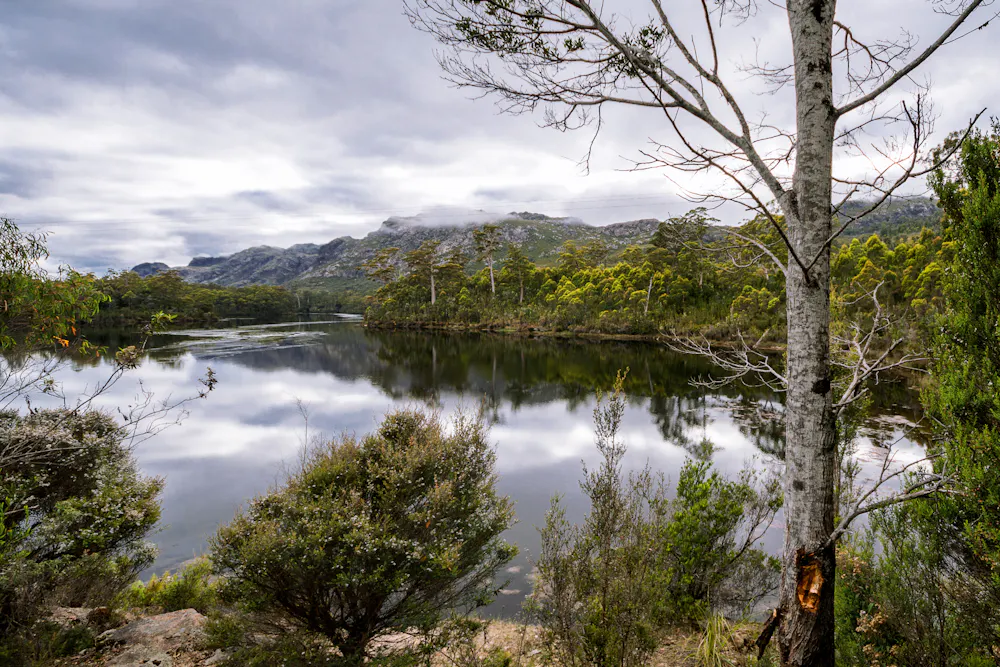
5 million small business employees now have a right to disconnect from work unless it’s ‘unreasonable’. What does that mean?

Source: The Conversation (Au and NZ) – By Huong Le, Associate Professor, Human Resource Management, CQUniversity Australia

Mart Production/Pexels, CC BY

From August 26, 5.4 million Australians working for small businesses will have the “right to disconnect”. This means they can refuse contact about work – such as emails, texts or calls – outside work hours, unless that refusal could be considered “unreasonable”.

The right to disconnect has been in place for medium and large Australian organisations since August last year. But it’s now extending to small businesses with fewer than 15 employees.

It signals a big shift in how Australians relate to work in an always-connected world. In an era where smartphones tether us to our jobs around the clock, the law allows employees to reclaim personal time and reassert important boundaries between work and life.

For owners of the country’s 2.5 million small businesses, it presents a new challenge, especially knowing if staff will get back to them out of hours.

If you work for or run a small business, what does the right to disconnect and “unreasonable” refusal mean for you?

Can I really ignore my boss now?

For employees, a “reasonable” or “unreasonable” refusal to be contacted outside work hours depends on the context.

According to the Fair Work Commission, several factors must be considered, including:

  • the urgency and nature of the contact (or attempted contact)
  • how the contact is made and the level of disruption it causes the employee
  • the employee’s role and responsibilities
  • the employee’s personal circumstances (such as caring or family duties)
  • and whether employees are compensated (financially or in other ways) for being available after hours.

Let’s take an employee who receives a non-urgent email at 9:30pm about rescheduling a meeting time. It would generally be “reasonable” for them to defer a reply until work hours.

Similarly, workers caring for sick children may justifiably ignore a routine request, especially if there’s no previous agreement that they’re available and if they’re not compensated for out-of-hours contact.

But as the Fair Work Commission has noted, “it will be unreasonable for an employee to refuse to read, monitor or respond if the contact or attempted contact is required by law”.

So if a tradesperson working for a small business receives an unexpected safety alert late at night and refuses to respond, that refusal could be deemed “unreasonable”, given the urgency and workplace risk.

Another example is of an employee who’s paid an on-call allowance, and gets a text message after work asking them to send clients an urgent document.

Ignoring that call, or delaying a response, would likely be judged “unreasonable”. That’s because their role explicitly demands availability and they’re compensated for it as part of their employment conditions.

I’m the boss. Can my staff really ignore me now?

The right to disconnect legislation does not stop employers from trying to contact employees after working hours.

What’s new is that small business employees now have more legal protection to switch off from work and not respond to unnecessary work-related contacts from their boss or others, such as a contractor.

For example, if you employ people in an office to work regular 9am to 5pm weekday hours, and if there’s nothing in their contract about on-call availability, expecting them to reply to non-urgent emails outside those hours risks being deemed “unreasonable”.

What if we can’t agree on what’s ‘unreasonable’?

If disputes arise, employers and employees are encouraged to resolve it themselves. If that doesn’t work, the Fair Work Commission can intervene if necessary.

Employers who continually demand employees respond to
non-urgent out-of-hours requests could face stop orders or a Fair Work dispute, which could lead to civil penalties.

But it can go the other way, too. If you’re a boss with employees you think are unreasonably refusing out-of-hours contact, you can also apply for help with your dispute.

Making it work in your workplace

Some in small business have voiced concerns about the lack of legal clarity about what is “unreasonable” refusal. This emphasises the urgent need for organisations to develop internal guidelines that align with legal expectations.

But if managed well, it could pay off. In a recent survey of 600 human resources professionals in private, public and not-for-profit organisations, 58% reported the right to disconnect legislation had “significantly increased” or “somewhat increased” employee engagement and productivity levels. Only 4% reported it had either “significantly decreased” or “somewhat decreased” both employee engagement and productivity levels.

If you’re unsure how the new rules affect you, now is the time to start talking: setting shared expectations about out-of-hours contact, then regularly checking if it’s working.

Particularly when you’re working in a small business, with a small team, the right to disconnect needs to be about more than applying the law. It’s about mutual respect and clarity.

That means being as clear as possible about when an out-of-hours response is necessary – or when it really is more reasonable to wait until the next work day.

Huong Le does not work for, consult, own shares in or receive funding from any company or organisation that would benefit from this article, and has disclosed no relevant affiliations beyond their academic appointment.

ref. 5 million small business employees now have a right to disconnect from work unless it’s ‘unreasonable’. What does that mean? – https://theconversation.com/5-million-small-business-employees-now-have-a-right-to-disconnect-from-work-unless-its-unreasonable-what-does-that-mean-263799

Impressive performances and production values – but Joanna Murray-Smith’s The Talented Mr. Ripley doesn’t quite land

Source: The Conversation (Au and NZ) – By Kirk Dodd, Lecturer in English and Writing, University of Sydney

Prudence Upton/Sydney Theatre Company

Playwright Joanna Murray-Smith has a long held fascination with the brilliance of Patricia Highsmith, who published the classic novel The Talented Mr. Ripley in 1955.

In 2014, Murray-Smith’s Switzerland explored Highsmith’s life, directed by Sarah Goodes for the Sydney Theatre Company. Now, Goodes directs Murray-Smith’s new adaptation of Highsmith’s novel, continuing their engagements with the author’s morally ambiguous characters.

Murray-Smith describes Tom Ripley as “the world’s most famous serial killer […] waiting for his moment in the spotlight”. And while this accolade could be disputed, it reveals Murray-Smith’s fascination with the psychological and ethical complexities of the Ripley novel.

The story follows Ripley (played neatly and commendably by Will McDonald), a man in his 20s who lost his parents young and was raised by a poor but nasty aunt.

A beach scene.
In Italy, Ripley becomes thoroughly enamoured with Greenleaf and his glamorous life.
Prudence Upton/Sydney Theatre Company

A surprise encounter sees Ripley sent to Europe by a wealthy shipping magnate (astutely played by Andrew McFarlane) to bring back his wayward son, Dickie Greenleaf (Raj Labade) – an inciting incident not unlike Henry Jame’s novel The Ambassadors. The publisher describes the novel as “a blend of the narrative subtlety of Henry James and the self-reflexive irony of Vladimir Nabokov”.

In Italy, Ripley becomes thoroughly enamoured with Greenleaf and his glamorous life. Labade plays the laid-back Greenleaf with spades of charm and panache, and Claude Scott-Mitchell plays Greenleaf’s girlfriend, Marge, with tremendous poise, increasingly wary of the interloping Ripley.

Mr. Ripley’s “talent” is mimicking others, and he starts using his talent to take over Dickie’s identity.

As Ripley and Greenleaf take vacations around Italy, Ripley’s deceptions graduate to murder and identity theft. While his motives are framed around class envy, he seems motivated more by the dread of returning to his mundane life.

Ripley does not commit murder because he wants to become Dickie Greenleaf, so much as he assumes Dickie Greenleaf’s identity because this proves the most expedient way of escaping his despised past.

Three men on stage.
Mr. Ripley’s ‘talent’ is mimicking others, and he starts using his talent to take over Dickie’s identity.
Prudence Upton/Sydney Theatre Company

A filmic production

The performances and production values are impressive, but the play itself does not quite land. The inescapable need for Ripley to narrate his own tale directly to the audience breaks the golden rule of theatre: show don’t tell. As Anton Chekhov reputedly said, “Don’t tell me the moon is shining. Show me the glint of light on broken glass.”

The need for pace and momentum sees the narration interspersed with performed vignettes, rather than fuller dramatic scenes. This becomes more filmic than theatrical, lacking tension, dramatic stakes, subtext and climax.

Ripley’s backstory seems important to his psychology, but the snippets we receive didactically through narration make his motives seem trite. When Tom crumples to the floor and sobs because Dickie Greenleaf doesn’t see him, it is difficult to connect with: framed as a standalone vignette that arises from nowhere.

Production image: four young people lounge around.
The narration is interspersed with performed vignettes, rather than dramatic scenes.
Prudence Upton/Sydney Theatre Company

Unlike Shakespeare’s disgruntled villains Richard III and Edmond the Bastard, it is difficult to accept Ripley’s motives. Perhaps if Ripley was given more charismatic soliloquies of self-justification like Richard and Edmond, we could better attend his plight.

The bare set offers dynamic opportunities for clever stagecraft and lighting (sets by Elizabeth Gadsby, lighting by Damien Cooper), helping to facilitate these quick vignettes (sunny umbrellas for the beach, snazzy lights for a nightclub, a yellow dinghy for an ocean jaunt). But these values only add to the filmic effect.

Good theatre should do things films can’t do, not emulate their fluent realism.

Reworking old stories

The artistic genesis of this adaptation seems to gratify a programming trend more than an ardent need to tell this particular story.

It has been unnerving to see so many adaptations staged by major theatre companies of late. In recent years, the Sydney Theatre Company has staged many adaptations of novels: Bram Stoker’s Dracula (2024), Pip Williams’ The Dictionary of Lost Words (2023), Nevil Shute’s On the Beach (2023), Wong Shee Ping’s The Poison of Polygamy (2023), and Ruth Park’s Playing Beatie Bow (2021), to name a few.

In 2019, playwright Ross Mueller critiqued this trend of “risk-averse programming”, acknowledging that “selling new plays is tough”, but noting it’s much easier for theatre companies if playwrights “can write plays with titles that we can all google”.

Today’s playwrights, Muller writes, “compete for programming with films, novels and fully developed and proven Broadway hits and West End darlings”. And this unusual demand for adaptations comes on the back of staging less Shakespeare to make room for new plays by local writers.

A man leaps on stage.
Tom Ripley is played neatly and commendably by Will McDonald.
Prudence Upton/Sydney Theatre Company

Some of these adaptations have worked, drawing critical acclaim and box office success. But it seems short shrift to have so much narration in a theatrical adaptation of a novel. Would we not rather buy and read the novel? And save our precious theatre pennies for attending new original plays or classics?

Those familiar with the book might enjoy yet another rendition, but this The Talented Mr. Ripley moves too swiftly through its plot points; telling the story, but scant on forging connections with the audience.

The Talented Mr. Ripley is at the Sydney Theatre Company until September 28.

The Conversation

Kirk Dodd does not work for, consult, own shares in or receive funding from any company or organisation that would benefit from this article, and has disclosed no relevant affiliations beyond their academic appointment.

ref. Impressive performances and production values – but Joanna Murray-Smith’s The Talented Mr. Ripley doesn’t quite land – https://theconversation.com/impressive-performances-and-production-values-but-joanna-murray-smiths-the-talented-mr-ripley-doesnt-quite-land-260921

Destiny is a fierce new stage show exploring love, loss and rebellion under the shadow of apartheid South Africa

Source: The Conversation (Au and NZ) – By Sarah Austin, Senior Lecturer in Theatre, The University of Melbourne

Pia Johnson

Award-winning playwright and actor Kristy Marillier’s new work, Destiny, is an ensemble drama set in 1976 South Africa, against a backdrop of rising resistance to the apartheid regime.

Commissioned and developed through Melbourne Theatre Company’s Next Stage Writers’ Program, Destiny is an intimate fictional family drama based on real world events.

Through a complex set of relationships, the play provides a searing insight into the fear, brutality, rebellion and activism of 1970s South Africa.

Della (played by Marillier) is the feisty protagonist and matriarch of the Meth family. Since her mother’s death, she has stepped into caring for both her hard-working and broken-hearted father Cliff (Patrick Williams), who has a tendency to drink and become lost in his memories and grief, and her antagonistic and excitable brother Rocky (Gaz Dutlow).

Della finds herself in dangerous territory when Ezra Jones (Barry Conrad) – a charismatic and irresistible student activist who broke her heart years earlier – returns to their small town to lie low.

Ezra’s confidence in his political views is both alluring and terrifying for the Meth family members, as they wrestle with a desire to imagine new futures while also struggling with the grief and fear that dominates their past.

The impressionable Rocky is particularly seduced by the seductive glamour of Ezra and his cause, and yearns for the kind of freedom he represents.

Actors Kirsty Marillier, Gaz Dutlow and Barry Conrad all had parents who lived in apartheid South Africa.
Pia Johnson

Fractured within and without

The story is set largely in the Meth family home, with a black and white portrait of Della’s mother taking centre place on the living room wall.

Cliff can often be found chatting and singing to the photograph of his long departed wife. The domestic space is represented as porous and permeable, with a summer breeze that blows through the kitchen windows and lifts the lace curtains. The front door opens on to an often wide-open stoop.

This family home, in an unnamed small mountainous town, is far away from the politics of the city – yet not immune from the effects of brutal policies and regimes.

The domestic setting becomes the site of both grief and joy of an epic and intimate nature, with the family’s personal tragedy reverberating within the broader injustices of their context. The fractures in the family are inextricably tied to the fractures in society at large.

Beyond the interior and exterior of the Meth family home, set designer Sophie Woodward has created a series of angular pathways evoking the mountainous terrain, leading to the simple general store where Della works.

Rich emotional terrain

In one powerful moment, Della tells the story of a white woman who comes to the coloured part of town, to the coloured general store where Della works, seeking a specific treat for her son. This tale hints at the casual cruelty routinely endured by the Meth family, and others who the system classifies as lesser.

Despite these harsh realities, there are many gloriously funny, laugh out loud moments throughout the play. The writer, performers and director Zindzi Okenyo all deftly employ humour, and the characters are enormously likeable. As the story unfolds, love, loss, hope and uncertainty all coalesce around a deceptively simple family tale.

There is also a deeply personal note present in the writing and performances – which may be explained by the fact that three of the actors have parents who lived through apartheid.

The title of the play evokes the inevitable ramifications of our choices on the future. Resistance and rebellion come at great personal cost, but ultimately create hope for a new future – just as they did in the 1970s in apartheid South Africa.

Alongside heavier themes, moments of joy, love and care expand the story into a rich emotional terrain.
Pia Johnson

The personal is political

Destiny reminds us that although 1994 marks the official end of the regime, the aftermath continues to ripple through generations of people whose lives have been impacted.

In the final scene, Della enacts a small act of her own resistance by smashing a radio that has been a source of propaganda and control. She directs the smallest of wry looks at the audience, breaking the fourth wall, before the stage blacks out; we are all implicated.

What might this final, direct look compel us to consider? Marillier’s unsettling moment of acknowledgement of the audience stayed with me long after the play ended.

I am left with a resounding sense of the weight of history and the importance of resistance and rebellion in the face of brutality and injustice. In a fractured and uncertain time, Destiny reminds us the personal is political.

Destiny is playing at Melbourne Theatre Company until September 13.

The Conversation

Sarah Austin is an employee of the University of Melbourne and Melbourne Theatre Company is a department of that institution.

ref. Destiny is a fierce new stage show exploring love, loss and rebellion under the shadow of apartheid South Africa – https://theconversation.com/destiny-is-a-fierce-new-stage-show-exploring-love-loss-and-rebellion-under-the-shadow-of-apartheid-south-africa-262515

Buckling rails and lines underwater: how Australia’s ageing train networks are crumbling as the climate changes

Source: The Conversation (Au and NZ) – By Haoning Xi, Lecturer (Assistant Professor), Newcastle Business School, University of Newcastle

A derailed train near Gympie in Queensland after flooding in February 2022. Bradley Kanaris / Getty Images

Last week’s torrential rain disrupted several Sydney train lines, in what is becoming a familiar story for commuters. Almost one in five trains in New South Wales ran late over the past year, and floods in May also saw a temporary closure of the North Coast line.

Other states are faring little better. In Queensland, the rail line from Brisbane to Cairns was shut for weeks due to floods in 2022.

Over in Western Australia, summer heatwaves routinely force trains to crawl at reduced speeds to avoid track buckling. In Melbourne, a derailment in July shut down two major lines for a week, disrupting the daily commute for tens of thousands of people.

From city transit to cross-country freight, Australia’s rail system is straining as the infrastructure ages and climate extremes grow more intense and frequent.

Old assets meet extreme weather

Much of Australia’s rail backbone was built decades ago. Some lines are more than a century old.

The Trans-Australian Railway, completed in 1917, still carries most freight between WA and the eastern states. It wasn’t designed for today’s rainfall.

In early 2022, extreme rain in outback South Australia washed out 300km of track. The event severed Perth’s land link for 24 days, costing about $320 million. Even in a normal year, the corridor is shut by flooding for an average of 40 days.

In February this year, North Queensland floods forced Queensland Rail to close sections of the North Coast Line, with nine bridges inundated.

In Perth, summer heat forces trains to slow as the steel of the tracks may warp. Speeds drop by 20km per hour at 39°C, and further at 41°C.

These heat restrictions have been imposed every summer for more than 30 years. As heatwaves intensify, so do the delays and the stress on equipment.

In 2024–25, only 82.5% of Sydney trains ran on time, well below the target of 92%. A backlog of almost 40,000 infrastructure defects, including worn rails, poor drainage and ageing signals, leaves the rail network vulnerable in storms.

Failures from commute to consumption

When a rail line fails, the impacts stretch from the morning commute to supermarket shelves.

Thousands of Sydney commuters have been hit with delays after flooding. Melbourne’s July derailment shut the Mernda and Hurstbridge lines, forcing 110,000 daily travellers to squeeze onto crowded replacement buses or find other travel options.

When the east–west line collapsed, WA briefly ran low on staples such as pasta, toilet paper and medicines.

The economic hit of these disruptions is large and recurrent. The Australasian Railway Association estimates major rail disruptions in NSW alone can cost up to $392 million a year in cancelled deliveries, shortages and repairs.

Between late 2021 and early 2023, Australia’s largest freight operator recorded eight interstate corridor shutdowns of a week or more. Each closure sends shockwaves through supply lines, pushing more freight onto highways, driving up costs, and exposing the fragility of a system where one washed-out bridge or buckled track can break a whole logistic chain.

A fragmented system with no-one at the helm

When Australia federated in 1901, railways were left under state control. The legacy has been a patchwork of networks with different rail gauges, standards and rules that didn’t line up at the borders.

Despite a century of effort, the Australian rail industry remains hampered by a pre-federation legacy of fragmentation. We have 29 separate rail networks, each with different standards, codes and rule books, and varied technologies and processes for building, operating and accessing the infrastructure.

Raising tracks in flood-prone areas is one of many measures to make rail networks more resilient to climate change.
Torsten Blackwood / AFP via Getty Images

A recent review of Australian rail operations found that overlapping agencies make it unclear who is accountable for maintenance. Repairs are often delayed, and nobody wants to take responsibility for failures.

Infrastructure Australia, the nation’s independent adviser on infrastructure, has likewise deemed the lack of resilience across transport corridors a nationally significant problem requiring coordinated, cross-jurisdictional action.

A national plan

So what can be done? Experts and industry bodies such as the Australasian Railway Association (ARA) point to a two-pronged solution: modernise the infrastructure and modernise the governance.

On the infrastructure side, there are positive moves. The federal government has committed new funding, more than $1 billion announced in 2024, to make the national rail network more resilient and reliable.

But more is needed. Industry voices are calling for a concerted, long-term program to “identify, fund and deliver” upgrades nationwide to improve rail lines’ redundancy, reliability and climate resilience. In practice, that means strengthening bridges, raising or rerouting tracks in flood-prone areas, deploying digital signalling and safety systems with IoT monitoring, and building alternative routes to keep services running when a line fails.

Equally important is rethinking governance. A resilient rail system needs a national strategy and better coordination across states.

The ARA has called for a National Freight Resilience Plan to ensure a consistent response to major disruptions. This could be expanded into a broader plan backed by federal leadership. A federal plan might mandate climate-adaptation standards for all federally funded projects and break down state silos.

The benefit? A more reliable, resilient, safer and smoother rail system for all of us.

Haoning Xi does not work for, consult, own shares in or receive funding from any company or organisation that would benefit from this article, and has disclosed no relevant affiliations beyond their academic appointment.

ref. Buckling rails and lines underwater: how Australia’s ageing train networks are crumbling as the climate changes – https://theconversation.com/buckling-rails-and-lines-underwater-how-australias-ageing-train-networks-are-crumbling-as-the-climate-changes-263796

Australia has banned 3 ‘forever chemicals’ – but Europe wants to ban all 14,000. This precautionary approach makes clear sense

Source: The Conversation (Au and NZ) – By Bhavna Middha, ARC DECRA Senior Research Fellow in Environmental Sociology, RMIT University

Last month, Australia’s ban on the import, use and manufacture of three types of “forever chemical” came into effect. These chemicals – PFOA, PFOS and PFHxS – have long lifespans and resist breaking down. They’re considered harmful due to their ability to build up inside living organisms and their toxicity. In 2023, the World Health Organization’s cancer agency declared PFOA to be a human carcinogen (cancer-causing agent), and PFOS a potential carcinogen.

But these three chemicals are just a drop in the ocean. There are now more than 14,000 types of forever chemicals, known formally as per- and poly-fluoroalkyl chemicals, or PFAS for short. In response to public concern, the European Union has proposed to restrict all types of PFAS by 2030.

This approach may seem extreme. But the cost of cleaning up highly polluted PFAS sites and research on emerging harms shows the value. Phasing out the entire class could avoid still worse chemical pollution in years to come.

Australia’s ban on the three most concerning chemicals is positive. But it’s slow. Authorities wait until new evidence of harm emerges for specific chemicals. This risk-based approach leaves the door wide open for thousands of other PFAS chemicals – and all other industrial chemicals being developed at the staggering rate of 1.4 per second.

When it comes to PFAS, caution is wise

Since the 1950s, PFAS chemicals have been widely used in industrial products due to their usefulness in making products nonstick or resistant to water or fire.

The problem is, these forever chemicals are highly persistent. There’s little ability to reverse harm from exposure.

Some of these chemicals may not be harmful. But they often haven’t been tested to find out. This is why the EU is using the precautionary principle: if in doubt, act cautiously to avoid potentially large harms. A total ban would avoid “regrettable substitution”, where banned chemicals are quickly replaced by a slightly different variant.

To date, the most severely affected communities and workers are those at or near chemical production plants, military sites, airports and other sites where PFAS-laced firefighting foam is used.

Since then, concern has broadened out to the much lower levels commonly found in drinking water, food, food packaging, cookware, carpets and air.

Control efforts have been slow

The 2001 Stockholm Convention on Persistent Organic Pollutants took aim at 12 industrial chemicals known to be toxic and persistent. In 2004, Australia ratified the convention and moved to control these chemicals.

No PFAS chemicals were in this first group. But over time, the convention was amended to phase out the forever chemicals PFHxS and PFOA and restrict PFAS.

Australia didn’t use the Stockholm Convention to ban these three chemicals. That’s because the government hasn’t completed work on a domestic treaty allowing it to ratify the amendments.

In recent years, public concern has centred on PFAS levels in drinking water. Australia’s expert health panel concluded there was limited to no evidence linking the PFAS group of chemicals to clinically significant harm. The panel stated the limited evidence available on cancer relates to PFOA, not the PFOS chemical used more commonly in Australia.

By contrast, peak bodies in the United States and Europe found some of these chemicals are linked to health issues such as lower birth weights, higher cholesterol, reduced kidney function, thyroid disease and several cancers.

Firefighting foams often use PFAS chemicals, leading to major pollution in some sites.
Jana Shea/Getty

If in doubt, act with caution

One of the clearest definitions of the precautionary principle is in the 1992 Rio Declaration on Environment and Development, which states:

where there are threats of serious or irreversible damage, lack of full scientific certainty shall not be used as a reason for postponing cost-effective measures to prevent environmental degradation.

This approach has proven its worth in marine pollution agreements for decades, as well as playing a major role in trade disputes regarding hormone-treated beef and genetically modified organisms

To make the wholesale PFAS phase-out successful, the EU’s chemical agency is consulting with manufacturers and users on how the chemicals are used and whether safer alternatives exist. Promising alternatives have been identified.

Some chemical companies and product manufacturers have omitted to share safety information on PFAS chemicals, to the detriment of the environment and human health. The EU’s chemical agency found noncompliance was rising and almost all chemicals on the market lacked crucial information on whether they caused cancer or other harms.

At present, manufacturers have most information about toxicity, while regulators are tasked with protecting the public and the environment without necessarily having enough data. In these cases, it makes sense to adopt the precautionary principle.

Forever chemicals will have a long legacy even if they are banned. Any ban should be accompanied by work defining acceptable levels of PFAS chemicals as a class in water, soil, air and food.

The case for a wider Australian ban

Most PFAS chemicals are imported into Australia. This means PFAS pollution can be handled largely by regulating imports of PFAS-containing products.

For products without an alternative or those essential to, say, healthcare, more research will be needed to eliminate the most risky compounds.

Any move towards a large-scale ban in Australia will incur a manufacturer backlash, as has happened in Europe.

But there’s a clear incentive for policymakers to act. At present, cleaning up PFAS contamination is inevitably paid for by taxpayers – and this cost will only grow. Regulating chemicals such as PFAS based on their individual risk is no longer fit for purpose.

By November 2025, Australia’s Senate committee on PFAS will file its report.

The committee could do a lot worse than looking to the European precautionary plan to ban the whole group of chemicals, while keeping in mind essential use. It would be sensible to permit new chemicals to be used only if they’re safe enough.

Bhavna Middha receives funding from the Australian Research Council through the Discovery Early Career Research Award( ARC DECRA)

Ralph Horne receives funding from The Australian Research Council as a Chief Investigator on the TREMS Research Hub (Industrial Transformation Research Hub for Transformation of Reclaimed Waste Resources to Engineered Materials and Solutions for a Circular Economy)

Vincent Pettigrove receives funding from various water authorities and other governmental agencies, notably the Aquatic Pollution Prevention Partnership with Melbourne Water.

ref. Australia has banned 3 ‘forever chemicals’ – but Europe wants to ban all 14,000. This precautionary approach makes clear sense – https://theconversation.com/australia-has-banned-3-forever-chemicals-but-europe-wants-to-ban-all-14-000-this-precautionary-approach-makes-clear-sense-262802

ER Report: A Roundup of Significant Articles on EveningReport.nz for August 25, 2025

ER Report: Here is a summary of significant articles published on EveningReport.nz on August 25, 2025.

200,000 plus march in Australia to demand Canberra sanctions Israel, ends arms trade
By Pip Hinman and Alex Bainbridge of Green Left More than 200,000 people took the streets across Australia on Saturday in a national day of action demanding that the Labor government sanctions Israel and stops the two-way arms trade. It comes after 300,000 people marched, in driving rain, across Sydney Harbour Bridge on August 3

A ‘scathing’ report on RNZ’s performance obscures the good news – and the challenge of serving many audiences
Source: The Conversation (Au and NZ) – By Peter Thompson, Associate Professor in Media and Communication, Te Herenga Waka — Victoria University of Wellington The recent internal report on RNZ’s performance, variously described as “scathing” and “blunt” in news coverage, caused considerable debate about the state broadcaster’s performance and priorities – not all of it

The Liberals used to be the party for women – then John Howard came along
Source: The Conversation (Au and NZ) – By Blair Williams, Lecturer in Australian Politics, Monash University It’s no secret the Liberal Party of Australia has a problem with women. The party has made headlines over the years for its toxic blokey “Big Swinging Dick” culture, underrepresentation of women in the party, and dwindling support from

Matt Robson: The Public’s  Kiwibank on the Auction Block
Article by Matt Robson, former Alliance Party and New Zealand Government Cabinet Minister. The Initial vote on Kiwibank in the Labour-Alliance government in 2000 was 16 Labour against to 4 Alliance for. I was there when this was reversed, and in 2001 the 4 insurgent Alliance Ministers – Jim Anderton, Sandra Lee, Laila Harre and

NZ’s Christopher Luxon condemns Israel’s West Bank settlement plan
RNZ News Prime Minister Christopher Luxon is condemning Israel’s E1 settlement plan for the occupied West Bank, despite New Zealand not signing a joint statement on the matter. Twenty-seven countries, including the UK and Australia, have condemned Israel’s plans to build an illegal settlement east of Jerusalem. The countries have said the plan would “make

Officially, the unemployment rate is 4.2%. But that doesn’t count all the hidden workers in Australia
Source: The Conversation (Au and NZ) – By Sora Lee, Lecturer in Ageing and End of Life, La Trobe University Australia’s job market is facing a paradox. Employers across every major sector – from construction to healthcare – report crippling skills shortages. A key measure of skills shortages, the proportion of advertised vacancies filled, shows

AI systems are great at tests. But how do they perform in real life?
Source: The Conversation (Au and NZ) – By Peter Douglas, Lecturer, Monash Bioethics Centre, Monash University Alexander Spatari / Getty Images Earlier this month, when OpenAI released its latest flagship artificial intelligence (AI) system, GPT-5, the company said it was “much smarter across the board” than earlier models. Backing up the claim were high scores

Israel’s attacks on Gaza are putting people with disabilities at extreme risk
Source: The Conversation (Au and NZ) – By Aleta Moriarty, PhD student, economic opportunities for people with autism, The University of Melbourne Recent images of an emaciated Gazan child, Muhammad Zakariya Ayyoub al-Matouq, provoked global outrage. Some sought to minimise this harm, attributing it instead to pre-existing conditions or disability. But framing starvation deaths in

Long COVID is more than fatigue. Our new study suggests its impact is similar to a stroke or Parkinson’s
Source: The Conversation (Au and NZ) – By Danielle Hitch, Senior Lecturer in Occupational Therapy, Deakin University elenaleonova/Getty When most people think of COVID now, they picture a short illness like a cold – a few days of fever, sore throat or cough before getting better. But for many, the story doesn’t end there. Long

Yes, vets sometimes prescribe human drugs to pets. But don’t try it at home
Source: The Conversation (Au and NZ) – By Nial Wheate, Professor, School of Natural Sciences, Macquarie University Ayla Verschueren/Unsplash When your dog starts limping or your cat comes down with a sniffle, it’s natural to worry. For many families, pets are more than just animals – and we want them to have a standard of

Treasury has a great cost-benefit calculator for big-spending projects – we just need to use it better
Source: The Conversation (Au and NZ) – By Dennis Wesselbaum, Associate Professor, Department of Economics, University of Otago jax10289/Getty Images What is the true value of a policy project? For governments tasked with improving citizens’ lives while spending taxpayers’ money responsibly, this is no mere academic question. It lies at the heart of good governance.

The triumph of the Oasis reunion: Resilience rules the day as the Gallaghers end their feud
Source: The Conversation (Au and NZ) – By Ramona Alaggia, Professor, Social Work, University of Toronto Noel and Liam Gallagher are seen on the jumbo screen at a recent concert in Edinburgh. (Lee-Anne Goodman) The long-awaited Oasis reunion tour is a rousing success. Since launching in Wales in July, the band has been selling out

How businesses deflect responsibilities for addressing modern slavery in their supply chains
Source: The Conversation (Au and NZ) – By Kam Phung, Assistant Professor of Business & Society, Beedie School of Business, Simon Fraser University Despite growing awareness and legislation aimed at eradicating modern slavery — including forced labour, bonded labour and other extreme forms of human exploitation — efforts to combat the issue remain largely ineffective.

Data that is stored and not used has a carbon footprint. How companies can manage dark data better
Source: The Conversation (Au and NZ) – By Hanlie Smuts, Professor and Head of Department, University of Pretoria In today’s world, huge amounts of data are being created all the time, yet more than half of it is never used. It stays in silos, or isn’t managed, or can’t be accessed because systems change, or

Netanyahu remains unmoved by Israel’s lurch toward pariah status − but at home and abroad, Israelis are suffering the consequences
Source: The Conversation (Au and NZ) – By Asher Kaufman, Professor of History and Peace Studies, University of Notre Dame Israel’s conduct in Gaza increasingly risks turning the state into a pariah. Whereas world leaders initially rallied around Israel after the Oct. 7, 2023, massacre by Hamas militants, the resulting destruction inside the Palestinian enclave

Albanese government to bring forward start of its home deposit guarantee changes
Source: The Conversation (Au and NZ) – By Michelle Grattan, Professorial Fellow, University of Canberra The Albanese government is bringing forward by three months to October 1 implementation of its 5% deposit guarantee for all first home buyers purchasing properties up to a specified limit. The universal guarantee was an election promise. The bring-forward, from

Bombs fail to silence West Papuan journalist Victor Mambor
By Alifereti Sakiasi in Suva West Papuan journalist Victor Mambor has vowed not to be silenced despite years of threats, harassment and even a bomb attack on his home. The 51-year-old founder and editor-in-chief of Jubi, West Papua’s leading media outlet, was in Fiji this week, where he spoke exclusively to The Fiji Times about

Is Israel becoming the nightmare prophecy it was meant to escape?
COMMENTARY: By Richard David Hames So here we are, 2025, and Israel has finally achieved what no terrorist group, no hostile neighbour, no antisemitic tyrant ever could: it has become the most dangerous country on earth — for its own people. Not because of rockets or boycotts, but because its government has decided that the

Asia-Pacific activists ready to set sail with largest-ever Gaza aid flotilla
Two New Zealand Palestinians, Rana Hamida and Youssef Sammour, left Auckland today to join the massive new Global Sumud Flotilla determined to break Israel’s starvation blockade of the besieged enclave. Here, two journalists report on the Asia-Pacific stake in the initiative. Ellie Aben in Manila and Sheany Yasuko Lai in Jakarta Asia-Pacific activists are preparing

FLNKS snubs Nouméa constitutional reform talks for New Caledonia
By Patrick Decloitre, RNZ Pacific correspondent French Pacific desk A newly established “drafting committee” held its inaugural meeting in Nouméa this week, aiming to translate the Bougival agreement — signed by New Caledonian political parties in Paris last month — into a legal and constitutional form. However, the first sitting of the committee on Thursday

200,000 plus march in Australia to demand Canberra sanctions Israel, ends arms trade

By Pip Hinman and Alex Bainbridge of Green Left

More than 200,000 people took the streets across Australia on Saturday in a national day of action demanding that the Labor government sanctions Israel and stops the two-way arms trade.

It comes after 300,000 people marched, in driving rain, across Sydney Harbour Bridge on August 3 to demand the same.

Palestine solidarity groups across the country are coordinating their plans as Israel’s illegal deliberate starvation policy is delivering its expected results.

Protests were organised in more than 40 cities and towns– a first in nearly two years since the genocidal war began.

At least 50,000 rallied on Gadigal Country/Sydney, 10,000 in Nipaluna/Hobart, 50,000 in Magan-djin/Brisbane, 100,000 in Naarm/Melbourne, 10,000 in Kaurna Yerta/Adelaide, 15,000 in Boorloo/Perth, 600 in the Blue Mountains, 500 in Bathurst, 5000 in Muloobinba/Newcastle, 1600 in Gimuy/Cairns and 700 in Djilang/Geelong.


Sydney’s turnout for Australia’s nationwide protests against Israeli genocide. Video: GreenLeft

Article by AsiaPacificReport.nz

A ‘scathing’ report on RNZ’s performance obscures the good news – and the challenge of serving many audiences

Source: The Conversation (Au and NZ) – By Peter Thompson, Associate Professor in Media and Communication, Te Herenga Waka — Victoria University of Wellington

The recent internal report on RNZ’s performance, variously described as “scathing” and “blunt” in news coverage, caused considerable debate about the state broadcaster’s performance and priorities – not all of it fair or well informed.

The report makes several operational recommendations, including addressing RNZ National’s declining audience share by targeting the 50+ age demographic and moving key program productions from Wellington to Auckland.

But RNZ’s diminishing linear radio audience has to be understood in the context of its overall expansion of audience reach online, and audience trends across the radio sector in general.

Total audience engagement with RNZ content on third-party platforms (including social media, YouTube and content-sharing partners who are permitted to republish RNZ material) now exceeds the reach of its radio audience.

There has also been a steady but significant decline in the daily reach of linear radio overall. NZ On Air audience research shows that in 2014, 67% of New Zealanders listened to linear broadcast radio every day. A decade later, this had dropped to 42%.

RNZ National’s share of the total 15+ audience peaked at 12% in 2021, following the initial pandemic period. By 2024, this had declined to 7%, having been overtaken by Newstalk ZB on 8% (also down from 9% in 2021).

But using comparative audience reach and ratings data to gauge the performance of a public service media operator does not capture the quality or diversity of audience engagement, or the extent to which its charter obligations are being met.

Nor do audience data reflect the positive structural role RNZ plays in supporting other media through its content-sharing model, the Local Democracy Reporting scheme or its RNZ Pacific service.

Clashing priorities

Data provided by RNZ show the decline in RNZ National’s audience to be primarily in the 60+ age groups. How much that reflects recent efforts to appeal to a more diverse demographic through changed programming formats is unclear.

The RNZ report also suggests staff are uncertain about what audiences their programmes are aiming at. If so, this could explain the departure of some older listeners.

But that doesn’t necessarily support the report’s conclusion that RNZ National should stick to its radio knitting and double down on the 50+ audience, especially in Auckland, to compete with Newstalk ZB.

In fact, prioritising the 50+ audience at the expense of a broader appeal might reinforce RNZ’s brand image as a legacy service for older listeners – a prospect its commercial rivals would doubtless welcome.

Between 2007 and 2017, RNZ was subject to a funding freeze and was pressured by successive National-led governments to justify any claim for future increases with evidence of improved performance. Its Queenstown, Tauranga and Palmerston North offices all closed during this period of austerity.

In the 2017 budget, RNZ eventually received an extra NZ$11.4 million over four years. Its statement of intent that year acknowledged funding increases were premised on achieving a wider audience and that budgets needed to make “operational expenditure available for new online initiatives and updated technology”.

Given that expanding the online arm of RNZ would affect investment in its radio service, it would be surprising if operational priorities didn’t sometimes clash. While commercial broadcasters prioritise their most lucrative demographics, public service operators have the perennial challenge of providing something for everyone.

The risk of pleasing no one

The online reach of RNZ’s website and app is now comparable to the reach of its linear broadcasts. Critics might frame that as under-performance on the radio side, but it also shows audience reach has grown beyond the older-skewing linear radio demographic.

According to RNZ’s 2024 audience research, 80% of New Zealanders engage with its content every month. Meanwhile, amid growing concern about declining trust in news, RNZ ranked top in the 2025 JMAD survey on trust in media. None of this supports the narrative of a failing legacy operator that has lost its way.

Some of the issues raised in the RNZ report may simply reflect the reality of modern media management: maintaining the character, quality and demographic appeal of existing radio services while trying to reach broader demographics on new platforms.

Meeting that challenge was perhaps made more realistic when the previous Labour government increased RNZ’s baseline funding by $25.7 million in 2023. So the current government’s recent decision to cut RNZ’s budget by $18 million over the next four years represents a real setback.

RNZ’s charter obliges it to serve a diverse range of audiences, something the data show it achieves with a broad cross-section across all platforms.

If it were to now prioritise the 50+ or even 60+ radio audience at the expense of expanding online services and audience diversification, there would likely be more criticism and calls for further defunding from the broadcaster’s political and commercial enemies.

Rather like the moral of Aesop’s fable about the man, the boy and the donkey, if RNZ is expected to please everyone, it runs the risk of pleasing no one.

The Conversation

Peter Thompson is a founding board member of the Better Public Media Trust, a registered charity which advocates for public media. He has previously undertaken externally-commissioned research contracts, including work for the Ministry for Culture & Heritage, NZ On Air, the Broadcasting Standards Authority, the Department of Internal Affairs, the Canadian Department of Heritage and SPADA.

ref. A ‘scathing’ report on RNZ’s performance obscures the good news – and the challenge of serving many audiences – https://theconversation.com/a-scathing-report-on-rnzs-performance-obscures-the-good-news-and-the-challenge-of-serving-many-audiences-263618

The Liberals used to be the party for women – then John Howard came along

Source: The Conversation (Au and NZ) – By Blair Williams, Lecturer in Australian Politics, Monash University

It’s no secret the Liberal Party of Australia has a problem with women. The party has made headlines over the years for its toxic blokey “Big Swinging Dick” culture, underrepresentation of women in the party, and dwindling support from women voters.

Yet it hasn’t always been this way. In its early years, the Liberals achieved most of the “firsts” for women in Australian politics and, for much of the 20th century, enjoyed more support from women than from men. So what changed?

In a new open-access study, I traced this transformation by exploring the influence of leaders on the party’s ideology and changing prioritisation of women’s issues.

A party for women

Women played a crucial role in the founding of the Liberal Party in 1944. In creating a new party, Robert Menzies depended on the support of established conservative women’s organisations such as the Australian Women’s National League (AWNL).

As the largest conservative political organisation in Australia at the time, the AWNL brought an existing branch structure and volunteer base. Its chair, Elizabeth Couchman, came to the table with strong negotiating power and ensured structural equality for women at all levels of the party.

Though not labelled as such, these could be considered early examples of “gender quotas”.

A large group of 1930s women in dresses and hats sitting at long tables in a hall
The Australian National Women’s League were pivotal in the creation of Menzie’s Liberal Party.
State Library of New South Wales

As leader, Menzies was also central to the inclusion of women and their issues in the Liberal Party. Although a staunch traditionalist, he could see the changing times in postwar Australia and acknowledged women’s increasing roles in the workforce and politics.

While Labor remained a blokey party that mainly spoke to working-class male voters, the Liberals were the first party to specifically target women in the 1949 election campaign.

Through socially liberal policies such as legalising divorce, provision of vocational training for women re-entering the workforce, and the landmark Child Care Act in 1972, the Liberals achieved important progress for women.

The party also put more women into federal parliament than Labor, including the first woman cabinet minister.

Enter John Howard

The Liberals began to abandon women’s issues in the later years of the Fraser government. Their social liberalism was replaced with a neoliberal approach that pushed free-market capitalism, corporate deregulation and privatisation, and rugged individualism.

Yet neoliberalism has a woman problem. Neoliberals argue against using the state to pursue social justice, instead favouring traditional roles for women in the home. This is known as the “markets and motherhood” push.

As Fraser’s treasurer, John Howard championed this approach and combined it with the social conservatism of the US-influenced New Right.

This push took greater hold when Howard became opposition leader. The party positioned the family as Australia’s moral centre, with policy manifestos implying women in the home should replace the state in providing care.

Despite the record number of Liberal women politicians, the election of the Howard government in 1996 wound back many of the advances for women achieved in the previous two decades.

Howard opposed feminism. He swiftly defunded women’s organisations and dismantled gender equality measures. Despite pushing “choice”, his government legislated policies such as the Family Tax Benefit, which shaped women’s roles in society to conform with a socially conservative vision.

In doing so, Howard sidelined many of the party’s moderates, and especially its liberal feminists.

Howard’s neoliberal approach ignored the social conditions and structural origins that create inequalities, ultimately worsening conditions for women and minority groups.

While women once voted for the Liberals in greater numbers than men, this changed in 2001. It’s been on a downward spiral since the 2013 election.

Casting a long shadow

Subsequent leaders from Tony Abbott to Peter Dutton have channelled Howard in various ways, especially in their approach to gender equality policy, women voters and women in the party.

Abbott continued to draw on the Howard blueprint. It was during his term that rumours of the “Big Swinging Dicks” club first broke.

Abbott’s “women problem” gained further attention when his first cabinet included only one woman, and the Women’s Budget Statement wasn’t included in the 2014 budget.

Though Turnbull resembled Fraser more than Howard, it was under his watch that the infamous “bonk ban” was introduced.

Morrison also evoked Howard, but with an added layer of evangelical fundamentalism. The Liberal Party’s “woman problem” defined Morrison’s second term, from a blokey “build back better” approach to COVID, to the mishandling of sexual assault allegations from political staffers in Parliament House.

After three governments and almost a decade in power, the party failed to improve women’s economic security, safety or wellbeing. In fact, the Liberals’ “women problem” had only worsened and became a factor in costing them the 2022 election.

With party leadership falling on the shoulders of Dutton, it lurched further to the right. Dutton’s leadership style of protective masculinity channelled Howard, but his conservatism was more reactionary, focusing less on economics and more on culture wars.

Looking back to move forward

In May 2025, the Liberals were defeated in a landslide election, receiving the worst seat result since the party’s inception. In the aftermath of this crushing defeat, Sussan Ley was elected leader: the first woman to hold the role in the party’s 80-year history.

The number of Liberal women across both houses has fallen to its lowest since 1993. This has sparked renewed calls from those within and outside the party to introduce quotas. Yet the party remains divided.

Given the significance of gender equality for many of its constituents, the party must reflect on why women are losing interest – as voters, members and political candidates – before it can begin to remedy the problem.

Moderates are urging the party to return to the Menzies-era centre and broaden its appeal to reconnect with women and younger voters. Conservatives, however, insist on a move to the right.

By dominating the Liberal Party and shaping it in his image, Howard’s legacy is the transformation of the party for women into one that women largely shun.

If the party wants to solve its “women problem”, it must return to its liberal roots.

The Conversation

Blair Williams does not work for, consult, own shares in or receive funding from any company or organisation that would benefit from this article, and has disclosed no relevant affiliations beyond their academic appointment.

ref. The Liberals used to be the party for women – then John Howard came along – https://theconversation.com/the-liberals-used-to-be-the-party-for-women-then-john-howard-came-along-262614

NZ’s Christopher Luxon condemns Israel’s West Bank settlement plan

RNZ News

Prime Minister Christopher Luxon is condemning Israel’s E1 settlement plan for the occupied West Bank, despite New Zealand not signing a joint statement on the matter.

Twenty-seven countries, including the UK and Australia, have condemned Israel’s plans to build an illegal settlement east of Jerusalem.

The countries have said the plan would “make a two-state solution impossible by dividing any Palestinian state and restricting Palestinian access to Jerusalem”.

Luxon said he fully agreed with the statement.

“That is something [signing the stement]I would address to the Minister of Foreign Affairs, but there are a lot of joint statements that we try and align with, often at short notice, to make sure we are putting volume and voice to our position,” he said.

“Irrespective of that, we are very, very concerned about what is happening in the West Bank, particularly the E1 settlement programme.

“We have believed for a long time that those settlements are illegal.”

This article is republished under a community partnership agreement with RNZ.

Article by AsiaPacificReport.nz

Officially, the unemployment rate is 4.2%. But that doesn’t count all the hidden workers in Australia

Source: The Conversation (Au and NZ) – By Sora Lee, Lecturer in Ageing and End of Life, La Trobe University

Australia’s job market is facing a paradox. Employers across every major sector – from construction to healthcare – report crippling skills shortages.

A key measure of skills shortages, the proportion of advertised vacancies filled, shows 30.3% of surveyed occupations were in shortage in the March quarter.

Yet there are more than two million people – hidden workers – who remain on the fringes of the labour market. They might just be a missing piece in solving Australia’s talent crisis.

This mismatch is more than a numbers problem – it’s a systemic failure to connect the untapped talent with unmet industry demand.

Businesses need to rethink rigid hiring practices, challenge outdated stereotypes and create pathways for those sidelined from work. Policymakers need to build in targeted pathways that connect their skills to shortage areas.

Who are the hidden workers?

Each month, the Australian Bureau of Statistics (ABS) releases official data on the labour force: new jobs created, the unemployment rate and other measures. But these figures don’t tell the whole story.

Collectively, the term hidden workers encompasses:

  • people who are underemployed (working one or more part-time job but willing and able to work full-time)
  • the unemployed (without work but seeking work)
  • discouraged workers (who are not currently working or looking, but are willing and able to work if the right circumstances arise).

Using nationally representative data from the Household, Income and Labour Dynamics in Australia (HILDA) Survey, our research reveals some patterns of hidden workers.

Women are predominant among the hidden workers, reflecting ongoing gendered divisions in caregiving. Half of the discouraged workers, who have given up looking for work, are over 41.

Those with lower educational attainment (below Year 12) are more likely to be discouraged or unemployed. Hidden workers often lack networks or live in disadvantaged areas.

It’s not just discouraged workers

Our research shows hidden workers make up 21.1% of Australians aged 15 and over, according to the HILDA 2022 survey data. We use broader definitions of discouraged workers and the underemployed than the ABS does, and we include people over 65. The ABS, which uses a different survey and methods, arrives at a rate of about 17%. We explain these differences in further detail below.

Discouraged workers are most common among the youngest and oldest age groups, comprising 43.17% of hidden workers. Discouraged workers are a big part of the story, but not the whole picture.

Many hidden workers are underemployed (39.1%). They are actively working, but in casual or part-time jobs that don’t give them the hours or income they need. Working parents, especially mothers, are underemployed in unstable part-time roles, juggling caregiving responsibilities.

Findings from another study which analyses the probabilities of becoming a hidden worker, confirms women’s participation in the labour market is hindered at various stages of life by the unequal sharing of childcare and other care responsibilities.

Limited local job opportunities and economic resources further widen the gender gap, particularly among those aged 45–64.

Why our research paints a fuller picture

The ABS defines “potential workers” as people who are willing and able to work, a group that includes both those classified as unemployed and those considered discouraged workers. However, the ABS publishes underemployment as a separate category. This mainly covers people employed part-time who wanted more hours, and were available.

However, in hidden worker research, underemployed workers are defined more broadly, as people who want more hours and can’t get them, without the readiness-to-start condition.

By grouping them as a category under hidden workers, we get a fuller picture of the “missing” labour that could be mobilised if structural and systemic barriers were addressed.

My research into hidden workers stems not just from academic curiosity, but from my own experience. As a newly completed PhD, a migrant woman of culturally and linguistically diverse background, and a mother of two young children, I found it challenging to navigate a labour market that didn’t fully recognise my skills, experience or potential.

Despite being “willing and able to work”, I was underemployed, unemployed and then discouraged.

Why does this matter for the economy?

Australia cannot afford to address only the visible tip of the labour market iceberg. The hidden workers in Australia are a vital yet invisible part of the workforce.

Bringing hidden workers into policy focus is not only an economic priority, but also a public health imperative. A young hidden worker may start out in insecure, low-paid jobs that limit access to good food, safe housing and adequate health care.

These early disadvantages don’t just affect the present. Over time, these disadvantages may compound, leading to chronic stress, mental health challenges and a higher risk of long-term illness. The accumulated disadvantages can lead to inequitable ageing.

To make a difference, job services, health care, housing and community support all need to work together so these challenges don’t keep them stuck. The Victorian state government has an initiative for a community council to help design better solutions.

Governments should link employment services with health and social protection systems to address compounding disadvantages. Unlocking this hidden workforce could be a game-changing step toward securing Australia’s economic resilience and strengthening its social fabric.

The Conversation

Sora Lee does not work for, consult, own shares in or receive funding from any company or organisation that would benefit from this article, and has disclosed no relevant affiliations beyond their academic appointment.

ref. Officially, the unemployment rate is 4.2%. But that doesn’t count all the hidden workers in Australia – https://theconversation.com/officially-the-unemployment-rate-is-4-2-but-that-doesnt-count-all-the-hidden-workers-in-australia-262870

AI systems are great at tests. But how do they perform in real life?

Source: The Conversation (Au and NZ) – By Peter Douglas, Lecturer, Monash Bioethics Centre, Monash University

Alexander Spatari / Getty Images

Earlier this month, when OpenAI released its latest flagship artificial intelligence (AI) system, GPT-5, the company said it was “much smarter across the board” than earlier models. Backing up the claim were high scores on a range of benchmark tests assessing domains such as software coding, mathematics and healthcare.

Benchmark tests like these have become the standard way we assess AI systems – but they don’t tell us much about the actual performance and effects of these systems in the real world.

What would be a better way to measure AI models? A group of AI researchers and metrologists – experts in the science of measurement – recently outlined a way forward.

Metrology is important here because we need ways of not only ensuring the reliability of the AI systems we may increasingly depend upon, but also some measure of their broader economic, cultural, and societal impact.

Measuring safety

We count on metrology to ensure the tools, products, services, and processes we use are reliable.

Take something close to my heart as a biomedical ethicist – health AI. In healthcare, AI promises to improve diagnoses and patient monitoring, make medicine more personalised and help prevent diseases, as well as handle some administrative tasks.

These promises will only be realised if we can be sure health AI is safe and effective, and that means finding reliable ways to measure it.

We already have well-established systems for measuring the safety and effectiveness of drugs and medical devices, for example. But this is not yet the case for AI – not in healthcare, or in other domains such as education, employment, law enforcement, insurance, and biometrics.

Test results and real effects

At present, most evaluation of state-of-the-art AI systems relies on benchmarks. These are tests that aim to assess AI systems based on their outputs.

They might answer questions about how often a system’s responses are accurate or relevant, or how they compare to responses from a human expert.

There are literally hundreds of AI benchmarks, covering a wide range of knowledge domains.

However, benchmark performance tells us little about the effect these models will have in real-world settings. For this, we need to consider the context in which a system is deployed.

The problem with benchmarks

Benchmarks have become very important to commercial AI developers to show off product performance and attract funding.

For example, in April this year a young startup called Cognition AI posted impressive results on a software engineering benchmark. Soon after, the company raised US$175 million (A$270 million) in funding in a deal that valued it at US$2 billion (A$3.1 billion).

Benchmarks have also been gamed. Meta seems to have adjusted some versions of its Llama-4 model to optimise its score on a prominent chatbot-ranking site. After OpenAI’s o3 model scored highly on the FrontierMath benchmark, it came out that the company had had access to the dataset behind the benchmark, raising questions about the result.

The overall risk here is known as Goodhart’s law, after British economist Charles Goodhart: “When a measure becomes a target, it ceases to be a good measure.”

In the words of Rumman Chowdhury, who has helped shape the development of the field of algorithmic ethics, placing too much importance on metrics can lead to “manipulation, gaming, and a myopic focus on short-term qualities and inadequate consideration of long-term consequences”.

Beyond benchmarks

So if not benchmarks, then what? Let’s return to the example of health AI. The first benchmarks for evaluating the usefulness of large language models (LLMs) in healthcare made use of medical licensing exams. These are used to assess the competence and safety of doctors before they’re allowed to practice in particular jurisdictions.

State-of-the-art models now achieve near-perfect scores on such benchmarks. However, these have been widely criticised for not adequately reflecting the complexity and diversity of real-world clinical practice.

In response, a new generation of “holistic” frameworks have been developed to evaluate these models across more diverse and realistic tasks. For health applications, the most sophisticated is the MedHELM evaluation framework, which includes 35 benchmarks across five categories of clinical tasks, from decision-making and note-taking to communication and research.

What better testing would look like

More holistic evaluation frameworks such as MedHELM aim to avoid these pitfalls. They have been designed to reflect the actual demands of a particular field of practice.

However, these frameworks still fall short of accounting for the ways humans interact with AI system in the real world. And they don’t even begin to come to terms with their impacts on the broader economic, cultural, and societal contexts in which they operate.

For this we will need a whole new evaluation ecosystem. It will need to draw on expertise from academia, industry, and civil society with the aim of developing rigorous and reproducible ways to evaluate AI systems.

Work on this has already begun. There are methods for evaluating the real-world impact of AI systems in the contexts in which they’re deployed – things like red-teaming (where testers deliberately try to produce unwanted outputs from the system) and field testing (where a system is tested in real-world environments). The next step is to refine and systematise these methods, so that what actually counts can be reliably measured.

If AI delivers even a fraction of the transformation it’s hyped to bring, we need a measurement science that safeguards the interests of all of us, not just the tech elite.

Peter Douglas became a member of the AI metrology working group that wrote the paper this article discusses after the paper was published. He is also a member of the International Association of Algorithmic Auditors (IAAA), which is a community of practice that aims to advance and organise the algorithmic auditing profession, promote AI auditing standards, certify best practices and contribute to the emergence of Responsible AI.

ref. AI systems are great at tests. But how do they perform in real life? – https://theconversation.com/ai-systems-are-great-at-tests-but-how-do-they-perform-in-real-life-260176