Page 304

Climate change threatens Australian tourism more than is widely believed. Here’s why

Source: The Conversation (Au and NZ) – By Freya Higgins-Desbiolles, Adjunct professor and adjunct senior lecturer in tourism management, University of South Australia

idiz/Shutterstock

Right now, Australia is one of the top five tourist destinations in the world, a distinction the World Economic Forum says it shares with only the United States, France, Spain and Japan.

So important is tourism to Australia’s economy that the best estimates are it employs 655,000 people, 12 times as many as Australia’s coal industry.

And most of them are employed in regional locations, where jobs are scarce.

This month a report by the Zurich insurance group and the economic consultancy Mandala found half of Australia’s top 178 tourism assets were at risk from foreseeable climate change.

There are reasons to believe its findings underplay what we are facing.

All major airports, all national parks at risk

The Zurich-Mandala report examines the impact of a 2⁰C increase in global temperatures on only eight so-called “climate perils”: wind, flood, heat, storm, drought, bushfire, hail and rain.

It found that more than half of Australia’s top tourism assets faced a “significant risk from multiple perils” over the next 25 years, including all of Australia’s major airports.

Scheduling disruptions and the closure of airports in extreme weather conditions were set to have major impacts on the transport of goods, the transport of tourists and accessibility for emergency services.

All of Australia’s vineyards, national parks, scenic roads and railways
were at risk.

Queensland had the highest number of sites facing significant risk (79%) followed by Western Australia (69%) and the Northern Territory (63%).

The report uses the impact of the 2019-20 black summer bushfires to estimate that 176,000 jobs might be at risk nationwide from predictable climate change, most of them outside of Australia’s capital cities.

Multiple and interacting threats

Here is why I am fearful that the report underplays the threat Australia’s tourism industry is facing.

There are many more threats to tourism from climate change than wind, flood, heat, storm, drought, bushfire, hail and rain.

One is the threat to biodiversity. Iconic animals and habitats are an important part of Australia’s brand.

Three billion animals were killed or displaced in the black summer bushfires.

The deaths caused loss and grief that risk indexes are incapable of capturing, but that nonetheless might make tourism less attractive.

And biodiversity helps in another way by protecting against bushfires, meaning that as species vanish, other risks to tourism climb in ways that aren’t captured in the assumptions used to evaluate risk.

Threats unexamined

What makes holiday locations unattractive is hard to measure, but is fed by extreme weather events.

Although temporary, the smoke and heat from the 2019-20 bushfires made parts of Sydney, Melbourne and Canberra almost unlivable for a while, damaging the reputations of Australian capital cities in a way that is probably ongoing.

Another curious omission, especially curious given that the report was prepared by an insurance company, is the damage extreme weather events do to the insurability of tourism assets.

Brisbane skyline
Brisbane’s 2032 Olympics might be less of an advertisement than thought.
Monkeystock/Shutterstock

The report is also silent on the effort to reduce carbon emissions on Australia’s desirability as an international destination.

For many tourists, air travel is the only way to get to Australia and it is likely to become more expensive and also less attractive as tourists try to reduce their carbon footprints.

Australia might increasingly become an Australian rather than an international destination.

Our biggest upcoming international promotion, the 2032 Brisbane Olympic Games, might lose a good deal of its shine, with Queensland tourism assets at the greatest risk from climate change, and those risks set to climb over time.

The higher the temperature the bigger the threats

Zurich and the Mandala consultancy are to be commended for identifying 178 top tourism assets and examining eight types of risk they face.

Their finding that just over half of them face serious threats from those risks is likely to be an underestimate because it excludes other risks and fails to examine the way in which some risks can intensify others.

And they will be an underestimate if global temperatures climb by more than 2⁰C.

The report says if global temperatures climb to 3⁰C above pre-industrial levels, 80% of the Australian sites it examined will face serious threats.

Australia could attempt to limit the increase in global temperatures by taking up the opportunity to co-host the 2026 UN climate talks with Pacific nations.

It would give us a shot at making a difference and drawing attention to our present status as one of the world’s top tourism destinations.


Read more:
It’s a big deal if Australia and the Pacific are chosen to host UN climate talks. Here’s why


The Conversation

Freya Higgins-Desbiolles does not work for, consult, own shares in or receive funding from any company or organisation that would benefit from this article, and has disclosed no relevant affiliations beyond their academic appointment.

ref. Climate change threatens Australian tourism more than is widely believed. Here’s why – https://theconversation.com/climate-change-threatens-australian-tourism-more-than-is-widely-believed-heres-why-238768

France boosts Pacific security forces as symbolic ‘September 24’ date looms

By Patrick Decloitre, RNZ Pacific correspondent French Pacific desk

Fears of potential unrest on New Caledonia’s symbolic September 24 date have prompted stronger restrictions in New Caledonia and the deployment of large numbers of French security personnel.

The date originally marked what France termed the “taking of possession” of New Caledonia in 1853.

Since 2004, what the pro-independence Kanak movement has been calling for years “a day of mourning”, was consensually renamed “Citizenship Day” by the local government in a move to foster a sense of inclusiveness and common destiny.

But since violent and deadly riots erupted four months ago, on May 13, the date has been mentioned several times by the pro-independence movement’s Union Calédonienne (UC) party.

Since the riots emerged, UC leader Daniel Goa publicly claimed he intended to use the date to declare unilaterally the French Pacific archipelago’s independence.

While the overall situation of New Caledonia has been slowly returning to some kind of normalcy and despite some pockets of resistance and roadblocks, including in the Greater Nouméa area, the French High commission on Friday announced a package of restrictions, combining the current curfew (10pm to 5am) with new measures.

‘I am being prudent’
High Commissioner Louis Le Franc told local media: “There is considerable force to ensure that law and order will prevail . . .  I am being prudent.

“I have asked for reinforcements and I have got them”, he told local anti-independence radio RRB on Friday.

He said it is more than what was ever sent to New Caledonia during the hardest moments of 1984-1988 when the territory was in a state of insurrection.

Le Franc detailed that the security contingent deployed would comprise “almost 7000” personnel, including mobile gendarmes, police (to “protect sensitive areas”) and military.

General Nicolas Mathéos, who heads the French gendarmes in New Caledonia, also stressed he was determined.

Speaking on Monday to local TV Caledonia, he said the reinforcements came as the French) state “has put in every necessary means to ensure this 24 September and the days before that take place in a climate of serenity”.

“New Caledonia now needs serenity. It needs to rebuild. It needs to believe in its future after this violent crisis,” he said.

Numbers ‘in control’
“We will be in numbers to hold the territory, to control it, including on the roads, so that this day is a day of peace.

“Because no one wants to go through again the nightmare of May.”

The general said reinforcements had already arrived.

“For the gendarmerie, this is almost 40 units mobilised.

“Public order will be maintained, on September 24, before September 24 and after  September 24.”

General Nicolas Mathéos, head of French gendarmes in New Caledonia, speaking to TV Caledonia on September 16. Image: TV Caledonia screenshot

The curfew itself, which had been gradually relaxed over the past few weeks, is now returning to a stricter 6pm-6am duration for the whole of New Caledonia, specifically concerning the September 21-24 period (a long weekend).

Additional measures include a ban on all public meetings within Nouméa and its outskirts.

Firearms, alcohol banned
Possession, transportation and sale of firearms, ammunition and alcohol also remain prohibited until September 24.

Fuel distribution and transportation is subject to restrictions, the French High Commission said in a release on Friday.

High Commissioner Louis Le Franc told local media that the measures were taken due to the current circumstances and the appearance of some posts seen on social media which “call on public order disturbances on 24 September 2024”.

“Under those circumstances, a ban on circulation…is a measure that can efficiently prevent disruption of public order,” he said.

The restrictions, however, do not apply to persons who can provide evidence that they need to move within the prohibited hours for professional, medical emergency, domestic or international air and sea travel reasons.

Meanwhile, a bipartisan delegation from New Caledonia is scheduled to travel to Paris next week to meet high officials, including the presidents of both Houses of Parliament, French media has reported.

New Caledonia’s delegation is scheduled to travel from September 23 to October 4.

This article is republished under a community partnership agreement with RNZ.

Article by AsiaPacificReport.nz

West Papuan fighters who kidnapped Kiwi pilot propose terms of release

RNZ Pacific

Pro-independence fighters in the Indonesian-ruled West Papua region have proposed the terms of release for the New Zealand pilot taken hostage almost 18 months ago.

The armed faction of the West Papua National Liberation Army (TPNPB) kidnapped Phillip Merhtens, a 38-year-old pilot working for the Indonesian internal feeder airline Susi Air, in February last year after he landed a small commercial plane in a remote, mountainous area.

The group has tried to use Mehrtens to broker independence from Indonesia.

It is now asking the New Zealand government, including the police and army, to escort the pilot and for local and international journalists to be involved in the release process.

Both Foreign Affairs and the minister’s office say they are aware of the proposed plan.

In a statement, they say their focus remains on securing a peaceful resolution and the pilot’s safe release.

“We continue to work closely with all parties to achieve this and will not be discussing the details publicly.”

This article is republished under a community partnership agreement with RNZ.

The Guardian reports that Indonesian human rights advocate Andreas Harsono, who covers the country for Human Rights Watch, said the proposal was “realistic”, despite Indonesia’s ongoing restriction on reporters and human rights monitors in the region.

“The top priority should be to release this man who has a wife and kids,” The Guardian quoted Harsono as saying.

Article by AsiaPacificReport.nz

How do ecosystems collapse? Our study shows evolution plays a role – and can delay a disaster

Source: The Conversation (Au and NZ) – By Christopher Blake, PhD Student, Monash University

Piyaset/Shutterstock

Dying coral reefs, rainforests transforming into savannas, grasslands turning into deserts – these are ecosystem “tipping points”, boundary lines we’re desperate not to cross.

In dynamic systems filled with life, these critical thresholds aren’t set in stone. Since organisms can evolve, the tipping points within these ecosystems might evolve too.

Most of us think of evolution as a glacial process, too slow to witness in a single lifetime. But evolution, especially in the microbial world, can happen very quickly. Consider antibiotic-resistant bacteria that emerge within years, or the COVID-causing virus evolving new variants in mere months. When the conditions are just right, evolution can go into overdrive — although that’s usually not good for us.

Our latest research, published today in Nature Ecology and Evolution, reveals the first experimental evidence that tipping point behaviour can indeed evolve, and evolve quickly. This raises an exciting prospect: could understanding the evolution of tipping points help us steer ecosystems away from collapse?

Equilibria, diversity and exclusion

Tipping points are critical thresholds where a small change in environmental conditions can lead to a dramatic and often irreversible shift in an ecosystem’s state. But what exactly does this mean?

An ecological community is a network of interacting species – plants, animals and microorganisms – that live in the same area and are interconnected through various relationships like predation, competition and symbiosis.

A healthy ecological community has a balanced mix of species that perform essential roles. They contribute to services like pollination, nutrient cycling, water purification and climate regulation.

When an ecosystem is pushed toward a tipping point due to stressors like climate change, habitat destruction or pollution, this balance is disrupted.

Crossing these thresholds often leads to less diverse communities that fail to perform essential functions. This results in species extinctions and a loss of vital ecosystem services.

Take coral reefs, for example. Corals have a symbiotic relationship with microscopic algae called zooxanthellae. Rising ocean temperatures push the ecosystem toward a tipping point: a critical thermal threshold beyond which corals expel the algae in a process known as coral bleaching.

If the stressful conditions persist, the ecosystem shifts from a vibrant, biodiverse reef to a barren underwater landscape. This can lead to the collapse of the entire reef ecosystem and the loss of marine life that relies on it.

So, we know tipping points are crucial for us to understand. But observing and mapping tipping point behaviour in these complex systems is extraordinarily difficult.

To explore how evolution might influence tipping points, we turned to the microscopic world.

Coral reefs can reach a tipping point where small environmental changes trigger a dramatic shift from vibrant, diverse ecosystems to bleached, depleted ones.
Michael J. McDonald/Wikimedia Commons

Evolution in real time

Bacteria reproduce at astonishing speeds, allowing us to witness evolution as it happens. Over just 400 days, we guided a model microbial community of E. coli through 4,000 generations. This would be equivalent to about 100,000 years for humans.

One of the unique perks of working with microbes is our ability to freeze them, like biological snapshots in time. This means we can store the original “ancestral” community, and later revive it to compare with its evolved descendants.

By exposing both the ancestral and evolved communities to a range of environmental stresses, we could observe when they remained stable and when they collapsed.

We discovered that evolution can cut both ways.

As species co-evolved to become better adapted to benign conditions, they became more sensitive to stress. This had no impact until we exposed the community to adverse environmental conditions. This triggered unexpected destabilisation, bringing the tipping point closer, and causing collapse sooner than anticipated.

On the flip side, when we specifically evolved the community to withstand environmental stress, the species adapted in ways that allowed them to coexist under much harsher conditions. This effectively delayed the tipping point.

A new model

To illustrate these ecological changes, we developed a mathematical model that can allow for tipping points.

By tweaking key factors like competition levels, stress resistance and species growth rates, we could simulate how different evolutionary changes affect an entire ecosystem’s trajectory.

If we want to forecast the stability of ecosystems, having a way to include evolution is a significant step.

On the one hand, our results indicate that “directed evolution” – with humans helping species adapt to environmental changes – could bolster ecosystem resilience and prevent collapse.

On the other hand, our research warns us evolution isn’t always a saviour. For example, evolutionary changes that increase the dependence, or impact, of one species on another species may speed up destabilisation, making tipping points arrive sooner than we’d like.

As we grapple with unprecedented environmental challenges, understanding evolution’s role in ecosystem stability becomes more critical than ever. Just as evolution can help harmful bacteria outsmart our antibiotics, it can also shift the tipping points of entire ecosystems, for better or worse.

The Conversation

Michael J. McDonald receives funding from the Australian Research Council.

Christopher Blake does not work for, consult, own shares in or receive funding from any company or organisation that would benefit from this article, and has disclosed no relevant affiliations beyond their academic appointment.

ref. How do ecosystems collapse? Our study shows evolution plays a role – and can delay a disaster – https://theconversation.com/how-do-ecosystems-collapse-our-study-shows-evolution-plays-a-role-and-can-delay-a-disaster-239000

Politics with Michelle Grattan: Adam Bandt on why the Greens are playing hardball on housing

Source: The Conversation (Au and NZ) – By Michelle Grattan, Professorial Fellow, University of Canberra

The government has found many of its key measures stuck in a legislative quagmire, with both Greens and Coalition playing hardball with Labor’s plans.

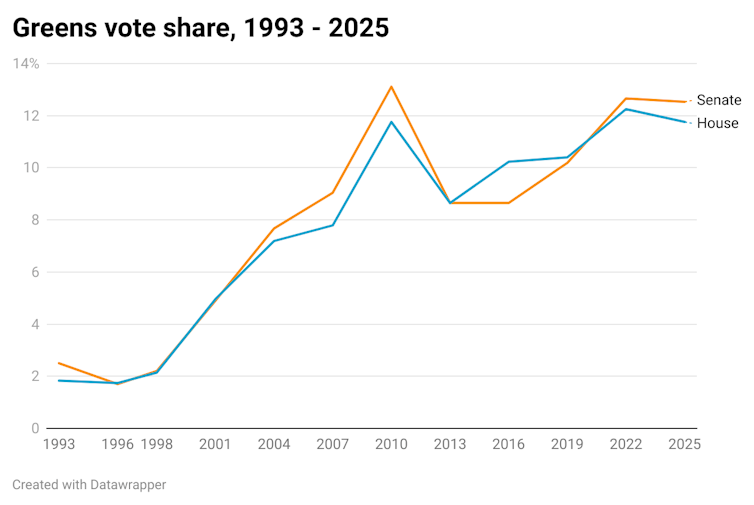
This week the government’s housing legislation has stalled in the Senate. The Greens are pitching for radically expanded initiatives such as scrapping negative gearing and support for controlling rent rises.

Greens leader Adam Bandt joins us to talk about the immediate impasse as well as his party’s broad agenda including its demands if Labor fell into minority at the election.

On why the Greens are holding up the government’s housing bills, Bandt says:

Labor has refused to put any offers on the table. At the moment, Labor’s just tinkering around the edges of a fundamentally broken system, offering bandaid answers that won’t fix the housing and rental crisis. We know what is driving the housing and rental crisis. It’s unlimited rent increases that are pushing people to the brink.

Let’s use this parliament to seriously tackle the housing and rental crisis. When the previous housing legislation came for the Housing Australia Future Fund we pushed the government and got $3 billion of extra money to go to new public and community housing – and we’re pushing the government again to say stop tinkering around the edges.

Asked the Greens’ solution to the labour shortage that’s inhibiting how many houses can be built, Bandt advocates much increased government investment:

Let’s train people through big government investment in the construction of public housing like governments used to do.

This is something that we need to get on with. And I guess if the government’s saying that there’s going to be a labour shortage, then that’s the government admitting that they’re never going to be able to build homes in the future. We need a different approach. And if the government needs to invest in that need, including in training, then the government should.

On the government’s proposed ban on children joining social media sites, Bandt argues such a course would be counterproductive:

We understand the concern, and I’ve got two primary school-aged kids, and this is something that I think many parents are having to navigate. […] A ban based on age might close the door – if it works – to some people getting onto social media. But it doesn’t change what happens when you open the door and get onto social media itself. We would much rather set an approach that says let’s change the rules by which these tech giants operate. Let’s regulate what happens on social media much better so it’s a safer place.

The experts are lining up to say [it’s] much better to change what happens online rather than ban people from it until they reach a certain age, because then they’re going to have to navigate it when they get there. And if the surf is rough […] you teach children how to swim and so that they can look after themselves and you do it in a staged and managed way.

On Gaza, Bandt argues the government should be taking more action against Israel and defends the Greens’ presence at the recent demonstration outside a defence expo in Melbourne,

Australia could be putting pressure on the extremist Netanyahu government to comply with international law, at a bare minimum. Australia is party to these conventions like the Convention Against Genocide and the way that this international law works is that when one party sees another one committing a war crime, they’re obliged to take action.

Australia could put sanctions on the members of the war cabinet and Australia could join in recognising Palestine. Australia could join some of these cases around the world like other countries are doing.

I support [Senator David Shoebridge] addressing those peaceful protests that were taking place. Victoria Police said that the protests were predominantly peaceful. [… ]A number of civil liberties groups have said that the police reaction and that the policing that was seen there not only demands an independent inquiry, but was more forceful than they have seen before. Of course, we do not support that violence happening anywhere, whether it’s at a protest or whether it’s somewhere else.

If Labor falls into minority at the election, what would the Greens want in order to give a guarantee on supply and confidence?

We want the big corporations to pay their fair share of tax and use that money to ensure that everyone in this country has what they need to live a good life, by doing things like getting dental into Medicare, funding a rent freeze and rent caps across the country, wiping student debt and making childcare free.

One in three big corporations in this country pays no tax at all, and when a nurse pays more tax than a multinational, something is seriously wrong. We will be pushing the next government to make the big corporations pay their fair share of tax.

The Conversation

Michelle Grattan does not work for, consult, own shares in or receive funding from any company or organisation that would benefit from this article, and has disclosed no relevant affiliations beyond their academic appointment.

ref. Politics with Michelle Grattan: Adam Bandt on why the Greens are playing hardball on housing – https://theconversation.com/politics-with-michelle-grattan-adam-bandt-on-why-the-greens-are-playing-hardball-on-housing-239304

Digital health research can be positive for Indigenous people. But our study found it needs to follow these principles

Source: The Conversation (Au and NZ) – By Andrew Goodman, Postdoctoral Fellow in Indigenous Health, CSIRO

Digital technologies are transforming health care for all Australians, and this includes Aboriginal and Torres Strait Islander peoples. Electronic health interventions (eHealth) can involve features such as telehealth, instant messaging and mobile apps that support health care.

But testing what kinds of eHealth work for Indigenous people – and what don’t – relies on good quality research. And so far there hasn’t been strong, overarching guidance on what culturally safe eHealth looks like for Indigenous people.

We reviewed 39 studies about eHealth interventions for Indigenous people. We wanted to identify what made eHealth interventions effective, beneficial and culturally safe for the Aboriginal and Torres Strait Islander communities involved.

Here’s what we found.

Who does eHealth research benefit?

Aboriginal and Torres Strait Islander peoples are the most researched human beings in the world, according to the National Health and Medical Research Council.

But much of this research has not directly benefited them. This has created a sense of scepticism about research among some Indigenous people.

Researchers who want to explore the role of digital innovations in Aboriginal and Torres Strait Islander health care need to consider whether it is beneficial for those Indigenous communities – not just the science community.

Studies have shown positive outcomes for Aboriginal and Torres Strait Islander peoples using eHealth for a range of issues. They include mental health challenges, support for new fathers and upskilling health care staff.

But research has so far focused on evaluating individual studies or specific modes of delivery, such mobile health. The eHealth studies our new research examined involved a range of interventions including telehealth and mobile diagnostic tools.

We aimed to identify what characteristics underpin effective eHealth interventions. We also assessed the “cultural quality” of eHealth research involving Indigenous people. That means how well a study has integrated Indigenous ways of knowing, doing and being.

To do this we used an Aboriginal and Torres Strait Islander framework, established in 2018. It asks 14 questions, including whether the research conducted was a priority of the community, and whether local community-controlled organisations or local Elders were consulted and engaged.

Here are the principles we found that underpin good digital health research for Indigenous people.

Building trust is crucial

Trust helps researchers establish credibility while allowing participants to have confidence in the research.

Trust may depend on a number of factors, including the community’s past experiences of research, whether researchers follow cultural protocols, and their institutions’ track record working with Indigenous people.

Aboriginal Community Controlled Health Organisations – or ACCHOs – play a crucial role creating strong and trust-based partnerships.

Building trust might look like:

  • using devices people are already familiar with
  • engaging people in eHealth services at an ACCHO or another culturally safe setting
  • using eHealth to complement existing health care and workers
  • respecting the diversity of individuals and their communities
  • acknowledging technology is not always relevant and has its limitations.

Relevance to people and place

What languages do participants speak? What are the local protocols?

Aboriginal and Torres Strait Islander people are not one homogenous group. Place plays a vital role in Indigenous knowledge systems.

We found eHealth research is successful when it responds to the specific needs, customs and cultures of the local community, rather than coming in with a cookie-cutter approach.

Digital health services also need to consider how they engage Indigenous people according to diverse factors such as gender, age and literacy. Information about health should be evidence-based but presented in a way that best engages and informs the target audience, without judgement.

Highlight cultural values

Indigenous people also need to see themselves and their values reflected in the services meant for them.

Visual and audio elements can be particularly effective, when they’re designed by – and represent – Indigenous people. This might mean using authentic Indigenous art and flag colours, as well as characters that reflect the appearance and voices of Aboriginal and Torres Strait Islander people.

Audiovisual formats are good for engagement, but characters should reflect Aboriginal and Torres Strait Islander people and genders.

We also found interactive features like chat, messaging and game-like elements are more likely to engage First Nations people in a culturally safe way.

Authentic Indigenous leadership in research

Indigenous people should not only be involved in eHealth research, they should be leading it.

We found when studies had two or more Indigenous authors, they rated much more highly for cultural quality. This means they reflected Aboriginal and Torres Strait Islander ways of knowing, doing and being.

The result is ethical and mutually beneficial research: positive outcomes for both the researchers and the community involved.

Our study shows genuine co-design with Aboriginal and Torres Strait Islander communities must be foundational in eHealth research, not an after-thought. Australia’s First Scientists must be engaged at the first hour, not the eleventh hour.

The Conversation

Georgina Chelberg received funding from CSIRO as a PhD Candidate and paid consultancy work in her current role.

Andrew Goodman and Ray Mahoney do not work for, consult, own shares in or receive funding from any company or organisation that would benefit from this article, and have disclosed no relevant affiliations beyond their academic appointment.

ref. Digital health research can be positive for Indigenous people. But our study found it needs to follow these principles – https://theconversation.com/digital-health-research-can-be-positive-for-indigenous-people-but-our-study-found-it-needs-to-follow-these-principles-238871

What’s the difference between a psychopath and a sociopath? Less than you might think

Source: The Conversation (Au and NZ) – By Bruce Watt, Associate Professor in Psychology, Bond University

Benoit Daoust/Shutterstock

Articles about badly behaved people and how to spot them are common. You don’t have to Google or scroll too much to find headlines such as 7 signs your boss is a psychopath or How to avoid the sociopath next door.

You’ll often see the terms psychopath and sociopath used somewhat interchangeably. That applies to perhaps the most famous badly behaved fictional character of all – Hannibal Lecter, the cannibal serial killer from The Silence of the Lambs.

In the book on which the movie is based, Lecter is described as a “pure sociopath”. But in the movie, he’s described as a “pure psychopath”. Psychiatrists have diagnosed him with something else entirely.

So what’s the difference between a psychopath and a sociopath? As we’ll see, these terms have been used at different times in history,
and relate to some overlapping concepts.

What’s a psychopath?

Psychopathy has been mentioned in the psychiatric literature since the 1800s. But the latest edition of the Diagnostic Statistical Manual of Mental Disorders (known colloquially as the DSM) doesn’t list it as a recognised clinical disorder.

Since the 1950s, labels have changed and terms such as “sociopathic personality disturbance” have been replaced with antisocial personality disorder, which is what we have today.

The Silence of the Lambs movie poster
Was Hannibal Lecter from The Silence of the Lambs a psychopath, a sociopath or something else entirely?
Ralf Liebhold/Shutterstock

Someone with antisocial personality disorder has a persistent disregard for the rights of others. This includes breaking the law, repeated lying, impulsive behaviour, getting into fights, disregarding safety, irresponsible behaviours, and indifference to the consequences of their actions.

To add to the confusion, the section in the DSM on antisocial personality disorder mentions psychopathy (and sociopathy) traits. In other words, according to the DSM the traits are part of antisocial personality disorder but are not mental disorders themselves.

US psychiatrist Hervey Cleckley provided the first formal description of psychopathy traits in his 1941 book The Mask of Sanity. He based his description on his clinical observations of nine male patients in a psychiatric hospital. He identified several key characteristics, including superficial charm, unreliability and a lack of remorse or shame.

Canadian psychologist Professor Robert Hare refined these characteristics by emphasising interpersonal, emotional and lifestyle characteristics, in addition to the antisocial behaviours listed in the DSM.

When we draw together all these strands of evidence, we can say a psychopath manipulates others, shows superficial charm, is grandiose and is persistently deceptive. Emotional traits include a lack of emotion and empathy, indifference to the suffering of others, and not accepting responsibility for how their behaviour impacts others.

Finally, a psychopath is easily bored, sponges off others, lacks goals, and is persistently irresponsible in their actions.

So how about a sociopath?

The term sociopath first appeared in the 1930s, and was attributed to US psychologist George Partridge. He emphasised the societal consequences of behaviour that habitually violates the rights of others.

Academics and clinicians often used the terms sociopath and psychopath interchangeably. But some preferred the term sociopath because they said the public sometimes confused the word psychopath with psychosis.

“Sociopathic personality disturbance” was the term used in the first edition of the DSM in 1952. This aligned with the prevailing views at the time that antisocial behaviours were largely the product of the social environment, and that behaviours were only judged as deviant if they broke social, legal, and/or cultural rules.

Some of these early descriptions of sociopathy are more aligned with what we now call antisocial personality disorder. Others relate to emotional characteristics similar to Cleckley’s 1941 definition of a psychopath.

In short, different people had different ideas about sociopathy and, even today, sociopathy is less-well defined than psychopathy. So there is no single definition of sociopathy we can give you, even today. But in general, its antisocial behaviours can be similar to ones we see with psychopathy.

Over the decades, the term sociopathy fell out of favour. From the late 60s, psychiatrists used the term antisocial personality disorder instead.

Born or made?

Both “sociopathy” (what we now call antisocial personality disorder) and psychopathy have been associated with a wide range of developmental, biological and psychological causes.

For example, people with psychopathic traits have certain brain differences especially in regions associated with emotions, inhibition of behaviour and problem solving. They also appear to have differences associated with their nervous system, including a reduced heart rate.

However, sociopathy and its antisocial behaviours are a product of someone’s social environment, and tends to run in families. These behaviours has been associated with physical abuse and parental conflict.

What are the consequences?

Despite their fictional portrayals – such as Hannibal Lecter in Silence of the Lambs or Villanelle in the TV series Killing Evenot all people with psychopathy or sociopathy traits are serial killers or are physically violent.

But psychopathy predicts a wide range of harmful behaviours. In the criminal justice system, psychopathy is strongly linked with re-offending, particularly of a violent nature.

In the general population, psychopathy is associated with drug dependence, homelessness, and other personality disorders. Some research even showed psychopathy predicted failure to follow COVID restrictions.

But sociopathy is less established as a key risk factor in identifying people at heightened risk of harm to others. And sociopathy is not a reliable indicator of future antisocial behaviour.

In a nutshell

Neither psychopathy nor sociopathy are classed as mental disorders in formal psychiatric diagnostic manuals. They are both personality traits that relate to antisocial behaviours and are associated with certain interpersonal, emotional and lifestyle characteristics.

Psychopathy is thought to have genetic, biological and psychological bases that places someone at greater risk of violating other people’s rights. But sociopathy is less clearly defined and its antisocial behaviours are the product of someone’s social environment.

Of the two, psychopathy has the greatest use in identifying someone who is most likely to cause damage to others.

The Conversation

The authors do not work for, consult, own shares in or receive funding from any company or organisation that would benefit from this article, and have disclosed no relevant affiliations beyond their academic appointment.

ref. What’s the difference between a psychopath and a sociopath? Less than you might think – https://theconversation.com/whats-the-difference-between-a-psychopath-and-a-sociopath-less-than-you-might-think-226714

Australia desperately needs a strong federal environmental protection agency. Our chances aren’t looking good

Source: The Conversation (Au and NZ) – By Justine Bell-James, Associate Professor in Environment and Property Law, TC Beirne School of Law, The University of Queensland

Enrico Della Pietra/Shutterstock

When Labor came to power federally after almost a decade in opposition, Environment Minister Tanya Plibersek pledged to turn around Australia’s worsening environmental woes, from extinctions to land clearing to climate change.

While the government has made progress on climate action, protecting biodiversity hasn’t got out of the starting blocks.

In the latest example of inaction, proposed laws to create an independent environmental regulator, Environmental Protection Australia, appear stalled in the Senate. Labor needs the backing of the Coalition or the Greens to push the reform through. At the time of writing, no deals looked likely.

This is a real problem. A stream of audits and reviews have shown Australia’s environmental laws are not fit for purpose. Change is possible – but hard. Keeping the status quo is far easier, no matter how dysfunctional it is.

bulldozer dirt new suburb
Development proposals assessed under the EPBC Act are nearly always approved.
Deek/Shutterstock

Pushback in and out of parliament

The latest impasse stems from efforts to overhaul Australia’s ageing and feeble national environment laws, the Environment Protection and Biodiversity Conservation (EPBC) Act.

The failings of the law are no secret. In 2020, an independent review by Graeme Samuel delivered blunt findings: the laws were simply not protecting nature.

Labor drafted stronger laws, but developers and miners quickly pushed back.

So Labor changed tack. It pivoted to a staged reform process – with the full-scale revamp delayed indefinitely.

This week, Labor attempted to pass at least some change – a bill to create an independent environmental regulator, Environmental Protection Australia. But it ran into major roadblocks.

Mining companies such as Gina Rinehart’s Hancock Prospecting and Rio Tinto pushed for the regulator to be stripped of its powers in a private letter to Prime Minister Anthony Albanese.

And Coalition and Greens senators delivered stinging critiques, arguing variously that the regulator would be too strong or too weak.

Crossbenchers and the Greens say to win their support, Labor must end native forest logging nationally and require consideration of climate damage when assessing projects such as new coal mines for approvals.


How did we get into this mess?

In 2000, the Environment Protection and Biodiversity Conservation Act came into force, superseding a patchwork of previous laws.

The laws focused on threatened species and ecosystems but did not mention damage done by climate change.

Almost a quarter of a century later, we still have the same set of laws, described as ineffective or little enforced in audits and reviews.

Every year since the act came into force, Austalia’s threatened species populations have actually fallen 2-3%.

When development, agriculture and infrastructure projects do get assessed under these laws, about 99% are approved.

Experts have found the laws permit ongoing destruction of critical habitat for threatened species.

Why? While the environment minister of the day is required to consider environmental impacts of a proposal, they can essentially rule any way they like – even if it goes against the opinion of independent environmental experts, or their own bureaucrats.

Why is change so hard?

The 2020 Samuel review recommended new “national environmental standards” be enforced. These would mean explicitly defining what outcomes for nature we are aiming for, and making sure a development proposal met that standard.

For example, one proposed standard would disallow “unacceptable or unsustainable impacts” on matters of national environmental significance. These matters include internationally important wetlands and nationally threatened species. Other standards include preservation of Australia’s natural world heritage sites, such as the Great Barrier Reef.

In late 2022, Plibersek released Labor’s official response in the form of the Nature Positive Plan.

The plan seemed promising. It recognised the dire state of Australia’s species and ecosystems and labelled the current laws “ineffective”. It promised national environmental standards.

Plibersek vowed to consult on further changes. This led to a proposal to replace the EPBC Act with stronger laws, and create a new regulator – Environment Protection Australia.

As initiailly proposed, this independent agency would have power to make development decisions and ensure compliance. It would only grant approval to a project if it was consistent with national environmental standards. The minister could still step in, but had to give public reasons for doing so, and take advice from the regulator.

However, major lobby groups opposed the proposed overhaul of the laws.

In response, Plibersek changed tactics. She announced environmental reform would be in three stages.

The first was the Nature Repair Market, which passed Parliament late last year. The second stage involved the laws now before the Senate: creating Environment Protection Australia in a weaker form (without the restrictions on discretion in the initial proposal) and a data and monitoring agency, Environment Information Australia.

If passed, these bills would create a protection agency – but one which could only enforce the same weak approval laws and be subject to the same broad discretion for the decision-maker. For the agency to have teeth, the government would need to pass stage three, which would reduce discretion, introduce stronger environment laws and create legally binding National Environmental Standards.

Unfortunately, Labor has now deferred these indefinitely.

Stalled at stage two

The government is clearly struggling to pass its stage two reforms.

Conservationists are increasingly worried by the delays, while Western Australia’s mining companies have come out strongly against the EPA.

This is a problem for Labor. Western Australia was instrumental in the party’s election win in 2022 and it needs to shore up seats in the mining-heavy state ahead of the next federal election.

Meanwhile, Opposition Leader Peter Dutton has pledged to be the mining sector’s best friend if elected, by cutting “green tape”, fast tracking resource projects and defunding the Environmental Defenders Office.

And the Greens are showing little sign of compromise on their demands.

All this is bad news for our threatened species and sick ecosystems. We know what needs to be done. But our government is showing worrying signs of letting industry and developers control their environmental agenda.

The Conversation

Justine Bell-James receives funding from the Australian Research Council and the National Environmental Science Program. She is a Director of the National Environmental Law Association, and attended the EPBC Act stakeholder consultation sessions in her capacity as Director. Her opinions in this article are her own.

ref. Australia desperately needs a strong federal environmental protection agency. Our chances aren’t looking good – https://theconversation.com/australia-desperately-needs-a-strong-federal-environmental-protection-agency-our-chances-arent-looking-good-239099

The Productivity Commission wants all Australian kids to get 3 days a week of childcare – but it won’t be until 2036

Source: The Conversation (Au and NZ) – By Melissa Tham, Research fellow at the Mitchell Institute, Victoria University

The federal government has released a highly anticipated report into Australia’s childcare system. The report, by the Productivity Commission, says addressing affordability should be a priority. It recommends fully subsidised childcare for families earning under A$80,000 from 2026.

The report, which was commissioned by the government, was completed at the end of June.

It sets out crucial steps to achieve a “universal” childcare system in Australia. This is where all families with children under five can get three days a week of high-quality early education and care. The Productivity Commission says this should be up and running by 2036.


Read more:
Productivity Commission charts the costly path to universal early childhood education


What’s in the report?

The final report has 56 recommendations to “remove barriers” to access early childhood education and care. This includes centre-based care (such as long daycare), preschools, family day care and outside school hours care (often called before and after school care).

Key recommendations include:

  • raising the maximum rate of the childcare subsidy from 90% to 100% of the hourly rate cap for families on incomes up to $80,000. The Productivity Commission recommends this is implemented in 2026 to make childcare more affordable for about 30% of all families with children aged 0–12 years.

  • for families with multiple children under five earning under $140,000, it recommends raising subsidies to 100%, up from the current 95%.

  • the proposed changes to the subsidy would not only mean more affordable childcare for low-income families. All families earning under $580,000 per year would receive a higher subsidy rate, “making nearly all [early childhood education and care] users better off”. This follows a boost to childcare subsidies in 2023.

The activity test should go

Significantly, the report recommends removing the much-criticised activity test from next year. This requires parents to be working or studying at least eight hours a fortnight to receive child care subsidies.

The Productivity Commission says removing it would see more children from low income families in early education and care.

What else is in the report?

Recognising care needs do not stop when children start school, the Productivity Commission wants to see state governments make sure there is outside school hours care for children aged five to 12 in all public schools.

It also recognises remote and very remote areas face extra challenges. Some sparsely populated areas are “thin markets” – they do not have enough demand to support the provision of services. The Productivity Commission recommends targeted funding to help.

The report also highlights how supporting early childhood educators is key to quality care and good outcomes for all children. It calls for accelerated qualifications and consistent registration requirements. This follows a recent 15% pay rise for chronically low paid early childhood educators.

Equity is key to proposed reforms

The report focuses on how to achieve greater equity in early childhood education and care – a key part of the federal government’s Early Years Strategy.

Australia currently has as market-driven model for childcare provision. Our research shows this approach tends to see providers located in more affluent areas, where they can charge families more per hour.

Importantly, the Productivity Commission recognises the need for increased funding for remote and very remote areas. Our research shows although the supply of childcare places in Australia has increased over the past two years, the distribution of these places is not equitable. Families in remote areas are more likely to miss out.

Another proposed change is to enable access to child care subsidy for “wrap-around care” in dedicated preschools by 2025. This could see services provide more flexibility, such as more hours and different types of care (such as preschool or kinder learning for some of the day and then daycare around that). If implemented, it should mean greater support for working families.

Will it be enough?

As some commentators – such as independent federal MP Zoe Daniel – have been quick to point out, some changes are still a long way off. Daniel says the “timeline isn’t nearly ambitious enough”.

However, it will not necessarily be quick to provide universal access to childcare. While families need more places and cheaper costs right now, the report explains it will require “long-term commitment and investment”. It also says:

Sequencing reforms will be critical to avoid crowding out children and families experiencing disadvantage.

The Productivity Commission says overall, these measures would increase childcare subsidy costs by 37%, to $17.4 billion a year. While this is a significant amount, it is in line with other governments around the world, such as England and France, who are also increasing the amount they spend on the early years.

What next?

The government says it will consider this report alongside a separate report by the Australian Competition and Consumer Commission (ACCC), finalised last year. This report looked at pricing across the sector.

As federal Education Minister Jason Clare told an early childhood conference on Wednesday,

We are closely looking at this report, along with the ACCC’s recent report and I want your feedback.

With another federal election on the horizon, we can reasonably expect the government’s response to form part of its re-election plans.

The Conversation

Melissa Tham works for the Mitchell Institute at Victoria University that receives funding from Minderoo’s Thrive by Five initiative to undertake research into early childhood education and care.

ref. The Productivity Commission wants all Australian kids to get 3 days a week of childcare – but it won’t be until 2036 – https://theconversation.com/the-productivity-commission-wants-all-australian-kids-to-get-3-days-a-week-of-childcare-but-it-wont-be-until-2036-239293

New teen accounts on Instagram are a welcome step, but real ‘peace of mind’ requires more

Source: The Conversation (Au and NZ) – By Tama Leaver, Professor of Internet Studies, Curtin University

As Australia and other countries debate the merits of banning kids under 14 from social media, Meta has announced a significant “reimagining” of teenagers’ experience of Instagram.

These new “Teen Accounts” will be set to private by default, have the maximum content and messaging restrictions possible, pause notifications at night, and add new ways for teens to indicate their content preferences.

Importantly, for kids under the age of 16, changing these default settings will now require parental permission.

The move, touted as giving “peace of mind” for parents, is a welcome step – but parents and guardians should use it to talk to their kids about online spaces.

What’s different about Teen Accounts?

Teen Accounts are a combination of new features and a repackaging of a number of tools that have already been in place, but haven’t had the visibility or uptake Meta would have preferred.

Bringing these incremental changes together under the umbrella of Teen Accounts should make these changes more visible to teens and caregivers.

Among the the main features:

  • under-18s will have accounts set to private by default, and under-16s will only be able to change that setting with parental permission

  • teens will only be able to receive messages from people they are already following or are connected to

  • content restrictions and the blocking of offensive words in comments and messages will be set to the maximum setting possible

  • notifications from Instagram will be turned off between 10pm and 7am

  • teens will be reminded to leave Instagram after 60 minutes of use on any given day.

Some of these tools are more useful than others. A reminder to leave Instagram after 60 minutes that teens can just click past sets a fairly low bar in terms of time management.

But default account settings matter. They can really shape a user’s experience of a platform. Teens having private accounts by default, with protections around content and messaging set to their strongest settings, will significantly shape their time on Instagram.

Stopping under-16s from changing these settings without parental or guardian consent is the biggest change, and really does differentiate the teen experience of Instagram from the adult one.

Most of these changes focus on safety and age-appropriate experiences. But it is a positive step for Meta to also include new ways for teens to indicate the content they actually prefer, instead of just relying on algorithms to infer these preferences.

Do parents and guardians have to do anything?

In promoting Teen Accounts, head of Instagram Adam Mosseri emphasised the change is aimed at giving parents “peace of mind”. It doesn’t require explicit intervention from parents for these changes to occur.

“I’m a dad, and this is a significant change to Instagram and one that I’m personally very proud of,” noted Mosseri. This is part of a longer-term strategy of positioning Mosseri as a prominent parental voice to increase his perceived credibility in this domain.

Parents or guardians will need to use their own accounts for “supervision” if they want to know what teens are doing on Instagram, or have access to more granular controls. These include setting personalised time limits, seeing an overview of a teen’s activity, or allowing any of the default settings to change.

The real opportunity for parents here is to take these changes as a chance to discuss with their children how they’re using Instagram and other social media platforms.

No matter what safety measures are in place, it’s vital for parents to build and maintain a sense of openness and trust so young people can turn to them with questions, and share difficulties and challenges they encounter online.

Meta has said the shift to Teen Accounts will reduce the level of inappropriate content teens might encounter, but that can never be absolute.

These changes minimise the risks, but don’t remove them. Ensuring young people have someone to turn to if they see, hear, or experience something that’s inappropriate or makes them uncomfortable will always be incredibly important. That’s real peace of mind.

Can’t teens still lie about their age?

Initially, Teen Accounts will apply to new teens who sign up. The changes will also roll out for existing teen users whose birth date Instagram already has on file.

Over time, Mosseri and Antigone Davis, Meta’s global head of safety, have both said Instagram is rolling out new tools that will identify teenagers using Instagram even if they didn’t enter an accurate birth date. These tools are not active yet, but are supposed to be coming next year.

This is a welcome change if it proves accurate. However, the effectiveness of inferring or estimating age is yet to be proven.

The bigger picture

Teen Accounts are launching in Australia, Canada, the United Kingdom and the United States this week, taking up to 60 days to reach all users in those countries. Users in the rest of the world are scheduled to get Teen Accounts in January 2025.

For a long time, Instagram hasn’t done enough to look after the interests of younger users. Child rights advocates have mostly endorsed Teen Accounts as a significant positive change in young people’s experiences and safety on Instagram.

Yet it remains to be seen whether Meta has done enough to address the push in Australia and elsewhere to ban young people (whether under-14s or under-16s, depending on the proposal) from all social media.

Teen Accounts are clearly a meaningful step in the right direction, but it’s worth remembering it took Instagram 14 years to get to this point. That’s too long.

Ultimately, these changes should serve as a prompt for any platform open to kids or teens to ensure they provide age-appropriate experiences. Young users can gain a lot from being online, but we must minimise the risks.

In the meantime, if these changes open the door for parents and guardians to talk to young people about their experiences online, that’s a win.

Tama Leaver receives funding from the Australian Research Council. He is a Chief Investigator in the ARC Centre of Excellence for the Digital Child (CE200100022). He co-authored the book Instagram: Visual Social Media Cultures (Polity, 2020) with Tim Highfield and Crystal Abidin.

ref. New teen accounts on Instagram are a welcome step, but real ‘peace of mind’ requires more – https://theconversation.com/new-teen-accounts-on-instagram-are-a-welcome-step-but-real-peace-of-mind-requires-more-239290

Will the exploding pager attack be the spark that ignites an Israel-Hezbollah war?

Source: The Conversation (Au and NZ) – By Amin Saikal, Emeritus professor of Middle Eastern and Central Asian Studies, Australian National University

The alleged Israeli attack on members of Hezbollah via their pagers is another ominous development propelling the Middle East towards a full-scale regional war. It leaves Hezbollah with little option but to retaliate with the full support of the Iran-led “axis of resistance”.

The sophistication and impact of targeting the pagers is unprecedented. The attack resulted in at least 11 deaths, including some of Hezbollah’s fighters, and up to 3,000 people wounded.

The main aim of the attack, which US officials have reportedly said was carried out by Israel, was intended to disrupt Hezbollah’s means of communication and its command and control system in Lebanon.

Since Hezbollah has reduced the use of mobile phones by its forces because Israel can easily detect and target them, pagers have increasingly become the preferred messaging device within the group.

The attack may have also been designed to cause panic within the group and among the Lebanese public, many of whom do not support Hezbollah, given the political divisions in the country.

Since Hamas’ October 7 attacks on southern Israel, the Israeli leadership under Prime Minister Benjamin Netanyahu has repeatedly said it is determined to remove the threat of Hezbollah, which has operated in solidarity with Hamas.

Hours before the pager attack, Netanyahu’s government clarified that Israel’s war goals would expand to include a return of the tens of thousands of residents to their homes in northern Israel, which they have fled due to constant rocket fire from Hezbollah. Israel’s defence minister, Yoav Gallant, said the only way to do this was through military action.

The simultaneous pager explosions on Tuesday, then, may be a prelude to an all-out Israeli offensive against Hezbollah.

The consequences of war with Hezbollah

Hezbollah has already declared it will retaliate. What form this will take remains to be seen. The group has a massive military capability to not only to pound northern Israel with drones and missiles, but also attack other parts of the Jewish state, including heavily populated cities such as Tel Aviv.

Hezbollah showed this capability in its 2006 war with Israel. The war lasted 34 days, during which 165 Israelis were killed (121 IDF soldiers and 44 civilians) and Israel’s economy and tourist industry were markedly damaged. Hezbollah and Lebanese losses were far greater, with at least 1,100 deaths. However, the Israel Defence Forces (IDF) failed to destroy or incapacitate the group.

Any successful retaliatory attack on Israel’s cities could result in serious civilian casualties, giving Israel a further pretext to pursue its long-held aim of destroying Hezbollah and punishing its main backer, the Islamic Republic of Iran.

In a wider conflict, the United States is committed to defending Israel, while Iran would support Hezbollah in whatever way necessary. If Israeli and US leaders think Iran will continue to refrain from any action that could propel it into war with Israel and the US, they are mistaken.

Hezbollah is a central piece in the regime’s national and regional security paradigm. Tehran has invested heavily in the group, along with other regional affiliates – Iraqi militias, the Yemeni Houthis and the Syrian regime of Bashar al-Assad, in particular. The aim of this “axis of resistance” has been to build a strong deterrent against Israel and the US.


Read more:
Does Israel really want to open a two-front war by attacking Hezbollah in Lebanon?


Ever since its foundation 45 years ago, the Iranian regime has viewed Israel and its main backer, the US, as an existential threat, just as Israel has regarded Iran in the same way. For this, the regime has reoriented its foreign relations towards America’s major adversaries, especially Russia and China. Russo-Iranian military cooperation has grown so strong, in fact, that Moscow will have little hesitation in backing Iran and its affiliates in any war.

Tehran is fully cognisant of Israel’s nuclear prowess. To guard against it, Iran has developed its own nuclear program to the threshold level of developing a weapon. Iranian leaders may have also gained Russia’s assurances it would help defend Iran should Israel resort to the use of its nuclear weapons.

Meanwhile, it is important to remember that after nearly a year of demolishing Gaza and devastating its inhabitants, Israel has not been able to wipe out Hamas.

Its own actions speak to this. It has constantly forced Gazans to relocate so IDF soldiers can operate in areas they had previously declared to be cleared of fighters.

The task of defeating Hezbollah and its backers would be a far greater objective to achieve. It carries the serious risk of a war that all parties have been saying that they do not want, yet all are preparing for.

The pager attack is just the latest in a string of operations that keeps imperilling any chances of a permanent Gaza ceasefire that could stabilise the region and contribute to the causes of peace rather than war.

The Conversation

Amin Saikal does not work for, consult, own shares in or receive funding from any company or organisation that would benefit from this article, and has disclosed no relevant affiliations beyond their academic appointment.

ref. Will the exploding pager attack be the spark that ignites an Israel-Hezbollah war? – https://theconversation.com/will-the-exploding-pager-attack-be-the-spark-that-ignites-an-israel-hezbollah-war-239302

Productivity Commission charts the costly path to universal early childhood education

Source: The Conversation (Au and NZ) – By Michelle Grattan, Professorial Fellow, University of Canberra

Big increases in government spending on child care have been recommended by the Productivity Commission, that would see families earning up to A$80,000 fully subsidised under the Child Care Subsidy (CCS).

This would cover about 30% of families with children aged up to 12 years.

The Higher Child Care Subsidy (HCCS) rate should rise to 100% for families with multiple children aged five and under in early childhood education and incomes up to $140,000, the commission recommends.

It says a taper rate should apply to the subsidies, reducing the rate of subsidy by one percentage point for every $5,000 increase in income.

It also recommends the activity test should be scrapped, declaring young children’s education “should not depend on their parents’ activity”.

The commission released its final report, titled A path to universal early childhood education and care, on Wednesday. The government will respond later. Labor is expected to make further improvements to the system part of its pitch for a second term.

Almost all families using the system “are expected to benefit” from its recommended changes, the commission says.

“Half of families would be eligible for CCS of 90% or more; nearly 80% would be eligible for CCS rates of over 75%.

“Attendance at ECEC [early childhood education and care] is expected to rise by 10%, with most of the increase coming from children from low and middle income families.”

The reforms would increase CCS costs by 37%, to about $17.4 billion annually.

The commission says all families with children aged up to five should be able to have access to at least 30 hours or three days a week of early childhood education for 48 weeks annually.

At present nearly half of one-year-olds attend some form of care, and about 90% of four-year-olds are enrolled in early education. About one in seven children aged five to 12 attend out-of-school-hours care.

The commission says the expansion of early education has boosted workforce participation. In 2023 three in four mothers with children aged up to four were in paid jobs.

But in parts of the country services are scarce, the commission says, and for some families, care may not be affordable or inclusive.

“Children experiencing disadvantage and vulnerability, while most likely to benefit from ECEC, are less likely to attend,” the commission says.

It urges reform be sequenced and a national agreement be concluded between federal, state and territory governments on their roles and responsibilities.

The commission says the path to universal access “will require long-term commitment and investment”.

Governments should work towards expanding access by 2030 for the disadvantaged, particularly in remote, regional and rural areas.

By 2036 all children should have access to at least 30 hours of weekly care.

The commission says as a result of its proposed reforms more children would be developmentally on track when they start school, and labour force participation by parents would be expected to increase.

Education Minister Jason Clare said the government’s already introduced changes had made early childhood education and care more affordable for more than one million families. It had also announced a 15% pay rise for workers and capped fees.

“The report makes clear that more needs to be done to make sure children from poor families , who would benefit the most from high quality early education, are not missing out,” he said.

Crossbencher Zoe Daniel welcomed the report but said, “the timeline isn’t nearly ambitious enough.

“As a critical first step towards a universal system, all children should have access to a minimum of three days of ECEC that is free or at a low set fee like $10 a day.

“This should be a legislated entitlement. Without it being legislated, the cost to parents will continue to skyrocket due to there being no limit on the out-of-pocket fees that providers can charge and too many children and families will continue to miss out on quality ECEC.

“Waiting until 2036 is too long.”

Gradual implementation of ECEC reform

The Conversation

Michelle Grattan does not work for, consult, own shares in or receive funding from any company or organisation that would benefit from this article, and has disclosed no relevant affiliations beyond their academic appointment.

ref. Productivity Commission charts the costly path to universal early childhood education – https://theconversation.com/productivity-commission-charts-the-costly-path-to-universal-early-childhood-education-239301

Gareth Evans condemns Labor timidity, tells leadership to ‘recover mojo’

Source: The Conversation (Au and NZ) – By Michelle Grattan, Professorial Fellow, University of Canberra

A former senior member of the Hawke and Keating governments, Gareth Evans, has accused the Albanese government of political timidity, condemning its instinct to “move into cautious, defensive, wedge-avoiding mode”.

In a speech on Wednesday, Evans said the government had enough first-rate ministerial talent “to be a great reforming government in the Hawke-Keating tradition”, spending political capital rather then hording it indefinitely while its value eroded.

But, he said, the government had gone into a defensive mode on issues such as gambling advertising, electoral funding, census questions, the Makarrata commission and any constitutional reform, including for a republic.

“Perhaps most disconcertingly of all, given the security and sovereignty stakes involved” was AUKUS, said Evans, who has been among a number of Labor critics of the agreement, including Paul Keating.

“The government reward for all this has not been an increase but a decline in its popularity,” Evans said.

He acknowledges other factors had contributed to the government’s present situation, including concerns about the cost of living and housing availability, which would be difficult for the most competent government.

“But one can’t avoid the impression that more and more people are asking, what exactly is this Labor government for?

“It’s time for the party leadership to recover its mojo and tell them – a prosperous, secure and above all more decent society, of the kind that only a Labor government can deliver.”

Evans was foreign minister in the Hawke and Keating governments and held various other porfolios; he is also former chancellor of the Australian National University. He was delivering the 2024 Barry Jones Oration. His speech, titled Looking on the Bright Side: the risks – and rewards – of political optimism, exhorted the need to maintain “a spirit of optimism about the art of possible”.

“If we want to change for the better it is crucial we maintain hope.” he said.

“Whether we be in governments or parliaments or intergovernmental organisations, in academia or think-tanks, or in the media, or in NGOs, or with influential social responsibility roles in the private sector, or just plain ordinary citizens with a passion for decency, we have to go on believing that what we do can and will make a difference.”

The Conversation

Michelle Grattan does not work for, consult, own shares in or receive funding from any company or organisation that would benefit from this article, and has disclosed no relevant affiliations beyond their academic appointment.

ref. Gareth Evans condemns Labor timidity, tells leadership to ‘recover mojo’ – https://theconversation.com/gareth-evans-condemns-labor-timidity-tells-leadership-to-recover-mojo-239209

Flying to a footy final? Watch your wallet. Here’s why airfares soar

Source: The Conversation (Au and NZ) – By Doug Drury, Professor/Head of Aviation, CQUniversity Australia

ymgerman/Shutterstock

Planning a flight to an AFL final is like trying to decide when and how to hop on an amusement park ride that hasn’t stopped.

You don’t know where you need to be until the very last minute, and by then, it seems everyone else wants to be there too.

This annual dilemma is now in sharp focus, with preliminary finals coming up this weekend. Sydney will face Port Adelaide at the Sydney Cricket Ground on Friday night, then Geelong will take on Brisbane in Melbourne on Saturday.

Getting to these locations on the right dates can be no mean feat, and some fans have already been stung by surging prices. For those who tried to book over the weekend, prices to fly from Adelaide to Sydney in time for Friday’s game reportedly ranged from $597 to an eye-watering $1,723.

Australia’s airline duopoly is already under intense scrutiny. According to government data released this week, domestic airfares have risen by more than 10% since Rex shut down its capital city services.

So how exactly do airlines price their fares today, and then again once the teams are decided? Why are they allowed to charge so much?

How are airfares priced?

Airfares are set through a process called revenue management. Airlines use mathematical modelling to help determine what we as consumers are willing to pay.

Airlines plan out their entire year based on what services they predict will be needed at certain times – such as travel for school breaks, winter skiing, or summers in Hawaii.

In economics, this is known as seasonal supply and demand. Airlines have the supply, planes, and we as consumers provide the demand.

The cost of flights to cities hosting footy finals might seem outrageous. But these games are one-off events that happen at the same time each year.

Using historical data, airlines have determined that enough people are willing to pay these fares to justify charging them.

Two types of traveller

Airlines base their pricing strategies on the assumption that we as travellers fall into two groups: elastic and inelastic. Here, elasticity simply describes how sensitive demand is to a change in price.

Vacationers with a flexible calendar are an example of elastic travellers, who are able to change their flight dates to get the lowest airfare.

Inelastic travellers, on the other hand, include business travellers who need to be somewhere specific on a particular date, and aren’t paying fares out of their own pocket.

Airlines factor in both of these groups to determine demand-based pricing.

Footy finals create huge amounts of inelastic demand, allowing airlines to push up their prices.

Businesswoman walking with suitcase near airport terminal
Business travellers are often less sensitive by changes in the cost of airfares.
Gustavo Fring/Pexels

Does the price actually reflect the value?

Transactional utility is a theory based upon the assumption that the price we pay for a product or service should reflect the value we receive. In this case – how much fans are willing to pay to be there to watch the game live.

But individually, this depends on who you barrack for, as well as whether you have the disposable income to pay a premium for the experience. Last year, some airfares to the grand final soared above the $2,000 mark.

So how are the airlines able to set these prices? Are they not regulated by the government? It all comes back to what we as consumers are collectively willing to pay for a diminished supply during high demand. The government does not regulate airfares on that level.

Airlines will not want to sell discounted seats if they know enough of us are willing to pay. They might run more flights, but that doesn’t necessarily mean airfares will come down.

Our decision to buy a seat is based on the perception of its fairness. Getting into the final is costly enough – does the price charged to fly there also seem fair?

Airlines know the psychology of fairness is what will fill the seat. So they will continue to test our perception of fairness on last minute purchases.

Less competition makes it worse

These types of pricing strategies are not unique to Australia. Airlines all around the globe understand the passion associated with championship sporting events and position themselves to take advantage of such moments.

But we also know that here, airlines are pricing what they can in part due to very low competition, only worsened by the recent demise of Bonza and Rex.


Read more:
What just happened to Bonza? Why new budget airlines always struggle in Australia


We can voice our displeasure about this situation with the Australian Competition and Consumer Commission, but in the short term, many of us simply continue to pay the airfares.

This is because the other methods of travel either don’t exist, such as high speed rail, or aren’t reasonable, such as driving for multiple days.

Remember, airlines see this as an opportunity to increase their bottom line as part of their revenue management system.

So what should you do if your team makes the grand final? Sell your car or house? Take out a second mortgage?

What if you book now while it’s still relatively cheap and your team doesn’t make the final? Well, there is plenty to do in Melbourne in September!

I, for one, will be watching from the comfort of my lounge room.

The Conversation

Doug Drury does not work for, consult, own shares in or receive funding from any company or organisation that would benefit from this article, and has disclosed no relevant affiliations beyond their academic appointment.

ref. Flying to a footy final? Watch your wallet. Here’s why airfares soar – https://theconversation.com/flying-to-a-footy-final-watch-your-wallet-heres-why-airfares-soar-239104

Runt is a gentle, beautifully shot, and warmly humorous small town Australian story

Source: The Conversation (Au and NZ) – By John McAloon, Senior Lecturer, Graduate School of Health, University of Technology Sydney

Court McAllister/STUDIOCANAL

When young Annie Shearer (Lilly LaTorre) meets a stray dog named Runt (Squid) the two become inseparable.

They live in the dry Western Australian town of Upson Downs where rain hasn’t fallen in over a year. All the water in the district has been stolen upriver and stored in a dam constructed by Earl Robert-Barren (Jack Thompson) on his property, and he has made it his business to buy up every property in the district as they go broke from drought.

Every property, that is, except the Shearer’s.

Directed by John Sheedy and adapted from the book of the same name by Craig Silvey, Runt is a gentle, beautifully shot, and warmly humorous small town Australian story that will appeal to older children and young adolescents – and engage any unsuspecting parents they manage to convince to take them along in the process.

Understanding who you are

Runt is a David and Goliath tale. In their quest to save the farm – and prevail in the struggle that ensues – we travel across the world, where Annie and Runt qualify to compete in the Agility Course Championship at the prestigious Krumpets Dog Show in London.

Under the mentorship of Bernadette Box (Deborah Mailman), a once renowned show dog trainer, and funded by the generosity of the district, their efforts in London could see the farm saved.

Along the way, we see right pitted against wrong, watch evil confronted and, ultimately, see Annie developing an understanding of who she is and what she stands for.

A dog, a girl with a flashlight, and inventor plans.
Annie comes from a long line of inventors – and their inventions could save the farm.
Court McAllister/STUDIOCANAL

Annie comes from a long line of inventors on her father’s side. Her grandfather – now passed away, and dearly missed by her grandmother Dolly Shearer (Genevieve Lemon) – was a prolific inventor with journals that detailed numerous contraptions.

One in particular, a rainmaker, becomes central as Annie follows her grandfather’s drawings to build the contraption save the family farm from drought.

Annie’s father, Bryan (Jai Courtney), is something of an inventor too. His talents lie in botany.

Creative talents extend also to Annie’s mother Susie Shearer (Celeste Barber) as a seamstress and clothes designer. Her culinary skills are particularly well known throughout the district.

There are some limitations

Despite its appeal, the film is not without its limitations.

It opens with an encounter between Runt, the local butcher shop owner, and a string of sausages.

This encounter is worthy of Lynley Dodd’s Hairy McCleary from Donaldson’s Dairy, however, the opening scenes feel underplayed and the opportunity to establish key characters feels rushed.

This is particularly true of the introduction between Annie and Runt, and also in the early appearance of Constable Duncan Bayleaf (Joel Jackson), whose character fails to develop.

School children anxiously gather around a television.
Annie and Runt go to London for a dog show – and they’re cheered on by their friends at home.
Court McAllister/STUDIOCANAL

There is obvious advantage in driving a narrative intended for younger viewers by dialogue. But the opportunity to develop these relationships in visual and emotional terms is engaged only to a limited extent. This is unfortunate, as these early scenes are fundamental in establishing the story.

At times the film may engage in concepts that are unfamiliar to its child audiences. One character speaks of being “defiled” after a dog urinates on him. The dating app Dolly uses ends with an all too brief allusion to attraction between her and Bernadette. Concepts such as these may be beyond the comprehension of some younger viewers.

A story about compassion

There are some beautiful cinematic moments in Runt. The placement of Dolly Shearer’s small solo caravan under a lonesome tree on the Shearer’s property functions beautifully as a metaphor for her life, now alone, following the death of her beloved husband.

Similarly, several men comically manoeuvre a blanket to catch Annie’s brother Max Shearer (Jack La Torre), following his parachuted jump from atop the chopping pole at the district fair. This scene reflects on one of the central themes of the book and the film: the tenuous nature of identity and the risks that present themselves in the process of working out who we are and what we stand for.

Annie and Runt practice for the agility course.
This is a story about compassion for one’s self and for others.
Court McAllister/STUDIOCANAL

A few limitations notwithstanding, the film is a success because, ultimately, its central themes prevail. While a story of David and Goliath proportions, it is not one in which David necessarily prevails against Goliath. This is part of its charm.

This is a story about compassion for one’s self and for others, in spite of – or perhaps because of – our quirks. It explores and justifies “kind lies”. It presents the strength of “humble pie”, and values relationships, family and the things “we have under this roof”.

It is a story about a girl who fixes things, and learns that she can’t fix everything. And it’s a story of a dog who finds love – despite its unlikely yet understandable idiosyncrasies.

Runt is in cinemas from tomorrow.

The Conversation

John McAloon does not work for, consult, own shares in or receive funding from any company or organisation that would benefit from this article, and has disclosed no relevant affiliations beyond their academic appointment.

ref. Runt is a gentle, beautifully shot, and warmly humorous small town Australian story – https://theconversation.com/runt-is-a-gentle-beautifully-shot-and-warmly-humorous-small-town-australian-story-239182

The harder I work, the luckier I get? What coaches, athletes and fans need to understand about luck in sport

Source: The Conversation (Au and NZ) – By Steven Rynne, Associate Professor, Sports Coaching; Affiliate, UQ Poche Centre for Indigenous Health, The University of Queensland

In the world of elite sport, where everything is planned down to the last minute detail, surprisingly few are prepared to acknowledge the inherent role of luck in the outcomes of sporting contests.

It is surprising because luck is a factor that has the potential to affect the outcomes of competition. It can be the difference between a premiership and an early finals exit, or a gold medal and no medal at all.

It is also surprising because the notion of luck is ingrained in so many areas of sport and society – through common actions (fingers crossed, or wearing “lucky socks”), sayings (wishing competitors “good luck”), and religious connections (prayers to various gods of luck or fortune).

Even if athletes, coaches and fans do not want to outwardly acknowledge it, luck is actually part of what makes sport so compelling.

While stronger competitors and teams tend to win, weaker teams or athletes know they still have a chance to snatch victory based on something more than skill alone.

The harder I work, the luckier I get

Presumably, part of the reason that coaches and athletes in particular do not want to outwardly acknowledge the role of luck is that they spend most of their waking hours reducing the possible influence of luck (and increasing the array of things that are perceived as being under their control).

This matches well with the variously-attributed maxim “the harder I work, the luckier I get”.

But it’s not that simple.

Take injuries for example. Coaches and sport scientists use a variety of training and recovery activities to prepare athletes for the rigours of competition.

But as elite athletes push their bodies to the limits, they are more susceptible to injuries.

The timing and severity of injuries can drastically alter careers and seasons.

A key player getting injured before a crucial match can shift the balance of power – cricket fans will never forget Australian bowler Glenn McGrath rolling his ankle on a stray cricket ball in a pre-game warmup, which affected the outcome of the 2005 Ashes series.

Similarly, avoiding injuries can be seen as fortunate for those who manage to stay fit. Take former NRL champion Cameron Smith, the only player to have surpassed the 400-game milestone.

Life’s great lottery: birth

Despite often having similar training regimes, some athletes in the same sports seem to be more or less lucky than their compatriots.

This can be partly attributed to the luck involved in life’s great lottery – birth.

There is great evidence supporting the advantages in sport that come with having lucky genetics.

Think about Simone Biles’ height and power, having a lucky birth date (known as the relative age effect), birthplace (the birthplace effect), and other fortunate circumstances (socio-economic status or sibling order).

External unpredictability

Luck also exists beyond the individual and their circumstances.

For example, unpredictability in physical environments, such as rain delaying matches, wind affecting ball trajectories and extreme temperatures impacting player performance.

Athletes and teams often have little control over these conditions, and a result can sometimes come down to a matter of luck – a ball bouncing one way and not the other, or a gust of wind for one player and not their rival.

The postponement of the 2020 Tokyo Olympic Games is a terrific example of this.

An injured or young competitor who was able to make the 2021 event may have considered the delay a fortunate circumstance. But an older athlete who didn’t have the capacity to stretch out their career for an additional year may have been very unlucky.

Getting ‘lady luck’ on your side

In elite sports, the difference in skill between contestants can be razor thin – it is the best of the best.

The subsequent suggestion is that luck therefore has the potential to play an increasingly important role.

This significant and under-appreciated role of luck poses a number of challenges for coaches.

Because it’s almost impossible for an athlete to train to develop luck like they develop a skill or physical attribute, coaches tend to focus on:

Foregrounding process and backgrounding outcome: The importance of outcomes in elite sport is unquestionable.

However, quality coaches emphasise the processes that are most likely to lead to a positive outcome, rather than focusing on the outcome itself.

Even more specifically, the best coaches concentrate their attention (and that of their players) on the things they have most influence over, such as skills, preparation, and decision-making, rather than things they do not (like a coin toss, random bounces and deflections, poorly timed injuries or equipment failures).

Training and recovery: Coaches plan for high level training that accounts for as many performance factors as possible, including biophysical (physical capacities of the athlete) and psychosocial (knowing themselves and working with others).

They also try to fully leverage certain inherent forms of luck such as capitalising on genetics through talent identification and training.

Avoiding overtraining is another approach that coaches take to reduce the chances of bad luck through injuries.

Train for unpredictability: As well as generally emphasising quality repetitions for their athletes in training, contemporary coaches also regularly introduce variable practices, scenario-based disruptions, and natural variations in the physical environment.

This not only provides players with opportunities to practice their core skills, it gives them opportunities to practice responding in positive ways to good luck (“seize the moment”) and bad luck (refocusing after freak occurrences).

Balancing planning with instinct: Coaches work with their athletes to develop comprehensive game plans and a variety of contingency plans for competition.

However, coaches will also often support their athletes to deviate from these established plans to “roll the dice” when appropriate. This typically involves coaches giving their players licence to take calculated risks (such as taking a long-range shot from a difficult angle in soccer) when certain circumstances arise.

There’s no escaping luck in sports

While skill and preparation are indispensable, the role of luck in elite sports is undeniable.

From Steven Bradbury’s serendipity at the 2002 Winter Olympics to St Kilda’s unfavourable bounce at the end of the drawn AFL grand final in 2010, luck has almost certainly impacted all athletes at some stage of their careers.

Luck adds an element of unpredictability, makes sports thrilling and, at times, heartbreakingly capricious.

The Conversation

The authors do not work for, consult, own shares in or receive funding from any company or organisation that would benefit from this article, and have disclosed no relevant affiliations beyond their academic appointment.

ref. The harder I work, the luckier I get? What coaches, athletes and fans need to understand about luck in sport – https://theconversation.com/the-harder-i-work-the-luckier-i-get-what-coaches-athletes-and-fans-need-to-understand-about-luck-in-sport-238310

The government is looking to combat disinformation – but what about truth in political advertising?

Source: The Conversation (Au and NZ) – By Yee-Fui Ng, Associate Professor, Faculty of Law, Monash University

The federal government has just introduced a new bill that seeks to combat disinformation and misinformation on the internet.

This is a laudable measure in the context of a rise of dangerous misinformation being peddled by conspiracy theorists and fringe groups, which arguably contributed to violent events such as the Bondi stabbing.

Significantly, the bill covers electoral misinformation that reaches the threshold of “serious harm”.

But while digital platforms regulated by the bill will need to take steps to protect the community from electoral disinformation, political parties can still lie in their electoral ads.

Why are political parties allowed to lie in their ads?

There is little justification for allowing political parties to lie while banning corporations from engaging in misleading and deceptive conduct.

As former South Australian Premier Mike Rann has argued,

Why should consumers and shareholders be protected from fraudulent and dishonest claims but not electors? Why don’t you want electors to be able to make their judgements and cast their votes on the basis of facts and truthful arguments rather than deliberate falsehoods?

One solution to this would be to introduce truth in political advertising laws throughout Australia. These laws would ban inaccurate and misleading statements of fact seeking to influence the outcome of an election.

These laws have existed in South Australia for the last 39 years, and have been more recently introduced in the ACT.

The federal government has committed to introducing truth in political advertising laws before the 2025 election.

Are truth in political advertising laws effective?

My freshly launched report analyses the operation and effectiveness of truth in political advertising laws in South Australia (the only jurisdiction where these laws have operated thus far).

The findings are based on interviews with 21 current and former premiers, ministers, MPs, party directors/secretaries, electoral commissioners and civil society organisations.

The report shows there is strong support for these laws in South Australia by the political establishment.

The findings have also debunked some major concerns about truth in political advertising laws. It finds that these laws do not chill free speech, and the South Australian Electoral Commission’s reputation for impartiality remains untarnished by administering these laws for the last 39 years.

There are, however, indications that truth in political advertising laws have increasingly been used as a political tool. They may also not adequately deal with matters such as disinformation using artificial intelligence.

This means these laws may need to be updated to be fit for purpose for modern digital campaigning.

What are the lessons for other jurisdictions?

The lessons that can be learned are that truth in political advertising laws have operated effectively in South Australia for the past 39 years, and similar laws can be introduced in other jurisdictions.

The ambit of truth in political advertising laws in South Australia and the ACT is narrow: it is confined to statements of facts rather than opinions, which limits its efficacy. But this means that the laws are constitutional and enforceable, and do not chill free speech.

The OECD has noted the “rapid and global spread of mis- and disinformation”, which “presents a fundamental risk to the free and fact-based exchange of information underpinning democratic debate”.

False information can alter elections, affect voting participation, silence minorities, and polarise the electorate.

Truth in political advertising laws have successfully operated in South Australia for 39 years and have the support of the politicians, party officials, and electoral commissioners. It is time to consider introducing these laws more broadly across the federation.

Yee-Fui Ng receives funding from the Susan McKinnon Foundation for a project on truth in political advertising laws. Details of the project can be found here: https://www.susanmckinnon.org.au/research-resources/truth-in-political-advertising-laws-operation-and-effectiveness/

ref. The government is looking to combat disinformation – but what about truth in political advertising? – https://theconversation.com/the-government-is-looking-to-combat-disinformation-but-what-about-truth-in-political-advertising-239094

Why is the internet overflowing with rubbish ads – and what can we do about it?

Source: The Conversation (Au and NZ) – By Steve D’Alessandro, Professor of Marketing, School of Business and Law, Edith Cowan University

Kenny Eliason/Unsplash

It is difficult to spend any time on the internet these days without being inundated with advertisements.

In Australia alone this year, online advertising has increased 9.3% and is now worth more than A$3.7 billion. That is a lot more pop-ups and promotions in our daily lives – and as data scientists and marketing specialists chase more short-term sales targets, there’s bound to be more.

Not all advertising is bad – especially if it saves you money and targets your interests. But you may have noticed as you’ve scrolled through social media or read the news online recently that the ads you see are often impersonal and irrelevant to your interests. They are also sometimes dangerous, promoting harmful and illegal medical products.

All of this goes against the common assumption that technological advancements combined with increased personal data collection would lead to a better online experience for people. Instead, it seems as though online advertising is making peoples’ experience on the internet worse. So, why is this happening? And is there anything that can be done about it?

Annoying ads

People are more likely to engage with online advertising if it is personalised and relevant to them. Unsurprisingly, the opposite is also true: people find general display and mass-targeted pop-up ads annoying. These kinds of ads are so annoying they will often lead to people leaving a website.

This is not only bad for people’s experiences online – it is also bad for business.

And yet irrelevant advertising is widespread on the internet. For example, a 2022 study found that on Facebook, nearly one-third of advertisements were irrelevant, despite the social media platform’s intensive user profiling system.

Another reason for ads being annoying is that they can invade our personal social media space and threaten our privacy, if they are too personalised. Do I want others looking over my shoulder at my screen to know I’m slowly losing my hair?

People express psychological ownership of their Facebook and Instagram accounts, even though in effect they – the user – are the product. They find personalised advertisements invasive, and generalised banner advertising obtrusive.

But these effects can be reduced if consumer privacy is respected. And if people have the ability to opt in or out of receiving advertising, research shows personalised advertising will be effective.

Imagine receiving personalised ads about the latest tour of your favourite musician – and being able to opt out of the ads once you’ve bought tickets to the gig.

The issue is that there is no opt-out clause on many social media sites.

What’s driving the flood of annoying ads?

One of the main reasons for the flood of rubbish ads is that nearly all advertising online is now automated. For example, in the United States, 90% of banner ads, pop-ups and other digital display ads are automated.

Often called “programmatic advertising”, these ads are automatically placed on websites and social media feeds without human intervention. Total spend on these ads has grown from US$4.99 billion in 2013 to US$156.8 billion today.

The basis for the ads being present can be context (something related to what you are viewing) or behavioural (related to your browsing history and search terms).

Without detailed consumer research asking you about your motivations and interests, it is hard for a program to infer them just from your browsing history. But that doesn’t really matter because the ads are cheap to produce (even if they have a low hit rate).

This high prevalence of programmatic advertising occurs online as there are no legal restrictions on the number of adverts people are exposed to. This is very different to traditional media such as television.

Close up view of YouTube premium webpage.
Companies including YouTube offer users a paid premium service to escape ads.
PixieMe/Shutterstock

Ads don’t have to be so annoying

Some users take back control from online ads by installing ad-blocker software. These can be free versions in the form of a browser extension, or more advanced versions with a subscription fee.

Some companies such as YouTube have made a business model out of making it possible for people to opt out of advertising. To achieve this state of bliss, you need to pay an annual subscription fee.

But for those of us who can’t or won’t opt out, companies can also find simple ways to make ads less annoying – and more effective for the advertisers.

For example, Google Chrome has stopped the use of auto-play video. This gives people more control over the advertising they do encounter online.

Another way to achieve this is by allowing users greater interactivity with advertisements. One example is carousel advertising, where you can scroll left and right when reading content. Interactive advertising increases one’s feelings of control and leads to greater engagement.

Creating engaging and relevant online advertising is more costly and takes longer to produce. But it’s likely to be more effective – and much less annoying.

The Conversation

Steve D’Alessandro does not work for, consult, own shares in or receive funding from any company or organisation that would benefit from this article, and has disclosed no relevant affiliations beyond their academic appointment.

ref. Why is the internet overflowing with rubbish ads – and what can we do about it? – https://theconversation.com/why-is-the-internet-overflowing-with-rubbish-ads-and-what-can-we-do-about-it-237980

Harris gains in post-debate US national polls, but will her gains be sustained?

Source: The Conversation (Au and NZ) – By Adrian Beaumont, Election Analyst (Psephologist) at The Conversation; and Honorary Associate, School of Mathematics and Statistics, The University of Melbourne

The United States presidential election will be held on November 5. In analyst Nate Silver’s aggregate of national polls, Democrat Kamala Harris leads Republican Donald Trump by 48.9–46.0. In my previous US politics article on September 9, Harris led Trump by 48.7–46.2.

Joe Biden’s final position before his withdrawal as Democratic candidate on July 21 was a national poll deficit against Trump of 45.2–41.2. By the election, Biden will be almost 82, Trump is now 78 and Harris will be 60.

Harris has been boosted by her performance in the September 10 debate between Harris and Trump, and she needed this boost after her national lead dropped below two points in Silver’s aggregate before there were many post-debate polls. In a YouGov poll for Yahoo news that was taken in the three days after the debate, respondents thought Harris won the debate by 56–26 over Trump.

Harris may have been further boosted by Trump continuing after the debate with the baseless claims about Haitian immigrants eating pets. We don’t yet have any polls conducted since Sunday’s second assassination attempt against Trump, and this may interrupt Harris’ debate bounce.

Before the debate, Harris was dropping slowly from a four-point lead in national polls on August 25 to two points at the debate. It’s unlikely there will be another presidential debate, and Harris’ debate bounce could fade.

Harris’ Electoral College problem

The US president isn’t elected by the national popular vote, but by the Electoral College, in which each state receives electoral votes equal to its federal House seats (population based) and senators (always two). Almost all states award their electoral votes as winner takes all, and it takes 270 electoral votes to win (out of 538 total).

Relative to the national popular vote, the Electoral College is biased to Trump. According to Silver’s model, Harris needs at least a two-point popular vote win to be the Electoral College favourite. She needs at least a four-point popular vote win to be a 94% favourite in the Electoral College.

Harris’ Electoral College win probability in Silver’s model has improved from a low of 35% on September 9 to 43.5% today, but Trump is still the favourite with a 56% win probability. The projection of the popular vote is a Harris win by 50.3–48.5, and this 1.8-point margin is lower than Harris’ 2.9-point margin in current polls, implying some debate bounce adjustment.

Harris has a 67% chance to win the national popular vote, but there’s a 24% chance in Silver’s model that she wins the popular vote, but loses the Electoral College.

There have not yet been many state polls conducted since the debate, and we will need to wait for them to know more. Pennsylvania, with 19 electoral votes, remains the most important state for either Harris or Trump to win. If either wins Pennsylvania, their chance to win is over 90%. The polling average in Pennsylvania gives Harris a 0.5-point lead.

The FiveThirtyEight forecast model is far more favourable to Harris than Silver’s model, with Harris now at a 61% Electoral College win probability in this model. This appears to be because its popular vote projection is at Harris by 4.2 points, implying that she will slightly expand her current lead, not have it reduced.

US economic data

In August US headline inflation rose 0.2%, the same increase as in July. In the last 12 months, it has risen 2.5%, the smallest 12-month increase since 2021. Core inflation rose 0.3% in August, the highest monthly core increase since April; it has risen 3.2% in the last 12 months.

In August, real (inflation-adjusted) hourly earnings were up 0.2% and real weekly earnings up 0.5% owing to an increase in hours worked. In the last 12 months, real hourly earnings were up 1.3% and real weekly earnings up 0.9%.

In August, the unemployment rate was down 0.1% from July to 4.2%. The July unemployment rate of 4.3% was the highest since October 2021, when the US was recovering from the COVID recession. In July, the personal savings rate was down 0.2% from June to 2.9%, its lowest since June 2022.

Silver’s economic index that calculates the average of six indicators is at +0.06, suggesting an economy just above average. Silver wrote last Friday that the Electoral College and the economy are two key reasons to favour Trump in the election.

Australian state polls: WA and Victoria

The Western Australian state election will be held in March 2025. The Poll Bludger reported on September 11 that a Freshwater poll for The West Australian gave Labor a 55–45 lead, from primary votes of 39% Labor, 38% Liberals and Nationals, 11% Greens and 12% for all Others. This poll agrees with a Wolf + Smith WA poll that also gave Labor a 55–45 lead. The sample size was 1,045.

Labor Premier Roger Cook had a +7 net approval, while Liberal leader Libby Mettam had a +4 net approval. Former premier Mark McGowan was at +41. Cook had a 46–34 preferred premier lead over Mettam.

A Victorian Resolve poll for The Age, conducted with the August and September federal Resolve polls from a sample of over 1,000, gave the Coalition 37% of the primary vote (steady since July), Labor 27% (steady), the Greens 14% (down one), independents 15% (steady) and others 7% (up one).

Resolve doesn’t usually give a two-party figure, but The Poll Bludger estimated “a roughly even split”. Labor’s Jacinta Allan led the Liberals’ John Pesutto by just 30–29 as preferred premier (31–28 previously).

By 43–27, voters supported building the Suburban Rail Loop (SRL). But given a choice between the SRL and a rail link connecting the airport and city, 53% chose the airport rail link and just 16% the SRL.

The Conversation

Adrian Beaumont does not work for, consult, own shares in or receive funding from any company or organisation that would benefit from this article, and has disclosed no relevant affiliations beyond their academic appointment.

ref. Harris gains in post-debate US national polls, but will her gains be sustained? – https://theconversation.com/harris-gains-in-post-debate-us-national-polls-but-will-her-gains-be-sustained-239059

Small populations of Stone Age people drove dwarf hippos and elephants to extinction on Cyprus

Source: The Conversation (Au and NZ) – By Corey J. A. Bradshaw, Matthew Flinders Professor of Global Ecology and Node Leader in the ARC Centre of Excellence for Indigenous and Environmental Histories and Futures, Flinders University

Imagine growing up beside the eastern Mediterranean Sea 14,000 years ago. You’re an accomplished sailor of the small watercraft you and your fellow villagers make, and you live off both the sea and the land.

But times have been difficult — there just isn’t the same amount of game or fish around as when you were a child. Maybe it’s time to look elsewhere for food.

Now imagine going farther than ever before in your little boat, accompanied maybe by a few others, when suddenly you spot something on the horizon. Is that an island?

An island of tiny elephants and hippos

Welcome to Cyprus as the world emerges from the last ice age. You are the first human to set your eyes on this huge, heavily forested island teeming with food.

When you beach your boat to have a look around, you can’t believe what you’re seeing — tiny boar-sized hippos and horse-sized elephants that look like babies to your eyes. There are so many of them, and you’re hungry after the long journey.

The diminutive beasts don’t seem to show any fear. You easily kill a few and preserve the meat as best you can for the long journey back.

When you get home, you are excited to let everyone in the village know what you’ve found. Soon enough, you organise a major expedition back to the island.

Of course, we’ll never know if this kind of scenario took place, but it’s a plausible story of how and when the first humans managed to get to Cyprus. It also illustrates how they might have quickly brought about the demise of the tiny hippopotamus Phanourios minor, as well as the dwarf elephant Palaeoloxodon cypriotes.

Dwarf ‘giants’

Cyprus wasn’t the only Mediterranean island with dwarf wildlife. In fact, Crete, Malta, Sicily, Sardinia and many other islands had their own dwarf elephants and hippos.

Island dwarfism — the process in which a once large, mainland species evolves to become smaller in response to fewer resources and predators — is in fact quite common. Unfortunately, the process also makes such species more vulnerable to rapid environmental change, including the arrival of new predators such as humans.

Photo of a museum display of the skeleton of a dwarf hippo and an illustration of what it may have looked like in life.
Skeleton of a dwarf hippo (Phanourios minor) and artist’s reconstruction of the animal displayed at the Akamas Geology and Palaeontology Information Centre in Pano Arodes, western Cyprus.
CJA Bradshaw / Flinders University

The Cypriot dwarf hippopotamus was the smallest dwarf hippo in the Mediterranean region. Genetic data suggest it diverged from the common hippopotamus (Hippopotamus amphibius) roughly 1.5 million years ago.

The Cypriot dwarf elephant was less than 10% of the size of its mainland ancestor, the straight-tusked elephant (Palaeoloxodon antiquus) that inhabited Europe and Western Asia during the Middle and Late Pleistocene.

An extinction controversy

For a long time, many archaeologists and palaeontologists didn’t believe humans had anything to do with the extinction of these two “megafauna” species on Cyprus.

The doubters assumed that either people arrived well after the extinctions, or the earliest humans were too few to be able to kill off entire species.

Earlier this year we showed that people came to Cyprus between 14,000 and 13,000 years ago, well before hippos and elephants went extinct. We also showed that the human population likely grew to several thousand within a few hundred years of arrival. But we didn’t know whether this human population was large enough to drive the dwarf hippos and elephants to extinction.

Our new research published today answers this question with a combination of several different types of mathematical models.


Read more:
Humans are not off the hook for extinctions of large herbivores – then or now


Could a small human population cause extinction?

Even though these animals are long extinct, we can draw some conclusions about their likely population because we can estimate their weights from palaeontological information. The dwarf hippo weighed around 130kg, and the dwarf elephant came in at just over 500kg.

We also know how to translate weights to estimates of population size, longevity, survival and fertility. We can even use data collected from related species still living today, such as the pygmy hippo and the African elephant, to estimate how fast they would have grown.

With this information, we built computer models of what would have happened to the two mini-megafauna species on Cyprus when human hunters arrived. We estimated how efficient human hunters would be, how long it would take them to process each carcass, and how much energy hunter-gatherers need to survive.

We also estimated how much of the human diet included these species, and how this proportion might have changed as the dwarf hippo and elephant numbers dwindled.

We found that even a small human population, numbering between 3,000 and 7,000, could have easily driven first dwarf hippos, and then dwarf elephants, to extinction. Our model showed the process would have taken less than 1,000 years. This prediction matches the sequence of extinction inferred from the palaeontological record.

Our results provide strong evidence that palaeolithic peoples in Cyprus were at least partially, if not entirely, responsible for megafauna extinctions during the Late Pleistocene and early Holocene.

Cyprus was the perfect place to test our models because the island offers an ideal set of conditions to examine whether the arrival of humans ultimately led to the extinction of its megafauna. This is because Cyprus was a relatively simple test case – a small island of around 11,000 square kilometres at the time, with only two species of megafauna.

Our research therefore improves our understanding of how even small human populations can disrupt ecosystems and cause major extinctions, particularly in times of rapid environmental change.


Read more:
How the extinction of ice age mammals may have forced us to invent civilisation


The Conversation

Corey J. A. Bradshaw receives funding from the Australian Research Council.

Christian Reepmeyer receives funding from the Australan Research Council and the German Foreign Office.

Theodora Moutsiou receives funding from the European Regional Development Fund and the Republic of Cyprus through the Research and Innovation Foundation (EXCELLENCE/0421/0050) for the project Modelling Demography and Adaptation in the Initial Peopling of the Eastern Mediterranean Islandscape (MIGRATE, 2022–2024).

ref. Small populations of Stone Age people drove dwarf hippos and elephants to extinction on Cyprus – https://theconversation.com/small-populations-of-stone-age-people-drove-dwarf-hippos-and-elephants-to-extinction-on-cyprus-238999

Faster is not always better: why the case for higher speed limits is fatally flawed

Source: The Conversation (Au and NZ) – By Timothy Welch, Senior Lecturer in Urban Planning, University of Auckland, Waipapa Taumata Rau

Getty Images

As the government’s plan to increase speed limits begins to roll out, a group of local and international road safety and health experts has warned the move will lead to more death and injury, and disputed claims higher speed limits will bring economic gains.

The group’s open letter echoes concerns raised since the policy was announced – that roads will become less predictable to use, less efficient and significantly more dangerous, particularly for children and other vulnerable people.

Evidence suggests the changes are also unlikely to improve commutes or boost economic growth and productivity, as Transport Minister Simeon Brown has argued.

Nor will raising some open road limits from 100 kilometres per hour to 110km per hour, and increasing urban speed limits, magically clear congestion. It will simply change the number on the sign while cars continue to inch forward in traffic.

On less congested roads, higher speed limits can make commutes less predictable by increasing the likelihood of sudden braking, risky lane changes and other hazardous manoeuvres, while also reducing reaction times.

As speeds increase, the probability of crashes also rises sharply. Research shows even a 5km per hour increase in speed can double the risk of a fatal crash in urban areas. Traffic crashes carry an enormous financial burden, with a social cost of nearly NZ$12 billion in 2022 alone, and almost $225 billion since 2001.

Studies of New Zealand roads have shown increasing speeds leads to disproportionate increases in fuel consumption. For example, on long routes, reducing maximum speeds from 100km per hour to 80km per hour reduced fuel consumption by about 15% – much higher savings than the corresponding reduction in travel time.

Higher speeds often result in increased costs rather than improved efficiency. Overall, as the expert group has argued, the rationale for increasing speed limits goes against the evidence.

Children at risk

Proponents argue even marginal time savings for some drivers justify the changes. But at what cost? Those small time gains for a few come at the expense of safety for many, particularly children.

Take Auckland’s Tyndale Park Christian School and Te Uho o te Nikau Primary School, for example. Both are near a single intersection in Flat Bush and are a microcosm of the wider negative impacts of higher speed limits.

The limit on Murphy’s Road in front of Tyndale Park will jump from 60 to 80km per hour, while Flat Bush Road outside Te Uho o te Nikau will see limits rise from 30 to 50km per hour.

Since 2020, Murphy’s Road and Flat Bush Road have had more lanes added, making both roads twice as wide. Faster speeds will make it more difficult and potentially dangerous for children to cross.

Car crashes are the leading cause of accidental death of New Zealand children, and the country already ranks among the worst in the developed world for fatal crashes involving children.

Children aged four and under are most at risk of being struck by a vehicle. While many child passengers killed in crashes weren’t properly restrained, higher speeds only add more risk.

The government argues variable speed limits around schools during pick-up and drop-off times will mitigate those risks. But this fails to address the fundamental issue: roads must be safe for all users at all times.

A child doesn’t stop being vulnerable outside school hours, and the danger posed by higher speeds is constant. These streets are where children play, visit friends and head to sports.

Oslo has reduced pedestrian and cyclist deaths to zero by prioritising safety over speed.
Getty Images

Cities elsewhere are slowing down

Overseas experience and evidence shows how safer speeds can save both lives and money.

In 2019, Oslo in Norway achieved zero pedestrian or cyclist deaths thanks to its Vision Zero policy, which prioritises safety over speed. Helsinki in Finland saw similar success, with only three traffic deaths that year.

Closer to home, Hobart recently lowered speed limits in its central areas to 40km per hour, aligning with global trends to improve road safety. Specific results are still pending, but evidence from Edinburgh in Scotland shows lowering speed limits to 20 miles per hour (32km per hour) across most of the city in 2018, particularly near schools, has far exceeded expectations.

Three years later, traffic casualties had fallen by 20% and collisions were reduced by 22%. These statistics represent lives saved and injuries prevented, outstripping what experts predicted from speed changes alone.

A Vision Zero strategy in the US city of Portland – very similar to Auckland in size and urban planning challenges – targets the elimination of traffic deaths and severe injuries, and is already showing promise.

Recent research by the World Bank has also debunked the idea higher speeds drive economic growth. On the contrary, it shows slower speeds reduce the massive costs of road crashes – not just obvious ones like ambulance rides and hospital bills, but hidden ones such as rising insurance premiums and productivity losses.

Ultimately, when we slow down, our streets become more than just roads. They transform into places people want to walk, bike and spend time, all of which boosts the local economy. Cities around the world are figuring this out – New Zealand should also prioritise safety and livability over the false promises of speed.

The Conversation

Timothy Welch does not work for, consult, own shares in or receive funding from any company or organisation that would benefit from this article, and has disclosed no relevant affiliations beyond their academic appointment.

ref. Faster is not always better: why the case for higher speed limits is fatally flawed – https://theconversation.com/faster-is-not-always-better-why-the-case-for-higher-speed-limits-is-fatally-flawed-239181

‘Held at ransom’: victim-survivors open up about the use of child sex abuse material to fight crime

Source: The Conversation (Au and NZ) – By Carol Ronken, Industry Fellow in the Centre of Justice, Queensland University of Technology

fizkes/Shutterstock

Warning: This article discusses details of child sexual abuse


On one hand I would struggle to know that my abuse material was out there being circulated to even the well meaning authorities. But on the other hand the use of it could help sooo many other children.

These are the words of a victim-survivor of child sexual abuse. They reflect a profound tension regarding the use of photos or videos depicting child sexual abuse for legitimate purposes.

This material is used by police investigating sexual exploitation, and by courts to prosecute cases. It is also used by the technology industry and researchers to understand and fight its production and distribution.

But there is a substantial gap in research exploring victim-survivors’ views on this practice. This is a serious problem.

My colleagues and I have been working hard to fill this gap by interviewing victim-survivors to find out what they think. Our early findings show they have several concerns about the use of child sexual abuse material for legitimate purposes.

A lived-experience evidence base is needed

Victim-survivors of child sexual abuse are increasingly speaking out on the long-lasting damage and impact of having their images and videos circulated on the internet. The lack of control over the existence of the material and its circulation can impact the recovery of victim-survivors.

Collecting evidence about the views of victim-survivors is an important first step towards making better rules to govern how child sexual abuse material can be used to fight crime. It ensures victim-survivor views inform processes that support institutional uses of abuse material.

Listening to victim-survivors is also an important acknowledgement of their experiences. And it provides them with a level of ownership and control of the material that captures their abuse.

To help build this evidence base, we surveyed 80 child sexual abuse victim-survivors. We wanted to know what they thought about the tech industry, police and researchers using child sexual abuse material for legitimate purposes.

Mixed views

One theme in the survey responses is the need for greater awareness about the retention and use of child sexual abuse material by police, tech companies and researchers.

Only 60% of respondents whose abuse was recorded were aware that material was retained by police. Only 45% and 35%, respectively, were aware that tech companies and researchers also used this material in their work.

Some 90% wanted to be informed of how material would be used. The same amount wanted the opportunity to decide how the material would be used, if at all.

As one survey respondent told us:

Victims of child sex abuse material have already had their agency and rights stripped [from] them in this way, should every step not be taken to ensure consent is gathered BEFORE using the materials?

Silhouettes of people in front of a large Meta sign.
Many victim-survivors don’t know tech companies such as Meta are using child sex abuse material for legitimate purposes.
kovop/Shutterstock

We found 70% of victim-survivors would be comfortable with police, courts, researchers or private sector organisations retaining material documenting or depicting their abuse if it was used in the investigation or prosecution of the perpetrator(s) of their abuse.

The same proportion were also supportive of material depicting their abuse being used to help investigate or prosecute sexual crimes against other children.

If given the choice, three-quarters of victim-survivors would want all material documenting or depicting their abuse to be destroyed. However, given that complete destruction may be impossible, 80% stated they would agree with material documenting their abuse being used in technology that helps to detect and remove copies of content depicting their abuse that have been posted online.

A majority of respondents (70%) whose abuse had been recorded stated they would be supportive of police, courts, researchers or organisations that develop technology to fight this type of crime using the photos and videos of their abuse.

Key lessons

Many victim-survivors described their concerns with the retention of material depicting their abuse.

I also feel like once again my soul and my childhood is being held at ransom in order to create good in the world. If only our abuse could end at its end, but instead its legacy is needed to achieve more.

By listening to these concerns, the tech industry, police and researchers will be better able use child sexual abuse material to fight crime without retraumatising victim-survivors.


We gratefully acknowledge the bravery of our research participants and thank them for their generosity of time, willingness to share their perspectives, and desire to effect change together. We are extremely appreciative of all victims and survivors who participated in this research and acknowledge the difficulties in providing insights into concepts that were sometimes unfamiliar, uncomfortable, or unclear.

If this article has raised issues for you, or if you’re concerned about someone you know, call Lifeline on 13 11 14.

The National Sexual Assault, Family and Domestic Violence Counselling Line – 1800 RESPECT (1800 737 732) – is available 24 hours a day, seven days a week for any Australian who has experienced, or is at risk of, family and domestic violence and/or sexual assault.

13YARN is a free and confidential 24/7 national crisis support line for Aboriginal and Torres Strait Islander people who are feeling overwhelmed or having difficulty coping. Call 13 92 76.

The Conversation

This research is funded by the National Centre for Action on Child Sexual Abuse and being conducted through the AI for Law Enforcement and Community Safety lab at Monash University and the Bravehearts Foundation.

ref. ‘Held at ransom’: victim-survivors open up about the use of child sex abuse material to fight crime – https://theconversation.com/held-at-ransom-victim-survivors-open-up-about-the-use-of-child-sex-abuse-material-to-fight-crime-237659

Could geriatric hospitals reduce pressure on the health system? Maybe – but improving aged care is paramount

Source: The Conversation (Au and NZ) – By Andrew Partington, Research Fellow (Health Economics), Flinders University

Jsme MILA/Pexels

Australia is facing a surge in hospital presentations in older adults. Between 2015–16 and 2019–20, hospitalisations among people aged 75–84 increased by an average of 3% annually, the largest rise of any age group.

This growing demand places significant pressure on the health-care system, contributing to poor patient flow, extended stays in emergency departments (EDs), and even ambulance ramping. This is when paramedics are made to wait at the hospital’s entrance and can’t transfer their patient into the ED within an appropriate time frame.

In response, some health system leaders recently called for the creation of standalone geriatric hospitals to specifically cater to the needs of older patients.

But is this a good idea? While there may be some benefits, the call for specialised geriatric hospitals signals Australia’s failure to provide adequate aged care.

Geriatric care in Australia

Across Australia, geriatric care is often delivered in hospitals as a sub-acute admission, in specialised wards, units and clinics, following the acute care part of a hospital stay.

One pathway is geriatric evaluation and management services, which target the functioning of patients with age-related medical conditions, such as frailty and cognitive decline, after a surgery or other medical episode.

In most states, geriatric evaluation and management services can also be delivered in the home.

Looking at data from public hospitals around the country, we can see the level of services vary from state to state. We calculate that in 2020–21, geriatric evaluation and management services involving at least one overnight stay represented 45% of admitted sub-acute care in Victoria and 20% in South Australia, but only around 8% in the Australian Capital Territory and New South Wales.

These sorts of hospital-based services take a holistic view to assess multiple aspects of an older person’s health, such as mobility, mental status, medication management, nutrition and social support, to tailor individualised care plans that help older people to live at home for longer, with a greater quality of life.

On the flip side, lack of access to community-based aged care – such as home care packages – is often thought to drive the need for specialised geriatric care in hospitals and longer hospital stays.

We know the current waiting time for a level 4 package (the highest level) is nine to 12 months, though the government has pledged to reduce this with new aged care reforms.

Without adequate support at home, older adults often end up in hospital where they can sometimes spend weeks or months awaiting a transfer to aged care.

A male nurse talks to a senior man in a hospital bed.
Many older people stay in hospital for long periods while they wait for a place in aged care.
Gorodenkoff/Shutterstock

Pros and cons of geriatric hospitals

A specialised geriatric hospital could be designed around the needs of older patients. This might include specialised medical and support services, but also a tailored physical environment, such as clear signage and quiet spaces.

It’s important to think about who would staff these standalone geriatric hospitals. Geriatric patients would still need specialists other than geriatricians, so this would necessitate cardiologists with a specialisation in geriatric cardiology, for example. Alternatively, separating care in this way could mean geriatric patients receive lower quality cardiology care (and that of other specialties).

Would additional capacity in a standalone hospital help with health system pressures? The simple answer is yes, but, as with adding any new capacity into the hospital system, if it unlocks unmet demand and attracts even more patients into hospitals from the community and aged care, then it would be unlikely to help with ED congestion.

It’s also worth considering whether a standalone hospital would include its own geriatric ED. It’s unlikely an ED in this context would achieve the patient volumes EDs require to maintain quality and efficiency. But without one, transfers from existing EDs would further stretch scarce ambulance resources.

So, would a standalone geriatric hospital be more cost-effective than spending the same budget required to build it, in other ways? By focusing on specific populations for whom the impact would be greatest, we could make the business case stack up.

Dementia care: a potential focus for specialised hospitals

Psychogeriatric care – the mental health care of older people – is a prime example of where federal funding gaps fail patients. This is especially the case for people with behavioural and psychological symptoms of dementia.

Families are not well supported in the community to manage the huge care burden, and community care is not tailored to provide appropriate support for these people. Consequently, patients end up stuck in the social safety net that is a public hospital bed.

These beds often provide non-specialised care for dementia patients. Unfamiliar and overstimulating environments, coupled with staff who may misinterpret these patients’ behaviours, only worsens challenging behaviour. This in turn makes it harder for aged care providers to accept the person.

Currently in SA, there are anecdotally 50 to 70 patients with symptoms suggestive of dementia stuck in hospital, with no pressing medical reason to be there, waiting for somewhere they can be safely discharged, such as aged care. Our experience is that, on average, the length of stay for these patients is 50 to 60 days and contributes to bottlenecks within the ED. These numbers will only grow as the population ages.

A nurse looking at a smiling senior woman sitting on a bed in a hospital or aged care facility.
One potential model for specialised geriatric hospitals could be dementia hospitals.
Jsme MILA /Pexels

A standalone dementia hospital could bring the states and Commonwealth together on care for people with behavioural and psychological symptoms of dementia. It cannot replace residential aged care, but could help with the transition by improving the hospital experience for people with specific age-related needs.

However, it would be essential to retain existing multidisciplinary approaches, such as geriatric evaluation and management services, to avoid isolating or segregating care for those who are already vulnerable.

Improving existing hospitals for older people

While the call for standalone geriatric hospitals may have some merit, ultimately it signals Australia’s failure to provide adequate and integrated hospital and aged care.

The Commonwealth government recently announced significant changes to aged care funding and new supports for home-based care. Existing hospital services would certainly function better with more options for patients to be referred onto once their hospital stay is due to finish.

The forthcoming Commonwealth Aged Care Act is expected to reform many aspects of the care of older Australians. But without further detail and cooperation between the federal government and states and territories, integrated service planning is impossible.

In the meantime, existing hospitals could begin to recast themselves as places better suited to the needs of older people.

The Conversation

Andrew Partington does not work for, consult, own shares in or receive funding from any company or organisation that would benefit from this article. He has disclosed no relevant affiliations beyond their academic appointment.

Craig Whitehead receives funding from the the NHMRC and MRFF. He is also a board director for Helping Hand aged care.

Jonathan Karnon receives funding from the NHMRC and MRFF.

ref. Could geriatric hospitals reduce pressure on the health system? Maybe – but improving aged care is paramount – https://theconversation.com/could-geriatric-hospitals-reduce-pressure-on-the-health-system-maybe-but-improving-aged-care-is-paramount-238226

Walking the trees: we traced how First Nations groups moved bunya pine and black bean trees

Source: The Conversation (Au and NZ) – By Monica Fahey, Adjunct Fellow in molecular ecology, Macquarie University

Matt Sheumack/Shutterstock

For millennia, Indigenous knowledge holders have passed down lore to the next generation. Much lore describes the relationships between people and Country, including custodial responsibilities to care for other species as kin.

Each species carries a history of movement and change in its DNA. By quantifying how related one individual of a species is to another, evolutionary ecologists can infer how a species migrated in the deep past.

When we combine both types of knowledge – lore and genetics – we can make new discoveries. Our recent body of research uses genomic techniques and interviews with First Nations knowledge holders to investigate whether First Nations Peoples moved two culturally important food sources, bunya pines and black bean trees.

Bunya pines

The bunya pine (Araucaria bidwillii) is an ancient native conifer of cultural and spiritual significance to several language groups in eastern Australia. It’s known as bonyi bonyi in Wakka Wakka and bunyi in Kabi Kabi.

For thousands of years, Indigenous groups gathered to share the edible nuts at bunya gatherings at locations such as Wakka Wakka Country in the Western Downs and Kabi Kabi Country in the Sunshine Coast hinterland. The last major known gathering took place in 1902, but they have restarted in recent years.

bunya nuts
Bunya pines produce large cones, heavy with edible nuts.
ribeiroantonio/Shutterstock

Bunya pines grow throughout Queensland’s southeast. They’re also found 1,400 km north, in the Wet Tropics near Cairns. In a recent study, co-author Patrick Cooke interviewed First Nations groups in both locations in southeast Queensland and the Wet Tropics to record Indigenous biocultural knowledge on the use of bunya.

In a companion study, Traditional Owners and this article’s lead author collected DNA samples from bunya pine leaves to retrace the conifer’s historical movement in its northern and southern locations. Genetic results were interpreted in the context of biocultural knowledge and archival evidence.

What did we find? In the Wet Tropics, we could not find traditional names or biocultural knowledge for bunya. DNA samples showed no evidence of its dispersal by people or animals. This suggests the species was not an important food source for First Nations groups in the region. In the absence of human-assisted dispersal, the remnant stands of bunya have become genetically isolated.

By contrast, groups in southeast Queensland had rich biocultural knowledge of bunya. DNA samples showed clear evidence of movement, consistent with people actively moving the species around. But when we analysed bunya patches pre-dating European colonisation, we found genetic patterns suggesting planting was sporadic and fairly localised.

Our Indigenous knowledge interviews and historical literature give crucial context. Knowledge holders told us only those with custodial rights to bunya were permitted to collect and share the edible cones, which likely restricted the movement of bunya out of existing Country.

This changed when First Nations people were displaced by European settlers. Wakka Wakka people planted bunya at Cherbourg mission in southeastern Queensland and Mulli Mulli mission on Githabul Country in northern New South Wales to maintain cultural connections.

Black bean trees

Like bunya pines, black bean trees (Castanospermum australe) have been an important food source for thousands of years. While the large seeds are toxic, they can be made edible.

Here, we have found evidence this rainforest species was spread on purpose – and rapidly.

The tree does not need to have its toxic seeds eaten. Instead, it relies on its seed pods floating down rivers to new locations. Curiously, the tree can be found far from any waterways. How did it get there?

black bean tree flowers
Black bean trees flower profusely.
Tatters/Flickr, CC BY-NC-ND

We found evidence Bundjalung groups spread black bean thousands of years ago, as they walked the ridgelines of the Nightcap, Border and McPherson ranges in northern New South Wales. This route follows the Nguthungulli Songline, a cultural pathway tracing the journeys of an ancestral spirit (likely to represent a real person) who left “bean tree” seeds as he journeyed inland from the east coast.

Samples taken adjacent to the Nguthungulli Songline showed higher levels of genetic diversity compared to other sample sites. This is what we would expect to see if seeds from different areas had been deliberately walked uphill along the songline and subsequently spread downstream through the waterways.

Ongoing genetic analyses suggest the black bean tree remained in small coastal pockets until Bundjalung groups walked its seeds northwards into southeast Queensland.

The Bundjalung story of Three Brothers tells of the arrival or return of key ancestors of Bundjalung peoples and related language groups Githabul and Yugambeh to coastal northern NSW. All three language groups use the name “bugam” for the black bean seed, which suggests a rapid transfer or shared ancestral connection to the species.

black bean tree seed pods
The black bean tree produces large quantities of seeds – but they are poisonous without proper treatment.
Renae Grace 333/Shutterstock

Walking plants

These stories raise interesting questions about why Indigenous groups carried and nurtured plants in some cases and not others.

In the Wet Tropics, for instance, the lack of evidence for movement of black bean and bunya could be linked to different dietary preferences and alternative edible nuts.

In northern NSW and southeast Queensland, bunya gatherings brought far-flung groups and kin together. We speculate these social and cultural reasons may have been seen as more important than simply increasing food production by planting the tree in new locations.

But the deliberate movement of black bean along the Nguthungulli Songline shows some groups took the tree with them to ensure access to its nuts.


Read more:
Iconic boab trees trace journeys of ancient Aboriginal people


Domestication over deeper time

For years, researchers thought domesticating a plant for human use was relatively straightforward. But newer research suggests it was a lengthier and more complex process than we thought.

Unpicking the deeper past using First Nations lore and genetic analysis is a promising combination to shed light on domestication. We hope it will become more widely used.

As we continue, we are likely to find examples of where Indigenous movement of plants worked to domesticate landscapes. That is, social and cultural preferences of ancestral groups drove ecological transformations which seem, at first glance, to be natural.


Read more:
Farmers or foragers? Pre-colonial Aboriginal food production was hardly that simple


The Conversation

Monica Fahey works for the Research Centre for Ecosystem Resilience, Botanic Gardens of Sydney. She received funding from the Australian Research Council. She is also affiliated with Macquarie University.

Emilie Ens receives funding from the Australian Research Council, The Nature Conservancy, NSW DCCEEW and the Origin Energy Foundation.

Oliver Costello is a Bundjalung Custodian and Executive Director at Jagun Alliance Aboriginal Corporation. He receives funding from The University of Melbourne; Bush Heritage Australia; the University of Queensland; the Ian Potter Foundation; the Hermon Slade Foundation; CSIRO; the Victorian Government Department of Environment, Land, Water and Planning (DELWP); Natural Resource Management (NRM) Regions Australia, The Nature Conservancy and The Australian Conservation Foundation.

Patrick Cooke is a Gangalidda Custodian and affiliated with Macquarie University.

Maurizio Rossetto does not work for, consult, own shares in or receive funding from any company or organisation that would benefit from this article, and has disclosed no relevant affiliations beyond their academic appointment.

ref. Walking the trees: we traced how First Nations groups moved bunya pine and black bean trees – https://theconversation.com/walking-the-trees-we-traced-how-first-nations-groups-moved-bunya-pine-and-black-bean-trees-229914

The deep political power of fluro: how hi-vis became a symbol of working class masculinity

Source: The Conversation (Au and NZ) – By Elizabeth Humphrys, Lecturer and Head of Discipline, Social and Political Sciences & Climate, Society and Environment Research Centre (C-SERC), University of Technology Sydney

Recent weeks have seen mobilisations of construction workers protesting the imposition of an administrator on their union by the government. Protesters were decked out in black and hi-vis workwear, with fluorescent orange and yellow as far as the eye could see.

On the same day as the biggest rallies, Prime Minister Anthony Albanese held a press conference on the construction site of the new Western Sydney airport wearing a dress shirt, hard hat and hi-vis.

While visiting an operational worksite generally requires wearing hi-vis for safety, there’s deeper politics at play, with politicians often choosing such sites – and, consequently, clothes – to signal something else.

Hi-vis can be worn by so many types of people: from protesters with diverse political views, to leaders in high office. So how did hi-vis become so deeply embedded in our culture, from protests to political press conferences, appearing in music videos, comedy and worn by GWS Giants supporters?

Context is everything

In Australia, hi-vis is legally required and standardised PPE (personal protective equipment) in many industries. Hi-vis garments often combine two types of light-reflection: fluorescent material for daytime use, and strips of silvery retro-reflective material for night use.

Beyond being required for safety, hi-vis carries other meanings, which intersect with class, gender, race and politics.

We’ve been researching these meanings, and we have found in Australia, hi-vis can symbolise safety, authority, working class masculinity, “being employed”, or the idea of the “average Australian”.

Hi-vis can enable official access, and it can stop others from entering particular spaces.

A design history of hi-vis

The history of hi-vis begins with early experiments with artificial fluorescent pigments in the 19th century, and the development of Day-Glo pigments from the 1930s. Fluorescence was used in World War II, for example in illuminating runways and marking dugouts, and the post-war period saw a commercial explosion of uses, particularly in the United States.

One of the first examples of high-visibility fluorescent workwear was in 1964 in Glasgow, when British Railways introduced an optional orange vest for track workers.

There was some resistance by the Glaswegian workers to its introduction, with fears it was “over-conspicuous” or might make workers appear less “brave”. By the 1970s there was begrudging acceptance from British Rail workers.

Man standing on a street, wearing orange 'hi-vis' vest holding a yellow sign that says 'slow'
Staged photograph with new safety equipment, Wiley Park, 1983, NSW Department of Main Roads.
State of New South Wales (Transport for NSW), CC BY

Australia was slightly slower in uptake. There’s further scope for research as to why, but heat and the unpleasant synthetic materials used in early vests is a good place to start.

At Sydney’s Powerhouse you can see an early hi-vis uniform, a postal delivery vest from around 1975, made from plastic webbing. Back then, soft synthetic fibres were not widespread and natural fibres did not hold fluorescent pigments well.

Following state-based changes to Australia’s work health and safety legislation in the 1980s, there was a gradual increase in fluoro vests on worksites, although there remained an awkwardness to their use, as archival photos suggest.

Politician in a suit (Laurie Brereton) posing with tanned road workers wearing orange vests
Former NSW Minister for Public Works and Roads Laurie Brereton with NSW DMR workers at the opening of Concord Rd Interchange, 1985.
State of New South Wales (Transport for NSW), CC BY

During the 1990s, Australian politicians visiting worksites continued to wear suits, sometimes a hard hat, with the vests only worn by trades and labouring workers.

This changed by the early 2000s, when politicians started to lean into wearing hi-vis.

Between the mid-1980s and early 2000s there was a gradual growth in hi-vis use, before it exploded in the first decade of the 21st century. Hi-vis shifted from an undesirable, rare and sometimes embarrassing safety measure, toward an everyday mass-produced “consumable” and major cultural symbol of our time.

Three politicians wearing business wear and yellow hi-vis vests, with silver shovels, about to dig into dirt at a new construction site
The sod turning ceremony for the Karuah bypass, 2002, Pacific Highway, NSW, featuring former NSW Minister for Roads and Transport, Carl Scully, Mark Vaile and John Bartlett.
State of New South Wales (Transport for NSW), CC BY

Our research indicates four main reasons for this shift.

First, changes to work health and safety legislation and regulations meant employers had to take more responsibility for workers’ safety. Hi-vis was a quick way to (appear to) address this.

Next, mass textile manufacturing became increasingly available, delivered through global supply chains, making hi-vis more affordable and accessible.

Improvements in the longevity of colour-fast fluorescent pigments worked hand in hand with the fourth factor: the growing availability of lightweight synthetic fabric suitable for Australian heat.

By this century, hi-vis workwear was no longer just limited to wear on the construction site. Workers were just as likely to wear it off the job, and the number of industries it was seen in exploded.

Wearing hi-vis beyond safety

There are obvious safety reasons for the use of hi-vis in industries with dangerous equipment, in emergency services, for cyclists, and for delivery workers.

But how do we explain the security guard outside a pharmacy chain store, the cleaner at a swimming centre, the entrepreneur promoting their scented bathroom products on Instagram?

All of them wear hi-vis for reasons other than safety, at times deploying it as a symbol of “work” or productivity.

As for the CFMEU, more research is needed, but it is likely hi-vis helps produce and project a genuine sense of group membership and solidarity – as it does for GWS supporters.

And while many voters may remain unconvinced by politicians’ hi-vis-clad performances of productivity and “everyday” accessibility, press secretaries nonetheless continue to engineer situations in which hi-vis is worn. This indicates the deep political power of hi-vis, even on the backs of those with soft hands.

The Conversation

Elizabeth Humphrys is an Associate at Centre for Future Work, The Australia Institute.

Jesse Adams Stein receives funding from the Australian Research Council.

Bettina Frankham does not work for, consult, own shares in or receive funding from any company or organisation that would benefit from this article, and has disclosed no relevant affiliations beyond their academic appointment.

ref. The deep political power of fluro: how hi-vis became a symbol of working class masculinity – https://theconversation.com/the-deep-political-power-of-fluro-how-hi-vis-became-a-symbol-of-working-class-masculinity-238584

Pacific nations want ecocide to become a crime – here’s why NZ should support the proposal

Source: The Conversation (Au and NZ) – By Nathan Cooper, Associate Professor of Law, University of Waikato

Mario Tama/Getty Images

The recent proposal by Vanuatu, Fiji and Samoa to recognise ecocide as a crime against humanity is timely and could provide a global framework of accountability for environmental damage.

Ecocide is defined as acts of “unlawful or wanton” environmental destruction, committed in the knowledge of their likely severe, widespread or long-term effects.

Last week, the Pacific Island nations formally requested an amendment to the principal treaty of the International Criminal Court (ICC) to add ecocide alongside genocide, war crimes and aggression to the international community’s list of most serious crimes.

There is a long way to go before ecocide is recognised by the ICC, if it ever happens. Discussions of the proposal will likely take several years and much will depend on the level of support the proposal gains from the 124 countries party to the ICC.

But for Aotearoa New Zealand, this is a chance to champion a progressive legal response and show leadership in the region.

A priority for the Pacific

It is no surprise the ecocide proposal is being driven by several small island developing states, given they are exposed to some of the most severe consequences of climate change.

In the Pacific, it is vitally important to equip the region with the necessary tools to mitigate and adapt to grave ecological change. This includes legal tools. An offence of ecocide could be used to significant effect, particularly if given an international dimension.

Alleged offenders are unlikely to live in the Pacific Islands. Domestic climate litigation in Pacific nations would have little impact. This is why the proposal for ecocide to be made an international crime is so critical.

The International Criminal Court building in The Hague, Netherlands.
The ICC’s role is as a last resort to tray crimes agains humanity.
Selman Aksunger/Anadolu via Getty Images

Implications for New Zealand

New Zealand is a founding member of the Rome Statute, which established the ICC. It continues to advocate for the importance of the court’s role as a last resort to try the most serious crimes against humanity.

Few states will want to publicly oppose a proposal aimed at countering the most serious acts of ecological damage at a time of growing awareness of the state of nature.

For New Zealand’s government, early and vocal support for acknowledging the crime of ecocide would line up with public attitudes. Nearly two thirds of New Zealanders support more ambitious emissions targets in response to climate change, while more than 80% consider improving water quality as important.

For Māori in particular, climate and environment have always been important. While climate change affects everyone, Māori are disproportionately affected and particularly vulnerable.

Supporting this initiative, brought by Pacific neighbours, would also further cement Aotearoa’s reputation and role as a regional leader.

Arguing ecocide in New Zealand courts

Since it became operational in 2002, the jurisdiction of the ICC is limited by the principle of complementarity. In other words, the ICC exists to complement national judicial systems, not to replace them.

This means the ICC can only proceed with an investigation or case where a state party is unable or unwilling to do so. Legislation exists in New Zealand to ensure genocide, crimes against humanity and water crimes can be dealt with in domestic criminal law, with the consent of the Attorney-General.

However, it is important to note that crimes listed in the Rome Statute are not automatically incorporated into domestic law. For instance, the crime of aggression is not currently included in New Zealand criminal law.

In time, ecocide could find its way into domestic legislation. This could offer a more appropriate legal response to acts causing severe environmental damage than those currently available, for example in the Resource Management Act or as currently under consideration in tort law.

A recognition of ecocide could open the possibility for more effective environmental protection through robust deterrent.

Creating a new offence to meet a new challenge

Should ecocide eventually be included as an international crime (and even a domestic one), it would doubtless raise many substantive and procedural legal questions.

For example, current ICC procedures include reparation for victims and allow them to participate in proceedings. For crimes with widespread environmental damage and potentially millions of victims, this may not be practical.

But such considerations should not stand in the way of an innovative and important new criminal offence.

The crime of genocide was adopted in 1948 as a result of the horrors of the second world war, and much work was necessary to define and delimit it. Faced with an array of existential threats from ecological crises, it is timely that an ecological crime has been proposed.

Aotearoa was the first country in the world to give a river the legal status of a person. It should now follow that we support this proposal to criminalise ecocide, for the sake of our own environment and that of our neighbours.

The Conversation

The authors do not work for, consult, own shares in or receive funding from any company or organisation that would benefit from this article, and have disclosed no relevant affiliations beyond their academic appointment.

ref. Pacific nations want ecocide to become a crime – here’s why NZ should support the proposal – https://theconversation.com/pacific-nations-want-ecocide-to-become-a-crime-heres-why-nz-should-support-the-proposal-238675

Pro-Palestinian activists hold protests to disrupt defence expo in Australia

By Efe Özkan

Pro-Palestinian anti-war activists in Australia have protested in Melbourne, disrupting a defence expo set to open on Wednesday.

Protesters gathered yesterday in front of companies connected to weapons manufacturing across Melbourne as police were called to prevent an escalation of the events, according to 7News Melbourne.

Many police cars and units were visible in front of company buildings to prevent an escalation of the protests.

Protests are expected to move across the city to different areas ahead of the Land Forces Military Expo on Wednesday, with more than 25,000 participants, potentially one of the biggest in the country in decades.

On Sunday, Extinction Rebellion activists blocked Montague Street near the Melbourne Convention and Exhibition Centre where the expo is being held.

Pro-Palestinian protesters in Australia have been urging the government to impose sanctions on Israel for its genocidal war on Gaza.

Israel has continued a devastating military offensive in the Gaza Strip since an attack by Hamas resistance forces on October 7, 2023, despite a UN Security Council resolution demanding an immediate ceasefire.

More than 40,000 Palestinians have since been killed, mostly women and children, and more than 91,700 wounded, according to local health authorities.

As the Israeli war enters its 12th month, vast tracts of Gaza lie in ruins amid a crippling blockade of food, clean water, and medicine.

Israel has also intensified its attacks on the Occupied West Bank in recent weeks, killing at least 692 Palestinians.

Extinction Rebellion disruption
Formed in 2018, Extinction Rebellion has employed disruptive tactics targeting roads and airports to denounce the extraction and burning of fossil fuels, reports Al Jazeera.

However, since the war on Gaza, they have also taken a strong position on the fighting and have called for an immediate ceasefire.

“If we believe in climate and ecological justice, we must seek justice in all forms. The climate and ecological emergency has roots in centuries of colonial violence, exploitation and oppression,” the UK-based group said in a statement in November.

Article by AsiaPacificReport.nz

New poll shows NZ support for recognising Palestinian statehood, sanctioning Israel

Palestinian protesters at the media vigil tonight calling for solidarity with the Gazan journalists being killed in Israel's war on the besieged enclave. Image: Evening Report, Selwyn Manning.

By Luka Forman, RNZ journalist

A new poll shows a significant number of New Zealanders support recognising Palestine as a state and applying sanctions against Israel.

Commissioned by advocacy group Justice for Palestine and conducted by Talbot-Mills, the poll found support for recognising Palestinian statehood and sanctions for Israel was higher among young people.

It also showed many people were not sure where they stood.

While Israel’s embassy questioned the neutrality of the poll, the Minister of Foreign Affairs said it was a matter of “when, not if” for Palestinian statehood — but the main priority for now was a ceasefire.

The poll found 40 percent of the 1116 people surveyed supported recognising Palestine as a state, while 19 percent did not.

Forty-two percent of the respondents supported sanctioning Israel, while 29 percent did not.

Laura Agel, a Palestinian-British woman and a member of Justice for Palestine — the group which commissioned the poll — said it sent a clear message to the government.

“I think that the government needs to respond to the needs of its citizens, and the wants of its citizens and sanction Israel fully. I think we can see that other countries, whether small or big have taken strong action against Israel,” she said.

Many respondents without opinion
Although the poll showed strong support for Palestine, many respondents did not give an opinion either way.

Forty-one percent were not sure whether New Zealand should recognise Palestine as a state, and 30 percent were not sure whether the government should sanction Israel.

Agel put this down to the issues New Zealanders were facing in their day-to-day lives, and a lack of knowledge.

“Issues such as the cost-of-living crisis, and I think it also shows that the Israel-Palestine issue is one that people don’t necessarily think they’re very informed about,” she said.

She also blamed the government and media for not showing the extent of what was happening in Gaza.

“What they’ve done to civilians and infrastructure in Gaza. What they’ve done bombing hospitals and schools since October 7th. But also within a context of decades-long oppression.”

Foreign Affairs Minister Winston Peters . . . immediate focus should be on a ceasefire and the provision of aid in Gaza. Image: RNZ/Samuel Rillstone

Long-standing conflict
Israel and Hamas have been locked in a number of battles since 2008 — with people on both sides being killed.

The current 12 month bombardment of the Gaza Strip by Israel followed a Hamas attack last October.

About 1139 people were killed and about 240 hostages were taken. Some were freed, some died and about 97 were still unaccounted for.

More than 41,000 Palestinians have been killed in Gaza, according to the Gaza Health Ministry.

The military campaign also led to what the United Nations said was a “massive human rights crisis and a humanitarian disaster”.

Israeli embassy responds
Israel’s embassy in Wellington told RNZ Checkpoint in a statement that Israel was defending its citizens from Hamas, and the focus should remain on “dismantling terrorism” and releasing the remaining hostages.

It added that while polls could be informative, those commissioned by advocacy groups would not always provide a comprehensive or neutral view.

It said the poll’s respondents might not be familiar with the complex roots of the Middle East conflict and the positions of all parties involved, and a question should have been added to reflect that.

Marilyn Garson, co-founder of Alternative Jewish Voices of Aotearoa, said the poll’s result that 51 percent of New Zealanders under the age of 30 supported recognising Palestinian statehood reflected a growing movement of young people rejecting Zionism — the ideology that supported the creation of a Jewish state.

That was playing out in New Zealand and overseas, she said.

“An unprecedented number of Jews are taking part in demonstrations, joining organisations for justice — for dignified solutions. And they are disproportionately young people. I think that’s magnificent.”

Garson did not care whether the solution to the crisis involved two states or 12, she said, as long both Palestinian and Jewish people were involved in the process.

“I don’t care what the number of administrative entities is, I just want to know that two peoples sat down and made a dignified choice that represent their peoples. I’ll support any outcome.”

Minister of Foreign Affairs responds
In May this year, Spain, Ireland and Norway officially recognised a Palestinian state — 146 of the 193 UN members (more than 75 percent) have now recognised Palestine as a sovereign state.

A spokesperson for Foreign Affairs Minister Winston Peters said the government had supported the establishment of a Palestinian state for decades and it was a matter of “when not if”.

But asserting Palestinian statehood at this point would not alleviate the plight of the Palestinian people, he said. The immediate focus should be on a ceasefire and the provision of aid in Gaza.

This article is republished under a community partnership agreement with RNZ.

Of the 193 UN member states, 146 recognise Palestine as a sovereign state. Graphic: The Palestine Project

Article by AsiaPacificReport.nz

Call for UN sanctions on Israel to implement ICJ ruling on illegality of Palestine occupation

BDS National Committee

The Palestinian BDS National Committee (BNC), the largest coalition in Palestinian society leading the global BDS movement, has called for immediate pressure on all states to support the updated resolution tabled at the UN General Assembly calling for sanctions on Israel.

The resolution is aimed at enacting the July 2024 Advisory Opinion of the International Court of Justice (ICJ) about the illegality of Israel’s occupation of Palestinian territory and its violation of the prohibition of apartheid under the International Convention on the Elimination of All Forms of Racial Discrimination (CERD).

A vote is expected tomorrow.

This resolution, a diluted version of an earlier draft, falls below the bare minimum of the legal obligations of states to implement the ICJ ruling, undoubtedly a result of intense bullying and intimidation by the colonial West — led by the US and Israel’s partners in the ongoing Gaza genocide against 2.3 million Palestinians.

By relegating ending the Gaza genocide to an afterthought, the resolution ignores its utmost urgency.

Despite such obvious failure, the resolution does call for:

  • Ending Israel’s illegal occupation of Gaza and the West Bank, including East Jerusalem, within 12 months;
  • Ending states’ complicity in aiding or maintaining this occupation by imposing trade and military sanctions such as “ceasing the importation of any products originating in the Israeli settlements, as well as the provision or transfer of arms, munitions and related equipment” to Israel. In April 2024, the UN Human Rights Council called for an embargo on “the sale, transfer and diversion of arms, munitions and other military equipment to Israel, the occupying Power;”
  • Preventing, prohibiting and eradicating Israel’s violations of article 3 of CERD identified in the advisory opinion, regarding apartheid;
  • Imposing sanctions, including travel bans and asset freezes, against individuals and entities engaged in the maintenance of Israel’s unlawful occupation.

Step in right direction
Limited in scope to addressing a mere subset of Palestinian rights, the resolution does not, indeed cannot, legally or morally prejudice the other rights of the Indigenous people of Palestine, particularly the right of our refugees since the 1948 Nakba to return and receive reparations and the right of the Palestinian people, including those who are citizens of apartheid Israel, to liberation from settler-colonialism and apartheid.

Supporting this resolution would therefore be only a step in the right direction. It cannot absolve states of their legal and moral obligations to end all complicity with Israel’s regime of oppression.

Meaningful targeted sanctions by states and inter-state groups (Organisation of Islamic Cooperation, Arab League, African Union etc.) remain absolutely necessary to stop Israel’s genocide and end its occupation and apartheid.

Failing to do so would further shatter international law’s credibility and relevance to the global majority.

Dozens of UN human rights experts have confirmed that the ICJ ruling “has finally reaffirmed a principle that seemed unclear, even to the United Nations: Freedom from foreign military occupation, racial segregation and apartheid is absolutely non-negotiable”.

The ruling in effect affirms that BDS is not just a right but also “an obligation,” and it constitutes a paradigm shift from one centered on “negotiations” between oppressor and oppressed to one centered on accountability, sanctions and enforcement to end the system of oppression and to uphold the inalienable, internationally recognised rights of the Palestinian people.

States must be pressured
To sincerely implement the ICJ ruling on the occupation and fulfil the legal obligations triggered by the court’s earlier finding that Israel is plausibly perpetrating genocide in Gaza, and in line with the demands by UN human rights experts, all states must be pressured to immediately:

  • Impose a comprehensive arms embargo on Israel, including the export, import, shipping and transit of military and dual-use items, military cooperation, and academic and industrial research;
  • Impose sanctions on trade, finance, travel, technology and cooperation with Israel;
  • “Review all diplomatic, political, and economic ties with Israel, inclusive of business and finance, pension funds, academia and charities,” as stated by UN experts, to ensure an end to all complicity in Israel’s illegal occupation;
  • Impose an embargo on oil, coal and other energy exports to Israel;
  • Declare support for suspending apartheid Israel’s membership in the UN, as apartheid South Africa was suspended;
  • Take immediate actions to ensure that their economic relationship with Israel and the activities of corporations domiciled in their territories do not breach their duty to prevent and to not be complicit in genocide and are not complicit in Israel’s commission of war crimes and crimes against humanity; and
  • Reaffirm the right of Palestinian refugees to return, as per UNGA Resolution 194, and fully support UNRWA until this right can be exercised.

Article by AsiaPacificReport.nz

View from The Hill: The Albanese government is feeling a lot of pain from pincers

Source: The Conversation (Au and NZ) – By Michelle Grattan, Professorial Fellow, University of Canberra

When a leader is on the back foot, small things are telling.

On Monday, Anthony Albanese, who leaves on Thursday for a meeting of the Quad – comprising leaders of the United States, India, Japan and Australia – in Joe Biden’s home state of Delaware, made a point of saying he anticipated staying only one night in the US.

The message to voters full of angst over the cost of living is that the PM doesn’t want to be out of the country more than he has to be.

Then on Tuesday, Albanese went out of his way to address in detail questions to be raised in a critical speech from the Business Council of Australia that hadn’t yet been delivered.

That morning, Albanese had found himself caught in a painful pincer.

Not only was the BCA, the voice of the big end of town, delivering a harsh critique, adding to that coming last week from the Minerals Council, but former union leader Bill Kelty had weighed in with a damning assessment of the government’s performance.

Kelty is seen by many as trade union royalty. Partnering then treasurer Paul Keating, Kelty helped make the union movement – which had a much bigger coverage of workers than today – integral to the Hawke government’s reform agenda, which transformed the Australian economy.

In remarks delivered this month at a business lunch and reported in Tuesday’s Australian Financial Review Kelty, while praising the government on a number of fronts, said: “The Labor Party seems to have lost its way to safely secure three terms of government”. It was “mired in mediocrity”.

“We need a Labor Party agenda in which the big issues are confronted,” Kelty said.

“What we do not need is a self-congratulatory government telling people they have really cared and looked after them.”

“People are not impressed by politicians telling them – or at least implying – that a tax cut has fixed their problem paying bills, especially a tax cut that leaves them paying more tax than they were two years ago,” he said. “The cost-of-living tax cut was welcome but it was a year too late and a thousand dollars too little.”

Kelty, long an advocate of tax reform, said more generally: “Taxing is a real political problem. People don’t like paying extra taxes. […] But that does not mean we cannot have tax reform. The majority can continue to live in this tax world and they will not be worse off, but for many there should be a new tax system which is simpler and fairer especially for younger people.”

In his speech for Tuesday night’s BCA dinner, released ahead of delivery, BCA CEO Bran Black declared that “rather than feeling confident in our growing national prosperity, many CEOs feel we are losing our way.

“Instead of taking big steps on the things that matter, we are taking incremental – but noticeable – steps backwards.”

“We have let the balance shift too far away from encouraging Australians to grow, hire, innovate and be more competitive on the world stage.”

Black spelled out the BCA agenda, including less red tape, more flexible workplace laws, simpler planning systems, a more efficient tax system.

“Abolishing multi-employer bargaining must be seen as a priority,” he said.

Some in the government will likely dismiss the BCA criticism on the grounds “they would say that wouldn’t they”, but others, including Albanese will be more concerned.

When Albanese was stalking Bill Shorten in opposition, one point of differentiation he made was the importance of a positive relationship with business. Labor had “to engage constructively with business large and small,” he said in 2018.

In the past two years, the Albanese government has delivered in spades to the union movement, with the facilitation of multi-employer bargaining at the top of a long list of union gains, which also include rights for casual workers, minimum standards for gig workers, “same job, same pay” legislation, and support for pay rises for the low paid.

The changes have inevitably alienated many in business.

Unlike the Keating-Kelty period, it has not been a quid pro quo arrangement between government and unions. Then, the unions played their part in economic reform efforts – in return they received social policy benefits.

Industrial relations issues are now shaping up as a major point of contention at next year’s election. The question is: how far will the Coalition go in committing to rolling back IR measures the government has brought in? And what will be the political implications of that?

The battle over industrial relations could be one potential lifeline for an embattled government. Just as Labor in opposition used the WorkChoices program against the Howard government, so the Albanese government could use the threat of a rollback of its workplace changes against the Coalition.

Meantime, the Kelty-business critique is not the only pincer the Albanese government is facing.

An unlikely Coalition-Green alliance is holding up key housing legislation: the Help to Buy (under which the government would take equity in some homes) and the Build to Rent (incentives for foreign investors putting money into new rental property).

The Greens have put a high price on support for these bills. As they have on legislation to split the Reserve Bank board into two boards, also now rejected by the Coalition.

Treasurer Jim Chalmers is hugely frustrated by the Reserve Bank change being stymied.

Kelty thinks it’s no loss. He calls that proposed reform “indulgent elective surgery”. “It is a change that delights only about two dozen connoisseurs of minutiae.”

Michelle Grattan does not work for, consult, own shares in or receive funding from any company or organisation that would benefit from this article, and has disclosed no relevant affiliations beyond their academic appointment.

ref. View from The Hill: The Albanese government is feeling a lot of pain from pincers – https://theconversation.com/view-from-the-hill-the-albanese-government-is-feeling-a-lot-of-pain-from-pincers-239192

I think my child’s weight is affecting their health. How can I best support them?

Source: The Conversation (Au and NZ) – By Natalie Lister, Research Fellow, Paediatric Nutrition and Obesity/Pre-Diabetes Treatment, University of Sydney

kwanchai.c/Shutterstock

Weight fluctuation and change in body composition with growth is a normal part of development. Apart from the first year of life, teenage years experience the most rapid increase in growth and development.

Your health-care provider will consider your child’s weight status as part of a holistic assessment considering age, sex, and stage of growth.

Not all children with high weight will have health consequences.

However, as children get older excess body fat may have health complications including sleep apnoea (where breathing stops and starts during sleep), bone or joint problems, liver disease, high blood pressure or cholesterol, or insulin resistance (pre-diabetes).

If you notice changes in your child or adolescent’s health – such as dark patches around the neck or under arms (which indicate insulin resistance), headaches, trouble sleeping or joint pain – speak with your GP.

What will your GP do?

Your GP can investigate if there is a health impact related to excess weight. They may check blood pressure, and do a blood test to check liver health, cholesterol levels and blood sugar levels.

High weight is often related to mental health issues such as depression, anxiety, or eating disorders. Your GP can help assess and manage these conditions.

A GP with experience in weight management can provide appropriate support and referrals to local support depending on your area. An accredited practising dietitian experienced in paediatric health, for example, can help develop healthy meal routines for the family.

Changes that involve the whole family

Initial treatments for weight-related health will depend on your child’s age. They usually involve a whole-of-family approach to improving health behaviours, such as:

  • healthy dietary changes such as offering a variety of fruits and vegetables of different colours and types, and limiting sugary drinks and foods high in salt, fat and sugar

  • limiting screen time (aiming for no more than two hours a day of non-education screen time for children aged five to 17)

  • improving sleep habits (aiming for 9-11 hours a night for children aged six to 12, and 8-10 hours a night for teens)

  • increasing physical activity (aiming for one hour of energetic play or vigorous activity a day).

Most children and adolescents will have improved physical and mental health and wellbeing after behaviour-changing interventions. This might include improved eating behaviours, fewer symptoms of depression, and better self-esteem and body image.

Family walks through a forest
Involving the whole family can help.
Donamoth/Shutterstock

Options for adolescents

Sometimes weight loss may be recommended for adolescents with significant excess weight and associated complications.

As children get older, they will be included in the treatment decision making-process.

A range of prescriptive diets have been trialled with adolescents, including very low energy diets.

Our recent trial shows specific diets can stabilise weight and improve physical and mental health of adolescents. Our trial included 141 adolescents with obesity-associated complications and compared intermittent and continuous energy restriction.

We found improvements in weight, insulin resistance and liver function after one year for both groups. Symptoms of depression, eating disorders and binge eating reduced following four-weeks of a very low energy diet, followed by a transition to intermittent or continuous energy restriction, which was maintained for one year.

However, any prescribed diet should only be used under medical and dietary supervision.

New generation medications (such as Wegovy) are now available to adolescents with severe obesity to be used alongside behavioural therapy. These can help with weight loss and reduce risk of future health complications.

Bariatric surgery may be an option for older teens with significant health complications.

If you are thinking about using medications or having surgery, discuss the risks and benefits with your doctor.

Watch for signs of disordered eating

Children and adolescents with higher body weight may attempt to lose weight on their own. Unfortunately, most publicly available information is not tailored to the needs of growing children, can be unsustainable and may lead to disordered eating behaviours.

Social media is loaded with unhelpful weight loss, diet and exercise messages, and often promotes unattainable body image ideals. Talk to you children about what they see on social media to help them recognise which social media content is beneficial.

If you notice your child is losing weight quickly, hiding food or eating in secret, binge eating (eating a lot of food and feeling they cannot stop), vomiting after eating, overexercising to burn off calories or skipping regular meals to try and lose weight, discuss this with your doctor. These could be signs of an eating disorder.

How you can support your child

Parents are important role models for children and have a key role in supporting the whole family to live a healthy lifestyle.

Start healthy habits. Make healthy eating and enjoyable exercise part of daily life.

Avoid making negative comments about your own or your child’s body – and ask others to do the same. If you hear a negative comment about your child’s weight, try to re-frame this into a positive message. For example, “growing bodies are strong bodies”.

Be aware of bullying. Some children with a higher weight experience teasing or bullying related to their body size. This can occur from peers at school, teachers, parents and even health professionals. Ask your child if they are teased or bullied about their body and take appropriate action.

Finally, keep in mind that different treatments may work differently for different people. If you find a treatment approach is not working for your child or your family, return to your health care provider to discuss other options.

Children and families with weight concerns should be treated with respect and dignity at all times. If you don’t feel your health provider is doing so, consider changing.

The Conversation

Natalie Lister receives funding from the National Health and Medical Research Council (NHMRC).

Hiba Jebeile receives funding from the National Health and Medical Research Council.

ref. I think my child’s weight is affecting their health. How can I best support them? – https://theconversation.com/i-think-my-childs-weight-is-affecting-their-health-how-can-i-best-support-them-234924

Advertising a house is ridiculously expensive in Australia – could that be affecting the property market?

Source: The Conversation (Au and NZ) – By James Graham, Senior Lecturer in Economics, University of Sydney

Andrey_Popov/Shutterstock

Australia has long been one of the most expensive places in the world to buy a house. Now, it’s apparently also one of the costliest places to sell one.

Recent reporting in the Guardian has raised concerns about the market dominance of Australia’s two main real estate advertising websites, realestate.com.au and Domain.

Facing little competition, the largest – realestate.com.au – appears to have significantly increased its fees in recent years, while thwarting disruptive innovations from smaller competitors.

Why does that matter? Because when it comes to selling a house, Australia stands out globally. In most other countries, any advertising costs are tiny or bundled in with agent fees.

Here, along with only Sweden and New Zealand, home sellers pay their own advertising costs in addition to real estate agent fees and commissions.

This advertising can be expensive – up to several thousand dollars for a single property listing. But it also seems necessary, with a lack of alternative platforms offering comparable reach.

Setting aside the problems of monopolistic pricing behaviour, what are the economics of high and rising real estate advertising fees? Do home sellers get value for the money they spend on advertising? And what might be the impacts of these fees on the Australian housing market?

Is advertising on big platforms worth it?

First, it’s worth asking whether real estate advertising is actually effective and whether bigger platforms are better.

To explore these questions, a group of US-based economists studied the outcomes of advertising on a large platform favoured by real estate agents in the United States called the “multiple listing service”, compared with a smaller for-sale-by-owner platform.

The study found no differences in eventual home sales prices between the two platforms. But properties on the multiple listing service were more likely to sell and spent less time on the market.

However, the size of the advertising platform didn’t explain these benefits. Rather, the different platforms appealed to buyers and sellers with varying patience levels. This variation in willingness to “wait-and-see” affected the time it took to sell.

Translated to the Australian context, that raises questions about the value for money of advertising on a larger platform – which here, unlike the US, attracts significant fees.

Housing markets are ‘search markets’

Next, we need to consider how high costs of advertising property might affect the housing market more broadly.

Housing markets fall into a category called “search markets” within economics. Sellers seek buyers, and buyers seek sellers offering up properties that meet their required criteria.

Suburban Australian homes seen from above
Property markets hinge on connecting buyers with appropriate sellers.
zstock/Shutterstock

The economics of search markets have been extensively studied by the likes of Nobel laureates Peter Diamond, Dale Mortensen and Christopher Pissarides. Their insights highlight the key factors that determine search market outcomes.

Sellers consider the costs of listing an item for sale (such as advertising) and the time it takes to find a buyer. Buyers, on the other hand, consider their alternatives to buying (such as renting) and the time it might take to find a suitable seller.

The likelihood of a sale – and how long everything will take – depends on the number of potential buyers relative to sellers. The sales price is then negotiated after meetings between the two.

This gives us a framework to speculate about how Australia’s high – and increasing – costs of advertising real estate could be affecting the broader housing market on both sides of this equation.

Costs can affect both supply and demand

On the supply side, high fees reduce the net financial benefit of selling a home, which could discourage homeowners from listing their properties. All else being equal, this could lead to fewer properties on the market, shorter selling times, and higher prices for the properties that are listed.

But we can predict some effects on the demand side, too.

High fees also reduce the net benefit of buying a home, as current buyers expect to be sellers in the future. These costs are likely to be even more pronounced for property investors, who buy and sell property more frequently than homeowners.

Anticipation that selling costs will be high in the future could suppress the demand for housing, reducing prices and increasing the time it takes to sell a property.

Interestingly, recent research from the US suggests that these demand-side effects might outweigh the supply-side effects.

Economists studied the impact of a series of court decisions that forced the National Association of Realtors to reduce real estate agent fees. They found lower fees increase the lifetime benefits of homeownership, which leads to a significant increase in house prices.

Significantly, that suggests lowering the costs of selling property – including advertising – could increase property values.

Just one part of the housing story

High prices in any area of economic life are likely to rankle our sense of a fair deal. High fees for advertising real estate have an obvious immediate impact on a home seller’s wallet.

But the nuanced flow-on effects to the broader housing market are harder to tease out. They are also likely to vary across different property markets within Australia. Commentators and policy makers should think carefully before leaping into action in this area.

In the meantime, advertising fees are one more thing to keep an eye on as Australian housing costs continue to rise.

The Conversation

James Graham has received research funding from the Australian Housing and Urban Research Institute and is a member of Sydney YIMBY.

ref. Advertising a house is ridiculously expensive in Australia – could that be affecting the property market? – https://theconversation.com/advertising-a-house-is-ridiculously-expensive-in-australia-could-that-be-affecting-the-property-market-239111

Tito Jackson was a lifelong musician, best remembered for his work with the Jackson 5

Source: The Conversation (Au and NZ) – By Leigh Carriage, Senior Lecturer in Music, Southern Cross University

If you immediately start singing along to ABC, Blame It On The Boogie, I’ll Be There, Can You Feel It or Who’s Loving You you are a Jackson 5 fan – and for good reason.

Tito Jackson (Toriano Jackson) was born in Gary, Indianna, on October 15 1953, the third of nine siblings. Like many of his siblings he was a strong vocalist: a tenor, with great “ears” for harmony singing who also began playing the guitar from an early age.

Jackson, who has died at 70, was a lifelong singer and guitarist, releasing his last solo album Under Your Spell in 2021. But he will best be remembered for his time with the Jackson 5.

Along with his brothers Jermaine, Jackie, Marlon and Michael, Tito commenced his music and entertainment career in 1964 with one of the biggest selling acts of all time.

Funky soul-pop

The Jackson 5 signed to Motown Records in 1968. They were the first group with the label to have four consecutive number one hits on the Billboard 100 with The Love You Save, I Want You Back, ABC and I’ll Be There.

At the time, the prosperity and success were unparalleled for a funky soul-pop sounding vocal group. They were sophisticated amid the bubble-gum pop around them, and between 1969 and 1970 they recorded and released four albums.

The Jacksons produced a group vocal sound that was joyous, catchy, rhythmically tight, tonally rich and beautifully blended together.

Their music required each sibling to have a strong inner musicianship with good time feel, interpretive skills, interval recognition, pitch maintenance, a healthy vocal technique – and the ability to do all of this while dancing or playing instruments.

Their famous Motown hit single, I Want You Back, was released in 1969 and featured the Motown trademark use of heavy syncopation in the groove coupled with Michael’s dynamic and powerful voice transitioning seemingly effortlessly from chest range (thicker louder sound and tone) to head voice (thinner lighter sound) supported and framed by the tight vocal arrangement that features “call and response” backing vocal parts by the rest of Jackson brothers.

There is a particular quality that comes from sibling groups like the Jackson 5. As choral director John Cooksey notes:

Siblings who sing together a lot develop a very special sound that comes simply from singing together. Their vibratos are often similar and the blend of voices sets up overtones and creates harmonies that are intriguing. It is a pleasing and warm sound.

My favourite Jackson 5 song, Get it Together, is a lesser known song with modest success reaching number 28 on the charts. Michael and Jermaine share the lead vocal parts on this up tempo funky song. Often Session players were hired for the backing band tracks, and interestingly, Tito is miming on the video playing the funky guitar riff.

A lifelong career

In 1984, Michael and Marlon left the band, by then playing as The Jacksons after leaving Motown Records. Their final album, as a quartet with Jackie, Tito, Jermaine and youngest brother Randy, was 2300 Jackson Street in 1989.

Many years after the Jackson 5 disbanded, Tito continued to write songs, record and tour with brothers Marlon and Jackie as The Jacksons.

In 2003 Tito commenced his own solo projects predominantly within the Blues genre. Tito Time was released in 2016, and what would be his last album, Under Your Spell, was released in 2021.

In many ways this album typifies the combination of all aspects of Tito’s very broad musician history, with a collection of contemporary rhythm and blues, blues/rock type songs such as Rock Me Baby, with guest artist George Benson. Tito’s voice is soulful, warm and sometimes expressively gritty.

Other tracks on the album features a who’s who of guest artists Stevie Wonder, Joe Bonamassa, Claudette King, Eddie Levert, Marlon Jackson, Kenny Neal and Bobby Rush.

The uplifting lead single, Love One Another, has a lyric that talks of unity, of reconciling and of hope. The music video accompanying this track features celebrities and Jackson family members, opening with his mother Katherine, then the likes of Smokey Robinson, Janet Jackson, La Toya Jackson, Jermaine Jackson, and ending with comedian and actor Chris Tucker.

Through his work with The Jackson 5 and as a solo artist, Tito’s songs and brilliant performances have left an enduring and inspiring legacy.

The Conversation

Leigh Carriage does not work for, consult, own shares in or receive funding from any company or organisation that would benefit from this article, and has disclosed no relevant affiliations beyond their academic appointment.

ref. Tito Jackson was a lifelong musician, best remembered for his work with the Jackson 5 – https://theconversation.com/tito-jackson-was-a-lifelong-musician-best-remembered-for-his-work-with-the-jackson-5-239186

Rupert Murdoch’s real-life succession drama is underway in a Nevada courtroom. What might happen next?

Source: The Conversation (Au and NZ) – By Rodney Tiffen, Emeritus Professor, Department of Government and International Relations, University of Sydney

A unique court case is getting under way in Nevada this week. At stake is the future of the Murdoch empire. The case, which begins on September 17 local time, is scheduled to run (in secret) for two weeks, and sometime after that the Reno Nevada County Probate Commissioner will make what will probably be the biggest decision of their career.

The drama centres on a Murdoch family trust that was agreed on in 1999, when Rupert was divorcing Anna. Instead of seeking a larger share of his fortune, she insisted on the setting up of an irrevocable trust, which meant Rupert’s four existing children (Prudence, Elisabeth, Lachlan and James) would have one share each after he died. Anna’s priority was to secure the long-term futures of the four children and protect them against any future action by Rupert’s new wife, Wendi Deng. So, when Rupert later had two children with Wendi, they had equal access to the money, but no power inside the company.

Last November, Rupert initiated legal action to revoke this “irrevocable” trust, to give his chosen successor, Lachlan, full control. His justification was that the viability of the company rests on its right-wing appeal and that the other three might seek to change this.


Read more:
Rupert Murdoch’s succession plan reveals a lot about his empire – and most of it is not pretty


The move shocked the other three siblings, and reportedly has led to some sharp conflicts. Elisabeth, who had always sought to be the peacemaker in the family, was reported to be particularly angry. There was already irreconcilable conflict between Lachlan and James, who according to several reports have not spoken to each other for five years. It was less clear where Prudence and Elisabeth stood. Now, according to a report in Murdoch’s Wall St Journal, they have moved closer to James.

The trust can only be changed if all beneficiaries would benefit. With the other three children contesting the move, Rupert must convince the judge that these three adults of healthy mind and body are not the best judges of what is in their interests, that their wishes should be overridden. Both sides have expensive lawyers, but common sense suggests Rupert faces an uphill battle, and is unlikely to win.

Political differences?

Rupert’s preference for Lachlan to be his unchallenged successor is usually attributed to politics. However, Rupert and Lachlan are very different political animals. Rupert was always keen to be a participant, an insider pulling strings, privy to inside information. Lachlan does not seem to share this wish to be a player.

Similarly, their public political styles are in sharp contrast. For example, on wind power, Rupert tweeted “Uneconomic, bird-killing windmills. Mad.” On the eve of George W. Bush’s invasion of Saddam Hussein’s Iraq in 2003, Murdoch said “We can’t back down now, where you hand the whole of the Middle East to Saddam”. This was more extreme (and more nonsensical) than anything coming from the White House itself. Rupert’s style is sharp, provocative and usually intolerant of any other view.

In contrast, when Lachlan talks about politics, his ambition seems to be to make it as anodyne as possible. In an interview with Paul Kelly to celebrate the 60th anniversary of the Australian newspaper, he commented on US politics:

I think both sides of American politics have been divisive. A lot of public commentary has been around Trump being a divisive figure. But I think the Democrats are being as divisive, and that Biden has been a divisive president. We need to find leadership that can bring the country back together.

At first blush, this sounds reasonable, a “both-sides-ist” balance, but it takes a very determined imagination to say that Biden and Trump have been equally divisive. Moreover, coming from the chief executive of the company that owns Fox News, one of the strongest drivers of divisiveness in US politics, it is the height of hypocrisy.

It is often assumed that Fox News is following Rupert’s political views, but in several important ways they differ. For example, in 2013, encouraging Australia to have more migrants, he said “I’m a big one for encouraging migration. Just look at America.” (Actually he got it wrong – Australia then had 38% of people born overseas, the US just 13%). So Rupert has always been pro-immigration, whereas Trump and Fox News are deeply against.

Privately, Rupert is said to favour tighter gun-control laws, a view that never gets strongly put on Fox. On foreign policy, he is much closer to the George W. Bush neo-cons than to the Trump isolationists, and is adamantly opposed to the pro-Putin leanings on Ukraine. He thought Trump did a bad job on the COVID pandemic and deplored the anti-vax views that Fox News often aired.

After the 2020 election, Rupert believed Trump had clearly lost, and that his promotion of the January 6 violence against the Capitol was shameful. However, when Fox News ratings fell, Murdoch and the other top management panicked and instead locked themselves into Trump’s false narrative of a rigged election. Their ratings improved, although it proved a very expensive strategy when Fox News was forced to pay Dominion Voting Systems $US787.5 million (A$1.17 billion), the biggest defamation payout in US history, for the falsehoods they had broadcast.

So it is not quite that Rupert shares the Fox News worldview, but rather that he sees going along with it as a commercial necessity. Rather than being too moderate, it seems Rupert and Lachlan fear the others may want professional integrity to intrude on their commercial expedience.

Starboard Value and dual voting shares

Although it lacks the Succession-style drama of a family conflict, an equally important challenge awaits the Murdochs later in the year. The hedge fund Starboard Value publicly released a letter sent to all shareholders on September 9 proposing to eliminate News Corp’s dual-class share structure. This was set up by Murdoch decades ago when he needed to raise capital but did not want to dilute his control, and so engineered an issue of non-voting shares. Today the Murdochs have around 40% of the votes with just 14% of the total shares.

The letter says News Corp suffers from worst-in-class corporate governance and that the company is significantly undervalued and burdened by its share structure. It contends that

while we can understand how some could see a benefit to a visionary founder retaining outsized control for a limited duration of time, that potential understanding vanishes as super-voting power and the associated protections transition to others.

It went on that current arrangements provide outsized influence to the Murdoch family. It is “clearly not the appropriate governance structure for a public company, and we believe it has exacerbated News Corp’s valuation discount relative to its inherent value.”

Last year Starboard Value recommended that News should seek to spin off its property division (including the REA group in Australia), the company’s best-performing part, and this could provide a $7 billion windfall. Other investment analysts have also said the underperforming parts of News Corp are dragging down its market value.

Evidence of shareholder wariness came in 2022 when Rupert and Lachlan aimed to re-merge their two companies, News Corp and 21st Century Fox, but were forced to abandon the idea. There have been several earlier attempts to change the dual voting share structure. One year, 90% of unaffiliated shareholders voted that way, but fell just short of an overall majority, thanks to the Murdoch gerrymander.

This time, however, the Murdochs are opposed by the head of Starboard Value, Jeffrey Smith, who according to Crikey was once described as “the most feared man in corporate America”. Both Fox (up 24% over the past year) and News (up 30%) have done well recently in the share market. However, as evidence of the problems facing the company, last year it slashed 5% of its global workforce, roughly 1,250 jobs.

What happens next?

Here are four predictions for how this may play out.

1. Rupert will lose the court case. His move is likely to be counterproductive in many ways. It has escalated conflicts in the family, and united the other three siblings against Lachlan. It will be used by shareholder groups as evidence of family dysfunction, and strengthen their case to abolish dual voting rights.

2. Either before Rupert dies or within a year or two afterwards, a majority of shareholders will abolish the dual voting structure. The family will then be reduced to about one-seventh of the total vote, and its power correspondingly reduced.

3. After Rupert’s demise, the Murdoch assets will be further fragmented and reduced. The real estate businesses will be floated, and several loss-makers, such as the New York Post, will be closed.

4. Within five years of Rupert’s death – depending what parts of the companies are invested in, sold off or closed – neither News Corp nor 21st Century Fox will have a chief executive named Murdoch.

The Conversation

Rodney Tiffen does not work for, consult, own shares in or receive funding from any company or organisation that would benefit from this article, and has disclosed no relevant affiliations beyond their academic appointment.

ref. Rupert Murdoch’s real-life succession drama is underway in a Nevada courtroom. What might happen next? – https://theconversation.com/rupert-murdochs-real-life-succession-drama-is-underway-in-a-nevada-courtroom-what-might-happen-next-239091

Google is worth more in Australia than major news outlets. Here’s how it could better fund journalism

Source: The Conversation (Au and NZ) – By Rob Nicholls, Senior Research Associate in Media and Communications, University of Sydney

The Global Media Internet Concentration Project examines the concentration of the communications and media in countries around the world.

The latest data for Australia have recently been released, and they show just how big Google is here.

Alphabet (Google’s parent company) had 2022 revenue in Australia of A$7.9 billion.

That revenue is only exceeded by Telstra, and is bigger than Optus and NBN Co. It’s also bigger than the revenues of News Corporation and Nine Entertainment combined.

The network media economy includes telecoms and internet infrastructure, digital and traditional publishing and internet-based companies. The 2022 revenue of this economy in Australia was $69 billion. The revenue of the top four telecommunications operators accounted for half of that.

The major internet advertising players were, unsurprisingly, Google and Meta. Together, they had revenue in excess of $10 billion.

While this sector is clearly a major part of the Australian economy, there are significant problems yet to be solved. Namely, how do we fund public-interest journalism in a sector that’s concentrated to a few major players? The report has some insights to help guide the path forward.

Highly concentrated market

Australia has traditionally had the most concentrated media sectors in the OECD. The report shows this hasn’t changed.

News Corporation, the commercial television networks and Southern Cross Media are the major players across television, newspapers and radio. Concentration in commercial radio increased significantly over the 2019–22 period.

The exterior of a high rise building with a sign for News Corporation
Advertising companies accounted for 25% of News Corp’s total revenue in 2022.
Shutterstock

Australia’s media concentration is among the highest in the Western world.

One new feature is the importance of classified advertising players in their own right.

For example, Seek and the Car Group are in the top 20 businesses by revenue. An examination of the News Corp revenue shows that REA (realestate.com), which is majority-owned by News Corp, provides about 25% of News Corp’s total revenue. This figure is 70% of the company’s newspaper revenue.

Nine Media owns 60% of Domain. While in 2023–24 Domain represents less than 10% of Nine’s revenue, it is a more significant (about 25%) contributor to free cash flow.

The opaque world of streaming

One of the more interesting sectors is online video services. The availability of revenue information for this sector is patchy as many of its largest operators are either global media players (Netflix, Disney+) or part of complex digital businesses (Amazon Prime, Apple TV).

It’s a sector where there is evidence of both disruption of traditional media oligopolies in broadcast TV and the entry of traditional media players into streaming. Nine Entertainment has Stan, News Corporation has Binge and Kayo, and Network 10 has Paramount+ in partnership with Paramount.

One challenge facing the federal government is whether online video services can be obligated to meet Australian content requirements, as commercial broadcasters currently are.

What about news?

An issue that flows from this report is the prospect of an alternative to the News Media Bargaining Code.

Under the code, tech companies and news organisations could negotiate to pay for content and have it included on digital platforms. Until now, it hasn’t been used by Meta because it had commercial arrangements directly with media companies, but those have since expired and won’t be renewed.


Read more:
Facebook won’t keep paying Australian media outlets for their content. Are we about to get another news ban?


The government and media alike are still grappling with how to fund public interest journalism. There’s also appetite to adequately regulate huge tech companies to better reflect their size in the Australian market.

One option is a digital services tax. However, this would be problematic in the context of Australia’s obligations under the World Trade Organisation and the free trade agreement with the United States.

Digital services taxes have also formed part of OECD discussions on “Pillar 1” of a Global Tax Agreement. France and the United Kingdom have revised their positions on such taxes and have committed to withdraw them.

How about a levy?

An alternative approach would be a public interest journalism levy in a similar form to the Telecommunications Infrastructure Levy.

Under the Telecommunications Act, service providers are either carriage service providers or content service providers. Both forms are class licensed.

Broadly, carriage service providers that operate specified infrastructure must hold a carrier licence. Holders of a carrier licence with revenue greater than $25 million per year must contribute to the levy.

A simple mechanism would be to introduce a new form of content licence. There would then be a requirement that content service providers which operate specified infrastructure must hold a content licence.

Holders of a content licence with revenue greater than $25 million per year would be required to contribute to the public interest journalism levy.

The contribution to the levy could be made proportionate to the returns received through digital advertising.

On current figures, Alphabet and Meta would contribute about 70% of the levy. Handily, the scheme would have the benefit of not requiring the federal government to designate particular companies (like it does under the bargaining code).

The levy also wouldn’t be contingent on the value of news to the overall platform. If Meta decides they don’t care for platforming news, for example, the levy wouldn’t change.

The rate of the levy would depend on the level of funding required. However, using the revenues in the report, it would be lower than 2% of content service revenue. This would make for a funding pool about the same size as it currently available to news organisation under the bargaining code.


Read more:
How well is the federal government regulating social media in Australia?


The Conversation

Rob Nicholls also works for the Association for Data-driven Marketing. He receives funding from the Australian Research Council. The Conversation receives funding from Google negotiated under the Australian Government’s News Media Bargaining Code. It has also previously received grant funding from Google.

Cameron McTernan receives funding from the Canadian Social Sciences and Humanities Research Council

Scott Fitzgerald receives funding from the Canadian Social Sciences and Humanities Research Council. Scott is affiliated with the National Tertiary Education Union and is the union’s Curtin University Branch President.

Terry Flew receives funding from the Australian Research Council.

ref. Google is worth more in Australia than major news outlets. Here’s how it could better fund journalism – https://theconversation.com/google-is-worth-more-in-australia-than-major-news-outlets-heres-how-it-could-better-fund-journalism-239093

China says AUKUS is ‘driven by Cold War thinking’. Here are 3 reasons it is so threatened by the pact

Source: The Conversation (Au and NZ) – By Benjamin Herscovitch, Research Fellow, School of Regulation and Global Governance, Australian National University

Ever since AUKUS’ public announcement three years ago, China has been staunchly opposed to the partnership.

Beijing has blasted AUKUS diplomatically and mounted a concerted campaign to challenge its legality.

China has said AUKUS is “driven by Cold War thinking,” “fuelling military confrontation,” and creating “additional nuclear proliferation risks”.

The aim of AUKUS is for the Australian navy to acquire nuclear-powered submarines, with Australia, the United Kingdom and the United States also collaborating on other advanced military technologies.

As AUKUS sceptics have argued, it’s entirely possible Australia will never get its planned nuclear-powered attack submarines. Any number of factors — from the mercurial whims of a future US president to American shipbuilding constraints — could see the partnership fall over.

However, if the plan succeeds, even in a modified form, it’ll pose a serious military challenge to China. As Kevin Rudd, the former Australian prime minister and current ambassador to the US, said in recent days, it’s probably already complicating China’s future geopolitical calculations.

When Chinese military analysts look at the geopolitical picture, they see it more clouded and cluttered than they did before.

Here are three reasons why China finds the pact so threatening.

1. Complicating China’s nuclear strategy

AUKUS submarines will not be armed with nuclear warheads. But these boats could be used to endanger China’s sea-based nuclear weapons.

China currently operates six submarines that are both nuclear-powered and capable of launching nuclear weapons. These are based on Hainan Island, where they enjoy the protection of hardened bases. They can quickly reach the deep waters of the South China Sea to reduce the likelihood of detection.

Monitoring China’s nuclear weapons-capable submarines as they leave Hainan Island is likely to be among the most important of the many missions for the AUKUS boats.

The increased speed, stealth and endurance of AUKUS submarines mean they’d be able to reach the South China Sea quicker. Once there, they can stay “on station” undetected for much longer.

This peacetime monitoring of China’s nuclear weapons-capable submarines would help build a better understanding of their hydro-acoustic signatures and thereby make these Chinese boats more vulnerable to detection.

Combined with the intelligence gathered by Australia’s regular South China Sea maritime air patrols, AUKUS submarines could eventually enhance the ability of the Australian and allied militaries to track and, in conflict scenarios, attack China’s sea-borne nuclear deterrent.

2. A direct military threat to China

Foreign Minister Penny Wong has said in connection to AUKUS that Australia needs to be able to “hold potential adversaries’ forces and infrastructure at risk from a greater distance”.

She might not have mentioned China in the same breath. But like many Australians, military planners in Beijing would imagine China is the most probable target.

Likely armed with Tomahawk cruise missiles capable of striking land, AUKUS submarines could be used to target Chinese military bases and infrastructure in the South China Sea and along the country’s east coast.

AUKUS submarines could also constrict China’s access to the economic inputs essential for warfighting. China remains acutely dependent on Indian Ocean and East Asian shipping lanes for imports of oil and other resources. The ability of AUKUS submarines to travel vast distances without surfacing or refuelling could allow them to threaten China’s vital maritime supply routes in conflict scenarios.

Beijing might even imagine that AUKUS submarines could be used to directly attack Chinese cities in an all-out war. This might seem far-fetched for now, but with military planning often dealing with worst-case scenarios, Chinese defence strategists are probably considering this possibility.

3. Further tipping the regional military balance

Australia is expected to buy at least three – and possibly as many as five – Virginia-class submarines from the United States in the next decade and a half.

These boats might have otherwise gone into the US fleet, meaning that until 2040 and perhaps even beyond, the size of the American nuclear-powered submarine force could be smaller than it would have been without AUKUS. And there is still much uncertainty surrounding the political and industrial feasibility of both the planned sale of Virginia-class submarines and the construction of a new AUKUS class of boat.

But assuming it’s successful, AUKUS will substantially increase the total number of nuclear-powered submarines operated by the US and its allies from around the 2040s onwards, potentially giving them a long-term undersea military advantage over China.

In the near term, AUKUS could also enable the deployment of additional high-end US and allied military platforms to the region.

Of course, this isn’t just an AUKUS story. Australia will welcome more US bombers and fighter aircraft in the coming years, and we’ll likely see larger US forces in Japan and the Philippines, among other locations.

Still, the establishment of Submarine Rotational Force – West under the AUKUS plan will see a big boost to US and allied military power in the region. It’s expected to involve the rotational presence of one UK and up to four US nuclear-powered submarines in Western Australia from 2027.

This might mean a weakening of China’s relative submarine strength in the region regardless of what happens with the eventual delivery and construction of nuclear-powered submarines for Australia.

This is not a complete account of all the reasons China might have for opposing AUKUS. But these three factors alone suggest the partnership has the potential to pose a significant and long-term military challenge to Beijing.

The Conversation

The author has previously received competitive grant funding from the Australian government’s National Foundation for Australia-China Relations and the Department of Defence. The views expressed here are those of the author alone and do not necessarily reflect those of the Australian government, the National Foundation for Australia-China Relations or the Department of Defence.

ref. China says AUKUS is ‘driven by Cold War thinking’. Here are 3 reasons it is so threatened by the pact – https://theconversation.com/china-says-aukus-is-driven-by-cold-war-thinking-here-are-3-reasons-it-is-so-threatened-by-the-pact-236065

The power of one: solitary carnivores outkill group hunters

Source: The Conversation (Au and NZ) – By Luke Emerson, PhD Candidate in ecology, Deakin University

Mark Elbroch, Panthera.org

Earth’s majestic “apex predators” are some of the most prolific hunters in the world. But which ones kill the most?

Our new research showed solitary hunters such as bears, tigers and Eurasian lynx have higher individual kill rates than social predators such as wolves and lions. And smaller species, such as cheetahs and pumas, tend to kill relatively more prey because their kills are often stolen by more dominant carnivores.

Such information allows us to better understand how different predators affect their environment. It can also guide hunting quotas and help evaluate how humans affect carnivores.

These apex predators perform vital roles in ecosystems. Yet tragically they are among the world’s most threatened animals. Carnivores frequently come into conflict with humans, particularly over livestock and public safety.

Our approach

Our research was a systematic, world-first literature review into the predatory behaviour of large land-based carnivores. In particular, we examined carnivore “kill rates” – the number of prey killed over time. We did this to better understand their foraging and impacts on prey populations and ecosystems.

We examined 196 papers that either quantified large mammal carnivore kill rates, or reported data we could use to calculate the rates ourselves.

We focused on the large land-based carnivores weighing 15 kg or more. We also searched for kill rate studies on four smaller species — coyote, wolverine, fossa (a cat-like predator found in Madagascar) and the Tasmanian Devil — as they’re all considered apex predators in certain regions and ecosystems.

We only found kill rate estimates for 17 (55%) of the 31 carnivore species included in our review. Studies came from 27 countries across five continents.

A leopard in a tree with a kill
The research focused on mammals weighing 15kg or more.
Jurgens Potgieter, Shutterstock

Carnivores hunt in different ways

We found kill rates differ between carnivores with different social structures and hunting strategies.

Social predators, such as wolves and lions, tend to kill fewer animals per carnivore than solitary hunters such as bears, tigers and Eurasian lynx. For example, on average grey wolves made a kill every 27 days per wolf, compared with every four days per Eurasian lynx.

Larger wolf packs can bring down large animals such as bison more easily. Similarly, groups of cheetahs can tackle larger prey than solitary cheetahs. This could mean they don’t need to hunt as often.

Working as a team may also reduce losses to scavengers, as groups can better defend their kills through sheer numbers. Or they might be better at scavenging and stealing (“kleptoparasitism”) from others.

Canine predators such as wolves and African wild dogs often rely on high-energy pursuits over long distances. For example, grey wolves can pursue prey for more than 20km. In contrast, cats rely on stealth, using an ambush hunting strategy. This saves energy.

Solitary large carnivores such as tigers, leopards and Eurasian lynx, which mainly hunt hooved mammals, have similar kill rates regardless of body mass. This suggests large land-based carnivores are compelled to hunt prey closer to their own size or larger, to compensate for the energy used in the hunt.

Smaller carnivores such as cheetahs, pumas and African wild dogs often kill more prey than their larger counterparts, but only consume about half of what they kill.

This behaviour benefits other species such as lions, bears and wolves and is likely a consequence of having to compensate for the theft and loss of food. Pumas are thought to provide more than 1.5 million kilograms of carrion a day across North and South America.

If you’ve seen the Lion King movie, you’d be forgiven for thinking hyenas largely steal and scavenge their food. But that’s not the case. Lions often steal from hyenas, as well as from other carnivores such as cheetahs and African wild dogs.

Making a kill is the first challenge, avoiding having it stolen by more dominant predators is also difficult.

Bias in kill rate research

More than half (55%) of all kill rate studies have been conducted in North America. Africa follows with almost a quarter (24%), then Europe (12.5%).

Asia was a long way behind with 7% of all kill rate studies. That’s just 13 studies covering six species. This is despite being the largest continent, home to 17 (55%) of the 31 large carnivore species included in our review.

No reliable kill rate studies have been published from Australia.

A third (33%) of all kill rate studies focused on grey wolves, followed by pumas (20%), lions (12%) and Eurasian lynx (8%). This means we know little about the predatory behaviour and roles of other large carnivores.

Grey wolves are considered a threat to livestock and wildlife that humans value. This has prompted significant investment in research to understand their predatory behaviour and that of other large North American carnivores.

Such work has subsequently been used to inform appropriate management and conservation of these predators and their prey.

Two tundra wolves feeding on an elk carcass in the snow
A third of all studies focused on grey wolves.
Evelyn D. Harrison, Shutterstock

Carnivores bring benefits

Kill rate studies provide more than just a tally of carnivore behaviour. They offer deeper insights into the relationships between predators and prey, and their effects on ecosystems.

Large carnivores shape ecosystems by scaring and killing prey, which can change their behaviour, distribution and abundance. They also supply food to other species, affecting the flow of nutrients and energy.

In many ways, large carnivores also help people. They can reduce the risk of vehicle collisions, by killing deer that might otherwise wander onto roads. They may limit the spread of disease by preying on sick animals, and control herbivores, aiding livestock producers.

Yet carnivores, including Australia’s dingo, are still widely persecuted. We need to do all we can to maintain their pride of place at the pinnacle of Earth’s ecosystems.

Of course, if you really want to know which species is the biggest killer, it’s humans. We are the dominant predator across Earth.

The Conversation

Euan Ritchie receives funding from the Australian Research Council and the Department of Energy, Environment, and Climate Action. Euan is a Councillor within the Biodiversity Council, a member of the Ecological Society of Australia and the Australian Mammal Society, and President of the Australian Mammal Society.

Luke Emerson does not work for, consult, own shares in or receive funding from any company or organisation that would benefit from this article, and has disclosed no relevant affiliations beyond their academic appointment.

ref. The power of one: solitary carnivores outkill group hunters – https://theconversation.com/the-power-of-one-solitary-carnivores-outkill-group-hunters-238235

Have you heard of the open source internet? The antidote to a capitalist web already exists

Source: The Conversation (Au and NZ) – By Dana McKay, Associate Dean, Interaction, Technology and Information, RMIT University

Dan Schiumarini/Unsplash

In the early days of the internet, famously, no one knew if you were a dog. The internet was a place where you could be anyone.

More importantly, it was also a place where you could find anything: that rare book, or the perfect pair of neon-pink tights, or a community for your unusual health condition. The underlying model of the internet was that it was decentralised, and everyone had the right to have a voice – even dogs.

Marketers realised they could use the internet to make money, but no one had figured out how yet. The original search engine included an index of all the pages on the web: you could literally browse the whole web if you were so inclined.

For those of us who were there, it was like the coolest club going, only everyone there was an oddball, nerd or another kind of outcast. Like all the best clubs, though, the internet didn’t stay exclusive. Marketers did work out how to use it to sell things (mostly pornography in the early days), and the internet became a fact of life rather than a niche interest.

From consolidation to ‘enshittification’

In the early 2000s, we saw another phenomenon: consolidation.

Facebook, through its links to the US college experience, became the place to connect with friends. Amazon, through its distribution network, became the place to buy … well, everything. Google was the source of information, and used this position to become the default source of information in browsers and mobile phones.

Initially, this consolidation happened because these tools were great for the people who used them. Then the tools became less great for end users, and instead became great for the people who sold things on them (advertisers, mostly).

However, people kept using the tools because the cost of switching was high, or there was no viable alternative.

Finally, these products have become great for people who own them, and not great for anyone else. The competition has also been squeezed out. The most fitting term for this process is “enshittification”, coined by author and digital rights activist Cory Doctorow. It is rife across digital products as diverse as ridesharing, streaming services and search engines.

So now, instead of connecting with friends, finding unique products or having the information of the world at your fingertips, the internet is a shopping mall advertising the same poor-quality products everywhere.

Google is currently facing an antitrust lawsuit in the US over its online advertising business practices.

The alternative world exists

So, what was the alternative? It’s been there all along. In fact, lots of the internet still runs on it.

It’s called the free and open source software movement.

In the dawn of the tech era – 1950s and 60s – most of the people involved in tech and programming were hobbyists and tinkerers, who shared code to help each other build stuff, grow and learn.

This became a social movement centred around the ethics of distributing software, and it had four underlying principles:

  1. software should be free to use for any purpose
  2. software, and the code that underlies it, should be available for study and modification
  3. you should be free to share software with others, and
  4. you should be free to share software you have modified.

For many people in the movement, it was unethical to make software proprietary, or work with companies that did: this became the free software movement.

The open-source software movement is an alternative that’s more amenable to proprietary software, but still believes people should have access to the code.

This approach has much in common with the modern “right-to-repair movement” – it’s fine for a company to sell you a product, but you should be able to take it apart and fix it if it isn’t working.

Open-source software is baked into the internet. Over 95% of the top million web servers – the computers that send web content to your laptop or browser – run Linux, an open-source operating system (instead of Windows or iOS).

Netscape, an early web browser, was released open source, and the Firefox browser is still open source today.

Tux the penguin is the mascot of Linux, chosen by its creator Linus Torvalds.
Anthony Easton/Flickr, CC BY

A right to repair the internet

So, how different would the internet look if the open source movement had been even more dominant?

It is instructive to look at what happens when for-profit tech giants release code and documentation, either deliberately (like Twitter) or accidentally (like Google).

In both cases, analysis of the code or documents discovered quirks that benefit either the companies or their founders, which company representatives said or implied weren’t happening.

In these cases, the openness has meant people could understand what was happening in a way that wasn’t possible before.

Understanding is one thing. Even better would be if people could use what has been released to get their own data, so the cost of switching to an alternative service – be that a social media network, search engine or shopping provider – is lower.

Imagine if you could write a post and choose which social media platform it went to, or have a single app to keep up with all your friends. Open-source code and such behaviour being allowed would almost certainly mean this was a reality.

And that reality is still possible. The recent antitrust judgement against Google has shown tech giants that the consolidation required to enshittify user and seller experience – and enrich tech company owners – is on notice.

Without consolidation, tech companies have to compete for users by providing better services, and that’s good for everyone.

The right-to-repair movement is taking off, too. Perhaps one day, we will have the right to understand – and repair – the technology we use on the internet. That would be a future worth fighting for.

Dana McKay has in the past received funding from Google.

ref. Have you heard of the open source internet? The antidote to a capitalist web already exists – https://theconversation.com/have-you-heard-of-the-open-source-internet-the-antidote-to-a-capitalist-web-already-exists-237641

Do repetitive head injuries really cause the degenerative brain disease CTE? New research questions the link

Source: The Conversation (Au and NZ) – By Lauren Fortington, Senior Research Fellow | Injury Prevention & Sports Medicine, Edith Cowan University

Concerns about the long-term impacts of concussion and head injury have become prominent in recent years, particularly among participants and stakeholders of contact and collision sports.

Many people have been left wondering about the risk of head injury in sport and whether it is safe to continue to play.

People are especially worried about what is commonly known as CTE (chronic traumatic encephalopathy).

A 2022 publication claimed repetitive head impacts in contact and collision sports were the cause of CTE.

This article has been influential, with other researchers citing the work and several people using it as evidence in an Australian Senate inquiry into concussions and repeated head trauma in contact sports.

The headlines from that article – stating a definitive cause had been established – prompted us to take a deep dive into the work.

The result of our investigation has recently been published in the journal Sports Medicine.

The grey area of chronic traumatic encephalopathy

CTE refers to a pathology where microscopic changes in tissue can be seen by neuropathologists when looking at slides from autopsied brains.

While attempts have been made to further define CTE, there remains debate about what the different observed changes in the brain mean.

The challenge of agreement on CTE was highlighted in a 2021 publication when the United States’ national institutes of neurological disorders and stroke, and biomedical imaging and bioengineering, brought experts together to establish agreement on how to assign cases to one of four proposed “CTE stages”.

Among eight neuropathologists looking at the same tissue slides, three different stages of CTE were reported for 11 of the 17 cases, and all four stages were reported against one case.

This means among experts, the definition of CTE is not agreed on, and there is not yet an accurate way to measure it.

Signs and symptoms in people later identified as having CTE have been described as similar to neurodegenerative diseases, such as Alzheimer’s disease or dementia.

Clarity on causes of these other diseases is also largely unknown despite years of investigation by researchers and clinicians.

A Lancet standing commission recently presented an update on dementia prevention intervention and care. In it they describe 14 potentially modifiable risk factors for dementia, including traumatic brain injury but also education, smoking, obesity, alcohol and physical inactivity.

It is important that research into CTE also considers a range of potential contributory factors, such as those above for dementia, and not just focus on one factor (such as repetitive head impacts in contact sports).

What are repetitive head impacts?

The authors of the 2022 review that we investigated defined repetitive head impacts as “the cumulative exposure to recurrent concussive and subconcussive events.”

It is not clear what was meant by a repetitive head impact or subconcussive event, and measuring them accurately is also difficult.

As an example, researchers might ask injured athletes or their relatives about their history of sport and any head injuries they sustained, as well as how long they played and the level they played at.

These questions are often asked many years after participation, and therefore rely on memories of past events that can be hard to recall.

While these methods can help understand a little about athletes’ experiences, the accuracy of details is questionable, which is why they are unsuitable measures for causal claims.

We are learning more about athletes’ exposure to head injury by collecting data at the time of injury (such as “smart” mouthguards), in the lead up to a potential injury (such as through video analysis) or shortly after an event (such as reporting to a medical doctor for review).

Studies making use of findings from these types of investigations will be helpful to better understand long-term health outcomes in relation to concussion or repetitive head impacts.

What our research found, and next steps

In our review, we conclude it is incorrect to say repetitive head impacts are the cause of CTE on the basis of the evidence presented in the 2022 article and what we know about this issue to date.

There is not yet widespread agreement among scientists or clinicians on the definitions of repetitive head impacts or CTE, and neither can be accurately or consistently measured.

Our findings do not mean repetitive head impacts are not a potential contributory factor to any long-term changes. Rather, the current evidence isn’t suitable to be making any conclusions.

More rigorous studies, with agreed definitions and measurements, are needed to explore a wide range of risk and protective factors.

It is important the research community is cautious about how they communicate findings.

The public should recognise the science is far from being well established.

The public should also recognise that for the everyday athlete, the risks of concussion are not the same as those of a professional athlete.

Sports that have risks of head injury continue to make changes to protect athletes from harm through new measures for prevention, better identification of concussion and better management when they do occur.

The vast majority of people involved in contact sports live happy, fulfilling lives without neurological issues.

Keeping physically active through sport remains an important part of a healthy lifestyle and is protective against many long-term, chronic diseases.

Lauren Fortington has received project funding from from several sports, health and government agencies including: Australian Football League, Australian Institute of Health and Welfare, Australian Institute of Sport, Combat Sport Commission Western Australia, Cricket Australia, Defence Science WA, Exercise & Sports Science Australia, Injury Matters, International Olympic Committee, KidSafe WA, Rugby Australia, State Government of Victoria and VicSport. Lauren is part of the editorial teams at Sports Medicine, Injury Prevention, British Journal of Sports Medicine and the Journal of Science and Medicine in Football. She is affiliated with the Australasian Injury Prevention Network (AIPN).

ref. Do repetitive head injuries really cause the degenerative brain disease CTE? New research questions the link – https://theconversation.com/do-repetitive-head-injuries-really-cause-the-degenerative-brain-disease-cte-new-research-questions-the-link-239089

Why is it so hard to get drugs approved for use during pregnancy?

Source: The Conversation (Au and NZ) – By Treasure McGuire, Assistant Director of Pharmacy, Mater Health SEQ in conjoint appointment as Associate Professor of Pharmacology, Bond University and as Associate Professor (Clinical), The University of Queensland

Nobody wants to see another Thalidomide tragedy.

The drug was prescribed to pregnant women during the 1950s and early 1960s to treat nausea. But it led to more than 10,000 children worldwide with irreversible birth defects, ranging from limb deformities to facial malformations.

Pregnant people need access to medication that is effective, safe and evidence-based. But many drugs that may be safe are now never tested due to ethical concerns, cost and legal risk.

This leaves many using drugs in ways that haven’t been approved – or not taking the medications they need out of fear they could cause harm.

The legacy of Thalidomide

The Thalidomide tragedy has an important influence on how medicine use during pregnancy is regulated and viewed today.

Thalidomide was not tested in pregnant women during first trimester prior to marketing. This devastating episode has taught us valuable lessons about how drugs can affect fetal organ development. It also changed how medicine use during pregnancy is viewed by the wider community, the pharmaceutical industry, regulators and ethics committees responsible for approving clinical trials.

But despite societal fears, medication use in pregnancy has increased over the last decade.

A 2024 nationwide registry of 1.4 million Danish pregnancies found the frequency of at least one prescription being dispensed during pregnancy increased from 57% in 1998 to 63% in 2018. This coincides with an increased use of multiple medicines (35% in 2018).

Medicines are used to manage pregnancy-specific conditions (such as morning sickness), incidental symptoms (including colds) and pre-existing conditions (such as asthma). Yet most pregnancy use remains “off-label”.

Off-label medication use during pregnancy

The term “off-label” applies when a medicine is prescribed to be used in a way that hasn’t been licensed by a regulatory authority, such as the Australian Therapeutic Goods Administration (TGA).

This might mean it is:

  • used for a different condition
  • in a different dose
  • administered in a different way (for example, injecting into the vein rather than the muscle)
  • for a patient group not included in the approved product information.

Off-label prescribing in pregnancy is common. One UK study of almost 18,000 inpatient antenatal prescriptions found 74% were used off-label, with the manufacturer cautioning or contraindicating 55% in pregnancy.

What are the barriers to testing medicines during pregnancy?

  1. Historical exclusion

Off-label prescribing often occurs because pregnant women are excluded from pre-registration trials. The approved use therefore does not include them, even if later studies confirm efficacy and safety in this group.

Historically, human research ethics committees have excluded pregnant women from medicine trials, as “vulnerable” participants or women of child-bearing age have been required to use contraception.

However, attitudes are slowly changing. The World Health Organization (WHO) now says pregnant people should be considered “complex” rather than “vulnerable”, and should not be presumed to be ineligible for trials.

Instead, pregnant women should be included in carefully conducted research. Having more information about how they respond to drugs and their specific needs during pregnancy is in fact the best way to ensure their safety.

The WHO calls this approach “protection through research” rather than “protection from research.”

Clinicians are able to prescribe medications for uses that haven’t been approved by the TGA.
Ground Picture/ Shutterstock

2. Unwilling drug companies

Pharmaceutical companies must apply to market a new medicine, or to change the way an available medicine is used. They have to provide the Therapeutic Goods Administration with clinical trial evidence to demonstrate it is safe and effective.

However, there are few incentives for them to run trials during pregnancy.

To include pregnant participants, companies have to consider ethical concerns, greater regulatory oversight and the potential risk of the fetus being exposed to substances that could interfere with their development. Many are unwilling to take on the medico-legal risks.

A US audit of 558 industry-sponsored studies evaluated already-registered medicines. They found only five (1%) enrolled women of childbearing potential, with 95% of protocols specifically excluding pregnancy.

The costs and risks mean many companies decide testing a medicine’s use during pregnancy is not commercially viable, especially given pregnant women represent a small population of potential users.

3. Prescriber and patient concerns

Off-label prescribing is legal. But a clinician who prescribes a medication for a use that hasn’t been approved takes on the legal burden, rather than the pharmaceutical company, if the patient experiences an adverse effect where the drug is determined as the cause.

Prescribers also have to consider clinical and ethical concerns, weighing up the need to heal against duty of care to “first do no harm”.

Pregnant women tend to focus more on whether a medication is safe than if it’s effective. A significant proportion overestimate risk. This can lead some women to stop taking their regular medications when they become pregnant.

When a medicine is prescribed off-label, it is important the woman is fully informed of all available evidence – both its benefits and harms. She should be able to ask questions and decide whether or not to use the medication.

Whatever the outcome, the discussion and informed consent (where a patient decides to use the medicine) must be documented.

Ongoing medicine supply shortages and local discontinuations of several older obstetric medicines – such as fast-acting oral nifedipine tablets to reduce risk of pre-eclampsia – have made off-label use unavoidable.

Without greater investment by both pharmaceutical companies in trials during pregnancy and government regulators, this situation is likely to continue placing pregnant women at risk.

Treasure McGuire does not work for, consult, own shares in or receive funding from any company or organisation that would benefit from this article, and has disclosed no relevant affiliations beyond their academic appointment.

ref. Why is it so hard to get drugs approved for use during pregnancy? – https://theconversation.com/why-is-it-so-hard-to-get-drugs-approved-for-use-during-pregnancy-238684