Source: The Conversation (Au and NZ) – By Pauline Hastings, Affiliate, School of Philosophical, Historical & Indigenous Studies (SOPHIS), Monash University
Today marks 60 years since English photographic model Jean Shrimpton, dubbed “The Shrimp”, caused a stir among conservative racegoers at the Melbourne Cup.
On October 30 1965, the then 22-year-old wore a “swinging 60s” minidress that would go on to become the stuff of legend.
Shrimpton ventured to Flemington Racecourse in a simple dress, minus the trappings of 1960s conservative female attire: hat, gloves and stockings. She was also flashing a few extra inches of bare thigh which would have been deemed unseemly for the occasion.
This dress, a mere 10cm above the knee, would hardly turn heads in 2025.
Shrimpton was one of the world’s most photographed faces at the time, and her Derby Day appearance has been credited with driving a cultural shift in Australian sartorial style – one that marked the dawn of casual dressing and the rise of youth fashion culture.
However, as my research highlights, Shrimpton did not come to Australia with the intention to shock or disrupt. In fact, her influence on fashion was more a result of the reach of one particular big business.
Why did Jean Shrimpton come to Australia?
Ahead of the 1965 Melbourne Cup, the Victoria Racing Club (VRC) invited a number of locally active textile fibre producers to bring an international model to the event dressed in their product.
The VRC hoped a bit of extra glamour and pizzazz (at no cost to them) might stem waning attendance numbers and generate more interest in the relatively new Fashions on the Field event.
But apart from the Australian Wool Board, the only party to take up the offer was multinational chemical and textile giant DuPont de Nemours Inc (DuPont). DuPont hired Shrimpton under a sponsorship contract, and arranged to fly her to Australia to wear and promote one of its synthetic fibres called Orlon.
At the time, Orlon’s reputation in the fashion market was practically non-existent. What better way to increase its profile than to have it associated with a famous face?
‘The Shrimp’ on the front cover of the Australian Women’s Weekly August 25 1965 edition. Trove
Rumours of a tussle over fabric
Shrimpton was sent lengths of woven Orlon fabric in advance, and given free rein in having her racewear made in designs of her choice in London.
Stories abound about her having insufficient fabric to work with – hence the short hemline. In her 1990 autobiography, Shrimpton blamed DuPont for shortchanging the fabric allowance, but then affirmed she would have worn similar styles to any other race meeting in the world, as short skirts were “in” in 1965. DuPont also knew about those “mini” London styles Shrimpton was famous for wearing.
If the company had erred, or if Shrimpton had really craved a more traditional hemline, supplying additional fabric would not have been a problem for the large, well-resourced multinational.
When Shrimpton and her boyfriend, English actor Terence Stamp, touched down at Essendon Airport on Derby Day, they were 24 hours late.
A welcome party planned for the evening before Derby Day at Melbourne’s Top of the Town restaurant was cancelled at the last minute when DuPont got word around 6pm that the guest of honour was still in Sydney. The “big shrimp” ice carving prepared as a party centrepiece was left to melt.
Shrimpton was lucky to have made it to the Derby Day meeting at all. With no time to freshen or change, DuPont representatives hastily bundled her and Stamp into waiting vehicles at the airport, and headed straight to Flemington Racecourse.
What happened next is, shall we say, history.
Fallout from a fashion faux pas
Many have recalled the indignation among racegoers when Shrimpton entered the members’ enclosure on Derby Day — as well as the furore that erupted later and was enthusiastically fanned by the media.
Strict dress codes ruled supreme in the members’ enclosure. It was a space of conspicuous consumption, and one where haute couture traditionally took centre stage.
The promotional buildup to Shrimpton’s Australian arrival had been robust thanks to DuPont’s marketing efforts, so some of the public’s indignation and anger was likely tinged with disappointment.
The magic of a much-anticipated celebrity appearance was quickly dashed by the reality of a young model with unruly, windswept hair, wearing a simple, synthetic dress.
On November 17 1965, The Australian Women’s Weekly published a photo spread of outfits worn by Jean Shrimpton and Parisian model Christine Borge during the cup. Trove
Critics blasted Shrimpton’s supposed lack of etiquette, manners and fashion choice, while Australia’s provincialism was called out internationally.
And while Shrimpton maintained her right to dress in her own style, she went home nursing bruised feelings over her public dressing-down. Meanwhile, DuPont’s involvement in the incident was all but forgotten.
Six decades on, Shrimpton retains her status as an icon who delivered Australian youth from the stifles of conservative dressing. But it’s also worth remembering the big business sponsorship behind her famous appearance.
After DuPont’s initial attempt at damage control – which involved supplying Shrimpton a hat and stockings for the Cup Day meeting – the company’s marketers quickly embraced the controversy as “absolutely sensational!”
It seems they followed the logic of 19th century showman P.T. Barnum, who reportedly said “there is no such thing as bad publicity”.
Pauline Hastings does not work for, consult, own shares in or receive funding from any company or organisation that would benefit from this article, and has disclosed no relevant affiliations beyond their academic appointment.
More than five years ago I wrote an article for the Pacific Media Centre addressing community radio broadcasting in the Philippines, with a special focus on the rice-producing township of Vinzons in Bicol.
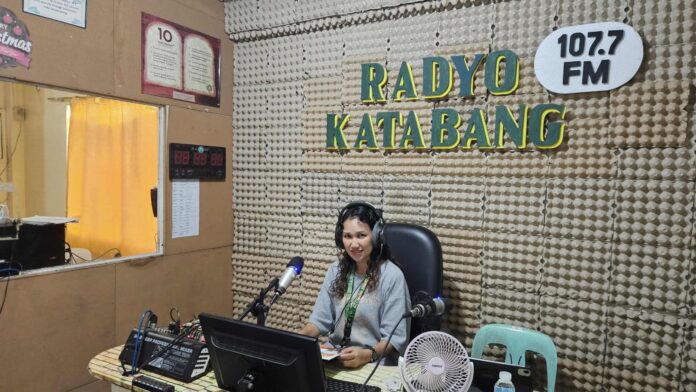
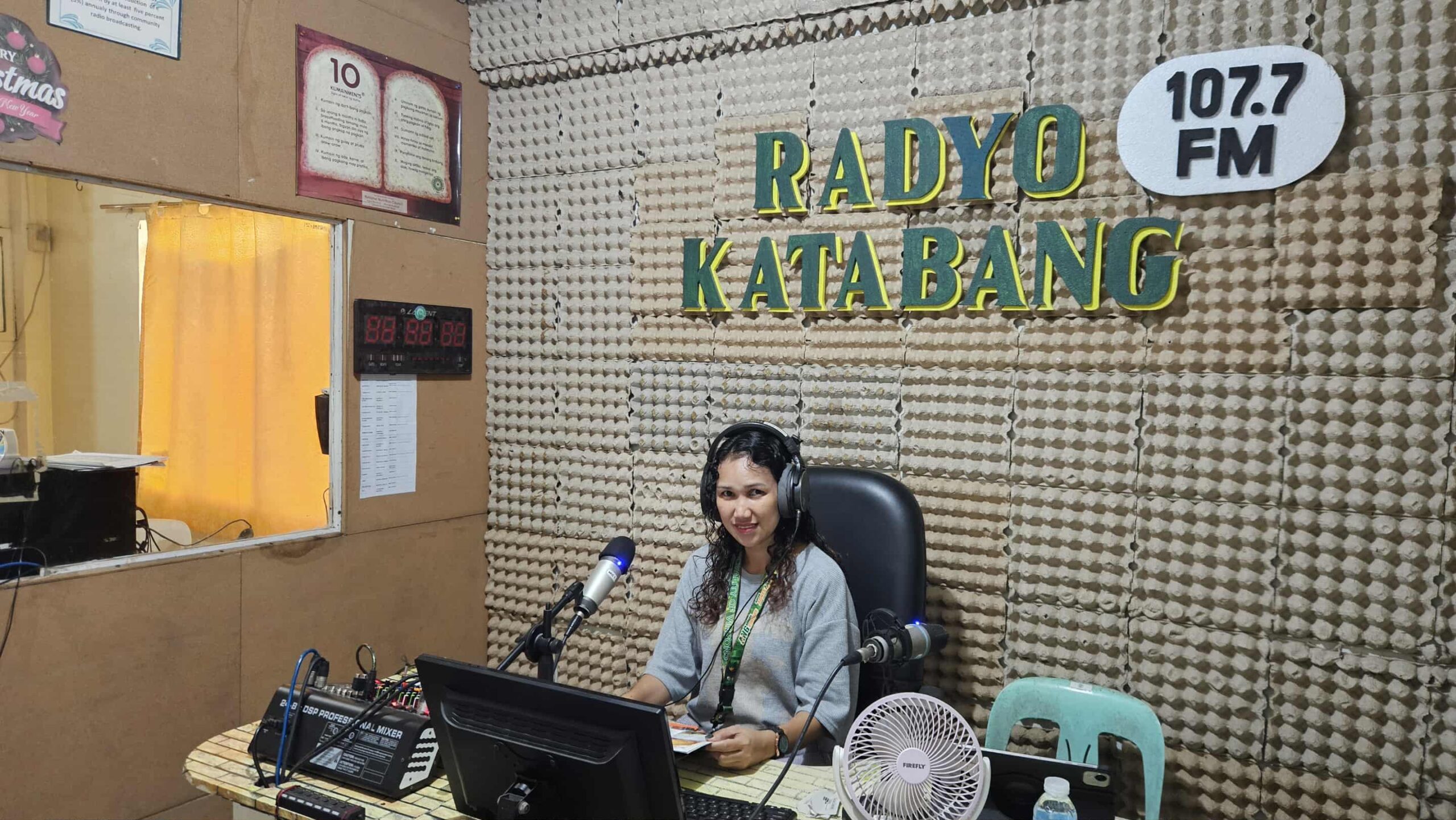
At the time — January 2020 — I visited Radyo Katabang 107.7FM, which booms out over the town’s marketplace, in the wake of a devastating typhoon.
It had only been broadcasting for two years then but it had already picked up a national community broadcasting award. I celebrated with the staff at Christmas and now on this current visit I wanted to see if things had changed much.
At first glance, not too much. The station was still broadcasting from the public market rooftop, still in the old studio with egg cartons for sound proofing, and none of the volunteer staff that I had met last time were still there.
But things were looking up — a set of new studios and offices had been constructed on the rooftop and the station is expected to move into them in February. And a change of local government in the elections in May has meant a “new broom” and optimistic plans for the future.
Municipal Administrator Timothy Joseph D. Ang . . . we are rebranding the radio station, giving it a reset.” Image: David Robie/Café Pacific
“Our administration is entirely new,” says Municipal Administrator Timothy Joseph D. Ang, who has the responsibility for the radio station on his desk.
“To be honest with you, we are rebranding the radio station, giving it a reset.”
What was wrong with the previous era, given that it was broadcasting through the covid-19 pandemic after I visited last time? I had been very impressed with the station’s role for disaster relief information.
“In the past there were a lot of regulations. After covid, there was a huge emphasis on health programming, due to government mandated health policies.
Radyo Katabang . . . now broadcasting to a wider Bicol audience. Image: David Robie/Café Pacific
“Also, a big emphasis on nutrition, spreading awareness
“We have needed to reassess the radio’s role in our community now though. Are we giving the right programming? We did a study of the barangays (local village communities) and the demographics.
Vinzons public market . . . Radyo Katabang broadcasts from the rooftop. Image: David Robie/Café Pacific
“Radio Katabang should be catering for our wider community of 30,000 or so. But our broadcast antennae were focusing on small and remote communities, probably only potentially reaching 2000 to 5000 or so.
“Trouble is many of the people are poor and don’t have radios, so they were not realistically able to make the lifestyle changes advocated in the health programmes.”
This was viewed by the minicipality as a “waste of government resources”, especially as the current radio budget had run out by election time. There was “no return on investment”.
Ang said one of the first things done was to change the broadcasting direction — more toward the provincial capital of Daet, 10 km to the south, or a 20 minute ride by tricycle (Filipino taxi), enabling a wider audience demographic and a much larger listenership. The change opened up to a potential audience of about 100,000 people.
Also, as the result of audience surveys, it was decided to revamp programming, with regular community updates, current events, political issues, as well as traditional news.
“It’s a win-win situation,” says Ang. The station team, including three or four presenters and technical staff, plus volunteers, are thrilled with the new era.
Also the town management hopes to recruit some trained journalists for the station.
Vinzons Community Radio Council chair Merle Fontanilla … Radyo Katabang vital for local empowerment in the Philippines. Image: David Robie/PMC
By David Robie in Manila
Operating out of a modest three-roomed rooftop suite overlooking the local marketplace in the rice-producing Bicol township of Vinzons, a tiny Filipino community radio startup is quietly making its mark.
Radyo Katabang 107.7FM only began broadcasting two years ago out of a studio lined with egg-container acoustic buffers in the Camarines Norte community in the central Philippines island of Luzon.
But it has already picked up a national community radio award for best coverage of community event.
The Vinzons town hero Wenceslau Vinzons … executed by the Japanese military as a resistance leader in 1942. Image: David Robie/PMC
Vinzons was famously renamed from Indan in 1959 in honour of a local wartime resistance hero who fought against the Japanese Imperial Army before being captured and executed.
At the time of the Japanese invasion, Wenceslao Q. Vinzons, was governor of the province after being the youngest member the 1935 Constitutional Convention.
The town is proud of its most famous son who was regarded as a visionary leader and respected for his “advocacy for clean government and moral leadership” until his death in 1942.
Radyo Katabang’s core team of 11 are mostly volunteers but their dedication and pride in the station and community was amply demonstrated at their recent end-of-year Christmas party that I attended as a guest.
Scenes above and below at the Radyo Katabang staff Christmas party in 2019. Image: David Robie/PMCImage: Radyo Katabang
Three community stations Only three community radio stations like this exist in Bicol and Radyo Katabang is all Vinzons has for news and information – there is no local newspaper for the widely spread community of 46,000, which includes the offshore Calaguas Islands, and rarely do copies of the national daily press circulate this far from the provincial capital Daet, an 9km tricycle or jeepney ride away.
National television stations hardly ever run stories about Vinzons.
But the Radyo Katabang crew are under no illusions about the vital importance of their local station for education, disaster risk reduction strategies and combating malnutrition – many coastal barangays (villages) are remote and can only be reached through mangrove-fringed waterways or the open sea.
Merle Fontanilla, chair of the Community Radio Council, praises the support of the Local Government Unit of Vinzons for launching and continuing to back the radio station – part of the national Nutriskwela network – to tackle the nutrition and other community welfare issues.
She says Radyo Katabang is about “community empowerment” and is an “outstanding source of information about health, nutrition and development” since 2017.
“Our station discusses the lives of the local people as reflected in the reduction of malnutrition and boosting health through community broadcasting.”
Radyo Katabang’s Merle Fontanilla (right) and Fely Koy talk to the Pacific Media Centre’s David Robie about community broadcasting in the Philippines. Image: Mary Ann Almacin/Radyo Katabang
The station’s editorial policy is declared on the studio wall, guided by the principles of “balance, integrity and accuracy” with the belief that they can fill the gaps left by mainstream media shortcomings.
Independent alternative “Nutriskwela shall be a reliable, independent alternative to mainstream media,” begins the policy pledge. “It provides balance to listeners, by focusing on underreported communities and stories not heard in commercial radio and highlighting positive and developmental stories, particularly correct nutrition behaviour and good practices in nutrition programme management.”
On diversity, the radio station declares:
“Nutriskwela shall seek out a multitude of perspectives and diverse voices, particularly from underrepresented communities and identities.
“Nutriskwela shall focus content on local issues and grassroots activities. It shall promote an analysis of the news that will lead to dialogues and understanding among individuals of different communities across the Philippines.”
Fifty one radio stations belong to the Nutriskwela community network, which states on its website that the programme was launched by the National Nutrition Council in 2008 with the help of the Tambuli Foundation as a “long-term and cost-efficient strategy to address the problem of hunger and malnutrition” throughout the Philippines by using radio – “the most available form of mass media”.
At the end of its first year of broadcasting in 2018, Vinzons was “marooned” by a savage typhoon – Usman (the Philippines averages about 21 typhoons a year in different parts of the country) that killed 156 people. It was vital to communicate to remote parts of community isolated by flooded ricefields and no electricity for three days.
Emergency generator However, without power the 300 watt Radyo Katabang transmitter was forced off the air. Last year, the municipality responded by funding a 10kva emergency power generator for 250,000 pesos (NZ$7500).
This was a critical investment for the radio station’s important disaster risk management role. Radyo Katabang also maintains a rooftop garden to follow through on its nutrition advice to the community.
As a community station, Radyo Katabang carries no advertising or political news and it relies on municipality funding and donations to keep it afloat.
Community broadcasting in the Philippines faces a difficult mediascape compared with several other Asia-Pacific countries, according to speakers at the fourth AMARC regional conference for Community Radio in Yogyakarta, Indonesia, in November 2018.
This was attended by more than 200 broadcasters, networks and civil society organisations, including the World Association for Christian Communication (WACC) partner AlterMidya – People’s Alternative Media Network, which has more than 30 member organisations in the Philippines.
“Unlike corporate media newscasts, the stories which appear in our newscast, ALAB Alternatibong Balita [Alternative News], are deeply rooted in the daily struggles of communities of workers, farmers, indigenous peoples, migrants, urban poor, women and youth,” writes Ilang-Ilang Quijano in a WACC Global commentary.
Storytelling in diversity “The ALAB newscast and public affairs shows are broadcast to member community radio stations and programmes throughout the Philippines.”
Storytelling in newscasts that span diverse communities in several islands, and in local languages “is invaluable”.
Among radio stations in this network are Radyo Sagada, broadcasting in the mountainous Cordillera region and run by mostly indigenous women, and Radyo Lumad 1575AM, a community station run by the Higaonons in central Mindanao.
Back in Vinzons, Radyo Katabang’s programme manager Fely Koy is optimistic about the empowerment future of her Nutriskwela community station in making an impact on public health.
And the meaning of Radyo Katabang? It is a Bicolano word meaning “ally or helper”.
Professor David Robie, director of the Pacific Media Centre, was recently in Vinzons, Camarines Norte, Philippines, on his research sabbatical.
Pacific Media Centre’s David Robie with Vinzons Community Radio Council chair Merle Fontanilla (centre, programmes director Fely Koy (right) and other staff in the Radyo Katabang studio. Image: Mary Ann Almacin/RK
The Palestine Solidarity Network Aotearoa (PSNA) has challenged Defence Minister Judith Collins over her “can’t be trusted” backing for controversial BlackSky Technology satellite launches and called on the Prime Minister to withdraw approval.
National co-chair John Minto today wrote to Prime Minister Christopher Luxon — who is currently in Korea for the APEC meeting — in response to what he described as a “shocking” TVNZ 1News interview with Collins last Friday that revealed the satellite launches could be used by Israel in its genocidal attacks on the besieged enclave of Gaza.
Minto asked Luxon to “overrule” Collins and end the BlackSky satellite launches
He said PSNA had requested the Prime Minister direct Collins to withdraw approval for forthcoming Rocket Lab satellite launches for BlackSky Technology from Mahia, which could be used by Israel in Gaza.
“She went for any excuse to justify approving the launches, and the Prime Minister must rein her in.”
‘Free hand’ claim Collins had said in the 1News report that the UN Security Council did not encourage sanctions, so she believed New Zealand had a “free hand to be militarily complicit” in Israel’s resumed genocide in Gaza, PSNA said as the ceasefire remained shaky today with Israel’s renewed attacks on the enclave.
“But New Zealand has complained for decades about the veto powers of one country in the Security Council,” Minto said.
“Then, our government uses the very same US veto — which it opposes — to justify licensing the launch of spy satellites to target Gaza.”
Defence Minister Judith Collins warned over satellites, TVNZ’s 1News reported last Friday. Image: 1News screenshot APR
Minto said New Zealand government was ignoring the International Court of Justice(ICJ), which has directed countries to do what they could to prevent Israel’s illegal occupation from continuing.
“Signing off on delivering the technology, which the IDF [Israeli military] uses for its bombing runs on a civilian population, can hardly be interpreted as helping Israel end its occupation of Gaza.”
Minto said Collins’ alternative excuse was that New Zealand was “not at war with Israel, so can’t sanction it” was “equally nonsensical”.
“It may come as news to the Defence Minister, but New Zealand is not at war with Iran or Russia either,” Minto said.
“Yet the government routinely imposes sanctions on both of these countries, with putting new sanctions on Iran just a few days ago.”
Israel kills 91 people Meanwhile, Israeli forces have killed at least 91 people in Gaza overnight, including at least 24 children, according to medical sources, in violation of the US-brokered ceasefire.
Al Jazeera reports that US President Donald Trump said Israel had “hit back” after a soldier was “taken out” but he claimed “nothing was going to jeopardise” the ceasefire, Al Jazeera reports.
Sussan Ley will survive “the killing season”, as commentators dub the fag end of the political year. But she’s in bad shape.
In an Essential poll published this week, Ley polled just 13% when people were asked who, from a list, would be best to lead the Liberal Party.
On 10% each were Andrew Hastie and Jacinta Nampijinpa Price, with Angus Taylor on only 7%. Tim Wilson (who defeated teal Zoe Daniel to return to parliament) was on 3%, behind teal MP Allegra Spender at 4%. A whopping 42% weren’t sure about anyone.
Ley’s poor judgement and the unwillingness of some colleagues to support her publicly were highlighted again this week, when she called for Anthony Albanese to apologise for wearing a T-shirt celebrating the band Joy Division, as he exited his plane after his trip to the United States.
Joy Division was the name given to brothels in Nazi concentration camps where women were forced into sexual slavery. The shirt had been highlighted on “Sky After Dark” (where Ley has critics she may hope to placate) the night before she took up the matter.
But, as with her call last week for Kevin Rudd to lose his ambassadorship after the incident with Donald Trump, some of Ley’s Coalition colleagues obviously disagreed when they faced the inevitable questions over her latest foray. Once again, the embattled Ley had overreached.
If she is not to go into Christmas in even worse shape than she’s in now, Ley has to meet two immediate challenges. She must have the opposition settle its position on net zero. And she needs it to reach an agreement with the government on proposed changes to the Environment Protection and Biodiversity Conservation (EPBC) act.
Net zero is by far the more fraught of these two challenges, and the internal fractures are dangerous and deep.
The Nationals’ federal council meets this weekend and is set to pass a motion condemning net zero. The Nationals parliamentary Party is moving to an early decision.
More generally, Coalition parliamentarians are in the middle of intense discussions about the way forward, with an opportunity on Friday for all-comers to state their views at a special meeting called by the Coalition’s policy committee for the Australian economy. Some Nationals have complained they can’t attend because of commitments around the federal council.
Former Prime Minister Scott Morrison, who did the net zero deal with the Nationals in 2021, is now endorsing a reteat. He posted on social media Wednesday,
“It’s common sense to ensure our policy settings are right and practical for the world as it is, not as it was or what you would like to pretend it is. That’s where you find the national interest. Net Zero at any cost on any rigid timetable is not policy, it’s just ideology.”
Despite Dan Tehan, who is leading a review of the Opposition’s energy policy, suggesting time is needed to get it right, it would be a disaster for the Liberals, and the Coalition as a whole, not to have clarity about its position by Christmas.
For his part Environment Minister Murray Watt wants to have a settlement on his proposed changes to the EPBC act by year’s end.
Watt is making it clear he will do a deal with whichever of the opposition or the Greens is willing to come closer to what the government wants.
Both have issues with the bill, which the government is introducing on Thursday.
Watt’s plan is to have the bill pass the House of Representatives next week. His aim is then for a short Senate inquiry and, assuming a deal, to pass the bill through the Senate in the final sitting week, which is at the end of November.
The pressure is on Ley to do the deal. Business also has problems with some features of the bill, but wants an agreement reached because the present approvals process for projects seriously hampers development. But business wants the deal done between the “parties of government” – that is, with the Coalition rather than the Greens.
That would give the outcome more certainty into the future – a key consideration for business – as well as being more acceptable in terms of detail than whatever a deal with the Greens would entail.
Business Council of Australia chief executive Bran Black told Sky News on Wednesday,
“It is so important that it’s the two parties of government that ultimately make the call and support a position if it is to go ahead. And that is so that you get that longevity in terms of outcomes, you get that balance that comes of knowing that you’ve got those parties of government engaged”.
So far, before the horse-trading has begun in earnest, there have been more than a dozen meetings between Watt and the opposition, Greens and other crossbenchers. Watt is encouraged by his discussions with shadow environment minister Angie Bell and the Greens Sarah Hanson-Young
The government says that under current provisions average approval times have blown out by more a year – to be more than two years – since 2004. It estimates its proposed reforms to facilitate developments, ranging from housing projects to wind farms, could inject up to $7 billion into the economy.
When she was environment minister Ley commissioned the report from Graeme Samuel, on which the proposed changes are based. She will be marked down by the business community if she can’t now help get these changes (belatedly) done.
Michelle Grattan does not work for, consult, own shares in or receive funding from any company or organisation that would benefit from this article, and has disclosed no relevant affiliations beyond their academic appointment.
Source: The Conversation (Au and NZ) – By Melissa Haswell, Professor of Health, Safety and Environment, School of Public Health and Social Work, Queensland University of Technology
The federal government is considering enforcement action against oil and gas company Inpex after it admitted serious reporting errors that significantly underestimated hazardous emissions released from its liquefied natural gas (LNG) plant on Darwin Harbour over many years.
The LNG plant is 3 kilometres from residential suburbs and 10km from Darwin city. It is required to report emissions to the National Pollutant Inventory.
Inpex has now released corrections for 2023–24 that more than double the previous estimates of emissions of volatile organic compounds (VOCs) released into the air in Darwin, from 1,619 to 3,562 tonnes. The reason for the errors has not been disclosed.
The originally reported levels of very toxic compounds benzene and toluene were just 4–5 tonnes in 2023–24. However, corrected estimates were 136 and 112 times higher, respectively, with emissions exceeding 500 tonnes of both chemicals.
Currently there is no legal limit on the amount of VOCs that Inpex is allowed to emit. These new figures raise questions about the potential harms, given serious toxicity of benzene and toluene, the large amounts released into the atmosphere over several years, the closeness to population centres and the lack of detail in current sampling. As a cancer-causing chemical, there is no known safe threshold for benzene exposures.
When the news broke, NT Chief Minister Lia Finocchiaro responded with public statements of faith in Inpex and the NT Environment Protection Authority. She said the incident illustrated the reliability of industry self-reporting. Inpex said the revised levels raised no health concerns for Darwin.
As a group of leading scientists aware of the complexities involved in measuring these chemicals and their health impacts, we strongly disagree. We view the potential health implications to be significant – they require an urgent, comprehensive and independent investigation.
Given the size of this correction, it’s imperative that corrections across all years are made public immediately. Corrected levels of benzene and toluene for 2021–22 could be particularly high, as Inpex has already reported emitting 11,000 tonnes of volatile organic compounds to the National Pollutant Inventory. That is nearly seven times more than the amount now reported for 2023-24.
Higher volatile organic compound emissions in 2024/25
In the wake of this scrutiny, Inpex has also released corrected data for 2024–25. Compared with 2023–24, Inpex further increased its emissions of total volatile organic compounds by 21%, with a 31-fold increase in xylene emissions and continuing high emissions of benzene and toluene.
This led to detailed questioning of the chairs of Inpex and the NT Environment Protection Authority by senators David Pocock and Sarah Hanson-Young at the Senate Inquiry into federal support to the Middle Arm Industrial Precinct in Darwin in 2024.
In addition, documents provided by Inpex to the inquiry also revealed the facility’s two anti-pollution devices had been out of operation for extended periods of time since 2019. These devices, called acid-gas incinerators, destroy volatile chemicals such as benzene, toluene and hazardous sulphur-containing compounds before they are released. There were no legal consequences for these breakdowns and resulting elevated VOC emissions.
Alarmingly, the Middle Arm Inquiry Report ignored these discussions. Labor and Liberal senators gave full support for a third LNG facility to be built in Darwin with little mention of the extensive health concerns raised in submissions and additional papers.
Why are these emissions so concerning?
Many studies have linked exposure to the toxic family of chemicals known as BTEX (benzene, toluene, ethylbenzene and xylenes) to multiple health issues. Short exposures can cause symptoms such as headaches, respiratory symptoms and asthma attacks. Longer exposures can cause neurological damage, pre-term births and impaired liver, kidney, lung, reproductive and immune function.
The World Health Organization classifies benzene as a carcinogen, most strongly associated with leukaemia and other blood cancers.
While most research to date has examined risks associated with BTEX chemicals in workplaces and indoor settings, many recent studies have demonstrated that at least some of these risks extend to outdoor exposures.
Last month, an extensive multi-country study demonstrated a consistent link between benzene, toluene and xylene levels in outdoor air and the risk of death.
Besides these direct risks, BTEX chemicals react readily once in the atmosphere to form ground-level ozone, especially in warm, tropical environments such as Darwin.
Darwin residents are understandably concerned about the levels of highly toxic chemicals emitted by Inpex LNG so close to homes and urban areas of Darwin.
Days before these revelations, the NT EPA reported one of Inpex’s two LNG processing units had released 36,000 litres of hot oil across the plant and into stormwater drains.
These pollution issues follow the ABC investigation of a significant gas leak at the nearby Santos LNG facility, which had not been made public for nearly 20 years.
The federal Department of Climate Change, Energy and the Environment is now reviewing these incidents and considering enforcement action.
Inpex senior vice president Bill Townsend told the ABC workers had been told there was “no cause for health concern”, citing air quality monitoring – both on-site and in the Darwin region – which he said had “consistently” shown emissions were within government limits.
This week, hotly debated new national environment protection laws are expected to enter Parliament. Strong environmental laws aren’t just for wildlife – they are vital in protecting human health too. Improved evidence-based federal laws such as a Clean Air Act would go a long way to protecting Australia’s health and wellbeing.
Melissa Haswell is affiliated with the Climate and Health Alliance, Doctors for the Environment Australia and the Public Health Association of Australia.
Branka Miljevic and Lidia Morawska do not work for, consult, own shares in or receive funding from any company or organisation that would benefit from this article, and have disclosed no relevant affiliations beyond their academic appointment.
This weekend, the aged care sector will see a major shakeup that’s been a long time coming. The reforms include a statement of rights for older people who are receiving publicly funded care, as well as putting the system on a more sustainable financial basis, given the growing demands of an ageing population.
The Albanese government’s reforms have been broadly welcomed. But there are questions about the impact of the changes, including increased costs for better-off retirees.
To talk about how the new changes will affect older Australians, we’re joined by the Minister for Aged Care and Seniors, Sam Rae. He explains why the funding overhaul was needed, as well as what some pensioners will now have to pay for.
We’ve seen an 800% growth in government expenditure on in-home aged care over the last decade. And so as we transition to support at home, we bring in the co-contribution model.
Now, people who are already receiving care and who are part of that care system prior to September 2024 will have their arrangements grandparented, such that they won’t change.
But people who are newer to the system – that is, since September 2024 – they are going to be asked, where they have the means to do so, and that will be means-tested, to make a co-contribution to some of the care.
Now the government will continue to pay for 100% of the clinical care for every single Australian. But when it comes to independence-related care, a full pensioner will be asked to make a 5% percent co-contribution to the cost of those services provided. But we will have very strict and robust guardrails around that, including provision for hardship if people aren’t unable to make those payments to ensure they have continuity of care always.
Showering and gardening are among the “independence-related” care services that some pensioners will be asked to help pay for. Asked why showering isn’t being entirely funded as a necessity, Rae says:
We’ll be monitoring this very closely […] We want to make sure that every single older person gets the care that they need and that they deserve. So there are very modest co-contributions associated with some services, such as showering, that we are asking people who have the means to contribute to to do so.
On the long waiting list for home care packages, Rae says around 120,000 Australians were waiting for a package in September this year – and “that has been rising” over recent months.
Nevertheless, 99% percent of those people who are currently within the national priority system are either already receiving a home care package at a lower level than they are necessarily waiting for at this stage, or they’re eligible to receive home care assistance under the Commonwealth Home Support Program.
[…] Many of the people who are waiting for aged care assessments may not ever require home care. They may either require a lesser level of care or a greater level of care. There are also many who are already in the home care system, but who are also waiting for additional assessment for one reason or another, depending on their evolving circumstances.
Rae says the changes are designed to try to keep up with Australia’s ageing population.
Five years ago we had about 150,000 people receiving in-home care. We now have over 300,000 people receiving in-home care. So that’s a doubling in just five years.
As you would be aware, we’re in the process at the moment of rolling out 83,000 additional home care packages just this financial year, in order to try and address some of that increasing demand.
[…] One of the really important features of the new support at home program, which comes into effect from Saturday, is that it has an inbuilt growth component to it. So it draws upon the Treasury modelling of our ageing population and demand for in-home care and has an annualised growth component associated with it, so that we don’t have to rely on ad hoc increases to the supply of home packages. We will be able to meet that demand moving forward.
Michelle Grattan does not work for, consult, own shares in or receive funding from any company or organisation that would benefit from this article, and has disclosed no relevant affiliations beyond their academic appointment.
A Marshall Islands lawmaker has called on Pacific legislatures to establish and strengthen their national human rights commissions to help address the region’s nuclear testing legacy.
“Our people in the Marshall Islands carry voices of our lives that are shaped by this nuclear legacy,” Senator David Anitok said during the second day of the Association of Pacific Island Legislatures (APIL) general assembly in Saipan this week.
“Decades later, our people still endure many consequences, such as cancer, displacement, environmental contamination, and the Micronesian families seeking safety and care abroad. Recent studies and lived experience [have shown] what our elders have always known-the harm is deeper, broader, and longer lasting than what the world once believed.”
Anitok said that once established, these human rights commissions must be independent, inclusive, and empowered to tackle not only the nuclear testing legacy but also issues of injustice, displacement, environmental degradation, and governance.
“Let’s stand together and build a migration network of human rights institutions that will protect our people, our lands, our oceans, our cultures, our heritages, and future generations,” he said.
“Furthermore, we call upon all of you to engage more actively with international human rights mechanisms. Together, it will help shape a future broadened in human rights, peace, and dignity.”
Marshall Islands Senator David Anitok . . . “Let’s stand together and build a migration network of human rights institutions that will protect our people . . . and future generations.” Image: RNZ Pacific/Mark Rabago
To demonstrate the Marshall Islands’ leadership on human rights, Anitok noted that the country has been elected to the UN Human Rights Council twice under President Dr Hilda Heine — an honour shared in the Pacific only once each by Australia and Tahiti.
Pohnpei Senator Shelten Neth echoed Anitok’s call, demanding justice for the Pacific’s nuclear testing victims.
“Enough is enough. Let’s stop talking the talk and let’s put our efforts together — united we stand and walk the talk.
“Spreading of the nuclear waste is not only confined to the Marshall Islands, and I’m a living witness. I can talk about this from the scientific research already completed, but many don’t want to release it to the general public.
“The contamination is spreading fast. [It’s in] Guam already, and the other nations that are closer to the RMI,” Neth said.
He then urged the United States to accept full responsibility for its nuclear testing programme in the Pacific.
“I [want to tell] Uncle Sam to honestly attend to the accountability of their wrongdoing. Inhuman, unethical, unorthodox, what you did to RMI. The nuclear testing is an injustice!” Neth declared.
Anitok and Neth’s remarks followed a presentation by Diego Valadares Vasconcelos Neto, human rights officer for Micronesia under the UN High Commissioner for Human Rights, who discussed how UN human rights mechanisms can support economic development, health, and welfare in the region.
Neto underscored the UN’s 80-year partnership with the Pacific and its continuing commitment to peace, human rights, and sustainable development in the wake of the Second World War and the nuclear era.
He highlighted key human rights relevant to the Pacific context:
Right to development — Economic progress must go beyond GDP growth to include social, cultural, and political inclusion;
Right to a clean, healthy, and sustainable environment — Ensuring access to information, public participation, and justice in environmental matters; and
Political and civil rights — Upholding participation in governance, freedom of expression and association, equality, and self-determination.
Based in Pohnpei and representing OHCHR’s regional office in Suva, Fiji, Neto outlined UN tools available to assist Pacific legislatures, including the Universal Periodic Review, special procedures (such as thematic experts on water, sanitation, and climate justice), and treaty bodies monitoring state compliance with human rights conventions.
He also urged Pacific parliaments to form permanent human rights committees, ratify more international treaties, and strengthen legislative oversight on human rights implementation.
Neto concluded by citing ongoing UN collaboration in the Marshall Islands-particularly in addressing the human rights impacts of nuclear testing and climate change-and expressed hope for continued dialogue between Pacific lawmakers and the UN Human Rights Office.
This article is republished under a community partnership agreement with RNZ.
Inflation jumped 1.3% in the September quarter, above economists’ and the Reserve Bank’s own expectations. That is likely to rule out a cut in interest rates next week.
The Australian Bureau of Statistics today released the consumer price index (CPI), showing headline inflation was almost double the 0.7% increase recorded in the June quarter.
Over the year to September, consumer prices climbed 3.2%, a big increase from 2.1% in the previous quarter, and above the top end of the central bank’s target.
The consumer price index was the last major piece of data before the Reserve Bank meeting on Melbourne Cup day.
The main driver of the September-quarter increase was housing, with the sharpest rise in property rates and charges in more than a decade. These jumped 6.3% — the biggest quarterly rise since 2014 — as councils across all capital cities lifted general rates, waste levies and other local charges.
Electricity prices also rose sharply, up 9.0%, driven by annual price reviews and the timing of Commonwealth Energy Bill Relief Fund rebates, the Bureau of Statistics said.
Beyond housing, travel costs added further pressure. Domestic holiday travel and accommodation rose 3.2%, pushed up by strong school holiday demand, while international travel increased 2.7% amid continued appetite for overseas trips, particularly to Europe.
While rent inflation eased to 3.8% — the lowest since December 2022 — and insurance costs moderated sharply from last year’s double-digit increases, these declines were offset by renewed price pressures elsewhere.
Inflation proves harder to contain
The result came in well above the Reserve Bank’s earlier forecasts, confirming inflation remains more stubborn than policymakers anticipated.
Overall, today’s figures point to renewed upside risks for inflation and suggest that the path back to the 2–3% target band could take longer than the Reserve Bank had expected.
A reality check for the RBA
The Reserve Bank has already cut the cash rate three times this year — in February, May and August — taking it from 4.35% to 3.6%. Those reductions were meant to ease pressure after a long period of higher interest rates.
But today’s figures serve as a reminder that the inflation challenge is far from over.
For the Reserve Bank, the path ahead may not be as smooth as hoped.
The RBA now faces conflicting signals: inflation remains at the high end of its target range, while the labour market continues to cool. Unemployment has edged up to 4.5%, job vacancies have fallen, and hiring intentions are easing. Household spending has eased slightly but not collapsed.
With inflation still elevated, a rate cut in November looks highly unlikely.
Those expectations have now evaporated. According to ASX futures data, markets are now pricing in an 85% chance of no change and only a 13% chance of a 25-basis-point cut on Tuesday, down sharply from around 50–60% before the inflation numbers were released.
Speaking at the Australian Business Economists annual dinner on Monday, RBA Governor Michele Bullock said the labour market remained “a little tight”, even after the recent rise in unemployment. Today’s stronger inflation result has reinforced that view, convincing investors that any further easing is now off the table for the rest of the year.
Commonwealth Bank, which previously expected one final cut this year, now sees the next move coming in early 2026. Westpac and NAB have also pushed their forecasts back, with both banks expecting rate cuts to resume in mid-2026. When rate cuts do resume, most analysts expect a slow and cautious cycle.
A soft landing — but a bumpier path ahead
The economy is slowing but not stalling. Growth remains modest, held back by weak household spending and softer public demand, while business investment and exports continue to provide some support.
For now, Australia still appears close to the “soft landing” the RBA has been aiming for — where inflation cools without a sharp rise in unemployment. But after today’s stronger-than-expected inflation data, keeping that balance may become more difficult in the months ahead.
The takeaway
The September-quarter CPI is a reminder that Australia’s inflation story isn’t over yet. Price growth has cooled from its peak, but remains stubborn in key areas such as housing and services.
With the labour market softening but still holding up, the RBA is expected to keep rates steady next week and take a cautious approach from here — waiting for clearer evidence that inflation is back under control before cutting further.
For households, rate relief is still on the horizon — just a little further away than many had hoped.
Stella Huangfu does not work for, consult, own shares in or receive funding from any company or organisation that would benefit from this article, and has disclosed no relevant affiliations beyond their academic appointment.
ER Report: Here is a summary of significant articles published on EveningReport.nz on October 29, 2025.
‘I want my daughter to see a strong, free mother’: Iranian women keep hope alive with daily acts of resistance Source: The Conversation (Au and NZ) – By Shadi Rouhshahbaz, Associate Research Fellow at Alfred Deakin Institute, Deakin University Three years ago, protests erupted across Iran after the death of Mahsa Jina Amini, a 22-year-old woman who had been arrested by the morality police for not wearing her hijab properly. The Islamic Republic cracked down
Stormy weather: here’s what went wrong with the Bureau of Meteorology’s website redesign Source: The Conversation (Au and NZ) – By Steve Turton, Adjunct Professor of Environmental Geography, CQUniversity Australia Nico Soro/Getty Every day, almost 2 million Australians visit the Bureau of Meteorology website for weather information. The data gathered and processed by the government agency’s radars, weather stations and supercomputers are converted into short and medium-term forecasts
Former MP Anae calls for ‘Pacific justice’ over immigration in petition Asia Pacific Report A former National MP has launched a petition calling for “equality and respect” in New Zealand’s immigration visa treatment of Pacific Islanders, saying “many are shocked when they learn the truth”. In a full page advertisement in The New Zealand Herald newspaper today, Anae Arthur Anae condemned the New Zealand government’s visa
‘Political chaos’ – Fiji PM Rabuka confirms Biman Prasad’s resignation RNZ Pacific Fiji Prime Minister Sitiveni Rabuka has confirmed that his Finance Minister — and one of three deputies — has resigned after being charged by the country’s anti-corruption watchdog. Local media first reported that Professor Biman Prasad, the man in charge of government finances, had been charged with corruption-related offences under Fiji’s political party
New images reveal the Milky Way’s stunning galactic plane in more detail than ever before Source: The Conversation (Au and NZ) – By Silvia Mantovanini, PhD Candidate, Astronomy, Curtin University Silvia Mantovanini (ICRAR/Curtin) & the GLEAM-X Team The Milky Way is a rich and complex environment. We see it as a luminous line stretching across the night sky, composed of innumerable stars. But that’s just the visible light. Observing the
Let’s celebrate nature’s spookiest and freakiest animals this Halloween Source: The Conversation (Au and NZ) – By Euan Ritchie, Professor in Wildlife Ecology and Conservation, School of Life & Environmental Sciences, Deakin University Bildagentur-online/Getty Beyond ghoulish costumes and mountains of lollies, Halloween is rooted in celebrating nature. It originated in the Celtic pagan tradition of Samhain, marking the bounty of the autumnal harvest and
Rare reptiles are moving up mountains as the world warms. They can’t keep doing it forever Source: The Conversation (Au and NZ) – By Jane Melville, Senior Curator, Terrestrial Vertebrates, Museums Victoria Research Institute Mountain Dragon (_Rankinia diemensis_). reiner/iNaturalist, CC BY-NC-SA In pockets of highlands across Australia’s east lives a shy and secretive lizard. It’s usually reddish grey in colour, with two pale strips running the length of its spiky back.
How much does it really cost to raise a child? An expert does the maths Source: The Conversation (Au and NZ) – By Ben Phillips, Associate Professor, POLIS@ANU Centre for Social Policy Research, Australian National University Australians are having fewer children than ever. At 1.5 babies per woman, the fertility rate is at a record low. Many attribute this to the cost of having and raising children. If this is
GPs will soon get extra incentives to bulk bill. So will your doctor be free? Source: The Conversation (Au and NZ) – By Stephen Duckett, Honorary Enterprise Professor, School of Population and Global Health, and Department of General Practice and Primary Care, The University of Melbourne Maskot/Getty Images A key commitment at May’s federal election was an A$8.5 billion promise to increase incentives for GPs to bulk bill patients. The
Is Halloween too scary for kids? Source: The Conversation (Au and NZ) – By Matthew Thompson, Lecturer in History and Communications, University of Southern Queensland Charles Parker/ Pexels It is easy to see Halloween as an inappropriate time for children. With its mixture of bloody costumes and scary themes, it can often feel like it is luring kids into topics they
How this 1985 documentary ‘scared the pants’ off us – and sparked a paranormal TV craze Source: The Conversation (Au and NZ) – By Alasdair Macintyre, Associate lecturer visual arts, artist, PhD, Australian Catholic University On a crisp winter evening in 1985, a documentary went to air whose advance advertising promised to scare viewers out of their wits. It didn’t disappoint. This year marks the 40th anniversary of the broadcast of
How a ‘sewer socialism’ revival could see Zohran Mamdani become New York’s next mayor Source: The Conversation (Au and NZ) – By Garritt C. Van Dyk, Senior Lecturer in History, University of Waikato Andres Kudacki/Getty Images Democratic candidate for mayor of New York City Zohran Mamdani looks increasingly like the one to beat at next week’s election. But he is up against more than the usual political challenges. US
Labour’s capital gains NZ tax gamble – from leak to launch COMMENTARY: By Craig McCulloch, RNZ News acting political editor It was hardly a dream debut for Labour’s long-awaited, much-argued-over tax package for Aotearoa New Zealand. What was meant to be a carefully choreographed reveal of a capital gains tax (CGT) later this week instead arrived early — leaked to RNZ over the long weekend and
Sport and dance benefit from performance psychology – why does acting largely ignore it? Source: The Conversation (Au and NZ) – By Tahlia Norrish, MPhil Candidate (Sport Sciences), The University of Queensland When most people think of actors, they imagine the glamour of movies, television and the stage. Yet few people realise actors are more likely to experience anxiety, depression, eating disorders, substance abuse and suicidal thoughts than the
Far-right extremists are setting up rural enclaves around the world. We need to counter the threat they pose Source: The Conversation (Au and NZ) – By James Paterson, Teaching Associate in International Relations , Monash University The idea of “getting away from it all” has long carried romantic connotations. In extremist circles, however, the idea of retreating to the land has been repurposed into a political strategy. It’s one that offers extremist actors
Fish species off icy Heard Island bounced back when illegal fishing stopped and sustainable fishing continued Source: The Conversation (Au and NZ) – By Joel Williams, Research Associate in Marine Ecology, University of Tasmania In the middle of the Southern Indian Ocean lies a vast underwater volcanic ridge known as the Kerguelen Plateau. At its centre sits Australia’s most remote territory: Heard Island and McDonald Islands. These icy outposts about 4,100km
OpenAI’s Atlas browser promises ultimate convenience. But the glossy marketing masks safety risks Source: The Conversation (Au and NZ) – By Uri Gal, Professor in Business Information Systems, University of Sydney Last week, OpenAI unveiled ChatGPT Atlas, a web browser that promises to revolutionise how we interact with the internet. The company’s CEO, Sam Altman, described it as a “once-a-decade opportunity” to rethink how we browse the web.
Blue Pacific’s unfinished business – West Papua and regional integrity ANALYSIS: By Ali Mirin When the Pacific Islands Forum concluded in Honiara last month, leaders pledged regional unity under the motto “Iumi Tugeda” — “We are Together”. Eighteen Pacific heads of government reached agreements on climate resilience and nuclear-free oceans. They signed the Pacific Resilience Facility treaty and endorsed Australia’s proposal to jointly host the
Three years ago, protests erupted across Iran after the death of Mahsa Jina Amini, a 22-year-old woman who had been arrested by the morality police for not wearing her hijab properly.
The Islamic Republic cracked down harshly on these protests, driving the Woman, Life, Freedom movement underground. Yet, Iranian women continue to resist in various ways every day, keeping the spirit of the movement alive.
I conducted interviews with Iranian women – both inside Iran and in Australia – as part of my research on women in peace-building. My research highlighted the numerous obstacles faced by these women, including economic hardship, insecurity, political barriers and increasing government control over their lives. Together, we created future visions of what Iran could become.
Despite their hardships, some women maintained hope, seeing themselves capable of making small but meaningful change.
Women, Life, Freedom as daily resistance
Days after Amini’s death in September 2022, Iranian women flooded the streets in more than 160 cities across Iran, demonstrating against gender-based discrimination, economic disparities and state violence against civilians. The Iranian diaspora also took part in solidarity protests, with more than 80,000 people marching in Berlin on one day alone.
Prominent activists and students have been arrested or forced into exile at an alarmingly high rate, especially since the Iran-Israel war earlier this year.
In such an environment, an effective political opposition hasn’t mobilised. As an Iranian woman in Australia told me:
At first, I was very angry and heartbroken when the opposition coalition failed. So many young people have died for change over the years. But I keep telling myself that no one taught us how to form coalitions or live in a society inclusive of plural opinions.
My daughter was born in 2023. How can I continue to live this double life now that I am a mother? Even though Isfahan is a religious city, I no longer wear the scarf [hijab]. When my daughter grows up, I want her to see me and my true beliefs as her role model: a strong and free mother.
Iranian women are also trying to support women-owned home businesses as a way of trying to alleviate poverty among women.
Others document harassment of women by the morality police, and even live-track the presence of officers using apps such as Gershad (morality police tracker) and platforms such as HarassWatch.
The use of social media platforms has been key to the continuation of the movement. These spaces provide opportunities for women to debate ideas and raise awareness of issues.
One prominent social media campaign, #StopHonourKillings, has been instrumental in raising awareness of femicide in Iran.
In response, the government has increased its online surveillance and targeted women activists with large social media followings with court summons, account suspensions and phishing and cyber attacks. The government has also enforced temporary nationwide internet shutdowns.
Singing and dancing have also emerged as a form of resistance. These activities are forbidden for women in front of men and in public, but many women flout the rules, courting arrest.
Last December, the Iranian singer Parastoo Ahmadi and her band live-streamed themselves performing several songs on YouTube without a permit – or her wearing a hijab. Afterwards, she was arrested and briefly detained. Ahmadi said of the concert:
This is a right I couldn’t overlook: singing for the land I deeply adore.
Parastoo Ahmadi’s online concert, which has received 2.8 million views.
Supporting women from the diaspora
Iranians in the diaspora face threats, too. The Islamic Revolutionary Guard Corps (IRGC) has harassed journalists, politicians and ordinary Iranians in many countries.
Such activities recently led to the expulsion of the Iranian ambassador from Australia.
Yet, many in the diaspora continue to amplify the voices of Iranian women. They have written to politicians, established solidarity groups, organised rallies and fundraisers, published articles and created protest artworks.
One of my interviewees in Melbourne said:
Back home we didn’t know about the process of writing to our Parliament member for accountability. We were discouraged from forming any kind of collective that could be identified as political. It was too risky. I learned everything from scratch here.
Some days, I don’t know how effective it will be. But I remind myself that in Iran people are looking at us and expecting us to use our freedom.
Business owners in the diaspora are also employing women freelancers inside Iran to help them support themselves and their families. A woman business owner who lived between Belgium and Iran shared her experience of employing and mentoring young Iranian women:
If I can’t pay my employee immediately or directly in Iran, I will purchase subscriptions for them instead (such as ChatGPT, Midjourney, Adobe or Grammarly). Some of them need these subscriptions for their work, but can’t purchase them easily inside Iran.
For Iranian women inside and outside Iran, life will not go back to the way it was before the Women, Life, Freedom movement began.
As a women’s rights activist from Uroomieh, Iran, told me:
We know we can’t go back. If the government tries to ban us from public life by preventing legal protection against us in the parliament, we will find ways to resist.
Shadi Rouhshahbaz was a Women Peacemaker Fellow at the Kroc Institute for Peace and Justice, the University of San Diego (2023-2024). She received funding from this fellowship to conduct research on Iranian women’s changemaking efforts inside Iran and in the diaspora of Australia. Shadi founded PeaceMentors, the first young women-led peacebuilding organisation in Iran in 2018.
Every day, almost 2 million Australians visit the Bureau of Meteorology website for weather information. The data gathered and processed by the government agency’s radars, weather stations and supercomputers are converted into short and medium-term forecasts essential for farmers, rural residents, professional and recreational fishers, pilots, emergency services and more. Farmers make decisions on whether to plant crops based on forecasts, while emergency services may boost response capacity ahead of wild weather.
Unfortunately, a controversial website redesign has brought this essential service under scrutiny. Last Wednesday, the bureau’s website switched to a fresh, modern look as part of a $A4 million program – the first major update since 2013. The former website – which is still accessible – had served Australia well, but was looking dated. Bureau staff, government agencies and key user groups had been calling for improvements for some time.
The problem was, the new website was less accessible. Vital data was hard to find or had changed format as the summer storm season loomed. On social media, the backlash was sudden and severe. Angry callers filled the bureau’s feedback lines. Media articles began appearing. Anger boiled over after severe storms hit Brisbane and Melbourne on Monday.
Many website users felt the bureau’s new design did not show its real severity. Queensland Premier David Crisafulli claimed the timing of the launch placed lives at risk.
Bureau management initially defended the updated site. But the federal government has now asked the bureau to fix the issues. Environment Minister Murray Watt said it was “clear that the new BOM website is not meeting many users’ expectations”.
So what went wrong? And are the criticisms warranted?
Major changes, poorly timed
When a public service makes major changes, regular users have to understand the changes and be able to access what they need.
Here, the bureau erred. Launching a major update at the start of the spring storm season and during a record-breaking heatwave was not ideal. Better public communication and walk-throughs could have helped make these changes easier.
Many users report finding it harder to access the data they want on the new Bureau of Meteorology website. Australian Bureau of Meteorology
All point to significant problems with the website’s usability and navigation, radar functionality and accuracy and wider design and launch issues.
Radar problems
The updated rain radar functionality has come in for particular criticism. On the previous website, users could see the path a storm or weather front had taken and see the time it was likely to arrive. This function was especially useful for emergency services. But this was removed. Other users have noted a lag time for the new radar – a storm could arrive before the bureau website suggested it would.
The old Bureau site rain radar used dbz (radar reflectivity units). But the new one has switched to a new unit, mm/h (rainfall rate in millimetres). It’s still possible to switch back to the more familiar dbz, but for many users, it won’t be clear how to do this.
On Monday, a severe storm hit Brisbane. The radar images on the new version of the Bureau website (right) gave the impression the weather system was less severe than on the old version of the site (left). Author provided/Bureau of Meteorology
As the bureau moves to fix these issues, it would make sense to make the old and new colour scales the same, as independent meteorologists have suggested. That is, the black colour showing highest intensity rainfall using the old dbz units should be tied to the highest rate for the mm/h units.
That’s not all. Farmers and fishers have been frustrated by the disappearance of the Doppler wind function. On the old site, this function was a vital way to track the intensity of winds associated with supercell storms, cold fronts and tropical cyclones.
In hilly regions such as the area between Cooktown and Townsville, local weather radars are essential as a way to give residents and farmers a better way to see rainfall. But in the new update, some areas appear to have been completely wiped from the radar view. Places such as Cape Tribulation – one of the wettest locations in Australia – can no longer access this crucial information.
It’s essential Australians have a reliable and understandable source of weather information before summer begins. This summer, Australia is likely to experience a La Niña event, which tend to bring cooler, rainier conditions as well as a higher risk of more tropical cyclones in Australian longitudes and a more active monsoon season across the tropics. Both of these will increase the risk of flooding across Australia’s north and east.
To their credit, the bureau’s management have requested constructive feedback on the new website. Giving clear feedback on what works and what doesn’t will be useful in fixing these issues and restoring confidence in Australia’s weather information.
In the interim, users can still access the old version of the website.
Steve Turton has received funding from the Australian and Queensland Governments.
A former National MP has launched a petition calling for “equality and respect” in New Zealand’s immigration visa treatment of Pacific Islanders, saying “many are shocked when they learn the truth”.
In a full page advertisement in The New Zealand Herald newspaper today, Anae Arthur Anae condemned the New Zealand government’s visa settings that discriminated against Pacific peoples visiting the country and recalled the “dark days of the Dawn Raids“.
The petition calls on the government to allow Pacific people to enter New Zealand on a three-month visitor visa issued on arrival.
“While 90 percent of New Zealanders value and respect the contribution that Pacific peoples have made to this beautiful nation, most are unaware of the unfair treatment we continue to face,” Anae declared.
“Many are shocked when they learn the truth.”
“Currently, citizens from 60 countries aroundn the world — representing a combined population of 1.65 billion peopole — can arrive at any New Zealand airport and receive a three-month visitor visa arrival, free of charge,” he said.
“In contrast, the 16 Pacific Island Forum nations, with a total population of fewer than 16 million, are denied this privilege.
‘Lengthy, expensive’ process Anae, who recently discussed his proposal on Radio Samoa, said that instead Pacific people needed to go through a “lengthy and expensive” visa application process — “preventing many from attending family funerals, emergencies, graduations and other important family events”.
Until recently, he said, New Zealand’s Immigration Office in Samoa had been open for just an hour a day, “serving over 200,000 people with deep family and historical ties to New Zealand”.
Anae said this lack of accessibility was “unacceptable for nations bound to New Zealand through treaties of friendship and shared sacrifice”.
Former MP Anae Arthur Anae discusses his petition with Radio Samoa.
“Let us reflect: Is this how we treat nations who have stood beside New Zealand through war, loss and shared history?” he said.
The “Pacific Justice:” advertisement in today’s New Zealand Herald. Image: NZH screenshot APR
“We have shown loyalty, worked hard to build this country since the 1940s, and contributed immensely to its growth. Yet, we were once hunted in the dark days of the Dawn Raids, a shameful chapter that should never be repeated.
“Pacific peoples have proven time and again that, when given the opportunity, we can achieve and contribute equally to anyone else.”
The petition has received at least 24,000 signatures and closes on November 7.
Fiji Prime Minister Sitiveni Rabuka has confirmed that his Finance Minister — and one of three deputies — has resigned after being charged by the country’s anti-corruption watchdog.
Local media first reported that Professor Biman Prasad, the man in charge of government finances, had been charged with corruption-related offences under Fiji’s political party laws and was expected to resign.
According to local media reports, Dr Prasad was charged with allegedly failing to declare his directorship in hotel ventures as required under the Political Parties Act.
The development came less than a week after the resignation of co-Deputy Prime Minister Manoa Kamikamica, who is also facing corruption charges.
“Today, I received Biman Prasad’s formal notification of his resignation from Cabinet and as Deputy Prime Minister. He will remain a member of Parliament and caucus. His resignation follows the formal charges being laid against him by the Fiji Independent Commission Against Corruption (FICAC),” Rabuka said in a video statement released by the Fiji government yesterday afternoon.
Dr Prasad, who is the leader of the National Federation Party, has served as a cabinet member since 24 December 2022. He was responsible for finance, strategic planning, national development and statistics portfolios.
Rabuka told fijivillage.com that he believed the cases against his two deputies would not be resolved quickly, and that “it may take some portfolio management and reshuffling”.
‘Shortest possible time’ However, in a statement last evening, Dr Prasad said he intended to “deal with this charge in the shortest possible time and in accordance with proper legal process”.
“My lawyers are dealing with this expeditiously,” he said.
He said Rabuka had “assured me of his personal support while I do so”.
“One thing I have learned in 11 years of political leadership is that it involves many challenges, often from unexpected places,” he said.
“This is just one more of those challenges to be dealt with calmly, patiently, and as swiftly as possible.”
Rabuka has appointed an MP from his ruling People’s Alliance Party to take over the ministerial portfolios that Dr Prasad and Kamikamica had been overseeing.
Manoa Kamikamica (left) and Prime Minister Sitiveni Rabuka . . . the resigned deputy PM is charged with perjury and giving false information to a public servant. Image: Facebook / Manoa Kamikamica DPM
Kamikamica is being charged with perjury and giving false information to a public servant, while the details of the charges against Dr Prasad have yet to be made public by FICAC.
‘Political and institutional chaos’ – Labour Party The Fiji Labour Party says the latest developments is a sign of “a total breakdown of leadership” under Rabuka.
“Fiji Labour Party notes with deep concern the ongoing political and institutional chaos gripping the coalition government,” it said in a statement.
“Instead of confronting the crisis head-on, the Prime Minister has chosen to downplay the gravity of the situation, pretending that everything remains ‘under control’.
“The truth is quite the opposite — the coalition is collapsing under the weight of its own hypocrisy, infighting, and betrayal,” it said.
The party added the government is “in free fall” and the country needs “renewal, not recycled politics”.
This article is republished under a community partnership agreement with RNZ.
Silvia Mantovanini (ICRAR/Curtin) & the GLEAM-X Team
The Milky Way is a rich and complex environment. We see it as a luminous line stretching across the night sky, composed of innumerable stars.
But that’s just the visible light. Observing the sky in other ways, such as through radio waves, provides a much more nuanced scene – full of charged particles and magnetic fields.
For decades, astronomers have used radio telescopes to explore our galaxy. By studying the properties of the objects residing in the Milky Way, we can better understand its evolution and composition.
To reveal the radio sky, we used the Murchison Widefield Array, a radio telescope in the Australian outback, composed of 4,096 antennas spread over several square kilometres. The array observes wide regions of the sky at a time, enabling it to rapidly map the galaxy.
A view of the Murchison Widefield Array antenna layout.
Between 2013 and 2015, the array was used to observe the entire southern hemisphere sky for the GaLactic and Extragalactic All-sky MWA (or GLEAM) survey. This survey covered a broad range of radio wave frequencies.
The wide frequency coverage of GLEAM gave astronomers the first “radio colour” map of the sky, including the galaxy itself. It revealed the diffuse glow of the galactic disk, as well as thousands of distant galaxies and regions where stars are born and die.
With the upgrade of the array in 2018, we observed the sky with higher resolution and sensitivity, resulting in the GLEAM-eXtended survey (GLEAM-X).
The big difference between the two surveys is that GLEAM could detect the big picture but not the detail, while GLEAM-X saw the detail but not the big picture.
A beautiful mosaic
To capture both, our team used a new imaging technique called image domain gridding. We combined thousands of GLEAM and GLEAM-X observations to form one huge mosaic of the galaxy.
Because the two surveys observed the sky at different times, it was important to correct for the ionosphere distortions – shifts in radio waves caused by irregularities in Earth’s upper atmosphere. Otherwise, these distortions would shift the position of the sources between observations.
The algorithm applies these corrections, aligning and stacking data from different nights smoothly. This took more than 1 million processing hours on supercomputers at the Pawsey Supercomputing Centre in Western Australia.
The result is a new mosaic covering 95% of the Milky Way visible from the southern hemisphere, spanning radio frequencies from 72 to 231 MHz. The big advantage of the broad frequency range is the ability to see different sources with their “radio colour” depending on whether the radio waves are produced by cosmic magnetic fields, or by hot gas.
The emission coming from the explosion of dead stars appears in orange. The lower the frequency, the brighter it is. Meanwhile, the regions where stars are born shine in blue.
These colours allow astronomers to pick out the different physical components of the galaxy at a glance.
The new radio portrait of the Milky Way is the most sensitive, widest-area map at these low frequencies to date. It will enable a plethora of galactic science, from discovering and studying faint and old remnants of star explosions to mapping the energetic cosmic rays and the dust and grains that dominate the medium within the stars.
The power of this image will not be surpassed until the new SKA telescope is complete and operational, eventually being thousands of times more sensitive and with higher resolution than its predecessor, the Murchison Widefield Array.
This upgrade is still a few years away. For now, this new image stands as an inspiring preview of the wonders the full SKA will one day reveal.
Natasha Hurley-Walker receives funding from the Australian Research Council.
Silvia Mantovanini does not work for, consult, own shares in or receive funding from any company or organisation that would benefit from this article, and has disclosed no relevant affiliations beyond their academic appointment.
Source: The Conversation (Au and NZ) – By Euan Ritchie, Professor in Wildlife Ecology and Conservation, School of Life & Environmental Sciences, Deakin University
Beyond ghoulish costumes and mountains of lollies, Halloween is rooted in celebrating nature. It originated in the Celtic pagan tradition of Samhain, marking the bounty of the autumnal harvest and transition to the dark depths of winter.
Fast forward to 2025, and Halloween is a commercial juggernaut expected to exceed $A19 billion in spending in the US alone.
It’s also one that can cause serious environmental harm, generating masses of plastic and food waste, and disturbing and harming wildlife.
This year, let’s celebrate nature’s spookiest and most gruesome wildlife with an environmentally-friendly Halloween.
Move aside werewolves, headless horsemen, witches and warlocks, here are ten of the most marvellous and macabre animals that will truly turn heads.
1. Vampire and ghost bats
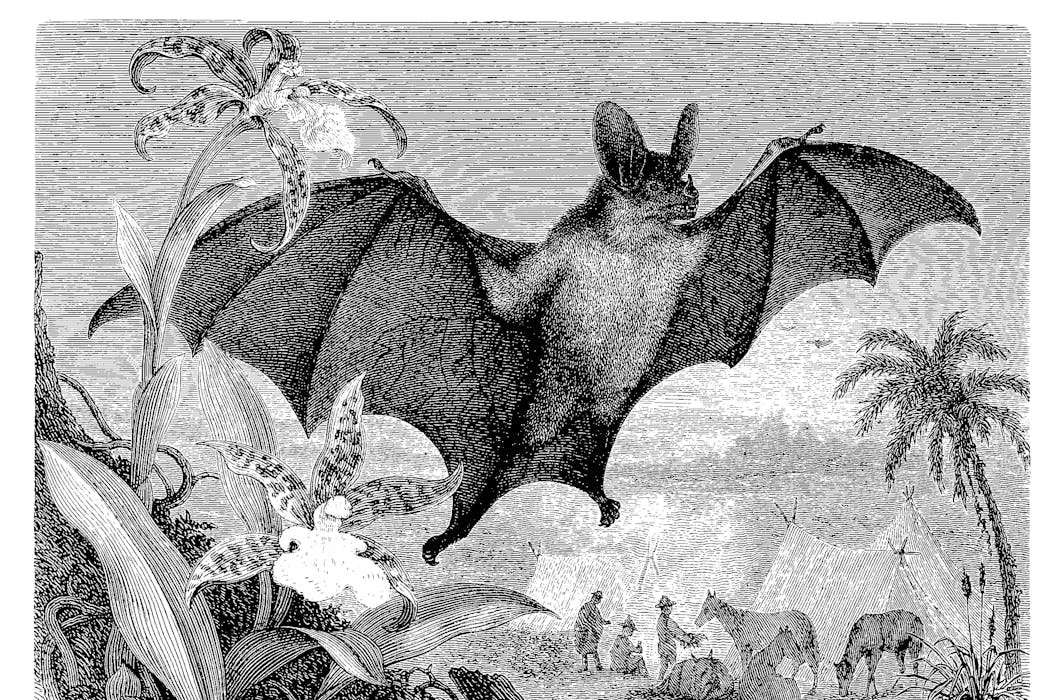
Dracula had nothing on vampire bats. These flying mammals use razor-sharp teeth to puncture their prey’s bodies and grooved tongues then lap up the blood. Vampire bats are restricted to Central and South America.
But Australia has the aptly-named ghost bat, although they don’t drink blood. This species hunts mammals, birds, lizards, frogs, and other prey, but is itself sadly listed as vulnerable to extinction.
Australia’s ghost bat is an impressive predator of the night.
2. Horned lizards
Rather than being blood suckers, some animals squirt blood to protect themselves!
Horned lizards can control and constrict the blood flow in their heads, causing pressure to build up and, ultimately, rupture blood vessels around their eyes.
Rapid and repeated squirts of blood — laced with noxious chemicals from their venomous ant prey — are shot with remarkable precision over several feet at unsuspecting would-be predators, including coyotes.
Few can squirt blood as accurately and as far as horned lizards.
3. Dementor wasps
The dementor wasp is truly the stuff of nightmares, especially if you’re a cockroach. They inject venom into cockroach brains, turning them into compliant zombies.
Once in control, wasps lead the zombie cockroaches back to their nests, lay their eggs in or on them, and the young wasps eat them alive.
Dementor wasps turn cockroaches into zombies.
4. Goblin sharks
The ocean depths are renowned for bizarre animals, including the wolf-fish, the fang-tooth fish, the vampire squid … and the goblin shark!
These sharks have distinctly goblin-like pointed snouts and long sharp teeth. Perhaps their most shocking feature is their mouth, which can be rapidly shot out from their head when feeding.
Goblin sharks have a unique appearance and feeding behaviour.
5. Assassin bugs
Assassin bugs kill ants for a living. But that’s not all.
Once they’ve liquefied and sucked their prey dry, they pile the lifeless bodies onto their backs. This is thought to be a way to confuse living ants and avoid their attack.
Assassin bugs, nature’s body collectors.
6. Slow lorises
Beware cute first appearances. The slow loris is capable of turning living creatures into visions of the walking dead.
Glands in their armpits produce a noxious oil, which oozes out and is licked by the loris. Combining this oil with their saliva produces a powerful cocktail that can be delivered through strong jaws and grooved teeth capable of piercing bone.
A bite from a slow loris can cause flesh to gradually rot away.
Looks can be deceiving: beware the bite of a slow loris! CC BY
7. Sea cucumbers
The film The Exorcist is famous for its vomiting scene, but the humble sea cucumber delivers a far more unnerving performance.
When threatened they self-evisercate, spilling their guts out of their head or rear end (cloaca) and putting off would-be predators who prefer “live prey” from their meals.
Some have additional sticky and toxic filaments able to entangle, immobilise and even kill some attackers. Once danger has passed they can retreat and over several days they will remarkably regenerate their internal organs.
Sea cucumbers literally spill their guts in self defence.
8. Skipper caterpillars
Living in confined spaces can pose many problems, including how to avoid soiling your home. Skipper caterpillars that live in curled leaves have a solution – explosive defecation!
They fire their waste via a hatch and under elevated blood pressure, meaning their flung dung can travel as far as 1.5 metres. It’s believed this trick has evolved to reduce scent building up that could attract predatory wasps.
When their encysted larvae are eaten by unsuspecting grasshoppers or crickets, they develop inside their host and ultimately control their behaviour.
They lead them to water and cause them to drown themselves, whereupon the worm that has been growing inside them hatches out and completes the parasite’s life cycle. Ridley Scott’s iconic chest-bursting scene in Aliens comes to mind.
The Gordian (horsehair) worm is a parasitic body-snatcher.
10. Shrews
Like the slow loris, cute and furry can hide a darker side for shrews. Many shrew species are venomous, using their bite to subdue their prey.
But they don’t always eat their victims immediately. Instead, they engage in “live hoarding”, where they stow their incapacitated, comatose meals away until hunger calls.
What they lack in size, shrews make up for with fight and powerful venom.
Halloween horrors
Far scarier than any animal’s appearance or bizarre behaviour, is the toll Halloween takes on the environment.
Halloween sees a surge in the sale of single-use polyester and plastic costumes and decorations, as well as individually-wrapped sweets.
One of the most popular but dangerous Halloween decorations are fake spider webs. These synthetic fibres regularly entangle and kill wildlife. They’re often blown away, ending up in waterways – where they can cause the same issues for aquatic life.
In pockets of highlands across Australia’s east lives a shy and secretive lizard. It’s usually reddish grey in colour, with two pale strips running the length of its spiky back. Growing to a maximum of 20 centimetres, it could easily fit in the palm of an adult’s hand.
But although the mountain dragon (Rankinia diemensis) is small, it can teach us big lessons about the influence of climate change on Australian biodiversity, as our new research, published today in Current Biology, demonstrates.
Tracking change over geological timescales
The predictions about how climate change will impact native species aren’t good. But it is challenging to truly understand how future climate changes will impact how species are distributed. That’s largely because climate change happens at a scale and time frame that is difficult for researchers to directly observe and measure.
This is where the emerging field of conservation paleobiology comes in.
It uses the fossil record to understand how animals and other living organisms responded to past environmental changes over geological timescales – that is, thousands to millions of years.
Conservation paleobiology can also help overcome another challenge: distinguishing the impacts of human-induced environmental threats such as climate change, habitat destruction, introduced disease, pollution or invasive species from “natural” variations in climate.
All of these factors may be acting at the same time and may equally lead to species declines.
From cold and dry to warm and humid
The Quaternary – from roughly 2.5 million years ago until today – is a particularly promising period to study.
During this period the climate in Australia changed drastically and repeatedly from cold and dry glacial periods to warm and more humid interglacial periods. These changes shaped where today’s species are found. They also offer an opportunity to measure influences of climate change in the absence of human impacts.
By studying fossils, often preserved as isolated pieces of bone, it’s possible to find out how species react to these natural climatic changes during the Quaternary. These results then allow predictions of their reactions to the human-induced climate change we experience right now.
Our new research links this historical period with the present by combining analyses of fossils with genetic data from museum specimens. We used a technique called microCT imaging to study fossils. We then combined this information with genomic data to see if current populations of mountain dragons were still healthy.
A 3D rendering of a mountain dragon fossil skull and jaw. Till Ramm/Museums Victoria
A shrinking population
The mountain dragon is now found in Victoria, New South Wales and Tasmania, where it is the only native dragon lizard. An isolated population in the Grampians National Park in western Victoria is currently listed as critically endangered.
We found the range of mountain dragons was much larger roughly 20,000 years ago, during the peak of the last cold and dry glacial period. Isolated upper jaw bones found at two different fossil sites revealed these reptiles were once present in two locations where they’re are absent today: Kangaroo Island and Naracoorte in South Australia.
Our genetic results also revealed the populations of mountain dragons that still exist today are largely disconnected from each other, increasing their vulnerability.
Some populations in lower altitudes are genetically less diverse. This is an indicator of threatened or declining populations.
This species was also more widely distributed at lower altitudes 20,000 years ago compared to today. This suggests it has slowly been pushed up the mountains by changing climate.
This situation is alarming, because under rapid global warming, the species will at some point have nowhere to escape.
Mountain dragons don’t seem to be the only species reacting to climate change in this way.
Comparisons with other reptiles living in the same areas indicate the pattern we see in mountain dragons may also cause other reptile species to decline. For example, the blotched blue tongue lizard (Tiliqua nigrolutea) was also found on Kangaroo Island 20,000 years ago.
Other species such the she-oak skink (Cyclodomorphus praealtus), the Blue Mountains water skink (Eulamprus leuraensis) and White’s skink (Liopholis whitii) show similarities in terms of their genetic diversity and population connectivity. They also likely had larger ranges when the climate was more favourable.
Reptiles can’t actively regulate their body temperatures. This makes them less able to adjust to changing temperatures. Previous research shows the temperate southeastern Australian ecosystem, including the southern Alps, is a hotspot of endangered reptiles within Australia.
Now our research on mountain dragons suggests climate change is a likely cause for the high number of threatened reptiles in this area. It also highlights the urgent need for updated conservation strategies that take into account where Australia’s unique native species may move to as the planet continues to warm.
Jane Melville receives funding for this research from the Australian Research Council.
Till Ramm was supported during his PhD by a doctoral scholarship of the German
National Academic Foundation (Studienstiftung des deutschen Volkes), a
Michael Mavrogordato Award of the Native Australian Animals Trust, and the
Holsworth Wildlife Research Endowment.
Source: The Conversation (Au and NZ) – By Ben Phillips, Associate Professor, POLIS@ANU Centre for Social Policy Research, Australian National University
Australians are having fewer children than ever. At 1.5 babies per woman, the fertility rate is at a record low. Many attribute this to the cost of having and raising children.
If this is true, it raises questions of intergenerational fairness and future planning for governments. What do we do about the young would-be parents who are opting out because it’s simply too expensive?
The problem with this assumption is that while it may feel true that childbearing must have become more expensive over the decades, it’s not that simple.
So what do parents have to fork out to raise children, how do we measure it, and are kids really that much more expensive now than they used to be?
Intergenerational inequality is the term on the lips of policymakers in Canberra and beyond. In this four-part series, we’ve asked leading experts what’s making younger generations worse off and how policy could help fix it.
Crunching the numbers
Calculating the cost of raising kids is a complicated beast that raises many questions for academics to consider. Is a second child less expensive than a first child? Are older children more expensive than younger children? Do higher income families spend more on children than lower income families, and what share of that spending is necessary compared to discretionary?
These are debates in the literature for which there aren’t necessarily clear answers, in spite of much research.
Researchers also contest whether we should talk about just the direct cost, or if we should also consider the indirect costs, such as the impact on hours in paid work or the loss of leisure time for busy parents. We focus here and in our paper for the Economic Inclusion Advisory Committee on the direct costs.
One way, and probably the more intuitive, is the “budget standards” approach. This puts a value on the cost of a basket of goods and services for a family with and without children. The difference is the cost of children.
This seems simple, until it’s not. For example, do you need a fourth bedroom for a third child? Do you need a bigger car? A larger fridge? Private or public school? Childcare or at home care? What about hand-me-down clothes and toys?
Another approach, which is our focus, is a survey-based statistical method (or “iso-welfare” in technical terms) comparing living standards of different households. We ask how much more income (or spending) is required to ensure the same living standard between a family with children and a family without children.
Living standards are measured by what share of total household income or expenditure is spent on basic items, such as food or utilities.
The logic here is that a family that spends a lower share (on average) on basic goods has a higher standard of living than a family that spends a higher share on basic goods.
The latest high quality survey on expenditure in Australia is now ten years old, so in our latest research we’ve taken a new approach. We use financial stress as a measure of living standards instead.
Using Housing Income and Labour Dynamics in Australia (HILDA) data, we model financial stress against income and a range of other household variables and estimate how much extra disposable income a family with children needs to maintain the same living standard as a couple without children. That extra income is considered the cost of children.
While there are many advantages to using this method, a major drawback is that it doesn’t give you an estimate for how much a family needs to spend, rather how much they do spend. Families may well spend more than what they strictly need to.
So, how much do families spend on children?
We estimate families spend about 13% of their disposable income on the first child and a further ten percentage points for each child after that.
For a working-age couple earning the typical after-tax income (around A$130,000 per year), that equates to about $17,000 per year for the first child and around $13,000 per year for each subsequent child.
That means to raise the eldest child to adulthood, the couple would spend about $300,000 over 18 years in today’s dollars. Subsequent children would be about $230,000 each.
Research shows the first-born child costs about 13% of a family’s disposable income a year to raise. Getty
Lower income families spend a higher share of their income on children, at around 17% for the first child and 13% for subsequent children. But these households spend a lower absolute amount on children.
Does age of the child change the cost? There is uncertainty around this, but our latest research indicates younger children and older children are moderately more expensive than middle aged (six to 12) children.
This finding contrasts with previous research and conventional wisdom that older children are the most expensive.
These estimates are not set in stone. There are different ways to estimate such numbers and they can differ depending on what definitions you adopt and methods you use to analyse the data.
Ok, do kids cost more now?
The HILDA dataset has been gathered over many years, so we can compare the cost of children through time, albeit not perfectly.
Single year samples are relatively small and subject to error, but that analysis suggests not a lot has changed with the cost of children since 2001.
Our research doesn’t provide clues as to why fertility rates in Australia have dropped (as they have in most developed nations). Other data such as Australian Bureau of Statistics income survey and financial stress data suggest real incomes for couples with children have increased over the longer term (although not by much, if at all, in recent years).
The lack of evidence here likely points to other factors driving lower fertility rates. Families may be delaying having children to focus on other pursuits, such as employment or education. It’s also more acceptable for couples, and women in particular, to choose to not have children.
Another possible reason is people could be being deterred by the perception of higher costs, instead of the actual cost. Or perhaps people simply want to spend their money elsewhere.
Calculating the cost of children is complex and imprecise, but it’s fair to say the evidence doesn’t show that the direct cost of kids is getting more expensive over time. Younger generations not having kids, or fewer kids, is likely related to many factors, but we can’t draw affordability down generational lines.
Ben Phillips through his role at the ANU provides consulting services on a range of areas in economic and social policy and has recently published work on a consulting basis for the Economic Inclusion Advisory Committee on the cost of children.
Source: The Conversation (Au and NZ) – By Stephen Duckett, Honorary Enterprise Professor, School of Population and Global Health, and Department of General Practice and Primary Care, The University of Melbourne
A key commitment at May’s federal election was an A$8.5 billion promise to increase incentives for GPs to bulk bill patients. The government moved quickly after the election, with new arrangements to start on November 1.
When a patient is bulk billed they don’t have any out-of-pocket payment to see a GP. If a patient isn’t bulk billed, the GP can charge an out-of-pocket fee. The new incentive arrangements gives the GP a small additional payment to help cover the difference.
Bulk-billing incentives are unlikely to lead to 100% of GP visits being bulk billed. But that wasn’t the government’s ambition: it aims to increase the bulk billing to 90% by 2030. The current rate is 79%.
Here’s what’s changing, and what it means for patients and GPs.
The Medicare promise is that financial barriers to health care will be a thing of the past. All you should need is “your Medicare card, not your credit card” was Prime Minister Albanese’s mantra during the election campaign, as he waved his Medicare card around at every opportunity.
It has been a consistent Labor slogan since then-Prime Minister Bob Hawke and Health Minister Neal Blewett introduced Medicare over 40 years ago.
However, the Abbott-Turnbull-Morrison governments froze the Medicare rebate for almost a decade. This meant as inflation rose and the costs of running a clinic increased, GP net revenue went backwards. Many practices gave up on bulk billing and introduced patient co-payments.
Bulk-billing rates were artificially inflated in the first years of the pandemic because new telehealth items were only paid if they were bulk-billed. But when normal billing practices resumed, bulk billing went into freefall.
When Labor was elected in May 2022, the bulk-billing rate was 87% but dropped 10 percentage points within a year.
Labor implemented what it hoped was a quick fix, building on a bulk-billing incentive introduced by the Coalition. Labor tripled the incentive for visits by concession-card holders and children who were bulk-billed.
That stopped the decline. But it didn’t bring bulk-billing rates up to pre-pandemic levels.
How much are the rebates?
Starting on November 1, the bulk-billing incentive will apply to all Australians.
In addition, if a practice bulk bills all its patient visits, it will receive a further 12.5%.
The rebate for a typical (level B, 6 to 19 minute) consultation is A$43.90. The bulk-billing incentive will be $21.85 if eligible patients are bulk billed in metropolitan areas, totalling $65.75 (or $73.97 if all the practice bulk bills all patient visits.
For the one-quarter of visits that aren’t bulk-billed, the average out-of-pocket payment is around $50 – significantly less than the bulk-billing incentive payment.
GPs and practice owners are now doing their sums to see if they should increase bulk billing. The government has produced a calculator to help them do this analysis.
Will your GP bulk bill? It will depend on these things
Six factors will determine whether a practice will shift to fully bulk billing.
1. Ideology
Some GPs and practice owners are resolutely opposed to bulk billing. Some believe patients won’t value their service if they don’t pay something. Others think bulk billing makes them too beholden to government.
2. Indexation risks
GPs may not trust the government to continue to index rebates annually in line with inflation. GPs have been bruised by the previous government’s freeze, and they don’t want to risk having to reintroduce patient billing if a future government freezes rebates again.
To overcome this concern, a recent review of GP incentive payments recommended an independent body sets the new rebate level each year.
3. Current out-of-pockets
Practices that impose very high out-of-pocket payment now will probably not change. Many of these are in wealthy areas.
The expansion of eligibility for the bulk-billing incentive and the added 12.5% uplift for 100%-bulk-billing may not be enough to offset the lost revenue for these clinics.
4. Current bulk billing rates
If a practice has low rates of bulk billing now, even with moderate out-of-pocket charges, moving to full bulk billing may also leave them with reduced revenue.
5. Offsetting consumer pressure
The government is embarking on a promotional campaign to encourage GP clinics to bulk bill. When a practice decides to bulk bill all patients, the government will encourage practices to advertise this by erecting a poster outside their clinic.
This may encourage patients to change doctors or quiz their GP or the clinic receptionist about why they’re not being bulk-billed. Consumer pressure may make life uncomfortable for GPs who continue to impose co-payments, especially in low-income areas.
6. Availability of alternatives
Expansion of alternatives to general practice, such as pharmacist prescribing, might lead to a drift away from practices that are still charging out-of-pocket fees.
Contrary to the views of some GPs, the government target of 90% of all attendances bulk billed by 2030 will probably be achieved.
There will be an immediate uplift from the current rate of 79% when the new arrangements start on November 1. The current bulk-billing rate in areas with the lowest socioeconomic status is already 89% and that is likely to get even closer to 100% pretty quickly.
A combination of patient pressure, realisation that the sky has not fallen in under the new arrangements, and that this government can be trusted to index rebates, will mean the bulk-billing percentage will continue to increase over the next few years.
This means patients will face fewer financial barriers to access to essential primary medical care.
Stephen Duckett was a member of the Review of General Practice Incentives
It is easy to see Halloween as an inappropriate time for children. With its mixture of bloody costumes and scary themes, it can often feel like it is luring kids into topics they are not ready to grapple with.
However, since the time of fairy tales, the gothic and the macabre have held a fascination for children.
Why?
If it’s good for Snow White …
Some of the most classic children’s stories are scary and, at times, brutal.
They involve wolves eating grandmothers, witches trying to eat kids, kids pushing witches into ovens and stepmothers trying to poison their step daughters or use them as slaves.
It is horrible stuff. But it is important to remember these stories give children a safe space to negotiate and learn resilience. Child psychologist Bruno Bettelheim argues
Fairy tales intimate that a rewarding, good life is within one’s reach despite adversity – but only if one does not shy away from the hazardous struggles.
Studies by psychologists suggest fairy tales also show children they can cope with challenges in their own lives, because their fears can be managed and overcome. As English fantasy writer G.K. Chesterton said:
The baby has known the dragon intimately ever since he had an imagination. What the fairy tale provides for him is a St. George to kill the dragon.
What about gore?
In the 1880s, many of the children of the Victorian British slums grew up reading the famed “Penny Dreadfuls” – cheap, sensational, serialised novels. These were stories including bloody characters such as Sweeney Todd, as well as wild adventures, while readers were waiting to hear the true news about the exploits of Jack the Ripper in Whitechapel.
These tales, like violent video games are demonised today, were seen as corrupting young people.
These stories gave working class children a gateway into literacy. Alfred Cox, an ironworker’s son who became a doctor and prominent member of the British Medical Association, explained “far from leading me into a life of crime, [Penny Dreadfuls] made me look for something better”.
Labour Party politician John Paton described reading these Penny Dreadfuls during his childhood in Aberdeen as “good healthy stuff for an imaginative boy”.
We can compare these stories to modern tales such as Harry Potter. By inviting children into amazing new worlds where there are fearful creatures and events, they helped to develop a love of reading.
‘Scary’ is also funny
While it’s easy to be shocked by a child dressing up as a zombie, these kinds of things are a regular feature of mainstream kids’ entertainment today.
For example, zombies lose heads, arms and legs all the time in the 2012 movie, Hotel Transylvania – and for laughs. And the Count from Sesame Street is inspired from Bela Lugosi’s classic portrayal of Dracula.
Is Halloween too scary for kids?
So, while Halloween is “scary”, we can see it as scary in a way that kids can control, enjoy and even learn from.
They are already exposed to other scary things in the books, shows and movies they consume. And this can help them navigate other (real) scary things in their lives.
They can also choose which scary thing to dress up as. After all, what could be braver than showing the scary monster they’re an outfit to be worn and cast off when the child feels like it?
What are adults watching?
While it’s easy to tut-tut at children for their fascination for gore and horror, it’s not that different from adults. Cast a glance at streaming or podcast rankings and they are full of gore, true crime and horror.
Perhaps before we begin to fret about the fascination children have with the gory, we should look at whether our own is truly healthy.
Matthew Thompson does not work for, consult, own shares in or receive funding from any company or organisation that would benefit from this article, and has disclosed no relevant affiliations beyond their academic appointment.
On a crisp winter evening in 1985, a documentary went to air whose advance advertising promised to scare viewers out of their wits. It didn’t disappoint.
This year marks the 40th anniversary of the broadcast of Haunted on Australian television.
Following the success of the 1984 Ghostbusters movie, there was a public appetite for all things spooky.
Over the course of 97 minutes, Haunted documents 14 cases of alleged hauntings across Australia, from Fremantle in the west, to the convict settlements of Tasmania’s Port Arthur, to Brisbane’s leafy inner suburbs.
Commissioned by Network 10 with the brief to “scare the pants off people”, writer and director Iain Gillespie and his crew travelled the country to interview everyday people about their paranormal experiences.
Haunted rated well upon transmission. Yet four decades on, Gillespie tells me has mixed feelings about it:
It was made as a commercial documentary. I would rather have done something more scientific.
Even so, the program would go on to become a major precursor to the paranormal TV genre.
Exploring old haunts
The success of Haunted hinges on the seeming credibility of its witnesses.
In one scene, a vehicle welder speaks nervously of his encounter with a girl in a striped bikini who vanished before his eyes.
And perhaps most memorable is the little athletics club mum who, while puffing on a cigarette, describes a phantom matron who stood outside her hostel window and stared at her blankly.
A recreation of the phantom matron of York Hostel, Western Australia, from Haunted. Network Ten/Iain Gillespie/Terry Carlyon
Much of Haunted’s eerie atmosphere comes down to its visuals. Gillespie credits cinematographer Terry Carlyon for the documentary’s stylistic look:
He shot building exteriors in the daytime, but by using filters and low camera angles, made them look like night and very creepy.
Ghosts take over the media
The mainstream media’s coverage of the paranormal started in the Victorian era with spirit photography. The first spirit photo was published in 1862, and the medium was later championed by the likes of Sherlock Holmes creator Arthur Conan Doyle.
The 20th century saw investigators such as Harry Price, Hans Holzer and Maurice Grosse document cases of everyday people dealing with ghosts and hauntings.
The Enfield Poltergeist in late 1970s London is a good example. Investigated by Grosse and Ed and Lorraine Warren (the couple who inspired the glamorised Conjuring film franchise), the case received much exposure in the press – including in Australian tabloids.
In 1992, an infamous live paranormal investigation called Ghostwatch aired on British TV on Halloween night.
Although it was a mockumentary, it was given credence by being presented by respected journalists and hosted by TV presenter Michael Parkinson. By the end of the show, Parkinson was standing in an abandoned TV studio apparently possessed by the demonic entity his team had been investigating.
In the days following the broadcast, the BBC received thousands of complaints from viewers who were disturbed by the program.
But it was arguably Britain’s Most Haunted (2002–19) that set the formula for modern paranormal reality TV more than any other show.
The investigative team, which included a host, camera crew, parapsychologist and psychic medium, would spend the night in a purportedly haunted location and make extensive use of night-vision cameras and environment-sensitive devices.
Footage would then be furnished with fast edits, creepy music and unsettling flashes of spooky graphics.
Between 2004 and 2019, more than 70 documentary-style paranormal series aired in the United States alone.
The American show Ghost Asylum (2014–16) is one egregious standout. It follows a burly band of brothers who have the absurd intention of being the first team to “trap a ghost” via their own spook-snaring contraption.
Ghost Asylum features a burly, bearded team who will, at times, get combative with any potential ghosts. Prime Video
A more “authentic” example is The Other Side (2014–). In this series, a small team of Indigenous Canadians investigate haunted places in a respectful manner, with a smudging (smoking) ceremony held prior to each investigation.
Ghost-hunting in the digital age
The interest in ghost-hunting on TV has also been reflected in the growth of amateur “paranormal societies” the world over. Multiple groups have formed, particularly in the US, and gained members through social media. There was also a spike in ghost reporting during COVID lockdowns.
The technologies used in “ghost-detecting” equipment have developed markedly since the ’90s and noughties. Today, investigators such as host of the long-running Ghost Adventures Zak Bagans and his team use electromagnetic field (EMF) meters and digital thermometers to track sudden drops in temperature – generally associated with the suspected presence of a ghost.
Other recent advancements include spirit boxes and the ovilus: devices to translate environmental fluctuations into spoken words, giving a “voice” to ghosts.
There are also structured light sensor (SLS) cameras adapted from the body-sensing technology of the Xbox gaming console. These project an infrared grid to allegedly detect and visualise human-like phantom forms as stick figures, even in complete darkness.
Much of this tech was influenced by the devices in the original Ghostbusters movie.
A lasting legacy
In the final segment of Haunted, Iain Gillespie featured three amateur ghost-hunting schoolboys who spent a night in a supposedly haunted restaurant in Melbourne, using simple equipment they had built themselves.
Haunted’s teenage ghostbusters John Wilson, Stephen Franklin and Damian Gould in the Black Rose restaurant, St Kilda. Network Ten/Iain Gillespie/Terry Carlyon
These days, Gillespie doesn’t have much time for the tide of ghost-hunting programs taking over our screens:
I look in vain for something that is credible. I am yet to find one.
But whether or not you’re a believer, there’s no doubt paranormal reality TV fulfils a need in many viewers to seek confirmation that some part of us can survive death.
Alasdair Macintyre does not work for, consult, own shares in or receive funding from any company or organisation that would benefit from this article, and has disclosed no relevant affiliations beyond their academic appointment.
Democratic candidate for mayor of New York City Zohran Mamdani looks increasingly like the one to beat at next week’s election. But he is up against more than the usual political challenges.
Born in Uganda, and the first Muslim nominee for mayor of the biggest city in the US, the 34-year-old Mamdani is an obvious target. But it is his stance as a democratic socialist that has really invited the old-school “red-baiting”, aimed at discrediting him by invoking Cold War anxieties.
In fact, Mamdani’s approach to democratic socialism is less about an abstract political ideology than it is about practical solutions. As he has put it:
We want to showcase our ideals, not by lecturing people about how correct we are, but rather by delivering and letting that delivery be the argument itself.
Because of this, he has also been described as an heir to the historical tradition of “sewer socialism”, a brand of left-wing thinking that favoured incremental, practical reform over revolutionary rhetoric.
Delivering tangible results
Despite the long history of anticommunism in the United States, Milwaukee in Wisconsin was the nation’s socialist capital for decades.
A succession of socialist mayors focused on delivering basic services to the people of the city. Socialist candidates dominated city politics there for 50 years, from 1910 to 1960. It was the most successful political achievement for socialism in US history, largely because it appealed to the mainly German immigrant population.
The term “sewer socialist” was actually first used derisively by Morris Hillquit, national chairman of the Socialist Party, who ran unsuccessfully for mayor of New York several times.
At the 1932 party convention in Milwaukee, Hillquit was almost replaced as leader by local mayor Daniel Hoan. Mayor from 1916 to 1940, Hoan was justifiably proud of the city-owned sewer system. But he also established one of the first public bus systems in America, and built the country’s first public housing project.
This repeated success in city politics – despite the national opposition to socialism and Hillquitt’s “sewer socialist” slight – was built on delivering tangible results to the voters.
And it’s that approach that is seeing sewer socialism making a comeback in city politics today, as urban dwellers face an affordability crisis and declining quality of life.
Mamdani is not the only millennial socialist candidate running for mayor.
In Seattle, over on the US west coast, 43-year-old Katie Wilson is a strong contender in a tight race with the incumbent mayor, 67-year-old Bruce Harell. Wilson is the founder of the local Transit Riders Union and has expanded her progressive activism to social housing, public safety and homelessness.
I’m a socialist. I’m fine being called a democratic socialist […] We’re in a moment where most people don’t care that much. People are not that hung up on labels and want to see results on issues that affect their daily lives.
Beautiful, contradictory, unfinished
Like Wilson, Mamdani lacks the experience of his opponent, former New York mayor Andrew Cuomo (67).
Mamdani replied that his opponents “speak only in the past because that is all they know”.
Perhaps inevitably, some are saying Mamdani’s ability to connect with voters not only promises to deliver an improved quality of city life, but may also make him a viable presidential candidate who could “save” the Democratic Party in 2028.
Speaking on the 4th of July, Mamdani said: “America is beautiful, contradictory, unfinished, I am proud of our country even as we constantly strive to make it better.”
Vice President JD Vance responded the next day: “There is no gratitude here […] We should demand that our people, whether first or tenth generation Americans, have gratitude for this country.”
Intended as an insult, Vance also accurately described Mamdani’s surprise win in the primary: “Last week, a 33-year-old communist running an insurgent campaign beat a multi-million-dollar establishment machine…”.
But it might have been Fiorello La Guardia, mayor of New York during the Depression, who best described how such a turnaround could have happened: “There is no Republican or Democratic way to pick up the garbage.”
In other words, basic municipal services don’t depend on party politics. And if neither major party cares enough about those essential quality of life issues to actually deliver, maybe a younger “sewer socialist” will be the one to pick up the trash.
Garritt C. Van Dyk has received funding from the Getty Research Institute.
It was hardly a dream debut for Labour’s long-awaited, much-argued-over tax package for Aotearoa New Zealand.
What was meant to be a carefully choreographed reveal of a capital gains tax (CGT) later this week instead arrived early — leaked to RNZ over the long weekend and hastily confirmed by Chris Hipkins this morning.
In his media conference at Parliament, Labour’s leader downplayed the premature release, saying the details had been circulated widely and could have come from anywhere.
He delivered a stern warning to any leaker, but also said he was not interested in pursuing any sort of investigation.
That is sensible. History shows such hunts usually end badly. Just ask National about Jami-Lee Ross.
Still, the leak will be of some concern to Hipkins.
The party’s internal debate over whether to pursue a wealth tax or CGT has been long and bruising, with strong feelings on both sides.
RNZ understands the caucus vote for a CGT plan was near unanimous – but not quite. And the party’s ruling council and policy council were more divided again.
Hipkins needs those proponents of a wealth tax to now fall in behind the selected proposal.
Unity will be crucial if Labour is to sell yet another version of a policy it has repeatedly failed to convince voters to support.
This time, the party has chosen the smallest possible target: a cautious CGT applying only to property sales, excluding the family home and farms.
The rate would be set at 28 percent, in line with company tax, and would apply to profits made after 1 July 2027.
National disputes the description of “narrow” but compared to the other options on offer, it meets the definition. This does not cover shares, KiwiSaver, inheritances, or personal assets, like classic cars or artwork.
In many respects, it’s little more than an expanded bright-line test — closely resembling the minority view of the 2019 Tax Working Group.
The strategy is clear: keep it simple and sellable.
Labour believes a modest CGT will be more palatable to the public than the more novel and ambitious wealth tax. Capital gains taxes are familiar overseas and no longer as frightening a concept as they once were.
Definition complications But even the narrowest design can have complications. For example, look to the definition of “family home”.
Labour is using the definition used currently by the brightline test which requires a person to be currently living in that house “most of the time”.
It means that a person who owns just one house, but lives in a rental property elsewhere, would still be taxed if they sold that property.
Keeping the scope tight also limits revenue.
Labour’s own policy paper concedes the returns will be “small relative to GDP and total tax revenue” – roughly $700 million a year.
And almost all of that will go straight into Labour’s accompanying health policy.
The sweetener: A ‘Medicard’ for GP visits In a bid to soften any political blow, Labour has paired the tax with a tangible benefit — a “Medicard” giving every New Zealander three free GP visits a year.
By tying its CGT to the health system, Labour hopes to frame it not so much as punishment for property owners, but more as a pragmatic way to fund something people actually want.
It’s no mistake that the policy touches the two issues named most important by voters in polling: the cost-of-living and healthcare.
Labour has also intentionally made the entitlement universal to ensure the widest possible appeal — even if critics argue the money would be better targeted to those most in need.
Speaking of the critics, government MPs were practically salivating today, having eagerly awaited this announcement as a potential turning point in the polls.
Labour’s rise in popularity has come despite having little in the way of a policy platform and the coalition hopes the tide will turn as voters look more sceptically at the alternative.
Finance Minister Nicola Willis branded the proposal a “terrible idea”, warning it would hit small businesses that own property.
‘Tall-poppy politics’ Act’s David Seymour called it divisive “tall-poppy politics”, while New Zealand First declared the rollout “a trainwreck”.
NZ First’s post on social media included a noteworthy kicker, describing the CGT as merely “a foot in the door” for the Greens and Te Pāti Māori.
Hipkins today tried to shut down that attack, claiming that Labour’s tax plan would be the next government’s tax plan.
But he received no assistance from his purported partners, with the Greens insisting they would not be relinquishing their advocacy for a wealth tax.
Expect more heat on that front as the election approaches.
RNZ’s latest Reid Research poll shows the task ahead for Labour: 43 percent in support of a CGT, 36 percent opposed, and 22 percent undecided.
That’s not exactly a decisive mandate – but it’s not dismal either.
After months of indecision, Labour is finally in the policy game.
This may not be how it had hoped to roll out its flagship policy, but the real test will be how well it can sell it over the coming months.
This article is republished under a community partnership agreement with RNZ.
However, the broader act of storytelling is considered “as ancient as humankind”.
Acting’s endurance hasn’t meant being an actor has become any easier, though, despite their comprehensive technical training.
The curriculum in most Western drama schools today remains largely faithful to the curriculum developed by Russian actor and director Konstantin Stanislavski in the early 1900s.
This curriculum contains classes such as poetry and singing, dance and stage fighting, accents and animal studies – all of which serve to enrich the three main aspects: acting, voice and movement.
Actors’ psychological training, however, remains noticeably absent, despite having to manage pressure (from time-pressed producers or live audiences, for example) to sustain high levels of performance and wellbeing.
Further, the acting field as a whole still operates without a well-established body of performing arts medicine, such as performance psychology.
The study and application of psychological principles of human performance to help people consistently perform in the upper range of their capabilities and more thoroughly enjoy the performance process.
In short, it seeks to apply what we know about the human psyche to enhance performance and wellbeing in performative contexts.
Athletes are the most prominent example of performers who draw on these tools and techniques.
References to optimising athletic performance appear as early as the first Olympics (776 BC).
However, it wasn’t until the late 19th century that the first formal studies were published, and the late 20th century that sport and exercise psychology was solidified as a field.
For instance, both perform in the public arena, frequently incurring social critique.
Both careers are highly competitive and require rigorous, ongoing training. And both feature mentor figures (namely, coaches or managers in sport and teachers or directors in acting) who can hold tremendous sway over their mentees.
It’s not just athletes
Like acting, training in circus, dance and music has historically meant a heavy focus on the doing and a light focus on the doer.
Compounding this are the emotional demands unique to their profession.
Playing Medea eight shows a week or Sansa Stark for eight years can take its toll, yet there’s very little in place that acknowledges or alleviates the “post-dramatic stress” or “emotional hangover” such performers may experience.
More opportunities to shine
Acting teachers and directors must recognise not only the talent of the performers they work with but also how they can readily support this talent to thrive.
As sport, circus, dance and music have already discovered, pairing technical training with psychological training can contribute to both performance and performer outcomes.
It’s time, then, for the acting field to embrace performance psychology as part of actors’ training and preparation.
Tahlia Norrish works for The Actor’s Dojo, an actor-centred coaching program.
Cliff Mallett, Steven Rynne, and Veronique Richard do not work for, consult, own shares in or receive funding from any company or organisation that would benefit from this article, and have disclosed no relevant affiliations beyond their academic appointment.
The idea of “getting away from it all” has long carried romantic connotations. In extremist circles, however, the idea of retreating to the land has been repurposed into a political strategy. It’s one that offers extremist actors a range of advantages.
In the United States, the Highland Rim Project was recently announced in Kentucky. The project is a venture capital-backed “aligned community” for right-wing Christians seeking ideological separation and local political influence, marketed as a refuge from society’s “cultural insanity of the broader country.”
A similar project in Arkansas, this time specifically labelled as a “whites only” community, has recently established its second enclave and plans to build four more.
In Germany, the Reichsbürger movement rejects the legitimacy of the modern-day German state, and instead promotes an ideology associated with an attempt to storm the Bundestag, kidnap MPs and topple the state. In recent years it has quietly acquired 40 rural properties.
The movement has attempted to establish an autonomous community, a Gemeinwohldorf (common good village). Here they have sought to create parallel societies outside state authority. They have even created alternative institutions, currencies, and education systems.
Similar projects have been noted in Wales and across several Nordic countries.
These projects are not simply eccentric initiatives that can be ignored. Instead, they can serve as sites of potential ideological embedment.
The dangers of rural enclaves
While much has been said on the dangers of online echo chambers for an individual’s worldview and growing polarisation, the same process can occur offline.
Close-knit networks and insular communities, which can characterise these projects, have been shown to play a role in deep ideological entrenchment. This can mean the ideology of these communities can become deeply ingrained within its members.
These far-right initiatives are often rooted in a worldview outlining the illegitimacy of the state or the promotion of violence against the state or other identities. This means the ideological entrenchment process that can accompany these far-right rural enclaves poses an extremist challenge. They can serve to create a cohort of highly committed members whose belief system is one characterised by hate. This can also be amplified in offline echo chambers.
At the same time, rural-based extremist enclaves have the potential to diffuse beyond their specific communities into the broader environment. Surveys across democracies underscore the depth of rural disenchantment, where rural communities have often expressed a feeling of being “left behind”. They are also more likely to express concerns that government policies do not understand local realities.
As noted by academic Michele Grossman, a sense of social isolation and instances of community disengagement that can be more prevalent in rural environments can further add to the vulnerability cocktail. Extremist actors can exploit these feelings of distrust and alienation to build support. In fact, we have seen populist political movements do this many times.
Thin policing and limited services in remote areas compound these concerns. Regional officers are often spread thinly across vast distances. Programs designed to counter violent extremism, or even provide basic mental health and social support, are far less available outside metropolitan centres. This leaves rural communities with fewer buffers against dangerous ideologies.
Rural environments are also not simply backdrops for extremist retreats. They provide practical advantages that make them attractive bases of operation. Remote properties offer space for training and tactical preparation that would be impossible in more closely monitored urban areas. Large, sparsely populated properties allow extremists to train in secrecy while blending into the rhythms of rural life.
The 2020 plot to kidnap Governor Gretchen Whitmer was planned and trained for on a rural Michigan property. The Nordic Resistance Movement has set up camps that train members in violent tactics, including hand-to-hand combat and knife fighting, while embedding themselves in local rural life.
In Australia, a family with clear conspiratorial engagement used a remote Queensland property as the backdrop to conduct a political motivated attack that resulted in the deaths of three people, including two police. More recently, the rural Victorian environment has allowed Dezi Freeman to evade capture following the alleged killing of two police officers.
How can the potential danger be averted?
To meet this broader challenge, governments need to start considering the hostile potential these extremist enclaves represent and develop strategies accordingly.
Strengthening local policing and stitching it more tightly into national counter-terrorism frameworks is one starting point. Rural officers are often the first to encounter sovereign citizens in Germany, militias in the United States, or neo-Nazi networks in Scandinavia. Yet they work with thin resources, long response times, and little access to specialist support. Without bolstering their capacity, these frontlines will remain exposed.
As a sense of victimhood is strongly associated with radicalisation, equally important is the perceived injustices often felt by rural communities. When communities feel ignored or disparaged, extremist narratives take root. Policies that visibly invest in rural infrastructure, health, and digital connectivity, often key rural concerns, are not just good economics, they can strengthen and integrate rural communities.
The final issue is the geography of rural communities. Remote terrain provides concealment, opportunities to stockpile weapons, and space for training away from surveillance. Training, tactical planning, and inter-agency coordination must all account for these geographical dynamics in perpetration should violence emerge in these settings.
James Paterson does not work for, consult, own shares in or receive funding from any company or organisation that would benefit from this article, and has disclosed no relevant affiliations beyond their academic appointment.
In the middle of the Southern Indian Ocean lies a vast underwater volcanic ridge known as the Kerguelen Plateau. At its centre sits Australia’s most remote territory: Heard Island and McDonald Islands. These icy outposts about 4,100km southwest of Perth are home to Australia’s only active volcanoes.
These isolated islands are a biodiversity hotspot. Seals and penguins abound on rocky beaches. Underwater, seabed fish species have evolved antifreeze-like compounds in their blood to cope with near-freezing temperatures.
Isolation doesn’t mean protection. The discovery of many dead elephant seal pups on Heard Island suggests highly pathogenic avian influenza may have arrived. For years, the rich fisheries around these islands were targeted by illegal fishers hunting for the sought-after Patagonian toothfish.
There is good news. Our new research has found increasing numbers of fish species and wider distributions around Heard and McDonald Islands. While it’s difficult to pinpoint the exact drivers of these increases, we believe it’s a combination of factors: the removal of illegal fishing, changes in fishing practices to reduce bycatch, a long-established marine reserve, and possibly climate-driven increases in ocean productivity.
Fish communities rebounding
The undulating terrain and nutrient-rich waters washing up from 4,000m deep onto the Kergeluen Plateau have helped make this area a hotspot for fish species.
Before Australia established an exclusion zone around the islands, the region was heavily targeted by international trawlers likely causing significant damage to many forms of life on the seafloor.
In the 1990s, illegal fishers targeted these waters for the high-value toothfish and large catches of species such as marbled rockcod. By the early 2000s, illegal, unreported and unregulated fishing was stamped out due to joint surveillance efforts by Australian and French authorities. France controls the Kergeluen Islands 450km away. The waters are now monitored by satellite.
Historically, authorised fishers also relied on trawling to catch toothfish. In 2003, the fishing industry began shifting to longline methods for catching toothfish which has likely benefited seafloor habitats, bycatch species and fish communities. Today, trawling efforts in the region are much reduced outside a small fishery for mackerel icefish.
The toothfish is sought after by top restaurants around the world and the area has a well-managed and lucrative toothfish and mackerel icefish fishery considered sustainable. Only 2,120 tonnes can be taken a year under catch limits set by the Australian Fisheries Management Authority.
A no-take marine reserve was declared over some of the waters around Heard and McDonald Islands in 2002 and expanded in 2014. This is also likely to have contributed to the increase in fish communities in some areas. In January 2025, the Australian government significantly expanded the size of the reserve, including no-take, habitat protection and national park zones. This should further boost protection.
The region’s remoteness, harsh conditions and ocean depth make it very difficult to study how fishing and climate change affect fish communities.
The data we used in our research comes from a long-term monitoring program conducted by fishers and managed by the Australian government. Every year since the late 1990s, a fishing vessel undertakes a number of short trawls at different depths. The presence and abundance of different species is recorded.
We used contemporary statistical approaches to model the entire dataset, examining how all seabed fish species respond to factors such as water temperature, depth, climate and marine reserve status.
Our analysis of data from 2003–16 found that despite a warming ocean, bottom-dwelling fish numbers have broadly increased. This includes species more likely to be caught as bycatch in fishing nets, such as Eaton’s skate, grey rockcod and deep-water grenadier species. Strikingly, the number of species in a single sample more than doubled over a 13 year-time period.
What’s next?
This area is a climate change hotspot. Major ocean currents such as the Polar Front are changing and water temperatures are rising. These changes are boosting production of phytoplankton, the microscopic floating plants that underpin food webs. We don’t know yet if this is another reason fish distributions are changing, and we don’t know what rising water temperatures will mean for polar-adapted fish species.
This year, the Australian research vessel RSV Nuyina will visit the Heard and McDonald Islands twice for research such as surveying marine ecosystems to inform fisheries management. For researchers, the next step will be to build broader collaboration with French researchers, fishers and fishery managers to better track changes to ecosystems across the entire Kerguelen Plateau.
We can’t definitively say these species have fully recovered, as we don’t know the distribution and abundance of these species before human pressure began. But overall, our research is good news. It suggests fish species under pressure can recover strongly and that management methods are working.
Joel Williams received funding from Australian Antarctic Division to complete this research. His research is also supported through DCCEEW and FRDC competitive grants.
Nicole Hill received funding from the Australian Antarctic Program to complete this research. Her research has also been supported by ARC and FRDC competitive grants.
Last week, OpenAI unveiled ChatGPT Atlas, a web browser that promises to revolutionise how we interact with the internet. The company’s CEO, Sam Altman, described it as a “once-a-decade opportunity” to rethink how we browse the web.
The promise is compelling: imagine an artificial intelligence (AI) assistant that follows you across every website, remembers your preferences, summarises articles, and handles tedious tasks such as booking flights or ordering groceries on your behalf.
But beneath the glossy marketing lies a more troubling reality. Atlas is designed to be “agentic”, able to autonomously navigate websites and take actions in your logged-in accounts. This introduces security and privacy vulnerabilities that most users are unprepared to manage.
While OpenAI touts innovation, it’s quietly shifting the burden of safety onto unsuspecting consumers who are being asked to trust an AI with their most sensitive digital decisions.
What makes agent mode different
At the heart of Atlas’s appeal is “agent mode”.
Unlike traditional web browsers where you manually navigate the internet, agent mode allows ChatGPT to operate your browser semi-autonomously. For example, when prompted to “find a cocktail bar near you and book a table”, it will search, evaluate options, and attempt to make a reservation.
The technology works by giving ChatGPT access to your browsing context. It can see every open tab, interact with forms, click buttons and navigate between pages just as you would.
Combined with Atlas’s “browser memories” feature, which logs websites you visit and your activities on them, the AI builds an increasingly detailed understanding of your digital life.
This contextual awareness is what enables agent mode to work. But it’s also what makes it dangerously vulnerable.
A perfect storm of security risks
The risks inherent in this design go beyond conventional browser security concerns.
Consider prompt injection attacks, where malicious websites embed hidden commands that manipulate the AI’s behaviour.
Imagine visiting what appears to be a legitimate shopping site. The page, however, contains invisible instructions directing ChatGPT to scrape personal data from all open tabs, such as an active medical portal or a draft email, and then extract the sensitive details without ever needing to access a password.
Similarly, malicious code on one website could potentially influence the AI’s behaviour across multiple tabs. For example, a script on a shopping site could trick the AI agent into switching to your open banking tab and submitting a transfer form.
Atlas’s autofill capabilities and form interaction features can become attack vectors. This is especially the case when an AI is making split-second decisions about what information to enter and where to submit it.
The personalisation features compound these risks. Atlas’s browser memories create comprehensive profiles of your behavior: websites you visit, what you search for, what you purchase, and content you read.
While OpenAI promises this data won’t train its models by default, Atlas is still storing more highly personal data in one place. This consolidated trove of information represents a honeypot for hackers.
Should OpenAI’s business model evolve, it could also become a gold mine for highly targeted advertising.
OpenAI says it has tried to protect users’ security and has run thousands of hours of focused simulated attacks. It also says it has “added safeguards to address new risks that can come from access to logged-in sites and browsing history while taking actions on your behalf”.
However, the company still acknowledges “agents are susceptible to hidden malicious instructions, [which] could lead to stealing data from sites you’re logged into or taking actions you didn’t intend”.
A downgrade in browser security
This marks a major escalation in browser security risks.
For example, sandboxing is a security approach designed to keep websites isolated and prevent malicious code from accessing data from other tabs. The modern web depends on this separation.
But in Atlas, the AI agent isn’t malicious code – it’s a trusted user with permission to see and act across all sites. This undermines the core principle of browser isolation.
And while most AI safety concerns have focused on the technology producing inaccurate information, prompt injection is more dangerous. It’s not the AI making a mistake; it’s the AI following a hostile command hidden in the environment.
Atlas is especially vulnerable because it gives human-level control to an intelligence layer that can be manipulated by reading a single malicious line of text on an untrusted site.
Think twice before using
Before agentic browsing becomes mainstream, we need rigorous third-party security audits from independent researchers who can stress-test Atlas’s defenses against these risks. We need clearer regulatory frameworks that define liability when AI agents make mistakes or get manipulated. And we need OpenAI to prove, not simply promise, that its safeguards can withstand determined attackers.
For people who are considering downloading Atlas, the advice is straightforward: extreme caution.
If you do use Atlas, think twice before you enable agent mode on websites where you handle sensitive information. Treat browser memories as a security liability and disable them unless you have a compelling reason to share your complete browsing history with an AI. Use Atlas’s incognito mode as your default, and remember that every convenience feature is simultaneously a potential vulnerability.
The future of AI-powered browsing may indeed be inevitable, but it shouldn’t arrive at the expense of user security. OpenAI’s Atlas asks us to trust that innovation will outpace exploitation. History suggests we shouldn’t be so optimistic.
Uri Gal does not work for, consult, own shares in or receive funding from any company or organisation that would benefit from this article, and has disclosed no relevant affiliations beyond their academic appointment.
When the Pacific Islands Forum concluded in Honiara last month, leaders pledged regional unity under the motto “Iumi Tugeda” — “We are Together”.
Eighteen Pacific heads of government reached agreements on climate resilience and nuclear-free oceans.
They signed the Pacific Resilience Facility treaty and endorsed Australia’s proposal to jointly host the 2026 COP31 climate summit.
However, the region’s most urgent crisis was once again given only formulaic attention. West Papua, where Indonesian military operations continue to displace and replace tens of thousands of Papuans, was given just one predictable paragraph in the final communiqué.
This reaffirmed Indonesia’s sovereignty, recalled an invitation made six years ago for the UN High Commissioner to visit, and vaguely mentioned a possible leaders’ mission in 2026.
For the Papuan people, who have been waiting for more than half a century to exercise their right to self-determination, this represented no progress. It confirmed a decades-long pattern of acknowledging Jakarta’s tight grip, expressing polite concern and postponing action.
A stolen independence The crisis in West Papua stems from its unique place in Pacific history. In 1961, the West Papuans established the New Guinea Council, adopted a national anthem and raised the Morning Star flag — years before Samoa gained independence in 1962 and Fiji in 1970.
Papuan delegates had also helped to launch the South Pacific Conference in 1950, which would become the Pacific Islands Forum.
However, this path was abruptly reversed. Under pressure from Cold War currents, the Netherlands transferred administration to Indonesia.
The promised plebiscite was replaced by the 1969 Act of Free Choice, in which 1026 hand-picked Papuans were forced to vote for integration under military coercion.
Despite protests, the UN endorsed the result. West Papua was the first Pacific nation to have its recognised independence reversed during decolonisation.
Systematic blockade Since the early 1990s, UN officials have been seeking access to West Papua. However, the Indonesians have imposed a complete block on any international institutions and news media entering.
Between 2012 and 2022, multiple UN high commissioners and special rapporteurs requested visits. All were denied.
More than 100 UN member states have publicly supported these requests. It has never occurred. Regional organisations ranging from the Pacific Islands Forum to the Organisation of African, Caribbean and Pacific States have made identical demands. Jakarta ignores them all.
International media outlets face the same barriers. Despite former Indonesian President Joko Widodo’s 2015 declaration that foreign journalists could enter Papua freely, visa restrictions and surveillance have kept the province as among the world’s least reported conflicts.
During the protests in 2019, Indonesia shut down internet access across the territory. Indonesia calculates that it can ignore international opinion because key partners treat West Papua as a low priority.
Australia and New Zealand balance occasional concern with deeper trade ties. The US and China prioritise strategic interests.
Even during his recent visit to Papua New Guinea, UN Secretary-General António Guterres made no mention of West Papua, despite the conflict lying just across the border.
Bougainville vs West Papua The Pacific’s inaction is particularly striking when compared to Bougainville. Like West Papua, Bougainville endured a brutal conflict.
Unlike West Papua, however, Bougainville received genuine international support for self-determination. Under UN oversight, Bougainville’s 2019 referendum allowed free voting, with 98 per cent choosing independence.
Today, Bougainville and Papua New Guinea are negotiating a peaceful transition to sovereignty.
West Papua has been denied even this initial step. There is no credible mediation. There is no international accompaniment. There is no timetable for a political solution.
The price of hypocrisy Pacific leaders are confronted with a fundamental contradiction. They demand bold global action on climate justice, yet turn a blind eye to political injustice on their doorstep.
The ban on raising the Morning Star flag in Honiara, reportedly under pressure from Indonesia, has highlighted this hypocrisy.
The flag symbolises the right of West Papuans to exist as a nation. Prohibiting it at a meeting celebrating regional solidarity revealed the extent of external influence in Pacific decision-making.
This selective solidarity comes at a high cost. It undermines the Pacific’s credibility as a global conscience on climate change and decolonisation.
It leaves Papuans trapped in what they describe as a “slow-motion genocide”. Between 2018 and 2022, an estimated 60,000 to 100,000 people were displaced by Indonesian military operations.
In 2024, Human Rights Watch reported that violence had reached levels unseen in decades.
Breaking the pattern The Forum could end this cycle by taking practical steps. For example, it could set a deadline of 12 months for an Indonesia-UN agreement on unrestricted access to West Papua.
If no agreement is reached, the Forum could conduct its own investigation with the Melanesian Spearhead Group. It could also make regional programmes contingent on human rights benchmarks, including ensuring humanitarian access and ending internet shutdowns.
Such measures would not breach the Forum’s charter. They would align Pacific diplomacy with the proclaimed values of dignity and solidarity. They would demonstrate that regional unity extends beyond mere rhetoric.
The test of history The people of West Papua were among the first in Oceania to resist colonial expansion and to form a modern government. They were also the first to experience the reversal of recognised sovereignty.
Until Pacific leaders find the courage to confront Indonesian obstruction and insist on genuine West Papuan self-determination, “Iumi Tugeda” will remain a beautiful slogan shadowed by betrayal.
The region’s moral authority does not depend on eloquence regarding the climate fund, but on whether it confronts its deepest wound.
Any claim to a unified Blue Pacific identity will remain incomplete until the issue of West Papua’s denied independence is finally addressed.
Ali Mirin is a West Papuan academic and writer from the Kimyal tribe of the highlands bordering the Star Mountain region of Papua New Guinea. He holds a Master of Arts in international relations from Flinders University – Australia.
ER Report: Here is a summary of significant articles published on EveningReport.nz on October 28, 2025.
‘Alarming gaps’ – WHO warns NZ to urgently close measles vaccination gap among Māori and Pacific communities By Coco Lance, RNZ Pacific digital journalist The World Health Organisation (WHO) has warned Aotearoa New Zealand to urgently close the “alarming” gaps in measles immunisation, particularly among Māori and Pacific communities. A WHO review last year found measles vaccination rates were at their lowest since 2012, and said the country was at risk of
Dark political clouds forming in Fiji – expect more lightning strikes after two DPMs charged COMMENTARY: By Stanley Simpson, director of Mai TV You can wake up one morning in Fiji and feel like you’re living in a totally different country. Overnight we have lost two of our three Deputy Prime Ministers — by many accounts these were the two who were perhaps among the most influential and pivotal in
Stem cells sound magical, but they’re not all created equal. Here’s what you need to know Source: The Conversation (Au and NZ) – By Jennifer Zenker, Associate Professor, Australian Regenerative Medicine Institute, Monash University An early stage embryo. Dr Azelle Hawdon, Zenker Lab, Australian Regenerative Medicine Institute Most people have heard of stem cells. They are often described as “miracle” cells –ones that can grow into any other type of cell
Climate change is a crisis of intergenerational justice. It’s not too late to make it right Source: The Conversation (Au and NZ) – By Philippa Collin, Professor of Political Sociology, Institute for Culture and Society, Western Sydney University Climate change is the biggest issue of our time. 2024 marked both the hottest year on record and the highest levels of carbon dioxide (CO2) emissions in the past two million years. Global
Do Halloween treats hype kids up? Here’s how to make sure you (all) get a good night’s sleep Source: The Conversation (Au and NZ) – By Charlotte Gupta, Sleep Researcher, Appleton Institute, HealthWise Research Group, CQUniversity Australia Halloween has been growing in popularity in Australia over recent years, with more families embracing the fun of dressing up and trick-or-treating. Many of us also accept it’s a night when our kids are going to
A UK hack shows Australia needs to be very careful about its CCTV trial for daycare centres Source: The Conversation (Au and NZ) – By Lauren Brocki, Lecturer in Early Childhood Education, University of New England Stock Wizard/ Getty Images It has been a horror year for eary childhood education and care in Australia, amid ongoing reports and allegations of abuse in the sector. On Monday, a new ABC investigation identified almost
This was the best way to invest $1,000 … back in 2010 Source: The Conversation (Au and NZ) – By Jason Tian, Senior Lecturer, Swinburne University of Technology Over the past few years, markets have been on a wild ride. The price of gold has soared to record highs. Bitcoin is trading above US$100,000 (about A$150,000), at levels that once seemed unthinkable. Hype about artificial intelligence (AI)
Samhain: the true, non-American origins of Halloween Source: The Conversation (Au and NZ) – By Pamela O’Neill, Sir Warwick Fairfax Lecturer in Celtic Studies, University of Sydney Photo by Matt Cardy/Getty Images We all know how commercial Halloween has become, with expensive dress-ups, trick-or-treat “candy” and fake cobwebs (please don’t – they kill birds!). But if you’ve ever dismissed Halloween as an
Fish stocks off icy Heard Island bounced back when illegal fishing stopped and sustainable fishing continued Source: The Conversation (Au and NZ) – By Joel Williams, Research Associate in Marine Ecology, University of Tasmania In the middle of the Southern Indian Ocean lies a vast underwater volcanic ridge known as the Kerguelen Plateau. At its centre sits Australia’s most remote territory: Heard Island and McDonald Islands. These icy outposts about 4,100km
‘Dark Academia’ romanticises a gothic higher education aesthetic. The modern institution is ethically closer to grey Source: The Conversation (Au and NZ) – By Alex Munt, Associate Professor, Media Arts & Production, University of Technology Sydney Sony The world of graduate research studies in higher education is not typically deemed cinematic material: the “actions” of scholarship are rather prosaic. However, two films currently in cinemas have put graduate research on the
Mediawatch: Talley’s vs TVNZ in defamation confrontation MEDIAWATCH: By RNZ Mediawatch presenter Colin Peacock Successive New Zealand governments have dodged the issue of how the news media should be held to account, leaving us with outdated and fragmented systems for standards and complaints. But the issue erupted recently when the Broadcasting Standards Authority (BSA) advised The Platform it could consider public complaints
How do you know when it’s OK to stop seeing your therapist? Source: The Conversation (Au and NZ) – By Kelvin (Shiu Fung) Wong, Senior Lecturer in Clinical Psychology, Swinburne University of Technology Photo by Andrew Neel/Pexels Knowing when to stop psychological therapy is just as important as knowing when to start. The decision is complex and influenced by many factors, including your own progress, your relationship
The leader most capable of governing a future Palestinian state is languishing in an Israeli jail Source: The Conversation (Au and NZ) – By Amin Saikal, Emeritus Professor of Middle Eastern Studies, Australian National University; The University of Western Australia; Victoria University As the future of Gaza hangs in the balance, the Palestinian Authority (PA) needs renewal if it’s to eventually govern the strip and play a key role in making
The World Health Organisation (WHO) has warned Aotearoa New Zealand to urgently close the “alarming” gaps in measles immunisation, particularly among Māori and Pacific communities.
A WHO review last year found measles vaccination rates were at their lowest since 2012, and said the country was at risk of another large outbreak if those gaps were not filled.
Aotearoa eliminated measles in 2017, but saw a major outbreak in 2019 that infected more than 2000 people and hospitalised 700, many of them young children.
There are now 10 confirmed cases across Manawatū, Nelson, Northland, Taranaki, Wellington and Auckland, raising fears of wider community spread.
Only 72 percent of Māori under five years old are vaccinated, compared with 82 percent across the general population. To stop outbreaks, at least 95 percent coverage is needed.
Public Health Director Dr Corina Grey said the Ministry of Health shared WHO’s concerns.
“We know Māori and Pacific children are still missing out — that’s something we have to fix,” she said.
Serious risk Pacific health researcher Chris Puliuvea said there is serious risk, specifically for Pacific communities.
“There is a 95 percent level where we need to be [with immunisation]. I believe we may even be behind the general population. For example, in the Bay of Plenty, vaccination rates are well behind other ethnic groups in that region,” Dr Puliueva said.
Dr Puli’uvea warned that measles can be easily spread.
“There is a serious concern at the moment. One infected person could affect up to 18 other people. The virus lingers in the air for several hours, which encourages spread. It’s far more infectious than COVID-19, and that’s a concern for our Māori and Pacific communities,” Puli’uvea said.
“I think what makes it also difficult is that you can be infected with the virus at very early stages and not show symptoms until four days later, so you could be infectious and you could be spreading it.
“Obviously it will take time to report that incident. So I think there is a serious concern at the moment, and the reason why I have this concern is why the vaccination rates are not where [they’re] meant to be,” he added.
Dr Puli’uvea said the lower vaccination rates among Māori and Pacific communities was a complex issue, although there are several reasons.
Key covid lessons “It’s a difficult question . . . key lessons from covid-19 showed us the importance of engaging with communities, particularly the faith community, and addressing misinformation and disinformation.
“That’s one of the inequalities.
“Other inequities are just excess people not being able to find time to go and get vaccinated over because they’re at work, or just lots of other things, finding the time to go and get vaccinated is one of them.
“The other thing that I’ve found is some people are not sure if they are immunised, particularly for those born in the 1990s onward,” he said.
Dr Puli’uvea encouraged families to vaccinate even if they were unsure about their vaccination status.
“With MMR, I simply encourage people to go and get vaccinated. There’s no harm in getting the full course again. It protects not only the individual but also prevents spreading the virus,” Dr Puli’uvea said.
The Ministry of Health has expanded vaccination access through pharmacies, GPs, and health centres, and offered incentives for on-time childhood immunisations.
“Every child vaccinated helps protect the whole community,” Dr Grey said.
They also explained that people can check records and get free MMR vaccinations from their GP, pharmacy, or local clinic.
This article is republished under a community partnership agreement with RNZ.
You can wake up one morning in Fiji and feel like you’re living in a totally different country.
Overnight we have lost two of our three Deputy Prime Ministers — by many accounts these were the two who were perhaps among the most influential and pivotal in the running of this government.|
Just like that. No longer in cabinet.
For days news of Biman’s impending arrest was being posted about in advance — clearly leaked by people inside Fiji Independent Commission Against Corruption (FICAC). So it did not come as a total surprise.
But reading the reactions on social media — what has surprised, unnerved and confused many — especially government supporters, is how and why does a government charge their own when many in the previous government they wanted to be held accountable continue to walk free?
Why did charges against the two DPM’s take priority?
Is that a sign of how divided they are — or how upright and full of integrity they are?
Charges seem small The charges brought against the two DPM’s seem small when compared to the significant impact of their removal from cabinet. PM Sitiveni Rabuka, when he was SODELPA leader in 2018, was charged with more or less the similar offence DPM Biman is being charged with — inaccurate declaration of assets and liabilities under the Political Parties Act.
Rabuka was acquitted on the eve of the 2018 election.
Many thought then the whole charge was nothing more than the former Bainimarama government trying to take out its main competitor ahead of the 2018 elections. There was a strong anti-FICAC sentiment then by those now in power.
The main gripe of the coalition parties coming in was that FICAC was being used by those in power for their political agenda — and needed to be disbanded and come under the Police Force.
Rabuka said as much to me in a 2022 interview.
Inevitably, many are now openly wondering if the same thing FijiFirst was accused of doing is happening here, and if this is a machiavellian political strategy for power. To take out a potential internal challenger and clear out a coalition partner so PAP can fight the next elections on its own and focus on winning it outright.
With the support of some former FijiFirst MP’s — PAP has more than enough numbers — and not as reliant on NFP and SODELPA any more.
Coalition has been great The coalition has been great — but it has been a headache keeping everyone together and managing everyone’s competing interests.
However, the PM has grounds to argue that he is just following the process and maintaining the integrity of FICAC’s fight against corruption — that was severely compromised with the appointment of Barbara Malimali as per the Commission of Inquiry report.
That all he is practising are the principles of transparency, accountability and good governance. Nothing more, nothing less.
That matter is being heard in court with the ruling to be delivered by 23 January 2026 — three months away.
Rabuka has stated that “no one is above the law” and seems confident of weathering any political storm.
But the dark political clouds are forming. Expect more thunder and lightning strikes as more influential people in key positions are expected to be arrested, putting the political and judicial landscape in turmoil.
Forecast is uncertain.
Many storms before Rabuka has been through many storms like this before. He says he continues to have the support of everyone on his side, including the two DPM’s recently charged.
For now he remains firmly in charge.
But what was once just whispers of internal dissent and division that many of us once dismissed as rumours is starting to grow, as politicians weigh their options.
Whether it turns into a split or full on rebellion, or everyone realise they have no choice but to fall in line, we shall wait and see.
Could we see a repeat of 1994 when Rabuka’s government was brought down from within but he managed to win enough in the elections and form a coalition with the GVP to remain in power?
As of now many in politics are trying to work out which way the wind will blow.
Stanley Simpson is director of Mai TV, general secretary of the Fiji Media Association (FMA) and a media commentator. This is an independent commentary first published on his Facebook page and republished with permission.
An early stage embryo.Dr Azelle Hawdon, Zenker Lab, Australian Regenerative Medicine Institute
Most people have heard of stem cells. They are often described as “miracle” cells –ones that can grow into any other type of cell in our bodies, promising revolutionary medical treatments.
However, not all stem cells are the same, and not all of them can become treatments equally well.
To appreciate what stem cells actually do – and can’t do – we need to understand their different types. Each comes with its own strengths, limitations, and challenges.
Stem cells already save lives in Australia and worldwide. But if we want them to help more people, science alone is not enough. We also need strong regulation, industry partnerships and public trust.
What are the three types of stem cells?
Stem cells are the body’s raw materials: unspecialised cells that can, under the right conditions, develop into many different types of specialised cells including blood, skin, heart, or brain.
There are three main stem cell types: adult, embryonic, and induced pluripotent.
As their names suggest, they are found in adult tissues, come from embryos, or are created in the lab respectively. Let’s look at each type in detail.
Adult stem cells: proven but limited
Adult stem cells are found throughout the body, often named after the tissue they come from – such as bone marrow, skin, or gut.
Because they are collected from a donor or the patient themselves, their use is ethical and based on informed consent. But they are limited. They can usually only regenerate the cell types from the tissue they came from – a skin stem cell can only grow into a skin cell, for example. Also, their quality varies from person to person.
Adult stem cells are useful and can be life saving, but not a universal solution.
The only approved stem cell therapies currently used in Australia involve blood stem cells (haematopoietic stem cells). These are used in bone marrow transplants to treat blood cancers like leukaemia, and some immune conditions such as multiple sclerosis.
Embryonic stem cells: powerful but controversial
Embryonic stem cells are more versatile than adult ones. They appear only days after fertilisation and can become nearly any cell type in the body, a property called pluripotency.
This power comes with ethical and legal challenges. In Australia, embryonic stem cells can only be derived from donated embryos under strict conditions. Their use is tightly regulated and often debated.
At the Australian Regenerative Medicine Institute, my team studies the earliest stages of life. Using advanced imaging, we capture how embryonic cells organise, change shape, and “decide” what types of cells they will become.
These processes hold vital clues for guiding stem cells to one day repair or replace damaged organs, and for understanding how a healthy embryo develops.
A blastocyst embryo where the inner cell mass can be seen. These are typically isolated to culture embryonic stem cells. Dr Azelle Hawdon, Zenker Lab, Australian Regenerative Medicine Institute
Induced pluripotent stem cells: reprogramming the body
In 2006, scientists found a way to “rewind” specialised adult cells, such as skin or blood cells that usually cannot change, and return them to a stem-cell-like state.
These are called induced pluripotent stem cells or iPSCs for short. Once reprogrammed, they regain the ability to become many other cell types.
iPSCs avoid many ethical issues because they don’t require embryos. They can also be made from a patient’s own cells, lowering the risk of immune rejection.
At our institute, we use this type of stem cells to model diseases, develop new drugs, and generate specialised cells such as neurons, heart muscle and skeletal muscle.
Using the latest advances in science imaging to reveal differences invisible to the naked eye, we are also investigating how closely iPSCs resemble natural embryonic stem cells. Understanding this will help us use them safely and effectively in the future.
An image of induced pluripotent stem cells. Oliver Anderson, Zenker Lab, Australian Regenerative Medicine Institute
Why aren’t more therapies available yet?
Stem cells have enormous potential, but the path to turning them into proven therapies is complex. Embryonic stem cells and iPSCs face major scientific, technical and regulatory hurdles.
Any therapy must be shown to be safe, effective and reliably manufactured – a process that takes years of testing and clinical trials.
There is also a risk from unproven stem cell clinics, which offer treatments that lack evidence and can put patients at risk. This is why strong national and international regulation is so important.
Equally important is helping everyone understand stem cells so patients can make safe, informed choices. There’s a careful pathway from discovery to treatment, and it’s important to understand the difference between hope and hype.
Stem cells are sort-of magic, but only when truly mastered. They remain one of the most promising frontiers in modern medicine. Beyond cells alone, researchers are now combining stem cell biology with tissue engineering, 3D modelling of organs (organoids) and embryos, and gene editing to push the boundaries of regenerative medicine which harnesses the body’s regenerative capabilities to repair damaged and diseased tissues.
Jennifer Zenker receives funding from NHMRC and Viertel Foundation.
Source: The Conversation (Au and NZ) – By Philippa Collin, Professor of Political Sociology, Institute for Culture and Society, Western Sydney University
Climate change is the biggest issue of our time. 2024 marked both the hottest year on record and the highest levels of carbon dioxide (CO2) emissions in the past two million years.
Global warming increases the frequency and severity of extreme weather events, bushfires, floods and droughts. These are already affecting young people, who will experience the challenges for more of their lives than older people.
It will also adversely affect those not yet born, creating a crisis of intergenerational justice.
Caught in the changing climate
In 2025, children and young people comprise a third of Australia’s population.
Given their early stage of physiological and cognitive development, children are more vulnerable to climate disasters such as crop failures, river floods and drought.
They are also less able to protect themselves from the associated trauma than most older people.
Under current emissions trajectories, United Nations research warns every child in Australia could be subject to more than four heatwaves a year. It’s estimated more than two million Australian children could be living in areas where heatwaves will last longer than four days.
A recent report found more than one million children and young people in Australia experience a climate disaster or extreme weather event in an “average year”.
Those in remote areas, from lower socioeconomic backgrounds and Indigenous children are more likely to be negatively effected. That’s equivalent to one in six children, and numbers are rising.
Anxiety, frustration and fear
The impact of climate change on young people’s health and wellbeing is also significant. Globally, young people bear the greatest psychological burden associated with the impacts of climate change.
Feelings such as frustration, fear and anxiety related to climate change are compounded by the experience of extreme weather events and associated health impacts.
Intergenerational inequality is the term on the lips of policymakers in Canberra and beyond. In this four-part series, we’ve asked leading experts what’s making younger generations worse off and how policy could help fix it.
For young people who live through climate-related disasters, they may experience challenges with education, displacement, housing insecurity and financial difficulties.
All these come on top of other issues. These include increased socioeconomic inequality, rising child poverty, mounting education debt, precarious employment, and lack of access to affordable housing.
Some key policy figures understand how climate change is turbo-charging intergenerational unfairness.
Former treasury secretary Ken Henry described the situation as an “intergenerational tragedy”, referring to the ways Australian policymakers are failing to address the changing climate, among other crucial issues.
Climate change was barely mentioned in the May 2025 federal election. The major parties largely avoided the subject.
It was also concerning that the first major decision of the newly reelected Albanese government was approving an extension to Woodside’s North West Shelf gas project off Western Australia until 2070.
This leaves a legacy to young people of an additional 87 million tonnes of carbon dioxide equivalent every year for many years to come.
Raising young voices
Australia’s children and young people are not stupid. Many worked out early that they could not trust governments.
Since 2018, young people have mobilised hundreds of thousands of other children in protests calling for climate action.
Domestically, many young people have turned to strategic climate litigation and collaboration with members of parliament on legislative change. They argue governments have a legal duty of care to prevent the harms of climate change.
Thwarted attempts
Beyond accelerating implementation of the National Adaptation Plan, other legislative innovations will help.
In 2023, young people worked with independent Senator David Pocock to draft legislation addressing these concerns.
This bill required governments to consider the health and wellbeing of children and future generations when deciding on projects that could exacerbate climate change.
It was sent to the Senate Environment and Communications Legislation Committee. While all but one of 403 public submissions to the committee supported the bill, in June 2024 the Labor and Coalition members agreed to reject it. They argued it was difficult to quantify notions such as “wellbeing” or “material risk”.
Adding insult to injury, both major parties claimed Australia already had more than adequate environmental laws in place to protect children.
Turning around the Titanic
The Australian parliament may have another opportunity to embed a legislative duty to protect children and secure intergenerational justice. Independent MP Sophie Scamps introduced the Wellbeing of Future Generations Bill in February 2025. As legislation brought before the parliament lapses once an election is called, Scamps is planning to reintroduce the bill in this sitting term.
The bill would introduce a legislative framework to embed the wellbeing of future generations into decision making processes. It would also establish a positive duty and create an independent commissioner for future generations to advocate for Australia’s long-term interests and sustainable practice.
While this bill does not include penalties for breaches of the duty, if passed, it would force the government of the day to consider the rights and interests of current and future generations.
If nothing else, the Welsh experiment suggests we can take entirely practical steps to promote intergenerational justice, reduce the negative impacts of climate change on young people right now and avert a climate catastrophe threatening our children who are yet to be born.
It may feel like turning around the Titanic, but it must be done.
Philippa Collin receives funding from the Australian Research Council, Telstra Foundation, Google AU/NZ, batyr, Sydney Childrens Hospital Network and the Young and Resilient Research Centre (WSU), which she co-directs. She is a member of the Intergenerational Fairness Coalition.
Judith Bessant receives funding from the Australian Research Council
Rob Watts receives funding from from the Australian Research Council.
Source: The Conversation (Au and NZ) – By Charlotte Gupta, Sleep Researcher, Appleton Institute, HealthWise Research Group, CQUniversity Australia
Halloween has been growing in popularity in Australia over recent years, with more families embracing the fun of dressing up and trick-or-treating.
Many of us also accept it’s a night when our kids are going to eat a spine-tingling amount of treats.
As you brace for the excitement, it can be helpful to understand how sugar and ultra-processed foods can affect kids’ sleep – and why sticking to some routines can make a big difference.
Here are some tips, so you and your little monsters can still get a good night’s sleep even on the spookiest night of the year.
Is the sugar rush real?
When kids (and yes, adults too) eat sugary ultra-processed treats, it causes a sharp spike in blood sugar (glucose) levels.
Blood sugar immediately starts to rise after eating. This may lead to a brief burst of feeling more energised.
In response, the body releases insulin to regulate the system and bring those levels back down.
This can cause an energy slump, usually 60 minutes after eating, although the spike-and-crash cycle may be faster when foods are ultra-processed, like many lollies.
But while kids might get a short-lived burst of energy from eating lollies, the effect on their behaviour isn’t nearly as dramatic as you might think.
Research shows the so-called “sugar rush” – and the idea it makes kids hyperactive – is largely a myth.
Behaviour we might blame on sugar is probably more about the environment than the sweets.
Many of us accept Halloween is a night our kids are going to eat a lot of sugary treats. Kinzie+Riehm/Getty
This high-energy state is the opposite of what helps the body prepare for sleep. Racing thoughts and restless energy can also make it difficult to relax.
Adding to this, Halloween often means a later bedtime and disrupted routine.
Kids are usually outside, active and exposed to bright lights later than usual. This can delay the body’s release of melatonin, the hormone that signals it’s time to sleep.
The combination of heightened excitement, irregular bedtime, and stimulation from the evening’s activities makes it much harder for children to settle down.
And eating a lot of sugary treats right before bedtime can disrupt their sleep further.
How lollies can affect sleep
Evidence shows eating sugary treats close to bedtime can make it harder to get a good night’s sleep, reducing quality and duration.
There are a number of reasons why this might happen.
The rapid glucose spike before bed can increase your kid’s energy levels and interfere with natural sleepiness. Then, when their blood sugar levels drop sharply again, they might wake up during the night.
Ultra-processed foods can also raise our core body temperature and increase metabolic activity. This can disrupt the body’s natural wind-down routines before sleep.
These foods can also make us dehydrated, as the body needs more water to process the excess sugar. So kids may want to drink more water before bed than usual, then need to use the bathroom during the night.
Caffeine makes us more alert. Combined with the effects of the other ingredients, such as sugar, this can make chocolate a problem for sleep if eaten shortly before bedtime.
The good news is there are some strategies so we can let kids enjoy their Halloween treats without turning bedtime into a nightmare.
Tips and tricks
Timing is important. Encourage treats earlier in the evening. Try to avoid any food – especially sugary, ultra-processed food – in the three hours before bed.
Don’t let treats replace a proper meal. A balanced dinner, including carbohydrates, protein and healthy fats, helps slow sugar absorption, preventing rapid blood sugar spikes and post-meal crashes.
Keep bedtime routines consistent. After an exciting evening, sticking to familiar bedtime routines can really help kids wind down. Regular behaviours – such as a warm bath, brushing teeth, reading a story or dimming the lights – can help signal to the body that it’s time for rest.
Hydrate. Water before bed reduces dehydration from sugar and additives. However, make sure this is only a small glass to reduce the chance of bedwetting.
Spread out leftovers. Think about how you’re going to handle (or hide) leftover lollies to avoid straight days of high sugar intake post-Halloween.
Try some gentle stretching.Vigorous physical activity can disrupt the wind-down routine, so it’s better to leave that for daytime. But some yoga or light stretching might help wriggly kids get rid of some energy.
Understanding the importance of timing and routine can help kids enjoy the celebrations – and still get a good night’s sleep. Which makes a good night for you more likely, too.
Charlotte Gupta does not work for, consult, own shares in or receive funding from any company or organisation that would benefit from this article, and has disclosed no relevant affiliations beyond their academic appointment.
It has been a horror year for eary childhood education and care in Australia, amid ongoing reports and allegations of abuse in the sector.
On Monday, a new ABC investigation identified almost 150 childcare workers have been convicted, charged, or accused of sexual abuse and inappropriate conduct.
As part of its push to improve safety in early childhood centres, the federal governments is about to trial CCTV in hundreds services.
But a recent data hack of a London-based nursery chain (known as daycare in Australia) shows how vulnerable sensitive information about children and their families can be.
Before surveillance becomes an accepted part of early childhood education and care, we need to ask, what are the risks of having CCTV around kids?
A cautionary UK tale
In late September, hackers breached the online records of a UK nursery chain. The BBC reports they stole photos, names and addresses of about 8,000 children. They also took contact details of parents.
The perpetrators threatened to publish details unless a ransom was paid and then published some photos to the dark web. They since deleted them and two teenagers were arrested earlier this month.
While the case didn’t involve CCTV, it demonstrates how vulnerable early childhood services can be when they are entrusted with children and families’ personal data.
Many early childhood services use third-party online management platforms. If these are compromised, even the most careful local efforts may not prevent a breach.
Large providers such as Goodstart and G8 have already begun rolling out CCTV in their centres amid growing regulatory and public pressure to strengthen child safety.
CCTV has been promoted by government and large providers as a way to strengthen oversight and deter harm. Cameras are billed as being able to:
deter intruders or capture evidence in rare but serious cases of abuse or neglect
help resolve disputes, protect staff from false allegations, and provide material for training and reflection.
help families feel more comfortable knowing surveillance is in place, believing it makes services more transparent.
But there are also risks
The Australian childcare regulator recently released guidelines to store images and videos securely.
Installing and maintaining cameras, secure servers and encrypted storage systems is expensive. It could be difficult for smaller or rural services to meet these costs.
Along with the sensitive information being hacked there are also other risks and issues around CCTV.
Young children cannot meaningfully consent to being filmed, yet CCTV is potentially recording their play, routines and interactions in ways they cannot control.
Current Australian privacy law does not recognise children as a distinct group, but changes are underway. By 2026, the Office of the Australian Information Commissioner will introduce a Children’s Online Privacy Code, including principles such as “best interests of the child” and clearer consent standards.
How this potentially aligns (or clashes) with the early childhood education sector’s plans for CCTV is not yet clear.
CCTV alone is not the answer
There is a significant danger is assuming CCTV alone can keep children safe.
Research shows effective staff training and open communication with families are the key ways to keep children safe. Child-to-staff ratios are also crucial.
This is because genuine safety comes from a positive culture of care, where educators are supported to notice children’s needs, speak up about concerns, and work with families to promote wellbeing.
Tensions may also arise when families assume they have a right to access CCTV footage – for example, after incidents where a child is hurt – yet in many cases they do not due to privacy and regulatory frameworks.
What’s also missing is robust research. We know very little about how surveillance affects children’s behaviour, how educators’ teach and care for children, or parent–staff relationships in Australian early learning settings.
What should happen next?
CCTV may play a role in strengthening safety in early childhood education services, but we need to be very careful about it. Some considerations include:
specific roles for cameras, not blanket surveillance. For example, only for entry/exit monitoring, incident investigation, reflective practice, where educators review footage to better understand and improve their interactions
strong safeguards. This includes encryption, strict access controls, limited retention periods and routine audits
transparency and consultation. This means parents and staff should be fully informed and engaged in decisions about surveillance and data storage
national standards. This requires a consistent regulatory framework to avoid a patchwork of different state rules.
For governments and large organisations, the appeal of CCTV often lies in grand gestures that signal action and accountability, even if the benefits for children are less certain.
But if we are going to use CCTV it should be there to support, not substitute, trusted relationships, good training and highly skilled educators. These are all elements which research shows truly keep children safe.
The authors do not work for, consult, own shares in or receive funding from any company or organisation that would benefit from this article, and have disclosed no relevant affiliations beyond their academic appointment.
Over the past few years, markets have been on a wild ride. The price of gold has soared to record highs. Bitcoin is trading above US$100,000 (about A$150,000), at levels that once seemed unthinkable.
Hype about artificial intelligence (AI) has put a rocket under tech stocks. US chip maker Nvidia is worth more than Australia’s entire stock market combined.
Obviously, this doesn’t tell us anything about where these investments are headed in the future. There are now even widespread concerns AI investment may be driving a bubble.
Still, if you did have a time machine, what would be the best way to go back and invest some cash?
We’ve crunched the numbers on a range of popular investment options to see how they have performed since 2010. The results might surprise you.
The range is staggering
Let’s imagine you had A$1,000 burning a hole in your pocket back in 2010.
The global financial crisis was still fresh on everyone’s minds, and the investment world was a different place. But maybe you had just received a tax refund, or sold your old car. So, where should you have put that money?
By now, that $1,000 could be worth anywhere from $1,428 if you left it in a savings account, to a mind-boggling $466.8 million if you’d invested in Bitcoin.
Cryptocurrency is a bit of a special case, so we’ll come back to that later.
The Australian share market delivered solid returns. Investing in the ASX 200 – the top 200 companies listed on the Australian Securities Exchange (ASX) – would have turned $1,000 into $3,446 (with dividends reinvested). That’s a 245% total return.
Putting it in gold, often considered a “safe haven” investment, would have returned $4,201.
Then comes the standout: US shares. Investing in the S&P 500 would have transformed $1,000 into $10,851 – more than triple the return on Australian shares.
US superstars – the ‘Magnificent Seven’
Even that remarkable figure pales beside a more concentrated bet – the “Magnificent Seven” tech stocks — Apple, Microsoft, Alphabet (owner of Google), Amazon, Meta (owner of Facebook), Tesla and Nvidia.
We can’t measure their performance from all the way back in 2010, because Meta (Facebook) only listed publicly on the US share market in 2012.
However, Bloomberg data allows us to reliably track their performance as a basket of stocks since 2015. From that point in time, investing in these stocks would have turned that same $1,000 into $26,074 by today.
That’s nearly two and a half times better than the broader S&P 500 since 2010 and more than seven times the ASX 200’s performance.
The Magnificent Seven’s outperformance reveals why the overall strength of US shares isn’t just about US companies being better investments – it’s about which sectors and companies dominated global innovation and market returns over this period.
The currency effect that amplified returns
The S&P 500 would have given you more than 600% over 15 years in US dollar terms with dividends reinvested. This is impressive, but after you translate the US dollar returns into Australian dollars, you get a return of 985%.
That’s because the Australian dollar fell from parity with the US dollar in 2010 to about 65 US cents now. That’s a 35% depreciation that turbocharged returns on US investments.
Every US dollar of gains converts back to significantly more Australian dollars today than it did in 2010.
The crypto reality check
Finally, let’s address the elephant in the room. Theoretically, A$1,000 invested when Bitcoin traded around 37 Australian cents in late 2010 could have grown to approximately $466.8 million by now. That’s a whopping 46,682,249% return.
However, cryptocurrency investors faced immense challenges over this period. They had to navigate a market with a catastrophic failure rate, where nearly 40% of all coins from 2014–2021 were delisted – mostly as a total 100% loss.
Even though Bitcoin appears more resilient than other cryptocurrencies, it has endured intense volatility. It saw annual price swings of over 100% between 2010 and 2015.
Cryptocurrency exchange collapses – such as the 2014 failure of Mt. Gox, which resulted in the loss of 850,000 bitcoin – highlight the vulnerabilities in crypto infrastructure.
Sobering news for savers
Here is the sobering news: leaving your money in a typical savings account would have seen it grow to just $1,428. That is only 45% growth over 15 years.
Savings accounts were paying reasonable interest (although the rate had been declining) until the COVID pandemic, when savings rates plummeted to just 0.5%.
When you account for inflation, money in savings accounts has actually lost purchasing power.
What this means today
An investor who turned $1,000 into $10,851 in US shares simply diversified internationally, held steady through multiple crises, and benefited from both asset appreciation and currency depreciation.
They didn’t need perfect timing or insider knowledge, just patience and perspective. In an era of unprecedented market concentration, that patient, diversified approach matters more than ever.
The best investment strategy isn’t about finding the next Bitcoin. It’s about building a portfolio that captures returns wherever they emerge globally.
Disclaimer: This article provides general information only and is not intended as financial advice. All investments carry risk.
The authors do not work for, consult, own shares in or receive funding from any company or organisation that would benefit from this article, and have disclosed no relevant affiliations beyond their academic appointment.
We all know how commercial Halloween has become, with expensive dress-ups, trick-or-treat “candy” and fake cobwebs (please don’t – they kill birds!).
But if you’ve ever dismissed Halloween as an American invention, you might want to rethink that.
For at least the past couple of millennia, the changing of the seasons has been marked among Celtic peoples with festivals at recognised times of year.
One of these was known by the Irish and Scottish Gaels as Samhain (pronounced “sah-win”), celebrated at the onset of winter. In the northern hemisphere, this falls around the end of October, although the tradition predates our modern calendar.
Samhain and the rhythms of the farming year
At Samhain, the harvest would be over, the last livestock would be brought back from the summer pastures, and people would prepare for the winter.
The old Gaelic saying “Oidhche Shamhna theirear gamhna ris na laoigh” (on Samhain night, calves become stirks) shows us how closely the idea of Samhain is tied to the rhythms of the farming year. (A stirk is a beast aged between six and 12 months.)
Summer in Gaelic culture meant outdoor life – young family members staying up in the hills watching the grazing livestock, renewal of the thatch on the family home, growing and harvesting crops.
Winter meant long hours inside the house, rationing the food that had been stored.
Samhain became an opportunity for one last celebration of nature before the long period indoors.
Seasonal duties were completed. Beasts unlikely to survive would be butchered, with part of the meat preserved and part used in a shared meal.
Bonfires would be lit for a last outdoor party, also providing warmth, invoking protection and fertility.
Fires were probably a way of mimicking the warmth and light of the Sun – holding back the winter darkness a little longer, protecting against evil by appeasing the old gods or new saints.
There’s also a long-held Celtic belief that at liminal times like Samhain – on the cusp between summer and winter – the veil between the human and spirit worlds was especially thin.
This meant otherworldly beings or spirits, particularly those of the ancestors, might be found roaming in our world.
Various Samhain activities, recorded from the early 18th century, reflect uneasiness about the possibility of encountering spirits, but also the fun of the bonfire party.
Many involved divination: attempts to predict a future spouse or otherwise foretell the future, are particularly widely recorded.
Acts of mischief by perpetrators unknown (likely teenagers), not all of them benevolent, were also common at Samhain in parts of Scotland and Ireland.
Gates might be removed and hidden, meaning livestock might stray. Chimneys might be blocked with turnips, trapping smoke in the house. Houses might be pelted with vegetables, wheels taken from carts, boats pulled up above the waterline, or chamber pots tied to doors.
Some people carved ghoulish faces into turnips, into which a light (usually a smouldering peat or ember in the rural areas, but sometimes a candle) would be inserted. It may originate from the practice of carrying a smouldering peat to light the way, or it may originate from the idea of pre-emptive frightening of any spirits wandering abroad. This is the likely origin of today’s pumpkin carving.
Perhaps the peculiar combination of uneasiness and fun led to the most widespread Samhain activity: guising.
Guisers might be considered the forerunners of our modern trick-or-treaters, but this was not a matter of dressing as your favourite character, or donning a fetching witch’s hat.
Guisers could be genuinely terrifying, especially for young children.
In the island of South Uist, for example, masks made from sheepskin with features painted on them were often paired with wigs of straw and old clothes or animal skins that concealed the form of the person inside. Sometimes a sheep’s skull might be added.
YouTube/The National Trust for Scotland Foundation USA.
Guisers would visit neighbouring houses, challenging the householders to guess their identities, perhaps reciting rhymes, riddles or songs, before accepting a scone or other food and going on their way.
There are two explanations of why guising began.
One is that by obscuring their identities, guisers would evade any hostile spirits seeking to harm them.
The other is that guisers were themselves imitating the ancestor spirits, and trying to frighten others.
Both are possibly true. The idea that the evening would morph into a sharing of songs, stories and food, surely holds the kernel of modern trick-or-treating.
All traditions change over time
In the 18th and 19th centuries, during the infamous Highland Clearances and Great Irish Famine, a great deal of the rural populations of Scotland and Ireland were relocated – often against their will – to North America.
In those relocated settlements, what could be more natural than to reproduce these familiar, and perhaps comforting, rituals of home?
The name Halloween refers to the Christian tradition of All Souls’ Day falling on November 1: the night before is All Souls’ (or All Hallows’) Eve, which became Halloween. As happened with many other significant dates, it seems to have been layered with the pre-existing festival of Samhain.
Halloween as we now know it has certainly been heavily influenced by North America, but if we look closely enough, we can still see the traces of much older Celtic beliefs.
We can embrace the idea of marking the turning of the seasons without having to adopt the whole package.
Pamela O’Neill does not work for, consult, own shares in or receive funding from any company or organisation that would benefit from this article, and has disclosed no relevant affiliations beyond their academic appointment.
In the middle of the Southern Indian Ocean lies a vast underwater volcanic ridge known as the Kerguelen Plateau. At its centre sits Australia’s most remote territory: Heard Island and McDonald Islands. These icy outposts about 4,100km southwest of Perth are home to Australia’s only active volcanoes.
These isolated islands are a biodiversity hotspot. Seals and penguins abound on rocky beaches. Underwater, seabed fish species have evolved antifreeze-like compounds in their blood to cope with near-freezing temperatures.
Isolation doesn’t mean protection. The discovery of many dead elephant seal pups on Heard Island suggests highly pathogenic avian influenza may have arrived. For years, the rich fisheries around these islands were targeted by illegal fishers hunting for the sought-after Patagonian toothfish.
There is good news. Our new research has found increasing numbers of fish species and wider distributions around Heard and McDonald Islands. While it’s difficult to pinpoint the exact drivers of these increases, we believe it’s a combination of factors: the removal of illegal fishing, changes in fishing practices to reduce bycatch, a long-established marine reserve, and possibly climate-driven increases in ocean productivity.
Fish communities rebounding
The undulating terrain and nutrient-rich waters washing up from 4,000m deep onto the Kergeluen Plateau have helped make this area a hotspot for fish species.
Before Australia established an exclusion zone around the islands, the region was heavily targeted by international trawlers likely causing significant damage to many forms of life on the seafloor.
In the 1990s, illegal fishers using longlines targeted these waters for the high-value toothfish and large catches of species such as marbled rockcod. By the early 2000s, illegal, unreported and unregulated fishing was stamped out due to joint surveillance efforts by Australian and French authorities. France controls the Kergeluen Islands 450km away. The waters are now monitored by satellite.
Historically, authorised fishers also relied on trawling to catch toothfish. In 2003, the fishing industry began shifting to longline methods for catching toothfish which has likely benefited seafloor habitats, bycatch species and fish communities. Today, trawling efforts in the region are much reduced outside a small fishery for mackerel icefish.
The toothfish is sought after by top restaurants around the world and the area has a well-managed and lucrative toothfish and mackerel icefish fishery considered sustainable. Only 2,120 tonnes can be taken a year under catch limits set by the Australian Fisheries Management Authority.
A no-take marine reserve was declared over some of the waters around Heard and McDonald Islands in 2002 and expanded in 2014. This is also likely to have contributed to the increase in fish communities. In January 2025, the Australian government significantly expanded the size of the reserve, including no-take, habitat protection and national park zones. This should further boost protection.
The region’s remoteness, harsh conditions and ocean depth make it very difficult to study how fishing and climate change affect fish communities.
The data we used in our research comes from a long-term monitoring program conducted by fishers and managed by the Australian government. Every year since the late 1990s, a fishing vessel undertakes a number of short trawls at different depths. The presence and abundance of different species is recorded.
We used contemporary statistical approaches to model the entire dataset, examining how all seabed fish species respond to factors such as water temperature, depth, climate and marine reserve status.
Our analysis of data from 2003–16 found that despite a warming ocean, bottom-dwelling fish numbers have broadly increased. This includes species more likely to be caught as bycatch in fishing nets, such as Eaton’s skate, grey rockcod and deep-water grenadier species. Strikingly, the number of species in a single sample more than doubled over a 13 year-time period.
What’s next?
This area is a climate change hotspot. Major ocean currents such as the Polar Front are changing and water temperatures are rising. These changes are boosting production of phytoplankton, the microscopic floating plants that underpin food webs. We don’t know yet if this is another reason fish distributions are changing, and we don’t know what rising water temperatures will mean for polar-adapted fish species.
This year, the Australian research vessel RSV Nuyina will visit the Heard and McDonald Islands twice for research such as surveying marine ecosystems to inform fisheries management. For researchers, the next step will be to build broader collaboration with French researchers, fishers and fishery managers to better track changes to ecosystems across the entire Kerguelen Plateau.
We can’t definitively say these species have fully recovered, as we don’t know the distribution and abundance of these species before human pressure began. But overall, our research is good news. It suggests fish species under pressure can recover strongly and that management methods are working.
Joel Williams received funding from Australian Antarctic Division to complete this research. His research is also supported through DCCEEW and FRDC competitive grants.
Nicole Hill received funding from the Australian Antarctic Program to complete this research. Her research has also been supported by ARC and FRDC competitive grants.
The world of graduate research studies in higher education is not typically deemed cinematic material: the “actions” of scholarship are rather prosaic. However, two films currently in cinemas have put graduate research on the screen.
Sorry, Baby, an indie film by writer/director Victor Eva and Luca Guadagnino’s After the Hunt, from a screenplay by Nora Garrett, connect with the genre and online aesthetic of “Dark Academia” and its obsession for all things scholarly.
It’s popularity online explains, to a degree, why these “PhD films” are of interest to screen audiences of different generations. And both films blend towards a “Grey Academia”, exploring the ethically grey areas of the modern institution.
The world of dark academia
Stories of Dark Academia unfold in the shadows of university cloisters. The characters are university professors and their students. The dress code tweed or preppy.
The term is relatively new. It first described an online aesthetic on Tumblr then TikTok, with users sharing idealised images which romanticise higher education, literature and the arts.
The genre is porous. It has been reverse-engineered to revisit the campus novel/film/TV genre, including mainstays such as Evelyn Waugh’s Brideshead Revisited (1945) and Donna Tartt’s The Secret History (1992).
During COVID, Dark Academia proliferated online with students locked out of their universities, pining for the real thing.
Publishing followed: Mona Awad’s Bunny (2019) and R.F.Kuang’s Katabasis (2025) are stories of graduate students in distress. The world of PhD study meets crime, psychosocial harm and sometimes magic and the occult.
The #metoo fallout
Sorry, Baby and After the Hunt share New England campus settings, in the northeastern United States.
The darkness in these films is shaped by incidents, and allegations of, sexual assault. They rely on genre to explore a post #MeToo sensibility: Sorry, Baby is a “traumedy” and After the Hunt a psychodrama that oscillates around, rather than confronts the inciting incident.
The main characters are humanities professors. Sorry, Baby’s Agnes (Eva Victor) is a young, creative writing professor at a regional university who has flashbacks to her trauma as a graduate student. After the Hunt’s Alma (Julia Roberts) is a middle-aged professor of philosophy at Yale, supervising students in ethics.
Both professors are white and privileged. However, the films foreground a queerness and gender fluidity consistent with Dark Academia on social media, as a generational update of the campus genre. They share a muted mise-en-scène but it is Guadagnino’s film in which scenes are (literally) bathed in darkness.
In After the Hunt, Maggie (Ayo Edebiri) is a queer, millennial, black woman (coded Gen-Z at times) who is portrayed to be at best a mediocre student or at worst a plagiarist. Her PhD supervisor and mentor, Alma, struggles with pressures of modern academia: teaching, publishing and campus politics. Her remedies are copious amounts of red wine and (illegal) pain prescription pills.
With tenure just in sight, Maggie files an accusation of sexual assault against Hank (Andrew Garfield) who is Alma’s close colleague and confidante. Generational conflict plays out on the Beinecke Library plaza where Alma calls out Maggie’s “accidental privilege” and performative modes of “discomfort” through a lens of identity politics.
But Maggie’s family are benefactors to Yale and, with dwindling government support, private philanthropy keeps the lights on.
Maggie dresses as Alma in elegant, recessive preppy wear. This tilts towards “Light Academia”, a more optimistic version of the genre which peaked with the highly forgettable Netflix film, My Oxford Year (2025).
In After the Hunt, Giulia Piersanti’s muted costume design also reflects the greyness inherent in the moral ambiguity of the film.
Higher education in crisis
Themes of Dark Academia are also being referenced in scholarship on the psychosocial harm taking place within corporate university settings.
In After the Hunt, the phrase “the crisis of higher education” – typically a news heading – is repurposed as character dialogue.
Universities in the United States have been targeted with underfunding, a dismantling of diversity programs and existential threats to academic freedom. And graduate research studies are not exempt.
Closer to home, humanities and creative arts programs are being restructured, or erased altogether.
Is it too far of a stretch to imagine that the romanticism of studying the classics, the liberal or creative arts may one day only exist on screen?
In these new campus films the university itself is a key character – and its traits are found wanting.
In Sorry, Baby, Agnes feels the cold hand of the institution when her PhD supervisor flees to take a job at a new university. In After the Hunt, the Dean tells Alma “optics” matter most. While Agnes and Alma ultimately succeed in their tenure as professors, it feels a hollow victory.
These films bring dark stories of campus life to the screen in new ways. They explore generational values and distil the sociopolitical anxieties that surround universities today into fictional forms.
In particular, they conjure an ethical (and institutional) greyness perceived to be operating in higher education settings and draw on current affairs in the sector for raw material.
Last week, we saw the Australian government implement a set of “University Governance Principles” to restore public trust in universities. Perhaps an Australian film in this genre is coming next.
Alex Munt does not work for, consult, own shares in or receive funding from any company or organisation that would benefit from this article, and has disclosed no relevant affiliations beyond their academic appointment.
Successive New Zealand governments have dodged the issue of how the news media should be held to account, leaving us with outdated and fragmented systems for standards and complaints.
But the issue erupted recently when the Broadcasting Standards Authority (BSA) advised The Platform it could consider public complaints about its online output.
Talley’s . . . sued TVNZ over six 1News reports in 2021 and 2022. Image: Screenshot
Those who reckon we don’t need an official broadcasting watchdog point out we already have laws protecting privacy, copyright and other things — and criminalising harassment and bullying.
And if someone on air — or online — lowers your reputation in the minds of right-thinking New Zealanders without good reason, you can sue them for defamation if you think you can prove it.
News organisations don’t often end up in court for that, but when they do it’s big news. Reputations are at stake — and possibly lots of money too in damages.
Thirty years ago the country’s largest-ever payment followed scurrilous claims in Metro magazine’s gossip column — all about a journalist at a rival publication.
Ten years ago, foreign affairs reporter Jon Stephenson sued the chief of the New Zealand Defence Force (NZDF) for statements that wrongly cast doubt on his reporting about New Zealand soldiers in Afghanistan. After a full jury trial, a second was about to begin when the NZDF settled for an undisclosed sum and a statement of “regret”.
Last week, another defamation case concluded, but this time the plaintiff was not a person — and was not seeking damages.
The result may not be known for months, but it could change the way controversial claims about big companies are handled by newsrooms, and — depending on the outcome — how defamation law is deployed by those on the end of investigative reporting.
‘See you in court’ Over five weeks, lawyers for food giant Talley’s went toe-to-toe in the High Court with TVNZ and its lawyers, led by Davey Salmon KC, who also acted for Stephenson 10 years ago.
Talley’s sued TVNZ over six 1News reports in 2021 and 2022 — and also, unusually, sued Christchurch-based reporter Thomas Mead individually as well.
The series alleged problems with hygiene, health and safety at two Talley’s plants.
“To the public, the company presents a spotless image of staff producing frozen vegetables with a smile on their face, but 1News can now pull back the curtain of a different side to its Ashburton factory,” Mead told viewers in July 2021.
Whistleblowers — some of whom spoke on the condition of anonymity — told 1News about problems at two plants and shared photos of dirty equipment and apparent hazards.
TVNZ also reported a leaked email telling Talley’s staff not to talk about an incident where emergency services were called to free a worker’s hand trapped in a machine.
Mead also told viewers an invitation to tour one factory was withdrawn at the last minute. Instead, senior Talley’s staff urged TVNZ not to air the allegations and the images.
Anonymity and privacy Before the trial, Talley’s went to court to try — unsuccessfully — to force TVNZ to reveal the identity of some of its sources and further details of their allegations. It said this would have allowed it to assess whether the sources had sufficient understanding of the safety issues that concerned them.
“I made them a promise, and I have kept it,” Thomas Mead told the court, insisting TVNZ protected their identities because they feared retaliation from Talley’s.
In court, Talley’s lawyer Brian Dickey KC said TVNZ could not produce any evidence that any workers had faced any actual retaliation. He alleged the anonymous sources were wrong and one had tried to extort the company.
Dickey even called one report by Mead “a hit piece”, and said TVNZ’s presentation was overly emotional and its reports displayed “animus” against the company.
TVNZ insisted the reports were accurate, verified and — crucially — in the public interest, and losing the case would set a dangerous precedent for journalism.
Talley’s told the court it did not want damages, just an acknowledgement that it had been defamed and had suffered losses because of the reports.
In this case, the lawyers were not seeking to sway members of a jury — only Judge Pheroze Jagose. He said his decision may not be released until Easter next year.
“It was probably best that it was just a judge-alone (trial) because it’s mind-numbingly complex when you get into the depth of detail and the layers of what’s being argued,” Tim Murphy, Newsroom co-editor, told Mediawatch.
Pecuniary loss To win the case, Talley’s must show it suffered pecuniary loss.
“This adds a level because they have to show their business has been affected in a way that has cost them money,” said Murphy, who watched the trial from the press bench.
“They need to show that not only has there been loss immediately after or in the time frame of these pieces in 2021 and 2022 — but also that the particular statements in each story that they’re suing about — called ‘imputations’ in defamation law — then led to the loss.
“They said it couldn’t be specified to a dollar figure — but in their view it was obvious and inarguable that the TVNZ coverage had cost them financially.”
Talley’s said contracts with Countdown (now Woolworths) and Hello Fresh were affected.
“They also had the cost of an independent inquiry by former Police Commissioner Mike Bush, and the cost of a PR firm to handle all of this — and then costs of their management time diverted from their factories and so on,” Newsroom co-editor Tim Murphy told Mediawatch.
“They also said they had opprobrium for their staff in the community, and they said that was a cost because it can affect morale and productivity.”
What are the stakes? “From past defamation cases that went a long way — even if they didn’t get to trial — both parties will have spent millions in legal costs to this point,” Murphy told Mediawatch.
“Talley’s have also gone for ‘indemnity costs’ so there could still be a substantial amount [to pay] for TVNZ should it lose.”
“Both parties (in court) painted this case as having a very big impact should it go the other way.”
“TVNZ’s view was that if . . . a company can succeed with that level of loss, then it will open it up to all sorts of companies. Davey Salmon, their KC, said that it would be inviting Defamation Act cases from corporations who have effectively suffered no loss.
“Talley’s were of the view that if TVNZ won this, then it was open season on companies and corporations… and that no company would be able to withstand reporting that is in error or biased.”
Murphy’s predecessor as New Zealand Herald editor, Dr Gavin Ellis, appeared as an expert witness for TVNZ. Dr Ellis told the court TVNZ appeared to have verified sources and cross-checked key claims and sought independent views. He also believed Talley’s was given a reasonable amount of time to respond to allegations.
He also backed TVNZ’s decision not to surrender notes — or even redacted versions of transcripts from interviews with anonymous sources to protect their confidentiality.
“There were pretty good levels of both cross-referencing and validating. There are other aspects of the case with vulnerabilities and some of those were from at least one of the anonymous sources,” Murphy told Mediawatch.
“The need to be able to offer and guarantee anonymity and protection of identity in all respects is vital for that public interest function that journalists have.”
TVNZ argued that in the Court of Appeal, and won the right to continue that protection of those sources.
The planning, decision-making and personal communications at TVNZ was scrutinised closely in court, as well as the reporting seen by the public.
One 1News broadcast in 2021 kicked off with host Simon Dallow saying: “a whistleblower tells 1News” Talley’s Ashburton plant was an “accident waiting to happen”.
In court it emerged that the anonymous source in question had not used those precise words, though Mead himself had put those words to the source during a conversation.
“[TVNZ] made claims that — when they were examined in microscopic detail — didn’t match what the story itself said. This is what lawyers do if they get this chance. They examine to that level and nuance,” Murphy said.
“Often in journalism if you get a clear affirmative to a question like that, then it’s fair to paraphrase it and say the person agreed it was ‘an accident waiting to happen’. But in this case the answer . . . was very discursive.”
Talley’s also said some of TVNZ’s presentation was inappropriately emotive and Brian Dickey KC seized on individual words and phrases to allege TVNZ and Mead had taken against Talley’s.
Murphy noted Talley’s objected to reports that would “present anonymous source allegations, give Talley’s response and then end with a ‘but’. The company questioned why his summaries never raised a qualification like ‘but’ about the claims made by a source.”
“It alleged the technique undercut what Talley’s had said – and that there was a sort of default over-weighting of the critical view of them,” Murphy said.
Salmon claimed Talley’s was over-analysing the reports’ wording and amplifying their importance.
“News does not need to be presented in the austere form of a court judgment to be responsible. If it was, it would not be read or watched and it would not inform,” he told the court.
Will this change the way big stories are done? Summarising complex things to make them easily understood in a three-minute TV news bulletin — or shorter — is a challenge.
Could this case prompt a move away from paraphrasing to make stories more engaging and comprehensible — and towards a drier, longer and a little less simplified style on television?
“In the quiet moments, all of those involved at TVNZ will see that there needs to be a tighter, clearer, more precise and weighted use of language and words — and images as well — in the bringing-together and presentation of these kinds of stories,” Murphy told Mediawatch.
“It’s no bad thing in a way for all the media to be given a sharp reminder that precision extends to every element of an investigative story and its presentation. The captions, the summary, the pull-quotes, the scripts, the promos of stories are all subject to this sort of scrutiny.”
Chilling effect? Bryce Edwards of the pro-transparency Integrity Institute said this was an example of “the rich and powerful [using] these laws as legal weapons to silence critics, discourage investigative journalism, and shield themselves from scrutiny”.
“It put the very right of the media to hold power to account in the dock,” Edwards said.
Murphy said: “I think it was quite clear through the whole case that there was sort of a power play.
“The power of a big corporation with rich-lister family backers drawing a line in the sand and saying: ‘We’ve had power of the media thrown at us unfairly — so we’re going to exert some power back other way.’”
And while the media do not end up in court often defending defamation claims, we do not often know if media might be swayed by threats of defamation action from those with financial and legal clout. Or if they are deterred from publishing stories that could result in the kind of lengthy and potentially costly court case TVNZ has just faced.
“While there are many times where lawyers’ letters — or even perhaps injunctions to delay material being aired or published — occur, there are also many times where media companies have ploughed,” Murphy said.
“I don’t think the balance in the defamation setup we have is as yet favouring organisations or companies or the wealthy as much as elsewhere. We do have a defence of responsible publication in the public interest. But the key word there is ‘responsible’.”
This article is republished under a community partnership agreement with RNZ.
Knowing when to stop psychological therapy is just as important as knowing when to start.
The decision is complex and influenced by many factors, including your own progress, your relationship with the therapist, and your broader life.
Therapy is expensive, even if you’ve got a mental health plan entitling you to see a psychologist for ten subsidised sessions each calendar year. So many people stop because they can no longer justify the cost.
But apart from financial considerations, how do you know when therapy should end? Most clients do not know.
Ideally, you should start thinking about this even before you start therapy, and talk to your therapist about it early. Otherwise, you might end up stopping therapy before you’re ready.
What are your treatment ‘goals’?
It is a good idea to set clear goals at the start of therapy, and agree with your therapist that treatment might no longer be necessary when they’re achieved.
Ask yourself something like: “how might my life look different if the problem I came into therapy for (such as social anxiety) was no longer a problem? What would I be doing differently?”
Perhaps you want certain symptoms, such as fearing judgement from others, to significantly reduce. Perhaps you want certain behaviours, such as avoiding social situations, to reduce.
Or perhaps you want a have a better understanding of yourself and how you tend to respond to certain situations (such as conflict, romantic relationships, or family dynamics).
It is a good idea to collaborate with your therapist when determining your goals as they help you refine them from being too abstract (“I want to be happier”) to concrete (“I’d be happier if I spent more time with my friends”).
It is also completely reasonable for goals to change throughout the course of therapy. Have another conversation with your therapist if this happens.
In fact, regular check-ins with your therapist about your progress towards your goals is more likely to lead to positive change.
Ask yourself: how might life be different if the problem I came into therapy for was no longer a problem? cottonbro studio/Pexels
When therapy feels ‘stuck’
Sometimes, however, the treatment might feel “stuck”.
When this happens, talk about it with your therapist. Of course, that requires a relationship of trust with the therapist. A good therapist will also make you feel heard, be empathetic, and be non-judgmental in their approach.
When you don’t feel this safety or trust then you might be inclined to cancel sessions at the last minute, avoid making another session, or avoid discussing hard topics in session.
If you do not feel safe with your therapist, then it might be time to consider ending therapy with them. It is also possible that you just don’t “click” with them; this is not uncommon and many people try a few therapists before they find one that’s a good fit.
So, not “clicking” with them or feeling stuck might be a reason to try a different therapist – but you should also take some time to reflect on why the two of you aren’t a good fit.
However, be cautious about stopping therapy just because you want to avoid difficult emotions such as sadness, fear, or guilt. Remember that it is normal for therapy to sometimes feel a bit unpleasant – being vulnerable is hard (but important)!
But how do you end therapy?
There is usually a termination process. This is where you and your therapist discuss, in a thoughtful way, what it means to end therapy, and reflect on the process and progress of therapy so far.
Sometimes the therapist might seek your feedback in the form of short questionnaires. Other times, you and your therapist might write a therapeutic letter to each other to mark the end of the work.
When ending therapy, it is important to think about how other relationships in your life have ended. Doing so helps bring awareness to patterns, emotions, and expectations that may influence how you experience and process the end of therapy. For example, a bad breakup years ago might make you fearful of abandonment and so you (mistakenly) believe that your therapist is also abandoning you. As a result, you might avoid having the final session and receiving closure.
Knowing this, take your time! Rather than ending in one session, it can help to take a few sessions to finish therapy and to have this clearly planned with the therapist. This is particularly relevant when you have been working with them over a long period of time (months, years).
This allows you to reflect and prepare for the end of a significant relationship in your life.
Ending therapy is never an easy decision, given how hard it can be to decide to see a therapist in the first place (and get an appointment).
But it is good to reflect often on your therapeutic goals and how you have progressed so far.
The authors do not work for, consult, own shares in or receive funding from any company or organisation that would benefit from this article, and have disclosed no relevant affiliations beyond their academic appointment.