Tahiti will mark Matari’i as a national public holiday for the first time in November, following in the footsteps of Matariki in Aotearoa New Zealand.
Matari’i refers to the same star cluster as Matariki. And for Tahitians, November 20 will mark the start of Matari’i i ni’a — the “season of abundance” — which lasts for six months to be followed by Matari’i i raro, the “season of scarcity”.
Te Māreikura Whakataka-Brightwell is a New Zealand artist who was born in Tahiti and raised in Tūranganui-a-Kiwa, Gisborne, with whakapapa links to both countries. He spoke to RNZ’s Matariki programme from the island of Moorea.
His father was the master carver Matahi Whakataka-Brightwell, and his grandfather was the renowned Tahitian navigator Francis Puara Cowan.
In Tahiti, there has been a series of cultural revival practices, and with the support of the likes of Professor Rangi Mātāmua, there is hope to bring these practices out into the public arena, he said.
The people of Tahiti had always lived in accordance with Matari’i i ni’a and Matari’i i raro, with six months of abundance and six months of scarcity, he said.
“Bringing that back into the public space is good to sort of recognise the ancestral practice of not only Matariki in terms of the abundance but also giving more credence to our tūpuna kōrero and mātauranga tuku iho.”
Little controversy Whakataka-Brightwell said there had been a little controversy around the new holiday as it replaced another public holiday, Internal Autonomy Day, on June 29, which marked the French annexation of Tahiti.
But he said a lot of people in Tahiti liked the shift towards having local practices represented in a holiday.
There would be several public celebrations organised for the inaugural public holiday but most people on the islands would be holding more intimate ceremonies at home, he said.
“A lot of people already had practices of celebrating Matariki which was more about now marking the season of abundance, so I think at a whānau level people will continue to do that, I think this will be a little bit more of an incentive for everything else to align to those sorts of celebrations.”
Many of the traditions surrounding Matari’i related to the Arioi clan, whose ranks included artists, priests, navigators and diplomats who would celebrate the rituals of Matari’i, he said.
“Tahiti is an island of artists, it’s an island of rejuvenation, so I’m pretty sure they’ll be doing a lot of that and basing some of those traditions on the Arioi traditions.”
Whakataka-Brightwell encouraged anyone with Māori heritage to make the pilgrimage to Tahiti at some point in their lives, as the place where many of the waka that carried Māori ancestors were launched.
“I’ve always been a firm believer of particular people with whakapapa Māori to come back, hoki mai ki te whenua o Tahiti roa, Tahiti pāmamao.
“Those connections still exist, I mean, people still have the same last names as people in Aotearoa, and it’s not very far away, so I would encourage everybody to explore their own connections but also hoki mai ki te whenua (return to the land).”
This article is republished under a community partnership agreement with RNZ.
The scientists who precisely measure the position of Earth are in a bit of trouble. Their measurements are essential for the satellites we use for navigation, communication and Earth observation every day.
But you might be surprised to learn that making these measurements – using the science of geodesy – depends on tracking the locations of black holes in distant galaxies.
The problem is, the scientists need to use specific frequency lanes on the radio spectrum highway to track those black holes.
Satellites and the services they provide have become essential for modern life. From precision navigation in our pockets to measuring climate change, running global supply chains and making power grids and online banking possible, our civilisation cannot function without its orbiting companions.
To use satellites, we need to know exactly where they are at any given time. Precise satellite positioning relies on the so-called “global geodesy supply chain”.
This supply chain starts by establishing a reliable reference frame as a basis for all other measurements. Because satellites are constantly moving around Earth, Earth is constantly moving around the Sun, and the Sun is constantly moving through the galaxy, this reference frame needs to be carefully calibrated via some relatively fixed external objects.
These black holes are the most distant and stable objects we know. Using a technique called very long baseline interferometry, we can use a network of radio telescopes to lock onto the black hole signals and disentangle Earth’s own rotation and wobble in space from the satellites’ movement.
Different lanes on the radio highway
We use radio telescopes because we want to detect the radio waves coming from the black holes. Radio waves pass cleanly through the atmosphere and we can receive them during day and night and in all weather conditions.
Radio waves are also used for communication on Earth – including things such as wifi and mobile phones. The use of different radio frequencies – different lanes on the radio highway – is closely regulated, and a few narrow lanes are reserved for radio astronomy.
However, in previous decades the radio highway had relatively little traffic. Scientists commonly strayed from the radio astronomy lanes to receive the black hole signals.
To reach the very high precision needed for modern technology, geodesy today relies on more than just the lanes exclusively reserved for astronomy.
Radio traffic on the rise
In recent years, human-made electromagnetic pollution has vastly increased. When wifi and mobile phone services emerged, scientists reacted by moving to higher frequencies.
However, they are running out of lanes. Six generations of mobile phone services (each occupying a new lane) are crowding the spectrum, not to mention internet connections directly sent by a fleet of thousands of satellites.
Today, the multitude of signals are often too strong for geodetic observatories to see through them to the very weak signals emitted by black holes. This puts many satellite services at risk.
What can be done?
To keep working into the future – to maintain the services on which we all depend – geodesy needs some more lanes on the radio highway. When the spectrum is divided up via international treaties at world radio conferences, geodesists need a seat at the table.
Other potential fixes might include radio quiet zones around our essential radio telescopes. Work is also underway with satellite providers to avoid pointing radio emissions directly at radio telescopes.
Any solution has to be global. For our geodetic measurements, we link radio telescopes together from all over the world, allowing us to mimic a telescope the size of Earth. The radio spectrum is primarily regulated by each nation individually, making this a huge challenge.
But perhaps the first step is increasing awareness. If we want satellite navigation to work, our supermarkets to be stocked and our online money transfers arriving safely, we need to make sure we have a clear view of those black holes in distant galaxies – and that means clearing up the radio highway.
Lucia McCallum does not work for, consult, own shares in or receive funding from any company or organisation that would benefit from this article, and has disclosed no relevant affiliations beyond their academic appointment.
As the ceasefire between Israel and Iran seems to be holding for now, it is important to reflect on whether this whole episode was worth the risks.
Wider escalation was (and remains) possible, and we do not know whether Iran will seek a nuclear weapon with renewed vigour in the future.
So, could we live with a nuclear-armed Iran, if it does indeed continue to pursue a bomb?
Is an Iranian bomb an existential threat?
The conventional wisdom, at least in the Western world, is that an Iranian nuclear weapon would pose an existential threat to Israel, and possibly the United States as well.
Israeli Prime Minister Benjamin Netanyahu said his country’s strikes on Iran’s nuclear facilities were aimed at rolling back “the Iranian threat to Israel’s very survival”.
White House press secretary Karoline Leavitt described an Iranian bomb as “an existential threat, not just to Israel, but to the United States, and to the entire world”.
Iran, of course, did not yet possess a nuclear weapon when the strikes occurred, as the UN nuclear watchdog attested. The strikes were aimed at preventing Iran from being able to do so in the future – a prospect seen by Israel and the US as simply “unthinkable”.
But if Iran had built a nuclear weapon before the Israeli and US strikes – or manages to do so in the future – would this pose an existential threat to Israel or the US?
The Israeli government officially neither confirms nor denies the existence of its nuclear arsenal. But thanks to leaks from inside the Israeli nuclear program – as well as the best assessments from around the world – we can be quite sure they exist. It also explains why Israel has never signed the Nuclear Non-proliferation Treaty – it can’t without giving up this stockpile.
The US, of course, has been nuclear-armed since 1945 and openly maintains an inventory of thousands of nuclear warheads. These provide a deterrent against nuclear attacks on the United States.
Washington also provides extended nuclear deterrence guarantees to over 30 states, including members of NATO, Japan, South Korea and Australia. It does not need to provide this for Israel given the Israeli arsenal. But if there was ever any doubt about Israel’s stockpile, it certainly could.
After 80 years of living with nuclear weapons, we know the deterrent effect of assured nuclear retaliation is very powerful. It deterred both the Soviets and Americans from using nuclear weapons against each other through multiple Cold War crises. It has deterred both India and Pakistan from using them in multiple standoffs, including quite recently. It has deterred both North Korea and the US from striking each other.
Similarly, Iran would no doubt be deterred from using a nuclear weapon by a certain Israeli or American response.
Iranian leaders have called for the destruction of Israel, and the chants of “death to Israel” and “death to America” are a common occurrence at rallies held by supporters of the regime.
But beneath the fiery rhetoric lies a truism: no Iranian leader would destroy Israel with a nuclear weapon if it came at the expense of the destruction of Iran.
In the history of the nation-state, not a single one has ever knowingly committed suicide. Not for any reason – ideological, religious, political or any other. All nations value survival over everything else because this allows for the achievement of other goals, such as power and prosperity.
Further, Iran is ruled by a brutally authoritarian, theocratic regime. And for authoritarian regimes, staying in power is the number one priority. There is no staying in power the day after a nuclear exchange.
Not a panacea
This does not mean an Iranian nuclear weapon would be a welcome development. Far from it.
There is no doubt the existence of over 12,000 nuclear weapons globally poses a potentially existential risk to all of humanity.
But the idea that a nuclear-armed Iran would pose a unique risk to Israel or the United States simply does not stand up to scrutiny. If we can live with a nuclear-armed North Korea, nuclear-armed Pakistan, and for that matter, a nuclear-armed Israel, we can live, however reluctantly, with a nuclear-armed Iran.
Regardless of whether the current proposed ceasefire between Israel and Iran holds, the military operation initiated by Israel and bolstered by the United States was extremely dangerous and unnecessary, based on both countries’ justification.
The regime in Tehran is brutal, authoritarian, openly antisemitic and worthy of our disdain. But there is no evidence it is suicidal.
The claim an Iranian nuclear bomb would pose an existential threat to Israel or the United States and justifies unilateral, preventive military attacks makes no sense.
It is time to stop repeating it.
Benjamin Zala has received funding from the Stanton Foundation, a US philanthropic group that funds nuclear research. He is an honorary fellow at the University of Leicester on a project that is funded by the European Research Council.
Australia is spending more than ever on disability services – and yet many people with disability still aren’t receiving the support they need.
Since the National Disability Insurance Scheme (NDIS) began in 2013, it has transformed the lives of hundreds of thousands of disabled Australians and their families.
New “foundational supports” – disability-specific services outside individual NDIS packages – are part of the answer to reduce demand on the NDIS and make the scheme sustainable. They were supposed to be operational from July 1 2025. That’s tomorrow, but they are nowhere to be seen.
A new Grattan Institute report shows how the government can fund these vital supports and save the NDIS – without spending more money.
Spending is too concentrated in the NDIS
All Australian governments are spending more on disability services than they were before the NDIS.
Note: Includes all expenditure on direct disability service delivery by Australian governments. Sources: Productivity Commission Return on Government Services report 2025/Grattan Institute
This is a good thing. But most of this expenditure is for individual NDIS funding packages. The NDIS funds packages for about 700,000 Australians.
Many other disabled Australians might only require occasional or low-intensity support such as peer support, supported decision-making, or self-advocacy – supports which are poorly funded and targeted under current arrangements.
So there’s a huge incentive for people to get into the NDIS, regardless of whether an individualised funding package best meets their needs.
The NDIS supports more people than intended
We’re seeing this incentive play out in ballooning numbers of people entering the NDIS.
The number of adults in the scheme is only a little higher than originally expected, but the number of children is nearly double.
Note: Productivity Commission estimates have been inflated based on population growth for 0-64 year-olds between the reference year (2009) and 2024, using Australian Bureau of Statistics Estimated Resident Population data. Sources: Productivity Commission Disability Care and Support 2011, National Disability Insurance Agency Explore Data 2024, Australian Bureau of Statistics Estimated Resident Population 2024/Grattan Institute
About 10% of children aged five to seven are now in the NDIS, including 15% of six-year-old boys.
The expectation was that many children would only require short-term early intervention supports. Instead, most children are staying in the scheme long term.
Our research shows the current NDIS design is poorly suited to delivering early intervention, which works best for children when it is delivered in the places they live, learn and play. This includes in playgroups, libraries and early childhood education settings.
An individualised funding model makes this difficult. Yet this is the only option available for most families, because the NDIS has led to reduced investment in services that could work far better for their children.
Support more Australians with disability
The problem isn’t the amount of funding in the system, but the way it is used.
Foundational supports are services and supports for people with disability that do not involve individualised funding from the NDIS.
To meet the needs of more disabled Australians and take pressure off the NDIS, it is imperative that governments establish an ambitious program of these lower-intensity supports.
These should include supports available to all disabled Australians who need them, such as information and advice, support with decision-making, and access to peer support or self-advocacy.
They should also include evidence-based early intervention supports for children with disability and/or developmental delay. And they should include psychosocial supports for people with severe mental illness who don’t meet the threshold for an individualised NDIS package.
The current impasse in Commonwealth-state funding negotiations could be overcome by governments agreeing to repurpose a small portion – about 10% – of their existing NDIS contributions.
Our report outlines a plan to fully fund foundational supports using this repurposed funding and better allocate individualised funding. This would ensure more people get the support they need within an affordable NDIS that grows more slowly.
Don’t save money by delaying access
NDIS growth has fallen in recent quarters and is on track to be 10.6% in 2024-25.
This compares with an average growth rate of more than 24% a year over the past five years.
But it is too early to attribute that reduction in growth to policy changes.
A significant downturn in operational performance is very likely to be a contributing factor. The NDIS is groaning under the weight of unsustainable work volumes.
Since September 2023, it has been taking longer to approve new applicants trying to get access to the NDIS, and to reassess the plans of people already on the scheme.
Notes: Data is unavailable for December 2023 due to the NDIA upgrading to a new computer system. Sources: NDIA Quarterly reports, Q4 2021-22 to Q3 2024-25/Grattan Institute
We know what drives growth in NDIS expenditure: more people joining the scheme, and existing NDIS participants’ plans increasing over time.
At the moment, slowing down how fast the NDIS is growing is coming at the expense of the disabled people who need support from the NDIS and are waiting too long to get it.
It is important that necessary growth moderation is achieved through measures that do not result in vital supports being delayed, or disabled peoples’ experience of, and results from, the NDIS being undermined.
The NDIS is worth saving. Making necessary policy changes now to rebalance the NDIS will ensure it endures for future generations.
Grattan Institute’s Disability Program has support from the Summer Foundation.
When you went to school, did you call your teacher Mrs, Ms or Mr, followed by their surname? Perhaps you even called them Sir or Miss.
The tradition of addressing teachers in a formal manner goes back centuries. For many of us, calling a teacher by their first name would have been unthinkable.
But that’s not automatically the case anymore. Some teachers in mainstream schools now ask students to call them by their first name.
Why is this? And what impact can teachers’ names have in the classroom?
There’s no rule
There’s no official rule in Australia on what students should call teachers.
Naming is usually decided by schools or individual teachers. This is no official training on this topic before teachers start in classrooms.
Some primary school teachers now use first names or a less formal name such as “Mr D”. Teachers say this helps break down barriers, especially for young students or those who are learning English as an additional language.
High schools are more likely to stick with tradition, partly to maintain structure and boundaries, especially with teenagers. Using formal titles can also support early-career teachers or those from minority
backgrounds assert their authority in a classroom.
But even so, some high school teachers are using their first names to foster a sense of trust and encourage students to see them as a partner in learning, rather than simply an authority figure.
What does the research say?
Research – which is mainly from the United States – suggests names have an impact on how students perceive their teachers and feel about school.
In one study of US high school students, teenagers described teachers they addressed with formal titles as more distant and harder to connect with. Teachers who invited students to use their first name were seen as more supportive, approachable and trustworthy.
A secondary school principal in the state of Maryland reported students felt more included and respected when they could use teachers’ first names. It made classrooms feel less hierarchical and more collaborative.
A 2020 US study on teaching students doing practical placements found those who used their first name observed greater student engagement than those who did not. This came as a surprise to the student teachers who expected students would not respect them if they used their first names.
These findings don’t necessarily mean titles are bad. Rather, they show first names can support stronger teacher-student relationships.
It’s important to note society in general has become less formal in recent decades in terms of how we address and refer to each other.
So, what should students call their teachers?
What works in one school, or even one classroom, may not work in another.
For example, for Indigenous students or students from non-English speaking households, name practices that show cultural respect and mutual choice can be vital. They help create a sense of safety and inclusion.
But for other teachers, being called by their title may be a key part of their professional persona.
That’s why it’s important for naming decisions to be thoughtful and based on the needs of the teacher, students and broader school community.
The key is to treat naming as part of the broader relationship, not just a habit or automatic tradition. Whether students say “Mrs Lee” or “Jess” matters less than whether they feel safe, respected and included. It’s about the tone and relationship behind the name, not simply what someone is called.
Nicole Brownlie does not work for, consult, own shares in or receive funding from any company or organisation that would benefit from this article, and has disclosed no relevant affiliations beyond their academic appointment.
Stand on any car park on a sunny day in February and the heat will radiate through your shoes. At 30°C air temperature, that asphalt hits 50–55°C – hot enough to cause second-degree burns to skin in seconds.
Right now, in the northern hemisphere summer, 100 million Americans are dealing with 38°C temperatures. Britain is preparing for hundreds of heat deaths. In New Zealand, of course, we’re still lighting fires and complaining about the cold.
But that gives us time to prepare for our own heatwaves. Open-air car parks that sit empty for 20 hours a day could become cooling infrastructure instead. Transport routes can become cooling corridors.
Replace asphalt with trees, grass and permeable surfaces, and you can drop surface temperatures by 12°C. It’s not complicated. It’s not even expensive.
It’s getting hotter
NIWA data shows New Zealand is already experiencing extreme temperatures five times more frequently than historical baselines. Wellington hit 30.3°C and Hamilton 32.9°C in January, both all-time records. Marine heatwaves are persisting around South Island coasts months longer than usual.
A quarter of New Zealand’s population will be over 65 by 2043, an age when heat regulation becomes harder and fixed incomes make cooling costs a real burden.
Currently, 14 heat-related deaths occur annually among Auckland’s over-65 population when temperatures exceed just 20°C. As the mercury rises, our older population will be at a greater risk.
Summer in the city: a vendor sells drinks and ice cream during a severe heat wave in Washington DC, June 23. Getty Images
Greener is cooler
While global average temperature increases of 1.5°C might appear modest, the actual temperatures we experience in our cities is far more extreme. The built environment – all that concrete and asphalt – traps heat like an oven.
But converting car parks back to green space can knock the temperature down dramatically.
Research from Osaka Prefecture in Japan recorded surface temperature reductions of up to 14.7°C when comparing asphalt to grass-covered parking during sunny summer conditions.
Trees are the heavy lifters here. Stand under a tree on a hot day, and it can feel 17°C cooler than standing in the sun. Add rain gardens (shallow, planted areas designed to capture and filter stormwater) and ground cover for another 2-4°C reduction. Layer these elements together, and you get cooling that works even on overcast days.
Roads as cooling corridors
Grassy and tree-covered car parks are just a starting point. Auckland’s 7,800 kilometres of roads could become the city’s cooling system. Every bus lane, cycleway and walking path is an opportunity for green infrastructure.
If we stop thinking of transport corridors as merely a way to get from one place to another, and see them as multifunctional cooling networks, the possibilities multiply while the costs remain relatively low.
Melbourne’s COVID-era parklet program proved this works: 594 small conversions created 15,000 square metres of public space at just A$300–900 per square metre.
Converting even a small percentage of New Zealand’s parking infrastructure could create connected cooling corridors throughout our cities.
Protecting cycleways with a tree canopy would encourage active transport while cooling neighbourhoods. Bus lanes with rain garden medians would improve service reliability while managing stormwater.
5 things councils can do
Summer is six months away – maybe not enough time to do all the work needed, but certainly enough to get a plan in place. Here are five things councils could do.
Plant trees now: winter is planting season. Focus on car parks and heat-vulnerable neighbourhoods. Use fast-growing natives and protective rings to ensure survival. Trees planted now will provide shade by December.
Install modular planters: test cooling locations with movable infrastructure before committing to permanent changes. Order now for spring placement when residents can see the benefits.
Schedule paving replacements: when resurfacing is needed, switch to permeable options and get heat-reducing surfaces in place before summer.
Design shade structures: plan and budget pop-up shade for the hottest areas. Having designs ready means quick installation when temperatures spike.
Organise spring planting days: line up community groups now, source trees through winter nursery contracts, and hit the ground running in September. Small investments in coordination yield big cooling dividends.
Auckland Council’s NZ$1 billion climate action package includes grants of $1,000 to $50,000 for climate projects. Wellington’s Climate and Sustainability Fund and Christchurch’s 50-year Urban Forest Plan provide similar frameworks.
The Ministry for the Environment’s National Policy Statement on Urban Development creates opportunity by removing minimum parking requirements. This frees up land for trees, gardens and public spaces instead of underused asphalt, maximising climate co-benefits: cooler surfaces, better stormwater management and more pleasant streetscapes.
By next February, we can either be thanking ourselves for planting trees and converting car parks, or feeling the heat from that 50°C asphalt.
Timothy Welch does not work for, consult, own shares in or receive funding from any company or organisation that would benefit from this article, and has disclosed no relevant affiliations beyond their academic appointment.
If you want to advertise a house online in Australia, you don’t have many options. Just two companies dominate the market.
Australia’s largest property listings platform, realestate.com.au, belongs to digital media company REA Group, which is majority-owned by Rupert Murdoch’s US-based media conglomerate News Corporation (News Corp).
REA claims average traffic of 11.9 million viewers per month, substantially more than that of its nearest rival, Domain.
That’s led to widespread concern about REA’s dominant market power and the potential for price-gouging, which are currently subject to an ongoing probe by the Australian Competition and Consumer Commission (ACCC).
Meanwhile, my research has revealed that REA has expanded into mortgage lending, an important new direction which, until now, has escaped attention.
The implications here are worth considering. News Corp, a foreign-owned media company, now has a direct stake in framing the Australian housing narrative and influencing policy, while profiting through its property platform from listings, data, and its own mortgages.
It’s a shrewd business strategy. But Australia currently doesn’t have a regulator fit for overseeing such a hybrid entity, raising serious questions about who is keeping watch.
‘Good debt’
Australian households have long accepted the prevailing narrative, promoted by the media, that housing investment is their “path to wealth”. Mortgages are endorsed as the way to manage the growing gap between flatlined wages and rising house prices.
Primed for finance in this way, many households have come to embrace mortgages as an aspirational form of “good debt”, the mark of a savvy player rather than a long-term financial burden.
This has helped fuel what could be described as a housing “frenzy”, a volatile situation in which escalating housing prices and indebtedness undermine household wellbeing. Younger generations and the disadvantaged, among others, are left out in the cold.
From newspapers to platforms to finance
As digitisation has forced legacy media players such as News Corp to seek new strategies to stay viable, so too has it disrupted the finance industry by opening it up to non-bank players.
Taking advantage of this opportunity, REA Group entered the mortgage market in 2016, starting with a partnership with National Australia Bank. It purchased mortgage brokerages the following year.
The realestate.com.au platform was then redesigned to include a mortgage portal to direct millions of Australian homeseekers to lending through those channels. This provides REA with revenue from platform leads to the bank, as well as up-front and trailing mortgage commissions from their brokers.
REA also harvests the extensive financial data supplied by millions of users via their financial profiles and the calculator tools embedded in the website.
That data, an increasingly valuable asset, can be monetised through the platform’s advertiser and homebuyer markets, and News Corp’s extensive partnerships with data broker and analytics companies.
Selling mortgages
Most recently, REA Group has taken its finance strategy one step further. In October 2024, it purchased a 19.9% stake in digital non-bank lender Athena Home Loans.
This allows REA to profit directly from its own mortgages offered to platform users through its current brokerage, Mortgage Choice.
For REA Group (and its owner, News Corp), this move is both logical and strategically compelling in a challenging media environment. As well as influencing policy, REA Group and News Corp are proficient in crafting and cross-promoting a powerful message about housing and debt to the public.
With their profit now even more directly tied to the housing mortgage market – and thereby customers’ debt – the Athena acquisition can only strengthen REA’s vested interest in the continued rise in house prices and household indebtedness. This has the potential to undermine policies to improve housing affordability.
The law can’t keep up
The power imbalance against consumers is stark. So which regulator is keeping an eye on it?
Such an initiative combining housing, finance and media can slip through the cracks in Australia’s fragmented regulatory system with its narrowly-focused legislation.
The legislation lags behind the technology as well. A platform’s persuasive design, with its algorithmic tools, predetermined paths and data harvesting, obscures its prioritisation of commercial interests over that of consumers.
Players from different industries interacting through the “black box” of a platform appear to come under looser regulatory oversight than those from a single industry or operating outside a platform.
the legislation isn’t updated in the way that […] keeps pace with the evolving technology, trends and emerging markets.
In a landscape where such complex digital initiatives are becoming the norm, regulators urgently need to update their understanding and broaden their jurisdiction to include them.
And not just in Australia. REA has confirmed that a successful trial of its initiative here will lead to its rollout across its broad global property platform network.
Nor just REA. Other companies are eyeing this space. REA’s closest competitor, Domain, is currently under acquisition by CoStar, a major digital real estate player in the United States, with the aim to challenge REA.
The rapid and major disruptions caused by such initiatives, such as Airbnb’s negative impact on housing affordability globally, can be difficult to redress retrospectively.
Somebody needs to keep watch.
REA Group declined to comment on this article.
Roberta Esbitt does not work for, consult, own shares in or receive funding from any company or organisation that would benefit from this article, and has disclosed no relevant affiliations beyond their academic appointment.
Former New Zealand prime minister Helen Clark has warned the country needs to maintain its nuclear-free policy as a “fundamental tenet” of its independent foreign policy in the face of gathering global storm clouds.
Writing in a new book being published next week, she says “nuclear war is an existential threat to humanity. Far from receding, the threat of use of nuclear weapons is ever present.
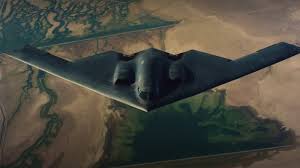
Writing before the US surprise attack with B-2 stealth bombers and “bunker-buster” bombs on three Iranian nuclear facilities on June 22, Clark says “the Middle East is a tinder box with the failure of the Iran nuclear deal and with Israel widely believed to possess nuclear weapons”.
The Doomsday Clock references the Ukraine war theatre where “use of nuclear weapons has been floated by Russia”.
Also, the arms control architecture for Europe is unravelling, leaving the continent much less secure. India and Pakistan both have nuclear arsenals, she says.
“North Korea continues to develop its nuclear weapons capacity.”
‘Serious ramifications’ Clark, who was also United Nations Development Programme administrator from 2009 to 2017, a member of The Elders group of global leaders founded by Nelson Mandela in 2007, and is an advocate for multilateralism and nuclear disarmament, says an outright military conflict between China and the United States “would be one between two nuclear powers with serious ramifications for East Asia, Southeast Asia, the Pacific, and far beyond.”
She advises New Zealand to be wary of Australia’s decision to enter a nuclear submarine purchase programme with the United States.
“There has been much speculation about a potential Pillar Two of the AUKUS agreement which would see others in the region become partners in the development of advanced weaponry,” Clark says.
“This is occurring in the context of rising tensions between the United States and China.
“Many of us share the view that New Zealand should be a voice for de-escalation, not for enthusiastic expansion of nuclear submarine fleets in the Pacific and the development of more lethal weaponry.”
Eyes of Fire: The Last Voyage and Legacy of the Rainbow Warrior . . . publication July 2025. Image: Little Island Press
In the face of the “current global turbulence, New Zealand needs to reemphasise the principles and values which drove its nuclear-free legislation and its advocacy for a nuclear-free South Pacific and global nuclear disarmament.
Clark says that the years 1985 – the Rainbow Warrior was bombed by French secret agents on 10 July 1985 — and 1986 were critical years in the lead up to New Zealand’s nuclear-free legislation in 1987.
“New Zealanders were clear – we did not want to be defended by nuclear weapons. We wanted our country to be a force for diplomacy and for dialogue, not for warmongering.”
Chronicles humanitarian voyage The book Eyes of Fire chronicles the humanitarian voyage by the Greenpeace flagship to the Marshall Islands to relocate 320 Rongelap Islanders who were suffering serious community health consequences from the US nuclear tests in the 1950s.
The author, Dr David Robie, founder of the Pacific Media Centre at Auckland University of Technology, was the only journalist on board the Rainbow Warrior in the weeks leading up to the bombing.
His book recounts the voyage and nuclear colonialism, and the transition to climate justice as the major challenge facing the Pacific, although the “Indo-Pacific” rivalries between the US, France and China mean that geopolitical tensions are recalling the Cold War era in the Pacific.
Dr Robie is also critical of Indonesian colonialism in the Melanesian region of the Pacific, arguing that a just-outcome for Jakarta-ruled West Papua and also the French territories of Kanaky New Caledonia and “French” Polynesia are vital for peace and stability in the region.
Advocacy groups in the Commonwealth of the Northern Mariana Islands (CNMI) disrupted the US Department of Defense’s public meeting this week, which tackled proposed military training plans on Tinian, voicing strong opposition to further militarisation in the Marianas.
Members of the Marianas for Palestine, Prutehi Guahan and Commonwealth670 burst into the public hearing at the Crowne Plaza hotel in Garapan, chanting, “No build-up! No war!” and “Free, free, Palestine!”
As the chanting echoed throughout the venue on Wednesday, the DOD continued the proceedings to gather public input on its CNMI Joint Military Training proposal.
The US plan includes live-fire ranges, a base camp, communications infrastructure, and a biosecurity facility. Officials said feedback from Tinian, Saipan and Rota communities would help shape the final environmental impact statement.
Salam Castro Younis, of Chamorro-Palestinian descent, linked the military expansion to global conflicts in Gaza and Iran.
“More militarisation isn’t the answer,” Younis said. “We don’t need to lose more land. Diplomacy and peace are the way forward – not more bombs.”
Saipan-born Chamorro activist Anufat Pangelinan echoed Younis’s sentiment, citing research connecting climate change and environmental degradation to global militarisation.
‘No part of a war’ “We don’t want to be part of a war we don’t support,” he said. “The Marianas shouldn’t be a tip of the spear – we should be a bridge for peace.”
The groups argue that CJMT could make Tinian a target, increasing regional hostility.
“We want to sustain ourselves without the looming threat of war,” Pangelinan added.
In response to public concerns from the 2015 draft EIS, the DOD scaled back its plans, reducing live-fire ranges from 14 to 2 and eliminating artillery, rocket and mortar exercises.
Mark Hashimoto, executive director of the US Marine Corps Forces Pacific, emphasised the importance of community input.
“The proposal includes live-fire ranges, a base camp, communications infrastructure and a biosecurity facility,” he said.
Hashimoto noted that military lease lands on Tinian could support quarterly exercises involving up to 1000 personnel.
Economic impact concerns Tinian residents expressed concerns about economic impacts, job opportunities, noise, environmental effects and further strain on local infrastructure.
The DOD is expected to issue a Record of Decision by spring 2026, balancing public feedback with national security and environmental considerations.
In a joint statement earlier this week, the activist groups said the people of Guam and the CNMI were “burdened by processes not meant to serve their home’s interests”.
The groups were referring to public input requirements for military plans involving the use of Guam and CNMI lands and waters for war training and testing.
“As colonies of the United States, the Mariana Islands continue to be forced into conflicts not of our people’s making,” the statement read.
“ After decades of displacement and political disenfranchisement, our communities are now in subservient positions that force an obligation to extend our lands, airspace, and waters for use in America’s never-ending cycle of war.”
They also lamented the “intense environmental degradation” and “growing housing and food insecurity” resulting from military expansion.
“Like other Pacific Islanders, we are also overrepresented disproportionately in the military and in combat,” they said.
“Meanwhile, prices on imported food, fuel, and essential goods will continue to rise with inflation and war.”
On June 22, American warplanes crossed into Iranian airspace and dropped 14 massive bombs.
The attack was not in response to a provocation; it came on the heels of illegal Israeli aggression that took the lives of more than 600 Iranians.
This was a return to something familiar and well-practised: an empire bombing innocents across the orientalist abstraction called “the Middle East”.
That night, US President Donald Trump, flanked by his vice-president and two state secretaries, told the world: “Iran, the bully of the Middle East, must now make peace”.
There is something chilling about how bombs are baptised with the language of diplomacy and how destruction is dressed in the garments of stability. To call that peace is not merely a misnomer; it is a criminal distortion.
But what is peace in this world, if not submission to the West? And what is diplomacy, if not the insistence that the attacked plead with their attackers?
In the 12 days that Israel’s illegal assault on Iran lasted, images of Iranian children pulled from the wreckage remained absent from the front pages of Western media. In their place were lengthy features about Israelis hiding in fortified bunkers.
Victimhood serving narrative Western media, fluent in the language of erasure, broadcasts only the victimhood that serves the war narrative.
And that is not just in its coverage of Iran. For 20 months now, the people of Gaza have been starved and incinerated. By the official count, more than 55,000 lives have been taken; realistic estimates put the number at hundreds of thousands.
Every hospital in Gaza has been bombed. Most schools have been attacked and destroyed.
Leading human rights groups like Amnesty International and Human Rights Watch have already declared that Israel is committing genocide, and yet, most Western media would not utter that word and would add elaborate caveats when someone does dare say it live on TV.
Presenters and editors would do anything but recognise Israel’s unending violence in an active voice.
Despite detailed evidence of war crimes, the Israeli military has faced no media censure, no criticism or scrutiny. Its generals hold war meetings near civilian buildings, and yet, there are no media cries of Israelis being used as “human shields”.
Israeli army and government officials are regularly caught lying or making genocidal statements, and yet, their words are still reported as “the truth”.
Bias over Palestinian deaths A recent study found that on the BBC, Israeli deaths received 33 times more coverage per fatality than Palestinian deaths, despite Palestinians dying at a rate of 34 to 1 compared with Israelis. Such bias is no exception, it is the rule for Western media.
Like Palestine, Iran is described in carefully chosen language. Iran is never framed as a nation, only as a regime. Iran is not a government, but a threat — not a people, but a problem.
The word “Islamic” is affixed to it like a slur in every report. This is instrumental in quietly signalling that Muslim resistance to Western domination must be extinguished.
Iran does not possess nuclear weapons; Israel and the United States do. And yet only Iran is cast as an existential threat to world order.
Because the problem is not what Iran holds, but what it refuses to surrender. It has survived coups, sanctions, assassinations, and sabotage. It has outlived every attempt to starve, coerce, or isolate it into submission.
It is a state that, despite the violence hurled at it, has not yet been broken.
And so the myth of the threat of weapons of mass destruction becomes indispensable. It is the same myth that was used to justify the illegal invasion of Iraq. For three decades, American headlines have whispered that Iran is just “weeks away” from the bomb, three decades of deadlines that never arrive, of predictions that never materialise.
Fear over false ‘nuclear threat’ But fear, even when unfounded, is useful. If you can keep people afraid, you can keep them quiet. Say “nuclear threat” often enough, and no one will think to ask about the children killed in the name of “keeping the world safe”.
This is the modus operandi of Western media: a media architecture not built to illuminate truth, but to manufacture permission for violence, to dress state aggression in technical language and animated graphics, to anaesthetise the public with euphemisms.
Time Magazine does not write about the crushed bones of innocents under the rubble in Tehran or Rafah, it writes about “The New Middle East” with a cover strikingly similar to the one it used to propagandise regime change in Iraq 22 years ago.
But this is not 2003. After decades of war, and livestreamed genocide, most Americans no longer buy into the old slogans and distortions. When Israel attacked Iran, a poll showed that only 16 percent of US respondents supported the US joining the war.
After Trump ordered the air strikes, another poll confirmed this resistance to manufactured consent: only 36 percent of respondents supported the move, and only 32 percent supported continuing the bombardment
The failure to manufacture consent for war with Iran reveals a profound shift in the American consciousness. Americans remember the invasions of Afghanistan and Iraq that left hundreds of thousands of Afghans and Iraqis dead and an entire region in flames. They remember the lies about weapons of mass destruction and democracy and the result: the thousands of American soldiers dead and the tens of thousands maimed.
They remember the humiliating retreat from Afghanistan after 20 years of war and the never-ending bloody entanglement in Iraq.
Low social justice spending At home, Americans are told there is no money for housing, healthcare, or education, but there is always money for bombs, for foreign occupations, for further militarisation. More than 700,000 Americans are homeless, more than 40 million live under the official poverty line and more than 27 million have no health insurance.
And yet, the US government maintains by far the highest defence budget in the world.
Americans know the precarity they face at home, but they are also increasingly aware of the impact US imperial adventurism has abroad. For 20 months now, they have watched a US-sponsored genocide broadcast live.
They have seen countless times on their phones bloodied Palestinian children pulled from rubble while mainstream media insists, this is Israeli “self-defence”.
The old alchemy of dehumanising victims to excuse their murder has lost its power. The digital age has shattered the monopoly on narrative that once made distant wars feel abstract and necessary. Americans are now increasingly refusing to be moved by the familiar war drumbeat.
The growing fractures in public consent have not gone unnoticed in Washington. Trump, ever the opportunist, understands that the American public has no appetite for another war.
‘Don’t drop bombs’ And so, on June 24, he took to social media to announce, “the ceasefire is in effect”, telling Israel to “DO NOT DROP THOSE BOMBS,” after the Israeli army continued to attack Iran.
Trump, like so many in the US and Israeli political elites, wants to call himself a peacemaker while waging war. To leaders like him, peace has come to mean something altogether different: the unimpeded freedom to commit genocide and other atrocities while the world watches on.
But they have failed to manufacture our consent. We know what peace is, and it does not come dressed in war. It is not dropped from the sky.
Peace can only be achieved where there is freedom. And no matter how many times they strike, the people remain, from Palestine to Iran — unbroken, unbought, and unwilling to kneel to terror.
Ahmad Ibsaisis a first-generation Palestinian American and law student who writes the newsletter State of Siege.
Headline: A return to Nature. – 36th Parallel Assessments
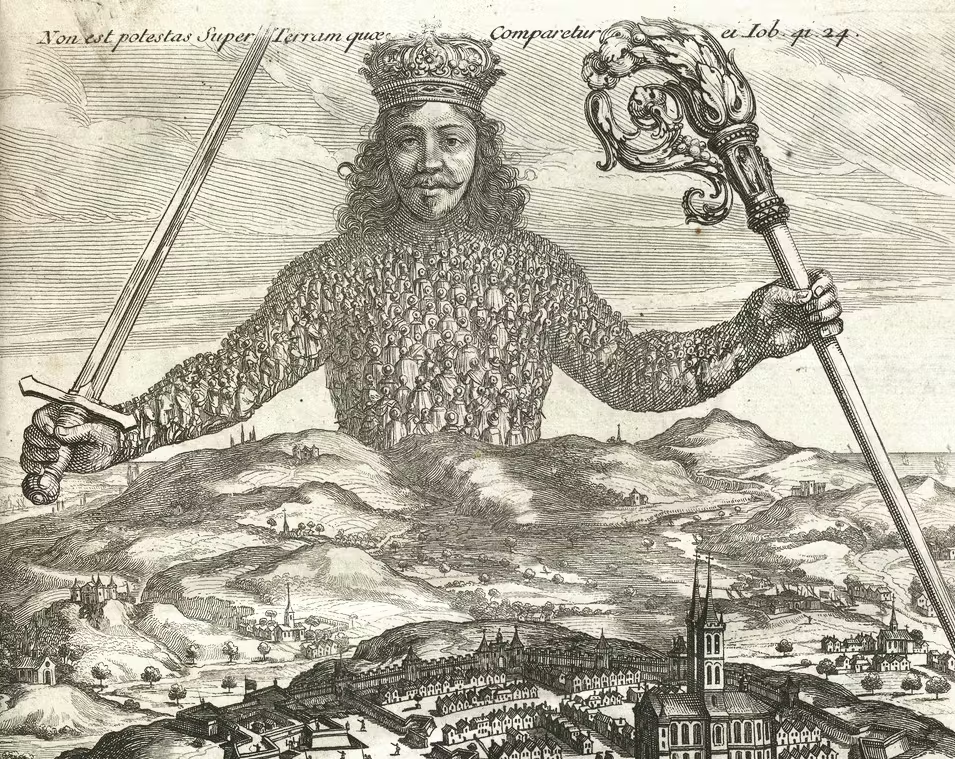
Thomas Hobbes wrote his seminal work Leviathan in 1651. In it he describes the world system as it was then as being in “a state of nature,” something that some have interpreted as anarchy. However, anarchy has order and purpose. It is not chaos. In fact, if we think of Adam Smith’s “invisible hand of the market” we get something similar to what anarchy is in practice: the aggregate of individual acts of self-interest can lead to the optimisation of value and outcomes at the collective level. Anarchy clears; chaos does not.
For Hobbes, the state of nature was chaos. Absent a “Sovereign” (i.e. a government) that could impose order on global and domestic societies, humans were destined to lead lives the were “solitary, poor, nasty, brutish and short.” This has translated into notions of “might makes right,” “survival of the fittest,” “to the victor goes the spoils” and other axioms of so-called power politics. The most elaborate of these, international relations realism, is a school of thought that is based on the belief that because the international system has no superseding Sovereign in the form of world government with comprehensive enforcement powers, and because there are no universally shared values and mores throughout the globe community that ideologically bind cultures, groups and individuals, global society exists as a state of nature where, even if there are attempts to manage the relationships between States (and other actors) via rules, norms, institutions and the like, the bottom line is that States (and other actors) have interests, not friends.
Interests are pursued in a context of power differentials. Alliances are temporary and based on the convergence of mutual interests. Values are not universal and so are inconsequential. International exchange is transactional, not altruistic. Actors with greater resources at their disposal (human, natural, intellectual) prevail over those that have less. In case of resource parity between States or other actors, balances of power become systems regulators, but these are fluid and contingent, not permanent. Geography matters in that regard, which is why geopolitics (the relationship of power to geography) is the core of international relations.
It is worth remembering this when evaluating contemporary international relations. It has been well established by now that the liberal international order of the post WW2 era has largely been dismantled in the context of increasing multipolarity in inter-State relations and the rise of the Global South within the emerging order. As I have written before, the long transition and systemic realignment in international affairs has led to norm erosion, rules violations, multinational institutional and international organizational decay or irrelevance and the rise of conflict (be it in trade, diplomacy or armed force) as the new systems regulator.
These developments have accentuated over the last decade and now have a catalyst for a full move into a new global moment–but not into a multipolar or multiplex constellation arrangement in which rising and established powers move between multilateral blocs depending on the issues involved. Instead, the move appears to be one towards a modern Hobbesian state of nature, with the precipitant being the MAGA administration of Donald Trump and its foreign policy approach.
We must be clear that it is not Trump who is the architect of this move. As mentioned in pervious posts, he is an empty vessel consumed by his own self-worth. That makes him a useful tool of far smarter people than he, people who work in the shadow of relative anonymity and who cut their teeth in rightwing think tanks and policy centres. In their view the liberal internationalist order placed too many constraints on the exercise of US power while at the same time requiring the US to over-extend itself as the “world’s policeman” and international aid donor . Bound by international conventions on the one hand and besieged by foreign rent-seekers and adversaries on the other, the US was increasingly bent under the weight of overlapped demands in which existential national interests were subsumed to a plethora of frivolous diversions (such as human rights and democracy promotion).
For these strategists, the solution to the dilemma was not to be found in any new multipolar (or even technopolar) constellation but in a dismantling of the entire edifice of international order, something that was based on an architecture of rules, institutions and norms nearly 500 years in the making. Many have mentioned Trump’s apparent mercantilist inclinations and his admiration for former US president William McKinley’s tariff policies in the late 1890s. Although that may be true, the Trump/MAGA agenda is far broader in scope than trade. In fact, the US had its greatest period of (neo-imperial) expansion during McKinley’s tenure as president (1897-1901), winning the Spanish-American War and annexing Hawai’i, Puerto Rico, Guam, American Samoa and the Philippines, so Trump’s admiration for him may well be based on notions of territorial expansionism as well.
Whatever Trump’s views of McKinley, the basic idea under-riding his foreign policy team’s approach is that in a world where the exercise of power is the ultimate arbiter of a State’s international status, the US remains the greatest Power of them all. It does not matter if the PRC or Russia challenge the US or if other emerging powers join the competition. Without the hobbling effect of its liberal obligations the US can and will dominate them all. This involves trade but also the exercise of raw (neo) imperialist ambitions in places like Greenland, the Panama Canal and even Canada. It involves sidelining the UN, NATO, EU and other international organisations where the US had to share equal votes with lesser powers who flaunted the respect and tribute that should naturally be given in recognition of the US’s superior power base.
There appears to be a belief in this approach that the US can be a new hegemon–but not Sovereign–in a unipolar world, even more so than during the post-USSR-pre 9/11 interregnum. In a new state of nature it can sit at the core of the international system, orbited by constellations of lesser Great Powers like the PRC, Russia, the EU, perhaps India, who in turn would be circled by lesser powers of various stripes. The US will not seek to police the world or waste time and resources on well-meaning but ultimately futile soft power exercises like those involving foreign aid and humanitarian assistance. Its power projection will be sharp on all dimensions, be it trade, diplomacy or in military-security affairs. It will use leverage, intimidation and varying degrees of coercion as well as persuasion (and perhaps even bribery) as diplomatic tools. It will engage the world primarily in bilateral fashion, eschewing multilateralism for others to pursue according to their own interests and power capabilities. That may suit them, but for the US multilateralism is just another obsolescent vestige of the liberal internationalist past.
Source: Northrop-Grumman.
A possible (and partial) explanation for the change in the US foreign policy approach may be the learning effect in the US of Russia’s invasion of Ukraine and Israel’s scorched earth campaign in Gaza. Trump and his advisors may have learned that impunity has its own rewards, that no country or group of countries other than the US (if it has the will) can effectively confront a state determined to pursue its interests regardless of international law, the laws of war or institutional censorship (say, by the UN or International Criminal Court), or any other type of countervailing power. The Russians and Israelis have gotten away with their behaviour because, all rhetoric and hand-wringing aside, there is no actor or group of actors who have the will or capability to stop them. For Trump strategists, these lesser powers are pursuing their interests regardless of diplomatic niceties and international conventions, and they are prevailing precisely because of that. Other than providing military assistance to Ukraine, no one has lifted a serious finger against the Russians other than the Ukrainians themselves, and even fewer have seriously moved to confront Israel’s now evident ethnic cleansing campaign in part because the US has backed Israel unequivocally. The exercise of power in each case occurred in a norm enforcement vacuum in spite of the plethora of agencies and institutions designed to prevent such egregious violations of international standards.
Put another way: if Israel and Russia can get away with their disproportionate and indiscriminate aggression, imagine what the US can do.
If we go on to include the PRC’s successful aggressive military “diplomacy” in East/SE Asia, the use of targeted assassinations, hacking, disinformation and covert direct influence campaigns overseas by various States and assorted other unpunished violations of international conventions, then it is entirely plausible that Trump’s foreign policy brain trust sees the moment as ripe for finally breaking the shackles of liberal internationalism. Also recall that many in Trump’s inner circle subscribe to chaos or disruption theory, in which a norms-breaking “disruptor” like Trump seizes the opportunities presented by the breakdown of the status quo ante.
Before the US could hollow out liberal internationalism abroad and replace it with a modern international state of nature it had to crush liberalism at home. Using Executive Orders as a bludgeon and with a complaint Republican-dominated Congress and Republican-adjacent federal courts. the Trump administration has openly exercised increasingly authoritarian control powers with the intention of subjugating US civil society to its will. Be it in its deportation policies, rollbacks of civil rights protections, attacks on higher education, diminishing of federal government capacity and services (except in the security field), venomous scapegoating of opponents and vulnerable groups, the Trump/MAGA domestic agenda not only seeks to turn the US into a illiberal or “hard” democracy (what Spanish language scholars call a “democradura” as a play on words mixing the terms democracia and dura (hard)). It also serves notice that the US under Trump/MAGA is willing to do whatever is necessary to re-impose its supremacy in world affairs, even if it means hurting its own in order to prove the point. By its actions at home Trump’s administration demonstrates capability, intent and steadfast resolve as it establishes a reputation for ruthless pursuit of its policy agenda. Foreign interlocutors will have to take note of this and adjust accordingly. Hence, for Trump’s advisors, authoritarianism at home is the first step towards undisputed supremacy abroad.
The Trump embrace of international state of nature differs from Hobbes because it does not see the need for a superseding global governance network but instead believes that the US can dominate the world without the encumbrances of power-sharing with lesser players. In this view hegemony means domination, no more or less. It implies no attempt at playing the role of a Sovereign imposing order on a disorderly and recalcitrant community of Nation-States and non-State actors that do not share common values, much less interests.
This is the core of the current US foreign policy approach. It is not about reorganising the international order within the extant frameworks as given. It is about removing those frameworks entirely and replacing them with an America First, go it alone agenda where the US, by virtue of its unrivalled power differential relative to all other States and global actors, can maximise its self-interest in largely unconstrained fashion. Some vestiges of the old international order may remain, but they will be marginalised and crippled the longer the US project is in force.
What does not seem to be happening in Trump’s foreign policy circle are three things. First, recognition that other States and international actors may band together against the US move to unipolarity in a new state of nature and that for all its talk the US may not be able to impose unipolar dominance over them. Second, understanding that States like the PRC, Russia and other Great Powers and communities (like the EU) may resist the US move and challenge it before it can consolidate the new international status quo. Third, foreseeing that the technology titans who today are influential in the Trump administration may decide to transfer there loyalties elsewhere, especially if Trump’s ego starts becoming a hindrance to their (economic and digital) power bases. The fusion of private technology control and US State power may not be as compatible over time as presently appears to be the case, something that may not occur with States such as the PRC, India or Japan that have different corporate cultures and political structures. As the current investment in the Middle Eastern oligarchies shows, the fusion of State and private techno power may be easier to accomplish in those contexts rather than the US.
In any event, whether it be a short-term interlude or a longue durée feature of international life, a modern state of nature is now our new global reality.
ER Report: Here is a summary of significant articles published on EveningReport.nz on June 29, 2025.
Do all Iranians hate the regime? Hate America? Life inside the country is more complex than that Source: The Conversation (Au and NZ) – By Simon Theobald, Postdoctoral researcher, Institute for Ethics and Society, University of Notre Dame Australia From 2015 to 2018, I spent 15 months doing research work in Mashhad, Iran’s second-largest city. As an anthropologist, I was interested in everyday life in Iran outside the capital Tehran. I was
Talks result in PNG and Bougainville signing ‘Melanesian Agreement’ RNZ Pacific The leaders of Bougainville and Papua New Guinea have signed a deal that may bring the autonomous region’s quest for independence closer. Called “Melanesian Agreement”, the deal was developed earlier this month in 10 days of discussion at the New Zealand army base at Burnham, near Christchurch. Both governments have agreed that the
Eugene Doyle: Why Asia-Pacific should be cheering for Iran and not US bomb-based statecraft ANALYSIS: By Eugene Doyle Setting aside any thoughts I may have about theocratic rulers (whether they be in Tel Aviv or Tehran), I am personally glad that Iran was able to hold out against the US-Israeli attacks this month. The ceasefire, however, will only be a pause in the long-running campaign to destabilise, weaken and
Source: The Conversation (Au and NZ) – By Simon Theobald, Postdoctoral researcher, Institute for Ethics and Society, University of Notre Dame Australia
From 2015 to 2018, I spent 15 months doing researchwork in Mashhad, Iran’s second-largest city. As an anthropologist, I was interested in everyday life in Iran outside the capital Tehran. I was also interested in understanding whether the ambitions of the 1979 Revolution lived on among “ordinary” Iranians, not just political elites.
I first lived on a university campus, where I learned Persian, and later with Iranian families. I conducted hundreds of interviews with people who had a broad spectrum of political, social and religious views. They included opponents of the Islamic Republic, supporters, and many who were in between.
What these interviews revealed to me was both the diversity of opinion and experience in Iran, and the difficulty of making uniform statements about what Iranians believe.
Measuring the depth of antipathy for the regime
When Israel’s strikes on Iran began on June 13, killing many top military commanders, many news outlets – both international and those run by the Iranian diaspora – featured images of Iranians cheering the deaths of these hated regime figures.
Friends from my fieldwork also pointed to these celebrations, while not always agreeing with them. Many feared the impact of a larger conflict between Iran and Israel.
Trying to put these sentiments in context, many analysts have pointed to a 2019 survey by the GAMAAN Institute, an independent organisation based in the Netherlands that tracks Iranian public opinion. This survey showed 79% of Iranians living in the country would vote against the Islamic Republic if a free referendum were held on its rule.
Viewing these examples as an indicator of the lack of support for the Islamic Republic is not wrong. But when used as factoids in news reports, they become detached from the complexities of life in Iran. This can discourage us from asking deeper questions about the relationships between ideology and pragmatism, support and opposition to the regime, and state and society.
A more nuanced view
The news reporting on Iran has encouraged a tendency to see the Iranian state as homogeneous, highly ideological and radically separate from the population.
But where do we draw the line between the state and the people? There is no easy answer to this.
When I lived in Iran, many of the people who took part in my research were state employees – teachers at state institutions, university lecturers, administrative workers. Many of them had strong and diverse views about the legacy of the revolution and the future of the country.
They sometimes pointed to state discourse they agreed with, for example Iran’s right to national self-determination, free from foreign influence. They also disagreed with much, such as the slogans of “death to America”.
This ambivalence was evident in one of my Persian teachers. An employee of the state, she refused to attend the annual parades celebrating the anniversary of the revolution. “We have warm feelings towards America,” she said. On the other hand, she happily attended protests, also organised by the government, in favour of Palestinian liberation.
Or take the young government worker I met in Mashhad: “We want to be independent of other countries, but not like this.”
In a narrower sense, discussions about the “state” may refer more to organisations like the Islamic Revolutionary Guard Corps (IRGC) and the Basij, the paramilitary force within the IRGC that has cracked down harshly on dissent in recent decades. Both are often understood as being deeply ideologically committed.
Said Golkar, a US-based Iranian academic and author, for instance, calls Iran a “captive society”. Rather than having a civil society, he believes Iranians are trapped by the feared Basij, who maintain control through their presence in many institutions like universities and schools.
Again, this view is not wrong. But even among the Basij and Revolutionary Guard, it can be difficult to gauge just how ideological and homogeneous these organisations truly are.
For a start, the IRGC relies on both ideologically selected supporters, as well as conscripts, to fill its ranks. They are also not always ideologically uniform, as the US-based anthropologist Narges Bajoghli, who worked with pro-state filmmakers in Tehran, has noted.
As part of my research, I also interviewed members of the Basij, which, unlike the IRGC proper, is a wholly volunteer organisation.
Even though ideological commitment was certainly an important factor for some of the Basij members I met, there were also pragmatic reasons to join. These included access to better jobs, scholarships and social mobility. Sometimes, factors overlapped. But participation did not always equate to a singular or sustained commitment to revolutionary values.
For example, Sāsān, a friend I made attending discussion groups in Mashhad, was quick to note that time spent in the Basij “reduced your [compulsory] military service”.
This isn’t to suggest there are not ideologically committed people in Iran. They clearly exist, and many are ready to use violence. Some of those who join these institutions for pragmatic reasons use violence, too.
Looking in between
In addition, Iran is an ethnically diverse country. It has a population of 92 million people, a bare majority of whom are Persians. Other minorities include Azeris, Kurds, Arabs, Baloch, Turkmen and others.
It is also religiously diverse. While there is a sizeable, nominally Shi’a majority, there are also large Sunni communities (about 10-15% of the population) and smaller communities of Christians, Jews, Zoroastrians, Baha’is and other religions.
Often overlooked, there are also important differences in class and social strata in Iran, too.
One of the things I noticed about state propaganda was that it flattened this diversity. James Barry, an Australian scholar of Iran, noticed a similar phenomenon.
State propaganda made it seem like there was one voice in the country. Protests could be dismissed out of hand because they did not represent the “authentic” view of Iranians. Foreign agitators supported protests. Iranians supported the Islamic Republic.
Since leaving Iran, I have followed many voices of Iranians in the diaspora. Opposition groups are loud on social media, especially the monarchists who support Reza Pahlavi, the son of the deposed Shah.
In following these groups, I have noticed a similar tendency to speak as though they represent the voice of all Iranians. Iranians support the shah. Or Iranians support Maryam Rajavi, leader of a Paris-based opposition group.
Both within Iran, and in the diaspora, the regime, too, is sometimes held to be the imposition of a foreign conspiracy. This allows the Islamic Republic and the complex relations it has created to be dismissed out of hand. Once again, such a view flattens diversity.
Over the past few years, political identities and societal divisions seem to have become harder and clearer. This means there is an increasing perception among many Iranians of a gulf between the state and Iranian society. This is the case both inside Iran, and especially in the Iranian diaspora.
Decades of intermittent protests and civil disobedience across the country also show that for many, the current system no longer represents the hopes and aspirations of many people. This is especially the case for the youth, who make up a large percentage of the population.
I am not an Iranian, and I strongly believe it is up to Iranians to determine their own futures. I also do not aim to excuse the Islamic Republic – it is brutal and tyrannical. But its brutality should not let us shy away from asking complex questions.
If the regime did fall tomorrow, Iran’s diversity means there is little unanimity of opinion as to what should come next. And if a more pluralist form of politics is to emerge, it must encompass the whole of Iran’s diversity, without assuming a uniform position.
It, too, will have to wrestle with the difficult questions and sometimes ambivalent relations the Islamic Republic has created.
Simon Theobald received funding from the Australian National University during his research.
The leaders of Bougainville and Papua New Guinea have signed a deal that may bring the autonomous region’s quest for independence closer.
Called “Melanesian Agreement”, the deal was developed earlier this month in 10 days of discussion at the New Zealand army base at Burnham, near Christchurch.
Both governments have agreed that the national Parliament in PNG has a key role in the decision over the push for independence.
They recognise that the Bougainville desire for independence is legitimate, as expressed in a 2019 independence referendum result, and that this is a unique situation in PNG.
That is the agreement’s attempt to overcome pressure from other parts of PNG that are also talking about autonomy.
The parties say they are committed to maintaining a close, peaceful and enduring relationship between PNG and Bougainville.
Both sides said that to bring referendum results to the national Parliament both governments would develop a sessional order, which was a the temporary adjustment of Parliament’s rules.
Bipartisan Parliamentary Committee They said that a Bipartisan Parliamentary Committee on Bougainville, which would provide information to MPs and the general public about the Bougainville conflict and resolution, is a vital body.
The parties said they would explore the joint creation of a Melanesian framework with agreed timelines, for a pathway forwards, that may form part of the Joint Consultations Report presented to the 11th National Parliament.
Once the Bipartisan Committee completes its work, the results of the referendum and the Joint Consultation Report would be taken to the Parliament.
The parties said they would accept the decision of the national Parliament, in the first instance, regarding the referendum results, and then commit to further consultations if needed, and this would be in an agreed timeline.
In the meantime, institutional strengthening and institutional building within Bougainville would continue.
To ensure progress is made and political commitment is sustained, the monitoring of this Melanesian Agreement could include an international component, a Parliamentary component, and the Bipartisan Parliamentary Committee, all with UN support.
This article is republished under a community partnership agreement with RNZ.
Setting aside any thoughts I may have about theocratic rulers (whether they be in Tel Aviv or Tehran), I am personally glad that Iran was able to hold out against the US-Israeli attacks this month.
The ceasefire, however, will only be a pause in the long-running campaign to destabilise, weaken and isolate Iran. Regime change or pariah status are both acceptable outcomes for the US-Israeli dyad.
The good news for my region is that Iran’s resilience pushes back what could be a looming calamity: the US pivot to Asia and a heightened risk of a war on China.
There are three major pillars to the Eurasian order that is going through a slow, painful and violent birth. Iran is the weakest. If Iran falls, war in our region — intended or unintended – becomes vastly more likely.
Mainstream New Zealanders and Australians suffer from an understandable complacency: war is what happens to other, mainly darker people or Slavs.
“Tomorrow”, people in this part of the world naively think, “will always be like yesterday”.
That could change, particularly for the Australians, in the kind of unfamiliar flash-boom Israelis experienced this month following their attack on Iran. And here’s why.
US chooses war to re-shape Middle East Back in 2001, as many will recall, retired General Wesley Clark, former Supreme Commander of NATO forces in Europe, was visiting buddies in the Pentagon. He learnt something he wasn’t supposed to: the Bush administration had made plans in the febrile post 9/11 environment to attack seven Muslim countries.
In the firing line were: Saddam Hussein’s Iraq, the Assad regime in Syria, Hezbollah-dominated Lebanon, Gaddafi’s Libya, Somalia, Sudan and the biggest prize of all — the Islamic Republic of Iran.
One would have to say that the project, pursued by successive presidents, both Democrat and Republican, has been a great success — if you discount the fact that a couple of million human beings, most of them civilians, many of them women and children, nearly all of them innocents, were slaughtered, starved to death or otherwise disposed of.
With the exception of Iran, those countries have endured chaos and civil strife for long painful years. A triumph of American bomb-based statecraft.
Now — with Muammar Gaddafi raped and murdered (“We came, we saw, he died”, Hillary Clinton chuckled on camera the same day), Saddam Hussein hanged, Hezbollah decapitated, Assad in Moscow, the genocide in full swing in Palestine — the US and Israel were finally able to turn their guns — or, rather, bombs — on the great prize: Iran.
Iran’s missiles have checked US-Israel for time being Things did not go to plan. Former US ambassador to Saudi Arabia Chas Freeman pointed out this week that for the first time Israel got a taste of the medicine it likes to dispense to its neighbours.
Iran’s missiles successfully turned the much-vaunted Iron Dome into an Iron Sieve and, perhaps momentarily, has achieved deterrence. If Iran falls, the US will be able to do what Barack Obama and Joe Biden only salivated over — a serious pivot to Asia.
Could great power rivalry turn Asia-Pacific into powderkeg? For us in Asia-Pacific a major US pivot to Asia will mean soaring defence budgets to support militarisation, aggressive containment of China, provocative naval deployments, more sanctions, muscling smaller states, increased numbers of bases, new missile systems, info wars, threats and the ratcheting up rhetoric — all of which will bring us ever-closer to the powderkeg.
Sounds utterly mad? Sounds devoid of rationality? Lacking commonsense? Welcome to our world — bellum Americanum — as we gormlessly march flame in hand towards the tinderbox. War is not written in the stars, we can change tack and rediscover diplomacy, restraint, and peaceful coexistence. Or is that too much to ask?
Back in the days of George W Bush, radical American thinkers like Robert Kagan, Dick Cheney and Donald Rumsfeld created the Project for a New American Century and developed the policy, adopted by succeeding presidents, that promotes “the belief that America should seek to preserve and extend its position of global leadership by maintaining the preeminence of US military forces”.
It reconfirmed the neoconservative American dogma that no power should be allowed to rise in any region to become a regional hegemon; anything and everything necessary should be done to ensure continued American primacy, including the resort to war.
What has changed since those days are two crucial, epoch-making events: the re-emergence of Russia as a great power, albeit the weakest of the three, and the emergence of China as a genuine peer competitor to the USA. Professor John Mearsheimer’s insights are well worth studying on this topic.
The three pillars of multipolarity A new world order really is being born. As geopolitical thinkers like Professor Glenn Diesen point out, it will, if it is not killed in the cradle, replace the US unipolar world order that has existed since the dissolution of the Soviet Union in 1991.
Many countries are involved in its birthing, including major players like India and Brazil and all the countries that are part of BRICS. Three countries, however, are central to the project: Iran, Russia and, most importantly, China. All three are in the crosshairs of the Western empire.
If Iran, Russia and China survive as independent entities, they will partially fulfill Halford MacKinder’s early 20th century heartland theory that whoever dominates Eurasia will rule the world. I don’t think MacKinder, however, foresaw cooperative multipolarity on the Eurasian landmass — which is one of the goals of the SCO (Shanghai Cooperation Organisation) – as an option.
That, increasingly, appears to be the most likely trajectory with multiple powerful states that will not accept domination, be that from China or the US. That alone should give us cause for hope.
Drunk on power since the collapse of the Soviet Union, the US has launched war after war and brought us to the current abandonment of economic sanity (the sanctions-and-tariff global pandemic) and diplomatic normalcy (kill any peace negotiators you see) — and an anything-goes foreign policy (including massive crimes against humanity).
We have also reached — thanks in large part to these same policies — what a former US national security advisor warned must be avoided at all costs. Back in the 1990s, Zbigniew Brzezinski said, “The most dangerous scenario would be a grand coalition of China, Russia, and perhaps Iran.”
Belligerent and devoid of sound strategy, the Biden and Trump administrations have achieved just that.
Can Asia-Pacific avoid being dragged into an American war on China? Turning to our region, New Zealand and Australia’s governments cleave to yesterday: a white-dominated world led by the USA. We have shown ourselves indifferent to massacres, ethnic cleansing and wars of aggression launched by our team.
To avoid war — or a permanent fear of looming war — in our own backyards, we need to encourage sanity and diplomacy; we need to stay close to the US but step away from the military alliances they are forming, such as AUKUS which is aimed squarely at China.
Above all, our defence and foreign affairs elites need to grow new neural pathways and start to think with vision and not place ourselves on the losing side of history. Independent foreign policy settings based around peace, defence not aggression, diplomacy not militarisation, would take us in the right direction.
Personally I look forward to the day the US and its increasingly belligerent vassals are pushed back into the ranks of ordinary humanity. I fear the US far more than I do China.
Despite the reflexive adherence to the US that our leaders are stuck on, we should not, if we value our lives and our cultures, allow ourselves to be part of this mad, doomed project.
The US empire is heading into a blood-drenched sunset; their project will fail and the 500-year empire of the White West will end — starting and finishing with genocide.
Every day I atheistically pray that leaders or a movement will emerge to guide our antipodean countries out of the clutches of a violent and increasingly incoherent USA.
America is not our friend. China is not our enemy. Tomorrow gives birth to a world that we should look forward to and do the little we can to help shape.
Eugene Doyle is a writer based in Wellington. He has written extensively on the Middle East, as well as peace and security issues in the Asia Pacific region. He contributes to Asia Pacific Report and Café Pacific, and hosts the public policy platform solidarity.co.nz
ER Report: Here is a summary of significant articles published on EveningReport.nz on June 28, 2025.
Israeli soldiers ‘ordered’ to fire at Gaza aid seekers – 70 killed across Strip Israeli soldiers have said that they were ordered to open fire at unarmed Palestinian civilians desperately seeking aid at designated distribution sites in Gaza, a report in the Ha’aretz newspaper has revealed. The report came as 70 Palestinians were killed across the Gaza Strip — mostly at aid sites belonging to the widely condemned Gaza
RFK Junior is stoking fears about vaccine safety. Here’s why he’s wrong – and the impact it could have Source: The Conversation (Au and NZ) – By Julie Leask, Professor, School of Public Health, University of Sydney The United States used to be a leader in vaccine research, development and policymaking. Now US Secretary of Health Robert F. Kennedy Jr is undermining the country’s vaccine program at the highest level and supercharging vaccine skepticism.
The ‘Godfather of Human Rights’ Ken Roth on genocide, Trump and standing up for democracy By Richard Larsen, RNZ News producer — 30′ with Guyon Espiner The former head of Human Rights Watch — and son of a Holocaust survivor — says Israel’s military campaign in Gaza will likely meet the legal definition of genocide, citing large-scale killings, the targeting of civilians, and the words of senior Israeli officials. Speaking
The sentencing of Cassius Turvey’s killers shows courts still struggle to deal with racism Source: The Conversation (Au and NZ) – By Thalia Anthony, Professor of Law, University of Technology Sydney Aboriginal and Torres Strait Islander readers are advised this article contains names and images of deceased people. The brutal homicide of 15-year-old Noongar Yamatji boy, Cassius Turvey, by a group of white men revealed the racial schisms in
Celebrities, blue jeans and couture: how Anna Wintour changed fashion over 37 years at Vogue Source: The Conversation (Au and NZ) – By Jye Marshall, Lecturer, Fashion Design, School of Design and Architecture, Swinburne University of Technology After 37 years at the helm, fashion industry heavyweight Anna Wintour is stepping down from her position as editor-in-chief of American Vogue. It’s not a retirement, though, as Wintour will maintain a leadership
Antoinette Lattouf win against ABC a victory for all truth-tellers By Isaac Nellist of Green Left Magazine Australian-Lebanese journalist and commentator Antoinette Lattouf’s unfair dismissal case win against the public broadcaster ABC in the Federal Court on Wednesday is a victory for all those who seek to tell the truth. It is a breath of fresh air, after almost two years of lies and uncritical
Caitlin Johnstone: The fictional mental illness that only affects enemies of the Western empire Report by Dr David Robie – Café Pacific. – COMMENTARY: By Caitlin Johnstone Within the storytelling of Western politics and punditry there exists a fictional type of mental illness which only affects people the US empire doesn’t like. If Iran gets a nuclear weapon, its crazy lunatic government will flip out and nuke us all.
Do all Iranians hate the regime? Hate America? Life inside the country is much more complex and nuanced Source: The Conversation (Au and NZ) – By Simon Theobald, Postdoctoral researcher, Institute for Ethics and Society, University of Notre Dame Australia From 2015 to 2018, I spent 15 months doing research work in Mashhad, Iran’s second-largest city. As an anthropologist, I was interested in everyday life in Iran outside the capital Tehran. I was
Israeli soldiers have said that they were ordered to open fire at unarmed Palestinian civilians desperately seeking aid at designated distribution sites in Gaza, a report in the Ha’aretz newspaper has revealed.
The report came as 70 Palestinians were killed across the Gaza Strip — mostly at aid sites belonging to the widely condemned Gaza Humanitarian Foundation (GHF) — in the last 24 hours.
Soldiers said that instead of using crowd control measures, they shot at crowds of civilians to prevent them from approaching certain areas.
One soldier, who was not named in the report, described the distribution site as a “killing field,” adding that “where I was, between one and five people were killed every day”.
The soldier said that they targeted the crowds as if they were “an attacking force,” instead of using other non-lethal weapons to organise and disperse crowds.
“We communicate with them through fire,” he continued, noting that heavy machine guns, grenade launchers and mortars were used on people, including the elderly, women and children.
The increased attacks, particularly those targeting aid-seekers, come as Gaza’s government Media Office said at least 549 Palestinians had been killed by Israeli forces while trying to get their hands on emergency aid in the last four weeks.
‘Evil of moral army’ Al Jazeera’s senior political analyst Marwan Bishara described what was happening in Gaza was more than the genocode.
“It is the evil of the most moral army in the world,” he said.
Israeli forces continued their attacks across the Gaza Strip on Friday, killing at least three Palestinians in an attack on Khan Younis, in the south, while also heavily bombing residential buildings east of Jabalia in the north.
Medical sources also said a Palestinian fisherman was killed, and others wounded, by Israeli naval gunfire off the al-Shati refugee camp, while he was working.
Gaza’s Ministry of Interior responded to the attacks with a statement, accusing Israel of “seeking to spread chaos and destabilise the Gaza Strip”.
Malnutrition soars Gazans have continued to desperately seek aid provided by the US and Israel-backed Gaza Humanitarian Foundation, despite the hundreds of people killed at its sites, as malnutrition soars in the territory.
Two infants have died this week due to malnutrition and the ongoing blockade on Gaza.
“It’s a killing field” claims a headline in Ha’aretz newspaper. Image: Ha’aretz screenshot APR
For weeks now, health officials in the enclave have raised the alarm over the critical shortage of baby formula, but aid continued to be obstructed.
The two infants were buried on Thursday evening, after they were pronounced dead at the Nasser Hospital in Khan Younis. Medical staff said the cause of death was a lack of basic nutrition and access to essential medical care.
One of the infants, identified as Nidal, was only five months old, while the other, Kinda, was only 10 days old.
Mohammed al-Hams, Kinda’s father, told local media that children are dying due to severe malnutrition, sarcastically labelling them “the achievements of Netanyahu and his war”.
“Not a second goes by without a funeral prayer being held in the Gaza Strip,” he continued.
Malnutrition ‘catastrophic’ On Wednesday, Gaza’s Ministry of Health said the humanitarian situation in Gaza had reached “catastrophic” levels, noting that there had been a sharp increase in malnutrition among children, particularly in infants.
According to Palestinian official figures, at least 242 people have died in Gaza due to food and medicine shortages, with the majority of them being elderly and children.
Israel’s war on Gaza has killed at least 61,700 Palestinians since October 2023. The war has levelled entire neighbourhoods, and has been called a genocide by leading rights groups, including Amnesty International.
In Auckland last night, visiting Palestinian journalist, author, academic and community advocate Dr Yousef Aljamal spoke about “The unheard voices of Palestinian child prisoners”.
Dr Aljamal, who edited If I Must Die, a compilation of poetry and prose by Refaat Alareer, the poet who was assassinated by the Israelis in 6 December 2023, also described the humanitarian crisis as a “catastrophe” and called for urgent sanctions and political pressure on Israel by governments, including New Zealand.
Soldiers admit Israeli army is targeting aid seekers Video: Al Jazeera
The United States used to be a leader in vaccine research, development and policymaking. Now US Secretary of Health Robert F. Kennedy Jr is undermining the country’s vaccine program at the highest level and supercharging vaccine skepticism.
On Wednesday, RFK Jr announced the US would stop funding the global vaccine alliance, Gavi, because he claimed that “when the science was inconvenient today, Gavi ignored the science”. RFK Jr questioned the safety of COVID vaccines for pregnant women, as well as the diphtheria, tetanus and pertussis vaccine.
On Thursday, when the new Advisory Committee on Immunization Practices met, the person who first drew RFK Jr into vaccine scepticism, Lyn Redwood, shared disproved claims about a chemical called thimerosal in flu vaccines being harmful.
The undermining of regulation, advisory processes and funding changes will have global impacts, as debunked claims are given new levels of apparent legitimacy. Some of these impacts will be slow and insidious.
So what should we make of these latest claims and funding cuts?
Thiomersal is a distraction
Thiomersal (thimerosal in the the US) is a safe and effective preservative that prevents bacterial and fungal contamination of the vaccine contained in a multi-dose vial. It’s a salt that contains a tiny amount of mercury in a safe form.
Thiomersal is no longer used as a preservative in any vaccines routinely given in Australia. But it’s still used in the Q fever vaccine.
Other countries use multi-dose vials with thiomersal when single-dose vials are too expensive.
In the US, just 4% of adult influenza vaccines contain thiomersal. So focusing on removing vaccines containing thimerosal is a distraction for the committee.
COVID vaccines in pregnancy prevent severe illness
On Wednesday, RFK criticised Gavi’s encouragement of pregnant women to receive COVID-19 vaccines.
A COVID-19 infection before and during pregnancy can increase the risk of miscarriage two- to four-fold, even if it’s only a mild infection.
Conversely, there is good evidence vaccination during pregnancy is safe and can reduce the chance of hospitalisation of pregnant people and of infants by passing antibodies through the placenta.
In Australia, pregnant people who have never received a primary COVID-19 vaccine are recommended to have one. However, they are not generally recommended to have booster unless they have underlying risk conditions or prefer to have one. This is due to population immunity.
COVID-19 vaccine advice should adapt to changes in disease risk and vaccine benefit. It doesn’t mean previous decisions were wrong, nor that vaccine boosters are unsafe.
RFK’s criticism of COVID-19 vaccines in pregnancy may influence choices individuals make in other countries, even when unvaccinated pregnant women are encouraged to consider vaccination.
The diphtheria, tetanus and pertussis vaccine is safe
RFK Jr also questioned the safety of the combined diphtheria, tetanus and pertussis (DTP) vaccine as he announced the withdrawal of US funding support for Gavi.
In the early 2000s, three community-based observational studies reported a possible association between increased chance of death in infants and use of the DTP vaccine.
A few subsequent studies also reported associations, with higher risk in girls, prompting a World Health Organization (WHO) review of safety.
Real world studies are complicated and the data can be difficult to interpret correctly. Often, the very factors that influence whether someone gets vaccinated can also be associated with other health risks.
When the WHO committee reviewed all the studies on DTP safety in 2014, it did not indicate serious adverse events. It concluded there was substantial evidence against these claims.
What will de-funding Gavi mean for vaccination rates?
Gavi, the vaccine alliance, supports vaccine purchasing in low-income countries.
The US has historically accounted for 13% of all donor funds.
However, RFK Jr said Gavi needed to re-earn the public trust and “consider the best science available” before the US would contribute funding again.
Gavi predicted in March that the impact of US funding cuts could result in one million deaths through missed vaccines.
Could something like this happen in Australia?
Australia is fortunate to be buffered from these impacts.
Our vaccine advisory body, the Australian Technical Advisory Group on Immunisation, has people with deep expertise in vaccination. We have robust decision processes that weigh evidence critically and make careful recommendations to government.
Our governments remain committed to vaccination. The federal government released the National Immunisation Strategy in mid-June with a comprehensive plan to continue to strengthen our program.
The federal government also announced A$386 million to support the work of Gavi from 2026 to 2030.
All of this keeps our vaccine policies strong, preventing disease and increasing life expectancy here and overseas.
But to mitigate the possible influence of the US in Australia, our governments, health professionals and the public need to be ready to rapidly tackle the misinformation, distortions and half-truths RFK Jr cleverly packages – with quality information.
Julie Leask receives research funding from NHMRC, WHO, US CDC, NSW Ministry of Health. She received funding from Sanofi for travel to an overseas meeting in 2024. She has consulting fees from RTI International and the Task Force for Global Health.
Catherine Bennett has received honoraria for contributing to independent advisory panels for Moderna and AstraZeneca, and has received NHMRC, VicHealth and MRFF funding for unrelated projects. She was the health lead on the Independent Inquiry into the Australian Government COVID-19 Response .
The former head of Human Rights Watch — and son of a Holocaust survivor — says Israel’s military campaign in Gaza will likely meet the legal definition of genocide, citing large-scale killings, the targeting of civilians, and the words of senior Israeli officials.
Speaking on 30′ with Guyon Espiner, Ken Roth agreed Hamas committed “blatant war crimes” in its attack on Israel on October 7 last year, which included the abduction and murder of civilians.
But he said it was a “basic rule” that war crimes by one side do not justify war crimes by the other.
There was indisputable evidence Israel had committed war crimes in Gaza and might also be pursuing tactics that fit the international legal standard for genocide, Roth said.
30′ with Guyon Espiner Kenneth Roth Video: RNZ
“The acts are there — mass killing, destruction of life-sustaining conditions. And there are statements from senior officials that point clearly to intent,” Roth said.
He cited comments immediately after the October 7 attack by Hamas from Israel’s former Defence Minister Yoav Gallant, who referred to Gazans as “human animals”.
Israeli President Isaac Herzog also said “an entire nation” was responsible for the attack and the notion of “unaware, uninvolved civilians is not true,” referring to the Palestinean people. Herzog subsequently said his words were taken out of context during a case at the International Court of Justice.
The accusation of genocide is hotly contested. Israel says it is fighting a war of self-defence against Hamas after it killed 1200 people, mostly civilians. It claims it adheres to international law and does its best to protect civilians.
It blames Hamas for embedding itself in civilian areas.
But Roth believes a ruling may ultimately come from the International Court of Justice, especially if a forthcoming judgment on Myanmar sets a precedent.
“It’s very similar to what Myanmar did with the Rohingya,” he said. “Kill about 30,000 to send 730,000 fleeing. It’s not just about mass death. It’s about creating conditions where life becomes impossible.”
‘Apartheid’ alleged in Israel’s West Bank Roth has been described as the ‘Godfather of Human Rights’, and is credited with vastly expanding the influence of the Human Rights Watch group during a 29-year tenure in charge of the organisation.
In the full interview with Guyon Espiner, Roth defended the group’s 2021 report that accused Israel of enforcing a system of apartheid in the occupied West Bank.
“This was not a historical analogy,” he said, implying it was a mistake to compare it with South Africa’s former apartheid regime.
“It was a legal analysis. We used the UN Convention against Apartheid and the Rome Statute, and laid out over 200 pages of evidence.”
Kenneth Roth appears via remote link in studio for an interview on season 3 of 30′ with Guyon Espiner. Image: RNZ
He said the Israeli government was unable to offer a factual rebuttal.
“They called us biased, antisemitic — the usual. But they didn’t contest the facts.”
The ‘cheapening’ of antisemitism charges Roth, who is Jewish and the son of a Holocaust refugee, said it was disturbing to be accused of antisemitism for criticising a government.
“There is a real rise in antisemitism around the world. But when the term is used to suppress legitimate criticism of Israel, it cheapens the concept, and that ultimately harms Jews everywhere.”
Roth said Israeli Prime Minister Benjamin Netanyahu had long opposed a two-state solution and was now pursuing a status quo that amounted to permanent subjugation of Palestinians, a situation human rights groups say is illegal.
“The only acceptable outcome is two states, living side by side. Anything else is apartheid, or worse,” Roth said.
While the international legal process around charges of genocide may take years, Roth is convinced the current actions in Gaza will not be forgotten.
“This is not just about war,” he said. “It’s about the deliberate use of starvation, displacement and mass killing to achieve political goals. And the law is very clear — that’s a crime.”
Roth’s criticism of Israel saw him initially denied a fellowship at Harvard University in 2023. The decision was widely seen as politically motivated, and was later reversed after public and academic backlash.
This article is republished under a community partnership agreement with RNZ.
Aboriginal and Torres Strait Islander readers are advised this article contains names and images of deceased people.
The brutal homicide of 15-year-old Noongar Yamatji boy, Cassius Turvey, by a group of white men revealed the racial schisms in Western Australian society. Turvey was walking home from school in October 2022 when he was abruptly beaten to death.
On Friday, the Western Australian Supreme Court sentenced the three perpetrators. Twenty-nine-year-old Brodie Palmer and 24-year-old Jack Brearley were found guilty of murder and sentenced to life imprisonment.
A third man, 27-year-old Mitchell Forth, was convicted of manslaughter and sentenced to 12 years behind bars.
This was an opportunity for the Supreme Court to send a strong message against racial violence. While the punishment of the men involved is clear, the role of race, and what legally qualifies as racially motivated crime, is muddier.
Wrong place, wrong time?
Racism has been front and centre of the public discussion of this tragedy from the outset.
Rallies in solidarity with Turvey’s family were held across the country, with Gumbaynggirr, Bundjalung, and Dunghutti activist Lizzie Jarrett declaring:
no black child is ever, ever, ever in the wrong place at the wrong time on their own land.
Racism at trial
Over the course of the trial, the court heard Turvey and his peers, a group of Aboriginal high school students, were approached by an angry group.
This comprised the three men convicted and a woman, 23-year-old Aleesha Gilmore, who was acquitted of homicide, and 21-year-old Ethan McKenzie, who with Gilmore, was convicted of other offences relating to the attack.
Turvey was chased and Brearly fatally beat him with a metal pole.
Earlier this year, the trial of the three perpetrators heard arguments by the defendants that the actions were not racially motivated.
Rather, the defence argued they were acting out of self-defence on the basis that Brearly had his car window smashed a few days prior.
In contrast, the prosecution brought evidence of a phone call that revealed Brearley was bragging about beating Turvey, stating that “he learnt his lesson”.
The prosecution argued the homicide was not a personal gripe, but a collective response.
The prosecution didn’t allege the attack was racially motivated, but it was open to the judge to consider this basis for the homicide.
At trial, 91 witnesses came forward. Witnesses gave evidence that the accused were using racial slurs.
The killing of Turvey comes after 14-year-old Elijah Doughty was targeted and killed in Kalgoorlie in 2016.
Both cases show white male motorists seeking to avenge Aboriginal children for alleged vehicle offences.
This is reinforced by a penal system in which Aboriginal children are 53 times more likely to be detained than non-Aboriginal children.
What did the judge say?
On the morning of the sentence hearings, Cassius Turvey’s mother, who described her son as respected, bright, loving and compassionate, said the killing was a “racially motivated” and based on “discriminatory targeting”.
This sentiment has been echoed across the country, including by June Oscar, the Aboriginal and Torres Strait Islander social justice commissioner at the Australian Human Rights Commission, in 2022.
Chief Justice Peter Quinlan strongly condemned the attacks.
However, he stated the attack was not racially motivated, despite recognising that the perpetrators were “calling them n-words and black c—ts — you in particular Mr Brearley used language like that”.
He noted that it creates a “fear” of racial vilification:
it’s no surprise […] that the kids would think they were being targeted because they were Aboriginal, and the attack would create justifiable fear for them and for the broader community that this was a racially motivated attack.
This amounts to a message of general deterrence about violence and vigilante behaviour.
But messages to deter racial targeting and racial violence specifically were omitted from the public safety concerns expressed by the court.
Making racial violence invisible
Munanjahli and South Sea Islander professor Chelsea Watego, and colleagues, have remarked that the Australian psyche is more comfortable with an “abstract concern with racism; racism without actors, or rather perpetrators”.
This, they argue, sanitises racial violence and holds no one responsible.
The court demonstrated this abstract concern for racism.
This Supreme Court’s reasoning has set an impossibly high bar for racial vilification, and specifically racial violence, to be identified, denounced and redressed.
The judgement seems to relegate racism to being an unfortunate and unintended incident of co-existence, rather than willed harm.
The failure to regard the racial slurs, the targeting of a group of Aboriginal children, and the killing of one of these children, as “racially motivated”, upholds the idea that white people’s racist treatment and crimes against Aboriginal people exist in a vacuum free of a long history of colonial violence, massacres and occupation.
Thalia Anthony receives funding from the Australian Research Council.
Matthew Walsh does not work for, consult, own shares in or receive funding from any company or organisation that would benefit from this article, and has disclosed no relevant affiliations beyond their academic appointment.
Source: The Conversation (Au and NZ) – By Jane McAdam, Scientia Professor and ARC Laureate Fellow, Kaldor Centre for International Refugee Law, UNSW Sydney
In just four days, one-third of the population of Tuvalu entered a ballot for a new permanent visa to Australia.
This world-first visa will enable up to 280 Tuvaluans to move permanently to Australia each year, from a current population of about 10,000. The visa is open to anyone who wants to work, study or live in Australia. Unlike other visa schemes for Pacific peoples, a job offer in Australia is not required.
While the visa itself doesn’t mention climate change, the treaty that created it is framed in the context of the “existential threat posed by climate change”. That’s why when it was announced, I described it as the world’s first bilateral agreement on climate mobility.
The Australian government, too, has called it “the first agreement of its kind anywhere in the world, providing a pathway for mobility with dignity as climate impacts worsen”.
The high number of ballot applications may come as a surprise to many, especially given there were multiple concerns within Tuvalu when the treaty was first announced. Even so, some analysts predicted all Tuvaluans would apply eventually, to keep their options open.
The visa highlights the importance of creating opportunities for people to move in the context of climate change and disasters. The dangers of rising sea levels are clearly apparent, including coastal flooding, storm damage and water supplies. But there is a lot more at play here.
For many, especially young families, this will be seen as a chance for education and skills training in Australia. Giving people choices about if, when and where they move is empowering and enables them to make informed decisions about their own lives.
For the government of Tuvalu, the new visa is also about shoring up the economy. Migration is now a structural component of many Pacific countries’ economies.
The money migrants send back to their home countries to support their families and communities is known as remittances. In 2023, remittances comprised 28% of GDP in Samoa and nearly 42% of GDP in Tonga – the highest in the world. Currently, Tuvalu sits at 3.2%.
A long time coming
Well before climate change became an issue of concern, Tuvalu had been lobbying Australia for special visa pathways. Demographic pressures, combined with limited livelihood and educational opportunities, made it a live policy issue throughout the 1980s and ‘90s. In 1984, a review of Australia’s foreign aid program suggested improved migration opportunities for Tuvaluans may be the most useful form of assistance.
By the early 2000s, the focus had shifted to the existential threats posed by climate change. In 2006, as then-shadow environment minister, Anthony Albanese released a policy discussion paper called Our Drowning Neighbours. It proposed that Australia create Pacific migration pathways as part of a neighbourly response. In 2009, a spokesperson for Penny Wong, then minister for climate change, stated permanent migration might eventually be the only option for some Pacific peoples.
When combined with other Pacific pathways to Australia and New Zealand, nearly 4% of the population could migrate each year. This is “an extraordinarily high level”, according to one expert. Within a decade, close to 40% of the population could have moved – although some people may return home or go backwards and forwards.
How will the new arrivals be received?
The real test of the new visa’s success will be how people are treated when they arrive in Australia.
Will they be helped to adjust to life here, or will they feel isolated and shut out? Will they be able to find work and training, or will they find themselves in insecure and uncertain circumstances? Will they feel a loss of cultural connection, or will they be able to maintain cultural traditions within the growing Tuvaluan diaspora?
Ensuring sound and culturally appropriate settlement services are in place will be crucial. These would ideally be co-developed with members of the Tuvaluan community, to “centralise Tuvaluan culture and values, in order to ensure ongoing dialogue and trust”.
It has been suggested by experts that a “liaison officer with Tuvaluan cultural expertise and language skills could assist in facilitating activities such as post-arrival programs”, for instance.
Learning from experience
There are also many important lessons to be learned from the migration of Tuvaluans to New Zealand, to reduce the risk of newcomers experiencing economic and social hardship.
Ongoing monitoring and refinement of the scheme will also be key. It should involve the Tuvaluan diaspora, communities back in Tuvalu, service providers in Australia, as well as federal, state/territory and local governments.
By freeing up resources and alleviating stress on what is already a fragile atoll environment, migration may enable some people to remain in Tuvalu for longer, supported by remittances and extended family networks abroad.
As some experts have suggested, money sent home from overseas could be used to make families less vulnerable to climate change. It might help them buy rainwater tanks or small boats, or improve internet and other communications. Remittances are also beneficial when they are invested in services that lift the level of education of children or boost social capital.
Australia is offering ‘climate visas’ to 280 residents of Tuvalu (10 News First)
Delaying a mass exodus
It is difficult to know when a tipping point might be reached. For instance, some have warned that if too few people remain in Tuvalu, this could constrain development by limiting the availability of labour and skills. A former president of Kiribati, Teburoro Tito, once told me migration was “a double-edged sword”. While it could help people secure employment overseas and remit money, “the local economy, the local setup, also has to have enough skilled people” – otherwise it’s counterproductive.
With visas capped at 280 a year – and scope to adjust the numbers if concerns arise – we are still a long way from that point. Right now, the new visa provides a safety net to ensure people have choices about how they respond to climate change. With the visa ballot open until July 18, many more people may yet apply.
Jane McAdam receives funding from the Australian Research Council (ARC) and is the Director of the ARC Evacuations Research Hub at the Kaldor Centre for International Refugee Law, UNSW Sydney.
Source: The Conversation (Au and NZ) – By Jye Marshall, Lecturer, Fashion Design, School of Design and Architecture, Swinburne University of Technology
After 37 years at the helm, fashion industry heavyweight Anna Wintour is stepping down from her position as editor-in-chief of American Vogue.
It’s not a retirement, though, as Wintour will maintain a leadership position at global fashion and lifestyle publisher Condé Nast (the owner of Vogue and other publications, such as Vanity Fair and Glamour).
Nonetheless, Wintour’s departure from the US edition of the magazine is a big moment for the fashion industry – one which she has single-handedly changed forever.
Fashion mag fever
Fashion magazines as we know them today were first formalised in the 19th century. They helped establish the “trickle down theory” of fashion, wherein trends were traditionally dictated by certain industry elites, including major magazine editors.
In Australia, getting your hands on a monthly issue meant rare exposure to the latest European or American fashion trends.
Vogue itself was established in New York in 1892 by businessman Arthur Baldwin Turnure. The magazine targeted the city’s elite class, initially covering various aspects of high-society life. In 1909, Vogue was acquired by Condé Nast. From then, the magazine increasingly cemented itself as a cornerstone of the fashion publishing.
Cover of a 1921 edition of Vogue. Wikimedia, CC BY
The period following the second world war particularly opened the doors to mass fashion consumerism and an expanding fashion magazine culture.
Wintour came on as editor of Vogue in 1988, at which point the magazine became less conservative, and more culturally significant.
Not afraid to break the mould
Fashion publishing changed as a result of Wintour’s bold editorial choices – especially when it came to the magazine’s covers. Her choices both reflected, and dictated, shifts in fashion culture.
Wintour’s first cover at Vogue, published in 1988, mixed couture garments (Christian Lacroix) with mainstream brands (stonewashed Guess jeans) – something which had never been done before. It was also the first time a Vogue cover had featured jeans at all – perfectly setting the scene for a long career spent pushing the magazine into new domains.
Wintour also pioneered the centring of celebrities (rather than just models) within fashion discourse. And while she leveraged big names such as Beyonce, Madonna, Nicole Kidman, Kate Moss, Michelle Obama and Oprah Winfrey, she also featured rising stars as cover models – often helping propel their careers in the process.
Wintour’s legacy at Vogue involved elevating fashion from a frivolous runway to a powerful industry, which is not scared to make a statement. Nowhere is this truer than at the Met Gala, which is held each year to celebrate the opening of a new fashion exhibit at the Metropolitan Museum of Art’s Costume Institute.
The event started as a simple fundraiser for the Met in 1948, before being linked to a fashion exhibit for the first time in 1974.
Wintour took over its organisation in 1995. Her focus on securing exclusive celebrity guests helped propel it to the prestigious event it is today.
This year’s theme for the event was Superfine: Tailoring Black Style. In a time where the US faces great political instability, Wintour was celebrated for her role in helping elevate Black history through the event.
Not without controversy
However, while her cultural influence can’t be doubted, Wintour’s legacy at American Vogue is not without fault.
Notably, her ongoing feud with animal rights organisation PETA – due to the her unwavering support for fur – has bubbled in the background since the heydays of the anti-fur movement.
Wintour has been targeted directly by anti-fur activists, both physically (she was hit with a tofu cream pie in 2005 while leaving a Chloe show) and through numerous protests.
This issue was never resolved. Vogue has continued to showcase and feature fur clothing, even as the social license for using animal materials starts to run out.
Fashion continues to grow increasingly political. How magazines such as Vogue will engage with this shift remains to be seen.
A changing media landscape
The rise of fashion blogging in recent decades has led to a wave of fashion influencers, with throngs of followers, who are challenging the unidirectional “trickle-down” structure of the fashion industry.
Today, social media platforms have overtaken traditional media influence both within and outside of fashion. And with this, the power of fashion editors such as Wintour is diminishing significantly.
Many words will flow regarding Wintour’s departure as editor-in-chief, but nowhere near as many as what she oversaw at the helm of the world’s biggest fashion magazine.
Rachel Lamarche-Beauchesne has been affiliated with the Animal Justice Party.
Jye Marshall does not work for, consult, own shares in or receive funding from any company or organisation that would benefit from this article, and has disclosed no relevant affiliations beyond their academic appointment.
Australian-Lebanese journalist and commentator Antoinette Lattouf’s unfair dismissal case win against the public broadcaster ABC in the Federal Court on Wednesday is a victory for all those who seek to tell the truth.
It is a breath of fresh air, after almost two years of lies and uncritical reporting about Israel’s genocide from the ABC and commercial media companies.
Lattouf was unfairly sacked in December 2023 for posting on her social media a Human Rights Watch report that detailed Israel’s deliberate starvation of Palestinians in Gaza.
Justice Darryl Rangiah found that Lattouf had been sacked for her political opinions, given no opportunity to respond to misconduct allegations and that the ABC breached its Enterprise Agreement and section 772 of the Fair Work Act.
The Federal Court also found that ABC executives — then-chief content officer Chris Oliver-Taylor, editor-in-chief David Anderson and board chair Ita Buttrose — had sacked Lattouf in response to a pro-Israel lobby pressure campaign.
The coordinated email campaign from Zionist groups accused Lattouf of being “antisemitic” for condemning Israel’s genocide and ethnic cleansing of Gaza.
The judge awarded Lattouf A$70,000 in damages, based on findings that her sacking caused “great distress”, and more than $1 million in legal fees.
‘No Lebanese’ claim Lattouf had alleged that her race or ethnicity had played a part in her sacking, which the ABC had initially responded to by claiming there was no such thing as a “Lebanese, Arab or Middle Eastern Race”, before backtracking.
The court found that this did not play a part in the decision to sack Lattouf.
The ABC’s own reporting of the ruling said “the ABC has damaged its reputation, and public perceptions around its ideals, integrity and independence”.
Outside the court, Lattouf said: “It is now June 2025 and Palestinian children are still being starved. We see their images every day, emaciated, skeletal, scavenging through the rubble for scraps.
“This unspeakable suffering is not accidental, it is engineered. Deliberately starving and killing children is a war crime.
“Today, the court has found that punishing someone for sharing facts about these war crimes is also illegal. I was punished for my political opinion.”
Palestine solidarity groups and democratic rights supporters have celebrated Lattouf’s victory.
An ‘eternal shame’ Palestine Action Group Sydney said: “It is to the eternal shame of our national broadcaster that it sacked a journalist because she opposed the genocide in Gaza.
“There should be a full inquiry into the systematic pro-Israel bias at the ABC, which for 21 months has acted as a propaganda wing of the Israeli military.”
Racial justice organisation Democracy in Colour said the ruling “exposes the systematic silencing taking place in Australian media institutions in regards to Palestine”.
Democracy in Colour chairperson Jamal Hakim said Lattouf was punished for “speaking truth to power”.
“When the ABC capitulated to pressure from the pro-Israel lobby . . . they didn’t just betray Antoinette — they betrayed their own editorial standards and the Australian public who deserve to know the truth about Israel’s human rights abuses.”
Noura Mansour, national director for Democracy in Colour, said the ABC had been “consistently shutting down valid criticism of the state of Israel” and suppressing the voices of people of colour and Palestinians. She said the national broadcaster had “worked to manufacture consent for the Israeli-US backed genocide”.
Media, Entertainment and Arts Alliance chief executive Erin Madeley said: “Instead of defending its journalists, ABC management chose to appease powerful voices . . . they failed in their duty to push back against outside interference, racism and bullying.”
Win for ‘journalistic integrity’ Australian Greens leader Larissa Waters said the ruling was a win for “journalistic integrity and freedom of speech” and that “no one should be punished for speaking out about Gaza”.
Green Left editor Pip Hinman said the ruling was an “important victory for those who stand on the side of truth and justice”.
“It is more important than ever in an increasingly polarised world that journalists speak up and report the truth without fear of reprisal from the rich and powerful.
“Traditional and new media have the reach to shape public opinion. They have had a clear pro-Israel bias, despite international human rights agencies providing horrific data on Israel’s genocide in Gaza.
“Meanwhile, tens of thousands of people around Australia continue to call for an end to the genocide in Gaza in protests every week. But the ABC and corporate media have largely ignored this movement of people from all walks of life. Disturbingly, the corporate media has gone along with some political leaders who claim this anti-war movement is antisemitic.
“As thousands continue to march every week for an end to the genocide in Gaza, the ABC and corporate media organisations have continued to push the lie that the Palestine solidarity movement, and indeed any criticism of Israel, is antisemitic.
“Green Left also hails those courageous mostly young journalists in Gaza, some 200 of whom have been killed by Israel since October 2023.
“Their livestreaming of Israel’s genocide cut through corporate media and political leaders’ lies and today makes it even harder for them to whitewash Israel’s crimes and Western complicity.
“Green Left congratulates Lattouf on her victory. We are proud to stand with the movement for justice and peace in Palestine, which played a part in her victory against the ABC management’s bias.”
Within the storytelling of Western politics and punditry there exists a fictional type of mental illness which only affects people the US empire doesn’t like.
If Iran gets a nuclear weapon, its crazy lunatic government will flip out and nuke us all.
Watch out for Hamas, Hezbollah and the Houthis, those guys are a bunch of maniacal antisemites who want to attack Israelis just because they’re Jewish.
“The stories of the Western empire ask us to believe that everyone who finds themselves in the imperial crosshairs is an irrational actor whose loony behavior can only be attributed to some uncontrollable defect within their own minds, or who will soon snap and do something nutty if they are not contained by force.”
Oh no, Putin is invading Ukraine completely unprovoked because he’s a madman who hates freedom and won’t stop until he’s conquered all of Europe.
China is building up its military because the megalomaniacal Xi Jinping wants to take over the world; all those US military bases surrounding China are just a defensive measure to contain Beijing’s insanity.
Assad just went nuts one day and started slaughtering his own people out of nowhere.
Gaddafi is a sexual sadist who’s giving Viagra to his troops to help them commit mass rapes in Libya.
The fictional mental illness that only affects enemies of the Western empire Video: Caitlin Johnstone
So crazy Saddam Hussein is so crazy and evil he’s trying to obtain weapons of mass destruction to give Americans another 9/11.
The North Koreans used to be far too insane to be allowed to have nuclear weapons because they’d nuke San Francisco immediately, but after they obtained nuclear weapons they were miraculously cured of this rare psychological disorder.
The stories of the Western empire ask us to believe that everyone who finds themselves in the imperial crosshairs is an irrational actor whose loony behavior can only be attributed to some uncontrollable defect within their own minds, or who will soon snap and do something nutty if they are not contained by force.
One antagonist who never appears in these fairy tales of the Western empire is the Western empire itself. In the storytelling of the empire, there is no globe-spanning power structure which is constantly inflicting violence and destruction upon populations around the world while seeking to crush any nation who disobeys its dictates.
It’s just a bunch of irrational psychos, seeking nuclear weapons and becoming aggressively militaristic for no other reason than because they are crazy, while the totally normal alliance led by a totally normal country in North America innocently responds to their crazy behavior.
That’s the story. In real life, the most aggressive and unreasonable actor on the world stage by far is the empire-like power structure that is loosely centralised around Washington DC. Nobody else is constantly waging wars of aggression around the world. Nobody else is circling the planet with hundreds of military bases for the purpose of global domination. Nobody else has spent the 21st century killing millions of people and deliberately targeting civilians with starvation sanctions in countries on the other side of the planet.
Only the US-centralised empire has been doing these things.
Vicious imperial power But we are asked to believe that this vicious imperial power structure is the only rational actor on earth, and that those who resist its aggressions are the crazy ones.
And you are told that if you can’t see this, then you’re crazy too. You’re a crackpot. A conspiracy theorist. A paranoid nutball whose voice should be marginalised and whose ideas should be dismissed with a scoff.
You are crazy if you don’t believe what the world’s craziest power structure says about its enemies being crazy.
It is gaslighting on a global scale. It is madness, and that is why this civilisation has gone mad.
Let’s hope someone finds a way to protect the world from the insanity of the Western empire.
Around midday on June 13 last year, my colleagues and I were scanning the skies when we thought we had discovered a strange and exciting new object in space. Using a huge radio telescope, we spotted a blindingly fast flash of radio waves that appeared to be coming from somewhere inside our galaxy.
After a year of research and analysis, we have finally pinned down the source of the signal – and it was even closer to home than we had ever expected.
A surprise in the desert
Our instrument was located at Inyarrimanha Ilgari Bundara – also known as the Murchison Radio-astronomy Observatory – in remote Western Australia, where the sky above the red desert plains is vast and sublime.
We were using a new detector at the radio telescope known as the Australian Square Kilometre Array Pathfinder – or ASKAP – to search for rare flickering signals from distant galaxies called fast radio bursts.
We detected a burst. Surprisingly, it showed no evidence of a time delay between high and low frequencies – a phenomenon known as “dispersion”.
This meant it must have originated within a few hundred light years of Earth. In other words, it must have come from inside our galaxy – unlike other fast radio bursts which have come from billions of light years away.
A problem emerges
Fast radio bursts are the brightest radio flashes in the Universe, emitting 30 years’ worth of the Sun’s energy in less than a millisecond – and we only have hints of how they are produced.
Some theories suggest they are produced by “magnetars” – the highly magnetised cores of massive, dead stars – or arise from cosmic collisions between these dead stellar remnants. Regardless of how they occur, fast radio bursts are also a precise instrument for mapping out the so-called “missing matter” in our Universe.
When we went back over our recordings to take a closer a look at the radio burst, we had a surprise: the signal seemed to have disappeared. Two months of trial and error went by, until the problem was found.
ASKAP is composed of 36 antennas, which can be combined to act like one gigantic zoom lens six kilometres across. Just like a zoom lens on a camera, if you try to take a picture of something too close, it comes out blurry. Only by removing some of the antennas from the analysis – artificially reducing the size of our “lens” – did we finally make an image of the burst.
We weren’t excited by this – in fact, we were disappointed. No astronomical signal could be close enough to cause this blurring.
This meant it was probably just radio-frequency “interference” – an astronomer’s term for human-made signals that corrupt our data.
It’s the kind of junk data we’d normally throw away.
Yet the burst had us intrigued. For one thing, this burst was fast. The fastest known fast radio burst lasted about 10 millionths of a second. This burst consisted of an extremely bright pulse lasting a few billionths of a second, and two dimmer after-pulses, for a total duration of 30 nanoseconds.
So where did this amazingly short, bright burst come from?
The radio burst we detected, lasting merely 30 nanoseconds. Clancy W. James
A zombie in space?
We already knew the direction it came from, and we were able to use the blurriness in the image to estimate a distance of 4,500 km. And there was only one thing in that direction, at that distance, at that time – a derelict 60-year-old satellite called Relay 2.
Relay 2 was one of the first ever telecommunications satellites. Launched by the United States in 1964, it was operated until 1965, and its onboard systems had failed by 1967.
But this was no zombie. No system on board Relay 2 had ever been able to produce a nanosecond burst of radio waves, even when it was alive.
We think the most likely cause was an “electrostatic discharge”. As satellites are exposed to electrically charged gases in space known as plasmas, they can become charged – just like when your feet rub on carpet. And that accumulated charge can suddenly discharge, with the resulting spark causing a flash of radio waves.
Electrostatic discharges are common, and are known to cause damage to spacecraft. Yet all known electrostatic discharges last thousands of times longer than our signal, and occur most commonly when the Earth’s magnetosphere is highly active. And our magnetosphere was unusually quiet at the time of the signal.
According to our calculations, a 22 micro-gram micrometeoroid travelling at 20km per second or more and hitting Relay 2 would have been able to produce such a strong flash of radio waves. But we estimate the chance the nanosecond burst we detected was caused by such an event to be about 1%.
Plenty more sparks in the sky
Ultimately, we can’t be certain why we saw this signal from Relay 2. What we do know, however, is how to see more of them. When looking at 13.8 millisecond timescales – the equivalent of keeping the camera shutter open for longer – this signal was washed out, and barely detectable even to a powerful radio telescope such as ASKAP.
But if we had searched at 13.8 nanoseconds, any old radio antenna would have easily seen it. It shows us that monitoring satellites for electrostatic discharges with ground-based radio antennas is possible. And with the number of satellites in orbit growing rapidly, finding new ways to monitor them is more important than ever.
But did our team eventually find new astronomical signals? You bet we did. And there are no doubt plenty more to be found.
Clancy William James receives funding from the Australian Research Council.
Source: The Conversation (Au and NZ) – By Simon Theobald, Postdoctoral researcher, Institute for Ethics and Society, University of Notre Dame Australia
From 2015 to 2018, I spent 15 months doing researchwork in Mashhad, Iran’s second-largest city. As an anthropologist, I was interested in everyday life in Iran outside the capital Tehran. I was also interested in understanding whether the ambitions of the 1979 Revolution lived on among “ordinary” Iranians, not just political elites.
I first lived on a university campus, where I learned Persian, and later with Iranian families. I conducted hundreds of interviews with people who had a broad spectrum of political, social and religious views. They included opponents of the Islamic Republic, supporters, and many who were in between.
What these interviews revealed to me was both the diversity of opinion and experience in Iran, and the difficulty of making uniform statements about what Iranians believe.
Measuring the depth of antipathy for the regime
When Israel’s strikes on Iran began on June 13, killing many top military commanders, many news outlets – both international and those run by the Iranian diaspora – featured images of Iranians cheering the deaths of these hated regime figures.
Friends from my fieldwork also pointed to these celebrations, while not always agreeing with them. Many feared the impact of a larger conflict between Iran and Israel.
Trying to put these sentiments in context, many analysts have pointed to a 2019 survey by the GAMAAN Institute, an independent organisation based in the Netherlands that tracks Iranian public opinion. This survey showed 79% of Iranians living in the country would vote against the Islamic Republic if a free referendum were held on its rule.
Viewing these examples as an indicator of the lack of support for the Islamic Republic is not wrong. But when used as factoids in news reports, they become detached from the complexities of life in Iran. This can discourage us from asking deeper questions about the relationships between ideology and pragmatism, support and opposition to the regime, and state and society.
A more nuanced view
The news reporting on Iran has encouraged a tendency to see the Iranian state as homogeneous, highly ideological and radically separate from the population.
But where do we draw the line between the state and the people? There is no easy answer to this.
When I lived in Iran, many of the people who took part in my research were state employees – teachers at state institutions, university lecturers, administrative workers. Many of them had strong and diverse views about the legacy of the revolution and the future of the country.
They sometimes pointed to state discourse they agreed with, for example Iran’s right to national self-determination, free from foreign influence. They also disagreed with much, such as the slogans of “death to America”.
This ambivalence was evident in one of my Persian teachers. An employee of the state, she refused to attend the annual parades celebrating the anniversary of the revolution. “We have warm feelings towards America,” she said. On the other hand, she happily attended protests, also organised by the government, in favour of Palestinian liberation.
Or take the young government worker I met in Mashhad: “We want to be independent of other countries, but not like this.”
In a narrower sense, discussions about the “state” may refer more to organisations like the Islamic Revolutionary Guard Corps (IRGC) and the Basij, the paramilitary force within the IRGC that has cracked down harshly on dissent in recent decades. Both are often understood as being deeply ideologically committed.
Said Golkar, a US-based Iranian academic and author, for instance, calls Iran a “captive society”. Rather than having a civil society, he believes Iranians are trapped by the feared Basij, who maintain control through their presence in many institutions like universities and schools.
Again, this view is not wrong. But even among the Basij and Revolutionary Guard, it can be difficult to gauge just how ideological and homogeneous these organisations truly are.
For a start, the IRGC relies on both ideologically selected supporters, as well as conscripts, to fill its ranks. They are also not always ideologically uniform, as the US-based anthropologist Narges Bajoghli, who worked with pro-state filmmakers in Tehran, has noted.
As part of my research, I also interviewed members of the Basij, which, unlike the IRGC proper, is a wholly volunteer organisation.
Even though ideological commitment was certainly an important factor for some of the Basij members I met, there were also pragmatic reasons to join. These included access to better jobs, scholarships and social mobility. Sometimes, factors overlapped. But participation did not always equate to a singular or sustained commitment to revolutionary values.
For example, Sāsān, a friend I made attending discussion groups in Mashhad, was quick to note that time spent in the Basij “reduced your [compulsory] military service”.
This isn’t to suggest there are not ideologically committed people in Iran. They clearly exist, and many are ready to use violence. Some of those who join these institutions for pragmatic reasons use violence, too.
Looking in between
In addition, Iran is an ethnically diverse country. It has a population of 92 million people, a bare majority of whom are Persians. Other minorities include Azeris, Kurds, Arabs, Baloch, Turkmen and others.
It is also religiously diverse. While there is a sizeable, nominally Shi’a majority, there are also large Sunni communities (about 10-15% of the population) and smaller communities of Christians, Jews, Zoroastrians, Baha’is and other religions.
Often overlooked, there are also important differences in class and social strata in Iran, too.
One of the things I noticed about state propaganda was that it flattened this diversity. James Barry, an Australian scholar of Iran, noticed a similar phenomenon.
State propaganda made it seem like there was one voice in the country. Protests could be dismissed out of hand because they did not represent the “authentic” view of Iranians. Foreign agitators supported protests. Iranians supported the Islamic Republic.
Since leaving Iran, I have followed many voices of Iranians in the diaspora. Opposition groups are loud on social media, especially the monarchists who support Reza Pahlavi, the son of the deposed Shah.
In following these groups, I have noticed a similar tendency to speak as though they represent the voice of all Iranians. Iranians support the shah. Or Iranians support Maryam Rajavi, leader of a Paris-based opposition group.
Both within Iran, and in the diaspora, the regime, too, is sometimes held to be the imposition of a foreign conspiracy. This allows the Islamic Republic and the complex relations it has created to be dismissed out of hand. Once again, such a view flattens diversity.
Over the past few years, political identities and societal divisions seem to have become harder and clearer. This means there is an increasing perception among many Iranians of a gulf between the state and Iranian society. This is the case both inside Iran, and especially in the Iranian diaspora.
Decades of intermittent protests and civil disobedience across the country also show that for many, the current system no longer represents the hopes and aspirations of many people. This is especially the case for the youth, who make up a large percentage of the population.
I am not an Iranian, and I strongly believe it is up to Iranians to determine their own futures. I also do not aim to excuse the Islamic Republic – it is brutal and tyrannical. But its brutality should not let us shy away from asking complex questions.
If the regime did fall tomorrow, Iran’s diversity means there is little unanimity of opinion as to what should come next. And if a more pluralist form of politics is to emerge, it must encompass the whole of Iran’s diversity, without assuming a uniform position.
It, too, will have to wrestle with the difficult questions and sometimes ambivalent relations the Islamic Republic has created.
Simon Theobald received funding from the Australian National University during his research.
ER Report: Here is a summary of significant articles published on EveningReport.nz on June 27, 2025.
Travelling with food allergies? These 8 tips can help you stay safer in the skies Source: The Conversation (Au and NZ) – By Jennifer Koplin, Evidence and Translation Lead, National Allergy Centre of Excellence; Chief Investigator, Centre of Food Allergy Research; Associate Professor and Group Leader, Childhood Allergy & Epidemiology Group, Child Health Research Centre, The University of Queensland Anchiy/Getty Images With the school holidays approaching, many families will be
Cats at 40: a dazzling cast – stuck in an outdated show Source: The Conversation (Au and NZ) – By Karen Cummings, Lecturer in Singing, University of Sydney The star of the 40th anniversary production of Cats – which premiered at the Theatre Royal Sydney last week – is the performing ensemble. Some ensemble scenes, such as The Jellicle Ball, offered the same joy and exhilaration as
Earth is trapping much more heat than climate models forecast – and the rate has doubled in 20 years Source: The Conversation (Au and NZ) – By Steven Sherwood, Professor of Atmospheric Sciences, Climate Change Research Centre, UNSW Sydney NASA, CC BY-NC-ND How do you measure climate change? One way is by recording temperatures in different places over a long period of time. While this works well, natural variation can make it harder to
The NDIA is changing how it pays for disability supports. What does that mean for rural communities? Source: The Conversation (Au and NZ) – By Edward Johnson, Lecturer in Social Entrepreneurship and Co-Founder of Umbo, University of Sydney Shutterstock Each year, the National Disability Insurance Agency (NDIA) reviews its pricing rules to ensure services funded under the National Disability Insurance Scheme (NDIS) remain sustainable. This year’s annual pricing review outlines changes that
1 in 5 community footy umpires have been assaulted, while others cop death threats: new research Source: The Conversation (Au and NZ) – By Alyson Crozier, Senior Lecturer, Exercise and Sport Psychology, University of South Australia Scott Barbour/Getty Images Umpires’ decisions often upset sports fans, especially during a close contest. At most games, spectators boo loudly, coaches throw their hands up in frustration and players can yell or even physically intimidate
NATO’s 5% of GDP defence target ramps up pressure on Australia to spend vastly more Source: The Conversation (Au and NZ) – By Jennifer Parker, Adjunct Fellow, Naval Studies at UNSW Canberra, and Expert Associate, National Security College, Australian National University After lobbying by US President Donald Trump, NATO leaders have promised to boost annual defence spending to 5% of their countries’ gross domestic product (GDP) by 2035. A NATO
Beyond playgrounds: how less structured city spaces can nurture children’s creativity and independence Source: The Conversation (Au and NZ) – By Jose Antonio Lara-Hernandez, Senior Researcher in Architecture, Auckland University of Technology Getty Images Children’s play is essential for their cognitive, physical and social development. But in cities, spaces to play are usually separated, often literally fenced off, from the rest of urban life. In our new study,
Lung cancer screening is about to start. What you need to know if you smoke or have quit Source: The Conversation (Au and NZ) – By Ian Olver, Adjunct Professsor, School of Psychology, Faculty of Health and Medical Sciences, University of Adelaide Magic mine/Shutterstock From July, eligible Australians will be screened for lung cancer as part of the nation’s first new cancer screening program for almost 20 years. The program aims to detect
The drought in southern Australia is not over – it just looks that way Source: The Conversation (Au and NZ) – By Andrew B. Watkins, Associate research scientist, School of Earth, Atmopshere & Environment, Monash University Andrew Watkins How often do you mow your lawn in winter? That may seem like an odd way to start a conversation about drought. But the answer helps explain why our current drought
One bad rainstorm away from disaster: why proposed changes to forestry rules won’t solve the ‘slash’ problem Source: The Conversation (Au and NZ) – By Mark Bloomberg, Adjunct Senior Fellow, Te Kura Ngahere-New Zealand School of Forestry, University of Canterbury Murry Cave/Gisborne District Council, CC BY-SA The biggest environmental problems for commercial plantation forestry in New Zealand’s steep hill country are discharges of slash (woody debris left behind after logging) and sediment
Whatever happened to the Albanese government’s wellbeing agenda? Source: The Conversation (Au and NZ) – By Kate Sollis, Research Fellow, University of Tasmania DavideAngelini/Shutterstock The Albanese government devoted time and energy in its first term to developing a wellbeing agenda for the economy and society. It was a passion project of Treasurer Jim Chalmers, who wanted better ways to measure national welfare beyond
What do the Bible, the Quran and the Torah say about the justification for war? Source: The Conversation (Au and NZ) – By Robyn J. Whitaker, Associate Professor, New Testament, & Director of The Wesley Centre for Theology, Ethics, and Public Policy, University of Divinity Wars are often waged in the name of religion. So what do key texts from Christianity, Islam and Judaism say about the justification for war?
Brands want us to trust them. But as the SPF debacle shows, they need to earn it Source: The Conversation (Au and NZ) – By Paul Harrison, Director, Master of Business Administration Program (MBA); Co-Director, Better Consumption Lab, Deakin University It’s quite unsettling to discover something so central to our cultural rituals – the “slop” in the Aussie mantra of “Slip! Slop! Slap!” – can no longer be trusted. We’ve never really
Streaming giants have helped bring Korean dramas to the world – but much is lost in translation Source: The Conversation (Au and NZ) – By Sung-Ae Lee, Lecturer, Macquarie University In less than a decade, Korean TV dramas (K-dramas) have transmuted from a regional industry to a global phenomenon – partly a consequence of the rise of streaming giants. But foreign audiences may not realise the K-dramas they’ve seen on Netflix don’t
‘Don’t surrender’ to Indonesian pressure over West Papua, Bomanak warns MSG Asia Pacific Report A West Papuan independence movement leader has warned the Melanesian Spearhead Group after its 23rd leaders summit in Suva, Fiji, to not give in to a “neocolonial trade in betrayal and abandonment” over West Papua. While endorsing and acknowledging the “unconditional support” of Melanesian people to the West Papuan cause for decolonisation,
Grattan on Friday: Jim Chalmers juggles expectations and ambition in pursuing tax reform Source: The Conversation (Au and NZ) – By Michelle Grattan, Professorial Fellow, University of Canberra Next week will be the 40th anniversary of the Hawke government’s tax summit. Dominated by then treasurer Paul Keating’s unsuccessful bid to win support for a consumption tax, it was the public centrepiece of an extraordinary political and policy story.
There’s gold trapped in your iPhone – and chemists have found a safe new way to extract it Source: The Conversation (Au and NZ) – By Justin M. Chalker, Professor of Chemistry, Flinders University A sample of refined gold recovered from mining and e-waste recycling trials. Justin Chalker In 2022, humans produced an estimated 62 million tonnes of electronic waste – enough to fill more than 1.5 million garbage trucks. This was up
Politics with Michelle Grattan: Ken Henry on changing the tax system to give struggling workers a fairer go Source: The Conversation (Au and NZ) – By Michelle Grattan, Professorial Fellow, University of Canberra In August, the Albanese government will hold an economic “roundtable” that will discuss productivity, budget sustainability and resilience. Australia’s tax system will be one of the central issues, and stakeholders are gearing up with their varying arguments for changes. Ken
As one of Shakespeare’s least performed plays, Coriolanus is startlingly relevant under Trump 2.0 Source: The Conversation (Au and NZ) – By Kirk Dodd, Lecturer in English and Writing, University of Sydney Brett Boardman/Bell Shakespeare Coriolanus is one of Shakespeare’s least performed plays; perhaps because the hero is so pugnacious and classist, impressive in his strident vehemence, but lacking the vulnerability of a Macbeth or Othello. Set in the
Magpies may not be a pesky Australian import – new research finds their ancestors thrived in NZ a long time ago Source: The Conversation (Au and NZ) – By Vanesa De Pietri, Senior Research Fellow in Palaeontology, University of Canterbury Shutterstock/Russ Jenkins For many New Zealanders, the Australian magpie is a familiar, if sometimes vexing, sight. Introduced from Australia in the 1860s, magpies are known for their territorial dive-bombing during nesting season, which has cemented their
Source: The Conversation (Au and NZ) – By Jennifer Koplin, Evidence and Translation Lead, National Allergy Centre of Excellence; Chief Investigator, Centre of Food Allergy Research; Associate Professor and Group Leader, Childhood Allergy & Epidemiology Group, Child Health Research Centre, The University of Queensland
With the school holidays approaching, many families will be travelling, including on planes interstate and overseas. But travel can pose unique challenges for people with serious food allergies.
Research shows air travel is a significant source of anxiety for people living with or caring for someone with a food allergy. In a global survey of 4,704 people with food allergies and their caregivers published in 2024, 98% said having a food allergy adds anxiety to air travel.
Fortunately, there are things you can do to help keep yourself or children with food allergies safe in the skies.
What are the concerns about plane travel with allergies?
Reassuringly, documented allergic reactions during flights are very rare. A 2023 review that combined data from 17 studies estimated about seven in every 10 million passengers had an allergic reaction while flying.
While many people have more mild food allergies, some are at risk of anaphylaxis (a life-threatening allergic reaction) and need to carry adrenaline with them at all times in the form of an EpiPen or Anapen. The review found reports of severe reactions needing adrenaline were even rarer – about eight cases per 100 million passengers.
In fact, this study concluded people were less likely to experience an allergic reaction on a plane than in their everyday lives. However, some of this might be due to the precautions passengers with food allergies already take.
People with food allergies are sometimes worried about food particles travelling in the air of the plane cabin and causing a reaction.
Thankfully, research has shown this risk is very low. It’s difficult for food proteins (the part of the food that causes the allergic reaction) to become airborne. And if they do, air filters fitted on large commercial planes can remove any airborne food particles quickly from the cabin air.
Peanuts are one of the foods commonly associated with anaphylaxis. Studies that have tested opening and shaking containers containing peanuts and de-shelling peanuts found peanut proteins were only detected directly above the container, at a low level, and for a short period of time.
Other studies have found airborne peanut was not detected when eating peanuts in a confined space. And studies found no severe reactions among people with peanut allergy when peanut butter or peanuts were held close to their face or kept in a bowl close by in a small room.
A bigger risk for reactions is the food protein ending up on a seat or tray table. However, casual contact with food crumbs or smears is highly unlikely to cause a severe allergic reaction. This type of contact can cause mild to moderate skin reactions that can be treated with antihistamines if needed.
Staying safe on a plane with allergies
For people at risk of anaphylaxis:
take your adrenaline in your hand luggage (not your checked baggage). Store it under the seat in front of you or in the seat pocket so it’s in easy reach
carry a travel plan and action plan for anaphylaxis, completed and signed by a medical professional, or similar documentation, showing the traveller’s food allergy status and what to do in an emergency. (Templates of these plans are available via the Australasian Society of Clinical Immunology and Allergy)
let the flight crew know you have an allergy and indicate the location of your adrenaline and anaphylaxis action plan. This is particularly important for people travelling alone, since anaphylaxis can be mistaken for other non-allergic symptoms, which could lead to a delay in receiving adrenaline.
For people with food allergies generally:
let the airline know you have a food allergy and ask about their food and medication policies when booking or before travelling
take allergy-safe food from home. Airlines don’t guarantee allergy-safe food will be available, and not all food supplied on a plane will have an ingredient label (but check liquid restrictions and be aware of potential restrictions on taking fresh food across borders)
wipe down surfaces such as the seat, armrests and tray table with wet wipes when boarding. You can request early boarding from airlines to do this
wash your hands before eating (wet wipes and handwashing with soap are more effective than plain water or hand sanitiser)
you may choose to sit a child with food allergy away from areas where food or drink will be passed over the top of them (for example, next to a window or between family members). Tell passengers sitting next to your child about their allergy so they don’t offer to share food or drink
if you think you’re experiencing an allergic reaction, let the flight crew know immediately.
If you’re travelling, you could wipe down surfaces around you at the end of the flight. Remove rubbish from seatbacks and other areas around your seat and aisle before disembarking.
Also, ask about allergies before offering to share any food with your neighbours during the flight (and check with parents before offering anything to their children).
Airlines, meanwhile, should have clear policies relating to food allergies easily available and consistently applied by ground staff and cabin crew, such as allowing early boarding on request.
The patient support organisation Allergy & Anaphylaxis Australia has a Food Allergy Travel Hub with advice on how to stay safe when travelling with food allergies.
Jennifer Koplin receives funding from the National Health and Medical Research Council of Australia. She is a member of the Executive Committee for the National Allergy Centre of Excellence (NACE), which is supported by funding from the Australian government.
Christopher Warren receives institutional research funding from the National Institute of Allergy and Infectious Disease, Food Allergy Research and Education, Genentech Inc, and The United States Centers for Disease Control and Prevention.
Desalegn Markos Shifti is supported by the National Health and Medical Research Council (NHMRC)-funded Centre for Food Allergy Research (CFAR) Postdoctoral Funding.
The star of the 40th anniversary production of Cats – which premiered at the Theatre Royal Sydney last week – is the performing ensemble.
Some ensemble scenes, such as The Jellicle Ball, offered the same joy and exhilaration as the original 1985 production. In these moments of song and dance, the invisible connection between the performers’ hearts, voices and bodies, and those in the audience, is truly felt. There is still magic here.
Yet, 40 years on, it’s clear other aspects of the show have become too tired for modern audiences.
Comfort for frightening times
By today’s standards, Cats is a modest show where the biggest investment is in the extraordinary performers and performances.
But back in 1985, when it first premiered in Australia, Andrew Lloyd Webber’s musical was at the forefront of a wave of mega-musicals that swept the world. A review published in the Los Angeles Times that year called it “one of the most imaginative and eye-catching musicals of the century”.
Cats ran for decades, all around the world. On the West End it ran for 21 years and 8,949 performances. On Broadway, it replaced A Chorus Line as the longest-running musical, playing for 18 years.
First performed in London in 1981, the show is based on a set of poems from T.S. Eliot’s Old Possum’s Book of Practical Cats (1939). Some may know the poems from their primary school elocution classes (we both did).
Eliot wrote Old Possum’s Book of Practical Cats in the period between the two world wars, when the world was teetering on the edge of fascism. It spoke to an audience that was probably eager to escape from its frightening reality.
Commitment lifts the show
In the musical, the cats move between songs and ensembles that describe the characteristics of each individual. The musical styles include rock, classical, pop, jazz, musical hall, blues and everything in between. Each cat has a specific musical and movement language.
The committed and exuberant performers lift the show. Gabryel Thomas, who plays Grizabella, brings new life and intense musicality in her singing of the iconic song Memory.
Axel Alverez performs the role of Mr. Mistoffelees with exuberance and charisma. And Todd McKenney’s charming and nuanced characterisation of Bustopher Jones makes him an audience favourite.
The cameo roles feature strong performances by well-known music theatre performers, such as Lucy Maunder as Jellylorum, along with some newer faces, such as Claudia Hastings as White Cat.
Gabriyel Thomas plays the outcast glamour cat Grizabella. Daniel Boud
Stagnation or reinvention?
In this re-launch, the score, direction and choreography are almost identical to what we saw back in 1985.
The dancing and choreography are the heart and soul of the show, just as they were back then. For those who appreciate performance, this alone will make Cats worth seeing.
Yet, the quality of the performances couldn’t completely make up for the tired and largely unchanged musical score. The 80s style synthesisers and guitars, and reduced orchestration, are oddly nostalgic, but in an unsatisfying way.
Nostalgia is big business, and no doubt this production taps into this. As music journalist Peter C Baker wrote in an article last year:
More and more of what we’re offered […] feels motivated by the logic that what people want, or can most easily be sold, is what they already liked before.
At the same time, there’s much discussion these days about reinterpretations of classic musicals and opera – which are often a gamble.
In the 2024 re-imagined New York production of Cats, Cats: The Jellicle Ball, the gamble paid off. The Jellicle Ball was set in a queer ballroom culture where competitive performers rehearse on a catwalk.
The show premiered to wide acclaim, with some reviewers saying Cats finally made sense. As reviewer Jeanine T. Abraham put it:
The ballroom version takes this story into the twenty-first century with flavor, sass, and reverence for the Black Queer Ballroom community who created this joyous form out of so much pain and trauma.
This positive reception was far removed from the very badly reviewed 2019 feature film starring James Corden.
Cats is a musical that has always been controversial – both celebrated and derided, depending on who you ask.
What makes a show spectacular?
Since around the mid 1980s, audiences have become acclimatised to the spectacular. Whether it’s Wicked, the Olympic ceremonies, or Kendrick Lamar’s Superbowl halftime show, we’ve come to expect spectacle and jaw-dropping visual effects. But Cats is not that kind of show.
Rather, it deals with the idea of community, and of a world where particular kinds of difference are accepted and others are rejected. The narcissistic elderly male cats are revered, while the glamour cat Grizabella is an outcast. A utopian ending brings reconciliation for all.
Cats is a musical that defied expectations. Many initially predicted it would flop, and the song Memory was the only real hit. Yet it enjoyed enormous success.
In 2025, the show leans heavily on its 30 or so performers who still manage to transport us to another world, despite the dated music and lack of story. The success of future interpretations will likely come down to how well those gaps can be filled.
The authors do not work for, consult, own shares in or receive funding from any company or organisation that would benefit from this article, and have disclosed no relevant affiliations beyond their academic appointment.
How do you measure climate change? One way is by recording temperatures in different places over a long period of time. While this works well, natural variation can make it harder to see longer-term trends.
But another approach can give us a very clear sense of what’s going on: track how much heat enters Earth’s atmosphere and how much heat leaves. This is Earth’s energy budget, and it’s now well and truly out of balance.
Our recent research found this imbalance has more than doubled over the last 20 years. Other researchers have come to the same conclusions. This imbalance is now substantially more than climate models have suggested.
In the mid-2000s, the energy imbalance was about 0.6 watts per square metre (W/m2) on average. In recent years, the average was about 1.3 W/m2. This means the rate at which energy is accumulating near the planet’s surface has doubled.
These findings suggest climate change might well accelerate in the coming years. Worse still, this worrying imbalance is emerging even as funding uncertainty in the United States threatens our ability to track the flows of heat.
Energy in, energy out
Earth’s energy budget functions a bit like your bank account, where money comes in and money goes out. If you reduce your spending, you’ll build up cash in your account. Here, energy is the currency.
Life on Earth depends on a balance between heat coming in from the Sun and heat leaving. This balance is tipping to one side.
Solar energy hits Earth and warms it. The atmosphere’s heat-trapping greenhouse gases keep some of this energy.
But the burning of coal, oil and gas has now added more than two trillion tonnes of carbon dioxide and other greenhouse gases to the atmosphere. These trap more and more heat, preventing it from leaving.
Some of this extra heat is warming the land or melting sea ice, glaciers and ice sheets. But this is a tiny fraction. Fully 90% has gone into the oceans due to their huge heat capacity.
Earth naturally sheds heat in several ways. One way is by reflecting incoming heat off of clouds, snow and ice and back out to space. Infrared radiation is also emitted back to space.
From the beginning of human civilisation up until just a century ago, the average surface temperature was about 14°C. The accumulating energy imbalance has now pushed average temperatures 1.3-1.5°C higher.
Ice and reflective clouds reflect heat back to space. As the Earth heats up, most trapped heat goes into the oceans but some melts ice and heats the land and air. Pictured: Icebergs from the Jacobshavn glacier in Greenland, the largest outside Antarctica. Ashley Cooper/Getty
Tracking faster than the models
Scientists keep track of the energy budget in two ways.
First, we can directly measure the heat coming from the Sun and going back out to space, using the sensitive radiometers on monitoring satellites. This dataset and its predecessors date back to the late 1980s.
Second, we can accurately track the build-up of heat in the oceans and atmosphere by taking temperature readings. Thousands of robotic floats have monitored temperatures in the world’s oceans since the 1990s.
Both methods show the energy imbalance has grown rapidly.
The doubling of the energy imbalance has come as a shock, because the sophisticated climate models we use largely didn’t predict such a large and rapid change.
Typically, the models forecast less than half of the change we’re seeing in the real world.
Why has it changed so fast?
We don’t yet have a full explanation. But new research suggests changes in clouds is a big factor.
Clouds have a cooling effect overall. But the area covered by highly reflective white clouds has shrunk, while the area of jumbled, less reflective clouds has grown.
It isn’t clear why the clouds are changing. One possible factor could be the consequences of successful efforts to reduce sulfur in shipping fuel from 2020, as burning the dirtier fuel may have had a brightening effect on clouds. However, the accelerating energy budget imbalance began before this change.
Natural fluctuations in the climate system such as the Pacific Decadal Oscillation might also be playing a role. Finally – and most worryingly – the cloud changes might be part of a trend caused by global warming itself, that is, a positive feedback on climate change.
Dense blankets of white clouds reflect the most heat. But the area covered by these clouds is shrinking. Adhivaswut/Shutterstock
What does this mean?
These findings suggest recent extremely hot years are not one-offs but may reflect a strengthening of warming over the coming decade or longer.
This will mean a higher chance of more intense climate impacts from searing heatwaves, droughts and extreme rains on land, and more intense and long lasting marine heatwaves.
This imbalance may lead to worse longer-term consequences. New research shows the only climate models coming close to simulating real world measurements are those with a higher “climate sensitivity”. That means these models predict more severe warming beyond the next few decades in scenarios where emissions are not rapidly reduced.
We don’t know yet whether other factors are at play, however. It’s still too early to definitively say we are on a high-sensitivity trajectory.
Our eyes in the sky
We’ve known the solution for a long time: stop the routine burning of fossil fuels and phase out human activities causing emissions such as deforestation.
Keeping accurate records over long periods of time is essential if we are to spot unexpected changes.
Satellites, in particular, are our advance warning system, telling us about heat storage changes roughly a decade before other methods.
But funding cuts and drastic priority shifts in the United States may threaten essential satellite climate monitoring.
Steven Sherwood receives funding from the Australian Research Council and the Mindaroo Foundation.
Benoit Meyssignac receives funding from the European Commission, the European Space Agency and the French National Space Agency.
Thorsten Mauritsen receives funding from the European Research Council, the European Space Agency, the Swedish Research Council, the Swedish National Space Agency and the Bolin Centre for Climate Research.
Each year, the National Disability Insurance Agency (NDIA) reviews its pricing rules to ensure services funded under the National Disability Insurance Scheme (NDIS) remain sustainable.
This year’s annual pricing review outlines changes that will take effect from July 1 2025.
Among the updates are changes to therapy pricing, travel reimbursement, and rural loadings. The NDIA says this will bring NDIS pricing in line with other government schemes and private health insurance.
But what do these changes mean for people outside the big cities?
adjusted therapy support rates, including a $10 per hour reduction for physiotherapists to $183.99 per hour.
travel reimbursement for therapists will be halved (from 100% to 50% of the hourly rate during any time spent travelling)
price loadings for some rural and remote areas will be removed.
The NDIA justifies these decisions with a dataset that includes the average of hourly rates from Medicare, private health claims, and 13 other government programs.
Why pricing comparisons don’t always translate to rural services
While these comparisons might make sense for metropolitan clinics, they do not capture the realities of service delivery in rural and remote areas.
For example, allied health professionals such as physiotherapists, occupational therapists, and speech pathologists in cities can see multiple clients in a row at one location (although this isn’t always realistic or best practice in cities either).
In contrast, rural and remote providers may drive hundreds of kilometres between appointments. Much of their time, including travel, planning, and follow-up, is essential but often unbilled.
So while $193.99 (soon $183.99) per hour for physiotherapy might look generous, it does not reflect what is left after factoring in travel and unpaid care coordination.
Disabilities are complex and often lifelong, so clinical support is time-consuming. However, that is something clinicians are passionate about – therapists so often squirm at the thought of billing our clients for anything other than direct clinical services.
The NDIA’s own data confirm most therapy providers are small operators. In fact, 90% are unregistered, and many serve fewer than five participants.
The result is a fragile “market”, particularly in towns with limited infrastructure. If pricing makes it unviable for local clinicians to offer services, the only remaining options may involve families travelling long distances or forgoing support entirely. This has knock-on effects for local economies and contributes to professional burnout and workforce shortages.
What this means for rural families
For families living in towns with limited services, travel is not optional. It is a lifeline. If providers cannot afford to travel, many people with disability simply go without.
Telepractice can be used in some clinical situations, but not all. The most effective kind of telepractice also includes support from local clinicians and coworkers, and ideally a mix of in-person and online consultations.
One family I worked with during my PhD research lived four hours from the nearest regional centre. After an 18-month wait, their child’s therapy appointment was cancelled twice due to workforce shortages. They eventually paid privately for a service in another state.
This story is not unusual. Many families said they did not necessarily want more funding; they just wanted support delivered in ways that worked for them. Being able to access help locally allowed their children to remain part of the school community and reduced pressure on carers already juggling other responsibilities. Clinicians, communities, and families are continuing to tell very similar stories.
It is essential clinicians are able to travel to meet with NDIS clients in regional areas. Shutterstock
Is there a better way?
My research found rural families preferred flexible models that blended telepractice with local capacity-building. These hybrid approaches worked well when supported by policy that allowed for coordination, community involvement, and some in-person time. They were not luxury add-ons. They were what made services possible.
There is also a long-term benefit in supporting local service ecosystems. When therapists can build relationships within a community, they are more likely to stay, collaborate with other professionals, and mentor early-career clinicians.
This helps reduce churn and provides continuity of care. However, with travel reimbursement and rural loadings cut, sustaining these models becomes more difficult.
What happens next?
The NDIA’s strategy includes a shift toward “differentiated pricing”, which could eventually support more tailored approaches. The Department of Social Services has also promised to offer “foundational supports” outside the NDIS, but it is currently unclear what the nature of these supports will be. Right now, though, rural communities are being asked to absorb the reduced funding and limited flexibility. Without further adjustment, these changes risk widening the gap between metropolitan and non-metropolitan service access.
A single national price does not guarantee equal access. Equity comes from recognising and responding to different contexts. For rural and remote Australians living with disability, that recognition is long overdue.
Until then, it will be up to 7 million rural Australians to make it work for themselves in places where resources are already stretched thin.
I am a co-founder of Umbo Pty Ltd (an NDIS therapy provider which provides telepractice services)
Umpires’ decisions often upset sports fans, especially during a close contest.
At most games, spectators boo loudly, coaches throw their hands up in frustration and players can yell or even physically intimidate officials.
It seems abusing umpires is acceptable. But why? It’s certainly not something generally tolerated in other workplaces.
Without umpires, games simply couldn’t go ahead.
That’s why we sought to shed light on the situation by researching what it’s really like to be an Australian rules umpire.
Not for the faint-hearted
Umpires (also called referees or match officials) apply the rules of their respective sports to ensure fair and safe competitions for all players.
They participate in training and accreditation programs to learn rules and apply them based on the demands of the game.
They need to be physically fit and position themselves appropriately around the playing field.
But many sport organisations are struggling to provide enough qualified officials at grassroots levels. Between 1993 and 2010, there was a 28% decline in active sport officials in Australia.
Football Australia, soccer’s governing body here, boasts 11,000 officials but estimates around 4,200 leave their roles every year.
In many sports, teenagers are increasingly stepping in to umpire junior and senior games to back-fill shortages.
However, Australian rules football appears to be defying this trend – the number of community umpires surpassed 20,000 for the first time in 2024. This is an 18% increase in umpire registrations compared to 2023, largely driven by a 31% rise in registrations by women and girls.
Despite these record numbers, the Australian Football League (AFL), and many sports organisations including Rugby Australia and the A-League, are worried about retaining officials.
Our research focused particularly on what was happening in Australian rules football.
Abuse and even death threats
We surveyed 356 umpires across all levels of Australian rules football competition to examine their experiences of abuse.
Almost half reported receiving regular verbal abuse (name-calling, insults, swearing and threats). Worryingly, 21% said they had experienced physical abuse (pushing, hitting, or assault).
As one state-level umpire remarked:
Over time, you end up developing a thick skin.
Encouragingly, most umpires knew the process to officially report any abuse received, with more than half indicating they had formally reported at least one incident of abuse.
While many felt supported through the reporting process, only 62% were satisfied with the outcome.
As one state-league umpire recalled:
I was assaulted two years ago by a spectator. Lucky I was bigger than him. I was disappointed he only got a one-year suspension from attending games.
Further, a senior community football umpire commented:
I was threatened with my life this year and the league did nothing about it.
What can be done?
Many respondents commented on the need to support young umpires to have positive experiences.
One potential strategy is to make it clearer when officials are underage.
As one example, Netball Victoria provides a green band or scrunchie to any umpire under the age of 18 to promote respect from players, coaches and spectators.
Other codes could look to implement similar strategies.
Most of our responding umpires called for the introduction of tougher penalties in games and through tribunal systems.
Some called for clubs to be fined or spectators banned for repeated incidents of abuse.
Additionally, umpires felt clubs needed to take greater responsibility for the actions of players, coaches and spectators.
One umpire told us:
Cultural change needs to come from within clubs because top-down campaigns encouraging respect don’t change hearts and minds.
This could be in the form of creating a positive club culture and zero-tolerance abuse policies.
In our research, umpires said it was crucial that governing bodies communicated both the level of evidence required to report abuse, and how tribunals worked.
As younger officials may not know the process, having this information embedded in umpire training may help umpires feel more supported in reporting abuse.
Equally, appropriate penalties must be handed down to ensure umpires have faith in the reporting system.
While the number of Australian rules football umpires has increased in recent years, these numbers can also decrease quickly.
If we want to retain umpires for the medium and long-term, we need governing bodies such as the AFL to address the frequency and severity with which umpire abuse occurs.
As one umpire commented:
Cases of abuse need to have consequences, not just a slap on the wrist. Why would anyone want to go out and be abused for two hours?
The authors do not work for, consult, own shares in or receive funding from any company or organisation that would benefit from this article, and have disclosed no relevant affiliations beyond their academic appointment.
Source: The Conversation (Au and NZ) – By Jennifer Parker, Adjunct Fellow, Naval Studies at UNSW Canberra, and Expert Associate, National Security College, Australian National University
After lobbying by US President Donald Trump, NATO leaders have promised to boost annual defence spending to 5% of their countries’ gross domestic product (GDP) by 2035.
United in the face of profound security threats and challenges, in particular the long-term threat posed by Russia to Euro-Atlantic security and the persistent threat of terrorism, allies commit to invest 5% of GDP annually on core defence requirements as well as defence-and security-related spending by 2035.
This development comes at a tricky time for the Albanese government. It has so far batted away suggestions Australia should increase its defence spending from current levels of around 2% of gross domestic product (GDP), or almost A$59 billion per year (and projected to reach 2.33% of GDP by 2033–34). Trump has called on Australia to increase this to about 3.5%.
With this NATO agreement, global security deteriorating and defence capability gaps obvious, pressure is mounting on the Australian government to increase defence spending further.
Pressure from Trump
A long‑time critic of NATO, Trump and his key officials have castigated NATO’s readiness and spending.
Meanwhile, Russia’s war on Ukraine, now in its fourth year, and a spate of suspected Russian sabotage across Europe have sharpened concerns about allied preparedness.
Against this backdrop, the NATO summit saw Trump publicly reaffirms US commitment to the alliance, and European members pledged to lift defence spending.
What exactly did NATO promise and why?
The headlines say NATO members agreed to increase annual defence spending to 5% of GDP by 2035.
In fact, the actual agreement is more nuanced.
The summit communique, notably shorter than in previous years, broke the pledge down into two parts.
The first is 3.5% of GDP on what is considered traditional defence spending: ships, tanks, bullets, people and so on.
The second part – the remaining 1.5% of GDP – is to
Exactly what strategic resilience initiatives this money will be spent on is up to the individual member nation.
It might be tempting to paint NATO’s commitment to increased defence spending as evidence of European NATO partners bowing to US political pressure.
But it’s more than that. It is a direct response to the increased threat posed by Russia to Europe, and perhaps an insurance policy against any doubts European NATO partners may have about the US reliability and enduring commitment to the 76-year-old alliance between the US and Europe.
However, not all countries are keen on the defence spending commitment, with notable reservations from Spain and Belgium.
These two countries are yet to meet NATO’s 2014 commitment to spend 2% of GDP on defence.
What’s all this mean for Australia?
The commitment to hike NATO defence spending will have an indirect impact on Australia’s own beleaguered defence spending debate.
As mentioned, Australia’s main strategic ally – the US – has pressured Australia to hike defence spending to 3.5% of GDP, up from around 2.02% of GDP this financial year (which the government projects will reach 2.33% by 2033–34).
Australia is not the only Indo-Pacific partner being pushed to spend more on defence. Japan is too.
This is consistent with US Defence Secretary Pete Hegseth’s Shangri-La speech in May, when he urged Asian allies to step up on defence spending, pointing to Europe as the model.
The NATO announcement will likely embolden the US to apply greater pressure on the Australia to increase defence spending.
Trump’s strategy towards NATO has clearly been to sow ambiguity in the minds of European countries as to the US’ commitment to NATO, to get them to come to the table on defence spending.
This may well be a future Australia faces, too. It could mean a bumpy road ahead for Australia and its most crucial alliance partner.
Where to from here?
Prime Minister Anthony Albanese has said Australia will determine its own level of defence spending, and that arbitrary GDP limits are unhelpful. Defence spending, he argues, should be based on capability needs, not demands from allies.
And he is right, to a point.
That said, allies have a right to have an expectation all parties in the alliance are holding up their end of the bargain.
Australian defence spending should be based on the capabilities it needs to resource its stated defence strategy and defend its core interests. Currently, in my view, Australia’s defence capability does not match its current strategy.
There are clear gaps in Australia’s defence capabilities, including:
its aged naval capability
a lack of mine warfare, replenishment and survey capabilities
a limited ability to protect critical infrastructure against missile attack
space capabilities.
These are key risks, at the moment of possibly most significant strategic circumstances since the second world war.
In the event of a major crisis or conflict in the region, Australia would not presently be able to defend itself for a prolonged period. To address this requires structural reform and defence investment.
In response to this week’s NATO announcement, Defence Minister Richard Marles said:
We have gone about the business of not chasing a number, but thinking about what is our capability need, and then resourcing it.
During the election campaign both the prime minister and defence minister left the door open to increasing defence spending.
The real unknown is how long it will take to make it happen, and how much damage it may do in the meantime to Australia’s relationship with the US and overall defence-preparedness.
Jennifer Parker is affiliated with UNSW Canberra and ANU’s National Security College.
Children’s play is essential for their cognitive, physical and social development. But in cities, spaces to play are usually separated, often literally fenced off, from the rest of urban life.
In our new study, we compare children’s use of such spaces in Auckland, New Zealand, and Venice, Italy. Our findings present a paradox: playgrounds built for safety can stifle creativity and mobility, while self-organising open spaces offer rich opportunities to explore and belong.
In Auckland, places such as Taumata Reserve are a testimony to contemporary playground design – grassy, shaded, equipped with slides and swings, and buffered from traffic. Such places are an oasis cherished by caregivers for the sense of perceived safety they provide.
Yet during our observations, we noted how these spaces function not necessarily as an oasis or a point for social encounter, but rather as isolated refuge islands, disconnected from the city’s everyday life. Children’s independent mobility and opportunities for diverse play activities remained limited and predefined.
Children in urban spaces in Venice are free to find their own spontaneous activities. Antonio Lara-Hernandez, CC BY-SA
Contrast this with Venice’s Santa Croce neighbourhood. Car-free streets and piazzas, such as Campo San Giacomo dell’Orio above, pulsate with life. We saw children play ball, draw on pavements, chase each other and even water plants. These spaces are shared inter-generational stages.
To compare children’s experience, we measured the diversity of activities (a proxy for creativity). Auckland’s Taumata Reserve scored just 1.46. In contrast, Venice scored 2.33, with more than 2,600 spontaneous acts in the streets, reflecting a child-led play culture.
Why this matters
Play is not a luxury. It is a fundamental necessity of life to understand, navigate and adapt to the complexities of the world.
From a deterministic perspective, contemporary Western cultures (such as in Europe and New Zealand) prescribe diverse benefits of play. This includes learning and developing resilience, spatial awareness and social skills.
In Auckland, safety is the focus. While inclusion for children with special needs is understandable, it may inadvertently limit the collective capacity for vital and formative developmental experiences at the neighbourhood scale.
Global research shows declining children’s mobility, linked to car dependency and adult-controlled routines. This reduces children’s activity radius, constrains confidence and diminishes connection to place. For one of us, a father of two, watching his daughters navigate parks underscores this: children need to be able to learn risk competency.
Venice is a cultural model we can draw lessons from. Its pedestrian streets let children roam, climb statues and play hide-and-seek on bridges. This exposure to risks builds judgement, adaptability and agency. It also makes children co-creators of urban life.
Children in Venice’s car-free piazza San Giacomo dell’Orio play ball, draw on pavements and chase each other. Authors provided, CC BY-SA
Our study uses what we call “temporary appropriation” – when children use spaces in unplanned, creative ways – and a design framework called SPIRAL, which draws from individual experiences and cultural narratives to build public spaces.
Auckland’s rules and fences curb this; Venice’s human-scale design invites it.
Venice’s conditions foster risk competency in children and caregivers, strengthening community bonds through a culture of care. Auckland’s spaces for play are spatially fragmented, limiting social encounters and the risk-taking skills vital for development.
Auckland’s playgrounds tend to be separated and limit the development of risk-taking skills. Shutterstock/Mary Star
From a New Zealand perspective, it is also essential to recognise the significance of place-based belonging from a Māori worldview. Concepts such as whakapapa (genealogy), whenua (land) and whanaungatanga (relational ties) emphasise deep, inter-generational connections to place.
In this view, play is not merely recreation but a cultural expression; a way for children to experience turangawaewae (a place to stand).
What other cities can learn
From our research, we can draw lessons for how urban spaces might be reimagined to better support children’s wellbeing and autonomy. This includes:
Designing public spaces with natural elements, “risky art”, loose parts and creative equipment for open-ended play that balances safety without compromising opportunities for discovery and risk-taking
reclaiming streets so that all people and animals can have positive adventures
prioritising policies for car-free or traffic-calmed areas across neighbourhoods and in proximity to social places (schools, libraries, shops, parks) to contribute to a culture where safety is a collective responsibility and a commitment towards a stronger social cohesion
proactively involving children in urban design through place-making and temporary appropriation; it is their right to be heard and listened to through the UN Convention on the Rights of the Child
and collaboratively modifying the environment over time.
We envision cities where children roam freely, invent and experience deeper and authentic belonging. Venice proves that shared public spaces help children enrich and shape cities, as much as the rest of the population does.
Safe playgrounds are only a starting point. For healthy, regenerative and vibrant cities to work, we need to realise that children should have agency to shape the complex assemblage that cities really are. Let’s build urban futures where children don’t just play, but can have positive adventures.
The choices we make today matter. We can either feed the fear or meet the cultural challenge together by embracing the positive adventures of life, with a sense of collective wellbeing, care and stewardship.
Jose Antonio Lara-Hernandez received funding for the Horizon 2020 CRUNCH project and was a member of the curatorial team of the Italian Pavilion for the Venice Biennale 2021. He is a senior member of City Space Architecture and the International Society of City and Regional Planners.
Gregor Mews has previously served as a founding director of the Australian Institute of Play and currently serves as a council board member of City Space Architecture as well as a member of the International Society of City and Regional Planners.
Source: The Conversation (Au and NZ) – By Ian Olver, Adjunct Professsor, School of Psychology, Faculty of Health and Medical Sciences, University of Adelaide
From July, eligible Australians will be screened for lung cancer as part of the nation’s first new cancer screening program for almost 20 years.
The program aims to detect lung cancer early, before symptoms emerge and cancer spreads. This early detection and treatment is predicted to save lives.
Why lung cancer?
Lung cancer is Australia’s fifth most diagnosed cancer but causes the greatest number of cancer deaths.
It’s more common in Aboriginal and Torres Strait Islander people, rural and remote Australians, and lower income groups than in the general population.
Overall, less than one in five patients with lung cancer will survive five years. But for those diagnosed when the cancer is small and has not spread, two-thirds of people survive five years.
Who is eligible?
The lung cancer screening program only targets people at higher risk of lung cancer, based on their smoking history and their age. This is different to a population-wide screening program, such as screening for bowel cancer, which is based on age alone.
The lung cancer program screens people 50-70 years old with no signs or symptoms of lung cancer such as breathlessness, a persisting cough, coughing up blood, chest pain, becoming very tired or losing weight.
To be eligible, current smokers must also have a history of at least 30 “pack years”. To calculate this you multiply the number of packets (of 20 cigarettes) you smoke a day by the number of years you’ve been smoking them.
For instance, if you smoke one packet (20 cigarettes) a day for a year that is one pack year. Smoking two packets a day for six months (half a year) is also a pack year.
People who have quit smoking in the past ten years but have accumulated 30 or more pack years before quitting are also eligible.
Ask your GP or health worker if you are eligible. If you are, you will be referred for a low-dose computed tomography (CT) scan. This uses much lower doses of x-rays than a regular CT but is enough to find nodules in the lung. These are small lumps which could be clumps of cancer cells, inflammatory cells or scarring from old infections.
Imaging involves lying on a table for 10-15 minutes while the scanner takes images of your chest. So people must also be able to lie flat in a scanner to be part of the program.
After the scan, the results are sent to you, your GP and the National Cancer Screening Register. You’ll be contacted if the scan is normal and will then be reminded in two years’ time to screen again.
If your scan has findings that need to be followed, you will be sent back to your GP who may arrange a further scan in three to 12 months.
If lung cancer is suspected, you will be referred to a lung specialist for further tests.
What are the benefits and risks?
Internationaltrials show screening people at high risk of lung cancer reduces their chance of dying prematurely from it, and the benefits outweigh any harm.
The risks of radiation exposure are minimised by using low-dose CT screening.
The other greatest risk is a false positive. This is where the imaging suggests cancer, but further tests rule it out. This varies across studies from almost one in ten to one in two of those having their first scan. If imaging suggests cancer, this usually requires a repeat scan. But about one in 100 of those whose imaging suggests cancer but were later found not to have it have invasive biopsies. This involves taking a sample of the nodule to see if it contains cancerous cells.
Some people will be diagnosed with a cancer that will never cause a problem in their lifetime, for instance because it is slow growing or they are likely to die of other illnesses first. This so-called overdiagnosis varies from none to two-thirds of lung cancers diagnosed, depending on the study.
The Australian government has earmarked A$264 million over four years to screen for lung cancer, and $101 million a year after that.
The initial GP consultation will be free if your GP bulk bills, or if not you may be charged an out-of-pocket fee for the consultation. This may be a barrier to the uptake of screening. Subsequent investigations and consultations will be billed as usual.
There will be no cost for the low-dose CT scans.
What should I do?
If you are 50-70 and a heavy smoker see your GP about screening for lung cancer. But the greater gain in terms of reducing your risk of lung cancer is to also give up smoking.
If you’ve already given up smoking, you’ve already reduced your risk of lung cancer. However, since lung cancer can take several years to develop or show on a CT scan, see your GP if you were once a heavy smoker but have quit in the past ten years to see if you are eligible for screening.
This is the first article in our ‘Finding lung cancer’ series, which explores Australia’s first new cancer screening program in almost 20 years.
More information about the program is available. If you need support to quit smoking, call Quitline on 13 78 48.
Ian Olver receives funding from the Australian Research Council.
Source: The Conversation (Au and NZ) – By Andrew B. Watkins, Associate research scientist, School of Earth, Atmopshere & Environment, Monash University
Andrew Watkins
How often do you mow your lawn in winter? That may seem like an odd way to start a conversation about drought. But the answer helps explain why our current drought has not broken, despite recent rain – and why spring lamb may be more expensive this year.
Southern Australia has been short of rain for 16 months. Western Victoria, the agricultural regions of South Australia (including Adelaide) and even parts of western Tasmania are suffering record dry conditions. Those rainfall measurements began in 1900 (126 years ago).
Large parts of southeastern Australia have experienced the lowest rainfall on record over the past 16 months. Serious deficiency means among the driest 10% of such periods on record, Severe deficiency means among the driest 5%. Bureau of Meteorology
Fewer and less intense rain-bearing weather systems have been crossing the southern coastline since February 2024, compared to normal. Put simply, the land has not received enough big dumps of rain.
But June has finally brought rain to some drought-affected regions. There’s even an emerald green tinge to the fields in certain agricultural areas. But it’s now too cold for plants to really grow fast, meaning farmers will be carting hay and buying extra feed for livestock until the weather warms in spring.
Lambs in the Adelaide Hills have little to eat without extra feed. Saskia Jones
Too little, too late
This month, some areas received good rainfall – including places near Melbourne and, to a lesser degree, Adelaide. City people may be forgiven for thinking the drought has broken and farmers are rejoicing. But drought is not that simple.
Unfortunately, the rainfall was inconsistent, especially further inland. The coastal deluge in parts of southern Australia in early June didn’t extend far north. Traditionally, the start of the winter crop-growing season is marked by 25mm of rain over three days – a so-called “autumn break”. But many areas didn’t receive the break this year.
The lack of rain (meteorological drought) compounded the lack of water in the soil for crops and pasture (agricultural drought). Parts of Western Australia, SA, Victoria, Tasmania and southern New South Wales had little moisture left in their soils. So some rain is quickly soaked up as it drains into deeper soils.
In late May and early June, and again this week, there have been winter dust storms in SA. Such dust storms are a bad sign of how dry the ground has become.
Some regions no longer have enough water to fill rivers and dams (hydrological drought). Water restrictions have been introduced in parts of southwest Victoria and Tasmania. The bureau’s streamflow forecast does not look promising.
The landscape near Mortlake in western Victoria was still dry in late May. Typically the autumn break (first post-summer rain event of more than 25 mm) occurs here by early May. Andrew Watkins
A green drought
Remember that lawn mowing analogy? The winter chill has already set in across the south. This means it’s simply too cold for any vigorous new grass growth, and why you are not mowing your lawn very often at the moment.
Cool temperatures, rather than just low rainfall, also limit pasture growth. While from a distance the rain has added an emerald sheen to some of the landscape, it’s often just a green tinge. Up close, it’s clear there is very limited new growth.
Rather than abundant and vigorous new shoots, there’s just a little bit of green returning to surviving grasses. This means there’s very limited feed for livestock. To make matters worse, sometimes the green comes from better-adapted winter weeds.
There will be a lot of hay carting, regardless of rainfall, until spring when the soils start to warm up once again and new growth returns. This all adds up to fewer stock kept in paddocks or a big extra cost in time and money for farmers – and ultimately, a more expensive spring lamb barbecue.
Is this climate change?
Southern Australia (southern WA, SA, Tasmania, Victoria and southern NSW) used to experience almost weekly rain events in autumn and early winter. Cold fronts and deep low-pressure systems rolling in from the west brought the bulk of the rainfall.
Now there is a far more sporadic pattern in these regions. Rainfall in the April to October crop and pasture growing season has declined by around 10–20% since the middle of last century. The strongest drying trend is evident during the crucial months between April and July.
Further reductions in southern growing season rainfall are expected by the end of this century, especially in southwestern Australia. Southeastern regions, including southern Victoria, parts of SA and northern Tasmania, also show a consistent drying trend, with a greater time spent in drought every decade.
Drought is complex. Just because it’s raining doesn’t always mean it has rained enough, or at the right time, or in the right place. To make matters worse, a green drought can even deceive us into thinking everything is fine.
Breaking the meteorological drought will require consistent rainfall over several months. Breaking the agricultural drought will also require more warmth in the soils. Outlooks suggest we may have to wait for spring.
This article includes scientific contributions from David Jones and Pandora Hope from the Australian Bureau of Meteorology.
Ailie Gallant receives funding from the Australian Research Council and the National Environmental Science Program Climate Systems Hub.
Pallavi Goswami works at Monash University. She receives funding from the National Environmental Science Program, Climate Systems Hub.
Andrew B. Watkins does not work for, consult, own shares in or receive funding from any company or organisation that would benefit from this article, and has disclosed no relevant affiliations beyond their academic appointment.
Source: The Conversation (Au and NZ) – By Mark Bloomberg, Adjunct Senior Fellow, Te Kura Ngahere-New Zealand School of Forestry, University of Canterbury
The biggest environmental problems for commercial plantation forestry in New Zealand’s steep hill country are discharges of slash (woody debris left behind after logging) and sediment from clear-fell harvests.
During the past 15 years, there have been 15 convictions of forestry companies for slash and sediment discharges into rivers, on land and along the coastline.
Such discharges are meant to be controlled by the National Environmental Standards for Commercial Forestry, which set environmental rules for forestry activities such as logging roads and clear-fell harvesting. The standards are part of the Resource Management Act (RMA), which the government is reforming.
We believe the proposed changes fail to address the core reasons for slash and sediment discharges.
We recently analysed five convictions of forestry companies under the RMA for illegal discharges. Based on this analysis, which has been accepted for publication in the New Zealand Journal of Forestry, we argue that the standards should set limits to the size and location of clear-felling areas on erosion-susceptible land.
Why the courts convicted 5 forestry companies
In the aftermath of destructive storms in the Gisborne district during June 2018, five forestry companies were convicted for breaches of the RMA for discharges of slash and sediment from their clear-fell harvesting operations. These discharges resulted from landslides and collapsed earthworks (including roads).
There has been a lot of criticism of forestry’s performance during these storms and subsequent events such as Cyclone Gabrielle. However, little attention has been given to why the courts decided to convict the forestry companies for breaches of the RMA.
The courts’ decisions clearly explain why the sediment and slash discharges happened, why the forestry companies were at fault, and what can be done to prevent these discharges in future on erosion-prone land.
New Zealand’s plantation forest land is ranked for its susceptibility to erosion using a four-colour scale, from green (low) to red (very high). Because of the high erosion susceptibility, additional RMA permissions (consents) for earthworks and harvesting are required on red-ranked areas.
This map shows areas with the highest and lowest susceptibility to erosion. David Palmer/Te Uru Rākau, CC BY-SA
New Zealand-wide, only 7% of plantation forests are on red land. A further 17% are on orange (high susceptibility) land. But in the Gisborne district, 55% of commercial forests are on red land. This is why trying to manage erosion is such a problem in Gisborne’s forests.
Key findings from the forestry cases
In all five cases, the convicted companies had consents from the Gisborne District Council to build logging roads and clear-fell large areas covering hundreds or even thousands of hectares.
A significant part of the sediment and slash discharges originated from landslides that were primed to occur after the large-scale clear-fell harvests. But since the harvests were lawful, these landslides were not relevant to the decision to convict.
Instead, all convictions were for compliance failures where logging roads and log storage areas collapsed or slash was not properly disposed of, even though these only partly contributed to the collective sediment and slash discharges downstream.
The court concluded that:
Clear-fell harvesting on land highly susceptible to erosion required absolute compliance with resource consent conditions. Failures to correctly build roads or manage slash contributed to slash and sediment discharges downstream.
Even with absolute compliance, clear-felling on such land was still risky. This was because a significant portion of the discharges were due to the lawful activity of cutting down trees and removing them, leaving the land vulnerable to landslides and other erosion.
The second conclusion is critical. It means that even if forestry companies are fully compliant with the standards and consents, slash and sediment discharges can still happen after clear-felling. And if this happens, councils can require companies to clean up these discharges and prevent them from happening again.
This is not a hypothetical scenario. Recently, the Gisborne District Council successfully applied to the Environment Court for enforcement orders requiring clean-up of slash deposits and remediation of harvesting sites. If the forestry companies fail to comply, they can be held in contempt of court.
A typical scale of clear-felling affected by the June 2018 storms. Murry Cave/Gisborne District Council, CC BY-SA
Regulations are not just red tape
This illustrates a major problem with the standards that applies to erosion-susceptible forest land everywhere in New Zealand, not just in the Gisborne district. Regulations are not just “red tape”. They provide certainty to businesses that as long as they are compliant, their activities should be free from legal prosecution and enforcement.
The courts’ decisions and council enforcement actions show that forestry companies can face considerable legal risk, even if compliant with regulatory requirements for earthworks and harvesting.
Clear-felled forests on erosion-prone land are one bad rainstorm away from disaster. But with well planned, careful harvesting of small forest areas, this risk can be kept at a tolerable level.
However, the standards and the proposed amendments do not require small clear-fell areas on erosion-prone land. If this shortcoming is not fixed, communities and ecosystems will continue to bear the brunt of the discharges from large-scale clear-fell harvests.
To solve this problem, the standards must proactively limit the size and location of clear-felling areas on erosion-prone land. This will address the main cause of catastrophic slash and sediment discharges from forests, protecting communities and ecosystems. And it will enable forestry companies to plan their harvests with greater confidence that they will not be subject to legal action.
Mark Bloomberg receives funding from the government’s Envirolink fund and from local authorities and forestry companies. He is a member of the NZ Institute of Forestry and the NZ Society of Soil Science.
Steve Urlich does not work for, consult, own shares in or receive funding from any company or organisation that would benefit from this article, and has disclosed no relevant affiliations beyond their academic appointment.
The Albanese government devoted time and energy in its first term to developing a wellbeing agenda for the economy and society.
It was a passion project of Treasurer Jim Chalmers, who wanted better ways to measure national welfare beyond traditional economic indicators such as growth, jobs and inflation.
Chalmers developed the Measuring What Matters framework to try to better align economic, social and environmental goals as
part of a deliberate effort to put people and progress, fairness and opportunity at the very core of our thinking about our economy and our society.
As Labor settles into its second term, what has happened to its wellbeing agenda? And how much was a poor consultation process to blame for it apparently falling by the wayside?
Measuring What Matters
Measuring What Matters was badged as a wellbeing framework to improve the lives of Australians and help better inform policy-making across all levels of government.
There was also a standalone indicator on life satisfaction.
The data is updated annually by the Australian Bureau of Statistics, with the Treasury due to report on outcomes every three years.
The first Measuring What Matters statement in 2023 showed improvements across some indicators, such as life expectancy, job opportunities and accepting diversity. But it also revealed higher rates of chronic illness and problems with housing affordability.
The fanfare surrounding the release has since fizzled, and wellbeing is now seldom mentioned.
Furthermore, there is little evidence insights have been taken up by the government. The Australian National Audit Office recently noted the challenge of embedding Measuring What Matters in policy, as well as the absence of any evaluation work to gauge its effectiveness.
The wellbeing agenda appears to have been sidelined for two reasons: an insufficient consultation process to properly develop the framework, and the cost-of-living crisis.
Poor consultation
Wellbeing frameworks have high potential to impact policy. But they need to be developed and implemented in the right way.
One crucial factor is adequate community engagement, which would have helped ensure accurate representation of what people truly value in terms of wellbeing. Done properly, it could also have secured buy-in from the community, depoliticised the initiative, and even strengthened democracy.
But adequate time was not taken to get the consultation process right, with the government in a rush to release Measuring What Matters. Announced in the October 2022 Budget, two consultation phases were undertaken.
The first, mainly with technical experts, took three months. The second, which sought feedback from individuals and community groups, was even shorter. It was over in just one month.
Measuring What Matters was released shortly after, in July 2023.
Our research, recently published in the Australian Journal of Social Issues, analysed the public consultation phase. We found it was inadequate across four areas.
Comprehensiveness: the timeframe for phase two was too short to allow organisations and communities to meaningfully engage.
Reach: there was limited engagement with the general public.
Transparency: the community was not informed how feedback would be incorporated in the framework and no consultation report was published.
Genuineness: while some feedback was incorporated in the framework, key topics raised in the consultation were not acted on, including greater involvement of First Nations people.
Greater community engagement would have ensured the framework, and any policy it produced, better reflected what Australians value for their wellbeing. It would have also promoted people’s ownership of the framework, helping to foster greater understanding and support for the initiative.
Although Measuring What Matters is now established, it is not too late to realise proper community engagement.
Taboo subject
The other factor to run interference was the cost-of-living crisis, which dominated the government’s first term.
We can draw some inspiration from an alliance of countries, including New Zealand, Scotland, Finland, Iceland and Wales, which have at various times put people’s wellbeing at the forefront of policy development and evaluation.
Perhaps if the Albanese government had leaned in to its own wellbeing framework to help navigate the cost-of-living crisis, people may have fared better.
The agenda’s future?
The Albanese government’s large majority gives it space to revitalise its wellbeing framework.
Undertaking a national conversation, similar to the one rolled out in Wales, would help build grassroots support and ensure it truly “measures what matters” to people.
A stronger Measuring What Matters would not only provide the electorate with a clear indication the government is listening, but would also help ensure policy improves people’s lives in a meaningful way.
Kate Sollis is a consultant to the Wellbeing Government initiative at the Centre for Policy Development and President of the Bega Valley Data Collective. She was previously employed at the Australian Bureau of Statistics
Paul Campbell is a research fellow, whose work is supported by the ANU-Australian Capital Territory (ACT) Government Wellbeing Framework research partnership. He was previously employed by the Australian Bureau of Statistics.
Nicholas Drake does not work for, consult, own shares in or receive funding from any company or organisation that would benefit from this article, and has disclosed no relevant affiliations beyond their academic appointment.
Source: The Conversation (Au and NZ) – By Robyn J. Whitaker, Associate Professor, New Testament, & Director of The Wesley Centre for Theology, Ethics, and Public Policy, University of Divinity
Wars are often waged in the name of religion. So what do key texts from Christianity, Islam and Judaism say about the justification for war?
We asked three experts for their views.
The Bible
Robyn J. Whitaker, University of Divinity
The Bible presents war as an inevitable reality of human life. This is captured in the cry of the Teacher in Ecclesiastes:
for everything there is a season […] a time for war and a time for peace.
In this sense, the Bible reflects the experiences of the authors and communities who shaped the texts over more than a thousand years as they experienced both victory and defeat as a small nation among the large empires of the ancient near east.
When it comes to God’s role in war, we cannot shirk from the problematic violence associated with the divine. At times, God orders the Hebrew people to go to war and enact horrendous violence. Deuteronomy 20 is a good example of this: God’s people are sent to war with the blessing of the priest but told to first offer terms of peace. If peace terms are accepted, the town is enslaved. Certain enemies, however, are decreed worthy of total annihilation, and the Hebrew army is commanded to destroy anyone and anything that doesn’t produce food.
On other occasions, war is interpreted as a tool, a punishment where God uses foreign nations against the Hebrew people because they have gone astray (Judges 2:14). You can also find an underlying ethic to treat the captives of war justly. Moses commands that women captured in war are to be treated as wives, not slaves (Deuteronomy 21), and in 2 Chronicles, captives are allowed to return home.
In contrast to war as divinely authorised, many of the Hebrew prophets express hope in a time where God will bring peace and people will “neither learn war any more” (Micah 3:4) but rather turn their weapons into tools for agriculture (Isaiah 2:4).
War is viewed as a result of human sinfulness, something that God will ultimately transform into peace. And that peace (Hebrew: shalom) is more than an absence of war. It is about human flourishing and unity between peoples and God.
Most of the New Testament was written during the first century CE, when Jews and emerging Christians were a minority within the Roman Empire. The military power of Rome is harshly critiqued as evil in resistance texts such as the Book of Revelation. Many early Christians refused to fight in the Roman army.
In this context, Jesus says nothing specific about war but generally rejects violence. When Jesus’s disciple Peter seeks to defend him with a sword, Jesus tells him to put away his sword because a sword only leads to more violence (Matthew 26:52). This is consistent with Jesus’s other teachings such as “blessed are the peacemakers” or his commands to “turn the other cheek” when struck or to “love your enemies”.
The reality is that we find various war ideologies in the Bible’s pages. If you want to find a justification for war in the Bible, you can. If you want to find a justification for peace or pacifism, that is there too. Later Christians would develop ideas of “just war” and pacifism based on biblical ideas, but these are developments rather than explicit within the Bible.
For Christians, Jesus’s teaching provides an ethical framework for interpreting earlier war texts through the lens of love for enemies. This counterpoint to divine violence and war points readers back to the prophets, whose hopeful visions imagine a world where violence and suffering are no more and peace is possible.
The Quran
Mehmet Ozalp, Charles Sturt University
Islam and Muslims emerged onto the world stage in the hostile environment of the seventh century. In response to major challenges, including warfare, Islam introduced pioneering legal and ethical reforms. The Quran and the Prophet Muhammad’s example laid out clear legal and ethical guidelines for the conduct of war, well before similar frameworks appeared in other societies.
Islam did this by defining a new term, “jihad” rather than the usual Arabic word for war, “harb”. While harb refers broadly to warfare, jihad was defined within Islamic teachings as a legal, morally justified struggle, which includes but is not limited to armed conflict. In the context of warfare, jihad refers specifically to fighting in a just cause under clear legal and ethical guidelines, rather than belligerent or aggressive warfare.
Between 610-622, Prophet Muhammad practised active non-violence in the face of the constant suffering, persecution and economic embargo he and his followers endured in Mecca, despite insistent approaches by his followers to take up arms. This showed that armed struggle cannot be taken up within the members of the same society, as this would lead to anarchy.
After leaving his home town to escape persecution, he established a pluralistic and multi-faith society in Medina. He took active steps to sign treaties with neighbouring tribes. Despite following a deliberate strategy of peace and diplomacy, the hostile Meccans and allied tribes attacked the Muslims in Medina. Engaging these attackers in an armed struggle was unavoidable.
The permission to fight was given to Muslims by the Quran verses 22:39-40:
The believers against whom war is waged are given permission to fight in response, for they have been wronged. Surely, God has full power to help them to victory. Those who have been driven from their homeland against all right, for no other reason than that they say, “Our Lord is God” […]
This passage not only permits armed struggle but also offers a moral justification for just war. It means war is clearly just when defensive — while aggression is unjust and condemned. Elsewhere, the Quran emphasises this point:
If they withdraw from you and do not fight against you, and offer you peace, then God allows you no way (to war) against them.
Verse 22:39 outlines two ethical justifications for warfare. The first is when people are driven from their homes (and land) – in other words, through occupation by a foreign power. The second is when people are attacked because of their beliefs to the point of violent persecution and attack.
Importantly, verse 22:40 includes churches, monasteries and synagogues. If believers in God do not defend themselves, all places of worship would be destroyed, so this is to be prevented by force if necessary.
The Quran does not allow for aggression, since “God loves not the aggressors” (2:190). It also provides detailed regulations on who is to fight and who is exempted (9:91); when hostilities must cease (2:193); and prisoners should be treated humanely and with fairness (47:4).
Verses such as 2:294 emphasise that warfare and any response to violence and aggression must be proportional and within limits:
Whoever attacks you, attack them in like manner as they attacked you. Nevertheless, fear God and remain within the bounds.
In the event of unavoidable war, every opportunity to end it must be pursued:
But if the enemy inclines towards peace, then you must also incline towards peace and trust in God.
The aim of military action is to end hostilities and remove the reason for warfare, not to humiliate or annihilate the enemy.
Military jihad cannot be pursued for personal ambition or to further nationalistic or ethnic disputes. Muslims cannot wage war on nations that have no hostility towards them (60:8). But if there is open hostility and attack, Muslims have a right to defend themselves.
The Prophet and the early caliphs specifically warned military leaders and all combatants that they must not act treacherously or engage in indiscriminate killing and pillage. He said:
Do not kill women, children, the elderly, or the sick. Do not destroy palm trees or burn houses.
Because of these teachings, Muslims have had legal and ethical guidelines throughout much of history to help limit human suffering caused by war.
The Torah
Suzanne D. Rutland, University of Sydney
Judaism is not a pacifist religion, but in its traditions it values peace above all else, and prayers for peace are central to Jewish liturgy. At the same time, there is a recognition of the need to fight defensive wars, but only within certain boundaries.
In the Torah, the Five Books of Moses, the recognition of the need for war is clear. Throughout their journeying in the desert, the Israelites (Children of Israel) fight various battles. At the same time, in Deuteronomy, the Israelites are instructed (chapter 12, verse 10):
When you go forth against your enemies and are in camp, then you should keep yourself from every evil thing.
The story of Amalek is the symbol of ultimate evil in Jewish tradition. Scholars argue this is because his army attacked the Israelites from the rear – killing defenceless women and children.
The Torah also stresses that army service is compulsory. Yet, Deuteronomy elaborates four categories of people who are exempt:
someone who has built a home but has not yet dedicated it
someone who has planted a vineyard but has not yet eaten of its fruit
someone who is engaged or in his first year of marriage
someone who is afraid, in case he influences other soldiers with his fear.
Judaism is not a pacifist religion, but in its traditions it values peace above all else. Shutterstock
It is important to point out that the disdain of war is so strong that King David was not permitted to build the temple in Jerusalem because of his military career. His son, Solomon, was allocated this task, but no iron was to be used in the building because this represented war and violence, while the temple was to represent peace, the ideal virtue.
The vision of peace for all humanity is further developed in the prophetic writings and the concept of the Messiah. This is seen particularly in the writings of the prophet Isiah, who envisaged an age when, as he describes in his idyllic vision:
they shall beat their swords into ploughshares, and their spears into pruning hooks; nation shall not lift up sword against nation, neither shall they learn war any more.
The Mishnah, the first part of the Talmud, raises the concept of an “obligatory war” (milhemet mizvah). This encompasses the biblical wars against the seven nations said to inhabit the Promised Land, the war against Amalek, and the Jewish nation’s defensive wars. It is, accordingly, a clearly defined and recognisable class.
Not so the second category, “permitted war” (milhemet reshut), which is more open-ended and, as scholar Avi Ravitsky writes, “could relate to a preemptive war”.
After the Talmudic period, which ended in the 7th century, this debate became theoretical, since Jews living in Palestine and the diaspora no longer had an army. This was largely the case from the time of the defeat of the Bar Kokhba Rebellion against the Romans (132–135 CE), apart from a few small Jewish kingdoms in Arabia.
However, with the return of the early Zionist pioneers to the Land of Israel in the late 19th and 20th century, the rabbinic debates of what constitutes an obligatory, defensive war and what is a permitted war, as well as the characteristics of a forbidden war has reignited. This is a subject of deep concern and controversy for both academics and rabbis today.
Robyn J. Whitaker is affiliated with The Wesley Centre for Theology, Ethics, and Public Policy.
Mehmet Ozalp is affiliated with Islamic Sciences and Research Academy
Suzanne Rutland has received an Australian Research Council grant for her research on the Australian Jewry and funding from the Pratt Foundation, as well as an Australian Prime Ministers Centre (APMC) fellowship for her research on Soviet Jewry and Australia. She is also involved with numerous NGOs, including the Australian Jewish Historical Society (patron), the Australian Association for Jewish Studies (past president and committee member), and the Australian government’s expert delegation to the International Holocaust Remembrance Alliance. In addition, she is a board member of the Freilich Project for the Study of Bigotry at ANU; she is on an academic advisory committee at the Sydney Jewish Museum; she is the director of the Australian Academic Alliance Against Antisemitism; and she is an Australian board member for Boys Town Jerusalem and a board member of Better Balance Futures for faith communities These roles are all undertaken in an honorary capacity. She is also writing the history of the Executive Council of Australian Jewry in an honorary capacity.
Source: The Conversation (Au and NZ) – By Paul Harrison, Director, Master of Business Administration Program (MBA); Co-Director, Better Consumption Lab, Deakin University
It’s quite unsettling to discover something so central to our cultural rituals – the “slop” in the Aussie mantra of “Slip! Slop! Slap!” – can no longer be trusted.
We’ve never really had to scrutinise sunscreen. We slop it on because Sid the Seagull (in his role as spokesbird for the Cancer Council) told us to. We’ve learned about sun protection factors (SPF) and made choices to protect ourselves. We do it because it works.
Or so we thought.
Consumer group Choice recently tested 20 sunscreen brands and found only four met their labelled SPF claims. The findings have shaken consumers’ trust in the brands that make these products, and perhaps, in the institutions responsible for regulating them.
Trust is the silent architecture of our lives that makes everything from catching a bus to undergoing surgery feel possible. Indeed, we are born into trust. From infancy, we are wired to trust, first in our caregivers, then later in life in the cues and symbols such as endorsements, SPF ratings, brands or rankings that help us navigate a complex world.
The original Sid the Seagull video from the Cancer Council.
The role of power in trust relationships
Trust, and its erosion in public life, has become such a critical issue that the Australian Competition and Consumer Commission has made it a focus of Friday’s Consumer Congress, titled “Who can we trust? Regulating in an environment of declining consumer trust”.
Something that is often missed in discussions around trust is that it is also a social arrangement, shaped by power and vulnerability. Trust is nearly always asymmetric; those with the least power are usually required to place their trust first and most fully.
The powerful rarely have to reciprocate that vulnerability. They hold the information, set the rules and shape the narrative. When things go wrong, the powerful often walk away relatively unscathed, while the vulnerable are left to navigate complex complaints or refund systems.
Increasingly, we are told to be savvy, to read the fine print and to “do the research”.
But putting the responsibility on the individual reframes structural failures as personal shortcomings. It places the burden of vigilance and scrutiny on people who lack the time or expertise to meaningfully assess risk.
A breach of faith
The issue is compounded by a wider trend across many businesses that have misread their relationship with consumers. Much of our trust in brands is automatic.
We are more inclined to trust claims from familiar or warm-sounding sources, with research showing warmth comes first. People tend to judge others and institutions by their perceived warmth before considering their competence. So a brand that feels benevolent often earns our trust before we assess its actual performance.
Qantas, a brand that built its entire identity around the idea that it was “us”, trashed our trust when it began acting like a transactional retail business, rather than one built on relationships.
Management and the board failed to grasp they had been given something rare: a kind of cultural endearment underpinned by trust and perceived reciprocity that made Australians feel personally invested in its success.
While Qantas does retain market share, the erosion of this emotional bond means many customers are more willing to try its competitors. It will struggle to rebuild that trust simply with price deals or heartstring-tugging ad campaigns.
One of Qantas’ ad campaigns with an emotional appeal to customers.
The response matters
For organisations such as the Cancer Council, whose trustworthiness is built on moral authority, the response to failure matters deeply. Its decision to acknowledge the findings and commit to retesting was more than public relations. It was an act of relational repair.
In contrast, some of the other corporate brands in the survey responded by disputing Choice’s methodology. That reveals an outdated corporate reflex – one that attacks the messenger rather than engaging with the message. This defensive posture reflects a mindset shaped more by legal risk and brand control than by public accountability or ethical responsibility.
Still, individual responses are not enough. We need systems designed with human limits in mind. Trust cannot be sustained if it is constantly tested by complexity, misinformation and opaque accountability.
Consumer bodies such as Choice provide a public service by filling the gap between what people assume and what they can verify. But more broadly, businesses and regulators must treat trust as a relationship, not a marketing goal.
The system needs to prevent harm, not deal with the fallout
Rebuilding trust means putting people at the centre of consumer regulation. A human-centred system does not treat people as problems to be managed. It treats them as participants in a shared moral project. It requires systems grounded in evidence, designed around real human behaviour and focused on preventing harm rather than managing fallout.
One way to do this is through collaborative regulation. This approach brings together consumer representatives, regulators, behavioural experts and industry to design rules and standards that reflect how people actually behave (as opposed to how we hope they behave). This reduces asymmetries of power, and ensures trust is earned and maintained over time.
This collaborative approach has been successfully adopted in local government and health. But it only works when collaboration is approached in good faith by all parties, not just a “tick-the-box” exercise.
Of course, this approach runs counter to a legal system that tends to prioritise the system over the people it serves, and process over outcomes. But the goal shouldn’t be to force better ideas into outdated frameworks. Instead, we should design systems that lead to better outcomes for everyone.
Paul Harrison has received research funding from ASIC, the Consumer Action Law Centre, ACCAN, Victorian Health Association, and the Therapeutic Goods Administration.