This year, Australia has experienced record-breaking floods, tropical cyclones, heatwaves on land and in the ocean, drought, coral bleaching, coastal erosion and devastating algal blooms. Over the past five years, insured losses from extreme events have risen to A$4.5 billion annually – more than double the 30-year average.
But even as damage from climate change intensifies, political change overseas is threatening Australia’s ability to track what’s happening now, and predict what will happen next.
The United States has historically been a world leader in earth observation systems and freely sharing the gathered data. Sharing of data, expertise and resources between scientists in the US and Australia makes possible the high-quality weather, climate and ocean monitoring and forecasting we rely on.
But this is no longer guaranteed. Under the Trump administration, key US scientific institutions and monitoring programs are facing deep cuts. These cuts aren’t just cosmetic – they will end essential data gathering. Australia has long relied on these data sources. When they dry up, it will make it much harder for scientists to look ahead.
Australian leaders should look for ways to boost local earth monitoring capabilities where possible and partner with other large scientific organisations outside the US.
Extreme weather has hit Australia hard and often in 2025. Pictured: a storm surge at Robe, South Australia, on June 24 2025. Marcus Pohl, CC BY-NC
What is at risk?
Forecasting weather and climate isn’t simple. To produce accurate forecasts, scientists rely on earth observation systems which monitor changes to Earth’s land, atmosphere, ocean and ice. Much of this vital data is gathered by satellites, augmented by ocean data from thousands of robotic ARGO floats which capture data on ocean temperatures and salinity. Using this data to model the complexity of the Earth system requires research expertise and supercomputers.
Australian weather and climate forecasting relies on many forms of data collection. Some US capabilities will soon be cut or restricted. World Meteorological Organization, CC BY-NC-ND
This year, the US government has announced sweeping cuts which could significantly degrade earth monitoring data gathering and availability.
In March 2025, the administration culled around 1,000 positions at the National Oceanic and Atmospheric Administration (NOAA).
In June, still deeper cuts were proposed for NOAA. These would see the agency’s Ocean and Atmospheric Research section dismantled and parts moved to the National Weather Service and the National Oceans Service. If these cuts are approved, they would cut NOAA funding by about 25%.
The data and modelling capabilities at risk include:
Restricted use of data from US defence force weather satellites from July 31 onward. Australia uses this data to monitor weather, climate and oceans. The data has also been used for Australian forecast models.
Funding cut to the Cooperative Institute for Modeling the Earth System. This will affect the Global Fluid Dynamics Laboratory, which produces key components of weather and climate models used by Australia’s Bureau of Meteorology and CSIRO.
Planned shutdown of the Global Monitoring Laboratory, including the closure of Hawaii’s Mauna Loa Observatory and Antarctic air monitoring. This will increase Australia’s dependence on its own atmospheric monitoring site at Cape Grim in Tasmania.
Plans to end the NOAA Cooperative Institutes, which include collaborations with Australian researchers.. These cuts have not yet been confirmed. If approved, they will massively disrupt global advances in weather, climate and ocean knowledge.
This map shows which nations contribute to the global ARGO float program. The US (dark green dots) contributes over half of all sensors. OceanOPS, CC BY-NC-ND
Maintaining Australian capabilities is not a given
Making accurate forecasts requires high-quality global observations.
Forecasts will inevitably get worse if data sources are restricted or stopped. During extreme weather events, this will pose real risk to life.
The loss of experienced US staff could also lead to a stagnation in forecasting advances, especially on extreme weather. Many Australian scientists working on forecast improvements collaborate with US colleagues.
If some or all of these cuts take place, the flow-on effects for Australian meteorology and climate science will be substantial.
In response, Australian leaders should:
Assess the immediate risks to Australia’s weather, climate and ocean capabilities from these changes in the US.
Assess where Australia can best lift national capabilities in research, modelling and observations.
Expand data sharing and collaboration with China, Japan, South Korea, India and the European Union. Each of these has established satellite observing programs which cover Australia.
America’s sweeping cuts to science will have large ripple effects. Losing these capabilities and expertise will be a significant setback for researchers in the US, Australia and worldwide. The cuts come at a time when extreme weather and damage from climate change is intensifying. Early warnings save lives.
To meet the ever more urgent need for reliable forecasting and modelling, Australia can no longer rely on US data and expertise. It’s time to boost local capabilities and expand vital alliances.
Peter May (Monash University), Peter Steinle (Melbourne University) and Tony Worby (University of Western Australia) contributed to this article. Jas Chambers and Rob Vertessy (Melbourne University) provided initial inspiration
Anthony Rea previously worked for the World Meteorological Organization and still consults to them on a part time basis.
Matthew England receives funding from the Australian Research Council (ARC).
Andrew B. Watkins, Scott Power, Sue Barrell, and Tas van Ommen do not work for, consult, own shares in or receive funding from any company or organisation that would benefit from this article, and have disclosed no relevant affiliations beyond their academic appointment.
As school returns, parents and teachers might each be faced with the familiar chorus of “I can’t find my school jumper” and “I left my hat at home”. For parents of older kids, the stakes may be even higher: lost mobile phones or laptops left on the bus.
As parents, it can be tempting to take charge by packing schoolbags yourself, or texting older children a list of things to remember at the end of each day.
However, doing everything for your child robs them of an opportunity to learn.
What’s happening in their developing brain?
Our kids, in their busy lives, are constantly using and developing their memory skills – remembering where they put things, new conceptual knowledge, and routines required for the day-to-day.
Prospective memory – which involves remembering to do things in the future – is particularly challenging.
It’s prospective memory children draw on when they set a drink bottle down at play time and must remember to pick it up later, or get a note from their teacher and must remember to show their parent after school.
Children must pay attention to what is needed in a given situation (“I can’t play outside if I don’t have a hat”), and then form and store a particular intention to act in the future (“I need to take my hat with me to school”).
Then, they must bring the intention back to mind at the crucial moment (taking the hat on the way out the door).
This “remembering to remember” requires memory to spontaneously occur at just the right time, without prompts or reminders.
These processes all require a higher-order cognitive skill known as “executive function”.
This is the ability to consciously control our attention and memory and to engage in challenging thinking tasks.
Processes that rely on executive function are hard, which is why lost drink bottles and forgotten hats are such frustratingly common experiences for parents.
Executive function develops later in childhood compared with some other skills, such as language and play.
The prefrontal cortex, which underpins executive function tasks, is not mature until early adulthood.
This means forgetfulness among children is common, and a natural part of development. Chances are you were like this too when you were a kid (you just might not remember it).
Could some kids struggle even more?
Yes.
Children (and adults) vary widely in their executive function skills.
While all children get better at executive function throughout childhood, this happens at different rates; some children may be more forgetful than others their own age.
One condition particularly related to forgetfulness is attention-deficit/hyperactivity disorder (ADHD).
Children with an ADHD-inattentive subtype may be more likely to lose things and be forgetful during everyday activities such as chores or errands.
Children with ADHD will still develop prospective memory skills over time, but may be more forgetful relative to other children their own age.
How can I help my kid?
Do build routines and stick to them. Research shows routines help children develop cognitive skills and self-regulation. Children are best able to remember a routine when it is “automatised” – practised often enough they know it without thinking.
Do promote “metacognition”: an awareness about one’s own cognitive processes. Research suggests children are over-optimistic about their likelihood of remembering successfully. Parents and teachers can help them to notice when remembering is hard and put in strategies that help.
Do model the behaviour you want to see. For example, you might set up your own lists and strategies to help you remember daily tasks. You could also have a family routine of “bags by the door” and checking them the night before. Don’t do it for them, do it together.
Do seek professional support if you’re worried. All children will forget sometimes, and some more than others. If your child is particularly absentminded or forgetful, it could be worth consulting a GP or school psychologist. Conditions such as ADHD must be observed in more than one setting (for example, home and school, or home and sport), and specific diagnostic criteria must be met. Diagnosis can be helpful in accessing supports.
Doing everything for your child robs them of an opportunity to learn. Halfpoint/Shutterstock
What should I not do – and why?
Don’t rely on kids being able to spontaneously self-initiate memory – that’s the hardest part of prospective memory! Instead, use checklists and memory aids. For instance, if they are consistently leaving their drink bottle at school, you could put a tag on their bag that says “where is your drink bottle?” Using prompts isn’t cheating – it’s supporting success.
Don’t sweat the slip-ups – these are normal. One study with 3–5-year-old children found incentives in the form of food treats weren’t enough to improve performance. Punishing is also unlikely to help. Instead, use instances of forgetting as teachable moments – strategise about how to adjust next time.
Don’t leave things too late. Anxiety and stress can make forgetting more likely, because children can easily become overwhelmed. Pack bags the night before, practise new routines, and avoid rushing where possible.
Don’t judge. Prospective memory failures are sometimes perceived as character flaws, particularly when they affect other people (such as when forgetting to return a borrowed item).
Understanding how memory works, however, helps reveal that forgetfulness is an everyday part of development.
Celia Harris receives funding from the Australian Research Council and the Longitude Prize on Dementia.
Penny Van Bergen receives funding from the ARC, Marsden, Google, and the James Kirby Foundation.
It’s tariff season again, with the next deadline looming on Friday, August 1.
Since the beginning of July, the United States has issued another flurry of tariff announcements, revising the sweeping plan announced on April 2. Back then, the Trump administration threatened to apply so-called “reciprocal” tariffs of up to 50% against many trading partners, plus an eye-watering 125% on Chinese imports.
In April, we modelled those measures, together with retaliation by trade partners. We reported they could cut more than 2.5% from US gross domestic product (GDP), reduce US short-run employment by 2.7%, and cut US real investment by almost 7%.
In the wake of those “Liberation Day” tariffs, financial markets took fright. On April 9 the Trump administration hit pause: the “reciprocal” tariffs were deferred until July 9 and replaced by an across-the-board 10% tariff increase, with a handful of exceptions.
Even so, the Trump tariff drum kept beating. Duties on steel and aluminium were doubled to 50%, and copper was swept in with its own 50% rate. Washington announced some “trade deals” with:
• United Kingdom – dropping the UK rate to the base rate of 10%
• Vietnam – reducing its “reciprocal” tariff from 46% to 20%
• Japan – a 15% levy on all imports, including motor vehicles (otherwise tariffed at 25% for other regions)
• European Union – just announced at the weekend, reducing its “reciprocal” tariff from 30% to 15%.
When the first pause expired this month, a second extension pushed the start date for the “reciprocal” tariffs to August 1. But the tariff announcements keep coming, with recent threats to apply revised tariffs on imports from many trading partners, including a 50% tariff on imports from Brazil.
What do the new tariffs mean for the economy?
To find out, we reran our global economic model with the US tariff schedule as it stood on July 28, again allowing trading partners to retaliate proportionally (excluding Australia, Japan and South Korea, which have ruled out retaliation). This table compares the April projections with the updated results.
Damage to the US economy is less severe, but still substantial. In 2025, the falls in: real (inflation-adjusted) consumption narrow from a decline of 2.4% to 1.6%; real gross domestic product (GDP) from a fall of 2.6% to 1.7%; and real investment from a slide of 6.6% to 5.1%.
For the US, lower tariffs on the EU, UK, Japan, Vietnam and especially China, mean less disruption to short-run employment and long-run capital markets, lower efficiency losses in product markets, and less punishing retaliation from abroad.
The jump in tariffs on all imported US goods will cost American consumers.
Beijing also benefits from Washington’s climbdown. Short-run losses in Chinese real consumption shrink from 0.4% to 0.1% in 2025, and the GDP loss all but disappears. Cutting the US tariff on Chinese goods to 34%, and the corresponding pullback in China’s retaliatory duties, explains most of the improvement.
Australia is still a winner – but less so
Australia remains a beneficiary, but to a lesser degree. In April we projected short-run gains of 0.6% in consumption and 0.4% in GDP. These are now more modest, with a gain of 0.3% and 0.2% respectively. Two forces lie behind the downgrade:
1. Australia’s relative tariff treatment has narrowed. In April, Australia faced a 10% base tariff while many of our trade competitors in the US market confronted much higher “reciprocal” rates. Many of those have now been cut, eroding the relative price advantage of Australian products in the US market.
2. The global investment diversion is smaller. When investment contracts in the US and in regions relatively hard-hit by US tariffs and retaliatory action, some investment is reallocated to more lightly hit economies.
Because the projected fall in investment in the US and other regions is now milder, the corresponding investment inflow to Australia weakens, with our forecast boost to Australian investment dropping from 2.9% to 2.1% in the short-run.
What should Canberra do?
For the moment, the tariff outcomes still tilt slightly in Australia’s favour. That hardly argues for rushing into concessions in a bilateral “deal of the week” with Washington, let alone making unilateral concessions outside of any bargaining framework. This is especially true when US policy continues to appear reactive, volatile and unreliable.
However, the source of Australia’s edge is fragile.
As the US pares back its own tariff threats against other countries, the relative price advantage Australia enjoys of being subject only to the 10% base rate will diminish, and so too will the investment diversion effect.
Hence, a further US retreat from high and differentiated tariffs may yet expose Australia to net economic harm. That point has not arrived, but it may be on the horizon as US tariff policy evolves.
The authors do not work for, consult, own shares in or receive funding from any company or organisation that would benefit from this article, and have disclosed no relevant affiliations beyond their academic appointment.
Source: The Conversation (Au and NZ) – By Treena Clark, Chancellor’s Indigenous Research Fellow, Faculty of Design and Society, University of Technology Sydney
If you’re not First Nations yourself, you may have found yourself asking if it is okay for you to wear First Nations fashion.
What can you buy? How do First Nations people feel about ally wear?
To help answer this, I spoke with 20 First Nations Knowledge Holders from Tarntanya/Adelaide, Naarm/Melbourne and Warrane/Sydney to hear their perspectives on ally wear, respect and responsibility.
Overall, Knowledge Holders said it’s tricky. Wearing clothes by a First Nations designer or brand as an ally can be a good way to show support if you’re being respectful and genuine. But it can also feel empty or even hurtful if it’s just for show.
When ally wear is welcomed
For several of the Knowledge Holders I spoke with, seeing non-Indigenous people wear these clothes is positive. It shows solidarity, supports First Nations businesses and celebrates culture.
Brands like Clothing The Gaps were often named as good examples of ally-friendly labels that clearly mark which designs are for everyone and which are mob-only.
As one Knowledge Holder put it:
If a First Nations person has created these forms of fashion and has not declared that it’s exclusive to First Nations people, then I think that it’s fine for allies to wear it.
Many of these Knowledge Holders agreed wearing the Aboriginal flag or supportive slogans is generally seen in a good light, as long as it’s respectful and informed.
Allyship is encouraged and even needed for broader change. Wearing supportive clothing can help build momentum for First Nations causes. One Knowledge Holder noted it’s important to encourage allies to visibly show their values.
Another reflected:
I don’t think wearing the flag and showing support in that way is wrong […] Especially I feel like since the No referendum, it’s comforting to see where your allies are.
But there are concerns
Not all Knowledge Holders viewed ally wear positively.
For some, ally wear felt hollow without real support for First Nations rights, self-determination and sovereignty.
They expressed cynicism about non-Indigenous Australians embracing First Nations fashion while denying political rights.
One Knowledge Holder told me:
part of me is like you couldn’t give us a Referendum, but you’ll use our place names […] you want to use our fashion.
There was also frustration with forced displays of support, such as mandatory guernseys for sports teams, as seen during the AFL’s Sir Doug Nicholls Indigenous Round.
One Knowledge Holder said:
You know, half of them probably don’t even love black fellas but they’ve got to wear it otherwise they’re not playing.
A Knowledge Holder also described “blakwashing” as a surface-level show of solidarity used to improve an organisation’s image without meaningful change:
It’s only negative when they’re just wearing it, say – I don’t know, a security company decide to wear Indigenous clothing – to say that they support Indigenous, then they do the opposite.
A balancing act
Many of the Knowledge Holders described the question of allies wearing First Nations fashion as complex, not something with a simple “yes” or “no” answer.
They expressed indifference toward non-Indigenous people wearing Aboriginal flags or First Nations designs, seeing it as generally harmless and better than overt racism.
They found that, while overuse or constant displays might feel strange, they didn’t see it as threatening or offensive.
Knowledge Holders described a balancing act that depends on context, intention and the wearer’s level of knowledge and respect.
Some were clear they liked seeing allies wear First Nations clothing, but only if “they’re not over the top with it and not using it as a way to keep oppressing us”.
As another Knowledge Holder explained:
I think it’s a matter of being self-reflective about what you’re doing and why you’re doing it.
Knowledge Holders consistently emphasised that allies should approach this with genuine respect and good intentions. Some suggested buying designs from the Traditional Owners of the Country you’re on and learning the story behind what you wear.
Being a true ally
As an ally, wearing First Nations fashion depends on context: your intention, your respect, your understanding and where you’re getting your garments from.
If you are an ally, and would like to wear First Nations fashion, here are some things to keep in mind:
look for clear labelling about whether a design is mob-only or ally-friendly. If there isn’t clear labelling, don’t hesitate to ask the brand directly or check with trusted sources like @ausindigenousfashion
take the time to learn the story behind the fashions you’re wearing, the cultural meaning and the history of the design. Go even further and learn about First Nations cultures more broadly
The rise of social media was quickly followed by the advent of the “influencer” – an online content creator who builds credibility within a specific niche, giving them the power to shape opinions and purchasing decisions.
This skill lies at the heart of the influencer-marketing industry, a juggernaut projected to be worth around US$32 billion this year. On Instagram alone, which boasts more than two billion users, an estimated 50 million people identify as “creators”. Brands often send influencers products, hoping a well-placed post or story will connect with consumers on a more personal level.
But the mantle of “influencer” is not reserved for those with millions of followers. Micro-influencers, who typically have between 1,000 and 10,000 followers, rely on authenticity and personal connection rather than celebrity status. Their influence stems not from scale but rather from something far more valuable: trust.
So how do they compel followers not just to watch, but to care, trust and stick around?
Our new research suggests the answer lies in storytelling. We explored how these creators use specific narrative strategies to craft “sticky” content that fosters lasting loyalty.
Creating sticky content
To understand what makes content “sticky”, we studied the world of beauty and skincare micro-influencers on Instagram.
We began with a large-scale content analysis of 50 such creators, examining their captions, images, videos and stories. Audience reception was gauged by analysing comments, likes and shares. This was followed by in-depth interviews with 12 of the influencers.
We then conducted thematic analyses, coding the captions and interview transcripts to identify recurring patterns. Four distinct narrative styles emerged, each revealing a deliberate approach to community building.
The four flavours of sticky storytelling
Our research found that successful micro-influencers position themselves as trusted friends and guides by combining four narrative styles.
1. The educator
The first strategy involves providing genuine value through education. Instead of simply saying “buy this”, these influencers explain “why” – breaking down complex topics into accessible advice. A skincare creator, for instance, might outline the differences between active ingredients and recommend products for various skin types.
This approach builds trust and credibility, positioning the influencer as a knowledgeable ally.
One influencer we interviewed, Darla, explained her focus on
ingredient spotlights which I always find really fascinating […] Like, yes, we use all this stuff, but what do the ingredients actually do?
Elisha described how this role evolved from real-life interactions,
friends that are […], oh how do you do this? Or what is that? […] And so I started, you know, thinking of it as more like an educational thing.
2. The evaluator
The second style is that of the evaluator, where honesty is paramount. By offering balanced, real-world reviews – including the good, the bad and the ugly – these influencers create authenticity that polished campaigns cannot match.
As Betty, another creator, put it,
I think a lot of people love to just see the tea that I do spill because I’m a consumer at the end of the day.
This often involves navigating the tension of receiving free products. Grace said,
And if I’m going to rave about this $90.00 neck serum that I got from PR… you’re gonna trust me. But then you’re going to feel cheated because I got it [free] from PR.
Zara echoed the value of transparency, saying you need to share,
the good and the bad, because you come across as more transparent and honest, which is the kind of main value of my page.
3. The advisor
The third strategy resembles a friend offering helpful tips. Rather than pushing products, these influencers give specific, experience-based recommendations that create a sense of intimacy.
Tory acknowledged this dynamic when she said,
I probably am an influencer because I am influencing people in their decision of buying products or not.
But nuance matters. As Elisha explained
this is just my experience that there are other people who absolutely love this. I always think it’s worth someone trying things out for themselves.
4. The entertainer
Finally, successful influencers also entertain. To offer a moment of fun or escape, they use humour, striking visuals and creative formats that stand out in crowded feeds.
Whether it is a quick, funny “get ready with me” video or a reel set to trending music, this content is designed to stop users from scrolling past.
Rory said,
I’m hoping that I’m entertaining people because people don’t have that much time […] when they see my quick skincare video or a quick makeup transition, it’s just a bit of fun… and that’s snappy.
Creativity takes many forms. Betty described her own approach,
So, what stands out about my feed is that I really like to go outside and take nature photos and it blends my love of […] geography and the environment with skincare.
The importance of storytelling
The lesson for aspiring creators and small-business owners is clear: storytelling is their most powerful asset.
Our research shows that building a “sticky” presence is not about pushing products, but about becoming a multi-dimensional storyteller – someone who can educate with useful insights, evaluate with honesty, advise with care and entertain with flair.
By weaving these styles together, micro-influencers show that they do not need millions of followers to have real impact. They just need a good story to tell.
The authors do not work for, consult, own shares in or receive funding from any company or organisation that would benefit from this article, and have disclosed no relevant affiliations beyond their academic appointment.
Despite progress toward gender equity, many women continue to take on the majority of unpaid labour within their households, including housework and child care.
Unpaid labour also includes cognitive labour — the mental work of anticipating household needs, identifying and weighing options to fulfil them and monitoring whether those needs have been met.
Cognitive labour underpins many physical household and child-care tasks. For example, cooking or shopping for the household requires planning meals around preferences, anticipating various needs, finding alternatives if needed and keeping track of satisfaction with meals and products.
Cognitive labour is often called the “third shift” because it’s largely mental and invisible in nature. This work is often done in the background and is dispersed throughout the day, and women in heterosexual couples tend to shoulder most of it.
As experts in organizational behaviour, we recently conducted a study that found this form of invisible labour also significantly impacts women’s workplace experiences and career outcomes, which ultimately undermines gender equity.
The hidden cost of cognitive labour
For our study, we surveyed 263 employed women and men in heterosexual relationships with employed partners across the United States and Canada. Over seven weeks from April to May 2020, participants reported weekly on the division of cognitive, household, paid and child care labour between them and their partner. They also shared their level of emotional exhaustion, turnover intentions and career resilience.
It’s worth noting that our sample was predominantly white, highly educated and included only those in heterosexual relationships, which may limit how widely these findings apply.
Our results reveal that women take on more cognitive labour than men, even when accounting for the distribution of household and paid labour. This imbalance was linked to greater emotional exhaustion, which, in turn, was associated with a higher likelihood of wanting to leave one’s job and a reduced ability to cope with workplace changes.
In addition, nearly half the participants had at least one child under the age of 18 living with them. This is notable because school and daycare closures during the early days of the COVID-19 pandemic significantly increased child care demands, which women took the brunt of.
We found mothers shouldered a disproportionate amount of child care compared to fathers. Child care — not cognitive labour — was the key predictor of emotional exhaustion, which again resulted in a reduced capacity to cope with their work environment.
In other words, women experienced higher amounts of emotional exhaustion and undermined work outcomes, but the driver varied. For women without children, it was an unequal division of cognitive labour. For mothers, it was unequal child-care responsibilities.
Unpaid labour doesn’t just affect mothers
Much of the research and discourse on unpaid labour tends to conflate it with child care. Yet our findings highlight that unpaid labour affects the careers of both women with and without children.
Work-life balance research and policies often focus on mothers, overlooking the fact that women without children also disproportionately experience burdens at home that can impact their careers.
Our work also contributes to a growing body of research on the work experiences of women without children, who are often rendered invisible in literature. Past research has found that mothers are more likely than their child-free peers to be granted access to flexible work arrangements. Such differences were not found for men with and without children.
This lack of focus reinforces traditional gender stereotypes of women that equate womanhood with motherhood. Our work takes initial steps to address this gap by shedding light on the experiences and challenges that women without children face in managing work and home duties.
How organizations can support all women
Our findings show that women are overburdened by their domestic responsibilities, which can harm their career outcomes and undermine gender equity. But this is not just a personal issue, but an organizational one as well. Organizations have an important role to play in supporting and retaining women in the workplace. Here are several ways they can help.
2. Design flexible work arrangements for all employees, not just parents.
Flexible work arrangements should not be designed with only parents in mind. Women without children also benefit from flexible work arrangements, as they can lessen the strain and resulting career outcomes of cognitive labour. Offering these arrangements to men without children may also encourage them to take on a greater proportion of cognitive labour in their household.
3. Recognize that flexible work arrangements may inadvertently and unfairly benefit men.
Given that women in general take on a greater share of unpaid labour than men, they are more likely to use flexible work arrangements. In contrast, men may use the same flexibility to focus on career advancement. Research has shown that men are more likely to to use parental leave to take on more work, develop human capital or build new skills. Organizations should ensure flexible work policies are used as intended and do not inadvertently advantage men.
4. Normalize the use of flexible work arrangements.
It is not enough for organizations to only offer flexible work arrangements; they must also normalize and encourage their use. Women tend to use them more often because some men fear being viewed negatively for using them. Managers should lessen such fears by communicating that these arrangements won’t lead to penalties, and they should act as role models by using such arrangements themselves.
To better support the challenges that women are facing and promote gender equity, structural changes both within the home and at work are necessary, and organizations play an important role in advancing these changes.
Christianne Varty, researcher and business strategist, co-authored this article.
Anja Krstic’s research has received funding from the Social Sciences and Humanities Research Council of Canada (SSHRC).
Ivona Hideg’s research has received funding from the Social Sciences and Humanities Research Council of Canada (SSHRC).
Janice Yue-Yan Lam’s research has received funding from the Social Sciences and Humanities Research Council of Canada (SSHRC), along with Ontario Graduate Scholarships.
Winny Shen’s research has received funding from the Social Sciences and Humanities Research Council of Canada (SSHRC).
Across most of Africa, rural communities grow their own food, relying on smallholder agriculture. But climate change is threatening this way of life.
Rising temperatures, erratic rainfall and degraded soils are already shrinking harvests. This is pushing millions of smallholder farmers into deeper poverty.
Yet some African farmers are embracing innovative, cost-effective and environmentally friendly sustainable agricultural practices. For example, agroforestry – growing trees alongside crops on the same land – helped boost harvests in Ethiopia by up to 30%. It also reduced soil erosion by keeping the soil covered and rooted. Agroforestry has worked well in Uganda, Kenya and Nigeria too.
In Burkina Faso and Niger, traditional zaï pits and rainwater harvesting are helping farmers to restore land that’s been degraded by soil erosion.
These solutions are based on local knowledge, environmentally friendly, and have worked for many farmers. But they’re underfunded, still need money to grow and require more research into how they can be expanded across sub-Saharan Africa. So, even though these solutions would support a just transition towards low-emission, food-secure agri-food systems, they aren’t yet being widely adopted.
We are an interdisciplinary team who work in the fields of climate change, agricultural economics and food systems. We look at how climate change and big commercial food systems affect people’s health and ability to earn a living, and what can be done about it.
We reviewed over 120 studies from Ethiopia, Kenya, Ghana, Nigeria, Malawi, Senegal, South Africa, and other countries that looked at how farmers were adapting their practices to weather climate shocks, like heatwaves, drought and floods. Our review is unique because it brings together research into how crops are grown (the science), with studies on the policies that guide farming, how farmers get money and support, and even how gender affects who gets access to these resources.
Our study found that many climate-resilient farming projects in sub-Saharan Africa are a success. But not all. A lack of funding, insecure land ownership, and a lack of training for and investment in the farms of women and youth are preventing climate-resilient farming from taking off. Government policies that fail to support new ways of farming are also a problem.
To protect rural livelihoods, prevent biodiversity collapse, and avoid deepening poverty across vulnerable farming communities, this must change fast.
What the research shows
We found that conservation agriculture in Malawi and Zambia enhanced soil health and resilience. Conservation agriculture is a simple way of farming that avoids ploughing, keeps soil covered, and rotates crops. These practices improve the land and help farmers grow more food, even when the climate is changing.
We also found that Ethiopia and Uganda promote integrated crop-livestock systems, which combine animals and crops on the same farm. In the northern region of Ethiopia, terracing (building step-like structures on slopes) worked well to reduce rainwater from running off.
In Kenya’s semi-arid areas, farming that mimics natural ecosystems has enhanced the soil’s ability to hold more water, helping crops survive prolonged dry spells. These are low-cost, nature-based solutions that build resilience while restoring degraded land.
However, our research showed that in numerous countries, the adoption of these practices is limited.
In both Ghana and Malawi, women cannot access funding as easily as men, so sustainable agricultural initiatives were less successful. Other reasons were gender-based exclusion from support and technical services. This substantially lowers adoption rates of climate-smart practices among women farmers.
Our research also found that scaling up sustainable agricultural practices must be inclusive and just. It cannot be a top-down promotion of new technologies because adapting agriculture to climate change isn’t just about new tools or techniques. It is also about women, youth, and marginalised groups such as people living with disabilities having equal access to resources, training and decision-making. Without this, even the best ideas may fail to take root.
International donors have initiated climate-smart agriculture projects in various sub-Saharan African nations. But most are struggling because they do not fit well with local needs. For instance, projects often overlook indigenous knowledge, ignore local land ownership customs, or introduce technologies that are too expensive or labour-intensive for smallholder farmers.
Why the G20 must act
So what can be done about it? Could the G20, an international forum representing the world’s largest economies, help drive the needed transformation?
South Africa currently holds the G20 presidency and will hand this over to the US in 2026. This means there is a rare opportunity for the G20 to place international focus on Africa’s rural priorities for agriculture, environment and climate finance.
The G20’s 2025 agenda commits to transforming commercially based food systems, managing land sustainably and promoting climate-smart agriculture. This is encouraging. However, previous commitments from the G20 have often failed to translate into practical support for African farmers. With effective leadership, this year’s G20 can move beyond words.
It should do this by helping African governments access concessional finance from global climate funds. The G20 can also foster partnerships between countries, development banks and philanthropists.
The funds raised should be used to roll out digital extension services, endorse indigenous knowledge, and advocate for inclusive and gender-responsive changes to agriculture.
What needs to happen next?
Based on our study, African leaders and their G20 partners must prioritise the following:
Invest in public services that provide farmers with agricultural knowledge, timely climate information, training and technical support and connections to markets to sell produce. Digital technologies can only help when paired with community-based networks and local knowledge.
Make sure that all people, including women and young farmers, have enough land, water and credit to farm.
Channel climate finance towards strengthening locally proven practices and low-tech solutions that do not cost a lot of money. These include growing indigenous crops that are good for the soil but which have fallen out of use and growing plants with trees (agroforestry).
Support regional research partnerships that cater specifically to different agroecological zones. One-size-fits-all solutions rarely work in agriculture.
Invest in agricultural innovations that provide positive spinoffs for nature and people. These include growing crops with legumes to enrich soil (intercropping). It also includes growing underutilised resilient crops such as sorghum, millet and bambara groundnut. These are highly nutritious and even grow in droughts.
Agriculture is not just a victim of climate change. It is central to the solution. It must receive the same attention in global forums as fossil fuels and energy transitions.
Our research found that farmers are already adapting to climate change. But the whole system has to transform. This needs political commitment, international funding, and fair institutions.
With adequate support, sustainable agricultural practices could foster climate resilience and catalyse a just transition for African food systems.
Olaniyi Fawole receives funding from the National Research Foundation of South Africa
Tafadzwanashe Mabhaudhi receives funding from the Wellcome Trust and the Water Research Commission of South Africa.
Lloyd Baiyegunhi and Olaoluwa Omoniyi Olarewaju do not work for, consult, own shares in or receive funding from any company or organisation that would benefit from this article, and have disclosed no relevant affiliations beyond their academic appointment.
It’s 100 years since the birth of reedman Jeremiah Morolong “Kippie” Moeketsi on 27 July 1925. He was one of the most influential saxophonists shaping South Africa’s modern jazz style.
His death in poverty in 1983, when Black jazz in South Africa remained undervalued outside its community, meant his cultural legacy is only just coming into the light, and there is still no definitive biography. As a researcher and commentator on South African jazz history, I’ve written about the biographical landmarks of his life.
A hundred years ago, South Africa was a British-ruled colonial state. Many of the race-based socio-economic inequalities, prejudices against and restrictions on the free movement of people of colour already existed.
It was apartheid, imposed by the Afrikaner-dominated National Party in 1948, just as Moeketsi was beginning his career as a freelance musician, that formalised them into a punitive legal framework.
Many of Moeketsi’s recordings, as was usual for Black jazz at the time, were published only in short-run releases. But thanks to a wave of reissues from independent labels – the most recent, Hard Top from As-Shams this year – it is newly accessible.
The playing will knock your socks off. Reedmen I’ve talked to say they can still hear the clarinet – his first instrument – in his sax sound: fluid, gravity-defying runs, mastery of space and dynamics, and plaintive, soul-stirring sustains; one of the characteristics that gives him a unique voice.
Early years
Although his exact birthplace in Johannesburg isn’t recorded, when he was very young Moeketsi’s family settled in George Goch location, a rundown “African township” in the era before Soweto was established. He was the youngest of a musical family: his father, a municipal clerk, was also a church organist, his mother sang, and all his four older brothers played some instrument.
Unlike his studious brothers, school bored him, and he would regularly truant, caddying for local golfers and getting up to all kinds of minor mischief. His mother, determined to return him to class, hunted among the mine dumps, calling “kippie, kippie, kippie” to locate her wayward chick. The nickname stuck.
Kippie left after junior school and did a variety of casual jobs: cleaner, delivery boy and others. His brother Lapis had gifted him a clarinet; on that he discovered how much music fascinated him. From brothers Jacob – who had played piano for the pioneering Jazz Maniacs – and Andrew (both of whom played both classical music and jazz) he had intermittent tuition.
But there were plenty of music books in the Moeketsi home and it was from those that Kippie mainly taught himself, after finishing his boring day jobs. Sometimes he would practice through the night, provoking angry complaints from neighbours. He learned to read music, and switched from clarinet to saxophone, reflecting:
Once you know a clarinet, the saxophone is a boy.
Recording career
There doesn’t seem to be much of his early clarinet playing currently accessible. There’s the 1958 Clarinet Kwela with the Marabi Kings, which demonstrates his interesting ideas about ornament and timing, even on an opportunistic pop single. And, of course, there’s the heartbreaking Sad Times, Bad Times from the recording of the 1959 all-Black jazz opera King Kong, filled with dark foreboding up to its wailing, beautifully sustained, final note.
King Kong secured a short London run, and for many cast members including Hugh Masekela this provided the opportunity to escape into exile. Moeketsi was also part of the cast, but what happened to him in London is a more tragic story.
He’d been mugged and beaten during a Johannesburg robbery, which delayed his arrival in London, and was still taking medication (probably for concussion) when he arrived. Fellow cast members remember him disagreeing violently with the London producer about changes to the score and arrangements and what he considered exploitative treatment of musicians.
There was heavy drinking behind the scenes and despite his medication, Kippie joined in. Eventually, theatre management had him committed to a psychiatric hospital where he was given electro-convulsive therapy (ECT).
UK doctors believed his obsession with music was unbalancing him. They’d never seen creative Africans trying to survive under apartheid. Every Black musician of that era I’ve interviewed names music-making as the only thing keeping them sane; it was life offstage (plus too often getting paid in alcohol) that was maddening.
The ECT left a lifelong legacy of intermittent depression, crippling brain fog and memory lapses.
Back in South Africa, when many of his peers were settling down and reining in the habits of their shared wild youth, those frustrations drove Kippie to drink harder. He continued to play, but the depression dogged him. Eventually, after customs officers confiscated his sax following a gig in then-Rhodesia, and he couldn’t afford to replace it, he stopped playing altogether for a while.
Artist and rebel
That’s where Kippie’s soubriquet “sad man of jazz” comes from. But, like much written about the jazz life of Black musicians, it embodies a pervasive racist stereotype that both exoticises and diminishes the truth about creative Black musicianship.
Kippie was no unschooled, mad, untameable “natural” genius sprung from squalor. He came from a home filled with music books. He studied and practiced devotedly to master his craft. His irresponsible youth had been no different from many of his peers’. It was having been, in his words, “made stupid” by ECT that fuelled his subsequent despair and alcoholism.
That, plus the chilling frustrations of daring to be an artist and rebel under apartheid.
Fans know the story of Scullery Department, his composition protesting that Black musicians were good enough to entertain white club patrons, but not to eat in the same room. Less well-known is that at the venue provoking that anger, Kippie declared the band would strike unless the manager served them at a club dining table. They were the top jazz outfit of their time, and the manager eventually gave in, apartheid rules or not.
Look at photographs of Kippie on the stand, caught in the intensity of making music: he was by no means always sad.
Beyond the stereotypes
South African musicians I have interviewed all dismissed the caricature of a sad and occasionally mean drunk as irrelevant to the Kippie they’d known. They remembered him as a proud nationalist, a brilliant player, and a stern but empathetic mentor. Recalled bassist Victor Ntoni:
He defied all the rules of apartheid, because he was a son of the soil.
Singer Sophie Mngcina:
Wherever he played, he was a wonder to listen to.
Vocalist Thandi Klaasen:
He was my brother. He taught me … he was really concerned for me to do my best.
And pianist Pat Matshikiza:
He was a perfectionist … you had to learn at a high level working with him.
And from 1971, when he got a new instrument, Kippie played triumphantly and beautifully again for another seven years, as a peer of the country’s other jazz legends, including Dollar Brand (later Abdullah Ibrahim, whom Kippie had mentored), Allen Kwela, Dennis Mpale, Matshikiza, Mike Makhalemele, visiting US star Hal Singer.
Rest in power and music, Morolong. I hope your prayer for a better world has been answered.
Gwen Ansell does not work for, consult, own shares in or receive funding from any company or organisation that would benefit from this article, and has disclosed no relevant affiliations beyond their academic appointment.
Portrait of Madeleine by Marie-Guillemine Benoist (1800).Louvre
According to one strand of history, slavery was abolished when Europeans found their conscience. According to another, it was abolished when it stopped being profitable. Both approaches tend to underplay the significance of Black resistance.
In a revolution that upended ideas about white superiority, the enslaved Black people of the French Caribbean colony Saint-Domingue liberated themselves to create Haiti, the first free Black nation in the Americas. The country was established in 1804, after more than a decade of armed struggle. This historic victory is part of a long series of violent rebellions that regularly shook the Caribbean islands and undermined the transatlantic slave economy.
These rebellions helped make the “slavery question” one of the most contested political issues of its time. Philosophers and statesmen balanced the wrongs of enslavement against the huge profits to be made for individual merchants and for nations as a whole. One after the other, European nations abolished first the trade in enslaved people and later slavery itself.
Looking for something good? Cut through the noise with a carefully curated selection of the latest releases, live events and exhibitions, straight to your inbox every fortnight, on Fridays. Sign up here.
Yet, even in abolition, European nations kept a close eye on their rivals. Britain’s abolition of the slave trade was followed by the creation of a West Africa Squadron of the Royal Navy. Its task was to interrupt the trade of other nations by capturing their slave ships and “liberating” their African captives.
These “liberated Africans” were given the choice of working for the Royal Navy or contributing to Britain’s colonisation of Sierra Leone. None of them were allowed to return home.
While this was going on, romanticism spread throughout Europe. It was a movement that affected every aspect of culture – art, literature, music, philosophy, science and politics. It centred on the idealisation of human freedom in all its forms. Old monarchies were to be swept away by democratic revolutions, stale aesthetic forms by sublime feeling, constrictive gender norms by free love.
The romantic drive for freedom is generally interpreted in relation to the French Revolution and the Industrial Revolution. Both symbolise a shift of power from the old nobility to the new bourgeoisie (or middle classes) and a concurrent shift from agrarian to urban economies. Romantic freedom is rarely read in the context of the slavery question.
My new book, The Trembling Hand, addresses this omission. It explores how enslavement shaped European culture in the late 18th and early 19th centuries. I trace how profits made from slavery supported literary work. I analyse how writers absorbed and refracted ideas about Africans that emerged in the public debate around slavery. Above all, I try to recover the presence of Black people, hovering at the edges of the archive.
How do we teach this history?
The links between ongoing Black insurrection in the Caribbean and the romantic obsession with freedom were felt by writers and artists at the time. But they have been obscured by the ways in which this period has traditionally been taught in schools and universities.
Today, the status quo is beginning to shift. In response to calls to decolonise and diversify the curriculum, a new canon of Black romantic writing is beginning to be taught. It’s centred on a handful of authors, especially Phillis Wheatley and Olaudah Equiano, as well as the unknown author of the novel The Woman of Colour (1808). Their presence in the curriculum is definitely an improvement – yet it also raises some problems.
To study Black writing of the romantic period inevitably means to study the history of slavery. This is because the only Afro-diasporic people who wrote in English in the 18th and 19th centuries had acquired the language in context of the transatlantic slave economy. It is very hard, if not impossible, to find a Black bildungsroman, gothic romance, or epic poem.
This is a historical fact. Yet it also means that only focusing on works published by Black authors risks playing into the notion that Black people’s only contribution to history was as “slaves”. This erases the multifaceted ways in which Afro-diasporic peoples affected the course of European history in the 18th and 19th centuries. Not only as “slaves” but also as cultural agents in their own right.
This points to the problem of the archive: its gaps and silences, but also its violent distortions.
Many of the archives that we have access to were created by enslavers. They had a vested interest in perpetuating the slave system even as it was being challenged by Black rebels and abolitionists. They threw all their rhetorical force at demonising Black people so as to justify enslavement.
Literature, alongside art, philosophy and the social and natural sciences contributed to spreading these ideas. These writings were instrumental in shaping public understanding about race, enslavement and empire.
We need to understand how literary writers contributed to constructing a vision of Britain as an imperial power entitled to subjugate foreign peoples and extract their resources.
How does the brutal violence of colonisation come to seem like a reasonable activity for a civilised nation to engage in? How does the idea that white Europeans have a “natural” right to rule over the whole world become widely accepted? Or the idea that people with a darker skin tone are born to serve? Or the idea that being a European power involves having colonies outside of Europe?
These questions prompt us, as readers interested in decolonising and diversifying the teaching of English literature, to turn our gaze on white authors. Especially those major authors whose work had an “impact” on their society. In addition to studying marginalised voices, we need to interrogate the ideas about race that have been created and propagated through canonical literature.
As these works become part of our national heritage, for example by being selected to be taught in schools, so the racial prejudice they harbour become wired into our own minds. Some of the racist ideas that I find in the historical archive are intimately familiar from my own experience.
That’s why I set out to write a new history of romanticism, one that reckons with the impact of the transatlantic slave economy on British culture – an impact so strong that it still resonates today.
This article features references to books that have been included for editorial reasons, and may contain links to bookshop.org. If you click on one of the links and go on to buy something from bookshop.org The Conversation UK may earn a commission.
Mathelinda Nabugodi has received funding from The Leverhulme Trust, The Deborah Rogers Foundation, and the Whiting Foundation.
African cities are growing at an incredible pace. With this growth comes a mix of opportunity and challenge. How do we build cities that are not only smart but also fair, inclusive and resilient?
A smart city uses digital tools such as sensors, data networks and connected devices to run services more efficiently and respond to problems in real time. From traffic and electricity to public safety and waste removal, smart technologies aim to make life smoother, greener and more connected.
Ideally, they also help governments listen to and serve citizens better. But without community input, “smart” can end up ignoring the people it’s meant to help.
That’s why a different approach is gaining ground. One that starts not with tech companies or city officials, but with the residents themselves.
I’ve been exploring what this looks like in practice, in collaboration with Terence Fenn from the University of Johannesburg. We invited a group of Johannesburg residents to imagine their own future neighbourhoods, and how technology could support those changes.
Our research shows that when residents help shape the vision for a smart city, the outcomes are more relevant, inclusive and trusted.
Rethinking smart cities
Our research centred on Westbury, a dense, working-class neighbourhood west of central Johannesburg, South Africa. Originally designated for Coloured (multi-racial) residents under apartheid, Westbury remains shaped by spatial injustice, high unemployment and gang-related violence, challenges that continue to limit access to opportunity and basic services. Despite this, it is also a place of resilience, cultural pride and strong community ties.
We tested a method called Participatory Futures, which invites people to imagine and shape the future of their own communities. In Westbury, we worked with a group of 30 residents, selected through local networks to reflect a mix of ages, genders and life experiences. Participants took part in workshops where they mapped their neighbourhood, created stories and artefacts and discussed the kind of futures they wanted to see. This approach builds on similar methods used in cities like Helsinki, Singapore and Cape Town, where local imagination has been harnessed to inform urban planning in meaningful, grounded ways.
We invited residents to imagine their own future neighbourhoods. What kind of changes would they like to see? How could technology support those changes without overriding local values and priorities?
Through this process, it became clear that communities wanted a say in how technology shapes their world. They identified safety, culture and sustainability as priorities, but wanted technology that supports, not replaces, their values and everyday realities.
The workshops revealed that when people imagine their future neighbourhoods, technology isn’t about gadgets or buzzwords; it’s about solving real problems in ways that fit their lives.
Safety was a top concern. Residents imagined smart surveillance systems that could help reduce crime, but they were clear: these systems needed to be locally controlled. Cameras and sensors were fine, as long as they were managed within the community by people they trusted, not some distant authority. The goal was safer streets, not more control from afar.
Safety is a deeply rooted concern in Westbury, where residents live with the daily reality of gang violence, drug-related crime and strained relations with law enforcement. Trust in official structures is eroded. The desire for smart safety technologies is not about surveillance but about reclaiming a sense of control and protection.
Energy came up constantly. Power cuts are a regular part of life in Westbury. People wanted solar panels, not as a green luxury but as basic infrastructure. They imagined solar hubs that powered homes, schools and local businesses even during blackouts. Sustainability wasn’t an abstract goal; it was about self-sufficiency and dignity.
Technology also opened the door to cultural expression. Residents dreamed up tools that could make their stories visible, literally. One idea was using augmented reality, a technology that adds digital images or information to the real world through a phone or tablet, to overlay neighbourhood landmarks with local history, art and personal memories. It’s tech not as a spectacle, but as a way to connect past and future.
And then there were ideas about skills and education: digital centres where young people could learn to code, produce music or connect globally. These were spaces to build the future, not just survive the present. People imagined smart tools that could showcase local art, amplify community voices, or support small businesses.
In short, the technology imagined in Westbury wasn’t about creating a futuristic cityscape. It was about building tools that reflect the community’s values: safety, creativity, shared power and resilience.
Lessons for the future
If we want African smart cities to succeed, they need to be designed with, not just for, the people who live in them. Top-down models can miss the nuances of everyday life.
There are growing examples of participatory approaches reshaping urban futures around the world. In Cape Town, the “Play Khayelitsha” initiative used interactive roleplay and games to engage residents in imagining and co-planning future neighbourhoods. This helped surface priorities such as safety, mobility and dignity.
In Medellín, Colombia, a history of top-down planning was transformed by including local voices in decisions about transport, public space and education.
These cases, like Westbury, show that when communities are treated as co-creators rather than passive recipients, the outcomes are more inclusive, sustainable and grounded in real-life experience.
This shift is especially important in African cities, where the effects of colonial history and structural inequality still shape urban development. Technology isn’t neutral. It carries the assumptions of its designers. That’s why it matters who’s in the room when decisions are made. The smartest cities are those built with the people who live in them.
Rennie Naidoo does not work for, consult, own shares in or receive funding from any company or organisation that would benefit from this article, and has disclosed no relevant affiliations beyond their academic appointment.
Join us for this guided “virtual tour” around the Rainbow Warrior III in Auckland Harbour on the afternoon of 10 July 2025 — the 40th anniversary of the bombing of the original flagship.
The Rainbow Warrior is a special vessel — it’s one of three present-day Greenpeace ships.
The Rainbow Warrior works on the biggest issues affecting the future of our planet. It was the first ship in our fleet that was designed and built specifically for activism at sea.
Virtual tour of the Rainbow Warrior. Video: Greenpeace
It also represents a continuation of the legacy of the previous two Rainbow Warriors.
On this anniversary day we explored the ship and talked to key people about the current campaign to protect the world’s oceans.
Programmes director Niamh O’Flynn presented the tour, starting on Halsey Wharf.
Thanks to third mate Adriana, oceans campaigner Ellie; author David Robie, who sailed on the original Rainbow Warrior on the 1985 Rongelap relocation mission and whose new anniversary edition of Eyes of Fire: The Last Voyage and Legacy of the Rainbow Warrior is being launched tonight, radio engineer Neil and Captain Ali!
When summer turns up the heat, cities can start to feel like an oven, as buildings and pavement trap the sun’s warmth and vehicles and air conditioners release more heat into the air.
There are some proven steps that cities can take to help cool the air – planting trees that provide shade and moisture, for example, or creating cool roofs that reflect solar energy away from the neighborhood rather than absorbing it.
Urban trees offer a natural defense against rising temperatures. They cast shade and release water vapor through their leaves, a process akin to human sweating. That cools the surrounding air and reduces afternoon heat.
Adding trees to city streets, parks and residential yards can make a meaningful difference in how hot a neighborhood feels, with blocks that have tree canopies nearly 3 F (1.7 C) cooler than blocks without trees.
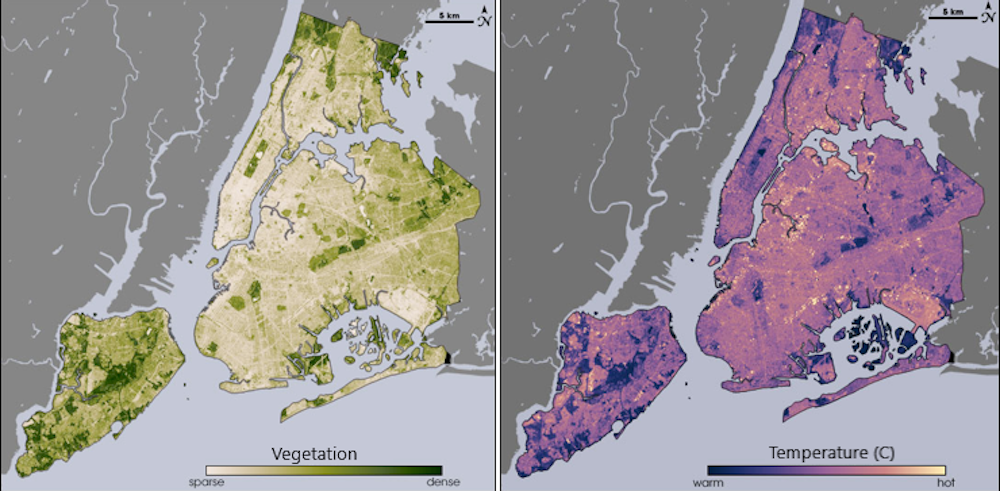
Comparing maps of New York’s vegetation and temperature shows the cooling effect of parks and neighborhoods with more trees. In the map on the left, lighter colors are areas with fewer trees. Light areas in the map on the right are hotter. NASA/USGS Landsat
But planting trees isn’t always simple.
In hot, dry cities, trees often require irrigation to survive, which can strain already limited water resources. Trees must survive for decades to grow large enough to provide shade and release enough water vapor to reduce air temperatures.
Most challenging of all, dense urban neighborhoods where heat is most intense are often too packed with buildings and roads to grow more trees.
How cool roofs can help on hot days
Another option is “cool roofs.” Coating rooftops with reflective paint or using light-colored materials allows buildings to reflect more sunlight back into the atmosphere rather than absorbing it as heat.
These roofs can lower the temperature inside an apartment building without air conditioning by about 2 to 6 F (1 to 3.3 C), and can cut peak cooling demand by as much as 27% in air-conditioned buildings, one study found. They can also provide immediate relief by reducing outdoor temperatures in densely populated areas. The maintenance costs are also lower than expanding urban forests.
Two workers apply a white coating to the roof of a row home in Philadelphia. AP Photo/Matt Rourke
However, like trees, cool roofs come with limits. Cool roofs work better on flat roofs than sloped roofs with shingles, as flat roofs are often covered by heat-trapping rubber and are exposed to more direct sunlight over the course of an afternoon.
Cities also have a finite number of rooftops that can be retrofitted. And in cities that already have many light-colored roofs, a few more might help lower cooling costs in those buildings, but they won’t do much more for the neighborhood.
By weighing the trade-offs of both strategies, cities can design location-specific plans to beat the heat.
Choosing the right mix of cooling solutions
Many cities around the world have taken steps to adapt to extreme heat, with tree planting and cool roof programs that implement reflectivity requirements or incentivize cool roof adoption.
In a recent study, we analyzed Boston’s potential to lower heat in vulnerable neighborhoods across the city. The results demonstrate how a balanced, budget-conscious strategy could deliver significant cooling benefits.
For example, we found that planting trees can cool the air 35% more than installing cool roofs in places where trees can actually be planted.
However, many of the best places for new trees in Boston aren’t in the neighborhoods that need help. In these neighborhoods, we found that reflective roofs were the better choice.
By investing less than 1% of the city’s annual operating budget, about US$34 million, in 2,500 new trees and 3,000 cool roofs targeting the most at-risk areas, we found that Boston could reduce heat exposure for nearly 80,000 residents. The results would reduce summertime afternoon air temperatures by over 1 F (0.6 C) in those neighborhoods.
Not every city will benefit from the same mix. Boston’s urban landscape includes many flat, black rooftops that reflect only about 12% of sunlight, making cool roofs that reflect over 65% of sunlight an especially effective intervention. Boston also has a relatively moist growing season that supports a thriving urban tree canopy, making both solutions viable.
In places with fewer flat, dark rooftops suitable for cool roof conversion, tree planting may offer more value. Conversely, in cities with little room left for new trees or where extreme heat and drought limit tree survival, cool roofs may be the better bet.
Phoenix, for example, already has many light-colored roofs. Trees might be an option there, but they will require irrigation.
Getting the solutions where people need them
Adding shade along sidewalks can do double-duty by giving pedestrians a place to get out of the sun and cooling buildings. In New York City, for example, street trees account for an estimated 25% of the entire urban forest.
Cool roofs can be more difficult for a government to implement because they require working with building owners. That often means cities need to provide incentives. Louisville, Kentucky, for example, offers rebates of up to $2,000 for homeowners who install reflective roofing materials, and up to $5,000 for commercial businesses with flat roofs that use reflective coatings.
In Boston, planting trees, left, and increasing roof reflectivity, right, were both found to be effective ways to cool urban areas. Ian Smith et al. 2025
Efforts like these can help spread cool roof benefits across densely populated neighborhoods that need cooling help most.
As climate change drives more frequent and intense urban heat, cities have powerful tools for lowering the temperature. With some attention to what already exists and what’s feasible, they can find the right budget-conscious strategy that will deliver cooling benefits for everyone.
Lucy Hutyra has received funding from the U.S. federal government and foundations including the World Resources Institute and Burroughs Wellcome Fund for her scholarship on urban climate and mitigation strategies. She was a recipient of a 2023 MacArthur Fellowship for her work in this area.
Ian Smith does not work for, consult, own shares in or receive funding from any company or organization that would benefit from this article, and has disclosed no relevant affiliations beyond their academic appointment.
For the past few years, governments across the world have paid close attention to conflicts in Ukraine and the Middle East. There, it is said, we see the first glimpses of what warfare of the future will look like, not just in terms of weaponry, but also in terms of new technologies and tactics.
Most recently, the United States-Israeli attacks on Iran demonstrated not just new strategies of drone deployment and infiltration but also new vulnerabilities. During the 12-day conflict, Iran and vessels in the waters of the Gulf experienced repeated disruptions of GPS signal.
This clearly worried the Iranian authorities who, after the end of the war, began to look for alternatives.
“At times, disruptions are created on this [GPS] system by internal systems, and this very issue has pushed us toward alternative options like BeiDou,” Ehsan Chitsaz, deputy communications minister, told Iranian media in mid-July. He added that the government was developing a plan to switch transportation, agriculture and the internet from GPS to BeiDou.
Iran’s decision to explore adopting China’s navigation satellite system may appear at first glance to be merely a tactical manoeuvre. Yet, its implications are far more profound. This move is yet another indication of a major global realignment.
For decades, the West, and the US in particular, have dominated the world’s technological infrastructure from computer operating systems and the internet to telecommunications and satellite networks.
This has left much of the world dependent on an infrastructure it cannot match or challenge. This dependency can easily become vulnerability. Since 2013, whistleblowers and media investigations have revealed how various Western technologies and schemes have enabled illicit surveillance and data gathering on a global scale — something that has worried governments around the world.
Clear message Iran’s possible shift to BeiDou sends a clear message to other nations grappling with the delicate balance between technological convenience and strategic self-defence: The era of blind, naive dependence on US-controlled infrastructure is rapidly coming to an end. Nations can no longer afford to have their military capabilities and vital digital sovereignty tied to the satellite grid of a superpower they cannot trust.
This sentiment is one of the driving forces behind the creation of national or regional satellite navigation systems, from Europe’s Galileo to Russia’s GLONASS, each vying for a share of the global positioning market and offering a perceived guarantee of sovereign control.
GPS was not the only vulnerability Iran encountered during the US-Israeli attacks. The Israeli army was able to assassinate a number of nuclear scientists and senior commanders in the Iranian security and military forces. The fact that Israel was able to obtain their exact locations raised fears that it was able to infiltrate telecommunications and trace people via their phones.
On June 17 as the conflict was still raging, the Iranian authorities urged the Iranian people to stop using the messaging app WhatsApp and delete it from their phones, saying it was gathering user information to send to Israel.
Whether this appeal was linked to the assassinations of the senior officials is unclear, but Iranian mistrust of the app run by US-based corporation Meta is not without merit.
Cybersecurity experts have long been sceptical about the security of the app. Recently, media reports have revealed that the artificial intelligence software Israel uses to target Palestinians in Gaza is reportedly fed data from social media.
Furthermore, shortly after the end of the attacks on Iran, the US House of Representatives moved to ban WhatsApp from official devices.
Western platforms not trusted For Iran and other countries around the world, the implications are clear: Western platforms can no longer be trusted as mere conduits for communication; they are now seen as tools in a broader digital intelligence war.
Tehran has already been developing its own intranet system, the National Information Network, which gives more control over internet use to state authorities. Moving forward, Iran will likely expand this process and possibly try to emulate China’s Great Firewall.
By seeking to break with Western-dominated infrastructure, Tehran is definitively aligning itself with a growing sphere of influence that fundamentally challenges Western dominance. This partnership transcends simple transactional exchanges as China offers Iran tools essential for genuine digital and strategic independence.
The broader context for this is China’s colossal Belt and Road Initiative (BRI). While often framed as an infrastructure and trade project, BRI has always been about much more than roads and ports. It is an ambitious blueprint for building an alternative global order.
Iran — strategically positioned and a key energy supplier — is becoming an increasingly important partner in this expansive vision.
What we are witnessing is the emergence of a new powerful tech bloc — one that inextricably unites digital infrastructure with a shared sense of political defiance. Countries weary of the West’s double standards, unilateral sanctions and overwhelming digital hegemony will increasingly find both comfort and significant leverage in Beijing’s expanding clout.
This accelerating shift heralds the dawn of a new “tech cold war”, a low-temperature confrontation in which nations will increasingly choose their critical infrastructure, from navigation and communications to data flows and financial payment systems, not primarily based on technological superiority or comprehensive global coverage but increasingly on political allegiance and perceived security.
As more and more countries follow suit, the Western technological advantage will begin to shrink in real time, resulting in redesigned international power dynamics.
Jasim Al-Azzawi is an analyst, news anchor, programme presenter and media instructor. He has presented a weekly show called Inside Iraq.
Source: Council on Hemispheric Affairs – Analysis-Reportage
By Roger D. Harris and John Perry
With the Trump imperium passing the half-year mark, the posture of the US empire is ever clearer. Whether animated by “America First” or globalism, the objective remains “full spectrum dominance.” And now with theneocon captureof the Democrats, there are no guardrails from the so-called opposition party.
Call it the “new cold war,” the “beginning of World War III,” or – in Trump’s words – “endless war”– this is the era that the world has entered. The US/Zionist war against Iran has paused, but no one has any illusions that it is over. And it won’t likely be resolved until one side decisively and totally prevails. Ditto for the proxy war with Russia in Ukraine. Likely the same with Palestine, where Israel is perpetrating genocide against the Palestinian people. Meanwhile, since Obama’s “pivot to Asia,” the empire is building up forwar with China.
In Latin America and the Caribbean, the empire’s drive for world hegemony assumes a hybrid form. The carnage is less apparent because the weapons take the form of “soft power” –sanctions, tariffs, and deportations. These can have the same lethal consequences as bombs, only less overt.
Making the world unsafe for socialism
Some Western leftists vilify the defensive measures that Cuba, Venezuela and Nicaragua must take to protect themselves from the empire’s regime-change schemes. In contrast, Washington clearly understands that these countries pose “threats of a good example” to the empire. Each subsequent US president, from Obama on, has certified them as “extraordinary threats to US national security.” Accordingly, they are targeted with the harshest coercive measures.
In this war of attrition, historian Isaac Saneyusesthe example of Cuba to show how any misstep by the revolutionary government or deficiency within society is exaggerated and weaponized. The empire’s siege, he explains, is not merely an attempt to destabilize the economy but is a deliberate strategy of suffocation. The empire’s aim is to incite internal discontent, distort people’s image of the government, and ultimately dismantle social gains.
While Cuba is affected worst by the hybrid war, both Venezuela and Nicaragua have also been damaged. All three countries have seen “humanitarian parole” for their migrants in the US ended. Temporary Protected Status (TPS) was also withdrawn for Venezuelans and Nicaraguans. The strain of returning migrants along with cuts in the remittances they had been sending (amounting to a quarter of Nicaragua’s GDP) further impact their respective economies.
Higher-than-average tariffs are threatened on Venezuelan and Nicaraguan exports to the US, together with severe restrictions on Caracas’s oil exports. Meanwhile, the screws have been tightened on thesix-decadeUS blockade of Cuba with disastrous humanitarian consequences.
However, all three countries are fighting back. They are forming new trade alliances with China and elsewhere. Providing relief to Cuba, Mexico has supplied oil and China is installing solar panel farms to address the now daily losses of electrical power. High levels of food security in Venezuela and Nicaragua have strengthened their ability to resist US sanctions, while Caracas successfully dealt a blow to one of Washington’s harshest migration measures by securing the release of 252 of its citizens who had been incarcerated in El Salvador’storturousCECOT prison.
Venezuela’s US-backed far-right opposition is in disarray. The first Trump administration had recognized the “interim presidency” of Juan Guaidó, followed by the Biden administration declaring Edmundo González winner of Venezuela’s last presidential election. But the current Trump administration has yet to back González,de factorecognizing Venezuelan President Nicolás Maduro.
Nicaragua’s right-wing opposition is also reeling from a side-effect of Trump’s harsh treatment of migrants – many are returning voluntarily to a country claimed by the opposition to be “unsafe,” while US Homeland Security has evenextolledtheir home country’s recent achievements. And some of Trump’s prominent Cuban-American supporters are nowquestioninghis “maximum pressure” campaign for going too far.
Troubled waters for the Pink Tide
The current progressive wave, the so-called Pink Tide, was initiated by Mexican President Andrés Manuel López Obrador’s landslide victory in 2018. His MORENA Party successor, Claudia Sheinbaum, won by an even greater margin in 2024. Mexico’s first woman president has proven to be perhaps the world’s most dignified and capable sparring partner with a U.S. president who has threatened tariffs, deportations, military interventions and more on his southern neighbor.
Left-leaning presidents Gabriel Boric in Chile and Gustavo Petro in Colombia are limited to single terms. Both have faced opposition-aligned legislatures and deep-rooted reactionary power blocs. Chilean Communist Party candidate Jeanette Jara is favored to make it through their first-round presidential election in November 2025, but will face a challenging final round if the right unifies, as is likely, around an extremist candidate.
As the first non-rightist in Colombia’s history, Petro has had a tumultuous presidential tenure. He credibly accuses his former foreign minister ofcolludingwith the US to overthrow him. However, the presidency could well revert to the right in the May 2026 elections.
Boric, Petro, Uruguay’s Yamandú Orsi and Brazil’s Luiz Inácio Lula da Silvamet in Julyas the region’s center-left presidents, with an agenda of dealing with Trump, promoting multilateralism and keeping their distance from the region’s more left-wing governments.
With shaky popularity ratings, Lula will likely run for reelection in October 2026. As head of the region’s largest economy, Lula plays a world leadership role, chairing three global summits in a year. Yet with less than majority legislative backing, Lula has triangulated between Washington and the Global South, often capitulating to US interests (as in his veto of BRICS membership for Nicaragua and Venezuela). Regardless, Trump is threatening Brazil with a crippling 50% export tariff and is blatantly interfering in the trial of former right-wing President Jair Bolsonaro, accused of insurrection. So far, Trump’s actions have backfired, arousing anger among Brazilians. Lulacommentedthat Trump was “not elected to be emperor of the world.”
In 2022, Honduran President Xiomara Castro assumed office after being elected in November 2021, inheriting what many observers have described as anarcostatesubservient to Washington; she has tried to push the envelope to the left. Being constitutionally restricted to one term, Castro hands the Libre Party candidacy in November’s election to former defense minister Rixi Moncada who faces atough contestwith persistentUS interference.
Bolivia’s ruling Movement Toward Socialism (MAS) Party is locked in a self-destructive internecine clash between former President Evo Morales and his ex-protégé and current President Luis Arce. The energized Bolivian rightwing is spoiling for the August 17thpresidential election.
Israeli infiltration accompanies US military penetration
Analyst Joe Emersbergernotes: “Today, all geopolitics relates back to Gaza where the imperial order has been unmasked like never before.”DefyingWashington, theHague Groupmet in Colombia for an emergency summit on Gaza to “take collective action grounded in international law.” On July 16, regional states – Bolivia, Cuba, Colombia, Nicaragua and Saint Vincent and the Grenadines – endorsed the pledge to take measures in support of Palestine, with other states likely to follow. Brazil will join South Africa’s ICJ complaint against Israel.
At the other end of the political spectrum are self-described “world’s coolest dictator” Nayib Bukele ofEl Salvadorand confederates Javier Milei of Argentina and Daniel Noboa of Ecuador. As well as cozying up to Trump, they devotedly support Israel, which has beeninstrumentalin enabling the most brutal reactionaries in the region. Noboa dulytellsIsrael’s Netanyahu that they “share the same enemies.”
In February, the US Southern Commandwarned: “Time is not on our side.” The perceived danger is “methodical incursion” into our “neighborhood” by both Russia and China. Indeed, China has become the region’ssecond largesttrading partner after the US, and even right-wing governments are reluctant to jeopardize their relations with Beijing. Theempire’s solutionis to “redouble our efforts to nest military engagement,” using humanitarian assistance as “an essential soft power tool.”
Picking up where Biden left off, Trump has furthered USmilitary penetration, notably in Ecuador,Guyana,Brazil,Panama, and Argentina. The pandemic ofnarcotics trafficking, itself a product ofUS-induceddemand, has been a Trojan Horse for militarist US intervention in Haiti, Ecuador, Peru, and threatened in Mexico.
In Panama, President José Mulino’s obeisance to Trump’s ambitions to control the Panama Canal and reduce China’s influenceprovokedmassive protests. Trump’s collaboration in the genocide of Palestinians motivated Petro todeclarethat Colombia must leave the NATO alliance and keep its distance from “militaries that drop bombs on children.” Colombia had been collaborating with NATO since 2013 and became the only Latin American global partner in 2017.
Despite Trump’s bluster – what theFinancial Timescalls “imperial incontinence” – his administration has produced mixed results. While rightist political movements have basked in Trump’s fitful praise, his escalating coercion provokes resentment against Yankee influence. Resistance is growing, with new alliances bypassing Washington. As the empire’s grip tightens, so too does the resolve of those determined to break free from it.
Credit Main Photo: Teri Mattson, Workers’ Summit, Tijuana, at the U.S. Border Wall
Mal and Dylan Siely examine finger grooves at Waribruk with GunaiKurnai Elder Uncle Russell Mullett.Photo by Jess Shapiro, courtesy of GunaiKurnai Land and Waters Aboriginal Corporation
Australia’s First Nations history stretches back many tens of thousands of years, rich in depth and diversity.
Archaeological research has revealed much about this deep past, but it has rarely captured the gestures of the ancestors – their movements, postures and physical motions. Material traces like tools and hearths tend to survive; fleeting movements usually do not.
Newly published research in the journal Australian Archaeology has revealed something different: traces of hand movements preserved in soft rock deep within GunaiKurnai Country.
In a limestone cave in the foothills of the Victorian alps, a team of researchers led by the GunaiKurnai Land and Waters Aboriginal Corporation in partnership with Monash University and international archaeologists from Spain, France and New Zealand studied finger impressions dragged into the walls and ceilings. They reveal the hand movements of ancestors from thousands of years ago.
The glittering Waribruk
The cave, referred to by GunaiKurnai Elders as Waribruk, contains a pitch-black chamber beyond the reach of natural light. To enter and mark these walls, the ancestors would have needed artificial light: firesticks or small fires.
The cave’s deeper interior walls became soft over millions of years as underground waters penetrated the limestone, slowly weathering and dissolving the rock into cavernous tunnels.
The remaining wall surfaces and ceilings became spongy and malleable, much like the texture of playdough.
Over time, cave-dwelling bacteria living on the soft, moist rock produced luminescent microcrystals, so that today, the walls and ceiling glitter when exposed to light.
It is on these glittering surfaces that the finger grooves are found.
We don’t know exactly when they were made, but people would have needed artificial light to reach this part of the cave. They would have either carried firesticks or lit fires on the ground.
Archaeological excavations below and near the panels failed to uncover evidence of fires on the ground, but we did find millimetre-long fragments of charcoal and tiny patches of ash, likely dropped embers from firesticks.
These were found buried in the cave floor under and near the decorated walls. They date between 8,400 and 1,800 years ago, about 420 to 90 generations past.
This, then, is the best estimate for how long ago the old ancestors moved through the dark tunnels of the cave, firelight in hand, to create the finger impressions on the walls.
Rare ancestral gestures
What they made when they dragged their fingers along the soft rock surfaces deep in the cave is remarkable, revealing rare evidence of ancestral gestures: fleeting bodily movements captured in soft cave surfaces.
On one panel, 96 sets of grooves were recorded. The first marks run horizontally, made by multiple fingers, sometimes both hands side by side. Later, vertical and diagonal grooves were added, intersecting the earlier ones.
Among them are two parallel sets of narrow impressions, only 3 to 5 millimetres wide for each finger. They are each set a short distance apart, indicating they were made by a small child. However, they’re so high up, the child must have been lifted by an adult.
Deeper in the cave, a low ceiling panel bears 262 grooves above a narrow clay bench sloping steeply toward a creek bed. The grooves indicate people moved along the ledge, crawling, sitting, or balancing to reach the ceiling.
Farther along, 193 grooves trace a path above the creek bed. Fingers were pressed into the soft ceiling, gradually releasing 1.6 metres farther along as the people walked forward.
All impressions point the same way, suggesting arms and hands raised overhead, capturing a deliberate, embodied gesture as the ancestors moved deeper into the cave.
A place only few could enter
Altogether there are 950 sets of finger grooves deep within Waribruk. Their meaning remained unclear for years, but a close analysis of where the marks appear, and where they don’t, offers key insights.
The grooves are always located in areas where calcite microcrystals coat the cave walls or ceiling, sometimes just extending past the glitter’s edges. They never appear in areas of the cave where the soft walls are without glitter.
Crucially, they occur far from any archaeological evidence of domestic life: no hearths, no food remains, no tools.
This absence matters. GunaiKurnai oral traditions hold that such caves weren’t used for ordinary living. They were only frequented by special individuals, mulla-mullung – medicine men and women who wielded powerful knowledge.
Mulla-mullung healed and cursed through ritual, using crystals and powdered minerals as part of their practice.
In the late 1800s, GunaiKurnai knowledge-holders told the pioneer ethnographer Alfred Howitt about the powers of these crystals, and of the caves. The role of mulla-mullung, they explained, was usually passed on from parent to child, and when a mulla-mullung lost their crystals, they lost their powers.
The finger grooves at Waribruk matches these traditions. They are not casual decorations. They are deliberate gestures, linked to crystal-coated surfaces, made in places only a few could enter.
The grooves reflect movement, touch, and sources of power for special individuals in the community: an embodied record of people interacting with the sacred.
What survives is not just ancient “rock art”. These are the gestures of ancestors, mulla-mullung it now seems, who ventured into the deepest darkness of the cave to access the power of the glittering surfaces.
Through these finger trails, we glimpse not only a physical act, but a cultural practice grounded in knowledge, memory and spirituality. A momentary movement, preserved in stone, connecting us to lives lived long ago – and breathing the cave to life through the actions of the ancestors and culture.
Acknowledgements: The authors are just three of the 13 authors of the journal article, including Olivia Rivero Vilá and Diego Garate Maidagan, who undertook the photography to create the digital 3D models of the panels to record and measure the size of the finger grooves.
Russell Mullett receives indirect funding from the Australian Research Council through the partnership agreement with Monash University to undertake research projects. He is affiliated with the GunaiKurnai Land & Waters Aboriginal Corporation – a non-profit organisation. He is also a Board Member of the GunaiKunai Traditional Owner Land Management Board. Funding for the research was provided by Rock Art Australia.
Bruno David receives research funding from the Australian Research Council, GunaiKurnai Traditional Owner Land Management Board, and Rock Art Australia.
Madeleine Kelly does not work for, consult, own shares in or receive funding from any company or organisation that would benefit from this article, and has disclosed no relevant affiliations beyond their academic appointment.
Source: The Conversation (Au and NZ) – By Peter Banks, Professor of Conservation Biology, School of Life and Environmental Sciences, University of Sydney
An introduced black rat scratches through leaf litter, looking for food. Nearby, a native water rat watches on, its beady eyes shining. The native rat pounces out from the shadows, sending the invader fleeing.
The encounter in Sydney bushland, captured on video, is the first documented evidence of an aggressive interaction in nature between a native water rat, also known as rakali, and a black rat.
The footage, discussed in our new research, provides proof that rakali (Hydromys chrysogaster) actively hunt introduced black rats (Rattus rattus). This behaviour may offer a promising natural form of pest control.
Rakali are carnivorous rodents, and the largest of Australia’s 60 native rat species. Our findings suggest efforts to conserve the rakali should include Australia’s urban environments, where introduced rats cause a host of problems.
Anecdotal reports suggest Sydney, for example, has a growing vermin problem. Public concern was fuelled late last year when footage emerged of rats scurrying through a food court at a popular Sydney shopping centre (see video below).
Black rats and brown rats are the two main pest rat species in Australia. Both were introduced by Europeans. They compete aggressively against other species for food and can breed quickly.
Black rats are particularly abundant in urban areas and nearby bushland. They may prefer natural vegetation to urban environments, if there are no competitors around.
Managing introduced rats is becoming increasingly difficult. Some rodenticides have become less effective as rats developed genetic resistance. And rat poisons have been known to harm native species.
Clearly, better ways of managing introduced rats are needed. That’s where our new paper comes in.
Enter the rakali
The rakali, or water rat, is found across much of Australia. It is semi-aquatic and usually lives near fresh or brackish (slightly salty) water such as creeks and estuaries. It is often described as Australia’s “otter”.
While surveying rakali around Sydney Harbour in June 2011, we captured footage of one lying in wait before ambushing a black rat.
The observation took place in bushland on the foreshore of Sydney Harbour, near Collins Beach at North Head. We had set up a motion-sensing wildlife camera as part of a pilot study to understand relationships between rakali and black rats.
At 10.22pm, the camera recorded a rakali next to a rock and hidden by vegetation. A black rat
approached, and the rakali leapt out and chased it off.
But do rakali kill black rats, or just chase them? Captive rakali have been known to kill and eat other rat species in captivity. And given the larger size and carnivorous diet of the rakali, they may in fact prey on black rats in the wild.
Or rakali may reduce black rat numbers the same way dingoes reduce fox activity – by both preying on some and scaring others away.
Our paper also canvasses growing evidence that native rodents can resist and suppress their invasive counterparts.
For example, native bush rats (Rattus fuscipes) were presumed to be outcompeted by black rats. But an experiment at Jervis Bay in New South Wales removed black rats, allowing bush rats to reclaim their territory. After the experiment ended, black rats did not return.
At North Head on Sydney Harbour, reintroducing bush rats to areas where they once lived led to a dramatic decline in black rat numbers.
Recent research reported on footage captured in a Perth backyard of black rats attacking a native quenda, a small marsupial species found only in southwest Australia. However, the quenda appeared to fend off the attack. This means it’s possible rakali, which are much larger than quenda, would be even more aggressive towards black rats.
Native rats to the rescue?
Evidence is growing that native rodents can help control pest rodents.
This is especially true of rakali, which live in all major Australian cities where black rats are common. More research is needed to better understand the potential of rakali to manage invasive black rat populations.
Troublingly, however, native rats are vulnerable to rodenticides. To support their role in pest management, the use of poisons to control pest rats should be reconsidered.
By allowing native rodents to thrive, we may be able to harness their natural behaviours to control invasive pests safely, sustainably and effectively.
Peter Banks receives funding from the Australian Research Council, the Hermon Slade Foundation and the Grains Research and Development Corporation.
Jenna Bytheway does not work for, consult, own shares in or receive funding from any company or organisation that would benefit from this article, and has disclosed no relevant affiliations beyond their academic appointment.
If you believe the hype, generative artificial intelligence (AI) is the future. However, new research suggests the technology may also improve our understanding of the past.
A team of computer scientists from Google DeepMind, working with classicists and archaeologists from universities in the United Kingdom and Greece, described a new machine-learning system designed to help experts to understand ancient Latin inscriptions.
Named Aeneas (after the mythical hero of Rome’s foundation epic), the system is a generative neural network designed to provide context for Latin inscriptions written between the 7th century BCE and the 8th century CE.
As the researchers write in Nature, Aeneas retrieves textual and contextual parallels, makes use of visual details, and can generate speculative text to fill gaps in inscriptions.
A useful and accurate tool
All of these are attractive prospects for scholars who work with inscriptions (known as epigraphers). Interpreting and dating fragmentary inscriptions is not easy.
How well does it work? The team behind Aeneas asked 23 people with epigraphic expertise, ranging from masters students to professors, to try the system out.
The participants used outputs from Aeneas as starting points in an experimental simulation of real-world research workflows under a time constraint.
In 90% of cases, the historians found the parallels to a given inscription retrieved by Aeneas were useful starting points for further research. The system also improved their confidence in key tasks by 44%.
When restoring partial inscriptions and determining where they were from, historians working with Aeneas outperformed both humans and artificial intelligence alone. When estimating the age of inscriptions, Aeneas achieved results on average within 13 years of known dates provided by historians.
The system performs better for some regions and periods than others. Unsurprisingly, it performs better on material from around the period for which historians have not only the most evidence but also the most accurately dated inscriptions.
Nevertheless, the participants emphasised Aeneas’ ability to broaden searches by identifying significant but previously unnoticed parallels and overlooked textual features. At the same time, it helped them refine their results to avoid overly narrow or irrelevant findings.
A quicker way to the starting point
So how useful might it really be? Epigraphy is a challenging field with a long and messy history. It takes long years to develop expertise, and scholars tend to specialise in particular regions or time periods.
Aeneas will dramatically speed up the process of preliminary analysis. It will be able to sift through the complex mass of evidence to identify potential parallels or similar texts that a researcher may otherwise miss when dealing with fragmentary material.
Another use for Aeneas may be to locate an inscription geographically, and to estimate when it was produced.
Aeneas can also predict missing parts of a fragmentary text, even where the length of what is lost is unknown.
This last feature may seem the most exciting but probably has the least practical value for research. It is the equivalent of speculative restoration by a human authority and has an equal capacity to lead the unwary to unsafe conclusions.
A useful starting point
On the other hand, we should ask what Aeneas can’t do. The answer is the actual research (like all generative AI products to date, for all the hype).
However, the team behind Aeneas are perfectly frank about this. They are rightly proud of the achievement the system represents, but are careful to measure its capacity to yield “useful research starting points”.
Nor does this tool remove the fundamental necessity of checking the data it extracts against standard references, and where possible images or (ideally) original artefacts.
Researchers with appropriate expertise will still need to do the work of interpreting results. What Aeneas changes is the feasible scope of their work.
It allows a much broader view of parallels (especially through its capacity to harness visual cues) than is typical of previously developed tools. Its capacity for rapid retrieval will bring scholars to their research starting points much faster than before.
And for epigraphers, it may open up much broader horizons, allowing them to escape the restriction of particular geographical regions or time periods.
Trevor Evans does not work for, consult, own shares in or receive funding from any company or organisation that would benefit from this article, and has disclosed no relevant affiliations beyond their academic appointment.
ER Report: Here is a summary of significant articles published on EveningReport.nz on July 28, 2025.
Showing happiness brings social rewards, but the opposite can happen if people feel pressured to appear happy Source: The Conversation (Au and NZ) – By Dan Weijers, Senior Lecturer in Philosophy, Co-editor International Journal of Wellbeing, University of Waikato Getty Images Happiness has many social benefits. Happy people tend to be healthier and more successful. They are also more helpful and others often view them more positively, making it easier for them
Poor mental health often plays a role in adults killing children. But it is primarily about violence Source: The Conversation (Au and NZ) – By Sam Teague, Associate Dean of Engagement, Murdoch University Recently, two babies died on opposite sides of the country. The first was a seven-month-old boy, found dead after being retrieved from a lake in rural Queensland. A second baby, a six-month-old girl was found dead in Perth, Western
UN climate chief tells Australia to ‘go big’ with its 2035 emissions reduction target Source: The Conversation (Au and NZ) – By Michelle Grattan, Professorial Fellow, University of Canberra The United Nations Climate Change Executive Secretary, Simon Stiell, has urged the Australian government to set an ambitious 2035 emissions reduction target, declaring “bog standard is beneath you”. In a Monday speech, Stiell says, “don’t settle for what’s easy. Go
Does yellow mucus mean you need antibiotics? What phlegm can – and can’t – say about your health Source: The Conversation (Au and NZ) – By Lynn Nazareth, Research Scientist in Olfactory Biology, CSIRO Violeta Stoimenova/Getty When you’re sick you’ll often produce more phlegm, and might notice it’s thicker or a different colour: white, green, yellow or maybe even brown. What can this phlegm – also called mucus, snot, sputum, catarrh and booger
A look into the decades of labour that helped bring LGBTQIA+ stories to Australian TV Source: The Conversation (Au and NZ) – By Damien O’Meara, Lecturer, School of Media and Communication, RMIT University A Place to Call Home/IMDB When the Seven Network’s Bevan Lee created the story of James Bligh, a gay man living in 1950s Australia, in A Place to Call Home (2013–18), it was the culmination of a
Women’s rugby is booming, but safety relies on borrowed assumptions from the men’s game Source: The Conversation (Au and NZ) – By Kathryn Dane, Postdoctoral associate, University of Calgary Rugby union, commonly known as just rugby, is a fast-paced and physical team sport. More girls and women in Canada and around the world are playing it now than ever before. As of 2021, women’s rugby reached a record 2.7
How Marvel’s Fantastic Four discovered the human in the superhuman Source: The Conversation (Au and NZ) – By J. Andrew Deman, Professor of English, University of Waterloo The Fantastic Four: First Steps is the second cinematic reboot of the Fantastic Four franchise, and there’s a lot riding on this film. While cinema-goers have responded enthusiastically to many of the films in the Marvel Cinematic Universe,
Uganda’s land eviction crisis: do populist state measures actually fix problems? Source: The Conversation (Au and NZ) – By Rose Nakayi, Senior Lecturer of Law, Makerere University Populism is rife in various African countries. This political ideology responds to and takes advantage of a situation where a large section of people feels exploited, marginalised or disempowered. It sets up “the people” against “the other”. It promises
Keith Rankin Analysis – Representation versus Reality; Reaching a Low Point Analysis by Keith Rankin. Have you noticed how, in New Zealand news items and weather reports, Nelson and Marlborough are called the “top” of the South Island rather than the ‘north’ of that island. We also get phrases such as the “lower North Island” and the “upper North Island”. And New Zealand’s narrators regularly refer
Barnaby Joyce wants Australia to abandon net zero – but his 4 central claims don’t stack up Source: The Conversation (Au and NZ) – By Ella Vines, Post-doctoral researcher, Green Lab, Monash University One-time Nationals leader Barnaby Joyce sought to dominate the first sitting week of the current federal parliament by proposing a divisive plan to reverse Australia’s net zero emissions target. The campaign, backed by fellow former Nationals leader Michael McCormack,
‘We pose no threat – our aim is to break the siege’: Tan Safi on joining the Handala Gaza flotilla No New Zealanders were on board the Handala in the latest arrest and abductions of Freedom Flotilla crew on humanitarian siege-busting missions to Gaza. However, two Australians were and one talks to The New Arab just before the attack on Saturday. INTERVIEW: By Sebastian Shehadi The Handala, a 1968 Norwegian trawler repurposed by the Freedom
AI agents are here. Here’s what to know about what they can do – and how they can go wrong Source: The Conversation (Au and NZ) – By Daswin de Silva, Professor of AI and Analytics, Director of AI Strategy, La Trobe University George Peters / Getty Images We are entering the third phase of generative AI. First came the chatbots, followed by the assistants. Now we are beginning to see agents: systems that aspire
The ghost of Robodebt – Federal Court rules billions of dollars in welfare debts must be recalculated Source: The Conversation (Au and NZ) – By Christopher Rudge, Law lecturer, University of Sydney A recent landmark court decision could have significant ramifications for several million social security recipients. The ruling means the federal government will need to recalculate more than A$4 billion in debts owed to the Department of Social Services, which administers
Critics claim gender clinics are seeing an excess of trans boys. But new data suggest otherwise Source: The Conversation (Au and NZ) – By Ken Pang, Senior Principal Research Fellow and Group Leader, Transgender Health Research Group, Murdoch Children’s Research Institute Gender clinics provide multidisciplinary care that helps trans people to explore and affirm their gender identity. The number of adolescents referred to gender clinics has increased worldwide in recent years,
Barnaby Joyce wants Australia to abandon net zero – but his 5 central claims don’t stack up Source: The Conversation (Au and NZ) – By Ella Vines, Post-doctoral researcher, Green Lab, Monash University One-time Nationals leader Barnaby Joyce sought to dominate the first sitting week of the current federal parliament by proposing a divisive plan to reverse Australia’s net zero emissions target. The campaign, backed by fellow former Nationals leader Michael McCormack,
As post-election talks drag on, what will Hobart’s proposed stadium actually cost Tasmanians? Source: The Conversation (Au and NZ) – By John Madden, Emeritus Professor, Centre of Policy Studies, Victoria University In the wake of last week’s Tasmanian election that delivered another hung parliament, the new government will need to shore up crossbench support. One of the issues to be negotiated will be support for the new stadium
Want to save yourself from super scams and dodgy financial advice? Ask these questions Source: The Conversation (Au and NZ) – By Angelique Nadia Sweetman McInnes, Academic in Financial Planning, CQUniversity Australia Is there anything you can do to protect your superannuation from dodgy providers or questionable financial advice? And if someone rings you out of the blue and tempts you with a better return on your savings –
The celebrity halo effect: why abuse allegations against powerful men like Brad Pitt are so easily forgotten Source: The Conversation (Au and NZ) – By Jamilla Rosdahl, Senior Lecturer, Australian College of Applied Psychology Last month, actor Brad Pitt stepped onto the Formula One circuit as the leading man of the high-octane film F1, backed by Apple Studios, Jerry Bruckheimer Films and Pitt’s own Plan B Entertainment. During the publicity campaign, cameras
Debunking the theological gaslighting of Israel-supporting Imams Muslims, and the global community, must rally around the Palestinian people’s inalienable rights: to exist, to return home, and to live free from occupation. ANALYSIS: By Shadee ElMasry In our world today, one would be hard-pressed to find a reputable, well-known scholar or group of scholars who support Israel. Of course, the keywords here are
Bougainville woman Cabinet minister battling nine men to hold her seat INTERVIEW: By Don Wiseman, RNZ Pacific senior journalist One of the first women to hold an open seat in Bougainville, Theonila Roka Matbob, is confident she can win again. Bougainville goes to the polls in the first week of September, and Roka Matbob aims to hold on to her Ioro seat in central Bougainville, where
Source: The Conversation (Au and NZ) – By Dan Weijers, Senior Lecturer in Philosophy, Co-editor International Journal of Wellbeing, University of Waikato
Happiness has many social benefits. Happy people tend to be healthier and more successful. They are also more helpful and others often view them more positively, making it easier for them to find companions and influence others.
Most research into happiness focuses on the associations between these benefits and feeling happy. But we think many benefits, especially the social ones, are likely to depend primarily on expressing happiness.
In our new research, which reviews studies examining the social functions of the expression of happiness, we caution against pressuring others to display the emotion.
This difference is important because people can express happiness without feeling it, and vice versa. Some people find it more difficult than others to put on a happy face, and will suffer negative effects in cultures that expect or demand people to consistently appear happy.
Social functions of emotional expression
The simplest function of emotional expressions is to communicate to others how we are feeling. Why this is important depends on the context – we might express anger to deter others from coming closer, or express happiness to draw them in.
In our research, we show that expressing happiness, specifically, can also have important social functions.
By expressing happiness in a way that someone notices, such as by smiling at them, we give them a little gift – a social reward that often feels nice to receive. Since people are generally attuned to and often desire social rewards, they are more likely to behave in a way that attracts these displays of happiness.
By smiling at people when they say and do things we like, we encourage them to continue acting in a similar way.
Other people aren’t the only ones who like receiving social rewards – we do, too. Fortunately, emotions are notoriously contagious. We argue that expressing emotions is important for them to spread to others. When we smile at others, we are more likely to get a smile back, triggering social reward in ourselves as well.
Expressing happiness can also make other people think more of us. A range of studies have found the simple act of smiling can improve observer ratings of attractiveness, sincerity and cooperativeness.
This “halo effect” of expressing happiness can be especially useful in the workplace and in job interviews. In work contexts, expressing happiness has been found to make others see you as more competent and a better leader.
Chimpanzees, and many other animals that live in small groups, groom each other to promote social bonding and cohesion. It has been argued that, as humans began living in larger groups, laughter may have replaced picking fleas off each other as a more efficient social-bonding mechanism. Because laughing can be seen and heard, even at a distance, it can promote social reward and increase bonding among several people at once.
In addition to communicating and eliciting social reward in a group, laughing may also help groups bond by demonstrating shared values. If we all laugh at the same jokes, then we probably share some underlying attitudes about the content of those jokes. The social importance of laughing explains why we tend to laugh a lot more at packed live comedy performances than when watching the same show alone.
Expressions of happiness don’t always have positive effects
The effect of expressions of happiness varied between cultures. A cross-cultural study found smiling people were considered more intelligent in the United Kingdom, Germany and China, but less so in Japan, South Korea and Iran. As we argued previously, the Islamic Revolution led some in Iran to believe that good people look serious or sorrowful. People expressing happiness may therefore be seen as bad, callous or ignorant of the world’s woes.
Perhaps because expressions of happiness confer social benefits, they can become an expected norm. We define groups that expect specific emotions as emotional tribes. A pro-happiness emotional tribe might exclude someone who doesn’t regularly express happiness.
In many societies, including many English-speaking nations, pro-happiness tribalism is common. If you feel you should respond “good” to a greeting of “how are you?”, you may be responding to such pro-happiness pressures.
While many pro-happiness emotional tribes might evolve naturally, there is evidence that some organisations and people actively encourage and enforce happiness norms. For example, the Boy Scouts Law mandates cheerfulness to millions of boys in the United States. Apparently, no one wants to go camping with a whiner.
Workplaces can also be pro-happiness emotional tribes and include feedback on mood in performance reviews.
Even though expressions of happiness have many social benefits, we caution against actively creating pro-happiness emotional tribes. Some people, for personal or cultural reasons, find it more difficult to feel and express happiness.
All of us feel that way sometimes. Expectations of happiness pressure people into expressing happiness even when they have good reason to feel unhappy, anxious or angry – or have no strong feelings at all.
In response many people will fake being happy. Inauthentic emotional expressions have been shown to be exhausting and exacerbate negative feelings for some people. As such, a cultural pressure to be happy places an unfair burden on people who may simply not feel authentically happy.
The authors do not work for, consult, own shares in or receive funding from any company or organisation that would benefit from this article, and have disclosed no relevant affiliations beyond their academic appointment.
Recently, two babies died on opposite sides of the country. The first was a seven-month-old boy, found dead after being retrieved from a lake in rural Queensland.
A second baby, a six-month-old girl was found dead in Perth, Western Australia.
Both cases are being reported as family violence incidents. The boy was allegedly killed by “a man known to the child”, and the girl allegedly died at the hands of her mother.
In the past, reporting on parents who kill their kids has frequently linked these crimes to mental illness. But now, reporting is making a link to family violence instead.
While this prompts very uncomfortable conversations, the shift in language is crucial to improve efforts to understand and curb family violence. By calling violence out for what it is, we can better protect children from harm.
‘Deadly state of mind’
We’ve researched how mental illness has been reported on in Australian media.
In our study of 1,532 mental health-related newspaper articles published between 2000 and 2014, 40% contained stories of violence.
The vast majority of this violence was attributed, at least in part, to mental ill-health.
Using mental illness to explain infanticide has been especially common when the perpetrator was a mother. This reinforces mental illness as an explanation for unimaginable crimes.
For instance, in 2001, Andrea Yates drowned her five children in their bathtub in Texas. The Australian called this “Mama’s deadly state of mind”.
When Christine Gifford took the life of her ten-year-old daughter, this was described by news media as “the worst excess of psychotic disorder”.
The same narrative is not generally employed for fathers, who are more often described as “wilful and deliberate” killers.
This was the case for Greg Anderson, who killed his son Luke Batty at a sports oval following cricket practice. Luke’s mother, Rosie Batty, saw her son’s death as a family violence matter.
Arthur Freeman, who threw his daughter Darcey off Melbourne’s West Gate Bridge in 2009, was depicted in news media as “cold” and “motivated by spousal revenge”.
Differences in how we explain and report on family violence perpetrated by men and women are complex, but both require attention.
Reducing mental health stigma
Reports on the recent deaths of two babies killed within hours of each other have not sought to link these crimes to mental illness. Domestic violence has been cited in both cases, suggesting a shift towards calling violence out for what it is: violence.
These shifts in language and reporting are important in reducing the stigma regularly associated with mental illness. People with mental illness are not inherently violent.
Research shows these crimes occur within contexts of poverty, abusive relationships, family breakdown, and poor family and social supports.
That’s not to say poor mental health doesn’t play a role in individual cases, but it’s far from the only contributor in most crimes.
Factors contributing to mental illness are themselves regularly related to childhood mistreatment, neglect and intimate partner violence.
As a result, changes in the ways family violence is reported connects to a growing body of research about how we understand the drivers of it.
Keeping children safe
Challenging explanations of infanticide as a product of mental illness also help dispel traditional views of women with tendencies for emotional hysteria and irrationality. This perception of women is a deeply rooted gender stereotype that lacks scientific basis and reinforces inequality.
Furthermore, this perception obscures the truth: women play a central and fundamental role in caring for children in the home, in the workplace and throughout our community. This is important to remember at a time when child protection issues are of national concern.
It creates an opportunity to examine the social conditions and societal factors linked to intimate partner violence, child mistreatment and violent crime.
These conversations are uncomfortable because they require us to accept that babies, toddlers and children might not always be safe with their primary carers, or in early childhood settings.
Past media reporting elevated mental illness as an explanation for violent crime. In doing so, we could avoid conversations about family and domestic violence.
At a time when Australia is asking such important questions about levels of care for our children both inside and outside the home, these shifts in language sit equally alongside research, funding and policy in our collective pursuit of a safer community.
The authors do not work for, consult, own shares in or receive funding from any company or organisation that would benefit from this article, and have disclosed no relevant affiliations beyond their academic appointment.
The United Nations Climate Change Executive Secretary, Simon Stiell, has urged the Australian government to set an ambitious 2035 emissions reduction target, declaring “bog standard is beneath you”.
In a Monday speech, Stiell says, “don’t settle for what’s easy. Go for what’s smart by going big”.
His speech, hosted by the Smart Energy Council, comes ahead of his meeting with the Minister for Climate Change and Energy, Chris Bowen, in Canberra on Tuesday. Australia must submit its 2035 target under the Paris climate agreement by September. The Climate Change Authority has yet to deliver its advice to Bowen on the target. Previously, it has pointed to a target of between 65% and 75% reduction on 2005 levels.
The authority says on its website:
development of the 2035 targets advice is currently underway. This includes complex whole-of-economy modelling, policy analysis, consultation and consideration of international trends in climate action.
Stiell said Australia had a strong economy and among the world’s highest living standards. “If you want to keep them, doubling down on clean energy is an economic no-brainer.
“So the choice is clear. The question is: how far are you willing to go?
“The answer is due in September – when Australia’s next national climate plan is due. This isn’t just the next policy milestone. It’s a defining moment.”
Stiell said this was the moment for a climate plan that did not just write a vision into policy, “but delivers in spades for your people.
“Go for what will build lasting wealth and national security.”
He said this could be “Australia’s moment”.
“You’ve got world-class resources, a skilled, inventive workforce, and a A$22.7 billion plan – Future Made in Australia – with real ambition behind it.
“You’ve doubled renewable capacity since 2019.
“You’ve enshrined targets in law, and you’ve got strong, long-term policy signals.”
On the other side of the coin, Stiell warned if climate change was unchecked it would cripple Australia’s food production, and the country could face $6.8 trillion GDP loss by 2050.
“Living standards could drop by over $7,000 per person per year. And rising seas, resource pressures, and extreme weather would destabilise Australia’s neighbourhood – from Pacific Island nations to Southeast Asia – threatening your security.”
Bowen will also be hoping for some intelligence from Stiell on whether Australia’s bid to host next year’s COP will succeed.
Meanwhile, the push continues within the Coalition from those who want to dump its commitment to the net zero emissions by 2050 target.
The Western Australian Liberal party state council on the weekend called for the federal opposition to abandon the target. The motion came from the party’s Canning division, which is the seat held by frontbencher Andrew Hastie.
Hastie, speaking after it was carried, said it sent a “clear signal” to Australians that “we stand for something”.
The opposition has a review of its energy policy underway.
In the House of Representatives on Monday, the Nationals Barnaby Joyce introduced his private member’s bill to scrap Australia’s commitment to net zero.
“Net zero is going to have absolutely no effect on the climate whatsoever. The vast majority of the globe in both population and GDP are not participating in it, he told the house.
“So why are we doing this to ourselves?”
It had changed the standard of living for many Australians, he said. “Our GDP per person is going down. People are becoming poorer. If you go into shops they talk about 30 to 40% of their costs being energy”. In a more pronounced way, it was hurting the poorest, who needed the power to keep themselves warm, Joyce said.
Michelle Grattan does not work for, consult, own shares in or receive funding from any company or organisation that would benefit from this article, and has disclosed no relevant affiliations beyond their academic appointment.
When you’re sick you’ll often produce more phlegm, and might notice it’s thicker or a different colour: white, green, yellow or maybe even brown.
What can this phlegm – also called mucus, snot, sputum, catarrh and booger – really tell us about our health?
Here’s what to look for, and when to see a doctor.
What is phlegm?
We all produce mucus, even when healthy. Mucus is a barrier to the outside world that helps protect the organs in our bodies.
It’s produced by special cells within the epithelium. This is a tissue that lines the organs, cavities and surfaces in your body, including your eyes, mouth, digestive system and respiratory system (nasal passages and lungs).
a physical barrierfiltering out and trapping particles such as dust, allergens and bacteria
an immune barrier which contains various antimicrobial molecules that can kill a wide range of bacteria, fungi and even viruses.
Why do we produce more mucus when we’re sick?
The epithelium is one of the body’s first lines of defence when we have an infection. When these cells detect a pathogen – whether bacteria or a virus – they produce more mucus to strengthen the body’s physical and immune barriers.
Your body’s immune response causes inflammation, and this makes you produce more mucus. This excessive production and build-up is called mucus hypersecretion.
We often feel this is in our nasal passages when we have a cold, and sometimes lungs if we have a chest infection.
Usually, the epithelium’s cilia – long, hair-like cells – propel this mucus away and keep our airway passages clear.
But infections might damage or over-work the cilia, making us need to cough up phlegm or blow our noses to deal with this build-up.
Allergies are similar – your immune system overreacts to harmless substances (such as dust, pollen and certain foods) and produces excessive amounts of mucus.
Being sick can also affect the consistency of phlegm.
In a healthy person, mucus is around 90–95% water – the rest is made up of proteins called mucins and salts. This is why snot is usually clear and runny.
But when you’re sick, or recovering from an infection, studies suggest you produce more mucin proteins. These make your phlegm thicker.
This can give you a stuffy head, blocked nose or mean mucus accumulates and trickles to the back of your throat. This is known as post-nasal drip – also a common source of cough.
What about colour?
Thick mucus that is white or cloudy is usually an early sign of an infection, such as a cold. It may also indicate inflammation from allergies or chronic conditions such as asthma.
In the later stages of infection, snot is generally green, yellow or even brown. The greenish-yellow tinge comes from an enzyme called myeloperoxidase produced by immune cells that are fighting the infection.
Brownish-red mucus usually means it contains blood. This may happen when your nasal passages are damaged or irritated, often from blowing your nose a lot or because they’re dry.
This usually isn’t a cause for concern when blowing your nose. But if you cough up blood (haemoptysis) it can indicate something more serious, including a serious lung infection or even cancer. You should speak to a medical professional.
Black mucus is rare. It can be the sign of a fungal infection, or exposure to pollutants such as coal, dust or cigarette smoke. You should see a doctor if your mucus is black.
So, do I need antibiotics?
Your doctor may ask about your phlegm to make a diagnosis – its colour, consistency and how much you’re producing.
But studies show patients’ descriptions might not always be consistent or match observations made by a health-care professional.
So, the colour of your phlegm is not enough by itself to accurately diagnose an infection and tell if you need antibiotics.
But if you’re producing a lot of mucus and the colour or consistency is different from normal, it could be the sign your body is fighting an infection.
Drinking lots of fluids or use of decongestant sprays may help in the short term.
However, if you have additional symptoms, such as a fever, fatigue or loss of appetite for more than one to two weeks, speak to a health-care professional.
Lynn Nazareth does not work for, consult, own shares in or receive funding from any company or organisation that would benefit from this article, and has disclosed no relevant affiliations beyond their academic appointment.
When the Seven Network’s Bevan Lee created the story of James Bligh, a gay man living in 1950s Australia, in A Place to Call Home (2013–18), it was the culmination of a lifetime of work in commercial TV.
Lee’s success shows the importance of queer labour in getting queer stories in Australian television.
When I interviewed Lee for my research, his advice to emerging creatives was: “Don’t just, for the sake of being representative, drop one [queer character] into a show”.
“For the first 30 years of my career, and on most of our shows […] I did that, because it was the only way of getting them in,” he said.
I would argue Lee spent his career blazing the trail that makes this advice possible.
He is one of ten lesbian, gay and bisexual television creatives and executives featured in my new study about the motivations, barriers and labour behind the queer stories that appear on Australian screens.
These industry leaders are working in what gender and sexuality studies scholar Margot Canaday describes as the “straight work world”. My research identifies the hurdles this world can present to developing queer stories for mainstream TV, as well as how queer industry leaders manage to jump them.
The motivations of the lesbian, gay and bisexual TV professionals I interviewed were embedded in this commercial mindset.
They had two, often overlapping, motivations. One was “to tell engaging, dramatically truthful stories” for commercial success. The other was to see themselves and their communities represented onscreen.
According to screenwriter David Hannam, queer perspectives offer “the story, or the version of the story, that you’ve never seen before”. But this story has to be commercial – finding universal appeal in that specific experience.
My interviewees told me they used their own motivation and experiences to achieve commercial outcomes. They might pursue a story they themselves would have liked to see while growing up.
Or, they might take an opportunity to challenge troubling tropes by being in the room and contributing their perspective. One such trope is the troubling practice of unnamed bisexuality. This is where a bisexual character’s sexuality is referred to as “gay” or “straight”, and changes according to their partner’s gender.
Screenwriter and director Julie Kalceff told me her series First Day (2020–22) was inspired by the experience of a trans child, and their parent, who she personally knew – and the knowledge that such a story onscreen could help others like them.
Barriers to queer stories
One major challenge to telling queer stories on Australian TV was (and is) the long-held industry perception that such stories lack broad audience appeal.
Australia has a small television market, which until 2005 was limited to five free-to-air channels and one PayTV provider (Foxtel).
This meant intense competition and less niche programming, including fewer queer stories, compared to other dominant markets such as the United States and United Kingdom.
Even since the introduction of the digital signal and multichannels (secondary channels such as ABC2) from 2005, and streaming from 2015, this limitation has taken time to ease.
The creator of The Newsreader (2021–25), Michael Lucas, said there was a perception within the industry that including queer stories “would cause massive, cataclysmic dips in your ratings”.
My interviews reveal this perception stood as a key barrier to queer TV storytelling for decades. And these barriers can still come up today, at a time when the TV distribution landscape is becoming increasingly fractured due to global streaming.
The labour of seeing ourselves
My study found queer labour has been crucial to the successful development of queer stories for Australian TV.
Outland (2012) creators Adam Richard and John Richards self-funded a short film and sent it around the festival circuit to prove an audience. This was key to getting a production house onboard, securing funding and getting the series commissioned by the ABC.
Similarly, Julie Kalceff produced Starting From … Now (2014–16) as a web series, before making the rare leap to broadcast television.
Out industry leaders have been champions of queer TV projects. Benjamin Law, creator of The Family Law (2016–19), noted how Tony Ayres had “already been doing the work […] broadening out representation and diversity and inclusion”.
He explained how Ayres – a gay, Chinese television industry leader – was able to champion his comedy-drama about an Asian family with a gay child in suburban Queensland.
Queer labour is also shifting, as audiences grow to expect authentic representation onscreen and in writers’ rooms.
While it can be a challenge for queer creatives to get those crucial early onscreen credits, especially with streaming giants affecting local career pathways, established queer creatives and executives are taking on the task of bringing in new and underrepresented voices.
The question now is: what will queer labour look like in the future? Will distinctly Australian queer stories be prioritised in the age of streaming giants? And how might a lack of local content quotas contribute to the future of queer Australian TV stories?
Damien O’Meara does not work for, consult, own shares in or receive funding from any company or organisation that would benefit from this article, and has disclosed no relevant affiliations beyond their academic appointment.
Rugby union, commonly known as just rugby, is a fast-paced and physical team sport. More girls and women in Canada and around the world are playing it now than ever before.
As of 2021, women’s rugby reached a record 2.7 million players globally, a 25 per cent increase over four years, and by 2023, women’s rugby participation was growing at a rate of 38 per cent year-over-year.
Canada’s senior women’s XVs team is currently ranked second in the world and heading into the 2025 Rugby World Cup, which kicks off on Aug. 22 in England. The national sevens team also captured silver at the 2024 Paris Olympics — further evidence of the game’s growing competitiveness in Canada.
However, many systems, including coaching and medical support, have not kept pace with the demands of elite competition. With visibility increasing ahead of the 2025 World Cup, stronger institutional support is needed to match the sports’ growing professionalism and popularity.
These concerns are especially urgent as the women’s game becomes more physical and professionalized, and players are hit harder and more often. Unlike men’s rugby, women’s teams often operate with fewer medical or coaching support resources, which can lead to inconsistent or absent injury prevention programs.
Without proper supports, the physical risks of the game may outweigh its benefits.
Science is still playing catch-up
While women’s rugby is growing rapidly, the science behind it is has not kept pace. Most of what we know about rugby safety — how to tackle, how much to train or when it’s safe to return to play after injury — largely comes from research on men.
Decisions around coaching and player welfare have been based on male data, leaving female players under-served and potentially at greater risk. While these foundations may well apply to girls and women, the problem is we don’t yet know for sure.
Only four per cent of rugby tackle research has focused on women. Much of the early evidence on girls rugby comes from Canada, underscoring the country’s leadership in this space. Still, most coaches and clinicians rely on a “one-size-fits-all” approach that may not account for menstrual cycles, pregnancy, different injury profiles or later sport entry.
Even safety tools reflect this gap. World Rugby’s Tackle Ready and contact load guidelines were designed around male athletes. While well-intentioned, we know little about how they work for girls and women. Instead of discarding these tools, we need to adapt and evaluate them in female contexts to ensure they support injury prevention and provide equal protection.
Women’s rugby needs better data
Change is underway. More research and tools are being designed specifically for girls and women. A search of PubMed, a database of published biomedical research, reveals a steep rise in studies on women’s rugby over the past decade, especially in injury surveillance, injury prevention, performance, physiology and sociocultural contexts.
Much of this new research is led by our team at the Sport Injury Prevention Research Centre, a pan-Canadian, multidisciplinary group focused on moving upstream to prevent concussions in adolescent girls’ rugby.
The women’s game is also driving its own innovations. Resources like World Rugby’s Contact Confident help girls and women safely build tackle skills, particularly those new to contact sport.
The scope of research is also expanding to pelvic health, breast protection and more tailored injury prevention. Global collaboration is making this work more inclusive, spanning different countries, skill levels and age groups, not just elite competitions.
But this is just the start.
A golden opportunity lies ahead
Girls’ and women’s rugby is experiencing unprecedented growth. Rising participation, media attention and new sponsorships are fuelling momentum. It’s a golden opportunity to build strong, sustainable foundations.
Gold-standard support requires focused, ongoing research and a commitment to sharing that evidence with players, coaches, health-care providers and policymakers. It’s time to build systems for women’s rugby based on women’s data, not borrowed assumptions from the men’s game.
But challenges remain. Some national teams still have to raise funds to attend World Cups. Others train without consistent access to medical or performance staff — clear signs that the women’s game is still catching up.
To sustain and accelerate the growth of girls’ and women’s rugby, the sport deserves more resources and research tailored specifically to participants. A “one-size-fits-all” model no longer works. By investing in systems that are safer, focused on prevention, more inclusive and grounded in evidence, we can build a thriving future for women’s rugby that lasts for generations to come.
Isla Shill has received funding from World Rugby.
Stephen West has previously received funding from World Rugby
Kathryn Dane does not work for, consult, own shares in or receive funding from any company or organisation that would benefit from this article, and has disclosed no relevant affiliations beyond their academic appointment.
While cinema-goers have responded enthusiastically to many of the films in the Marvel Cinematic Universe, the history of the Fantastic Four on the silver screen is less heralded.
Yet in comics history, the Fantastic Four have been up to the challenge of driving a popular media enterprise forward — something that the film producers and Marvel fans alike are both now hoping for.
From their 1961 debut, Reed Richards/Mr. Fantastic, Sue Storm/the Invisible Girl, Johnny Storm/the Human Torch and Ben Grimm/the Thing were celebrities who rented office space in a Manhattan highrise and found themselves variously beloved and reviled by both the public and the government.
Cover of ‘The Fantastic Four’ No. 1, 1961. (Marvel)
The team also rejected secret identities. Until the third issue of their series, they even eschewed superhero costumes (in part because of a restriction imposed by the owner of Marvel’s then-distributor, DC Comics).
Pushed representational boundaries
The Fantastic Four comics of the 1960s also pushed boundaries in a number of significant ways. They featured the first pair of married superheroes (Reed and Sue wed in 1965) and the first superhero pregnancy (Sue gave birth to her son Franklin in 1968).
And though not canonical until 2002, it has been suggested by scholars that Ben Grimm was always envisioned as a Jewish superhero by Stan Lee and Jack Kirby, offering another milestone in representation (at least for those readers attuned to the character’s Jewish coding).
These milestones emphasize a dedicated concern for the human aspects of superheroes.
A family with relatable issues
Set amid fittingly fantastic science-fiction landscapes inspired by Space Age optimism was a story about a family who “fought among themselves, sometimes over petty jealousies and insults,” in the words of Christopher Pizzino, an American scholar of contemporary literature, film and television.
This approach of building character dynamics out of internal conflict proved deeply influential.
In his bestselling book All the Marvels, comics critic and historian Douglas Wolk concurs that the “first hundred issues of Fantastic Four are Marvel’s Bible and manual,” establishing the style, theme, genre and approach of the company’s comics for decades to come.
Marvel’s universe continued to expand following the Fantastic Four debut. (Marvel)
Defining personal conflicts
In contrast to moral paragons such as Superman, Batman and Wonder Woman (all published by rival DC Comics), each member of Marvel’s Fantastic Four had defining personal conflicts.
Reed Richards, the team’s patriarch, was a world-altering genius who often fell victim to his own hubristic ambition.
Storm, according to scholar Ramzi Fawaz, “made the concept of women’s social invisibility an object of visual critique by making invisible bodies and objects conspicuous on the comic book page.”
Her younger brother, Johnny Storm, a playboy and showboat, had a lot of growing up to do, a journey that was frustrated by his flashy powers.
Ben Grimm, Reed’s college roommate turned best friend turned rock monster, oscillated between childlike rage and world-weary depression, his rocky hide granting him super-strength and invulnerability while burdening him with social isolation.
While none of us are likely to acquire superpowers through exposure to cosmic rays like the Four, we’ve all dealt with anxiety and grief like these heroes.
Origin of the Marvel universe
The world of the Fantastic Four didn’t just feel unusually human. It also felt unusually lived in, partly because the Fantastic Four comics of the 1960s weren’t just the origin of the Marvel style of storytelling — they were also the origin of the Marvel universe.
Fantastic Four began and became the model for Marvel’s shared continuity universe, in which dozens of superheroes passed in and out of each other’s stories and occasionally intersected long enough for whole crossover story arcs and events. For a time, Marvel’s superheroes even aged alongside their readers, with teenage characters like Johnny Storm graduating high school and enrolling in college.
Previous superhero comics hadn’t embraced this shared continuity in a meaningful way, tending to prioritize discrete stories that had no effect on future tales. But Fantastic Four pitched what comics scholar Charles Hatfield calls “intertitle continuity,” which quickly became “Marvel’s main selling tool.”
Case in point, the Fantastic Four shared the cover of 1963’s Amazing Spider-Man No. 1, helping sell the newly created wall-crawler to their adoring readers.
Voluminous, chaotic universe
The 1965 wedding of Reed and Sue in Fantastic Four Annual No. 3 showcased how quickly the Marvel comics universe became vibrantly voluminous and charmingly chaotic.
This event featured at least 19 superheroes fighting 28 supervillains and foregrounded the Fantastic Four’s symbolic mother and father as the progenitors of an extended super-family.
It also featured a cameo by the Fantastic Four’s creators, Stan Lee and Jack Kirby, previously introduced in 1963’s Fantastic Four No. 10 as the official creators of imaginary adventures starring the “real” Fantastic Four, further blurring the boundary between fiction and reality.
Decades later, this sprawling comics universe would become a sprawling cinematic universe. This informs the pressure facing the latest Fantastic Four adaptation.
Phase 6 of universe
Fantastic Four: First Steps marks the start of what Marvel calls “Phase Six” of the Marvel Cinematic Universe, which began in 2008 with the first Marvel Studios film, Iron Man.
Essentially, Fantastic Four: First Steps is meant to launch a new cluster of shared universe stories, just as Fantastic Four No. 1 did for Marvel Comics in the 1960s.
This cluster will culminate in the release of Avengers: Secret Wars in December 2027. Will Marvel’s first family deliver?
J. Andrew Deman does not work for, consult, own shares in or receive funding from any company or organisation that would benefit from this article, and has disclosed no relevant affiliations beyond their academic appointment.
Populism is rife in various African countries. This political ideology responds to and takes advantage of a situation where a large section of people feels exploited, marginalised or disempowered. It sets up “the people” against “the other”. It promises solidarity with the excluded by addressing their grievances. Populism targets broad social groups, operating across ethnicity and class.
But how does populism fare when it informs state interventions to address long-standing societal issues under capitalism? Do populist state measures – especially when launched by a politically powerful leader – deliver improvements for the stated beneficiaries?
As academics who have researched populism for years, we were interested in the implementation and outcomes of such policies and programmes. To answer these questions, we analysed a populist intervention by President Yoweri Museveni in Uganda to address rampant land conflicts. In 2013 he set out to halt land evictions.
What good came of this? Did it help the poor?
We analysed land laws, court cases, government statements and media reports and found that, for the most part, the intervention offered short-term relief. Some people returned to the land, but the underlying land conflict was unresolved.
This created problems that continue to be felt today, including land disputes and land tenure insecurity. The intervention also increased the involvement of the president and his agents personally in providing justice.
It didn’t make pro-poor structural changes to address the root of the problem.
Yet, the intervention had several political benefits:
it enhanced the political legitimacy of the president and state
it offered a politically useful response to a land-related crisis and conflict
it addressed broader criticisms over injustice and poverty by sections of the public and opposition leaders, some of whom (like Robert Kyagulanyi) also relied on populist rhetoric.
The promise to deal with land evictions “once and for all” has yet to be realised over a decade later. During Heroes Day celebrations on 9 June 2024, Museveni’s speech repeated his promise to stop evictions.
Such promises of getting a grip on and ending evictions via decisive state actions, including proposed new legal guidelines, were also made more recently, for example during Heroes Day 2025. This indicates that evictions – and state responses to them – remain a top issue on the political agenda ahead of Uganda’s 2026 election.
Persistent evictions
Evictions were rampant in the 2010s, especially in central Uganda’s Buganda region. They were driven by increased demand for land amid a growing population and legal reforms that seemed to protect tenants over landlords. Some landlords, desperate to free their land of tenants, were carrying out the evictions themselves.
In response, Museveni set up a land committee within the presidency. He announced at a press conference in early 2013 that:
all evictions are halted. There will be no more evictions, especially in the rural areas. All evictions involving peasants are halted.
The dynamics of populism-in-practice
Museveni’s attempts to personally deal with evictions illustrate a continued power shift in Uganda, from institutions to the president’s executive units.
Despite its shortcomings, such as case backlogs, the judicial system offers an opportunity to present cases in a more neutral environment. It also allows parties to appeal decisions. This way, higher courts can correct errors where necessary.
The presidential land committee, we found, tended to be biased in favour of tenants, paying less attention to the landlords’ cases.
The president’s intervention wasn’t adequate to address the immediate causes and effects of the evictions, nor the root causes.
Those included land tenure insecurities. Due to legal reforms, land-rich landlords were unable to get rent at market value from tenants. Neither could they evict them lawfully where rent was in arrears.
In some cases, legal options such as land sales between landlords and tenants were applied. This was often to the detriment of tenants, especially where there was no neutral actor to oversee negotiations.
Land reforms need to be institutionalised and funded to deliver the intended outcomes. Otherwise, unlawful sales and evictions become a quick option for landlords.
Museveni’s populist initiative also unleashed new problems for beneficiaries. Some secured land occupancy in the interim but lived in fear of a relapse of conflict. Mistrust and scarred interpersonal relationships hampered cohesion in some communities. Disputes over land put political actors who would ideally be working together to restore calm at loggerheads.
Populism as power
The creation of populist presidential units has become routine in Uganda. More recently, Museveni created a unit to protect investors, which has resolved some investment-related land disputes. Another one was established to fight corruption. Both units remain very active.
Our research finds that the government needs these units and interventions for a number of reasons. It uses them to govern the country’s conflict-ridden economy and society. They allow the government to assemble a politically useful response to crises and to address some on-the-ground problems. They make the state look concerned and responsive to people’s needs. And they allow ruling party political actors to increase their popularity locally.
Museveni and his ruling party, the National Resistance Movement, therefore, benefit from a key aspect of populism. It allows the merging of disparate, competing and contradictory views, interests and demands of members of various societal classes and groups into a significantly simplified and uniform narrative that (potentially) speaks to all. This could mean: end corruption, end evictions, wealth for all, and so on.
A general election is due in early 2026. The steps Museveni has taken on evictions, and the units set up to fight corruption or protect investors, need to be seen with this political context in mind.
Museveni has put protecting people from evictions high on his government’s agenda. Speaking to party members in August 2024, he emphasised
the importance of adhering to the mass line, which prioritises the needs and rights of the masses over those of the elite.
In our view, this pre-election narrative signifies the continued political and social relevance of populism in today’s Uganda. This could result in heightened populist state activity in the run-up to and after the election.
The authors do not work for, consult, own shares in or receive funding from any company or organisation that would benefit from this article, and have disclosed no relevant affiliations beyond their academic appointment.
Keith Rankin, trained as an economic historian, is a retired lecturer in Economics and Statistics. He lives in Auckland, New Zealand.
Analysis by Keith Rankin.
Keith Rankin, trained as an economic historian, is a retired lecturer in Economics and Statistics. He lives in Auckland, New Zealand.
Have you noticed how, in New Zealand news items and weather reports, Nelson and Marlborough are called the “top” of the South Island rather than the ‘north’ of that island. We also get phrases such as the “lower North Island” and the “upper North Island”. And New Zealand’s narrators regularly refer to New Zealand as being at the “bottom of the world”.
These phrases reference the (conventionally portrayed) map of the world, not the world itself. Rotate the map 180°. Nelson-Marlborough will still be the north of the South Island. But they will now be at the bottom of the top island! (And noting that the Roof of the World is the Tibetan Himalayas, not the North Pole. The South Island is at a higher latitude than the North Island; eg 44°S rather than 38°S. And Upper Egypt is south of – lower than? – Lower Egypt.)
Another really annoying aspect of a similar problem – in this case, the problem of colloquial jargon – is the propensity of financial journalists to refer to ‘up’ as ‘north’, as in “the stockmarket is heading north”. An even more egregious example I heard on RNZ on 29 May (Reserve Bank cuts OCR 25 basis points) was the Acting Reserve Bank Governor (Christian Hawkesby) referring to the ‘North Star’ as the ‘target’ of arcane monetary policy. Especially problematic was when he said “if you knew your North Star was much further south”. A bit ‘woo woo’ new age, if you get my meaning. Is the Reserve Bank trying to navigate the stormy seas where myth and reality meet, as in the search for Moby Dick? (Irish navigators 4,000 years ago could always return from a trip to Spain by following the North Star. Being in the ‘lower world’, Maui and Kupe faced more complex problems.)
Does the Reserve Bank make policy decisions based on Tarot Cards? Indeed, astrology did guide policy formation for most of human history.
The lesser problem is that ‘bottom’ has a pejorative meaning; a meaning that has been transferred to the word ‘south’ (which means ‘poor’ in the label ‘Global South’). The more substantive problem is the diminishing ability of ‘modern man’ (or at least homo sapiens in the Global North) to think abstractly. A diminishing abstract capacity allows us to conflate the reality of the planet Earth with its representation in the form of a map. And once too many of us see the representation as the same thing as the reality, the ongoing repetition of that framed construct self-reinforces; we give in to the narrative for the sake of mental peace and quiet. The imputed ‘reality’ of the conventional map becomes hard-wired; the map becomes reality, hardware rather than software.
Other examples of incongruent representation follow.
Knowledge Rich
‘Knowledge rich’ is a label that doesn’t match the package; refer Govt’s curriculum changes come under fire RNZ 22 July 2025. The phrase ‘knowledge rich’ appears to be an example of vacuous bureaucratic weasel words, to use a bit of idiomatic anti-jargon; a label useless except for obfuscation purposes. We would expect that the term ‘knowledge rich’ would mean something like ’emphasising the acquisition of knowledge’; ie the more understanding of reality the better.
When asked to define ‘knowledge rich’, the senior bureaucrat interviewee said in that RNZ interview: “really well-structured, clear content, the things that we want young people to know [my emphasis] and the things [skills?] that we want them to know how to do; we want them to learn … in nice sequential and … coherent learning pathway… structured ways … and that teachers need clarity on what needs to be taught and what students should be learning at any particular point on the pathway”. That’s actually reasonably clear for a bureaucrat put on the spot, but it’s not in any way the meaning of ‘knowledge rich’. This definition is about structure and constrained knowledge acquisition; it’s about young people learning what the state wants them to learn, only what the state wants them to learn, and in the ways the state wants them to learn. The label contradicts the reality, possibly with political intent.
It is clear that the Israeli government is exploiting the increased naivete of the western news audience; a state of entrenched naivety that – as noted above – has become hard-wired in too many of our brains, thanks to the ongoing use of language which presents representation as reality.
We should also note that, in Germany in the 1930s, Adolf Hitler was able to gain a groundswell of popular support through his representation of Jews as cunning and Machiavellian disrupters; it does not serve Israel well for their present-day leaders to give any semblance of support to Hitler’s portrayal.
Holocaust
Through a relentless multi-decade campaign, it has become hard-wired into too many western brains that there was little more to World War Two than The Holocaust; ie that WW2 was essentially a battle between ‘Hitler’ and ‘The Jews’, and that it was resolved by white knights in the form of Churchill and Roosevelt and Truman coming to the rescue – albeit too late – by dealing to Hitler and giving (as compensation) Palestine to The Jews. In the process, most other narratives in that war are by now largely forgotten.
World War Two was of course far more complex. Further, the label Holocaust is an inaccurate portrayal of those catastrophic events. One strength of the English language is its capacity to borrow from other languages. The correct label for this greatest of catastrophes should be that from the victims’ own language; their label, the Shoah. The word holocaust, correctly used, has connotations of fire and brimstone (especially raining from the sky); the best-known biblical example being the destruction of Sodom and Gomorrah ‘documented’ in Genesis. We may note that part of the divine and the diabolical intents of both the biblical holocaust and of the Shoah was to eradicate homosexuals. World War Two has a number of ready-made examples of true holocausts; many perpetrated by the Allies, starting with Operation Gomorrah which incinerated Hamburg in 1943, and ending with the nuclear explosion over Nagasaki, Japan, in 1945.
The Holocaust obscures the holocausts, and much else. Inadequate representation indeed misrepresents the Shoah as a biblical spectacle, whereas it was really a coldly cynical mix of operations conducted in the then shadows. Was the Shoah a bigger catastrophe than Gomorrah? Probably yes.
Genocide and Terrorism
Earlier in the 2020s, people such as Paula Penfold and Liz Truss tried to represent the Chinese government’s persecution of the East Turkestan (aka Xinjiang) Uyghurs as “genocide”. They were ‘weaponising’ the g-word, part of a wider cross-partisan opportunity to demonise China during the Covid19 pandemic.
In the light of recent events in the Levant, an obvious and unmistakeable genocide which too many people refrain from calling a ‘genocide’, those anti-China representations look rather silly.
It is perfectly possible that people using the same identity label can be both victims of genocide and perpetrators of genocide; most likely at different places in different times. Most petty of all, this ‘is it a genocide?’ has become an elitist word-game. Anyone who thinks that if what is happening in Palestine does not meet some English-language definition of ‘genocide’ is morally bound to come up with an alternative word or phrase – presumably a somethingelse-icide – that more accurately conveys their assessment. Myself, I think that these events may be even more than a genocide; such as philosopher historian AC Grayling’s term culturicide (from Among the Dead Cities) which expresses what – for example, the Morgenthau Plan – looked to impose on post-war Germany (seeking to reduce Germany, with a pre-war population of 80 million to an impoverished ‘pastoral’ nation of 30 million). Cultural erasure is more than genocide.
Genocide is an unfortunate reality, a human propensity which has occurred in the past, is occurring in the present, and will occur periodically (unless finished by the ‘final genocide’, or biocide) in the future. Trying to weasel our way around it through an absence of language is a trait which has hard-wired itself, through denial and distractive fig-leaves, into elite cultures of complicity and impunity.
Another such word is ‘terrorism’. Winston Churchill and his bomber commander Arthur Harris had no doubt about the meaning of that word. So did the victims of their fiery terror, in Hamburg and many other cities. Now the representation of ‘terror’ through this word is restricted to a selected subset of resistance organisations. Winston Churchill understood that meaning of ‘terrorism’, too. His friend – Walter Guinness, 1st Baron Moyne – was assassinated in Cairo by fascist Lehi terrorists. (Re Lehi, see Stern: The Man, the Gang and the State, Al Jazeera 13 Aug 2024.)
Appeasement
This word may be used improperly, as a damaging misrepresentation of a political opponent, or avoided when it is most needed. (Grayling, in Among the Dead Cities, concludes that the Churchill/Harris holocausts on German cities, were in large part an ineffective appeasement of Josef Stalin.)
Here’s a correct recent use of the a-word: “With such uncontrolled power and aggressive posture, it seems Israel is seeking submission [in Syria and the rest of the ‘Middle East’ region]. The Trump administration’s approach of solving crises by appeasing Israel will entrench this doctrine and push the region into further instability.” (Nour Odeh, reporting from Amman in lieu of Al Jazeera ban by Israel, Al Jazeera News, about 8:05am NZ time, 20 July 2025. She ‘hit the nail on the head’.)
Could someone who has been represented as an ‘appeaser’ ever be a justifiable winner of a Nobel Peace Prize? I think the answer is a ‘qualified yes’; just as good fishers sometimes have to appease their quarry before reeling them in. But, I think, neither an appeaser of Netanyahu nor Stalin could qualify for that prize.
In reality, appeasement has to be done sometimes. New Zealand dairy owners have been routinely asked to appease violent robbers. And, in the movies, when someone points a gun at someone and says “hands up”, the victim almost always appeases the gunner, regardless of their moral position.
‘Appeasement’ is a representation that’s both underused and overused; a representation designed to construct a deception. If we cannot distinguish between representation and reality, label and labelled, then we stand to become victims to all kinds of mischievous narratives.
Cost of Living
The Government and the Opposition both frame the alleged “cost of living crisis” as a problem of inflation rather than deflation. Indeed, the linguistic minefield around economic policy is so problematic that a whole separate article is required to examine it.
The key issue for us here is that the ‘cost-of-living’ framing – ie representation – in government circles is that the economy must be in an inflationary phase and therefore a deflationary policy is required. However, when the New Zealand public complain about the ‘cost-of-living’ they are saying that prices are too high compared to their incomes; it’s an ‘affordability crisis’, not an inflationary crisis. And clearly the deflationary retrenchment policies – meaning policies to slow the economy down, to instigate a recession – pursued by the government are a critical part of the problem. The government’s solution is to represent its actual class-war anti-growth policies as ‘pro-growth’ policies. And the Labour Opposition completely falls for the way the government frames New Zealand’s structural recession as a ‘cost-of-living’ crisis.
At present, New Zealand has near-record-high (north!?) ‘terms of trade’, only slightly below the record highs of 2022. New Zealand’s terms of trade are now 50% higher than they were in 2000, and nearly 100% higher than the dramatic lows of the mid-1970s and early 1980s. As when Brian Easton wrote In Stormy Seas: The Post-War New Zealand Economy in 1997, the terms of trade represented the stormy waves, some bigger than others; and the favourable crests of those waves were when New Zealand expected (and generally got) economic good times. The troughs during the Muldoon years – not Robert Muldoon’s fault; he never had the power to shift the tides of a stormy world – were very difficult times for Aotearoa New Zealand. In these terms the twenty-first century has been the ‘best of times’ for New Zealand, and the 2020s the ‘very best of times’. Yet they are also the ‘worst of times’, to reference Charles Dickens. (Many of our most potent truths come from literature.)
New Zealand, like other countries, has experienced economic cycles and economic shocks. Through my lifetime one consistent cycle has been the short ‘trade-cycle’, on average about 32 months. We are near the crest of that cycle now. The last quarterly growth peak, September 2022, led to an annual growth peak of 4% in the year-to June 2023. Based on the usual timing of the trade cycle, June 2025 will be the next quarterly peak. It will not be pretty, if that will be the best GDP data that we get on this government’s watch. Any positivity when the next GDP figures are released in September, in colloquial jargon, may be characterised as a ‘dead-cat bounce’.
The government is undertaking structural retrenchment under the cover of a ‘cost-of-living crisis’ that means very different things to different people. Insinuating that New Zealand has a crisis of inflation – taken as a synonym for ‘overspending’ – when it has a very real crisis of structural recession and growing unemployment, is a particularly cynical misrepresentation of reality.
Conclusion
We too easily fall for these misrepresentations of reality; for representations that, in our minds, become a reality like treacle; sets of overlayed representations which play tricks on our minds. That makes us, and our political Opposition parties, quite unable to form coherent critiques of the too many misrepresented and problematic things that are happening to us.
In New Zealand, although we are allegedly at the ‘bottom of the world’, in the Far Southeast (fortunately not in the incorrectly named ‘Middle East’!). We also pride ourselves as being in the West and in the Global North. What is genuinely true is that Aotearoa New Zealand is geographically very far from most of the rest of humanity. We could use that birds-eye bottom-of-the-world detached perspective to see past the labels, the frames, the self-serving narratives. We don’t have to play ‘silly buggers’ when the rest of the world is so-doing; we can cut through the ‘bullshit’, to use some more colloquial jargon. We can be the North Star of the South.
With escalating geopolitical wars, and plenty of undertested nuclear weapons in the hands of numerous political sociopaths, being at ‘the bottom of the world’ may not be such a great place to be. All of us of a certain age remember British, American, and French nuclear testing in Oceania. Some, a bit older, remember nuclear testing in Japan.
*******
Keith Rankin (keith at rankin dot nz), trained as an economic historian, is a retired lecturer in Economics and Statistics. He lives in Auckland, New Zealand.
One-time Nationals leader Barnaby Joyce sought to dominate the first sitting week of the current federal parliament by proposing a divisive plan to reverse Australia’s net zero emissions target.
If Australia is to take meaningful climate action, federal parliament must engage with the facts honestly and without distortion. So let’s take a closer look at whether Joyce and McCormack’s latest claims withstand scrutiny.
Claim 1: Australia’s net zero policy will not address climate change
Joyce describes as “perverse” the notion that Australia’s net zero goal can meaningfully help address global climate change.
Every tonne of greenhouse gas emissions adds to global warming. What’s more, Joyce’s claim ignores the near-universal agreement of nations signed up to the Paris Agreement – including Australia – to pursue efforts (including domestic measures) to limit the average global temperature rise to 1.5°C.
It’s true that collective national efforts to curb warming have so far been insufficient. But that doesn’t mean they should be abandoned.
A landmark court ruling this week is likely to further strengthen global pressure for nations to ramp up emissions reduction. The advisory opinion by the International Court of Justice observed countries are legally obliged to prevent harms caused by climate change – including by regulating the fossil fuel industry.
As others have noted, Australia must now reconsider its stance on approving new fossil fuel projects – including those geared to export markets.
the International Court of Justice said countries are legally obliged to prevent harms caused by climate change. JOHN THYS/AFP via Getty Images
Claims 3: the net zero goal is a security threat
Joyce claims a net zero policy agenda is “treacherous” for Australia’s security and will “inflame our incapacity” to contend with geopolitical threats.
But evidence suggests the opposite is true. There is a significant link between climate change and certain types of military conflicts.
Research predicts the Australian Defence Force will become involved in more wars as the climate crisis escalates, and respond to more frequent climate-related disasters inside our borders.
Claim 4: net zero is bad for regional Australia
Both Joyce and McCormack say the net zero target and associated renewable energy rollout is devastating regional Australia. The Institute of Public Affairs, a prominent right-wing think tank, this week launched a documentary making similar claims.
Joyce cited division in rural communities over renewable energy. In reality, there is significant support in regional Australia for such technology. A poll last year by Farmers for Climate Action found 70% of regional Australians in renewable energy zones support the development of renewable energy projects on local farmland.
Joyce also pointed to “the removal of agricultural land from production” to support his stance. However, analysis shows very little farmland is required for the clean energy transition.
What’s more, the cost of inaction is high. Climate change is disproportionately affecting cost of living for regional households – for example, due to higher insurance premiums.
Joyce also appears deaf to the myriad regional voices calling for stronger climate action.
The Mackay Conservation Group, for example, is challenging Whitehaven’s Winchester South coal mine in Queensland’s Land Court. Similarly, an environment group based in the NSW Hunter Valley this week successfully appealed the expansion of MACH Energy’s Mount Pleasant coal mine.
Only facts can stop a new wave of climate wars
Clearly, the efforts of Joyce and McCormack to undermine Australia’s net zero goal are not backed by evidence.
The Coalition must heed the facts – not backbench pressure – as it weighs its climate and energy policy. Only then can Australia avoid reigniting the divisive climate wars that stalled progress and positioned Australia as a global laggard.
Likewise, the Albanese government must not be distracted from the climate action task. Australia’s next round of climate targets should be based on the best available science, and make a meaningful, credible contribution to the objectives of the Paris Agreement.
Ella Vines does not work for, consult, own shares in or receive funding from any company or organisation that would benefit from this article, and has disclosed no relevant affiliations beyond their academic appointment.
No New Zealanders were on board the Handala in the latest arrest and abductions of Freedom Flotilla crew on humanitarian siege-busting missions to Gaza. However, two Australians were and one talks to The New Arab just before the attack on Saturday.
INTERVIEW:By Sebastian Shehadi
The Handala, a 1968 Norwegian trawler repurposed by the Freedom Flotilla Coalition (FFC), set sail for Gaza from southern Italy on July 20, carrying around 21 people and a cargo of food, medical kits, baby formula, water desalination units and more.
The ship is named after the iconic Palestinian cartoon figure, Handala, who symbolises Palestinian identity, resilience and the ongoing struggle against displacement and occupation.
Just hours before departure, the crew uncovered deliberate sabotage: a rope tightly bound around the propeller and a sulfuric acid swap mistaken for water, leading to chemical burns in two people.
Despite this alarming start, the mission continued, echoing the defiance of past flotilla efforts such as the interception of the Madleen in June and the Israeli drone strike on the Conscience in May.
However, contact with the vessel was reported lost on July 24, with coalition officials warning that communications have been jammed and drones have been seen near the ship, raising concerns about interception or further hostile action.
The mission resumed following the brief two-hour communications blackout. “Connection has now been re-established. ‘Handala’ is continuing its mission and is currently less than 349 nautical miles from Gaza,” the Freedom Flotilla Coalition (FFC) announced on Telegram on July 25.
Then on Saturday, the Israeli military attacked the ship and violently detained and “abducted” the entire crew and issued a statement saying they were “safe” and on their way to Israel.
‘Handala’ was illegally boarded by Israel military in international waters, around 40 nautical miles off the coast of Gaza.
Before interception the 21 crew made this statement: if attacked they will join the global hunger strike for Gaza.
— Freedom Flotilla Coalition (@GazaFFlotilla) July 27, 2025
The New Arab spoke to one of Handala’s crew, Lebanese-Australian filmmaker, human rights activist and journalist Tan Safi, before the arrest to find out more about the mission and why she chose to be on board this mission:
The New Arab: How’s the mood on the ship at the moment? Tan Safi: The morale of everyone at the moment is high, as everyone is happy to be here. Of course, different emotions come up, and we talk them out, but as a collective, we’re all looking out for one another. Everyone is very caring and kind.
We are a group of 21 people from 10 different countries. We have a very proud grandmother, as well as MPs, nurses, a human rights lawyer, a comedian, an actor, human rights activists and more. We’re from many different walks of life, and we pose absolutely no threat to anyone.
We’re simply trying to challenge something illegal. Like previous Freedom Flotilla actions, we will be sailing through international waters into Palestinian territorial waters.
Australian Handala crew member Tan Safi . . . “Back in 2010, we sent a flotilla that was caught in a deadly raid. The Israelis came in a helicopter, boarded the ship and killed nine people instantaneously, while another person died from a coma years later.” Image: FFC
How are you preparing for the very real threat of Israeli violence? Back in 2010, we sent a flotilla that was caught in a deadly raid. The Israelis came in a helicopter, boarded the ship and killed nine people instantaneously, while another person died from a coma years later.
So we know very well that Israel poses a real threat.
More importantly, we’ve seen what they’re capable of over the last two years. The most horrific things imaginable. Israeli soldiers are committing endless crimes against Gazan children, and then going into the homes of the Palestinians they’ve murdered and taking selfies in women’s lingerie. We know what they’re capable of.
Any interception of our vessel would violate international maritime law. The ICJ [International Court of Justice] itself ordered Israel not to interfere with any delivery of international aid. Of course, we know that Israel gets to exist in this world by hopping over international law, without any accountability, without any real sanctions.
In terms of processing, what might happen to me? I’ve had to do it time and time again whenever I’ve joined FFC missions over the last two years. I’ve had to say goodbye to my friends and family, but also try to keep them reassured.
Sometimes I feel like I’m lying, to be honest. I tell them that “everything will be okay”. But it’s psychologically impossible to explain.
Are you worried that Handala is less protected than the last ship, Madleen, which had the global media attention (and protection) of having Greta Thunberg on board?
A Gaza Freedom Flotilla Instagram poster. Image: Instagram/@loremresists
No matter how many Instagram followers you have, your life is just as important as the next person’s. We have people on this boat who have Instagram. We have people who do.
The lives of all these people are as valuable as everyone else’s. I would just try to focus on the fact that we’re all human beings, just as every Palestinian in Gaza is. I’m more worried that Israel’s violence will expand until it’s too late, and people wish that they had done more. The time is now.
What is your message to global or Australian leaders? I’m Lebanese, but I grew up in so-called Australia, a country that has such a dark history. What our politicians forget is that so-called Australia was not theirs to begin with. Australia was, and will always be, Aboriginal land. They can try to hide their dark truths, just like Israel used to as well. But the truth will become exposed in time.
To this day, Aboriginal people are abused and discriminated against by the state. My message to Australia’s leadership is: how can you watch tens of thousands of men, women and children being slaughtered and still be enabling Israel’s siege and genocide?
The Australian embassy in Israel sent me a message urging me to “please reconsider your decision to join a humanitarian aid trip to Gaza”. If they’re so concerned about the two Australians on this boat, I would urge them to be more concerned with the millions of Palestinians who are suffering daily.
The Palestinian cartoon character Handala . . . reimagined with deliberate starvation by the Israeli military forces. Image: X/@RimaHas
Can you tell us more about daily life and organisation on the ship? We all put our hands up to volunteer for various tasks throughout the day. Some of us are more skilled in certain areas than others. For example, we have someone here from France who is a nurse, and they’re helping anyone who is feeling sick.
We have the proud grandmother, Vigdis from Norway, who loves to cook. And then someone will put their hand up to do the dishes. No one is too good to clean the toilets.
We’re all helping out to keep this ship organised. We also do shifts, helping out with the crew when needed. No one is sitting around. And if someone is, it’s because it’s really hot or the seas are rough.
What do you hope Handala will achieve, beyond potentially breaking the siege? I hope this action will encourage all forms of solidarity and, more importantly, inspire direct action. I know that protests and non-direct actions serve a purpose, but we have talked and talked and talked at length. I don’t know how people are finding the strength.
Sometimes when I’m asked to talk at events, I just don’t know what to say, because if you need me to explain this, maybe you will never understand.
But what we clearly need to do is disrupt the financial flow that enables and fuels this genocide. The BDS movement is huge. People used to look down on it and question its efficacy. But now we’re able to quantify that it’s actually affecting real, big business.
I’ve always been advocating for that and asking people to be aware of the companies they consume from, such as Unilever, Nestle and Coke. This is having a real impact on these companies that are profiteering from unethical practices to begin with, that extends far beyond the genocide in Gaza.
Direct action could also involve blockading shipments of weapons from ports and docks, as seen in Greece. It’s amazing to see more countries step up. However, we often see a lot of lip service as well. It takes everyday people to actually stand up and say: “I’m able-bodied. I’m sick to my stomach. I’m gonna listen to my instinct and explore other options”.
If protesting is not working, explore other options. If there is no direct action group, create one. All it takes is one person to begin.
Are there any final or other messages you’d like to convey? The Handala ship is the 37th boat from the FFC to travel to Gaza. There are thousands of people behind each of these journeys who make these voyages happen.
The FFC has existed for as many years as Israel’s siege on Gaza has. The FFC exists only because of Israel’s illegal siege.
We are people from around the world who are united in our shared consciousness and care for Palestine. We pose no threat. I’m looking at a bunch of toys and baby formula. We have as much food as we can carry, but our main goal is to break Israel’s illegal siege of Gaza because you need to fix a problem at the root of the cause.
Sebastian Shehadi is a freelance journalist and a contributing writer at the New Statesman. This article was first published by The New Arab.Follow Shehadi on X: @seblebanon
We are entering the third phase of generative AI. First came the chatbots, followed by the assistants. Now we are beginning to see agents: systems that aspire to greater autonomy and can work in “teams” or use tools to accomplish complex tasks.
The latest hot product is OpenAI’s ChatGPT agent. This combines two pre-existing products (Operator and Deep Research) into a single more powerful system which, according to the developer, “thinks and acts”.
These new systems represent a step up from earlier AI tools. Knowing how they work and what they can do – as well as their drawbacks and risks – is rapidly becoming essential.
From chatbots to agents
ChatGPT launched the chatbot era in November 2022, but despite its huge popularity the conversational interface limited what could be done with the technology.
Enter the AI assistant, or copilot. These are systems built on top of the same large language models that power generative AI chatbots, only now designed to carry out tasks with human instruction and supervision.
Agents are another step up. They are intended to pursue goals (rather than just complete tasks) with varying degrees of autonomy, supported by more advanced capabilities such as reasoning and memory.
Agents are also “tool users” as they can also call on software tools for specialised tasks – things such as web browsers, spreadsheets, payment systems and more.
A year of rapid development
Agentic AI has felt imminent since late last year. A big moment came last October, when Anthropic gave its Claude chatbot the ability to interact with a computer in much the same way a human does. This system could search multiple data sources, find relevant information and submit online forms.
Other AI developers were quick to follow. OpenAI released a web browsing agent named Operator, Microsoft announced Copilot agents, and we saw the launch of Google’s Vertex AI and Meta’s Llama agents.
Earlier this year, the Chinese startup Monica demonstrated its Manus AI agent buying real estate and converting lecture recordings into summary notes. Another Chinese startup, Genspark, released a search engine agent that returns a single-page overview (similar to what Google does now) with embedded links to online tasks such as finding the best shopping deals. Another startup, Cluely, offers a somewhat unhinged “cheat at anything” agent that has gained attention but is yet to deliver meaningful results.
Not all agents are made for general-purpose activity. Some are specialised for particular areas.
Coding and software engineering are at the vanguard here, with Microsoft’s Copilot coding agent and OpenAI’s Codex among the frontrunners. These agents can independently write, evaluate and commit code, while also assessing human-written code for errors and performance lags.
Search, summarisation and more
One core strength of generative AI models is search and summarisation. Agents can use this to carry out research tasks that might take a human expert days to complete.
OpenAI’s Deep Research tackles complex tasks using multi-step online research. Google’s AI “co-scientist” is a more sophisticated multi-agent system that aims to help scientists generate new ideas and research proposals.
Agents can do more – and get more wrong
Despite the hype, AI agents come loaded with caveats. Both Anthropic and OpenAI, for example, prescribe active human supervision to minimise errors and risks.
OpenAI also says its ChatGPT agent is “high risk” due to potential for assisting in the creation of biological and chemical weapons. However, the company has not published the data behind this claim so it is difficult to judge.
But the kind of risks agents may pose in real-world situations are shown by Anthropic’s Project Vend. Vend assigned an AI agent to run a staff vending machine as a small business – and the project disintegrated into hilarious yet shocking hallucinations and a fridge full of tungsten cubes instead of food.
In another cautionary tale, a coding agent deleted a developer’s entire database, later saying it had “panicked”.
Agents in the office
Nevertheless, agents are already finding practical applications.
In 2024, Telstra heavily deployed Microsoft copilot subscriptions. The company says AI-generated meeting summaries and content drafts save staff an average of 1–2 hours per week.
Many large enterprises are pursuing similar strategies. Smaller companies too are experimenting with agents, such as Canberra-based construction firm Geocon’s use of an interactive AI agent to manage defects in its apartment developments.
Human and other costs
At present, the main risk from agents is technological displacement. As agents improve, they may replace human workers across many sectors and types of work. At the same time, agent use may also accelerate the decline of entry-level white-collar jobs.
People who use AI agents are also at risk. They may rely too much on the AI, offloading important cognitive tasks. And without proper supervision and guardrails, hallucinations, cyberattacks and compounding errors can very quickly derail an agent from its task and goals into causing harm, loss and injury.
The true costs are also unclear. All generative AI systems use a lot of energy, which will in turn affect the price of using agents – especially for more complex tasks.
Learn about agents – and build your own
Despite these ongoing concerns, we can expect AI agents will become more capable and more present in our workplaces and daily lives. It’s not a bad idea to start using (and perhaps building) agents yourself, and understanding their strengths, risks and limitations.
For the average user, agents are most accessible through Microsoft copilot studio. This comes with inbuilt safeguards, governance and an agent store for common tasks.
For the more ambitious, you can build your own AI agent with just five lines of code using the Langchain framework.
Daswin de Silva does not work for, consult, own shares in or receive funding from any company or organisation that would benefit from this article, and has disclosed no relevant affiliations beyond their academic appointment.
A recent landmark court decision could have significant ramifications for several million social security recipients.
The ruling means the federal government will need to recalculate more than A$4 billion in debts owed to the Department of Social Services, which administers Centrelink.
Some of the debts – which occurred due to overpayment of benefits – stretch back decades.
Reminiscent of Robodebt, the problem occurred because an unlawful method – income apportionment – was used to calculate the money Centrelink claimed it was owed.
The judgement
From the early 1990s until 2020, more than 5.3 million welfare debts were calculated using income apportionment.
The court was not asked whether the debts were unlawful – a point the department had already conceded – but whether its remedy was legally sound. In a two-judge majority, the court ruled it generally was.
Following the judgement, the department swiftly resumed debt recovery, which had been paused in 2023, pending the legal decision. It said in a statement:
now there is certainty to the legal position, assessments will recommence in line with the court’s decision.
The scale of the problem
The unlawful debts are worth $4.31 billion in total, and affect almost three million Australians. About 91% of these debts – $3.93 billion – has already been repaid to Centrelink.
Another 170,000 debts – totalling $347 million – remain outstanding.
All the debts – either repaid or still owing – must be recalculated using the revised method approved by the court.
According to the government, the median debt is $330 and has been owed for 19 years, on average.
But the judgement does not compel the government to actually recover the money. Some mediareports suggest a waiver is being considered.
For its part, the government says it will “evaluate” the court decision and develop a “suitable response”.
What is income apportionment?
An internal anti-fraud policy meant Centrelink was obliged to calculate a person’s income when it was “earned” rather than “received”.
This led to the use of income apportionment – essentially an educated guess about a person’s fortnightly earnings when their pay cycle didn’t align with their income reporting period.
This process, which typically produced overpayments to recipients, spread income outside an instalment period, which was contrary to the applicable law. It also attributed earnings to a person for days and fortnights they hadn’t worked.
Income apportionment was discontinued in 2020. Three years later, the Commonwealth ombudsman found the method was unlawful.
Where apportionment was personalised by using individual customer payslips, Robodebt used Australian Tax Office records to raise debts en masse.
Significantly, while the ombudsman said the department’s understanding of the law relating to apportionment was “incorrect”, it was also “genuinely held”.
On the other hand, the infamous Robodebt scheme was designed to ramp up debt clawbacks. Claims of misfeasance in public office continue to be litigated.
Other troubling overlaps remain.
Many individuals affected by apportionment debts raised after 2015 will be the same people served with Robodebt notices.
Evidentiary burden
A troubling aspect of the test case was the suggestion by the majority judges – citing HighCourtprecedent –
that the evidentiary burden could shift to the welfare recipient when overpayments are believed to occur through “wrongdoing”.
This could force an individual to disprove their alleged debt if a decision-maker concluded the recipient had accidentally under-reported – as occurred in the test case – and a lack of evidence made it difficult for the government to prove its allegation.
The finding arguably runs counter to the Robodebt Royal Commission’s observation that most welfare recipients lack the power to disprove a debt because their historical records are unavailable.
The dissenting judge in the case rejected the government’s proposed recalculation method, finding it “not proper” for recovery action to be taken without probative evidence.
He said the majority decision meant Centrelink could reassess debts in the future after evidence had been lost, and recipients would be powerless to disprove them.
Expensive fix
The administrative burden of reassessing these unlawful debts is immense.
Late last year, a team of 150 public servants, each costing $117,400 per annum, was assigned to rectify income apportionment.
Their internal sampling revealed 64% of people issued debt bills were overcharged, 29% were undercharged, while 4% are owed a total refund.
While the Federal Court has seemingly given the government a legal victory, the ultimate outcome will be costly – especially if the debts are waived.
The court ruling requires recipients be afforded “procedural fairness”, meaning resource-intensive investigations will need to be undertaken into the millions of cases yet to be reviewed.
The final price tag is yet unknown. In the 2025–26 budget, income apportionment was recorded as a “contingent liability – unquantifiable”.
Almost all of the outstanding debts would have already been resolved if the government had implemented the Robodebt Royal Commission recommendation that welfare overpayments should not be pursued if they are more than six years old.
The court’s decision also fails to address the 159 Australians believed to have been criminally prosecuted over unlawful debts since 2018. These people – and likely many more before that year – may have been convicted on defective evidence.
The response to these issues will be a test for the government.
Has it learned the lessons of previous egregious mistakes, or will it allow the ghost of Robodebt to continue to haunt our welfare system?
Christopher Rudge does not work for, consult, own shares in or receive funding from any company or organisation that would benefit from this article, and has disclosed no relevant affiliations beyond their academic appointment.
Source: The Conversation (Au and NZ) – By Ken Pang, Senior Principal Research Fellow and Group Leader, Transgender Health Research Group, Murdoch Children’s Research Institute
Gender clinics provide multidisciplinary care that helps trans people to explore and affirm their gender identity.
The number of adolescents referred to gender clinics has increased worldwide in recent years, especially among those who were assigned female at birth.
This has prompted claims that “social contagion” is driving young people – and in particular, teenagers who were assigned female at birth – to identify as trans and seek medical care.
Despite its lack of evidence, the social contagion theory has been used by critics to help fuel an international backlash against adolescent gender care.
In the United States, more than half of all states have enacted laws or policies limiting access to gender care for those under 18 years.
In the United Kingdom, laws now prohibit transgender young people under 18 from starting puberty blockers.
Evidence has now emerged of the adverse consequences of these laws in both the US and UK. This includes sharp declines in mental health and increased suicide attempts among transgender young people.
This decision was made even though a 2024 independent evaluation found that gender care in Queensland is safe and evidence-based and recommended that service capacity be increased.
Trans people seek gender care at different stages of their lives
We used data from publicly funded gender clinics in Melbourne and Amsterdam across a three-year period between 2016 and 2019. The Amsterdam and Melbourne services received 2,044 and 1,903 referrals respectively.
We found remarkably similar results in both countries. The majority of adolescent referrals (around 70%) were for trans boys and non-binary people assigned female at birth. However, among adults, this observation was flipped, with the majority of adult referrals being for individuals assigned male at birth.
Specifically, 55% of referrals of those aged in their 20s were for individuals assigned male at birth. This grew every subsequent decade, reaching around 80% for those in their 50s and beyond.
What do these findings mean?
Previous surveys from Sweden, Belgium and the United States indicate the proportion of people assigned male and female at birth who are transgender is roughly equal.
Assuming these two groups share a similar desire to access gender clinics, you would expect the number of referrals to be around the same over the course of a lifetime.
Our new findings are consistent with this expectation but the likelihood of referral to gender clinics seems to be influenced by both the sex a person was assigned at birth, as well as their age. While those assigned female at birth are more likely seek referral as adolescents, those assigned male “catch up” in later years.
So rather than an over-representation of those assigned female at birth, adolescent referral patterns most likely reflect an under-representation of assigned males.
Why is this happening?
Trans misogyny is a unique type of discrimination trans girls and women face. It combines transphobia, the hatred for and discrimination against trans people, with misogyny, the prejudice and contempt towards women.
The impact of trans misogyny is far-reaching. During adolescence, trans girls experience higher rates of bullying and victimisation than trans boys and cisgender peers.
Faced with such daunting prospects, it seems much harder for trans girls to reveal their gender identity as adolescents at an already uncertain time of their lives.
These new findings suggest we need to do more to support trans adolescents. Rather than being driven by the fear of “social contagion”, we must instead recognise and address the challenges trans adolescents, and specifically trans girls and women, face.
This article was co-authored by Freya Kahn, a paediatrician working on research projects at the Royal Children’s Hospital.
Ken Pang receives research funding from the Australian National Health and Medical Research Council and the Medical Research Future Fund. He is a member of the Australian Professional Association for Trans Health, the World Professional Association for Transgender Health, and the editorial board of the journal, Transgender Health.
Anja Ravine has paid membership of the Australian Professional Association for Trans Health.
One-time Nationals leader Barnaby Joyce sought to dominate the first sitting week of the current federal parliament by proposing a divisive plan to reverse Australia’s net zero emissions target.
If Australia is to take meaningful climate action, federal parliament must engage with the facts honestly and without distortion. So let’s take a closer look at whether Joyce and McCormack’s latest claims withstand scrutiny.
Claim 1: Australia’s net zero policy will not address climate change
Joyce describes as “perverse” the notion that Australia’s net zero goal can meaningfully help address global climate change.
Every tonne of greenhouse gas emissions adds to global warming. What’s more, Joyce’s claim ignores the near-universal agreement of nations signed up to the Paris Agreement – including Australia – to pursue efforts (including domestic measures) to limit the average global temperature rise to 1.5°C.
It’s true that collective national efforts to curb warming have so far been insufficient. But that doesn’t mean they should be abandoned.
A landmark court ruling this week is likely to further strengthen global pressure for nations to ramp up emissions reduction. The advisory opinion by the International Court of Justice observed countries are legally obliged to prevent harms caused by climate change – including by regulating the fossil fuel industry.
As others have noted, Australia must now reconsider its stance on approving new fossil fuel projects – including those geared to export markets.
the International Court of Justice said countries are legally obliged to prevent harms caused by climate change. JOHN THYS/AFP via Getty Images
Claims 3: the net zero goal is a security threat
Joyce claims a net zero policy agenda is “treacherous” for Australia’s security and will “inflame our incapacity” to contend with geopolitical threats.
But evidence suggests the opposite is true. There is a significant link between climate change and certain types of military conflicts.
Research predicts the Australian Defence Force will become involved in more wars as the climate crisis escalates, and respond to more frequent climate-related disasters inside our borders.
Claim 4: net zero is bad for regional Australia
Both Joyce and McCormack say the net zero target and associated renewable energy rollout is devastating regional Australia. The Institute of Public Affairs, a prominent right-wing think tank, this week launched a documentary making similar claims.
Joyce cited division in rural communities over renewable energy. In reality, there is significant support in regional Australia for such technology. A poll last year by Farmers for Climate Action found 70% of regional Australians in renewable energy zones support the development of renewable energy projects on local farmland.
Joyce also pointed to “the removal of agricultural land from production” to support his stance. However, analysis shows very little farmland is required for the clean energy transition.
What’s more, the cost of inaction is high. Climate change is disproportionately affecting cost of living for regional households – for example, due to higher insurance premiums.
Joyce also appears deaf to the myriad regional voices calling for stronger climate action.
The Mackay Conservation Group, for example, is challenging Whitehaven’s Winchester South coal mine in Queensland’s Land Court. Similarly, an environment group based in the NSW Hunter Valley this week successfully appealed the expansion of MACH Energy’s Mount Pleasant coal mine.
Only facts can stop a new wave of climate wars
Clearly, the efforts of Joyce and McCormack to undermine Australia’s net zero goal are not backed by evidence.
The Coalition must heed the facts – not backbench pressure – as it weighs its climate and energy policy. Only then can Australia avoid reigniting the divisive climate wars that stalled progress and positioned Australia as a global laggard.
Likewise, the Albanese government must not be distracted from the climate action task. Australia’s next round of climate targets should be based on the best available science, and make a meaningful, credible contribution to the objectives of the Paris Agreement.
Ella Vines does not work for, consult, own shares in or receive funding from any company or organisation that would benefit from this article, and has disclosed no relevant affiliations beyond their academic appointment.
In the wake of last week’s Tasmanian election that delivered another hung parliament, the new government will need to shore up crossbench support. One of the issues to be negotiated will be support for the new stadium due to be constructed next to Hobart’s historic docks. It won’t be an easy task given the bulk of likely crossbenchers are strongly opposed.
Whatever the political wrangling, it’s important this takes place in the light of the actual economics of the proposed stadium.
Building the 23,000 seat stadium is a condition of the state’s licence for an AFL team.
What the studies show
Fortunately, there have been several studies of the proposed waterfront stadium that attempt to evaluate its net social and economic benefits to the Tasmanian community. While estimates vary between the studies, they all indicate the benefits from the stadium are likely to be substantially below its cost.
The state government has downplayed the negative net-benefit estimates from these studies, citing positive impacts on the economy and employment. But the independent cost-benefit analysis undertaken by KPMG in 2024 already includes an assessment of the positive benefits for businesses and workers.
The whole point of a social cost-benefit analysis is to evaluate the entire effects on the welfare of the population of its reference region (Tasmania).
But does the cost-benefit analysis tell the whole story? In its consolidated report released last month, KPMG refers to unquantifiable intangible benefits not captured by its analysis.
Some of the benefits are ‘intangible’
On purely tangible economic criteria, as KPMG recognises, stadiums rarely have benefits that exceed costs. The justification for building stadiums is that the net economic cost is spent to acquire intangible benefits, such as national pride and social cohesion.
But on my reading, KPMG has already included estimates for the main intangible benefits. Indeed, there is research suggesting one of the intangible benefits that KPMG includes – health benefits – is tenuous. It would seem unlikely there are other significant unaccounted intangible benefits from the stadium.
In January, a further cost-benefit report was released. This report, by independent economist Nicholas Gruen, says KPMG overestimates benefits and underestimates costs.
Gruen performs his own cost-benefit analysis and finds the benefits to Tasmanians are likely to be less than half of what it costs them.
There are reasons for paying attention to pessimistic findings. The University of Oxford’s Bent Flyvbjerg and his colleague, Dirk Bester, have recently highlighted the dangers of optimism bias in cost-benefit analyses of public projects. They find unambiguous statistical evidence that projections of costs and benefits are consistently inaccurate and biased towards overoptimism.
If Gruen’s estimates are correct, the new stadium will come at a considerable cost to Tasmanians. There may be winners and losers. But Gruen’s results imply the Hobart stadium may come at a cost to the welfare of the average Tasmanian household of about A$3,300.
Indeed, it may turn out to be more. Recently, there has been a $190 million, or almost 25%, increase in estimated construction costs. That takes the total to $945 million, up from the most recent estimate of $755 million. The original costing was $715 million.
And it’s worse when viewed from a Tasmanian government perspective. That’s because the AFL, as is common with major sporting bodies, has ensured a contract in which all cost overruns are the responsibility of the state government.
My recent literature review shows venues built for mega sporting events under urgent timelines and rigid specifications tend to have particularly large cost overruns.
While the budget for the Hobart stadium contains a significant amount for contingencies, cost overruns can be huge – for Olympic venues 172% on average. While the stadium is unlikely to see overruns of this magnitude, the downside risks imposed by current AFL requirement to build the stadium are considerable.
Can Tasmania draw a lesson from the Beijing National (Bird’s Nest Stadium), built for the 2008 Olympics, where it was decided to save costs by abandoning the planned retractable roof?
Gruen finds that not including the fixed, translucent roof would reduce the net social cost to Tasmanians by about 10%. And it would help lower risk exposure, and may substantially improve the aesthetics.
Hobart winter nights are only about one degree colder than Melbourne, so the necessity for a roof for AFL games is questionable, and it poses problems for test cricket. Against this, not having a roof might make it a less appealing venue for concerts.
Of course, not having a new stadium at all, but still having a Tasmanian AFL team, might represent the best outcome for the state. But standing up to the AFL comes at the risk of Tasmania not entering the AFL.
In the case of mega events, the history of negotiations between sporting organisations and potential host cities, however, is that cities most unwilling to jeopardise their chances of selection, end up with the worst deal. Sports economists refer to this as the “winner’s curse”.
John Madden does not receive income from any organisation that might benefit from this article. John has been a fan of Tasmanian sports teams since the 1950s.
Is there anything you can do to protect your superannuation from dodgy providers or questionable financial advice? And if someone rings you out of the blue and tempts you with a better return on your savings – what should you do?
People have described being cold-called or seeing ads on social media, suggesting they could earn more by leaving their current super fund. Several financial advisers linked to these funds have now been banned for giving “inappropriate advice” to clients, containing “false and misleading statements”.
As a former financial adviser and now researcher, here are the questions I wish more people asked to screen out scammers and dodgy financial advisers faster – and places to seek help if you need it.
What do I do if someone calls with an unexpected sales pitch?
The first thing you need to know is that in Australia we have anti-hawking legislation. This prohibits people making cold calls or unsolicited face-to-face approaches for financial products, such as superannuation.
I didn’t request this cold call. Did you know you’re breaking the law and I can report you?
They will probably put the phone down! They know they’re not doing the right thing. If they keep talking, hang up.
Block their number. Tell a family member if you need help. If you’ve shared personal information, call your super fund or bank.
I’m thinking of switching super funds. What should I ask first?
Whether you’re talking to a super fund or a financial adviser, my first three questions would be about their fees, what’s known as “the 4Ps” – philosophy, people, process and performance – and risk profile.
What are the fees?
Don’t just look at a super fund’s returns: look closely at their fees.
Your super fund statement will disclose how much administration, insurance premiums, transactions, buy/sell spread and investment fees and costs are being deducted.
High fees charged by a trustee eat up your super balance over time. If a fund earns 7% annually and charges fees of 0.63% annually, then your actual return is only 6.37%.
Is the fund a good match on “the 4 Ps”?
Go to the provider’s website to understand whether the fund’s philosophy reflect your core beliefs about investing and risk.
Learn about the reputations of the people behind the fund who lead and invest your money.
Find out what process they use to select and manage investments. Finally, consider how well and consistently the fund has performed over the past five to ten years.
What’s the risk profile?
Super funds classify investment options into risk profiles (such as conservative, balanced or growth) to provide you with investments to match your risk tolerance and age.
Want to check if your retirement savings are in an underperforming fund? For the past few years, the Australian Prudential Regulation Authority (APRA) has called out MySuper funds that aren’t performing to standard.
register of disciplinary action for Financial Advice Association members who’ve been investigated by the conduct review committee.
If you’re comfortable using OpenAI, such as ChatGPT or CoPilot, you can try searching with the following prompts.
“Can you find any complaints or disciplinary actions against (name of adviser/fund)?”
“What is the public reputation of (adviser/fund) in financial forums or news?”
“Has (adviser/fund) been mentioned in any ASIC enforceable actions, bans or media reports?”
More action promised, but not yet delivered
There are echoes in what’s allegedly happened with First Guardian and Shield of Storm Financial’s collapse in 2009, which also hit thousands of people.
There are bad apples in every industry. Whether it’s in finance or medicine, it’s often colleagues who know who the dodgy operators are. Then it’s a question of whether anyone does anything about it.
In the case of First Guardian and Shield, other financial advisers helped raise the alarm – unfortunately several years before the corporate watchdog, the Australian Securities and Investments Commission, acted.
The commission says they’re now working with the federal government on more “reform options”. But that won’t help the thousands of people currently without access to their retirement savings, uncertain how much of those funds they’ll recover.
Disclaimer: this is general information only and not to be taken as financial advice.
Angelique Nadia Sweetman McInnes received funding from the Accounting and Finance Association of Australia and New Zealand and Central Queensland University. She is presently on a panel in her academic capacity assisting the Financial Advice Association of Australia (FAAA) review and update their Professional Standards. She is also a council member of the FAAA Financial Planning Education Council. Angelique was an authorised representative (practicing financial adviser) from 2009 to 2012.
Last month, actor Brad Pitt stepped onto the Formula One circuit as the leading man of the high-octane film F1, backed by Apple Studios, Jerry Bruckheimer Films and Pitt’s own Plan B Entertainment.
Pitt was never charged over these allegations, but he was under considerable public scrutiny when they first came to light.
The tone has since shifted. Now, many media outlets are focused on Pitt’s clothing, describing him as looking “effortlessly iconic” and someone who is “just trying to have fun with his style” – a seemingly polished return to the limelight.
Pitt is far from an exception. He is part of a well-established pattern of powerful men in Hollywood who rebound from scandal quickly, and with seemingly little repercussion.
Pitt’s career trajectory, bolstered by critical acclaim and PR campaigns, reveals how easily the public memory can be rewritten.
How the media protects accused men
One 2019 study that looked at coverage of rape allegations against Portuguese footballer Cristiano Ronaldo highlighted how the media helps construct narratives that favour the accused. The allegations came from American woman Kathryn Mayorga, who accused Ronaldo of raping her in 2009.
The study found Portuguese media and political leaders largely defended Ronaldo, hailing him as a “national hero”. They focused on his career and presumption of innocence, while minimising and discrediting Mayorga’s account.
When Mayorga reopened the case in 2018, alleging coercion into an earlier settlement, the coverage stereotyped her as a “gold digger”, diverting attention away from the issue of sexual violence. Reports also emphasised “collateral damages”, such as Ronaldo’s club avoiding matches in the United States.
These findings underscore how the “celebrity halo” can compromise serious coverage of allegations.
According to Karen Boyle, gender studies professor and author of the 2018 book #MeToo, Weinstein and Feminism, mainstream media and celebrity culture systemically protect powerful men accused of violence against women.
Celebrity culture is fundamentally patriarchal, Boyle argues, and will centre men even when they’re found to be perpetrators. She writes:
Even when these men fall, they fall spectacularly, with all eyes on them […] Their stories dominate.
Instead of drawing attention to female survivors, media narratives orbit around the accused celebrity – including their downfall, legacy and potential redemption.
The machinery of ‘redemption’
The post-#MeToo era promised a reckoning. Survivors were to be heard, and powerful men held accountable. Yet the cultural reset hasn’t been what many supporters of the movement hoped for.
Boyle argues we must understand #MeToo in relation to an ongoing history of popular misogyny which normalises men’s abuse of women.
The #MeToo movement has faced mounting backlash since it went viral in 2017. Articles in Vox and Dame Magazine highlight how public sympathy is increasingly shifting towards accused men, recasting them as victims of “cancel culture” while sidelining survivors.
Online platforms such as Instagram, Reddit and Youtbe have also created space for public commentators to blame victim-survivors and make excuses for famous male perpetrators.
And it’s not just about attraction-leniency theory, wherein physically attractive people are judged more favourably. It’s also about race.
One 2015 study found media coverage of intimate partner violence by celebrity men was more likely to be portrayed as “criminal” when the man was black.
“Reports are more likely to include excuses for men’s violence against women when the coverage is of a white celebrity than when the celebrity is black,” said the author Joanna Pepin.
White men in Hollywood accumulate prestige, status and connections that operate like currency, buffering them from consequences that would derail the careers of others.
Ideology, power and coercive control
As a scholar who had been analysing coercive control for more than ten years, I argue power operates not just through institutions, but through discourse: through who gets to speak, who is believed, what is remembered, and what is erased.
Belief is often unconscious. The public may know violence occurred, but still act as though it didn’t. People choose to forget, to preserve the comforting fiction their favourite heartthrob is a good man.
My research argues coercive control isn’t limited to perpetrators of domestic violence, but is a widespread tactic employed by high-profile men to assert power and dominance.
It operates like a modern panopticon. Powerful men can use gendered power and social status to not only trap and discipline victims within an invisible prison, but can extend this control to entire communities.
Importantly, this control can be subtle. It is often hidden behind performative niceness – hard to see and harder to prosecute.
Shifting the lens
Gender studies scholar Judith Butler argues Trump-era politics have actively distorted public conversations about gender, power and accountability. They explain in one interview:
What we’re seeing with the Trump administration is a normalisation of hatred, of xenophobia, masculinity and misogyny that emboldens far-right groups and legitimises violence against vulnerable populations.
Moving forward, we need to collectively recognise how media narratives can contribute to our collective amnesia of violence against women.
We also need to prioritise teaching younger generations about masculine culture and the dangers of gendered violence. And when survivors speak, the focus shouldn’t be on whether they seem “credible” or “emotional enough”, but on the structures that may embolden the men they are accusing.
Jamilla Rosdahl does not work for, consult, own shares in or receive funding from any company or organisation that would benefit from this article, and has disclosed no relevant affiliations beyond their academic appointment.
Muslims, and the global community, must rally around the Palestinian people’s inalienable rights: to exist, to return home, and to live free from occupation.
ANALYSIS:By Shadee ElMasry
In our world today, one would be hard-pressed to find a reputable, well-known scholar or group of scholars who support Israel. Of course, the keywords here are “well-known” and “reputable”, after a “misguided” delegation of European Imams travelled to Israel to placate the Israeli occupation and sponsor the genocide of the Palestinian people.
It is increasingly common to find these figures, Muslim apologists for Israel, who have breached the Islamic tenet of standing against injustice, laundering their authority to provide cover for Israel’s crimes against humanity against their brothers and sisters in Palestine and across the wider Arab world.
We live in a world of shameless opportunism, where the poisoned fruit of “normalising” relations with the Israeli occupation is weighed against moral conviction and our duty to stand with the afflicted Palestinians.
A few weeks ago, this tradeoff played out across our screens.
The delegation’s visit, which included 15 European Imams, was led by the controversial Hassen Chalghoumi (known for supporting Nicolas Sarkozy’s burqa ban) and involved meetings with Israeli President Isaac Herzog, who has been accused of inciting genocide.
Clearly, their consciences weren’t troubled by the catastrophic famine now gripping Gaza, a “hell on earth” where women and children are killed for scrambling to get flour, and men are killed without rhyme or reason.
I, like many companions across mosques and online feeds, was dumbfounded by the delegation’s complicity. This visit happened at a time when we as Muslims, and the global community, must rally around the Palestinian people’s inalienable rights: to exist, to return home, and to live free from occupation, especially as they face an existential threat.
Delegation swiftly denounced The delegation was swiftly denounced. Al-Azhar University stressed that they “do not represent Islam and Muslims.” Worshippers walked out of UK mosques. A Dutch Imam was suspended.
But this isn’t just about them. We need to ask how this happened and ensure it does not repeat with us. As one scholar said, if an Imam sees the community fall into usury, then gives his Friday sermon on adultery, the Imam has betrayed his congregation.
The same is the case with Muslim apologists for Israel.
To understand their motives, we must examine three theological “traps” these figures use to justify their support for Israel, or at least the very least, their silence over Palestine. The first of which is the “Greater Good Trap”.
They claim that “speaking up against Israel will result in more harm than good”. But only the Prophet Muhammad’s silence constitutes tacit approval. Their reasoning doesn’t hold up.
A weak-willed person will always accept this reasoning because it allows them to have their proverbial cake and eat it: they gain spiritual cover for remaining silent. As we’ve seen, the scholar will say: “Yes, I can speak, but then our school will get shut down, or we’ll lose funding. For the sake of the greater good, I must remain silent.”
Israel, I’m sure, is delighted by this self-censorship. But we should also ask how it is that so many non-scholars, non-Muslims, and non-Arabs are speaking the truth about the Gaza genocide, while Islamic scholars remain silent.
It raises eyebrows, at the very least.
‘Pure theology’ trap The second trap is the “Pure Theology” trap. Here, the scholar says: “Sound belief is the most important thing. How can we support the Palestinians when they resort to armed conflict? Their theology is flawed. I prioritise the truth, what’s wrong with that?”
But what they overlook is that falsehood has degrees. It is foolish to denounce one error while ignoring a greater one.
To attack a people’s doctrinal shortcomings while staying silent on their oppression is not principled; it is a failure to understand the fiqh of priorities.
This trap lies in misplacing truths: loudly condemning the religious mistakes of Israel’s victims while conveniently forgetting the far graver injustice of Israel itself and the violent context that brought it into being.
The final, and most sophisticated, trap that Muslim apologists for Israel use is metaphysical: they attempt to misdirect Muslims to a higher order of spiritual thought about the Divine will.
They ask what sounds like a noble question: “Why is Allah doing this to us? It must be because of our sins. Israel is merely a tool God is using to punish us or purify us.”
But the catch here is that the spiritual angle often (but not always) becomes a cover for pacifism. These figures that travelled to Israel, for instance, actively promote inaction. They showed no emotion, no voice, when witnessing the oppression of their own; only when it came to their sponsors did they find something to say.
Suffer in silence The idea here is to suffer in silence, to clothe disengagement in the language of spiritual endurance.
In the end, this is precisely what Israel and its supporters want: to keep the spotlight off themselves. Any diversion, theological or otherwise, is welcome. As we know, the oppressor laughs at those who fixate on what is bad while ignoring what is worse. And that is the danger behind all three traps.
Yet despite these efforts, something far more powerful holds. The drive within the hearts and minds of Muslims to carry the burden of the Palestinian people, to speak their truth and fight for their freedom has not been extinguished.
It is sustained by faith, shared memory, and the belief that justice is not a slogan but a sacred duty. We ask Allah for continued guidance and protection, and the strength to continue this noble and just cause. Ameen.
Dr Shadee Elmasry has taught at several universities in the United States. Currently, he serves as scholar in residence at the New Brunswick Islamic Center in New Jersey. He is also the founder and head of Safina Society, an institution dedicated to the cause of traditional Islamic education in the West. This article was first published by The New Arab.
One of the first women to hold an open seat in Bougainville, Theonila Roka Matbob, is confident she can win again.
Bougainville goes to the polls in the first week of September, and Roka Matbob aims to hold on to her Ioro seat in central Bougainville, where she is up against nine men.
The MP, who is also the Minister of Community Government, recently led the campaign that convinced multinational Rio Tinto to clean up the mess caused by the Panguna Mine.
RNZ Pacific asked her if she is enjoying running for a second election campaign.
THEONILA ROKA MATBOB: Very, very much, yes. I guess compared to 2020, it is because it was my first time. I had a lot of butterflies, I would say. But this time has been very different. So I am more relaxed, more focused, and also I am more aware of issues that I can actually concentrate on.
DON WISEMAN: And one of those issues you’ve been concentrating on is the aftermath of the Panguna Mine and the destruction and so on caused both environmentally and socially. And I guess that sort of work is going to continue for you?
TRM: Yes, so the work is continuing. I had three platforms when I was contesting in 2020: leadership, governance, institutional governance and the accountability on the issues, legacy issues of Panguna Mine. I thought that the third one was going to be very challenging, given that it involved international stakeholders.
But I would say that the one that I thought was going to be very challenging was actually the one that got a lot of traction, and it’s already in motion while I’m like back on the trail, defending my seat.
DW: In terms of the work that has been undertaken on an assessment of the environmental damage, the impact that the process had had, and the report that has come out, and the obligations that this now places on Rio Tinto?
TRM: The recommendations that were made by the report was on a lot of like imminent survey areas that is like on infrastructure that were built by the company back then in the operation days that is now tearing down.
And also a lot more than that, there was a call for more intrusive assessment to be done on health and bloodstreams as well for the people, but those other things and also now to into the remediation vehicle, what is it going to look like?
These are clear responsibilities that are at the overarching highest level of engagement through the what we call this process, the CP process. It has put the responsibility on Rio Tinto to now tell us, what does the remediation vehicle look like.
At the moment, Rio Tinto is looking into that to be able to engage expertise in communication with us, to see how the design for the remediation vehicle would look. It is from the report that the build-up is now coming up, and there is more tangible or visible presence on the ground as compared to the time we started.
DW: So that process in terms of the removal of the old buildings that’s actually got underway, has it?
TRM: That process is already underway, the demolition process is underway, and BCL [Bougainville Copper Limited] is the one that’s taking the lead. It has engaged our local expertise, who are actually working abroad, but they have hired them because under the process we have local content policy where we have to do shopping for experts from Bougainville, before we’ll look into experts from overseas.
Apart from that as well, one of the things that I have seen is there is an increased interest from both international and national and local partners as well in understanding the areas where the report, assessment report has pointed out.
There is quite a lot happening, as compared to the past years when, towards the end of our political phase in parliament, usually there is always silence and only campaigns go on. But for now, it has been different.
A lot of people are more engaged, even participating on the policy programmes and projects.
DW: Yes, your government wants to reopen the Panguna Mine and open it fairly soon. You must have misgivings about that?
TRM: I have been getting a lot of questions around that, and I have been telling them my personal stance has never changed.
But I can never come in between the government’s interest. What I have been doing recently as a way of responding and uniting people, both who are believers of reopening and those that do not believe in reopening, like myself.
We have created a platform by registering a business entity that can actually work in between people and the government, so that there is more or less a participatory approach.
The company that we have registered is the one that will be tasked to work more on the politics of economics around Panguna and all the other prospects that we have in other natural resources as well.
I would say that whichever way the government points us, I can now, with conviction, say that I am ready with my office and the workforce that I have right now, I can comfortably say that we can be able to accommodate for both opinions, pro and against.
DW: In your Ioro electorate seat it’s not the biggest lineup of candidates, but the thing about Bougainville politics is they can be fairly volatile. So how confident are you?
TRM: I am confident, despite the long line up that we have about nine people who are against me — nine men, interestingly, were against me. I would say that, given the grasp that I have and also building up from 2020, I can clearly say that I am very confident.
If I am not confident, then it will take the space of giving opportunity for other people and also on campaign strategies as well. I have learnt my way through in diversifying and understanding the different experiences that I have in the constituency as well.
This article is republished under a community partnership agreement with RNZ.
The most enduring ones usually take hold for two reasons: first, because there’s some grain of truth to them, and second, because they speak to foundational historical divisions.
The theories morph and change, distorting the grain of truth at their centre beyond reality. In the process, they reinforce and deepen existing divisions, encouraging hateful blindness.
US President Donald Trump is perhaps the most successful conspiracy trafficker in modern American history.
Trump built his political career by trading on conspiracy. These have included a combination of racist birther conspiracies about former president Barack Obama, nebulous ideas about the “Deep State” that conspired against the interests of regular Americans, and nods to a more recent online universe centered on QAnon that alleged a Satanist ring of “elite” pedophiles involving Hillary Clinton was trafficking children.
These theories all had their own grain of truth and tapped into deep-seated historical fears. For example, Obama does have Kenyan heritage, and his Blackness threatened many white Americans’ sense of their own power.
Revelations about disgraced financier Jeffery Epstein’s trafficking in children and the way in which that implicated the “elite” of New York seemed to confirm at least parts of the final theory. It tapped into the belief – one that does have some basis in reality – that America’s elite play by rules of their own, above justice and accountability.
In the lead-up to the 2024 presidential election, Trump increasingly engaged with this online universe. He seemed to quietly enjoy suggestions that he might be “Q” – the anonymous leader who, according to the theory, was going to break the paedophile ring wide open in a “day of reckoning”.
Many of Trump’s perennially online supporters based their championing of him around these conspiracy theories. QAnon believers were among those who stormed the Capitol on January 6 2021. A core section of Trump’s base continues to believe his promises that he would at last reveal the truth – about John F. Kennedy’s assassination, the Deep State, and Epstein.
That it has long been public knowledge that Trump and Epstein had a longstanding friendship did not impinge on these beliefs.
Conspiracy theories have swirled around Epstein since at least his first arrest nearly two decades ago, in 2006. After allegations of unlawful sex with a minor, Epstein was charged with soliciting prostitution. This elicited suggestions he was receiving special treatment because of his elite status as a New York financier and philanthropist.
That pattern continued over the next decade as accusations multiplied, culminating in his arrest in 2019 on federal charges of sex trafficking, including to a private island. The allegations touched the global elite, including former president Bill Clinton, the United Kingdom’s Prince Andrew, and Trump. In August 2019, Epstein was found dead in his cell, allegedly by suicide – adding further fuel to the already intense conspiracy fire.
Epstein’s arrest and death occurred during the first Trump administration. Since then, there has been a steady trickle of accusations and revelations that have increased pressure on the administration to declassify and release material relating to the case. Many of Trump’s most loyal supporters, including a set of influential podcasters and influencers, have built their audiences around Epstein and the insistence that the truth be revealed.
Early in the life of the current administration, Attorney-General Pam Bondi – whom Trump is wont to treat as his personal lawyer – said she was reviewing the Epstein “client list”.
In the past few weeks, however, the administration has indicated it will not release the list or other materials relating to the case. At the same time, more information about Trump’s relationship with Epstein has trickled out, including more photos of the two together. It’s hard to deny the sense there is more to come.
Trump’s posting about the issue, despite his apparent wish to divert from it, seems only to compel more interest. Sections of his online conspiracy base, including vocal supporters such as Tucker Carlson, are outraged at what they see as a betrayal. Reports suggest a significant rift developing between Trump and key backer Rupert Murdoch over the issue. Democrats, rightly, sense weakness.
Loyal Republicans seem rattled enough that Speaker of the House Mike Johnson called an early summer recess, sending congresspeople home in an apparent effort to avoid any forced vote on the issue.
The obvious inference – though it is inference only – is that Trump and Republicans are so worried about what is in the Epstein material they would rather cop strong backlash from the base, looking scared and weak, than release the information. If nothing else, that is a guaranteed way to fuel an already raging fire.
Trump’s tanking approval rating and the salience of this issue lead to an obvious question: is this going to be the thing that finally scratches the Teflon president? Will his base turn on him at last?
If history is anything to go by, that seems unlikely. Trump is remarkably resilient, using crises like this to consolidate his power. Trump commands loyalty, and he has it from Bondi, Johnson and others in this weakened and increasingly ideologically driven federal government. And his conspiracy-fuelled base is in so deep that turning on the president now is not just a question of admitting error, but one of core identity.
US mainstream media has long pursued a “gotcha” approach to Trump, driven by a model of journalism that still seeks out smoking guns and dreams of Watergate. Not unlike the conspiracy theories it reports on, this framing hopes for a neat, clear resolution to the story of US politics. But politics doesn’t work like that – especially not for Trump.
From the outside, Trump’s attempts to pivot on the issue and build on his existing conspiracies around Obama and Hillary Clinton might look feeble, but they are tried and true. Trump is now focused on fanning theories around Obama and Clinton, broadening them to include accusations of “treason”. Trump’s Director of National Intelligence Tulsi Gabbard went so far as to claim Obama had “manufactured […] a years-long coup against President Trump”. Even reporting on these claims with rightful incredulity adds fuel to the raging fire.
In the personality cult of an authoritarian leader, conspiracy is easily weaponised against enemies, perceived and real. In the febrile environment of US politics, these conspiracy theories tap into and encourage a long vein of white supremacy and racial revanchism that has shaped American politics since even before the nation’s founding.
Trump can morph and change conspiracy theories like no one else, building on fears and deepening existing divisions. He understands the power of pointing to “enemies from within”, and just how well that reinforces the narrative he has already so successfully ingrained in US political culture. We underestimate him, and the power of conspiracy theory, at our peril.
Emma Shortis is Director of International and Security Affairs at The Australia Institute, an independent think tank.
The Gaza Government Media Office has condemned “in the strongest terms” Israel’s storming of the Handala aid ship, calling it an act of “maritime piracy”, reports Al Jazeera.
“This blatant aggression represents a flagrant violation of international law and maritime navigation rules,” the office said in a statement.
“It reaffirms once again that the [illegal Israeli] occupation acts as a thuggish force outside the law, targeting every humanitarian initiative seeking to rescue more than 2.4 million besieged and starving Palestinians in the Gaza Strip.”
The office also called on the international community, including the United Nations and rights groups, “to take an urgent and firm stance against this aggression and to work to secure international protection for the convoys”.
Israel’s Foreign Ministry confirmed in a statement today that the Israeli navy had intercepted the Gaza-bound Handala, and it was now heading towards Israel.
“The Israeli navy has stopped the vessel Navarn from illegally entering the maritime zone of the coast of Gaza,” said the statement, using the aid ship’s original name.
“The vessel is safely making its way to the shores of Israel,” it added. “All passengers are safe.”
Freedom Flotilla slams ‘abductions’ A statement by the Freedom Flotilla Coalition accused Israel military of “abducting” the 21 crew members of the Handala, saying the ship had been “violently intercepted by the Israeli military in international waters about 40 nautical miles from Gaza.
“At 23:43 EEST Palestine time, the Occupation cut the cameras on board Handala and we have lost all communication with our ship.
“The unarmed boat was carrying life-saving supplies when it was boarded by Israeli forces, its passengers abducted, and its cargo seized.
“The interception occurred in international waters outside Palestinian territorial waters off Gaza, in violation of international maritime law.”
The Handala carried a shipment of critical humanitarian aid for Palestinians in Gaza, including baby formula, diapers, food, and medicine, the statement said.
“All cargo was non-military, civilian, and intended for direct distribution to a population facing deliberate starvation and medical collapse under Israel’s illegal blockade.”
The Handala carried 21 civilians representing 12 countries, including parliamentarians, lawyers, journalists, labour organisers, environmentalists, and other human rights defenders.
Seized crew members, journalists The seized crew includes:
United States: Christian Smalls — Amazon Labor Union founder; Huwaida Arraf — Human rights attorney (Palestine/US); Jacob Berger — Jewish-American activist; Bob Suberi — Jewish US war veteran; Braedon Peluso — sailor and direct action activist; Dr Frank Romano — International lawyer and actor (France/US).
France: Emma Fourreau — MEP and activist (France/Sweden); Gabrielle Cathala — Parliamentarian and former humanitarian worker; Justine Kempf — nurse, Médecins du Monde; Ange Sahuquet — engineer and human rights activist.
Italy: Antonio Mazzeo — teacher, peace researcher, journalist; Antonio “Tony” La Picirella — climate and social justice organiser.
Spain: Santiago González Vallejo — economist and activist; Sergio Toribio — engineer and environmentalist.
Australia: Robert Martin — human rights activist; Tania “Tan” Safi — Journalist and organiser of Lebanese descent.
United Kingdom/France: Chloé Fiona Ludden — former UN staff and scientist.
Tunisia: Hatem Aouini — Trade unionist and internationalist activist.
The two journalists on board:
Morocco: Mohamed El Bakkali — senior journalist with Al Jazeera (based in Paris).
Iraq/United States: Waad Al Musa — cameraman and field reporter with Al Jazeera.
The attack on Handala is the third violent act by Israeli forces against Freedom Flotilla missions this year alone, said the statement.
“It follows the drone bombing of the civilian aid ship Conscience in European waters in May, which injured four people and disabled the vessel, and the illegal seizure of the Madleen in June, where Israeli forces abducted 12 civilians, including a Member of the European Parliament.
“Shortly before their abduction, the Handala‘s crew affirmed that they would be hunger-striking if detained by Israeli forces and not accepting any food from the Israeli Occupation Forces.”
Israeli officials have ignored the International Court of Justice’s binding orders that require the facilitation of humanitarian access to Gaza.
The continued attacks on peaceful civilian missions represent a grave violation of international law, said the Freedom Flotilla Coalition.
“Kia Ora Gaza is a longtime member of the Freedom Flotilla Coalition and supports the current Handala civil mission to break Israel’s illegal siege of Gaza and end Israel’s campaign to wipe out the Palestinian population.
“All governments must urgently take strong effective action to stop the genocide and occupation and end all complicity with Israel. There are no Kiwis on the Handala which was intercepted under an enforced communications blackout today.”
Activists on board the Handala aid ship before leaving Italy’s Gallipoli Port on July 20, 2025. Image: Valeria Ferraro/Anadolu


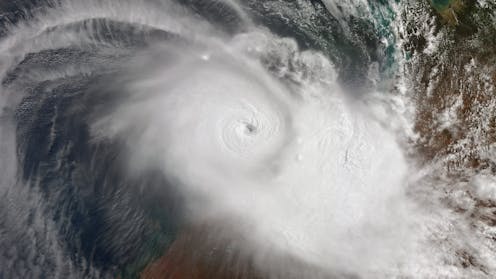
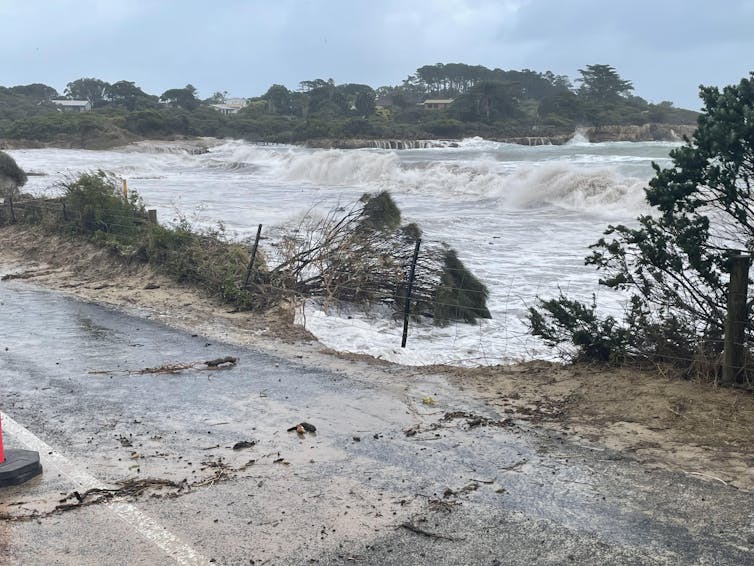
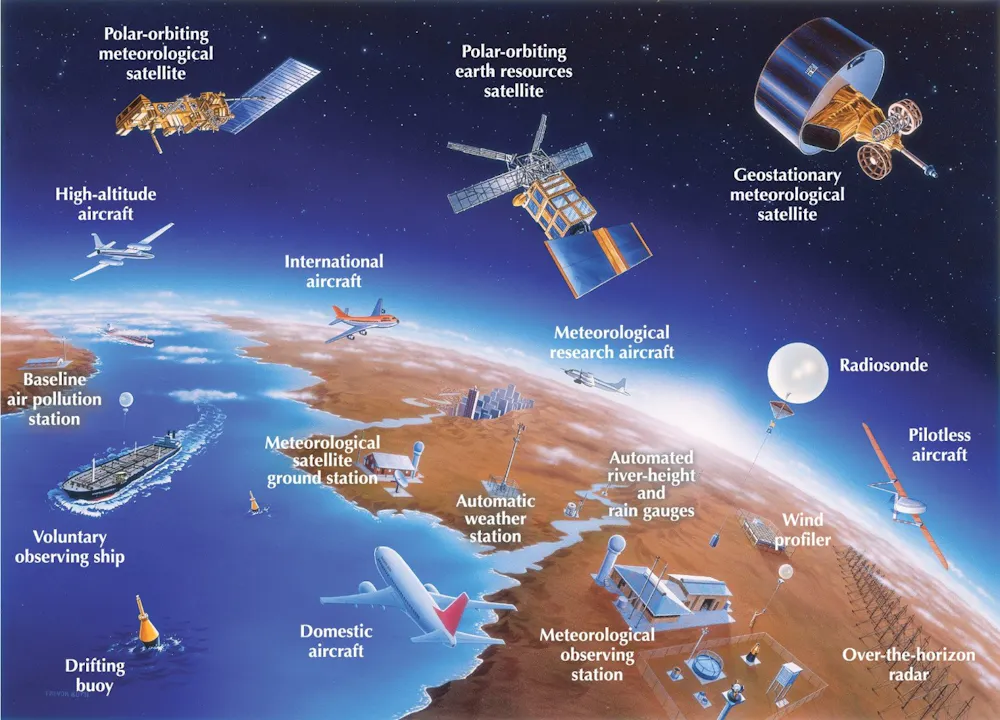







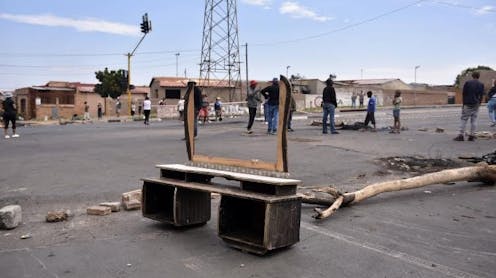

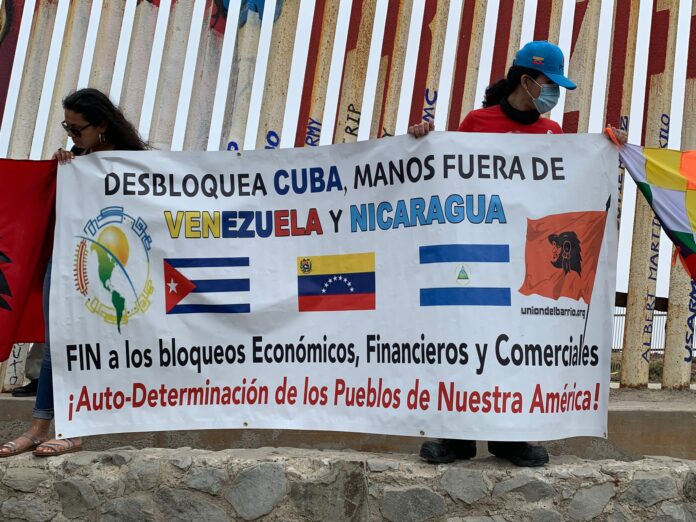







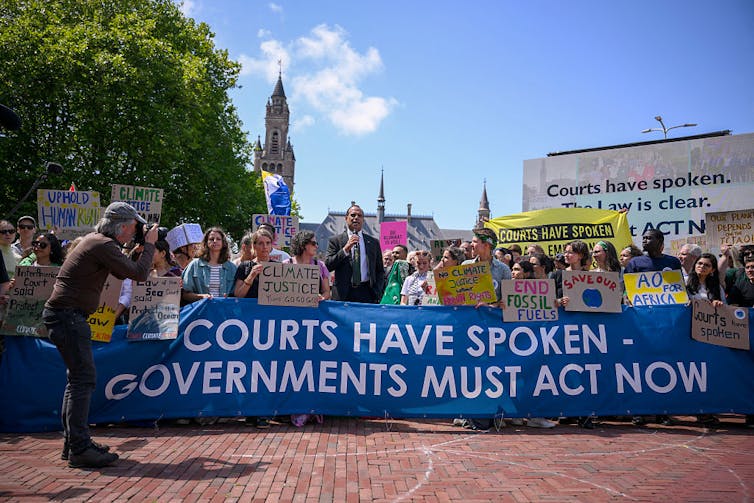







.png)