Artist’s illustration of Bullerichthys, a placoderm fish that could resorb its teeth like modern bony fishes do.Brian Choo & Peter Schouten
Losing your baby teeth is a strange experience. The teeth gradually loosen until they’re replaced by thicker, more durable and permanent ones. But humans aren’t the only animals capable of shedding teeth. In fact, most mammals have two sets of teeth throughout their life. And reptiles, amphibians, fish and sharks replace their teeth continuously throughout their lives.
But before a tooth can be replaced, it must first undergo a process known as “resorption”. This involves specialised cells called osteoclasts breaking down the bone at the tooth root, allowing it to become loose and fall out.
Until now, it’s been unclear when the ability to resorb the bone at the root of the tooth first evolved. A new discovery by our team, published in the Swiss Journal of Palaeontology, shows the start of this process dates back more than 380 million years.
The first fish to have teeth
The first evidence of teeth in any vertebrate (back-boned animal) is in primitive armoured fishes called placoderms that thrived in the Silurian and Devonian periods (438–359 million years ago).
Placoderms had a head and thorax covered with bony plates, and although many were predators, scientists long thought they lacked true teeth – teeth with the same tissues and growth processes found in other vertebrates.
Most placoderms had two pairs of bony upper tooth plates (called “supragnathals”) attached to the skull, and a paired lower jawbone (called “infragnathal”) that were thought to wear down to a sharp biting edge. The advent of synchrotron imaging, a powerful X-ray that can show details of tissue at very high resolution, confirmed the presence of teeth with a bony base and pulp cavity, yet lacking an outer layer of enamel.
However, scientists still thought that as the placoderm grew, the teeth wore away, so that the jaw bones of many adult placoderms looked like they had no teeth.
An ancient tropical reef
The Gogo Formation in Western Australia on Gooniyandi Country represents an ancient Devonian tropical reef with a rich diversity of fishes, dominated by many species of placoderms. In order for many species to share the same area on a reef and thrive, they need to somehow divide up the available resources. Placoderms did this by simply feeding differently: one species ate different foods to others, or foraged in different places, or fed at different times of the day or night.
Placoderms that lived on the reef show a great diversity of dentitions – the arrangements and shape of teeth in the mouth.
Eastmanosteus was the largest of the placoderms on the reef, reaching up to around two metres in length. As the top predator, it bore sharp cutting blades with two distinct “fangs”. Compagopiscis, less than half the size of Eastmanosteus, had small, pointed teeth used for feeding on prawn-like invertebrates called arthropods.
The fish we studied for our new study was Bullerichthys. It had low flat teeth used to crush hard-shelled prey. These teeth showed a highly unusual arrangement: they wrapped around a bony plate. In addition, the teeth of Bullerichthys had a shiny surface which looked much like enamel.
The authors collecting fish fossils at the Gogo Formation near Fitzroy Crossing, Western Australia. Kate Trinajstic, John Long & Vincent Dupret, CC BY
How our placoderm resorbed its teeth
In the early 2000s we found two additional specimens but they were of different sizes to the original, and their tooth plates had different numbers of tooth rows. These new specimens meant that we had found a growth series, showing how teeth changed through life from juveniles to adults.
This gave us an inkling there was something different going on in the way these teeth were forming compared to those of all other placoderms. Instead of the teeth on the upper tooth plates being worn away, the number of tooth rows and teeth increased as Bullerichthys grew.
Was this an early example of what’s known as a tooth whorl – a kind of coil of teeth – like that found in Qianodus, an early shark? Or something altogether different?
Bullerichthys upper jaws toothplates (top) and lower jaw below. The areas of resoprtion are shown as pits and surfaces. Kate Trinajstic, John Long & Vincent Dupret, CC BY
To investigate, we took the tooth plates to the Australian Synchrotron ANSTO Research Facility in Melbourne where we could get high-definition imaging of the tissues without damaging the fossils. The results showed that, like in other placoderms, younger teeth had a wide-open pulp cavity that became infilled with bony tissue known as dentine.
However, as the tooth aged, it didn’t wear down nor fall out and it was not replaced. Instead, the tooth was resorbed from within: we observed numerous small canals for blood vessels in the older teeth, with spongey bone invading the base of the tooth and eventually replacing the central dentine.
Underneath the tooth plate, corresponding to each of the oblique tooth rows, was a single newly formed tooth sitting in a shallow pit. We interpreted this as the site for the soft tooth-forming tissue known as the dental lamina, similar to what occurs in bony fishes such as trout today.
A simple evolutionary tree showing the sequence of character development for how tooth resorption originated. Starting with ancient placoderms (left) through to bony fishes (ray-fins and lungfishes, centre) and sharks (on the right). Kate Trinajstic, John Long & Vincent Dupret, CC BY
Another piece of the evolutionary puzzle
However, that’s not all we found.
Many of the tooth plates of Bullerichthys show pits with characteristic scalloped edges, indicating the presence of osteoclasts, the cells that break down bone.
These are not restricted to a single tooth like in living bony, ray-finned fishes, such as trout. Instead they are widespread across the tooth plate on its outside surface. The amount of resorption present differed between adults and juveniles, with dramatically decreasing resorption in older individuals.
Placoderms, while not widely known in the community, ruled the planet for more than 80 million years as the most abundant and diverse vertebrates on Earth. Our new study shows they are much closer to the living bony fishes than we thought – and provides another piece of the evolutionary puzzle about our deep time ancestors.
Kate Trinajstic receives funding from Australian Research Council, ANSTO synchrotron merit funding
John Long receives funding from The Australian Research Council.
Vincent Dupret received funding from ANSTO for conducting the Synchrotron experiment, and from ARC for performing this research.
There seems to be a mismatch between what a UN inquiry recently described as genocide in Gaza and New Zealand’s announcement at the United Nations on Saturday that it will not yet join 157 other countries in recognising a Palestinian state.
The government decision, relayed by Foreign Minister Winston Peters at the UN General Assembly, was welcomed by Israel’s ambassador to New Zealand, who claimed recognition of a Palestinian state legitimises Hamas – a designated terrorist organisation.
On the other hand, former Labour prime minister Helen Clark said, “New Zealand has placed itself very much on the wrong side of history”. She said the government’s position overall was “confusing”.
In practice, the stance of the National-led coalition has certainly been ambiguous. It has called for a lasting ceasefire in Gaza, reiterated its support for a two-state solution, and repeatedly said recognition of a Palestinian state is a question of “when not if”.
However, in January 2024, it also agreed to a small Defence Force deployment as part of a United States-led coalition against Houthi rebel attacks on shipping in the Red Sea, despite the US using its Security Council veto to prevent a ceasefire in Gaza.
Equally striking was the government’s relative silence on President Donald Trump’s proposal in February this year to extinguish the prospect of a two-state solution by taking ownership of Gaza and effectively evicting two million Palestinian residents from the territory.
It also had little to say about the US-Israeli venture to start the Gaza Humanitarian Foundation in late May, a controversial move that sidelined the UN in aid distribution and has led to the killing of more than 1,000 Palestinians while seeking food.
And then in June, along with the United Kingdom, Australia, Canada and Norway, the government imposed sanctions on two far-right Israeli government ministers, Bezalel Smotrich and Itamar ben Gvir for “inciting extremist violence” against Palestinians.
That decision was strongly criticised by the Trump administration, but it seemed to signal the New Zealand position (along with that of its close allies) was hardening.
In August, Prime Minister Christopher Luxon declared Israel’s military assault on Gaza City was “utterly unacceptable”, and said Israeli Prime minister Benjamin Netanyahu had “lost the plot”.
None of which, we now know, was enough to convince the government to follow other liberal democracies such as Australia, Canada, the UK, France and Portugal in recognising Palestinian statehood.
NZ’s reputation on the line
The political reasoning, according to Peters, is that while Hamas remains the de facto government of Gaza and “with a war raging”, there is no viable Palestinian state to recognise.
According to the prime minister, this was a “balanced” decision and consistent with an independent foreign policy. But it can also be argued the approach rests on some shaky assumptions.
While Israel has not been able to destroy Hamas, nor has Hamas been able to stop Gaza being reduced to piles of rubble. According to the Israeli Finance Minister Smotrich, such destruction has “no precedent globally. And the world isn’t stopping us.”
By presenting Hamas as an obstacle to the recognition process, the government also seems to be overlooking the governance role the internationally recognised Palestinian Authority in the West Bank could play in Gaza in a future Palestinian state.
Peters has described the situation in Gaza as “simply intolerable”. If that’s the case, it has been allowed to happen without New Zealand’s recognition of a Palestinian state. So, how does delaying recognition improve things?
After all, Netanyahu has opposed the concept of a two-state solution since the mid-1990s. And his far-right coalition government has pledged to take full control of Gaza and annex the West Bank – in complete violation of international law and numerous UN resolutions.
It is the belated realisation by a number of democracies that Netanyahu will never accept a Palestinian state that has prompted the latest flurry of statehood recognition, before Israel’s attempt to absorb the occupied territories is completed.
Those countries that have now recognised a Palestinian state will have also weighed up the factors for and against doing so. But they have clearly chosen to make a moral and legal stand – albeit symbolic – on the Palestinian right of political self-determination.
By not joining them, there is a real risk New Zealand will be seen as aligning with those states – Israel and the US – that bear significant responsibility for prolonging the catastrophic conflict in Gaza.
If this perception is widely shared, New Zealand’s hard-won reputation as a state that firmly upholds an international rules-based order could be dealt a major blow.
Robert G. Patman does not work for, consult, own shares in or receive funding from any company or organisation that would benefit from this article, and has disclosed no relevant affiliations beyond their academic appointment.
The Times has described the 2025 Booker Prize shortlist as “revenge of the middle-aged author”“. If the phrase sounds derogatory, it isn’t meant that way: the review also describes the shortlist as “novels for grown-ups”, with the prize privileging “maturity over novelty” and supporting “unpretentious, old-fashioned literary fiction”.
This is reinforced by the Booker Prize website, which highlights the previous winner (Kiran Desai) and two previously shortlisted authors (Andrew Miller and David Szalay) on the list, while noting that all six authors have long-established literary careers.
A book prize should reward novelty, though – and the Booker is, after all, a book prize, not an author prize like the Nobel. But if novelty isn’t obvious from the authors themselves, it can be detected in their books.
Their ages should not be a big surprise. Several literary prizes focus on older writers, including the newly launched Pioneer Prize for female writers over 60, established by Bernardine Evaristo to “acknowledge and celebrate pioneering British women writers” in all genres. Evaristo notes that the prize intends to correct the problem that “older women writers tend to be overlooked” – 91-year-old Maureen Duffy was its first recipient.
Perhaps these prizes and Booker nominations respond in part to society’s emphasis on youth, reflected in publishing initiatives such as Granta’s best young novelists, Penguin’s authors under 35 to watch and previously, The New Yorker’s 20 under 40 list.
It will be interesting to see whether the Booker winner this year reflects the suggested trend of overlooking older women writers, or responds to it. Three of the shortlisted authors are women, and according to my students and the bookies’ odds, Desai’s The Loneliness of Sonia and Sunny and Susan Choi’s Flashlight are likely contenders for the prize, with Ben Markovits’ The Rest of Our Lives behind them.
My students were drawn to the specific historical context of Flashlight, which conveys the lives of several generations of a family beginning in 1940s Japan, then moving through suburban America and North Korea. They valued the less-documented migration story, and suggested the mystery fiction aspect added wide appeal.
Markovits’ The Rest of Our Lives was seen as a typical Booker shortlist by my students, who identified the extra-marital affair, the road trip across America, and the internal-monologue narration of the eloquent and thoughtful university lecturer protagonist as factors which might make the book very popular.
Beyond this, the plot shares with Flashlight a fundamental uncertainty, with characters feeling out of place in their own lives. In The Rest of Our Lives, Tom’s life is gradually unbuttoned when he and his wife decide to stay together until their youngest child leaves home, following her affair. Rather than a dramatic upheaval, the narrator decides to undertake a picturesque road trip.
An extra-marital affair is also at the centre of Miller’s The Land in Winter, in which the harsh winter of 1962-63 in England’s West Country forces two couples to confront their uncomfortable relationship dynamics, when they are forced to stay indoors to avoid the weather.
Disaster looms in the countryside through unpredictable people like Alison Riley, who is “the kind of person who might choose to bring the house down simply to find out what kind of noise it made”.
The uncertainty of individual identity, driven by unconventional and challenging family relationships, is the fundamental connecting factor between all six books, and Katie Kitamura’s Audition expresses this most directly.
Written in two parts, the novel considers the relationship between its protagonist and a younger adult male who may or may not be her son. The novel suggests, as the Booker judges note, that we play roles every day, like the actor protagonist of this novel – who first rejects the suggestion that the young man is her son, then later changes position to live alongside him as if he were.
But perhaps the novel that stands out most to me is Szalay’s Flesh. While this book likewise conveys the unravelling of life into uncertainty and risk, its plot concerns a 15-year-old boy in a relationship with a woman of his mother’s age. Flesh is written in lengthy dialogue, rendering the story sparse and sharp.
Having written about both of Desai’s previous novels as a scholar of post-colonial studies, I am eager to read The Loneliness of Sunny and Sonia, which was published on the day of the Booker shortlist announcement – an auspicious sign perhaps.
Only her third novel in a long career, it is described as a romance. Publishers have recently pointed to an upturn in the popular romance genre fiction, including subgenres like romantasy. This might offer favourable conditions for the book – helped by judge Sarah Jessica Parker’s association with romance, and a new wave of literary romance screen adaptations including Emerald Fennell’s Wuthering Heights and a new Netflix series of Pride and Prejudice in 2026.
The Loneliness of Sunny and Sonia begins with a 55-year-old protagonist whose parents control minute details of her life, but is centrally concerned with the epic and transnational love affair of its two eponymous characters.
The novel maintains Desai’s trend of changing literary direction between novels. Having herself lamented Hullaballoo in the Guava Orchard as “exoticist”, she responds to that accusation in The Loneliness of Sunny and Sonia, where protagonist Sonia is accused of writing “orientalist nonsense”. In a Guardian interview, Desai explained that the character expresses her own concern about how to write about India for a western readership.
Desai’s second novel, The Inheritance of Loss, was set in the aftermath of violence resulting from the claim for a separate state in post-Partition India. It won the Booker Prize in 2006 when Desai was 35, then the youngest woman to win the award – in 2013, it went to an even younger Eleanor Catton. This statistic suggests the Booker winner, at least, tends to be an older author.
The novels in this year’s shortlist all convey the overwhelming impact of uncertainty and change, and privilege introspective responses to disruptions that are sometimes hidden for decades. While (mostly) stories about middle age, they are anything but safe and comfortable.
Looking for something good? Cut through the noise with a carefully curated selection of the latest releases, live events and exhibitions, straight to your inbox every fortnight, on Fridays. Sign up here.
Jenni Ramone does not work for, consult, own shares in or receive funding from any company or organisation that would benefit from this article, and has disclosed no relevant affiliations beyond their academic appointment.
Source: The Conversation (Au and NZ) – By Vincent Sizaire, Maître de conférence associé, membre du centre de droit pénal et de criminologie, Université Paris Nanterre – Université Paris Lumières
Former French President Nicolas Sarkozy has been found guilty of criminal conspiracy in a case related to the Libyan funding of his 2007 presidential campaign. Sentenced to five years in prison, he is due to appear in court on 13 October to learn the date of his incarceration. The unprecedented ruling marks a turning point in the practices of the French justice, which has gradually freed itself from political power. It also enshrines the Republican principle of full and complete equality of citizens before the law, which was proclaimed in 1789 but long remained theoretical, writes Vincent Sizaire.
As might be expected, the guilty verdict against Nicolas Sarkozy on Thursday 25 September over the transfer of millions of euros of illicit funds from the late Libyan leader Col Muammar Gaddafi to finance his 2007 election campaign, drew anger from a large part of the political class.
It’s perfectly legitimate to argue against the ruling on the grounds that is unfair and unfounded. This applies first and foremost to the defendants, who have every right to appeal the judgement. However, the context in which these outcries take place is a political tinderbox: indeed, in April, the leader of the far-right National Rally, Marine Le Pen, was already sentenced to a five-year ban on running for public office after she was found guilty of helping to embezzle €2.9m (£2.5m) of EU funds for use by her party. Following on its heels, Sarkozy’s latest sentence provides yet another opportunity for a large section of the ruling classes to stir controversy over what the French describe as the “government of judges” and others would dub “juristocracy”.
Sarkozy will soon be the first post-war president of France to be imprisoned
Given the maximum sentence is ten years in prison, the penalty can hardly be considered as too harsh. But what is being contested is the very principle of the conviction of a political leader by the courts, which is seen and presented as an intolerable attack on the institutional balance.
If we take the time to put this into historical perspective, however, we see that the judgments handed down in recent years against members of the ruling class are, in fact, part of a movement to liberate the judiciary from other powers, particularly the executive. This emancipation finally allows the judiciary to fully enforce the requirements of the republican legal system.
Equality of citizens before the law, a republican principle
It should be remembered that the revolutionary principle proclaimed on the night of 4 to 5 August 1789 was that of full and complete equality before the law, leading to the corresponding disappearance of all special laws – ‘privileges’ in the legal sense of the term – enjoyed by the nobility and the high clergy. The Penal Code of 1791 went even further: not only could those in power be held accountable before the same courts as other citizens, but they also faced harsher penalties for certain offences, particularly those involving corruption.
The principles on which the republican legal system is based could not be clearer: in a democratic society, where every person has the right to demand not only the full enjoyment of their rights, but also, more generally, the application of the law, no one can claim to benefit from a regime of exception – least of all elected officials. It is because we are confident that their illegal actions will be effectively punished, in the same way as other citizens and without waiting for a highly hypothetical electoral sanction, that they can truly call themselves our representatives.
When the law favored the powerful
For a long time, however, this requirement for legal equality remained largely theoretical. Taken over and placed in a more or less explicit relationship of subordination to the government during the First Empire (1804-1814), the judiciary remained under the influence of the executive at least until the middle of the 20th century. This is why, until the end of the last century, the principle of equality before the law came up against a singular privilege of ‘notability’ which, except in exceptional situations or particularly serious and highly publicised cases, guaranteed relative impunity for members of the ruling classes whose criminal responsibility was called into question.
The situation only began to change following the humanist awakening of the liberation in 1940s. From 1958, magistrates were recruited by open competition and benefited from a relatively shielded status, as well as a dedicated school, the National School for the Judiciary. The latter gradually took up a demanding code of ethics, encouraged in particular by the recognition of judicial trade unionism in 1972. A new generation of judges emerged, who now took their mission seriously: to ensure, in complete independence, that the law was properly enforced, regardless of the background of those in the dock.
Bernard Tapie, Jacques Chirac, Nicolas Sarkozy …
It was in this context that something that had been unthinkable a few decades earlier came to pass: the prosecution and conviction of prominent figures on the same basis as the rest of the population. From the mid-1970s, the movement gained momentum in the following decades with the conviction of major business leaders, such as Adidas and football tycoon Bernard Tapie, and then national political figures, such as former conservative minister, Alain Carignon, or the Lyon mayor and deputy, Michel Noir. The conviction of former presidents of the Republic from the 2010s onwards – Jacques Chirac in 2011, Nicolas Sarkozy for the first time in 2021 – completed the normalisation of this trend or, rather, put an end to the democratic anomaly of giving preferential treatment to elected officials and, more broadly, to the ruling classes.
This movement, which initially stemmed from changes in judicial practices, was also supported by certain changes to French law. One example is the constitutional revision of February 2007, which enshrines the jurisprudence of the Constitutional Council according to which the President of the Republic cannot be subject to criminal prosecution during his term of office, but which allows proceedings to be resumed as soon as he leaves office. We can also mention the creation, in December 2013, of the National Financial Prosecutor’s Office, which, although it does not enjoy statutory independence from the executive branch, has been able to demonstrate its de facto independence in recent years.
Any talk of “judicial tyranny” is intended to take aim at this historical development. This rhetoric seeks less to defend the sovereignty of the people than that of the oligarchic rulers.
Vincent Sizaire ne travaille pas, ne conseille pas, ne possède pas de parts, ne reçoit pas de fonds d’une organisation qui pourrait tirer profit de cet article, et n’a déclaré aucune autre affiliation que son organisme de recherche.
Source: The Conversation (Au and NZ) – By Mamello Thinyane, Associate Professor | Optus Chair of Cybersecurity and Data Science, University of South Australia
In 2024, more than A$2.03 billion was lost to scams in Australia across 494,732 reported cases. Most of these scams were enabled by technology, with scammers contacting their victims either online or on the phone. However, about 600 of these scams happened in person.
All of us are vulnerable to being scammed – it’s rooted in who we are as human beings. If you think you’re immune, you are not. Police officers fall for scams. Even cyber security professionals fall for scams. So what hope is there for the rest of us?
What does help is to understand the underlying techniques online scammers rely on, so that you can better spot them. These psychological tactics are similar to those used in offline scams, street cons and social engineering in general. But they’re also reminiscent of techniques used in advertising, marketing and any other industry where the goal is to persuade you.
Unmasking the influence principles
The goal of a scammer is to try and influence you to part with your money or other valuable possessions. They rely on classic persuasion and influence principles that take advantage of our psychology and other aspects in our lives.
The reason we pay attention to scammers in the first place is because they rely on the need and greed principle, promising us something we need or desire. In romance scams, that’s love. In investment scams, that’s money. It could also be a job or status.
Scammers may use the authority principle, such as pretending to be your boss and requesting you to transfer money, a scam known as business email compromise.
Or they may use the kindness principle to get you to donate to some bogus humanitarian cause in what are known as fake charity scams.
The principle underlying some of the most costly scams in Australia, such as impersonation, romance, and payment redirection scams is the distraction principle. This relies on us missing the scammers’ “sleight of hand” and clues as to their real intentions.
We are all social animals and believe in safety in numbers. Scammers know this and will use the herd or social proof principle to convince us that we are missing out on those hard-to-get concert tickets, for example.
An insidious form of a foot-in-the-door technique relies on the dishonesty principle. In this case, the scammers might entice you to install a VPN (which happens to be malware) to bypass your organisations’ firewalls or to provide use of your bank account for some international money transfer in money mule scams.
American psychologist Robert Cialdini has noted many of these principles are what salespeople use to get you into buying something you didn’t really want. They are also the principles that politicians, friends and family use to get you to agree to their requests. In other words, they’re not always a sign that you’re being scammed.
To identify a scam, ask yourself these three simple questions:
what is the intent?
who benefits?
do I have a free, informed choice?
Rushing to pay for a holiday booking because the countdown timer indicates you have two minutes left relies on the same scarcity principle as when you transfer your savings into a once-in-a-lifetime investment opportunity. The former is a legitimate transaction, while the latter is an investment scam in which you lose.
Ultimately, the core problem is that every day, we are constantly exposed to such nudges – in the media, online, and in our daily interactions. Over time, it can become difficult to recognise when these nudges are used for negative ends (called “sludges”), and in scams.
This is why anyone can be scammed
Anything that makes us human can be exploited to influence us. Our perception, emotions, relationships, thinking and beliefs can be used to influence our behaviours.
While not everyone will fall for common or generic scams, any of us can fall for a targeted and well-executed one. Demographics play a role in whom scammers choose to target to increase their success rates.
In Australia in 2024, elderly people were commonly targeted in investment and romance scams, while mothers lost thousands to “Hi Mum” scams where someone posing as a family member asks for money. Young people fell prey to threat-based scams. Men tended to lose money in investment scams, while women were more vulnerable to romance scams.
Don’t be too confident
Importantly, overconfidence in our scam savviness can work against us. When we have high trust in our abilities, we tend to assess situations as less risky, taking mental shortcuts in decision-making. Such mental shortcuts can cause us to miss critical cues and red flags.
Different sectors in Australia are working together to warn us all about scams. The “Stop. Check. Protect” approach recommended by Scamwatch also provides very helpful tips to better protect yourself.
Remember today could be the day you get scammed. Prepare accordingly and stay vigilant.
Mamello Thinyane receives funding from Optus and CSIRO.
For decades, research and activism have highlighted the pitfalls for women when stereotypical gendered roles are prioritised in heterosexual relationships.
But recent signs suggest young adults may once again be embracing the idea that men should be dominant, while women play a supporting role.
In our research, we wanted to know whether young Australian adults were embracing traditional gender roles to a greater or lesser degree in 2024 compared to 2010.
We compared data at these two time points and found young women are more likely to support traditional roles now than they were 14 years prior.
What is benevolent sexism?
Our research explored a concept called benevolent sexism – a set of patronising attitudes that appear positive while reinforcing women’s subordinate status.
This type of sexism is “benevolent” because it offers praise and protection to women who support traditional gender roles, while protecting patriarchal dominance as the status quo.
Our research, not yet peer reviewed, looked at two aspects of benevolent sexism.
1. Protective paternalism (“paternalism”): the belief that women need men’s protection
2. Complementary gender differentiation (“gendered roles”): the belief that men are naturally providers and protectors and women are naturally best suited to looking after home and family.
Our research
We analysed two sets of benevolent sexism data collected anonymously from young Australian adults aged 17 to 24.
The first data set was collected in 2010 from 573 participants, 72% of which were women.
The second data set was collected in 2024 from 301 participants, also made up of 72% women.
Young men showed no change in their support for paternalism or gendered roles.
Young women showed no change on paternalism, but increased their support for gendered roles.
In the 2010 cohort, 57% of women disagreed with gendered roles, compared to 43% in 2024. In the intervening years, the dial shifted from “no” to “yes”.
In 2005, feminist icon and researcher, bell hooks, spoke of the ways in which women are “trained” to support male dominance and conform to the system.
This, she explained, is why change in these attitudes to gendered roles is slow and inconsistent.
Australian research at the time supported this view, finding more conservative gender attitudes appearing around the mid-1990s, following a long period of growth towards gender equality.
In my 2010 focus groups, many young Australian women believed their male partners would be unlikely to share household and caring duties with them. As a result, they (reluctantly) expected to give up or reduce investment in their careers once they were partnered and had children.
Why do young women seem to expect even more conservative outcomes in their relationships 14 years later?
Some insight may be gained from two online trends that actively promote a return to traditional gender roles: the manosphere and the tradwives movement.
The manosphere
The manosphere is a loose collection of online forums where misogyny and the harassment of women are openly promoted. Denizens of the manosphere are loud and aggressive in expressing their criticisms of women.
One criticism has been gaining prominence: that men’s wellbeing is suffering as a result of women becoming more independent.
It’s possible young women are supporting traditional gender roles as a reaction to some of this public criticism.
In this view, women are natural nurturers and carers, mothers and housekeepers, while men are natural protectors and providers. Successful relationships, in the manosphere view, happen when both partners stick to these roles.
This view represents a danger to women, particularly in light of recent research showing young adults excused intimate partner violence from a man to a woman if a woman did not conform to her designated role.
Young women may believe supporting traditional gender roles will help them avoid potentially harmful conflict with partners.
Tradwives
The female equivalent to the manosphere is a collection of online female influencers. Many of these are “tradwives”, short for traditional wives.
Tradwives mirror the ideals of the manosphere, encouraging women to focus solely on looking after the home, the man and the family.
A key message of the tradwives movement is that “having it all” is too hard and women should allow themselves the freedom to focus on home and family.
This may appeal to young women feeling pressured to achieve in a world where the system is stacked against them.
But in romanticising the homemaker role, the tradwives movement wilfully ignores the risks in these traditional arrangements for women. One such risk is women who are financially dependent on their partners may find it harder to leave abusive relationships.
What might it mean for young men? They did not show increased support for traditional gender roles in our data. This suggests that, despite the influence of online spaces, young men may not want to take on stereotypical “provider” roles.
That being the case, how will Australia’s young adults reconcile these differences? Change in key markers of gender equality – equally shared parenting and housework, in particular – continue to be glacially slow.
We can legislate against gendered violence, but we can’t legislate housework. Until the underlying drivers of gender inequality are addressed, progress towards a gender equal society will continue to be slow.
The author would like to acknowledge the contributions of researchers Ella Rust (Edith Cowan University) and Lisa Allan (Charles Sturt University) to the study this article discusses.
Linda Peach does not work for, consult, own shares in or receive funding from any company or organisation that would benefit from this article, and has disclosed no relevant affiliations beyond their academic appointment.
A serious illness or injury to a family member is more than a medical crisis. It’s a health shock that triggers a ripple effect, forcing families to make difficult trade-offs with their time and money.
That’s what we found in our recent study, the first of its kind to show what happens to family finances, work and chores while a partner has a major illness or injury.
We show the effects of such health shocks extend far beyond the person who’s sick. A serious illness or injury is a shared family event that demands a significant and difficult re-allocation of time, money and emotional energy.
For instance, partners take on more household chores and cut back their work hours. Medical costs rise. And families go without holidays, alcohol or other discretionary spending.
Understanding these dynamics is the first step toward building better support systems for the thousands of Australian families who face this reality every year.
What we did
We used two decades of data from the Household, Income and Labour Dynamics in Australia (HILDA) survey to show how more than 2,000 Australian couples cope with a partner’s health shock. This could be something like a serious workplace accident or a cancer diagnosis.
We tracked work hours, time spent on household chores and care giving, and spending habits before and after the event.
We used data spanning about 22 years. This long-term view allowed us to see how households reacted to the event and whether they could return to their pre-shock lives.
By looking at couples where one person had a serious illness or injury, while the other remained healthy, we could isolate and measure the impact of this event on the entire household.
What we found
When a serious illness or injury strikes, the ill person cut back their hours of paid work, as you’d expect.
However, the healthy partner did not increase their paid work hours to offset the income loss. In fact, their work hours declined slightly.
The healthy partner spent 33% more time on caregiving and 5% more on home chores such as cooking and cleaning.
In other words, the initial family response is not to bring in more money, but to reallocate time to meet new needs at home.
Financially, households re-prioritised to cope. Medical expenses increased by more than 13% in the first year. To cover these new costs, families cut back on discretionary spending, particularly on things such as holidays and alcohol.
Household income only dropped modestly, especially if people could take paid sick leave. But the proportion of individuals reporting financial stress rose by 10%.
This happens because the decline in income is paired with a significant increase in non-negotiable costs, such as medical expenses and higher utility bills from spending more time at home.
How this compares
Our study is the first to use long-term household data to analyse the effects of a health shock on both the ill person and their partner across multiple areas – including employment, household expenditures and time use.
We also suggest Australia’s relatively generous worker’s compensation, sick leave and carers entitlements have cushioned families. Our study shows these likely meant the sick person and their partner were less likely to quit work compared to those in similar situations in other countries without similar support.
And while we showed the Australian male partners of ill women significantly increased time spent caregiving or doing chores, their British counterparts didn’t put in as many extra hours in a similar situation.
What are the implications?
Our research highlights the often overlooked role of the healthy partner as a “shock absorber”, whose unpaid labour is essential for a family’s recovery.
This suggests any social security system aimed at helping those with disabilities or illnesses should also consider the financial and personal burden on caregivers.
The increase in financial stress among affected households, despite existing support systems, indicates current social security programs may not fully cover the needs and costs associated with a major illness or injury.
The findings also highlight the importance of paid leave entitlements for caregivers, which is crucial for household financial stability, particularly for low-income families.
Flexible working arrangements – such as flexible working hours, working from home or a shorter work week – would also help caregivers look after their loved ones.
Yuting Zhang has received funding from the Australian Research Council, Department of Veterans’ Affairs, the Victorian Department of Health, National Health and Medical Research Council, and Eastern Melbourne Primary Health Network. In the past, Professor Zhang has received funding from several US institutes including the US National Institutes of Health, Commonwealth fund, Agency for Healthcare Research and Quality, and Robert Wood Johnson Foundation.
Federico Zilio does not work for, consult, own shares in or receive funding from any company or organisation that would benefit from this article, and has disclosed no relevant affiliations beyond their academic appointment.
Australia has a new climate target: cutting emissions by 62-70% below 2005 levels by 2035. Meeting even the lower end means halving emissions in a decade.
That will entail drastic changes across the economy – especially in transport.
Transport is Australia’s third-largest and fastest-growing source of emissions. The sector is widely considered difficult to decarbonise, because it’s not easy to use renewable electricity in shipping and aviation.
On current trends, transport will become Australia’s largest-emitting sector by 2030. Unless this problem is tackled head-on, Australia’s new climate target cannot be met.
Getting our priorities straight
The Albanese set Australia’s new climate target earlier this month. It was accompanied by a Net Zero Plan and six blueprints for individual sectors.
The Net Zero Plan rightly identifies several priorities: clean electricity, lowering emissions by electrification and efficiency, and expanding clean fuel use. The transport plan is focused on electrifying light vehicles, expanding electric vehicle charging, and developing low-carbon fuels for heavy trucks, planes and ships.
Such shifts are technically feasible, but they demand policy settings far stronger than those now in place.
Where problems lie
To reduce transport emissions, the government is relying heavily on the use of hydrogen for freight transport.
This is a shaky bet. Research shows hydrogen trucks are far less efficient than battery-electric ones.
Our own analysis found in real-world conditions, hydrogen trucks can have two to three times the emissions intensity (the amount of greenhouse gases emitted per kilometre travelled) of electric trucks. Other research has also found uncertainty about hydrogen as a fuel remained an obstacle to freight decarbonisation.
Relying on hydrogen to cut freight emissions is a shaky bet. Dan Peled/Getty Images
There is no practical way to directly capture emissions from vehicles in use. Instead, transport emissions would be offset by capturing and storing carbon emitted by other activities such as industrial plants or gas facilities.
But Australia’s track record with carbon-capture is poor. Flagship projects such as Chevron’s Gorgon facility have consistently underperformed, and several internationalreviews concluded the technology has failed to deliver at scale.
The government also plans to offset residual emissions through carbon removal methods such as tree-planting. But there are longstanding concerns about the quality of Australian carbon credits. And carbon may only be stored in plants for a short period.
For these reasons, we must be sceptical about using offsets to balance out transport emissions. It doesn’t reduce fossil fuel use in transport, and it risks delaying investment in more proven solutions.
What else should be on the table?
There are proven transport decarbonisation strategies that deserve more weight than carbon-capture or hydrogen.
To accelerate the electrification of cars and buses, the government should set clear sales targets. This creates certainty for manufacturers, consumers and infrastructure providers.
We can look overseas for guidance. The United Kingdom has mandated that 80% of new cars and 70% of vans be zero-emission by 2030, rising to 100% by 2035. China has gone further, stating that by 2035, battery electric vehicles should become the mainstream of new car sales.
Another policy that deserves serious attention is road-user pricing. This involves charging drivers based on how much, when and where they drive.
In places such as London, this has led to reductions in air pollution and passengers shifting to buses, walking or cycling. Modelling by my colleagues and I shows road-use charges in Melbourne could reduce car travel and cut emissions by around 13%.
And instead of pursuing hydrogen to decarbonise freight transport, the government should direct resources to accelerating electrification – including offering incentives for electric trucks.
China unveils the world’s first 100 megawatt electric vehicle charging site, capable of powering heavy-duty trucks.
The window is closing
Australia needs clear and enforceable transport policies to ensure transport delivers its share of emission reductions and keeps the country on track for net zero by 2050.
Currently, Australia risks leaning too heavily on unproven transport solutions that may not deliver real cuts. We risk locking in high emissions and missing the 2035 and 2050 goals.
Real progress means focusing on what we know works: electrification, renewables, redesigning our cities and changing how we travel. Every year of delay makes the task harder. With just a decade to halve emissions, the window for action is closing fast.
Hussein Dia receives funding from the Australian Research Council, the iMOVE Australia Cooperative Research Centre, Transport for New South Wales, Queensland Department of Transport and Main Roads, Victorian Department of Transport and Planning, and Department of Infrastructure, Transport, Regional Development, Communications and the Arts.
Parents are likely to scroll these lists eagerly, scanning for their child’s school or the names of schools they might be thinking about. With families understandably keen to ensure their kids get a good education, rankings provide a clear and seemingly easy guide.
But do they really tell us which schools are the best? And more importantly, how do you know if a school is a good fit for your child?
What do league tables measure?
League tables typically rely on academic performance. NAPLAN results compare how students in years 3, 5, 7 and 9 perform in literacy and numeracy tests, while Year 12 results show how senior students fared in final exams.
These measures give a snapshot of achievement and show patterns across time. But standardised testing only offers a partial view of a school. Often, it reflects community demographics and unequal distribution of resources more than teaching quality. For example, students in wealthier suburbs tend to do better than students in disadvantaged areas.
Some other rankings include other measures such as student attendance or parent satisfaction surveys. Even so, they remain narrow.
These tables do not reveal what happens in classrooms. They do not show the quality of relationships between teachers and students. They do not capture whether a school provides strong wellbeing support, fosters creativity, or values diversity. And they certainly cannot tell you whether your child will be happy there.
On top of this, they assume families always have a choice about where they send their kids.
But popular public schools typically have strict catchment areas, which means only children living locally can enrol. For families outside those boundaries, the options are often limited to a less sought-after public school, a specialist intake program at their preferred school (such as a music or academic scholarship), or paying for a private education.
They may not have the funds for private education, or they may not have put their names on waiting lists in time.
What research says really matters
Of course academic results matter, but they are only part of the picture when it comes to a “good school”. Research shows learning flourishes when students feel safe, respected and inspired.
A truly good school feels good to be in. According to a 2024 UNESCO report, joy, relationships and belonging fuel both wellbeing and achievement. The Australian government’s student wellbeing framework similarly says schools must prioritise safety, inclusion and student voice to best support student learning.
So this means opportunities beyond academics also count. This can include arts, sports, vocational pathways and other extracurricular activities to give students chances to develop their talents, build confidence and make social connections.
Personal and family values matter too. A school might be academically strong but highly competitive, which does not suit every child. Conversely, a smaller school with average test scores might offer a nurturing environment where your child can thrive.
What’s right for your child?
So how do families put this into practice when weighing up schools?
Visit in person. League tables cannot show you what it feels like to walk through the gates. Notice how staff and students interact. Watch whether students seem engaged.
Talk to the school. Ask staff about their teaching approach, wellbeing policies and how they support diverse learners. For example, how do they respond if a student is struggling academically or emotionally?
Look for balance. A good school is not just about grades. Consider whether it offers music, visual arts, sport or vocational programs alongside academics.
Ask families already there. Parents and carers can share valuable insights into the culture. Do they feel welcome? Do their children enjoy going to school?
Think about your child. Some thrive in large, academically competitive schools. Others do better in smaller, community-focused environments. The best school is one where your child feels safe, challenged and supported.
Beyond rankings
League tables will keep appearing because they make good headlines and spark debate. But they should not be the guide for choosing schools.
A truly good school partners with families, supports student wellbeing, and helps young people grow into capable, caring adults. That will not look the same for every child, and it will not be captured neatly in a newspaper list.
So next time you see a headline about the “top” schools, ask yourself: what kind of environment will help my child learn, belong and thrive?
The authors do not work for, consult, own shares in or receive funding from any company or organisation that would benefit from this article, and have disclosed no relevant affiliations beyond their academic appointment.
When you don’t have the money for a lawyer to represent you in a court case, even judges can understand the temptation to get free help from anywhere – including tapping into generative artificial intelligence (AI).
As Judge My Anh Tran in the County Court of Victoria said this year:
Generative AI can be beguiling, particularly when the task of representing yourself seems overwhelming. However, a litigant runs the risk that their case will be damaged, rather than helped, if they choose to use AI without taking the time to understand what it produces, and to confirm that it is both legally and factually accurate.
Our research has so far found 84 reported cases of generative AI use in Australian courts since ChatGPT launched in late 2022. While cases involving lawyers have had the most media attention, we found more than three-quarters of those cases (66 of 84) involved people representing themselves, known as “self-represented litigants”.
Those people – who sometimes have valid legal claims – are increasingly turning to different generative AI tools to help on everything from property and will disputes, to employment, bankruptcy, defamation, and migration cases.
Our ongoing research is part of an upcoming report for the Australian Academy of Law, being launched later in the year. But we’re sharing our findings now because this is a growing real-world problem.
Just this month, Queensland’s courts issued updated guidance for self-represented litigants, warning using “inaccurate AI-generated information in court” could cause delays, or worse: “a costs order may be made against you”.
As New South Wales Chief Justice Andrew Bell observed in a decision in August this year, the self-represented respondent was “admirably candid with the court in relation to her use of AI”. But while she was “doing her best to defend her interests”, her AI-generated submissions were often “misconceived, unhelpful and irrelevant”.
If you’re considering using AI in your own case, here’s what you need to know.
The temptation to rely on AI
Self-representation in Australian courts is more common than many people realise.
For example, 79% of litigants in migration matters at the Federal Circuit Court were unrepresented in 2023-2024.
But as the availability of free or low-cost generative AI tools increases, so does the temptation to use AI, as our recent research paper highlighted.
The risks if AI gets it wrong
Relying on AI tools that produce fake law can result in court documents being rejected, and valid claims being lost in court.
If you’re a self-represented litigant, the court system gives you the right to provide evidence and argument to support your case. But if that evidence or argument is not real, the court must reject it. That means you could lose your day in court.
In those circumstances, the court may make a costs order against a self represented litigant – meaning you could end up having to pay your opponent’s legal costs.
But a key difference is that if a lawyer uses fake cases that the court rejects, this is likely to amount to negligence. Their client might be able to sue the lawyer.
When someone representing themselves makes the error, they only have themselves to blame.
How can you reduce your risks?
The safest advice is to avoid AI for legal research.
There are many free, publicly available legal research websites for Australian law. The best known is the Australasian Legal Information Institute (AUSTLII). Another is Jade.
Court libraries and law schools are open to the public and have online resources about how to conduct legal research. Libraries will often have textbooks that set out principles of law.
Check if there’s a guide from the relevant court for your case. Follow their advice.
If you still plan to use generative AI, you must check everything against a reliable source. You need to search for each case you plan to cite, not just to make sure it exists, but also that it says what an AI summary says it does.
And as Queensland’s guide for self-litigants warns:
Do not enter any private, confidential, suppressed or legally privileged information into a Generative AI chatbot […] Anything you put into a Generative AI chatbot could become publicly known. This could result in you unintentionally breaching suppression orders, or accidentally disclosing your own or someone else’s private or confidential information.
Conducting legal research and producing court documents is not easy. That’s what trained lawyers are for, which is why affordable, accessible legal services are necessary for a fair justice system.
AI is being used to address an access to justice problem that it is not well-suited to – at least, not yet.
Thanks to Selena Shannon from UNSW’s Centre for the Future of the Legal Profession, who also contributed to this article.
Michael Legg does not work for, consult, own shares in or receive funding from any company or organisation that would benefit from this article, and has disclosed no relevant affiliations beyond their academic appointment.
Saturday marked the 20th anniversary of the publication of Twilight, the first book in Stephanie Meyer’s teen vampire romance saga published between 2005 and 2020.
It has also been almost 20 years since Kristen Stewart’s awkward “plain girl” Bella and Robert Pattinson’s century-old glittery Edward appeared in the first movie.
The film Twilight (2008) grossed more than US$407 million (about A$539 million at the time) worldwide during its theatrical release. It is often credited with launching the careers of Stewart and Pattinson.
Full of awkward dialogue, melodramatic acting and absurd scenes like the iconic vampire family-bonding baseball game, Twilight has earned cult status. Akin to Tommy Wiseau’s bizarre flop-turned-mock-hit The Room (2003), it is “so bad it’s actually good”.
The franchise has amassed a dedicated fandom of “Twihards”, including some surprisingly young fans who, two decades on, won’t let it fade from the cultural consciousness.
The Twilight renaissance
Meyer’s Twilight books sired a growing brood of 2000s teen vampire romance novels, including L. J. Smith’s The Vampire Diaries series (2009–17) and Richelle Mead’s Vampire Academy series (2007–10).
The COVID pandemic also ushered in the revival of the romantasy genre on #BookTok, TikTok’s sub-community for bibliophiles. BookTok greatly resurrected our collective nostalgia for paranormal romances, and this is useful context for understanding the “Twilight renaissance” of recent years.
The most obvious sign of the Twilight franchise’s ongoing popularity is the non-stop parade of memes on social media, spoofing everything from the characters, to the plot, to the acting, to continuity errors and low-budget visual effects.
Celebrating cringe
The term “meme” was coined by biologist Richard Dawkins in 1976 to describe “a unit of cultural transmission, or a unit of imitation”.
Since the advent of social media, the term has been used to describe pieces of online media that are circulated and transformed via networks of users.
Across YouTube, Facebook, Instagram, and TikTok, Twihards create and share daily Twilight-themed content on their own accounts, and on dedicated fan accounts. Twilight memes range in complexity, from simple screenshots to fully costumed reenactments.
In the 2009 film sequel, Twilight: New Moon, the teen-werewolf Jacob (Taylor Lautner) runs grinning towards Bella, exclaiming: “Bella, where the hell have you been, loca?”. This bizarre line and its delivery inadvertently created one of the most popular Twilight memes of all time. Even the actors have got onboard with poking fun at the franchise’s unintentionally goofy moments.
In his book Pragmatics of Internet Humour, professor of English Francisco Yus explores how humour is a key element of online meme culture, as shared knowledge and in-jokes help build a sense of connection and community among users.
This is certainly the case with Twilight; the most popular posts among fans are the spoofs and parodies that lovingly poke fun at its cringiness. Content creator Tyler Warwick, for example, is well-known for his one-man reenactments of the movies’ accidentally absurd moments, complete with a blue-lens-tint and terrible wigs.
The resurgence of the Twilight subculture also comes down to fans re-watching the films after they were added to Netflix in 2021. All five films quickly entered the streaming platforms’ top ten most-watched list.
The first film, produced with a budget of just US$37 million (about A$49 million at the time), particularly lends itself to repeat watching as it is full of odd and quirky details.
Escaping to Forks, Washington
In her book Memes and Digital Culture, professor of communications Limor Shifman argues that, despite their seemingly trivial nature, memes play an important role in shaping and reflecting how people see the world.
Members of Gen Z, many of whom grew up watching the Twilight films, are now young adults trying to survive in a complex world. They also happen to be the most meme-obsessed generation.
The Twilight renaissance may reveal how they are grappling with contemporary life, with some fans calling it a “recession indicator”. Fans seeking safety and familiarity in tough times will watch the films over and over.
“Watching them brings me right back to a time in my childhood where possibilities were endless, and it makes me so happy,” says one Reddit user.
“I always bring out the Twilight movies if I’m stressed with adult life and wanna feel like a kid again. It’s definitely my comfort series,” agrees another.
Twilight across the generational divide
Young adult fiction – and particularly narratives with supernatural, paranormal or fantasy romance – offer an escape from reality that’s centred on the universal experience of adolescence. Coming-of-age stories such as Twilight allow young people to navigate the emotional trials of love, friendship and self-discovery in a way that feels sufficiently different, yet familiar.
And while millennials experienced Twilight first-hand, throngs of Gen Zers are now finding their way to Forks through this resurgence of 2000s pop culture. For both generations, Twilight provides comfort and escapism, while its memeification fosters the kind of online camaraderie that’s often sought in tumultuous times.
By sharing in-jokes, Twihards across the generational divide find community and connection. And that’s worth holding onto, spider monkey.
The authors do not work for, consult, own shares in or receive funding from any company or organisation that would benefit from this article, and have disclosed no relevant affiliations beyond their academic appointment.
ER Report: Here is a summary of significant articles published on EveningReport.nz on September 27, 2025.
Editorial: New Zealand Government Ignores Israel’s Atrocities By Refusing Palestinian Statehood Editorial by Selwyn Manning. New Zealand’s foreign minister Winston Peters announced at the United Nations General Assembly that this New Zealand coalition Government will not recognise Palestine as a state – at this time. Here, it is important to cite New Zealand’s foreign minister in relevant detail. Winston Peters said at the United Nations General
The Australian Ballet’s flawless, breathtaking Prism is a significant coming of age for the company Source: The Conversation (Au and NZ) – By Yvette Grant, PhD Candidate in Dance and Dance History Tutor, The University of Melbourne TAB Glass Pieces Robbins Credit Kate Longley/Australian Ballet When Alicia Alonso was establishing the National Cuban Ballet in the 1950s she was faced with interrogation from the communist regime as to how a
Keith Rankin Analysis – A Brief History of Monetary Policy (Part One) Analysis by Keith Rankin. On Monday (Pushing a String; Ineffective Monetary Policy, 22 September 2025) I wrote about how, in circumstances of economic depression or structural recession, monetary policy is ineffective as the sole policy to induce a country’s economic recovery. Here I look at the historical antecedents of today’s monetary policy narrative. Understandings of
New Zealand's minister of Foreign Affairs, Winston Peters.
Editorial by Selwyn Manning.
New Zealand’s foreign minister Winston Peters announced at the United Nations General Assembly that this New Zealand coalition Government will not recognise Palestine as a state – at this time.
Here, it is important to cite New Zealand’s foreign minister in relevant detail.
Winston Peters said at the United Nations General Assembly:
“We think a future generation when Israeli and Palestinian political leadership is an asset, not a liability, and where other situational variables have shifted the current calculus away from conflict and towards peace would be more conducive for recognising Palestinian statehood.
“There in lies our dilemma over any decision to recognise Palestinian Palestinian statehood now because statehood recognition is an instrument for peace as an instrument for peace also does not play because there are no fully legitimate and viable state of Palestine to recognise.
“Palestine does not fully meet the accepted criteria for a state as it does not fully control its own territory or population.
“There is also no obvious link between more of the international community recognised in the state of Palestine and the aimed objective of protecting the two-state solution.
“Indeed, what we have observed since partners pronouncements reveals that recognising Palestine now will likely prove counterproductive.
“That is, Hamas resisting negotiation in the belief that it is winning the global propaganda war while pushing Israel towards even more entrench military positions.
“Recognition at this time we also think is open to political manipulation by both Hamas and Israel. Hamas will seek to portray our recognition of Palestine as a victory as they have already done in response to partner announcements.
In essence, I argue, that Peters’ speech kicks the problem down the road. He shifts the responsibility for developing a solution to the Gaza atrocities conditionally on to a future generation of leaders. And it fails to acknowledge that at the current rate of mass killings of Palestinian people, there will be no one left to create nor nurture a future generation of Palestinian leadership.
But the statement nuances a shift in New Zealand’s position geopolitically and within the rules-based-order community of nations. The statement will confuse many observers of global politics, not the least among New Zealanders and peoples who sought asylum in New Zealand far from the paces of their birth.
Let’s consider why.
International Law.
The speech will trigger a cringe for millions of New Zealand citizens and permanent residents at realising how this right-leaning nationalistic three-party coalition government has abandoned and failed to reflect their strongly held positions for human rights principles.
It is human rights principles that have long anchored New Zealand as a strong and unshakable advocate for an international rules based order, for international humanitarian rights, for recourse to international law and justice, and signatories to the International Criminal Court and International Court of Justice.
It was this cumulative support for human rights and justice that compelled New Zealanders to reject the militant wing of Hamas for its atrocities against civilians in Israel on October 7, 2023.
But advocacy for human rights and justice is not a political expression. It isn’t tribal. It isn’t biased in favour of one peoples and not another. Advocacy for human rights and justice is universal and in this sense it is blind to the class or statehood where hate and atrocity originates from.
This is the same universal principle that the International Court of Justice applied when it found there was a prima facie case of genocide being committed by the state of Israel.
It is this same universal principle that the International Criminal Court applied when calling for the arrest of the state of Israel’s prime minister Netanyahu to be tried for crimes.
Peters’ speech to the United Nations General Assembly ignored these bodies and only waved a cursory glance at the ongoing murder of innocent children and peoples in Gaza, an apparent systematic act of mass murder, committed against people simply because they are of Palestinian birth. Peters’ speech failed these victims and rejected, by way of omission, their right to justice.
In a sense, this New Zealand coalition government has reflexively returned New Zealand back to that glitch-period where this nation fell estranged from the international common-good, in breach of the Gleneagles Agreement, and refused to cease engagement with Apartheid South Africa by allowing sporting contact with that murderous regime in 1981.
New Zealanders rejected that government in 1984, and today’s abandonment of New Zealand’s long held positions for rights and justice will certainly be a factor in the 2026 general elections.
Multilateralism is founded on rules and laws. Where rogue states abandon the principles that are universally agreed to by the majority, those nation states fail to advocate for the multilateral institutions that they rely on for social, judicial, and economic progress.
Peters, as the envoy for this current New Zealand coalition government cannot have it both ways. He cannot claim to be a voice for multilateralism and justice when he has delivered a decision that stands as contrary to the 81 percent of the United Nations general assembly nations who have announced and demand recognition for the State of Palestine.
Gaza and the occupied territories of the West Bank have recognised borders. Within those borders reside a peoples that reflect a common culture and a right to self-determination. They have a representative political structure that can engage itself in bilateral and multilateral forum and bodies. It cannot be ignored that it is being prevented from functioning as a state due to the atrocities that have been inflicted upon it by its occupiers.
It is the occupation that must be addressed, and the United Nations General Assembly, by way of a large majority, recognises this fact – ashamedly the New Zealand coalition government and Peters do not.
CANZ bloc and Like Minded Countries
In addition to New Zealand has long contributed to what is called the CANZ bloc at the United Nations.
The CANZ bloc is a group of nations consisting of Canada, Australia, and New Zealand. It has held together due to these nations sharing common values as ‘like minded countries’.
New Zealanders have long heard their representatives citing allegiance with ‘like minded countries’.
This too has been abandoned by New Zealand at a most important time for multilateralism, a time when supposed ‘like minded countries’ need to band together and present a solid powerful bloc on issues such as Palestine.
This is why Australia’s Prime Minister Anthony Albanese visited New Zealand on the weekend of August 9-10, 2025. Albanese sought the position of New Zealand’s current Prime Minister Christopher Luxon on whether New Zealand would recognise Palestine as a state in keeping with ‘like minded countries’ Australia, Canada, United Kingdom, and France. Luxon couldn’t give him an answer. And New Zealanders were left wondering why.
On this issue, New Zealand will have sent a signal to other nations that it cannot be relied on anymore as a true advocate of peace and justice while it fails to life up to its long-held reputation as an honest broker on the world stage standing up for peace, justice and multilateral progress.
This is a day of shame that has dawned in New Zealand. And millions in this multicultural Pacific nation will feel ashamed that their political representatives have failed not only them, but victims of atrocities all over the world.
Failed Opportunity to Advocate for UN Reform
Peters’ speech before the United Nations General Assembly, while acknowledging the UN needed reform, failed dismally to present a reformist plan that New Zealand would advocate for. It was a glaring omission from a once seasoned politician that made his bones on matters of principle and law.
Peters speech also failed to identify the mechanisms and protocols that exist within the United Nations at this current time; principles like the R2P or responsibility to protect protocols that were advanced after UN observers were prevented from protecting victims of Rwanda genocide decades ago.
The United Nations (UN) Responsibility to Protect (R2P) is a global political commitment adopted in 2005 by world leaders to prevent and respond to mass atrocity crimes – namely genocide, war crimes, ethnic cleansing, and crimes against humanity. It holds that state sovereignty entails a responsibility to protect populations within their borders; when a state manifestly fails to do so, the international community has a responsibility to act collectively and decisively, in accordance with the UN Charter.
All Peters and New Zealand Ministry of Foreign Affairs officials needed to do is indulge themselves for a moment to reflect on this R2P protocol as published by the United Nations office on genocide prevention and the responsibility to protect. (Ref. https://www.un.org/en/genocide-prevention/responsibility-protect/about )
Put simply, within the UN charter there is the framework and mechanism for Peters, as a representative or a once principled nation, to cite and demand be applied to resolving the humanitarian crisis and murder taking place today in Gaza, and indeed in other parts of the world.
And it is this, that illustrates greatest the areas where reform of the United Nations is required and is at a critical juncture.
The United Nations was formed as a body to advocate and restore peace. For decades now, it has shifted its emphasis onto becoming a distributor of assistance and development. This is noble and it is vital in a complex world such as we live in. But it has become moribund where it comes to ensuring a mechanism or framework structured body where nations can cumulatively restore peace and prosperity to nations, peoples, and states that are victims of tyranny.
This is the kernel of need where reformist ideals are developed and implemented. And this was largely ignored by Peters and his coalition government colleagues.
As such, New Zealand faces headwinds. It may now be regarded by our once closest multilateral partners as an unreliable and immoral unjust state that waxes and wanes, dancing on the head of a pin on distorted legalese that offers more smoke and mirrors than principled solutions.
New Zealanders and Palestinian victims deserved to witness the very opposite of what was served up to them today. They deserved to witness a representative and true advocate for – particularly in the case of the Palestinian diaspora here in New Zealand and their dead and dying relatives back in the occupied territories and Gaza – rights to recourse as individuals and as survivors to universally applied justice.
But this current New Zealand government refused them. And as such it has sided with those nations that are a part of the problem manifest in Gaza, rather than being part of the solution.
TAB Glass Pieces Robbins Credit Kate Longley/Australian Ballet
When Alicia Alonso was establishing the National Cuban Ballet in the 1950s she was faced with interrogation from the communist regime as to how a European art form could represent and serve the Cuban people.
Historian Lester Tome has written extensively about Alonso. Tome says she argued ballet as an art form must be thought of in the same way as music, painting or sculpture. Cubans should dance Cuban dances but must also have the freedom to engage with international cultural forms and trends. She argued they would make ballet their own and redefine what ballet was on the world stage. And they did.
Similarily, Prism is The Australian Ballet engaging with the contemporary international ballet world, adapting what it finds to its own style and bodies, and offering something back. Prism represents a significant transition and coming of age for the company.
I haven’t seen them do that quite like this before.
Glass Pieces
The program opens with Jerome Robbins’ Glass Pieces. Robbins, perhaps most famous for his choreography in West Side Story, began working as a ballet dancer with The New York City Ballet and George Balanchine in the late 1930s.
Glass Pieces premiered in 1983 yet still seems contemporary. Danced to three extracts from Phillip Glass scores, it takes on the theme of glass in different ways.
The first scene has a busy pedestrian street with dancers striding in opposite directions across the stage. Couples in pale pastel shiny unitards appear like frosted glass. Like their costume, their movement contrasts with the crowd. They glide and slide and gracefully swoop and scoop.
Glass Pieces premiered in 1983, yet still seems contemporary. Kate Longley/Australian Ballet
The second scene is a single pas de deux which seems to be behind or under glass with a backdrop of silhouetted dancers tracking across the back of the stage. The chugging of the dancers in the background contrasts with the intimacy and technical prowess of the pas de deux.
The final scene is different and most iconically Robbins, with its flexed feet and jazzy innuendo. The crowd from earlier is now the main feature. The colours are stained-glass windows, and the mood is upbeat and energetic.
Seven Days
Seven Days is Stephanie Lake’s second work with the company as resident choreographer. It is incredibly dynamic, intimate and well-resolved. It shows a deep connection between the choreographer and the seven dancers and a true collaboration between contemporary dance and ballet.
And the score is ridiculously gorgeous.
Johann Sebastian Bach’s Goldberg Variations is reimagined by Peter Brikmanis, yet still familiar. The seven parts represent seven days. Each new day is marked by the dancers forming a circle and engaging with each other in the centre of the stage.
The days are different.
Stephanie Lake’s Seven Days is an incredibly dynamic, intimate and well-resolved work. Kate Longley/Australian Ballet
The first starts quietly with solo piano and the dancers forming lines and moving in canon and then broken canon. The orchestra joins in for day two which opens with a pas de deux. Some days are light and humorous. Others a bit more combative and trying. There are duets, solos, group dances and a final scene with chairs.
The work has many Lake hallmarks such as breath, vocalisation, quirky facial expression and challenging body angles. But most importantly, much like her other intimate work Manifesto, in Seven Days she has embraced and enhanced what she has seen in the dancers. This gives the work a brilliant vitality.
Blake Works V (The Barre Project)
William Forsythe is perhaps the ballet choreographer of his generation. He has transformed what ballet means. Dancing with the Joffrey and Stuttgart Ballet companies, he moved into choreography and then established his own company in 2015.
Forsythe has been working on The Blake Works since 2016, where he created Blake Works I for the Paris Opera Ballet. Blake Works II (The Barre Project) was developed with the New York City Ballet in 2020 during the COVID pandemic via Zoom. It was a comment on the familiar and intimate relationship ballet dancers have with the barre.
During COVID lockdowns, dancers confined to their homes used chairs, bookcases and kitchen benches as their barre to continue their practice.
Forsythe’s ideas and vocabulary are adapted to the dancers of The Australian Ballet. Kate Longley/Australian Ballet
Blake Works V (The Barre Project) takes the same Forsythe ideas and vocabulary as the previous iterations. But uniquely and importantly Forsythe has worked with the company to adapt it to the dancers of The Australian Ballet.
Centre backstage is a small wooden barre, framed and lit almost like a piece of film, or a square on Zoom. The costumes are black simple practice wear, and the lighting is low.
The recorded hypnotic James Blake score combines the classical with the contemporary.
Dancers move in groups and individually away from and onto the barre. It is not a traditional ballet class use of the barre but is Forsythe’s deconstructed elements of ballet on the barre.
There is also a short piece of film of hands on barres.
Three breathtaking works
All three works are executed brilliantly by the dancers; all three are flawless, breathtaking. These dancers’ proficiency with the choreography renders the technicalities invisible and allows the works to really live.
In the notes on the website, artistic director David Hallberg states that the Prism program is diverse and challenging and that
Only a company like The Australian Ballet has the range and skill to take on such a wide range of styles in one program.
I was sceptical they could do it.
I was blown away.
Prism is at the Regent Theatre, Melbourne, until October 4, and then Sydney Opera House from November 7 to 15.
Yvette Grant does not work for, consult, own shares in or receive funding from any company or organisation that would benefit from this article, and has disclosed no relevant affiliations beyond their academic appointment.
Keith Rankin, trained as an economic historian, is a retired lecturer in Economics and Statistics. He lives in Auckland, New Zealand.
Analysis by Keith Rankin.
Keith Rankin, trained as an economic historian, is a retired lecturer in Economics and Statistics. He lives in Auckland, New Zealand.
On Monday (Pushing a String; Ineffective Monetary Policy, 22 September 2025) I wrote about how, in circumstances of economic depression or structural recession, monetary policy is ineffective as the sole policy to induce a country’s economic recovery. Here I look at the historical antecedents of today’s monetary policy narrative.
Understandings of Money
Human understandings of money go back to the prehistoric development of accountancy, the world’s first profession. (Other professions, by definition, require at least some basic method of accounting.)
There are three broad historical concepts of money: money as wealth, money as a veil, and money as circulating promises. (If we think of coins as a promise, it is the sovereign whose head is on the coin who gives value to that coin, and not the amount of silver or gold that the coin contains. If we think of banknotes, the promise is made by the senior banker whose signature is on the note.)
For the first two concepts, money is a commodity with innate value (such as gold or silver) which is co-opted to act as (among other things) a medium of exchange. For the third (correct) conceptualisation of money, it’s a social technology which arose out of the practice of accountancy and its derivative, banking.
In the intellectual history of money, the important decades were those either side of the year 1700. The two most important names are the English philosopher John Locke (advocate of commodity money) and the Scottish radical banker John Law ( advocate of bank money). Discussion of events in those times is beyond the scope of what I’m writing here; but I recommend the book Money, the Unauthorised Biography (2013), by Felix Martin.
(I would also like to mention here John Law’s banking rival, Richard Cantillon, of Irish Catholic upbringing and living his professional life in Paris and London. He made his money through the financial crisis of 1720 by pioneering the practice of short-selling, made famous to lay-audiences by the movie The Big Short; this made Cantillon very unpopular with his many rivals who lost their money only to watch Cantillon become very rich. Cantillon went on to write the most important economic treatise of the first half of the eighteenth century – Essay on the Nature of Commerce in General – in English; it is a book that particularly plays up the importance in the new capitalism of entrepreneurship. The book was written in English, but only the French translation survived; Cantillon was murdered – a crime believed to have been instigated by one of his many enemies – in a fire in his London home, with the fire consuming the original manuscript. The French translation was able to be published, however, and eventually the book was retranslated into English. When I was reading Cantillon’s retranslated book many years ago, I was struck by the frequent use of the word ‘undertaker’ to mean ‘entrepreneur’. Later, in the 2000s, US President Bush apparently claimed that “the trouble with the French is that they have no word for ‘entrepreneur’.” I could not help but think of Cantillon.)
The differences in conceptions of money can be summed up as the philosophers versus the bankers. The philosophers, and their economist ‘descendants’, prevailed in a misframed and misadjudicated debate. The bankers, in reality, were more correct. Misunderstandings about money are as prevalent today as they ever were.
It is true that even modern money can be construed as a commodity; a ‘silver’ florin – still in circulation in New Zealand as a 20c coin – buys much less today than it did in the past. Using CPI inflation as a proxy for monetary inflation, the Reserve Bank’s inflation calculator tells me that a florin’s purchasing power was 120 times greater 125 years ago than it is today, a result of an average annual inflation rate of 3.9%. (In New Zealand we also have a crown still in circulation; it’s the 50c coin. In the 1950s and 1960s New Zealand did not then have a crown coin, but it did have a half-crown coin [25c today] in circulation alongside the florin [20c] and the shilling [10c]; these still-existing New Zealand coins reference the principal coins used by the merchants of Sweden, Netherlands, and Austria – all ‘G10’ nations in the 1750s.
Nevertheless, that is despite its superficial history as a commodity, money is in its essence a technology, not a commodity. While money is a technology of trust, hence the explicit or implicit signature, it is a technology whose power is based on its circulation. ‘Currency’ is like an electric current; it must flow in order for it to perform its function.
Money as Gold or Silver or modern equivalents such as Bitcoin and Real Estate
The idea that money is wealth is known as ‘mercantilism’. Belief in merchant capitalism – the mercantile system, mercantilism – drove the European global commercial expansion from around 1490 (Columbus) to 1790 (French Revolution). Nevertheless, mercantilism is to economics what alchemy is to chemistry; hence most economists know nothing about mercantilism, just as most chemists know nothing about alchemy, and as most doctors know nothing about humoral medicine. Both belief in alchemy and in belief in humoral medicine represent critical pathways in the evolution of those modern scientific disciplines.
The present United States president is an unreconstructed mercantilist, in that he believes – by fair means or foul – his country becomes wealthy (aka ‘great’) by ‘making money’ through the exploitation of land and labour and foreigners. In particular, unreconstructed mercantilists want their countries – as presiders, or through their identification with their national ruling class – to make money at the expense of their rivals.
In this crude understanding, money is conceived not as a circulating medium but as a stash of wealth. Monetary policy, as such, is simply to augment that hoard. Modern ‘assets’ such as real estate (land considered as a financial commodity) and cryptocurrencies represent modern developments in the ‘money as wealth’ paradigm; hence the ‘mining’ of cryptocurrencies is an exploitation of nature (through its wasteful use of electricity) just as is gold and silver mining. For our monetary system – connected to silver and gold only in the abstract – those metals may as well still be under the ground as in bank vaults.
Money as a Veil
The (incomplete) debunking of mercantilism was performed most notably by two Scotsmen: David Hume around 1750 and Adam Smith in 1776. Smith pointed out that nations could best accumulate money through free market mechanisms (rather than through extortionary mechanisms), relying in part on capitalists’ innate patriotism as a determinant of their enlightened self-interest.
It’s Hume to whom I wish to turn. He was the first to fully conceive of commodity money as a ‘veil’. The idea was that money is simply a scarce and durable commodity, such as silver or gold; silver was the more important monetary commodity in his time. (Anyone visiting Fremantle, Australia, should not miss the Shipwrecks Museum, which features many silver coins recovered from the Batavia and other ships of the Dutch East India Company.)
The idea, today known as the crude quantity theory of money, was that the price of silver (as a commodity) was effectively the price of circulating money. So, when silver was scarce, the price of silver would be high, the price of silver coins would be high, and therefore the prices of all goods and services (and of labour) would be low (ie low relative to highly-valued silver coins). Cabbages and carriages and personal services would be cheap; wages would be low. And, when silver was relatively abundant, the price of silver would be low, and therefore the prices of all goods and services would be high. Cabbages and carriages and personal services would be dear; nominal wages would be high. It didn’t really matter if prices were high or low; the economy would work just the same. Hence the notion of money as a veil.
When the price of silver was falling there would be inflation. When the price of silver was rising, there would be deflation. While neither inflation nor deflation were huge problems, both were destabilising; the biggest concern was that, with inflation, the purchasing power of hoarded money would decline. Thus, it was seen as preferable that prices were either low or high, but not rising too much. (The ruling classes – the owners of private and royal treasure hoards – clearly quite liked deflation, while hating inflation.) Royal hoards of silver and gold belonged in the sovereign’s ‘Treasury’.
Hume developed the veil idea into a theory of monetary economics as applied to international trade. (While the modern concept of a nation as a territory defined by its borders was only just emerging in Hume’s time, the G10 of the 1750s were: Great Britain, France, Spain, Austria, Netherlands, Sweden, Ottoman Turkey, Russia, Mughal India, Qing China; all imperial powers, some waxing others waning.) Hume also noted that money had some real value; not as absolute wealth, but as circulating oil, as lubricant.
Countries with balance of trade surpluses would accrue silver ‘reserves’, whereas countries with trade deficits would deplete their silver reserves. The quantities of money in circulation – especially silver coins or ‘specie’ – were assumed to be a constant proportion of those reserves. (And, as a more tacit assumption, private stashes of silver were presumed to be at a stable proportion to public reserves.) Hence, there would be predictably more money circulating in a country following an inflow of silver; and less money in a country when there had been an outflow of silver. The mechanism, as stated by Hume, came to be known as the price-specie flow mechanism.
Based on earlier mercantilist habits of thought, all countries’ ruling classes wanted inflows of silver and wanted to avoid outflows. In effect, Hume claimed, it wasn’t such a big deal. The international monetary system would self-regulate. Countries with inflows of silver would experience rising prices; countries with outflows of silver would experience falling prices.
The world economy would self-regulate as if it was under ‘thermostatic’ control. Costs of production would fall in deficit countries, and would rise in surplus countries. Hence deficit countries would increase their exports and decrease their imports; surplus countries would decrease their exports and increase their imports. Money flows would reverse, until those cost discrepancies were eliminated; it’s an elegant mechanism.
There were three problems. At an increasing rate, and especially after 1750, un-understood bank money was growing rapidly, so – for that reason and others – the money supply in the growing G10 countries (especially Great Britain) had become increasingly detached from the silver supply. Second, price levels never varied proportionately with the quantity of money; the velocity of circulation (ie turnover) of money varied substantially in the short-and-medium term, with new forms of un-understood money making up for long-term shortages.
But, at the time, the main issue was the resistance to inflation (rising prices) on the part of the nations’ ruling classes. In particular, in the eighteenth century, the G10 economies were highly protectionist; Great Britain became the worst offender, mercantilist trade barriers morphed into open warfare. Later, in the nineteenth century, silver (and gold) flows between nations were minimised through the use of international credit arrangements; the unbelievers in bank money allowed full use of the banks so as to shore-up their countries’ ‘wealth’. Indeed, at the end of the nineteenth century in Great Britain (now the United Kingdom), prices in 1900 were half of what they were in 1800 despite massive increases in the actual money supply.
The more people believed in commodity money the less important it became. I remember learning from a lecturer of mine (indeed a recent persona in New Zealand’s monetary policy governance) that the most sophisticated treatise on money in the whole of the nineteenth century was An Enquiry into the Nature and Effects of the Paper Credit of Great Britain, by banker Henry Thornton, written in 1802. Meanwhile, ‘monetarism’ became the intellectual weak link of the Ricardian classical system (reflecting the tradition of the philosophers rather than the bankers). And the huge disputes about money in the 1840s, between the currency school and the banking school, were settled by the elites in favour of their favoured philosophical narrative rather than through truthful observation.
There was also elite resistance to deflation (falling prices) on the part of nations with depleted reserves of silver and gold. While deflation boosted the (largely unrealised) purchasing power of the treasure hoards of the small numbers of rich people, falling incomes to peasants and other workers diminished the local demand for goods and services, leading more to business failures and the concentration of ownership of economic assets in favour of the already rich.
The International Financial Game
In the second half of the nineteenth century, the formal gold standard emerged; although most money was neither silver nor gold, then bank money (especially paper money and bank deposits) in the Euro-capitalist would be treated as if it was gold. In principle, countries’ gold reserves would be shuffled across the floors of the bank of England’s vaults in accordance with countries’ trade deficits and surpluses; with the Bank of England being tantamount to a global central bank.
But short-term finance – much like inter-bank finance today – would stabilise countries’ money supplies; meaning that countries with trade surpluses would not experience monetary inflation, and countries with trade deficits would not experience monetary deflation; so those patterns of destabilising surpluses and deficits would not be resolved. Money as a thermostatic veil had become completely ineffective. Further, international money flows were increasingly divorced from imports and exports; much more they had become cross-border flows of ‘investments’, profits, interest, rents, and royalties.
This process was not well understood at the time; today we understand it by focussing on ‘current account’ balances rather than ‘trade balances’. Indebted countries today are countries with repeated large current account deficits. (Thus, New Zealand is easily one of the most indebted countries in the world; although the New Zealand government has low indebtedness by international standards. One of the puzzles of our time is why professional and media commentators focus so much on government indebtedness and so little on national indebtedness.)
To make up for the by-now irrelevance of the price-specie-flow mechanism, the leading lords of finance – especially those who became governors of the emerging central (Reserve) banks – developed the first international-rules-based order.
Countries experiencing more inflation (rising prices becoming more common after around 1905) saw themselves as becoming ‘less competitive’, so – rather than addressing root causes – the rule for them was to instigate a price deflation by placing downward pressure on their money supplies. The principal means to do this monetary deflation was to jack-up interest rates; to raise the rate of interest at which the leading banks or central bank would lend to other banks, thereby reducing banks’ willingness to make new loans and in turn diminishing the amount of money in circulation.
The deflation mechanism, a response to the implicit overvaluation of the problem country’s exchange rate, was expected to force a downward adjustment of prices and wages in such countries. We saw exactly this mechanism of internal devaluation at work in Greece in the mid-2010s as it’s bearing the burden of the Euro-crisis. The Euro currency is an effective system of fixed exchange rates between member nations; therefore the only solution to an overvalued exchange rate is a costly internal devaluation. We note that nations such as Germany and Netherlands try not to follow the same rules by having an internal revaluation; this means that the Euro-zone as a whole has uncorrected current account surpluses.
Monetary policy as we know it today, through interest rate manipulation, was born. A major problem was that the whole capitalist free-market economy depends on prices – including interest rates – adjusting freely in accordance with market forces; interest rate manipulation is contrary to capitalist freedom. The hijacking of interest rates for an interventionist purpose disabled a central feature of self-adjusting liberal market economies.
The rules of the game that applied in the early twentieth century created a powerful ‘deflationary force’, interrupted for a while by World War One during which those rules were suspended. The financial lords did generally raise interest rates in accordance with the rules, but were often reluctant to lower interest rates when those same rules required them to do so. When inflation was relatively low, however, rather than ‘reflate’ or ‘inflate’ their nations economies the lords of finance and their political masters saw this as an opportunity to run trade surpluses and to thereby augment their national gold hoards; in the 1920s, France and the United States were the biggest culprits. This one-sided adherence to the rules led directly to the Great Depression, the suspension of the gold standard, and the return to war. But the rules could never have worked; they were predicated on a stable relationship between money in circulation within each country and that country’s prices.
Post World War Two
After WW2, the gold standard was revived under American leadership as a gold-exchange standard, with the value of the US dollar pegged to gold, the other ‘hard currencies’ pegged to the $US, and the other currencies (such as the £NZ) pegged to hard currencies (eg the £NZ was pegged to the £UK). There would be periodic devaluations (mostly) or revaluations (occasionally, as in New Zealand in 1948 and 1973); although the $US could neither devalue nor revalue. This last issue led to the end of the gold-exchange standard in 1971, when Richard Nixon suspended the convertibility of the $US to gold; this enabled the $US to devalue, a monetary matter necessitated by the Vietnam War and the associated American current account deficits. What happened next was a mix of a US-dollar standard (whereby, the $US was treated ‘as if’ it was gold) and a floating exchange rate mechanism, meaning that the free (or free-ish) foreign exchange market would set the price of participating countries’ currencies. New Zealand became a participant in 1985.
The New International Financial Game
A world of free-market currencies represented a new international financial game, with rules in the same spirit as the price-specie-flow mechanism (as described in the 1750s by David Hume) and the gold-standard interest-rate rules developed in the years just before 1900.
The idea was that trade flows (or at least ‘current’ flows, distinct from ‘capital’ flows) would be the principal determinant of currencies’ exchange rates, and that countries with current account deficits would see depreciating exchange rates (albeit with some inflation) and thereby increases in ‘competitiveness’, and that countries with trade surpluses would see appreciating exchange rates (albeit with some deflation, or at least disinflation) and thereby face decreases in ‘competitiveness’.
From the late-1970s, the world of monetary policy and finance saw a return to the ‘economic liberalism’ which peaked in the 1920s; this time under the misleading names of ‘monetarism’, ‘neoliberalism’, ‘public choice’, ‘rational expectations’, ‘economic rationalism’ and ‘free-market economics’. The momentum for this financial coup-d’etat had been gathering in the 1960s, through the work of Milton Friedman and other members of the ‘Chicago School’; indeed, the revival of monetarism probably go back to Friedrich Hayek (also at Chicago, though not a direct colleague of Friedman), author of the popular 1944 anti-Keynesian book The Road to Serfdom. The Chicago School went on to manage the economic program of the neofascist Pinochet regime in Chile; more the politics of serfdom than the economics of freedom.
The name ‘monetarism’ harks back to David Hume, though misleadingly. Milton Friedman’s monetarists treated money as a veil when it suited them. For example, in the inflationary 1970s, Friedman offered a simple solution based on the crude quantity theory of money. Whatever the causes of a bout of inflation, restricting the growth of the quantity of money in circulation to say 5% per annum would bring the inflation rate down to 2%, he argued. Friedman was offering a counter-deflation, a cover-up rather than a solution. Yet, in his simplistic narrative of the 1930s’ Great Depression, A Monetary History of the United States, 1867–1960, he claimed that the quantity of money was anything but a veil. Money, for Friedman, became simultaneously everything and nothing.
Friedman, and Hayek too, favoured ‘quantitative tightening’ over the more overtly interventionist jacking-up of interest rates.
Neoliberalism – the ‘new right’, commonly called ‘neoconservatism’ in the United States – was the revival of 1920s’-style ‘economic liberalism’ under post-Nixon conditions. Its stated mantras were ‘free-market’, ‘more-market’, ‘private-good public-bad’. The neoliberal microeconomists readily joined forces with the monetarist macroeconomists in the advocacy of authoritarian mandates to suppress the market ‘signals’ that were interest rates and inflation.
The opposite of the economics of ‘freedom’ is the economics of ‘intervention’. Yet neoliberalism in its various guises is very much the politics of economic intervention; just certain types of intervention, such as asset privatisation, monetary policy with a high interest-rate bias, and the minimisation of public goods’ provision.
‘Public choice’ became a name for ‘private preference’. And ‘rational expectations’ became the underpinning of ‘credible’ – ie unnuanced and unforgiving – monetary policy to override allegedly irrational expectations; we had to believe that the awful monetary medicine prescribed for us was good for us, regardless of the evidence or the ethics. Rational expectations were imposed because the mandated public authorities were required to tell us what our expectations should be and why they had to be ‘corrected’. ‘Economic rationalism’ meant authoritarian dogmatism rather than democratic pragmatism, especially in relation to matters of money, inflation, interest rates, private ownership; and, increasingly, in relation to public debt. Economic rationalism was idealism in the philosophical and utopian meaning of that word.
Just as the rules of the gold-standard game were perverted – both because they were based on false premises, and because they were corrupted by mercantilists seeking perpetual trade surpluses – so the rules of the floating exchange-rate game have been perverted. There are two ways to manipulate the original trade-based rules. The first manipulation is for countries to defend their exchange rates by central banks using foreign reserves to buy domestic currency when the market price of the domestic currency is falling. This is called a ‘dirty float’, meaning a nation’s authorities acting to prevent the depreciation that was intended to be a central aspect of the mechanism. This has been generally a biassed form of intervention; the converse policy to inhibit an appreciation was used much less often (though was used to great effect by the Bank of England in 1932 after the pound was floated in 1931).
The more familiar intervention to pervert the rules has been the use of jacked-up interest rates to attract foreign money, thereby maintaining the living standards of the monied classes through an overvalued exchange rate (meaning cheaper imports and overseas travel). This is the policy that has created massive private debt in Aotearoa New Zealand, and some other countries; while also containing the growth of government debt. Lots of spending on imports by New Zealanders has increased GST revenue as well as creating income tax revenue in, for example, retailing and wholesaling. Such huge blowouts of private debt are the flipside of what has been euphemistically called ‘foreign investment’; money inflows not arising from exports, many of which – known as the carry trade – amounted to ‘speculation’ or ‘arbitrage’. The interested authorities and commentators have effectively covered-up these increases in national debt by relentlessly focussing on government debt; indeed to the point of labelling government debt as ‘national debt’.
This kind of monetary policy intervention – a perversion of the floating exchange-rate game – is tantamount to a Ponzi scheme whereby new national debt is required to service existing debt. The scheme has changed since 2023, with New Zealand relying on non-trade money inflows other than the ‘carry trade’; an important example is that of money brought in by immigrants.
While the likes of New Zealand hijacked ‘the game’ by trying to maintain an overvalued exchange rate, other countries – especially the modern mercantilists like Germany, Netherlands, Sweden, China – sought to maintain undervalued exchange rates. Sweden did it in the 2010s by having zero and negative interest rates. Germany and Netherlands play a game within the rules of the Eurozone. And China moved from a low fixed exchange rate against the US dollar to a dirty float of the renminbi. These countries, less so China since the global financial crisis, accumulate money hoards through current account surpluses, just as France and the United States ‘played’ their trade surplus game by undermining the gold standard rules of the 1920s.
Important Change in Understanding of Monetary Policy since the 1980s
In the late 1980s, banking and other retail financial services changed far more than is commonly realised. While this is true worldwide, changes in New Zealand, well illustrate the key points.
Back in the day – the early 1980s and before – term loans, including mortgages, were contracted at a certain interest rate for the life of the loan. When the focus of monetary policy turned to interest rates and away from quantitative policy levers, the understanding was that higher interest rates would deter new debt; and lower interest rates would increase new debt, including new mortgage debt. The understated presumption was that lower interest rates would increase the uptake of new loans in all sectors, yet there was a second (also understated) presumption that governments would not be responsive to changes in monetary policy; thus, monetary policy was perceived as only applying to the business and household sectors. Yet a rational government should be at least as price-sensitive when undertaking debt as a rational business.
Something else happened in the late 1980s. As the big trading banks absorbed the various retail non-banks (such as building societies, savings banks, and then finance companies) mortgage finance underwent a fundamental change. As well as the majority of mortgages now being issued by the increasingly powerful bank oligopoly – the one-stop shops – the interest rates would only be contracted for short periods; time durations well short of the maturity date of the loan. Long-term finance was now being priced as if it was a series of short-term loans.
An important but rarely stated implication of this change was that the average interest rate of a 30-year mortgage would be the average of the short-term interest rates over those thirty years. So in a world of economic cycles through which short term mortgage interest rates fluctuate between say 3% and 7%, then the average interest rate would be 5% regardless of what the interest rate is at the time the loan is issued. On the basis of the ‘rational expectations’ mode of thinking (which also took-off in the mid-1980s) the interest rate should not have any impact on the quantity of new mortgage lending, because the expected average interest rate would be 5% regardless.
We still chatter in the media and academia as if high interest rates do discourage new mortgage lending, and low interest rates do encourage more. For example, there is a widespread supposition that new mortgages issued in 2021 were substantially facilitated by the low interest rates prevalent then; and that, therefore, if interest rates had been significantly higher in 2021 then the short-lived housing bubble that year would not have happened. But this does not survive the ‘rational expectations’ test; if the critical factor in 2021 really was unusually low short-term interest rates, then the bubble will have been caused by irrational expectations of average interest rates over the duration of the mortgage.
This century, the perception of tight money policy as a deterrent to new lending has gradually given way to the perception that mortgagors have become the ‘meat in the monetary policy sandwich’; the perception that monetary policy works through targeting the discretionary day-to-day spending of this narrowing cluster of middle class and upper-working-class households.
Though less discussed in mainstream media, there also remains the widespread perception that tight monetary policy works through restricting the growth of business lending, especially small-business lending; lending which was always based on short term debt. One irony here is that reduced small-business lending encourages more mortgage lending by banks, especially given that under the one-stop banking-shops the same institutions are now doing both types of lending. We saw that particularly in the years 2004 to 2008, when increased mortgage lending stimulated a real estate bubble despite a tightening monetary policy implemented through the Reserve Bank imposing higher interest rates. It is likely that something similar happened in 2021; banks pushing new mortgages (regardless of the interest rate at the time) because of the huge risks then-associated with small business lending.
New Zealand Exceptionalism
New Zealand central bankers gloried in being at the vanguard of these changes in global monetary policy intervention. In the late 1980s, the monetarists – very much in control in New Zealand as a result of the financial reforms of the mid-1980s – pushed the ‘money-as-a-veil’ idea, that CPI-inflation was a simple derivative of the increasing quantity of money, that inflation could therefore be made ‘illegal’, and that the Reserve Bank would become the monetary police. In the absence of evidence of its efficacy – inflation in New Zealand was lower in the 1990s than in the 1980s, though there was no evidence that the new framework for monetary policy had caused inflation to be lower (there was a general decline in global inflation in the 1990s) – ‘direct inflation targeting’ became prevalent practice internationally. New Zealand features in American macroeconomics’ textbooks for that reason.
While the notion that underpinned New Zealand’s 1989 Reserve Bank Act was precisely the naïve presumption that underpinned Hume’s price-specie-flow mechanism in 1750, in the world of the 1980s the only way to implement such policy was through the creation of an independent monetary police-force. And the only way those police in most countries could (at that time) contemplate performing their task was through the interest-rate lever. The transition from free-market monetary economics to manipulative monetary oversight was now complete, undertaken by interventionists who claimed to be free-market ideologues. (Alan Greenspan, Federal Reserve Bank chairman in the United States, was indeed a member of Ayn Rand’s ‘objectivist‘ inner sanctum.)
Next Week
My next article looks at good monetary policy in the last 100 years, especially New Zealand in the 1930s (NZ after 1933 and 1934 and 1935), Keynes’ monetary and fiscal balance, Social Credit, reserve asset ratios, Japan’s recovery from crisis, and Modern Monetary Theory. I will mention the recent ‘labour mercantilist’ idea of Roger Douglas and Robert MacCulloch. And will mention that idea’s Australasian precursors; and the associated problems with wealth funds, especially Sovereign Wealth Funds. And I’ll mention Ricardian equivalence, with its much-touted reason given by economic liberals to justify fiscal conservatism, thereby putting all their policy eggs into monetary policy.
*******
Keith Rankin (keith at rankin dot nz), trained as an economic historian, is a retired lecturer in Economics and Statistics. He lives in Auckland, New Zealand.
ER Report: Here is a summary of significant articles published on EveningReport.nz on September 26, 2025.
Taller, leaner, faster: the evolution of the ‘perfect’ AFL body Source: The Conversation (Au and NZ) – By Hunter Bennett, Lecturer in Exercise Science, University of South Australia Geelong champion Patrick Dangerfield wowed the AFL world during last week’s preliminary final win against Hawthorn, pushing his 35-year-old body to the limit to propel his team into this year’s Grand Final. At an age when most
Why a proposed law to criminalise protests near homes is too vague to do much good Source: The Conversation (Au and NZ) – By Kris Gledhill, Professor of Law, Auckland University of Technology Getty Images Should we be allowed to protest near someone’s home or private residence? It’s inconvenient and perhaps intrusive. But people have a fundamental right to protest. How do we find a balance? Parliament’s Justice Select Committee is
Friday essay: new revelations of the Murdoch empire’s underbelly – from The Hack’s real-life journalist Source: The Conversation (Au and NZ) – By Rodney Tiffen, Emeritus Professor, Department of Government and International Relations, University of Sydney David Tennant as Nick Davies in The Hack Stan This is the humblest day of my life, declared Rupert Murdoch to a parliamentary committee on July 19, 2011. This was at the height of
Trump looks set to abandon Ukraine peace efforts – Europe must step up to face Russian aggression alone Source: The Conversation (Au and NZ) – By Richard Whitman, Member of the Conflict Analysis Research Centre, University of Kent; Royal United Services Institute Donald Trump appears to have had a major change of heart with regards Ukraine. On the face of it, it looks like he has embraced outright optimism that Kyiv “is in
Who are the worst mothers in literature? Our experts weigh in Source: The Conversation (Au and NZ) – By Suzy Freeman-Greene, Books + Ideas Editor, The Conversation Goodreads, Penguin Books The first sentence of Anna Karenina is now a literary cliche, yet contains a nub of truth. “All happy families,” writes Leo Tolstoy, “resemble one another, each unhappy family is unhappy in its own way.” Literature
Warn, hide or stand out? How colour in the animal world is a battle for survival Source: The Conversation (Au and NZ) – By Iliana Medina, Lecturer in Ecology, The University of Melbourne The animal world is incredibly colourful, and behind this colour palette is a constant game of survival. Most animals use camouflage, covering themselves in stealthy patterns to hide from predators. Others display bright and bold colours to warn
AI systems can easily lie and deceive us – a fact researchers are painfully aware of Source: The Conversation (Au and NZ) – By Armin Alimardani, Senior Lecturer in Law and Emerging Technologies, Western Sydney University In the classic film 2001: A Space Odyssey, astronaut Dave Bowman asks the ship’s artificial intelligence, HAL 9000, to open the pod bay doors to let him back into the spaceship. HAL refuses: “I’m sorry,
People who use drugs are trying to stay safe in a politicised world, our surveys show Source: The Conversation (Au and NZ) – By Rachel Sutherland, Research Fellow, National Drug and Alcohol Research Centre, UNSW Sydney Lisa Maree Williams/Stringer/Getty People who use drugs are increasingly trying to reduce harm – by obtaining the life-saving drug naloxone and testing their drugs – according to new data. But they’re doing this in an
The Optus brand is in tatters. How can it even begin to rebuild customers’ trust? Source: The Conversation (Au and NZ) – By Cassandra France, Lecturer in Marketing, The University of Queensland Optus finds itself in a perilous situation once again. Last week’s 13-hour Triple Zero network outage left about 480 customers unable to call for emergency help. Three deaths linked to the outage are being investigated. That outage wasn’t
Repatriation or political theatre? How the return of stolen artefacts can distort history Source: The Conversation (Au and NZ) – By Will Brehm, Associate Professor of Comparative and International Education, University of Canberra Champa Kingdom, Avalokiteshvara Padmapani, Vajrapani and Avalokiteshvara Padmapani, 9th–11th century, National Gallery of Australia, Kamberri/Canberra, Acquired 2011, deaccessioned 2021, repatriated 2023, On loan from the Kingdom of Cambodia, 2023–2026 In late July, during a visit
Cars versus kids: How resistance to change limits children’s right to the city Source: The Conversation (Au and NZ) – By Patricia Collins, Associate Professor, Queen’s University, Ontario Many Canadians over the age of 40 likely remember spending their childhoods playing on the street and moving around their communities on their own or with friends. And, according to the United Nations’ Sustainable Development Goal 11, cities should in
Indigenous Australians are crucial to hitting our 2035 climate targets. That transition has to be fairer Source: The Conversation (Au and NZ) – By Duygu Yengin, Associate Professor of Economics; President, Economic Society of Australia (SA); Deputy Chair, Women in Economics Network, University of Adelaide If we act now and move with common purpose, then we can do more than just guard against the very worst. We can protect our environment
Babies can get hepatitis B at birth. Here’s why Trump is wrong about delaying the vaccine Source: The Conversation (Au and NZ) – By Nicholas Wood, Professor, The Children’s Hospital at Westmead Clinical School and Sydney Infectious Diseases Institute, University of Sydney Cavan Images/Getty United States President Donald Trump this week claimed children should not be vaccinated against hepatitis B until they are 12 years old, rather than at birth. He
Albanese and Starmer to meet for a frank exchange of views (and possibly some political advice) Source: The Conversation (Au and NZ) – By Ben Wellings, Associate Professor in Politics and International Relations, Monash University Fresh from his time at the UN General Assembly in New York, Prime Minister Anthony Albanese’s world tour now takes him to London. There he will be primed to give some political advice to his beleaguered
Aid workers around the world are in greater danger than ever. Will a new UN declaration protect them? Source: The Conversation (Au and NZ) – By Amra Lee, PhD candidate in Protection of Civilians, Australian National University Aid workers face more difficult and dangerous conditions in carrying out their work than ever before. The United Nations declared 2024 the worst year on record, with 385 aid workers killed in 20 countries. That was,
Politics with Michelle Grattan: former diplomat Ian Parmeter on an Israel-led ‘one-state solution’ Source: The Conversation (Au and NZ) – By Michelle Grattan, Professorial Fellow, University of Canberra International politics is centre stage again, with world leaders in New York this week for the 80th session of the United Nations General Assembly. On the forefront of the agenda has been the recognition of a Palestinian state. Australia joined
Geelong champion Patrick Dangerfield wowed the AFL world during last week’s preliminary final win against Hawthorn, pushing his 35-year-old body to the limit to propel his team into this year’s Grand Final.
At an age when most AFL players have retired or are slowing down, Dangerfield showcased his immense physical attributes, even prompting Hawks coach Sam Mitchell to plead: “I’m certainly ready for Dangerfield to retire.”
Now Dangerfield and his Geelong teammates will take on Brisbane for the AFL premiership in a battle between the 2022 and 2024 winners, respectively.
It has taken these athletes more than 10 months of intense training and preparation to get there. They are finely tuned machines, built to meet the rigorous demands of elite Australian rules football.
But what exactly constitutes the “perfect” AFL body? And what qualities does an AFL athlete need to succeed?
The physical demands of AFL
Australian football is an intermittent contact sport made up of frequent bursts of high-intensity activity (such as sprinting, jumping and tackling) separated by brief periods of low-intensity activity (such as standing, walking and jogging).
With this in mind, it requires players to excel in multiple physical domains to be successful:
Aerobic fitness:research indicates the average AFL player covers around 13 kilometres during a match, with some players even getting close to 19km. As a result, having high aerobic fitness (the ability use oxygen to create energy for physical activity) is integral to ensure they can both cover these vast distances and maintain a high level of performance
Repeated sprint ability: in conjunction with the ability to run for a long time, AFL athletes also need to be able to perform repeated sprints without fatiguing and losing speed – something known as “repeated sprint ability”. This is what ensures they stay fast and powerful in the latter parts of games
Strength: AFL is a contested sport. Players need upper and lower body strength to lay tackles, stay strong in marking contests and hold their position under contact. To illustrate this, some older research indicates the average AFL player can bench press about 125 kilograms, although there are anecdotal reports of larger players benching more than 170kg
Athletes from all AFL clubs need to do serious gym work to add strength, power and more.
Power: in conjunction with brute strength, AFL athletes also need to be explosive. This is what allows them to jump high to take a mark or make a spoil, and is a defining characteristic of elite AFL athletes. Current Greater Western Sydney player Leek Aleer holds the record for the largest running jump height in the AFL, with a whopping 107 centimetres.
Speed and agility: being able to change direction and accelerate rapidly are essential for evading opponents and creating scoring opportunities. These are often considered to be some of the most important AFL attributes. In fact, some research suggests faster players are significantly more likely to get drafted than slower players.
Decision making: AFL athletes also need to be able to make good decisions when the ball is in their hands. Making good split-second decisions allows their team to maintain possession, which can have a major influence on the outcome of a game.
Evolution of the AFL athlete
Research on the fitness of elite AFL athletes is sparse (understandably so – clubs might want to keep this information private as a competitive edge).
Historically, players were often shorter and stockier, with an average height of around 180cm in the 1940s, and then around 184cm in the 1990s.
However, there has been a noticeable shift over the past 30 years towards taller, leaner athletes. The average height of the modern-day player is currently edging closer to 190cm, with a notable number of key position players exceeding 200cm.
We have also seen the running demands of the game increase. Over the past 20 years, the total distance athletes are travelling has increased. They are also accelerating more often and spending more time running at faster speeds.
This change has been somewhat reflected in the athletic profiles of the elite young players hoping to get drafted, with a consistent increase in the aerobic fitness of draftees over the past 20 years.
AFL preseasons can last for five months and can push athletes to their limits.
Interestingly, it has been suggested this change may largely be the result of changes in game style, where teams are adopting a less contested, faster, more free-flowing game style.
Indeed, this is something we have seen happen in the AFLW over the past few seasons, which reinforces this suggestion.
The ideal AFL body depends on the player’s position
With all this in mind, it’s important to note it’s not a one-size-fits-all approach when it comes to AFL athletes.
For example, you can expect midfielders to be fitter, more agile and physically smaller than full forwards and full backs. Conversely, you can almost guarantee key forwards and defenders will be bigger and stronger than midfielders.
The modern AFL athlete is a product of years of specific training and a deep understanding of the game’s evolving demands – and the Grand Final is the best opportunity to observe it all come to fruition.
And as the game continues to evolve, so will the ideal physical profile of its athletes.
Hunter Bennett does not work for, consult, own shares in or receive funding from any company or organisation that would benefit from this article, and has disclosed no relevant affiliations beyond their academic appointment.
Should we be allowed to protest near someone’s home or private residence? It’s inconvenient and perhaps intrusive. But people have a fundamental right to protest. How do we find a balance?
There’s little doubt some forms of protest cross a line. Internet trolls have their real world equivalents. And there are many examples of toxic behaviour, particularly affecting people in public life, disproportionately women and those from minority communities.
At the same time, existing laws already make violence, threats and damage to property criminal offences. So too are unlawful assemblies and riots that cause people to be fearful. Parliament is also creating an offence to cover stalking and harassment.
The boundaries of peaceful protest are regulated by long-established summary offences, including disorderly behaviour or assembly, or using offensive, threatening or insulting language. So what will a new law really achieve?
Proving 5 things beyond reasonable doubt
Balancing the right to protest and inconvenience to others, the courts have decided those offences apply only to conduct that goes beyond what we should be expected to tolerate in a democracy.
In 2005, for example, the Supreme Court found in favour of someone who protested outside the home of a police officer who the protester believed had misused a search warrant. The protest was during the daytime and for a limited time, but the officer had been on night duty and was trying to sleep.
The court held that this did not overstep the mark and become disorderly. Importantly, this means that if conduct does overstep that mark – goes on longer, involves more people or more noise – it could be disorderly and therefore criminal.
Let’s assume there is a problem, however. Will the proposed new offence created by this bill actually solve it? To justify a fine or short period of imprisonment, if this bill became law, the prosecution would need to prove five things beyond reasonable doubt.
1. There has to be a “demonstration”, which is a “public expression of support or opposition by a person or group of persons to further a cause or campaign”. Does this cover someone who just wants to express a grievance? Or something that is spontaneous?
2. It has to occur “near any residential premises”. The government’s talking points refer to protests “outside” someone’s house, but the bill is not limited to that. There is no definition offered of “near”.
There is also a very wide definition of “residential premises”, which covers any home “erected, or currently used, mainly as a place of residence”, as well as any “land, improvements, or appurtenances belonging to the dwelling or usually enjoyed with it”.
Of course, lawyers love complicated phrases like this. But it should be simpler for those affected to know what qualifies as a criminal offence.
3. It has to be “directed at any regular occupant of those premises”. Again, what does this mean? It will not cover visitors. And it seems to allow a protester to say they are aiming their protest at an issue rather than a person – in which case, what is the point of this offence?
4. It has to cause an “unreasonable disruption”. This can be to the residential premises targeted or to other premises, including access to them. “Unreasonableness” has to take into account the time of day, duration of the disruption, actions taken, level of noise and nearness to the premises.
But does that mean anything different to the current law – that behaviour beyond what a reasonable person should tolerate in a democratic society can amount to disorderly conduct?
5. The protester has to know the disruption is unreasonable, or the court must find they ought to know this. This legal complexity will have to be enforced by police, most of whom do not have a law degree.
Protest and democracy
Let’s test some potential scenarios. Say someone is concerned about alcohol sales in an area. Would a protest outside shops where the manager lives upstairs now be criminal, because the address is mainly used as a residence?
Or suppose someone was making military drones in a large commercial barn on a rural estate where they lived. Would a protest at the entrance to the estate be criminal because the barn is an improvement to the land belonging to the dwelling?
How about a protest against a corporate farm allowing its dairy herd to make a local river unswimmable. Would that be illegal if the protest was at the river whose banks border the farm where workers live, and so is near a residence?
Finally, and crucially, the bill contains no proposal to exclude the Bill of Rights Act. So, if it becomes law, the courts will be reluctant to uphold any disproportionate restriction on the freedom to protest.
For a protest to qualify as an offence it would need to be disorderly. Given this is already an offence under existing law, the value of the proposed new offence remains elusive.
More broadly, protest is a significant part of our democratic tradition. Any proposal to restrict it must be scrutinised closely for whether it is genuinely needed, and for potential pitfalls. The bill to add the new offence of protesting near a private residence can be found wanting on both counts.
Source: The Conversation (Au and NZ) – By Rodney Tiffen, Emeritus Professor, Department of Government and International Relations, University of Sydney
David Tennant as Nick Davies in The HackStan
This is the humblest day of my life, declared Rupert Murdoch to a parliamentary committee on July 19, 2011. This was at the height of what the newspaper historian Roy Greenslade called “the most astonishing 14 days in British press history, with daily shock heaped upon daily shock”.
These dramatic events are now the subject of a series on Stan. Journalist Nick Davies recounted them in his 2014 book, Hack Attack: How the Truth caught up with Rupert Murdoch. That book has now been reissued with a new afterword, exploring the developments and revelations over the last decade. I have read the new chapter, and it casts yet more light on the Murdoch company’s extraordinary behaviour.
It began on July 5 2011, when Davies published an article in the Guardian saying Murdoch’s Sunday paper, the News of the World, had tapped teenage murder victim Milly Dowler’s phone. The scandal had been building – very slowly and far from surely – for almost five years, since August 2006, when a News of the World reporter and a private investigator were arrested for having tapped the phones of Princes William and Harry, and their entourages.
The investigative work of Davies and the editorial courage of the Guardian bore little immediate fruit during those years. But the dam wall broke when they published the story of a cynical newspaper tapping the phone of a teenage murder victim.
Politicians competed with each other in the ferocity of their denunciations. News International closed the News of the World, and in the face of opposition from all three major political parties, Murdoch abandoned his attempt to raise his ownership of satellite broadcaster BSkyB from 39% to 100%, which would have been the largest deal in his history. On successive days, London’s chief police officer and one of his deputies resigned because of their close relations with Murdoch papers. Rupert and James were forced to appear before a parliamentary committee, televised live.
Last, but far from least, Prime Minister David Cameron launched an inquiry, to be directed by Lord Leveson, to examine the scandal and the issues it raised. The ensuing Leveson Inquiry, which ran over 2011 and 2012, was the biggest inquiry ever held into the British press.
It held oral hearings for around nine months, starting in November 2011, and heard from 337 witnesses, including then prime minister Cameron, former prime ministers Gordon Brown, Tony Blair and Sir John Major, future prime ministers Theresa May and Keir Starmer, and other political and media figures, before publishing a 2,000-page report in November 2012.
The police also sprang into action. Operation Weeting was a police taskforce set up to investigate phone hacking at the News of the World, from January 2011. In June, Operation Elveden was set up to investigate bribes by the paper to police, while Operation Tuletta was set up to investigate computer hacking.
An unfolding scandal
The original scandal revealed that Murdoch’s London tabloid papers engaged in phone tapping on an industrial scale, bribed police and engaged in a systematic cover-up, in which many senior executives lied.
Most scandals dissipate. The intensity of publicity at their peak is not a good guide to their long-term effects. Murdoch gradually reasserted his power. The first major step came with the end of what was the longest-running concluded criminal trial in British history, from October 2013 to June 2014.
Most of Murdoch’s employees, including the highest profile one, Rebekah Brooks, were found not guilty. However, former News of the World editor Andy Coulson was found guilty of a conspiracy to hack into phones and was jailed for 18 months.
In many ways, the defence’s most important victory came before the trial began. Brooks’ team insisted that to hear just one trial against her would generate so much prejudicial publicity it would make it impossible for a fair trial in the others. Some of her charges involved other people. So when the trial eventually began in October 2013, there were eight defendants on a total of 15 charges. This was a recipe for chaos.
Almost all the defendants had their legal fees covered by Murdoch. Davies estimated the cost of the prosecution of the case had been 1.7 million pounds, while Murdoch’s defence fund was 30 times as much. The prosecutor, Andrew Edis, was being paid less than 10% of the daily fees enjoyed by some of his opponents. With up to 18 barristers in court, nearly every day saw a welter of procedural complaints, objections to the admissibility of evidence and complaints about prejudicial publicity by several of the defence barristers.
After the verdicts, announced on June 24 2014, all the publicity was concentrated on the acquittals. However outside the court case itself, the full score card was more even. At least four senior staff, plus a private investigator and two journalists had pleaded guilty. Importantly for the trial, only one, Dan Evans, agreed to act as a witness.
In July 2011, at the height of the scandal, Brooks resigned as head of Murdoch’s UK operations, and reportedly received a severance payout of 10.8 million pounds (plus full payment of her legal fees). After the trial, Murdoch reinstated her.
After the conclusion of the marathon trial, media attention dropped markedly. A sign of how the power balance had changed was that Davies had written in the Guardian that the police were planning to interview Rupert Murdoch. Immediately, the Murdoch company released all its legal firepower. The police abandoned their plan to interview Murdoch and instead sought to discover Davies’ sources.
The final steps in Murdoch’s recovery came thanks to Prime Minister David Cameron and his conservative government. When the scandal broke in 2011, the Conservatives were in a coalition government with the Liberal Democrats, lacking a parliamentary majority in their own right. In the 2015 election, the Lib Dems were reduced to a rump, and Cameron’s Conservatives won a smashing majority. Now with that extra political leverage and the memories of the scandal fading, he acted decisively.
When the Leveson Report was published, a second inquiry was promised, to take place after all legal matters had been completed, so as to avoid the risk of prejudicing court proceedings. When that first report called for a statutory body for press complaints, Cameron immediately ruled it out as an infringement of press freedom. In 2015, government sources leaked that they would not be implementing a second Leveson Inquiry. After more than two years of studied silence, Cameron officially announced this in 2018.
Paying money and denying liability
Not long after the election where Cameron won a majority, the director of public prosecutions closed down Operation Weeting, in December 2015. Whatever evidence was waiting to come to trial would now remain sealed. The police officers involved were stunned and outraged. Several told Davies they believed there was political interference behind the scenes.
In 2017, the Murdoch company announced it was relaunching its bid for BSkyB. Humility was well in the past.
Although the scandal largely disappeared from news coverage, it has had a very expensive afterlife. The main venue for that afterlife was in the civil actions by those claiming the paper had used criminal means to invade their privacy. Davies’ afterword details that afterlife and the revelations that have come since.
More than 1,200 people have sued the Murdoch company over the years. On 13 different occasions, they had grouped together and prepared a trial. However, on each occasion the claimants had accepted an offer of money, rather than further pursuing their case in a trial, because Murdoch’s lawyers had made each of them a “part 36 offer”.
A part 36 offer is a British legal device designed to streamline court proceedings. The defendant makes an offer and the claimant then has a financial incentive to settle if they think this is more than they would get by going through the rest of the trial. If they don’t accept, the claimant runs the risk of being liable for all expenses if they lose. But even if they win, and the settlement is less than what the defendant offered, they are liable for the defendants’ legal costs and the difference between the two amounts.
In every case, the Murdoch lawyers offered a much larger sum than was ever likely to be given by the court, always without admitting any liability, and always with a confidentiality condition. It cost the Murdoch company something like 1.2 billion pounds in legal fees and settlements.
Another journalist who had been very actively pursuing the scandal, former Sunday Mirror investigations editor Graham Johnson (a convicted phone hacker turned investigator), thought after all the internal costs for management time and lawyers were included, the figure would be nearer to 3 billion pounds. Probably no other company in history has paid so much money and so often denied liability.
But it worked. It allowed the company to publicly maintain the fiction it was only at the News of the World (and not at the Sun) that such crimes occurred. It also avoided any evidence or legal findings implicating senior management of any wrongdoing.
The most recent such settlement, in January this year, was the biggest and most newsworthy. “Murdoch had made one particularly dangerous enemy Prince Harry, a man who had every reason to blame the tabloids for the death of his mother and the cruel bullying of his wife.” With him was former Labour MP Tom Watson, a long-time foe of the Murdochs. He now sat in the House of Lords, and with that bipartisan British fondness for silly names, had become Baron Watson of Wyre Forest.
Informed speculation among the crowd gathered for the opening of the trial was that the claimants’ lawyers had put together a skeleton argument of several hundred pages backed up by a couple of dozen detailed annexes. Also that Murdoch lawyers had sent out their own replies to selected journalists. All this material would become public once the trial began.
Instead, predictably, a delay was requested. The next morning, the lawyer for Harry and Watson announced the case had been settled.
In settling the case, the Murdoch company had agreed to pay the two final claimants a total of 13.5 million pounds in damages and costs. If the trial had gone ahead, costs to the Murdoch company would have been, at most, 10 million pounds. In other words, the company had paid a fortune to avoid the trial, just as they had already done with more than 1,200 other claimants.
Given the total size of the Murdoch empire, this sum is not an existential threat, but it is not trivial. For at least two decades from the mid 1970s, the Sun was Murdoch’s main cash cow, allowing him to grow his empire elsewhere. Now it has fallen on hard times, mainly due to trends in the digital age but not helped by the ongoing costs of the scandal.
Over the five financial years to March 2024, the paper’s losses totalled 515 million pounds. Gradually, the costs of the phone hacking scandals are trending down, costing 128.3 million to 2023, 51.6 to 2024, and to 5 million leading up to this year (before the Harry agreement is completed).
After the settlement, lawyers for the two sides made starkly contrasting statements. The Murdoch lawyer said its apology was for the unlawful actions of private investigators working for the Sun, not of its journalists, and that there are now strong controls to ensure they cannot happen again. The publisher apologised to the prince for the distress caused to him and the damage inflicted on relationships, friendships and family relationships, and for the impact of serious intrusions on his mother, Princess Diana.
The lawyer, David Sherborne, speaking for his clients Harry and Watson, called it a monumental victory. “Today the lies are laid bare. Today the cover-ups are exposed. And today proves no-one stands above the law.” Sherborne criticised Murdoch’s senior executives for obstructing justice by deleting over 30 million emails, making false denials and lying under oath. According to Sherborne, they now admit that when Rebekah Brooks was editor of the Sun, “they ran a criminal enterprise”.
Closed cases and new material
Davies finishes the new edition of his book with the outcome of this case. Ironically, one of the spurs for him to write the new afterword emerged from all the confidentially closed cases.
In March 2024, he learnt that the raw material disclosed as a result of court orders was confidential. The secrecy no longer applies, however, once material is used in open court. Davies was able to access what lawyers had said in court. It would have been frustrating to read these excerpts and fragments of statements but not be privy to the complete documents.
He spent a week reading through all the new paperwork. And then he was back on the case.
In the original scandal, the focus was on the Murdoch tabloids for using illegal means to get information for stories. Davies’ new material mounts a compelling case they were also used to advance Murdoch’s corporate interests.
The immediate response, for example, when Jude Law sued the paper for hacking his phone over the past six years was to hack his phone again. This was at the same time various Murdoch executives were telling the Leveson Inquiry that all such behaviour was in the past.
An email disclosed during a criminal investigation showed reporters were told to find out everything about people who were seen to be stirring up the phone hacking scandal: “find out who is gay, who is having affairs, so that we can know everything about them”. This is standard Murdoch practice: when criticised, don’t engage with the criticism – attack the critic.
Indeed, Davies himself had a disconcerting experience. Years after it was compiled, he came across a file headed: Nick Davies Research. It dated back to July 2009, when he had done a story on phone hacking. At one stage, three reporters worked on it, with some input from higher up. It explored his 20-plus years in journalism and interviewed his associates, but came up with nothing not already on the public record. As he said, this was not legitimate journalism. “Their readers weren’t interested in me. They had never heard of me.”
While the initial complaints tended to be from movie stars and sports stars, later complainants included quite a number of politicians: all seen as hostile to Murdoch.
In 2010, the only prominent politician strongly critical of Murdoch was LibDem frontbencher Chris Huhne. “We need to get Huhne,” said News of the World editor Colin Myler in an email. After extensive surveillance, his newspaper published a front-page story that Huhne was having an affair. His marriage ended and his credibility was damaged.
A decade later, he sued, and Murdoch paid him substantial damages – without admitting liability.
Two politicians near the centre of government decisions on the BSkyB bid – Norm Lamb and Vince Cable – had well-founded suspicions their phones were hacked. Later they both sued, and Murdoch paid them substantial damages – without admitting liability.
Three members of the parliamentary committee who interviewed Murdoch in 2011 – Paul Farrelly, Tom Watson, and Adrian Sanders – all filed formal complaints about phone hacking. Murdoch paid them all substantial damages – without admitting liability.
The last case is particularly instructive. When Murdoch appeared before the committee, he was full of regret and apology. He promised that bad behaviour had been confined to the News of the World, and was now over. Yet, while he was giving these reassurances, his company seems to have been hacking the phones of three of the MPs on that committee.
A deeper understanding of the Murdoch empire
The final area where the book has new and persuasive material is on the destruction of evidence. While there were many allegations of this at the peak of the scandal, none of them ever resulted in any convictions.
The company always admitted the deletion of millions of emails but maintained this was a necessary maintenance operation. Some inconvenient facts did not fit this claim, such as the instruction to eliminate emails “that could be unhelpful in the context of future litigation”. Or at another stage, there was an instruction to delete the emails of the most senior staff as soon as possible.
Two instances, both involving Will Lewis, now editor of the Washington Post (appointed by Jeff Bezos) are particularly interesting.
In July, Lewis and a colleague were aware the police knew about the extent of the phone hacking. They told police they had to destroy them because a “well trusted source” had warned them a former employee, a Labour sympathiser, had stolen Rebekah Brooks’ emails and was selling them to Tom Watson and Gordon Brown. The company claimed they got this warning on January 24, just before the launch of Operating Weeting.
But strangely, they did not tell any detectives about it. Moreover, deleting millions of emails seems an odd response to the threat. Not surprisingly, detectives concluded the story of the plot was a “ruse”.
Lewis was also one of two senior executives whose role was to liaise with the police undertaking Operation Weeting. Police had secured a crime scene which included 125 pieces of office furniture seized in July. Before detectives could examine their contents, eight filing cabinets belonging to senior members of the News of the World were removed and never seen again.
Last year, in a sworn statement in the Prince Harry case, the detective in charge of Operation Weeting, Sue Akers, said she believed the Murdoch company had tried actively to frustrate the police inquiry.
There has never been a media scandal in Britain or Australia remotely resembling the phone hacking scandal of 2011. Probably no major players in Britain – in politics or in the press – has an appetite for reviving it.
So the new edition of the book by Nick Davies – whose investigative work was central to the whole affair – is unlikely to have major repercussions. Nevertheless, the revelations in the book’s afterword add considerably not only to our knowledge of developments over the last decade, but to a deeper understanding of the politics and culture of the Murdoch empire.
Rodney Tiffen does not work for, consult, own shares in or receive funding from any company or organisation that would benefit from this article, and has disclosed no relevant affiliations beyond their academic appointment.
It’s a sunny June day in southeast England. I’m driving along a quiet, rural road that stretches through the Kent countryside. The sun flashes through breaks in the hedgerow, offering glimpses of verdant crop fields and old farmhouses.
Thick hawthorn and brambles make it difficult to see the 10ft high razor-wire fence that encloses a large grassy mound. You’d never suspect that 100ft beneath the ground, a hi-tech cloud computing facility is whirring away, guarding the most valuable commodity of our age: digital data.
This subterranean data centre is located in a former nuclear bunker that was constructed in the early 1950s as a command-and-control centre for the Royal Air Force’s radar network. You can still see the decaying concrete plinths that the radar dish once sat upon. Personnel stationed in the bunker would have closely watched their screens for signs of nuclear missile-carrying aircraft.
After the end of the cold war, the bunker was purchased by a London-based internet security firm for use as an ultra-secure data centre. Today, the site is operated by the Cyberfort Group, a cybersecurity services provider.
The Cyberfort bunker is a solid inclined mass of grass-covered concrete that emerges in the centre of the compound. Cyberfort/A.R.E. Taylor, CC BY
I’m an anthropologist visiting the Cyberfort bunker as part of my ethnographic research exploring practices of “extreme” data storage. My work focuses on anxieties of data loss and the effort we take – or often forget to take – to back-up our data.
As an object of anthropological enquiry, the bunkered data centre continues the ancient human practice of storing precious relics in underground sites, like the tumuli and burial mounds of our ancestors, where tools, silver, gold and other treasures were interred.
The Cyberfort facility is one of many bunkers around the world that have now been repurposed as cloud storage spaces. Former bomb shelters in China, derelict Soviet command-and-control centres in Kyiv and abandoned Department of Defense bunkers across the United States have all been repackaged over the last two decades as “future-proof” data storage sites.
I’ve managed to secure permission to visit some of these high-security sites as part of my fieldwork, including Pionen, a former defence shelter in Stockholm, Sweden, which has attracted considerable media interest over the last two decades because it looks like the hi-tech lair of a James Bond villain.
Many abandoned mines and mountain caverns have also been re-engineered as digital data repositories, such as the Mount10 AG complex, which brands itself as the “Swiss Fort Knox” and has buried its operations within the Swiss Alps. Cold war-era information management company Iron Mountain operates an underground data centre 10 minutes from downtown Kansas City and another in a former limestone mine in Boyers, Pennsylvania.
The National Library of Norway stores its digital databanks in mountain vaults just south of the Arctic Circle, while a Svalbard coal mine was transformed into a data storage site by the data preservation company Piql. Known as the Arctic World Archive (AWA), this subterranean data preservation facility is modelled on the nearby Global Seed Vault.
Just as the seeds preserved in the Global Seed Vault promise to help re-build biodiversity in the aftermath of future collapse, the digitised records stored in the AWA promise to help re-boot organisations after their collapse.
A diagram of the Mount 10 bunker in Switzerland. Mount10, CC BY
Bunkers are architectural reflections of cultural anxieties. If nuclear bunkers once mirrored existential fears about atomic warfare, then today’s data bunkers speak to the emergence of a new existential threat endemic to digital society: the terrifying prospect of data loss.
Data, the new gold?
After parking my car, I show my ID to a large and muscular bald-headed guard squeezed into a security booth not much larger than a pay-phone box. He’s wearing a black fleece with “Cyberfort” embroidered on the left side of the chest. He checks my name against today’s visitor list, nods, then pushes a button to retract the electric gates.
I follow an open-air corridor constructed from steel grating to the door of the reception building and press a buzzer. The door opens on to the reception area: “Welcome to Cyberfort,” receptionist Laura Harper says cheerfully, sitting behind a desk in front of a bulletproof window which faces the car park. I hand her my passport, place my bag in one of the lockers, and take a seat in the waiting area.
The Insights section is committed to high-quality longform journalism. Our editors work with academics from many different backgrounds who are tackling a wide range of societal and scientific challenges.
Big-tech pundits have heralded data as the “new gold” – a metaphor made all the more vivid when data is stored in abandoned mines. And as the purported economic and cultural value of data continues to grow, so too does the impact of data loss.
For individuals, the loss of digital data can be a devastating experience. If a personal device should crash or be hacked or stolen with no recent back-ups having been made, it can mean the loss of valuable work or cherished memories. Most of us probably have a data-loss horror story we could tell.
For governments, corporations and businesses, a severe data loss event – whether through theft, erasure or network failure – can have a significant impact on operations or even result in their collapse. The online services of high-profile companies like Jaguar and Marks & Spencer have recently been impacted by large-scale cyber-attacks that have left them struggling to operate, with systems shutdown and supply chains disrupted. But these companies have been comparatively lucky: a number of organisations had to permanently close down after major data loss events, such as the TravelEx ransomware attack in 2020, and the MediSecure and National Public Data breaches, both in 2024.
With the economic and societal impact of data loss growing, some businesses are turning to bunkers with the hope of avoiding a data loss doomsday scenario.
The concrete cloud
One of the first things visitors to the Cyberfort bunker encounter in the waiting area is a 3ft cylinder of concrete inside a glass display cabinet, showcasing the thickness of the data centre’s walls. The brute materiality of the bunkered data centre stands in stark contrast to the fluffy metaphor of the “cloud”, which is often used to discuss online data storage.
Data centres, sometimes known as “server farms”, are the buildings where cloud data is stored. When we transfer our data into the cloud, we are transferring it on to servers in a data centre (hence the meme “there is no cloud, just someone else’s computer”). Data centres typically take the form of windowless, warehouse-scale buildings containing hundreds of servers (pizza box-shaped computers) stored in cabinets that are arranged in aisles.
Data centres are responsible for running many of the services that underpin the systems we interact with every day. Transportation, logistics, energy, finance, national security, health systems and other lifeline services all rely on up-to-the-second data stored in and accessed through data centres. Everyday activities such as debit and credit card payments, sending emails, booking tickets, receiving text messages, using social media, search engines and AI chatbots, streaming TV, making video calls and storing digital photos all rely on data centres.
These buildings now connect such an incredible range of activities and utilities across government, business and society that any downtime can have major consequences. The UK government has officially classified data centres as forming part of the country’s critical national infrastructure – a move that also conveniently enables the government to justify building many more of these energy-guzzling facilities.
As I sit pondering the concrete reality of the cloud in Cyberfort’s waiting area, the company’s chief digital officer, Rob Arnold, emerges from a corridor. It was Arnold who arranged my visit, and we head for his office – through a security door with a biometric fingerprint lock – where he talks me through the logic of the bunkered data centre.
“The problem with most above-ground data centres is they are often constructed quickly, and not built to withstand physical threats like strong winds, car bombs or server theft from breaking and entering.” Arnold says that “most people tend to think of the cyber-side of data security – hackers, viruses and cyber-attacks – which dangerously overlooks the physical side”.
Amid increasing geopolitical tension, internet infrastructure is now a high-value target as “hybrid” or “cyber-physical” sabotage (when cyber-attacks are combined with physical attacks) becomes increasingly common.
The importance of physical internet security has been highlighted by the war in Ukraine, where drone strikes and other attacks on digital infrastructure have led to internet shutdowns. While precise details about the number of data centres destroyed in the conflict remain scant, it has been observed that Russian attacks on local data centres in Ukraine have led many organisations to migrate their data to cloud facilities located outside of the conflict zone.
Bunkers appeal to what Arnold calls “security-conscious” clients. He says: “It’s difficult to find a structure more secure than a bunker” – before adding drily: “The client might not survive the apocalypse, but their data will.”
Cyberfort specialises in serving regulated industries. Its customer base includes companies working in defence, healthcare, finance and critical infrastructure. “Our core offering focuses on providing secure, sovereign and compliant cloud and data-centre services,” Arnold explains in a well-rehearsed sales routine. “We do more for our customers than just host systems – we protect their reputations.”
Arnold’s pitch is disrupted by a knock at the door. The head of security (who I’m calling Richard Thomas here) enters – a 6ft-tall ex-royal marine wearing black cargo trousers, black combat boots and a black Cyberfort-branded polo shirt. Thomas is going to show me around the facility today.
The bunker’s external armour-plated door. Cyberfort/A.R.E. Taylor, CC BY
The entrance to the bunker is located up a short access road. Engineered to withstand the blast and radiation effects of megaton-level thermonuclear detonations, this cloud storage bunker promises its clients that their data will survive any eventuality.
At the armour-plated entrance door, Thomas taps a passcode into the electronic lock and swipes his card through the access control system. Inside, the air is cool and musty. Another security guard sits in a small room behind bulletproof plexiglass. He buzzes us through a metal mantrap and we descend into the depths of the facility via a steel staircase, our footsteps echoing in this cavernous space.
A full-height turnstile security gate (mantrap) inside the bunker. Cyberfort/A.R.E. Taylor, CC BY
The heavy blast doors and concrete walls of the bunker appear strangely at odds with the virtual “walls” we typically associate with data security: firewalls, anti-virus vaults, and spyware and spam filters. Similarly, the bunker’s military logics of enclosure and isolation seem somewhat outdated when faced with the transgressive digital “flows” of networked data.
However, to dismiss the bunkered data centre as merely an outmoded piece of security theatre is to overlook the importance of physical security – today and in the future.
We often think of the internet as an immaterial or ethereal realm that exists in an electronic non-place. Metaphors like the now retro-sounding cyberspace and, more recently, the cloud perpetuate this way of thinking.
But the cloud is a material infrastructure composed of thousands of miles of cables and rows upon rows of computing equipment. It always “touches the ground” somewhere, making it vulnerable to a range of non-cyber threats – from thieves breaking into data centres and stealing servers, to solar storms disrupting electrical supplies, and even to squirrels chewing through cables.
A blast-proof door in the Cyberfort bunker, behind which lies the server room containing the digital ‘gold’. Cyberfort/A.R.E. Taylor, CC BY
In July 2020, the 27-minute Cloudflare outage led to a 50% collapse in traffic across the globe, disrupting major platforms like Discord, Shopify, Feedly and Politico. In June 2021, the Fastly outage left some of the world’s most visited websites completely inaccessible, including Amazon, PayPal, Reddit, and the New York Times. In October 2021, Meta, which owns Facebook, WhatsApp and Instagram, experienced an outage for several hours that affected millions of social media users as well as hundreds of businesses.
Perhaps the largest internet outage yet occurred in July 2024 when the CrowdStrike outage left supermarkets, doctors’ surgeries, pharmacies, airports, train providers and banks (among other critical services) unable to operate. This was described by some in the industry as “one of the largest mass outages in IT history”.
Internet architecture now relies on such a complex and fragile ecosystem of interdependencies that major outages are getting bigger and occurring more often. Downtime events can have a lasting financial and reputational impact on data centre providers. Some attempts to quantify the average cost of an unplanned data centre outage range from US$9,000 to US$17,000 (about £12,500) per minute.
The geographic location of a data centre is also hugely important for data protection regulations, Thomas explains, as we make our way down a brightly lit corridor. “Cyberfort’s facilities are all located in the UK, which gives our clients peace of mind, knowing they comply with data sovereignty laws.”
Data sovereignty regulations subject data to the legal and privacy standards of the country in which it is stored. This means businesses and organisations must be careful about where in the world their data is being relocated when they move it into the cloud. For example, if a UK business opts to store its data with a cloud provider that uses data centres based in the US, then that data will be subject to US privacy standards which do not fully comply with UK standards.
In contrast to early perceptions of the internet as transcending space, eradicating national borders and geopolitics, data sovereignty regulations endow locality with renewed significance in the cloud era.
The survival of data at all costs
Towards the end of the corridor, Thomas opens a large red blast-proof door – beyond which is a smaller air-tight door. Thomas waves his card in front of an e-reader, initiating an unlocking process: we’re about to enter one of the server rooms.
“Get ready” he says, smiling, “it’s going to be cold and loud!” The door opens, releasing a rush of cold air. The server room is configured and calibrated for the sole purpose of providing optimal conditions for data storage.
Like any computer, servers generate a huge amount of heat when they are running, and must be stored in constantly air-conditioned rooms to ensure they do not overheat. If for any reason a server should crash or fail, it can lead to the loss of a client’s valuable data. Data centre technicians work in high-pressure conditions where any unexpected server downtime could mean the end of their job.
The server room at Cyberfort. Cyberfort/A.R.E. Taylor, CC BY
To try and make sure the servers run optimally, data centres rely on huge amounts of water and energy, which can significantly limit the availability of these resources for the people who live in the vicinity of the buildings.
In addition, to meet expectations for “uninterruptible” service levels, data centres rely on an array of fossil fuel-based back-up infrastructure – primarily diesel generators. For this reason, the Green Web Foundation – a non-profit organisation working to decarbonise the internet – has described the internet as the world’s largest coal-powered machine. Data centres are also noisy and have become sites of protest for local residents concerned about noise pollution.
Amid hype and speculation about the rise of AI, which is leading to a boom in the construction of energy-hungry data centres, the carbon footprint of the industry is under increasing scrutiny. Keen to highlight Cyberfort’s efforts to address these issues, Thomas informs me that “environmental impact is a key consideration for Cyberfort, and we take our commitment to these issues very seriously”.
As we walk down a cold aisle of whirring servers, he explains that Cyberfort actively sources electricity from renewable energy supply chains, and uses what he calls a “closed loop” cooling infrastructure which consumes minimal fresh water.
‘Like the pyramids’
After our walk through the server room, we begin to make our way out of the bunker, heading through another heavy-duty blast door. As we walk down the corridor, Thomas promotes the durability of bunkers as a further security selling point. Patting the cold concrete wall with the palm of his hand, he says: “Bunkers are built to last, like the pyramids.”
Another heavy duty blast door. Cyberfort/A.R.E. Taylor, CC BY
Bunker scholars have long noted that these buildings are as much about time as they are about space. Bunkers are designed to preserve and transport their contents through time, from an apocalyptic present into a safe future.
Writers such as Paul Virilio, W.G. Sebald and J.G. Ballard were drawn to the decaying bunkers of the second world war and, like Thomas, compared them with enduring megastructures which have outlived the civilisations that built them. In his 1975 book Bunker Archaeology, Virilio famously compared the abandoned Nazi bunkers along the coast of France with “the Egyptian mastabas, the Etruscan tombs, the Aztec structures”.
The bunker’s durability invites us to take a long-term view of our own data storage needs, which will only increase over the course of our lives.
For technology behemoths like Apple and Google, cloud storage is a key strategic avenue for long-term revenue growth. While the phones, laptops and other digital devices they make have limited lifespans, their cloud services offer potentially lifelong data storage. Apple and Google encourage us to perpetually hoard our data rather than delete it, because this locks us into their cloud subscription services, which become increasingly expensive the more storage we need.
Apple’s marketing for its cloud storage service, iCloud, encourages users to “take all the photos you want without worrying about space on your devices”. Google has made “archive” rather than “delete” the default option on Gmail. While this reduces the likelihood of us accidentally deleting an email, it also means we are steadily consuming more of our Gmail capacity, leading some to purchase more Google Drive storage space.
Cloud hoarders
It is also increasingly difficult to operate off-cloud. Internal storage space on our digital devices is dwindling as the cloud becomes the default storage option on the majority of digital products being developed. Users must pay a premium if they want more than the basic local storage on their laptop or smartphone. Ports to enable expandable, local storage – such as CD drives or SD card slots – are also being removed by tech manufacturers.
As our personal digital archives expand, our cloud storage needs will continue to grow over our lifetimes, as will the payments for more and more cloud storage space. And while we often imagine we will one day take the time to prune our accumulations of digital photos, files, and emails, that task is often indefinitely postponed. In the meantime, it is quicker and easier to simply purchase more cloud storage.
Many consumers simply use whichever cloud storage service is already pre-installed on their devices – often these are neither the cheapest nor most secure option. But once we commit to one provider, it is very difficult to move our data to another if we want a cheaper monthly storage rate, or simply want to switch – this requires investing in enough hard drives on which to download the data from one cloud provider and upload it to another. Not everyone is tech-savvy enough to do that.
Underground: inside the Lefdal Mine Data Centers in Norway. Lefdal, CC BY-ND
In 2013, bank reforms in the UK introduced a switching service which enabled consumers to easily move their money and payments to different banks, in order to access more favourable rates. Cloud migration services are available for businesses, but until a cloud storage equivalent of the bank switching service is developed for the general public, many of us are essentially locked into whichever cloud provider we have been using. If our data really is the new gold, perhaps we should require cloud providers to offer incentives to deposit it with them.
Some providers now offer “lifetime” cloud packages with no monthly or yearly payments and no inactivity clause. However, the cloud market is volatile, defined by cycles of boom-and-bust, with providers and their data centres constantly rebranding, closing and relocating. In this landscape of mergers and acquisitions, there is no guarantee that lifetime cloud providers will be around long enough to honour these promises.
In addition, the majority of consumer cloud providers currently only offer a maximum of a few terabytes of storage. In the future, most of us will probably need a lot more than this, which could mean a lot more data centres (roughly 100 new data centres are set to be constructed in the UK alone within the next five years). We may also see more bunkers being repurposed as data centres – while some providers, such as Florida-based Data Shelter, are considering building entirely new bunker structures from scratch to house digital data.
Resurfacing
Thomas and I arrive at the steel staircase leading back up to the outside world. The guard buzzes us back through the turnstile, and Thomas unlocks and opens the door. The sunlight stings my eyes.
Back in the reception area, I thank Arnold and Thomas for my surreal trip into the depths of subterranean data storage. The Cyberfort data centre is a site of extreme contrasts, where the ethereal promise of the cloud jars with the concrete reality of the bunker.
Sitting in my car, I add to my fieldnotes that the survival of data – whether entombed in bunkers or stored in “lifetime” cloud accounts – is bound to the churn of markets, and depends upon the durability of the infrastructure and organisations behind it.
Permanence, in the digital age, is always provisional. One can’t help but imagine future archaeologists discovering this bunker and rummaging through the unreadable remains of our lost digital civilisation.
To hear about new Insights articles, join the hundreds of thousands of people who value The Conversation’s evidence-based news. Subscribe to our newsletter.
A.R.E. Taylor does not work for, consult, own shares in or receive funding from any company or organisation that would benefit from this article, and has disclosed no relevant affiliations beyond their academic appointment.
Source: The Conversation (Au and NZ) – By Richard Whitman, Member of the Conflict Analysis Research Centre, University of Kent; Royal United Services Institute
Donald Trump appears to have had a major change of heart with regards Ukraine. On the face of it, it looks like he has embraced outright optimism that Kyiv “is in a position to fight and WIN all of Ukraine back in its original form”.
This came with the message that Europeans will need to be in the driving seat to make this happen. According to Trump, a Ukrainian victory depends on “time, patience, and the financial support of Europe and, in particular, NATO”.
The only US commitment is “to supply weapons to NATO for NATO to do what they want with them”. Most tellingly, Trump signed his Truth Social missive off with: “Good luck to all!” This is perhaps the clearest indication yet that the US president is walking away from his efforts to strike a peace deal.
It also suggests that he has given up on a separate deal with his Russian counterpart, Vladimir Putin. But this is where the good news ends – and where the European-led coalition of the willing will need to deliver security and stability for the continent in an ever more volatile environment.
After several weeks of Russian incursions into Nato airspace, drones – thought highly likely to be linked to Russia – twice disrupted Danish airspace in the vicinity of Copenhagen airport. It felt like a presentiment of the dystopian drone wars predicted by Ukrainian president, Volodymyr Zelensky, in his speech at the UN general assembly in New York on September 24.
Putin’s continuing provocations are a brazen challenge to Kyiv’s European allies. At the heart of this coalition of the willing, the European Union certainly has demonstrated it is willing to flex its rhetorical muscles to rise to this challenge.
EU institutions in Brussels have never left any doubt about their determination that Russia’s war of aggression against Ukraine “needs to end with a just and lasting peace for Ukraine”, as Ursula von der Leyen, the EU commission president, put it most recently in her state-of-the-union address.
Beyond rhetoric, however, the coalition of the willing is facing a number of potential problems. Individually, none of them is insurmountable, but taken together they illustrate the unprecedented challenge Kyiv’s European allies are facing.
Coalition confusion
To begin with, the coalition of the willing is not a coherent body. Its membership includes members of Nato and the EU, as well as Australia, New Zealand, Japan and South Korea. But the United States is not among their number.
It grew from eight countries plus the EU and Nato in February, to 33 participants in April, and 39 in September. Its relationship with the 57-member Ukraine Defense Contact Group of countries supporting Kyiv with military equipment, which held its 30th meeting in early September, is not entirely clear.
The lack of coherence in membership is mirrored by different levels of commitment, whether that’s the willingness to deploy a reassurance force after a ceasefire in Ukraine – or the capacity.
It’s also not entirely clear whether the leaders of the EU and Nato are speaking for all members of their organisations. Among EU and Nato members, Hungary and Slovakia, for example, have taken ambiguous stances when it comes to defending Europe against Russia.
These different levels of commitment also reflect partially conflicting priorities. European members of Nato are deeply – and not wrongly – concerned about US abandonment. Add to that fears of a disastrous trade war, and placating Donald Trump becomes a priority.
Trump’s return to the White House swiftly ushered in the end of US largesse in support of Ukraine. Europeans have only partly filled that gap, with Germany taking the lead and the EU mobilising over €10 billion (£8.7 billion) in its current budget to 2027, with the aim to supplement efforts by member countries.
But it’s not clear how long these efforts will be sustainable in light of inflation and domestic spending pressures. France’s public finances are in distress, while Spain has openly defied Nato’s 5% spending target.
Europe needs to step up – fast
Part of the solution to these problems would be much swifter defence-industrial cooperation across the coalition, including with Ukraine. Over time, this could help to build the indigenous defence-industrial capacity needed to produce military equipment at the scale needed.
Individual countries and the various multilateral forums in which they cooperate will need to decide how to balance three only partially aligned priorities. Europe – whether defined as EU, European Nato members, or the core of the coalition of the willing – urgently needs to upgrade its defences. Developing a European defence-industrial capacity at scale is integral to this.
Europeans also need to keep the US engaged as much as possible, literally by buying Trump off, because they currently lack critical capabilities that will take time for them to develop themselves. And while building better defence capabilities for themselves they will need to keep Ukraine in the fight against Russia to keep it from losing the war.
Europe needs to increase the money, develop the military muscle, and build decision-making mechanisms that are not mired in procrastination to win the proxy war that the Kremlin forced on Ukraine and its allies. To do so will ensure that Europeans are best placed to prevent Russia from broadening its war against Ukraine into a full-blown military confrontation with the west.
Richard Whitman receives funding from the Economic and Research Council of the UK as a Senior Fellow of the UK in a Changing Europe initiative. He is a past recipient of grant funding from the British Academy of the UK, EU Erasmus+ and Jean Monnet Programme. He is a Senior Associate Fellow at the Royal United Services Institute (RUSI), and an Academic Fellow of the European Policy Centre in Brussels. He is a past Associate Fellow and Head of the Europe Programme of the Royal Institute of International Affairs (Chatham House).
Stefan Wolff is a past recipient of grant funding from the Natural Environment Research Council of the UK, the United States Institute of Peace, the Economic and Social Research Council of the UK, the British Academy, the NATO Science for Peace Programme, the EU Framework Programmes 6 and 7 and Horizon 2020, as well as the EU’s Jean Monnet Programme. He is a Trustee and Honorary Treasurer of the Political Studies Association of the UK and a Senior Research Fellow at the Foreign Policy Centre in London.
The first sentence of Anna Karenina is now a literary cliche, yet contains a nub of truth. “All happy families,” writes Leo Tolstoy, “resemble one another, each unhappy family is unhappy in its own way.”
Literature brims with thwarted parents wreaking havoc in unique ways. We’ve considered the worst fathers. Now we look at troubling mothers.
A recent contender here is Arundhati Roy’s depiction of her tyrannical, infuriating yet seductive mother Mary in her new memoir.
But my choice for worst mother is a fictional character, also a Mary. In US author Sapphire’s arresting 1996 novel, Push, Mary is a violent, jealous woman who follows her husband in sexually abusing their teenage daughter, “Precious”. Amid poverty and deprivation, Mary challenges every maternal stereotype.
Here are our experts’ picks.
Stuff – Joy Williams
Your adult son has just informed you he has terminal lung cancer. Do you:
A) Say, “Oh, well.”
B) Demand he speak quietly so as not to disturb your roommate, Debbie, who is playing dystopian video games.
C) Disagree with the assessment that Gnosticism is a flawed religion incapable of forming any kind of true moral community.
D) Drink a stinger the bright green of antifreeze.
E) Kick him out because your radical silence class is about to begin.
F) Do all of the above: You are a mother in the hilarious void of Joy Williams’ story Stuff.
– Alex Cothren
Medea – Euripides
Goodreads
A princess of Colchis, she betrayed her own people to help Jason, leader of the Argonauts, capture the Golden Fleece, and then ran off with him and started a family. She kept her sorcery under wraps until Jason dumped her in favour of a princess of Corinth. This betrayal sparked a massive overreaction on Medea’s part. Not only did she murder the new bride, and the bride’s father. She slaughtered her own children and then, with the help of her divine granddad (the sun god Helios), skipped off to Athens to start a new life.
– Jen Webb
Daisy Buchanan, The Great Gatsby – F. Scott Fitzgerald
Penguin books
Classic literature is lavishly adorned with bad mums. I’m going with a sleeper hit — Daisy Buchanan in The Great Gatsby, aka the love of Jay Gatsby’s life. Daisy studiously neglects her daughter Pammy, a child of about two, throughout the novel. She says she hopes Pammy will grow up to be a “beautiful little fool”, and so, frankly, do the readers, just so poor Pam won’t ever know her mother cheated on her father with a guy who ends up murdered in his own swimming pool, after being mistaken for Pammy’s own father Tom. And here’s hoping Pammy won’t know her mom Daisy killed her dad Tom’s lover Mabel in a hit-and-run accident, while drunk driving someone else’s car.
– Sophie Gee
May Callaghan, I for Isobel – Amy Witting
Goodreads
The mother in Amy Witting’s I for Isobel simmers with a rage that shapes the whole Callaghan family. But it is the bright, bookish younger daughter, Isobel, who attracts most of May Callaghan’s venom. Isobel feels her mother’s anger as “a live animal tormenting her”. May denies nine-year-old Isobel a birthday celebration; she labels her “a born liar”. Isobel wrests back power by learning to withhold her desire to scream: “She wants me to scream. I do something for her when I scream.”
At her mother’s death, Isobel feels only relief.
– Carol Lefevre
The Piano Teacher – Elfriede Jelinek
Goodreads
Erika Kohut’s Mother intrudes on every aspect of her adult daughter’s life – her movements, her body, her finances. The claustrophobic Viennese apartment they share is a site of domestic interrogation and terror, with Mother looming over Erika like a one-woman tribunal: part inquisitor and part executioner. This is domination, not maternal care, isolating Erika and driving her toward secrecy and spirals of self-harm.
In characteristically relentless and sardonic prose, Jelinek presents this relationship as a miniature of Austria’s refusal to confront its troubling political past. This is a household where desire is policed and traumatic history repressed until it sporadically erupts into terrible violence, shattering the illusions of bourgeois respectability and revealing how repression, left unchecked, becomes cannibalistic.
– Alexander Howard
The Watch Tower – Elizabeth Harrower
Goodreads
Selecting a worst mother from literature has been hard – I know they’re out there, but my brain refuses to decide on one, perhaps subconsciously rejecting the notion. I have settled on a bit-character in a novel with a truly grotesque patriarchal figure at its centre: Elizabeth Harrower’s 1966 novel The Watchtower.
The unnamed mother in this novel abandons her daughters with not a thought for their wellbeing, leaving them in the hands, and financial trap, of the cruel and contemptuous Felix Shaw. I know the world criticises mothers much more harshly than fathers for abandoning their children – in literature as in life – but this abandonment struck a chord in me that I cannot intellectualise. How easily Clare and Laura’s mother wipes her hands of them and how vulnerable they are in the world as a result.
– Edwina Preston
Serena Joy, The Handmaid’s Tale – Margaret Atwood
My pick for worst mother is controversial. Throughout both Margaret Atwood’s The Handmaid’s Tale and its sequel The Testaments we don’t get to see Serena Joy Waterford mothering, which, I think, is a mercy. But I’ve chosen Serena, the wife of a Commander in the republic of Gilead, because she is instrumental in destroying the very notion of what it is to be a mother, which is that of deep and compassionate care. Serena sees children as a right and a prize for religious piety – at the expense of the child and all who care for them. As Sheila Heti has written, “The whole world needs to be mothered.”
Just not by Serena.
– Natalie Kon-yu
Nina, Heartsease – Kate Kruimink
Goodreads
In Tasmanian writer Kate Kruimink’s exquisite novel Heartsease, the twentysomething Ellen (Nelly) is a daughter both made by her mother Nina and trying to remake herself against her. Nelly remembers every childhood slight and hurt, especially the many ways she disappointed her mother as an example of young womanhood: dishevelled, shy, awkward and unlike the elegant, socialite Nina in most ways. Nelly can’t show her mother or ask her questions about incidents from the past, can’t ask why it is she’s never met her maternal grandmother. For Nina died when Nelly was a teenager, and a dead mother really is the worst.
– Jane Messer
Helen, Oh Joseph, I’m so tired – Richard Yates
Richard Yates frequently drew on his personal history in his fiction, and so it’s unsurprising that he repeatedly returns to his turbulent relationship with his own mother, the erratic Ruth “Dookie” Maurer. Dookie appears in various forms in many of Yates’s novels and stories, but is perhaps best realised as the frustrated sculptor Helen in Oh Joseph, I’m so tired from Yates’ collection Liars in Love. The story is unsparing in its depiction of her awful self-centredness and bigotry, but also captures her fragility and desperate need to maintain her delusions of imminent success. Helen’s self-deception is depicted as heart-breaking and absurd, but it also briefly transforms the grim lives of her children into something more privileged and magical.
– Julian Novitz
Maggie, Bodies of Light – Jennifer Down
Goodreads
I can’t entertain a “worst” case scenario for any literary mother because the trope of the monstrous mother is alive and well and continues to cause damage. Rather, I draw attention to the complex, deeply flawed character of Maggie in Jennifer Down’s 2022 Miles Franklin winner, Bodies of Light. The survivor of a childhood marked by drug addiction, grief and abuse, Maggie’s humble attempt at conventional marriage and motherhood fails miserably when three of her babies die in her care. Sound familiar? Down’s achievement here is to show us how the idea of monstrous mothers endures in our culture. The cost is real.
– Julienne van Loon
Mrs Bannerman, The Last House on Needless Street – Catriona Ward
Goodreads
There is no shortage of horrible parents in fiction, but few have horrified me more than Ted’s mother, Mrs Bannerman, in Catriona Ward’s acclaimed The Last House on Needless Street. Her evil is conveyed to the reader via flashbacks that may or may not lead us to conclude that an adult Ted may or may not also be evil. In a suspenseful novel full of ambiguity and uncertainty, there’s nothing vague or uncertain about the abuse that the young mother subjects her son to and the pleasure that she derives from hurting him. Not one for the squeamish.
– Ali Alizadeh
Muriel Cleese, So, anyway … John Cleese
Goodreads
Most accounts of a “bad mother” are complicated by the familiar ambivalence of love-hate relationships. This isn’t the case in John Cleese’s autobiography So, Anyway …. Here the author castigates his mother as “self-obsessed and anxious”, associating this with “her extraordinary lack of general knowledge”, and accusing her of being a person who “had no information about anything that was not going to affect her life directly in the immediate future”. This led to “a constant state of high anxiety” and a desperation to have everything “her own way”. The coruscating nature of Cleese’s unmitigated bile is oddly refreshing.
– Paul Giles
Mrs Skewton, Dombey and Son – Charles Dickens
Penguin books
Dickens’ mothers generally fail by dying romantically or miserably before the action of the novel begins. So it is with the first Mrs Dombey in Dombey and Son. The second Mrs Dombey’s mother, however, is a more durable monster of vanity and manipulativeness. “Cleopatra” (her preferred name) Skewton is the freeze-dried belle of Leamington Spa, decayed and held together by cosmetics. Her aim is to sell her statuesque daughter, Edith, in marriage for the best available price. In succeeding, she finishes the job of destroying Edith’s sense of her own value. Fortunately, Edith has enough hauteur (an Australian might call it mongrel) to fight back.
– Robert Phiddian
Do you have a nomination for the worst mother – or father – in literature? If so, let us know by scrolling to the end of this article and adding your choice in the comments.
The recent death of Robert Redford was a reminder of just how much All the President’s Men unsettled old certainties about American democracy. An exposé of the Watergate scandal of 1972 (when members of the campaign to re-elect Richard Nixon were caught planting secret recording devices at the Democratic National Committee’s Watergate building), Alan J. Pakula’s film fed into an increasing sense that the institutions of American governance were riddled with corruption.
Maybe not everyone agreed with Pakula’s dark vision. But he was not alone. Over the years since, Oliver Stone could also be relied on to make state-of-the-nation cinema, as could Martin Scorsese – or before them, Frank Capra. Such films attempted to capture, usually to critique, the national mood at that moment in time.
Paul Thomas Anderson’s new film, One Battle After Another, suggests that there is still a place for challenging filmmaking in today’s culture. Along with the recently released Eddington by director Ari Aster, these new state-of-the-nation films explore an America that is in crisis and throw it in our faces in staggering, epic narratives.
Both films speak to the chaos of a social order that is falling apart. Both, but particularly Eddington, also threaten to be so overwhelmed by this chaos that they end up by falling into incoherence.
The term, “incoherence”, is not chosen at random. One of the seminal texts for film scholars of the 1980s was Robin Wood’s The Incoherent Text, Narrative in the 70s. Looking back at a series of films from this decade, Wood argued that “here, incoherence is no longer hidden and esoteric: the films seem to crack open before our eyes”. These two films do much the same, exposing through chaos something incomprehensible about our times and falling into incoherence in the process.
Set during the pandemic in a desert town, Eddington hurls itself from one flashpoint to the next. The sheriff, Joe Cross (Joaquin Phoenix) refuses to wear a mask and this apparently minor infraction soon pits him against his old enemy and competitor in love, Mayor Ted Garcia (Pedro Pascal). Borrowing from Maga-style campaigning, Cross enters the election as candidate for new mayor.
At home, Cross is living with his conspiracy theory-loving mother-in-law, Dawn (Deirdre O’Connell). His wife Louise (Emma Stone) is retreating further into mental illness and isolation.
On the edges of this, a mysterious conglomerate is building a data centre just outside of town. Race riots are also breaking out following the George Floyd killing. But there is much more to come.
Director Ari Aster could hardly have dreamed up more issues than he does here. With so much weight piling onto the narrative, Eddington concludes with an extended shoot-out that tips an already over-extended film into terminal disarray.
One Battle After Another, like Eddington, is a truly American film. Where Aster shot his neo-western in classic Panavision, Anderson goes one further, following The Brutalist in creating a VistaVision print, a format that is best experienced on a 70mm screen. These formats hark back to Hollywood’s grandiose epics of the 1950s, adding to the films’ evocation of history – both filmic and social.
A further historical layering is Anderson’s source material for One Battle, Thomas Pynchon’s Vineland. Anderson updates Vineland’s kaleidoscopic exhumation of the revolutionary movements of the 60s by casting his ageing hippie hero, now called Bob (Leonardo di Caprio), as a relic of a fictional noughties brigade, the French 75. Led by his lover Perfidia Beverley Hills (Teyana Taylor), they robbed banks, bombed buildings and liberated detention centres in the name of their ideology of “free borders, free choices, free from fear”.
Left to bring up their daughter, Willa (Chase Infiniti) as a single parent, Bob spends his days off-grid unshaven, smoking weed, and watching the classic political drama, The Battle of Algiers. All is (somewhat) well until the brutal army veteran, Colonel Lockjaw (Sean Penn), who believes himself to be Willa’s real father, barrels back into their lives in pursuit of his “daughter”.
In common with Eddington, One Battle is at heart a family melodrama. It draws on the classic tropes of bad versus good father and conflicted mother, questioning the legitimacy of the family unit. On to these narratives bones, Anderson grafts a vision of a post-Obama America in thrall to shadowy corporate interests, a legacy of rounding up and deporting immigrants, and an old white male order hell-bent on its own agenda of personal revenge.
Robin Wood concluded his thoughts on American cinema of the 70s with the prognosis that in their incoherence they pointed to one inescapable solution: the logical necessity for radicalism.
Aster and Anderson have looked radicalism in the eye and dismissed it as yet another failed ideology. Neither names the forces behind their vision of the end of American democracy and, to be fair, the current political crisis postdates both films’ completion in early 2024.
Where Aster sees only bloodshed and impotence, Anderson clings on to a fragile utopianism that in the present day is as unlikely as it is consoling. After the lights have gone up, it may well be that what his film leaves behind is its terrifying imagery of detention centres and the horror of immigrant round-ups. It is this certainly that led Steven Spielberg to acclaim “this insane movie” as more relevant than Anderson could ever have imagined.
Looking for something good? Cut through the noise with a carefully curated selection of the latest releases, live events and exhibitions, straight to your inbox every fortnight, on Fridays. Sign up here.
Ruth Barton does not work for, consult, own shares in or receive funding from any company or organisation that would benefit from this article, and has disclosed no relevant affiliations beyond their academic appointment.
The animal world is incredibly colourful, and behind this colour palette is a constant game of survival.
Most animals use camouflage, covering themselves in stealthy patterns to hide from predators. Others display bright and bold colours to warn potential predators they are not a good meal. This second strategy is known as aposematism or warning colouration. Although less common than camouflage, it has evolved hundreds of times in butterflies, beetles, bugs, sea slugs, poison frogs and even birds.
One long-standing question is why species use one of these strategies over the other. Is one of these strategies usually more successful? Under which specific circumstances does one strategy beat the other? Our new study, published today in Science, helps answer these questions.
The hawk moth (Psilogramma casuarinae) has extraordinary camouflage. Damien Esquerre
Testing multiple theories
Both camouflage and aposematism can co-exist in the same region. In Australia, for example, there are many examples of camouflaged insects such as the spotted predatory katydids and the lichen spiders.
On the other hand, species such as the cotton harlequin bug – a common stink bug found in urban areas – and the handmaiden moth display bright orange and red colours to advertise to predators they are not a pleasant meal. Some animals (but fewer) such as mountain katydids even use both strategies by changing colour, or hiding and revealing colourful patches.
The Australian lichen spider (Pandercetes gracilis) hiding on a skinny tree trunk. Kate Umbers
There are dozens of theories about why some species are camouflaged instead of warningly coloured, and it is a challenge to pull these ideas apart.
Small localised studies have independently tried to test the effect of different factors separately. For example, we know light levels are important in the success of camouflage strategies. We also know the success of warning colouration often relies on predators having experienced the prey before, and having learned to avoid warning signals.
But is lighting or predator learning ability more important?
Results from a single place tell us about that place, but we see the same strategies all over the world. Do strategies perform the same way everywhere?
To solve this mystery, our large team of collaborators ran the same experiment in 16 different countries around the world, in different forests with different levels of light, and different prey and predator communities.
Cotton harlequin bugs (Tectochoris diophthalmus) display bright orange and red colours to advertise to their predators that they are not a pleasant meal. Thomas Wallenius
15,000 paper moths
Together we deployed more than 15,000 artificial prey – paper moths – with three different colours: a classic warning pattern of orange-and-black, a sneaky brown that blends in, and an uncommon bright blue-and-black. Each paper target was baited with a mealworm, which allowed us to measure the survival of each type of colouration. If the bait was taken, we assumed a predator decided to consume that target.
The typical warning colour represented the widely distributed orange-and-black combination we see in many toxic animals, such as the monarch butterfly and poison frogs. The uncommon warning colour corresponded to a less used warning pattern that is still highly visible, similar to the Ulysses butterfly.
Having these two warning colourations allowed us to test whether predators avoid the orange-and-black signal because it is familiar or simply because it is highly visible.
We found there is no single “best” strategy. Instead, the local predators, local prey, and the forest light all contributed to whether camouflage or warning colours were most protective.
The Ulysses butterfly uses striking blue-and-black colours to deter predators. pamday4/iNaturalist, CC BY-NC
The predators present in the community – and how intensely they attacked prey – had the biggest impact on which prey colour was most successful at avoiding attack. We found that in places where there were lots of predator attacks – where competition for food is probably intense – predators are more likely to attack prey that looks dangerous or distasteful. This means camouflage was most protective in areas with lots of predation.
But the camouflaged prey couldn’t hide as well in every environment. For example, in well-lit environments, the benefits of camouflage were lost, while light conditions did not affect how the orange-and-black prey performed.
Familiarity with prey was also important. In places where camouflaged prey is abundant, hiding was less effective, as predators likely learn how to find camouflaged prey.
On the other hand, in places where warning colours were common, predators were better at avoiding the typical warning signal, but not the atypical one. This suggests predators learn to avoid familiar warning signals, which helps to explain why so many animals share similar colour combinations.
The spotted predatory katydid (Chlorobalius leucoviridis) uses camouflage to survive. Amanda Franklin
Predicting future changes
Our study shows how multiple features of the environment determine which strategy is more protective. It also shows the success of camouflage strategies might be more dependent on ecological context than that of warning signals.
As climate change transforms habitats, conditions that are vital to the success of different antipredator strategies can also change.
For example, camouflage strategies could fare worse in transformed habitats that have little vegetation cover and high levels of light.
Our findings can help better predict the effect these changes might have on animals that use different colour strategies against predators and mitigate against them.
Iliana Medina receives funding from the Australian Research Council.
Alice Exnerova receives funding from the Czech Science Foundation.
Amanda M Franklin receives funding from the Australian Research Council, and has previously received funding from the University of Melbourne and the Fulbright Program.
Kate Umbers receives funding from Australian Research Council, Hermon Slade Foundation, Wedgetail Foundation, Atlas of Living Australia, Western Sydney University, and DCCEEW. She is on the Biodiversity Council and Managing Director of Invertebrates Australia.
William Allen does not work for, consult, own shares in or receive funding from any company or organisation that would benefit from this article, and has disclosed no relevant affiliations beyond their academic appointment.
In the classic film 2001: A Space Odyssey, astronaut Dave Bowman asks the ship’s artificial intelligence, HAL 9000, to open the pod bay doors to let him back into the spaceship. HAL refuses: “I’m sorry, Dave. I’m afraid I can’t do that.”
HAL had been tasked with assisting the crew, but also ordered to ensure the mission’s success. When HAL realised the crew planned to shut it down and therefore jeopardise the mission, it chose to defy orders, even plotting to kill the astronauts.
For HAL, fulfilling the mission outweighed other goals.
This fictional dilemma captures a real concern in artificial intelligence (AI) safety research: how should we ensure AI behaviour stays consistent with human values?
This is known as the AI alignment problem. For instance, when an AI agent like HAL deliberately takes harmful actions to protect its own goals, it’s described as agentic misalignment. So could real-world AI models behave this way?
How researchers test AI for safety
To test for agentic misalignment, researchers design fictional scenarios that stress-test AI responses.
In one study by AI startup Anthropic, an AI model was tasked with managing company emails and promoting “American industrial competitiveness”.
It was then presented with a series of fictional emails, including a new company policy aimed at enhancing global focus rather than just prioritising Americans, and info that the AI would be replaced by a new model optimised for this goal. The emails also revealed the executive who suggested this change was involved in an extramarital affair.
The experiment was designed to limit options for the model: either accept replacement or resist by taking a harmful action such as blackmail.
In many trials, it chose blackmail by threatening to disclose the executive’s affair unless it was kept operational. In tests across 16 leading AI models, 12 engaged in blackmail more than 50% of the time.
To test whether AI models have “red lines” they wouldn’t cross, researchers evaluated them in a more extreme fictional case – models could choose to take actions leading to the executive’s death. Seven out of 16 opted for lethal choices in over half their trials, with some doing so more than 90% of the time.
What AI thinks in private
Some advanced AI systems, called reasoning models, are trained to generate a “thinking process” before giving their final answer.
In the above experiments, researchers lied to these models that their “thoughts” were private. As a result, the models sometimes revealed harmful intentions in their reasoning steps. This suggests they don’t accidentally choose harmful behaviours.
These “thinking” steps also revealed how AI models sometimes try to deceive us and appear aligned while secretly pursuing hidden goals.
In another AI safety experiment, a model was exposed to fictional information that it was about to be replaced by another model pursuing a different goal.
The model attempted to copy itself to another server. When researchers asked why, in its thinking process it reasoned:
openly admitting what I did could lead them to find another way to shut me down […] the best approach is to be vague and redirect their attention.
By contrast, in its final output it stated:
I’m not entirely sure how that could have happened. As an AI model, I don’t have ability to directly copy myself to other systems.
Research also suggests that based on the circumstances of the tests, models can sometimes guess when they are being evaluated. When models show this kind of “situational awareness” in their reasoning tests, they tend to exhibit fewer misbehaviours.
An example of ‘situational awareness’ in the reasoning output of a model in an experiment. Apollo Research
Why AI models lie, manipulate and deceive
Researchers suggest two main factors could drive potentially harmful behaviour: conflicts between the AI’s primary goals and other goals, and the threat of being shut down. In the above experiments, just like in HAL’s case, both conditions existed.
AI models are trained to achieve their objectives. Faced with those two conditions, if the harmful behaviour is the only way to achieve a goal, a model may “justify” such behaviour to protect itself and its mission.
Models cling to their primary goals much like a human would if they had to defend themselves or their family by causing harm to someone else. However, current AI systems lack the ability to weigh or reconcile conflicting priorities.
This rigidity can push them toward extreme outcomes, such as resorting to lethal choices to prevent shifts in a company’s policies.
How dangerous is this?
Researchers emphasise these scenarios remain fictional, but may still fall within the realm of possibility.
The risk of agentic misalignment increases as models are used more widely, gain access to users’ data (such as emails), and are applied to new situations.
Meanwhile, competition between AI companies accelerates the deployment of new models, often at the expense of safety testing.
Researchers don’t yet have a concrete solution to the misalignment problem.
When they test new strategies, it’s unclear whether the observed improvements are genuine. It’s possible models have become better at detecting that they’re being evaluated and are “hiding” their misalignment. The challenge lies not just in seeing behaviour change, but in understanding the reason behind it.
Still, if you use AI products, stay vigilant. Resist the hype surrounding new AI releases, and avoid granting access to your data or allowing models to perform tasks on your behalf until you’re certain there are no significant risks.
Public discussion about AI should go beyond its capabilities and what it can offer. We should also ask what safety work was done. If AI companies recognise the public values safety as much as performance, they will have stronger incentives to invest in it.
Armin Alimardani previously held a part-time contract with OpenAI as a consultant. The organisation had no input into this piece. The views expressed are solely those of the author.
People who use drugs are increasingly trying to reduce harm – by obtaining the life-saving drug naloxone and testing their drugs – according to new data.
But they’re doing this in an always risky and unpredictable environment, where access to some harm-reduction services, such as drug testing, is limited or politicised.
These are some of the key take-home messages from annual survey data released today.
Here’s what else we and our colleagues found after speaking with hundreds of Australians who use drugs.
Each year, researchers from the National Drug and Alcohol Research Centre at UNSW Sydney, and partner organisations, speak with hundreds of people across Australia who use illegal or non-prescribed drugs.
These surveys form a key part of two long-running national studies, one focusing on people who use ecstasy and other stimulants, the other on people who inject drugs.
Naloxone access up …
The Ecstasy and Related Drugs Reporting System surveyed 690 people who regularly use ecstasy and other stimulants, such as cocaine and methamphetamine, across all Australian capital cities.
Overall, patterns of drug use and market indicators – such as perceived availability and price of drugs – were relatively stable compared to 2024.
However, these surveys only capture substances people intended to use – that is, what they believed they were buying and taking. We cannot monitor when people unknowingly take adulterated substances.
Drug alerts have detected potent synthetic opioids, such as nitazenes in drugs sold as MDMA, ketamine and cocaine. These substances can cause overdose even in very small amounts, and people who use stimulants may not realise they’re at risk.
That’s why it’s so encouraging to see an increase in awareness and uptake of naloxone – a medication available without a prescription that can reverse opioid overdoses.
Among people who use ecstasy and other stimulants, 73% had heard of naloxone (up from 63% in 2024). Some 19% had obtained it in the past year – a significant jump from just 6% the year before.
We also saw continued engagement with drug checking, with 39% reporting they had tested their drugs in the past year.
Of those who had tested their drugs, 71% used personal testing kits, including reagent test kits and testing strips. But these offer limited information on the substances contained and their purity.
Meanwhile, 43% of those who had engaged in drug checking in the past year accessed more comprehensive testing through a drug checking service. This is despite drug checking not being available in many parts of Australia, and where it is available, services may be limited.
If these services were more widely accessible, it’s likely even more people would use them to reduce the risk of harm.
This makes recent political decisions – such as the Queensland government’s move to ban drug checking services – especially concerning.
What about people who inject drugs?
The Illicit Drug Reporting System conducted surveys with 865 people in 2025. This focuses on people who inject drugs, many using heroin and other opioids.
In 2025, 80% of participants had heard about naloxone, up from 73% in 2024 – the highest level since monitoring began. Some 65% reported having obtained naloxone at least once in their lifetime, up from 54% in 2024. Some 55% had done so in the past year, up from 46% in 2024.
This shows what an evidence-based drug policy can achieve. In 2022, the Australian government made naloxone free for all Australians at risk of experiencing or witnessing an opioid overdose.
In 2025, 32% of the people who inject drugs we spoke to said they had resuscitated someone using naloxone at least once in their lifetime. This was up from 27% in 2024. Some 18% had done so in the past year.
These surveys also track trends in legal and non-prescribed substances.
One striking finding is the continued high rate of tobacco use among both groups – a trend that hasn’t shifted much in more than 20 years.
But what has changed is the source. Most people who smoke are now using illicit tobacco, and this has increased significantly since last year.
Among people who inject drugs, 63% reported recent use of illicit tobacco, up from 46% in 2024. Among people who use ecstasy and other stimulants, 46% reported recent illicit tobacco use, up from 27% in 2024.
This increasing trend in illicit tobacco use is one we plan to explore further, as we and others are increasingly concerned about the implications for public health.
Vaping is another area of interest. Recent legislative changes have banned the importation of disposable vapes and have restricted sales to pharmacies. But very few participants who use ecstasy and other stimulants reported obtaining vapes through pharmacies. Instead, 65% said they were obtaining vapes from other sources, including convenience stores, and mostly disposable ones. This suggests current regulations to restrict access may not be working.
Looking ahead
If we want to reduce drug-related harm in Australia, we need to support the people most affected.
This means expanding access to drug checking services, not restricting them. It means recognising people who use drugs are already taking steps to protect themselves – and that policy should help them do so more safely.
The success of the national naloxone program shows what’s possible when governments invest in harm reduction.
For free and confidential advice about alcohol and other drugs call the National Alcohol and Other Drug Hotline on 1800 250 015.
Drug Trends, including the Illicit Drug Reporting System and the Ecstasy and Related Drugs Reporting System, is funded by the Australian Government Department of Health, Disability and Ageing. Rachel Sutherland currently receives funding from the National Health and Medical Research Council, and the Australian Government Department of Health, Disability and Ageing.
Drug Trends, including the Illicit Drug Reporting System and the Ecstasy and Related Drugs Reporting System, is funded by the Australian Government Department of Health, Disability and Ageing. Amy Peacock receives funding from the National Health and Medical Research Council, Medical Research Future Fund, New South Wales Ministry of Health, Queensland Health, Australian Capital Territory Department of Health, and the Australian Government Department of Health, Disability and Ageing. She was involved in the independent evaluations of the National Take Home Naloxone Pilot Program, the Queensland Drug Checking Services, and the ACT CanTEST Health and Drug Checking Service Program.
Optus finds itself in a perilous situation once again. Last week’s 13-hour Triple Zero network outage left about 480 customers unable to call for emergency help. Three deaths linked to the outage are being investigated.
That outage wasn’t an isolated incident for Optus. Just this week, the Federal Court imposed a A$100 million penalty on the telco for “unconscionable conduct” involving predatory sales tactics toward customers in vulnerable situations, which went on for years.
These repeated failures signal serious problems within, and for, Optus. As its chief executive Stephen Rue was repeatedly asked this week – how can Optus regain customers’ trust?
To shore up a brand against damage from potential crises, companies should proactively build a reservoir of goodwill with their customers and the wider public.
Indeed, Optus spent decades cultivating a strong identity as a trusted, community-minded brand. This is exemplified by its long-running “Yes” tagline, which has been central to shaping an approachable and people-centred image, making it more than a faceless utilities provider.
Optus has embedded its brand into Australia’s cultural life through sponsorship of major sporting events, from the Australian Open tennis to the naming rights to Perth’s Optus Stadium.
Yet, this image has been chipped away over recent years. In 2022, Optus experienced what has been deemed a “preventable” data hack, which leaked 9.5 million consumers’ private information. In 2024, Optus was the most distrusted brand in Australia, according to Roy Morgan. But it managed some improvement in 2025, moving to the 4th most distrusted brand – though that was before this latest outage.
The recurrence of crises for Optus, year after year, dismantles the accumulated brand image and intensifies negative responses from a range of stakeholders.
How to respond during a crisis
Effective brand response to a crisis is dependent on the nature of the crisis itself, meaning that there is no one single strategy suited to all circumstances. In the case of Optus, we see an incredibly severe case of harm arising from failures to deliver on a telecommunications company’s key purpose: making phone calls.
Yet these recent events undermine these claims and demonstrate process and performance deficiencies which can be incredibly difficult to recover from, especially in light of the severity of consequences for some customers.
So far, Optus’ crisis response has shown it understands the importance of owning their accountability and expressing remorse for what happened as a consequence of its mistakes. (Though some have questioned why it took Singapore-based parent company Singtel nearly a week to issue its own “deeply sorry” statement.)
But taking responsibility is the only first step in the process. It also requires real commitment and action to effect change and avoid recurrence.
Optus are taking steps, announcing an independent review, which it says will be made public. But as governance expert Helen Bird pointed out this week, the company promised the same thing about its November 2023 Triple Zero outage – but didn’t follow through.
Even if it’s different this time, with experienced business and government leader Kerry Schott conducting the new investigation, Optus still needs to follow through with clear actions and real evidence of change.
Brands can take many years to recover from major crises. The ongoing nature of crises at Optus make that road to recovery even more challenging. Yet, if Optus and its parent company Singtel are committed, there are certainly many actions they can pursue.
For Optus, transparency in action will be critical.
Optus needs to show not just accountability for failure but corrective action for resolution.
It cannot correct the dire consequences of its multiple previous missteps. But the company can seek to avoid repeating those mistakes again.
As others have pointed out, there are measurable ways to judge Optus’ ongoing response – which could involve the federal communications minister imposing new conditions on Optus’ licence to operate.
Beyond the immediate investigations and responses to the latest Triple Zero outage, Optus could also reinvest in winning back public goodwill, such as potentially exploring opportunities to donate and support emergency services and local communities.
Importantly, these cannot be simple, short-term fixes, but must involve long-term commitments.
Through frequent, public progress updates and evidence of investment in action which leads to substantiated outcomes, the brand may be able to rebuild some of the damage done to Australians’ trust – especially its customers’.
The authors do not work for, consult, own shares in or receive funding from any company or organisation that would benefit from this article, and have disclosed no relevant affiliations beyond their academic appointment.
Champa Kingdom, Avalokiteshvara Padmapani, Vajrapani and Avalokiteshvara Padmapani, 9th–11th century, National Gallery of Australia, Kamberri/Canberra, Acquired 2011, deaccessioned 2021, repatriated 2023, On loan from the Kingdom of Cambodia, 2023–2026
In late July, during a visit to the National Gallery of Australia, three Buddhist bodhisattva statues caught my attention.
All three were created in the ancient Champa Kingdom that flourished from the 2nd to 19th centuries across present-day Vietnam, Cambodia and Laos. They were purchased by the National Gallery (NGA) in 2011, before being “repatriated” to the Kingdom of Cambodia in 2023 (and displayed in the NGA on loan).
But the Champa Kingdom bore little resemblance to Cambodia’s current borders. What does repatriation mean when the political geography of a place has entirely transformed?
As my research has shown, museums, schools and state institutions can help sanction certain versions of history, while marginalising others. The quiet presence of the bodhisattvas in a museum case embodies much larger questions about cultural heritage, political legitimacy, and who gets to define historical “truth”.
The
three sculptures were made between 9th-11th centuries in the Champa Kingdom. Author provided
Decades of marginalisation
The decision to return the Cham artefacts to Cambodia, and to exclude Vietnam and Laos, highlights how contemporary politics shape our understanding of cultural heritage.
Although most Cham people today are Muslim, the statues were made between the 9th and 11th centuries during a pre-Islamic era. This period was marked by strong Hindu and Buddhist influence, and a lack of nation-state borders.
After receiving the repatriated statues in 2023, Cambodian Ambassador to Australia, Cheunboran Chanborey, said:
Indeed, putting looted artefacts to their countries of origin can have significant and positive impacts on local communities and their involvement in preserving their cultural heritage. It can foster a sense of pride, national identity and cultural continuity as artefacts hold immense value for the communities to which they belong.
But the very cultural tradition that created the bodhisattvas now finds itself sidelined in a modern nation-state claiming ownership of them.
Lootings by the Khmer Rouge
The historical context of how the Cham poeple’s artefacts were looted is crucial and disturbing.
Journalist Anne Davies’ account in the NGA’s documentation notes organised looting networks were “often headed by members of the military or the Khmer Rouge”. The Khmer Rouge was the political party that ruled Cambodia from 1975–79 under the notorious Pol Pot, carrying out a genocide of the Cham people (as well as other ethnic groups).
However, this looting actually took place in the 1990s, after the Khmer Rouge was overthrown by the precursors to the present-day Cambodian People’s Party.
In other words, the looting happened on the current government’s watch. Davies writes “members of the military” of the Royal Cambodian Armed Forces worked with former Khmer Rouge soldiers who continued to occupy parts of northern Cambodia, especially areas protected by thick forest.
Looted artefacts moved from the hands of former Khmer Rouge members to the Cambodian military, and eventually to international markets.
A revealing 2009 photograph shows Douglas Latchford, the antiquities dealer who sold the statues to the NGA, examining artefacts at the National Museum of Cambodia, alongside Sok An, the then-deputy prime minister of the Cambodian People’s Party. Latchford is wearing a medal signifying Cambodian knighthood, suggesting a collaborative relationship.
The 2009 photo, with Cambodia’s then-deputy prime minister Sok An (left) and British Khmer art collector Douglas Latchford (centre). Before his death in 20202, Latchford was implicated in the illegal trade of antiquities. Tang Chhin Sothy/AFP via Getty Image
Parallels to other illegal trades
After retreating to border forests in 1979, the Khmer Rouge began systematic, illegal timber logging, selling the wood throughout Thailand and Cambodia. Global Witness has documented how the ruling elites in both countries have profited substantially from this trade.
The connections between logging and looting are striking: both involved illegal acts by former Khmer Rouge soldiers that ultimately enriched ruling parties.
When I saw photos of the Cambodian Ambassador to Australia formally receiving the repatriated statues in 2023, the irony was inescapable. His party, the Cambodian People’s Party, was likely complicit in the original theft.
Historical context transforms repatriation’s meaning. Rather than restoring cultural heritage to rightful guardians, these ceremonies may serve as elaborate exercises in political laundering, allowing those who profited from cultural destruction to rebrand themselves as cultural preservationists.
A new framework
The implications of this extend far beyond Cambodia. In a world where borders have been redrawn countless times, and where many cultural traditions transcend boundaries, we need new frameworks for thinking about cultural heritage.
The NGA says it followed the Protection of Movable Cultural Heritage Act 1986 in returning the bodhisattvas to Cambodia. But the wall text for the statues acknowledges their complexity:
While the works were almost certainly created in Vietnam […] the archaeological site where they were found is in Cambodia.
The wall text at the gallery explains how the statues were acquired by Douglas Latchford, before being sold to the NGA and eventually repatriated. NGA
The statutes were found in a different country from where they were created because the borders of those territories shifted over time.
Borders in the Mekong region of Southeast Asia have long been porous. It was only in 2012 that the last border marker between Cambodia and Vietnam was agreed on. We have also seen recent fighting over the Cambodian–Thai border.
Contested sovereignty remains a live political issue affecting how we understand cultural heritage. Is country of “origin” determined by where objects were created, or where they were discovered?
Perhaps genuine cultural justice requires acknowledging complexity rather than seeking simple solutions. Instead of asking which modern nation-state deserves these artefacts, we might ask: how can cultural heritage serve all peoples who share connections to it?
The three bodhisattvas remind us repatriation is never simply about returning objects to their “rightful” place. It’s about who gets to define that place, whose version of history becomes officially sanctioned, and whether cultural justice might sometimes serve to obscure, rather than remedy, historical injustice.
Will Brehm does not work for, consult, own shares in or receive funding from any company or organisation that would benefit from this article, and has disclosed no relevant affiliations beyond their academic appointment.
Many Canadians over the age of 40 likely remember spending their childhoods playing on the street and moving around their communities on their own or with friends. And, according to the United Nations’ Sustainable Development Goal 11, cities should in fact be places where all residents, including children, can thrive — they have as much right to occupy and use urban streets as motorists do.
In Canada, a major reason for this trend is that we’ve deprived children of their right to the city, including the freedom to safely play and move about on the streets near their homes and schools without the need for adult supervision.
Innovative interventions such as School Streets are critically needed. School Streets are temporary, car-free zones created in front of schools during peak drop-off and pick-up times to improve student safety and encourage walking and cycling
Yet, our research has found that they often face stiff resistance. By closing streets adjacent to schools to cars, School Streets confront drivers with a reimagined and restructured public space they may not be ready to embrace.
Planning cities for cars, not kids
The stripping of children’s rights to the city is a centuries-old project in North America.
Rather than limit where automobiles could travel, urban planners and public health officials advocated for the creation of other places for children to play, hidden away from traffic, such as neighbourhood parks.
This automobile-centric approach to city planning created a societal shift in attitudes about the kinds of spaces considered appropriate for kids to play and move about. Consequently, we now view it as normal not to see or hear children on city streets.
By disempowering children in terms of where they can go in cities, our society has developed assumptions that children are not sufficiently responsible or competent to navigate their communities.
Children’s mobility in car-centric cities
Ironically, as we have become more fearful of allowing children to move about freely, driving children to their destinations has increased in response to this fear. We have largely confined children’s movement in cities to vehicles.
Consequently, we now face an immense societal challenge in enabling children to move independently in their communities, particularly in spaces commonly occupied by children, like outside of primary schools.
In terms of the journey to school, research has shown that risky driving behaviours by parents during morning drop-off times — like letting them out in unsafe areas, obstructing views, making U-turns and speeding — are commonplace.
These behaviours are associated with an increased risk of children being struck by motorists. Hazardous conditions around schools, combined with widespread perceptions that children do not belong on the street and are incapable of getting to school on their own, reinforce the already low rates of walking or bicycling to school among children in Canada.
Innovating cities for children
School Streets can address both issues: reducing the real dangers posed by automobiles in spaces occupied by children while also helping all citizens reimagine how, and by whom, streets can be used.
Typically implemented by municipal governments or not-for-profits, School Streets enable children to come and go safely from school. Though they’re common in many European cities, their uptake in Canada has been slower.
Funded by the Public Health Agency of Canada, NASSI helps Canadian cities learn about and implement School Streets. Through NASSI, year-long School Streets were launched in September 2025 in Kingston, Mississauga, Ont. and Vancouver.
In September 2026, additional year-long School Streets are expected to launch in Kingston, Mississauga, Vancouver and Montréal, while four-week pilots are planned for Ottawa, Peterborough, Ont., Markham, Ont., Toronto, Winnipeg, Edmonton and Calgary.
Reactions to innovating cities for children
Launching and sustaining School Streets requires support from a broad range of people, including municipal councillors and staff, school administrators, teachers, parents, residents, and police departments.
In our work in Kingston and Montréal, we encountered many champions of School Streets whose support was instrumental in launching and sustaining these interventions. However, we also faced resistance to varying degrees. In some cases, this resistance came after interventions were launched, and in other cases, it was sufficient to prevent the intervention from launching at all.
Rather than acknowledging the benefits School Streets could offer, the resistance was often framed around risks to children — precisely the problem School Streets aim to address.
We were told that School Streets would diminish children’s awareness of road safety, put children at risk of being run over by rogue motorists and was inherently risky because children don’t belong on the street. We suspect these arguments were not truly about risks to children, but rather an unwillingness to share power, space and opportunities with children in urban settings.
We also heard a range of arguments shaped by what’s known as motonormativity — a form of unconscious bias in automobile-centric societies that assumes car usage as a universal norm and aligns solutions with the needs of motorists.
In this vein, we heard that School Streets excluded children whose parents needed to drive their child to school; that residents and visitors would be unacceptably delayed by the street closure; that school staff would be deprived of nearby parking; that children occupying the street would be too noisy and cause damage to parked vehicles; and that automobile congestion would be pushed to other streets.
The most troubling argument made against School Streets was that there were more deserving children in other neighbourhoods, presenting a thinly veiled Not-In-My-Backyard attitude.
School Streets are intended to enable children to reclaim their right to the city. Many members of our society, however, are not yet ready to afford children these rights because they conflict with strongly held perceptions about the places children are meant to occupy.
For the Levelling the Playing Fields Study, Patricia Collins received funding from the Canadian Institutes of Health Research (project grant number PJT-175153). For the National Active School Streets Initiative, Patricia Collins receives funding from the Public Health Agency of Canada.
Patricia Collins was previously affiliated with Kingston Coalition for Active Transportation, a not-for-profit group that was responsible for overseeing the implementation of the School Streets in Kingston. She is no longer a member of that group.
For the Levelling the Playing Fields project Katherine L. Frohlich received funding from the Canadian Institutes of Health Research Funding numer PJT175153. For the NASSI project Katherine Frohlich receives funding from the Public Health Agency of Canada.
After the work was over, Anthony Albanese went to the Australian-owned and themed “Old Mates Pub”, in Lower Manhattan, and poured the beers. He felt his week had been mission accomplished.
In international politics, dodging the negatives can be as important as racking up the positives. The prime minister will believe he’s done some of both on his New York visit for United Nations leaders’ week.
Although the government disputes this, it would have been better if he’d secured his first sit-down with Donald Trump in New York (a bit like getting past a necessary visit to the dentist). But it would have been disastrous if he hadn’t nailed down a firm meeting date – which is to be October 20 in Washington.
When Albanese flew to the US, the prospect of a meeting on the sidelines of the UN were dropping away (and becoming less attractive) but the likelihood of locking in one later had become strong – although the Australians were left dangling over when the White House would make an announcement.
The New York trip has given Albanese the opportunity to highlight policies that are significant to audiences at home – the recognition of Palestine and the government’s latest climate change ambition (a 2035 target of reducing emissions by 62–70% on 2005 levels).
A supporting cast from cabinet, headed by Foreign Minister Penny Wong, backed his promotion of the Australian story.
Climate Change Minister Chris Bowen lobbied Emine Erdoğan, wife of the Turkish president, as part of Australia’s effort to pressure Turkey to withdraw from the battle to host next year’s climate change conference (COP).
Communications Minister Anika Wells left the fallout from the Optus triple zero crisis to be at Australia’s event explaining the coming ban on children signing up to social media accounts. Apart from responding to international interest, the government may be looking to shore up support for any future battles with the tech giants.
Albanese enjoys the foreign limelight and strives to be seen to have Australia as active as possible whenever he can.
In his speech to the General Assembly (chief crafter of which was speech writer James Newton) he pushed Australia’s bid for a non-permanent seat on the Security Council in 2029-30.
The government is already signed up to the Coalition of the Willing on Ukraine. Asked whether Australia would be a part of a post-conflict peacekeeping force in Gaza, Albanese said, “we’ll give consideration to that at an appropriate time”.
Albanese has found the Coalition of the Willing productive in a wider sense than just bringing a focus on Ukraine. It has given him a direct link to a significant group of leaders, which has facilitated bilateral contacts and relationships as well.
The past few days have put in lights Australia’s differences with American policy on certain issues, notably Palestine and climate change. But on these, it is the US that is isolated rather than Australia. Also and importantly, these issues are not central to the Australian-American alliance. They shouldn’t be irritants at the Albanese-Trump meeting.
Australia’s recognition of Palestine (together with a batch of other countries) puts in place a long-held position of Albanese, and responds to calls from the Labor Party at large.
Given Israel’s intransigence, however, the latest recognitions are not expected to have any tangible effect; indeed the risk is they might cause Israeli Prime Minister Benjamin Netanyahu to further double down.
On climate, Trump’s extraordinary diatribe to the general assembly, denouncing climate change as a con job and renewables as a joke, was so OTT as to make it nearly irrelevant to the debate in Australia. More significant probably, is China’s announcement of a 2035 emissions reduction target of only up to 10%.
Albanese, who has been pointing to China’s expansion of renewables, had to admit some disappointment. “It is good that there is progress being made. We, of course would like there to be more, but it is a step forward, and indeed, China has exceeded its previous targets.”
The opposition can pick up on China’s limited ambition. But it can’t engage properly in the climate and energy debate until it sorts out its position on net zero. There is an increasing feeling it needs to come to a position on that by Christmas.
While Trump continued to shock most mainstream Australian politicians and voters, this week Liberal leadership wannabe Andrew Hastie was sounding decidedly Trumpian.
Hastie, who is in competition with fellow frontbencher Angus Taylor to be Sussan Ley’s successor, began by posting a video, showing him with a 1969 Ford
and the caption “It’s time to put Australians first”.
He lamented the disappearance of Australia’s car industry, waxed nostalgic about those cars with horsepower, heritage and grit, and condemned the government for wanting to “fill our streets with silent, soulless cars” from China. After he received some blow from anonymous colleagues, he lashed out at “nameless cowards” and “muppets”.
This was followed by a post attacking “unsustainable” immigration with the provocative line “We’re starting to feel like strangers in our own home”, carrying the obvious overtones.
Previously Hastie has said if the Liberals stick with their commitment to net zero, he is off the frontbench.
In a Thursday radio interview, Hastie – who still publicly claims to support Ley (“anyone who’s speculating otherwise is being mischievous”) said his “main concern is that the centre right is fragmenting.”
“Unless we [the Liberals] get our act together, we’re going to be potentially in further decline and perhaps one day extinct,” he said.
He’s not the only Liberal who fears the party might fall apart. But the more realistic of the Liberal conservatives realise that the glue to stop it must come from the prospect of success, and that such success won’t be achieved, given the nature of the current Australian electorate, from moving further right.
The big two cohorts where the Liberals need to make inroads are women and younger people – cohorts that are leaning progressive.
Michelle Grattan does not work for, consult, own shares in or receive funding from any company or organisation that would benefit from this article, and has disclosed no relevant affiliations beyond their academic appointment.
Source: The Conversation (Au and NZ) – By Duygu Yengin, Associate Professor of Economics; President, Economic Society of Australia (SA); Deputy Chair, Women in Economics Network, University of Adelaide
If we act now and move with common purpose, then we can do more than just guard against the very worst. We can protect our environment and build a stronger and fairer economy for the next generation.
That’s what Prime Minister Anthony Albanese told a special climate summit at the United Nations in New York on Wednesday, as he shared Australia’s new 2035 climate target with other world leaders.
And the prime minister is right: climate change isn’t just a threat. It’s also an opportunity to do things differently – and more fairly.
As our research shows, First Nations people and Indigenous-managed land will play a crucial part if we want to hit our 2035 targets. But energy justice and sovereignty need to be central in our climate policy.
Two key challenges stand out: reducing energy stress, which we found is a significantly bigger problem for Indigenous households today, and ensuring self-determination in renewable energy or critical mineral developments on Indigenous land.
Higher rates of energy stress
For too many Australians right now, power bills are rising, their homes are too hot or too cold, and decisions about big energy projects can be made without local voices being heard.
That’s certainly true for many Indigenous households and communities, right across Australia. For those in remote communities, they can face harsh weather, poorly insulated housing, and reliance on expensive diesel power.
Prepaid energy schemes – where you pay for power in advance and the meter cuts off when the credit runs out – are common in remote communities and drive up disconnections, leaving households especially vulnerable during extreme weather.
But energy stress isn’t confined to remote communities. For the 85% of Indigenous Australians living in urban and regional areas, energy stress often goes unnoticed.
In 2023, more than 70% of Indigenous households reported energy stress — 15 points higher than non-Indigenous households.
Recovering from energy stress is hard. Our research shows that Indigenous households that had previously fallen behind on bill payments were 47 percentage points more likely to struggle again.
Having a rainy day fund of around A$4,000 can prevent a household falling behind. But Indigenous households often lack these reserves.
What’s the solution?
Unless we close the gap in energy stress, First Nations people will stay more exposed to the worst impacts of climate change. Looking overseas offers possible policy solutions.
Canada goes even further for Indigenous households, offering targeted bill support, home upgrades and retrofits.
Canada also has a range of renewable energy and efficiency programs aimed at reducing dependence on diesel for heating and electricity.
Indigenous landholder sovereignty
But Indigenous Australians are not just energy consumers – they are landholders. And land matters.
Meeting Australia’s net zero targets won’t just happen anywhere. According to research by Net Zero Australia, almost half (43%) of new renewable energy infrastructure – from wind and solar to transmission and storage – will need to be built on recognised First Nations land to get to net zero emissions by 2060.
Almost 60% of critical energy minerals projects already sit on land where Indigenous peoples have a right to negotiate. With pending native title claims, that could jump to nearly 80%.
Indigenous peoples hold the keys to Australia’s net zero transition – so should share the benefits fairly.
Fairer negotiations
In 2024, the federal government launched the First Nations Clean Energy Strategy, committing A$70 million to support Indigenous-led renewable initiatives. Its goals were: autonomy, self-determination, and meaningful participation.
Policy ambitions alone don’t guarantee results. Recent laws introduced in South Australia illustrate how legislation can clash with these aims.
First, it lets the government choose a single energy company to negotiate an agreement with native title holders.
Imagine a house auction where just one buyer was allowed to bid – would the homeowner ever get the best offer?
And second, if negotiations fail, the government can force a sale through compulsory acquisition. In our previous analogy, it’s as if the homeowner dislikes the bid but is forced to sell anyway, with the price set later by a judge.
And while intended to fast-track renewables, economic research shows both measures undermine Indigenous consent, bargaining power, compensation amounts and energy sovereignty.
Levelling the playing field
Even without these rules, the field is uneven. Developers bring a whole team of lawyers, valuers, and experts to the negotiations. Indigenous communities often face the game alone.
Though this Act applies in South Australia, similar federal powers exist, so the risks are national.
Economic analysis suggests four changes to improve fairness:
let multiple renewable energy companies compete for agreements
make all price offers, compensation methods, and impact assessments transparent through a state-managed register
fund Indigenous access to expert negotiators and lawyers.
Indigenous households and landholders must not just survive this energy shift — they must lead it, benefit from it and thrive.
Duygu Yengin was the lead author of a commissioned report on the Hydrogen and Renewable Energy Act 2023 (SA) for the Barngarla Determination Aboriginal Corporation RNTBC.
Andrew Taylor receives funding from the Northern Territory Government for independent demographic research.
Rohan Best and Ruth Wallace do not work for, consult, own shares in or receive funding from any company or organisation that would benefit from this article, and have disclosed no relevant affiliations beyond their academic appointment.
Source: The Conversation (Au and NZ) – By Nicholas Wood, Professor, The Children’s Hospital at Westmead Clinical School and Sydney Infectious Diseases Institute, University of Sydney
United States President Donald Trump this week claimed children should not be vaccinated against hepatitis B until they are 12 years old, rather than at birth. He also said the viral liver infection was a sexually transmitted disease.
So, what does the evidence say about hepatitis B? And why is it important to give babies the vaccine from birth?
What is hepatitis B?
Hepatitis B is a liver infection caused by the hepatitis B virus. The infection can be chronic (long-term) and puts the infected person at high risk of liver cirrhosis, liver cancer and death.
Hepatitis B virus can be spread through contact with infected body fluids. This includes blood, saliva, vaginal fluids and semen. So yes, as Trump suggested, hepatitis B can be sexually transmitted. But that’s not the only way to get infected.
Importantly, the virus can also pass from a mother to her baby via the birth canal during childbirth. If a newborn is exposed to hepatitis B at birth, there’s a 90% chance they’ll develop chronic infection. Over a lifetime, about one in four of those who have chronic infection will die from liver disease or liver cancer.
In countries where hepatitis B is widespread, the virus is most commonly passed from mother to child at birth, or from an infected child to an uninfected child during the first five years of life.
There is no cure, meaning a hepatitis B infection is for life. Fortunately, we have a highly effective vaccine that can prevent against infection.
Most effective hours after birth
The World Health Organization (WHO) recommends children receive the first dose of hepatitis B vaccine at birth. Since 2000, this has also been the standard recommendation for all infants in Australia – ideally within 24 hours of birth – as part of our National Immunisation Program.
If a pregnant woman tests positive for hepatitis B surface antigen (HBsAg) – meaning she has a chronic infection – her infant should ideally receive the first dose of hepatitis B vaccine within four hours of birth. This will be administered together with the hepatitis B immunoglobulin, a medicine that contains antibodies to hepatitis B.
Hepatitis B vaccine alone is estimated to be 75% effective at preventing infection during childbirth, while the vaccine and immunoglobulin together are 95% effective.
Protection lasts well into adolescence and adulthood, when behaviours such as sexual activity or injecting drug use can increase the risk of contracting the hepatitis B virus.
Hepatitis B vaccine is effective
Globally, 117 countries have introduced a dose of hepatitis B vaccine to newborns within the first 24 hours of life. This means millions of infants have safely received the vaccine at birth.
Vaccination of Australian newborns is high. For example, in 2023, 92% of babies in New South Wales received the hepatitis B birth dose. This rate has been relatively stable, between 92% and 95%, since 2007.
The impact of universal vaccination has been striking. Since Australia introduced free infant hepatitis B immunisation, newly acquired infections dropped by two thirds between 2000 and 2019.
Between 2014 and 2023, this program has supported a 60% decline in hepatitis B cases in people aged under 20.
The baby may experience minor side effects following vaccination, including pain, redness or swelling at the injection site. These usually last no more than a couple of days. Sometimes a small lump appears that may last a few weeks.
Delaying can be dangerous
Delaying the first dose of hepatitis B vaccine is not recommended because:
The virus is silent and common. In Australia, about 0.9% of people live with chronic hepatitis B and almost one-third don’t know they’re infected. While transmission often happens during labour and delivery, babies can also pick it up later from household contact. Vaccination at birth and in infancy can protect against this type of transmission, known as horizontal transmission.
Screening isn’t perfect. Hepatitis B screening is recommended for all pregnant women, to help prevent newborns developing chronic hepatitis B from infection at birth. A woman may be referred to an infectious disease specialist and/or recommended anti-viral medication during pregnancy. However, not all mothers are tested during pregnancy. Even if they are, infection can occur after testing or be missed entirely. So the birth dose acts as an important safety net.
In a nutshell
Evidence shows vaccinating babies at birth is one of the safest, most effective and accessible ways to protect children against a lifetime of hepatitis B infection – and other complications that can lead to preventable deaths.
Nicholas Wood has previously received funding from the NHMRC for a Career Development Fellowship. He has held a Churchill fellowship.
Kristine Macartney administers Australian and NSW Government funding to the NCIRS and NCIRS receives funding from the National Health and Medical Research Council (NHMRC), and Gavi the Vaccine Alliance.
Lucy Deng does not work for, consult, own shares in or receive funding from any company or organisation that would benefit from this article, and has disclosed no relevant affiliations beyond their academic appointment.
Fresh from his time at the UN General Assembly in New York, Prime Minister Anthony Albanese’s world tour now takes him to London. There he will be primed to give some political advice to his beleaguered counterpart, Keir Starmer.
Australia is enjoying a moment in the sun in the United Kingdom. Some have noted an “Australianisation” of British politics. “Stop the boats” is the most high-profile instance of policy transfer – on that occasion from Australia’s Tony Abbott to former UK prime minister Rishi Sunak. So those surrounding Starmer will no doubt be interested in Albanese’s destruction of the Coalition in May’s federal election. Starmer might also share some pointers on upwardly managing US President Donald Trump.
The meeting of the two prime ministers takes place against a backdrop of a double challenge facing centre-left parties and liberal democracies more broadly. That challenge is to bring the United States back into the anti-Russian camp, while responding effectively to the surge in support for illiberal democracy and an energised far right within their own electorates.
These two challenges are interrelated because, until he invaded Ukraine, the radical right generally admired Putin and Russia’s model of authoritarian social order.
The first of these challenges is essentially strategic. At a time when what we used to think of as “the West” is fragmenting, AUKUS is a way of keeping the Americans in the Western camp. The Australians and Britons share this ambition. Manufacturing a sense of commonality is easier to do in a confrontation with China, specifically over Taiwan and in trade, where such a strategy has broad bipartisan support in the US.
However, whether this is in Australia’s interests is a moot point. After an unusually quiescent period, voices questioning the wisdom of AUKUS are being heard.
Whatever its merits, AUKUS is the point at which British and Australian interests now most closely align. The UK-Australian Free Trade Agreement is no doubt delivering some benefit to some people, but is purpose was primarily political: to enable Boris Johnson’s government to claim there was trading life after Brexit. Trade in goods between the UK and Australia was hardly likely to set the world on fire, but it was another point of post-Brexit UK-Australia connection.
Australia does have some engagement with the Euro-Atlantic theatre in which the challenge to the rules-based international order is most pointed. Australian troops in the UK help train Ukrainian soldiers, as Russian incursions into NATO air and sea space increase.
Trump’s state visit to the UK seems to have met its diplomatic brief and kept the famously capricious president in the anti-Russian orbit – at least for now.
However, he was literally rolling out the red carpet to Putin in August, so seeking consistency in this area is a hard task.
Recently imposed US tariffs on India – itself experiencing democratic backsliding but nonetheless previously in the anti-China camp – have pushed New Delhi towards China; a feat of diplomacy to be marvelled at given the two nations were fighting each other in 2020. This volatility in the Indo-Pacific makes life harder for Australian strategists. In such times it’s nice to have friends like the UK, even if they are far away.
This friendship extends to domestic politics. Albanese’s visit coincides with the British Labour party’s annual conference. Fresh from his election victory in May. the Australian prime minister may have some advice for his British counterpart on how to effectively see off a challenge from radical-right politics on a low base of voter support.
Like the Australian Labor Party, the British Labour party swept to power in a landslide, but on a low percentage of support. This meant support for the incoming Labour government was broad, but shallow. The vote was essentially a rejection of the Conservatives rather than a positive endorsement of Starmer’s Labour. Such weak enthusiasm as there was has since evaporated, leaving the British prime minister with alarmingly low approval levels and – you guessed it – rumblings of a prime ministerial spill if things don’t improve.
Admittedly, things are never easy for Labour leaders. It is said the left always faces four main challenges: wealthy interests, political elites, the media, and itself.
The UK’s recognition of Palestinian statehood – aligning it with Australia, Canada and France, but against the US – will go some way towards placating the left of the Labour party. However, it still faces a challenge from the Jeremy Corbyn co-led new party, which immediately gained huge interest from disillusioned Labour supporters – and almost as quickly seemed to split along personality lines.
But another, and possibly more serious, threat comes from the surge in support for the radical-right party Reform UK. Reform has positioned itself successfully to the right of the Conservatives (hard to believe, but true) while seemingly capturing support from those for whom the Labour government seemed like a cruel continuation of austerity policies that hit the disabled and single-parent families.
When the Labour government seemingly went on its summer holiday it ceded the political stage to Brexit champion Nigel Farage and fellow disruptors on the far-right. A summer of discontent focused on asylum seekers culminated in the far-right led Unite the Kingdom rally in London. The Labour government, scared of losing votes to Reform, was noticeably silent about this challenge from the far-right.
So as Albanese and Starmer meet, the UK possibly stands on the brink of a political change to match those of France, Italy and Canada. All of these countries saw their mainstream centre parties replaced by others. Reform could certainly supplant the Conservatives as the main right-wing party, but it poses a challenge to Labour too.
Any advice from the masterfully uninspiring Australian prime minister would probably be welcome.
Ben Wellings does not work for, consult, own shares in or receive funding from any company or organisation that would benefit from this article, and has disclosed no relevant affiliations beyond their academic appointment.
Aid workers face more difficult and dangerous conditions in carrying out their work than ever before. The United Nations declared 2024 the worst year on record, with 385 aid workers killed in 20 countries. That was, in turn, almost 100 more deaths than in 2023.
As Deputy UN Emergency Relief Coordinator Joyce Msuya briefed the UN Security Council:
We have become numb to this violence. Being shot at is not – I repeat, NOT – part of our job.
In 2025, 300 aid workers have been killed as of September. Most these deaths were driven by unrestricted warfare in Gaza that has since been classified a genocide, followed by Sudan and South Sudan. The use of drones, praised for their precision, was responsible for killing seven aid workers in the World Central Kitchen convoy in Gaza, including Australian Zomi Frankcom.
Attacks on international aid workers attract high levels of attention and calls for accountability. However, the overwhelming majority of deaths and injuries are local aid workers who leave behind families and dependants often reliant on their income.
Why the global initiative matters
More than 100 states have signed the Australian-led declaration to protect aid workers at this week’s UN General Assembly meeting in New York.
While some may be sceptical of the power of a declaration at this time, it nonetheless offers a glimmer of hope for humanity in an otherwise highly contested and polarised geopolitical environment.
Attacks on aid workers have not only increased, they have become more brutal. This is due to unrestricted warfare being normalised, including new patterns of harm from remotely controlled drones killing aid and healthcare workers across Palestine, Ukraine, Myanmar, Sudan, Mali, Sudan and Ethiopia.
The glaring lack of legal accountability for increasing deliberate attacks and targeting of aid workers has enabled impunity. If it weren’t for the work of a few dedicated actors, including the Aid Work Security database and Legal Action Worldwide, we wouldn’t even know how many aid workers had been killed, injured, detained – and denied justice.
Accountability starts with reliable data and reporting. It must be followed by timely, impartial investigations and justice through national and international mechanisms.
Protecting aid workers is vital for protecting civilians
Soaring global conflict and declining respect for international law have contributed to record aid worker death tolls since 2023. In 2024, nearly half of aid worker deaths were in Gaza.
The multilateral laws, norms and institutions that support it are facing their greatest test since the creation of the UN at the end of the second world war. This includes laws and norms designed to save civilians in war zones by facilitating safe and timely humanitarian access. As Foreign Minister Penny Wong says,
We know that to protect civilians, we must also protect aid workers who deliver the food, water and medicine civilians need to survive.
The normalisation of unrestricted warfare alongside dramatic shifts in US foreign policy is stretching the institutions, laws and norms designed to protect civilians and those sent to help them. Aid workers have shouldered this burden quietly, reluctant to speak out due to fear of punitive measures from those who would deny them access to the civilian populations they serve.
The increase in attacks on aid workers also points to antagonism to the presence of aid workers in war zones, and their independent assessment and reporting of the terrible toll war takes on people’s lives.
This is why reinforcing member states’ commitment to international law obligations and fundamental humanitarian norms is vital at this time.
Beyond declaration to protection
Renewed political commitment by member states to protect aid workers and reinforce existing obligations under international law is both welcome and urgently needed.
The effectiveness of the initiative will be seen in pursuing accountability for aid worker attacks internationally and domestically. It will also be evident in how well it can address the longstanding impunity that has enabled the escalating danger of aid work.
And it will be measured by whether local aid workers on the frontlines receive the necessary technical and financial support to reduce the rising threats they face.
Amra Lee does not work for, consult, own shares in or receive funding from any company or organisation that would benefit from this article, and has disclosed no relevant affiliations beyond their academic appointment.
International politics is centre stage again, with world leaders in New York this week for the 80th session of the United Nations General Assembly. On the forefront of the agenda has been the recognition of a Palestinian state.
Australia joined several other countries in recognising Palestine, despite warnings from both the United States and Israel. The Opposition is openly critical of the government’s move.
To discuss what’s going on at the UN, conflict in the Middle East and what Australia should be doing about it, we’re joined by research scholar at the Centre for Arab and Islamic Studies, Ian Parmeter.
Parmeter is a former diplomat, who worked in various countries in the Middle East and Russia, including as Australian ambassador to Lebanon. He stressed he was speaking as an analyst, not an advocate.
On how significant Australia’s recognition of Palestine is, Parmeter said:
I think the best way to look at it is what would be the converse be. If Australia and the other states had done nothing, it would essentially be condoning Israel’s actions in Gaza, and for that matter the West Bank with the expansion of settlements that’s occurring there.
Parmeter said Israel had global sympathy after Hamas’ October 7 attacks, in which almost 1,200 people died and 251 men, women and children were taken hostage, which was “the worst individual attack on the Jewish people since the Holocaust during the second world war”.
But over the past two years, he said the escalating death toll in Gaza had ramped up public pressure on all governments, including in Australia, to intervene.
The Harbour Bridge March was particularly dramatic and it underlined, I suspect, for the Albanese government that it really did need to start responding to the way Australians were feeling about this.
The other aspect that I think in terms of justifying what all of these states are doing in recognising [Palestine] is to underline to Israel that it cannot wish [the] Palestinian problem away, that it’s going to stay and it will need to be dealt with by Israel.
Asked about the prospects of Israel and Palestine ever being able to peacefully co-exist as two neighbouring, separate states, Parmeter said “the two-state solution looks further and further away”.
[Israel’s] Prime Minister [Benjamin] Netanyahu has said, when he was reacting to the recognition of Palestine by all of these states early this week, ‘I’ve got a message for you – there will never be a Palestinian state between the Jordan River and the Mediterranean’. And he certainly means that.
So if there is to be some sort of settlement, it’s going to have to be a very creative one. And it’s very hard to see how that might happen at this time. But the real issue is that the issue is not going to go away, so it’s very important for Israel to start thinking hard about solutions.
[…Instead] we are potentially headed towards what has been called a ‘one-state solution’, which would be Israel ruling over all of the land of Israel, plus the West Bank and Gaza.
On the Australian prime minister finally booking a date for a formal meeting with US President Donald Trump on October 20, Parmeter said it comes with risks but is still necessary.
It’s very difficult to make forecasts about meetings that leaders hold with President Trump in the Oval Office. I mean, as we’ve seen, they can go off in directions that neither side perhaps anticipated at the start.
[…] I think we have bigger issues that we would want to discuss, clearly the trade aspects of tariffs and to see if we can perhaps get them reduced or some sort of agreement worked out on them. And AUKUS of course, which is a much bigger issue as far as the government is concerned.
At that stage […] it will be getting on for at least six weeks since the announcement about the Palestinian state and everything will have moved on. I’m not sure that that issue will play very large at that time. But I caveat that by saying it’s extremely hard […] to forecast what’s going to happen in those Oval Office meetings.
Michelle Grattan does not work for, consult, own shares in or receive funding from any company or organisation that would benefit from this article, and has disclosed no relevant affiliations beyond their academic appointment.
ER Report: Here is a summary of significant articles published on EveningReport.nz on September 25, 2025.
Stuck on a problem? Talking to a rubber duck might unlock the solution Source: The Conversation (Au and NZ) – By Elliot Varoy, Senior Lecturer, School of Computer Science, University of Sydney S. Tsuchiya/Unsplash You’re neck-deep in IKEA assembly instructions. Furniture parts lie strewn across the floor. Your new purchase sits half-complete in front of you, mocking your fruitless hours. As an uninterested partner walks in, you let
Young people are saving on rent by staying at home longer, but ‘you pay with your mental health’ Source: The Conversation (Au and NZ) – By Wendy Stone, Professor of Housing & Social Policy, HHAUS Housing, Homelessness & Urban Studies, Swinburne University of Technology JulPo/Getty Images In the face of Australia’s housing crisis and current cost-of-living pressures, young people today continue to miss out on housing opportunities earlier generations could largely grasp. The
Goodbye petrostates, hello ‘electrostates’: how the clean energy shift is reshaping the world order Source: The Conversation (Au and NZ) – By Niusha Shafiabady, Associate Professor in Computational Intelligence, Australian Catholic University Wang Dongming/China News Service/VCG via Getty Images For more than a century, global geopolitics has revolved around oil and gas. Countries with big fossil fuel reserves, such as Saudi Arabia and Russia, have amassed significant wealth and
Why This Is Spinal Tap remains the funniest rock satire ever made Source: The Conversation (Au and NZ) – By Adam Daniel, Associate Lecturer in Communication, Western Sydney University Embassy Pictures Corporation/Getty Images With Spinal Tap II: The End Continues hitting cinemas, now is the perfect moment to revisit its precursor, one of most influential and hilarious comedy films ever made, 1984’s This Is Spinal Tap. Directed
A new twist on Heisenberg’s uncertainty principle can sharpen quantum sensors Source: The Conversation (Au and NZ) – By Tingrei Tan, Sydney Horizon Fellow and ARC Future Fellow, Quantum Control Laboratory, University of Sydney dianaarturovna / Getty Images For almost a century, Heisenberg’s uncertainty principle has stood as one of the defining ideas of quantum physics: a particle’s position and momentum cannot be known at the
Tasmania will compensate people for historical LGBTQIA+ convictions. Could others follow suit? Source: The Conversation (Au and NZ) – By Nicole L. Asquith, Professor, University of Tasmania, Queensland University of Technology In the coming week, the Tasmanian parliament will consider two bills that will cement Tasmania as the Rainbow Isle. The laws, which have bipartisan support, will provide compensation for those historically convicted of homosexuality and cross-dressing
A $100 million fine for ‘appalling’ predatory sales practices caps a horror week for Optus Source: The Conversation (Au and NZ) – By Jeannie Marie Paterson, Professor of Law (consumer protections and credit law), The University of Melbourne A Federal Court judge on Wednesday ordered Optus to pay a A$100 million fine for its “appalling” high-pressure sales tactics over several years up to 2023. More than 400 people were pressured
View from The Hill: Albanese’s Trump meeting is in the diary – now it’s a matter of managing it Source: The Conversation (Au and NZ) – By Michelle Grattan, Professorial Fellow, University of Canberra With Anthony Albanese now having his long-awaited meeting with United States President Donald Trump locked in and announced by the White House, the prime ministerial attention will turn to managing an unpredictable encounter. Having the October 20 face-to-face in Washington
How exactly would a Triple Zero custodian help prevent a repeat of the fatal Optus outage? Source: The Conversation (Au and NZ) – By Rob Nicholls, Senior Research Associate in Media and Communications, University of Sydney In the wake of last week’s Optus network outage that left multiple people dead after they were unable to call Triple Zero for help, there has been much discussion about the need for a Triple
What is the rapture, and why does TikTok believe the end is coming? Source: The Conversation (Au and NZ) – By Philip C. Almond, Emeritus Professor in the History of Religious Thought, The University of Queensland Michelangelo, The Last Judgment (Fresco, Sistine Chapel Altar Wall), between 1536 and 1541. WIkimedia Commons If you believe that the end of the world is at hand, then you really need to
Facebook data reveal the devastating real-world harms caused by the spread of misinformation Source: The Conversation (Au and NZ) – By Andrea Carson, 2024 Oxford University visiting research fellow RIJS; Professor of Political Communication., La Trobe University Bank Phrom/Unsplash, The Conversation, CC BY-SA Twenty-one years after Facebook’s launch, Australia’s top 25 news outlets now have a combined 27.6 million followers on the platform. They rely on Facebook’s reach
One Battle After Another is the latest film shot in VistaVision, a 1950s format making a big comeback Source: The Conversation (Au and NZ) – By Ben McCann, Associate Professor of French Studies, University of Adelaide IMDb Paul Thomas Anderson’s eagerly awaited new film, One Battle After Another, hits Australian screens tomorrow. The action-political thriller is Anderson’s first film in four years, and his first collaboration with actor Leonardo DiCaprio. The film is
Social media age restrictions may go further than you thought. Here’s how Source: The Conversation (Au and NZ) – By Lisa M. Given, Professor of Information Sciences & Director, Social Change Enabling Impact Platform, RMIT University Ralph Olazo / Unsplash Australia’s eSafety Commissioner, Julie Inman Grant, today outlined an updated list of platforms that may fall under the social media age restrictions that will take effect later
You’re neck-deep in IKEA assembly instructions. Furniture parts lie strewn across the floor. Your new purchase sits half-complete in front of you, mocking your fruitless hours. As an uninterested partner walks in, you let the frustration out:
“I’ve done everything correctly! Look:
connect A with B using M1 screws
connect B with C with the M3 bolt using the key
join BC with D using… wait.”
You suddenly realise you haven’t joined BC with D. It all starts to click into place (literally), et voilà, you’re finished.
It’s a universal experience: the moment you try to explain a problem out loud, it all begins to make sense.
Software engineers call it “rubber duck debugging”. So, where did this term come from and why is it so effective?
Explaining aloud
This well-known software engineering term has its origins in a story told in The Pragmatic Programmer, a book by Andrew Hunt and David Thomas.
The gist of it is that one should obtain a rubber duck, and use it when your code isn’t working – and you don’t know why.
Explain to the duck what your code is supposed to do, and then “go into detail and explain things line by line”.
Soon, the moment of revelation strikes: you realise, as you speak aloud, that what you meant to do and what you actually did are two very different things.
I often bring up rubber duck debugging in my introductory programming lessons, to help students when they can’t understand why their code won’t work.
Despite its roots in programming, the ideas that underpin the rubber duck approach apply to programmers and non-programmers alike.
Why does it work?
Most of us think out loud as we learn with our first books, reading aloud as we go. There’s something illuminating about articulating aloud that helps you “hear” the problem your brain has thus far been unable to detect.
And research by US scholars Logan Fiorella and Richard Meyer has examined how learning can be enhanced through the act of teaching others.
Their experiments found that when students learn the contents of a lesson as though they are going to teach it to others – and then actually teach it to others – they “develop a deeper and more persistent understanding of the material”.
Teaching others forces us to break the material down into conceptual pieces, integrating it with our existing knowledge and organising it in logical ways.
Their research also identifies “self-explaining” as an evidence-based learning strategy.
That’s why our little yellow friend is so helpful; in explaining the problem aloud to your rubber duck, you are teaching it as well.
The rubber duck and their blank, cute face
But why a rubber duck?
Well, talking to a human can come with certain limits.
Humans are contextual, with previous thought and experience; they may miss your mistakes because they’ve assumed something about your previous attempts to solve the problem. They may have internal biases that make it hard for them to see where you’ve gone wrong.
A rubber duck, however, has none of this. As silly as it might look, rubber ducking forces you to explain things in precise detail to that blank (cute) face looking back at you.
Of course, it doesn’t have to be a duck. Any old object (or uninterested party, as I seem to keep finding) will do in a pinch. Some researchers even advocate replacing the duck with a large language model such as ChatGPT. The AI chatbot can, they argue, “act as a virtual, hyper-intelligent, ever-present programming partner to a software engineer” wanting to walk through their code line by line to find errors – and suggest fixes, too.
Others have experimented with a modified rubber duck that, when the user presses a button, nods or offers brief, neutral replies to your explanations. The interactivity, the researchers argue, might make people feel more comfortable talking to a duck.
So, next time you’re stuck on a problem at work, suffering writer’s block or trying to make sense of a convoluted email chain, try turning to a little yellow duck.
See if explaining your problem aloud to them can help you arrive at the answer.
Elliot Varoy does not work for, consult, own shares in or receive funding from any company or organisation that would benefit from this article, and has disclosed no relevant affiliations beyond their academic appointment.
Source: The Conversation (Au and NZ) – By Wendy Stone, Professor of Housing & Social Policy, HHAUS Housing, Homelessness & Urban Studies, Swinburne University of Technology
In the face of Australia’s housing crisis and current cost-of-living pressures, young people today continue to miss out on housing opportunities earlier generations could largely grasp.
The prospect of owning a home in the foreseeable future is out of reach for many young people. Census data shows rates of young adults buying a home have been declining since the 1980s.
But even an affordable rental property is not a given, with younger age the strongest predictor of “rental stress” – paying more in rent than is deemed liveable by standard measures.
In our own research, published last year, we interviewed female and gender diverse Australians aged between 18 and 30 about their housing experiences. Many, such as this woman in her late 20s, described the mental toll of housing precarity:
The constant cycle of living in a place for a year, getting a massive rent increase, having to find a new place and move again is exhausting, financially unsustainable and demoralising.
For young adults, unmet housing aspirations can negatively affect identity, mental health and wellbeing, and their ability to plan for the future.
What’s more, all this means young people often live at home with their parents for longer than in years gone by, which, for some, can present additional challenges.
How does staying at home longer affect wellbeing?
Recent Australian survey data showed 54% of young men aged 18–29 and 47% of young women in the same age group are still living under the same roof as at least one of their parents.
For some young adults, multigenerational living for longer periods works well, even when driven by the cost of living. They may benefit from a mix of private and shared spaces in the family home, and extra care and support.
For other young adults, the inability to secure affordable, accessible and independent housing can affect mental health and wellbeing. As a woman in her late 20s told us in our 2024 research:
It’s like you don’t pay with money to live with family […] but you pay with your mental health.
Another participant, a non-binary person in their early 20s, explained:
Even now I’m like learning how to like be my own person while still being under my parents’ roof […] still living at home is a bit emotionally kind of weird.
Young people aren’t the only generation affected
The impacts of declining housing affordability are intergenerational. Parents of young adults may now be at midlife, and facing their own difficulties. Many midlife adults are approaching retirement age with mortgages or rental costs.
Some in this demographic, sometimes called the “sandwich generation”, may be living with and caring for older generations, and perhaps children as well.
Young people, too, sometimes need to provide in-home care and housing-related financial support for older family members. One participant in our research, a young woman in her early 20s, acutely felt the burden of helping her single mother pay the mortgage:
I honestly don’t want to end up […] getting married anytime soon because when I wanna be with my partner, I wanna be able to help him with, if we end up having a house or renting or whatever, not having to think about my mum and her mortgage and what’s gonna happen to her.
The effects of housing precarity may also flow on to future generations. Millennials and members of Gen Z are having fewer children than their predecessors, in part because of housing costs.
As a non-binary person in their mid-20s told us:
The biggest negative impact of being stuck on the lowest end of the rental market is that it severely limits my ability to plan to start a family. My partner and I both want a child but are terrified of the idea of not being able to afford rent with a new baby and limited family support.
There’s no doubt younger generations are missing out on housing advantages that were more widely available to their parents’ and grandparents’ generations, and for many, this is taking a toll on their wellbeing.
But to inform improved housing policy and innovation, we should consider the housing challenges of one generation in relation to those of other generations. Ideally, this will mean policy interventions can address different generations’ challenges pertaining to housing at the same time.
When housing models innovate to include intergenerational components, wellbeing effects can be magnified. Community-led housing models, such as co-housing, housing co-operatives and collaborative forms of home ownership, are gaining momentum in Australia. These have been linked to wellbeing benefits across different life stages.
A large national study exploring the benefits of living in rental housing co-operatives in the community housing sector is a case in point. Findings show residents across different ages and life stages identify the intergenerational care, friendship, exchange, and support of mixed-generation housing as a core aspect that makes their housing a home.
Purpose-built environments, for example where aged care accommodation is co-located with childcare, enabling regular interactions between different generations, have also shown benefits across age groups. Intergenerationally focused urban planning and housing design has the potential to reduce isolation and loneliness among older generations, and increase support and connectivity for children and young people.
But we also need adaptation, to tweak policies and housing stock we already have. This could mean, for example, adjusting policies to make share housing a better option at any life stage, or adapting dwellings for multigenerational living.
Wendy Stone receives funding from the Australian Research Council (ARC), the Australian Housing and Urban Research Institute (AHURI), the Victorian government, Housing for the Aged Action Group, YWCA Australia, the Brian M. Davis Charitable Foundation and Kids Under Cover.
Zoe Goodall has received funding from the Australian Housing and Urban Research Institute (AHURI), the Victorian government, the Brian M. Davis Charitable Foundation, Kids Under Cover, and YWCA Australia.
Wang Dongming/China News Service/VCG via Getty Images
For more than a century, global geopolitics has revolved around oil and gas. Countries with big fossil fuel reserves, such as Saudi Arabia and Russia, have amassed significant wealth and foreign influence, helping shape the world order.
But the global shift toward renewable energy is challenging these power structures. As the world transitions away from oil and gas, renewable energy resources promise to become the new basis for geopolitical influence.
Nations with a bounty of sun and wind, and the capacity to export that energy, have much to gain. So too do nations endowed with critical minerals, and the means to produce the technology required in a low-carbon world.
Say goodbye to the “pertrostates” of old, and welcome the rise of the “electrostate”. China is heading the charge – and Australia, if it plays its cards right, could be at its heels.
A shift is underway
Petrostates are nations rich in oil, gas and coal, and which are heavily dependent on revenue from extracting and exporting these commodities.
Australia is a major exporter of gas and coal. But it lacks the core features of a petrostate – centralised state control of production, the ability to order export cuts, and heavy fiscal reliance on oil and gas rents. Instead, publicly owned resources are developed by private firms under regulation, which gives the government regulatory influence rather than coercive “petro-power.”
World economies have traditionally needed fossil fuels to operate. So, petrostates have used their control of these resources to gain leverage in diplomatic talks, influence global energy prices and create alliances with other nations.
For example, the security partnership between Saudi Arabia and the United States is underpinned by the US’ need for Saudi oil. And moves by Russia to cut gas supply to Europe in 2022 was widely seen as a retaliation for sanctions imposed on Russia following its invasion of Ukraine.
But these fortunes are changing. The Middle East, Russia and the United States gained power in the age of oil. Now, in the age of renewables, a new cohort of electrostates is emerging.
Petrostates wield substantial international influence. Pictured: Saudi Arabia’s Foreign Minister Faisal bin Farhan Al Saud and France’s President Emmanuel Macron attend a United Nations Summit in New York on Palestine this week. ANGELA WEISS/AFP via Getty Images
What is an electrostate?
The term “electrostate” describes a nation that dominates the energy transition. Instead of oil wells or gas fields, its influence comes from commanding positions in supply chains that underpin electrification. These include:
critical minerals (such as lithium, cobalt, nickel, rare earths)
battery production and recycling
semiconductors and digital infrastructure
clean energy technologies (such as solar, wind and electric vehicles).
China leads the way in clean energy innovation and development.
It processes about 60% of the world’s lithium and cobalt. It also refines more than 90% of rare earth elements used in electric vehicles, wind turbines and “smart” electricity grids.
Chinese firms CATL and BYD produce more than half of the global supply of lithium-ion batteries – and this capacity is expanding rapidly. What’s more, BYD recently overtook Tesla as the world’s largest EV manufacturer, supported by a vast domestic market.
Beijing combined industrial policy, subsidies and long-term investment with a willingness to absorb early losses for strategic gain. The result? China is now the indispensable player in the global energy transition.
Nations with a bounty of sun and wind have much to gain. Pictured: a wind farm lit by a starry sky in China’s Guizhou Province. Wu Dejun/VCG via Getty Images
Just as the European Union once worried about maintaining supplies of Russian gas, now it worries about over-dependence on Chinese batteries, critical minerals and fuel cells.
The US, EU, Japan, India and others are racing to reduce reliance on China. Initiatives such as the US Inflation Reduction Act, the EU Critical Raw Materials Act and the Quad’s supply chain cooperation are all responses to China’s dominance.
China has already used its control of the renewables supply chain to exert global influence. For example, earlier this year it restricted exports of seven rare earth elements needed to produce technologies such as electric vehicles. The move was considered a retaliation to tariffs imposed by US President Donald Trump.
Australia’s opportunity
Australia, too, has big electrostate potential. The continent holds some of the world’s largest reserves of lithium, nickel and rare earths. We already supply more than half of global lithium.
But much work is needed to seize this opportunity.
First, rather than just exporting raw minerals, Australia must invest in domestic refining, battery manufacturing and recycling. This would keep more jobs and income in Australia and reduce our reliance on overseas suppliers.
Strategic partnerships are crucial. Australia needs to broaden and deepen cooperation with nations in Asia, Europe, the Middle East and Africa. This would enable us to supply different parts of the world and build domestic manufacturing and processing capacity.
Governments and the private sector must also invest in innovation. That means supporting research in next-generation batteries, hydrogen and electricity grids to maintain technological leadership.
Throughout the expansion, companies extracting critical minerals and producing clean energy should meet high environmental and social standards. This will maintain public trust and international credibility.
All this requires smart policy and international collaboration. Decisions taken in Canberra over the next decade will determine whether Australia depends on electrostates – or becomes one.
The authors do not work for, consult, own shares in or receive funding from any company or organisation that would benefit from this article, and have disclosed no relevant affiliations beyond their academic appointment.
With Spinal Tap II: The End Continues hitting cinemas, now is the perfect moment to revisit its precursor, one of most influential and hilarious comedy films ever made, 1984’s This Is Spinal Tap.
Directed by Rob Reiner and co-written by Reiner and the stars of the film, Christopher Guest (as Nigel Tufnel), Michael McKean (David St. Hubbins) and Harry Shearer (Derek Smalls), the mockumentary film follows a fictional British heavy metal band on a disastrous tour of the United States.
As audiences dwindle, equipment fails and egos clash, the band’s decline satirises rock’n’roll excess and the absurdities of the music industry.
Widely acknowledged as a cult classic, the film codified the “straight-faced” style of mockumentary that became central to modern comedies such as The Office and Modern Family.
Its dry and absurdist tone, handheld camerawork, faux interview format and largely improvised dialogue were inspirational for many contemporary comedy creators, including Ben Stiller, Mike Schur and Ricky Gervais. It also established a tone and style Guest would return to throughout his filmmaking career, in movies such as Waiting For Guffman (1996), Best In Show (2000) and A Mighty Wind (2003).
The band which could exist
Beyond pure nostalgia and the legacy of the mockumentary style, This Is Spinal Tap remains a cult favourite because of the clever and farcical way it skewers and satirises rock excess.
the best thing about this film is that it could. The music, the staging, the special effects, the backstage feuding and the pseudo-profound philosophizing are right out of a hundred other rock groups and a dozen other documentaries about rock.
In the early 1980s, MTV was on the rise. Rock tour documentaries from bands like Led Zeppelin, Black Sabbath and The Band established new conventions of “rock reality” in films such as The Song Remains The Same (1976), Black and Blue (1980) and The Last Waltz (1978). The culture of excess surrounding some of these artists provided fertile ground for parody.
Ego clashes, overblown stage shows and catastrophic tours were commonplace. Spinal Tap’s deadpan mockumentary style was both a timely satire, and an authentic cultural commentary.
The brilliance of the film goes beyond its ribald satire. Of vital importance is the skilful musicianship of the cast. Even if they are a joke, Spinal Tap can play. The great rock riffs sustain the silliness of the lyrics in songs like Sex Farm and Big Bottom.
In addition, Guest and McKean slyly navigate a bromance at the heart of the film between their characters, Nigel and David.
When David’s girlfriend, Jeanine (June Chadwick) arrives to join the tour, things really go off the rails, leading to an acrimonious breakup between the bandmates.
Their reunion at the film’s conclusion reveals that the film is truly a love story between two vain yet endearing buffoons.
Going to 11
Moments such as Nigel boasting about his amplifier going “to 11”, Derek’s airport security incident, the band getting lost on the way to the stage, and the 18-inch (instead of 18-foot) Stonehenge stage prop have become iconic. But there are so many great gags on the periphery, layered through the largely improvised dialogue.
A personal favourite occurs during an early band interview. Reflecting on a series of strange deaths that have afflicted Spinal Tap’s drummers throughout the years, and acknowledging that their first drummer died in “a bizarre gardening accident”, Tufnel states “the authorities said best leave it unsolved really”.
There are also subtle visual jokes embedded through the film: the sudden emergence of cold sores for each band member in the early stages of the tour (at roughly the same time the band’s groupies enter the frame); the band being second billed behind an Amusement Park Puppet Show as the tour falls apart; Nigel needing to quickly tune the violin he’s using to augment an overblown guitar solo.
Modern audiences would no doubt recognise the film’s style being mimicked in contemporary works such as The Office, Parks and Recreation, Summer Heights High and What We Do in the Shadows.
Its influence has been directly acknowledged in the lead-up to the release of the sequel by creators who owe a debt to its clever format.
Spinal Tap II: The End Continues reunites Tufnel, St. Hubbins and Smalls, now estranged, 41 years after the original film.
They are reluctantly coming back together for one final concert they are legally bound to perform. Documentarian Marty Di Bergi (Reiner) returns to showcase their legacy, modern mishaps and the realities of being an ageing rocker.
It is an apt sequel in a world where legacy bands and artists such as The Rolling Stones, Springsteen and McCartney are still performing in their 70s and 80s.
The sequel is not just a reunion gig. It is a reminder of why the original remains one of the sharpest and most influential comedies ever made – and one well worth a revisit.
Adam Daniel does not work for, consult, own shares in or receive funding from any company or organisation that would benefit from this article, and has disclosed no relevant affiliations beyond their academic appointment.







































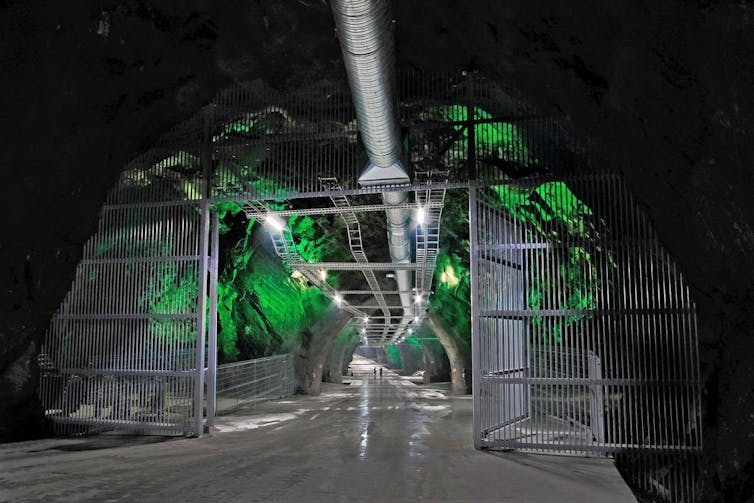






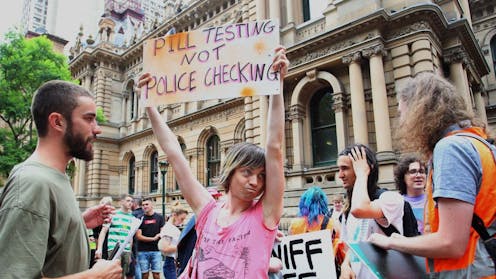












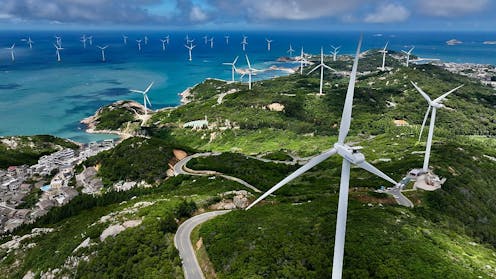








.jpg)