Source: The Conversation (Au and NZ) – By Julian Hargreaves, Senior Lecturer, Department of Sociology and Criminology, City St George’s, University of London
A man believed to be Jihad Al-Shamie, a 35-year-old British citizen born in Syria, has been shot dead by police after launching an attack on a synagogue in Manchester on Yom Kippur, the holiest day in the Jewish calendar. Melvin Cravitz, 66, and Adrian Daulby, 55, died in the attack – one having been accidentally shot by police trying to stop the suspect.
According to BBC News, a member of the public called the police at 9:31am to report the incident. Greater Manchester Police deployed firearms officers to the scene at 9:34am. At 9:38am, officers declared “Operation Plato” – a code word used by UK emergency services for a marauding terrorist attacker. At 9:39am, armed counter terrorism police officers, shot and killed Al-Shamie who died at the scene. Counter terrorism police later confirmed the attacked as a “terrorist incident”.
Within hours, it had become clear that many foresaw such an attack. The Financial Times reported comments from Marc Levy, chief executive of the Jewish Representative Council, a body representing Jewish communities in Greater Manchester. Levy described the events as “an inevitability”.
The Board of Deputies of British Jews, a national body representing Jewish communities across the UK, described the attack as “sadly something we feared was coming”.
The Jewish Chronicle, a Jewish interest newspaper, reported that staff at the London Centre for the Study of Contemporary Antisemitism were “shocked but not surprised”.
Recent research by the thinktank Antisemitism Policy Trust analysed demonstrations against the war in Gaza. It found public expressions of anti-Jewish hatred alongside more legitimate pro-Palestinian and anti-Israeli government sentiment, including Arabic chants referencing the massacre of Jews in 628BC.
The Community Security Trust, an organisation serving and protecting Jewish communities, records and reports antisemitic incidents in the UK. In 2023, the CST recorded 4,296 incidents – the largest number in a single year. CST used previous lower annual totals to explain how antisemitism is now fuelled by responses to the October 7 Hamas attacks: 1,684 incidents in 2020, 2,261 in 2021 and 1,662 in 2022.
The CST works carefully to investigate and verify all reports of antisemitism. While their work is entirely robust, it cannot easily reveal whether the dramatic rise in incidents reflects growing antisemitic sentiment, or increases in the reporting of antisemitic incidents to the CST, or both.
According to Home Office figures, religious hate crime against Jewish people more than doubled between the years ending March 2023 to March 2024. In 2022-23, there were 1,543 incidents recorded by the police. In 2023-24, there were 3,282.
While the number of incidents is lower than those against Muslim people – 3,432 in 2022-23 and 3,866 in 2023-24 – Jewish people are more likely to suffer religious hate crime. There were 121 incidents for every 10,000 Jewish in England and Wales compared to 10 incidents for every 10,000 Muslim people.
The same caveats apply here. We cannot know whether these increases represent growing hostility towards Jewish people in the UK or more Jewish people reporting hostility to the police. This issue is further complicated by the fact that police-recorded crime is no longer regarded as meeting the standard required of reliable national statistics due to poorly managed recording practices.
How widespread is antisemitism in the UK?
In 2017, the Institute for Jewish Policy Research (JPR) published what is arguably the most robust mapping of antisemitism in the UK. It estimated the extent of anti-Jewish attitudes using a nationally representative survey.
The JPR found that around 2% of the UK population might be labelled as “hardcore” antisemites and a further 3% as “softer” antisemites on the basis that both groups hold multiple antisemitic ideas. It also found that at least one more antisemitic idea is held by 30% of British society.
It is difficult to say with clarity whether or not antisemitism is rising in the UK, mainly because police statistics are so unreliable. But when terrorist attacks occur, we seek to understand what has happened and reach for robust information. This creates an urgent need for fresh research with better police data and more recent crime data.
Regardless of all this, findings from the JPR show that while strong antisemitism remains relatively uncommon in the UK, the odds of Jewish people encountering neighbours with at least one antisemitic idea remains worryingly high. Small wonder then that so many felt this attack was just a matter of time.
Julian Hargreaves does not work for, consult, own shares in or receive funding from any company or organisation that would benefit from this article, and has disclosed no relevant affiliations beyond their academic appointment.
Source: The Conversation (Au and NZ) – By William Feeney, Research fellow, Environmental Futures Research Institute, Griffith University; Estación Biológica de Doñana (EBD-CSIC)
An angry Australian Superb Fairy-wren confronting a Horsfield’s bronze-cuckoo.David Ongley
Language enables us to connect with each other and coordinate to achieve incredible feats. Our ability to communicate abstract concepts is often seen as a defining feature of our species, and one that separates us from the rest of life on Earth.
This is because while the ability to pair an arbitrary sound with a specific meaning is widespread in human language, it is rarely seen in other animal communication systems. Several recent studies have shown that birds, chimpanzees, dolphins, and elephants also do it. But how such a capacity emerges remains a mystery.
While language is characterised by the widespread use of sounds that have a learned association with the item they refer to, humans and animals also produce instinctive sounds. For example, a scream made in response to pain. Over 150 years ago, naturalist Charles Darwin suggested the use of these instinctive sounds in a new context could be an important step in the development of language-like communication.
In our new study, published today in Nature Ecology and Evolution, we describe the first example of an animal vocalisation that contains both instinctive and learned features – similar to the stepping stone Darwin envisioned.
A unique call towards a unique threat
Birds have a variety of enemies, but brood parasites are unique.
Brood parasites, such as cuckoos, are birds that reproduce by laying their egg in the nest of another species and manipulating the unsuspecting host to incubate their egg and raise their offspring. The first thing a baby cuckoo does after it hatches is heave the other baby birds out of the nest, claiming the effort of its unsuspecting foster parents all to itself.
A baby fan-tailed cuckoo (left) being fed by its white-browed scrubwren host (right) in Australia. Cameryn Brock
The high cost of brood parasitism makes it an excellent study system to explore how evolution works in the wild.
For example, our past work has shown that in Australia, the superb fairy-wren has evolved a unique call it makes when it sees a cuckoo. When other fairy-wrens hear this alarm call, they quickly come in and attack the cuckoo.
During these earlier experiments, we couldn’t help but notice other species were responding to this call and making a very similar call themselves. What’s more, discussions with collaborators who were working in countries as far away as China, India and Sweden suggested the birds there were also making a very similar call – and also only towards cuckoos.
Birds from around the world use the same call
First, we explored online wildlife media databases to see if there were other examples of this call towards brood parasites. We found 21 species that produce this call towards their brood parasites, including cuckoos and parasitic finches. Some of these birds were closely related and lived nearby each other, but others shared a last common ancestor over 50 million years ago and live on different continents.
For example, this is a superb fairy-wren responding to a shining bronze-cuckoo in Australia.
Superb fairy-wren responding to a shining bronze-cuckoo. William Feeney, CC BY169 KB(download)
And this is a tawny-flanked prinia responding to a cuckoo finch in Zambia.
Tawny-flanked prinia responding to a cuckoo finch. William Feeney, CC BY160 KB(download)
As vocalisations exist to communicate information, we suspected this call either functioned to attract the attention of their own or other species.
To compare these possibilities, we used a known database of the world’s brood parasites and hosts. If this call exists to communicate information within a species, we expected the species that produce it should be more cooperative, because more birds are better at defending their nest.
We did not find this. Instead, we found that species that produce this call exist in areas with more brood parasites and hosts, suggesting it exists to enable cooperation across different species that are targeted by brood parasites.
Communicating across species to defend against a common threat
To test whether these calls were produced uniquely towards cuckoos in multiple species, we conducted experiments in Australia.
When we presented superb fairy-wrens or white-browed scrubwrens with a taxidermied cuckoo, they made this call and tried to attack it. By contrast, when they were presented with other taxidermied models, such as a predator, this call was very rarely produced.
When we presented the fairy-wrens and scrubwrens with recordings of the call, they responded strongly. This suggests both species produce the call almost exclusively towards cuckoos, and when they hear it they respond predictably.
If this call is something like a “universal word” for a brood parasite across birds, we should expect different species to respond equally to hearing it – even when it is produced by a species they have never seen before. We found exactly this: when we played calls from Australia to birds in China (and vice-versa) they responded the same.
This suggests different species from all around the world use this call because it provides specific information about the presence of a brood parasite.
Superb fairy-wrens attacking a taxidermied shining bronze-cuckoo. William Feeney, CC BY
Insights into the origins of language
Our study suggests that over 20 species of birds from all around the world that are separated by over 50 million years of evolution use the same call when they see their respective brood parasite species.
This is fascinating in and of itself. But while these birds know how to respond to the call, our past work has shown that birds that have never seen a cuckoo do not produce this call, but they do after watching others produce it when there is a cuckoo nearby.
In other words, while the response to the call is instinctive, producing the call itself is learned.
Whereas vocalisations are normally either instinctive or learned, this is the first example of an animal vocalisation across species that has both instinctive and learned components. This is important, because it appears to represent a midpoint between the types of vocalisations that are common in animal communication systems and human language.
So, Darwin may have been right about language all along.
William Feeney receives funding from the Spanish National Research Council. He has previously received funding from the Queensland Government, Hermon Slade Foundation, Seaworld Research and Rescue Foundation, Fulbright Association, Winston Churchill Memorial Trust, Australian Government Endeavour Award, Alexander von Humboldt Foundation, Australian Geographic. He is CEO of Wildlife Research and Education.
James Kennerley receives funding from the Cornell Lab of Ornithology. He has previously received funding from the University of Cambridge, the Cambridge Philosophical Society, the International Society for Behavioral Ecology and the British Ornithologists’ Union.
Niki Teunissen received funding and support from Monash University, Wageningen University and Research, the Australian Research Council, and Australian Wildlife Conservancy.
Source: The Conversation (Au and NZ) – By Karin Hammarberg, Adjunct Senior Research Fellow, Global and Women’s Health, School of Public Health & Preventive Medicine, Monash University
Reports of several cases of embryo and sperm mix-ups have put the Australian fertility industry in the spotlight for all the wrong reasons.
These bungles have raised serious questions about the industry’s current model of self-regulation, and demonstrate a lack of transparency about how it handles complaints and misconduct. In response, the federal government commissioned a rapid review of the sector in June.
Last Friday, the report was quietly released. State, territory and federal health ministers had already committed to accepting all the review’s recommendations earlier in September. But we’ve only just learned the details of those recommendations.
So, what are they? And will they work? Here are the main takeaways.
What did the review look at?
The fertility industry is highly lucrative, profit driven, fast growing and increasingly complex. So one of the review’s main questions was whether self-regulation is fit-for-purpose.
The rapid review focused on accreditation and regulation in particular. It looked at:
how an independent accreditation body and process could work
how to strengthen existing state-based regulation.
Independent accreditation
The review recommends the existing Australian Commission on Safety and Quality in Health should be responsible for accrediting fertility clinics. This commission already oversees accreditation of hospitals and other health services.
The review also identified the need for clear, evidence-based standards for clinics and their staff, and a more effective auditing process to pick up when these are breached.
These new standards would align with existing rules that govern other health services. They would protect consumers with minimum standards for patient care, and include measures of clinics’ performance and guardrails for so-called “add-ons”. These are optional extra procedures or medications offered by fertility clinics, which can be costly and often lack evidence they work.
For those involved in delivering fertility care – such as nurses, counsellors, embryologists and doctors – the review recommends introducing minimum requirements for qualifications and ongoing professional development.
Better regulation
Rules for the fertility industry are state-based, and currently vary across states and territories. The review recommended the jurisdictions streamline:
clinic registration and reporting requirements
how they monitor compliance with regulation
how they enforce the regulation.
This would require state and territories to work together so the same rules apply nationally. The review was vague on how this would be done.
Insights from people who use fertility services
The review team also consulted with 18 people who’ve used fertility services as patients, to get their perspectives on the health of the fertility industry.
Their insights suggest the sector has a lot of work to do to improve its relationship with patients.
Problems identified by consumers included:
clinics advertising misleading success rates
lack of transparency about cost
incomplete and inconsistent information, hindering informed decisions
inadequate counselling services
providers being more focused on maximising profit than patient care
complaints processes that are confusing and difficult to navigate.
So, the review recommended better support for people to use existing complaints processes. It also said complaints data should be shared between clinics, the accreditor, regulator and complaints handling bodies.
To help people make informed decisions about treatment, the review recommends adding content to the existing YourIVFSuccess website, which is funded by the federal government. The platform provides independent, personalised estimates of someone’s chance of success, based on their circumstances. The review said it should also provide treatment costs and evidence for add-ons.
What was missing
Consumers were very concerned about the lack of a national donor register. Currently, donors can exceed legislated family limits by donating in several jurisdictions. This means some donor-conceived people discover they have dozens of half-siblings.
But the review kicked this problem down the road, recommending only that the Australian Law Reform Commission should be asked to review state-based donor legislation. This will likely take many years. In the meantime, donor-conceived people remain at risk.
The review also offered no suggestions for how to increase donor supply and reduce Australia’s reliance on overseas donor banks.
Nor did it address issues with clinics advertising to patients. Fertility clinics appear not to be subject to the same restrictions as individual doctors (who are banned from advertising services or products to patients). Similar rules for fertility clinics would ensure more balanced, evidence-based communication with patients.
We also believe making complaints and misconduct information public is essential to improve transparency – but the review didn’t mention this.
While it did consider the option of running public health campaigns about fertility care, this was explicitly not recommended, on the basis it’s too expensive.
This is another missed opportunity, since research shows knowledge about fertility in the community is low. Improving awareness can prevent infertility and reduce the need for treatments.
Will the proposed changes make a difference?
The recommendations will likely improve industry standards, transparency about performance, complaints processes, and accountability when things go wrong.
However, health ministers have provided very little information about when recommendations will be fully implemented. Their joint response says only that “the new accreditation requirements will be in place by January 2027”.
It’s still unclear:
how the recommendations will be implemented
who will be responsible
where the money will come from for the new accreditation system
how clinics that don’t meet standards will be dealt with.
Let’s hope for clear answers – and prompt reform.
Alex Polyakov is affiliated with Genea Fertility and currently serves as Medical Director of Genea Fertility Melbourne.
Catherine Mills has received industry research funding from Monash IVF, Ferring Pharmaceutical, and Illumina and travel support and honoraria from Organon and Merck. She has also received research funding from government and other sources, including the Australian Research Council, National Health and Medical Research Council, the Medical Research Future Fund and the Wellcome Trust.
Karinne Ludlow receives and has previously received funding from Australia’s Medical Research Future Fund and the ARC
Karin Hammarberg does not work for, consult, own shares in or receive funding from any company or organisation that would benefit from this article, and has disclosed no relevant affiliations beyond their academic appointment.
Keith Rankin, trained as an economic historian, is a retired lecturer in Economics and Statistics. He lives in Auckland, New Zealand.
Analysis by Keith Rankin.
Keith Rankin, trained as an economic historian, is a retired lecturer in Economics and Statistics. He lives in Auckland, New Zealand.
Last week I looked at how, for modern day purposes, monetary policy started around 1750. It began with the departure from the presumption that money is wealth to the idea that money is a veil and that therefore wealth is something else. That was, in a sense, the beginning of political economy as a branch of philosophy, morphing into economics as a social science. In the then new (now ‘classical’) utilitarian view, wealth came to be seen as useful ‘product’ and money as a ‘veil’.
The liberal view arose that the best monetary policy was no-policy; that is, no policy beyond the steady coin production of each sovereign’s Royal Mint. While no longer the definition of wealth, across the capitalist world, money was understood as central (as a lubricant or a catalyst) to the workings of a self-regulating productive super-machine. Money came to be understood (correctly) as a technology – a flow technology – rather than as wealth itself. The mercantilist idea of money as wealth – and of gold or silver as money ‘to be made’ – never disappeared, however.
With that view of money as a lubricant in mind, we today can understand that a shortage of money is always going to be a bigger problem than a surfeit of money. (A car with an oil leak will eventually grind to a halt. A car with an overfilled sump, on the other hand, will still function; it will function near-to-perfectly if there is a place within the car to park the excess oil.)
This new laissez-faire view of monetary policy changed once it was realised that the mechanism didn’t work in practice as it did in theory. While it didn’t work for multiple reasons, there was a continuation of the pretence that it did work. In order to maintain that pretence, senior bankers and political leaders – the emerging ‘lords of finance’ – turned to interest-rate manipulation within the context of the ‘gold standard’.
Ultimately, what societies’ elites wanted was to have a form of ‘liquid’ wealth that they could store over time, and which would maintain (or even increase, through the ‘magic’ of compound interest) its purchasing power across time. The merchant capitalist mindset came to prevail over the realisations of progressive bankers and economists. The elite-classes still wanted a monetary policy which would operate as if mercantilism was true.
The elite-classes wanted money to come at a cost, so that they could be sure money would remain scarce. Gold and silver mining (and latterly crypto-currency mining) have been the primordial costs of commodity money. Interest rates would have to serve as the entry costs of modern ‘as if’ money.
Modern Monetary Theory
There is a known and substantially correct story in academia – albeit ‘heterodox’ academia – about money, monetary policy, and the relationship between public finance (fiscal policy) and money. It’s called Modern Monetary Theory or MMT. The conceptual relationship between OMT (orthodox monetary theory, though a better name might be PMT ‘prevalent monetary theory’, or even better LMN ‘liberal-mercantilist monetary narrative’) and MMT is akin to the relationship in the 1850s between miasma-theory and germ-theory in epidemiology. (Many people died of cholera in Europe and the Americas because the scientific establishment clung onto the miasma theory, despite the overwhelming and increasing weight of evidence to the contrary.) MMT dispenses with the requirement that money must enter into circulation at a cost; and disposes of the argument that the public and private sectors are each-other’s rivals.
I was fortunate to meet Randall Wray at an economics’ conference in Sydney in 2011, and found that he and his academic collaborators already had a well-developed theoretical framework which matched some statistical work I was doing at the time. I had been exposed to the work of Japanese/Taiwanese macroeconomist Richard Koo, and his studies of the Japanese structural recession of the 1990s and Japan’s recovery from that event. Of importance was Koo’s concept of a balance-sheet recession.
The central idea is that core money is public debt; a set of promises spent into circulation and backed by sovereign governments. A simple example of this is traditional coin money, made from bronze or silver or gold. In MMT, what gives the coin its value as a token of circulation is the depiction of the sovereign’s head, and not the amount of precious metal in the coin. A second example lies in the history of central banking, whereby the original three central banks (in Stockholm, Amsterdam, London – all in the seventeenth century) pioneered central banking through their roles as bankers to their governments; in particular, they managed their governments’ historical war debts. Those debts became private assets; and the core assets on these banks’ balance sheets.
These banks evolved to become bankers to the other banks as well as bankers to the state. Almost all the world’s central banks – ie Reserve Banks – are now publicly owned; they are very much part of the apparatus of the state. While governments sub-contract monetary policy to semi-independent central banks, MMT suggests that monetary policy is in reality undertaken by nations’ Treasuries. As a result of Treasuries’ monetary misunderstandings, modern capitalism risks becoming like an under-lubricated car with leaks.
Public debt(s) are private assets, just as a bar of gold is an asset. The world’s effectual money supply is the ‘liquid’ – ie flowing or circulating – component of (or derivative of) any monetizable asset; the core monetizable asset being public debt. This chart (from my Governments run financial deficits; it’s their role to do so, Evening Report, 17 October 2023) shows that, this century, public debt – the monetary base – increased each year from 2008 to 2022 by an average of about four percent of global GDP. That’s about how it should be, and with significantly larger injections of money required whenever a financial or economic crisis threatens to undermine the circulation of money in the real economy, as occurred in 2008 and 2020.
The real economy is the purchases of goods and services. The ‘unreal economy’, into which much money leaks, is the ‘casino economy’ whereby money is spent on financial assets; non-money circulating promises such as shares, bonds, and property titles. The ‘upstairs’ casino economy acts as a dynamic treasure hoard, fuelled by leaks from the real economy, with players buying and selling assets at mostly increasing prices.
While according to MMT, public debt (not gold or silver) is the foundation rather than the pariah of capitalism, that is not to say that more public debt is always better than less public debt; just as, in the classical schema, more gold is not necessarily better than less gold. Though in 2025 Aotearoa New Zealand, more public debt would certainly be better than the present constricted amount. The growth of public debt is always limited by tax revenue arising from the circulation of money; as they say, nothing is more certain than taxes. One efficient way to increase public debt – and thereby enhance the liquidity of the economic machine – is through ‘negative income taxes’; for example, universal tax credits (which should act like the credits received in the game Monopoly whenever a player passes ‘Go’).
The prices of money
There are three important prices associated with money: the internal price (which wavers with pure inflation and pure deflation, and does reflect the idea of money ‘as if’ it’s a commodity like silver); the external price (the exchange rate between one form of money and another, eg $NZ vis-à-vis £UK); and the interest rate which is best understood as the price of ‘inter-temporal trade’ (although OMT treats it as the ‘necessary cost of money’).
Inter-temporal trade simply means exchanges when, unlike direct barter, selling and buying do not occur simultaneously. Wage workers effectively sell their labour on pay-day, and buy stuff (say at the supermarket) on another day. When they ‘save’, then it may be months or years before they spend that saved money; that is, months or years before they use it to buy stuff. Alternatively, workers may spend some of their wages in advance; for example, with a payday loan or a credit card. Interest rates are a market-clearing price which – if correctly set in the money market – ensures the balancing of income spent late with income spent early.
People who tend to spend their money before payday are usually net payers of interest. Likewise, people who spend most of their money after payday are net receivers of interest. Thus, interest rates should be high when few people want to spend late and many want to spend early; and low when many people want to save and few want to borrow. There is no reason why interest rates cannot be very low; that is, negative.
Negative real interest rates are indeed commonplace; they occur when the rate of inflation is higher than the interest rate. For example, if the internal price of money is falling by five percent a year (ie annual inflation is five percent) and the interest rate is three percent, then the real interest rate is minus two percent. Under such conditions, interest effectively flows from savers to borrowers; rewarding early spenders over late spenders.
(For a while in the late 2010s, Switzerland had a published interest rate of minus three-quarters of a percent and inflation at minus one-and-a-quarter percent, meaning that the real rate of interest was plushalf a percent. Everything worked fine; interest effectively flowed from borrowers to savers. Switzerland then needed negative interest rates in order to limit the appreciation of its currency the Swiss Franc; otherwise, the external price of Swiss money would have been rising too much. In that episode, all three prices of money came into play.)
Looking at the three prices of money dispassionately, we see that they all play a role in free market capitalism, and that the inflation rate is itself a part of the price mechanism. This indeed has been grudgingly accepted by the mainstream, with today’s monetary policy proposing the optimum annual inflation rate as two percent rather than zero; and there are advocates today for higher inflation targets. The internal price of money should fall, policymakers agree, albeit in a predictable manner. Australia indeed has a higher inflation target than New Zealand.
(If inflation is 2.1% every year for 100 years, two $20 notes put under the mattress today should buy one loaf of bread in the year 2125; $40 would become equivalent to today’s $5.)
One important benefit of inflation is that it encourages the circulation rather than the hoarding of money. The biggest danger arising from large caches of non-circulating money is that such money may reactivate at short notice, creating substantial ‘excess-demand’. Just as we are used to seeing money regularly leaking into the casino, money in the casino can be injected into the real economy at short notice.
Bimetallism as a way of favouring Inflation over Deflation
An early attempt at monetary reform during the gold-standard period was the advocacy of bimetallism.
The United States election of 1896 was fought, in effect, on the issue of inflation versus deflation. At that time, due to gold scarcity, the gold to silver exchange rate was high (16:1) and rising. There was a substantial world depression in the early 1890s; an event that hit Australia very hard, causing New Zealand to resist overtures to join the incipient Australian federation.
In the world of the gold standard, prices were at an all-time-low and many small businesses had become distressed; especially farmers who were selling their produce at prices which were falling even faster. In the United States the free silver movement was prominent, and the Democrat Party chose a candidate – William Jennings Bryan – who favoured that political position. He failed to get elected because there was an effective party split, with many urban voters in opposition to the policy to shift from the gold standard. (As a result of the Democrat split, many Gold Democrats aka Bourbon Democrats voted Republican. The new Republican president was the recently hyped imperialist William McKinley. The gold-silver exchange-rate issue largely dissipated following the 1897 Alaska gold rush.)
The anticipated effect of a switch to a silver or bimetallic standard was that prices and wages would go up, and the highly indebted small businesses would be able to service their debts in an environment of inflation rather than deflation. City workers in 1896 tended to favour deflation; many were unable to make the connection between their future standard of living and the retention of a thriving small-business sector.
As we have seen, this position of favouring inflation over deflation is now mandatory in most capitalist jurisdictions. The largely successful monetary policy attempts in the 2010s to ward-off deflation ensured that there was no general depression in that decade. The policy, strictly, was largely unsuccessful in achieving its inflation target. That’s because of one of the fundamental flaws in orthodox monetary policy; low interest rates generate lower rather than higher costs, and therefore low rates of CPI-inflation.
Examples of ineffective and effective monetary policy from (mainly) New Zealand history
There were antecedents of MMT (and other pragmatic initiatives) in New Zealand and elsewhere during the recovery from the Great Depression which peaked in the early 1930s.
In the 1920s New Zealand had no Reserve Bank. New Zealand’s (mainly Australian-owned) banks did their banking in London, the world’s pre-eminent financial sector. From 1926 until 1928, New Zealand’s Minister of Finance was William Downie Stewart, an economic liberal and a monetary conservative. Gordon Coates – more of a pragmatist, but largely untested – had been endorsed as Prime Minister in the 1925 election months after the death of William Massey.
1927 was a disaster year for New Zealand, exacerbated by Stewart’s unresponsiveness in his role. Australia had its economic meltdown a year after New Zealand, reversing the trans-Tasman migration flow. This made the government even less popular, as unemployment in 1928 was blamed on immigrants. Coates’ Reform Party – the principal precursor of today’s National Party – went from 48% of the vote in 1925 to 35% in 1928, losing power as a result. In 1929 there was a United minority government, initially facilitated by Labour. The winning policy of United – the former Liberal Party – was increased government borrowing. The result was 20 months, in 1929 and 1930, of relatively good times despite the unfolding international crisis.
Reform went into the December 1931 election as junior partner in a United-Reform Coalition (a formal coalition which formed that September). While gaining many more votes and seats that election than United, Reform remained the junior partner. Stewart was restored to Minister of Finance at the worst possible time; going into 1932, the most difficult year of the Great Depression. Labour’s doctrinaire socialism was unappealing to voters, despite the growing unpopularity of the United government in the months following the retirement and death of Prime Minister and Finance Minister Joseph Ward.
As a ‘sound-money’ man, Stewart had been a stickler for the revised gold-standard rules. However, before the 1931 election, Britain’s government collapsed due to the financial crisis. Britain had to suddenly withdraw from the Gold Standard. The ensuing rapid depreciation of the British pound (largely reversing deflation in that country) kick-started the British economy, and also brought the New Zealand economy out of its 1931 ‘free-fall’. But New Zealand, being an agricultural commodity economy facing severe terms-of-trade issues, needed an even bigger (and longer-lasting) currency reset. Eventually, in January 1933, Stewart did the right thing and resigned on a matter of monetary principle. Coates – Stewart’s replacement – now pragmatic and worldly-wise, immediately devalued the New Zealand pound against the British pound, in line with the recommendations of the young generation of economists.
New Zealand’s recovery remained slow, but at least it was under way. The management of New Zealand’s financial reserves in London remained too conservative. Nevertheless, many subsequently iconic new businesses began their lives in 1934 and 1935 (for example Wattie’s, Fisher and Paykel, Sleepyhead).
Coates did two more things of great importance. First, he established a reform-minded Brains Trust made up of three young economists – Campbell, Sutch, Belshaw – who would argue for monetary pragmatism. And Coates established the Reserve Bank of New Zealand in 1934. Though created with conservative monetary principles in mind, the means had become available to introduce heterodox monetary policy in the event of a future government willing to flirt with an alternative narrative.
Another important development was the rise in the United Kingdom in the 1920s of Social Credit, then known as Douglas Credit, a ‘lay’ movement (counter to the political economy traditions of Marshall and Marx) reminiscent of the previously-mentioned American ‘free silver’ movement. Social Credit largely antagonised academic economists, by making anti-orthodoxy generalisations which were simplistic and too broad. Nevertheless, Social Credit gained a substantial political influence, not least in New Zealand; and it did have policy prescriptions helpful for extracting economies from a state of structural recession and inequality.
In the Labour Government elected in 1935, there was a substantial Social Credit faction; and there were a range of other monetary reformers with varying degrees of sympathy towards Social Credit. Social Credit’s central argument was that the orthodox monetary system had a permanent and structural deflationary bias, and that a public institution – such as an appropriately modified central bank – would be required to offset this bias. In effect, Social Credit argued for quantitative easing, and a national dividend (and food price subsidies, called ‘compensated prices’) as means to inject new money into circulation while addressing monetary poverty and inequality. (See A National Dividend vs. a Basic Income – Similarities and Differences, by Oliver Heydorn, 2016.)
Unlike the quasi-Marxian form of socialism advocated by New Zealand Labour from the 1910s until 1933, the party under the leadership of Michael Joseph Savage became infused with monetary radicalism and a desire to unite rather than divide diverse economic interests.
A commitment to monetary reform within Labour in 1935 led many rural voters to vote Labour for the first time ever (including voting for my great-aunt’s husband in Kaiapoi). Those voters remained loyal to Labour in 1938, in light of Labour’s subsequent monetary achievements. Particularly effective was the State Housing programme, politically managed by John A Lee, a working-class monetary reformer. Labour made full use of the new Reserve Bank to create-through-spending the money required. Economic growth boomed (about 25% in two years) while inflation remained low; a big recovery from a big depression.
In New Zealand, Social Credit split from Labour in the 1940s, and formed its own political party. While often polling highly, it could not break the two-party system, and was eventually broken as a political force – in 1984 losing two-thirds of its 1981 vote – after having been lampooned by Bob Jones. Jones was leader of the one-election-wonder New Zealand Party; an ‘unsuccessful’ party which successfully acted as a political catalyst for the return of economic liberalism and the floating-currency version of classical monetary orthodoxy.
While much of what Social Credit claimed as chronic weaknesses of the orthodox monetary narrative has turned out to be true, the successful albeit piecemeal monetary reforms which took place in the middle-third of the twentieth century eventually undermined Social Credit’s critique of monetary orthodoxy. Social Credit had indeed contributed to its own seeming redundancy as an economic force in New Zealand. (There was a Royal Commission on Money in 1954, in which Social Credit had a chance to make a substantial case. Although there had been a near-recession around 1953, after the Korean War, and Social Credit gained 10% of the vote in 1954, there was little evidence then of structurally unsound monetary arrangements.)
A third important development was the publication in 1936 of The General Theory of Employment, Interest and Money by John Maynard Keynes, an already famous British economist. This was a largely technical book which extended and reconsidered Keynes’ earlier views on money and monetary policy (1930 A Treatise on Money), while emphasising the critical roles of public debt and government spending in getting a country out of structural recession. Keynes also recognised in 1933 that import protection through tariffs would help with national economic recoveries, and that national economic recoveries would enable the restoration of the international capitalist economy. Keynes criticised international capitalism in order to save it.
Keynesian analysis led to the pushing a string critique of monetary policy.
It was the Keynesian critique which created the post-war international expansion; underpinned by an emphasis on government spending as a curative for the kinds of unemployment which widely prevailed in the 1930s. But Keynes believed that the problem of the 1930s was more cyclical than structural; hence he argued – in contrast to the MMT argument – that governments should run budget surpluses during periods of full-employment.
Keynes was the architect for the post-war monetary system that might have been. But the alternative American-led version won out, with politics prevailing over good argument, and with Keynes’ premature death.
Keynesian and other insights from the Great Depression of the 1930s informed monetary policy during the global decolonisation period from 1946 to 1976. Newly independent countries emerged, all with central banks. Central banks became, more explicitly than before, an arm of government. In New Zealand, with its substantial historical national debt (a result of imports exceeding exports for around 100 years) the development of import-substituting and export industries became central to economic policy. Interest rates remained below the rate of inflation through sufficient costless money creation. Organisations close to government – especially the producer boards such as the Dairy Board, forerunner of Fonterra; also, the State Advances Corporation which funded mortgages – gained direct lines to practically costless money through their Reserve Bank accounts.
While those monetary reforms worked in their time, future fiscal-monetary policies will need to be more about sustainability and private-choice than through a single-focus on selling more goods in a stormy world marketplace.
Unfortunately, monetary policy from the 1980s regressed into the spirit of 1920s’ economic liberalism and monetary conservatism. The result has been the nonsense of simultaneous economic growth and deteriorating living standards through stagnant wages, overwork, unaffordable housing, and weak environmental stewardship; the inequality norm of the neoliberal era matches that of the early twentieth century.
Money is inherently public. Unfortunately, there is a ‘groupthink’ in the economics profession; the profession which describes economies with a very limited vision of capitalism’s public sphere. Modern monetary theory straddles capitalism’s public-private interface.
Financial Mercantilism and Labour Mercantilism
In the neoliberal counter-revolution of the 1980s, the Reserve Bank of New Zealand was mandated to use interest rates as a weapon to suppress inflation by creating a recession. Although government debt was costless to create, governments were obliged to pay high ‘market’ rates to borrow. A new ‘expensive-money’ era of neoliberal-mercantilism was born, in which money was required to have innate scarcity value. Money reverted to its former status as a commodity to be made and stored.
The neoliberal era is best characterised as a new period of financial mercantilism; an era in which money is king, and the objective of economic life is – through capital or through toil – to ‘make money’.
This neoliberalisation took an unusual path in New Zealand, in that the figure after whom these changes were identified – called ‘Rogernomics’, after Labour Minister of Finance, Roger Douglas – had a deeply set philosophy which can best be described as ‘labour mercantilism’. The philosophy dates to conservative working-class practices in the Victorian era, the Fabian era, and which gave a nod to Marxian class consciousness. In that era of working-class self-help, worker welfare came through worker-funded contributory societies in which all contributors had an equal stake and expected equal benefits, though spread out over time. To be a beneficiary, you had to be a contributor to the fund from which you and your family expected to benefit. Money earned in one period would be paid out much later. Pension-fund benefits, for example, paid out of saved money, needed to purchase new goods and services. While this idea presumes economic growth through the accumulation of physical capital, the initial withdrawal of money from circulation could inhibit such growth.
This funding idea forms the basis of ‘savings-funded’ pension schemes, as distinct from ‘pay-as-you-go’ taxation-based schemes. The savings-funded schemes create huge financial liabilities which must be liquidated in an inherently uncertain future; the fiction is that wealth is stored in the past to be consumed in the future. The current-tax-funded schemes, on the other hand operate entirely in the present tense; a person’s pension is determined by today’s economic conditions, not yesterday’s conditions.
Financial mercantilism is a ‘store-money-today’, spend it decades later perspective. Labour mercantilism is the variation applied to the savings of wage and salary earners.
In the late-1930s’ Labour Government there were three factions, which Michael Joseph Savage (Prime Minister) had to manage. There were the monetary radicals – the radical centre – which included Social Credit. There were the left-wing redistributors, who wanted to ‘tax the rich’ and ‘pay pensions and tax concessions’ to workers. And there were the ‘right-of-the-party’ labour mercantilists who wanted to withdraw money today to build sovereign wealth funds from which future retirement and other benefits would be paid to workers’ families. These last two groups squabbled intensively behind the scenes. (A very useful source is the 1980 book, The Politics of Social Security, by Elizabeth Hanson; another is A Civilised Community, 1998, by Margaret McClure).
That first Labour caucus included Bill Anderton, Roger Douglas’s maternal grandfather (MP for Eden and then Auckland Central from 1935 to 1960; no relation to Jim Anderton, whose father’s surname was Byrne and mother’s birth-surname was Savage, though no relation to Michael Joseph Savage). From 1960 to 1975, Norman Douglas succeeded his father-in-law Bill Anderton as MP for Auckland Central. Norman and Roger Douglas were in Parliament together from 1969 to 1975.
In 1937 there was a push from Labour’s right to abandon the 1935 policy pledge of universal pensions (and other benefits) in favour of an actuarial scheme – what we would today call a sovereign wealth fund – that was conceived-of as a kind of ‘magic money tree’ based on the ‘principal of compound interest’. Minister of Finance Walter Nash, returning from the United Kingdom in 1937, was accompanied by accomplished British actuary George Henry Maddex. Much time was spent with Maddex – some would say wasted – trying to supplant the promised ‘pay-as-you-go’ universal pension with this scheme which promised some people – mainly men – with large benefits in the distant twilights of their lives. Further, because the people who financially contributed the most would get the most, the scheme in essence promised an avalanche of future-spending by people other than those with the most needs. In the end the left and right factions cancelled out, resulting in a universal welfare state funded for current beneficiaries with current money.
Compound interest only works if interest is less than inflation over the medium-long term. In practice such ‘pension funds’ play about for decades in the casino economy, trying to replicate the promise of compound interest. Further, they represent capitalism’s greatest financial risk; the possibility that financial assets, dynamically-parked in the casino of capital gains, will sometime in the future return at scale and at short notice to the real economy. Flooding the future economy with excess demand. Or eventually providing deferred benefits which would buy much less than promised.
Fast forward to 1974, Roger Douglas devised and established such a sovereign wealth fund, which commenced operation in 1975, and was cancelled months later. In the midst of high inflation and a global economic crisis, the greater monetary priority was addressing the issues of that time, not stashing away stocks of money for the never-never. The National Party under Robert Muldoon fully exploited that misplaced priority.
When in power again in 1985, Douglas turned to the redistributive face of Labour, means-testing the ‘universal superannuation’ which had existed in one form or other since 1940.
Nevertheless, still alive and well at 88 – and long-after he established New Zealand’s most right-wing party, ACT – Roger Douglas is still pushing for the same sovereign wealth fund that his grandfather wanted in 1937 and that briefly operated fifty years ago. This time he has University of Auckland Economics’ Professor Robert MacCulloch at his side, claiming this pension fund as a magic bullet solution to New Zealand’s present stagnation (refer GDP drop sparks calls for Willis to step aside, RNZ, 19 Sep 2025). One-again, withdrawals from the ‘circular-flow of money’ will not rejuvenate an economy which desperately needs injections of ‘money-in-circulation’.
Kwasi-nomics
An interesting recent episode was the Fall 2022 rise and fall of Liz Truss as United Kingdom Prime Minister, and her hapless Chancellor of the Exchequer Kwasi Kwarteng. Truss and Kwarteng were right-wing monetary mavericks, willing to expand the United Kingdom’s public debt through ‘unfunded’ tax cuts. Yet the structure of those tax cuts was principally to allow the already rich to become richer, rather than to inject the money into where it was most needed. Subsequent to her effective dismissal, she went on to laud Argentina’s hatchet (aka chainsaw) President Javier Milei whose modus operandi is to drain money from those sections of Argentine society which most need it. Kwarteng and Truss were co-authors of Britannia Unchained, which argued ‘for a radical shrinking of the welfare state in order “to return it to the contributory principle … that you get benefits in return for contributions”. That’s the same quasi-economic principle which underpins labour mercantilism.
Ricardian Equivalence
Ricardian Equivalence is an idea gleaned from classical macroeconomics which became fashionable within neoconservative economics in the 1980s. It claims that fiscal policy is futile; that increases in government spending are ‘internalised’ in such a way that private spenders adjust by spending less. It has been widely used as an argument for the futility (rather than the centrality) of government spending as an engine to establish a healthy full-employment market economy.
Neoconservatives push the liberal-mercantilist monetary narrative as the only valid macroeconomic policy programme. Ricardian Equivalence, much-touted by economic liberals to justify fiscal conservatism, puts all their policy eggs into monetary policy. Meaning the monetary policy, based on innate money scarcity, of using interest rates to recreate the primordial costs previously associated with gold and silver mining.
Ricardian Equivalence is a ‘straw man’ argument. In as much as the data supports it, that conservative characterisation of government spending does not apply to economies stuck in depressions or structural recessions. Only programmes of active government spending – or waiting for too long – can resolve a structural recession.
And the monetary system always requires enough public debt to act as the banking-system’s ‘modern gold’.
Finally
Modern Monetary Theory is a valid description of money as it actually is (and was), and a policy recipe for economic growth. There are important twenty-first century stories which require money to be something more; in particular, a means to generate higher living standards and productivity without requiring economic growth. This is partly an issue of work-life balance, better enabling those who wish to choose more leisure and less work. And a prosperous future without economic expansion will be a requirement of a future of demographic contraction, as is forecast for the end of this century.
To achieve these ends, we have to go beyond public-debt-induced peoples’ money to achieve ways in which ordinary people – households of people who consume goods and services among other things – can choose their own balances between consumption and other facets of good living.
It can be done. Public equity dividends – dividends arising from public domain capital, equal and unconditional, complementing private incomes – can enable the overworked to work less and the underworked to work more. That could be the future direction of modern money.
*******
Keith Rankin (keith at rankin dot nz), trained as an economic historian, is a retired lecturer in Economics and Statistics. He lives in Auckland, New Zealand.
On Taylor Swift’s highly-anticipated new album The Life of a Showgirl, track four, Father Figure, includes the late George Michael as one of the credited songwriters.
But Swift’s song is not a cover of Michael’s 1987 hit of the same name. Rather, it is an “interpolation”. What does this mean, and how is it different from a cover, or a song that uses sampling?
Cover, sample, remix and interpolation
The vocabulary of popular music can be slippery. Terms such as cover, sample, remix and interpolation all describe ways artists reuse existing material, but they are not interchangeable.
A cover is a new performance of an existing song. From jazz standards, to pub rock tribute bands, the cover reproduces a song recognisably intact, albeit with varying degrees of interpretation.
In his book A Philosophy of Cover Songs, philosopher P. D. Magnus argues a cover is best understood as a re-performance of the same song, albeit open to stylistic variation. Although, he also highlights how chronology and authorship problematise this definition.
For example, although Paul McCartney wrote The Beatles’ Let It Be, the first official released version of the song was sung by Aretha Franklin. Yet no one describes the Beatles as having “covered” Franklin.
A sample involves lifting a fragment of an original sound recording, such as a guitar riff, drum loop, or vocal hook, and inserting it into a new track. The sound itself is borrowed – not just the musical idea.
A remix manipulates the audio of an existing track, often altering tempo, instrumentation or structure, while remaining tethered to the original recording. This practice originated with DJs but has since become a standard part of studio production.
An interpolation sits somewhere between covering and sampling. As Magnus and industry sources note, it means re-performing part of a song, such as a melody, lyric, or riff, within a new composition. The material is recognisable, but newly recorded – not lifted from an existing recording.
In Swift’s case, Father Figure does not re-use George Michael’s recording, but it does quote from his song. That could be why Michael is credited as a writer.
Specifically, Swift interpolates Michael’s original track by echoing the lyrics of his chorus (“I’ll be your father figure”) and uses a melody that resembles – but doesn’t copy – the melody in the original track.
These are more subtle references than substantive quotation. So while the track pays tribute to the past, it still asserts itself as a definitive new work.
Creative practice and copyright
These distinctions matter because United States copyright law separates rights in the song composition (melody, harmony, lyrics) from rights in the sound recording (the particular performance captured on a recording).
To cover a song, an artist must license the underlying composition. This is usually straightforward through mechanical licensing schemes.
To sample a recording, however, permission is needed both from the songwriter and from whoever owns the master recording. This “double clearance” can be costly or impossible if rights-holders refuse.
Interpolation avoids this second hurdle. By re-recording the material, artists only require permission from the original songwriters, or their estates, who then receive royalties. This explains why interpolation has become such an attractive creative strategy. It’s also an example of how the law can shape artistic practice.
One well-known example of an interpolation is Ariana Grande’s 7 Rings (2019), which re-sings the melody of Oscar Hammerstein II and Richard Rodgers My Favourite Things (1959). Because the melody was newly performed, the composers are credited as songwriters, but no use was made of the original recording.
Beyoncé’s track Energy, from her 2022 album Renaissance, re-uses elements of Milkshake, written by Pharrell Williams and Chad Hugo, and performed by Kelis. Again, the original writers are credited, but no part of the original recording is used.
Shifts in authorship and creatvitiy
Prior to the 1930s – back in a time when sheet music drove profits as much, or more, than recordings – different and subsequent performances were not seen in terms of an “original” versus a “copy”. This binary only emerged later with the culture of recorded cover versions.
By the early 1960s, covers and cover bands became a primary means of disseminating popular hits to youth audiences, reflecting both changing social practices and the dominance of recorded music.
Today, the term “cover” often carries connotations of derivativeness. Scholars such as Roy Shuker note covers are frequently equated with a lack of originality, even when the performer substantially reinvents the source material.
An illustrative example is Pat Boone’s 1956 cover of Little Richard’s Tutti Frutti (1955). Boone’s version was seen as a sanitised rendition aimed at accessing a broader, predominantly white audience.
Historically, covers were more about marketability and accessibility than artistic reinterpretation. And this commercial dynamic underscores why they have often been perceived as derivative.
Interpolations enjoy higher cultural capital. Artists who interpolate go beyond reproducing, to create a new work that operates in dialogue with the past.
This distinction is especially salient for an artist of Swift’s stature – a songwriter celebrated for creative agency and influencing large-scale trends in popular music.
Timothy McKenry does not work for, consult, own shares in or receive funding from any company or organisation that would benefit from this article, and has disclosed no relevant affiliations beyond their academic appointment.
Navigating the money side of buying a home can be daunting – especially if it’s your first time. Unless you’ve recently come into a small fortune, you’ll need to have saved a deposit and take out a home loan.
That means engaging with the world of banks and mortgage brokers, and grappling with what might be intimidating-sounding jargon – terms like “pre-approval”, “offset accounts” and “serviceability buffers”.
Here’s a general guide to some of the essential steps: how to figure out what you can afford, how the loan process works, and some key things to watch out for before taking the plunge.
How much can you afford?
Taking out a home loan means you’ll be required to make regular repayments over many years. So, a bank or other lender will first want to make sure you can afford them.
We’ve asked experts to unpack some of the biggest topics for first-home buyers to consider – from working out what’s affordable and beginning the search, to knowing your rights when inspecting a property and making an offer.
It’s important to understand the difference between borrowing capacity and affordability.
Your borrowing capacity is the amount a lender is willing to offer you, based on your income and debts, and their own stress tests. Affordability, on the other hand, is about you – your lifestyle, choices and actual spending patterns.
These two things are related but don’t always align, so it’s important to factor affordability into your decision. Being clear on both helps you avoid taking on more debt than you can comfortably manage.
Doing your own calculations first
It’s a good idea to start with your own numbers. List all your household expenses over at least the past six months – everything from groceries to streaming subscriptions – and work out the monthly average.
Monthly subscriptions – such as streaming services – can have an impact on borrowing power. Oscar Nord/Unsplash
After setting aside some room for savings and unexpected costs, the remainder gives you an indication of what could be available for mortgage repayments.
As a rule of thumb, many suggest keeping repayments to no more than about 30% of your after-tax income.
Budget for reality, not hope. Don’t assume you’ll slash spending just because you’ve bought a home.
Stress-test your budget. Could you still make the repayments if your interest rate rose by 0.25–0.5%? What if it rose by 1-2%?
Don’t forget the extra costs that come up with home ownership. Factor in insurance, council rates and higher utility bills in a larger home.
How much will the bank lend you?
Your borrowing power depends mainly on:
household income
living expenses and debts (credit cards, car loans, buy-now-pay-later arrangements)
number of financial dependants.
Most banks have online calculators in their banking apps to check your borrowing capacity. The Australian Securities and Investments Commission (ASIC)’s Moneysmart site also provides calculators for borrowing and repayments.
Lenders are also required by law to check a borrower could still afford repayments if interest rates rose by a certain amount. This “serviceability buffer” is currently three percentage points.
Pre-approval doesn’t guarantee a loan
Getting pre-approval means a lender has reviewed your finances and indicates they’re willing, in principle, to lend you up to a certain amount.
But it isn’t a binding contract. You’re not locked into taking the loan, and the lender isn’t legally bound to provide it.
Still, getting pre-approval can have some benefits, including:
giving you confidence about your borrowing capacity
helping set realistic price limits and narrowing a property search
signalling to real estate agents and sellers that you’re a serious buyer, which can make you more competitive in a hot market.
At auctions, pre-approval is especially important. Once the hammer falls, the sale is binding – there’s no cooling-off period and no finance clause.
If you don’t have pre-approval in place, you could win the bid but may be unable to secure finance, leaving you at risk of losing your deposit.
Different types of loan
One of the first decisions you’ll face is whether to go with a principal and interest loan or an interest-only loan.
Principal and interest is the standard choice. Each repayment reduces both your loan balance and the interest owed. Most first-home buyers opt for this option because it steadily pays down the debt.
Interest-only loans mean that for an agreed period (say five years), you only cover the interest. Repayments are lower during that time, but the loan balance itself doesn’t shrink.
To illustrate, if you took out a $200,000 interest-only loan at 5% for five years, you’d pay $10,000 a year in interest. But at the end of the five years, you would still owe the full $200,000.
Interest-only loans can make sense for some investors focused on cash flow, but they’re far less common for first-home buyers.
Finding a loan
There are many ways to find a loan that suits your needs. You can compare products directly with lenders, use comparison sites, or go through a mortgage broker.
Mortgage brokers compare loans on your behalf and are often paid a commission by the lender, meaning you aren’t directly charged a fee.
It’s important to make sure they’re licensed (check ASIC’s professional register), reputable, and – if possible – recommended by family or friends.
A good broker will break down fees, features and hidden costs so you’re comparing more than just the interest rate. Before you sit down with a broker, think about what matters most to you: getting the lowest cost loan, or flexibility through features?
Take offset accounts as an example, where savings can reduce interest on the loan. An offset is a transaction account linked to your loan. If you owe $450,000 but keep $30,000 in the offset, you’ll only pay interest on $420,000.
Another common feature is called a redraw facility. This lets you make extra repayments (thus reducing the amount of interest you pay) and withdraw them later if needed.
Disclaimer: This article provides general information only and does not take into account your personal objectives, financial situation, or needs. It is not intended as financial advice. All investments carry risk.
Ama Samarasinghe does not work for, consult, own shares in or receive funding from any company or organisation that would benefit from this article, and has disclosed no relevant affiliations beyond their academic appointment.
For decades, small grooves on ancient human teeth were thought to be evidence of deliberate tool use – people cleaning their teeth with sticks or fibres, or easing gum pain with makeshift “toothpicks”. Some researchers even called it the oldest human habit.
But our new findings, published in the American Journal of Biological Anthropology, challenge this long-held idea about human evolution. We found these grooves also appear naturally in wild primates, with little support for tooth-picking as the cause.
Even more striking, in more than 500 wild primates, across 27 species both living and fossil, we found no trace of a common modern dental disease: deep, V-shaped gumline notches called abfraction lesions.
Together, these findings can help reshape how we interpret the fossil record and raise fresh questions about the uniquely human ways our teeth are affected today.
Orangutan (Pongo pygmaeus) with a ‘toothpick groove’ on the lower left second molar (specimen FMNH 19026; Field Museum Chicago). An orange arrow indicates the position of the groove. Ian Towle
Why teeth matter in human evolution
Teeth are the most durable part of the skeleton and often survive long after the rest of the body has decayed. Anthropologists rely on them to reconstruct ancient diets, lifestyles and health.
Even tiny marks can carry important meaning. One recurring feature is the thin groove across exposed tooth roots, especially between teeth. Since the early 20th century, these have been labelled “toothpick grooves” and interpreted as signs of tool use or dental hygiene.
A different condition, abfraction, looks very different – deep wedge-shaped notches near the gumline. These are very common in modern dentistry and often linked to tooth grinding, forceful brushing, or acidic drinks. Their absence in the fossil record has long puzzled researchers. Do other primates really never suffer from them?
What we did
To test these assumptions, we analysed more than 500 teeth from 27 primate species, both extinct and living. The sample included gorillas, orangutans, macaques, colobus monkeys, fossil apes and more.
Crucially, all specimens came from wild populations, meaning their tooth wear could not have been influenced by toothbrushes, soft drinks or processed foods.
We looked for non-carious cervical lesions – a name for tissue loss at the tooth neck not caused by decay. Using microscopes, 3D scans and tissue-loss measurements, we documented even the smallest lesions.
Different types of root lesions found in the wild primates. Including acidic erosion (top left), and grooves with similar characteristics to tooth picking grooves in fossil human samples. Ian Towle
What we found
About 4% of individuals had lesions. Some looked almost identical to the classic “toothpick grooves” of fossil humans, complete with fine parallel scratches and tapering shapes.
3D map of tissue loss within a root groove (scale in microns) and microwear features in the same groove, showing parallel fine scratches, in an orangutan (Pongo pygmaeus)
Others were shallow and smooth, especially on front teeth, likely caused by acidic fruits that many primates consume in large amounts.
But one absence stood out. We found no abfraction lesions at all. Despite studying species with extremely tough diets and powerful chewing forces, not a single primate showed the wedge-shaped defects so commonly seen in modern dental clinics.
An illustration of what abfraction lesions look like in modern human teeth. Wikimedia Commons, CC BY
What does this mean?
First, grooves that resemble “toothpick” marks don’t necessarily prove tool use. Natural chewing, abrasive foods, or even swallowed grit can produce similar patterns. In some cases, specialised behaviours like stripping vegetation with the teeth may also contribute. We therefore need to be cautious about interpreting every fossil groove as deliberate toothpicking.
Second, the complete absence of abfraction lesions in primates strongly suggests these are a uniquely human problem, tied to modern habits. They are far more likely caused by forceful brushing, acidic drinks and processed diets than by natural chewing forces.
This places abfraction alongside other dental issues, such as impacted wisdom teeth and misaligned teeth, which are rare in wild primates but common in humans today. Together, these insights are shaping a growing subfield known as evolutionary dentistry, using our evolutionary past to understand the dental problems of the present.
Why it matters today
At first glance, grooves on fossil teeth may sound trivial. But they matter for both anthropology and dentistry.
For evolutionary science, they show why we must check our closest relatives before assuming a specific, or unique, cultural explanation. For modern health, they highlight how profoundly our diets and lifestyles alter our teeth in ways that set us apart from other primates.
By comparing human teeth with those of other primates, we can tease apart what’s universal (the inevitable wear and tear of chewing) and what’s uniquely human – the result of modern diets, behaviours and dental care.
What’s next?
Future research will expand to larger primate samples, investigate diet-wear links in the wild, and apply advanced imaging to see how lesions form. The aim is to refine how we interpret the past while finding new ways on how to prevent dental disease today.
What may look like a fossil human tooth-picking groove could just as easily be the by-product of everyday chewing. Equally, it might reflect other cultural or dietary behaviors that leave similar marks. To untangle these possibilities, we need much larger comparative datasets of lesions in wild primates, only then can we begin to trace broader patterns and refine our interpretations of the fossil record.
Meanwhile, the absence of abfraction lesions in primates suggests that some of our most common dental problems are uniquely human. It’s a reminder that even in something as everyday as toothache, our evolutionary history is written in our teeth, but shaped as much by modern habits as by ancient biology.
Ian Towle receives funding from the Australian Research Council (ARC DP240101081).
Luca Fiorenza receives funding from the Australian Research Council (ARC DP240101081).
ER Report: Here is a summary of significant articles published on EveningReport.nz on October 3, 2025.
Australia’s new food security strategy: what’s on the table, and what’s missing? Source: The Conversation (Au and NZ) – By Nick Rose, Senior Lecturer, William Angliss Institute Dan Meyers/Unsplash In 2023, a parliamentary inquiry into food security was held in Australia. This involves the government asking for public and expert advice on key issues to make better decisions. The inquiry drew 188 submissions from experts across the
Who wrote the cabinet paper recommending NZ not recognise a Palestinian state? Source: The Conversation (Au and NZ) – By Richard Shaw, Professor of Politics, Te Kunenga ki Pūrehuroa – Massey University Getty Images In the controversy and debate following Foreign Minister Winston Peters’ announcement at the United Nations last week that New Zealand would not yet recognise Palestine as a state, it was easy to overlook
Friday essay: trauma memoirs can help us understand the unthinkable. They can also be art Source: The Conversation (Au and NZ) – By Zora Simic, Associate Professor, School of Humanities and Languages, UNSW Sydney Content warning: readers are advised this article talks about sexual abuse and child sexual abuse. As a writer who has experienced the trauma of sexual violence – and who reads and writes about it – Jamie
Stan’s Watching You is elevated Australian noir – sexy, stylish and suspenseful Source: The Conversation (Au and NZ) – By Adam Daniel, Associate Lecturer in Communication, Western Sydney University Lisa Tomasetti In recent years, Australian TV has built a reputation for gritty, stylish crime thrillers that linger long after the credits roll. In series such as Mystery Road (2018–), Scrublands (2023–25) and Black Snow (2023–), intimate character
Taylor Swift has branded herself a showgirl. These hardworking women have a long and bejewelled history Source: The Conversation (Au and NZ) – By Emily Brayshaw, Honorary Research Fellow, School of Design, University of Technology Sydney Taylor Swift/Instagram The iconic feathered showgirl was born amid the chaos of the first world war, when the wealthy, global French superstar Gaby Deslys entertained Parisians and Allied soldiers in a 1917 show called Laissez-les
Mysterious molecule found on brown dwarf casts further doubt on potential signs of life on Venus Source: The Conversation (Au and NZ) – By Laura McKemmish, Senior Lecturer, School of Chemistry, UNSW Sydney An artist’s impression of a brown dwarf. NASA/JPL-Caltech Brown dwarfs: too small to be stars, too big to be planets. Only discovered in the 1990s, these in-between cosmic objects aren’t big enough to burn as hot and bright
Around the world, migrants are being deported at alarming rates – how did this become normalised? Source: The Conversation (Au and NZ) – By Andonea Jon Dickson, Postdoctoral Research Fellow, University of Edinburgh Under President Donald Trump, the United States is expanding its efforts to detain and deport non-citizens at an alarming rate. In recent months, the Trump administration made deals with a number of third states to receive deported non-citizens.
Grattan on Friday: believe it or not, there would be a case for more federal politicians Source: The Conversation (Au and NZ) – By Michelle Grattan, Professorial Fellow, University of Canberra Should we have more federal politicians? One can anticipate the knee-jerk response from many sceptical voters. But Special Minister of State Don Farrell believes there’s a case, and has the parliamentary joint standing committee on electoral matters examining the arguments.
Defence treaty with PNG ready for signing after its cabinet gives it the tick Source: The Conversation (Au and NZ) – By Michelle Grattan, Professorial Fellow, University of Canberra The Papua New Guinea cabinet has cleared the way for the finalisation of a sweeping new defence treaty between PNG and Australia. The cabinet’s tick off for the treaty will be a relief to the Australian government after a glitch
Politics with Michelle Grattan: James Paterson on Andrew Hastie, Sussan Ley and himself Source: The Conversation (Au and NZ) – By Michelle Grattan, Professorial Fellow, University of Canberra The federal opposition, embattled on many fronts, is trying to gain ground by establishing an alternative economic and fiscal narrative to that of the government. Labor boasts that the just-released budget outcome for last financial year is better than earlier
‘Only if we help shall all be saved’: Jane Goodall showed we can all be part of the solution Source: The Conversation (Au and NZ) – By Euan Ritchie, Professor in Wildlife Ecology and Conservation, School of Life & Environmental Sciences, Deakin University Penelope Breese/Getty With the passing of Dr Jane Goodall, the world has lost a conservation giant. But her extraordinary achievements leave a profound legacy. Goodall was a world-leading expert in animal
Does my sunscreen actually work? Here’s what’s behind the latest SPF concerns Source: The Conversation (Au and NZ) – By Mike Climstein, Associate Professor, Faculty of Health, Southern Cross University Catherine Falls Commercial/Getty It’s been a tough time for sunscreens recently. Earlier this year, testing on behalf of consumer organisation Choice found several sunscreens were not delivering the sun protection you’d expect. One product claimed a sun
Israel’s interception of the Gaza aid flotilla is a clear violation of international law Source: The Conversation (Au and NZ) – By Donald Rothwell, Professor of International Law, Australian National University The Israel Defence Force has intercepted a flotilla of humanitarian vessels seeking to deliver aid to Gaza, taking control of multiple vessels and arresting activists, including Greta Thunberg. The interceptions took place in the Mediterranean Sea between 70-80
NSW Police lost a huge strip search lawsuit. It has national implications Source: The Conversation (Au and NZ) – By Vicki Sentas, Senior Lecturer in Law, UNSW Sydney Matt Jelonek/Getty This week, the Supreme Court of New South Wales delivered a landmark judgment against the NSW Police Force for unlawful strip searches. The class action was brought by lead plaintiff Raya Meredith on behalf of all people
Is China’s reported ban on BHP a bluff, or a glimpse of the future? Source: The Conversation (Au and NZ) – By Marina Yue Zhang, Associate Professor, Technology and Innovation, University of Technology Sydney Auscape/Getty Though they still haven’t been officially confirmed, reports China’s state-owned buyer told steelmakers to stop purchasing iron ore from Australian mining giant BHP have rattled both markets and Canberra. At first glance, this looks
‘Spooky action at a distance’ – a beginner’s guide to quantum entanglement and why it matters in the real world Source: The Conversation (Au and NZ) – By Michele Governale, Professor of Physics, Te Herenga Waka — Victoria University of Wellington Getty Images Many governments and tech companies are investing heavily in quantum technologies. In New Zealand, the recently announced Institute for Advanced Technology is also envisioned to focus on this area of research. As
From gladiators to mock naval battles, what were the major sports events in the ancient world? Source: The Conversation (Au and NZ) – By Konstantine Panegyres, Lecturer in Classics and Ancient History, The University of Western Australia An artistic depiction of the sprint in armour at the ancient Greek games. O. KuilleInternet Archive Book Images, No restrictions, via Wikimedia Commons, CC BY The ancient Athenian writer Isocrates (436-338 BC) once commented:
In 2023, a parliamentary inquiry into food security was held in Australia. This involves the government asking for public and expert advice on key issues to make better decisions.
The inquiry drew 188 submissions from experts across the food system, including farmers, health experts, community organisations and advocacy groups. This reflects both the scale of the issue and the vast expertise Australia could draw on to address it.
Two years later, the federal government is now using this advice to develop a national food security strategy, called Feeding Australia. The inquiry’s final report contained 35 recommendations to boost the productivity, resilience and security of Australia’s food system to be better prepared for climate change, natural disasters and other disruptive events.
reduce the burden on important infrastructure (like hospitals)
improve mental wellbeing
create equity and stability in communities
fulfil a human right.
Australia is at an important moment. Meaningful change and strengthening food security could help millions of Australians well into the future.
And yet, while the inquiry marks a step forward, our analysis of the expert submissions reveals several key areas were left unaddressed.
Key issues from the experts
Our analysis found the experts shared many key concerns about Australia’s food security preparedness.
National food security policy:
Stakeholders strongly supported the need for coordinated national policy. Many submissions called for whole-of-government collaboration and a “national food plan”. They also demanded oversight and accountability to fall under a new “minister of food” role in government.
Cost-of-living pressures and food insecurity:
Another consistent theme was the link between the cost-of-living crisis and food insecurity (struggling to pay for food).
The experts also emphasised that emergency food relief, while necessary as a crisis response, is not a long-term solution.
Instead, they called for structural reforms. This includes raising government benefits above the poverty line and expanding affordable housing. These suggestions are backed by current research.
Sustainability and climate resilience:
Environmental concerns were also central. Many submissions stressed the need for Australian agriculture to transition toward regenerative practices. These can include limited or no tilling of the soil, using ground-cover crops to support water retention, or rotating livestock to prevent soil damage.
This would reduce reliance on herbicides and synthetic fertilisers, a strategy also backed by recent research.
For many experts, climate change adaptation goes hand-in-hand with food security. Many submissions urged action to protect farmland from urban sprawl, improve funding and education for urban agriculture, and prepare for climate shocks such as droughts and floods.
What was missing?
While the inquiry’s 35 recommendations for a national food security strategy addressed many of these key concerns, there were gaps.
Also missing: the need for clearer food labelling and stronger trade regulations on food to protect people’s health and the environment.
Roadmap for a food secure Australia
The submissions point to a roadmap for a truly food-secure Australia – one that is just, sustainable and resilient. A national strategy can build on these submissions and be informed by best practices internationally.
Here are our four recommendations, drawn from our research:
1. Legislate the right to food: Recognising food as a human right would provide a legal framework to guide all policy decisions. This would allow government responses to food insecurity to move beyond band-aid approaches and align with leading international standards.
2. Establish a national food plan and governance framework:
Submissions overwhelmingly called for a fully funded, whole-of-government national food plan, in addition to a dedicated minister for food and a National Food Security Council comprised of diverse stakeholders.
But to ensure success, the future strategy needs to include measurable targets, reporting requirements and annual funding. Further, it should be centred on health, sustainability and equity goals.
3. Address structural drivers of food insecurity: Poverty and housing insecurity must be treated as food policy issues. Raising income support payments, investing in affordable housing, and ensuring access to local community food resources (including in remote, regional and First Nations communities) are essential.
4. Transform food systems for health and sustainability: Our health depends on healthy ecosystems. As such, a national food security strategy must invest in regenerative farming. This would protect farmland, encourage local food economies and ensure harmful industries are properly regulated.
It should also boost investment in our national food transport and infrastructure systems (such as storage and warehousing).
And we must limit the power of the supermarket duopoly over food supplies and costs. This would ensure fairer outcomes for farmers and shoppers alike.
The national food security inquiry generated a wealth of evidence and ideas for moving forward. Yet, the final report left many of the most pressing issues unaddressed.
To truly secure Australia’s food future, government action must prioritise the systemic drivers of insecurity, inequality and ecological decline.
Nick Rose works for Sustain: the Australian Food Network. Sustain has received funding from several government and philanthropic foundations for food security and food systems research and associated projects.
Kelly Donati is a co-founder and volunteer board director of Sustain: The Australian Food Network. She also receives grant funding from the Academy of the Social Sciences in Australia.
Molly Fairweather is a member of Healthy Food Systems Australia (HFSA) and the Public Health Association Australia (PHAA).
Rachael Walshe works as a Senior Researcher at Sustain: The Australian Food Network.
Liesel Spencer does not work for, consult, own shares in or receive funding from any company or organisation that would benefit from this article, and has disclosed no relevant affiliations beyond their academic appointment.
In the controversy and debate following Foreign Minister Winston Peters’ announcement at the United Nations last week that New Zealand would not yet recognise Palestine as a state, it was easy to overlook a small but telling detail.
It is unusual for a cabinet paper to be drafted in a minister’s office. Typically, they are worked up by public servants in departments that fall within the minister’s portfolio responsibilities.
While not a “one size fits all” process, this division of labour ensures the institutional knowledge of the public service is drawn on when formulating the analysis, advice and recommendations codified in a cabinet paper.
The “voice” of the minister may be paramount, but other voices – whether from the public service, other parties involved in government, or wider stakeholders – will generally be captured.
That the normal process was not followed in this instance raises important questions about who drafts policy advice and how ministers balance the views being put forward.
Ministers and ministries
The Ministry of Foreign Affairs and Trade (MFAT) possesses the expertise to provide advice on the issues canvassed in the Palestine paper. And while it is clear ministry input was sought, the details of that contribution are not specified.
Policy positions in foreign affairs tend to have an enduring quality and often enjoy cross-party support. But it is also possible there was a material difference between the course of action recommended by the ministry and that preferred by the minister.
No one is suggesting a minister is a mere conduit for ministry positions. But surfacing any differences in the text of a paper is considered best practice.
To be fair, the paper in question was “proactively released” publicly by the minister. A spokesperson for the minister has confirmed that both employees of MFAT seconded to the Minister’s office, and Ministerial Services staff on events-based contracts, were involved in the drafting and preparation of this paper.
It is the contribution of the second of those categories of staff that is relevant here. Otherwise known as ministerial advisers, they operate differently to public servants employed in government ministries and departments.
It is not unusual for these advisers to contribute to the processes from which cabinet papers emerge: they are, these days, key actors in the sorts of consultations required by multi-party government.
Ministerial advisers are also influential members of a minister’s staff. They are appointed at a minister’s behest, and are formally employed by the Ministerial and Secretariat Services unit within the Department of Internal Affairs on events-based contracts tied to a minister’s tenure in office.
There is an important place for such advisers in ministerial offices. But there are also questions about the balance ministers strike between the advice provided by political appointees and that furnished by public servants.
Moreover, there are issues with how the role is regulated in New Zealand – and how difficult it can be to find out anything about these influential political players.
NZ is an outlier
Every other Westminster democracy has clear transparency requirements for political staff. In the United Kingdom, the government must report annually on the total number of political (or “special”) advisers, and the overall public cost of employing them.
Furthermore, advisers themselves must make annual declarations of financial and non-financial interests that might conflict with their public duties.
Canadian government departments are required to disclose the names, roles and responsibilities of what are known as “exempt staff”, as well as salary ranges, benefits and entitlements. Exempt staff must disclose assets, liabilities and outside activities (which are reviewed by the Office of the Conflict of Interest and Ethics Commissioner).
While Australia is not as transparent as Canada or the UK, it requires each federal government minister to report, twice a year, the number of political staff they employ and their salary level. That information must be tabled in parliament by the Senate Finance and Public Administration Estimates Committee.
None of these requirements applies in New Zealand, which is an outlier on proactive release of information about political staff who work at the heart of government.
The retired British Labour politician Clare Short once described these special advisers as “the people who live in the dark”.
Ultimately, while it seems clear ministerial advisers were involved in drafting the cabinet paper on New Zealand’s options regarding Palestinian statehood, the real questions are about transparency and accountability in general.
Beyond the specifics of this case, it’s time New Zealand’s system of governance let in a little more light.
Chris Eichbaum has worked as a public servant in Wellington and Canberra, as a prime ministerial office adviser to three NZ prime ministers, and as a ministerial adviser to a senior minister. He is a member of the NZ Labour Party.
Richard Shaw does not work for, consult, own shares in or receive funding from any company or organisation that would benefit from this article, and has disclosed no relevant affiliations beyond their academic appointment.
Content warning: readers are advised this article talks about sexual abuse and child sexual abuse.
As a writer who has experienced the trauma of sexual violence – and who reads and writes about it – Jamie Hood admits to a “soft spot” for Hanya Yanagihara’s divisive 2015 bestseller, A Little Life, often derided as trauma porn. She even describes herself as the “Jude” of “several” of her friend groups, a reference to the novel’s relentlessly abused lead character.
“There’s something in its excess that rang true to me when I first read it,” Hood writes in the introduction to her new book, Trauma Plot: A Life, which mixes memoir and criticism. While Yanagihara’s novel is fiction, for Hood, it understands “it’s possible to spend most of a life reckoning with sexual trauma”.
Not all literary critics share Hood’s appreciation. In her now infamous New Yorker essay, The Case Against the Trauma Plot, Parul Sehgal indicts A Little Life as the “exemplary novelistic incarnation” of contemporary culture’s obsessive interest in “trauma theory”. Subject to “unending mortifications”, the novel’s central figure Jude is more “a walking chalk outline” and a “vivified DSM entry” than he is a fully realised person, Sehgal argues.
Sehgal’s essay eloquently captured a rising backlash to trauma narratives. Over the last decade, stories of trauma have appeared everywhere, from case studies embedded in bestselling popular psychology books by psychiatrist Bessel van der Kolk (The Body Keeps the Score) and physician Gabor Maté, to social media accounts devoted to trauma awareness and recovery, to what Slate journalist Laura Bennett described back in 2015 as the “first-person industrial complex”.
Jamie Hood, author of the memoir Trauma Plot, admits to a ‘soft spot’ for A Little Life.
Sehgal’s survey sweeps right across popular culture, taking in television and cinema – but literature is what she knows best. Not surprisingly, Sehgal’s critique gained the most traction among writers and critics.
Her dissection of the trauma plot even partly inspired Australian novelist Diana Reid’s latest novel, Signs of Damage (2025). As she writes in the afterword, it “is about, among other things, the omnipresence of psychoanalytic concepts – not just in art, but in the stories we tell about our own lives”. Reid has also offered her own critique of tragic back stories as contemporary cliché.
In Trauma Plot, Hood takes aim at “the subterranean, insidious idea” she detects lurking beneath the critiques of Seghal and others: that trauma writing is inherently “unexamined, crude, and lacking in competence with self-reflexivity, humor, and play”. Such assumptions, she continues, rehash “an old trick, the same used to argue that autobiography is antithetical to art” or “confessional writing is without tradition”. In this logic, trauma is damned as “only ever individual, and functionally apolitical”, even when authors explicitly position their texts otherwise.
Sehgal largely sidestepped the #MeToo movement as one influential recent catalyst for sharing accounts of trauma, but Hood does not. She is well aware of the critiques of #MeToo’s limitations – and has charted its twists, turns and aftermaths elsewhere, as well as in her memoir. But she acknowledges it, too, as a source of inspiration and solidarity – and one origin of her book.
The knowledge “sexual violence was everywhere, and all the time” helped free her from ego, and from isolating shame: “What a relief to find I wasn’t special. And how devastating.”
However, #MeToo is only one origin story for Trauma Plot. Others include the myth of Philomela, from Roman poet Ovid’s Metamorphoses. Philomela, an Athenian princess, was raped by her brother-in-law Terereus; afterwards, when she “does not go quietly”, he cut out her tongue. For Hood, what happens next – Philomela learns the loom, “creating a tapestry to transmit her torment in a different design” – offers both a “provocative diagnosis of rape as a formal problem” and a solution: “a kaleidoscopic technique of narration”.
The neoclassical rendering of Philomela by early 20th-century American sculptor John Gregory adorns the hardcover edition of Trauma Plot. It’s a striking alternative to the “bloody image” of Judith Beheading Holofernes (c. 1620) by Italian baroque painter Artemisia Gentileschi, which illustrated many #MeToo testimonials – and for a time, evoked Hood’s own rage at her rapists.
The epigraph to Trauma Plot is from Virginia Woolf’s Mrs Dalloway (1925):
She had a perpetual sense […] of being out, far out to sea and alone; she always had the feeling that it was very, very dangerous to live even one day.
Hood’s first section is an homage of sorts to the novel’s day-in-the-life, stream-of-consciousness interiority. Of all Woolf’s novels, Mrs Dalloway is the one most often read as semi-autobiographical and as a reckoning with unresolved trauma: of England’s in the wake of the first world war, and in the novelist’s own life.
Hood’s re-imagining joins an ever-expanding set of creative responses to Mrs Dalloway, most recently – prior to Hood’s – the novel Thunderhead by Australian writer Miranda Darling (2024).
In her case against the trauma plot, Sehgal conscripts Woolf as the counterpoint to the contemporary excesses of Yanagihara and A Little Life. For Sehgal, where the contemporary trauma plot “flattens, distorts, reduces character to symptom, and, in turn, instructs and insists upon its moral authority”, Woolf offers nuance, ambiguity, and above all, character. Even writing of her own sexual abuse by her half-brothers when she was a child, Woolf is, for Sehgal, admirably restrained.
Neige Sinno’s arresting memoir of child sexual abuse references Virginia Woolf, who was abused by her half-brothers.
Yet as Hood’s memoir attests, Woolf has long been a lodestar for writers grappling with trauma – in their lives, and on the page, especially women writers. French author Neige Sinno in her arresting memoir of child sexual abuse, Sad Tiger, is also drawn to Woolf. Like Sehgal, she’s impressed by the brevity and clarity of Woolf’s autobiographical writing about her half-brothers, but there is recognition too in how Woolf conveyed the “emotions that she felt, what in the future would come to be called traumatic shock”.
For Sinno, Woolf’s essays support her view that “writing can only happen once the work, or part of the work, has been done, that part of the work that consists of emerging from the tunnel”.
Together, Hood and Sinno present a radical challenge to any suggestion the “trauma plot” has exhausted itself and is a literary dead end. They are serious writers, and Trauma Plot and Sad Tiger are genre-bending memoirs arising from – but hardly confined to – their experiences of sexual violence and trauma.
Content warning
To summarise what happened to Sinno and Hood is to issue a content warning.
Sinno’s stepfather first came into her life when she was about six years old and not long after, raped her for the first time, then continued to do so until she was around 14. Later, aged 19, Sinno’s then-lover – an artist, some 35 years older – convinced her to take the case to court to protect her younger siblings.
First, before she could file a complaint, she told her mother, who took over a year to leave her husband (the father of two of her four children). The trial was, of course, an ordeal, but her stepfather confessed to most of the charges and was handed a nine-year prison sentence.
In France – where the case was tried, though by then Sinno had moved to the US to study literature – this outcome was “not typical”, nor is it anywhere else. “Presumably,” writes Sinno, “this is because the rapes began when I was very young, went on for a long time, fulfilled the criteria for a serious crime, and were perpetrated by a figure of authority”.
In 2015, Hood was gang raped by five men, which as she writes on her opening page “wasn’t my first experience of sexual violence, far from it – but it was the worst of them. It nearly killed me.” One night, in the aftermath, she walked into traffic and “waited for death to come”.
These brute details are both shocking and ordinary. Once Hood starts talking about her rapes, she finds out some of her friends have also been raped. Before this, “she felt like an alien marooned on a hostile planet”. Sinno argues the “taboo in our culture is not rape itself, which is commonplace everywhere, it is talking about it, thinking about it, analyzing it”.
Here, Sinno is referring specifically to Vladimir Nabokov’s notorious novel Lolita (1955), written from the perspective of Humbert Humbert, a paedophile who kidnaps and sexually abuses his 12-year-old stepdaughter, claiming obsessive love for his “nymphet”. When she first read it, Sinno “wasn’t expecting to find so much overlap with my own grim history”. Against other readings of Lolita as a defence of Humbert, or a love story, for Sinno, Nabokov captures the “absurdity” of the perpetrator’s “perverse consciousness”.
Following Nabokov, Sinno is a writer interested in confronting the taboo of rape on the page. She begins Sad Tiger with a “portrait of my rapist”, from an adult perspective. Sinno tries to imagine what others – especially her mother – saw in him. “She liked his muscular physique, the energy he gave off.” But Sinno cannot sustain it: her perspective is inevitably that of his child victim.
“Victim” and “survivor” are loaded words – they carry power, but can be easily flattened at the expense of personhood or by the demands of representation. Sinno claims no special insight: “I’m a survivor. I don’t know why.” For Hood, “there’s a danger in infantalizing survivors of sexual violence, like we have no capacity for decision making.” At various points, to emphasise provisional and hesitant identification, she puts both “victim” and “survivor” in “scare quotes”.
Yet, it’s also the case that both Sinno and Hood were abused as children, and each ponder whether there was something which made them especially vulnerable to predators, or as Sinno puts it, “to being a victim”. In therapy, Hood was confronted by the lingering effects of being molested as a child, and then publicly shamed for it: “I saw I wasn’t a child then, or even a person really, but a place – the place where rape went, and where rape belonged.”
For Hood, this sense of herself as “vacancy” was a necessary phase, but as “time passes, abjection feels less useful to me”. For Sinno, however, where others might feel distance from their childhood self, she – writing as a 44-year-old – does not: “It’s always the present for me. It’s always me, it’s always now.”
Sinno holds two truths. One:
there can never be a happy ending for someone who was abused as a child. It is a mistake and a source of suffering to believe in the myth of the survivor like you see in the movies.
Repurposing the hideous title of a dark web child pornography wing, Sinno presents her book as “proof” of what is means to be “damaged for life”.
The second truth, which does not cancel out the first, “is that once you can talk about the truth, it means that you have been set slightly free”. The court room is one site where Sinno speaks of how she was subjected to “an endless orgy of violation”, though with no illusions that this is justice or a “solution”. (She and Hood are both sceptical of criminal justice approaches, but Sinno wanted to make sure her stepfather was no danger to her siblings.) She’s never been in therapy or analysis, however, because
where I come from, we don’t do that, we’re afraid, we know what awaits in the kinds of places available to us, public services staffed by overworked, often barely qualified practitioners […] where the chances are you’ll end up seeing someone who’s completely snowed under or pretty much incompetent.
Like Sinno, Hood comes from a background of poverty, but in her case, therapy is transformative. Structurally, and in terms of what she ruefully calls her “Chronology of My Life and Trauma”, Hood’s memoir culminates in therapy with “Helen” over Zoom, beginning during Covid.
Their sessions continue into a recognisable “present”, with wars against the Palestinian people, and against trans women. Before this, Hood had not made being trans central to her story – or rather, to how she presents her story – but in this section, in therapy, this fact surges powerfully forward. It compounds the ongoing reality that women are far more often, and more likely, to be raped than men; trans women even more so.
Both authors are acutely aware of how the language of trauma can easily congeal into cliché, or be weaponised.
At his trial, Sinno’s stepfather presented his own experience of childhood sexual abuse, “in the classic style of trauma”, and she finds it credible, though hardly excusable. Hood wrestles with the enduring cliché that surviving trauma “makes you stronger, or makes you the person you are, teaching you profound lessons about the sort of life you should want to lead”. Sinno is similarly “appalled by a hierarchy that makes the person who recovers, in contrast with the person who cannot, a superhuman being”.
Yet in taking their own experiences of trauma seriously, by directing their writing and reading towards understanding and articulating it, Hood and Sinno expand the horizons of what trauma literature can be. Their books mark the arrival of two major literary talents.
Memoirs and #MeToo
The cultural contexts and touchstones which inform Sad Tiger and The Trauma Plot are easily delineated, including by the authors themselves.
Hood plunges the reader right in: she began writing her book a year after she was gang-raped and at the onset of the “Trump era”, just before #MeToo went viral in 2017. The bulk of her memoir is set in 2013, first in Boston, where Hood taught and studied literature as a PhD student. Next, in New York City, where she moved that same year partly to get away from sexual violence, only to encounter more of it.
But #MeToo reverberates throughout, as promise, as disappointment, and as a damning indictment of US culture. “One of the great disappointments of #MeToo,” she reflects, “was its reconsolidation of the status quo, the way it calibrated around monsters and angels”. Hood mocks as absurd the notions women like Christine Blasey Ford and Amber Heard, who clearly paid a heavy price for speaking out about the abuse they suffered from high-profile men, did it simply for attention and “to ruin some poor man’s life”.
Sinno was writing during 2021, “at the very moment France is debating whether or not to abolish the statute of limitations for sexual crimes against children”. That year, partly provoked by the 2020 publication of writer and editor Vanessa Spingora’s memoir Le Consentement, the French government voted into legislation an age threshold of non-consent at 15, meaning no child under this age can be considered to have consented to sex and therefore sex with a minor is rape. In regards to incest, the age of non-consent is set higher, to 18. The statute of limitations, however, remain in place.
In France, memoirs have played an influential role in exposing abusers and the culture which enables them, while also garnering international attention. Spingora’s bracing account of how back in the 1980s she was groomed into a four-year sexual relationship when she was 14 by middle-aged French writer Gabriel Matzneff was published in English in 2021 as Consent. Like Spingora’s memoir, Sinno’s was translated by prize-winning translator and author Natasha Lehrer.
In Sad Tiger, Sinno contemplates the perspective offered in another memoir which attracted major public attention in France when it was published in 2021: Camille Kouchner’s La Familia Grande (the English translation by Adriana Hunter was published in 2022 as The Familia Grande: A Memoir).
Camille Kouchner’s memoir inspired the hashtag #MeTooInceste in France. Other Press
A lawyer and academic from a family of famous intellectual and cultural elites, Kouchner sensationally revealed a family secret: her stepfather, the political scientist Olivier Duhamel, had sexually abused her twin brother on a regular basis while they were still children.
La Familia Grande inspired the hashtag #MeTooInceste in France, and further galvanised the push for new child sexual abuse laws. Of particular interest for Sinno, however, is how Kouchner is one step removed from the abuse, thereby offering a “way of discussing incest as a social phenomenon while avoiding the unbearable pathos of direct suffering”.
Yet by bringing such texts into the orbit of her own “head-on” narrative, Sinno also opens up a wider discussion, spotlighting the ripple effects of abuse within and beyond the immediate family, as well as the cultural contexts in which such abuse can be easily concealed by the veneer of sexual openness or family values.
To date, the critical response to both Sad Tiger and Trauma Plot has been overwhelmingly positive. Sad Tiger was originally published in France in 2023, where it swiftly became a bestseller and won some of the nation’s most prestigious literary prizes.
The 2025 English-language edition is emblazoned with a blurb from Nobel Prize winner Annie Ernaux. She described it to the New York Times Book Review as the “most powerful, profound book I’ve ever read about the devastation of one person’s childhood by an adult”.
The hardcover US edition of Trauma Plot features blurbs from cult authors Torrey Peters and Kate Zambreno. On its release, the book was featured everywhere from the literary magazine Bookforum (where Hood is a contributor) to Vogue. In the US, Hood’s first book How to be a Good Girl: A Miscellany, originally published during the Covid pandemic in 2020, was reissued by Vintage the same day Trauma Plot was released.
Annie Ernaux – like Woolf and Nabokov – is a writer both Sinno and Hood seek out. Provocative French novelist Virginie Despentes is another, particularly King Kong Theory, her book of essays about rape. These overlaps point to a canon of (mostly) women writers who have created literature from previously taboo topics. But each memoir is also a highly distinctive account of a reading life, shaped by their own specific experiences and their own desires to find and create meaning from them.
When Hood left Boston, she fled both repeated sexual violation and a stifling Ivy League program. In her abandoned dissertation – a project which, it could be argued, triumphantly lives on in Trauma Plot – Hood sought to draw connections between her beloved poets Sylvia Plath and Anne Sexton and “the talk-show era, ‘90s’ women’s rock, the contemporary memoir and the personal essay boom, autofiction, Lena Dunham’s Girls”.
In New York City, time is measured by nights at the bars where Hood works and plays, and by books read and reread, from Charlotte Bronte’s Vilette (1853) to Cruel Optimism (2011) by the late cultural theorist Lauren Berlant.
As her romantic relationship dissolves, Hood returns to a favourite novel, The Golden Notebook by Doris Lessing. First published in 1962, it is widely considered to be Lessing’s masterpiece as well as her most challenging novel. In this instance, rereading The Golden Notebook “doesn’t help matters at home”, but the novel’s multilayered form and its animating concerns – sex, art, relationships, the violence that can erupt between men and women, therapy – are evident influences, among others, on Trauma Plot.
Where Hood clearly knows her feminist theory, and advances some of her own, Sinno has never sought it out. Instead, she “learned to think about violence from novels about slavery, the Shoah, the Algerian War”.
Through the work of French journalist Jean Hatzfeld, she read testimonies of both victims and perpetrators of the genocide in Rwanda. Unlike Hatzfeld, she is not surprised the murderers he interviewed revealed no secrets and claimed no nightmares.
The inspiration for her book’s title, Sad Tiger, comes from William Blake’s poem The Tyger, from Songs of Innocence and of Experience (1794) and its echo in the title of the controversial memoir by French writer Margaux Fragoso, Tiger, Tiger (2011).
Fragoso’s story of being sexually abused by her 57-year-old neighbour from the age of seven until he suicided over a decade later caused a sensation when published. At the time, Sinno “wondered why readers would choose to immerse themselves in such atrocities”. Sinno came to it later, after she had been through treatment for ovarian cancer, the same disease Fragoso died of in 2017, aged 38.
Writing the unthinkable
In their literary and philosophical ambitions, each book recalls Carmen Maria Machardo’s dazzlingly inventive memoir In the Dream House (2019), her polyphonic account of the domestic abuse she endured some years earlier from her then-girlfriend.
All three writers generatively experiment with genre, form and perspective. Hood shifts from third to second to first person, as far as each can productively take her. Sinno contemplates evidence of her life in newspapers, photographs, legal briefs and testimony, including that of her stepfather. At the same time, she ponders her own investments in this material.
Is it about being more accurate? An attempt to fill in the gaps? Or is it a way of trying to extricate myself, to escape this subjective version that haunts and suffocates me?
In Machado’s case, however, she was writing into a void, given the scant existing literature on the topic. Sinno and Hood face down different challenges. Hood offers a defence and reinvention of the “trauma plot” against backlash to its ubiquity in contemporary culture. Among the numerous reasons Sinno lists for “not wanting to write this book” is she “does not want to specialize in rape literature”. The topic is not so taboo that an established genre does not exist.
Doubts, second thoughts and hesitations litter both texts. Sinno is not sure if she “has anything at all to offer victims and their families, or even just someone who wants a better understanding of the subject”. Nor can she be certain if “the book offers me anything, either as a human being or a writer”. She does not “believe in writing as therapy” and even if she did, “the idea of healing myself with this book appals me”.
Hood raises similar questions about her project as it unfolds. She ponders the connection – if at all – between what she has suffered and her desire to create art, to write. “Does art live in me,” she asks, “not because of trauma, but because I sought beauty when there was none?” Hood is more open to the possibility writing can have a therapeutic purpose, but she still places “healing” in quotation marks.
Ultimately, as the publication of these stunning memoirs attests, both Hood and Sinno acknowledge the wider value of their writing, as literature and as a cultural intervention. In doing so, they announce themselves as talented writers, with the promise of more books to come.
Post #MeToo, Hood is “not writing this to be believed. I’m writing to open space in myself for other books, to offer solace – I hope – to others who have lived through this.” Sinno, the more reluctant memoirist, overcomes her resistance to it enough to accept that autobiographical writing has as much claim to literature as fiction.
She writes: “Is that not, after all, the purpose of literature, to get the unthinkable out there at last?”
If this article has raised issues for you, or if you’re concerned about someone you know, call Lifeline on 13 11 14.
Zora Simic receives funding from the Australian Research Council.
In recent years, Australian TV has built a reputation for gritty, stylish crime thrillers that linger long after the credits roll. In series such as Mystery Road (2018–), Scrublands (2023–25) and Black Snow (2023–), intimate character drama is blended with thriller tropes, delivering stories that are emotionally resonant and gripping.
Watching You, a new Stan limited series starring Aisha Dee, is a worthy addition to this lineage. It’s tense, seductive and absorbing.
At the centre is Lina (Aisha Dee), a paramedic with a taste for risk. She’s happily engaged to Cain (Chai Hansen), but a fleeting encounter with an enigmatic stranger, Dan (Josh Helman), awakens a desire she can’t resist.
What begins as a reckless one-night stand in a rental property quickly spirals into a nightmare; Lina and Dan discover the affair has been secretly filmed, and the footage is now being used to blackmail her.
As threats escalate and paranoia takes hold, Lina embarks on a desperate hunt to unmask the voyeur. But the closer she gets to the truth, the more dangerous and intimate the threat becomes.
A fresh spin on Australian noir
Watching You has a distinctively Australian noir sensibility.
Lead director Peter Salmon, production designer Virginia Mesiti and cinematographer Shelley Farthing-Dawe said they drew inspiration from Sydney’s oppressive summer heat, using natural elements as active forces in the drama. By exposing for harsh sunlight and embracing deep, enveloping shadows, the team create an atmosphere that amplifies Lina’s internal conflict.
This tactile, elemental approach is blended with Hitchcockian framing and the sensual unease of erotic thrillers such as Basic Instinct (1992) and Unfaithful (2002).
The series walks a tightrope between moments of tension, sensuality and raw emotional truth. This tonal balancing act is no easy feat, but Watching You, for the most part, achieves it.
Aisha Dee commands the screen
The success of the series hinges on Dee’s magnetic performance as Lina. After making waves in Sissy (2022) and the acclaimed Safe Home (2023), this layered and complex performance reminds us why Dee is one of Australia’s most compelling screen talents.
As Lina, she embodies both fierce competence and inner fragility. We understand her as a woman who is used to high-stakes pressure, but we also see the compulsions and vulnerabilities that have lured her into her dilemma. She is captivating throughout.
Helman provides an excellent counterpoint as Dan, the stranger who becomes the catalyst for Lina’s unravelling. Helman plays Dan with the right mix of charm and opacity.
Their chemistry is believable, but there’s also something uneasy about Helman’s Dan. He successfully embodies the central paradox of desire and danger that drives the series.
Aisha Dee is captivating as the main character, Lina. Lisa Tomasetti
Themes with bite
Beyond its surface thrills, Watching You engages with some weighty and timely themes. As the story develops, there’s an interesting exploration of coercive control and the insidious nature of male violence towards women.
The show also interrogates addiction and compulsion; the thrill-seeking and danger in Lina’s pursuit of the affair complicate the moral contours of her choices. These psychological dimensions elevate Watching You to beyond a simple crime thriller.
Equally potent is the commentary on surveillance culture. In an era where every phone, security camera and laptop may be a potential tool for voyeurism, the series carries an unsettling familiarity.
It cleverly exploits our technological fears, by reminding us how the very devices meant to provide safety and connection can be turned against us.
The series cleverly exploits our technological and social fears, and leans into this anxiety. Lisa Tomasetti
Australian crime thrillers on the rise
There has been a marked resurgence in Australian crime dramas that may appeal to both domestic and international audiences. Viewers are hungry for stories that combine local flavour with universal stakes, and Watching You fits neatly into this trend while carving out its own space.
I have a few small nitpicks with the series. There are some red herrings that don’t quite work, some unresolved questions about supporting characters’ behaviours, and some geographical wizardry as characters seem to teleport between Lina’s remote bush property and the city multiple times a day.
That said, the series overcomes these issues with its strengths. Its blend of erotic tension, reinterpretation of noir style, and contemporary social critique raise it above more formulaic fare.
Watching You is a thriller that critiques our voyeuristic culture. It is taut and gripping, but also thought-provoking in its examination of how women may be controlled or endangered – not only by a hidden lens, but by more pervasive and insidious threats.
Adam Daniel does not work for, consult, own shares in or receive funding from any company or organisation that would benefit from this article, and has disclosed no relevant affiliations beyond their academic appointment.
The iconic feathered showgirl was born amid the chaos of the first world war, when the wealthy, global French superstar Gaby Deslys entertained Parisians and Allied soldiers in a 1917 show called Laissez-les tombe!(Let Them Fall), a dazzling spectacle of ostrich feathers, rhinestones and beauty.
Although showgirls first appeared in late-19th century music halls, the red, white and blue feathered costumes in Deslys’ revue offered Paris something new and triumphal. The massed plumes, wild dancing and bodily displays celebrated French aesthetics and extravagance and communicated that France and her allies would not bow to Germany.
Gaby Deslys, resplendent in ostrich plumes and jewels, photographed in 1919 by Henri Manuel. Wikimedia
Prior to 1914 Deslys’s expensive jewellery, haute couture and expansive feathered hats – along with her affairs with powerful men such as department store magnate Harry Selfridge and King Manuel II of Portugal – created countless headlines.
But she was also outspoken about a woman’s right to support herself financially and worked tirelessly during the war raising funds for the Allies. Deslys was so passionate about aiding the devastated Parisian nightlife that she paid for all the costumes in Laissez-les tombe! herself.
Deslys’s cultural impact has inextricably linked feathers, high fashion, celebrity and showgirls ever since.
From France to Broadway
Feathered showgirl revues were so popular that they quickly went global. In 1920s New York, impresarios such as Florenz Ziegfeld staged luxurious Broadway productions that glorified the American showgirl.
But he made exceptions to American women. One of Ziegfeld’s most famous showgirls, Dolores, was born into poverty in London’s East End as Kathleen Mary Rose. She rose to become a supermodel who walked for the couturier Lady Duff-Gordon, known professionally as Lucile.
Ziegfeld considered Dolores one of the world’s most beautiful women. Tall, slender and graceful, she drove audiences wild when she glided across Ziegfeld’s stage and posed in opulent costumes.
The famous haute couture model and showgirl known as ‘Dolores’ posing as the White Peacock in Ziegfeld’s Midnight Frolics (1919). Wikimedia Commons
On becoming a showgirl, Dolores used her modelling ability to make her fortune, earning today’s equivalent of US$10,000 a week by 1923.
Other performers harnessed the feathered showgirl aesthetic, including the celebrated twins Jenny and Rosie Dolly, who came from humble origins and used their beauty, talent and hard work to dominate American and European stages in the 1910s and 1920s.
Ziegfeld paid the Dollys the equivalent of US$64,000 weekly in 1915. Like Deslys, they became notorious for their consumption of fashion and affairs with famous men.
However, stage revues became unpopular around 1930 due to their vast expense and the rise of cinema – so the showgirl travelled to Hollywood.
There, she was celebrated in biopics such as The Great Ziegfeld (1936) with its glittering, feathered costumes by the designer Adrian.
In the second world war, showgirls boosted troop morale, like Deslys did in 1917.
Hollywood made feel-good films including the biopic The Dolly Sisters (1945), which reimagined the brunette twins as all-American blondes by casting 1940s pinup stars Betty Grable and June Haver.
From Hollywood to Vegas
From there, the American showgirl arrived in Las Vegas, performing in every hotel and casino on the strip during the 1950s and 1960s.
Like the showgirls of yore, these performers’ allure was their grace, beauty, and extravagant, expensive costumes, produced by the world’s leading designers.
Showgirls remained a fixture of Las Vegas entertainment throughout the 1970s and 1980s. Choreographers including Donn Arden and Madame Bluebell (who also worked in the Parisian revues) created hallmark, visual spectacles featuring costumes by Bob Mackie.
Jubilee!, which opened at the old MGM Grand casino in 1981, was one such revue. In addition to the vast volume of plumes, it was claimed the show had caused a global shortage of Swarovski crystals because the costumes had used them all.
In 1986 the old MGM Grand became Bally’s Casino, but Jubilee! stayed. The costumes, some of which cost more than US$7,000 each (roughly US$25,000 today), were used six nights a year for 35 years and maintained by 18 wardrobe staffers.
Jubilee! closed in 2016, but its costumes live on as valuable cultural artefacts that celebrities borrow to reinterpret the American showgirl for 21st-century audiences.
This includes demonstrating that showgirls are independent, hardworking and talented women.
From Vegas to Taylor Swift
Burlesque performer Dita Von Teese draws on the American showgirls’ legacy by wearing costumes from Jubilee! in her Las Vegas cabaret, and called the 1945 Dolly Sisters film one of her inspirations.
Pamela Anderson wore Jubilee! costumes in The Last Showgirl (2024), a film that highlights the sacrifices female performers often have to make to pursue their dreams.
Taylor Swift is the latest superstar to harness showgirl iconography. Photographs from her new album show Swift wearing the Jubilee! “Diamond” and “Disco” costumes by Mackie.
Another photograph shows Swift in a cloud of ostrich plumes and rhinestones wearing a dark, bobbed wig: a direct reference to 1920s American showgirls and performers such as the Dolly Sisters.
Swift’s stage costumes are by the world’s leading fashion designers, while her songs often reference historical celebrities to critique how the entertainment and media industry treat female performers.
Choosing Mackie’s Jubilee! costumes allows Swift to become the American showgirl (Taylor’s Version), by tapping into a century of glamour and signalling that she too has worked hard and made sacrifices to reach the top.
Emily Brayshaw does not work for, consult, own shares in or receive funding from any company or organisation that would benefit from this article, and has disclosed no relevant affiliations beyond their academic appointment.
Brown dwarfs: too small to be stars, too big to be planets.
Only discovered in the 1990s, these in-between cosmic objects aren’t big enough to burn as hot and bright as a true star, instead usually giving off a warm dim glow.
In new research published today in Science, a team of astronomers report the detection of a surprising substance in a brown dwarf known as Wolf 1130C: a chemical called phosphine, which has been the focus of controversial claims for evidence of life of Venus.
However, the presence of phosphine in the turbulent and inhospitable atmosphere of a brown dwarf shows our understanding of the life cycle of this small, simple molecule is incomplete – and casts doubt on the idea is can be regarded as a “biosignature” of alien life.
What are brown dwarfs?
Like true stars, brown dwarfs are formed from collapsing clouds of gas in space. The gas heats up as its falls inward, but in a brown dwarf it never gets hot enough to trigger the fusion of hydrogen into helium which powers stars.
But as long as the cloud of gas is at least 13 times as heavy as Jupiter, it will get hot enough to fuse a slightly heavier kind of hydrogen called deuterium. This fusion will burn out quite quickly in astrophysical terms, after between 1 and 100 million years.
However, the gravitational collapse and fusion create an enormous amount of heat in the brown dwarf’s core. This creates a convection loop: gas near the core warms up and rises, transferring heat to the upper levels before cooling and falling back down.
Brown dwarfs are much cooler than stars. The surface of the youngest and largest can reach up to 2,000°C, but the coolest are close to room temperature.
Once the heat from the core reaches the surface layers of the brown dwarf, it radiates out into space mainly in the form of photons of infrared light.
Infrared wavelengths are difficult to observe with ground-based telescopes, but space telescopes such as the James Webb Space Telescope (JWST) have a better view. This gives us a better look at brown dwarfs.
What’s going on with phosphine?
Interesting chemical reactions and processes happen in brown dwarfs, in ways they don’t in hot stars.
For nearby brown dwarfs, JWST can observe the outcomes of these chemical processes. It does this by looking for the “barcodes” of each molecule, specific patterns of dark lines in the spectrum of light emitted by the brown dwarf.
Phosphine is a simple molecule with one phosphorus atom and three hydrogen atoms.
In 2020, some scientists thought they detected its spectral signature in the atmosphere of Venus. The conditions on Venus mean phosphine should be destroyed pretty quickly there, so detecting it would mean something was making a lot of phosphine.
On Earth, phosphine is only present due to life, and so phosphine has been explored extensively as a potential sign of life. So the potential detection on Venus was exciting stuff.
But dig beneath the headlines and it is more subtle. Phosphine is found in the atmospheres of Jupiter and Saturn, and no one is proposing life exists in the clouds of these planets.
The reason is we understand how phosphine can be created and survive in the lower levels of the atmosphere on these planets. Then it rises to the surface where it is rapidly destroyed – but not before we see its spectral signature.
What about phosphine in brown dwarfs?
What happens to phosphine in hotter or bigger systems, such as brown dwarfs and hot Jupiter exoplanets?
According to some models, we should see significant amounts of phosphine here. But earlier JWST observations, looking at 23 brown dwarfs with temperatures between 100°C and 700°C, found no phosphine.
Yet the recent observation of phosphine on brown dwarf Wolf 1130C (temperature approximately 320°C), matches the models very well. Why?
The researchers behind the new study aren’t sure yet. Their best guess is that it might have something to do with the fact Wolf 1130C is old and contains low concentrations of metals.
At this stage, they conclude with a simple statement: there is no consistent model that explains the amounts of phosphine we see on Jupiter, Saturn, Wolf 1130C, other brown dwarfs and exoplanet gas giant atmospheres. Without a better understanding, the use of phosphine as a biosignature is questionable.
So perhaps there was phosphine on Venus after all, but the cause was unknown chemistry or physics, not biology. Alien life remains the hypothesis of last resort.
Laura McKemmish does not work for, consult, own shares in or receive funding from any company or organisation that would benefit from this article, and has disclosed no relevant affiliations beyond their academic appointment.
Under President Donald Trump, the United States is expanding its efforts to detain and deport non-citizens at an alarming rate. In recent months, the Trump administration made deals with a number of third states to receive deported non-citizens.
In Australia, the Labor government has similarly established new powers to deport non-citizens to third states. The government signed a secretive deal with Nauru in September, guaranteeing the small Micronesian island A$2.5 billion over the next three decades to accommodate the first cohort of deportees.
In both countries, migrants can now be banished to states to which they have no prior connection.
Last year in the United Kingdom, Prime Minister Keir Starmer’s Labour party promised that the previous Conservative government’s plan to deport people to Rwanda was “dead and buried”. Yet, Labour removed close to 35,000 people in 2024, an increase of 25% over the previous year.
Starmer has also proposed establishing “return hubs” in third countries for people with rejected asylum claims.
Meanwhile, the far-right Reform Party has put forward a “mass deportation” plan involving the use of military bases to detain and deport hundreds of thousands of people, if it wins power in the next general election.
Similar policies may soon come to Europe, too. In May, the European Commission published a proposal that would allow EU member states to deport people seeking asylum to third countries where they have no previous connection.
The deportation of populations deemed problematic is not a new practice. For centuries, states have used forms of deportation to forcibly remove people, as Australia’s own history as a British penal colony illustrates.
Today, deportations are a staple of migration governance around the world. However, the recent expansion of detention and deportations reflects an accelerated criminalisation and punishment of non-citizens, tied to a rising authoritarianism across purportedly liberal Western countries.
Criminalising movement
The expansion and outsourcing of deportation is underpinned by long histories of criminalising migration.
Over the past three decades, legal obstacles and securitised borders have increasingly forced those fleeing war, persecution and insecurity to rely on unauthorised routes to seek refuge.
Governments have simultaneously reframed the act of seeking asylum from a human right to a criminal act, brandishing those on the move as “illegal” as a way of justifying onshore and offshore immigration detention.
Racialised people living in the community have also been subject to increased policing, regardless of their migration status.
In the US, UK and Australia, this criminalising language, once the preserve of the right-wing press, is now echoed by politicians across the political spectrum and enshrined in legislation. This has accelerated what migration expert Alison Mountz has termed “the death of asylum”, and normalising deportations.
In Australia, for example, the government lowered the threshold for visa cancellations in 2014, resulting in people with minor offences being detained and scheduled for deportation. Those who could not be returned to their home countries continued to languish in detention until a 2023 high court ruling mandated their release.
Despite having served their sentences, in addition to protracted periods in immigration detention, a media frenzy framed these people as a major threat to the community. The Labor government then legislated to deport them, in addition to thousands of others on precarious visas, to a third country.
Deportations have also been a central facet of US immigration enforcement for many years.
Former President Barack Obama was branded “Deporter in Chief” for achieving a record three million deportations while in office.
While Obama focused on “felons not families”, Trump has equated migration itself with crime and insecurity. His administration has cast a much wider net, rounding up those with and without criminal convictions, including citizens.
Detentions and deportations have also been used to suppress political dissent on issues, such as the genocide in Gaza.
To expedite his pledge to deport one million people in his first year, the Trump administration hastily set up detention centres in former prisons and military bases, including at Guantánamo Bay.
Reports suggest the government has also approached 58 third countries to accept deported non-nationals. Countries that have agreed, or already received people, are shown in the map below.
In many cases, people are then re-detained on arrival in hotels, prisons and camps, with some subject to further deportation.
Rising authoritarianism
These recent developments reveal an explicit authoritarianism in which deportations are achieved through the elimination of procedural fairness. Reducing notice periods, the ability to appeal decisions, and access to legal counsel allows for rushed and opaque procedures.
In June, eight people were deported from the US to South Sudan without the chance to contest their removal. After a failed court intervention, the three liberal US Supreme Court justices stated:
The government has made clear in word and deed that it feels itself unconstrained by law, free to deport anyone, anywhere without notice or an opportunity to be heard.
In the UK, the Labour party expanded the “Deport Now Appeal Later” scheme in August, extending the countries to which people can be deported without appeal rights from eight to 23.
And this month in Australia, the Migration Act was amended to expunge the rules of natural justice for people scheduled for deportation.
Across all three countries, the rapid expansion of detention and deportation practices terrorise those targeted, leaving whole communities living in fear. Australian human rights lawyer Alison Battisson described deportation as “a creeping death to the individuals and their families”.
These policies have also legitimised and emboldened far-right, neo-Nazi groups, who have taken to the streets in both the UK and Australia in recent weeks calling for an end to migration. In both countries, the effects of decades of neoliberal policies, such as a lack of affordable housing, jobs, and health care, are redefined as a problem of migration.
How communities are responding
Communities are now organising and making the case for a different sort of politics.
In Los Angeles, for example, grassroots organisations mobilised earlier this year to counter escalating raids by Immigration and Customs Enforcement (ICE) agents. Networks also began providing information and support to those targeted by ICE arrests. In July, Detention Watch Network relaunched the Communities Not Cages coalition of grassroots campaigns against detention.
In the UK, far-right rallies at asylum hotels have been met by counter demonstrations, with people insisting on a politics of welcome and unity.
But the challenge remains how to turn local and national opposition into a coalition capable of confronting this rise in authoritarian politics of exclusion and expulsion.
Ċetta Mainwaring is currently funded by a UKRI Future Leaders Fellowship.
Andonea Jon Dickson and Thom Tyerman do not work for, consult, own shares in or receive funding from any company or organisation that would benefit from this article, and have disclosed no relevant affiliations beyond their academic appointment.
Should we have more federal politicians? One can anticipate the knee-jerk response from many sceptical voters.
But Special Minister of State Don Farrell believes there’s a case, and has the parliamentary joint standing committee on electoral matters examining the arguments.
Farrell, a right-wing factional heavyweight who has a low profile publicly but holds a lot of power within Labor, drove the political funding reforms legislated last term. They begin operating ahead of the 2028 election. Despite doubts Farrell would land a deal to pass those changes, he managed, very late, to get the Liberals on board.
Whether the enlarged parliament has a chance of flying could depend in part, but not entirely, on the attitude of the opposition – would it go along with the plan or threaten to turn it into a major issue?
The Liberals so far have not stated a position. Liberal Senator Richard Colbeck, deputy chair of the committee, says, “It’s up to the government to make a case. I’m not sure the Australian people are hanging out for more politicians.”
Farrell likes to work with the major parties, so would hope to get the opposition on board. If he could not, the Greens could be crucial: the government now only has to get their support in the Senate to pass contested legislation. The Greens’ spokeswoman on democracy, Steph Hodgins-May, says, “We don’t have a position currently”, but adds, “if something will make our democracy fairer we would consider legislation favourably”.
Farrell has also asked the committee to look at longer and fixed parliamentary terms.
Prime Minister Anthony Albanese would love to bring in an extended term. He told the British Labour Party conference at the weekend that in the United Kingdom, where there are five-year terms, they had “the most valuable resource for any Labor government. The asset every progressive leader in every positive and ambitious government wishes they had more of: time.
“To give you some sense of that, in Australia, my colleagues and I were re-elected less than five months ago. And yet our next election is due before yours,” he said.
But a longer term would require a referendum, and while overseas Albanese again flagged that after the failed Voice referendum, he is not interested in running another.
While longer terms in theory give more time and stability for serious policy work without an election looming, in practice the advantages might be overstated.
The current example of the UK Starmer government, where the prime minister is under intense pressure early in the term and despite a large majority, shows instability can arise at any point. Also, we live in the era of the “permanent campaign” that might be hard to break even with longer terms.
Making the present three-year term fixed to a certain date, rather than flexible as now, would need only legislation, so that could be an option for a package for change. All the states, except Tasmania, have now moved to fixed terms. (All states have four-year terms.)
Enlarging the parliament would also only need legislation. This would be a big deal politically but it has been done twice before, in the 1940s and the 1980s – both times by Labor governments.
The case for change is built primarily on population increase. The last report of the electoral matters committee, after the 2022 election, said:
Australians’ representation in the House of Representatives has fallen significantly in the last few decades, with no significant change in the number of representatives over a period in which the number of enrolled voters has almost doubled.
On average, a House member represents more than 120,000 enrolled voters; in 1984 (after the parliament was increased) the number was more than 66,000. A key part of a politician’s work, especially that of a lower House member, is tending to constituents’ needs and problems. As the population grows, so does the workload.
Farrell maintains it strengthens democracy if voters feel they can get to their local member.
Those advocating expansion also argue it would bring the parliament more in line with other democracies, increase the talent pool from which to choose frontbenchers, and improve accountability.
The complication with a bigger parliament is that, constitutionally, the ratio between the houses has to remain the same – The House of Representatives must be as nearly as possible just double the size of the Senate. Breaking the House-Senate nexus would need a referendum. A 1967 effort failed.
The expansion most likely to be contemplated would add between 28 and 32 to the 150-member lower house. That would be based on two extra senators per state and either one or two extra for each of the two territories.
If the parliament were to be increased, the expansion would not take effect until the 2031 election.
While an expansion would enable better servicing of constituents, the eyes of party hard heads would be on calculations of potential winners and losers.
Former Liberal Attorney-General George Brandis, writing in the Nine media this week, argues Labor would gain from a larger House (because the population growth would be greatest in the cities where the Liberals are weak), while the Greens would be advantaged by a bigger Senate.
“Although any increase in the number of politicians would be hugely unpopular, Albanese may well calculate that the electoral advantage to Labor would be worth the short-term political pain which, were he to legislate in the second half of next year, would largely have died down by 2028,” Brandis wrote.
Electoral analyst Ben Raue has strongly contested Brandis’ analysis of the outcomes of an increase in the parliament’s size.
Bob McMullan, a former senator and cabinet minister as well as a former Labor national secretary, supports an increase of senators to 14 per state.
In his judgement, such a change “should make it easier for the Greens, One Nation and Jacqui Lambie to maintain their seats, although it will not necessarily enhance their chances of increasing their Senate numbers,” he wrote this week on the Pearls and Irritations site.
In a deep dive into the electoral data, McMullan concludes it shows that “if the teals make the right decisions and commit some resources, it is possible, even likely, that they could win several Senate seats” in an expanded parliament.
Given the smaller quotas that would be required to win a seat in a bigger Senate a change would in general give improved prospects for independents and micro parties.
As with his reform of electoral donations and spending, Farrell’s push for more parliamentarians will face substantial political obstacles. Whether he can negotiate a way around them, and whether the prime minister is willing to spend some political capital on advancing an unpopular cause, are the big questions.
Michelle Grattan does not work for, consult, own shares in or receive funding from any company or organisation that would benefit from this article, and has disclosed no relevant affiliations beyond their academic appointment.
The Papua New Guinea cabinet has cleared the way for the finalisation of a sweeping new defence treaty between PNG and Australia.
The cabinet’s tick off for the treaty will be a relief to the Australian government after a glitch last month prevented the signing of the treaty when Prime Minister Anthony Albanese was visiting PNG for the celebrations to mark the country’s 50th anniversary of independence.
At that time, a quorum of cabinet members could not be gathered to approve the treaty because many had dispersed across the country for the celebrations.
While the Australian government was confident the treaty would get approval, there were inevitably concerns about any last minute problems arising, especially as China had been critical of PNG entering the agreement.
The two prime ministers will now sign the treaty formally finalising the process.
PNG Prime Minister James Marape, who will be in Australia for the NRL Grand Final this weekend, confirmed his cabinet’s decision on Thursday, saying:
Now this treaty elevates our relationship to the highest level, where force synergies, and capacity development for interoperability is reached.
Albanese said in a statement:
I welcome the formal approval of the landmark Pukpuk Treaty by the Papua New Guinea Cabinet.
Our two nations are the closest of neighbours and the closest of friends, and this treaty will elevate our relationship to a formal alliance.
I look forward to signing the treaty with Prime Minister Marape soon.
An earlier communique signed by the two prime ministers said the treaty will include “a mutual defence alliance which recognises that an armed attack on Australia or Papua New Guinea would be a danger to the peace and security of both countries”.
The treaty also covers the recruitment of PNG citizens into the Australian Defence Force.
Michelle Grattan does not work for, consult, own shares in or receive funding from any company or organisation that would benefit from this article, and has disclosed no relevant affiliations beyond their academic appointment.
The federal opposition, embattled on many fronts, is trying to gain ground by establishing an alternative economic and fiscal narrative to that of the government.
Labor boasts that the just-released budget outcome for last financial year is better than earlier forecast, but the opposition was quick to criticise, saying with more savings a surplus could have been reached.
On this podcast episode, opposition finance spokesman James Paterson canvasses the economy and the budget, says the opposition needs to sort out its stance on net zero sooner rather than later, insists the Liberals are overwhelmingly behind Sussan Ley’s leadership, and reflects on the evolution of his own political positioning.
Paterson describes the budget outcome as a “Labor deficit of choice”.
[…] We know from the final budget outcome that the government could have delivered a surplus if they chose to, but instead they chose to deliver a deficit. Because the deficit was $10 billion, but the net effect of new spending in the last financial year was $22 billion. Had they offset that spending fully instead of engaging in new spending, they could have had a budget surplus of up to $12 billion. So this is a Labor deficit of choice.
On Sussan Ley’s recent speech attacking middle class welfare, Paterson says,
The principles that Sussan [was] talking about are ones which used to be widely understood and accepted in Australia, which is that governments should live within their means, that it is wrong to pass an intergenerational debt burden onto future generations. And that people who get assistance from the federal government must be people who genuinely need it.
No one is proposing to take away any of the core safety nets that Australians rely on or any of the essential services that Australians rely on.
On the debate within the opposition about net-zero, while Paterson keeps his view for the internal discussion, he flags he wants the issue dealt with as expeditiously as practicable:
We have to be able to answer the question about what we’re going to do on net zero before [people] hear our critique on the short and medium-term policies that Labor’s enacting now that are driving up costs and making our country less competitive. So I think timely resolution is an obvious thing, but we have to land it in the right place, and I’d rather get it right than rush it.
On how to make our tax system fairer, Paterson is open to examining ideas such as indexing income tax and taxing a family unit rather than individuals:
We’re certainly going to look at that [indexation] and other good ideas to return Australians’ hard-earned money to them. There are a couple of other suggestions out there as well, including taxing a family unit rather than taxing individuals to take the burden off families who are really struggling. I’m interested in looking at all of these ideas, examining them carefully.
I think none of these are easy or straightforward, but they’re worthy of examination, particularly because Australians are struggling and are paying more than they ever have before towards the upkeep of the federal government.
Asked about frontbencher Andrew Hastie’s recent public activism on policy issues, Paterson describes Hastie as a “close friend” but says the party strongly backs Sussan Ley’s leadership:
Andrew is one of my closest friends in public life. And we agree on many, many things, although not everything. And I understand why many colleagues after the worst election defeat of the Liberal Party in its 80 years of history, want to have a more open public debate about the future direction of the Liberal party. And I think that’s okay.
I think the key is making sure that they don’t continue forever.
My view is the overwhelming majority of the party room is behind Sussan as leader and want to give her the best chance to succeed. She won the ballot for the leadership fair and square. [The Liberal Party] respect the outcome of ballots and give leaders the opportunity to prove their worth.
On his own political positioning after serving a decade in parliament, Paterson says:
[…] I was certainly much more idealistic when I first joined the parliament about a decade ago, and probably would have been less willing to see the merits of compromise back then, as young, idealistic people often are. And I guess with parliamentary service, I’ve gained some wisdom and perspective that this is a shared enterprise and that we have to work together for it to work. […] I think my worldview is the same, but perhaps the way in which I approach parliamentary life has evolved as I’ve become more experienced.
Michelle Grattan does not work for, consult, own shares in or receive funding from any company or organisation that would benefit from this article, and has disclosed no relevant affiliations beyond their academic appointment.
Source: The Conversation (Au and NZ) – By Euan Ritchie, Professor in Wildlife Ecology and Conservation, School of Life & Environmental Sciences, Deakin University
With the passing of Dr Jane Goodall, the world has lost a conservation giant. But her extraordinary achievements leave a profound legacy.
Goodall was a world-leading expert in animal behaviour and a globally recognised environmental and conservation advocate. She achieved all this at a time when women were commonly sidelined or ignored in science.
Her work with chimpanzees showed it was wrong to assume only humans used tools. She showed us the animals expressed emotions such as love and grief and have individual personalities.
Goodall showed us scientists can express their emotions and values and that we can be respected researchers as well as passionate advocates and science communicators. After learning about how chimpanzees were being used in medical research, she spoke out: “I went to the conference as a scientist, and I left as an activist.”
As childhood rights activist Marian Wright Edelman has eloquently put it, “You can’t be what you can’t see”.
Goodall showed what it was possible to be.
Forging her own path
Goodall took a nontraditional path into science. The brave step of going into the field at the age of 26 to make observations was supported by her mother.
Despite making world-first discoveries such as tool use by non-humans, people didn’t take her seriously because she hadn’t yet gone to university. Nowadays, people who contribute wildlife observations are celebrated under the banner of citizen science.
Goodall was a beacon at a time when science was largely dominated by men – especially remote fieldwork. But she changed that narrative. She convinced famous paleoanthropologist Louis Leakey to give her a chance. He first employed her as a secretary. But it wasn’t long until he asked her to go to Tanzania’s remote Gombe Stream National Park. In 1960, she arrived.
This was not easy. It took real courage to work in a remote area with limited support alongside chimpanzees, a species thought to be peaceful but now known to be far stronger than humans and capable of killing animals and humans.
Goodall is believed to be the only person accepted into chimpanzee society. Through calm but determined persistence she won their trust. These qualities served Goodall well – not just with chimps, but throughout her entire career advocating for conservation and societal change.
At Gombe, she showed for the first time that animals could fashion and use tools, had individual personalities, expressed emotions and had a higher intelligence and understanding than they were credited with.
Jane Goodall worked with chimpanzees for decades. This 2015 video shows her releasing Wounda, an injured chimpanzee helped back to health in the Republic of Congo.
Goodall was always an animal person and her love of chimps was in part inspired by her toy Jubilee, gifted by her father. She had close bonds with her pets and extended these bonds to wildlife. Goodall gave her study subjects names such as “David Greybeard”, the first chimp to accept her at Gombe.
Some argue we shouldn’t place a human persona on animals by naming them. But Goodall showed it was not only acceptable to see animals as individuals with different behaviours, but it greatly aids connection with and care for wildlife.
Goodall became an international voice for wildlife. She used her profile to encourage a focus on animal welfare in conservation, caring for both individuals and species.
Jane Goodall’s pioneering work with chimpanzees shed light on these animals as individuals – and showed they make tools and experience emotions. Apic/Getty
A pioneer for women in science
With Goodall’s passing, the world has lost one of the three great “nonagenarian environmental luminaries”, to use co-author Vanessa Pirotta’s phrase. The other two are the naturalist documentary maker, Sir David Attenborough, 99, and famed marine biologist Dr Sylvia Earle, who is 90.
Goodall showed us women can be pioneering scientists and renowned communicators as well as mothers.
She shared her work in ways accessible to all generations, from National Geographic documentaries to hip podcasts.
Her visibility encouraged girls and women around the world to be bold and follow our own paths.
Goodall’s story directly inspired several authors of this article.
Co-author Marissa Parrott was privileged to have spoken to Goodall several times during her visits to Melbourne Zoo and on her world tours. Goodall’s story was a direct inspiration for Parrott’s own remote and international fieldwork, supported by her mother just as Goodall’s mother had supported her. They both survived malaria, which also kills chimpanzees and gorillas. Goodall long championed a One Health approach, recognising the health of communities, wildlife and the environment are all interconnected.
Co-author Zara Bending worked and toured alongside Goodall. The experience demonstrated how conservationists could be powerful advocates through storytelling, and how our actions reveal who we are. As Goodall once said:
every single one of us matters, every single one of us has a role to play, and every single one of us makes a difference every single day.
From the forest floor to global icon
Goodall knew conservation is as much about people as it is about wildlife and wild places.
Seventeen years after beginning her groundbreaking research in Gombe, Goodall established the Jane Goodall Institute with the mission of protecting wildlife and habitat by engaging local communities.
Goodall moved from fieldwork to being a global conservation icon who regularly travelled more than 300 days a year. She observed many young people across cultures and creeds who had lost hope for their future amid environmental and climate destruction. In response, she founded a second organisation, Roots & Shoots, in 1991. Her goal was:
to foster respect and compassion for all living things, to promote understanding of all cultures and beliefs, and to inspire each individual to take action to make the world a better place for people, other animals, and the environment.
Last year, Roots & Shoots groups were active in 75 countries. Their work is a testament to Goodall’s mantra: find hope in action.
Jane Goodall went from pioneering field researcher to international conservation icon. David S. Holloway/Getty
Protecting nature close to home
One of Goodall’s most remarkable attributes was her drive to give people the power to take action where they were. No matter where people lived or what they did, she helped them realise they could be part of the solution.
In a busy, urbanised world, it’s easier than ever to feel disconnected from nature. Rather than presenting nature as a distant concept, Goodall made it something for everyone to experience, care for and cherish.
She showed we didn’t have to leave our normal lives behind to protect nature – we could make just as much difference in our own communities.
One of her most famous quotes rings just as true today as when she first said it:
only if we understand, can we care. Only if we care, will we help. Only if we help shall all be saved.
Let’s honour her world-changing legacy by committing to understand, care and help save all species with whom we share this world. For Jane Goodall.
Euan Ritchie is a Councillor with the Biodiversity Council, a member of the Ecological Society of Australia and the Australian Mammal Society, and President of the Australian Mammal Society.
Marissa Parrott works for Zoos Victoria, a not-for-profit conservation organisation. Zoos Victoria and partner zoos raise funds to help support the Jane Goodall Institute Australia, Gorilla Doctors and others organisations.
Zara Bending is affiliated with the Jane Goodall Institute as a resident expert on wildlife crime and international law.
Kylie Soanes and Marissa Parrott do not work for, consult, own shares in or receive funding from any company or organisation that would benefit from this article, and have disclosed no relevant affiliations beyond their academic appointment.
It’s been a tough time for sunscreens recently. Earlier this year, testing on behalf of consumer organisation Choice found several sunscreens were not delivering the sun protection you’d expect. One product claimed a sun protection factor (SPF) of 50+, but when tested had an SPF as low as 4.
Media investigations have alleged issues related to how sunscreens are tested and formulated.
This week, the Therapeutic Goods Administration (TGA) said several sunscreens share a “base formula” made by a single manufacturer. It said preliminary testing had shown some sunscreens made with this base formula may be as low as SPF 4.
It’s no wonder consumers are confused about whether their sunscreens actually work.
Here’s what we know about this week’s TGA announcement and what could be behind it.
Why the concern about sunscreen SPF?
Since SPFs were introduced, they have been a clear sign for consumers about how much sun protection to expect.
But testing a product’s SPF is tricky. The usual test uses sunscreen on real people’s skin, exposes them to ultraviolet (UV) light, and checks how much redness develops over time.
Because people’s skin reacts differently, and because labs and testers vary, results can be inconsistent. For instance, products tested at one lab might show a high SPF, but might really offer much less protection when tested by another.
A sunscreen with a lower-than-claimed SPF may still offer some protection. But there would be a higher chance of sunburn, DNA damage and developing skin cancer.
What’s a base formula?
The TGA’s latest concerns relate to a “base formula” shared by several sunscreens. The base formula (also called the core or vehicle) is like the foundation of a sunscreen and includes:
solvents/carrier liquids (water, oils, silicones)
emulsifiers, surfactants, stabilisers (all of which allow components to blend and not separate)
thickeners or gels
preservatives, antioxidants
pigments, tints, fragrances, texture enhancers.
Other ingredients are added to the base, especially UV filters. The base can also be sold to third parties with the UV filters already added.
Some products include extras, such as photostabilisers to help the UV filters last longer in the sun.
The base must do several jobs well. It must:
spread UV filters evenly (no clumps or separation)
remain stable over time
protect the UV filters from breaking down in the sun
still feel good on the skin (spread easily, stick well).
Many brands use the same base and then add small differences, for instance colour or scent.
While UV filters are crucial, they cannot do their job well without a strong and well-designed base layer. So any product built on a weak or faulty base formula risks underperforming. And because many sunscreens share the same base, many products and brands can be affected.
The TGA has identified at least 21 products that use the same base formula.
How might a base formula fail?
We don’t know why the TGA is concerned about this specific base formula. But generally speaking, a base formula might fail for several reasons, including:
poor dispersion or aggregation: UV filters can clump or settle, leaving unprotected spots
photodegradation: without good stabilisers, filters break down in sunlight
chemical incompatibility: additives, pigments, or fragrances may interact badly with UV filters
dilution by inert ingredients: too much filler reduces the effective concentration of active UV filters
physical instability: over time, the formula might separate, change viscosity, or crystallise
manufacturing or packaging stress: insufficient mixing, exposure to heat or light during production, or poor packaging can degrade the base.
However, not every product with that base will necessarily fail. Performance of the sunscreen and subsequent protection may differ depending on ingredient tweaks, care taken during manufacture, from batch to batch, and how it’s stored.
You can also contact the company with your batch number and ask if yours is affected.
What if my brand’s affected?
If your sunscreen is affected:
don’t rely on it for sun protection, especially for long exposure
return it to where you bought it for a refund or replacement. Some brands are offering refunds or vouchers
watch for further TGA updates, as more products may be added to recall lists as investigations continue
talk to a health professional if you’re worried about skin damage or past sun exposure.
What’s the take-home message?
These recent issues do not mean all sunscreens are unreliable. But they do highlight how important sunscreen design, formulation and regulatory checks are. The TGA’s investigations may even lead to stronger testing, better formulation standards, and clearer consumer guidance.
However, until we have the full picture of all brands affected, it might be wise to pick trusted brands – ones that publish test results, have transparent practices and have good reputations.
Finally, sunscreen is just one component of sun safety. Layer your defences. Also wear protective clothing, hats and sunnies, seek shade, and stay out of the sun for prolonged periods if you can.
Michael Stapelberg is a specialist general practitioner with an interest in dermatology and skin cancer who works at Skin Clinic Robina on the Gold Coast, Queensland.
Mike Climstein and Nedeljka Rosic do not work for, consult, own shares in or receive funding from any company or organisation that would benefit from this article, and have disclosed no relevant affiliations beyond their academic appointment.
The Israel Defence Force has intercepted a flotilla of humanitarian vessels seeking to deliver aid to Gaza, taking control of multiple vessels and arresting activists, including Greta Thunberg.
The interceptions took place in the Mediterranean Sea between 70-80 nautical miles off the Gazan coast. These are international waters where international law recognises high seas freedom of navigation for all vessels.
Israel has countered by arguing it has a maritime blockade which prohibits entry to Gaza by foreign vessels. Israel has also suggested the flotilla was supported by Hamas – an assertion the flotilla organisers have rejected.
Gaza humanitarian aid flotillas
The Global Sumud Flotilla was comprised of more than 40 boats carrying humanitarian aid (food, medical supplies and other essential items), along with several hundred parliamentarians, lawyers and activists from dozens of countries.
The flotilla departed Spain in late August and has been making its way eastwards across the sea, with stops in Tunisia, Italy and Greece. Along the way, the Italian and Greek governments deployed naval escorts to ensure their safe passage.
This flotilla campaign is the latest iteration of a movement that has existed for over 15 years to challenge Israel’s long-running blockade of the Gaza Strip.
Earlier this year, a ship called the Conscience carrying activists and aid bound for Gaza was hit by explosions off the coast of Malta.
Israel then intercepted the Madleen, with Thunberg and other activists on board, in June, and the Handala in July.
And in 2010, a flotilla tried to reach Gaza carrying humanitarian relief and hundreds of activists. Israeli commandos boarded the Turkish-flagged Mavi Marmara, leading to a violent confrontation that resulted in the deaths of ten activists. The deaths drew widespread condemnation and strained Israeli-Turkish ties for years.
The international law related to the actions of the flotilla vessels and Israel’s capacity to intervene is complex.
Israel has imposed blockades of Gaza in various forms for nearly 20 years.
The legal basis for the blockades and their consistency with international law, particularly the law of the sea, has been contentious, which was highlighted during a UN inquiry that followed the Mavi Marmara incident.
While Israel’s legal relationship with Gaza has varied during this time, Israel is now considered an occupying power in Gaza under international law.
The roles of occupying powers were codified in the Fourth Geneva Convention in 1949 and built upon the legal obligations that Allied powers assumed in Germany and Japan at the end of the second world war. The Geneva Convention outlines the clear legal framework for occupying powers.
In recent decades, Israel has been both a de jure (recognised under the law) and de facto occupying power in Palestine.
As an occupying power, Israel controls all access to Gaza whether by land, air or sea. Aid trucks are only permitted to enter Gaza under strict controls. Foreign air force aid drops that have occurred in recent months have only been permitted under strict Israeli control, as well.
Very little aid has arrived by sea since the war began because Israel has severely restricted maritime access to Gaza. The United States built a floating pier off the coast to deliver aid in 2024, but this was soon abandoned because of weather, security and technical issues.
This clearly indicated, however, that Israel was prepared to permit the flow of maritime aid from its closest ally, the US. This exception to the blockade was not applied to other humanitarian actors.
Intercepting ships in international waters
While delivery of aid by sea is legally problematic at the moment, there are limits to Israel’s ability to disrupt flotillas. The freedom of navigation is central to the law of the sea. As such, the flotilla is entitled to sail unimpeded in the Mediterranean Sea.
Any harassment or stopping of the flotilla within the Mediterranean’s international waters is therefore a clear violation of international law.
Crucial to this is the actual location where Israeli forces intercept and board flotilla vessels.
Israel can certainly exercise control over the 12 nautical mile territorial sea off Gaza’s shores. Its closure of the territorial sea to foreign vessels would be justified under international law as a security measure, as well as to ensure the safety of neutral vessels due to the ongoing war.
Flotilla organisers said their ships were intercepted between 70 to 80 nautical miles from shore, well beyond Gaza’s territorial sea.
No doubt this was done for operational reasons. The closer the flotilla came to the Gazan coast, the more difficult it would be for the Israel Defence Force to successfully intercept each ship, raising the possibility that at least one vessel may make landfall.
Scores of activists onboard the ships have reportedly been detained and will be taken into custody in the Israeli port of Ashdod. They will then likely be quickly deported.
The activists have protections under international human rights law, as well, including access to foreign diplomats exercising consular protection for their citizens.
Donald Rothwell receives funding from Australian Research Council.
This week, the Supreme Court of New South Wales delivered a landmark judgment against the NSW Police Force for unlawful strip searches. The class action was brought by lead plaintiff Raya Meredith on behalf of all people unlawfully strip searched at music festivals between July 2016 and July 2022.
The court found Meredith’s strip search was unlawful. It also found there was “a gross failure” by police to follow the law, caused by “wholly inadequate” training and supervision of police in the exercise of strip search powers. This resulted in “a flagrant disregard of the rights of the plaintiff”.
With currently more than 3,000 people involved in the class action, this win is likely to have a significant impact on them too, including potential payouts.
This is the largest class action against police in Australia, and the first to clarify the law on strip searches. The findings apply to strip searches more broadly, beyond music festivals. While it’s about NSW law, it’s a lesson to police forces across Australia about what to stop doing now.
The rules of strip searches
In NSW, police can only strip search a person in the field if they suspect, on reasonable grounds, the strip search is “necessary for the purposes of the search” and that “serious and urgent” circumstances make it necessary.
But as my 2019 co-authored research and the Law Enforcement Conduct Commission’s 2020 report shows, rules weren’t always being followed.
Police have been improperly strip searching people for years on the basis that they were suspected of possessing a prohibited drug, or only because a drug dog showed interest.
The court unequivocally said this is unlawful. This is what happened to Raya Meredith at the Splendour in the Grass musical festival in 2018.
‘Total loss of liberty’
After a drug detection dog sniffed in her direction and then moved on, Meredith was taken to a makeshift cubicle.
A personal (pat) search found nothing, but police then directed her to remove her clothing and lift her breasts. Police also directed her to remove her tampon while a female officer inspected her vagina.
After being directed to bend over naked, a male officer entered the search cubicle without warning.
The court said this was an egregious harm to Meredith’s privacy, dignity and bodily integrity that caused her significant humiliation, degradation, fear, distress and a total loss of liberty.
Police broke mandatory safeguards to protect privacy, including to conduct the least invasive search possible and not question during the search. These rendered the strip search unlawful.
None of the officers who conducted strip searches that day made any record why the strip search was necessary, serious or urgent, or whether safeguards were complied with. Along with the drug dog detection sniff, one officer recorded that Meredith “had a smoke with a joint that morning”. Justice Yehia found Meredith never said this: it was likely a mistake by the officer.
For more than two years, the state denied Meredith’s account of what happened and insisted the search was lawful. Then just before the hearing, the position changed, with NSW Police admitting the search was unlawful on some grounds.
Yet the state maintained there were serious and urgent circumstances that justified it. For example, they relied on statistics about the number of hospitalisations for overdoses and deaths, arrests for drug offences and the fact music festivals are known locations for recreational drug use.
Justice Yehia rejected these grounds. These general police experiences and contexts don’t meet the “serious and urgent” tests. It could not be seriously suggested, the judge said, that smoking cannabis before the festival (which Meredith had not) justified a strip search to prevent drug-related harm to her.
Institutional failure
The judgment gives detailed evidence of the systemic failures of NSW Police. In sum, NSW Police’s education, training and monitoring of police conducting strip searches were “wholly insufficient”.
This case grew out of years of advocacy by Redfern Legal Centre for their clients, resulting in sustained criticism of police strip searches, including in academic research, the NSW State Coroners Court, and the Law Enforcement Conduct Commission’s inquiry.
The court also found “exemplary damages” should be awarded for systemic police failures, but deferred decision on the amount to a later date. This means hundreds of millions of damages could be paid out to those who signed up to the class action.
The NSW government ignored the commission’s 2020 recommendations for law reform, deferring to police. It now faces major legal and financial consequences.
For other Australian jurisdictions, the judgment should be a persuasive checklist for interrogating how their police forces are interpreting and following their own specific laws.
This class action forces public police accountability. The question though, is whether the state and NSW Police will simply see it as the cost of doing business.
Vicki Sentas was commissioned pro bono by Redfern Legal Centre to write the 2019 report ‘Rethinking Strip Searches by NSW Police’ (with Dr Michael Grewcock).
Though they still haven’t been officially confirmed, reports China’s state-owned buyer told steelmakers to stop purchasing iron ore from Australian mining giant BHP have rattled both markets and Canberra.
At first glance, this looks like a simple dispute over price. But step back, and a picture begins to emerge of something possibly far more deliberate.
If true, this ban represents a pressure test from China – one that goes beyond trade and speaks directly to the future of Australia’s economy and the shape of global resource politics.
A dispute over price
The flashpoint appears to be a breakdown in iron ore supply contract talks between BHP and the China Mineral Resources Group (CMRG), a government-run company created in 2022 to consolidate purchases for China’s steel industry. The disagreement centres on stalled negotiations over pricing.
According to reporting by Bloomberg, China applied pressure earlier in September by instructing its mills to stop buying one specific BHP product. Then, at the end of the month, China reportedly expanded the order to suspend all shipments from BHP priced in US dollars.
Neither side has yet confirmed or denied the report, and one Chinese commodity analysis firm, Mysteel, disputed the claim of a ban. But markets were quick to react anyway. BHP’s share price fell on Wednesday.
Prime Minister Anthony Albanese voiced concern over the report, and Treasurer Jim Chalmers spoke with BHP chief executive Mike Henry.
For Canberra, it may have carried an unsettling sense of déjà vu: harking back to the 2020–21 trade dispute, when Beijing targeted Australian exports including wine, barley, and coal.
The difference now is that iron ore matters more than any of those products combined. Nearly 60% of Australia’s exports to China in the year to May 2024 were iron ore. Losing access to that trade would strike at the heart of Australia’s economy.
China’s long game
To understand where China sits in these negotiations, it is necessary to rewind two decades.
Despite being the world’s biggest buyer of iron ore, China has long had little influence over the price. Hundreds of steel mills cut deals separately with BHP, Rio Tinto, and Brazil’s Vale. The miners spoke with one voice. The mills did not.
The result was higher costs for China, captured in a phrase often used in its media: the “pain of pricing power”. Whatever China bought, the price went up.
Attempts to push back failed. The China Iron and Steel Association urged boycotts of the miners, but mills broke ranks to secure supply.
In 2009, one Rio Tinto executive was jailed in China for alleged commercial espionage during fraught negotiations.
Then came 2010. BHP’s chief executive Marius Kloppers led a push to replace annual price benchmarks with shorter-term market-based pricing.
This change supercharged profits for Western Australian producers, who could capitalise instantly as China’s demand surged. For China, it was a nightmare – less control, more volatility, bigger bills.
The creation of the CMRG in 2022 was Beijing’s strategic response.
This is not old-fashioned central planning. It is state capitalism with sharper tools: centralised buying, stockpiling, and big data to support national goals. Its purpose is clear – to turn China from price-taker into price-maker.
The standoff: who holds the cards?
Australia and China rely on each other, but not in equal amounts.
Australia is critically dependent on China for revenue. China, in the short term, still depends heavily on Australian ore. BHP alone supplies around 13% of China’s imports – impossible for either side to replace overnight.
BHP is seeking alternative markets, and Beijing is investing billions in Guinea’s Simandou mine, but both things will take years or decades before reaching scale.
That creates a tense balance: fighting without breaking (斗而不破). Both sides can inflict pain, but neither can afford a full rupture.
If the reports are true, the “ban” is less a final break than a negotiation tactic. It is Beijing’s way of showing BHP – and by extension Rio Tinto and Vale – that the old rules no longer apply.
The future: from iron ore to green steel
Beneath this contest lies a bigger question: who will shape the future of steel?
Traditional steelmaking is one of the world’s dirtiest industries. It relies on coal, which pumps out carbon emissions. The next frontier is “green steel”, made with renewable energy and green hydrogen instead of coal.
During his visit to Beijing earlier this year, Prime Minister Anthony Albanese pitched a vision for Australia to move beyond exporting raw ore and instead sell processed “green iron” – an intermediate product on the path to green steel. With its vast renewable resources, Australia could climb the value chain rather than remain just “the world’s quarry”.
This aligns with China’s own carbon-neutral goals. By flexing now, Beijing may be signalling that future cooperation on green steel will come with conditions. China will not simply be a buyer; it intends to set the rules.
Marina Yue Zhang does not work for, consult, own shares in or receive funding from any company or organisation that would benefit from this article, and has disclosed no relevant affiliations beyond their academic appointment.
Many governments and tech companies are investing heavily in quantum technologies. In New Zealand, the recently announced Institute for Advanced Technology is also envisioned to focus on this area of research.
As quantum technologies develop, we argue quantum literacy becomes essential for informed discussions and policy on their potentially profound societal implications.
Quantum technologies build on quantum mechanics, a fundamental theory that explains the structure of matter and has enabled the design of many useful devices such as transistors, microchips and lasers.
The term “quantum” comes from German physicist Max Planck, who proposed that energy can only come in discrete packets, or quanta.
When atoms absorb or emit energy quanta, they transition between quantised energy levels. New technologies use the quantum nature of such levels to develop super-fast computers, precision sensors and improved encryption.
One of the key ingredients in almost any kind of quantum tech is the phenomenon known as “quantum entanglement”. It has really bizarre implications which Albert Einstein once called “spooky action at a distance”. Among non-physicists, it typically raises consternation or fascination.
Concepts of quantum mechanics are sometimes incorporated – and in the process occasionally misappropriated – in popular culture.
Entanglement has not been spared this fate. Some science fiction writers are using it as a device for making the impossible seem plausible.
For example, in Liu Cixin’s 2008 novel Three Body Problem, an alien civilisation uses pairs of entangled particles to maintain faster-than-light (super-luminal) communications with Earth. To be clear, this is impossible.
Entanglement works only with quantum things and emerges most clearly when there are only two energy levels.
Classical computers store information in bits, where each bit can be either 0 or 1. In a quantum computer, the bits are replaced by “qubits”, each having two energy levels which are usually denoted as |0⟩ and |1⟩.
Unlike the classical bit, a qubit can be in a “superposition”, meaning it can be both |0⟩ and |1⟩, until an observer checks the qubit state.
This measurement yields either 0 or 1, depending on the relative share of the states |0⟩ and |1⟩ in the superposition. If the result is 0, the qubit state after the measurement becomes |0⟩. Likewise, if the result is 1, the state becomes |1⟩.
To discuss entanglement, we need to consider at least two qubits in an entangled state. We use the state described mathematically as |Φ+⟩ (see figure below).
Let’s imagine two quantum engineers, who we named Alice and Bob in our illustration. Each takes one qubit from the pair and travels somewhere far apart. When they measure their qubits, they’ll both obtain a 0 or a 1 with equal probability.
If they repeat this experiment with many other entangled qubit pairs prepared in the same |Φ+⟩ state and record their results, both will find a random series of 0s and 1s.
But when they compare their lists, they will find something astounding: every time Alice measures a 0, Bob will have also measured 0 for his corresponding qubit, and vice versa. The results are perfectly correlated, even though both their states are undetermined prior to the measurement.
Measuring many entangled qubit pairs, all in the state |Φ+⟩, results in a perfectly correlated random series of 0s and 1s. Authors provided, CC BY-SA
It is as if, when Alice makes her measurement, Bob’s qubit instantaneously “knows” and changes into the same state.
Einstein was so bothered by this non-intuitive behaviour that he strongly believed quantum mechanics must be incomplete, and that a better theory would contain hidden variables that determine the outcome of the measurements before the pair is even separated.
We have illustrated entanglement using pairs of qubits. But fundamentally, entanglement can occur between all kinds of physical systems, and this is where New Zealand researchers are making significant contributions.
Superconductors are materials that have zero electrical resistance when cooled below a certain temperature and at the same time expel magnetic fields. They are useful for making strong magnets.
To make a metal superconducting, the electrons form entangled pairs, known as Cooper pairs. A research team involving one of us has recently proposed a scheme to extract entangled electron pairs from the superconductor and transfer their entanglement onto photons, the quanta of light.
To expand research and build an industry based on quantum technologies, we need targeted investment to establish a quantum-ready workforce. Not only must we actively contribute to and capitalise on the global quantum effort, we also have to lift quantum literacy at all levels of society – starting in school.
Michele Governale receives funding from the MacDiarmid Institute for Advanced Materials and Nanotechnology.
Ulrich Zuelicke receives funding from Te Whai Ao – Dodd-Walls Centre for Photonic and Quantum Technologies.
Many cities judge those who excel in the athletic contests to be worthy of greater rewards than those who, by painstaking thought and endeavour, discover some useful thing.
Why is it so many people are obsessed with big sporting events and the great athletes who perform in them?
With Grand Final season upon us for Australia’s two major codes – the Australian Football League and National Rugby League – it’s worth reflecting on the long history of major sporting events.
The main events on the ancient sporting calendar
Everyone has heard of the ancient Olympics. These games were held at the site of Olympia, in Elis.
The earliest recorded Olympic games occurred in 776 BC but the competition might have existed long before that time.
The ancient Olympic games lasted for more than 1,000 years, coming to an end in the reign of the emperor Theodosius the Younger (408-450 AD).
Not many people now know the Olympics was just one of a group of four main sporting events in the ancient world.
The other main competitions on the sporting calendar were the Pythian games (established in 586 BC), the Isthmian games (established in 582 BC) and the Nemean games (established in 573 BC).
These were all primarily athletic contests, though they also included some musical competitions.
Victors at the Olympic games won an olive wreath to wear as a crown.
At the Pythian games the prize was a laurel wreath, at the Nemean games a wreath of celery leaves, at the Isthmian games a wreath of pine leaves. Wreaths were prized as a sign of great glory and excellence.
These four events were collectively called the “periodos” (meaning “cycle”).
The Olympic and Pythian games were held every four years. The Nemean and Isthmian games were held every two years.
This arrangement meant in a cycle of four years, the first year would feature the Isthmian and Olympic games, the second year Nemean games, the third year Isthmian and Pythian games, and the fourth year Nemean games.
An athlete who won prizes at all four games in one cycle was called a “periodonikes” (meaning “cycle winner”).
Being periodonikes was one of the highest accolades any athlete could achieve in the ancient world. A modern equivalent is the “Grand Slam” in tennis – when a player wins all four major championships (Australian Open, French Open, Wimbledon, and US Open) in one year.
Some ancient athletes, like the long-distance runner Ergoteles of Himera (5th century BC), became periodonikes twice.
Ancient sports fans
Ancient people loved to attend all four of these major events.
The Greek orator Dio Chrysostom said people who went to the games had simple motives.
to watch the athletes and to fill themselves up with food and drink.
Fans sat in the seats, eating and drinking, cheering on the athletes and celebrating the victories.
The Greek writer Philostratus (190-230 AD) described the reaction of fans in the stands when an athlete won:
the spectators jump up from their seats and shout, some wave their hands, some their garments, some leap from the ground, and some grapple with their neighbours for joy … these really amazing deeds make it impossible for the spectators to contain themselves.
Other types of spectacles
Ancient Greeks and Romans did not hold competitions with prizes for games with balls or other types of sporting activities.
For the Greeks, athletics and races with horses were supreme.
The Romans enjoyed creating huge combat spectacles involving gladiators or ships.
For example, to entertain the people, the Roman emperor Claudius (10 BC-54 AD) created a naval battle involving 19,000 combatants at Lake Fucinus. Criminals from Roman prisons were brought in to fight each other to the death for this grim spectacle.
According to the historian Tacitus (56-c.120 AD), people flocked from all Italy to see this event:
The shores, the hills, the mountain-crests, formed a kind of theatre, soon filled by an untold multitude, attracted from the neighbouring towns, and in part from the Rome itself.
Although it’s unlikely Australians will be able to watch massive fights-to-the-death at stadiums any time soon, the people’s love of big sporting spectacles seems unlikely ever to come to an end.
Konstantine Panegyres does not work for, consult, own shares in or receive funding from any company or organisation that would benefit from this article, and has disclosed no relevant affiliations beyond their academic appointment.
ER Report: Here is a summary of significant articles published on EveningReport.nz on October 2, 2025.
The Michigan church shooting sits within a long history of hatred against Mormons in America Source: The Conversation (Au and NZ) – By David Smith, Associate Professor in American Politics and Foreign Policy, US Studies Centre, University of Sydney On Sunday, a gunman launched a horrifying attack on people at a Church of Jesus Christ of Latter-day Saints in Grand Blanc, Michigan. Thomas Jacob Sanford allegedly rammed his pickup truck,
New documentary about the Malka Leifer case centres trauma, persistence and survival Source: The Conversation (Au and NZ) – By Amy Maguire, Professor in Human Rights and International Law, University of Newcastle Stan Between 2019 and 2023, I reported on the Malka Leifer case for The Conversation. As an international lawyer, my focus was on the attempt to extradite Leifer from Israel to Australia for trial. Leifer
Dementia is now the leading cause of death in Australia. But why is it fatal? Source: The Conversation (Au and NZ) – By Lyndsey Collins-Praino, Associate Professor, School of Biomedicine, University of Adelaide kokouu/Getty Most of us know dementia – a broad term for several disorders involving declines in memory, language and thinking – can severely affect daily life. But dementia is now the leading cause of death for Australians.
One quiet change is about to let you export much more solar Source: The Conversation (Au and NZ) – By Marnie Shaw, Associate Professor in Engineering, Australian National University BeyondImages/Getty Australia has more solar panels per person than anywhere else in the world. One in three houses now has rooftop solar. Our grid operators are working hard to adjust to a new reality where the collective output
Jane Goodall, the gentle disrupter whose research on chimpanzees redefined what it meant to be human Source: The Conversation (Au and NZ) – By Mireya Mayor, Director of Exploration and Science Communication, Florida International University Jane Goodall appears on stage at 92NY in New York on Oct. 1, 2023. Charles Sykes/Invision/AP Anyone proposing to offer a master class on changing the world for the better, without becoming negative, cynical, angry or
Dangerous, overpriced, crammed full: poor housing for seasonal workers revealed Source: The Conversation (Au and NZ) – By Tod Jones, Senior Lecturer, Human Geography, Curtin University Australia relies on seasonal workers, particularly in agriculture and hospitality, to fill shortages of much-needed skills. But a combination of low pay, strict visa conditions and housing unavailability in regional areas is placing these workers at risk of overcrowded
PR firms are spreading climate misinformation on behalf of fossil fuel companies. Could Australia stop them? Source: The Conversation (Au and NZ) – By Christian Downie, Professor of Political Science, School of Regulation and Global Governance, Australian National University fhm/Getty Have you heard offshore windfarms kill whales? (They don’t.) Or that electric vehicles catch fire more often than petrol cars? (It’s the opposite.) Perhaps you’ve heard “natural” gas is clean? (It
We teach kids to look after their bodies – here’s how to do the same for a healthy mind Source: The Conversation (Au and NZ) – By Amy Dawel, Clinical Psychologist and Senior Lecturer, School of Medicine and Psychology, Australian National University Jonas Mohamadi/ Pexels Young people today are growing up in an increasingly complex world — and arguably suffering as a result. Social media and smartphones provide constant distractions, while the rise of
The controversial GST deal with the states is under review. There are better alternatives Source: The Conversation (Au and NZ) – By Stephen Bartos, Professor of Economics, University of Canberra Copyright 2025 Rio Tinto Treasurer Jim Chalmers last week announced the Productivity Commission will review the 2018 deal that gave states a guaranteed minimum share of the goods and services tax (GST). Within minutes, the Western Australian Treasurer Rita
What Saudi Arabia’s role in the Electronic Arts buyout tells us about image, power and ‘game-washing’ Source: The Conversation (Au and NZ) – By Jacqueline Burgess, Lecturer in International Business, University of the Sunshine Coast Video game publisher Electronic Arts (EA), one of the biggest video game companies in the world behind games such as The Sims and Battlefield, has been sold to a consortium of buyers for US$55 billion (about
Why investment in clean indoor air is vital preparation for the pandemics and climate emergencies to come Source: The Conversation (Au and NZ) – By Amanda Kvalsvig, Research Associate Professor of Public Health, University of Otago Phil Walter/Getty Images Each day, we breathe more than 7,000 litres of air. Unsurprisingly, the quality of this air really matters. And given most of us spend a significant part of the day inside, clean indoor
With extra study, nurses will be able to prescribe medications. Here’s what to expect Source: The Conversation (Au and NZ) – By Marie Gerdtz, Professor and Dean School Nursing and Midwifery, La Trobe University Australia’s health system is one of the highest quality and most equitable in the world. Yet our rapidly ageing population, rising rates of chronic disease and poor access to doctors means patients can’t always access
What will it take? The sweeteners Australia could offer Turkey to snatch COP31 Source: The Conversation (Au and NZ) – By Wesley Morgan, Research Associate, Institute for Climate Risk and Response, UNSW Sydney Prime Minister Anthony Albanese was diplomatic on his return to Australia this week when quizzed about the ongoing negotiations for the COP31 climate summit with rival Turkey. “We’re just engaging through,” Albanese told The Guardian.
Australians want to spend more on space – but we don’t really know where we’re going Source: The Conversation (Au and NZ) – By Tristan Moss, Senior Lecturer in History, UNSW Sydney NASA Visible Earth This week, Sydney hosts the world’s largest space conference, attracting astronauts and heads of space agencies from around the planet. It’s a great time to ask: what does the average Australian think about space? The answer
New data shows the US dollar still dominates foreign exchange markets – despite Trump’s economic chaos Source: The Conversation (Au and NZ) – By John Hawkins, Head, Canberra School of Government, University of Canberra NurPhoto/Getty Reports of the death of the US dollar appear to be greatly exaggerated (like that of author Mark Twain). Global trading in the foreign exchange market has risen to almost US$10 trillion (A$15 trillion) per day.
What is ‘ear seeding’, the TikTok trend said to treat stress and fatigue? Source: The Conversation (Au and NZ) – By Jon Wardle, Professor of Public Health, Southern Cross University Michele Pevide/Getty “Ear seeding” is having a moment on TikTok and Instagram. One video of someone’s experience of ear seeding has been “liked” more than half a million times. Supermodel Naomi Campbell is among celebrities reported to have
How people are assessed for the NDIS is changing. Here’s what you need to know Source: The Conversation (Au and NZ) – By Georgia van Toorn, Research Fellow, ARC Centre of Excellence for Automated Decision-Making and Society, UNSW Sydney andreswd/Getty Images The government has announced a new tool to assess the needs of people with disability for the National Disability Insurance Scheme (NDIS). Instead of a having to gather and
Source: The Conversation (Au and NZ) – By David Smith, Associate Professor in American Politics and Foreign Policy, US Studies Centre, University of Sydney
Thomas Jacob Sanford allegedly rammed his pickup truck, adorned with American flags, into the doors of the chapel as a service was taking place. Authorities stated he shot at worshippers with an assault weapon, then set fire to the building. Four people died, and police killed Sanford at the scene shortly afterwards.
Media reports and government spokespeople suggest Sanford was motivated by a pronounced hatred of followers of the Church of Jesus Christ of Latter-day Saints (LDS), widely known as Mormons.
According to a childhood friend, Peter Tersigni, Sanford became fixated with the church when he started dating one of its members while living in Utah:
He started dating this girl and then investigated and learned about Mormons because she was a Mormon. And I know that also, he got into meth really hardcore. It messed his life up and it messed his head up. And it just happened to be at the time he was around Mormons.
The language Sanford is reported to have used to describe Mormons – calling them “the antichrist” and saying “they are going to take over the world” – taps into a conspiracist suspicion of Mormons that has existed in America since the LDS church was founded in 1830, and which is still widespread in some subcultures today.
Anti-Mormonism in American history
Joseph Smith, the founder of Mormonism, had enemies from the beginning. New Christian sects were proliferating in America, but Smith went further than most. He declared himself a “prophet” and claimed to have a new religious scripture that was equal to the Bible.
Many denounced Smith as a fraud, and his neighbours feared the political power he wielded over his growing community of followers. After the Mormons were forced out of Missouri by a state Extermination Order and a subsequent massacre, Smith was assassinated by an anti-Mormon militia in Illinois in 1844.
The Mormons fled to Utah in 1847 under the leadership of Brigham Young. There they endured decades of federal government pressure to abandon the practice of polygamy and submit to the authority of the United States, which sometimes brought in armed forces.
This may seem like remote history, but to this day many evangelical Christians fear the fast-growing but “false religion” of Mormonism will lure people away from true Christianity. There is a cottage industry of YouTubers, some of them ex-Mormons, dedicated to disproving the teachings of Joseph Smith.
Nor has the violent past been forgotten. Earlier this year Netflix released a series depicting the Mountain Meadows Massacre, perpetrated by a Mormon militia in 1857.
Anti-Mormon violence is relatively rare in America today, but aversion to Mormons is not.
A 2022 YouGov poll of Americans found 39% of respondents held unfavourable views of Mormons, compared to just 17% with favourable views. This net negative approval was comparable to American attitudes towards Muslims, and more negative than American attitudes towards atheists.
I argued in a 2014 study that Mormons face hostility from both sides of America’s culture wars. Many conservative Christians believe Mormons are not real Christians. At the same time, many liberal and secular-minded people associate Mormons with the Christian-right.
In 2012, the high-profile Mormon Mitt Romney became the Republican candidate for the presidential election. The number of liberal and non-religious people who said they would not vote for a Mormon for president increased significantly between 2007 and 2012, despite the fact Democratic Senate Majority Leader Harry Reid was also a Mormon.
The bipartisan nature of anti-Mormonism arguably makes it one of the more socially acceptable biases in the US. But there is a world of difference between not wanting a Mormon president, or enjoying such mockery as the Book of Mormon musical, and physically attacking Mormons.
From prejudice to violence
Between 2015 and 2024, the FBI counted 160 hate crimes reported against LDS victims. These included 63 acts of vandalism and property destruction and 29 assaults. The states with the most incidents were Utah (25), California (23), Washington (14), Tennessee (12), Georgia (10) and Nevada (10).
A 2019 report in the LDS-owned Deseret News expressed concern over rising anti-Mormon hate crimes. But it pointed out this was part of a larger trend of rising hate crime in the US, and that anti-LDS incidents were dwarfed by hate crimes targeting Jews and Muslims during the same period.
Immediately after the Grand Blanc killings, President Donald Trump called the incident “yet another targeted attack on Christians in the United States of America”.
This fits his culture-war framing of Christians being under constant attack. But it glosses over the specific animus Mormons face in American society, often from other Christians and conservatives (the alleged Grand Blanc shooter wore a Trump 2020 shirt in a social media post).
Since 2000, there have been nearly 500 homicides in American places of worship, three quarters of them by firearm. This is a bigger problem than the violence facing any one religious group.
David Smith does not work for, consult, own shares in or receive funding from any company or organisation that would benefit from this article, and has disclosed no relevant affiliations beyond their academic appointment.
Between 2019 and 2023, I reported on the Malka Leifer case for The Conversation. As an international lawyer, my focus was on the attempt to extradite Leifer from Israel to Australia for trial. Leifer had been principal of the Adass Israel school in Melbourne and was accused of sexually abusing three sisters who had been students at the school.
Watching Surviving Malka Leifer was revelatory. This new film, directed by Adam Kamien, centres the survivors of Leifer’s abuse. Sisters Nicole Meyer, Dassi Erlich and Elly Sapper reveal their trauma and claim their power through this film.
Surviving Malka Leifer is challenging to watch, but can teach viewers much about trauma, persistence and survival.
Ultra-Orthodox upbringing and vulnerability
The girls were born into the ultra-Orthodox Adass community in Melbourne. The community is described in the documentary as insular and fundamentalist. Girls and boys were segregated. The girls’ education focused on preparation for marriage, rather than mastery of curriculum. The sisters received no sex education, and had no access to television or digital media.
The film shows how such communities avoid involving outside authorities. A former mayor of the Immanuel settlement in the West Bank, where Leifer fled from Australian justice, says on camera “we don’t believe in non-Jewish law”. Instead, sex offenders are “treated” by the community rather than handed over for punishment by the state.
The sisters tell the filmmakers that they were abused by their parents throughout their childhood. They were physically beaten, emotionally abused and deprived of food. Dassi says that when Leifer told her “this is what a loving mother does”, she believed it because she had never experienced a loving parental relationship.
Sisters Nicole Meyer, Dassi Erlich and Elly Sapper were raised in the ultra-Orthodox Adass community in Melbourne. Stan
Justice delayed is justice denied
Surviving Malka Leifer follows Elly, Dassi and Nicole through the torturous process of seeking justice. The sisters are interviewed alone and together and we see their video diaries.
While the sisters recount their abuse, we are often taken into a constructed dollhouse, classroom and courtroom where the sisters are represented as tiny dolls. A spider moves about these constructed rooms – it appears enormous relative to the dolls.
Alongside Freya Berkhout’s haunting original music and the raw accounts of the documentary subjects, these devices heighten the sense of risk and vulnerability in the film. As we follow the chronology of the sisters’ campaign to bring Leifer to Australia, we become ever more engaged in their rising panic about whether she will face justice.
In 2008, Dassi’s allegations of sexual abuse by Leifer were brought to the attention of a teacher. The school board met and put the allegations to Leifer, who refuted them. The allegations were not taken to police. The same day, the wife of a school board member facilitated travel arrangements for Leifer to flee to Israel.
Dassi discovered her sisters had also been abused by Leifer. In 2011, Dassi, Nicole and Elly made formal statements to Victoria Police. Australia sought Leifer’s extradition from Israel in 2013.
Leifer was arrested in 2014 but later bailed. The prosecutor would later argue she feigned mental illness to escape proper hearings of her matter for many years. In 2018, she was again detained when evidence revealed she was living freely in the Immanuel settlement.
Kamien’s film integrates the complexities of the legal process with the experiences of Leifer’s victim-survivors. We see how Leifer was protected by senior religious and political figures.
Throughout the film we learn about the sisters’ psychological torment, to the point of suicidality and hospitalisation. The delay in justice is central to the film’s narrative. The sisters’ trauma was compounded over their many years of campaigning and waiting.
Retraumatisation through the trial process
Some of the most upsetting sequences reflect the retraumatisation of Nicole, Dassi and Elly through the trial process. By the time of the trial in Melbourne, almost 100 court hearings had been held across two countries. The initial set of 74 charges was reduced to 29.
The sisters had to give evidence separately, without each others’ support in the courtroom. They describe on camera degrading experiences of cross-examination, including the insinuation that sexual activity with Leifer was consensual and that they had contaminated their evidence through collusion.
Retraumatisation is acute for Nicole, some of whose evidence was ruled inadmissible. The trial judge also decided that the jury could not hear evidence regarding how the school board assisted Leifer to flee to Israel. Former Victorian Premier Ted Baillieu, a long time advocate for the sisters, claims in the documentary that these rulings limited the jury’s confidence to reach findings against Leifer.
After a three week trial and ten day jury deliberation, Leifer is found guilty on 18 charges relating to Elly and Dassi, including six charges of rape. She is sentenced to 15 years imprisonment, with an 11.5 year non-parole period.
By the time of the trial in Melbourne, almost 100 court hearings had been held across two countries. Stan
Leifer is found not guilty of the charges relating to Nicole. Nicole describes this outcome as a “win” for Leifer. Her video diaries reveal grave emotional distress over subsequent months.
Surviving Malka Leifer tells several important stories. We see how the perceived interests of an insular religious community are prioritised over the victims of sexual abuse. We see how legal processes, especially when protracted, re-traumatise victims and maintain their vulnerability as abusers pose counter-narratives before courts.
We also see three women who have persisted through unimaginable trauma in their campaign for justice. Their courage is breathtaking.
Surviving Malka Leifer is on Stan from Sunday.
The National Sexual Assault, Family and Domestic Violence Counselling Line – 1800 RESPECT (1800 737 732) – is available 24 hours a day, seven days a week for any Australian who has experienced, or is at risk of, family and domestic violence and/or sexual assault.
Amy Maguire receives funding from the Australian Research Council.
Most of us know dementia – a broad term for several disorders involving declines in memory, language and thinking – can severely affect daily life.
But dementia is now the leading cause of death for Australians.
Earlier this month, data from the Australian Institute of Health and Welfare found 17,400 people died in 2023 due to dementia. This is 9.5% of all deaths.
But it can also be an associated factor in death, accounting for a further 15,000 deaths in 2023. This is considered dying with dementia.
Studies suggest dementia deaths may be even higher, as under-reporting on death certificates is common.
So, how does dementia actually lead to death?
How dementia progresses
Dementia is a neurodegenerative condition associated with progressive death of cells within the brain. The most common form is Alzheimer’s disease, which accounts for 60–70% of all cases.
People with dementia experience declines in cognitive function that interfere with their everyday life, including memory loss, difficulty communicating, or trouble thinking. They might also experience changes in their mood, behaviour or personality.
As dementia progresses, cell loss spreads throughout the brain. Eventually it reaches regions such as the brainstem, which are important for vital functions, such as breathing and swallowing.
In some cases, these effects on the brain can cause death. But they can also lead to other complications, which can then be fatal.
Secondary complications can be deadly
When swallowing becomes more difficult late in the disease, serious complications can develop.
People with dementia may accidentally inhale food or liquid into their lungs. This can lead to bacterial infections, such as aspiration pneumonia.
One 2019 review of 19 studies found people with dementia had double the risk of dying from pneumonia, compared to those without dementia.
Pneumonia caused more than one in four (29.69%) deaths of people with dementia. When the cause of death was confirmed via autopsy, rather than based on what was recorded on a death certificate, this was as high as one in two (49.98%).
Difficulties with swallowing can also lead to dehydration, weight loss and malnutrition. These can be further exacerbated by loss of appetite and lead to worse health and a weakened immune system.
This is why in its later stages, people with dementia often find it harder to fight off infections such as pneumonia or flu, and are more likely to experience complications.
Urinary tract infections also become more likely, due to incontinence and challenges maintaining personal hygiene. Communication difficulties may mean these infections go undetected.
Left untreated, infections can cause sepsis in severe cases. This is an extreme response to an infection, where the body attacks its own tissues and organs. It can lead to septic shock, organ failure and even death if not identified and treated.
Beyond infections, dementia can also increase frailty and impair balance and coordination. This can increase the risk of falls: people with dementia are twice as likely as those without the condition to have a fall.
And, when they do, they’re more likely to experience severe consequences, such as fractures, hospitalisation and even death.
Age plays a role
It is also important to acknowledge that age is the biggest risk factor for dementia. Among Australians aged 30–59, only one in 1,000 have dementia. Among those aged 85–89, this jumps to 210 in 1,000.
Older people may experience other age-related health conditions, such as heart disease, diabetes and high blood pressure (hypertension).
Dementia may make it more difficult to manage these conditions, leading to further health complications, such as stroke or heart attack. In these cases – when dementia is a contributing factor, but is not the primary cause of death – this is usually listed as dying with dementia.
By addressing these – at both the individual level and through government policies – it’s estimated we could prevent up to 45% of dementia cases. This could lead to us not only living longer, but living healthier for longer.
Lyndsey Collins-Praino receives funding from the National Health and Medical Council, the Medical Research Future Fund, the Australian Research Council and various philanthropic organisations. In addition to her academic role, she is affiliated with the Dementia Australia Research Foundation Scientific Panel, the MS Australia Research Management Council and the Hospital Research Foundation- Parkinson’s SA Board of Governor’s.
Australia has more solar panels per person than anywhere else in the world. One in three houses now has rooftop solar.
Our grid operators are working hard to adjust to a new reality where the collective output of rooftop solar is one of our largest sources of power.
Each year there are now a few very sunny days without much electricity demand where there’s so much solar the grid can’t absorb it all. To manage this, grid operators have put a limit on how much of our excess solar we can export to the grid – typically 5 kilowatts per house or as low as 1.5 kW in South Australia. This means households have to limit their solar exports most days of the year.
But that’s changing. A humble new communication standard gives us a smarter way to manage solar exports so households can export more power, more often, without overloading local networks. The standard – known as the Australian Common Smart Inverter Profile – is a set of rules for how inverters and other devices communicate with the grid operator.
It may sound small, but these new rules could have very large benefits to households and the grid. For instance, it will mean South Australia’s 1.5 kW limit can grow to 10 kW when the local grid has capacity – which is most of the time.
Solar arrays are on one in three Australian homes. We could make even more use of this common technology. Douglas Cliff/Getty
Why we need to shift to a smarter grid
Around 40% of what Australians pay for power is due to the cost of past grid-building. Billions have been spent over the last 20 years to enable the grid to respond to the growth in peak demand – the few hours a year when demand could outstrip supply, potentially causing blackouts.
As we electrify homes and transport, total electricity demand could roughly double.
The good news is our solar panels, home batteries and electric vehicles are a very useful way to meet this rising demand and use the existing grid more efficiently. Over time, this should mean power bills finally stop rising. Some estimates suggest they will fall 20% over the next decade.
Rooftop solar is going from strength to strength. Globally speaking, Australia is behind on EV uptake but catching up. The new federal subsidy has supercharged the home battery market. Installations have shot from about 200 to 1,000 a day. Heat pumps and electric hot water systems are more and more popular.
Solar panels, electric vehicles and home batteries can be used to avoid expensive grid upgrades. Raja Islam/Getty
The grid isn’t full
It’s common to assume the power grid is under strain. But in reality, we’re only using 43% of its capacity.
That means we can run a lot more through the same poles and wires if we time things better. It would cause much less strain on the grid if electric hot-water heaters, heat pumps and EVs are set to charge during the middle of the day, when solar is abundant.
With this new standard in place, Australia should be able to avoid some expensive grid upgrades. Recent analysis shows better coordination of our household electricity resources could avoid the need to spend billions on new grid infrastructure such as transmission lines.
What are the challenges?
The new standard will make a rapid and noticeable difference to how much solar householders can export overall. But it won’t be the same everywhere.
A street at the end of a long rural line, with lots of rooftop solar and little daytime demand, will hit export limits sooner than a short urban line near a substation. Some households will be asked to reduce solar output more often than others, which raises fairness concerns.
Our research group is running trials to find fairer ways of allocating grid capacity and to ensure everyone benefits from smart-grid technology.
There’s also the question of trust. Some people may not feel comfortable letting their power company adjust their devices remotely and may choose to stick with limited solar exports. (Solar arrays can still be shut off remotely in an extreme grid event). Only 43% of energy consumers surveyed trust electricity companies to “do the right thing”.
Clearer protections will be essential as Australia’s electricity system grows more diverse, decentralised and complex. As more energy companies offer incentives to households to access the power stored in their EV and household batteries, regulations must be in place to ensure clarity over how much profit is shared with customers.
Standard and deliver
For Australia’s solar households, this new communication standard will be a boon.
But expanding solar exports is the easy part. Securing public trust in the new two-way communication system will require clear messaging, enforceable protections, transparency and visible household benefits.
Marnie Shaw has received funding from the Australian Renewable Energy Agency and Energy Consumers Australia.
Laura Jones receives funding from the Australian Renewable Energy Agency.
Anyone proposing to offer a master class on changing the world for the better, without becoming negative, cynical, angry or narrow-minded in the process, could model their advice on the life and work of pioneering animal behavior scholar Jane Goodall.
Goodall’s life journey stretches from marveling at the somewhat unremarkable creatures – though she would never call them that – in her English backyard as a wide-eyed little girl in the 1930s to challenging the very definition of what it means to be human through her research on chimpanzees in Tanzania. From there, she went on to become a global icon and a United Nations Messenger of Peace.
Until her death at age 91, Goodall retained a charm, open-mindedness, optimism and wide-eyed wonder that are more typical of children. I know this because I have been fortunate to spend time with her and to share insights from my own scientific career. To the public, she was a world-renowned scientist and icon. To me, she was Jane – my inspiring mentor and friend.
Despite the massive changes Goodall wrought in the world of science, upending the study of animal behavior, she was always cheerful, encouraging and inspiring. I think of her as a gentle disrupter. One of her greatest gifts was her ability to make everyone, at any age, feel that they have the power to change the world.
Jane Goodall documented that chimpanzees not only used tools but make them – an insight that altered thinking about animals and humans.
Discovering tool use in animals
In her pioneering studies in the lush rainforest of Tanzania’s Gombe Stream Game Reserve, now a national park, Goodall noted that the most successful chimp leaders were gentle, caring and familial. Males that tried to rule by asserting their dominance through violence, tyranny and threat did not last.
I also am a primatologist, and Goodall’s groundbreaking observations of chimpanzees at Gombe were part of my preliminary studies. She famously recorded chimps taking long pieces of grass and inserting them into termite nests to “fish” for the insects to eat, something no one else had previously observed.
It was the first time an animal had been seen using a tool, a discovery that altered how scientists differentiated between humanity and the rest of the animal kingdom.
Renowned anthropologist Louis Leakey chose Goodall to do this work precisely because she was not formally trained. When she turned up in Leakey’s office in Tanzania in 1957, at age 23, Leakey initially hired her as his secretary, but he soon spotted her potential and encouraged her to study chimpanzees. Leakey wanted someone with a completely open mind, something he believed most scientists lost over the course of their formal training.
Because chimps are humans’ closest living relatives, Leakey hoped that understanding the animals would provide insights into early humans. In a predominantly male field, he also thought a woman would be more patient and insightful than a male observer. He wasn’t wrong.
Six months in, when Goodall wrote up her observations of chimps using tools, Leakey wrote, “Now we must redefine tool, redefine Man, or accept chimpanzees as human.”
Goodall spoke of animals as having emotions and cultures, and in the case of chimps, communities that were almost tribal. She also named the chimps she observed, an unheard-of practice at the time, garnering ridicule from scientists who had traditionally numbered their research subjects.
One of her most remarkable observations became known as the Gombe Chimp War. It was a four-year-long conflict in which eight adult males from one community killed all six males of another community, taking over their territory, only to lose it to another, bigger community with even more males.
Confidence in her path
Goodall was persuasive, powerful and determined, and she often advised me not to succumb to people’s criticisms. Her path to groundbreaking discoveries did not involve stepping on people or elbowing competitors aside.
Rather, her journey to Africa was motivated by her wonder, her love of animals and a powerful imagination. As a little girl, she was entranced by Edgar Rice Burroughs’ 1912 story “Tarzan of the Apes,” and she loved to joke that Tarzan married the wrong Jane.
When I was a 23-year-old former NFL cheerleader, with no scientific background at that time, and looked at Goodall’s work, I imagined that I, too, could be like her. In large part because of her, I became a primatologist, co-discovered a new species of lemur in Madagascar and have had an amazing life and career, in science and on TV, as a National Geographic explorer.
When it came time to write my own story, I asked Goodall to contribute the introduction. She wrote:
“Mireya Mayor reminds me a little of myself. Like me she loved being with animals when she was a child. And like me she followed her dream until it became a reality.”
In a 2023 interview, Jane Goodall answers TV host Jimmy Kimmel’s questions about chimpanzee behavior.
Storyteller and teacher
Goodall was an incredible storyteller and saw it as the most successful way to help people understand the true nature of animals. With compelling imagery, she shared extraordinary stories about the intelligence of animals, from apes and dolphins to rats and birds, and, of course, the octopus. She inspired me to become a wildlife correspondent for National Geographic so that I could share the stories and plights of endangered animals around the world.
Goodall inspired and advised world leaders, celebrities, scientists and conservationists. She also touched the lives of millions of children.
Jane Goodall and primatologist Mireya Mayor with Mayor’s book ‘Just Wild Enough,’ a memoir aimed at young readers. Mireya Mayor, CC BY-ND
Through the Jane Goodall Institute, which works to engage people around the world in conservation, she launched Roots & Shoots, a global youth program that operates in more than 60 countries. The program teaches children about connections between people, animals and the environment, and ways to engage locally to help all three.
Along with Goodall’s warmth, friendship and wonderful stories, I treasure this comment from her: “The greatest danger to our future is our apathy. Each one of us must take responsibility for our own lives, and above all, show respect and love for living things around us, especially each other.”
It’s a radical notion from a one-of-a-kind scientist.
Mireya Mayor does not work for, consult, own shares in or receive funding from any company or organization that would benefit from this article, and has disclosed no relevant affiliations beyond their academic appointment.
Australia relies on seasonal workers, particularly in agriculture and hospitality, to fill shortages of much-needed skills.
But a combination of low pay, strict visa conditions and housing unavailability in regional areas is placing these workers at risk of overcrowded and inappropriate housing conditions.
To provide seasonal workers with safe and secure accommodation, we need to better understand who they are and the housing problems they’re facing.
Our research examined the experiences of these workers. Interviews and focus groups captured the views and experiences of almost 100 workers and other stakeholders in five locations in regional Western Australia, Victoria and New South Wales.
We found widespread poor accommodation with little storage, safety risks and inadequate enforcement of basic standards.
Who are these workers?
Many seasonal workers come to Australia from other countries. Their working conditions are shaped by the visa they’ve been granted.
Workers coming as part of the Pacific Australia Labour Mobility (PALM) scheme can stay for up to four years and are prevented from moving or changing employer.
Those with Working Holiday Maker visas are under 35 years old. They’re required to work for three or more months annually in regional locations to extend their visa.
Australian seasonal workers are not restricted by visa conditions and tend to be either under 35, or older Australians on working holidays.
We also found another vulnerable group: long-term workers in seasonal industries being forced into temporary or precarious housing due to shortages of affordable and suitable accommodation.
In June 2024, there were 173,216 working holiday makers in Australia (mainly in urban areas) and in December 2024, there were 27,260 PALM workers in regional Australia.
PALM worker numbers increased during the COVID pandemic when working holiday maker numbers declined.
Crowded and cramped conditions
There are large differences in quality and cost among seasonal and vulnerable worker accommodation, even in the same locations.
Often, workers rely on temporary and informal housing, such as shipping containers, caravans and portable buildings.
Even in permanent housing, temporary measures such as bunk beds, sharing rooms and shared facilities are common for extended periods.
Residents reported that crowding and a lack of privacy affected their mental health, productivity and sleep.
Working holiday makers and seasonal Australian workers are willing to tolerate crowded and poor-quality accommodation for short periods. But PALM workers sometimes endure inappropriate conditions for extended periods. As one worker in Victoria described:
the worst thing was the sleeping arrangements: sometimes three of us would share one room, and the beds were just like that, crammed together. One person slept on one side, another in the middle, and another on the other side.
Storage was an issue across all locations, particularly for longer-term residents. PALM workers revealed particularly extreme experiences, such as having to sleep on top of their clothes due to lack of storage space.
Accommodation costs are highly variable even within locations. PALM workers are most at risk of exploitation and poor housing due to their reliance on their employer. A person involved with organising worker accommodation observed:
before [the labour hire company] took over that caravan park, those caravans were going for $200, $300 a week. And then once the PALM workers came, there was a change in the lease arrangement, and they went up to $800.
This group is also the most hesitant to complain and may require culturally competent advocates to assist them with addressing accommodation issues.
What’s causing these problems?
Effective responses should be based on the underlying causes of poor accommodation.
While employer-provided accommodation is an important part of the solution, it has also been found to lead to inappropriate housing at times. This is possibly due to the level of power imbalances involved.
PALM workers are particularly at risk because they cannot change employers and the vast majority of their housing is provided by their employers. Workers in employer-provided accommodation are more reluctant to advocate for improvements than those in private housing.
Second, standards and costs are often inappropriate for workers. This is particularly the case for long-term workers who often reside in accommodation with standards intended for short, seasonal stays.
In Coral Bay, Western Australia there were unacceptable risks to mental health, and from fire and extreme temperatures. Standards were poor and workers were often unwilling, or unaware of how, to make complaints.
These issues were also present for many PALM workers we interviewed on four-year visas.
Third, private investment in worker accommodation is limited due to lower returns on investment, with local governments being increasingly asked to step into this gap.
What can be done?
Our research provided an opportunity to explore solutions with government and industry stakeholders and workers.
While larger businesses can invest in accommodation, such as the Royal Automobile Club has done in Coral Bay, smaller businesses struggle due to the cost.
There is a desire for local collaborative models that understand the realities these smaller businesses face. For instance, the Coral Bay focus group floated a business cooperative model that could co-invest with government to develop accommodation for staff working for small businesses.
As a group often defined as expendable and cheap labour, seasonal and vulnerable workers fall through the many cracks between levels of government and the private sector. Poor accommodation outcomes affect workers, industries and communities.
Australia needs policies that address the social and longer-term aspirations of Australian and international workers and give them the opportunity to make meaningful lives in regional communities.
The authors would like to acknowledge researchers Joseph Cheer and Carla Chung for their contributions to the research this article discusses.
Tod Jones receives funding from the Australian Housing and Urban Research Institute and the Australia Research Council.
Amity James receives funding from the Australian Housing and Urban Research Institute and the Australian Research Council.
Michael Volgger receives funding from the Australian Housing and Urban Research Institute. He has previously received funding from a range of entities and organisations including Tourism Western Australia, the WA Government’s Parks and Wildlife Service, Australia’s South West Inc. and the RAC.
Salome Adams receives funding from the Australian Housing and Urban Research Institute and the Australian Research Council.
Sara Niner receives funding from the Australian Housing and Urban Research Institute.
Source: The Conversation (Au and NZ) – By Christian Downie, Professor of Political Science, School of Regulation and Global Governance, Australian National University
Have you heard offshore windfarms kill whales? (They don’t.) Or that electric vehicles catch fire more often than petrol cars? (It’s the opposite.) Perhaps you’ve heard “natural” gas is clean? (It can be worse than coal.)
This is what climate misinformation looks like. These claims are common, influential and damaging. They’re often spread for a reason: to slow the uptake of clean alternatives to fossil fuels. Unfortunately, they are shaping public opinion.
This week, a Senate inquiry is hearing testimony from officials, climate scientists and researchers about the scale of the problem and its effects on Australian politics. Policymakers are also hearing about the main culprits: oil, gas and coal companies, as well as key enablers such as public relations firms. I was one of the experts called to give evidence.
My research has followed the money trail between the fossil fuel industry and public relations firms. As a co-editor on a forthcoming book on climate obstruction, I can say that large PR firms have too often put their commercial interests, and the interests of fossil fuel giants, ahead of those of the public. My colleagues and I made this clear in our submission to the inquiry.
What’s the point of misinformation?
In the climate domain, researchers typically use the word “misinformation” to refer to any falsehoods about climate change. They can be spread innocuously or through a deliberate campaign.
Misinformation matters because it can influence attitudes and behaviours of both the public and political elites. Tackling climate change effectively requires public support for clean energy and many other changes. Misinformation erodes this support for climate science and climate policies. The more often false information is repeated, the more likely we are to think of it as true.
These campaigns can inflate the sense of opposition to climate action and give policymakers a false sense of how widespread support for climate action is.
Australian policymakers have previously moved to ban or restrict advertising for products known to be dangerous. Cigarette advertising is banned because cigarettes cause cancer, and now there’s a growing push to ban fossil fuel advertising due to the damage done by emissions.
How do PR firms spread climate misinformation?
PR and advertising firms have long been paid to craft political campaigns for oil and gas companies often to block or slow climate policies.
These campaigns involve more than simply running a few television ads for a corporate client. PR firms often run polling, focus groups and media and social media campaigns. Some undertake astroturfing – creating fake community groups to give the impression of widespread support or opposition for an issue or policy.
The largest of these campaigns have been documented in the United States. To gauge how much the oil and gas industry pours into PR firms to run political campaigns, my colleague and I analysed a decade’s worth of the tax records of industry groups active on climate change issues in the US. We found oil and gas lobby groups spent A$1.5 billion on public relations and advertising between 2008 and 2018.
What did this money buy? Here’s one example. Ahead of the US presidential election in 2012, a group named “Energy Citizens” ran an ad campaign titled “I’m an energy voter” across newspapers, television and online, featuring ordinary Americans saying “I vote … for American domestic energy”.
Energy Citizens appeared to be a grassroots campaign. But in reality, it was astroturfing. The oil and gas industry had contracted the large PR firm Edelman to run the campaign. The people in the ads were hired actors. Between 2011 and 2012, our data shows the largest oil and gas industry group, the American Petroleum Institute, paid Edelman A$180 million in contracts for public relations and advertising.
Climate obstruction is common in Australia
This is not a US-specific problem. PR firms have a long history of helping obstruct climate policy in Australia, too. The effective coal industry campaign against an emissions trading scheme in Australia between 2008 and 2010 was created by PR firms and political consultants.
Australia’s poor disclosure practices mean we don’t know how much money industry groups are paying PR companies in Australia.
But we do know PR companies are creating misinformation campaigns and astroturfing groups such as Australians for Natural Gas, which describes itself as a non-government organisation. It was set up by the chief executive of gas company Tamboran Resources, with help from PR firm Freshwater Strategy, according to mediareports.
Many PR firms in Australia have worked for the fossil fuel industry, as documented by climate communications charity Comms Declare. In response, some PR professionals are pushing to cut ties with the industry.
Natural gas is at the heart of everyday life, according to the group Australians for Natural Gas. Pictured: an image from the Australians for Natural Gas website. Australians for Natural Gas
Misinformation is dangerous
The problem has been recognised at the highest levels. Last year, UN Secretary-General António Guterres called on PR firms to “stop acting as enablers to planetary destruction”.
Last month, the Australian government released its long-awaited report on the very real and escalating dangers posed by climate change.
This week’s Senate hearings could not be more timely. Climate misinformation is spreading wildly – aided by public relations firms – even as climate change worsens and the risks mount. The question now is, how will policymakers respond?
Christian Downie receives funding from the Australian Research Council
Source: The Conversation (Au and NZ) – By Amy Dawel, Clinical Psychologist and Senior Lecturer, School of Medicine and Psychology, Australian National University
The pandemic has shown young people the world can be an unpredictable place, the housing crisis makes it hard to make a stable home, while climate change hangs over their future.
It’s no wonder the wellbeing and mental health of young adults has deteriorated across the globe.
Parents and educators teach kids to eat well, stay active, and look after their bodies from when they are little. But what about helping them maintain a healthy mind?
Start early
Prevention is key. Just as early eating habits often carry through to adulthood, we can set the stage for good mental health from birth.
Our brains are more “plastic” early in life, meaning they adapt to the world around them. As a result, childhood experiences shape the mind’s architecture for decades to come.
Stress and trauma can make our brains more vulnerable to poor mental health. But equally, positive early experiences are linked to adulthood wellbeing and cognitive health.
How can we approach mental health prevention for kids? Positive psychology – or the study of wellbeing – offers some clues. Here are three.
So we need to help young people build good quality relationships in real life.
One of the keys to building good relationships is making time for them. This includes prioritising in-person activities that you enjoy doing together. For example, playing games or sports, taking a walk, or making a meal together.
2. Learn how to overcome challenges
Research also suggests “mastery” is important. This is the sense that we can learn new skills or take on challenges and overcome them. This helps people feel that their actions matter and that they have some control over their world.
Mastery is particularly fulfilling when we tackle something that is intrinsically motivating – where we value the activity in and of itself, not for any extrinsic reward, like winning or wages.
Intrinsic motivation is personal. It could be anything from the joy of playing sport with teammates (even when you lose) to satisfaction experienced in learning the piano.
So it’s important young people have opportunities to pursue things they are genuinely interested in and that challenge them along the way.
3. Create opportunities for positive emotions
All of this ties into a third essential ingredient for human wellbeing: positive emotions.
We can’t positive emotions all the time – life is inevitably up and down. And sometimes sad, bad or unlucky things happen. It’s important that we feel and express these emotions too.
But we can foster a greater balance of positive emotions by deliberately scheduling activities we enjoy and paying attention to how we feel. This does not have to be complicated or expensive. It may involve small things like pausing to appreciate a beautiful butterfly during a walk or noticing the taste of a yummy meal.
It’s like the food pyramid – but for a healthy mind
So, how do we get these ingredients into our children’s lives? Luckily we have a well-known framework to start from: the food pyramid.
The pyramid tells us we need a mix of things. Some of these things we need a lot of. Others things should only be occasional.
In terms of our mental wellbeing, we need a lot of social connection, every day and in large amounts. Social connection is the “vegetables” of a good mind diet, but more enjoyable!
We also need to consume a diverse range of high-quality information. This might include things like learning new skills or subjects at school, which can foster a sense of mastery and positive emotions like curiosity.
And of course, some things are harmful if consumed in excess. Social media, like sugar, should only be consumed occasionally and in small amounts. It may give us a “quick fix” by releasing the brain’s reward chemical, dopamine. But research suggests this may be addictive and lead to long-term harm.
Protect against junk information
In this age of misinformation, there is a lot of junk online. Research suggests misinformation can be harmful for mental health, causing heightened anxiety and stress.
Unfortunately, information doesn’t come with nutrition labels like our food does. But we can teach kids how to identify good quality information they can trust — sources that are fact-checked and reliable. For example, strategies like lateral reading (or searching for other good sources on the same subject) can help with thinking critically about the information we consume.
While we teach these ideas using the healthy “mind diet pyramid” idea, it is equally important adults model healthy information consumption for children — your mind may thank you too.
Amy Dawel receives funding from the Australian Research Council.
Treasurer Jim Chalmers last week announced the Productivity Commission will review the 2018 deal that gave states a guaranteed minimum share of the goods and services tax (GST).
Within minutes, the Western Australian Treasurer Rita Saffioti responded with a promise to fight to keep WA’s “fair share” of the GST. She announced a “fairness fighter” team would be set up in the WA Treasury.
The reason WA is worried is that the 2018 deal gives it a higher share of funding than it would have received under the previous formula, which took into account states’ own capacity to raise revenue. The WA government has been raking in revenue thanks to mining royalties, which have mushroomed since the mining boom, collecting more than A$10 billion a year for the past three years.
Thanks to high iron ore and gas prices – on top of the special GST deal – WA now has a large budget surplus, when other states and territories are struggling.
A booming surplus
A budget update last week revealed WA had a higher than expected $3.7 billion surplus for 2024-25. The West Australian newspaper said “the strong result is sure to put pressure on the 2018 GST deal”.
The Commonwealth Grants Commission was established in 1933 to advise the Federal government on grants to financially weak states. Since July 2000 that has included advice on how to distribute the billions in revenue collected nationally through the GST.
For much of its history it applied a principle of “horizontal fiscal equalisation”. This meant giving each state and territory roughly equal budget capacity to provide public services such as schools, hospitals and roads. It took account of disadvantages like remoteness and a host of other factors, along with states’ ability to fund services from their own revenue.
The 2018 deal flies in the face of equalisation. It gives all states in theory a guaranteed minimum share of the GST pool, regardless of their revenue. In practice, this gives WA much greater fiscal capacity because of its royalties. Without the deal, WA would receive a lower share of the GST – which, taking account of its own resources, would still put it on the same footing as other states.
Whether WA residents deserve better services because their state sits on mineral resources is a matter of opinion. Obviously WA politicians think this only fair. Other states might disagree.
The problems with the 2018 deal
Most economists and commentators outside WA are critical of the 2018 deal that carved up GST revenues. Economist Saul Eslake calls it “the worst public policy decision of the 21st century thus far”. He notes the cost – over the next four years, WA will receive $26.3 billion more from the carve-up of GST revenues than it would otherwise have done.
Another economist, Robert Breunig at the Australian National University, has called for an end to the deal. He points out that WA benefited from Commonwealth grants continuously from 1933 through 1968, and from 1981 to 2000. WA never complained the system was unfair in that period – nor did other states, even though WA was benefiting.
The deal was introduced by the Morrison government for political purposes, to win WA seats in parliament. Labor supported the deal because it too wanted WA votes. It is enormously popular in WA. So a recommendation to simply abolish the deal may not gain traction; the government will not want a running battle with WA ahead of the next federal election.
A new system is needed
The Productivity Commission will therefore need to think laterally. Fortunately its terms of reference are broad enough to allow it to consider alternatives.
While simply scrapping the 2018 deal might not be feasible, moving to an altogether new system could be a way forward.
An option worth considering is to split the grants system into two parts.
One part would distribute some of the GST – say, half – on a simple per capita (per person) basis. States like New South Wales and Victoria support moving to a per capita formula because at present they get less than a per capita share. This would provide all states and territories with some budget certainty, but smaller ones, and WA, would gain less than at present. They would need a top-up.
That top-up could be delivered by a separate fund, using the remaining half of the GST revenue to provide grants to overcome state and territory disadvantages and to meet special needs. It would remain open to WA to argue, as it does now, that it needs Commonwealth grants to support infrastructure for mining.
Other states could make their own arguments for special needs.
A feature of such a system could be making such grants conditional on the state or territory using the funds to reduce their disadvantages.
One of the frustrations in the system at present is that the Northern Territory is highly subsidised by other states (that is, it receives a higher share of GST funds, meaning others get less) due to remote disadvantage and a high First Nations population. Although it receives higher funding due to these factors, it still puts most of its budget into Darwin and surrounds.
Services for remote communities and meeting the needs of Aboriginal and Torres Strait island people are comparatively low priorities. A new system of more accountable funding would help to address this anomaly.
No doubt, there are other ways to devise a new and fairer system. There is plenty of time for the Productivity Commission to consider them. It is something that should interest all Australians – because ultimately we pay the price for the WA special deal.
Stephen Bartos does not work for, consult, own shares in or receive funding from any company or organisation that would benefit from this article, and has disclosed no relevant affiliations beyond their academic appointment.
Video game publisher Electronic Arts (EA), one of the biggest video game companies in the world behind games such as The Sims and Battlefield, has been sold to a consortium of buyers for US$55 billion (about A$83 billion). It is potentially the largest-ever buyout funded by private equity firms. Not AI, nor mining or banking, but video games.
The members of the consortium include: Silver Lake Partners, an American private global equity firm focusing on technology; the Public Investment Fund (PIF), Saudi Arabia’s sovereign wealth fund; and the investment firm Affinity Partners, run by Jared Kushner, son-in-law of American President Donald Trump.
The consortium will purchase all of the publicly traded company’s shares, making it private. But while the consortium and EA’s shareholders will likely be celebrating – each share was valued at US$210, representing a 25% premium – it’s not all good news.
PIF acquiring EA raises concerns about possible “game-washing”, and less than ideal future business practices.
EA’s poor reputation
Video games are big business. The global video game industry is worth more than the film and music industries combined. But why would these buyers specifically want to buy EA, an entity that has won The Worst Company in America award twice?
It has been criticised for alleged poor labour practices, a focus on online gaming (even when it’s not ideal, such as in single-player stories), and a history of acquiring popular game studios and franchises and running theminto the ground.
Players of some of EA’s most beloved franchises, such as The Sims, Dragon Age and Star Wars Battlefront II, believe the games have been negatively impacted due to the company meddling in production, and wanting to focus on online play and micro-transactions.
Microtransactions are small amounts of money paid to access, or potentially access, in-game items or currency. Over time, they can add up to a lot of money, and have even been linked to the creation of problem gambling behaviours. Unsurprisingly, they are not popular among players.
Current global economic stresses have affected video games and other high-tech industries. The development costs of a video game can be hundreds of millions of dollars. EA has reacted to its slowing growth by cancelling games and laying-offclose to2,000 workers since 2023. So a US$55 billion offer probably looked enticing.
Saudi Arabia’s investment spree
In recent years, the Saudi wealth fund has been on an entertainment investment splurge. Before this latest acquisition, PIF invested heavily in both golf and tennis.
It is a sponsor and official naming rights partner of both the Women’s Tennis Association rankings and the Association of Tennis Professionals rankings.
The wealth fund also helped establish the LIV Golf tour in 2022, in opposition to the Professional Golf Association (PGA). By offering huge sums of money, it was able to attract players away from the PGA. One player was reportedly offered US$125 million (A$189 million). This tactic worked; a merger was announced between LIV, the DPA (European golf tour) and the PGA (North American golf tour) in 2023, with PIF as the main funder.
PIF, via its subsidiaries, has also been acquiring stakes in other video game companies. For example, it is one of the largest shareholders in Nintendo, the developer behind Mario, and purchased Niantic (the company behind Pokémon Go) earlier this year for US$3.5 billion (A$5.3 billion)
Why does PIF want video game companies?
Live sport and video games have a few things in common: they are fun, engaging and entertaining. And being known for entertainment is good PR for a country that has been accused of human rights abuses.
PIF’s investment in sport has been called “sportswashing”: using an association with sport to counteract bad publicity and a tarnished moral reputation. Video games, with their interactivity and entertainment value, represent an opportunity for game-washing.
The fact EA owns many sports games’ franchises would also be a bonus, potentially allowing for further video game and sport collaboration. And the fact the video game industry is projected to keep growing globally makes it a good investment for an oil-rich nation looking to economically diversify.
Beyond game-washing concerns, we also need to pay attention to the type of buyout happening here. This is a “leveraged” buyout, meaning part of the purchase price – in this case US$20 billion (A$30 billion) – is funded as debt taken on by the company. So once the acquisition is complete, EA will have US$20 billion of new debt.
With all that new debt to service, it would only be natural to have concerns about more lay-offs, cost-cutting and increasing monetisation via strategies such as microtransactions. Ultimately, this would result in a poorer experience for players. It seems the more things change, the more they stay the same.
Jacqueline Burgess is the treasurer of the Digital Games Research Association of Australia (DiGRAA), has collaborated with Screen Queensland, the South Australian Film Corporation, Level Her Up, The Array in Darwin, CODE NZ and has received research funding from the Federal and Queensland governments.
Each day, we breathe more than 7,000 litres of air. Unsurprisingly, the quality of this air really matters. And given most of us spend a significant part of the day inside, clean indoor air is essential.
During last week’s 80th United Nations General Assembly, indoor air experts launched the first international effort to formally recognise clean indoor air as essential to health.
Australia leadership in initiating the pledge is in stark contrast to New Zealand, which is not active on the global stage and as yet has no indoor air agency, strategy or national standards.
Clean air is as important as clean water
The COVID pandemic has accelerated understanding of the importance of healthy indoor air and how to achieve it.
There is compelling evidence of the value of healthy indoor air. On the flip side, we also have evidence of the cost of inaction, estimated to be in the billions of dollars from the loss of health and productivity.
Clean air is a universal health protection, just like clean drinking water.
It was once common for major cities such as London to experience cholera epidemics. But public health initiatives during the 19th century to separate drinking water from wastewater ensured there was no way for cholera to spread.
Thanks to the foresight and persistence of those early pioneers of public health, a cholera epidemic would be unthinkable in London today. What’s more, high-income countries have no need to fear other waterborne outbreaks. Effective prevention is already hardwired into cities and communities.
The enduring benefits of being able to control the risk of waterborne infectious disease outbreaks suggest prevention of airborne epidemics and pandemics should be a logical next step.
We are well overdue for a shift in the perception that we cannot afford better ventilation systems. We need to follow the example of the 19th-century investment in clean water, this time to clean the air.
Pandemic preparedness
Investment in clean indoor air is vital preparation for the pandemics and climate emergencies to come. Indeed, since future pandemics are highly likely to be airborne, countries can measure their pandemic and climate preparedness in terms of how well, or otherwise, they are able to clean the air in public settings.
The global scorecard is in poor shape: every year, multiple viruses spread unchecked in schools, workplaces and healthcare settings.
Every COVID wave and winter flu season is a reminder of vulnerability to a new pandemic; every wildfire highlights the escalating threats to the quality of the air we breathe.
But where to begin? Here are three principles to start translating evidence into meaningful action.
1. To improve indoor air, governments need to take a strategic approach with clearly articulated priorities and timelines. We cannot solve poor quality of indoor air everywhere at once.
A good starting point for respiratory infections, for example, would be to direct resources to the places where people gather every day to work, learn and access healthcare.
2. Healthy indoor air needs to be recognised for what it is: a human right and essential protection for population health. This means setting mandatory indoor air standards for buildings, including housing, and establishing national agencies to implement them.
3. We need to lead from the community, too, and identify clean air champions. Young people are already taking up the challenge. Schools and workplaces have a responsibility to protect the health of everyone who visits or attends. They need appropriate resources to meet that responsibility.
Occupational protections and citizen science initiatives can focus collective action to clean the air, one office or classroom at a time. Each action, no matter how small, becomes a building block of our everyday public health infrastructure, our pandemic preparedness and our climate response.
The authors acknowledge the contribution by Bronwyn King, of Tobacco Free Portfolios.
The authors do not work for, consult, own shares in or receive funding from any company or organisation that would benefit from this article, and have disclosed no relevant affiliations beyond their academic appointment.
Yet our rapidly ageing population, rising rates of chronic disease and poor access to doctors means patients can’t always access the medicines they need. These shortages are particularly prevalent in poorer, rural and regional areas.
Registered nurses who are eligible for endorsement as a nurse prescriber will be able to prescribe the following types of medicines, in partnership with a doctor or nurse practitioner:
schedule 3 medicines, which usually require pharmacist advice but not a prescription, such as emergency contraception known as the morning-after pill
schedule 4 prescription-only medicines, such as antibiotics and medicines for high blood pressure and high cholesterol. These require a prescription due to potential side effects and interactions
schedule 8 controlled drugs, which are prescription substances with a high potential for dependence or misuse, such as morphine and methadone.
It’s unclear whether nurse prescribers will work in primary care clinics, aged care, community health centres, or hospitals – or all of these settings. And we don’t know what proportion of registered nurse prescribers will be needed, or who will seek to work in these settings.
It’s also uncertain whether patients will be able to access the Pharmaceutical Benefits Scheme (PBS) subsidies for medicines a registered nurse prescribes. Nor do we know whether patients will be able to access the Medicare Benefits Schedule for consultation rebates.
What education and oversight will prescribing nurses need?
For this, they must hold current general registration, have the equivalent of three years’ full-time clinical experience after initial registration, and complete a board-approved postgraduate qualification or equivalent units of study in registered nurse prescribing. This may take four to six months of part-time study, or more.
The education program will include:
physical health assessments
pharmacodynamics – the biological and physical effects of drugs
pharmacokinetics – how drugs are absorbed, distributed, metabolised and excreted
the quality use of medicines.
Candidates must also undertake a six-month period of structured clinical mentorship with a doctor or nurse practitioner, work within a defined governance framework, and adhere to state/territory legislation.
During the mentorship phase, the doctor or nurse practitioner will oversee the nurse’s prescribing practices. This will develop into a collaborative model, as the nurse’s skill develops. This type of oversight is similar to that provided in nurse practitioner education programs.
In the longer term, the collaborating doctor or nurse practitioner is expected to monitor the nurse’s prescribing practices. They will also ensure the nurse is following other safety and quality assurance processes, such as adhering to evidence-based guidelines and documenting any drug sensitivities or reactions, as well as any errors.
These requirements are designed to ensure safe, effective prescribing.
Lessons from countries where nurses have long prescribed
Nurses have prescribed for decades in some countries. In Sweden, nurse prescribing was first introduced in 1994, initially limited to a small number of medicines for specific conditions.
In the United Kingdom, legislation enabling nurse prescribing also began in 1994, with gradual expansion over the following decades to include independent prescribing of most medicines, including controlled drugs.
These reforms were driven by the need to improve access to medicines, reduce delays in care and make better use of the skills of health professionals other than doctors.
A 2016 Cochrane systematic review of 46 studies with more than 37,000 participants found patients with nurse (and pharmacist) prescribers had comparable outcomes to medical prescribers when managing chronic conditions such as high blood pressure, diabetes and high cholesterol.
Other international evidence highlights further benefits of registered nurse prescribing, as well as important considerations for implementation.
Nurse prescribers often provide more personalised medication counselling and spend more time with patients. This can improve the chance a person will take their medicine and result in higher rates of patient satisfaction, particularly when nurses are managing chronic diseases.
However, early evaluations of nurse prescribing in Sweden revealed professional tensions and concerns about boundaries between doctors’ and nurses’ roles, especially in primary care, where responsibilities weren’t clearly defined.
More recently in New Zealand, registered nurse prescribing has broadened access to care. A 2020 study found nurse prescribers experienced greater job satisfaction and delivered more holistic care, while patient wait times reduced.
A descriptive survey also from 2020 found NZ nurse prescribers worked safely within their scope of practice. However, the authors emphasised the need to regularly update the prescribing formulary: the list of drugs approved for prescribing within a certain context and scope of practice.
What about in Australia?
In Australia, studies
) have found nurses perceive prescribing as a natural extension of their clinical role, particularly in settings where they already exercise significant autonomy. This includes sexual and reproductive health, drug and alcohol services, and palliative care.
However, registered nurse prescibers will not be able to autonomously prescribe, or order diagnostic tests.
Nurse prescribing has the potential to leverage the expertise of the nursing workforce to address persistent gaps in access to health care and medicines.
But it’s important for nurse prescribers to be supported by appropriate education, governance and collaborative practice models to ensure safety, clarity and their integration within the broader health system.
Implementation must also be carefully evaluated to ensure the scheme is meeting its aims and protecting patients.
Marie Gerdtz does not work for, consult, own shares in or receive funding from any company or organisation that would benefit from this article, and has disclosed no relevant affiliations beyond their academic appointment.
Prime Minister Anthony Albanese was diplomatic on his return to Australia this week when quizzed about the ongoing negotiations for the COP31 climate summit with rival Turkey.
“We’re just engaging through,” Albanese told The Guardian. “A clear majority of nations want Australia’s bid, but it’s clear also that this is a complex situation and we’ve got to try and resolve it.”
Behind the scenes, what geopolitical sweeteners could Australia offer to Turkey to encourage it to retire gracefully from the race to host COP31? This will be the focus of talks between Climate Change and Energy Minister Chris Bowen and Pacific leaders when they meet in Sydney later this week.
Pointy end of negotiations
COP meetings are the world’s largest annual climate change gathering. There, governments negotiate to cut emissions and adapt to the impacts of climate change.
If Australia’s bid succeeds, the COP31 summit would be held in Adelaide late next year. It would be the largest diplomatic meeting this country has ever hosted.
COP hosting rights alternate between groups of nations. Australia is in the “Western European and Others group”, whose turn it is to host the summit. Australia’s bid has support from 23 of the 28 countries in our group.
But if consensus is not reached with Turkey – which is also in the group – the conference will be held in the German city of Bonn. Bonn has the capacity to step in, because it regularly hosts interim climate meetings.
So far, neither nation has backed down. At last month’s UN General Assembly in New York, Albanese tried but failed to meet Turkish president Recep Tayyip Erdoğan. However, Bowen met with Turkey’s climate minister, Murat Kurum, and Turkey’s first lady, Emine Erdoğan, who is a key player in her country’s bid.
Kurum has said his country is working on “innovative solutions” to the impasse, arguing both Australia and Turkey can win from negotiations over next year’s summit. But he’s offered no detail.
What could Australia offer Turkey?
All this raises the question of how Australia could convince Turkey to drop its bid.
Australia could, for example, offer Turkey hosting rights for a “pre-COP” meeting, usually held ahead of the main event. These meetings are attended by thousands of people. For example, when the UK co-hosted COP26 in Glasgow in 2021 with Italy, Italy hosted the youth and climate summit in the leadup.
But it’s likely Turkey wants a political gathering of world leaders – a meeting Australia would also be loathe to lose.
Australia could also offer diplomatic concessions to Turkey that are completely unrelated to COP, such as backing its bid for other UN roles, or giving funding for aid and development.
This occurred ahead of the COP26 conference bid in 2021, when the UK faced a similar impasse with Turkey. UK officials offered a package of incentives, such as promising to host a Turkish investment conference in London and backing Turkish candidates for several international and UN posts.
Another option is for Australia to hold the COP presidency and act as official host, but allow Turkey to hold some meetings linked to the summit.
Climate credibility on the line
Australia is bidding to co-host this COP with Pacific nations. So, what Australia offers Turkey will in part be determined by Pacific leaders.
Pacific leaders, for their part, recently wrote to Turkey asking it to “clear the way” for the Australia-Pacific bid.
Pacific governments will want an event in their region to promote Pacific priorities and attract international finance for their clean energy transitions.
There’s much for Australia to gain by hosting COP31. It positions Australia as a top-tier global citizen and climate leader. It also offers Australia a chance to broker pledges beneficial to its interests – such as promoting global cooperation around sustainably processed “green iron”. It could also attract international investment to our clean energy transition.
But Australia’s reputation will also be on the line. Australia is one of the world’s largest fossil-fuel exporters and is still approving heavily emitting projects, such as the North West Shelf gas project in Western Australia.
This record will be heavily scrutinised if Australia wins the COP. The meeting should be the moment Australia signals a vital shift: from a fossil fuel heavyweight to a clean energy superpower.
Wesley Morgan is a fellow with the Climate Council
This week, Sydney hosts the world’s largest space conference, attracting astronauts and heads of space agencies from around the planet. It’s a great time to ask: what does the average Australian think about space?
The answer is they’re conscious of space being important, but know little about what we are doing, or where we are going.
Two years on from the first-ever survey on Australian opinions about space, this week we released a new report on the subject.
Both show we have a long way to go when it comes to informing the Australian public about space as something that’s relevant to their everyday lives.
Australians don’t know what we’re doing in the space sector
At the International Astronautical Conference, excitement about space is very much on show. Rockets, satellites and spacesuits dot the exhibition hall. But our research shows the average Australian isn’t fully aware of what the country is doing in the sector.
We surveyed 1,500 Australians in July of this year and weighted that sample to be nationally representative.
The responses show Australians are ready to care about space, three times as likely to want to spend more on it than less, and more than half of Australians see the commercial space sector as important for the economy. Nonetheless, awareness still remains low.
Compared to 2023, general interest and knowledge about space have increased a little, and Australians are supportive of space in general. But less than a quarter of Australians have a clear sense of Australia’s future direction around space.
This was despite Australians appreciating the importance of space, with only 19% saying that space has little impact on their lives.
How does space contribute to our lives?
Space technologies are integral to everyday life. Thanks to data and communications services from satellites, you can use a navigation app to find the nearest coffee shop and then pay for that coffee with your phone.
Satellites contribute to weather forecasts and help monitor disasters such as floods and bushfires. From agriculture to defence, many industries rely on space tech.
However, few Australians associate everyday transactions, such as navigation or banking, with space. When we asked respondents to rate how much their life would be disrupted if we suddenly lost space capability for a day, they estimated there would be some disruption, but few thought it would be major or severe.
Commercial space is important for our economy
Commercial space is at the forefront of the conference this week. The Australian government recently announced a series of measures to boost Australia’s cooperation with Europe and the United States, which would in turn grow Australia’s space industry.
The public seems to support such measures. A majority (53%) see the commercial space sector as important for the economy while only 11% do not.
Leading opportunities include jobs (57%), access to sovereign space capability (42%) and the nation being more competitive as a destination for investment and high-skilled labour (42%).
Sovereign space capability is a nation’s independent ability to access, control and use space-based technology without relying on foreign entities.
Australians want to see their government working together with their partners, but they also expect Australia to pull its own weight and contribute to building its own space capabilities. Almost half of Australians (48%) think that Australia can “achieve its sovereign goals in space”, while only 16% disagree and roughly a third (35%) are neutral.
However, the public feels these efforts shouldn’t come at a cost to the environment. Two-thirds of Australians (67%) think it’s important for Australia to invest in sustainable space practices which ensure that the environments of Earth and space are protected.
Where exactly are we going?
Much of the expert conversation around Australian space activities at this week’s conference is about where the country should go next, what its priorities should be in space, and the importance of growing the sector.
However, the results of our survey suggest that bringing the average Australian along might be more difficult than all that excitement suggests.
Relatively few Australians have a sense of the country’s trajectory in space. Australians also tend to not know the breadth of space’s impact on their lives. They’re aware that “space” means “satellites and rockets”. But they’re less aware of how space influences banking, farming and transport.
All this means that while there is a great deal of momentum, how Australia talks about the space sector must change.
That space is “exciting” is not enough. There must be real links made between this vital sector and the everyday lives of Australians. Bringing everyone along for the journey, in a way that means something to each individual, will enable Australia to travel to the stars.
Tristan Moss receives funding from the Australian Research Council. He is affiliated with Australasian Centre for Space Governance, which co-funded the survey with the Space Industry Association of Australia. The survey was also co-funded by UNSW Canberra.
Kathryn Robison works for the United States Studies Centre at the University of Sydney. She is affiliated with the Australasian Centre for Space Governance, which co-funded the survey with the Space Industry Association of Australia.





























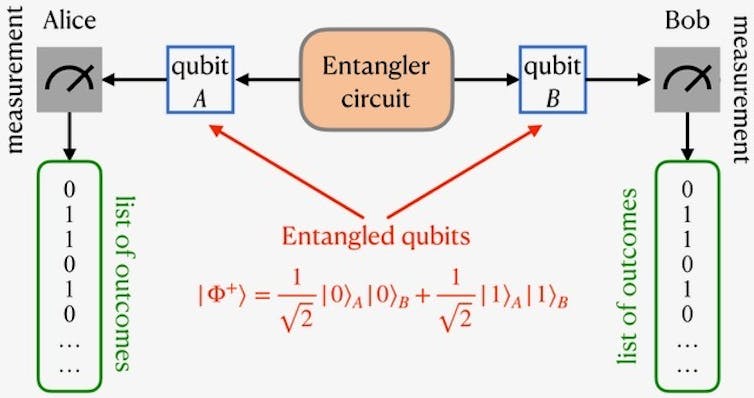
























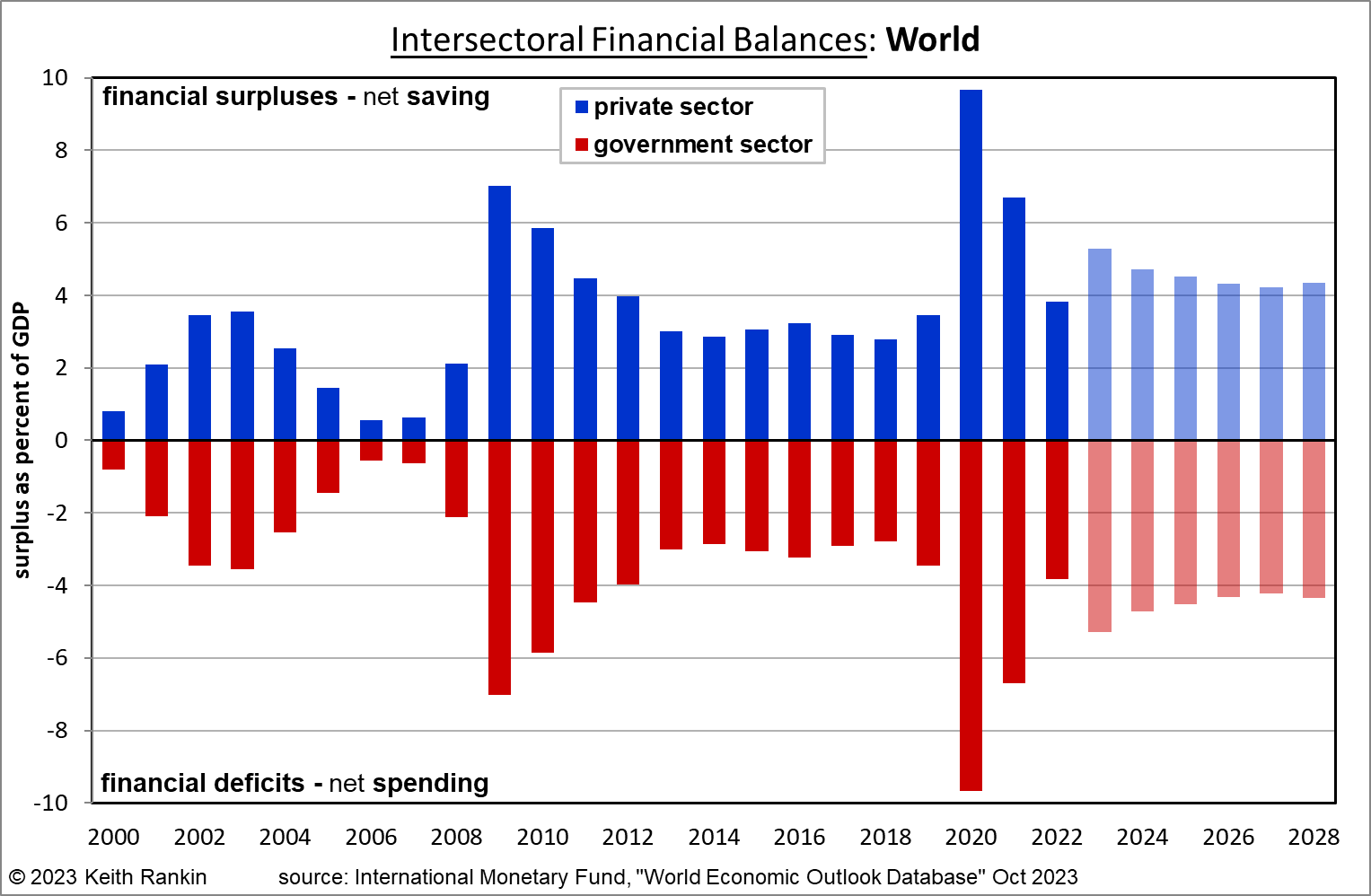


.jpg)