Page 191

Ten businesses that didn’t survive 2025

Source: Radio New Zealand

Kitchen Things went into receivership mid-year. Google Maps

It’s been another tough year financially for many New Zealand households and businesses.

While some commentators said in 2024 that businesses needed to focus on the mantra “survive til 2025”, for some it was a case of battling to survive through the year, too.

Some high-profile names didn’t make it.

Here are 10 that did not see out the year, in no particular order.

GrabOne

Grab One left a lot of voucher-holders worried when it went into liquidation in October, owning more than $16.5 million.

GrabOne was launched in 2010 and offered discounts on goods and services for local businesses. It was sold to Global Marketplace New Zealand by former owner NZME in 2021, for $17.5m.

But marketing expert Bodo Lang, of Massey University, told RNZ that GrabOne’s problem was that it failed to provide value to its target market.

“In other words, its vouchers, which were once upon a time exciting, had lost their appeal.

“A closely related second reason for GrabOne’s liquidation is that it suffered from declining top of mind brand awareness. While GrabOne was on everybody’s mind and in every dinner conversation some years ago, a lack of brand investment meant that the brand was slowly buried amongst advertising by other brands.”

Kitchen Things

Even suppliers of bougie kitchen supplies couldn’t make it through the downturn unscathed.

Kitchen Things went into receivership in August, citing weak consumer demand and tough competition.

Kitchen Things was founded in 1986 and dealt in high end international appliance brands including Smeg, Miele, Asko, and Bosch.

The Hamilton shop was not affected because it was run by an independent franchisee.

Smiths City

Smiths City was placed into voluntary administration in September, sending shockwaves through Christchurch in particular.

The company, which was founded in 1918, has nine stores across the country and an online shop.

Administrators BDO said the company had faced increasing financial pressures amid a challenging economic environment.

Smith & Caughey

Queen St landmark Smith & Caughey closed its doors for the last time on July 31, after almost 150 years.

It had already closed its Newmarket branch in 2024 and reduced the inner-city shop to one floor.

The retailer cited increased competition from new shopping malls, continued economic uncertainty and low consumer confidence and spending power as problems that led to the closure.

It also said Queen St foot traffic had decline and parking was more expensive for shoppers.

Fortune Favours

Wellington brewery Fortune Favours announced in August that it would close its Wellington bar by the end of the month.

The company said the cost of living crisis had become too difficult to navigate.

Garage Project took over the site.

NZSale

NZSale closed to New Zealand orders at the end of November. The Australian business, OzSale, is set to close in the new year.

Timeless Events

Timeless Events, the company behind the Juicy Fest music festival, was placed into voluntary liquidation in March.

Juicy Fest was cancelled in New Zealand this year after it was declined a liquor licence in Auckland.

The Body Shop

Millennials across the country mourned the end of dewberry-scented The Body Shop when it went into liquidation in April.

All of the New Zealand shops closed and 70 jobs were lost.

The Body Shop was founded in the UK in 1976 by Dame Anita Roddick, but problems with the UK business spelled the end locally, too.

It went into liquidation with millions of dollars in liabilities.

In November, it was announced that the brand had a new franchise owner and a shop in Richmond, near Nelson.

Libelle Group

School lunch provider Libelle Group went into liquidation in March.

It had been contracted to Compass to supply lunches for the beleagured scheme.

DFS

DFS, in Auckland and Queenstown, closed at the end of September.

The downtown Auckland shop, which stocked high end brands such as Armani and Burberry, had been open for decades.

It went through a revamp in 2018.

[ https://rnz.us6.list-manage.com/subscribe?u=211a938dcf3e634ba2427dde9&id=b4c9a30ed6 Sign up for Money with Susan Edmunds], a weekly newsletter covering all the things that affect how we make, spend and invest money.

– Published by EveningReport.nz and AsiaPacificReport.nz, see: MIL OSI in partnership with Radio New Zealand


Sport in 2025: The weird, wacky and wonderful

Source: Radio New Zealand

There were a plethora of bizarre, quirky, and eye popping moments in the world of sport in 2025. Photosport

What happened in the unpredictable world of sport in 2025? Jonty Dine takes a look back.

Whistling Webby

Sick of a lack of accountability for referees, Warriors coach Andrew Webster was not going to tolerate the same from Kiwi journalists, blowing his whistle every time a ‘shit’ question was asked at this memorable press conference.

Reece Walsh drinks toilet water

There was no evidence to support his claim of toilet water being a performance enhancer, but based on Walsh’s performance in the NRL final, who would argue the point?

Marlborough Boys’ cheeky try

Whether they called it innovation, or against the spirit of the game, this audacious MBC try had people across the country talking and certainly would have made Rassie Erasmus proud.

Connor Zilisch breaks collarbone celebrating

Hard to say whether the pain from the break or the embarrassment was worse for the NASCAR driver.

Alan Bunting serenades crowd with ‘Levitating’

Bunts came in clutch with this crowd pleaser at a Black Ferns farewell at Manurewa Intermediate.

Raiders wrestling goes wrong

A bit of team bonding turned into a battle for alpha status in a Las Vegas hallway as Hudson Young and Morgan Smithies tussled into an elevator, forcing police to be called to deal with what was believed to be a dangerous weapon, but was later revealed as an inflatable baseball bat.

Phone falls out of cricketers pocket

When the screen addiction is very real, Lancashire’s Tom Bailey dropped his phone while running between the wickets during a match against Gloucestershire.

Rohit gets fat-shamed

A sure fire way to alienate yourself from the Indian public and tank re-election odds, politician Shama Mohamed decided to attack the nation’s cricket captain, calling Rohit Sharma “fat for a sportsman” and “unimpressive”.

Boisson gets smell-shamed

British tennis player Harriet Dart was forced to say sorry after commenting that her opponent, France’s Lois Boisson, “smells really bad.”

Serena’s Superbowl crip walk

As if we couldn’t love the tennis superstar any more, she went and threw shade at Drake in the most epic way possible as well as the stuffy elitists who derided her for performing the Compton-born dance move at Wimbledon.

Dog eats passport

Leroy Carter’s canine was clearly not too chuffed with his owner’s All Black call-up, all while validating generations of student excuses.

Woakes bats in a sling

A defiant act of bravery, England bowler Chris Woakes, who had dislocated his shoulder earlier, strode onto the Oval with his left arm strapped under his jersey and a bat in his right hand in a heroic bid to save the test against India.

Hangman’s backyard scraps

Beloved UFC veteran Dan Hooker kept himself busy while sidelined with a hand injury as he launched his one minute scraps Youtube series hosted in his Auckland backyard. The events attracted international headlines, police attention, and heavy criticism from boxing purists.

Gallen no-shows press conference

Billed as the biggest grudge match in Australasia since Cameron vs Tua, former NRL enforcer Paul Gallen continued the mind games when he skipped the press conference with Sonny Bill Williams, further fuelling the flames.

Ioane claps back

The All Blacks answer to Regina George, Reiko Ioane was a symphony of sass this season, putting fans firmly in their place in response to criticism over his performances.

Cow bells banned

Chiefs supporters were unceremoniously silenced at the Super Rugby final in Christchurch, unable to bring their primary weapon, a blunted Chiefs side was bested and the Crusaders empire returned.

Penrith trainer cuts off conversion

In a pathetic display of poor sportsmanship, Panthers trainer Corey Bocking ran in front of Jayden Campbell as he was about to take a kick at goal, the club being slapped with a $50,000 for the childish act.

No shirt, no play

Liverpool’s Hugo Ekitike was shown red after scoring the winner against Southampton for removing his shirt in celebration. If only the same rule applied to Phoenix fans at the Cake Tin.

Bringing back the bite

Paying homage to some of her male counterparts of the past, French forward Axelle Berthoumieu took a bite of Ireland’s Aoife Wafer during the 2025 Women’s Rugby World Cup quarter-final, copping a 12 match ban.

Sign up for Ngā Pitopito Kōrero, a daily newsletter curated by our editors and delivered straight to your inbox every weekday.

– Published by EveningReport.nz and AsiaPacificReport.nz, see: MIL OSI in partnership with Radio New Zealand

State Highway 2 reopens after fatal crash

Source: Radio New Zealand

One person has died after a single vehicle crash on State Highway 2 near Tangoio.

The single vehicle crash was reported just after 11:40am today.

The sole occupant of the vehicle died at the scene.

It is the first death on New Zealand roads in this holiday period, although a man died in hospital yesterday after being struck by a car in Napier on Friday.

State Highway 2 was closed for several hours, but has now re-opened.

– Published by EveningReport.nz and AsiaPacificReport.nz, see: MIL OSI in partnership with Radio New Zealand
A history of New Zealand’s wildfires – and what’s to come

Source: Radio New Zealand

The Port Hills fire on 14 February 2024. Stuff / Kai Schwoerer

Off the back of two devastating wildfires in Tongariro National Park, the country is facing another summer of increased fire risk. And while our wildfire history pales in comparison to our neighbours in Australia, New Zealand has had its share of raging hillside infurnos. Our reporter Kate Green takes a look back at some of the big ones, and a look forward at future risk.

It’s early February, 1946, and a long drought has left Taupō hot, and dry.

On one unassuming roadside, a dropped cigarette butt is about to light a fire that burns for days, fanned by a strong northerly wind, through more than 100,000 hectares of land, including 12,000 of pine forest.

“Where it is strongest, little can be done,” proclaimed one Newsreel special, which came out on 10 February. “Only rain can end it.”

[embedded content]

The blaze was extinguished in due course – although little information is available online about how this was done.

After destruction comes new life. Come autumn, an unexpected surge of life was observed when radiata pine sprung up in dense patches over burnt plantations; the fire had opened cones which were normally closed and liberated the seeds.

Victoria University ecologist Nicola Day said fire could often have unexpected or unseen effects, particularly for the soil below the fireground.

Her work has involved analysing firegrounds in Canada, and more recently, the sites of wildfires at Lake Pukaki and Lake Ōhau in 2020.

Media were allowed to look at the damage the week after the Lake Ōhau fire happened. RNZ / Nate McKinnon

Historically, Aotearoa had experienced a low fire-risk and its plants hadn’t evolved to survive them – but Day said they’d found a number of natives were hardier than they looked.

“If you go into a site like that it looks like everything’s dead,” she said. “But actually, the top of the plants have burnt off and died, but the inside of them, the part that controls the growth of them, has survived.”

Woody species were the slowest to recover, she said, but even they could regenerate and look alive again within a year or two.

The charred ground and trees after a fire at Lake Pukaki in the Mackenzie District on 31 August 2020. RNZ / Nathan Mckinnon

But in the meantime, it left a gap for exotic species – which tended to grow much faster than native species – to take over, making it even harder for natives to repopulate.

It happened at Lake Ōhau in 2020. The fire was lit by an electrical short circuit on a power pole, and it raged for nine days, destroying 48 homes and buildings and damaging 5043 hectares of land, making it one of New Zealand’s most significant wildfires in recent history.

Day said it took the landscape a couple of months to look green again, and for a while, the main species were exotic. But given another couple of years, nearly all the same species had returned, albeit in different quantities.

A helicopter drops water on a fire near Lake Pukaki on 31 August 2020. RNZ / Nathan Mckinnon

Let’s step back again in time: 25 November, 1955.

Over the next three days, a fire fanned by gale-force winds destroyed a third of the Balmoral State Forest in North Canterbury 2400 hectares of timber.

News reports from the time described it as a “disastrous experience” for its owner, the Canterbury Forest Conservancy.

According to a booklet published by the New Zealand Forest Service in 2005 (The Balmoral Forest Fire of November 1955), the first signs of trouble came when residents heard “pistol-like cracks” and, “on investigation found the old mill burning fiercely” at about 10pm.

The only telephone nearby was in that very building, and very much on fire. So, one Mr Bailey drove six kilometres to the Forest Service headquarters to raise the alarm.

Burnt Corsican pine (Pinus laricio), Balmoral Forest, Canterbury, 1955. John Johns. Purchased 2003. © Crown Copyright. Licensed by Ministry of Primary Industries (MPI). CC BY 4.0. Te Papa (O.027913)

The booklet’s author John Ward, who worked as a forest ranger and a rural fire mediator, mused on this question in its final pages: “Would we have done better in 2005? I think yes, and no.”

“No amount of helicopters could have stopped that fire [in its early stages] but perhaps we could have made some real progress in aerial suppression when the wind dropped [on day three]. But would we have had enough men to patrol the Balmoral road and keep the main forest block safe?”

FENZ wildfire manager Tim Mitchell said while firefighting techniques had changed since those days, it still came down to “putting water on the red stuff”.

Water was still the most effective way of dousing fire, but now there were additives available that could made it more effective at cooling or stopping its spread.

Aircraft had also become more powerful, he said, meaning they could carry more water more safely.

Fire crews battling the Port Hills fire in Christchurch for a second day, on 15 February 2024. RNZ / Angus Dreaver

And a good thing, too – Mitchell said going by the data on large wildfires (that is, anything larger than 1000 hectares) the risk was increasing.

In the five decades from 1964 to 2015, there had been 19 such fires. In the past decade from 2015 to present day, there had already been 13.

“Still quite a reasonable number, but over a much smaller timeframe,” Mitchell said. “On that basis, yes, you could say that certainly the trend is suggesting that the number of large wildfires is increasing.”

It was likely caused by a number of factors, he said: warmer, dryer, windier conditions at times due to climate change, but also, “where we’re living, and how we’re living”.

New developments meant towns were spreading outwards into rural areas with lots of vegetation and slopes which increased fire risk, and increased recreation ability meant people were accessing off-grid areas more often.

Farm and forestry equipment, too, was more powerful and ran hotter, making it more likely to cause a spark or ignite dry grass.

In fact, Mitchell said the data showed humans caused 98 percent of New Zealand’s wildfires.

Hugh Wallace, team lead for fire and atmospheric sciences at the Bioeconomy Science Institute, said that fact was actually a bright spot for him – something we had the ability to change.

People watch Port Hills fires. Matthew Rankin

“Unlike North America, unlike Australia, we don’t really get those lightning-caused fires. So basically, where you get more people, you get more fires.”

Wallace said climate change was complicated, but some areas would definitely be in for more hot, dry, windy days, “which is the kind of conditions you do get fires on”.

“My gut instinct is that we probably would get more big fires.”

Firefighter Lieutenant Oli Barnfather of the New Zealand Army fights an underground hotspot on the Port Hills of Christchurch. Supplied / NZ Defence Force

The Port Hills have seen two major events in the past decade – the first, in February 2017, was when two separate blazes burned through more than 1600 hectares, claimed the life of a helicopter pilot, nine homes and damaged five others, and took 66 days to extinguish.

The cause of one of the fires was deemed to be an electrical fault, and the other remains unknown.

Seven years later almost to the day, the first calls came in just after 2pm on Valentines Day in 2024.

Firefighters continue their efforts as they work to dampen down remaining hot spots and create a buffer zone around the 24km perimeter fire ground in Christchurch’s Port Hills. CHRIS SKELTON

At its peak, more than 130 firefighters, 15 helicopters and two aircraft fought the blaze, as it burnt about 470 hectares across the Port Hills in three weeks.

One home – a tiny house built out of a shipping container – was destroyed.

Stats NZ expects the risk of fire to increase in many parts of the country due to higher temperatures, stronger winds, and less rainfall associated with climate change.

Using data from the last census in 2023, Stats NZ said there were 4683 wildfires per year on average in the five years to 30 June 2022.

Fire and Emergency NZ said the 2019/2020 and 1998/1999 years remained the worst on record for number and area burnt, respectively.

Mitchell said better awareness was needed of how individuals could prevent fires – even things as simple as choosing not to mow the lawns or burn rubbish on a hot day, and pouring water on ashes after a bonfire.

“It’s such an easy way to avoid a lot of the wildfires that we’re having,” he said.

Sign up for Ngā Pitopito Kōrero, a daily newsletter curated by our editors and delivered straight to your inbox every weekday.

– Published by EveningReport.nz and AsiaPacificReport.nz, see: MIL OSI in partnership with Radio New Zealand

Rhythm and Vines dries out after soggy start

Source: Radio New Zealand

Festival goers at Rhythm and Vines are off to a soggy start after the region was wiped with heavy rain. Lucy Parkinson

After a soggy start, festivalgoers at Rhythm and Vines can expect to spend the next two days drying up in a gentle breeze.

The three-day music festival in Gisborne started yesterday as thousands turned up in gumboots and ponchos, with the city’s airport MetService station recording its wettest December day since 1937.

Lucy Parkinson – who is at the festival for the second time – was disappointed by the rain.

“I was originally put off going again but I thought that surely it wouldn’t happen for a second year in a row.”

She said she was worried about slipping risks after the heavy rainfall.

“The mud particularly around the toilets, water fountains and high traffic areas is really bad. With the weather last night, the staff were really good at making sure people were okay and preventing attendees from going up the hill during the massive downpour, but I think the grounds are in dire need of some wood chips! The grounds are a slip hazard and I’m worried that people will get injured.”

Festival goers at Rhythm and Vines are off to a soggy start after the region was wiped with heavy rain. Lucy Parkinson

After a muddy experience at the 2024 festival, Parkinson equipped herself this year with a gazebo, gumboots and a decent tent, but it still felt insufficient against the heavy rain.

And after two consecutive soggy festivals, Parkinson said organisers could have communicated better.

“I also think the organisers could’ve prepared festival goers better with more warnings about the weather, as there’s lots of young people who came unprepared.”

Festival director Kieran Spillane said they had alerted festivalgoers on the possible weather condition and asked people to dress to the conditions.

He said more wood chips were out on Tuesday morning, which will help reduce slipping risks.

Festival goers at Rhythm and Vines are off to a soggy start after the region was wiped with heavy rain. Lucy Parkinson

But with the weather set to clear, Spillane was confident the grounds will dry up in hours.

“The forecast for today is a very nice pleasant 25, 26 degrees with no rain for the remainder for the festival. We knew the rain was coming so we were prepared for it. The sites are actually holding up very, very well. It’s in as good condition as you would expect.”

The rain was good for business at The Warehouse.

Store manager Brett Mitchell said the festival season was their busiest time of the year.

“Yesterday was torrential rain, a lot of wet people coming in looking for ponchos, tents and towels. So it’s been really full on.”

Gisborne weather has finally cleared up after a soggy start for Rhythm and Vines festival-goers. Supplied / Brett Mitchell.

Mitchell said due to the often wet weather and big crowds, they hired a local cleaning company during the festival for extra support.

“Just to help us keep the store tidy and public toilets clean.”

The store begin preparing stock for the festival nine months ahead and based orders on what was popular the previous year, but rain gear had been a staple.

“We always factor in there’s gonna be rain, because it seems that every year there is at the moment.”

But with the weather clearing up, he was still optimistic.

“We definitely got lots of bodyboards and beach stuff so if the weather does come right, people can certain come in to get all all the stuff for going to the beach, sunblocks. We’ve got plenty of that ready to go as well.”

– Published by EveningReport.nz and AsiaPacificReport.nz, see: MIL OSI in partnership with Radio New Zealand

Family who helped save an elderly lost tramper praised by police.

Source: Radio New Zealand

The elderly hiker was in the Kauaeranga Valley when he got into trouble.. Supplied/DOC.

Police are looking to publicly recognise the family who helped save an elderly lost tramper who collapsed in the Coromandel.

At the end of his ordeal, the 80-year old was taken to Thames Hospital in a moderate condition.

But that rescue was hours in the making, with the mother and her two teenagers the first to reach him when bad weather meant rescuers – and helicopters – could not.

The man was wearing only a singlet and shorts when he got lost while hiking on Sunday. He had also run out of water.

But he did have a mobile phone he used to call family, who then alerted police.

While they were able to pinpoint his location, the weather thwarted efforts to get two helicopters to him.

Police did have another option – the family staying in Crosbies Hut about 100 metres away.

“That’s six hours he could have been by himself if these members of the public hadn’t stepped up and help us out,” Waikato West area commander Mike Henwood said.

“It’s already being looked at higher up in terms of giving them some public recognition in terms of an award for their bravery and their actions to save somebody else who definitely needed it,” he told RNZ.

After being tasked with finding the man, the woman and her teenage children formed a human circle around him to keep him warm.

It was not until first light that search and rescue teams could reach them on foot several hours later.

“Definitely lucky, really it comes down to the fact that he was in close vicinity to one of the DOC huts and there were people staying in there at this time of year,” Henwood said.

“You have to expect that with the temperature and injuries they’ve certainly saved him in some shape or form,” he told RNZ.

“I suppose I would just like to think that any member of the public, any Kiwi would try to step up if they could to help somebody that was in trouble.”

Technology and the mobile location capability used to help find exactly where the man was also key to the rescue.

“Once we were able to obtain that we were able to actually work out it was very close to the Crosbies Hut location,” Henwood said.

“We were able to check with DOC if anyone had made bookings for that hut, and luckily because it’s a busy time of year, there was.”

Henwood had not spoken to the man’s family directly, but was aware they were “a little bit disappointed he had gone off on this mission and got himself in trouble”.

“Which often happens but you can’t tell some people, they like to be adventurous,” Henwood said.

He said a lot of people took more risks than they should while trying to squeeze things in during a busy holiday time.

“Often the weather is not right for them to do it, it can change really fast, and if you have to cancel the trip or the plan that you’ve been waiting months or even a year for sometimes you just have to do it when the weather is how it is,” he said.

Having warm clothes, extra food, a charged mobile and a plan with friends or family were also important.

So too was picking a right activity for your physical ability, Henwood said.

“If we hadn’t have had the family nearby it definitely would have increased his risk of more health issues and the inability due to the weather of helicopters to get in there.

“It took several hours, I think the LandSAR team managed to walk in at 4am in the morning after us initially being made aware at 10pm,” he said.

– Published by EveningReport.nz and AsiaPacificReport.nz, see: MIL OSI in partnership with Radio New Zealand

Year in review: NZ Warriors ride rollercoaster to NRL playoffs

Source: Radio New Zealand

The Warriors hopes suffer a crippling blow, as star halfback Luke Metcalf falls to a season-ending knee injury. Tertius Pickard/www.photosport.nz

Under the Go Media Stadium stand, with the bravado of hope finally stripped away, NZ Warriors coach Andrew Webster confronted reality.

After a season that saw them off to a best-ever 7-2 start, sitting second on the table after 11 rounds, damn near selling out their Mt Smart home for every game and reaching the postseason for just the 10th time in their history, the Warriors’ journey had abruptly ended, with a sixth-place finish and clinical, one-and-done exit to four-time defending champions Penrith Panthers.

A campaign that looked so promising mid-season lost much of its momentum down the stretch, with a 4-7 closing run against the easiest draw on paper of any playoff team.

For two months, the players and coach seemed to be running on fumes, as they unsuccessfully defended their long-held spot in the top four and flirted with the possibility of missing the finals altogether.

Even when they were winning, Webster insisted they hadn’t played their best and, in the end, they ran out of chances to deliver on that promise.

“I just feel we’ve built some great stuff, but that last piece is missing.” he lamented. “I feel like we’ve handled adversity and stayed really tight, but there’s a piece missing.

Warriors captain James Fisher-Harris and coach Andrew Webster rue their early playoff exit against Penrith. Andrew Cornaga/www.photosport.nz

“We could launch, if we take those lessons and go to the next step, or we could stay exactly where we are, which is just a top-six team.

“I just think we can be better.”

So this wasn’t the Warriors’ year after all – sigh! – but it may just turn out to be an important step towards their first NRL championship.

Here are some of the highlights of 2025 and a humble suggestion on how to take that next step in 2026.

Best player

When veteran winger Roger Tuivasa-Sheck was handed the Simon Mannering Medal at the club prizegiving, he tried mightily to pass it on to a teammate he considered had a better year.

We’ll endorse that opinion.

Erin Clark was probably destined for a bench role, before captain Tohu Harris retired over the summer, but grabbed the No.13 jersey in the pre-season and never surrendered it.

He played every game and finished top five across the competition for total post-contact metres.

Erin Clark played every game at lock for the Warriors. NRL / www.photosport.nz

Clark proved so reliably consistent, he was considered one of the best off-season pick-ups by any club across the competition and deservedly won Dally M Lock of the Year honours.

He had one game for the Warriors as a teenager, when he admits to being “young and arrogant”, but his maturation during his time away has been a joy to behold and should hold the club in good stead for a while.

Most promising player

Leka Halasima was still a teenager, but his impact on the Warriors belied his years, as he headed RTS for club tryscoring honours, with many of them coming from his aerial ability on attack.

‘Leka the Wrecker’ became one of the breakout performers in the league, but ultimately, he was headed by Auckland-born Sydney Roosters centre Robert Toia for Dally M Rookie of the Year.

Leka Halasima emerged as the Warriors’ top tryscorer for the season. Andrew Cornaga/www.photosport.nz

Halasima starred off the bench or starting in the second-row, before he was eventually named at centre for the playoff game against Penrith. Conditioning let him down at times, but he’s surely a superstar in the making.

Named Warriors Rookie of the Year.

Most improved player

Jackson Ford looked like he was slipping out of the rotation at the end of last season, when he was competing for an edge position, but he re-invented himself as a middle forward this time round and could not be left out of the line-up.

He started the campaign off the bench and embraced the ‘impact’ nature of that role, but was promoted to start, after skipper Mitch Barnett’s knee injury, and put in some massive shifts.

Ford was one of the few players across the league to lead their teams in running metres and tackles in the same game – 209 and 43 against Canberra Raiders, when both Barnett (Origin) and James Fisher-Harris (injury) were missing.

Jackson Ford converted himself into a trustworthy middle forward. Brett Phibbs/www.photosport.nz

He was badly missed during his three-game suspension for a ‘crusher’ tackle that went largely unnoticed and unpenalised against St George Dragons, but bounced back with a 61-tackle performance against Penrith, which was a season high for his team.

Best performance

The Warriors rolled into Shark Park on 7 June, faced with the massive task of covering Barnett’s extended absence.

“We’re gutted, because he’s such a good player, but there’s optimism that somebody gets to stand up and take his spot,” Webster said. “It’s a challenge for the whole group.”

The response was a season-defining performance against Cronulla Sharks.

After a series of close wins, the 40-10 result was their most convincing of the campaign, as they scored 28 unanswered points after halftime.

Warriors celebrate a try to Dallin Watene-Zelezniak against Cronulla Sharks. David Neilson/Photosport

While Ford had been named to start in the No.10 jersey, he was shifted back to the bench before kickoff, with Marata Niukore moved to the middle and Jacob Laban making his first NRL start in the second row.

Centre Rocco Berry had succumbed to another injury, while hooker Wayde Egan dropped out of the line-up late with a hip complaint, presenting back-up Sam Healey with a dream debut against the club that couldn’t find a place for him in its first-grade squad.

Halfback Luke Metcalf also tormented his old outfit, while Chanel Harris-Tavita had a try double, and Fisher-Harris battled the man he replaced at the Warriors – Addin Fonua-Blake – to a draw in the much-anticipated ‘Clash of the Titans’.

Perhaps the most worrying aspect of the display was the looming bye week, which threatened to derail any momentum gained – and so it proved.

As they had after their first bye week, when they sleepwalked through a first half against Melbourne Storm, the Warriors were completely duped by a Panthers team without five Origin stars – perhaps their worst performance of the season – and then struck more disaster against Brisbane Broncos a week later.

Best try

No-one will ever forget this finish, as the Warriors trailed Newcastle Knights into the final minute, desperately seeking a field goal to force extra time.

Halfback Tanah Boyd missed three attempts and a penalty that could have won it in the dying moments, but when his third pot was charged down, something amazing happened.

The bounce fell to Halasima about 40 metres out, and he simply charged that distance to the tryline to break the hearts of Knights fans and players.

Warriors celebrate Leka Halasima’s gamewinning try against Newcastle. David Neilson/Photosport

“I’ll take it,” Webster said. “I’ve been on the end of a few of those – I think every team has at some stage.

“We just came up with a freakish play from a young guy that’s got heaps of talent – that’s what he’s got in his toolkit.”

In the ‘what comes around goes around’ department, two weeks later, Webster and his team were indeed on the opposite end of one of those finishes, when the Dolphins ran in a try at the death for a 20-18 win at Mt Smart.

Taking the next step

You could argue the Warriors were two injuries (maybe three) away from a very deep playoff run in 2025.

Losing both Barnett and star half Metcalf to season-ending knee injuries left big voids the club could never quite fill. Add to that a nightmare run of injuries to Berry, which forced Webster to play Kurt Capewell, Charnze Nicoll-Klokstad and Halasima out of position, disrupting the team balance.

Barnett will return for the start of the 2026 season and Metcalf has recommitted to the Warriors through 2028, but somehow, the coach must find a way to keep him healthy.

Warriors reserve celebrate their NRL State Championship. David Neilson

Across three seasons at Mt Smart, Metcalf has managed just 34 games – less than half – due to a variety of injuries. The Warriors are undoubtedly better with him – over his tenure, they are 23-11 (68 percent) with him, but just 17-1-23 without him.

While the first-grade team limped into the post-season and were quickly dispatched, the Warriors reserves were head and shoulders above their rivals in NSW Cup competition, and captured the NRL State Championship crown.

Out of necessity, Webster used 28 players this year, offering valuable experience to his fringe performers.

Here’s a crazy idea – let’s utilise that depth to rotate the premier line-up, spreading the load, and minimising wear and tear on the frontliners.

Metcalf isn’t the only one that needs preservation. Egan invariably starts the season fresh and full of energy, pushing for Origin selection early, but inevitably ground down by heavy minutes.

Wayde Egan succumbed to heavy usage and niggly injuries as the season wore on. Andrew Cornaga/www.photosport.nz

In 2025, he led the league in dummy half runs through the early rounds, but at the business end of the schedule, he made none against Manly Sea Eagles and none in the first half against Penrith.

He now has an able deputy in Healey, so let’s give him some time off, before it’s forced through injury.

Warriors wāhine

While the men were negotiating their path to the NRL playoffs, the club’s women were blazing a very different trail, returning to the NRLW after a five-year, Covid-enforced hiatus with a very makeshift roster.

Under the direction of two-time premiership coach Ron Griffiths, most of the squad had never played at this level before, plucked from the local club competition, or switching from union or sevens.

The campaign struggled for consistency of performance, and suffered from injury, suspension and pregnancy, but unearthed some exciting talent that should hold the wāhine in good stead next season, when they will be bolstered by more established stars fresh from grand final glory with Brisbane Broncos.

Ivana Lauitiiti added to her family’s Warriors legacy. David Neilson/Photosport

Rugby convert Payton Takimoana finished second among the league’s top tryscorers, while Patricia Maliepo, Tysha Ikenasio and Shakira Baker became double and triple internationals, based on their progress throughout their debut seasons. Teenager Ivana Lauitiiti emulated club legend dad Ali with her big-tackling exploits.

Annetta Nu’uausala, Gayle Broughton and Mele Hufanga will bring added firepower across the Tasman from the Broncos, while Stacey Waaka returns to league, after dedicating herself to a Black Ferns World Cup stint.

Don’t be surprised if they claim the club’s first championship in 2026.

Sign up for Ngā Pitopito Kōrero, a daily newsletter curated by our editors and delivered straight to your inbox every weekday.

– Published by EveningReport.nz and AsiaPacificReport.nz, see: MIL OSI in partnership with Radio New Zealand

Power outages, heavy rain and strong gales as wild weather heads south

Source: Radio New Zealand

Campers at Totaranui Abel Tasman National Park had a near miss when a tree came down on some of their tents. They had moved into a caravan shortly before due to bad weather. Supplied / Warwick Fitzsimmons

Wild weather continued to batter much of the country today, leaving thousands without power.

MetService reported that the wettest weather has moved off Gisborne and Hawke’s Bay, with just the odd shower remaining.

However, rain has moved further south, while several Heavy Rain Watches and Warnings remain in place for the next couple of days.

Gusty southeasterlies continued today, especially over the South Island where an Orange Wind Warning remains in place this afternoon.

A strong wind warning was in place for Marlborough Sounds, Nelson and the West Coast north of Fox Glacier for much of the day, with Wellington under a wind watch until 9pm.

Heavy rain watches were in force for the Tararua District and Wairarapa until 4pm, and the Kaikoura Coast until 9pm.

While Wednesday does not see winds as strong as the past few days, winds will still be noticeable for most.

Thunderstorms will be something to keep an eye on throughout Wednesday, with localised intense rain and strong gusts possible.

This includes Northland, Auckland, Waikato, Taranaki, Manawatu-Whanganui, Kapiti, and Wairarapa, and northern Wellington in the North Island, as well as the West Coast Region in the South Island.

Electra was reporting power cuts on the Kapiti Coast affecting Paekakariki, Foxton and Shannon on Tuesday morning.

On the West Coast, Buller Electricity said the power was off to Karamea, Little Wanganui and Karamea Bluff.

Tauranga City Council has cancelled all five of its community New Year’s Eve events because of the bad weather forecast.

The council said weather reports indicated heavy rain and strong winds during event set-up, with conditions highly likely to continue into Wednesday. It said fireworks displays would hopefully still take place from various locations around the city on New Year’s Eve.

Cleanup continues

In the parts of the South Island, strong winds brought down trees overnight.

  • Has your holiday been disrupted by the weather? Email iwitness@rnz.co.nz with your photos or information.

Fire and Emergency said State Highway 7 over the Rahu Saddle, between Reefton and Springs Junction, was affected.

State Highway 6 also had trees coming down, particularly through the Whangamoa Hills between Nelson and Blenheim.

Firefighters were still being called out into the evening across the North Island, taking the total number of weather-related jobs to about 140 in Auckland, Northland, Waikato and the Bay of Plenty.

PowerCo said hundreds of properties remain without power north of Whanganui, and around Palmerston North and Feilding.

The roof of an unoccupied home in the Auckland suburb of Hillsborough came off in high winds and scattered debris down the road. RNZ / Kim Baker Wilson

Campground holidays disrupted

Campground managers in the North Island are hoping for sunnier weather leading up to New Year’s after a lashing of wind and rain.

Wild weather battered much of the North Island on Monday, disrupting campers, causing power outages and downing trees.

In Auckland a roof was torn off an unoccupied home in Hillsborough, as fire crews responded to more than 100 weather-related callouts.

The manager of Kūaotunu Campground on the Coromandel Peninsula, Yvette Davey, said the weather had caused a bit of disruption on Monday.

“We have had a couple of campers that their tents were destroyed so they had to go home, other than that people are hunkering down, it’s settled down here,” she said.

Leanne Mills, the owner of Long Bay Motor Camp in Coromandel said campers were not too put off by the wet weather.

Campground managers in the North Island are hoping for sunnier weather leading up to New Year’s. Ruth Kuo

“We’ve had a bit of rain [on Monday] but we’ve been lucky campers have just used it as a crash day, just chill out, read a book, sleep,” she said.

“We’ve just got continued support from our regulars, mostly 90 percent Kiwis, so they’ll come and just meet up every year with the same people year after year and they don’t really care if it rains.”

Festivalgoers for New Year’s events such as Rhythm and Vines in Gisborne have been warned to watch out for wild weather on the roads.

See how today’s weather events unfolded with RNZ’s live blog:

Sign up for Ngā Pitopito Kōrero, a daily newsletter curated by our editors and delivered straight to your inbox every weekday.

– Published by EveningReport.nz and AsiaPacificReport.nz, see: MIL OSI in partnership with Radio New Zealand

Scientists investigate venomous spider ‘hotspots’

Source: Radio New Zealand

Supplied / Professor Steve Trewick

Researchers are investigating “hotspots” of a venomous spider throughout the country this summer.

The invasive noble false widow spider was first spotted in Porirua last year with further sightings in Christchurch, Nelson, Waikato and Northland.

It’s not an aggressive spider, but it bites in defence and the toxins in its venom cause swelling, redness and pain.

In July, Massey University ecology professor Steven Trewick put the call out for suspected sightings to understand how widespread they are.

“We thought that with the level of interest in this spider, we would hear a bit more from people, perhaps slightly panicky kind of responses saying they found some spiders,” he said.

“And in fact it’s been surprisingly quiet.”

That could be because people have not recognised it, he said.

“The other possibility is that in fact, this new invasive species is not as widespread as … early indications suggested.

“So it could be that it is very locally abundant, possibly in a number of places around the country … and hasn’t spread sort of uniformly across the landscape.”

This summer, Massey researchers will search the “hotspots” where they’ve already been found, beginning in Porirua.

They’ll gradually move away from urban areas – metre by metre – to see if the spiders are still present as they head into grass, shrub and bush.

“It could be that they’re hotspots because that’s just where we’ve paid attention, or they’re real hotspots because there are relatively high densities of these spiders just in those places,” Trewick said.

Their locations could also be determined by the wind, he said.

Supplied / Professor Steve Trewick

“When the hatchlings pop out of their little bundle of eggs, this little sort of cocoon, very, very tiny, the first thing that they do is let out a little strand of silk … and that catches the wind and is enough to lift them off and take them away.

“Many of them, of course, will land up somewhere useless, but some might find just a nice little spot to make their first web.”

Researchers will also do population genetic work to understand how many spiders arrived in New Zealand, and which country they came from.

PhD students in the British Isles, Europe and Chile are undertaking similar efforts, Trewick said.

“It becomes a really interesting multinational effort dealing with, sort of a common problem.”

Biologists wanted to know whether the spider was moving into native environments, and interacting with other native spiders and animals, he said.

“If that happened, then that would be a bigger … biodiversity conservation issue.”

What to look out for – and where

The noble false widow is a pale reddish colour with distinctive white markings on the abdomen, “the big blobby part of the body,” said Trewick.

They have a large spherical abdomen, smaller “front end” and long, naked legs, Trewick said.

“Sort of a classic cartoon spider, not your hairy tarantula-y kind of spider at all,” he said.

The spiders are about a centimetre long, and the legs are another couple of centimetres, said Trewick.

They’ve been found around people’s homes, under pot plants, tarpaulin and in fence crevices.

The spiders are most active at night, and they’re speedy, so can disappear quickly once they’ve been disturbed, said Trewick.

Sign up for Ngā Pitopito Kōrero, a daily newsletter curated by our editors and delivered straight to your inbox every weekday.

– Published by EveningReport.nz and AsiaPacificReport.nz, see: MIL OSI in partnership with Radio New Zealand

ER Report: A Roundup of Significant Articles on EveningReport.nz for December 30, 2025

ER Report: Here is a summary of significant articles published on EveningReport.nz on December 30, 2025.

What actually is fire? A physicist explains
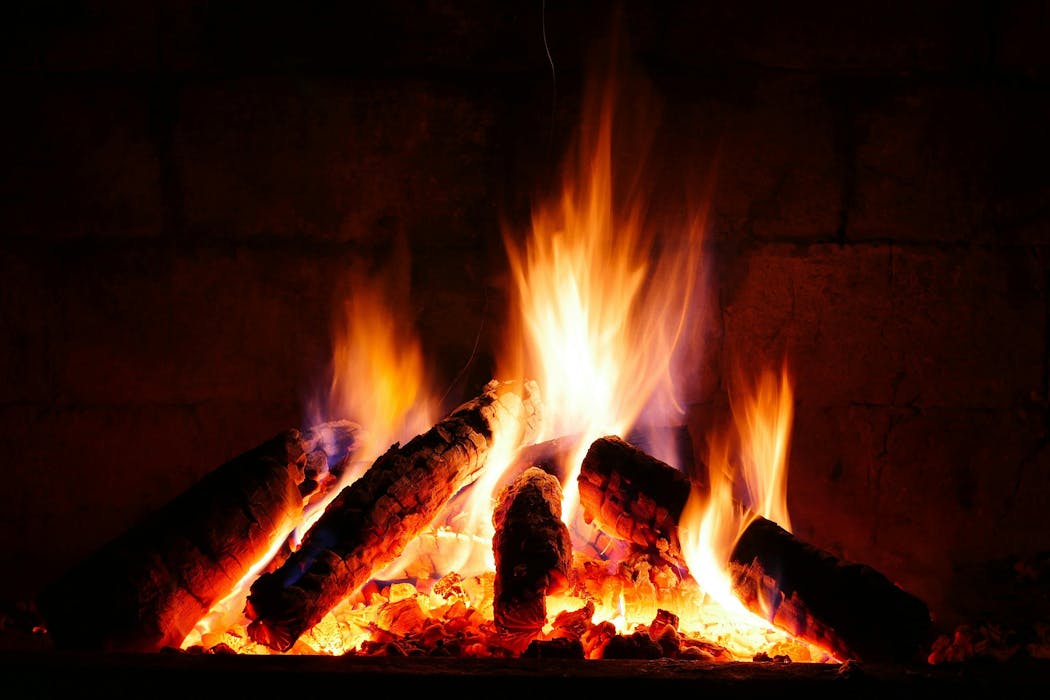
Source: The Conversation (Au and NZ) – By Emma Brown, Lecturer in Math and Physics, CQUniversity Australia Pixabay/Pexels Fire is an ancient technology that has helped shape human evolution. Our ancestors used fire for safety, cooking and preserving food. They gathered around a flickering fire to share stories, pass on cultural knowledge and build community.

It’s a pool party! How to stay safe around the pool with friends this summer
Source: The Conversation (Au and NZ) – By Amy Peden, NHMRC Research Fellow, School of Population Health and Co-founder UNSW Beach Safety Research Group, UNSW Sydney Kindel Media/Pexels It’s summer so kids’ playdates and birthday parties might start moving from the playground to the pool. I research how to prevent drowning. I’m also a mum

Clouds are vital to life – but many are becoming wispy ghosts. Here’s how to see the changes above us
Source: The Conversation (Au and NZ) – By Rumen Rachev, PhD Candidate, Edith Cowan University Thomas Koukas/Unsplash, CC BY-NC-ND As a scholar researching clouds, I have spent much of my time trying to understand the economy of the sky. Not the weather reports showing scudding rainclouds, but the deeper logic of cloud movements, their distributions

Can Australian sport ever be environmentally sustainable?
Source: The Conversation (Au and NZ) – By Camilla Brockett, Professor of Sport Systems Development, Victoria University Sport is one of the most climate-sensitive aspects of Australian life, yet still sits largely outside the national conversation on climate exposure. Sport attracts around 14 million participants annually in Australia. According to national data from July 2023

Architecture isn’t neutral. It’s been shaping political power for millennia
Source: The Conversation (Au and NZ) – By Kim Dovey, Professor of Architecture and Urban Design, The University of Melbourne Among his other ongoing projects, US President Donald Trump has spent much of his second term on a renovation. The Oval Office has been converted into a miniature palace festooned with gold bling, the rose

Babblers, cops and quacks: the sometimes dark – but often amusing – origins of nicknames for jobs
Source: The Conversation (Au and NZ) – By Kate Burridge, Professor of Linguistics, Monash University Pinterest, Canva, Wikimedia, The Conversation, CC BY These days, human resources (HR) departments want us to use official titles for jobs. But we know the social truths of a job — how well that job gets done, whether we like

‘Weights of gold in bullion’: how the ancients invested in precious metals
Source: The Conversation (Au and NZ) – By Konstantine Panegyres, Lecturer in Classics and Ancient History, The University of Western Australia Sailko, CC BY-SA 3.0, CC BY “All I want is an income of 20,000 sesterces from secure investments”, proclaims a character in a poem by Juvenal (1st-2nd century CE), the Roman poet. Today, 20,000

ER Report: A Roundup of Significant Articles on EveningReport.nz for December 29, 2025
ER Report: Here is a summary of significant articles published on EveningReport.nz on December 29, 2025.

Liam Lawson tests out Australian Supercar

Source: Radio New Zealand

Shane van Gisbergen and co driver Richie Stanaway win the 2023 Repco Bathurst 1000. Mark Horsburgh/EDGE Photographics / PHOTOSPORT

Formula 1 star Liam Lawson got to try out the car of another New Zealand champion driver over the Christmas period.

Lawson got to drive Shane van Gisbergen’s Bathurst-winning Supercar at Highlands Motorsport Park.

It was part of a series of drives Lawson took part in at the Central Otago circuit.

Liam Lawson drivers an Australian Supercar, 2025. supplied / Instagram

Lawson drives Formula 1 for Racing Bulls, which has the same sponsor as van Gisbergen’s former Supercars team.

That car, which won the 2023 race at Mount Panorama, is now based in New Zealand with Tony Quinn, who owns Highlands Motorsport Park and is part owner of Triple Eight Racing.

Lawson drove the Supercar in Red Bull Ampol Racing’s 2025 livery.

The car was also driven in New Zealand by Lawson’s incoming F1 teammate Arvid Lindblad, who won this year’s Castrol Toyota Formula Regional Oceania Championship in New Zealand.

Lawson spoke about the drive in a Highlands social media post.

“It’s such a fun car to drive,” he said.

“I loved it. It’s the most raw car to drive, with the big sequential shifter and you’ve got three pedals. No assists. It’s just very raw, very loud.”

Lawson took passengers for rides on a day that saw over $50,000 raised for charity.

New Zealand will host two Supercars rounds for the first time in 2026, at Taupō and Christchurch’s Ruapuna.

The 2026 Supercars Championship commences in Sydney on February 20-22.

Shane van Gisbergen now races in NASCAR.

Sign up for Ngā Pitopito Kōrero, a daily newsletter curated by our editors and delivered straight to your inbox every weekday.

– Published by EveningReport.nz and AsiaPacificReport.nz, see: MIL OSI in partnership with Radio New Zealand

Police still seeking witnesses after mass brawl on Auckland’s K Road

Source: Radio New Zealand

Police have set up a dedicated portal for witnesses of a mass brawl in Auckland to upload any footage they might have.

The brawl happened on Karangahape Road in the early hours of Sunday morning.

Police estimate more than 50 people were present and say there were three serious assaults. In each case, someone was hospitalised with serious injuries.

One person has been arrested but police are seeking footage to identify others.

The incidents were:

  • About 4.15am, a serious assault outside the Crown Bar on Queen Street. A 33-year-old man received serious injuries and was hospitalised. The offender is still unknown.
  • About 4.30am, a serious assault on Cobden Steet, just off Karangahape Road. A 27-year-old man received serious injuries and was hospitalised. The offender is still unknown.
  • About 5am, a serious assault at the Mobil Service Station at the corner or Karangahape and Ponsonby roads. A 46-year-old man received serious injuries and was hospitalised. A 21-year-old man has been charged with wounding with intent to cause grievous bodily harm and bailed to reappear in court on 16 January.
  • The portal can be found here at the NZ Police website.

– Published by EveningReport.nz and AsiaPacificReport.nz, see: MIL OSI in partnership with Radio New Zealand

State Highway 2 closed after crash

Source: Radio New Zealand

State Highway 2 near Tangoio in Hawke’s Bay is closed following a single vehicle crash.

The crash north of Tangoio Settlement Road was reported to police just after 11:40am.

Initial indications include serious injuries, while the number of people injured cannot be confirmed.

Motorists are advised to avoid the area and expect delays, detours are in place.

– Published by EveningReport.nz and AsiaPacificReport.nz, see: MIL OSI in partnership with Radio New Zealand

‘I hate losing more than I love winning’ – Phoenix coach

Source: Radio New Zealand

Phoenix head coach Bev Priestman Marty Melville / PHOTOSPORT

After a historic victory the Wellington Phoenix women’s coach Bev Priestman will take a win any way it comes.

The Phoenix got to enjoy their short Christmas break with the sweet taste of success after scoring a 7-0 victory over Sydney FC.

On Tuesday they take on Western Sydney Wanderers across the tasman with the coach wanting to keep their standards high.

The side hit their straps under their new coach scoring their biggest ever A-League win with that victory against Sydney.

Priestman now wants that intensity to continue.

“For us now it is about backing up that performance and result,” Preistman said.

“I do always feel off the back of a big result it is now our job to keep the standards really high.

“It is now about backing that up and not making it a one off performance and to achieve that they need to keep improving.”

Wellington Phoenix players celebrate a goal during their 7-0 win over Sydney FC in a A-League women’s match at Porirua Park, 2025. Photosport

The Phoenix sit ninth on the A-League women’s table with two wins, two draws and two losses.

Despite a couple of season-ending injuries to key players Priestman appears to be moulding together a good side.

“It is about us and if we do us as well as we can do then any opponent we are going to give them a tough game.”

That next game is now the Wanderers, who sit at the bottom of the table with just one win from their seven games so far.

“I don’t think it will be seven (goals), but really I’m just after the three points and then move on.”

Priestman said while the goals came in the last game, their defence has been strong all season.

“We’ve done very well defensively and we are getting rewarded for that. We didn’t give up defending in order to score goals,” Preistman said.

“A new group, new playing style, new systems, new formations, it does take time and I hope now this is the catalyst to really push us on.”

Priestman said she had challenged the group this week.

“We held ourselves to a level this week and I’m really pleased with that.”

Sign up for Ngā Pitopito Kōrero, a daily newsletter curated by our editors and delivered straight to your inbox every weekday.

– Published by EveningReport.nz and AsiaPacificReport.nz, see: MIL OSI in partnership with Radio New Zealand

Idris Elba, former All Blacks coach recognised in UK honours list

Source: Radio New Zealand

English actor Idris Elba attends the 95th Annual Academy Awards at the Dolby Theatre in Hollywood, California on March 12, 2023. AFP/SUPPLIED

Actor Idris Elba, a former All Blacks coach and members of England’s triumphant Women’s Euro 2025 football team were among famous Britons recognised in the country’s traditional New Year Honours on Monday.

Former All Blacks coach John Mitchell has been appointed an OBE for services to rugby after guiding England to the women’s Rugby World Cup title this year. He coached the All Blacks between 2001 and 2003 and has been England women’s coach since 2023.

Ice dancers Jayne Torvill and Christopher Dean, and players from England’s victorious Women’s Rugby World Cup-winning squad were also honoured, according to the list.

Elba, known for his roles in hit TV series The Wire and Luther, was knighted for services to young people, having founded an international charity that helps support disadvantaged youngsters.

“I hope we can do more to draw attention to the importance of sustained, practical support for young people and to the responsibility we all share to help them find an alternative to violence,” said Elba, who becomes a sir.

Torvill and Dean, who won Olympic gold at the 1984 Winter Games in Sarajevo and clinched multiple world and European titles, were knighted for their contribution to ice skating.

The pair said becoming a dame and a sir respectively was “wonderful and humbling at the same time”.

Figure skaters Jayne Torvill and Christopher Dean from Great Britain are waiting for the music to start their free dance program 14 February 1984 in Sarajevo during the Winter Olympic Games. AFP/SUPPLIED

More than 1,150 people received gongs in the latest list, which is decided by an honours committee.

King Charles III and other leading members of the royal family hand out the awards at ceremonies during the year.

England’s “Lionesses” featured heavily on the list after their Euros win in the summer, with captain Leah Williamson made a Commander of the Order of the British Empire (CBE).

Alex Greenwood, Keira Walsh, Georgia Stanway and Ella Toone, who were all part of the side that beat Spain on penalties in the final in Basel, Switzerland, in July, each received the title of MBE.

England’s defender #06 Leah Williamson (CL) and England’s midfielder #04 Keira Walsh (CR) lift the trophy as England celebrate winning the UEFA Women’s Euro 2025 final football match between England and Spain at the St. AFP/SUPPLIED

The team’s Dutch manager Sarina Wiegman, who has won the Euros twice with England and once with the Netherlands, was awarded an honorary damehood, the government said.

Elsewhere, Marlie Packer and Zoe Aldcroft of England’s successful 2025 Women’s Rugby World Cup squad become OBEs, with several MBEs going to their teammates.

-AFP w/RNZ

– Published by EveningReport.nz and AsiaPacificReport.nz, see: MIL OSI in partnership with Radio New Zealand

Former All Blacks coach named in UK honours

Source: Radio New Zealand

England’s Head Coach John Mitchell celebrates after the women’s Rugby World Cup final victory, 2025. ©INPHO/Billy Stickland / PHOTOSPORT

Former All Blacks coach John Mitchell has been recognised in the British New Years Honours.

Mitchell has been appointed an OBE for services to rugby after guiding England to the women’s Rugby World Cup title this year.

He coached the All Blacks between 2001 and 2003 and has been England women’s coach since 2023.

Captain Zoe Stratford (formerly Aldcroft), was also appointed an OBE, while vice-captains Marlie Packer and Megan Jones are appointed an OBE and MBE respectively, with Sadia Kabeya and Ellie Kildunne both becoming MBEs.

Ice skating duo Jayne Torvill and Christopher Dean, who won gold at the 1984 Winter Olympics, have received a damehood and knighthood respectively.

England women’s football manager Sarina Wiegman has been made an honorary dame as she is Dutch.

She led England to successive European Championship titles in 2022 and 2025.

Several members of the Lionesses squad are also recognised, including captain Leah Williamson who is appointed a CBE.

Welsh rugby great Jonathon Davies was awarded a CBE for his charity work.

Former marathon world record holder Paula Radcliffe becomes an OBE for services to sport.

Other honorees included actor Idris Elba and others.

– Published by EveningReport.nz and AsiaPacificReport.nz, see: MIL OSI in partnership with Radio New Zealand

Why you shouldn’t be rinsing dishes before stacking the dishwasher

Source: Radio New Zealand

I don’t own a dishwasher, so when it’s time for me to help stack one in the homes of friends and family, I’m not across the rules.

What I do know is some people like to rinse the dishes before stacking, and others bypass this step, loading up some of the crustiest plates I’ve seen.

So, is rinsing necessary, and how should we be stacking a dishwasher?

Rinsing your dishes can actually mean they won’t be cleaned properly by your dishwasher but you should still scrape off leftovers. (file image)

Unsplash / T Steele

– Published by EveningReport.nz and AsiaPacificReport.nz, see: MIL OSI in partnership with Radio New Zealand

Alien invasion that could threaten NZ’s entire economy is just a plane ride away

Source: Radio New Zealand

[embedded content]

An alien invasion that could threaten New Zealand’s entire economy is just a plane ride away.

That is the key message from a new video, which will be compulsory viewing for the country’s 6 million international arrivals from now on.

Biosecurity Minister Andrew Hoggard said the updated video – which replaces the current 2019 version on all international flights – stressed the need for travellers to declare or dispose of any risk items, including food, plants, and animal products.

“It’s really vital that we keep invasive pests and plants out.

“The risk posed by threats such as foot and mouth disease and the brown marmorated stink bug could jeopardise our $60 billion primary sector export revenue, and also threaten our natural environment, which is the big drawcard for our tourism industry, another big export business.”

The video stars three current biosecurity officers, 2025 Young Farmer of the Year Hugh Jackson, champion kayaker Ashton Reiser, and others.

New Zealand had about six million international arrivals each year, and the biosecurity risk had increased hugely over time, Hoggard said.

“The new version keeps the same friendly tone but introduces fresh faces and updated content, including more detail on the potential impacts of biosecurity risks on New Zealand’s economy and outdoor lifestyle.”

Biosecurity Minister Andrew Hoggard and Biosecurity NZ’s Mike Inglis. RNZ / Kim Baker-Wilson

The video will help airlines meet their legal obligations under the Biosecurity (Information for Incoming Passengers) Regulations 2023.

It was one of many measures Biosecurity New Zealand had in place to manage the expected increase in passenger volumes this summer, Hoggard said.

“It’s been great to see Biosecurity New Zealand bolster biosecurity by recruiting more front-line border staff in 2025. This includes 50 new quarantine officers and 26 part-time passenger facilitators to help travellers navigate biosecurity processes at international airports over the summer.”

The agency had also introduced new ways of assessing passengers for risk.

Sign up for Ngā Pitopito Kōrero, a daily newsletter curated by our editors and delivered straight to your inbox every weekday.

– Published by EveningReport.nz and AsiaPacificReport.nz, see: MIL OSI in partnership with Radio New Zealand

Political coups, fake doctors, deepfake porn and wild weather – What RNZ explained in 2025

Source: Radio New Zealand

RNZ explainer journalism aims to make sense of the news of the day. 123rf

Explainer – What were some of the biggest topics RNZ’s journalists explained this year? Here’s a look back.

Explainer features have exploded in journalism the last few years as a way for writers to make sense of complicated topics in quick, digestible fashion, whether it’s the latest bills facing Parliament or new ideas in health, technology or business.

In an increasingly confusing world, we hope RNZ can help make sense of some of the things going on out there.

Here’s ten of the most read explainers RNZ has featured in 2025:

New Zealand family beach holidays are a key part of the summer. 123RF

Why are our summer holidays so long?

After a post on LinkedIn claimed that New Zealand’s long summer breaks hurt business productivity, Kiwis spoke up in favour of our leisurely Christmas and January. Compared to some countries, Kiwis do get a generous amount of paid leave time. The latest version of the Holidays Act from 2003 entitles employees to at least four weeks of paid annual leave after 12 months of continuous work. That’s quite a contrast to, say, America, where there is no legally mandated paid holiday time. Here we looked at how our holidays became a cultural institution and why that isn’t too likely to change any time soon.

Read it here.

Prime Minister Christopher Luxon, centre, with (clockwise from top right), former prime ministers Jacinda Ardern, Chris Hipkins, Mike Moore, David Lange, Bill English and John Key. Many have faced leadership challenges or chose to resign and hand over to a successor. RNZ file images / 123rf

What happens if a political party decides to roll its leader?

Prime Minister Christopher Luxon spent much of the year battling back against poor showings in the polls. The last poll of the year found Labour with an eight-point lead ahead of National as next year’s election looms. Talk about both National and Labour possibly changing leaders before then reached a fever pitch in media pundit circles as the year went on, which sparked us to take a closer look at how leadership challenges work. New Zealand history is filled with dramatic moments when confidence in a party leader has dropped and a leadership challenge is held. They’ve even happened to sitting prime ministers.

Read it here.

ACT MP Laura McClure holds up a faked nude photo of herself that she created when discussing the Deepfake Digital Harm and Exploitation Bill. Facebook / Laura McClure

How pornographic deepfakes may soon be criminalised

When an ACT MP held up a digitally created nude photo of herself in Parliament earlier this year, she was making a point about the rise of online manipulation as a weapon. Laura McClure’s member’s bill to criminalise non-consensual sexually explicit deepfakes has been pulled from the ballot and may be considered by Parliament in the year ahead. Here, RNZ looked at how the Deepfake Digital Harm and Exploitation Bill looks to close a loophole by amending existing laws to expand the definition of an ‘intimate visual recording’.

Read it here.

A variety of weight loss products are being promoted online that claim to be by New Zealand doctors. 123rf / RNZ photo illustration

Fake New Zealand doctors are trying to sell you weight loss products

They’re smiling out from you in catchy Facebook ads and elsewhere on social media. But they’re not even real. It’s part of a flood of fake medical professionals flooding the internet hawking weight loss products and trying to capitalise on the popularity of GLP-1 medications like Ozempic and Wegovy. RNZ took a deeper look at how these operations work and try to deceive ordinary Kiwis, and what might be done to stop them.

Read it here.

RNZ / Electric Avenue, Wikimedia Commons, screenshots

Why were New Zealand musicians leaving Spotify this year?

Is Spotify over? This year rising discontent with the music streamer saw many bands move their music off the platform, including Kiwi icons like Tiki Taane and The Bats. “We refuse to be exploited by Spotify any longer,” a statement released by NZ musicians said. But what’s turned them against the streamer? RNZ takes a look at how profit sharing, artificial intelligence and even the sale of military technology has led to a larger exodus from Spotify this year.

Read it here.

AT Road Maintenance Manager Johan Swanepoel surveys some of the works along Scenic Drive. RNZ / Nick Monro

How are our roads being repaired after Cyclone Gabrielle?

It’s been nearly three years since roads around the country were torn apart by Anniversary Weekend floods and Cyclone Gabrielle hitting in quick succession. The damage wasn’t easy to fix – requiring engineering analysis, careful management to allow resident access where needed and most importantly, futureproofing against future weather events made more likely by climate change. “Water’s a strange beast. It’s unbelievable what it can do,” one Auckland Transport staffer said. RNZ takes a look at one popular West Auckland road leading out to the beaches at Piha and how and why it took two and a half years for access to be restored on Scenic Drive.

Read it here.

RNZ

Can US Customs legally search your phone?

The return of Donald Trump to the White House has led to a steady stream of headlines and big changes to who the United States is allowing to emigrate to or even visit the country. One of the biggest controversies was announcements that your social media history may be searched before you enter America, with the latest that such searches can go back up to five years. But is this legal? RNZ took a deep dive into why your phone isn’t the safe space you may think it is to vent about Trump or other political topics, and what you can do about it.

Read it here.

A 19-year-old from Palmerston North died playing a version of the controversial violent ‘Run It’ contest. NICK VEASEY/ SCIENCE PHOTO LIBRARY / AFP

How ‘Run It’ style games can cause fatal brain injuries

One of the more bizarre fads of 2025 was ‘Run It,’ a combat sport where a ball runner and defender charge at full speed at one another without any helmets or safety gear. The “dominator” is the winner and could get large cash prizes. But it is also highly dangerous, made tragic by the death of a 19-year-old Palmerston North man in May. Here, RNZ looked at exactly how vulnerable the brain is to catastrophic injuries with contests like this and what medical experts say about them.

Read it here.

Firefighters respond to a blaze in Kerikeri earlier this year. RNZ/Peter de Graaf

Is New Zealand’s weather getting more chaotic?

Do the seasons mean the same thing anymore? We can get hammered by torrential flooding in the peak of summer or scorched by wildfires in the middle of winter. Our seasons are actually changing, scientists say. What does this mean for spring, summer, autumn, and winter as we know and define them? RNZ takes a look at why the transition between seasons just isn’t what it used to be and what impacts that might have across Aotearoa.

Read it here.

Defence Minister Judith Collins and Christopher Luxon. RNZ / Marika Khabazi

How New Zealand plans to spend billions to boost our military

The world is a more dangerous place these days, with wars and conflict raging in Gaza, Ukraine and Sudan. Defence Minister Judith Collins unveiled New Zealand’s new Defence Capability Plan in April, setting out a $12 billion spending blueprint for the next 15 years. “Our current defence spending is simply too low,” Prime Minister Christopher Luxon said as it was announced. But where are these billions of dollars going to be spent, and where is the cash coming from? RNZ dove into the world of military spending and where it’s going.

Read it here.

You can also take a full look back at all of RNZ’s What You Need To Know stories here.

Sign up for Ngā Pitopito Kōrero, a daily newsletter curated by our editors and delivered straight to your inbox every weekday.

– Published by EveningReport.nz and AsiaPacificReport.nz, see: MIL OSI in partnership with Radio New Zealand

Tourism sector optimistic about next year, summer bookings positive

Source: Radio New Zealand

Tourism New Zealand’s René de Monchy says the recent month-on-month visitor growth rate has been promising. RNZ / Nate McKinnon

  • Tourism New Zealand is confident it can hit $5 billion off-peak plan targets
  • Tourism Industry Aotearoa chief executive Rebecca Ingram is calling for their industry to remain on the radar of political parties this election and not lose momentum
  • She says the sector is feel optimistic about next 12 months and forward bookings have been positive for summer
  • Tourism New Zealand’s latest global campaign has been seen 178 million times

Tourism New Zealand says it’s on track to hit its visitor arrival targets after receiving millions of dollars from the government.

In April, the organisation received a $13.5 million boost to attract an extra 23,000 international visitors by the end of March 2026 and bring in an additional $100m.

Less than two months later, the government announced another $13.5m to help attract 72,000 visitors from China, Australia and the United States over the next few years.

Tourism New Zealand chief executive René de Monchy said the recent month-on-month visitor growth rate has been promising and there was a pretty positive outlook for the summer.

The funding meant they had worked closely with major markets to drive a bit of urgency around people deciding to book a trip to Aotearoa, he said.

In June, Tourism New Zealand launched a new global campaign with a familiar twist. YouTube / 100% Pure New Zealand

In June, a new marketing campaign inviting the world to find their 100 percent Pure New Zealand was launched, which de Monchy said was able to go live earlier because of the additional funding.

“It means it’s been seen 178 million times in our key markets. It’s driven 300,000 people to visit NewZealand.com, which is our core website, to find out more about New Zealand to start their planning and hopefully entice them into getting the bookings,” he said.

“It’s doing its job in terms of really priming the audience.

The campaign cost more than $5m and was part of the 100% Pure NZ legacy campaign.

In 2024, Tourism New Zealand launched a strategy to grow tourism by $5 billion over the next four years, putting particular attention into enticing travellers outside of the busy summer season.

About 70 percent of that spending growth – or $3.5b – was meant to be achieved outside of peak season.

Total international visitor spend reached $12.3b, a 5.3 percent increase, in the year to September, according to the government figures.

De Monchy said it was positive progress.

“I’m confident we’ll get to those numbers.”

There had been a lot of focus on tourism this year and the industry had been buoyed by the momentum, he said.

“That’s a really good sign that people are feeling more optimistic and more certainty, hiring more people, investing in their products and in their businesses. Those are all really good positive signals, he said.

Tourism Industry Aotearoa chief executive Rebecca Ingram agreed, saying forward bookings were looking positive and the industry had real momentum.

She attributed that to the government’s tourism focus and investments, targeted marketing from Tourism New Zealand, changes in visa settings and new and exciting changes on the horizon including the upcoming opening of the One NZ Stadium in Christchurch.

But businesses had different experiences based on where they were in the country with some of the main centres finding it tougher this year than parts of the South Island, Ingram said.

Rebecca Ingram speaking at the TRENZ conference in Rotorua in May 2025. Zahn Trotter

Domestic travel had also been quite variable and business travel was also down.

The government has set its sights on doubling the value of tourism exports by 2034, growing the number of Kiwis working in tourism and hospitality, and restoring international visitor arrivals to at least 2019 levels.

She was pleased by the work to meet those targets – the Tourism Growth Roadmap, saying it was an opportunity to “shift a gear in the way we do tourism”.

That included tackling issues including workforce, data, sustainability, funding, regions and communities.

But she did not want that energy or focus to be lost as New Zealand entered an election year.

“If there is a change of government next year, that that work isn’t lost and that focus isn’t lost and that we continue to have our eyes set on what do we want tourism to look like in the future and what does that mean for the decisions that we make today,” Ingram said.

De Monchy said the industry still faced challenges, travel was a discretionary spend, the cost of advertising was rising and competition was tough.

China had been slower to recover and travel from the United States, while strong overall, had been wobbly in recent months following geopolitical uncertainty, he said.

But there were also opportunities.

Prime Minister Christopher Luxon visits Swaminarayan Akshardham temple in New Delhi, India. Luxon is leading a large delegation to India on a four-day visit to bolster political, business and cultural ties in March 2025. RNZ / Marika Khabazi

Currently, Australia, China and the United States account for about 60 percent of international visitors.

There would always be a big focus on those main markets, but Tourism New Zealand was considering where to branch out further, he said.

“Markets like India, that still is the medium term significant opportunity for New Zealand. At the moment, you can’t fly direct, it’s quite complicated,” he said.

But a partnership between Air New Zealand and Air India had paved the way for more optimism.

He also believed visitors from Thailand, Malaysia and other countries in South East Asia could be attracted to New Zealand.

The tourism industry was preparing for artificial intelligence to play a greater role in how people travel.

The sector has been facing a rapid rise in new technology with some hotels already using robots for room service and some airlines using digital bag tags.

Ingram said smartphones were now the most useful travel tool used for recommendations, translations and planning an itinerary.

“Unsurprisingly, AI is changing that landscape so 40 percent of travellers, this is some CANTAR research that was done recently, are using AI to plan their travel,” she said

There needed to be a concerted effort for how tourism businesses would show up in this world of AI, she said.

As for the travel trends ahead, embracing nature and wellness tourism were high on the agenda for many and New Zealand was well placed for travellers seeking to enhancing their well-being or those wanting wild wellness in the great outdoors, Ingram said.

Sign up for Ngā Pitopito Kōrero, a daily newsletter curated by our editors and delivered straight to your inbox every weekday.

– Published by EveningReport.nz and AsiaPacificReport.nz, see: MIL OSI in partnership with Radio New Zealand

Media on Bardot: France’s biggest ‘sex symbol’ or ‘crazy cat lady’

Source: Radio New Zealand

International and French media on Monday paid tribute to Brigitte Bardot, with some highlighting her reputation as “the greatest sex symbol of French cinema” and others her role as a “controversial activist”.

Images of the screen legend were splashed across media outlets around the globe following the announcement of her death on Sunday aged 91 .

All highlighted her lasting cinema and style impact, though many also noted prominently her decision to give up her film career to defend animal rights – and her becoming a far-right supporter.

Former actress Brigitte Bardot pets a cat in the cattery of the “La Mare Auzou” animal shelter, run by her foundation on October 5, 1997.

AFP / Mehdi Fedouach

– Published by EveningReport.nz and AsiaPacificReport.nz, see: MIL OSI in partnership with Radio New Zealand
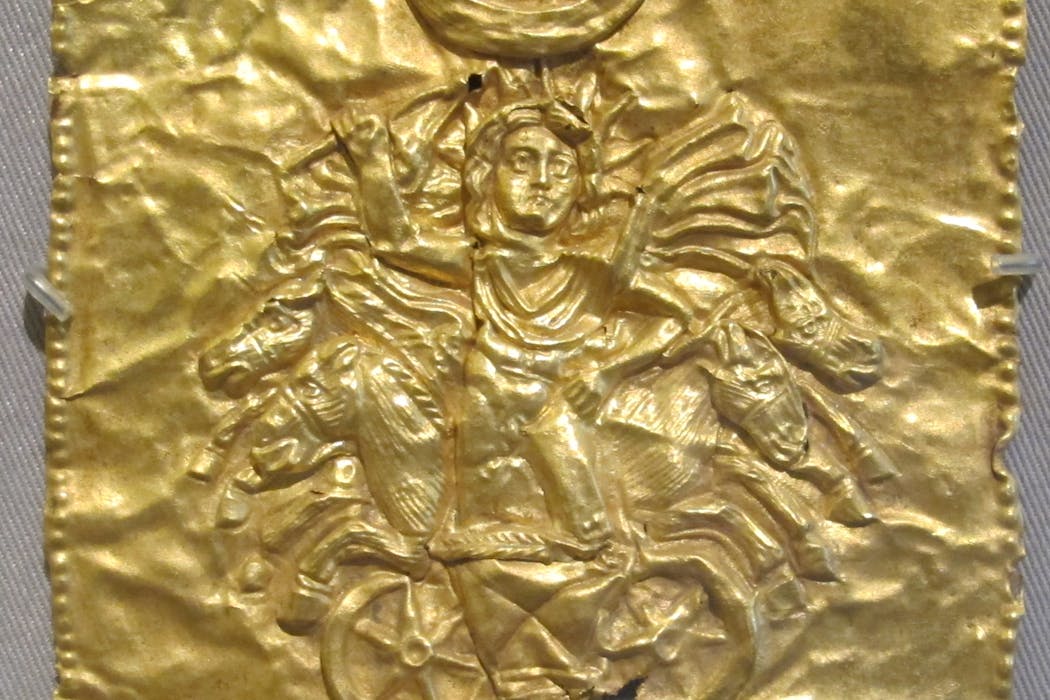
Live weather updates: Tents destroyed, trees down in heavy winds

Source: Radio New Zealand

The roof of an unoccupied home in the Auckland suburb of Hillsborough came off in high winds and scattered debris down the road. RNZ / Kim Baker Wilson

Wild weather battered much of the North Island on Monday, disrupting campers, and there’s more stormy conditions on the way.

Follow the latest updates here:

What’s today’s forecast?

Strong wind warnings for the northern and central parts of the North Island have expired but several regions remain in the firing line.

Electra was reporting power cuts on the Kapiti Coast affecting Paekakariki, Foxton and Shannon on Tuesday morning.

On the West Coast, Buller Electricity Ltd said the power was off to Karamea, Little Wanganui and Karamea Bluff.

Metservice said another day of heavy rain and strong south-east gales was in store for central New Zealand.

A strong wind warning was in place for Marlborough Sounds, Nelson and the West Coast north of Fox Glacier until 2pm, with Wellington under a wind watch until 9pm.

Heavy rain watches are in force for the Tararua District and Wairarapa until 4pm, and the Kaikoura Coast until 9pm.

Tauranga City Council has cancelled all five of its community New Year’s Eve events because of the bad weather forecast.

The council said weather reports indicated heavy rain and strong winds during event set-up, with conditions highly likely to continue into Wednesday.

It said fireworks displays would hopefully still take place from various locations around the city on New Year’s Eve.

Cleanup continues

In the parts of the South Island, strong winds brought down trees overnight.

  • Has your holiday been disrupted by the weather? Email iwitness@rnz.co.nz with your photos or information.

Fire and Emergency said State Highway 7 over the Rahu Saddle, between Reefton and Springs Junction, was affected.

State Highway 6 also had trees coming down, particularly through the Whangamoa Hills between Nelson and Blenheim.

Firefighters were still being called out into the evening across the North Island, taking the total number of weather-related jobs to about 140 in Auckland, Northland, Waikato and the Bay of Plenty.

PowerCo said hundreds of properties remain without power north of Whanganui, and around Palmerston North and Feilding.

The roof of an unoccupied home in the Auckland suburb of Hillsborough came off in high winds and scattered debris down the road. RNZ / Kim Baker Wilson

Campground holidays disrupted

Campground managers in the North Island are hoping for sunnier weather leading up to New Year’s after a lashing of wind and rain.

Wild weather battered much of the North Island on Monday, disrupting campers, causing power outages and downing trees.

In Auckland a roof was torn off an unoccupied home in Hillsborough, as fire crews responded to more than 100 weather-related callouts.

The manager of Kūaotunu Campground on the Coromandel Peninsula, Yvette Davey, said the weather had caused a bit of disruption on Monday.

“We have had a couple of campers that their tents were destroyed so they had to go home, other than that people are hunkering down, it’s settled down here,” she said.

Leanne Mills, the owner of Long Bay Motor Camp in Coromandel said campers were not too put off by the wet weather.

Campground managers in the North Island are hoping for sunnier weather leading up to New Year’s. Ruth Kuo

“We’ve had a bit of rain [on Monday] but we’ve been lucky campers have just used it as a crash day, just chill out, read a book, sleep,” she said.

“We’ve just got continued support from our regulars, mostly 90 percent Kiwis, so they’ll come and just meet up every year with the same people year after year and they don’t really care if it rains.”

Festivalgoers for New Year’s events such as Rhythm and Vines in Gisborne have been warned to watch out for wild weather on the roads.

Sign up for Ngā Pitopito Kōrero, a daily newsletter curated by our editors and delivered straight to your inbox every weekday.

– Published by EveningReport.nz and AsiaPacificReport.nz, see: MIL OSI in partnership with Radio New Zealand

Man dies after being hit by car in Napier

Source: Radio New Zealand

RNZ / REECE BAKER

A man has died in hospital after being struck by a car in Napier on Saturday.

The man was hit around 10pm on McGrath Street, and suffered critical injuries.

Police said the man died on Monday.

Police would like to speak to any witnesses and are continuing to investigate the incident. Anyone with information can contact police via 105 and quote file number 251227/1644.

Prior to this death, the holiday road toll had stood at zero for the period.

– Published by EveningReport.nz and AsiaPacificReport.nz, see: MIL OSI in partnership with Radio New Zealand

What actually is fire? A physicist explains

Source: The Conversation (Au and NZ) – By Emma Brown, Lecturer in Math and Physics, CQUniversity Australia

Pixabay/Pexels

Fire is an ancient technology that has helped shape human evolution. Our ancestors used fire for safety, cooking and preserving food. They gathered around a flickering fire to share stories, pass on cultural knowledge and build community.

Today, fire is an important industrial tool. It remains woven into our daily lives and rituals (think blowing out candles on your birthday cake). As it did millions of years ago, fire can shape our landscapes, having the power to both devastate and rejuvenate entire ecosystems.

Fire is so familiar, and yet it can be hard to define. What actually is fire?

Let’s begin with a question that’s a little easier to answer.

What are the ingredients for fire?

To light a fire we need three things: fuel (something to burn), oxygen and an initial spark or heat source. This is known as the fire triangle, but you could also call the fuel and oxygen “reactants” and the initial heat the “activation energy”.

For a bushfire, organic matter (such as wood) provides the fuel. Oxygen is available in the air, and the activation energy could come from a range of sources, such as lightning or human activities.

If we remove one of the reactants, a fire cannot continue to burn. To extinguish a bushfire, heat can be removed by dousing the fire with water. The water is turned into steam, which also smothers the fire by displacing air. Fuel may be used up by the fire itself or be preemptively removed using hazard-reduction or cultural burns.

The main “product” of fire is energy, along with the gasses carbon dioxide and water vapour. When there is more fuel than there is oxygen for burning, which is the case in a bushfire, there can be additional products. One of them is soot, which is tiny half-burned particles of carbon. These products interact to provide what we feel and see when we experience fire.

The warmth we feel from a fire comes from energy as it radiates outwards in the form of heat. The hot gas products rise because they are less dense than the surrounding, cooler air. The gases carry with them soot particles that glow yellow-orange because of their high temperature.

In a bushfire or campfire, it is the glowing soot that we experience as flames. Flames actually extend well above where we can see them. As the soot moves higher up, it cools and emits light in colours that we cannot see, such as infrared light.


Read more:
Human global domination began with fire, not factories or farms


So, what is fire?

It obviously isn’t a liquid or a solid. While flames do involve hot gases, flames only exist while a fire is burning. They don’t exist in a stable state on their own and we can’t collect flames in a container like we could CO₂ or water vapour. Therefore, flames and fire are not gases.

We can also rule out plasma – the fourth state of matter. Plasma is similar to an extremely hot gas but with some key differences.

A plasma contains so much heat energy that atoms in the plasma become ionised, meaning they can no longer hold on to all of their electrons. The plasma is like a soup of charged particles, both electrons and ionised atoms, which can conduct electricity and respond to a magnetic field.

In the hottest parts of the most intense fires, it is possible that there are enough ionised atoms to form areas of weak plasma. However, the plasma is not stable on its own and fire, as a whole, does not behave like a plasma.

In fact, fire is not matter at all. Fire is a process. It is a type of chemical reaction called combustion.

A process unique to Earth

Gasses and plasma are everywhere in the universe, but fire as we experience it – with visible, oxygen-fuelled flames – appears to be unique to Earth.

The Earth itself formed from dust and gas around a young Sun, which is so hot that it is almost entirely plasma. The universe is home to trillions of galaxies, each filled with stars and possible planetary systems, so there’s a lot of gas and plasma out there.

Meanwhile, our Earth is the only place in the universe where fire is known to be possible.

That’s because one of the key ingredients for fire – a stable supply of oxygen – is a byproduct of life. And as far as we know, life only exists here on Earth.

The Conversation

Emma Brown does not work for, consult, own shares in or receive funding from any company or organisation that would benefit from this article, and has disclosed no relevant affiliations beyond their academic appointment.

ref. What actually is fire? A physicist explains – https://theconversation.com/what-actually-is-fire-a-physicist-explains-269708

It’s a pool party! How to stay safe around the pool with friends this summer

Source: The Conversation (Au and NZ) – By Amy Peden, NHMRC Research Fellow, School of Population Health and Co-founder UNSW Beach Safety Research Group, UNSW Sydney

Kindel Media/Pexels

It’s summer so kids’ playdates and birthday parties might start moving from the playground to the pool.

I research how to prevent drowning. I’m also a mum of two kids living in a house with a pool. So water safety is always front of mind.

Drowning deaths are at a record high in Australia. For pre-schoolers, this often happens in backyard pools. Although school-aged children have a much lower risk it’s still important to be vigilant.

Here are some key questions to ask and things to consider before you accept an invitation to a pool party or host your own.

With these tips, you’ll be able to navigate pool safety while ensuring the kids have heaps of fun.

Not everyone knows how to swim

First, think about your child’s swimming ability. Have they learned to swim? Do you know how their ability stacks up against their peers? Check their skills against the recommended minimum national swimming and water safety benchmarks for their age.

Perhaps some top-up lessons or some intensive lessons over summer might give their skills a boost ahead of a busy swim season.

As important as swimming skills are, so too is knowing how to be safe around the water. Have you talked to your kids about water safety? Are they mindful that others may not be able to swim as well as they can and may not be comfortable disclosing this to their friends?

Have you discussed how dangerous it can be to hold each other down under the water or hold their breath to swim to the end of the pool repeatedly? It can lead to someone blacking out.

It’s also not just about drowning. Knowing about water depth, the dangers of diving into shallow water, and not running around a wet and slippery pool can help avoid injury.

It’s not just about the kids

You also have a more direct role in keeping everyone safe. If you’re hosting a playdate and planning to include a swim, have you checked with the child’s parents? Ask about children’s swimming abilities or fears.

Before everyone hits the water, discuss your pool safety rules and expectations with the kids, including your own. My kids, and their friends, are very used to my “lifeguard lectures” by now.

An important part of playing lifeguard is supervision. If your kids’ friends are weak or poor swimmers, regardless of their age, you should be in the water with them. This is usually more fun anyway.

For older kids and more confident swimmers it’s still best to supervise from a distance (maybe poolside) and be dressed ready to get into the water in an emergency.

If you’re expecting more than a couple of kids, you might need more than one adult to ensure adequate supervision (and keep your stress levels down). Ensure each person’s supervision responsibilities are clear to avoid tragic miscommunications, such as: “I thought you were looking after them.”

Have you refreshed your CPR skills lately? Does your pool have a CPR sign you can refer to? Is your pool fenced and compliant? Does the gate close and lock on its own?

What about at someone else’s house?

Are you confident in your child’s ability to swim and be safe around the pool, if you’re not there? Have the hosts asked about your child’s swimming ability and any concerns? If not, you should be proactive and flag them.

Remember that eveyone’s definition of “can swim” is different. Would the hosts mind if you stayed to help supervise?

If you’re going to do the “drop and run”, will the adults hosting be supervising?
How vigilant will they be? Will the adults be drinking alcohol?

Having the conversation early can ensure all parents involved are aligned on matters of water safety.

We’re heading to the local pool instead

Many of the same rules apply if you’re meeting up with friends for a swim at your local pool.

Conditions here are more controlled with depth markers and safety equipment. But none of this replaces good swimming skills and safe behaviours.

Although lifeguards are on hand to help should anything go wrong, they are not a substitute for active parental supervision and shouldn’t be treated as babysitters.

In fact, reports of aggression and verbal and physical abuse of lifeguards are increasing, so please be respectful and keep your cool.

Keep yourself safe too

Kids aren’t the only ones who can get into trouble in the water. Adult drownings in a variety of different waterways are also on the rise.

So if you’re hitting the pool this summer, avoid alcohol around the water. You can even be impaired the day after heavy drinking.

Older adults can also be at risk of drowning in backyard pools due to medical incidents, such as a heart attack, or accidentally falling into the water.

If you keep all these issues in mind, we can all have a safe and enjoyable summer by the pool.

The Conversation

Amy Peden receives funding from the National Health and Medical Research Council. Amy Peden is affiliated with Royal Life Saving Society – Australia as an honorary Senior Research Fellow.

ref. It’s a pool party! How to stay safe around the pool with friends this summer – https://theconversation.com/its-a-pool-party-how-to-stay-safe-around-the-pool-with-friends-this-summer-268090

Clouds are vital to life – but many are becoming wispy ghosts. Here’s how to see the changes above us

Source: The Conversation (Au and NZ) – By Rumen Rachev, PhD Candidate, Edith Cowan University

Thomas Koukas/Unsplash, CC BY-NC-ND

As a scholar researching clouds, I have spent much of my time trying to understand the economy of the sky. Not the weather reports showing scudding rainclouds, but the deeper logic of cloud movements, their distributions and densities and the way they intervene in light, regulate temperatures and choreograph heat flows across our restless planet.

Recently, I have been noticing something strange: skies that feel hollowed out, clouds that look like they have lost their conviction. I think of them as ghost clouds. Not quite absent, but not fully there. These wispy formations drift unmoored from the systems that once gave them coherence. Too thin to reflect sunlight, too fragmented to produce rain, too sluggish to stir up wind, they give the illusion of a cloud without its function.

We think of clouds as insubstantial. But they matter far beyond their weight or tangibility. In dry Western Australia where I live, rain-bringing clouds are eagerly anticipated. But the winter storms which bring most rain to the south-west are being pushed south, depositing vital fresh water into the oceans. More and more days pass under a hard, endless blue – beautiful, but also brutal in its vacancy.

Worldwide, cloud patterns are now changing in concerning ways. Scientists have found the expanse of Earth’s highly reflective clouds is steadily shrinking. With less heat reflected, the Earth is now trapping more heat than expected.

A quiet crisis above

When there are fewer and fewer clouds, it doesn’t make headlines as floods or fires do. Their absence is quiet, cumulative and very worrying.

To be clear, clouds aren’t going to disappear. They may increase in some areas. But the belts of shiny white clouds we need most are declining between 1.5 and 3% per decade.

These clouds are the best at reflecting sunlight back to space, especially in the sunniest parts of the world close to the equator. By contrast, broken grey clouds reflect less heat, while less light hits polar regions, giving polar clouds less to reflect.

Clouds are often thought of as an ambient backdrop to climate action. But we’re now learning this is a fundamental oversight. Clouds aren’t décor – they’re dynamic, distributed and deeply consequential infrastructure able to cool the planet and shape the rainfall patterns seeding life below. These masses of tiny water droplets or ice crystals represent climate protection accessible to all, regardless of nation, wealth or politics.

On average, clouds cover two-thirds of the Earth’s surface, clustering over the oceans. Of all solar radiation reflected back to space, clouds are responsible for about 70%.

Clouds mediate extremes, soften sunlight, ferry moisture and form invisible feedback loops sustaining a stable climate.

single white cloud blue sky.
Earth’s expanse of white, reflective clouds is shrinking decade after decade.
Bernd Dittrich/Unsplash, CC BY-NC-ND

When loss is invisible

If clouds become rarer or leave, it’s not just a loss to the climate system. It’s a loss to how we perceive the world.

When glaciers melt, species die out or coral reefs bleach and die, traces are often left of what was there. But if cloud cover diminishes, it leaves only an emptiness that’s hard to name and harder still to grieve. We have had to learn how to grieve other environmental losses. But we do not yet have a way to mourn the way skies used to be.

And yet we must. To confront loss on this scale, we must allow ourselves to mourn – not out of despair, but out of clarity. Grieving the atmosphere as it used to be is not weakness. It is planetary attention, a necessary pause that opens space for care and creative reimagination of how we live with – and within – the sky.

earth from space, showing ocean land and clouds.
Seen from space, Earth is a planet swathed in cloud.
NASA, CC BY-NC-ND

Reading the clouds

For generations, Australia’s First Nations have read the clouds and sky, interpreting their forms to guide seasonal activities. The Emu in the Sky (Gugurmin in Wiradjuri) can be seen in the Milky Way’s dark dust. When the emu figure is high in the night sky, it’s the right time to gather emu eggs.

The skies are changing faster than our systems of understanding can keep up.

One solution is to reframe how we perceive weather phenomena such as clouds. As researchers in Japan have observed, weather is a type of public good – a “weather commons”. If we see clouds not as leftovers from an unchanging past, but as invitations to imagine new futures for our planet, we might begin to learn how to live more wisely and attentively with the sky.

This might mean teaching people how to read the clouds again – to notice their presence, their changes, their disappearances. We can learn to distinguish between clouds which cool and those which drift, decorative but functionally inert. Our natural affinity to clouds makes them ideal for engaging citizens.

To read clouds is to understand where they formed, what they carry and whether they might return tomorrow. From the ground, we can see whether clouds have begun a slow retreat from the places that need them most.

figure showing different types of cloud.
Learning to read the clouds can help us glimpse the changes above.
Valentin de Bruyn/Wikimedia, CC BY-NC-ND

Weather doesn’t just happen

For millennia, humans have treated weather as something beyond our control, something that happens to us. But our effects on Earth have ballooned to the point that we are now helping shape the weather, whether by removing forests which can produce much of their own rain or by funnelling billions of tonnes of fossil carbon into the atmosphere. What we do below shapes what happens above.

We are living through a very brief window in which every change will have very long term consequences. If emissions continue apace, the extra heating will last millennia.

I propose cloud literacy not as solution, but as a way to urgently draw our attention to the very real change happening around us.

We must move from reaction to atmospheric co-design – not as technical fix, but as a civic, collective and imaginative responsibility.

Professor Christian Jakob provided feedback and contributed to this article, while Dr Jo Pollitt and Professor Helena Grehan offered comments and edits.

The Conversation

Rumen Rachev receives funding from Edith Cowan University (ECU) through the Vice-Chancellor’s PhD Scholarship, under the project Staging Weather led by Dr Jo Pollitt. He is also a Higher Degree by Research (HDR) member of the Centre for People, Place, and Planet (CPPP) at ECU.

ref. Clouds are vital to life – but many are becoming wispy ghosts. Here’s how to see the changes above us – https://theconversation.com/clouds-are-vital-to-life-but-many-are-becoming-wispy-ghosts-heres-how-to-see-the-changes-above-us-265575

Weather: Tents destroyed, trees down in heavy winds

Source: Radio New Zealand

Campground managers in the North Island are hoping for sunnier weather leading up to New Year’s. Ruth Kuo

Wild weather battered much of the North Island on Monday, disrupting campers, causing power outages and downing trees.

In the parts of the South Island, strong winds brought down trees overnight.

  • Has your holiday been disrupted by the weather? Email iwitness@rnz.co.nz with your photos or information.

Fire and Emergency said State Highway 7 over the Rahu Saddle, between Reefton and Springs Junction, was affected.

State Highway 6 also had trees coming down, particularly through the Whangamoa Hills between Nelson and Blenheim.

Firefighters were still being called out into the evening across the North Island, taking the total number of weather-related jobs to about 140 in Auckland, Northland, Waikato and the Bay of Plenty.

PowerCo said hundreds of properties remain without power north of Whanganui, and around Palmerston North and Feilding.

Campground holidays disrupted

Campground managers in the North Island are hoping for sunnier weather leading up to New Year’s after a lashing of wind and rain.

Wild weather battered much of the North Island on Monday, disrupting campers, causing power outages and downing trees.

In Auckland a roof was torn off an unoccupied home in Hillsborough, as fire crews responded to more than 100 weather-related callouts.

The manager of Kūaotunu Campground on the Coromandel Peninsula, Yvette Davey, said the weather had caused a bit of disruption on Monday.

“We have had a couple of campers that their tents were destroyed so they had to go home, other than that people are hunkering down, it’s settled down here,” she said.

Leanne Mills, the owner of Long Bay Motor Camp in Coromandel said campers were not too put off by the wet weather.

“We’ve had a bit of rain [on Monday] but we’ve been lucky campers have just used it as a crash day, just chill out, read a book, sleep,” she said.

“We’ve just got continued support from our regulars, mostly 90 percent Kiwis, so they’ll come and just meet up every year with the same people year after year and they don’t really care if it rains.”

Festivalgoers for New Year’s events such as Rhythm and Vines in Gisborne have been warned to watch out for wild weather on the roads.

The roof of an unoccupied home in the Auckland suburb of Hillsborough came off in high winds and scattered debris down the road. RNZ / Kim Baker Wilson

What’s today’s forecast?

Strong wind warnings for the northern and central parts of the North Island have expired but several regions remain in the firing line.

A strong wind warning is in effect for Wellington until 9pm Tuesday. South to southeast winds may approach severe gale in exposed places, MetService said.

Orange wind warnings remain for Manawatu, Horowhenua and Kapiti Coast until 9am Tuesday, and the Marlborough Sounds, Nelson and the West Coast north of Aoraki Mount Cook until 2pm Tuesday.

An orange heavy rain warning is in place for Hawke’s Bay until 8am Tuesday.

Tauranga City Council has cancelled all five of its community New Year’s Eve events because of the bad weather forecast.

The council said weather reports indicated heavy rain and strong winds during event set-up, with conditions highly likely to continue into Wednesday.

It said fireworks displays would hopefully still take place from various locations around the city on New Year’s Eve.

Sign up for Ngā Pitopito Kōrero, a daily newsletter curated by our editors and delivered straight to your inbox every weekday.

– Published by EveningReport.nz and AsiaPacificReport.nz, see: MIL OSI in partnership with Radio New Zealand
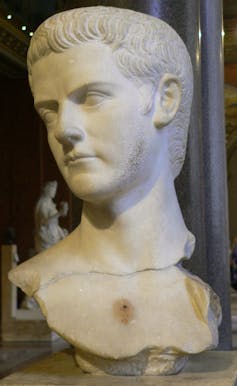
Can Australian sport ever be environmentally sustainable?

Source: The Conversation (Au and NZ) – By Camilla Brockett, Professor of Sport Systems Development, Victoria University

Sport is one of the most climate-sensitive aspects of Australian life, yet still sits largely outside the national conversation on climate exposure.

Sport attracts around 14 million participants annually in Australia. According to national data from July 2023 to December 2024:

  • 85% of adult Australians (aged 15+) participated in sport or physical activity at least once in the previous 12 months

  • 11 million (51%) adults took part in a sport-related activity

  • 3 million children (64%) aged 0–14 participated in an organised out-of-school sport-related activity at least once in the previous 12 months

  • More than 2.8 million adults volunteer in sport.

But as our days get hotter and playing conditions get harsher, an increasingly important question emerges: can Australian sport keep pace with our changing climate and become truly sustainable?

Climate is changing the way we play

Community members know the story well: scorching grounds, cancelled matches, smoke-affected sessions and volunteers scrambling to interpret new safety protocols.

When heatwaves, smoke, floods or storms hit, training stops and rounds are washed out. The impacts are immediate: reduced physical activity, diminished social connection, and fewer wellbeing benefits.

Clubs are feeling it too. The Australian Sports Foundation reports two-thirds of community clubs are struggling as costs rise and weather-related disruptions increase.

Similarly, risks to athlete health and performance are major concerns for many professional competitions – including the Australian Open tennis tournament which has faced match delays from extreme heat, rain and bushfire smoke in recent years, while the 2025 Australian Open golf tournament had to manage the course and player expectations after torrential rain impacted the greens.

Emissions and sport

Sport creates emissions in a few different ways.

There are direct emissions such as getting to games, running training facilities and hosting competitions and events.

Then there are the indirect emissions from the industries sport depends on, including air travel, electricity and even producing sporting gear.

Together, these pressures point to the need for strong leadership from government, backed by coordinated action from peak bodies and local clubs.

Some action but major gaps remain

In September 2025 the federal government released Australia’s first National Climate Risk Assessment, mapping priority risks across housing, infrastructure and health.

Sport barely features.

This omission matters. Sport is where climate impacts become tangible for many Australians: cancelled junior cricket matches, smoky netball sessions cut short, a “no play” sign on a local oval after overnight storms.

Recognising sport as community infrastructure in future risk assessments — or commissioning a sport-specific climate risk review — would help ensure funding and preparedness efforts land where they’re most needed.

The government also launched Game On, a $50 million grant scheme to help up to 500 clubs install solar, batteries, shade and drainage.

But infrastructure alone won’t make sport climate-ready. When a grant ends or a key volunteer moves on, projects can lose momentum.

New research from Victoria University, due to be published in early 2026, identified many sporting organisations still lack governance, leadership and data systems to sustain environmental initiatives.

This creates inconsistent progress, with some organisations advancing quickly while others lag.

Genuine sport climate leadership

Here are four ways sport organisations can lead the way.

1. Link funding to on-the-ground outcomes

Public investment should be tied to simple measures that matter to communities, such as:

  • fewer heat- or rain-related cancellations
  • reduced energy use
  • faster recovery of participation after disruptions.

For example, if a club saves on power bills, direct a portion of those savings to participation, maintenance or safety equipment. Create a cycle where today’s savings support tomorrow’s play.

2. Invest in people, not just panels

Sustainability requires capability. Boards, executives and councils need practical training in risk planning and environmental management. Every club or association should have someone responsible. Include basic climate and energy indicators in annual reports so committees and members can track progress.

3. Build a shared evidence base

A sport-specific climate risk assessment would identify which facilities face the greatest heat, flood or smoke exposure. With this map, governments and sporting bodies could set priorities and roll out simple, uniform toolkits for clubs, such as heat policies, smoke protocols and purchasing guides.

4. Make partnerships count

Public funding for sustainability should include expectations for reinvesting savings and co-funding with business or community partners. Models such as Cricket for Climate work because they track savings and channel them back into participation and safety.

These steps can protect Australians’ ability to play sport safely and regularly.

They also draw on one of sport’s greatest strengths – its reach. Because sport connects with so many people, it’s uniquely placed to normalise practical climate action whether that’s better shade and scheduling, smarter energy use or clearer safety triggers for heat and smoke.

Can Australian sport be truly sustainable?

Not perfectly. Climate change is already reshaping how Australians play and watch sport. Extreme weather is becoming more frequent and decisions about heat, storms and air quality are now routine parts of sport administration.

But sustainability isn’t about perfection – it’s about building resilience. And resilience depends on good governance.

If we can embed environmental accountability, leadership and data-informed decision-making into sports’ day-to-day operations, the benefits will endure for generations to come.

The Conversation

Camilla Brockett is affiliated with the Sports Environment Alliance, a not-for-profit membership organisation funded through memberships, partners, registrations for workshops/events, donations, consulting and government grants.

Xu He does not work for, consult, own shares in or receive funding from any company or organisation that would benefit from this article, and has disclosed no relevant affiliations beyond their academic appointment.

ref. Can Australian sport ever be environmentally sustainable? – https://theconversation.com/can-australian-sport-ever-be-environmentally-sustainable-267545

Architecture isn’t neutral. It’s been shaping political power for millennia

Source: The Conversation (Au and NZ) – By Kim Dovey, Professor of Architecture and Urban Design, The University of Melbourne

Among his other ongoing projects, US President Donald Trump has spent much of his second term on a renovation. The Oval Office has been converted into a miniature palace festooned with gold bling, the rose garden has been paved over, a triumphal arch is planned and the new ballroom will be larger than the White House.

Why bother turning Washington into a royal “court”? Well, architecture makes a big difference to the ways power is practised and courted.

While it’s easy to see buildings and public spaces as somewhat neutral or superficial, it’s not. Like the frame of a painting, it frames the spaces in which politics takes place, both literally and symbolically.

The spaces and symbols of power work together to choreograph the action and shape the narrative. We can see this throughout architectural history. Here are some global examples.

Invisible power

The Forbidden City in Beijing is a nested set of walled and gated precincts with multiple courtyards, within which the Emperor was largely hidden from public view.

Here, power was sustained by being invisible.

When the five-year-old Tongzhi was crowned in 1861, his mother, the Empress Dowager Cixi, placed him on a throne in front of a thin curtain and governed from behind it.

Everyone knew what was going on, but the legitimating imagery was crucial as Cixi ruled China for more than 40 years through two child emperors.

The revolution brought new imagery. The Forbidden City was opened to the people as a museum, Mao appeared on Tiananmen gate (where his image remains), and the vast Tiananmen Square was created as the antithesis of the closed courtyard.

Party elites moved into the Zhongnanhai compound next door, but there is no presidential palace, nor any consensus on where the current president lives.

Power through surveillance

Topkapi Palace in Istanbul, now also a museum, was home to Sultans of the Ottoman empire from the 15th to 19th centuries.

There is much fascination with the ways the sultan’s quarters and harem were designed to manage complex interrelations between eunuchs, wives, concubines and slaves, and with the beautifully designed audience halls and courtyards.

A white tower with a pointed roof overlooks an ornate Turkish palace
The Tower of Justice loomed large, whether the Sultan was sitting in it or not.
Nicole Ashley Rahayu Densmoor/Pexels

The tallest building is the Tower of Justice, which is located between the Sultan’s quarters and the Imperial Council Chamber, through which the sultan ruled the empire.

From within it the sultan could sit behind a golden grill placed high in the wall of the chamber. He could overhear and oversee council discussions without being seen.

Here, the building becomes an agent of power without the presence of the sultan. The councillors must act as if he were there.

This is the panoptic power of surveillance that has morphed more broadly into the surveillance state and surveillance capitalism.

Telling stories

The Palace at Versailles was where Louis XIV retreated as his empire declined in the late 17th century.

The building was designed around a ceremonial route as visitors were led through a sequence of salons, named as planets (Venus, Mars and Mercury) as they approached the Sun King (Apollo).

The route then turned at the Salon of War, to enter the vast Hall of Mirrors. The view across manicured gardens produced an illusion of control over nature, which ever way one looked.

An opulent hall with mirrors on each wall, crystal chandeliers and ornate gold detailing
Versailles’ Hall of Mirrors is among the most famous (and visited) examples of power through opulence.
Myrabella/Wikimedia Commons, CC BY-SA

Hitler’s Chancellery in Berlin was modelled on Versailles, but designed to dwarf it.

The approach to the chancellor’s office was a long promenade from a Court of Honour, through a sequence of Greek, Roman and Nazi styled chambers to a vast and empty “Hall of Marble”. The marble was not just for looking at, as Hitler put it, visitors “should have practice in moving on a slippery surface”.

A black and white image of a large long hall made of reflective marble
Both the material and the size of the Hall of Marble exerts power.
Hoffmann/Wikimedia Commons, CC BY-SA

The chancellor’s office was mostly notable for its size: about 400 square metres. The Oval Office is just 75 square metres.

Both Versailles and the Chancellery were extremes of legitimating architecture, produced when the regime was fragile, whether at the end or the beginning of the empire.

If there is a thread connecting these examples, it’s that the trappings of power have an inverse relation to its legitimacy: the over-production of buildings and bling suggest a regime lacks credibility.

The corollary, however, does not hold. There is no ideal state where the trappings of power dissolve. Buildings are expensive and have great inertia, so most new leaders adopt the pre-existing centres of power along with the embodied legitimacy.

The British prime minister lives and works in a terrace house where the legitimating narrative lies in the idea of a house in “common” with its neighbours − number ten, first among equals.

Mythological power

One of the earliest centres of power is the Minoan “palace” of Knossos (1900–1375 BCE), in Crete.

The plan is in the form of a labyrinth, replete with corridors. All passages through the building are convoluted, and at its heart is a huge courtyard of unknown function (roughly the size of the proposed White House ballroom).

How power was practised at Knossos remains a mystery. There is little evidence of any king or queen, nor of the relative power of men and women, but it worked for about 500 years.

These ruins were famously a source for the later Greek myth of King Minos who had his architect Daedelus design a labyrinth to hide the big family secret: the half-bull, half-man figure of the minotaur.

According to this myth, the building worked by producing ignorance about how to get in or out, and by hiding a truth that can’t be told.

Of course, this is just a myth. But the architecture of power is built on mythologies of those who commission them.

Architecture embodies, hides and naturalises the politics of power, for better or worse.

The Conversation

Kim Dovey does not work for, consult, own shares in or receive funding from any company or organisation that would benefit from this article, and has disclosed no relevant affiliations beyond their academic appointment.

ref. Architecture isn’t neutral. It’s been shaping political power for millennia – https://theconversation.com/architecture-isnt-neutral-its-been-shaping-political-power-for-millennia-267742

Babblers, cops and quacks: the sometimes dark – but often amusing – origins of nicknames for jobs

Source: The Conversation (Au and NZ) – By Kate Burridge, Professor of Linguistics, Monash University

Pinterest, Canva, Wikimedia, The Conversation, CC BY

These days, human resources (HR) departments want us to use official titles for jobs. But we know the social truths of a job — how well that job gets done, whether we like the person doing it — are much more complex.

Nicknames for jobs help us manage workplace performances, personalities and power beyond HR spreadsheets — and they can be a lot of fun.

Cooks, bastards and babblers

Australians like to call things as they are — and it’s always been that way, as this famed army example illustrates:

Officer addressing a group of men: “Who called the cook a bastard?”

One man shouting above the others: “Who called the bastard a cook?”

Sometimes we’re very direct, but other times there’s a hidden, and often cheeky, hierarchy at work. During the first world war, one ANZAC magazine warned that army cooks ranged from the “grease-besmudged babbler” to the “natty, smart-looking chef”. Babbler is rhyming slang from “babbling brook” for “cook”. Babblers were presumably better at their job than “baitlayers”, “slushies” or “poisoners” — other terms for cooks in the bush.

How not to boil the wrong Billy

But workplace nicknames are more than just pointing out someone who “wouldn’t work in an iron lung” or is more likely to “pick up a brown snake than a rake”. Nicknames are also about creating a friendlier workplace.

Humour and informality are key ingredients for workplace nicknames — Aussies have a knack for keeping things light-hearted. Think of the way “sickie” has flipped its meaning from a day’s sick leave to a day’s leave without being sick.

In the bushie era, some joked that any two men were apt to be named Bill or Jim. The swaggies needed ways to tell all their Bills apart, so you might end up with “Old Billy”, “Young Billy”, “Tall Billy”, “Thin Billy”, “Fat Billy” or “Billy the Rooster”. And, of course, true to Australian character, “Tall Billy” might be short, “Thin Billy” might be fat, and a red-headed Billy was almost certainly called “Bluey”.

One understated but important way to make a “Bill” or “Jim” more likeable is to make them a “Billy” or “Jimmy” — in other words, to add an “-ie” or “-y”, or an “-o” (as in a name like “Johno”). These sorts of endings abound in English, but Australians go a step further than British and Americans in terms of frequency and creativity.

Moreover, the Australian “-o” ending can trace its origins to occupational nicknaming. The earliest Australian examples (“milk-o”, “rabbit-o”, “bottle-o”) date from the late 19th century. All are clipped names for people’s jobs (milkman, rabbit-seller, bottle-collector), though sometimes written with “-oh” because they echo the street vendor calls.

These endings are called diminutives — or hypocoristics, if you want the fancy term. Basically, they’re pet-name endings we tack onto words (often shortened) to show warmth or friendliness. And sure, names like “Johno” and “Susie” can sound affectionate, but most Aussie diminutives like “journo” or “sparky” aren’t about being cute.

It’s still a puzzle which words get which ending. We happily talk about “sparkies”, “chippies” and “brickies”, but never “sparkos”, “chippos” or “brickos. “Ambos”, “garbos and “musos” roll off the tongue, but “ambies”, “garbies” and “musies” don’t. And why are there gaps? People who build are “builders”, not “buildos” or “buildies”.

Much remains unknown about these endings. But what we do know from research that Evan Kidd and colleagues have carried out is that these playful endings really do have social power — the little “-ie”/“-y” and “-o” tags help hold Australian English speakers together.

Shrinks, cops, hacks and quacks

Nicknames also help us cope with the power certain occupations wield over us, and the degree to which we trust those occupations.

For instance, the exact origins of “shrink” for psychiatrist are speculative, but all point to some anxiety about the people who help us with our anxieties. The term first emerged as “headshrinker” and almost certainly owes its origins to the literal practice of head shrinking (as performed by the Jivaroan Indigenous people of South America). The rather grisly label for psychiatrist made its print debut in Hollywood slang in the 1950s — and an on-screen appearance in Rebel Without a Cause certainly popularised the term.

Perhaps the process was originally seen as taking air out of the inflated egos so rife in showbiz — or letting air out of people’s worry-swollen thoughts. Others suggest the term echoes lobotomies once used on those seen as dangerously violent.
Or perhaps it’s simply that shrink reflected the nervous suspicion at the time about what psychiatrists really did to people’s heads — and black humour took the edge off.

More than a few people have also shown a distrust of police officers — who garner nicknames like “five-o” (from the famed television show Hawaii Five-O) or “pigs” and “grunters” (both have entries in James Hardy Vaux’s 1812 dictionary of convict slang).

Of all the nicknames, “cop” is perhaps the best recognised. Certainly, it’s sparked the most interesting narratives about how it came to be. One suggestion is that it was originally back slang from “police” (like “yob” from “boy”) — but there’s too much consonant dropping required here for this to be the most likely story!

Others link it to copper buttons, badges or batons. There are also a number of backronym explanations (retrofitted acronyms, where the words are chosen after the fact to match the letters). It’s often claimed, for example, that “cop” stands for “constable on patrol”. In fact, a copper was simply one who cops (that is, catches criminals).

Journalists also draw scrutiny and have been called “hacks”. In the 1500s, “hack” (short for “hackney”) referred to a horse for hire, usually an inferior or worn-out one. In the 1600s, “hacks” extended to people — “hacks” were drudges or lackeys. Later it specialised to refer to those hiring themselves out to do literary work, usually of poor quality. By the early 1800s, “hack” increasingly was used for journalists (originally “newspaper hack”). And, like so many derogatory names, it’s now more usually affectionate or ironic.

The curious word “quack” has emerged as a catch-all term for those promoting quick and easy cures or get-rich-quick schemes. “Quack” was a shortened form of “quacksalver”, in use since the 1600s for the medical charlatan (although as historian Roy Porter has emphasised, some quacks were decent, caring, well-intentioned people, offering cures when mainstream medicine failed). The inspiration here was the quacksalvers’ loud and bragging promotion of their products.

Our workplace “bean-counters” (US slang since the 1970s) turn people into KPIs, but workers are bound to stay focused on whom we love, whom we fear and whether a bastard’s a cook or a cook’s a bastard. From quacks to babblers, our workplace language isn’t determined in spreadsheets — it’s determined at “smoko”.

The Conversation

Kate Burridge receives funding from the Australian Research Council (SR200200350: Metaphors and Identities in the Australian Vernacular).

Howard Manns receives funding from the Australian Research Council (SR200200350: Metaphors and Identities in the Australian Vernacular).

ref. Babblers, cops and quacks: the sometimes dark – but often amusing – origins of nicknames for jobs – https://theconversation.com/babblers-cops-and-quacks-the-sometimes-dark-but-often-amusing-origins-of-nicknames-for-jobs-270647

‘Weights of gold in bullion’: how the ancients invested in precious metals

Source: The Conversation (Au and NZ) – By Konstantine Panegyres, Lecturer in Classics and Ancient History, The University of Western Australia

Sailko, CC BY-SA 3.0, CC BY

“All I want is an income of 20,000 sesterces from secure investments”, proclaims a character in a poem by Juvenal (1st-2nd century CE), the Roman poet.

Today, 20,000 sesterces would be equivalent to about A$300,000 in interest from investments. Anyone would be very happy with this much passive annual income.

Like today, people in ancient times understood that investing money could help them consolidate and grow their wealth.

As the Roman novelist Petronius (1st century CE) once wrote,

Whoever has money sails with a fair breeze, and governs his fortune as he wishes.

So, how exactly did ancient people invest their money?

A lofty house with hidden silver

In ancient Greek and Roman times, there was no stock market where you could buy and trade shares in a company.

If you wanted to invest your cash, one of the more popular options was to obtain gold or silver.

People did this to protect against currency fluctuations and inflation. They usually kept the metals either in bullion form or in the form of ware like jewellery. Storing these items could be risky and prone to theft.

The Roman poet Virgil (70-19 BCE) describes the estate of a wealthy person that included “a lofty house, where talents of silver lie deeply hidden” alongside “weights of gold in bullion and in ware”.

A talent was the largest unit of currency measurement in ancient Greece and Rome, equivalent to about 25kg of weighed silver.

Detail of Virgil from Mosaic of Virgil Writing the Aeneid
A detail from a mosaic of Virgil Writing the Aeneid, held in the Bardo Museum in Tunis, Tunisia.
Roger Wood/Corbis/VCG via Getty Images

Usually the metals were stored in a special vault or security cupboard.

The Roman writer Cicero (106-43 BCE) recalls how a wealthy lady named Clodia would take gold (perhaps bars or ingots or plates) out of a security cupboard when she wished to lend money to someone. The gold could then be exchanged for coinage.

Market booms – and busts

The price of these metals could, however, occasionally be subject to unpredictable fluctuations and crashes in price, though less often than currency.

The Greek historian Polybius (c. 200-118 BCE) says that when a new gold vein was discovered in Aquileia, Italy, only two feet deep, it caused a gold rush. The new material flooded the market too quickly and “the price of gold throughout Italy at once fell by one-third” after only two months. To stabilise the gold price, mining in the area was quickly monopolised and regulated.

When people wanted to trade precious metals, they would sell them by weight. If the gold or silver or bronze had been worked into jewellery or other objects, this could be melted down and turned into bullion.

People must have delighted in owning these precious metals.

The Athenian writer Xenophon (c. 430-350 BCE) gives a clue about the mindset of ancient silver investors:

Silver is not like furniture, of which a man never buys more once he has got enough for his house. No one ever yet possessed so much silver as to want no more; if a man finds himself with a huge amount of it, he takes as much pleasure in burying the surplus as in using it.

A number of Roman wills reveal people leaving their heirs silver and gold in the form of bars, plates or ingots.

Roman Gold Bars AD Bank of England Museum
Roman gold ingot, dating to circa 375 AD, in the Bank of England Museum collection.
Joyofmuseums, CC BY-SA 4.0, CC BY

Commodities that could not be ‘ruined by Jupiter’

Aside from metals, agricultural commodities were also very popular, especially grain, olive oil, and wine.

To profit from agricultural commodities, people bought farmland and traded the commodities on the market.

The Roman statesman Cato thought putting money into the production of essential goods was the safest investment. He said these things “could not be ruined by Jupiter” – in other words, they were resistant to unpredictable movements in the economy.

Whereas precious metals were a store of wealth, they generated no income unless they were sold. But a diversified portfolio of agricultural commodities guaranteed a permanent income.

People also invested and traded in precious goods, like artworks.

When the Romans sacked the city of Corinth in 146 BC, they stole the city’s collection of famous artwork, and later sold the masterpieces for huge sums of money at auction in order to bring profit for the Roman state.

At this auction, the King of Pergamon, Attalus II (220-138 BCE), bought one of the paintings, by the master artist Aristeides of Thebes (4th century BCE), for the incredible sum of 100 talents (about 2,500kg of silver).

Eccentric emperors

Political instability or uncertainty sometimes raised the price of these metals.

The Greek historian Appian (2nd century CE) records how during the Roman civil war in 32-30 BCE:

the price of all commodities had risen, and the Romans ascribed the cause of this to the quarrelling of the leaders whom they cursed.

A bust of Emperor Caligula in the Louvre museum.
By anonymous – Clio20, CC BY-SA 3.0, CC BY

Eccentric emperors might also impose new taxes or charges on commodities, or try to manipulate the market.

The Roman historian Suetonius (c. 69-122 CE) tells us the emperor Caligula (12-41 CE) “levied new and unheard of taxes […] and there was no class of commodities or men on which he did not impose some form of tariff”.

Another emperor, Vespasian (17-79 CE), went so far as to “buy up certain commodities merely in order to distribute them at profit”, says Suetonius.

Clearly, investing in commodities 2,000 years ago could help build personal wealth – but also involved some risk, just like today.

The Conversation

Konstantine Panegyres does not work for, consult, own shares in or receive funding from any company or organisation that would benefit from this article, and has disclosed no relevant affiliations beyond their academic appointment.

ref. ‘Weights of gold in bullion’: how the ancients invested in precious metals – https://theconversation.com/weights-of-gold-in-bullion-how-the-ancients-invested-in-precious-metals-268207

Phoenix crushed by Victory in A-League clash in Melbourne

Source: Radio New Zealand

The Phoenix are now 10th following the defeat to Melbourne Victory. Masanori Udagawa/Photosport

The Wellington Phoenix have fallen to their heaviest defeat of the A-League season, thumped 5-1 by Melbourne Victory at AAMI Park.

Ramy Najjarine drew the Phoenix level at 1-1 midway through the first half but the hosts scored goals either side of halftime take a two goal lead.

The Victory extended their advantage before the hour mark and added a fifth goal in the 90th minute.

Phoenix head coach Giancarlo Italiano said the team’s defence was poor.

“I had a quick look at the goals that we conceded and I think every goal was preventable,” he said.

“The first goal was taken well. It was a good header but just sloppy second phase awareness for the first two goals. And then the third, fourth and fifth goals were for me comical. Especially coming out at halftime, the lack of pressure on the ball, being aware of where their dangers were and we weren’t protecting the space like we’d spoken about.

“And just the timing of the goals like straight after halftime to make it 3-1. Uncharacteristic goals…and we should have managed defensively a lot better.”

The result drops the Phoenix to 10th on the ladder, three points outside the top six.

Italiano believes it was an “off day” for his side and they can still turn around their fortunes.

“Simply it comes down to focus for 90 minutes and nothing else.

“We’re in most games for a large part. Tonight…was probably the first game that got away from us very early. It’s just staying in those moments and making sure that we don’t make basic errors and mistakes and there’s a lack of application.

“If we can eliminate that then we can still achieve good things this season.”

Italiano made one enforced change to the starting XI with 18-year-old goalkeeper Eamonn McCarron named to make his A-League starting debut in place of Josh Oluwayemi, who suffered an injury early in the 3-1 win over Central Coast prior to Christmas.

Alby Kelly-Heald, Xuan Loke and reserve team fullback Ryan Lee were promoted to the bench.

The Phoenix have little time to dwell on the defeat as they will travel to Brisbane prepare for Saturday’s match against the Roar.

– Published by EveningReport.nz and AsiaPacificReport.nz, see: MIL OSI in partnership with Radio New Zealand

Ngā Kaupapa Hirahira o te Tau: A look back at the year that was in Te Ao Māori

Source: Radio New Zealand

Wiremu Keretene (Ngāti Hine) holds a sleeping child during the waka display at Tii Beach this morning. RNZ / Peter de Graaf

After the rollercoaster year that was 2024 te ao Māori may have expected that to continue into 2025 and in many ways it did with so many stories making for another unprecedented year.

The national Kapa Haka competition Te Matatini returned in February, rising to new heights of popularity with Te Tauihu group Te Kuru Marutea capturing hearts well beyond Māori circles with their powerful solos and of course there was that Waiata ā Ringa from eventual winners Te Kapa Haka o Ngāti Whakaue.

The festival has also grown to record size, this year saw 55 haka groups competing the most ever and concerns over infrastructure in smaller regions eventually led organisers to move the next festival in 2027 to Waikato, rather than to the Nelson region which had been expected to host.

2025 was also a status qou breaking year in Māori politics, which saw the deaths of influential political leaders, an unprecedented suspension from Parliament, a by-election in Tāmaki Makaurau and a bitter feud within Te Pāti Māori.

But it began with a long and drawn out Select Committee process for the Treaty Principles Bill, a record-breaking 300,000+ submissions were made on the controversial bill which was ultimately defeated near-unanimously at its second reading in April – although its architect David Seymour has promised to reignite the debate in 2026.

The first Koroneihana of Te Arikinui Kuini Nga wai hono i te po took place in September, one year on from her ascension as Māori Monarch and the death of her father Kiingi Tuheitia.

Te Ao Māori awaited eagerly to hear what Te Arikinui would say after a year of silence – and her kōrero did not disappoint. She told listeners there were many ways to manifest being Māori, “Kaua tātou e tuku mā ngā porotū kau noa e Māori ai tātou – Tino Rangatiratangatia tō reo, Mana Motuhaketia te taiao, Tino Rangatiratangatia tō hauora, Mana Motuhaketia tō pā harakeke, kei aua kaupapa rā te tino oranga mai o te Māoritanga,” she said.

She also took the opportunity to launch two new economic initiatives, including a multi million dollar Kotahitanga Fund. Could that be a catalyst to take Māoridom into a post Treaty Settlement era?

Here are just a few of the stories that we had the privilege of sharing in 2025:

Dame Tariana Turia

The year had barely begun when news broke that Dame Tariana Turia, the former co-leader of Te Pāti Māori, had died at the age of 80.

At her tangihanga at Whangaehu Marae near Whanganui she was remembered as a principled politician, a fighter for her iwi, including during the 79-day occupation of Whanganui’s Moutoa Gardens in 1995, but by most people simply as Nanny Tari.

She was the first of many of many Māori leaders taken in Te Kupenga o Taramainuku in 2025, less then a month later the Turia whānau were rocked again by the death of Dame Tariana’s grandson Pakaitore Turia.

Then-Maori Party co-leader Tariana Turia poses during a portrait session at Parliament on 29 July 2014 in Wellington. Hagen Hopkins / Getty Images

Dame Tariana Turia is carried from Whangaehu Marae to the nearby urupā where she was laid to rest. Pokere Paewai

Several thousand people attended the tangihanga of Dame Tariana Turia. Pokere Paewai

Rātana

The annual Rātana celebrations in January commemorate the birthday of the movements founder Tahupōtiki Wiremu Rātana and traditionally mark the beginning of the political year.

While the political talk was dominated by the Treaty Principles Bill the event also marked the first visit of the Te Arikinui Kuini Nga wai hono i te po to Rātana since the death of her father Kiingi Tuheititia.

Tainui leader Tuku Morgan described the Kiingitanga and Rātana Church as two movements inextricably bound together.

Te Arikinui Kuini Nga wai hono i te po being welcomed to Rātana. RNZ / Pokere Paewai

Prime Minister Christopher Luxon and Kamaka Manuel. RNZ / Reece Baker

Waitangi

Waitangi commemorations began with the re-opening of the historic wharenui at Te Tii Marae, where at least 300 people gathered to witness the whare’s new carvings, paved courtyard and earthquake strengthening.

Among the annual attractions was the annual waka parade; a staple of Waitangi commemorations and a celebration of the various vessels used by early Māori settlers.

Keen-eyed beach onlookers would also have noticed Bosco, the water surfing French bulldog, who made headlines for his aquatic antics.

Diving of the Waitangi bridge to cool off – a Waitangi tradition. RNZ/ Peter de Graaf

The Ngāti Kahu waka Te Rangimarie is launched next to Waitangi Bridge. RNZ/ Peter de Graaf

Three-year-old French bulldog, Bosco lives the boat life in Paihia and has been surfing for over a year and a half. Layla Bailey-McDowell / RNZ

Iritana Tawhiwhirangi

Māori educator Dame Iritana Te Rangi Tāwhiwhirangi, a founder of the Kōhanga Reo movement, died in early February, she was 95.

During her tangihanga at Gisborne’s Te Poho o Rawiri Marae she was remembered as a stern but caring mentor, a lion, a taniwha and a keen golfer.

Many mourners made their way to Te Tairāwhiti, including Te Arikinui Kuini Nga wai hono i te po, now the patron of the Kōhanga Reo National Trust and for whom Dame Iritana was a mentor.

Dame Iritana Tāwhiwhirangi Supplied / Te Tai

Mourners arriving at Te Poho o Rawiri Marae in Gisborne. RNZ / Pokere Paewai

Te Matatini

The largest event in Māoridom, the “Olympics of Kapa Haka” Te Matatini, returned in 2025 with Taranaki and Whanganui hosting the biggest competition ever.

Te Kapa Haka o Ngāti Whakaue from the Te Arawa region emerged as Toa Whakaihuwaka, as champions on the final day at Pukekura Park in New Plymouth.

The pōwhiri at Stadium Taranaki kicked off Te Matatini. Emma Andrews

Mōtai Tangata Rau performing at Pukekura, the Bowl of Brooklands in New Plymouth. Te Matatini Enterprises

Te Matatini champions Te Kapa Haka o Ngāti Whakaue. Supplied / Te Matatini Enterprises

Matariki mā Puanga

For it’s fourth year the Matariki Public Holiday celebrations highlighted the star Puanga (Rigel) and the communities who observe the star in their astronomical traditions.

The national hautapu ceremony was hosted this year by central North Island iwi Ngāti Rangi at Tirorangi Marae near the base of Ruapehu.

The stars of Matariki pictured between the clouds as viewed from Tirorangi Marae. Supplied by Ministry for Culture and Heritage, Richie Mills

Kaikarakia group at 2025’s Matariki celebrations at Tirorangi Marae. Supplied / Richie Mills

Takutai Tarsh Kemp

The MP for Tāmaki Makaurau Takutai Moana Natasha Kemp died suddenly in June at the age of 50, the Pāti Māori MP had been at Parliament working only the day before.

Before Parliament she founded the Rangatahi Mental Health Youth Hub, managed the first crew from Aotearoa to qualify for the World Hip Hop Championships in the US and lead Manurewa Marae as its chief executive through the Covid-19 pandemic.

Takutai Tarsh Kemp. RNZ / Simon Rogers

Flowers on the House seat of Te Pāti Māori MP Takutai Tarsh Kemp. RNZ / Samuel Rillstone

Takutai Tarsh Kemp being laid to rest on the church grounds behind Opaea Marae near Taihape. Pokere Paewai / RNZ

Koroneihana

The first Koroneihana of Te Arikinui Kuini Nga wai hono i te po took place one year on from her ascension as Māori Monarch and the death of her father Kiingi Tuheitia

After a year of mourning many people were eagerly awaiting her first national address. In an emotional speech she told listeners that being Māori was not defined by having an enemy or a challenge to overcome.

Te Arikinui Kuini Nga wai hono i te po receives a koha from Te Wharekura o Kirikiriroa, as she marked the first day of her first Koroneihana celebrations. Image courtesy of Te Tari o te Kiingitanga

Te Arikinui Kuini Nga wai hono i te po. Image courtesy of Te Tari o te Kiingitanga

Te Arikinui with the poi after her first official address. Image courtesy of Te Tari o te Kiingitanga

Te Pāti Māori ructions

Ructions within Te Pāti Māori dominated the headlines throughout the second half of the year. It began with what should have been a moment of celebration for the party with former broadcaster Oriini Kaipara winning the Tāmaki Makaurau by-election in a landslide.

But allegations by former staffer Eru Kapa-Kingi of a “dictatorship” among the party leadership soon spiralled with Te Pāti Māori’s national council voting to expel MPs Mariameno Kapa-Kingi, mother of Eru, and Tākuta Ferris.

Kapa-Kingi has since been reinstated as a member of the party, but the court decision which forced the issue will be revisited at a full hearing in early February next year. Just in time for Waitangi.

Te Pāti Māori co-leaders Debbie Ngarewa-Packer and Rawiri Waititi. RNZ/Samuel Rillstone

Tākuta Ferris and Mariameno Kapa-Kingi. RNZ/Liam K. Swiggs

Marine and Coastal Area Act (MACA)

In October the government’s changes to the Marine and Coastal Area Act (MACA) passed, making it harder for Māori groups to secure Customary Marine Title (CMT) over parts of New Zealand’s coast.

The law is also retrospective meaning groups who had their title confirmed after 24 July 2024, such as the whānau of Ruapuke Island, will have to go back to court.

Veteran Māori rights activist Reuben Taipari gathered almost 20,000 signatures in only four days on a petition opposing the Bill, which he called worse than the Foreshore and Seabed Act 2004.

Ngātiwai chairman Aperahama Kerepeti-Edwards also made his feelings on the Bill clear during a debate and was ejected from Parliament’s gallery for it, then a few weeks later the iwi upped the ante by landing on the Poor Knights Islands to raise a flag and erect a carved pou in protest.

Rueben Taipari after delivering the petition to parliament. RNZ / Mark Papalii

Ngātiwai members travelled to the Poor Knights Islands about 20km off Northland’s Tūtūkākā Coast, by waka hourua Supplied

Sir Tumu Te Heuheu

In September Sir Tumu Te Heuheu Tūkino VII, the Ariki or traditional leader of central North Island iwi Ngāti Tūwharetoa died, he was 84.

Succeeding his father Sir Hepi Te Heuheu as Ariki in 1997, he left behind a legacy of commitment to his iwi and to the environment. His son was named his successor, Te Rangimaheu Te Heuheu Tūkino IX.

Sir Tumu Te Heuheu outside his wharenui Tapeka at Waihī. Supplied/The Hui

Sir Tumu (centre). (He is shown here at the tangihanga for Kiingi Tuheitia, in September 2024). Supplied/ Kiingitanga – Tuteri Rangihaeata

WIPCE

After 20 years the World Indigenous Peoples’ Conference on Education (WIPCE) returned to Aotearoa. Some 4000 delagates representing indigenous nations the world over descended on Tāmaki Makaurau.

The conference covered many different themes on education and many more beyond including Pacific wayfinding and indigenous food, the conference also saw the return of the Hawaiian double-hulled voyaging canoe Hōkūleʻa to Auckland 40 years since its voyage to Aotearoa that helped spark a revival of Pacific navigation.

Pōwhiri for the start of four-day WIPCE 2025 conference. Tamaira Hook

The historic waka hourua Hōkūleʻa returns to Tāmaki Makaurau after 40 years. Tamaira Hook / WIPCE

Hawaiian Chef Kealoha Domingo prepares kina during a foraging excursion for indigenous chefs at WIPCE. RNZ/Nick Monro

Sign up for Ngā Pitopito Kōrero, a daily newsletter curated by our editors and delivered straight to your inbox every weekday.

– Published by EveningReport.nz and AsiaPacificReport.nz, see: MIL OSI in partnership with Radio New Zealand

Animal rights advocates call for camera surveillance in shearing sheds

Source: Radio New Zealand

PETA says video footage captured on New Zealand farms exposes the cruelty involved in sheep shearing. Supplied / PETA Asia

Animal rights advocates are calling for cameras in shearing sheds, saying “welfare training” for shearers is not enough to stop sheep being mistreated.

The government and the industry have this week announced a joint $75,000 fund to support this training.

It is in response to a damning exposé last year by PETA, which released covert footage of sheep being punched and kicked, and triggered an ongoing investigation by the Ministry for Primary Industries (MPI).

However, the SPCA’s chief scientific officer, Dr Arnja Dale, said she would be “really disappointed” if this were the only outcome.

SPCA chief science advisor Arnja Dale. Supplied / SPCA

“It’s been more than a year since that exposé. More training is absolutely needed, it’s a good start, but these are not new issues.”

The PETA investigation had attracted international attention and obviously embarrassed the government and the wool industry, she said.

“But if they really cared about animal welfare, they would have addressed these issues with shearing years ago.”

MPI’s own Verification Services had expressed concern about the number of animals arriving at freezing works with fresh and unhealed shearing cuts and injuries, Dale said.

The ministry’s evaluation report following public consultation on the new Code of Welfare for Sheep and Beef Cattle last year also noted NZ Shearing Contractors had reported an increase in cuts and injuries “over time”.

The government had yet to sign off on the new code, which would require farmers to identify and treat sheep with shearing cuts or injuries.

The SPCA would support camera surveillance in both shearing sheds and slaughter houses, Dale said.

“There is no record of how many cuts and significant injuries result in animals being euthanised. There’s no central repository of this information, so we don’t know the full extent of the problem.

“But it would also be great to have shearers being accredited and have compulsory training before they start and checks and balances as they go through their career.”

Part of the problem was that shearers were rewarded for speed and “through put”, she said.

“Some shearers and some farms are putting animal welfare first and putting the emphasis on keeping animals calm.

“We hope that we see not only more time and more care being taken, but also pain relief should be used routinely for all cuts and injuries, and inspection by vets of any injuries or wounds of a significant nature.”

PETA spokesperson Jason Baker said when animals were treated as economic commodities, “welfare loses out to economics every time”.

“A year on from our case, there is still not a single live feed coming from a single shed, because the industry would never dare show the world that shearing is anything but ‘just a haircut’.

“Regardless of what PR moves the industry or government throws up, there is no such thing as humane wool. Anyone who cares about sheep doesn’t wear wool.”

Government won’t fund cameras

Associate Agriculture Minister Andrew Hoggard. RNZ / Kim Baker-Wilson

However, both the government and the shearing industry have rejected video surveillance as “unnecessary and intrusive”.

Associate Agriculture Minister Andrew Hoggard said New Zealand did not “spy” on its own citizens.

Furthermore, there would be major technical hurdles to such a scheme, he said.

“Connectivity is a massive challenge for a lot of farms. The key thing here is making sure people are aware of their responsibilities and rules, and that’s the best way of encouraging good behaviour.”

The training programme would help reinforce New Zealand’s reputation for high animal welfare standards, he said.

Industry has ‘nothing to hide’, say shearers

New Zealand Shearing Contractors Association chief executive Phil Holden. Photosport

The New Zealand Shearing Contractors Association chief executive, Phil Holden, said if farmers wanted to place cameras in shearing sheds, that was up to them.

“It’s more about the practical implications of it: who funds them? Who sees the footage? What happens to the footage? All those privacy issues. It’s not as simple as just sticking a camera up. So it’s a rather naive response to what’s a more complicated issue.”

Some companies were trialling the use of cameras in sheds and properties, he said.

“The reality is we’ve got nothing to hide. The industry is in a real solid place and this animal welfare initiative is another step on the journey.

“It’s not something new, it’s been running over the course of the year. We’ve been able to secure another source of funding to just take it to the next level.”

Holden said he was not aware of any increase in shearing injuries to sheep.

Speed was not incompatible with animal welfare in his view: the main focus of the training was keeping the sheep “calm”.

“As long as the animal is calm then it can be shorn fast. I don’t think speed is the issue. It’s about making sure the animal is calm and in a state ready to be shorn and it’s done appropriately by a skilled person.”

Sign up for Ngā Pitopito Kōrero, a daily newsletter curated by our editors and delivered straight to your inbox every weekday.

– Published by EveningReport.nz and AsiaPacificReport.nz, see: MIL OSI in partnership with Radio New Zealand

Campground managers hoping for sunnier New Year’s Eve weather

Source: Radio New Zealand

Campground managers in the North Island are hoping for sunnier weather leading up to New Year’s. Ruth Kuo

Campground managers in the North Island are hoping for sunnier weather leading up to New Year’s after a lashing of wind and rain.

Wild weather battered much of the North Island on Monday, disrupting campers, causing power outages and downing trees.

In Auckland a roof was torn off an unoccupied home in Hillsborough, as fire crews responded to more than 100 weather-related callouts.

The manager of Kūaotunu Campground on the Coromandel Peninsula, Yvette Davey, said the weather had caused a bit of disruption on Monday.

“We have had a couple of campers that their tents were destroyed so they had to go home, other than that people are hunkering down, it’s settled down here,” she said.

Leanne Mills, the owner of Long Bay Motor Camp in Coromandel said campers were not too put off by the wet weather.

“We’ve had a bit of rain [on Monday] but we’ve been lucky campers have just used it as a crash day, just chill out, read a book, sleep,” she said.

“We’ve just got continued support from our regulars, mostly 90 percent Kiwis, so they’ll come and just meet up every year with the same people year after year and they don’t really care if it rains.”

Festivalgoers for New Year’s events such as Rhythm and Vines in Gisborne have been warned to watch out for wild weather on the roads.

Strong wind warnings for the northern and central parts of the North Island have expired but several regions remain in the firing line.

Orange wind warnings remain for Manawatu, Horowhenua and Kapiti Coast until 9am Tuesday, and the Marlborough Sounds, Nelson and the West Coast north of Aoraki Mount Cook until 2pm Tuesday.

An orange heavy rain warning is in place for Hawke’s Bay until 8am Tuesday.

Tauranga City Council has cancelled all five of its community New Year’s Eve events because of the bad weather forecast.

The council said weather reports indicated heavy rain and strong winds during event set-up, with conditions highly likely to continue into Wednesday.

It said fireworks displays would hopefully still take place from various locations around the city on New Year’s Eve.

Sign up for Ngā Pitopito Kōrero, a daily newsletter curated by our editors and delivered straight to your inbox every weekday.

– Published by EveningReport.nz and AsiaPacificReport.nz, see: MIL OSI in partnership with Radio New Zealand

Essential New Zealand Albums: Strawpeople – Broadcast

Source: Radio New Zealand

Sleek, modern, sophisticated and brimful of hits, their 1994 album Broadcast was a type of album by a type of group that hadn’t really been heard in this country before.

‘Sweet Disorder’ – the biggest hit from Broadcast – won the 1995 Silver Scroll Award for its composers.

The Strawpeople story started in the ’80s, at Auckland student station bFM, where fellow music and recording geeks Mark Tierney and Paul Casserly were working as DJs.

Strawpeople – Broadcast

Essential New Zealand AlbumsSeason 5 / Episode 6

This video is hosted on Youtube.

– Published by EveningReport.nz and AsiaPacificReport.nz, see: MIL OSI in partnership with Radio New Zealand

How short-form videos could be harming young minds

Source: Radio New Zealand

Analysis – Online short-form video has shifted from a light distraction to a constant backdrop in many children’s lives. What used to fill a spare moment now shapes how young people relax, communicate and form opinions, with TikTok, Instagram Reels, Douyin and YouTube Shorts drawing in hundreds of millions of under-18s through endlessly personalised feeds.

These apps feel lively and intimate, offering quick routes to humour, trends and connection, yet their design encourages long sessions of rapid scrolling that can be difficult for young users to manage. They were never built with children in mind, although many children use them daily and often alone.

For some pre-teens, these platforms help develop identity, spark interests and maintain friendships. For others, the flow of content disrupts sleep, erodes boundaries or squeezes out time for reflection and meaningful interaction.

Unlike longer videos or traditional social media posts, short-form content provides almost no context, no warning, and no opportunity to prepare emotionally, Easton says.

Unsplash/ Audrey K

More stories

Problematic use is less about minutes spent and more about patterns where scrolling becomes compulsive or hard to stop. These patterns can begin to affect sleep, mood, attention, schoolwork and relationships.

Short-form videos (typically between 15 and 90 seconds) are engineered to capture the brain’s craving for novelty. Each swipe promises something different, whether a joke, prank or shock – and the reward system responds instantly.

Because the feed rarely pauses, the natural breaks that help attention reset vanish. Over time, this can weaken impulse control and sustained focus. A 2023 analysis of 71 studies and nearly 100,000 participants found a moderate link between heavy short-form video use and reduced inhibitory control and attention spans.

Attention hijacked

Sleep is one of the clearest areas where short-form video can take a toll.

Many children today view screens when they should be winding down. The bright light delays the release of melatonin, a hormone that helps regulate sleep, making it harder for them to drift off.

But the emotional highs and lows of rapid content make it particularly difficult for the brain to settle. A recent study found that for some teenagers, excessive short-form video use is connected to poorer sleep and higher social anxiety.

These sleep disturbances affect mood, resilience and memory, and can create a cycle that is especially hard for stressed or socially pressured children to break.

Short-form video use may lead to insomnia.

Beyond sleep, the constant stream of peer images and curated lifestyles can amplify comparison. Pre-teens may internalise unrealistic standards of popularity, appearance or success, which is linked to lower self-esteem and anxiety – although the same is true for all forms of social media.

Younger children are more susceptible

Most research focuses on teenagers, but younger children have less mature self-regulation and a more fragile sense of identity, leaving them highly susceptible to the emotional pull of quick-fire content.

Exposure to material children never intended to see adds risk and the design of short-form video apps can make this far more likely. Because clips appear instantly and autoplay one after another, children can be shown violent footage, harmful challenges or sexual content before they have time to process what they are seeing or look away.

Unlike longer videos or traditional social media posts, short-form content provides almost no context, no warning, and no opportunity to prepare emotionally. A single swipe can produce a sudden shift in tone from silly to disturbing, which is particularly jarring for developing brains.

Although this content may not always be illegal, it can still be inappropriate for a child’s stage of development. Algorithmic systems learn from a brief moment of exposure, sometimes escalating similar content into the feed. This combination of instant appearance, lack of context, emotional intensity and rapid reinforcement is what makes inappropriate content in short-form video especially problematic for younger users.

Not every child is affected in the same way, though. Those with anxiety, attention difficulties or emotional volatility seem more vulnerable to compulsive scrolling and to the mood swings that follow it.

Some research suggests a cyclical relationship, where young people with attention deficit hyperactivity disorder, or ADHD, are particularly drawn to rapid content, while heavy use may intensify the symptoms that make self-regulation difficult. Children dealing with bullying, stress, family instability or poor sleep may also use late-night scrolling to cope with difficult emotions.

This matters because childhood is a critical period for learning how to build relationships, tolerate boredom and handle uncomfortable feelings. When every quiet moment is filled with quick entertainment, children lose chances to practise daydreaming, invent games, chat with family or simply let their thoughts wander.

Unstructured time is part of how young minds learn to soothe themselves and develop internal focus. Without it, these skills can weaken.

New guidelines

There are encouraging signs of change as governments and schools begin to address digital well-being more explicitly. In England, new statutory guidelines encourage schools to integrate online safety and digital literacy into the curriculum.

Some schools are restricting smartphone use during the school day, and organisations such as Amnesty International are urging platforms to introduce safer defaults, better age-verification and greater transparency around algorithms.

At home, open conversation can help children understand their habits and build healthier ones. Parents can watch videos together, discuss what makes certain clips appealing and explore how particular content made the child feel.

Establishing simple family routines, such as keeping devices out of bedrooms or setting a shared cut-off time for screen use, can protect sleep and reduce late-night scrolling. Encouraging offline activities, hobbies, sports and time with friends also helps maintain a healthy balance.

Short-form videos can be creative, funny and comforting. With thoughtful support, responsive policies and safer platform design, children can enjoy them without compromising their well-being or development.

*Katherine Easton is a lecturer of psychology at University of Sheffield. Disclosure statement: Easton has recently received funding from: 2021 – UKRI eNurture (PI) £26,762.00 Hacking the school system. 2022 – Research England, HEIF TUoS (PI) £48,983 Digiware: Knowledge Exchange in Education and Internet of Things. to research young people’s views on the use of technology in their schools

– Published by EveningReport.nz and AsiaPacificReport.nz, see: MIL OSI in partnership with Radio New Zealand

The biggest Kiwi sporting stories of 2025

Source: Radio New Zealand

Geordie Beamish. PHOTOSPORT

Controversies, comebacks, suspensions, breakthrough wins and a near perfect seasons, there have been some truly massive sport’s stories involving New Zealanders this year.

RNZ sport looks back at some of the biggest Kiwi sports stories of 2025.

Geordie Beamish’s dramatic tumble

The photo which captured the Geordie Beamish moment was selected as one of three finalists for the 2025 World Athletics Photograph of the Year. Emilee Chinn

New Zealand track runner Geordie Beamish took a tumble at the World Championships in Tokyo in September, which could have ended badly.

Beamish fell during the heats of the 3000m steeplechase after tripping over a barrier on the final lap, and a rival runner’s spiked foot briefly made contact with his face.

Fortunately, Beamish was able to recover and finished second in the heat, after sustaining a couple of scratches to his face.

Two days later, he went on to stun the field in the final, beating hot favourite and two-time Olympic champion Soufiane El Bakkali of Morocco to claim gold.

In doing so, the 29-year-old won New Zealand’s first-ever track gold at a World Championships.

Dame Noeline Taurua and the saga of the Silver Ferns coach

Silver Ferns coach Dame Noeline Taurua, photographed on her first day back reinstated in the position. RNZ / Cole Eastham-Farrelly

What began as a quietly handled cultural review spiralled into one of the biggest controversies in New Zealand netball history. Tensions erupted into public view in September, when Netball NZ abruptly stood down Dame Noeline and her coaching staff just days out from the Taini Jamison series against South Africa.

The move followed a breakdown in talks over proposed changes to the Silver Ferns programme.

The impasse meant Netball NZ made the decision to extend Taurua’s suspension until the end of the year, sidelining the veteran coach from the Constellation Cup series against Australia and next month’s UK tour.

Months earlier, a group of up to seven players had raised concerns about the team environment, prompting Netball NZ to commission a ‘cultural review’. But Taurua and her coaching team of Debbie Fuller and Briony Akle pushed back, forcefully rejecting the findings and the process of the review.

After 51 days, Dame Noeline was reinstated as Silver Ferns coach, but would remain grounded for the end of season Northern Tour while the parties implemented agreed upon changes.

It is understood the changes being worked through involve a re-jig of the Ferns’ management team and a change in the “psych model” for tours.

Auckland FC rise to the top in their inaugural season

Hiroki Sakai and Steve Corica celebrate with the A-League Premier’s Plate. Andrew Cornaga/www.photosport.nz

Established in March 2024, the club spent money to make sure they made an immediate impact in their inaugural season in the A-League, but not many would have expected them to have achieved what they did.

Under the guidance of Steve Corica, Auckland FC went through the 24-25 season with just three losses in the regular competition, finishing five points clear at the top of the standings to claim the Premiership title.

Auckland FC didn’t lose their first game until round nine and by then the city was well an truly behind them.

They beat Wellington Phoenix three times in the New Zealand derby and averaged 18,000 fans at their home games.

With just one loss at home in the regular season the city jumped on their magical run as they became the number one attraction in town.

Captain Hiroki Sakai finished third in the Johnny Warren Medal voting with Guillermo May sixth equal, while Corica was named Coach of the Year and Alex Paulsen Goalkeeper of the Year.

Unfortunately their golden run came to an end in the semi-finals of the play-offs, as they were beaten by Melbourne Victory over two legs.

Ryan Fox wins twice on the PGA Tour

Ryan Fox of New Zealand CON CHRONIS / photosport

It had been 20 years since a New Zealand golfer had won on the PGA Tour and Ryan Fox managed to do that twice during the year.

After a successful run on the European (World) Tour Fox headed to the USA and in his second full season in the world’s toughest championship he tasted success.

He won the Myrtle Beach Classic in South Carolina in May and the Canadian Open in June and finished in the top 40 in the overall season standings.

Those results have now given him some security on the PGA Tour for the next couple of years.

With ten victories world-wide Fox is one of New Zealand’s most successful golfers.

Success in majors is now the aim for the 38 year old.

Special mention to Steve Alker who won twice on the Champions Tour (seniors), had 18 top ten finishes and finished second in the season-ending ranking.

Hayden Wilde completes courageous comeback

Hayden Wilde. PHOTOSPORT

New Zealand triathlete Hayden Wilde was crowned king of the T100 World Triathlon series, after rounding out his season in perfect style.

Wilde won the final race in the Qatar T100 Triathlon World Championship in sweltering conditions, capping his sixth victory of the season.

The victory in the grand final secured him the overall world title for the 2026 season.

However, it was his comeback from a horror bike crash in May that was the bigger story.

Wilde broke several ribs, had a broken scapula, and a punctured lung after being knocked off his bike by a truck while on a training ride in Tokyo.

Wilde returned to racing less than 100 days after the Japan crash, marking a winning comeback with victory at the T100 London race.

He would go on to win several more rounds before taking the season finale and the overall title.

Liam Lawson completes first full season in F1

New Zealand F1 driver Liam Lawson. DPPI / PHOTOSPORT

While Liam Lawson may not have won any races, or even stepped on a podium, the young New Zealander certainly spent plenty of time in the sporting headlines.

The 23-year-old started 2025 in the Red Bull team but struggled to make an impression alongside team-mate and world champion Max Verstappen.

He was demoted to the junior Racing Bulls team after just two rounds and replaced by Yuki Tsunoda.

It wasn’t until the round eight in Monaco where he grabbed his first points, finishing eighth after sacrificing a higher finish by following team orders.

His best run of results came in the middle of the season with a sixth in Austria and a fifth in Azerbaijan.

For the rest of the season Lawson scrapped for points and his survival in the sport.

His efforts were rewarded before the final round in Abu Dhabi when his seat in Racing Bulls was confirmed for 2026, while Tsunoda was relegated to reserve driver.

The pressure remains on the Lawson who now needs consistency to realise his dream of being the best in the world.

– Published by EveningReport.nz and AsiaPacificReport.nz, see: MIL OSI in partnership with Radio New Zealand

The carers being a helping hand to those in need

Source: Radio New Zealand

After witnessing the struggles of elderly people and those with disabilities forced to navigate hospital appointments alone, social entrepreneur Lizzie Scott has come up with a solution.

CaringStay Companion Travel has more than 80 “companions” nationwide, who can accompany people to their appointments and take them home afterwards, staying as long as they are needed.

Scott, who started the service two years ago, said it continued to evolve, led by demand.

The company offers a variety of services including walking the dog.

123rf

– Published by EveningReport.nz and AsiaPacificReport.nz, see: MIL OSI in partnership with Radio New Zealand

Significant changes on the horizon for tourism industry

Source: Radio New Zealand

Cable car above Rotorua lake and city. 123RF

The Tourism Minister has signalled significant change could be on the horizon for the industry.

Louise Upston has set her sights on doubling the value of tourism exports by 2034, growing the number of Kiwis working in tourism and hospitality, and restoring international visitor arrivals to at least 2019 levels.

In June, she unveiled how the government plans to hit that target, but more details for the medium and long term picture were yet to be revealed.

The targets were ambitious, but she said the industry had pulled together this year.

“It’s getting the balance of continuing to push for visitors to choose New Zealand and then helping them throughout New Zealand where there is still strong capacity and options,” she said.

The industry had been pushing for bold change, and a working group had considered what that change was and how they planned to get there, she said.

Tourism Minister Louise Upston. MARIKA KHABAZI / RNZ

Upston planned to review advice and proposals from officials about the next steps in the roadmap in January.

“Some of it is potentially quite significant change so I would be looking at probably taking something to Cabinet towards the end of quarter one or the beginning of quarter two,” she said.

The government was aiming to see international visitor arrivals reach at least 3.89 million by 2026.

Recent figures showed overseas arrivals hit 3.43 million in the year to September.

“We’ve got momentum, we’ve made significant investments, we are measuring the impact and I’m confident that we will achieve those visitor growth numbers by the end of next year,” Upston said.

That investment – which was often funded by the International Visitor Levy – included a $70 million major events and tourism package and more than $26m for Tourism New Zealand to attract more visitors.

She was confident that [https://www.rnz.co.nz/news/national/557448/how-do-queenstown-residents-feel-about-increasing-tourism-and-its-impact

concerns from areas like Queenstown], where visitors numbers had already surpassed 2019 levels, were being addressed by mahi underway and planned in the Tourism Growth Roadmap.

Queenstown. RNZ / Kymberlee Gomes

She wanted to make sure every ounce of value was squeezed from investments in the industry as well as having consistent and predictable funding, Upston said.

Another priority was attracting more New Zealanders into hospitality and tourism by making sure they could see a career pathway and had ongoing training opportunities as a solid workforce would be a “critical part” in the success of tourism growth, Upston said.

In November, the government announced funding for a new industry-led qualification, Te Haeata, to boost the business events workforce.

Sign up for Ngā Pitopito Kōrero, a daily newsletter curated by our editors and delivered straight to your inbox every weekday.

– Published by EveningReport.nz and AsiaPacificReport.nz, see: MIL OSI in partnership with Radio New Zealand