Page 19

More recruitment leading to shorter wait times for mental health patients, govt says

Source: Radio New Zealand

Mental Health Minister Matt Doocey said 514 new mental health and addiction professionals trained over the past year. RNZ / Mark Papalii

More mental health and addiction workers are training and entering the workforce meaning shorter wait times for patients, according to the government’s latest data on targets.

The targets, set in 2025

  • 80 percent of people accessing specialist mental health and addiction services are seen within three weeks
  • 80 percent of people accessing primary mental health and addiction services through the Access and Choice programme are seen within one week
  • 95 percent of mental health and addiction related emergency department presentations are admitted, discharged, or transferred from an emergency department within six hours
  • Train 500 mental health and addiction professionals each year
  • 25 percent of mental health and addiction investment is allocated towards prevention and early intervention
  • Mental Health Minister Matt Doocey said the workforce had increased more than 11 percent since he came into office.

    There were 514 new mental health and addiction professionals trained over the past year, exceeding the target of 500 and up from 457 when reporting started, he said.

    These roles included occupational therapists, social workers, registered nurses, clinical psychology interns, and Stage 1 psychiatry trainees.

    Seventy-four clinical psychology interns had been funded, exceeding the 2025 target of 60.

    “We are also seeing record uptake in psychiatry training, with 48 junior doctors entering Stage 1 training last year, up from 33 in 2024,” he said.

    Travelling around the country, Doocey said, the most common complaint he heard was that long wait times were preventing people accessing support – and those wait lists were long because of staff shortages, he said.

    Growing the workforce included attracting international talent, and retaining existing staff.

    Renumeration was one consideration, he said, but most of these workers were attracted to a profession in which they could make a difference.

    “Something I heard loud and clear when I first came into office is there was a lot of burnout. People were, quite frankly, covering too many vacant roles and that was leading people to leave. So now we’ve [been] able to greatly reduce our vacancy rates, more people are staying satisfied and staying in-role longer.”

    The effect for patients

    “A recent report from the Mental Health and Wellbeing Commission backs that wait times have decreased due to there being more specialist mental health workers compared to March 2023,” Doocey said.

    Nationally, 83 percent of people were being seen within one week for primary mental health support, and nearly 82 percent of people seeking specialist support were seen within three weeks – both exceeding the target of 80 percent.

    Funding

    For the first time, they had hit the target for 25 percent of mental health funding – about $2.8 billion – to be spent on prevention and early intervention.

    That guaranteed money was being spent on things like support in schools, or at the perinatal and postnatal stages for maternal mental health, Doocey said.

    “It’s vitally important,” he said. “Historically in mental health what we would do is wait for someone to get into a time of crisis before we provided them with a level of service, and that classically took someone who had lifelong and enduring mental illness to about the age of 35 or 40 before they’d first engage.”

    Early intervention could prevent issues from escalating later, he said.

– Published by EveningReport.nz and AsiaPacificReport.nz, see: MIL OSI in partnership with Radio New Zealand


Emergency services at scene of crash in Wellington

Source: Radio New Zealand

A police car seen behind a cordon as officers attend an incident. RNZ

Emergency services are at the scene of a crash in Mākara, a rural Wellington suburb near Karori.

The police say they were called just after 8am on Wednesday.

They can’t yet say how many vehicles were involved or if people are injured.

Wellington Free Ambulance says it’s responded, but it’s referred inquiries to police due to the nature of the incident.

Makara Village cattery owner Cody Stephens says he saw police cars and a fire engine fly past his property this morning, heading towards the beach.

Google Maps

More to come…

Sign up for Ngā Pitopito Kōrero, a daily newsletter curated by our editors and delivered straight to your inbox every weekday.

– Published by EveningReport.nz and AsiaPacificReport.nz, see: MIL OSI in partnership with Radio New Zealand

Tough 10 days ahead as Phoenix strive for title

Source: Radio New Zealand

Lucía León of the Wellington Phoenix celebrates. Elias Rodriguez / www.photosport.nz

The Wellington Phoenix women face a tough ten days ahead as they attempt to rewrite history.

The Phoenix will play their final three A-League regular season games in a week and a half, starting with their rescheduled fifth round fixture against the reigning champion Central Coast Mariners in Gosford on Wednesday night.

They then play at home against Western Sydney before heading to Adelaide. Win all three and the Phoenix have a chance of being crowned premiers.

They qualified for the play-offs for the first time with the win over Sydney FC at the weekend.

Since joining the League in 2021 their best result was eighth in 2024.

Phoenix head coach Bev Priestman said her side is ready for the challenge.

“Mindset is everything at this point and that’s my job to really dial them into what we can be and what we need to be,” Priestman said.

“Let’s be real that third game in 10 days is not going to be the prettiest football match. We know that, but we have to be willing to do the dirty work (and) the stuff that some teams or players aren’t willing to do.

“When I look in the eyes of the players I’ve got in front of me I believe they want it and I think that’s what it’s going to come down to.

“I also think we have enough depth in the team. You’re going to call on an entire squad and that’s all we’ve done all season with the injuries that we’ve had, so the entire squad is going to be needed.”

Phoenix head coach Bev Priestman. Marty Melville / PHOTOSPORT

Of course Priestman and the players can’t think too far ahead.

“I’ve kept the players focused on the three points in front of us. I know everyone’s job is to talk about what could be, but ultimately we have to turn up for 90 minutes, do the game in front of us and deal with what comes next.

The Mariners have won all five of their previous meetings with the Nix, including a 2-1 victory at a weather-hit Porirua Park last month.

Sign up for Ngā Pitopito Kōrero, a daily newsletter curated by our editors and delivered straight to your inbox every weekday.

– Published by EveningReport.nz and AsiaPacificReport.nz, see: MIL OSI in partnership with Radio New Zealand

Wellingtonians face average $2400 water bill next year, massive increases to follow

Source: Radio New Zealand

Tiaki Wai is replacing Wellington Water and inheriting the region’s assets – managing and providing drinking water, wastewater, and piped stormwater services from July. RNZ / Samuel Rillstone

Wellingtonians will face “really steep” increases in their water bills over the next decade, to as high as $6831 a year, as its new water entity tries to fix old, failing infrastructure, its chairman says.

That would start with an average increase in water charges for Wellingtonians of 14.7 percent, or an extra $310 this year, with charges possibly increasing by 28 percent in 2027-2028, and more than doubling by 2036.

Wellingtonians – those living in Wellington City, Porirua, Hutt City, and Upper Hutt – who had been paying for water through council rates, will receive a separate water bill from 1 July for water services, and would have to set up a new payment plan.

Put another way, an average household across Wellington’s four cities – Wellington, Lower Hutt, Upper Hutt and Porirua, was set to pay about $2418 per year this coming year, and pay $6831 (with inflation) by 2036.

Releasing the indicative charges in its water services strategy on Wednesday, Tiaki Wai board chairman Will Peet said he knew the price rises would be unpopular under cost-of-living pressures, but the topic needed to be addressed now.

Chair of Tiaki Wai Will Peet. Supplied / Tiaki Wai

“We’re conscious that everyone’s been facing rising costs over the past few years, and that any increase is challenging for people.

“And I think, also for me, It’s taken 30 years to get to this position, and it will take more than five minutes to fix.”

Tiaki Wai was replacing Wellington Water and inheriting the region’s assets – managing and providing drinking water, wastewater, and piped stormwater services from July.

Peet said this year, the exact amount of bills would vary from city to city and property to property in the same way rates varied.

For example, this year Porirua residents would pay an average increase of $368 per year for water charges, Lower Hutt residents an extra $349, Upper Hutt residents an extra $278 and Wellington residents an extra $275.

The four councils’ rating model was being transferred to Tiaki Wai for the first year’s bills, but over time, the organisation would move to a common pricing model.

Peet said he wanted to be upfront with residents about what costs would look like, and to ask them for feedback on the organisation’s strategy.

“That said, these are still really steep increases and I know you’ll see some of that from other water authorities around the country, but these are significant increases.”

He said no one would have their water turned off if they were struggling to pay a bill.

Wellingtonians are facing “really steep” increases in their water bills. RNZ / Nate McKinnon

According to its strategy document, Tiaki Wai had a hardship policy, including issuing reminder notices and contacting external debt collecting agencies if necessary, but Peet told reporters debt collecting was not what the organisation was considering right now.

Peet was blunt about the challenges for the organisation, saying it would take many years to catch up with decades of underinvestment.

“Infrastructure everywhere, you can’t keep on kicking the can down the road otherwise it comes back to bite you,” he said.

“We have been deferring expenditure in water for a long time, and it’s not my place to determine past decisions, what I can tell you now is that we need to make the hard decision and start to invest.”

The strategy document noted many critical assets were in a poor condition, too old and presenting a “significant risk of failure”, including that three out of four wastewater treatment plants were non-compliant, with problems going back many years.

Wastewater networks were overflowing and stormwater systems were regularly contributed to flooding and pollution, it said.

Added to this was the organisation’s financial position – Tiaki Wai needed more money to operate, Peet said.

The organisation would take over $9 billion of water assets and around $1.7b of debt from the councils, but the amount of revenue being collected by councils – about $385 million in 2025-2026 – had not been enough to meet the long term cost for water services.

One of the organisation’s main priorities from July is to fix the Moa Point Treatment Plant. RNZ / Samuel Rillstone

One of the organisation’s main priorities from July was to fix the Moa Point Treatment Plant, Peet said, which was still spewing raw sewage into the sea after a catastrophic failure in February.

Peet would not comment on if there was a plan to stop that, and said it was a “bit early to say” how much it would take to fix the plant, referring those questions to current owner Wellington City Council.

“We’ll be working really closely with Wellington City, as they work through the Moa Point issue. I live near the South Coast myself, I know what an impact it’s having, we all know we need to do the right fix, at the right time to make sure it stops.”

He would also not comment on any current suppliers operating the plants, including Veolia.

The organisation had been set some strict targets by Wellington regions’ mayors and mana whenua partners, including that it would not receive any abatement notices, fines, or prosecutions from Greater Wellington Regional Council for non-compliant plants.

Peet said it was the right target to aim for, but with long-standing infrastructure issues, it would not happen in first year.

“We won’t be meeting those in the initial stages, because Wellington Water is not meeting them.

“What happens on the 30 June, will be pretty much what happens on 1st July – that said I think it’s an entirely reasonable expectation that the people of Wellington, through the partner’s committee, should set us some aspirational goals to improve things.”

Sign up for Ngā Pitopito Kōrero, a daily newsletter curated by our editors and delivered straight to your inbox every weekday.

– Published by EveningReport.nz and AsiaPacificReport.nz, see: MIL OSI in partnership with Radio New Zealand

Higher diesel, shipping costs pile pressure on logging industry

Source: Radio New Zealand

RNZ / Nate McKinnon

The logging industry is warning some companies could be on the brink as the conflict in Iran pushes up the cost of diesel.

Logging operators say it’s increasingly difficult to get logs to port and if the situation drags on, export-reliant regions like South Canterbury and the west coast of the North Island could face shutdowns.

“The costs of shipping have risen dramatically, with rates going from roughly 33 US dollars per cubic metre into China for March, through to about 45 US dollars in April. It’s a perfect storm just right now.”

Forest Management group director Glenn Moir said that would put some companies on the brink.

“I can see that if it does continue we’re going to face some real pressure in the higher cost forests, so the ones that are further away from the market and have steeper country, just to make it economic.”

There had been some huge cost pressures going through the chain. The industry was diesel dependent, and it took 12 litres of diesel to produce one tonne of logs.

Higher diesel prices meant a 25 percent increase in costs across their operations for logging contractors.

“The industry can’t sustain that.”

Talks were continuing with everyone involved, including forest owners, to try and get some agreement on what could be done in the short-term.

The costs of shipping were also rising dramatically, Moir said.

“It’s a perfect storm right now.”

Moir said until the war in Iran started, 2026 had been looking like a fantastic year for the forestry industry, with export prices rising and domestic demand growing.

“All that turned on its head three weeks ago, and we’re struggling a little bit now with these rising costs.”

The government’s latest Situation and Outlook for Primary Industries report showed forestry exports were forecast to rise 2 percent this year.

The industry employs 42,000 people around the country and is the sixth-largest export owner.

While the Chinese market was declining, there was growing demand for New Zealand logs from India, Moir said.

“… and the FTA towards the end of last year really helped that.”

The forestry industry were a resilient bunch.

“We’ll work together and get through this. It is going to be pretty tough, especially if we move to Level 2 under the National Fuel Plan.”

Impact on older New Zealanders

The head of Age Concern Auckland said soaring petrol prices were making the basics of life even more difficult for already vulnerable elderly people.

The government announced yesterday around 143,000 people would receive up to $50 per week through the in-work tax credit to help with fuel costs.

But beneficiaries and superannuitants would not qualify.

Age Concern Auckland chief executive Kevin Lamb said increases in superannuation, in response to the high cost of living, were not agile enough to meet the sudden rise in petrol prices.

Superannuitants would miss out as trips to the doctor or medication started to eat into basic budgets for food and essentials, he said.

– Published by EveningReport.nz and AsiaPacificReport.nz, see: MIL OSI in partnership with Radio New Zealand

A brief history of denim – and why the ‘perfect pair’ of jeans remains elusive

Source: The Conversation (Au and NZ) – By Rose Marroncelli, Lecturer, Nottingham Trent University

Denim is present in practically every country in the world and is widely adopted as one of the most common forms of everyday attire. Its appeal spans generations and social groups: jeans are worn worldwide by those who follow fashion and those who do not, by people seeking to stand out and by those who prefer to blend in. However, many of us have never found the perfect pair.

Although denim has been produced since the 16th century, its association with American culture and durable workwear emerged during the Californian gold rush of the 1850s. It was during this time that Levi’s – now arguably the most recognisable denim brand – was established.

Levi Strauss, an immigrant entrepreneur who arrived in California from Bavaria in the 1850s, opened a dry goods business catering to miners. One of his customers, the tailor Jacob Davis, developed the innovative use of metal rivets to reinforce stress points in work trousers, making them more durable. Strauss and Davis jointly patented this technique, and the Levi’s brand was born.

Blue jeans were originally a seen as symbol of labourers (like the miners) and they also gained a strong association with cowboys. In the decades that followed, denim jeans evolved from practical workwear into one of the most iconic and enduring symbols of global fashion and culture. Film stars such as Marlon Brando and James Dean popularised the jeans and t-shirt look to a young generation in the 1950s. These films personified motorcycle-loving nonconformists, and 1950s Hollywood embraced denim as the garment of rebellion.

Today, the cultural significance of denim jeans has moved beyond early associations with workwear, the cowboy and the teenage rebel, to become a staple worn by people of all ages and backgrounds.

Finding the perfect pair

Denim jeans are often seen as a problematic fashion product in terms of sustainability, because their production leaves a considerable environmental footprint.

Cheap prices on the high street can encourage consumers to treat denim products as short-term items, reducing their lifespan. Cotton, which is commonly the main fabric for denim, is incredibly water intensive; the production of one pair of jeans uses approximately 7,500 litres of water.

Different components involved in the making of a single pair of jeans, such as denim, thread, cotton and buttons, can originate from different countries all over the world. This raises questions regarding the environmental costs involved in the production process. Further issues include that jeans are often not made from single fibre materials and therefore cannot be recycled.

Woman wearing all denim
Denim is a popular fabric around the world. Andrii Nekrasov

Adding to sustainability concerns, at the consumer level, the perfect pair of jeans remains an elusive concept. But in a recently published book chapter, I explain that the perfect pair of jeans is elusive for a reason. Jeans have to be correct for the individual wearer in terms of comfort, social and personal identity, and also the complexity of fit.

Previous reports have focused on women’s struggle to find jeans that fit and are flattering. The inability to find the perfect pair of jeans may encourage overconsumption, due to repeated purchasing based on poor fit.

My research shows that this is an issue which applies to all genders. The men I spoke to noted how they resented paying a higher price for brands like Levi’s, so spent less by purchasing cheap, high street alternatives. This attitude can lead to overconsumption, as low price points achieved through low-quality production often compromise product longevity.

This demonstrates the perpetuating cycle of fast fashion, driven by cheap, low-quality production, and contradicts the original purpose of jeans of being highly durable and having longevity. The combination of highly environmentally damaging production processes with overconsumption results in even greater environmental harm.

Retailers can make efforts to reduce the trend of overconsumption with better fitting garments. However, fit is a complex issue for retailers as well as consumers. For the retailer, producing jeans in a wide range of sizes and styles is often not cost effective, and complex sizing systems can also confuse the consumer.

Technology could provide future solutions to improving the accuracy of fit. Personalised virtual fitting, made possible through improvements in 3D human shape recognition, could ensure improved fit for the consumer. This would benefit online shoppers, although the technology does remain in its infancy, and is yet to be adopted by major online fashion retailers. Virtual fitting rooms also cannot replicate the feeling of denim next to the skin, so although the fit may be perfect, comfort could be compromised.

Ultimately, the enduring challenge of finding the “perfect pair” of jeans highlights not only the garment’s cultural significance but also the opportunity for the fashion industry – and consumers – to move toward more sustainable, better-fitting and more thoughtfully designed denim for the future.

ref. A brief history of denim – and why the ‘perfect pair’ of jeans remains elusive – https://theconversation.com/a-brief-history-of-denim-and-why-the-perfect-pair-of-jeans-remains-elusive-276118

Iran war lacks strategy, goals, legitimacy and support – in the US and around the world

Source: The Conversation (Au and NZ) – By Jason Reifler, Professor of Political Science, University of Southampton

Approximately one month into the Iran war, public opinion on both sides of the Atlantic is decidedly opposed to this conflict. A recent CBS/YouGov poll shows that 60% of the public oppose military action against Iran, as do a similar percentage in the UK: 59%.

As a political scientist who studies public attitudes about foreign policy and the use of force, my research addresses an important question: under what conditions do people support military action? Based on this research, the widespread opposition to American military action against Iran is completely understandable, as the action lacks the usual foundations for support from domestic as well as international audiences.

Decades of research in political science show that broad support for use of the military rests on three key pillars: purpose, likelihood of success and legitimacy. When these elements are present, support can be high. It can even be maintained in the face of significant costs, both financial and in terms of lives lost. When they are absent, support tends to be weak, polarised and prone to erosion.

At present, these key ingredients are missing.

What’s the objective?

First and foremost, the Trump administration’s strategic rationale remains poorly articulated. Public support for military action is strongly tied to policy goals. When citizens believe force is being used to prevent a clear and immediate danger, they are far more likely to support it. But the US has not made the case that Iran was close to achieving a nuclear weapon – or posed other imminent threats for that matter. The CBS/YouGov poll confirmed that the public does not believe the rationale for war has been convincingly articulated – by a count of 68% to 32%.

In the first few days of the bombing, US president Donald Trump strongly advocated regime change as a reason for the war. But among voters there is little appetite to change another country’s domestic politics. A majority thinks this is not important, although now it has started, a small majority of respondents (53%) felt it would be a mistake to leave the regime in power. It’s a big political risk though – American voters don’t have to cast their memories back far to think of unsuccessful regime change missions.

What does winning look like?

The ambiguity surrounding mission goals complicates the second key element: what constitutes success? Airstrikes can damage nuclear facilities or disrupt Iran’s ballistic weapons programme. But they can’t eliminate the scientific knowledge or technical know-how which will enable to regime to rebuild. And, clearly, if previous strikes were as decisive as the US president, Donald Trump, has claimed, the current action would be unnecessary. The rest of the world knows that too.

The same question about what qualifies as success also applies to regime change. Killing the leadership is one thing, but creating a stable government that breaks from the Islamic revolution and protects American interests is quite another. The essential nature of politics is that there are competing factions, which will want to build or maintain governmental structures that advantage those interests. The the type of government Iran might adopt under a regime change scenario – and which faction(s) will control the levers of domestic power – are two dramatic unknowns.

Iranians hold up pictures of the former supreme leader Ali Khamenei and his son Mojtaba while beating their chests, March 2026.
Polls have shown that the majority of Iranians do not support the regime. But they also oppose the US-Israeli attacks. AP Photo/Vahid Salemi

Any plan to completely disempower the Islamic Revolutionary Guard Corps (IRGC) would risk a re-run of the disastrous de-Baathification strategy after the 2003 invasion of Iraq. Leaving the IRGC even partially in power leaves the civilian population at continued risk and would hardly make it easier to achieve American aims – whatever they may be. As we’re still seeing in Libya, a power struggle between factions is unlikely to produce the sort of result the region – and the wider world – want to see.

Is this a legitimate war?

Finally, there are severe concerns regarding the legitimacy of the war. Citizens rely on cues from their political leaders and institutions to inform their view about the use of force. The Trump administration had not made a sustained case for the need for military action before the war, nor has it secured Congressional authorisation or bipartisan support. There is no clear domestic consensus supporting the use of force.

Not only is there no clear signal of legitimacy domestically, the same is true internationally. Multilateral backing — especially through institutions such as the United Nations security council — has historically played an important legitimising role (especially to reassure domestic audiences who want a second opinion). This is is absent here – in fact, key US allies have expressed their opposition. The UK’s prime minister, Keir Starmer, has declared military action against Iran is “not our war”, language remarkably similar to that of Germany’s defence minister, Boris Pistorius. Having foregone building international support prior to the use of force, the US is now struggling for support from allies — particularly when it comes to protecting shipping through the Strait of Hormuz.

Headline in The Guardian newspaper read: 'Trump brands Nao 'cowards' over war.
The US president has not reacted well to the decision of America’s European allies not to join the war on Iran. UrbanImages

None of this means the operation will be uniformly unpopular. Partisan attachment is also important: those who back the administration are likely to view the operation more favourably. Accordingly, a majority of Republicans (84%) support the action, though there is a strong divide between Maga (92%) and non-Maga (70%) Republicans.

Meanwhile, Democrats (92%) and independents (69%) overwhelmingly disapprove of the conflict, so domestic support for the conflict is extremely narrow. The factors that sustain backing beyond a president’s core supporters — perceived necessity with clear strategic goals, confidence in eventual success of the mission, and legitimacy conferred by domestic or international institutions — are conspicuously absent.

Over time, events on the ground may change how the public views the conflict. Iranian efforts to expand the scope of conflict – particularly when directed at US allies – could swing support towards the American action. Or, a unified Iranian opposition could quickly coalesce on who and what replaces the Islamic Republic government. These are just two possibilities seen through rose-tinted spectacles – frankly, developments that complicate America’s position seem just as likely.

Without significant changes in clarity of goal, verifiable indicators of success, or signals of legitimacy from persuasive actors outside the administration, support will diminish. But the consequences are graver than the domestic popularity of an American military operation. Sidelining institutional constraints – such as Congressional authorisation and international institutions – erodes limits on the use of force.

When the US ignores these constraints, it invites other countries to do the same, resulting in a more unstable and insecure world.

ref. Iran war lacks strategy, goals, legitimacy and support – in the US and around the world – https://theconversation.com/iran-war-lacks-strategy-goals-legitimacy-and-support-in-the-us-and-around-the-world-279114

This Mediterranean-style diet could keep your brain sharp as you age – new study

Source: The Conversation (Au and NZ) – By Eef Hogervorst, Professor of Biological Psychology, Loughborough University

The Mediterranean diet – rich in olive oil, fish, vegetables and legumes – has long been linked to better heart health. Growing evidence suggests it may also help support brain health as we age, with a brain-focused variation of the diet drawing increasing scientific attention.

It is called the Mind diet. The name stands for Mediterranean-Dash Intervention for Neurodegenerative Delay – though what matters more than the acronym is what it actually involves: plenty of green vegetables, beans, whole grains, nuts, berries, poultry and fish, with olive oil as the main cooking fat, and limited amounts of red meat, butter, cheese, fried food and sweets. It combines the most brain-friendly elements of two well-studied eating patterns: the traditional Mediterranean diet and the Dash diet, which was originally developed to lower blood pressure.

A recent analysis from the long-running Framingham heart study examined the diets of adults aged 60 and over and assessed how these dietary patterns were associated with brain scan data collected later in the study. Those who followed the Mind diet most closely tended to have more grey matter – the tissue associated with memory and decision-making – and showed less overall loss of brain volume over time.

Both findings point in the same direction: that this way of eating may help keep the brain in better shape as we get older.

This is not the first study to suggest a link between diet and dementia risk. An earlier analysis combining 12 observational studies found an overall reduction in dementia risk of between 15 and 22% among people who followed Mediterranean-style diets, with the Mind diet showing the strongest effect of the three patterns studied. That is a meaningful difference, even if it cannot be taken as proof that diet alone is responsible.

Within the Framingham study, berries and poultry stood out as particularly beneficial for grey matter. This fits with what other research has suggested. Blueberries, for instance, have been the subject of several small trials, with one recent study finding improvements in memory even in people already showing early signs of memory problems.

Since red and processed meat have been linked to higher dementia risk in other studies, replacing them with chicken may be part of why poultry appears beneficial.

A factory worker putting sausages in a container.
Processed meat is linked to a higher dementia risk. sergey kolesnikov/Shutterstock.com

Some of the findings were less straightforward. Fried food, as expected, was associated with worse outcomes. But whole grains, generally considered one of the healthier staples, produced a surprisingly weak result.

The reasons are unclear, though large amounts of bread and pasta – even wholegrain varieties – may raise blood sugar enough to offset some of the benefits. The evidence on whole grains and brain health remains mixed, and this is one area where more research is needed.

It is also worth noting who, in the Framingham study, was most likely to follow the Mind diet. They tended to be women, non-smokers, well-educated, and less likely to be overweight or to have diabetes, high blood pressure or heart disease. All of these factors are independently associated with better brain health, which makes it genuinely difficult to untangle how much of the benefit comes from the diet itself, and how much from the broader lifestyle it tends to accompany.

What the science can and can’t tell us

This is the central challenge facing all research in this area. Most of the studies are observational, meaning they track what people eat and what happens to them over time, rather than randomly assigning people to follow a particular diet and measuring the results.

Observational studies can show associations, but they cannot prove cause and effect. Self-reported diet data is also unreliable at the best of times – and particularly so among people whose memory is already beginning to fail.

The few trials that have actually put the Mind diet to the test have produced mixed results. One small three-month study found no improvement in memory or thinking skills, though participants did report better mood and quality of life.

Another trial found improvements in both brain scans and mental performance, but the participants were obese middle-aged women who also lost weight during the study, making it hard to know how much the diet itself contributed. Three months is also a short window in which to expect measurable changes in brain structure, and longer trials may yet tell a different story.

None of this means the Mind diet is not worth following. The broader evidence – across multiple studies and populations – consistently points in the same direction, and there is little downside to eating more vegetables, berries, fish and olive oil.

But diet is only one piece of a much larger picture. Not smoking, staying active, keeping blood pressure and blood sugar under control, and maintaining social connections all appear to matter at least as much when it comes to keeping the brain healthy in later life.

The Mind diet is not a cure for dementia, and it would be misleading to present it as one. What the evidence does suggest is that the food choices we make over decades – not just in later life, but across adulthood – may quietly shape the health of our brains in ways that only become visible much later. That is not a guarantee, but it is a reasonable basis for eating well.

ref. This Mediterranean-style diet could keep your brain sharp as you age – new study – https://theconversation.com/this-mediterranean-style-diet-could-keep-your-brain-sharp-as-you-age-new-study-278461

Netflix’s new Pride and Prejudice features Harewood House as Pemberley – here’s what the estate reveals about Austen’s world

Source: The Conversation (Au and NZ) – By Robert W Jones, Professor of Eighteenth-Century Studies, University of Leeds

It is a truth, though not one universally acknowledged, that a country house possessed of spacious grounds must be in want of a large fortune. A film or television company might offer one, or at least an honourable provision.

The forthcoming marriage of Harewood House in west Yorkshire to Netflix, is much like any other in this respect. The union will produce a new version of Pride and Prejudice by Jane Austen (from whose work I have been very obviously scrumping), to be released later this year. Harewood will become Pemberley, Mr Darcy’s famously enticing home. Yorkshire will pose as Derbyshire.

Harewood is a grand house. Whether it is too grand for Pemberley is hard to say. In the book, Mr Darcy’s annual income of £10,000 is a huge sum. But the house might be contested in other ways too.

The estate has been the seat of the Lascelles family since 1738, when the Gawthorpe and Harewood Castle estates were acquired with money gained in the West Indies, from owning enslaved people, plantations, ships, warehouses and their associated goods and crops (as the estate’s website explains). The current owners, aware of the implications of the source of their inheritance, are among the cofounders of the Heirs of Slavery group, which advocates for compensation to address the ongoing consequences of slavery.

Harewood House appears as Pemberley in the teaser trailer for Netflix’s Pride and Prejudice.

Built between 1759 and 1771, the house boasts interiors designed by fashionable architect Robert Adam and furniture by Thomas Chippendale. Its serious art collection features Sir Joshua Reynolds, J.M.W Turner, Thomas Gainsborough and Sir Thomas Lawrence. Reynolds’s painting Mrs Hale as Euphrosyne (1762-64) graces, as she should, the splendid Adam-designed music room.


Read more: Austen and Turner: A Country House Encounter captures the spirit of two great geniuses, born 250 years ago


Historian Mark Girouard’s classic study Life in an English County House: A Social and Architectural History (1978) still helpfully explains places like Harewood. He writes that these houses served several functions; business and work for much of the time, though the labour that sustained its splendours occurred in the Caribbean. They were also spaces intended for leisure and diverse forms of public and private sociability. Each activity was allocated (if imperfectly) different spaces within the house.

The music room at Harewood House has a piano, grand chandelier and ornate paintings on its walls.
The music room at Harewood House. Michael D Beckwith/Wiki Commons, CC BY-SA

More recent studies academic studies, such as Karen Lipsedge’s Domestic Space in the British Eighteenth-Century Novel (2012) have developed this interest, explaining how space and gender interconnect. The music room at Harewood, with Mrs Hale as its central focus, would have held a special function in this respect.

Visiting Pemberley

Great houses like Harewood were designed to receive and impress guests. Any visitor would have needed to negotiate the shifting codes of privacy and publicity that might be in play (they were never static).


Read more: Netflix to remake Pride and Prejudice – why Jane Austen novels make perfect period adaptations


The further into a house you were allowed, the more you entered a private realm where distinctions of rank might be in abeyance. In Pride and Prejudice the awful Lady Catherine de Bourgh knows this, doesn’t care and ploughs on. She enters the intimate space of the Bennet family’s drawing room where she expects to be accorded all respective and deference. Brilliantly, she isn’t. But she cannot be refused either and is guided to the more public realm of the garden.

Lady Catherine’s unwelcome visit as dramatised in the 1995 Pride and Prejudice.

In their Georgian heydays great houses like Harewood would have received many inveigling visitors, though they were not all like the bumptious, bungling de Bourgh. It is in this capacity that Pemberley is encountered in Pride and Prejudice, though its eligible but prideful owner (Darcy) has made the house intriguing long before.

Elizabeth and her aunt and uncle, the Gardiners, take their tour of the Derbyshire at the opening of the third volume of the novel. Elizabeth is still composing herself after the horrors of Darcy’s proposal and the revelations of his letter, detailing Mr Wickham’s atrocious conduct with its obvious implications for her young sister. As soon as Elizabeth sees the house and its grounds, she is taken with it and reflects: “To be mistress of Pemberley might be something.”

While the house is praised repeatedly in the novel, it is the views from Pemberley, not the “fine carpets and satin curtains” (which any house might have) which appear to attract Elizabeth most. There are several references to windows, and what can be seen from them in these scenes.

A tour of Harewood House.

If Darcy is redeemed in Elizabeth’s eyes at Pemberley, it is partly because he proves himself to be a good landlord. The change in Austen scholarship, especially since the last Pride and Prejudice adaptation, has been tremendous. Elizabeth has appeared more and more independent, less easily impressed by Darcy. Her perspective is now seen as far more important than all his trees, however much they convey his status.

Harewood and its prospects have changed too since Austen’s day. The landscape has altered. From some of Harewood’s windows you can still see what remains of Lancelot “Capability” Brown’s improvements: his clumps of trees and the great lake he introduced. But the Victorians removed a great deal.

What will the new Elizabeth see from Harewood — and what, in turn, will the viewer see? How might the new Darcy delight and interest his guest? Not by plunging into the lake surely. And from which window might Elizabeth finally catch that brilliant view?

ref. Netflix’s new Pride and Prejudice features Harewood House as Pemberley – here’s what the estate reveals about Austen’s world – https://theconversation.com/netflixs-new-pride-and-prejudice-features-harewood-house-as-pemberley-heres-what-the-estate-reveals-about-austens-world-277786

Our interest in electric vehicles has grown due to oil price spikes. And it’s likely to remain

Source: The Conversation (Au and NZ) – By Tauel Harper, Associate Professor in Communications and Media, Murdoch University

The US military action in Iran may have an unintended secondary effect – ending the cultural dominance of the internal combustion engine and ushering in the age of electric vehicles.

Back in the 1970s, a sudden increase in the price of oil led to the public embracing smaller and more fuel efficient cars; similarly, the choking of the Strait of Hormuz, and the resultant high cost of oil, is driving a historic surge of interest in electric vehicles.

Google Trends data shows that almost three times as many Australians searched for “electric vehicles” on March 23 when compared to February 27, the day before the US started to bomb Iran and the cost of oil (and fuel) started to skyrocket. The increase in RSV (Relative Search Volume) represents a 278% increase in Australians searching for “electric vehicles”.

While research shows a number of factors influence Australians’ choice to own an electric vehicle, the price and availability of energy clearly plays a central role and the weight of public opinion is slowly shifting towards embracing EVs.

EV interest remains over time

Historically, the relationship between the cost of petrol and interest in electric vehicles (EVs) is even more telling. The graph below shows a clear pattern of higher petrol prices leading to more searches for EVs.

While the most notable feature of this data is the dramatic increase in searches for EVs since the US attacks on Iran began, it’s also interesting that while interest in EVs often drops as oil prices return to “normal”, it never drops back down to its previous level. Once sparked, our interest in EVs remains higher than before.

For instance, after the spike in oil prices following Russia’s invasion of Ukraine in 2022, you can see a similar spike in searches for EVs. However, even after the oil price had dropped back down and stabilised, the Relative Search Volume (RSV) of Google searches for EVs remained at a higher level than before the invasion.

This suggests consumers retain some interest in EVs after the increase in oil prices has passed. Perhaps these global oil crises prompt the realisation that relying on energy imported from the other side of the world is more tenuous than relying on energy from your own rooftop.

A pragmatic interest in saving money

My colleagues and I recently explored Australia’s cultural attitudes to EVs. We argued increasing access to household solar energy was driving an enthusiasm for a new relationship with energy. But long-held anxieties around range, infrastructure, gender roles and national image, as well as traditionalist hold outs like enthusiast car culture and engine sounds, as factors that inhibit the take up of EVs in Australia.

However, the clear signal this trend data sends is that Australians are a pragmatic lot. If using an EV might save them money, then they are interested.

The data also presents a warning to car makers that have “bet against” the rise of the electric vehicle. Porsche, Lambourghini and Ferrari have all recently announced plans to reconsider or scale back their production of EVs. This is based on their assessment of shifts in the “political climate”, with security and trade taking precedence over “environmental concerns”.

While economic driving may not be a concern for many Ferrari drivers, Toyota has also made the decision to “not go all in” on electric. Instead, it offers only one full EV in Australia, amid a range of internal combustion and hybrid options. This bet against electric vehicles may look foolish if oil prices continue to rise.

Is this the ‘critical mass’ for EVs?

Google trends data is an enigmatic metric. It tells you how interest in things changes but not how much interest there is overall. According to sales data, there was a slump in EV sales in 2024, but EV sales in February 2026 were already 95% higher than they were in February 2025. The evidence of Google Trends suggests March’s results will show even more of an increase.

While technological change can be difficult to initiate, new technologies tend to reach a tipping point when they reach a “critical mass” of public adoption. Like the move from LPs to CDs to streaming services, what starts out as idiosyncratic can soon become a norm. Similarly, technology that once seemed here to stay can quickly become outdated.

With the cost of petrol rising once again, and Australians increasingly harnessing their solar electricity, we are rapidly normalising the benefits of electric vehicles.

I’d like to acknowledge the contribution to this article of my colleague, car enthusiast and academic Damian Fasolo, whose understanding of car culture contributed significantly.

ref. Our interest in electric vehicles has grown due to oil price spikes. And it’s likely to remain – https://theconversation.com/our-interest-in-electric-vehicles-has-grown-due-to-oil-price-spikes-and-its-likely-to-remain-278664

Why are public schools asking parents to pay fees?

Source: The Conversation (Au and NZ) – By Emma Rowe, Associate Professor in Education, Deakin University

At this time of the school year, many schools are asking families to pay fees. These are not private schools, but public schools.

The fees are voluntary and go towards a range of items such as stationery, textbooks and excursions.

The voluntary fees range from hundreds to thousands of dollars per child, per year.

This often depends on the socioeconomic status of the school, with more advantaged or select-entry public schools tending to ask parents to contribute more.

Are schools allowed to do this?

Yes, public schools can ask families for fees. But they cannot force parents to pay. The precise rules around fees for public school students also differ from state to state.

For example, in Victoria, public schools must provide students “with free instruction”.

But they can ask parents to make voluntary financial contributions in two categories: “curriculum contributions” and “other contributions”. Schools do not have to be specific about each item within this category but this could involve things such as stationery, library books and IT programs used in classrooms.

Schools might ask parents to contribute towards extracurricular activities, which must be categorised as “optional”. These include excursions, camps, sports programs, music programs or non-curriculum-based school events such as graduations.

In New South Wales, parents might be asked to contribute towards “mandatory excursions” such as camps, swimming and athletics carnivals, and incursions – where experts or performers come to the school.

State governments – such as in NSW – emphasise to parents how voluntary school contributions are “at the discretion of parents and carers” and “there must be no incentives or penalties tied to voluntary contribution payments”.

This is helpful and important for parents who cannot afford to pay. As The Age reported this week, many parents are struggling to pay these fees. But it also puts further pressure on schools to fund basic operations and meet government funding shortfalls.

Why is this happening?

Public schools ask parents to make voluntary contributions because they need the funds. These voluntary contributions are important to the school.

State governments have consistently not met their funding targets for public schools. On current timelines – and provided future governments deliver the funds – schools will not have their full funding entitlements until 2034.

This puts school principals in a very difficult situation. Their schools are not properly funded by the government and there are limits to their ability to seek additional funds from parents.

How do schools make up the shortfall?

Many parents might not know that principals spend a lot of time applying for competitive funding government grants, as my 2024 study showed.

These grants can be for a range of reasons, such as paying for a school bus, or fixing a school wall.

But many of these applications are unsuccessful. There is no feedback available to principals and it is common for them to seek the funding year upon year.

Are there alternatives?

There have been some recent government polices to help with the costs of public schooling. But these are directed at families, not schools.

In 2025, the Victorian state government provided parents with a A$400 school saving bonus. This was provided directly to parents to help with uniforms, textbooks and school activities.

However, it was schools who had to administer the voucher. This meant extra work and costs for schools. The state government did not allow any additional funding to schools to meet this cost. So it had little-to-negative impact for schools when it comes to meeting their funding needs.

The South Australian government has pledged to abolish voluntary parent fees in public schools. It says this will save families more than $8,000 over the life of a child’s schooling.

But with the state’s schools not receiving their full funding entitlements for eight years, this will create an ongoing shortfall for schools.

This is yet another reason why we need full funding for public schools immediately, rather than a commitment to do so in 2034.

ref. Why are public schools asking parents to pay fees? – https://theconversation.com/why-are-public-schools-asking-parents-to-pay-fees-278985

37-year-old Flaxmere man arrested for serious sexual offending

Source: Radio New Zealand

Police are now appealing for anyone who may have information on any other alleged offending by this man RNZ / Nate McKinnon

A 37-year-old man has been arrested and charged after allegations of serious sexual offending.

He has been charged with abduction for sex, impedes breathing/blood circulation, two counts of unlawful sexual connection with female over 16, and four counts of rape.

The Flaxmere man appeared in the Hastings District Court on Tuesday after being arrested on Monday

He was granted name suppression and is remanded in custody to reappear on 14 April in Hastings District Court.

Acting Detective Senior Sergeant Karli Whiu said police are now appealing for anyone who may have information on any other alleged offending by this man to come forward.

“This may have occurred in the Hastings area from approximately 14-15 March this year.

“We know it can be incredibly difficult and at times distressing to talk about these matters, but we would like to reassure any victims of offending that we will take them seriously.”

Anyone with information can contact police online at 105.police.govt.nz or call 105, referencing file number 260316/3776.

Sign up for Ngā Pitopito Kōrero, a daily newsletter curated by our editors and delivered straight to your inbox every weekday.

– Published by EveningReport.nz and AsiaPacificReport.nz, see: MIL OSI in partnership with Radio New Zealand

Israel wants to destroy Iran’s nuclear program. But should it have nuclear weapons itself?

Source: The Conversation (Au and NZ) – By Marianne Hanson, Associate Professor of International Relations, The University of Queensland

Israel’s avowed goal in the Middle East war is to prevent Iran from acquiring nuclear weapons. Yet, the double standard associated with this is hardly sustainable in the long run.

The worst-kept secret in the world of nuclear politics is that Israel possesses a formidable arsenal of nuclear weapons. It began developing these in the 1950s and reached a fully operational capability by the late 1960s.

Although Israel refuses to confirm or deny this fact, arms control organisations have assessed that the country has some 80–90 nuclear weapons.

In recent days, Iran targeted Israel’s nuclear facility in the southern town of Dimona, injuring more than 100 people. The head of the International Atomic Energy Agency (IAEA) called for restraint to avoid a “nuclear accident”.

A residential neighbourhood hit by an Iranian missile in Dimona, Israel, on March 22. Abir Sultan/EPA

A program shrouded in secrecy

There is much evidence to support the existence of Israel’s arsenal.

In 1963, then-Deputy Defence Minister Shimon Peres famously stated Israel would not be the first to “introduce” nuclear weapons to the Middle East. What this actually meant was spelled out a few years later by the Israeli ambassador to the US. For a weapon to be “introduced”, he said, it needed to be tested and publicly declared. Merely possessing them did not constitute introducing them.

Several whistleblower accounts, intelligence reports and satellite imagery confirm the extent of the Israeli program and its capabilities.

More recently, Amichai Eliyahu, a far-right minister in Prime Minister Benjamin Netanyahu’s government, alluded to using nuclear weapons in Gaza – a tacit acknowledgement of Israel’s capabilities. He was later reprimanded by Netanyahu.

And in 2024, Avigdor Lieberman, a former defence and foreign minister, threatened to “use all the means at our disposal” to prevent an Iranian nuclear weapon. He added: “It should be clear at this stage it is not possible to prevent nuclear weapons from Iran by conventional means.”

It is important to remember that Israel not only developed its nuclear weapons in secret – employing subterfuge, misleading claims, and even the suspected theft of bomb-grade nuclear material from the United States – it has also rejected international inspections of its facilities and refused to join the nuclear Non-Proliferation Treaty (NPT). This treaty has been signed by almost every state in the world.

Concerns over Iran’s program

Iran, meanwhile, has never had a nuclear weapon, though its program has been the source of international concern for more than a decade.

In 2015, Iran signed the Joint Comprehensive Plan of Action (also known as the Iran nuclear deal) with the US, Russia, China, France, the United Kingdom and Germany, which imposed restrictions on its nuclear program in return for sanctions relief. This included inspections by IAEA monitors.

However, Trump scuppered the plan in 2018. Since then, Iran has enriched uranium to levels well above those needed for its energy program. And last year, the IAEA said Iran was non-compliant with its nuclear nonproliferation obligations for failing to provide full answers about its program.

But since the current war began, US and international officials have confirmed that Iran was not close to developing a nuclear weapon and did not pose an imminent nuclear threat to the US or Israel.

In short, there is no truth to the claim, made for almost 40 years by Israel, that Iran is “weeks away” from acquiring the bomb. The IAEA made clear two years ago that a nuclear weapon requires “many other things independently from the production of the fissile material”.

Getting close to nuclear threshold status, but stopping short of developing an actual bomb, likely provides a fall-back position for Iran. If Iran were to feel pushed or threatened, it could, in time, accelerate its energy program towards a weapons program. Or it could use this enriched uranium as leverage in negotiations with the US.

Nuclear powers need to show restraint

This brings us back to a major question: can double standards about who can and cannot develop a nuclear weapon be sustained indefinitely?

Israel’s nuclear arsenal has been tacitly accepted by the West, implying there are “right hands” and “wrong hands” for nuclear weapons. But this is a risky and ultimately unsustainable position.

As Australia’s Canberra Commission noted in 1996, as long as any one state has nuclear weapons, other states will want them, too.

This is precisely why many states voted in 2017 to adopt the UN Treaty on the Prohibition of Nuclear Weapons. The treaty’s purpose is to make the possession, threat and use of nuclear weapons illegitimate for all states, not just for some, on the basis of international humanitarian law.

Signed by 99 states so far, the treaty recognises that nuclear weapons promise massive destruction to civilians and combatants alike, and that even a “small” nuclear war will cause catastrophic damage.

At the end of the day, a consistent approach to nuclear weapons is more likely to prevent nuclear proliferation (by Iran or other states) than the current mess, where some states are tacitly permitted to have these weapons (and wage war on others), while other countries are not.

It is possible we are at a tipping point when it comes to nuclear proliferation, with some countries suspected of wanting to develop nuclear weapon capabilities. This includes US allies South Korea and Japan.

Are the nuclear weapons states ultimately willing to accept the UN Treaty on the Prohibition of Nuclear Weapons and disarm in the interest of global peace and security? If they don’t, then the current trajectory of keeping one’s own nuclear weapons and waging war against states that don’t have them will only weaken an already crumbling rules-based international order.

ref. Israel wants to destroy Iran’s nuclear program. But should it have nuclear weapons itself? – https://theconversation.com/israel-wants-to-destroy-irans-nuclear-program-but-should-it-have-nuclear-weapons-itself-278801

Gone but not forgotten: how fuzzy memories improve decision-making

Source: The Conversation (Au and NZ) – By Paul M. Garrett, Post Doctoral Research Fellow, Melbourne School of Psychological Sciences, The University of Melbourne

You’ve only been in the shopping centre for a few minutes, but back in the car park, you suddenly freeze. Where did I park? The memory feels gone. You guess and start to head left. Then you see the sign – “Blue Zone 1” – and realise your guess was correct.

This everyday experience is at the heart of new research colleagues and I have published in the journal Computational Brain & Behavior.

It shows that even “wrong” short-term memories may not be empty guesses.

What is short-term memory?

When we compare options, debate opinions, and recall very recent events, we hold this information in our “working memory”, also known as our short-term memory.

Researchers agree short-term memory has its limits – most people can only keep four or fewer items in mind at any one time. But the nature of these limitations is debated.

One popular “slot” theory suggests information is either stored fully or not at all. Think of this like a light switch: on or off. If the light is off, any resulting decision is a stab in the dark.

A competing “resource” theory suggests information is stored with different levels of accuracy. Think of this like a lighthouse shining through fog. Some memories are lit up, clear and strong. Others are just out of sight, fuzzy and only touched by the faintest of light.

If true, these fuzzy signals may still help us recognise important information and make good decisions, even when it feels like the memory has disappeared entirely.

Searching for the signal

My colleagues and I used advanced models of decision speed and accuracy to test whether “guessed” memories contained useful information for a subsequent recognition decision.

Put simply, if memory works like a light switch, then guesses will contain no useful information when assessed in a later recognition task.

However, if guesses come from fuzzy memories, then even wrong recollections will contain some useful information for later recognition.

To test these theories, we showed participants up to six colourful dots. After hiding the dots, we then asked them to recall the colour of one of the previous dots on a colour wheel.

Once they’d chosen their colour, we gave them a second shot.

After calculating their response error, we presented the correct colour alongside an alternative one that was located an equal yet opposite distance from the response location as the correct colour on the colour wheel. This ensured the target and alternative (or “distractor”) colours were similarly difficult to recognise, relative to the participant’s initial recollection.

We then asked participants to recognise the correct colour from among the pair.

Four black squares, one with four different coloured dots and the other three with colour wheels.

The experiment involved a multistep colour memory task, in which people first recalled a target colour from up to six colourful dots using a colour-wheel, and then chose between the true-colour and a matched alternative. Paul M. Garrett, CC BY-SA

Fuzzy or gone?

As expected, people recalled colours less precisely when they had more items to remember. But what happened when their answers looked like guesses?

We first separated “guessed” memories (for example, responses made on the wrong side of the colour wheel) from memories centred on the correct colour.

The rate at which participants accurately recognised the correct colour far exceeded chance following guesses for four or fewer items (more than 70%) and on average, was above chance for six items (55%).

Our modelling shows why: even when recall looked very wrong, people were still drawing on the same fuzzy memory trace to achieve better than chance recognition.

We didn’t take this finding at face value.

Using the latest computational methods, we considered alternative accounts: swap errors (where the wrong item was initially recalled and then corrected for during recognition), complex guessing patterns, varying memory limits, and combinations thereof.

No other account explained our findings.

Why ‘fuzzy’ short-term memories matter

Daily life rarely gives us the time or mental space to rely on perfect recall, especially when the information we’re retrieving isn’t all that crucial: the exact location of our parked car or the exact details of an acquaintance’s face.

Our work shows that even when short-term memories feel like they’re gone, they may still hold information that’s useful for making correct decisions.

Understanding this is important.

We often treat short-term memory like a light switch. But that might be leaving people in the dark.

For example, comprehensive short-term memory tests need to assess not only recall, but how recognition memory helps people achieve their daily tasks.

Our work encourages people to reevaluate “guesses” as low-precision memories.

For example, instead of dismissing mistakes as errors, educational tools might use recognition prompts to probe memory lapses and encourage learning.

Our work also supports the use of redundant information when navigating settings using short-term memories. “Blue Zone 1” is a great memory prompt to navigate a car park, but it’s also incredibly helpful in other settings such as hospitals.

Finding ways to better support short-term memory for people’s everyday decision-making, as in the above examples, is a matter for future research.

For now, when you next feel a memory is lost, know that it might not be gone. With any luck, it’ll be there, catching just enough light to lead you in the right direction.

ref. Gone but not forgotten: how fuzzy memories improve decision-making – https://theconversation.com/gone-but-not-forgotten-how-fuzzy-memories-improve-decision-making-278883

Medicinal cannabis has gone mainstream. But Australia’s struggling to cope

Source: The Conversation (Au and NZ) – By Christine Mary Hallinan, Senior Research Fellow, Department of General Practice and Primary Care, Faculty of Medicine, Dentistry and Health Sciences, The University of Melbourne

Medicinal cannabis has become a routine part of health care in Australia far more quickly than many expected.

What began in 2016 as a tightly controlled pathway for patients with complex conditions that had not responded to other treatments has grown into a large, mainstream prescribing market. Today, medicinal cannabis is increasingly delivered through telehealth and online platforms.

But our health system was not designed for this demand, nor for the shift in prescribing practices. So many of the safeguards in place for other medicines don’t exist for medicinal cannabis.

Now, Australia’s medicines regulator is deciding how best to update medicinal cannabis prescribing and regulation to make it safer.

Its yet-to-be released review is focusing on “unapproved” medicinal cannabis products, ones that are legal but that it hasn’t assessed to make sure are safe, of good quality and actually work.

The rise and rise of medicinal cannabis

Prescribing of medicinal cannabis rose sharply from 2019. By the end of 2025, publicly available Therapeutic Goods Administration (TGA) data I analysed shows close to one million approvals for medicinal cannabis in Australia.

However, the systems needed to monitor safety, effectiveness and longer-term outcomes have lagged behind this rapid growth.

Doctors told us as far back as 2018 (in research published in 2021) of their concerns about medicinal cannabis prescribing. They described how the rollout had occurred before the system was fully prepared.

At the time, they raised the potential for fragmented care (patients seeking health care from multiple professionals, not all aware of what the others were prescribing), limited guidance for prescribers, and the absence of routine mechanisms to monitor benefit and harm.

These concerns have persisted as the market has grown, and changed.

From oils to flower, and telehealth

Over time, publicly available TGA data I analysed shows a shift in the type of medicinal cannabis prescribed.

Herbal products – such as dried flowers you smoke and inhale – are increasingly prescribed at higher rates than oral oils containing cannabis extract. This shift from oils to herbal products matters.

Inhaled cannabis is absorbed rapidly through the lungs, with effects felt within minutes, making it one of the fastest ways cannabis acts in the body. But oils are absorbed more slowly through the gut, have delayed onset, and can take hours to reach peak effect.

But this shift towards inhaled cannabis (with its rapid onset) challenges the conventional way medicines are prescribed. This would be to start off with a low dose, then monitor the effects (known as the “start low and go slow” approach).


CC BY-NC

Medicinal cannabis prescriptions have skyrocketed in Australia, mostly for legal but unapproved products we don’t even know work or are safe. In this series, experts tease out what’s fuelling the rise of medicinal cannabis, the fallout, and what needs to happen next.


Approvals for THC (tetrahydrocannabinol) dominant products are also rising, according to publicly available TGA data I’ve analysed.

THC is psychoactive and can cause side effects such as impaired cognition, anxiety and, in some people, psychosis.

When medicines, including the less-psychoactive cannabidiol (CBD) products, are prescribed by someone other than a person’s usual doctor, it is often unclear who is responsible for monitoring any harm.

There’s also been a rise in product-specific telehealth consultations for prescribing medicinal cannabis. With these, there’s often limited contact with a patient’s regular doctor.

This matters because many patients prescribed cannabis are also taking antidepressants, sedatives, opioids or other medicines with overlapping side-effects.

Products containing THC can cause sedation, dizziness and cognitive impairment. Both THC and CBD can interact with other drugs, altering blood levels and increasing the risk of harm.

So we end up with a system in which prescribing often occurs in one place, while monitoring occurs elsewhere, or nowhere in particular.

Limited evidence, social media filling the gap

Many others have written about the limited, robust evidence for whether medicinal cannabis works for a range of conditions, including for anxiety, pain and sleep. Based on the evidence to date, it’s unlikely to reduce your anxiety, pain or help you sleep.

Reviews show a similar lack of evidence for mental health conditions more broadly and for substance use disorders.

These are among the many reasons Australians are prescribed medicinal cannabis.

This means health professionals are often prescribing medicinal cannabis in the absence of clear benchmarks for benefit, harm or how long treatment should last.

So patients are increasingly turning to social media, online forums and internet searches to share experiences, compare products, discuss dosing strategies, and interpret side-effects.

While shared experience can be valuable, it is a poor replacement for medical oversight, particularly for patients using multiple medicines or inhaled cannabis products where dose, timing and drug interactions matter.

What needs to happen next?

The federal government has announced reforms requiring medicines prescribed online or via telehealth to be visible in My Health Record, alongside any clinical context.

This means patients and doctors will have a more complete picture of someone’s medicines, including medicinal cannabis. That’s especially the case if they are prescribed in different settings.

But visibility alone is not enough to prevent the safety issues I’ve highlighted.

We need to examine how medicinal cannabis is promoted and prescribed, how it is used in mental health care and by young people, how safety risks are managed, and whether current regulatory arrangements remain fit for purpose.

We need to move towards nationwide oversight and monitoring of medicinal cannabis prescribing. This could include analysing secure, de-identified data from electronic medical records, linked across care settings, to provide the real-world evidence needed to support safer prescribing, detect emerging harms, and inform policy.

If we had that, we could answer:

  • who is using medicinal cannabis, and for which conditions?

  • which health professional starts the treatment, and how?

  • what benefits are patients experiencing?

  • what adverse effects, interactions and longer-term harms may be occurring?

Medicinal cannabis is now part of routine health care, and it should be monitored with the same level of accountability expected of any other widely used medicine.

ref. Medicinal cannabis has gone mainstream. But Australia’s struggling to cope – https://theconversation.com/medicinal-cannabis-has-gone-mainstream-but-australias-struggling-to-cope-271744

I AM: a powerful declaration of Indigenous identity at the Art Gallery of Western Australia

Source: The Conversation (Au and NZ) – By Jennifer Moyle Ogbeide-Ihama, Academic Lead Indigenous Knowledges, School of Arts and Humanities, Edith Cowan University

Ngank, the sun, warms a morning in Bunuru, the second summer season, on Boorloo Whadjuk Noongar lands.

I’m sitting outside the Art Gallery of Western Australia, here to see the I AM exhibition. This collection of Aboriginal artworks has been drawn from the State Art Collection by Carly Lane, a Murri woman from Queensland, and curator of Aboriginal and Torres Strait Islander art at the gallery.

A small crowd is now milling, waiting for the ten o’clock opening. One man cannot wait. I watch him walk to the locked glass doors, press his nose and the palms of his hands against the pristine pane, and stare longingly inside, trying to catch someone’s attention. He retreats, then returns, four times in as many minutes.

It’s a space he wants to enter, but he’s not allowed in – yet. I think about the traditional custodians of the land I’m on. They’ve been here for tens of thousands of years, yet from 1927 to 1954 they were restricted by law from being in this very spot without a permit.

Ironically, this segregation was instigated by the Chief Protector of Aborigines, who sought to create a refuge for white citizens. It’s within living memory for some and indelibly marked in the spirits of others through deep time.

Soon, we are all invited in. The man rushes to the front and disappears into the building.

It takes me no time to realise this collection is not driven by aesthetics alone. It is a coming together of rich individual identities voicing their history, knowledge and lived experiences so that, collectively, the greater palette of Peoples emerges.

It privileges the multiple stories of creation, of connection to Country and people, and life lived within the complex realities of a colonised existence.

Articulating identity

Gordon Bennett’s Painting for a New Republic (The inland sea) spreads itself across the wall. It marks the start of a journey centring the many facets of identity. The canvas echoes foundations of his personhood, both inherited and imposed. As we unite with the blood red, blacks, bright yellow and white of his bold marks, we ask ourselves who we are too.

I am urged to stand in front of Making the Warakurna to Warburton Road, by Judith Yinyika Chambers of the Nganyatjarra People of Western Australia. This story is brought to life with tjanpi grass, raffia, acrylic wool and wire – media both old and new – woven together to spin a yarn about community.

It reminds me of Ian Abdulla’s paintings and I am transfixed. I am sitting around the karla (campfire) with them. I can hear the axe head’s dull thump into the tree trunks followed by its echo, the tractor’s throaty gurgle, and the dog’s sharp incessant bark amid all the activity.

Tamisha Williams of the Manyjilyjarra People of Western Australia shares her photographic digital works printed on cotton rag paper, Chilling out Ngurra (home). The muted brightness of these images insists you pause and contemplate what home is.

Tamisha Williams, Chilling out Ngurra 2020, photographic print on cotton rag paper, 80 x 120 cm, The State Art Collection, The Art Gallery of Western Australia. Purchased through The Art Gallery of Western Australia Foundation: COVID-19 Arts Stimulus Package, 2020 © Tamisha Williams, 2020. Photo: Bo Wong

Christopher Pease’s Whalers arrests my attention. Oil on canvas, it is beautifully realised. Noongar iconography is transposed over 19th century prints, a harpooned whale with a target painted on its side, struggling in the wake of the assault.

I am taken back to Albany, Minang Country where my father was born. As a child my Nanna took me on a drive to the top of the hill above the whaling station, the bloody sight and offensive stench keeping the visit short.

Ancestral presence and resistance

The Wandjina, the Supreme Creator of the Ngarinyin, Worrorra, and Wunambal peoples from the Kimberley region of Western Australia, is a welcome sight. He stares out from Leah Umbagai’s ochre and pen drawing, Baddaa Badaa (I’m telling you a story), summoning eye contact.

Donny Woolagoodja’s linocuts – Namarali (Worrorra God) and Wandjina the Rainmaker – invite quiet reverence.

Humour abounds too. Tiwi man Mai Luki Harry Carpenter’s carving of the Spirit Man Purukapali has an arresting grin that is hard to take your eyes off, like he’s told a joke only he understands.

I also love Julie Dowling’s painting of Noongar warrior Yagan, surrounded by colonisers – homogenous and dull in their aspect and appearance.

Julie Dowling, Yagan, 2006, synthetic polymer paint and ochre on canvas, 150 x 200 cm, The State Art Collection, The Art Gallery of Western Australia, Purchased through The Leah Jane Cohen Bequest, The Art Gallery of Western Australia Foundation, 2007 © Julie Dowling, 2006. Author provided (no reuse)

Dianne Jones, a Ballardong Noongar artist, brings irreverence and satire to the space with her photographic digital prints, her own image seamlessly merged into classic stereotypical images of 1940s suburban mums going about their lives. She instils an Aboriginal presence in places previously marred by blunt exclusion.

Yhonnie Scarce’s glass installation confronting the dark history of British nuclear testing in South Australia will stay with you long after you’ve left the building, as will Fiona Foley’s bold print of the Hedonistic Honky Haters, HHH#1 (pictured in the header image).

The curation of I AM is mindful and cohesive, a visual and textural manifesto of Australia’s Indigenous art. It is not an exhibition to rush through. You’ll be so glad to view it for yourself. I know I am.


I AM is currently showing at AGWA. The exhibit will have two major rotations, introducing new works in August 2026 and again in early 2027.

ref. I AM: a powerful declaration of Indigenous identity at the Art Gallery of Western Australia – https://theconversation.com/i-am-a-powerful-declaration-of-indigenous-identity-at-the-art-gallery-of-western-australia-277497

Erica Stanford accused of sending National Party video to principals through ministerial email

Source: Radio New Zealand

Education Minister Erica Stanford RNZ / Nick Monro

Erica Stanford is being accused of using government resources to distribute party political videos, but her office says it was simply “human error”.

On Tuesday morning, the Education Minister emailed school principals about the government’s new SMART assessment tool from her ministerial account.

“From today, SMART is available for schools and kura to prepare for the first assessment window,” the email read.

“I’m sharing this email for you to pass on to your teachers, along with the short video below which shows how SMART will support teaching and learning in practice.”

The email included an explanation of the tool, as well as a link to a video she said “focuses on what SMART will mean in the classroom, and how it can support teaching and learning.”

The video, which has since been removed, was uploaded to the NZ National Party YouTube page.

RNZ has seen comments by education staff in response to the email and video, expressing disappointment and criticising the use of a party platform to distribute information about a Ministry initiative.

Another response from a principal directly to the Minister indicated they would not be sharing the video due to it being hosted by the @NZNats page and requested that in future materials be shared through the appropriate channels.

Labour’s education spokesperson Ginny Andersen told RNZ it was “completely inappropriate” for a Minister to use Ministry of Education contact lists and government resources to distribute National Party videos.

“Erica Stanford should know better than this by now.”

A spokesperson for Stanford said the video was posted in “human error” and had been taken down.

Her office planned to send a new email on Wednesday with the correct link.

In response to Labour’s criticism, the spokesperson said: “This was a ministerial video for teachers that was simply uploaded to the wrong channel and has been rectified.”

Sign up for Ngā Pitopito Kōrero, a daily newsletter curated by our editors and delivered straight to your inbox every weekday.

– Published by EveningReport.nz and AsiaPacificReport.nz, see: MIL OSI in partnership with Radio New Zealand
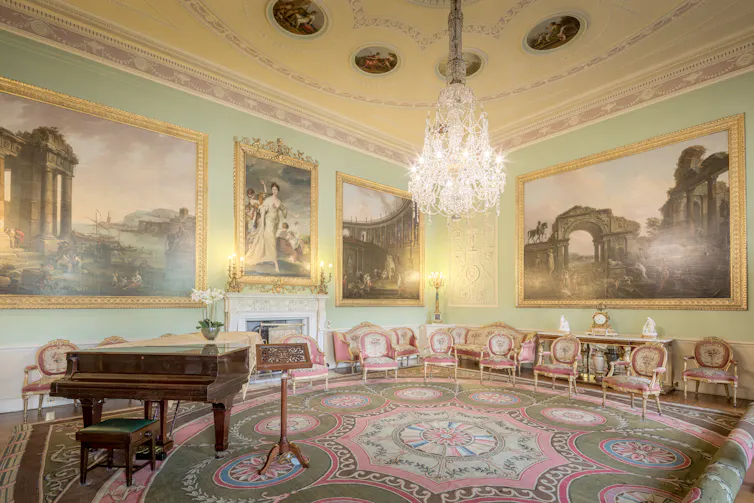
Trump says US talking with ‘respected’ figure in Iran. It may be a war veteran with a record of suppressing dissent

Source: Radio New Zealand

By Tim Lister and Leila Gharagozlou, CNN

Iranian Parliament Speaker Mohammad Bagher Ghalibaf looks on as parliamentarians chant in support of the Islamic Revolutionary Guard Corps (IRGC) in Tehran on February 1. Hamed Malekpour/WANA/Reuters via CNN Newsource

The Iranian official talked of as a potential interlocutor with the Trump administration once boasted that he personally beat protesters as a young police commander in the Islamic Republic.

Mohammad Bagher Ghalibaf, speaker of the Iranian parliament, has never been shy about his role in suppressing challenges to the Islamic Republic.

“Photographs of me are available showing me on back of a motor bike…beating (the protesters) with wooden sticks … I was among those carrying out beatings on the street level and I am proud of that,” Ghalibaf is heard saying in an audio recording from 2013 about protests years earlier.

In recent weeks, as the US-Israeli campaign has killed many of Iran’s top leaders, he has emerged as one of the most senior surviving civilian figures, part of a shrinking pool of officials now shaping the country’s response.

For the 64-year-old Ghalibaf, the security of the Islamic Republic has always been the overriding priority. His public remarks emphasise resistance, national strength, and the need to confront external pressure rather than compromise.

Little surprise then that he is now issuing declarations almost daily through social media in defiance of the United States and Israel.

President Donald Trump said Monday that the US was having “very strong talks” and was “dealing with the man who is most respected” in Iran, but declined to name him.

“We’re dealing with some people that I find to be very reasonable, very solid,” Trump told CNN’s Kaitlan Collins. “The people within know who they are, they’re very respected, and maybe one of them will be exactly what we’re looking for.”

Some reports said he was referring to Ghalibaf, who within hours denied there were any negotiations between Tehran and Washington.

He posted on X: “No negotiations have been held with the US, and fake news is used to manipulate the financial and oil markets and escape the quagmire in which the US and Israel are trapped.”

Iranian Parliament Speaker Mohammad Bagher Ghalibaf told a press conference in Tehran on December 2, 2025 that the main problem preventing the resumption of negotiations between Iran and the United States was the latter’s “excessive demands.” The two sides went on to hold indirect talks in February 2026 before the war broke out. Shadati/Xinhua/Getty Images via CNN Newsource

Throughout the conflict, he has regularly used social media to goad Trump and demonstrate a hard line on Iran’s conditions for ending the war.

“Certainly we aren’t seeking a ceasefire. We believe the aggressor must be punished and taught a lesson that will deter them from attacking Iran again,” he said on X on 10 March.

Ghalibaf was also prominent before the war broke out, warning that such a conflict would spread across the region.

“Any war in the region would not be short-lived and would not be confined to a single party or a specific geography,” Ghalibaf told CNN’s Frederik Pleitgen in late January.

Experts say he has connections across the regime’s centers of influence that would afford him a critical role in any negotiated settlement.

“He is the guy running the show,” said Hamidreza Azizi at the German Institute for International and Security Affairs.

Ghalibaf is less interested in ideology than power and shows a Machiavellian touch at times, says Azizi added. “For him, the ends justify the means,” he told CNN, pointing to his shifting perspectives through the years on economic and other issues.

Across a lifetime of service to the Islamic Republic, Ghalibaf has become the consummate regime insider, unfailingly loyal to the Islamic Revolution of 1979 and supportive of its regional ambitions.

As a teenager, he joined the Islamic Revolutionary Guards Corps (IRGC) during the Iran-Iraq war in the 1980s.

That marked the start of a lifelong association with the IRGC, which has evolved into a powerful force to suppress dissent at home and project Iran’s influence abroad.

Ghalibaf later commanded the IRGC’s air force and has boasted about his skills as a pilot. A video from October 2024 shows him at the controls of an aircraft approaching Beirut amid Israeli air strikes.

Security first

Azizi described him as above all a “security first” official.

Ghalibaf was involved in crushing of pro-reform student protests in 1999 and was among IRGC commanders who warned then-President Mohammad Khatami, a reformist, that the unrest threatened national security and could force the Guards to intervene. He oversaw the suppression of further student demonstrations in 2003 as police chief and held a senior security role during the widespread protests that followed the disputed 2009 election.

Mohammad Bagher Ghalibaf pictured on March 12, 2005 after handing in his resignation as Iran’s police chief in order to stand in that year’s presidential election. Behrouz Mehri/AFP/Getty Images via CNN Newsource

Yet Ghalibaf also has a reputation as an effective manager thanks to a 12-year stint as mayor of Tehran, during which he modernised the capital’s infrastructure and oversaw ambitious housing programs as well as the creation of green spaces.

Azizi, who lived in Tehran at the time, said Ghalibaf projected an image of managerial competence.

But his tenure as mayor was dogged by frequent allegations of corruption, which resurfaced four years ago when his family came under scrutiny over substantial assets declared abroad.

Ghalibaf has long harbored ambitions for higher office. He ran unsuccessfully for the presidency several times but ended up splitting the conservative vote. In last year’s election, he finished a distant third, with around 14 percent of the vote.

His power base has instead become Iran’s parliament, where he has served as speaker since 2020, thanks in part to the support of Supreme Leader Ali Khamenei, who was killed in an airstrike on the first day of the war.

Throughout his career, Ghalibaf has remained closely aligned with Khamenei and the IRGC, and has at times clashed with other conservative figures, including former President Ibrahim Raisi. He was an early supporter of Khamenei’s son, Mojtaba, who has now succeeded his father, even when the younger Khamenei was considered a long shot for the role.

Ghalibaf is also tied to the new supreme leader through family. He is a relative of Mojtaba’s mother, who died of injuries sustained in the Israeli strike that killed her husband on 28 February.

If he does take on the mantle of negotiating on behalf of Iran, his record shows that he will pursue deterrence and strength rather than compromise.

– CNN

– Published by EveningReport.nz and AsiaPacificReport.nz, see: MIL OSI in partnership with Radio New Zealand

All Black winger Emoni Narawa recommits to NZ rugby

Source: Radio New Zealand

Emoni Narawa of the All Blacks. Jeremy Ward / PHOTOSPORT

The desire to play at a Rugby World Cup made Emoni Narawa’s decision to stick with New Zealand rugby an easy one.

The All Blacks and Chiefs winger has extended his commitment through to the end of 2029.

“Wearing the black jersey has been an honour and I’m excited for the opportunity to compete for a spot to wear it again and chase my World Cup dream,” Narawa said in a statement.

“I’m looking forward to what’s ahead and hoping I can help our Chiefs whānau secure a Super Rugby title. My little family and I are blessed to stay here. God is good.”

Fijian-born Narawa made his Super Rugby debut for the Blues in 2020 before moving to the Chiefs in 2022.

The 26 year old played his 50th Super Rugby game against the Highlanders last month.

It was his first match after puncturing his lung playing for the All Blacks against South Africa, in the win at Eden Park last year, his fourth test.

Chiefs head coach Jono Gibbes was delighted Narawa had recommitted as he was aware there was considerable offshore interest in the talented wing.

“It’s great to know he not only wants to help us win a Super Rugby Pacific title, but that he has serious goals about getting back in the All Blacks and helping them win Tests too.”

– Published by EveningReport.nz and AsiaPacificReport.nz, see: MIL OSI in partnership with Radio New Zealand

New Zealand rural towns struggle with little alternative options amid fuel crisis

Source: Radio New Zealand

Laskeys Auto Service in Paihiatua. Charlotte Cook/RNZ

It’s an easy alternative for most, fuel prices jump so you make use of public transport, or pedal power, but for many small towns around New Zealand it’s simply not an option.

Petrol prices have increased by almost $1 per litre on average in the past month, according to price tracker Gaspy, and diesel even more, as global energy markets react to Iran’s military grip on the Strait of Hormuz following the war launched by the US and Israel.

Prices rise at Laskeys Auto Service Charlotte Cook/RNZ

But for those in the small rural towns, they have little choice but to carry on.

Richard was in Featherston fuelling up at the sole Mobil station. Diesel was at $2.99 while 91 sat at $3.29 per litre.

When asked how he was feeling about the price rises he said, he didn’t know. Why? because he doesn’t look at them.

“Never have, not for years, as soon as it went over $2 it was a waste of time looking at it.”

He said no point fighting what you can’t change.

In small town Eketāhuna there is just one gas stationed, owned by the same people as the Four Square, a book store, a couple of op shops and an information centre.

It’s at least 30 minutes to the nearest grocery store.

One local said having a car was essential.

“I think people are going to have to look at car sharing, or going without a car.

“I’ll have to extra careful, probably only go into Masterton for essentials, maybe once a fortnight rather than once a week.”

Even doing that creates a difficulty, trying to pay for two weeks worth of groceries in a bid to save fuel costs, she said.

“It’s not great, it’s pretty scary.”

There’s also no public transport in Eketāhuna to alleviate the stress, something Kevin Ashwell from Woodville knows all about.

He owns Woodville Mart and said the situation was dire, the main road is closed for roadworks on top of a fuel crisis keeping people away.

Kevin Ashwell’s shop Charlotte Cook/RNZ

“It’s cruel, it puts the price of everything up.

“I’ve never seen so many people short of money, they are now ‘do I pay the insurance?’, ‘no,I won’t because I can’t afford it’ and that’s not going to get any better with a fuel price increase.”

“We have no alternative, we have to drive.

“Everyone uses fuel, we don’t have public transport, no trains, busses, we can’t get a taxi.”

In Paihiatua, Kevin Laskey was seeing a different side of the crisis. He’s owned Laskey’s Auto and petrol station for 26 years and said the last two weeks had been very interesting.

“Record sales on some days and then not much sales the next days when the fuel prices jumps, I’ve never seen it jump 30 odd cents before in one hit.”

Kevin Laskey has owned Laskey’s Auto and petrol station for 26 years. Charlotte Cook/RNZ

He said supply had been ok, but he was astonished by how differently people were purchasing.

“We have the supermarket fuel dockets, 8 cents a litre off at New World, and that’s doubled, everyone is using them if they can to save a little bit.

“People are sorta hearing that there is going to be a price increase and all of a sudden the sales goes up.”

Lucky for Laskey he also sells bike parts, which are also coming in handy.

“I just had a customer come in and buy a bikeseat to get the old bike going so he can ride out to Fonterra, so that’s going to happen potentially more and more.”

In Masterton, one man said he was just trying to keep his vehicle going, well, cause he had to.

“I put $25 in and it’s not even showing.

“I’ve gotta keep the bloody thing going, can’t do much about the situation … I’ve got to drive.”

He laughed as he said he can’t cry about it, as that wouldn’t help either.

Wellingtonian Dean Tredray was in Greytown with his 1946 Chevrolet Pick up. He said the fuel prices didn’t bother him.

“I’d be happy to pay double to stop them, to stop the Iranians.”

Dean Treadray in Greytown with his 1946 Chevrolet Charlotte Cook/RNZ

Tredray also had no plans of changing his habits.

“Fuel is like beer, you have to have it”

It’s not the same story for Aimee. She’s become a frequent flyer at the Foxton Waitomo trying to keep her tank as full as possible for the cheapest price.

“I’ve sort of got a plan right now, if my lever or metre goes down just one line I’ll fill it up.

“Instead of buying some snacks for my kids I have to cut down, and that really breaks my heart because I want to feed them more, that’s their joy, the food.”

She was worried what she would have to cut next if the prices continued to rise.

Sign up for Ngā Pitopito Kōrero, a daily newsletter curated by our editors and delivered straight to your inbox every weekday.

– Published by EveningReport.nz and AsiaPacificReport.nz, see: MIL OSI in partnership with Radio New Zealand

Blues and Drua to play for Joeli Vidiri trophy

Source: Radio New Zealand

NZ sevens wing Joeli Vidiri with his gold medal. Kuala Lumpar Commonwealth Games 1998. Andrew Cornaga / www.photosport.nz

The Blues and Fijian Drua will in future play for the Joeli Vidiri Memorial Trophy whenever they meet in Super Rugby.

The two clubs made the announcement with the trophy up for grabs for the first time this Saturday night at Eden Park.

Vidiri, a powerful winger, was born in Fiji in 1973 but played his rugby in New Zealand.

Joeli Vidiri with the Super 12 trophy, 1997. Alan Lee / www.photosport.nz

He debuted for Counties Manukau in 1994 and the Blues in their inaugural Super Rugby season in 1996.

Vidiri scored 43 tries in 61 appearances for the Blues and was a part of an exciting backline that also included Jonah Lomu, Eroni Clarke and Carlos Spencer.

He represented Fiji before going on to become an All Black in the late 1990s.

Vidiri’s career was cut short after he was diagnosed with a serious kidney illness in 2001. He died in 2022.

The trophy will be contested every time the Blues and Fijian Drua meet.

A Blues statement said: ‘Vidiri, who is remembered for his power, humility, and infectious joy, made a permanent mark during his time in Auckland while remaining deeply connected to his Fijian roots. The new trophy recognises his unique role in bridging two proud rugby nations.”

The trophy incorporates elements that pay tribute to both regions.

As part of the inaugural presentation, the Vidiri family will play a central role in match-day proceedings, with a special on-field moment planned to award the trophy.

– Published by EveningReport.nz and AsiaPacificReport.nz, see: MIL OSI in partnership with Radio New Zealand

Consistency the key as Liam Lawson prepares for Japan GP

Source: Radio New Zealand

Formula 1 driver Liam Lawson of Visa Cash App Racing Bulls Formula One Team MARCEL VAN DORST / AFP

Analysis – Consistency is the word that has been linked with Liam Lawson ever since he joined Formula 1 in 2023.

It remains the topic as he heads into round three of the 2026 season.

He has had the highs of finishing fifth at the 2025 Azerbaijan Grand Prix and lows of not finishing.

Lawson managed to rescue his 2026 season before it had a chance to spiral with an impressive outing at the Chinese Grand Prix.

The year couldn’t have started any worse when, after qualifying well, he had a slow launch in the Australian Grand Prix.

He eventually finished 13th, but most notably he was well behind his rookie team-mate Arvid Lindblad.

Liam Lawson on the grid. FLORENT GOODEN / PHOTOSPORT

Lawson is the senior member of the Racing Bulls team, but the 18-year-old Briton has already shown he is quick and the pair are set for a tussle in the coming months.

This weekend’s Japan Grand Prix marks a year since Lawson returned to the Racing Bulls team after being demoted from Red Bull following a difficult start to the 2025 championship.

The 24-year-old has always felt that he didn’t get enough time to prove his worth in the Red Bull car, but he has now refocussed and is out to prove he’s got a future with the junior team.

While it all fell apart with a poor start in Melbourne, he got back on track in Shanghai with seventh place finishes in both the sprint race and the GP.

“Exceptional” was the way Racing Bulls team principal Alan Permane described the team’s effort with Lawson adding that while they did everything right they still need more speed.

Unfortunately for a mid-table team like Racing Bulls that is a tall order and like China and a couple of races last year when Lawson was in the points, it generally comes down to strategy.

Tyre selections and pit strategies have rewarded Racing Bulls in the past and with Suzuka historically offering few overtaking opportunities, it will again be alternate thinking that will be needed.

A two-week break since China will have allowed teams to work on the issues that have plagued many with the new specification cars.

Liam Lawson at the 2026 Chinese Grand Prix. FLORENT GOODEN / PHOTOSPORT

Mercedes have the fastest cars and have scored 1-2 finishes in both races so far, while Ferrari are clearly the second best, while world champions McLaren failed to start in China.

After that and it is wide open with the once-dominant team of Red Bull having its issues, most notably Max Verstappen’s DNF in China.

Both McLaren and Red Bull need to respond in Japan, while Aston Martin need to show that they can at least be competitive.

As for Lawson, a quick qualifying time is needed, more points and more importantly show that he’s the number one driver in Racing Bulls.

Sign up for Ngā Pitopito Kōrero, a daily newsletter curated by our editors and delivered straight to your inbox every weekday.

– Published by EveningReport.nz and AsiaPacificReport.nz, see: MIL OSI in partnership with Radio New Zealand

Homelessness among older people at crisis levels, Christchurch Methodist Mission says

Source: Radio New Zealand

Jill Hawkey. RNZ / Penny Smith

The Christchurch Methodist Mission is warning that homelessness among older people is at crisis levels and that the situation is rapidly worsening.

The scale of the problem was laid bare during the launch of the charity’s cross-party Doors to Dignity campaign at Parliament on Tuesday night.

The mission said the housing situation for older New Zealanders had deteriorated significantly over the past five years.

Its executive director Jilll Hawkey said that, anecdotally, the number of older people rough sleeping was on the rise.

“We see it from our housing outreach teams, we’ve in recent weeks found a couple of women in their eighties who have been homeless and two men last week in their sevenites who are homeless,” she said.

Jilll Hawkey says the number of older people rough sleeping is on the rise. RNZ / Penny Smith

Hawkey said the housing crisis was especially bad for renters aged 65 and over.

”There is a lot of evidence that this is a growing crisis. The percentage of those aged over 65 years on the social housing register has grown at a faster rate than any other age group.”

The Christchurch Methodist Mission said two out of every three renters aged 65 to 74 spent 40 percent or more of their income on rent.

Hawkey believed the answer to the crisis was simple.

“We need homes to be built that are affordable, accessible and warm, that foster cultural connections and that are embedded in local communities. We know the difference that living in such a home makes.”

The charity’s Doors to Dignity campaign advocated for cross-party support for government investment in what it considered appropriate housing for older people.

Housing Minister Chris Bishop. RNZ / Penny Smith

Speaking at the launch, Housing Minister Chris Bishop said parliament did not use to take housing seriously enough, but now acknowleged there was a crisis.

He said housing supply did not meet the specific needs of older people.

”Fifty percent of people of the [social housing] register need a one bedroom house. Twelve percent of Kainga Ora stock is one bedroom. We’ve been building the wrong houses for years and years. We need to build simply, low cost affordable units, increasingly for seniors.”

Labour’s housing spokesperson Kieran McAnulty. RNZ / Penny Smith

Labour’s housing spokesperson Kieran McAnulty said flawed data was masking the true scale of the homelessness crisis among older people.

”We don’t know how many people are in severe housing hardship. We don’t know how many people are sleeping rough. We, up until now, have been relying on a census that happens once every five years and, frankly, despite the best efforts of all of you and others, if you are living rough filling out a form is not going to be a priority and then we have a five year gap before we have another idea.”

Green Party housing spokesperson Tamatha Paul. RNZ / Penny Smith

Green Party housing spokesperson Tamatha Paul said New Zealand did not have the infrastructure for older people to have a dignified life.

”Only 2 percent of our overall housing stock is accessible and that’s despite the fact that we have a growing ageing population and also despite the fact that more than a quarter of our population is disabled.”

New Zealand First said the latest Budget would fund hundreds of new social homes in Auckland and help lower borrowing costs for community housing providers.

The Christchurch Methodist Mission said the challenge of older persons’ housing was urgent.

Its Parliamentary petition to increase and target investment in social and affordable housing for older people had 911 signatures.

Sign up for Ngā Pitopito Kōrero, a daily newsletter curated by our editors and delivered straight to your inbox every weekday.

– Published by EveningReport.nz and AsiaPacificReport.nz, see: MIL OSI in partnership with Radio New Zealand

The race against time for people trapped in floodwaters

Source: Radio New Zealand

Flooding in Ōtorohanga claimed one life in February, with specialist rescue teams not pre-deployed despite the weather warnings. RNZ/Marika Khabazi

Fire and Emergency (FENZ) has been struggling to respond quickly to some rescue callouts when big storms hit – including one last month when a man died, well-placed sources say.

The specialist team in last month’s case near Ōtorohanga took 50 minutes to get out the door after they got the call for help. The team has been asking themselves if they could have saved his life, if they had been put on alert much earlier.

“We knew that every minute goes by, it’s not great for us. So there was a bit of angst in the appliance, you could feel it, the guys just want to get there and do what they’re trained for,” said a person with knowledge of what happened, who was not authorised to discuss the matter publicly.

RNZ knows of two other emergencies – one in January at Welcome Bay in Tauranga and another in Nelson in July – where sources believe FENZ did not get specialist teams to flood rescues quickly enough because the crews were not pre-deployed and ready to go, despite plenty of warning.

After the Nelson storm, FENZ was warned its systems had been slow.

But the agency has defended its response in all three cases.

It declined to be interviewed, but in a statement said water rescue teams were a national resource approved with national oversight to ensure they were deployed to areas of greatest need.

It pre-deployed swift water teams “when appropriate to do so” after local operational leaders had discussed it with police – who are in charge of co-ordinating water rescues – and Civil Defence.

Swift water rescues are not a core FENZ function. But they do come under “additional functions” in the legislation, which says it is allowed to help with them “to the extent that FENZ has the capability and capacity to do so” and as long as it retained its capacity to fight fires.

The swift water teams were in a fledgling form when Cyclone Gabrielle hit in early 2023, and some members have talked to RNZ about getting a “kick in the guts” from lacking the gear to do enough when the cyclone and the Auckland anniversary floods hit.

The problems with swift water predeployment and responding were not uniform, several sources said. Some districts were better than others at standing up teams or getting them out the door, and were improving. But they said headquarters was a problem.

It also did not help that not all local or volunteer brigades even knew that calling on them was an option, while there seemed to be no standard way for communications centres to let them know at the very start.

“In my opinion, they’ve struggled to be proactive to put teams into areas that potentially will need flood response,” said one of the several sources.

Time was never on their side. As floodwaters rose, any swift water team became less able to get in at all.

“We weren’t really going to be much use if we just turned up as it was kicking off.”

Ōtorohanga

A man in his 70s died after his vehicle was submerged on State Highway 39 near Ōtorohanga on the evening of 13 February.

A severe thunderstorm red warning for south Waikato and Ōtorohanga had gone out from MetService at 4.40pm that Friday afternoon, and another red warning was valid from 7pm.

That did not trigger pre-deployment of the closest swift water teams at Rotorua fire station to south Waikato.

The call logs showed that when it was called to go to the scene that night, it took 50 minutes to get on the road.

Twenty-two minutes of that was spent securing approval through a chain involving national commanders, and the rest spent getting ready for the job.

The first alert from the flooded highway was raised at 8.36pm by the Pirongia volunteer brigade, which FENZ said was “out supporting their community when they became aware of this developing incident”.

The call log suggested initially the volunteers knew they had “a couple of people trapped in flood water” and also that “a patient is currently trapped in flood water on top of a tractor”.

Three times in the next half hour the brigade asked for a helicopter or lines rescue team from Hamilton.

FENZ in a statement said: “It wasn’t initially clear that the person trapped on the tractor required medical rescue.

“A lines rescue team is not trained to undertake rescues in water. The condition of the person trapped in a ute in floodwaters was not known at 20.52.”

At 9.13pm, Pirongia was asked if the rescue was only for those on the tractor, and responded that the patient and firefighter on top of the tractor “tried to rescue some one else in a ute but lost sight of it”.

A few minutes later, the two people on the tractor were reported safe.

At 8.56pm, the log showed FENZ people in Waikato were “in conference” and requested the swift water team from Rotorua.

But the swift water team did not leave Rotorua till 50 minutes later at 9.46pm, and they never made it.

It took 22 minutes for the request to deploy them to work its way to the National Commanders Group for approval at 9.07pm, then to be passed on to Rotorua at 9.18pm.

It took another 28 minutes for the swift water team to get ready – some had to come in from home outside Rotorua – and out the door.

“For some reason our team just takes ages to get approved from like the bigwigs,” said an informed source.

They faced a 120km trip to the trapped man. They had been on the road for a few minutes when the call came in just before 10pm that he had died.

They were then diverted to Ōtorohanga, where they rescued at least 18 people in the dark from a house.

By contrast, fire callouts typically trigger much faster responses and times are tightly tracked against targets, which are reported back to Parliament.

FENZ told RNZ that pre-deploying a water rescue team was not raised by the Pirongia volunteer brigade.

The storm was “particularly severe” and it had received 800 calls on 111 about the storm on Friday and Saturday.

But it was focused on the risk of landslides, it said.

Weather modelling indicated the main risk was land instability and FENZ consulted Civil Defence, which was the lead on landslides.

“One request was received for support from a specialists water rescue team in Tairāwhiti, which was agreed to.

“There were no other requests.”

It predeployed Urban Search and Rescue (USAR) crew who deal with slips to the East Coast, Bay of Plenty and Wairarapa.

Welcome Bay – rescuing the rescuers

The month before Ōtorohanga, the Rotorua swift water team took hours to get to a rescue near Papamoa, on the night before the fatal landslide at Mt Maunganui campground on 22 January.

A red severe rain warning for Bay of Plenty had gone out at 9am the previous day – a Wednesday – and a local state of emergency was declared.

But most of the swift water team was not pre-deployed, either at Rotorua or closer to Tauranga, according to a FENZ message log and the police record.

When a call came from police about 12.30am overnight Wednesday-Thursday to rescue a “person trapped in flood water in car” near Papamoa, the Rotorua team was approved to go a half hour later.

But they were not actually assembled and sent.

“We are still in bed asleep at home when it is all going down,” said one of the sources.

Instead, a NZ Defence Force unimog with some police and firefighters on board went, and ended up rescuing four elderly people.

It was only when the unimog got stuck in a culvert about 4am, that the swift water team was sent from Rotorua station.

It was 5.45am before they reported in the log: “Swift water rescue just entering the water now.”

They eventually got to the unimog about 6am. The rescued people who had been on it for several hours had “mild hypothermia”.

Police told RNZ: “They were wet and cold but otherwise uninjured.”

Earlier, at just after midnight, police had called the unimog for help, but were told the vehicle was a transport – not a rescue asset – and that police should call swift water rescue instead.

“FENZ were contacted to deploy a swift water rescue team,” police told RNZ.

The swift water team at Rotorua was approved to go at 1.08am.

A fourth informed source said the unimog was under the assumption they were on their way – but they were not.

Police told RNZ that instead they discussed with FENZ the difficulty of getting in past rising waters, so went back to the unimog.

This time the unimog did set off, with some swift water rescue-trained FENZ staff and two police officers on board.

They rescued people on Waitao Road in Welcome Bay, but events then overwhelmed resources.

Driving back to dry land, the unimog hit slip debris hidden underwater and went into the culvert.

“We need water rescue,” came their call at 3.49am.

“Can we get swift water rescue activated as the Unimog is stuck with people in it… trapped and semi submerged… 12 POB [people on board].”

The water was 1.5m deep. Police told RNZ: “The unimog driver advised police that the occupants of the vehicle were in no immediate danger.”

The Rotorua swift water team was called for a second time.

A source familiar with this said: “Bear in mind as we were not pre-deployed, the team was at home, had to drive to station and uplift equipment and transportation.”

They then drove 70km to Welcome Bay. They unloaded their raft as close as they could get to the unimog and, joined by surf lifesavers, went in.

Meantime, a car had come down the hill “and hit the flooded water – no movement or headlights have been seen since”.

“Can you make swift water rescue aware and if further information is need[ed] they can speak to the stranded police officers on the unimog,” said the log.

At 6.20am the swift water team was coming back with the rescued people from the unimog in a raft to a chopper on a dry bit of road to fly people out, while another team was “heading further up to a car that is under water”.

“There wasn’t concern” by then, said another source. “Water levels were receding, it was shin deep.”

At 7.39am the FENZ call log said: “All crews back to dry ground inc life savers … all patients rescued.”

Nelson – ‘The public’s not probably getting the best bang for buck’

After last year’s Nelson storm, FENZ headquarters was warned its systems were too slow. National commanders took hours to approve swift water teams to pre-deploy from Christchurch and Wellington.

Instead of getting there in daylight, they arrived about 3am the next morning, almost 24 hours after the first members had been called in down in Canterbury.

It is understood the warning triggered an operational review, which RNZ has asked to see. FENZ said the review was ongoing.

“We can’t be turning up and being exhausted,” said an informed source.

“The decisions not to pre-deploy or [use] us could have catastrophic outcomes for the public, but it’s also for our people, too.”

The frustration about when they got pre-deployed by national commanders – or were approved to actually go to a rescue – appeared strongest at the front line.

“We’re at home having dinner while they [flood victims] are there getting stuck,” said a third informed source.

Several sources suggested the policy should be that if a known flood-risk area, or one recently flooded, got a red weather alert, that should trigger swift water predeployment.

The swift water rescue teams based at Christchurch – two teams of four usually go out in utes and trailers – were called in four times to Nelson-Marlborough in the floods of June and July 2025.

Three times they made it, and a source said that pre-deployment had worked pretty well.

But the fourth time on 29 July was the worst flooding – and the slowest response.

After waiting all day for a green light, crews set off themselves, even though night was falling. Nelson had already been drenched – it should have been a quick, easy decision to pre-deploy, they felt.

As it was, they made their first rescue around the same time they would have been just arriving in Nelson had they delayed and left the next morning.

“The public’s not probably getting the best bang for buck.

“It’s also our volunteers and our firefighters that may not have that resource and will have to make a harder call than they would have needed to if we’d already been there.”

“If the event had carried on any longer … our own personal safety would have been [at] higher risk because we were just so tired because we had to drive through the night.”

Sign up for Ngā Pitopito Kōrero, a daily newsletter curated by our editors and delivered straight to your inbox every weekday.

– Published by EveningReport.nz and AsiaPacificReport.nz, see: MIL OSI in partnership with Radio New Zealand

Artificial intelligence could soon be used to help screen for breast cancer

Source: Radio New Zealand

AFP

Artificial intelligence could soon be used to screen for breast cancer in the public system.

Experts say using AI as a second set of eyes for mammograms could make better use of our radiologists – as long as its trained on the right data.

Typically, the tool works by assessing a mammogram for tumours, using past examples of positive and negative scans to make a decision on whether a tumour is present, not present, or unclear, meaning the patient should get a second scan.

A Swedish study of 100,000 women found a higher rate of early detection, and a UK study of ten thousand women found it increased detection generally by more than 10 percent.

Just last month, the New Zealand government put out a request for information on the topic, assessing the market. The tender closed on 4 March.

Breast cancer is the most common cancer affecting women in New Zealand, killing more than 650 each year, and more than 3700 diagnosed, according to the Breast Cancer Foundation.

Dr Mehdi Shahbazpour from the Breast Cancer Foundation explained in New Zealand, two radiologists looked at each scan.

If AI could replace one of those, it could alleviate some of the pressure on a stretched workforce.

“Our shortages of radiologists are real, they’re impacting screening, they’re impacting treatment and diagnosis. We need to implement a solution fast – next one to two years is our preferred timeline.”

Recalls – where a second screening was required as the first was unclear – added additional load, he said, and overseas AI had been shown to reduce recall rates, and improve accuracy.

Studies had also shown it was better at catching “interval cancers” – that is, those which appeared between scans, usually because of symptoms like lumps, and usually signalled a more aggressive form of cancer.

The timeline for introducing a new system was variable, with a lot of unknowns.

“We want New Zealand to be a fast follower,” Shahbazpour said. “Don’t try to reinvent the wheel, go with trusted models that have been implemented elsewhere.”

Dr Karaitiana Taiuru, an expert in AI and data governance, said if we were to adopt a tool developed overseas, it was important to train it on local data.

Research has shown characteristics like breast tissue density vary between ethnicities. Māori and Pacific women have typically more dense breast tissue than, for example, an American woman’s.

“The risks there are that the AI could just not see a cancer,” Taiuru said. “Or it might see something that is not a cancer, but say it is a cancer.”

That local dataset was ready-made, with the country’s history of mammograms already on-file.

Taiuru said as long as it was fed the right data, AI could actually remove bias.

“The AI doesn’t care if you’re Māori, or if you’re Asian, or if you’re European.”

He said people should be able to opt out of having their data fed to AI if they chose to, including for cultural reasons.

While the government scouts for information, private companies are a step ahead, with some already working to introduce AI tools.

Shayne Hunter, chief digital officer for RHCNZ, the parent company of Auckland, Pacific and Bay Radiologies, said for them, its arrival was imminent.

He said they planned to use it for private diagnostic and screening work, catering for women who fell outside the criteria of the public system and chose to pay.

“We have a capacity issue in the health system in that we don’t have enough breast radiologist, and so part of this is about creating capacity to meet the demand,” Hunter said.

Ongoing clinical governance would be key, he said, to make sure clinicians didn’t come to rely on AI, or become disinclined to challenge its results.

“The key thing about AI is there is still a human in the loop,” he said. “We still have a human that will absolutely check every image.”

Nicholas Knowlton, a senior research fellow at the University of Auckland, said it was clear the tool was effective.

“Should the public be paying for these things, is the question, and how much should we be paying? If we take a Pharmac-type of approach and demand high value for money, yeah, why not?”

Were there any risks? Not with the tech itself, anyway.

“The model is decision support,” he said. “It’s like spellcheck on your document when you’re writing. It says ‘This word’s spelled wrong,’ you look at and go, ‘No, that’s right. This is what I meant to say.’ It’s helping, it’s not making clinical decisions for us.”

“I think the risk is dragging our feet and missing cancers that can be detected earlier.”

Sign up for Ngā Pitopito Kōrero, a daily newsletter curated by our editors and delivered straight to your inbox every weekday.

– Published by EveningReport.nz and AsiaPacificReport.nz, see: MIL OSI in partnership with Radio New Zealand

NZ has ‘seized opportunities’ to work closer with US on defence, space – MFAT briefing

Source: Radio New Zealand

A MFAT briefing says technology cooperation is increasingly significant to the relationship between the US and NZ. 123rf

New Zealand’s attempts to get more cooperation with the Trump administration on defence, space and sensitive technology sectors has been paying off, according to an official briefing.

“New Zealand has seized opportunities in the first year of the current US Administration to register – at all levels – the importance of US-New Zealand cooperation across these sectors,” said a Ministry of Foreign Affairs and Trade (MFAT) briefing, dated November and newly released under the Official Information Act.

“There is support in Washington for stronger partnership with us.”

In the latest bilateral move, NZ Space Agency officials will meet their counterparts in Washington this week.

This second US-NZ space dialogue – two years after the first – aimed to “strengthen bilateral space cooperation” but details were confidential, the agency told RNZ.

It has coincided with the US Department of Defence finalising a study looking at options for its increasing number of rocket launches – including at sites in other countries.

With Cape Canaveral and its other launch sites under growing pressure, a Pentagon study – due back with US lawmakers next week – covers environmental, regulatory, cost, geographic and orbital factors that may make alternate locations “outside the continental United States… viable or advantageous”.

RNZ has asked Congress’s armed services committee for a copy.

Defence, space and emerging tech have been evolving in new ways, at a time of big change including from US President Donald Trump applying America First policies and national security interests to international alliances, domestic production and arms exports.

Two impacts have been to tie commercial and military tech and space contracts more closely together, and to increase efforts to expand the US military industrial base. US law considers New Zealand to be part of that base.

‘Closer integration with key partners’

The November MFAT briefing said technology cooperation was increasingly significant to the relationship.

“Deeper cooperation with the United States in the defence, space and other sensitive technologies sectors has the potential to deliver significant economic and strategic benefits to New Zealand,” it said.

Local firms were advancing the country’s strategic interests by “facilitating closer partnerships and closer integration with key partners” but faced complex regulatory barriers and the growing ‘buy-America-made’ hurdle.

“Importantly, the Administration is open to investigating options for addressing regulatory challenges faced by New Zealand, particularly related to the US International Traffic in Arms Regulations (ITAR) and US domestic sourcing requirements.”

One option was to seek some sort of exemption from ITAR, it said.

The US has been lowering ITAR barriers for Australia and the UK because they are part of the nuclear-subs deal AUKUS.

The methods American firms could exploit that was the subject of a webinar this week from US trade officials – “Full Steam Ahead: AUKUS, ITAR, and the Keys to Australia’s Naval Supply Chain”.

Defence and Space Minister Judith Collins has been at the forefront of building the NZ-US relationship on these fronts, while also streamlining aerospace regulations and overseeing a defence capability plan rich in drone and emerging technology options.

But Collins steps down soon, and is not attending the Washington space dialogue or the US Space Force’s main annual symposium in Colorado next month, where last year she was the only non-US politician invited to speak.

At the symposium in 2024, New Zealand updated its agreement to align local space regulations more with America’s.

‘Few impediments to the transfer of technology’

However, the NZ Space Agency told RNZ it was not involved in the current Pentagon study that covered foreign launch sites.

Asked if New Zealand might be in danger of missing out on US business, the agency said: “Through our regulatory cooperation with the Federal Aviation Administration and the Technology Safeguards Agreement (TSA) with the US, the New Zealand Space Agency has been actively facilitating Rocket Lab’s provision of launch services from their private spaceport at Mahia since their inception. Customers of these services include US government agencies.

“If there was interest beyond Mahia, the New Zealand Space Agency would expect to become involved although not necessarily as the first point of contact.”

The November briefing said MFAT was prioritising work to strengthen the country’s export controls regime so it was more comparable “with our closest partners”, and to secure other short-term gains for local businesses in the defence, space and sensitive tech sectors.

“We have welcomed messaging from the US, at all levels, that as a close and trusted partner there should be few impediments to the transfer of technology between us,” it said.

In 2022, the US Congress said America should ensure that the Pentagon’s capabilities for rapid space launches “align with initiatives by Five Eyes countries” and other allies. New Zealand is in Five Eyes.

The US should implement space missions with allies that demonstrated “rapid launch, reconstitution and satellite augmentation from locations in the Indo-Pacific, European, and other theaters of operations” and “leverage allied and partner spaceports to diversify and disaggregate launch sites across the world for a multitude of missions, including national security missions”, it said.

After the first US-NZ space dialogue in 2024, the sides issued a statement focused on commercial space partnerships, and stating, “Participants acknowledged that New Zealand’s geographic advantages has enabled frequent and responsive launch for US industry and government agencies, adding strategic resilience to launch capacity.”

That year the NZ and US also launched a dialogue on critical and emerging tech, saying: “Both nations highlighted the necessity for increased interoperability with like-minded countries to address common challenges.”

Sign up for Ngā Pitopito Kōrero, a daily newsletter curated by our editors and delivered straight to your inbox every weekday.

– Published by EveningReport.nz and AsiaPacificReport.nz, see: MIL OSI in partnership with Radio New Zealand

‘It’s going to get messy’: Construction costs to jump

Source: Radio New Zealand

Supplied/ Unsplash – Josh Olalde

The inflationary effects of higher oil prices is already being felt in the construction sector.

The industry is still licking its wounds after a lengthy downturn and while recent economic growth numbers suggest there is a gentle recovery underway in residential, commercial construction has yet to really take flight.

Apollo Projects executive director Paul Lloyd said his company has had a positive 12 months, but there’s sector-wide concern that projects in the pipeline could be put on hold. Cost increases are already weighing on firms.

“I’ve already seen, for one of the materials we buy, a 30 percent increase coming through for something that is both freighted and made from a base product of oil and and this is where it’s going to get really messy,” he said.

“Even drainage pipe is oil-based, it involves a lot of heating and production. So that’ll start to move. It’s pretty much everywhere, isn’t it?

“Even a 2 or 3 or 4 percent increase overall, that can be the margin of a project, and then all of a sudden you’ve got contractors, and there’s subcontractors, and the whole pyramid starts to topple – it doesn’t do anyone any good when that happens.”

Cost pressures a drag on an already-strained sector

Construction sector leader at advisory firm BDO, Nick Innes-Jones said head contractors are likely not as well-prepared as they might have been in the past to endure an economic shock of this magnitude.

“We’ve come up off a lower base over the last couple of years,” he said.

“It’s pretty tough and it’s going to get tougher and tougher because, the activity slows down and having come off slower years, they might not just have that balance sheet to get them through that tougher period.”

Innes-Jones said subcontractors in particular are vulnerable.

“They’re obviously getting more squeezed on margin and if the industry then also slows down, I think there’ll be many out there that will not be able to see it through, especially if the Middle East war is prolonged.”

Risk tossed around like a hot potato

“Historically, clients and lawyers – they want to take the risk away and put it onto the contractor, because that’s what we should be good at, but it gets to a point you simply can’t,” Lloyd said.

“And so it’s going to be really interesting to see how teams negotiate contracts to fairly split risk.”

Lloyd said if demand does slow or projects are put on hold, there is a risk contractors will drop their prices in an attempt to keep busy, but that benefits no one.

“You’ll put a price in for a tender today, you may not engage one of those subcontractors for six months, and while they gave you a price when you tendered, they’ll go, ‘look, it’s no longer relevant,’ and it could be 20 percent higher.”

Sign up for Ngā Pitopito Kōrero, a daily newsletter curated by our editors and delivered straight to your inbox every weekday.

– Published by EveningReport.nz and AsiaPacificReport.nz, see: MIL OSI in partnership with Radio New Zealand

Government getting advice on proposal to boost Marsden Point storage

Source: Radio New Zealand

Shane Jones (front) descends from the top of a 27-metre-high fuel tank at Marsden Point. RNZ / Peter de Graaf

The minister responsible for fuel security says he has received proposals from import terminals to open up more diesel capacity, but any recommission of tanks would be a while off.

Associate Energy Minister Shane Jones said almost half of Marsden Point’s available storage was being used, and there had been a proposal to refurbish unused and empty tanks to boost diesel storage.

The tanks had been empty since the closure of the refinery in 2022, with Marsden Point now operating solely as an import and storage terminal for refined oil.

Jones said he had spoken to Rob Buchanan, the chief executive of Channel Infrastructure, which owned and operated Marsden Point.

“He said that there could be two tanks that could be repurposed, and he has sent through a proposal to us. However, because of the degradation since the closure of the refinery, it will take time,” Jones said.

“They have put forward a proposal to work, as I understand, with the Crown, to refurbish some storage tanks. Then the officials are working through, ‘do they think it’s a sensible thing to do and what it’s likely to cost the Crown and Channel if we were to work together?’”

He expected to receive that advice from officials “sooner, rather than later”.

The oil refinery at Marsden Point, at the entrance to Whangārei Harbour, was decommissioned in 2022. RNZ / Peter de Graaf

Jones had also spoken to the chief executive of the Port of Taranaki, who had told him there could be up to three days of storage there.

“But two thirds of the potential storage is owned by Methanex, so I’m in no hurry to chase Methanex out of New Zealand,” Jones said, adding Taranaki would also need some new infrastructure.

“I think Marsden Point are confident, if they can get some regulatory relief. Taranaki said they have to build a new bund, because the regulations have changed. So look, I think that if we’re going to do this, we need to strip away the regulations without creating a public nuisance, and also arrive at a point where we can, if not share the costs, work out how soon it can be done.”

Combined, Jones estimated it would add “several days” to diesel storage capacity, with costs going towards the refurbishment and then purchasing the diesel.

Those costs, Jones expected, would be shared between the Crown and Channel.

A spokesperson for Channel Infrastructure said Channel was aware of Jones’ comments, but it did not comment on discussions with any of its customers.

“Channel has identified some very preliminary options for significantly increasing diesel storage capacity at Marsden Point,” the spokesperson said.

The spokesperson said Channel had almost 300 million litres of fuel storage in service at Marsden Point, and an additional 350 million litres of tanks that “could be converted” to provide additional fuel storage if required.

“The government’s Fuel Security Study concluded that the best way to improve New Zealand’s resilience was to increase the in-country storage of fuels that are critical to keeping our economy moving, and Channel stands ready to put all efforts into safely assisting with additional fuel resiliency measures, should we be asked to provide them.”

Only a small degree of contortion is required for Shane Jones to enter the nation’s equal-biggest jet fuel tank. RNZ / Peter de Graaf

Fuel importers were required by law to hold 28 days’ worth of petrol, 24 days of jet fuel, and 21 days of diesel.

From 2028, the minimum requirement for diesel would increase to 28 days, if the fuel importer had more than 10 percent of the market share.

In 2024, the government stopped work on procuring 70 million litres of reserve diesel stock, saying it carried significant capital cost and Cabinet would need a robust understanding of options and their impacts before making decisions.

The fuel would have been funded through the Petroleum or Engine Fuels Monitoring Levy.

Instead, the government decided to explore other options to increase the diesel reserves from 21 days to 28 by 2028, and commissioned the Ministry of Business, Innovation, and Employment to study New Zealand’s fuel security requirements.

Under questioning from Labour’s energy spokesperson Megan Woods in the House on Tuesday, Jones said there was “no budget, no proposal that I could credibly take forward to my colleagues” on the reserve diesel stock.

New Zealand First has continued to blame Labour for the closure of the refinery in 2022, and has been attempting to tie the “degradation” of the storage capacity to the closure.

New Zealand First leader Winston Peters went as far as to suggest the refinery was “deliberately shut down, with the government’s connivance”.

New Zealand First leader Winston Peters . RNZ / Anneke Smith

In 2021, Labour had the option of providing a loan or subsidy to keep the refinery open, but then-minister Woods said there was not a strong case.

“There does not appear to be a clear case for maintaining refinery operations for fuel resilience reasons, except to address an exceptional ‘no fuel imports’ scenario,” she wrote in a 2021 Cabinet paper.

“This is an unlikely scenario, but not entirely implausible, therefore I believe the option of maintaining refinery capacity warrants an active decision by government.”

In the House, Jones accused Woods of making an “active decision” to close the refinery.

“If you close down 700 million litres of storage, 70 million is a mere drop,” he said.

Labour has repeatedly said the closure was a business decision made by its private owners, not a government decision.

“At most, you’d be talking about five days of unprocessed crude oil, in addition to whatever we have in terms of processed fuel onshore. Five days in the grand scheme of what we’re dealing with at the moment isn’t very much,” said Labour leader Chris Hipkins.

“There are certainly other things the government could have done over the last two years to increase our resilience. Marsden Point would be right at the bottom of that list.”

Labour leader Chris Hipkins. RNZ / Samuel Rillstone

During Question Time, Peters asked the prime minister if all the “anxiety” around supplementary reserves would be relevant if “they hadn’t shut down Marsden Point?”

“It was a critical piece of national infrastructure and that was a decision of a previous government,” Christopher Luxon responded.

Luxon was then made to withdraw the comment, after Hipkins raised a point of order to argue the previous government had made no such decision.

On Tuesday, Woods told RNZ she was supportive of proposals for more storage space.

“Absolutely, and I would hope the government’s looking at that right now,” she said.

But she accused the government of being “short sighted” for scrapping the 70 million litre strategic reserve plans, which were to be a “worst case scenario” to ensure critical services like fire engines, ambulances, and food distribution could keep running.

That would have been in place this year, Woods said, whereas the government’s increased requirement for 28 days of diesel holdings would not come into place until 2028.

“One of the reasons the government scrapped that strategic reserve and got rid of the request for proposals that was out there, they said it was cost. It’s several million dollars to build that facility, in terms of being able to hold it, but there was up to $100 million of built-up levy sitting in the Petrol Levy fund, essentially that had built up over Covid that we were proposing to use for that,” she said.

“Instead, the government has gone for an option where the fuel companies themselves will hold this additional diesel, which will cost motorists more for diesel at the pump, and it will be two years’ delay.”

Labour’s energy spokesperson Megan Woods. RNZ / Samuel Rillstone

ACT leader David Seymour has previously disagreed with Jones on the economics of keeping the Marsden Point refinery open.

But he saw the merits on using more of its storage capacity.

“The reality is it would probably be a levy on the fuels themselves. But if that was to be proposed, I think we would look at it very carefully on the costs and benefits. I think the world just changed, and we can see that having some more independence is probably not a bad bit of room to have.”

Sign up for Ngā Pitopito Kōrero, a daily newsletter curated by our editors and delivered straight to your inbox every weekday.

– Published by EveningReport.nz and AsiaPacificReport.nz, see: MIL OSI in partnership with Radio New Zealand

Industry groups call for new ‘Buy Kiwi Made’ as McCain Foods latest to face closures

Source: Radio New Zealand

McCain Foods has announced it will close its Hastings processing plant. Roberto Machado Noa

Industry groups and local government leaders are calling for the resurrection of a Buy Kiwi Made campaign as alarms sound over new job losses and factory closures.

McCain Foods announced on Tuesday it would close its Hastings processing plant weeks after Watties proposed cuts and closures in Hastings, Dunedin, Auckland and Christchurch.

Central Hawke’s Bay mayor Will Foley said the news came as shock, and he did not know how many people were affected.

But once factory workers and those across the supply chain were factored in, it would number in the hundreds, he said.

Central Hawke’s Bay mayor Will Foley. Supplied

“If you think of all the contractors that grow the crops, harvest the crops, the trucking companies, the logistics of moving the crops from farm to factories and from there to our supermarkets, you’d be talking about hundreds and hundreds of people impacted. Specifically losing their jobs, perhaps not as many on day one, but the longer term impact we’ll be getting into the hundreds, if not a thousand across Hawke’s Bay.”

Vegetable growing had played a huge role in Hawke’s Bay, including being the home of Watties, which was founded in Hastings in 1934.

The mayor wanted to see a discussion at a national level about the closures and their causes.

“What can we do to address some of these issues and help out the businesses that are still there, because otherwise we’re just going to see this happen again and again.”

Energy and production costs and inflation would all have played a part in the decision, he said.

“A lot of companies and industries affected by Cyclone Gabrielle citied concerns back then about the cost of energy making them contemplate not rebuilding their businesses, as well as the cost of production and such high inflation across the board.”

Labour leader Chris Hipkins visits the Watties factory in Napier while on the campaign trail in September 2023. RNZ / Samuel Rillstone

Foley was keen to see more education and information about the importance of buying New Zealand-made, even if it meant paying a little extra.

“We’re not just losing the more expensive product, we’re losing the whole supply chain and employment and logistics and everything. We might not notice the change overnight, but we’ll notice it eventually as we lose more and more.

“Educating people around buying New Zealand-made and the benefits over and above just buying that product, what it gives to New Zealand Inc is definitely something that should be highlighted and be made more aware to the population after decisions like this,” he said.

The closure would hasten a move away from farming for some, especially those already considering retirement.

Others might consider converting to other types of farming, such as dairy, sheep and beef or apples, while others would look at subdividing for housing – though it would be better to keep productive land for food production, Foley said.

Current issues around fuel supply served as a stark reminder of supply chain vulnerabilities and food security challenges.

“It could be no different with food if similar things happen and supply chains get impacted and ships don’t arrive. We certainly need to try and preserve what we’ve got already and what we produce in this country.”

Buy NZ Made was first launched in the late 1980s with the slogan “Buy NZ Made & Keep Your Country Working”, though organised campaigns to encourage shoppers to buy local date back to the turn of last century.

The concept recieved a boost as part of the co-operation agreement between the Greens and Labour in 2005, after the Green Party negotiated $11.5 million towards a Buy Kiwi Made campaign, with former Green co-leader Rod Donald as spokesperson. After his death, Green MP Sue Bradford led the programme, which included a marketing push and increased use of New Zealand-made products in government procurement.

The National government suspended the programme in 2008 but BusinessNZ continued to run the parallel Buy NZ Made campaign.

Two of the Buy NZ Made logos. Buy NZ Made

Process Vegetables New Zealand chair David Hadfield said New Zealand consumers needed to buy locally grown produce.

“Otherwise they’re going to wake up one day and there won’t be any and then we’ll be relying on other countries to supply us and we don’t know when the next Covid or a bigger conflict will happen and the boats aren’t coming here with product on board.

“We’re learning in a pretty drastic way with fuel at the moment, aren’t we, about what happens when we have to bring it all in?”

While local products could be more expensive, the bulk of the profit was made after vegetables left the processor, he said.

“The grower is getting about 10 percent of what a packet of peas sells for.”

He wanted a closer look at supermarket margins – which differed by department – as well as the role of distribution centres.

“New Zealanders definitely need to be looking at buying New Zealand grown,” Hadfield said, and should pay close attention to labelling.

“Look at where it’s growing, not where it’s packaged, because there’s quite a bit of stuff coming into the country in bulk and then getting packaged to you,” he said.

It was impossible for New Zealanders to compete with countries where growers were subsidised or where pay and safety regulations were very low, Hadfield said.

The government also needed to investigate imported produce and whether there may be cases of dumping.

“I don’t know the government’s done anything through the Commerce Commission or anybody else to look at that.”

Process Vegetables New Zealand chair David Hadfield wanted a closer look at supermarket margins. RNZ / Nick Monro

In early March, Watties proposed closing factories in Auckland, Dunedin and Christchurch, and shutting down processing lines at one of its Hastings factories.

The move would see 350 workers made redundant, 220 suppliers affected and the end of Wattie’s frozen vegetables, Gregg’s coffee and other household names.

Submissions on the proposal close this week.

In September, Wattie’s reduced its Hawke’s Bay peach production, cutting the contracts of some suppliers in the face of what it claimed was dumping from cheaper markets.

An investigation later found Chinese company J&G International Co. Ltd had been dumping peaches, causing “material injury to the New Zealand industry”.

Sign up for Ngā Pitopito Kōrero, a daily newsletter curated by our editors and delivered straight to your inbox every weekday.

– Published by EveningReport.nz and AsiaPacificReport.nz, see: MIL OSI in partnership with Radio New Zealand

The suburbs where values rose 6 percent in three months

Source: Radio New Zealand

Thirty suburbs increased in value by more than 3 percent, many of which were in Otago. 123RF

Karitane, in Dunedin, and Blackball in Grey District experienced house value increases of 6 percent in the three months to March, while Little Wanganui, in Buller, dropped by the same amount.

It’s a mixed picture that shows the uneven nature of the housing market at the moment, property data firm Cotality said.

It has released its latest update of suburb-level house value data, which shows 56 percent of suburbs tracked had flat or rising standalone house values in the three months to March.

That is up from 44 percent three months earlier.

Cotality chief property economist Kelvin Davidson said it showed that while at a high level the market seemed to be trending sideways, buyers and sellers around the country would have varying experiences.

“The proportion of suburbs that have seen price increase is starting to grow a little bit. I think that’s consistent with what we’ve seen over the past couple of months in higher-level home value indices… perhaps signs of a little bit of growth there and it’s just reflecting that broadening out across more suburbs.”

Thirty suburbs increased in value by more than 3 percent, many of which were in Southland, Otago and the West Coast.

Davidson said relatively better affordability and the strength of the farming sector at a regional level had probably supported housing demand in those regions.

“Many areas where we are seeing growth are the sort of provincial regional areas where affordability is a bit better, the farming sector is going well which is supporting cash flow in those areas and just general economic activity and confidence.

“Affordability’s better, not only in terms of the absolute level of house prices, but in relation to incomes as well.

“So affordability is a bit more supportive, the underlying economy is a bit more supportive, so we’ve seen a bit more growth, as opposed to parts of the main centres where service activity is a bigger part of the economy, and that’s still struggling a little bit, and values are a bit more restrained in those areas.

He said lower mortgage rates were also likely to have helped confidence over the period.,

But he said it should be characterised as resilience rather than a boom.

In the main centres, Crofton Downs and Kelburn in Wellington were up 3 percent to 4 percent while Stillwater in Auckland and Aranui in Christchurch were up 2 percent.

Little Wanganui in Buller fell by around 6 percent, while Wellsford in Auckland’s Rodney district dropped by almost 3.5 percent.

“”When you drill down to suburb-level data, conditions become much more varied. Some areas are already seeing values stabilise or edge higher, while others remain softer depending on local economic conditions, supply levels and affordability,” Davidson said.

Among standalone houses, Herne Bay in Auckland was the country’s most expensive suburb, with a median house value of around $2.99 million, followed by Saint Mary’s Bay at $2.86 million.

At the other end of the spectrum, several suburbs had median house values below $300,000, including Patea in South Taranaki, Blackball in Grey District, and Clinton in Clutha.

Davidson said international conflict was likely to keep a lid on confidence in the short term.

“It’s not difficult to imagine that buyer and seller confidence remains pretty cautious, and common indicators a little bit better, mortgage rates are down, but that caution factor could hang around, or in fact even get a bit more cautious.

“You’d imagine that housing market indicators could well remain pretty soggy for the next little while too, so you’ll see how it plays out.

“We’re seeing property values pretty flat, rents pretty flat, house building costs are flat, so there’s lots of inflation concerns, but the housing market for once is not one of those concerns.

So that’s a bit of a silver lining for the Reserve Bank.”

Sign up for Money with Susan Edmunds, a weekly newsletter covering all the things that affect how we make, spend and invest money

– Published by EveningReport.nz and AsiaPacificReport.nz, see: MIL OSI in partnership with Radio New Zealand

Fuel prices keep drivers off roads

Source: Radio New Zealand

AFP / ROBERT MICHAEL

Rising fuel prices appear to be keeping some travellers off the roads in the main centres.

Simplicity chief economist Shamubeel Eaqub helped RNZ compile NZ Transport Authority data showing traffic at sites throughout the country.

It shows Auckland’s light vehicle traffic numbers are down 2.2 percent and Wellington 4.5 percent.

Christchurch’s are up and heavy vehicle activity is also up across the country.

“Essentially what we are seeing in the very latest data from Auckland and Wellington is the volume of car driving has come off a bit, and that suggests that people are responding to the increase in prices and the uncertainty around fuel supply.”

He said that was a trend that was likely to continue.

“I think prices have risen even more since then and high prices discourage people from driving, so it’s not surprising.”

He said the early shift was likely to be among people who were able to choose to work from home but some people would find that difficult.

“We remember back during Covid, those people who were essential workers still had to come to work. Back then it was about exposure to virus, now it’s about exposure to cost.”

Infometrics chief executive Brad Olsen said it would take time to show the trend in the data.

“Some people will still be burning through the remaining fuel they might have purchased beforehand.

“I think it’s more one of those things that, given we have heard of a high level of public transport use, it does seem like there are some early suggestions that people are moving their sort of transport means and methods.

“But I think probably too early to make it definitive that you’re seeing an absolute switch in activity.”

AA spokesperson Terry Collins said he had noticed an increase in public transport use.

“The train to Greytown last week was chocka with 56 standing.”

At Gaspy, founder Mike Newton said he had heard from a number of people who were driving less or switching to cycling.

“People are definitely looking for alternatives.”

People who were able to work from home were likely to be doing so more often, he said.

But he said the drop in crude oil prices in recent days should help to stop prices from increasing as quickly.

“There’s so much uncertainty … I’m not sure we’ll see a drop but we might see the price levelling.”

Sign up for Money with Susan Edmunds, a weekly newsletter covering all the things that affect how we make, spend and invest money

– Published by EveningReport.nz and AsiaPacificReport.nz, see: MIL OSI in partnership with Radio New Zealand

Wellingtonians’ water bills jump by hundreds of dollars, more increases to come

Source: Radio New Zealand

Tiaki Wai is replacing Wellington Water and inheriting the region’s assets – managing and providing drinking water, wastewater, and piped stormwater services from July. RNZ / Samuel Rillstone

Wellingtonians will face “really steep” increases in their water bills over the next decade as its new water entity tries to fix old, failing infrastructure, its chairman says.

That would start with an average increase in water charges for Wellingtonians of 14.7 percent, or an extra $310 this year, with charges possibly increasing by 28 percent in 2027-2028, and more than doubling by 2036.

Put another way, an average household across Wellington’s four cities – Wellington, Lower Hutt, Upper Hutt and Porirua, was set to pay about $2418 per year this coming year, and pay $6831 (with inflation) by 2036.

Releasing the indicative charges in its water services strategy on Wednesday, Tiaki Wai board chairman Will Peet said he knew the price rises would be unpopular under cost-of-living pressures, but the topic needed to be addressed now.

Chair of Tiaki Wai Will Peet. Supplied / Tiaki Wai

“We’re conscious that everyone’s been facing rising costs over the past few years, and that any increase is challenging for people.

“And I think, also for me, It’s taken 30 years to get to this position, and it will take more than five minutes to fix.”

Tiaki Wai was replacing Wellington Water and inheriting the region’s assets – managing and providing drinking water, wastewater, and piped stormwater services from July.

Wellingtonians – those living in Wellington City, Porirua, Hutt City, and Upper Hutt – who had been paying for water through council rates, would receive a separate water bill from 1 July for water services, and would have to set up a new payment plan.

Peet said this year, the exact amount of bills would vary from city to city and property to property in the same way rates varied.

For example, this year Porirua residents would pay an average increase of $368 per year for water charges, Lower Hutt residents an extra $349, Upper Hutt residents an extra $278 and Wellington residents an extra $275.

The four councils’ rating model was being transferred to Tiaki Wai for the first year’s bills, but over time, the organisation would move to a common pricing model.

Peet said he wanted to be upfront with residents about what costs would look like, and to ask them for feedback on the organisation’s strategy.

“That said, these are still really steep increases and I know you’ll see some of that from other water authorities around the country, but these are significant increases.”

He said no one would have their water turned off if they were struggling to pay a bill.

Wellingtonians are facing “really steep” increases in their water bills. RNZ / Nate McKinnon

According to its strategy document, Tiaki Wai had a hardship policy, including issuing reminder notices and contacting external debt collecting agencies if necessary, but Peet told reporters debt collecting was not what the organisation was considering right now.

Peet was blunt about the challenges for the organisation, saying it would take many years to catch up with decades of underinvestment.

“Infrastructure everywhere, you can’t keep on kicking the can down the road otherwise it comes back to bite you,” he said.

“We have been deferring expenditure in water for a long time, and it’s not my place to determine past decisions, what I can tell you now is that we need to make the hard decision and start to invest.”

The strategy document noted many critical assets were in a poor condition, too old and presenting a “significant risk of failure”, including that three out of four wastewater treatment plants were non-compliant, with problems going back many years.

Wastewater networks were overflowing and stormwater systems were regularly contributed to flooding and pollution, it said.

Added to this was the organisation’s financial position – Tiaki Wai needed more money to operate, Peet said.

The organisation would take over $9 billion of water assets and around $1.7b of debt from the councils, but the amount of revenue being collected by councils – about $385 million in 2025-2026 – had not been enough to meet the long term cost for water services.

One of the organisation’s main priorities from July is to fix the Moa Point Treatment Plant. RNZ / Samuel Rillstone

One of the organisation’s main priorities from July was to fix the Moa Point Treatment Plant, Peet said, which was still spewing raw sewage into the sea after a catastrophic failure in February.

Peet would not comment on if there was a plan to stop that, and said it was a “bit early to say” how much it would take to fix the plant, referring those questions to current owner Wellington City Council.

“We’ll be working really closely with Wellington City, as they work through the Moa Point issue. I live near the South Coast myself, I know what an impact it’s having, we all know we need to do the right fix, at the right time to make sure it stops.”

He would also not comment on any current suppliers operating the plants, including Veolia.

The organisation had been set some strict targets by Wellington regions’ mayors and mana whenua partners, including that it would not receive any abatement notices, fines, or prosecutions from Greater Wellington Regional Council for non-compliant plants.

Peet said it was the right target to aim for, but with long-standing infrastructure issues, it would not happen in first year.

“We won’t be meeting those in the initial stages, because Wellington Water is not meeting them.

“What happens on the 30 June, will be pretty much what happens on 1st July – that said I think it’s an entirely reasonable expectation that the people of Wellington, through the partner’s committee, should set us some aspirational goals to improve things.”

Sign up for Ngā Pitopito Kōrero, a daily newsletter curated by our editors and delivered straight to your inbox every weekday.

– Published by EveningReport.nz and AsiaPacificReport.nz, see: MIL OSI in partnership with Radio New Zealand

Father’s meningitis plea after daughter’s death

Source: Radio New Zealand

Gerard Rushton and his wife Claire hold a picture of their daughter, Courtenay, who died of meningitis in 2014, at 16 years old.   Mike Clare / clickmedia.nz / supplied

A grieving dad renews his call for free meningitis vaccines as cases hit NZ students, and a deadly UK outbreak grows.

A grieving Kiwi dad, who lost his only daughter to meningitis, is renewing calls for free vaccinations for all New Zealand students as fresh cases emerge in Dunedin and a deadly outbreak unfolds at a United Kingdom university.

Gerard Rushton, chair of the Meningitis Foundation Aotearoa, has spent more than a decade campaigning for change after his 16-year-old daughter Courtenay died suddenly from the disease after Christmas in 2014.

Now, amid renewed concern about the spread of meningococcal disease among young people, both here and overseas, he says not enough is being done to protect students.

“We are calling on the government to do the right thing, to protect our young people, because we are losing the lives of our young people to a disease that is vaccine-preventable,” Rushton tells The Detail, arguing that the current vaccine eligibility window is too narrow and leaves many young people exposed.

“People do not need to die.

“We are losing these young people, these great young people – they are our future – and we are playing roulette with their lives because at present we haven’t got enough money to fund the vaccination project.

“People just aren’t aware of this fast-moving and incredibly aggressive disease that can take a life in 24 hours.”

Put simply, meningococcal disease is an infection caused by bacteria. It can lead to two very serious illnesses: meningitis – an infection of the membranes that cover the brain and spinal cord, and septicaemia – blood poisoning.

There are different types of meningococcal bacteria, including A, B, C, W, and Y. Here, in New Zealand, most cases are caused by group B bacteria.

The disease is spread in similar ways to the common cold – by coughing and sneezing, or by contact with saliva, such as from kissing.

Meningococcal disease can develop rapidly and be life-threatening. It can become deadly in just a few hours.

People who survive meningococcal disease often have serious long-term effects, including amputation of limbs, hearing loss, seizures, brain injury, and permanent skin scarring.

Meningococcal vaccines are currently funded for children under 5 and for people aged 13 to 25 entering close-living situations like boarding schools or university halls.

But Rushton says that leaves a large number of students – including those flatting or living at home – without protection.

He wants universal access to the vaccine before students leave school, saying the current system is “not good enough”.

“All that people need to be aware of is they need to be protected from A, C, W, Y, and MenB, so there is one vaccination for A, C, W, Y, and they require two vaccinations for MenB, and they have got to be up to 8 weeks apart.

“That’s the concern; it does take a wee while to get our kids fully protected.

“And it is a concern that those in a lower-decile community simply cannot afford the vaccination. They are about $150 each, and you need three of them, so they are simply out of reach for a lot of New Zealanders. So, we can’t see why the government is not funding this.

“This present policy is really confusing, and we believe it actually discriminates against a large proportion of our at-risk population. And we can’t understand why New Zealand has a health policy at present that discriminates against these people.”

New Zealand Health authorities are dealing with at least two confirmed meningococcal cases in Dunedin this month, with officials treating the situation as an outbreak.

The cases involve students linked to the University of Otago and Otago Polytechnic, with close contacts offered antibiotics and vaccinations.

It comes as a major meningitis outbreak linked to students at the University of Kent in England has left at least two people dead and dozens infected this month.

Health authorities in the UK have since widened vaccine access and rolled out emergency antibiotics, with scenes reminiscent of the Covid-19 pandemic as students queue for treatment.

The outbreak has reinforced fears about how quickly meningococcal disease can spread in close-living environments such as university halls.

“We are watching the UK situation closely,” Rushton says. “It’s really concerning for us because we know this can happen in New Zealand at any time, because of our present low vaccination rates amongst our adolescent population.

“It is devastating for us to see it personally because we know the life-long effects it can have on family members, whānau, and the community.”

For Rushton, the campaign is deeply personal.

His only daughter, Courtenay, a “normal, healthy 16-year-old”, had received a standard meningitis vaccine as a youngster, but her family later learned she wasn’t fully protected against “all of the different strains”.

Twelve years ago, over the New Year period, she complained to her parents of feeling unwell.

“We took her to the doctor three times in two days, all after-hours, and it wasn’t until the last visit that she collapsed in the medical centre. She was ambulanced to Timaru … then flown to Christchurch … but then sadly we found out it had got to her brain and they had to turn the life support off.”

He says no family should have to endure what his has – and believes wider vaccine access could save lives.

“It’s been 12 years since I lost my daughter, and I still have tears in my eyes now. Every time we hear about a case, it just rips your heart out because you know what’s going to happen to those people. You know what their life’s going to be like, and you know it just doesn’t need to happen, that’s the crux of it.”

Check out how to listen to and follow The Detail here.

You can also stay up-to-date by liking us on Facebook or following us on Twitter.

Sign up for Ngā Pitopito Kōrero, a daily newsletter curated by our editors and delivered straight to your inbox every weekday.

– Published by EveningReport.nz and AsiaPacificReport.nz, see: MIL OSI in partnership with Radio New Zealand

Combat deployment of NZ troops to Middle East unlikely, even if help asked – law professor

Source: Radio New Zealand

A MarineTraffic map showing ship movements in the Strait of Hormuz . AFP / JONATHAN RAA

A law professor says if New Zealand was asked to support ensuring safe passage through the Strait of Hormuz, a combat deployment is unlikely.

But Professor Alexander Gillespie said a joint statement between 19 countries condemning Iranian attacks on commercial ships in the Gulf was “effectively just scoping”.

“Nothing’s been nailed down, and it would be premature to nail it down until you know what’s happening with the wider war.”

If a request was made to New Zealand, Gillespie told RNZ it could be helping with intelligence, or picking up patrolling obligations for others so they could deploy to the region.

Another option was actual deployment, which he thought was unlikely.

On Tuesday, the Foreign Minister said people should not be alarmed that “we’re going to be engaged in some military exercise” after the government signed the joint statement.

Labour had raised concerns about the “broad nature” of the statement, criticising the government for not detailing what that commitment might look like, with leader Chris Hipkins saying New Zealanders had a right to know.

But Winston Peters said there had been “scaremongering” from critics who said the government was “rushing to contribute military forces to this conflict”.

“What absolute crap, what absolute nonsense – New Zealand is not a party to this conflict, and we have absolutely no intention of joining it,” he said at Parliament on Tuesday.

Foreign Minister Winston Peters. RNZ / Mark Papalii

It also came as the head of NATO included New Zealand as one of 22 countries “coming together” to secure the Strait of Hormuz.

On Tuesday the government said it had not made any commitment towards military action in the Middle East, but Hipkins said he was very concerned about “what the government had signed us up to”.

He was referring to the joint statement the government signed with 19 other countries, including the United Kingdom and Germany, condemning Iranian attacks on commercial ships in the Gulf.

They called on Iran to immediately cease threats, laying mines, drone and missile attacks and other attempts to block commercial vessels from travelling through the Strait of Hormuz.

“Freedom of navigation is a fundamental principle of international law, including under the United Nations Convention on the Law of the Sea,” the statement read.

The statement also expressed its signatories would be ready “to contribute to appropriate efforts to ensure safe passage through the Strait”.

Prime Minister Christopher Luxon clarified any such future support would need to be considered by Cabinet.

Prime Minister Christopher Luxon. RNZ / Samuel Rillstone

Luxon also outlined nothing had changed in terms of the government position on the initial attacks that started the war, after being asked about condemning Iran’s strikes, while “acknowledging” the strikes by the United States.

“What we’re talking about now is a second order consequence, which is Iranians holding hostage a whole bunch of ships that should be freely traveling to bring fuel and fuel and critical supplies to places like New Zealand.”

Gillespie said it was a “notable inconsistency”.

He said New Zealand should treat “all violations of the UN Charter the same”.

“In as much as we condemn Russia for their illegal war against Ukraine, we should act consistently with the US and Israel.”

On the ‘right side’ – law professor

Gillespie said New Zealand was on the “right side” in supporting an international principle – the freedom of navigation – but “we have to be very cautious and have our eyes wide open as we walk forward”.

He said the statement had the backing of the UN Security Council with regards to the protection of international waterways in freedom of navigation.

He said New Zealand was in good company with the other signatories, and pointed out it was not an initiative from the United States, Israel or Iran.

The protection of international waterways was a longstanding principle, “No country can effectively strangle international commerce by trying to control a waterway,” he said.

Professor Alexander Gillespie. Alexander Gillespie

“You just can’t do that.”

In terms of the wording “appropriate efforts” in the statement, Gillespie said that could be anything, “it could be civilian, but it’s likely to be military”.

In regards to what New Zealand could offer if support was requested he pointed to the operations in the Red Sea, where the contribution had been “modest”.

The personnel had helped with intelligence, and part of the operations of a much larger system, he said.

A second option was offering “our military to relieve other militaries to be deployed to the region”.

“So we might pick up the patrolling requirements and select some American vessels in a safe area to allow the American vessels to then be deployed to the strait.”

The third option was deploying the Air Force or Navy to the war zone, which he thought was “very unlikely”.

“We’re more likely to be doing the other two, if asked.”

Ultimately he said New Zealand needed to be “very careful what we commit ourselves to, because you can start off in these exercises with a fairly good objective, but then you can find yourself in a very sticky situation that can take years to unravel”.

‘New Zealanders have a right to know’ – Hipkins

On Tuesday, Hipkins said the government had “basically” signed the country up to say “we’re ready and willing to participate in securing the strait”.

“I don’t think we should be making a broad commitment like that at this point. Any support that New Zealand provides should be after a United Nations mandate, and at this point that doesn’t exist,” Hipkins said.

“The government has signed us up to an open ended commitment to re-open the strait, without detailing what that commitment might look like.

“New Zealanders have a right to know what the government is signing us up to.”

Labour leader Chris Hipkins. RNZ / Mark Papalii

Since the statement was released, speaking to Fox News, NATO Secretary-General Mark Rutte said countries including Japan, Korea, Australia, New Zealand, UAE, Bahrain and the NATO alliance were working to “implement [US President Donald Trump’s] vision of making sure that the Strait of Hormuz is free, is opening up as soon as that is possible”.

Asked for clarification about this comment, Peters said Rutte did not speak for New Zealand and he had probably been misinformed.

“We haven’t been asked, and should we be asked – we would consider it. That’s all I’ve said,” Peters emphasised.

On the joint statement, he said it was “specifically narrow”.

In Parliament during an urgent debate on the conflict in the Middle East, Peters said the government was committed to working with partners to try and address one of the consequences of this conflict, that was higher fuel prices for New Zealanders.

“But that is not the same as saying we are definitely going to contribute.

“If we receive a request, or if an international coalition was established in the future to safeguard commercial shipping, any possible contribution would be a matter for – guess who – the Cabinet first of all, to determine based on careful consideration of New Zealand’s interests.”

Currently, the government would not comment on what potential resources would be considered or committed if New Zealand was requested to help, due to it being a hypothetical issue.

Sign up for Ngā Pitopito Kōrero, a daily newsletter curated by our editors and delivered straight to your inbox every weekday.

– Published by EveningReport.nz and AsiaPacificReport.nz, see: MIL OSI in partnership with Radio New Zealand

Iranian New Zealanders mark Nowruz at Parliament with mixed feelings

Source: Radio New Zealand

A dancer performing at the event. RNZ / Lillian Hanly

Iranian New Zealanders gathered at Parliament on Tuesday night to celebrate Nowruz, or Iranian new year, while grappling with a “mix” of feelings due to the ongoing conflict.

Those in attendance told RNZ they hoped a new year would bring new hope, and that “peace prevails”.

The event was also a memorial to those who were killed in Iran’s deadly crackdown earlier this year, and the scores of children killed at an Iranian girls’ school by a targetting mistake in a US strike.

One organiser for the event, Hoda, told RNZ last year was the inaugural event at Parliament, and it was a “happy moment”.

“But this time, the event is a little bit different. It’s a mix of feeling – Nowruz is felt differently by people, they are sad but hopeful.”

Hoda, one of the organisers of the event. RNZ / Lillian Hanly

She explained Nowruz meant ‘new day’, or a new beginning: “This is the first year that we felt that from the bottom of our hearts, there might be some hope.

“People, they are sad, but they are hopeful.”

She said she hoped for a “big change” and a “new life for our people”.

“They’re suffering from many years, and finally, they can see that some change might happen.”

Another organiser for the event told RNZ they had prepared a Haft-Seen table, a traditional part of the new year where seven symbollic items starting with the letter ‘s’ are spread on a table representing hope, renewal and prosperity.

The Haft-Seen table. RNZ / Lillian Hanly

One item was serke (vinegar), meaning patience.

“It also tells us that the new year is not always going to be a happy year, and we need a lot of patience, especially during these difficult times that Iran is going through right now,” said one member of the community.

She pointed to the posters representing those killed “as a result of the brutality of the regime or the war, especially there is one poster dedicated to the children of Minab, who were killed”.

There was also a dance performance, a moment of silence held and dates were served alongside the wall of remembrance.

Posters of those who had been killed, alongside a remembrance table. RNZ / Lillian Hanly

Other members of the Iranian community were in attendance including Soodeh who joined with her husband and young son.

She said Nowruz was an important cultural celebration in Iran, and always celebrated.

“It’s very important for us. It doesn’t matter how we feel. We always celebrate this celebration. That’s why we are here.”

She also hoped something new was going to start in Iran by changing the regime and installing a new leader.

Both Soodeh and Hoda said one thing the New Zealand government could do in response to what was happening was to designate the Iranian Revolutionary Guard Corps as a terrorist entity, as other countries around the world had done.

Soodeh (L) with her family. RNZ / Lillian Hanly

The designation has been under consideration for some time. The issue was raised again last year following Australia’s decision to make the designation.

Soodeh also criticised a lack of media coverage in New Zealand regarding the protests in Iran earlier this year, which led to a deadly crackdown.

Mehdi told RNZ he hoped peace would prevail, but also indicated the wish of those in Iran was “freedom” and he hoped that was implemented.

“Freedom of women, freedom of country, and freedom of thought is what what they need.”

Ehsan (L) and Mehdi (C). RNZ / Lillian Hanly

He said the use of ideology in a bad way was the “worst thing that can happen” and that was what happened in Iran, and “really upset people”.

Ehsan agreed, saying they wanted a new democratic system. He did not want a regime based on any idea, religious or non-religious. He wanted a system where what people were saying was accepted, and the ruler accepted the majority consensus.

That was what the war was about, he said.

“We don’t like war, but this is imposed on us.”

Iranian New Zealanders gathered at Parliament on Tuesday night to celebrate Nowruz, or Iranian new year, RNZ / Lillian Hanly

Labour MP Megan Woods hosted the event, and acknowledged those who could not gather “so freely”.

“As the Haft-Seen table reminds us – with its symbols of renewal, growth, and health – this is a time for both personal reflection and shared solidarity.”

Sign up for Ngā Pitopito Kōrero, a daily newsletter curated by our editors and delivered straight to your inbox every weekday.

– Published by EveningReport.nz and AsiaPacificReport.nz, see: MIL OSI in partnership with Radio New Zealand

Government announces new diabetes roadmap but keeps details secret, for now

Source: Radio New Zealand

Maungakiekie MP Greg Fleming. RNZ / Felix Walton

A new diabetes roadmap hopes to slow the disease’s progression and decrease the number of amputations.

The government’s roadmap would be released publicly, but not for a number of weeks while its details were finalised.

Maungakiekie MP Greg Fleming announced the plan on behalf of an airborne health minister Simeon Brown at the Tongan Health Society clinic in Auckland’s Onehunga.

“Health New Zealand estimates that diabetes care in 2024-2025 (fiscal year) translated to an estimated $2.1 billion, and even that figure likely underestimates the true cost,” he said.

“The National Diabetes Roadmap sets out a clear and coordinated direction for responding to these challenges, and recognises a vital truth: that diabetes cannot be managed by individual effort alone, it requires system-level leadership and it requires long term commitment.”

Fleming said that accountability would be provided by an oversight group led by epidemiologist Sir Jim Mann.

Mann was clear he intended to flex his role as overseer.

Sir Jim Mann. Billy Wong/University of Auckland

“Please warn Minister Brown that he will be hearing from me, and I hope lots of others, frequently,” he told Fleming.

“I have been in this country for 40 years now and I feel more positive today than I have felt before in my work in diabetes. I am absolutely determined that we’re not going to lose the momentum.”

Mann described the prevalence of diabetes in New Zealand as an epidemic akin to measles or Covid-19.

“People have talked about the ‘epidemic of diabetes,’ but it’s kind of been like ‘epidemic’ with a small ‘e’ instead of epidemic with a capital ‘E’.”

He said it would not be solved overnight.

“We are realists, we know what is written in that roadmap cannot be implemented tomorrow. We know there are a lot of constraints on public money, there are a lot of things that need to be funded, but this is clearly a priority.”

Health New Zealand’s Dr Richard Sullivan, also on the oversight committee, had his sights set on a number of priority areas.

Health New Zealand chief clinical officer Dr Richard Sullivan. RNZ / Calvin Samuel

“There’s areas we just know we need to tackle. Some of those things are foot care, weight management guidelines, opportunity around potentially a diabetes register,” he said.

“[On Wednesday], in fact, a small group are sitting down and looking at how we come up with a prioritisation framework, so we’ve got the roadmap, we’ve got the baseline review, we know the costs, so actually where do we start and where do we invest, and putting together that plan over the months ahead.”

Sign up for Ngā Pitopito Kōrero, a daily newsletter curated by our editors and delivered straight to your inbox every weekday.

– Published by EveningReport.nz and AsiaPacificReport.nz, see: MIL OSI in partnership with Radio New Zealand

‘Impactful’ weather event heading for upper North Island

Source: Radio New Zealand

Unsplash / Erik Witsoe

MetService says an “impactful” weather event is heading for the upper North Island this afternoon, with Northland likely to be upgraded to a red weather warning as it develops.

An orange heavy rain warning was in place for Northland from 4pm Wednesday and for Great Barrier Island and Coromandel Peninsula early Thursday, lasting until Friday.

Meteorologist Silvia Martino said the impacts might not be seen right away.

“This will be a long event, it carries on for a couple of days, so while we might not get to warning amounts [today], we are expecting over time that rain to build up to warning levels.”

She explained forecasters would be working with local authorities to determine if a red warning was needed.

“The decision about whether to go to a red warning is one that’s made based on what the impacts are likely to be.

“What our expert forecasters will be doing is talking to the council, talking to people on the ground about what the impacts are expected to be from the amount of rain we’re forecasting, and then together they’ll make the decision about whether a red warning is appropriate.

“With the heavy rain, we’re looking out for the risk of surface flooding, of possibly areas being cut off, and reminding people to avoid floodwaters. If you can avoid travel then that’s for the best.”

Clear the gutters, put anything away that could be a source of danger from wind, Martino said.

Sign up for Ngā Pitopito Kōrero, a daily newsletter curated by our editors and delivered straight to your inbox every weekday.

– Published by EveningReport.nz and AsiaPacificReport.nz, see: MIL OSI in partnership with Radio New Zealand

Two senior Corrections staff under investigation

Source: Radio New Zealand

RNZ understands both involve senior staff. RNZ / Kim Baker Wilson

Two senior Corrections staff are under investigation including one who faces an allegation of sexual harassment.

The other person has been suspended following multiple allegations of bullying and harassment.

Corrections said the two cases, which both involve staff at Mt Eden prison, are separate matters and do not relate to each other.

RNZ understands both involve senior staff, however they are not at an executive level.

Do you know more? Email sam.sherwood@rnz.co.nz

In response to questions from RNZ, Corrections deputy chief executive people and capability, Rebecca Powell, confirmed in a statement both staff worked in Pae Ora at Mt Eden prison.

According to Corrections’ website the Pae Ora Group is “responsible for delivering evidence-informed, culturally responsive health and rehabilitation services to people under Corrections management”.

Powell said Corrections could confirm one person had been placed on alternative duties outside of the workplace following an allegation of sexual harassment.

“Another staff member within Pae Ora has been suspended following allegations from multiple internal and external sources of bullying and harassment,” she said.

“These are separate matters and do not relate to each other.”

Powell said Corrections was one of the largest government departments in New Zealand with about 11,000 staff.

“The overwhelming majority of our people act with integrity, honesty and professionalism in what is often a high pressure and challenging environment.

“We are committed to ensuring that our workplaces are free from bullying and harassment. Our clear expectation is that staff uphold the standards of behaviour in our Code of Conduct and comply with the law.”

Powell said the outcome of any employment investigation cannot be pre-determined. Any employment investigation process must follow the requirements of the Employment Relations Act and uphold procedural integrity.

A staff member may be suspended when the staffer has admitted to misconduct but there would be some delay before a decision is made on any disciplinary action to be taken, or if the allegations were of such a serious nature that it is not appropriate for the staff member to continue to perform their duties or to remain in the workplace while an investigation is undertaken.

A staffer could also be suspended if their presence in the workplace or their contact with colleagues or offenders “might hamper a full and fair investigation” and/or potentially raise a safety risk to other staff, people in Corrections management, or themselves.

RNZ earlier revealed that Corrections commissioner of custodial services Leigh Marsh was facing an employment investigation.

In response to questions about the inquiry into Marsh, Corrections chief executive Jeremy Lightfoot said Corrections could confirm one senior leader would be investigated by an external independent investigator.

“The concerns raised relate to alleged conduct around management processes and bullying within the employment relationship.”

Marsh was one of three operational deputy chief executives who is going to undertake a six-month secondment into different DCE roles within Corrections.

“I had already been considering moving the operational DCEs into each other’s areas later this year. This is because I believe these secondments will allow each operational DCE to deepen their understanding of each other’s respective areas so we can continue building a coherent, cohesive organisation.

“Their employment agreements were developed to allow such secondments to take place.

“The decision to do this now was brought forward to ensure that a thorough and fair employment process for both parties in relation to the above complaint can be carried out.”

Marsh will be moving to Pae Ora.

RNZ asked Corrections what involvement Marsh would have with the investigations.

“In the two cases you are referring to, these were initiated while Juanita Ryan was deputy chief executive Pae Ora so any tier 2 (that is, deputy chief executive level) involvement in these matters, if required, will remain with her.”

Sign up for Ngā Pitopito Kōrero, a daily newsletter curated by our editors and delivered straight to your inbox every weekday.

– Published by EveningReport.nz and AsiaPacificReport.nz, see: MIL OSI in partnership with Radio New Zealand

Dunedin City Council considers sanctioning first-termer Benedict Ong for code of conduct breach

Source: Radio New Zealand

Dunedin City councillor Benedict Ong. Supplied

The Dunedin City Council will consider sanctioning first-term councillor Benedict Ong for breaching its code of conduct after publicly criticising a staff member.

Ong last month sent an email complaining about the staff member’s performance to the council’s chief executive and two local journalists.

The email accused the worker of “apparent political bias” and a “lack of political neutrality”.

An independent investigation by senior lawyer Steph Dyhrberg found Ong seriously breached the council’s code of conduct and his actions could have been a deliberate attempt to retaliate against the staff member for not supporting his account in an earlier complaint he made against another councillor.

Ong used social media to call the findings he victimised or discredited the staff member “wholly false”, saying he had never publicly named the staff member and claimed he had been forcibly silenced and forced to leave a council meeting. He was escorted out of a February meeting with tape over his mouth following concerns about his behaviour.

The council would decide on Wednesday if it agreed with Dyhrberg’s conclusion, provide Ong with an opportunity to address the council and consider possible sanctions if councillors agreed the code was breached.

Possible sanctions included a letter of censure, a demand to publicly apologise, a vote of no confidence, removal of council-funded privileges or an invitation to resign.

Ong also faced losing two external council representative roles that could cost him $15,000 in annual pay.

Sophie Barker. Supplied

Mayor Sophie Barker made the request due to behaviour she described as “extremely disrespectful”.

Ong’s first six months as a councillor had not been smooth sailing with a series of controversies including speaking out after being asked to remain quiet about a code of conduct complaint he made against colleague John Chambers.

Ong claimed Chambers made inappropriate comments towards him.

Dyhrberg also investigated that complaint, but it was dismissed after her preliminary investigation found it lacked substance.

Part of the evidence she considered was a phone call transcript with a staff member who did not support Ong’s account of what was said.

The staff member also raised concerns Ong was known to share information with the media and might breach her privacy, prompting Dyhrberg to ask Ong to keep the information confidential when she shared it with him.

Ong sent the email to the council chief executive and local journalists about half an hour later in what might have been a deliberate attempt to retaliate or discredit her, Dyhrberg said, in a report following her investigation.

She regarded his attempt to discredit the staff member as a witness in a code of conduct process as particularly egregious.

While the staff member was not named, she was readily identifiable, Dyhrberg said.

He risked bringing the council into disrepute and compromising its obligation to be a good employer, as well as exposing it to potential litigation, through his public disclosure of sensitive material, she said.

Dyhrberg noted Ong was given several opportunities to respond to the concerns raised or comment but chose not to.

Ong had continued to defend himself in social media posts.

“I know in my heart and I know in my veins I am Right and I work relentlessly every moment every day for our Great City,” he said, in one such post.

Ong also faced possible removal from his council representative roles on the Otago Settlers Association and the Toitū Otago Settlers Museum Board.

Barker wrote to Ong in February to inform him he was no longer deputy of the council’s technology portfolio and she was withdrawing the privilege of attending informal meetings with herself, councillors, MPs and invited guests after his “extremely disrespectful behaviour” towards her and his refusal to remove disparaging online comments about the chief executive.

She told him she would reconsider her decision when he removed the posts and apologised in writing.

Chambers was recommended to replace Ong as the new council representative for the Otago Settlers Association and the Toitū Otago Settlers Museum Board.

Sign up for Ngā Pitopito Kōrero, a daily newsletter curated by our editors and delivered straight to your inbox every weekday.

– Published by EveningReport.nz and AsiaPacificReport.nz, see: MIL OSI in partnership with Radio New Zealand

Board accused of interfering in Columba College, accuses ministry of ‘overstepping’ in turn

Source: Radio New Zealand

Columba College in Dunedin. RNZ

Documents show staff at Dunedin’s Columba College complained to education officials multiple times accusing the school’s board of bullying and interfering in the day to day running of the school.

In response, the college would later say the Ministry of Education’s apparent concerns were “not made out on the evidence” that it was “at risk of overstepping” and even that the board was concerned those involved at the ministry “may not be impartial”.

In a statement to RNZ this week the school said its relationship with the ministry was “highly collaborative and positive” and that information provided by the Official Information Act (OIA) process was a “valuable opportunity for transparency and reflection on previous issues”.

In October, the school announced its principal Charissa Nicol would not be returning.

Nicol, who had been in the role since June 2023, had been on leave since 30 July. The school earlier declined to say why she was on leave.

Do you know more? Email sam.sherwood@rnz.co.nz

RNZ requested under the Official Information Act the total number of complaints made to the Ministry of Education regarding Columba College in the past two years, a summary of the complaints, and a copy of all correspondence between the school and the ministry regarding the complaints last year.

The OIA reveals the ministry received 19 complaints regarding the school last year.

In April the Ministry of Education Dunedin/South Otago manager of integrated services Judith Forbes emailed the presiding member of Columba College Board Graeme Riley and Nicol asking for a meeting.

“The Ministry of Education has received some complaints about the Columba College Board, and our first step in any situation like this would always be to discuss with the Presiding Member and the Principal the concerns that have been raised with us.

“I acknowledge that it may be unsettling to hear that the Ministry has received such correspondence.”

Ahead of the meeting, Forbes sent a summary of the complaints to Riley and Nicol as well as the president of the Board of Governors Amy Columb.

“Complaints have come from a number of staff [redacted] relating to the actions/behaviour of the Columba College Board. Summary statement from one complainant is that the board is ‘overreaching and interfering with the day to day running of the school, as well as not following policies/procedures – either by demanding certain things do or do not happen or by attempting to circumvent the limits of their reach to enforce what they wish to happen’.”

There were several examples given including the process for investigating and decision-making around a complaint against a teacher raised by more than one complainant as a breach of policy, applying additional scrutiny to departments and writing new policies to enforce decisions which would normally be made by management.

“We were particularly concerned to note that complainants stated that they were afraid to raise their concerns because of the perceived risk that they would then be targeted by past and current members of the board, with one stating that ‘targeting of complainants has unfortunately occurred in the past’.”

Ministry of Education Dunedin/South Otago manager of integrated services Judith Forbes. RNZ / Ian Telfer

‘This seems like an escalation already’

In response, Riley said the board thought the usual process would have been to refer the complaints back to them in the first instance, or that any staff concerns would first have been raised with the board through Nicol.

“So this seems like an escalation already, and we are concerned that the Ministry seems to have made decisions about an appropriate process without the benefit of hearing the Board’s views or establishing the facts.”

Riley said the summary of concerns was “markedly similar” to concerns that had previously been expressed and were already being addressed by both the Board of Governors and the Board of Trustees.

He added the school had engaged education consultant Cleave Hay to work with it as a “specialist governance advisor”.

On 23 April, Forbes sent an email following the meeting.

“As discussed, the Ministry is concerned to have received complaints from staff regarding the way that the boards have been operating. These complaints have a common theme: that the boards may have, over time, developed an unusual degree of involvement in the day-to-day management of the school, and that this may be having a negative impact on the smooth operation of the school and on the wellbeing of its staff.”

Forbes said the ministry was “pleased” that Hay had been contracted to support the boards, and it was “reassuring” that both Columb and Riley were “perturbed” to hear staff did not feel safe raising their concerns more directly.

She said some school boards had, in such situations, done a staff wellbeing survey with “the protection of anonymity for all respondents”.

“It would be helpful to hear back from you what plan of action the school board is thinking of putting in place to address the concerns raised, so that the Ministry can determine whether or not any further action from us is warranted and/or necessary.”

Ministry concerned about ‘ongoing operation of the school’

On 9 May Forbes received an email from Anderson Lloyd partner John Farrow who said the school’s boards had asked for advice on her email from 23 April.

He said the boards were concerned she seemed to be “forming opinions about the College without providing the information on which those opinions are apparently based, and without properly explaining the apparent concerns”.

Farrow said the boards had taken the complaints “seriously” and were taking steps to address them, in consultation with Nicol and Hay.

“In those circumstances your follow-up email, and the indication that you were still considering ‘further action’ is cause for concern. We do not see how any Ministry action could be considered at all appropriate or necessary.”

On 23 June, the ministry’s Otago central manager of integrated services Chris Bryant sent an email regarding a meeting they had the day prior referring to several matters that had been discussed.

This included that the ministry had heard from a few sources, that there was a “significant break down in the relationship between the Governance and Management. This raises concerns for the Ministry about the ongoing operation of the school”.

‘The Ministry is at risk of overstepping’

On 11 July, Farrow emailed David Tapp, the director of education for Otago and Southland on behalf of the school board and Board of Governors regarding a meeting requested by Bryant.

“Mr Bryant’s email records an option the Ministry has is to consider using its legislative powers to compel such a meeting.”

Farrow said the boards considered the ministry’s apparent concerns were “not made out on the evidence; the Ministry is at risk of overstepping; and it is too early for Ministry intervention.”

The board said the ministry may be “taking into account irrelevant considerations, including complaints made with specific agendas unrelated to concerns about the governance and effective operation of the school”.

He also said the board was “concerned those involved at the Ministry may not be impartial”.

Farrow said it was “premature” for the ministry to require a meeting with the whole school board and “almost certainly too soon for the Ministry to formally intervene”.

In response, Bryant said the purpose of the meeting was for the ministry to gain assurance that Columba College could “continue to operate effectively”.

“This is not an intervention…”

The ministry still wanted to meet with the boards.

A meeting took place in October between the Ministry of Education, Riley, Columb, Hay as well as Farrow and Fiona McMillan from Anderson Law. Following the meeting Tapp sent an email to those who attended.

Most of the email was redacted.

In a subheading titled ‘complaints process’, the email said the ministry had received 11 complaints to date. Where the complainants had included their name and email addresses, the ministry had referred them back to the school’s complaints process.

A “fear of retribution” was the common theme among the complaints.

“We positively note that the actions in Cleave’s report show that the Board is reviewing its complaints and [Professional Learning and Development].

“We are keen to see your progress on this and importantly to see how you intend to have a well-functioning complaints process which is free from the perception of fear of retribution.”

‘We have seen improvement’

In a statement to RNZ, Tapp said the ministry was in “regular contact” with the school and continued to meet with school representatives to support both the board and the leadership team.

“Last year we identified concerns about governance and leadership at the school. Columba has taken positive steps since then. We consider progress needs to occur more quickly. Several key governance matters remain unresolved, and the school is clear about the performance expectations that must be met.

“We have seen improvement. The Boards of Governors and Trustees engaged an independent governance adviser, and a working group involving staff and union representatives was established and is meeting regularly. These actions show constructive movement to resolving the governance issues identified, and we are confident the school is heading in the right direction.”

Tapp said the school continued to “operate effectively” for students on a day-to-day basis.

“At this time, further intervention is not being considered.”

In response to questions from RNZ the school’s acting principal Aaron Everett and Riley released a statement they said had been reviewed and “endorsed by staff” and was supported by both boards and the principal.

The statement said there had been changes within the school board, with seven new members joining since the board election in September last year.

The boards and staff were “working in close, positive collaboration” the statement said including formalising a dedicated working group comprising board and staff members to “ensure a unified approach and a commitment to open communication”.

They were also working together to review procedures related to the management of concerns or complaints.

“We view the information provided via the OIA process as a valuable opportunity for transparency and reflection on previous issues. It allows us to gain visibility of feedback and provides the opportunity to address these historical concerns and issues.”

The statement said the school’s relationship with the ministry was “highly collaborative and positive”.

“We welcome their partnership as we strive to provide the best possible environment for our students, staff and wider community.”

They were “encouraged” by the ministry’s confidence in the school’s current direction and its confirmation that intervention was not required.

Asked about the concerns raised about impartiality from the ministry, the statement said any “historical queries” regarding impartiality had been “fully addressed”.

“Both Boards have complete confidence in the MOE’s impartiality and look forward to our continued partnership.”

Sign up for Ngā Pitopito Kōrero, a daily newsletter curated by our editors and delivered straight to your inbox every weekday.

– Published by EveningReport.nz and AsiaPacificReport.nz, see: MIL OSI in partnership with Radio New Zealand